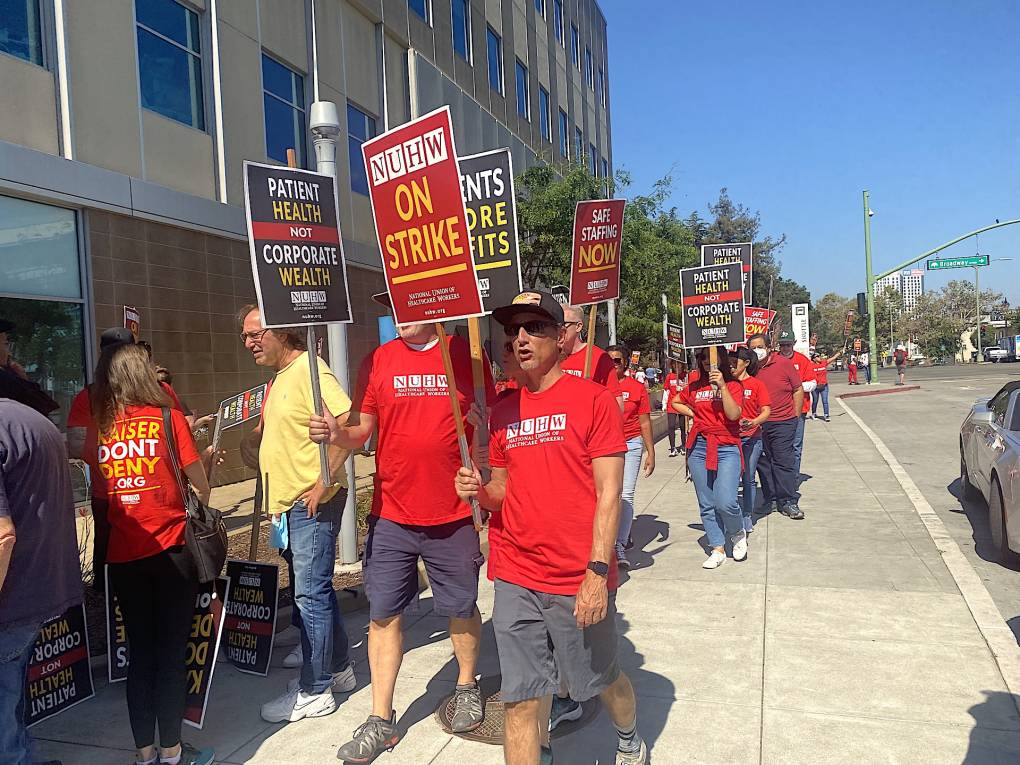
window.__IS_SSR__=true
window.__INITIAL_STATE__={
"attachmentsReducer": {
"audio_0": {
"type": "attachments",
"id": "audio_0",
"imgSizes": {
"kqedFullSize": {
"file": "https://ww2.kqed.org/news/wp-content/themes/KQED-unified/img/audio_bgs/background0.jpg"
}
}
},
"audio_1": {
"type": "attachments",
"id": "audio_1",
"imgSizes": {
"kqedFullSize": {
"file": "https://ww2.kqed.org/news/wp-content/themes/KQED-unified/img/audio_bgs/background1.jpg"
}
}
},
"audio_2": {
"type": "attachments",
"id": "audio_2",
"imgSizes": {
"kqedFullSize": {
"file": "https://ww2.kqed.org/news/wp-content/themes/KQED-unified/img/audio_bgs/background2.jpg"
}
}
},
"audio_3": {
"type": "attachments",
"id": "audio_3",
"imgSizes": {
"kqedFullSize": {
"file": "https://ww2.kqed.org/news/wp-content/themes/KQED-unified/img/audio_bgs/background3.jpg"
}
}
},
"audio_4": {
"type": "attachments",
"id": "audio_4",
"imgSizes": {
"kqedFullSize": {
"file": "https://ww2.kqed.org/news/wp-content/themes/KQED-unified/img/audio_bgs/background4.jpg"
}
}
},
"placeholder": {
"type": "attachments",
"id": "placeholder",
"imgSizes": {
"thumbnail": {
"file": "https://cdn.kqed.org/wp-content/uploads/2024/12/KQED-Default-Image-816638274-2000x1333-1-160x107.jpg",
"width": 160,
"height": 107,
"mimeType": "image/jpeg"
},
"medium": {
"file": "https://cdn.kqed.org/wp-content/uploads/2024/12/KQED-Default-Image-816638274-2000x1333-1-800x533.jpg",
"width": 800,
"height": 533,
"mimeType": "image/jpeg"
},
"medium_large": {
"file": "https://cdn.kqed.org/wp-content/uploads/2024/12/KQED-Default-Image-816638274-2000x1333-1-768x512.jpg",
"width": 768,
"height": 512,
"mimeType": "image/jpeg"
},
"large": {
"file": "https://cdn.kqed.org/wp-content/uploads/2024/12/KQED-Default-Image-816638274-2000x1333-1-1020x680.jpg",
"width": 1020,
"height": 680,
"mimeType": "image/jpeg"
},
"1536x1536": {
"file": "https://cdn.kqed.org/wp-content/uploads/2024/12/KQED-Default-Image-816638274-2000x1333-1-1536x1024.jpg",
"width": 1536,
"height": 1024,
"mimeType": "image/jpeg"
},
"fd-lrg": {
"file": "https://cdn.kqed.org/wp-content/uploads/2024/12/KQED-Default-Image-816638274-2000x1333-1-1536x1024.jpg",
"width": 1536,
"height": 1024,
"mimeType": "image/jpeg"
},
"fd-med": {
"file": "https://cdn.kqed.org/wp-content/uploads/2024/12/KQED-Default-Image-816638274-2000x1333-1-1020x680.jpg",
"width": 1020,
"height": 680,
"mimeType": "image/jpeg"
},
"fd-sm": {
"file": "https://cdn.kqed.org/wp-content/uploads/2024/12/KQED-Default-Image-816638274-2000x1333-1-800x533.jpg",
"width": 800,
"height": 533,
"mimeType": "image/jpeg"
},
"post-thumbnail": {
"file": "https://cdn.kqed.org/wp-content/uploads/2024/12/KQED-Default-Image-816638274-2000x1333-1-672x372.jpg",
"width": 672,
"height": 372,
"mimeType": "image/jpeg"
},
"twentyfourteen-full-width": {
"file": "https://cdn.kqed.org/wp-content/uploads/2024/12/KQED-Default-Image-816638274-2000x1333-1-1038x576.jpg",
"width": 1038,
"height": 576,
"mimeType": "image/jpeg"
},
"xxsmall": {
"file": "https://cdn.kqed.org/wp-content/uploads/2024/12/KQED-Default-Image-816638274-2000x1333-1-160x107.jpg",
"width": 160,
"height": 107,
"mimeType": "image/jpeg"
},
"xsmall": {
"file": "https://cdn.kqed.org/wp-content/uploads/2024/12/KQED-Default-Image-816638274-2000x1333-1-672x372.jpg",
"width": 672,
"height": 372,
"mimeType": "image/jpeg"
},
"small": {
"file": "https://cdn.kqed.org/wp-content/uploads/2024/12/KQED-Default-Image-816638274-2000x1333-1-672x372.jpg",
"width": 672,
"height": 372,
"mimeType": "image/jpeg"
},
"xlarge": {
"file": "https://cdn.kqed.org/wp-content/uploads/2024/12/KQED-Default-Image-816638274-2000x1333-1-1020x680.jpg",
"width": 1020,
"height": 680,
"mimeType": "image/jpeg"
},
"full-width": {
"file": "https://cdn.kqed.org/wp-content/uploads/2024/12/KQED-Default-Image-816638274-2000x1333-1-1920x1280.jpg",
"width": 1920,
"height": 1280,
"mimeType": "image/jpeg"
},
"guest-author-32": {
"file": "https://cdn.kqed.org/wp-content/uploads/2025/01/KQED-Default-Image-816638274-1333x1333-1-160x160.jpg",
"width": 32,
"height": 32,
"mimeType": "image/jpeg"
},
"guest-author-50": {
"file": "https://cdn.kqed.org/wp-content/uploads/2025/01/KQED-Default-Image-816638274-1333x1333-1-160x160.jpg",
"width": 50,
"height": 50,
"mimeType": "image/jpeg"
},
"guest-author-64": {
"file": "https://cdn.kqed.org/wp-content/uploads/2025/01/KQED-Default-Image-816638274-1333x1333-1-160x160.jpg",
"width": 64,
"height": 64,
"mimeType": "image/jpeg"
},
"guest-author-96": {
"file": "https://cdn.kqed.org/wp-content/uploads/2025/01/KQED-Default-Image-816638274-1333x1333-1-160x160.jpg",
"width": 96,
"height": 96,
"mimeType": "image/jpeg"
},
"guest-author-128": {
"file": "https://cdn.kqed.org/wp-content/uploads/2025/01/KQED-Default-Image-816638274-1333x1333-1-160x160.jpg",
"width": 128,
"height": 128,
"mimeType": "image/jpeg"
},
"detail": {
"file": "https://cdn.kqed.org/wp-content/uploads/2025/01/KQED-Default-Image-816638274-1333x1333-1-160x160.jpg",
"width": 160,
"height": 160,
"mimeType": "image/jpeg"
},
"kqedFullSize": {
"file": "https://cdn.kqed.org/wp-content/uploads/2024/12/KQED-Default-Image-816638274-2000x1333-1.jpg",
"width": 2000,
"height": 1333
}
}
},
"news_11963436": {
"type": "attachments",
"id": "news_11963436",
"meta": {
"index": "attachments_1716263798",
"site": "news",
"id": "11963436",
"found": true
},
"parent": 0,
"imgSizes": {
"twentyfourteen-full-width": {
"file": "https://ww2.kqed.org/app/uploads/sites/10/2023/10/231004-KAISER-STRIKE-OAKLAND-MD-12-KQED-e1696616585760-1038x576.jpg",
"width": 1038,
"mimeType": "image/jpeg",
"height": 576
},
"thumbnail": {
"file": "https://ww2.kqed.org/app/uploads/sites/10/2023/10/231004-KAISER-STRIKE-OAKLAND-MD-12-KQED-e1696616585760-160x107.jpg",
"width": 160,
"mimeType": "image/jpeg",
"height": 107
},
"post-thumbnail": {
"file": "https://ww2.kqed.org/app/uploads/sites/10/2023/10/231004-KAISER-STRIKE-OAKLAND-MD-12-KQED-e1696616585760-672x372.jpg",
"width": 672,
"mimeType": "image/jpeg",
"height": 372
},
"kqedFullSize": {
"file": "https://ww2.kqed.org/app/uploads/sites/10/2023/10/231004-KAISER-STRIKE-OAKLAND-MD-12-KQED-e1696616585760.jpg?ver=1696633770",
"width": 2000,
"height": 1333
},
"large": {
"file": "https://ww2.kqed.org/app/uploads/sites/10/2023/10/231004-KAISER-STRIKE-OAKLAND-MD-12-KQED-e1696616585760-1020x680.jpg",
"width": 1020,
"mimeType": "image/jpeg",
"height": 680
},
"1536x1536": {
"file": "https://ww2.kqed.org/app/uploads/sites/10/2023/10/231004-KAISER-STRIKE-OAKLAND-MD-12-KQED-e1696616585760-1536x1024.jpg",
"width": 1536,
"mimeType": "image/jpeg",
"height": 1024
},
"full-width": {
"file": "https://ww2.kqed.org/app/uploads/sites/10/2023/10/231004-KAISER-STRIKE-OAKLAND-MD-12-KQED-e1696616585760-1920x1280.jpg",
"width": 1920,
"mimeType": "image/jpeg",
"height": 1280
},
"medium": {
"file": "https://ww2.kqed.org/app/uploads/sites/10/2023/10/231004-KAISER-STRIKE-OAKLAND-MD-12-KQED-e1696616585760-800x533.jpg",
"width": 800,
"mimeType": "image/jpeg",
"height": 533
}
},
"publishDate": 1696454613,
"modified": 1696633783,
"caption": "Gina Salcedo (center) and others strike at the Kaiser Permanente Oakland Medical Center in Oakland on Oct. 4, 2023.",
"description": null,
"title": "231004-KAISER STRIKE OAKLAND-MD-12-KQED",
"credit": "Martin do Nascimento/KQED",
"status": "inherit",
"altTag": "A large group of people hold signs in an outdoor setting.",
"isLoading": false,
"fetchFailed": false
},
"news_11963573": {
"type": "attachments",
"id": "news_11963573",
"meta": {
"index": "attachments_1716263798",
"site": "news",
"id": "11963573",
"found": true
},
"parent": 11963572,
"imgSizes": {
"twentyfourteen-full-width": {
"file": "https://ww2.kqed.org/app/uploads/sites/10/2023/10/231004-KAISER-STRIKE-MD-02-qut-1038x576.jpg",
"width": 1038,
"mimeType": "image/jpeg",
"height": 576
},
"thumbnail": {
"file": "https://ww2.kqed.org/app/uploads/sites/10/2023/10/231004-KAISER-STRIKE-MD-02-qut-160x107.jpg",
"width": 160,
"mimeType": "image/jpeg",
"height": 107
},
"post-thumbnail": {
"file": "https://ww2.kqed.org/app/uploads/sites/10/2023/10/231004-KAISER-STRIKE-MD-02-qut-672x372.jpg",
"width": 672,
"mimeType": "image/jpeg",
"height": 372
},
"kqedFullSize": {
"file": "https://ww2.kqed.org/app/uploads/sites/10/2023/10/231004-KAISER-STRIKE-MD-02-qut.jpg",
"width": 1920,
"height": 1280
},
"large": {
"file": "https://ww2.kqed.org/app/uploads/sites/10/2023/10/231004-KAISER-STRIKE-MD-02-qut-1020x680.jpg",
"width": 1020,
"mimeType": "image/jpeg",
"height": 680
},
"1536x1536": {
"file": "https://ww2.kqed.org/app/uploads/sites/10/2023/10/231004-KAISER-STRIKE-MD-02-qut-1536x1024.jpg",
"width": 1536,
"mimeType": "image/jpeg",
"height": 1024
},
"medium": {
"file": "https://ww2.kqed.org/app/uploads/sites/10/2023/10/231004-KAISER-STRIKE-MD-02-qut-800x533.jpg",
"width": 800,
"mimeType": "image/jpeg",
"height": 533
}
},
"publishDate": 1696537639,
"modified": 1696537659,
"caption": "Michael Jones and others strike at the Kaiser Permanente Oakland Medical Center in Oakland on Oct. 4, 2023.",
"description": null,
"title": "231004-KAISER STRIKE-MD-02-qut",
"credit": "Martin do Nascimento/KQED",
"status": "inherit",
"altTag": null,
"isLoading": false,
"fetchFailed": false
},
"news_11963365": {
"type": "attachments",
"id": "news_11963365",
"meta": {
"index": "attachments_1716263798",
"site": "news",
"id": "11963365",
"found": true
},
"parent": 11963306,
"imgSizes": {
"twentyfourteen-full-width": {
"file": "https://ww2.kqed.org/app/uploads/sites/10/2023/10/231004-KAISER-STRIKE-MD-01-KQED-e1696434104828-1038x576.jpg",
"width": 1038,
"mimeType": "image/jpeg",
"height": 576
},
"thumbnail": {
"file": "https://ww2.kqed.org/app/uploads/sites/10/2023/10/231004-KAISER-STRIKE-MD-01-KQED-e1696434104828-160x107.jpg",
"width": 160,
"mimeType": "image/jpeg",
"height": 107
},
"post-thumbnail": {
"file": "https://ww2.kqed.org/app/uploads/sites/10/2023/10/231004-KAISER-STRIKE-MD-01-KQED-e1696434104828-672x372.jpg",
"width": 672,
"mimeType": "image/jpeg",
"height": 372
},
"kqedFullSize": {
"file": "https://ww2.kqed.org/app/uploads/sites/10/2023/10/231004-KAISER-STRIKE-MD-01-KQED-e1696434104828.jpg?ver=1696444889",
"width": 2000,
"height": 1333
},
"large": {
"file": "https://ww2.kqed.org/app/uploads/sites/10/2023/10/231004-KAISER-STRIKE-MD-01-KQED-e1696434104828-1020x680.jpg",
"width": 1020,
"mimeType": "image/jpeg",
"height": 680
},
"1536x1536": {
"file": "https://ww2.kqed.org/app/uploads/sites/10/2023/10/231004-KAISER-STRIKE-MD-01-KQED-e1696434104828-1536x1024.jpg",
"width": 1536,
"mimeType": "image/jpeg",
"height": 1024
},
"full-width": {
"file": "https://ww2.kqed.org/app/uploads/sites/10/2023/10/231004-KAISER-STRIKE-MD-01-KQED-e1696434104828-1920x1280.jpg",
"width": 1920,
"mimeType": "image/jpeg",
"height": 1280
},
"medium": {
"file": "https://ww2.kqed.org/app/uploads/sites/10/2023/10/231004-KAISER-STRIKE-MD-01-KQED-e1696434104828-800x533.jpg",
"width": 800,
"mimeType": "image/jpeg",
"height": 533
}
},
"publishDate": 1696433929,
"modified": 1696444906,
"caption": "Janehild Williams (left), a licensed vocational nurse, strikes in front of the Kaiser Permanente Oakland Medical Center in Oakland on Oct. 4, 2023.",
"description": null,
"title": "231004-KAISER STRIKE-MD-01-KQED",
"credit": "Martin do Nascimento/KQED",
"status": "inherit",
"altTag": "Striking workers with bullhorn and tambourines protest in front of a building",
"isLoading": false,
"fetchFailed": false
},
"news_11963366": {
"type": "attachments",
"id": "news_11963366",
"meta": {
"index": "attachments_1716263798",
"site": "news",
"id": "11963366",
"found": true
},
"parent": 11963308,
"imgSizes": {
"twentyfourteen-full-width": {
"file": "https://ww2.kqed.org/app/uploads/sites/10/2023/10/231004-KAISER-STRIKE-MD-02-KQED-e1696434457630-1038x576.jpg",
"width": 1038,
"mimeType": "image/jpeg",
"height": 576
},
"thumbnail": {
"file": "https://ww2.kqed.org/app/uploads/sites/10/2023/10/231004-KAISER-STRIKE-MD-02-KQED-e1696434457630-160x107.jpg",
"width": 160,
"mimeType": "image/jpeg",
"height": 107
},
"post-thumbnail": {
"file": "https://ww2.kqed.org/app/uploads/sites/10/2023/10/231004-KAISER-STRIKE-MD-02-KQED-e1696434457630-672x372.jpg",
"width": 672,
"mimeType": "image/jpeg",
"height": 372
},
"kqedFullSize": {
"file": "https://ww2.kqed.org/app/uploads/sites/10/2023/10/231004-KAISER-STRIKE-MD-02-KQED-e1696434457630.jpg?ver=1696633589",
"width": 2000,
"height": 1333
},
"large": {
"file": "https://ww2.kqed.org/app/uploads/sites/10/2023/10/231004-KAISER-STRIKE-MD-02-KQED-e1696434457630-1020x680.jpg",
"width": 1020,
"mimeType": "image/jpeg",
"height": 680
},
"1536x1536": {
"file": "https://ww2.kqed.org/app/uploads/sites/10/2023/10/231004-KAISER-STRIKE-MD-02-KQED-e1696434457630-1536x1024.jpg",
"width": 1536,
"mimeType": "image/jpeg",
"height": 1024
},
"full-width": {
"file": "https://ww2.kqed.org/app/uploads/sites/10/2023/10/231004-KAISER-STRIKE-MD-02-KQED-e1696434457630-1920x1280.jpg",
"width": 1920,
"mimeType": "image/jpeg",
"height": 1280
},
"medium": {
"file": "https://ww2.kqed.org/app/uploads/sites/10/2023/10/231004-KAISER-STRIKE-MD-02-KQED-e1696434457630-800x533.jpg",
"width": 800,
"mimeType": "image/jpeg",
"height": 533
}
},
"publishDate": 1696434413,
"modified": 1696633594,
"caption": "Kaiser workers strike in front of the Kaiser Permanente Oakland Medical Center in Oakland on Oct. 4, 2023.",
"description": null,
"title": "231004-KAISER STRIKE-MD-02-KQED",
"credit": "Martin do Nascimento/KQED",
"status": "inherit",
"altTag": "Workers holding signs in front of a building",
"isLoading": false,
"fetchFailed": false
},
"news_11963163": {
"type": "attachments",
"id": "news_11963163",
"meta": {
"index": "attachments_1716263798",
"site": "news",
"id": "11963163",
"found": true
},
"title": "Kaiser Mental Health Patients Kill Themselves While Waiting for Care",
"publishDate": 1696283004,
"status": "inherit",
"parent": 12070263,
"modified": 1768608911,
"caption": "Kaiser Permanente headquarters in downtown Oakland on Jan. 5, 2020.",
"credit": "Melina Mara/The Washington Post via Getty Images",
"altTag": "A large office building with the words \"Kaiser Permanente\" written on it.",
"description": null,
"imgSizes": {
"medium": {
"file": "https://cdn.kqed.org/wp-content/uploads/sites/10/2023/10/231002-KAISER-PERMANENTE-Getty-KQED-800x473.jpg",
"width": 800,
"height": 473,
"mimeType": "image/jpeg"
},
"large": {
"file": "https://cdn.kqed.org/wp-content/uploads/sites/10/2023/10/231002-KAISER-PERMANENTE-Getty-KQED-1020x603.jpg",
"width": 1020,
"height": 603,
"mimeType": "image/jpeg"
},
"thumbnail": {
"file": "https://cdn.kqed.org/wp-content/uploads/sites/10/2023/10/231002-KAISER-PERMANENTE-Getty-KQED-160x95.jpg",
"width": 160,
"height": 95,
"mimeType": "image/jpeg"
},
"1536x1536": {
"file": "https://cdn.kqed.org/wp-content/uploads/sites/10/2023/10/231002-KAISER-PERMANENTE-Getty-KQED-1536x908.jpg",
"width": 1536,
"height": 908,
"mimeType": "image/jpeg"
},
"post-thumbnail": {
"file": "https://cdn.kqed.org/wp-content/uploads/sites/10/2023/10/231002-KAISER-PERMANENTE-Getty-KQED-672x372.jpg",
"width": 672,
"height": 372,
"mimeType": "image/jpeg"
},
"twentyfourteen-full-width": {
"file": "https://cdn.kqed.org/wp-content/uploads/sites/10/2023/10/231002-KAISER-PERMANENTE-Getty-KQED-1038x576.jpg",
"width": 1038,
"height": 576,
"mimeType": "image/jpeg"
},
"full-width": {
"file": "https://cdn.kqed.org/wp-content/uploads/sites/10/2023/10/231002-KAISER-PERMANENTE-Getty-KQED-1920x1135.jpg",
"width": 1920,
"height": 1135,
"mimeType": "image/jpeg"
},
"kqedFullSize": {
"file": "https://cdn.kqed.org/wp-content/uploads/sites/10/2023/10/231002-KAISER-PERMANENTE-Getty-KQED.jpg",
"width": 2000,
"height": 1182
}
},
"isLoading": false,
"fetchFailed": false
},
"news_11961244": {
"type": "attachments",
"id": "news_11961244",
"meta": {
"index": "attachments_1716263798",
"site": "news",
"id": "11961244",
"found": true
},
"parent": 11961243,
"imgSizes": {
"twentyfourteen-full-width": {
"file": "https://ww2.kqed.org/app/uploads/sites/10/2023/09/GettyImages-1645167120-1038x576.jpg",
"width": 1038,
"mimeType": "image/jpeg",
"height": 576
},
"thumbnail": {
"file": "https://ww2.kqed.org/app/uploads/sites/10/2023/09/GettyImages-1645167120-160x107.jpg",
"width": 160,
"mimeType": "image/jpeg",
"height": 107
},
"post-thumbnail": {
"file": "https://ww2.kqed.org/app/uploads/sites/10/2023/09/GettyImages-1645167120-672x372.jpg",
"width": 672,
"mimeType": "image/jpeg",
"height": 372
},
"kqedFullSize": {
"file": "https://ww2.kqed.org/app/uploads/sites/10/2023/09/GettyImages-1645167120.jpg",
"width": 1920,
"height": 1281
},
"large": {
"file": "https://ww2.kqed.org/app/uploads/sites/10/2023/09/GettyImages-1645167120-1020x681.jpg",
"width": 1020,
"mimeType": "image/jpeg",
"height": 681
},
"1536x1536": {
"file": "https://ww2.kqed.org/app/uploads/sites/10/2023/09/GettyImages-1645167120-1536x1025.jpg",
"width": 1536,
"mimeType": "image/jpeg",
"height": 1025
},
"medium": {
"file": "https://ww2.kqed.org/app/uploads/sites/10/2023/09/GettyImages-1645167120-800x534.jpg",
"width": 800,
"mimeType": "image/jpeg",
"height": 534
}
},
"publishDate": 1694732300,
"modified": 1694733070,
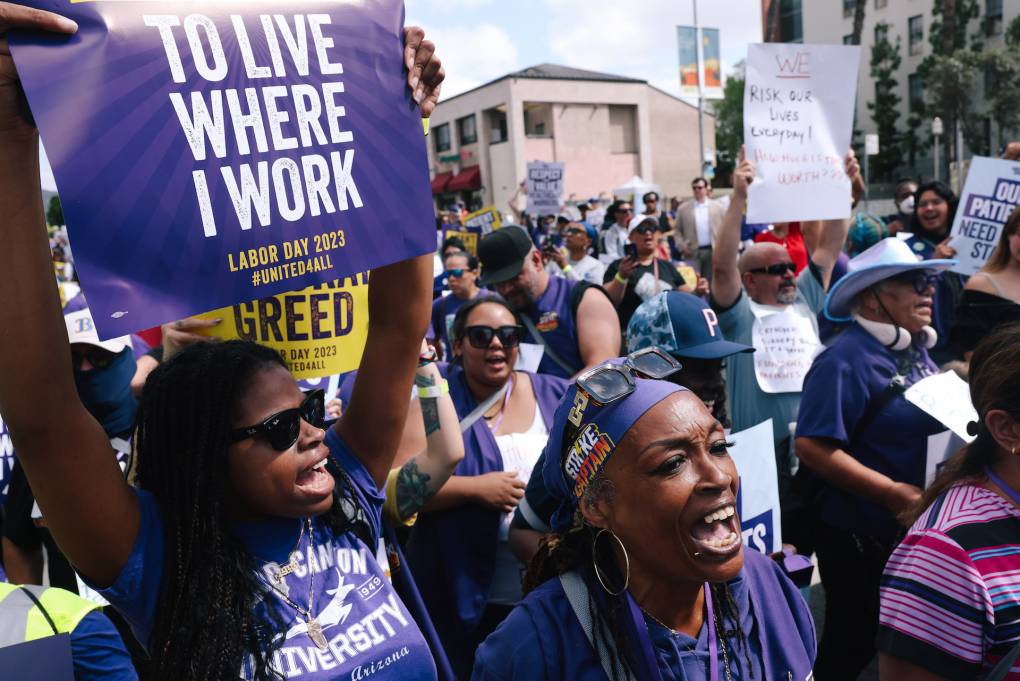
"caption": "Thousands of health care workers march in Los Angeles on Sept. 4 to call for the need for improved working conditions, better support systems and increased investment in the workforce at Kaiser Permanente. The event was organized by SEIU-UHW West. ",
"description": null,
"title": "Kaiser permanente rally",
"credit": "Dania Maxwell/Los Angeles Times",
"status": "inherit",
"altTag": "a group of people in matching shirts hold signs and protest outside",
"isLoading": false,
"fetchFailed": false
},
"news_11960521": {
"type": "attachments",
"id": "news_11960521",
"meta": {
"index": "attachments_1716263798",
"site": "news",
"id": "11960521",
"found": true
},
"parent": 11960517,
"imgSizes": {
"twentyfourteen-full-width": {
"file": "https://ww2.kqed.org/app/uploads/sites/10/2023/09/GettyImages-1668439446-1024x576.jpg",
"width": 1024,
"mimeType": "image/jpeg",
"height": 576
},
"thumbnail": {
"file": "https://ww2.kqed.org/app/uploads/sites/10/2023/09/GettyImages-1668439446-160x107.jpg",
"width": 160,
"mimeType": "image/jpeg",
"height": 107
},
"post-thumbnail": {
"file": "https://ww2.kqed.org/app/uploads/sites/10/2023/09/GettyImages-1668439446-672x372.jpg",
"width": 672,
"mimeType": "image/jpeg",
"height": 372
},
"kqedFullSize": {
"file": "https://ww2.kqed.org/app/uploads/sites/10/2023/09/GettyImages-1668439446.jpg",
"width": 1024,
"height": 686
},
"large": {
"file": "https://ww2.kqed.org/app/uploads/sites/10/2023/09/GettyImages-1668439446-1020x683.jpg",
"width": 1020,
"mimeType": "image/jpeg",
"height": 683
},
"medium": {
"file": "https://ww2.kqed.org/app/uploads/sites/10/2023/09/GettyImages-1668439446-800x536.jpg",
"width": 800,
"mimeType": "image/jpeg",
"height": 536
}
},
"publishDate": 1694296641,
"modified": 1694296757,
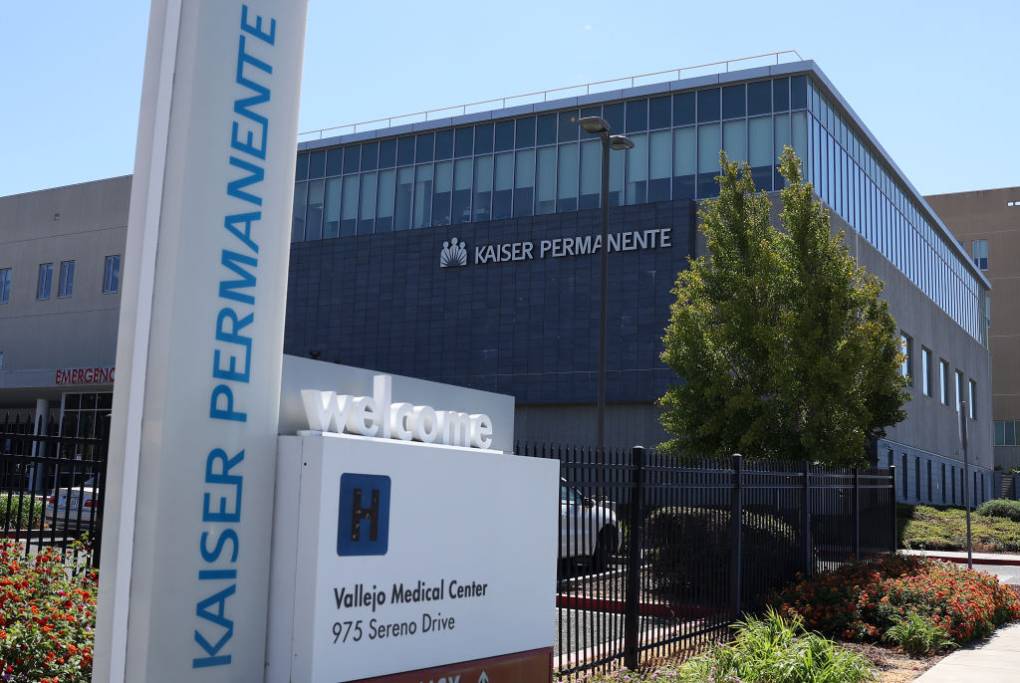
"caption": "A sign is posted on the exterior of the Kaiser Permanente Vallejo Medical Center on Sept. 8, 2023 in Vallejo, Solano County. California Attorney General Rob Bonta announced a $49 million settlement with Kaiser Foundation for unlawfully disposing of medical and hazardous waste along with paper records of over 7,700 patients. Bonta was assisted by 6 California district attorneys in the investigation that discovered illegal dumping of medical and hazardous materials in dumpsters at 16 different Kaiser facilities in California. ",
"description": null,
"title": "CA Attorney General Announces 49 Million Settlement With Kaiser Foundation Over Illegal Disposal Of Hazardous Waste",
"credit": "Justin Sullivan/Getty Images",
"status": "inherit",
"altTag": "A view of a Kaiser Permanante Hospital from the outside.",
"isLoading": false,
"fetchFailed": false
},
"news_11929741": {
"type": "attachments",
"id": "news_11929741",
"meta": {
"index": "attachments_1716263798",
"site": "news",
"id": "11929741",
"found": true
},
"parent": 11929713,
"imgSizes": {
"twentyfourteen-full-width": {
"file": "https://ww2.kqed.org/app/uploads/sites/10/2022/10/RS57909_042_KQED_KaiserStrikeOakland_08192022-qut-1038x576.jpg",
"width": 1038,
"mimeType": "image/jpeg",
"height": 576
},
"thumbnail": {
"file": "https://ww2.kqed.org/app/uploads/sites/10/2022/10/RS57909_042_KQED_KaiserStrikeOakland_08192022-qut-160x107.jpg",
"width": 160,
"mimeType": "image/jpeg",
"height": 107
},
"post-thumbnail": {
"file": "https://ww2.kqed.org/app/uploads/sites/10/2022/10/RS57909_042_KQED_KaiserStrikeOakland_08192022-qut-672x372.jpg",
"width": 672,
"mimeType": "image/jpeg",
"height": 372
},
"kqedFullSize": {
"file": "https://ww2.kqed.org/app/uploads/sites/10/2022/10/RS57909_042_KQED_KaiserStrikeOakland_08192022-qut.jpg",
"width": 1920,
"height": 1280
},
"large": {
"file": "https://ww2.kqed.org/app/uploads/sites/10/2022/10/RS57909_042_KQED_KaiserStrikeOakland_08192022-qut-1020x680.jpg",
"width": 1020,
"mimeType": "image/jpeg",
"height": 680
},
"1536x1536": {
"file": "https://ww2.kqed.org/app/uploads/sites/10/2022/10/RS57909_042_KQED_KaiserStrikeOakland_08192022-qut-1536x1024.jpg",
"width": 1536,
"mimeType": "image/jpeg",
"height": 1024
},
"medium": {
"file": "https://ww2.kqed.org/app/uploads/sites/10/2022/10/RS57909_042_KQED_KaiserStrikeOakland_08192022-qut-800x533.jpg",
"width": 800,
"mimeType": "image/jpeg",
"height": 533
}
},
"publishDate": 1666321010,
"modified": 1666372464,
"caption": "Kaiser Permanente mental health care workers and supporters march from the health care giant's Oakland medical center to its corporate headquarters, on Aug. 19, 2022, the fifth day of a strike that ultimately dragged on for 10 weeks.",
"description": null,
"title": "RS57909_042_KQED_KaiserStrikeOakland_08192022-qut",
"credit": "Beth LaBerge/KQED",
"status": "inherit",
"altTag": "A person speaks into a bullhorn during a street protest.",
"isLoading": false,
"fetchFailed": false
},
"news_11929434": {
"type": "attachments",
"id": "news_11929434",
"meta": {
"index": "attachments_1716263798",
"site": "news",
"id": "11929434",
"found": true
},
"parent": 11929429,
"imgSizes": {
"twentyfourteen-full-width": {
"file": "https://ww2.kqed.org/app/uploads/sites/10/2022/10/RS57883_016_KQED_KaiserStrikeOakland_08192022-qut-1038x576.jpg",
"width": 1038,
"mimeType": "image/jpeg",
"height": 576
},
"thumbnail": {
"file": "https://ww2.kqed.org/app/uploads/sites/10/2022/10/RS57883_016_KQED_KaiserStrikeOakland_08192022-qut-160x107.jpg",
"width": 160,
"mimeType": "image/jpeg",
"height": 107
},
"post-thumbnail": {
"file": "https://ww2.kqed.org/app/uploads/sites/10/2022/10/RS57883_016_KQED_KaiserStrikeOakland_08192022-qut-672x372.jpg",
"width": 672,
"mimeType": "image/jpeg",
"height": 372
},
"kqedFullSize": {
"file": "https://ww2.kqed.org/app/uploads/sites/10/2022/10/RS57883_016_KQED_KaiserStrikeOakland_08192022-qut.jpg",
"width": 1920,
"height": 1280
},
"large": {
"file": "https://ww2.kqed.org/app/uploads/sites/10/2022/10/RS57883_016_KQED_KaiserStrikeOakland_08192022-qut-1020x680.jpg",
"width": 1020,
"mimeType": "image/jpeg",
"height": 680
},
"1536x1536": {
"file": "https://ww2.kqed.org/app/uploads/sites/10/2022/10/RS57883_016_KQED_KaiserStrikeOakland_08192022-qut-1536x1024.jpg",
"width": 1536,
"mimeType": "image/jpeg",
"height": 1024
},
"medium": {
"file": "https://ww2.kqed.org/app/uploads/sites/10/2022/10/RS57883_016_KQED_KaiserStrikeOakland_08192022-qut-800x533.jpg",
"width": 800,
"mimeType": "image/jpeg",
"height": 533
}
},
"publishDate": 1666134429,
"modified": 1666139414,
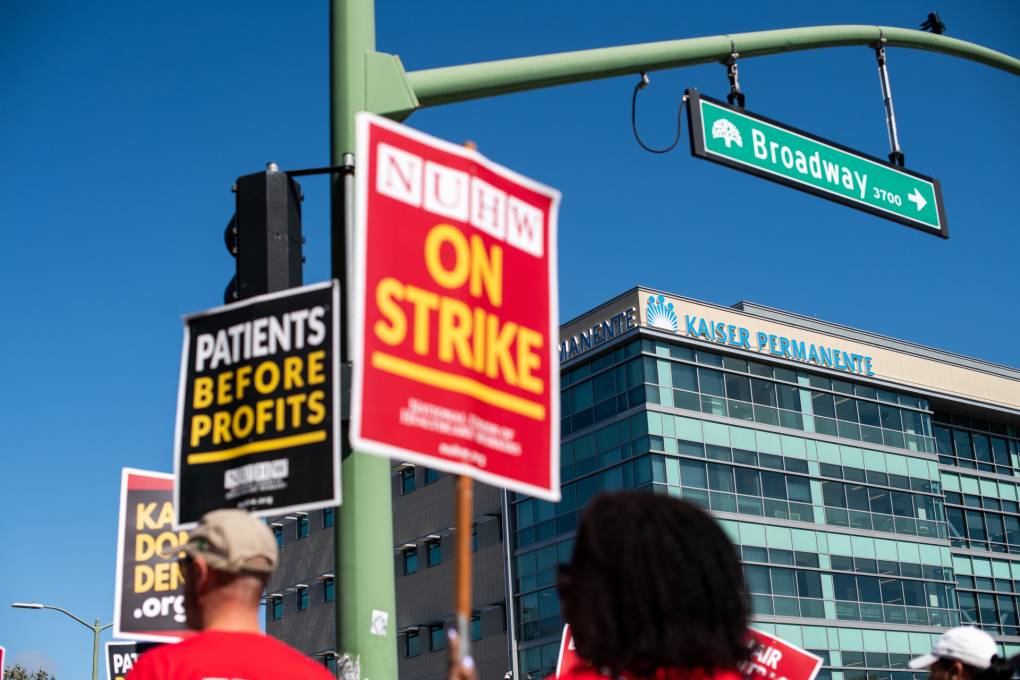
"caption": "Kaiser mental health care workers and supporters hold signs on the picket line outside Kaiser Oakland Medical Center on Friday, Aug. 19, 2022, during the first week of a strike that has now lasted well over two months.",
"description": null,
"title": "RS57883_016_KQED_KaiserStrikeOakland_08192022-qut",
"credit": "Beth LaBerge/KQED",
"status": "inherit",
"altTag": "Workers on the street hold signs that say 'Patients Before Profits' and 'On Strike,' with the Kaiser Permanente building in the background.",
"isLoading": false,
"fetchFailed": false
},
"news_11925904": {
"type": "attachments",
"id": "news_11925904",
"meta": {
"index": "attachments_1716263798",
"site": "news",
"id": "11925904",
"found": true
},
"parent": 11925882,
"imgSizes": {
"twentyfourteen-full-width": {
"file": "https://ww2.kqed.org/app/uploads/sites/10/2022/09/RS57898_033_KQED_KaiserStrikeOakland_08192022-qut-1038x576.jpg",
"width": 1038,
"mimeType": "image/jpeg",
"height": 576
},
"thumbnail": {
"file": "https://ww2.kqed.org/app/uploads/sites/10/2022/09/RS57898_033_KQED_KaiserStrikeOakland_08192022-qut-160x107.jpg",
"width": 160,
"mimeType": "image/jpeg",
"height": 107
},
"post-thumbnail": {
"file": "https://ww2.kqed.org/app/uploads/sites/10/2022/09/RS57898_033_KQED_KaiserStrikeOakland_08192022-qut-672x372.jpg",
"width": 672,
"mimeType": "image/jpeg",
"height": 372
},
"kqedFullSize": {
"file": "https://ww2.kqed.org/app/uploads/sites/10/2022/09/RS57898_033_KQED_KaiserStrikeOakland_08192022-qut.jpg",
"width": 1920,
"height": 1280
},
"large": {
"file": "https://ww2.kqed.org/app/uploads/sites/10/2022/09/RS57898_033_KQED_KaiserStrikeOakland_08192022-qut-1020x680.jpg",
"width": 1020,
"mimeType": "image/jpeg",
"height": 680
},
"1536x1536": {
"file": "https://ww2.kqed.org/app/uploads/sites/10/2022/09/RS57898_033_KQED_KaiserStrikeOakland_08192022-qut-1536x1024.jpg",
"width": 1536,
"mimeType": "image/jpeg",
"height": 1024
},
"medium": {
"file": "https://ww2.kqed.org/app/uploads/sites/10/2022/09/RS57898_033_KQED_KaiserStrikeOakland_08192022-qut-800x533.jpg",
"width": 800,
"mimeType": "image/jpeg",
"height": 533
}
},
"publishDate": 1663290645,
"modified": 1663347911,
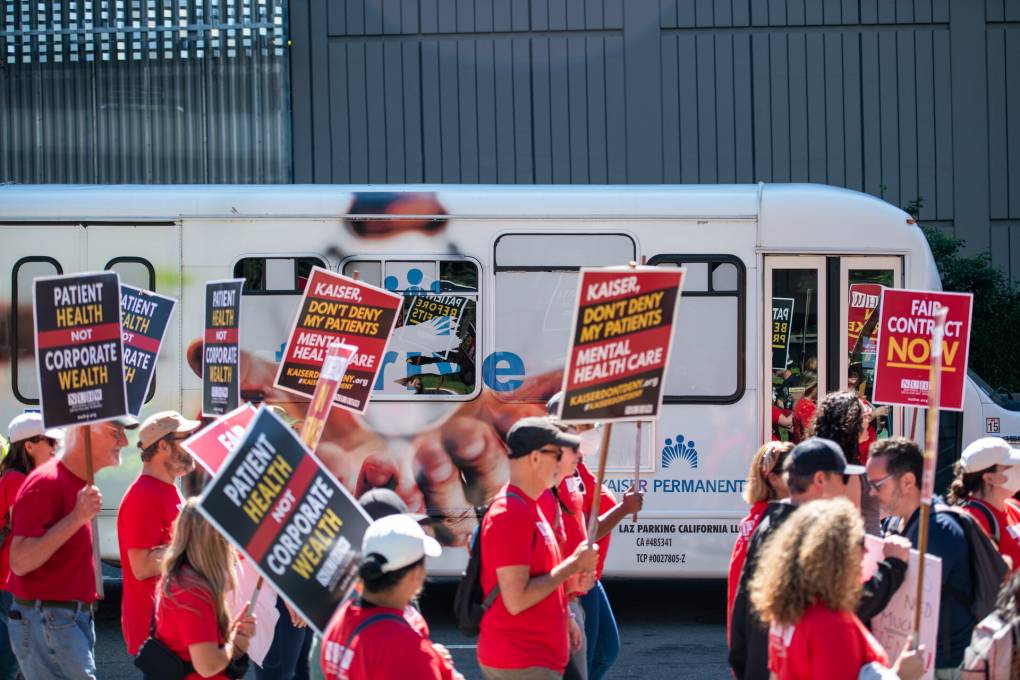
"caption": "Kaiser mental health care workers and supporters march from Oakland Kaiser Medical Center to the health care company's nearby corporate headquarters on Friday, Aug. 19, 2022, during the first week of their strike.",
"description": null,
"title": "RS57898_033_KQED_KaiserStrikeOakland_08192022-qut",
"credit": "Beth LaBerge/KQED",
"status": "inherit",
"altTag": "Striking workers wearing red shirts and holding signs march on the street.",
"isLoading": false,
"fetchFailed": false
},
"news_11923074": {
"type": "attachments",
"id": "news_11923074",
"meta": {
"index": "attachments_1716263798",
"site": "news",
"id": "11923074",
"found": true
},
"parent": 11923034,
"imgSizes": {
"twentyfourteen-full-width": {
"file": "https://ww2.kqed.org/app/uploads/sites/10/2022/08/RS57894_032_KQED_KaiserStrikeOakland_08192022-qut-1038x576.jpg",
"width": 1038,
"mimeType": "image/jpeg",
"height": 576
},
"thumbnail": {
"file": "https://ww2.kqed.org/app/uploads/sites/10/2022/08/RS57894_032_KQED_KaiserStrikeOakland_08192022-qut-160x107.jpg",
"width": 160,
"mimeType": "image/jpeg",
"height": 107
},
"post-thumbnail": {
"file": "https://ww2.kqed.org/app/uploads/sites/10/2022/08/RS57894_032_KQED_KaiserStrikeOakland_08192022-qut-672x372.jpg",
"width": 672,
"mimeType": "image/jpeg",
"height": 372
},
"kqedFullSize": {
"file": "https://ww2.kqed.org/app/uploads/sites/10/2022/08/RS57894_032_KQED_KaiserStrikeOakland_08192022-qut.jpg",
"width": 1920,
"height": 1280
},
"large": {
"file": "https://ww2.kqed.org/app/uploads/sites/10/2022/08/RS57894_032_KQED_KaiserStrikeOakland_08192022-qut-1020x680.jpg",
"width": 1020,
"mimeType": "image/jpeg",
"height": 680
},
"1536x1536": {
"file": "https://ww2.kqed.org/app/uploads/sites/10/2022/08/RS57894_032_KQED_KaiserStrikeOakland_08192022-qut-1536x1024.jpg",
"width": 1536,
"mimeType": "image/jpeg",
"height": 1024
},
"medium": {
"file": "https://ww2.kqed.org/app/uploads/sites/10/2022/08/RS57894_032_KQED_KaiserStrikeOakland_08192022-qut-800x533.jpg",
"width": 800,
"mimeType": "image/jpeg",
"height": 533
}
},
"publishDate": 1660951150,
"modified": 1660951188,
"caption": "Kaiser mental health care workers and supporters march from Oakland Kaiser Medical Center to Kaiser's corporate headquarters on Friday, Aug. 19, 2022, the fifth day of an open-ended strike.",
"description": null,
"title": "RS57894_032_KQED_KaiserStrikeOakland_08192022-qut",
"credit": "Beth LaBerge/KQED",
"status": "inherit",
"altTag": "people in red shirts carrying signs that read \"patients over profits\"",
"isLoading": false,
"fetchFailed": false
},
"news_11922835": {
"type": "attachments",
"id": "news_11922835",
"meta": {
"index": "attachments_1716263798",
"site": "news",
"id": "11922835",
"found": true
},
"parent": 11922748,
"imgSizes": {
"twentyfourteen-full-width": {
"file": "https://ww2.kqed.org/app/uploads/sites/10/2022/08/KaiserOak-1-1038x576.jpg",
"width": 1038,
"mimeType": "image/jpeg",
"height": 576
},
"thumbnail": {
"file": "https://ww2.kqed.org/app/uploads/sites/10/2022/08/KaiserOak-1-160x120.jpg",
"width": 160,
"mimeType": "image/jpeg",
"height": 120
},
"post-thumbnail": {
"file": "https://ww2.kqed.org/app/uploads/sites/10/2022/08/KaiserOak-1-672x372.jpg",
"width": 672,
"mimeType": "image/jpeg",
"height": 372
},
"kqedFullSize": {
"file": "https://ww2.kqed.org/app/uploads/sites/10/2022/08/KaiserOak-1.jpg",
"width": 1920,
"height": 1440
},
"large": {
"file": "https://ww2.kqed.org/app/uploads/sites/10/2022/08/KaiserOak-1-1020x765.jpg",
"width": 1020,
"mimeType": "image/jpeg",
"height": 765
},
"1536x1536": {
"file": "https://ww2.kqed.org/app/uploads/sites/10/2022/08/KaiserOak-1-1536x1152.jpg",
"width": 1536,
"mimeType": "image/jpeg",
"height": 1152
},
"medium": {
"file": "https://ww2.kqed.org/app/uploads/sites/10/2022/08/KaiserOak-1-800x600.jpg",
"width": 800,
"mimeType": "image/jpeg",
"height": 600
}
},
"publishDate": 1660765977,
"modified": 1660767107,
"caption": "Kaiser mental health care workers hold signs on the picket line outside one of the health care giant's facilities in Oakland on Tuesday, Aug. 16, 2022, the second day of an open-ended strike. Those participating said a staffing shortage and unfair wages have led to 'dangerous' wait times for people seeking treatment.",
"description": null,
"title": "KaiserOak",
"credit": "Lesley McClurg/KQED",
"status": "inherit",
"altTag": "A line of people in red shirts march down a street, carrying signs at a picket line that say 'NUHW on strike.'",
"isLoading": false,
"fetchFailed": false
}
},
"audioPlayerReducer": {
"postId": "stream_live",
"isPaused": true,
"isPlaying": false,
"pfsActive": false,
"pledgeModalIsOpen": true,
"playerDrawerIsOpen": false,
"liveAudioPlayStartedAt": 0,
"liveAudioPlayContext": ""
},
"authorsReducer": {
"byline_news_11960517": {
"type": "authors",
"id": "byline_news_11960517",
"meta": {
"override": true
},
"slug": "byline_news_11960517",
"name": "Olga R. Rodriguez\u003cbr>The Associated Press",
"isLoading": false
},
"kqednewsstaffandwires": {
"type": "authors",
"id": "237",
"meta": {
"index": "authors_1716337520",
"id": "237",
"found": true
},
"name": "KQED News Staff and Wires",
"firstName": "KQED News Staff and Wires",
"lastName": null,
"slug": "kqednewsstaffandwires",
"email": "onlinenewsstaff@kqed.org",
"display_author_email": false,
"staff_mastheads": [],
"title": null,
"bio": null,
"avatar": "https://secure.gravatar.com/avatar/72295af8ebbfbd19a4948f5271285664?s=600&d=blank&r=g",
"twitter": null,
"facebook": null,
"instagram": null,
"linkedin": null,
"sites": [
{
"site": "arts",
"roles": [
"contributor"
]
},
{
"site": "news",
"roles": [
"contributor"
]
},
{
"site": "lowdown",
"roles": [
"author"
]
},
{
"site": "stateofhealth",
"roles": [
"contributor"
]
},
{
"site": "food",
"roles": [
"author"
]
}
],
"headData": {
"title": "KQED News Staff and Wires | KQED",
"description": null,
"ogImgSrc": "https://secure.gravatar.com/avatar/72295af8ebbfbd19a4948f5271285664?s=600&d=blank&r=g",
"twImgSrc": "https://secure.gravatar.com/avatar/72295af8ebbfbd19a4948f5271285664?s=600&d=blank&r=g"
},
"isLoading": false,
"link": "/author/kqednewsstaffandwires"
},
"matthewgreen": {
"type": "authors",
"id": "1263",
"meta": {
"index": "authors_1716337520",
"id": "1263",
"found": true
},
"name": "Matthew Green",
"firstName": "Matthew",
"lastName": "Green",
"slug": "matthewgreen",
"email": "mgreen@kqed.org",
"display_author_email": false,
"staff_mastheads": [],
"title": "KQED Editor/Reporter",
"bio": "Matthew Green is a digital media producer for KQED News. He previously produced \u003ca href=\"http://www.kqed.org/lowdown\">The Lowdown\u003c/a>, KQED’s multimedia news education blog. Matthew's written for numerous Bay Area publications, including the Oakland Tribune and San Francisco Chronicle. He also taught journalism classes at Fremont High School in East Oakland.\r\n\r\nEmail: mgreen@kqed.org; Twitter: @MGreenKQED",
"avatar": "https://secure.gravatar.com/avatar/3bf498d1267ca02c8494f33d8cfc575e?s=600&d=blank&r=g",
"twitter": "MGreenKQED",
"facebook": null,
"instagram": null,
"linkedin": null,
"sites": [
{
"site": "news",
"roles": []
},
{
"site": "lowdown",
"roles": []
},
{
"site": "science",
"roles": []
},
{
"site": "education",
"roles": []
},
{
"site": "quest",
"roles": []
},
{
"site": "liveblog",
"roles": []
}
],
"headData": {
"title": "Matthew Green | KQED",
"description": "KQED Editor/Reporter",
"ogImgSrc": "https://secure.gravatar.com/avatar/3bf498d1267ca02c8494f33d8cfc575e?s=600&d=blank&r=g",
"twImgSrc": "https://secure.gravatar.com/avatar/3bf498d1267ca02c8494f33d8cfc575e?s=600&d=blank&r=g"
},
"isLoading": false,
"link": "/author/matthewgreen"
},
"carlysevern": {
"type": "authors",
"id": "3243",
"meta": {
"index": "authors_1716337520",
"id": "3243",
"found": true
},
"name": "Carly Severn",
"firstName": "Carly",
"lastName": "Severn",
"slug": "carlysevern",
"email": "csevern@kqed.org",
"display_author_email": false,
"staff_mastheads": [
"news"
],
"title": "Senior Editor, Audience News ",
"bio": "Carly is KQED's Senior Editor of Audience News on the Digital News team, and has reported for the California Report Magazine, Bay Curious and KQED Arts. She's formerly the host of \u003ca href=\"http://ww2.kqed.org/pop/category/the-cooler/\" rel=\"noopener noreferrer\">The Cooler\u003c/a> podcast.",
"avatar": "https://secure.gravatar.com/avatar/54037bf5c128fe678f0ef26cec97a93f2e7f220a22d7285703328f12c42c1b1d?s=600&d=blank&r=g",
"twitter": "teacupinthebay",
"bluesky": null,
"facebook": null,
"instagram": null,
"linkedin": null,
"sites": [
{
"site": "",
"roles": [
"editor"
]
},
{
"site": "arts",
"roles": [
"editor"
]
},
{
"site": "news",
"roles": [
"administrator"
]
},
{
"site": "pop",
"roles": [
"editor"
]
},
{
"site": "futureofyou",
"roles": [
"editor"
]
},
{
"site": "about",
"roles": [
"administrator"
]
},
{
"site": "mindshift",
"roles": [
"editor"
]
},
{
"site": "bayareabites",
"roles": [
"editor"
]
},
{
"site": "stateofhealth",
"roles": [
"editor"
]
},
{
"site": "science",
"roles": [
"editor"
]
},
{
"site": "food",
"roles": [
"contributor"
]
},
{
"site": "forum",
"roles": [
"editor"
]
},
{
"site": "perspectives",
"roles": [
"administrator"
]
},
{
"site": "liveblog",
"roles": [
"editor"
]
}
],
"headData": {
"title": "Carly Severn | KQED",
"description": "Senior Editor, Audience News ",
"ogImgSrc": "https://secure.gravatar.com/avatar/54037bf5c128fe678f0ef26cec97a93f2e7f220a22d7285703328f12c42c1b1d?s=600&d=blank&r=g",
"twImgSrc": "https://secure.gravatar.com/avatar/54037bf5c128fe678f0ef26cec97a93f2e7f220a22d7285703328f12c42c1b1d?s=600&d=blank&r=g"
},
"isLoading": false,
"link": "/author/carlysevern"
},
"esilvers": {
"type": "authors",
"id": "7237",
"meta": {
"index": "authors_1716337520",
"id": "7237",
"found": true
},
"name": "Emma Silvers",
"firstName": "Emma",
"lastName": "Silvers",
"slug": "esilvers",
"email": "esilvers@kqed.org",
"display_author_email": false,
"staff_mastheads": [],
"title": "KQED Contributor",
"bio": "Emma Silvers is an editor at KQED Arts and a former digital producer at KQED News. Born and raised in the Bay Area, she has previously been an arts and entertainment editor at the \u003cem>San Francisco Chronicle\u003c/em>, \u003cem>SF Weekly\u003c/em> and the \u003cem>San Francisco Bay Guardian.\u003c/em> \u003ca href=\"https://www.emmasilvers.com\">Her work\u003c/a> has also appeared in \u003cem>Rolling Stone\u003c/em>, Pitchfork and \u003cem>Mother Jones\u003c/em>. In 2017 she was the recipient of the Society of Professional Journalists-Northern California's award for arts and culture reporting. In 1993 she \u003ca href=\"https://www.kqed.org/pop/16759/wait-what-my-coworker-was-a-voice-over-hyperventilator-for-jurassic-park\">hyperventilated in \u003cem>Jurassic Park\u003c/em>\u003c/a>.",
"avatar": "https://secure.gravatar.com/avatar/247beada39b88ea5759db1f51dba05cf?s=600&d=blank&r=g",
"twitter": "emmaruthless",
"facebook": null,
"instagram": null,
"linkedin": null,
"sites": [
{
"site": "arts",
"roles": [
"editor"
]
},
{
"site": "news",
"roles": [
"editor"
]
},
{
"site": "pop",
"roles": [
"contributor"
]
},
{
"site": "bayareabites",
"roles": [
"editor"
]
},
{
"site": "food",
"roles": [
"contributor"
]
},
{
"site": "liveblog",
"roles": [
"editor"
]
}
],
"headData": {
"title": "Emma Silvers | KQED",
"description": "KQED Contributor",
"ogImgSrc": "https://secure.gravatar.com/avatar/247beada39b88ea5759db1f51dba05cf?s=600&d=blank&r=g",
"twImgSrc": "https://secure.gravatar.com/avatar/247beada39b88ea5759db1f51dba05cf?s=600&d=blank&r=g"
},
"isLoading": false,
"link": "/author/esilvers"
},
"ecruzguevarra": {
"type": "authors",
"id": "8654",
"meta": {
"index": "authors_1716337520",
"id": "8654",
"found": true
},
"name": "Ericka Cruz Guevarra",
"firstName": "Ericka",
"lastName": "Cruz Guevarra",
"slug": "ecruzguevarra",
"email": "ecruzguevarra@kqed.org",
"display_author_email": true,
"staff_mastheads": [
"news"
],
"title": "Producer, The Bay Podcast",
"bio": "Ericka Cruz Guevarra is host of \u003ca href=\"https://www.kqed.org/podcasts/thebay\">\u003cem>The Bay\u003c/em>\u003c/a> podcast at KQED. Before host, she was the show’s producer. Her work in that capacity includes a three-part reported series on policing in Vallejo, which won a 2020 excellence in journalism award from the Society of Professional Journalists. Ericka has worked as a breaking news reporter at Oregon Public Broadcasting, helped produce the Code Switch podcast, and was KQED’s inaugural Raul Ramirez Diversity Fund intern. She’s also an alumna of NPR’s Next Generation Radio program. Send her an email if you have strong feelings about whether Fairfield and Suisun City are the Bay. Ericka is represented by SAG-AFTRA.",
"avatar": "https://secure.gravatar.com/avatar/accefc1de4bafc7e234b69bcb9b6f6536c130fd84709bc3069ef11a78787e1bb?s=600&d=blank&r=g",
"twitter": "NotoriousECG",
"bluesky": null,
"facebook": null,
"instagram": null,
"linkedin": null,
"sites": [
{
"site": "arts",
"roles": [
"subscriber"
]
},
{
"site": "news",
"roles": [
"editor",
"manage_categories"
]
},
{
"site": "futureofyou",
"roles": [
"subscriber"
]
},
{
"site": "stateofhealth",
"roles": [
"subscriber"
]
},
{
"site": "science",
"roles": [
"editor"
]
},
{
"site": "forum",
"roles": [
"subscriber"
]
}
],
"headData": {
"title": "Ericka Cruz Guevarra | KQED",
"description": "Producer, The Bay Podcast",
"ogImgSrc": "https://secure.gravatar.com/avatar/accefc1de4bafc7e234b69bcb9b6f6536c130fd84709bc3069ef11a78787e1bb?s=600&d=blank&r=g",
"twImgSrc": "https://secure.gravatar.com/avatar/accefc1de4bafc7e234b69bcb9b6f6536c130fd84709bc3069ef11a78787e1bb?s=600&d=blank&r=g"
},
"isLoading": false,
"link": "/author/ecruzguevarra"
},
"fjhabvala": {
"type": "authors",
"id": "8659",
"meta": {
"index": "authors_1716337520",
"id": "8659",
"found": true
},
"name": "Farida Jhabvala Romero",
"firstName": "Farida",
"lastName": "Jhabvala Romero",
"slug": "fjhabvala",
"email": "fjhabvala@kqed.org",
"display_author_email": true,
"staff_mastheads": [
"news"
],
"title": "KQED Contributor",
"bio": "Farida Jhabvala Romero is a Labor Correspondent for KQED. She previously covered immigration. Farida was \u003ca href=\"https://www.ccnma.org/2022-most-influential-latina-journalists\">named\u003c/a> one of the 10 Most Influential Latina Journalists in California in 2022 by the California Chicano News Media Association. Her work has won awards from the Society of Professional Journalists (Northern California), as well as a national and regional Edward M. Murrow Award for the collaborative reporting projects “Dangerous Air” and “Graying California.” Before joining KQED, Farida worked as a producer at Radio Bilingüe, a national public radio network. Farida earned her master’s degree in journalism from Stanford University.",
"avatar": "https://secure.gravatar.com/avatar/f9f022d4e2609741874222a1e9d41f48fea74011aa7c615eef91d9a50c944ebe?s=600&d=blank&r=g",
"twitter": "FaridaJhabvala",
"bluesky": null,
"facebook": null,
"instagram": null,
"linkedin": "https://www.linkedin.com/in/faridajhabvala/",
"sites": [
{
"site": "news",
"roles": [
"editor"
]
},
{
"site": "stateofhealth",
"roles": [
"author"
]
},
{
"site": "liveblog",
"roles": [
"author"
]
}
],
"headData": {
"title": "Farida Jhabvala Romero | KQED",
"description": "KQED Contributor",
"ogImgSrc": "https://secure.gravatar.com/avatar/f9f022d4e2609741874222a1e9d41f48fea74011aa7c615eef91d9a50c944ebe?s=600&d=blank&r=g",
"twImgSrc": "https://secure.gravatar.com/avatar/f9f022d4e2609741874222a1e9d41f48fea74011aa7c615eef91d9a50c944ebe?s=600&d=blank&r=g"
},
"isLoading": false,
"link": "/author/fjhabvala"
},
"lesleymcclurg": {
"type": "authors",
"id": "11229",
"meta": {
"index": "authors_1716337520",
"id": "11229",
"found": true
},
"name": "Lesley McClurg",
"firstName": "Lesley",
"lastName": "McClurg",
"slug": "lesleymcclurg",
"email": "lmcclurg@KQED.org",
"display_author_email": false,
"staff_mastheads": [
"news",
"science"
],
"title": "KQED Health Correspondent",
"bio": "Lesley McClurg is a health correspondent and fill-in host whose work is regularly rebroadcast on NPR and PBS programs. She’s earned multiple regional Emmy awards, a national and a regional Edward R. Murrow award, and was named Best Beat Reporter by the Association of Health Care Journalists. The Society of Professional Journalists has recognized her work several times, and the Society of Environmental Journalists spotlighted her coverage of California’s historic drought.\r\n\r\nBefore joining KQED in 2016, Lesley covered food and sustainability for Capital Public Radio, environmental issues for Colorado Public Radio, and reported for KUOW and KCTS 9 in Seattle. Away from the newsroom, she loves skiing with her daughter, mountain biking with her partner, and playing with Ollie, the family’s goldendoodle. On deadline, she runs almost entirely on chocolate chips.\r\n\r\n ",
"avatar": "https://secure.gravatar.com/avatar/bab49e972ea10c774fe0f5e29dba1722b158f7c0d58a360923d1389d380b2978?s=600&d=blank&r=g",
"twitter": "lesleywmcclurg",
"bluesky": null,
"facebook": null,
"instagram": null,
"linkedin": null,
"sites": [
{
"site": "arts",
"roles": [
"author"
]
},
{
"site": "news",
"roles": [
"editor"
]
},
{
"site": "futureofyou",
"roles": [
"editor"
]
},
{
"site": "stateofhealth",
"roles": [
"author"
]
},
{
"site": "science",
"roles": [
"editor"
]
},
{
"site": "quest",
"roles": [
"subscriber"
]
},
{
"site": "forum",
"roles": [
"administrator"
]
},
{
"site": "liveblog",
"roles": [
"author"
]
}
],
"headData": {
"title": "Lesley McClurg | KQED",
"description": "KQED Health Correspondent",
"ogImgSrc": "https://secure.gravatar.com/avatar/bab49e972ea10c774fe0f5e29dba1722b158f7c0d58a360923d1389d380b2978?s=600&d=blank&r=g",
"twImgSrc": "https://secure.gravatar.com/avatar/bab49e972ea10c774fe0f5e29dba1722b158f7c0d58a360923d1389d380b2978?s=600&d=blank&r=g"
},
"isLoading": false,
"link": "/author/lesleymcclurg"
},
"amontecillo": {
"type": "authors",
"id": "11649",
"meta": {
"index": "authors_1716337520",
"id": "11649",
"found": true
},
"name": "Alan Montecillo",
"firstName": "Alan",
"lastName": "Montecillo",
"slug": "amontecillo",
"email": "amontecillo@kqed.org",
"display_author_email": false,
"staff_mastheads": [
"news"
],
"title": "KQED Contributor",
"bio": "Alan Montecillo is the senior editor of \u003cem>\u003ca href=\"http://kqed.org/thebay\">The Bay\u003c/a>, \u003c/em> KQED's local news podcast. Before moving to the Bay Area, he worked as a senior talk show producer for WILL in Champaign-Urbana, Illinois and at Oregon Public Broadcasting in Portland, Oregon. He has won journalism awards from the Society of Professional Journalists Northern California, the Public Media Journalists Association, The Signal Awards, and has also received a regional Edward R. Murrow award. Alan is a Filipino American from Hong Kong and a graduate of Reed College.",
"avatar": "https://secure.gravatar.com/avatar/268f53a2066899ea9efdd8a5900218b17c822d9862cbc9326cccec53ef41d349?s=600&d=blank&r=g",
"twitter": "alanmontecillo",
"bluesky": null,
"facebook": null,
"instagram": null,
"linkedin": null,
"sites": [
{
"site": "",
"roles": [
"editor"
]
},
{
"site": "news",
"roles": [
"editor",
"manage_categories"
]
}
],
"headData": {
"title": "Alan Montecillo | KQED",
"description": "KQED Contributor",
"ogImgSrc": "https://secure.gravatar.com/avatar/268f53a2066899ea9efdd8a5900218b17c822d9862cbc9326cccec53ef41d349?s=600&d=blank&r=g",
"twImgSrc": "https://secure.gravatar.com/avatar/268f53a2066899ea9efdd8a5900218b17c822d9862cbc9326cccec53ef41d349?s=600&d=blank&r=g"
},
"isLoading": false,
"link": "/author/amontecillo"
},
"jlara": {
"type": "authors",
"id": "11761",
"meta": {
"index": "authors_1716337520",
"id": "11761",
"found": true
},
"name": "Juan Carlos Lara",
"firstName": "Juan Carlos",
"lastName": "Lara",
"slug": "jlara",
"email": "jlara@kqed.org",
"display_author_email": false,
"staff_mastheads": [],
"title": "KQED Contributor",
"bio": null,
"avatar": "https://secure.gravatar.com/avatar/19e2052b9b05657c5ff2af2121846e9c?s=600&d=blank&r=g",
"twitter": null,
"facebook": null,
"instagram": null,
"linkedin": null,
"sites": [
{
"site": "arts",
"roles": [
"editor"
]
},
{
"site": "news",
"roles": [
"editor"
]
},
{
"site": "forum",
"roles": [
"editor"
]
},
{
"site": "liveblog",
"roles": [
"contributor"
]
}
],
"headData": {
"title": "Juan Carlos Lara | KQED",
"description": "KQED Contributor",
"ogImgSrc": "https://secure.gravatar.com/avatar/19e2052b9b05657c5ff2af2121846e9c?s=600&d=blank&r=g",
"twImgSrc": "https://secure.gravatar.com/avatar/19e2052b9b05657c5ff2af2121846e9c?s=600&d=blank&r=g"
},
"isLoading": false,
"link": "/author/jlara"
},
"mesquinca": {
"type": "authors",
"id": "11802",
"meta": {
"index": "authors_1716337520",
"id": "11802",
"found": true
},
"name": "Maria Esquinca",
"firstName": "Maria",
"lastName": "Esquinca",
"slug": "mesquinca",
"email": "mesquinca@kqed.org",
"display_author_email": false,
"staff_mastheads": [],
"title": "Producer, The Bay",
"bio": "María Esquinca is a producer of The Bay. Before that, she was a New York Women’s Foundation IGNITE Fellow at Latino USA. She worked at Radio Bilingue where she covered the San Joaquin Valley. Maria has interned at WLRN, News 21, The New York Times Student Journalism Institute and at Crain’s Detroit Business as a Dow Jones News Fund Business Reporting Intern. She is an MFA graduate from the University of Miami. In 2017, she graduated from the Walter Cronkite School of Journalism and Mass Communication with a Master of Mass Communication. A fronteriza, she was born in Ciudad Juárez, Chihuahua, Mexico and grew up in El Paso, Texas.",
"avatar": "https://secure.gravatar.com/avatar/77cedba18aae91da775038ba06dcd8d0?s=600&d=blank&r=g",
"twitter": "@m_esquinca",
"facebook": null,
"instagram": null,
"linkedin": null,
"sites": [
{
"site": "news",
"roles": []
}
],
"headData": {
"title": "Maria Esquinca | KQED",
"description": "Producer, The Bay",
"ogImgSrc": "https://secure.gravatar.com/avatar/77cedba18aae91da775038ba06dcd8d0?s=600&d=blank&r=g",
"twImgSrc": "https://secure.gravatar.com/avatar/77cedba18aae91da775038ba06dcd8d0?s=600&d=blank&r=g"
},
"isLoading": false,
"link": "/author/mesquinca"
},
"sjohnson": {
"type": "authors",
"id": "11840",
"meta": {
"index": "authors_1716337520",
"id": "11840",
"found": true
},
"name": "Sydney Johnson",
"firstName": "Sydney",
"lastName": "Johnson",
"slug": "sjohnson",
"email": "sjohnson@kqed.org",
"display_author_email": false,
"staff_mastheads": [
"news"
],
"title": "KQED Reporter",
"bio": "Sydney Johnson is a general assignment reporter at KQED. She previously reported on public health and city government at the San Francisco Examiner, and before that, she covered statewide education policy for EdSource. Her reporting has won multiple local, state and national awards. Sydney is a graduate of the University of California, Berkeley and lives in San Francisco.",
"avatar": "https://secure.gravatar.com/avatar/97855f2719b72ad6190b7c535fe642c8?s=600&d=blank&r=g",
"twitter": "sydneyfjohnson",
"facebook": null,
"instagram": null,
"linkedin": null,
"sites": [
{
"site": "news",
"roles": [
"editor"
]
}
],
"headData": {
"title": "Sydney Johnson | KQED",
"description": "KQED Reporter",
"ogImgSrc": "https://secure.gravatar.com/avatar/97855f2719b72ad6190b7c535fe642c8?s=600&d=blank&r=g",
"twImgSrc": "https://secure.gravatar.com/avatar/97855f2719b72ad6190b7c535fe642c8?s=600&d=blank&r=g"
},
"isLoading": false,
"link": "/author/sjohnson"
}
},
"pagesReducer": {
"news_tag_kaiser-permanente": {
"type": "terms",
"id": "news_421",
"meta": {
"index": "terms_1716263798",
"site": "news",
"id": "421",
"score": 9.304781
},
"featImg": null,
"name": "Kaiser Permanente",
"description": null,
"taxonomy": "tag",
"headData": {
"twImgId": null,
"twTitle": null,
"ogTitle": null,
"ogImgId": null,
"twDescription": null,
"description": null,
"title": "Kaiser Permanente Archives | KQED News",
"ogDescription": null
},
"ttid": 430,
"slug": "kaiser-permanente",
"isLoading": false,
"title": "Kaiser Permanente",
"pageMeta": {
"site": "news",
"WpPageTemplate": "page-topic-editorial",
"currentPage": 3
},
"blocks": [
{
"blockName": "kqed/post-list",
"attrs": {
"layout": "cardArticle2",
"query": "posts/news?tag=kaiser-permanente",
"seeMore": false,
"paginated": true,
"page": 3
}
},
{
"blockName": "kqed/ad"
}
]
}
},
"pfsSessionReducer": {},
"postsReducer": {
"stream_live": {
"type": "live",
"id": "stream_live",
"audioUrl": "https://streams.kqed.org/kqedradio",
"title": "Live Stream",
"excerpt": "Live Stream information currently unavailable.",
"link": "/radio",
"featImg": "",
"label": {
"name": "KQED Live",
"link": "/"
}
},
"stream_kqedNewscast": {
"type": "posts",
"id": "stream_kqedNewscast",
"audioUrl": "https://www.kqed.org/.stream/anon/radio/RDnews/newscast.mp3?_=1",
"title": "KQED Newscast",
"featImg": "",
"label": {
"name": "88.5 FM",
"link": "/"
}
},
"news_11963708": {
"type": "posts",
"id": "news_11963708",
"meta": {
"index": "posts_1716263798",
"site": "news",
"id": "11963708",
"score": null,
"sort": [
1696705243000
]
},
"guestAuthors": [],
"slug": "kaiser-workers-could-reauthorize-strike-if-negotiations-break-down",
"title": "Kaiser Workers Could Reauthorize Strike if Negotiations Break Down",
"publishDate": 1696705243,
"format": "standard",
"headTitle": "Kaiser Workers Could Reauthorize Strike if Negotiations Break Down | KQED",
"labelTerm": {
"site": "news"
},
"content": "\u003cp>Kaiser Permanente health care \u003ca href=\"https://www.kqed.org/news/11963568/kaiser-strike-to-end-saturday-but-negotiations-will-continue\">employees could continue to strike\u003c/a> after Saturday’s scheduled end if negotiations with their employer aren’t successful.\u003c/p>\n\u003cp>Nearly 23,000 Kaiser employees in the Bay Area walked off the job on Wednesday for what has been recognized as the \u003ca href=\"https://www.kqed.org/news/11963306/kaiser-strike-furthers-delays-in-covid-19-vaccines-some-surgeries-in-the-bay-area\">largest health care worker strike\u003c/a> in U.S. history. The strike — which includes tens of thousands more Kaiser employees in Oregon, Washington, Colorado, Virginia and Washington, D.C. — is slated to end on Saturday morning at 6 a.m., and the next bargaining session is scheduled for Oct. 12.\u003c/p>\n\u003cp>On Friday morning, the coalition of unions representing Kaiser employees said they could authorize another strike in the near future if bargaining continues to stand still.\u003c/p>\n\u003cp>There will be at least a 10-day notice before the strike might resume.\u003c/p>\n\u003cp>“It is possible that the coalition will issue a 10-day strike notice after Saturday, which could lead to further striking by Kaiser employees after those ten days if Kaiser executives continue to commit unfair labor practices and bargain in bad faith,” the Coalition of Kaiser Permanente Unions said in a press statement on Friday.\u003c/p>\n\u003cp>[ad fullwidth]\u003c/p>\n\u003cp>The two sides held negotiations earlier this week but were not able to reach an agreement before tens of thousands of Kaiser employees took to the \u003ca href=\"https://www.kqed.org/news/11963306/kaiser-strike-furthers-delays-in-covid-19-vaccines-some-surgeries-in-the-bay-area\">picket lines\u003c/a> early Wednesday morning.\u003c/p>\n\u003cp>Kaiser workers on strike this week include ultrasound sonographers, X-ray technicians, pharmacists and pharmacy technicians, transporters, medical assistants and more.\u003c/p>\n\u003cp>The employees are demanding higher wages and increased staffing to slow burnout and turnover after millions of health care professionals left the field during the pandemic.\u003c/p>\n\u003cp>“Frontline healthcare workers continue to await meaningful action by Kaiser executives to address our key priorities, including safe staffing, outsourcing protections for incumbent healthcare workers, and fair wages to reduce turnover,” Gwendolyn Holloway, a contact lens technician at Kaiser Permanente Vallejo Medical Center, said in a prepared statement.[aside postID=news_11963308 hero='https://ww2.kqed.org/app/uploads/sites/10/2023/10/231004-KAISER-STRIKE-MD-02-KQED-e1696434457630-1020x680.jpg']\u003c/p>\n\u003cp>Kaiser officials said in an email that they “look forward to reaching a new agreement that continues to provide our employees with market-leading wages and benefits, and ensures our high-quality care is affordable and available to meet our members’ needs.”\u003c/p>\n\u003cp>Close to 75,000 Kaiser workers across the country are currently seeking increased staffing to raise the minimum wage across the board to $26 by 2026.\u003c/p>\n\u003cp>Kaiser recently offered a $23-per-hour minimum wage for its employees in California starting in 2024.\u003c/p>\n\u003cp>In earlier bargaining talks this year, Kaiser said it agreed to accelerate bringing on new staff and set a goal of adding 10,000 new employees represented by the Coalition by the end of 2023.\u003c/p>\n\u003cp>So far, Kaiser has hired 29,000 people in 2022, and 22,000 so far in 2023. Of the new hires this year, the company said more than 9,800 are in jobs represented by the Coalition of Kaiser Permanente Unions, the company said in a press release.\u003c/p>\n\u003cp>For patients, some elective surgeries were postponed due to the strike, and COVID-19 and flu vaccine availability was also disrupted. (\u003ca href=\"https://www.kqed.org/news/11963308/kaiser-strike-if-youre-a-patient-what-medical-services-would-be-affected\">Read KQED’s guide for Kaiser patients during the strike and what you need to know.\u003c/a>)\u003c/p>\n\u003cp>\u003c/p>\n\u003cp>The next bargaining sessions are scheduled for Thursday, Oct. 12 and Friday, Oct. 13.\u003c/p>\n\n",
"blocks": [],
"excerpt": "The strike is set to end on Oct. 7. But workers say they could authorize another strike if the next round of negotiations falls flat. ",
"status": "publish",
"parent": 0,
"modified": 1721134243,
"stats": {
"hasAudio": false,
"hasVideo": false,
"hasChartOrMap": false,
"iframeSrcs": [],
"hasGoogleForm": false,
"hasGallery": false,
"hasHearkenModule": false,
"hasPolis": false,
"paragraphCount": 18,
"wordCount": 570
},
"headData": {
"title": "Kaiser Workers Could Reauthorize Strike if Negotiations Break Down | KQED",
"description": "The strike is set to end on Oct. 7. But workers say they could authorize another strike if the next round of negotiations falls flat. ",
"ogTitle": "",
"ogDescription": "",
"ogImgId": "",
"twTitle": "",
"twDescription": "",
"twImgId": "",
"schema": {
"@context": "https://schema.org",
"@type": "NewsArticle",
"headline": "Kaiser Workers Could Reauthorize Strike if Negotiations Break Down",
"datePublished": "2023-10-07T12:00:43-07:00",
"dateModified": "2024-07-16T05:50:43-07:00",
"image": "https://cdn.kqed.org/wp-content/uploads/2020/02/KQED-OG-Image@1x.png",
"isAccessibleForFree": "True",
"publisher": {
"@type": "NewsMediaOrganization",
"@id": "https://www.kqed.org/#organization",
"name": "KQED",
"logo": "https://cdn.kqed.org/wp-content/uploads/2020/02/KQED-OG-Image@1x.png",
"url": "https://www.kqed.org",
"sameAs": [
"https://www.facebook.com/KQED",
"https://twitter.com/KQED",
"https://www.instagram.com/kqed/",
"https://www.tiktok.com/@kqedofficial",
"https://www.linkedin.com/company/kqed",
"https://www.youtube.com/channel/UCeC0IOo7i1P_61zVUWbJ4nw"
]
}
}
},
"sticky": false,
"excludeFromSiteSearch": "Include",
"articleAge": "0",
"path": "/news/11963708/kaiser-workers-could-reauthorize-strike-if-negotiations-break-down",
"audioTrackLength": null,
"parsedContent": [
{
"type": "contentString",
"content": "\u003cdiv class=\"post-body\">\u003cp>\u003cp>Kaiser Permanente health care \u003ca href=\"https://www.kqed.org/news/11963568/kaiser-strike-to-end-saturday-but-negotiations-will-continue\">employees could continue to strike\u003c/a> after Saturday’s scheduled end if negotiations with their employer aren’t successful.\u003c/p>\n\u003cp>Nearly 23,000 Kaiser employees in the Bay Area walked off the job on Wednesday for what has been recognized as the \u003ca href=\"https://www.kqed.org/news/11963306/kaiser-strike-furthers-delays-in-covid-19-vaccines-some-surgeries-in-the-bay-area\">largest health care worker strike\u003c/a> in U.S. history. The strike — which includes tens of thousands more Kaiser employees in Oregon, Washington, Colorado, Virginia and Washington, D.C. — is slated to end on Saturday morning at 6 a.m., and the next bargaining session is scheduled for Oct. 12.\u003c/p>\n\u003cp>On Friday morning, the coalition of unions representing Kaiser employees said they could authorize another strike in the near future if bargaining continues to stand still.\u003c/p>\n\u003cp>There will be at least a 10-day notice before the strike might resume.\u003c/p>\n\u003cp>“It is possible that the coalition will issue a 10-day strike notice after Saturday, which could lead to further striking by Kaiser employees after those ten days if Kaiser executives continue to commit unfair labor practices and bargain in bad faith,” the Coalition of Kaiser Permanente Unions said in a press statement on Friday.\u003c/p>\n\u003cp>\u003c/p>\u003c/div>",
"attributes": {
"named": {},
"numeric": []
}
},
{
"type": "component",
"content": "",
"name": "ad",
"attributes": {
"named": {
"label": "fullwidth"
},
"numeric": [
"fullwidth"
]
}
},
{
"type": "contentString",
"content": "\u003cdiv class=\"post-body\">\u003cp>\u003c/p>\n\u003cp>The two sides held negotiations earlier this week but were not able to reach an agreement before tens of thousands of Kaiser employees took to the \u003ca href=\"https://www.kqed.org/news/11963306/kaiser-strike-furthers-delays-in-covid-19-vaccines-some-surgeries-in-the-bay-area\">picket lines\u003c/a> early Wednesday morning.\u003c/p>\n\u003cp>Kaiser workers on strike this week include ultrasound sonographers, X-ray technicians, pharmacists and pharmacy technicians, transporters, medical assistants and more.\u003c/p>\n\u003cp>The employees are demanding higher wages and increased staffing to slow burnout and turnover after millions of health care professionals left the field during the pandemic.\u003c/p>\n\u003cp>“Frontline healthcare workers continue to await meaningful action by Kaiser executives to address our key priorities, including safe staffing, outsourcing protections for incumbent healthcare workers, and fair wages to reduce turnover,” Gwendolyn Holloway, a contact lens technician at Kaiser Permanente Vallejo Medical Center, said in a prepared statement.\u003c/p>\u003c/div>",
"attributes": {
"named": {},
"numeric": []
}
},
{
"type": "component",
"content": "",
"name": "aside",
"attributes": {
"named": {
"postid": "news_11963308",
"hero": "https://ww2.kqed.org/app/uploads/sites/10/2023/10/231004-KAISER-STRIKE-MD-02-KQED-e1696434457630-1020x680.jpg",
"label": ""
},
"numeric": []
}
},
{
"type": "contentString",
"content": "\u003cdiv class=\"post-body\">\u003cp>\u003c/p>\n\u003cp>Kaiser officials said in an email that they “look forward to reaching a new agreement that continues to provide our employees with market-leading wages and benefits, and ensures our high-quality care is affordable and available to meet our members’ needs.”\u003c/p>\n\u003cp>Close to 75,000 Kaiser workers across the country are currently seeking increased staffing to raise the minimum wage across the board to $26 by 2026.\u003c/p>\n\u003cp>Kaiser recently offered a $23-per-hour minimum wage for its employees in California starting in 2024.\u003c/p>\n\u003cp>In earlier bargaining talks this year, Kaiser said it agreed to accelerate bringing on new staff and set a goal of adding 10,000 new employees represented by the Coalition by the end of 2023.\u003c/p>\n\u003cp>So far, Kaiser has hired 29,000 people in 2022, and 22,000 so far in 2023. Of the new hires this year, the company said more than 9,800 are in jobs represented by the Coalition of Kaiser Permanente Unions, the company said in a press release.\u003c/p>\n\u003cp>For patients, some elective surgeries were postponed due to the strike, and COVID-19 and flu vaccine availability was also disrupted. (\u003ca href=\"https://www.kqed.org/news/11963308/kaiser-strike-if-youre-a-patient-what-medical-services-would-be-affected\">Read KQED’s guide for Kaiser patients during the strike and what you need to know.\u003c/a>)\u003c/p>\n\u003cp>\u003c/p>\n\u003cp>The next bargaining sessions are scheduled for Thursday, Oct. 12 and Friday, Oct. 13.\u003c/p>\n\n\u003c/div>\u003c/p>",
"attributes": {
"named": {},
"numeric": []
}
}
],
"link": "/news/11963708/kaiser-workers-could-reauthorize-strike-if-negotiations-break-down",
"authors": [
"11840"
],
"categories": [
"news_8"
],
"tags": [
"news_21790",
"news_421",
"news_19904"
],
"featImg": "news_11963436",
"label": "news"
},
"news_11963572": {
"type": "posts",
"id": "news_11963572",
"meta": {
"index": "posts_1716263798",
"site": "news",
"id": "11963572",
"score": null,
"sort": [
1696586435000
]
},
"guestAuthors": [],
"slug": "more-than-22000-kaiser-permanente-workers-are-on-strike",
"title": "More Than 22,000 Bay Area Kaiser Permanente Workers Are On Strike",
"publishDate": 1696586435,
"format": "audio",
"headTitle": "More Than 22,000 Bay Area Kaiser Permanente Workers Are On Strike | KQED",
"labelTerm": {},
"content": "\u003cp>\u003ca href=\"#episode-transcript\">\u003ci>\u003cspan style=\"font-weight: 400\">View the full episode transcript.\u003c/span>\u003c/i>\u003c/a>\u003c/p>\n\u003cp>\u003cspan style=\"font-weight: 400\">From San José to Santa Rosa, more than 22,000 Bay Area Kaiser Permanente health care workers walked off the job Wednesday for a three-day strike, demanding better wages to help fix what they say is an urgent understaffing crisis. The effort spans 8 states and the District of Columbia, and some are calling it the largest health care strike in US history.\u003c/span>\u003c/p>\n\u003cp>\u003c!-- iframe plugin v.4.3 wordpress.org/plugins/iframe/ -->\u003cbr>\n\u003ciframe loading=\"lazy\" frameborder=\"0\" height=\"200\" scrolling=\"no\" src=\"https://playlist.megaphone.fm/?e=KQINC3882688016\" width=\"100%\" class=\"iframe-class\">\u003c/iframe>\u003c/p>\n\u003ch2 id=\"episode-transcript\">Episode Transcript\u003c/h2>\n\u003cp>\u003ci>\u003cspan style=\"font-weight: 400\">This is a computer-generated transcript. While our team has reviewed it, there may be errors.\u003c/span>\u003c/i>\u003c/p>\n\u003cp>\u003cstrong>Ericka Cruz Guevarra: \u003c/strong>I’m Ericka Cruz Guevarra, and welcome to The Bay, local news to keep you rooted. 75,000 Kaiser Permanente health care workers are on strike across eight states and Washington, D.C., and many of them are right here in the Bay Area. From San Jose to Santa Rosa, workers walked off the job on Wednesday for a three-day strike demanding better wages to help fix what they say is an urgent understaffing crisis.\u003c/p>\n\u003cp>[ad fullwidth]\u003c/p>\n\u003cp>\u003cstrong>Drenda Sims: \u003c/strong>We have employees sleeping in their cars because they cannot afford the cost of living. And we need a raise.\u003c/p>\n\u003cp>\u003cstrong>Ericka Cruz Guevarra: \u003c/strong>Today, my colleague and labor correspondent Farida Jhabvala Romero, joins us to talk about what health care workers want and how the strike is impacting patients. Stay with us.\u003c/p>\n\u003cp>\u003cstrong>Ericka Cruz Guevarra: \u003c/strong>Farida, we’re talking on Thursday morning in the middle of what I’m hearing is the largest health care worker strike in U.S. history. How big are we talking here?\u003c/p>\n\u003cp>\u003cstrong>Farida Jhabvala Romero: \u003c/strong>Yeah, we’re talking about tens of thousands of workers. About 68,000 workers in California. That includes more than 22,000 employees in the Bay Area. We’re talking about people who work in labs, radiology technicians, receptionist, medical assistance, people that work in the operating room. These are really the folks that make Kaiser Services run. Kaiser, you know, has become a really large health care provider. They serve nearly 13 million people across the country, most of them in California. So we’re talking about a really big organization that is nonprofit in large part. But we’re also seeing the same, you know, tensions for the workforce here that was absolutely, you know, brought to the forefront because of the pandemic.\u003c/p>\n\u003cp>\u003cstrong>Ericka Cruz Guevarra: \u003c/strong>I think we all know health care workers have really been through so much during the pandemic. So what are the concerns and issues being raised by these workers?\u003c/p>\n\u003cp>\u003cstrong>Farida Jhabvala Romero: \u003c/strong>These workers want Kaiser to invest in higher wages across the board so that they can deal with the higher cost of living, especially in markets like the Bay Area. And they also want Kaiser to make investments to increase the minimum wage for workers across the board to be able to attract more people that can help address this understaffing problem that you hear employees talking about all the time. Since that pandemic, there’s been an exodus of millions of workers in the health care industry. Employees at Kaiser feel that because it’s an organization that is mostly nonprofit, they have a higher responsibility to invest more in their employees. Often, you know, when I spoken with Kaiser Health Care Workers, they feel underappreciated. People tell me, Hey, I risked my life during the pandemic to come to the hospital. I just want to be paid a little more than a 3% wage increase.\u003c/p>\n\u003cp>\u003cstrong>Michael Jones: \u003c/strong>I’ve caught Covid twice, and I still work for Kaiser. You know, I put my life at risk. You know.\u003c/p>\n\u003cp>\u003cstrong>Farida Jhabvala Romero: \u003c/strong>Michael Jones and every other employee who I spoke with at the picket lines had two main messages. They say they’re calling for fair wages and they say they’re calling for Kaiser to really increase the number of people employed by the organization in health care services so that they can take better care of their patients.\u003c/p>\n\u003cp>\u003cstrong>Michael Jones: \u003c/strong>For Kaiser to say that they can find somebody, to find other workers that don’t care for other workers that are better and cheaper. That’s a slap in the face. We’re not going anywhere. So you need to train people, right, and give them their justice.\u003c/p>\n\u003cp>\u003cstrong>Farida Jhabvala Romero: \u003c/strong>Sometimes I think something that comes through a lot when you speak with health care workers is they’re really passionate about their jobs. You know, they feel like it’s really a calling.\u003c/p>\n\u003cp>\u003cstrong>Michael Jones: \u003c/strong>You know, But my ultimate goal is to help those who are underprivileged and those who need the help. And that’s why I work in health care.\u003c/p>\n\u003cp>\u003cstrong>Farida Jhabvala Romero: \u003c/strong>So it’s not just about their economic well-being, but also you hear it in the same breath, you know, almost like I want my patients to be okay. I don’t want them to be waiting, you know, while they’re in pain. And so I think they’re really wanting Kaiser as an organization to invest a lot more.\u003c/p>\n\u003cp>\u003cstrong>Ericka Cruz Guevarra: \u003c/strong>Before they went on strike, the coalition of Kaiser Permanente unions demanded a 7% pay increase per year for two years, followed by a 6.25% annual increase for two years after that. Kaiser’s initial offer was more like 3% per year. Unions also wanted a minimum wage of $25 an hour in California. So far, Kaiser has offered $23 an hour at the negotiating table. Workers who are on strike say both of these demands will help to address the understaffing crisis they’ve been facing. Frieda, what has Kaiser said in response to all of this?\u003c/p>\n\u003cp>\u003cstrong>Farida Jhabvala Romero: \u003c/strong>Yes, we’ve asked Kaiser several times for an interview. We have not been able to speak with anyone, but they have issued several statements. One of the main points that they have is that they offer competitive wages and of the markets where they operate. They say they’re really like market leading. And they’ve said things like, you know, if workers were to leave Kaiser, they would actually be taking a pick up if they go work somewhere else. The other thing they say is that they have a lower attrition rate, so turnover than other, you know, companies in health care. They say that they’re very committed to taking care of their employees, but they also need to make sure that care remains affordable for the millions of people that Kaiser serves.\u003c/p>\n\u003cp>\u003cstrong>Farida Jhabvala Romero: \u003c/strong>So we’re talking about a lot of health care costs that Kaiser has to, you know, factor in and make the kind of investments that the unions are asking for. I do have to say, though, they have been making profits for several years in recent years, except for one. One year, I think it was last year. They are trying to invest more in properties that are growing. You know, we see Kaiser being advertised at Chase Center and other places around the Bay Area. Executive compensation, millions of dollars, you know, for several people and their executive team. And that’s the base salary. So I think workers who are striking see all that and they say, hey, I think Kaiser seems to be doing well and we want to be able to get a little bit more for ourselves so that we can continue working and in health care.\u003c/p>\n\u003cp>\u003cstrong>Ericka Cruz Guevarra: \u003c/strong>Well, I’m sure listeners are also wondering how this strike is going to impact them. I’m definitely one of those people. Have people seen any disruptions so far to the care that they there they go to Kaiser for.\u003c/p>\n\u003cp>\u003cstrong>Farida Jhabvala Romero: \u003c/strong>Emergency operations, their emergency departments, their hospitals, Those kinds of services are continuing to operate. They brought in thousands of contract workers, but their physicians, their doctors are not part of this strike. So doctors are still working and they have some staffers. The overwhelming majority of people in the union voted to authorize the strike. But, you know, some staffers decided to keep working. But if you’re looking for pharmacy services, maybe radiology, going to see the optometrist, all of those services may be closed or working with reduced hours. And some of those locations is what Kaiser said. The other thing that Kaiser started doing as rescheduling what they consider non-emergency surgeries.\u003c/p>\n\u003cp>\u003cstrong>Laveida Spence: \u003c/strong>My name is Laveida Spence.\u003c/p>\n\u003cp>\u003cstrong>Farida Jhabvala Romero: \u003c/strong>Laveida is a 78 year old lady who I met crossing the street in Oakland, going from the Oakland Medical Center, where hundreds of workers were crowding the sidewalks. You know, there was music, cars honking, all of this activity. And then I met her on the way to another facility because they moved their COVID and flu vaccination clinic out of the Oakland Medical Center to a nearby building.\u003c/p>\n\u003cp>\u003cstrong>Laveida Spence: \u003c/strong>So I got there and they told me I had to come to the Fabiola building. I met her all day, as you can tell from my breathing.\u003c/p>\n\u003cp>\u003cstrong>Farida Jhabvala Romero: \u003c/strong>She has issues with her lower back trouble walking. And here she was huffing and puffing, you know, trying to get to her COVID vaccine somewhere else. And she said she got the wrong information from the app. And so she just wanted Kaiser to, you know, be able to update members and where to go when they need services.\u003c/p>\n\u003cp>\u003cstrong>Laveida Spence: \u003c/strong>And I wouldn’t mind coming, but you should get your app straight and have the right information for people.\u003c/p>\n\u003cp>\u003cstrong>Farida Jhabvala Romero: \u003c/strong>She seemed to be, you know, one of the people in the camp where they say they they understand the reasons for the strike. They seem to be generally supportive of the health care workers, but they don’t want it to go very much longer.\u003c/p>\n\u003cp>\u003cstrong>Laveida Spence: \u003c/strong>Well, I understand the reasons for the strike and I’m in agreement with it. And as long as Kaiser can provide medical care for people that need it and emergency care, then I’m fine.\u003c/p>\n\u003cp>\u003cstrong>Farida Jhabvala Romero: \u003c/strong>What has been announced by the union is just a three day strike in California. But people are saying, hey, it could go longer. And if it does, then we’re going to see a lot more disruptions and delays to health care services for so many people.\u003c/p>\n\u003cp>\u003cstrong>Ericka Cruz Guevarra: \u003c/strong>Well, Frida, we’ve talked a lot about almost strikes and strikes lately. And this isn’t the first time that Kaiser workers have gone on strike. But what do you think this says about how health care workers are feeling right now?\u003c/p>\n\u003cp>\u003cstrong>Farida Jhabvala Romero: \u003c/strong>I mean, I think this is something shared by people working in many different industries. But definitely there’s a huge concern that wages are not keeping up with the cost of living. Now, like we were saying, in health care, it’s exacerbated even more by the feeling that, you know, workers felt like they were there, you know, when they were needed, when they had and we had this huge public health emergency. So I think the feeling for health care workers is they’ve made huge sacrifices and they deserve wage increases. They also feel like they’ve been falling behind. You know, the level of inflation are a lot more than what, you know, wages are increasing. So it’s it’s not keeping up. So those are those are basic things not only in health care, but in other industries. And one of the main reasons that we’re seeing so many strikes or threats to strike across across industries.\u003c/p>\n\u003cp>\u003cstrong>Ericka Cruz Guevarra: \u003c/strong>Well Farida thank you so much. I appreciate it.\u003c/p>\n\u003cp>\u003cstrong>Farida Jhabvala Romero: \u003c/strong>Appreciate it. Thank you, Erica.\u003c/p>\n\u003cp>[ad floatright]\u003c/p>\n\u003cp>\u003cstrong>Ericka Cruz Guevarra: \u003c/strong>That was Farida Jhabvala Romero, a labor correspondent for KQED. This 26 minute conversation with Farida was cut down and edited by senior editor Alan Montecillo. Producer Maria Esquinca scored this episode and added all the tape. Music courtesy of Audio Network. Shout out as well to the rest of the podcast squad here at KQED. That’s Jen Chien, director of podcasts. Katie Sprenger, our podcast operations manager. We get audience engagement support from Cesar Saldana, and Holly Kernan is our chief content officer. And I’m Ericka Cruz Guevarra. Thank you for listening to the Bay, where production of members supported KQED.\u003c/p>\n\n",
"blocks": [],
"excerpt": "The effort spans 8 states and the District of Columbia, making it the largest strike of healthcare workers in U.S. history.",
"status": "publish",
"parent": 0,
"modified": 1738185184,
"stats": {
"hasAudio": true,
"hasVideo": false,
"hasChartOrMap": false,
"iframeSrcs": [],
"hasGoogleForm": false,
"hasGallery": false,
"hasHearkenModule": false,
"hasPolis": false,
"paragraphCount": 37,
"wordCount": 2132
},
"headData": {
"title": "More Than 22,000 Bay Area Kaiser Permanente Workers Are On Strike | KQED",
"description": "The effort spans 8 states and the District of Columbia, making it the largest strike of healthcare workers in U.S. history.",
"ogTitle": "",
"ogDescription": "",
"ogImgId": "",
"twTitle": "",
"twDescription": "",
"twImgId": "",
"schema": {
"@context": "https://schema.org",
"@type": "NewsArticle",
"headline": "More Than 22,000 Bay Area Kaiser Permanente Workers Are On Strike",
"datePublished": "2023-10-06T03:00:35-07:00",
"dateModified": "2025-01-29T13:13:04-08:00",
"image": "https://cdn.kqed.org/wp-content/uploads/2020/02/KQED-OG-Image@1x.png",
"isAccessibleForFree": "True",
"publisher": {
"@type": "NewsMediaOrganization",
"@id": "https://www.kqed.org/#organization",
"name": "KQED",
"logo": "https://cdn.kqed.org/wp-content/uploads/2020/02/KQED-OG-Image@1x.png",
"url": "https://www.kqed.org",
"sameAs": [
"https://www.facebook.com/KQED",
"https://twitter.com/KQED",
"https://www.instagram.com/kqed/",
"https://www.tiktok.com/@kqedofficial",
"https://www.linkedin.com/company/kqed",
"https://www.youtube.com/channel/UCeC0IOo7i1P_61zVUWbJ4nw"
]
}
}
},
"source": "The Bay",
"sourceUrl": "https://www.kqed.org/podcasts/thebay",
"audioUrl": "https://www.podtrac.com/pts/redirect.mp3/chrt.fm/track/G6C7C3/traffic.megaphone.fm/KQINC3882688016.mp3?updated=1696538042",
"sticky": false,
"excludeFromSiteSearch": "Include",
"articleAge": "0",
"path": "/news/11963572/more-than-22000-kaiser-permanente-workers-are-on-strike",
"audioTrackLength": null,
"parsedContent": [
{
"type": "contentString",
"content": "\u003cdiv class=\"post-body\">\u003cp>\u003cp>\u003ca href=\"#episode-transcript\">\u003ci>\u003cspan style=\"font-weight: 400\">View the full episode transcript.\u003c/span>\u003c/i>\u003c/a>\u003c/p>\n\u003cp>\u003cspan style=\"font-weight: 400\">From San José to Santa Rosa, more than 22,000 Bay Area Kaiser Permanente health care workers walked off the job Wednesday for a three-day strike, demanding better wages to help fix what they say is an urgent understaffing crisis. The effort spans 8 states and the District of Columbia, and some are calling it the largest health care strike in US history.\u003c/span>\u003c/p>\n\u003cp>\u003c!-- iframe plugin v.4.3 wordpress.org/plugins/iframe/ -->\u003cbr>\n\u003ciframe loading=\"lazy\" frameborder=\"0\" height=\"200\" scrolling=\"no\" src=\"https://playlist.megaphone.fm/?e=KQINC3882688016\" width=\"100%\" class=\"iframe-class\">\u003c/iframe>\u003c/div>",
"attributes": {
"named": {},
"numeric": []
}
},
{
"type": "contentString",
"content": "\u003cdiv class=\"post-content post-body\">\u003ch2 id=\"episode-transcript\">Episode Transcript\u003c/h2>\n\u003cp>\u003ci>\u003cspan style=\"font-weight: 400\">This is a computer-generated transcript. While our team has reviewed it, there may be errors.\u003c/span>\u003c/i>\u003c/p>\n\u003cp>\u003cstrong>Ericka Cruz Guevarra: \u003c/strong>I’m Ericka Cruz Guevarra, and welcome to The Bay, local news to keep you rooted. 75,000 Kaiser Permanente health care workers are on strike across eight states and Washington, D.C., and many of them are right here in the Bay Area. From San Jose to Santa Rosa, workers walked off the job on Wednesday for a three-day strike demanding better wages to help fix what they say is an urgent understaffing crisis.\u003c/p>\n\u003cp>\u003c/p>\n\u003cp>\u003cstrong>Drenda Sims: \u003c/strong>We have employees sleeping in their cars because they cannot afford the cost of living. And we need a raise.\u003c/p>\n\u003cp>\u003cstrong>Ericka Cruz Guevarra: \u003c/strong>Today, my colleague and labor correspondent Farida Jhabvala Romero, joins us to talk about what health care workers want and how the strike is impacting patients. Stay with us.\u003c/p>\n\u003cp>\u003cstrong>Ericka Cruz Guevarra: \u003c/strong>Farida, we’re talking on Thursday morning in the middle of what I’m hearing is the largest health care worker strike in U.S. history. How big are we talking here?\u003c/p>\n\u003cp>\u003cstrong>Farida Jhabvala Romero: \u003c/strong>Yeah, we’re talking about tens of thousands of workers. About 68,000 workers in California. That includes more than 22,000 employees in the Bay Area. We’re talking about people who work in labs, radiology technicians, receptionist, medical assistance, people that work in the operating room. These are really the folks that make Kaiser Services run. Kaiser, you know, has become a really large health care provider. They serve nearly 13 million people across the country, most of them in California. So we’re talking about a really big organization that is nonprofit in large part. But we’re also seeing the same, you know, tensions for the workforce here that was absolutely, you know, brought to the forefront because of the pandemic.\u003c/p>\n\u003cp>\u003cstrong>Ericka Cruz Guevarra: \u003c/strong>I think we all know health care workers have really been through so much during the pandemic. So what are the concerns and issues being raised by these workers?\u003c/p>\n\u003cp>\u003cstrong>Farida Jhabvala Romero: \u003c/strong>These workers want Kaiser to invest in higher wages across the board so that they can deal with the higher cost of living, especially in markets like the Bay Area. And they also want Kaiser to make investments to increase the minimum wage for workers across the board to be able to attract more people that can help address this understaffing problem that you hear employees talking about all the time. Since that pandemic, there’s been an exodus of millions of workers in the health care industry. Employees at Kaiser feel that because it’s an organization that is mostly nonprofit, they have a higher responsibility to invest more in their employees. Often, you know, when I spoken with Kaiser Health Care Workers, they feel underappreciated. People tell me, Hey, I risked my life during the pandemic to come to the hospital. I just want to be paid a little more than a 3% wage increase.\u003c/p>\n\u003cp>\u003cstrong>Michael Jones: \u003c/strong>I’ve caught Covid twice, and I still work for Kaiser. You know, I put my life at risk. You know.\u003c/p>\n\u003cp>\u003cstrong>Farida Jhabvala Romero: \u003c/strong>Michael Jones and every other employee who I spoke with at the picket lines had two main messages. They say they’re calling for fair wages and they say they’re calling for Kaiser to really increase the number of people employed by the organization in health care services so that they can take better care of their patients.\u003c/p>\n\u003cp>\u003cstrong>Michael Jones: \u003c/strong>For Kaiser to say that they can find somebody, to find other workers that don’t care for other workers that are better and cheaper. That’s a slap in the face. We’re not going anywhere. So you need to train people, right, and give them their justice.\u003c/p>\n\u003cp>\u003cstrong>Farida Jhabvala Romero: \u003c/strong>Sometimes I think something that comes through a lot when you speak with health care workers is they’re really passionate about their jobs. You know, they feel like it’s really a calling.\u003c/p>\n\u003cp>\u003cstrong>Michael Jones: \u003c/strong>You know, But my ultimate goal is to help those who are underprivileged and those who need the help. And that’s why I work in health care.\u003c/p>\n\u003cp>\u003cstrong>Farida Jhabvala Romero: \u003c/strong>So it’s not just about their economic well-being, but also you hear it in the same breath, you know, almost like I want my patients to be okay. I don’t want them to be waiting, you know, while they’re in pain. And so I think they’re really wanting Kaiser as an organization to invest a lot more.\u003c/p>\n\u003cp>\u003cstrong>Ericka Cruz Guevarra: \u003c/strong>Before they went on strike, the coalition of Kaiser Permanente unions demanded a 7% pay increase per year for two years, followed by a 6.25% annual increase for two years after that. Kaiser’s initial offer was more like 3% per year. Unions also wanted a minimum wage of $25 an hour in California. So far, Kaiser has offered $23 an hour at the negotiating table. Workers who are on strike say both of these demands will help to address the understaffing crisis they’ve been facing. Frieda, what has Kaiser said in response to all of this?\u003c/p>\n\u003cp>\u003cstrong>Farida Jhabvala Romero: \u003c/strong>Yes, we’ve asked Kaiser several times for an interview. We have not been able to speak with anyone, but they have issued several statements. One of the main points that they have is that they offer competitive wages and of the markets where they operate. They say they’re really like market leading. And they’ve said things like, you know, if workers were to leave Kaiser, they would actually be taking a pick up if they go work somewhere else. The other thing they say is that they have a lower attrition rate, so turnover than other, you know, companies in health care. They say that they’re very committed to taking care of their employees, but they also need to make sure that care remains affordable for the millions of people that Kaiser serves.\u003c/p>\n\u003cp>\u003cstrong>Farida Jhabvala Romero: \u003c/strong>So we’re talking about a lot of health care costs that Kaiser has to, you know, factor in and make the kind of investments that the unions are asking for. I do have to say, though, they have been making profits for several years in recent years, except for one. One year, I think it was last year. They are trying to invest more in properties that are growing. You know, we see Kaiser being advertised at Chase Center and other places around the Bay Area. Executive compensation, millions of dollars, you know, for several people and their executive team. And that’s the base salary. So I think workers who are striking see all that and they say, hey, I think Kaiser seems to be doing well and we want to be able to get a little bit more for ourselves so that we can continue working and in health care.\u003c/p>\n\u003cp>\u003cstrong>Ericka Cruz Guevarra: \u003c/strong>Well, I’m sure listeners are also wondering how this strike is going to impact them. I’m definitely one of those people. Have people seen any disruptions so far to the care that they there they go to Kaiser for.\u003c/p>\n\u003cp>\u003cstrong>Farida Jhabvala Romero: \u003c/strong>Emergency operations, their emergency departments, their hospitals, Those kinds of services are continuing to operate. They brought in thousands of contract workers, but their physicians, their doctors are not part of this strike. So doctors are still working and they have some staffers. The overwhelming majority of people in the union voted to authorize the strike. But, you know, some staffers decided to keep working. But if you’re looking for pharmacy services, maybe radiology, going to see the optometrist, all of those services may be closed or working with reduced hours. And some of those locations is what Kaiser said. The other thing that Kaiser started doing as rescheduling what they consider non-emergency surgeries.\u003c/p>\n\u003cp>\u003cstrong>Laveida Spence: \u003c/strong>My name is Laveida Spence.\u003c/p>\n\u003cp>\u003cstrong>Farida Jhabvala Romero: \u003c/strong>Laveida is a 78 year old lady who I met crossing the street in Oakland, going from the Oakland Medical Center, where hundreds of workers were crowding the sidewalks. You know, there was music, cars honking, all of this activity. And then I met her on the way to another facility because they moved their COVID and flu vaccination clinic out of the Oakland Medical Center to a nearby building.\u003c/p>\n\u003cp>\u003cstrong>Laveida Spence: \u003c/strong>So I got there and they told me I had to come to the Fabiola building. I met her all day, as you can tell from my breathing.\u003c/p>\n\u003cp>\u003cstrong>Farida Jhabvala Romero: \u003c/strong>She has issues with her lower back trouble walking. And here she was huffing and puffing, you know, trying to get to her COVID vaccine somewhere else. And she said she got the wrong information from the app. And so she just wanted Kaiser to, you know, be able to update members and where to go when they need services.\u003c/p>\n\u003cp>\u003cstrong>Laveida Spence: \u003c/strong>And I wouldn’t mind coming, but you should get your app straight and have the right information for people.\u003c/p>\n\u003cp>\u003cstrong>Farida Jhabvala Romero: \u003c/strong>She seemed to be, you know, one of the people in the camp where they say they they understand the reasons for the strike. They seem to be generally supportive of the health care workers, but they don’t want it to go very much longer.\u003c/p>\n\u003cp>\u003cstrong>Laveida Spence: \u003c/strong>Well, I understand the reasons for the strike and I’m in agreement with it. And as long as Kaiser can provide medical care for people that need it and emergency care, then I’m fine.\u003c/p>\n\u003cp>\u003cstrong>Farida Jhabvala Romero: \u003c/strong>What has been announced by the union is just a three day strike in California. But people are saying, hey, it could go longer. And if it does, then we’re going to see a lot more disruptions and delays to health care services for so many people.\u003c/p>\n\u003cp>\u003cstrong>Ericka Cruz Guevarra: \u003c/strong>Well, Frida, we’ve talked a lot about almost strikes and strikes lately. And this isn’t the first time that Kaiser workers have gone on strike. But what do you think this says about how health care workers are feeling right now?\u003c/p>\n\u003cp>\u003cstrong>Farida Jhabvala Romero: \u003c/strong>I mean, I think this is something shared by people working in many different industries. But definitely there’s a huge concern that wages are not keeping up with the cost of living. Now, like we were saying, in health care, it’s exacerbated even more by the feeling that, you know, workers felt like they were there, you know, when they were needed, when they had and we had this huge public health emergency. So I think the feeling for health care workers is they’ve made huge sacrifices and they deserve wage increases. They also feel like they’ve been falling behind. You know, the level of inflation are a lot more than what, you know, wages are increasing. So it’s it’s not keeping up. So those are those are basic things not only in health care, but in other industries. And one of the main reasons that we’re seeing so many strikes or threats to strike across across industries.\u003c/p>\n\u003cp>\u003cstrong>Ericka Cruz Guevarra: \u003c/strong>Well Farida thank you so much. I appreciate it.\u003c/p>\n\u003cp>\u003cstrong>Farida Jhabvala Romero: \u003c/strong>Appreciate it. Thank you, Erica.\u003c/p>\n\u003cp>\u003c/p>\n\u003cp>\u003cstrong>Ericka Cruz Guevarra: \u003c/strong>That was Farida Jhabvala Romero, a labor correspondent for KQED. This 26 minute conversation with Farida was cut down and edited by senior editor Alan Montecillo. Producer Maria Esquinca scored this episode and added all the tape. Music courtesy of Audio Network. Shout out as well to the rest of the podcast squad here at KQED. That’s Jen Chien, director of podcasts. Katie Sprenger, our podcast operations manager. We get audience engagement support from Cesar Saldana, and Holly Kernan is our chief content officer. And I’m Ericka Cruz Guevarra. Thank you for listening to the Bay, where production of members supported KQED.\u003c/p>\n\n\u003c/div>"
}
],
"link": "/news/11963572/more-than-22000-kaiser-permanente-workers-are-on-strike",
"authors": [
"8654",
"8659",
"11649",
"11802"
],
"programs": [
"news_28779"
],
"categories": [
"news_8",
"news_33520"
],
"tags": [
"news_24939",
"news_421",
"news_20482",
"news_22598"
],
"featImg": "news_11963573",
"label": "source_news_11963572"
},
"news_11963306": {
"type": "posts",
"id": "news_11963306",
"meta": {
"index": "posts_1716263798",
"site": "news",
"id": "11963306",
"score": null,
"sort": [
1696429340000
]
},
"guestAuthors": [],
"slug": "kaiser-strike-furthers-delays-in-covid-19-vaccines-some-surgeries-in-the-bay-area",
"title": "Bay Area Kaiser Workers Strike for Higher Wages, Increased Staffing",
"publishDate": 1696429340,
"format": "standard",
"headTitle": "Bay Area Kaiser Workers Strike for Higher Wages, Increased Staffing | KQED",
"labelTerm": {
"site": "news"
},
"content": "\u003cp>Nearly 23,000 \u003ca href=\"https://www.kqed.org/news/11963308/kaiser-strike-if-youre-a-patient-what-medical-services-would-be-affected\">Kaiser Permanente\u003c/a> X-ray operators, surgical technicians, nursing assistants and other health care workers in the Bay Area began striking Wednesday morning as contract negotiations continue.\u003c/p>\n\u003cp>“We have committed to a three-day strike,” said Timothy Regan, a Kaiser health educator of 25 years who was picketing outside the San Francisco Medical Center before dawn.\u003c/p>\n\u003cp>Employees will be striking across the Bay Area from Wednesday until 6 a.m. on Saturday, including at Kaiser hospitals in Oakland, Antioch, Fremont, Manteca, Redwood City, Richmond, San Francisco, South San Francisco, San José, Santa Clara, Santa Rosa, Vallejo and Walnut Creek.\u003c/p>\n\u003cdiv class=\"mceTemp\">\u003c/div>\n\u003cp>Kaiser workers are pushing for increased staffing and pay increases to prevent burnout after millions of health care workers left their jobs during the pandemic.\u003c/p>\n\u003cfigure id=\"attachment_11963407\" class=\"wp-caption alignnone\" style=\"max-width: 2000px\">\u003cimg loading=\"lazy\" decoding=\"async\" class=\"wp-image-11963407 size-full\" src=\"https://ww2.kqed.org/app/uploads/sites/10/2023/10/231004-KAISER-STRIKE-MD-06-KQED.jpg\" alt=\"A group of people hold signs in front of a large modern looking building.\" width=\"2000\" height=\"1333\" srcset=\"https://cdn.kqed.org/wp-content/uploads/sites/10/2023/10/231004-KAISER-STRIKE-MD-06-KQED.jpg 2000w, https://cdn.kqed.org/wp-content/uploads/sites/10/2023/10/231004-KAISER-STRIKE-MD-06-KQED-800x533.jpg 800w, https://cdn.kqed.org/wp-content/uploads/sites/10/2023/10/231004-KAISER-STRIKE-MD-06-KQED-1020x680.jpg 1020w, https://cdn.kqed.org/wp-content/uploads/sites/10/2023/10/231004-KAISER-STRIKE-MD-06-KQED-160x107.jpg 160w, https://cdn.kqed.org/wp-content/uploads/sites/10/2023/10/231004-KAISER-STRIKE-MD-06-KQED-1536x1024.jpg 1536w, https://cdn.kqed.org/wp-content/uploads/sites/10/2023/10/231004-KAISER-STRIKE-MD-06-KQED-1920x1280.jpg 1920w\" sizes=\"(max-width: 2000px) 100vw, 2000px\">\u003cfigcaption class=\"wp-caption-text\">Kaiser workers strike in front of the Kaiser Permanente Oakland Medical Center in Oakland on Oct. 4, 2023 \u003ccite>(Martin do Nascimento/KQED)\u003c/cite>\u003c/figcaption>\u003c/figure>\n\u003cp>[pullquote size=\"medium\" align=\"right\" citation=\"Lily Young, Kaiser member\"]‘I support the workers and their right to unionize, the right to get fair wages and get compensation, most certainly. But the reality is that it does have an impact on patients.’[/pullquote]“Short staffing is the biggest thing that affects patient care and quality of care,” Edith Hurtado, a medical assistant at Kaiser, told KQED while picketing outside the San Francisco facility on Wednesday. “Patients have a long wait period or [are] not getting the care they need and have to wait for a medication or injection. The quality of patient care does diminish when we don’t have a full staff.”\u003c/p>\n\u003cp>But the three-day strike is expected to \u003ca href=\"https://www.kqed.org/news/11963152/looming-kaiser-strike-could-delay-covid-flu-shots\">exacerbate vaccine wait times\u003c/a> for many patients at Kaiser, which serves more than 9.4 million people across California and is one of the largest private employers in the state. Non-emergency health services including elective surgeries have been rescheduled at some locations as well.\u003c/p>\n\u003cp>Some laboratory, radiology and optical locations may be closed or operating at reduced hours during the strike, a spokesperson for Kaiser told KQED in an email.\u003c/p>\n\u003ch2>Getting vaccines\u003c/h2>\n\u003cp>Lily Young has been struggling to find a booster shot for her two young children at her local Kaiser facilities in Sacramento. The strike has made her feel “very nervous” about their ability to get vaccinated before a scheduled trip.\u003c/p>\n\u003cp>“About half of my friends are Kaiser members and we are all just scrambling and trying to get these COVID shots,” said Young. “I support the workers and their right to unionize, the right to get fair wages and get compensation, most certainly. But the reality is that it does have an impact on patients.”\u003c/p>\n\u003cfigure id=\"attachment_11963445\" class=\"wp-caption alignnone\" style=\"max-width: 2000px\">\u003cimg loading=\"lazy\" decoding=\"async\" class=\"wp-image-11963445 size-full\" src=\"https://ww2.kqed.org/app/uploads/sites/10/2023/10/231004-KAISER-STRIKE-OAKLAND-MD-14-KQED.jpg\" alt=\"\" width=\"2000\" height=\"1333\" srcset=\"https://cdn.kqed.org/wp-content/uploads/sites/10/2023/10/231004-KAISER-STRIKE-OAKLAND-MD-14-KQED.jpg 2000w, https://cdn.kqed.org/wp-content/uploads/sites/10/2023/10/231004-KAISER-STRIKE-OAKLAND-MD-14-KQED-800x533.jpg 800w, https://cdn.kqed.org/wp-content/uploads/sites/10/2023/10/231004-KAISER-STRIKE-OAKLAND-MD-14-KQED-1020x680.jpg 1020w, https://cdn.kqed.org/wp-content/uploads/sites/10/2023/10/231004-KAISER-STRIKE-OAKLAND-MD-14-KQED-160x107.jpg 160w, https://cdn.kqed.org/wp-content/uploads/sites/10/2023/10/231004-KAISER-STRIKE-OAKLAND-MD-14-KQED-1536x1024.jpg 1536w, https://cdn.kqed.org/wp-content/uploads/sites/10/2023/10/231004-KAISER-STRIKE-OAKLAND-MD-14-KQED-1920x1280.jpg 1920w\" sizes=\"(max-width: 2000px) 100vw, 2000px\">\u003cfigcaption class=\"wp-caption-text\">Kaiser workers strike in front of the Kaiser Permanente Oakland Medical Center in Oakland on Oct. 4, 2023 \u003ccite>(Martin do Nascimento/KQED)\u003c/cite>\u003c/figcaption>\u003c/figure>\n\u003cp>Employees like Hurtado, who is also a Kaiser patient, said they hope the strike will put pressure on executives to improve conditions for workers, and by extension, patients.\u003c/p>\n\u003cp>“I’m a patient here. My family are patients here. We want better quality care and full staffing,” she said. “We’re here to fight not only for us as health care workers, but for our patients as well.”\u003c/p>\n\u003cp>[ad fullwidth]\u003c/p>\n\u003cp>In California, Kaiser received its supply of COVID-19 doses in the last two weeks and currently is only accepting walk-ins. But for kids 11 and younger, an immunization appointment must be scheduled online, according to \u003ca href=\"https://mydoctor.kaiserpermanente.org/ncal/covid-19-vaccine-locations/\">the health care provider’s website\u003c/a>.\u003c/p>\n\u003cp>Other retail pharmacies are gearing up to provide additional shots while the strike is ongoing.\u003c/p>\n\u003cp>Places like Walgreens will accept Kaiser insurance for vaccines and offer free shots to people who are uninsured. But some clinics charge a steep fee, and not all accept Kaiser insurance.\u003c/p>\n\u003cp>When Young tried to get a COVID-19 vaccine at her local Rite Aid, she was told that Kaiser was no longer reimbursing shots there. The pharmacy said the out-of-pocket cost for the shot was $190. She decided to wait it out.\u003c/p>\n\u003cp>“I did try to make an online appointment, and there’s just nothing available,” Young told KQED. “Now I’m just at the mercy of Kaiser to hopefully get myself, my husband, my 4-year-old and my 9-month-old vaccinated and they have been historically really slow with vaccinations.”\u003c/p>\n\u003cp>A recent union survey of employees showed nearly \u003ca href=\"https://www.unioncoalition.org/wp-content/uploads/2023/04/2022-04_Report_Staffing-Survey-10.1_DIGITAL.pdf?emci=11db37e0-b5df-ed11-8e8b-00224832eb73&emdi=ea000000-0000-0000-0000-000000000001&ceid=%7B%7BContactsEmailID%7D%7D\">65% of respondents have seen patients’ care delayed or denied (PDF)\u003c/a> due to recent staffing shortages.\u003c/p>\n\u003cfigure id=\"attachment_11963406\" class=\"wp-caption alignnone\" style=\"max-width: 2000px\">\u003cimg loading=\"lazy\" decoding=\"async\" class=\"wp-image-11963406 size-full\" src=\"https://ww2.kqed.org/app/uploads/sites/10/2023/10/231004-KAISER-STRIKE-MD-02-KQED-1.jpg\" alt='A person holds up a sign that reads \"Kaiser Workers on ULP Strike.\"' width=\"2000\" height=\"1333\" srcset=\"https://cdn.kqed.org/wp-content/uploads/sites/10/2023/10/231004-KAISER-STRIKE-MD-02-KQED-1.jpg 2000w, https://cdn.kqed.org/wp-content/uploads/sites/10/2023/10/231004-KAISER-STRIKE-MD-02-KQED-1-800x533.jpg 800w, https://cdn.kqed.org/wp-content/uploads/sites/10/2023/10/231004-KAISER-STRIKE-MD-02-KQED-1-1020x680.jpg 1020w, https://cdn.kqed.org/wp-content/uploads/sites/10/2023/10/231004-KAISER-STRIKE-MD-02-KQED-1-160x107.jpg 160w, https://cdn.kqed.org/wp-content/uploads/sites/10/2023/10/231004-KAISER-STRIKE-MD-02-KQED-1-1536x1024.jpg 1536w, https://cdn.kqed.org/wp-content/uploads/sites/10/2023/10/231004-KAISER-STRIKE-MD-02-KQED-1-1920x1280.jpg 1920w\" sizes=\"(max-width: 2000px) 100vw, 2000px\">\u003cfigcaption class=\"wp-caption-text\">Michael Jones strikes at the Kaiser Permanente Oakland Medical Center in Oakland on Oct. 4, 2023. \u003ccite>(Martin do Nascimento/KQED)\u003c/cite>\u003c/figcaption>\u003c/figure>\n\u003cp>“I’ve caught COVID twice and I still work for Kaiser. I put my life to risk coming to work,” Michael Jones, a Kaiser medical assistant who works with autistic children, told KQED outside Oakland Medical Center on Wednesday. “For Kaiser to say they can find other workers who don’t care, that they’ll find other workers who are better and cheaper, that’s a slap in the face.”\u003c/p>\n\u003ch2>Wage increases for staff\u003c/h2>\n\u003cp>Close to 75,000 Kaiser workers in California — as well as in Oregon, Washington, Colorado, Virginia and Washington, D.C. — are now demanding their employer to increase staffing and are pushing for a 6.5% wage increase in the first two years of this next contract, and a 5.75% increase the following two years.\u003c/p>\n\u003cp>Employees are also seeking to raise the minimum wage across the board to $26 by 2026.\u003c/p>\n\u003cp>Grover Woods, who works in the operating room at Kaiser in Oakland, said workers like him “are overworked and underpaid.”\u003c/p>\n\u003cp>“Inflation is going all the way up, everything is high. Groceries, insurance, everything,” Woods told KQED at the Oakland picket line on Wednesday. “Everything is going up except our paycheck.”\u003c/p>\n\u003cp>https://twitter.com/SaulGonzalezCA/status/1709604858700222560\u003c/p>\n\u003cp>In a recent proposal, Kaiser offered California workers across-the-board wage increases of 4% for the next two years, and 3% for the following two years, as well as a minimum performance bonus aimed to prevent any employees from receiving no payout.\u003c/p>\n\u003cp>Kaiser also \u003ca href=\"https://mykp.kp.org/content/dam/kp/mykp/documents/infographics-pdf/new-offer-infographic_100123_5pm.pdf\">recently offered (PDF)\u003c/a> a $23-per-hour minimum wage for its employees in California starting in 2024.\u003c/p>\n\u003cp>[aside tag=\"kaiser, health\" label=\"More Related Stories\"]“We lead total compensation in every market where we operate, and our proposals in bargaining would ensure we keep that position,” a spokesperson for Kaiser said in an email. “In some places, like in Southern California, a Kaiser Permanente employee leaving for a similar job at another organization would on average face a 20-plus percent pay cut and lower benefits.”\u003c/p>\n\u003cp>Employees represented by Kaiser’s coalition of labor unions voted to authorize the strike last month if a deal was not reached by Sept. 30.\u003c/p>\n\u003cp>“We gave a 10-day notice for that and we’re waiting moment by moment for Kaiser executives to respond and say, ‘Ok, let’s actually start creating solutions that work for everybody,’” said Regan from the picket line.\u003c/p>\n\u003cp>\u003cem>KQED reporter Billy Cruz contributed to this report.\u003c/em>\u003c/p>\n\u003cp>[ad floatright]\u003c/p>\n",
"blocks": [],
"excerpt": "The strike is impacting COVID-19 vaccines and some 'non-emergency' surgeries for Kaiser patients. ",
"status": "publish",
"parent": 0,
"modified": 1721134251,
"stats": {
"hasAudio": false,
"hasVideo": false,
"hasChartOrMap": false,
"iframeSrcs": [],
"hasGoogleForm": false,
"hasGallery": false,
"hasHearkenModule": false,
"hasPolis": false,
"paragraphCount": 30,
"wordCount": 1220
},
"headData": {
"title": "Bay Area Kaiser Workers Strike for Higher Wages, Increased Staffing | KQED",
"description": "The strike is impacting COVID-19 vaccines and some 'non-emergency' surgeries for Kaiser patients. ",
"ogTitle": "",
"ogDescription": "",
"ogImgId": "",
"twTitle": "",
"twDescription": "",
"twImgId": "",
"schema": {
"@context": "https://schema.org",
"@type": "NewsArticle",
"headline": "Bay Area Kaiser Workers Strike for Higher Wages, Increased Staffing",
"datePublished": "2023-10-04T07:22:20-07:00",
"dateModified": "2024-07-16T05:50:51-07:00",
"image": "https://cdn.kqed.org/wp-content/uploads/2020/02/KQED-OG-Image@1x.png",
"isAccessibleForFree": "True",
"publisher": {
"@type": "NewsMediaOrganization",
"@id": "https://www.kqed.org/#organization",
"name": "KQED",
"logo": "https://cdn.kqed.org/wp-content/uploads/2020/02/KQED-OG-Image@1x.png",
"url": "https://www.kqed.org",
"sameAs": [
"https://www.facebook.com/KQED",
"https://twitter.com/KQED",
"https://www.instagram.com/kqed/",
"https://www.tiktok.com/@kqedofficial",
"https://www.linkedin.com/company/kqed",
"https://www.youtube.com/channel/UCeC0IOo7i1P_61zVUWbJ4nw"
]
}
}
},
"audioUrl": "https://traffic.omny.fm/d/clips/0af137ef-751e-4b19-a055-aaef00d2d578/ffca7e9f-6831-41c5-bcaf-aaef00f5a073/76951f9f-ee8b-4eba-97a2-b09200ead554/audio.mp3",
"sticky": false,
"excludeFromSiteSearch": "Include",
"articleAge": "0",
"path": "/news/11963306/kaiser-strike-furthers-delays-in-covid-19-vaccines-some-surgeries-in-the-bay-area",
"audioTrackLength": null,
"parsedContent": [
{
"type": "contentString",
"content": "\u003cdiv class=\"post-body\">\u003cp>\u003cp>Nearly 23,000 \u003ca href=\"https://www.kqed.org/news/11963308/kaiser-strike-if-youre-a-patient-what-medical-services-would-be-affected\">Kaiser Permanente\u003c/a> X-ray operators, surgical technicians, nursing assistants and other health care workers in the Bay Area began striking Wednesday morning as contract negotiations continue.\u003c/p>\n\u003cp>“We have committed to a three-day strike,” said Timothy Regan, a Kaiser health educator of 25 years who was picketing outside the San Francisco Medical Center before dawn.\u003c/p>\n\u003cp>Employees will be striking across the Bay Area from Wednesday until 6 a.m. on Saturday, including at Kaiser hospitals in Oakland, Antioch, Fremont, Manteca, Redwood City, Richmond, San Francisco, South San Francisco, San José, Santa Clara, Santa Rosa, Vallejo and Walnut Creek.\u003c/p>\n\u003cdiv class=\"mceTemp\">\u003c/div>\n\u003cp>Kaiser workers are pushing for increased staffing and pay increases to prevent burnout after millions of health care workers left their jobs during the pandemic.\u003c/p>\n\u003cfigure id=\"attachment_11963407\" class=\"wp-caption alignnone\" style=\"max-width: 2000px\">\u003cimg loading=\"lazy\" decoding=\"async\" class=\"wp-image-11963407 size-full\" src=\"https://ww2.kqed.org/app/uploads/sites/10/2023/10/231004-KAISER-STRIKE-MD-06-KQED.jpg\" alt=\"A group of people hold signs in front of a large modern looking building.\" width=\"2000\" height=\"1333\" srcset=\"https://cdn.kqed.org/wp-content/uploads/sites/10/2023/10/231004-KAISER-STRIKE-MD-06-KQED.jpg 2000w, https://cdn.kqed.org/wp-content/uploads/sites/10/2023/10/231004-KAISER-STRIKE-MD-06-KQED-800x533.jpg 800w, https://cdn.kqed.org/wp-content/uploads/sites/10/2023/10/231004-KAISER-STRIKE-MD-06-KQED-1020x680.jpg 1020w, https://cdn.kqed.org/wp-content/uploads/sites/10/2023/10/231004-KAISER-STRIKE-MD-06-KQED-160x107.jpg 160w, https://cdn.kqed.org/wp-content/uploads/sites/10/2023/10/231004-KAISER-STRIKE-MD-06-KQED-1536x1024.jpg 1536w, https://cdn.kqed.org/wp-content/uploads/sites/10/2023/10/231004-KAISER-STRIKE-MD-06-KQED-1920x1280.jpg 1920w\" sizes=\"(max-width: 2000px) 100vw, 2000px\">\u003cfigcaption class=\"wp-caption-text\">Kaiser workers strike in front of the Kaiser Permanente Oakland Medical Center in Oakland on Oct. 4, 2023 \u003ccite>(Martin do Nascimento/KQED)\u003c/cite>\u003c/figcaption>\u003c/figure>\n\u003cp>\u003c/p>\u003c/div>",
"attributes": {
"named": {},
"numeric": []
}
},
{
"type": "component",
"content": "‘I support the workers and their right to unionize, the right to get fair wages and get compensation, most certainly. But the reality is that it does have an impact on patients.’",
"name": "pullquote",
"attributes": {
"named": {
"size": "medium",
"align": "right",
"citation": "Lily Young, Kaiser member",
"label": ""
},
"numeric": []
}
},
{
"type": "contentString",
"content": "\u003cdiv class=\"post-body\">\u003cp>“Short staffing is the biggest thing that affects patient care and quality of care,” Edith Hurtado, a medical assistant at Kaiser, told KQED while picketing outside the San Francisco facility on Wednesday. “Patients have a long wait period or [are] not getting the care they need and have to wait for a medication or injection. The quality of patient care does diminish when we don’t have a full staff.”\u003c/p>\n\u003cp>But the three-day strike is expected to \u003ca href=\"https://www.kqed.org/news/11963152/looming-kaiser-strike-could-delay-covid-flu-shots\">exacerbate vaccine wait times\u003c/a> for many patients at Kaiser, which serves more than 9.4 million people across California and is one of the largest private employers in the state. Non-emergency health services including elective surgeries have been rescheduled at some locations as well.\u003c/p>\n\u003cp>Some laboratory, radiology and optical locations may be closed or operating at reduced hours during the strike, a spokesperson for Kaiser told KQED in an email.\u003c/p>\n\u003ch2>Getting vaccines\u003c/h2>\n\u003cp>Lily Young has been struggling to find a booster shot for her two young children at her local Kaiser facilities in Sacramento. The strike has made her feel “very nervous” about their ability to get vaccinated before a scheduled trip.\u003c/p>\n\u003cp>“About half of my friends are Kaiser members and we are all just scrambling and trying to get these COVID shots,” said Young. “I support the workers and their right to unionize, the right to get fair wages and get compensation, most certainly. But the reality is that it does have an impact on patients.”\u003c/p>\n\u003cfigure id=\"attachment_11963445\" class=\"wp-caption alignnone\" style=\"max-width: 2000px\">\u003cimg loading=\"lazy\" decoding=\"async\" class=\"wp-image-11963445 size-full\" src=\"https://ww2.kqed.org/app/uploads/sites/10/2023/10/231004-KAISER-STRIKE-OAKLAND-MD-14-KQED.jpg\" alt=\"\" width=\"2000\" height=\"1333\" srcset=\"https://cdn.kqed.org/wp-content/uploads/sites/10/2023/10/231004-KAISER-STRIKE-OAKLAND-MD-14-KQED.jpg 2000w, https://cdn.kqed.org/wp-content/uploads/sites/10/2023/10/231004-KAISER-STRIKE-OAKLAND-MD-14-KQED-800x533.jpg 800w, https://cdn.kqed.org/wp-content/uploads/sites/10/2023/10/231004-KAISER-STRIKE-OAKLAND-MD-14-KQED-1020x680.jpg 1020w, https://cdn.kqed.org/wp-content/uploads/sites/10/2023/10/231004-KAISER-STRIKE-OAKLAND-MD-14-KQED-160x107.jpg 160w, https://cdn.kqed.org/wp-content/uploads/sites/10/2023/10/231004-KAISER-STRIKE-OAKLAND-MD-14-KQED-1536x1024.jpg 1536w, https://cdn.kqed.org/wp-content/uploads/sites/10/2023/10/231004-KAISER-STRIKE-OAKLAND-MD-14-KQED-1920x1280.jpg 1920w\" sizes=\"(max-width: 2000px) 100vw, 2000px\">\u003cfigcaption class=\"wp-caption-text\">Kaiser workers strike in front of the Kaiser Permanente Oakland Medical Center in Oakland on Oct. 4, 2023 \u003ccite>(Martin do Nascimento/KQED)\u003c/cite>\u003c/figcaption>\u003c/figure>\n\u003cp>Employees like Hurtado, who is also a Kaiser patient, said they hope the strike will put pressure on executives to improve conditions for workers, and by extension, patients.\u003c/p>\n\u003cp>“I’m a patient here. My family are patients here. We want better quality care and full staffing,” she said. “We’re here to fight not only for us as health care workers, but for our patients as well.”\u003c/p>\n\u003cp>\u003c/p>\u003c/div>",
"attributes": {
"named": {},
"numeric": []
}
},
{
"type": "component",
"content": "",
"name": "ad",
"attributes": {
"named": {
"label": "fullwidth"
},
"numeric": [
"fullwidth"
]
}
},
{
"type": "contentString",
"content": "\u003cdiv class=\"post-body\">\u003cp>\u003c/p>\n\u003cp>In California, Kaiser received its supply of COVID-19 doses in the last two weeks and currently is only accepting walk-ins. But for kids 11 and younger, an immunization appointment must be scheduled online, according to \u003ca href=\"https://mydoctor.kaiserpermanente.org/ncal/covid-19-vaccine-locations/\">the health care provider’s website\u003c/a>.\u003c/p>\n\u003cp>Other retail pharmacies are gearing up to provide additional shots while the strike is ongoing.\u003c/p>\n\u003cp>Places like Walgreens will accept Kaiser insurance for vaccines and offer free shots to people who are uninsured. But some clinics charge a steep fee, and not all accept Kaiser insurance.\u003c/p>\n\u003cp>When Young tried to get a COVID-19 vaccine at her local Rite Aid, she was told that Kaiser was no longer reimbursing shots there. The pharmacy said the out-of-pocket cost for the shot was $190. She decided to wait it out.\u003c/p>\n\u003cp>“I did try to make an online appointment, and there’s just nothing available,” Young told KQED. “Now I’m just at the mercy of Kaiser to hopefully get myself, my husband, my 4-year-old and my 9-month-old vaccinated and they have been historically really slow with vaccinations.”\u003c/p>\n\u003cp>A recent union survey of employees showed nearly \u003ca href=\"https://www.unioncoalition.org/wp-content/uploads/2023/04/2022-04_Report_Staffing-Survey-10.1_DIGITAL.pdf?emci=11db37e0-b5df-ed11-8e8b-00224832eb73&emdi=ea000000-0000-0000-0000-000000000001&ceid=%7B%7BContactsEmailID%7D%7D\">65% of respondents have seen patients’ care delayed or denied (PDF)\u003c/a> due to recent staffing shortages.\u003c/p>\n\u003cfigure id=\"attachment_11963406\" class=\"wp-caption alignnone\" style=\"max-width: 2000px\">\u003cimg loading=\"lazy\" decoding=\"async\" class=\"wp-image-11963406 size-full\" src=\"https://ww2.kqed.org/app/uploads/sites/10/2023/10/231004-KAISER-STRIKE-MD-02-KQED-1.jpg\" alt='A person holds up a sign that reads \"Kaiser Workers on ULP Strike.\"' width=\"2000\" height=\"1333\" srcset=\"https://cdn.kqed.org/wp-content/uploads/sites/10/2023/10/231004-KAISER-STRIKE-MD-02-KQED-1.jpg 2000w, https://cdn.kqed.org/wp-content/uploads/sites/10/2023/10/231004-KAISER-STRIKE-MD-02-KQED-1-800x533.jpg 800w, https://cdn.kqed.org/wp-content/uploads/sites/10/2023/10/231004-KAISER-STRIKE-MD-02-KQED-1-1020x680.jpg 1020w, https://cdn.kqed.org/wp-content/uploads/sites/10/2023/10/231004-KAISER-STRIKE-MD-02-KQED-1-160x107.jpg 160w, https://cdn.kqed.org/wp-content/uploads/sites/10/2023/10/231004-KAISER-STRIKE-MD-02-KQED-1-1536x1024.jpg 1536w, https://cdn.kqed.org/wp-content/uploads/sites/10/2023/10/231004-KAISER-STRIKE-MD-02-KQED-1-1920x1280.jpg 1920w\" sizes=\"(max-width: 2000px) 100vw, 2000px\">\u003cfigcaption class=\"wp-caption-text\">Michael Jones strikes at the Kaiser Permanente Oakland Medical Center in Oakland on Oct. 4, 2023. \u003ccite>(Martin do Nascimento/KQED)\u003c/cite>\u003c/figcaption>\u003c/figure>\n\u003cp>“I’ve caught COVID twice and I still work for Kaiser. I put my life to risk coming to work,” Michael Jones, a Kaiser medical assistant who works with autistic children, told KQED outside Oakland Medical Center on Wednesday. “For Kaiser to say they can find other workers who don’t care, that they’ll find other workers who are better and cheaper, that’s a slap in the face.”\u003c/p>\n\u003ch2>Wage increases for staff\u003c/h2>\n\u003cp>Close to 75,000 Kaiser workers in California — as well as in Oregon, Washington, Colorado, Virginia and Washington, D.C. — are now demanding their employer to increase staffing and are pushing for a 6.5% wage increase in the first two years of this next contract, and a 5.75% increase the following two years.\u003c/p>\n\u003cp>Employees are also seeking to raise the minimum wage across the board to $26 by 2026.\u003c/p>\n\u003cp>Grover Woods, who works in the operating room at Kaiser in Oakland, said workers like him “are overworked and underpaid.”\u003c/p>\n\u003cp>“Inflation is going all the way up, everything is high. Groceries, insurance, everything,” Woods told KQED at the Oakland picket line on Wednesday. “Everything is going up except our paycheck.”\u003c/p>\u003c/p>\u003c/div>",
"attributes": {
"named": {},
"numeric": []
}
},
{
"type": "component",
"content": "",
"name": "singleTwitterStatus",
"attributes": {
"named": {
"id": "1709604858700222560"
},
"numeric": []
}
},
{
"type": "contentString",
"content": "\u003cdiv class=\"post-body\">\u003cp>\n\u003cp>In a recent proposal, Kaiser offered California workers across-the-board wage increases of 4% for the next two years, and 3% for the following two years, as well as a minimum performance bonus aimed to prevent any employees from receiving no payout.\u003c/p>\n\u003cp>Kaiser also \u003ca href=\"https://mykp.kp.org/content/dam/kp/mykp/documents/infographics-pdf/new-offer-infographic_100123_5pm.pdf\">recently offered (PDF)\u003c/a> a $23-per-hour minimum wage for its employees in California starting in 2024.\u003c/p>\n\u003cp>\u003c/p>\u003c/div>",
"attributes": {
"named": {},
"numeric": []
}
},
{
"type": "component",
"content": "",
"name": "aside",
"attributes": {
"named": {
"tag": "kaiser, health",
"label": "More Related Stories "
},
"numeric": []
}
},
{
"type": "contentString",
"content": "\u003cdiv class=\"post-body\">\u003cp>“We lead total compensation in every market where we operate, and our proposals in bargaining would ensure we keep that position,” a spokesperson for Kaiser said in an email. “In some places, like in Southern California, a Kaiser Permanente employee leaving for a similar job at another organization would on average face a 20-plus percent pay cut and lower benefits.”\u003c/p>\n\u003cp>Employees represented by Kaiser’s coalition of labor unions voted to authorize the strike last month if a deal was not reached by Sept. 30.\u003c/p>\n\u003cp>“We gave a 10-day notice for that and we’re waiting moment by moment for Kaiser executives to respond and say, ‘Ok, let’s actually start creating solutions that work for everybody,’” said Regan from the picket line.\u003c/p>\n\u003cp>\u003cem>KQED reporter Billy Cruz contributed to this report.\u003c/em>\u003c/p>\n\u003cp>\u003c/p>\u003c/div>",
"attributes": {
"named": {},
"numeric": []
}
},
{
"type": "component",
"content": "",
"name": "ad",
"attributes": {
"named": {
"label": "floatright"
},
"numeric": [
"floatright"
]
}
},
{
"type": "contentString",
"content": "\u003cdiv class=\"post-body\">\u003cp>\u003c/p>\n\u003c/div>\u003c/p>",
"attributes": {
"named": {},
"numeric": []
}
}
],
"link": "/news/11963306/kaiser-strike-furthers-delays-in-covid-19-vaccines-some-surgeries-in-the-bay-area",
"authors": [
"11840",
"8659"
],
"categories": [
"news_31795",
"news_457",
"news_28250",
"news_8"
],
"tags": [
"news_27626",
"news_21790",
"news_421",
"news_19904"
],
"featImg": "news_11963365",
"label": "news"
},
"news_11963308": {
"type": "posts",
"id": "news_11963308",
"meta": {
"index": "posts_1716263798",
"site": "news",
"id": "11963308",
"score": null,
"sort": [
1696427221000
]
},
"guestAuthors": [],
"slug": "kaiser-strike-if-youre-a-patient-what-medical-services-would-be-affected",
"title": "Kaiser Strike: What Patients Need to Know About Affected Medical Services",
"publishDate": 1696427221,
"format": "standard",
"headTitle": "Kaiser Strike: What Patients Need to Know About Affected Medical Services | KQED",
"labelTerm": {
"site": "news"
},
"content": "\u003cp>\u003ca href=\"https://www.kqed.org/news/11963152/looming-kaiser-strike-could-delay-covid-flu-shots\">Tens of thousands of Kaiser Permanente health care workers across six states went on strike\u003c/a> this morning — including in California.\u003c/p>\n\u003cp>\u003ca href=\"https://calmatters.org/health/2023/10/kaiser-strike-at-california-hospitals-october/\">Kaiser controls half of California’s private insurance market\u003c/a>, and has more than 9.4 million members across the state.\u003c/p>\n\u003cp>So if you’re a Kaiser patient, keep reading for what you need to know about the strike, who’s likely to be impacted and which medical services from Kaiser will be affected during this time.\u003c/p>\n\u003ch2>How long would a Kaiser strike last?\u003c/h2>\n\u003cp>Right now, the Kaiser strike in California is anticipated to last at least three days. It began at 6 a.m. on Wednesday, Oct. 4, and is expected to end at 6 a.m. on Saturday Oct. 7.\u003c/p>\n\u003ch2>Who is on strike at Kaiser?\u003c/h2>\n\u003cp>Nearly 75,000 Kaiser Permanente health care workers across six states, including California, went on strike today.\u003c/p>\n\u003cp>The strike impacts nearly 68,000 Kaiser employees in California — 22,650 of which are in the Bay Area, \u003ca href=\"https://www.kqed.org/news/11963152/looming-kaiser-strike-could-delay-covid-flu-shots\">according to the Coalition of Kaiser Permanente Unions\u003c/a>.\u003c/p>\n\u003cp>The union coalition says that jobs affected by the Kaiser strike will include: licensed vocational nurses, emergency department technicians, radiology technicians, ultrasound sonographers, teleservice representatives, respiratory therapists, x-ray technicians, certified nursing assistants, dietary services, behavioral health workers, surgical technicians, pharmacy technicians, transporters, home health aides, phlebotomists, medical assistants, and housekeepers, “among hundreds of other positions.”\u003c/p>\n\u003cp>[ad fullwidth]\u003c/p>\n\u003ch2>What Kaiser services \u003cem>won’t\u003c/em> be affected by a strike?\u003c/h2>\n\u003cp>Neither the nurses union nor Kaiser’s physicians will be on strike, according to a statement Kaiser emailed to KQED, which also confirms that hospitals and emergency departments will remain open during any strike.\u003c/p>\n\u003cp>“Hospital pharmacies for inpatient care and critical infusion services will remain in operation” as well, according to the statement.\u003c/p>\n\u003cp>“Our facilities will be staffed by our physicians, trained and experienced managers and staff, and in some cases, we will augment with licensed and qualified contract staff,” said the statement.\u003c/p>\n\u003cp>You should not let any potential strike delay you from seeking care for a health emergency.\u003c/p>\n\u003cp>[aside label='Related Coverage' tag='kaiser-permanente']\u003c/p>\n\u003ch2>What Kaiser services will be affected by a strike?\u003c/h2>\n\u003cp>\u003cstrong>If you already have an appointment with Kaiser …\u003c/strong>\u003c/p>\n\u003cp>Kaiser said in its statement to KQED that during the strike, “in consultation with our physicians, we may need to reschedule certain non-urgent appointments and procedures, as long as that is appropriate and safe for the patient.”\u003c/p>\n\u003cp>If you have an existing appointment that’ll fall during the strike, Kaiser’s statement said the health system will “contact any patient affected by the strike in advance if necessary and work with them to reschedule their appointments.”\u003c/p>\n\u003cp>There’s no need for you to call or email your doctor’s office yourself, according to Kaiser.\u003c/p>\n\u003cp>\u003cstrong>If you need a laboratory, radiology or optical service …\u003c/strong>\u003c/p>\n\u003cp>“Some of our laboratory, radiology, and optical locations may be temporarily closed or operating with reduced hours during the strike,” said Kaiser. The company advises you to\u003ca href=\"https://healthy.kaiserpermanente.org/northern-california/front-door\"> schedule an appointment online\u003c/a> or via the KP mobile app.\u003c/p>\n\u003cp>What if you need lab work, radiology or optical services urgently? In this scenario, Kaiser advises that you call their Appointment and Advice Call Center at 1-866-454-8855 (TTY 711), 24 hours a day, 7 days a week.\u003c/p>\n\u003cp>“As a result of the strike, we may experience high call volumes resulting in longer than usual wait times,” notes Kaiser’s statement.\u003c/p>\n\u003cp>\u003cstrong>If you’re looking for a COVID or flu shot …\u003c/strong>\u003c/p>\n\u003cp>“Some COVID-19 and flu vaccine services may be affected if a strike occurs,” Kaiser representatives told KQED in a statement.\u003c/p>\n\u003cp>If you’re looking for either a COVID or flu shot ASAP during the strike, you can still find one at a pharmacy near you — but you’ll likely have to pay for it. Usually, if you have health insurance you should be able to give your insurer’s details at a pharmacy vaccination appointment to have the cost of your shot billed to them, but health systems like Kaiser are the exception to this, and so you almost certainly won’t be able to get your new COVID vaccine — or flu shot — at a pharmacy like CVS or Walgreens. \u003ca href=\"https://www.kqed.org/news/11960630/free-new-covid-vaccine-near-me-2023#kaisernewcovidvaccine\">Read more about finding a new COVID vaccine near you.\u003c/a>\u003c/p>\n\u003cp>[aside postID=news_11960630]\u003cstrong>If you need a prescription … \u003c/strong>\u003c/p>\n\u003cp>Kaiser’s statement said that “some of our outpatient pharmacies” would be closed or operating on reduced hours in the event of a strike.\u003c/p>\n\u003cp>What if you have a new, urgent prescription need? Kaiser says that you should use your nearest open Kaiser Permanente Pharmacy for these, and that\u003ca href=\"https://healthy.kaiserpermanente.org/northern-california/front-door\"> a list of open Kaiser pharmacies will be posted on the health system’s website “Tuesday evening.”\u003c/a>\u003c/p>\n\u003cp>“Our physicians and our Pharmacy representatives at each of our sites and in the Pharmacy Call Center will work with patients to ensure they get the medications they need,” said Kaiser.\u003c/p>\n\u003cp>You can also use Kaiser’s mail-order delivery “for most convenient services, which delivers medications in 3 to 5 business days with no shipping fee,” according to the health system’s statement.\u003c/p>\n\u003cp>Kaiser’s hospital inpatient pharmacies will remain open, according to the health system, but Kaiser will look at “expanding” their network of pharmacies “to include community pharmacies that can serve our members during a strike and mitigate any closure of our outpatient pharmacies.”\u003c/p>\n\u003cp>\u003c/p>\n",
"blocks": [],
"excerpt": "If the Kaiser strike goes ahead starting Wednesday, what do patients need to know? Here's what could be affected regarding appointments and care.",
"status": "publish",
"parent": 0,
"modified": 1747675051,
"stats": {
"hasAudio": false,
"hasVideo": false,
"hasChartOrMap": false,
"iframeSrcs": [],
"hasGoogleForm": false,
"hasGallery": false,
"hasHearkenModule": false,
"hasPolis": false,
"paragraphCount": 31,
"wordCount": 946
},
"headData": {
"title": "Kaiser Strike: Which Medical Services Are Affected | KQED",
"description": "Discover how the Kaiser Permanente strike impacts medical services, including which appointments and procedures may be delayed or rescheduled.",
"ogTitle": "",
"ogDescription": "",
"ogImgId": "",
"twTitle": "",
"twDescription": "",
"twImgId": "",
"socialTitle": "Kaiser Strike: Which Medical Services Are Affected | KQED",
"socialDescription": "Discover how the Kaiser Permanente strike impacts medical services, including which appointments and procedures may be delayed or rescheduled.",
"schema": {
"@context": "https://schema.org",
"@type": "NewsArticle",
"headline": "Kaiser Strike: What Patients Need to Know About Affected Medical Services",
"datePublished": "2023-10-04T06:47:01-07:00",
"dateModified": "2025-05-19T10:17:31-07:00",
"image": "https://cdn.kqed.org/wp-content/uploads/2020/02/KQED-OG-Image@1x.png",
"isAccessibleForFree": "True",
"publisher": {
"@type": "NewsMediaOrganization",
"@id": "https://www.kqed.org/#organization",
"name": "KQED",
"logo": "https://cdn.kqed.org/wp-content/uploads/2020/02/KQED-OG-Image@1x.png",
"url": "https://www.kqed.org",
"sameAs": [
"https://www.facebook.com/KQED",
"https://twitter.com/KQED",
"https://www.instagram.com/kqed/",
"https://www.tiktok.com/@kqedofficial",
"https://www.linkedin.com/company/kqed",
"https://www.youtube.com/channel/UCeC0IOo7i1P_61zVUWbJ4nw"
]
}
}
},
"sticky": false,
"templateType": "standard",
"featuredImageType": "standard",
"excludeFromSiteSearch": "Include",
"articleAge": "0",
"path": "/news/11963308/kaiser-strike-if-youre-a-patient-what-medical-services-would-be-affected",
"audioTrackLength": null,
"parsedContent": [
{
"type": "contentString",
"content": "\u003cdiv class=\"post-body\">\u003cp>\u003cp>\u003ca href=\"https://www.kqed.org/news/11963152/looming-kaiser-strike-could-delay-covid-flu-shots\">Tens of thousands of Kaiser Permanente health care workers across six states went on strike\u003c/a> this morning — including in California.\u003c/p>\n\u003cp>\u003ca href=\"https://calmatters.org/health/2023/10/kaiser-strike-at-california-hospitals-october/\">Kaiser controls half of California’s private insurance market\u003c/a>, and has more than 9.4 million members across the state.\u003c/p>\n\u003cp>So if you’re a Kaiser patient, keep reading for what you need to know about the strike, who’s likely to be impacted and which medical services from Kaiser will be affected during this time.\u003c/p>\n\u003ch2>How long would a Kaiser strike last?\u003c/h2>\n\u003cp>Right now, the Kaiser strike in California is anticipated to last at least three days. It began at 6 a.m. on Wednesday, Oct. 4, and is expected to end at 6 a.m. on Saturday Oct. 7.\u003c/p>\n\u003ch2>Who is on strike at Kaiser?\u003c/h2>\n\u003cp>Nearly 75,000 Kaiser Permanente health care workers across six states, including California, went on strike today.\u003c/p>\n\u003cp>The strike impacts nearly 68,000 Kaiser employees in California — 22,650 of which are in the Bay Area, \u003ca href=\"https://www.kqed.org/news/11963152/looming-kaiser-strike-could-delay-covid-flu-shots\">according to the Coalition of Kaiser Permanente Unions\u003c/a>.\u003c/p>\n\u003cp>The union coalition says that jobs affected by the Kaiser strike will include: licensed vocational nurses, emergency department technicians, radiology technicians, ultrasound sonographers, teleservice representatives, respiratory therapists, x-ray technicians, certified nursing assistants, dietary services, behavioral health workers, surgical technicians, pharmacy technicians, transporters, home health aides, phlebotomists, medical assistants, and housekeepers, “among hundreds of other positions.”\u003c/p>\n\u003cp>\u003c/p>\u003c/div>",
"attributes": {
"named": {},
"numeric": []
}
},
{
"type": "component",
"content": "",
"name": "ad",
"attributes": {
"named": {
"label": "fullwidth"
},
"numeric": [
"fullwidth"
]
}
},
{
"type": "contentString",
"content": "\u003cdiv class=\"post-body\">\u003cp>\u003c/p>\n\u003ch2>What Kaiser services \u003cem>won’t\u003c/em> be affected by a strike?\u003c/h2>\n\u003cp>Neither the nurses union nor Kaiser’s physicians will be on strike, according to a statement Kaiser emailed to KQED, which also confirms that hospitals and emergency departments will remain open during any strike.\u003c/p>\n\u003cp>“Hospital pharmacies for inpatient care and critical infusion services will remain in operation” as well, according to the statement.\u003c/p>\n\u003cp>“Our facilities will be staffed by our physicians, trained and experienced managers and staff, and in some cases, we will augment with licensed and qualified contract staff,” said the statement.\u003c/p>\n\u003cp>You should not let any potential strike delay you from seeking care for a health emergency.\u003c/p>\n\u003cp>\u003c/p>\u003c/div>",
"attributes": {
"named": {},
"numeric": []
}
},
{
"type": "component",
"content": "",
"name": "aside",
"attributes": {
"named": {
"label": "Related Coverage ",
"tag": "kaiser-permanente"
},
"numeric": []
}
},
{
"type": "contentString",
"content": "\u003cdiv class=\"post-body\">\u003cp>\u003c/p>\n\u003ch2>What Kaiser services will be affected by a strike?\u003c/h2>\n\u003cp>\u003cstrong>If you already have an appointment with Kaiser …\u003c/strong>\u003c/p>\n\u003cp>Kaiser said in its statement to KQED that during the strike, “in consultation with our physicians, we may need to reschedule certain non-urgent appointments and procedures, as long as that is appropriate and safe for the patient.”\u003c/p>\n\u003cp>If you have an existing appointment that’ll fall during the strike, Kaiser’s statement said the health system will “contact any patient affected by the strike in advance if necessary and work with them to reschedule their appointments.”\u003c/p>\n\u003cp>There’s no need for you to call or email your doctor’s office yourself, according to Kaiser.\u003c/p>\n\u003cp>\u003cstrong>If you need a laboratory, radiology or optical service …\u003c/strong>\u003c/p>\n\u003cp>“Some of our laboratory, radiology, and optical locations may be temporarily closed or operating with reduced hours during the strike,” said Kaiser. The company advises you to\u003ca href=\"https://healthy.kaiserpermanente.org/northern-california/front-door\"> schedule an appointment online\u003c/a> or via the KP mobile app.\u003c/p>\n\u003cp>What if you need lab work, radiology or optical services urgently? In this scenario, Kaiser advises that you call their Appointment and Advice Call Center at 1-866-454-8855 (TTY 711), 24 hours a day, 7 days a week.\u003c/p>\n\u003cp>“As a result of the strike, we may experience high call volumes resulting in longer than usual wait times,” notes Kaiser’s statement.\u003c/p>\n\u003cp>\u003cstrong>If you’re looking for a COVID or flu shot …\u003c/strong>\u003c/p>\n\u003cp>“Some COVID-19 and flu vaccine services may be affected if a strike occurs,” Kaiser representatives told KQED in a statement.\u003c/p>\n\u003cp>If you’re looking for either a COVID or flu shot ASAP during the strike, you can still find one at a pharmacy near you — but you’ll likely have to pay for it. Usually, if you have health insurance you should be able to give your insurer’s details at a pharmacy vaccination appointment to have the cost of your shot billed to them, but health systems like Kaiser are the exception to this, and so you almost certainly won’t be able to get your new COVID vaccine — or flu shot — at a pharmacy like CVS or Walgreens. \u003ca href=\"https://www.kqed.org/news/11960630/free-new-covid-vaccine-near-me-2023#kaisernewcovidvaccine\">Read more about finding a new COVID vaccine near you.\u003c/a>\u003c/p>\n\u003cp>\u003c/p>\u003c/div>",
"attributes": {
"named": {},
"numeric": []
}
},
{
"type": "component",
"content": "",
"name": "aside",
"attributes": {
"named": {
"postid": "news_11960630",
"label": ""
},
"numeric": []
}
},
{
"type": "contentString",
"content": "\u003cdiv class=\"post-body\">\u003cp>\u003cstrong>If you need a prescription … \u003c/strong>\u003c/p>\n\u003cp>Kaiser’s statement said that “some of our outpatient pharmacies” would be closed or operating on reduced hours in the event of a strike.\u003c/p>\n\u003cp>What if you have a new, urgent prescription need? Kaiser says that you should use your nearest open Kaiser Permanente Pharmacy for these, and that\u003ca href=\"https://healthy.kaiserpermanente.org/northern-california/front-door\"> a list of open Kaiser pharmacies will be posted on the health system’s website “Tuesday evening.”\u003c/a>\u003c/p>\n\u003cp>“Our physicians and our Pharmacy representatives at each of our sites and in the Pharmacy Call Center will work with patients to ensure they get the medications they need,” said Kaiser.\u003c/p>\n\u003cp>You can also use Kaiser’s mail-order delivery “for most convenient services, which delivers medications in 3 to 5 business days with no shipping fee,” according to the health system’s statement.\u003c/p>\n\u003cp>Kaiser’s hospital inpatient pharmacies will remain open, according to the health system, but Kaiser will look at “expanding” their network of pharmacies “to include community pharmacies that can serve our members during a strike and mitigate any closure of our outpatient pharmacies.”\u003c/p>\n\u003cp>\u003c/p>\n\u003c/div>\u003c/p>",
"attributes": {
"named": {},
"numeric": []
}
}
],
"link": "/news/11963308/kaiser-strike-if-youre-a-patient-what-medical-services-would-be-affected",
"authors": [
"3243",
"8659",
"11840"
],
"categories": [
"news_457",
"news_34551",
"news_8",
"news_356"
],
"tags": [
"news_32707",
"news_27626",
"news_28199",
"news_18543",
"news_21790",
"news_421",
"news_19904",
"news_2759"
],
"featImg": "news_11963366",
"label": "news"
},
"news_11963152": {
"type": "posts",
"id": "news_11963152",
"meta": {
"index": "posts_1716263798",
"site": "news",
"id": "11963152",
"score": null,
"sort": [
1696286937000
]
},
"guestAuthors": [],
"slug": "looming-kaiser-strike-could-delay-covid-flu-shots",
"title": "Looming Kaiser Strike Could Delay COVID, Flu Shots",
"publishDate": 1696286937,
"format": "standard",
"headTitle": "Looming Kaiser Strike Could Delay COVID, Flu Shots | KQED",
"labelTerm": {
"site": "news"
},
"content": "\u003cp>Nearly 75,000 Kaiser Permanente health care workers across six states, including California, plan to strike beginning Oct. 4 if ongoing \u003ca href=\"https://www.kqed.org/news/11961243/california-kaiser-workers-authorize-strike-as-contract-negotiations-continue\">contract negotiations\u003c/a> don’t result in an agreement very soon.\u003c/p>\n\u003cp>The impending strike, which could be the largest health care strike in U.S. history, would impact nearly 68,000 employees in California — ranging from optometrists to emergency room technicians and housekeeping workers — for at least three days. While Kaiser is prepared to continue most health services, a strike could impact some care needs, including COVID vaccines and flu shots, Kaiser representatives told KQED in an email.\u003c/p>\n\u003cp>“There’s going to be some disruption to care that’s not urgent,” Janet Coffman, professor at the Healthforce Center at UCSF, told KQED. “The bigger issue is how long the strike will be. If it goes beyond three days, then I think we are looking at more disruptions and more difficulties for people to get the COVID-19 vaccine and other care services they need.”\u003c/p>\n\u003cp>Last month, employees represented by Kaiser’s coalition of labor unions \u003ca href=\"https://www.kqed.org/news/11961243/california-kaiser-workers-authorize-strike-as-contract-negotiations-continue\">overwhelmingly voted to authorize a strike\u003c/a> if a deal was not reached by Sept. 30, when their contract expired.\u003c/p>\n\u003cp>[pullquote size=\"medium\" align=\"right\" citation=\"Savonnda Blaylock, Kaiser pharmacy technician\"]‘We are suffering. We have had a lot of people leave during and after the pandemic. Unfortunately, those physicians have not been replaced and we don’t know if they will ever be replaced.’[/pullquote]The Coalition began bargaining in April. As of Oct. 2, a new contract had not yet been reached and negotiations are ongoing.\u003c/p>\n\u003cp>Starting Wednesday, Kaiser employees plan to picket outside facilities across the Bay Area, including in Antioch, Fremont, Oakland, Richmond, Redwood City, San Francisco, South San Francisco, San José, San Leandro, Santa Clara, Walnut Creek, Vacaville, Manteca, Roseville, Santa Rosa and Vallejo.\u003c/p>\n\u003cp>Understaffing and wages are two issues Kaiser workers say they are most concerned about as negotiations continue.\u003c/p>\n\u003cp>Savonnda Blaylock, a pharmacy technician at Kaiser in Tracy, helps order flu and COVID vaccines for her facility. But due to staffing shortages, she said patients already face delays in order to receive shots that they need.\u003c/p>\n\u003cp>“We are suffering. We have had a lot of people leave during and after the pandemic. Unfortunately, those physicians have not been replaced and we don’t know if they will ever be replaced,” Blaylock told KQED.\u003c/p>\n\u003cp>“Patients are having very long delays in care where they can’t get the vaccines they need, they can’t come in to see their physicians, because we don’t have physicians for them to be seen. That’s where the lapse in care comes, and where we are not able to accommodate patients,” said Blaylock.\u003c/p>\n\u003cp>[ad fullwidth]\u003c/p>\n\u003cp>Another factor impacting vaccine availability, however, is the fact that Kaiser in California just recently received its supply of doses in the last two weeks.\u003c/p>\n\u003cp>“Since the FDA authorized the updated COVID-19 vaccine, large-scale distribution has been a challenge for vaccine providers nationwide, including Kaiser Permanente,” a spokesperson for Kaiser said in an email. “However, we have now received our supply and expect a consistent supply of the vaccine going forward.”\u003c/p>\n\u003cp>Currently, the COVID-19 vaccine is available by walk-in at some Kaiser locations.\u003c/p>\n\u003cp>Regardless of the looming strike, the slow rollout for the COVID-19 vaccine this year has had many people clamoring to secure vaccine appointments.\u003c/p>\n\u003cp>Now, other pharmacies are gearing up to take on additional patients who are seeking vaccines if they can’t get them through Kaiser.\u003c/p>\n\u003cp>“We are committed to ensuring no patient pays and everyone who is eligible and wants a vaccine receives one,” a spokesperson for Walgreens told KQED in an email statement. “We encourage everyone to bring insurance information to their appointment if available but will not turn away those whose insurance does not cover it.”\u003c/p>\n\u003cp>[aside tag=\"kaiser, healthcare, health\" label=\"Related Stories\"]Kaiser is the largest private, nonprofit, health care organization in the U.S., serving more than nine million people in California.\u003c/p>\n\u003cp>Based on similar labor disputes and strikes at Kaiser and other health care giants, Coffman of UCSF said it’s possible that elective surgeries like knee and hip replacements and other non-emergency health care services could be impacted if a strike goes beyond this week.\u003c/p>\n\u003cp>“We call them elective, but often for the people who are getting them, they’ve been in pain for quite some time and further delay just exacerbates that,” Coffman said.\u003c/p>\n\u003cp>Kaiser workers in California — as well as in Oregon, Washington, Colorado, Virginia and Washington, D.C. — are demanding their employer increase staffing. Workers are pushing for a 7% wage increase in the first two years of a new contract, and a 6.25% increase the following two years.\u003c/p>\n\u003cp>Employees are also seeking to raise the minimum wage across the board to $26 by 2026.\u003c/p>\n\u003cp>In a recent proposal, Kaiser offered across-the-board wage increases of between 10%–14% over four years, as well as a minimum performance bonus aimed to prevent any employees from receiving no payout.\u003c/p>\n\u003cp>Kaiser also recently offered a $23 per hour minimum wage for its employees in California starting in 2024.\u003c/p>\n\u003cp>“We lead total compensation in every market where we operate, and our proposals in bargaining would ensure we keep that position,” a spokesperson for Kaiser said in an email. “In some places, a Kaiser Permanente employee leaving for a similar job at another organization would face a 20-plus percent pay cut, and lower benefits.”\u003c/p>\n\u003cp>Meanwhile, the California Legislature recently passed \u003ca href=\"https://leginfo.legislature.ca.gov/faces/billStatusClient.xhtml?bill_id=202320240SB525\">a state bill\u003c/a> that would boost all California health care workers’ minimum wages to $25 per hour. The bill is now awaiting Gov. Gavin Newsom’s signature.\u003c/p>\n\u003cp>The Legislature also recently approved a bill providing unemployment insurance benefits to workers on strike — \u003ca href=\"https://www.kqed.org/news/11963061/newsom-rejects-bill-to-give-unemployment-checks-to-striking-workers\">but Newsom vetoed that bill on Saturday\u003c/a>.\u003c/p>\n\u003cp>The most recent Kaiser strike comes a year after nearly \u003ca href=\"https://www.kqed.org/news/11929713/kaiser-mental-health-workers-appove-new-contract-ending-10-week-strike\">2,000 Kaiser mental health care workers in Northern California went on strike last year for 10 weeks\u003c/a> over many of the same staffing and pay issues that workers today are protesting.\u003c/p>\n\u003cp>“We just want Kaiser to end the short staffing crisis,” said Blaylock, the Kaiser pharmacy technician. “It can happen at the click of the fingers.”\u003c/p>\n\u003cp>[ad floatright]\u003c/p>\n",
"blocks": [],
"excerpt": "Kaiser workers demanding better pay and more robust staffing are preparing to walk off the job starting Wednesday at facilities across the Bay Area.",
"status": "publish",
"parent": 0,
"modified": 1726004842,
"stats": {
"hasAudio": false,
"hasVideo": false,
"hasChartOrMap": false,
"iframeSrcs": [],
"hasGoogleForm": false,
"hasGallery": false,
"hasHearkenModule": false,
"hasPolis": false,
"paragraphCount": 30,
"wordCount": 1089
},
"headData": {
"title": "Looming Kaiser Strike Could Delay COVID, Flu Shots | KQED",
"description": "Kaiser workers demanding better pay and more robust staffing are preparing to walk off the job starting Wednesday at facilities across the Bay Area.",
"ogTitle": "",
"ogDescription": "",
"ogImgId": "",
"twTitle": "",
"twDescription": "",
"twImgId": "",
"schema": {
"@context": "https://schema.org",
"@type": "NewsArticle",
"headline": "Looming Kaiser Strike Could Delay COVID, Flu Shots",
"datePublished": "2023-10-02T15:48:57-07:00",
"dateModified": "2024-09-10T14:47:22-07:00",
"image": "https://cdn.kqed.org/wp-content/uploads/2020/02/KQED-OG-Image@1x.png",
"isAccessibleForFree": "True",
"publisher": {
"@type": "NewsMediaOrganization",
"@id": "https://www.kqed.org/#organization",
"name": "KQED",
"logo": "https://cdn.kqed.org/wp-content/uploads/2020/02/KQED-OG-Image@1x.png",
"url": "https://www.kqed.org",
"sameAs": [
"https://www.facebook.com/KQED",
"https://twitter.com/KQED",
"https://www.instagram.com/kqed/",
"https://www.tiktok.com/@kqedofficial",
"https://www.linkedin.com/company/kqed",
"https://www.youtube.com/channel/UCeC0IOo7i1P_61zVUWbJ4nw"
]
}
}
},
"audioUrl": "https://traffic.omny.fm/d/clips/0af137ef-751e-4b19-a055-aaef00d2d578/ffca7e9f-6831-41c5-bcaf-aaef00f5a073/235b4b6e-d043-4d1e-9ccd-b090016e14ce/audio.mp3",
"sticky": false,
"excludeFromSiteSearch": "Include",
"articleAge": "0",
"path": "/news/11963152/looming-kaiser-strike-could-delay-covid-flu-shots",
"audioTrackLength": null,
"parsedContent": [
{
"type": "contentString",
"content": "\u003cdiv class=\"post-body\">\u003cp>\u003cp>Nearly 75,000 Kaiser Permanente health care workers across six states, including California, plan to strike beginning Oct. 4 if ongoing \u003ca href=\"https://www.kqed.org/news/11961243/california-kaiser-workers-authorize-strike-as-contract-negotiations-continue\">contract negotiations\u003c/a> don’t result in an agreement very soon.\u003c/p>\n\u003cp>The impending strike, which could be the largest health care strike in U.S. history, would impact nearly 68,000 employees in California — ranging from optometrists to emergency room technicians and housekeeping workers — for at least three days. While Kaiser is prepared to continue most health services, a strike could impact some care needs, including COVID vaccines and flu shots, Kaiser representatives told KQED in an email.\u003c/p>\n\u003cp>“There’s going to be some disruption to care that’s not urgent,” Janet Coffman, professor at the Healthforce Center at UCSF, told KQED. “The bigger issue is how long the strike will be. If it goes beyond three days, then I think we are looking at more disruptions and more difficulties for people to get the COVID-19 vaccine and other care services they need.”\u003c/p>\n\u003cp>Last month, employees represented by Kaiser’s coalition of labor unions \u003ca href=\"https://www.kqed.org/news/11961243/california-kaiser-workers-authorize-strike-as-contract-negotiations-continue\">overwhelmingly voted to authorize a strike\u003c/a> if a deal was not reached by Sept. 30, when their contract expired.\u003c/p>\n\u003cp>\u003c/p>\u003c/div>",
"attributes": {
"named": {},
"numeric": []
}
},
{
"type": "component",
"content": "‘We are suffering. We have had a lot of people leave during and after the pandemic. Unfortunately, those physicians have not been replaced and we don’t know if they will ever be replaced.’",
"name": "pullquote",
"attributes": {
"named": {
"size": "medium",
"align": "right",
"citation": "Savonnda Blaylock, Kaiser pharmacy technician",
"label": ""
},
"numeric": []
}
},
{
"type": "contentString",
"content": "\u003cdiv class=\"post-body\">\u003cp>The Coalition began bargaining in April. As of Oct. 2, a new contract had not yet been reached and negotiations are ongoing.\u003c/p>\n\u003cp>Starting Wednesday, Kaiser employees plan to picket outside facilities across the Bay Area, including in Antioch, Fremont, Oakland, Richmond, Redwood City, San Francisco, South San Francisco, San José, San Leandro, Santa Clara, Walnut Creek, Vacaville, Manteca, Roseville, Santa Rosa and Vallejo.\u003c/p>\n\u003cp>Understaffing and wages are two issues Kaiser workers say they are most concerned about as negotiations continue.\u003c/p>\n\u003cp>Savonnda Blaylock, a pharmacy technician at Kaiser in Tracy, helps order flu and COVID vaccines for her facility. But due to staffing shortages, she said patients already face delays in order to receive shots that they need.\u003c/p>\n\u003cp>“We are suffering. We have had a lot of people leave during and after the pandemic. Unfortunately, those physicians have not been replaced and we don’t know if they will ever be replaced,” Blaylock told KQED.\u003c/p>\n\u003cp>“Patients are having very long delays in care where they can’t get the vaccines they need, they can’t come in to see their physicians, because we don’t have physicians for them to be seen. That’s where the lapse in care comes, and where we are not able to accommodate patients,” said Blaylock.\u003c/p>\n\u003cp>\u003c/p>\u003c/div>",
"attributes": {
"named": {},
"numeric": []
}
},
{
"type": "component",
"content": "",
"name": "ad",
"attributes": {
"named": {
"label": "fullwidth"
},
"numeric": [
"fullwidth"
]
}
},
{
"type": "contentString",
"content": "\u003cdiv class=\"post-body\">\u003cp>\u003c/p>\n\u003cp>Another factor impacting vaccine availability, however, is the fact that Kaiser in California just recently received its supply of doses in the last two weeks.\u003c/p>\n\u003cp>“Since the FDA authorized the updated COVID-19 vaccine, large-scale distribution has been a challenge for vaccine providers nationwide, including Kaiser Permanente,” a spokesperson for Kaiser said in an email. “However, we have now received our supply and expect a consistent supply of the vaccine going forward.”\u003c/p>\n\u003cp>Currently, the COVID-19 vaccine is available by walk-in at some Kaiser locations.\u003c/p>\n\u003cp>Regardless of the looming strike, the slow rollout for the COVID-19 vaccine this year has had many people clamoring to secure vaccine appointments.\u003c/p>\n\u003cp>Now, other pharmacies are gearing up to take on additional patients who are seeking vaccines if they can’t get them through Kaiser.\u003c/p>\n\u003cp>“We are committed to ensuring no patient pays and everyone who is eligible and wants a vaccine receives one,” a spokesperson for Walgreens told KQED in an email statement. “We encourage everyone to bring insurance information to their appointment if available but will not turn away those whose insurance does not cover it.”\u003c/p>\n\u003cp>\u003c/p>\u003c/div>",
"attributes": {
"named": {},
"numeric": []
}
},
{
"type": "component",
"content": "",
"name": "aside",
"attributes": {
"named": {
"tag": "kaiser, healthcare, health",
"label": "Related Stories "
},
"numeric": []
}
},
{
"type": "contentString",
"content": "\u003cdiv class=\"post-body\">\u003cp>Kaiser is the largest private, nonprofit, health care organization in the U.S., serving more than nine million people in California.\u003c/p>\n\u003cp>Based on similar labor disputes and strikes at Kaiser and other health care giants, Coffman of UCSF said it’s possible that elective surgeries like knee and hip replacements and other non-emergency health care services could be impacted if a strike goes beyond this week.\u003c/p>\n\u003cp>“We call them elective, but often for the people who are getting them, they’ve been in pain for quite some time and further delay just exacerbates that,” Coffman said.\u003c/p>\n\u003cp>Kaiser workers in California — as well as in Oregon, Washington, Colorado, Virginia and Washington, D.C. — are demanding their employer increase staffing. Workers are pushing for a 7% wage increase in the first two years of a new contract, and a 6.25% increase the following two years.\u003c/p>\n\u003cp>Employees are also seeking to raise the minimum wage across the board to $26 by 2026.\u003c/p>\n\u003cp>In a recent proposal, Kaiser offered across-the-board wage increases of between 10%–14% over four years, as well as a minimum performance bonus aimed to prevent any employees from receiving no payout.\u003c/p>\n\u003cp>Kaiser also recently offered a $23 per hour minimum wage for its employees in California starting in 2024.\u003c/p>\n\u003cp>“We lead total compensation in every market where we operate, and our proposals in bargaining would ensure we keep that position,” a spokesperson for Kaiser said in an email. “In some places, a Kaiser Permanente employee leaving for a similar job at another organization would face a 20-plus percent pay cut, and lower benefits.”\u003c/p>\n\u003cp>Meanwhile, the California Legislature recently passed \u003ca href=\"https://leginfo.legislature.ca.gov/faces/billStatusClient.xhtml?bill_id=202320240SB525\">a state bill\u003c/a> that would boost all California health care workers’ minimum wages to $25 per hour. The bill is now awaiting Gov. Gavin Newsom’s signature.\u003c/p>\n\u003cp>The Legislature also recently approved a bill providing unemployment insurance benefits to workers on strike — \u003ca href=\"https://www.kqed.org/news/11963061/newsom-rejects-bill-to-give-unemployment-checks-to-striking-workers\">but Newsom vetoed that bill on Saturday\u003c/a>.\u003c/p>\n\u003cp>The most recent Kaiser strike comes a year after nearly \u003ca href=\"https://www.kqed.org/news/11929713/kaiser-mental-health-workers-appove-new-contract-ending-10-week-strike\">2,000 Kaiser mental health care workers in Northern California went on strike last year for 10 weeks\u003c/a> over many of the same staffing and pay issues that workers today are protesting.\u003c/p>\n\u003cp>“We just want Kaiser to end the short staffing crisis,” said Blaylock, the Kaiser pharmacy technician. “It can happen at the click of the fingers.”\u003c/p>\n\u003cp>\u003c/p>\u003c/div>",
"attributes": {
"named": {},
"numeric": []
}
},
{
"type": "component",
"content": "",
"name": "ad",
"attributes": {
"named": {
"label": "floatright"
},
"numeric": [
"floatright"
]
}
},
{
"type": "contentString",
"content": "\u003cdiv class=\"post-body\">\u003cp>\u003c/p>\n\u003c/div>\u003c/p>",
"attributes": {
"named": {},
"numeric": []
}
}
],
"link": "/news/11963152/looming-kaiser-strike-could-delay-covid-flu-shots",
"authors": [
"11840",
"8659"
],
"categories": [
"news_31795",
"news_457",
"news_28250",
"news_8",
"news_356"
],
"tags": [
"news_27626",
"news_28199",
"news_18543",
"news_21790",
"news_421",
"news_19904",
"news_2759"
],
"featImg": "news_11963163",
"label": "news"
},
"news_11961243": {
"type": "posts",
"id": "news_11961243",
"meta": {
"index": "posts_1716263798",
"site": "news",
"id": "11961243",
"score": null,
"sort": [
1694733592000
]
},
"guestAuthors": [],
"slug": "california-kaiser-workers-authorize-strike-as-contract-negotiations-continue",
"title": "California Kaiser Workers Authorize Strike as Contract Negotiations Continue",
"publishDate": 1694733592,
"format": "standard",
"headTitle": "California Kaiser Workers Authorize Strike as Contract Negotiations Continue | KQED",
"labelTerm": {
"site": "news"
},
"content": "\u003cp>Nearly 60,000 Kaiser Permanente workers, mostly based in California, voted overwhelming in favor of going on strike if a fair contract agreement is not reached by the end of September, setting the stage for what could be the largest health care industry walkout in U.S. history.\u003c/p>\n\u003cp>The strike authorization was supported by 98% of Kaiser workers — ranging from lab technicians to respiratory therapists to cooking staff — who are represented by SEIU-United Healthcare Workers West, the union announced Thursday. It comes amid ongoing worker demands for significant pay raises and more robust staffing, as Kaiser and other large health care providers continue to struggle with severe understaffing and strained caseloads.\u003c/p>\n\u003cp>“Being understaffed and being not appropriately compensated for the amount of work that they put on our plate, we had no choice but to collectively agree to authorize a strike,” said Rashaad Pritchett, who works as housekeeping aide at a Kaiser facility in Richmond, where he cleans and sanitizes operating rooms and other sensitive health space.\u003c/p>\n\u003cp>[aside postID=news_11957005,news_11947640 label='The Healthcare Staffing Crisis']Born and raised in Richmond, Pritchett says his wages have failed to keep pace with inflation and the rising cost of living.\u003c/p>\n\u003cp>“Over the next four years, we want to make sure that we will have livable wages. At the end of our career we want to make sure that we will be taken care of,” said Pritchett. “We are all fighting for what we believe is right. It’s not a vindictive approach, but it’s like, ‘OK, you have forced our collective bargaining hand.’”\u003c/p>\n\u003cp>Workers argue that staffing levels have sunk dangerously low as many practitioners have left the field because of burnout. Kaiser workers are calling on their employer to increase staffing levels in order to reduce workloads.\u003c/p>\n\u003cp>The workers — some of whom are based in Oregon and Washington — are pushing for a 7% wage increase in the first two years of this next contract, and a 6.25% increase the following two years.\u003c/p>\n\u003cp>[ad fullwidth]\u003c/p>\n\u003cp>In its proposal, Kaiser offered across-the-board wage increases of between 10–14% over four years, as well as a minimum performance bonus aimed to prevent any employees from receiving no payout. Kaiser also offered a blanket $21 per hour minimum wage.\u003c/p>\n\u003cp>But union leaders last week rejected the company’s most recent offer. They said the new minimum would limit performance bonuses for frontline workers, arguing that will only result in increased turnover, further straining the workforce and diminishing the quality of care.\u003c/p>\n\u003cp>The union is also seeking a $25 per hour minimum wage for employees.\u003c/p>\n\u003cp>That pay bump would align with \u003ca href=\"https://leginfo.legislature.ca.gov/faces/billStatusClient.xhtml?bill_id=202320240SB525\">a California bill\u003c/a> currently making its way through the Legislature that would increase all California health care workers’ minimum wage to $25 per hour.\u003c/p>\n\u003cp>The Legislature also recently approved a bill that would provide unemployment insurance benefits to workers on strike.\u003c/p>\n\u003cp>[pullquote size=\"medium\" align=\"right\" citation=\"Nahid Bokaee, a Kaiser pharmacist\"]‘Our patients expect more from a health care system that reported $3 billion in profits in the first half of this year alone, and so do we.’[/pullquote]“Every one of these proposals from Kaiser will make staffing problems worse and continue to delay care to patients,” Dave Regan, president of SEIU-UHW, said in a press release announcing the vote. “Kaiser has failed to bargain in good faith with the caregivers, who are doing everything they can to protect patient safety.”\u003c/p>\n\u003cp>Kaiser insists that it has continued to bargain in good faith. In an email, Kaiser refuted many of the claims the union made about their proposal. The company also pointed to rising costs for drugs, supplies and labor due to inflation, which has been “driving up the cost of health care as well.”\u003c/p>\n\u003cp>Despite the impasse, representatives for the Oakland-based health care giant said they are “confident” a deal can be reached by Sept. 30.\u003c/p>\n\u003cp>“We have two more bargaining sessions scheduled for next week. Our priority is to reach an agreement that ensures we can continue to provide market-competitive pay and outstanding benefits,” a spokesperson for Kaiser said in an email to KQED. “We are confident we’ll reach an agreement before the national agreement expires on Sept. 30 that strengthens our position as a best place to work and ensures that the high-quality care our members expect from us remains affordable and easy to access.”\u003c/p>\n\u003cp>In a recent \u003ca href=\"https://www.unioncoalition.org/wp-content/uploads/2023/04/2022-04_Report_Staffing-Survey-10.1_DIGITAL.pdf?emci=11db37e0-b5df-ed11-8e8b-00224832eb73&emdi=ea000000-0000-0000-0000-000000000001&ceid=%7B%7BContactsEmailID%7D%7D\">union-led survey (PDF)\u003c/a> of about 33,000 Kaiser workers, more than 80% of respondents said they were in understaffed departments, and 65% said they had seen care delayed or denied to patients due to those staffing challenges. Nearly half said they regularly have to skip meals or breaks to keep up with their workloads.\u003c/p>\n\u003cp>“Our patients expect more from a health care system that reported $3 billion in profits in the first half of this year alone, and so do we,” Nahid Bokaee, a Kaiser pharmacist in Sterling, Virginia, said in a recent press release about the looming strike vote. “Kaiser can afford to end this dangerous understaffing, but they choose not to.”\u003c/p>\n\u003cp>The company claims it has filled 8,700 of the 10,000 positions it has committed to fill by the end of 2023.[aside postID=news_11960517 hero='https://ww2.kqed.org/app/uploads/sites/10/2023/09/GettyImages-1668439446-1020x683.jpg']The union representing Kaiser employees in California is part of the broader Coalition of Kaiser Permanente Unions, which represents about 88,000 employees in seven states, including Colorado, Oregon and Washington, \u003ca href=\"https://www.koin.com/news/union-announces-overwhelming-support-for-kaiser-permanente-strike-authorization/\">where local unions have also recently approved going on strike\u003c/a>.\u003c/p>\n\u003cp>The latest strike authorization vote comes amid an uptick in labor actions across the country, particularly within the health care industry.\u003c/p>\n\u003cp>Nearly \u003ca href=\"https://www.kqed.org/news/11929713/kaiser-mental-health-workers-appove-new-contract-ending-10-week-strike\">2,000 Kaiser mental health care workers in Northern California went on strike last year for 10 weeks\u003c/a> over many of the same staffing and pay issues that workers today are protesting. Earlier this month, \u003ca href=\"https://ktla.com/news/california/23-health-care-workers-arrested-after-protesting-outside-kaiser-permanente-in-hollywood/\">23 health care workers were arrested\u003c/a> while protesting outside a Kaiser hospital in Hollywood. Nurses in Minnesota \u003ca href=\"https://www.cbsnews.com/news/minnesota-nurses-strike-vote-2nd-time-2022-minnesota-nurses-association/\">voted twice\u003c/a> but ultimately avoided a strike in 2022, citing low pay and rapid turnover.\u003c/p>\n\u003cp>\u003cem>KQED reporter Farida Jhabvala Romero contributed to this report.\u003c/em>\u003c/p>\n\u003cp>\u003c/p>\n",
"blocks": [],
"excerpt": "Nearly 60,000 Kaiser health care workers voted in favor of a strike if an agreement isn’t reached by Sept. 30. ",
"status": "publish",
"parent": 0,
"modified": 1738185191,
"stats": {
"hasAudio": false,
"hasVideo": false,
"hasChartOrMap": false,
"iframeSrcs": [],
"hasGoogleForm": false,
"hasGallery": false,
"hasHearkenModule": false,
"hasPolis": false,
"paragraphCount": 24,
"wordCount": 1067
},
"headData": {
"title": "California Kaiser Workers Authorize Strike as Contract Negotiations Continue | KQED",
"description": "Nearly 60,000 Kaiser health care workers voted in favor of a strike if an agreement isn’t reached by Sept. 30. ",
"ogTitle": "",
"ogDescription": "",
"ogImgId": "",
"twTitle": "",
"twDescription": "",
"twImgId": "",
"schema": {
"@context": "https://schema.org",
"@type": "NewsArticle",
"headline": "California Kaiser Workers Authorize Strike as Contract Negotiations Continue",
"datePublished": "2023-09-14T16:19:52-07:00",
"dateModified": "2025-01-29T13:13:11-08:00",
"image": "https://cdn.kqed.org/wp-content/uploads/2020/02/KQED-OG-Image@1x.png",
"isAccessibleForFree": "True",
"publisher": {
"@type": "NewsMediaOrganization",
"@id": "https://www.kqed.org/#organization",
"name": "KQED",
"logo": "https://cdn.kqed.org/wp-content/uploads/2020/02/KQED-OG-Image@1x.png",
"url": "https://www.kqed.org",
"sameAs": [
"https://www.facebook.com/KQED",
"https://twitter.com/KQED",
"https://www.instagram.com/kqed/",
"https://www.tiktok.com/@kqedofficial",
"https://www.linkedin.com/company/kqed",
"https://www.youtube.com/channel/UCeC0IOo7i1P_61zVUWbJ4nw"
]
}
}
},
"sticky": false,
"excludeFromSiteSearch": "Include",
"articleAge": "0",
"path": "/news/11961243/california-kaiser-workers-authorize-strike-as-contract-negotiations-continue",
"audioTrackLength": null,
"parsedContent": [
{
"type": "contentString",
"content": "\u003cdiv class=\"post-body\">\u003cp>\u003cp>Nearly 60,000 Kaiser Permanente workers, mostly based in California, voted overwhelming in favor of going on strike if a fair contract agreement is not reached by the end of September, setting the stage for what could be the largest health care industry walkout in U.S. history.\u003c/p>\n\u003cp>The strike authorization was supported by 98% of Kaiser workers — ranging from lab technicians to respiratory therapists to cooking staff — who are represented by SEIU-United Healthcare Workers West, the union announced Thursday. It comes amid ongoing worker demands for significant pay raises and more robust staffing, as Kaiser and other large health care providers continue to struggle with severe understaffing and strained caseloads.\u003c/p>\n\u003cp>“Being understaffed and being not appropriately compensated for the amount of work that they put on our plate, we had no choice but to collectively agree to authorize a strike,” said Rashaad Pritchett, who works as housekeeping aide at a Kaiser facility in Richmond, where he cleans and sanitizes operating rooms and other sensitive health space.\u003c/p>\n\u003cp>\u003c/p>\u003c/div>",
"attributes": {
"named": {},
"numeric": []
}
},
{
"type": "component",
"content": "",
"name": "aside",
"attributes": {
"named": {
"postid": "news_11957005,news_11947640",
"label": "The Healthcare Staffing Crisis "
},
"numeric": []
}
},
{
"type": "contentString",
"content": "\u003cdiv class=\"post-body\">\u003cp>Born and raised in Richmond, Pritchett says his wages have failed to keep pace with inflation and the rising cost of living.\u003c/p>\n\u003cp>“Over the next four years, we want to make sure that we will have livable wages. At the end of our career we want to make sure that we will be taken care of,” said Pritchett. “We are all fighting for what we believe is right. It’s not a vindictive approach, but it’s like, ‘OK, you have forced our collective bargaining hand.’”\u003c/p>\n\u003cp>Workers argue that staffing levels have sunk dangerously low as many practitioners have left the field because of burnout. Kaiser workers are calling on their employer to increase staffing levels in order to reduce workloads.\u003c/p>\n\u003cp>The workers — some of whom are based in Oregon and Washington — are pushing for a 7% wage increase in the first two years of this next contract, and a 6.25% increase the following two years.\u003c/p>\n\u003cp>\u003c/p>\u003c/div>",
"attributes": {
"named": {},
"numeric": []
}
},
{
"type": "component",
"content": "",
"name": "ad",
"attributes": {
"named": {
"label": "fullwidth"
},
"numeric": [
"fullwidth"
]
}
},
{
"type": "contentString",
"content": "\u003cdiv class=\"post-body\">\u003cp>\u003c/p>\n\u003cp>In its proposal, Kaiser offered across-the-board wage increases of between 10–14% over four years, as well as a minimum performance bonus aimed to prevent any employees from receiving no payout. Kaiser also offered a blanket $21 per hour minimum wage.\u003c/p>\n\u003cp>But union leaders last week rejected the company’s most recent offer. They said the new minimum would limit performance bonuses for frontline workers, arguing that will only result in increased turnover, further straining the workforce and diminishing the quality of care.\u003c/p>\n\u003cp>The union is also seeking a $25 per hour minimum wage for employees.\u003c/p>\n\u003cp>That pay bump would align with \u003ca href=\"https://leginfo.legislature.ca.gov/faces/billStatusClient.xhtml?bill_id=202320240SB525\">a California bill\u003c/a> currently making its way through the Legislature that would increase all California health care workers’ minimum wage to $25 per hour.\u003c/p>\n\u003cp>The Legislature also recently approved a bill that would provide unemployment insurance benefits to workers on strike.\u003c/p>\n\u003cp>\u003c/p>\u003c/div>",
"attributes": {
"named": {},
"numeric": []
}
},
{
"type": "component",
"content": "‘Our patients expect more from a health care system that reported $3 billion in profits in the first half of this year alone, and so do we.’",
"name": "pullquote",
"attributes": {
"named": {
"size": "medium",
"align": "right",
"citation": "Nahid Bokaee, a Kaiser pharmacist",
"label": ""
},
"numeric": []
}
},
{
"type": "contentString",
"content": "\u003cdiv class=\"post-body\">\u003cp>“Every one of these proposals from Kaiser will make staffing problems worse and continue to delay care to patients,” Dave Regan, president of SEIU-UHW, said in a press release announcing the vote. “Kaiser has failed to bargain in good faith with the caregivers, who are doing everything they can to protect patient safety.”\u003c/p>\n\u003cp>Kaiser insists that it has continued to bargain in good faith. In an email, Kaiser refuted many of the claims the union made about their proposal. The company also pointed to rising costs for drugs, supplies and labor due to inflation, which has been “driving up the cost of health care as well.”\u003c/p>\n\u003cp>Despite the impasse, representatives for the Oakland-based health care giant said they are “confident” a deal can be reached by Sept. 30.\u003c/p>\n\u003cp>“We have two more bargaining sessions scheduled for next week. Our priority is to reach an agreement that ensures we can continue to provide market-competitive pay and outstanding benefits,” a spokesperson for Kaiser said in an email to KQED. “We are confident we’ll reach an agreement before the national agreement expires on Sept. 30 that strengthens our position as a best place to work and ensures that the high-quality care our members expect from us remains affordable and easy to access.”\u003c/p>\n\u003cp>In a recent \u003ca href=\"https://www.unioncoalition.org/wp-content/uploads/2023/04/2022-04_Report_Staffing-Survey-10.1_DIGITAL.pdf?emci=11db37e0-b5df-ed11-8e8b-00224832eb73&emdi=ea000000-0000-0000-0000-000000000001&ceid=%7B%7BContactsEmailID%7D%7D\">union-led survey (PDF)\u003c/a> of about 33,000 Kaiser workers, more than 80% of respondents said they were in understaffed departments, and 65% said they had seen care delayed or denied to patients due to those staffing challenges. Nearly half said they regularly have to skip meals or breaks to keep up with their workloads.\u003c/p>\n\u003cp>“Our patients expect more from a health care system that reported $3 billion in profits in the first half of this year alone, and so do we,” Nahid Bokaee, a Kaiser pharmacist in Sterling, Virginia, said in a recent press release about the looming strike vote. “Kaiser can afford to end this dangerous understaffing, but they choose not to.”\u003c/p>\n\u003cp>The company claims it has filled 8,700 of the 10,000 positions it has committed to fill by the end of 2023.\u003c/p>\u003c/div>",
"attributes": {
"named": {},
"numeric": []
}
},
{
"type": "component",
"content": "",
"name": "aside",
"attributes": {
"named": {
"postid": "news_11960517",
"hero": "https://ww2.kqed.org/app/uploads/sites/10/2023/09/GettyImages-1668439446-1020x683.jpg",
"label": ""
},
"numeric": []
}
},
{
"type": "contentString",
"content": "\u003cdiv class=\"post-body\">\u003cp>The union representing Kaiser employees in California is part of the broader Coalition of Kaiser Permanente Unions, which represents about 88,000 employees in seven states, including Colorado, Oregon and Washington, \u003ca href=\"https://www.koin.com/news/union-announces-overwhelming-support-for-kaiser-permanente-strike-authorization/\">where local unions have also recently approved going on strike\u003c/a>.\u003c/p>\n\u003cp>The latest strike authorization vote comes amid an uptick in labor actions across the country, particularly within the health care industry.\u003c/p>\n\u003cp>Nearly \u003ca href=\"https://www.kqed.org/news/11929713/kaiser-mental-health-workers-appove-new-contract-ending-10-week-strike\">2,000 Kaiser mental health care workers in Northern California went on strike last year for 10 weeks\u003c/a> over many of the same staffing and pay issues that workers today are protesting. Earlier this month, \u003ca href=\"https://ktla.com/news/california/23-health-care-workers-arrested-after-protesting-outside-kaiser-permanente-in-hollywood/\">23 health care workers were arrested\u003c/a> while protesting outside a Kaiser hospital in Hollywood. Nurses in Minnesota \u003ca href=\"https://www.cbsnews.com/news/minnesota-nurses-strike-vote-2nd-time-2022-minnesota-nurses-association/\">voted twice\u003c/a> but ultimately avoided a strike in 2022, citing low pay and rapid turnover.\u003c/p>\n\u003cp>\u003cem>KQED reporter Farida Jhabvala Romero contributed to this report.\u003c/em>\u003c/p>\n\u003cp>\u003c/p>\n\u003c/div>\u003c/p>",
"attributes": {
"named": {},
"numeric": []
}
}
],
"link": "/news/11961243/california-kaiser-workers-authorize-strike-as-contract-negotiations-continue",
"authors": [
"11840"
],
"categories": [
"news_457",
"news_34551",
"news_8"
],
"tags": [
"news_27626",
"news_18543",
"news_24939",
"news_21790",
"news_421",
"news_19904",
"news_20482",
"news_214",
"news_794"
],
"featImg": "news_11961244",
"label": "news"
},
"news_11960517": {
"type": "posts",
"id": "news_11960517",
"meta": {
"index": "posts_1716263798",
"site": "news",
"id": "11960517",
"score": null,
"sort": [
1694350813000
]
},
"guestAuthors": [],
"slug": "kaiser-to-pay-49-million-to-california-for-illegally-dumping-private-medical-records-hazardous-waste",
"title": "Kaiser to Pay $49 Million to California for Illegally Dumping Private Medical Records, Hazardous Waste",
"publishDate": 1694350813,
"format": "standard",
"headTitle": "Kaiser to Pay $49 Million to California for Illegally Dumping Private Medical Records, Hazardous Waste | KQED",
"labelTerm": {
"site": "news"
},
"content": "\u003cp>Kaiser Permanente has agreed to pay $49 million as part of a settlement with California prosecutors who say the health care giant illegally disposed of thousands of private medical records, hazardous materials and medical waste, including blood and body parts, in dumpsters headed to local landfills, authorities said Friday\u003c/p>\n\u003cp>Prosecutors started an investigation in 2015 after undercover trash inspectors found pharmaceutical drugs, and syringes, vials, canisters and other medical devices filled with human blood and other bodily fluids, and body parts removed during surgery inside bins handled by municipal waste haulers. They also found batteries, electronic devices and other hazardous waste in trash cans and bins at 16 Kaiser medical facilities throughout the state, Attorney General Rob Bonta said.\u003c/p>\n\u003cp>“The items found pose a serious risk to anyone who might come into contact with them from health care providers and patients in the same room as the trash cans to custodians and sanitation workers who directly handle the waste to workers at the landfill,” Bonta said.\u003c/p>\n\u003cp>Kaiser is California’s largest health care provider and has more than 700 health care facilities that treat about 8.8 million patients in the state, Bonta said.[pullquote align=\"right\" size=\"medium\" citation=\"California Attorney General Rob Bonta\"]‘As a major health care provider Kaiser has a clear responsibility to know and follow specific laws when it comes to properly disposing of waste and safeguarding patient’s medical information. Their failure to do so is unacceptable, it cannot happen again.’[/pullquote]He said the undercover inspectors also found over 10,000 paper records containing the information of over 7,700 patients, which led to an investigation by prosecutors in San Francisco, Alameda, San Bernardino, San Joaquin, San Mateo, and Yolo counties. County officials later sought the intervention of this office, Bonta said.\u003c/p>\n\u003cp>“As a major health care provider Kaiser has a clear responsibility to know and follow specific laws when it comes to properly disposing of waste and safeguarding patient’s medical information. Their failure to do so is unacceptable, it cannot happen again,” Bonta said.\u003c/p>\n\u003cp>Kaiser Permanente, based in Oakland, California, said in a statement it takes the matter extremely seriously. It said it has taken full responsibility and is cooperating with the California Attorney General and county district attorneys to correct the way some of its facilities were disposing of hazardous and medical waste.\u003c/p>\n\u003cp>“About six years ago we became aware of occasions when, contrary to our rigorous policies and procedures, some facilities’ landfill-bound dumpsters included items that should have been disposed of differently,” the company said. “Upon learning of this issue, we immediately completed an extensive auditing effort of the waste stream at our facilities and established mandatory and ongoing training to address the findings.”\u003c/p>\n\u003cp>Kaiser said it was not aware of any body part being found at any time during this investigation.\u003c/p>\n\u003cp>As part of the settlement, the health care provider must also retain for five years an independent third-party auditor approved by the Attorney General’s Office and the district attorneys involved in the complaint. The auditor will check Kaiser’s compliance with California’s laws related to the handling of hazardous and medical waste, and the protection of patients’ health information.\u003c/p>\n\u003cp>[ad fullwidth]\u003c/p>\n\u003cp>“As a major corporation in Alameda County, Kaiser Permanente has a special obligation to treat its communities with the same bedside manner as its patients,” said Alameda County District Attorney Pamela Price. “Dumping medical waste and private information are wrong, which they have acknowledged. This action will hold them accountable in such a way that we hope means it doesn’t happen again.”\u003c/p>\n\u003cp>In 2021, \u003ca href=\"https://apnews.com/article/business-health-medicare-566111a018e5e8f3d0224180050cbf0a\">the federal government sued Kaiser Permanente\u003c/a>, alleging the health care giant committed Medicare fraud and pressured doctors to list incorrect diagnoses on medical records in order to receive higher reimbursements.\u003c/p>\n\u003cp>The California Department of Justice sued the company in 2014 after it delayed notifying its employees about an unencrypted USB drive that contained the records of over 20,000 Kaiser workers. The USB drive was discovered at a Santa Cruz thrift store.\u003c/p>\n\u003cp>\u003c/p>\n",
"blocks": [],
"excerpt": "Kaiser Permanente has agreed to pay $49 million as part of a settlement with California prosecutors who say the health care giant illegally disposed of thousands of private medical records, hazardous materials and medical waste.",
"status": "publish",
"parent": 0,
"modified": 1738186314,
"stats": {
"hasAudio": false,
"hasVideo": false,
"hasChartOrMap": false,
"iframeSrcs": [],
"hasGoogleForm": false,
"hasGallery": false,
"hasHearkenModule": false,
"hasPolis": false,
"paragraphCount": 14,
"wordCount": 699
},
"headData": {
"title": "Kaiser to Pay $49 Million to California for Illegally Dumping Private Medical Records, Hazardous Waste | KQED",
"description": "Kaiser Permanente has agreed to pay $49 million as part of a settlement with California prosecutors who say the health care giant illegally disposed of thousands of private medical records, hazardous materials and medical waste.",
"ogTitle": "",
"ogDescription": "",
"ogImgId": "",
"twTitle": "",
"twDescription": "",
"twImgId": "",
"schema": {
"@context": "https://schema.org",
"@type": "NewsArticle",
"headline": "Kaiser to Pay $49 Million to California for Illegally Dumping Private Medical Records, Hazardous Waste",
"datePublished": "2023-09-10T06:00:13-07:00",
"dateModified": "2025-01-29T13:31:54-08:00",
"image": "https://cdn.kqed.org/wp-content/uploads/2020/02/KQED-OG-Image@1x.png",
"isAccessibleForFree": "True",
"publisher": {
"@type": "NewsMediaOrganization",
"@id": "https://www.kqed.org/#organization",
"name": "KQED",
"logo": "https://cdn.kqed.org/wp-content/uploads/2020/02/KQED-OG-Image@1x.png",
"url": "https://www.kqed.org",
"sameAs": [
"https://www.facebook.com/KQED",
"https://twitter.com/KQED",
"https://www.instagram.com/kqed/",
"https://www.tiktok.com/@kqedofficial",
"https://www.linkedin.com/company/kqed",
"https://www.youtube.com/channel/UCeC0IOo7i1P_61zVUWbJ4nw"
]
}
}
},
"sticky": false,
"nprByline": "Olga R. Rodriguez\u003cbr>The Associated Press",
"excludeFromSiteSearch": "Include",
"showOnAuthorArchivePages": "No",
"articleAge": "0",
"path": "/news/11960517/kaiser-to-pay-49-million-to-california-for-illegally-dumping-private-medical-records-hazardous-waste",
"audioTrackLength": null,
"parsedContent": [
{
"type": "contentString",
"content": "\u003cdiv class=\"post-body\">\u003cp>\u003cp>Kaiser Permanente has agreed to pay $49 million as part of a settlement with California prosecutors who say the health care giant illegally disposed of thousands of private medical records, hazardous materials and medical waste, including blood and body parts, in dumpsters headed to local landfills, authorities said Friday\u003c/p>\n\u003cp>Prosecutors started an investigation in 2015 after undercover trash inspectors found pharmaceutical drugs, and syringes, vials, canisters and other medical devices filled with human blood and other bodily fluids, and body parts removed during surgery inside bins handled by municipal waste haulers. They also found batteries, electronic devices and other hazardous waste in trash cans and bins at 16 Kaiser medical facilities throughout the state, Attorney General Rob Bonta said.\u003c/p>\n\u003cp>“The items found pose a serious risk to anyone who might come into contact with them from health care providers and patients in the same room as the trash cans to custodians and sanitation workers who directly handle the waste to workers at the landfill,” Bonta said.\u003c/p>\n\u003cp>Kaiser is California’s largest health care provider and has more than 700 health care facilities that treat about 8.8 million patients in the state, Bonta said.\u003c/p>\u003c/div>",
"attributes": {
"named": {},
"numeric": []
}
},
{
"type": "component",
"content": "‘As a major health care provider Kaiser has a clear responsibility to know and follow specific laws when it comes to properly disposing of waste and safeguarding patient’s medical information. Their failure to do so is unacceptable, it cannot happen again.’",
"name": "pullquote",
"attributes": {
"named": {
"align": "right",
"size": "medium",
"citation": "California Attorney General Rob Bonta",
"label": ""
},
"numeric": []
}
},
{
"type": "contentString",
"content": "\u003cdiv class=\"post-body\">\u003cp>He said the undercover inspectors also found over 10,000 paper records containing the information of over 7,700 patients, which led to an investigation by prosecutors in San Francisco, Alameda, San Bernardino, San Joaquin, San Mateo, and Yolo counties. County officials later sought the intervention of this office, Bonta said.\u003c/p>\n\u003cp>“As a major health care provider Kaiser has a clear responsibility to know and follow specific laws when it comes to properly disposing of waste and safeguarding patient’s medical information. Their failure to do so is unacceptable, it cannot happen again,” Bonta said.\u003c/p>\n\u003cp>Kaiser Permanente, based in Oakland, California, said in a statement it takes the matter extremely seriously. It said it has taken full responsibility and is cooperating with the California Attorney General and county district attorneys to correct the way some of its facilities were disposing of hazardous and medical waste.\u003c/p>\n\u003cp>“About six years ago we became aware of occasions when, contrary to our rigorous policies and procedures, some facilities’ landfill-bound dumpsters included items that should have been disposed of differently,” the company said. “Upon learning of this issue, we immediately completed an extensive auditing effort of the waste stream at our facilities and established mandatory and ongoing training to address the findings.”\u003c/p>\n\u003cp>Kaiser said it was not aware of any body part being found at any time during this investigation.\u003c/p>\n\u003cp>As part of the settlement, the health care provider must also retain for five years an independent third-party auditor approved by the Attorney General’s Office and the district attorneys involved in the complaint. The auditor will check Kaiser’s compliance with California’s laws related to the handling of hazardous and medical waste, and the protection of patients’ health information.\u003c/p>\n\u003cp>\u003c/p>\u003c/div>",
"attributes": {
"named": {},
"numeric": []
}
},
{
"type": "component",
"content": "",
"name": "ad",
"attributes": {
"named": {
"label": "fullwidth"
},
"numeric": [
"fullwidth"
]
}
},
{
"type": "contentString",
"content": "\u003cdiv class=\"post-body\">\u003cp>\u003c/p>\n\u003cp>“As a major corporation in Alameda County, Kaiser Permanente has a special obligation to treat its communities with the same bedside manner as its patients,” said Alameda County District Attorney Pamela Price. “Dumping medical waste and private information are wrong, which they have acknowledged. This action will hold them accountable in such a way that we hope means it doesn’t happen again.”\u003c/p>\n\u003cp>In 2021, \u003ca href=\"https://apnews.com/article/business-health-medicare-566111a018e5e8f3d0224180050cbf0a\">the federal government sued Kaiser Permanente\u003c/a>, alleging the health care giant committed Medicare fraud and pressured doctors to list incorrect diagnoses on medical records in order to receive higher reimbursements.\u003c/p>\n\u003cp>The California Department of Justice sued the company in 2014 after it delayed notifying its employees about an unencrypted USB drive that contained the records of over 20,000 Kaiser workers. The USB drive was discovered at a Santa Cruz thrift store.\u003c/p>\n\u003cp>\u003c/p>\n\u003c/div>\u003c/p>",
"attributes": {
"named": {},
"numeric": []
}
}
],
"link": "/news/11960517/kaiser-to-pay-49-million-to-california-for-illegally-dumping-private-medical-records-hazardous-waste",
"authors": [
"byline_news_11960517"
],
"categories": [
"news_457",
"news_6188",
"news_8"
],
"tags": [
"news_18543",
"news_421",
"news_3674"
],
"featImg": "news_11960521",
"label": "news"
},
"news_11929713": {
"type": "posts",
"id": "news_11929713",
"meta": {
"index": "posts_1716263798",
"site": "news",
"id": "11929713",
"score": null,
"sort": [
1666335662000
]
},
"guestAuthors": [],
"slug": "kaiser-mental-health-workers-appove-new-contract-ending-10-week-strike",
"title": "Kaiser Mental Health Workers Approve New Contract, Ending 10-Week Strike",
"publishDate": 1666335662,
"format": "standard",
"headTitle": "Kaiser Mental Health Workers Approve New Contract, Ending 10-Week Strike | KQED",
"labelTerm": {
"site": "news"
},
"content": "\u003cp>Some 2,000 Kaiser Permanente mental health care employees in Northern California are returning to work after voting almost unanimously to ratify a new contract on Thursday, ending a grueling 10-week standoff over staffing shortages, wages and patient care.\u003c/p>\n\u003cp>The four-year contract gives therapists nearly two hours of additional time per week to respond to patient emails, contact social service agencies and perform other administrative tasks. The deal also includes a commitment from Kaiser to hire more therapists, improve access to treatment for patients and increase initial consultation times for children.\u003c/p>\n\u003cp>“It took much longer than it should have to reach this agreement, but, in the end, we succeeded in securing important improvements in patient care that Kaiser negotiators told us across the bargaining table that they’d never agree to,” Jennifer Browning, a Kaiser social worker who served on the bargaining committee, said in a statement.[aside label=\"related coverage\" tag=\"kaiser-strike\"]The hard-fought deal between the Oakland-based health care giant and the National Union of Healthcare Workers — the union representing Kaiser therapists, social workers, chemical dependency counselors and other mental health staffers in the Bay Area and Central Valley — \u003ca href=\"https://about.kaiserpermanente.org/who-we-are/labor-relations/tentative-agreement-reached-with-nuhw-to-end-strike\">was reached earlier this week\u003c/a> after Sacramento Mayor Darrell Steinberg stepped in to mediate. Thursday’s official approval of the agreement ends the longest strike among mental health care workers in U.S. history, according to the union.\u003c/p>\n\u003cp>In a statement, Kaiser officials said they were “very pleased at the outcome” of the vote. \u003c/p>\n\u003cp>“We appreciate our therapists’ confidence in this agreement, which addresses the concerns they expressed, while upholding Kaiser Permanente’s commitment that any agreement must protect and enhance access to mental health for our members,” the statement said. “We are glad to have all our employees back, caring for their patients.”\u003c/p>\n\u003cp>\u003ca href=\"https://www.kqed.org/news/11922524/kaiser-mental-health-workers-in-northern-california-begin-open-ended-strike-over-staffing-shortages\">Workers first walked out on August 15\u003c/a>, amid accounts of widespread burnout, retention issues and unsafe therapist-to-client ratios — sometimes resulting in patients having to wait as long as three months to see a therapist, workers said. \u003c/p>\n\u003cp>Early on in the strike, Ilana Marcucci-Morris, a licensed clinical social worker in Kaiser’s psychiatry department in Oakland, said burnout and poor working conditions were contributing to dismal retention rates among employees, and making it difficult for the company to recruit new ones.\u003c/p>\n\u003cp>“There isn’t a shortage of clinicians. There’s only a shortage of clinicians that want to work for Kaiser,” Marcucci-Morris \u003ca href=\"https://www.kqed.org/news/11923034/were-drowning-why-kaiser-mental-health-workers-are-striking\">told KQED’s Forum in August\u003c/a>. “We get into this field to help people, and it’s hard to recruit therapists when Kaiser’s reputation is known to make people wait so long for therapy sessions. It’s really, really not ethical.”\u003c/p>\n\u003cp>Pressure mounted on Kaiser to resolve the impasse, as striking workers garnered support from notable state lawmakers, including Lt. Governor Eleni Kounalakis, state Senate President Pro Tempore Toni Atkins, state Sen. Scott Wiener (D-San Francisco), and Assembly Speaker Anthony Rendon.\u003c/p>\n\u003cp>“The day is going to come where the people of this country … truly have access to behavioral health care and mental health care that they need, that they deserve,” NUHW President Sal Rosselli told striking workers last Friday, speaking from the steps of Kaiser’s downtown Oakland offices, after announcing that Steinberg had agreed to mediate. “And when that day comes, historians are going to point to this strike, this union strike, as the catalyst that made it happen.”\u003c/p>\n\u003cp>Natalie Rogers, a Kaiser therapist in Santa Rosa, was among scores of employees who breathed a collective sigh of relief on Thursday, after not receiving any compensation for 10 weeks.\u003c/p>\n\u003cp>“I think we are all happy that we are going back to work. As you could imagine, it was definitely a financial strain, and an emotional strain,” Rogers said. “But I think that we have formed a unity like no other. I think that we now know … what we are capable of doing if we stick together.”\u003c/p>\n\u003cp>And because of that, she added, morale will be higher. “We will have the support from one another that we need to help push Kaiser to where we feel our patients will get the best care,” she said.\u003c/p>\n\u003cp>\u003ci>This story includes reporting from KQED’s Lesley McClurg.\u003c/i>\u003cbr>\n[ad fullwidth]\u003c/p>\n\u003cp>\u003c/p>\n",
"blocks": [],
"excerpt": "Along with pay increases, the four-year contract gives therapists additional time for administrative tasks, and includes a commitment from Kaiser to hire more therapists and improve access to treatment for patients.",
"status": "publish",
"parent": 0,
"modified": 1721134262,
"stats": {
"hasAudio": false,
"hasVideo": false,
"hasChartOrMap": false,
"iframeSrcs": [],
"hasGoogleForm": false,
"hasGallery": false,
"hasHearkenModule": false,
"hasPolis": false,
"paragraphCount": 15,
"wordCount": 743
},
"headData": {
"title": "Kaiser Mental Health Workers Approve New Contract, Ending 10-Week Strike | KQED",
"description": "Along with pay increases, the four-year contract gives therapists additional time for administrative tasks, and includes a commitment from Kaiser to hire more therapists and improve access to treatment for patients.",
"ogTitle": "",
"ogDescription": "",
"ogImgId": "",
"twTitle": "",
"twDescription": "",
"twImgId": "",
"schema": {
"@context": "https://schema.org",
"@type": "NewsArticle",
"headline": "Kaiser Mental Health Workers Approve New Contract, Ending 10-Week Strike",
"datePublished": "2022-10-21T00:01:02-07:00",
"dateModified": "2024-07-16T05:51:02-07:00",
"image": "https://cdn.kqed.org/wp-content/uploads/2020/02/KQED-OG-Image@1x.png",
"isAccessibleForFree": "True",
"publisher": {
"@type": "NewsMediaOrganization",
"@id": "https://www.kqed.org/#organization",
"name": "KQED",
"logo": "https://cdn.kqed.org/wp-content/uploads/2020/02/KQED-OG-Image@1x.png",
"url": "https://www.kqed.org",
"sameAs": [
"https://www.facebook.com/KQED",
"https://twitter.com/KQED",
"https://www.instagram.com/kqed/",
"https://www.tiktok.com/@kqedofficial",
"https://www.linkedin.com/company/kqed",
"https://www.youtube.com/channel/UCeC0IOo7i1P_61zVUWbJ4nw"
]
}
}
},
"sticky": false,
"excludeFromSiteSearch": "Include",
"path": "/news/11929713/kaiser-mental-health-workers-appove-new-contract-ending-10-week-strike",
"audioTrackLength": null,
"parsedContent": [
{
"type": "contentString",
"content": "\u003cdiv class=\"post-body\">\u003cp>\u003cp>Some 2,000 Kaiser Permanente mental health care employees in Northern California are returning to work after voting almost unanimously to ratify a new contract on Thursday, ending a grueling 10-week standoff over staffing shortages, wages and patient care.\u003c/p>\n\u003cp>The four-year contract gives therapists nearly two hours of additional time per week to respond to patient emails, contact social service agencies and perform other administrative tasks. The deal also includes a commitment from Kaiser to hire more therapists, improve access to treatment for patients and increase initial consultation times for children.\u003c/p>\n\u003cp>“It took much longer than it should have to reach this agreement, but, in the end, we succeeded in securing important improvements in patient care that Kaiser negotiators told us across the bargaining table that they’d never agree to,” Jennifer Browning, a Kaiser social worker who served on the bargaining committee, said in a statement.\u003c/p>\u003c/div>",
"attributes": {
"named": {},
"numeric": []
}
},
{
"type": "component",
"content": "",
"name": "aside",
"attributes": {
"named": {
"label": "related coverage ",
"tag": "kaiser-strike"
},
"numeric": []
}
},
{
"type": "contentString",
"content": "\u003cdiv class=\"post-body\">\u003cp>The hard-fought deal between the Oakland-based health care giant and the National Union of Healthcare Workers — the union representing Kaiser therapists, social workers, chemical dependency counselors and other mental health staffers in the Bay Area and Central Valley — \u003ca href=\"https://about.kaiserpermanente.org/who-we-are/labor-relations/tentative-agreement-reached-with-nuhw-to-end-strike\">was reached earlier this week\u003c/a> after Sacramento Mayor Darrell Steinberg stepped in to mediate. Thursday’s official approval of the agreement ends the longest strike among mental health care workers in U.S. history, according to the union.\u003c/p>\n\u003cp>In a statement, Kaiser officials said they were “very pleased at the outcome” of the vote. \u003c/p>\n\u003cp>“We appreciate our therapists’ confidence in this agreement, which addresses the concerns they expressed, while upholding Kaiser Permanente’s commitment that any agreement must protect and enhance access to mental health for our members,” the statement said. “We are glad to have all our employees back, caring for their patients.”\u003c/p>\n\u003cp>\u003ca href=\"https://www.kqed.org/news/11922524/kaiser-mental-health-workers-in-northern-california-begin-open-ended-strike-over-staffing-shortages\">Workers first walked out on August 15\u003c/a>, amid accounts of widespread burnout, retention issues and unsafe therapist-to-client ratios — sometimes resulting in patients having to wait as long as three months to see a therapist, workers said. \u003c/p>\n\u003cp>Early on in the strike, Ilana Marcucci-Morris, a licensed clinical social worker in Kaiser’s psychiatry department in Oakland, said burnout and poor working conditions were contributing to dismal retention rates among employees, and making it difficult for the company to recruit new ones.\u003c/p>\n\u003cp>“There isn’t a shortage of clinicians. There’s only a shortage of clinicians that want to work for Kaiser,” Marcucci-Morris \u003ca href=\"https://www.kqed.org/news/11923034/were-drowning-why-kaiser-mental-health-workers-are-striking\">told KQED’s Forum in August\u003c/a>. “We get into this field to help people, and it’s hard to recruit therapists when Kaiser’s reputation is known to make people wait so long for therapy sessions. It’s really, really not ethical.”\u003c/p>\n\u003cp>Pressure mounted on Kaiser to resolve the impasse, as striking workers garnered support from notable state lawmakers, including Lt. Governor Eleni Kounalakis, state Senate President Pro Tempore Toni Atkins, state Sen. Scott Wiener (D-San Francisco), and Assembly Speaker Anthony Rendon.\u003c/p>\n\u003cp>“The day is going to come where the people of this country … truly have access to behavioral health care and mental health care that they need, that they deserve,” NUHW President Sal Rosselli told striking workers last Friday, speaking from the steps of Kaiser’s downtown Oakland offices, after announcing that Steinberg had agreed to mediate. “And when that day comes, historians are going to point to this strike, this union strike, as the catalyst that made it happen.”\u003c/p>\n\u003cp>Natalie Rogers, a Kaiser therapist in Santa Rosa, was among scores of employees who breathed a collective sigh of relief on Thursday, after not receiving any compensation for 10 weeks.\u003c/p>\n\u003cp>“I think we are all happy that we are going back to work. As you could imagine, it was definitely a financial strain, and an emotional strain,” Rogers said. “But I think that we have formed a unity like no other. I think that we now know … what we are capable of doing if we stick together.”\u003c/p>\n\u003cp>And because of that, she added, morale will be higher. “We will have the support from one another that we need to help push Kaiser to where we feel our patients will get the best care,” she said.\u003c/p>\n\u003cp>\u003ci>This story includes reporting from KQED’s Lesley McClurg.\u003c/i>\u003cbr>\n\u003c/p>\u003c/div>",
"attributes": {
"named": {},
"numeric": []
}
},
{
"type": "component",
"content": "",
"name": "ad",
"attributes": {
"named": {
"label": "fullwidth"
},
"numeric": [
"fullwidth"
]
}
},
{
"type": "contentString",
"content": "\u003cdiv class=\"post-body\">\u003cp>\u003c/p>\n\u003cp>\u003c/p>\n\u003c/div>\u003c/p>",
"attributes": {
"named": {},
"numeric": []
}
}
],
"link": "/news/11929713/kaiser-mental-health-workers-appove-new-contract-ending-10-week-strike",
"authors": [
"1263"
],
"categories": [
"news_8"
],
"tags": [
"news_27626",
"news_421",
"news_6637",
"news_19904",
"news_2109"
],
"featImg": "news_11929741",
"label": "news"
},
"news_11929429": {
"type": "posts",
"id": "news_11929429",
"meta": {
"index": "posts_1716263798",
"site": "news",
"id": "11929429",
"score": null,
"sort": [
1666139893000
]
},
"guestAuthors": [],
"slug": "mental-health-workers-reach-tentative-agreement-with-kaiser-likely-ending-2-month-walkout",
"title": "Mental Health Workers Reach Tentative Agreement With Kaiser, Likely Ending 2-Month Walkout",
"publishDate": 1666139893,
"format": "standard",
"headTitle": "Mental Health Workers Reach Tentative Agreement With Kaiser, Likely Ending 2-Month Walkout | KQED",
"labelTerm": {
"site": "news"
},
"content": "\u003cp>The union representing Kaiser Permanente mental health care workers in Northern California on Tuesday reached a tentative four-year agreement with the health care giant, potentially ending a two-month strike among thousands of workers.\u003c/p>\n\u003cp>[aside label=\"related coverage\" tag=\"kaiser-strike\"]The tentative agreement would benefit patients and “drive collaborative efforts aimed at improving access to mental health care, while at the same time recognizing and better supporting mental health therapists” in their work, according to a \u003ca href=\"https://twitter.com/NUHW/status/1582454798242050053\">joint statement by Kaiser and the National Union of Healthcare Workers (NUHW)\u003c/a>.\u003c/p>\n\u003cp>“The day is going to come where the people of this country … truly have access to behavioral health care and mental health care that they need, that they deserve,” NUHW President Sal Rosselli told striking workers on Friday, speaking from the steps of Kaiser’s downtown Oakland offices, where he announced that Sacramento Mayor Darrell Steinberg had agreed to mediate negotiations. “And when that day comes, historians are going to point to this strike, this union strike, as the catalyst that made it happen.”\u003c/p>\n\u003cp>“The day is going to come where the term ‘mental health care’ no longer exists — it’s simply ‘health care,’ because of your sacrifice,” Rosselli added.\u003c/p>\n\u003cp>https://twitter.com/HeterodoxThis/status/1582471048334671872\u003c/p>\n\u003cp>Some 2,000 Kaiser Bay Area and Central Valley mental health workers — including therapists, social workers and chemical dependency counselors — \u003ca href=\"https://www.kqed.org/news/11922524/kaiser-mental-health-workers-in-northern-california-begin-open-ended-strike-over-staffing-shortages\">began their open-ended strike on August 15\u003c/a>, to ask for increased staffing, a wage hike and better health care access for patients. Striking employees described widespread burnout, retention issues and unsafe therapist-to-client ratios that meant patients sometimes had to wait as long as three months to see a therapist.\u003c/p>\n\u003cp>Early on in the strike, Ilana Marcucci-Morris, a licensed clinical social worker in Kaiser’s psychiatry department in Oakland, \u003ca href=\"https://www.kqed.org/news/11923034/were-drowning-why-kaiser-mental-health-workers-are-striking\">told KQED’s Forum\u003c/a> that there were 2,600 patients for every mental health worker in the Northern California Kaiser system. She said burnout and poor working conditions were contributing to dismal retention rates among employees, and making it difficult for the company to recruit new ones.\u003c/p>\n\u003cp>“There isn’t a shortage of clinicians. There’s only a shortage of clinicians that want to work for Kaiser,” Marcucci-Morris said. “We get into this field to help people, and it’s hard to recruit therapists when Kaiser’s reputation is known to make people wait so long for therapy sessions. It’s really, really not ethical.”\u003c/p>\n\u003cp>Union leaders \u003ca href=\"https://www.kqed.org/news/11925882/one-month-into-grinding-strike-negotiations-break-down-between-kaiser-permanente-and-mental-health-workers\">rejected a previous contract\u003c/a> offer from Kaiser last month that included wage increases, but did not meet the union’s demands for increased staffing and more time allotted for administrative work.\u003c/p>\n\u003cp>The striking workers garnered support over the last two months from notable state lawmakers including Lt. Governor Eleni Kounalakis, state Senate President Pro Tempore Toni Atkins, state Sen. Scott Wiener (D-San Francisco), and Assembly Speaker Anthony Rendon.\u003c/p>\n\u003cp>More details on the tentative agreement are expected to be available after a two-day ratification vote among workers later this week.\u003c/p>\n\u003cp>\u003ci>This story includes reporting from KQED’s Emma Silvers and Matthew Green, and Bay City News.\u003c/i>\u003c/p>\n\u003cp>[ad fullwidth]\u003c/p>\n\u003cp>\u003c/p>\n",
"blocks": [],
"excerpt": "The agreement would improve access to mental health care and better support therapists in their work, according to a joint statement by Kaiser and the union. \r\n",
"status": "publish",
"parent": 0,
"modified": 1721134267,
"stats": {
"hasAudio": false,
"hasVideo": false,
"hasChartOrMap": false,
"iframeSrcs": [],
"hasGoogleForm": false,
"hasGallery": false,
"hasHearkenModule": false,
"hasPolis": false,
"paragraphCount": 13,
"wordCount": 547
},
"headData": {
"title": "Mental Health Workers Reach Tentative Agreement With Kaiser, Likely Ending 2-Month Walkout | KQED",
"description": "The agreement would improve access to mental health care and better support therapists in their work, according to a joint statement by Kaiser and the union. \r\n",
"ogTitle": "",
"ogDescription": "",
"ogImgId": "",
"twTitle": "",
"twDescription": "",
"twImgId": "",
"schema": {
"@context": "https://schema.org",
"@type": "NewsArticle",
"headline": "Mental Health Workers Reach Tentative Agreement With Kaiser, Likely Ending 2-Month Walkout",
"datePublished": "2022-10-18T17:38:13-07:00",
"dateModified": "2024-07-16T05:51:07-07:00",
"image": "https://cdn.kqed.org/wp-content/uploads/2020/02/KQED-OG-Image@1x.png",
"isAccessibleForFree": "True",
"publisher": {
"@type": "NewsMediaOrganization",
"@id": "https://www.kqed.org/#organization",
"name": "KQED",
"logo": "https://cdn.kqed.org/wp-content/uploads/2020/02/KQED-OG-Image@1x.png",
"url": "https://www.kqed.org",
"sameAs": [
"https://www.facebook.com/KQED",
"https://twitter.com/KQED",
"https://www.instagram.com/kqed/",
"https://www.tiktok.com/@kqedofficial",
"https://www.linkedin.com/company/kqed",
"https://www.youtube.com/channel/UCeC0IOo7i1P_61zVUWbJ4nw"
]
}
}
},
"sticky": false,
"excludeFromSiteSearch": "Include",
"path": "/news/11929429/mental-health-workers-reach-tentative-agreement-with-kaiser-likely-ending-2-month-walkout",
"audioTrackLength": null,
"parsedContent": [
{
"type": "contentString",
"content": "\u003cdiv class=\"post-body\">\u003cp>\u003cp>The union representing Kaiser Permanente mental health care workers in Northern California on Tuesday reached a tentative four-year agreement with the health care giant, potentially ending a two-month strike among thousands of workers.\u003c/p>\n\u003cp>\u003c/p>\u003c/div>",
"attributes": {
"named": {},
"numeric": []
}
},
{
"type": "component",
"content": "",
"name": "aside",
"attributes": {
"named": {
"label": "related coverage ",
"tag": "kaiser-strike"
},
"numeric": []
}
},
{
"type": "contentString",
"content": "\u003cdiv class=\"post-body\">\u003cp>The tentative agreement would benefit patients and “drive collaborative efforts aimed at improving access to mental health care, while at the same time recognizing and better supporting mental health therapists” in their work, according to a \u003ca href=\"https://twitter.com/NUHW/status/1582454798242050053\">joint statement by Kaiser and the National Union of Healthcare Workers (NUHW)\u003c/a>.\u003c/p>\n\u003cp>“The day is going to come where the people of this country … truly have access to behavioral health care and mental health care that they need, that they deserve,” NUHW President Sal Rosselli told striking workers on Friday, speaking from the steps of Kaiser’s downtown Oakland offices, where he announced that Sacramento Mayor Darrell Steinberg had agreed to mediate negotiations. “And when that day comes, historians are going to point to this strike, this union strike, as the catalyst that made it happen.”\u003c/p>\n\u003cp>“The day is going to come where the term ‘mental health care’ no longer exists — it’s simply ‘health care,’ because of your sacrifice,” Rosselli added.\u003c/p>\u003c/p>\u003c/div>",
"attributes": {
"named": {},
"numeric": []
}
},
{
"type": "component",
"content": "",
"name": "singleTwitterStatus",
"attributes": {
"named": {
"id": "1582471048334671872"
},
"numeric": []
}
},
{
"type": "contentString",
"content": "\u003cdiv class=\"post-body\">\u003cp>\n\u003cp>Some 2,000 Kaiser Bay Area and Central Valley mental health workers — including therapists, social workers and chemical dependency counselors — \u003ca href=\"https://www.kqed.org/news/11922524/kaiser-mental-health-workers-in-northern-california-begin-open-ended-strike-over-staffing-shortages\">began their open-ended strike on August 15\u003c/a>, to ask for increased staffing, a wage hike and better health care access for patients. Striking employees described widespread burnout, retention issues and unsafe therapist-to-client ratios that meant patients sometimes had to wait as long as three months to see a therapist.\u003c/p>\n\u003cp>Early on in the strike, Ilana Marcucci-Morris, a licensed clinical social worker in Kaiser’s psychiatry department in Oakland, \u003ca href=\"https://www.kqed.org/news/11923034/were-drowning-why-kaiser-mental-health-workers-are-striking\">told KQED’s Forum\u003c/a> that there were 2,600 patients for every mental health worker in the Northern California Kaiser system. She said burnout and poor working conditions were contributing to dismal retention rates among employees, and making it difficult for the company to recruit new ones.\u003c/p>\n\u003cp>“There isn’t a shortage of clinicians. There’s only a shortage of clinicians that want to work for Kaiser,” Marcucci-Morris said. “We get into this field to help people, and it’s hard to recruit therapists when Kaiser’s reputation is known to make people wait so long for therapy sessions. It’s really, really not ethical.”\u003c/p>\n\u003cp>Union leaders \u003ca href=\"https://www.kqed.org/news/11925882/one-month-into-grinding-strike-negotiations-break-down-between-kaiser-permanente-and-mental-health-workers\">rejected a previous contract\u003c/a> offer from Kaiser last month that included wage increases, but did not meet the union’s demands for increased staffing and more time allotted for administrative work.\u003c/p>\n\u003cp>The striking workers garnered support over the last two months from notable state lawmakers including Lt. Governor Eleni Kounalakis, state Senate President Pro Tempore Toni Atkins, state Sen. Scott Wiener (D-San Francisco), and Assembly Speaker Anthony Rendon.\u003c/p>\n\u003cp>More details on the tentative agreement are expected to be available after a two-day ratification vote among workers later this week.\u003c/p>\n\u003cp>\u003ci>This story includes reporting from KQED’s Emma Silvers and Matthew Green, and Bay City News.\u003c/i>\u003c/p>\n\u003cp>\u003c/p>\u003c/div>",
"attributes": {
"named": {},
"numeric": []
}
},
{
"type": "component",
"content": "",
"name": "ad",
"attributes": {
"named": {
"label": "fullwidth"
},
"numeric": [
"fullwidth"
]
}
},
{
"type": "contentString",
"content": "\u003cdiv class=\"post-body\">\u003cp>\u003c/p>\n\u003cp>\u003c/p>\n\u003c/div>\u003c/p>",
"attributes": {
"named": {},
"numeric": []
}
}
],
"link": "/news/11929429/mental-health-workers-reach-tentative-agreement-with-kaiser-likely-ending-2-month-walkout",
"authors": [
"237"
],
"categories": [
"news_8"
],
"tags": [
"news_421",
"news_6637",
"news_19904",
"news_2109"
],
"featImg": "news_11929434",
"label": "news"
},
"news_11925882": {
"type": "posts",
"id": "news_11925882",
"meta": {
"index": "posts_1716263798",
"site": "news",
"id": "11925882",
"score": null,
"sort": [
1663292795000
]
},
"guestAuthors": [],
"slug": "one-month-into-grinding-strike-negotiations-break-down-between-kaiser-permanente-and-mental-health-workers",
"title": "One Month Into Grinding Strike, Negotiations Break Down Between Kaiser Permanente and Mental Health Workers",
"publishDate": 1663292795,
"format": "standard",
"headTitle": "One Month Into Grinding Strike, Negotiations Break Down Between Kaiser Permanente and Mental Health Workers | KQED",
"labelTerm": {
"site": "news"
},
"content": "\u003cp>Negotiations between Kaiser Permanente and the union representing its mental health care workers collapsed Wednesday night, \u003ca href=\"https://www.kqed.org/news/11922524/kaiser-mental-health-workers-in-northern-california-begin-open-ended-strike-over-staffing-shortages\">one month into a strike\u003c/a> that still has no end in sight.\u003c/p>\n\u003cp>The National Union of Healthcare Workers, which represents some 2,000 Kaiser psychologists, therapists, social workers and chemical dependency counselors in Northern California, said in a statement that Kaiser refused to consider proposals to increase staffing and provide therapists with additional time to complete crucial administrative work. The union has also demanded the company cap caseloads if therapists are unable to see patients as quickly as state law requires.\u003c/p>\n\u003cp>Kaiser declined to schedule future bargaining sessions, leaving workers and their many thousands of patients in an ongoing state of limbo, union officials said.\u003c/p>\n\u003cp>“It’s so frustrating to be on the front lines of a mental health crisis only to have your employer be in complete denial about it,” Matt Hannon, a Kaiser psychologist in South San Francisco, and a member of the union’s bargaining committee, said in a statement. “Kaiser officials showed once again that they have no interest in providing timely mental health care that complies with state law or meets the needs of patients.”\u003c/p>\n\u003cp>Kaiser said in a statement that it has already made extensive compromises, including concessions on pay, and that the union is essentially pushing for its workers to spend less time with patients in need.\u003c/p>\n\u003cp>[aside label=\"related coverage\" tag=\"kaiser-permanente\"]“Frustratingly, NUHW leadership continued to refuse to resolve any remaining issues or acknowledge how far Kaiser Permanente has already moved for the sake of reaching agreement,” a spokesperson for the Oakland-based company said.\u003c/p>\n\u003cp>But the union emphasizes that the ongoing fight is about staffing resources, not compensation, noting that it already agreed to Kaiser’s wage-increase offer. It argues that Kaiser has failed to meaningfully address the severe mental health staffing shortages at its facilities that have resulted in massive turnover rates among workers and excessive wait times for patients.\u003c/p>\n\u003cp>The union has also accused the company of not providing its mental health patients timely access to services during the strike, in violation of state law, a claim currently under investigation.\u003c/p>\n\u003cp>The California Department of Managed Health Care said in a statement that it is “concerned about the potential for immediate harm to enrollees based on the very serious nature of allegations that the plan is not providing timely appointments to enrollees required by the law.”\u003c/p>\n\u003cp>As part of their investigation, state regulators are assessing whether Kaiser made sufficient arrangements to provide out-of-network services to patients in anticipation of the strike.\u003c/p>\n\u003cp>When the investigation was announced, the health care giant said it was in the process of reaching agreements with hundreds of community-based mental health care providers to partially fill the void left by striking workers.\u003c/p>\n\u003cp>Kaiser also said it is aggressively working to recruit and hire more therapists.\u003c/p>\n\u003cp>But Fred Seavey, a NUHW research director, told KQED last month that Kaiser has a history of failing to provide timely care, even though it has the resources to do so.\u003c/p>\n\u003cp>“Members are paying their premiums. They deserve to receive the care that they need and they paid for,” Seavey said. “If an HMO doesn’t have enough providers available, then it must arrange for members to get care from out-of-network providers at no additional cost to the member.”\u003c/p>\n\u003cp>Union members say they are determined to keep striking until Kaiser makes more concessions, but as the strike enters its second month, and workers remain unpaid, many are feeling the financial impact of not receiving their paychecks.\u003c/p>\n\u003cp>“It’s been a hard month, but going without a paycheck is nothing compared to what our patients have endured for years at Kaiser waiting months between therapy sessions,” Kimberly Hollingsworth-Hornor, a Kaiser therapist in Fresno and bargaining committee member, said in a statement. “We are going to keep striking until Kaiser stops gambling with patient lives and works with therapists to create a system that provides patients the care they need to get better.”\u003c/p>\n\u003cp>\u003ci>KQED’s Sara Hossaini contributed reporting to this story.\u003c/i>\u003c/p>\n\u003cp>[ad fullwidth]\u003c/p>\n\u003cp>\u003c/p>\n",
"blocks": [],
"excerpt": "The union representing some 2,000 Northern California mental health workers said the heath care giant refused to consider its demands for increased staffing and shorter waiting times for patients. No future talks have been scheduled.",
"status": "publish",
"parent": 0,
"modified": 1726005606,
"stats": {
"hasAudio": false,
"hasVideo": false,
"hasChartOrMap": false,
"iframeSrcs": [],
"hasGoogleForm": false,
"hasGallery": false,
"hasHearkenModule": false,
"hasPolis": false,
"paragraphCount": 19,
"wordCount": 710
},
"headData": {
"title": "One Month Into Grinding Strike, Negotiations Break Down Between Kaiser Permanente and Mental Health Workers | KQED",
"description": "The union representing some 2,000 Northern California mental health workers said the heath care giant refused to consider its demands for increased staffing and shorter waiting times for patients. No future talks have been scheduled.",
"ogTitle": "",
"ogDescription": "",
"ogImgId": "",
"twTitle": "",
"twDescription": "",
"twImgId": "",
"schema": {
"@context": "https://schema.org",
"@type": "NewsArticle",
"headline": "One Month Into Grinding Strike, Negotiations Break Down Between Kaiser Permanente and Mental Health Workers",
"datePublished": "2022-09-15T18:46:35-07:00",
"dateModified": "2024-09-10T15:00:06-07:00",
"image": "https://cdn.kqed.org/wp-content/uploads/2020/02/KQED-OG-Image@1x.png",
"isAccessibleForFree": "True",
"publisher": {
"@type": "NewsMediaOrganization",
"@id": "https://www.kqed.org/#organization",
"name": "KQED",
"logo": "https://cdn.kqed.org/wp-content/uploads/2020/02/KQED-OG-Image@1x.png",
"url": "https://www.kqed.org",
"sameAs": [
"https://www.facebook.com/KQED",
"https://twitter.com/KQED",
"https://www.instagram.com/kqed/",
"https://www.tiktok.com/@kqedofficial",
"https://www.linkedin.com/company/kqed",
"https://www.youtube.com/channel/UCeC0IOo7i1P_61zVUWbJ4nw"
]
}
}
},
"sticky": false,
"excludeFromSiteSearch": "Include",
"path": "/news/11925882/one-month-into-grinding-strike-negotiations-break-down-between-kaiser-permanente-and-mental-health-workers",
"audioTrackLength": null,
"parsedContent": [
{
"type": "contentString",
"content": "\u003cdiv class=\"post-body\">\u003cp>\u003cp>Negotiations between Kaiser Permanente and the union representing its mental health care workers collapsed Wednesday night, \u003ca href=\"https://www.kqed.org/news/11922524/kaiser-mental-health-workers-in-northern-california-begin-open-ended-strike-over-staffing-shortages\">one month into a strike\u003c/a> that still has no end in sight.\u003c/p>\n\u003cp>The National Union of Healthcare Workers, which represents some 2,000 Kaiser psychologists, therapists, social workers and chemical dependency counselors in Northern California, said in a statement that Kaiser refused to consider proposals to increase staffing and provide therapists with additional time to complete crucial administrative work. The union has also demanded the company cap caseloads if therapists are unable to see patients as quickly as state law requires.\u003c/p>\n\u003cp>Kaiser declined to schedule future bargaining sessions, leaving workers and their many thousands of patients in an ongoing state of limbo, union officials said.\u003c/p>\n\u003cp>“It’s so frustrating to be on the front lines of a mental health crisis only to have your employer be in complete denial about it,” Matt Hannon, a Kaiser psychologist in South San Francisco, and a member of the union’s bargaining committee, said in a statement. “Kaiser officials showed once again that they have no interest in providing timely mental health care that complies with state law or meets the needs of patients.”\u003c/p>\n\u003cp>Kaiser said in a statement that it has already made extensive compromises, including concessions on pay, and that the union is essentially pushing for its workers to spend less time with patients in need.\u003c/p>\n\u003cp>\u003c/p>\u003c/div>",
"attributes": {
"named": {},
"numeric": []
}
},
{
"type": "component",
"content": "",
"name": "aside",
"attributes": {
"named": {
"label": "related coverage ",
"tag": "kaiser-permanente"
},
"numeric": []
}
},
{
"type": "contentString",
"content": "\u003cdiv class=\"post-body\">\u003cp>“Frustratingly, NUHW leadership continued to refuse to resolve any remaining issues or acknowledge how far Kaiser Permanente has already moved for the sake of reaching agreement,” a spokesperson for the Oakland-based company said.\u003c/p>\n\u003cp>But the union emphasizes that the ongoing fight is about staffing resources, not compensation, noting that it already agreed to Kaiser’s wage-increase offer. It argues that Kaiser has failed to meaningfully address the severe mental health staffing shortages at its facilities that have resulted in massive turnover rates among workers and excessive wait times for patients.\u003c/p>\n\u003cp>The union has also accused the company of not providing its mental health patients timely access to services during the strike, in violation of state law, a claim currently under investigation.\u003c/p>\n\u003cp>The California Department of Managed Health Care said in a statement that it is “concerned about the potential for immediate harm to enrollees based on the very serious nature of allegations that the plan is not providing timely appointments to enrollees required by the law.”\u003c/p>\n\u003cp>As part of their investigation, state regulators are assessing whether Kaiser made sufficient arrangements to provide out-of-network services to patients in anticipation of the strike.\u003c/p>\n\u003cp>When the investigation was announced, the health care giant said it was in the process of reaching agreements with hundreds of community-based mental health care providers to partially fill the void left by striking workers.\u003c/p>\n\u003cp>Kaiser also said it is aggressively working to recruit and hire more therapists.\u003c/p>\n\u003cp>But Fred Seavey, a NUHW research director, told KQED last month that Kaiser has a history of failing to provide timely care, even though it has the resources to do so.\u003c/p>\n\u003cp>“Members are paying their premiums. They deserve to receive the care that they need and they paid for,” Seavey said. “If an HMO doesn’t have enough providers available, then it must arrange for members to get care from out-of-network providers at no additional cost to the member.”\u003c/p>\n\u003cp>Union members say they are determined to keep striking until Kaiser makes more concessions, but as the strike enters its second month, and workers remain unpaid, many are feeling the financial impact of not receiving their paychecks.\u003c/p>\n\u003cp>“It’s been a hard month, but going without a paycheck is nothing compared to what our patients have endured for years at Kaiser waiting months between therapy sessions,” Kimberly Hollingsworth-Hornor, a Kaiser therapist in Fresno and bargaining committee member, said in a statement. “We are going to keep striking until Kaiser stops gambling with patient lives and works with therapists to create a system that provides patients the care they need to get better.”\u003c/p>\n\u003cp>\u003ci>KQED’s Sara Hossaini contributed reporting to this story.\u003c/i>\u003c/p>\n\u003cp>\u003c/p>\u003c/div>",
"attributes": {
"named": {},
"numeric": []
}
},
{
"type": "component",
"content": "",
"name": "ad",
"attributes": {
"named": {
"label": "fullwidth"
},
"numeric": [
"fullwidth"
]
}
},
{
"type": "contentString",
"content": "\u003cdiv class=\"post-body\">\u003cp>\u003c/p>\n\u003cp>\u003c/p>\n\u003c/div>\u003c/p>",
"attributes": {
"named": {},
"numeric": []
}
}
],
"link": "/news/11925882/one-month-into-grinding-strike-negotiations-break-down-between-kaiser-permanente-and-mental-health-workers",
"authors": [
"11761"
],
"categories": [
"news_457",
"news_8"
],
"tags": [
"news_18543",
"news_421",
"news_6637",
"news_20782"
],
"featImg": "news_11925904",
"label": "news"
},
"news_11923034": {
"type": "posts",
"id": "news_11923034",
"meta": {
"index": "posts_1716263798",
"site": "news",
"id": "11923034",
"score": null,
"sort": [
1661013005000
]
},
"guestAuthors": [],
"slug": "were-drowning-why-kaiser-mental-health-workers-are-striking",
"title": "'We're Drowning': Why Kaiser Mental Health Workers Are Striking",
"publishDate": 1661013005,
"format": "standard",
"headTitle": "‘We’re Drowning’: Why Kaiser Mental Health Workers Are Striking | KQED",
"labelTerm": {
"site": "news"
},
"content": "\u003cp>On Friday, the fifth day of an open-ended strike by Kaiser Permanente mental health workers across Northern California, some 200 employees and supporters marched to the health care giant’s Oakland headquarters, demanding that management increase staffing and resources.\u003c/p>\n\u003cp>They were among the roughly 2,000 Kaiser therapists, social workers and other mental health care staffers across Northern California — represented by the National Union of Healthcare Workers — who formed picket lines outside Kaiser facilities this week, after negotiations with management ended without resolution last weekend. Those striking said employee morale is dangerously low and patient care has become substandard due to long wait times for treatment. [aside label=\"Related Stories\" postID=\"news_11922524,news_11922748,news_11921580\"] Kaiser officials have called the strike unethical to patients and counterproductive, pointing to the shortage of mental health professionals nationwide. A company representative declined to participate in an interview, citing ongoing negotiations.\u003c/p>\n\u003cp class=\"p1\">But in a statement issued Friday, Deb Catsavas, senior vice president of human resources at Kaiser Permanente Northern California, reiterated the company’s stance that the strike and “disruption to patient care” were unnecessary.\u003c/p>\n\u003cp class=\"p1\">“While [the National Union of Healthcare Workers] claims it is fighting for increased access to care, its primary demand is for union members to spend less time seeing patients,” said Catsavas. “Our patients cannot afford a proposal that significantly reduces the time available to care for our patients and their mental health needs.”\u003c/p>\n\u003cp>The strike comes amid what the White House has described as an unprecedented mental health crisis among Americans of all ages.\u003c/p>\n\u003ch2>Why are Kaiser mental health care workers striking?\u003c/h2>\n\u003cp>“We’re striking because it’s demoralizing to work for a company that actively does things to capitalize on burnout,” Naomi Johnson, an associate clinical social worker for Kaiser, told KQED Forum. “We’re really working very hard as clinicians to try to see patients as frequently as we can, and to provide the care that we’re trained [for] and good at providing. And we’re not supported in doing that by the company.”\u003c/p>\n\u003cp>[ad fullwidth]\u003c/p>\n\u003cp>Kaiser tells patients that “if you have any sort of concerns or you want to come to therapy, please reach out,” added Johnson. “And then as providers, we’re told, ‘Only treat people who meet medical necessity.’ So it’s really difficult because we have this huge influx of people trying to seek services, but there aren’t enough of us to actually meet the demand, so we’re just completely overwhelmed. … We’re drowning, as clinicians.”\u003c/p>\n\u003cfigure id=\"attachment_11923078\" class=\"wp-caption aligncenter\" style=\"max-width: 1920px\">\u003ca href=\"https://ww2.kqed.org/app/uploads/sites/10/2022/08/RS57886_021_KQED_KaiserStrikeOakland_08192022-qut.jpg\">\u003cimg loading=\"lazy\" decoding=\"async\" class=\"size-full wp-image-11923078\" src=\"https://ww2.kqed.org/app/uploads/sites/10/2022/08/RS57886_021_KQED_KaiserStrikeOakland_08192022-qut.jpg\" alt=\"a protest\" width=\"1920\" height=\"1280\" srcset=\"https://cdn.kqed.org/wp-content/uploads/sites/10/2022/08/RS57886_021_KQED_KaiserStrikeOakland_08192022-qut.jpg 1920w, https://cdn.kqed.org/wp-content/uploads/sites/10/2022/08/RS57886_021_KQED_KaiserStrikeOakland_08192022-qut-800x533.jpg 800w, https://cdn.kqed.org/wp-content/uploads/sites/10/2022/08/RS57886_021_KQED_KaiserStrikeOakland_08192022-qut-1020x680.jpg 1020w, https://cdn.kqed.org/wp-content/uploads/sites/10/2022/08/RS57886_021_KQED_KaiserStrikeOakland_08192022-qut-160x107.jpg 160w, https://cdn.kqed.org/wp-content/uploads/sites/10/2022/08/RS57886_021_KQED_KaiserStrikeOakland_08192022-qut-1536x1024.jpg 1536w\" sizes=\"auto, (max-width: 1920px) 100vw, 1920px\">\u003c/a>\u003cfigcaption class=\"wp-caption-text\">Kaiser mental health care workers rally before a march from Oakland Kaiser Medical Center to Kaiser’s corporate headquarters on Friday, Aug. 19, 2022, the fifth day of an open-ended strike. \u003ccite>(Beth LaBerge/KQED)\u003c/cite>\u003c/figcaption>\u003c/figure>\n\u003ch2>How does understaffing affect patients seeking treatment?\u003c/h2>\n\u003cp>“There are currently 2,600 Kaiser patients for every mental health worker in (the) Northern California Kaiser system,” Ilana Marcucci-Morris, a licensed clinical social worker in Kaiser’s psychiatry department in Oakland, told Forum. That means the average Kaiser therapist sees between seven and 12 patients per day, while someone in private practice might see between three and six. After a series of initial intake calls, the majority of Kaiser patients calling with a “nonurgent” need wait between two and three months to see a therapist.\u003c/p>\n\u003cp>The National Union of Healthcare Workers points to \u003ca href=\"https://nuhw.org/more-than-2000-kaiser-permanente-mental-health-clinicians-to-start-open-ended-strike-august-15/\">internal Kaiser documents illustrating\u003c/a> that “patients who received an initial mental health assessment on June 13 weren’t scheduled for follow-up appointments for a month in San Francisco, more than two months in Sacramento and three months or more in other parts of Northern California.” That length of time, experts say, does a disservice to those who have already taken the often-difficult first step of seeking support.\u003c/p>\n\u003cp>“The goal is to help people get better and terminate,” said Marcucci-Morris. “But the system within Kaiser does not allow for that. It’s the opposite. People are waiting longer, and deteriorating to where they either give up and pay [for therapy] out of pocket, which sets up a system for folks who have those resources to pay a private practice therapist and get better.” She said people who can’t afford private therapy and insurance premiums aren’t able to get better. “They get worse and they stay in Kaiser and they just stay sick,” she said.\u003c/p>\n\u003cfigure id=\"attachment_11923083\" class=\"wp-caption aligncenter\" style=\"max-width: 1920px\">\u003ca href=\"https://ww2.kqed.org/app/uploads/sites/10/2022/08/RS57866_005_KQED_KaiserStrikeOakland_08192022-qut.jpg\">\u003cimg loading=\"lazy\" decoding=\"async\" class=\"size-full wp-image-11923083\" src=\"https://ww2.kqed.org/app/uploads/sites/10/2022/08/RS57866_005_KQED_KaiserStrikeOakland_08192022-qut.jpg\" alt=\"protestors reflected in a bus window\" width=\"1920\" height=\"1280\" srcset=\"https://cdn.kqed.org/wp-content/uploads/sites/10/2022/08/RS57866_005_KQED_KaiserStrikeOakland_08192022-qut.jpg 1920w, https://cdn.kqed.org/wp-content/uploads/sites/10/2022/08/RS57866_005_KQED_KaiserStrikeOakland_08192022-qut-800x533.jpg 800w, https://cdn.kqed.org/wp-content/uploads/sites/10/2022/08/RS57866_005_KQED_KaiserStrikeOakland_08192022-qut-1020x680.jpg 1020w, https://cdn.kqed.org/wp-content/uploads/sites/10/2022/08/RS57866_005_KQED_KaiserStrikeOakland_08192022-qut-160x107.jpg 160w, https://cdn.kqed.org/wp-content/uploads/sites/10/2022/08/RS57866_005_KQED_KaiserStrikeOakland_08192022-qut-1536x1024.jpg 1536w\" sizes=\"auto, (max-width: 1920px) 100vw, 1920px\">\u003c/a>\u003cfigcaption class=\"wp-caption-text\">Kaiser mental health care workers and supporters hold signs on the picket line outside Oakland Kaiser Medical Center. \u003ccite>(Beth LaBerge/KQED)\u003c/cite>\u003c/figcaption>\u003c/figure>\n\u003ch2>What is causing the understaffing?\u003c/h2>\n\u003cp>Kaiser administrators point to what they describe as a nationwide staffing shortage. “Across the country, there are not enough mental health care professionals to meet the increased demand for care,” said Kaiser’s Catsavas in an Aug. 15 statement. “This has created challenges for Kaiser Permanente and mental health care providers everywhere.”\u003c/p>\n\u003cp>Company administrators say they have worked to combat the shortage by hiring new mental health clinicians, including nearly 200 new clinicians since January 2021; improving mental health care access through virtual care; and launching a $500,000 initiative to recruit new employees.[pullquote align=\"right\" size=\"medium\" citation=\"Ilana Marcucci-Morris, Kaiser psychiatrist\"]‘There isn’t a shortage of clinicians. There’s only a shortage of clinicians that want to work for Kaiser.’[/pullquote]But those on strike said the severity of the shortage is specific to Kaiser, and that burnout and poor working conditions are contributing to low retention of existing employees, and making it difficult for the company to recruit new ones.\u003c/p>\n\u003cp>“There isn’t a shortage of clinicians. There’s only a shortage of clinicians that want to work for Kaiser,” said Marcucci-Morris. “We get into this field to help people, and it’s hard to recruit therapists when Kaiser’s reputation is known to make people wait so long for therapy sessions. It’s really, really not ethical. And I personally have a handful of colleagues and friends who are therapists with time in their schedules who I’ve tried to recruit for Kaiser. But the reputation is just so poor.”\u003c/p>\n\u003cp>It’s more appealing, said those striking, for qualified therapists to work for a private practice. “Workers just don’t want to work for Kaiser anymore, and that’s the real crisis we’re facing,” said Marcucci-Morris.\u003c/p>\n\u003cp>The union said the rate at which mental health clinicians are leaving Kaiser nearly doubled in the past year, with 668 clinicians leaving between June 2021 and May 2022, compared to 335 clinicians the previous year. In a union survey of 200 of those departing clinicians, 85% said they were leaving because their workload was unsustainable or because they felt they did not have enough time to complete the work, and 76% said they were unable to “treat patients in line with standards of care and medical necessity.”\u003c/p>\n\u003cp>“We need to grow the mental health workforce, there’s no doubt about that,” California state Senator Scott Wiener told KQED Forum. “It is also the case that the shortage is not as severe right now as the health plans say … health plans can take steps to expand their workforce, including paying better, providing better reimbursements to private providers, and those are investments that they should be making that they have not made.”\u003c/p>\n\u003cp>“I don’t think it’s the case that they can just throw up their hands and say, we have some challenges with the workforce, and so therefore, we’re going to make people wait three months,” he added. “We have real shortages of physical health care providers, but we don’t tolerate around physical health what we have long tolerated around mental health, which is effectively denying people access to lifesaving care.”\u003c/p>\n\u003cfigure id=\"attachment_11923080\" class=\"wp-caption aligncenter\" style=\"max-width: 1920px\">\u003ca href=\"https://ww2.kqed.org/app/uploads/sites/10/2022/08/RS57907_044_KQED_KaiserStrikeOakland_08192022-qut.jpg\">\u003cimg loading=\"lazy\" decoding=\"async\" class=\"size-full wp-image-11923080\" src=\"https://ww2.kqed.org/app/uploads/sites/10/2022/08/RS57907_044_KQED_KaiserStrikeOakland_08192022-qut.jpg\" alt=\"a baby in a stroller as part of a protest \" width=\"1920\" height=\"1280\" srcset=\"https://cdn.kqed.org/wp-content/uploads/sites/10/2022/08/RS57907_044_KQED_KaiserStrikeOakland_08192022-qut.jpg 1920w, https://cdn.kqed.org/wp-content/uploads/sites/10/2022/08/RS57907_044_KQED_KaiserStrikeOakland_08192022-qut-800x533.jpg 800w, https://cdn.kqed.org/wp-content/uploads/sites/10/2022/08/RS57907_044_KQED_KaiserStrikeOakland_08192022-qut-1020x680.jpg 1020w, https://cdn.kqed.org/wp-content/uploads/sites/10/2022/08/RS57907_044_KQED_KaiserStrikeOakland_08192022-qut-160x107.jpg 160w, https://cdn.kqed.org/wp-content/uploads/sites/10/2022/08/RS57907_044_KQED_KaiserStrikeOakland_08192022-qut-1536x1024.jpg 1536w\" sizes=\"auto, (max-width: 1920px) 100vw, 1920px\">\u003c/a>\u003cfigcaption class=\"wp-caption-text\">Kaiser mental health care workers carry signs on the picket line outside Oakland Kaiser Medical Center on Friday, Aug. 19, 2022, the fifth day of an open-ended strike. \u003ccite>(Beth LaBerge/KQED)\u003c/cite>\u003c/figcaption>\u003c/figure>\n\u003ch2>Has California passed any recent laws to address this shortage?\u003c/h2>\n\u003cp>\u003ca href=\"https://openstates.org/ca/bills/20212022/SB221/\">Senate Bill 221\u003c/a>, which passed in 2021 and went into effect July 1, 2022, said that “health plans, including Kaiser, must provide timely access to mental health and addiction treatment,” Senator Wiener told Forum. “And that means a prompt first visit.”\u003c/p>\n\u003cp>The law codifies existing regulations from the Department of Managed Health Care and the Department of Insurance that require a health care service plan or an insurer to ensure that “for an enrollee requesting a non-urgent appointment with a non-physician mental health care provider … appointments are offered within 10 business days of the request for an appointment.” Follow-up visits have to happen within two weeks, added Wiener.\u003c/p>\n\u003cp>\u003ca href=\"https://leginfo.legislature.ca.gov/faces/billVotesClient.xhtml?bill_id=202120220SB858\" target=\"_blank\" rel=\"noopener noreferrer\">Senate Bill 858\u003c/a>, which recently passed on the California State Assembly floor and will now move to Gov. Gavin Newsom’s desk, would update the way health insurance companies are fined for violations, something that hasn’t been updated or even adjusted for inflation since the 1970s, said Wiener. Currently, the maximum fine possible stands at $2,500 per violation; the bill, if passed, would increase that amount to $25,000.\u003c/p>\n\u003cp>“We think that will create a much larger incentive to actually follow the law and provide people with timely and appropriate access to health care,” he said.\u003c/p>\n\u003ch2>What exactly are the strikers asking for? What’s the current status of negotiations?\u003c/h2>\n\u003cp>In negotiations that led up to the strike, the National Union of Healthcare Workers accepted Kaiser’s wage-increase offer. But the union held fast on its demand that nine hours per week — up from the current six hours — be allotted for administrative work. Kaiser rejected that demand, arguing it would not leave adequate time to see patients. The company’s counteroffer, of an additional 1.2 hours for that work, was flatly rejected.\u003c/p>\n\u003cp>“We wouldn’t be striking right now if money was the primary [issue],” said Marcucci-Morris, pointing to burnout, retention issues and poor morale — as well as what the union describes as the lack of a clear plan for how the company is going to meet the requirements laid out by SB 221.\u003c/p>\n\u003cp>“It’s not going to fix the problems to buy the therapists out and pay us more,” she said. “What good is more pay when you’re drowning and can’t come up for air?”\u003c/p>\n\u003ch2>How is the strike affecting patients in need of care?\u003c/h2>\n\u003cp>Kaiser is legally obligated to continue providing care for its members during a labor strike.\u003c/p>\n\u003cp>[ad floatright]\u003c/p>\n\u003cp>“Beginning this week, our patients will receive care from those mental health clinicians who choose patient needs over the strike, as well as from our psychiatrists, clinical managers, and other licensed professionals,” said Catsavas in a statement on the first day of the strike, while noting that “some nonurgent appointments may need to be rescheduled” and that patients whose appointments might be affected “will be directly contacted prior to the date of the appointment to ensure they receive the care they need.”\u003c/p>\n\n",
"blocks": [],
"excerpt": "On the fifth day of an open-ended strike, Kaiser mental health workers gathered in Oakland to protest outside the health care giant's corporate headquarters. Here's what they're marching for.",
"status": "publish",
"parent": 0,
"modified": 1738186438,
"stats": {
"hasAudio": false,
"hasVideo": false,
"hasChartOrMap": false,
"iframeSrcs": [],
"hasGoogleForm": false,
"hasGallery": false,
"hasHearkenModule": false,
"hasPolis": false,
"paragraphCount": 26,
"wordCount": 1937
},
"headData": {
"title": "'We're Drowning': Why Kaiser Mental Health Workers Are Striking | KQED",
"description": "On the fifth day of an open-ended strike, Kaiser mental health workers gathered in Oakland to protest outside the health care giant's corporate headquarters. Here's what they're marching for.",
"ogTitle": "",
"ogDescription": "",
"ogImgId": "",
"twTitle": "",
"twDescription": "",
"twImgId": "",
"schema": {
"@context": "https://schema.org",
"@type": "NewsArticle",
"headline": "'We're Drowning': Why Kaiser Mental Health Workers Are Striking",
"datePublished": "2022-08-20T09:30:05-07:00",
"dateModified": "2025-01-29T13:33:58-08:00",
"image": "https://cdn.kqed.org/wp-content/uploads/2020/02/KQED-OG-Image@1x.png",
"isAccessibleForFree": "True",
"publisher": {
"@type": "NewsMediaOrganization",
"@id": "https://www.kqed.org/#organization",
"name": "KQED",
"logo": "https://cdn.kqed.org/wp-content/uploads/2020/02/KQED-OG-Image@1x.png",
"url": "https://www.kqed.org",
"sameAs": [
"https://www.facebook.com/KQED",
"https://twitter.com/KQED",
"https://www.instagram.com/kqed/",
"https://www.tiktok.com/@kqedofficial",
"https://www.linkedin.com/company/kqed",
"https://www.youtube.com/channel/UCeC0IOo7i1P_61zVUWbJ4nw"
]
}
}
},
"audioUrl": "https://www.podtrac.com/pts/redirect.mp3/traffic.megaphone.fm/KQINC7467692553.mp3?updated=1660932881",
"sticky": false,
"excludeFromSiteSearch": "Include",
"path": "/news/11923034/were-drowning-why-kaiser-mental-health-workers-are-striking",
"audioTrackLength": null,
"parsedContent": [
{
"type": "contentString",
"content": "\u003cdiv class=\"post-body\">\u003cp>\u003cp>On Friday, the fifth day of an open-ended strike by Kaiser Permanente mental health workers across Northern California, some 200 employees and supporters marched to the health care giant’s Oakland headquarters, demanding that management increase staffing and resources.\u003c/p>\n\u003cp>They were among the roughly 2,000 Kaiser therapists, social workers and other mental health care staffers across Northern California — represented by the National Union of Healthcare Workers — who formed picket lines outside Kaiser facilities this week, after negotiations with management ended without resolution last weekend. Those striking said employee morale is dangerously low and patient care has become substandard due to long wait times for treatment. \u003c/p>\u003c/div>",
"attributes": {
"named": {},
"numeric": []
}
},
{
"type": "component",
"content": "",
"name": "aside",
"attributes": {
"named": {
"label": "Related Stories ",
"postid": "news_11922524,news_11922748,news_11921580"
},
"numeric": []
}
},
{
"type": "contentString",
"content": "\u003cdiv class=\"post-body\">\u003cp> Kaiser officials have called the strike unethical to patients and counterproductive, pointing to the shortage of mental health professionals nationwide. A company representative declined to participate in an interview, citing ongoing negotiations.\u003c/p>\n\u003cp class=\"p1\">But in a statement issued Friday, Deb Catsavas, senior vice president of human resources at Kaiser Permanente Northern California, reiterated the company’s stance that the strike and “disruption to patient care” were unnecessary.\u003c/p>\n\u003cp class=\"p1\">“While [the National Union of Healthcare Workers] claims it is fighting for increased access to care, its primary demand is for union members to spend less time seeing patients,” said Catsavas. “Our patients cannot afford a proposal that significantly reduces the time available to care for our patients and their mental health needs.”\u003c/p>\n\u003cp>The strike comes amid what the White House has described as an unprecedented mental health crisis among Americans of all ages.\u003c/p>\n\u003ch2>Why are Kaiser mental health care workers striking?\u003c/h2>\n\u003cp>“We’re striking because it’s demoralizing to work for a company that actively does things to capitalize on burnout,” Naomi Johnson, an associate clinical social worker for Kaiser, told KQED Forum. “We’re really working very hard as clinicians to try to see patients as frequently as we can, and to provide the care that we’re trained [for] and good at providing. And we’re not supported in doing that by the company.”\u003c/p>\n\u003cp>\u003c/p>\u003c/div>",
"attributes": {
"named": {},
"numeric": []
}
},
{
"type": "component",
"content": "",
"name": "ad",
"attributes": {
"named": {
"label": "fullwidth"
},
"numeric": [
"fullwidth"
]
}
},
{
"type": "contentString",
"content": "\u003cdiv class=\"post-body\">\u003cp>\u003c/p>\n\u003cp>Kaiser tells patients that “if you have any sort of concerns or you want to come to therapy, please reach out,” added Johnson. “And then as providers, we’re told, ‘Only treat people who meet medical necessity.’ So it’s really difficult because we have this huge influx of people trying to seek services, but there aren’t enough of us to actually meet the demand, so we’re just completely overwhelmed. … We’re drowning, as clinicians.”\u003c/p>\n\u003cfigure id=\"attachment_11923078\" class=\"wp-caption aligncenter\" style=\"max-width: 1920px\">\u003ca href=\"https://ww2.kqed.org/app/uploads/sites/10/2022/08/RS57886_021_KQED_KaiserStrikeOakland_08192022-qut.jpg\">\u003cimg loading=\"lazy\" decoding=\"async\" class=\"size-full wp-image-11923078\" src=\"https://ww2.kqed.org/app/uploads/sites/10/2022/08/RS57886_021_KQED_KaiserStrikeOakland_08192022-qut.jpg\" alt=\"a protest\" width=\"1920\" height=\"1280\" srcset=\"https://cdn.kqed.org/wp-content/uploads/sites/10/2022/08/RS57886_021_KQED_KaiserStrikeOakland_08192022-qut.jpg 1920w, https://cdn.kqed.org/wp-content/uploads/sites/10/2022/08/RS57886_021_KQED_KaiserStrikeOakland_08192022-qut-800x533.jpg 800w, https://cdn.kqed.org/wp-content/uploads/sites/10/2022/08/RS57886_021_KQED_KaiserStrikeOakland_08192022-qut-1020x680.jpg 1020w, https://cdn.kqed.org/wp-content/uploads/sites/10/2022/08/RS57886_021_KQED_KaiserStrikeOakland_08192022-qut-160x107.jpg 160w, https://cdn.kqed.org/wp-content/uploads/sites/10/2022/08/RS57886_021_KQED_KaiserStrikeOakland_08192022-qut-1536x1024.jpg 1536w\" sizes=\"auto, (max-width: 1920px) 100vw, 1920px\">\u003c/a>\u003cfigcaption class=\"wp-caption-text\">Kaiser mental health care workers rally before a march from Oakland Kaiser Medical Center to Kaiser’s corporate headquarters on Friday, Aug. 19, 2022, the fifth day of an open-ended strike. \u003ccite>(Beth LaBerge/KQED)\u003c/cite>\u003c/figcaption>\u003c/figure>\n\u003ch2>How does understaffing affect patients seeking treatment?\u003c/h2>\n\u003cp>“There are currently 2,600 Kaiser patients for every mental health worker in (the) Northern California Kaiser system,” Ilana Marcucci-Morris, a licensed clinical social worker in Kaiser’s psychiatry department in Oakland, told Forum. That means the average Kaiser therapist sees between seven and 12 patients per day, while someone in private practice might see between three and six. After a series of initial intake calls, the majority of Kaiser patients calling with a “nonurgent” need wait between two and three months to see a therapist.\u003c/p>\n\u003cp>The National Union of Healthcare Workers points to \u003ca href=\"https://nuhw.org/more-than-2000-kaiser-permanente-mental-health-clinicians-to-start-open-ended-strike-august-15/\">internal Kaiser documents illustrating\u003c/a> that “patients who received an initial mental health assessment on June 13 weren’t scheduled for follow-up appointments for a month in San Francisco, more than two months in Sacramento and three months or more in other parts of Northern California.” That length of time, experts say, does a disservice to those who have already taken the often-difficult first step of seeking support.\u003c/p>\n\u003cp>“The goal is to help people get better and terminate,” said Marcucci-Morris. “But the system within Kaiser does not allow for that. It’s the opposite. People are waiting longer, and deteriorating to where they either give up and pay [for therapy] out of pocket, which sets up a system for folks who have those resources to pay a private practice therapist and get better.” She said people who can’t afford private therapy and insurance premiums aren’t able to get better. “They get worse and they stay in Kaiser and they just stay sick,” she said.\u003c/p>\n\u003cfigure id=\"attachment_11923083\" class=\"wp-caption aligncenter\" style=\"max-width: 1920px\">\u003ca href=\"https://ww2.kqed.org/app/uploads/sites/10/2022/08/RS57866_005_KQED_KaiserStrikeOakland_08192022-qut.jpg\">\u003cimg loading=\"lazy\" decoding=\"async\" class=\"size-full wp-image-11923083\" src=\"https://ww2.kqed.org/app/uploads/sites/10/2022/08/RS57866_005_KQED_KaiserStrikeOakland_08192022-qut.jpg\" alt=\"protestors reflected in a bus window\" width=\"1920\" height=\"1280\" srcset=\"https://cdn.kqed.org/wp-content/uploads/sites/10/2022/08/RS57866_005_KQED_KaiserStrikeOakland_08192022-qut.jpg 1920w, https://cdn.kqed.org/wp-content/uploads/sites/10/2022/08/RS57866_005_KQED_KaiserStrikeOakland_08192022-qut-800x533.jpg 800w, https://cdn.kqed.org/wp-content/uploads/sites/10/2022/08/RS57866_005_KQED_KaiserStrikeOakland_08192022-qut-1020x680.jpg 1020w, https://cdn.kqed.org/wp-content/uploads/sites/10/2022/08/RS57866_005_KQED_KaiserStrikeOakland_08192022-qut-160x107.jpg 160w, https://cdn.kqed.org/wp-content/uploads/sites/10/2022/08/RS57866_005_KQED_KaiserStrikeOakland_08192022-qut-1536x1024.jpg 1536w\" sizes=\"auto, (max-width: 1920px) 100vw, 1920px\">\u003c/a>\u003cfigcaption class=\"wp-caption-text\">Kaiser mental health care workers and supporters hold signs on the picket line outside Oakland Kaiser Medical Center. \u003ccite>(Beth LaBerge/KQED)\u003c/cite>\u003c/figcaption>\u003c/figure>\n\u003ch2>What is causing the understaffing?\u003c/h2>\n\u003cp>Kaiser administrators point to what they describe as a nationwide staffing shortage. “Across the country, there are not enough mental health care professionals to meet the increased demand for care,” said Kaiser’s Catsavas in an Aug. 15 statement. “This has created challenges for Kaiser Permanente and mental health care providers everywhere.”\u003c/p>\n\u003cp>Company administrators say they have worked to combat the shortage by hiring new mental health clinicians, including nearly 200 new clinicians since January 2021; improving mental health care access through virtual care; and launching a $500,000 initiative to recruit new employees.\u003c/p>\u003c/div>",
"attributes": {
"named": {},
"numeric": []
}
},
{
"type": "component",
"content": "‘There isn’t a shortage of clinicians. There’s only a shortage of clinicians that want to work for Kaiser.’",
"name": "pullquote",
"attributes": {
"named": {
"align": "right",
"size": "medium",
"citation": "Ilana Marcucci-Morris, Kaiser psychiatrist",
"label": ""
},
"numeric": []
}
},
{
"type": "contentString",
"content": "\u003cdiv class=\"post-body\">\u003cp>But those on strike said the severity of the shortage is specific to Kaiser, and that burnout and poor working conditions are contributing to low retention of existing employees, and making it difficult for the company to recruit new ones.\u003c/p>\n\u003cp>“There isn’t a shortage of clinicians. There’s only a shortage of clinicians that want to work for Kaiser,” said Marcucci-Morris. “We get into this field to help people, and it’s hard to recruit therapists when Kaiser’s reputation is known to make people wait so long for therapy sessions. It’s really, really not ethical. And I personally have a handful of colleagues and friends who are therapists with time in their schedules who I’ve tried to recruit for Kaiser. But the reputation is just so poor.”\u003c/p>\n\u003cp>It’s more appealing, said those striking, for qualified therapists to work for a private practice. “Workers just don’t want to work for Kaiser anymore, and that’s the real crisis we’re facing,” said Marcucci-Morris.\u003c/p>\n\u003cp>The union said the rate at which mental health clinicians are leaving Kaiser nearly doubled in the past year, with 668 clinicians leaving between June 2021 and May 2022, compared to 335 clinicians the previous year. In a union survey of 200 of those departing clinicians, 85% said they were leaving because their workload was unsustainable or because they felt they did not have enough time to complete the work, and 76% said they were unable to “treat patients in line with standards of care and medical necessity.”\u003c/p>\n\u003cp>“We need to grow the mental health workforce, there’s no doubt about that,” California state Senator Scott Wiener told KQED Forum. “It is also the case that the shortage is not as severe right now as the health plans say … health plans can take steps to expand their workforce, including paying better, providing better reimbursements to private providers, and those are investments that they should be making that they have not made.”\u003c/p>\n\u003cp>“I don’t think it’s the case that they can just throw up their hands and say, we have some challenges with the workforce, and so therefore, we’re going to make people wait three months,” he added. “We have real shortages of physical health care providers, but we don’t tolerate around physical health what we have long tolerated around mental health, which is effectively denying people access to lifesaving care.”\u003c/p>\n\u003cfigure id=\"attachment_11923080\" class=\"wp-caption aligncenter\" style=\"max-width: 1920px\">\u003ca href=\"https://ww2.kqed.org/app/uploads/sites/10/2022/08/RS57907_044_KQED_KaiserStrikeOakland_08192022-qut.jpg\">\u003cimg loading=\"lazy\" decoding=\"async\" class=\"size-full wp-image-11923080\" src=\"https://ww2.kqed.org/app/uploads/sites/10/2022/08/RS57907_044_KQED_KaiserStrikeOakland_08192022-qut.jpg\" alt=\"a baby in a stroller as part of a protest \" width=\"1920\" height=\"1280\" srcset=\"https://cdn.kqed.org/wp-content/uploads/sites/10/2022/08/RS57907_044_KQED_KaiserStrikeOakland_08192022-qut.jpg 1920w, https://cdn.kqed.org/wp-content/uploads/sites/10/2022/08/RS57907_044_KQED_KaiserStrikeOakland_08192022-qut-800x533.jpg 800w, https://cdn.kqed.org/wp-content/uploads/sites/10/2022/08/RS57907_044_KQED_KaiserStrikeOakland_08192022-qut-1020x680.jpg 1020w, https://cdn.kqed.org/wp-content/uploads/sites/10/2022/08/RS57907_044_KQED_KaiserStrikeOakland_08192022-qut-160x107.jpg 160w, https://cdn.kqed.org/wp-content/uploads/sites/10/2022/08/RS57907_044_KQED_KaiserStrikeOakland_08192022-qut-1536x1024.jpg 1536w\" sizes=\"auto, (max-width: 1920px) 100vw, 1920px\">\u003c/a>\u003cfigcaption class=\"wp-caption-text\">Kaiser mental health care workers carry signs on the picket line outside Oakland Kaiser Medical Center on Friday, Aug. 19, 2022, the fifth day of an open-ended strike. \u003ccite>(Beth LaBerge/KQED)\u003c/cite>\u003c/figcaption>\u003c/figure>\n\u003ch2>Has California passed any recent laws to address this shortage?\u003c/h2>\n\u003cp>\u003ca href=\"https://openstates.org/ca/bills/20212022/SB221/\">Senate Bill 221\u003c/a>, which passed in 2021 and went into effect July 1, 2022, said that “health plans, including Kaiser, must provide timely access to mental health and addiction treatment,” Senator Wiener told Forum. “And that means a prompt first visit.”\u003c/p>\n\u003cp>The law codifies existing regulations from the Department of Managed Health Care and the Department of Insurance that require a health care service plan or an insurer to ensure that “for an enrollee requesting a non-urgent appointment with a non-physician mental health care provider … appointments are offered within 10 business days of the request for an appointment.” Follow-up visits have to happen within two weeks, added Wiener.\u003c/p>\n\u003cp>\u003ca href=\"https://leginfo.legislature.ca.gov/faces/billVotesClient.xhtml?bill_id=202120220SB858\" target=\"_blank\" rel=\"noopener noreferrer\">Senate Bill 858\u003c/a>, which recently passed on the California State Assembly floor and will now move to Gov. Gavin Newsom’s desk, would update the way health insurance companies are fined for violations, something that hasn’t been updated or even adjusted for inflation since the 1970s, said Wiener. Currently, the maximum fine possible stands at $2,500 per violation; the bill, if passed, would increase that amount to $25,000.\u003c/p>\n\u003cp>“We think that will create a much larger incentive to actually follow the law and provide people with timely and appropriate access to health care,” he said.\u003c/p>\n\u003ch2>What exactly are the strikers asking for? What’s the current status of negotiations?\u003c/h2>\n\u003cp>In negotiations that led up to the strike, the National Union of Healthcare Workers accepted Kaiser’s wage-increase offer. But the union held fast on its demand that nine hours per week — up from the current six hours — be allotted for administrative work. Kaiser rejected that demand, arguing it would not leave adequate time to see patients. The company’s counteroffer, of an additional 1.2 hours for that work, was flatly rejected.\u003c/p>\n\u003cp>“We wouldn’t be striking right now if money was the primary [issue],” said Marcucci-Morris, pointing to burnout, retention issues and poor morale — as well as what the union describes as the lack of a clear plan for how the company is going to meet the requirements laid out by SB 221.\u003c/p>\n\u003cp>“It’s not going to fix the problems to buy the therapists out and pay us more,” she said. “What good is more pay when you’re drowning and can’t come up for air?”\u003c/p>\n\u003ch2>How is the strike affecting patients in need of care?\u003c/h2>\n\u003cp>Kaiser is legally obligated to continue providing care for its members during a labor strike.\u003c/p>\n\u003cp>\u003c/p>\u003c/div>",
"attributes": {
"named": {},
"numeric": []
}
},
{
"type": "component",
"content": "",
"name": "ad",
"attributes": {
"named": {
"label": "floatright"
},
"numeric": [
"floatright"
]
}
},
{
"type": "contentString",
"content": "\u003cdiv class=\"post-body\">\u003cp>\u003c/p>\n\u003cp>“Beginning this week, our patients will receive care from those mental health clinicians who choose patient needs over the strike, as well as from our psychiatrists, clinical managers, and other licensed professionals,” said Catsavas in a statement on the first day of the strike, while noting that “some nonurgent appointments may need to be rescheduled” and that patients whose appointments might be affected “will be directly contacted prior to the date of the appointment to ensure they receive the care they need.”\u003c/p>\n\n\u003c/div>\u003c/p>",
"attributes": {
"named": {},
"numeric": []
}
}
],
"link": "/news/11923034/were-drowning-why-kaiser-mental-health-workers-are-striking",
"authors": [
"7237",
"11229"
],
"categories": [
"news_34551",
"news_8"
],
"tags": [
"news_27626",
"news_18543",
"news_421",
"news_6637",
"news_19904",
"news_24590",
"news_2109",
"news_1217"
],
"featImg": "news_11923074",
"label": "news"
},
"news_11922748": {
"type": "posts",
"id": "news_11922748",
"meta": {
"index": "posts_1716263798",
"site": "news",
"id": "11922748",
"score": null,
"sort": [
1660767352000
]
},
"guestAuthors": [],
"slug": "kaiser-mental-health-workers-strike-for-third-day-in-fight-for-increased-staffing-and-wages",
"title": "Kaiser Mental Health Workers Strike for Third Day in Fight for Increased Staffing and Wages",
"publishDate": 1660767352,
"format": "standard",
"headTitle": "Kaiser Mental Health Workers Strike for Third Day in Fight for Increased Staffing and Wages | KQED",
"labelTerm": {
"site": "news"
},
"content": "\u003cp>Thousands of mental health care workers maintained picket lines Wednesday in front of Kaiser Permanente facilities in the Bay Area and Central Valley, the third day of an open-ended strike to demand the health care giant increase mental health staffing and wages.\u003c/p>\n\u003cp>“This strike is a long time coming,” said state Sen. Scott Wiener, D-San Francisco, among a growing number of state legislative leaders backing the workers. “There have been major issues at Kaiser in terms of providing people with timely access or any access to mental health and addiction treatment and the workers have been advocating for years to have more staffing and compliance with the law and that hasn’t happened.”\u003c/p>\n\u003cp>Jason Lechner, a therapist focused on addiction services for youth, was among a throng of protesters outside a Kaiser Oakland facility on Tuesday, where workers chanted, “What do we want? Patient care. When do we want it? Now!”\u003c/p>\n\u003cp>Lechner said Kaiser doesn’t offer him enough time to carry out essential tasks like answering phone calls and emails, or referring patients to other experts, forcing him and his colleagues to regularly work extra hours in order to complete crucial administrative tasks.\u003c/p>\n\u003cp>“If I need to communicate with your primary care physician about what substances you’re abusing, where’s my time to do that?” he said.[aside label=\"Related Stories\" postID=\"news_11922524,forum_2010101884368,stateofhealth_21358\"]The National Union of Healthcare Workers, which represents Kaiser psychologists, therapists, social workers and chemical dependency counselors in Northern California, is in the thick of negotiating a new contract with Kaiser, and demanding the company hire more mental health workers to ease the burden placed on current staff. The union said negotiations with management this weekend ended without resolution, with Kaiser rejecting the union’s “proposals to increase staffing and end dangerously long waits for mental health therapy appointments.”\u003c/p>\n\u003cp>Nicole Riddle, a labor and delivery nurse, said she has experienced the consequences of staffing shortages, not only as a health care worker, but also as a Kaiser member who has tried to access mental health services for herself.\u003c/p>\n\u003cp>“I’ve had my own experiences, both trying to advocate for myself throughout really traumatic birth experiences, postpartum depression, and then for my own child,” she said. “And I feel like Kaiser kind of banks on people being burnt out enough to not keep escalating and advocating for themselves. And then those who are privileged enough to do so pay out of pocket.”\u003c/p>\n\u003cp>“We deserve a better situation,” she added.\u003c/p>\n\u003cp>\u003ca href=\"https://about.kaiserpermanente.org/who-we-are/labor-relations/committed-to-reaching-a-fair-and-equitable-agreement\">In a statement\u003c/a> issued Sunday, after negotiations stalled, Deb Catsavas, Kaiser’s regional senior vice president of human resources, said the Oakland-based company has “the deepest appreciation and gratitude for our mental health professionals and the extraordinary care they provide to our members.” But, she noted, “there are not enough mental health care professionals to meet the increased demand for care,” both locally and nationwide.\u003c/p>\n\u003cp>The company has hired “nearly 200 new clinicians since January 2021” and launched a $500,000 initiative to recruit new mental health practitioners, Catsavas added.\u003c/p>\n\u003cp>“Despite the union’s harmful tactics, we remain committed to bargaining in good faith to reach a fair and equitable agreement that is good for our therapists and our patients,” she said.\u003c/p>\n\u003cp>In negotiations, the union accepted Kaiser’s wage-increase offer, but held fast on its demand that nine hours per week — up from the current six hours — be allotted for administrative work. Kaiser, however, rejected that demand, arguing it would not leave adequate time to see patients. Its counteroffer, of an additional 1.2 hours for that work, was flatly rejected.\u003c/p>\n\u003cp>California law requires health care providers like Kaiser to offer patients timely care even during labor strikes, and state regulators say they are closely monitoring consumer complaints about the company’s compliance. Kaiser has said it will prioritize urgent mental health situations, but may have to reschedule some ongoing appointments.\u003c/p>\n\u003cp>Oakland City Councilmember Dan Kalb, who joined Oakland staffers on the picket line on Tuesday, said mental health care has been undervalued for far too long.\u003c/p>\n\u003cp>“Mental health care is health care. And (it) needs to stop being seen as the stepchild of health care,” Kalb said, pointing to the longstanding demand for services that has only further escalated since the start of the COVID-19 pandemic. “Kaiser should be ashamed of themselves for not staffing up the mental health care clinicians that they need and not paying them a fair wage. It’s inexcusable.”\u003c/p>\n\u003cp>Kalb called for “unanimous support” for mental health workers, not just at Kaiser, but in all health care settings “to make sure that there are enough health care workers everywhere to meet the needs that people have.”\u003c/p>\n\u003cp>\u003cem>KQED’s Matthew Green contributed reporting.\u003c/em> [ad fullwidth]\u003c/p>\n\u003cp>\u003c/p>\n",
"blocks": [],
"excerpt": "Thousands of Kaiser psychologists, therapists and social workers picketed for a third day outside Kaiser facilities in Northern California, after negotiations with management broke down over the weekend.",
"status": "publish",
"parent": 0,
"modified": 1726005642,
"stats": {
"hasAudio": false,
"hasVideo": false,
"hasChartOrMap": false,
"iframeSrcs": [],
"hasGoogleForm": false,
"hasGallery": false,
"hasHearkenModule": false,
"hasPolis": false,
"paragraphCount": 18,
"wordCount": 837
},
"headData": {
"title": "Kaiser Mental Health Workers Strike for Third Day in Fight for Increased Staffing and Wages | KQED",
"description": "Thousands of Kaiser psychologists, therapists and social workers picketed for a third day outside Kaiser facilities in Northern California, after negotiations with management broke down over the weekend.",
"ogTitle": "",
"ogDescription": "",
"ogImgId": "",
"twTitle": "",
"twDescription": "",
"twImgId": "",
"schema": {
"@context": "https://schema.org",
"@type": "NewsArticle",
"headline": "Kaiser Mental Health Workers Strike for Third Day in Fight for Increased Staffing and Wages",
"datePublished": "2022-08-17T13:15:52-07:00",
"dateModified": "2024-09-10T15:00:42-07:00",
"image": "https://cdn.kqed.org/wp-content/uploads/2020/02/KQED-OG-Image@1x.png",
"isAccessibleForFree": "True",
"publisher": {
"@type": "NewsMediaOrganization",
"@id": "https://www.kqed.org/#organization",
"name": "KQED",
"logo": "https://cdn.kqed.org/wp-content/uploads/2020/02/KQED-OG-Image@1x.png",
"url": "https://www.kqed.org",
"sameAs": [
"https://www.facebook.com/KQED",
"https://twitter.com/KQED",
"https://www.instagram.com/kqed/",
"https://www.tiktok.com/@kqedofficial",
"https://www.linkedin.com/company/kqed",
"https://www.youtube.com/channel/UCeC0IOo7i1P_61zVUWbJ4nw"
]
}
}
},
"audioUrl": "https://traffic.omny.fm/d/clips/0af137ef-751e-4b19-a055-aaef00d2d578/ffca7e9f-6831-41c5-bcaf-aaef00f5a073/f75f5fcb-c6e6-4a43-9e1f-aef4011082a5/audio.mp3",
"sticky": false,
"excludeFromSiteSearch": "Include",
"path": "/news/11922748/kaiser-mental-health-workers-strike-for-third-day-in-fight-for-increased-staffing-and-wages",
"audioTrackLength": null,
"parsedContent": [
{
"type": "contentString",
"content": "\u003cdiv class=\"post-body\">\u003cp>\u003cp>Thousands of mental health care workers maintained picket lines Wednesday in front of Kaiser Permanente facilities in the Bay Area and Central Valley, the third day of an open-ended strike to demand the health care giant increase mental health staffing and wages.\u003c/p>\n\u003cp>“This strike is a long time coming,” said state Sen. Scott Wiener, D-San Francisco, among a growing number of state legislative leaders backing the workers. “There have been major issues at Kaiser in terms of providing people with timely access or any access to mental health and addiction treatment and the workers have been advocating for years to have more staffing and compliance with the law and that hasn’t happened.”\u003c/p>\n\u003cp>Jason Lechner, a therapist focused on addiction services for youth, was among a throng of protesters outside a Kaiser Oakland facility on Tuesday, where workers chanted, “What do we want? Patient care. When do we want it? Now!”\u003c/p>\n\u003cp>Lechner said Kaiser doesn’t offer him enough time to carry out essential tasks like answering phone calls and emails, or referring patients to other experts, forcing him and his colleagues to regularly work extra hours in order to complete crucial administrative tasks.\u003c/p>\n\u003cp>“If I need to communicate with your primary care physician about what substances you’re abusing, where’s my time to do that?” he said.\u003c/p>\u003c/div>",
"attributes": {
"named": {},
"numeric": []
}
},
{
"type": "component",
"content": "",
"name": "aside",
"attributes": {
"named": {
"label": "Related Stories ",
"postid": "news_11922524,forum_2010101884368,stateofhealth_21358"
},
"numeric": []
}
},
{
"type": "contentString",
"content": "\u003cdiv class=\"post-body\">\u003cp>The National Union of Healthcare Workers, which represents Kaiser psychologists, therapists, social workers and chemical dependency counselors in Northern California, is in the thick of negotiating a new contract with Kaiser, and demanding the company hire more mental health workers to ease the burden placed on current staff. The union said negotiations with management this weekend ended without resolution, with Kaiser rejecting the union’s “proposals to increase staffing and end dangerously long waits for mental health therapy appointments.”\u003c/p>\n\u003cp>Nicole Riddle, a labor and delivery nurse, said she has experienced the consequences of staffing shortages, not only as a health care worker, but also as a Kaiser member who has tried to access mental health services for herself.\u003c/p>\n\u003cp>“I’ve had my own experiences, both trying to advocate for myself throughout really traumatic birth experiences, postpartum depression, and then for my own child,” she said. “And I feel like Kaiser kind of banks on people being burnt out enough to not keep escalating and advocating for themselves. And then those who are privileged enough to do so pay out of pocket.”\u003c/p>\n\u003cp>“We deserve a better situation,” she added.\u003c/p>\n\u003cp>\u003ca href=\"https://about.kaiserpermanente.org/who-we-are/labor-relations/committed-to-reaching-a-fair-and-equitable-agreement\">In a statement\u003c/a> issued Sunday, after negotiations stalled, Deb Catsavas, Kaiser’s regional senior vice president of human resources, said the Oakland-based company has “the deepest appreciation and gratitude for our mental health professionals and the extraordinary care they provide to our members.” But, she noted, “there are not enough mental health care professionals to meet the increased demand for care,” both locally and nationwide.\u003c/p>\n\u003cp>The company has hired “nearly 200 new clinicians since January 2021” and launched a $500,000 initiative to recruit new mental health practitioners, Catsavas added.\u003c/p>\n\u003cp>“Despite the union’s harmful tactics, we remain committed to bargaining in good faith to reach a fair and equitable agreement that is good for our therapists and our patients,” she said.\u003c/p>\n\u003cp>In negotiations, the union accepted Kaiser’s wage-increase offer, but held fast on its demand that nine hours per week — up from the current six hours — be allotted for administrative work. Kaiser, however, rejected that demand, arguing it would not leave adequate time to see patients. Its counteroffer, of an additional 1.2 hours for that work, was flatly rejected.\u003c/p>\n\u003cp>California law requires health care providers like Kaiser to offer patients timely care even during labor strikes, and state regulators say they are closely monitoring consumer complaints about the company’s compliance. Kaiser has said it will prioritize urgent mental health situations, but may have to reschedule some ongoing appointments.\u003c/p>\n\u003cp>Oakland City Councilmember Dan Kalb, who joined Oakland staffers on the picket line on Tuesday, said mental health care has been undervalued for far too long.\u003c/p>\n\u003cp>“Mental health care is health care. And (it) needs to stop being seen as the stepchild of health care,” Kalb said, pointing to the longstanding demand for services that has only further escalated since the start of the COVID-19 pandemic. “Kaiser should be ashamed of themselves for not staffing up the mental health care clinicians that they need and not paying them a fair wage. It’s inexcusable.”\u003c/p>\n\u003cp>Kalb called for “unanimous support” for mental health workers, not just at Kaiser, but in all health care settings “to make sure that there are enough health care workers everywhere to meet the needs that people have.”\u003c/p>\n\u003cp>\u003cem>KQED’s Matthew Green contributed reporting.\u003c/em> \u003c/p>\u003c/div>",
"attributes": {
"named": {},
"numeric": []
}
},
{
"type": "component",
"content": "",
"name": "ad",
"attributes": {
"named": {
"label": "fullwidth"
},
"numeric": [
"fullwidth"
]
}
},
{
"type": "contentString",
"content": "\u003cdiv class=\"post-body\">\u003cp>\u003c/p>\n\u003cp>\u003c/p>\n\u003c/div>\u003c/p>",
"attributes": {
"named": {},
"numeric": []
}
}
],
"link": "/news/11922748/kaiser-mental-health-workers-strike-for-third-day-in-fight-for-increased-staffing-and-wages",
"authors": [
"11229",
"7237"
],
"categories": [
"news_457",
"news_8"
],
"tags": [
"news_18543",
"news_421",
"news_6637",
"news_19904",
"news_24590",
"news_2109"
],
"featImg": "news_11922835",
"label": "news"
}
},
"podcastsReducer": {
"isFetching": false,
"fetchFailed": false,
"hasFetched": false,
"podcasts": {}
},
"radioProgramsReducer": {
"isFetching": false,
"fetchFailed": false,
"hasFetched": false,
"radioPrograms": {}
},
"radioSearchSegmentsReducer": {},
"programsReducer": {
"all-things-considered": {
"id": "all-things-considered",
"title": "All Things Considered",
"info": "Every weekday, \u003cem>All Things Considered\u003c/em> hosts Robert Siegel, Audie Cornish, Ari Shapiro, and Kelly McEvers present the program's trademark mix of news, interviews, commentaries, reviews, and offbeat features. Michel Martin hosts on the weekends.",
"airtime": "MON-FRI 1pm-2pm, 4:30pm-6:30pm\u003cbr />SAT-SUN 5pm-6pm",
"imageSrc": "https://cdn.kqed.org/wp-content/uploads/2024/04/All-Things-Considered-Podcast-Tile-360x360-1.jpg",
"officialWebsiteLink": "https://www.npr.org/programs/all-things-considered/",
"meta": {
"site": "news",
"source": "npr"
},
"link": "/radio/program/all-things-considered"
},
"american-suburb-podcast": {
"id": "american-suburb-podcast",
"title": "American Suburb: The Podcast",
"tagline": "The flip side of gentrification, told through one town",
"info": "Gentrification is changing cities across America, forcing people from neighborhoods they have long called home. Call them the displaced. Now those priced out of the Bay Area are looking for a better life in an unlikely place. American Suburb follows this migration to one California town along the Delta, 45 miles from San Francisco. But is this once sleepy suburb ready for them?",
"imageSrc": "https://cdn.kqed.org/wp-content/uploads/2024/04/American-Suburb-Podcast-Tile-703x703-1.jpg",
"officialWebsiteLink": "/news/series/american-suburb-podcast",
"meta": {
"site": "news",
"source": "kqed",
"order": 19
},
"link": "/news/series/american-suburb-podcast/",
"subscribe": {
"npr": "https://rpb3r.app.goo.gl/RBrW",
"apple": "https://itunes.apple.com/WebObjects/MZStore.woa/wa/viewPodcast?mt=2&id=1287748328",
"tuneIn": "https://tunein.com/radio/American-Suburb-p1086805/",
"rss": "https://ww2.kqed.org/news/series/american-suburb-podcast/feed/podcast",
"google": "https://podcasts.google.com/feed/aHR0cHM6Ly9mZWVkcy5tZWdhcGhvbmUuZm0vS1FJTkMzMDExODgxNjA5"
}
},
"baycurious": {
"id": "baycurious",
"title": "Bay Curious",
"tagline": "Exploring the Bay Area, one question at a time",
"info": "KQED’s new podcast, Bay Curious, gets to the bottom of the mysteries — both profound and peculiar — that give the Bay Area its unique identity. And we’ll do it with your help! You ask the questions. You decide what Bay Curious investigates. And you join us on the journey to find the answers.",
"imageSrc": "https://cdn.kqed.org/wp-content/uploads/2024/04/Bay-Curious-Podcast-Tile-703x703-1.jpg",
"imageAlt": "KQED Bay Curious",
"officialWebsiteLink": "/news/series/baycurious",
"meta": {
"site": "news",
"source": "kqed",
"order": 3
},
"link": "/podcasts/baycurious",
"subscribe": {
"apple": "https://podcasts.apple.com/us/podcast/bay-curious/id1172473406",
"npr": "https://www.npr.org/podcasts/500557090/bay-curious",
"rss": "https://ww2.kqed.org/news/category/bay-curious-podcast/feed/podcast",
"amazon": "https://music.amazon.com/podcasts/9a90d476-aa04-455d-9a4c-0871ed6216d4/bay-curious",
"stitcher": "https://www.stitcher.com/podcast/kqed/bay-curious",
"spotify": "https://open.spotify.com/show/6O76IdmhixfijmhTZLIJ8k"
}
},
"bbc-world-service": {
"id": "bbc-world-service",
"title": "BBC World Service",
"info": "The day's top stories from BBC News compiled twice daily in the week, once at weekends.",
"airtime": "MON-FRI 9pm-10pm, TUE-FRI 1am-2am",
"imageSrc": "https://cdn.kqed.org/wp-content/uploads/2024/04/BBC-World-Service-Podcast-Tile-360x360-1.jpg",
"officialWebsiteLink": "https://www.bbc.co.uk/sounds/play/live:bbc_world_service",
"meta": {
"site": "news",
"source": "BBC World Service"
},
"link": "/radio/program/bbc-world-service",
"subscribe": {
"apple": "https://itunes.apple.com/us/podcast/global-news-podcast/id135067274?mt=2",
"tuneIn": "https://tunein.com/radio/BBC-World-Service-p455581/",
"rss": "https://podcasts.files.bbci.co.uk/p02nq0gn.rss"
}
},
"californiareport": {
"id": "californiareport",
"title": "The California Report",
"tagline": "California, day by day",
"info": "KQED’s statewide radio news program providing daily coverage of issues, trends and public policy decisions.",
"imageSrc": "https://cdn.kqed.org/wp-content/uploads/2024/04/The-California-Report-Podcast-Tile-703x703-1.jpg",
"imageAlt": "KQED The California Report",
"officialWebsiteLink": "/californiareport",
"meta": {
"site": "news",
"source": "kqed",
"order": 8
},
"link": "/californiareport",
"subscribe": {
"apple": "https://podcasts.apple.com/us/podcast/kqeds-the-california-report/id79681292",
"amazon": "https://music.amazon.com/podcasts/26099305-72af-4542-9dde-ac1807fe36d5/kqed-s-the-california-report",
"npr": "https://www.npr.org/podcasts/432285393/the-california-report",
"stitcher": "https://www.stitcher.com/podcast/kqedfm-kqeds-the-california-report-podcast-8838",
"rss": "https://ww2.kqed.org/news/tag/tcram/feed/podcast"
}
},
"californiareportmagazine": {
"id": "californiareportmagazine",
"title": "The California Report Magazine",
"tagline": "Your state, your stories",
"info": "Every week, The California Report Magazine takes you on a road trip for the ears: to visit the places and meet the people who make California unique. The in-depth storytelling podcast from the California Report.",
"airtime": "FRI 4:30pm-5pm, 6:30pm-7pm, 11pm-11:30pm",
"imageSrc": "https://cdn.kqed.org/wp-content/uploads/2024/04/The-California-Report-Magazine-Podcast-Tile-703x703-1.jpg",
"imageAlt": "KQED The California Report Magazine",
"officialWebsiteLink": "/californiareportmagazine",
"meta": {
"site": "news",
"source": "kqed",
"order": 10
},
"link": "/californiareportmagazine",
"subscribe": {
"apple": "https://podcasts.apple.com/us/podcast/the-california-report-magazine/id1314750545",
"google": "https://podcasts.google.com/feed/aHR0cHM6Ly9mZWVkcy5tZWdhcGhvbmUuZm0vS1FJTkM3NjkwNjk1OTAz",
"npr": "https://www.npr.org/podcasts/564733126/the-california-report-magazine",
"stitcher": "https://www.stitcher.com/podcast/kqed/the-california-report-magazine",
"rss": "https://ww2.kqed.org/news/tag/tcrmag/feed/podcast"
}
},
"city-arts": {
"id": "city-arts",
"title": "City Arts & Lectures",
"info": "A one-hour radio program to hear celebrated writers, artists and thinkers address contemporary ideas and values, often discussing the creative process. Please note: tapes or transcripts are not available",
"imageSrc": "https://ww2.kqed.org/radio/wp-content/uploads/sites/50/2018/05/cityartsandlecture-300x300.jpg",
"officialWebsiteLink": "https://www.cityarts.net/",
"airtime": "SUN 1pm-2pm, TUE 10pm, WED 1am",
"meta": {
"site": "news",
"source": "City Arts & Lectures"
},
"link": "https://www.cityarts.net",
"subscribe": {
"tuneIn": "https://tunein.com/radio/City-Arts-and-Lectures-p692/",
"rss": "https://www.cityarts.net/feed/"
}
},
"closealltabs": {
"id": "closealltabs",
"title": "Close All Tabs",
"tagline": "Your irreverent guide to the trends redefining our world",
"info": "Close All Tabs breaks down how digital culture shapes our world through thoughtful insights and irreverent humor.",
"imageSrc": "https://cdn.kqed.org/wp-content/uploads/2025/02/CAT_2_Tile-scaled.jpg",
"imageAlt": "KQED Close All Tabs",
"officialWebsiteLink": "/podcasts/closealltabs",
"meta": {
"site": "news",
"source": "kqed",
"order": 1
},
"link": "/podcasts/closealltabs",
"subscribe": {
"apple": "https://podcasts.apple.com/us/podcast/close-all-tabs/id214663465",
"rss": "https://feeds.megaphone.fm/KQINC6993880386",
"amazon": "https://music.amazon.com/podcasts/92d9d4ac-67a3-4eed-b10a-fb45d45b1ef2/close-all-tabs",
"spotify": "https://open.spotify.com/show/6LAJFHnGK1pYXYzv6SIol6?si=deb0cae19813417c"
}
},
"code-switch-life-kit": {
"id": "code-switch-life-kit",
"title": "Code Switch / Life Kit",
"info": "\u003cem>Code Switch\u003c/em>, which listeners will hear in the first part of the hour, has fearless and much-needed conversations about race. Hosted by journalists of color, the show tackles the subject of race head-on, exploring how it impacts every part of society — from politics and pop culture to history, sports and more.\u003cbr />\u003cbr />\u003cem>Life Kit\u003c/em>, which will be in the second part of the hour, guides you through spaces and feelings no one prepares you for — from finances to mental health, from workplace microaggressions to imposter syndrome, from relationships to parenting. The show features experts with real world experience and shares their knowledge. Because everyone needs a little help being human.\u003cbr />\u003cbr />\u003ca href=\"https://www.npr.org/podcasts/510312/codeswitch\">\u003cem>Code Switch\u003c/em> offical site and podcast\u003c/a>\u003cbr />\u003ca href=\"https://www.npr.org/lifekit\">\u003cem>Life Kit\u003c/em> offical site and podcast\u003c/a>\u003cbr />",
"airtime": "SUN 9pm-10pm",
"imageSrc": "https://cdn.kqed.org/wp-content/uploads/2024/04/Code-Switch-Life-Kit-Podcast-Tile-360x360-1.jpg",
"meta": {
"site": "radio",
"source": "npr"
},
"link": "/radio/program/code-switch-life-kit",
"subscribe": {
"apple": "https://podcasts.apple.com/podcast/1112190608?mt=2&at=11l79Y&ct=nprdirectory",
"google": "https://podcasts.google.com/feed/aHR0cHM6Ly93d3cubnByLm9yZy9yc3MvcG9kY2FzdC5waHA_aWQ9NTEwMzEy",
"spotify": "https://open.spotify.com/show/3bExJ9JQpkwNhoHvaIIuyV",
"rss": "https://feeds.npr.org/510312/podcast.xml"
}
},
"commonwealth-club": {
"id": "commonwealth-club",
"title": "Commonwealth Club of California Podcast",
"info": "The Commonwealth Club of California is the nation's oldest and largest public affairs forum. As a non-partisan forum, The Club brings to the public airwaves diverse viewpoints on important topics. The Club's weekly radio broadcast - the oldest in the U.S., dating back to 1924 - is carried across the nation on public radio stations and is now podcasting. Our website archive features audio of our recent programs, as well as selected speeches from our long and distinguished history. This podcast feed is usually updated twice a week and is always un-edited.",
"airtime": "THU 10pm, FRI 1am",
"imageSrc": "https://cdn.kqed.org/wp-content/uploads/2024/04/Commonwealth-Club-Podcast-Tile-360x360-1.jpg",
"officialWebsiteLink": "https://www.commonwealthclub.org/podcasts",
"meta": {
"site": "news",
"source": "Commonwealth Club of California"
},
"link": "/radio/program/commonwealth-club",
"subscribe": {
"apple": "https://itunes.apple.com/us/podcast/commonwealth-club-of-california-podcast/id976334034?mt=2",
"google": "https://podcasts.google.com/feed/aHR0cDovL3d3dy5jb21tb253ZWFsdGhjbHViLm9yZy9hdWRpby9wb2RjYXN0L3dlZWtseS54bWw",
"tuneIn": "https://tunein.com/radio/Commonwealth-Club-of-California-p1060/"
}
},
"forum": {
"id": "forum",
"title": "Forum",
"tagline": "The conversation starts here",
"info": "KQED’s live call-in program discussing local, state, national and international issues, as well as in-depth interviews.",
"airtime": "MON-FRI 9am-11am, 10pm-11pm",
"imageSrc": "https://cdn.kqed.org/wp-content/uploads/2024/04/Forum-Podcast-Tile-703x703-1.jpg",
"imageAlt": "KQED Forum with Mina Kim and Alexis Madrigal",
"officialWebsiteLink": "/forum",
"meta": {
"site": "news",
"source": "kqed",
"order": 9
},
"link": "/forum",
"subscribe": {
"apple": "https://podcasts.apple.com/us/podcast/kqeds-forum/id73329719",
"google": "https://podcasts.google.com/feed/aHR0cHM6Ly9mZWVkcy5tZWdhcGhvbmUuZm0vS1FJTkM5NTU3MzgxNjMz",
"npr": "https://www.npr.org/podcasts/432307980/forum",
"stitcher": "https://www.stitcher.com/podcast/kqedfm-kqeds-forum-podcast",
"rss": "https://feeds.megaphone.fm/KQINC9557381633"
}
},
"freakonomics-radio": {
"id": "freakonomics-radio",
"title": "Freakonomics Radio",
"info": "Freakonomics Radio is a one-hour award-winning podcast and public-radio project hosted by Stephen Dubner, with co-author Steve Levitt as a regular guest. It is produced in partnership with WNYC.",
"imageSrc": "https://ww2.kqed.org/news/wp-content/uploads/sites/10/2018/05/freakonomicsRadio.png",
"officialWebsiteLink": "http://freakonomics.com/",
"airtime": "SUN 1am-2am, SAT 3pm-4pm",
"meta": {
"site": "radio",
"source": "WNYC"
},
"link": "/radio/program/freakonomics-radio",
"subscribe": {
"npr": "https://rpb3r.app.goo.gl/4s8b",
"apple": "https://itunes.apple.com/us/podcast/freakonomics-radio/id354668519",
"tuneIn": "https://tunein.com/podcasts/WNYC-Podcasts/Freakonomics-Radio-p272293/",
"rss": "https://feeds.feedburner.com/freakonomicsradio"
}
},
"fresh-air": {
"id": "fresh-air",
"title": "Fresh Air",
"info": "Hosted by Terry Gross, \u003cem>Fresh Air from WHYY\u003c/em> is the Peabody Award-winning weekday magazine of contemporary arts and issues. One of public radio's most popular programs, Fresh Air features intimate conversations with today's biggest luminaries.",
"airtime": "MON-FRI 7pm-8pm",
"imageSrc": "https://cdn.kqed.org/wp-content/uploads/2024/04/Fresh-Air-Podcast-Tile-360x360-1.jpg",
"officialWebsiteLink": "https://www.npr.org/programs/fresh-air/",
"meta": {
"site": "radio",
"source": "npr"
},
"link": "/radio/program/fresh-air",
"subscribe": {
"npr": "https://rpb3r.app.goo.gl/4s8b",
"apple": "https://itunes.apple.com/WebObjects/MZStore.woa/wa/viewPodcast?s=143441&mt=2&id=214089682&at=11l79Y&ct=nprdirectory",
"tuneIn": "https://tunein.com/radio/Fresh-Air-p17/",
"rss": "https://feeds.npr.org/381444908/podcast.xml"
}
},
"here-and-now": {
"id": "here-and-now",
"title": "Here & Now",
"info": "A live production of NPR and WBUR Boston, in collaboration with stations across the country, Here & Now reflects the fluid world of news as it's happening in the middle of the day, with timely, in-depth news, interviews and conversation. Hosted by Robin Young, Jeremy Hobson and Tonya Mosley.",
"airtime": "MON-THU 11am-12pm",
"imageSrc": "https://cdn.kqed.org/wp-content/uploads/2024/04/Here-And-Now-Podcast-Tile-360x360-1.jpg",
"officialWebsiteLink": "http://www.wbur.org/hereandnow",
"meta": {
"site": "news",
"source": "npr"
},
"link": "/radio/program/here-and-now",
"subsdcribe": {
"apple": "https://itunes.apple.com/WebObjects/MZStore.woa/wa/viewPodcast?mt=2&id=426698661",
"tuneIn": "https://tunein.com/radio/Here--Now-p211/",
"rss": "https://feeds.npr.org/510051/podcast.xml"
}
},
"hidden-brain": {
"id": "hidden-brain",
"title": "Hidden Brain",
"info": "Shankar Vedantam uses science and storytelling to reveal the unconscious patterns that drive human behavior, shape our choices and direct our relationships.",
"imageSrc": "https://ww2.kqed.org/radio/wp-content/uploads/sites/50/2018/05/hiddenbrain.jpg",
"officialWebsiteLink": "https://www.npr.org/series/423302056/hidden-brain",
"airtime": "SUN 7pm-8pm",
"meta": {
"site": "news",
"source": "NPR"
},
"link": "/radio/program/hidden-brain",
"subscribe": {
"apple": "https://itunes.apple.com/us/podcast/hidden-brain/id1028908750?mt=2",
"tuneIn": "https://tunein.com/podcasts/Science-Podcasts/Hidden-Brain-p787503/",
"rss": "https://feeds.npr.org/510308/podcast.xml"
}
},
"how-i-built-this": {
"id": "how-i-built-this",
"title": "How I Built This with Guy Raz",
"info": "Guy Raz dives into the stories behind some of the world's best known companies. How I Built This weaves a narrative journey about innovators, entrepreneurs and idealists—and the movements they built.",
"imageSrc": "https://ww2.kqed.org/news/wp-content/uploads/sites/10/2018/05/howIBuiltThis.png",
"officialWebsiteLink": "https://www.npr.org/podcasts/510313/how-i-built-this",
"airtime": "SUN 7:30pm-8pm",
"meta": {
"site": "news",
"source": "npr"
},
"link": "/radio/program/how-i-built-this",
"subscribe": {
"npr": "https://rpb3r.app.goo.gl/3zxy",
"apple": "https://itunes.apple.com/us/podcast/how-i-built-this-with-guy-raz/id1150510297?mt=2",
"tuneIn": "https://tunein.com/podcasts/Arts--Culture-Podcasts/How-I-Built-This-p910896/",
"rss": "https://feeds.npr.org/510313/podcast.xml"
}
},
"hyphenacion": {
"id": "hyphenacion",
"title": "Hyphenación",
"tagline": "Where conversation and cultura meet",
"info": "What kind of no sabo word is Hyphenación? For us, it’s about living within a hyphenation. Like being a third-gen Mexican-American from the Texas border now living that Bay Area Chicano life. Like Xorje! Each week we bring together a couple of hyphenated Latinos to talk all about personal life choices: family, careers, relationships, belonging … everything is on the table. ",
"imageSrc": "https://cdn.kqed.org/wp-content/uploads/2025/03/Hyphenacion_FinalAssets_PodcastTile.png",
"imageAlt": "KQED Hyphenación",
"officialWebsiteLink": "/podcasts/hyphenacion",
"meta": {
"site": "news",
"source": "kqed",
"order": 15
},
"link": "/podcasts/hyphenacion",
"subscribe": {
"apple": "https://podcasts.apple.com/us/podcast/hyphenaci%C3%B3n/id1191591838",
"spotify": "https://open.spotify.com/show/2p3Fifq96nw9BPcmFdIq0o?si=39209f7b25774f38",
"youtube": "https://www.youtube.com/c/kqedarts",
"amazon": "https://music.amazon.com/podcasts/6c3dd23c-93fb-4aab-97ba-1725fa6315f1/hyphenaci%C3%B3n",
"rss": "https://feeds.megaphone.fm/KQINC2275451163"
}
},
"jerrybrown": {
"id": "jerrybrown",
"title": "The Political Mind of Jerry Brown",
"tagline": "Lessons from a lifetime in politics",
"info": "The Political Mind of Jerry Brown brings listeners the wisdom of the former Governor, Mayor, and presidential candidate. Scott Shafer interviewed Brown for more than 40 hours, covering the former governor's life and half-century in the political game – and Brown has some lessons he'd like to share. ",
"imageSrc": "https://cdn.kqed.org/wp-content/uploads/2024/04/The-Political-Mind-of-Jerry-Brown-Podcast-Tile-703x703-1.jpg",
"imageAlt": "KQED The Political Mind of Jerry Brown",
"officialWebsiteLink": "/podcasts/jerrybrown",
"meta": {
"site": "news",
"source": "kqed",
"order": 18
},
"link": "/podcasts/jerrybrown",
"subscribe": {
"npr": "https://www.npr.org/podcasts/790253322/the-political-mind-of-jerry-brown",
"apple": "https://itunes.apple.com/us/podcast/id1492194549",
"rss": "https://ww2.kqed.org/news/series/jerrybrown/feed/podcast/",
"tuneIn": "http://tun.in/pjGcK",
"stitcher": "https://www.stitcher.com/podcast/kqed/the-political-mind-of-jerry-brown",
"spotify": "https://open.spotify.com/show/54C1dmuyFyKMFttY6X2j6r?si=K8SgRCoISNK6ZbjpXrX5-w",
"amazon": "https://music.amazon.com/podcasts/44420f75-3b0e-4301-ab3b-16da6b09e543/the-political-mind-of-jerry-brown"
}
},
"latino-usa": {
"id": "latino-usa",
"title": "Latino USA",
"airtime": "MON 1am-2am, SUN 6pm-7pm",
"info": "Latino USA, the radio journal of news and culture, is the only national, English-language radio program produced from a Latino perspective.",
"imageSrc": "https://ww2.kqed.org/radio/wp-content/uploads/sites/50/2018/04/latinoUsa.jpg",
"officialWebsiteLink": "http://latinousa.org/",
"meta": {
"site": "news",
"source": "npr"
},
"link": "/radio/program/latino-usa",
"subscribe": {
"npr": "https://rpb3r.app.goo.gl/xtTd",
"apple": "https://itunes.apple.com/WebObjects/MZStore.woa/wa/viewPodcast?s=143441&mt=2&id=79681317&at=11l79Y&ct=nprdirectory",
"tuneIn": "https://tunein.com/radio/Latino-USA-p621/",
"rss": "https://feeds.npr.org/510016/podcast.xml"
}
},
"marketplace": {
"id": "marketplace",
"title": "Marketplace",
"info": "Our flagship program, helmed by Kai Ryssdal, examines what the day in money delivered, through stories, conversations, newsworthy numbers and more. Updated Monday through Friday at about 3:30 p.m. PT.",
"airtime": "MON-FRI 4pm-4:30pm, MON-WED 6:30pm-7pm",
"imageSrc": "https://cdn.kqed.org/wp-content/uploads/2024/04/Marketplace-Podcast-Tile-360x360-1.jpg",
"officialWebsiteLink": "https://www.marketplace.org/",
"meta": {
"site": "news",
"source": "American Public Media"
},
"link": "/radio/program/marketplace",
"subscribe": {
"apple": "https://itunes.apple.com/WebObjects/MZStore.woa/wa/viewPodcast?s=143441&mt=2&id=201853034&at=11l79Y&ct=nprdirectory",
"tuneIn": "https://tunein.com/radio/APM-Marketplace-p88/",
"rss": "https://feeds.publicradio.org/public_feeds/marketplace-pm/rss/rss"
}
},
"masters-of-scale": {
"id": "masters-of-scale",
"title": "Masters of Scale",
"info": "Masters of Scale is an original podcast in which LinkedIn co-founder and Greylock Partner Reid Hoffman sets out to describe and prove theories that explain how great entrepreneurs take their companies from zero to a gazillion in ingenious fashion.",
"airtime": "Every other Wednesday June 12 through October 16 at 8pm (repeats Thursdays at 2am)",
"imageSrc": "https://cdn.kqed.org/wp-content/uploads/2024/04/Masters-of-Scale-Podcast-Tile-360x360-1.jpg",
"officialWebsiteLink": "https://mastersofscale.com/",
"meta": {
"site": "radio",
"source": "WaitWhat"
},
"link": "/radio/program/masters-of-scale",
"subscribe": {
"apple": "http://mastersofscale.app.link/",
"rss": "https://rss.art19.com/masters-of-scale"
}
},
"mindshift": {
"id": "mindshift",
"title": "MindShift",
"tagline": "A podcast about the future of learning and how we raise our kids",
"info": "The MindShift podcast explores the innovations in education that are shaping how kids learn. Hosts Ki Sung and Katrina Schwartz introduce listeners to educators, researchers, parents and students who are developing effective ways to improve how kids learn. We cover topics like how fed-up administrators are developing surprising tactics to deal with classroom disruptions; how listening to podcasts are helping kids develop reading skills; the consequences of overparenting; and why interdisciplinary learning can engage students on all ends of the traditional achievement spectrum. This podcast is part of the MindShift education site, a division of KQED News. KQED is an NPR/PBS member station based in San Francisco. You can also visit the MindShift website for episodes and supplemental blog posts or tweet us \u003ca href=\"https://twitter.com/MindShiftKQED\">@MindShiftKQED\u003c/a> or visit us at \u003ca href=\"/mindshift\">MindShift.KQED.org\u003c/a>",
"imageSrc": "https://cdn.kqed.org/wp-content/uploads/2024/04/Mindshift-Podcast-Tile-703x703-1.jpg",
"imageAlt": "KQED MindShift: How We Will Learn",
"officialWebsiteLink": "/mindshift/",
"meta": {
"site": "news",
"source": "kqed",
"order": 12
},
"link": "/podcasts/mindshift",
"subscribe": {
"apple": "https://podcasts.apple.com/us/podcast/mindshift-podcast/id1078765985",
"google": "https://podcasts.google.com/feed/aHR0cHM6Ly9mZWVkcy5tZWdhcGhvbmUuZm0vS1FJTkM1NzY0NjAwNDI5",
"npr": "https://www.npr.org/podcasts/464615685/mind-shift-podcast",
"stitcher": "https://www.stitcher.com/podcast/kqed/stories-teachers-share",
"spotify": "https://open.spotify.com/show/0MxSpNYZKNprFLCl7eEtyx"
}
},
"morning-edition": {
"id": "morning-edition",
"title": "Morning Edition",
"info": "\u003cem>Morning Edition\u003c/em> takes listeners around the country and the world with multi-faceted stories and commentaries every weekday. Hosts Steve Inskeep, David Greene and Rachel Martin bring you the latest breaking news and features to prepare you for the day.",
"airtime": "MON-FRI 3am-9am",
"imageSrc": "https://cdn.kqed.org/wp-content/uploads/2024/04/Morning-Edition-Podcast-Tile-360x360-1.jpg",
"officialWebsiteLink": "https://www.npr.org/programs/morning-edition/",
"meta": {
"site": "news",
"source": "npr"
},
"link": "/radio/program/morning-edition"
},
"onourwatch": {
"id": "onourwatch",
"title": "On Our Watch",
"tagline": "Deeply-reported investigative journalism",
"info": "For decades, the process for how police police themselves has been inconsistent – if not opaque. In some states, like California, these proceedings were completely hidden. After a new police transparency law unsealed scores of internal affairs files, our reporters set out to examine these cases and the shadow world of police discipline. On Our Watch brings listeners into the rooms where officers are questioned and witnesses are interrogated to find out who this system is really protecting. Is it the officers, or the public they've sworn to serve?",
"imageSrc": "https://cdn.kqed.org/wp-content/uploads/2024/04/On-Our-Watch-Podcast-Tile-703x703-1.jpg",
"imageAlt": "On Our Watch from NPR and KQED",
"officialWebsiteLink": "/podcasts/onourwatch",
"meta": {
"site": "news",
"source": "kqed",
"order": 11
},
"link": "/podcasts/onourwatch",
"subscribe": {
"apple": "https://podcasts.apple.com/podcast/id1567098962",
"google": "https://podcasts.google.com/feed/aHR0cHM6Ly9mZWVkcy5ucHIub3JnLzUxMDM2MC9wb2RjYXN0LnhtbD9zYz1nb29nbGVwb2RjYXN0cw",
"npr": "https://rpb3r.app.goo.gl/onourwatch",
"spotify": "https://open.spotify.com/show/0OLWoyizopu6tY1XiuX70x",
"tuneIn": "https://tunein.com/radio/On-Our-Watch-p1436229/",
"stitcher": "https://www.stitcher.com/show/on-our-watch",
"rss": "https://feeds.npr.org/510360/podcast.xml"
}
},
"on-the-media": {
"id": "on-the-media",
"title": "On The Media",
"info": "Our weekly podcast explores how the media 'sausage' is made, casts an incisive eye on fluctuations in the marketplace of ideas, and examines threats to the freedom of information and expression in America and abroad. For one hour a week, the show tries to lift the veil from the process of \"making media,\" especially news media, because it's through that lens that we see the world and the world sees us",
"airtime": "SUN 2pm-3pm, MON 12am-1am",
"imageSrc": "https://ww2.kqed.org/radio/wp-content/uploads/sites/50/2018/04/onTheMedia.png",
"officialWebsiteLink": "https://www.wnycstudios.org/shows/otm",
"meta": {
"site": "news",
"source": "wnyc"
},
"link": "/radio/program/on-the-media",
"subscribe": {
"apple": "https://itunes.apple.com/us/podcast/on-the-media/id73330715?mt=2",
"tuneIn": "https://tunein.com/radio/On-the-Media-p69/",
"rss": "http://feeds.wnyc.org/onthemedia"
}
},
"pbs-newshour": {
"id": "pbs-newshour",
"title": "PBS NewsHour",
"info": "Analysis, background reports and updates from the PBS NewsHour putting today's news in context.",
"airtime": "MON-FRI 3pm-4pm",
"imageSrc": "https://cdn.kqed.org/wp-content/uploads/2024/04/PBS-News-Hour-Podcast-Tile-360x360-1.jpg",
"officialWebsiteLink": "https://www.pbs.org/newshour/",
"meta": {
"site": "news",
"source": "pbs"
},
"link": "/radio/program/pbs-newshour",
"subscribe": {
"apple": "https://itunes.apple.com/us/podcast/pbs-newshour-full-show/id394432287?mt=2",
"tuneIn": "https://tunein.com/radio/PBS-NewsHour---Full-Show-p425698/",
"rss": "https://www.pbs.org/newshour/feeds/rss/podcasts/show"
}
},
"perspectives": {
"id": "perspectives",
"title": "Perspectives",
"tagline": "KQED's series of daily listener commentaries since 1991",
"info": "KQED's series of daily listener commentaries since 1991.",
"imageSrc": "https://cdn.kqed.org/wp-content/uploads/2025/01/Perspectives_Tile_Final.jpg",
"imageAlt": "KQED Perspectives",
"officialWebsiteLink": "/perspectives/",
"meta": {
"site": "radio",
"source": "kqed",
"order": 14
},
"link": "/perspectives",
"subscribe": {
"apple": "https://podcasts.apple.com/us/podcast/id73801135",
"npr": "https://www.npr.org/podcasts/432309616/perspectives",
"rss": "https://ww2.kqed.org/perspectives/category/perspectives/feed/",
"google": "https://podcasts.google.com/feed/aHR0cHM6Ly93dzIua3FlZC5vcmcvcGVyc3BlY3RpdmVzL2NhdGVnb3J5L3BlcnNwZWN0aXZlcy9mZWVkLw"
}
},
"planet-money": {
"id": "planet-money",
"title": "Planet Money",
"info": "The economy explained. Imagine you could call up a friend and say, Meet me at the bar and tell me what's going on with the economy. Now imagine that's actually a fun evening.",
"airtime": "SUN 3pm-4pm",
"imageSrc": "https://ww2.kqed.org/radio/wp-content/uploads/sites/50/2018/04/planetmoney.jpg",
"officialWebsiteLink": "https://www.npr.org/sections/money/",
"meta": {
"site": "news",
"source": "npr"
},
"link": "/radio/program/planet-money",
"subscribe": {
"npr": "https://rpb3r.app.goo.gl/M4f5",
"apple": "https://itunes.apple.com/us/podcast/planet-money/id290783428?mt=2",
"tuneIn": "https://tunein.com/podcasts/Business--Economics-Podcasts/Planet-Money-p164680/",
"rss": "https://feeds.npr.org/510289/podcast.xml"
}
},
"politicalbreakdown": {
"id": "politicalbreakdown",
"title": "Political Breakdown",
"tagline": "Politics from a personal perspective",
"info": "Political Breakdown is a new series that explores the political intersection of California and the nation. Each week hosts Scott Shafer and Marisa Lagos are joined with a new special guest to unpack politics -- with personality — and offer an insider’s glimpse at how politics happens.",
"airtime": "THU 6:30pm-7pm",
"imageSrc": "https://cdn.kqed.org/wp-content/uploads/2024/04/Political-Breakdown-2024-Podcast-Tile-703x703-1.jpg",
"imageAlt": "KQED Political Breakdown",
"officialWebsiteLink": "/podcasts/politicalbreakdown",
"meta": {
"site": "radio",
"source": "kqed",
"order": 5
},
"link": "/podcasts/politicalbreakdown",
"subscribe": {
"apple": "https://podcasts.apple.com/us/podcast/political-breakdown/id1327641087",
"amazon": "https://music.amazon.com/podcasts/e0c2d153-ad36-4c8d-901d-f1da6a724824/political-breakdown",
"npr": "https://www.npr.org/podcasts/572155894/political-breakdown",
"stitcher": "https://www.stitcher.com/podcast/kqed/political-breakdown",
"spotify": "https://open.spotify.com/show/07RVyIjIdk2WDuVehvBMoN",
"rss": "https://ww2.kqed.org/news/tag/political-breakdown/feed/podcast"
}
},
"possible": {
"id": "possible",
"title": "Possible",
"info": "Possible is hosted by entrepreneur Reid Hoffman and writer Aria Finger. Together in Possible, Hoffman and Finger lead enlightening discussions about building a brighter collective future. The show features interviews with visionary guests like Trevor Noah, Sam Altman and Janette Sadik-Khan. Possible paints an optimistic portrait of the world we can create through science, policy, business, art and our shared humanity. It asks: What if everything goes right for once? How can we get there? Each episode also includes a short fiction story generated by advanced AI GPT-4, serving as a thought-provoking springboard to speculate how humanity could leverage technology for good.",
"airtime": "SUN 2pm",
"imageSrc": "https://cdn.kqed.org/wp-content/uploads/2024/04/Possible-Podcast-Tile-360x360-1.jpg",
"officialWebsiteLink": "https://www.possible.fm/",
"meta": {
"site": "news",
"source": "Possible"
},
"link": "/radio/program/possible",
"subscribe": {
"apple": "https://podcasts.apple.com/us/podcast/possible/id1677184070",
"spotify": "https://open.spotify.com/show/730YpdUSNlMyPQwNnyjp4k"
}
},
"pri-the-world": {
"id": "pri-the-world",
"title": "PRI's The World: Latest Edition",
"info": "Each weekday, host Marco Werman and his team of producers bring you the world's most interesting stories in an hour of radio that reminds us just how small our planet really is.",
"airtime": "MON-FRI 2pm-3pm",
"imageSrc": "https://cdn.kqed.org/wp-content/uploads/2024/04/The-World-Podcast-Tile-360x360-1.jpg",
"officialWebsiteLink": "https://www.pri.org/programs/the-world",
"meta": {
"site": "news",
"source": "PRI"
},
"link": "/radio/program/pri-the-world",
"subscribe": {
"apple": "https://itunes.apple.com/us/podcast/pris-the-world-latest-edition/id278196007?mt=2",
"tuneIn": "https://tunein.com/podcasts/News--Politics-Podcasts/PRIs-The-World-p24/",
"rss": "http://feeds.feedburner.com/pri/theworld"
}
},
"radiolab": {
"id": "radiolab",
"title": "Radiolab",
"info": "A two-time Peabody Award-winner, Radiolab is an investigation told through sounds and stories, and centered around one big idea. In the Radiolab world, information sounds like music and science and culture collide. Hosted by Jad Abumrad and Robert Krulwich, the show is designed for listeners who demand skepticism, but appreciate wonder. WNYC Studios is the producer of other leading podcasts including Freakonomics Radio, Death, Sex & Money, On the Media and many more.",
"airtime": "SUN 12am-1am, SAT 2pm-3pm",
"imageSrc": "https://ww2.kqed.org/radio/wp-content/uploads/sites/50/2018/04/radiolab1400.png",
"officialWebsiteLink": "https://www.wnycstudios.org/shows/radiolab/",
"meta": {
"site": "science",
"source": "WNYC"
},
"link": "/radio/program/radiolab",
"subscribe": {
"apple": "https://itunes.apple.com/us/podcast/radiolab/id152249110?mt=2",
"tuneIn": "https://tunein.com/radio/RadioLab-p68032/",
"rss": "https://feeds.wnyc.org/radiolab"
}
},
"reveal": {
"id": "reveal",
"title": "Reveal",
"info": "Created by The Center for Investigative Reporting and PRX, Reveal is public radios first one-hour weekly radio show and podcast dedicated to investigative reporting. Credible, fact based and without a partisan agenda, Reveal combines the power and artistry of driveway moment storytelling with data-rich reporting on critically important issues. The result is stories that inform and inspire, arming our listeners with information to right injustices, hold the powerful accountable and improve lives.Reveal is hosted by Al Letson and showcases the award-winning work of CIR and newsrooms large and small across the nation. In a radio and podcast market crowded with choices, Reveal focuses on important and often surprising stories that illuminate the world for our listeners.",
"airtime": "SAT 4pm-5pm",
"imageSrc": "https://ww2.kqed.org/radio/wp-content/uploads/sites/50/2018/04/reveal300px.png",
"officialWebsiteLink": "https://www.revealnews.org/episodes/",
"meta": {
"site": "news",
"source": "npr"
},
"link": "/radio/program/reveal",
"subscribe": {
"apple": "https://itunes.apple.com/us/podcast/reveal/id886009669",
"tuneIn": "https://tunein.com/radio/Reveal-p679597/",
"rss": "http://feeds.revealradio.org/revealpodcast"
}
},
"rightnowish": {
"id": "rightnowish",
"title": "Rightnowish",
"tagline": "Art is where you find it",
"info": "Rightnowish digs into life in the Bay Area right now… ish. Journalist Pendarvis Harshaw takes us to galleries painted on the sides of liquor stores in West Oakland. We'll dance in warehouses in the Bayview, make smoothies with kids in South Berkeley, and listen to classical music in a 1984 Cutlass Supreme in Richmond. Every week, Pen talks to movers and shakers about how the Bay Area shapes what they create, and how they shape the place we call home.",
"imageSrc": "https://cdn.kqed.org/wp-content/uploads/2024/04/Rightnowish-Podcast-Tile-500x500-1.jpg",
"imageAlt": "KQED Rightnowish with Pendarvis Harshaw",
"officialWebsiteLink": "/podcasts/rightnowish",
"meta": {
"site": "arts",
"source": "kqed",
"order": 16
},
"link": "/podcasts/rightnowish",
"subscribe": {
"npr": "https://www.npr.org/podcasts/721590300/rightnowish",
"rss": "https://ww2.kqed.org/arts/programs/rightnowish/feed/podcast",
"apple": "https://podcasts.apple.com/us/podcast/rightnowish/id1482187648",
"stitcher": "https://www.stitcher.com/podcast/kqed/rightnowish",
"google": "https://podcasts.google.com/feed/aHR0cHM6Ly9mZWVkcy5tZWdhcGhvbmUuZm0vS1FJTkMxMjU5MTY3NDc4",
"spotify": "https://open.spotify.com/show/7kEJuafTzTVan7B78ttz1I"
}
},
"science-friday": {
"id": "science-friday",
"title": "Science Friday",
"info": "Science Friday is a weekly science talk show, broadcast live over public radio stations nationwide. Each week, the show focuses on science topics that are in the news and tries to bring an educated, balanced discussion to bear on the scientific issues at hand. Panels of expert guests join host Ira Flatow, a veteran science journalist, to discuss science and to take questions from listeners during the call-in portion of the program.",
"airtime": "FRI 11am-1pm",
"imageSrc": "https://cdn.kqed.org/wp-content/uploads/2024/04/Science-Friday-Podcast-Tile-360x360-1.jpg",
"officialWebsiteLink": "https://www.wnycstudios.org/shows/science-friday",
"meta": {
"site": "news",
"source": "npr"
},
"link": "/radio/program/science-friday",
"subscribe": {
"apple": "https://itunes.apple.com/WebObjects/MZStore.woa/wa/viewPodcast?s=143441&mt=2&id=73329284&at=11l79Y&ct=nprdirectory",
"tuneIn": "https://tunein.com/radio/Science-Friday-p394/",
"rss": "http://feeds.wnyc.org/science-friday"
}
},
"snap-judgment": {
"id": "snap-judgment",
"title": "Snap Judgment",
"tagline": "Real stories with killer beats",
"info": "The Snap Judgment radio show and podcast mixes real stories with killer beats to produce cinematic, dramatic radio. Snap's musical brand of storytelling dares listeners to see the world through the eyes of another. This is storytelling... with a BEAT!! Snap first aired on public radio stations nationwide in July 2010. Today, Snap Judgment airs on over 450 public radio stations and is brought to the airwaves by KQED & PRX.",
"airtime": "SAT 1pm-2pm, 9pm-10pm",
"imageSrc": "https://cdn.kqed.org/wp-content/uploads/2024/05/Snap-Judgment-Podcast-Tile-703x703-1.jpg",
"imageAlt": "KQED Snap Judgment",
"officialWebsiteLink": "https://snapjudgment.org",
"meta": {
"site": "arts",
"source": "kqed",
"order": 4
},
"link": "https://snapjudgment.org",
"subscribe": {
"apple": "https://podcasts.apple.com/us/podcast/snap-judgment/id283657561",
"npr": "https://www.npr.org/podcasts/449018144/snap-judgment",
"stitcher": "https://www.pandora.com/podcast/snap-judgment/PC:241?source=stitcher-sunset",
"spotify": "https://open.spotify.com/show/3Cct7ZWmxHNAtLgBTqjC5v",
"rss": "https://snap.feed.snapjudgment.org/"
}
},
"soldout": {
"id": "soldout",
"title": "SOLD OUT: Rethinking Housing in America",
"tagline": "A new future for housing",
"info": "Sold Out: Rethinking Housing in America",
"imageSrc": "https://cdn.kqed.org/wp-content/uploads/2024/04/Sold-Out-Podcast-Tile-703x703-1.jpg",
"imageAlt": "KQED Sold Out: Rethinking Housing in America",
"officialWebsiteLink": "/podcasts/soldout",
"meta": {
"site": "news",
"source": "kqed",
"order": 13
},
"link": "/podcasts/soldout",
"subscribe": {
"npr": "https://www.npr.org/podcasts/911586047/s-o-l-d-o-u-t-a-new-future-for-housing",
"apple": "https://podcasts.apple.com/us/podcast/introducing-sold-out-rethinking-housing-in-america/id1531354937",
"rss": "https://feeds.megaphone.fm/soldout",
"spotify": "https://open.spotify.com/show/38dTBSk2ISFoPiyYNoKn1X",
"stitcher": "https://www.stitcher.com/podcast/kqed/sold-out-rethinking-housing-in-america",
"tunein": "https://tunein.com/radio/SOLD-OUT-Rethinking-Housing-in-America-p1365871/"
}
},
"spooked": {
"id": "spooked",
"title": "Spooked",
"tagline": "True-life supernatural stories",
"info": "",
"imageSrc": "https://cdn.kqed.org/wp-content/uploads/2024/10/Spooked-Podcast-Tile-703x703-1.jpg",
"imageAlt": "KQED Spooked",
"officialWebsiteLink": "https://spookedpodcast.org/",
"meta": {
"site": "news",
"source": "kqed",
"order": 7
},
"link": "https://spookedpodcast.org/",
"subscribe": {
"apple": "https://podcasts.apple.com/us/podcast/spooked/id1279361017",
"npr": "https://www.npr.org/podcasts/549547848/snap-judgment-presents-spooked",
"spotify": "https://open.spotify.com/show/76571Rfl3m7PLJQZKQIGCT",
"rss": "https://feeds.simplecast.com/TBotaapn"
}
},
"tech-nation": {
"id": "tech-nation",
"title": "Tech Nation Radio Podcast",
"info": "Tech Nation is a weekly public radio program, hosted by Dr. Moira Gunn. Founded in 1993, it has grown from a simple interview show to a multi-faceted production, featuring conversations with noted technology and science leaders, and a weekly science and technology-related commentary.",
"airtime": "FRI 10pm",
"imageSrc": "https://cdn.kqed.org/wp-content/uploads/2024/04/Tech-Nation-Radio-Podcast-Tile-360x360-1.jpg",
"officialWebsiteLink": "http://technation.podomatic.com/",
"meta": {
"site": "science",
"source": "Tech Nation Media"
},
"link": "/radio/program/tech-nation",
"subscribe": {
"rss": "https://technation.podomatic.com/rss2.xml"
}
},
"ted-radio-hour": {
"id": "ted-radio-hour",
"title": "TED Radio Hour",
"info": "The TED Radio Hour is a journey through fascinating ideas, astonishing inventions, fresh approaches to old problems, and new ways to think and create.",
"airtime": "SUN 3pm-4pm, SAT 10pm-11pm",
"imageSrc": "https://ww2.kqed.org/radio/wp-content/uploads/sites/50/2018/04/tedRadioHour.jpg",
"officialWebsiteLink": "https://www.npr.org/programs/ted-radio-hour/?showDate=2018-06-22",
"meta": {
"site": "news",
"source": "npr"
},
"link": "/radio/program/ted-radio-hour",
"subscribe": {
"npr": "https://rpb3r.app.goo.gl/8vsS",
"apple": "https://itunes.apple.com/WebObjects/MZStore.woa/wa/viewPodcast?s=143441&mt=2&id=523121474&at=11l79Y&ct=nprdirectory",
"tuneIn": "https://tunein.com/radio/TED-Radio-Hour-p418021/",
"rss": "https://feeds.npr.org/510298/podcast.xml"
}
},
"thebay": {
"id": "thebay",
"title": "The Bay",
"tagline": "Local news to keep you rooted",
"info": "Host Devin Katayama walks you through the biggest story of the day with reporters and newsmakers.",
"imageSrc": "https://cdn.kqed.org/wp-content/uploads/2024/04/The-Bay-Podcast-Tile-703x703-1.jpg",
"imageAlt": "KQED The Bay",
"officialWebsiteLink": "/podcasts/thebay",
"meta": {
"site": "radio",
"source": "kqed",
"order": 2
},
"link": "/podcasts/thebay",
"subscribe": {
"apple": "https://podcasts.apple.com/us/podcast/the-bay/id1350043452",
"amazon": "https://music.amazon.com/podcasts/d800ea4c-7a2c-42f2-b861-edaf78a5db0b/the-bay",
"npr": "https://www.npr.org/podcasts/586725995/the-bay",
"stitcher": "https://www.stitcher.com/podcast/kqed/the-bay",
"spotify": "https://open.spotify.com/show/4BIKBKIujizLHlIlBNaAqQ",
"rss": "https://feeds.megaphone.fm/KQINC8259786327"
}
},
"thelatest": {
"id": "thelatest",
"title": "The Latest",
"tagline": "Trusted local news in real time",
"info": "",
"imageSrc": "https://cdn.kqed.org/wp-content/uploads/2025/05/The-Latest-2025-Podcast-Tile-703x703-1.jpg",
"imageAlt": "KQED The Latest",
"officialWebsiteLink": "/thelatest",
"meta": {
"site": "news",
"source": "kqed",
"order": 6
},
"link": "/thelatest",
"subscribe": {
"apple": "https://podcasts.apple.com/us/podcast/the-latest-from-kqed/id1197721799",
"npr": "https://www.npr.org/podcasts/1257949365/the-latest-from-k-q-e-d",
"spotify": "https://open.spotify.com/show/5KIIXMgM9GTi5AepwOYvIZ?si=bd3053fec7244dba",
"rss": "https://feeds.megaphone.fm/KQINC9137121918"
}
},
"theleap": {
"id": "theleap",
"title": "The Leap",
"tagline": "What if you closed your eyes, and jumped?",
"info": "Stories about people making dramatic, risky changes, told by award-winning public radio reporter Judy Campbell.",
"imageSrc": "https://cdn.kqed.org/wp-content/uploads/2024/04/The-Leap-Podcast-Tile-703x703-1.jpg",
"imageAlt": "KQED The Leap",
"officialWebsiteLink": "/podcasts/theleap",
"meta": {
"site": "news",
"source": "kqed",
"order": 17
},
"link": "/podcasts/theleap",
"subscribe": {
"apple": "https://podcasts.apple.com/us/podcast/the-leap/id1046668171",
"npr": "https://www.npr.org/podcasts/447248267/the-leap",
"stitcher": "https://www.stitcher.com/podcast/kqed/the-leap",
"spotify": "https://open.spotify.com/show/3sSlVHHzU0ytLwuGs1SD1U",
"rss": "https://ww2.kqed.org/news/programs/the-leap/feed/podcast"
}
},
"the-moth-radio-hour": {
"id": "the-moth-radio-hour",
"title": "The Moth Radio Hour",
"info": "Since its launch in 1997, The Moth has presented thousands of true stories, told live and without notes, to standing-room-only crowds worldwide. Moth storytellers stand alone, under a spotlight, with only a microphone and a roomful of strangers. The storyteller and the audience embark on a high-wire act of shared experience which is both terrifying and exhilarating. Since 2008, The Moth podcast has featured many of our favorite stories told live on Moth stages around the country. For information on all of our programs and live events, visit themoth.org.",
"airtime": "SAT 8pm-9pm and SUN 11am-12pm",
"imageSrc": "https://ww2.kqed.org/radio/wp-content/uploads/sites/50/2018/04/theMoth.jpg",
"officialWebsiteLink": "https://themoth.org/",
"meta": {
"site": "arts",
"source": "prx"
},
"link": "/radio/program/the-moth-radio-hour",
"subscribe": {
"apple": "https://itunes.apple.com/us/podcast/the-moth-podcast/id275699983?mt=2",
"tuneIn": "https://tunein.com/radio/The-Moth-p273888/",
"rss": "http://feeds.themoth.org/themothpodcast"
}
},
"the-new-yorker-radio-hour": {
"id": "the-new-yorker-radio-hour",
"title": "The New Yorker Radio Hour",
"info": "The New Yorker Radio Hour is a weekly program presented by the magazine's editor, David Remnick, and produced by WNYC Studios and The New Yorker. Each episode features a diverse mix of interviews, profiles, storytelling, and an occasional burst of humor inspired by the magazine, and shaped by its writers, artists, and editors. This isn't a radio version of a magazine, but something all its own, reflecting the rich possibilities of audio storytelling and conversation. Theme music for the show was composed and performed by Merrill Garbus of tUnE-YArDs.",
"airtime": "SAT 10am-11am",
"imageSrc": "https://cdn.kqed.org/wp-content/uploads/2024/04/The-New-Yorker-Podcast-Tile-360x360-1.jpg",
"officialWebsiteLink": "https://www.wnycstudios.org/shows/tnyradiohour",
"meta": {
"site": "arts",
"source": "WNYC"
},
"link": "/radio/program/the-new-yorker-radio-hour",
"subscribe": {
"apple": "https://itunes.apple.com/us/podcast/id1050430296",
"tuneIn": "https://tunein.com/podcasts/WNYC-Podcasts/New-Yorker-Radio-Hour-p803804/",
"rss": "https://feeds.feedburner.com/newyorkerradiohour"
}
},
"the-sam-sanders-show": {
"id": "the-sam-sanders-show",
"title": "The Sam Sanders Show",
"info": "One of public radio's most dynamic voices, Sam Sanders helped launch The NPR Politics Podcast and hosted NPR's hit show It's Been A Minute. Now, the award-winning host returns with something brand new, The Sam Sanders Show. Every week, Sam Sanders and friends dig into the culture that shapes our lives: what's driving the biggest trends, how artists really think, and even the memes you can't stop scrolling past. Sam is beloved for his way of unpacking the world and bringing you up close to fresh currents and engaging conversations. The Sam Sanders Show is smart, funny and always a good time.",
"airtime": "FRI 12-1pm AND SAT 11am-12pm",
"imageSrc": "https://cdn.kqed.org/wp-content/uploads/2025/11/The-Sam-Sanders-Show-Podcast-Tile-400x400-1.jpg",
"officialWebsiteLink": "https://www.kcrw.com/shows/the-sam-sanders-show/latest",
"meta": {
"site": "arts",
"source": "KCRW"
},
"link": "https://www.kcrw.com/shows/the-sam-sanders-show/latest",
"subscribe": {
"rss": "https://feed.cdnstream1.com/zjb/feed/download/ac/28/59/ac28594c-e1d0-4231-8728-61865cdc80e8.xml"
}
},
"the-splendid-table": {
"id": "the-splendid-table",
"title": "The Splendid Table",
"info": "\u003cem>The Splendid Table\u003c/em> hosts our nation's conversations about cooking, sustainability and food culture.",
"imageSrc": "https://cdn.kqed.org/wp-content/uploads/2024/04/The-Splendid-Table-Podcast-Tile-360x360-1.jpg",
"officialWebsiteLink": "https://www.splendidtable.org/",
"airtime": "SUN 10-11 pm",
"meta": {
"site": "radio",
"source": "npr"
},
"link": "/radio/program/the-splendid-table"
},
"this-american-life": {
"id": "this-american-life",
"title": "This American Life",
"info": "This American Life is a weekly public radio show, heard by 2.2 million people on more than 500 stations. Another 2.5 million people download the weekly podcast. It is hosted by Ira Glass, produced in collaboration with Chicago Public Media, delivered to stations by PRX The Public Radio Exchange, and has won all of the major broadcasting awards.",
"airtime": "SAT 12pm-1pm, 7pm-8pm",
"imageSrc": "https://ww2.kqed.org/radio/wp-content/uploads/sites/50/2018/04/thisAmericanLife.png",
"officialWebsiteLink": "https://www.thisamericanlife.org/",
"meta": {
"site": "news",
"source": "wbez"
},
"link": "/radio/program/this-american-life",
"subscribe": {
"apple": "https://itunes.apple.com/WebObjects/MZStore.woa/wa/viewPodcast?s=143441&mt=2&id=201671138&at=11l79Y&ct=nprdirectory",
"rss": "https://www.thisamericanlife.org/podcast/rss.xml"
}
},
"tinydeskradio": {
"id": "tinydeskradio",
"title": "Tiny Desk Radio",
"info": "We're bringing the best of Tiny Desk to the airwaves, only on public radio.",
"airtime": "SUN 8pm and SAT 9pm",
"imageSrc": "https://cdn.kqed.org/wp-content/uploads/2025/04/300x300-For-Member-Station-Logo-Tiny-Desk-Radio-@2x.png",
"officialWebsiteLink": "https://www.npr.org/series/g-s1-52030/tiny-desk-radio",
"meta": {
"site": "news",
"source": "npr"
},
"link": "/radio/program/tinydeskradio",
"subscribe": {
"rss": "https://feeds.npr.org/g-s1-52030/rss.xml"
}
},
"wait-wait-dont-tell-me": {
"id": "wait-wait-dont-tell-me",
"title": "Wait Wait... Don't Tell Me!",
"info": "Peter Sagal and Bill Kurtis host the weekly NPR News quiz show alongside some of the best and brightest news and entertainment personalities.",
"airtime": "SUN 10am-11am, SAT 11am-12pm, SAT 6pm-7pm",
"imageSrc": "https://cdn.kqed.org/wp-content/uploads/2024/04/Wait-Wait-Podcast-Tile-300x300-1.jpg",
"officialWebsiteLink": "https://www.npr.org/programs/wait-wait-dont-tell-me/",
"meta": {
"site": "news",
"source": "npr"
},
"link": "/radio/program/wait-wait-dont-tell-me",
"subscribe": {
"npr": "https://rpb3r.app.goo.gl/Xogv",
"apple": "https://itunes.apple.com/WebObjects/MZStore.woa/wa/viewPodcast?s=143441&mt=2&id=121493804&at=11l79Y&ct=nprdirectory",
"tuneIn": "https://tunein.com/radio/Wait-Wait-Dont-Tell-Me-p46/",
"rss": "https://feeds.npr.org/344098539/podcast.xml"
}
},
"weekend-edition-saturday": {
"id": "weekend-edition-saturday",
"title": "Weekend Edition Saturday",
"info": "Weekend Edition Saturday wraps up the week's news and offers a mix of analysis and features on a wide range of topics, including arts, sports, entertainment, and human interest stories. The two-hour program is hosted by NPR's Peabody Award-winning Scott Simon.",
"airtime": "SAT 5am-10am",
"imageSrc": "https://cdn.kqed.org/wp-content/uploads/2024/04/Weekend-Edition-Podcast-Tile-360x360-1.jpg",
"officialWebsiteLink": "https://www.npr.org/programs/weekend-edition-saturday/",
"meta": {
"site": "news",
"source": "npr"
},
"link": "/radio/program/weekend-edition-saturday"
},
"weekend-edition-sunday": {
"id": "weekend-edition-sunday",
"title": "Weekend Edition Sunday",
"info": "Weekend Edition Sunday features interviews with newsmakers, artists, scientists, politicians, musicians, writers, theologians and historians. The program has covered news events from Nelson Mandela's 1990 release from a South African prison to the capture of Saddam Hussein.",
"airtime": "SUN 5am-10am",
"imageSrc": "https://cdn.kqed.org/wp-content/uploads/2024/04/Weekend-Edition-Podcast-Tile-360x360-1.jpg",
"officialWebsiteLink": "https://www.npr.org/programs/weekend-edition-sunday/",
"meta": {
"site": "news",
"source": "npr"
},
"link": "/radio/program/weekend-edition-sunday"
}
},
"racesReducer": {},
"racesGenElectionReducer": {},
"racesGenElection2026Reducer": {},
"radioSchedulesReducer": {},
"listsReducer": {
"posts/news?tag=kaiser-permanente": {
"isFetching": false,
"latestQuery": {
"from": 24,
"size": 12
},
"vitalsOnly": false,
"totalRequested": 12,
"isLoading": false,
"isLoadingMore": true,
"total": {
"value": 59,
"relation": "eq"
},
"items": [
"news_11963708",
"news_11963572",
"news_11963306",
"news_11963308",
"news_11963152",
"news_11961243",
"news_11960517",
"news_11929713",
"news_11929429",
"news_11925882",
"news_11923034",
"news_11922748"
],
"complete": true
}
},
"recallGuideReducer": {
"intros": {},
"policy": {},
"candidates": {}
},
"savedArticleReducer": {
"articles": [],
"status": {}
},
"newslettersReducer": {
"isFetching": false,
"fetchFailed": false,
"hasFetched": false,
"newsletters": {},
"isSubscribing": false,
"isUnsubscribing": false,
"subscribedNewsletters": {}
},
"termsReducer": {
"about": {
"name": "About",
"type": "terms",
"id": "about",
"slug": "about",
"link": "/about",
"taxonomy": "site"
},
"arts": {
"name": "Arts & Culture",
"grouping": [
"arts",
"pop",
"trulyca"
],
"description": "KQED Arts provides daily in-depth coverage of the Bay Area's music, art, film, performing arts, literature and arts news, as well as cultural commentary and criticism.",
"type": "terms",
"id": "arts",
"slug": "arts",
"link": "/arts",
"taxonomy": "site"
},
"artschool": {
"name": "Art School",
"parent": "arts",
"type": "terms",
"id": "artschool",
"slug": "artschool",
"link": "/artschool",
"taxonomy": "site"
},
"bayareabites": {
"name": "KQED food",
"grouping": [
"food",
"bayareabites",
"checkplease"
],
"parent": "food",
"type": "terms",
"id": "bayareabites",
"slug": "bayareabites",
"link": "/food",
"taxonomy": "site"
},
"bayareahiphop": {
"name": "Bay Area Hiphop",
"type": "terms",
"id": "bayareahiphop",
"slug": "bayareahiphop",
"link": "/bayareahiphop",
"taxonomy": "site"
},
"campaign21": {
"name": "Campaign 21",
"type": "terms",
"id": "campaign21",
"slug": "campaign21",
"link": "/campaign21",
"taxonomy": "site"
},
"careers": {
"name": "Careers",
"type": "terms",
"id": "careers",
"slug": "careers",
"link": "/careers",
"taxonomy": "site"
},
"checkplease": {
"name": "KQED food",
"grouping": [
"food",
"bayareabites",
"checkplease"
],
"parent": "food",
"type": "terms",
"id": "checkplease",
"slug": "checkplease",
"link": "/food",
"taxonomy": "site"
},
"education": {
"name": "Education",
"grouping": [
"education"
],
"type": "terms",
"id": "education",
"slug": "education",
"link": "/education",
"taxonomy": "site"
},
"elections": {
"name": "Elections",
"type": "terms",
"id": "elections",
"slug": "elections",
"link": "/elections",
"taxonomy": "site"
},
"events": {
"name": "Events",
"type": "terms",
"id": "events",
"slug": "events",
"link": "/events",
"taxonomy": "site"
},
"event": {
"name": "Event",
"alias": "events",
"type": "terms",
"id": "event",
"slug": "event",
"link": "/event",
"taxonomy": "site"
},
"filmschoolshorts": {
"name": "Film School Shorts",
"type": "terms",
"id": "filmschoolshorts",
"slug": "filmschoolshorts",
"link": "/filmschoolshorts",
"taxonomy": "site"
},
"food": {
"name": "KQED food",
"grouping": [
"food",
"bayareabites",
"checkplease"
],
"type": "terms",
"id": "food",
"slug": "food",
"link": "/food",
"taxonomy": "site"
},
"forum": {
"name": "Forum",
"relatedContentQuery": "posts/forum?",
"parent": "news",
"type": "terms",
"id": "forum",
"slug": "forum",
"link": "/forum",
"taxonomy": "site"
},
"futureofyou": {
"name": "Future of You",
"grouping": [
"science",
"futureofyou"
],
"parent": "science",
"type": "terms",
"id": "futureofyou",
"slug": "futureofyou",
"link": "/futureofyou",
"taxonomy": "site"
},
"jpepinheart": {
"name": "KQED food",
"relatedContentQuery": "posts/food,bayareabites,checkplease",
"parent": "food",
"type": "terms",
"id": "jpepinheart",
"slug": "jpepinheart",
"link": "/food",
"taxonomy": "site"
},
"liveblog": {
"name": "Live Blog",
"type": "terms",
"id": "liveblog",
"slug": "liveblog",
"link": "/liveblog",
"taxonomy": "site"
},
"livetv": {
"name": "Live TV",
"parent": "tv",
"type": "terms",
"id": "livetv",
"slug": "livetv",
"link": "/livetv",
"taxonomy": "site"
},
"lowdown": {
"name": "The Lowdown",
"relatedContentQuery": "posts/lowdown?",
"parent": "news",
"type": "terms",
"id": "lowdown",
"slug": "lowdown",
"link": "/lowdown",
"taxonomy": "site"
},
"mindshift": {
"name": "Mindshift",
"parent": "news",
"description": "MindShift explores the future of education by highlighting the innovative – and sometimes counterintuitive – ways educators and parents are helping all children succeed.",
"type": "terms",
"id": "mindshift",
"slug": "mindshift",
"link": "/mindshift",
"taxonomy": "site"
},
"news": {
"name": "News",
"grouping": [
"news",
"forum"
],
"type": "terms",
"id": "news",
"slug": "news",
"link": "/news",
"taxonomy": "site"
},
"newsletters": {
"name": "newsletters",
"type": "terms",
"id": "newsletters",
"slug": "newsletters",
"link": "/newsletters",
"taxonomy": "site"
},
"perspectives": {
"name": "Perspectives",
"parent": "radio",
"type": "terms",
"id": "perspectives",
"slug": "perspectives",
"link": "/perspectives",
"taxonomy": "site"
},
"podcasts": {
"name": "Podcasts",
"type": "terms",
"id": "podcasts",
"slug": "podcasts",
"link": "/podcasts",
"taxonomy": "site"
},
"pop": {
"name": "Pop",
"parent": "arts",
"type": "terms",
"id": "pop",
"slug": "pop",
"link": "/pop",
"taxonomy": "site"
},
"pressroom": {
"name": "Pressroom",
"type": "terms",
"id": "pressroom",
"slug": "pressroom",
"link": "/pressroom",
"taxonomy": "site"
},
"quest": {
"name": "Quest",
"parent": "science",
"type": "terms",
"id": "quest",
"slug": "quest",
"link": "/quest",
"taxonomy": "site"
},
"radio": {
"name": "Radio",
"grouping": [
"forum",
"perspectives"
],
"description": "Listen to KQED Public Radio – home of Forum and The California Report – on 88.5 FM in San Francisco, 89.3 FM in Sacramento, 88.3 FM in Santa Rosa and 88.1 FM in Martinez.",
"type": "terms",
"id": "radio",
"slug": "radio",
"link": "/radio",
"taxonomy": "site"
},
"root": {
"name": "KQED",
"image": "https://ww2.kqed.org/app/uploads/2020/02/KQED-OG-Image@1x.png",
"imageWidth": 1200,
"imageHeight": 630,
"headData": {
"title": "KQED | News, Radio, Podcasts, TV | Public Media for Northern California",
"description": "KQED provides public radio, television, and independent reporting on issues that matter to the Bay Area. We’re the NPR and PBS member station for Northern California."
},
"type": "terms",
"id": "root",
"slug": "root",
"link": "/root",
"taxonomy": "site"
},
"science": {
"name": "Science",
"grouping": [
"science",
"futureofyou"
],
"description": "KQED Science brings you award-winning science and environment coverage from the Bay Area and beyond.",
"type": "terms",
"id": "science",
"slug": "science",
"link": "/science",
"taxonomy": "site"
},
"stateofhealth": {
"name": "State of Health",
"parent": "science",
"type": "terms",
"id": "stateofhealth",
"slug": "stateofhealth",
"link": "/stateofhealth",
"taxonomy": "site"
},
"support": {
"name": "Support",
"type": "terms",
"id": "support",
"slug": "support",
"link": "/support",
"taxonomy": "site"
},
"thedolist": {
"name": "The Do List",
"parent": "arts",
"type": "terms",
"id": "thedolist",
"slug": "thedolist",
"link": "/thedolist",
"taxonomy": "site"
},
"trulyca": {
"name": "Truly CA",
"grouping": [
"arts",
"pop",
"trulyca"
],
"parent": "arts",
"type": "terms",
"id": "trulyca",
"slug": "trulyca",
"link": "/trulyca",
"taxonomy": "site"
},
"tv": {
"name": "TV",
"type": "terms",
"id": "tv",
"slug": "tv",
"link": "/tv",
"taxonomy": "site"
},
"voterguide": {
"name": "Voter Guide",
"parent": "elections",
"alias": "elections",
"type": "terms",
"id": "voterguide",
"slug": "voterguide",
"link": "/voterguide",
"taxonomy": "site"
},
"guiaelectoral": {
"name": "Guia Electoral",
"parent": "elections",
"alias": "elections",
"type": "terms",
"id": "guiaelectoral",
"slug": "guiaelectoral",
"link": "/guiaelectoral",
"taxonomy": "site"
},
"news_tag_kaiser-permanente": {
"isLoading": true
},
"news_421": {
"type": "terms",
"id": "news_421",
"meta": {
"index": "terms_1716263798",
"site": "news",
"id": "421",
"found": true
},
"relationships": {},
"featImg": null,
"name": "Kaiser Permanente",
"description": null,
"taxonomy": "tag",
"headData": {
"twImgId": null,
"twTitle": null,
"ogTitle": null,
"ogImgId": null,
"twDescription": null,
"description": null,
"title": "Kaiser Permanente Archives | KQED News",
"ogDescription": null
},
"ttid": 430,
"slug": "kaiser-permanente",
"isLoading": false,
"link": "/news/tag/kaiser-permanente"
},
"source_news_11963572": {
"type": "terms",
"id": "source_news_11963572",
"meta": {
"override": true
},
"name": "The Bay",
"link": "https://www.kqed.org/podcasts/thebay",
"isLoading": false
},
"news_8": {
"type": "terms",
"id": "news_8",
"meta": {
"index": "terms_1716263798",
"site": "news",
"id": "8",
"found": true
},
"relationships": {},
"featImg": null,
"name": "News",
"description": null,
"taxonomy": "category",
"headData": {
"twImgId": null,
"twTitle": null,
"ogTitle": null,
"ogImgId": null,
"twDescription": null,
"description": null,
"title": "News Archives | KQED News",
"ogDescription": null
},
"ttid": 8,
"slug": "news",
"isLoading": false,
"link": "/news/category/news"
},
"news_21790": {
"type": "terms",
"id": "news_21790",
"meta": {
"index": "terms_1716263798",
"site": "news",
"id": "21790",
"found": true
},
"relationships": {},
"featImg": null,
"name": "Kaiser",
"description": null,
"taxonomy": "tag",
"headData": {
"twImgId": null,
"twTitle": null,
"ogTitle": null,
"ogImgId": null,
"twDescription": null,
"description": null,
"title": "Kaiser Archives | KQED News",
"ogDescription": null
},
"ttid": 21807,
"slug": "kaiser",
"isLoading": false,
"link": "/news/tag/kaiser"
},
"news_19904": {
"type": "terms",
"id": "news_19904",
"meta": {
"index": "terms_1716263798",
"site": "news",
"id": "19904",
"found": true
},
"relationships": {},
"name": "Labor",
"slug": "labor",
"taxonomy": "tag",
"description": null,
"featImg": null,
"headData": {
"title": "Labor | KQED News",
"description": null,
"ogTitle": null,
"ogDescription": null,
"ogImgId": null,
"twTitle": null,
"twDescription": null,
"twImgId": null
},
"ttid": 19921,
"isLoading": false,
"link": "/news/tag/labor"
},
"news_28779": {
"type": "terms",
"id": "news_28779",
"meta": {
"index": "terms_1716263798",
"site": "news",
"id": "28779",
"found": true
},
"relationships": {},
"featImg": null,
"name": "The Bay",
"description": null,
"taxonomy": "program",
"headData": {
"twImgId": null,
"twTitle": null,
"ogTitle": null,
"ogImgId": null,
"twDescription": null,
"description": "The Bay is a daily news and culture program from KQED that covers the latest headlines, trends, and stories that matter to the Bay Area.",
"title": "The Bay Area Archives | KQED",
"ogDescription": null
},
"ttid": 28796,
"slug": "the-bay",
"isLoading": false,
"link": "/news/program/the-bay"
},
"news_33520": {
"type": "terms",
"id": "news_33520",
"meta": {
"index": "terms_1716263798",
"site": "news",
"id": "33520",
"found": true
},
"relationships": {},
"featImg": null,
"name": "Podcast",
"description": null,
"taxonomy": "category",
"headData": {
"twImgId": null,
"twTitle": null,
"ogTitle": null,
"ogImgId": null,
"twDescription": null,
"description": null,
"title": "Podcast Archives | KQED News",
"ogDescription": null
},
"ttid": 33537,
"slug": "podcast",
"isLoading": false,
"link": "/news/category/podcast"
},
"news_24939": {
"type": "terms",
"id": "news_24939",
"meta": {
"index": "terms_1716263798",
"site": "news",
"id": "24939",
"found": true
},
"relationships": {},
"featImg": null,
"name": "health care workers",
"description": null,
"taxonomy": "tag",
"headData": {
"twImgId": null,
"twTitle": null,
"ogTitle": null,
"ogImgId": null,
"twDescription": null,
"description": null,
"title": "health care workers Archives | KQED News",
"ogDescription": null
},
"ttid": 24956,
"slug": "health-care-workers",
"isLoading": false,
"link": "/news/tag/health-care-workers"
},
"news_20482": {
"type": "terms",
"id": "news_20482",
"meta": {
"index": "terms_1716263798",
"site": "news",
"id": "20482",
"found": true
},
"relationships": {},
"featImg": null,
"name": "labor unions",
"description": null,
"taxonomy": "tag",
"headData": {
"twImgId": null,
"twTitle": null,
"ogTitle": null,
"ogImgId": null,
"twDescription": null,
"description": null,
"title": "labor unions Archives | KQED News",
"ogDescription": null
},
"ttid": 20499,
"slug": "labor-unions",
"isLoading": false,
"link": "/news/tag/labor-unions"
},
"news_22598": {
"type": "terms",
"id": "news_22598",
"meta": {
"index": "terms_1716263798",
"site": "news",
"id": "22598",
"found": true
},
"relationships": {},
"featImg": null,
"name": "The Bay",
"description": "\u003cimg class=\"alignnone size-medium wp-image-11638190\" src=\"https://ww2.kqed.org/news/wp-content/uploads/sites/10/2018/02/TheBay_1200x6301.png\" alt=\"\" />\r\n\u003cbr/>\r\n\r\nEvery good story starts local. So that’s where we start. \u003ci>The Bay\u003c/i> is storytelling for daily news. KQED host Devin Katayama talks with reporters to help us make sense of what’s happening in the Bay Area. One story. One conversation. One idea.\r\n\r\n\u003cstrong>Subscribe to The Bay:\u003c/strong>\r\n\r\n\u003ca href=\"https://itunes.apple.com/us/podcast/the-bay/id1350043452?mt=2\">\u003cimg src=\"https://ww2.kqed.org/news/wp-content/uploads/sites/10/2018/01/Listen_on_Apple_Podcasts_sRGB_US-e1515635079510.png\" />\u003c/a>",
"taxonomy": "tag",
"headData": {
"twImgId": null,
"twTitle": null,
"ogTitle": null,
"ogImgId": null,
"twDescription": null,
"description": "Every good story starts local. So that’s where we start. The Bay is storytelling for daily news. KQED host Devin Katayama talks with reporters to help us make sense of what’s happening in the Bay Area. One story. One conversation. One idea. Subscribe to The Bay:",
"title": "The Bay Archives | KQED News",
"ogDescription": null
},
"ttid": 22615,
"slug": "the-bay",
"isLoading": false,
"link": "/news/tag/the-bay"
},
"news_31795": {
"type": "terms",
"id": "news_31795",
"meta": {
"index": "terms_1716263798",
"site": "news",
"id": "31795",
"found": true
},
"relationships": {},
"featImg": null,
"name": "California",
"description": null,
"taxonomy": "category",
"headData": {
"twImgId": null,
"twTitle": null,
"ogTitle": null,
"ogImgId": null,
"twDescription": null,
"description": null,
"title": "California Archives | KQED News",
"ogDescription": null
},
"ttid": 31812,
"slug": "california",
"isLoading": false,
"link": "/news/category/california"
},
"news_457": {
"type": "terms",
"id": "news_457",
"meta": {
"index": "terms_1716263798",
"site": "news",
"id": "457",
"found": true
},
"relationships": {},
"featImg": null,
"name": "Health",
"description": null,
"taxonomy": "category",
"headData": {
"twImgId": null,
"twTitle": null,
"ogTitle": null,
"ogImgId": null,
"twDescription": null,
"description": null,
"title": "Health Archives | KQED News",
"ogDescription": null
},
"ttid": 16998,
"slug": "health",
"isLoading": false,
"link": "/news/category/health"
},
"news_28250": {
"type": "terms",
"id": "news_28250",
"meta": {
"index": "terms_1716263798",
"site": "news",
"id": "28250",
"found": true
},
"relationships": {},
"featImg": null,
"name": "Local",
"description": null,
"taxonomy": "category",
"headData": {
"twImgId": null,
"twTitle": null,
"ogTitle": null,
"ogImgId": null,
"twDescription": null,
"description": null,
"title": "Local Archives | KQED News",
"ogDescription": null
},
"ttid": 28267,
"slug": "local",
"isLoading": false,
"link": "/news/category/local"
},
"news_27626": {
"type": "terms",
"id": "news_27626",
"meta": {
"index": "terms_1716263798",
"site": "news",
"id": "27626",
"found": true
},
"relationships": {},
"featImg": null,
"name": "featured-news",
"description": null,
"taxonomy": "tag",
"headData": {
"twImgId": null,
"twTitle": null,
"ogTitle": null,
"ogImgId": null,
"twDescription": null,
"description": null,
"title": "featured-news Archives | KQED News",
"ogDescription": null
},
"ttid": 27643,
"slug": "featured-news",
"isLoading": false,
"link": "/news/tag/featured-news"
},
"news_34551": {
"type": "terms",
"id": "news_34551",
"meta": {
"index": "terms_1716263798",
"site": "news",
"id": "34551",
"found": true
},
"relationships": {},
"name": "Labor",
"slug": "labor",
"taxonomy": "category",
"description": "We examine worker safety, workplace regulation, employment trends and union organizing.",
"featImg": null,
"headData": {
"title": "Labor | KQED News",
"description": "We examine worker safety, workplace regulation, employment trends and union organizing.",
"ogTitle": null,
"ogDescription": null,
"ogImgId": null,
"twTitle": null,
"twDescription": null,
"twImgId": null
},
"ttid": 34568,
"isLoading": false,
"link": "/news/category/labor"
},
"news_356": {
"type": "terms",
"id": "news_356",
"meta": {
"index": "terms_1716263798",
"site": "news",
"id": "356",
"found": true
},
"relationships": {},
"featImg": null,
"name": "Science",
"description": null,
"taxonomy": "category",
"headData": {
"twImgId": null,
"twTitle": null,
"ogTitle": null,
"ogImgId": null,
"twDescription": null,
"description": null,
"title": "Science Archives | KQED News",
"ogDescription": null
},
"ttid": 364,
"slug": "science",
"isLoading": false,
"link": "/news/category/science"
},
"news_32707": {
"type": "terms",
"id": "news_32707",
"meta": {
"index": "terms_1716263798",
"site": "news",
"id": "32707",
"found": true
},
"relationships": {},
"featImg": null,
"name": "audience-news",
"description": null,
"taxonomy": "tag",
"headData": {
"twImgId": null,
"twTitle": null,
"ogTitle": null,
"ogImgId": null,
"twDescription": null,
"description": null,
"title": "audience-news Archives | KQED News",
"ogDescription": null
},
"ttid": 32724,
"slug": "audience-news",
"isLoading": false,
"link": "/news/tag/audience-news"
},
"news_28199": {
"type": "terms",
"id": "news_28199",
"meta": {
"index": "terms_1716263798",
"site": "news",
"id": "28199",
"found": true
},
"relationships": {},
"featImg": null,
"name": "featured-science",
"description": null,
"taxonomy": "tag",
"headData": {
"twImgId": null,
"twTitle": null,
"ogTitle": null,
"ogImgId": null,
"twDescription": null,
"description": null,
"title": "featured-science Archives | KQED News",
"ogDescription": null
},
"ttid": 28216,
"slug": "featured-science",
"isLoading": false,
"link": "/news/tag/featured-science"
},
"news_18543": {
"type": "terms",
"id": "news_18543",
"meta": {
"index": "terms_1716263798",
"site": "news",
"id": "18543",
"found": true
},
"relationships": {},
"featImg": null,
"name": "Health",
"description": null,
"taxonomy": "tag",
"headData": {
"twImgId": null,
"twTitle": null,
"ogTitle": null,
"ogImgId": null,
"twDescription": null,
"description": null,
"title": "Health Archives | KQED News",
"ogDescription": null
},
"ttid": 466,
"slug": "health",
"isLoading": false,
"link": "/news/tag/health"
},
"news_2759": {
"type": "terms",
"id": "news_2759",
"meta": {
"index": "terms_1716263798",
"site": "news",
"id": "2759",
"found": true
},
"relationships": {},
"featImg": null,
"name": "Strike",
"description": null,
"taxonomy": "tag",
"headData": {
"twImgId": null,
"twTitle": null,
"ogTitle": null,
"ogImgId": null,
"twDescription": null,
"description": null,
"title": "Strike Archives | KQED News",
"ogDescription": null
},
"ttid": 2777,
"slug": "strike",
"isLoading": false,
"link": "/news/tag/strike"
},
"news_214": {
"type": "terms",
"id": "news_214",
"meta": {
"index": "terms_1716263798",
"site": "news",
"id": "214",
"found": true
},
"relationships": {},
"featImg": null,
"name": "SEIU",
"description": null,
"taxonomy": "tag",
"headData": {
"twImgId": null,
"twTitle": null,
"ogTitle": null,
"ogImgId": null,
"twDescription": null,
"description": null,
"title": "SEIU Archives | KQED News",
"ogDescription": null
},
"ttid": 222,
"slug": "seiu",
"isLoading": false,
"link": "/news/tag/seiu"
},
"news_794": {
"type": "terms",
"id": "news_794",
"meta": {
"index": "terms_1716263798",
"site": "news",
"id": "794",
"found": true
},
"relationships": {},
"name": "Unions",
"slug": "unions",
"taxonomy": "tag",
"description": null,
"featImg": null,
"headData": {
"title": "Unions | KQED News",
"description": null,
"ogTitle": null,
"ogDescription": null,
"ogImgId": null,
"twTitle": null,
"twDescription": null,
"twImgId": null
},
"ttid": 804,
"isLoading": false,
"link": "/news/tag/unions"
},
"news_6188": {
"type": "terms",
"id": "news_6188",
"meta": {
"index": "terms_1716263798",
"site": "news",
"id": "6188",
"found": true
},
"relationships": {},
"featImg": null,
"name": "Law and Justice",
"description": null,
"taxonomy": "category",
"headData": {
"twImgId": null,
"twTitle": null,
"ogTitle": null,
"ogImgId": null,
"twDescription": null,
"description": null,
"title": "Law and Justice Archives | KQED News",
"ogDescription": null
},
"ttid": 6212,
"slug": "law-and-justice",
"isLoading": false,
"link": "/news/category/law-and-justice"
},
"news_3674": {
"type": "terms",
"id": "news_3674",
"meta": {
"index": "terms_1716263798",
"site": "news",
"id": "3674",
"found": true
},
"relationships": {},
"featImg": null,
"name": "Rob Bonta",
"description": null,
"taxonomy": "tag",
"headData": {
"twImgId": null,
"twTitle": null,
"ogTitle": null,
"ogImgId": null,
"twDescription": null,
"description": null,
"title": "Rob Bonta Archives | KQED News",
"ogDescription": null
},
"ttid": 3692,
"slug": "rob-bonta",
"isLoading": false,
"link": "/news/tag/rob-bonta"
},
"news_6637": {
"type": "terms",
"id": "news_6637",
"meta": {
"index": "terms_1716263798",
"site": "news",
"id": "6637",
"found": true
},
"relationships": {},
"featImg": null,
"name": "Kaiser Permanente mental health",
"description": null,
"taxonomy": "tag",
"headData": {
"twImgId": null,
"twTitle": null,
"ogTitle": null,
"ogImgId": null,
"twDescription": null,
"description": null,
"title": "Kaiser Permanente mental health Archives | KQED News",
"ogDescription": null
},
"ttid": 6661,
"slug": "kaiser-permanente-mental-health",
"isLoading": false,
"link": "/news/tag/kaiser-permanente-mental-health"
},
"news_2109": {
"type": "terms",
"id": "news_2109",
"meta": {
"index": "terms_1716263798",
"site": "news",
"id": "2109",
"found": true
},
"relationships": {},
"featImg": null,
"name": "mental health",
"description": null,
"taxonomy": "tag",
"headData": {
"twImgId": null,
"twTitle": null,
"ogTitle": null,
"ogImgId": null,
"twDescription": null,
"description": null,
"title": "mental health Archives | KQED News",
"ogDescription": null
},
"ttid": 2124,
"slug": "mental-health",
"isLoading": false,
"link": "/news/tag/mental-health"
},
"news_20782": {
"type": "terms",
"id": "news_20782",
"meta": {
"index": "terms_1716263798",
"site": "news",
"id": "20782",
"found": true
},
"relationships": {},
"featImg": null,
"name": "therapy",
"description": null,
"taxonomy": "tag",
"headData": {
"twImgId": null,
"twTitle": null,
"ogTitle": null,
"ogImgId": null,
"twDescription": null,
"description": null,
"title": "therapy Archives | KQED News",
"ogDescription": null
},
"ttid": 20799,
"slug": "therapy",
"isLoading": false,
"link": "/news/tag/therapy"
},
"news_24590": {
"type": "terms",
"id": "news_24590",
"meta": {
"index": "terms_1716263798",
"site": "news",
"id": "24590",
"found": true
},
"relationships": {},
"featImg": null,
"name": "labor strikes",
"description": null,
"taxonomy": "tag",
"headData": {
"twImgId": null,
"twTitle": null,
"ogTitle": null,
"ogImgId": null,
"twDescription": null,
"description": null,
"title": "labor strikes Archives | KQED News",
"ogDescription": null
},
"ttid": 24607,
"slug": "labor-strikes",
"isLoading": false,
"link": "/news/tag/labor-strikes"
},
"news_1217": {
"type": "terms",
"id": "news_1217",
"meta": {
"index": "terms_1716263798",
"site": "news",
"id": "1217",
"found": true
},
"relationships": {},
"featImg": null,
"name": "Scott Wiener",
"description": null,
"taxonomy": "tag",
"headData": {
"twImgId": null,
"twTitle": null,
"ogTitle": null,
"ogImgId": null,
"twDescription": null,
"description": null,
"title": "Scott Wiener Archives | KQED News",
"ogDescription": null
},
"ttid": 1229,
"slug": "scott-wiener",
"isLoading": false,
"link": "/news/tag/scott-wiener"
}
},
"userPermissionsReducer": {
"wpLoggedIn": false
},
"eventsReducer": {},
"fssReducer": {},
"tvDailyScheduleReducer": {},
"tvWeeklyScheduleReducer": {},
"tvPrimetimeScheduleReducer": {},
"tvMonthlyScheduleReducer": {},
"userAccountReducer": {
"user": {
"email": null,
"emailStatus": "EMAIL_UNVALIDATED",
"loggedStatus": "LOGGED_OUT",
"loggingChecked": false,
"articles": [],
"firstName": null,
"lastName": null,
"phoneNumber": null,
"fetchingMembership": false,
"membershipError": false,
"memberships": [
{
"id": null,
"startDate": null,
"firstName": null,
"lastName": null,
"familyNumber": null,
"memberNumber": null,
"memberSince": null,
"expirationDate": null,
"pfsEligible": false,
"isSustaining": false,
"membershipLevel": "Prospect",
"membershipStatus": "Non Member",
"lastGiftDate": null,
"renewalDate": null,
"lastDonationAmount": null
}
]
},
"authModal": {
"isOpen": false,
"view": "LANDING_VIEW"
},
"error": null
},
"youthMediaReducer": {},
"checkPleaseReducer": {
"filterData": {
"region": {
"key": "Restaurant Region",
"filters": [
"Any Region"
]
},
"cuisine": {
"key": "Restaurant Cuisine",
"filters": [
"Any Cuisine"
]
}
},
"restaurantDataById": {},
"restaurantIdsSorted": [],
"error": null
},
"userAgentReducer": {
"userAgent": "Mozilla/5.0 AppleWebKit/537.36 (KHTML, like Gecko; compatible; ClaudeBot/1.0; +claudebot@anthropic.com)",
"isBot": true
},
"requestOutcomesReducer": {
"notFound": []
}
}