window.__IS_SSR__=true
window.__INITIAL_STATE__={
"attachmentsReducer": {
"audio_0": {
"type": "attachments",
"id": "audio_0",
"imgSizes": {
"kqedFullSize": {
"file": "https://ww2.kqed.org/news/wp-content/themes/KQED-unified/img/audio_bgs/background0.jpg"
}
}
},
"audio_1": {
"type": "attachments",
"id": "audio_1",
"imgSizes": {
"kqedFullSize": {
"file": "https://ww2.kqed.org/news/wp-content/themes/KQED-unified/img/audio_bgs/background1.jpg"
}
}
},
"audio_2": {
"type": "attachments",
"id": "audio_2",
"imgSizes": {
"kqedFullSize": {
"file": "https://ww2.kqed.org/news/wp-content/themes/KQED-unified/img/audio_bgs/background2.jpg"
}
}
},
"audio_3": {
"type": "attachments",
"id": "audio_3",
"imgSizes": {
"kqedFullSize": {
"file": "https://ww2.kqed.org/news/wp-content/themes/KQED-unified/img/audio_bgs/background3.jpg"
}
}
},
"audio_4": {
"type": "attachments",
"id": "audio_4",
"imgSizes": {
"kqedFullSize": {
"file": "https://ww2.kqed.org/news/wp-content/themes/KQED-unified/img/audio_bgs/background4.jpg"
}
}
},
"placeholder": {
"type": "attachments",
"id": "placeholder",
"imgSizes": {
"thumbnail": {
"file": "https://cdn.kqed.org/wp-content/uploads/2024/12/KQED-Default-Image-816638274-2000x1333-1-160x107.jpg",
"width": 160,
"height": 107,
"mimeType": "image/jpeg"
},
"medium": {
"file": "https://cdn.kqed.org/wp-content/uploads/2024/12/KQED-Default-Image-816638274-2000x1333-1-800x533.jpg",
"width": 800,
"height": 533,
"mimeType": "image/jpeg"
},
"medium_large": {
"file": "https://cdn.kqed.org/wp-content/uploads/2024/12/KQED-Default-Image-816638274-2000x1333-1-768x512.jpg",
"width": 768,
"height": 512,
"mimeType": "image/jpeg"
},
"large": {
"file": "https://cdn.kqed.org/wp-content/uploads/2024/12/KQED-Default-Image-816638274-2000x1333-1-1020x680.jpg",
"width": 1020,
"height": 680,
"mimeType": "image/jpeg"
},
"1536x1536": {
"file": "https://cdn.kqed.org/wp-content/uploads/2024/12/KQED-Default-Image-816638274-2000x1333-1-1536x1024.jpg",
"width": 1536,
"height": 1024,
"mimeType": "image/jpeg"
},
"fd-lrg": {
"file": "https://cdn.kqed.org/wp-content/uploads/2024/12/KQED-Default-Image-816638274-2000x1333-1-1536x1024.jpg",
"width": 1536,
"height": 1024,
"mimeType": "image/jpeg"
},
"fd-med": {
"file": "https://cdn.kqed.org/wp-content/uploads/2024/12/KQED-Default-Image-816638274-2000x1333-1-1020x680.jpg",
"width": 1020,
"height": 680,
"mimeType": "image/jpeg"
},
"fd-sm": {
"file": "https://cdn.kqed.org/wp-content/uploads/2024/12/KQED-Default-Image-816638274-2000x1333-1-800x533.jpg",
"width": 800,
"height": 533,
"mimeType": "image/jpeg"
},
"post-thumbnail": {
"file": "https://cdn.kqed.org/wp-content/uploads/2024/12/KQED-Default-Image-816638274-2000x1333-1-672x372.jpg",
"width": 672,
"height": 372,
"mimeType": "image/jpeg"
},
"twentyfourteen-full-width": {
"file": "https://cdn.kqed.org/wp-content/uploads/2024/12/KQED-Default-Image-816638274-2000x1333-1-1038x576.jpg",
"width": 1038,
"height": 576,
"mimeType": "image/jpeg"
},
"xxsmall": {
"file": "https://cdn.kqed.org/wp-content/uploads/2024/12/KQED-Default-Image-816638274-2000x1333-1-160x107.jpg",
"width": 160,
"height": 107,
"mimeType": "image/jpeg"
},
"xsmall": {
"file": "https://cdn.kqed.org/wp-content/uploads/2024/12/KQED-Default-Image-816638274-2000x1333-1-672x372.jpg",
"width": 672,
"height": 372,
"mimeType": "image/jpeg"
},
"small": {
"file": "https://cdn.kqed.org/wp-content/uploads/2024/12/KQED-Default-Image-816638274-2000x1333-1-672x372.jpg",
"width": 672,
"height": 372,
"mimeType": "image/jpeg"
},
"xlarge": {
"file": "https://cdn.kqed.org/wp-content/uploads/2024/12/KQED-Default-Image-816638274-2000x1333-1-1020x680.jpg",
"width": 1020,
"height": 680,
"mimeType": "image/jpeg"
},
"full-width": {
"file": "https://cdn.kqed.org/wp-content/uploads/2024/12/KQED-Default-Image-816638274-2000x1333-1-1920x1280.jpg",
"width": 1920,
"height": 1280,
"mimeType": "image/jpeg"
},
"guest-author-32": {
"file": "https://cdn.kqed.org/wp-content/uploads/2025/01/KQED-Default-Image-816638274-1333x1333-1-160x160.jpg",
"width": 32,
"height": 32,
"mimeType": "image/jpeg"
},
"guest-author-50": {
"file": "https://cdn.kqed.org/wp-content/uploads/2025/01/KQED-Default-Image-816638274-1333x1333-1-160x160.jpg",
"width": 50,
"height": 50,
"mimeType": "image/jpeg"
},
"guest-author-64": {
"file": "https://cdn.kqed.org/wp-content/uploads/2025/01/KQED-Default-Image-816638274-1333x1333-1-160x160.jpg",
"width": 64,
"height": 64,
"mimeType": "image/jpeg"
},
"guest-author-96": {
"file": "https://cdn.kqed.org/wp-content/uploads/2025/01/KQED-Default-Image-816638274-1333x1333-1-160x160.jpg",
"width": 96,
"height": 96,
"mimeType": "image/jpeg"
},
"guest-author-128": {
"file": "https://cdn.kqed.org/wp-content/uploads/2025/01/KQED-Default-Image-816638274-1333x1333-1-160x160.jpg",
"width": 128,
"height": 128,
"mimeType": "image/jpeg"
},
"detail": {
"file": "https://cdn.kqed.org/wp-content/uploads/2025/01/KQED-Default-Image-816638274-1333x1333-1-160x160.jpg",
"width": 160,
"height": 160,
"mimeType": "image/jpeg"
},
"kqedFullSize": {
"file": "https://cdn.kqed.org/wp-content/uploads/2024/12/KQED-Default-Image-816638274-2000x1333-1.jpg",
"width": 2000,
"height": 1333
}
}
},
"news_12041516": {
"type": "attachments",
"id": "news_12041516",
"meta": {
"index": "attachments_1716263798",
"site": "news",
"id": "12041516",
"found": true
},
"title": "CoreCivic Otay Mesa Detention Center",
"publishDate": 1748032296,
"status": "inherit",
"parent": 12041326,
"modified": 1748032401,
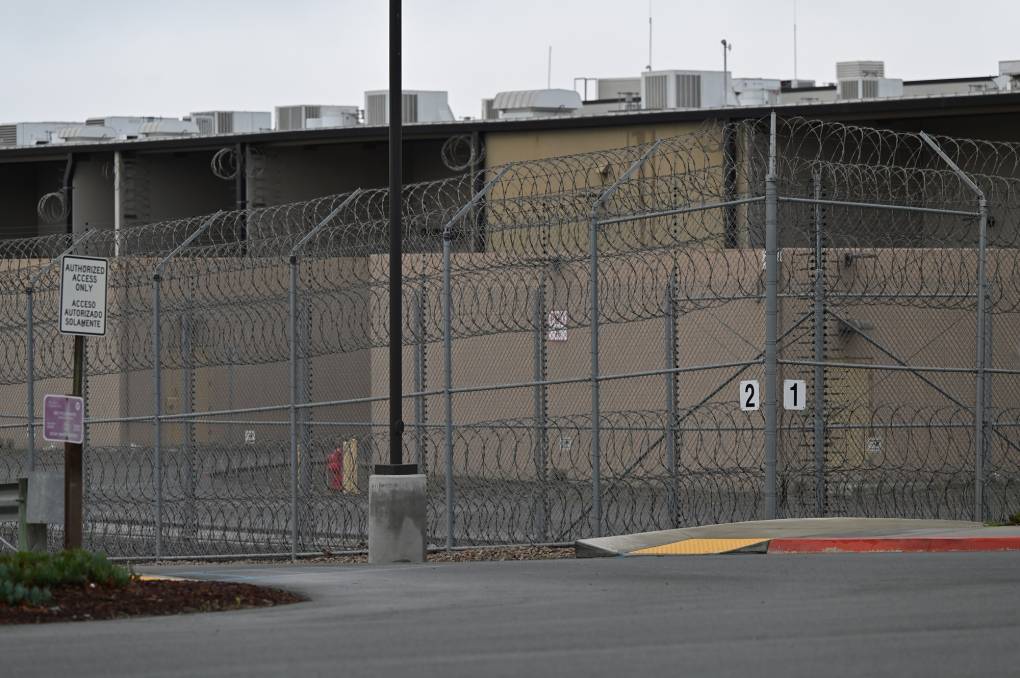
"caption": "A view of the CoreCivic Otay Mesa Detention Center in San Diego, California, on Feb. 7, 2025. The private institution has been plagued by allegations of medical negligence, abusive and retaliatory behavior against immigrants, sexual harassment, poor food and water quality and other dangerous conditions. ",
"credit": "Carlos Moreno/Anadolu via Getty Images",
"altTag": null,
"description": null,
"imgSizes": {
"medium": {
"file": "https://cdn.kqed.org/wp-content/uploads/sites/10/2025/05/CANewsroom1-800x532.jpg",
"width": 800,
"height": 532,
"mimeType": "image/jpeg"
},
"large": {
"file": "https://cdn.kqed.org/wp-content/uploads/sites/10/2025/05/CANewsroom1-1020x678.jpg",
"width": 1020,
"height": 678,
"mimeType": "image/jpeg"
},
"thumbnail": {
"file": "https://cdn.kqed.org/wp-content/uploads/sites/10/2025/05/CANewsroom1-160x106.jpg",
"width": 160,
"height": 106,
"mimeType": "image/jpeg"
},
"1536x1536": {
"file": "https://cdn.kqed.org/wp-content/uploads/sites/10/2025/05/CANewsroom1-1536x1021.jpg",
"width": 1536,
"height": 1021,
"mimeType": "image/jpeg"
},
"post-thumbnail": {
"file": "https://cdn.kqed.org/wp-content/uploads/sites/10/2025/05/CANewsroom1-672x372.jpg",
"width": 672,
"height": 372,
"mimeType": "image/jpeg"
},
"twentyfourteen-full-width": {
"file": "https://cdn.kqed.org/wp-content/uploads/sites/10/2025/05/CANewsroom1-1038x576.jpg",
"width": 1038,
"height": 576,
"mimeType": "image/jpeg"
},
"full-width": {
"file": "https://cdn.kqed.org/wp-content/uploads/sites/10/2025/05/CANewsroom1-1920x1277.jpg",
"width": 1920,
"height": 1277,
"mimeType": "image/jpeg"
},
"kqedFullSize": {
"file": "https://cdn.kqed.org/wp-content/uploads/sites/10/2025/05/CANewsroom1.jpg",
"width": 2000,
"height": 1330
}
},
"isLoading": false,
"fetchFailed": false
},
"news_12038090": {
"type": "attachments",
"id": "news_12038090",
"meta": {
"index": "attachments_1716263798",
"site": "news",
"id": "12038090",
"found": true
},
"title": "CMDetentionICE1",
"publishDate": 1745956729,
"status": "inherit",
"parent": 12038087,
"modified": 1745956768,
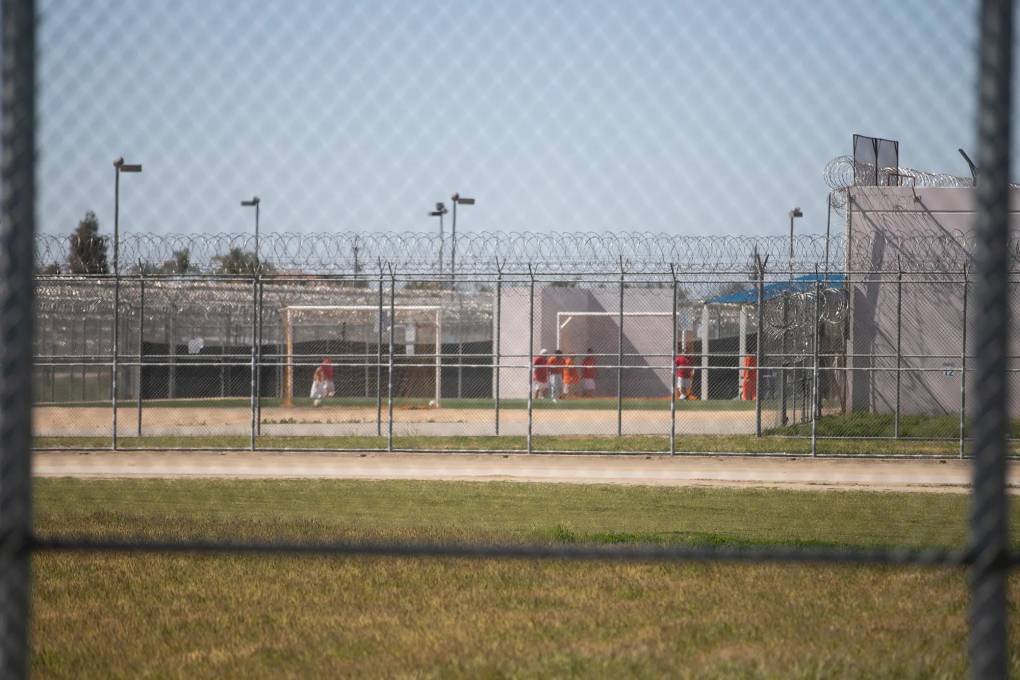
"caption": "People detained inside the Golden State Annex, a U.S. Immigration and Customs Enforcement detention facility run by The GEO Group, in McFarland on March 9, 2025.",
"credit": "Larry Valenzuela/CalMatters/CatchLight Local",
"altTag": null,
"description": null,
"imgSizes": {
"medium": {
"file": "https://cdn.kqed.org/wp-content/uploads/sites/10/2025/04/CMDetentionICE1-800x533.jpg",
"width": 800,
"height": 533,
"mimeType": "image/jpeg"
},
"large": {
"file": "https://cdn.kqed.org/wp-content/uploads/sites/10/2025/04/CMDetentionICE1-1020x680.jpg",
"width": 1020,
"height": 680,
"mimeType": "image/jpeg"
},
"thumbnail": {
"file": "https://cdn.kqed.org/wp-content/uploads/sites/10/2025/04/CMDetentionICE1-160x107.jpg",
"width": 160,
"height": 107,
"mimeType": "image/jpeg"
},
"1536x1536": {
"file": "https://cdn.kqed.org/wp-content/uploads/sites/10/2025/04/CMDetentionICE1-1536x1024.jpg",
"width": 1536,
"height": 1024,
"mimeType": "image/jpeg"
},
"post-thumbnail": {
"file": "https://cdn.kqed.org/wp-content/uploads/sites/10/2025/04/CMDetentionICE1-672x372.jpg",
"width": 672,
"height": 372,
"mimeType": "image/jpeg"
},
"twentyfourteen-full-width": {
"file": "https://cdn.kqed.org/wp-content/uploads/sites/10/2025/04/CMDetentionICE1-1038x576.jpg",
"width": 1038,
"height": 576,
"mimeType": "image/jpeg"
},
"full-width": {
"file": "https://cdn.kqed.org/wp-content/uploads/sites/10/2025/04/CMDetentionICE1-1920x1280.jpg",
"width": 1920,
"height": 1280,
"mimeType": "image/jpeg"
},
"kqedFullSize": {
"file": "https://cdn.kqed.org/wp-content/uploads/sites/10/2025/04/CMDetentionICE1.jpg",
"width": 2000,
"height": 1333
}
},
"isLoading": false,
"fetchFailed": false
},
"news_12002183": {
"type": "attachments",
"id": "news_12002183",
"meta": {
"index": "attachments_1716263798",
"site": "news",
"id": "12002183",
"found": true
},
"title": "240828-ICEDETAINEES-15-BL-KQED",
"publishDate": 1724876552,
"status": "inherit",
"parent": 0,
"modified": 1724956845,
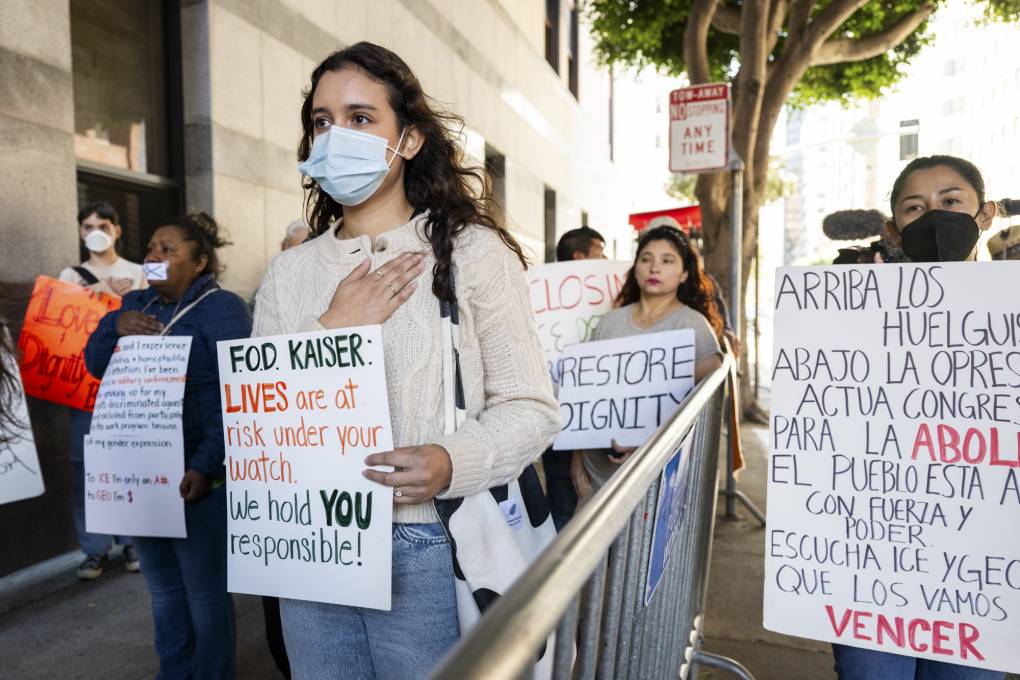
"caption": "Natalia Peña (center left) rallies outside the U.S. Customs and Immigration Enforcement offices in San Francisco on Aug. 28, 2024, in support of labor and hunger strikers inside two detention centers in Kern County.",
"credit": "Beth LaBerge/KQED",
"altTag": null,
"description": null,
"imgSizes": {
"medium": {
"file": "https://cdn.kqed.org/wp-content/uploads/sites/10/2024/08/240828-ICEDETAINEES-15-BL-KQED-800x533.jpg",
"width": 800,
"height": 533,
"mimeType": "image/jpeg"
},
"large": {
"file": "https://cdn.kqed.org/wp-content/uploads/sites/10/2024/08/240828-ICEDETAINEES-15-BL-KQED-1020x680.jpg",
"width": 1020,
"height": 680,
"mimeType": "image/jpeg"
},
"thumbnail": {
"file": "https://cdn.kqed.org/wp-content/uploads/sites/10/2024/08/240828-ICEDETAINEES-15-BL-KQED-160x107.jpg",
"width": 160,
"height": 107,
"mimeType": "image/jpeg"
},
"1536x1536": {
"file": "https://cdn.kqed.org/wp-content/uploads/sites/10/2024/08/240828-ICEDETAINEES-15-BL-KQED-1536x1024.jpg",
"width": 1536,
"height": 1024,
"mimeType": "image/jpeg"
},
"post-thumbnail": {
"file": "https://cdn.kqed.org/wp-content/uploads/sites/10/2024/08/240828-ICEDETAINEES-15-BL-KQED-672x372.jpg",
"width": 672,
"height": 372,
"mimeType": "image/jpeg"
},
"twentyfourteen-full-width": {
"file": "https://cdn.kqed.org/wp-content/uploads/sites/10/2024/08/240828-ICEDETAINEES-15-BL-KQED-1038x576.jpg",
"width": 1038,
"height": 576,
"mimeType": "image/jpeg"
},
"full-width": {
"file": "https://cdn.kqed.org/wp-content/uploads/sites/10/2024/08/240828-ICEDETAINEES-15-BL-KQED-1920x1280.jpg",
"width": 1920,
"height": 1280,
"mimeType": "image/jpeg"
},
"kqedFullSize": {
"file": "https://cdn.kqed.org/wp-content/uploads/sites/10/2024/08/240828-ICEDETAINEES-15-BL-KQED.jpg",
"width": 2000,
"height": 1333
}
},
"isLoading": false,
"fetchFailed": false
},
"news_11932745": {
"type": "attachments",
"id": "news_11932745",
"meta": {
"index": "attachments_1716263798",
"site": "news",
"id": "11932745",
"found": true
},
"parent": 11932620,
"imgSizes": {
"twentyfourteen-full-width": {
"file": "https://ww2.kqed.org/app/uploads/sites/10/2022/11/GettyImages-450371283-1024x576.jpg",
"width": 1024,
"mimeType": "image/jpeg",
"height": 576
},
"thumbnail": {
"file": "https://ww2.kqed.org/app/uploads/sites/10/2022/11/GettyImages-450371283-160x107.jpg",
"width": 160,
"mimeType": "image/jpeg",
"height": 107
},
"post-thumbnail": {
"file": "https://ww2.kqed.org/app/uploads/sites/10/2022/11/GettyImages-450371283-672x372.jpg",
"width": 672,
"mimeType": "image/jpeg",
"height": 372
},
"kqedFullSize": {
"file": "https://ww2.kqed.org/app/uploads/sites/10/2022/11/GettyImages-450371283.jpg",
"width": 1024,
"height": 683
},
"large": {
"file": "https://ww2.kqed.org/app/uploads/sites/10/2022/11/GettyImages-450371283-1020x680.jpg",
"width": 1020,
"mimeType": "image/jpeg",
"height": 680
},
"medium": {
"file": "https://ww2.kqed.org/app/uploads/sites/10/2022/11/GettyImages-450371283-800x534.jpg",
"width": 800,
"mimeType": "image/jpeg",
"height": 534
}
},
"publishDate": 1668809536,
"modified": 1668809563,
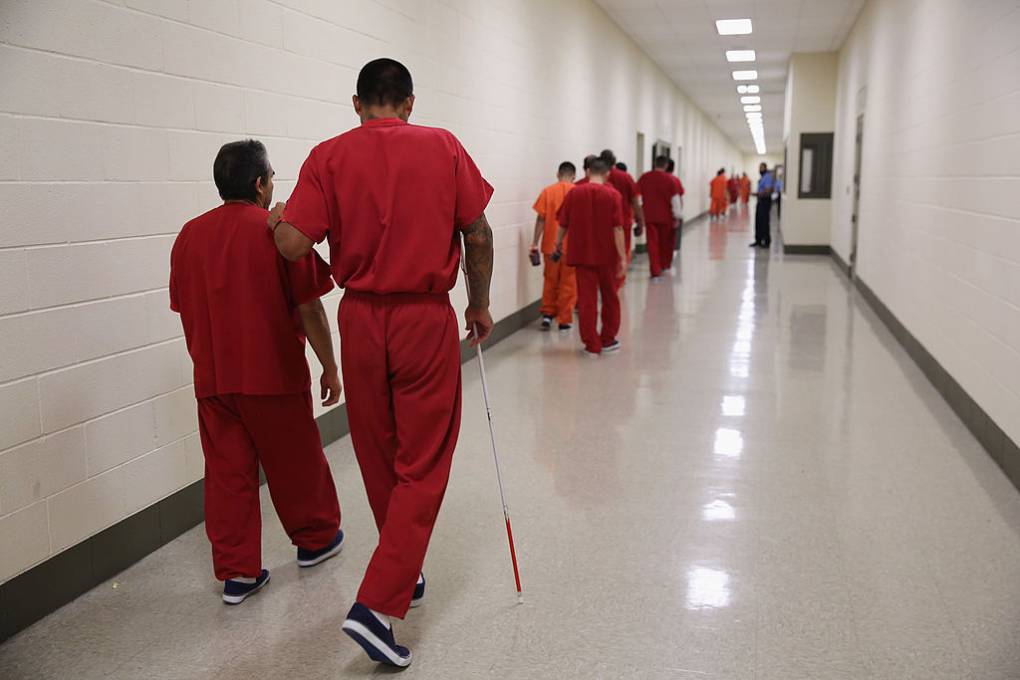
"caption": "Immigrant detainees at the Adelanto ICE Processing Center, which is owned and operated by the GEO Group. Detainees have been striking for several months at two other for-profit detention centers owned by the company, and some say they've been retaliated against with solitary confinement.",
"description": null,
"title": "ICE Holds Immigrants At Adelanto Detention Facility",
"credit": "John Moore/Getty Images",
"status": "inherit",
"altTag": null,
"isLoading": false,
"fetchFailed": false
},
"news_11932720": {
"type": "attachments",
"id": "news_11932720",
"meta": {
"index": "attachments_1716263798",
"site": "news",
"id": "11932720",
"found": true
},
"parent": 11932703,
"imgSizes": {
"twentyfourteen-full-width": {
"file": "https://ww2.kqed.org/app/uploads/sites/10/2022/11/GettyImages-450371259-1024x576.jpg",
"width": 1024,
"mimeType": "image/jpeg",
"height": 576
},
"thumbnail": {
"file": "https://ww2.kqed.org/app/uploads/sites/10/2022/11/GettyImages-450371259-160x107.jpg",
"width": 160,
"mimeType": "image/jpeg",
"height": 107
},
"post-thumbnail": {
"file": "https://ww2.kqed.org/app/uploads/sites/10/2022/11/GettyImages-450371259-672x372.jpg",
"width": 672,
"mimeType": "image/jpeg",
"height": 372
},
"kqedFullSize": {
"file": "https://ww2.kqed.org/app/uploads/sites/10/2022/11/GettyImages-450371259.jpg",
"width": 1024,
"height": 686
},
"large": {
"file": "https://ww2.kqed.org/app/uploads/sites/10/2022/11/GettyImages-450371259-1020x683.jpg",
"width": 1020,
"mimeType": "image/jpeg",
"height": 683
},
"medium": {
"file": "https://ww2.kqed.org/app/uploads/sites/10/2022/11/GettyImages-450371259-800x536.jpg",
"width": 800,
"mimeType": "image/jpeg",
"height": 536
}
},
"publishDate": 1668804101,
"modified": 1668811846,
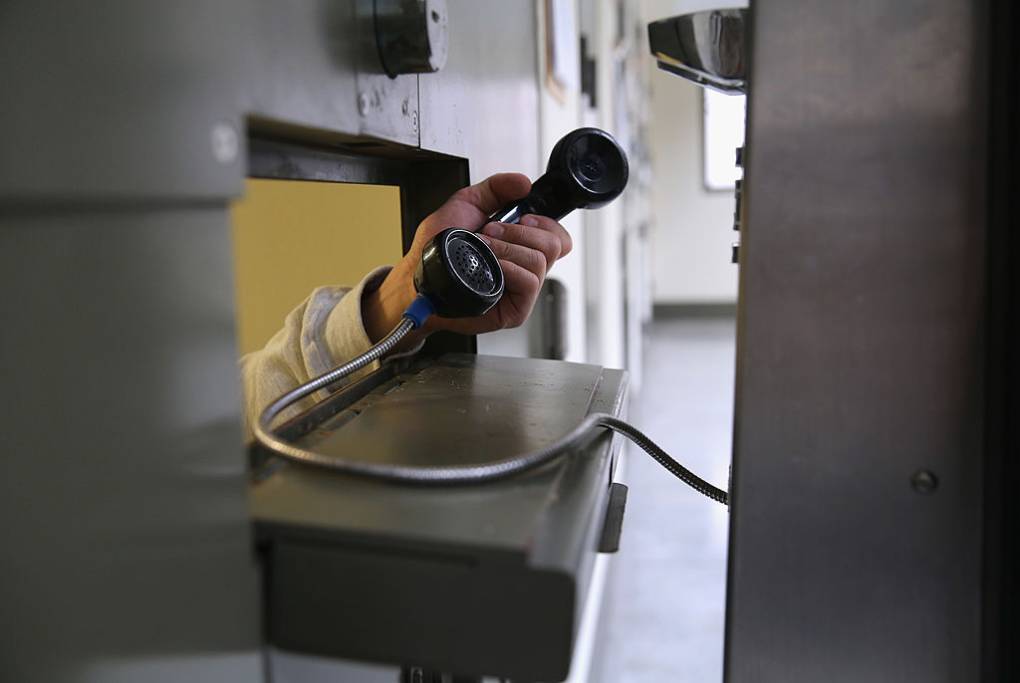
"caption": "An immigrant detainee makes a call from his 'segregation cell' at the Adelanto ICE Processing Center, which is owned and operated by The GEO Group. Detainees have been striking for several months at two other for-profit detention centers owned by the company, and some say they've been retaliated against with solitary confinement.",
"description": null,
"title": "ICE Holds Immigrants At Adelanto Detention Facility",
"credit": "John Moore/Getty Images",
"status": "inherit",
"altTag": "a hand reaches out of a solitary confinement cell to hold a black telephone",
"isLoading": false,
"fetchFailed": false
},
"news_11919168": {
"type": "attachments",
"id": "news_11919168",
"meta": {
"index": "attachments_1716263798",
"site": "news",
"id": "11919168",
"found": true
},
"parent": 11919161,
"imgSizes": {
"twentyfourteen-full-width": {
"file": "https://ww2.kqed.org/app/uploads/sites/10/2022/07/IMG_0397-1020x680-1-1020x576.jpeg",
"width": 1020,
"mimeType": "image/jpeg",
"height": 576
},
"thumbnail": {
"file": "https://ww2.kqed.org/app/uploads/sites/10/2022/07/IMG_0397-1020x680-1-160x107.jpeg",
"width": 160,
"mimeType": "image/jpeg",
"height": 107
},
"post-thumbnail": {
"file": "https://ww2.kqed.org/app/uploads/sites/10/2022/07/IMG_0397-1020x680-1-672x372.jpeg",
"width": 672,
"mimeType": "image/jpeg",
"height": 372
},
"kqedFullSize": {
"file": "https://ww2.kqed.org/app/uploads/sites/10/2022/07/IMG_0397-1020x680-1.jpeg",
"width": 1020,
"height": 680
},
"medium": {
"file": "https://ww2.kqed.org/app/uploads/sites/10/2022/07/IMG_0397-1020x680-1-800x533.jpeg",
"width": 800,
"mimeType": "image/jpeg",
"height": 533
}
},
"publishDate": 1657323732,
"modified": 1657328465,
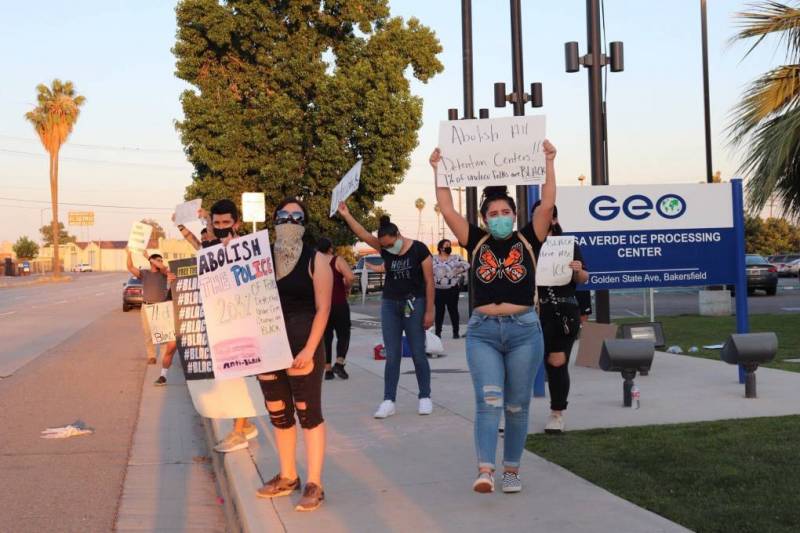
"caption": "Protesters hold signs outside the Mesa Verde ICE Processing Center in Bakersfield on June 4, 2020. Detainees Mohamed Mousa and Pedro Figueroa said they were moved to solitary confinement after signing a declaration on June 28, 2022, that they were joining a peaceful work stoppage by ICE detainees who are paid $1 a day to clean dorms and bathrooms.",
"description": null,
"title": "IMG_0397-1020x680",
"credit": "Tania Bernal/California Immigrant Youth Justice Alliance",
"status": "inherit",
"altTag": null,
"isLoading": false,
"fetchFailed": false
},
"news_11917627": {
"type": "attachments",
"id": "news_11917627",
"meta": {
"index": "attachments_1716263798",
"site": "news",
"id": "11917627",
"found": true
},
"parent": 11917597,
"imgSizes": {
"twentyfourteen-full-width": {
"file": "https://ww2.kqed.org/app/uploads/sites/10/2022/06/GoldenStateAnnex-1038x576.jpg",
"width": 1038,
"mimeType": "image/jpeg",
"height": 576
},
"thumbnail": {
"file": "https://ww2.kqed.org/app/uploads/sites/10/2022/06/GoldenStateAnnex-160x110.jpg",
"width": 160,
"mimeType": "image/jpeg",
"height": 110
},
"post-thumbnail": {
"file": "https://ww2.kqed.org/app/uploads/sites/10/2022/06/GoldenStateAnnex-672x372.jpg",
"width": 672,
"mimeType": "image/jpeg",
"height": 372
},
"kqedFullSize": {
"file": "https://ww2.kqed.org/app/uploads/sites/10/2022/06/GoldenStateAnnex.jpg",
"width": 1778,
"height": 1217
},
"large": {
"file": "https://ww2.kqed.org/app/uploads/sites/10/2022/06/GoldenStateAnnex-1020x698.jpg",
"width": 1020,
"mimeType": "image/jpeg",
"height": 698
},
"1536x1536": {
"file": "https://ww2.kqed.org/app/uploads/sites/10/2022/06/GoldenStateAnnex-1536x1051.jpg",
"width": 1536,
"mimeType": "image/jpeg",
"height": 1051
},
"medium": {
"file": "https://ww2.kqed.org/app/uploads/sites/10/2022/06/GoldenStateAnnex-800x548.jpg",
"width": 800,
"mimeType": "image/jpeg",
"height": 548
}
},
"publishDate": 1655939837,
"modified": 1655940831,
"caption": "Protesters gathered outside the Golden State Annex immigrant detention center in McFarland, Calif. on May 29, 2022. The event was part of a statewide effort to call attention to conditions for immigrant detainees.",
"description": null,
"title": "Golden State Annex",
"credit": "Courtesy of Joyce Xi and the Dignity Not Detention coalition",
"status": "inherit",
"altTag": "Signage for The Golden State Annex immigrant detention center in the forefront. Protesters are in the background.",
"isLoading": false,
"fetchFailed": false
},
"news_11899498": {
"type": "attachments",
"id": "news_11899498",
"meta": {
"index": "attachments_1716263798",
"site": "news",
"id": "11899498",
"found": true
},
"parent": 11899490,
"imgSizes": {
"twentyfourteen-full-width": {
"file": "https://ww2.kqed.org/app/uploads/sites/10/2021/12/RS52945_IMG_4596-qut-1038x576.jpg",
"width": 1038,
"mimeType": "image/jpeg",
"height": 576
},
"thumbnail": {
"file": "https://ww2.kqed.org/app/uploads/sites/10/2021/12/RS52945_IMG_4596-qut-160x120.jpg",
"width": 160,
"mimeType": "image/jpeg",
"height": 120
},
"post-thumbnail": {
"file": "https://ww2.kqed.org/app/uploads/sites/10/2021/12/RS52945_IMG_4596-qut-672x372.jpg",
"width": 672,
"mimeType": "image/jpeg",
"height": 372
},
"kqedFullSize": {
"file": "https://ww2.kqed.org/app/uploads/sites/10/2021/12/RS52945_IMG_4596-qut.jpg",
"width": 1920,
"height": 1440
},
"large": {
"file": "https://ww2.kqed.org/app/uploads/sites/10/2021/12/RS52945_IMG_4596-qut-1020x765.jpg",
"width": 1020,
"mimeType": "image/jpeg",
"height": 765
},
"1536x1536": {
"file": "https://ww2.kqed.org/app/uploads/sites/10/2021/12/RS52945_IMG_4596-qut-1536x1152.jpg",
"width": 1536,
"mimeType": "image/jpeg",
"height": 1152
},
"medium": {
"file": "https://ww2.kqed.org/app/uploads/sites/10/2021/12/RS52945_IMG_4596-qut-800x600.jpg",
"width": 800,
"mimeType": "image/jpeg",
"height": 600
}
},
"publishDate": 1639701546,
"modified": 1639789514,
"caption": "A small group of protesters gather in front of ICE's offices in downtown San Francisco on Dec. 15, 2021, calling on the agency to terminate its immigrant-detention contract with Yuba County Jail.",
"description": "A small group of people gather by ICE's offices in San Francisco on Dec 15, 2021. They called on the agency to terminate its detention contract with Yuba County Jail.",
"title": "RS52945_IMG_4596-qut",
"credit": "Farida Jhabvala Romero/KQED",
"status": "inherit",
"altTag": "Two women hold a banner on a street corner that says 'Not One More Detention, Not One More Deportation.'",
"isLoading": false,
"fetchFailed": false
},
"news_11875950": {
"type": "attachments",
"id": "news_11875950",
"meta": {
"index": "attachments_1716263798",
"site": "news",
"id": "11875950",
"found": true
},
"parent": 11875913,
"imgSizes": {
"twentyfourteen-full-width": {
"file": "https://ww2.kqed.org/app/uploads/sites/10/2021/05/GettyImages-1318956214-1024x576.jpg",
"width": 1024,
"mimeType": "image/jpeg",
"height": 576
},
"thumbnail": {
"file": "https://ww2.kqed.org/app/uploads/sites/10/2021/05/GettyImages-1318956214-160x107.jpg",
"width": 160,
"mimeType": "image/jpeg",
"height": 107
},
"post-thumbnail": {
"file": "https://ww2.kqed.org/app/uploads/sites/10/2021/05/GettyImages-1318956214-672x372.jpg",
"width": 672,
"mimeType": "image/jpeg",
"height": 372
},
"kqedFullSize": {
"file": "https://ww2.kqed.org/app/uploads/sites/10/2021/05/GettyImages-1318956214.jpg",
"width": 1024,
"height": 687
},
"large": {
"file": "https://ww2.kqed.org/app/uploads/sites/10/2021/05/GettyImages-1318956214-1020x684.jpg",
"width": 1020,
"mimeType": "image/jpeg",
"height": 684
},
"medium": {
"file": "https://ww2.kqed.org/app/uploads/sites/10/2021/05/GettyImages-1318956214-800x537.jpg",
"width": 800,
"mimeType": "image/jpeg",
"height": 537
}
},
"publishDate": 1622236105,
"modified": 1622236400,
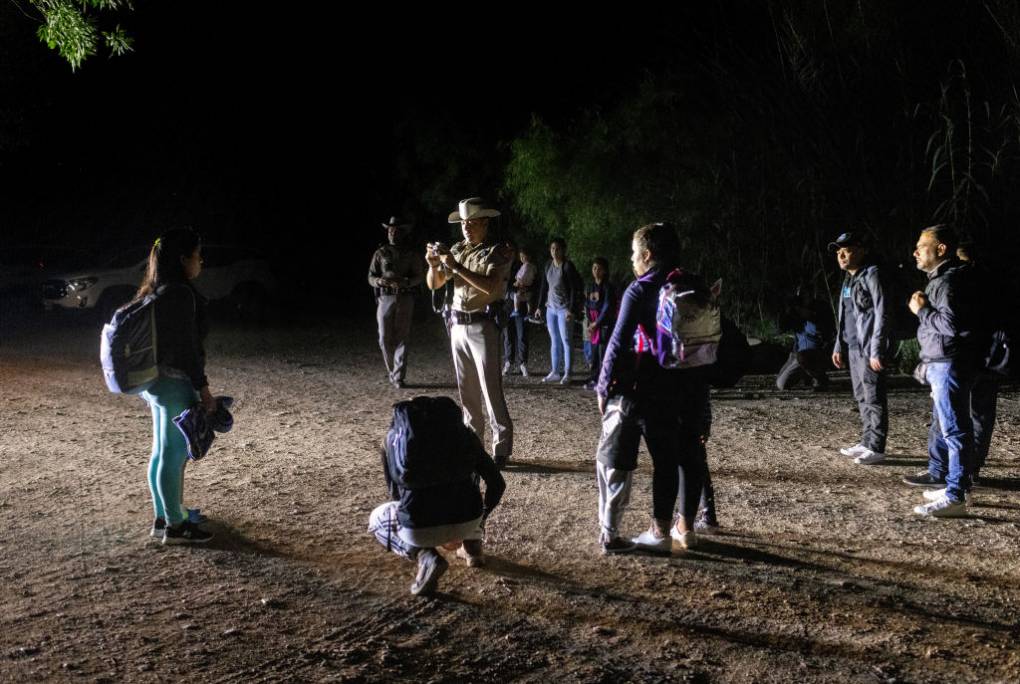
"caption": "A group of migrants who have just crossed the Rio Grande from Mexico to seek political asylum in the United States are apprehended on May 19, 2021 in Del Rio, Texas, before being taken into custody by U.S. Border Patrol agents. ",
"description": null,
"title": "Undocumented Immigrants Attempt To Cross Into U.S. Near Del Rio, Texas",
"credit": "John Moore/Getty Images",
"status": "inherit",
"altTag": null,
"isLoading": false,
"fetchFailed": false
},
"news_11869381": {
"type": "attachments",
"id": "news_11869381",
"meta": {
"index": "attachments_1716263798",
"site": "news",
"id": "11869381",
"found": true
},
"title": "ICE-Holds-Immigrants-At-Adelanto-Detention-Facility",
"publishDate": 1618373261,
"status": "inherit",
"parent": 11869046,
"modified": 1618422196,
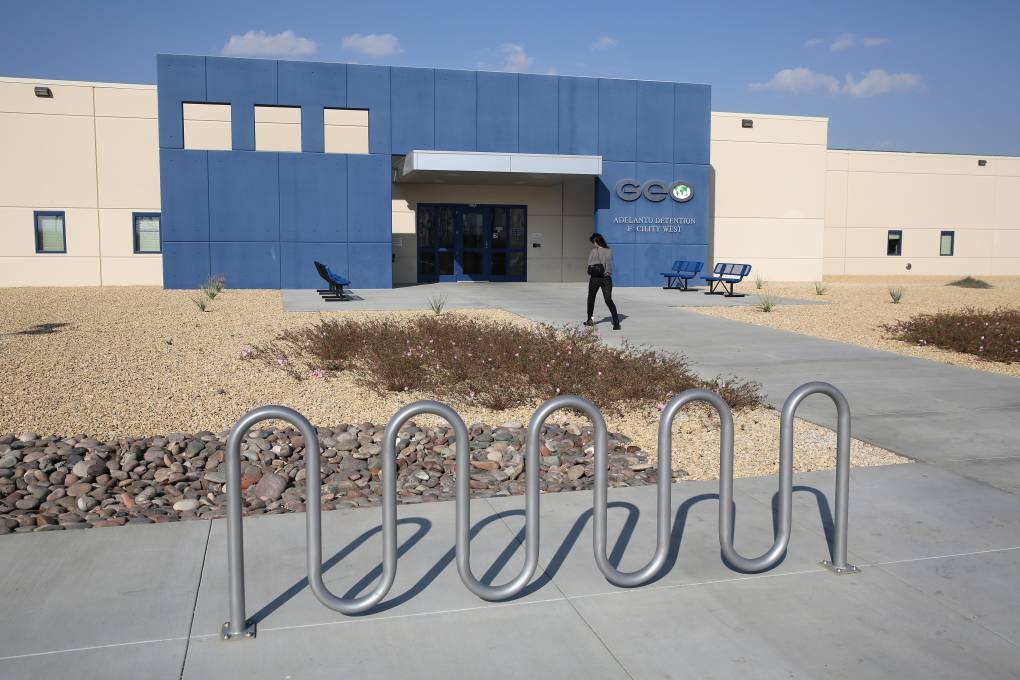
"caption": "The Adelanto Detention Facility is the largest U.S. Immigration and Customs Enforcement detention center in California. The facility is managed by the private GEO Group. Organizers signal that distrust of for-profit prison operators like GEO Group and Core Civic among detained migrants could complicate the process to vaccinate this population.",
"credit": "John Moore/Getty Images",
"altTag": null,
"description": "A family member walks into the Adelanto Detention Facility on November 15, 2013 in Adelanto, California. The facility is the largest Immigration and Customs Enforcement (ICE) detention center in California.",
"imgSizes": {
"medium": {
"file": "https://cdn.kqed.org/wp-content/uploads/sites/10/2021/04/GettyImages-450371267-1-800x533.jpg",
"width": 800,
"height": 533,
"mimeType": "image/jpeg"
},
"large": {
"file": "https://cdn.kqed.org/wp-content/uploads/sites/10/2021/04/GettyImages-450371267-1-1020x680.jpg",
"width": 1020,
"height": 680,
"mimeType": "image/jpeg"
},
"thumbnail": {
"file": "https://cdn.kqed.org/wp-content/uploads/sites/10/2021/04/GettyImages-450371267-1-160x107.jpg",
"width": 160,
"height": 107,
"mimeType": "image/jpeg"
},
"1536x1536": {
"file": "https://cdn.kqed.org/wp-content/uploads/sites/10/2021/04/GettyImages-450371267-1-1536x1024.jpg",
"width": 1536,
"height": 1024,
"mimeType": "image/jpeg"
},
"2048x2048": {
"file": "https://cdn.kqed.org/wp-content/uploads/sites/10/2021/04/GettyImages-450371267-1-2048x1365.jpg",
"width": 2048,
"height": 1365,
"mimeType": "image/jpeg"
},
"post-thumbnail": {
"file": "https://cdn.kqed.org/wp-content/uploads/sites/10/2021/04/GettyImages-450371267-1-672x372.jpg",
"width": 672,
"height": 372,
"mimeType": "image/jpeg"
},
"twentyfourteen-full-width": {
"file": "https://cdn.kqed.org/wp-content/uploads/sites/10/2021/04/GettyImages-450371267-1-1038x576.jpg",
"width": 1038,
"height": 576,
"mimeType": "image/jpeg"
},
"full-width": {
"file": "https://cdn.kqed.org/wp-content/uploads/sites/10/2021/04/GettyImages-450371267-1-1920x1280.jpg",
"width": 1920,
"height": 1280,
"mimeType": "image/jpeg"
},
"kqedFullSize": {
"file": "https://cdn.kqed.org/wp-content/uploads/sites/10/2021/04/GettyImages-450371267-1-scaled-e1778784968650.jpg",
"width": 2000,
"height": 1334
}
},
"isLoading": false,
"fetchFailed": false
},
"news_11864851": {
"type": "attachments",
"id": "news_11864851",
"meta": {
"index": "attachments_1716263798",
"site": "news",
"id": "11864851",
"found": true
},
"parent": 11864820,
"imgSizes": {
"twentyfourteen-full-width": {
"file": "https://ww2.kqed.org/app/uploads/sites/10/2021/03/GettyImages-1224424809-1038x576.jpg",
"width": 1038,
"mimeType": "image/jpeg",
"height": 576
},
"thumbnail": {
"file": "https://ww2.kqed.org/app/uploads/sites/10/2021/03/GettyImages-1224424809-160x107.jpg",
"width": 160,
"mimeType": "image/jpeg",
"height": 107
},
"post-thumbnail": {
"file": "https://ww2.kqed.org/app/uploads/sites/10/2021/03/GettyImages-1224424809-672x372.jpg",
"width": 672,
"mimeType": "image/jpeg",
"height": 372
},
"kqedFullSize": {
"file": "https://ww2.kqed.org/app/uploads/sites/10/2021/03/GettyImages-1224424809.jpg",
"width": 1920,
"height": 1280
},
"large": {
"file": "https://ww2.kqed.org/app/uploads/sites/10/2021/03/GettyImages-1224424809-1020x680.jpg",
"width": 1020,
"mimeType": "image/jpeg",
"height": 680
},
"1536x1536": {
"file": "https://ww2.kqed.org/app/uploads/sites/10/2021/03/GettyImages-1224424809-1536x1024.jpg",
"width": 1536,
"mimeType": "image/jpeg",
"height": 1024
},
"medium": {
"file": "https://ww2.kqed.org/app/uploads/sites/10/2021/03/GettyImages-1224424809-800x533.jpg",
"width": 800,
"mimeType": "image/jpeg",
"height": 533
}
},
"publishDate": 1615838297,
"modified": 1615839943,
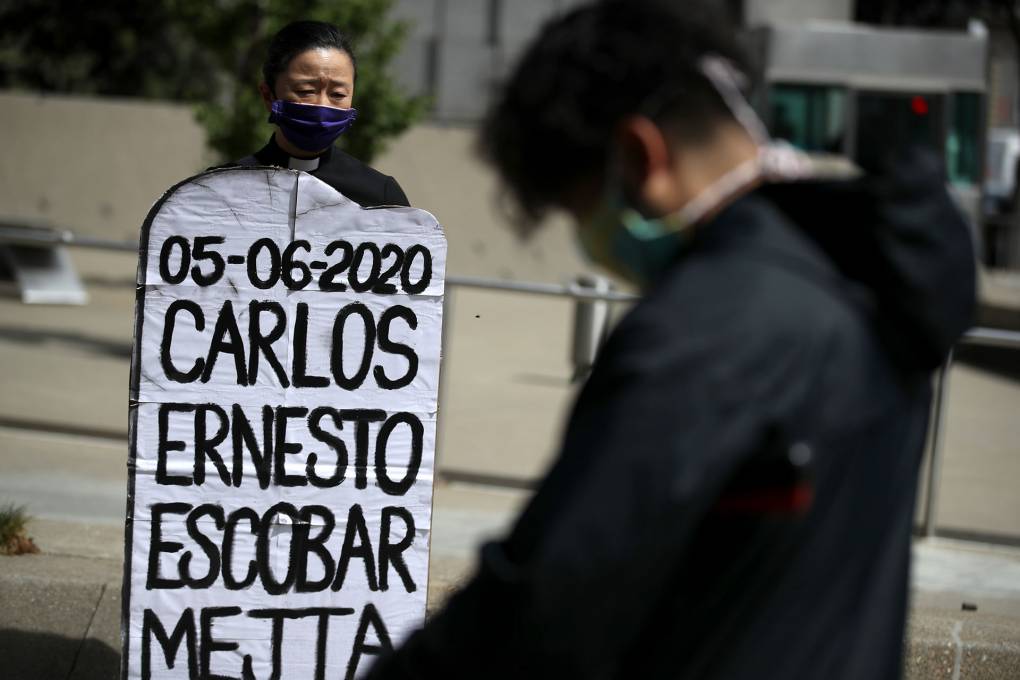
"caption": "Activists held a public memorial in San Francisco on May 12, 2020 to honor immigrants who died of COVID-19 while being detained by U.S. Immigration and Customs Enforcement. ICE detainees held in California facilities are now eligible to receive the coronavirus vaccine.",
"description": "Activists held a public memorial in San Francisco on May 12, 2020 to honor victims of COVID-19 that have died while being detained by U.S. Immigration and Customs Enforcement or in prison. Starting March 15, 2021, ICE detainees held in California facilities are eligible for the coronavirus vaccine.",
"title": "Activists And Family Members Memorialize Covid-19 Victims That Have Died While Incarcerated Or Detained By ICE",
"credit": "Justin Sullivan/Getty Images",
"status": "inherit",
"altTag": null,
"isLoading": false,
"fetchFailed": false
},
"news_11861403": {
"type": "attachments",
"id": "news_11861403",
"meta": {
"index": "attachments_1716263798",
"site": "news",
"id": "11861403",
"found": true
},
"parent": 11861367,
"imgSizes": {
"apple_news_ca_landscape_5_5": {
"file": "https://ww2.kqed.org/app/uploads/sites/10/2021/02/RS26107_jail-hallway-with-bars-01-11-17-qut-1044x783.jpg",
"width": 1044,
"mimeType": "image/jpeg",
"height": 783
},
"apple_news_ca_square_4_0": {
"file": "https://ww2.kqed.org/app/uploads/sites/10/2021/02/RS26107_jail-hallway-with-bars-01-11-17-qut-470x470.jpg",
"width": 470,
"mimeType": "image/jpeg",
"height": 470
},
"twentyfourteen-full-width": {
"file": "https://ww2.kqed.org/app/uploads/sites/10/2021/02/RS26107_jail-hallway-with-bars-01-11-17-qut-1038x576.jpg",
"width": 1038,
"mimeType": "image/jpeg",
"height": 576
},
"thumbnail": {
"file": "https://ww2.kqed.org/app/uploads/sites/10/2021/02/RS26107_jail-hallway-with-bars-01-11-17-qut-160x90.jpg",
"width": 160,
"mimeType": "image/jpeg",
"height": 90
},
"post-thumbnail": {
"file": "https://ww2.kqed.org/app/uploads/sites/10/2021/02/RS26107_jail-hallway-with-bars-01-11-17-qut-672x372.jpg",
"width": 672,
"mimeType": "image/jpeg",
"height": 372
},
"kqedFullSize": {
"file": "https://ww2.kqed.org/app/uploads/sites/10/2021/02/RS26107_jail-hallway-with-bars-01-11-17-qut.jpg",
"width": 1920,
"height": 1080
},
"apple_news_ca_landscape_4_7": {
"file": "https://ww2.kqed.org/app/uploads/sites/10/2021/02/RS26107_jail-hallway-with-bars-01-11-17-qut-632x474.jpg",
"width": 632,
"mimeType": "image/jpeg",
"height": 474
},
"large": {
"file": "https://ww2.kqed.org/app/uploads/sites/10/2021/02/RS26107_jail-hallway-with-bars-01-11-17-qut-1020x574.jpg",
"width": 1020,
"mimeType": "image/jpeg",
"height": 574
},
"apple_news_ca_landscape_4_0": {
"file": "https://ww2.kqed.org/app/uploads/sites/10/2021/02/RS26107_jail-hallway-with-bars-01-11-17-qut-536x402.jpg",
"width": 536,
"mimeType": "image/jpeg",
"height": 402
},
"apple_news_ca_portrait_12_9": {
"file": "https://ww2.kqed.org/app/uploads/sites/10/2021/02/RS26107_jail-hallway-with-bars-01-11-17-qut-1122x1080.jpg",
"width": 1122,
"mimeType": "image/jpeg",
"height": 1080
},
"medium": {
"file": "https://ww2.kqed.org/app/uploads/sites/10/2021/02/RS26107_jail-hallway-with-bars-01-11-17-qut-800x450.jpg",
"width": 800,
"mimeType": "image/jpeg",
"height": 450
},
"apple_news_ca_portrait_4_0": {
"file": "https://ww2.kqed.org/app/uploads/sites/10/2021/02/RS26107_jail-hallway-with-bars-01-11-17-qut-354x472.jpg",
"width": 354,
"mimeType": "image/jpeg",
"height": 472
},
"apple_news_ca_portrait_9_7": {
"file": "https://ww2.kqed.org/app/uploads/sites/10/2021/02/RS26107_jail-hallway-with-bars-01-11-17-qut-840x1080.jpg",
"width": 840,
"mimeType": "image/jpeg",
"height": 1080
},
"apple_news_ca_landscape_12_9": {
"file": "https://ww2.kqed.org/app/uploads/sites/10/2021/02/RS26107_jail-hallway-with-bars-01-11-17-qut-1832x1080.jpg",
"width": 1832,
"mimeType": "image/jpeg",
"height": 1080
},
"apple_news_ca_square_9_7": {
"file": "https://ww2.kqed.org/app/uploads/sites/10/2021/02/RS26107_jail-hallway-with-bars-01-11-17-qut-1104x1080.jpg",
"width": 1104,
"mimeType": "image/jpeg",
"height": 1080
},
"1536x1536": {
"file": "https://ww2.kqed.org/app/uploads/sites/10/2021/02/RS26107_jail-hallway-with-bars-01-11-17-qut-1536x864.jpg",
"width": 1536,
"mimeType": "image/jpeg",
"height": 864
},
"apple_news_ca_portrait_4_7": {
"file": "https://ww2.kqed.org/app/uploads/sites/10/2021/02/RS26107_jail-hallway-with-bars-01-11-17-qut-414x552.jpg",
"width": 414,
"mimeType": "image/jpeg",
"height": 552
},
"apple_news_ca_square_12_9": {
"file": "https://ww2.kqed.org/app/uploads/sites/10/2021/02/RS26107_jail-hallway-with-bars-01-11-17-qut-1472x1080.jpg",
"width": 1472,
"mimeType": "image/jpeg",
"height": 1080
},
"apple_news_ca_portrait_5_5": {
"file": "https://ww2.kqed.org/app/uploads/sites/10/2021/02/RS26107_jail-hallway-with-bars-01-11-17-qut-687x916.jpg",
"width": 687,
"mimeType": "image/jpeg",
"height": 916
},
"apple_news_ca_square_4_7": {
"file": "https://ww2.kqed.org/app/uploads/sites/10/2021/02/RS26107_jail-hallway-with-bars-01-11-17-qut-550x550.jpg",
"width": 550,
"mimeType": "image/jpeg",
"height": 550
},
"apple_news_ca_landscape_9_7": {
"file": "https://ww2.kqed.org/app/uploads/sites/10/2021/02/RS26107_jail-hallway-with-bars-01-11-17-qut-1376x1032.jpg",
"width": 1376,
"mimeType": "image/jpeg",
"height": 1032
},
"apple_news_ca_square_5_5": {
"file": "https://ww2.kqed.org/app/uploads/sites/10/2021/02/RS26107_jail-hallway-with-bars-01-11-17-qut-912x912.jpg",
"width": 912,
"mimeType": "image/jpeg",
"height": 912
}
},
"publishDate": 1613785026,
"modified": 1670595655,
"caption": null,
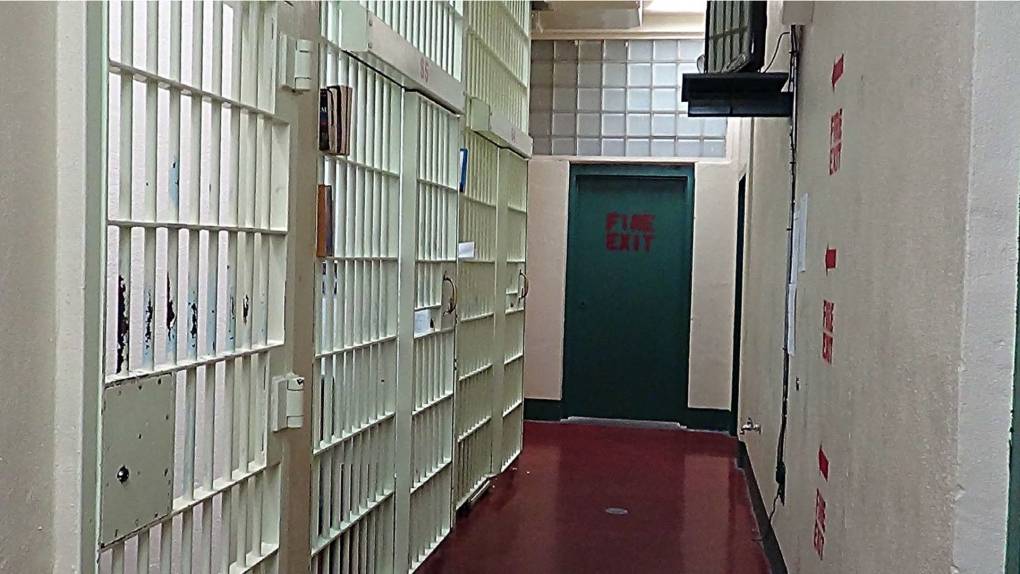
"description": "A corridor inside the Yuba County Jail, one of two California facilities a U.S. district judge called a 'tinderbox' of COVID-19 risk for the ICE detainees held there.",
"title": "RS26107_jail-hallway-with-bars-01-11-17-qut",
"credit": "Courtesy Rosen Bien Galvan & Grunfeld LLP",
"status": "inherit",
"altTag": "Yuba County Jail",
"isLoading": false,
"fetchFailed": false
}
},
"audioPlayerReducer": {
"postId": "stream_live",
"isPaused": true,
"isPlaying": false,
"pfsActive": false,
"pledgeModalIsOpen": true,
"playerDrawerIsOpen": false,
"liveAudioPlayStartedAt": 0,
"liveAudioPlayContext": ""
},
"authorsReducer": {
"byline_news_12041326": {
"type": "authors",
"id": "byline_news_12041326",
"meta": {
"override": true
},
"slug": "byline_news_12041326",
"name": "Mark Betancourt, The California Newsroom",
"isLoading": false
},
"byline_news_12038087": {
"type": "authors",
"id": "byline_news_12038087",
"meta": {
"override": true
},
"slug": "byline_news_12038087",
"name": "\u003ca href=\"https://calmatters.org/author/wendy-fry/\" target=\"_blank\" rel=\"noopener\">Wendy Fry\u003c/a>, CalMatters",
"isLoading": false
},
"byline_news_11875913": {
"type": "authors",
"id": "byline_news_11875913",
"meta": {
"override": true
},
"slug": "byline_news_11875913",
"name": "Amy Taxin and Elliot Spagat\u003cbr>Associated Press",
"isLoading": false
},
"kqed": {
"type": "authors",
"id": "236",
"meta": {
"index": "authors_1716337520",
"id": "236",
"found": true
},
"name": "KQED News Staff",
"firstName": "KQED News Staff",
"lastName": null,
"slug": "kqed",
"email": "faq@kqed.org",
"display_author_email": false,
"staff_mastheads": [],
"title": null,
"bio": null,
"avatar": "https://secure.gravatar.com/avatar/ef0e801a68c4c54afa9180db14084167?s=600&d=blank&r=g",
"twitter": null,
"facebook": null,
"instagram": null,
"linkedin": null,
"sites": [
{
"site": "arts",
"roles": [
"contributor"
]
},
{
"site": "news",
"roles": [
"editor"
]
},
{
"site": "futureofyou",
"roles": [
"author"
]
}
],
"headData": {
"title": "KQED News Staff | KQED",
"description": null,
"ogImgSrc": "https://secure.gravatar.com/avatar/ef0e801a68c4c54afa9180db14084167?s=600&d=blank&r=g",
"twImgSrc": "https://secure.gravatar.com/avatar/ef0e801a68c4c54afa9180db14084167?s=600&d=blank&r=g"
},
"isLoading": false,
"link": "/author/kqed"
},
"tychehendricks": {
"type": "authors",
"id": "259",
"meta": {
"index": "authors_1716337520",
"id": "259",
"found": true
},
"name": "Tyche Hendricks",
"firstName": "Tyche",
"lastName": "Hendricks",
"slug": "tychehendricks",
"email": "thendricks@kqed.org",
"display_author_email": true,
"staff_mastheads": [
"news"
],
"title": "KQED Senior Editor, Immigration",
"bio": "\u003cspan style=\"font-weight: 400;\">Tyche Hendricks is KQED’s senior editor for immigration, leading coverage of the policy and politics that affect California’s immigrant communities. Her work for KQED’s radio and online audiences is also carried on NPR and other national outlets. She has been recognized with awards from the Radio and Television News Directors Association, the Society for Professional Journalists; the Education Writers Association; the Best of the West and the National Federation of Community Broadcasters. Before joining KQED in 2010, Tyche spent more than a dozen years as a newspaper reporter, notably at the \u003c/span>\u003ci>\u003cspan style=\"font-weight: 400;\">San Francisco Chronicle\u003c/span>\u003c/i>\u003cspan style=\"font-weight: 400;\">. At different times she has covered criminal justice, government and politics and urban planning. Tyche has taught in the MFA Creative Writing program at the University of San Francisco and at UC Berkeley’s Graduate School of Journalism, where she was co-director of a national immigration symposium for professional journalists. She is the author of \u003c/span>\u003ci>\u003cspan style=\"font-weight: 400;\">The Wind Doesn't Need a Passport: Stories from the U.S.-Mexico Borderlands\u003c/span>\u003c/i>\u003cspan style=\"font-weight: 400;\"> (University of California Press). \u003c/span>",
"avatar": "https://secure.gravatar.com/avatar/b8ee458e2731c2d43df86882ce17267e?s=600&d=blank&r=g",
"twitter": "tychehendricks",
"facebook": null,
"instagram": null,
"linkedin": null,
"sites": [
{
"site": "news",
"roles": [
"editor"
]
},
{
"site": "stateofhealth",
"roles": [
"editor"
]
}
],
"headData": {
"title": "Tyche Hendricks | KQED",
"description": "KQED Senior Editor, Immigration",
"ogImgSrc": "https://secure.gravatar.com/avatar/b8ee458e2731c2d43df86882ce17267e?s=600&d=blank&r=g",
"twImgSrc": "https://secure.gravatar.com/avatar/b8ee458e2731c2d43df86882ce17267e?s=600&d=blank&r=g"
},
"isLoading": false,
"link": "/author/tychehendricks"
},
"fjhabvala": {
"type": "authors",
"id": "8659",
"meta": {
"index": "authors_1716337520",
"id": "8659",
"found": true
},
"name": "Farida Jhabvala Romero",
"firstName": "Farida",
"lastName": "Jhabvala Romero",
"slug": "fjhabvala",
"email": "fjhabvala@kqed.org",
"display_author_email": true,
"staff_mastheads": [
"news"
],
"title": "KQED Contributor",
"bio": "Farida Jhabvala Romero is a Labor Correspondent for KQED. She previously covered immigration. Farida was \u003ca href=\"https://www.ccnma.org/2022-most-influential-latina-journalists\">named\u003c/a> one of the 10 Most Influential Latina Journalists in California in 2022 by the California Chicano News Media Association. Her work has won awards from the Society of Professional Journalists (Northern California), as well as a national and regional Edward M. Murrow Award for the collaborative reporting projects “Dangerous Air” and “Graying California.” Before joining KQED, Farida worked as a producer at Radio Bilingüe, a national public radio network. Farida earned her master’s degree in journalism from Stanford University.",
"avatar": "https://secure.gravatar.com/avatar/f9f022d4e2609741874222a1e9d41f48fea74011aa7c615eef91d9a50c944ebe?s=600&d=blank&r=g",
"twitter": "FaridaJhabvala",
"bluesky": null,
"facebook": null,
"instagram": null,
"linkedin": "https://www.linkedin.com/in/faridajhabvala/",
"sites": [
{
"site": "news",
"roles": [
"editor"
]
},
{
"site": "stateofhealth",
"roles": [
"author"
]
},
{
"site": "liveblog",
"roles": [
"author"
]
}
],
"headData": {
"title": "Farida Jhabvala Romero | KQED",
"description": "KQED Contributor",
"ogImgSrc": "https://secure.gravatar.com/avatar/f9f022d4e2609741874222a1e9d41f48fea74011aa7c615eef91d9a50c944ebe?s=600&d=blank&r=g",
"twImgSrc": "https://secure.gravatar.com/avatar/f9f022d4e2609741874222a1e9d41f48fea74011aa7c615eef91d9a50c944ebe?s=600&d=blank&r=g"
},
"isLoading": false,
"link": "/author/fjhabvala"
},
"mwiley": {
"type": "authors",
"id": "11526",
"meta": {
"index": "authors_1716337520",
"id": "11526",
"found": true
},
"name": "Michelle Wiley",
"firstName": "Michelle",
"lastName": "Wiley",
"slug": "mwiley",
"email": "mwiley@KQED.org",
"display_author_email": true,
"staff_mastheads": [],
"title": null,
"bio": "Michelle Wiley was the senior editor of weekends.",
"avatar": "https://secure.gravatar.com/avatar/3b897d82a09e8587e8e73fa69fbcc635?s=600&d=blank&r=g",
"twitter": "michelleewiley",
"facebook": null,
"instagram": null,
"linkedin": null,
"sites": [
{
"site": "",
"roles": [
"editor"
]
},
{
"site": "arts",
"roles": [
"editor"
]
},
{
"site": "news",
"roles": [
"subscriber"
]
},
{
"site": "lowdown",
"roles": [
"editor"
]
},
{
"site": "science",
"roles": [
"editor"
]
},
{
"site": "podcasts",
"roles": [
"editor"
]
}
],
"headData": {
"title": "Michelle Wiley | KQED",
"description": null,
"ogImgSrc": "https://secure.gravatar.com/avatar/3b897d82a09e8587e8e73fa69fbcc635?s=600&d=blank&r=g",
"twImgSrc": "https://secure.gravatar.com/avatar/3b897d82a09e8587e8e73fa69fbcc635?s=600&d=blank&r=g"
},
"isLoading": false,
"link": "/author/mwiley"
}
},
"pagesReducer": {
"news_tag_ice-detention": {
"type": "terms",
"id": "news_6884",
"meta": {
"index": "terms_1716263798",
"site": "news",
"id": "6884",
"score": 10.403414
},
"featImg": null,
"name": "ICE detention",
"description": null,
"taxonomy": "tag",
"headData": {
"twImgId": null,
"twTitle": null,
"ogTitle": null,
"ogImgId": null,
"twDescription": null,
"description": null,
"title": "ICE detention Archives | KQED News",
"ogDescription": null
},
"ttid": 6908,
"slug": "ice-detention",
"isLoading": false,
"title": "ICE detention",
"pageMeta": {
"site": "news",
"WpPageTemplate": "page-topic-editorial",
"currentPage": 2
},
"blocks": [
{
"blockName": "kqed/post-list",
"attrs": {
"layout": "cardArticle2",
"query": "posts/news?tag=ice-detention",
"seeMore": false,
"paginated": true,
"page": 2
}
},
{
"blockName": "kqed/ad"
}
]
}
},
"pfsSessionReducer": {},
"postsReducer": {
"stream_live": {
"type": "live",
"id": "stream_live",
"audioUrl": "https://streams.kqed.org/kqedradio",
"title": "Live Stream",
"excerpt": "Live Stream information currently unavailable.",
"link": "/radio",
"featImg": "",
"label": {
"name": "KQED Live",
"link": "/"
}
},
"stream_kqedNewscast": {
"type": "posts",
"id": "stream_kqedNewscast",
"audioUrl": "https://www.kqed.org/.stream/anon/radio/RDnews/newscast.mp3?_=1",
"title": "KQED Newscast",
"featImg": "",
"label": {
"name": "88.5 FM",
"link": "/"
}
},
"news_12041326": {
"type": "posts",
"id": "news_12041326",
"meta": {
"index": "posts_1716263798",
"site": "news",
"id": "12041326",
"score": null,
"sort": [
1748347218000
]
},
"guestAuthors": [],
"slug": "this-ethiopian-woman-was-tortured-by-her-government-the-us-is-sending-her-home-anyway",
"title": "This Ethiopian Woman Was Tortured by Her Government. The US is Sending Her Home Anyway",
"publishDate": 1748347218,
"format": "standard",
"headTitle": "This Ethiopian Woman Was Tortured by Her Government. The US is Sending Her Home Anyway | KQED",
"labelTerm": {
"site": "news"
},
"content": "\u003cp>The woman’s story is summarized only briefly in the document that seals her impending deportation: After she inadvertently witnessed an extrajudicial killing by members of the Ethiopian military, she was imprisoned and beaten for more than a week.\u003c/p>\n\u003cp>But that was only the beginning. The witness — as the \u003cem>California Newsroom\u003c/em> has chosen to call her after she asked not to be named due to safety concerns for herself and her family — fled Ethiopia and made her way to Mexico. She was planning to ask for protection in the United States. But by the time she made it to the banks of the Rio Grande, her options had narrowed.\u003c/p>\n\u003cp>President \u003ca href=\"https://www.kqed.org/news/tag/donald-trump\">Donald Trump\u003c/a>, on the day he was inaugurated for the second time, had declared that anyone trying to cross the southern border without prior authorization was part of an “invasion.” The order suspended their right to apply for asylum at the border. So the witness swam across the river to Texas, where she sought out Border Patrol agents to ask for help.\u003c/p>\n\u003cp>She didn’t know it, but there was still a way to avoid being sent home — a narrow form of protection, called the United Nations Convention Against Torture, that applies to people whose governments could torture them or allow them to be tortured. CAT is harder to qualify for than asylum and doesn’t come with the same benefits, like a path to citizenship and the possibility of bringing her family to the U.S. as well. It would, however, stop her from being deported to Ethiopia.\u003c/p>\n\u003cp>[ad fullwidth]\u003c/p>\n\u003cp>But under the president’s order, nearly all of her rights as a CAT applicant — such as the right to bring a lawyer to interviews with asylum officers and to appeal denials — had been quietly and deliberately erased, and what remains of the process now takes place under a veil of secrecy.\u003c/p>\n\u003cp>That’s according to federal guidance produced in a \u003ca href=\"https://www.npr.org/2025/02/03/nx-s1-5285543/aclu-trump-lawsuit-asylum-ban-southern-border-january\">class-action lawsuit\u003c/a> filed by the American Civil Liberties Union, a new report by two prominent human rights organizations, and independent reporting by the \u003cem>California Newsroom\u003c/em>, including nearly a dozen interviews with immigration attorneys and immigrants’ rights advocates around the country, as well as a former asylum officer.\u003c/p>\n\u003cp>The Department of Homeland Security has declined to answer the\u003cem> California Newsroom’s\u003c/em> questions about the witness’s case or how the asylum system — in particular the process of applying for protection under the Convention Against Torture — is currently working.\u003c/p>\n\u003cp>But the changes in practice appear to mean that, for thousands of people fleeing or trying to avoid torture by their own governments, the process of applying for humanitarian protection in the U.S. provides little more than false hope. And its dismantling has been so well hidden that immigration attorneys are only just now starting to catch on.\u003c/p>\n\u003cp>Ginger Jacobs, a senior partner at the San Diego firm that represents the witness, worries that many people who have legitimate claims to humanitarian protection could end up casualties of the Trump administration’s zeal to effect mass deportations.\u003c/p>\n\u003cp>“The danger is that it’s another way to disappear people,” she said.\u003c/p>\n\u003ch2>‘There’s nothing you can do’\u003c/h2>\n\u003cp>Before they can go before an immigration judge to formally plead their cases, applicants for CAT protection must first convince an asylum officer with the U.S. Citizenship and Immigration Services (USCIS) that their fear of torture is credible. For her interview on April 27, the witness spoke with the officer by phone. She sat alone in a tiny booth in the Otay Mesa Detention Center, a massive U.S. Immigration and Customs Enforcement (ICE) facility outside San Diego, where she has been detained since early April.\u003c/p>\n\u003cp>Afterward, the witness was handed the two-page document containing the short summary of what she’d told the asylum officer. A box on the document had been checked to indicate that her story was credible. But further down, another checked box indicated that the witness “did not establish it is more likely than not that she will be tortured in Ethiopia.” There was no explanation of the decision.\u003c/p>\n\u003cp>\u003cimg loading=\"lazy\" decoding=\"async\" class=\"aligncenter size-full wp-image-12041513\" src=\"https://cdn.kqed.org/wp-content/uploads/sites/10/2025/05/CANewsroom3.png\" alt=\"\" width=\"1321\" height=\"171\" srcset=\"https://cdn.kqed.org/wp-content/uploads/sites/10/2025/05/CANewsroom3.png 1321w, https://cdn.kqed.org/wp-content/uploads/sites/10/2025/05/CANewsroom3-800x104.png 800w, https://cdn.kqed.org/wp-content/uploads/sites/10/2025/05/CANewsroom3-1020x132.png 1020w, https://cdn.kqed.org/wp-content/uploads/sites/10/2025/05/CANewsroom3-160x21.png 160w\" sizes=\"auto, (max-width: 1321px) 100vw, 1321px\">\u003c/p>\n\u003cfigure id=\"attachment_12041512\" class=\"wp-caption aligncenter\" style=\"max-width: 1355px\">\u003cimg loading=\"lazy\" decoding=\"async\" class=\"size-full wp-image-12041512\" src=\"https://cdn.kqed.org/wp-content/uploads/sites/10/2025/05/CANewsroom2.jpg\" alt=\"\" width=\"1355\" height=\"181\" srcset=\"https://cdn.kqed.org/wp-content/uploads/sites/10/2025/05/CANewsroom2.jpg 1355w, https://cdn.kqed.org/wp-content/uploads/sites/10/2025/05/CANewsroom2-800x107.jpg 800w, https://cdn.kqed.org/wp-content/uploads/sites/10/2025/05/CANewsroom2-1020x136.jpg 1020w, https://cdn.kqed.org/wp-content/uploads/sites/10/2025/05/CANewsroom2-160x21.jpg 160w\" sizes=\"auto, (max-width: 1355px) 100vw, 1355px\">\u003cfigcaption class=\"wp-caption-text\">U.S. Citizenship and Immigration Services said the witness’s account of torture by the Ethiopian government was credible, but still determined she could be deported back to her country. \u003ccite>(Sydney Johnson, Jacobs & Schlesinger LLP)\u003c/cite>\u003c/figcaption>\u003c/figure>\n\u003cp>Before Jan. 20, that determination could only have been made in court by an immigration judge. Now, that single checkmark, made by an official whom the witness never saw, is the final and uncontestable decision that will send her back to the government that she believes will imprison and torture her, or worse.\u003c/p>\n\u003cp>“Her deportation officer just said, there’s nothing you can do,” said Sydney Johnson, who became the witness’s attorney after the decision was made, referring to the ICE official in charge of arranging the witness’s return to Ethiopia. (Johnson requested that her client not be interviewed directly because ICE records detainee phone calls.)\u003c/p>\n\u003cp>Had the witness arrived in the U.S. before Trump signed his executive order, “\u003ca href=\"https://www.whitehouse.gov/presidential-actions/2025/01/guaranteeing-the-states-protection-against-invasion/\">Guaranteeing the States Protection Against Invasion,”\u003c/a> she would have been given time to find a lawyer before the interview, and been allowed to have the lawyer present on the call. She would have received detailed documentation of how the asylum officer made the decision, and had the right to ask an immigration judge to review and possibly overturn it.\u003c/p>\n\u003cp>However, new \u003ca href=\"https://cdn.kqed.org/wp-content/uploads/sites/10/2025/05/gov.uscourts.dcd_.277039.52.1.pdf\" target=\"_blank\" rel=\"noopener\">federal guidance\u003c/a> for asylum officers, submitted by the U.S. Department of Justice in the ACLU lawsuit, clarifies that those rights no longer exist. In addition to claiming that the president’s suspension of asylum is illegal, the ACLU complaint specifies that his order is “depriving noncitizens of a meaningful opportunity to present CAT claims.”\u003cbr>\n[aside postID=news_12038128 hero='https://cdn.kqed.org/wp-content/uploads/sites/10/2025/04/npr.brightspotcdn-copy-21-1020x680.jpg']A \u003ca href=\"https://humanrightsfirst.org/wp-content/uploads/2025/05/ThisIsAnOrderFromTrumpReport_final1.pdf\">report published in early May\u003c/a> by researchers with Human Rights First and Refugees International calls screenings for CAT applicants a “sham” that is now being used to fast-track deportations. Some who have asked for humanitarian protection at the U.S.-Mexico border are not even granted interviews like the one the witness had, according to the report.\u003c/p>\n\u003cp>Immigration attorneys say that also includes screenings for a form of protection, similar to CAT, called “withholding of removal,” which applies to people who have been threatened or persecuted but are not facing torture. (It’s why the U.S. government was not supposed to send \u003ca href=\"https://www.npr.org/2025/04/01/nx-s1-5347427/maryland-el-salvador-error\">Kilmar Abrego Garcia\u003c/a> back to El Salvador.)\u003c/p>\n\u003cp>Both withholding of removal and CAT are enshrined in international law, and are not up for interpretation by U.S. officials, said Jennifer Scarborough, an immigration attorney who focuses on detained clients at the border and around the country. “Withholding is not discretionary,” she said. “The law says that if you meet those requirements, then the government may not deport you.”\u003c/p>\n\u003cp>If the government isn’t screening people for withholding of removal, Scarborough said, it has no way of knowing whether they meet the requirements.\u003c/p>\n\u003cp>DHS has \u003ca href=\"https://www.uscis.gov/tools/reports-and-studies/semi-monthly-credible-fear-and-reasonable-fear-receipts-and-decisions\">stopped publishing semi-monthly data\u003c/a> about screenings, making it difficult to determine how many people have been denied access to protection since the new rules went into effect.\u003c/p>\n\u003cp>“It’s such a terrifying situation,” said Jennifer Babaie, director of legal services at Las Americas Immigrant Advocacy Center in El Paso, Texas. The organization is a plaintiff in the ACLU lawsuit.\u003c/p>\n\u003cp>A former USCIS asylum officer who routinely conducted screening interviews called the new system “an erosion of due process and these people’s rights.” The person asked not to be named due to fear of reprisal from the current administration.\u003c/p>\n\u003cp>By removing these checks and balances that protect the rights of immigrants, the former asylum officer said, “the Trump administration is behaving in the same way as those governments we offer protection from.”\u003c/p>\n\u003ch2>‘A farce by design’\u003c/h2>\n\u003cp>The night before her phone screening with the asylum officer, the witness had been ill. A chronic medical condition had flared up, and that morning, she was groggy and lethargic after ICE doctors increased the dosage of her medication. She had a splitting headache. According to Johnson, her attorney, the witness said the asylum officer did not ask if she felt up to the screening interview, and the witness didn’t think she had the option to reschedule.\u003c/p>\n\u003cp>The witness told Johnson the interview lasted two hours. Twice, as she told the asylum officer her story — how prison guards had touched her breasts and taunted her as they beat her, how they poured water on her when she urinated on herself — the Amharic interpreter, who had been patched into the call, suddenly dropped off.\u003c/p>\n\u003cp>After the second time, toward the end of the call, the interpreter didn’t come back. The witness said she could continue in English as long as the asylum officer spoke slowly. She told Johnson that throughout the entire screening, the officer asked only “yes” or “no” questions. When the officer finally read back a summary, details were missing, but the witness said she was not allowed to add anything.\u003c/p>\n\u003cp>According to the current guidance under Trump’s order, “at the end of the interview, the AO [Asylum Officer] must review the summary with the individual and give him or her an opportunity to correct errors.” Officers also have the option to reschedule the interview if needed, including if the applicant doesn’t feel well or is having trouble communicating. In fact, officers were previously required to ask whether an applicant felt well enough to be interviewed, and “should avoid communicating” without an interpreter, according to internal USCIS documents reviewed by the \u003cem>California Newsroom\u003c/em>.\u003c/p>\n\u003cfigure id=\"attachment_12041501\" class=\"wp-caption aligncenter\" style=\"max-width: 2000px\">\u003cimg loading=\"lazy\" decoding=\"async\" class=\"size-full wp-image-12041501\" src=\"https://cdn.kqed.org/wp-content/uploads/sites/10/2025/05/InterviewProcedures.jpg\" alt=\"\" width=\"2000\" height=\"1188\" srcset=\"https://cdn.kqed.org/wp-content/uploads/sites/10/2025/05/InterviewProcedures.jpg 2000w, https://cdn.kqed.org/wp-content/uploads/sites/10/2025/05/InterviewProcedures-800x475.jpg 800w, https://cdn.kqed.org/wp-content/uploads/sites/10/2025/05/InterviewProcedures-1020x606.jpg 1020w, https://cdn.kqed.org/wp-content/uploads/sites/10/2025/05/InterviewProcedures-160x95.jpg 160w, https://cdn.kqed.org/wp-content/uploads/sites/10/2025/05/InterviewProcedures-1536x912.jpg 1536w, https://cdn.kqed.org/wp-content/uploads/sites/10/2025/05/InterviewProcedures-1920x1140.jpg 1920w\" sizes=\"auto, (max-width: 2000px) 100vw, 2000px\">\u003cfigcaption class=\"wp-caption-text\">Guidance for asylum officers issued by the U.S. Citizenship and Immigration Services in late January, after President Donald Trump’s executive order. \u003ccite>(Public filing in RAICES v. Noem)\u003c/cite>\u003c/figcaption>\u003c/figure>\n\u003cp>Training documents also recommend that asylum officers cross-check applicants’ fear claims with contextual information about the conditions in their countries.\u003c/p>\n\u003cp>While USCIS has declined to provide documentation of the information used to make the decision in the witness’s case, local reporting shows that since 2018, Ethiopia has been embroiled in \u003ca href=\"https://apnews.com/article/ethiopia-amhara-fano-insurgency-rebels-6108686ebbffee1458f71269380346fc\">ethnically charged fighting\u003c/a> between the government and armed militias. An April 2024 \u003ca href=\"https://upr-info.org/sites/default/files/country-document/2025-04/JS23_UPR47_Ethiopia.pdf\">joint report\u003c/a> from the World Organisation Against Torture and the Ethiopian Human Rights Council says that “enforced disappearance and torture” by government forces and other militant groups are “rampant in most parts of the country.”\u003c/p>\n\u003cp>The most recent \u003ca href=\"https://www.state.gov/reports/2023-country-reports-on-human-rights-practices/ethiopia/\">U.S. State Department report\u003c/a> on humans rights practices in Ethiopia, published in 2023, cites “credible reports of: arbitrary or unlawful killings, including extrajudicial killings; enforced disappearance; torture or cruel, inhuman or degrading treatment or punishment by the government.”\u003c/p>\n\u003cp>The \u003cem>California Newsroom\u003c/em> has omitted some details of the witness’s experience and background to protect her and her family.[aside postID=news_12038327 hero='https://cdn.kqed.org/wp-content/uploads/sites/10/2021/09/GettyImages-1031228044-1020x680.jpg']Johnson said she thinks her client’s illness, along with the incomplete translation, likely muddied what should have been an open-and-shut CAT case. She asked ICE to refer the witness back to USCIS for another interview when the witness felt well enough and proper translation was available. In an email reviewed by the \u003cem>California Newsroom\u003c/em>, an ICE officer wrote that the witness is “not eligible” for a second interview, because she’d already had one.\u003c/p>\n\u003cp>In other words, the asylum officer’s decision was final, and under the new rules, there was no way to appeal it.\u003c/p>\n\u003cp>Advocates for immigrants say there are further signs that the screening process is deteriorating as applicants’ attorneys and judges have been sidelined. Natalie Cadwalader-Schultheis, a San Diego-based attorney with Human Rights First, said screenings used to take anywhere from half an hour to four hours. She now has clients who say their interviews lasted as little as five minutes.\u003c/p>\n\u003cp>According to her organization’s new report, “these torture screenings are a farce by design.”\u003c/p>\n\u003cp>The report also highlights a trend that alarms human rights watchdogs. Some asylum seekers at the border told the researchers that their requests for humanitarian protection were ignored. “In some instances, officers told [asylum seekers] they were being transported to other facilities where they would have asylum interviews, only to be taken to staging areas for their removal,” the report says.\u003c/p>\n\u003cp>The California Newsroom asked DHS about the report’s findings, including the specific anecdotes it cites, and received no response.\u003c/p>\n\u003cp>In one testimonial from the report, a Russian woman refused to board a government flight to Costa Rica, demanding to know why she was being deported. According to the report, officers “falsely stated that there had been a court decision and told her she should just go quietly so as not to traumatize her children, who were crying.”\u003c/p>\n\u003ch2>‘It’s too quiet’\u003c/h2>\n\u003cp>Both ICE and USCIS have refused to give the witness any further documents related to her interview, according to Johnson. In one email to Johnson, reviewed by the \u003cem>California Newsroom\u003c/em>, USCIS implied that either the interview did not happen or that the agency doesn’t have to share the records with detainees’ lawyers. “The whole thing is just this incredibly frustrating cycle where nobody can tell me anything,” Johnson said.\u003c/p>\n\u003cp>When the witness asked to see the detailed notes from her interview, which asylum officers are required to take, an ICE officer suggested she file a Freedom of Information Act request, or FOIA.\u003c/p>\n\u003cp>When told about this suggestion, Scarborough, a veteran immigration attorney, called it “stupid.”\u003c/p>\n\u003cp>“You know how long it takes to get a FOIA response? Two to three months,” she said. “You know what’s going to happen in two to three months? Your client’s going to be deported.”\u003c/p>\n\u003cfigure id=\"attachment_12025344\" class=\"wp-caption aligncenter\" style=\"max-width: 1020px\">\u003cimg loading=\"lazy\" decoding=\"async\" class=\"size-full wp-image-12025344\" src=\"https://cdn.kqed.org/wp-content/uploads/sites/10/2025/02/trump-with-executive-order.jpg\" alt=\"\" width=\"1020\" height=\"680\" srcset=\"https://cdn.kqed.org/wp-content/uploads/sites/10/2025/02/trump-with-executive-order.jpg 1020w, https://cdn.kqed.org/wp-content/uploads/sites/10/2025/02/trump-with-executive-order-800x533.jpg 800w, https://cdn.kqed.org/wp-content/uploads/sites/10/2025/02/trump-with-executive-order-160x107.jpg 160w\" sizes=\"auto, (max-width: 1020px) 100vw, 1020px\">\u003cfigcaption class=\"wp-caption-text\">President Donald Trump signs executive orders in the Oval Office on Jan. 20, 2025, in Washington, DC. \u003ccite>(Anna Moneymaker/Getty Images)\u003c/cite>\u003c/figcaption>\u003c/figure>\n\u003cp>The \u003cem>California Newsroom\u003c/em> spoke with several immigration attorneys around the country who say they’re being stonewalled in similar ways.\u003c/p>\n\u003cp>“The CAT application process has been disappeared from us,” Cadwalader-Schultheis said. “It’s happening absolutely in secret, and they don’t want us understanding how it works. If we did, I think it would be very apparent just how illegal and how much of a sham this whole thing is.”\u003c/p>\n\u003cp>Several of the asylum-focused attorneys the \u003cem>California Newsroom\u003c/em> spoke with convene a weekly phone call to compare cases and try to piece together the administration’s new rules amidst a gaping lack of transparency. “We’re all just trying to figure it out in real time,” said Babaie, the Texas legal services director, who participates in the call.\u003c/p>\n\u003cp>The group seems to be at the bleeding edge of an unfolding situation that even most immigration lawyers have not yet realized, just as even the savviest experts took months to catch on to \u003ca href=\"https://www.theatlantic.com/magazine/archive/2022/09/trump-administration-family-separation-policy-immigration/670604/\">Trump’s family separation policy in 2018\u003c/a>.\u003c/p>\n\u003cp>Tess Feldman, an immigration attorney who directs Southwestern Law School’s Asylum Law Clinic, said she suspects CAT applicants are being rushed through the screening process, if they get one, then being deported quickly. Because the Trump administration has done away with a “consultation period” that previously allowed applicants to contact an attorney before their screening, she thinks many applicants may not be reaching out to lawyers at all. “It’s just silent,” she said. “That doesn’t mean there’s not a problem. In fact, it’s too quiet.”\u003c/p>\n\u003cp>“In 90 days,” she said, “I think we’ll look back and say, how did we not know this was happening in May?”\u003c/p>\n\u003ch2>‘They’re going to know she’s there’\u003c/h2>\n\u003cp>It’s unclear what high-level immigration officials actually know about recent changes to humanitarian protection. In response to questions from the \u003cem>California Newsroom\u003c/em> about what is currently happening when detained migrants express fear of returning to their countries, Matthew Tragesser, the public affairs chief at USCIS, provided links to several websites that don’t reflect the new rules, including that judges no longer review screening decisions.\u003c/p>\n\u003cp>The USCIS did not answer specific questions about the discrepancy, and why public websites that contain outdated information are still online.\u003c/p>\n\u003cp>In its class-action lawsuit, filed in U.S. District Court for the District of Columbia, the ACLU argues that the president does not have the power to broadly suspend protections laid out in law by Congress.\u003c/p>\n\u003cp>If the judge hearing the case rules to suspend the president’s executive order, thousands of asylum seekers could be allowed to stay in the country until they can apply for protection in immigration court. Those like the witness, who have already failed screenings under the order, would be allowed a do-over. But this time, they could have their lawyers present, and they’d have the right to appeal negative decisions.[aside postID=news_12037889 hero='https://cdn.kqed.org/wp-content/uploads/sites/10/2025/04/TravisAirForceBaseGetty-1020x602.jpg']In the meantime, the witness has told Johnson that other detainees at Otay Mesa have also failed their CAT screenings — and that some have disappeared in the middle of the night. The witness said she doesn’t know whether they have been moved to other facilities or deported.\u003c/p>\n\u003cp>ICE officials did not respond to questions from the \u003cem>California Newsroom\u003c/em> about when the witness will be deported. Johnson said ICE told her that the witness will be sent home as soon as the Ethiopian government provides her passport and a flight can be arranged.\u003c/p>\n\u003cp>Jacobs, who has been advising Johnson on the case, said that even by requesting the witness’s travel documents, ICE is putting her in danger. Once she arrives in Ethiopia, Jacobs said, “They’re going to know she’s there. I don’t see how she escapes from just being sent straight back to detention or prison, where she will be tortured again.”\u003c/p>\n\u003cp>This week, Johnson filed a request for an administrative stay, essentially asking ICE not to deport the witness until the ACLU lawsuit is resolved, and also requested that she be released from detention so that she can get proper medical care.\u003c/p>\n\u003cp>According to Johnson, the witness believes that if she is sent back to her country, Ethiopian officials will kill her. “She told me she would rather die here than return to die in Ethiopia,” Johnson said.\u003c/p>\n\u003cp>The witness’s cousin, a U.S. citizen who lives in California, said he knows her as a smart, kind woman who is always easy to talk to. Now, when she calls him from detention, she sounds subdued, nervous and scared. The cousin asked to be referred to only as Negash, his middle name, out of fear that the Ethiopian government would harm him if he were to return.\u003c/p>\n\u003cp>Negash said he was shocked to learn that the witness was denied the opportunity to make her case before a judge.\u003c/p>\n\u003cp>“This is my country,” he said, referring to the United States. “It’s the best country in the world. How are we going to send her to die over there?”\u003c/p>\n\u003cp>\u003ca href=\"https://www.kqed.org/californianewsroom\">\u003cem>The California Newsroom\u003c/em>\u003c/a>\u003cem> is a collaboration of public media outlets throughout the state, with NPR as its national partner.\u003c/em>\u003c/p>\n\u003cp>\u003cem>Anna Sussman contributed to this story\u003c/em>.\u003c/p>\n\u003cp>[ad floatright]\u003c/p>\n",
"blocks": [],
"excerpt": "The Trump Administration has turned the remaining sliver of hope for people fleeing torture into what experts fear is a fast track to deportation. And it’s trying to keep it a secret.",
"status": "publish",
"parent": 0,
"modified": 1748552290,
"stats": {
"hasAudio": false,
"hasVideo": false,
"hasChartOrMap": false,
"iframeSrcs": [],
"hasGoogleForm": false,
"hasGallery": false,
"hasHearkenModule": false,
"hasPolis": false,
"paragraphCount": 63,
"wordCount": 3365
},
"headData": {
"title": "This Ethiopian Woman Was Tortured by Her Government. The US is Sending Her Home Anyway | KQED",
"description": "The Trump Administration has turned the remaining sliver of hope for people fleeing torture into what experts fear is a fast track to deportation. And it’s trying to keep it a secret.",
"ogTitle": "",
"ogDescription": "",
"ogImgId": "",
"twTitle": "",
"twDescription": "",
"twImgId": "",
"schema": {
"@context": "https://schema.org",
"@type": "NewsArticle",
"headline": "This Ethiopian Woman Was Tortured by Her Government. The US is Sending Her Home Anyway",
"datePublished": "2025-05-27T05:00:18-07:00",
"dateModified": "2025-05-29T13:58:10-07:00",
"image": "https://cdn.kqed.org/wp-content/uploads/2020/02/KQED-OG-Image@1x.png",
"isAccessibleForFree": "True",
"publisher": {
"@type": "NewsMediaOrganization",
"@id": "https://www.kqed.org/#organization",
"name": "KQED",
"logo": "https://cdn.kqed.org/wp-content/uploads/2020/02/KQED-OG-Image@1x.png",
"url": "https://www.kqed.org",
"sameAs": [
"https://www.facebook.com/KQED",
"https://twitter.com/KQED",
"https://www.instagram.com/kqed/",
"https://www.tiktok.com/@kqedofficial",
"https://www.linkedin.com/company/kqed",
"https://www.youtube.com/channel/UCeC0IOo7i1P_61zVUWbJ4nw"
]
}
}
},
"sticky": false,
"nprByline": "Mark Betancourt, The California Newsroom",
"nprStoryId": "kqed-12041326",
"templateType": "standard",
"featuredImageType": "standard",
"excludeFromSiteSearch": "Include",
"showOnAuthorArchivePages": "No",
"articleAge": "0",
"path": "/news/12041326/this-ethiopian-woman-was-tortured-by-her-government-the-us-is-sending-her-home-anyway",
"audioTrackLength": null,
"parsedContent": [
{
"type": "contentString",
"content": "\u003cdiv class=\"post-body\">\u003cp>\u003cp>The woman’s story is summarized only briefly in the document that seals her impending deportation: After she inadvertently witnessed an extrajudicial killing by members of the Ethiopian military, she was imprisoned and beaten for more than a week.\u003c/p>\n\u003cp>But that was only the beginning. The witness — as the \u003cem>California Newsroom\u003c/em> has chosen to call her after she asked not to be named due to safety concerns for herself and her family — fled Ethiopia and made her way to Mexico. She was planning to ask for protection in the United States. But by the time she made it to the banks of the Rio Grande, her options had narrowed.\u003c/p>\n\u003cp>President \u003ca href=\"https://www.kqed.org/news/tag/donald-trump\">Donald Trump\u003c/a>, on the day he was inaugurated for the second time, had declared that anyone trying to cross the southern border without prior authorization was part of an “invasion.” The order suspended their right to apply for asylum at the border. So the witness swam across the river to Texas, where she sought out Border Patrol agents to ask for help.\u003c/p>\n\u003cp>She didn’t know it, but there was still a way to avoid being sent home — a narrow form of protection, called the United Nations Convention Against Torture, that applies to people whose governments could torture them or allow them to be tortured. CAT is harder to qualify for than asylum and doesn’t come with the same benefits, like a path to citizenship and the possibility of bringing her family to the U.S. as well. It would, however, stop her from being deported to Ethiopia.\u003c/p>\n\u003cp>\u003c/p>\u003c/div>",
"attributes": {
"named": {},
"numeric": []
}
},
{
"type": "component",
"content": "",
"name": "ad",
"attributes": {
"named": {
"label": "fullwidth"
},
"numeric": [
"fullwidth"
]
}
},
{
"type": "contentString",
"content": "\u003cdiv class=\"post-body\">\u003cp>\u003c/p>\n\u003cp>But under the president’s order, nearly all of her rights as a CAT applicant — such as the right to bring a lawyer to interviews with asylum officers and to appeal denials — had been quietly and deliberately erased, and what remains of the process now takes place under a veil of secrecy.\u003c/p>\n\u003cp>That’s according to federal guidance produced in a \u003ca href=\"https://www.npr.org/2025/02/03/nx-s1-5285543/aclu-trump-lawsuit-asylum-ban-southern-border-january\">class-action lawsuit\u003c/a> filed by the American Civil Liberties Union, a new report by two prominent human rights organizations, and independent reporting by the \u003cem>California Newsroom\u003c/em>, including nearly a dozen interviews with immigration attorneys and immigrants’ rights advocates around the country, as well as a former asylum officer.\u003c/p>\n\u003cp>The Department of Homeland Security has declined to answer the\u003cem> California Newsroom’s\u003c/em> questions about the witness’s case or how the asylum system — in particular the process of applying for protection under the Convention Against Torture — is currently working.\u003c/p>\n\u003cp>But the changes in practice appear to mean that, for thousands of people fleeing or trying to avoid torture by their own governments, the process of applying for humanitarian protection in the U.S. provides little more than false hope. And its dismantling has been so well hidden that immigration attorneys are only just now starting to catch on.\u003c/p>\n\u003cp>Ginger Jacobs, a senior partner at the San Diego firm that represents the witness, worries that many people who have legitimate claims to humanitarian protection could end up casualties of the Trump administration’s zeal to effect mass deportations.\u003c/p>\n\u003cp>“The danger is that it’s another way to disappear people,” she said.\u003c/p>\n\u003ch2>‘There’s nothing you can do’\u003c/h2>\n\u003cp>Before they can go before an immigration judge to formally plead their cases, applicants for CAT protection must first convince an asylum officer with the U.S. Citizenship and Immigration Services (USCIS) that their fear of torture is credible. For her interview on April 27, the witness spoke with the officer by phone. She sat alone in a tiny booth in the Otay Mesa Detention Center, a massive U.S. Immigration and Customs Enforcement (ICE) facility outside San Diego, where she has been detained since early April.\u003c/p>\n\u003cp>Afterward, the witness was handed the two-page document containing the short summary of what she’d told the asylum officer. A box on the document had been checked to indicate that her story was credible. But further down, another checked box indicated that the witness “did not establish it is more likely than not that she will be tortured in Ethiopia.” There was no explanation of the decision.\u003c/p>\n\u003cp>\u003cimg loading=\"lazy\" decoding=\"async\" class=\"aligncenter size-full wp-image-12041513\" src=\"https://cdn.kqed.org/wp-content/uploads/sites/10/2025/05/CANewsroom3.png\" alt=\"\" width=\"1321\" height=\"171\" srcset=\"https://cdn.kqed.org/wp-content/uploads/sites/10/2025/05/CANewsroom3.png 1321w, https://cdn.kqed.org/wp-content/uploads/sites/10/2025/05/CANewsroom3-800x104.png 800w, https://cdn.kqed.org/wp-content/uploads/sites/10/2025/05/CANewsroom3-1020x132.png 1020w, https://cdn.kqed.org/wp-content/uploads/sites/10/2025/05/CANewsroom3-160x21.png 160w\" sizes=\"auto, (max-width: 1321px) 100vw, 1321px\">\u003c/p>\n\u003cfigure id=\"attachment_12041512\" class=\"wp-caption aligncenter\" style=\"max-width: 1355px\">\u003cimg loading=\"lazy\" decoding=\"async\" class=\"size-full wp-image-12041512\" src=\"https://cdn.kqed.org/wp-content/uploads/sites/10/2025/05/CANewsroom2.jpg\" alt=\"\" width=\"1355\" height=\"181\" srcset=\"https://cdn.kqed.org/wp-content/uploads/sites/10/2025/05/CANewsroom2.jpg 1355w, https://cdn.kqed.org/wp-content/uploads/sites/10/2025/05/CANewsroom2-800x107.jpg 800w, https://cdn.kqed.org/wp-content/uploads/sites/10/2025/05/CANewsroom2-1020x136.jpg 1020w, https://cdn.kqed.org/wp-content/uploads/sites/10/2025/05/CANewsroom2-160x21.jpg 160w\" sizes=\"auto, (max-width: 1355px) 100vw, 1355px\">\u003cfigcaption class=\"wp-caption-text\">U.S. Citizenship and Immigration Services said the witness’s account of torture by the Ethiopian government was credible, but still determined she could be deported back to her country. \u003ccite>(Sydney Johnson, Jacobs & Schlesinger LLP)\u003c/cite>\u003c/figcaption>\u003c/figure>\n\u003cp>Before Jan. 20, that determination could only have been made in court by an immigration judge. Now, that single checkmark, made by an official whom the witness never saw, is the final and uncontestable decision that will send her back to the government that she believes will imprison and torture her, or worse.\u003c/p>\n\u003cp>“Her deportation officer just said, there’s nothing you can do,” said Sydney Johnson, who became the witness’s attorney after the decision was made, referring to the ICE official in charge of arranging the witness’s return to Ethiopia. (Johnson requested that her client not be interviewed directly because ICE records detainee phone calls.)\u003c/p>\n\u003cp>Had the witness arrived in the U.S. before Trump signed his executive order, “\u003ca href=\"https://www.whitehouse.gov/presidential-actions/2025/01/guaranteeing-the-states-protection-against-invasion/\">Guaranteeing the States Protection Against Invasion,”\u003c/a> she would have been given time to find a lawyer before the interview, and been allowed to have the lawyer present on the call. She would have received detailed documentation of how the asylum officer made the decision, and had the right to ask an immigration judge to review and possibly overturn it.\u003c/p>\n\u003cp>However, new \u003ca href=\"https://cdn.kqed.org/wp-content/uploads/sites/10/2025/05/gov.uscourts.dcd_.277039.52.1.pdf\" target=\"_blank\" rel=\"noopener\">federal guidance\u003c/a> for asylum officers, submitted by the U.S. Department of Justice in the ACLU lawsuit, clarifies that those rights no longer exist. In addition to claiming that the president’s suspension of asylum is illegal, the ACLU complaint specifies that his order is “depriving noncitizens of a meaningful opportunity to present CAT claims.”\u003cbr>\n\u003c/p>\u003c/div>",
"attributes": {
"named": {},
"numeric": []
}
},
{
"type": "component",
"content": "",
"name": "aside",
"attributes": {
"named": {
"postid": "news_12038128",
"hero": "https://cdn.kqed.org/wp-content/uploads/sites/10/2025/04/npr.brightspotcdn-copy-21-1020x680.jpg",
"label": ""
},
"numeric": []
}
},
{
"type": "contentString",
"content": "\u003cdiv class=\"post-body\">\u003cp>A \u003ca href=\"https://humanrightsfirst.org/wp-content/uploads/2025/05/ThisIsAnOrderFromTrumpReport_final1.pdf\">report published in early May\u003c/a> by researchers with Human Rights First and Refugees International calls screenings for CAT applicants a “sham” that is now being used to fast-track deportations. Some who have asked for humanitarian protection at the U.S.-Mexico border are not even granted interviews like the one the witness had, according to the report.\u003c/p>\n\u003cp>Immigration attorneys say that also includes screenings for a form of protection, similar to CAT, called “withholding of removal,” which applies to people who have been threatened or persecuted but are not facing torture. (It’s why the U.S. government was not supposed to send \u003ca href=\"https://www.npr.org/2025/04/01/nx-s1-5347427/maryland-el-salvador-error\">Kilmar Abrego Garcia\u003c/a> back to El Salvador.)\u003c/p>\n\u003cp>Both withholding of removal and CAT are enshrined in international law, and are not up for interpretation by U.S. officials, said Jennifer Scarborough, an immigration attorney who focuses on detained clients at the border and around the country. “Withholding is not discretionary,” she said. “The law says that if you meet those requirements, then the government may not deport you.”\u003c/p>\n\u003cp>If the government isn’t screening people for withholding of removal, Scarborough said, it has no way of knowing whether they meet the requirements.\u003c/p>\n\u003cp>DHS has \u003ca href=\"https://www.uscis.gov/tools/reports-and-studies/semi-monthly-credible-fear-and-reasonable-fear-receipts-and-decisions\">stopped publishing semi-monthly data\u003c/a> about screenings, making it difficult to determine how many people have been denied access to protection since the new rules went into effect.\u003c/p>\n\u003cp>“It’s such a terrifying situation,” said Jennifer Babaie, director of legal services at Las Americas Immigrant Advocacy Center in El Paso, Texas. The organization is a plaintiff in the ACLU lawsuit.\u003c/p>\n\u003cp>A former USCIS asylum officer who routinely conducted screening interviews called the new system “an erosion of due process and these people’s rights.” The person asked not to be named due to fear of reprisal from the current administration.\u003c/p>\n\u003cp>By removing these checks and balances that protect the rights of immigrants, the former asylum officer said, “the Trump administration is behaving in the same way as those governments we offer protection from.”\u003c/p>\n\u003ch2>‘A farce by design’\u003c/h2>\n\u003cp>The night before her phone screening with the asylum officer, the witness had been ill. A chronic medical condition had flared up, and that morning, she was groggy and lethargic after ICE doctors increased the dosage of her medication. She had a splitting headache. According to Johnson, her attorney, the witness said the asylum officer did not ask if she felt up to the screening interview, and the witness didn’t think she had the option to reschedule.\u003c/p>\n\u003cp>The witness told Johnson the interview lasted two hours. Twice, as she told the asylum officer her story — how prison guards had touched her breasts and taunted her as they beat her, how they poured water on her when she urinated on herself — the Amharic interpreter, who had been patched into the call, suddenly dropped off.\u003c/p>\n\u003cp>After the second time, toward the end of the call, the interpreter didn’t come back. The witness said she could continue in English as long as the asylum officer spoke slowly. She told Johnson that throughout the entire screening, the officer asked only “yes” or “no” questions. When the officer finally read back a summary, details were missing, but the witness said she was not allowed to add anything.\u003c/p>\n\u003cp>According to the current guidance under Trump’s order, “at the end of the interview, the AO [Asylum Officer] must review the summary with the individual and give him or her an opportunity to correct errors.” Officers also have the option to reschedule the interview if needed, including if the applicant doesn’t feel well or is having trouble communicating. In fact, officers were previously required to ask whether an applicant felt well enough to be interviewed, and “should avoid communicating” without an interpreter, according to internal USCIS documents reviewed by the \u003cem>California Newsroom\u003c/em>.\u003c/p>\n\u003cfigure id=\"attachment_12041501\" class=\"wp-caption aligncenter\" style=\"max-width: 2000px\">\u003cimg loading=\"lazy\" decoding=\"async\" class=\"size-full wp-image-12041501\" src=\"https://cdn.kqed.org/wp-content/uploads/sites/10/2025/05/InterviewProcedures.jpg\" alt=\"\" width=\"2000\" height=\"1188\" srcset=\"https://cdn.kqed.org/wp-content/uploads/sites/10/2025/05/InterviewProcedures.jpg 2000w, https://cdn.kqed.org/wp-content/uploads/sites/10/2025/05/InterviewProcedures-800x475.jpg 800w, https://cdn.kqed.org/wp-content/uploads/sites/10/2025/05/InterviewProcedures-1020x606.jpg 1020w, https://cdn.kqed.org/wp-content/uploads/sites/10/2025/05/InterviewProcedures-160x95.jpg 160w, https://cdn.kqed.org/wp-content/uploads/sites/10/2025/05/InterviewProcedures-1536x912.jpg 1536w, https://cdn.kqed.org/wp-content/uploads/sites/10/2025/05/InterviewProcedures-1920x1140.jpg 1920w\" sizes=\"auto, (max-width: 2000px) 100vw, 2000px\">\u003cfigcaption class=\"wp-caption-text\">Guidance for asylum officers issued by the U.S. Citizenship and Immigration Services in late January, after President Donald Trump’s executive order. \u003ccite>(Public filing in RAICES v. Noem)\u003c/cite>\u003c/figcaption>\u003c/figure>\n\u003cp>Training documents also recommend that asylum officers cross-check applicants’ fear claims with contextual information about the conditions in their countries.\u003c/p>\n\u003cp>While USCIS has declined to provide documentation of the information used to make the decision in the witness’s case, local reporting shows that since 2018, Ethiopia has been embroiled in \u003ca href=\"https://apnews.com/article/ethiopia-amhara-fano-insurgency-rebels-6108686ebbffee1458f71269380346fc\">ethnically charged fighting\u003c/a> between the government and armed militias. An April 2024 \u003ca href=\"https://upr-info.org/sites/default/files/country-document/2025-04/JS23_UPR47_Ethiopia.pdf\">joint report\u003c/a> from the World Organisation Against Torture and the Ethiopian Human Rights Council says that “enforced disappearance and torture” by government forces and other militant groups are “rampant in most parts of the country.”\u003c/p>\n\u003cp>The most recent \u003ca href=\"https://www.state.gov/reports/2023-country-reports-on-human-rights-practices/ethiopia/\">U.S. State Department report\u003c/a> on humans rights practices in Ethiopia, published in 2023, cites “credible reports of: arbitrary or unlawful killings, including extrajudicial killings; enforced disappearance; torture or cruel, inhuman or degrading treatment or punishment by the government.”\u003c/p>\n\u003cp>The \u003cem>California Newsroom\u003c/em> has omitted some details of the witness’s experience and background to protect her and her family.\u003c/p>\u003c/div>",
"attributes": {
"named": {},
"numeric": []
}
},
{
"type": "component",
"content": "",
"name": "aside",
"attributes": {
"named": {
"postid": "news_12038327",
"hero": "https://cdn.kqed.org/wp-content/uploads/sites/10/2021/09/GettyImages-1031228044-1020x680.jpg",
"label": ""
},
"numeric": []
}
},
{
"type": "contentString",
"content": "\u003cdiv class=\"post-body\">\u003cp>Johnson said she thinks her client’s illness, along with the incomplete translation, likely muddied what should have been an open-and-shut CAT case. She asked ICE to refer the witness back to USCIS for another interview when the witness felt well enough and proper translation was available. In an email reviewed by the \u003cem>California Newsroom\u003c/em>, an ICE officer wrote that the witness is “not eligible” for a second interview, because she’d already had one.\u003c/p>\n\u003cp>In other words, the asylum officer’s decision was final, and under the new rules, there was no way to appeal it.\u003c/p>\n\u003cp>Advocates for immigrants say there are further signs that the screening process is deteriorating as applicants’ attorneys and judges have been sidelined. Natalie Cadwalader-Schultheis, a San Diego-based attorney with Human Rights First, said screenings used to take anywhere from half an hour to four hours. She now has clients who say their interviews lasted as little as five minutes.\u003c/p>\n\u003cp>According to her organization’s new report, “these torture screenings are a farce by design.”\u003c/p>\n\u003cp>The report also highlights a trend that alarms human rights watchdogs. Some asylum seekers at the border told the researchers that their requests for humanitarian protection were ignored. “In some instances, officers told [asylum seekers] they were being transported to other facilities where they would have asylum interviews, only to be taken to staging areas for their removal,” the report says.\u003c/p>\n\u003cp>The California Newsroom asked DHS about the report’s findings, including the specific anecdotes it cites, and received no response.\u003c/p>\n\u003cp>In one testimonial from the report, a Russian woman refused to board a government flight to Costa Rica, demanding to know why she was being deported. According to the report, officers “falsely stated that there had been a court decision and told her she should just go quietly so as not to traumatize her children, who were crying.”\u003c/p>\n\u003ch2>‘It’s too quiet’\u003c/h2>\n\u003cp>Both ICE and USCIS have refused to give the witness any further documents related to her interview, according to Johnson. In one email to Johnson, reviewed by the \u003cem>California Newsroom\u003c/em>, USCIS implied that either the interview did not happen or that the agency doesn’t have to share the records with detainees’ lawyers. “The whole thing is just this incredibly frustrating cycle where nobody can tell me anything,” Johnson said.\u003c/p>\n\u003cp>When the witness asked to see the detailed notes from her interview, which asylum officers are required to take, an ICE officer suggested she file a Freedom of Information Act request, or FOIA.\u003c/p>\n\u003cp>When told about this suggestion, Scarborough, a veteran immigration attorney, called it “stupid.”\u003c/p>\n\u003cp>“You know how long it takes to get a FOIA response? Two to three months,” she said. “You know what’s going to happen in two to three months? Your client’s going to be deported.”\u003c/p>\n\u003cfigure id=\"attachment_12025344\" class=\"wp-caption aligncenter\" style=\"max-width: 1020px\">\u003cimg loading=\"lazy\" decoding=\"async\" class=\"size-full wp-image-12025344\" src=\"https://cdn.kqed.org/wp-content/uploads/sites/10/2025/02/trump-with-executive-order.jpg\" alt=\"\" width=\"1020\" height=\"680\" srcset=\"https://cdn.kqed.org/wp-content/uploads/sites/10/2025/02/trump-with-executive-order.jpg 1020w, https://cdn.kqed.org/wp-content/uploads/sites/10/2025/02/trump-with-executive-order-800x533.jpg 800w, https://cdn.kqed.org/wp-content/uploads/sites/10/2025/02/trump-with-executive-order-160x107.jpg 160w\" sizes=\"auto, (max-width: 1020px) 100vw, 1020px\">\u003cfigcaption class=\"wp-caption-text\">President Donald Trump signs executive orders in the Oval Office on Jan. 20, 2025, in Washington, DC. \u003ccite>(Anna Moneymaker/Getty Images)\u003c/cite>\u003c/figcaption>\u003c/figure>\n\u003cp>The \u003cem>California Newsroom\u003c/em> spoke with several immigration attorneys around the country who say they’re being stonewalled in similar ways.\u003c/p>\n\u003cp>“The CAT application process has been disappeared from us,” Cadwalader-Schultheis said. “It’s happening absolutely in secret, and they don’t want us understanding how it works. If we did, I think it would be very apparent just how illegal and how much of a sham this whole thing is.”\u003c/p>\n\u003cp>Several of the asylum-focused attorneys the \u003cem>California Newsroom\u003c/em> spoke with convene a weekly phone call to compare cases and try to piece together the administration’s new rules amidst a gaping lack of transparency. “We’re all just trying to figure it out in real time,” said Babaie, the Texas legal services director, who participates in the call.\u003c/p>\n\u003cp>The group seems to be at the bleeding edge of an unfolding situation that even most immigration lawyers have not yet realized, just as even the savviest experts took months to catch on to \u003ca href=\"https://www.theatlantic.com/magazine/archive/2022/09/trump-administration-family-separation-policy-immigration/670604/\">Trump’s family separation policy in 2018\u003c/a>.\u003c/p>\n\u003cp>Tess Feldman, an immigration attorney who directs Southwestern Law School’s Asylum Law Clinic, said she suspects CAT applicants are being rushed through the screening process, if they get one, then being deported quickly. Because the Trump administration has done away with a “consultation period” that previously allowed applicants to contact an attorney before their screening, she thinks many applicants may not be reaching out to lawyers at all. “It’s just silent,” she said. “That doesn’t mean there’s not a problem. In fact, it’s too quiet.”\u003c/p>\n\u003cp>“In 90 days,” she said, “I think we’ll look back and say, how did we not know this was happening in May?”\u003c/p>\n\u003ch2>‘They’re going to know she’s there’\u003c/h2>\n\u003cp>It’s unclear what high-level immigration officials actually know about recent changes to humanitarian protection. In response to questions from the \u003cem>California Newsroom\u003c/em> about what is currently happening when detained migrants express fear of returning to their countries, Matthew Tragesser, the public affairs chief at USCIS, provided links to several websites that don’t reflect the new rules, including that judges no longer review screening decisions.\u003c/p>\n\u003cp>The USCIS did not answer specific questions about the discrepancy, and why public websites that contain outdated information are still online.\u003c/p>\n\u003cp>In its class-action lawsuit, filed in U.S. District Court for the District of Columbia, the ACLU argues that the president does not have the power to broadly suspend protections laid out in law by Congress.\u003c/p>\n\u003cp>If the judge hearing the case rules to suspend the president’s executive order, thousands of asylum seekers could be allowed to stay in the country until they can apply for protection in immigration court. Those like the witness, who have already failed screenings under the order, would be allowed a do-over. But this time, they could have their lawyers present, and they’d have the right to appeal negative decisions.\u003c/p>\u003c/div>",
"attributes": {
"named": {},
"numeric": []
}
},
{
"type": "component",
"content": "",
"name": "aside",
"attributes": {
"named": {
"postid": "news_12037889",
"hero": "https://cdn.kqed.org/wp-content/uploads/sites/10/2025/04/TravisAirForceBaseGetty-1020x602.jpg",
"label": ""
},
"numeric": []
}
},
{
"type": "contentString",
"content": "\u003cdiv class=\"post-body\">\u003cp>In the meantime, the witness has told Johnson that other detainees at Otay Mesa have also failed their CAT screenings — and that some have disappeared in the middle of the night. The witness said she doesn’t know whether they have been moved to other facilities or deported.\u003c/p>\n\u003cp>ICE officials did not respond to questions from the \u003cem>California Newsroom\u003c/em> about when the witness will be deported. Johnson said ICE told her that the witness will be sent home as soon as the Ethiopian government provides her passport and a flight can be arranged.\u003c/p>\n\u003cp>Jacobs, who has been advising Johnson on the case, said that even by requesting the witness’s travel documents, ICE is putting her in danger. Once she arrives in Ethiopia, Jacobs said, “They’re going to know she’s there. I don’t see how she escapes from just being sent straight back to detention or prison, where she will be tortured again.”\u003c/p>\n\u003cp>This week, Johnson filed a request for an administrative stay, essentially asking ICE not to deport the witness until the ACLU lawsuit is resolved, and also requested that she be released from detention so that she can get proper medical care.\u003c/p>\n\u003cp>According to Johnson, the witness believes that if she is sent back to her country, Ethiopian officials will kill her. “She told me she would rather die here than return to die in Ethiopia,” Johnson said.\u003c/p>\n\u003cp>The witness’s cousin, a U.S. citizen who lives in California, said he knows her as a smart, kind woman who is always easy to talk to. Now, when she calls him from detention, she sounds subdued, nervous and scared. The cousin asked to be referred to only as Negash, his middle name, out of fear that the Ethiopian government would harm him if he were to return.\u003c/p>\n\u003cp>Negash said he was shocked to learn that the witness was denied the opportunity to make her case before a judge.\u003c/p>\n\u003cp>“This is my country,” he said, referring to the United States. “It’s the best country in the world. How are we going to send her to die over there?”\u003c/p>\n\u003cp>\u003ca href=\"https://www.kqed.org/californianewsroom\">\u003cem>The California Newsroom\u003c/em>\u003c/a>\u003cem> is a collaboration of public media outlets throughout the state, with NPR as its national partner.\u003c/em>\u003c/p>\n\u003cp>\u003cem>Anna Sussman contributed to this story\u003c/em>.\u003c/p>\n\u003cp>\u003c/p>\u003c/div>",
"attributes": {
"named": {},
"numeric": []
}
},
{
"type": "component",
"content": "",
"name": "ad",
"attributes": {
"named": {
"label": "floatright"
},
"numeric": [
"floatright"
]
}
},
{
"type": "contentString",
"content": "\u003cdiv class=\"post-body\">\u003cp>\u003c/p>\n\u003c/div>\u003c/p>",
"attributes": {
"named": {},
"numeric": []
}
}
],
"link": "/news/12041326/this-ethiopian-woman-was-tortured-by-her-government-the-us-is-sending-her-home-anyway",
"authors": [
"byline_news_12041326"
],
"categories": [
"news_31795",
"news_1169",
"news_8",
"news_13"
],
"tags": [
"news_18538",
"news_1323",
"news_20466",
"news_27626",
"news_34377",
"news_6884",
"news_22215",
"news_20202",
"news_20857",
"news_17968",
"news_20529"
],
"featImg": "news_12041516",
"label": "news"
},
"news_12038087": {
"type": "posts",
"id": "news_12038087",
"meta": {
"index": "posts_1716263798",
"site": "news",
"id": "12038087",
"score": null,
"sort": [
1745958636000
]
},
"guestAuthors": [],
"slug": "california-sent-investigators-ice-facilities-found-more-detainees-health-care-gaps",
"title": "California Sent Investigators to ICE Facilities. They Found More Detainees, and Health Care Gaps",
"publishDate": 1745958636,
"format": "standard",
"headTitle": "California Sent Investigators to ICE Facilities. They Found More Detainees, and Health Care Gaps | KQED",
"labelTerm": {},
"content": "\u003cp>\u003cem>This story was originally published by \u003ca href=\"https://calmatters.org/\">CalMatters\u003c/a>. \u003ca href=\"https://calmatters.org/subscribe-to-calmatters/\">Sign up\u003c/a> for their newsletters.\u003c/em>\u003c/p>\n\u003cp>A new report from the California Department of Justice finds that \u003ca href=\"https://www.kqed.org/news/tag/immigration\">immigration\u003c/a> detention facilities across the state continue to fall short in providing basic mental health care, with gaps in suicide prevention and treatment, recordkeeping, and use of force incidents against mentally ill detainees.\u003c/p>\n\u003cp>The report’s release today comes alongside an aggressive expansion of immigration enforcement and broader changes to immigration policy under President Donald Trump’s second administration. The timing of the report’s release signals California officials plan to continue oversight as federal officials move to expand immigration detention capacity in the state.\u003c/p>\n\u003cp>It flagged that California’s detainee population has grown since the state’s last review: more than 3,100 people were held in immigration detention statewide as of April 16, up from the daily average of about 1,750 in 2021, the report found. About 75% of those detained had no documented criminal history.\u003c/p>\n\u003cp>[ad fullwidth]\u003c/p>\n\u003cp>Investigators with the state’s Department of Justice inspected all six active immigration facilities in California. The inspections were conducted \u003ca href=\"https://legiscan.com/CA/text/AB103/id/1637414\">under a 2017 state law\u003c/a> that mandated the Attorney General’s office review and report on immigration detention facilities operating in California. It’s the fourth report to be released on conditions in facilities where noncitizens are detained in California by federal Immigration and Customs Enforcement authorities.\u003c/p>\n\u003cp>The findings come amid broader concerns about federal oversight: the report notes that the federal Department of Homeland Security recently moved to shutter internal offices tasked with investigating\u003ca href=\"https://news.bgov.com/bloomberg-government-news/civil-rights-advocates-brace-for-cuts-in-homeland-security-unit\"> civil rights complaints\u003c/a> and detention conditions. Last week, the homeland security department quietly removed more than 100 civil rights and civil liberties records from its website, sparking concerns about transparency and accountability in immigration enforcement.\u003c/p>\n\u003cfigure id=\"attachment_11959336\" class=\"wp-caption aligncenter\" style=\"max-width: 2000px\">\u003cimg loading=\"lazy\" decoding=\"async\" class=\"size-full wp-image-11959336\" src=\"https://cdn.kqed.org/wp-content/uploads/sites/10/2023/08/230828-ROB-BONTA-AP-MJS-KQED.jpg\" alt=\"California's Attorney General Rob Bonta speaks into a microphone.\" width=\"2000\" height=\"1333\" srcset=\"https://cdn.kqed.org/wp-content/uploads/sites/10/2023/08/230828-ROB-BONTA-AP-MJS-KQED.jpg 2000w, https://cdn.kqed.org/wp-content/uploads/sites/10/2023/08/230828-ROB-BONTA-AP-MJS-KQED-800x533.jpg 800w, https://cdn.kqed.org/wp-content/uploads/sites/10/2023/08/230828-ROB-BONTA-AP-MJS-KQED-1020x680.jpg 1020w, https://cdn.kqed.org/wp-content/uploads/sites/10/2023/08/230828-ROB-BONTA-AP-MJS-KQED-160x107.jpg 160w, https://cdn.kqed.org/wp-content/uploads/sites/10/2023/08/230828-ROB-BONTA-AP-MJS-KQED-1536x1024.jpg 1536w, https://cdn.kqed.org/wp-content/uploads/sites/10/2023/08/230828-ROB-BONTA-AP-MJS-KQED-1920x1280.jpg 1920w\" sizes=\"auto, (max-width: 2000px) 100vw, 2000px\">\u003cfigcaption class=\"wp-caption-text\">California Attorney General Rob Bonta fields questions during a press conference on Monday, Aug. 28, 2023, in Los Angeles. \u003ccite>(Marcio Jose Sanchez/AP Photo)\u003c/cite>\u003c/figcaption>\u003c/figure>\n\u003cp>“California’s facility reviews remain especially critical in light of efforts by the Trump Administration to both eliminate oversight of conditions at immigration detention facilities and increase its inhumane campaign of mass immigration enforcement, potentially exacerbating critical issues already present in these facilities by packing them with more people,” said Attorney General Rob Bonta.\u003c/p>\n\u003cp>The 165-page report details conditions at privately operated facilities where federal immigration officials detain people facing deportation. State investigators found “deficiencies in suicide prevention and intervention strategies” at every site, including missed mental health screenings and improper clinical decisions about when to release detainees from suicide watch.\u003c/p>\n\u003cp>Staffing shortages, poor coordination between medical and mental health care providers, and widespread problems with record-keeping contributed to the risks for detainees, many of whom suffer from depression, anxiety, and post-traumatic stress disorder, according to the report.[aside postID=news_12037889 hero='https://cdn.kqed.org/wp-content/uploads/sites/10/2025/04/TravisAirForceBaseGetty-1020x602.jpg']Conditions that can worsen mental health, such as solitary confinement, remain common, the report found. At facilities known as Desert View Annex, Imperial, and Otay Mesa, investigators found that force was disproportionately used against individuals with mental health conditions, including cases where chemical agents were deployed. At the Mesa Verde facility in Bakersfield, officials failed to properly document or report the forced transfer of detainees who had participated in a peaceful hunger strike, the report said.\u003c/p>\n\u003cp>Despite federal guidelines discouraging the isolation of detainees with mental illness, the California review found people with serious mental health conditions were routinely placed in segregation, sometimes for months at a time. Investigators found some facilities failed to properly inform detainees about protections under a federal court settlement that requires legal representation for people with severe mental health disorders.\u003c/p>\n\u003cp>Pat-down policies at the Mesa Verde center discouraged detainees from seeking health care, the review found. Detainees reported feeling that invasive searches deterred them from attending medical appointments or accessing other services.\u003c/p>\n\u003cp>A spokesman for Geo Group, the private company that operates several of the facilities, did not immediately respond to a request for comment on the just-released report, but previously told CalMatters that the company provides high-quality medical services including “around-the-clock access to medical care, which is governed by the \u003ca href=\"https://protect-us.mimecast.com/s/83yMC5y4qOUYRgA3SzbK9z?domain=ice.gov\">Performance-Based National Detention Standards\u003c/a> set by the U.S. Department of Homeland Security and independently accredited by the National Commission on Correctional Health Care.”\u003c/p>\n\u003cp>“In all instances, our contracted services are monitored by the federal government to ensure strict compliance with \u003ca href=\"https://protect-us.mimecast.com/s/UwYVCXDljNhjWwgkc6Xw7d?domain=urldefense.us\">Performance-Based National Detention Standards\u003c/a>, which apply to all ICE Processing Centers,” Geo spokesman Christopher Ferreira said in December.\u003c/p>\n\u003cp>ICE did not immediately respond to a request for comment.\u003c/p>\n\u003cp>\u003c/p>\n",
"blocks": [],
"excerpt": "A California law empowers state investigators to check on conditions at ICE detention centers. A new report raises concerns about health care inside them.",
"status": "publish",
"parent": 0,
"modified": 1745958654,
"stats": {
"hasAudio": false,
"hasVideo": false,
"hasChartOrMap": false,
"iframeSrcs": [],
"hasGoogleForm": false,
"hasGallery": false,
"hasHearkenModule": false,
"hasPolis": false,
"paragraphCount": 16,
"wordCount": 786
},
"headData": {
"title": "California Sent Investigators to ICE Facilities. They Found More Detainees, and Health Care Gaps | KQED",
"description": "A California law empowers state investigators to check on conditions at ICE detention centers. A new report raises concerns about health care inside them.",
"ogTitle": "",
"ogDescription": "",
"ogImgId": "",
"twTitle": "",
"twDescription": "",
"twImgId": "",
"schema": {
"@context": "https://schema.org",
"@type": "NewsArticle",
"headline": "California Sent Investigators to ICE Facilities. They Found More Detainees, and Health Care Gaps",
"datePublished": "2025-04-29T13:30:36-07:00",
"dateModified": "2025-04-29T13:30:54-07:00",
"image": "https://cdn.kqed.org/wp-content/uploads/2020/02/KQED-OG-Image@1x.png",
"isAccessibleForFree": "True",
"publisher": {
"@type": "NewsMediaOrganization",
"@id": "https://www.kqed.org/#organization",
"name": "KQED",
"logo": "https://cdn.kqed.org/wp-content/uploads/2020/02/KQED-OG-Image@1x.png",
"url": "https://www.kqed.org",
"sameAs": [
"https://www.facebook.com/KQED",
"https://twitter.com/KQED",
"https://www.instagram.com/kqed/",
"https://www.tiktok.com/@kqedofficial",
"https://www.linkedin.com/company/kqed",
"https://www.youtube.com/channel/UCeC0IOo7i1P_61zVUWbJ4nw"
]
}
}
},
"source": "CalMatters",
"sourceUrl": "https://calmatters.org/",
"sticky": false,
"nprByline": "\u003ca href=\"https://calmatters.org/author/wendy-fry/\" target=\"_blank\" rel=\"noopener\">Wendy Fry\u003c/a>, CalMatters",
"nprStoryId": "kqed-12038087",
"templateType": "standard",
"featuredImageType": "standard",
"excludeFromSiteSearch": "Include",
"showOnAuthorArchivePages": "No",
"articleAge": "0",
"path": "/news/12038087/california-sent-investigators-ice-facilities-found-more-detainees-health-care-gaps",
"audioTrackLength": null,
"parsedContent": [
{
"type": "contentString",
"content": "\u003cdiv class=\"post-body\">\u003cp>\u003cp>\u003cem>This story was originally published by \u003ca href=\"https://calmatters.org/\">CalMatters\u003c/a>. \u003ca href=\"https://calmatters.org/subscribe-to-calmatters/\">Sign up\u003c/a> for their newsletters.\u003c/em>\u003c/p>\n\u003cp>A new report from the California Department of Justice finds that \u003ca href=\"https://www.kqed.org/news/tag/immigration\">immigration\u003c/a> detention facilities across the state continue to fall short in providing basic mental health care, with gaps in suicide prevention and treatment, recordkeeping, and use of force incidents against mentally ill detainees.\u003c/p>\n\u003cp>The report’s release today comes alongside an aggressive expansion of immigration enforcement and broader changes to immigration policy under President Donald Trump’s second administration. The timing of the report’s release signals California officials plan to continue oversight as federal officials move to expand immigration detention capacity in the state.\u003c/p>\n\u003cp>It flagged that California’s detainee population has grown since the state’s last review: more than 3,100 people were held in immigration detention statewide as of April 16, up from the daily average of about 1,750 in 2021, the report found. About 75% of those detained had no documented criminal history.\u003c/p>\n\u003cp>\u003c/p>\u003c/div>",
"attributes": {
"named": {},
"numeric": []
}
},
{
"type": "component",
"content": "",
"name": "ad",
"attributes": {
"named": {
"label": "fullwidth"
},
"numeric": [
"fullwidth"
]
}
},
{
"type": "contentString",
"content": "\u003cdiv class=\"post-body\">\u003cp>\u003c/p>\n\u003cp>Investigators with the state’s Department of Justice inspected all six active immigration facilities in California. The inspections were conducted \u003ca href=\"https://legiscan.com/CA/text/AB103/id/1637414\">under a 2017 state law\u003c/a> that mandated the Attorney General’s office review and report on immigration detention facilities operating in California. It’s the fourth report to be released on conditions in facilities where noncitizens are detained in California by federal Immigration and Customs Enforcement authorities.\u003c/p>\n\u003cp>The findings come amid broader concerns about federal oversight: the report notes that the federal Department of Homeland Security recently moved to shutter internal offices tasked with investigating\u003ca href=\"https://news.bgov.com/bloomberg-government-news/civil-rights-advocates-brace-for-cuts-in-homeland-security-unit\"> civil rights complaints\u003c/a> and detention conditions. Last week, the homeland security department quietly removed more than 100 civil rights and civil liberties records from its website, sparking concerns about transparency and accountability in immigration enforcement.\u003c/p>\n\u003cfigure id=\"attachment_11959336\" class=\"wp-caption aligncenter\" style=\"max-width: 2000px\">\u003cimg loading=\"lazy\" decoding=\"async\" class=\"size-full wp-image-11959336\" src=\"https://cdn.kqed.org/wp-content/uploads/sites/10/2023/08/230828-ROB-BONTA-AP-MJS-KQED.jpg\" alt=\"California's Attorney General Rob Bonta speaks into a microphone.\" width=\"2000\" height=\"1333\" srcset=\"https://cdn.kqed.org/wp-content/uploads/sites/10/2023/08/230828-ROB-BONTA-AP-MJS-KQED.jpg 2000w, https://cdn.kqed.org/wp-content/uploads/sites/10/2023/08/230828-ROB-BONTA-AP-MJS-KQED-800x533.jpg 800w, https://cdn.kqed.org/wp-content/uploads/sites/10/2023/08/230828-ROB-BONTA-AP-MJS-KQED-1020x680.jpg 1020w, https://cdn.kqed.org/wp-content/uploads/sites/10/2023/08/230828-ROB-BONTA-AP-MJS-KQED-160x107.jpg 160w, https://cdn.kqed.org/wp-content/uploads/sites/10/2023/08/230828-ROB-BONTA-AP-MJS-KQED-1536x1024.jpg 1536w, https://cdn.kqed.org/wp-content/uploads/sites/10/2023/08/230828-ROB-BONTA-AP-MJS-KQED-1920x1280.jpg 1920w\" sizes=\"auto, (max-width: 2000px) 100vw, 2000px\">\u003cfigcaption class=\"wp-caption-text\">California Attorney General Rob Bonta fields questions during a press conference on Monday, Aug. 28, 2023, in Los Angeles. \u003ccite>(Marcio Jose Sanchez/AP Photo)\u003c/cite>\u003c/figcaption>\u003c/figure>\n\u003cp>“California’s facility reviews remain especially critical in light of efforts by the Trump Administration to both eliminate oversight of conditions at immigration detention facilities and increase its inhumane campaign of mass immigration enforcement, potentially exacerbating critical issues already present in these facilities by packing them with more people,” said Attorney General Rob Bonta.\u003c/p>\n\u003cp>The 165-page report details conditions at privately operated facilities where federal immigration officials detain people facing deportation. State investigators found “deficiencies in suicide prevention and intervention strategies” at every site, including missed mental health screenings and improper clinical decisions about when to release detainees from suicide watch.\u003c/p>\n\u003cp>Staffing shortages, poor coordination between medical and mental health care providers, and widespread problems with record-keeping contributed to the risks for detainees, many of whom suffer from depression, anxiety, and post-traumatic stress disorder, according to the report.\u003c/p>\u003c/div>",
"attributes": {
"named": {},
"numeric": []
}
},
{
"type": "component",
"content": "",
"name": "aside",
"attributes": {
"named": {
"postid": "news_12037889",
"hero": "https://cdn.kqed.org/wp-content/uploads/sites/10/2025/04/TravisAirForceBaseGetty-1020x602.jpg",
"label": ""
},
"numeric": []
}
},
{
"type": "contentString",
"content": "\u003cdiv class=\"post-body\">\u003cp>Conditions that can worsen mental health, such as solitary confinement, remain common, the report found. At facilities known as Desert View Annex, Imperial, and Otay Mesa, investigators found that force was disproportionately used against individuals with mental health conditions, including cases where chemical agents were deployed. At the Mesa Verde facility in Bakersfield, officials failed to properly document or report the forced transfer of detainees who had participated in a peaceful hunger strike, the report said.\u003c/p>\n\u003cp>Despite federal guidelines discouraging the isolation of detainees with mental illness, the California review found people with serious mental health conditions were routinely placed in segregation, sometimes for months at a time. Investigators found some facilities failed to properly inform detainees about protections under a federal court settlement that requires legal representation for people with severe mental health disorders.\u003c/p>\n\u003cp>Pat-down policies at the Mesa Verde center discouraged detainees from seeking health care, the review found. Detainees reported feeling that invasive searches deterred them from attending medical appointments or accessing other services.\u003c/p>\n\u003cp>A spokesman for Geo Group, the private company that operates several of the facilities, did not immediately respond to a request for comment on the just-released report, but previously told CalMatters that the company provides high-quality medical services including “around-the-clock access to medical care, which is governed by the \u003ca href=\"https://protect-us.mimecast.com/s/83yMC5y4qOUYRgA3SzbK9z?domain=ice.gov\">Performance-Based National Detention Standards\u003c/a> set by the U.S. Department of Homeland Security and independently accredited by the National Commission on Correctional Health Care.”\u003c/p>\n\u003cp>“In all instances, our contracted services are monitored by the federal government to ensure strict compliance with \u003ca href=\"https://protect-us.mimecast.com/s/UwYVCXDljNhjWwgkc6Xw7d?domain=urldefense.us\">Performance-Based National Detention Standards\u003c/a>, which apply to all ICE Processing Centers,” Geo spokesman Christopher Ferreira said in December.\u003c/p>\n\u003cp>ICE did not immediately respond to a request for comment.\u003c/p>\n\u003cp>\u003c/p>\n\u003c/div>\u003c/p>",
"attributes": {
"named": {},
"numeric": []
}
}
],
"link": "/news/12038087/california-sent-investigators-ice-facilities-found-more-detainees-health-care-gaps",
"authors": [
"byline_news_12038087"
],
"categories": [
"news_31795",
"news_1169",
"news_8",
"news_13"
],
"tags": [
"news_18538",
"news_4750",
"news_27240",
"news_1323",
"news_34377",
"news_6884",
"news_20202",
"news_20857",
"news_17968",
"news_20529"
],
"affiliates": [
"news_18481"
],
"featImg": "news_12038090",
"label": "source_news_12038087"
},
"news_12002260": {
"type": "posts",
"id": "news_12002260",
"meta": {
"index": "posts_1716263798",
"site": "news",
"id": "12002260",
"score": null,
"sort": [
1724929207000
]
},
"guestAuthors": [],
"slug": "protesters-decry-conditions-at-ice-detention-centers-as-aclu-report-detail-alleged-abuses",
"title": "Protesters Decry Conditions at ICE Detention Centers as ACLU Report Details Alleged Abuses",
"publishDate": 1724929207,
"format": "standard",
"headTitle": "Protesters Decry Conditions at ICE Detention Centers as ACLU Report Details Alleged Abuses | KQED",
"labelTerm": {
"site": "news"
},
"content": "\u003cp>Advocates are escalating their condemnation of federal immigration authorities and a private prison company that operates ICE detention facilities in California, where dozens of detained men have waged months-long protests over what they say are sub-standard and abusive conditions.\u003c/p>\n\u003cp>At a protest in San Francisco Wednesday outside the office of the U.S. Immigration and Customs Enforcement agency, several dozen activists called on the agency’s field director to meet with detainees who are waging hunger and labor strikes inside two Kern County facilities: Mesa Verde ICE Processing Center and Golden State Annex.\u003c/p>\n\u003cp>After ICE ended free phone calls earlier this month, dozens of people resumed a hunger and labor strike they have waged intermittently for more than two years. The detainees began by \u003ca href=\"https://www.kqed.org/news/11917597/immigrant-detainees-strike-over-working-conditions-california-regulators-investigate\">protesting $1/day pay\u003c/a> for cleaning dormitories and bathrooms and then used the strikes to call attention to what they say are \u003ca href=\"https://www.kqed.org/news/11942414/with-detainee-hunger-strike-in-third-week-ice-is-failing-to-review-requests-for-freedom-advocates-say\">sexually abusive pat-downs, retaliatory use of solitary confinement and substandard care \u003c/a>and conditions. Advocates say eight people are still refusing food.\u003c/p>\n\u003cp>Eunice Hernandez Chenier, an organizer with Pangea Legal Services, said waging a hunger strike shows how serious the concerns are for people living inside the two privately operated immigration jails.\u003c/p>\n\u003cp>“It is obviously a very big sacrifice and a decision that one does not take lightly,” said Hernandez Chenier. “So you can imagine how terrible conditions and treatment are in the facilities in order for someone to make such a decision.”\u003c/p>\n\u003cp>[ad fullwidth]\u003c/p>\n\u003cp>Hernandez Chenier added that two hunger strikers were transferred to a different ICE facility in Tacoma, WA, last week, a move she called retaliation.\u003c/p>\n\u003cp>“Retaliatory transfers are common when folks are striking or when folks are just asserting their rights,” she said.[aside label=\"Related Stories\" tag=\"immigrant-detention-centers\"]Protesters called on ICE to end their contracts with GEO Group for both Mesa Verde and Golden State Annex this December, \u003ca href=\"https://www.businesswire.com/news/home/20191223005099/en/\">when the contracts are up for a 5-year review and renewal\u003c/a>. The publicly traded, multinational corrections corporation holds contracts to operate four out of six ICE detention centers in California.\u003c/p>\n\u003cp>In response to the protesters, an ICE spokeswoman referred KQED to a statement issued last year that reads in part: “ICE fully respects the rights of all people to voice their opinion without interference. ICE does not retaliate in any way against hunger strikers.”\u003c/p>\n\u003cp>The spokeswoman, Alethea Smock, also pointed to the agency’s recent statement that it had ended a pandemic-era free phone call program as a result of budget constraints. ICE “would gladly reinstate the 520 minutes calling program with adequate appropriated funds” from Congress, \u003ca href=\"https://www.ice.gov/news/releases/statement-free-cell-phone-minutes-provided-during-covid-19-public-health-emergency\">the statement said\u003c/a>.\u003c/p>\n\u003cp>And she referenced \u003ca href=\"https://www.ice.gov/doclib/detention-standards/2011/2-12.pdf\">ICE’s detention standards regarding solitary confinement\u003c/a>, which governs the use of cells for “disciplinary segregation” or “administrative segregation.” The standards say segregation must be reviewed every 30 days if it stretches longer than that. It also states that “every effort” shall be made to place detainees with “serious mental illness” in an alternate setting where they can receive care.\u003c/p>\n\u003ch2>Grievances Reveal Abuse and Neglect, Advocates Say\u003c/h2>\n\u003cp>The protest in San Francisco occurred on the same day that the ACLU of Northern California \u003ca href=\"https://www.aclunc.org/sites/default/files/Resistance%20Retaliation%20Repression%20-%20Two%20Years%20in%20California%20Immigration%20Detention.pdf\">released a report\u003c/a> documenting what it called a pattern of hazardous, inhumane conditions, medical neglect and retaliation across all six ICE facilities in California, which have a combined capacity to hold nearly 7,200 people.\u003c/p>\n\u003cp>The report is based on a database of 485 grievance claims filed over the past two years by immigrants held at all six ICE facilities in California. The claim records were obtained through a federal Freedom of Information Act lawsuit or directly from the people who filed them. According to the ACLU’s report, ICE determined that only 8% of the grievances were well-founded.\u003c/p>\n\u003cfigure id=\"attachment_12002182\" class=\"wp-caption aligncenter\" style=\"max-width: 2000px\">\u003cimg loading=\"lazy\" decoding=\"async\" src=\"https://cdn.kqed.org/wp-content/uploads/sites/10/2024/08/240828-ICEDETAINEES-04-BL-KQED.jpg\" alt=\"\" width=\"2000\" height=\"1333\" class=\"size-full wp-image-12002182\" srcset=\"https://cdn.kqed.org/wp-content/uploads/sites/10/2024/08/240828-ICEDETAINEES-04-BL-KQED.jpg 2000w, https://cdn.kqed.org/wp-content/uploads/sites/10/2024/08/240828-ICEDETAINEES-04-BL-KQED-800x533.jpg 800w, https://cdn.kqed.org/wp-content/uploads/sites/10/2024/08/240828-ICEDETAINEES-04-BL-KQED-1020x680.jpg 1020w, https://cdn.kqed.org/wp-content/uploads/sites/10/2024/08/240828-ICEDETAINEES-04-BL-KQED-160x107.jpg 160w, https://cdn.kqed.org/wp-content/uploads/sites/10/2024/08/240828-ICEDETAINEES-04-BL-KQED-1536x1024.jpg 1536w, https://cdn.kqed.org/wp-content/uploads/sites/10/2024/08/240828-ICEDETAINEES-04-BL-KQED-1920x1280.jpg 1920w\" sizes=\"(max-width: 2000px) 100vw, 2000px\">\u003cfigcaption class=\"wp-caption-text\">Jesse Lucas rallies outside the U.S. Customs and Immigraiton Enforcement offices in San Francisco on Aug. 28, 2024, in support of labor and hunger strikers inside two detention centers in Kern County. \u003ccite>(Beth LaBerge/KQED)\u003c/cite>\u003c/figcaption>\u003c/figure>\n\u003cp>Last year, ICE officials said in a statement that it is “committed to ensuring that all those in its custody reside in safe, secure, and humane environments under appropriate \u003ca href=\"https://protect-us.mimecast.com/s/7S-VCPNYRAu5q15KHzj81M?domain=ice.gov\">conditions of confinement\u003c/a>.” They added that “the agency takes allegations of misconduct very seriously – personnel are held to the highest standards of professional and ethical behavior, and when a complaint is received, it is investigated thoroughly to determine veracity and ensure comprehensive standards are strictly maintained and enforced.”\u003c/p>\n\u003cp>An \u003ca href=\"https://www.oig.dhs.gov/sites/default/files/assets/2024-04/OIG-24-23-Apr24.pdf\">unannounced federal inspection\u003c/a> at Golden State Annex in April found the facility “generally complied” with health care and other standards but failed to allow recreation for people in solitary confinement and did not meet requirements for responding to grievances. An \u003ca href=\"https://www.oig.dhs.gov/sites/default/files/assets/2023-11/OIG-24-03-Nov23.pdf\">inspection\u003c/a> last November at the Mesa Verde facility found staff did not accurately report a use of force incident.\u003c/p>\n\u003ch2>Complaint Charges Sexual Abuse\u003c/h2>\n\u003cp>On Tuesday, the day before the protest, half a dozen detained immigrants at Golden State Annex filed a \u003ca href=\"https://cdn.craft.cloud/5cd1c590-65ba-4ad2-a52c-b55e67f8f04b/assets/media/Programs/Immigrant-Rights/CRCL-Complaint-IR-08272024.pdf\">federal civil rights complaint \u003c/a>alleging sexual abuse, harassment and discrimination, based on their sexual orientation, gender expression or as retaliation for speaking out over poor conditions. The complaint charges that guards repeatedly made sexually suggestive and threatening comments to a gay couple who had fled violence in Colombia, subjected a transgender woman to sexually intrusive pat-down searches and waged a campaign of sexually degrading comments against a man after he protested medical neglect and mistreatment.\u003c/p>\n\u003cp>The detainees filing the complaint are asking the Department of Homeland Security’s Office of Civil Rights and Civil Liberties to investigate and ensure that staff members charged with abuse are barred from working with detained individuals, according to attorney Lee Ann Felder-Heim with the Asian Law Caucus in San Francisco.\u003c/p>\n\u003cp>She said the six people involved only filed the complaint after waiting months for a response to earlier reports of the abusive behavior.\u003c/p>\n\u003cp>“We’re aware of reports of sexual abuse and harassment in many facilities across the country,” Felder-Heim said. “So this is definitely not an isolated incident.”\u003c/p>\n\u003cp>In an emailed statement, GEO Group spokesman Christopher Ferreira said the company takes all allegations of sexual abuse and harassment “with the utmost seriousness.”\u003c/p>\n\u003cp>“We have a zero-tolerance policy as it relates to such matters and take steps to ensure a thorough investigation of all related complaints,” he said, adding that GEO is committed to providing services to the Department of Homeland Security “in accordance with all established federal standards.”\u003c/p>\n\u003ch2>Alternatives to Detention Are Cheaper\u003c/h2>\n\u003cp>ICE currently has \u003ca href=\"https://www.aila.org/library/featured-issue-immigration-detention\">funding to hold 41,500 people\u003c/a> in immigration detention at any given time at an annual cost of $3.4 billion. Just over \u003ca href=\"https://trac.syr.edu/immigration/quickfacts/\">36,000 people were in custody\u003c/a> as of Aug. 11. The American Immigration Lawyers Association estimates the \u003ca href=\"https://www.aila.org/library/featured-issue-immigration-detention\">cost of detention at $165/day\u003c/a> per person. ICE’s “Alternatives to Detention” program, involving community-based supervision, has \u003ca href=\"https://www.ice.gov/features/atd\">a cost of $8/day\u003c/a> per individual.[aside label=\"More Immigration Coverage\" tag=\"asylum-seeker\"]Immigration detention is not a punishment for a crime but a form of civil detention to ensure individuals appear for court proceedings and to protect the public from those who could be considered a safety risk. \u003ca href=\"https://crsreports.congress.gov/product/pdf/IF/IF11343\">Immigration law requires mandatory detention\u003c/a> for certain immigrants who are in deportation proceedings because of their criminal record, and in some cases for those seeking asylum.\u003c/p>\n\u003cp>Civil liberties advocates argue that it’s not necessary to detain people who are fighting deportation, as there are fairer and much less expensive \u003ca href=\"https://www.americanimmigrationcouncil.org/research/alternatives-immigration-detention-overview\">alternatives to detention\u003c/a>. They say immigration detention is harmful and inhumane. And they point to evidence that the \u003ca href=\"https://www.americanimmigrationcouncil.org/news/11-years-government-data-reveal-immigrants-do-show-court\">vast majority of non-detained people show up\u003c/a> for their immigration court appearances.\u003c/p>\n\u003cp>But many conservatives – and some moderates – insist that immigration detention is a necessary part of strengthening border enforcement and removing more of the estimated 11 million undocumented immigrants from the country. \u003c/p>\n\u003cp>[ad floatright]\u003c/p>\n\u003cp>Republican presidential nominee Donald Trump has pledged \u003ca href=\"https://www.politico.com/video/2024/01/10/trump-promises-largest-deportation-effort-in-the-history-of-our-country-1184677\">“the largest deportation effort in the history of our country,”\u003c/a> if elected in November. To carry that out would likely require a massive expansion of detention capacity if authorities plan to jail people while they await hearings in the backlogged immigration courts.\u003c/p>\n\n",
"blocks": [],
"excerpt": "The protest Wednesday came as the ACLU released a report documenting what it calls a pattern of inhumane conditions at all California ICE facilities, and immigrants at one of them filed a civil rights complaint over sexual abuse.",
"status": "publish",
"parent": 0,
"modified": 1724959906,
"stats": {
"hasAudio": false,
"hasVideo": false,
"hasChartOrMap": false,
"iframeSrcs": [],
"hasGoogleForm": false,
"hasGallery": false,
"hasHearkenModule": false,
"hasPolis": false,
"paragraphCount": 26,
"wordCount": 1397
},
"headData": {
"title": "Protesters Decry Conditions at ICE Detention Centers as ACLU Report Details Alleged Abuses | KQED",
"description": "The protest Wednesday came as the ACLU released a report documenting what it calls a pattern of inhumane conditions at all California ICE facilities, and immigrants at one of them filed a civil rights complaint over sexual abuse.",
"ogTitle": "",
"ogDescription": "",
"ogImgId": "",
"twTitle": "",
"twDescription": "",
"twImgId": "",
"schema": {
"@context": "https://schema.org",
"@type": "NewsArticle",
"headline": "Protesters Decry Conditions at ICE Detention Centers as ACLU Report Details Alleged Abuses",
"datePublished": "2024-08-29T04:00:07-07:00",
"dateModified": "2024-08-29T12:31:46-07:00",
"image": "https://cdn.kqed.org/wp-content/uploads/2020/02/KQED-OG-Image@1x.png",
"isAccessibleForFree": "True",
"publisher": {
"@type": "NewsMediaOrganization",
"@id": "https://www.kqed.org/#organization",
"name": "KQED",
"logo": "https://cdn.kqed.org/wp-content/uploads/2020/02/KQED-OG-Image@1x.png",
"url": "https://www.kqed.org",
"sameAs": [
"https://www.facebook.com/KQED",
"https://twitter.com/KQED",
"https://www.instagram.com/kqed/",
"https://www.tiktok.com/@kqedofficial",
"https://www.linkedin.com/company/kqed",
"https://www.youtube.com/channel/UCeC0IOo7i1P_61zVUWbJ4nw"
]
}
}
},
"sticky": false,
"nprStoryId": "kqed-12002260",
"excludeFromSiteSearch": "Include",
"articleAge": "0",
"path": "/news/12002260/protesters-decry-conditions-at-ice-detention-centers-as-aclu-report-detail-alleged-abuses",
"audioTrackLength": null,
"parsedContent": [
{
"type": "contentString",
"content": "\u003cdiv class=\"post-body\">\u003cp>\u003cp>Advocates are escalating their condemnation of federal immigration authorities and a private prison company that operates ICE detention facilities in California, where dozens of detained men have waged months-long protests over what they say are sub-standard and abusive conditions.\u003c/p>\n\u003cp>At a protest in San Francisco Wednesday outside the office of the U.S. Immigration and Customs Enforcement agency, several dozen activists called on the agency’s field director to meet with detainees who are waging hunger and labor strikes inside two Kern County facilities: Mesa Verde ICE Processing Center and Golden State Annex.\u003c/p>\n\u003cp>After ICE ended free phone calls earlier this month, dozens of people resumed a hunger and labor strike they have waged intermittently for more than two years. The detainees began by \u003ca href=\"https://www.kqed.org/news/11917597/immigrant-detainees-strike-over-working-conditions-california-regulators-investigate\">protesting $1/day pay\u003c/a> for cleaning dormitories and bathrooms and then used the strikes to call attention to what they say are \u003ca href=\"https://www.kqed.org/news/11942414/with-detainee-hunger-strike-in-third-week-ice-is-failing-to-review-requests-for-freedom-advocates-say\">sexually abusive pat-downs, retaliatory use of solitary confinement and substandard care \u003c/a>and conditions. Advocates say eight people are still refusing food.\u003c/p>\n\u003cp>Eunice Hernandez Chenier, an organizer with Pangea Legal Services, said waging a hunger strike shows how serious the concerns are for people living inside the two privately operated immigration jails.\u003c/p>\n\u003cp>“It is obviously a very big sacrifice and a decision that one does not take lightly,” said Hernandez Chenier. “So you can imagine how terrible conditions and treatment are in the facilities in order for someone to make such a decision.”\u003c/p>\n\u003cp>\u003c/p>\u003c/div>",
"attributes": {
"named": {},
"numeric": []
}
},
{
"type": "component",
"content": "",
"name": "ad",
"attributes": {
"named": {
"label": "fullwidth"
},
"numeric": [
"fullwidth"
]
}
},
{
"type": "contentString",
"content": "\u003cdiv class=\"post-body\">\u003cp>\u003c/p>\n\u003cp>Hernandez Chenier added that two hunger strikers were transferred to a different ICE facility in Tacoma, WA, last week, a move she called retaliation.\u003c/p>\n\u003cp>“Retaliatory transfers are common when folks are striking or when folks are just asserting their rights,” she said.\u003c/p>\u003c/div>",
"attributes": {
"named": {},
"numeric": []
}
},
{
"type": "component",
"content": "",
"name": "aside",
"attributes": {
"named": {
"label": "Related Stories ",
"tag": "immigrant-detention-centers"
},
"numeric": []
}
},
{
"type": "contentString",
"content": "\u003cdiv class=\"post-body\">\u003cp>Protesters called on ICE to end their contracts with GEO Group for both Mesa Verde and Golden State Annex this December, \u003ca href=\"https://www.businesswire.com/news/home/20191223005099/en/\">when the contracts are up for a 5-year review and renewal\u003c/a>. The publicly traded, multinational corrections corporation holds contracts to operate four out of six ICE detention centers in California.\u003c/p>\n\u003cp>In response to the protesters, an ICE spokeswoman referred KQED to a statement issued last year that reads in part: “ICE fully respects the rights of all people to voice their opinion without interference. ICE does not retaliate in any way against hunger strikers.”\u003c/p>\n\u003cp>The spokeswoman, Alethea Smock, also pointed to the agency’s recent statement that it had ended a pandemic-era free phone call program as a result of budget constraints. ICE “would gladly reinstate the 520 minutes calling program with adequate appropriated funds” from Congress, \u003ca href=\"https://www.ice.gov/news/releases/statement-free-cell-phone-minutes-provided-during-covid-19-public-health-emergency\">the statement said\u003c/a>.\u003c/p>\n\u003cp>And she referenced \u003ca href=\"https://www.ice.gov/doclib/detention-standards/2011/2-12.pdf\">ICE’s detention standards regarding solitary confinement\u003c/a>, which governs the use of cells for “disciplinary segregation” or “administrative segregation.” The standards say segregation must be reviewed every 30 days if it stretches longer than that. It also states that “every effort” shall be made to place detainees with “serious mental illness” in an alternate setting where they can receive care.\u003c/p>\n\u003ch2>Grievances Reveal Abuse and Neglect, Advocates Say\u003c/h2>\n\u003cp>The protest in San Francisco occurred on the same day that the ACLU of Northern California \u003ca href=\"https://www.aclunc.org/sites/default/files/Resistance%20Retaliation%20Repression%20-%20Two%20Years%20in%20California%20Immigration%20Detention.pdf\">released a report\u003c/a> documenting what it called a pattern of hazardous, inhumane conditions, medical neglect and retaliation across all six ICE facilities in California, which have a combined capacity to hold nearly 7,200 people.\u003c/p>\n\u003cp>The report is based on a database of 485 grievance claims filed over the past two years by immigrants held at all six ICE facilities in California. The claim records were obtained through a federal Freedom of Information Act lawsuit or directly from the people who filed them. According to the ACLU’s report, ICE determined that only 8% of the grievances were well-founded.\u003c/p>\n\u003cfigure id=\"attachment_12002182\" class=\"wp-caption aligncenter\" style=\"max-width: 2000px\">\u003cimg loading=\"lazy\" decoding=\"async\" src=\"https://cdn.kqed.org/wp-content/uploads/sites/10/2024/08/240828-ICEDETAINEES-04-BL-KQED.jpg\" alt=\"\" width=\"2000\" height=\"1333\" class=\"size-full wp-image-12002182\" srcset=\"https://cdn.kqed.org/wp-content/uploads/sites/10/2024/08/240828-ICEDETAINEES-04-BL-KQED.jpg 2000w, https://cdn.kqed.org/wp-content/uploads/sites/10/2024/08/240828-ICEDETAINEES-04-BL-KQED-800x533.jpg 800w, https://cdn.kqed.org/wp-content/uploads/sites/10/2024/08/240828-ICEDETAINEES-04-BL-KQED-1020x680.jpg 1020w, https://cdn.kqed.org/wp-content/uploads/sites/10/2024/08/240828-ICEDETAINEES-04-BL-KQED-160x107.jpg 160w, https://cdn.kqed.org/wp-content/uploads/sites/10/2024/08/240828-ICEDETAINEES-04-BL-KQED-1536x1024.jpg 1536w, https://cdn.kqed.org/wp-content/uploads/sites/10/2024/08/240828-ICEDETAINEES-04-BL-KQED-1920x1280.jpg 1920w\" sizes=\"(max-width: 2000px) 100vw, 2000px\">\u003cfigcaption class=\"wp-caption-text\">Jesse Lucas rallies outside the U.S. Customs and Immigraiton Enforcement offices in San Francisco on Aug. 28, 2024, in support of labor and hunger strikers inside two detention centers in Kern County. \u003ccite>(Beth LaBerge/KQED)\u003c/cite>\u003c/figcaption>\u003c/figure>\n\u003cp>Last year, ICE officials said in a statement that it is “committed to ensuring that all those in its custody reside in safe, secure, and humane environments under appropriate \u003ca href=\"https://protect-us.mimecast.com/s/7S-VCPNYRAu5q15KHzj81M?domain=ice.gov\">conditions of confinement\u003c/a>.” They added that “the agency takes allegations of misconduct very seriously – personnel are held to the highest standards of professional and ethical behavior, and when a complaint is received, it is investigated thoroughly to determine veracity and ensure comprehensive standards are strictly maintained and enforced.”\u003c/p>\n\u003cp>An \u003ca href=\"https://www.oig.dhs.gov/sites/default/files/assets/2024-04/OIG-24-23-Apr24.pdf\">unannounced federal inspection\u003c/a> at Golden State Annex in April found the facility “generally complied” with health care and other standards but failed to allow recreation for people in solitary confinement and did not meet requirements for responding to grievances. An \u003ca href=\"https://www.oig.dhs.gov/sites/default/files/assets/2023-11/OIG-24-03-Nov23.pdf\">inspection\u003c/a> last November at the Mesa Verde facility found staff did not accurately report a use of force incident.\u003c/p>\n\u003ch2>Complaint Charges Sexual Abuse\u003c/h2>\n\u003cp>On Tuesday, the day before the protest, half a dozen detained immigrants at Golden State Annex filed a \u003ca href=\"https://cdn.craft.cloud/5cd1c590-65ba-4ad2-a52c-b55e67f8f04b/assets/media/Programs/Immigrant-Rights/CRCL-Complaint-IR-08272024.pdf\">federal civil rights complaint \u003c/a>alleging sexual abuse, harassment and discrimination, based on their sexual orientation, gender expression or as retaliation for speaking out over poor conditions. The complaint charges that guards repeatedly made sexually suggestive and threatening comments to a gay couple who had fled violence in Colombia, subjected a transgender woman to sexually intrusive pat-down searches and waged a campaign of sexually degrading comments against a man after he protested medical neglect and mistreatment.\u003c/p>\n\u003cp>The detainees filing the complaint are asking the Department of Homeland Security’s Office of Civil Rights and Civil Liberties to investigate and ensure that staff members charged with abuse are barred from working with detained individuals, according to attorney Lee Ann Felder-Heim with the Asian Law Caucus in San Francisco.\u003c/p>\n\u003cp>She said the six people involved only filed the complaint after waiting months for a response to earlier reports of the abusive behavior.\u003c/p>\n\u003cp>“We’re aware of reports of sexual abuse and harassment in many facilities across the country,” Felder-Heim said. “So this is definitely not an isolated incident.”\u003c/p>\n\u003cp>In an emailed statement, GEO Group spokesman Christopher Ferreira said the company takes all allegations of sexual abuse and harassment “with the utmost seriousness.”\u003c/p>\n\u003cp>“We have a zero-tolerance policy as it relates to such matters and take steps to ensure a thorough investigation of all related complaints,” he said, adding that GEO is committed to providing services to the Department of Homeland Security “in accordance with all established federal standards.”\u003c/p>\n\u003ch2>Alternatives to Detention Are Cheaper\u003c/h2>\n\u003cp>ICE currently has \u003ca href=\"https://www.aila.org/library/featured-issue-immigration-detention\">funding to hold 41,500 people\u003c/a> in immigration detention at any given time at an annual cost of $3.4 billion. Just over \u003ca href=\"https://trac.syr.edu/immigration/quickfacts/\">36,000 people were in custody\u003c/a> as of Aug. 11. The American Immigration Lawyers Association estimates the \u003ca href=\"https://www.aila.org/library/featured-issue-immigration-detention\">cost of detention at $165/day\u003c/a> per person. ICE’s “Alternatives to Detention” program, involving community-based supervision, has \u003ca href=\"https://www.ice.gov/features/atd\">a cost of $8/day\u003c/a> per individual.\u003c/p>\u003c/div>",
"attributes": {
"named": {},
"numeric": []
}
},
{
"type": "component",
"content": "",
"name": "aside",
"attributes": {
"named": {
"label": "More Immigration Coverage ",
"tag": "asylum-seeker"
},
"numeric": []
}
},
{
"type": "contentString",
"content": "\u003cdiv class=\"post-body\">\u003cp>Immigration detention is not a punishment for a crime but a form of civil detention to ensure individuals appear for court proceedings and to protect the public from those who could be considered a safety risk. \u003ca href=\"https://crsreports.congress.gov/product/pdf/IF/IF11343\">Immigration law requires mandatory detention\u003c/a> for certain immigrants who are in deportation proceedings because of their criminal record, and in some cases for those seeking asylum.\u003c/p>\n\u003cp>Civil liberties advocates argue that it’s not necessary to detain people who are fighting deportation, as there are fairer and much less expensive \u003ca href=\"https://www.americanimmigrationcouncil.org/research/alternatives-immigration-detention-overview\">alternatives to detention\u003c/a>. They say immigration detention is harmful and inhumane. And they point to evidence that the \u003ca href=\"https://www.americanimmigrationcouncil.org/news/11-years-government-data-reveal-immigrants-do-show-court\">vast majority of non-detained people show up\u003c/a> for their immigration court appearances.\u003c/p>\n\u003cp>But many conservatives – and some moderates – insist that immigration detention is a necessary part of strengthening border enforcement and removing more of the estimated 11 million undocumented immigrants from the country. \u003c/p>\n\u003cp>\u003c/p>\u003c/div>",
"attributes": {
"named": {},
"numeric": []
}
},
{
"type": "component",
"content": "",
"name": "ad",
"attributes": {
"named": {
"label": "floatright"
},
"numeric": [
"floatright"
]
}
},
{
"type": "contentString",
"content": "\u003cdiv class=\"post-body\">\u003cp>\u003c/p>\n\u003cp>Republican presidential nominee Donald Trump has pledged \u003ca href=\"https://www.politico.com/video/2024/01/10/trump-promises-largest-deportation-effort-in-the-history-of-our-country-1184677\">“the largest deportation effort in the history of our country,”\u003c/a> if elected in November. To carry that out would likely require a massive expansion of detention capacity if authorities plan to jail people while they await hearings in the backlogged immigration courts.\u003c/p>\n\n\u003c/div>\u003c/p>",
"attributes": {
"named": {},
"numeric": []
}
}
],
"link": "/news/12002260/protesters-decry-conditions-at-ice-detention-centers-as-aclu-report-detail-alleged-abuses",
"authors": [
"259"
],
"categories": [
"news_1169",
"news_8"
],
"tags": [
"news_23087",
"news_26233",
"news_27240",
"news_6884",
"news_20606",
"news_23687",
"news_22215",
"news_20202"
],
"featImg": "news_12002183",
"label": "news"
},
"news_11932620": {
"type": "posts",
"id": "news_11932620",
"meta": {
"index": "posts_1716263798",
"site": "news",
"id": "11932620",
"score": null,
"sort": [
1668814214000
]
},
"guestAuthors": [],
"slug": "the-promise-of-california-stories-of-detention-and-freedom",
"title": "The Promise of California: Stories of Detention and Freedom",
"publishDate": 1668814214,
"format": "audio",
"headTitle": "The Promise of California: Stories of Detention and Freedom | KQED",
"labelTerm": {
"term": 26731,
"site": "news"
},
"content": "\u003cp>\u003cem>\u003ca href=\"http://itunes.apple.com/us/podcast/the-california-report-magazine/id1314750545?mt=2\" target=\"_blank\" rel=\"noopener noreferrer\">Listen to this and more in-depth storytelling by subscribing to The California Report Magazine podcast.\u003c/a>\u003c/em>\u003c/p>\n\u003ch2>\u003cb data-stringify-type=\"bold\">Immigrant Detainees Continue Strike Over ‘Slavery’ Wages of $1 a Day, Report Retaliation\u003c/b>\u003c/h2>\n\u003cp>Immigrants held in ICE detention centers often hold jobs in those facilities: scrubbing toilets, cleaning showers, sweeping dorms, folding laundry, even working as barbers. Those positions often only pay a dollar a day. For the last several months, some of the immigrant detainees in two facilities in and around Bakersfield have gone on strike, demanding better pay and working conditions. Host Sasha Khokha talks with KQED’s labor correspondent Farida Jhabvala Romero, who has been talking with immigrants from inside detention. They say they’ve been retaliated against for going on strike. Farida explains how their complaints eventually led members of Congress to call for an investigation.\u003c/p>\n\u003ch2>\u003ca href=\"https://www.kqed.org/news/11929233/california-becomes-first-sanctuary-state-for-transgender-youth-seeking-medical-care\">\u003cb data-stringify-type=\"bold\">California Becomes First Sanctuary State for Transgender Youth Seeking Medical Care\u003c/b>\u003c/a>\u003c/h2>\n\u003cp>A new law declares California a safe state for families who want to come here to get hormones or puberty blockers for transgender kids. The law protects parents who have nonbinary or trans kids and want gender-affirming care for them. This year, 21 states have tried to restrict or ban medical care for trans kids. Some efforts penalize parents for affirming their children’s gender identity, while other efforts criminalize doctors who treat gender dysphoria. KQED’s health correspondent Lesley McClurg brings us the story of one family from Texas who just upended their life and moved to California to protect their child.\u003c/p>\n\u003cp>[ad fullwidth]\u003c/p>\n\u003cp>\u003c/p>\n",
"blocks": [],
"excerpt": "Dozens of immigrant detainees in a facility in Bakersfield have gone on a labor strike, saying they deserve better wages for the work they do inside the detention center.",
"status": "publish",
"parent": 0,
"modified": 1721132632,
"stats": {
"hasAudio": false,
"hasVideo": false,
"hasChartOrMap": false,
"iframeSrcs": [],
"hasGoogleForm": false,
"hasGallery": false,
"hasHearkenModule": false,
"hasPolis": false,
"paragraphCount": 5,
"wordCount": 259
},
"headData": {
"title": "The Promise of California: Stories of Detention and Freedom | KQED",
"description": "Dozens of immigrant detainees in a facility in Bakersfield have gone on a labor strike, saying they deserve better wages for the work they do inside the detention center.",
"ogTitle": "",
"ogDescription": "",
"ogImgId": "",
"twTitle": "",
"twDescription": "",
"twImgId": "",
"schema": {
"@context": "https://schema.org",
"@type": "NewsArticle",
"headline": "The Promise of California: Stories of Detention and Freedom",
"datePublished": "2022-11-18T15:30:14-08:00",
"dateModified": "2024-07-16T05:23:52-07:00",
"image": "https://cdn.kqed.org/wp-content/uploads/2020/02/KQED-OG-Image@1x.png",
"isAccessibleForFree": "True",
"publisher": {
"@type": "NewsMediaOrganization",
"@id": "https://www.kqed.org/#organization",
"name": "KQED",
"logo": "https://cdn.kqed.org/wp-content/uploads/2020/02/KQED-OG-Image@1x.png",
"url": "https://www.kqed.org",
"sameAs": [
"https://www.facebook.com/KQED",
"https://twitter.com/KQED",
"https://www.instagram.com/kqed/",
"https://www.tiktok.com/@kqedofficial",
"https://www.linkedin.com/company/kqed",
"https://www.youtube.com/channel/UCeC0IOo7i1P_61zVUWbJ4nw"
]
}
}
},
"audioUrl": "https://www.podtrac.com/pts/redirect.mp3/traffic.megaphone.fm/KQINC8337953191.mp3?updated=1668803740",
"sticky": false,
"excludeFromSiteSearch": "Include",
"showOnAuthorArchivePages": "No",
"path": "/news/11932620/the-promise-of-california-stories-of-detention-and-freedom",
"audioTrackLength": null,
"parsedContent": [
{
"type": "contentString",
"content": "\u003cdiv class=\"post-body\">\u003cp>\u003cp>\u003cem>\u003ca href=\"http://itunes.apple.com/us/podcast/the-california-report-magazine/id1314750545?mt=2\" target=\"_blank\" rel=\"noopener noreferrer\">Listen to this and more in-depth storytelling by subscribing to The California Report Magazine podcast.\u003c/a>\u003c/em>\u003c/p>\n\u003ch2>\u003cb data-stringify-type=\"bold\">Immigrant Detainees Continue Strike Over ‘Slavery’ Wages of $1 a Day, Report Retaliation\u003c/b>\u003c/h2>\n\u003cp>Immigrants held in ICE detention centers often hold jobs in those facilities: scrubbing toilets, cleaning showers, sweeping dorms, folding laundry, even working as barbers. Those positions often only pay a dollar a day. For the last several months, some of the immigrant detainees in two facilities in and around Bakersfield have gone on strike, demanding better pay and working conditions. Host Sasha Khokha talks with KQED’s labor correspondent Farida Jhabvala Romero, who has been talking with immigrants from inside detention. They say they’ve been retaliated against for going on strike. Farida explains how their complaints eventually led members of Congress to call for an investigation.\u003c/p>\n\u003ch2>\u003ca href=\"https://www.kqed.org/news/11929233/california-becomes-first-sanctuary-state-for-transgender-youth-seeking-medical-care\">\u003cb data-stringify-type=\"bold\">California Becomes First Sanctuary State for Transgender Youth Seeking Medical Care\u003c/b>\u003c/a>\u003c/h2>\n\u003cp>A new law declares California a safe state for families who want to come here to get hormones or puberty blockers for transgender kids. The law protects parents who have nonbinary or trans kids and want gender-affirming care for them. This year, 21 states have tried to restrict or ban medical care for trans kids. Some efforts penalize parents for affirming their children’s gender identity, while other efforts criminalize doctors who treat gender dysphoria. KQED’s health correspondent Lesley McClurg brings us the story of one family from Texas who just upended their life and moved to California to protect their child.\u003c/p>\n\u003cp>\u003c/p>\u003c/div>",
"attributes": {
"named": {},
"numeric": []
}
},
{
"type": "component",
"content": "",
"name": "ad",
"attributes": {
"named": {
"label": "fullwidth"
},
"numeric": [
"fullwidth"
]
}
},
{
"type": "contentString",
"content": "\u003cdiv class=\"post-body\">\u003cp>\u003c/p>\n\u003cp>\u003c/p>\n\u003c/div>\u003c/p>",
"attributes": {
"named": {},
"numeric": []
}
}
],
"link": "/news/11932620/the-promise-of-california-stories-of-detention-and-freedom",
"authors": [
"236"
],
"programs": [
"news_72",
"news_26731"
],
"categories": [
"news_8"
],
"tags": [
"news_6884",
"news_20202",
"news_2486"
],
"featImg": "news_11932745",
"label": "news_26731"
},
"news_11932703": {
"type": "posts",
"id": "news_11932703",
"meta": {
"index": "posts_1716263798",
"site": "news",
"id": "11932703",
"score": null,
"sort": [
1668812347000
]
},
"guestAuthors": [],
"slug": "immigrant-detainees-continue-strike-over-slavery-wages-of-1-a-day-report-retaliation",
"title": "Immigrant Detainees Continue Strike Over 'Slavery' Wages of $1 a Day, Report Retaliation",
"publishDate": 1668812347,
"format": "standard",
"headTitle": "Immigrant Detainees Continue Strike Over ‘Slavery’ Wages of $1 a Day, Report Retaliation | KQED",
"labelTerm": {
"term": 72,
"site": "news"
},
"content": "\u003cp>\u003cem>Immigrant advocates say more than 90 detainees are continuing to strike at the for-profit Mesa Verde and Golden State Annex detention centers near Bakersfield. The work stoppage has reached the six-month mark at one facility. On this week’s California Report Magazine, host Sasha Khokha checks in with KQED labor correspondent Farida Jhabvala Romero, who has been speaking to striking detainees from inside the facilities, even when some have been held in solitary confinement.\u003c/em>\u003c/p>\n\u003cp>Detainees at Mesa Verde and Golden State Annex detention centers are demanding California’s minimum wage for jobs like folding laundry, scrubbing toilets and working as barbers inside the detention facilities. Currently, they make only $1 a day, even when working a full-time shift.\u003c/p>\n\u003cp>[aside label=\"Related Stories\" postID=\"news_11919161,news_11919749,news_11923753\"]“I stand up against unfair treatment. It’s like that slavery rate of $1 a day,” said Mohammed Mousa, 41, an immigrant from Egypt who said detention center staff held him in solitary confinement for more than 40 days for supporting the strike.\u003c/p>\n\u003cp>In an official civil liberties complaint and \u003ca href=\"https://www.kqed.org/news/11919749/ice-detainees-making-1-a-day-sue-over-alleged-wage-theft\">a lawsuit\u003c/a>, some strikers alleged The GEO Group, the private company operating the detention centers, retaliated against them, including subjecting them to \u003ca href=\"https://www.kqed.org/news/11919161/ice-detainees-protested-1-a-day-wage-now-theyre-in-solitary-confinement\">solitary confinement\u003c/a>.\u003c/p>\n\u003cp>“This is what they’re doing to retaliate against people who speak up. This is what they’re doing to intimidate us,” Pedro Figueroa, 34, told KQED by phone from solitary confinement. Records show guards moved him to segregation shortly after he and other people in his dormitory joined the work stoppage.\u003c/p>\n\u003cp>[ad fullwidth]\u003c/p>\n\u003cp>Figueroa said he spent 40 hours a week scrubbing floors and cleaning bathrooms inside the Mesa Verde ICE Processing Facility in Bakersfield. “I chose not to work and voice my opinion respectfully, and that’s within my right,” he said.\u003c/p>\n\u003cp>The legal challenge by Figueroa and eight other detainees charges the multinational prison company The GEO Group with “systematic and unlawful wage theft, unjust enrichment and forced labor” at Mesa Verde and the nearby Golden State Annex in McFarland.\u003c/p>\n\u003cp>U.S. District Judge Ana de Alba is set to hear the case in federal court in Fresno next month. Additional lawsuits in Washington and other states also claim GEO, which reported \u003ca href=\"https://www.businesswire.com/news/home/20220216006284/en/The-GEO-Group-Reports-Fourth-Quarter-and-Full-Year-2021-Results\">revenues of $2.26 billion last year\u003c/a>, should pay detained workers minimum wage or more.\u003c/p>\n\u003cp>[pullquote align=\"right\" size=\"medium\" citation=\"Pedro Figueroa, detainee, who was moved to solitary confinement after participating in a work stoppage\"]‘This is what they’re doing to retaliate against people who speak up. This is what they’re doing to intimidate us.’[/pullquote]A GEO spokesperson declined an interview with KQED, but strongly rejected allegations of retaliation. He said the company is meeting all federal detention standards while committing to ensuring a humane and safe environment at their facilities.\u003c/p>\n\u003cp>The spokesperson has repeatedly denied that a labor strike is taking place at Mesa Verde and Golden State Annex, as the work program is deemed voluntary and established under federal detention guidelines.\u003c/p>\n\u003cp>“We firmly deny any allegations of retaliation, direct or indirect, against persons housed at the centers for any reason whatsoever,” he said in a statement. “Under no circumstances are any detainees forced to participate in the Voluntary Work Program.”\u003c/p>\n\u003cp>The Office of the Immigration Detention Ombudsman, to whom detainees submitted a complaint, confirmed that \u003ca href=\"http://www.dhs.gov/oido\">a staff member is regularly visiting Mesa Verde and Golden State Annex\u003c/a>, but declined to comment on any investigation.\u003c/p>\n\u003cp>In September, more than a dozen members of Congress from California \u003ca href=\"https://www.kqed.org/news/11925791/california-lawmakers-call-for-investigation-into-detainee-complaints-of-solitary-confinement\">requested top federal immigration officials investigate\u003c/a> reports of “disturbing conditions and abusive and retaliatory behavior towards detainees.”\u003c/p>\n\u003cp>South Bay Rep. Zoe Lofgren, chair of the House Immigration and Citizenship Subcommittee, told KQED that if the complaints of retaliation are found valid, Immigration and Customs Enforcement should terminate its contracts with GEO for these facilities.\u003c/p>\n\u003cp>As of this week, the Departments of Homeland Security and Immigration and Customs Enforcement have not responded to the \u003ca href=\"https://lofgren.house.gov/media/press-releases/lofgren-padilla-correa-ca-dems-call-dhs-investigation-ca-detention-centers\">lawmakers’ request\u003c/a>, according to Lofgren’s office.\u003c/p>\n\u003cp>DHS declined requests for comment. An ICE spokesperson said the agency will respond to congressional correspondence “through official channels and by appropriate officials at the agency.”\u003c/p>\n\u003cp>ICE detention guidelines establish that detainees volunteering to work must be paid “at least” $1 per day. The low wage rate has operated with the blessing of Congress, which has the authority to increase pay but has not done so for decades.\u003c/p>\n\u003cp>Meanwhile, Figueroa and other detainees at Mesa Verde said some conditions have worsened since the strike began and guards are now more frequently frisking them with invasive pat-downs whenever they leave their dormitory. GEO and ICE declined to comment directly on those allegations.\u003c/p>\n\u003cp>“It’s a constant invasion of privacy,” said Figueroa. “And we are not prisoners, we shouldn’t be treated as prisoners.”\u003c/p>\n\u003cp>That argument is key to why detainees are asking for minimum wage. While people incarcerated in federal or state prisons often earn very low wages for jobs inside those facilities, immigration detention is classified as a civil — not criminal — matter and is not intended to be punitive.\u003c/p>\n\u003cp>\u003c/p>\n\u003cp>ICE officials say they determine on a case-by-case basis whether to jail immigrants while they fight deportation proceedings in court.\u003c/p>\n\n",
"blocks": [],
"excerpt": "Six months into a work stoppage inside two for-profit detention centers near Bakersfield, immigrant detainees say they're being retaliated against for participating — including being subjected to solitary confinement.",
"status": "publish",
"parent": 0,
"modified": 1721128159,
"stats": {
"hasAudio": false,
"hasVideo": false,
"hasChartOrMap": false,
"iframeSrcs": [],
"hasGoogleForm": false,
"hasGallery": false,
"hasHearkenModule": false,
"hasPolis": false,
"paragraphCount": 23,
"wordCount": 899
},
"headData": {
"title": "Immigrant Detainees Continue Strike Over 'Slavery' Wages of $1 a Day, Report Retaliation | KQED",
"description": "Six months into a work stoppage inside two for-profit detention centers near Bakersfield, immigrant detainees say they're being retaliated against for participating — including being subjected to solitary confinement.",
"ogTitle": "",
"ogDescription": "",
"ogImgId": "",
"twTitle": "",
"twDescription": "",
"twImgId": "",
"schema": {
"@context": "https://schema.org",
"@type": "NewsArticle",
"headline": "Immigrant Detainees Continue Strike Over 'Slavery' Wages of $1 a Day, Report Retaliation",
"datePublished": "2022-11-18T14:59:07-08:00",
"dateModified": "2024-07-16T04:09:19-07:00",
"image": "https://cdn.kqed.org/wp-content/uploads/2020/02/KQED-OG-Image@1x.png",
"isAccessibleForFree": "True",
"publisher": {
"@type": "NewsMediaOrganization",
"@id": "https://www.kqed.org/#organization",
"name": "KQED",
"logo": "https://cdn.kqed.org/wp-content/uploads/2020/02/KQED-OG-Image@1x.png",
"url": "https://www.kqed.org",
"sameAs": [
"https://www.facebook.com/KQED",
"https://twitter.com/KQED",
"https://www.instagram.com/kqed/",
"https://www.tiktok.com/@kqedofficial",
"https://www.linkedin.com/company/kqed",
"https://www.youtube.com/channel/UCeC0IOo7i1P_61zVUWbJ4nw"
]
}
}
},
"audioUrl": "https://traffic.omny.fm/d/clips/0af137ef-751e-4b19-a055-aaef00d2d578/ffca7e9f-6831-41c5-bcaf-aaef00f5a073/b1ad6218-bdf9-4d9f-88b5-af5001794016/audio.mp3",
"sticky": false,
"excludeFromSiteSearch": "Include",
"path": "/news/11932703/immigrant-detainees-continue-strike-over-slavery-wages-of-1-a-day-report-retaliation",
"audioTrackLength": null,
"parsedContent": [
{
"type": "contentString",
"content": "\u003cdiv class=\"post-body\">\u003cp>\u003cp>\u003cem>Immigrant advocates say more than 90 detainees are continuing to strike at the for-profit Mesa Verde and Golden State Annex detention centers near Bakersfield. The work stoppage has reached the six-month mark at one facility. On this week’s California Report Magazine, host Sasha Khokha checks in with KQED labor correspondent Farida Jhabvala Romero, who has been speaking to striking detainees from inside the facilities, even when some have been held in solitary confinement.\u003c/em>\u003c/p>\n\u003cp>Detainees at Mesa Verde and Golden State Annex detention centers are demanding California’s minimum wage for jobs like folding laundry, scrubbing toilets and working as barbers inside the detention facilities. Currently, they make only $1 a day, even when working a full-time shift.\u003c/p>\n\u003cp>\u003c/p>\u003c/div>",
"attributes": {
"named": {},
"numeric": []
}
},
{
"type": "component",
"content": "",
"name": "aside",
"attributes": {
"named": {
"label": "Related Stories ",
"postid": "news_11919161,news_11919749,news_11923753"
},
"numeric": []
}
},
{
"type": "contentString",
"content": "\u003cdiv class=\"post-body\">\u003cp>“I stand up against unfair treatment. It’s like that slavery rate of $1 a day,” said Mohammed Mousa, 41, an immigrant from Egypt who said detention center staff held him in solitary confinement for more than 40 days for supporting the strike.\u003c/p>\n\u003cp>In an official civil liberties complaint and \u003ca href=\"https://www.kqed.org/news/11919749/ice-detainees-making-1-a-day-sue-over-alleged-wage-theft\">a lawsuit\u003c/a>, some strikers alleged The GEO Group, the private company operating the detention centers, retaliated against them, including subjecting them to \u003ca href=\"https://www.kqed.org/news/11919161/ice-detainees-protested-1-a-day-wage-now-theyre-in-solitary-confinement\">solitary confinement\u003c/a>.\u003c/p>\n\u003cp>“This is what they’re doing to retaliate against people who speak up. This is what they’re doing to intimidate us,” Pedro Figueroa, 34, told KQED by phone from solitary confinement. Records show guards moved him to segregation shortly after he and other people in his dormitory joined the work stoppage.\u003c/p>\n\u003cp>\u003c/p>\u003c/div>",
"attributes": {
"named": {},
"numeric": []
}
},
{
"type": "component",
"content": "",
"name": "ad",
"attributes": {
"named": {
"label": "fullwidth"
},
"numeric": [
"fullwidth"
]
}
},
{
"type": "contentString",
"content": "\u003cdiv class=\"post-body\">\u003cp>\u003c/p>\n\u003cp>Figueroa said he spent 40 hours a week scrubbing floors and cleaning bathrooms inside the Mesa Verde ICE Processing Facility in Bakersfield. “I chose not to work and voice my opinion respectfully, and that’s within my right,” he said.\u003c/p>\n\u003cp>The legal challenge by Figueroa and eight other detainees charges the multinational prison company The GEO Group with “systematic and unlawful wage theft, unjust enrichment and forced labor” at Mesa Verde and the nearby Golden State Annex in McFarland.\u003c/p>\n\u003cp>U.S. District Judge Ana de Alba is set to hear the case in federal court in Fresno next month. Additional lawsuits in Washington and other states also claim GEO, which reported \u003ca href=\"https://www.businesswire.com/news/home/20220216006284/en/The-GEO-Group-Reports-Fourth-Quarter-and-Full-Year-2021-Results\">revenues of $2.26 billion last year\u003c/a>, should pay detained workers minimum wage or more.\u003c/p>\n\u003cp>\u003c/p>\u003c/div>",
"attributes": {
"named": {},
"numeric": []
}
},
{
"type": "component",
"content": "‘This is what they’re doing to retaliate against people who speak up. This is what they’re doing to intimidate us.’",
"name": "pullquote",
"attributes": {
"named": {
"align": "right",
"size": "medium",
"citation": "Pedro Figueroa, detainee, who was moved to solitary confinement after participating in a work stoppage",
"label": ""
},
"numeric": []
}
},
{
"type": "contentString",
"content": "\u003cdiv class=\"post-body\">\u003cp>A GEO spokesperson declined an interview with KQED, but strongly rejected allegations of retaliation. He said the company is meeting all federal detention standards while committing to ensuring a humane and safe environment at their facilities.\u003c/p>\n\u003cp>The spokesperson has repeatedly denied that a labor strike is taking place at Mesa Verde and Golden State Annex, as the work program is deemed voluntary and established under federal detention guidelines.\u003c/p>\n\u003cp>“We firmly deny any allegations of retaliation, direct or indirect, against persons housed at the centers for any reason whatsoever,” he said in a statement. “Under no circumstances are any detainees forced to participate in the Voluntary Work Program.”\u003c/p>\n\u003cp>The Office of the Immigration Detention Ombudsman, to whom detainees submitted a complaint, confirmed that \u003ca href=\"http://www.dhs.gov/oido\">a staff member is regularly visiting Mesa Verde and Golden State Annex\u003c/a>, but declined to comment on any investigation.\u003c/p>\n\u003cp>In September, more than a dozen members of Congress from California \u003ca href=\"https://www.kqed.org/news/11925791/california-lawmakers-call-for-investigation-into-detainee-complaints-of-solitary-confinement\">requested top federal immigration officials investigate\u003c/a> reports of “disturbing conditions and abusive and retaliatory behavior towards detainees.”\u003c/p>\n\u003cp>South Bay Rep. Zoe Lofgren, chair of the House Immigration and Citizenship Subcommittee, told KQED that if the complaints of retaliation are found valid, Immigration and Customs Enforcement should terminate its contracts with GEO for these facilities.\u003c/p>\n\u003cp>As of this week, the Departments of Homeland Security and Immigration and Customs Enforcement have not responded to the \u003ca href=\"https://lofgren.house.gov/media/press-releases/lofgren-padilla-correa-ca-dems-call-dhs-investigation-ca-detention-centers\">lawmakers’ request\u003c/a>, according to Lofgren’s office.\u003c/p>\n\u003cp>DHS declined requests for comment. An ICE spokesperson said the agency will respond to congressional correspondence “through official channels and by appropriate officials at the agency.”\u003c/p>\n\u003cp>ICE detention guidelines establish that detainees volunteering to work must be paid “at least” $1 per day. The low wage rate has operated with the blessing of Congress, which has the authority to increase pay but has not done so for decades.\u003c/p>\n\u003cp>Meanwhile, Figueroa and other detainees at Mesa Verde said some conditions have worsened since the strike began and guards are now more frequently frisking them with invasive pat-downs whenever they leave their dormitory. GEO and ICE declined to comment directly on those allegations.\u003c/p>\n\u003cp>“It’s a constant invasion of privacy,” said Figueroa. “And we are not prisoners, we shouldn’t be treated as prisoners.”\u003c/p>\n\u003cp>That argument is key to why detainees are asking for minimum wage. While people incarcerated in federal or state prisons often earn very low wages for jobs inside those facilities, immigration detention is classified as a civil — not criminal — matter and is not intended to be punitive.\u003c/p>\n\u003cp>\u003c/p>\n\u003cp>ICE officials say they determine on a case-by-case basis whether to jail immigrants while they fight deportation proceedings in court.\u003c/p>\n\n\u003c/div>\u003c/p>",
"attributes": {
"named": {},
"numeric": []
}
}
],
"link": "/news/11932703/immigrant-detainees-continue-strike-over-slavery-wages-of-1-a-day-report-retaliation",
"authors": [
"8659"
],
"programs": [
"news_72"
],
"categories": [
"news_1169",
"news_6188",
"news_8"
],
"tags": [
"news_6884",
"news_23687",
"news_22215",
"news_19904",
"news_24590"
],
"featImg": "news_11932720",
"label": "news_72"
},
"news_11919161": {
"type": "posts",
"id": "news_11919161",
"meta": {
"index": "posts_1716263798",
"site": "news",
"id": "11919161",
"score": null,
"sort": [
1657325661000
]
},
"guestAuthors": [],
"slug": "ice-detainees-protested-1-a-day-wage-now-theyre-in-solitary-confinement",
"title": "ICE Detainees Protested $1-a-Day Wage. Now They're in Solitary Confinement",
"publishDate": 1657325661,
"format": "standard",
"headTitle": "ICE Detainees Protested $1-a-Day Wage. Now They’re in Solitary Confinement | KQED",
"labelTerm": {
"term": 72,
"site": "news"
},
"content": "\u003cp>\u003cstrong>Update, 5 p.m. July 11: \u003c/strong>Mesa Verde ICE Processing Center staff moved Pedro Figueroa out of solitary confinement on July 8, shortly after KQED published this story, according to his attorney. Mohamed Mousa remains in what’s officially known as “administrative segregation,” his attorney said. Both men were found guilty of “inciting or engaging in a demonstration,” charges allegedly related to a monthslong labor strike by immigration detainees seeking higher wages.\u003c/p>\n\u003cp>A spokesman with The GEO Group, which operates the immigration detention center, declined to confirm the status of the men, and referred questions to ICE. The agency did not immediately respond to a request for comment.\u003c/p>\n\u003cp>\u003cstrong>Original story, July 8:\u003c/strong>\u003cbr>\nTwo immigrant detainees have been held in solitary confinement for over a week for backing a labor strike seeking better wages and conditions at the privately run facility where they are held in Bakersfield, the men told KQED.\u003c/p>\n\u003cp>The alleged retaliation fuels fear and intimidation, according to interviews with the men, their attorneys and advocates.\u003c/p>\n\u003cp>Mohamed Mousa and Pedro Figueroa said they were moved to a restricted housing unit after signing a declaration on June 28 that they and 15 others were joining a months-long peaceful work stoppage by U.S. Immigration and Customs Enforcement detainees who are paid $1 a day to clean dormitories and bathrooms.\u003c/p>\n\u003cp>[pullquote size=\"medium\" align=\"right\" citation=\"Pedro Figueroa, ICE detainee\"]‘I chose not to work and voice my opinion respectfully, and that’s within my right … What did I do wrong?’[/pullquote]Employees with The GEO Group, a large private prison company that operates the Mesa Verde ICE Processing Center in Bakersfield, transferred the men separately to “administrative segregation” on June 29 and June 30, according to GEO forms viewed by KQED.\u003c/p>\n\u003cp>“This is what they’re doing to retaliate against people who speak up. This is what they’re doing to intimidate us, which I am intimidated,” Figueroa, 33, said by phone as he sat in what he described as a small, windowless cell detainees refer to as “the hole.”\u003c/p>\n\u003cp>“I chose not to work and voice my opinion respectfully, and that’s within my right,” added Figueroa, a former incarcerated firefighter who battled the massive August Complex fire in 2020. “I’m trying to understand, what did I do wrong?”\u003c/p>\n\u003cp>[ad fullwidth]\u003c/p>\n\u003cp>Documents show GEO staffers charged Figueroa and Mousa with “inciting or engaging in a demonstration” and “conduct that disrupts/interferes with the security or operation of the facility.” Both are \u003ca href=\"https://www.ice.gov/doclib/detention-standards/2011/pbnds2011r2016.pdf\">labeled as high offenses under ICE guidelines\u003c/a> for the detention center.\u003c/p>\n\u003cp>Figueroa and Mousa said they are kept in their cells — about 6 by 12 feet, with a sink, toilet and a cot — for 22 hours a day or longer.\u003c/p>\n\u003cp>“It gives you anxiety, raises your stress level. It raises your depression level,” said Mousa, a 41-year-old immigrant from Egypt and former film student in Los Angeles. “It’s a terrible place to be. It’s like they dig a grave and throw you in.”\u003c/p>\n\u003cp>Upon request, Mousa and Figueroa have access to a phone and an electronic tablet, which guards push through a slit in the room’s metal door. Calls and entertainment, such as music or books, may cost anywhere between $0.03 and $0.11 per minute, the detainees said.\u003c/p>\n\u003cp>A spokesperson for GEO, \u003ca href=\"https://www.businesswire.com/news/home/20220502005931/en/The-GEO-Group-Reports-First-Quarter-2022-Results\">which reported total revenues of $551 million in the first quarter of 2022\u003c/a>, rebuffed allegations that the detainees are being punished for protesting their working and living conditions.\u003c/p>\n\u003cp>The strikers, including more than a dozen so-called “housing porters,” are calling for California’s $15 per hour minimum wage, fair treatment by Mesa Verde’s administration and more nutritious meals, among other demands. Some detainees at the facility have refused to work since April 28, but their demands have been largely ignored by GEO and ICE, said Esperanza Cuautle, a community organizer with Pangea Legal Services.\u003c/p>\n\u003cfigure id=\"attachment_11919181\" class=\"wp-caption alignright\" style=\"max-width: 648px\">\u003cimg loading=\"lazy\" decoding=\"async\" class=\"size-full wp-image-11919181\" src=\"https://ww2.kqed.org/app/uploads/sites/10/2022/07/RS57176_Pedro_Firecamp.jpeg\" alt=\"a smiling bald man holds a chainsaw wearing work clothing\" width=\"648\" height=\"1017\" srcset=\"https://cdn.kqed.org/wp-content/uploads/sites/10/2022/07/RS57176_Pedro_Firecamp.jpeg 648w, https://cdn.kqed.org/wp-content/uploads/sites/10/2022/07/RS57176_Pedro_Firecamp-160x251.jpeg 160w\" sizes=\"(max-width: 648px) 100vw, 648px\">\u003cfigcaption class=\"wp-caption-text\">Pedro Figueroa poses at the Antelope Fire camp in Siskiyou County in 2021. When he was incarcerated, before his ICE detention, Figueroa won a spot in the California Department of Corrections and Rehabilitation’s fire camp program, and helped battle wildfires. \u003ccite>(Courtesy of the Figueroa family)\u003c/cite>\u003c/figcaption>\u003c/figure>\n\u003cp>The GEO spokesperson repeatedly denied a labor strike is taking place at Mesa Verde and \u003ca href=\"https://www.kqed.org/news/11917597/immigrant-detainees-strike-over-working-conditions-california-regulators-investigate\">Golden State Annex, a nearby detention center also operated by the multinational company\u003c/a>, arguing that the detained workers are part of a voluntary program. But he declined to answer what demonstration or disruption the detainees were charged with engaging in.\u003c/p>\n\u003cp>“We continue to strongly reject these baseless allegations,” said the spokesperson for the Florida-based company. “Our facilities, including the Mesa Verde ICE Processing Center, provide high-quality services in accordance with all federal contract requirements.\u003c/p>\n\u003cp>“The Mesa Verde ICE Processing Center is maintained in accordance with all applicable federal sanitation standards, with or without the contributions of Voluntary Work Program participants.”\u003c/p>\n\u003cp>Mesa Verde currently detains 51 men, according to \u003ca href=\"https://www.ice.gov/detain/detention-management\">ICE’s most recent detention statistics\u003c/a>. Figueroa and Mousa were arrested by the agency after being released from state prisons for felony convictions, according to court records and their attorneys.\u003c/p>\n\u003cp>Figueroa, however, felt no choice but to take a plea deal and continues to maintain his innocence, according to his lawyer, Katie Kavanagh, with the California Collaborative for Immigrant Justice.\u003c/p>\n\u003cp>Mousa entered the U.S. lawfully in 2006, and has since been granted protections against deportation by two separate immigration judges, but ICE has appealed, said Kelsey Morales, an immigration attorney with the Alameda County Public Defender’s Office.\u003c/p>\n\u003cp>Figueroa, the father of four children born in the U.S., was brought to the country as a baby. He grew up in Orange County, according to Kavanagh.\u003c/p>\n\u003cp>Detainees often opt to work for $1 a day to help their families afford what they describe as costly phone calls and commissary items such as dental floss and tortillas — and to ensure clean living areas, which they say no other janitorial service maintains at Mesa Verde.\u003c/p>\n\u003cp>[pullquote size=\"medium\" align=\"right\" citation=\"Eunice Cho, attorney, ACLU\"]‘These private prison companies are profiting by millions of dollars every year by using these volunteer work programs.’[/pullquote]In California, immigrant detainees paid $1 a day in privately run facilities are entitled to pursue civil remedy for unpaid wages, and are considered “employees” based on a ruling by a federal judge in 2018, said Christina Cano, a spokesperson with the Department of Industrial Relations, which oversees the enforcement of minimum wage laws.\u003c/p>\n\u003cp>Nationwide, for-profit operators of immigration detention centers commonly use the voluntary work program to do cleaning, maintenance, laundry and other tasks that keep facilities running, saving money on labor costs, according to Eunice Cho, an attorney with the ACLU National Prison Project in Washington, D.C.\u003c/p>\n\u003cp>“These private prison companies are profiting by millions of dollars every year by using these volunteer work programs,” Cho said. “Private prison companies have often used punishment to ask for more people to perform labor, doing things like threatening and putting people into solitary confinement, denying food.”\u003c/p>\n\u003cp>Courts in California, Washington and other states are currently deciding whether these labor practices constitute illegal forced labor or minimum wage law violations, and whether companies like GEO are accountable, according to Cho.\u003c/p>\n\u003cp>[aside postID=news_11917597 hero='https://ww2.kqed.org/app/uploads/sites/10/2022/06/GoldenStateAnnex-1020x698.jpg']Moreover, immigrants who are detained by the federal government while they fight deportation — a civil, not criminal proceeding — have the right to freedom of speech, she added.\u003c/p>\n\u003cp>“It’s long settled that the First Amendment prohibits the use of solitary confinement as punishment for speaking up against conditions of confinement in prisons and detention centers,” Cho said.\u003c/p>\n\u003cp>It’s unclear whether ICE agrees. ICE did not return requests for comment on the rule, the labor strike or retaliation allegations.\u003c/p>\n\u003cp>But the reports of potentially exploitative work and retaliation at Mesa Verde are “alarming,” said a spokesperson for U.S. Senator Alex Padilla, D-Calif.\u003c/p>\n\u003cp>“Our office is working to gather additional information and ensure there is proper oversight,” she said in a statement.\u003c/p>\n\u003cp>Likewise, South Bay Congressmember Zoe Lofgren, D-San José, who chairs the Subcommittee on Immigration and Citizenship, said she has “long been concerned” about immigration authorities’ use of for-profit prisons and conditions for detainees.\u003c/p>\n\u003cp>“These new allegations are troubling, yet sadly unsurprising,” said Lofgren, who \u003ca href=\"https://lofgren.house.gov/media/press-releases/lofgren-correa-ca-dems-urge-dhs-close-three-ice-detention-centers\">led 22 Democratic colleagues in urging the Biden administration to close three detention centers in California\u003c/a>, including one operated by GEO. “I take these allegations seriously and expect a complete and thorough investigation.”\u003c/p>\n\u003cp>[ad floatright]\u003c/p>\n",
"blocks": [],
"excerpt": "Two immigrant detainees have been held in solitary confinement for over a week for backing a labor strike seeking better wages and conditions at the privately run facility where they're held in Bakersfield, the men told KQED.",
"status": "publish",
"parent": 0,
"modified": 1721133697,
"stats": {
"hasAudio": false,
"hasVideo": false,
"hasChartOrMap": false,
"iframeSrcs": [],
"hasGoogleForm": false,
"hasGallery": false,
"hasHearkenModule": false,
"hasPolis": false,
"paragraphCount": 35,
"wordCount": 1498
},
"headData": {
"title": "ICE Detainees Protested $1-a-Day Wage. Now They're in Solitary Confinement | KQED",
"description": "Two immigrant detainees have been held in solitary confinement for over a week for backing a labor strike seeking better wages and conditions at the privately run facility where they're held in Bakersfield, the men told KQED.",
"ogTitle": "",
"ogDescription": "",
"ogImgId": "",
"twTitle": "",
"twDescription": "",
"twImgId": "",
"schema": {
"@context": "https://schema.org",
"@type": "NewsArticle",
"headline": "ICE Detainees Protested $1-a-Day Wage. Now They're in Solitary Confinement",
"datePublished": "2022-07-08T17:14:21-07:00",
"dateModified": "2024-07-16T05:41:37-07:00",
"image": "https://cdn.kqed.org/wp-content/uploads/2020/02/KQED-OG-Image@1x.png",
"isAccessibleForFree": "True",
"publisher": {
"@type": "NewsMediaOrganization",
"@id": "https://www.kqed.org/#organization",
"name": "KQED",
"logo": "https://cdn.kqed.org/wp-content/uploads/2020/02/KQED-OG-Image@1x.png",
"url": "https://www.kqed.org",
"sameAs": [
"https://www.facebook.com/KQED",
"https://twitter.com/KQED",
"https://www.instagram.com/kqed/",
"https://www.tiktok.com/@kqedofficial",
"https://www.linkedin.com/company/kqed",
"https://www.youtube.com/channel/UCeC0IOo7i1P_61zVUWbJ4nw"
]
}
}
},
"audioUrl": "https://traffic.omny.fm/d/clips/0af137ef-751e-4b19-a055-aaef00d2d578/ffca7e9f-6831-41c5-bcaf-aaef00f5a073/e8314c12-ff36-44c7-962b-aecb010de8ab/audio.mp3",
"sticky": false,
"excludeFromSiteSearch": "Include",
"path": "/news/11919161/ice-detainees-protested-1-a-day-wage-now-theyre-in-solitary-confinement",
"audioTrackLength": null,
"parsedContent": [
{
"type": "contentString",
"content": "\u003cdiv class=\"post-body\">\u003cp>\u003cp>\u003cstrong>Update, 5 p.m. July 11: \u003c/strong>Mesa Verde ICE Processing Center staff moved Pedro Figueroa out of solitary confinement on July 8, shortly after KQED published this story, according to his attorney. Mohamed Mousa remains in what’s officially known as “administrative segregation,” his attorney said. Both men were found guilty of “inciting or engaging in a demonstration,” charges allegedly related to a monthslong labor strike by immigration detainees seeking higher wages.\u003c/p>\n\u003cp>A spokesman with The GEO Group, which operates the immigration detention center, declined to confirm the status of the men, and referred questions to ICE. The agency did not immediately respond to a request for comment.\u003c/p>\n\u003cp>\u003cstrong>Original story, July 8:\u003c/strong>\u003cbr>\nTwo immigrant detainees have been held in solitary confinement for over a week for backing a labor strike seeking better wages and conditions at the privately run facility where they are held in Bakersfield, the men told KQED.\u003c/p>\n\u003cp>The alleged retaliation fuels fear and intimidation, according to interviews with the men, their attorneys and advocates.\u003c/p>\n\u003cp>Mohamed Mousa and Pedro Figueroa said they were moved to a restricted housing unit after signing a declaration on June 28 that they and 15 others were joining a months-long peaceful work stoppage by U.S. Immigration and Customs Enforcement detainees who are paid $1 a day to clean dormitories and bathrooms.\u003c/p>\n\u003cp>\u003c/p>\u003c/div>",
"attributes": {
"named": {},
"numeric": []
}
},
{
"type": "component",
"content": "‘I chose not to work and voice my opinion respectfully, and that’s within my right … What did I do wrong?’",
"name": "pullquote",
"attributes": {
"named": {
"size": "medium",
"align": "right",
"citation": "Pedro Figueroa, ICE detainee",
"label": ""
},
"numeric": []
}
},
{
"type": "contentString",
"content": "\u003cdiv class=\"post-body\">\u003cp>Employees with The GEO Group, a large private prison company that operates the Mesa Verde ICE Processing Center in Bakersfield, transferred the men separately to “administrative segregation” on June 29 and June 30, according to GEO forms viewed by KQED.\u003c/p>\n\u003cp>“This is what they’re doing to retaliate against people who speak up. This is what they’re doing to intimidate us, which I am intimidated,” Figueroa, 33, said by phone as he sat in what he described as a small, windowless cell detainees refer to as “the hole.”\u003c/p>\n\u003cp>“I chose not to work and voice my opinion respectfully, and that’s within my right,” added Figueroa, a former incarcerated firefighter who battled the massive August Complex fire in 2020. “I’m trying to understand, what did I do wrong?”\u003c/p>\n\u003cp>\u003c/p>\u003c/div>",
"attributes": {
"named": {},
"numeric": []
}
},
{
"type": "component",
"content": "",
"name": "ad",
"attributes": {
"named": {
"label": "fullwidth"
},
"numeric": [
"fullwidth"
]
}
},
{
"type": "contentString",
"content": "\u003cdiv class=\"post-body\">\u003cp>\u003c/p>\n\u003cp>Documents show GEO staffers charged Figueroa and Mousa with “inciting or engaging in a demonstration” and “conduct that disrupts/interferes with the security or operation of the facility.” Both are \u003ca href=\"https://www.ice.gov/doclib/detention-standards/2011/pbnds2011r2016.pdf\">labeled as high offenses under ICE guidelines\u003c/a> for the detention center.\u003c/p>\n\u003cp>Figueroa and Mousa said they are kept in their cells — about 6 by 12 feet, with a sink, toilet and a cot — for 22 hours a day or longer.\u003c/p>\n\u003cp>“It gives you anxiety, raises your stress level. It raises your depression level,” said Mousa, a 41-year-old immigrant from Egypt and former film student in Los Angeles. “It’s a terrible place to be. It’s like they dig a grave and throw you in.”\u003c/p>\n\u003cp>Upon request, Mousa and Figueroa have access to a phone and an electronic tablet, which guards push through a slit in the room’s metal door. Calls and entertainment, such as music or books, may cost anywhere between $0.03 and $0.11 per minute, the detainees said.\u003c/p>\n\u003cp>A spokesperson for GEO, \u003ca href=\"https://www.businesswire.com/news/home/20220502005931/en/The-GEO-Group-Reports-First-Quarter-2022-Results\">which reported total revenues of $551 million in the first quarter of 2022\u003c/a>, rebuffed allegations that the detainees are being punished for protesting their working and living conditions.\u003c/p>\n\u003cp>The strikers, including more than a dozen so-called “housing porters,” are calling for California’s $15 per hour minimum wage, fair treatment by Mesa Verde’s administration and more nutritious meals, among other demands. Some detainees at the facility have refused to work since April 28, but their demands have been largely ignored by GEO and ICE, said Esperanza Cuautle, a community organizer with Pangea Legal Services.\u003c/p>\n\u003cfigure id=\"attachment_11919181\" class=\"wp-caption alignright\" style=\"max-width: 648px\">\u003cimg loading=\"lazy\" decoding=\"async\" class=\"size-full wp-image-11919181\" src=\"https://ww2.kqed.org/app/uploads/sites/10/2022/07/RS57176_Pedro_Firecamp.jpeg\" alt=\"a smiling bald man holds a chainsaw wearing work clothing\" width=\"648\" height=\"1017\" srcset=\"https://cdn.kqed.org/wp-content/uploads/sites/10/2022/07/RS57176_Pedro_Firecamp.jpeg 648w, https://cdn.kqed.org/wp-content/uploads/sites/10/2022/07/RS57176_Pedro_Firecamp-160x251.jpeg 160w\" sizes=\"(max-width: 648px) 100vw, 648px\">\u003cfigcaption class=\"wp-caption-text\">Pedro Figueroa poses at the Antelope Fire camp in Siskiyou County in 2021. When he was incarcerated, before his ICE detention, Figueroa won a spot in the California Department of Corrections and Rehabilitation’s fire camp program, and helped battle wildfires. \u003ccite>(Courtesy of the Figueroa family)\u003c/cite>\u003c/figcaption>\u003c/figure>\n\u003cp>The GEO spokesperson repeatedly denied a labor strike is taking place at Mesa Verde and \u003ca href=\"https://www.kqed.org/news/11917597/immigrant-detainees-strike-over-working-conditions-california-regulators-investigate\">Golden State Annex, a nearby detention center also operated by the multinational company\u003c/a>, arguing that the detained workers are part of a voluntary program. But he declined to answer what demonstration or disruption the detainees were charged with engaging in.\u003c/p>\n\u003cp>“We continue to strongly reject these baseless allegations,” said the spokesperson for the Florida-based company. “Our facilities, including the Mesa Verde ICE Processing Center, provide high-quality services in accordance with all federal contract requirements.\u003c/p>\n\u003cp>“The Mesa Verde ICE Processing Center is maintained in accordance with all applicable federal sanitation standards, with or without the contributions of Voluntary Work Program participants.”\u003c/p>\n\u003cp>Mesa Verde currently detains 51 men, according to \u003ca href=\"https://www.ice.gov/detain/detention-management\">ICE’s most recent detention statistics\u003c/a>. Figueroa and Mousa were arrested by the agency after being released from state prisons for felony convictions, according to court records and their attorneys.\u003c/p>\n\u003cp>Figueroa, however, felt no choice but to take a plea deal and continues to maintain his innocence, according to his lawyer, Katie Kavanagh, with the California Collaborative for Immigrant Justice.\u003c/p>\n\u003cp>Mousa entered the U.S. lawfully in 2006, and has since been granted protections against deportation by two separate immigration judges, but ICE has appealed, said Kelsey Morales, an immigration attorney with the Alameda County Public Defender’s Office.\u003c/p>\n\u003cp>Figueroa, the father of four children born in the U.S., was brought to the country as a baby. He grew up in Orange County, according to Kavanagh.\u003c/p>\n\u003cp>Detainees often opt to work for $1 a day to help their families afford what they describe as costly phone calls and commissary items such as dental floss and tortillas — and to ensure clean living areas, which they say no other janitorial service maintains at Mesa Verde.\u003c/p>\n\u003cp>\u003c/p>\u003c/div>",
"attributes": {
"named": {},
"numeric": []
}
},
{
"type": "component",
"content": "‘These private prison companies are profiting by millions of dollars every year by using these volunteer work programs.’",
"name": "pullquote",
"attributes": {
"named": {
"size": "medium",
"align": "right",
"citation": "Eunice Cho, attorney, ACLU",
"label": ""
},
"numeric": []
}
},
{
"type": "contentString",
"content": "\u003cdiv class=\"post-body\">\u003cp>In California, immigrant detainees paid $1 a day in privately run facilities are entitled to pursue civil remedy for unpaid wages, and are considered “employees” based on a ruling by a federal judge in 2018, said Christina Cano, a spokesperson with the Department of Industrial Relations, which oversees the enforcement of minimum wage laws.\u003c/p>\n\u003cp>Nationwide, for-profit operators of immigration detention centers commonly use the voluntary work program to do cleaning, maintenance, laundry and other tasks that keep facilities running, saving money on labor costs, according to Eunice Cho, an attorney with the ACLU National Prison Project in Washington, D.C.\u003c/p>\n\u003cp>“These private prison companies are profiting by millions of dollars every year by using these volunteer work programs,” Cho said. “Private prison companies have often used punishment to ask for more people to perform labor, doing things like threatening and putting people into solitary confinement, denying food.”\u003c/p>\n\u003cp>Courts in California, Washington and other states are currently deciding whether these labor practices constitute illegal forced labor or minimum wage law violations, and whether companies like GEO are accountable, according to Cho.\u003c/p>\n\u003cp>\u003c/p>\u003c/div>",
"attributes": {
"named": {},
"numeric": []
}
},
{
"type": "component",
"content": "",
"name": "aside",
"attributes": {
"named": {
"postid": "news_11917597",
"hero": "https://ww2.kqed.org/app/uploads/sites/10/2022/06/GoldenStateAnnex-1020x698.jpg",
"label": ""
},
"numeric": []
}
},
{
"type": "contentString",
"content": "\u003cdiv class=\"post-body\">\u003cp>Moreover, immigrants who are detained by the federal government while they fight deportation — a civil, not criminal proceeding — have the right to freedom of speech, she added.\u003c/p>\n\u003cp>“It’s long settled that the First Amendment prohibits the use of solitary confinement as punishment for speaking up against conditions of confinement in prisons and detention centers,” Cho said.\u003c/p>\n\u003cp>It’s unclear whether ICE agrees. ICE did not return requests for comment on the rule, the labor strike or retaliation allegations.\u003c/p>\n\u003cp>But the reports of potentially exploitative work and retaliation at Mesa Verde are “alarming,” said a spokesperson for U.S. Senator Alex Padilla, D-Calif.\u003c/p>\n\u003cp>“Our office is working to gather additional information and ensure there is proper oversight,” she said in a statement.\u003c/p>\n\u003cp>Likewise, South Bay Congressmember Zoe Lofgren, D-San José, who chairs the Subcommittee on Immigration and Citizenship, said she has “long been concerned” about immigration authorities’ use of for-profit prisons and conditions for detainees.\u003c/p>\n\u003cp>“These new allegations are troubling, yet sadly unsurprising,” said Lofgren, who \u003ca href=\"https://lofgren.house.gov/media/press-releases/lofgren-correa-ca-dems-urge-dhs-close-three-ice-detention-centers\">led 22 Democratic colleagues in urging the Biden administration to close three detention centers in California\u003c/a>, including one operated by GEO. “I take these allegations seriously and expect a complete and thorough investigation.”\u003c/p>\n\u003cp>\u003c/p>\u003c/div>",
"attributes": {
"named": {},
"numeric": []
}
},
{
"type": "component",
"content": "",
"name": "ad",
"attributes": {
"named": {
"label": "floatright"
},
"numeric": [
"floatright"
]
}
},
{
"type": "contentString",
"content": "\u003cdiv class=\"post-body\">\u003cp>\u003c/p>\n\u003c/div>\u003c/p>",
"attributes": {
"named": {},
"numeric": []
}
}
],
"link": "/news/11919161/ice-detainees-protested-1-a-day-wage-now-theyre-in-solitary-confinement",
"authors": [
"8659"
],
"programs": [
"news_72"
],
"categories": [
"news_1169",
"news_6188",
"news_8",
"news_13"
],
"tags": [
"news_18538",
"news_24253",
"news_24238",
"news_21027",
"news_6884",
"news_20202",
"news_19904",
"news_3113"
],
"featImg": "news_11919168",
"label": "news_72"
},
"news_11917597": {
"type": "posts",
"id": "news_11917597",
"meta": {
"index": "posts_1716263798",
"site": "news",
"id": "11917597",
"score": null,
"sort": [
1655944579000
]
},
"guestAuthors": [],
"slug": "immigrant-detainees-strike-over-working-conditions-california-regulators-investigate",
"title": "Immigrant Detainees Strike Over Working Conditions, California Regulators Investigate",
"publishDate": 1655944579,
"format": "standard",
"headTitle": "Immigrant Detainees Strike Over Working Conditions, California Regulators Investigate | KQED",
"labelTerm": {
"site": "news"
},
"content": "\u003cp>Dozens of immigrants who clean dormitories and bathrooms for just $1 a day while locked up at federal detention centers in California are waging a labor strike.\u003c/p>\n\u003cp>The detainees, who are being held at two privately run facilities in the Bakersfield area as they fight deportation, have been protesting compensation well below the state’s $15/hour minimum wage for weeks. These workers, known as “housing porters,” are also demanding the private operator of these facilities address alleged hazardous conditions, inedible food and other issues.\u003c/p>\n\u003cp>[pullquote size='medium' align='right' citation=\"Statement from Golden State Annex strikers\"]‘We are being exploited for our labor and are being paid $1 per day to clean the dormitories. Meanwhile, private prison corporations like The GEO Group receive tens of millions each year to accommodate us detained in ICE custody.’[/pullquote]\u003c/p>\n\u003cp>Both of the U.S. Immigration and Customs Enforcement facilities facing a work stoppage — Golden State Annex in McFarland since June 6 and the Mesa Verde ICE Processing Center in Bakersfield for 55 days, according to immigrant advocates — are operated by \u003ca href=\"https://www.geogroup.com/\">The GEO Group\u003c/a>, one of the largest for-profit prison companies in the U.S.\u003c/p>\n\u003cp>“We are being exploited for our labor and are being paid $1 per day to clean the dormitories,” strikers at Golden State Annex said in a statement released last week. “Meanwhile, private prison corporations like The GEO Group receive tens of millions each year to accommodate us detained in ICE custody.”\u003c/p>\n\u003cp>Many detainees participate in the volunteer working program to afford what they say are high-cost phone calls and commissary items such as dental floss and tortillas.\u003c/p>\n\u003cp>GEO, which runs four out of seven active immigration detention centers in California, \u003ca href=\"https://www.businesswire.com/news/home/20220502005931/en/The-GEO-Group-Reports-First-Quarter-2022-Results\">reported\u003c/a> total revenues of $551 million in the first quarter of 2022. The Florida-based company also operates secure facilities in the United Kingdom, Australia and South Africa.\u003c/p>\n\u003cp>[ad fullwidth]\u003c/p>\n\u003ch3>State regulators launch investigation\u003c/h3>\n\u003cp>The labor strikes come as California’s Division of Occupational Safety and Health, also known as Cal/OSHA, is investigating conditions for workers detained at Golden State Annex, in response to a complaint alleging serious violations at the facility.\u003c/p>\n\u003cp>The complaint to Cal/OSHA, which was filed by the California Collaborative for Immigrant Justice last month on behalf of seven detainees, charges that they work and live in a toxic environment that includes black mold patches up to 10 inches wide in the showers, and black fibrous dust particles that HVAC vents spew into the dormitories.\u003c/p>\n\u003cp>The company has also allegedly failed to provide these workers with proper protective equipment, cleaning materials and training on how to handle mold-infested areas, according to the complaint.\u003c/p>\n\u003cp>“The environment here is very, very unsanitary,” said Garcia, one of the housing porters who complained to state regulators. “The mold in the showers… is very dangerous, we shouldn’t be cleaning there. We’ve raised the issue countless times with the administration with no result, no solution.”\u003c/p>\n\u003cp>[pullquote size='medium' align='left' citation=\"Housing Porter Garcia\"]‘The environment here is very, very unsanitary. The mold in the showers… is very dangerous, we shouldn’t be cleaning there. We’ve raised the issue countless times with the administration with no result, no solution.’[/pullquote]\u003c/p>\n\u003cp>KQED is not using the full names of complainants, who have requested anonymity from Cal/OSHA during its investigation because they fear retaliation during detention.\u003c/p>\n\u003cp>The agency, which declined to comment on its inspection, has six months to issue citations if any violations are found.\u003c/p>\n\u003cp>A California bill enacted last year, \u003ca href=\"https://leginfo.legislature.ca.gov/faces/billTextClient.xhtml?bill_id=202120220AB263\">AB 263\u003c/a>, clarifies that private operators of immigrant detention centers must follow all state occupational health and safety regulations and public health orders.\u003c/p>\n\u003cp>Vladimir, who was included in the complaint, said he developed a persistent cough and shortness of breath while working at Golden State Annex. He said X-ray images revealed a dark spot in one of his lungs, but it remains undiagnosed. He fears it is connected to exposure to mold.\u003c/p>\n\u003cp>Breathing mold spores can lead to asthma, respiratory infections, cough and difficulty breathing, according to the \u003ca href=\"https://www.cdph.ca.gov/Programs/CCDPHP/DEODC/EHLB/AQS/Pages/Mold.aspx#HealthEffects\">California Department of Public Health\u003c/a>.\u003c/p>\n\u003cp>“I am afraid because my lung has been impacted. I have problems breathing,” the father of five said in Spanish. “The dust and mold are bad for our health and unfortunately, we are in a place where it feels that they don’t care about our health.”\u003c/p>\n\u003ch3>The GEO Group responds\u003c/h3>\n\u003cp>A spokesperson for GEO said the company strongly rejects the allegations while also denying a strike is taking place.\u003c/p>\n\u003cp>“Our ICE Processing Centers, including the Golden State Annex, are maintained in accordance with all applicable federal sanitation standards, with or without the contributions of Voluntary Work Program participants,” the spokesman said in a statement. “Choosing not to participate in a voluntary program cannot constitute a labor strike.”\u003c/p>\n\u003cp>[pullquote size='medium' align='right' citation=\"Legal Director Lisa Knox, California Collaborative for Immigrant Justice\"]‘We want California to use its authority to protect the health and safety of these workers. And that means going in to inspect the facility. And we want them to take appropriate action, be that fines, be that requiring GEO to address some of these issues.”’[/pullquote]\u003c/p>\n\u003cp>The company also rejected the allegation that Golden State Annex has not adequately implemented COVID-19 protections required for employers in California. State \u003ca href=\"https://www.dir.ca.gov/title8/3205.html\">rules\u003c/a> include notifying employees within one business day if they were exposed to an infected person, and training workers on the employer’s policies to protect them from virus hazards.\u003c/p>\n\u003cp>Attorney Lisa Knox, who helped detainees submit the Cal/OSHA complaint, said GEO’s health and safety record shows the company can’t be trusted to fix current problems at detention centers on its own.\u003c/p>\n\u003cp>“We want California to use its authority to protect the health and safety of these workers. And that means going in to inspect the facility,” said Knox, legal director at the California Collaborative for Immigrant Justice. “And we want them to take appropriate action, be that fines, be that requiring GEO to address some of these issues.”\u003c/p>\n\u003cp>Knox and other advocates have requested that California’s attorney general investigate additional potential labor issues at the detention center, such as minimum wage violations.\u003c/p>\n\u003cp>A spokesperson for California Attorney General Rob Bonta’s Office said the office is reviewing that request, but declined to comment further.\u003c/p>\n\u003cp>“To protect its integrity, we’re unable to comment on a potential or ongoing investigation,” the spokesperson wrote in an email.\u003c/p>\n\u003cp>A federal judge in Riverside ruled earlier this year that detainees working at another GEO-run facility in Southern California are considered employees under state law, Knox said.\u003c/p>\n\u003ch3>Is it wage theft? Dispute playing out in other states\u003c/h3>\n\u003cp>Last fall, a federal judge in Washington state ordered GEO to pay \u003ca href=\"https://www.seattletimes.com/business/private-prison-company-ordered-to-pay-23-2m-in-tacoma-detainee-minimum-wage-cases/#:~:text=The%20first%20trial%20ended%20in,and%20awarding%20the%20back%20pay\">$23.2 million\u003c/a> for failing to pay minimum wage to immigrant detainees who volunteered to cook and clean for $1 a day while held at a facility in Tacoma. The lawsuit was brought by Washington state’s attorney general and other plaintiffs.\u003c/p>\n\u003cp>GEO responded to the ruling by \u003ca href=\"https://www.knkx.org/law/2021-11-05/geo-group-halts-work-program-at-tacoma-jail-instead-of-upping-detainee-pay\">reportedly\u003c/a> closing its worker program at the Tacoma detention center. The company is seeking to reverse the judge’s order before the 9th U.S. Circuit Court of Appeals, arguing that states lack the authority to dictate how much to pay detainees because the work program they volunteer for is established by the federal government and is paid for by federal dollars.\u003c/p>\n\u003cp>[aside label=\"More Stories\" tag=\"immigrant-detention\"]\u003c/p>\n\u003cp>Last month, Bonta joined more than a dozen other attorney generals to support the state of Washington in the ongoing lawsuit against GEO.\u003c/p>\n\u003cp>“Washington’s Minimum Wage Act advances the important public interest states have in protecting their workers and the broader community from the economic burdens that result from unscrupulous and exploitative employment practices,” according to the \u003ca href=\"https://oag.ca.gov/news/press-releases/attorney-general-bonta-leads-multistate-coalition-defense-state-minimum-wage\">brief\u003c/a> filed with the Ninth Circuit Court of Appeals last month.\u003c/p>\n\u003cp>Cal/OSHA has inspected at least one other immigration detention center in the state for worksite violations. After a guard at the Otay Mesa Detention Center in San Diego died of COVID-19 last year, the agency \u003ca href=\"https://www.osha.gov/pls/imis/establishment.inspection_detail?id=1530188.015\">fined\u003c/a> the facility’s operator, CoreCivic Inc., more than $23,000 for, in part, failing to meet reporting requirements about the death, according to agency records. CoreCivic contested the fines, and the case remains open.\u003c/p>\n\u003cp>Immigrant advocates say Cal/OSHA’s inspection of Golden State Annex is the first in California to be prompted by a complaint on behalf of detained workers.\u003c/p>\n\u003cp>[ad floatright]\u003c/p>\n",
"blocks": [],
"excerpt": "The detainees, known as 'housing porters,' clean dormitories and bathrooms for $1 a day. They are demanding that the company operating the detention facilities address alleged hazardous conditions, inedible food and other issues.",
"status": "publish",
"parent": 0,
"modified": 1721158757,
"stats": {
"hasAudio": false,
"hasVideo": false,
"hasChartOrMap": false,
"iframeSrcs": [],
"hasGoogleForm": false,
"hasGallery": false,
"hasHearkenModule": false,
"hasPolis": false,
"paragraphCount": 37,
"wordCount": 1468
},
"headData": {
"title": "Immigrant Detainees Strike Over Working Conditions, California Regulators Investigate | KQED",
"description": "The detainees, known as 'housing porters,' clean dormitories and bathrooms for $1 a day. They are demanding that the company operating the detention facilities address alleged hazardous conditions, inedible food and other issues.",
"ogTitle": "",
"ogDescription": "",
"ogImgId": "",
"twTitle": "",
"twDescription": "",
"twImgId": "",
"schema": {
"@context": "https://schema.org",
"@type": "NewsArticle",
"headline": "Immigrant Detainees Strike Over Working Conditions, California Regulators Investigate",
"datePublished": "2022-06-22T17:36:19-07:00",
"dateModified": "2024-07-16T12:39:17-07:00",
"image": "https://cdn.kqed.org/wp-content/uploads/2020/02/KQED-OG-Image@1x.png",
"isAccessibleForFree": "True",
"publisher": {
"@type": "NewsMediaOrganization",
"@id": "https://www.kqed.org/#organization",
"name": "KQED",
"logo": "https://cdn.kqed.org/wp-content/uploads/2020/02/KQED-OG-Image@1x.png",
"url": "https://www.kqed.org",
"sameAs": [
"https://www.facebook.com/KQED",
"https://twitter.com/KQED",
"https://www.instagram.com/kqed/",
"https://www.tiktok.com/@kqedofficial",
"https://www.linkedin.com/company/kqed",
"https://www.youtube.com/channel/UCeC0IOo7i1P_61zVUWbJ4nw"
]
}
}
},
"audioUrl": "https://traffic.omny.fm/d/clips/0af137ef-751e-4b19-a055-aaef00d2d578/ffca7e9f-6831-4[…]f-aaef00f5a073/1dde7aae-33a6-423f-bbff-aeb700fc13da/audio.mp3",
"sticky": false,
"excludeFromSiteSearch": "Include",
"path": "/news/11917597/immigrant-detainees-strike-over-working-conditions-california-regulators-investigate",
"audioTrackLength": null,
"parsedContent": [
{
"type": "contentString",
"content": "\u003cdiv class=\"post-body\">\u003cp>\u003cp>Dozens of immigrants who clean dormitories and bathrooms for just $1 a day while locked up at federal detention centers in California are waging a labor strike.\u003c/p>\n\u003cp>The detainees, who are being held at two privately run facilities in the Bakersfield area as they fight deportation, have been protesting compensation well below the state’s $15/hour minimum wage for weeks. These workers, known as “housing porters,” are also demanding the private operator of these facilities address alleged hazardous conditions, inedible food and other issues.\u003c/p>\n\u003cp>\u003c/p>\u003c/div>",
"attributes": {
"named": {},
"numeric": []
}
},
{
"type": "component",
"content": "‘We are being exploited for our labor and are being paid $1 per day to clean the dormitories. Meanwhile, private prison corporations like The GEO Group receive tens of millions each year to accommodate us detained in ICE custody.’",
"name": "pullquote",
"attributes": {
"named": {
"size": "medium",
"align": "right",
"citation": "Statement from Golden State Annex strikers",
"label": ""
},
"numeric": []
}
},
{
"type": "contentString",
"content": "\u003cdiv class=\"post-body\">\u003cp>\u003c/p>\n\u003cp>Both of the U.S. Immigration and Customs Enforcement facilities facing a work stoppage — Golden State Annex in McFarland since June 6 and the Mesa Verde ICE Processing Center in Bakersfield for 55 days, according to immigrant advocates — are operated by \u003ca href=\"https://www.geogroup.com/\">The GEO Group\u003c/a>, one of the largest for-profit prison companies in the U.S.\u003c/p>\n\u003cp>“We are being exploited for our labor and are being paid $1 per day to clean the dormitories,” strikers at Golden State Annex said in a statement released last week. “Meanwhile, private prison corporations like The GEO Group receive tens of millions each year to accommodate us detained in ICE custody.”\u003c/p>\n\u003cp>Many detainees participate in the volunteer working program to afford what they say are high-cost phone calls and commissary items such as dental floss and tortillas.\u003c/p>\n\u003cp>GEO, which runs four out of seven active immigration detention centers in California, \u003ca href=\"https://www.businesswire.com/news/home/20220502005931/en/The-GEO-Group-Reports-First-Quarter-2022-Results\">reported\u003c/a> total revenues of $551 million in the first quarter of 2022. The Florida-based company also operates secure facilities in the United Kingdom, Australia and South Africa.\u003c/p>\n\u003cp>\u003c/p>\u003c/div>",
"attributes": {
"named": {},
"numeric": []
}
},
{
"type": "component",
"content": "",
"name": "ad",
"attributes": {
"named": {
"label": "fullwidth"
},
"numeric": [
"fullwidth"
]
}
},
{
"type": "contentString",
"content": "\u003cdiv class=\"post-body\">\u003cp>\u003c/p>\n\u003ch3>State regulators launch investigation\u003c/h3>\n\u003cp>The labor strikes come as California’s Division of Occupational Safety and Health, also known as Cal/OSHA, is investigating conditions for workers detained at Golden State Annex, in response to a complaint alleging serious violations at the facility.\u003c/p>\n\u003cp>The complaint to Cal/OSHA, which was filed by the California Collaborative for Immigrant Justice last month on behalf of seven detainees, charges that they work and live in a toxic environment that includes black mold patches up to 10 inches wide in the showers, and black fibrous dust particles that HVAC vents spew into the dormitories.\u003c/p>\n\u003cp>The company has also allegedly failed to provide these workers with proper protective equipment, cleaning materials and training on how to handle mold-infested areas, according to the complaint.\u003c/p>\n\u003cp>“The environment here is very, very unsanitary,” said Garcia, one of the housing porters who complained to state regulators. “The mold in the showers… is very dangerous, we shouldn’t be cleaning there. We’ve raised the issue countless times with the administration with no result, no solution.”\u003c/p>\n\u003cp>\u003c/p>\u003c/div>",
"attributes": {
"named": {},
"numeric": []
}
},
{
"type": "component",
"content": "‘The environment here is very, very unsanitary. The mold in the showers… is very dangerous, we shouldn’t be cleaning there. We’ve raised the issue countless times with the administration with no result, no solution.’",
"name": "pullquote",
"attributes": {
"named": {
"size": "medium",
"align": "left",
"citation": "Housing Porter Garcia",
"label": ""
},
"numeric": []
}
},
{
"type": "contentString",
"content": "\u003cdiv class=\"post-body\">\u003cp>\u003c/p>\n\u003cp>KQED is not using the full names of complainants, who have requested anonymity from Cal/OSHA during its investigation because they fear retaliation during detention.\u003c/p>\n\u003cp>The agency, which declined to comment on its inspection, has six months to issue citations if any violations are found.\u003c/p>\n\u003cp>A California bill enacted last year, \u003ca href=\"https://leginfo.legislature.ca.gov/faces/billTextClient.xhtml?bill_id=202120220AB263\">AB 263\u003c/a>, clarifies that private operators of immigrant detention centers must follow all state occupational health and safety regulations and public health orders.\u003c/p>\n\u003cp>Vladimir, who was included in the complaint, said he developed a persistent cough and shortness of breath while working at Golden State Annex. He said X-ray images revealed a dark spot in one of his lungs, but it remains undiagnosed. He fears it is connected to exposure to mold.\u003c/p>\n\u003cp>Breathing mold spores can lead to asthma, respiratory infections, cough and difficulty breathing, according to the \u003ca href=\"https://www.cdph.ca.gov/Programs/CCDPHP/DEODC/EHLB/AQS/Pages/Mold.aspx#HealthEffects\">California Department of Public Health\u003c/a>.\u003c/p>\n\u003cp>“I am afraid because my lung has been impacted. I have problems breathing,” the father of five said in Spanish. “The dust and mold are bad for our health and unfortunately, we are in a place where it feels that they don’t care about our health.”\u003c/p>\n\u003ch3>The GEO Group responds\u003c/h3>\n\u003cp>A spokesperson for GEO said the company strongly rejects the allegations while also denying a strike is taking place.\u003c/p>\n\u003cp>“Our ICE Processing Centers, including the Golden State Annex, are maintained in accordance with all applicable federal sanitation standards, with or without the contributions of Voluntary Work Program participants,” the spokesman said in a statement. “Choosing not to participate in a voluntary program cannot constitute a labor strike.”\u003c/p>\n\u003cp>\u003c/p>\u003c/div>",
"attributes": {
"named": {},
"numeric": []
}
},
{
"type": "component",
"content": "‘We want California to use its authority to protect the health and safety of these workers. And that means going in to inspect the facility. And we want them to take appropriate action, be that fines, be that requiring GEO to address some of these issues.”’",
"name": "pullquote",
"attributes": {
"named": {
"size": "medium",
"align": "right",
"citation": "Legal Director Lisa Knox, California Collaborative for Immigrant Justice",
"label": ""
},
"numeric": []
}
},
{
"type": "contentString",
"content": "\u003cdiv class=\"post-body\">\u003cp>\u003c/p>\n\u003cp>The company also rejected the allegation that Golden State Annex has not adequately implemented COVID-19 protections required for employers in California. State \u003ca href=\"https://www.dir.ca.gov/title8/3205.html\">rules\u003c/a> include notifying employees within one business day if they were exposed to an infected person, and training workers on the employer’s policies to protect them from virus hazards.\u003c/p>\n\u003cp>Attorney Lisa Knox, who helped detainees submit the Cal/OSHA complaint, said GEO’s health and safety record shows the company can’t be trusted to fix current problems at detention centers on its own.\u003c/p>\n\u003cp>“We want California to use its authority to protect the health and safety of these workers. And that means going in to inspect the facility,” said Knox, legal director at the California Collaborative for Immigrant Justice. “And we want them to take appropriate action, be that fines, be that requiring GEO to address some of these issues.”\u003c/p>\n\u003cp>Knox and other advocates have requested that California’s attorney general investigate additional potential labor issues at the detention center, such as minimum wage violations.\u003c/p>\n\u003cp>A spokesperson for California Attorney General Rob Bonta’s Office said the office is reviewing that request, but declined to comment further.\u003c/p>\n\u003cp>“To protect its integrity, we’re unable to comment on a potential or ongoing investigation,” the spokesperson wrote in an email.\u003c/p>\n\u003cp>A federal judge in Riverside ruled earlier this year that detainees working at another GEO-run facility in Southern California are considered employees under state law, Knox said.\u003c/p>\n\u003ch3>Is it wage theft? Dispute playing out in other states\u003c/h3>\n\u003cp>Last fall, a federal judge in Washington state ordered GEO to pay \u003ca href=\"https://www.seattletimes.com/business/private-prison-company-ordered-to-pay-23-2m-in-tacoma-detainee-minimum-wage-cases/#:~:text=The%20first%20trial%20ended%20in,and%20awarding%20the%20back%20pay\">$23.2 million\u003c/a> for failing to pay minimum wage to immigrant detainees who volunteered to cook and clean for $1 a day while held at a facility in Tacoma. The lawsuit was brought by Washington state’s attorney general and other plaintiffs.\u003c/p>\n\u003cp>GEO responded to the ruling by \u003ca href=\"https://www.knkx.org/law/2021-11-05/geo-group-halts-work-program-at-tacoma-jail-instead-of-upping-detainee-pay\">reportedly\u003c/a> closing its worker program at the Tacoma detention center. The company is seeking to reverse the judge’s order before the 9th U.S. Circuit Court of Appeals, arguing that states lack the authority to dictate how much to pay detainees because the work program they volunteer for is established by the federal government and is paid for by federal dollars.\u003c/p>\n\u003cp>\u003c/p>\u003c/div>",
"attributes": {
"named": {},
"numeric": []
}
},
{
"type": "component",
"content": "",
"name": "aside",
"attributes": {
"named": {
"label": "More Stories ",
"tag": "immigrant-detention"
},
"numeric": []
}
},
{
"type": "contentString",
"content": "\u003cdiv class=\"post-body\">\u003cp>\u003c/p>\n\u003cp>Last month, Bonta joined more than a dozen other attorney generals to support the state of Washington in the ongoing lawsuit against GEO.\u003c/p>\n\u003cp>“Washington’s Minimum Wage Act advances the important public interest states have in protecting their workers and the broader community from the economic burdens that result from unscrupulous and exploitative employment practices,” according to the \u003ca href=\"https://oag.ca.gov/news/press-releases/attorney-general-bonta-leads-multistate-coalition-defense-state-minimum-wage\">brief\u003c/a> filed with the Ninth Circuit Court of Appeals last month.\u003c/p>\n\u003cp>Cal/OSHA has inspected at least one other immigration detention center in the state for worksite violations. After a guard at the Otay Mesa Detention Center in San Diego died of COVID-19 last year, the agency \u003ca href=\"https://www.osha.gov/pls/imis/establishment.inspection_detail?id=1530188.015\">fined\u003c/a> the facility’s operator, CoreCivic Inc., more than $23,000 for, in part, failing to meet reporting requirements about the death, according to agency records. CoreCivic contested the fines, and the case remains open.\u003c/p>\n\u003cp>Immigrant advocates say Cal/OSHA’s inspection of Golden State Annex is the first in California to be prompted by a complaint on behalf of detained workers.\u003c/p>\n\u003cp>\u003c/p>\u003c/div>",
"attributes": {
"named": {},
"numeric": []
}
},
{
"type": "component",
"content": "",
"name": "ad",
"attributes": {
"named": {
"label": "floatright"
},
"numeric": [
"floatright"
]
}
},
{
"type": "contentString",
"content": "\u003cdiv class=\"post-body\">\u003cp>\u003c/p>\n\u003c/div>\u003c/p>",
"attributes": {
"named": {},
"numeric": []
}
}
],
"link": "/news/11917597/immigrant-detainees-strike-over-working-conditions-california-regulators-investigate",
"authors": [
"8659"
],
"categories": [
"news_1169",
"news_8"
],
"tags": [
"news_6145",
"news_27626",
"news_24238",
"news_21027",
"news_6884",
"news_23687",
"news_22215",
"news_20202"
],
"featImg": "news_11917627",
"label": "news"
},
"news_11899490": {
"type": "posts",
"id": "news_11899490",
"meta": {
"index": "posts_1716263798",
"site": "news",
"id": "11899490",
"score": null,
"sort": [
1639786385000
]
},
"parent": 0,
"labelTerm": {
"site": "news"
},
"blocks": [],
"publishDate": 1639786385,
"format": "standard",
"disqusTitle": "Protesters Demand ICE Stop Using Yuba Jail to Detain Immigrants",
"title": "Protesters Demand ICE Stop Using Yuba Jail to Detain Immigrants",
"headTitle": "KQED News",
"content": "\u003cp>Chanting, “Shut it down! Shut it down!,” more than a dozen protesters gathered this week in downtown San Francisco to demand the Biden administration permanently stop detaining immigrants at a county jail north of Sacramento that they say has a long history of dangerous confinement conditions.\u003c/p>\n\u003cp>Yuba County Jail in Marysville is the only remaining public facility in California that gets paid by U.S. Immigration and Customs Enforcement to lock up immigrants fighting deportation.\u003c/p>\n\u003cp>“Detention is always bad, but especially at Yuba County Jail, because of its history of mental health neglect, of medical neglect, of, unfortunately, tragic deaths,” said Laura Duarte Bateman, communications manager with the California Collaborative for Immigrant Justice, which organized Wednesday’s protest outside ICE’s San Francisco offices.[pullquote align=\"right\" size=\"medium\" citation=\"Ricardo Vasquez Cruz, a Salvadoran immigrant who was detained at Yuba County Jail\"]'What I experienced, I don't want another human being to live through that.'[/pullquote]“We’ve seen that, for more than 40 years, they’ve had these really horrible conditions,” she added.\u003c/p>\n\u003cp>The jail has been under the supervision of a federal court since 1979. A consent decree that was negotiated beforehand between the county and attorneys representing people incarcerated in the jail required the facility to improve conditions, including by providing timely medical care and access to exercise and recreation.\u003c/p>\n\u003cp>In 2019, four decades after it went into effect, the consent decree was amended to reflect current issues with the jail. But a recent monitoring report by the original attorneys concluded \u003ca href=\"https://rbgg.com/yuba-county-jail-monitoring-report-again-finds-county-not-in-compliance-with-amended-consent-decree/\">the jail is still not in full compliance\u003c/a>.\u003c/p>\n\u003cp>[ad fullwidth]\u003c/p>\n\u003cp>The report found a number of violations, including a failure to follow intake protocols at the jail, which may have contributed to one person’s death, and the ongoing practice of placing people with serious mental illness in segregated housing units on a long-term basis.\u003c/p>\n\u003cfigure id=\"attachment_11899496\" class=\"wp-caption aligncenter\" style=\"max-width: 1920px\">\u003ca href=\"https://ww2.kqed.org/app/uploads/sites/10/2021/12/RS52944_IMG_4617-qut.jpg\">\u003cimg class=\"wp-image-11899496 size-full\" src=\"https://ww2.kqed.org/app/uploads/sites/10/2021/12/RS52944_IMG_4617-qut.jpg\" alt=\"A woman speaks into a microphone, in front of two other women holding a banner that says '¡Somos 11!'\" width=\"1920\" height=\"1440\" srcset=\"https://ww2.kqed.org/app/uploads/sites/10/2021/12/RS52944_IMG_4617-qut.jpg 1920w, https://ww2.kqed.org/app/uploads/sites/10/2021/12/RS52944_IMG_4617-qut-800x600.jpg 800w, https://ww2.kqed.org/app/uploads/sites/10/2021/12/RS52944_IMG_4617-qut-1020x765.jpg 1020w, https://ww2.kqed.org/app/uploads/sites/10/2021/12/RS52944_IMG_4617-qut-160x120.jpg 160w, https://ww2.kqed.org/app/uploads/sites/10/2021/12/RS52944_IMG_4617-qut-1536x1152.jpg 1536w\" sizes=\"(max-width: 1920px) 100vw, 1920px\">\u003c/a>\u003cfigcaption class=\"wp-caption-text\">Laura Duarte Bateman speaks to protesters in front of ICE's offices in San Francisco on Dec. 15, 2021. On her right is Miguel Araujo, 73, who was held by ICE at the Yuba County Jail in 2018 and continues to fight deportation. \u003ccite>(Farida Jhabvala Romero/KQED)\u003c/cite>\u003c/figcaption>\u003c/figure>\n\u003cp>In April 2020, the jail held 144 immigrants as part of its arrangement with ICE. But all the \u003ca href=\"https://www.kqed.org/news/11835611/ice-detainees-at-yuba-jail-press-for-covid-19-protections\">detainees were released during the pandemic\u003c/a>, partly as a result of another federal judge’s orders aimed at preventing a COVID-19 outbreak at the facility.\u003c/p>\n\u003cp>Yet, ICE is still on the hook to pay Yuba County at least $23,720 a day as part of their agreement, even though no detainees are currently being held there, according to the Yuba County Sheriff’s Department.\u003c/p>\n\u003cp>That expenditure was criticized as an “obvious waste of resources” by two dozen Democratic members of Congress from California who in October \u003ca href=\"https://lofgren.house.gov/sites/lofgren.house.gov/files/CA%20ICE%20Detention%20Letter.pdf\">expressed their grievances in a letter\u003c/a> to U.S. Department of Homeland Security Secretary Alejandro Mayorkas, whose agency oversees ICE. The lawmakers urged Mayorkas to take immediate steps to end ICE’s contracts with both the jail and two privately run detention centers in the state.\u003c/p>\n\u003cp>[aside label=\"related coverage\" tag=\"immigration\"]“Those detained at Yuba have experienced a lack of medical care, broken hygiene facilities, unsanitary conditions including mold and insects, spoiled food, and excessive use of solitary confinement, leading to repeat protests and hunger strikes, when formal complaints were mishandled,” the letter, signed by Rep. Zoe Lofgren, D-San José, and other lawmakers, said.\u003c/p>\n\u003cp>Mayorkas has not yet replied, said a staffer for Lofgren, who chairs the House Judiciary Subcommittee on Immigration and Citizenship.\u003c/p>\n\u003cp>ICE has not sent any new individuals to the Yuba jail since July 2020, said Kelly Wells, an immigration attorney with the San Francisco Public Defender’s Office who represented detainees in a \u003ca href=\"https://www.aclunc.org/our-work/legal-docket/zepeda-rivas-v-jennings-immigration-detention\">lawsuit\u003c/a> that forced ICE officials to release dozens of people during the pandemic.\u003c/p>\n\u003cp>“ICE is able to conduct its operations without using this facility,” said Wells, whose clients include a \u003ca href=\"https://www.kqed.org/news/11856995/they-didnt-listen-to-us-ice-detainee-who-waged-hunger-strikes-for-covid-19-protections-gets-virus\">young asylum-seeker who waged hunger strikes\u003c/a> at the jail. “So why would you go back to using a facility that can’t comply with people’s constitutional rights in normal times, much less with the heightened level of care they need when there’s a pandemic?”\u003c/p>\n\u003cp>An ICE spokesperson declined to comment on why no individuals are currently held at the jail or whether the agency plans to detain people at the facility anytime soon, as advocates fear.\u003c/p>\n\u003cp>Duarte Bateman, of the California Collaborative for Immigrant Justice, and local immigration attorneys say they believe ICE is planning to restart intakes at Yuba because the agency has requested that an immigration court in San Francisco — whose jurisdiction includes the Yuba facility — reserve time in judges’ schedules to consider new cases of people who would be detained at the jail.\u003c/p>\n\u003cp>But Yuba County Jail is not expecting any ICE detainees this week, said Leslie Carbah, a spokesperson with the Yuba County Sheriff’s Office.\u003c/p>\n\u003cp>“The simple answer is they haven’t needed the housing here,” she said. “However, we are able to accept detainees for housing when ICE has detainees in need of housing.”\u003c/p>\n\u003cp>Carbah defended conditions at the facility and maintained that while some deficiencies have been noted during inspections by state and federal authorities, they have been quickly rectified.\u003c/p>\n\u003cfigure id=\"attachment_11899497\" class=\"wp-caption aligncenter\" style=\"max-width: 1920px\">\u003cimg class=\"wp-image-11899497 size-full\" src=\"https://ww2.kqed.org/app/uploads/sites/10/2021/12/RS52946_IMG_4652-qut.jpg\" alt=\"A man wearing a jacket and a scarf on a street in San Francisco, with a small group of protesters behind him.\" width=\"1920\" height=\"1440\" srcset=\"https://ww2.kqed.org/app/uploads/sites/10/2021/12/RS52946_IMG_4652-qut.jpg 1920w, https://ww2.kqed.org/app/uploads/sites/10/2021/12/RS52946_IMG_4652-qut-800x600.jpg 800w, https://ww2.kqed.org/app/uploads/sites/10/2021/12/RS52946_IMG_4652-qut-1020x765.jpg 1020w, https://ww2.kqed.org/app/uploads/sites/10/2021/12/RS52946_IMG_4652-qut-160x120.jpg 160w, https://ww2.kqed.org/app/uploads/sites/10/2021/12/RS52946_IMG_4652-qut-1536x1152.jpg 1536w\" sizes=\"(max-width: 1920px) 100vw, 1920px\">\u003cfigcaption class=\"wp-caption-text\">Salvadoran immigrant Ricardo Vasquez Cruz at a protest near ICE's offices in San Francisco on Dec. 15, 2021. Vasquez Cruz, 46, was detained by ICE at Yuba County Jail for more than three years, he said, and released on Oct. 27, 2021. \u003ccite>(Farida Jhabvala Romero/KQED)\u003c/cite>\u003c/figcaption>\u003c/figure>\n\u003cp>“We have 24/7 medical and mental health care available for those in our custody, and the men and women who work in the Yuba County Jail provide a high level of service,” she said.\u003c/p>\n\u003cp>Nearly 22,000 people were detained in ICE facilities across the country as of Dec. 5, down from more than 27,000 reported in June, according to researchers at Syracuse University. The data shows that \u003ca href=\"https://trac.syr.edu/immigration/quickfacts/\">75% of those detained have no criminal record\u003c/a>, while many others have only minor violations, such as traffic infractions.\u003c/p>\n\u003cp>ICE says it must lock up people fighting deportation to ensure they appear for their court hearings. Detention resources are “focused on those who represent a danger to persons or property, for whom detention is mandatory by law, or who may be a flight risk,” said Alethea Smock, the ICE spokesperson.\u003c/p>\n\u003cp>ICE ensures that detainees in its custody “reside in safe, secure and humane environments and under appropriate conditions of confinement,” she added, quoting the agency’s \u003ca href=\"https://www.ice.gov/detain/detention-management\">website\u003c/a>.\u003c/p>\n\u003cp>In theory, civil immigration detention should not be punitive, since the people held by ICE are not serving criminal sentences.\u003c/p>\n\u003cp>But Ricardo Vasquez Cruz, a Salvadoran immigrant who in October became the \u003ca href=\"https://sfpublicdefender.org/news/2021/10/breaking-last-person-in-ice-custody-at-the-yuba-county-jail-released-after-pressure-from-advocates-attorneys-and-members-of-congress/\">last detainee\u003c/a> released from the Yuba jail, said his experience there felt like a punishment — with poor medical care available to treat his diabetes and meals that made his stomach hurt.\u003c/p>\n\u003cp>The father of a 19-year-old U.S. citizen, Vasquez Cruz said he was often locked up in a cell for more than 20 hours a day, and struggled to get soap and other basic necessities.\u003c/p>\n\u003cp>[ad floatright]\u003c/p>\n\u003cp>“What I experienced, I don’t want another human being to live through that,” Vasquez Cruz, 46, told KQED in Spanish, after joining Wednesday’s protest. “Thank God I was able to bear it, but I don’t know if other people can.”[pullquote]\u003c/p>\n\n",
"disqusIdentifier": "11899490 https://ww2.kqed.org/news/?p=11899490",
"disqusUrl": "https://ww2.kqed.org/news/2021/12/17/protestors-demand-ice-stop-using-yuba-jail-to-detain-undocumented-migrants/",
"stats": {
"hasVideo": false,
"hasChartOrMap": false,
"hasAudio": false,
"hasPolis": false,
"wordCount": 1284,
"hasGoogleForm": false,
"hasGallery": false,
"hasHearkenModule": false,
"iframeSrcs": [],
"paragraphCount": 28
},
"modified": 1639791534,
"excerpt": "Yuba County Jail in Marysville is the only remaining public facility in California that receives funds from U.S. Immigration and Customs Enforcement to detain immigrants.",
"headData": {
"twImgId": "",
"twTitle": "",
"ogTitle": "",
"ogImgId": "",
"twDescription": "",
"description": "Yuba County Jail in Marysville is the only remaining public facility in California that receives funds from U.S. Immigration and Customs Enforcement to detain immigrants.",
"title": "Protesters Demand ICE Stop Using Yuba Jail to Detain Immigrants | KQED",
"ogDescription": "",
"schema": {
"@context": "https://schema.org",
"@type": "NewsArticle",
"headline": "Protesters Demand ICE Stop Using Yuba Jail to Detain Immigrants",
"datePublished": "2021-12-17T16:13:05-08:00",
"dateModified": "2021-12-17T17:38:54-08:00",
"image": "https://cdn.kqed.org/wp-content/uploads/2020/02/KQED-OG-Image@1x.png",
"isAccessibleForFree": "True",
"publisher": {
"@type": "NewsMediaOrganization",
"@id": "https://www.kqed.org/#organization",
"name": "KQED",
"logo": "https://cdn.kqed.org/wp-content/uploads/2020/02/KQED-OG-Image@1x.png",
"url": "https://www.kqed.org",
"sameAs": [
"https://www.facebook.com/KQED",
"https://twitter.com/KQED",
"https://www.instagram.com/kqed/",
"https://www.tiktok.com/@kqedofficial",
"https://www.linkedin.com/company/kqed",
"https://www.youtube.com/channel/UCeC0IOo7i1P_61zVUWbJ4nw"
]
}
}
},
"guestAuthors": [],
"slug": "protestors-demand-ice-stop-using-yuba-jail-to-detain-undocumented-migrants",
"status": "publish",
"audioUrl": "https://traffic.omny.fm/d/clips/0af137ef-751e-4b19-a055-aaef00d2d578/ffca7e9f-6831-4[…]f-aaef00f5a073/937e2a71-6a12-4096-9dbd-ae000117ca2e/audio.mp3",
"excludeFromSiteSearch": "Include",
"path": "/news/11899490/protestors-demand-ice-stop-using-yuba-jail-to-detain-undocumented-migrants",
"audioTrackLength": null,
"parsedContent": [
{
"type": "contentString",
"content": "\u003cdiv class=\"post-body\">\u003cp>\u003cp>Chanting, “Shut it down! Shut it down!,” more than a dozen protesters gathered this week in downtown San Francisco to demand the Biden administration permanently stop detaining immigrants at a county jail north of Sacramento that they say has a long history of dangerous confinement conditions.\u003c/p>\n\u003cp>Yuba County Jail in Marysville is the only remaining public facility in California that gets paid by U.S. Immigration and Customs Enforcement to lock up immigrants fighting deportation.\u003c/p>\n\u003cp>“Detention is always bad, but especially at Yuba County Jail, because of its history of mental health neglect, of medical neglect, of, unfortunately, tragic deaths,” said Laura Duarte Bateman, communications manager with the California Collaborative for Immigrant Justice, which organized Wednesday’s protest outside ICE’s San Francisco offices.\u003c/p>\u003c/div>",
"attributes": {
"named": {},
"numeric": []
}
},
{
"type": "component",
"content": "'What I experienced, I don't want another human being to live through that.'",
"name": "pullquote",
"attributes": {
"named": {
"align": "right",
"size": "medium",
"citation": "Ricardo Vasquez Cruz, a Salvadoran immigrant who was detained at Yuba County Jail",
"label": ""
},
"numeric": []
}
},
{
"type": "contentString",
"content": "\u003cdiv class=\"post-body\">\u003cp>“We’ve seen that, for more than 40 years, they’ve had these really horrible conditions,” she added.\u003c/p>\n\u003cp>The jail has been under the supervision of a federal court since 1979. A consent decree that was negotiated beforehand between the county and attorneys representing people incarcerated in the jail required the facility to improve conditions, including by providing timely medical care and access to exercise and recreation.\u003c/p>\n\u003cp>In 2019, four decades after it went into effect, the consent decree was amended to reflect current issues with the jail. But a recent monitoring report by the original attorneys concluded \u003ca href=\"https://rbgg.com/yuba-county-jail-monitoring-report-again-finds-county-not-in-compliance-with-amended-consent-decree/\">the jail is still not in full compliance\u003c/a>.\u003c/p>\n\u003cp>\u003c/p>\u003c/div>",
"attributes": {
"named": {},
"numeric": []
}
},
{
"type": "component",
"content": "",
"name": "ad",
"attributes": {
"named": {
"label": "fullwidth"
},
"numeric": [
"fullwidth"
]
}
},
{
"type": "contentString",
"content": "\u003cdiv class=\"post-body\">\u003cp>\u003c/p>\n\u003cp>The report found a number of violations, including a failure to follow intake protocols at the jail, which may have contributed to one person’s death, and the ongoing practice of placing people with serious mental illness in segregated housing units on a long-term basis.\u003c/p>\n\u003cfigure id=\"attachment_11899496\" class=\"wp-caption aligncenter\" style=\"max-width: 1920px\">\u003ca href=\"https://ww2.kqed.org/app/uploads/sites/10/2021/12/RS52944_IMG_4617-qut.jpg\">\u003cimg class=\"wp-image-11899496 size-full\" src=\"https://ww2.kqed.org/app/uploads/sites/10/2021/12/RS52944_IMG_4617-qut.jpg\" alt=\"A woman speaks into a microphone, in front of two other women holding a banner that says '¡Somos 11!'\" width=\"1920\" height=\"1440\" srcset=\"https://ww2.kqed.org/app/uploads/sites/10/2021/12/RS52944_IMG_4617-qut.jpg 1920w, https://ww2.kqed.org/app/uploads/sites/10/2021/12/RS52944_IMG_4617-qut-800x600.jpg 800w, https://ww2.kqed.org/app/uploads/sites/10/2021/12/RS52944_IMG_4617-qut-1020x765.jpg 1020w, https://ww2.kqed.org/app/uploads/sites/10/2021/12/RS52944_IMG_4617-qut-160x120.jpg 160w, https://ww2.kqed.org/app/uploads/sites/10/2021/12/RS52944_IMG_4617-qut-1536x1152.jpg 1536w\" sizes=\"(max-width: 1920px) 100vw, 1920px\">\u003c/a>\u003cfigcaption class=\"wp-caption-text\">Laura Duarte Bateman speaks to protesters in front of ICE's offices in San Francisco on Dec. 15, 2021. On her right is Miguel Araujo, 73, who was held by ICE at the Yuba County Jail in 2018 and continues to fight deportation. \u003ccite>(Farida Jhabvala Romero/KQED)\u003c/cite>\u003c/figcaption>\u003c/figure>\n\u003cp>In April 2020, the jail held 144 immigrants as part of its arrangement with ICE. But all the \u003ca href=\"https://www.kqed.org/news/11835611/ice-detainees-at-yuba-jail-press-for-covid-19-protections\">detainees were released during the pandemic\u003c/a>, partly as a result of another federal judge’s orders aimed at preventing a COVID-19 outbreak at the facility.\u003c/p>\n\u003cp>Yet, ICE is still on the hook to pay Yuba County at least $23,720 a day as part of their agreement, even though no detainees are currently being held there, according to the Yuba County Sheriff’s Department.\u003c/p>\n\u003cp>That expenditure was criticized as an “obvious waste of resources” by two dozen Democratic members of Congress from California who in October \u003ca href=\"https://lofgren.house.gov/sites/lofgren.house.gov/files/CA%20ICE%20Detention%20Letter.pdf\">expressed their grievances in a letter\u003c/a> to U.S. Department of Homeland Security Secretary Alejandro Mayorkas, whose agency oversees ICE. The lawmakers urged Mayorkas to take immediate steps to end ICE’s contracts with both the jail and two privately run detention centers in the state.\u003c/p>\n\u003cp>\u003c/p>\u003c/div>",
"attributes": {
"named": {},
"numeric": []
}
},
{
"type": "component",
"content": "",
"name": "aside",
"attributes": {
"named": {
"label": "related coverage ",
"tag": "immigration"
},
"numeric": []
}
},
{
"type": "contentString",
"content": "\u003cdiv class=\"post-body\">\u003cp>“Those detained at Yuba have experienced a lack of medical care, broken hygiene facilities, unsanitary conditions including mold and insects, spoiled food, and excessive use of solitary confinement, leading to repeat protests and hunger strikes, when formal complaints were mishandled,” the letter, signed by Rep. Zoe Lofgren, D-San José, and other lawmakers, said.\u003c/p>\n\u003cp>Mayorkas has not yet replied, said a staffer for Lofgren, who chairs the House Judiciary Subcommittee on Immigration and Citizenship.\u003c/p>\n\u003cp>ICE has not sent any new individuals to the Yuba jail since July 2020, said Kelly Wells, an immigration attorney with the San Francisco Public Defender’s Office who represented detainees in a \u003ca href=\"https://www.aclunc.org/our-work/legal-docket/zepeda-rivas-v-jennings-immigration-detention\">lawsuit\u003c/a> that forced ICE officials to release dozens of people during the pandemic.\u003c/p>\n\u003cp>“ICE is able to conduct its operations without using this facility,” said Wells, whose clients include a \u003ca href=\"https://www.kqed.org/news/11856995/they-didnt-listen-to-us-ice-detainee-who-waged-hunger-strikes-for-covid-19-protections-gets-virus\">young asylum-seeker who waged hunger strikes\u003c/a> at the jail. “So why would you go back to using a facility that can’t comply with people’s constitutional rights in normal times, much less with the heightened level of care they need when there’s a pandemic?”\u003c/p>\n\u003cp>An ICE spokesperson declined to comment on why no individuals are currently held at the jail or whether the agency plans to detain people at the facility anytime soon, as advocates fear.\u003c/p>\n\u003cp>Duarte Bateman, of the California Collaborative for Immigrant Justice, and local immigration attorneys say they believe ICE is planning to restart intakes at Yuba because the agency has requested that an immigration court in San Francisco — whose jurisdiction includes the Yuba facility — reserve time in judges’ schedules to consider new cases of people who would be detained at the jail.\u003c/p>\n\u003cp>But Yuba County Jail is not expecting any ICE detainees this week, said Leslie Carbah, a spokesperson with the Yuba County Sheriff’s Office.\u003c/p>\n\u003cp>“The simple answer is they haven’t needed the housing here,” she said. “However, we are able to accept detainees for housing when ICE has detainees in need of housing.”\u003c/p>\n\u003cp>Carbah defended conditions at the facility and maintained that while some deficiencies have been noted during inspections by state and federal authorities, they have been quickly rectified.\u003c/p>\n\u003cfigure id=\"attachment_11899497\" class=\"wp-caption aligncenter\" style=\"max-width: 1920px\">\u003cimg class=\"wp-image-11899497 size-full\" src=\"https://ww2.kqed.org/app/uploads/sites/10/2021/12/RS52946_IMG_4652-qut.jpg\" alt=\"A man wearing a jacket and a scarf on a street in San Francisco, with a small group of protesters behind him.\" width=\"1920\" height=\"1440\" srcset=\"https://ww2.kqed.org/app/uploads/sites/10/2021/12/RS52946_IMG_4652-qut.jpg 1920w, https://ww2.kqed.org/app/uploads/sites/10/2021/12/RS52946_IMG_4652-qut-800x600.jpg 800w, https://ww2.kqed.org/app/uploads/sites/10/2021/12/RS52946_IMG_4652-qut-1020x765.jpg 1020w, https://ww2.kqed.org/app/uploads/sites/10/2021/12/RS52946_IMG_4652-qut-160x120.jpg 160w, https://ww2.kqed.org/app/uploads/sites/10/2021/12/RS52946_IMG_4652-qut-1536x1152.jpg 1536w\" sizes=\"(max-width: 1920px) 100vw, 1920px\">\u003cfigcaption class=\"wp-caption-text\">Salvadoran immigrant Ricardo Vasquez Cruz at a protest near ICE's offices in San Francisco on Dec. 15, 2021. Vasquez Cruz, 46, was detained by ICE at Yuba County Jail for more than three years, he said, and released on Oct. 27, 2021. \u003ccite>(Farida Jhabvala Romero/KQED)\u003c/cite>\u003c/figcaption>\u003c/figure>\n\u003cp>“We have 24/7 medical and mental health care available for those in our custody, and the men and women who work in the Yuba County Jail provide a high level of service,” she said.\u003c/p>\n\u003cp>Nearly 22,000 people were detained in ICE facilities across the country as of Dec. 5, down from more than 27,000 reported in June, according to researchers at Syracuse University. The data shows that \u003ca href=\"https://trac.syr.edu/immigration/quickfacts/\">75% of those detained have no criminal record\u003c/a>, while many others have only minor violations, such as traffic infractions.\u003c/p>\n\u003cp>ICE says it must lock up people fighting deportation to ensure they appear for their court hearings. Detention resources are “focused on those who represent a danger to persons or property, for whom detention is mandatory by law, or who may be a flight risk,” said Alethea Smock, the ICE spokesperson.\u003c/p>\n\u003cp>ICE ensures that detainees in its custody “reside in safe, secure and humane environments and under appropriate conditions of confinement,” she added, quoting the agency’s \u003ca href=\"https://www.ice.gov/detain/detention-management\">website\u003c/a>.\u003c/p>\n\u003cp>In theory, civil immigration detention should not be punitive, since the people held by ICE are not serving criminal sentences.\u003c/p>\n\u003cp>But Ricardo Vasquez Cruz, a Salvadoran immigrant who in October became the \u003ca href=\"https://sfpublicdefender.org/news/2021/10/breaking-last-person-in-ice-custody-at-the-yuba-county-jail-released-after-pressure-from-advocates-attorneys-and-members-of-congress/\">last detainee\u003c/a> released from the Yuba jail, said his experience there felt like a punishment — with poor medical care available to treat his diabetes and meals that made his stomach hurt.\u003c/p>\n\u003cp>The father of a 19-year-old U.S. citizen, Vasquez Cruz said he was often locked up in a cell for more than 20 hours a day, and struggled to get soap and other basic necessities.\u003c/p>\n\u003cp>\u003c/p>\u003c/div>",
"attributes": {
"named": {},
"numeric": []
}
},
{
"type": "component",
"content": "",
"name": "ad",
"attributes": {
"named": {
"label": "floatright"
},
"numeric": [
"floatright"
]
}
},
{
"type": "contentString",
"content": "\u003cdiv class=\"post-body\">\u003cp>\u003c/p>\n\u003cp>“What I experienced, I don’t want another human being to live through that,” Vasquez Cruz, 46, told KQED in Spanish, after joining Wednesday’s protest. “Thank God I was able to bear it, but I don’t know if other people can.”\u003c/p>\u003c/div>",
"attributes": {
"named": {},
"numeric": []
}
},
{
"type": "component",
"content": "",
"name": "pullquote",
"attributes": {
"named": {
"label": ""
},
"numeric": []
}
},
{
"type": "contentString",
"content": "\u003cdiv class=\"post-body\">\u003cp>\u003c/p>\n\n\u003c/div>\u003c/p>",
"attributes": {
"named": {},
"numeric": []
}
}
],
"link": "/news/11899490/protestors-demand-ice-stop-using-yuba-jail-to-detain-undocumented-migrants",
"authors": [
"8659"
],
"categories": [
"news_1169",
"news_8"
],
"tags": [
"news_21027",
"news_6884",
"news_20202",
"news_20529",
"news_25025"
],
"featImg": "news_11899498",
"label": "news"
},
"news_11875913": {
"type": "posts",
"id": "news_11875913",
"meta": {
"index": "posts_1716263798",
"site": "news",
"id": "11875913",
"score": null,
"sort": [
1622236508000
]
},
"parent": 0,
"labelTerm": {
"site": "news"
},
"blocks": [],
"publishDate": 1622236508,
"format": "standard",
"disqusTitle": "US to Expedite Immigration Cases of Families Arriving at Southern Border",
"title": "US to Expedite Immigration Cases of Families Arriving at Southern Border",
"headTitle": "KQED News",
"content": "\u003cp>Families arriving at the U.S. border with Mexico will have their cases fast-tracked in immigration court, the Biden administration said Friday, less than two weeks after it said it was easing pandemic-related restrictions on seeking asylum.\u003c/p>\n\u003cp>Under the plan, which goes into effect Friday, families stopped on the border could be placed in expedited proceedings aimed at determining whether they can remain in the United States. Immigration judges would generally decide these cases within 300 days of an initial hearing in one of 10 cities including New York, Los Angeles and border communities such as El Paso, Texas, and San Diego, according to a joint statement from the U.S. Department of Justice and Homeland Security.\u003c/p>\n\u003cp>It isn't the first time U.S. officials have sought to expedite the immigration cases of families arriving on the Southwest border. The Trump and Obama administrations previously created dockets aimed at quickly deciding these cases in immigration courts, which are notoriously backlogged; cases can take years to resolve.\u003c/p>\n\u003cp>The latest iteration, which the administration is calling a “dedicated docket,” lets judges grant continuances “for good cause,” according to \u003ca href=\"https://www.justice.gov/eoir/book/file/1399361/download\">instructions\u003c/a> sent by the Justice Department. It calls the 300-day timeline “an internal goal.”\u003c/p>\n\u003cp>The \u003ca href=\"https://www.justice.gov/eoir/book/file/1399361/download\">announcement \u003c/a>comes as President Biden is under mounting pressure to lift pandemic-related restrictions on seeking asylum at the border that were put in place by the Trump administration in March 2020. Under the rules, citizens of Mexico, Guatemala, Honduras and El Salvador are typically expelled to Mexico within two hours without any opportunity to seek asylum or other humanitarian protections.\u003c/p>\n\u003cp>[ad fullwidth]\u003c/p>\n\u003cp>Biden exempted unaccompanied children, but about a third of people who arrive with their families are still subject to them, as is nearly every single adult. Last week, the administration took steps to ease the rules and agreed to eventually allow 250 people a day through border crossings to seek refuge in the U.S.\u003c/p>\n\u003cp>But immigrant advocates said creating dockets to speed asylum seekers through the courts isn't fair and in the past has created delays for other migrants already waiting years for their cases to be heard.\u003c/p>\n\u003cp>Eleanor Acer, senior director for refugee protection at Human Rights First, urged Biden to roll back Trump administration measures that make it difficult for Central American migrants fleeing violence to qualify for humanitarian protection in the U.S.\u003c/p>\n\u003cp>“U.S. asylum proceedings cannot be considered fair when the Biden administration continues to blatantly violate U.S. refugee laws and treaties,” she said in a statement.\u003c/p>\n\u003cp>[aside label=\"related coverage\" tag=\"asylum\"]The U.S. Border Patrol had more than 170,000 encounters in April, its highest tally since March 2001, including 50,000 with people traveling in families. Many are repeat crossers because getting expelled carries no legal consequences.\u003c/p>\n\u003cp>Friday's announcement gives families at the border a higher priority than other cases in an immigration court system with about 1.3 million pending cases. Attorney General Merrick Garland said the effort aligns with his goal of immigration courts deciding cases “promptly and fairly.”\u003c/p>\n\u003cp>The National Association of Immigration Judges is studying the proposal, said Dana Marks, an immigration judge and the group's executive vice president. She said the group was not consulted about the plan.\u003c/p>\n\u003cp>Immigrants were issued deportation orders in more than 90% of the cases that were decided in the Trump administration’s family unit dockets, according to statistics from the Justice Department's Executive Office for Immigration Review, which runs immigration courts.\u003c/p>\n\u003cp>Aaron Reichlin-Melnick, policy counsel at American Immigration Council, a pro-immigration group, said the new plan appears to give judges more discretion to grant continuances in families' cases. But he said he's concerned because many asylum seekers placed in these special dockets during the last two administrations wound up representing themselves in court.\u003c/p>\n\u003cp>“We are very skeptical about yet another attempt to create a ‘rocket docket’ and continued to believe rushed justice is no justice at all,” he said.\u003c/p>\n\u003cp>\u003c/p>\n\u003cp>In addition to courts in New York, Los Angeles, San Diego and El Paso, the docket is also being introduced in Denver; Detroit; Miami; Newark, New Jersey; San Francisco and Seattle.\u003c/p>\n\n",
"disqusIdentifier": "11875913 https://ww2.kqed.org/news/?p=11875913",
"disqusUrl": "https://ww2.kqed.org/news/2021/05/28/us-to-expedite-immigration-cases-of-families-arriving-at-southern-border/",
"stats": {
"hasVideo": false,
"hasChartOrMap": false,
"hasAudio": false,
"hasPolis": false,
"wordCount": 715,
"hasGoogleForm": false,
"hasGallery": false,
"hasHearkenModule": false,
"iframeSrcs": [],
"paragraphCount": 18
},
"modified": 1622238778,
"excerpt": "The move comes as President Biden is under mounting pressure to lift pandemic-related restrictions on seeking asylum at the border that the Trump administration put in place in March 2020.",
"headData": {
"twImgId": "",
"twTitle": "",
"ogTitle": "",
"ogImgId": "",
"twDescription": "",
"description": "The move comes as President Biden is under mounting pressure to lift pandemic-related restrictions on seeking asylum at the border that the Trump administration put in place in March 2020.",
"title": "US to Expedite Immigration Cases of Families Arriving at Southern Border | KQED",
"ogDescription": "",
"schema": {
"@context": "https://schema.org",
"@type": "NewsArticle",
"headline": "US to Expedite Immigration Cases of Families Arriving at Southern Border",
"datePublished": "2021-05-28T14:15:08-07:00",
"dateModified": "2021-05-28T14:52:58-07:00",
"image": "https://cdn.kqed.org/wp-content/uploads/2020/02/KQED-OG-Image@1x.png",
"isAccessibleForFree": "True",
"publisher": {
"@type": "NewsMediaOrganization",
"@id": "https://www.kqed.org/#organization",
"name": "KQED",
"logo": "https://cdn.kqed.org/wp-content/uploads/2020/02/KQED-OG-Image@1x.png",
"url": "https://www.kqed.org",
"sameAs": [
"https://www.facebook.com/KQED",
"https://twitter.com/KQED",
"https://www.instagram.com/kqed/",
"https://www.tiktok.com/@kqedofficial",
"https://www.linkedin.com/company/kqed",
"https://www.youtube.com/channel/UCeC0IOo7i1P_61zVUWbJ4nw"
]
}
}
},
"guestAuthors": [],
"slug": "us-to-expedite-immigration-cases-of-families-arriving-at-southern-border",
"status": "publish",
"nprByline": "Amy Taxin and Elliot Spagat\u003cbr>Associated Press",
"path": "/news/11875913/us-to-expedite-immigration-cases-of-families-arriving-at-southern-border",
"audioTrackLength": null,
"parsedContent": [
{
"type": "contentString",
"content": "\u003cdiv class=\"post-body\">\u003cp>\u003cp>Families arriving at the U.S. border with Mexico will have their cases fast-tracked in immigration court, the Biden administration said Friday, less than two weeks after it said it was easing pandemic-related restrictions on seeking asylum.\u003c/p>\n\u003cp>Under the plan, which goes into effect Friday, families stopped on the border could be placed in expedited proceedings aimed at determining whether they can remain in the United States. Immigration judges would generally decide these cases within 300 days of an initial hearing in one of 10 cities including New York, Los Angeles and border communities such as El Paso, Texas, and San Diego, according to a joint statement from the U.S. Department of Justice and Homeland Security.\u003c/p>\n\u003cp>It isn't the first time U.S. officials have sought to expedite the immigration cases of families arriving on the Southwest border. The Trump and Obama administrations previously created dockets aimed at quickly deciding these cases in immigration courts, which are notoriously backlogged; cases can take years to resolve.\u003c/p>\n\u003cp>The latest iteration, which the administration is calling a “dedicated docket,” lets judges grant continuances “for good cause,” according to \u003ca href=\"https://www.justice.gov/eoir/book/file/1399361/download\">instructions\u003c/a> sent by the Justice Department. It calls the 300-day timeline “an internal goal.”\u003c/p>\n\u003cp>The \u003ca href=\"https://www.justice.gov/eoir/book/file/1399361/download\">announcement \u003c/a>comes as President Biden is under mounting pressure to lift pandemic-related restrictions on seeking asylum at the border that were put in place by the Trump administration in March 2020. Under the rules, citizens of Mexico, Guatemala, Honduras and El Salvador are typically expelled to Mexico within two hours without any opportunity to seek asylum or other humanitarian protections.\u003c/p>\n\u003cp>\u003c/p>\u003c/div>",
"attributes": {
"named": {},
"numeric": []
}
},
{
"type": "component",
"content": "",
"name": "ad",
"attributes": {
"named": {
"label": "fullwidth"
},
"numeric": [
"fullwidth"
]
}
},
{
"type": "contentString",
"content": "\u003cdiv class=\"post-body\">\u003cp>\u003c/p>\n\u003cp>Biden exempted unaccompanied children, but about a third of people who arrive with their families are still subject to them, as is nearly every single adult. Last week, the administration took steps to ease the rules and agreed to eventually allow 250 people a day through border crossings to seek refuge in the U.S.\u003c/p>\n\u003cp>But immigrant advocates said creating dockets to speed asylum seekers through the courts isn't fair and in the past has created delays for other migrants already waiting years for their cases to be heard.\u003c/p>\n\u003cp>Eleanor Acer, senior director for refugee protection at Human Rights First, urged Biden to roll back Trump administration measures that make it difficult for Central American migrants fleeing violence to qualify for humanitarian protection in the U.S.\u003c/p>\n\u003cp>“U.S. asylum proceedings cannot be considered fair when the Biden administration continues to blatantly violate U.S. refugee laws and treaties,” she said in a statement.\u003c/p>\n\u003cp>\u003c/p>\u003c/div>",
"attributes": {
"named": {},
"numeric": []
}
},
{
"type": "component",
"content": "",
"name": "aside",
"attributes": {
"named": {
"label": "related coverage ",
"tag": "asylum"
},
"numeric": []
}
},
{
"type": "contentString",
"content": "\u003cdiv class=\"post-body\">\u003cp>The U.S. Border Patrol had more than 170,000 encounters in April, its highest tally since March 2001, including 50,000 with people traveling in families. Many are repeat crossers because getting expelled carries no legal consequences.\u003c/p>\n\u003cp>Friday's announcement gives families at the border a higher priority than other cases in an immigration court system with about 1.3 million pending cases. Attorney General Merrick Garland said the effort aligns with his goal of immigration courts deciding cases “promptly and fairly.”\u003c/p>\n\u003cp>The National Association of Immigration Judges is studying the proposal, said Dana Marks, an immigration judge and the group's executive vice president. She said the group was not consulted about the plan.\u003c/p>\n\u003cp>Immigrants were issued deportation orders in more than 90% of the cases that were decided in the Trump administration’s family unit dockets, according to statistics from the Justice Department's Executive Office for Immigration Review, which runs immigration courts.\u003c/p>\n\u003cp>Aaron Reichlin-Melnick, policy counsel at American Immigration Council, a pro-immigration group, said the new plan appears to give judges more discretion to grant continuances in families' cases. But he said he's concerned because many asylum seekers placed in these special dockets during the last two administrations wound up representing themselves in court.\u003c/p>\n\u003cp>“We are very skeptical about yet another attempt to create a ‘rocket docket’ and continued to believe rushed justice is no justice at all,” he said.\u003c/p>\n\u003cp>\u003c/p>\n\u003cp>In addition to courts in New York, Los Angeles, San Diego and El Paso, the docket is also being introduced in Denver; Detroit; Miami; Newark, New Jersey; San Francisco and Seattle.\u003c/p>\n\n\u003c/div>\u003c/p>",
"attributes": {
"named": {},
"numeric": []
}
}
],
"link": "/news/11875913/us-to-expedite-immigration-cases-of-families-arriving-at-southern-border",
"authors": [
"byline_news_11875913"
],
"categories": [
"news_1169",
"news_8"
],
"tags": [
"news_23087",
"news_23653",
"news_29052",
"news_23629",
"news_20595",
"news_18123",
"news_6884",
"news_20202",
"news_6883",
"news_22361",
"news_2240"
],
"featImg": "news_11875950",
"label": "news"
},
"news_11869046": {
"type": "posts",
"id": "news_11869046",
"meta": {
"index": "posts_1716263798",
"site": "news",
"id": "11869046",
"score": null,
"sort": [
1618405258000
]
},
"parent": 0,
"labelTerm": {
"site": "news"
},
"blocks": [],
"publishDate": 1618405258,
"format": "standard",
"disqusTitle": "Advocates Work to Combat Vaccine Distrust in ICE Detention Facilities",
"title": "Advocates Work to Combat Vaccine Distrust in ICE Detention Facilities",
"headTitle": "KQED News",
"content": "\u003cp>Immigrant advocates are pushing state officials to increase outreach at facilities where U.S. Immigration and Customs Enforcement detainees are being held, to combat distrust over the COVID-19 vaccine.\u003c/p>\n\u003cp>\"Immigrants inside were saying, 'Hey, they're offering us a vaccine, but we have no information. We have no idea what it's about, if there are any side effects,' \" said Edwin Carmona-Cruz, director of community engagement at the California Collaborative for Immigrant Justice, a coalition of pro-bono legal service providers that offer support to immigrants in detention facilities.\u003c/p>\n\u003cp>While federal, state and local officials have engaged in a public outreach campaign for months to ensure that residents are aware of the facts about the vaccine, advocates say similar efforts have not been made within detention facilities.\u003c/p>\n\u003cp>[pullquote align=\"right\" size=\"medium\" citation=\"Joaquin Arambula, state Assemblymember, D-Fresno\"]'Individuals in detention harbor serious fears and mistrust towards detention operators, and as a result may not feel safe accepting vaccines from these operators.'[/pullquote]And even when information is provided by ICE — or the subcontractors that run their facilities — there is often widespread distrust. There have been \u003ca href=\"https://news.usc.edu/180906/covid-19-suicide-and-substandard-medical-care-driving-high-rate-of-death-among-ice-detainees/\">numerous reports\u003c/a> of the substandard health care provided at ICE facilities, and advocates say detainees may be skeptical of what immigration officials are telling them.\u003c/p>\n\u003cp>\"Individuals in detention harbor serious fears and mistrust toward detention operators, and as a result may not feel safe accepting vaccines from these operators,\" said state Assemblymember Joaquin Arambula, D-Fresno, at a press conference on Monday.\u003c/p>\n\u003cp>\"Given these serious challenges around trust towards detention operators, it is clear that the public health officials and the community can play a vital role with respect to how vaccinations and information are presented and shared with individuals inside these facilities.\"\u003c/p>\n\u003cp>Arambula has introduced \u003ca href=\"https://leginfo.legislature.ca.gov/faces/billNavClient.xhtml?bill_id=202120220AB263\">Assembly Bill 263\u003c/a>, which would \"require a private detention facility operator to comply with, and adhere to, all local and state public health orders and occupational safety and health regulations.\"\u003c/p>\n\u003cp>\"There is no trust — and there's mistrust — in both ICE and for-profit prison operators like GEO Group and Core Civic,\" Carmona-Cruz said. \"How are they going to believe that the information that they're giving to them is true when ... the medical care and medical negligence that happens in these facilities runs rampant.\"\u003c/p>\n\u003cp>[aside postID=\"news_11856995\" hero=\"https://ww2.kqed.org/app/uploads/sites/10/2021/01/Herrera-1020x771.jpg\"]After hearing these concerns from detainees, Carmona-Cruz and others took on another approach. For three weeks, they've operated a hotline — staffed by health care professionals — that people in ICE detention could call to get any of their questions answered.\u003c/p>\n\u003cp>So far, the program has only been in place at a few facilities: the Yuba County Jail, Golden State Annex and the Mesa Verde ICE Processing Facility. But advocates say it's the state's responsibility to expand these efforts.\u003c/p>\n\u003cp>Dr. Daniel Turner-Lloveras, a physician at Harbor-UCLA Medical Center, is one of the health care providers who's been staffing these calls. He says a systematic approach is needed to address \"medical mistrust\" in detention facilities, since any infection hot spots will \"contribute to the spread of COVID-19.\"\u003c/p>\n\u003cp>\"We must try our best to counteract this misinformation by educating our patients in a way that they're going to understand, in a cultural and linguistically appropriate, patient-centered fashion,\" Turner-Lloveras said.\u003c/p>\n\u003cp>In a statement, a spokesperson for CoreCivic — which runs the Otay Mesa Detention Center in San Diego — said it has \"rigorously followed the guidance of local, state and federal health authorities, as well as our government partners.\"\u003c/p>\n\u003cp>The Management & Training Corporation, which operates the Imperial Regional Detention Facility in Calexico, said it is providing the vaccine to \"all detainees who have expressed their desire to be vaccinated,\" and is providing informational sessions and documents about the vaccine in English, Spanish and other languages.\u003c/p>\n\u003cp>[pullquote align=\"right\" size=\"medium\" citation=\"Jackie Gonzalez, policy director of Immigrant Defense Advocates\"]'Report after report came out that the federal government and the state government essentially played a game of hot potato.'[/pullquote]In a statement, ICE said it is \"firmly committed to the health and welfare of all those in its custody.\"\u003c/p>\n\u003cp>People in immigration detention facilities became eligible for the vaccine back in March. Advocates said there were \u003ca href=\"https://www.kqed.org/news/11857822/advocates-fear-immigrant-detainees-could-be-left-out-of-vaccination-plans\">months of back and forth\u003c/a> over who was responsible for providing the vaccine — the state or the federal government.\u003c/p>\n\u003cp>\"Report after report came out that the federal government and the state government essentially played a game of hot potato,\" said Jackie Gonzalez, policy director of Immigrant Defense Advocates.\u003c/p>\n\u003cp>This caused widespread concerns among advocates that detainees would be left out.\u003c/p>\n\u003cp>[aside tag=\"mesa-verde\" label=\"more coverage\"]Eventually, on March 11, \u003ca href=\"https://www.kqed.org/news/11864820/ice-detainees-in-california-now-eligible-for-covid-19-vaccine\">state officials opted to include the immigrant detention centers\u003c/a> in their March 15 rollout of the vaccine — since they are considered to be in high-risk congregate care facilities. This meant that the state would provide vaccine doses for detainees to county health departments, who would in turn provide them to detention centers to administer to the people held there.\u003c/p>\n\u003cp>Overall, Carmona-Cruz said, California should recognize that vaccinating people in detention will ultimately help the state achieve its goals.\u003c/p>\n\u003cp>\"Immigrants in detention are also our neighbors, our friends, our family members, [they're] residents of the state. And they're also contributing to the success of how the state does. So we definitely need to consider and characterize it that way,\" he said.\u003c/p>\n\u003cp>As of April 12, 777 people in ICE detention in California have contracted the coronavirus since the pandemic started.\u003cbr>\n[ad fullwidth]\u003c/p>\n\u003cp>\u003c/p>\n",
"disqusIdentifier": "11869046 https://ww2.kqed.org/news/?p=11869046",
"disqusUrl": "https://ww2.kqed.org/news/2021/04/14/advocates-work-to-combat-vaccine-distrust-in-ice-detention-facilities/",
"stats": {
"hasVideo": false,
"hasChartOrMap": false,
"hasAudio": false,
"hasPolis": false,
"wordCount": 951,
"hasGoogleForm": false,
"hasGallery": false,
"hasHearkenModule": false,
"iframeSrcs": [],
"paragraphCount": 23
},
"modified": 1618422200,
"excerpt": "California currently provides COVID-19 vaccines to immigrants detained in ICE detention centers. Advocates argue that authorities are not doing enough to provide adequate information about the vaccine to this vulnerable group.",
"headData": {
"twImgId": "",
"twTitle": "",
"ogTitle": "",
"ogImgId": "",
"twDescription": "",
"description": "California currently provides COVID-19 vaccines to immigrants detained in ICE detention centers. Advocates argue that authorities are not doing enough to provide adequate information about the vaccine to this vulnerable group.",
"title": "Advocates Work to Combat Vaccine Distrust in ICE Detention Facilities | KQED",
"ogDescription": "",
"schema": {
"@context": "https://schema.org",
"@type": "NewsArticle",
"headline": "Advocates Work to Combat Vaccine Distrust in ICE Detention Facilities",
"datePublished": "2021-04-14T06:00:58-07:00",
"dateModified": "2021-04-14T10:43:20-07:00",
"image": "https://cdn.kqed.org/wp-content/uploads/2020/02/KQED-OG-Image@1x.png",
"isAccessibleForFree": "True",
"publisher": {
"@type": "NewsMediaOrganization",
"@id": "https://www.kqed.org/#organization",
"name": "KQED",
"logo": "https://cdn.kqed.org/wp-content/uploads/2020/02/KQED-OG-Image@1x.png",
"url": "https://www.kqed.org",
"sameAs": [
"https://www.facebook.com/KQED",
"https://twitter.com/KQED",
"https://www.instagram.com/kqed/",
"https://www.tiktok.com/@kqedofficial",
"https://www.linkedin.com/company/kqed",
"https://www.youtube.com/channel/UCeC0IOo7i1P_61zVUWbJ4nw"
]
}
}
},
"guestAuthors": [],
"slug": "advocates-work-to-combat-vaccine-distrust-in-ice-detention-facilities",
"status": "publish",
"path": "/news/11869046/advocates-work-to-combat-vaccine-distrust-in-ice-detention-facilities",
"audioTrackLength": null,
"parsedContent": [
{
"type": "contentString",
"content": "\u003cdiv class=\"post-body\">\u003cp>\u003cp>Immigrant advocates are pushing state officials to increase outreach at facilities where U.S. Immigration and Customs Enforcement detainees are being held, to combat distrust over the COVID-19 vaccine.\u003c/p>\n\u003cp>\"Immigrants inside were saying, 'Hey, they're offering us a vaccine, but we have no information. We have no idea what it's about, if there are any side effects,' \" said Edwin Carmona-Cruz, director of community engagement at the California Collaborative for Immigrant Justice, a coalition of pro-bono legal service providers that offer support to immigrants in detention facilities.\u003c/p>\n\u003cp>While federal, state and local officials have engaged in a public outreach campaign for months to ensure that residents are aware of the facts about the vaccine, advocates say similar efforts have not been made within detention facilities.\u003c/p>\n\u003cp>\u003c/p>\u003c/div>",
"attributes": {
"named": {},
"numeric": []
}
},
{
"type": "component",
"content": "'Individuals in detention harbor serious fears and mistrust towards detention operators, and as a result may not feel safe accepting vaccines from these operators.'",
"name": "pullquote",
"attributes": {
"named": {
"align": "right",
"size": "medium",
"citation": "Joaquin Arambula, state Assemblymember, D-Fresno",
"label": ""
},
"numeric": []
}
},
{
"type": "contentString",
"content": "\u003cdiv class=\"post-body\">\u003cp>And even when information is provided by ICE — or the subcontractors that run their facilities — there is often widespread distrust. There have been \u003ca href=\"https://news.usc.edu/180906/covid-19-suicide-and-substandard-medical-care-driving-high-rate-of-death-among-ice-detainees/\">numerous reports\u003c/a> of the substandard health care provided at ICE facilities, and advocates say detainees may be skeptical of what immigration officials are telling them.\u003c/p>\n\u003cp>\"Individuals in detention harbor serious fears and mistrust toward detention operators, and as a result may not feel safe accepting vaccines from these operators,\" said state Assemblymember Joaquin Arambula, D-Fresno, at a press conference on Monday.\u003c/p>\n\u003cp>\"Given these serious challenges around trust towards detention operators, it is clear that the public health officials and the community can play a vital role with respect to how vaccinations and information are presented and shared with individuals inside these facilities.\"\u003c/p>\n\u003cp>Arambula has introduced \u003ca href=\"https://leginfo.legislature.ca.gov/faces/billNavClient.xhtml?bill_id=202120220AB263\">Assembly Bill 263\u003c/a>, which would \"require a private detention facility operator to comply with, and adhere to, all local and state public health orders and occupational safety and health regulations.\"\u003c/p>\n\u003cp>\"There is no trust — and there's mistrust — in both ICE and for-profit prison operators like GEO Group and Core Civic,\" Carmona-Cruz said. \"How are they going to believe that the information that they're giving to them is true when ... the medical care and medical negligence that happens in these facilities runs rampant.\"\u003c/p>\n\u003cp>\u003c/p>\u003c/div>",
"attributes": {
"named": {},
"numeric": []
}
},
{
"type": "component",
"content": "",
"name": "aside",
"attributes": {
"named": {
"postid": "news_11856995",
"hero": "https://ww2.kqed.org/app/uploads/sites/10/2021/01/Herrera-1020x771.jpg",
"label": ""
},
"numeric": []
}
},
{
"type": "contentString",
"content": "\u003cdiv class=\"post-body\">\u003cp>After hearing these concerns from detainees, Carmona-Cruz and others took on another approach. For three weeks, they've operated a hotline — staffed by health care professionals — that people in ICE detention could call to get any of their questions answered.\u003c/p>\n\u003cp>So far, the program has only been in place at a few facilities: the Yuba County Jail, Golden State Annex and the Mesa Verde ICE Processing Facility. But advocates say it's the state's responsibility to expand these efforts.\u003c/p>\n\u003cp>Dr. Daniel Turner-Lloveras, a physician at Harbor-UCLA Medical Center, is one of the health care providers who's been staffing these calls. He says a systematic approach is needed to address \"medical mistrust\" in detention facilities, since any infection hot spots will \"contribute to the spread of COVID-19.\"\u003c/p>\n\u003cp>\"We must try our best to counteract this misinformation by educating our patients in a way that they're going to understand, in a cultural and linguistically appropriate, patient-centered fashion,\" Turner-Lloveras said.\u003c/p>\n\u003cp>In a statement, a spokesperson for CoreCivic — which runs the Otay Mesa Detention Center in San Diego — said it has \"rigorously followed the guidance of local, state and federal health authorities, as well as our government partners.\"\u003c/p>\n\u003cp>The Management & Training Corporation, which operates the Imperial Regional Detention Facility in Calexico, said it is providing the vaccine to \"all detainees who have expressed their desire to be vaccinated,\" and is providing informational sessions and documents about the vaccine in English, Spanish and other languages.\u003c/p>\n\u003cp>\u003c/p>\u003c/div>",
"attributes": {
"named": {},
"numeric": []
}
},
{
"type": "component",
"content": "'Report after report came out that the federal government and the state government essentially played a game of hot potato.'",
"name": "pullquote",
"attributes": {
"named": {
"align": "right",
"size": "medium",
"citation": "Jackie Gonzalez, policy director of Immigrant Defense Advocates",
"label": ""
},
"numeric": []
}
},
{
"type": "contentString",
"content": "\u003cdiv class=\"post-body\">\u003cp>In a statement, ICE said it is \"firmly committed to the health and welfare of all those in its custody.\"\u003c/p>\n\u003cp>People in immigration detention facilities became eligible for the vaccine back in March. Advocates said there were \u003ca href=\"https://www.kqed.org/news/11857822/advocates-fear-immigrant-detainees-could-be-left-out-of-vaccination-plans\">months of back and forth\u003c/a> over who was responsible for providing the vaccine — the state or the federal government.\u003c/p>\n\u003cp>\"Report after report came out that the federal government and the state government essentially played a game of hot potato,\" said Jackie Gonzalez, policy director of Immigrant Defense Advocates.\u003c/p>\n\u003cp>This caused widespread concerns among advocates that detainees would be left out.\u003c/p>\n\u003cp>\u003c/p>\u003c/div>",
"attributes": {
"named": {},
"numeric": []
}
},
{
"type": "component",
"content": "",
"name": "aside",
"attributes": {
"named": {
"tag": "mesa-verde",
"label": "more coverage "
},
"numeric": []
}
},
{
"type": "contentString",
"content": "\u003cdiv class=\"post-body\">\u003cp>Eventually, on March 11, \u003ca href=\"https://www.kqed.org/news/11864820/ice-detainees-in-california-now-eligible-for-covid-19-vaccine\">state officials opted to include the immigrant detention centers\u003c/a> in their March 15 rollout of the vaccine — since they are considered to be in high-risk congregate care facilities. This meant that the state would provide vaccine doses for detainees to county health departments, who would in turn provide them to detention centers to administer to the people held there.\u003c/p>\n\u003cp>Overall, Carmona-Cruz said, California should recognize that vaccinating people in detention will ultimately help the state achieve its goals.\u003c/p>\n\u003cp>\"Immigrants in detention are also our neighbors, our friends, our family members, [they're] residents of the state. And they're also contributing to the success of how the state does. So we definitely need to consider and characterize it that way,\" he said.\u003c/p>\n\u003cp>As of April 12, 777 people in ICE detention in California have contracted the coronavirus since the pandemic started.\u003cbr>\n\u003c/p>\u003c/div>",
"attributes": {
"named": {},
"numeric": []
}
},
{
"type": "component",
"content": "",
"name": "ad",
"attributes": {
"named": {
"label": "fullwidth"
},
"numeric": [
"fullwidth"
]
}
},
{
"type": "contentString",
"content": "\u003cdiv class=\"post-body\">\u003cp>\u003c/p>\n\u003cp>\u003c/p>\n\u003c/div>\u003c/p>",
"attributes": {
"named": {},
"numeric": []
}
}
],
"link": "/news/11869046/advocates-work-to-combat-vaccine-distrust-in-ice-detention-facilities",
"authors": [
"11526"
],
"categories": [
"news_457",
"news_1169",
"news_8"
],
"tags": [
"news_27240",
"news_21027",
"news_6884",
"news_17708",
"news_20202",
"news_27797",
"news_20529"
],
"featImg": "news_11869381",
"label": "news"
},
"news_11864820": {
"type": "posts",
"id": "news_11864820",
"meta": {
"index": "posts_1716263798",
"site": "news",
"id": "11864820",
"score": null,
"sort": [
1615841438000
]
},
"guestAuthors": [],
"slug": "ice-detainees-in-california-now-eligible-for-covid-19-vaccine",
"title": "ICE Detainees in California Now Eligible For COVID-19 Vaccine",
"publishDate": 1615841438,
"format": "standard",
"headTitle": "ICE Detainees in California Now Eligible For COVID-19 Vaccine | KQED",
"labelTerm": {
"site": "news"
},
"content": "\u003cp>U.S. Immigration and Customs Enforcement detainees held in state facilities in California will be eligible to receive the COVID-19 vaccine starting Monday, according to state public health officials.\u003c/p>\n\u003cp>This comes months after federal authorities said the state \u003ca href=\"https://www.kqed.org/news/11857822/advocates-fear-immigrant-detainees-could-be-left-out-of-vaccination-plans\" target=\"_blank\" rel=\"noopener noreferrer\">is responsible\u003c/a> for allocating vaccines to immigrant detainees within its borders, prompting local advocates to \u003ca href=\"https://imadvocates.org/portfolio-item/covid-19-vaccines-in-immigrant-detention/\" target=\"_blank\" rel=\"noopener noreferrer\">push\u003c/a> California officials to clarify their plans.\u003c/p>\n\u003cp>Beginning Monday — March 15 — those who reside or work in congregate settings, where outbreak risk remains high, will be prioritized for the vaccine, including those who live in homeless shelters or are held in “incarceration/detention” facilities, according to an \u003ca href=\"https://www.cdph.ca.gov/Programs/CID/DCDC/Pages/COVID-19/Provider-Bulletin-2-12-21.aspx\" target=\"_blank\" rel=\"noopener noreferrer\">update\u003c/a> released by state health officials last week.\u003c/p>\n\u003cp>[aside tag=\"ice\" label=\"Related coverage\"]The California Department of Public Health confirmed to KQED that the vaccine eligibility expansion includes ICE detainees.\u003c/p>\n\u003cp>Advocates who campaigned since last winter for California officials to include detained immigrants in vaccination plans welcomed the change.\u003c/p>\n\u003cp>“We feel that this is a very long overdue inclusion of immigrants in detention in the state’s plan,” said Jackie Gonzalez, policy director for Immigrant Defense Advocates. “And what we would like to see is clear guidance for how local public health departments should roll out the vaccine.”\u003c/p>\n\u003cp>The coronavirus has swept through all seven detention centers in California, infecting more than 600 people held in the facilities since the pandemic began. More than a dozen detainees diagnosed with COVID-19 are currently in isolation or being monitored, according to ICE \u003ca href=\"https://www.ice.gov/coronavirus#detStat\" target=\"_blank\" rel=\"noopener noreferrer\">figures\u003c/a>.\u003c/p>\n\u003cp>The nationwide average daily population in detention centers has dropped dramatically from nearly 40,000 a year ago, to about \u003ca href=\"https://www.ice.gov/detain/detention-management\" target=\"_blank\" rel=\"noopener noreferrer\">14,000\u003c/a> last month. The decrease is due in part to Trump administration policies that essentially closed down the border to asylum seekers, as well as court orders forcing ICE to release detainees to allow for social distancing during the pandemic inside facilities.\u003c/p>\n\u003cp>ICE detention centers should work with local health jurisdictions to get allocations of doses and arrange vaccinations, said Dr. Mark Ghaly, secretary of the California Health and Human Services Agency, during a call with reporters last week. “The exact approach is going to be provider specific.”\u003c/p>\n\u003cp>[ad fullwidth]\u003c/p>\n\u003cp>A limited number of detainees nationwide have begun to receive the COVID-19 vaccine, but that has depended largely on availability and the vaccination priorities of each state, ICE spokesman Jonathan Moor said.\u003c/p>\n\u003cp>Vaccines at detention facilities are administered by either the \u003ca href=\"https://www.ice.gov/detain/ice-health-service-corps\" target=\"_blank\" rel=\"noopener noreferrer\">ICE Health Services Corps\u003c/a>, contracted medical staff or “through other processes as defined by the state and/or local vaccination implementation plan,” Moor said in a statement.\u003c/p>\n\u003cp>[pullquote size=\"medium\" align=\"right\" citation=\"Jackie Gonzalez, policy director for Immigrant Defense Advocates\"]‘This is a very long overdue inclusion of immigrants in detention in the state’s plan.’[/pullquote]A spokesman for CoreCivic, the for-profit company that runs the \u003ca href=\"https://www.kqed.org/news/11816707/man-dies-of-covid-19-in-san-diego-ice-detention-center-lawyers-say\" target=\"_blank\" rel=\"noopener noreferrer\">Otay Mesa Detention Center\u003c/a> near San Diego, said the facility was working to provide the vaccine to detainees “as quickly as possible.”\u003c/p>\n\u003cp>“We’re following the plan and protocols established by the state of California and the San Diego Health Department health officials, for prioritizing recipients and administering the vaccine,” said Ryan Gustin, a spokesman with CoreCivic.\u003c/p>\n\u003cp>The GEO Group and Management & Training Corporation, the two other private companies that operate detention facilities in the state, declined to comment.\u003c/p>\n\u003cp>But immigrant advocates, including members of an advisory group tasked with helping California public health officials distribute the vaccine equitably, say local health departments or other trusted community medical providers should be the entities informing detainees and providing them with shots.\u003c/p>\n\u003cp>“We can’t expect folks that are detained to be receptive to getting the vaccine from the detention facility staff or from people associated with ICE,” said Kiran Savage-Sangwan, who directs the California Pan-Ethnic Health Network and also sits on CDPH’s \u003ca href=\"https://www.cdph.ca.gov/Programs/CID/DCDC/Pages/COVID-19/Community-Vaccine-Advisory-Committee.aspx/\" target=\"_blank\" rel=\"noopener noreferrer\">Community Vaccine Advisory Committee\u003c/a>. “And that’s because of the really poor track record of medical care in these facilities.”\u003c/p>\n\u003cp>\u003c/p>\n",
"blocks": [],
"excerpt": "The move comes months after federal authorities said the state is responsible for allocating vaccines to immigrant detainees within its borders.",
"status": "publish",
"parent": 0,
"modified": 1738715761,
"stats": {
"hasAudio": false,
"hasVideo": false,
"hasChartOrMap": false,
"iframeSrcs": [],
"hasGoogleForm": false,
"hasGallery": false,
"hasHearkenModule": false,
"hasPolis": false,
"paragraphCount": 18,
"wordCount": 679
},
"headData": {
"title": "ICE Detainees in California Now Eligible For COVID-19 Vaccine | KQED",
"description": "The move comes months after federal authorities said the state is responsible for allocating vaccines to immigrant detainees within its borders.",
"ogTitle": "",
"ogDescription": "",
"ogImgId": "",
"twTitle": "",
"twDescription": "",
"twImgId": "",
"schema": {
"@context": "https://schema.org",
"@type": "NewsArticle",
"headline": "ICE Detainees in California Now Eligible For COVID-19 Vaccine",
"datePublished": "2021-03-15T13:50:38-07:00",
"dateModified": "2025-02-04T16:36:01-08:00",
"image": "https://cdn.kqed.org/wp-content/uploads/2020/02/KQED-OG-Image@1x.png",
"isAccessibleForFree": "True",
"publisher": {
"@type": "NewsMediaOrganization",
"@id": "https://www.kqed.org/#organization",
"name": "KQED",
"logo": "https://cdn.kqed.org/wp-content/uploads/2020/02/KQED-OG-Image@1x.png",
"url": "https://www.kqed.org",
"sameAs": [
"https://www.facebook.com/KQED",
"https://twitter.com/KQED",
"https://www.instagram.com/kqed/",
"https://www.tiktok.com/@kqedofficial",
"https://www.linkedin.com/company/kqed",
"https://www.youtube.com/channel/UCeC0IOo7i1P_61zVUWbJ4nw"
]
}
}
},
"audioUrl": "https://traffic.omny.fm/d/clips/0af137ef-751e-4b19-a055-aaef00d2d578/ffca7e9f-6831-4[…]f-aaef00f5a073/61abd018-51b7-4c73-b8e9-acec010bd9ff/audio.mp3",
"sticky": false,
"path": "/news/11864820/ice-detainees-in-california-now-eligible-for-covid-19-vaccine",
"audioTrackLength": null,
"parsedContent": [
{
"type": "contentString",
"content": "\u003cdiv class=\"post-body\">\u003cp>\u003cp>U.S. Immigration and Customs Enforcement detainees held in state facilities in California will be eligible to receive the COVID-19 vaccine starting Monday, according to state public health officials.\u003c/p>\n\u003cp>This comes months after federal authorities said the state \u003ca href=\"https://www.kqed.org/news/11857822/advocates-fear-immigrant-detainees-could-be-left-out-of-vaccination-plans\" target=\"_blank\" rel=\"noopener noreferrer\">is responsible\u003c/a> for allocating vaccines to immigrant detainees within its borders, prompting local advocates to \u003ca href=\"https://imadvocates.org/portfolio-item/covid-19-vaccines-in-immigrant-detention/\" target=\"_blank\" rel=\"noopener noreferrer\">push\u003c/a> California officials to clarify their plans.\u003c/p>\n\u003cp>Beginning Monday — March 15 — those who reside or work in congregate settings, where outbreak risk remains high, will be prioritized for the vaccine, including those who live in homeless shelters or are held in “incarceration/detention” facilities, according to an \u003ca href=\"https://www.cdph.ca.gov/Programs/CID/DCDC/Pages/COVID-19/Provider-Bulletin-2-12-21.aspx\" target=\"_blank\" rel=\"noopener noreferrer\">update\u003c/a> released by state health officials last week.\u003c/p>\n\u003cp>\u003c/p>\u003c/div>",
"attributes": {
"named": {},
"numeric": []
}
},
{
"type": "component",
"content": "",
"name": "aside",
"attributes": {
"named": {
"tag": "ice",
"label": "Related coverage "
},
"numeric": []
}
},
{
"type": "contentString",
"content": "\u003cdiv class=\"post-body\">\u003cp>The California Department of Public Health confirmed to KQED that the vaccine eligibility expansion includes ICE detainees.\u003c/p>\n\u003cp>Advocates who campaigned since last winter for California officials to include detained immigrants in vaccination plans welcomed the change.\u003c/p>\n\u003cp>“We feel that this is a very long overdue inclusion of immigrants in detention in the state’s plan,” said Jackie Gonzalez, policy director for Immigrant Defense Advocates. “And what we would like to see is clear guidance for how local public health departments should roll out the vaccine.”\u003c/p>\n\u003cp>The coronavirus has swept through all seven detention centers in California, infecting more than 600 people held in the facilities since the pandemic began. More than a dozen detainees diagnosed with COVID-19 are currently in isolation or being monitored, according to ICE \u003ca href=\"https://www.ice.gov/coronavirus#detStat\" target=\"_blank\" rel=\"noopener noreferrer\">figures\u003c/a>.\u003c/p>\n\u003cp>The nationwide average daily population in detention centers has dropped dramatically from nearly 40,000 a year ago, to about \u003ca href=\"https://www.ice.gov/detain/detention-management\" target=\"_blank\" rel=\"noopener noreferrer\">14,000\u003c/a> last month. The decrease is due in part to Trump administration policies that essentially closed down the border to asylum seekers, as well as court orders forcing ICE to release detainees to allow for social distancing during the pandemic inside facilities.\u003c/p>\n\u003cp>ICE detention centers should work with local health jurisdictions to get allocations of doses and arrange vaccinations, said Dr. Mark Ghaly, secretary of the California Health and Human Services Agency, during a call with reporters last week. “The exact approach is going to be provider specific.”\u003c/p>\n\u003cp>\u003c/p>\u003c/div>",
"attributes": {
"named": {},
"numeric": []
}
},
{
"type": "component",
"content": "",
"name": "ad",
"attributes": {
"named": {
"label": "fullwidth"
},
"numeric": [
"fullwidth"
]
}
},
{
"type": "contentString",
"content": "\u003cdiv class=\"post-body\">\u003cp>\u003c/p>\n\u003cp>A limited number of detainees nationwide have begun to receive the COVID-19 vaccine, but that has depended largely on availability and the vaccination priorities of each state, ICE spokesman Jonathan Moor said.\u003c/p>\n\u003cp>Vaccines at detention facilities are administered by either the \u003ca href=\"https://www.ice.gov/detain/ice-health-service-corps\" target=\"_blank\" rel=\"noopener noreferrer\">ICE Health Services Corps\u003c/a>, contracted medical staff or “through other processes as defined by the state and/or local vaccination implementation plan,” Moor said in a statement.\u003c/p>\n\u003cp>\u003c/p>\u003c/div>",
"attributes": {
"named": {},
"numeric": []
}
},
{
"type": "component",
"content": "‘This is a very long overdue inclusion of immigrants in detention in the state’s plan.’",
"name": "pullquote",
"attributes": {
"named": {
"size": "medium",
"align": "right",
"citation": "Jackie Gonzalez, policy director for Immigrant Defense Advocates",
"label": ""
},
"numeric": []
}
},
{
"type": "contentString",
"content": "\u003cdiv class=\"post-body\">\u003cp>A spokesman for CoreCivic, the for-profit company that runs the \u003ca href=\"https://www.kqed.org/news/11816707/man-dies-of-covid-19-in-san-diego-ice-detention-center-lawyers-say\" target=\"_blank\" rel=\"noopener noreferrer\">Otay Mesa Detention Center\u003c/a> near San Diego, said the facility was working to provide the vaccine to detainees “as quickly as possible.”\u003c/p>\n\u003cp>“We’re following the plan and protocols established by the state of California and the San Diego Health Department health officials, for prioritizing recipients and administering the vaccine,” said Ryan Gustin, a spokesman with CoreCivic.\u003c/p>\n\u003cp>The GEO Group and Management & Training Corporation, the two other private companies that operate detention facilities in the state, declined to comment.\u003c/p>\n\u003cp>But immigrant advocates, including members of an advisory group tasked with helping California public health officials distribute the vaccine equitably, say local health departments or other trusted community medical providers should be the entities informing detainees and providing them with shots.\u003c/p>\n\u003cp>“We can’t expect folks that are detained to be receptive to getting the vaccine from the detention facility staff or from people associated with ICE,” said Kiran Savage-Sangwan, who directs the California Pan-Ethnic Health Network and also sits on CDPH’s \u003ca href=\"https://www.cdph.ca.gov/Programs/CID/DCDC/Pages/COVID-19/Community-Vaccine-Advisory-Committee.aspx/\" target=\"_blank\" rel=\"noopener noreferrer\">Community Vaccine Advisory Committee\u003c/a>. “And that’s because of the really poor track record of medical care in these facilities.”\u003c/p>\n\u003cp>\u003c/p>\n\u003c/div>\u003c/p>",
"attributes": {
"named": {},
"numeric": []
}
}
],
"link": "/news/11864820/ice-detainees-in-california-now-eligible-for-covid-19-vaccine",
"authors": [
"8659"
],
"categories": [
"news_457",
"news_1169",
"news_6188",
"news_8"
],
"tags": [
"news_27350",
"news_27504",
"news_21027",
"news_6884"
],
"featImg": "news_11864851",
"label": "news"
},
"news_11861367": {
"type": "posts",
"id": "news_11861367",
"meta": {
"index": "posts_1716263798",
"site": "news",
"id": "11861367",
"score": null,
"sort": [
1613785578000
]
},
"guestAuthors": [],
"slug": "judge-was-right-to-protect-ice-detainees-from-covid-19-tinderbox-court-rules",
"title": "Judge Was Right to Protect ICE Detainees From COVID-19 'Tinderbox,' Court Rules",
"publishDate": 1613785578,
"format": "standard",
"headTitle": "Judge Was Right to Protect ICE Detainees From COVID-19 ‘Tinderbox,’ Court Rules | KQED",
"labelTerm": {
"site": "news"
},
"content": "\u003cp>Immigrants who sued to be released from detention during the COVID-19 pandemic have won support from a federal appeals court in San Francisco. A three-judge panel of the 9th U.S. Circuit Court of Appeals agreed Thursday afternoon that conditions in two California facilities were so hazardous they likely violated the Constitution.\u003c/p>\n\u003cp>Last spring, \u003ca href=\"https://www.kqed.org/news/11813475/sf-public-defender-sues-for-release-of-ice-detainees-to-reduce-crowding\">the detainees sued\u003c/a> U.S. Immigration and Customs Enforcement, saying the impossibility of social distancing and the lack of COVID-19 testing and measures like masks and disinfectant put them at risk of illness and death.\u003c/p>\n\u003cp>U.S. District Judge Vince Chhabria agreed, calling crowded conditions a “tinderbox” at the Yuba County Jail and the privately run Mesa Verde ICE Processing Facility in Bakersfield.\u003c/p>\n\u003cp>Chhabria issued a series of injunctions \u003ca href=\"https://www.kqed.org/news/11832472/people-are-terrified-sf-judge-orders-covid-19-testing-at-ice-facility\">to force ICE to improve\u003c/a> the conditions of confinement. And he reviewed scores of bail applications, eventually releasing more than 130 people from the two facilities.\u003c/p>\n\u003cp>The Trump administration and the private prison company GEO Group appealed, saying the judge lacked authority to remedy conditions or release detainees.\u003c/p>\n\u003cp>[ad fullwidth]\u003c/p>\n\u003cp>In an unpublished ruling Thursday, the 9th U.S. Circuit Court of Appeals disagreed, saying that Chhabria had acted properly and that the plaintiffs had shown they were likely to succeed in proving that detention conditions in April violated their right to due process under the Fifth Amendment to the U.S. Constitution.\u003c/p>\n\u003cp>Citing an earlier decision, the three judges – Marsha Berzon, Morgan Christen and Bridget Bade – wrote, “The Fifth Amendment requires the government to provide conditions of reasonable health and safety to people in its custody.”\u003c/p>\n\u003cp>Ultimately the Mesa Verde facility suffered an outbreak of COVID-19 in August, and the Yuba County Jail was hit by the virus in December. Almost 70 detained immigrants eventually contracted COVID-19 at the two facilities, \u003ca href=\"https://www.ice.gov/coronavirus#detStat\">according to ICE\u003c/a>. Those who got sick included \u003ca href=\"https://www.kqed.org/news/11856995/they-didnt-listen-to-us-ice-detainee-who-waged-hunger-strikes-for-covid-19-protections-gets-virus\">one man who had participated in hunger strikes\u003c/a> to draw attention to COVID-19 risks at Yuba County Jail.\u003c/p>\n\u003cp>[aside postID=news_11856995 hero='https://ww2.kqed.org/app/uploads/sites/10/2021/01/Herrera-1020x771.jpg']Bree Bernwanger, a senior attorney with the Lawyers’ Committee for Civil Rights of the San Francisco Bay Area, argued the case. She said the 9th Circuit’s ruling is a reminder that ICE officials must prioritize the safety of people in their custody over the agency’s interest in detaining them.\u003c/p>\n\u003cp>“ICE violates the Constitution when it subjects people to an unreasonable risk of harm in detention,” she said. “And the risk of contracting COVID is a serious one that is constitutionally protected.”\u003c/p>\n\u003cp>Bernwanger also noted that ICE detention is a form of civil custody, meant to hold people facing possible deportation if they are a danger to the public or unlikely to appear in immigration court as scheduled.\u003c/p>\n\u003cp>She said the fact that those who were let free are back in their homes, safe from the pandemic, and with only rare allegations that any of them violated the court order for their release shows that ICE detention is largely unnecessary.\u003c/p>\n\u003cp>“ICE detention is a sham,” Bernwanger said. “It hasn’t been keeping anyone safer. It’s actually just been more dangerous to our communities.”\u003c/p>\n\u003cp>An ICE spokesman said the agency is currently reviewing the 9th Circuit’s decision and has no further comment because the matter is in litigation.\u003c/p>\n\u003cp>\u003c/p>\n\u003cp>The 9th Circuit panel referred the case to a mediation program to work out next steps, noting that conditions in ICE detention have changed considerably in recent months, as the pandemic progressed and Chhabria ordered additional protections.\u003c/p>\n\n",
"blocks": [],
"excerpt": "Crowded conditions and ICE’s lack of action posed grave health risks that likely violated the constitutional rights of detained immigrants, the 9th U.S. Circuit Court of Appeals ruled.",
"status": "publish",
"parent": 0,
"modified": 1738715767,
"stats": {
"hasAudio": false,
"hasVideo": false,
"hasChartOrMap": false,
"iframeSrcs": [],
"hasGoogleForm": false,
"hasGallery": false,
"hasHearkenModule": false,
"hasPolis": false,
"paragraphCount": 17,
"wordCount": 611
},
"headData": {
"title": "Judge Was Right to Protect ICE Detainees From COVID-19 'Tinderbox,' Court Rules | KQED",
"description": "Crowded conditions and ICE’s lack of action posed grave health risks that likely violated the constitutional rights of detained immigrants, the 9th U.S. Circuit Court of Appeals ruled.",
"ogTitle": "",
"ogDescription": "",
"ogImgId": "",
"twTitle": "",
"twDescription": "",
"twImgId": "",
"schema": {
"@context": "https://schema.org",
"@type": "NewsArticle",
"headline": "Judge Was Right to Protect ICE Detainees From COVID-19 'Tinderbox,' Court Rules",
"datePublished": "2021-02-19T17:46:18-08:00",
"dateModified": "2025-02-04T16:36:07-08:00",
"image": "https://cdn.kqed.org/wp-content/uploads/2020/02/KQED-OG-Image@1x.png",
"isAccessibleForFree": "True",
"publisher": {
"@type": "NewsMediaOrganization",
"@id": "https://www.kqed.org/#organization",
"name": "KQED",
"logo": "https://cdn.kqed.org/wp-content/uploads/2020/02/KQED-OG-Image@1x.png",
"url": "https://www.kqed.org",
"sameAs": [
"https://www.facebook.com/KQED",
"https://twitter.com/KQED",
"https://www.instagram.com/kqed/",
"https://www.tiktok.com/@kqedofficial",
"https://www.linkedin.com/company/kqed",
"https://www.youtube.com/channel/UCeC0IOo7i1P_61zVUWbJ4nw"
]
}
}
},
"audioUrl": "https://www.kqed.org/.stream/anon/radio/RDnews/2021/02/HendricksImmigrantDetentionRuling20210219.mp3",
"sticky": false,
"path": "/news/11861367/judge-was-right-to-protect-ice-detainees-from-covid-19-tinderbox-court-rules",
"audioTrackLength": null,
"parsedContent": [
{
"type": "contentString",
"content": "\u003cdiv class=\"post-body\">\u003cp>\u003cp>Immigrants who sued to be released from detention during the COVID-19 pandemic have won support from a federal appeals court in San Francisco. A three-judge panel of the 9th U.S. Circuit Court of Appeals agreed Thursday afternoon that conditions in two California facilities were so hazardous they likely violated the Constitution.\u003c/p>\n\u003cp>Last spring, \u003ca href=\"https://www.kqed.org/news/11813475/sf-public-defender-sues-for-release-of-ice-detainees-to-reduce-crowding\">the detainees sued\u003c/a> U.S. Immigration and Customs Enforcement, saying the impossibility of social distancing and the lack of COVID-19 testing and measures like masks and disinfectant put them at risk of illness and death.\u003c/p>\n\u003cp>U.S. District Judge Vince Chhabria agreed, calling crowded conditions a “tinderbox” at the Yuba County Jail and the privately run Mesa Verde ICE Processing Facility in Bakersfield.\u003c/p>\n\u003cp>Chhabria issued a series of injunctions \u003ca href=\"https://www.kqed.org/news/11832472/people-are-terrified-sf-judge-orders-covid-19-testing-at-ice-facility\">to force ICE to improve\u003c/a> the conditions of confinement. And he reviewed scores of bail applications, eventually releasing more than 130 people from the two facilities.\u003c/p>\n\u003cp>The Trump administration and the private prison company GEO Group appealed, saying the judge lacked authority to remedy conditions or release detainees.\u003c/p>\n\u003cp>\u003c/p>\u003c/div>",
"attributes": {
"named": {},
"numeric": []
}
},
{
"type": "component",
"content": "",
"name": "ad",
"attributes": {
"named": {
"label": "fullwidth"
},
"numeric": [
"fullwidth"
]
}
},
{
"type": "contentString",
"content": "\u003cdiv class=\"post-body\">\u003cp>\u003c/p>\n\u003cp>In an unpublished ruling Thursday, the 9th U.S. Circuit Court of Appeals disagreed, saying that Chhabria had acted properly and that the plaintiffs had shown they were likely to succeed in proving that detention conditions in April violated their right to due process under the Fifth Amendment to the U.S. Constitution.\u003c/p>\n\u003cp>Citing an earlier decision, the three judges – Marsha Berzon, Morgan Christen and Bridget Bade – wrote, “The Fifth Amendment requires the government to provide conditions of reasonable health and safety to people in its custody.”\u003c/p>\n\u003cp>Ultimately the Mesa Verde facility suffered an outbreak of COVID-19 in August, and the Yuba County Jail was hit by the virus in December. Almost 70 detained immigrants eventually contracted COVID-19 at the two facilities, \u003ca href=\"https://www.ice.gov/coronavirus#detStat\">according to ICE\u003c/a>. Those who got sick included \u003ca href=\"https://www.kqed.org/news/11856995/they-didnt-listen-to-us-ice-detainee-who-waged-hunger-strikes-for-covid-19-protections-gets-virus\">one man who had participated in hunger strikes\u003c/a> to draw attention to COVID-19 risks at Yuba County Jail.\u003c/p>\n\u003cp>\u003c/p>\u003c/div>",
"attributes": {
"named": {},
"numeric": []
}
},
{
"type": "component",
"content": "",
"name": "aside",
"attributes": {
"named": {
"postid": "news_11856995",
"hero": "https://ww2.kqed.org/app/uploads/sites/10/2021/01/Herrera-1020x771.jpg",
"label": ""
},
"numeric": []
}
},
{
"type": "contentString",
"content": "\u003cdiv class=\"post-body\">\u003cp>Bree Bernwanger, a senior attorney with the Lawyers’ Committee for Civil Rights of the San Francisco Bay Area, argued the case. She said the 9th Circuit’s ruling is a reminder that ICE officials must prioritize the safety of people in their custody over the agency’s interest in detaining them.\u003c/p>\n\u003cp>“ICE violates the Constitution when it subjects people to an unreasonable risk of harm in detention,” she said. “And the risk of contracting COVID is a serious one that is constitutionally protected.”\u003c/p>\n\u003cp>Bernwanger also noted that ICE detention is a form of civil custody, meant to hold people facing possible deportation if they are a danger to the public or unlikely to appear in immigration court as scheduled.\u003c/p>\n\u003cp>She said the fact that those who were let free are back in their homes, safe from the pandemic, and with only rare allegations that any of them violated the court order for their release shows that ICE detention is largely unnecessary.\u003c/p>\n\u003cp>“ICE detention is a sham,” Bernwanger said. “It hasn’t been keeping anyone safer. It’s actually just been more dangerous to our communities.”\u003c/p>\n\u003cp>An ICE spokesman said the agency is currently reviewing the 9th Circuit’s decision and has no further comment because the matter is in litigation.\u003c/p>\n\u003cp>\u003c/p>\n\u003cp>The 9th Circuit panel referred the case to a mediation program to work out next steps, noting that conditions in ICE detention have changed considerably in recent months, as the pandemic progressed and Chhabria ordered additional protections.\u003c/p>\n\n\u003c/div>\u003c/p>",
"attributes": {
"named": {},
"numeric": []
}
}
],
"link": "/news/11861367/judge-was-right-to-protect-ice-detainees-from-covid-19-tinderbox-court-rules",
"authors": [
"259"
],
"categories": [
"news_34167",
"news_1169",
"news_6188",
"news_8"
],
"tags": [
"news_4863",
"news_27350",
"news_27504",
"news_17725",
"news_21027",
"news_6884",
"news_20202",
"news_27797",
"news_20530",
"news_27660",
"news_17907",
"news_25025"
],
"featImg": "news_11861403",
"label": "news"
}
},
"podcastsReducer": {
"isFetching": false,
"fetchFailed": false,
"hasFetched": false,
"podcasts": {}
},
"radioProgramsReducer": {
"isFetching": false,
"fetchFailed": false,
"hasFetched": false,
"radioPrograms": {}
},
"radioSearchSegmentsReducer": {},
"programsReducer": {
"all-things-considered": {
"id": "all-things-considered",
"title": "All Things Considered",
"info": "Every weekday, \u003cem>All Things Considered\u003c/em> hosts Robert Siegel, Audie Cornish, Ari Shapiro, and Kelly McEvers present the program's trademark mix of news, interviews, commentaries, reviews, and offbeat features. Michel Martin hosts on the weekends.",
"airtime": "MON-FRI 1pm-2pm, 4:30pm-6:30pm\u003cbr />SAT-SUN 5pm-6pm",
"imageSrc": "https://cdn.kqed.org/wp-content/uploads/2024/04/All-Things-Considered-Podcast-Tile-360x360-1.jpg",
"officialWebsiteLink": "https://www.npr.org/programs/all-things-considered/",
"meta": {
"site": "news",
"source": "npr"
},
"link": "/radio/program/all-things-considered"
},
"american-suburb-podcast": {
"id": "american-suburb-podcast",
"title": "American Suburb: The Podcast",
"tagline": "The flip side of gentrification, told through one town",
"info": "Gentrification is changing cities across America, forcing people from neighborhoods they have long called home. Call them the displaced. Now those priced out of the Bay Area are looking for a better life in an unlikely place. American Suburb follows this migration to one California town along the Delta, 45 miles from San Francisco. But is this once sleepy suburb ready for them?",
"imageSrc": "https://cdn.kqed.org/wp-content/uploads/2024/04/American-Suburb-Podcast-Tile-703x703-1.jpg",
"officialWebsiteLink": "/news/series/american-suburb-podcast",
"meta": {
"site": "news",
"source": "kqed",
"order": 19
},
"link": "/news/series/american-suburb-podcast/",
"subscribe": {
"npr": "https://rpb3r.app.goo.gl/RBrW",
"apple": "https://itunes.apple.com/WebObjects/MZStore.woa/wa/viewPodcast?mt=2&id=1287748328",
"tuneIn": "https://tunein.com/radio/American-Suburb-p1086805/",
"rss": "https://ww2.kqed.org/news/series/american-suburb-podcast/feed/podcast",
"google": "https://podcasts.google.com/feed/aHR0cHM6Ly9mZWVkcy5tZWdhcGhvbmUuZm0vS1FJTkMzMDExODgxNjA5"
}
},
"baycurious": {
"id": "baycurious",
"title": "Bay Curious",
"tagline": "Exploring the Bay Area, one question at a time",
"info": "KQED’s new podcast, Bay Curious, gets to the bottom of the mysteries — both profound and peculiar — that give the Bay Area its unique identity. And we’ll do it with your help! You ask the questions. You decide what Bay Curious investigates. And you join us on the journey to find the answers.",
"imageSrc": "https://cdn.kqed.org/wp-content/uploads/2024/04/Bay-Curious-Podcast-Tile-703x703-1.jpg",
"imageAlt": "KQED Bay Curious",
"officialWebsiteLink": "/news/series/baycurious",
"meta": {
"site": "news",
"source": "kqed",
"order": 3
},
"link": "/podcasts/baycurious",
"subscribe": {
"apple": "https://podcasts.apple.com/us/podcast/bay-curious/id1172473406",
"npr": "https://www.npr.org/podcasts/500557090/bay-curious",
"rss": "https://ww2.kqed.org/news/category/bay-curious-podcast/feed/podcast",
"amazon": "https://music.amazon.com/podcasts/9a90d476-aa04-455d-9a4c-0871ed6216d4/bay-curious",
"stitcher": "https://www.stitcher.com/podcast/kqed/bay-curious",
"spotify": "https://open.spotify.com/show/6O76IdmhixfijmhTZLIJ8k"
}
},
"bbc-world-service": {
"id": "bbc-world-service",
"title": "BBC World Service",
"info": "The day's top stories from BBC News compiled twice daily in the week, once at weekends.",
"airtime": "MON-FRI 9pm-10pm, TUE-FRI 1am-2am",
"imageSrc": "https://cdn.kqed.org/wp-content/uploads/2024/04/BBC-World-Service-Podcast-Tile-360x360-1.jpg",
"officialWebsiteLink": "https://www.bbc.co.uk/sounds/play/live:bbc_world_service",
"meta": {
"site": "news",
"source": "BBC World Service"
},
"link": "/radio/program/bbc-world-service",
"subscribe": {
"apple": "https://itunes.apple.com/us/podcast/global-news-podcast/id135067274?mt=2",
"tuneIn": "https://tunein.com/radio/BBC-World-Service-p455581/",
"rss": "https://podcasts.files.bbci.co.uk/p02nq0gn.rss"
}
},
"californiareport": {
"id": "californiareport",
"title": "The California Report",
"tagline": "California, day by day",
"info": "KQED’s statewide radio news program providing daily coverage of issues, trends and public policy decisions.",
"imageSrc": "https://cdn.kqed.org/wp-content/uploads/2024/04/The-California-Report-Podcast-Tile-703x703-1.jpg",
"imageAlt": "KQED The California Report",
"officialWebsiteLink": "/californiareport",
"meta": {
"site": "news",
"source": "kqed",
"order": 8
},
"link": "/californiareport",
"subscribe": {
"apple": "https://podcasts.apple.com/us/podcast/kqeds-the-california-report/id79681292",
"amazon": "https://music.amazon.com/podcasts/26099305-72af-4542-9dde-ac1807fe36d5/kqed-s-the-california-report",
"npr": "https://www.npr.org/podcasts/432285393/the-california-report",
"stitcher": "https://www.stitcher.com/podcast/kqedfm-kqeds-the-california-report-podcast-8838",
"rss": "https://ww2.kqed.org/news/tag/tcram/feed/podcast"
}
},
"californiareportmagazine": {
"id": "californiareportmagazine",
"title": "The California Report Magazine",
"tagline": "Your state, your stories",
"info": "Every week, The California Report Magazine takes you on a road trip for the ears: to visit the places and meet the people who make California unique. The in-depth storytelling podcast from the California Report.",
"airtime": "FRI 4:30pm-5pm, 6:30pm-7pm, 11pm-11:30pm",
"imageSrc": "https://cdn.kqed.org/wp-content/uploads/2024/04/The-California-Report-Magazine-Podcast-Tile-703x703-1.jpg",
"imageAlt": "KQED The California Report Magazine",
"officialWebsiteLink": "/californiareportmagazine",
"meta": {
"site": "news",
"source": "kqed",
"order": 10
},
"link": "/californiareportmagazine",
"subscribe": {
"apple": "https://podcasts.apple.com/us/podcast/the-california-report-magazine/id1314750545",
"google": "https://podcasts.google.com/feed/aHR0cHM6Ly9mZWVkcy5tZWdhcGhvbmUuZm0vS1FJTkM3NjkwNjk1OTAz",
"npr": "https://www.npr.org/podcasts/564733126/the-california-report-magazine",
"stitcher": "https://www.stitcher.com/podcast/kqed/the-california-report-magazine",
"rss": "https://ww2.kqed.org/news/tag/tcrmag/feed/podcast"
}
},
"city-arts": {
"id": "city-arts",
"title": "City Arts & Lectures",
"info": "A one-hour radio program to hear celebrated writers, artists and thinkers address contemporary ideas and values, often discussing the creative process. Please note: tapes or transcripts are not available",
"imageSrc": "https://ww2.kqed.org/radio/wp-content/uploads/sites/50/2018/05/cityartsandlecture-300x300.jpg",
"officialWebsiteLink": "https://www.cityarts.net/",
"airtime": "SUN 1pm-2pm, TUE 10pm, WED 1am",
"meta": {
"site": "news",
"source": "City Arts & Lectures"
},
"link": "https://www.cityarts.net",
"subscribe": {
"tuneIn": "https://tunein.com/radio/City-Arts-and-Lectures-p692/",
"rss": "https://www.cityarts.net/feed/"
}
},
"closealltabs": {
"id": "closealltabs",
"title": "Close All Tabs",
"tagline": "Your irreverent guide to the trends redefining our world",
"info": "Close All Tabs breaks down how digital culture shapes our world through thoughtful insights and irreverent humor.",
"imageSrc": "https://cdn.kqed.org/wp-content/uploads/2025/02/CAT_2_Tile-scaled.jpg",
"imageAlt": "KQED Close All Tabs",
"officialWebsiteLink": "/podcasts/closealltabs",
"meta": {
"site": "news",
"source": "kqed",
"order": 1
},
"link": "/podcasts/closealltabs",
"subscribe": {
"apple": "https://podcasts.apple.com/us/podcast/close-all-tabs/id214663465",
"rss": "https://feeds.megaphone.fm/KQINC6993880386",
"amazon": "https://music.amazon.com/podcasts/92d9d4ac-67a3-4eed-b10a-fb45d45b1ef2/close-all-tabs",
"spotify": "https://open.spotify.com/show/6LAJFHnGK1pYXYzv6SIol6?si=deb0cae19813417c"
}
},
"code-switch-life-kit": {
"id": "code-switch-life-kit",
"title": "Code Switch / Life Kit",
"info": "\u003cem>Code Switch\u003c/em>, which listeners will hear in the first part of the hour, has fearless and much-needed conversations about race. Hosted by journalists of color, the show tackles the subject of race head-on, exploring how it impacts every part of society — from politics and pop culture to history, sports and more.\u003cbr />\u003cbr />\u003cem>Life Kit\u003c/em>, which will be in the second part of the hour, guides you through spaces and feelings no one prepares you for — from finances to mental health, from workplace microaggressions to imposter syndrome, from relationships to parenting. The show features experts with real world experience and shares their knowledge. Because everyone needs a little help being human.\u003cbr />\u003cbr />\u003ca href=\"https://www.npr.org/podcasts/510312/codeswitch\">\u003cem>Code Switch\u003c/em> offical site and podcast\u003c/a>\u003cbr />\u003ca href=\"https://www.npr.org/lifekit\">\u003cem>Life Kit\u003c/em> offical site and podcast\u003c/a>\u003cbr />",
"airtime": "SUN 9pm-10pm",
"imageSrc": "https://cdn.kqed.org/wp-content/uploads/2024/04/Code-Switch-Life-Kit-Podcast-Tile-360x360-1.jpg",
"meta": {
"site": "radio",
"source": "npr"
},
"link": "/radio/program/code-switch-life-kit",
"subscribe": {
"apple": "https://podcasts.apple.com/podcast/1112190608?mt=2&at=11l79Y&ct=nprdirectory",
"google": "https://podcasts.google.com/feed/aHR0cHM6Ly93d3cubnByLm9yZy9yc3MvcG9kY2FzdC5waHA_aWQ9NTEwMzEy",
"spotify": "https://open.spotify.com/show/3bExJ9JQpkwNhoHvaIIuyV",
"rss": "https://feeds.npr.org/510312/podcast.xml"
}
},
"commonwealth-club": {
"id": "commonwealth-club",
"title": "Commonwealth Club of California Podcast",
"info": "The Commonwealth Club of California is the nation's oldest and largest public affairs forum. As a non-partisan forum, The Club brings to the public airwaves diverse viewpoints on important topics. The Club's weekly radio broadcast - the oldest in the U.S., dating back to 1924 - is carried across the nation on public radio stations and is now podcasting. Our website archive features audio of our recent programs, as well as selected speeches from our long and distinguished history. This podcast feed is usually updated twice a week and is always un-edited.",
"airtime": "THU 10pm, FRI 1am",
"imageSrc": "https://cdn.kqed.org/wp-content/uploads/2024/04/Commonwealth-Club-Podcast-Tile-360x360-1.jpg",
"officialWebsiteLink": "https://www.commonwealthclub.org/podcasts",
"meta": {
"site": "news",
"source": "Commonwealth Club of California"
},
"link": "/radio/program/commonwealth-club",
"subscribe": {
"apple": "https://itunes.apple.com/us/podcast/commonwealth-club-of-california-podcast/id976334034?mt=2",
"google": "https://podcasts.google.com/feed/aHR0cDovL3d3dy5jb21tb253ZWFsdGhjbHViLm9yZy9hdWRpby9wb2RjYXN0L3dlZWtseS54bWw",
"tuneIn": "https://tunein.com/radio/Commonwealth-Club-of-California-p1060/"
}
},
"forum": {
"id": "forum",
"title": "Forum",
"tagline": "The conversation starts here",
"info": "KQED’s live call-in program discussing local, state, national and international issues, as well as in-depth interviews.",
"airtime": "MON-FRI 9am-11am, 10pm-11pm",
"imageSrc": "https://cdn.kqed.org/wp-content/uploads/2024/04/Forum-Podcast-Tile-703x703-1.jpg",
"imageAlt": "KQED Forum with Mina Kim and Alexis Madrigal",
"officialWebsiteLink": "/forum",
"meta": {
"site": "news",
"source": "kqed",
"order": 9
},
"link": "/forum",
"subscribe": {
"apple": "https://podcasts.apple.com/us/podcast/kqeds-forum/id73329719",
"google": "https://podcasts.google.com/feed/aHR0cHM6Ly9mZWVkcy5tZWdhcGhvbmUuZm0vS1FJTkM5NTU3MzgxNjMz",
"npr": "https://www.npr.org/podcasts/432307980/forum",
"stitcher": "https://www.stitcher.com/podcast/kqedfm-kqeds-forum-podcast",
"rss": "https://feeds.megaphone.fm/KQINC9557381633"
}
},
"freakonomics-radio": {
"id": "freakonomics-radio",
"title": "Freakonomics Radio",
"info": "Freakonomics Radio is a one-hour award-winning podcast and public-radio project hosted by Stephen Dubner, with co-author Steve Levitt as a regular guest. It is produced in partnership with WNYC.",
"imageSrc": "https://ww2.kqed.org/news/wp-content/uploads/sites/10/2018/05/freakonomicsRadio.png",
"officialWebsiteLink": "http://freakonomics.com/",
"airtime": "SUN 1am-2am, SAT 3pm-4pm",
"meta": {
"site": "radio",
"source": "WNYC"
},
"link": "/radio/program/freakonomics-radio",
"subscribe": {
"npr": "https://rpb3r.app.goo.gl/4s8b",
"apple": "https://itunes.apple.com/us/podcast/freakonomics-radio/id354668519",
"tuneIn": "https://tunein.com/podcasts/WNYC-Podcasts/Freakonomics-Radio-p272293/",
"rss": "https://feeds.feedburner.com/freakonomicsradio"
}
},
"fresh-air": {
"id": "fresh-air",
"title": "Fresh Air",
"info": "Hosted by Terry Gross, \u003cem>Fresh Air from WHYY\u003c/em> is the Peabody Award-winning weekday magazine of contemporary arts and issues. One of public radio's most popular programs, Fresh Air features intimate conversations with today's biggest luminaries.",
"airtime": "MON-FRI 7pm-8pm",
"imageSrc": "https://cdn.kqed.org/wp-content/uploads/2024/04/Fresh-Air-Podcast-Tile-360x360-1.jpg",
"officialWebsiteLink": "https://www.npr.org/programs/fresh-air/",
"meta": {
"site": "radio",
"source": "npr"
},
"link": "/radio/program/fresh-air",
"subscribe": {
"npr": "https://rpb3r.app.goo.gl/4s8b",
"apple": "https://itunes.apple.com/WebObjects/MZStore.woa/wa/viewPodcast?s=143441&mt=2&id=214089682&at=11l79Y&ct=nprdirectory",
"tuneIn": "https://tunein.com/radio/Fresh-Air-p17/",
"rss": "https://feeds.npr.org/381444908/podcast.xml"
}
},
"here-and-now": {
"id": "here-and-now",
"title": "Here & Now",
"info": "A live production of NPR and WBUR Boston, in collaboration with stations across the country, Here & Now reflects the fluid world of news as it's happening in the middle of the day, with timely, in-depth news, interviews and conversation. Hosted by Robin Young, Jeremy Hobson and Tonya Mosley.",
"airtime": "MON-THU 11am-12pm",
"imageSrc": "https://cdn.kqed.org/wp-content/uploads/2024/04/Here-And-Now-Podcast-Tile-360x360-1.jpg",
"officialWebsiteLink": "http://www.wbur.org/hereandnow",
"meta": {
"site": "news",
"source": "npr"
},
"link": "/radio/program/here-and-now",
"subsdcribe": {
"apple": "https://itunes.apple.com/WebObjects/MZStore.woa/wa/viewPodcast?mt=2&id=426698661",
"tuneIn": "https://tunein.com/radio/Here--Now-p211/",
"rss": "https://feeds.npr.org/510051/podcast.xml"
}
},
"hidden-brain": {
"id": "hidden-brain",
"title": "Hidden Brain",
"info": "Shankar Vedantam uses science and storytelling to reveal the unconscious patterns that drive human behavior, shape our choices and direct our relationships.",
"imageSrc": "https://ww2.kqed.org/radio/wp-content/uploads/sites/50/2018/05/hiddenbrain.jpg",
"officialWebsiteLink": "https://www.npr.org/series/423302056/hidden-brain",
"airtime": "SUN 7pm-8pm",
"meta": {
"site": "news",
"source": "NPR"
},
"link": "/radio/program/hidden-brain",
"subscribe": {
"apple": "https://itunes.apple.com/us/podcast/hidden-brain/id1028908750?mt=2",
"tuneIn": "https://tunein.com/podcasts/Science-Podcasts/Hidden-Brain-p787503/",
"rss": "https://feeds.npr.org/510308/podcast.xml"
}
},
"how-i-built-this": {
"id": "how-i-built-this",
"title": "How I Built This with Guy Raz",
"info": "Guy Raz dives into the stories behind some of the world's best known companies. How I Built This weaves a narrative journey about innovators, entrepreneurs and idealists—and the movements they built.",
"imageSrc": "https://ww2.kqed.org/news/wp-content/uploads/sites/10/2018/05/howIBuiltThis.png",
"officialWebsiteLink": "https://www.npr.org/podcasts/510313/how-i-built-this",
"airtime": "SUN 7:30pm-8pm",
"meta": {
"site": "news",
"source": "npr"
},
"link": "/radio/program/how-i-built-this",
"subscribe": {
"npr": "https://rpb3r.app.goo.gl/3zxy",
"apple": "https://itunes.apple.com/us/podcast/how-i-built-this-with-guy-raz/id1150510297?mt=2",
"tuneIn": "https://tunein.com/podcasts/Arts--Culture-Podcasts/How-I-Built-This-p910896/",
"rss": "https://feeds.npr.org/510313/podcast.xml"
}
},
"hyphenacion": {
"id": "hyphenacion",
"title": "Hyphenación",
"tagline": "Where conversation and cultura meet",
"info": "What kind of no sabo word is Hyphenación? For us, it’s about living within a hyphenation. Like being a third-gen Mexican-American from the Texas border now living that Bay Area Chicano life. Like Xorje! Each week we bring together a couple of hyphenated Latinos to talk all about personal life choices: family, careers, relationships, belonging … everything is on the table. ",
"imageSrc": "https://cdn.kqed.org/wp-content/uploads/2025/03/Hyphenacion_FinalAssets_PodcastTile.png",
"imageAlt": "KQED Hyphenación",
"officialWebsiteLink": "/podcasts/hyphenacion",
"meta": {
"site": "news",
"source": "kqed",
"order": 15
},
"link": "/podcasts/hyphenacion",
"subscribe": {
"apple": "https://podcasts.apple.com/us/podcast/hyphenaci%C3%B3n/id1191591838",
"spotify": "https://open.spotify.com/show/2p3Fifq96nw9BPcmFdIq0o?si=39209f7b25774f38",
"youtube": "https://www.youtube.com/c/kqedarts",
"amazon": "https://music.amazon.com/podcasts/6c3dd23c-93fb-4aab-97ba-1725fa6315f1/hyphenaci%C3%B3n",
"rss": "https://feeds.megaphone.fm/KQINC2275451163"
}
},
"jerrybrown": {
"id": "jerrybrown",
"title": "The Political Mind of Jerry Brown",
"tagline": "Lessons from a lifetime in politics",
"info": "The Political Mind of Jerry Brown brings listeners the wisdom of the former Governor, Mayor, and presidential candidate. Scott Shafer interviewed Brown for more than 40 hours, covering the former governor's life and half-century in the political game – and Brown has some lessons he'd like to share. ",
"imageSrc": "https://cdn.kqed.org/wp-content/uploads/2024/04/The-Political-Mind-of-Jerry-Brown-Podcast-Tile-703x703-1.jpg",
"imageAlt": "KQED The Political Mind of Jerry Brown",
"officialWebsiteLink": "/podcasts/jerrybrown",
"meta": {
"site": "news",
"source": "kqed",
"order": 18
},
"link": "/podcasts/jerrybrown",
"subscribe": {
"npr": "https://www.npr.org/podcasts/790253322/the-political-mind-of-jerry-brown",
"apple": "https://itunes.apple.com/us/podcast/id1492194549",
"rss": "https://ww2.kqed.org/news/series/jerrybrown/feed/podcast/",
"tuneIn": "http://tun.in/pjGcK",
"stitcher": "https://www.stitcher.com/podcast/kqed/the-political-mind-of-jerry-brown",
"spotify": "https://open.spotify.com/show/54C1dmuyFyKMFttY6X2j6r?si=K8SgRCoISNK6ZbjpXrX5-w",
"amazon": "https://music.amazon.com/podcasts/44420f75-3b0e-4301-ab3b-16da6b09e543/the-political-mind-of-jerry-brown"
}
},
"latino-usa": {
"id": "latino-usa",
"title": "Latino USA",
"airtime": "MON 1am-2am, SUN 6pm-7pm",
"info": "Latino USA, the radio journal of news and culture, is the only national, English-language radio program produced from a Latino perspective.",
"imageSrc": "https://ww2.kqed.org/radio/wp-content/uploads/sites/50/2018/04/latinoUsa.jpg",
"officialWebsiteLink": "http://latinousa.org/",
"meta": {
"site": "news",
"source": "npr"
},
"link": "/radio/program/latino-usa",
"subscribe": {
"npr": "https://rpb3r.app.goo.gl/xtTd",
"apple": "https://itunes.apple.com/WebObjects/MZStore.woa/wa/viewPodcast?s=143441&mt=2&id=79681317&at=11l79Y&ct=nprdirectory",
"tuneIn": "https://tunein.com/radio/Latino-USA-p621/",
"rss": "https://feeds.npr.org/510016/podcast.xml"
}
},
"marketplace": {
"id": "marketplace",
"title": "Marketplace",
"info": "Our flagship program, helmed by Kai Ryssdal, examines what the day in money delivered, through stories, conversations, newsworthy numbers and more. Updated Monday through Friday at about 3:30 p.m. PT.",
"airtime": "MON-FRI 4pm-4:30pm, MON-WED 6:30pm-7pm",
"imageSrc": "https://cdn.kqed.org/wp-content/uploads/2024/04/Marketplace-Podcast-Tile-360x360-1.jpg",
"officialWebsiteLink": "https://www.marketplace.org/",
"meta": {
"site": "news",
"source": "American Public Media"
},
"link": "/radio/program/marketplace",
"subscribe": {
"apple": "https://itunes.apple.com/WebObjects/MZStore.woa/wa/viewPodcast?s=143441&mt=2&id=201853034&at=11l79Y&ct=nprdirectory",
"tuneIn": "https://tunein.com/radio/APM-Marketplace-p88/",
"rss": "https://feeds.publicradio.org/public_feeds/marketplace-pm/rss/rss"
}
},
"masters-of-scale": {
"id": "masters-of-scale",
"title": "Masters of Scale",
"info": "Masters of Scale is an original podcast in which LinkedIn co-founder and Greylock Partner Reid Hoffman sets out to describe and prove theories that explain how great entrepreneurs take their companies from zero to a gazillion in ingenious fashion.",
"airtime": "Every other Wednesday June 12 through October 16 at 8pm (repeats Thursdays at 2am)",
"imageSrc": "https://cdn.kqed.org/wp-content/uploads/2024/04/Masters-of-Scale-Podcast-Tile-360x360-1.jpg",
"officialWebsiteLink": "https://mastersofscale.com/",
"meta": {
"site": "radio",
"source": "WaitWhat"
},
"link": "/radio/program/masters-of-scale",
"subscribe": {
"apple": "http://mastersofscale.app.link/",
"rss": "https://rss.art19.com/masters-of-scale"
}
},
"mindshift": {
"id": "mindshift",
"title": "MindShift",
"tagline": "A podcast about the future of learning and how we raise our kids",
"info": "The MindShift podcast explores the innovations in education that are shaping how kids learn. Hosts Ki Sung and Katrina Schwartz introduce listeners to educators, researchers, parents and students who are developing effective ways to improve how kids learn. We cover topics like how fed-up administrators are developing surprising tactics to deal with classroom disruptions; how listening to podcasts are helping kids develop reading skills; the consequences of overparenting; and why interdisciplinary learning can engage students on all ends of the traditional achievement spectrum. This podcast is part of the MindShift education site, a division of KQED News. KQED is an NPR/PBS member station based in San Francisco. You can also visit the MindShift website for episodes and supplemental blog posts or tweet us \u003ca href=\"https://twitter.com/MindShiftKQED\">@MindShiftKQED\u003c/a> or visit us at \u003ca href=\"/mindshift\">MindShift.KQED.org\u003c/a>",
"imageSrc": "https://cdn.kqed.org/wp-content/uploads/2024/04/Mindshift-Podcast-Tile-703x703-1.jpg",
"imageAlt": "KQED MindShift: How We Will Learn",
"officialWebsiteLink": "/mindshift/",
"meta": {
"site": "news",
"source": "kqed",
"order": 12
},
"link": "/podcasts/mindshift",
"subscribe": {
"apple": "https://podcasts.apple.com/us/podcast/mindshift-podcast/id1078765985",
"google": "https://podcasts.google.com/feed/aHR0cHM6Ly9mZWVkcy5tZWdhcGhvbmUuZm0vS1FJTkM1NzY0NjAwNDI5",
"npr": "https://www.npr.org/podcasts/464615685/mind-shift-podcast",
"stitcher": "https://www.stitcher.com/podcast/kqed/stories-teachers-share",
"spotify": "https://open.spotify.com/show/0MxSpNYZKNprFLCl7eEtyx"
}
},
"morning-edition": {
"id": "morning-edition",
"title": "Morning Edition",
"info": "\u003cem>Morning Edition\u003c/em> takes listeners around the country and the world with multi-faceted stories and commentaries every weekday. Hosts Steve Inskeep, David Greene and Rachel Martin bring you the latest breaking news and features to prepare you for the day.",
"airtime": "MON-FRI 3am-9am",
"imageSrc": "https://cdn.kqed.org/wp-content/uploads/2024/04/Morning-Edition-Podcast-Tile-360x360-1.jpg",
"officialWebsiteLink": "https://www.npr.org/programs/morning-edition/",
"meta": {
"site": "news",
"source": "npr"
},
"link": "/radio/program/morning-edition"
},
"onourwatch": {
"id": "onourwatch",
"title": "On Our Watch",
"tagline": "Deeply-reported investigative journalism",
"info": "For decades, the process for how police police themselves has been inconsistent – if not opaque. In some states, like California, these proceedings were completely hidden. After a new police transparency law unsealed scores of internal affairs files, our reporters set out to examine these cases and the shadow world of police discipline. On Our Watch brings listeners into the rooms where officers are questioned and witnesses are interrogated to find out who this system is really protecting. Is it the officers, or the public they've sworn to serve?",
"imageSrc": "https://cdn.kqed.org/wp-content/uploads/2024/04/On-Our-Watch-Podcast-Tile-703x703-1.jpg",
"imageAlt": "On Our Watch from NPR and KQED",
"officialWebsiteLink": "/podcasts/onourwatch",
"meta": {
"site": "news",
"source": "kqed",
"order": 11
},
"link": "/podcasts/onourwatch",
"subscribe": {
"apple": "https://podcasts.apple.com/podcast/id1567098962",
"google": "https://podcasts.google.com/feed/aHR0cHM6Ly9mZWVkcy5ucHIub3JnLzUxMDM2MC9wb2RjYXN0LnhtbD9zYz1nb29nbGVwb2RjYXN0cw",
"npr": "https://rpb3r.app.goo.gl/onourwatch",
"spotify": "https://open.spotify.com/show/0OLWoyizopu6tY1XiuX70x",
"tuneIn": "https://tunein.com/radio/On-Our-Watch-p1436229/",
"stitcher": "https://www.stitcher.com/show/on-our-watch",
"rss": "https://feeds.npr.org/510360/podcast.xml"
}
},
"on-the-media": {
"id": "on-the-media",
"title": "On The Media",
"info": "Our weekly podcast explores how the media 'sausage' is made, casts an incisive eye on fluctuations in the marketplace of ideas, and examines threats to the freedom of information and expression in America and abroad. For one hour a week, the show tries to lift the veil from the process of \"making media,\" especially news media, because it's through that lens that we see the world and the world sees us",
"airtime": "SUN 2pm-3pm, MON 12am-1am",
"imageSrc": "https://ww2.kqed.org/radio/wp-content/uploads/sites/50/2018/04/onTheMedia.png",
"officialWebsiteLink": "https://www.wnycstudios.org/shows/otm",
"meta": {
"site": "news",
"source": "wnyc"
},
"link": "/radio/program/on-the-media",
"subscribe": {
"apple": "https://itunes.apple.com/us/podcast/on-the-media/id73330715?mt=2",
"tuneIn": "https://tunein.com/radio/On-the-Media-p69/",
"rss": "http://feeds.wnyc.org/onthemedia"
}
},
"pbs-newshour": {
"id": "pbs-newshour",
"title": "PBS NewsHour",
"info": "Analysis, background reports and updates from the PBS NewsHour putting today's news in context.",
"airtime": "MON-FRI 3pm-4pm",
"imageSrc": "https://cdn.kqed.org/wp-content/uploads/2024/04/PBS-News-Hour-Podcast-Tile-360x360-1.jpg",
"officialWebsiteLink": "https://www.pbs.org/newshour/",
"meta": {
"site": "news",
"source": "pbs"
},
"link": "/radio/program/pbs-newshour",
"subscribe": {
"apple": "https://itunes.apple.com/us/podcast/pbs-newshour-full-show/id394432287?mt=2",
"tuneIn": "https://tunein.com/radio/PBS-NewsHour---Full-Show-p425698/",
"rss": "https://www.pbs.org/newshour/feeds/rss/podcasts/show"
}
},
"perspectives": {
"id": "perspectives",
"title": "Perspectives",
"tagline": "KQED's series of daily listener commentaries since 1991",
"info": "KQED's series of daily listener commentaries since 1991.",
"imageSrc": "https://cdn.kqed.org/wp-content/uploads/2025/01/Perspectives_Tile_Final.jpg",
"imageAlt": "KQED Perspectives",
"officialWebsiteLink": "/perspectives/",
"meta": {
"site": "radio",
"source": "kqed",
"order": 14
},
"link": "/perspectives",
"subscribe": {
"apple": "https://podcasts.apple.com/us/podcast/id73801135",
"npr": "https://www.npr.org/podcasts/432309616/perspectives",
"rss": "https://ww2.kqed.org/perspectives/category/perspectives/feed/",
"google": "https://podcasts.google.com/feed/aHR0cHM6Ly93dzIua3FlZC5vcmcvcGVyc3BlY3RpdmVzL2NhdGVnb3J5L3BlcnNwZWN0aXZlcy9mZWVkLw"
}
},
"planet-money": {
"id": "planet-money",
"title": "Planet Money",
"info": "The economy explained. Imagine you could call up a friend and say, Meet me at the bar and tell me what's going on with the economy. Now imagine that's actually a fun evening.",
"airtime": "SUN 3pm-4pm",
"imageSrc": "https://ww2.kqed.org/radio/wp-content/uploads/sites/50/2018/04/planetmoney.jpg",
"officialWebsiteLink": "https://www.npr.org/sections/money/",
"meta": {
"site": "news",
"source": "npr"
},
"link": "/radio/program/planet-money",
"subscribe": {
"npr": "https://rpb3r.app.goo.gl/M4f5",
"apple": "https://itunes.apple.com/us/podcast/planet-money/id290783428?mt=2",
"tuneIn": "https://tunein.com/podcasts/Business--Economics-Podcasts/Planet-Money-p164680/",
"rss": "https://feeds.npr.org/510289/podcast.xml"
}
},
"politicalbreakdown": {
"id": "politicalbreakdown",
"title": "Political Breakdown",
"tagline": "Politics from a personal perspective",
"info": "Political Breakdown is a new series that explores the political intersection of California and the nation. Each week hosts Scott Shafer and Marisa Lagos are joined with a new special guest to unpack politics -- with personality — and offer an insider’s glimpse at how politics happens.",
"airtime": "THU 6:30pm-7pm",
"imageSrc": "https://cdn.kqed.org/wp-content/uploads/2024/04/Political-Breakdown-2024-Podcast-Tile-703x703-1.jpg",
"imageAlt": "KQED Political Breakdown",
"officialWebsiteLink": "/podcasts/politicalbreakdown",
"meta": {
"site": "radio",
"source": "kqed",
"order": 5
},
"link": "/podcasts/politicalbreakdown",
"subscribe": {
"apple": "https://podcasts.apple.com/us/podcast/political-breakdown/id1327641087",
"amazon": "https://music.amazon.com/podcasts/e0c2d153-ad36-4c8d-901d-f1da6a724824/political-breakdown",
"npr": "https://www.npr.org/podcasts/572155894/political-breakdown",
"stitcher": "https://www.stitcher.com/podcast/kqed/political-breakdown",
"spotify": "https://open.spotify.com/show/07RVyIjIdk2WDuVehvBMoN",
"rss": "https://ww2.kqed.org/news/tag/political-breakdown/feed/podcast"
}
},
"possible": {
"id": "possible",
"title": "Possible",
"info": "Possible is hosted by entrepreneur Reid Hoffman and writer Aria Finger. Together in Possible, Hoffman and Finger lead enlightening discussions about building a brighter collective future. The show features interviews with visionary guests like Trevor Noah, Sam Altman and Janette Sadik-Khan. Possible paints an optimistic portrait of the world we can create through science, policy, business, art and our shared humanity. It asks: What if everything goes right for once? How can we get there? Each episode also includes a short fiction story generated by advanced AI GPT-4, serving as a thought-provoking springboard to speculate how humanity could leverage technology for good.",
"airtime": "SUN 2pm",
"imageSrc": "https://cdn.kqed.org/wp-content/uploads/2024/04/Possible-Podcast-Tile-360x360-1.jpg",
"officialWebsiteLink": "https://www.possible.fm/",
"meta": {
"site": "news",
"source": "Possible"
},
"link": "/radio/program/possible",
"subscribe": {
"apple": "https://podcasts.apple.com/us/podcast/possible/id1677184070",
"spotify": "https://open.spotify.com/show/730YpdUSNlMyPQwNnyjp4k"
}
},
"pri-the-world": {
"id": "pri-the-world",
"title": "PRI's The World: Latest Edition",
"info": "Each weekday, host Marco Werman and his team of producers bring you the world's most interesting stories in an hour of radio that reminds us just how small our planet really is.",
"airtime": "MON-FRI 2pm-3pm",
"imageSrc": "https://cdn.kqed.org/wp-content/uploads/2024/04/The-World-Podcast-Tile-360x360-1.jpg",
"officialWebsiteLink": "https://www.pri.org/programs/the-world",
"meta": {
"site": "news",
"source": "PRI"
},
"link": "/radio/program/pri-the-world",
"subscribe": {
"apple": "https://itunes.apple.com/us/podcast/pris-the-world-latest-edition/id278196007?mt=2",
"tuneIn": "https://tunein.com/podcasts/News--Politics-Podcasts/PRIs-The-World-p24/",
"rss": "http://feeds.feedburner.com/pri/theworld"
}
},
"radiolab": {
"id": "radiolab",
"title": "Radiolab",
"info": "A two-time Peabody Award-winner, Radiolab is an investigation told through sounds and stories, and centered around one big idea. In the Radiolab world, information sounds like music and science and culture collide. Hosted by Jad Abumrad and Robert Krulwich, the show is designed for listeners who demand skepticism, but appreciate wonder. WNYC Studios is the producer of other leading podcasts including Freakonomics Radio, Death, Sex & Money, On the Media and many more.",
"airtime": "SUN 12am-1am, SAT 2pm-3pm",
"imageSrc": "https://ww2.kqed.org/radio/wp-content/uploads/sites/50/2018/04/radiolab1400.png",
"officialWebsiteLink": "https://www.wnycstudios.org/shows/radiolab/",
"meta": {
"site": "science",
"source": "WNYC"
},
"link": "/radio/program/radiolab",
"subscribe": {
"apple": "https://itunes.apple.com/us/podcast/radiolab/id152249110?mt=2",
"tuneIn": "https://tunein.com/radio/RadioLab-p68032/",
"rss": "https://feeds.wnyc.org/radiolab"
}
},
"reveal": {
"id": "reveal",
"title": "Reveal",
"info": "Created by The Center for Investigative Reporting and PRX, Reveal is public radios first one-hour weekly radio show and podcast dedicated to investigative reporting. Credible, fact based and without a partisan agenda, Reveal combines the power and artistry of driveway moment storytelling with data-rich reporting on critically important issues. The result is stories that inform and inspire, arming our listeners with information to right injustices, hold the powerful accountable and improve lives.Reveal is hosted by Al Letson and showcases the award-winning work of CIR and newsrooms large and small across the nation. In a radio and podcast market crowded with choices, Reveal focuses on important and often surprising stories that illuminate the world for our listeners.",
"airtime": "SAT 4pm-5pm",
"imageSrc": "https://ww2.kqed.org/radio/wp-content/uploads/sites/50/2018/04/reveal300px.png",
"officialWebsiteLink": "https://www.revealnews.org/episodes/",
"meta": {
"site": "news",
"source": "npr"
},
"link": "/radio/program/reveal",
"subscribe": {
"apple": "https://itunes.apple.com/us/podcast/reveal/id886009669",
"tuneIn": "https://tunein.com/radio/Reveal-p679597/",
"rss": "http://feeds.revealradio.org/revealpodcast"
}
},
"rightnowish": {
"id": "rightnowish",
"title": "Rightnowish",
"tagline": "Art is where you find it",
"info": "Rightnowish digs into life in the Bay Area right now… ish. Journalist Pendarvis Harshaw takes us to galleries painted on the sides of liquor stores in West Oakland. We'll dance in warehouses in the Bayview, make smoothies with kids in South Berkeley, and listen to classical music in a 1984 Cutlass Supreme in Richmond. Every week, Pen talks to movers and shakers about how the Bay Area shapes what they create, and how they shape the place we call home.",
"imageSrc": "https://cdn.kqed.org/wp-content/uploads/2024/04/Rightnowish-Podcast-Tile-500x500-1.jpg",
"imageAlt": "KQED Rightnowish with Pendarvis Harshaw",
"officialWebsiteLink": "/podcasts/rightnowish",
"meta": {
"site": "arts",
"source": "kqed",
"order": 16
},
"link": "/podcasts/rightnowish",
"subscribe": {
"npr": "https://www.npr.org/podcasts/721590300/rightnowish",
"rss": "https://ww2.kqed.org/arts/programs/rightnowish/feed/podcast",
"apple": "https://podcasts.apple.com/us/podcast/rightnowish/id1482187648",
"stitcher": "https://www.stitcher.com/podcast/kqed/rightnowish",
"google": "https://podcasts.google.com/feed/aHR0cHM6Ly9mZWVkcy5tZWdhcGhvbmUuZm0vS1FJTkMxMjU5MTY3NDc4",
"spotify": "https://open.spotify.com/show/7kEJuafTzTVan7B78ttz1I"
}
},
"science-friday": {
"id": "science-friday",
"title": "Science Friday",
"info": "Science Friday is a weekly science talk show, broadcast live over public radio stations nationwide. Each week, the show focuses on science topics that are in the news and tries to bring an educated, balanced discussion to bear on the scientific issues at hand. Panels of expert guests join host Ira Flatow, a veteran science journalist, to discuss science and to take questions from listeners during the call-in portion of the program.",
"airtime": "FRI 11am-1pm",
"imageSrc": "https://cdn.kqed.org/wp-content/uploads/2024/04/Science-Friday-Podcast-Tile-360x360-1.jpg",
"officialWebsiteLink": "https://www.wnycstudios.org/shows/science-friday",
"meta": {
"site": "news",
"source": "npr"
},
"link": "/radio/program/science-friday",
"subscribe": {
"apple": "https://itunes.apple.com/WebObjects/MZStore.woa/wa/viewPodcast?s=143441&mt=2&id=73329284&at=11l79Y&ct=nprdirectory",
"tuneIn": "https://tunein.com/radio/Science-Friday-p394/",
"rss": "http://feeds.wnyc.org/science-friday"
}
},
"snap-judgment": {
"id": "snap-judgment",
"title": "Snap Judgment",
"tagline": "Real stories with killer beats",
"info": "The Snap Judgment radio show and podcast mixes real stories with killer beats to produce cinematic, dramatic radio. Snap's musical brand of storytelling dares listeners to see the world through the eyes of another. This is storytelling... with a BEAT!! Snap first aired on public radio stations nationwide in July 2010. Today, Snap Judgment airs on over 450 public radio stations and is brought to the airwaves by KQED & PRX.",
"airtime": "SAT 1pm-2pm, 9pm-10pm",
"imageSrc": "https://cdn.kqed.org/wp-content/uploads/2024/05/Snap-Judgment-Podcast-Tile-703x703-1.jpg",
"imageAlt": "KQED Snap Judgment",
"officialWebsiteLink": "https://snapjudgment.org",
"meta": {
"site": "arts",
"source": "kqed",
"order": 4
},
"link": "https://snapjudgment.org",
"subscribe": {
"apple": "https://podcasts.apple.com/us/podcast/snap-judgment/id283657561",
"npr": "https://www.npr.org/podcasts/449018144/snap-judgment",
"stitcher": "https://www.pandora.com/podcast/snap-judgment/PC:241?source=stitcher-sunset",
"spotify": "https://open.spotify.com/show/3Cct7ZWmxHNAtLgBTqjC5v",
"rss": "https://snap.feed.snapjudgment.org/"
}
},
"soldout": {
"id": "soldout",
"title": "SOLD OUT: Rethinking Housing in America",
"tagline": "A new future for housing",
"info": "Sold Out: Rethinking Housing in America",
"imageSrc": "https://cdn.kqed.org/wp-content/uploads/2024/04/Sold-Out-Podcast-Tile-703x703-1.jpg",
"imageAlt": "KQED Sold Out: Rethinking Housing in America",
"officialWebsiteLink": "/podcasts/soldout",
"meta": {
"site": "news",
"source": "kqed",
"order": 13
},
"link": "/podcasts/soldout",
"subscribe": {
"npr": "https://www.npr.org/podcasts/911586047/s-o-l-d-o-u-t-a-new-future-for-housing",
"apple": "https://podcasts.apple.com/us/podcast/introducing-sold-out-rethinking-housing-in-america/id1531354937",
"rss": "https://feeds.megaphone.fm/soldout",
"spotify": "https://open.spotify.com/show/38dTBSk2ISFoPiyYNoKn1X",
"stitcher": "https://www.stitcher.com/podcast/kqed/sold-out-rethinking-housing-in-america",
"tunein": "https://tunein.com/radio/SOLD-OUT-Rethinking-Housing-in-America-p1365871/"
}
},
"spooked": {
"id": "spooked",
"title": "Spooked",
"tagline": "True-life supernatural stories",
"info": "",
"imageSrc": "https://cdn.kqed.org/wp-content/uploads/2024/10/Spooked-Podcast-Tile-703x703-1.jpg",
"imageAlt": "KQED Spooked",
"officialWebsiteLink": "https://spookedpodcast.org/",
"meta": {
"site": "news",
"source": "kqed",
"order": 7
},
"link": "https://spookedpodcast.org/",
"subscribe": {
"apple": "https://podcasts.apple.com/us/podcast/spooked/id1279361017",
"npr": "https://www.npr.org/podcasts/549547848/snap-judgment-presents-spooked",
"spotify": "https://open.spotify.com/show/76571Rfl3m7PLJQZKQIGCT",
"rss": "https://feeds.simplecast.com/TBotaapn"
}
},
"tech-nation": {
"id": "tech-nation",
"title": "Tech Nation Radio Podcast",
"info": "Tech Nation is a weekly public radio program, hosted by Dr. Moira Gunn. Founded in 1993, it has grown from a simple interview show to a multi-faceted production, featuring conversations with noted technology and science leaders, and a weekly science and technology-related commentary.",
"airtime": "FRI 10pm",
"imageSrc": "https://cdn.kqed.org/wp-content/uploads/2024/04/Tech-Nation-Radio-Podcast-Tile-360x360-1.jpg",
"officialWebsiteLink": "http://technation.podomatic.com/",
"meta": {
"site": "science",
"source": "Tech Nation Media"
},
"link": "/radio/program/tech-nation",
"subscribe": {
"rss": "https://technation.podomatic.com/rss2.xml"
}
},
"ted-radio-hour": {
"id": "ted-radio-hour",
"title": "TED Radio Hour",
"info": "The TED Radio Hour is a journey through fascinating ideas, astonishing inventions, fresh approaches to old problems, and new ways to think and create.",
"airtime": "SUN 3pm-4pm, SAT 10pm-11pm",
"imageSrc": "https://ww2.kqed.org/radio/wp-content/uploads/sites/50/2018/04/tedRadioHour.jpg",
"officialWebsiteLink": "https://www.npr.org/programs/ted-radio-hour/?showDate=2018-06-22",
"meta": {
"site": "news",
"source": "npr"
},
"link": "/radio/program/ted-radio-hour",
"subscribe": {
"npr": "https://rpb3r.app.goo.gl/8vsS",
"apple": "https://itunes.apple.com/WebObjects/MZStore.woa/wa/viewPodcast?s=143441&mt=2&id=523121474&at=11l79Y&ct=nprdirectory",
"tuneIn": "https://tunein.com/radio/TED-Radio-Hour-p418021/",
"rss": "https://feeds.npr.org/510298/podcast.xml"
}
},
"thebay": {
"id": "thebay",
"title": "The Bay",
"tagline": "Local news to keep you rooted",
"info": "Host Devin Katayama walks you through the biggest story of the day with reporters and newsmakers.",
"imageSrc": "https://cdn.kqed.org/wp-content/uploads/2024/04/The-Bay-Podcast-Tile-703x703-1.jpg",
"imageAlt": "KQED The Bay",
"officialWebsiteLink": "/podcasts/thebay",
"meta": {
"site": "radio",
"source": "kqed",
"order": 2
},
"link": "/podcasts/thebay",
"subscribe": {
"apple": "https://podcasts.apple.com/us/podcast/the-bay/id1350043452",
"amazon": "https://music.amazon.com/podcasts/d800ea4c-7a2c-42f2-b861-edaf78a5db0b/the-bay",
"npr": "https://www.npr.org/podcasts/586725995/the-bay",
"stitcher": "https://www.stitcher.com/podcast/kqed/the-bay",
"spotify": "https://open.spotify.com/show/4BIKBKIujizLHlIlBNaAqQ",
"rss": "https://feeds.megaphone.fm/KQINC8259786327"
}
},
"thelatest": {
"id": "thelatest",
"title": "The Latest",
"tagline": "Trusted local news in real time",
"info": "",
"imageSrc": "https://cdn.kqed.org/wp-content/uploads/2025/05/The-Latest-2025-Podcast-Tile-703x703-1.jpg",
"imageAlt": "KQED The Latest",
"officialWebsiteLink": "/thelatest",
"meta": {
"site": "news",
"source": "kqed",
"order": 6
},
"link": "/thelatest",
"subscribe": {
"apple": "https://podcasts.apple.com/us/podcast/the-latest-from-kqed/id1197721799",
"npr": "https://www.npr.org/podcasts/1257949365/the-latest-from-k-q-e-d",
"spotify": "https://open.spotify.com/show/5KIIXMgM9GTi5AepwOYvIZ?si=bd3053fec7244dba",
"rss": "https://feeds.megaphone.fm/KQINC9137121918"
}
},
"theleap": {
"id": "theleap",
"title": "The Leap",
"tagline": "What if you closed your eyes, and jumped?",
"info": "Stories about people making dramatic, risky changes, told by award-winning public radio reporter Judy Campbell.",
"imageSrc": "https://cdn.kqed.org/wp-content/uploads/2024/04/The-Leap-Podcast-Tile-703x703-1.jpg",
"imageAlt": "KQED The Leap",
"officialWebsiteLink": "/podcasts/theleap",
"meta": {
"site": "news",
"source": "kqed",
"order": 17
},
"link": "/podcasts/theleap",
"subscribe": {
"apple": "https://podcasts.apple.com/us/podcast/the-leap/id1046668171",
"npr": "https://www.npr.org/podcasts/447248267/the-leap",
"stitcher": "https://www.stitcher.com/podcast/kqed/the-leap",
"spotify": "https://open.spotify.com/show/3sSlVHHzU0ytLwuGs1SD1U",
"rss": "https://ww2.kqed.org/news/programs/the-leap/feed/podcast"
}
},
"the-moth-radio-hour": {
"id": "the-moth-radio-hour",
"title": "The Moth Radio Hour",
"info": "Since its launch in 1997, The Moth has presented thousands of true stories, told live and without notes, to standing-room-only crowds worldwide. Moth storytellers stand alone, under a spotlight, with only a microphone and a roomful of strangers. The storyteller and the audience embark on a high-wire act of shared experience which is both terrifying and exhilarating. Since 2008, The Moth podcast has featured many of our favorite stories told live on Moth stages around the country. For information on all of our programs and live events, visit themoth.org.",
"airtime": "SAT 8pm-9pm and SUN 11am-12pm",
"imageSrc": "https://ww2.kqed.org/radio/wp-content/uploads/sites/50/2018/04/theMoth.jpg",
"officialWebsiteLink": "https://themoth.org/",
"meta": {
"site": "arts",
"source": "prx"
},
"link": "/radio/program/the-moth-radio-hour",
"subscribe": {
"apple": "https://itunes.apple.com/us/podcast/the-moth-podcast/id275699983?mt=2",
"tuneIn": "https://tunein.com/radio/The-Moth-p273888/",
"rss": "http://feeds.themoth.org/themothpodcast"
}
},
"the-new-yorker-radio-hour": {
"id": "the-new-yorker-radio-hour",
"title": "The New Yorker Radio Hour",
"info": "The New Yorker Radio Hour is a weekly program presented by the magazine's editor, David Remnick, and produced by WNYC Studios and The New Yorker. Each episode features a diverse mix of interviews, profiles, storytelling, and an occasional burst of humor inspired by the magazine, and shaped by its writers, artists, and editors. This isn't a radio version of a magazine, but something all its own, reflecting the rich possibilities of audio storytelling and conversation. Theme music for the show was composed and performed by Merrill Garbus of tUnE-YArDs.",
"airtime": "SAT 10am-11am",
"imageSrc": "https://cdn.kqed.org/wp-content/uploads/2024/04/The-New-Yorker-Podcast-Tile-360x360-1.jpg",
"officialWebsiteLink": "https://www.wnycstudios.org/shows/tnyradiohour",
"meta": {
"site": "arts",
"source": "WNYC"
},
"link": "/radio/program/the-new-yorker-radio-hour",
"subscribe": {
"apple": "https://itunes.apple.com/us/podcast/id1050430296",
"tuneIn": "https://tunein.com/podcasts/WNYC-Podcasts/New-Yorker-Radio-Hour-p803804/",
"rss": "https://feeds.feedburner.com/newyorkerradiohour"
}
},
"the-sam-sanders-show": {
"id": "the-sam-sanders-show",
"title": "The Sam Sanders Show",
"info": "One of public radio's most dynamic voices, Sam Sanders helped launch The NPR Politics Podcast and hosted NPR's hit show It's Been A Minute. Now, the award-winning host returns with something brand new, The Sam Sanders Show. Every week, Sam Sanders and friends dig into the culture that shapes our lives: what's driving the biggest trends, how artists really think, and even the memes you can't stop scrolling past. Sam is beloved for his way of unpacking the world and bringing you up close to fresh currents and engaging conversations. The Sam Sanders Show is smart, funny and always a good time.",
"airtime": "FRI 12-1pm AND SAT 11am-12pm",
"imageSrc": "https://cdn.kqed.org/wp-content/uploads/2025/11/The-Sam-Sanders-Show-Podcast-Tile-400x400-1.jpg",
"officialWebsiteLink": "https://www.kcrw.com/shows/the-sam-sanders-show/latest",
"meta": {
"site": "arts",
"source": "KCRW"
},
"link": "https://www.kcrw.com/shows/the-sam-sanders-show/latest",
"subscribe": {
"rss": "https://feed.cdnstream1.com/zjb/feed/download/ac/28/59/ac28594c-e1d0-4231-8728-61865cdc80e8.xml"
}
},
"the-splendid-table": {
"id": "the-splendid-table",
"title": "The Splendid Table",
"info": "\u003cem>The Splendid Table\u003c/em> hosts our nation's conversations about cooking, sustainability and food culture.",
"imageSrc": "https://cdn.kqed.org/wp-content/uploads/2024/04/The-Splendid-Table-Podcast-Tile-360x360-1.jpg",
"officialWebsiteLink": "https://www.splendidtable.org/",
"airtime": "SUN 10-11 pm",
"meta": {
"site": "radio",
"source": "npr"
},
"link": "/radio/program/the-splendid-table"
},
"this-american-life": {
"id": "this-american-life",
"title": "This American Life",
"info": "This American Life is a weekly public radio show, heard by 2.2 million people on more than 500 stations. Another 2.5 million people download the weekly podcast. It is hosted by Ira Glass, produced in collaboration with Chicago Public Media, delivered to stations by PRX The Public Radio Exchange, and has won all of the major broadcasting awards.",
"airtime": "SAT 12pm-1pm, 7pm-8pm",
"imageSrc": "https://ww2.kqed.org/radio/wp-content/uploads/sites/50/2018/04/thisAmericanLife.png",
"officialWebsiteLink": "https://www.thisamericanlife.org/",
"meta": {
"site": "news",
"source": "wbez"
},
"link": "/radio/program/this-american-life",
"subscribe": {
"apple": "https://itunes.apple.com/WebObjects/MZStore.woa/wa/viewPodcast?s=143441&mt=2&id=201671138&at=11l79Y&ct=nprdirectory",
"rss": "https://www.thisamericanlife.org/podcast/rss.xml"
}
},
"tinydeskradio": {
"id": "tinydeskradio",
"title": "Tiny Desk Radio",
"info": "We're bringing the best of Tiny Desk to the airwaves, only on public radio.",
"airtime": "SUN 8pm and SAT 9pm",
"imageSrc": "https://cdn.kqed.org/wp-content/uploads/2025/04/300x300-For-Member-Station-Logo-Tiny-Desk-Radio-@2x.png",
"officialWebsiteLink": "https://www.npr.org/series/g-s1-52030/tiny-desk-radio",
"meta": {
"site": "news",
"source": "npr"
},
"link": "/radio/program/tinydeskradio",
"subscribe": {
"rss": "https://feeds.npr.org/g-s1-52030/rss.xml"
}
},
"wait-wait-dont-tell-me": {
"id": "wait-wait-dont-tell-me",
"title": "Wait Wait... Don't Tell Me!",
"info": "Peter Sagal and Bill Kurtis host the weekly NPR News quiz show alongside some of the best and brightest news and entertainment personalities.",
"airtime": "SUN 10am-11am, SAT 11am-12pm, SAT 6pm-7pm",
"imageSrc": "https://cdn.kqed.org/wp-content/uploads/2024/04/Wait-Wait-Podcast-Tile-300x300-1.jpg",
"officialWebsiteLink": "https://www.npr.org/programs/wait-wait-dont-tell-me/",
"meta": {
"site": "news",
"source": "npr"
},
"link": "/radio/program/wait-wait-dont-tell-me",
"subscribe": {
"npr": "https://rpb3r.app.goo.gl/Xogv",
"apple": "https://itunes.apple.com/WebObjects/MZStore.woa/wa/viewPodcast?s=143441&mt=2&id=121493804&at=11l79Y&ct=nprdirectory",
"tuneIn": "https://tunein.com/radio/Wait-Wait-Dont-Tell-Me-p46/",
"rss": "https://feeds.npr.org/344098539/podcast.xml"
}
},
"weekend-edition-saturday": {
"id": "weekend-edition-saturday",
"title": "Weekend Edition Saturday",
"info": "Weekend Edition Saturday wraps up the week's news and offers a mix of analysis and features on a wide range of topics, including arts, sports, entertainment, and human interest stories. The two-hour program is hosted by NPR's Peabody Award-winning Scott Simon.",
"airtime": "SAT 5am-10am",
"imageSrc": "https://cdn.kqed.org/wp-content/uploads/2024/04/Weekend-Edition-Podcast-Tile-360x360-1.jpg",
"officialWebsiteLink": "https://www.npr.org/programs/weekend-edition-saturday/",
"meta": {
"site": "news",
"source": "npr"
},
"link": "/radio/program/weekend-edition-saturday"
},
"weekend-edition-sunday": {
"id": "weekend-edition-sunday",
"title": "Weekend Edition Sunday",
"info": "Weekend Edition Sunday features interviews with newsmakers, artists, scientists, politicians, musicians, writers, theologians and historians. The program has covered news events from Nelson Mandela's 1990 release from a South African prison to the capture of Saddam Hussein.",
"airtime": "SUN 5am-10am",
"imageSrc": "https://cdn.kqed.org/wp-content/uploads/2024/04/Weekend-Edition-Podcast-Tile-360x360-1.jpg",
"officialWebsiteLink": "https://www.npr.org/programs/weekend-edition-sunday/",
"meta": {
"site": "news",
"source": "npr"
},
"link": "/radio/program/weekend-edition-sunday"
}
},
"racesReducer": {},
"racesGenElectionReducer": {},
"racesGenElection2026Reducer": {},
"radioSchedulesReducer": {},
"listsReducer": {
"posts/news?tag=ice-detention": {
"isFetching": false,
"latestQuery": {
"from": 12,
"size": 12
},
"vitalsOnly": false,
"totalRequested": 12,
"isLoading": false,
"isLoadingMore": true,
"total": {
"value": 50,
"relation": "eq"
},
"items": [
"news_12041326",
"news_12038087",
"news_12002260",
"news_11932620",
"news_11932703",
"news_11919161",
"news_11917597",
"news_11899490",
"news_11875913",
"news_11869046",
"news_11864820",
"news_11861367"
],
"complete": true
}
},
"recallGuideReducer": {
"intros": {},
"policy": {},
"candidates": {}
},
"savedArticleReducer": {
"articles": [],
"status": {}
},
"newslettersReducer": {
"isFetching": false,
"fetchFailed": false,
"hasFetched": false,
"newsletters": {},
"isSubscribing": false,
"isUnsubscribing": false,
"subscribedNewsletters": {}
},
"termsReducer": {
"about": {
"name": "About",
"type": "terms",
"id": "about",
"slug": "about",
"link": "/about",
"taxonomy": "site"
},
"arts": {
"name": "Arts & Culture",
"grouping": [
"arts",
"pop",
"trulyca"
],
"description": "KQED Arts provides daily in-depth coverage of the Bay Area's music, art, film, performing arts, literature and arts news, as well as cultural commentary and criticism.",
"type": "terms",
"id": "arts",
"slug": "arts",
"link": "/arts",
"taxonomy": "site"
},
"artschool": {
"name": "Art School",
"parent": "arts",
"type": "terms",
"id": "artschool",
"slug": "artschool",
"link": "/artschool",
"taxonomy": "site"
},
"bayareabites": {
"name": "KQED food",
"grouping": [
"food",
"bayareabites",
"checkplease"
],
"parent": "food",
"type": "terms",
"id": "bayareabites",
"slug": "bayareabites",
"link": "/food",
"taxonomy": "site"
},
"bayareahiphop": {
"name": "Bay Area Hiphop",
"type": "terms",
"id": "bayareahiphop",
"slug": "bayareahiphop",
"link": "/bayareahiphop",
"taxonomy": "site"
},
"campaign21": {
"name": "Campaign 21",
"type": "terms",
"id": "campaign21",
"slug": "campaign21",
"link": "/campaign21",
"taxonomy": "site"
},
"careers": {
"name": "Careers",
"type": "terms",
"id": "careers",
"slug": "careers",
"link": "/careers",
"taxonomy": "site"
},
"checkplease": {
"name": "KQED food",
"grouping": [
"food",
"bayareabites",
"checkplease"
],
"parent": "food",
"type": "terms",
"id": "checkplease",
"slug": "checkplease",
"link": "/food",
"taxonomy": "site"
},
"education": {
"name": "Education",
"grouping": [
"education"
],
"type": "terms",
"id": "education",
"slug": "education",
"link": "/education",
"taxonomy": "site"
},
"elections": {
"name": "Elections",
"type": "terms",
"id": "elections",
"slug": "elections",
"link": "/elections",
"taxonomy": "site"
},
"events": {
"name": "Events",
"type": "terms",
"id": "events",
"slug": "events",
"link": "/events",
"taxonomy": "site"
},
"event": {
"name": "Event",
"alias": "events",
"type": "terms",
"id": "event",
"slug": "event",
"link": "/event",
"taxonomy": "site"
},
"filmschoolshorts": {
"name": "Film School Shorts",
"type": "terms",
"id": "filmschoolshorts",
"slug": "filmschoolshorts",
"link": "/filmschoolshorts",
"taxonomy": "site"
},
"food": {
"name": "KQED food",
"grouping": [
"food",
"bayareabites",
"checkplease"
],
"type": "terms",
"id": "food",
"slug": "food",
"link": "/food",
"taxonomy": "site"
},
"forum": {
"name": "Forum",
"relatedContentQuery": "posts/forum?",
"parent": "news",
"type": "terms",
"id": "forum",
"slug": "forum",
"link": "/forum",
"taxonomy": "site"
},
"futureofyou": {
"name": "Future of You",
"grouping": [
"science",
"futureofyou"
],
"parent": "science",
"type": "terms",
"id": "futureofyou",
"slug": "futureofyou",
"link": "/futureofyou",
"taxonomy": "site"
},
"jpepinheart": {
"name": "KQED food",
"relatedContentQuery": "posts/food,bayareabites,checkplease",
"parent": "food",
"type": "terms",
"id": "jpepinheart",
"slug": "jpepinheart",
"link": "/food",
"taxonomy": "site"
},
"liveblog": {
"name": "Live Blog",
"type": "terms",
"id": "liveblog",
"slug": "liveblog",
"link": "/liveblog",
"taxonomy": "site"
},
"livetv": {
"name": "Live TV",
"parent": "tv",
"type": "terms",
"id": "livetv",
"slug": "livetv",
"link": "/livetv",
"taxonomy": "site"
},
"lowdown": {
"name": "The Lowdown",
"relatedContentQuery": "posts/lowdown?",
"parent": "news",
"type": "terms",
"id": "lowdown",
"slug": "lowdown",
"link": "/lowdown",
"taxonomy": "site"
},
"mindshift": {
"name": "Mindshift",
"parent": "news",
"description": "MindShift explores the future of education by highlighting the innovative – and sometimes counterintuitive – ways educators and parents are helping all children succeed.",
"type": "terms",
"id": "mindshift",
"slug": "mindshift",
"link": "/mindshift",
"taxonomy": "site"
},
"news": {
"name": "News",
"grouping": [
"news",
"forum"
],
"type": "terms",
"id": "news",
"slug": "news",
"link": "/news",
"taxonomy": "site"
},
"newsletters": {
"name": "newsletters",
"type": "terms",
"id": "newsletters",
"slug": "newsletters",
"link": "/newsletters",
"taxonomy": "site"
},
"perspectives": {
"name": "Perspectives",
"parent": "radio",
"type": "terms",
"id": "perspectives",
"slug": "perspectives",
"link": "/perspectives",
"taxonomy": "site"
},
"podcasts": {
"name": "Podcasts",
"type": "terms",
"id": "podcasts",
"slug": "podcasts",
"link": "/podcasts",
"taxonomy": "site"
},
"pop": {
"name": "Pop",
"parent": "arts",
"type": "terms",
"id": "pop",
"slug": "pop",
"link": "/pop",
"taxonomy": "site"
},
"pressroom": {
"name": "Pressroom",
"type": "terms",
"id": "pressroom",
"slug": "pressroom",
"link": "/pressroom",
"taxonomy": "site"
},
"quest": {
"name": "Quest",
"parent": "science",
"type": "terms",
"id": "quest",
"slug": "quest",
"link": "/quest",
"taxonomy": "site"
},
"radio": {
"name": "Radio",
"grouping": [
"forum",
"perspectives"
],
"description": "Listen to KQED Public Radio – home of Forum and The California Report – on 88.5 FM in San Francisco, 89.3 FM in Sacramento, 88.3 FM in Santa Rosa and 88.1 FM in Martinez.",
"type": "terms",
"id": "radio",
"slug": "radio",
"link": "/radio",
"taxonomy": "site"
},
"root": {
"name": "KQED",
"image": "https://ww2.kqed.org/app/uploads/2020/02/KQED-OG-Image@1x.png",
"imageWidth": 1200,
"imageHeight": 630,
"headData": {
"title": "KQED | News, Radio, Podcasts, TV | Public Media for Northern California",
"description": "KQED provides public radio, television, and independent reporting on issues that matter to the Bay Area. We’re the NPR and PBS member station for Northern California."
},
"type": "terms",
"id": "root",
"slug": "root",
"link": "/root",
"taxonomy": "site"
},
"science": {
"name": "Science",
"grouping": [
"science",
"futureofyou"
],
"description": "KQED Science brings you award-winning science and environment coverage from the Bay Area and beyond.",
"type": "terms",
"id": "science",
"slug": "science",
"link": "/science",
"taxonomy": "site"
},
"stateofhealth": {
"name": "State of Health",
"parent": "science",
"type": "terms",
"id": "stateofhealth",
"slug": "stateofhealth",
"link": "/stateofhealth",
"taxonomy": "site"
},
"support": {
"name": "Support",
"type": "terms",
"id": "support",
"slug": "support",
"link": "/support",
"taxonomy": "site"
},
"thedolist": {
"name": "The Do List",
"parent": "arts",
"type": "terms",
"id": "thedolist",
"slug": "thedolist",
"link": "/thedolist",
"taxonomy": "site"
},
"trulyca": {
"name": "Truly CA",
"grouping": [
"arts",
"pop",
"trulyca"
],
"parent": "arts",
"type": "terms",
"id": "trulyca",
"slug": "trulyca",
"link": "/trulyca",
"taxonomy": "site"
},
"tv": {
"name": "TV",
"type": "terms",
"id": "tv",
"slug": "tv",
"link": "/tv",
"taxonomy": "site"
},
"voterguide": {
"name": "Voter Guide",
"parent": "elections",
"alias": "elections",
"type": "terms",
"id": "voterguide",
"slug": "voterguide",
"link": "/voterguide",
"taxonomy": "site"
},
"guiaelectoral": {
"name": "Guia Electoral",
"parent": "elections",
"alias": "elections",
"type": "terms",
"id": "guiaelectoral",
"slug": "guiaelectoral",
"link": "/guiaelectoral",
"taxonomy": "site"
},
"news_tag_ice-detention": {
"isLoading": true
},
"news_6884": {
"type": "terms",
"id": "news_6884",
"meta": {
"index": "terms_1716263798",
"site": "news",
"id": "6884",
"found": true
},
"relationships": {},
"featImg": null,
"name": "ICE detention",
"description": null,
"taxonomy": "tag",
"headData": {
"twImgId": null,
"twTitle": null,
"ogTitle": null,
"ogImgId": null,
"twDescription": null,
"description": null,
"title": "ICE detention Archives | KQED News",
"ogDescription": null
},
"ttid": 6908,
"slug": "ice-detention",
"isLoading": false,
"link": "/news/tag/ice-detention"
},
"source_news_12038087": {
"type": "terms",
"id": "source_news_12038087",
"meta": {
"override": true
},
"name": "CalMatters",
"link": "https://calmatters.org/",
"isLoading": false
},
"news_31795": {
"type": "terms",
"id": "news_31795",
"meta": {
"index": "terms_1716263798",
"site": "news",
"id": "31795",
"found": true
},
"relationships": {},
"featImg": null,
"name": "California",
"description": null,
"taxonomy": "category",
"headData": {
"twImgId": null,
"twTitle": null,
"ogTitle": null,
"ogImgId": null,
"twDescription": null,
"description": null,
"title": "California Archives | KQED News",
"ogDescription": null
},
"ttid": 31812,
"slug": "california",
"isLoading": false,
"link": "/news/category/california"
},
"news_1169": {
"type": "terms",
"id": "news_1169",
"meta": {
"index": "terms_1716263798",
"site": "news",
"id": "1169",
"found": true
},
"relationships": {},
"featImg": null,
"name": "Immigration",
"description": null,
"taxonomy": "category",
"headData": {
"twImgId": null,
"twTitle": null,
"ogTitle": null,
"ogImgId": null,
"twDescription": null,
"description": null,
"title": "Immigration Archives | KQED News",
"ogDescription": null
},
"ttid": 1180,
"slug": "immigration",
"isLoading": false,
"link": "/news/category/immigration"
},
"news_8": {
"type": "terms",
"id": "news_8",
"meta": {
"index": "terms_1716263798",
"site": "news",
"id": "8",
"found": true
},
"relationships": {},
"featImg": null,
"name": "News",
"description": null,
"taxonomy": "category",
"headData": {
"twImgId": null,
"twTitle": null,
"ogTitle": null,
"ogImgId": null,
"twDescription": null,
"description": null,
"title": "News Archives | KQED News",
"ogDescription": null
},
"ttid": 8,
"slug": "news",
"isLoading": false,
"link": "/news/category/news"
},
"news_13": {
"type": "terms",
"id": "news_13",
"meta": {
"index": "terms_1716263798",
"site": "news",
"id": "13",
"found": true
},
"relationships": {},
"name": "Politics",
"slug": "politics",
"taxonomy": "category",
"description": null,
"featImg": null,
"headData": {
"title": "Politics | KQED News",
"description": null,
"ogTitle": null,
"ogDescription": null,
"ogImgId": null,
"twTitle": null,
"twDescription": null,
"twImgId": null
},
"ttid": 13,
"isLoading": false,
"link": "/news/category/politics"
},
"news_18538": {
"type": "terms",
"id": "news_18538",
"meta": {
"index": "terms_1716263798",
"site": "news",
"id": "18538",
"found": true
},
"relationships": {},
"featImg": null,
"name": "California",
"description": null,
"taxonomy": "tag",
"headData": {
"twImgId": null,
"twTitle": null,
"ogTitle": null,
"ogImgId": null,
"twDescription": null,
"description": null,
"title": "California Archives | KQED News",
"ogDescription": null
},
"ttid": 31,
"slug": "california",
"isLoading": false,
"link": "/news/tag/california"
},
"news_1323": {
"type": "terms",
"id": "news_1323",
"meta": {
"index": "terms_1716263798",
"site": "news",
"id": "1323",
"found": true
},
"relationships": {},
"featImg": null,
"name": "Donald Trump",
"description": null,
"taxonomy": "tag",
"headData": {
"twImgId": null,
"twTitle": null,
"ogTitle": null,
"ogImgId": null,
"twDescription": null,
"description": null,
"title": "Donald Trump Archives | KQED News",
"ogDescription": null
},
"ttid": 1335,
"slug": "donald-trump",
"isLoading": false,
"link": "/news/tag/donald-trump"
},
"news_20466": {
"type": "terms",
"id": "news_20466",
"meta": {
"index": "terms_1716263798",
"site": "news",
"id": "20466",
"found": true
},
"relationships": {},
"featImg": null,
"name": "Executive Order",
"description": null,
"taxonomy": "tag",
"headData": {
"twImgId": null,
"twTitle": null,
"ogTitle": null,
"ogImgId": null,
"twDescription": null,
"description": null,
"title": "Executive Order Archives | KQED News",
"ogDescription": null
},
"ttid": 20483,
"slug": "executive-order",
"isLoading": false,
"link": "/news/tag/executive-order"
},
"news_27626": {
"type": "terms",
"id": "news_27626",
"meta": {
"index": "terms_1716263798",
"site": "news",
"id": "27626",
"found": true
},
"relationships": {},
"featImg": null,
"name": "featured-news",
"description": null,
"taxonomy": "tag",
"headData": {
"twImgId": null,
"twTitle": null,
"ogTitle": null,
"ogImgId": null,
"twDescription": null,
"description": null,
"title": "featured-news Archives | KQED News",
"ogDescription": null
},
"ttid": 27643,
"slug": "featured-news",
"isLoading": false,
"link": "/news/tag/featured-news"
},
"news_34377": {
"type": "terms",
"id": "news_34377",
"meta": {
"index": "terms_1716263798",
"site": "news",
"id": "34377",
"found": true
},
"relationships": {},
"name": "featured-politics",
"slug": "featured-politics",
"taxonomy": "tag",
"description": null,
"featImg": null,
"headData": {
"title": "featured-politics Archives | KQED News",
"description": null,
"ogTitle": null,
"ogDescription": null,
"ogImgId": null,
"twTitle": null,
"twDescription": null,
"twImgId": null
},
"ttid": 34394,
"isLoading": false,
"link": "/news/tag/featured-politics"
},
"news_22215": {
"type": "terms",
"id": "news_22215",
"meta": {
"index": "terms_1716263798",
"site": "news",
"id": "22215",
"found": true
},
"relationships": {},
"featImg": null,
"name": "immigrant detention centers",
"description": null,
"taxonomy": "tag",
"headData": {
"twImgId": null,
"twTitle": null,
"ogTitle": null,
"ogImgId": null,
"twDescription": null,
"description": null,
"title": "immigrant detention centers Archives | KQED News",
"ogDescription": null
},
"ttid": 22232,
"slug": "immigrant-detention-centers",
"isLoading": false,
"link": "/news/tag/immigrant-detention-centers"
},
"news_20202": {
"type": "terms",
"id": "news_20202",
"meta": {
"index": "terms_1716263798",
"site": "news",
"id": "20202",
"found": true
},
"relationships": {},
"featImg": null,
"name": "immigration",
"description": null,
"taxonomy": "tag",
"headData": {
"twImgId": null,
"twTitle": null,
"ogTitle": null,
"ogImgId": null,
"twDescription": null,
"description": null,
"title": "immigration Archives | KQED News",
"ogDescription": null
},
"ttid": 20219,
"slug": "immigration",
"isLoading": false,
"link": "/news/tag/immigration"
},
"news_20857": {
"type": "terms",
"id": "news_20857",
"meta": {
"index": "terms_1716263798",
"site": "news",
"id": "20857",
"found": true
},
"relationships": {},
"featImg": null,
"name": "Immigration Customs and Enforcement",
"description": null,
"taxonomy": "tag",
"headData": {
"twImgId": null,
"twTitle": null,
"ogTitle": null,
"ogImgId": null,
"twDescription": null,
"description": null,
"title": "Immigration Customs and Enforcement Archives | KQED News",
"ogDescription": null
},
"ttid": 20874,
"slug": "immigration-customs-and-enforcement",
"isLoading": false,
"link": "/news/tag/immigration-customs-and-enforcement"
},
"news_17968": {
"type": "terms",
"id": "news_17968",
"meta": {
"index": "terms_1716263798",
"site": "news",
"id": "17968",
"found": true
},
"relationships": {},
"name": "Politics",
"slug": "politics",
"taxonomy": "tag",
"description": null,
"featImg": null,
"headData": {
"title": "Politics | KQED News",
"description": null,
"ogTitle": null,
"ogDescription": null,
"ogImgId": null,
"twTitle": null,
"twDescription": null,
"twImgId": null
},
"ttid": 18002,
"isLoading": false,
"link": "/news/tag/politics"
},
"news_20529": {
"type": "terms",
"id": "news_20529",
"meta": {
"index": "terms_1716263798",
"site": "news",
"id": "20529",
"found": true
},
"relationships": {},
"featImg": null,
"name": "U.S. Immigration and Customs Enforcement",
"description": null,
"taxonomy": "tag",
"headData": {
"twImgId": null,
"twTitle": null,
"ogTitle": null,
"ogImgId": null,
"twDescription": null,
"description": null,
"title": "U.S. Immigration and Customs Enforcement Archives | KQED News",
"ogDescription": null
},
"ttid": 20546,
"slug": "u-s-immigration-and-customs-enforcement",
"isLoading": false,
"link": "/news/tag/u-s-immigration-and-customs-enforcement"
},
"news_33748": {
"type": "terms",
"id": "news_33748",
"meta": {
"index": "terms_1716263798",
"site": "news",
"id": "33748",
"found": true
},
"relationships": {},
"featImg": null,
"name": "Immigration",
"description": null,
"taxonomy": "interest",
"headData": {
"twImgId": null,
"twTitle": null,
"ogTitle": null,
"ogImgId": null,
"twDescription": null,
"description": null,
"title": "Immigration Archives | KQED News",
"ogDescription": null
},
"ttid": 33765,
"slug": "immigration",
"isLoading": false,
"link": "/news/interest/immigration"
},
"news_33734": {
"type": "terms",
"id": "news_33734",
"meta": {
"index": "terms_1716263798",
"site": "news",
"id": "33734",
"found": true
},
"relationships": {},
"featImg": null,
"name": "Local Politics",
"description": null,
"taxonomy": "interest",
"headData": {
"twImgId": null,
"twTitle": null,
"ogTitle": null,
"ogImgId": null,
"twDescription": null,
"description": null,
"title": "Local Politics Archives | KQED News",
"ogDescription": null
},
"ttid": 33751,
"slug": "local-politics",
"isLoading": false,
"link": "/news/interest/local-politics"
},
"news_33733": {
"type": "terms",
"id": "news_33733",
"meta": {
"index": "terms_1716263798",
"site": "news",
"id": "33733",
"found": true
},
"relationships": {},
"featImg": null,
"name": "News",
"description": null,
"taxonomy": "interest",
"headData": {
"twImgId": null,
"twTitle": null,
"ogTitle": null,
"ogImgId": null,
"twDescription": null,
"description": null,
"title": "News Archives | KQED News",
"ogDescription": null
},
"ttid": 33750,
"slug": "news",
"isLoading": false,
"link": "/news/interest/news"
},
"news_4750": {
"type": "terms",
"id": "news_4750",
"meta": {
"index": "terms_1716263798",
"site": "news",
"id": "4750",
"found": true
},
"relationships": {},
"featImg": null,
"name": "civil rights",
"description": null,
"taxonomy": "tag",
"headData": {
"twImgId": null,
"twTitle": null,
"ogTitle": null,
"ogImgId": null,
"twDescription": null,
"description": null,
"title": "civil rights Archives | KQED News",
"ogDescription": null
},
"ttid": 4769,
"slug": "civil-rights",
"isLoading": false,
"link": "/news/tag/civil-rights"
},
"news_27240": {
"type": "terms",
"id": "news_27240",
"meta": {
"index": "terms_1716263798",
"site": "news",
"id": "27240",
"found": true
},
"relationships": {},
"featImg": null,
"name": "detention centers",
"description": null,
"taxonomy": "tag",
"headData": {
"twImgId": null,
"twTitle": null,
"ogTitle": null,
"ogImgId": null,
"twDescription": null,
"description": null,
"title": "detention centers Archives | KQED News",
"ogDescription": null
},
"ttid": 27257,
"slug": "detention-centers",
"isLoading": false,
"link": "/news/tag/detention-centers"
},
"news_18481": {
"type": "terms",
"id": "news_18481",
"meta": {
"index": "terms_1716263798",
"site": "news",
"id": "18481",
"found": true
},
"relationships": {},
"featImg": null,
"name": "CALmatters",
"description": null,
"taxonomy": "affiliate",
"headData": {
"twImgId": null,
"twTitle": null,
"ogTitle": null,
"ogImgId": null,
"twDescription": null,
"description": null,
"title": "CALmatters Archives | KQED Arts",
"ogDescription": null
},
"ttid": 18515,
"slug": "calmatters",
"isLoading": false,
"link": "/news/affiliate/calmatters"
},
"news_23087": {
"type": "terms",
"id": "news_23087",
"meta": {
"index": "terms_1716263798",
"site": "news",
"id": "23087",
"found": true
},
"relationships": {},
"featImg": null,
"name": "Asylum",
"description": null,
"taxonomy": "tag",
"headData": {
"twImgId": null,
"twTitle": null,
"ogTitle": null,
"ogImgId": null,
"twDescription": null,
"description": null,
"title": "Asylum Archives | KQED News",
"ogDescription": null
},
"ttid": 23104,
"slug": "asylum",
"isLoading": false,
"link": "/news/tag/asylum"
},
"news_26233": {
"type": "terms",
"id": "news_26233",
"meta": {
"index": "terms_1716263798",
"site": "news",
"id": "26233",
"found": true
},
"relationships": {},
"featImg": null,
"name": "asylum seeker",
"description": null,
"taxonomy": "tag",
"headData": {
"twImgId": null,
"twTitle": null,
"ogTitle": null,
"ogImgId": null,
"twDescription": null,
"description": null,
"title": "asylum seeker Archives | KQED News",
"ogDescription": null
},
"ttid": 26250,
"slug": "asylum-seeker",
"isLoading": false,
"link": "/news/tag/asylum-seeker"
},
"news_20606": {
"type": "terms",
"id": "news_20606",
"meta": {
"index": "terms_1716263798",
"site": "news",
"id": "20606",
"found": true
},
"relationships": {},
"featImg": null,
"name": "immigrant detainees",
"description": null,
"taxonomy": "tag",
"headData": {
"twImgId": null,
"twTitle": null,
"ogTitle": null,
"ogImgId": null,
"twDescription": null,
"description": null,
"title": "immigrant detainees Archives | KQED News",
"ogDescription": null
},
"ttid": 20623,
"slug": "immigrant-detainees",
"isLoading": false,
"link": "/news/tag/immigrant-detainees"
},
"news_23687": {
"type": "terms",
"id": "news_23687",
"meta": {
"index": "terms_1716263798",
"site": "news",
"id": "23687",
"found": true
},
"relationships": {},
"featImg": null,
"name": "immigrant detention",
"description": null,
"taxonomy": "tag",
"headData": {
"twImgId": null,
"twTitle": null,
"ogTitle": null,
"ogImgId": null,
"twDescription": null,
"description": null,
"title": "immigrant detention Archives | KQED News",
"ogDescription": null
},
"ttid": 23704,
"slug": "immigrant-detention",
"isLoading": false,
"link": "/news/tag/immigrant-detention"
},
"news_33738": {
"type": "terms",
"id": "news_33738",
"meta": {
"index": "terms_1716263798",
"site": "news",
"id": "33738",
"found": true
},
"relationships": {},
"featImg": null,
"name": "California",
"description": null,
"taxonomy": "interest",
"headData": {
"twImgId": null,
"twTitle": null,
"ogTitle": null,
"ogImgId": null,
"twDescription": null,
"description": null,
"title": "California Archives | KQED News",
"ogDescription": null
},
"ttid": 33755,
"slug": "california",
"isLoading": false,
"link": "/news/interest/california"
},
"news_72": {
"type": "terms",
"id": "news_72",
"meta": {
"index": "terms_1716263798",
"site": "news",
"id": "72",
"found": true
},
"relationships": {},
"featImg": "https://ww2.kqed.org/app/uploads/sites/10/2014/10/TCR-2-Logo-Web-Banners-03.png",
"name": "The California Report",
"description": null,
"taxonomy": "program",
"headData": {
"twImgId": null,
"twTitle": null,
"ogTitle": null,
"ogImgId": null,
"twDescription": null,
"description": null,
"title": "The California Report Archives | KQED News",
"ogDescription": null
},
"ttid": 6969,
"slug": "the-california-report",
"isLoading": false,
"link": "/news/program/the-california-report"
},
"news_26731": {
"type": "terms",
"id": "news_26731",
"meta": {
"index": "terms_1716263798",
"site": "news",
"id": "26731",
"found": true
},
"relationships": {},
"featImg": null,
"name": "The California Report Magazine",
"description": null,
"taxonomy": "program",
"headData": {
"twImgId": null,
"twTitle": null,
"ogTitle": null,
"ogImgId": null,
"twDescription": null,
"description": null,
"title": "The California Report Magazine Archives | KQED News",
"ogDescription": null
},
"ttid": 26748,
"slug": "the-california-report-magazine",
"isLoading": false,
"link": "/news/program/the-california-report-magazine"
},
"news_2486": {
"type": "terms",
"id": "news_2486",
"meta": {
"index": "terms_1716263798",
"site": "news",
"id": "2486",
"found": true
},
"relationships": {},
"featImg": null,
"name": "transgender",
"description": null,
"taxonomy": "tag",
"headData": {
"twImgId": null,
"twTitle": null,
"ogTitle": null,
"ogImgId": null,
"twDescription": null,
"description": null,
"title": "transgender Archives | KQED News",
"ogDescription": null
},
"ttid": 2501,
"slug": "transgender",
"isLoading": false,
"link": "/news/tag/transgender"
},
"news_6188": {
"type": "terms",
"id": "news_6188",
"meta": {
"index": "terms_1716263798",
"site": "news",
"id": "6188",
"found": true
},
"relationships": {},
"featImg": null,
"name": "Law and Justice",
"description": null,
"taxonomy": "category",
"headData": {
"twImgId": null,
"twTitle": null,
"ogTitle": null,
"ogImgId": null,
"twDescription": null,
"description": null,
"title": "Law and Justice Archives | KQED News",
"ogDescription": null
},
"ttid": 6212,
"slug": "law-and-justice",
"isLoading": false,
"link": "/news/category/law-and-justice"
},
"news_19904": {
"type": "terms",
"id": "news_19904",
"meta": {
"index": "terms_1716263798",
"site": "news",
"id": "19904",
"found": true
},
"relationships": {},
"name": "Labor",
"slug": "labor",
"taxonomy": "tag",
"description": null,
"featImg": null,
"headData": {
"title": "Labor | KQED News",
"description": null,
"ogTitle": null,
"ogDescription": null,
"ogImgId": null,
"twTitle": null,
"twDescription": null,
"twImgId": null
},
"ttid": 19921,
"isLoading": false,
"link": "/news/tag/labor"
},
"news_24590": {
"type": "terms",
"id": "news_24590",
"meta": {
"index": "terms_1716263798",
"site": "news",
"id": "24590",
"found": true
},
"relationships": {},
"featImg": null,
"name": "labor strikes",
"description": null,
"taxonomy": "tag",
"headData": {
"twImgId": null,
"twTitle": null,
"ogTitle": null,
"ogImgId": null,
"twDescription": null,
"description": null,
"title": "labor strikes Archives | KQED News",
"ogDescription": null
},
"ttid": 24607,
"slug": "labor-strikes",
"isLoading": false,
"link": "/news/tag/labor-strikes"
},
"news_24253": {
"type": "terms",
"id": "news_24253",
"meta": {
"index": "terms_1716263798",
"site": "news",
"id": "24253",
"found": true
},
"relationships": {},
"featImg": null,
"name": "detention",
"description": null,
"taxonomy": "tag",
"headData": {
"twImgId": null,
"twTitle": null,
"ogTitle": null,
"ogImgId": null,
"twDescription": null,
"description": null,
"title": "detention Archives | KQED News",
"ogDescription": null
},
"ttid": 24270,
"slug": "detention",
"isLoading": false,
"link": "/news/tag/detention"
},
"news_24238": {
"type": "terms",
"id": "news_24238",
"meta": {
"index": "terms_1716263798",
"site": "news",
"id": "24238",
"found": true
},
"relationships": {},
"featImg": null,
"name": "GEO Group",
"description": null,
"taxonomy": "tag",
"headData": {
"twImgId": null,
"twTitle": null,
"ogTitle": null,
"ogImgId": null,
"twDescription": null,
"description": null,
"title": "GEO Group Archives | KQED News",
"ogDescription": null
},
"ttid": 24255,
"slug": "geo-group",
"isLoading": false,
"link": "/news/tag/geo-group"
},
"news_21027": {
"type": "terms",
"id": "news_21027",
"meta": {
"index": "terms_1716263798",
"site": "news",
"id": "21027",
"found": true
},
"relationships": {},
"featImg": null,
"name": "ICE",
"description": null,
"taxonomy": "tag",
"headData": {
"twImgId": null,
"twTitle": null,
"ogTitle": null,
"ogImgId": null,
"twDescription": null,
"description": null,
"title": "ICE Archives | KQED News",
"ogDescription": null
},
"ttid": 21044,
"slug": "ice",
"isLoading": false,
"link": "/news/tag/ice"
},
"news_3113": {
"type": "terms",
"id": "news_3113",
"meta": {
"index": "terms_1716263798",
"site": "news",
"id": "3113",
"found": true
},
"relationships": {},
"featImg": null,
"name": "solitary confinement",
"description": null,
"taxonomy": "tag",
"headData": {
"twImgId": null,
"twTitle": null,
"ogTitle": null,
"ogImgId": null,
"twDescription": null,
"description": null,
"title": "solitary confinement Archives | KQED News",
"ogDescription": null
},
"ttid": 3131,
"slug": "solitary-confinement",
"isLoading": false,
"link": "/news/tag/solitary-confinement"
},
"news_6145": {
"type": "terms",
"id": "news_6145",
"meta": {
"index": "terms_1716263798",
"site": "news",
"id": "6145",
"found": true
},
"relationships": {},
"featImg": null,
"name": "Cal-OSHA",
"description": null,
"taxonomy": "tag",
"headData": {
"twImgId": null,
"twTitle": null,
"ogTitle": null,
"ogImgId": null,
"twDescription": null,
"description": null,
"title": "Cal-OSHA Archives | KQED News",
"ogDescription": null
},
"ttid": 6169,
"slug": "cal-osha",
"isLoading": false,
"link": "/news/tag/cal-osha"
},
"news_25025": {
"type": "terms",
"id": "news_25025",
"meta": {
"index": "terms_1716263798",
"site": "news",
"id": "25025",
"found": true
},
"relationships": {},
"featImg": null,
"name": "Yuba County Jail",
"description": null,
"taxonomy": "tag",
"headData": {
"twImgId": null,
"twTitle": null,
"ogTitle": null,
"ogImgId": null,
"twDescription": null,
"description": null,
"title": "Yuba County Jail Archives | KQED News",
"ogDescription": null
},
"ttid": 25042,
"slug": "yuba-county-jail",
"isLoading": false,
"link": "/news/tag/yuba-county-jail"
},
"news_23653": {
"type": "terms",
"id": "news_23653",
"meta": {
"index": "terms_1716263798",
"site": "news",
"id": "23653",
"found": true
},
"relationships": {},
"featImg": null,
"name": "Asylum-seekers",
"description": null,
"taxonomy": "tag",
"headData": {
"twImgId": null,
"twTitle": null,
"ogTitle": null,
"ogImgId": null,
"twDescription": null,
"description": null,
"title": "Asylum-seekers Archives | KQED News",
"ogDescription": null
},
"ttid": 23670,
"slug": "asylum-seekers",
"isLoading": false,
"link": "/news/tag/asylum-seekers"
},
"news_29052": {
"type": "terms",
"id": "news_29052",
"meta": {
"index": "terms_1716263798",
"site": "news",
"id": "29052",
"found": true
},
"relationships": {},
"featImg": null,
"name": "biden administration",
"description": null,
"taxonomy": "tag",
"headData": {
"twImgId": null,
"twTitle": null,
"ogTitle": null,
"ogImgId": null,
"twDescription": null,
"description": null,
"title": "biden administration Archives | KQED News",
"ogDescription": null
},
"ttid": 29069,
"slug": "biden-administration",
"isLoading": false,
"link": "/news/tag/biden-administration"
},
"news_23629": {
"type": "terms",
"id": "news_23629",
"meta": {
"index": "terms_1716263798",
"site": "news",
"id": "23629",
"found": true
},
"relationships": {},
"featImg": null,
"name": "border crossings",
"description": null,
"taxonomy": "tag",
"headData": {
"twImgId": null,
"twTitle": null,
"ogTitle": null,
"ogImgId": null,
"twDescription": null,
"description": null,
"title": "border crossings Archives | KQED News",
"ogDescription": null
},
"ttid": 23646,
"slug": "border-crossings",
"isLoading": false,
"link": "/news/tag/border-crossings"
},
"news_20595": {
"type": "terms",
"id": "news_20595",
"meta": {
"index": "terms_1716263798",
"site": "news",
"id": "20595",
"found": true
},
"relationships": {},
"featImg": null,
"name": "border patrol",
"description": null,
"taxonomy": "tag",
"headData": {
"twImgId": null,
"twTitle": null,
"ogTitle": null,
"ogImgId": null,
"twDescription": null,
"description": null,
"title": "border patrol Archives | KQED News",
"ogDescription": null
},
"ttid": 20612,
"slug": "border-patrol",
"isLoading": false,
"link": "/news/tag/border-patrol"
},
"news_18123": {
"type": "terms",
"id": "news_18123",
"meta": {
"index": "terms_1716263798",
"site": "news",
"id": "18123",
"found": true
},
"relationships": {},
"featImg": null,
"name": "deportation",
"description": null,
"taxonomy": "tag",
"headData": {
"twImgId": null,
"twTitle": null,
"ogTitle": null,
"ogImgId": null,
"twDescription": null,
"description": null,
"title": "deportation Archives | KQED News",
"ogDescription": null
},
"ttid": 18157,
"slug": "deportation",
"isLoading": false,
"link": "/news/tag/deportation"
},
"news_6883": {
"type": "terms",
"id": "news_6883",
"meta": {
"index": "terms_1716263798",
"site": "news",
"id": "6883",
"found": true
},
"relationships": {},
"featImg": null,
"name": "immigration courts",
"description": null,
"taxonomy": "tag",
"headData": {
"twImgId": null,
"twTitle": null,
"ogTitle": null,
"ogImgId": null,
"twDescription": null,
"description": null,
"title": "immigration courts Archives | KQED News",
"ogDescription": null
},
"ttid": 6907,
"slug": "immigration-courts",
"isLoading": false,
"link": "/news/tag/immigration-courts"
},
"news_22361": {
"type": "terms",
"id": "news_22361",
"meta": {
"index": "terms_1716263798",
"site": "news",
"id": "22361",
"found": true
},
"relationships": {},
"featImg": null,
"name": "Immigration reform",
"description": null,
"taxonomy": "tag",
"headData": {
"twImgId": null,
"twTitle": null,
"ogTitle": null,
"ogImgId": null,
"twDescription": null,
"description": null,
"title": "Immigration reform Archives | KQED News",
"ogDescription": null
},
"ttid": 22378,
"slug": "immigration-reform",
"isLoading": false,
"link": "/news/tag/immigration-reform"
},
"news_2240": {
"type": "terms",
"id": "news_2240",
"meta": {
"index": "terms_1716263798",
"site": "news",
"id": "2240",
"found": true
},
"relationships": {},
"featImg": null,
"name": "Justice Department",
"description": null,
"taxonomy": "tag",
"headData": {
"twImgId": null,
"twTitle": null,
"ogTitle": null,
"ogImgId": null,
"twDescription": null,
"description": null,
"title": "Justice Department Archives | KQED News",
"ogDescription": null
},
"ttid": 2255,
"slug": "justice-department",
"isLoading": false,
"link": "/news/tag/justice-department"
},
"news_457": {
"type": "terms",
"id": "news_457",
"meta": {
"index": "terms_1716263798",
"site": "news",
"id": "457",
"found": true
},
"relationships": {},
"featImg": null,
"name": "Health",
"description": null,
"taxonomy": "category",
"headData": {
"twImgId": null,
"twTitle": null,
"ogTitle": null,
"ogImgId": null,
"twDescription": null,
"description": null,
"title": "Health Archives | KQED News",
"ogDescription": null
},
"ttid": 16998,
"slug": "health",
"isLoading": false,
"link": "/news/category/health"
},
"news_17708": {
"type": "terms",
"id": "news_17708",
"meta": {
"index": "terms_1716263798",
"site": "news",
"id": "17708",
"found": true
},
"relationships": {},
"featImg": null,
"name": "immigrants",
"description": null,
"taxonomy": "tag",
"headData": {
"twImgId": null,
"twTitle": null,
"ogTitle": null,
"ogImgId": null,
"twDescription": null,
"description": null,
"title": "immigrants Archives | KQED News",
"ogDescription": null
},
"ttid": 17742,
"slug": "immigrants",
"isLoading": false,
"link": "/news/tag/immigrants"
},
"news_27797": {
"type": "terms",
"id": "news_27797",
"meta": {
"index": "terms_1716263798",
"site": "news",
"id": "27797",
"found": true
},
"relationships": {},
"featImg": null,
"name": "Mesa Verde",
"description": null,
"taxonomy": "tag",
"headData": {
"twImgId": null,
"twTitle": null,
"ogTitle": null,
"ogImgId": null,
"twDescription": null,
"description": null,
"title": "Mesa Verde Archives | KQED News",
"ogDescription": null
},
"ttid": 27814,
"slug": "mesa-verde",
"isLoading": false,
"link": "/news/tag/mesa-verde"
},
"news_27350": {
"type": "terms",
"id": "news_27350",
"meta": {
"index": "terms_1716263798",
"site": "news",
"id": "27350",
"found": true
},
"relationships": {},
"featImg": null,
"name": "coronavirus",
"description": null,
"taxonomy": "tag",
"headData": {
"twImgId": null,
"twTitle": null,
"ogTitle": null,
"ogImgId": null,
"twDescription": null,
"description": null,
"title": "coronavirus Archives | KQED News",
"ogDescription": null
},
"ttid": 27367,
"slug": "coronavirus",
"isLoading": false,
"link": "/news/tag/coronavirus"
},
"news_27504": {
"type": "terms",
"id": "news_27504",
"meta": {
"index": "terms_1716263798",
"site": "news",
"id": "27504",
"found": true
},
"relationships": {},
"featImg": null,
"name": "covid-19",
"description": null,
"taxonomy": "tag",
"headData": {
"twImgId": null,
"twTitle": null,
"ogTitle": null,
"ogImgId": null,
"twDescription": null,
"description": null,
"title": "covid-19 Archives | KQED News",
"ogDescription": null
},
"ttid": 27521,
"slug": "covid-19",
"isLoading": false,
"link": "/news/tag/covid-19"
},
"news_34167": {
"type": "terms",
"id": "news_34167",
"meta": {
"index": "terms_1716263798",
"site": "news",
"id": "34167",
"found": true
},
"relationships": {},
"name": "Criminal Justice",
"slug": "criminal-justice",
"taxonomy": "category",
"description": null,
"featImg": null,
"headData": {
"title": "Criminal Justice Archives | KQED News",
"description": null,
"ogTitle": null,
"ogDescription": null,
"ogImgId": null,
"twTitle": null,
"twDescription": null,
"twImgId": null
},
"ttid": 34184,
"isLoading": false,
"link": "/news/category/criminal-justice"
},
"news_4863": {
"type": "terms",
"id": "news_4863",
"meta": {
"index": "terms_1716263798",
"site": "news",
"id": "4863",
"found": true
},
"relationships": {},
"name": "9th U.S. Circuit Court of Appeals",
"slug": "9th-u-s-circuit-court-of-appeals",
"taxonomy": "tag",
"description": null,
"featImg": null,
"headData": {
"title": "9th U.S. Circuit Court of Appeals | KQED News",
"description": null,
"ogTitle": null,
"ogDescription": null,
"ogImgId": null,
"twTitle": null,
"twDescription": null,
"twImgId": null,
"metaRobotsNoIndex": "noindex"
},
"ttid": 4882,
"isLoading": false,
"link": "/news/tag/9th-u-s-circuit-court-of-appeals"
},
"news_17725": {
"type": "terms",
"id": "news_17725",
"meta": {
"index": "terms_1716263798",
"site": "news",
"id": "17725",
"found": true
},
"relationships": {},
"featImg": null,
"name": "criminal justice",
"description": null,
"taxonomy": "tag",
"headData": {
"twImgId": null,
"twTitle": null,
"ogTitle": null,
"ogImgId": null,
"twDescription": null,
"description": null,
"title": "criminal justice Archives | KQED News",
"ogDescription": null
},
"ttid": 17759,
"slug": "criminal-justice",
"isLoading": false,
"link": "/news/tag/criminal-justice"
},
"news_20530": {
"type": "terms",
"id": "news_20530",
"meta": {
"index": "terms_1716263798",
"site": "news",
"id": "20530",
"found": true
},
"relationships": {},
"featImg": null,
"name": "ninth circuit",
"description": null,
"taxonomy": "tag",
"headData": {
"twImgId": null,
"twTitle": null,
"ogTitle": null,
"ogImgId": null,
"twDescription": null,
"description": null,
"title": "ninth circuit Archives | KQED News",
"ogDescription": null
},
"ttid": 20547,
"slug": "ninth-circuit",
"isLoading": false,
"link": "/news/tag/ninth-circuit"
},
"news_27660": {
"type": "terms",
"id": "news_27660",
"meta": {
"index": "terms_1716263798",
"site": "news",
"id": "27660",
"found": true
},
"relationships": {},
"featImg": null,
"name": "pandemic",
"description": null,
"taxonomy": "tag",
"headData": {
"twImgId": null,
"twTitle": null,
"ogTitle": null,
"ogImgId": null,
"twDescription": null,
"description": null,
"title": "pandemic Archives | KQED News",
"ogDescription": null
},
"ttid": 27677,
"slug": "pandemic",
"isLoading": false,
"link": "/news/tag/pandemic"
},
"news_17907": {
"type": "terms",
"id": "news_17907",
"meta": {
"index": "terms_1716263798",
"site": "news",
"id": "17907",
"found": true
},
"relationships": {},
"featImg": null,
"name": "U.S. 9th Circuit Court of Appeals",
"description": null,
"taxonomy": "tag",
"headData": {
"twImgId": null,
"twTitle": null,
"ogTitle": null,
"ogImgId": null,
"twDescription": null,
"description": null,
"title": "U.S. 9th Circuit Court of Appeals Archives | KQED News",
"ogDescription": null
},
"ttid": 17941,
"slug": "u-s-9th-circuit-court-of-appeals",
"isLoading": false,
"link": "/news/tag/u-s-9th-circuit-court-of-appeals"
}
},
"userPermissionsReducer": {
"wpLoggedIn": false
},
"eventsReducer": {},
"fssReducer": {},
"tvDailyScheduleReducer": {},
"tvWeeklyScheduleReducer": {},
"tvPrimetimeScheduleReducer": {},
"tvMonthlyScheduleReducer": {},
"userAccountReducer": {
"user": {
"email": null,
"emailStatus": "EMAIL_UNVALIDATED",
"loggedStatus": "LOGGED_OUT",
"loggingChecked": false,
"articles": [],
"firstName": null,
"lastName": null,
"phoneNumber": null,
"fetchingMembership": false,
"membershipError": false,
"memberships": [
{
"id": null,
"startDate": null,
"firstName": null,
"lastName": null,
"familyNumber": null,
"memberNumber": null,
"memberSince": null,
"expirationDate": null,
"pfsEligible": false,
"isSustaining": false,
"membershipLevel": "Prospect",
"membershipStatus": "Non Member",
"lastGiftDate": null,
"renewalDate": null,
"lastDonationAmount": null
}
]
},
"authModal": {
"isOpen": false,
"view": "LANDING_VIEW"
},
"error": null
},
"youthMediaReducer": {},
"checkPleaseReducer": {
"filterData": {
"region": {
"key": "Restaurant Region",
"filters": [
"Any Region"
]
},
"cuisine": {
"key": "Restaurant Cuisine",
"filters": [
"Any Cuisine"
]
}
},
"restaurantDataById": {},
"restaurantIdsSorted": [],
"error": null
},
"userAgentReducer": {
"userAgent": "Mozilla/5.0 AppleWebKit/537.36 (KHTML, like Gecko; compatible; ClaudeBot/1.0; +claudebot@anthropic.com)",
"isBot": true
},
"requestOutcomesReducer": {
"notFound": []
}
}