window.__IS_SSR__=true
window.__INITIAL_STATE__={
"attachmentsReducer": {
"audio_0": {
"type": "attachments",
"id": "audio_0",
"imgSizes": {
"kqedFullSize": {
"file": "https://ww2.kqed.org/news/wp-content/themes/KQED-unified/img/audio_bgs/background0.jpg"
}
}
},
"audio_1": {
"type": "attachments",
"id": "audio_1",
"imgSizes": {
"kqedFullSize": {
"file": "https://ww2.kqed.org/news/wp-content/themes/KQED-unified/img/audio_bgs/background1.jpg"
}
}
},
"audio_2": {
"type": "attachments",
"id": "audio_2",
"imgSizes": {
"kqedFullSize": {
"file": "https://ww2.kqed.org/news/wp-content/themes/KQED-unified/img/audio_bgs/background2.jpg"
}
}
},
"audio_3": {
"type": "attachments",
"id": "audio_3",
"imgSizes": {
"kqedFullSize": {
"file": "https://ww2.kqed.org/news/wp-content/themes/KQED-unified/img/audio_bgs/background3.jpg"
}
}
},
"audio_4": {
"type": "attachments",
"id": "audio_4",
"imgSizes": {
"kqedFullSize": {
"file": "https://ww2.kqed.org/news/wp-content/themes/KQED-unified/img/audio_bgs/background4.jpg"
}
}
},
"placeholder": {
"type": "attachments",
"id": "placeholder",
"imgSizes": {
"thumbnail": {
"file": "https://cdn.kqed.org/wp-content/uploads/2024/12/KQED-Default-Image-816638274-2000x1333-1-160x107.jpg",
"width": 160,
"height": 107,
"mimeType": "image/jpeg"
},
"medium": {
"file": "https://cdn.kqed.org/wp-content/uploads/2024/12/KQED-Default-Image-816638274-2000x1333-1-800x533.jpg",
"width": 800,
"height": 533,
"mimeType": "image/jpeg"
},
"medium_large": {
"file": "https://cdn.kqed.org/wp-content/uploads/2024/12/KQED-Default-Image-816638274-2000x1333-1-768x512.jpg",
"width": 768,
"height": 512,
"mimeType": "image/jpeg"
},
"large": {
"file": "https://cdn.kqed.org/wp-content/uploads/2024/12/KQED-Default-Image-816638274-2000x1333-1-1020x680.jpg",
"width": 1020,
"height": 680,
"mimeType": "image/jpeg"
},
"1536x1536": {
"file": "https://cdn.kqed.org/wp-content/uploads/2024/12/KQED-Default-Image-816638274-2000x1333-1-1536x1024.jpg",
"width": 1536,
"height": 1024,
"mimeType": "image/jpeg"
},
"fd-lrg": {
"file": "https://cdn.kqed.org/wp-content/uploads/2024/12/KQED-Default-Image-816638274-2000x1333-1-1536x1024.jpg",
"width": 1536,
"height": 1024,
"mimeType": "image/jpeg"
},
"fd-med": {
"file": "https://cdn.kqed.org/wp-content/uploads/2024/12/KQED-Default-Image-816638274-2000x1333-1-1020x680.jpg",
"width": 1020,
"height": 680,
"mimeType": "image/jpeg"
},
"fd-sm": {
"file": "https://cdn.kqed.org/wp-content/uploads/2024/12/KQED-Default-Image-816638274-2000x1333-1-800x533.jpg",
"width": 800,
"height": 533,
"mimeType": "image/jpeg"
},
"post-thumbnail": {
"file": "https://cdn.kqed.org/wp-content/uploads/2024/12/KQED-Default-Image-816638274-2000x1333-1-672x372.jpg",
"width": 672,
"height": 372,
"mimeType": "image/jpeg"
},
"twentyfourteen-full-width": {
"file": "https://cdn.kqed.org/wp-content/uploads/2024/12/KQED-Default-Image-816638274-2000x1333-1-1038x576.jpg",
"width": 1038,
"height": 576,
"mimeType": "image/jpeg"
},
"xxsmall": {
"file": "https://cdn.kqed.org/wp-content/uploads/2024/12/KQED-Default-Image-816638274-2000x1333-1-160x107.jpg",
"width": 160,
"height": 107,
"mimeType": "image/jpeg"
},
"xsmall": {
"file": "https://cdn.kqed.org/wp-content/uploads/2024/12/KQED-Default-Image-816638274-2000x1333-1-672x372.jpg",
"width": 672,
"height": 372,
"mimeType": "image/jpeg"
},
"small": {
"file": "https://cdn.kqed.org/wp-content/uploads/2024/12/KQED-Default-Image-816638274-2000x1333-1-672x372.jpg",
"width": 672,
"height": 372,
"mimeType": "image/jpeg"
},
"xlarge": {
"file": "https://cdn.kqed.org/wp-content/uploads/2024/12/KQED-Default-Image-816638274-2000x1333-1-1020x680.jpg",
"width": 1020,
"height": 680,
"mimeType": "image/jpeg"
},
"full-width": {
"file": "https://cdn.kqed.org/wp-content/uploads/2024/12/KQED-Default-Image-816638274-2000x1333-1-1920x1280.jpg",
"width": 1920,
"height": 1280,
"mimeType": "image/jpeg"
},
"guest-author-32": {
"file": "https://cdn.kqed.org/wp-content/uploads/2025/01/KQED-Default-Image-816638274-1333x1333-1-160x160.jpg",
"width": 32,
"height": 32,
"mimeType": "image/jpeg"
},
"guest-author-50": {
"file": "https://cdn.kqed.org/wp-content/uploads/2025/01/KQED-Default-Image-816638274-1333x1333-1-160x160.jpg",
"width": 50,
"height": 50,
"mimeType": "image/jpeg"
},
"guest-author-64": {
"file": "https://cdn.kqed.org/wp-content/uploads/2025/01/KQED-Default-Image-816638274-1333x1333-1-160x160.jpg",
"width": 64,
"height": 64,
"mimeType": "image/jpeg"
},
"guest-author-96": {
"file": "https://cdn.kqed.org/wp-content/uploads/2025/01/KQED-Default-Image-816638274-1333x1333-1-160x160.jpg",
"width": 96,
"height": 96,
"mimeType": "image/jpeg"
},
"guest-author-128": {
"file": "https://cdn.kqed.org/wp-content/uploads/2025/01/KQED-Default-Image-816638274-1333x1333-1-160x160.jpg",
"width": 128,
"height": 128,
"mimeType": "image/jpeg"
},
"detail": {
"file": "https://cdn.kqed.org/wp-content/uploads/2025/01/KQED-Default-Image-816638274-1333x1333-1-160x160.jpg",
"width": 160,
"height": 160,
"mimeType": "image/jpeg"
},
"kqedFullSize": {
"file": "https://cdn.kqed.org/wp-content/uploads/2024/12/KQED-Default-Image-816638274-2000x1333-1.jpg",
"width": 2000,
"height": 1333
}
}
},
"news_11823063": {
"type": "attachments",
"id": "news_11823063",
"meta": {
"index": "attachments_1716263798",
"site": "news",
"id": "11823063",
"found": true
},
"parent": 11822946,
"imgSizes": {
"apple_news_ca_landscape_5_5": {
"file": "https://ww2.kqed.org/app/uploads/sites/10/2020/06/TearGas.SantaRosa-1044x750.jpg",
"width": 1044,
"mimeType": "image/jpeg",
"height": 750
},
"apple_news_ca_square_4_0": {
"file": "https://ww2.kqed.org/app/uploads/sites/10/2020/06/TearGas.SantaRosa-470x470.jpg",
"width": 470,
"mimeType": "image/jpeg",
"height": 470
},
"twentyfourteen-full-width": {
"file": "https://ww2.kqed.org/app/uploads/sites/10/2020/06/TearGas.SantaRosa-1038x576.jpg",
"width": 1038,
"mimeType": "image/jpeg",
"height": 576
},
"thumbnail": {
"file": "https://ww2.kqed.org/app/uploads/sites/10/2020/06/TearGas.SantaRosa-160x90.jpg",
"width": 160,
"mimeType": "image/jpeg",
"height": 90
},
"post-thumbnail": {
"file": "https://ww2.kqed.org/app/uploads/sites/10/2020/06/TearGas.SantaRosa-672x372.jpg",
"width": 672,
"mimeType": "image/jpeg",
"height": 372
},
"kqedFullSize": {
"file": "https://ww2.kqed.org/app/uploads/sites/10/2020/06/TearGas.SantaRosa.jpg",
"width": 1334,
"height": 750
},
"apple_news_ca_landscape_4_7": {
"file": "https://ww2.kqed.org/app/uploads/sites/10/2020/06/TearGas.SantaRosa-632x474.jpg",
"width": 632,
"mimeType": "image/jpeg",
"height": 474
},
"large": {
"file": "https://ww2.kqed.org/app/uploads/sites/10/2020/06/TearGas.SantaRosa-1020x573.jpg",
"width": 1020,
"mimeType": "image/jpeg",
"height": 573
},
"apple_news_ca_landscape_4_0": {
"file": "https://ww2.kqed.org/app/uploads/sites/10/2020/06/TearGas.SantaRosa-536x402.jpg",
"width": 536,
"mimeType": "image/jpeg",
"height": 402
},
"apple_news_ca_portrait_12_9": {
"file": "https://ww2.kqed.org/app/uploads/sites/10/2020/06/TearGas.SantaRosa-1122x750.jpg",
"width": 1122,
"mimeType": "image/jpeg",
"height": 750
},
"medium": {
"file": "https://ww2.kqed.org/app/uploads/sites/10/2020/06/TearGas.SantaRosa-800x450.jpg",
"width": 800,
"mimeType": "image/jpeg",
"height": 450
},
"apple_news_ca_portrait_4_0": {
"file": "https://ww2.kqed.org/app/uploads/sites/10/2020/06/TearGas.SantaRosa-354x472.jpg",
"width": 354,
"mimeType": "image/jpeg",
"height": 472
},
"apple_news_ca_portrait_9_7": {
"file": "https://ww2.kqed.org/app/uploads/sites/10/2020/06/TearGas.SantaRosa-840x750.jpg",
"width": 840,
"mimeType": "image/jpeg",
"height": 750
},
"apple_news_ca_square_9_7": {
"file": "https://ww2.kqed.org/app/uploads/sites/10/2020/06/TearGas.SantaRosa-1104x750.jpg",
"width": 1104,
"mimeType": "image/jpeg",
"height": 750
},
"apple_news_ca_portrait_4_7": {
"file": "https://ww2.kqed.org/app/uploads/sites/10/2020/06/TearGas.SantaRosa-414x552.jpg",
"width": 414,
"mimeType": "image/jpeg",
"height": 552
},
"apple_news_ca_portrait_5_5": {
"file": "https://ww2.kqed.org/app/uploads/sites/10/2020/06/TearGas.SantaRosa-687x750.jpg",
"width": 687,
"mimeType": "image/jpeg",
"height": 750
},
"apple_news_ca_square_4_7": {
"file": "https://ww2.kqed.org/app/uploads/sites/10/2020/06/TearGas.SantaRosa-550x550.jpg",
"width": 550,
"mimeType": "image/jpeg",
"height": 550
},
"apple_news_ca_square_5_5": {
"file": "https://ww2.kqed.org/app/uploads/sites/10/2020/06/TearGas.SantaRosa-912x750.jpg",
"width": 912,
"mimeType": "image/jpeg",
"height": 750
}
},
"publishDate": 1591347257,
"modified": 1596205766,
"caption": null,
"description": null,
"title": "TearGas.SantaRosa",
"credit": "Gabe Meline/KQED",
"status": "inherit",
"isLoading": false,
"fetchFailed": false
},
"news_11822929": {
"type": "attachments",
"id": "news_11822929",
"meta": {
"index": "attachments_1716263798",
"site": "news",
"id": "11822929",
"found": true
},
"parent": 11821827,
"imgSizes": {
"apple_news_ca_landscape_5_5": {
"file": "https://ww2.kqed.org/app/uploads/sites/10/2020/06/GettyImages-460590022-1024x783.jpg",
"width": 1024,
"mimeType": "image/jpeg",
"height": 783
},
"apple_news_ca_square_4_0": {
"file": "https://ww2.kqed.org/app/uploads/sites/10/2020/06/GettyImages-460590022-470x470.jpg",
"width": 470,
"mimeType": "image/jpeg",
"height": 470
},
"twentyfourteen-full-width": {
"file": "https://ww2.kqed.org/app/uploads/sites/10/2020/06/GettyImages-460590022-1024x576.jpg",
"width": 1024,
"mimeType": "image/jpeg",
"height": 576
},
"thumbnail": {
"file": "https://ww2.kqed.org/app/uploads/sites/10/2020/06/GettyImages-460590022-160x126.jpg",
"width": 160,
"mimeType": "image/jpeg",
"height": 126
},
"post-thumbnail": {
"file": "https://ww2.kqed.org/app/uploads/sites/10/2020/06/GettyImages-460590022-672x372.jpg",
"width": 672,
"mimeType": "image/jpeg",
"height": 372
},
"kqedFullSize": {
"file": "https://ww2.kqed.org/app/uploads/sites/10/2020/06/GettyImages-460590022.jpg",
"width": 1024,
"height": 805
},
"apple_news_ca_landscape_4_7": {
"file": "https://ww2.kqed.org/app/uploads/sites/10/2020/06/GettyImages-460590022-632x474.jpg",
"width": 632,
"mimeType": "image/jpeg",
"height": 474
},
"large": {
"file": "https://ww2.kqed.org/app/uploads/sites/10/2020/06/GettyImages-460590022-1020x802.jpg",
"width": 1020,
"mimeType": "image/jpeg",
"height": 802
},
"apple_news_ca_landscape_4_0": {
"file": "https://ww2.kqed.org/app/uploads/sites/10/2020/06/GettyImages-460590022-536x402.jpg",
"width": 536,
"mimeType": "image/jpeg",
"height": 402
},
"medium": {
"file": "https://ww2.kqed.org/app/uploads/sites/10/2020/06/GettyImages-460590022-800x629.jpg",
"width": 800,
"mimeType": "image/jpeg",
"height": 629
},
"apple_news_ca_portrait_4_0": {
"file": "https://ww2.kqed.org/app/uploads/sites/10/2020/06/GettyImages-460590022-354x472.jpg",
"width": 354,
"mimeType": "image/jpeg",
"height": 472
},
"apple_news_ca_portrait_9_7": {
"file": "https://ww2.kqed.org/app/uploads/sites/10/2020/06/GettyImages-460590022-840x805.jpg",
"width": 840,
"mimeType": "image/jpeg",
"height": 805
},
"apple_news_ca_portrait_4_7": {
"file": "https://ww2.kqed.org/app/uploads/sites/10/2020/06/GettyImages-460590022-414x552.jpg",
"width": 414,
"mimeType": "image/jpeg",
"height": 552
},
"apple_news_ca_portrait_5_5": {
"file": "https://ww2.kqed.org/app/uploads/sites/10/2020/06/GettyImages-460590022-687x805.jpg",
"width": 687,
"mimeType": "image/jpeg",
"height": 805
},
"apple_news_ca_square_4_7": {
"file": "https://ww2.kqed.org/app/uploads/sites/10/2020/06/GettyImages-460590022-550x550.jpg",
"width": 550,
"mimeType": "image/jpeg",
"height": 550
},
"apple_news_ca_square_5_5": {
"file": "https://ww2.kqed.org/app/uploads/sites/10/2020/06/GettyImages-460590022-912x805.jpg",
"width": 912,
"mimeType": "image/jpeg",
"height": 805
}
},
"publishDate": 1591303032,
"modified": 1591312770,
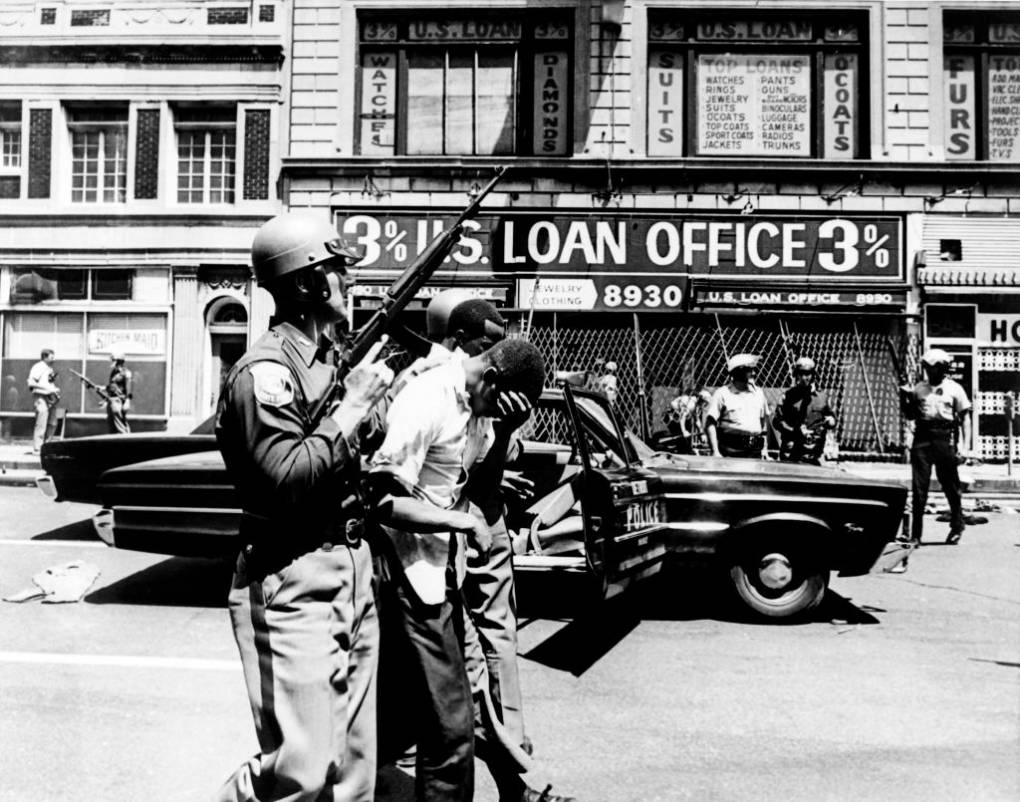
"caption": "Detroit police arrest black suspects on July 25, 1967, during uprisings that erupted in the city following a police crackdown.",
"description": "Detroit police arrest black suspects on July 25, 1967, during uprisings that erupted in the city following a police crackdown.",
"title": "US-RACE RIOTS-DETROIT",
"credit": "AFP via Getty Images",
"status": "inherit",
"isLoading": false,
"fetchFailed": false
},
"news_11823012": {
"type": "attachments",
"id": "news_11823012",
"meta": {
"index": "attachments_1716263798",
"site": "news",
"id": "11823012",
"found": true
},
"parent": 11823008,
"imgSizes": {
"apple_news_ca_landscape_5_5": {
"file": "https://ww2.kqed.org/app/uploads/sites/10/2020/06/RS43468_071_KQED_Oakland_GeorgeFloydProtest_05292020-qut-1044x783.jpg",
"width": 1044,
"mimeType": "image/jpeg",
"height": 783
},
"apple_news_ca_square_4_0": {
"file": "https://ww2.kqed.org/app/uploads/sites/10/2020/06/RS43468_071_KQED_Oakland_GeorgeFloydProtest_05292020-qut-470x470.jpg",
"width": 470,
"mimeType": "image/jpeg",
"height": 470
},
"twentyfourteen-full-width": {
"file": "https://ww2.kqed.org/app/uploads/sites/10/2020/06/RS43468_071_KQED_Oakland_GeorgeFloydProtest_05292020-qut-1038x576.jpg",
"width": 1038,
"mimeType": "image/jpeg",
"height": 576
},
"thumbnail": {
"file": "https://ww2.kqed.org/app/uploads/sites/10/2020/06/RS43468_071_KQED_Oakland_GeorgeFloydProtest_05292020-qut-160x107.jpg",
"width": 160,
"mimeType": "image/jpeg",
"height": 107
},
"post-thumbnail": {
"file": "https://ww2.kqed.org/app/uploads/sites/10/2020/06/RS43468_071_KQED_Oakland_GeorgeFloydProtest_05292020-qut-672x372.jpg",
"width": 672,
"mimeType": "image/jpeg",
"height": 372
},
"kqedFullSize": {
"file": "https://ww2.kqed.org/app/uploads/sites/10/2020/06/RS43468_071_KQED_Oakland_GeorgeFloydProtest_05292020-qut.jpg",
"width": 1920,
"height": 1280
},
"apple_news_ca_landscape_4_7": {
"file": "https://ww2.kqed.org/app/uploads/sites/10/2020/06/RS43468_071_KQED_Oakland_GeorgeFloydProtest_05292020-qut-632x474.jpg",
"width": 632,
"mimeType": "image/jpeg",
"height": 474
},
"large": {
"file": "https://ww2.kqed.org/app/uploads/sites/10/2020/06/RS43468_071_KQED_Oakland_GeorgeFloydProtest_05292020-qut-1020x680.jpg",
"width": 1020,
"mimeType": "image/jpeg",
"height": 680
},
"apple_news_ca_landscape_4_0": {
"file": "https://ww2.kqed.org/app/uploads/sites/10/2020/06/RS43468_071_KQED_Oakland_GeorgeFloydProtest_05292020-qut-536x402.jpg",
"width": 536,
"mimeType": "image/jpeg",
"height": 402
},
"apple_news_ca_portrait_12_9": {
"file": "https://ww2.kqed.org/app/uploads/sites/10/2020/06/RS43468_071_KQED_Oakland_GeorgeFloydProtest_05292020-qut-1122x1280.jpg",
"width": 1122,
"mimeType": "image/jpeg",
"height": 1280
},
"medium": {
"file": "https://ww2.kqed.org/app/uploads/sites/10/2020/06/RS43468_071_KQED_Oakland_GeorgeFloydProtest_05292020-qut-800x533.jpg",
"width": 800,
"mimeType": "image/jpeg",
"height": 533
},
"apple_news_ca_portrait_4_0": {
"file": "https://ww2.kqed.org/app/uploads/sites/10/2020/06/RS43468_071_KQED_Oakland_GeorgeFloydProtest_05292020-qut-354x472.jpg",
"width": 354,
"mimeType": "image/jpeg",
"height": 472
},
"apple_news_ca_portrait_9_7": {
"file": "https://ww2.kqed.org/app/uploads/sites/10/2020/06/RS43468_071_KQED_Oakland_GeorgeFloydProtest_05292020-qut-840x1120.jpg",
"width": 840,
"mimeType": "image/jpeg",
"height": 1120
},
"apple_news_ca_landscape_12_9": {
"file": "https://ww2.kqed.org/app/uploads/sites/10/2020/06/RS43468_071_KQED_Oakland_GeorgeFloydProtest_05292020-qut-1832x1280.jpg",
"width": 1832,
"mimeType": "image/jpeg",
"height": 1280
},
"apple_news_ca_square_9_7": {
"file": "https://ww2.kqed.org/app/uploads/sites/10/2020/06/RS43468_071_KQED_Oakland_GeorgeFloydProtest_05292020-qut-1104x1104.jpg",
"width": 1104,
"mimeType": "image/jpeg",
"height": 1104
},
"apple_news_ca_portrait_4_7": {
"file": "https://ww2.kqed.org/app/uploads/sites/10/2020/06/RS43468_071_KQED_Oakland_GeorgeFloydProtest_05292020-qut-414x552.jpg",
"width": 414,
"mimeType": "image/jpeg",
"height": 552
},
"apple_news_ca_square_12_9": {
"file": "https://ww2.kqed.org/app/uploads/sites/10/2020/06/RS43468_071_KQED_Oakland_GeorgeFloydProtest_05292020-qut-1472x1280.jpg",
"width": 1472,
"mimeType": "image/jpeg",
"height": 1280
},
"apple_news_ca_portrait_5_5": {
"file": "https://ww2.kqed.org/app/uploads/sites/10/2020/06/RS43468_071_KQED_Oakland_GeorgeFloydProtest_05292020-qut-687x916.jpg",
"width": 687,
"mimeType": "image/jpeg",
"height": 916
},
"full-width": {
"file": "https://ww2.kqed.org/app/uploads/sites/10/2020/06/RS43468_071_KQED_Oakland_GeorgeFloydProtest_05292020-qut-1920x1280.jpg",
"width": 1920,
"mimeType": "image/jpeg",
"height": 1280
},
"apple_news_ca_square_4_7": {
"file": "https://ww2.kqed.org/app/uploads/sites/10/2020/06/RS43468_071_KQED_Oakland_GeorgeFloydProtest_05292020-qut-550x550.jpg",
"width": 550,
"mimeType": "image/jpeg",
"height": 550
},
"apple_news_ca_landscape_9_7": {
"file": "https://ww2.kqed.org/app/uploads/sites/10/2020/06/RS43468_071_KQED_Oakland_GeorgeFloydProtest_05292020-qut-1376x1032.jpg",
"width": 1376,
"mimeType": "image/jpeg",
"height": 1032
},
"apple_news_ca_square_5_5": {
"file": "https://ww2.kqed.org/app/uploads/sites/10/2020/06/RS43468_071_KQED_Oakland_GeorgeFloydProtest_05292020-qut-912x912.jpg",
"width": 912,
"mimeType": "image/jpeg",
"height": 912
}
},
"publishDate": 1591319579,
"modified": 1591319673,
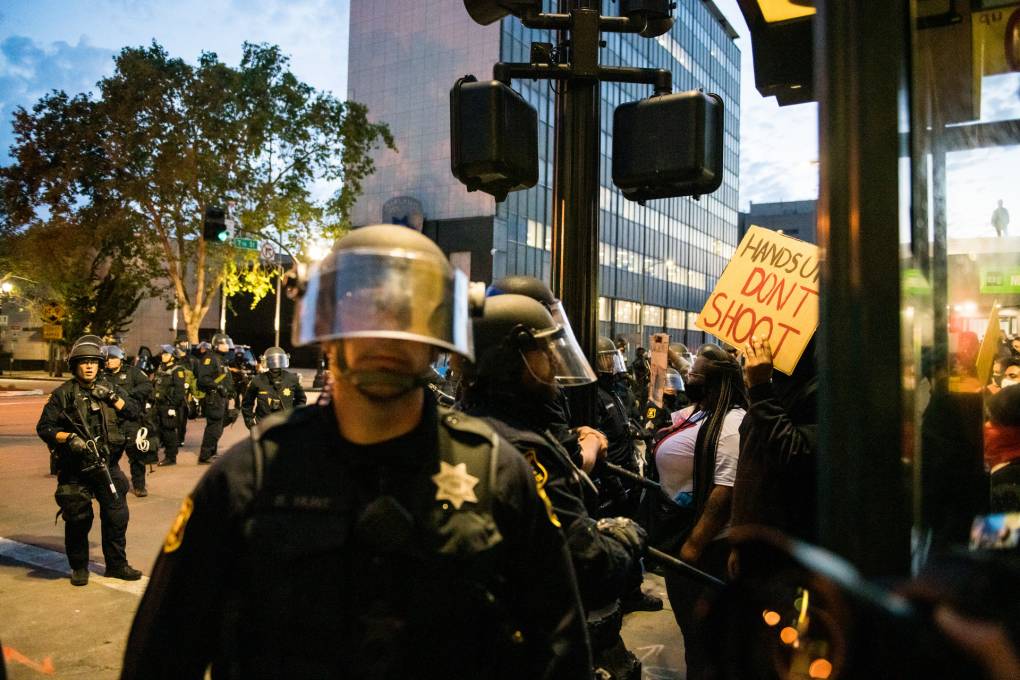
"caption": "Police clash with protesters in downtown Oakland on May 29, 2020 during a protest over the Minneapolis police killing of George Floyd.",
"description": "Police clash with protesters in downtown Oakland on May 29, 2020 during a protest over the Minneapolis police killing of George Floyd.",
"title": "George Floyd Oakland protesters police",
"credit": "Beth LaBerge/KQED",
"status": "inherit",
"isLoading": false,
"fetchFailed": false
},
"news_11823052": {
"type": "attachments",
"id": "news_11823052",
"meta": {
"index": "attachments_1716263798",
"site": "news",
"id": "11823052",
"found": true
},
"parent": 11822771,
"imgSizes": {
"apple_news_ca_landscape_5_5": {
"file": "https://ww2.kqed.org/app/uploads/sites/10/2020/06/RS43549_008_KQED_Oakland_GeorgeFloydProtest_06032020-qut-1044x783.jpg",
"width": 1044,
"mimeType": "image/jpeg",
"height": 783
},
"apple_news_ca_square_4_0": {
"file": "https://ww2.kqed.org/app/uploads/sites/10/2020/06/RS43549_008_KQED_Oakland_GeorgeFloydProtest_06032020-qut-470x470.jpg",
"width": 470,
"mimeType": "image/jpeg",
"height": 470
},
"twentyfourteen-full-width": {
"file": "https://ww2.kqed.org/app/uploads/sites/10/2020/06/RS43549_008_KQED_Oakland_GeorgeFloydProtest_06032020-qut-1038x576.jpg",
"width": 1038,
"mimeType": "image/jpeg",
"height": 576
},
"thumbnail": {
"file": "https://ww2.kqed.org/app/uploads/sites/10/2020/06/RS43549_008_KQED_Oakland_GeorgeFloydProtest_06032020-qut-160x107.jpg",
"width": 160,
"mimeType": "image/jpeg",
"height": 107
},
"post-thumbnail": {
"file": "https://ww2.kqed.org/app/uploads/sites/10/2020/06/RS43549_008_KQED_Oakland_GeorgeFloydProtest_06032020-qut-672x372.jpg",
"width": 672,
"mimeType": "image/jpeg",
"height": 372
},
"kqedFullSize": {
"file": "https://ww2.kqed.org/app/uploads/sites/10/2020/06/RS43549_008_KQED_Oakland_GeorgeFloydProtest_06032020-qut.jpg",
"width": 1920,
"height": 1278
},
"apple_news_ca_landscape_4_7": {
"file": "https://ww2.kqed.org/app/uploads/sites/10/2020/06/RS43549_008_KQED_Oakland_GeorgeFloydProtest_06032020-qut-632x474.jpg",
"width": 632,
"mimeType": "image/jpeg",
"height": 474
},
"large": {
"file": "https://ww2.kqed.org/app/uploads/sites/10/2020/06/RS43549_008_KQED_Oakland_GeorgeFloydProtest_06032020-qut-1020x679.jpg",
"width": 1020,
"mimeType": "image/jpeg",
"height": 679
},
"apple_news_ca_landscape_4_0": {
"file": "https://ww2.kqed.org/app/uploads/sites/10/2020/06/RS43549_008_KQED_Oakland_GeorgeFloydProtest_06032020-qut-536x402.jpg",
"width": 536,
"mimeType": "image/jpeg",
"height": 402
},
"apple_news_ca_portrait_12_9": {
"file": "https://ww2.kqed.org/app/uploads/sites/10/2020/06/RS43549_008_KQED_Oakland_GeorgeFloydProtest_06032020-qut-1122x1278.jpg",
"width": 1122,
"mimeType": "image/jpeg",
"height": 1278
},
"medium": {
"file": "https://ww2.kqed.org/app/uploads/sites/10/2020/06/RS43549_008_KQED_Oakland_GeorgeFloydProtest_06032020-qut-800x533.jpg",
"width": 800,
"mimeType": "image/jpeg",
"height": 533
},
"apple_news_ca_portrait_4_0": {
"file": "https://ww2.kqed.org/app/uploads/sites/10/2020/06/RS43549_008_KQED_Oakland_GeorgeFloydProtest_06032020-qut-354x472.jpg",
"width": 354,
"mimeType": "image/jpeg",
"height": 472
},
"apple_news_ca_portrait_9_7": {
"file": "https://ww2.kqed.org/app/uploads/sites/10/2020/06/RS43549_008_KQED_Oakland_GeorgeFloydProtest_06032020-qut-840x1120.jpg",
"width": 840,
"mimeType": "image/jpeg",
"height": 1120
},
"apple_news_ca_landscape_12_9": {
"file": "https://ww2.kqed.org/app/uploads/sites/10/2020/06/RS43549_008_KQED_Oakland_GeorgeFloydProtest_06032020-qut-1832x1278.jpg",
"width": 1832,
"mimeType": "image/jpeg",
"height": 1278
},
"apple_news_ca_square_9_7": {
"file": "https://ww2.kqed.org/app/uploads/sites/10/2020/06/RS43549_008_KQED_Oakland_GeorgeFloydProtest_06032020-qut-1104x1104.jpg",
"width": 1104,
"mimeType": "image/jpeg",
"height": 1104
},
"apple_news_ca_portrait_4_7": {
"file": "https://ww2.kqed.org/app/uploads/sites/10/2020/06/RS43549_008_KQED_Oakland_GeorgeFloydProtest_06032020-qut-414x552.jpg",
"width": 414,
"mimeType": "image/jpeg",
"height": 552
},
"apple_news_ca_square_12_9": {
"file": "https://ww2.kqed.org/app/uploads/sites/10/2020/06/RS43549_008_KQED_Oakland_GeorgeFloydProtest_06032020-qut-1472x1278.jpg",
"width": 1472,
"mimeType": "image/jpeg",
"height": 1278
},
"apple_news_ca_portrait_5_5": {
"file": "https://ww2.kqed.org/app/uploads/sites/10/2020/06/RS43549_008_KQED_Oakland_GeorgeFloydProtest_06032020-qut-687x916.jpg",
"width": 687,
"mimeType": "image/jpeg",
"height": 916
},
"full-width": {
"file": "https://ww2.kqed.org/app/uploads/sites/10/2020/06/RS43549_008_KQED_Oakland_GeorgeFloydProtest_06032020-qut-1920x1278.jpg",
"width": 1920,
"mimeType": "image/jpeg",
"height": 1278
},
"apple_news_ca_square_4_7": {
"file": "https://ww2.kqed.org/app/uploads/sites/10/2020/06/RS43549_008_KQED_Oakland_GeorgeFloydProtest_06032020-qut-550x550.jpg",
"width": 550,
"mimeType": "image/jpeg",
"height": 550
},
"apple_news_ca_landscape_9_7": {
"file": "https://ww2.kqed.org/app/uploads/sites/10/2020/06/RS43549_008_KQED_Oakland_GeorgeFloydProtest_06032020-qut-1376x1032.jpg",
"width": 1376,
"mimeType": "image/jpeg",
"height": 1032
},
"apple_news_ca_square_5_5": {
"file": "https://ww2.kqed.org/app/uploads/sites/10/2020/06/RS43549_008_KQED_Oakland_GeorgeFloydProtest_06032020-qut-912x912.jpg",
"width": 912,
"mimeType": "image/jpeg",
"height": 912
}
},
"publishDate": 1591334513,
"modified": 1591334695,
"caption": "Imani B listens to speakers during a protest against police violence on 14th and Broadway in Oakland on June 3, 2020.",
"description": null,
"title": "RS43549_008_KQED_Oakland_GeorgeFloydProtest_06032020-qut",
"credit": "Beth LaBerge/KQED",
"status": "inherit",
"isLoading": false,
"fetchFailed": false
},
"news_11823006": {
"type": "attachments",
"id": "news_11823006",
"meta": {
"index": "attachments_1716263798",
"site": "news",
"id": "11823006",
"found": true
},
"parent": 11822817,
"imgSizes": {
"apple_news_ca_landscape_5_5": {
"file": "https://ww2.kqed.org/app/uploads/sites/10/2020/06/RS43444_043_KQED_Oakland_GeorgeFloydProtest_05292020-qut-1044x783.jpg",
"width": 1044,
"mimeType": "image/jpeg",
"height": 783
},
"apple_news_ca_square_4_0": {
"file": "https://ww2.kqed.org/app/uploads/sites/10/2020/06/RS43444_043_KQED_Oakland_GeorgeFloydProtest_05292020-qut-470x470.jpg",
"width": 470,
"mimeType": "image/jpeg",
"height": 470
},
"twentyfourteen-full-width": {
"file": "https://ww2.kqed.org/app/uploads/sites/10/2020/06/RS43444_043_KQED_Oakland_GeorgeFloydProtest_05292020-qut-1038x576.jpg",
"width": 1038,
"mimeType": "image/jpeg",
"height": 576
},
"thumbnail": {
"file": "https://ww2.kqed.org/app/uploads/sites/10/2020/06/RS43444_043_KQED_Oakland_GeorgeFloydProtest_05292020-qut-160x107.jpg",
"width": 160,
"mimeType": "image/jpeg",
"height": 107
},
"post-thumbnail": {
"file": "https://ww2.kqed.org/app/uploads/sites/10/2020/06/RS43444_043_KQED_Oakland_GeorgeFloydProtest_05292020-qut-672x372.jpg",
"width": 672,
"mimeType": "image/jpeg",
"height": 372
},
"kqedFullSize": {
"file": "https://ww2.kqed.org/app/uploads/sites/10/2020/06/RS43444_043_KQED_Oakland_GeorgeFloydProtest_05292020-qut.jpg",
"width": 1920,
"height": 1280
},
"apple_news_ca_landscape_4_7": {
"file": "https://ww2.kqed.org/app/uploads/sites/10/2020/06/RS43444_043_KQED_Oakland_GeorgeFloydProtest_05292020-qut-632x474.jpg",
"width": 632,
"mimeType": "image/jpeg",
"height": 474
},
"large": {
"file": "https://ww2.kqed.org/app/uploads/sites/10/2020/06/RS43444_043_KQED_Oakland_GeorgeFloydProtest_05292020-qut-1020x680.jpg",
"width": 1020,
"mimeType": "image/jpeg",
"height": 680
},
"apple_news_ca_landscape_4_0": {
"file": "https://ww2.kqed.org/app/uploads/sites/10/2020/06/RS43444_043_KQED_Oakland_GeorgeFloydProtest_05292020-qut-536x402.jpg",
"width": 536,
"mimeType": "image/jpeg",
"height": 402
},
"apple_news_ca_portrait_12_9": {
"file": "https://ww2.kqed.org/app/uploads/sites/10/2020/06/RS43444_043_KQED_Oakland_GeorgeFloydProtest_05292020-qut-1122x1280.jpg",
"width": 1122,
"mimeType": "image/jpeg",
"height": 1280
},
"medium": {
"file": "https://ww2.kqed.org/app/uploads/sites/10/2020/06/RS43444_043_KQED_Oakland_GeorgeFloydProtest_05292020-qut-800x533.jpg",
"width": 800,
"mimeType": "image/jpeg",
"height": 533
},
"apple_news_ca_portrait_4_0": {
"file": "https://ww2.kqed.org/app/uploads/sites/10/2020/06/RS43444_043_KQED_Oakland_GeorgeFloydProtest_05292020-qut-354x472.jpg",
"width": 354,
"mimeType": "image/jpeg",
"height": 472
},
"apple_news_ca_portrait_9_7": {
"file": "https://ww2.kqed.org/app/uploads/sites/10/2020/06/RS43444_043_KQED_Oakland_GeorgeFloydProtest_05292020-qut-840x1120.jpg",
"width": 840,
"mimeType": "image/jpeg",
"height": 1120
},
"apple_news_ca_landscape_12_9": {
"file": "https://ww2.kqed.org/app/uploads/sites/10/2020/06/RS43444_043_KQED_Oakland_GeorgeFloydProtest_05292020-qut-1832x1280.jpg",
"width": 1832,
"mimeType": "image/jpeg",
"height": 1280
},
"apple_news_ca_square_9_7": {
"file": "https://ww2.kqed.org/app/uploads/sites/10/2020/06/RS43444_043_KQED_Oakland_GeorgeFloydProtest_05292020-qut-1104x1104.jpg",
"width": 1104,
"mimeType": "image/jpeg",
"height": 1104
},
"apple_news_ca_portrait_4_7": {
"file": "https://ww2.kqed.org/app/uploads/sites/10/2020/06/RS43444_043_KQED_Oakland_GeorgeFloydProtest_05292020-qut-414x552.jpg",
"width": 414,
"mimeType": "image/jpeg",
"height": 552
},
"apple_news_ca_square_12_9": {
"file": "https://ww2.kqed.org/app/uploads/sites/10/2020/06/RS43444_043_KQED_Oakland_GeorgeFloydProtest_05292020-qut-1472x1280.jpg",
"width": 1472,
"mimeType": "image/jpeg",
"height": 1280
},
"apple_news_ca_portrait_5_5": {
"file": "https://ww2.kqed.org/app/uploads/sites/10/2020/06/RS43444_043_KQED_Oakland_GeorgeFloydProtest_05292020-qut-687x916.jpg",
"width": 687,
"mimeType": "image/jpeg",
"height": 916
},
"full-width": {
"file": "https://ww2.kqed.org/app/uploads/sites/10/2020/06/RS43444_043_KQED_Oakland_GeorgeFloydProtest_05292020-qut-1920x1280.jpg",
"width": 1920,
"mimeType": "image/jpeg",
"height": 1280
},
"apple_news_ca_square_4_7": {
"file": "https://ww2.kqed.org/app/uploads/sites/10/2020/06/RS43444_043_KQED_Oakland_GeorgeFloydProtest_05292020-qut-550x550.jpg",
"width": 550,
"mimeType": "image/jpeg",
"height": 550
},
"apple_news_ca_landscape_9_7": {
"file": "https://ww2.kqed.org/app/uploads/sites/10/2020/06/RS43444_043_KQED_Oakland_GeorgeFloydProtest_05292020-qut-1376x1032.jpg",
"width": 1376,
"mimeType": "image/jpeg",
"height": 1032
},
"apple_news_ca_square_5_5": {
"file": "https://ww2.kqed.org/app/uploads/sites/10/2020/06/RS43444_043_KQED_Oakland_GeorgeFloydProtest_05292020-qut-912x912.jpg",
"width": 912,
"mimeType": "image/jpeg",
"height": 912
}
},
"publishDate": 1591318054,
"modified": 1591318710,
"caption": "Demonstrators fill Broadway near Oakland Police Department headquarters on May 29, 2020 during a protest over the Minneapolis police killing of George Floyd.",
"description": null,
"title": "RS43444_043_KQED_Oakland_GeorgeFloydProtest_05292020-qut",
"credit": "Beth LaBerge/KQED",
"status": "inherit",
"isLoading": false,
"fetchFailed": false
},
"news_11822919": {
"type": "attachments",
"id": "news_11822919",
"meta": {
"index": "attachments_1716263798",
"site": "news",
"id": "11822919",
"found": true
},
"parent": 11822906,
"imgSizes": {
"apple_news_ca_landscape_5_5": {
"file": "https://ww2.kqed.org/app/uploads/sites/10/2020/06/stayleave_060420_final-1044x783.png",
"width": 1044,
"mimeType": "image/png",
"height": 783
},
"apple_news_ca_square_4_0": {
"file": "https://ww2.kqed.org/app/uploads/sites/10/2020/06/stayleave_060420_final-470x470.png",
"width": 470,
"mimeType": "image/png",
"height": 470
},
"twentyfourteen-full-width": {
"file": "https://ww2.kqed.org/app/uploads/sites/10/2020/06/stayleave_060420_final-1038x576.png",
"width": 1038,
"mimeType": "image/png",
"height": 576
},
"thumbnail": {
"file": "https://ww2.kqed.org/app/uploads/sites/10/2020/06/stayleave_060420_final-160x112.png",
"width": 160,
"mimeType": "image/png",
"height": 112
},
"post-thumbnail": {
"file": "https://ww2.kqed.org/app/uploads/sites/10/2020/06/stayleave_060420_final-672x372.png",
"width": 672,
"mimeType": "image/png",
"height": 372
},
"kqedFullSize": {
"file": "https://ww2.kqed.org/app/uploads/sites/10/2020/06/stayleave_060420_final.png",
"width": 1920,
"height": 1342
},
"apple_news_ca_landscape_4_7": {
"file": "https://ww2.kqed.org/app/uploads/sites/10/2020/06/stayleave_060420_final-632x474.png",
"width": 632,
"mimeType": "image/png",
"height": 474
},
"large": {
"file": "https://ww2.kqed.org/app/uploads/sites/10/2020/06/stayleave_060420_final-1020x713.png",
"width": 1020,
"mimeType": "image/png",
"height": 713
},
"apple_news_ca_landscape_4_0": {
"file": "https://ww2.kqed.org/app/uploads/sites/10/2020/06/stayleave_060420_final-536x402.png",
"width": 536,
"mimeType": "image/png",
"height": 402
},
"apple_news_ca_portrait_12_9": {
"file": "https://ww2.kqed.org/app/uploads/sites/10/2020/06/stayleave_060420_final-1122x1342.png",
"width": 1122,
"mimeType": "image/png",
"height": 1342
},
"medium": {
"file": "https://ww2.kqed.org/app/uploads/sites/10/2020/06/stayleave_060420_final-800x559.png",
"width": 800,
"mimeType": "image/png",
"height": 559
},
"apple_news_ca_portrait_4_0": {
"file": "https://ww2.kqed.org/app/uploads/sites/10/2020/06/stayleave_060420_final-354x472.png",
"width": 354,
"mimeType": "image/png",
"height": 472
},
"apple_news_ca_portrait_9_7": {
"file": "https://ww2.kqed.org/app/uploads/sites/10/2020/06/stayleave_060420_final-840x1120.png",
"width": 840,
"mimeType": "image/png",
"height": 1120
},
"apple_news_ca_landscape_12_9": {
"file": "https://ww2.kqed.org/app/uploads/sites/10/2020/06/stayleave_060420_final-1832x1342.png",
"width": 1832,
"mimeType": "image/png",
"height": 1342
},
"apple_news_ca_square_9_7": {
"file": "https://ww2.kqed.org/app/uploads/sites/10/2020/06/stayleave_060420_final-1104x1104.png",
"width": 1104,
"mimeType": "image/png",
"height": 1104
},
"apple_news_ca_portrait_4_7": {
"file": "https://ww2.kqed.org/app/uploads/sites/10/2020/06/stayleave_060420_final-414x552.png",
"width": 414,
"mimeType": "image/png",
"height": 552
},
"apple_news_ca_square_12_9": {
"file": "https://ww2.kqed.org/app/uploads/sites/10/2020/06/stayleave_060420_final-1472x1342.png",
"width": 1472,
"mimeType": "image/png",
"height": 1342
},
"apple_news_ca_portrait_5_5": {
"file": "https://ww2.kqed.org/app/uploads/sites/10/2020/06/stayleave_060420_final-687x916.png",
"width": 687,
"mimeType": "image/png",
"height": 916
},
"full-width": {
"file": "https://ww2.kqed.org/app/uploads/sites/10/2020/06/stayleave_060420_final-1920x1342.png",
"width": 1920,
"mimeType": "image/png",
"height": 1342
},
"apple_news_ca_square_4_7": {
"file": "https://ww2.kqed.org/app/uploads/sites/10/2020/06/stayleave_060420_final-550x550.png",
"width": 550,
"mimeType": "image/png",
"height": 550
},
"apple_news_ca_landscape_9_7": {
"file": "https://ww2.kqed.org/app/uploads/sites/10/2020/06/stayleave_060420_final-1376x1032.png",
"width": 1376,
"mimeType": "image/png",
"height": 1032
},
"apple_news_ca_square_5_5": {
"file": "https://ww2.kqed.org/app/uploads/sites/10/2020/06/stayleave_060420_final-912x912.png",
"width": 912,
"mimeType": "image/png",
"height": 912
}
},
"publishDate": 1591300660,
"modified": 1591300691,
"caption": null,
"description": null,
"title": "stayleave_060420_final",
"credit": null,
"status": "inherit",
"isLoading": false,
"fetchFailed": false
},
"news_11321295": {
"type": "attachments",
"id": "news_11321295",
"meta": {
"index": "attachments_1716263798",
"site": "news",
"id": "11321295",
"found": true
},
"parent": 11321286,
"imgSizes": {
"small": {
"file": "https://ww2.kqed.org/app/uploads/sites/10/2017/02/GettyImages-471811400-520x347.jpg",
"width": 520,
"mimeType": "image/jpeg",
"height": 347
},
"twentyfourteen-full-width": {
"file": "https://ww2.kqed.org/app/uploads/sites/10/2017/02/GettyImages-471811400-1038x576.jpg",
"width": 1038,
"mimeType": "image/jpeg",
"height": 576
},
"thumbnail": {
"file": "https://ww2.kqed.org/app/uploads/sites/10/2017/02/GettyImages-471811400-160x107.jpg",
"width": 160,
"mimeType": "image/jpeg",
"height": 107
},
"fd-sm": {
"file": "https://ww2.kqed.org/app/uploads/sites/10/2017/02/GettyImages-471811400-960x640.jpg",
"width": 960,
"mimeType": "image/jpeg",
"height": 640
},
"post-thumbnail": {
"file": "https://ww2.kqed.org/app/uploads/sites/10/2017/02/GettyImages-471811400-672x372.jpg",
"width": 672,
"mimeType": "image/jpeg",
"height": 372
},
"xsmall": {
"file": "https://ww2.kqed.org/app/uploads/sites/10/2017/02/GettyImages-471811400-375x250.jpg",
"width": 375,
"mimeType": "image/jpeg",
"height": 250
},
"kqedFullSize": {
"file": "https://ww2.kqed.org/app/uploads/sites/10/2017/02/GettyImages-471811400-e1487360779451.jpg",
"width": 1920,
"height": 1280
},
"large": {
"file": "https://ww2.kqed.org/app/uploads/sites/10/2017/02/GettyImages-471811400-1020x680.jpg",
"width": 1020,
"mimeType": "image/jpeg",
"height": 680
},
"xlarge": {
"file": "https://ww2.kqed.org/app/uploads/sites/10/2017/02/GettyImages-471811400-1180x787.jpg",
"width": 1180,
"mimeType": "image/jpeg",
"height": 787
},
"guest-author-50": {
"file": "https://ww2.kqed.org/app/uploads/sites/10/2017/02/GettyImages-471811400-50x50.jpg",
"width": 50,
"mimeType": "image/jpeg",
"height": 50
},
"guest-author-96": {
"file": "https://ww2.kqed.org/app/uploads/sites/10/2017/02/GettyImages-471811400-96x96.jpg",
"width": 96,
"mimeType": "image/jpeg",
"height": 96
},
"medium": {
"file": "https://ww2.kqed.org/app/uploads/sites/10/2017/02/GettyImages-471811400-800x533.jpg",
"width": 800,
"mimeType": "image/jpeg",
"height": 533
},
"guest-author-64": {
"file": "https://ww2.kqed.org/app/uploads/sites/10/2017/02/GettyImages-471811400-64x64.jpg",
"width": 64,
"mimeType": "image/jpeg",
"height": 64
},
"guest-author-32": {
"file": "https://ww2.kqed.org/app/uploads/sites/10/2017/02/GettyImages-471811400-32x32.jpg",
"width": 32,
"mimeType": "image/jpeg",
"height": 32
},
"fd-lrg": {
"file": "https://ww2.kqed.org/app/uploads/sites/10/2017/02/GettyImages-471811400-1920x1280.jpg",
"width": 1920,
"mimeType": "image/jpeg",
"height": 1280
},
"fd-med": {
"file": "https://ww2.kqed.org/app/uploads/sites/10/2017/02/GettyImages-471811400-1180x787.jpg",
"width": 1180,
"mimeType": "image/jpeg",
"height": 787
},
"full-width": {
"file": "https://ww2.kqed.org/app/uploads/sites/10/2017/02/GettyImages-471811400-1920x1280.jpg",
"width": 1920,
"mimeType": "image/jpeg",
"height": 1280
},
"detail": {
"file": "https://ww2.kqed.org/app/uploads/sites/10/2017/02/GettyImages-471811400-150x150.jpg",
"width": 150,
"mimeType": "image/jpeg",
"height": 150
},
"guest-author-128": {
"file": "https://ww2.kqed.org/app/uploads/sites/10/2017/02/GettyImages-471811400-128x128.jpg",
"width": 128,
"mimeType": "image/jpeg",
"height": 128
},
"xxsmall": {
"file": "https://ww2.kqed.org/app/uploads/sites/10/2017/02/GettyImages-471811400-240x160.jpg",
"width": 240,
"mimeType": "image/jpeg",
"height": 160
}
},
"publishDate": 1487360712,
"modified": 1487369852,
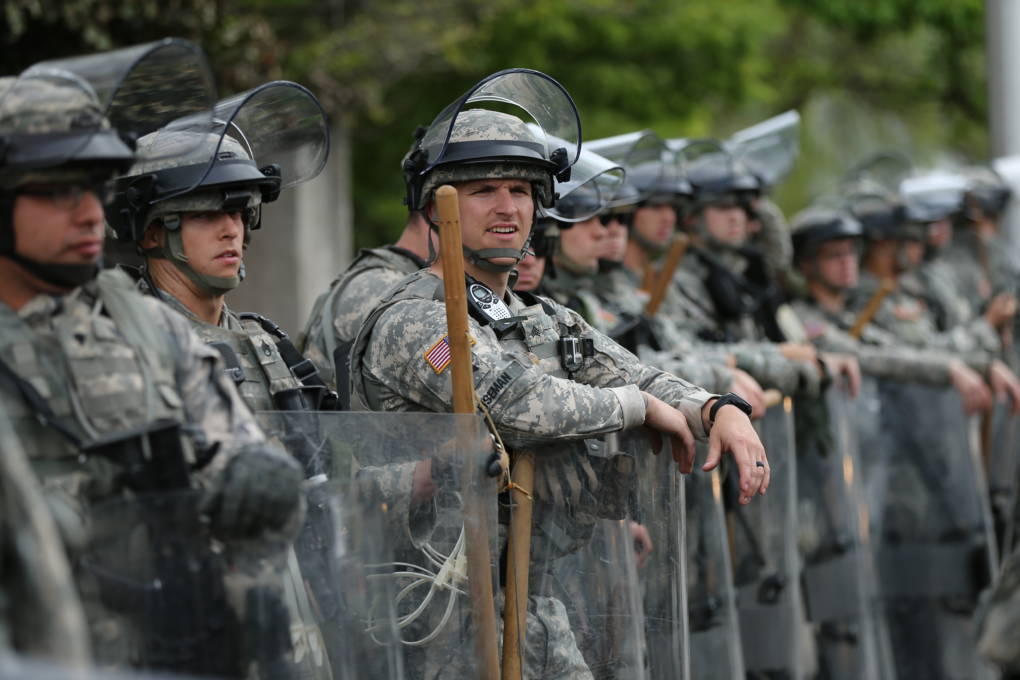
"caption": "National Guard troops keep watch on May 1, 2015, in Baltimore, Maryland. ",
"description": "National Guard troops keep watch on May 1, 2015 in Baltimore, Maryland. ",
"title": "Criminal Charges Announced Against Baltimore Police Officers In Freddie Gray's Death",
"credit": "Win McNamee/Getty Images",
"status": "inherit",
"isLoading": false,
"fetchFailed": false
},
"news_11822725": {
"type": "attachments",
"id": "news_11822725",
"meta": {
"index": "attachments_1716263798",
"site": "news",
"id": "11822725",
"found": true
},
"parent": 11822625,
"imgSizes": {
"apple_news_ca_landscape_5_5": {
"file": "https://ww2.kqed.org/app/uploads/sites/10/2020/06/Image-from-iOS-1-1044x783.jpg",
"width": 1044,
"mimeType": "image/jpeg",
"height": 783
},
"apple_news_ca_square_4_0": {
"file": "https://ww2.kqed.org/app/uploads/sites/10/2020/06/Image-from-iOS-1-470x470.jpg",
"width": 470,
"mimeType": "image/jpeg",
"height": 470
},
"twentyfourteen-full-width": {
"file": "https://ww2.kqed.org/app/uploads/sites/10/2020/06/Image-from-iOS-1-1038x576.jpg",
"width": 1038,
"mimeType": "image/jpeg",
"height": 576
},
"thumbnail": {
"file": "https://ww2.kqed.org/app/uploads/sites/10/2020/06/Image-from-iOS-1-160x107.jpg",
"width": 160,
"mimeType": "image/jpeg",
"height": 107
},
"post-thumbnail": {
"file": "https://ww2.kqed.org/app/uploads/sites/10/2020/06/Image-from-iOS-1-672x372.jpg",
"width": 672,
"mimeType": "image/jpeg",
"height": 372
},
"kqedFullSize": {
"file": "https://ww2.kqed.org/app/uploads/sites/10/2020/06/Image-from-iOS-1.jpg",
"width": 1620,
"height": 1080
},
"apple_news_ca_landscape_4_7": {
"file": "https://ww2.kqed.org/app/uploads/sites/10/2020/06/Image-from-iOS-1-632x474.jpg",
"width": 632,
"mimeType": "image/jpeg",
"height": 474
},
"large": {
"file": "https://ww2.kqed.org/app/uploads/sites/10/2020/06/Image-from-iOS-1-1020x680.jpg",
"width": 1020,
"mimeType": "image/jpeg",
"height": 680
},
"apple_news_ca_landscape_4_0": {
"file": "https://ww2.kqed.org/app/uploads/sites/10/2020/06/Image-from-iOS-1-536x402.jpg",
"width": 536,
"mimeType": "image/jpeg",
"height": 402
},
"apple_news_ca_portrait_12_9": {
"file": "https://ww2.kqed.org/app/uploads/sites/10/2020/06/Image-from-iOS-1-1122x1080.jpg",
"width": 1122,
"mimeType": "image/jpeg",
"height": 1080
},
"medium": {
"file": "https://ww2.kqed.org/app/uploads/sites/10/2020/06/Image-from-iOS-1-800x533.jpg",
"width": 800,
"mimeType": "image/jpeg",
"height": 533
},
"apple_news_ca_portrait_4_0": {
"file": "https://ww2.kqed.org/app/uploads/sites/10/2020/06/Image-from-iOS-1-354x472.jpg",
"width": 354,
"mimeType": "image/jpeg",
"height": 472
},
"apple_news_ca_portrait_9_7": {
"file": "https://ww2.kqed.org/app/uploads/sites/10/2020/06/Image-from-iOS-1-840x1080.jpg",
"width": 840,
"mimeType": "image/jpeg",
"height": 1080
},
"apple_news_ca_square_9_7": {
"file": "https://ww2.kqed.org/app/uploads/sites/10/2020/06/Image-from-iOS-1-1104x1080.jpg",
"width": 1104,
"mimeType": "image/jpeg",
"height": 1080
},
"apple_news_ca_portrait_4_7": {
"file": "https://ww2.kqed.org/app/uploads/sites/10/2020/06/Image-from-iOS-1-414x552.jpg",
"width": 414,
"mimeType": "image/jpeg",
"height": 552
},
"apple_news_ca_square_12_9": {
"file": "https://ww2.kqed.org/app/uploads/sites/10/2020/06/Image-from-iOS-1-1472x1080.jpg",
"width": 1472,
"mimeType": "image/jpeg",
"height": 1080
},
"apple_news_ca_portrait_5_5": {
"file": "https://ww2.kqed.org/app/uploads/sites/10/2020/06/Image-from-iOS-1-687x916.jpg",
"width": 687,
"mimeType": "image/jpeg",
"height": 916
},
"apple_news_ca_square_4_7": {
"file": "https://ww2.kqed.org/app/uploads/sites/10/2020/06/Image-from-iOS-1-550x550.jpg",
"width": 550,
"mimeType": "image/jpeg",
"height": 550
},
"apple_news_ca_landscape_9_7": {
"file": "https://ww2.kqed.org/app/uploads/sites/10/2020/06/Image-from-iOS-1-1376x1032.jpg",
"width": 1376,
"mimeType": "image/jpeg",
"height": 1032
},
"apple_news_ca_square_5_5": {
"file": "https://ww2.kqed.org/app/uploads/sites/10/2020/06/Image-from-iOS-1-912x912.jpg",
"width": 912,
"mimeType": "image/jpeg",
"height": 912
}
},
"publishDate": 1591224503,
"modified": 1591224541,
"caption": "A demonstrator outside Oakland police headquarters on May 29 carries a sign carrying the dying words — \"I can't breathe\" — spoken by George Floyd, the African American man killed May 25 by police in Minneapolis.",
"description": null,
"title": "Image from iOS (1)",
"credit": "Beth LaBerge/KQED",
"status": "inherit",
"isLoading": false,
"fetchFailed": false
},
"news_11822647": {
"type": "attachments",
"id": "news_11822647",
"meta": {
"index": "attachments_1716263798",
"site": "news",
"id": "11822647",
"found": true
},
"parent": 11822631,
"imgSizes": {
"apple_news_ca_landscape_5_5": {
"file": "https://ww2.kqed.org/app/uploads/sites/10/2020/06/curfews_060320_final-1044x783.png",
"width": 1044,
"mimeType": "image/png",
"height": 783
},
"apple_news_ca_square_4_0": {
"file": "https://ww2.kqed.org/app/uploads/sites/10/2020/06/curfews_060320_final-470x470.png",
"width": 470,
"mimeType": "image/png",
"height": 470
},
"twentyfourteen-full-width": {
"file": "https://ww2.kqed.org/app/uploads/sites/10/2020/06/curfews_060320_final-1038x576.png",
"width": 1038,
"mimeType": "image/png",
"height": 576
},
"thumbnail": {
"file": "https://ww2.kqed.org/app/uploads/sites/10/2020/06/curfews_060320_final-160x114.png",
"width": 160,
"mimeType": "image/png",
"height": 114
},
"post-thumbnail": {
"file": "https://ww2.kqed.org/app/uploads/sites/10/2020/06/curfews_060320_final-672x372.png",
"width": 672,
"mimeType": "image/png",
"height": 372
},
"kqedFullSize": {
"file": "https://ww2.kqed.org/app/uploads/sites/10/2020/06/curfews_060320_final.png",
"width": 1920,
"height": 1371
},
"apple_news_ca_landscape_4_7": {
"file": "https://ww2.kqed.org/app/uploads/sites/10/2020/06/curfews_060320_final-632x474.png",
"width": 632,
"mimeType": "image/png",
"height": 474
},
"large": {
"file": "https://ww2.kqed.org/app/uploads/sites/10/2020/06/curfews_060320_final-1020x728.png",
"width": 1020,
"mimeType": "image/png",
"height": 728
},
"apple_news_ca_landscape_4_0": {
"file": "https://ww2.kqed.org/app/uploads/sites/10/2020/06/curfews_060320_final-536x402.png",
"width": 536,
"mimeType": "image/png",
"height": 402
},
"apple_news_ca_portrait_12_9": {
"file": "https://ww2.kqed.org/app/uploads/sites/10/2020/06/curfews_060320_final-1122x1371.png",
"width": 1122,
"mimeType": "image/png",
"height": 1371
},
"medium": {
"file": "https://ww2.kqed.org/app/uploads/sites/10/2020/06/curfews_060320_final-800x571.png",
"width": 800,
"mimeType": "image/png",
"height": 571
},
"apple_news_ca_portrait_4_0": {
"file": "https://ww2.kqed.org/app/uploads/sites/10/2020/06/curfews_060320_final-354x472.png",
"width": 354,
"mimeType": "image/png",
"height": 472
},
"apple_news_ca_portrait_9_7": {
"file": "https://ww2.kqed.org/app/uploads/sites/10/2020/06/curfews_060320_final-840x1120.png",
"width": 840,
"mimeType": "image/png",
"height": 1120
},
"apple_news_ca_landscape_12_9": {
"file": "https://ww2.kqed.org/app/uploads/sites/10/2020/06/curfews_060320_final-1832x1371.png",
"width": 1832,
"mimeType": "image/png",
"height": 1371
},
"apple_news_ca_square_9_7": {
"file": "https://ww2.kqed.org/app/uploads/sites/10/2020/06/curfews_060320_final-1104x1104.png",
"width": 1104,
"mimeType": "image/png",
"height": 1104
},
"apple_news_ca_portrait_4_7": {
"file": "https://ww2.kqed.org/app/uploads/sites/10/2020/06/curfews_060320_final-414x552.png",
"width": 414,
"mimeType": "image/png",
"height": 552
},
"apple_news_ca_square_12_9": {
"file": "https://ww2.kqed.org/app/uploads/sites/10/2020/06/curfews_060320_final-1472x1371.png",
"width": 1472,
"mimeType": "image/png",
"height": 1371
},
"apple_news_ca_portrait_5_5": {
"file": "https://ww2.kqed.org/app/uploads/sites/10/2020/06/curfews_060320_final-687x916.png",
"width": 687,
"mimeType": "image/png",
"height": 916
},
"full-width": {
"file": "https://ww2.kqed.org/app/uploads/sites/10/2020/06/curfews_060320_final-1920x1371.png",
"width": 1920,
"mimeType": "image/png",
"height": 1371
},
"apple_news_ca_square_4_7": {
"file": "https://ww2.kqed.org/app/uploads/sites/10/2020/06/curfews_060320_final-550x550.png",
"width": 550,
"mimeType": "image/png",
"height": 550
},
"apple_news_ca_landscape_9_7": {
"file": "https://ww2.kqed.org/app/uploads/sites/10/2020/06/curfews_060320_final-1376x1032.png",
"width": 1376,
"mimeType": "image/png",
"height": 1032
},
"apple_news_ca_square_5_5": {
"file": "https://ww2.kqed.org/app/uploads/sites/10/2020/06/curfews_060320_final-912x912.png",
"width": 912,
"mimeType": "image/png",
"height": 912
}
},
"publishDate": 1591213198,
"modified": 1591213244,
"caption": null,
"description": null,
"title": "curfews_060320_final",
"credit": null,
"status": "inherit",
"isLoading": false,
"fetchFailed": false
},
"news_11822490": {
"type": "attachments",
"id": "news_11822490",
"meta": {
"index": "attachments_1716263798",
"site": "news",
"id": "11822490",
"found": true
},
"parent": 11822469,
"imgSizes": {
"apple_news_ca_landscape_5_5": {
"file": "https://ww2.kqed.org/app/uploads/sites/10/2020/06/marincityprotest-quillian-200602-e1591142811384-1044x783.jpeg",
"width": 1044,
"mimeType": "image/jpeg",
"height": 783
},
"apple_news_ca_square_4_0": {
"file": "https://ww2.kqed.org/app/uploads/sites/10/2020/06/marincityprotest-quillian-200602-e1591142811384-470x470.jpeg",
"width": 470,
"mimeType": "image/jpeg",
"height": 470
},
"twentyfourteen-full-width": {
"file": "https://ww2.kqed.org/app/uploads/sites/10/2020/06/marincityprotest-quillian-200602-e1591142811384-1038x576.jpeg",
"width": 1038,
"mimeType": "image/jpeg",
"height": 576
},
"thumbnail": {
"file": "https://ww2.kqed.org/app/uploads/sites/10/2020/06/marincityprotest-quillian-200602-e1591142811384-160x99.jpeg",
"width": 160,
"mimeType": "image/jpeg",
"height": 99
},
"post-thumbnail": {
"file": "https://ww2.kqed.org/app/uploads/sites/10/2020/06/marincityprotest-quillian-200602-e1591142811384-672x372.jpeg",
"width": 672,
"mimeType": "image/jpeg",
"height": 372
},
"kqedFullSize": {
"file": "https://ww2.kqed.org/app/uploads/sites/10/2020/06/marincityprotest-quillian-200602-e1591142811384.jpeg",
"width": 1950,
"height": 1208
},
"apple_news_ca_landscape_4_7": {
"file": "https://ww2.kqed.org/app/uploads/sites/10/2020/06/marincityprotest-quillian-200602-e1591142811384-632x474.jpeg",
"width": 632,
"mimeType": "image/jpeg",
"height": 474
},
"large": {
"file": "https://ww2.kqed.org/app/uploads/sites/10/2020/06/marincityprotest-quillian-200602-e1591142811384-1020x632.jpeg",
"width": 1020,
"mimeType": "image/jpeg",
"height": 632
},
"apple_news_ca_landscape_4_0": {
"file": "https://ww2.kqed.org/app/uploads/sites/10/2020/06/marincityprotest-quillian-200602-e1591142811384-536x402.jpeg",
"width": 536,
"mimeType": "image/jpeg",
"height": 402
},
"apple_news_ca_portrait_12_9": {
"file": "https://ww2.kqed.org/app/uploads/sites/10/2020/06/marincityprotest-quillian-200602-e1591142811384-1122x1208.jpeg",
"width": 1122,
"mimeType": "image/jpeg",
"height": 1208
},
"medium": {
"file": "https://ww2.kqed.org/app/uploads/sites/10/2020/06/marincityprotest-quillian-200602-e1591142811384-800x496.jpeg",
"width": 800,
"mimeType": "image/jpeg",
"height": 496
},
"apple_news_ca_portrait_4_0": {
"file": "https://ww2.kqed.org/app/uploads/sites/10/2020/06/marincityprotest-quillian-200602-e1591142811384-354x472.jpeg",
"width": 354,
"mimeType": "image/jpeg",
"height": 472
},
"apple_news_ca_portrait_9_7": {
"file": "https://ww2.kqed.org/app/uploads/sites/10/2020/06/marincityprotest-quillian-200602-e1591142811384-840x1120.jpeg",
"width": 840,
"mimeType": "image/jpeg",
"height": 1120
},
"apple_news_ca_landscape_12_9": {
"file": "https://ww2.kqed.org/app/uploads/sites/10/2020/06/marincityprotest-quillian-200602-e1591142811384-1832x1208.jpeg",
"width": 1832,
"mimeType": "image/jpeg",
"height": 1208
},
"apple_news_ca_square_9_7": {
"file": "https://ww2.kqed.org/app/uploads/sites/10/2020/06/marincityprotest-quillian-200602-e1591142811384-1104x1104.jpeg",
"width": 1104,
"mimeType": "image/jpeg",
"height": 1104
},
"apple_news_ca_portrait_4_7": {
"file": "https://ww2.kqed.org/app/uploads/sites/10/2020/06/marincityprotest-quillian-200602-e1591142811384-414x552.jpeg",
"width": 414,
"mimeType": "image/jpeg",
"height": 552
},
"apple_news_ca_square_12_9": {
"file": "https://ww2.kqed.org/app/uploads/sites/10/2020/06/marincityprotest-quillian-200602-e1591142811384-1472x1208.jpeg",
"width": 1472,
"mimeType": "image/jpeg",
"height": 1208
},
"apple_news_ca_portrait_5_5": {
"file": "https://ww2.kqed.org/app/uploads/sites/10/2020/06/marincityprotest-quillian-200602-e1591142811384-687x916.jpeg",
"width": 687,
"mimeType": "image/jpeg",
"height": 916
},
"full-width": {
"file": "https://ww2.kqed.org/app/uploads/sites/10/2020/06/marincityprotest-quillian-200602-e1591142811384-1920x1189.jpeg",
"width": 1920,
"mimeType": "image/jpeg",
"height": 1189
},
"apple_news_ca_square_4_7": {
"file": "https://ww2.kqed.org/app/uploads/sites/10/2020/06/marincityprotest-quillian-200602-e1591142811384-550x550.jpeg",
"width": 550,
"mimeType": "image/jpeg",
"height": 550
},
"apple_news_ca_landscape_9_7": {
"file": "https://ww2.kqed.org/app/uploads/sites/10/2020/06/marincityprotest-quillian-200602-e1591142811384-1376x1032.jpeg",
"width": 1376,
"mimeType": "image/jpeg",
"height": 1032
},
"apple_news_ca_square_5_5": {
"file": "https://ww2.kqed.org/app/uploads/sites/10/2020/06/marincityprotest-quillian-200602-e1591142811384-912x912.jpeg",
"width": 912,
"mimeType": "image/jpeg",
"height": 912
}
},
"publishDate": 1591142647,
"modified": 1591148151,
"caption": "A crowd of several hundred gathered Tuesday in Marin City to protest police violence. ",
"description": "A crowd of several hundred gathered Tuesday in Marin City to protest police violence. ",
"title": "Marin City-George Floyd Protests",
"credit": "Kathleen Quillian/KQED",
"status": "inherit",
"isLoading": false,
"fetchFailed": false
},
"news_11822735": {
"type": "attachments",
"id": "news_11822735",
"meta": {
"index": "attachments_1716263798",
"site": "news",
"id": "11822735",
"found": true
},
"parent": 11822543,
"imgSizes": {
"apple_news_ca_landscape_5_5": {
"file": "https://ww2.kqed.org/app/uploads/sites/10/2020/06/SFSitIn-1044x783.jpg",
"width": 1044,
"mimeType": "image/jpeg",
"height": 783
},
"apple_news_ca_square_4_0": {
"file": "https://ww2.kqed.org/app/uploads/sites/10/2020/06/SFSitIn-470x470.jpg",
"width": 470,
"mimeType": "image/jpeg",
"height": 470
},
"twentyfourteen-full-width": {
"file": "https://ww2.kqed.org/app/uploads/sites/10/2020/06/SFSitIn-1038x576.jpg",
"width": 1038,
"mimeType": "image/jpeg",
"height": 576
},
"thumbnail": {
"file": "https://ww2.kqed.org/app/uploads/sites/10/2020/06/SFSitIn-160x84.jpg",
"width": 160,
"mimeType": "image/jpeg",
"height": 84
},
"post-thumbnail": {
"file": "https://ww2.kqed.org/app/uploads/sites/10/2020/06/SFSitIn-672x372.jpg",
"width": 672,
"mimeType": "image/jpeg",
"height": 372
},
"kqedFullSize": {
"file": "https://ww2.kqed.org/app/uploads/sites/10/2020/06/SFSitIn.jpg",
"width": 1897,
"height": 998
},
"apple_news_ca_landscape_4_7": {
"file": "https://ww2.kqed.org/app/uploads/sites/10/2020/06/SFSitIn-632x474.jpg",
"width": 632,
"mimeType": "image/jpeg",
"height": 474
},
"large": {
"file": "https://ww2.kqed.org/app/uploads/sites/10/2020/06/SFSitIn-1020x537.jpg",
"width": 1020,
"mimeType": "image/jpeg",
"height": 537
},
"apple_news_ca_landscape_4_0": {
"file": "https://ww2.kqed.org/app/uploads/sites/10/2020/06/SFSitIn-536x402.jpg",
"width": 536,
"mimeType": "image/jpeg",
"height": 402
},
"apple_news_ca_portrait_12_9": {
"file": "https://ww2.kqed.org/app/uploads/sites/10/2020/06/SFSitIn-1122x998.jpg",
"width": 1122,
"mimeType": "image/jpeg",
"height": 998
},
"medium": {
"file": "https://ww2.kqed.org/app/uploads/sites/10/2020/06/SFSitIn-800x421.jpg",
"width": 800,
"mimeType": "image/jpeg",
"height": 421
},
"apple_news_ca_portrait_4_0": {
"file": "https://ww2.kqed.org/app/uploads/sites/10/2020/06/SFSitIn-354x472.jpg",
"width": 354,
"mimeType": "image/jpeg",
"height": 472
},
"apple_news_ca_portrait_9_7": {
"file": "https://ww2.kqed.org/app/uploads/sites/10/2020/06/SFSitIn-840x998.jpg",
"width": 840,
"mimeType": "image/jpeg",
"height": 998
},
"apple_news_ca_landscape_12_9": {
"file": "https://ww2.kqed.org/app/uploads/sites/10/2020/06/SFSitIn-1832x998.jpg",
"width": 1832,
"mimeType": "image/jpeg",
"height": 998
},
"apple_news_ca_square_9_7": {
"file": "https://ww2.kqed.org/app/uploads/sites/10/2020/06/SFSitIn-1104x998.jpg",
"width": 1104,
"mimeType": "image/jpeg",
"height": 998
},
"apple_news_ca_portrait_4_7": {
"file": "https://ww2.kqed.org/app/uploads/sites/10/2020/06/SFSitIn-414x552.jpg",
"width": 414,
"mimeType": "image/jpeg",
"height": 552
},
"apple_news_ca_square_12_9": {
"file": "https://ww2.kqed.org/app/uploads/sites/10/2020/06/SFSitIn-1472x998.jpg",
"width": 1472,
"mimeType": "image/jpeg",
"height": 998
},
"apple_news_ca_portrait_5_5": {
"file": "https://ww2.kqed.org/app/uploads/sites/10/2020/06/SFSitIn-687x916.jpg",
"width": 687,
"mimeType": "image/jpeg",
"height": 916
},
"apple_news_ca_square_4_7": {
"file": "https://ww2.kqed.org/app/uploads/sites/10/2020/06/SFSitIn-550x550.jpg",
"width": 550,
"mimeType": "image/jpeg",
"height": 550
},
"apple_news_ca_landscape_9_7": {
"file": "https://ww2.kqed.org/app/uploads/sites/10/2020/06/SFSitIn-1376x998.jpg",
"width": 1376,
"mimeType": "image/jpeg",
"height": 998
},
"apple_news_ca_square_5_5": {
"file": "https://ww2.kqed.org/app/uploads/sites/10/2020/06/SFSitIn-912x912.jpg",
"width": 912,
"mimeType": "image/jpeg",
"height": 912
}
},
"publishDate": 1591225675,
"modified": 1591225909,
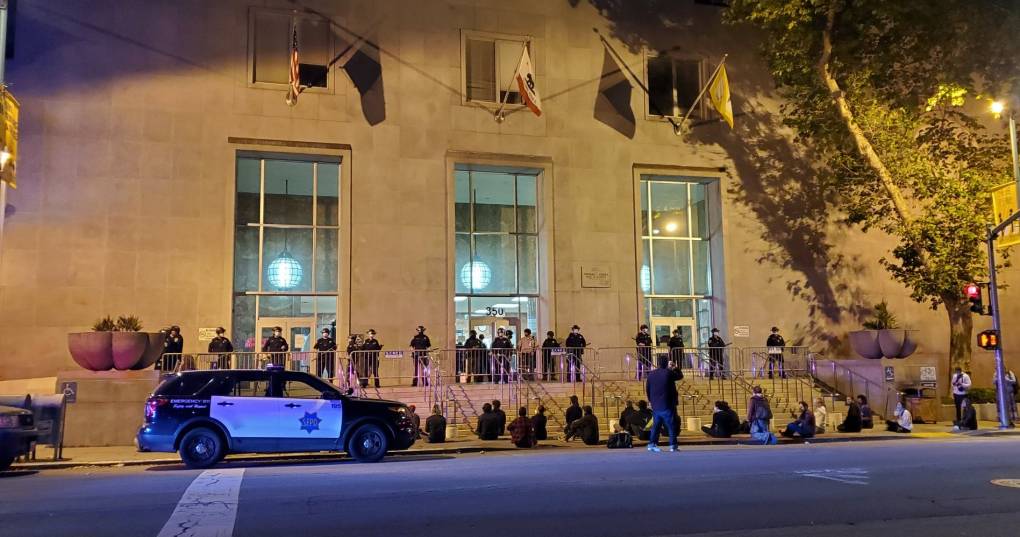
"caption": "Protesters doing a sit-in at the San Francisco Hall of Justice on June 2, 2020, past the city's 8 p.m. curfew. The order will be lifted June 4, 2020 at 5 a.m.",
"description": null,
"title": "SFSitIn",
"credit": "Joe Fitzgerald Rodriguez/KQED News",
"status": "inherit",
"isLoading": false,
"fetchFailed": false
},
"news_11821940": {
"type": "attachments",
"id": "news_11821940",
"meta": {
"index": "attachments_1716263798",
"site": "news",
"id": "11821940",
"found": true
},
"parent": 11821931,
"imgSizes": {
"apple_news_ca_landscape_5_5": {
"file": "https://ww2.kqed.org/app/uploads/sites/10/2020/05/RS43451_053_KQED_Oakland_GeorgeFloydProtest_05292020-qut-1044x783.jpg",
"width": 1044,
"mimeType": "image/jpeg",
"height": 783
},
"apple_news_ca_square_4_0": {
"file": "https://ww2.kqed.org/app/uploads/sites/10/2020/05/RS43451_053_KQED_Oakland_GeorgeFloydProtest_05292020-qut-470x470.jpg",
"width": 470,
"mimeType": "image/jpeg",
"height": 470
},
"twentyfourteen-full-width": {
"file": "https://ww2.kqed.org/app/uploads/sites/10/2020/05/RS43451_053_KQED_Oakland_GeorgeFloydProtest_05292020-qut-1038x576.jpg",
"width": 1038,
"mimeType": "image/jpeg",
"height": 576
},
"thumbnail": {
"file": "https://ww2.kqed.org/app/uploads/sites/10/2020/05/RS43451_053_KQED_Oakland_GeorgeFloydProtest_05292020-qut-160x107.jpg",
"width": 160,
"mimeType": "image/jpeg",
"height": 107
},
"post-thumbnail": {
"file": "https://ww2.kqed.org/app/uploads/sites/10/2020/05/RS43451_053_KQED_Oakland_GeorgeFloydProtest_05292020-qut-672x372.jpg",
"width": 672,
"mimeType": "image/jpeg",
"height": 372
},
"kqedFullSize": {
"file": "https://ww2.kqed.org/app/uploads/sites/10/2020/05/RS43451_053_KQED_Oakland_GeorgeFloydProtest_05292020-qut.jpg",
"width": 1920,
"height": 1280
},
"apple_news_ca_landscape_4_7": {
"file": "https://ww2.kqed.org/app/uploads/sites/10/2020/05/RS43451_053_KQED_Oakland_GeorgeFloydProtest_05292020-qut-632x474.jpg",
"width": 632,
"mimeType": "image/jpeg",
"height": 474
},
"large": {
"file": "https://ww2.kqed.org/app/uploads/sites/10/2020/05/RS43451_053_KQED_Oakland_GeorgeFloydProtest_05292020-qut-1020x680.jpg",
"width": 1020,
"mimeType": "image/jpeg",
"height": 680
},
"apple_news_ca_landscape_4_0": {
"file": "https://ww2.kqed.org/app/uploads/sites/10/2020/05/RS43451_053_KQED_Oakland_GeorgeFloydProtest_05292020-qut-536x402.jpg",
"width": 536,
"mimeType": "image/jpeg",
"height": 402
},
"apple_news_ca_portrait_12_9": {
"file": "https://ww2.kqed.org/app/uploads/sites/10/2020/05/RS43451_053_KQED_Oakland_GeorgeFloydProtest_05292020-qut-1122x1280.jpg",
"width": 1122,
"mimeType": "image/jpeg",
"height": 1280
},
"medium": {
"file": "https://ww2.kqed.org/app/uploads/sites/10/2020/05/RS43451_053_KQED_Oakland_GeorgeFloydProtest_05292020-qut-800x533.jpg",
"width": 800,
"mimeType": "image/jpeg",
"height": 533
},
"apple_news_ca_portrait_4_0": {
"file": "https://ww2.kqed.org/app/uploads/sites/10/2020/05/RS43451_053_KQED_Oakland_GeorgeFloydProtest_05292020-qut-354x472.jpg",
"width": 354,
"mimeType": "image/jpeg",
"height": 472
},
"apple_news_ca_portrait_9_7": {
"file": "https://ww2.kqed.org/app/uploads/sites/10/2020/05/RS43451_053_KQED_Oakland_GeorgeFloydProtest_05292020-qut-840x1120.jpg",
"width": 840,
"mimeType": "image/jpeg",
"height": 1120
},
"apple_news_ca_landscape_12_9": {
"file": "https://ww2.kqed.org/app/uploads/sites/10/2020/05/RS43451_053_KQED_Oakland_GeorgeFloydProtest_05292020-qut-1832x1280.jpg",
"width": 1832,
"mimeType": "image/jpeg",
"height": 1280
},
"apple_news_ca_square_9_7": {
"file": "https://ww2.kqed.org/app/uploads/sites/10/2020/05/RS43451_053_KQED_Oakland_GeorgeFloydProtest_05292020-qut-1104x1104.jpg",
"width": 1104,
"mimeType": "image/jpeg",
"height": 1104
},
"apple_news_ca_portrait_4_7": {
"file": "https://ww2.kqed.org/app/uploads/sites/10/2020/05/RS43451_053_KQED_Oakland_GeorgeFloydProtest_05292020-qut-414x552.jpg",
"width": 414,
"mimeType": "image/jpeg",
"height": 552
},
"apple_news_ca_square_12_9": {
"file": "https://ww2.kqed.org/app/uploads/sites/10/2020/05/RS43451_053_KQED_Oakland_GeorgeFloydProtest_05292020-qut-1472x1280.jpg",
"width": 1472,
"mimeType": "image/jpeg",
"height": 1280
},
"apple_news_ca_portrait_5_5": {
"file": "https://ww2.kqed.org/app/uploads/sites/10/2020/05/RS43451_053_KQED_Oakland_GeorgeFloydProtest_05292020-qut-687x916.jpg",
"width": 687,
"mimeType": "image/jpeg",
"height": 916
},
"full-width": {
"file": "https://ww2.kqed.org/app/uploads/sites/10/2020/05/RS43451_053_KQED_Oakland_GeorgeFloydProtest_05292020-qut-1920x1280.jpg",
"width": 1920,
"mimeType": "image/jpeg",
"height": 1280
},
"apple_news_ca_square_4_7": {
"file": "https://ww2.kqed.org/app/uploads/sites/10/2020/05/RS43451_053_KQED_Oakland_GeorgeFloydProtest_05292020-qut-550x550.jpg",
"width": 550,
"mimeType": "image/jpeg",
"height": 550
},
"apple_news_ca_landscape_9_7": {
"file": "https://ww2.kqed.org/app/uploads/sites/10/2020/05/RS43451_053_KQED_Oakland_GeorgeFloydProtest_05292020-qut-1376x1032.jpg",
"width": 1376,
"mimeType": "image/jpeg",
"height": 1032
},
"apple_news_ca_square_5_5": {
"file": "https://ww2.kqed.org/app/uploads/sites/10/2020/05/RS43451_053_KQED_Oakland_GeorgeFloydProtest_05292020-qut-912x912.jpg",
"width": 912,
"mimeType": "image/jpeg",
"height": 912
}
},
"publishDate": 1590861979,
"modified": 1591143948,
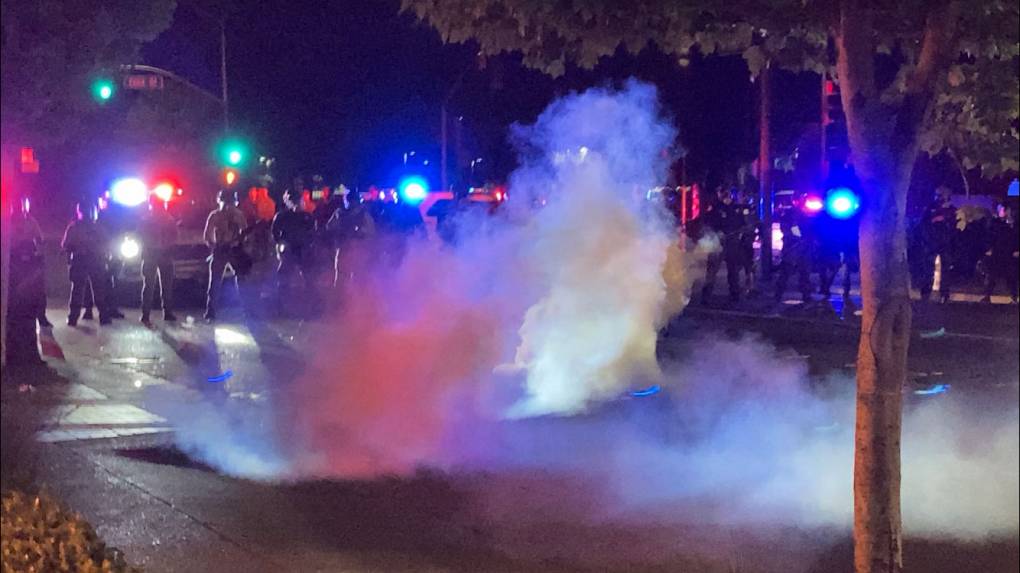
"caption": "Tear gas is fired by the police on Broadway near the Oakland Police Headquarters on May 29, 2020 during a protest over the Minneapolis police killing of George Floyd.",
"description": "Tear gas is fired by the police on Broadway near the Oakland Police Headquarters on May 29, 2020 during a protest over the Minneapolis police killing of George Floyd.",
"title": "RS43451_053_KQED_Oakland_GeorgeFloydProtest_05292020-qut",
"credit": "Beth Laberge/KQED",
"status": "inherit",
"isLoading": false,
"fetchFailed": false
}
},
"audioPlayerReducer": {
"postId": "stream_live",
"isPaused": true,
"isPlaying": false,
"pfsActive": false,
"pledgeModalIsOpen": true,
"playerDrawerIsOpen": false,
"liveAudioPlayStartedAt": 0,
"liveAudioPlayContext": ""
},
"authorsReducer": {
"byline_news_11821827": {
"type": "authors",
"id": "byline_news_11821827",
"meta": {
"override": true
},
"slug": "byline_news_11821827",
"name": "\u003ca href=\"https://www.kqed.org/author/matthewgreen\">Matthew Green\u003c/a> and \u003ca href=\"http://www.jessengebretson.com/\">Jess Engebretson\u003c/a>",
"isLoading": false
},
"byline_news_11822817": {
"type": "authors",
"id": "byline_news_11822817",
"meta": {
"override": true
},
"slug": "byline_news_11822817",
"name": "\u003ca href=\"https://khn.org/news/author/liz-szabo/\">Liz Szabo\u003c/a>\u003cbr>Kaiser Health News",
"isLoading": false
},
"gmeline": {
"type": "authors",
"id": "185",
"meta": {
"index": "authors_1716337520",
"id": "185",
"found": true
},
"name": "Gabe Meline",
"firstName": "Gabe",
"lastName": "Meline",
"slug": "gmeline",
"email": "gmeline@kqed.org",
"display_author_email": true,
"staff_mastheads": [
"arts"
],
"title": "Senior Editor, KQED Arts & Culture",
"bio": "Gabe Meline entered journalism at age 15 making photocopied zines, and has since earned awards from the Edward R. Murrow Awards, the Society for Professional Journalists, the Online Journalism Awards, the Association of Alternative Newsweeklies and the California Newspaper Publishers Association. Prior to KQED, he was the editor of the \u003cem>North Bay Bohemian\u003c/em> and a touring musician. He lives with his wife and daughter in his hometown of Santa Rosa, CA.",
"avatar": "https://secure.gravatar.com/avatar/5bebe57be0d8bc2dd318934feb47299e2d2d10cba28d09d8d7afb389a2ce2bdd?s=600&d=blank&r=g",
"twitter": null,
"bluesky": null,
"facebook": null,
"instagram": null,
"linkedin": null,
"sites": [
{
"site": "",
"roles": [
"editor"
]
},
{
"site": "arts",
"roles": [
"administrator"
]
},
{
"site": "artschool",
"roles": [
"editor"
]
},
{
"site": "news",
"roles": [
"author"
]
},
{
"site": "pop",
"roles": [
"editor"
]
},
{
"site": "bayareabites",
"roles": [
"editor"
]
},
{
"site": "food",
"roles": [
"editor"
]
},
{
"site": "forum",
"roles": [
"administrator"
]
},
{
"site": "liveblog",
"roles": [
"editor"
]
},
{
"site": "hiphop",
"roles": [
"editor"
]
}
],
"headData": {
"title": "Gabe Meline | KQED",
"description": "Senior Editor, KQED Arts & Culture",
"ogImgSrc": "https://secure.gravatar.com/avatar/5bebe57be0d8bc2dd318934feb47299e2d2d10cba28d09d8d7afb389a2ce2bdd?s=600&d=blank&r=g",
"twImgSrc": "https://secure.gravatar.com/avatar/5bebe57be0d8bc2dd318934feb47299e2d2d10cba28d09d8d7afb389a2ce2bdd?s=600&d=blank&r=g"
},
"isLoading": false,
"link": "/author/gmeline"
},
"danbrekke": {
"type": "authors",
"id": "222",
"meta": {
"index": "authors_1716337520",
"id": "222",
"found": true
},
"name": "Dan Brekke",
"firstName": "Dan",
"lastName": "Brekke",
"slug": "danbrekke",
"email": "dbrekke@kqed.org",
"display_author_email": true,
"staff_mastheads": [
"news",
"science"
],
"title": "KQED Editor and Reporter",
"bio": "Dan Brekke is a reporter and editor for KQED News, responsible for coverage of topics ranging from California water issues to the Bay Area's transportation challenges. In a newsroom career that began in Chicago in 1972, Dan has worked for \u003cem>The San Francisco Examiner,\u003c/em> Wired and TechTV and has been published in The New York Times, The New York Times Magazine, Business 2.0, Salon and elsewhere.\r\n\r\nSince joining KQED in 2007, Dan has reported, edited and produced both radio and online features and breaking news pieces. He has shared as both editor and reporter in four Society of Professional Journalists Norcal Excellence in Journalism awards and one Edward R. Murrow regional award. He was chosen for a spring 2017 residency at the Mesa Refuge to advance his research on California salmon.\r\n\r\nEmail Dan at: \u003ca href=\"mailto:dbrekke@kqed.org\">dbrekke@kqed.org\u003c/a>\r\n\r\n\u003cstrong>Twitter:\u003c/strong> \u003ca href=\"https://twitter.com/danbrekke\" rel=\"noopener noreferrer\">twitter.com/danbrekke\u003c/a>\r\n\u003cstrong>Facebook:\u003c/strong> \u003ca href=\"https://www.facebook.com/danbrekke\" rel=\"noopener noreferrer\">www.facebook.com/danbrekke\u003c/a>\r\n\u003cstrong>LinkedIn:\u003c/strong> \u003ca href=\"https://www.linkedin.com/in/danbrekke\" rel=\"noopener noreferrer\">www.linkedin.com/in/danbrekke\u003c/a>",
"avatar": "https://secure.gravatar.com/avatar/c8126230345efca3f7aa89b1a402be45?s=600&d=mm&r=g",
"twitter": "danbrekke",
"facebook": null,
"instagram": "https://www.instagram.com/dan.brekke/",
"linkedin": "https://www.linkedin.com/in/danbrekke/",
"sites": [
{
"site": "news",
"roles": [
"administrator",
"create_posts"
]
},
{
"site": "stateofhealth",
"roles": [
"editor"
]
},
{
"site": "science",
"roles": [
"editor"
]
},
{
"site": "quest",
"roles": [
"contributor"
]
},
{
"site": "food",
"roles": [
"contributor"
]
},
{
"site": "forum",
"roles": [
"contributor"
]
},
{
"site": "liveblog",
"roles": [
"editor"
]
}
],
"headData": {
"title": "Dan Brekke | KQED",
"description": "KQED Editor and Reporter",
"ogImgSrc": "https://secure.gravatar.com/avatar/c8126230345efca3f7aa89b1a402be45?s=600&d=mm&r=g",
"twImgSrc": "https://secure.gravatar.com/avatar/c8126230345efca3f7aa89b1a402be45?s=600&d=mm&r=g"
},
"isLoading": false,
"link": "/author/danbrekke"
},
"mlam": {
"type": "authors",
"id": "244",
"meta": {
"index": "authors_1716337520",
"id": "244",
"found": true
},
"name": "Monica Lam",
"firstName": "Monica Z.",
"lastName": "Lam",
"slug": "mlam",
"email": "mlam@kqed.org",
"display_author_email": true,
"staff_mastheads": [
"news"
],
"title": "KQED Senior Producer",
"bio": "Monica is senior producer of the weekly current affairs program, \"KQED Newsroom.\" She's also served as senior editor of digital content at KQED. She likes to report and edit as well as produce video and take photos.\r\n\r\nBefore joining KQED, Monica worked at the Center for Investigative Reporting, where she examined conditions inside \u003cspan style=\"font-weight: 400;\">maximum security \u003c/span>prisons and abuse in state-run institutions for the developmentally disabled. Prior to that, she produced and directed \u003cem>Journey of the Bonesetter's Daughter,\u003c/em> a documentary that follows novelist Amy Tan as she creates an opera based on her family history.\r\n\r\nMonica's work has been honored with a duPont Award, five Emmys, regional and national Murrow Awards, and has been recognized by Investigative Reporters and Editors, the Society of Professional Journalists, Religion Newswriters Association and the San Francisco Peninsula Press Club. Monica studied urban studies at Stanford University and earned a master's in journalism at University of California at Berkeley. Follow her on twitter: @monicazlam",
"avatar": "https://secure.gravatar.com/avatar/018c474b2b71f43e0e6ca9b15a0ad36f?s=600&d=blank&r=g",
"twitter": "@monicazlam",
"facebook": null,
"instagram": null,
"linkedin": null,
"sites": [
{
"site": "arts",
"roles": [
"administrator"
]
},
{
"site": "news",
"roles": [
"editor"
]
},
{
"site": "trulyca",
"roles": [
"editor"
]
},
{
"site": "science",
"roles": [
"editor"
]
},
{
"site": "breakingnews",
"roles": [
"editor"
]
}
],
"headData": {
"title": "Monica Lam | KQED",
"description": "KQED Senior Producer",
"ogImgSrc": "https://secure.gravatar.com/avatar/018c474b2b71f43e0e6ca9b15a0ad36f?s=600&d=blank&r=g",
"twImgSrc": "https://secure.gravatar.com/avatar/018c474b2b71f43e0e6ca9b15a0ad36f?s=600&d=blank&r=g"
},
"isLoading": false,
"link": "/author/mlam"
},
"aemslie": {
"type": "authors",
"id": "3206",
"meta": {
"index": "authors_1716337520",
"id": "3206",
"found": true
},
"name": "Alex Emslie",
"firstName": "Alex",
"lastName": "Emslie",
"slug": "aemslie",
"email": "aemslie@kqed.org",
"display_author_email": true,
"staff_mastheads": [
"news"
],
"title": "KQED Senior Editor",
"bio": "Alex Emslie is senior editor of talent and development at KQED, where he manages dozens of early career journalists and oversees news department internships.\r\n\r\nHe is a former carpenter and proud graduate of City College of San Francisco and San Francisco State University, where he studied journalism and criminal justice before joining KQED in 2013.\r\n\r\nAlex produced investigative journalism focused on \u003ca href=\"https://www.kqed.org/news/11667594/the-trials-of-marvin-mutch-video\">criminal justice\u003c/a> and policing for most of a decade. He has broken major stories about \u003ca href=\"https://www.kqed.org/news/135682/amid-a-series-of-vallejo-police-shootings-one-officers-name-stands-out\">police use of deadly force\u003c/a>, \u003ca href=\"https://www.kqed.org/news/10454955/racist-texts-prompt-sfpd-internal-investigation\">officer misconduct\u003c/a> and \u003ca href=\"https://www.kqed.org/news/11712239/terrorist-or-troll-judge-to-weigh-whether-oakland-man-really-intended-to-attack-bay-area\">other\u003c/a> \u003ca href=\"https://www.kqed.org/news/11221414/hayward-paid-159000-to-husband-of-retired-police-chief-documents-show\">high\u003c/a>-\u003ca href=\"https://www.kqed.org/news/10622762/the-forgotten-tracking-two-homicides-in-san-francisco-public-housing\">profile\u003c/a> \u003ca href=\"https://www.kqed.org/news/11624516/federal-agency-promoted-ranger-just-months-after-his-gun-was-stolen-and-used-in-steinle-killing\">cases\u003c/a>. He co-founded the \u003ca href=\"https://projects.scpr.org/california-reporting-project/\">California Reporting Project\u003c/a> in 2019 to obtain and report on previously confidential police internal investigations. The effort produced well over 100 original stories and changed the course of multiple criminal cases.\r\n\r\nHis work has been recognized with numerous journalism awards, including a national Edward R. Murrow award for several years of \u003ca href=\"https://www.kqed.org/news/11688481/sfpd-officers-in-mario-woods-case-recount-shooting-in-newly-filed-depositions\">reporting\u003c/a> on the San Francisco Police shooting of Mario Woods. His \u003ca href=\"https://www.kqed.org/news/147854/half-of-those-killed-by-san-francisco-police-are-mentally-ill\">reporting\u003c/a> on police killings of people in psychiatric crisis was cited in amicus briefs before the U.S. Supreme Court.\r\n\r\nAlex now enjoys mentoring the next generation of journalists at KQED.",
"avatar": "https://secure.gravatar.com/avatar/e691e65209f20e9da202bd730ead5663?s=600&d=blank&r=g",
"twitter": "SFNewsReporter",
"facebook": null,
"instagram": null,
"linkedin": null,
"sites": [
{
"site": "arts",
"roles": [
"editor"
]
},
{
"site": "news",
"roles": [
"editor"
]
},
{
"site": "mindshift",
"roles": [
"editor"
]
},
{
"site": "stateofhealth",
"roles": [
"editor"
]
},
{
"site": "science",
"roles": [
"administrator"
]
}
],
"headData": {
"title": "Alex Emslie | KQED",
"description": "KQED Senior Editor",
"ogImgSrc": "https://secure.gravatar.com/avatar/e691e65209f20e9da202bd730ead5663?s=600&d=blank&r=g",
"twImgSrc": "https://secure.gravatar.com/avatar/e691e65209f20e9da202bd730ead5663?s=600&d=blank&r=g"
},
"isLoading": false,
"link": "/author/aemslie"
},
"markfiore": {
"type": "authors",
"id": "3236",
"meta": {
"index": "authors_1716337520",
"id": "3236",
"found": true
},
"name": "Mark Fiore",
"firstName": "Mark",
"lastName": "Fiore",
"slug": "markfiore",
"email": "mark@markfiore.com",
"display_author_email": false,
"staff_mastheads": [
"news"
],
"title": "KQED News Cartoonist",
"bio": "\u003ca href=\"http://www.MarkFiore.com\">MarkFiore.com\u003c/a> | \u003ca href=\"https://twitter.com/markfiore\">Follow on Twitter\u003c/a> | \u003ca href=\"https://www.facebook.com/pages/Mark-Fiore-Animated-Political-Cartoons/94451707396?ref=bookmarks\">Facebook\u003c/a> | \u003ca href=\"mailto:mark@markfiore.com\">email\u003c/a>\r\n\r\nPulitzer Prize-winner, Mark Fiore, who the Wall Street Journal has called “the undisputed guru of the form,” creates animated political cartoons in San Francisco, where his work has been featured regularly on the San Francisco Chronicle’s web site, SFGate.com. His work has appeared on Newsweek.com, Slate.com, CBSNews.com, MotherJones.com, DailyKos.com and NPR’s web site. Fiore’s political animation has appeared on CNN, Frontline, Bill Moyers Journal, Salon.com and cable and broadcast outlets across the globe.\r\n\r\nBeginning his professional life by drawing traditional political cartoons for newspapers, Fiore’s work appeared in publications ranging from the Washington Post to the Los Angeles Times. In the late 1990s, he began to experiment with animating political cartoons and, after a short stint at the San Jose Mercury News as their staff cartoonist, Fiore devoted all his energies to animation.\r\nGrowing up in California, Fiore also spent a good portion of his life in the backwoods of Idaho. It was this combination that shaped him politically. Mark majored in political science at Colorado College, where, in a perfect send-off for a cartoonist, he received his diploma in 1991 as commencement speaker Dick Cheney smiled approvingly.\r\nMark Fiore was awarded the Pulitzer Prize for political cartooning in 2010, a Robert F. Kennedy Journalism Award in 2004 and has twice received an Online Journalism Award for commentary from the Online News Association (2002, 2008). Fiore has received two awards for his work in new media from the National Cartoonists Society (2001, 2002), and in 2006 received The James Madison Freedom of Information Award from The Society of Professional Journalists.",
"avatar": "https://secure.gravatar.com/avatar/fc4e2a612b15b67bad0c6f0e1db4ca9b?s=600&d=blank&r=g",
"twitter": "MarkFiore",
"facebook": null,
"instagram": "https://www.instagram.com/markfiore/?hl=en",
"linkedin": null,
"sites": [
{
"site": "arts",
"roles": [
"contributor"
]
},
{
"site": "news",
"roles": [
"editor"
]
},
{
"site": "futureofyou",
"roles": [
"editor"
]
},
{
"site": "science",
"roles": [
"editor"
]
}
],
"headData": {
"title": "Mark Fiore | KQED",
"description": "KQED News Cartoonist",
"ogImgSrc": "https://secure.gravatar.com/avatar/fc4e2a612b15b67bad0c6f0e1db4ca9b?s=600&d=blank&r=g",
"twImgSrc": "https://secure.gravatar.com/avatar/fc4e2a612b15b67bad0c6f0e1db4ca9b?s=600&d=blank&r=g"
},
"isLoading": false,
"link": "/author/markfiore"
},
"sheraz-sadiq": {
"type": "authors",
"id": "6176",
"meta": {
"index": "authors_1716337520",
"id": "6176",
"found": true
},
"name": "Sheraz Sadiq",
"firstName": "Sheraz",
"lastName": "Sadiq",
"slug": "sheraz-sadiq",
"email": "ssadiq@kqed.org",
"display_author_email": false,
"staff_mastheads": [],
"title": "KQED Contributor",
"bio": "Sheraz Sadiq is an Emmy Award-winning producer at San Francisco PBS affiliate KQED. In 2012, he received the AAAS Kavli Science Journalism award for a story he produced about the seismic retrofit of the Hetch Hetchy water delivery system which serves the San Francisco Bay Area. In addition to producing television content for KQED Science, he has also created online features and written news articles on scientific subjects ranging from astronomy to synthetic biology.",
"avatar": "https://secure.gravatar.com/avatar/d88c61c214e477c4c6f0ebaed4f581bf7c9b1dafd94cd4361285d427107adb8d?s=600&d=blank&r=g",
"twitter": null,
"bluesky": null,
"facebook": null,
"instagram": null,
"linkedin": null,
"sites": [
{
"site": "arts",
"roles": [
"subscriber"
]
},
{
"site": "news",
"roles": [
"subscriber"
]
},
{
"site": "futureofyou",
"roles": [
"subscriber"
]
},
{
"site": "science",
"roles": [
"subscriber"
]
},
{
"site": "quest",
"roles": [
"leadcoordinator",
"subscriber"
]
}
],
"headData": {
"title": "Sheraz Sadiq | KQED",
"description": "KQED Contributor",
"ogImgSrc": "https://secure.gravatar.com/avatar/d88c61c214e477c4c6f0ebaed4f581bf7c9b1dafd94cd4361285d427107adb8d?s=600&d=blank&r=g",
"twImgSrc": "https://secure.gravatar.com/avatar/d88c61c214e477c4c6f0ebaed4f581bf7c9b1dafd94cd4361285d427107adb8d?s=600&d=blank&r=g"
},
"isLoading": false,
"link": "/author/sheraz-sadiq"
},
"jscott": {
"type": "authors",
"id": "8664",
"meta": {
"index": "authors_1716337520",
"id": "8664",
"found": true
},
"name": "Julia Scott",
"firstName": "Julia",
"lastName": "Scott",
"slug": "jscott",
"email": "jscott@kqed.org",
"display_author_email": false,
"staff_mastheads": [],
"title": "KQED Contributor",
"bio": "Julia Scott is a former editor with KQED News. Prior to KQED, she was an editor with \u003cem>Crosscurrents\u003c/em> at KALW Radio in San Francisco. As a freelance reporter, she has filed stories for \u003cem>The California Report, Marketplace, Nautilus\u003c/em> and \u003cem>The New York Times Magazine.\u003c/em>\r\n\r\nPrior to her work in radio, Julia was an environmental reporter for the \u003cem>San Jose Mercury News\u003c/em> and Bay Area News Group, where her work was recognized with awards from the California Newspaper Publishers Association and the Society of Professional Journalists. Her radio honors include awards and citations from the Sony Radio Academy Awards and the National Lesbian and Gay Journalists Association.\r\n\r\nJulia hails from Montreal, Canada and lives in Oakland. She is the editor of the humor collection\u003cem> DRIVEL: Deliciously Bad Writing by Your Favorite Authors.\u003c/em>",
"avatar": "https://secure.gravatar.com/avatar/7fe25e0cf81dec2d4f74f1d4737a2871?s=600&d=blank&r=g",
"twitter": "juliascribe",
"facebook": null,
"instagram": null,
"linkedin": null,
"sites": [
{
"site": "",
"roles": [
"editor"
]
},
{
"site": "arts",
"roles": [
"administrator"
]
},
{
"site": "news",
"roles": [
"subscriber"
]
},
{
"site": "futureofyou",
"roles": [
"editor"
]
},
{
"site": "science",
"roles": [
"administrator"
]
}
],
"headData": {
"title": "Julia Scott | KQED",
"description": "KQED Contributor",
"ogImgSrc": "https://secure.gravatar.com/avatar/7fe25e0cf81dec2d4f74f1d4737a2871?s=600&d=blank&r=g",
"twImgSrc": "https://secure.gravatar.com/avatar/7fe25e0cf81dec2d4f74f1d4737a2871?s=600&d=blank&r=g"
},
"isLoading": false,
"link": "/author/jscott"
},
"agarces": {
"type": "authors",
"id": "11367",
"meta": {
"index": "authors_1716337520",
"id": "11367",
"found": true
},
"name": "Audrey Garces",
"firstName": "Audrey",
"lastName": "Garces",
"slug": "agarces",
"email": "agarces@kqed.org",
"display_author_email": false,
"staff_mastheads": [
"news"
],
"title": "Digital Producer",
"bio": "Audrey is a former digital producer at KQED News. Previously, she was a KQED Raul Ramirez Diversity Fund intern where she developed stories that focused on highlighting diverse voices in journalism. Prior to her work at KQED, she worked as a news intern at the San Francisco Examiner. Audrey graduated from San Francisco State University with a B.A. in journalism and a minor in political science.",
"avatar": "https://secure.gravatar.com/avatar/5211bc2e6a809b9956da169e35ce63d5?s=600&d=blank&r=g",
"twitter": "audgar",
"facebook": null,
"instagram": null,
"linkedin": null,
"sites": [
{
"site": "arts",
"roles": []
},
{
"site": "news",
"roles": [
"subscriber"
]
},
{
"site": "science",
"roles": [
"editor"
]
},
{
"site": "forum",
"roles": [
"editor"
]
},
{
"site": "perspectives",
"roles": [
"administrator"
]
}
],
"headData": {
"title": "Audrey Garces | KQED",
"description": "Digital Producer",
"ogImgSrc": "https://secure.gravatar.com/avatar/5211bc2e6a809b9956da169e35ce63d5?s=600&d=blank&r=g",
"twImgSrc": "https://secure.gravatar.com/avatar/5211bc2e6a809b9956da169e35ce63d5?s=600&d=blank&r=g"
},
"isLoading": false,
"link": "/author/agarces"
},
"mfharvin": {
"type": "authors",
"id": "11583",
"meta": {
"index": "authors_1716337520",
"id": "11583",
"found": true
},
"name": "Mary Franklin Harvin",
"firstName": "Mary Franklin",
"lastName": "Harvin",
"slug": "mfharvin",
"email": "mfharvin@KQED.org",
"display_author_email": false,
"staff_mastheads": [
"news"
],
"title": "KQED Contributor",
"bio": null,
"avatar": "https://secure.gravatar.com/avatar/0e53510a7d48cfbdebfc9b11357d845f?s=600&d=blank&r=g",
"twitter": "EmEffHarvin",
"facebook": null,
"instagram": null,
"linkedin": null,
"sites": [
{
"site": "news",
"roles": [
"author",
"edit_others_posts"
]
},
{
"site": "science",
"roles": [
"editor"
]
}
],
"headData": {
"title": "Mary Franklin Harvin | KQED",
"description": "KQED Contributor",
"ogImgSrc": "https://secure.gravatar.com/avatar/0e53510a7d48cfbdebfc9b11357d845f?s=600&d=blank&r=g",
"twImgSrc": "https://secure.gravatar.com/avatar/0e53510a7d48cfbdebfc9b11357d845f?s=600&d=blank&r=g"
},
"isLoading": false,
"link": "/author/mfharvin"
},
"jchang": {
"type": "authors",
"id": "11642",
"meta": {
"index": "authors_1716337520",
"id": "11642",
"found": true
},
"name": "Julie Chang",
"firstName": "Julie",
"lastName": "Chang",
"slug": "jchang",
"email": "jchang@kqed.org",
"display_author_email": false,
"staff_mastheads": [
"news"
],
"title": "KQED Contributor",
"bio": "Julie Chang is a reporter and producer (and occasional anchor) with the radio and digital teams at KQED. Before KQED, she worked at WAMU 88.5 in Washington D.C. and 89.3 KPCC in Los Angeles County. Her work has been featured on NPR’s Morning Edition and All Things Considered, Here & Now, the New York Times, and more. Julie graduated from UC Berkeley’s Graduate School of Journalism. She previously taught English at Pasadena City College, Fullerton College and Cal Poly Pomona. Julie earned her M.A. in English from Cal Poly Pomona and her B.A. in English from UCI with a minor in criminology.",
"avatar": "https://secure.gravatar.com/avatar/a7afce94ef127082c5475116b4a3b77d?s=600&d=blank&r=g",
"twitter": "BayAreaJulie",
"facebook": null,
"instagram": null,
"linkedin": "https://www.linkedin.com/in/julieyc/",
"sites": [
{
"site": "",
"roles": [
"editor"
]
},
{
"site": "news",
"roles": [
"author"
]
},
{
"site": "science",
"roles": [
"editor"
]
}
],
"headData": {
"title": "Julie Chang | KQED",
"description": "KQED Contributor",
"ogImgSrc": "https://secure.gravatar.com/avatar/a7afce94ef127082c5475116b4a3b77d?s=600&d=blank&r=g",
"twImgSrc": "https://secure.gravatar.com/avatar/a7afce94ef127082c5475116b4a3b77d?s=600&d=blank&r=g"
},
"isLoading": false,
"link": "/author/jchang"
},
"ebaldassari": {
"type": "authors",
"id": "11652",
"meta": {
"index": "authors_1716337520",
"id": "11652",
"found": true
},
"name": "Erin Baldassari",
"firstName": "Erin",
"lastName": "Baldassari",
"slug": "ebaldassari",
"email": "ebaldassari@KQED.org",
"display_author_email": true,
"staff_mastheads": [
"news"
],
"title": "Staff Writer",
"bio": "Erin Baldassari covers housing for KQED. She's a former print journalist and most recently worked as the transportation reporter for the \u003cem>Mercury News\u003c/em> and \u003cem>East Bay Times. \u003c/em>There, she focused on how the Bay Area’s housing shortage has changed the way people move around the region. She also served on the \u003cem>East Bay Times\u003c/em>’ 2017 Pulitzer Prize-winning team for coverage of the Ghost Ship Fire in Oakland. Prior to that, Erin worked as a breaking news and general assignment reporter for a variety of outlets in the Bay Area and the greater Boston area. A Tufts University alumna, Erin grew up in the foothills of the Sierra Nevada mountains and in Sonoma County. She is a life-long KQED listener.",
"avatar": "https://secure.gravatar.com/avatar/5e95cad64a8ca08288082212e199d2b0cbeb4fd8e8ef5339395f361032bbe005?s=600&d=blank&r=g",
"twitter": "e_baldi",
"bluesky": null,
"facebook": null,
"instagram": null,
"linkedin": null,
"sites": [
{
"site": "news",
"roles": [
"edit_others_posts",
"editor"
]
},
{
"site": "science",
"roles": [
"editor"
]
},
{
"site": "liveblog",
"roles": [
"editor"
]
}
],
"headData": {
"title": "Erin Baldassari | KQED",
"description": "Staff Writer",
"ogImgSrc": "https://secure.gravatar.com/avatar/5e95cad64a8ca08288082212e199d2b0cbeb4fd8e8ef5339395f361032bbe005?s=600&d=blank&r=g",
"twImgSrc": "https://secure.gravatar.com/avatar/5e95cad64a8ca08288082212e199d2b0cbeb4fd8e8ef5339395f361032bbe005?s=600&d=blank&r=g"
},
"isLoading": false,
"link": "/author/ebaldassari"
},
"mgonzalessiler": {
"type": "authors",
"id": "11657",
"meta": {
"index": "authors_1716337520",
"id": "11657",
"found": true
},
"name": "Marco Siler-Gonzales",
"firstName": "Marco",
"lastName": "Siler-Gonzales",
"slug": "mgonzalessiler",
"email": "mgonzalessiler@kqed.org",
"display_author_email": false,
"staff_mastheads": [],
"title": "KQED Contributor",
"bio": null,
"avatar": "https://secure.gravatar.com/avatar/e960972bbaa44ee0e051b1f68c97753c?s=600&d=blank&r=g",
"twitter": null,
"facebook": null,
"instagram": null,
"linkedin": null,
"sites": [
{
"site": "news",
"roles": [
"author"
]
}
],
"headData": {
"title": "Marco Siler-Gonzales | KQED",
"description": "KQED Contributor",
"ogImgSrc": "https://secure.gravatar.com/avatar/e960972bbaa44ee0e051b1f68c97753c?s=600&d=blank&r=g",
"twImgSrc": "https://secure.gravatar.com/avatar/e960972bbaa44ee0e051b1f68c97753c?s=600&d=blank&r=g"
},
"isLoading": false,
"link": "/author/mgonzalessiler"
},
"jrodriguez": {
"type": "authors",
"id": "11690",
"meta": {
"index": "authors_1716337520",
"id": "11690",
"found": true
},
"name": "Joe Fitzgerald Rodriguez",
"firstName": "Joe",
"lastName": "Fitzgerald Rodriguez",
"slug": "jrodriguez",
"email": "jrodriguez@kqed.org",
"display_author_email": true,
"staff_mastheads": [
"news"
],
"title": "Reporter and Producer",
"bio": "Joe Fitzgerald Rodriguez is a reporter and digital producer for KQED covering politics. Joe most recently wrote for the \u003cem>San Francisco Examiner\u003c/em> as a political columnist covering The City. He was raised in San Francisco and has spent his reporting career in his beloved, foggy, city by the bay. Joe was 12-years-old when he conducted his first interview in journalism, grilling former San Francisco Mayor Willie Brown for the Marina Middle School newspaper, \u003cem>The Penguin Press, \u003c/em>and he continues to report on the San Francisco Bay Area to this day.",
"avatar": "https://secure.gravatar.com/avatar/2247beb0564c1e9c62228d5649d2edac?s=600&d=blank&r=g",
"twitter": "FitztheReporter",
"facebook": null,
"instagram": "https://www.instagram.com/fitzthereporter/",
"linkedin": null,
"sites": [
{
"site": "",
"roles": [
"editor"
]
},
{
"site": "arts",
"roles": [
"editor"
]
},
{
"site": "news",
"roles": [
"editor"
]
},
{
"site": "science",
"roles": [
"editor"
]
},
{
"site": "elections",
"roles": [
"editor"
]
},
{
"site": "liveblog",
"roles": [
"editor"
]
}
],
"headData": {
"title": "Joe Fitzgerald Rodriguez | KQED",
"description": "Reporter and Producer",
"ogImgSrc": "https://secure.gravatar.com/avatar/2247beb0564c1e9c62228d5649d2edac?s=600&d=blank&r=g",
"twImgSrc": "https://secure.gravatar.com/avatar/2247beb0564c1e9c62228d5649d2edac?s=600&d=blank&r=g"
},
"isLoading": false,
"link": "/author/jrodriguez"
}
},
"pagesReducer": {
"news_tag_george-floyd": {
"type": "terms",
"id": "news_28031",
"meta": {
"index": "terms_1716263798",
"site": "news",
"id": "28031",
"score": 9.103924
},
"featImg": null,
"name": "George Floyd",
"description": null,
"taxonomy": "tag",
"headData": {
"twImgId": null,
"twTitle": null,
"ogTitle": null,
"ogImgId": null,
"twDescription": null,
"description": null,
"title": "George Floyd Archives | KQED News",
"ogDescription": null
},
"ttid": 28048,
"slug": "george-floyd",
"isLoading": false,
"title": "George Floyd",
"pageMeta": {
"site": "news",
"WpPageTemplate": "page-topic-editorial",
"currentPage": 7
},
"blocks": [
{
"blockName": "kqed/post-list",
"attrs": {
"layout": "cardArticle2",
"query": "posts/news?tag=george-floyd",
"seeMore": false,
"paginated": true,
"page": 7
}
},
{
"blockName": "kqed/ad"
}
]
}
},
"pfsSessionReducer": {},
"postsReducer": {
"stream_live": {
"type": "live",
"id": "stream_live",
"audioUrl": "https://streams.kqed.org/kqedradio",
"title": "Live Stream",
"excerpt": "Live Stream information currently unavailable.",
"link": "/radio",
"featImg": "",
"label": {
"name": "KQED Live",
"link": "/"
}
},
"stream_kqedNewscast": {
"type": "posts",
"id": "stream_kqedNewscast",
"audioUrl": "https://www.kqed.org/.stream/anon/radio/RDnews/newscast.mp3?_=1",
"title": "KQED Newscast",
"featImg": "",
"label": {
"name": "88.5 FM",
"link": "/"
}
},
"news_11822946": {
"type": "posts",
"id": "news_11822946",
"meta": {
"index": "posts_1716263798",
"site": "news",
"id": "11822946",
"score": null,
"sort": [
1591383282000
]
},
"guestAuthors": [],
"slug": "in-santa-rosa-a-week-of-tear-gas-rubber-bullets-and-over-150-arrests",
"title": "In Santa Rosa, a Week of Tear Gas, Rubber Bullets and Over 150 Arrests",
"publishDate": 1591383282,
"format": "standard",
"headTitle": "In Santa Rosa, a Week of Tear Gas, Rubber Bullets and Over 150 Arrests | KQED",
"labelTerm": {
"site": "news"
},
"content": "\u003cp>Police fired rubber bullets, shot tear gas and arrested more than 150 people in Santa Rosa over five days and nights of protests starting Saturday, May 30, with demonstrators galvanized around the city’s own history with police shootings. \u003c/p>\n\u003cp>On Tuesday night, Santa Rosa police \u003ca href=\"https://local.nixle.com/alert/8034898/\" target=\"_blank\" rel=\"noopener noreferrer\">arrested 110 individuals\u003c/a>, including 90 adults and 20 minors, for reasons including unlawful assembly and violation of curfew.\u003c/p>\n\u003cp>Hundreds had attended a peaceful vigil earlier in the evening \u003ca href=\"https://www.facebook.com/events/s/a-grief-vigil-to-end-the-bruta/962575240879823/\" target=\"_blank\" rel=\"noopener noreferrer\">in memory of Andy Lopez\u003c/a>, a 13-year-old boy who was \u003ca href=\"https://www.kqed.org/news/11713332/sonoma-county-to-pay-3-million-settlement-in-andy-lopez-shooting\">killed after being shot seven times\u003c/a> by a Sonoma County sheriff’s deputy in 2013.\u003c/p>\n\u003cp>The vigil, organized by \u003ca href=\"https://www.facebook.com/PBCSonomaCounty\" target=\"_blank\" rel=\"noopener noreferrer\">Police Brutality Coalition Sonoma County\u003c/a>, was held in the largely Latino neighborhood of Roseland on what would have been Lopez’s 20th birthday.\u003c/p>\n\u003cp>https://twitter.com/gmeline/status/1267987358386802688\u003c/p>\n\u003cp>Vigil co-organizer Susan Lamont said the fatal shooting of Lopez and the exoneration of the deputy, Erick Gelhaus, made visible long-existing racial injustices in Santa Rosa. \u003c/p>\n\u003cp>“It became a major focus of both racial discrimination, and just the incredible overreach and lack of accountability by law enforcement locally, which is then reflected nationally as well,” Lamont said.\u003c/p>\n\u003cp>Demonstrators, mostly young people of color, marched down Sebastopol Road toward Old Courthouse Square. During one standoff, police donned gas masks in preparation for tear gas, used all three nights prior. Later in the evening, the march progressed through the residential area near Santa Rosa Junior College, where marchers sang “Happy Birthday” to Andy Lopez while dozens of residents offered supportive gestures from their porches. \u003c/p>\n\u003cp>https://twitter.com/gmeline/status/1268055164042141697?s=20\u003c/p>\n\u003cp>[ad fullwidth]\u003c/p>\n\u003cp>Similar demonstrations took place in the days and nights previous as hundreds took to the streets. Protesters chanted and marched throughout the city’s downtown area, held moments of silence and knelt on one knee in solidarity with George Floyd and others killed by police. \u003c/p>\n\u003cp>Three people were arrested in Santa Rosa on \u003ca href=\"https://local.nixle.com/alert/8026158/\" target=\"_blank\" rel=\"noopener noreferrer\">Saturday\u003c/a>, a night in which police shot tear gas twice, and demonstrators took over the freeway twice. Police also shot chalk rounds at the crowd, \u003ca href=\"https://www.facebook.com/photo.php?fbid=10220501772832567&set=a.1538447219351&type=3&theater\" rel=\"noopener noreferrer\" target=\"_blank\">severely injuring 20-year-old Santa Rosa resident Michaela Staggs\u003c/a>, who was taken to the emergency room.\u003c/p>\n\u003cp>https://twitter.com/_erik_castro/status/1266998635805372416\u003c/p>\n\u003cp>One person was arrested in Santa Rosa on \u003ca href=\"https://local.nixle.com/alert/8027820/\" target=\"_blank\" rel=\"noopener noreferrer\">Sunday\u003c/a>. That night, after a line of police kept a march from entering the freeway again, some protesters broke store windows at the Santa Rosa Plaza and held a loud sideshow at the intersection of Fourth Street and Mendocino Avenue. After a brawl involving about 20 broke out, demonstrators were able to push away troublemakers, kneel in the intersection and refocus the protest on police brutality. Police then shot tear gas to break up crowds. \u003c/p>\n\u003cp>\u003ca href=\"https://local.nixle.com/alert/8029846/\" target=\"_blank\" rel=\"noopener noreferrer\">Monday’s protests\u003c/a> led to 27 arrests, including 17 adults and 10 juveniles. All arrestees were from Santa Rosa but one, from Petaluma. The night also led to police officers shooting more tear gas in addition to rubber bullets at demonstrators, including a local tribal leader who sustained \u003ca href=\"https://www.radical-guide.com/local-indigenous-tribal-leader-hospitalized-due-to-santa-rosa-police-department-violence/\" rel=\"noopener noreferrer\" target=\"_blank\">serious injuries to his mouth and jaw\u003c/a>. \u003c/p>\n\u003cp>Protests have since dwindled in size. Only eight adults were arrested in Santa Rosa on Wednesday night for curfew violations, and appeared to be arrested voluntarily, after having been given the choice to leave the area.\u003c/p>\n\u003cp>Another protest is planned for 3 p.m. Friday at Old Courthouse Square.\u003c/p>\n\u003cp>\u003c/p>\n",
"blocks": [],
"excerpt": "Protesters in Santa Rosa chanted for both George Floyd and Andy Lopez, a 13-year-old shot and killed by a Sonoma County sheriff's deputy in 2013.",
"status": "publish",
"parent": 0,
"modified": 1721155702,
"stats": {
"hasAudio": false,
"hasVideo": false,
"hasChartOrMap": false,
"iframeSrcs": [],
"hasGoogleForm": false,
"hasGallery": false,
"hasHearkenModule": false,
"hasPolis": false,
"paragraphCount": 15,
"wordCount": 564
},
"headData": {
"title": "In Santa Rosa, a Week of Tear Gas, Rubber Bullets and Over 150 Arrests | KQED",
"description": "Protesters in Santa Rosa chanted for both George Floyd and Andy Lopez, a 13-year-old killed by a Sonoma County sheriff's deputy in 2013.",
"ogTitle": "",
"ogDescription": "",
"ogImgId": "",
"twTitle": "",
"twDescription": "",
"twImgId": "",
"socialDescription": "Protesters in Santa Rosa chanted for both George Floyd and Andy Lopez, a 13-year-old killed by a Sonoma County sheriff's deputy in 2013.",
"schema": {
"@context": "https://schema.org",
"@type": "NewsArticle",
"headline": "In Santa Rosa, a Week of Tear Gas, Rubber Bullets and Over 150 Arrests",
"datePublished": "2020-06-05T11:54:42-07:00",
"dateModified": "2024-07-16T11:48:22-07:00",
"image": "https://cdn.kqed.org/wp-content/uploads/2020/02/KQED-OG-Image@1x.png",
"isAccessibleForFree": "True",
"publisher": {
"@type": "NewsMediaOrganization",
"@id": "https://www.kqed.org/#organization",
"name": "KQED",
"logo": "https://cdn.kqed.org/wp-content/uploads/2020/02/KQED-OG-Image@1x.png",
"url": "https://www.kqed.org",
"sameAs": [
"https://www.facebook.com/KQED",
"https://twitter.com/KQED",
"https://www.instagram.com/kqed/",
"https://www.tiktok.com/@kqedofficial",
"https://www.linkedin.com/company/kqed",
"https://www.youtube.com/channel/UCeC0IOo7i1P_61zVUWbJ4nw"
]
}
}
},
"sticky": false,
"templateType": "standard",
"featuredImageType": "standard",
"path": "/news/11822946/in-santa-rosa-a-week-of-tear-gas-rubber-bullets-and-over-150-arrests",
"audioTrackLength": null,
"parsedContent": [
{
"type": "contentString",
"content": "\u003cdiv class=\"post-body\">\u003cp>\u003cp>Police fired rubber bullets, shot tear gas and arrested more than 150 people in Santa Rosa over five days and nights of protests starting Saturday, May 30, with demonstrators galvanized around the city’s own history with police shootings. \u003c/p>\n\u003cp>On Tuesday night, Santa Rosa police \u003ca href=\"https://local.nixle.com/alert/8034898/\" target=\"_blank\" rel=\"noopener noreferrer\">arrested 110 individuals\u003c/a>, including 90 adults and 20 minors, for reasons including unlawful assembly and violation of curfew.\u003c/p>\n\u003cp>Hundreds had attended a peaceful vigil earlier in the evening \u003ca href=\"https://www.facebook.com/events/s/a-grief-vigil-to-end-the-bruta/962575240879823/\" target=\"_blank\" rel=\"noopener noreferrer\">in memory of Andy Lopez\u003c/a>, a 13-year-old boy who was \u003ca href=\"https://www.kqed.org/news/11713332/sonoma-county-to-pay-3-million-settlement-in-andy-lopez-shooting\">killed after being shot seven times\u003c/a> by a Sonoma County sheriff’s deputy in 2013.\u003c/p>\n\u003cp>The vigil, organized by \u003ca href=\"https://www.facebook.com/PBCSonomaCounty\" target=\"_blank\" rel=\"noopener noreferrer\">Police Brutality Coalition Sonoma County\u003c/a>, was held in the largely Latino neighborhood of Roseland on what would have been Lopez’s 20th birthday.\u003c/p>\u003c/p>\u003c/div>",
"attributes": {
"named": {},
"numeric": []
}
},
{
"type": "component",
"content": "",
"name": "singleTwitterStatus",
"attributes": {
"named": {
"id": "1267987358386802688"
},
"numeric": []
}
},
{
"type": "contentString",
"content": "\u003cdiv class=\"post-body\">\u003cp>\n\u003cp>Vigil co-organizer Susan Lamont said the fatal shooting of Lopez and the exoneration of the deputy, Erick Gelhaus, made visible long-existing racial injustices in Santa Rosa. \u003c/p>\n\u003cp>“It became a major focus of both racial discrimination, and just the incredible overreach and lack of accountability by law enforcement locally, which is then reflected nationally as well,” Lamont said.\u003c/p>\n\u003cp>Demonstrators, mostly young people of color, marched down Sebastopol Road toward Old Courthouse Square. During one standoff, police donned gas masks in preparation for tear gas, used all three nights prior. Later in the evening, the march progressed through the residential area near Santa Rosa Junior College, where marchers sang “Happy Birthday” to Andy Lopez while dozens of residents offered supportive gestures from their porches. \u003c/p>\u003c/p>\u003c/div>",
"attributes": {
"named": {},
"numeric": []
}
},
{
"type": "component",
"content": "",
"name": "singleTwitterStatus",
"attributes": {
"named": {
"id": "1268055164042141697"
},
"numeric": []
}
},
{
"type": "contentString",
"content": "\u003cdiv class=\"post-body\">\u003cp>\n\u003cp>\u003c/p>\u003c/div>",
"attributes": {
"named": {},
"numeric": []
}
},
{
"type": "component",
"content": "",
"name": "ad",
"attributes": {
"named": {
"label": "fullwidth"
},
"numeric": [
"fullwidth"
]
}
},
{
"type": "contentString",
"content": "\u003cdiv class=\"post-body\">\u003cp>\u003c/p>\n\u003cp>Similar demonstrations took place in the days and nights previous as hundreds took to the streets. Protesters chanted and marched throughout the city’s downtown area, held moments of silence and knelt on one knee in solidarity with George Floyd and others killed by police. \u003c/p>\n\u003cp>Three people were arrested in Santa Rosa on \u003ca href=\"https://local.nixle.com/alert/8026158/\" target=\"_blank\" rel=\"noopener noreferrer\">Saturday\u003c/a>, a night in which police shot tear gas twice, and demonstrators took over the freeway twice. Police also shot chalk rounds at the crowd, \u003ca href=\"https://www.facebook.com/photo.php?fbid=10220501772832567&set=a.1538447219351&type=3&theater\" rel=\"noopener noreferrer\" target=\"_blank\">severely injuring 20-year-old Santa Rosa resident Michaela Staggs\u003c/a>, who was taken to the emergency room.\u003c/p>\u003c/p>\u003c/div>",
"attributes": {
"named": {},
"numeric": []
}
},
{
"type": "component",
"content": "",
"name": "singleTwitterStatus",
"attributes": {
"named": {
"id": "1266998635805372416"
},
"numeric": []
}
},
{
"type": "contentString",
"content": "\u003cdiv class=\"post-body\">\u003cp>\n\u003cp>One person was arrested in Santa Rosa on \u003ca href=\"https://local.nixle.com/alert/8027820/\" target=\"_blank\" rel=\"noopener noreferrer\">Sunday\u003c/a>. That night, after a line of police kept a march from entering the freeway again, some protesters broke store windows at the Santa Rosa Plaza and held a loud sideshow at the intersection of Fourth Street and Mendocino Avenue. After a brawl involving about 20 broke out, demonstrators were able to push away troublemakers, kneel in the intersection and refocus the protest on police brutality. Police then shot tear gas to break up crowds. \u003c/p>\n\u003cp>\u003ca href=\"https://local.nixle.com/alert/8029846/\" target=\"_blank\" rel=\"noopener noreferrer\">Monday’s protests\u003c/a> led to 27 arrests, including 17 adults and 10 juveniles. All arrestees were from Santa Rosa but one, from Petaluma. The night also led to police officers shooting more tear gas in addition to rubber bullets at demonstrators, including a local tribal leader who sustained \u003ca href=\"https://www.radical-guide.com/local-indigenous-tribal-leader-hospitalized-due-to-santa-rosa-police-department-violence/\" rel=\"noopener noreferrer\" target=\"_blank\">serious injuries to his mouth and jaw\u003c/a>. \u003c/p>\n\u003cp>Protests have since dwindled in size. Only eight adults were arrested in Santa Rosa on Wednesday night for curfew violations, and appeared to be arrested voluntarily, after having been given the choice to leave the area.\u003c/p>\n\u003cp>Another protest is planned for 3 p.m. Friday at Old Courthouse Square.\u003c/p>\n\u003cp>\u003c/p>\n\u003c/div>\u003c/p>",
"attributes": {
"named": {},
"numeric": []
}
}
],
"link": "/news/11822946/in-santa-rosa-a-week-of-tear-gas-rubber-bullets-and-over-150-arrests",
"authors": [
"185",
"11642"
],
"categories": [
"news_6188",
"news_8"
],
"tags": [
"news_4983",
"news_28031",
"news_22050",
"news_20081",
"news_4379",
"news_18046",
"news_745",
"news_19216",
"news_474"
],
"featImg": "news_11823063",
"label": "news"
},
"news_11821827": {
"type": "posts",
"id": "news_11821827",
"meta": {
"index": "posts_1716263798",
"site": "news",
"id": "11821827",
"score": null,
"sort": [
1591362014000
]
},
"guestAuthors": [],
"slug": "opportunity-lost-the-radical-1968-report-on-white-racism-the-government-chose-to-ignore",
"title": "Opportunity Lost: The 1968 Government Report on White Racism That America Chose to Ignore",
"publishDate": 1591362014,
"format": "standard",
"headTitle": "Opportunity Lost: The 1968 Government Report on White Racism That America Chose to Ignore | KQED",
"labelTerm": {
"site": "news"
},
"content": "\u003cp>It didn’t take long for the rage to spread like wildfire across the nation.\u003c/p>\n\u003cp>On the evening of Monday, May 25, Minneapolis police arrested George Floyd, a 46-year-old black man, who had been accused of buying cigarettes with a counterfeit $20 bill. Shortly after the first squad car arrived at the scene, Floyd had been pinned face-down to the ground by three police officers as a fourth officer stood by. One of the officers, Derek Chauvin, knelt on Floyd’s neck for nearly nine minutes.\u003c/p>\n\u003cp>[pullquote align=\"right\" size=\"medium\" citation=\"Kerner Commission report\"]‘This is our basic conclusion: Our nation is moving toward two societies, one black, one white — separate and unequal. White racism is essentially responsible for the explosive mixture which has been accumulating in our cities.’[/pullquote]\u003c/p>\n\u003cp>\u003ca href=\"https://www.nytimes.com/2020/05/31/us/george-floyd-investigation.html\">Video footage\u003c/a> from bystanders shows Floyd pleading for his life just before losing consciousness: “I can’t breathe, man, please,” he cried. Floyd was loaded into an ambulance and brought to a nearby hospital where he was pronounced dead.\u003c/p>\n\u003cp>The following night, Minneapolis erupted in furious protests, with hundreds pouring into the streets, demanding justice for Floyd. The demonstrations mushroomed in size and ferocity as the week went on, with many buildings, including a police station, vandalized and set ablaze, prompting the governor to declare a state of emergency and send in National Guard troops to quell the unrest.\u003c/p>\n\u003cp>By Friday, protests had spread to scores of cities, large and small, across the country — including many in the Bay Area. Racially diverse groups of tens of thousands of demonstrators have since flooded the streets, demanding an end to police brutality and systemic racism.\u003c/p>\n\u003cp>[ad fullwidth]\u003c/p>\n\u003cp>Floyd’s death follows a long succession of high-profile police killings of unarmed African Americans, especially young men, who are disproportionately targeted by law enforcement and \u003ca href=\"https://www.vox.com/2020/5/31/21276004/anger-police-killing-george-floyd-protests\">far more likely\u003c/a> than anyone else to be brutalized or killed during such encounters. It’s a somber fact black people live with every day, and one other Americans are reminded of in the wake of each notorious incident, from Oscar Grant and Michael Brown to Eric Garner and Laquan McDonald, Tamir Rice and Freddie Gray to Walter Scott and Stephon Clark — the list goes on and on.\u003c/p>\n\u003cp>And while each of those incidents sparked widespread outrage and activism — including the rise of the Black Lives Matter movement in the wake of Brown’s death in Ferguson — the extensiveness of the reaction to Floyd’s death stands apart.\u003c/p>\n\u003cp>But we’ve been here before: The massive reach of this moment is eerily reminiscent of a series of urban uprisings that unfolded more than half a century ago.\u003c/p>\n\u003ch3>The ‘Long, Hot Summer’\u003c/h3>\n\u003cp>In 1967, during what was dubbed the “long, hot summer,” more than 150 poor, largely black communities across the country were rocked by violent unrest. Some observers labeled them riots, while others tagged them uprisings and rebellions.\u003c/p>\n\u003cp>The incidents mainly flared up in East Coast and Midwestern cities, including Milwaukee, Buffalo, Tampa and Cincinnati, resulting in more than 100 deaths, hundreds of millions of dollars in property damage and scores of burned-out neighborhoods, some of which never fully recovered.\u003c/p>\n\u003cfigure id=\"attachment_11823056\" class=\"wp-caption aligncenter\" style=\"max-width: 1024px\">\u003cimg loading=\"lazy\" decoding=\"async\" class=\"wp-image-11823056 size-full\" src=\"https://ww2.kqed.org/app/uploads/sites/10/2020/06/GettyImages-460591480-1.jpg\" alt=\"\" width=\"1024\" height=\"820\" srcset=\"https://cdn.kqed.org/wp-content/uploads/sites/10/2020/06/GettyImages-460591480-1.jpg 1024w, https://cdn.kqed.org/wp-content/uploads/sites/10/2020/06/GettyImages-460591480-1-160x128.jpg 160w, https://cdn.kqed.org/wp-content/uploads/sites/10/2020/06/GettyImages-460591480-1-800x641.jpg 800w, https://cdn.kqed.org/wp-content/uploads/sites/10/2020/06/GettyImages-460591480-1-1020x817.jpg 1020w\" sizes=\"auto, (max-width: 1024px) 100vw, 1024px\">\u003cfigcaption class=\"wp-caption-text\">Black demonstrators face armed federal soldiers in Newark on July 17, 1967. \u003ccite>(AFP via Getty Images)\u003c/cite>\u003c/figcaption>\u003c/figure>\n\u003cp>The unrest stemmed from a deep-seated anger and hopelessness that had long simmered in many low-income, black and brown communities hobbled by systemic racism, where rates of poverty, police abuse, joblessness and crime were disproportionately high and opportunities for advancement few. Unlike in today’s demonstrations, those involved were almost unilaterally the African American residents hardest hit.\u003c/p>\n\u003cp>And nearly every local instance of unrest was ignited by a similar spark: the news of an unarmed black man (or men) beaten or killed by white police officers for a seemingly minor infraction.\u003c/p>\n\u003cp>Two of the most devastating uprisings happened back-to-back that July.\u003c/p>\n\u003cp>In Newark, New Jersey, two white police officers beat a black cab driver after stopping him for a minor traffic violation. As word of the incident spread, thousands of residents came out to the streets, breaking into and burning businesses and prompting the deployment of several thousand police officers and the National Guard. The violence raged for six days, leaving 26 people dead, scores more injured and tens of millions of dollars in property damage.\u003c/p>\n\u003cp>https://youtu.be/2n0e3_vD-xE\u003c/p>\n\u003cp>Less than a week after the violence in Newark subsided, a police raid on an unlicensed bar in Detroit’s largely black Virginia Park neighborhood sparked \u003ca href=\"http://www.mlive.com/news/detroit/index.ssf/2016/03/a_quick_guide_to_the_1967_detr.html\" target=\"_blank\" rel=\"noopener noreferrer\">an even more devastating explosion.\u003c/a> Again, crowds raided shops and set buildings on fire. Panic ensued amid rumors of snipers on rooftops. Roughly 17,000 local and national law enforcement personnel, including Army paratroopers, were sent in to quell the unrest.\u003c/p>\n\u003cp>Over the course of five days, 43 people were killed and more than 1,000 injured — most victims were black men shot by police and National Guard troops. More than 7,000 arrests were made and an estimated 2,500 stores were looted or burned, leaving large swaths of Detroit’s urban core in ruins.\u003c/p>\n\u003cp>https://youtu.be/jevo0U3K9K8\u003c/p>\n\u003cp>That summer’s uprisings were not without precedent. Two years earlier, a confrontation between a young black man and a white police officer in the Watts neighborhood of Los Angeles resulted in \u003ca href=\"https://www.youtube.com/watch?v=SRDvY_anJdc\">days of rebellion\u003c/a> that left 34 people dead. Violent unrest continued in 1966 in poor sections of major cities like Chicago, Cleveland, New York and \u003ca href=\"http://www.foundsf.org/index.php?title=Hunter%27s_Point_riot_by_Fleming\">San Francisco\u003c/a>.\u003c/p>\n\u003ch3>‘What Happened? Why Did It Happen? What Can Be Done to Prevent It Happening Again?’\u003c/h3>\n\u003cp>Immediately after the chaos in Detroit subsided, President Lyndon B. Johnson convened the \u003ca href=\"https://assets.documentcloud.org/documents/1363817/report-of-the-national-advisory-commission-on.pdf\">National Advisory Commission on Civil Disorders\u003c/a>. Known as the Kerner Commission after its chair, Illinois Gov. Otto Kerner Jr., the group was tasked with addressing three questions:\u003c/p>\n\u003cp>What happened? Why did it happen? What can be done to prevent it happening again?\u003c/p>\n\u003cp>In his televised address announcing the commission, Johnson began, “We have endured a week such as no nation should live through: A time of violence and tragedy.”\u003c/p>\n\u003cp>He went on to call for “an attack, mounted at every level, upon the conditions that breed despair and breed violence. All of us, I think, know what those conditions are: ignorance, discrimination, slums, poverty, disease, not enough jobs.”\u003c/p>\n\u003cfigure id=\"attachment_11823057\" class=\"wp-caption aligncenter\" style=\"max-width: 1024px\">\u003cimg loading=\"lazy\" decoding=\"async\" class=\"size-full wp-image-11823057\" src=\"https://ww2.kqed.org/app/uploads/sites/10/2020/06/GettyImages-460589828.jpg\" alt=\"\" width=\"1024\" height=\"793\" srcset=\"https://cdn.kqed.org/wp-content/uploads/sites/10/2020/06/GettyImages-460589828.jpg 1024w, https://cdn.kqed.org/wp-content/uploads/sites/10/2020/06/GettyImages-460589828-160x124.jpg 160w, https://cdn.kqed.org/wp-content/uploads/sites/10/2020/06/GettyImages-460589828-800x620.jpg 800w, https://cdn.kqed.org/wp-content/uploads/sites/10/2020/06/GettyImages-460589828-1020x790.jpg 1020w\" sizes=\"auto, (max-width: 1024px) 100vw, 1024px\">\u003cfigcaption class=\"wp-caption-text\">A federal soldier stands guard on a ravaged Detroit street on July 25, 1967. \u003ccite>(AFP via Getty Images)\u003c/cite>\u003c/figcaption>\u003c/figure>\n\u003cp>Over the next six months, the commission visited poor urban communities throughout the country, interviewing residents, police officers and local officials. They drew on the research of social scientists and analyzed media coverage of the recent violence.\u003c/p>\n\u003cp>The 11-member, all-male commission was not politically radical in any sense of the word: It included four members of Congress, the mayor of New York, Atlanta’s police chief and union and industry representatives.\u003c/p>\n\u003cp>Only two members were black.\u003c/p>\n\u003cp>Commissioners actually rejected an initial draft of the report — titled “\u003ca href=\"https://www.press.umich.edu/9684789/harvest_of_american_racism\">The Harvest of American Racism\u003c/a>” — that had been produced by the group of social scientists tasked with synthesizing months of interviews and testimony. That version, which commissioners deemed too radical, and quickly buried, stated that “a truly revolutionary spirit has begun to take hold” in black communities, where residents were unwilling “to compromise or wait any longer” and would rather “risk death than have their people continue in a subordinate status.”\u003c/p>\n\u003cp>Nevertheless, the final \u003ca href=\"https://belonging.berkeley.edu/1968-kerner-commission-report\">report\u003c/a> delivered to Johnson, and later publicly released, was considered groundbreaking — a blunt and sobering assessment of substandard living conditions in many urban black communities.\u003c/p>\n\u003ch3>‘Two Societies … Separate and Unequal’\u003c/h3>\n\u003cp>“This is our basic conclusion,” the report said. “Our nation is moving toward two societies, one black, one white — separate and unequal. White racism is essentially responsible for the explosive mixture which has been accumulating in our cities.”\u003c/p>\n\u003cp>The report’s direct reference to white racism as a root cause of the uprisings was particularly controversial.\u003c/p>\n\u003cp>“We used the word racism. And on the commission, we had two or three people say, ‘Should we use that word, racism?’ ” former Oklahoma Sen. Fred Harris, who served on the commission, \u003ca href=\"http://www.pbs.org/moyers/journal/03282008/watch.html\">told Bill Moyers\u003c/a> in 2008.\u003c/p>\n\u003cp>“Our saying racism, I think, was very important to a lot of black people who said, ‘Well, maybe it’s not just me. Maybe I’m not, by myself, at fault here. Maybe there’s something else going on.’ ”\u003c/p>\n\u003cp>The 1968 report elaborated on the often incendiary relationship between local, predominantly white police forces and the black communities they patrolled:\u003c/p>\n\u003cblockquote>\u003cp>The police are not merely a “spark” factor. To some Negroes police have come to symbolize white power, white racism and white repression. And the fact is that many police do reflect and express these white attitudes. The atmosphere of hostility and cynicism is reinforced by a widespread belief among Negroes in the existence of police brutality and in a “double standard” of justice and protection — one for Negroes and one for whites.\u003c/p>\u003c/blockquote>\n\u003cp>At the time, some blamed the unrest on “outside agitators,” roving groups of radicals traveling from city to city, intent on sowing chaos and disorder. The commission said it found no evidence of conspiracy or premeditated plans connected to the violence. Although it stopped short of labeling the unrest a rebellion against racial oppression, it said the conflicts were an indication of the deep frustration stemming from a host of social problems afflicting disenfranchised communities of color.\u003c/p>\n\u003cp>Topping that list: police brutality, unemployment and an inadequate supply of affordable housing. The commission stated, in no uncertain terms, that white America was directly implicated in creating these problems:\u003c/p>\n\u003cblockquote>\u003cp>What white Americans have never fully understood — but what the Negro can never forget — is that white society is deeply implicated in the ghetto. White institutions created it, white institutions maintain it, and white society condones it.\u003c/p>\u003c/blockquote>\n\u003cp>The commission’s sweeping policy recommendations included:\u003c/p>\n\u003cul>\n\u003cli>Creating 2 million new jobs and 6 million new affordable housing units\u003c/li>\n\u003cli>Revamping the welfare system\u003c/li>\n\u003cli>Eliminating de facto school segregation\u003c/li>\n\u003cli>Eliminating “abrasive” police practices and establishing redress mechanisms\u003c/li>\n\u003cli>Improving news coverage of the problems facing black Americans\u003c/li>\n\u003cli>Making local government more responsive to inner city communities\u003c/li>\n\u003c/ul>\n\u003cp>The 426-page report, published in March 1968, sold \u003ca href=\"http://www.heritage.org/research/lecture/the-kerner-commission-report\">more than 2 million copies\u003c/a> and earned a spot on the New York Times’ nonfiction \u003ca href=\"https://books.google.com/books?id=4il1AwAAQBAJ&pg=PT453&lpg=PT453&dq=new+york+times+bestseller+list+nonfiction+1968+kerner&source=bl&ots=iUXvd_Hwq1&sig=AdfVX8Yc9xYLAIaoWtD1ckwUjIM&hl=en&sa=X&ved=0CCwQ6AEwA2oVChMIz4rKhI-9yAIVwbgeCh1DWQXU#v=onepage&q&f=false\">bestseller list\u003c/a>, which called it a “stinging indictment of white society.”\u003c/p>\n\u003cp>And then it all but vanished.\u003c/p>\n\u003ch3>Sidelined\u003c/h3>\n\u003cp>The Johnson administration balked at the report, arguing that the commission \u003ca href=\"https://www.bunkhistory.org/resources/2011\">hadn’t given the president enough credit\u003c/a> for past legislation on civil rights and poverty alleviation. Johnson refused to support further research or so much as meet with the commissioners.\u003c/p>\n\u003cp>The report stressed that for conditions to improve, “hard choices must be made, and, if necessary, new taxes enacted.”\u003c/p>\n\u003cp>But there was little political will to do that.\u003c/p>\n\u003cp>[aside label=\"related coverage\" tag=\"george-floyd\"]Johnson — who at the time was still planning a run for re-election — was threatened by the commission’s findings, worried he would lose support among many white communities who were unwilling to acknowledge the central role systemic racism had played in fueling the unrest.\u003c/p>\n\u003cp>Also concerned about the political impact of rising rates of crime and disorder, Johnson supported several pieces of tough-on-crime legislation, including the \u003ca href=\"https://www.justice.gov/crt/omnibus-crime-control-and-safe-streets-act-1968-42-usc-3789d\">Omnibus Crime Control and Safe Streets Act of 1968\u003c/a>, which he signed nearly six months after receiving the Kerner Commission report. The bill allocated roughly $400 million in grants to states to beef up local police forces with new equipment and technical assistance — in part to more effectively suppress future uprisings.\u003c/p>\n\u003cp>And less than a month after the report’s publication, Martin Luther King Jr. was assassinated in Memphis, sparking more violent unrest in cities throughout the country.\u003c/p>\n\u003ch3>From Kerner to Ferguson to Minneapolis\u003c/h3>\n\u003cp>After the \u003ca href=\"https://www.nytimes.com/2019/08/09/us/ferguson-michael-brown.html\">shooting of Michael Brown\u003c/a> in Ferguson, Missouri, in 2014 and the unrest that followed, a new commission was formed to study a problem strikingly similar to the one examined nearly 50 years earlier.\u003c/p>\n\u003cp>Chaired by former Presidents Jimmy Carter and George W. Bush, the group was tasked with identifying the underlying causes of the unrest. Its \u003ca href=\"http://forwardthroughferguson.org/report/executive-summary/\">final report\u003c/a>, while much narrower in scope, bears some resemblance to the Kerner Commission’s findings. Its recommendations included:\u003c/p>\n\u003cul>\n\u003cli>Reducing the use of force by police officers\u003c/li>\n\u003cli>Reforming sentencing laws\u003c/li>\n\u003cli>Improving the health and education of children and young people\u003c/li>\n\u003cli>Increasing access to affordable housing and public transit\u003c/li>\n\u003cli>Expanding Medicaid\u003c/li>\n\u003c/ul>\n\u003cp>Like the Kerner report, the Ferguson analysis identified racial and economic inequality as the primary source of the problems that led to the protests. But the language and tone are strikingly different:\u003c/p>\n\u003cp>“We are not pointing fingers and calling individual people racist,” the report diplomatically states. “We are not even suggesting that institutions or existing systems intend to be racist.”\u003c/p>\n\u003cp>In 2018, a \u003ca href=\"https://www.npr.org/2018/02/27/589351779/report-updates-landmark-1968-racism-study-finds-more-poverty-more-segregation\">study co-edited by Kerner Commission member Fred Harris\u003c/a> followed up on the status of communities examined in the 1968 report. The findings were grim. The new study found that poverty in many of those places had actually increased, as had school segregation, while the inequality gap between white Americans and black, brown and Native Americans had widened.\u003c/p>\n\u003cp>The original Kerner Commission may have foreseen this outcome. The report’s conclusion quoted the testimony of psychologist Kenneth Clark. Clark – whose famous \u003ca href=\"http://www.naacpldf.org/brown-at-60-the-doll-test\">doll tests\u003c/a> were cited in \u003cem>Brown v. Board of Education\u003c/em> – reminded the panel of the many previous commissions assembled to study incidents of racial unrest: Chicago in 1919, Harlem in 1935 and 1943, Los Angeles in 1965.\u003c/p>\n\u003cp>Testifying before the Kerner Commission, Clark said, was a kind of “Alice in Wonderland” experience: He watched the same images flickering past, sat listening to the same analysis and the same recommendations – and it all culminated, finally, in the same inaction. The commissioners quoted his words:\u003c/p>\n\u003cp>“It is time now to end the destruction and the violence.”\u003c/p>\n\u003cp>[ad floatright]\u003c/p>\n",
"blocks": [],
"excerpt": "Half a century ago, the Kerner Commission examined the root causes of the bloody uprisings that tore through poor, urban communities across the country. Its findings remain strikingly relevant today. ",
"status": "publish",
"parent": 0,
"modified": 1755699865,
"stats": {
"hasAudio": false,
"hasVideo": false,
"hasChartOrMap": false,
"iframeSrcs": [],
"hasGoogleForm": false,
"hasGallery": false,
"hasHearkenModule": false,
"hasPolis": false,
"paragraphCount": 55,
"wordCount": 2406
},
"headData": {
"title": "Opportunity Lost: The 1968 Government Report on White Racism That America Chose to Ignore | KQED",
"description": "Half a century ago, the Kerner Commission examined the root causes of the bloody uprisings that tore through poor, urban communities across the country. Its findings remain strikingly relevant today. ",
"ogTitle": "",
"ogDescription": "",
"ogImgId": "",
"twTitle": "",
"twDescription": "",
"twImgId": "",
"schema": {
"@context": "https://schema.org",
"@type": "NewsArticle",
"headline": "Opportunity Lost: The 1968 Government Report on White Racism That America Chose to Ignore",
"datePublished": "2020-06-05T06:00:14-07:00",
"dateModified": "2025-08-20T07:24:25-07:00",
"image": "https://cdn.kqed.org/wp-content/uploads/2020/02/KQED-OG-Image@1x.png",
"isAccessibleForFree": "True",
"publisher": {
"@type": "NewsMediaOrganization",
"@id": "https://www.kqed.org/#organization",
"name": "KQED",
"logo": "https://cdn.kqed.org/wp-content/uploads/2020/02/KQED-OG-Image@1x.png",
"url": "https://www.kqed.org",
"sameAs": [
"https://www.facebook.com/KQED",
"https://twitter.com/KQED",
"https://www.instagram.com/kqed/",
"https://www.tiktok.com/@kqedofficial",
"https://www.linkedin.com/company/kqed",
"https://www.youtube.com/channel/UCeC0IOo7i1P_61zVUWbJ4nw"
]
}
}
},
"primaryCategory": {
"termId": 8,
"slug": "news",
"name": "News"
},
"sticky": false,
"nprByline": "\u003ca href=\"https://www.kqed.org/author/matthewgreen\">Matthew Green\u003c/a> and \u003ca href=\"http://www.jessengebretson.com/\">Jess Engebretson\u003c/a>",
"path": "/news/11821827/opportunity-lost-the-radical-1968-report-on-white-racism-the-government-chose-to-ignore",
"audioTrackLength": null,
"parsedContent": [
{
"type": "contentString",
"content": "\u003cdiv class=\"post-body\">\u003cp>\u003cp>It didn’t take long for the rage to spread like wildfire across the nation.\u003c/p>\n\u003cp>On the evening of Monday, May 25, Minneapolis police arrested George Floyd, a 46-year-old black man, who had been accused of buying cigarettes with a counterfeit $20 bill. Shortly after the first squad car arrived at the scene, Floyd had been pinned face-down to the ground by three police officers as a fourth officer stood by. One of the officers, Derek Chauvin, knelt on Floyd’s neck for nearly nine minutes.\u003c/p>\n\u003cp>\u003c/p>\u003c/div>",
"attributes": {
"named": {},
"numeric": []
}
},
{
"type": "component",
"content": "‘This is our basic conclusion: Our nation is moving toward two societies, one black, one white — separate and unequal. White racism is essentially responsible for the explosive mixture which has been accumulating in our cities.’",
"name": "pullquote",
"attributes": {
"named": {
"align": "right",
"size": "medium",
"citation": "Kerner Commission report",
"label": ""
},
"numeric": []
}
},
{
"type": "contentString",
"content": "\u003cdiv class=\"post-body\">\u003cp>\u003c/p>\n\u003cp>\u003ca href=\"https://www.nytimes.com/2020/05/31/us/george-floyd-investigation.html\">Video footage\u003c/a> from bystanders shows Floyd pleading for his life just before losing consciousness: “I can’t breathe, man, please,” he cried. Floyd was loaded into an ambulance and brought to a nearby hospital where he was pronounced dead.\u003c/p>\n\u003cp>The following night, Minneapolis erupted in furious protests, with hundreds pouring into the streets, demanding justice for Floyd. The demonstrations mushroomed in size and ferocity as the week went on, with many buildings, including a police station, vandalized and set ablaze, prompting the governor to declare a state of emergency and send in National Guard troops to quell the unrest.\u003c/p>\n\u003cp>By Friday, protests had spread to scores of cities, large and small, across the country — including many in the Bay Area. Racially diverse groups of tens of thousands of demonstrators have since flooded the streets, demanding an end to police brutality and systemic racism.\u003c/p>\n\u003cp>\u003c/p>\u003c/div>",
"attributes": {
"named": {},
"numeric": []
}
},
{
"type": "component",
"content": "",
"name": "ad",
"attributes": {
"named": {
"label": "fullwidth"
},
"numeric": [
"fullwidth"
]
}
},
{
"type": "contentString",
"content": "\u003cdiv class=\"post-body\">\u003cp>\u003c/p>\n\u003cp>Floyd’s death follows a long succession of high-profile police killings of unarmed African Americans, especially young men, who are disproportionately targeted by law enforcement and \u003ca href=\"https://www.vox.com/2020/5/31/21276004/anger-police-killing-george-floyd-protests\">far more likely\u003c/a> than anyone else to be brutalized or killed during such encounters. It’s a somber fact black people live with every day, and one other Americans are reminded of in the wake of each notorious incident, from Oscar Grant and Michael Brown to Eric Garner and Laquan McDonald, Tamir Rice and Freddie Gray to Walter Scott and Stephon Clark — the list goes on and on.\u003c/p>\n\u003cp>And while each of those incidents sparked widespread outrage and activism — including the rise of the Black Lives Matter movement in the wake of Brown’s death in Ferguson — the extensiveness of the reaction to Floyd’s death stands apart.\u003c/p>\n\u003cp>But we’ve been here before: The massive reach of this moment is eerily reminiscent of a series of urban uprisings that unfolded more than half a century ago.\u003c/p>\n\u003ch3>The ‘Long, Hot Summer’\u003c/h3>\n\u003cp>In 1967, during what was dubbed the “long, hot summer,” more than 150 poor, largely black communities across the country were rocked by violent unrest. Some observers labeled them riots, while others tagged them uprisings and rebellions.\u003c/p>\n\u003cp>The incidents mainly flared up in East Coast and Midwestern cities, including Milwaukee, Buffalo, Tampa and Cincinnati, resulting in more than 100 deaths, hundreds of millions of dollars in property damage and scores of burned-out neighborhoods, some of which never fully recovered.\u003c/p>\n\u003cfigure id=\"attachment_11823056\" class=\"wp-caption aligncenter\" style=\"max-width: 1024px\">\u003cimg loading=\"lazy\" decoding=\"async\" class=\"wp-image-11823056 size-full\" src=\"https://ww2.kqed.org/app/uploads/sites/10/2020/06/GettyImages-460591480-1.jpg\" alt=\"\" width=\"1024\" height=\"820\" srcset=\"https://cdn.kqed.org/wp-content/uploads/sites/10/2020/06/GettyImages-460591480-1.jpg 1024w, https://cdn.kqed.org/wp-content/uploads/sites/10/2020/06/GettyImages-460591480-1-160x128.jpg 160w, https://cdn.kqed.org/wp-content/uploads/sites/10/2020/06/GettyImages-460591480-1-800x641.jpg 800w, https://cdn.kqed.org/wp-content/uploads/sites/10/2020/06/GettyImages-460591480-1-1020x817.jpg 1020w\" sizes=\"auto, (max-width: 1024px) 100vw, 1024px\">\u003cfigcaption class=\"wp-caption-text\">Black demonstrators face armed federal soldiers in Newark on July 17, 1967. \u003ccite>(AFP via Getty Images)\u003c/cite>\u003c/figcaption>\u003c/figure>\n\u003cp>The unrest stemmed from a deep-seated anger and hopelessness that had long simmered in many low-income, black and brown communities hobbled by systemic racism, where rates of poverty, police abuse, joblessness and crime were disproportionately high and opportunities for advancement few. Unlike in today’s demonstrations, those involved were almost unilaterally the African American residents hardest hit.\u003c/p>\n\u003cp>And nearly every local instance of unrest was ignited by a similar spark: the news of an unarmed black man (or men) beaten or killed by white police officers for a seemingly minor infraction.\u003c/p>\n\u003cp>Two of the most devastating uprisings happened back-to-back that July.\u003c/p>\n\u003cp>In Newark, New Jersey, two white police officers beat a black cab driver after stopping him for a minor traffic violation. As word of the incident spread, thousands of residents came out to the streets, breaking into and burning businesses and prompting the deployment of several thousand police officers and the National Guard. The violence raged for six days, leaving 26 people dead, scores more injured and tens of millions of dollars in property damage.\u003c/p>\u003c/p>\u003cp>\u003cspan class='utils-parseShortcode-shortcodes-__youtubeShortcode__embedYoutube'>\n \u003cspan class='utils-parseShortcode-shortcodes-__youtubeShortcode__embedYoutubeInside'>\n \u003ciframe\n loading='lazy'\n class='utils-parseShortcode-shortcodes-__youtubeShortcode__youtubePlayer'\n type='text/html'\n src='//www.youtube.com/embed/2n0e3_vD-xE'\n title='//www.youtube.com/embed/2n0e3_vD-xE'\n allowfullscreen='true'\n style='border:0;'>\u003c/iframe>\n \u003c/span>\n \u003c/span>\u003c/p>\u003cp>\u003cp>Less than a week after the violence in Newark subsided, a police raid on an unlicensed bar in Detroit’s largely black Virginia Park neighborhood sparked \u003ca href=\"http://www.mlive.com/news/detroit/index.ssf/2016/03/a_quick_guide_to_the_1967_detr.html\" target=\"_blank\" rel=\"noopener noreferrer\">an even more devastating explosion.\u003c/a> Again, crowds raided shops and set buildings on fire. Panic ensued amid rumors of snipers on rooftops. Roughly 17,000 local and national law enforcement personnel, including Army paratroopers, were sent in to quell the unrest.\u003c/p>\n\u003cp>Over the course of five days, 43 people were killed and more than 1,000 injured — most victims were black men shot by police and National Guard troops. More than 7,000 arrests were made and an estimated 2,500 stores were looted or burned, leaving large swaths of Detroit’s urban core in ruins.\u003c/p>\u003c/p>\u003cp>\u003cspan class='utils-parseShortcode-shortcodes-__youtubeShortcode__embedYoutube'>\n \u003cspan class='utils-parseShortcode-shortcodes-__youtubeShortcode__embedYoutubeInside'>\n \u003ciframe\n loading='lazy'\n class='utils-parseShortcode-shortcodes-__youtubeShortcode__youtubePlayer'\n type='text/html'\n src='//www.youtube.com/embed/jevo0U3K9K8'\n title='//www.youtube.com/embed/jevo0U3K9K8'\n allowfullscreen='true'\n style='border:0;'>\u003c/iframe>\n \u003c/span>\n \u003c/span>\u003c/p>\u003cp>\u003cp>That summer’s uprisings were not without precedent. Two years earlier, a confrontation between a young black man and a white police officer in the Watts neighborhood of Los Angeles resulted in \u003ca href=\"https://www.youtube.com/watch?v=SRDvY_anJdc\">days of rebellion\u003c/a> that left 34 people dead. Violent unrest continued in 1966 in poor sections of major cities like Chicago, Cleveland, New York and \u003ca href=\"http://www.foundsf.org/index.php?title=Hunter%27s_Point_riot_by_Fleming\">San Francisco\u003c/a>.\u003c/p>\n\u003ch3>‘What Happened? Why Did It Happen? What Can Be Done to Prevent It Happening Again?’\u003c/h3>\n\u003cp>Immediately after the chaos in Detroit subsided, President Lyndon B. Johnson convened the \u003ca href=\"https://assets.documentcloud.org/documents/1363817/report-of-the-national-advisory-commission-on.pdf\">National Advisory Commission on Civil Disorders\u003c/a>. Known as the Kerner Commission after its chair, Illinois Gov. Otto Kerner Jr., the group was tasked with addressing three questions:\u003c/p>\n\u003cp>What happened? Why did it happen? What can be done to prevent it happening again?\u003c/p>\n\u003cp>In his televised address announcing the commission, Johnson began, “We have endured a week such as no nation should live through: A time of violence and tragedy.”\u003c/p>\n\u003cp>He went on to call for “an attack, mounted at every level, upon the conditions that breed despair and breed violence. All of us, I think, know what those conditions are: ignorance, discrimination, slums, poverty, disease, not enough jobs.”\u003c/p>\n\u003cfigure id=\"attachment_11823057\" class=\"wp-caption aligncenter\" style=\"max-width: 1024px\">\u003cimg loading=\"lazy\" decoding=\"async\" class=\"size-full wp-image-11823057\" src=\"https://ww2.kqed.org/app/uploads/sites/10/2020/06/GettyImages-460589828.jpg\" alt=\"\" width=\"1024\" height=\"793\" srcset=\"https://cdn.kqed.org/wp-content/uploads/sites/10/2020/06/GettyImages-460589828.jpg 1024w, https://cdn.kqed.org/wp-content/uploads/sites/10/2020/06/GettyImages-460589828-160x124.jpg 160w, https://cdn.kqed.org/wp-content/uploads/sites/10/2020/06/GettyImages-460589828-800x620.jpg 800w, https://cdn.kqed.org/wp-content/uploads/sites/10/2020/06/GettyImages-460589828-1020x790.jpg 1020w\" sizes=\"auto, (max-width: 1024px) 100vw, 1024px\">\u003cfigcaption class=\"wp-caption-text\">A federal soldier stands guard on a ravaged Detroit street on July 25, 1967. \u003ccite>(AFP via Getty Images)\u003c/cite>\u003c/figcaption>\u003c/figure>\n\u003cp>Over the next six months, the commission visited poor urban communities throughout the country, interviewing residents, police officers and local officials. They drew on the research of social scientists and analyzed media coverage of the recent violence.\u003c/p>\n\u003cp>The 11-member, all-male commission was not politically radical in any sense of the word: It included four members of Congress, the mayor of New York, Atlanta’s police chief and union and industry representatives.\u003c/p>\n\u003cp>Only two members were black.\u003c/p>\n\u003cp>Commissioners actually rejected an initial draft of the report — titled “\u003ca href=\"https://www.press.umich.edu/9684789/harvest_of_american_racism\">The Harvest of American Racism\u003c/a>” — that had been produced by the group of social scientists tasked with synthesizing months of interviews and testimony. That version, which commissioners deemed too radical, and quickly buried, stated that “a truly revolutionary spirit has begun to take hold” in black communities, where residents were unwilling “to compromise or wait any longer” and would rather “risk death than have their people continue in a subordinate status.”\u003c/p>\n\u003cp>Nevertheless, the final \u003ca href=\"https://belonging.berkeley.edu/1968-kerner-commission-report\">report\u003c/a> delivered to Johnson, and later publicly released, was considered groundbreaking — a blunt and sobering assessment of substandard living conditions in many urban black communities.\u003c/p>\n\u003ch3>‘Two Societies … Separate and Unequal’\u003c/h3>\n\u003cp>“This is our basic conclusion,” the report said. “Our nation is moving toward two societies, one black, one white — separate and unequal. White racism is essentially responsible for the explosive mixture which has been accumulating in our cities.”\u003c/p>\n\u003cp>The report’s direct reference to white racism as a root cause of the uprisings was particularly controversial.\u003c/p>\n\u003cp>“We used the word racism. And on the commission, we had two or three people say, ‘Should we use that word, racism?’ ” former Oklahoma Sen. Fred Harris, who served on the commission, \u003ca href=\"http://www.pbs.org/moyers/journal/03282008/watch.html\">told Bill Moyers\u003c/a> in 2008.\u003c/p>\n\u003cp>“Our saying racism, I think, was very important to a lot of black people who said, ‘Well, maybe it’s not just me. Maybe I’m not, by myself, at fault here. Maybe there’s something else going on.’ ”\u003c/p>\n\u003cp>The 1968 report elaborated on the often incendiary relationship between local, predominantly white police forces and the black communities they patrolled:\u003c/p>\n\u003cblockquote>\u003cp>The police are not merely a “spark” factor. To some Negroes police have come to symbolize white power, white racism and white repression. And the fact is that many police do reflect and express these white attitudes. The atmosphere of hostility and cynicism is reinforced by a widespread belief among Negroes in the existence of police brutality and in a “double standard” of justice and protection — one for Negroes and one for whites.\u003c/p>\u003c/blockquote>\n\u003cp>At the time, some blamed the unrest on “outside agitators,” roving groups of radicals traveling from city to city, intent on sowing chaos and disorder. The commission said it found no evidence of conspiracy or premeditated plans connected to the violence. Although it stopped short of labeling the unrest a rebellion against racial oppression, it said the conflicts were an indication of the deep frustration stemming from a host of social problems afflicting disenfranchised communities of color.\u003c/p>\n\u003cp>Topping that list: police brutality, unemployment and an inadequate supply of affordable housing. The commission stated, in no uncertain terms, that white America was directly implicated in creating these problems:\u003c/p>\n\u003cblockquote>\u003cp>What white Americans have never fully understood — but what the Negro can never forget — is that white society is deeply implicated in the ghetto. White institutions created it, white institutions maintain it, and white society condones it.\u003c/p>\u003c/blockquote>\n\u003cp>The commission’s sweeping policy recommendations included:\u003c/p>\n\u003cul>\n\u003cli>Creating 2 million new jobs and 6 million new affordable housing units\u003c/li>\n\u003cli>Revamping the welfare system\u003c/li>\n\u003cli>Eliminating de facto school segregation\u003c/li>\n\u003cli>Eliminating “abrasive” police practices and establishing redress mechanisms\u003c/li>\n\u003cli>Improving news coverage of the problems facing black Americans\u003c/li>\n\u003cli>Making local government more responsive to inner city communities\u003c/li>\n\u003c/ul>\n\u003cp>The 426-page report, published in March 1968, sold \u003ca href=\"http://www.heritage.org/research/lecture/the-kerner-commission-report\">more than 2 million copies\u003c/a> and earned a spot on the New York Times’ nonfiction \u003ca href=\"https://books.google.com/books?id=4il1AwAAQBAJ&pg=PT453&lpg=PT453&dq=new+york+times+bestseller+list+nonfiction+1968+kerner&source=bl&ots=iUXvd_Hwq1&sig=AdfVX8Yc9xYLAIaoWtD1ckwUjIM&hl=en&sa=X&ved=0CCwQ6AEwA2oVChMIz4rKhI-9yAIVwbgeCh1DWQXU#v=onepage&q&f=false\">bestseller list\u003c/a>, which called it a “stinging indictment of white society.”\u003c/p>\n\u003cp>And then it all but vanished.\u003c/p>\n\u003ch3>Sidelined\u003c/h3>\n\u003cp>The Johnson administration balked at the report, arguing that the commission \u003ca href=\"https://www.bunkhistory.org/resources/2011\">hadn’t given the president enough credit\u003c/a> for past legislation on civil rights and poverty alleviation. Johnson refused to support further research or so much as meet with the commissioners.\u003c/p>\n\u003cp>The report stressed that for conditions to improve, “hard choices must be made, and, if necessary, new taxes enacted.”\u003c/p>\n\u003cp>But there was little political will to do that.\u003c/p>\n\u003cp>\u003c/p>\u003c/div>",
"attributes": {
"named": {},
"numeric": []
}
},
{
"type": "component",
"content": "",
"name": "aside",
"attributes": {
"named": {
"label": "related coverage ",
"tag": "george-floyd"
},
"numeric": []
}
},
{
"type": "contentString",
"content": "\u003cdiv class=\"post-body\">\u003cp>Johnson — who at the time was still planning a run for re-election — was threatened by the commission’s findings, worried he would lose support among many white communities who were unwilling to acknowledge the central role systemic racism had played in fueling the unrest.\u003c/p>\n\u003cp>Also concerned about the political impact of rising rates of crime and disorder, Johnson supported several pieces of tough-on-crime legislation, including the \u003ca href=\"https://www.justice.gov/crt/omnibus-crime-control-and-safe-streets-act-1968-42-usc-3789d\">Omnibus Crime Control and Safe Streets Act of 1968\u003c/a>, which he signed nearly six months after receiving the Kerner Commission report. The bill allocated roughly $400 million in grants to states to beef up local police forces with new equipment and technical assistance — in part to more effectively suppress future uprisings.\u003c/p>\n\u003cp>And less than a month after the report’s publication, Martin Luther King Jr. was assassinated in Memphis, sparking more violent unrest in cities throughout the country.\u003c/p>\n\u003ch3>From Kerner to Ferguson to Minneapolis\u003c/h3>\n\u003cp>After the \u003ca href=\"https://www.nytimes.com/2019/08/09/us/ferguson-michael-brown.html\">shooting of Michael Brown\u003c/a> in Ferguson, Missouri, in 2014 and the unrest that followed, a new commission was formed to study a problem strikingly similar to the one examined nearly 50 years earlier.\u003c/p>\n\u003cp>Chaired by former Presidents Jimmy Carter and George W. Bush, the group was tasked with identifying the underlying causes of the unrest. Its \u003ca href=\"http://forwardthroughferguson.org/report/executive-summary/\">final report\u003c/a>, while much narrower in scope, bears some resemblance to the Kerner Commission’s findings. Its recommendations included:\u003c/p>\n\u003cul>\n\u003cli>Reducing the use of force by police officers\u003c/li>\n\u003cli>Reforming sentencing laws\u003c/li>\n\u003cli>Improving the health and education of children and young people\u003c/li>\n\u003cli>Increasing access to affordable housing and public transit\u003c/li>\n\u003cli>Expanding Medicaid\u003c/li>\n\u003c/ul>\n\u003cp>Like the Kerner report, the Ferguson analysis identified racial and economic inequality as the primary source of the problems that led to the protests. But the language and tone are strikingly different:\u003c/p>\n\u003cp>“We are not pointing fingers and calling individual people racist,” the report diplomatically states. “We are not even suggesting that institutions or existing systems intend to be racist.”\u003c/p>\n\u003cp>In 2018, a \u003ca href=\"https://www.npr.org/2018/02/27/589351779/report-updates-landmark-1968-racism-study-finds-more-poverty-more-segregation\">study co-edited by Kerner Commission member Fred Harris\u003c/a> followed up on the status of communities examined in the 1968 report. The findings were grim. The new study found that poverty in many of those places had actually increased, as had school segregation, while the inequality gap between white Americans and black, brown and Native Americans had widened.\u003c/p>\n\u003cp>The original Kerner Commission may have foreseen this outcome. The report’s conclusion quoted the testimony of psychologist Kenneth Clark. Clark – whose famous \u003ca href=\"http://www.naacpldf.org/brown-at-60-the-doll-test\">doll tests\u003c/a> were cited in \u003cem>Brown v. Board of Education\u003c/em> – reminded the panel of the many previous commissions assembled to study incidents of racial unrest: Chicago in 1919, Harlem in 1935 and 1943, Los Angeles in 1965.\u003c/p>\n\u003cp>Testifying before the Kerner Commission, Clark said, was a kind of “Alice in Wonderland” experience: He watched the same images flickering past, sat listening to the same analysis and the same recommendations – and it all culminated, finally, in the same inaction. The commissioners quoted his words:\u003c/p>\n\u003cp>“It is time now to end the destruction and the violence.”\u003c/p>\n\u003cp>\u003c/p>\u003c/div>",
"attributes": {
"named": {},
"numeric": []
}
},
{
"type": "component",
"content": "",
"name": "ad",
"attributes": {
"named": {
"label": "floatright"
},
"numeric": [
"floatright"
]
}
},
{
"type": "contentString",
"content": "\u003cdiv class=\"post-body\">\u003cp>\u003c/p>\n\u003c/div>\u003c/p>",
"attributes": {
"named": {},
"numeric": []
}
}
],
"link": "/news/11821827/opportunity-lost-the-radical-1968-report-on-white-racism-the-government-chose-to-ignore",
"authors": [
"byline_news_11821827"
],
"categories": [
"news_6188",
"news_8"
],
"tags": [
"news_28031",
"news_160",
"news_20219",
"news_19216"
],
"featImg": "news_11822929",
"label": "news"
},
"news_11823008": {
"type": "posts",
"id": "news_11823008",
"meta": {
"index": "posts_1716263798",
"site": "news",
"id": "11823008",
"score": null,
"sort": [
1591358443000
]
},
"guestAuthors": [],
"slug": "calls-grow-for-oakland-police-to-halt-the-use-of-tear-gas",
"title": "Calls Grow for Oakland Police to Halt the Use of Tear Gas",
"publishDate": 1591358443,
"format": "standard",
"headTitle": "Calls Grow for Oakland Police to Halt the Use of Tear Gas | KQED",
"labelTerm": {},
"content": "\u003cp>The Oakland Police Department has come under increasing scrutiny from city officials, civil rights lawyers and even public health experts for shooting tear gas and rubber bullets into crowds during recent protests ignited by the Minneapolis police killing of George Floyd.\u003c/p>\n\u003cp>In a \u003ca href=\"https://www.documentcloud.org/documents/6936091-2020-06-03-OPD-Letter.html\">letter\u003c/a> Wednesday, civil rights attorneys James Chanin and Rachel Lederman said that Oakland police violated its own crowd-control policies and that its actions were “precipitous, excessive and endangered innocent people.”\u003c/p>\n\u003cp>Lederman and Chanin took particular issue with the use of tear gas at a Monday night protest around City Hall that was characterized as largely peaceful.\u003c/p>\n\u003cp>“The policy specifies that … crowd control chemical agents shall be used only if other techniques, such as encirclement and multiple simultaneous arrest or police formations have failed,” Lederman and Chanin wrote.\u003c/p>\n\u003cp>[pullquote size=\"medium\" align=\"right\" citation=\"Susan Manheimer, Oakland interim police chief\"]“It is specifically a tool for those violent disruptors who would seek to destroy parts of Oakland and cause fear amongst our community.”[/pullquote]\u003c/p>\n\u003cp>Lederman said her office received a complaint from a 30-year-old Oakland resident who was caught in the smoke as she led students away from the demonstration before the curfew on Monday night.\u003c/p>\n\u003cp>“We were not given any time to disperse,” said the resident, who is not identified in the letter. “I believe I began to pass out as I felt my body start to keel over, and braced myself for losing consciousness by getting almost on all fours. I believe that another 20-30 seconds in that environment would have led to a loss of consciousness and possibly asphyxia.”\u003c/p>\n\u003cp>https://twitter.com/NotoriousECG/status/1267649857994371073\u003c/p>\n\u003cp>At a press conference Wednesday, Oakland interim Police Chief Susan Manheimer defended the department’s actions, saying that their policy allows the “use of gas or other distractors, such as smoke, when there’s an immediate threat of violence to our community or our officers, when there’s damage and destruction of property.”\u003c/p>\n\u003cp>Theft, vandalism and violence have occurred alongside some of the protests around the Bay Area and in Oakland, and Manheimer added that crowd-control tactics are used “judiciously.”\u003c/p>\n\u003cp>“It is specifically a tool for those violent disruptors who would seek to destroy parts of Oakland and cause fear amongst our community,” she said.\u003c/p>\n\u003cp>But Lederman said that these tactics put protestors — including the elderly or young children, journalists and bystanders — at risk of injury or even death. Lederman reported that two people, one of them a photographer, were struck with rubber bullets during the protest Monday.\u003c/p>\n\u003cp>“We’ve also seen quite a bit of use of the impact munitions, like the large rubber bullets and other munitions that are fired from a gun or launcher,” Lederman said. “Those aren’t supposed to be fired into the crowds either because of the serious risk of hitting an innocent person. And they’re supposed to only be aimed at safe or target areas.”\u003c/p>\n\u003cp>Oakland’s crowd-control policy requires the department to use minimal physical force when controlling an assembly — whether lawful or unlawful.\u003c/p>\n\u003cp>During Occupy protests in 2014, Oakland police shot a non-lethal projectile that \u003ca href=\"https://www.kqed.org/news/130079/iraq-vet-scott-olsen-settles-occupy-suit-against-oakland\" target=\"_blank\" rel=\"noopener noreferrer\">struck an Iraq war veteran\u003c/a> in the head, causing permanent brain damage. The city settled that case for $4.5 million.\u003c/p>\n\u003cp>[ad fullwidth]\u003c/p>\n\u003cp>Mayor Libby Schaaf’s office said the use of tear gas in recent protests will be investigated.\u003c/p>\n\u003cp>“Any use of chemical agents is extremely unfortunate and will be thoroughly investigated afterwards to ensure its use was in strict compliance with policy,” said Justin Berton, a spokesperson for the mayor’s office, in an email. “Any Oakland officers who violate polices will be held accountable. Oakland has been reviewing and re-examining all of its use-of-force policies under the leadership of our Citizen Police Commission.”\u003c/p>\n\u003cp>Also on Wednesday, three Oakland City Council members \u003ca href=\"https://documentcloud.adobe.com/link/track?uri=urn:aaid:scds:US:a304ee9c-af11-443c-964f-2c7cee95cb2d\" target=\"_blank\" rel=\"noopener noreferrer\">urged Schaaf\u003c/a> and law enforcement to halt the use of tear gas on protesters.\u003c/p>\n\u003cp>City Council President Rebecca Kaplan said she’s received complaints that tear gas has crept into residential homes, hurting elderly residents and people uninvolved in the demonstrations. She also criticized the department for pushing protesters into small business districts like Chinatown.\u003c/p>\n\u003cp>“If the purpose of the police is not to serve and protect the communities then what is their purpose?” Kaplan said. “If they are making things worse for small businesses like those in Chinatown, then what is their goal?”\u003c/p>\n\u003cp>[pullquote size=\"medium\" align=\"right\" citation=\"Rebecca Kaplan, Oakland City Council president\"]“Tear gas cannot be aimed. If you have a group of people doing nothing wrong and one or two that are doing something wrong, you can’t solve that with tear gas.”[/pullquote]\u003c/p>\n\u003cp>Kaplan also said that the use of tear gas could increase the risk of \u003ca href=\"https://www.kqed.org/news/11822442/four-bay-area-cities-have-used-tear-gas-heres-how-it-makes-covid-19-worse\" target=\"_blank\" rel=\"noopener noreferrer\">spreading the coronavirus\u003c/a>, because protesters may be forced to remove masks that have been contaminated with tear gas chemicals.\u003c/p>\n\u003cp>Infectious disease experts, including UCSF professor Dr. Peter Chin-Hong, have called for police departments to stop using tear gas during the current public health pandemic. Getting tear gassed increases the risk of becoming infected with COVID-19, as well as the risk of spreading it, he said.\u003c/p>\n\u003cp>“If somebody has COVID-19 and they get tear gassed, they’re going to be coughing more. They’re going to be spitting more. They’re going to be shouting more in pain … so that’s one risk,” Chin-Hong said.\u003c/p>\n\u003cp>The other risk is that tear gas could degrade the lungs and make a protester more susceptible to coronavirus infection down the line, he added. [aside tag=\"george-floyd\" label=\"related coverage\"]\u003c/p>\n\u003cp>“Tear gas cannot be aimed. If you have a group of people doing nothing wrong and one or two that are doing something wrong, you can’t solve that with tear gas,” Kaplan said.\u003c/p>\n\u003cp>Kaplan and council members Nikki Fortunato Bas and Sheng Thao, who co-signed the letter, are calling on the Schaaf and Manheimer to answer questions about the use of tear gas during a special meeting next Monday.\u003c/p>\n\u003cp>\u003cem>KQED’s Julia Scott contributed to this story.\u003c/em>\u003c/p>\n\u003cp>\u003c/p>\n",
"blocks": [],
"excerpt": "City officials, civil rights lawyers and public health experts are calling the use of tear gas and rubber bullets during recent protests ignited by the Minneapolis police killing of George Floyd excessive and dangerous. ",
"status": "publish",
"parent": 0,
"modified": 1721155707,
"stats": {
"hasAudio": false,
"hasVideo": false,
"hasChartOrMap": false,
"iframeSrcs": [],
"hasGoogleForm": false,
"hasGallery": false,
"hasHearkenModule": false,
"hasPolis": false,
"paragraphCount": 29,
"wordCount": 1068
},
"headData": {
"title": "Calls Grow for Oakland Police to Halt the Use of Tear Gas | KQED",
"description": "City officials, civil rights lawyers and public health experts are calling the use of tear gas and rubber bullets during recent protests ignited by the Minneapolis police killing of George Floyd excessive and dangerous. ",
"ogTitle": "",
"ogDescription": "",
"ogImgId": "",
"twTitle": "",
"twDescription": "",
"twImgId": "",
"schema": {
"@context": "https://schema.org",
"@type": "NewsArticle",
"headline": "Calls Grow for Oakland Police to Halt the Use of Tear Gas",
"datePublished": "2020-06-05T05:00:43-07:00",
"dateModified": "2024-07-16T11:48:27-07:00",
"image": "https://cdn.kqed.org/wp-content/uploads/2020/02/KQED-OG-Image@1x.png",
"isAccessibleForFree": "True",
"publisher": {
"@type": "NewsMediaOrganization",
"@id": "https://www.kqed.org/#organization",
"name": "KQED",
"logo": "https://cdn.kqed.org/wp-content/uploads/2020/02/KQED-OG-Image@1x.png",
"url": "https://www.kqed.org",
"sameAs": [
"https://www.facebook.com/KQED",
"https://twitter.com/KQED",
"https://www.instagram.com/kqed/",
"https://www.tiktok.com/@kqedofficial",
"https://www.linkedin.com/company/kqed",
"https://www.youtube.com/channel/UCeC0IOo7i1P_61zVUWbJ4nw"
]
}
}
},
"source": "News",
"sourceUrl": "http://kqed.org/news",
"sticky": false,
"path": "/news/11823008/calls-grow-for-oakland-police-to-halt-the-use-of-tear-gas",
"audioTrackLength": null,
"parsedContent": [
{
"type": "contentString",
"content": "\u003cdiv class=\"post-body\">\u003cp>\u003cp>The Oakland Police Department has come under increasing scrutiny from city officials, civil rights lawyers and even public health experts for shooting tear gas and rubber bullets into crowds during recent protests ignited by the Minneapolis police killing of George Floyd.\u003c/p>\n\u003cp>In a \u003ca href=\"https://www.documentcloud.org/documents/6936091-2020-06-03-OPD-Letter.html\">letter\u003c/a> Wednesday, civil rights attorneys James Chanin and Rachel Lederman said that Oakland police violated its own crowd-control policies and that its actions were “precipitous, excessive and endangered innocent people.”\u003c/p>\n\u003cp>Lederman and Chanin took particular issue with the use of tear gas at a Monday night protest around City Hall that was characterized as largely peaceful.\u003c/p>\n\u003cp>“The policy specifies that … crowd control chemical agents shall be used only if other techniques, such as encirclement and multiple simultaneous arrest or police formations have failed,” Lederman and Chanin wrote.\u003c/p>\n\u003cp>\u003c/p>\u003c/div>",
"attributes": {
"named": {},
"numeric": []
}
},
{
"type": "component",
"content": "“It is specifically a tool for those violent disruptors who would seek to destroy parts of Oakland and cause fear amongst our community.”",
"name": "pullquote",
"attributes": {
"named": {
"size": "medium",
"align": "right",
"citation": "Susan Manheimer, Oakland interim police chief",
"label": ""
},
"numeric": []
}
},
{
"type": "contentString",
"content": "\u003cdiv class=\"post-body\">\u003cp>\u003c/p>\n\u003cp>Lederman said her office received a complaint from a 30-year-old Oakland resident who was caught in the smoke as she led students away from the demonstration before the curfew on Monday night.\u003c/p>\n\u003cp>“We were not given any time to disperse,” said the resident, who is not identified in the letter. “I believe I began to pass out as I felt my body start to keel over, and braced myself for losing consciousness by getting almost on all fours. I believe that another 20-30 seconds in that environment would have led to a loss of consciousness and possibly asphyxia.”\u003c/p>\u003c/p>\u003c/div>",
"attributes": {
"named": {},
"numeric": []
}
},
{
"type": "component",
"content": "",
"name": "singleTwitterStatus",
"attributes": {
"named": {
"id": "1267649857994371073"
},
"numeric": []
}
},
{
"type": "contentString",
"content": "\u003cdiv class=\"post-body\">\u003cp>\n\u003cp>At a press conference Wednesday, Oakland interim Police Chief Susan Manheimer defended the department’s actions, saying that their policy allows the “use of gas or other distractors, such as smoke, when there’s an immediate threat of violence to our community or our officers, when there’s damage and destruction of property.”\u003c/p>\n\u003cp>Theft, vandalism and violence have occurred alongside some of the protests around the Bay Area and in Oakland, and Manheimer added that crowd-control tactics are used “judiciously.”\u003c/p>\n\u003cp>“It is specifically a tool for those violent disruptors who would seek to destroy parts of Oakland and cause fear amongst our community,” she said.\u003c/p>\n\u003cp>But Lederman said that these tactics put protestors — including the elderly or young children, journalists and bystanders — at risk of injury or even death. Lederman reported that two people, one of them a photographer, were struck with rubber bullets during the protest Monday.\u003c/p>\n\u003cp>“We’ve also seen quite a bit of use of the impact munitions, like the large rubber bullets and other munitions that are fired from a gun or launcher,” Lederman said. “Those aren’t supposed to be fired into the crowds either because of the serious risk of hitting an innocent person. And they’re supposed to only be aimed at safe or target areas.”\u003c/p>\n\u003cp>Oakland’s crowd-control policy requires the department to use minimal physical force when controlling an assembly — whether lawful or unlawful.\u003c/p>\n\u003cp>During Occupy protests in 2014, Oakland police shot a non-lethal projectile that \u003ca href=\"https://www.kqed.org/news/130079/iraq-vet-scott-olsen-settles-occupy-suit-against-oakland\" target=\"_blank\" rel=\"noopener noreferrer\">struck an Iraq war veteran\u003c/a> in the head, causing permanent brain damage. The city settled that case for $4.5 million.\u003c/p>\n\u003cp>\u003c/p>\u003c/div>",
"attributes": {
"named": {},
"numeric": []
}
},
{
"type": "component",
"content": "",
"name": "ad",
"attributes": {
"named": {
"label": "fullwidth"
},
"numeric": [
"fullwidth"
]
}
},
{
"type": "contentString",
"content": "\u003cdiv class=\"post-body\">\u003cp>\u003c/p>\n\u003cp>Mayor Libby Schaaf’s office said the use of tear gas in recent protests will be investigated.\u003c/p>\n\u003cp>“Any use of chemical agents is extremely unfortunate and will be thoroughly investigated afterwards to ensure its use was in strict compliance with policy,” said Justin Berton, a spokesperson for the mayor’s office, in an email. “Any Oakland officers who violate polices will be held accountable. Oakland has been reviewing and re-examining all of its use-of-force policies under the leadership of our Citizen Police Commission.”\u003c/p>\n\u003cp>Also on Wednesday, three Oakland City Council members \u003ca href=\"https://documentcloud.adobe.com/link/track?uri=urn:aaid:scds:US:a304ee9c-af11-443c-964f-2c7cee95cb2d\" target=\"_blank\" rel=\"noopener noreferrer\">urged Schaaf\u003c/a> and law enforcement to halt the use of tear gas on protesters.\u003c/p>\n\u003cp>City Council President Rebecca Kaplan said she’s received complaints that tear gas has crept into residential homes, hurting elderly residents and people uninvolved in the demonstrations. She also criticized the department for pushing protesters into small business districts like Chinatown.\u003c/p>\n\u003cp>“If the purpose of the police is not to serve and protect the communities then what is their purpose?” Kaplan said. “If they are making things worse for small businesses like those in Chinatown, then what is their goal?”\u003c/p>\n\u003cp>\u003c/p>\u003c/div>",
"attributes": {
"named": {},
"numeric": []
}
},
{
"type": "component",
"content": "“Tear gas cannot be aimed. If you have a group of people doing nothing wrong and one or two that are doing something wrong, you can’t solve that with tear gas.”",
"name": "pullquote",
"attributes": {
"named": {
"size": "medium",
"align": "right",
"citation": "Rebecca Kaplan, Oakland City Council president",
"label": ""
},
"numeric": []
}
},
{
"type": "contentString",
"content": "\u003cdiv class=\"post-body\">\u003cp>\u003c/p>\n\u003cp>Kaplan also said that the use of tear gas could increase the risk of \u003ca href=\"https://www.kqed.org/news/11822442/four-bay-area-cities-have-used-tear-gas-heres-how-it-makes-covid-19-worse\" target=\"_blank\" rel=\"noopener noreferrer\">spreading the coronavirus\u003c/a>, because protesters may be forced to remove masks that have been contaminated with tear gas chemicals.\u003c/p>\n\u003cp>Infectious disease experts, including UCSF professor Dr. Peter Chin-Hong, have called for police departments to stop using tear gas during the current public health pandemic. Getting tear gassed increases the risk of becoming infected with COVID-19, as well as the risk of spreading it, he said.\u003c/p>\n\u003cp>“If somebody has COVID-19 and they get tear gassed, they’re going to be coughing more. They’re going to be spitting more. They’re going to be shouting more in pain … so that’s one risk,” Chin-Hong said.\u003c/p>\n\u003cp>The other risk is that tear gas could degrade the lungs and make a protester more susceptible to coronavirus infection down the line, he added. \u003c/p>\u003c/div>",
"attributes": {
"named": {},
"numeric": []
}
},
{
"type": "component",
"content": "",
"name": "aside",
"attributes": {
"named": {
"tag": "george-floyd",
"label": "related coverage "
},
"numeric": []
}
},
{
"type": "contentString",
"content": "\u003cdiv class=\"post-body\">\u003cp>\u003c/p>\n\u003cp>“Tear gas cannot be aimed. If you have a group of people doing nothing wrong and one or two that are doing something wrong, you can’t solve that with tear gas,” Kaplan said.\u003c/p>\n\u003cp>Kaplan and council members Nikki Fortunato Bas and Sheng Thao, who co-signed the letter, are calling on the Schaaf and Manheimer to answer questions about the use of tear gas during a special meeting next Monday.\u003c/p>\n\u003cp>\u003cem>KQED’s Julia Scott contributed to this story.\u003c/em>\u003c/p>\n\u003cp>\u003c/p>\n\u003c/div>\u003c/p>",
"attributes": {
"named": {},
"numeric": []
}
}
],
"link": "/news/11823008/calls-grow-for-oakland-police-to-halt-the-use-of-tear-gas",
"authors": [
"11657",
"244"
],
"categories": [
"news_457",
"news_6188",
"news_8"
],
"tags": [
"news_27350",
"news_27504",
"news_20013",
"news_28031"
],
"featImg": "news_11823012",
"label": "source_news_11823008"
},
"news_11822771": {
"type": "posts",
"id": "news_11822771",
"meta": {
"index": "posts_1716263798",
"site": "news",
"id": "11822771",
"score": null,
"sort": [
1591332934000
]
},
"parent": 0,
"labelTerm": {
"site": "news"
},
"blocks": [],
"publishDate": 1591332934,
"format": "standard",
"disqusTitle": "With Curfews Lifted, George Floyd Rallies and Marches Continue Around Bay Area",
"title": "With Curfews Lifted, George Floyd Rallies and Marches Continue Around Bay Area",
"headTitle": "KQED News",
"content": "\u003cp>Significant events in Thursday's continuing Bay Area response to the May 25 police killing of George Floyd by Minneapolis police.\u003c/p>\n\u003cp>\u003cstrong>9:30 p.m.: A Black Lives Matter caravan in San Francisco\u003c/strong>\u003cbr>\nA caravan — by one observer's count including more than 300 cars — cruised from San Francisco's Richmond District and through other neighborhoods in the latest motor-centric demonstration against police violence (thousands of cars turned out for \u003ca href=\"https://twitter.com/BayAreaJulie/status/1267204653252399104\" target=\"_blank\" rel=\"noopener noreferrer\">a similar rally\u003c/a> in Oakland on Sunday).\u003c/p>\n\u003cp>KQED's Joe Fitzgerald Rodriguez spotted the line of cars as it passed Clement Street and 6th Avenue in the Richmond:\u003c/p>\n\u003cp>https://twitter.com/FitzTheReporter/status/1268738996999340034\u003c/p>\n\u003cp>\u003cstrong>9 p.m.: Oakland's latest George Floyd event wraps up\u003c/strong>\u003c/p>\n\u003cp>[ad fullwidth]\u003c/p>\n\u003cp>The By Any Means Necessary rally and march in downtown Oakland ended just after 8 p.m. with people drifting away in small groups and, as KQED's Kevin Stark noted with some surprise, \"even waiting at stoplights.\"\u003c/p>\n\u003cp>https://twitter.com/StarkKev/status/1268742468675072001\u003c/p>\n\u003cp>\u003cstrong>8 p.m.: Where else in the Bay Area have there been George Floyd protests today?\u003c/strong>\u003c/p>\n\u003cp>One of the bigger gatherings in the Bay Area tonight: In Albany and El Cerrito, where about 1,000 people have taken to the streets in a march down San Pablo Avenue. That's just one of many such events all day across the Bay Area, including Healdsburg, Livermore, Fremont, San Jose, Los Altos, Mountain View, South San Francisco and San Francisco.\u003c/p>\n\u003cp>https://twitter.com/1alyssakang/status/1268730565517144064\u003c/p>\n\u003cp>\u003cstrong>6:35 p.m. Thursday: Oakland march begins after rally\u003c/strong>\u003cbr>\nA rally called by activist group By Any Means Necessary is on the move after a rally at Frank Ogawa/Oscar Grant Plaza, in front of City Hall. Demonstrators \u003ca href=\"https://twitter.com/katewolffe/status/1268713511510634496\" target=\"_blank\" rel=\"noopener noreferrer\">marched to West Grand Avenue\u003c/a>, then west, chanting \"no justice, no peace.\" One of the highlights: A group of young musicians led the gathering in a ho'oponopono chant — \u003ca href=\"https://www.psychologytoday.com/us/blog/focus-forgiveness/201105/the-hawaiian-secret-forgiveness\" target=\"_blank\" rel=\"noopener noreferrer\">a ritual of forgiveness and reconciliation\u003c/a>.\u003c/p>\n\u003cp>https://twitter.com/katewolffe/status/1268711058639745024\u003c/p>\n\u003cp>\u003cstrong>5:30 p.m.: Health care workers stage Oakland kneel-in\u003c/strong>\u003cbr>\nBefore the start of a By Any Means Necessary rally outside Oakland City Hall, more than 100 health care workers gathered for a \"White Coats for Black Lives\" kneel-in in memory of George Floyd and other victims of police violence. “Police violence and brutality is a public health emergency,\" Dr. Kristen Lum, a pediatrician, told KQED's \u003ca href=\"https://twitter.com/StarkKev\" target=\"_blank\" rel=\"noopener noreferrer\">Kevin Stark\u003c/a>. \"Just like we’re in the COVID pandemic we should consider the events that have gone on recently to be a public health emergency.”\u003c/p>\n\u003cp>https://twitter.com/StarkKev/status/1268709140844576768\u003c/p>\n\u003cp>\u003cstrong>4 p.m.: City of Oakland, Alameda and Contra Costa counties (and others) end curfews\u003c/strong>\u003c/p>\n\u003cp>With the subsidence of a wave of property crime that coincided with the past week's George Floyd demonstrations, the cities of Oakland and Berkeley and the counties of Alameda and Contra Costa all canceled curfews they imposed earlier this week. San Francisco, San Jose and other jurisdictions allowed their orders to expire earlier Thursday. (See our \u003ca href=\"https://www.kqed.org/news/11822230/curfews-expand-in-the-bay-area-check-your-town\" target=\"_blank\" rel=\"noopener noreferrer\">full list\u003c/a> of curfews and their current status.)\u003c/p>\n\u003cp>Theft and vandalism that had occurred alongside nonviolent protest has eased this week. At the same time, several major demonstrations in Oakland and San Francisco have proceeded without incident. Those rallies and marches have also been remarkable for police taking a less confrontational stance toward the gatherings. Police were out in force in downtown Oakland on Wednesday night during a rally that drew several thousand people to 14th Street and Broadway, for instance, but chose to keep their distance for the evening.\u003c/p>\n\u003cp>\u003cem>Thursday's coverage includes reporting from KQED's Kate Wolffe and Kevin Stark. \u003c/em>\u003c/p>\n\u003cp>\u003cstrong>Below:\u003c/strong> Significant events in \u003cstrong>Wednesday's\u003c/strong> Bay Area protests of the May 25 police killing of George Floyd by Minneapolis police, along with related developments.\u003c/p>\n\u003cp>\u003cstrong>12:30 a.m. Thursday: Oakland dances, then heads home\u003c/strong>\u003cbr>\nAs noted below, Oakland's anti-curfew, anti-police violence, pro-change rally ended with people literally dancing in the streets. Reporters noted that Oakland police, backed up by personnel from San Francisco and other jurisdictions, kept their distance, staging in force about six blocks from the party. People departed 14th Street and Broadway before midnight, with no arrests connected to the event reported.\u003c/p>\n\u003cp>Here's the scene, via the East Bay Times' David DeBolt:\u003c/p>\n\u003cp>https://twitter.com/daviddebolt/status/1268430294551388161\u003c/p>\n\u003cp>\u003cstrong>11:20 p.m.: Arrests on San Francisco's Mission Street\u003c/strong>\u003cbr>\nABC7 helicopter video streaming at 11:20 p.m. showed a cordon of roughly 50 San Francisco police officers who had detained 15 to 20 people in front of the Mission Ink tattoo parlor, on Mission Street near 20th Street. One of those detained was Mission Local reporter \u003ca href=\"https://twitter.com/badjujusf\" target=\"_blank\" rel=\"noopener noreferrer\">Julian Mark\u003c/a>. He tweeted that those detained just before 11 p.m. had participated in tonight's nonviolent protests and that police stopped them for violating the city's emergency curfew. That order is set to expire at 5 a.m. Thursday.\u003c/p>\n\u003cp>https://twitter.com/danbrekke/status/1268434985582620672\u003c/p>\n\u003cp>\u003cstrong>11:10 p.m.: Oakland rally turns ... into a party\u003c/strong>\u003cbr>\nKQED's Erin Baldassari reports that about 200 people from tonight's rally at 14th Street and Broadway remain on the scene — and she confirms that a dance party is in progress at the intersection.\u003c/p>\n\u003cp>\u003cstrong>10:25 p.m.: San Francisco marchers disperse\u003c/strong>\u003cbr>\nKQED's \u003ca href=\"https://twitter.com/susieneilson\" target=\"_blank\" rel=\"noopener noreferrer\">Susie Neilson\u003c/a> reports that the marchers who gathered briefly in front of City Hall have dispersed. And so have those who had held a vigil all evening outside the San Francisco Police Department's Mission Station. Sala-Haquekyah Chandler, whose son was killed in a 2015 shooting in the Western Addition neighborhood, was one of those at the station, and at 10:20 p.m. she told the remaining 30 or so youthful protesters there to head home. \"Big mom energy,\" is how Neilson described Chandler's directive.\u003c/p>\n\u003cfigure id=\"attachment_11822853\" class=\"wp-caption alignnone\" style=\"max-width: 800px\">\u003cimg class=\"size-medium wp-image-11822853\" src=\"https://ww2.kqed.org/app/uploads/sites/10/2020/06/RS43536_Image-from-iOS-5-qut-800x533.jpg\" alt=\"\" width=\"800\" height=\"533\" srcset=\"https://ww2.kqed.org/app/uploads/sites/10/2020/06/RS43536_Image-from-iOS-5-qut-800x533.jpg 800w, https://ww2.kqed.org/app/uploads/sites/10/2020/06/RS43536_Image-from-iOS-5-qut-160x107.jpg 160w, https://ww2.kqed.org/app/uploads/sites/10/2020/06/RS43536_Image-from-iOS-5-qut-1020x680.jpg 1020w, https://ww2.kqed.org/app/uploads/sites/10/2020/06/RS43536_Image-from-iOS-5-qut.jpg 1446w\" sizes=\"(max-width: 800px) 100vw, 800px\">\u003cfigcaption class=\"wp-caption-text\">A memorial at Oscar Grant Plaza for black lives lost to police violence. \u003ccite>(Beth LaBerge/KQED)\u003c/cite>\u003c/figcaption>\u003c/figure>\n\u003cp>\u003cstrong>10:15 p.m.: Oakland rally is over, but many are still on street\u003c/strong>\u003cbr>\nAt 10:15 p.m., Cat Brooks, a co-founder of the Anti Police-Terror Project, which sponsored tonight's \"F___ Your Curfew\" event, wrapped up the formal proceedings. \"Walk with a buddy. If you're staying out here, take care of yourselves and take care of each other,\" Brooks said. \"I'm not going to tell you what to do or what not to do — I don't know how many windows there are left to break, though. The only thing I care about, the only thing we care about, the only thing APTP cares about is that you all take care of yourselves and take care of each other.\" Many hundreds remained at 14th Street and Broadway after Brooks ended. Here's part of that scene via KQED's \u003ca href=\"https://twitter.com/SFNewsReporter\" target=\"_blank\" rel=\"noopener noreferrer\">Alex Emslie\u003c/a>:\u003c/p>\n\u003cp>https://twitter.com/SFNewsReporter/status/1268416851454779393\u003c/p>\n\u003cp>\u003cstrong>10 p.m.: Still going strong in Oakland\u003c/strong>\u003cbr>\nThe crowd gathered at and around City Hall-Frank Ogawa/Oscar Grant Plaza/14th Street and Broadway is still very big. Several thousand, anyway. Here's the scene as viewed by ABC7's chopper at 10 p.m.\u003c/p>\n\u003cp>https://twitter.com/danbrekke/status/1268408184143622144\u003c/p>\n\u003cp>\u003cstrong>9:55 p.m.: In Santa Rosa, meanwhile ...\u003c/strong>\u003cbr>\nThere was an evening of quiet, sparse protest in Santa Rosa tonight, where people have been turning out nightly. About 9 p.m., an hour past the city's curfew, a squad of 30 police officers marched into the city's Courthouse Square to deal with a quartet of protesters — four, literally — who remained there.\u003c/p>\n\u003cp>https://twitter.com/gmeline/status/1268405660795801600\u003c/p>\n\u003cp>\u003cstrong>9:30 p.m.: San Francisco police issue curfew warning\u003c/strong>\u003cbr>\nOfficers are warning the Civic Center-bound protesters they're subject to arrest for violating the 8 p.m. curfew. About 200 people still appear to be walking toward City Hall. Police, including a line of officers at the building's Polk Street entrance and dozens of motorcycle officers staged in front of the Bill Graham Civic Auditorium, are waiting for them.\u003c/p>\n\u003cp>\u003cstrong>9:20 p.m.: San Francisco protesters on the move\u003c/strong>\u003cbr>\nKQED's Susie Neilson reports the big crowd at the Hall of Justice has moved out, with many people apparently headed home but a sizable contingent marching to City Hall — despite it being nearly an hour and a half after curfew. The crowd departed the Hall, on Bryant Street, after staging an 8-minute, 46-second vigil for George Floyd. That's the length of time that former Minneapolis police Officer Derek Chauvin, who now faces a charge of second-degree murder, knelt on Floyd's neck.\u003c/p>\n\u003cp>https://twitter.com/susieneilson/status/1268393089871142912\u003c/p>\n\u003cfigure id=\"attachment_11822852\" class=\"wp-caption aligncenter\" style=\"max-width: 800px\">\u003cimg class=\"size-medium wp-image-11822852\" src=\"https://ww2.kqed.org/app/uploads/sites/10/2020/06/001_KQED_Oakland_GeorgeFloydProtest_06032020-800x533.jpg\" alt=\"\" width=\"800\" height=\"533\" srcset=\"https://ww2.kqed.org/app/uploads/sites/10/2020/06/001_KQED_Oakland_GeorgeFloydProtest_06032020-800x533.jpg 800w, https://ww2.kqed.org/app/uploads/sites/10/2020/06/001_KQED_Oakland_GeorgeFloydProtest_06032020-160x107.jpg 160w, https://ww2.kqed.org/app/uploads/sites/10/2020/06/001_KQED_Oakland_GeorgeFloydProtest_06032020-1020x680.jpg 1020w, https://ww2.kqed.org/app/uploads/sites/10/2020/06/001_KQED_Oakland_GeorgeFloydProtest_06032020.jpg 1920w\" sizes=\"(max-width: 800px) 100vw, 800px\">\u003cfigcaption class=\"wp-caption-text\">Justin (left) and Shiko write phone numbers on their arm before a protest against police violence in Oakland on June 3, 2020. \u003ccite>(Beth LaBerge/KQED)\u003c/cite>\u003c/figcaption>\u003c/figure>\n\u003cp>\u003cstrong>8:30 p.m.: What happened last night in San Francisco, Oakland\u003c/strong>\u003cbr>\nFor context: On \u003ca href=\"https://www.kqed.org/news/11822469/george-floyd-police-violence-protests-curfew-bay-area\" target=\"_blank\" rel=\"noopener noreferrer\">Tuesday night\u003c/a>, small numbers of demonstrators remained on the street in both San Francisco and Oakland after the curfew hour. San Francisco police more or less ignored a group of 50 to 60 people at City Hall — until they marched to the Hall of Justice. Then most of those in the group were arrested. In Oakland, dozens remained on Broadway, just up the street from police headquarters, until 10 p.m. Police then gave an order to disperse, and everyone left more or less quietly. No arrests were made.\u003c/p>\n\u003cfigure id=\"attachment_11822850\" class=\"wp-caption aligncenter\" style=\"max-width: 800px\">\u003cimg class=\"size-medium wp-image-11822850\" src=\"https://ww2.kqed.org/app/uploads/sites/10/2020/06/RS43534_Image-from-iOS-7-qut-800x533.jpg\" alt=\"\" width=\"800\" height=\"533\" srcset=\"https://ww2.kqed.org/app/uploads/sites/10/2020/06/RS43534_Image-from-iOS-7-qut-800x533.jpg 800w, https://ww2.kqed.org/app/uploads/sites/10/2020/06/RS43534_Image-from-iOS-7-qut-160x107.jpg 160w, https://ww2.kqed.org/app/uploads/sites/10/2020/06/RS43534_Image-from-iOS-7-qut-1020x680.jpg 1020w, https://ww2.kqed.org/app/uploads/sites/10/2020/06/RS43534_Image-from-iOS-7-qut.jpg 1620w\" sizes=\"(max-width: 800px) 100vw, 800px\">\u003cfigcaption class=\"wp-caption-text\">Michael Houston speaks during a protest against police violence on 14th and Broadway in Oakland on June 3, 2020. \u003ccite>(Beth LaBerge/KQED)\u003c/cite>\u003c/figcaption>\u003c/figure>\n\u003cp>\u003cstrong>8:25 p.m.: An Oakland protester on the curfew\u003c/strong>\u003cbr>\nBrooke Pearson of Oakland, as crowd swelled outside Oakland City Hall: \"I believe curfew in this instance is designed to further suppress black voices and our allies. It’s completely unjustified. The people that are here are by and large completely peaceful. We have a message that we’re trying to send, and the curfew gets in the way of that and creates fear, which I believe is intended to keep people home, to keep people from taking to the streets, and it’s a way of suppressing our free speech and our right to organize.\"\u003c/p>\n\u003cp>https://twitter.com/SFNewsReporter/status/1268390014313828352\u003c/p>\n\u003cp>\u003cstrong>8 p.m.: Curfew hours arrive, protesters stay put\u003c/strong>\u003cbr>\nThousands of people remain out on the streets in San Francisco and Oakland in direct defiance of curfew orders that authorities imposed over the last several days to curtail property destruction and violence that coincided with the George Floyd protests. The main gathering in San Francisco is at the Hall of Justice where hundreds of demonstrators have jammed Bryant Street, face to face with a line of San Francisco police officers and sheriff's deputies deployed at the building's entrance. In Oakland, it appears that thousands have responded to a call to challenge the 8 p.m. curfew. Police have showed no inclination, so far, to try to get the crowds to leave. From KQED's \u003ca href=\"https://twitter.com/e_baldi\" target=\"_blank\" rel=\"noopener noreferrer\">Erin Baldassari\u003c/a>:\u003c/p>\n\u003cp>https://twitter.com/e_baldi/status/1268377136663953409\u003c/p>\n\u003cp>\u003cstrong>7:50 p.m. Oakland crowd grows\u003c/strong>\u003cbr>\nKQED's \u003ca href=\"https://twitter.com/SFNewsReporter\" target=\"_blank\" rel=\"noopener noreferrer\">Alex Emslie \u003c/a>reports that at least 1,000 people are gathered at Frank Ogawa/Oscar Grant Plaza 10 minutes prior to curfew taking effect.\u003c/p>\n\u003cp>https://twitter.com/SFNewsReporter/status/1268374623898329095\u003c/p>\n\u003cp>\u003cstrong>7:30 p.m.: Mission High march and rally\u003c/strong>\u003cbr>\nPerhaps the biggest event of the last six days of major police violence protests across the Bay Area: A huge throng, many thousands, mostly youth, rallied at Mission High School in San Francisco at 4 p.m., then marched to the Castro, back through the Mission, east on 16th Street, then up Bryant Street to the city's Hall of Justice — a nearly 3-mile route. Hundreds remained as the city's 8 p.m. curfew hour approached.\u003c/p>\n\u003cp>https://twitter.com/susieneilson/status/1268360345665433600\u003c/p>\n\u003cp>\u003cstrong>6:30 p.m. Oakland curfew protest\u003c/strong>\u003cbr>\nPeople are beginning to gather at Frank Ogawa/Oscar Grant Plaza for an 8 p.m. protest called to challenge Oakland and Alameda County's overnight curfews. The county order is due to expire Friday morning; the city's is in place indefinitely. Both were imposed in response to violence and property destruction that coincided with George Floyd protests over the weekend. But the orders themselves have become the object of new controversy, and \u003ca href=\"https://www.kqed.org/news/11822543/civil-liberties-advocates-raise-concerns-about-curfews-imposed-across-bay-area\" target=\"_blank\" rel=\"noopener noreferrer\">San Francisco Mayor London Breed announced\u003c/a> that her city's curfew would be allowed to end at 5 a.m. Thursday.\u003c/p>\n\u003cp>https://twitter.com/DarwinBondGraha/status/1268298165934940160\u003c/p>\n\u003cp>\u003cstrong>5 p.m.: ACLU demands end to curfews\u003c/strong>\u003cbr>\nThe American Civil Liberties Union of Northern California sent letters to Alameda, Contra Costa, San Mateo and Napa counties, as well as the cities of Palo Alto and San Francisco demanding the end to the curfews. The letter said, in part: \"These sweeping measures, allowing police to arrest anyone outside from the early evening hours until 5 a.m., violate the First Amendment right to free speech and assembly. These vague, open-ended curfews are not only the wrong way of preventing violent offshoots from peaceful protests. They further inflame the situation by giving police wide discretion to arrest and harass individuals exercising their First Amendment rights — as well as the media documenting this historic moment. We are outraged by the tear gas, rubber bullets and other tactics that have been used against peaceful protesters and we stand in solidarity with them.\"\u003c/p>\n\u003cp>[ad floatright]\u003c/p>\n\u003cp>\u003cem>KQED's Alex Emslie, Susie Neilson, Erin Baldessari, Beth LaBerge, Anna Vignet and Gabe Meline contributed reporting for this post.\u003c/em>\u003c/p>\n\n",
"disqusIdentifier": "11822771 https://ww2.kqed.org/news/?p=11822771",
"disqusUrl": "https://ww2.kqed.org/news/2020/06/04/bay-area-george-floyd-protests-police-violence-curfew-orders/",
"stats": {
"hasVideo": false,
"hasChartOrMap": false,
"hasAudio": false,
"hasPolis": false,
"wordCount": 2259,
"hasGoogleForm": false,
"hasGallery": false,
"hasHearkenModule": false,
"iframeSrcs": [],
"paragraphCount": 34
},
"modified": 1591384775,
"excerpt": "Nighttime stay-at-home orders end in Alameda and Contra Costa counties, Oakland, Berkeley and elsewhere. ",
"headData": {
"twImgId": "",
"twTitle": "",
"ogTitle": "",
"ogImgId": "",
"twDescription": "",
"description": "Nighttime stay-at-home orders end in Alameda and Contra Costa counties, Oakland, Berkeley and elsewhere. ",
"title": "With Curfews Lifted, George Floyd Rallies and Marches Continue Around Bay Area | KQED",
"ogDescription": "",
"schema": {
"@context": "https://schema.org",
"@type": "NewsArticle",
"headline": "With Curfews Lifted, George Floyd Rallies and Marches Continue Around Bay Area",
"datePublished": "2020-06-04T21:55:34-07:00",
"dateModified": "2020-06-05T12:19:35-07:00",
"image": "https://cdn.kqed.org/wp-content/uploads/2020/02/KQED-OG-Image@1x.png",
"isAccessibleForFree": "True",
"publisher": {
"@type": "NewsMediaOrganization",
"@id": "https://www.kqed.org/#organization",
"name": "KQED",
"logo": "https://cdn.kqed.org/wp-content/uploads/2020/02/KQED-OG-Image@1x.png",
"url": "https://www.kqed.org",
"sameAs": [
"https://www.facebook.com/KQED",
"https://twitter.com/KQED",
"https://www.instagram.com/kqed/",
"https://www.tiktok.com/@kqedofficial",
"https://www.linkedin.com/company/kqed",
"https://www.youtube.com/channel/UCeC0IOo7i1P_61zVUWbJ4nw"
]
}
}
},
"guestAuthors": [],
"slug": "bay-area-george-floyd-protests-police-violence-curfew-orders",
"status": "publish",
"path": "/news/11822771/bay-area-george-floyd-protests-police-violence-curfew-orders",
"audioTrackLength": null,
"parsedContent": [
{
"type": "contentString",
"content": "\u003cdiv class=\"post-body\">\u003cp>\u003cp>Significant events in Thursday's continuing Bay Area response to the May 25 police killing of George Floyd by Minneapolis police.\u003c/p>\n\u003cp>\u003cstrong>9:30 p.m.: A Black Lives Matter caravan in San Francisco\u003c/strong>\u003cbr>\nA caravan — by one observer's count including more than 300 cars — cruised from San Francisco's Richmond District and through other neighborhoods in the latest motor-centric demonstration against police violence (thousands of cars turned out for \u003ca href=\"https://twitter.com/BayAreaJulie/status/1267204653252399104\" target=\"_blank\" rel=\"noopener noreferrer\">a similar rally\u003c/a> in Oakland on Sunday).\u003c/p>\n\u003cp>KQED's Joe Fitzgerald Rodriguez spotted the line of cars as it passed Clement Street and 6th Avenue in the Richmond:\u003c/p>\u003c/p>\u003c/div>",
"attributes": {
"named": {},
"numeric": []
}
},
{
"type": "component",
"content": "",
"name": "singleTwitterStatus",
"attributes": {
"named": {
"id": "1268738996999340034"
},
"numeric": []
}
},
{
"type": "contentString",
"content": "\u003cdiv class=\"post-body\">\u003cp>\n\u003cp>\u003cstrong>9 p.m.: Oakland's latest George Floyd event wraps up\u003c/strong>\u003c/p>\n\u003cp>\u003c/p>\u003c/div>",
"attributes": {
"named": {},
"numeric": []
}
},
{
"type": "component",
"content": "",
"name": "ad",
"attributes": {
"named": {
"label": "fullwidth"
},
"numeric": [
"fullwidth"
]
}
},
{
"type": "contentString",
"content": "\u003cdiv class=\"post-body\">\u003cp>\u003c/p>\n\u003cp>The By Any Means Necessary rally and march in downtown Oakland ended just after 8 p.m. with people drifting away in small groups and, as KQED's Kevin Stark noted with some surprise, \"even waiting at stoplights.\"\u003c/p>\u003c/p>\u003c/div>",
"attributes": {
"named": {},
"numeric": []
}
},
{
"type": "component",
"content": "",
"name": "singleTwitterStatus",
"attributes": {
"named": {
"id": "1268742468675072001"
},
"numeric": []
}
},
{
"type": "contentString",
"content": "\u003cdiv class=\"post-body\">\u003cp>\n\u003cp>\u003cstrong>8 p.m.: Where else in the Bay Area have there been George Floyd protests today?\u003c/strong>\u003c/p>\n\u003cp>One of the bigger gatherings in the Bay Area tonight: In Albany and El Cerrito, where about 1,000 people have taken to the streets in a march down San Pablo Avenue. That's just one of many such events all day across the Bay Area, including Healdsburg, Livermore, Fremont, San Jose, Los Altos, Mountain View, South San Francisco and San Francisco.\u003c/p>\u003c/p>\u003c/div>",
"attributes": {
"named": {},
"numeric": []
}
},
{
"type": "component",
"content": "",
"name": "singleTwitterStatus",
"attributes": {
"named": {
"id": "1268730565517144064"
},
"numeric": []
}
},
{
"type": "contentString",
"content": "\u003cdiv class=\"post-body\">\u003cp>\n\u003cp>\u003cstrong>6:35 p.m. Thursday: Oakland march begins after rally\u003c/strong>\u003cbr>\nA rally called by activist group By Any Means Necessary is on the move after a rally at Frank Ogawa/Oscar Grant Plaza, in front of City Hall. Demonstrators \u003ca href=\"https://twitter.com/katewolffe/status/1268713511510634496\" target=\"_blank\" rel=\"noopener noreferrer\">marched to West Grand Avenue\u003c/a>, then west, chanting \"no justice, no peace.\" One of the highlights: A group of young musicians led the gathering in a ho'oponopono chant — \u003ca href=\"https://www.psychologytoday.com/us/blog/focus-forgiveness/201105/the-hawaiian-secret-forgiveness\" target=\"_blank\" rel=\"noopener noreferrer\">a ritual of forgiveness and reconciliation\u003c/a>.\u003c/p>\u003c/p>\u003c/div>",
"attributes": {
"named": {},
"numeric": []
}
},
{
"type": "component",
"content": "",
"name": "singleTwitterStatus",
"attributes": {
"named": {
"id": "1268711058639745024"
},
"numeric": []
}
},
{
"type": "contentString",
"content": "\u003cdiv class=\"post-body\">\u003cp>\n\u003cp>\u003cstrong>5:30 p.m.: Health care workers stage Oakland kneel-in\u003c/strong>\u003cbr>\nBefore the start of a By Any Means Necessary rally outside Oakland City Hall, more than 100 health care workers gathered for a \"White Coats for Black Lives\" kneel-in in memory of George Floyd and other victims of police violence. “Police violence and brutality is a public health emergency,\" Dr. Kristen Lum, a pediatrician, told KQED's \u003ca href=\"https://twitter.com/StarkKev\" target=\"_blank\" rel=\"noopener noreferrer\">Kevin Stark\u003c/a>. \"Just like we’re in the COVID pandemic we should consider the events that have gone on recently to be a public health emergency.”\u003c/p>\u003c/p>\u003c/div>",
"attributes": {
"named": {},
"numeric": []
}
},
{
"type": "component",
"content": "",
"name": "singleTwitterStatus",
"attributes": {
"named": {
"id": "1268709140844576768"
},
"numeric": []
}
},
{
"type": "contentString",
"content": "\u003cdiv class=\"post-body\">\u003cp>\n\u003cp>\u003cstrong>4 p.m.: City of Oakland, Alameda and Contra Costa counties (and others) end curfews\u003c/strong>\u003c/p>\n\u003cp>With the subsidence of a wave of property crime that coincided with the past week's George Floyd demonstrations, the cities of Oakland and Berkeley and the counties of Alameda and Contra Costa all canceled curfews they imposed earlier this week. San Francisco, San Jose and other jurisdictions allowed their orders to expire earlier Thursday. (See our \u003ca href=\"https://www.kqed.org/news/11822230/curfews-expand-in-the-bay-area-check-your-town\" target=\"_blank\" rel=\"noopener noreferrer\">full list\u003c/a> of curfews and their current status.)\u003c/p>\n\u003cp>Theft and vandalism that had occurred alongside nonviolent protest has eased this week. At the same time, several major demonstrations in Oakland and San Francisco have proceeded without incident. Those rallies and marches have also been remarkable for police taking a less confrontational stance toward the gatherings. Police were out in force in downtown Oakland on Wednesday night during a rally that drew several thousand people to 14th Street and Broadway, for instance, but chose to keep their distance for the evening.\u003c/p>\n\u003cp>\u003cem>Thursday's coverage includes reporting from KQED's Kate Wolffe and Kevin Stark. \u003c/em>\u003c/p>\n\u003cp>\u003cstrong>Below:\u003c/strong> Significant events in \u003cstrong>Wednesday's\u003c/strong> Bay Area protests of the May 25 police killing of George Floyd by Minneapolis police, along with related developments.\u003c/p>\n\u003cp>\u003cstrong>12:30 a.m. Thursday: Oakland dances, then heads home\u003c/strong>\u003cbr>\nAs noted below, Oakland's anti-curfew, anti-police violence, pro-change rally ended with people literally dancing in the streets. Reporters noted that Oakland police, backed up by personnel from San Francisco and other jurisdictions, kept their distance, staging in force about six blocks from the party. People departed 14th Street and Broadway before midnight, with no arrests connected to the event reported.\u003c/p>\n\u003cp>Here's the scene, via the East Bay Times' David DeBolt:\u003c/p>\u003c/p>\u003c/div>",
"attributes": {
"named": {},
"numeric": []
}
},
{
"type": "component",
"content": "",
"name": "singleTwitterStatus",
"attributes": {
"named": {
"id": "1268430294551388161"
},
"numeric": []
}
},
{
"type": "contentString",
"content": "\u003cdiv class=\"post-body\">\u003cp>\n\u003cp>\u003cstrong>11:20 p.m.: Arrests on San Francisco's Mission Street\u003c/strong>\u003cbr>\nABC7 helicopter video streaming at 11:20 p.m. showed a cordon of roughly 50 San Francisco police officers who had detained 15 to 20 people in front of the Mission Ink tattoo parlor, on Mission Street near 20th Street. One of those detained was Mission Local reporter \u003ca href=\"https://twitter.com/badjujusf\" target=\"_blank\" rel=\"noopener noreferrer\">Julian Mark\u003c/a>. He tweeted that those detained just before 11 p.m. had participated in tonight's nonviolent protests and that police stopped them for violating the city's emergency curfew. That order is set to expire at 5 a.m. Thursday.\u003c/p>\u003c/p>\u003c/div>",
"attributes": {
"named": {},
"numeric": []
}
},
{
"type": "component",
"content": "",
"name": "singleTwitterStatus",
"attributes": {
"named": {
"id": "1268434985582620672"
},
"numeric": []
}
},
{
"type": "contentString",
"content": "\u003cdiv class=\"post-body\">\u003cp>\n\u003cp>\u003cstrong>11:10 p.m.: Oakland rally turns ... into a party\u003c/strong>\u003cbr>\nKQED's Erin Baldassari reports that about 200 people from tonight's rally at 14th Street and Broadway remain on the scene — and she confirms that a dance party is in progress at the intersection.\u003c/p>\n\u003cp>\u003cstrong>10:25 p.m.: San Francisco marchers disperse\u003c/strong>\u003cbr>\nKQED's \u003ca href=\"https://twitter.com/susieneilson\" target=\"_blank\" rel=\"noopener noreferrer\">Susie Neilson\u003c/a> reports that the marchers who gathered briefly in front of City Hall have dispersed. And so have those who had held a vigil all evening outside the San Francisco Police Department's Mission Station. Sala-Haquekyah Chandler, whose son was killed in a 2015 shooting in the Western Addition neighborhood, was one of those at the station, and at 10:20 p.m. she told the remaining 30 or so youthful protesters there to head home. \"Big mom energy,\" is how Neilson described Chandler's directive.\u003c/p>\n\u003cfigure id=\"attachment_11822853\" class=\"wp-caption alignnone\" style=\"max-width: 800px\">\u003cimg class=\"size-medium wp-image-11822853\" src=\"https://ww2.kqed.org/app/uploads/sites/10/2020/06/RS43536_Image-from-iOS-5-qut-800x533.jpg\" alt=\"\" width=\"800\" height=\"533\" srcset=\"https://ww2.kqed.org/app/uploads/sites/10/2020/06/RS43536_Image-from-iOS-5-qut-800x533.jpg 800w, https://ww2.kqed.org/app/uploads/sites/10/2020/06/RS43536_Image-from-iOS-5-qut-160x107.jpg 160w, https://ww2.kqed.org/app/uploads/sites/10/2020/06/RS43536_Image-from-iOS-5-qut-1020x680.jpg 1020w, https://ww2.kqed.org/app/uploads/sites/10/2020/06/RS43536_Image-from-iOS-5-qut.jpg 1446w\" sizes=\"(max-width: 800px) 100vw, 800px\">\u003cfigcaption class=\"wp-caption-text\">A memorial at Oscar Grant Plaza for black lives lost to police violence. \u003ccite>(Beth LaBerge/KQED)\u003c/cite>\u003c/figcaption>\u003c/figure>\n\u003cp>\u003cstrong>10:15 p.m.: Oakland rally is over, but many are still on street\u003c/strong>\u003cbr>\nAt 10:15 p.m., Cat Brooks, a co-founder of the Anti Police-Terror Project, which sponsored tonight's \"F___ Your Curfew\" event, wrapped up the formal proceedings. \"Walk with a buddy. If you're staying out here, take care of yourselves and take care of each other,\" Brooks said. \"I'm not going to tell you what to do or what not to do — I don't know how many windows there are left to break, though. The only thing I care about, the only thing we care about, the only thing APTP cares about is that you all take care of yourselves and take care of each other.\" Many hundreds remained at 14th Street and Broadway after Brooks ended. Here's part of that scene via KQED's \u003ca href=\"https://twitter.com/SFNewsReporter\" target=\"_blank\" rel=\"noopener noreferrer\">Alex Emslie\u003c/a>:\u003c/p>\u003c/p>\u003c/div>",
"attributes": {
"named": {},
"numeric": []
}
},
{
"type": "component",
"content": "",
"name": "singleTwitterStatus",
"attributes": {
"named": {
"id": "1268416851454779393"
},
"numeric": []
}
},
{
"type": "contentString",
"content": "\u003cdiv class=\"post-body\">\u003cp>\n\u003cp>\u003cstrong>10 p.m.: Still going strong in Oakland\u003c/strong>\u003cbr>\nThe crowd gathered at and around City Hall-Frank Ogawa/Oscar Grant Plaza/14th Street and Broadway is still very big. Several thousand, anyway. Here's the scene as viewed by ABC7's chopper at 10 p.m.\u003c/p>\u003c/p>\u003c/div>",
"attributes": {
"named": {},
"numeric": []
}
},
{
"type": "component",
"content": "",
"name": "singleTwitterStatus",
"attributes": {
"named": {
"id": "1268408184143622144"
},
"numeric": []
}
},
{
"type": "contentString",
"content": "\u003cdiv class=\"post-body\">\u003cp>\n\u003cp>\u003cstrong>9:55 p.m.: In Santa Rosa, meanwhile ...\u003c/strong>\u003cbr>\nThere was an evening of quiet, sparse protest in Santa Rosa tonight, where people have been turning out nightly. About 9 p.m., an hour past the city's curfew, a squad of 30 police officers marched into the city's Courthouse Square to deal with a quartet of protesters — four, literally — who remained there.\u003c/p>\u003c/p>\u003c/div>",
"attributes": {
"named": {},
"numeric": []
}
},
{
"type": "component",
"content": "",
"name": "singleTwitterStatus",
"attributes": {
"named": {
"id": "1268405660795801600"
},
"numeric": []
}
},
{
"type": "contentString",
"content": "\u003cdiv class=\"post-body\">\u003cp>\n\u003cp>\u003cstrong>9:30 p.m.: San Francisco police issue curfew warning\u003c/strong>\u003cbr>\nOfficers are warning the Civic Center-bound protesters they're subject to arrest for violating the 8 p.m. curfew. About 200 people still appear to be walking toward City Hall. Police, including a line of officers at the building's Polk Street entrance and dozens of motorcycle officers staged in front of the Bill Graham Civic Auditorium, are waiting for them.\u003c/p>\n\u003cp>\u003cstrong>9:20 p.m.: San Francisco protesters on the move\u003c/strong>\u003cbr>\nKQED's Susie Neilson reports the big crowd at the Hall of Justice has moved out, with many people apparently headed home but a sizable contingent marching to City Hall — despite it being nearly an hour and a half after curfew. The crowd departed the Hall, on Bryant Street, after staging an 8-minute, 46-second vigil for George Floyd. That's the length of time that former Minneapolis police Officer Derek Chauvin, who now faces a charge of second-degree murder, knelt on Floyd's neck.\u003c/p>\u003c/p>\u003c/div>",
"attributes": {
"named": {},
"numeric": []
}
},
{
"type": "component",
"content": "",
"name": "singleTwitterStatus",
"attributes": {
"named": {
"id": "1268393089871142912"
},
"numeric": []
}
},
{
"type": "contentString",
"content": "\u003cdiv class=\"post-body\">\u003cp>\n\u003cfigure id=\"attachment_11822852\" class=\"wp-caption aligncenter\" style=\"max-width: 800px\">\u003cimg class=\"size-medium wp-image-11822852\" src=\"https://ww2.kqed.org/app/uploads/sites/10/2020/06/001_KQED_Oakland_GeorgeFloydProtest_06032020-800x533.jpg\" alt=\"\" width=\"800\" height=\"533\" srcset=\"https://ww2.kqed.org/app/uploads/sites/10/2020/06/001_KQED_Oakland_GeorgeFloydProtest_06032020-800x533.jpg 800w, https://ww2.kqed.org/app/uploads/sites/10/2020/06/001_KQED_Oakland_GeorgeFloydProtest_06032020-160x107.jpg 160w, https://ww2.kqed.org/app/uploads/sites/10/2020/06/001_KQED_Oakland_GeorgeFloydProtest_06032020-1020x680.jpg 1020w, https://ww2.kqed.org/app/uploads/sites/10/2020/06/001_KQED_Oakland_GeorgeFloydProtest_06032020.jpg 1920w\" sizes=\"(max-width: 800px) 100vw, 800px\">\u003cfigcaption class=\"wp-caption-text\">Justin (left) and Shiko write phone numbers on their arm before a protest against police violence in Oakland on June 3, 2020. \u003ccite>(Beth LaBerge/KQED)\u003c/cite>\u003c/figcaption>\u003c/figure>\n\u003cp>\u003cstrong>8:30 p.m.: What happened last night in San Francisco, Oakland\u003c/strong>\u003cbr>\nFor context: On \u003ca href=\"https://www.kqed.org/news/11822469/george-floyd-police-violence-protests-curfew-bay-area\" target=\"_blank\" rel=\"noopener noreferrer\">Tuesday night\u003c/a>, small numbers of demonstrators remained on the street in both San Francisco and Oakland after the curfew hour. San Francisco police more or less ignored a group of 50 to 60 people at City Hall — until they marched to the Hall of Justice. Then most of those in the group were arrested. In Oakland, dozens remained on Broadway, just up the street from police headquarters, until 10 p.m. Police then gave an order to disperse, and everyone left more or less quietly. No arrests were made.\u003c/p>\n\u003cfigure id=\"attachment_11822850\" class=\"wp-caption aligncenter\" style=\"max-width: 800px\">\u003cimg class=\"size-medium wp-image-11822850\" src=\"https://ww2.kqed.org/app/uploads/sites/10/2020/06/RS43534_Image-from-iOS-7-qut-800x533.jpg\" alt=\"\" width=\"800\" height=\"533\" srcset=\"https://ww2.kqed.org/app/uploads/sites/10/2020/06/RS43534_Image-from-iOS-7-qut-800x533.jpg 800w, https://ww2.kqed.org/app/uploads/sites/10/2020/06/RS43534_Image-from-iOS-7-qut-160x107.jpg 160w, https://ww2.kqed.org/app/uploads/sites/10/2020/06/RS43534_Image-from-iOS-7-qut-1020x680.jpg 1020w, https://ww2.kqed.org/app/uploads/sites/10/2020/06/RS43534_Image-from-iOS-7-qut.jpg 1620w\" sizes=\"(max-width: 800px) 100vw, 800px\">\u003cfigcaption class=\"wp-caption-text\">Michael Houston speaks during a protest against police violence on 14th and Broadway in Oakland on June 3, 2020. \u003ccite>(Beth LaBerge/KQED)\u003c/cite>\u003c/figcaption>\u003c/figure>\n\u003cp>\u003cstrong>8:25 p.m.: An Oakland protester on the curfew\u003c/strong>\u003cbr>\nBrooke Pearson of Oakland, as crowd swelled outside Oakland City Hall: \"I believe curfew in this instance is designed to further suppress black voices and our allies. It’s completely unjustified. The people that are here are by and large completely peaceful. We have a message that we’re trying to send, and the curfew gets in the way of that and creates fear, which I believe is intended to keep people home, to keep people from taking to the streets, and it’s a way of suppressing our free speech and our right to organize.\"\u003c/p>\u003c/p>\u003c/div>",
"attributes": {
"named": {},
"numeric": []
}
},
{
"type": "component",
"content": "",
"name": "singleTwitterStatus",
"attributes": {
"named": {
"id": "1268390014313828352"
},
"numeric": []
}
},
{
"type": "contentString",
"content": "\u003cdiv class=\"post-body\">\u003cp>\n\u003cp>\u003cstrong>8 p.m.: Curfew hours arrive, protesters stay put\u003c/strong>\u003cbr>\nThousands of people remain out on the streets in San Francisco and Oakland in direct defiance of curfew orders that authorities imposed over the last several days to curtail property destruction and violence that coincided with the George Floyd protests. The main gathering in San Francisco is at the Hall of Justice where hundreds of demonstrators have jammed Bryant Street, face to face with a line of San Francisco police officers and sheriff's deputies deployed at the building's entrance. In Oakland, it appears that thousands have responded to a call to challenge the 8 p.m. curfew. Police have showed no inclination, so far, to try to get the crowds to leave. From KQED's \u003ca href=\"https://twitter.com/e_baldi\" target=\"_blank\" rel=\"noopener noreferrer\">Erin Baldassari\u003c/a>:\u003c/p>\u003c/p>\u003c/div>",
"attributes": {
"named": {},
"numeric": []
}
},
{
"type": "component",
"content": "",
"name": "singleTwitterStatus",
"attributes": {
"named": {
"id": "1268377136663953409"
},
"numeric": []
}
},
{
"type": "contentString",
"content": "\u003cdiv class=\"post-body\">\u003cp>\n\u003cp>\u003cstrong>7:50 p.m. Oakland crowd grows\u003c/strong>\u003cbr>\nKQED's \u003ca href=\"https://twitter.com/SFNewsReporter\" target=\"_blank\" rel=\"noopener noreferrer\">Alex Emslie \u003c/a>reports that at least 1,000 people are gathered at Frank Ogawa/Oscar Grant Plaza 10 minutes prior to curfew taking effect.\u003c/p>\u003c/p>\u003c/div>",
"attributes": {
"named": {},
"numeric": []
}
},
{
"type": "component",
"content": "",
"name": "singleTwitterStatus",
"attributes": {
"named": {
"id": "1268374623898329095"
},
"numeric": []
}
},
{
"type": "contentString",
"content": "\u003cdiv class=\"post-body\">\u003cp>\n\u003cp>\u003cstrong>7:30 p.m.: Mission High march and rally\u003c/strong>\u003cbr>\nPerhaps the biggest event of the last six days of major police violence protests across the Bay Area: A huge throng, many thousands, mostly youth, rallied at Mission High School in San Francisco at 4 p.m., then marched to the Castro, back through the Mission, east on 16th Street, then up Bryant Street to the city's Hall of Justice — a nearly 3-mile route. Hundreds remained as the city's 8 p.m. curfew hour approached.\u003c/p>\u003c/p>\u003c/div>",
"attributes": {
"named": {},
"numeric": []
}
},
{
"type": "component",
"content": "",
"name": "singleTwitterStatus",
"attributes": {
"named": {
"id": "1268360345665433600"
},
"numeric": []
}
},
{
"type": "contentString",
"content": "\u003cdiv class=\"post-body\">\u003cp>\n\u003cp>\u003cstrong>6:30 p.m. Oakland curfew protest\u003c/strong>\u003cbr>\nPeople are beginning to gather at Frank Ogawa/Oscar Grant Plaza for an 8 p.m. protest called to challenge Oakland and Alameda County's overnight curfews. The county order is due to expire Friday morning; the city's is in place indefinitely. Both were imposed in response to violence and property destruction that coincided with George Floyd protests over the weekend. But the orders themselves have become the object of new controversy, and \u003ca href=\"https://www.kqed.org/news/11822543/civil-liberties-advocates-raise-concerns-about-curfews-imposed-across-bay-area\" target=\"_blank\" rel=\"noopener noreferrer\">San Francisco Mayor London Breed announced\u003c/a> that her city's curfew would be allowed to end at 5 a.m. Thursday.\u003c/p>\u003c/p>\u003c/div>",
"attributes": {
"named": {},
"numeric": []
}
},
{
"type": "component",
"content": "",
"name": "singleTwitterStatus",
"attributes": {
"named": {
"id": "1268298165934940160"
},
"numeric": []
}
},
{
"type": "contentString",
"content": "\u003cdiv class=\"post-body\">\u003cp>\n\u003cp>\u003cstrong>5 p.m.: ACLU demands end to curfews\u003c/strong>\u003cbr>\nThe American Civil Liberties Union of Northern California sent letters to Alameda, Contra Costa, San Mateo and Napa counties, as well as the cities of Palo Alto and San Francisco demanding the end to the curfews. The letter said, in part: \"These sweeping measures, allowing police to arrest anyone outside from the early evening hours until 5 a.m., violate the First Amendment right to free speech and assembly. These vague, open-ended curfews are not only the wrong way of preventing violent offshoots from peaceful protests. They further inflame the situation by giving police wide discretion to arrest and harass individuals exercising their First Amendment rights — as well as the media documenting this historic moment. We are outraged by the tear gas, rubber bullets and other tactics that have been used against peaceful protesters and we stand in solidarity with them.\"\u003c/p>\n\u003cp>\u003c/p>\u003c/div>",
"attributes": {
"named": {},
"numeric": []
}
},
{
"type": "component",
"content": "",
"name": "ad",
"attributes": {
"named": {
"label": "floatright"
},
"numeric": [
"floatright"
]
}
},
{
"type": "contentString",
"content": "\u003cdiv class=\"post-body\">\u003cp>\u003c/p>\n\u003cp>\u003cem>KQED's Alex Emslie, Susie Neilson, Erin Baldessari, Beth LaBerge, Anna Vignet and Gabe Meline contributed reporting for this post.\u003c/em>\u003c/p>\n\n\u003c/div>\u003c/p>",
"attributes": {
"named": {},
"numeric": []
}
}
],
"link": "/news/11822771/bay-area-george-floyd-protests-police-violence-curfew-orders",
"authors": [
"222"
],
"categories": [
"news_6188",
"news_8"
],
"tags": [
"news_28046",
"news_27626",
"news_28031",
"news_18",
"news_18046",
"news_745",
"news_38"
],
"featImg": "news_11823052",
"label": "news"
},
"news_11822817": {
"type": "posts",
"id": "news_11822817",
"meta": {
"index": "posts_1716263798",
"site": "news",
"id": "11822817",
"score": null,
"sort": [
1591309871000
]
},
"parent": 0,
"labelTerm": {},
"blocks": [],
"publishDate": 1591309871,
"format": "standard",
"disqusTitle": "Police Use of Rubber Bullets on Protesters Can Kill, Blind or Maim for Life",
"title": "Police Use of Rubber Bullets on Protesters Can Kill, Blind or Maim for Life",
"headTitle": "KQED News",
"content": "\u003cp>In cities across the country, police departments have attempted to quell unrest spurred by the killing of George Floyd by firing rubber bullets into crowds, even though five decades of evidence shows such \u003ca href=\"https://bmjopen.bmj.com/content/7/12/e018154\" target=\"_blank\" rel=\"noopener noreferrer\">weapons can disable, disfigure and even kill\u003c/a>.\u003c/p>\n\u003cp>In addition to rubber bullets — which often have a metal core — police have used tear gas, flash-bang grenades, pepper spray gas and projectiles to control crowds of demonstrators demanding justice for 46-year-old George Floyd, who died after a Minneapolis police officer knelt on his neck while other officers restrained his body.\u003c/p>\n\u003cp>The use by police of rubber bullets has provoked outrage, as graphic images have flashed on social media showing people who have lost an eye or suffered other injuries after being hit.\u003c/p>\n\u003cp>https://twitter.com/AGuzmanLopez/status/1267269781805137920?ref_src=twsrc%5Etfw%7Ctwcamp%5Etweetembed%7Ctwterm%5E1267269781805137920&ref_url=https%3A%2F%2Fcaliforniahealthline.org%2Fnews%2Fpolice-using-rubber-bullets-on-protesters-that-can-kill-blind-or-maim-for-life%2F\u003c/p>\n\u003cp>A \u003ca href=\"https://bmjopen.bmj.com/content/7/12/e018154\">study\u003c/a> published in 2017 in the BMJ found that 3% of people hit by rubber bullets died of the injury. Fifteen percent of the 1,984 people studied were permanently injured by the rubber bullets, also known as “kinetic impact projectiles.”\u003c/p>\n\u003cp>Rubber bullets should be used only to control “an extremely dangerous crowd,” said Brian Higgins, the former police chief of Bergen County, New Jersey.\u003c/p>\n\u003cp>“Shooting them into open crowds is reckless and dangerous,” said Dr. Douglas Lazzaro, a professor and expert in eye trauma at NYU Langone Health.\u003c/p>\n\u003cp>[ad fullwidth]\u003c/p>\n\u003cp>In the past week, \u003ca href=\"https://www.nbcsandiego.com/news/local/grandmother-hit-with-rubber-bullet-remains-in-icu/2337061/\" target=\"_blank\" rel=\"noopener noreferrer\">a grandmother in La Mesa, California\u003c/a>, was hospitalized in an intensive care unit after being hit between the eyes with a rubber bullet. Actor \u003ca href=\"https://www.cnn.com/2020/05/31/us/kendrick-sampson-los-angeles-protest-trnd/index.html\" target=\"_blank\" rel=\"noopener noreferrer\">Kendrick Sampson\u003c/a> said he was hit by rubber bullets seven times at a Los Angeles protest.\u003c/p>\n\u003cp>In Washington, D.C., the National Guard allegedly fired rubber bullets Monday to disperse \u003ca href=\"https://www.washingtonpost.com/video/national/authorities-use-rubber-bullets-tear-gas-to-clear-protesters-near-white-house/2020/06/01/50c5b6c3-6144-4a33-a3d1-47d62f13a243_video.html\" target=\"_blank\" rel=\"noopener noreferrer\">peaceful protesters near a historic church\u003c/a> where President Trump was subsequently photographed.\u003c/p>\n\u003cp>\u003ca href=\"https://www.justice.gov/opa/pr/attorney-general-william-p-barrs-statement-protests-washington-dc\" target=\"_blank\" rel=\"noopener noreferrer\">In a statement\u003c/a>, Attorney General William Barr defended the actions of local and federal law enforcement officers in Washington, saying they had “made significant progress in restoring order to the nation’s capital.”\u003c/p>\n\u003cp>Barr did not mention the use of tear gas or rubber bullets.\u003c/p>\n\u003cp>https://twitter.com/tamaradhia/status/1267470566451077122?ref_src=twsrc%5Etfw%7Ctwcamp%5Etweetembed%7Ctwterm%5E1267470566451077122&ref_url=https%3A%2F%2Fcaliforniahealthline.org%2Fnews%2Fpolice-using-rubber-bullets-on-protesters-that-can-kill-blind-or-maim-for-life%2F\u003c/p>\n\u003cp>Freelance photographer Linda Tirado said she was \u003ca href=\"https://twitter.com/KillerMartinis/status/1266786161143537669\" target=\"_blank\" rel=\"noopener noreferrer\">blinded by a rubber bullet\u003c/a> at a protest in Minneapolis.\u003c/p>\n\u003cp>In an email, Minneapolis Police Department spokesperson John Elder said, “We use 40 mm less-lethal foam marking rounds. We do not use rubber bullets.”\u003c/p>\n\u003cp>Elder didn’t mention the brand name of the foam marking rounds used by Minneapolis police. But a \u003ca href=\"https://www.defense-technology.com/products/impact-munitions/40-mm-munitions/direct-impact-40-mm-marking-crushable-foam-round-1012836.html\" target=\"_blank\" rel=\"noopener noreferrer\">website\u003c/a> for the “Direct Impact 40 mm OC Crushable Foam Round” depicts a green, bullet-shaped product described as a “point-of-aim, point-of-impact direct-fire round.” The site says the projectiles are “an excellent solution whether you need to incapacitate a single subject or control a crowd.”\u003c/p>\n\u003cp>No one knows how often police use rubber bullets, or how many people are harmed every year, said Dr. Rohini Haar, a lecturer at the UC Berkeley School of Public Health and medical expert with Physicians for Human Rights. Many victims don’t go to the hospital.\u003c/p>\n\u003cp>Police are not required to document their use of rubber bullets, so there is no national data to show how often they’re used, said Higgins, now an adjunct professor at the John Jay College of Criminal Justice in New York. There are no nationally agreed-upon standards for their use.\u003c/p>\n\u003cp>When aimed at the legs, rubber bullets can stop a dangerous person or crowd from getting closer to a police officer, Lazzaro said.\u003c/p>\n\u003cp>But when fired at close range, rubber bullets can penetrate the skin, break bones, fracture the skull and explode the eyeball, he said. Rubber bullets can cause traumatic brain injuries and “serious abdominal injury, including injuries to the spleen and bowel along with major blood vessels,” said Dr. Robert Glatter, an emergency physician in New York City and a spokesperson for the American College of Emergency Physicians.\u003c/p>\n\u003cp>[aside label='Related Coverage' tag='george-floyd']Firing rubber bullets from a distance decreases both their force and their accuracy, increasing the risk of shooting people in the face or hitting bystanders, Lazzaro said.\u003c/p>\n\u003cp>Physicians for Human Rights, a nonprofit advocacy group based in New York, has called for rubber bullets to be banned.\u003c/p>\n\u003cp>The British military developed rubber bullets 50 years ago to control nationalist rioters in \u003ca href=\"http://content.time.com/time/world/article/0,8599,2009006,00.html\" target=\"_blank\" rel=\"noopener noreferrer\">Northern Ireland\u003c/a>, although the United Kingdom stopped using them decades ago. Rubber bullets are used by Israeli security forces against Palestinian demonstrators. \u003ca href=\"https://www.politico.eu/article/yellow-jackets-blinded-police-weapons-france-protests/\" target=\"_blank\" rel=\"noopener noreferrer\">French police\u003c/a> were criticized for using rubber bullets last year after dozens of “yellow jacket” demonstrators were blinded and \u003ca href=\"https://foreignpolicy.com/2019/11/29/emmanuel-macrons-france-yellow-jackets-police-europe-year-of-cracking-heads/\" target=\"_blank\" rel=\"noopener noreferrer\">hundreds were injured.\u003c/a>\u003c/p>\n\u003cp>“Rubber bullets are used almost every day somewhere in the world,” Haar said. “Using them against unarmed civilians is a huge violation of human rights.”\u003c/p>\n\u003cp>Many “less than lethal” police weapons can cause serious harm, according to \u003ca href=\"https://s3.amazonaws.com/PHR_other/PHR_INCLO_Fact_Sheets_Acoustic_Weapons.pdf\" target=\"_blank\" rel=\"noopener noreferrer\">Physicians for Human Rights\u003c/a>.\u003c/p>\n\u003cul>\n\u003cli>Acoustic weapons, such as sound cannons that make painfully loud noises, can damage hearing\u003c/li>\n\u003cli>Tear gas can make it difficult to see and breathe\u003c/li>\n\u003cli>Pepper spray, while painful and irritating, doesn’t cause permanent damage, Lazzaro said\u003c/li>\n\u003cli>Pepper spray balls, which have been used to quell recent protests, can be deadly when used incorrectly. In 2004, a 21-year-old Boston woman was hit in the eye and killed by a pepper spray pellet fired by police to disperse crowds celebrating the city’s World Series win\u003c/li>\n\u003cli>Disorientation devices that create loud noises and bright lights, known as concussion grenades or flash-bangs, can cause severe burns and blast injuries, including damage to the ear drum. Panicked crowds can cause crush injuries\u003c/li>\n\u003cli>Water cannons can cause internal injuries, falls and even frostbite during cold weather\u003c/li>\n\u003cli>Physical force, such as hitting someone to subdue them, causes about one in three people to be hospitalized, said Dr. Howie Mell, a spokesperson for the American College of Emergency Physicians and former tactical physician, who worked with SWAT teams\u003c/li>\n\u003c/ul>\n\u003cp>Rubber bullets are less harmful than subduing people by “physical force or regular bullets, Mell said. “But we’re firing a lot more of them this week than we usually do.”\u003c/p>\n\u003cp>\u003cem>This story was produced by Kaiser Health News, an editorially independent program of the Kaiser Family Foundation.\u003c/em>\u003c/p>\n\u003cp>[ad floatright]\u003c/p>\n",
"disqusIdentifier": "11822817 https://ww2.kqed.org/news/?p=11822817",
"disqusUrl": "https://ww2.kqed.org/news/2020/06/04/police-use-of-rubber-bullets-on-protesters-can-kill-blind-or-maim-for-life/",
"stats": {
"hasVideo": false,
"hasChartOrMap": false,
"hasAudio": false,
"hasPolis": false,
"wordCount": 1119,
"hasGoogleForm": false,
"hasGallery": false,
"hasHearkenModule": false,
"iframeSrcs": [],
"paragraphCount": 26
},
"modified": 1591318738,
"excerpt": "The use by police of rubber bullets has provoked outrage, as graphic images have flashed on social media showing people who have lost an eye or suffered other injuries after being hit.",
"headData": {
"twImgId": "",
"twTitle": "",
"ogTitle": "",
"ogImgId": "",
"twDescription": "",
"description": "The use by police of rubber bullets has provoked outrage, as graphic images have flashed on social media showing people who have lost an eye or suffered other injuries after being hit.",
"title": "Police Use of Rubber Bullets on Protesters Can Kill, Blind or Maim for Life | KQED",
"ogDescription": "",
"schema": {
"@context": "https://schema.org",
"@type": "NewsArticle",
"headline": "Police Use of Rubber Bullets on Protesters Can Kill, Blind or Maim for Life",
"datePublished": "2020-06-04T15:31:11-07:00",
"dateModified": "2020-06-04T17:58:58-07:00",
"image": "https://cdn.kqed.org/wp-content/uploads/2020/02/KQED-OG-Image@1x.png",
"isAccessibleForFree": "True",
"publisher": {
"@type": "NewsMediaOrganization",
"@id": "https://www.kqed.org/#organization",
"name": "KQED",
"logo": "https://cdn.kqed.org/wp-content/uploads/2020/02/KQED-OG-Image@1x.png",
"url": "https://www.kqed.org",
"sameAs": [
"https://www.facebook.com/KQED",
"https://twitter.com/KQED",
"https://www.instagram.com/kqed/",
"https://www.tiktok.com/@kqedofficial",
"https://www.linkedin.com/company/kqed",
"https://www.youtube.com/channel/UCeC0IOo7i1P_61zVUWbJ4nw"
]
}
}
},
"guestAuthors": [],
"slug": "police-use-of-rubber-bullets-on-protesters-can-kill-blind-or-maim-for-life",
"status": "publish",
"sourceUrl": "https://khn.org/",
"nprByline": "\u003ca href=\"https://khn.org/news/author/liz-szabo/\">Liz Szabo\u003c/a>\u003cbr>Kaiser Health News",
"source": "KHN",
"path": "/news/11822817/police-use-of-rubber-bullets-on-protesters-can-kill-blind-or-maim-for-life",
"audioTrackLength": null,
"parsedContent": [
{
"type": "contentString",
"content": "\u003cdiv class=\"post-body\">\u003cp>\u003cp>In cities across the country, police departments have attempted to quell unrest spurred by the killing of George Floyd by firing rubber bullets into crowds, even though five decades of evidence shows such \u003ca href=\"https://bmjopen.bmj.com/content/7/12/e018154\" target=\"_blank\" rel=\"noopener noreferrer\">weapons can disable, disfigure and even kill\u003c/a>.\u003c/p>\n\u003cp>In addition to rubber bullets — which often have a metal core — police have used tear gas, flash-bang grenades, pepper spray gas and projectiles to control crowds of demonstrators demanding justice for 46-year-old George Floyd, who died after a Minneapolis police officer knelt on his neck while other officers restrained his body.\u003c/p>\n\u003cp>The use by police of rubber bullets has provoked outrage, as graphic images have flashed on social media showing people who have lost an eye or suffered other injuries after being hit.\u003c/p>\u003c/p>\u003c/div>",
"attributes": {
"named": {},
"numeric": []
}
},
{
"type": "component",
"content": "",
"name": "singleTwitterStatus",
"attributes": {
"named": {
"id": "1267269781805137920"
},
"numeric": []
}
},
{
"type": "contentString",
"content": "\u003cdiv class=\"post-body\">\u003cp>\n\u003cp>A \u003ca href=\"https://bmjopen.bmj.com/content/7/12/e018154\">study\u003c/a> published in 2017 in the BMJ found that 3% of people hit by rubber bullets died of the injury. Fifteen percent of the 1,984 people studied were permanently injured by the rubber bullets, also known as “kinetic impact projectiles.”\u003c/p>\n\u003cp>Rubber bullets should be used only to control “an extremely dangerous crowd,” said Brian Higgins, the former police chief of Bergen County, New Jersey.\u003c/p>\n\u003cp>“Shooting them into open crowds is reckless and dangerous,” said Dr. Douglas Lazzaro, a professor and expert in eye trauma at NYU Langone Health.\u003c/p>\n\u003cp>\u003c/p>\u003c/div>",
"attributes": {
"named": {},
"numeric": []
}
},
{
"type": "component",
"content": "",
"name": "ad",
"attributes": {
"named": {
"label": "fullwidth"
},
"numeric": [
"fullwidth"
]
}
},
{
"type": "contentString",
"content": "\u003cdiv class=\"post-body\">\u003cp>\u003c/p>\n\u003cp>In the past week, \u003ca href=\"https://www.nbcsandiego.com/news/local/grandmother-hit-with-rubber-bullet-remains-in-icu/2337061/\" target=\"_blank\" rel=\"noopener noreferrer\">a grandmother in La Mesa, California\u003c/a>, was hospitalized in an intensive care unit after being hit between the eyes with a rubber bullet. Actor \u003ca href=\"https://www.cnn.com/2020/05/31/us/kendrick-sampson-los-angeles-protest-trnd/index.html\" target=\"_blank\" rel=\"noopener noreferrer\">Kendrick Sampson\u003c/a> said he was hit by rubber bullets seven times at a Los Angeles protest.\u003c/p>\n\u003cp>In Washington, D.C., the National Guard allegedly fired rubber bullets Monday to disperse \u003ca href=\"https://www.washingtonpost.com/video/national/authorities-use-rubber-bullets-tear-gas-to-clear-protesters-near-white-house/2020/06/01/50c5b6c3-6144-4a33-a3d1-47d62f13a243_video.html\" target=\"_blank\" rel=\"noopener noreferrer\">peaceful protesters near a historic church\u003c/a> where President Trump was subsequently photographed.\u003c/p>\n\u003cp>\u003ca href=\"https://www.justice.gov/opa/pr/attorney-general-william-p-barrs-statement-protests-washington-dc\" target=\"_blank\" rel=\"noopener noreferrer\">In a statement\u003c/a>, Attorney General William Barr defended the actions of local and federal law enforcement officers in Washington, saying they had “made significant progress in restoring order to the nation’s capital.”\u003c/p>\n\u003cp>Barr did not mention the use of tear gas or rubber bullets.\u003c/p>\u003c/p>\u003c/div>",
"attributes": {
"named": {},
"numeric": []
}
},
{
"type": "component",
"content": "",
"name": "singleTwitterStatus",
"attributes": {
"named": {
"id": "1267470566451077122"
},
"numeric": []
}
},
{
"type": "contentString",
"content": "\u003cdiv class=\"post-body\">\u003cp>\n\u003cp>Freelance photographer Linda Tirado said she was \u003ca href=\"https://twitter.com/KillerMartinis/status/1266786161143537669\" target=\"_blank\" rel=\"noopener noreferrer\">blinded by a rubber bullet\u003c/a> at a protest in Minneapolis.\u003c/p>\n\u003cp>In an email, Minneapolis Police Department spokesperson John Elder said, “We use 40 mm less-lethal foam marking rounds. We do not use rubber bullets.”\u003c/p>\n\u003cp>Elder didn’t mention the brand name of the foam marking rounds used by Minneapolis police. But a \u003ca href=\"https://www.defense-technology.com/products/impact-munitions/40-mm-munitions/direct-impact-40-mm-marking-crushable-foam-round-1012836.html\" target=\"_blank\" rel=\"noopener noreferrer\">website\u003c/a> for the “Direct Impact 40 mm OC Crushable Foam Round” depicts a green, bullet-shaped product described as a “point-of-aim, point-of-impact direct-fire round.” The site says the projectiles are “an excellent solution whether you need to incapacitate a single subject or control a crowd.”\u003c/p>\n\u003cp>No one knows how often police use rubber bullets, or how many people are harmed every year, said Dr. Rohini Haar, a lecturer at the UC Berkeley School of Public Health and medical expert with Physicians for Human Rights. Many victims don’t go to the hospital.\u003c/p>\n\u003cp>Police are not required to document their use of rubber bullets, so there is no national data to show how often they’re used, said Higgins, now an adjunct professor at the John Jay College of Criminal Justice in New York. There are no nationally agreed-upon standards for their use.\u003c/p>\n\u003cp>When aimed at the legs, rubber bullets can stop a dangerous person or crowd from getting closer to a police officer, Lazzaro said.\u003c/p>\n\u003cp>But when fired at close range, rubber bullets can penetrate the skin, break bones, fracture the skull and explode the eyeball, he said. Rubber bullets can cause traumatic brain injuries and “serious abdominal injury, including injuries to the spleen and bowel along with major blood vessels,” said Dr. Robert Glatter, an emergency physician in New York City and a spokesperson for the American College of Emergency Physicians.\u003c/p>\n\u003cp>\u003c/p>\u003c/div>",
"attributes": {
"named": {},
"numeric": []
}
},
{
"type": "component",
"content": "",
"name": "aside",
"attributes": {
"named": {
"label": "Related Coverage ",
"tag": "george-floyd"
},
"numeric": []
}
},
{
"type": "contentString",
"content": "\u003cdiv class=\"post-body\">\u003cp>Firing rubber bullets from a distance decreases both their force and their accuracy, increasing the risk of shooting people in the face or hitting bystanders, Lazzaro said.\u003c/p>\n\u003cp>Physicians for Human Rights, a nonprofit advocacy group based in New York, has called for rubber bullets to be banned.\u003c/p>\n\u003cp>The British military developed rubber bullets 50 years ago to control nationalist rioters in \u003ca href=\"http://content.time.com/time/world/article/0,8599,2009006,00.html\" target=\"_blank\" rel=\"noopener noreferrer\">Northern Ireland\u003c/a>, although the United Kingdom stopped using them decades ago. Rubber bullets are used by Israeli security forces against Palestinian demonstrators. \u003ca href=\"https://www.politico.eu/article/yellow-jackets-blinded-police-weapons-france-protests/\" target=\"_blank\" rel=\"noopener noreferrer\">French police\u003c/a> were criticized for using rubber bullets last year after dozens of “yellow jacket” demonstrators were blinded and \u003ca href=\"https://foreignpolicy.com/2019/11/29/emmanuel-macrons-france-yellow-jackets-police-europe-year-of-cracking-heads/\" target=\"_blank\" rel=\"noopener noreferrer\">hundreds were injured.\u003c/a>\u003c/p>\n\u003cp>“Rubber bullets are used almost every day somewhere in the world,” Haar said. “Using them against unarmed civilians is a huge violation of human rights.”\u003c/p>\n\u003cp>Many “less than lethal” police weapons can cause serious harm, according to \u003ca href=\"https://s3.amazonaws.com/PHR_other/PHR_INCLO_Fact_Sheets_Acoustic_Weapons.pdf\" target=\"_blank\" rel=\"noopener noreferrer\">Physicians for Human Rights\u003c/a>.\u003c/p>\n\u003cul>\n\u003cli>Acoustic weapons, such as sound cannons that make painfully loud noises, can damage hearing\u003c/li>\n\u003cli>Tear gas can make it difficult to see and breathe\u003c/li>\n\u003cli>Pepper spray, while painful and irritating, doesn’t cause permanent damage, Lazzaro said\u003c/li>\n\u003cli>Pepper spray balls, which have been used to quell recent protests, can be deadly when used incorrectly. In 2004, a 21-year-old Boston woman was hit in the eye and killed by a pepper spray pellet fired by police to disperse crowds celebrating the city’s World Series win\u003c/li>\n\u003cli>Disorientation devices that create loud noises and bright lights, known as concussion grenades or flash-bangs, can cause severe burns and blast injuries, including damage to the ear drum. Panicked crowds can cause crush injuries\u003c/li>\n\u003cli>Water cannons can cause internal injuries, falls and even frostbite during cold weather\u003c/li>\n\u003cli>Physical force, such as hitting someone to subdue them, causes about one in three people to be hospitalized, said Dr. Howie Mell, a spokesperson for the American College of Emergency Physicians and former tactical physician, who worked with SWAT teams\u003c/li>\n\u003c/ul>\n\u003cp>Rubber bullets are less harmful than subduing people by “physical force or regular bullets, Mell said. “But we’re firing a lot more of them this week than we usually do.”\u003c/p>\n\u003cp>\u003cem>This story was produced by Kaiser Health News, an editorially independent program of the Kaiser Family Foundation.\u003c/em>\u003c/p>\n\u003cp>\u003c/p>\u003c/div>",
"attributes": {
"named": {},
"numeric": []
}
},
{
"type": "component",
"content": "",
"name": "ad",
"attributes": {
"named": {
"label": "floatright"
},
"numeric": [
"floatright"
]
}
},
{
"type": "contentString",
"content": "\u003cdiv class=\"post-body\">\u003cp>\u003c/p>\n\u003c/div>\u003c/p>",
"attributes": {
"named": {},
"numeric": []
}
}
],
"link": "/news/11822817/police-use-of-rubber-bullets-on-protesters-can-kill-blind-or-maim-for-life",
"authors": [
"byline_news_11822817"
],
"categories": [
"news_457",
"news_6188",
"news_8"
],
"tags": [
"news_28031",
"news_2997",
"news_116",
"news_18046",
"news_1100",
"news_28055"
],
"featImg": "news_11823006",
"label": "source_news_11822817"
},
"news_11822906": {
"type": "posts",
"id": "news_11822906",
"meta": {
"index": "posts_1716263798",
"site": "news",
"id": "11822906",
"score": null,
"sort": [
1591301099000
]
},
"parent": 0,
"labelTerm": {
"site": "news",
"term": 18515
},
"blocks": [],
"publishDate": 1591301099,
"format": "standard",
"disqusTitle": "The Other Deadly Virus",
"title": "The Other Deadly Virus",
"headTitle": "Mark Fiore: Drawn to the Bay | KQED News",
"content": "\u003cp>Massive \u003ca href=\"https://bit.ly/fioremassiverallies\">non-violent rallies against police violence\u003c/a> continued on Wednesday, with thousands marching on both sides of the bay.\u003c/p>\n\u003cp>It seems like just yesterday nearly all of us were hunkered down in our homes, keeping far away from anyone not in our household.\u003c/p>\n\u003cp>The United States has long been infected with the festering disease of racist oppression which will unfortunately outlast the current coronavirus pandemic.\u003c/p>\n\u003cp>March on to fight the virus of police brutality and racism – just remember to wear your mask!\u003c/p>\n\u003cp>[ad fullwidth]\u003c/p>\n\u003cp>\u003c/p>\n",
"disqusIdentifier": "11822906 https://ww2.kqed.org/news/?p=11822906",
"disqusUrl": "https://ww2.kqed.org/news/2020/06/04/the-other-deadly-virus/",
"stats": {
"hasVideo": false,
"hasChartOrMap": false,
"hasAudio": false,
"hasPolis": false,
"wordCount": 85,
"hasGoogleForm": false,
"hasGallery": false,
"hasHearkenModule": false,
"iframeSrcs": [],
"paragraphCount": 6
},
"modified": 1591301099,
"excerpt": "Massive, peaceful rallies against police violence took place on Wednesday, with thousands marching on both sides of the bay.",
"headData": {
"twImgId": "",
"twTitle": "",
"ogTitle": "",
"ogImgId": "",
"twDescription": "",
"description": "Massive, peaceful rallies against police violence took place on Wednesday, with thousands marching on both sides of the bay.",
"title": "The Other Deadly Virus | KQED",
"ogDescription": "",
"schema": {
"@context": "https://schema.org",
"@type": "NewsArticle",
"headline": "The Other Deadly Virus",
"datePublished": "2020-06-04T13:04:59-07:00",
"dateModified": "2020-06-04T13:04:59-07:00",
"image": "https://cdn.kqed.org/wp-content/uploads/2020/02/KQED-OG-Image@1x.png",
"isAccessibleForFree": "True",
"publisher": {
"@type": "NewsMediaOrganization",
"@id": "https://www.kqed.org/#organization",
"name": "KQED",
"logo": "https://cdn.kqed.org/wp-content/uploads/2020/02/KQED-OG-Image@1x.png",
"url": "https://www.kqed.org",
"sameAs": [
"https://www.facebook.com/KQED",
"https://twitter.com/KQED",
"https://www.instagram.com/kqed/",
"https://www.tiktok.com/@kqedofficial",
"https://www.linkedin.com/company/kqed",
"https://www.youtube.com/channel/UCeC0IOo7i1P_61zVUWbJ4nw"
]
}
}
},
"guestAuthors": [],
"slug": "the-other-deadly-virus",
"status": "publish",
"path": "/news/11822906/the-other-deadly-virus",
"audioTrackLength": null,
"parsedContent": [
{
"type": "contentString",
"content": "\u003cdiv class=\"post-body\">\u003cp>\u003cp>Massive \u003ca href=\"https://bit.ly/fioremassiverallies\">non-violent rallies against police violence\u003c/a> continued on Wednesday, with thousands marching on both sides of the bay.\u003c/p>\n\u003cp>It seems like just yesterday nearly all of us were hunkered down in our homes, keeping far away from anyone not in our household.\u003c/p>\n\u003cp>The United States has long been infected with the festering disease of racist oppression which will unfortunately outlast the current coronavirus pandemic.\u003c/p>\n\u003cp>March on to fight the virus of police brutality and racism – just remember to wear your mask!\u003c/p>\n\u003cp>\u003c/p>\u003c/div>",
"attributes": {
"named": {},
"numeric": []
}
},
{
"type": "component",
"content": "",
"name": "ad",
"attributes": {
"named": {
"label": "fullwidth"
},
"numeric": [
"fullwidth"
]
}
},
{
"type": "contentString",
"content": "\u003cdiv class=\"post-body\">\u003cp>\u003c/p>\n\u003cp>\u003c/p>\n\u003c/div>\u003c/p>",
"attributes": {
"named": {},
"numeric": []
}
}
],
"link": "/news/11822906/the-other-deadly-virus",
"authors": [
"3236"
],
"series": [
"news_18515"
],
"categories": [
"news_457",
"news_6188",
"news_13"
],
"tags": [
"news_27350",
"news_27504",
"news_27804",
"news_28031",
"news_20949",
"news_27651",
"news_745",
"news_27637"
],
"featImg": "news_11822919",
"label": "news_18515"
},
"news_11822669": {
"type": "posts",
"id": "news_11822669",
"meta": {
"index": "posts_1716263798",
"site": "news",
"id": "11822669",
"score": null,
"sort": [
1591275619000
]
},
"parent": 0,
"labelTerm": {
"site": "news"
},
"blocks": [],
"publishDate": 1591275619,
"format": "standard",
"disqusTitle": "National Guard Troops at Protests: What Does It Mean? What Can They Do?",
"title": "National Guard Troops at Protests: What Does It Mean? What Can They Do?",
"headTitle": "KQED News",
"content": "\u003cp>A deployment of 50 National Guard troops played a \u003ca href=\"https://www.kron4.com/news/bay-area/national-guard-arrives-in-vallejo-to-help-quell-violence/\">well-publicized role\u003c/a> on the streets of Vallejo on Tuesday and Wednesday nights, patrolling to keep government property and critical infrastructure safe amid some reports of illegal activity and violence that took place alongside protests over the Minneapolis police killing of George Floyd.\u003c/p>\n\u003cp>\"Our officers are exhausted, but they're resilient, and they're committed to safeguarding our city. But we needed the additional resources to safeguard many of the businesses that were severely damaged on Monday,\" said Vallejo Police Chief Shawny Williams at a press conference on Wednesday.\u003c/p>\n\u003cp>Even in extraordinary times, seeing an organized deployment of National Guard troops in the streets adds an element of surprise. In fact, the California National Guard has not been called out to quell a protest since 1992, when then-Gov. Pete Wilson deployed thousands of the guard in the racially charged aftermath of the \u003ca href=\"https://www.npr.org/2017/04/26/524744989/when-la-erupted-in-anger-a-look-back-at-the-rodney-king-riots\">Rodney King riots\u003c/a>. The historical parallels are clear.\u003c/p>\n\u003cp>As of Wednesday evening, 3,899 National Guard personnel were activated to back up local law enforcement dealing with racial justice protests across the state, according to Lt. Col. Jonathan Shiroma, a spokesman with the California National Guard. Most were deployed in and around Los Angeles at the request of Mayor Eric Garcetti.\u003c/p>\n\u003cp>[pullquote size=\"medium\" align=\"right\" citation=\"Lt. Col. Jonathan Shiroma, spokesman, California National Guard\"]\"What separates us from the active forces is that our soldiers and airmen are part of your community. So whatever city we're deployed to right now, we have men and women who live in that specific city.\"[/pullquote]\u003c/p>\n\u003cp>On Wednesday morning, the Solano County Sheriff’s Office sent guard troops back to standby duty, but called them up again later in the day. Vacaville had 50 troops on hand Tuesday, but they were also released. And 50 soldiers had deployed to San Leandro but were turned around by local law enforcement and told they were not needed, according to Shiroma.\u003c/p>\n\u003cp>Nationally, \u003ca href=\"https://www.cnn.com/2020/06/01/us/national-guard-protests-states-map-trnd/index.html\">more than 17,000 guard troops in 23 states\u003c/a> and the District of Columbia have been deployed in cities that have seen some violence following the killing of George Floyd on May 25, according to numerous media reports.\u003c/p>\n\u003cp>[ad fullwidth]\u003c/p>\n\u003ch3>Neither Police Nor Neutral Peacekeepers\u003c/h3>\n\u003cp>The National Guard has had a meaningful presence in the Bay Area and across the state in recent weeks for a completely different reason: to \u003ca href=\"https://www.mercurynews.com/2020/03/21/coronavirus-governor-orders-state-national-guard-to-help-california-food-banks/\">help staff food banks\u003c/a> and \u003ca href=\"https://www.nationalguard.mil/News/Article/2206166/cal-guard-helps-treat-covid-19-patients/\">augment hospital staff\u003c/a> amid the COVID-19 pandemic.\u003c/p>\n\u003cp>The California National Guard has been activated by the governor to deal with other crises as well, ranging from wildfires to earthquakes.\u003c/p>\n\u003cp>\"You'll find that what separates us from the active forces is that our soldiers and airmen are part of your community. So whatever city we're deployed to right now, we have men and women who live in that specific city,\" Shiroma said.\u003c/p>\n\u003cp>That said, the National Guard are a branch of the U.S. military. When you join up, you are sent to basic training. You are armed with a service weapon. And some day, you may find yourself facing down a crowd of protesters.\u003c/p>\n\u003cp>So what is the National Guard empowered to do?\u003c/p>\n\u003cp>\"There are totally different rules concerning using force that are in place for Guard soldiers when they are assigned to a mission like we're seeing right now,\" Shiroma said. \"We do not have the authority to arrest citizens, but we're able to detain someone until we can turn over the individual to the proper law enforcement agency.\"\u003c/p>\n\u003cp>[aside tag=\"george-floyd\" label=\"related coverage\"]\u003c/p>\n\u003cp>National Guard troops aren't police, but they aren't neutral peacekeepers either. They typically come under a \"coordinated command structure\" that serves the goals of the police or sheriff's department that requested their presence, according to Brian Ferguson, deputy director of communications for California's Office of Emergency Services.\u003c/p>\n\u003cp>That said, \"in most cases, the Guard is not going to do front-line law enforcement. They'll be doing logistical support, moving things around in trucks,\" or securing a site while police work elsewhere, said Ferguson.\u003c/p>\n\u003cp>California has 4,500 enlisted National Guard troops, and the coronavirus pandemic has prompted a \u003ca href=\"https://calmatters.org/justice/2020/06/california-national-guard-role-protests-explained/\">jump in applicants\u003c/a>.\u003c/p>\n\u003cp>\"It's something we see when a national crisis happens,\" said Shiroma.\u003c/p>\n\u003cp>\u003cem>Additional reporting for this story was provided by Tara Siler.\u003c/em>\u003c/p>\n\u003cp>\u003c/p>\n",
"disqusIdentifier": "11822669 https://ww2.kqed.org/news/?p=11822669",
"disqusUrl": "https://ww2.kqed.org/news/2020/06/04/national-guard-troops-at-protests-what-does-it-mean-what-can-they-do/",
"stats": {
"hasVideo": false,
"hasChartOrMap": false,
"hasAudio": false,
"hasPolis": false,
"wordCount": 725,
"hasGoogleForm": false,
"hasGallery": false,
"hasHearkenModule": false,
"iframeSrcs": [],
"paragraphCount": 21
},
"modified": 1591315221,
"excerpt": "Seeing the National Guard in your community can mean there’s a crisis — whether it's the coronavirus pandemic or protests against racial injustice. They are often deployed to assist local law enforcement under a \"coordinated command structure.\"",
"headData": {
"twImgId": "",
"twTitle": "",
"ogTitle": "",
"ogImgId": "",
"twDescription": "",
"description": "Seeing the National Guard in your community can mean there’s a crisis — whether it's the coronavirus pandemic or protests against racial injustice. They are often deployed to assist local law enforcement under a "coordinated command structure."",
"title": "National Guard Troops at Protests: What Does It Mean? What Can They Do? | KQED",
"ogDescription": "",
"schema": {
"@context": "https://schema.org",
"@type": "NewsArticle",
"headline": "National Guard Troops at Protests: What Does It Mean? What Can They Do?",
"datePublished": "2020-06-04T06:00:19-07:00",
"dateModified": "2020-06-04T17:00:21-07:00",
"image": "https://cdn.kqed.org/wp-content/uploads/2020/02/KQED-OG-Image@1x.png",
"isAccessibleForFree": "True",
"publisher": {
"@type": "NewsMediaOrganization",
"@id": "https://www.kqed.org/#organization",
"name": "KQED",
"logo": "https://cdn.kqed.org/wp-content/uploads/2020/02/KQED-OG-Image@1x.png",
"url": "https://www.kqed.org",
"sameAs": [
"https://www.facebook.com/KQED",
"https://twitter.com/KQED",
"https://www.instagram.com/kqed/",
"https://www.tiktok.com/@kqedofficial",
"https://www.linkedin.com/company/kqed",
"https://www.youtube.com/channel/UCeC0IOo7i1P_61zVUWbJ4nw"
]
}
}
},
"guestAuthors": [],
"slug": "national-guard-troops-at-protests-what-does-it-mean-what-can-they-do",
"status": "publish",
"path": "/news/11822669/national-guard-troops-at-protests-what-does-it-mean-what-can-they-do",
"audioTrackLength": null,
"parsedContent": [
{
"type": "contentString",
"content": "\u003cdiv class=\"post-body\">\u003cp>\u003cp>A deployment of 50 National Guard troops played a \u003ca href=\"https://www.kron4.com/news/bay-area/national-guard-arrives-in-vallejo-to-help-quell-violence/\">well-publicized role\u003c/a> on the streets of Vallejo on Tuesday and Wednesday nights, patrolling to keep government property and critical infrastructure safe amid some reports of illegal activity and violence that took place alongside protests over the Minneapolis police killing of George Floyd.\u003c/p>\n\u003cp>\"Our officers are exhausted, but they're resilient, and they're committed to safeguarding our city. But we needed the additional resources to safeguard many of the businesses that were severely damaged on Monday,\" said Vallejo Police Chief Shawny Williams at a press conference on Wednesday.\u003c/p>\n\u003cp>Even in extraordinary times, seeing an organized deployment of National Guard troops in the streets adds an element of surprise. In fact, the California National Guard has not been called out to quell a protest since 1992, when then-Gov. Pete Wilson deployed thousands of the guard in the racially charged aftermath of the \u003ca href=\"https://www.npr.org/2017/04/26/524744989/when-la-erupted-in-anger-a-look-back-at-the-rodney-king-riots\">Rodney King riots\u003c/a>. The historical parallels are clear.\u003c/p>\n\u003cp>As of Wednesday evening, 3,899 National Guard personnel were activated to back up local law enforcement dealing with racial justice protests across the state, according to Lt. Col. Jonathan Shiroma, a spokesman with the California National Guard. Most were deployed in and around Los Angeles at the request of Mayor Eric Garcetti.\u003c/p>\n\u003cp>\u003c/p>\u003c/div>",
"attributes": {
"named": {},
"numeric": []
}
},
{
"type": "component",
"content": "\"What separates us from the active forces is that our soldiers and airmen are part of your community. So whatever city we're deployed to right now, we have men and women who live in that specific city.\"",
"name": "pullquote",
"attributes": {
"named": {
"size": "medium",
"align": "right",
"citation": "Lt. Col. Jonathan Shiroma, spokesman, California National Guard",
"label": ""
},
"numeric": []
}
},
{
"type": "contentString",
"content": "\u003cdiv class=\"post-body\">\u003cp>\u003c/p>\n\u003cp>On Wednesday morning, the Solano County Sheriff’s Office sent guard troops back to standby duty, but called them up again later in the day. Vacaville had 50 troops on hand Tuesday, but they were also released. And 50 soldiers had deployed to San Leandro but were turned around by local law enforcement and told they were not needed, according to Shiroma.\u003c/p>\n\u003cp>Nationally, \u003ca href=\"https://www.cnn.com/2020/06/01/us/national-guard-protests-states-map-trnd/index.html\">more than 17,000 guard troops in 23 states\u003c/a> and the District of Columbia have been deployed in cities that have seen some violence following the killing of George Floyd on May 25, according to numerous media reports.\u003c/p>\n\u003cp>\u003c/p>\u003c/div>",
"attributes": {
"named": {},
"numeric": []
}
},
{
"type": "component",
"content": "",
"name": "ad",
"attributes": {
"named": {
"label": "fullwidth"
},
"numeric": [
"fullwidth"
]
}
},
{
"type": "contentString",
"content": "\u003cdiv class=\"post-body\">\u003cp>\u003c/p>\n\u003ch3>Neither Police Nor Neutral Peacekeepers\u003c/h3>\n\u003cp>The National Guard has had a meaningful presence in the Bay Area and across the state in recent weeks for a completely different reason: to \u003ca href=\"https://www.mercurynews.com/2020/03/21/coronavirus-governor-orders-state-national-guard-to-help-california-food-banks/\">help staff food banks\u003c/a> and \u003ca href=\"https://www.nationalguard.mil/News/Article/2206166/cal-guard-helps-treat-covid-19-patients/\">augment hospital staff\u003c/a> amid the COVID-19 pandemic.\u003c/p>\n\u003cp>The California National Guard has been activated by the governor to deal with other crises as well, ranging from wildfires to earthquakes.\u003c/p>\n\u003cp>\"You'll find that what separates us from the active forces is that our soldiers and airmen are part of your community. So whatever city we're deployed to right now, we have men and women who live in that specific city,\" Shiroma said.\u003c/p>\n\u003cp>That said, the National Guard are a branch of the U.S. military. When you join up, you are sent to basic training. You are armed with a service weapon. And some day, you may find yourself facing down a crowd of protesters.\u003c/p>\n\u003cp>So what is the National Guard empowered to do?\u003c/p>\n\u003cp>\"There are totally different rules concerning using force that are in place for Guard soldiers when they are assigned to a mission like we're seeing right now,\" Shiroma said. \"We do not have the authority to arrest citizens, but we're able to detain someone until we can turn over the individual to the proper law enforcement agency.\"\u003c/p>\n\u003cp>\u003c/p>\u003c/div>",
"attributes": {
"named": {},
"numeric": []
}
},
{
"type": "component",
"content": "",
"name": "aside",
"attributes": {
"named": {
"tag": "george-floyd",
"label": "related coverage "
},
"numeric": []
}
},
{
"type": "contentString",
"content": "\u003cdiv class=\"post-body\">\u003cp>\u003c/p>\n\u003cp>National Guard troops aren't police, but they aren't neutral peacekeepers either. They typically come under a \"coordinated command structure\" that serves the goals of the police or sheriff's department that requested their presence, according to Brian Ferguson, deputy director of communications for California's Office of Emergency Services.\u003c/p>\n\u003cp>That said, \"in most cases, the Guard is not going to do front-line law enforcement. They'll be doing logistical support, moving things around in trucks,\" or securing a site while police work elsewhere, said Ferguson.\u003c/p>\n\u003cp>California has 4,500 enlisted National Guard troops, and the coronavirus pandemic has prompted a \u003ca href=\"https://calmatters.org/justice/2020/06/california-national-guard-role-protests-explained/\">jump in applicants\u003c/a>.\u003c/p>\n\u003cp>\"It's something we see when a national crisis happens,\" said Shiroma.\u003c/p>\n\u003cp>\u003cem>Additional reporting for this story was provided by Tara Siler.\u003c/em>\u003c/p>\n\u003cp>\u003c/p>\n\u003c/div>\u003c/p>",
"attributes": {
"named": {},
"numeric": []
}
}
],
"link": "/news/11822669/national-guard-troops-at-protests-what-does-it-mean-what-can-they-do",
"authors": [
"8664"
],
"categories": [
"news_8"
],
"tags": [
"news_20098",
"news_28031",
"news_79",
"news_1100"
],
"featImg": "news_11321295",
"label": "news"
},
"news_11822625": {
"type": "posts",
"id": "news_11822625",
"meta": {
"index": "posts_1716263798",
"site": "news",
"id": "11822625",
"score": null,
"sort": [
1591227441000
]
},
"parent": 0,
"labelTerm": {
"site": "news"
},
"blocks": [],
"publishDate": 1591227441,
"format": "standard",
"disqusTitle": "From Citations to Dog Walking: What You Need to Know About Bay Area Curfews",
"title": "From Citations to Dog Walking: What You Need to Know About Bay Area Curfews",
"headTitle": "KQED News",
"content": "\u003cp>More than a dozen Bay Area jurisdictions have imposed curfews as daily protests continue against police violence throughout the region following the killing of George Floyd in Minneapolis by a police officer on Memorial Day.\u003c/p>\n\u003cp>Over the weekend, Bay Area localities began announcing curfews, one after another. Though some cities have announced they will be lifting curfews, including \u003ca href=\"https://www.kqed.org/news/11822543/civil-liberties-advocates-raise-concerns-about-curfews-imposed-across-bay-area\">San Francisco\u003c/a> and \u003ca href=\"https://www.mercurynews.com/2020/06/02/san-jose-to-lift-citywide-curfew-on-thursday-morning/\">San Jose\u003c/a>, the orders are still prompting many questions from residents — both from those who are participating in protests and those who aren't.\u003c/p>\n\u003cp>We're answering questions from our readers about the recently imposed curfews. Curfew guidelines may vary from county to county, so check with your jurisdictions's website for the most specific information:\u003c/p>\n\u003cul>\n\u003cli>\u003ca href=\"#2\">Which Bay Area jurisdictions are under curfew?\u003c/a>\u003c/li>\n\u003cli>\u003ca href=\"#3\">Who is exempt from the curfews?\u003c/a>\u003c/li>\n\u003cli>\u003ca href=\"#4\">What will happen if I'm out past curfew?\u003c/a>\u003c/li>\n\u003cli>\u003ca href=\"#5\">What should I do if I'm cited or arrested?\u003c/a>\u003c/li>\n\u003cli>\u003ca href=\"#6\">Can I walk my dog? Can I go outside for a reason not listed as exempt?\u003c/a>\u003c/li>\n\u003cli>\u003ca href=\"#7\">Can businesses stay open during curfew hours?\u003c/a>\u003c/li>\n\u003cli>\u003ca href=\"#11\">What is the link between locking down entire cities and preventing property damage?\u003c/a>\u003c/li>\n\u003cli>\u003ca href=\"#8\">Who has the authority to impose a curfew?\u003c/a>\u003c/li>\n\u003cli>\u003ca href=\"#9\">Who is pushing back against curfew orders?\u003c/a>\u003c/li>\n\u003cli>\u003ca href=\"#10\">Can I take action if I want the curfew to end?\u003c/a>\u003c/li>\n\u003c/ul>\n\u003cp>\u003cem>Still have questions about curfews? \u003c/em>\u003ca href=\"#1\">\u003cem>Ask us here.\u003c/em>\u003c/a>\u003c/p>\n\u003ch3>\u003ca id=\"2\">\u003c/a>Which Bay Area Jurisdictions Are Under Curfew?\u003c/h3>\n\u003cp>Here's an \u003ca href=\"https://www.kqed.org/news/11822230/curfews-expand-in-the-bay-area-check-your-town\">updated list\u003c/a>.\u003c/p>\n\u003ch3>\u003ca id=\"3\">\u003c/a>Who Is Exempt From the Curfews?\u003c/h3>\n\u003cp>Check your locality’s announcement for specific exemptions. However, most Bay Area cities and counties exempt:\u003c/p>\n\u003cul>\n\u003cli>Police officers, firefighters, emergency operation employees or any other responding personnel deployed to the area.\u003c/li>\n\u003cli>People who can \"establish to the satisfaction of a peace officer\" that they are outside for the sole purpose of traveling to a home or workplace or to seek medical assistance.\u003c/li>\n\u003cli>Authorized journalists and employees of media organizations.\u003c/li>\n\u003cli>People experiencing homelessness.\u003c/li>\n\u003c/ul>\n\u003ch3>\u003ca id=\"4\">\u003c/a>What Will Happen If I'm Out Past Curfew?\u003c/h3>\n\u003cp>If you're stopped by police and they determine you're not exempt from the curfew, the officer could issue a citation or make an arrest. According to the San Francisco Police Department when the city was under curfew, people could be booked rather than cited and released if the police determines there was a likelihood the offense or offenses would continue or that \"the safety of persons or property would be imminently endangered by the person arrested.\"\u003c/p>\n\u003cp>Here is the National Lawyers Guild's \u003ca href=\"https://www.nlg.org/know-your-rights/\">pocket-size practical resource guide\u003c/a> for people dealing with law enforcement, which is available in multiple languages.\u003c/p>\n\u003ch3>\u003ca id=\"5\">\u003c/a>What Should I Do If I'm Cited or Arrested?\u003c/h3>\n\u003cp>If you need legal support for yourself or someone else, you can receive assistance by calling the National Lawyers Guild hotline at 415-909-4NLG. If you're inside a Bay Area jail, you can call 415-285-1011. \u003ca href=\"https://nlgsf.org/activist-support/\">Here is more information\u003c/a> on legal support provided by the National Lawyers Guild.\u003c/p>\n\u003cp>Additionally, if you believe you were wrongfully cited or experienced police misconduct, you can file a complaint with the law enforcement agency.\u003c/p>\n\u003cp>[ad fullwidth]\u003c/p>\n\u003ch3>\u003ca id=\"6\">\u003c/a>Can I Walk My Dog? Can I Go Outside for a Reason Not Listed as Exempt?\u003c/h3>\n\u003cp>Dog walking is not listed as an exemption under curfews in many jurisdictions. According to SFPD spokesman Sgt. Michael Andraychak, it's up to the individual officer if they decide to cite you for it.\u003c/p>\n\u003cp>\"Officers have discretion and I can say that if I contacted someone walking their dog after curfew, I'd verify their address and ask them to finish up and go home,\" Andraychak wrote in an email. \"If I determined the person was from out of town or did not live in that neighborhood, I would consider a citation.\"\u003c/p>\n\u003cp>However, the ACLU says the guidelines are leaving many people confused, and they've received dozens of reports from people getting arrested for doing things like going to the grocery store, visiting a relative or going to work.\u003c/p>\n\u003cp>\"People are scared to leave their houses because they're afraid of getting arrested or picked up, just to sort of take a walk around the block. And the breadth of imposing that sort of restriction on millions of people is staggering,\" said Shilpi Agarwal, senior staff attorney and interim legal and policy director at the ACLU of Northern California.\u003c/p>\n\u003ch3>\u003ca id=\"7\">\u003c/a>Can Businesses Stay Open During Curfew Hours?\u003c/h3>\n\u003cp>Rules for businesses may vary under different curfew orders, so check you locality's website for specific information.\u003c/p>\n\u003cp>For example, under San Francisco's now-rescinded order, workers could come and go to their workplaces, but businesses couldn't remain open to the public, except for urgent care centers and pharmacies. Drivers delivering goods to essential businesses were also allowed to continue operations.\u003c/p>\n\u003ch3>\u003ca id=\"11\">\u003c/a>What is the Link Between Locking Down Entire Cities and Preventing Property Damage?\u003c/h3>\n\u003cp>It depends on who you ask.\u003c/p>\n\u003cp>San Francisco Mayor London Breed, with approval from SFPD Police Chief Bill Scott, issued a curfew order May 31, following reports of \u003ca href=\"https://www.kqed.org/news/11821961/san-francisco-joins-renewed-bay-area-protests-against-george-floyd-killing\">vandalism and destruction\u003c/a> in San Francisco the previous night.\u003c/p>\n\u003cp>“It totally depleted our resources, and quite frankly we were overwhelmed,” Scott said during a Police Commission meeting June 3.\u003c/p>\n\u003cp>The city arrested 87 people for breaking curfew the first night of the order.\u003c/p>\n\u003cp>“By 10:30 Sunday night, the streets of San Francisco were extremely quiet, most San Franciscans adhered to the curfew, and [for] the people who were out to cause destruction and havoc, we were able to have a tool at our disposal to deal with that situation,” he said.\u003c/p>\n\u003cp>On the other hand, Agarwal called the curfew orders a “massive overreaction,” saying some California jurisdictions based their orders on few reports of illegal activity or incidents in neighboring cities.\u003c/p>\n\u003cp>“Historically ... [curfews] have been very extreme situations where public unrest and the ability to allow for public safety has been truly out of control,” Agarwal said. “And now, what we're seeing is not that. What we're seeing is the government's willingness to impose these drastic curfews and lockdown measures based on a fear of something that could happen, when it hasn't actually happened.”\u003c/p>\n\u003ch3>\u003ca id=\"8\">\u003c/a>Who Has the Authority to Impose a Curfew?\u003c/h3>\n\u003cp>Across localities, the government entities that have announced curfew orders have varied. In some cases they have come from the sheriff's or mayor's offices or other officials, and other times it's been unclear to the public.\u003c/p>\n\u003cp>In Contra Costa County, for example, the Board of Supervisors voted to issue the county's curfew. But other Bay Area curfews have been issued prior to a local legislative body meeting or voting on it.\u003c/p>\n\u003cp>[aside tag=\"george-floyd\" label=\"related coverage\"]\u003c/p>\n\u003cp>\"Part of the problem is it's hard to pinpoint how these decisions are getting made,\" Agarwal said. \"It's been happening so rapidly. And no, it's not totally clear who the decision-maker is, what process was gone through, if there was any process to actually arrive at the decision.\"\u003c/p>\n\u003cp>Some experts are questioning the legality of the curfew orders, citing the \u003ca href=\"https://www.law.cornell.edu/wex/vagueness_doctrine\">vagueness doctrine\u003c/a> in the Constitution, which requires criminal law to explicitly state what conduct is punishable.\u003c/p>\n\u003cp>\"Independently of this moment in history, there are a lot of problems being introduced legally by these curfews and those vague and very broad ways in which they're being implemented, because they are leaving so much up to the police,\" Agarwal said.\u003c/p>\n\u003ch3>\u003ca id=\"9\">\u003c/a>Who Is Pushing Back Against Curfew Orders?\u003c/h3>\n\u003cp>Civil liberties advocates, including a member of the San Francisco Board of Supervisors,\u003ca href=\"https://www.kqed.org/news/11822543/civil-liberties-advocates-raise-concerns-about-curfews-imposed-across-bay-area\"> are pushing back against curfew orders\u003c/a> imposed across the Bay Area.\u003c/p>\n\u003cp>https://twitter.com/MattHaneySF/status/1267985467057639424\u003c/p>\n\u003cp>\"The exact problem that people are protesting is the level of power that we have given the police and how that is manifested against black and brown communities,\" Agarwal said. \"Why do we think that giving police more discretion and more power will do anything but perpetuate that problem?\"\u003c/p>\n\u003cp>A look back at \u003ca href=\"https://www.washingtonpost.com/nation/2020/06/03/how-curfews-have-historically-been-used-restrict-physical-political-movements-black-people-us/\">the history of curfews in the U.S.\u003c/a> shows they have been used to further suppress, surveil and criminalize people of color, specifically black people.\u003c/p>\n\u003cp>\"Who's going to get overpoliced as a result of this? Well, we know historically and overwhelmingly it's going to be black and brown folks, and in this moment particularly, black communities are going to suffer from this level of suppression,\" Agarwal said.\u003c/p>\n\u003cp>As Oakland Mayor Libby Schaaf announced the city's curfew order on Monday, she said it was necessary for safety after \u003ca href=\"https://www.kqed.org/news/11821834/bay-area-protests-over-death-of-george-floyd\">extensive property damage during protests\u003c/a> over the weekend.\u003c/p>\n\u003cp>“With heavy hearts, we now believe that a curfew is necessary to protect our community, our residents and our businesses from further violence and vandalism,” Schaaf said. “We did not make this decision lightly, and we are mindful that a curfew is a serious tool that has been used by American governments as a tool of oppression and racial bias.\"\u003c/p>\n\u003cp>Now, some protesters are organizing demonstrations against the curfews, including a \u003ca href=\"https://www.facebook.com/events/730826337655586/\">sit out against the curfew in Oakland\u003c/a> on Wednesday at 8 p.m., organized by the Anti Police-Terror Project.\u003c/p>\n\u003ch3>\u003ca id=\"10\">\u003c/a>Can I Take Action If I Want the Curfew to End?\u003c/h3>\n\u003cp>Yes. If you want to speak out against the curfews being issued, Agarwal says to call and email local lawmakers, as some of the curfew orders may be up for debate at upcoming meetings. She also said to contact your local representatives in state government. Find contact information for you local and state elected officials \u003ca href=\"https://www.usa.gov/elected-officials\">here\u003c/a>.\u003c/p>\n\u003cp>\u003ca id=\"1\">\u003c/a>\u003cbr>\n\u003cstrong>Tell us: What do you want to know about curfews? Submit your questions below.\u003c/strong>\u003c/p>\n\u003ch3>\u003c/h3>\n\u003cp>[hearken id=\"5811\" src=\"https://modules.wearehearken.com/kqed/embed/5811.js\"]\u003c/p>\n\u003cp>[ad floatright]\u003c/p>\n",
"disqusIdentifier": "11822625 https://ww2.kqed.org/news/?p=11822625",
"disqusUrl": "https://ww2.kqed.org/news/2020/06/03/from-citations-to-dog-walking-what-you-need-to-know-about-bay-area-curfews/",
"stats": {
"hasVideo": false,
"hasChartOrMap": false,
"hasAudio": false,
"hasPolis": false,
"wordCount": 1624,
"hasGoogleForm": false,
"hasGallery": false,
"hasHearkenModule": true,
"iframeSrcs": [],
"paragraphCount": 41
},
"modified": 1591381013,
"excerpt": "More than a dozen Bay Area jurisdictions have imposed curfew orders following days of protest against police violence. Here's what you need to know. ",
"headData": {
"twImgId": "",
"twTitle": "",
"ogTitle": "",
"ogImgId": "",
"twDescription": "",
"description": "More than a dozen Bay Area jurisdictions have imposed curfew orders following days of protest against police violence. Here's what you need to know. ",
"title": "From Citations to Dog Walking: What You Need to Know About Bay Area Curfews | KQED",
"ogDescription": "",
"schema": {
"@context": "https://schema.org",
"@type": "NewsArticle",
"headline": "From Citations to Dog Walking: What You Need to Know About Bay Area Curfews",
"datePublished": "2020-06-03T16:37:21-07:00",
"dateModified": "2020-06-05T11:16:53-07:00",
"image": "https://cdn.kqed.org/wp-content/uploads/2020/02/KQED-OG-Image@1x.png",
"isAccessibleForFree": "True",
"publisher": {
"@type": "NewsMediaOrganization",
"@id": "https://www.kqed.org/#organization",
"name": "KQED",
"logo": "https://cdn.kqed.org/wp-content/uploads/2020/02/KQED-OG-Image@1x.png",
"url": "https://www.kqed.org",
"sameAs": [
"https://www.facebook.com/KQED",
"https://twitter.com/KQED",
"https://www.instagram.com/kqed/",
"https://www.tiktok.com/@kqedofficial",
"https://www.linkedin.com/company/kqed",
"https://www.youtube.com/channel/UCeC0IOo7i1P_61zVUWbJ4nw"
]
}
}
},
"guestAuthors": [],
"slug": "from-citations-to-dog-walking-what-you-need-to-know-about-bay-area-curfews",
"status": "publish",
"path": "/news/11822625/from-citations-to-dog-walking-what-you-need-to-know-about-bay-area-curfews",
"audioTrackLength": null,
"parsedContent": [
{
"type": "contentString",
"content": "\u003cdiv class=\"post-body\">\u003cp>\u003cp>More than a dozen Bay Area jurisdictions have imposed curfews as daily protests continue against police violence throughout the region following the killing of George Floyd in Minneapolis by a police officer on Memorial Day.\u003c/p>\n\u003cp>Over the weekend, Bay Area localities began announcing curfews, one after another. Though some cities have announced they will be lifting curfews, including \u003ca href=\"https://www.kqed.org/news/11822543/civil-liberties-advocates-raise-concerns-about-curfews-imposed-across-bay-area\">San Francisco\u003c/a> and \u003ca href=\"https://www.mercurynews.com/2020/06/02/san-jose-to-lift-citywide-curfew-on-thursday-morning/\">San Jose\u003c/a>, the orders are still prompting many questions from residents — both from those who are participating in protests and those who aren't.\u003c/p>\n\u003cp>We're answering questions from our readers about the recently imposed curfews. Curfew guidelines may vary from county to county, so check with your jurisdictions's website for the most specific information:\u003c/p>\n\u003cul>\n\u003cli>\u003ca href=\"#2\">Which Bay Area jurisdictions are under curfew?\u003c/a>\u003c/li>\n\u003cli>\u003ca href=\"#3\">Who is exempt from the curfews?\u003c/a>\u003c/li>\n\u003cli>\u003ca href=\"#4\">What will happen if I'm out past curfew?\u003c/a>\u003c/li>\n\u003cli>\u003ca href=\"#5\">What should I do if I'm cited or arrested?\u003c/a>\u003c/li>\n\u003cli>\u003ca href=\"#6\">Can I walk my dog? Can I go outside for a reason not listed as exempt?\u003c/a>\u003c/li>\n\u003cli>\u003ca href=\"#7\">Can businesses stay open during curfew hours?\u003c/a>\u003c/li>\n\u003cli>\u003ca href=\"#11\">What is the link between locking down entire cities and preventing property damage?\u003c/a>\u003c/li>\n\u003cli>\u003ca href=\"#8\">Who has the authority to impose a curfew?\u003c/a>\u003c/li>\n\u003cli>\u003ca href=\"#9\">Who is pushing back against curfew orders?\u003c/a>\u003c/li>\n\u003cli>\u003ca href=\"#10\">Can I take action if I want the curfew to end?\u003c/a>\u003c/li>\n\u003c/ul>\n\u003cp>\u003cem>Still have questions about curfews? \u003c/em>\u003ca href=\"#1\">\u003cem>Ask us here.\u003c/em>\u003c/a>\u003c/p>\n\u003ch3>\u003ca id=\"2\">\u003c/a>Which Bay Area Jurisdictions Are Under Curfew?\u003c/h3>\n\u003cp>Here's an \u003ca href=\"https://www.kqed.org/news/11822230/curfews-expand-in-the-bay-area-check-your-town\">updated list\u003c/a>.\u003c/p>\n\u003ch3>\u003ca id=\"3\">\u003c/a>Who Is Exempt From the Curfews?\u003c/h3>\n\u003cp>Check your locality’s announcement for specific exemptions. However, most Bay Area cities and counties exempt:\u003c/p>\n\u003cul>\n\u003cli>Police officers, firefighters, emergency operation employees or any other responding personnel deployed to the area.\u003c/li>\n\u003cli>People who can \"establish to the satisfaction of a peace officer\" that they are outside for the sole purpose of traveling to a home or workplace or to seek medical assistance.\u003c/li>\n\u003cli>Authorized journalists and employees of media organizations.\u003c/li>\n\u003cli>People experiencing homelessness.\u003c/li>\n\u003c/ul>\n\u003ch3>\u003ca id=\"4\">\u003c/a>What Will Happen If I'm Out Past Curfew?\u003c/h3>\n\u003cp>If you're stopped by police and they determine you're not exempt from the curfew, the officer could issue a citation or make an arrest. According to the San Francisco Police Department when the city was under curfew, people could be booked rather than cited and released if the police determines there was a likelihood the offense or offenses would continue or that \"the safety of persons or property would be imminently endangered by the person arrested.\"\u003c/p>\n\u003cp>Here is the National Lawyers Guild's \u003ca href=\"https://www.nlg.org/know-your-rights/\">pocket-size practical resource guide\u003c/a> for people dealing with law enforcement, which is available in multiple languages.\u003c/p>\n\u003ch3>\u003ca id=\"5\">\u003c/a>What Should I Do If I'm Cited or Arrested?\u003c/h3>\n\u003cp>If you need legal support for yourself or someone else, you can receive assistance by calling the National Lawyers Guild hotline at 415-909-4NLG. If you're inside a Bay Area jail, you can call 415-285-1011. \u003ca href=\"https://nlgsf.org/activist-support/\">Here is more information\u003c/a> on legal support provided by the National Lawyers Guild.\u003c/p>\n\u003cp>Additionally, if you believe you were wrongfully cited or experienced police misconduct, you can file a complaint with the law enforcement agency.\u003c/p>\n\u003cp>\u003c/p>\u003c/div>",
"attributes": {
"named": {},
"numeric": []
}
},
{
"type": "component",
"content": "",
"name": "ad",
"attributes": {
"named": {
"label": "fullwidth"
},
"numeric": [
"fullwidth"
]
}
},
{
"type": "contentString",
"content": "\u003cdiv class=\"post-body\">\u003cp>\u003c/p>\n\u003ch3>\u003ca id=\"6\">\u003c/a>Can I Walk My Dog? Can I Go Outside for a Reason Not Listed as Exempt?\u003c/h3>\n\u003cp>Dog walking is not listed as an exemption under curfews in many jurisdictions. According to SFPD spokesman Sgt. Michael Andraychak, it's up to the individual officer if they decide to cite you for it.\u003c/p>\n\u003cp>\"Officers have discretion and I can say that if I contacted someone walking their dog after curfew, I'd verify their address and ask them to finish up and go home,\" Andraychak wrote in an email. \"If I determined the person was from out of town or did not live in that neighborhood, I would consider a citation.\"\u003c/p>\n\u003cp>However, the ACLU says the guidelines are leaving many people confused, and they've received dozens of reports from people getting arrested for doing things like going to the grocery store, visiting a relative or going to work.\u003c/p>\n\u003cp>\"People are scared to leave their houses because they're afraid of getting arrested or picked up, just to sort of take a walk around the block. And the breadth of imposing that sort of restriction on millions of people is staggering,\" said Shilpi Agarwal, senior staff attorney and interim legal and policy director at the ACLU of Northern California.\u003c/p>\n\u003ch3>\u003ca id=\"7\">\u003c/a>Can Businesses Stay Open During Curfew Hours?\u003c/h3>\n\u003cp>Rules for businesses may vary under different curfew orders, so check you locality's website for specific information.\u003c/p>\n\u003cp>For example, under San Francisco's now-rescinded order, workers could come and go to their workplaces, but businesses couldn't remain open to the public, except for urgent care centers and pharmacies. Drivers delivering goods to essential businesses were also allowed to continue operations.\u003c/p>\n\u003ch3>\u003ca id=\"11\">\u003c/a>What is the Link Between Locking Down Entire Cities and Preventing Property Damage?\u003c/h3>\n\u003cp>It depends on who you ask.\u003c/p>\n\u003cp>San Francisco Mayor London Breed, with approval from SFPD Police Chief Bill Scott, issued a curfew order May 31, following reports of \u003ca href=\"https://www.kqed.org/news/11821961/san-francisco-joins-renewed-bay-area-protests-against-george-floyd-killing\">vandalism and destruction\u003c/a> in San Francisco the previous night.\u003c/p>\n\u003cp>“It totally depleted our resources, and quite frankly we were overwhelmed,” Scott said during a Police Commission meeting June 3.\u003c/p>\n\u003cp>The city arrested 87 people for breaking curfew the first night of the order.\u003c/p>\n\u003cp>“By 10:30 Sunday night, the streets of San Francisco were extremely quiet, most San Franciscans adhered to the curfew, and [for] the people who were out to cause destruction and havoc, we were able to have a tool at our disposal to deal with that situation,” he said.\u003c/p>\n\u003cp>On the other hand, Agarwal called the curfew orders a “massive overreaction,” saying some California jurisdictions based their orders on few reports of illegal activity or incidents in neighboring cities.\u003c/p>\n\u003cp>“Historically ... [curfews] have been very extreme situations where public unrest and the ability to allow for public safety has been truly out of control,” Agarwal said. “And now, what we're seeing is not that. What we're seeing is the government's willingness to impose these drastic curfews and lockdown measures based on a fear of something that could happen, when it hasn't actually happened.”\u003c/p>\n\u003ch3>\u003ca id=\"8\">\u003c/a>Who Has the Authority to Impose a Curfew?\u003c/h3>\n\u003cp>Across localities, the government entities that have announced curfew orders have varied. In some cases they have come from the sheriff's or mayor's offices or other officials, and other times it's been unclear to the public.\u003c/p>\n\u003cp>In Contra Costa County, for example, the Board of Supervisors voted to issue the county's curfew. But other Bay Area curfews have been issued prior to a local legislative body meeting or voting on it.\u003c/p>\n\u003cp>\u003c/p>\u003c/div>",
"attributes": {
"named": {},
"numeric": []
}
},
{
"type": "component",
"content": "",
"name": "aside",
"attributes": {
"named": {
"tag": "george-floyd",
"label": "related coverage "
},
"numeric": []
}
},
{
"type": "contentString",
"content": "\u003cdiv class=\"post-body\">\u003cp>\u003c/p>\n\u003cp>\"Part of the problem is it's hard to pinpoint how these decisions are getting made,\" Agarwal said. \"It's been happening so rapidly. And no, it's not totally clear who the decision-maker is, what process was gone through, if there was any process to actually arrive at the decision.\"\u003c/p>\n\u003cp>Some experts are questioning the legality of the curfew orders, citing the \u003ca href=\"https://www.law.cornell.edu/wex/vagueness_doctrine\">vagueness doctrine\u003c/a> in the Constitution, which requires criminal law to explicitly state what conduct is punishable.\u003c/p>\n\u003cp>\"Independently of this moment in history, there are a lot of problems being introduced legally by these curfews and those vague and very broad ways in which they're being implemented, because they are leaving so much up to the police,\" Agarwal said.\u003c/p>\n\u003ch3>\u003ca id=\"9\">\u003c/a>Who Is Pushing Back Against Curfew Orders?\u003c/h3>\n\u003cp>Civil liberties advocates, including a member of the San Francisco Board of Supervisors,\u003ca href=\"https://www.kqed.org/news/11822543/civil-liberties-advocates-raise-concerns-about-curfews-imposed-across-bay-area\"> are pushing back against curfew orders\u003c/a> imposed across the Bay Area.\u003c/p>\u003c/p>\u003c/div>",
"attributes": {
"named": {},
"numeric": []
}
},
{
"type": "component",
"content": "",
"name": "singleTwitterStatus",
"attributes": {
"named": {
"id": "1267985467057639424"
},
"numeric": []
}
},
{
"type": "contentString",
"content": "\u003cdiv class=\"post-body\">\u003cp>\n\u003cp>\"The exact problem that people are protesting is the level of power that we have given the police and how that is manifested against black and brown communities,\" Agarwal said. \"Why do we think that giving police more discretion and more power will do anything but perpetuate that problem?\"\u003c/p>\n\u003cp>A look back at \u003ca href=\"https://www.washingtonpost.com/nation/2020/06/03/how-curfews-have-historically-been-used-restrict-physical-political-movements-black-people-us/\">the history of curfews in the U.S.\u003c/a> shows they have been used to further suppress, surveil and criminalize people of color, specifically black people.\u003c/p>\n\u003cp>\"Who's going to get overpoliced as a result of this? Well, we know historically and overwhelmingly it's going to be black and brown folks, and in this moment particularly, black communities are going to suffer from this level of suppression,\" Agarwal said.\u003c/p>\n\u003cp>As Oakland Mayor Libby Schaaf announced the city's curfew order on Monday, she said it was necessary for safety after \u003ca href=\"https://www.kqed.org/news/11821834/bay-area-protests-over-death-of-george-floyd\">extensive property damage during protests\u003c/a> over the weekend.\u003c/p>\n\u003cp>“With heavy hearts, we now believe that a curfew is necessary to protect our community, our residents and our businesses from further violence and vandalism,” Schaaf said. “We did not make this decision lightly, and we are mindful that a curfew is a serious tool that has been used by American governments as a tool of oppression and racial bias.\"\u003c/p>\n\u003cp>Now, some protesters are organizing demonstrations against the curfews, including a \u003ca href=\"https://www.facebook.com/events/730826337655586/\">sit out against the curfew in Oakland\u003c/a> on Wednesday at 8 p.m., organized by the Anti Police-Terror Project.\u003c/p>\n\u003ch3>\u003ca id=\"10\">\u003c/a>Can I Take Action If I Want the Curfew to End?\u003c/h3>\n\u003cp>Yes. If you want to speak out against the curfews being issued, Agarwal says to call and email local lawmakers, as some of the curfew orders may be up for debate at upcoming meetings. She also said to contact your local representatives in state government. Find contact information for you local and state elected officials \u003ca href=\"https://www.usa.gov/elected-officials\">here\u003c/a>.\u003c/p>\n\u003cp>\u003ca id=\"1\">\u003c/a>\u003cbr>\n\u003cstrong>Tell us: What do you want to know about curfews? Submit your questions below.\u003c/strong>\u003c/p>\n\u003ch3>\u003c/h3>\n\u003cp>\u003c/p>\u003c/div>",
"attributes": {
"named": {},
"numeric": []
}
},
{
"type": "component",
"content": "",
"name": "hearken",
"attributes": {
"named": {
"id": "5811",
"src": "https://modules.wearehearken.com/kqed/embed/5811.js",
"label": ""
},
"numeric": []
}
},
{
"type": "contentString",
"content": "\u003cdiv class=\"post-body\">\u003cp>\u003c/p>\n\u003cp>\u003c/p>\u003c/div>",
"attributes": {
"named": {},
"numeric": []
}
},
{
"type": "component",
"content": "",
"name": "ad",
"attributes": {
"named": {
"label": "floatright"
},
"numeric": [
"floatright"
]
}
},
{
"type": "contentString",
"content": "\u003cdiv class=\"post-body\">\u003cp>\u003c/p>\n\u003c/div>\u003c/p>",
"attributes": {
"named": {},
"numeric": []
}
}
],
"link": "/news/11822625/from-citations-to-dog-walking-what-you-need-to-know-about-bay-area-curfews",
"authors": [
"11367"
],
"categories": [
"news_6188",
"news_8",
"news_13"
],
"tags": [
"news_19971",
"news_28046",
"news_28031",
"news_745"
],
"featImg": "news_11822725",
"label": "news"
},
"news_11822631": {
"type": "posts",
"id": "news_11822631",
"meta": {
"index": "posts_1716263798",
"site": "news",
"id": "11822631",
"score": null,
"sort": [
1591217584000
]
},
"parent": 0,
"labelTerm": {
"site": "news",
"term": 18515
},
"blocks": [],
"publishDate": 1591217584,
"format": "standard",
"disqusTitle": "Some Terms and Conditions May Apply...",
"title": "Some Terms and Conditions May Apply...",
"headTitle": "Mark Fiore: Drawn to the Bay | KQED News",
"content": "\u003cp>Civil liberties advocates and a San Francisco supervisor are \u003ca href=\"https://bit.ly/fiorecurfewassemble\">questioning the constitutionality\u003c/a> of Bay Area curfew orders.\u003c/p>\n\u003cp>So am I.\u003c/p>\n\u003cp>Over five million people around the Bay Area are currently subject to a range of curfew orders designed to keep them off the streets at night.\u003c/p>\n\u003cp>These orders are an extraordinary restriction of our usual freedoms guaranteed in the First Amendment and are a pretty ham-fisted approach to reigning in the relatively small number of people who vandalize and steal.\u003c/p>\n\u003cp>I'm all for removing \u003ca href=\"https://www.kqed.org/news/11822242/so-much-more-than-fires-and-theft\">property destruction\u003c/a>, violence and \u003ca href=\"https://sfist.com/2020/06/02/looters-stole-at-least-70-cars-san-leandro/\">heists\u003c/a> from the equation, I just hope it doesn't happen at the expense of \"the right of the people peaceably to assemble.\"\u003c/p>\n\u003cp>[ad fullwidth]\u003c/p>\n\u003cp>\u003c/p>\n\u003cp>Until the First Amendment is fully up and running again, better \u003ca href=\"https://www.kqed.org/news/11822230/curfews-expand-in-the-bay-area-check-your-town\">check your local curfew orders\u003c/a>.\u003c/p>\n\n",
"disqusIdentifier": "11822631 https://ww2.kqed.org/news/?p=11822631",
"disqusUrl": "https://ww2.kqed.org/news/2020/06/03/some-terms-and-conditions-may-apply/",
"stats": {
"hasVideo": false,
"hasChartOrMap": false,
"hasAudio": false,
"hasPolis": false,
"wordCount": 131,
"hasGoogleForm": false,
"hasGallery": false,
"hasHearkenModule": false,
"iframeSrcs": [],
"paragraphCount": 8
},
"modified": 1591217584,
"excerpt": "Civil liberties advocates and a San Francisco supervisor are questioning the constitutionality of Bay Area curfew orders. ",
"headData": {
"twImgId": "",
"twTitle": "",
"ogTitle": "",
"ogImgId": "",
"twDescription": "",
"description": "Civil liberties advocates and a San Francisco supervisor are questioning the constitutionality of Bay Area curfew orders. ",
"title": "Some Terms and Conditions May Apply... | KQED",
"ogDescription": "",
"schema": {
"@context": "https://schema.org",
"@type": "NewsArticle",
"headline": "Some Terms and Conditions May Apply...",
"datePublished": "2020-06-03T13:53:04-07:00",
"dateModified": "2020-06-03T13:53:04-07:00",
"image": "https://cdn.kqed.org/wp-content/uploads/2020/02/KQED-OG-Image@1x.png",
"isAccessibleForFree": "True",
"publisher": {
"@type": "NewsMediaOrganization",
"@id": "https://www.kqed.org/#organization",
"name": "KQED",
"logo": "https://cdn.kqed.org/wp-content/uploads/2020/02/KQED-OG-Image@1x.png",
"url": "https://www.kqed.org",
"sameAs": [
"https://www.facebook.com/KQED",
"https://twitter.com/KQED",
"https://www.instagram.com/kqed/",
"https://www.tiktok.com/@kqedofficial",
"https://www.linkedin.com/company/kqed",
"https://www.youtube.com/channel/UCeC0IOo7i1P_61zVUWbJ4nw"
]
}
}
},
"guestAuthors": [],
"slug": "some-terms-and-conditions-may-apply",
"status": "publish",
"path": "/news/11822631/some-terms-and-conditions-may-apply",
"audioTrackLength": null,
"parsedContent": [
{
"type": "contentString",
"content": "\u003cdiv class=\"post-body\">\u003cp>\u003cp>Civil liberties advocates and a San Francisco supervisor are \u003ca href=\"https://bit.ly/fiorecurfewassemble\">questioning the constitutionality\u003c/a> of Bay Area curfew orders.\u003c/p>\n\u003cp>So am I.\u003c/p>\n\u003cp>Over five million people around the Bay Area are currently subject to a range of curfew orders designed to keep them off the streets at night.\u003c/p>\n\u003cp>These orders are an extraordinary restriction of our usual freedoms guaranteed in the First Amendment and are a pretty ham-fisted approach to reigning in the relatively small number of people who vandalize and steal.\u003c/p>\n\u003cp>I'm all for removing \u003ca href=\"https://www.kqed.org/news/11822242/so-much-more-than-fires-and-theft\">property destruction\u003c/a>, violence and \u003ca href=\"https://sfist.com/2020/06/02/looters-stole-at-least-70-cars-san-leandro/\">heists\u003c/a> from the equation, I just hope it doesn't happen at the expense of \"the right of the people peaceably to assemble.\"\u003c/p>\n\u003cp>\u003c/p>\u003c/div>",
"attributes": {
"named": {},
"numeric": []
}
},
{
"type": "component",
"content": "",
"name": "ad",
"attributes": {
"named": {
"label": "fullwidth"
},
"numeric": [
"fullwidth"
]
}
},
{
"type": "contentString",
"content": "\u003cdiv class=\"post-body\">\u003cp>\u003c/p>\n\u003cp>\u003c/p>\n\u003cp>Until the First Amendment is fully up and running again, better \u003ca href=\"https://www.kqed.org/news/11822230/curfews-expand-in-the-bay-area-check-your-town\">check your local curfew orders\u003c/a>.\u003c/p>\n\n\u003c/div>\u003c/p>",
"attributes": {
"named": {},
"numeric": []
}
}
],
"link": "/news/11822631/some-terms-and-conditions-may-apply",
"authors": [
"3236"
],
"series": [
"news_18515"
],
"categories": [
"news_6188",
"news_13"
],
"tags": [
"news_28046",
"news_23960",
"news_18797",
"news_28031",
"news_20949"
],
"featImg": "news_11822647",
"label": "news_18515"
},
"news_11822469": {
"type": "posts",
"id": "news_11822469",
"meta": {
"index": "posts_1716263798",
"site": "news",
"id": "11822469",
"score": null,
"sort": [
1591168850000
]
},
"guestAuthors": [],
"slug": "george-floyd-police-violence-protests-curfew-bay-area",
"title": "As Anti-Violence Protests Continue, Oakland Police Call for Information on Officers' Shooting",
"publishDate": 1591168850,
"format": "standard",
"headTitle": "As Anti-Violence Protests Continue, Oakland Police Call for Information on Officers’ Shooting | KQED",
"labelTerm": {
"site": "news"
},
"content": "\u003cp>\u003cem>Updated, 12:20 a.m. Wednesday\u003c/em>\u003c/p>\n\u003cp>Oakland police put out a call to the public Tuesday for information on last week’s shooting of two federal security personnel, an attack that took place while protesters moved through nearby streets. \u003c/p>\n\u003cp>That call, from interim Police Chief Susan Manheimer, came as another day of protests triggered by last week’s killing of George Floyd by Minneapolis police rolled through the Bay Area. \u003c/p>\n\u003cp>By the end of the evening, gatherings had drawn hundreds to San Francisco’s Great Highway, to City Hall, to north of the Golden Gate in Marin City, to Santa Rosa, Vallejo and Fairfield, to Broadway and the Fruitvale in Oakland, to the East Bay cities of Newark and Fremont, to Redwood City and San Jose. (See details below.)\u003c/p>\n\u003cp>[aside postID=\"news_11822230,news_11822277,news_11821931,news_11821834\" label=\"Bay Area's George Floyd Protests\"]\u003c/p>\n\u003cp>Friday night’s drive-by attack, in which one of the officers was killed, took place at 9:45 p.m. outside the Ronald V. Dellums Federal Building on 12th Street. The Federal Protective Service officer who died in the incident was later identified as Dave Patrick “Pat” Underwood, 55, of Pinole. The second, unidentified officer suffered life-threatening wounds. \u003c/p>\n\u003cp>Oakland police initially said they didn’t believe the shooting was connected to the demonstrations called to protest the killing of George Floyd by a Minneapolis police officer. The FBI took over the investigation of the attack the next day.\u003c/p>\n\u003cp>But during a media briefing Tuesday, Manheimer said investigators now believe those involved in the attack were targeting uniformed officers.\u003c/p>\n\u003cp>“We know they were out and about in the area where our officers were stationed and ultimately came upon these two individuals who were off in a more secluded area,” Manheimer said. \u003c/p>\n\u003cp>She said that Oakland police are working on a daily basis with federal investigators, who are seeking evidence from the public. \u003c/p>\n\u003cp>“It’s very distressing. Those were local, wonderful individuals,” Manheimer said. “And so we’re asking now if anyone has any video or other information, please bring it forward.”\u003c/p>\n\u003cp>[ad fullwidth]\u003c/p>\n\u003cp>A quick rundown of Tuesday’s Bay Area protests:\u003c/p>\n\u003cp>\u003cstrong>San Francisco:\u003c/strong> More than 1,000 people thronged the Great Highway in a march from Sloat Boulevard to Lincoln Way. Protesters criticized curfew orders imposed in the city and around the Bay Area. \u003c/p>\n\u003cp>“The curfew is an attempt to curb First Amendment rights under the guise of ‘law and order,’ ” Margot Bruce, a San Francisco resident at the protest, said. \u003c/p>\n\u003cp>https://twitter.com/karlmondon/status/1267918499755601920\u003c/p>\n\u003cp>Later in the evening, about 50 people gathered outside City Hall in defiance of the curfew.\u003c/p>\n\u003cp>Police did not order them to disperse, however, and most of the crowd then marched to the city’s Hall of Justice and staged a sit-in. Police started detaining about 30 remaining protesters shortly before 10:30 p.m.\u003c/p>\n\u003cp>https://twitter.com/SherazSadiq1/status/1268051221224419328\u003c/p>\n\u003cp>Officers also briefly detained KQED reporter Sheraz Sadiq, despite his telling police he is a reporter and his prominently displayed press credentials. Sadiq was not handcuffed but was held for about 10 minutes and then was issued a certificate of release.\u003c/p>\n\u003cp>\u003cstrong>Oakland:\u003c/strong> A crowd in the low hundreds kept up a protest vigil on the lower end of Broadway, near Oakland Police Department headquarters, for most of the day and into the evening. Among those gathered was Dione Green, 28, a lifelong Oakland resident who says he hopes to have a child soon. But he also said he wonders how he will raise children in the current situation. \u003c/p>\n\u003cp>“It’s a frightening moment living in today’s society, it really is,” he said. “Do you teach them to respect the police with all that’s being done?”\u003c/p>\n\u003cp>https://twitter.com/e_baldi/status/1267978961033719810\u003c/p>\n\u003cp>As in San Francisco, a small group of protesters remained on the street past the start of the 8 p.m. curfew. But unlike a similar scenario Monday, when officers responded to thrown objects with tear gas and flash-bang grenades and eventually arrests, the situation remained calm. After two hours of protesters chanting and trying to talk to individual officers, an order to disperse was given at 10 p.m. The remaining two or three dozen people at the gathering left without incident. \u003c/p>\n\u003cp>https://twitter.com/e_baldi/status/1268019875437395970\u003c/p>\n\u003cp>\u003cstrong>Santa Rosa:\u003c/strong> Things were not so placid as the evening ended in Santa Rosa. The evening began with a couple hundred people gathered in the city’s Roseland neighborhood to remember the slaying of 13-year-old Andy Lopez, shot to death from behind by Sonoma County Sheriff’s Deputy Erick Gelhaus in 2013. The teenager was killed as he walked along a street on the city’s outskirts holding a replica automatic rifle that was actually a pellet gun. \u003c/p>\n\u003cp>One demonstrator held a sign that said “Andy Lopez=George Floyd” as speakers switched off between remembering Lopez, who was born on June 2 and would have turned 20 Tuesday, and talking about the Black Lives Matter movement.\u003c/p>\n\u003cp>About 50 or 60 young demonstrators remained on the streets past the start of the curfew at 8 p.m. and eventually blocked the intersection of Mendocino and Pacific avenues, adjacent to Santa Rosa High School. Around 11 p.m., officers surrounded the group, moved in and began making arrests. Just how many were detained wasn’t clear at midnight.\u003c/p>\n\u003cp>https://twitter.com/gmeline/status/1268060389100490752\u003c/p>\n\u003cp>\u003cstrong>Newark/Fremont:\u003c/strong> Hundreds of people marched from Newark along Mowry Avenue to Fremont’s City Hall. As \u003ca href=\"https://www.mercurynews.com/2020/06/02/bay-areas-george-floyd-protests-keep-spreading-thousands-march-in-fremont-san-franciscos-great-highway/\" rel=\"noopener noreferrer\" target=\"_blank\">the Mercury News noted\u003c/a>, relatively affluent, Asian-majority Fremont does not see many protests. They quoted one resident who had taken to the streets: \u003c/p>\n\u003cblockquote>\u003cp>Kristie, a 21 year old from Fremont who didn’t want to give her last name, said she came to the protest to speak out against more than just police brutality. She was one of several Asian Americans at the protest holding a sign that read “Yellow Peril Stands With Black Power,” which she said is a way to acknowledge that without black people who fought for civil rights, people like her and her family likely wouldn’t be living in Fremont and the country today.\u003c/p>\n\u003cp>“It means making sure you’re cognizant of your privilege as an Asian American person, recognizing the work that black activists have paved and recognizing our need to continue to stand for the black community and with the black community, and make space to continue to make their voices heard,” she said.\u003c/p>\u003c/blockquote>\n\u003cp>\u003cstrong>Marin City:\u003c/strong> Several hundred people gathered for an afternoon rally in the historically segregated community adjacent to affluent Sausalito. \u003c/p>\n\u003cp>Ayana Morgan Woodard, from the Our City Our Voice movement, spoke to the crowd: “This is what we want from you guys: We want better relationships with the police, that’s Number One. We want you to be within the school district, that’s Number Two. We want solidarity in all the generations for this city. We cannot do this alone. All the generations. Elders: Talk to us. Don’t dictate us — talk to us. And young folks: Listen. Stop acting like you know everything — we don’t.”\u003c/p>\n\u003cp>https://twitter.com/QuillianK/status/1267964610369302529\u003c/p>\n\u003cp>\u003cstrong>Redwood City:\u003c/strong> An estimated 2,000 people rallied at the old San Mateo County Courthouse, then marched to U.S. 101. After an hours-long standoff with police that continued until the approach of an 8:30 p.m. curfew, several hundred remaining protesters dispersed after a California Highway Patrol officer took a knee with the crowd. \u003c/p>\n\u003cp>\u003cstrong>San Jose:\u003c/strong> Several hundred people gathered for an energetic but peaceful march and rally downtown, with a stop outside City Hall. \u003c/p>\n\u003cp>https://twitter.com/Rigobinho93/status/1267989677283266561\u003c/p>\n\u003cp>San Jose police were involved in a shooting at about 9:30 p.m. Tuesday night, but the department provided no further details.\u003c/p>\n\u003cp>\u003cstrong>Solano County:\u003c/strong> National Guard troops were deployed in Vallejo Tuesday night, according to the \u003ca href=\"https://www.sfchronicle.com/bayarea/article/National-Guard-rolls-into-Vallejo-as-police-15312902.php\" rel=\"noopener noreferrer\" target=\"_blank\">San Francisco Chronicle\u003c/a>. A march and protest over the death of George Floyd drew several hundred people in the city.\u003c/p>\n\u003cp>A crowd, and dozens of vehicles, “surrounded” the Vallejo Police Department as calls reporting thefts, shots fired and other crimes came in from other areas of the city, the Chronicle reported.\u003c/p>\n\u003cp>In Fairfield, about 100 people gathered for a rally.\u003c/p>\n\u003cp>\u003cem>KQED’s Kathleen Quillian, Adhiti Bandlamudi and Alex Emslie contributed to this story.\u003c/em>\u003c/p>\n\u003cp>[ad floatright]\u003c/p>\n",
"blocks": [],
"excerpt": "Oakland police chief says investigators believe attack during Friday night protest — which killed one Federal Protective Service guard and wounded another — specifically targeted uniformed officers. ",
"status": "publish",
"parent": 0,
"modified": 1720819891,
"stats": {
"hasAudio": false,
"hasVideo": false,
"hasChartOrMap": false,
"iframeSrcs": [],
"hasGoogleForm": false,
"hasGallery": false,
"hasHearkenModule": false,
"hasPolis": false,
"paragraphCount": 37,
"wordCount": 1442
},
"headData": {
"title": "As Anti-Violence Protests Continue, Oakland Police Call for Information on Officers' Shooting | KQED",
"description": "Oakland police chief says investigators believe attack during Friday night protest — which killed one Federal Protective Service guard and wounded another — specifically targeted uniformed officers. ",
"ogTitle": "",
"ogDescription": "",
"ogImgId": "",
"twTitle": "",
"twDescription": "",
"twImgId": "",
"schema": {
"@context": "https://schema.org",
"@type": "NewsArticle",
"headline": "As Anti-Violence Protests Continue, Oakland Police Call for Information on Officers' Shooting",
"datePublished": "2020-06-03T00:20:50-07:00",
"dateModified": "2024-07-12T14:31:31-07:00",
"image": "https://cdn.kqed.org/wp-content/uploads/2020/02/KQED-OG-Image@1x.png",
"isAccessibleForFree": "True",
"publisher": {
"@type": "NewsMediaOrganization",
"@id": "https://www.kqed.org/#organization",
"name": "KQED",
"logo": "https://cdn.kqed.org/wp-content/uploads/2020/02/KQED-OG-Image@1x.png",
"url": "https://www.kqed.org",
"sameAs": [
"https://www.facebook.com/KQED",
"https://twitter.com/KQED",
"https://www.instagram.com/kqed/",
"https://www.tiktok.com/@kqedofficial",
"https://www.linkedin.com/company/kqed",
"https://www.youtube.com/channel/UCeC0IOo7i1P_61zVUWbJ4nw"
]
}
}
},
"sticky": false,
"path": "/news/11822469/george-floyd-police-violence-protests-curfew-bay-area",
"audioTrackLength": null,
"parsedContent": [
{
"type": "contentString",
"content": "\u003cdiv class=\"post-body\">\u003cp>\u003cp>\u003cem>Updated, 12:20 a.m. Wednesday\u003c/em>\u003c/p>\n\u003cp>Oakland police put out a call to the public Tuesday for information on last week’s shooting of two federal security personnel, an attack that took place while protesters moved through nearby streets. \u003c/p>\n\u003cp>That call, from interim Police Chief Susan Manheimer, came as another day of protests triggered by last week’s killing of George Floyd by Minneapolis police rolled through the Bay Area. \u003c/p>\n\u003cp>By the end of the evening, gatherings had drawn hundreds to San Francisco’s Great Highway, to City Hall, to north of the Golden Gate in Marin City, to Santa Rosa, Vallejo and Fairfield, to Broadway and the Fruitvale in Oakland, to the East Bay cities of Newark and Fremont, to Redwood City and San Jose. (See details below.)\u003c/p>\n\u003cp>\u003c/p>\u003c/div>",
"attributes": {
"named": {},
"numeric": []
}
},
{
"type": "component",
"content": "",
"name": "aside",
"attributes": {
"named": {
"postid": "news_11822230,news_11822277,news_11821931,news_11821834",
"label": "Bay Area's George Floyd Protests "
},
"numeric": []
}
},
{
"type": "contentString",
"content": "\u003cdiv class=\"post-body\">\u003cp>\u003c/p>\n\u003cp>Friday night’s drive-by attack, in which one of the officers was killed, took place at 9:45 p.m. outside the Ronald V. Dellums Federal Building on 12th Street. The Federal Protective Service officer who died in the incident was later identified as Dave Patrick “Pat” Underwood, 55, of Pinole. The second, unidentified officer suffered life-threatening wounds. \u003c/p>\n\u003cp>Oakland police initially said they didn’t believe the shooting was connected to the demonstrations called to protest the killing of George Floyd by a Minneapolis police officer. The FBI took over the investigation of the attack the next day.\u003c/p>\n\u003cp>But during a media briefing Tuesday, Manheimer said investigators now believe those involved in the attack were targeting uniformed officers.\u003c/p>\n\u003cp>“We know they were out and about in the area where our officers were stationed and ultimately came upon these two individuals who were off in a more secluded area,” Manheimer said. \u003c/p>\n\u003cp>She said that Oakland police are working on a daily basis with federal investigators, who are seeking evidence from the public. \u003c/p>\n\u003cp>“It’s very distressing. Those were local, wonderful individuals,” Manheimer said. “And so we’re asking now if anyone has any video or other information, please bring it forward.”\u003c/p>\n\u003cp>\u003c/p>\u003c/div>",
"attributes": {
"named": {},
"numeric": []
}
},
{
"type": "component",
"content": "",
"name": "ad",
"attributes": {
"named": {
"label": "fullwidth"
},
"numeric": [
"fullwidth"
]
}
},
{
"type": "contentString",
"content": "\u003cdiv class=\"post-body\">\u003cp>\u003c/p>\n\u003cp>A quick rundown of Tuesday’s Bay Area protests:\u003c/p>\n\u003cp>\u003cstrong>San Francisco:\u003c/strong> More than 1,000 people thronged the Great Highway in a march from Sloat Boulevard to Lincoln Way. Protesters criticized curfew orders imposed in the city and around the Bay Area. \u003c/p>\n\u003cp>“The curfew is an attempt to curb First Amendment rights under the guise of ‘law and order,’ ” Margot Bruce, a San Francisco resident at the protest, said. \u003c/p>\u003c/p>\u003c/div>",
"attributes": {
"named": {},
"numeric": []
}
},
{
"type": "component",
"content": "",
"name": "singleTwitterStatus",
"attributes": {
"named": {
"id": "1267918499755601920"
},
"numeric": []
}
},
{
"type": "contentString",
"content": "\u003cdiv class=\"post-body\">\u003cp>\n\u003cp>Later in the evening, about 50 people gathered outside City Hall in defiance of the curfew.\u003c/p>\n\u003cp>Police did not order them to disperse, however, and most of the crowd then marched to the city’s Hall of Justice and staged a sit-in. Police started detaining about 30 remaining protesters shortly before 10:30 p.m.\u003c/p>\u003c/p>\u003c/div>",
"attributes": {
"named": {},
"numeric": []
}
},
{
"type": "component",
"content": "",
"name": "singleTwitterStatus",
"attributes": {
"named": {
"id": "1268051221224419328"
},
"numeric": []
}
},
{
"type": "contentString",
"content": "\u003cdiv class=\"post-body\">\u003cp>\n\u003cp>Officers also briefly detained KQED reporter Sheraz Sadiq, despite his telling police he is a reporter and his prominently displayed press credentials. Sadiq was not handcuffed but was held for about 10 minutes and then was issued a certificate of release.\u003c/p>\n\u003cp>\u003cstrong>Oakland:\u003c/strong> A crowd in the low hundreds kept up a protest vigil on the lower end of Broadway, near Oakland Police Department headquarters, for most of the day and into the evening. Among those gathered was Dione Green, 28, a lifelong Oakland resident who says he hopes to have a child soon. But he also said he wonders how he will raise children in the current situation. \u003c/p>\n\u003cp>“It’s a frightening moment living in today’s society, it really is,” he said. “Do you teach them to respect the police with all that’s being done?”\u003c/p>\u003c/p>\u003c/div>",
"attributes": {
"named": {},
"numeric": []
}
},
{
"type": "component",
"content": "",
"name": "singleTwitterStatus",
"attributes": {
"named": {
"id": "1267978961033719810"
},
"numeric": []
}
},
{
"type": "contentString",
"content": "\u003cdiv class=\"post-body\">\u003cp>\n\u003cp>As in San Francisco, a small group of protesters remained on the street past the start of the 8 p.m. curfew. But unlike a similar scenario Monday, when officers responded to thrown objects with tear gas and flash-bang grenades and eventually arrests, the situation remained calm. After two hours of protesters chanting and trying to talk to individual officers, an order to disperse was given at 10 p.m. The remaining two or three dozen people at the gathering left without incident. \u003c/p>\u003c/p>\u003c/div>",
"attributes": {
"named": {},
"numeric": []
}
},
{
"type": "component",
"content": "",
"name": "singleTwitterStatus",
"attributes": {
"named": {
"id": "1268019875437395970"
},
"numeric": []
}
},
{
"type": "contentString",
"content": "\u003cdiv class=\"post-body\">\u003cp>\n\u003cp>\u003cstrong>Santa Rosa:\u003c/strong> Things were not so placid as the evening ended in Santa Rosa. The evening began with a couple hundred people gathered in the city’s Roseland neighborhood to remember the slaying of 13-year-old Andy Lopez, shot to death from behind by Sonoma County Sheriff’s Deputy Erick Gelhaus in 2013. The teenager was killed as he walked along a street on the city’s outskirts holding a replica automatic rifle that was actually a pellet gun. \u003c/p>\n\u003cp>One demonstrator held a sign that said “Andy Lopez=George Floyd” as speakers switched off between remembering Lopez, who was born on June 2 and would have turned 20 Tuesday, and talking about the Black Lives Matter movement.\u003c/p>\n\u003cp>About 50 or 60 young demonstrators remained on the streets past the start of the curfew at 8 p.m. and eventually blocked the intersection of Mendocino and Pacific avenues, adjacent to Santa Rosa High School. Around 11 p.m., officers surrounded the group, moved in and began making arrests. Just how many were detained wasn’t clear at midnight.\u003c/p>\u003c/p>\u003c/div>",
"attributes": {
"named": {},
"numeric": []
}
},
{
"type": "component",
"content": "",
"name": "singleTwitterStatus",
"attributes": {
"named": {
"id": "1268060389100490752"
},
"numeric": []
}
},
{
"type": "contentString",
"content": "\u003cdiv class=\"post-body\">\u003cp>\n\u003cp>\u003cstrong>Newark/Fremont:\u003c/strong> Hundreds of people marched from Newark along Mowry Avenue to Fremont’s City Hall. As \u003ca href=\"https://www.mercurynews.com/2020/06/02/bay-areas-george-floyd-protests-keep-spreading-thousands-march-in-fremont-san-franciscos-great-highway/\" rel=\"noopener noreferrer\" target=\"_blank\">the Mercury News noted\u003c/a>, relatively affluent, Asian-majority Fremont does not see many protests. They quoted one resident who had taken to the streets: \u003c/p>\n\u003cblockquote>\u003cp>Kristie, a 21 year old from Fremont who didn’t want to give her last name, said she came to the protest to speak out against more than just police brutality. She was one of several Asian Americans at the protest holding a sign that read “Yellow Peril Stands With Black Power,” which she said is a way to acknowledge that without black people who fought for civil rights, people like her and her family likely wouldn’t be living in Fremont and the country today.\u003c/p>\n\u003cp>“It means making sure you’re cognizant of your privilege as an Asian American person, recognizing the work that black activists have paved and recognizing our need to continue to stand for the black community and with the black community, and make space to continue to make their voices heard,” she said.\u003c/p>\u003c/blockquote>\n\u003cp>\u003cstrong>Marin City:\u003c/strong> Several hundred people gathered for an afternoon rally in the historically segregated community adjacent to affluent Sausalito. \u003c/p>\n\u003cp>Ayana Morgan Woodard, from the Our City Our Voice movement, spoke to the crowd: “This is what we want from you guys: We want better relationships with the police, that’s Number One. We want you to be within the school district, that’s Number Two. We want solidarity in all the generations for this city. We cannot do this alone. All the generations. Elders: Talk to us. Don’t dictate us — talk to us. And young folks: Listen. Stop acting like you know everything — we don’t.”\u003c/p>\u003c/p>\u003c/div>",
"attributes": {
"named": {},
"numeric": []
}
},
{
"type": "component",
"content": "",
"name": "singleTwitterStatus",
"attributes": {
"named": {
"id": "1267964610369302529"
},
"numeric": []
}
},
{
"type": "contentString",
"content": "\u003cdiv class=\"post-body\">\u003cp>\n\u003cp>\u003cstrong>Redwood City:\u003c/strong> An estimated 2,000 people rallied at the old San Mateo County Courthouse, then marched to U.S. 101. After an hours-long standoff with police that continued until the approach of an 8:30 p.m. curfew, several hundred remaining protesters dispersed after a California Highway Patrol officer took a knee with the crowd. \u003c/p>\n\u003cp>\u003cstrong>San Jose:\u003c/strong> Several hundred people gathered for an energetic but peaceful march and rally downtown, with a stop outside City Hall. \u003c/p>\u003c/p>\u003c/div>",
"attributes": {
"named": {},
"numeric": []
}
},
{
"type": "component",
"content": "",
"name": "singleTwitterStatus",
"attributes": {
"named": {
"id": "1267989677283266561"
},
"numeric": []
}
},
{
"type": "contentString",
"content": "\u003cdiv class=\"post-body\">\u003cp>\n\u003cp>San Jose police were involved in a shooting at about 9:30 p.m. Tuesday night, but the department provided no further details.\u003c/p>\n\u003cp>\u003cstrong>Solano County:\u003c/strong> National Guard troops were deployed in Vallejo Tuesday night, according to the \u003ca href=\"https://www.sfchronicle.com/bayarea/article/National-Guard-rolls-into-Vallejo-as-police-15312902.php\" rel=\"noopener noreferrer\" target=\"_blank\">San Francisco Chronicle\u003c/a>. A march and protest over the death of George Floyd drew several hundred people in the city.\u003c/p>\n\u003cp>A crowd, and dozens of vehicles, “surrounded” the Vallejo Police Department as calls reporting thefts, shots fired and other crimes came in from other areas of the city, the Chronicle reported.\u003c/p>\n\u003cp>In Fairfield, about 100 people gathered for a rally.\u003c/p>\n\u003cp>\u003cem>KQED’s Kathleen Quillian, Adhiti Bandlamudi and Alex Emslie contributed to this story.\u003c/em>\u003c/p>\n\u003cp>\u003c/p>\u003c/div>",
"attributes": {
"named": {},
"numeric": []
}
},
{
"type": "component",
"content": "",
"name": "ad",
"attributes": {
"named": {
"label": "floatright"
},
"numeric": [
"floatright"
]
}
},
{
"type": "contentString",
"content": "\u003cdiv class=\"post-body\">\u003cp>\u003c/p>\n\u003c/div>\u003c/p>",
"attributes": {
"named": {},
"numeric": []
}
}
],
"link": "/news/11822469/george-floyd-police-violence-protests-curfew-bay-area",
"authors": [
"222",
"11690",
"11652",
"185",
"6176"
],
"categories": [
"news_6188",
"news_8"
],
"tags": [
"news_28031",
"news_6505",
"news_18046"
],
"featImg": "news_11822490",
"label": "news"
},
"news_11822543": {
"type": "posts",
"id": "news_11822543",
"meta": {
"index": "posts_1716263798",
"site": "news",
"id": "11822543",
"score": null,
"sort": [
1591158354000
]
},
"parent": 0,
"labelTerm": {
"site": "news"
},
"blocks": [],
"publishDate": 1591158354,
"format": "audio",
"disqusTitle": "SF to End Curfew Thursday After Criticism, 2 Nights of Peaceful Protest",
"title": "SF to End Curfew Thursday After Criticism, 2 Nights of Peaceful Protest",
"headTitle": "KQED News",
"content": "\u003cp>\u003cstrong>Update, 12:50 p.m., Wednesday, June 3:\u003c/strong> San Francisco's 8 p.m. to 5 a.m. curfew will be lifted after just one more night.\u003c/p>\n\u003cp>Mayor London Breed announced in a series of tweets Wednesday afternoon that the curfew would end at 5 a.m. on Thursday. The previously indefinite curfew took effect Sunday evening in response to crimes such as theft, vandalism and assault adjacent to mass demonstrations against police violence.\u003c/p>\n\u003cp>https://twitter.com/LondonBreed/status/1268256873926426624\u003c/p>\n\u003cp>Breed added in a written statement that \"the overwhelming majority of people out protesting are doing so peacefully and we trust that will continue.\"\u003c/p>\n\u003cp>Civil liberties advocates and one city supervisor had criticized the order as vague, potentially illegal and expensive.\u003c/p>\n\u003cp>\u003cstrong>Original post, 9:25 p.m. Tuesday, June 2:\u003c/strong> Civil liberties advocates, including a member of the San Francisco Board of Supervisors, are pushing back against curfew orders imposed by more than a dozen jurisdictions around the Bay Area in response to property damage, thefts and assaults that have coincided with protests against police violence.[aside postID=\"news_11822230,news_11822469,news_11822277,news_11821834\" label=\"Bay Area's George Floyd Protests\"]\u003c/p>\n\u003cp>\"I have not seen any evidence demonstrating an indefinite threat that justifies such indefinite restrictions on the rights of residents,\" San Francisco Supervisor Matt Haney wrote in a series of tweets that questioned both the practicality and constitutionality of the nighttime curfews declared over the weekend by Mayor London Breed. \u003c/p>\n\u003cp>Haney's comments came as the American Civil Liberties Union of Northern California signaled that it may go to court to challenge the curfews, which Tuesday evening covered more than a dozen Bay Area jurisdictions home to 5.5 million people.\u003c/p>\n\u003cp>Resistance to the curfew orders took more concrete form on the sidewalk in front of City Hall Tuesday evening, as about 50 protesters refused to leave the area as the overnight edict took effect at 8 p.m.\u003c/p>\n\u003cp>\"I feel like that's going to be used to shut down everyone, not just the specific rioters,\" said Ricardo Bravo, 21, who said he lives in Central California. \"With that curfew, they could just come out here and arrest us.\"\u003c/p>\n\u003cp>Police did not disperse the crowd at City Hall after 8 p.m., and most of the group then marched to San Francisco's Hall of Justice, where they staged a sit-in. Police began detaining the group of about 30 demonstrators shortly before 10:30 p.m.\u003c/p>\n\u003cp>https://twitter.com/SherazSadiq1/status/1268051221224419328\u003c/p>\n\u003cp>Breed resorted to the curfew after widespread looting and vandalism that followed demonstrations triggered by the killing of George Floyd by Minneapolis police.\u003c/p>\n\u003cp>\"To be clear, this is the last thing that I wanna do as mayor. I want peace, I want protest, but I don't want the kind of violence and crime that we see playing itself across the streets of our city to continue,\" Breed said when the curfew was first declared Saturday night. \"And we have a responsibility to deal with it, and that's exactly what we're going to do.\"\u003c/p>\n\u003cp>But Haney questioned whether the curfews, enforced by a massive police presence, make sense for the city financially. \u003c/p>\n\u003cp>\"Why hasn't anyone else raised the issue of costs?\" he asked. \"Hundreds of officers arresting a handful of people for protesting at 8:15 p.m. is a MASSIVE cost, at a time when we are facing a $2 billion deficit.\"\u003c/p>\n\u003cp>Haney also argued that the police don't need the curfew to protect the city or its residents, despite the recent unrest.\u003c/p>\n\u003cp>\"I understand there are some people who want to use this moment to wreak havoc, destruction, violence,\" Haney wrote. \"We reject that, entirely, and should prevent it. There are better, more targeted ways to do so while balancing civil liberties and civil rights. We can be better than this.\"\u003c/p>\n\u003cp>https://twitter.com/MattHaneySF/status/1267996845990526976\u003c/p>\n\u003cp>Police Chief William Scott defended the curfews at a Board of Supervisors meeting held remotely Tuesday because of the COVID-19 pandemic.\u003c/p>\n\u003cp>\"What it allows us to do is get out in front of it and be more proactive,\" Scott told the supervisors, who must approve the curfew for it to continue indefinitely, as Breed has ordered.\u003c/p>\n\u003cp>Scott said most of the property destruction the city has seen since the protests began has taken place after nightfall. He argued that if San Francisco doesn't maintain a curfew while surrounding jurisdictions do, that could make the city a target.\u003c/p>\n\u003cp>\"Right now, we are still in the thick of things,\" Scott said. He added that police expect a demonstration Wednesday that \"may be volatile.\"\u003c/p>\n\u003cp>Supervisor Aaron Peskin questioned why the mayor had called for an indefinite curfew, instead of setting an end date as most cities and counties have done. \u003c/p>\n\u003cp>\"I don't feel like I want to sign a blank check,\" Peskin said. \"It's frankly an extraordinary thing in our First Amendment-based society to do this.\"\u003c/p>\n\u003cp>\"This can't go on for very long,\" he added.\u003c/p>\n\u003cp>The board is scheduled to discuss again whether to approve the curfew on Thursday. \u003c/p>\n\u003cp>A similar discussion by the San Jose City Council on Tuesday ended with city officials deciding to lift a curfew there at 5 a.m. Thursday, with plans to revisit the decision on Friday.\u003c/p>\n\u003cp>[ad fullwidth]\u003c/p>\n\u003cp>The ACLU of Northern California criticized the emergency measures, which ban most residents in the affected communities from leaving home between 8 p.m. and 5 a.m., as hasty and lacking clarity as to their scope and duration. \u003c/p>\n\u003cp>\"Blanket closure of all public spaces gives police unfettered discretion, which has shown to lead to selective and biased enforcement, and high potential for the exact type of racialized abuses that are being protested,\" the ACLU chapter said in a statement.\u003c/p>\n\u003cp>The civil liberties group's Southern California chapter issued a more formal challenge to a curfew order imposed across Los Angeles County. In a letter, the chapter argued that the order violates state law by being overly broad — covering millions of people in areas where no unrest has taken place — and infringes upon First Amendment rights. \u003c/p>\n\u003cp>“Counties in Southern California are suppressing a huge amount of very important peaceful protests in the name of stopping a small number of people who in a few places have engaged in looting,” Ahilan Arulanantham, senior counsel at the chapter, said in an interview.\u003c/p>\n\u003cp>In Oakland, officials initially resisted instituting a curfew, but the city joined an Alameda County-wide emergency order on Monday.\u003c/p>\n\u003cp>“We’re very appreciative that the city has given us the tool of the curfew, simply really to interdict and abate that violence,” Oakland interim Police Chief Susan Manheimer said Tuesday afternoon.\u003c/p>\n\u003cp>“Where it crosses the line is when anyone tries to harm anyone else, including our officers who have been the target of significant rocks, bottles, Molotov cocktails and incendiary devices, and to gunfire,\" Manheimer said. \"We’ve had gunfire at our police building. We’ve had gunfire out on the streets.”\u003c/p>\n\u003cp>David Levine, a professor at UC Hastings College of the Law in San Francisco, says public officials are trying to strike a balance in how they respond to the unrest that's occurred alongside the current protests.\u003c/p>\n\u003cp>\"With a curfew, the issue is whether it solves a problem or creates a problem in the sense that if the if the populace thinks that the government is coming down with too heavy a hand, it might just enrage people and maybe even get more people out on the streets,\" Levine said Tuesday. \u003c/p>\n\u003cp>But officials are weighing that possibility against something even more draconian, he said. \u003c/p>\n\u003cp>“For example, the president's threat to put the military on the streets, which I think by and large has been condemned by elected officials. ... And so I think the perception is, given the amount of damage that we've seen in Oakland, in Los Angeles, New York City, a curfew is a modest escalation in pressure to get people to come to peacefully protest and to comply with the law.”\u003c/p>\n\u003cp>Others have pointed out that another problem with the curfews, aside from the constitutional and other problematic aspects, is that it's subject to selective enforcement. \u003c/p>\n\u003cp>“If you are an essential worker, you have to believe that the color of your skin and also what you're wearing and things like that are going to influence how safe you feel in being able to assert this exemption when the police try to stop you, the ACLU's Arulanantham said. \"... It's ironic because that is the underlying issue that the protests are about and the government's response is just heightening the exact injustice that the protests were trying to address in the first place.”\u003c/p>\n\u003cp>Bay Area Journalist Shane Bauer offered a case in point, in which an African American man was arrested in Oakland on Monday after the 8 p.m. curfew took effect. Officers appeared to take him into custody because he had no media credential.\u003c/p>\n\u003cp>Bauer, who was standing next to the man and said he also had no media credential, was not accosted. \u003c/p>\n\u003cp>https://twitter.com/shane_bauer/status/1267669541452017673\u003c/p>\n\u003cp>\u003cem>This story includes reporting from KQED's Joe Fitzgerald Rodriguez, Adhiti Bandlamudi and Bay City News.\u003c/em>\u003c/p>\n\u003cp>[ad floatright]\u003c/p>\n",
"disqusIdentifier": "11822543 https://ww2.kqed.org/news/?p=11822543",
"disqusUrl": "https://ww2.kqed.org/news/2020/06/02/civil-liberties-advocates-raise-concerns-about-curfews-imposed-across-bay-area/",
"stats": {
"hasVideo": false,
"hasChartOrMap": false,
"hasAudio": false,
"hasPolis": false,
"wordCount": 1559,
"hasGoogleForm": false,
"hasGallery": false,
"hasHearkenModule": false,
"iframeSrcs": [],
"paragraphCount": 43
},
"modified": 1591225859,
"excerpt": "Critics of overnight lockdowns say they are overbroad, expensive, poorly planned — and that they violate the First Amendment. ",
"headData": {
"twImgId": "",
"twTitle": "",
"ogTitle": "",
"ogImgId": "",
"twDescription": "",
"description": "Critics of overnight lockdowns say they are overbroad, expensive, poorly planned — and that they violate the First Amendment. ",
"title": "SF to End Curfew Thursday After Criticism, 2 Nights of Peaceful Protest | KQED",
"ogDescription": "",
"schema": {
"@context": "https://schema.org",
"@type": "NewsArticle",
"headline": "SF to End Curfew Thursday After Criticism, 2 Nights of Peaceful Protest",
"datePublished": "2020-06-02T21:25:54-07:00",
"dateModified": "2020-06-03T16:10:59-07:00",
"image": "https://cdn.kqed.org/wp-content/uploads/2020/02/KQED-OG-Image@1x.png",
"isAccessibleForFree": "True",
"publisher": {
"@type": "NewsMediaOrganization",
"@id": "https://www.kqed.org/#organization",
"name": "KQED",
"logo": "https://cdn.kqed.org/wp-content/uploads/2020/02/KQED-OG-Image@1x.png",
"url": "https://www.kqed.org",
"sameAs": [
"https://www.facebook.com/KQED",
"https://twitter.com/KQED",
"https://www.instagram.com/kqed/",
"https://www.tiktok.com/@kqedofficial",
"https://www.linkedin.com/company/kqed",
"https://www.youtube.com/channel/UCeC0IOo7i1P_61zVUWbJ4nw"
]
}
}
},
"guestAuthors": [],
"slug": "civil-liberties-advocates-raise-concerns-about-curfews-imposed-across-bay-area",
"status": "publish",
"audioUrl": "https://traffic.omny.fm/d/clips/0af137ef-751e-4b19-a055-aaef00d2d578/ffca7e9f-6831-41c5-bcaf-aaef00f5a073/c26ffa1b-1a6d-40bd-80b7-abcf01114a30/audio.mp3",
"path": "/news/11822543/civil-liberties-advocates-raise-concerns-about-curfews-imposed-across-bay-area",
"audioTrackLength": null,
"parsedContent": [
{
"type": "contentString",
"content": "\u003cdiv class=\"post-body\">\u003cp>\u003cp>\u003cstrong>Update, 12:50 p.m., Wednesday, June 3:\u003c/strong> San Francisco's 8 p.m. to 5 a.m. curfew will be lifted after just one more night.\u003c/p>\n\u003cp>Mayor London Breed announced in a series of tweets Wednesday afternoon that the curfew would end at 5 a.m. on Thursday. The previously indefinite curfew took effect Sunday evening in response to crimes such as theft, vandalism and assault adjacent to mass demonstrations against police violence.\u003c/p>\u003c/p>\u003c/div>",
"attributes": {
"named": {},
"numeric": []
}
},
{
"type": "component",
"content": "",
"name": "singleTwitterStatus",
"attributes": {
"named": {
"id": "1268256873926426624"
},
"numeric": []
}
},
{
"type": "contentString",
"content": "\u003cdiv class=\"post-body\">\u003cp>\n\u003cp>Breed added in a written statement that \"the overwhelming majority of people out protesting are doing so peacefully and we trust that will continue.\"\u003c/p>\n\u003cp>Civil liberties advocates and one city supervisor had criticized the order as vague, potentially illegal and expensive.\u003c/p>\n\u003cp>\u003cstrong>Original post, 9:25 p.m. Tuesday, June 2:\u003c/strong> Civil liberties advocates, including a member of the San Francisco Board of Supervisors, are pushing back against curfew orders imposed by more than a dozen jurisdictions around the Bay Area in response to property damage, thefts and assaults that have coincided with protests against police violence.\u003c/p>\u003c/div>",
"attributes": {
"named": {},
"numeric": []
}
},
{
"type": "component",
"content": "",
"name": "aside",
"attributes": {
"named": {
"postid": "news_11822230,news_11822469,news_11822277,news_11821834",
"label": "Bay Area's George Floyd Protests "
},
"numeric": []
}
},
{
"type": "contentString",
"content": "\u003cdiv class=\"post-body\">\u003cp>\u003c/p>\n\u003cp>\"I have not seen any evidence demonstrating an indefinite threat that justifies such indefinite restrictions on the rights of residents,\" San Francisco Supervisor Matt Haney wrote in a series of tweets that questioned both the practicality and constitutionality of the nighttime curfews declared over the weekend by Mayor London Breed. \u003c/p>\n\u003cp>Haney's comments came as the American Civil Liberties Union of Northern California signaled that it may go to court to challenge the curfews, which Tuesday evening covered more than a dozen Bay Area jurisdictions home to 5.5 million people.\u003c/p>\n\u003cp>Resistance to the curfew orders took more concrete form on the sidewalk in front of City Hall Tuesday evening, as about 50 protesters refused to leave the area as the overnight edict took effect at 8 p.m.\u003c/p>\n\u003cp>\"I feel like that's going to be used to shut down everyone, not just the specific rioters,\" said Ricardo Bravo, 21, who said he lives in Central California. \"With that curfew, they could just come out here and arrest us.\"\u003c/p>\n\u003cp>Police did not disperse the crowd at City Hall after 8 p.m., and most of the group then marched to San Francisco's Hall of Justice, where they staged a sit-in. Police began detaining the group of about 30 demonstrators shortly before 10:30 p.m.\u003c/p>\u003c/p>\u003c/div>",
"attributes": {
"named": {},
"numeric": []
}
},
{
"type": "component",
"content": "",
"name": "singleTwitterStatus",
"attributes": {
"named": {
"id": "1268051221224419328"
},
"numeric": []
}
},
{
"type": "contentString",
"content": "\u003cdiv class=\"post-body\">\u003cp>\n\u003cp>Breed resorted to the curfew after widespread looting and vandalism that followed demonstrations triggered by the killing of George Floyd by Minneapolis police.\u003c/p>\n\u003cp>\"To be clear, this is the last thing that I wanna do as mayor. I want peace, I want protest, but I don't want the kind of violence and crime that we see playing itself across the streets of our city to continue,\" Breed said when the curfew was first declared Saturday night. \"And we have a responsibility to deal with it, and that's exactly what we're going to do.\"\u003c/p>\n\u003cp>But Haney questioned whether the curfews, enforced by a massive police presence, make sense for the city financially. \u003c/p>\n\u003cp>\"Why hasn't anyone else raised the issue of costs?\" he asked. \"Hundreds of officers arresting a handful of people for protesting at 8:15 p.m. is a MASSIVE cost, at a time when we are facing a $2 billion deficit.\"\u003c/p>\n\u003cp>Haney also argued that the police don't need the curfew to protect the city or its residents, despite the recent unrest.\u003c/p>\n\u003cp>\"I understand there are some people who want to use this moment to wreak havoc, destruction, violence,\" Haney wrote. \"We reject that, entirely, and should prevent it. There are better, more targeted ways to do so while balancing civil liberties and civil rights. We can be better than this.\"\u003c/p>\u003c/p>\u003c/div>",
"attributes": {
"named": {},
"numeric": []
}
},
{
"type": "component",
"content": "",
"name": "singleTwitterStatus",
"attributes": {
"named": {
"id": "1267996845990526976"
},
"numeric": []
}
},
{
"type": "contentString",
"content": "\u003cdiv class=\"post-body\">\u003cp>\n\u003cp>Police Chief William Scott defended the curfews at a Board of Supervisors meeting held remotely Tuesday because of the COVID-19 pandemic.\u003c/p>\n\u003cp>\"What it allows us to do is get out in front of it and be more proactive,\" Scott told the supervisors, who must approve the curfew for it to continue indefinitely, as Breed has ordered.\u003c/p>\n\u003cp>Scott said most of the property destruction the city has seen since the protests began has taken place after nightfall. He argued that if San Francisco doesn't maintain a curfew while surrounding jurisdictions do, that could make the city a target.\u003c/p>\n\u003cp>\"Right now, we are still in the thick of things,\" Scott said. He added that police expect a demonstration Wednesday that \"may be volatile.\"\u003c/p>\n\u003cp>Supervisor Aaron Peskin questioned why the mayor had called for an indefinite curfew, instead of setting an end date as most cities and counties have done. \u003c/p>\n\u003cp>\"I don't feel like I want to sign a blank check,\" Peskin said. \"It's frankly an extraordinary thing in our First Amendment-based society to do this.\"\u003c/p>\n\u003cp>\"This can't go on for very long,\" he added.\u003c/p>\n\u003cp>The board is scheduled to discuss again whether to approve the curfew on Thursday. \u003c/p>\n\u003cp>A similar discussion by the San Jose City Council on Tuesday ended with city officials deciding to lift a curfew there at 5 a.m. Thursday, with plans to revisit the decision on Friday.\u003c/p>\n\u003cp>\u003c/p>\u003c/div>",
"attributes": {
"named": {},
"numeric": []
}
},
{
"type": "component",
"content": "",
"name": "ad",
"attributes": {
"named": {
"label": "fullwidth"
},
"numeric": [
"fullwidth"
]
}
},
{
"type": "contentString",
"content": "\u003cdiv class=\"post-body\">\u003cp>\u003c/p>\n\u003cp>The ACLU of Northern California criticized the emergency measures, which ban most residents in the affected communities from leaving home between 8 p.m. and 5 a.m., as hasty and lacking clarity as to their scope and duration. \u003c/p>\n\u003cp>\"Blanket closure of all public spaces gives police unfettered discretion, which has shown to lead to selective and biased enforcement, and high potential for the exact type of racialized abuses that are being protested,\" the ACLU chapter said in a statement.\u003c/p>\n\u003cp>The civil liberties group's Southern California chapter issued a more formal challenge to a curfew order imposed across Los Angeles County. In a letter, the chapter argued that the order violates state law by being overly broad — covering millions of people in areas where no unrest has taken place — and infringes upon First Amendment rights. \u003c/p>\n\u003cp>“Counties in Southern California are suppressing a huge amount of very important peaceful protests in the name of stopping a small number of people who in a few places have engaged in looting,” Ahilan Arulanantham, senior counsel at the chapter, said in an interview.\u003c/p>\n\u003cp>In Oakland, officials initially resisted instituting a curfew, but the city joined an Alameda County-wide emergency order on Monday.\u003c/p>\n\u003cp>“We’re very appreciative that the city has given us the tool of the curfew, simply really to interdict and abate that violence,” Oakland interim Police Chief Susan Manheimer said Tuesday afternoon.\u003c/p>\n\u003cp>“Where it crosses the line is when anyone tries to harm anyone else, including our officers who have been the target of significant rocks, bottles, Molotov cocktails and incendiary devices, and to gunfire,\" Manheimer said. \"We’ve had gunfire at our police building. We’ve had gunfire out on the streets.”\u003c/p>\n\u003cp>David Levine, a professor at UC Hastings College of the Law in San Francisco, says public officials are trying to strike a balance in how they respond to the unrest that's occurred alongside the current protests.\u003c/p>\n\u003cp>\"With a curfew, the issue is whether it solves a problem or creates a problem in the sense that if the if the populace thinks that the government is coming down with too heavy a hand, it might just enrage people and maybe even get more people out on the streets,\" Levine said Tuesday. \u003c/p>\n\u003cp>But officials are weighing that possibility against something even more draconian, he said. \u003c/p>\n\u003cp>“For example, the president's threat to put the military on the streets, which I think by and large has been condemned by elected officials. ... And so I think the perception is, given the amount of damage that we've seen in Oakland, in Los Angeles, New York City, a curfew is a modest escalation in pressure to get people to come to peacefully protest and to comply with the law.”\u003c/p>\n\u003cp>Others have pointed out that another problem with the curfews, aside from the constitutional and other problematic aspects, is that it's subject to selective enforcement. \u003c/p>\n\u003cp>“If you are an essential worker, you have to believe that the color of your skin and also what you're wearing and things like that are going to influence how safe you feel in being able to assert this exemption when the police try to stop you, the ACLU's Arulanantham said. \"... It's ironic because that is the underlying issue that the protests are about and the government's response is just heightening the exact injustice that the protests were trying to address in the first place.”\u003c/p>\n\u003cp>Bay Area Journalist Shane Bauer offered a case in point, in which an African American man was arrested in Oakland on Monday after the 8 p.m. curfew took effect. Officers appeared to take him into custody because he had no media credential.\u003c/p>\n\u003cp>Bauer, who was standing next to the man and said he also had no media credential, was not accosted. \u003c/p>\u003c/p>\u003c/div>",
"attributes": {
"named": {},
"numeric": []
}
},
{
"type": "component",
"content": "",
"name": "singleTwitterStatus",
"attributes": {
"named": {
"id": "1267669541452017673"
},
"numeric": []
}
},
{
"type": "contentString",
"content": "\u003cdiv class=\"post-body\">\u003cp>\n\u003cp>\u003cem>This story includes reporting from KQED's Joe Fitzgerald Rodriguez, Adhiti Bandlamudi and Bay City News.\u003c/em>\u003c/p>\n\u003cp>\u003c/p>\u003c/div>",
"attributes": {
"named": {},
"numeric": []
}
},
{
"type": "component",
"content": "",
"name": "ad",
"attributes": {
"named": {
"label": "floatright"
},
"numeric": [
"floatright"
]
}
},
{
"type": "contentString",
"content": "\u003cdiv class=\"post-body\">\u003cp>\u003c/p>\n\u003c/div>\u003c/p>",
"attributes": {
"named": {},
"numeric": []
}
}
],
"link": "/news/11822543/civil-liberties-advocates-raise-concerns-about-curfews-imposed-across-bay-area",
"authors": [
"3206",
"222",
"11583"
],
"categories": [
"news_8"
],
"tags": [
"news_28046",
"news_27626",
"news_23960",
"news_28031",
"news_6931",
"news_18046",
"news_38"
],
"featImg": "news_11822735",
"label": "news"
},
"news_11822442": {
"type": "posts",
"id": "news_11822442",
"meta": {
"index": "posts_1716263798",
"site": "news",
"id": "11822442",
"score": null,
"sort": [
1591145562000
]
},
"guestAuthors": [],
"slug": "four-bay-area-cities-have-used-tear-gas-heres-how-it-makes-covid-19-worse",
"title": "Four Bay Area Cities Have Used Tear Gas. Here's How It Makes COVID-19 Worse",
"publishDate": 1591145562,
"format": "standard",
"headTitle": "Four Bay Area Cities Have Used Tear Gas. Here’s How It Makes COVID-19 Worse | KQED",
"labelTerm": {
"site": "news"
},
"content": "\u003cp>As demonstrations against police brutality roil the country for a second week, protesters across the Bay Area continue to put their bodies on the line, weighing the risk of injury or exposure to the coronavirus against continuing to tolerate the status quo.\u003c/p>\n\u003cp>The risk of personal harm now extends to inhaling tear gas, which four Bay Area cities have deployed multiple times since Friday — in Oakland, Walnut Creek, San Jose and Santa Rosa.\u003c/p>\n\u003cp>It’s a combustible — and controversial — choice in light of the known respiratory complications of COVID-19, according to two experts who spoke with KQED.\u003c/p>\n\u003cp>“If somebody has COVID-19 and they get tear gassed, they’re going to be coughing more. They’re going to be spitting more. They’re going to be shouting more in pain … so that’s one risk,” said Peter Chin-Hong, a professor and specialist in infectious diseases at the UCSF School of Medicine.\u003c/p>\n\u003cp>The other risk is that tear gas could degrade the lungs and make a protester more susceptible to coronavirus infection down the line, he added.\u003c/p>\n\u003cp>[ad fullwidth]\u003c/p>\n\u003cp>“It’s almost like you’re getting an asthma attack,” he said.\u003c/p>\n\u003cp>Chin-Hong published a \u003ca href=\"https://docs.google.com/forms/d/e/1FAIpQLSdnny7MQUO5PEgs615XRHjmO80UVOOQ7ikduphoh_r80Cgjgw/viewform\">strongly worded petition\u003c/a> this week on behalf of fellow infectious disease, public health and medical professionals. It makes a point of affirming the ongoing demonstrations against systemic racism and police oppression, while offering pointed public health guidance to law enforcement and government officials trying to handle protests.\u003c/p>\n\u003cp>Among the pieces of advice: Stop using tear gas immediately. Also, stop detaining protesters in enclosed spaces like police vans and jail cells, which are likely to increase COVID-19 transmission.\u003c/p>\n\u003cp>Civil rights advocates are likewise concerned about the spread of the coronavirus in jails, following hundreds of arrests in the Bay Area since demonstrations began on Friday. In Alameda County, for example, some protesters were sent to Santa Rita Jail in Dublin.\u003c/p>\n\u003cp>“We have massive concerns for people getting exposed inside the jail who are protesting and getting booked inside,” said Carey Lamprecht, a legal worker with the National Lawyers Guild.\u003c/p>\n\u003cp>Protesters who have been tear gassed may not be able to continue wearing their masks, increasing their risk of exposure to COVID-19, said Art Reingold, professor and head of epidemiology and biostatistics at UC Berkeley’s School of Public Health.\u003c/p>\n\u003cp>“It’s obviously a thorny conundrum. If you want to be out there and protest and stay safe — these are hard things to balance. If you’re going to be there, be sure of wearing a mask,” he said.\u003c/p>\n\u003cp>But don’t continue to wear a tear-gassed, wet mask, Reingold said, since tear gas is already harmful at that point and the mask may no longer serve as protection.\u003c/p>\n\u003cp>“In general we think that when masks become wet, that they are not as good at preventing the spread of virus,” he said.\u003c/p>\n\u003cp>Oakland City Council President Rebecca Kaplan has been sorting through the complaints her office has received about the conduct of police officers who tear gassed young protesters on Friday, Saturday and Monday nights. She strongly opposes the use of tear gas under the circumstances.\u003c/p>\n\u003cp>“They say the point is to try to protect the community from things getting out of hand. But tear gas does the opposite,” Kaplan said. “When demonstrators are behaving peacefully, deploying a harsh munition like this can really hurt people, especially in a pandemic. It also pushes the crowd to places of greater danger.”\u003c/p>\n\u003cp>Kaplan said she has asked for “clarity” about how police decided tear gas was justified, given Oakland’s policy limiting its use.\u003c/p>\n\u003cp>KQED asked several cities to explain their use of tear gas or share their policy. An Oakland Police Department spokesperson said they would look into KQED’s questions. A San Jose Police Department representative said the agency had no details to share “at this time.” The San Francisco Police Department said its officers did not use tear gas over the weekend or on Monday night.\u003c/p>\n\u003cp>\u003c/p>\n\u003cp>\u003cem>Holly McDede, Alice Woelfle and Lisa Pickoff-White provided additional reporting. \u003c/em>\u003c/p>\n\n",
"blocks": [],
"excerpt": "Tear gas can degrade lung health and make a person more susceptible to coronavirus infection, said a UCSF doctor. Being arrested and detained in close quarters also increases the risk of exposure to the virus. ",
"status": "publish",
"parent": 0,
"modified": 1721155712,
"stats": {
"hasAudio": false,
"hasVideo": false,
"hasChartOrMap": false,
"iframeSrcs": [],
"hasGoogleForm": false,
"hasGallery": false,
"hasHearkenModule": false,
"hasPolis": false,
"paragraphCount": 21,
"wordCount": 712
},
"headData": {
"title": "Four Bay Area Cities Have Used Tear Gas. Here's How It Makes COVID-19 Worse | KQED",
"description": "Tear gas can degrade lung health and make a person more susceptible to coronavirus infection, said a UCSF doctor. Being arrested and detained in close quarters also increases the risk of exposure to the virus. ",
"ogTitle": "",
"ogDescription": "",
"ogImgId": "",
"twTitle": "",
"twDescription": "",
"twImgId": "",
"schema": {
"@context": "https://schema.org",
"@type": "NewsArticle",
"headline": "Four Bay Area Cities Have Used Tear Gas. Here's How It Makes COVID-19 Worse",
"datePublished": "2020-06-02T17:52:42-07:00",
"dateModified": "2024-07-16T11:48:32-07:00",
"image": "https://cdn.kqed.org/wp-content/uploads/2020/02/KQED-OG-Image@1x.png",
"isAccessibleForFree": "True",
"publisher": {
"@type": "NewsMediaOrganization",
"@id": "https://www.kqed.org/#organization",
"name": "KQED",
"logo": "https://cdn.kqed.org/wp-content/uploads/2020/02/KQED-OG-Image@1x.png",
"url": "https://www.kqed.org",
"sameAs": [
"https://www.facebook.com/KQED",
"https://twitter.com/KQED",
"https://www.instagram.com/kqed/",
"https://www.tiktok.com/@kqedofficial",
"https://www.linkedin.com/company/kqed",
"https://www.youtube.com/channel/UCeC0IOo7i1P_61zVUWbJ4nw"
]
}
}
},
"sticky": false,
"path": "/news/11822442/four-bay-area-cities-have-used-tear-gas-heres-how-it-makes-covid-19-worse",
"audioTrackLength": null,
"parsedContent": [
{
"type": "contentString",
"content": "\u003cdiv class=\"post-body\">\u003cp>\u003cp>As demonstrations against police brutality roil the country for a second week, protesters across the Bay Area continue to put their bodies on the line, weighing the risk of injury or exposure to the coronavirus against continuing to tolerate the status quo.\u003c/p>\n\u003cp>The risk of personal harm now extends to inhaling tear gas, which four Bay Area cities have deployed multiple times since Friday — in Oakland, Walnut Creek, San Jose and Santa Rosa.\u003c/p>\n\u003cp>It’s a combustible — and controversial — choice in light of the known respiratory complications of COVID-19, according to two experts who spoke with KQED.\u003c/p>\n\u003cp>“If somebody has COVID-19 and they get tear gassed, they’re going to be coughing more. They’re going to be spitting more. They’re going to be shouting more in pain … so that’s one risk,” said Peter Chin-Hong, a professor and specialist in infectious diseases at the UCSF School of Medicine.\u003c/p>\n\u003cp>The other risk is that tear gas could degrade the lungs and make a protester more susceptible to coronavirus infection down the line, he added.\u003c/p>\n\u003cp>\u003c/p>\u003c/div>",
"attributes": {
"named": {},
"numeric": []
}
},
{
"type": "component",
"content": "",
"name": "ad",
"attributes": {
"named": {
"label": "fullwidth"
},
"numeric": [
"fullwidth"
]
}
},
{
"type": "contentString",
"content": "\u003cdiv class=\"post-body\">\u003cp>\u003c/p>\n\u003cp>“It’s almost like you’re getting an asthma attack,” he said.\u003c/p>\n\u003cp>Chin-Hong published a \u003ca href=\"https://docs.google.com/forms/d/e/1FAIpQLSdnny7MQUO5PEgs615XRHjmO80UVOOQ7ikduphoh_r80Cgjgw/viewform\">strongly worded petition\u003c/a> this week on behalf of fellow infectious disease, public health and medical professionals. It makes a point of affirming the ongoing demonstrations against systemic racism and police oppression, while offering pointed public health guidance to law enforcement and government officials trying to handle protests.\u003c/p>\n\u003cp>Among the pieces of advice: Stop using tear gas immediately. Also, stop detaining protesters in enclosed spaces like police vans and jail cells, which are likely to increase COVID-19 transmission.\u003c/p>\n\u003cp>Civil rights advocates are likewise concerned about the spread of the coronavirus in jails, following hundreds of arrests in the Bay Area since demonstrations began on Friday. In Alameda County, for example, some protesters were sent to Santa Rita Jail in Dublin.\u003c/p>\n\u003cp>“We have massive concerns for people getting exposed inside the jail who are protesting and getting booked inside,” said Carey Lamprecht, a legal worker with the National Lawyers Guild.\u003c/p>\n\u003cp>Protesters who have been tear gassed may not be able to continue wearing their masks, increasing their risk of exposure to COVID-19, said Art Reingold, professor and head of epidemiology and biostatistics at UC Berkeley’s School of Public Health.\u003c/p>\n\u003cp>“It’s obviously a thorny conundrum. If you want to be out there and protest and stay safe — these are hard things to balance. If you’re going to be there, be sure of wearing a mask,” he said.\u003c/p>\n\u003cp>But don’t continue to wear a tear-gassed, wet mask, Reingold said, since tear gas is already harmful at that point and the mask may no longer serve as protection.\u003c/p>\n\u003cp>“In general we think that when masks become wet, that they are not as good at preventing the spread of virus,” he said.\u003c/p>\n\u003cp>Oakland City Council President Rebecca Kaplan has been sorting through the complaints her office has received about the conduct of police officers who tear gassed young protesters on Friday, Saturday and Monday nights. She strongly opposes the use of tear gas under the circumstances.\u003c/p>\n\u003cp>“They say the point is to try to protect the community from things getting out of hand. But tear gas does the opposite,” Kaplan said. “When demonstrators are behaving peacefully, deploying a harsh munition like this can really hurt people, especially in a pandemic. It also pushes the crowd to places of greater danger.”\u003c/p>\n\u003cp>Kaplan said she has asked for “clarity” about how police decided tear gas was justified, given Oakland’s policy limiting its use.\u003c/p>\n\u003cp>KQED asked several cities to explain their use of tear gas or share their policy. An Oakland Police Department spokesperson said they would look into KQED’s questions. A San Jose Police Department representative said the agency had no details to share “at this time.” The San Francisco Police Department said its officers did not use tear gas over the weekend or on Monday night.\u003c/p>\n\u003cp>\u003c/p>\n\u003cp>\u003cem>Holly McDede, Alice Woelfle and Lisa Pickoff-White provided additional reporting. \u003c/em>\u003c/p>\n\n\u003c/div>\u003c/p>",
"attributes": {
"named": {},
"numeric": []
}
}
],
"link": "/news/11822442/four-bay-area-cities-have-used-tear-gas-heres-how-it-makes-covid-19-worse",
"authors": [
"8664"
],
"categories": [
"news_8"
],
"tags": [
"news_28031",
"news_22050",
"news_1100"
],
"featImg": "news_11821940",
"label": "news"
}
},
"podcastsReducer": {
"isFetching": false,
"fetchFailed": false,
"hasFetched": false,
"podcasts": {}
},
"radioProgramsReducer": {
"isFetching": false,
"fetchFailed": false,
"hasFetched": false,
"radioPrograms": {}
},
"radioSearchSegmentsReducer": {},
"programsReducer": {
"all-things-considered": {
"id": "all-things-considered",
"title": "All Things Considered",
"info": "Every weekday, \u003cem>All Things Considered\u003c/em> hosts Robert Siegel, Audie Cornish, Ari Shapiro, and Kelly McEvers present the program's trademark mix of news, interviews, commentaries, reviews, and offbeat features. Michel Martin hosts on the weekends.",
"airtime": "MON-FRI 1pm-2pm, 4:30pm-6:30pm\u003cbr />SAT-SUN 5pm-6pm",
"imageSrc": "https://cdn.kqed.org/wp-content/uploads/2024/04/All-Things-Considered-Podcast-Tile-360x360-1.jpg",
"officialWebsiteLink": "https://www.npr.org/programs/all-things-considered/",
"meta": {
"site": "news",
"source": "npr"
},
"link": "/radio/program/all-things-considered"
},
"american-suburb-podcast": {
"id": "american-suburb-podcast",
"title": "American Suburb: The Podcast",
"tagline": "The flip side of gentrification, told through one town",
"info": "Gentrification is changing cities across America, forcing people from neighborhoods they have long called home. Call them the displaced. Now those priced out of the Bay Area are looking for a better life in an unlikely place. American Suburb follows this migration to one California town along the Delta, 45 miles from San Francisco. But is this once sleepy suburb ready for them?",
"imageSrc": "https://cdn.kqed.org/wp-content/uploads/2024/04/American-Suburb-Podcast-Tile-703x703-1.jpg",
"officialWebsiteLink": "/news/series/american-suburb-podcast",
"meta": {
"site": "news",
"source": "kqed",
"order": 19
},
"link": "/news/series/american-suburb-podcast/",
"subscribe": {
"npr": "https://rpb3r.app.goo.gl/RBrW",
"apple": "https://itunes.apple.com/WebObjects/MZStore.woa/wa/viewPodcast?mt=2&id=1287748328",
"tuneIn": "https://tunein.com/radio/American-Suburb-p1086805/",
"rss": "https://ww2.kqed.org/news/series/american-suburb-podcast/feed/podcast",
"google": "https://podcasts.google.com/feed/aHR0cHM6Ly9mZWVkcy5tZWdhcGhvbmUuZm0vS1FJTkMzMDExODgxNjA5"
}
},
"baycurious": {
"id": "baycurious",
"title": "Bay Curious",
"tagline": "Exploring the Bay Area, one question at a time",
"info": "KQED’s new podcast, Bay Curious, gets to the bottom of the mysteries — both profound and peculiar — that give the Bay Area its unique identity. And we’ll do it with your help! You ask the questions. You decide what Bay Curious investigates. And you join us on the journey to find the answers.",
"imageSrc": "https://cdn.kqed.org/wp-content/uploads/2024/04/Bay-Curious-Podcast-Tile-703x703-1.jpg",
"imageAlt": "KQED Bay Curious",
"officialWebsiteLink": "/news/series/baycurious",
"meta": {
"site": "news",
"source": "kqed",
"order": 3
},
"link": "/podcasts/baycurious",
"subscribe": {
"apple": "https://podcasts.apple.com/us/podcast/bay-curious/id1172473406",
"npr": "https://www.npr.org/podcasts/500557090/bay-curious",
"rss": "https://ww2.kqed.org/news/category/bay-curious-podcast/feed/podcast",
"amazon": "https://music.amazon.com/podcasts/9a90d476-aa04-455d-9a4c-0871ed6216d4/bay-curious",
"stitcher": "https://www.stitcher.com/podcast/kqed/bay-curious",
"spotify": "https://open.spotify.com/show/6O76IdmhixfijmhTZLIJ8k"
}
},
"bbc-world-service": {
"id": "bbc-world-service",
"title": "BBC World Service",
"info": "The day's top stories from BBC News compiled twice daily in the week, once at weekends.",
"airtime": "MON-FRI 9pm-10pm, TUE-FRI 1am-2am",
"imageSrc": "https://cdn.kqed.org/wp-content/uploads/2024/04/BBC-World-Service-Podcast-Tile-360x360-1.jpg",
"officialWebsiteLink": "https://www.bbc.co.uk/sounds/play/live:bbc_world_service",
"meta": {
"site": "news",
"source": "BBC World Service"
},
"link": "/radio/program/bbc-world-service",
"subscribe": {
"apple": "https://itunes.apple.com/us/podcast/global-news-podcast/id135067274?mt=2",
"tuneIn": "https://tunein.com/radio/BBC-World-Service-p455581/",
"rss": "https://podcasts.files.bbci.co.uk/p02nq0gn.rss"
}
},
"californiareport": {
"id": "californiareport",
"title": "The California Report",
"tagline": "California, day by day",
"info": "KQED’s statewide radio news program providing daily coverage of issues, trends and public policy decisions.",
"imageSrc": "https://cdn.kqed.org/wp-content/uploads/2024/04/The-California-Report-Podcast-Tile-703x703-1.jpg",
"imageAlt": "KQED The California Report",
"officialWebsiteLink": "/californiareport",
"meta": {
"site": "news",
"source": "kqed",
"order": 8
},
"link": "/californiareport",
"subscribe": {
"apple": "https://podcasts.apple.com/us/podcast/kqeds-the-california-report/id79681292",
"amazon": "https://music.amazon.com/podcasts/26099305-72af-4542-9dde-ac1807fe36d5/kqed-s-the-california-report",
"npr": "https://www.npr.org/podcasts/432285393/the-california-report",
"stitcher": "https://www.stitcher.com/podcast/kqedfm-kqeds-the-california-report-podcast-8838",
"rss": "https://ww2.kqed.org/news/tag/tcram/feed/podcast"
}
},
"californiareportmagazine": {
"id": "californiareportmagazine",
"title": "The California Report Magazine",
"tagline": "Your state, your stories",
"info": "Every week, The California Report Magazine takes you on a road trip for the ears: to visit the places and meet the people who make California unique. The in-depth storytelling podcast from the California Report.",
"airtime": "FRI 4:30pm-5pm, 6:30pm-7pm, 11pm-11:30pm",
"imageSrc": "https://cdn.kqed.org/wp-content/uploads/2024/04/The-California-Report-Magazine-Podcast-Tile-703x703-1.jpg",
"imageAlt": "KQED The California Report Magazine",
"officialWebsiteLink": "/californiareportmagazine",
"meta": {
"site": "news",
"source": "kqed",
"order": 10
},
"link": "/californiareportmagazine",
"subscribe": {
"apple": "https://podcasts.apple.com/us/podcast/the-california-report-magazine/id1314750545",
"google": "https://podcasts.google.com/feed/aHR0cHM6Ly9mZWVkcy5tZWdhcGhvbmUuZm0vS1FJTkM3NjkwNjk1OTAz",
"npr": "https://www.npr.org/podcasts/564733126/the-california-report-magazine",
"stitcher": "https://www.stitcher.com/podcast/kqed/the-california-report-magazine",
"rss": "https://ww2.kqed.org/news/tag/tcrmag/feed/podcast"
}
},
"city-arts": {
"id": "city-arts",
"title": "City Arts & Lectures",
"info": "A one-hour radio program to hear celebrated writers, artists and thinkers address contemporary ideas and values, often discussing the creative process. Please note: tapes or transcripts are not available",
"imageSrc": "https://ww2.kqed.org/radio/wp-content/uploads/sites/50/2018/05/cityartsandlecture-300x300.jpg",
"officialWebsiteLink": "https://www.cityarts.net/",
"airtime": "SUN 1pm-2pm, TUE 10pm, WED 1am",
"meta": {
"site": "news",
"source": "City Arts & Lectures"
},
"link": "https://www.cityarts.net",
"subscribe": {
"tuneIn": "https://tunein.com/radio/City-Arts-and-Lectures-p692/",
"rss": "https://www.cityarts.net/feed/"
}
},
"closealltabs": {
"id": "closealltabs",
"title": "Close All Tabs",
"tagline": "Your irreverent guide to the trends redefining our world",
"info": "Close All Tabs breaks down how digital culture shapes our world through thoughtful insights and irreverent humor.",
"imageSrc": "https://cdn.kqed.org/wp-content/uploads/2025/02/CAT_2_Tile-scaled.jpg",
"imageAlt": "KQED Close All Tabs",
"officialWebsiteLink": "/podcasts/closealltabs",
"meta": {
"site": "news",
"source": "kqed",
"order": 1
},
"link": "/podcasts/closealltabs",
"subscribe": {
"apple": "https://podcasts.apple.com/us/podcast/close-all-tabs/id214663465",
"rss": "https://feeds.megaphone.fm/KQINC6993880386",
"amazon": "https://music.amazon.com/podcasts/92d9d4ac-67a3-4eed-b10a-fb45d45b1ef2/close-all-tabs",
"spotify": "https://open.spotify.com/show/6LAJFHnGK1pYXYzv6SIol6?si=deb0cae19813417c"
}
},
"code-switch-life-kit": {
"id": "code-switch-life-kit",
"title": "Code Switch / Life Kit",
"info": "\u003cem>Code Switch\u003c/em>, which listeners will hear in the first part of the hour, has fearless and much-needed conversations about race. Hosted by journalists of color, the show tackles the subject of race head-on, exploring how it impacts every part of society — from politics and pop culture to history, sports and more.\u003cbr />\u003cbr />\u003cem>Life Kit\u003c/em>, which will be in the second part of the hour, guides you through spaces and feelings no one prepares you for — from finances to mental health, from workplace microaggressions to imposter syndrome, from relationships to parenting. The show features experts with real world experience and shares their knowledge. Because everyone needs a little help being human.\u003cbr />\u003cbr />\u003ca href=\"https://www.npr.org/podcasts/510312/codeswitch\">\u003cem>Code Switch\u003c/em> offical site and podcast\u003c/a>\u003cbr />\u003ca href=\"https://www.npr.org/lifekit\">\u003cem>Life Kit\u003c/em> offical site and podcast\u003c/a>\u003cbr />",
"airtime": "SUN 9pm-10pm",
"imageSrc": "https://cdn.kqed.org/wp-content/uploads/2024/04/Code-Switch-Life-Kit-Podcast-Tile-360x360-1.jpg",
"meta": {
"site": "radio",
"source": "npr"
},
"link": "/radio/program/code-switch-life-kit",
"subscribe": {
"apple": "https://podcasts.apple.com/podcast/1112190608?mt=2&at=11l79Y&ct=nprdirectory",
"google": "https://podcasts.google.com/feed/aHR0cHM6Ly93d3cubnByLm9yZy9yc3MvcG9kY2FzdC5waHA_aWQ9NTEwMzEy",
"spotify": "https://open.spotify.com/show/3bExJ9JQpkwNhoHvaIIuyV",
"rss": "https://feeds.npr.org/510312/podcast.xml"
}
},
"commonwealth-club": {
"id": "commonwealth-club",
"title": "Commonwealth Club of California Podcast",
"info": "The Commonwealth Club of California is the nation's oldest and largest public affairs forum. As a non-partisan forum, The Club brings to the public airwaves diverse viewpoints on important topics. The Club's weekly radio broadcast - the oldest in the U.S., dating back to 1924 - is carried across the nation on public radio stations and is now podcasting. Our website archive features audio of our recent programs, as well as selected speeches from our long and distinguished history. This podcast feed is usually updated twice a week and is always un-edited.",
"airtime": "THU 10pm, FRI 1am",
"imageSrc": "https://cdn.kqed.org/wp-content/uploads/2024/04/Commonwealth-Club-Podcast-Tile-360x360-1.jpg",
"officialWebsiteLink": "https://www.commonwealthclub.org/podcasts",
"meta": {
"site": "news",
"source": "Commonwealth Club of California"
},
"link": "/radio/program/commonwealth-club",
"subscribe": {
"apple": "https://itunes.apple.com/us/podcast/commonwealth-club-of-california-podcast/id976334034?mt=2",
"google": "https://podcasts.google.com/feed/aHR0cDovL3d3dy5jb21tb253ZWFsdGhjbHViLm9yZy9hdWRpby9wb2RjYXN0L3dlZWtseS54bWw",
"tuneIn": "https://tunein.com/radio/Commonwealth-Club-of-California-p1060/"
}
},
"forum": {
"id": "forum",
"title": "Forum",
"tagline": "The conversation starts here",
"info": "KQED’s live call-in program discussing local, state, national and international issues, as well as in-depth interviews.",
"airtime": "MON-FRI 9am-11am, 10pm-11pm",
"imageSrc": "https://cdn.kqed.org/wp-content/uploads/2024/04/Forum-Podcast-Tile-703x703-1.jpg",
"imageAlt": "KQED Forum with Mina Kim and Alexis Madrigal",
"officialWebsiteLink": "/forum",
"meta": {
"site": "news",
"source": "kqed",
"order": 9
},
"link": "/forum",
"subscribe": {
"apple": "https://podcasts.apple.com/us/podcast/kqeds-forum/id73329719",
"google": "https://podcasts.google.com/feed/aHR0cHM6Ly9mZWVkcy5tZWdhcGhvbmUuZm0vS1FJTkM5NTU3MzgxNjMz",
"npr": "https://www.npr.org/podcasts/432307980/forum",
"stitcher": "https://www.stitcher.com/podcast/kqedfm-kqeds-forum-podcast",
"rss": "https://feeds.megaphone.fm/KQINC9557381633"
}
},
"freakonomics-radio": {
"id": "freakonomics-radio",
"title": "Freakonomics Radio",
"info": "Freakonomics Radio is a one-hour award-winning podcast and public-radio project hosted by Stephen Dubner, with co-author Steve Levitt as a regular guest. It is produced in partnership with WNYC.",
"imageSrc": "https://ww2.kqed.org/news/wp-content/uploads/sites/10/2018/05/freakonomicsRadio.png",
"officialWebsiteLink": "http://freakonomics.com/",
"airtime": "SUN 1am-2am, SAT 3pm-4pm",
"meta": {
"site": "radio",
"source": "WNYC"
},
"link": "/radio/program/freakonomics-radio",
"subscribe": {
"npr": "https://rpb3r.app.goo.gl/4s8b",
"apple": "https://itunes.apple.com/us/podcast/freakonomics-radio/id354668519",
"tuneIn": "https://tunein.com/podcasts/WNYC-Podcasts/Freakonomics-Radio-p272293/",
"rss": "https://feeds.feedburner.com/freakonomicsradio"
}
},
"fresh-air": {
"id": "fresh-air",
"title": "Fresh Air",
"info": "Hosted by Terry Gross, \u003cem>Fresh Air from WHYY\u003c/em> is the Peabody Award-winning weekday magazine of contemporary arts and issues. One of public radio's most popular programs, Fresh Air features intimate conversations with today's biggest luminaries.",
"airtime": "MON-FRI 7pm-8pm",
"imageSrc": "https://cdn.kqed.org/wp-content/uploads/2024/04/Fresh-Air-Podcast-Tile-360x360-1.jpg",
"officialWebsiteLink": "https://www.npr.org/programs/fresh-air/",
"meta": {
"site": "radio",
"source": "npr"
},
"link": "/radio/program/fresh-air",
"subscribe": {
"npr": "https://rpb3r.app.goo.gl/4s8b",
"apple": "https://itunes.apple.com/WebObjects/MZStore.woa/wa/viewPodcast?s=143441&mt=2&id=214089682&at=11l79Y&ct=nprdirectory",
"tuneIn": "https://tunein.com/radio/Fresh-Air-p17/",
"rss": "https://feeds.npr.org/381444908/podcast.xml"
}
},
"here-and-now": {
"id": "here-and-now",
"title": "Here & Now",
"info": "A live production of NPR and WBUR Boston, in collaboration with stations across the country, Here & Now reflects the fluid world of news as it's happening in the middle of the day, with timely, in-depth news, interviews and conversation. Hosted by Robin Young, Jeremy Hobson and Tonya Mosley.",
"airtime": "MON-THU 11am-12pm",
"imageSrc": "https://cdn.kqed.org/wp-content/uploads/2024/04/Here-And-Now-Podcast-Tile-360x360-1.jpg",
"officialWebsiteLink": "http://www.wbur.org/hereandnow",
"meta": {
"site": "news",
"source": "npr"
},
"link": "/radio/program/here-and-now",
"subsdcribe": {
"apple": "https://itunes.apple.com/WebObjects/MZStore.woa/wa/viewPodcast?mt=2&id=426698661",
"tuneIn": "https://tunein.com/radio/Here--Now-p211/",
"rss": "https://feeds.npr.org/510051/podcast.xml"
}
},
"hidden-brain": {
"id": "hidden-brain",
"title": "Hidden Brain",
"info": "Shankar Vedantam uses science and storytelling to reveal the unconscious patterns that drive human behavior, shape our choices and direct our relationships.",
"imageSrc": "https://ww2.kqed.org/radio/wp-content/uploads/sites/50/2018/05/hiddenbrain.jpg",
"officialWebsiteLink": "https://www.npr.org/series/423302056/hidden-brain",
"airtime": "SUN 7pm-8pm",
"meta": {
"site": "news",
"source": "NPR"
},
"link": "/radio/program/hidden-brain",
"subscribe": {
"apple": "https://itunes.apple.com/us/podcast/hidden-brain/id1028908750?mt=2",
"tuneIn": "https://tunein.com/podcasts/Science-Podcasts/Hidden-Brain-p787503/",
"rss": "https://feeds.npr.org/510308/podcast.xml"
}
},
"how-i-built-this": {
"id": "how-i-built-this",
"title": "How I Built This with Guy Raz",
"info": "Guy Raz dives into the stories behind some of the world's best known companies. How I Built This weaves a narrative journey about innovators, entrepreneurs and idealists—and the movements they built.",
"imageSrc": "https://ww2.kqed.org/news/wp-content/uploads/sites/10/2018/05/howIBuiltThis.png",
"officialWebsiteLink": "https://www.npr.org/podcasts/510313/how-i-built-this",
"airtime": "SUN 7:30pm-8pm",
"meta": {
"site": "news",
"source": "npr"
},
"link": "/radio/program/how-i-built-this",
"subscribe": {
"npr": "https://rpb3r.app.goo.gl/3zxy",
"apple": "https://itunes.apple.com/us/podcast/how-i-built-this-with-guy-raz/id1150510297?mt=2",
"tuneIn": "https://tunein.com/podcasts/Arts--Culture-Podcasts/How-I-Built-This-p910896/",
"rss": "https://feeds.npr.org/510313/podcast.xml"
}
},
"hyphenacion": {
"id": "hyphenacion",
"title": "Hyphenación",
"tagline": "Where conversation and cultura meet",
"info": "What kind of no sabo word is Hyphenación? For us, it’s about living within a hyphenation. Like being a third-gen Mexican-American from the Texas border now living that Bay Area Chicano life. Like Xorje! Each week we bring together a couple of hyphenated Latinos to talk all about personal life choices: family, careers, relationships, belonging … everything is on the table. ",
"imageSrc": "https://cdn.kqed.org/wp-content/uploads/2025/03/Hyphenacion_FinalAssets_PodcastTile.png",
"imageAlt": "KQED Hyphenación",
"officialWebsiteLink": "/podcasts/hyphenacion",
"meta": {
"site": "news",
"source": "kqed",
"order": 15
},
"link": "/podcasts/hyphenacion",
"subscribe": {
"apple": "https://podcasts.apple.com/us/podcast/hyphenaci%C3%B3n/id1191591838",
"spotify": "https://open.spotify.com/show/2p3Fifq96nw9BPcmFdIq0o?si=39209f7b25774f38",
"youtube": "https://www.youtube.com/c/kqedarts",
"amazon": "https://music.amazon.com/podcasts/6c3dd23c-93fb-4aab-97ba-1725fa6315f1/hyphenaci%C3%B3n",
"rss": "https://feeds.megaphone.fm/KQINC2275451163"
}
},
"jerrybrown": {
"id": "jerrybrown",
"title": "The Political Mind of Jerry Brown",
"tagline": "Lessons from a lifetime in politics",
"info": "The Political Mind of Jerry Brown brings listeners the wisdom of the former Governor, Mayor, and presidential candidate. Scott Shafer interviewed Brown for more than 40 hours, covering the former governor's life and half-century in the political game – and Brown has some lessons he'd like to share. ",
"imageSrc": "https://cdn.kqed.org/wp-content/uploads/2024/04/The-Political-Mind-of-Jerry-Brown-Podcast-Tile-703x703-1.jpg",
"imageAlt": "KQED The Political Mind of Jerry Brown",
"officialWebsiteLink": "/podcasts/jerrybrown",
"meta": {
"site": "news",
"source": "kqed",
"order": 18
},
"link": "/podcasts/jerrybrown",
"subscribe": {
"npr": "https://www.npr.org/podcasts/790253322/the-political-mind-of-jerry-brown",
"apple": "https://itunes.apple.com/us/podcast/id1492194549",
"rss": "https://ww2.kqed.org/news/series/jerrybrown/feed/podcast/",
"tuneIn": "http://tun.in/pjGcK",
"stitcher": "https://www.stitcher.com/podcast/kqed/the-political-mind-of-jerry-brown",
"spotify": "https://open.spotify.com/show/54C1dmuyFyKMFttY6X2j6r?si=K8SgRCoISNK6ZbjpXrX5-w",
"amazon": "https://music.amazon.com/podcasts/44420f75-3b0e-4301-ab3b-16da6b09e543/the-political-mind-of-jerry-brown"
}
},
"latino-usa": {
"id": "latino-usa",
"title": "Latino USA",
"airtime": "MON 1am-2am, SUN 6pm-7pm",
"info": "Latino USA, the radio journal of news and culture, is the only national, English-language radio program produced from a Latino perspective.",
"imageSrc": "https://ww2.kqed.org/radio/wp-content/uploads/sites/50/2018/04/latinoUsa.jpg",
"officialWebsiteLink": "http://latinousa.org/",
"meta": {
"site": "news",
"source": "npr"
},
"link": "/radio/program/latino-usa",
"subscribe": {
"npr": "https://rpb3r.app.goo.gl/xtTd",
"apple": "https://itunes.apple.com/WebObjects/MZStore.woa/wa/viewPodcast?s=143441&mt=2&id=79681317&at=11l79Y&ct=nprdirectory",
"tuneIn": "https://tunein.com/radio/Latino-USA-p621/",
"rss": "https://feeds.npr.org/510016/podcast.xml"
}
},
"marketplace": {
"id": "marketplace",
"title": "Marketplace",
"info": "Our flagship program, helmed by Kai Ryssdal, examines what the day in money delivered, through stories, conversations, newsworthy numbers and more. Updated Monday through Friday at about 3:30 p.m. PT.",
"airtime": "MON-FRI 4pm-4:30pm, MON-WED 6:30pm-7pm",
"imageSrc": "https://cdn.kqed.org/wp-content/uploads/2024/04/Marketplace-Podcast-Tile-360x360-1.jpg",
"officialWebsiteLink": "https://www.marketplace.org/",
"meta": {
"site": "news",
"source": "American Public Media"
},
"link": "/radio/program/marketplace",
"subscribe": {
"apple": "https://itunes.apple.com/WebObjects/MZStore.woa/wa/viewPodcast?s=143441&mt=2&id=201853034&at=11l79Y&ct=nprdirectory",
"tuneIn": "https://tunein.com/radio/APM-Marketplace-p88/",
"rss": "https://feeds.publicradio.org/public_feeds/marketplace-pm/rss/rss"
}
},
"masters-of-scale": {
"id": "masters-of-scale",
"title": "Masters of Scale",
"info": "Masters of Scale is an original podcast in which LinkedIn co-founder and Greylock Partner Reid Hoffman sets out to describe and prove theories that explain how great entrepreneurs take their companies from zero to a gazillion in ingenious fashion.",
"airtime": "Every other Wednesday June 12 through October 16 at 8pm (repeats Thursdays at 2am)",
"imageSrc": "https://cdn.kqed.org/wp-content/uploads/2024/04/Masters-of-Scale-Podcast-Tile-360x360-1.jpg",
"officialWebsiteLink": "https://mastersofscale.com/",
"meta": {
"site": "radio",
"source": "WaitWhat"
},
"link": "/radio/program/masters-of-scale",
"subscribe": {
"apple": "http://mastersofscale.app.link/",
"rss": "https://rss.art19.com/masters-of-scale"
}
},
"mindshift": {
"id": "mindshift",
"title": "MindShift",
"tagline": "A podcast about the future of learning and how we raise our kids",
"info": "The MindShift podcast explores the innovations in education that are shaping how kids learn. Hosts Ki Sung and Katrina Schwartz introduce listeners to educators, researchers, parents and students who are developing effective ways to improve how kids learn. We cover topics like how fed-up administrators are developing surprising tactics to deal with classroom disruptions; how listening to podcasts are helping kids develop reading skills; the consequences of overparenting; and why interdisciplinary learning can engage students on all ends of the traditional achievement spectrum. This podcast is part of the MindShift education site, a division of KQED News. KQED is an NPR/PBS member station based in San Francisco. You can also visit the MindShift website for episodes and supplemental blog posts or tweet us \u003ca href=\"https://twitter.com/MindShiftKQED\">@MindShiftKQED\u003c/a> or visit us at \u003ca href=\"/mindshift\">MindShift.KQED.org\u003c/a>",
"imageSrc": "https://cdn.kqed.org/wp-content/uploads/2024/04/Mindshift-Podcast-Tile-703x703-1.jpg",
"imageAlt": "KQED MindShift: How We Will Learn",
"officialWebsiteLink": "/mindshift/",
"meta": {
"site": "news",
"source": "kqed",
"order": 12
},
"link": "/podcasts/mindshift",
"subscribe": {
"apple": "https://podcasts.apple.com/us/podcast/mindshift-podcast/id1078765985",
"google": "https://podcasts.google.com/feed/aHR0cHM6Ly9mZWVkcy5tZWdhcGhvbmUuZm0vS1FJTkM1NzY0NjAwNDI5",
"npr": "https://www.npr.org/podcasts/464615685/mind-shift-podcast",
"stitcher": "https://www.stitcher.com/podcast/kqed/stories-teachers-share",
"spotify": "https://open.spotify.com/show/0MxSpNYZKNprFLCl7eEtyx"
}
},
"morning-edition": {
"id": "morning-edition",
"title": "Morning Edition",
"info": "\u003cem>Morning Edition\u003c/em> takes listeners around the country and the world with multi-faceted stories and commentaries every weekday. Hosts Steve Inskeep, David Greene and Rachel Martin bring you the latest breaking news and features to prepare you for the day.",
"airtime": "MON-FRI 3am-9am",
"imageSrc": "https://cdn.kqed.org/wp-content/uploads/2024/04/Morning-Edition-Podcast-Tile-360x360-1.jpg",
"officialWebsiteLink": "https://www.npr.org/programs/morning-edition/",
"meta": {
"site": "news",
"source": "npr"
},
"link": "/radio/program/morning-edition"
},
"onourwatch": {
"id": "onourwatch",
"title": "On Our Watch",
"tagline": "Deeply-reported investigative journalism",
"info": "For decades, the process for how police police themselves has been inconsistent – if not opaque. In some states, like California, these proceedings were completely hidden. After a new police transparency law unsealed scores of internal affairs files, our reporters set out to examine these cases and the shadow world of police discipline. On Our Watch brings listeners into the rooms where officers are questioned and witnesses are interrogated to find out who this system is really protecting. Is it the officers, or the public they've sworn to serve?",
"imageSrc": "https://cdn.kqed.org/wp-content/uploads/2024/04/On-Our-Watch-Podcast-Tile-703x703-1.jpg",
"imageAlt": "On Our Watch from NPR and KQED",
"officialWebsiteLink": "/podcasts/onourwatch",
"meta": {
"site": "news",
"source": "kqed",
"order": 11
},
"link": "/podcasts/onourwatch",
"subscribe": {
"apple": "https://podcasts.apple.com/podcast/id1567098962",
"google": "https://podcasts.google.com/feed/aHR0cHM6Ly9mZWVkcy5ucHIub3JnLzUxMDM2MC9wb2RjYXN0LnhtbD9zYz1nb29nbGVwb2RjYXN0cw",
"npr": "https://rpb3r.app.goo.gl/onourwatch",
"spotify": "https://open.spotify.com/show/0OLWoyizopu6tY1XiuX70x",
"tuneIn": "https://tunein.com/radio/On-Our-Watch-p1436229/",
"stitcher": "https://www.stitcher.com/show/on-our-watch",
"rss": "https://feeds.npr.org/510360/podcast.xml"
}
},
"on-the-media": {
"id": "on-the-media",
"title": "On The Media",
"info": "Our weekly podcast explores how the media 'sausage' is made, casts an incisive eye on fluctuations in the marketplace of ideas, and examines threats to the freedom of information and expression in America and abroad. For one hour a week, the show tries to lift the veil from the process of \"making media,\" especially news media, because it's through that lens that we see the world and the world sees us",
"airtime": "SUN 2pm-3pm, MON 12am-1am",
"imageSrc": "https://ww2.kqed.org/radio/wp-content/uploads/sites/50/2018/04/onTheMedia.png",
"officialWebsiteLink": "https://www.wnycstudios.org/shows/otm",
"meta": {
"site": "news",
"source": "wnyc"
},
"link": "/radio/program/on-the-media",
"subscribe": {
"apple": "https://itunes.apple.com/us/podcast/on-the-media/id73330715?mt=2",
"tuneIn": "https://tunein.com/radio/On-the-Media-p69/",
"rss": "http://feeds.wnyc.org/onthemedia"
}
},
"pbs-newshour": {
"id": "pbs-newshour",
"title": "PBS NewsHour",
"info": "Analysis, background reports and updates from the PBS NewsHour putting today's news in context.",
"airtime": "MON-FRI 3pm-4pm",
"imageSrc": "https://cdn.kqed.org/wp-content/uploads/2024/04/PBS-News-Hour-Podcast-Tile-360x360-1.jpg",
"officialWebsiteLink": "https://www.pbs.org/newshour/",
"meta": {
"site": "news",
"source": "pbs"
},
"link": "/radio/program/pbs-newshour",
"subscribe": {
"apple": "https://itunes.apple.com/us/podcast/pbs-newshour-full-show/id394432287?mt=2",
"tuneIn": "https://tunein.com/radio/PBS-NewsHour---Full-Show-p425698/",
"rss": "https://www.pbs.org/newshour/feeds/rss/podcasts/show"
}
},
"perspectives": {
"id": "perspectives",
"title": "Perspectives",
"tagline": "KQED's series of daily listener commentaries since 1991",
"info": "KQED's series of daily listener commentaries since 1991.",
"imageSrc": "https://cdn.kqed.org/wp-content/uploads/2025/01/Perspectives_Tile_Final.jpg",
"imageAlt": "KQED Perspectives",
"officialWebsiteLink": "/perspectives/",
"meta": {
"site": "radio",
"source": "kqed",
"order": 14
},
"link": "/perspectives",
"subscribe": {
"apple": "https://podcasts.apple.com/us/podcast/id73801135",
"npr": "https://www.npr.org/podcasts/432309616/perspectives",
"rss": "https://ww2.kqed.org/perspectives/category/perspectives/feed/",
"google": "https://podcasts.google.com/feed/aHR0cHM6Ly93dzIua3FlZC5vcmcvcGVyc3BlY3RpdmVzL2NhdGVnb3J5L3BlcnNwZWN0aXZlcy9mZWVkLw"
}
},
"planet-money": {
"id": "planet-money",
"title": "Planet Money",
"info": "The economy explained. Imagine you could call up a friend and say, Meet me at the bar and tell me what's going on with the economy. Now imagine that's actually a fun evening.",
"airtime": "SUN 3pm-4pm",
"imageSrc": "https://ww2.kqed.org/radio/wp-content/uploads/sites/50/2018/04/planetmoney.jpg",
"officialWebsiteLink": "https://www.npr.org/sections/money/",
"meta": {
"site": "news",
"source": "npr"
},
"link": "/radio/program/planet-money",
"subscribe": {
"npr": "https://rpb3r.app.goo.gl/M4f5",
"apple": "https://itunes.apple.com/us/podcast/planet-money/id290783428?mt=2",
"tuneIn": "https://tunein.com/podcasts/Business--Economics-Podcasts/Planet-Money-p164680/",
"rss": "https://feeds.npr.org/510289/podcast.xml"
}
},
"politicalbreakdown": {
"id": "politicalbreakdown",
"title": "Political Breakdown",
"tagline": "Politics from a personal perspective",
"info": "Political Breakdown is a new series that explores the political intersection of California and the nation. Each week hosts Scott Shafer and Marisa Lagos are joined with a new special guest to unpack politics -- with personality — and offer an insider’s glimpse at how politics happens.",
"airtime": "THU 6:30pm-7pm",
"imageSrc": "https://cdn.kqed.org/wp-content/uploads/2024/04/Political-Breakdown-2024-Podcast-Tile-703x703-1.jpg",
"imageAlt": "KQED Political Breakdown",
"officialWebsiteLink": "/podcasts/politicalbreakdown",
"meta": {
"site": "radio",
"source": "kqed",
"order": 5
},
"link": "/podcasts/politicalbreakdown",
"subscribe": {
"apple": "https://podcasts.apple.com/us/podcast/political-breakdown/id1327641087",
"amazon": "https://music.amazon.com/podcasts/e0c2d153-ad36-4c8d-901d-f1da6a724824/political-breakdown",
"npr": "https://www.npr.org/podcasts/572155894/political-breakdown",
"stitcher": "https://www.stitcher.com/podcast/kqed/political-breakdown",
"spotify": "https://open.spotify.com/show/07RVyIjIdk2WDuVehvBMoN",
"rss": "https://ww2.kqed.org/news/tag/political-breakdown/feed/podcast"
}
},
"possible": {
"id": "possible",
"title": "Possible",
"info": "Possible is hosted by entrepreneur Reid Hoffman and writer Aria Finger. Together in Possible, Hoffman and Finger lead enlightening discussions about building a brighter collective future. The show features interviews with visionary guests like Trevor Noah, Sam Altman and Janette Sadik-Khan. Possible paints an optimistic portrait of the world we can create through science, policy, business, art and our shared humanity. It asks: What if everything goes right for once? How can we get there? Each episode also includes a short fiction story generated by advanced AI GPT-4, serving as a thought-provoking springboard to speculate how humanity could leverage technology for good.",
"airtime": "SUN 2pm",
"imageSrc": "https://cdn.kqed.org/wp-content/uploads/2024/04/Possible-Podcast-Tile-360x360-1.jpg",
"officialWebsiteLink": "https://www.possible.fm/",
"meta": {
"site": "news",
"source": "Possible"
},
"link": "/radio/program/possible",
"subscribe": {
"apple": "https://podcasts.apple.com/us/podcast/possible/id1677184070",
"spotify": "https://open.spotify.com/show/730YpdUSNlMyPQwNnyjp4k"
}
},
"pri-the-world": {
"id": "pri-the-world",
"title": "PRI's The World: Latest Edition",
"info": "Each weekday, host Marco Werman and his team of producers bring you the world's most interesting stories in an hour of radio that reminds us just how small our planet really is.",
"airtime": "MON-FRI 2pm-3pm",
"imageSrc": "https://cdn.kqed.org/wp-content/uploads/2024/04/The-World-Podcast-Tile-360x360-1.jpg",
"officialWebsiteLink": "https://www.pri.org/programs/the-world",
"meta": {
"site": "news",
"source": "PRI"
},
"link": "/radio/program/pri-the-world",
"subscribe": {
"apple": "https://itunes.apple.com/us/podcast/pris-the-world-latest-edition/id278196007?mt=2",
"tuneIn": "https://tunein.com/podcasts/News--Politics-Podcasts/PRIs-The-World-p24/",
"rss": "http://feeds.feedburner.com/pri/theworld"
}
},
"radiolab": {
"id": "radiolab",
"title": "Radiolab",
"info": "A two-time Peabody Award-winner, Radiolab is an investigation told through sounds and stories, and centered around one big idea. In the Radiolab world, information sounds like music and science and culture collide. Hosted by Jad Abumrad and Robert Krulwich, the show is designed for listeners who demand skepticism, but appreciate wonder. WNYC Studios is the producer of other leading podcasts including Freakonomics Radio, Death, Sex & Money, On the Media and many more.",
"airtime": "SUN 12am-1am, SAT 2pm-3pm",
"imageSrc": "https://ww2.kqed.org/radio/wp-content/uploads/sites/50/2018/04/radiolab1400.png",
"officialWebsiteLink": "https://www.wnycstudios.org/shows/radiolab/",
"meta": {
"site": "science",
"source": "WNYC"
},
"link": "/radio/program/radiolab",
"subscribe": {
"apple": "https://itunes.apple.com/us/podcast/radiolab/id152249110?mt=2",
"tuneIn": "https://tunein.com/radio/RadioLab-p68032/",
"rss": "https://feeds.wnyc.org/radiolab"
}
},
"reveal": {
"id": "reveal",
"title": "Reveal",
"info": "Created by The Center for Investigative Reporting and PRX, Reveal is public radios first one-hour weekly radio show and podcast dedicated to investigative reporting. Credible, fact based and without a partisan agenda, Reveal combines the power and artistry of driveway moment storytelling with data-rich reporting on critically important issues. The result is stories that inform and inspire, arming our listeners with information to right injustices, hold the powerful accountable and improve lives.Reveal is hosted by Al Letson and showcases the award-winning work of CIR and newsrooms large and small across the nation. In a radio and podcast market crowded with choices, Reveal focuses on important and often surprising stories that illuminate the world for our listeners.",
"airtime": "SAT 4pm-5pm",
"imageSrc": "https://ww2.kqed.org/radio/wp-content/uploads/sites/50/2018/04/reveal300px.png",
"officialWebsiteLink": "https://www.revealnews.org/episodes/",
"meta": {
"site": "news",
"source": "npr"
},
"link": "/radio/program/reveal",
"subscribe": {
"apple": "https://itunes.apple.com/us/podcast/reveal/id886009669",
"tuneIn": "https://tunein.com/radio/Reveal-p679597/",
"rss": "http://feeds.revealradio.org/revealpodcast"
}
},
"rightnowish": {
"id": "rightnowish",
"title": "Rightnowish",
"tagline": "Art is where you find it",
"info": "Rightnowish digs into life in the Bay Area right now… ish. Journalist Pendarvis Harshaw takes us to galleries painted on the sides of liquor stores in West Oakland. We'll dance in warehouses in the Bayview, make smoothies with kids in South Berkeley, and listen to classical music in a 1984 Cutlass Supreme in Richmond. Every week, Pen talks to movers and shakers about how the Bay Area shapes what they create, and how they shape the place we call home.",
"imageSrc": "https://cdn.kqed.org/wp-content/uploads/2024/04/Rightnowish-Podcast-Tile-500x500-1.jpg",
"imageAlt": "KQED Rightnowish with Pendarvis Harshaw",
"officialWebsiteLink": "/podcasts/rightnowish",
"meta": {
"site": "arts",
"source": "kqed",
"order": 16
},
"link": "/podcasts/rightnowish",
"subscribe": {
"npr": "https://www.npr.org/podcasts/721590300/rightnowish",
"rss": "https://ww2.kqed.org/arts/programs/rightnowish/feed/podcast",
"apple": "https://podcasts.apple.com/us/podcast/rightnowish/id1482187648",
"stitcher": "https://www.stitcher.com/podcast/kqed/rightnowish",
"google": "https://podcasts.google.com/feed/aHR0cHM6Ly9mZWVkcy5tZWdhcGhvbmUuZm0vS1FJTkMxMjU5MTY3NDc4",
"spotify": "https://open.spotify.com/show/7kEJuafTzTVan7B78ttz1I"
}
},
"science-friday": {
"id": "science-friday",
"title": "Science Friday",
"info": "Science Friday is a weekly science talk show, broadcast live over public radio stations nationwide. Each week, the show focuses on science topics that are in the news and tries to bring an educated, balanced discussion to bear on the scientific issues at hand. Panels of expert guests join host Ira Flatow, a veteran science journalist, to discuss science and to take questions from listeners during the call-in portion of the program.",
"airtime": "FRI 11am-1pm",
"imageSrc": "https://cdn.kqed.org/wp-content/uploads/2024/04/Science-Friday-Podcast-Tile-360x360-1.jpg",
"officialWebsiteLink": "https://www.wnycstudios.org/shows/science-friday",
"meta": {
"site": "news",
"source": "npr"
},
"link": "/radio/program/science-friday",
"subscribe": {
"apple": "https://itunes.apple.com/WebObjects/MZStore.woa/wa/viewPodcast?s=143441&mt=2&id=73329284&at=11l79Y&ct=nprdirectory",
"tuneIn": "https://tunein.com/radio/Science-Friday-p394/",
"rss": "http://feeds.wnyc.org/science-friday"
}
},
"snap-judgment": {
"id": "snap-judgment",
"title": "Snap Judgment",
"tagline": "Real stories with killer beats",
"info": "The Snap Judgment radio show and podcast mixes real stories with killer beats to produce cinematic, dramatic radio. Snap's musical brand of storytelling dares listeners to see the world through the eyes of another. This is storytelling... with a BEAT!! Snap first aired on public radio stations nationwide in July 2010. Today, Snap Judgment airs on over 450 public radio stations and is brought to the airwaves by KQED & PRX.",
"airtime": "SAT 1pm-2pm, 9pm-10pm",
"imageSrc": "https://cdn.kqed.org/wp-content/uploads/2024/05/Snap-Judgment-Podcast-Tile-703x703-1.jpg",
"imageAlt": "KQED Snap Judgment",
"officialWebsiteLink": "https://snapjudgment.org",
"meta": {
"site": "arts",
"source": "kqed",
"order": 4
},
"link": "https://snapjudgment.org",
"subscribe": {
"apple": "https://podcasts.apple.com/us/podcast/snap-judgment/id283657561",
"npr": "https://www.npr.org/podcasts/449018144/snap-judgment",
"stitcher": "https://www.pandora.com/podcast/snap-judgment/PC:241?source=stitcher-sunset",
"spotify": "https://open.spotify.com/show/3Cct7ZWmxHNAtLgBTqjC5v",
"rss": "https://snap.feed.snapjudgment.org/"
}
},
"soldout": {
"id": "soldout",
"title": "SOLD OUT: Rethinking Housing in America",
"tagline": "A new future for housing",
"info": "Sold Out: Rethinking Housing in America",
"imageSrc": "https://cdn.kqed.org/wp-content/uploads/2024/04/Sold-Out-Podcast-Tile-703x703-1.jpg",
"imageAlt": "KQED Sold Out: Rethinking Housing in America",
"officialWebsiteLink": "/podcasts/soldout",
"meta": {
"site": "news",
"source": "kqed",
"order": 13
},
"link": "/podcasts/soldout",
"subscribe": {
"npr": "https://www.npr.org/podcasts/911586047/s-o-l-d-o-u-t-a-new-future-for-housing",
"apple": "https://podcasts.apple.com/us/podcast/introducing-sold-out-rethinking-housing-in-america/id1531354937",
"rss": "https://feeds.megaphone.fm/soldout",
"spotify": "https://open.spotify.com/show/38dTBSk2ISFoPiyYNoKn1X",
"stitcher": "https://www.stitcher.com/podcast/kqed/sold-out-rethinking-housing-in-america",
"tunein": "https://tunein.com/radio/SOLD-OUT-Rethinking-Housing-in-America-p1365871/"
}
},
"spooked": {
"id": "spooked",
"title": "Spooked",
"tagline": "True-life supernatural stories",
"info": "",
"imageSrc": "https://cdn.kqed.org/wp-content/uploads/2024/10/Spooked-Podcast-Tile-703x703-1.jpg",
"imageAlt": "KQED Spooked",
"officialWebsiteLink": "https://spookedpodcast.org/",
"meta": {
"site": "news",
"source": "kqed",
"order": 7
},
"link": "https://spookedpodcast.org/",
"subscribe": {
"apple": "https://podcasts.apple.com/us/podcast/spooked/id1279361017",
"npr": "https://www.npr.org/podcasts/549547848/snap-judgment-presents-spooked",
"spotify": "https://open.spotify.com/show/76571Rfl3m7PLJQZKQIGCT",
"rss": "https://feeds.simplecast.com/TBotaapn"
}
},
"tech-nation": {
"id": "tech-nation",
"title": "Tech Nation Radio Podcast",
"info": "Tech Nation is a weekly public radio program, hosted by Dr. Moira Gunn. Founded in 1993, it has grown from a simple interview show to a multi-faceted production, featuring conversations with noted technology and science leaders, and a weekly science and technology-related commentary.",
"airtime": "FRI 10pm",
"imageSrc": "https://cdn.kqed.org/wp-content/uploads/2024/04/Tech-Nation-Radio-Podcast-Tile-360x360-1.jpg",
"officialWebsiteLink": "http://technation.podomatic.com/",
"meta": {
"site": "science",
"source": "Tech Nation Media"
},
"link": "/radio/program/tech-nation",
"subscribe": {
"rss": "https://technation.podomatic.com/rss2.xml"
}
},
"ted-radio-hour": {
"id": "ted-radio-hour",
"title": "TED Radio Hour",
"info": "The TED Radio Hour is a journey through fascinating ideas, astonishing inventions, fresh approaches to old problems, and new ways to think and create.",
"airtime": "SUN 3pm-4pm, SAT 10pm-11pm",
"imageSrc": "https://ww2.kqed.org/radio/wp-content/uploads/sites/50/2018/04/tedRadioHour.jpg",
"officialWebsiteLink": "https://www.npr.org/programs/ted-radio-hour/?showDate=2018-06-22",
"meta": {
"site": "news",
"source": "npr"
},
"link": "/radio/program/ted-radio-hour",
"subscribe": {
"npr": "https://rpb3r.app.goo.gl/8vsS",
"apple": "https://itunes.apple.com/WebObjects/MZStore.woa/wa/viewPodcast?s=143441&mt=2&id=523121474&at=11l79Y&ct=nprdirectory",
"tuneIn": "https://tunein.com/radio/TED-Radio-Hour-p418021/",
"rss": "https://feeds.npr.org/510298/podcast.xml"
}
},
"thebay": {
"id": "thebay",
"title": "The Bay",
"tagline": "Local news to keep you rooted",
"info": "Host Devin Katayama walks you through the biggest story of the day with reporters and newsmakers.",
"imageSrc": "https://cdn.kqed.org/wp-content/uploads/2024/04/The-Bay-Podcast-Tile-703x703-1.jpg",
"imageAlt": "KQED The Bay",
"officialWebsiteLink": "/podcasts/thebay",
"meta": {
"site": "radio",
"source": "kqed",
"order": 2
},
"link": "/podcasts/thebay",
"subscribe": {
"apple": "https://podcasts.apple.com/us/podcast/the-bay/id1350043452",
"amazon": "https://music.amazon.com/podcasts/d800ea4c-7a2c-42f2-b861-edaf78a5db0b/the-bay",
"npr": "https://www.npr.org/podcasts/586725995/the-bay",
"stitcher": "https://www.stitcher.com/podcast/kqed/the-bay",
"spotify": "https://open.spotify.com/show/4BIKBKIujizLHlIlBNaAqQ",
"rss": "https://feeds.megaphone.fm/KQINC8259786327"
}
},
"thelatest": {
"id": "thelatest",
"title": "The Latest",
"tagline": "Trusted local news in real time",
"info": "",
"imageSrc": "https://cdn.kqed.org/wp-content/uploads/2025/05/The-Latest-2025-Podcast-Tile-703x703-1.jpg",
"imageAlt": "KQED The Latest",
"officialWebsiteLink": "/thelatest",
"meta": {
"site": "news",
"source": "kqed",
"order": 6
},
"link": "/thelatest",
"subscribe": {
"apple": "https://podcasts.apple.com/us/podcast/the-latest-from-kqed/id1197721799",
"npr": "https://www.npr.org/podcasts/1257949365/the-latest-from-k-q-e-d",
"spotify": "https://open.spotify.com/show/5KIIXMgM9GTi5AepwOYvIZ?si=bd3053fec7244dba",
"rss": "https://feeds.megaphone.fm/KQINC9137121918"
}
},
"theleap": {
"id": "theleap",
"title": "The Leap",
"tagline": "What if you closed your eyes, and jumped?",
"info": "Stories about people making dramatic, risky changes, told by award-winning public radio reporter Judy Campbell.",
"imageSrc": "https://cdn.kqed.org/wp-content/uploads/2024/04/The-Leap-Podcast-Tile-703x703-1.jpg",
"imageAlt": "KQED The Leap",
"officialWebsiteLink": "/podcasts/theleap",
"meta": {
"site": "news",
"source": "kqed",
"order": 17
},
"link": "/podcasts/theleap",
"subscribe": {
"apple": "https://podcasts.apple.com/us/podcast/the-leap/id1046668171",
"npr": "https://www.npr.org/podcasts/447248267/the-leap",
"stitcher": "https://www.stitcher.com/podcast/kqed/the-leap",
"spotify": "https://open.spotify.com/show/3sSlVHHzU0ytLwuGs1SD1U",
"rss": "https://ww2.kqed.org/news/programs/the-leap/feed/podcast"
}
},
"the-moth-radio-hour": {
"id": "the-moth-radio-hour",
"title": "The Moth Radio Hour",
"info": "Since its launch in 1997, The Moth has presented thousands of true stories, told live and without notes, to standing-room-only crowds worldwide. Moth storytellers stand alone, under a spotlight, with only a microphone and a roomful of strangers. The storyteller and the audience embark on a high-wire act of shared experience which is both terrifying and exhilarating. Since 2008, The Moth podcast has featured many of our favorite stories told live on Moth stages around the country. For information on all of our programs and live events, visit themoth.org.",
"airtime": "SAT 8pm-9pm and SUN 11am-12pm",
"imageSrc": "https://ww2.kqed.org/radio/wp-content/uploads/sites/50/2018/04/theMoth.jpg",
"officialWebsiteLink": "https://themoth.org/",
"meta": {
"site": "arts",
"source": "prx"
},
"link": "/radio/program/the-moth-radio-hour",
"subscribe": {
"apple": "https://itunes.apple.com/us/podcast/the-moth-podcast/id275699983?mt=2",
"tuneIn": "https://tunein.com/radio/The-Moth-p273888/",
"rss": "http://feeds.themoth.org/themothpodcast"
}
},
"the-new-yorker-radio-hour": {
"id": "the-new-yorker-radio-hour",
"title": "The New Yorker Radio Hour",
"info": "The New Yorker Radio Hour is a weekly program presented by the magazine's editor, David Remnick, and produced by WNYC Studios and The New Yorker. Each episode features a diverse mix of interviews, profiles, storytelling, and an occasional burst of humor inspired by the magazine, and shaped by its writers, artists, and editors. This isn't a radio version of a magazine, but something all its own, reflecting the rich possibilities of audio storytelling and conversation. Theme music for the show was composed and performed by Merrill Garbus of tUnE-YArDs.",
"airtime": "SAT 10am-11am",
"imageSrc": "https://cdn.kqed.org/wp-content/uploads/2024/04/The-New-Yorker-Podcast-Tile-360x360-1.jpg",
"officialWebsiteLink": "https://www.wnycstudios.org/shows/tnyradiohour",
"meta": {
"site": "arts",
"source": "WNYC"
},
"link": "/radio/program/the-new-yorker-radio-hour",
"subscribe": {
"apple": "https://itunes.apple.com/us/podcast/id1050430296",
"tuneIn": "https://tunein.com/podcasts/WNYC-Podcasts/New-Yorker-Radio-Hour-p803804/",
"rss": "https://feeds.feedburner.com/newyorkerradiohour"
}
},
"the-sam-sanders-show": {
"id": "the-sam-sanders-show",
"title": "The Sam Sanders Show",
"info": "One of public radio's most dynamic voices, Sam Sanders helped launch The NPR Politics Podcast and hosted NPR's hit show It's Been A Minute. Now, the award-winning host returns with something brand new, The Sam Sanders Show. Every week, Sam Sanders and friends dig into the culture that shapes our lives: what's driving the biggest trends, how artists really think, and even the memes you can't stop scrolling past. Sam is beloved for his way of unpacking the world and bringing you up close to fresh currents and engaging conversations. The Sam Sanders Show is smart, funny and always a good time.",
"airtime": "FRI 12-1pm AND SAT 11am-12pm",
"imageSrc": "https://cdn.kqed.org/wp-content/uploads/2025/11/The-Sam-Sanders-Show-Podcast-Tile-400x400-1.jpg",
"officialWebsiteLink": "https://www.kcrw.com/shows/the-sam-sanders-show/latest",
"meta": {
"site": "arts",
"source": "KCRW"
},
"link": "https://www.kcrw.com/shows/the-sam-sanders-show/latest",
"subscribe": {
"rss": "https://feed.cdnstream1.com/zjb/feed/download/ac/28/59/ac28594c-e1d0-4231-8728-61865cdc80e8.xml"
}
},
"the-splendid-table": {
"id": "the-splendid-table",
"title": "The Splendid Table",
"info": "\u003cem>The Splendid Table\u003c/em> hosts our nation's conversations about cooking, sustainability and food culture.",
"imageSrc": "https://cdn.kqed.org/wp-content/uploads/2024/04/The-Splendid-Table-Podcast-Tile-360x360-1.jpg",
"officialWebsiteLink": "https://www.splendidtable.org/",
"airtime": "SUN 10-11 pm",
"meta": {
"site": "radio",
"source": "npr"
},
"link": "/radio/program/the-splendid-table"
},
"this-american-life": {
"id": "this-american-life",
"title": "This American Life",
"info": "This American Life is a weekly public radio show, heard by 2.2 million people on more than 500 stations. Another 2.5 million people download the weekly podcast. It is hosted by Ira Glass, produced in collaboration with Chicago Public Media, delivered to stations by PRX The Public Radio Exchange, and has won all of the major broadcasting awards.",
"airtime": "SAT 12pm-1pm, 7pm-8pm",
"imageSrc": "https://ww2.kqed.org/radio/wp-content/uploads/sites/50/2018/04/thisAmericanLife.png",
"officialWebsiteLink": "https://www.thisamericanlife.org/",
"meta": {
"site": "news",
"source": "wbez"
},
"link": "/radio/program/this-american-life",
"subscribe": {
"apple": "https://itunes.apple.com/WebObjects/MZStore.woa/wa/viewPodcast?s=143441&mt=2&id=201671138&at=11l79Y&ct=nprdirectory",
"rss": "https://www.thisamericanlife.org/podcast/rss.xml"
}
},
"tinydeskradio": {
"id": "tinydeskradio",
"title": "Tiny Desk Radio",
"info": "We're bringing the best of Tiny Desk to the airwaves, only on public radio.",
"airtime": "SUN 8pm and SAT 9pm",
"imageSrc": "https://cdn.kqed.org/wp-content/uploads/2025/04/300x300-For-Member-Station-Logo-Tiny-Desk-Radio-@2x.png",
"officialWebsiteLink": "https://www.npr.org/series/g-s1-52030/tiny-desk-radio",
"meta": {
"site": "news",
"source": "npr"
},
"link": "/radio/program/tinydeskradio",
"subscribe": {
"rss": "https://feeds.npr.org/g-s1-52030/rss.xml"
}
},
"wait-wait-dont-tell-me": {
"id": "wait-wait-dont-tell-me",
"title": "Wait Wait... Don't Tell Me!",
"info": "Peter Sagal and Bill Kurtis host the weekly NPR News quiz show alongside some of the best and brightest news and entertainment personalities.",
"airtime": "SUN 10am-11am, SAT 11am-12pm, SAT 6pm-7pm",
"imageSrc": "https://cdn.kqed.org/wp-content/uploads/2024/04/Wait-Wait-Podcast-Tile-300x300-1.jpg",
"officialWebsiteLink": "https://www.npr.org/programs/wait-wait-dont-tell-me/",
"meta": {
"site": "news",
"source": "npr"
},
"link": "/radio/program/wait-wait-dont-tell-me",
"subscribe": {
"npr": "https://rpb3r.app.goo.gl/Xogv",
"apple": "https://itunes.apple.com/WebObjects/MZStore.woa/wa/viewPodcast?s=143441&mt=2&id=121493804&at=11l79Y&ct=nprdirectory",
"tuneIn": "https://tunein.com/radio/Wait-Wait-Dont-Tell-Me-p46/",
"rss": "https://feeds.npr.org/344098539/podcast.xml"
}
},
"weekend-edition-saturday": {
"id": "weekend-edition-saturday",
"title": "Weekend Edition Saturday",
"info": "Weekend Edition Saturday wraps up the week's news and offers a mix of analysis and features on a wide range of topics, including arts, sports, entertainment, and human interest stories. The two-hour program is hosted by NPR's Peabody Award-winning Scott Simon.",
"airtime": "SAT 5am-10am",
"imageSrc": "https://cdn.kqed.org/wp-content/uploads/2024/04/Weekend-Edition-Podcast-Tile-360x360-1.jpg",
"officialWebsiteLink": "https://www.npr.org/programs/weekend-edition-saturday/",
"meta": {
"site": "news",
"source": "npr"
},
"link": "/radio/program/weekend-edition-saturday"
},
"weekend-edition-sunday": {
"id": "weekend-edition-sunday",
"title": "Weekend Edition Sunday",
"info": "Weekend Edition Sunday features interviews with newsmakers, artists, scientists, politicians, musicians, writers, theologians and historians. The program has covered news events from Nelson Mandela's 1990 release from a South African prison to the capture of Saddam Hussein.",
"airtime": "SUN 5am-10am",
"imageSrc": "https://cdn.kqed.org/wp-content/uploads/2024/04/Weekend-Edition-Podcast-Tile-360x360-1.jpg",
"officialWebsiteLink": "https://www.npr.org/programs/weekend-edition-sunday/",
"meta": {
"site": "news",
"source": "npr"
},
"link": "/radio/program/weekend-edition-sunday"
}
},
"racesReducer": {},
"racesGenElectionReducer": {},
"racesGenElection2026Reducer": {},
"radioSchedulesReducer": {},
"listsReducer": {
"posts/news?tag=george-floyd": {
"isFetching": false,
"latestQuery": {
"from": 72,
"size": 12
},
"vitalsOnly": false,
"totalRequested": 12,
"isLoading": false,
"isLoadingMore": true,
"total": {
"value": 99,
"relation": "eq"
},
"items": [
"news_11822946",
"news_11821827",
"news_11823008",
"news_11822771",
"news_11822817",
"news_11822906",
"news_11822669",
"news_11822625",
"news_11822631",
"news_11822469",
"news_11822543",
"news_11822442"
],
"complete": true
}
},
"recallGuideReducer": {
"intros": {},
"policy": {},
"candidates": {}
},
"savedArticleReducer": {
"articles": [],
"status": {}
},
"newslettersReducer": {
"isFetching": false,
"fetchFailed": false,
"hasFetched": false,
"newsletters": {},
"isSubscribing": false,
"isUnsubscribing": false,
"subscribedNewsletters": {}
},
"termsReducer": {
"about": {
"name": "About",
"type": "terms",
"id": "about",
"slug": "about",
"link": "/about",
"taxonomy": "site"
},
"arts": {
"name": "Arts & Culture",
"grouping": [
"arts",
"pop",
"trulyca"
],
"description": "KQED Arts provides daily in-depth coverage of the Bay Area's music, art, film, performing arts, literature and arts news, as well as cultural commentary and criticism.",
"type": "terms",
"id": "arts",
"slug": "arts",
"link": "/arts",
"taxonomy": "site"
},
"artschool": {
"name": "Art School",
"parent": "arts",
"type": "terms",
"id": "artschool",
"slug": "artschool",
"link": "/artschool",
"taxonomy": "site"
},
"bayareabites": {
"name": "KQED food",
"grouping": [
"food",
"bayareabites",
"checkplease"
],
"parent": "food",
"type": "terms",
"id": "bayareabites",
"slug": "bayareabites",
"link": "/food",
"taxonomy": "site"
},
"bayareahiphop": {
"name": "Bay Area Hiphop",
"type": "terms",
"id": "bayareahiphop",
"slug": "bayareahiphop",
"link": "/bayareahiphop",
"taxonomy": "site"
},
"campaign21": {
"name": "Campaign 21",
"type": "terms",
"id": "campaign21",
"slug": "campaign21",
"link": "/campaign21",
"taxonomy": "site"
},
"careers": {
"name": "Careers",
"type": "terms",
"id": "careers",
"slug": "careers",
"link": "/careers",
"taxonomy": "site"
},
"checkplease": {
"name": "KQED food",
"grouping": [
"food",
"bayareabites",
"checkplease"
],
"parent": "food",
"type": "terms",
"id": "checkplease",
"slug": "checkplease",
"link": "/food",
"taxonomy": "site"
},
"education": {
"name": "Education",
"grouping": [
"education"
],
"type": "terms",
"id": "education",
"slug": "education",
"link": "/education",
"taxonomy": "site"
},
"elections": {
"name": "Elections",
"type": "terms",
"id": "elections",
"slug": "elections",
"link": "/elections",
"taxonomy": "site"
},
"events": {
"name": "Events",
"type": "terms",
"id": "events",
"slug": "events",
"link": "/events",
"taxonomy": "site"
},
"event": {
"name": "Event",
"alias": "events",
"type": "terms",
"id": "event",
"slug": "event",
"link": "/event",
"taxonomy": "site"
},
"filmschoolshorts": {
"name": "Film School Shorts",
"type": "terms",
"id": "filmschoolshorts",
"slug": "filmschoolshorts",
"link": "/filmschoolshorts",
"taxonomy": "site"
},
"food": {
"name": "KQED food",
"grouping": [
"food",
"bayareabites",
"checkplease"
],
"type": "terms",
"id": "food",
"slug": "food",
"link": "/food",
"taxonomy": "site"
},
"forum": {
"name": "Forum",
"relatedContentQuery": "posts/forum?",
"parent": "news",
"type": "terms",
"id": "forum",
"slug": "forum",
"link": "/forum",
"taxonomy": "site"
},
"futureofyou": {
"name": "Future of You",
"grouping": [
"science",
"futureofyou"
],
"parent": "science",
"type": "terms",
"id": "futureofyou",
"slug": "futureofyou",
"link": "/futureofyou",
"taxonomy": "site"
},
"jpepinheart": {
"name": "KQED food",
"relatedContentQuery": "posts/food,bayareabites,checkplease",
"parent": "food",
"type": "terms",
"id": "jpepinheart",
"slug": "jpepinheart",
"link": "/food",
"taxonomy": "site"
},
"liveblog": {
"name": "Live Blog",
"type": "terms",
"id": "liveblog",
"slug": "liveblog",
"link": "/liveblog",
"taxonomy": "site"
},
"livetv": {
"name": "Live TV",
"parent": "tv",
"type": "terms",
"id": "livetv",
"slug": "livetv",
"link": "/livetv",
"taxonomy": "site"
},
"lowdown": {
"name": "The Lowdown",
"relatedContentQuery": "posts/lowdown?",
"parent": "news",
"type": "terms",
"id": "lowdown",
"slug": "lowdown",
"link": "/lowdown",
"taxonomy": "site"
},
"mindshift": {
"name": "Mindshift",
"parent": "news",
"description": "MindShift explores the future of education by highlighting the innovative – and sometimes counterintuitive – ways educators and parents are helping all children succeed.",
"type": "terms",
"id": "mindshift",
"slug": "mindshift",
"link": "/mindshift",
"taxonomy": "site"
},
"news": {
"name": "News",
"grouping": [
"news",
"forum"
],
"type": "terms",
"id": "news",
"slug": "news",
"link": "/news",
"taxonomy": "site"
},
"newsletters": {
"name": "newsletters",
"type": "terms",
"id": "newsletters",
"slug": "newsletters",
"link": "/newsletters",
"taxonomy": "site"
},
"perspectives": {
"name": "Perspectives",
"parent": "radio",
"type": "terms",
"id": "perspectives",
"slug": "perspectives",
"link": "/perspectives",
"taxonomy": "site"
},
"podcasts": {
"name": "Podcasts",
"type": "terms",
"id": "podcasts",
"slug": "podcasts",
"link": "/podcasts",
"taxonomy": "site"
},
"pop": {
"name": "Pop",
"parent": "arts",
"type": "terms",
"id": "pop",
"slug": "pop",
"link": "/pop",
"taxonomy": "site"
},
"pressroom": {
"name": "Pressroom",
"type": "terms",
"id": "pressroom",
"slug": "pressroom",
"link": "/pressroom",
"taxonomy": "site"
},
"quest": {
"name": "Quest",
"parent": "science",
"type": "terms",
"id": "quest",
"slug": "quest",
"link": "/quest",
"taxonomy": "site"
},
"radio": {
"name": "Radio",
"grouping": [
"forum",
"perspectives"
],
"description": "Listen to KQED Public Radio – home of Forum and The California Report – on 88.5 FM in San Francisco, 89.3 FM in Sacramento, 88.3 FM in Santa Rosa and 88.1 FM in Martinez.",
"type": "terms",
"id": "radio",
"slug": "radio",
"link": "/radio",
"taxonomy": "site"
},
"root": {
"name": "KQED",
"image": "https://ww2.kqed.org/app/uploads/2020/02/KQED-OG-Image@1x.png",
"imageWidth": 1200,
"imageHeight": 630,
"headData": {
"title": "KQED | News, Radio, Podcasts, TV | Public Media for Northern California",
"description": "KQED provides public radio, television, and independent reporting on issues that matter to the Bay Area. We’re the NPR and PBS member station for Northern California."
},
"type": "terms",
"id": "root",
"slug": "root",
"link": "/root",
"taxonomy": "site"
},
"science": {
"name": "Science",
"grouping": [
"science",
"futureofyou"
],
"description": "KQED Science brings you award-winning science and environment coverage from the Bay Area and beyond.",
"type": "terms",
"id": "science",
"slug": "science",
"link": "/science",
"taxonomy": "site"
},
"stateofhealth": {
"name": "State of Health",
"parent": "science",
"type": "terms",
"id": "stateofhealth",
"slug": "stateofhealth",
"link": "/stateofhealth",
"taxonomy": "site"
},
"support": {
"name": "Support",
"type": "terms",
"id": "support",
"slug": "support",
"link": "/support",
"taxonomy": "site"
},
"thedolist": {
"name": "The Do List",
"parent": "arts",
"type": "terms",
"id": "thedolist",
"slug": "thedolist",
"link": "/thedolist",
"taxonomy": "site"
},
"trulyca": {
"name": "Truly CA",
"grouping": [
"arts",
"pop",
"trulyca"
],
"parent": "arts",
"type": "terms",
"id": "trulyca",
"slug": "trulyca",
"link": "/trulyca",
"taxonomy": "site"
},
"tv": {
"name": "TV",
"type": "terms",
"id": "tv",
"slug": "tv",
"link": "/tv",
"taxonomy": "site"
},
"voterguide": {
"name": "Voter Guide",
"parent": "elections",
"alias": "elections",
"type": "terms",
"id": "voterguide",
"slug": "voterguide",
"link": "/voterguide",
"taxonomy": "site"
},
"guiaelectoral": {
"name": "Guia Electoral",
"parent": "elections",
"alias": "elections",
"type": "terms",
"id": "guiaelectoral",
"slug": "guiaelectoral",
"link": "/guiaelectoral",
"taxonomy": "site"
},
"news_tag_george-floyd": {
"isLoading": true
},
"news_28031": {
"type": "terms",
"id": "news_28031",
"meta": {
"index": "terms_1716263798",
"site": "news",
"id": "28031",
"found": true
},
"relationships": {},
"featImg": null,
"name": "George Floyd",
"description": null,
"taxonomy": "tag",
"headData": {
"twImgId": null,
"twTitle": null,
"ogTitle": null,
"ogImgId": null,
"twDescription": null,
"description": null,
"title": "George Floyd Archives | KQED News",
"ogDescription": null
},
"ttid": 28048,
"slug": "george-floyd",
"isLoading": false,
"link": "/news/tag/george-floyd"
},
"source_news_11823008": {
"type": "terms",
"id": "source_news_11823008",
"meta": {
"override": true
},
"name": "News",
"link": "http://kqed.org/news",
"isLoading": false
},
"source_news_11822817": {
"type": "terms",
"id": "source_news_11822817",
"meta": {
"override": true
},
"name": "KHN",
"link": "https://khn.org/",
"isLoading": false
},
"news_6188": {
"type": "terms",
"id": "news_6188",
"meta": {
"index": "terms_1716263798",
"site": "news",
"id": "6188",
"found": true
},
"relationships": {},
"featImg": null,
"name": "Law and Justice",
"description": null,
"taxonomy": "category",
"headData": {
"twImgId": null,
"twTitle": null,
"ogTitle": null,
"ogImgId": null,
"twDescription": null,
"description": null,
"title": "Law and Justice Archives | KQED News",
"ogDescription": null
},
"ttid": 6212,
"slug": "law-and-justice",
"isLoading": false,
"link": "/news/category/law-and-justice"
},
"news_8": {
"type": "terms",
"id": "news_8",
"meta": {
"index": "terms_1716263798",
"site": "news",
"id": "8",
"found": true
},
"relationships": {},
"featImg": null,
"name": "News",
"description": null,
"taxonomy": "category",
"headData": {
"twImgId": null,
"twTitle": null,
"ogTitle": null,
"ogImgId": null,
"twDescription": null,
"description": null,
"title": "News Archives | KQED News",
"ogDescription": null
},
"ttid": 8,
"slug": "news",
"isLoading": false,
"link": "/news/category/news"
},
"news_4983": {
"type": "terms",
"id": "news_4983",
"meta": {
"index": "terms_1716263798",
"site": "news",
"id": "4983",
"found": true
},
"relationships": {},
"featImg": null,
"name": "Andy Lopez",
"description": null,
"taxonomy": "tag",
"headData": {
"twImgId": null,
"twTitle": null,
"ogTitle": null,
"ogImgId": null,
"twDescription": null,
"description": null,
"title": "Andy Lopez Archives | KQED News",
"ogDescription": null
},
"ttid": 5002,
"slug": "andy-lopez",
"isLoading": false,
"link": "/news/tag/andy-lopez"
},
"news_22050": {
"type": "terms",
"id": "news_22050",
"meta": {
"index": "terms_1716263798",
"site": "news",
"id": "22050",
"found": true
},
"relationships": {},
"featImg": null,
"name": "police brutality",
"description": null,
"taxonomy": "tag",
"headData": {
"twImgId": null,
"twTitle": null,
"ogTitle": null,
"ogImgId": null,
"twDescription": null,
"description": null,
"title": "police brutality Archives | KQED News",
"ogDescription": null
},
"ttid": 22067,
"slug": "police-brutality",
"isLoading": false,
"link": "/news/tag/police-brutality"
},
"news_20081": {
"type": "terms",
"id": "news_20081",
"meta": {
"index": "terms_1716263798",
"site": "news",
"id": "20081",
"found": true
},
"relationships": {},
"featImg": null,
"name": "police reform",
"description": null,
"taxonomy": "tag",
"headData": {
"twImgId": null,
"twTitle": null,
"ogTitle": null,
"ogImgId": null,
"twDescription": null,
"description": null,
"title": "police reform Archives | KQED News",
"ogDescription": null
},
"ttid": 20098,
"slug": "police-reform",
"isLoading": false,
"link": "/news/tag/police-reform"
},
"news_4379": {
"type": "terms",
"id": "news_4379",
"meta": {
"index": "terms_1716263798",
"site": "news",
"id": "4379",
"found": true
},
"relationships": {},
"featImg": null,
"name": "police shootings",
"description": null,
"taxonomy": "tag",
"headData": {
"twImgId": null,
"twTitle": null,
"ogTitle": null,
"ogImgId": null,
"twDescription": null,
"description": null,
"title": "police shootings Archives | KQED News",
"ogDescription": null
},
"ttid": 4398,
"slug": "police-shootings",
"isLoading": false,
"link": "/news/tag/police-shootings"
},
"news_18046": {
"type": "terms",
"id": "news_18046",
"meta": {
"index": "terms_1716263798",
"site": "news",
"id": "18046",
"found": true
},
"relationships": {},
"featImg": null,
"name": "police violence",
"description": null,
"taxonomy": "tag",
"headData": {
"twImgId": null,
"twTitle": null,
"ogTitle": null,
"ogImgId": null,
"twDescription": null,
"description": null,
"title": "police violence Archives | KQED News",
"ogDescription": null
},
"ttid": 18080,
"slug": "police-violence",
"isLoading": false,
"link": "/news/tag/police-violence"
},
"news_745": {
"type": "terms",
"id": "news_745",
"meta": {
"index": "terms_1716263798",
"site": "news",
"id": "745",
"found": true
},
"relationships": {},
"featImg": null,
"name": "protests",
"description": null,
"taxonomy": "tag",
"headData": {
"twImgId": null,
"twTitle": null,
"ogTitle": null,
"ogImgId": null,
"twDescription": null,
"description": null,
"title": "protests Archives | KQED News",
"ogDescription": null
},
"ttid": 754,
"slug": "protests",
"isLoading": false,
"link": "/news/tag/protests"
},
"news_19216": {
"type": "terms",
"id": "news_19216",
"meta": {
"index": "terms_1716263798",
"site": "news",
"id": "19216",
"found": true
},
"relationships": {},
"featImg": null,
"name": "racism",
"description": null,
"taxonomy": "tag",
"headData": {
"twImgId": null,
"twTitle": null,
"ogTitle": null,
"ogImgId": null,
"twDescription": null,
"description": null,
"title": "racism Archives | KQED News",
"ogDescription": null
},
"ttid": 19233,
"slug": "racism",
"isLoading": false,
"link": "/news/tag/racism"
},
"news_474": {
"type": "terms",
"id": "news_474",
"meta": {
"index": "terms_1716263798",
"site": "news",
"id": "474",
"found": true
},
"relationships": {},
"featImg": null,
"name": "Santa Rosa",
"description": null,
"taxonomy": "tag",
"headData": {
"twImgId": null,
"twTitle": null,
"ogTitle": null,
"ogImgId": null,
"twDescription": null,
"description": null,
"title": "Santa Rosa Archives | KQED News",
"ogDescription": null
},
"ttid": 483,
"slug": "santa-rosa",
"isLoading": false,
"link": "/news/tag/santa-rosa"
},
"news_160": {
"type": "terms",
"id": "news_160",
"meta": {
"index": "terms_1716263798",
"site": "news",
"id": "160",
"found": true
},
"relationships": {},
"featImg": null,
"name": "history",
"description": null,
"taxonomy": "tag",
"headData": {
"twImgId": null,
"twTitle": null,
"ogTitle": null,
"ogImgId": null,
"twDescription": null,
"description": null,
"title": "history Archives | KQED News",
"ogDescription": null
},
"ttid": 167,
"slug": "history",
"isLoading": false,
"link": "/news/tag/history"
},
"news_20219": {
"type": "terms",
"id": "news_20219",
"meta": {
"index": "terms_1716263798",
"site": "news",
"id": "20219",
"found": true
},
"relationships": {},
"featImg": null,
"name": "race",
"description": null,
"taxonomy": "tag",
"headData": {
"twImgId": null,
"twTitle": null,
"ogTitle": null,
"ogImgId": null,
"twDescription": null,
"description": null,
"title": "race Archives | KQED News",
"ogDescription": null
},
"ttid": 20236,
"slug": "race",
"isLoading": false,
"link": "/news/tag/race"
},
"news_457": {
"type": "terms",
"id": "news_457",
"meta": {
"index": "terms_1716263798",
"site": "news",
"id": "457",
"found": true
},
"relationships": {},
"featImg": null,
"name": "Health",
"description": null,
"taxonomy": "category",
"headData": {
"twImgId": null,
"twTitle": null,
"ogTitle": null,
"ogImgId": null,
"twDescription": null,
"description": null,
"title": "Health Archives | KQED News",
"ogDescription": null
},
"ttid": 16998,
"slug": "health",
"isLoading": false,
"link": "/news/category/health"
},
"news_27350": {
"type": "terms",
"id": "news_27350",
"meta": {
"index": "terms_1716263798",
"site": "news",
"id": "27350",
"found": true
},
"relationships": {},
"featImg": null,
"name": "coronavirus",
"description": null,
"taxonomy": "tag",
"headData": {
"twImgId": null,
"twTitle": null,
"ogTitle": null,
"ogImgId": null,
"twDescription": null,
"description": null,
"title": "coronavirus Archives | KQED News",
"ogDescription": null
},
"ttid": 27367,
"slug": "coronavirus",
"isLoading": false,
"link": "/news/tag/coronavirus"
},
"news_27504": {
"type": "terms",
"id": "news_27504",
"meta": {
"index": "terms_1716263798",
"site": "news",
"id": "27504",
"found": true
},
"relationships": {},
"featImg": null,
"name": "covid-19",
"description": null,
"taxonomy": "tag",
"headData": {
"twImgId": null,
"twTitle": null,
"ogTitle": null,
"ogImgId": null,
"twDescription": null,
"description": null,
"title": "covid-19 Archives | KQED News",
"ogDescription": null
},
"ttid": 27521,
"slug": "covid-19",
"isLoading": false,
"link": "/news/tag/covid-19"
},
"news_20013": {
"type": "terms",
"id": "news_20013",
"meta": {
"index": "terms_1716263798",
"site": "news",
"id": "20013",
"found": true
},
"relationships": {},
"featImg": null,
"name": "education",
"description": null,
"taxonomy": "tag",
"headData": {
"twImgId": null,
"twTitle": null,
"ogTitle": null,
"ogImgId": null,
"twDescription": null,
"description": null,
"title": "education Archives | KQED News",
"ogDescription": null
},
"ttid": 20030,
"slug": "education",
"isLoading": false,
"link": "/news/tag/education"
},
"news_28046": {
"type": "terms",
"id": "news_28046",
"meta": {
"index": "terms_1716263798",
"site": "news",
"id": "28046",
"found": true
},
"relationships": {},
"featImg": null,
"name": "curfews",
"description": null,
"taxonomy": "tag",
"headData": {
"twImgId": null,
"twTitle": null,
"ogTitle": null,
"ogImgId": null,
"twDescription": null,
"description": null,
"title": "curfews Archives | KQED News",
"ogDescription": null
},
"ttid": 28063,
"slug": "curfews",
"isLoading": false,
"link": "/news/tag/curfews"
},
"news_27626": {
"type": "terms",
"id": "news_27626",
"meta": {
"index": "terms_1716263798",
"site": "news",
"id": "27626",
"found": true
},
"relationships": {},
"featImg": null,
"name": "featured-news",
"description": null,
"taxonomy": "tag",
"headData": {
"twImgId": null,
"twTitle": null,
"ogTitle": null,
"ogImgId": null,
"twDescription": null,
"description": null,
"title": "featured-news Archives | KQED News",
"ogDescription": null
},
"ttid": 27643,
"slug": "featured-news",
"isLoading": false,
"link": "/news/tag/featured-news"
},
"news_38": {
"type": "terms",
"id": "news_38",
"meta": {
"index": "terms_1716263798",
"site": "news",
"id": "38",
"found": true
},
"relationships": {},
"featImg": null,
"name": "San Francisco",
"description": null,
"taxonomy": "tag",
"headData": {
"twImgId": null,
"twTitle": null,
"ogTitle": null,
"ogImgId": null,
"twDescription": null,
"description": null,
"title": "San Francisco Archives | KQED News",
"ogDescription": null
},
"ttid": 58,
"slug": "san-francisco",
"isLoading": false,
"link": "/news/tag/san-francisco"
},
"news_2997": {
"type": "terms",
"id": "news_2997",
"meta": {
"index": "terms_1716263798",
"site": "news",
"id": "2997",
"found": true
},
"relationships": {},
"featImg": null,
"name": "justice",
"description": null,
"taxonomy": "tag",
"headData": {
"twImgId": null,
"twTitle": null,
"ogTitle": null,
"ogImgId": null,
"twDescription": null,
"description": null,
"title": "justice Archives | KQED News",
"ogDescription": null
},
"ttid": 3015,
"slug": "justice",
"isLoading": false,
"link": "/news/tag/justice"
},
"news_116": {
"type": "terms",
"id": "news_116",
"meta": {
"index": "terms_1716263798",
"site": "news",
"id": "116",
"found": true
},
"relationships": {},
"featImg": null,
"name": "police",
"description": null,
"taxonomy": "tag",
"headData": {
"twImgId": null,
"twTitle": null,
"ogTitle": null,
"ogImgId": null,
"twDescription": null,
"description": null,
"title": "police Archives | KQED News",
"ogDescription": null
},
"ttid": 120,
"slug": "police",
"isLoading": false,
"link": "/news/tag/police"
},
"news_1100": {
"type": "terms",
"id": "news_1100",
"meta": {
"index": "terms_1716263798",
"site": "news",
"id": "1100",
"found": true
},
"relationships": {},
"featImg": null,
"name": "protest",
"description": null,
"taxonomy": "tag",
"headData": {
"twImgId": null,
"twTitle": null,
"ogTitle": null,
"ogImgId": null,
"twDescription": null,
"description": null,
"title": "protest Archives | KQED News",
"ogDescription": null
},
"ttid": 1111,
"slug": "protest",
"isLoading": false,
"link": "/news/tag/protest"
},
"news_18515": {
"type": "terms",
"id": "news_18515",
"meta": {
"index": "terms_1716263798",
"site": "news",
"id": "18515",
"found": true
},
"relationships": {},
"featImg": "https://ww2.kqed.org/app/uploads/sites/10/2015/09/DrawnBayHeader.jpg",
"name": "Mark Fiore: Drawn to the Bay",
"description": "\"Mark Fiore: Drawn to the Bay\" is a look at the Bay Area through the eyes of a longtime local cartoonist. Sometimes current, sometimes quirky, always interesting and engaging, you can find Drawn to the Bay here and on KQED’s Facebook, Twitter and Instagram feeds Monday through Friday. Mark Fiore is a Pulitzer Prize-winning political animator and cartoonist who hatched in California before the Intertubes were even invented.\r\n",
"taxonomy": "series",
"headData": {
"twImgId": null,
"twTitle": null,
"ogTitle": null,
"ogImgId": null,
"twDescription": null,
"description": "\"Mark Fiore: Drawn to the Bay\" is a look at the Bay Area through the eyes of a longtime local cartoonist. Sometimes current, sometimes quirky, always interesting and engaging, you can find Drawn to the Bay here and on KQED’s Facebook, Twitter and Instagram feeds Monday through Friday. Mark Fiore is a Pulitzer Prize-winning political animator and cartoonist who hatched in California before the Intertubes were even invented.",
"title": "Mark Fiore: Drawn to the Bay Archives | KQED News",
"ogDescription": null
},
"ttid": 18549,
"slug": "mark-fiore-drawn-to-the-bay",
"isLoading": false,
"link": "/news/series/mark-fiore-drawn-to-the-bay"
},
"news_13": {
"type": "terms",
"id": "news_13",
"meta": {
"index": "terms_1716263798",
"site": "news",
"id": "13",
"found": true
},
"relationships": {},
"name": "Politics",
"slug": "politics",
"taxonomy": "category",
"description": null,
"featImg": null,
"headData": {
"title": "Politics | KQED News",
"description": null,
"ogTitle": null,
"ogDescription": null,
"ogImgId": null,
"twTitle": null,
"twDescription": null,
"twImgId": null
},
"ttid": 13,
"isLoading": false,
"link": "/news/category/politics"
},
"news_27804": {
"type": "terms",
"id": "news_27804",
"meta": {
"index": "terms_1716263798",
"site": "news",
"id": "27804",
"found": true
},
"relationships": {},
"featImg": null,
"name": "face masks",
"description": null,
"taxonomy": "tag",
"headData": {
"twImgId": null,
"twTitle": null,
"ogTitle": null,
"ogImgId": null,
"twDescription": null,
"description": null,
"title": "face masks Archives | KQED News",
"ogDescription": null
},
"ttid": 27821,
"slug": "face-masks",
"isLoading": false,
"link": "/news/tag/face-masks"
},
"news_20949": {
"type": "terms",
"id": "news_20949",
"meta": {
"index": "terms_1716263798",
"site": "news",
"id": "20949",
"found": true
},
"relationships": {},
"featImg": null,
"name": "mark-fiore-drawn-to-the-bay-featured",
"description": null,
"taxonomy": "tag",
"headData": {
"twImgId": null,
"twTitle": null,
"ogTitle": null,
"ogImgId": null,
"twDescription": null,
"description": null,
"title": "mark-fiore-drawn-to-the-bay-featured Archives | KQED News",
"ogDescription": null
},
"ttid": 20966,
"slug": "mark-fiore-drawn-to-the-bay-featured",
"isLoading": false,
"link": "/news/tag/mark-fiore-drawn-to-the-bay-featured"
},
"news_27651": {
"type": "terms",
"id": "news_27651",
"meta": {
"index": "terms_1716263798",
"site": "news",
"id": "27651",
"found": true
},
"relationships": {},
"featImg": null,
"name": "masks",
"description": null,
"taxonomy": "tag",
"headData": {
"twImgId": null,
"twTitle": null,
"ogTitle": null,
"ogImgId": null,
"twDescription": null,
"description": null,
"title": "masks Archives | KQED News",
"ogDescription": null
},
"ttid": 27668,
"slug": "masks",
"isLoading": false,
"link": "/news/tag/masks"
},
"news_27637": {
"type": "terms",
"id": "news_27637",
"meta": {
"index": "terms_1716263798",
"site": "news",
"id": "27637",
"found": true
},
"relationships": {},
"featImg": null,
"name": "social distancing",
"description": null,
"taxonomy": "tag",
"headData": {
"twImgId": null,
"twTitle": null,
"ogTitle": null,
"ogImgId": null,
"twDescription": null,
"description": null,
"title": "social distancing Archives | KQED News",
"ogDescription": null
},
"ttid": 27654,
"slug": "social-distancing",
"isLoading": false,
"link": "/news/tag/social-distancing"
},
"news_20098": {
"type": "terms",
"id": "news_20098",
"meta": {
"index": "terms_1716263798",
"site": "news",
"id": "20098",
"found": true
},
"relationships": {},
"featImg": null,
"name": "California National Guard",
"description": null,
"taxonomy": "tag",
"headData": {
"twImgId": null,
"twTitle": null,
"ogTitle": null,
"ogImgId": null,
"twDescription": null,
"description": null,
"title": "California National Guard Archives | KQED News",
"ogDescription": null
},
"ttid": 20115,
"slug": "california-national-guard",
"isLoading": false,
"link": "/news/tag/california-national-guard"
},
"news_79": {
"type": "terms",
"id": "news_79",
"meta": {
"index": "terms_1716263798",
"site": "news",
"id": "79",
"found": true
},
"relationships": {},
"featImg": null,
"name": "National Guard",
"description": null,
"taxonomy": "tag",
"headData": {
"twImgId": null,
"twTitle": null,
"ogTitle": null,
"ogImgId": null,
"twDescription": null,
"description": null,
"title": "National Guard Archives | KQED News",
"ogDescription": null
},
"ttid": 80,
"slug": "national-guard",
"isLoading": false,
"link": "/news/tag/national-guard"
},
"news_19971": {
"type": "terms",
"id": "news_19971",
"meta": {
"index": "terms_1716263798",
"site": "news",
"id": "19971",
"found": true
},
"relationships": {},
"featImg": null,
"name": "black lives matter",
"description": null,
"taxonomy": "tag",
"headData": {
"twImgId": null,
"twTitle": null,
"ogTitle": null,
"ogImgId": null,
"twDescription": null,
"description": null,
"title": "black lives matter Archives | KQED News",
"ogDescription": null
},
"ttid": 19988,
"slug": "black-lives-matter",
"isLoading": false,
"link": "/news/tag/black-lives-matter"
},
"news_23960": {
"type": "terms",
"id": "news_23960",
"meta": {
"index": "terms_1716263798",
"site": "news",
"id": "23960",
"found": true
},
"relationships": {},
"featImg": null,
"name": "First Amendment",
"description": null,
"taxonomy": "tag",
"headData": {
"twImgId": null,
"twTitle": null,
"ogTitle": null,
"ogImgId": null,
"twDescription": null,
"description": null,
"title": "First Amendment Archives | KQED News",
"ogDescription": null
},
"ttid": 23977,
"slug": "first-amendment",
"isLoading": false,
"link": "/news/tag/first-amendment"
},
"news_18797": {
"type": "terms",
"id": "news_18797",
"meta": {
"index": "terms_1716263798",
"site": "news",
"id": "18797",
"found": true
},
"relationships": {},
"featImg": null,
"name": "free speech",
"description": null,
"taxonomy": "tag",
"headData": {
"twImgId": null,
"twTitle": null,
"ogTitle": null,
"ogImgId": null,
"twDescription": null,
"description": null,
"title": "free speech Archives | KQED News",
"ogDescription": null
},
"ttid": 18814,
"slug": "free-speech",
"isLoading": false,
"link": "/news/tag/free-speech"
},
"news_6505": {
"type": "terms",
"id": "news_6505",
"meta": {
"index": "terms_1716263798",
"site": "news",
"id": "6505",
"found": true
},
"relationships": {},
"featImg": null,
"name": "Marin",
"description": null,
"taxonomy": "tag",
"headData": {
"twImgId": null,
"twTitle": null,
"ogTitle": null,
"ogImgId": null,
"twDescription": null,
"description": null,
"title": "Marin Archives | KQED News",
"ogDescription": null
},
"ttid": 6529,
"slug": "marin",
"isLoading": false,
"link": "/news/tag/marin"
},
"news_6931": {
"type": "terms",
"id": "news_6931",
"meta": {
"index": "terms_1716263798",
"site": "news",
"id": "6931",
"found": true
},
"relationships": {},
"featImg": null,
"name": "London Breed",
"description": null,
"taxonomy": "tag",
"headData": {
"twImgId": null,
"twTitle": null,
"ogTitle": null,
"ogImgId": null,
"twDescription": null,
"description": null,
"title": "London Breed Archives | KQED News",
"ogDescription": null
},
"ttid": 6955,
"slug": "london-breed",
"isLoading": false,
"link": "/news/tag/london-breed"
}
},
"userPermissionsReducer": {
"wpLoggedIn": false
},
"eventsReducer": {},
"fssReducer": {},
"tvDailyScheduleReducer": {},
"tvWeeklyScheduleReducer": {},
"tvPrimetimeScheduleReducer": {},
"tvMonthlyScheduleReducer": {},
"userAccountReducer": {
"user": {
"email": null,
"emailStatus": "EMAIL_UNVALIDATED",
"loggedStatus": "LOGGED_OUT",
"loggingChecked": false,
"articles": [],
"firstName": null,
"lastName": null,
"phoneNumber": null,
"fetchingMembership": false,
"membershipError": false,
"memberships": [
{
"id": null,
"startDate": null,
"firstName": null,
"lastName": null,
"familyNumber": null,
"memberNumber": null,
"memberSince": null,
"expirationDate": null,
"pfsEligible": false,
"isSustaining": false,
"membershipLevel": "Prospect",
"membershipStatus": "Non Member",
"lastGiftDate": null,
"renewalDate": null,
"lastDonationAmount": null
}
]
},
"authModal": {
"isOpen": false,
"view": "LANDING_VIEW"
},
"error": null
},
"youthMediaReducer": {},
"checkPleaseReducer": {
"filterData": {
"region": {
"key": "Restaurant Region",
"filters": [
"Any Region"
]
},
"cuisine": {
"key": "Restaurant Cuisine",
"filters": [
"Any Cuisine"
]
}
},
"restaurantDataById": {},
"restaurantIdsSorted": [],
"error": null
},
"userAgentReducer": {
"userAgent": "Mozilla/5.0 AppleWebKit/537.36 (KHTML, like Gecko; compatible; ClaudeBot/1.0; +claudebot@anthropic.com)",
"isBot": true
},
"requestOutcomesReducer": {
"notFound": []
}
}