window.__IS_SSR__=true
window.__INITIAL_STATE__={
"attachmentsReducer": {
"audio_0": {
"type": "attachments",
"id": "audio_0",
"imgSizes": {
"kqedFullSize": {
"file": "https://ww2.kqed.org/news/wp-content/themes/KQED-unified/img/audio_bgs/background0.jpg"
}
}
},
"audio_1": {
"type": "attachments",
"id": "audio_1",
"imgSizes": {
"kqedFullSize": {
"file": "https://ww2.kqed.org/news/wp-content/themes/KQED-unified/img/audio_bgs/background1.jpg"
}
}
},
"audio_2": {
"type": "attachments",
"id": "audio_2",
"imgSizes": {
"kqedFullSize": {
"file": "https://ww2.kqed.org/news/wp-content/themes/KQED-unified/img/audio_bgs/background2.jpg"
}
}
},
"audio_3": {
"type": "attachments",
"id": "audio_3",
"imgSizes": {
"kqedFullSize": {
"file": "https://ww2.kqed.org/news/wp-content/themes/KQED-unified/img/audio_bgs/background3.jpg"
}
}
},
"audio_4": {
"type": "attachments",
"id": "audio_4",
"imgSizes": {
"kqedFullSize": {
"file": "https://ww2.kqed.org/news/wp-content/themes/KQED-unified/img/audio_bgs/background4.jpg"
}
}
},
"placeholder": {
"type": "attachments",
"id": "placeholder",
"imgSizes": {
"thumbnail": {
"file": "https://cdn.kqed.org/wp-content/uploads/2024/12/KQED-Default-Image-816638274-2000x1333-1-160x107.jpg",
"width": 160,
"height": 107,
"mimeType": "image/jpeg"
},
"medium": {
"file": "https://cdn.kqed.org/wp-content/uploads/2024/12/KQED-Default-Image-816638274-2000x1333-1-800x533.jpg",
"width": 800,
"height": 533,
"mimeType": "image/jpeg"
},
"medium_large": {
"file": "https://cdn.kqed.org/wp-content/uploads/2024/12/KQED-Default-Image-816638274-2000x1333-1-768x512.jpg",
"width": 768,
"height": 512,
"mimeType": "image/jpeg"
},
"large": {
"file": "https://cdn.kqed.org/wp-content/uploads/2024/12/KQED-Default-Image-816638274-2000x1333-1-1020x680.jpg",
"width": 1020,
"height": 680,
"mimeType": "image/jpeg"
},
"1536x1536": {
"file": "https://cdn.kqed.org/wp-content/uploads/2024/12/KQED-Default-Image-816638274-2000x1333-1-1536x1024.jpg",
"width": 1536,
"height": 1024,
"mimeType": "image/jpeg"
},
"fd-lrg": {
"file": "https://cdn.kqed.org/wp-content/uploads/2024/12/KQED-Default-Image-816638274-2000x1333-1-1536x1024.jpg",
"width": 1536,
"height": 1024,
"mimeType": "image/jpeg"
},
"fd-med": {
"file": "https://cdn.kqed.org/wp-content/uploads/2024/12/KQED-Default-Image-816638274-2000x1333-1-1020x680.jpg",
"width": 1020,
"height": 680,
"mimeType": "image/jpeg"
},
"fd-sm": {
"file": "https://cdn.kqed.org/wp-content/uploads/2024/12/KQED-Default-Image-816638274-2000x1333-1-800x533.jpg",
"width": 800,
"height": 533,
"mimeType": "image/jpeg"
},
"post-thumbnail": {
"file": "https://cdn.kqed.org/wp-content/uploads/2024/12/KQED-Default-Image-816638274-2000x1333-1-672x372.jpg",
"width": 672,
"height": 372,
"mimeType": "image/jpeg"
},
"twentyfourteen-full-width": {
"file": "https://cdn.kqed.org/wp-content/uploads/2024/12/KQED-Default-Image-816638274-2000x1333-1-1038x576.jpg",
"width": 1038,
"height": 576,
"mimeType": "image/jpeg"
},
"xxsmall": {
"file": "https://cdn.kqed.org/wp-content/uploads/2024/12/KQED-Default-Image-816638274-2000x1333-1-160x107.jpg",
"width": 160,
"height": 107,
"mimeType": "image/jpeg"
},
"xsmall": {
"file": "https://cdn.kqed.org/wp-content/uploads/2024/12/KQED-Default-Image-816638274-2000x1333-1-672x372.jpg",
"width": 672,
"height": 372,
"mimeType": "image/jpeg"
},
"small": {
"file": "https://cdn.kqed.org/wp-content/uploads/2024/12/KQED-Default-Image-816638274-2000x1333-1-672x372.jpg",
"width": 672,
"height": 372,
"mimeType": "image/jpeg"
},
"xlarge": {
"file": "https://cdn.kqed.org/wp-content/uploads/2024/12/KQED-Default-Image-816638274-2000x1333-1-1020x680.jpg",
"width": 1020,
"height": 680,
"mimeType": "image/jpeg"
},
"full-width": {
"file": "https://cdn.kqed.org/wp-content/uploads/2024/12/KQED-Default-Image-816638274-2000x1333-1-1920x1280.jpg",
"width": 1920,
"height": 1280,
"mimeType": "image/jpeg"
},
"guest-author-32": {
"file": "https://cdn.kqed.org/wp-content/uploads/2025/01/KQED-Default-Image-816638274-1333x1333-1-160x160.jpg",
"width": 32,
"height": 32,
"mimeType": "image/jpeg"
},
"guest-author-50": {
"file": "https://cdn.kqed.org/wp-content/uploads/2025/01/KQED-Default-Image-816638274-1333x1333-1-160x160.jpg",
"width": 50,
"height": 50,
"mimeType": "image/jpeg"
},
"guest-author-64": {
"file": "https://cdn.kqed.org/wp-content/uploads/2025/01/KQED-Default-Image-816638274-1333x1333-1-160x160.jpg",
"width": 64,
"height": 64,
"mimeType": "image/jpeg"
},
"guest-author-96": {
"file": "https://cdn.kqed.org/wp-content/uploads/2025/01/KQED-Default-Image-816638274-1333x1333-1-160x160.jpg",
"width": 96,
"height": 96,
"mimeType": "image/jpeg"
},
"guest-author-128": {
"file": "https://cdn.kqed.org/wp-content/uploads/2025/01/KQED-Default-Image-816638274-1333x1333-1-160x160.jpg",
"width": 128,
"height": 128,
"mimeType": "image/jpeg"
},
"detail": {
"file": "https://cdn.kqed.org/wp-content/uploads/2025/01/KQED-Default-Image-816638274-1333x1333-1-160x160.jpg",
"width": 160,
"height": 160,
"mimeType": "image/jpeg"
},
"kqedFullSize": {
"file": "https://cdn.kqed.org/wp-content/uploads/2024/12/KQED-Default-Image-816638274-2000x1333-1.jpg",
"width": 2000,
"height": 1333
}
}
},
"news_11987458": {
"type": "attachments",
"id": "news_11987458",
"meta": {
"index": "attachments_1716263798",
"site": "news",
"id": "11987458",
"found": true
},
"title": "Preschool girl and boy",
"publishDate": 1716422912,
"status": "inherit",
"parent": 11987456,
"modified": 1716422943,
"caption": "A preschool student shows his classmate a spider he made from pipe cleaners and a paper cup.",
"credit": "Allison Shelley/The Verbatim Agency for EDUimages",
"altTag": null,
"description": null,
"imgSizes": {
"medium": {
"file": "https://cdn.kqed.org/wp-content/uploads/sites/10/2024/05/AMERICANED_CAPCITY_107-2048x1365-1-800x533.jpg",
"width": 800,
"height": 533,
"mimeType": "image/jpeg"
},
"large": {
"file": "https://cdn.kqed.org/wp-content/uploads/sites/10/2024/05/AMERICANED_CAPCITY_107-2048x1365-1-1020x680.jpg",
"width": 1020,
"height": 680,
"mimeType": "image/jpeg"
},
"thumbnail": {
"file": "https://cdn.kqed.org/wp-content/uploads/sites/10/2024/05/AMERICANED_CAPCITY_107-2048x1365-1-160x107.jpg",
"width": 160,
"height": 107,
"mimeType": "image/jpeg"
},
"1536x1536": {
"file": "https://cdn.kqed.org/wp-content/uploads/sites/10/2024/05/AMERICANED_CAPCITY_107-2048x1365-1-1536x1024.jpg",
"width": 1536,
"height": 1024,
"mimeType": "image/jpeg"
},
"post-thumbnail": {
"file": "https://cdn.kqed.org/wp-content/uploads/sites/10/2024/05/AMERICANED_CAPCITY_107-2048x1365-1-672x372.jpg",
"width": 672,
"height": 372,
"mimeType": "image/jpeg"
},
"twentyfourteen-full-width": {
"file": "https://cdn.kqed.org/wp-content/uploads/sites/10/2024/05/AMERICANED_CAPCITY_107-2048x1365-1-1038x576.jpg",
"width": 1038,
"height": 576,
"mimeType": "image/jpeg"
},
"full-width": {
"file": "https://cdn.kqed.org/wp-content/uploads/sites/10/2024/05/AMERICANED_CAPCITY_107-2048x1365-1-1920x1280.jpg",
"width": 1920,
"height": 1280,
"mimeType": "image/jpeg"
},
"kqedFullSize": {
"file": "https://cdn.kqed.org/wp-content/uploads/sites/10/2024/05/AMERICANED_CAPCITY_107-2048x1365-1.jpg",
"width": 2048,
"height": 1365
}
},
"isLoading": false,
"fetchFailed": false
},
"news_11984193": {
"type": "attachments",
"id": "news_11984193",
"meta": {
"index": "attachments_1716263798",
"site": "news",
"id": "11984193",
"found": true
},
"parent": 11984169,
"imgSizes": {
"twentyfourteen-full-width": {
"file": "https://cdn.kqed.org/wp-content/uploads/sites/10/2024/04/73076353-1038x576.jpg",
"width": 1038,
"mimeType": "image/jpeg",
"height": 576
},
"thumbnail": {
"file": "https://cdn.kqed.org/wp-content/uploads/sites/10/2024/04/73076353-160x107.jpg",
"width": 160,
"mimeType": "image/jpeg",
"height": 107
},
"post-thumbnail": {
"file": "https://cdn.kqed.org/wp-content/uploads/sites/10/2024/04/73076353-672x372.jpg",
"width": 672,
"mimeType": "image/jpeg",
"height": 372
},
"kqedFullSize": {
"file": "https://cdn.kqed.org/wp-content/uploads/sites/10/2024/04/73076353.jpg",
"width": 1920,
"height": 1280
},
"large": {
"file": "https://cdn.kqed.org/wp-content/uploads/sites/10/2024/04/73076353-1020x680.jpg",
"width": 1020,
"mimeType": "image/jpeg",
"height": 680
},
"1536x1536": {
"file": "https://cdn.kqed.org/wp-content/uploads/sites/10/2024/04/73076353-1536x1024.jpg",
"width": 1536,
"mimeType": "image/jpeg",
"height": 1024
},
"medium": {
"file": "https://cdn.kqed.org/wp-content/uploads/sites/10/2024/04/73076353-800x533.jpg",
"width": 800,
"mimeType": "image/jpeg",
"height": 533
}
},
"publishDate": 1714162850,
"modified": 1714164270,
"caption": "A section of the California seal hangs on the front of the State of California Earl Warren Building on Jan. 22, 2007, in San Francisco, California.",
"description": null,
"title": "Supreme Court Rejects California Sentencing Law",
"credit": "Justin Sullivan/Getty Images",
"status": "inherit",
"altTag": null,
"isLoading": false,
"fetchFailed": false
},
"news_11983592": {
"type": "attachments",
"id": "news_11983592",
"meta": {
"index": "attachments_1716263798",
"site": "news",
"id": "11983592",
"found": true
},
"parent": 11983586,
"imgSizes": {
"twentyfourteen-full-width": {
"file": "https://cdn.kqed.org/wp-content/uploads/sites/10/2024/04/AP23346812592016-1038x576.jpg",
"width": 1038,
"mimeType": "image/jpeg",
"height": 576
},
"thumbnail": {
"file": "https://cdn.kqed.org/wp-content/uploads/sites/10/2024/04/AP23346812592016-160x106.jpg",
"width": 160,
"mimeType": "image/jpeg",
"height": 106
},
"post-thumbnail": {
"file": "https://cdn.kqed.org/wp-content/uploads/sites/10/2024/04/AP23346812592016-672x372.jpg",
"width": 672,
"mimeType": "image/jpeg",
"height": 372
},
"kqedFullSize": {
"file": "https://cdn.kqed.org/wp-content/uploads/sites/10/2024/04/AP23346812592016-scaled.jpg",
"width": 2560,
"height": 1694
},
"2048x2048": {
"file": "https://cdn.kqed.org/wp-content/uploads/sites/10/2024/04/AP23346812592016-2048x1355.jpg",
"width": 2048,
"mimeType": "image/jpeg",
"height": 1355
},
"large": {
"file": "https://cdn.kqed.org/wp-content/uploads/sites/10/2024/04/AP23346812592016-1020x675.jpg",
"width": 1020,
"mimeType": "image/jpeg",
"height": 675
},
"1536x1536": {
"file": "https://cdn.kqed.org/wp-content/uploads/sites/10/2024/04/AP23346812592016-1536x1016.jpg",
"width": 1536,
"mimeType": "image/jpeg",
"height": 1016
},
"full-width": {
"file": "https://cdn.kqed.org/wp-content/uploads/sites/10/2024/04/AP23346812592016-1920x1270.jpg",
"width": 1920,
"mimeType": "image/jpeg",
"height": 1270
},
"medium": {
"file": "https://cdn.kqed.org/wp-content/uploads/sites/10/2024/04/AP23346812592016-800x529.jpg",
"width": 800,
"mimeType": "image/jpeg",
"height": 529
}
},
"publishDate": 1713639215,
"modified": 1713639487,
"caption": "Scott Quinn and his 4-year-old son, Ethan, work on coloring books in a bed in Concord, Contra Costa County, on Nov. 1, 2023. Ethan's parents are among those who have opted for a private day care instead of a free 'transitional kindergarten.' Quinn said he has been discouraged to see Ethan — one of the oldest kids in his day care class — pick up the behavior of kids who are several years younger than him. 'In retrospect, it would have been better to send him to school to be around kids his age and older,' he said.",
"description": null,
"title": "Education Universal Preschool",
"credit": "Jae C. Hong/AP Photo",
"status": "inherit",
"altTag": "A man lies in bed reading a book while his young son sits next to him listening.",
"isLoading": false,
"fetchFailed": false
},
"news_11976827": {
"type": "attachments",
"id": "news_11976827",
"meta": {
"index": "attachments_1716263798",
"site": "news",
"id": "11976827",
"found": true
},
"parent": 0,
"imgSizes": {
"twentyfourteen-full-width": {
"file": "https://cdn.kqed.org/wp-content/uploads/sites/10/2024/02/240215-PRESCHOOLSUSPENSION-24-BL-KQED-1038x576.jpg",
"width": 1038,
"mimeType": "image/jpeg",
"height": 576
},
"thumbnail": {
"file": "https://cdn.kqed.org/wp-content/uploads/sites/10/2024/02/240215-PRESCHOOLSUSPENSION-24-BL-KQED-160x107.jpg",
"width": 160,
"mimeType": "image/jpeg",
"height": 107
},
"post-thumbnail": {
"file": "https://cdn.kqed.org/wp-content/uploads/sites/10/2024/02/240215-PRESCHOOLSUSPENSION-24-BL-KQED-672x372.jpg",
"width": 672,
"mimeType": "image/jpeg",
"height": 372
},
"kqedFullSize": {
"file": "https://cdn.kqed.org/wp-content/uploads/sites/10/2024/02/240215-PRESCHOOLSUSPENSION-24-BL-KQED.jpg",
"width": 2000,
"height": 1333
},
"large": {
"file": "https://cdn.kqed.org/wp-content/uploads/sites/10/2024/02/240215-PRESCHOOLSUSPENSION-24-BL-KQED-1020x680.jpg",
"width": 1020,
"mimeType": "image/jpeg",
"height": 680
},
"1536x1536": {
"file": "https://cdn.kqed.org/wp-content/uploads/sites/10/2024/02/240215-PRESCHOOLSUSPENSION-24-BL-KQED-1536x1024.jpg",
"width": 1536,
"mimeType": "image/jpeg",
"height": 1024
},
"full-width": {
"file": "https://cdn.kqed.org/wp-content/uploads/sites/10/2024/02/240215-PRESCHOOLSUSPENSION-24-BL-KQED-1920x1280.jpg",
"width": 1920,
"mimeType": "image/jpeg",
"height": 1280
},
"medium": {
"file": "https://cdn.kqed.org/wp-content/uploads/sites/10/2024/02/240215-PRESCHOOLSUSPENSION-24-BL-KQED-800x533.jpg",
"width": 800,
"mimeType": "image/jpeg",
"height": 533
}
},
"publishDate": 1708641117,
"modified": 1713225146,
"caption": "Danielle Jorgenson, known to students as Teacher Dani, works with students in a garden during a preschool class at Los Medanos College Child Study Center in Pittsburg, California, on Feb. 15, 2024.",
"description": null,
"title": "240215-PRESCHOOLSUSPENSION-24-BL-KQED",
"credit": "Beth LaBerge/KQED",
"status": "inherit",
"altTag": null,
"isLoading": false,
"fetchFailed": false
},
"news_11979221": {
"type": "attachments",
"id": "news_11979221",
"meta": {
"index": "attachments_1716263798",
"site": "news",
"id": "11979221",
"found": true
},
"parent": 11979071,
"imgSizes": {
"twentyfourteen-full-width": {
"file": "https://cdn.kqed.org/wp-content/uploads/sites/10/2024/03/240309-EARLY-START-DEVELOPMENTAL-DELAYS-MD-02-KQED-1-1038x576.jpg",
"width": 1038,
"mimeType": "image/jpeg",
"height": 576
},
"thumbnail": {
"file": "https://cdn.kqed.org/wp-content/uploads/sites/10/2024/03/240309-EARLY-START-DEVELOPMENTAL-DELAYS-MD-02-KQED-1-160x107.jpg",
"width": 160,
"mimeType": "image/jpeg",
"height": 107
},
"post-thumbnail": {
"file": "https://cdn.kqed.org/wp-content/uploads/sites/10/2024/03/240309-EARLY-START-DEVELOPMENTAL-DELAYS-MD-02-KQED-1-672x372.jpg",
"width": 672,
"mimeType": "image/jpeg",
"height": 372
},
"kqedFullSize": {
"file": "https://cdn.kqed.org/wp-content/uploads/sites/10/2024/03/240309-EARLY-START-DEVELOPMENTAL-DELAYS-MD-02-KQED-1.jpg",
"width": 2000,
"height": 1333
},
"large": {
"file": "https://cdn.kqed.org/wp-content/uploads/sites/10/2024/03/240309-EARLY-START-DEVELOPMENTAL-DELAYS-MD-02-KQED-1-1020x680.jpg",
"width": 1020,
"mimeType": "image/jpeg",
"height": 680
},
"1536x1536": {
"file": "https://cdn.kqed.org/wp-content/uploads/sites/10/2024/03/240309-EARLY-START-DEVELOPMENTAL-DELAYS-MD-02-KQED-1-1536x1024.jpg",
"width": 1536,
"mimeType": "image/jpeg",
"height": 1024
},
"full-width": {
"file": "https://cdn.kqed.org/wp-content/uploads/sites/10/2024/03/240309-EARLY-START-DEVELOPMENTAL-DELAYS-MD-02-KQED-1-1920x1280.jpg",
"width": 1920,
"mimeType": "image/jpeg",
"height": 1280
},
"medium": {
"file": "https://cdn.kqed.org/wp-content/uploads/sites/10/2024/03/240309-EARLY-START-DEVELOPMENTAL-DELAYS-MD-02-KQED-1-800x533.jpg",
"width": 800,
"mimeType": "image/jpeg",
"height": 533
}
},
"publishDate": 1710350941,
"modified": 1710350958,
"caption": "Reyna Balladares and her 3-year-old foster child play on the roof of their building in San Francisco on Mar. 9, 2024.",
"description": null,
"title": "240309-EARLY START-DEVELOPMENTAL DELAYS-MD-02-KQED-1",
"credit": "Martin do Nascimento/KQED",
"status": "inherit",
"altTag": null,
"isLoading": false,
"fetchFailed": false
},
"news_11977975": {
"type": "attachments",
"id": "news_11977975",
"meta": {
"index": "attachments_1716263798",
"site": "news",
"id": "11977975",
"found": true
},
"parent": 0,
"imgSizes": {
"twentyfourteen-full-width": {
"file": "https://cdn.kqed.org/wp-content/uploads/sites/10/2024/03/240301-EARLY-START-DEVELOPMENTAL-DELAYS-KSM-08-KQED-1038x576.jpg",
"width": 1038,
"mimeType": "image/jpeg",
"height": 576
},
"thumbnail": {
"file": "https://cdn.kqed.org/wp-content/uploads/sites/10/2024/03/240301-EARLY-START-DEVELOPMENTAL-DELAYS-KSM-08-KQED-160x107.jpg",
"width": 160,
"mimeType": "image/jpeg",
"height": 107
},
"post-thumbnail": {
"file": "https://cdn.kqed.org/wp-content/uploads/sites/10/2024/03/240301-EARLY-START-DEVELOPMENTAL-DELAYS-KSM-08-KQED-672x372.jpg",
"width": 672,
"mimeType": "image/jpeg",
"height": 372
},
"kqedFullSize": {
"file": "https://cdn.kqed.org/wp-content/uploads/sites/10/2024/03/240301-EARLY-START-DEVELOPMENTAL-DELAYS-KSM-08-KQED.jpg",
"width": 2000,
"height": 1333
},
"large": {
"file": "https://cdn.kqed.org/wp-content/uploads/sites/10/2024/03/240301-EARLY-START-DEVELOPMENTAL-DELAYS-KSM-08-KQED-1020x680.jpg",
"width": 1020,
"mimeType": "image/jpeg",
"height": 680
},
"1536x1536": {
"file": "https://cdn.kqed.org/wp-content/uploads/sites/10/2024/03/240301-EARLY-START-DEVELOPMENTAL-DELAYS-KSM-08-KQED-1536x1024.jpg",
"width": 1536,
"mimeType": "image/jpeg",
"height": 1024
},
"full-width": {
"file": "https://cdn.kqed.org/wp-content/uploads/sites/10/2024/03/240301-EARLY-START-DEVELOPMENTAL-DELAYS-KSM-08-KQED-1920x1280.jpg",
"width": 1920,
"mimeType": "image/jpeg",
"height": 1280
},
"medium": {
"file": "https://cdn.kqed.org/wp-content/uploads/sites/10/2024/03/240301-EARLY-START-DEVELOPMENTAL-DELAYS-KSM-08-KQED-800x533.jpg",
"width": 800,
"mimeType": "image/jpeg",
"height": 533
}
},
"publishDate": 1709582146,
"modified": 1710282134,
"caption": "A small table and chair with children's toys in Reyna Balladares' home in San Francisco on Feb. 26, 2024.",
"description": null,
"title": "240301-EARLY-START-DEVELOPMENTAL-DELAYS-KSM-08-KQED",
"credit": "Kathryn Styer-Martínez/KQED",
"status": "inherit",
"altTag": "A collection of kids' toys sits on a beige and blue table beside a white wall.",
"isLoading": false,
"fetchFailed": false
},
"news_11968843": {
"type": "attachments",
"id": "news_11968843",
"meta": {
"index": "attachments_1716263798",
"site": "news",
"id": "11968843",
"found": true
},
"parent": 11968835,
"imgSizes": {
"twentyfourteen-full-width": {
"file": "https://ww2.kqed.org/app/uploads/sites/10/2023/12/20231108-Alameda-Black-Maternal-Health-021-JY-qut-1038x576.jpg",
"width": 1038,
"mimeType": "image/jpeg",
"height": 576
},
"thumbnail": {
"file": "https://ww2.kqed.org/app/uploads/sites/10/2023/12/20231108-Alameda-Black-Maternal-Health-021-JY-qut-160x107.jpg",
"width": 160,
"mimeType": "image/jpeg",
"height": 107
},
"post-thumbnail": {
"file": "https://ww2.kqed.org/app/uploads/sites/10/2023/12/20231108-Alameda-Black-Maternal-Health-021-JY-qut-672x372.jpg",
"width": 672,
"mimeType": "image/jpeg",
"height": 372
},
"kqedFullSize": {
"file": "https://ww2.kqed.org/app/uploads/sites/10/2023/12/20231108-Alameda-Black-Maternal-Health-021-JY-qut.jpg",
"width": 1920,
"height": 1280
},
"large": {
"file": "https://ww2.kqed.org/app/uploads/sites/10/2023/12/20231108-Alameda-Black-Maternal-Health-021-JY-qut-1020x680.jpg",
"width": 1020,
"mimeType": "image/jpeg",
"height": 680
},
"1536x1536": {
"file": "https://ww2.kqed.org/app/uploads/sites/10/2023/12/20231108-Alameda-Black-Maternal-Health-021-JY-qut-1536x1024.jpg",
"width": 1536,
"mimeType": "image/jpeg",
"height": 1024
},
"medium": {
"file": "https://ww2.kqed.org/app/uploads/sites/10/2023/12/20231108-Alameda-Black-Maternal-Health-021-JY-qut-800x533.jpg",
"width": 800,
"mimeType": "image/jpeg",
"height": 533
}
},
"publishDate": 1701471837,
"modified": 1701471958,
"caption": "Midwife Chantal Davis (right) helps DeAnna Jones (left) fill a balloon catheter with water during a BElovedBIRTH Black Centering group care session for expectant Black mothers at the Alameda Wellness Center in Oakland on Wednesday, Nov. 8, 2023. BElovedBIRTH Black Centering provides group perinatal and postnatal care for Black people from an all-Black health care team, where they get private checkups with a midwife and interactive group activities and discussions.",
"description": null,
"title": "Alameda Black Maternal Health",
"credit": "Juliana Yamada/KQED",
"status": "inherit",
"altTag": "Two African American women in a clinic during a procedure with others looking on in the background.",
"isLoading": false,
"fetchFailed": false
},
"news_11967810": {
"type": "attachments",
"id": "news_11967810",
"meta": {
"index": "attachments_1716263798",
"site": "news",
"id": "11967810",
"found": true
},
"parent": 11967796,
"imgSizes": {
"twentyfourteen-full-width": {
"file": "https://ww2.kqed.org/app/uploads/sites/10/2023/11/GettyImages-1248283975-1024x576.jpg",
"width": 1024,
"mimeType": "image/jpeg",
"height": 576
},
"thumbnail": {
"file": "https://ww2.kqed.org/app/uploads/sites/10/2023/11/GettyImages-1248283975-160x107.jpg",
"width": 160,
"mimeType": "image/jpeg",
"height": 107
},
"post-thumbnail": {
"file": "https://ww2.kqed.org/app/uploads/sites/10/2023/11/GettyImages-1248283975-672x372.jpg",
"width": 672,
"mimeType": "image/jpeg",
"height": 372
},
"kqedFullSize": {
"file": "https://ww2.kqed.org/app/uploads/sites/10/2023/11/GettyImages-1248283975.jpg",
"width": 1024,
"height": 683
},
"large": {
"file": "https://ww2.kqed.org/app/uploads/sites/10/2023/11/GettyImages-1248283975-1020x680.jpg",
"width": 1020,
"mimeType": "image/jpeg",
"height": 680
},
"medium": {
"file": "https://ww2.kqed.org/app/uploads/sites/10/2023/11/GettyImages-1248283975-800x534.jpg",
"width": 800,
"mimeType": "image/jpeg",
"height": 534
}
},
"publishDate": 1700265933,
"modified": 1700270573,
"caption": "A teaching aid passes out markers at a Head Start classroom in the Carl and Norma Miller Children's Center on March 13, 2023, in Frederick, Maryland.",
"description": null,
"title": "Head Start is forging partnerships with community colleges",
"credit": "Maansi Srivastava for The Washington Post via Getty Images",
"status": "inherit",
"altTag": "A young Latina woman working with kids in a classroom.",
"isLoading": false,
"fetchFailed": false
},
"news_11965337": {
"type": "attachments",
"id": "news_11965337",
"meta": {
"index": "attachments_1716263798",
"site": "news",
"id": "11965337",
"found": true
},
"parent": 0,
"imgSizes": {
"twentyfourteen-full-width": {
"file": "https://ww2.kqed.org/app/uploads/sites/10/2023/10/019_KQED_BerkeleyYMCAEricaDavis_11162022-KQED-1038x576.jpg",
"width": 1038,
"mimeType": "image/jpeg",
"height": 576
},
"thumbnail": {
"file": "https://ww2.kqed.org/app/uploads/sites/10/2023/10/019_KQED_BerkeleyYMCAEricaDavis_11162022-KQED-160x107.jpg",
"width": 160,
"mimeType": "image/jpeg",
"height": 107
},
"post-thumbnail": {
"file": "https://ww2.kqed.org/app/uploads/sites/10/2023/10/019_KQED_BerkeleyYMCAEricaDavis_11162022-KQED-672x372.jpg",
"width": 672,
"mimeType": "image/jpeg",
"height": 372
},
"kqedFullSize": {
"file": "https://ww2.kqed.org/app/uploads/sites/10/2023/10/019_KQED_BerkeleyYMCAEricaDavis_11162022-KQED.jpg",
"width": 2000,
"height": 1333
},
"large": {
"file": "https://ww2.kqed.org/app/uploads/sites/10/2023/10/019_KQED_BerkeleyYMCAEricaDavis_11162022-KQED-1020x680.jpg",
"width": 1020,
"mimeType": "image/jpeg",
"height": 680
},
"1536x1536": {
"file": "https://ww2.kqed.org/app/uploads/sites/10/2023/10/019_KQED_BerkeleyYMCAEricaDavis_11162022-KQED-1536x1024.jpg",
"width": 1536,
"mimeType": "image/jpeg",
"height": 1024
},
"full-width": {
"file": "https://ww2.kqed.org/app/uploads/sites/10/2023/10/019_KQED_BerkeleyYMCAEricaDavis_11162022-KQED-1920x1280.jpg",
"width": 1920,
"mimeType": "image/jpeg",
"height": 1280
},
"medium": {
"file": "https://ww2.kqed.org/app/uploads/sites/10/2023/10/019_KQED_BerkeleyYMCAEricaDavis_11162022-KQED-800x533.jpg",
"width": 800,
"mimeType": "image/jpeg",
"height": 533
}
},
"publishDate": 1698096358,
"modified": 1698096459,
"caption": "Children play during recess in Berkeley on Nov. 16, 2022.",
"description": null,
"title": "Children play during recess in Berkeley on Nov. 16, 2022.",
"credit": "Beth LaBerge/KQED",
"status": "inherit",
"altTag": "Four children play on a playground.",
"isLoading": false,
"fetchFailed": false
},
"news_11963695": {
"type": "attachments",
"id": "news_11963695",
"meta": {
"index": "attachments_1716263798",
"site": "news",
"id": "11963695",
"found": true
},
"parent": 0,
"imgSizes": {
"twentyfourteen-full-width": {
"file": "https://ww2.kqed.org/app/uploads/sites/10/2023/10/231004-ChildCareLaborMovement-005-KQED-1038x576.jpg",
"width": 1038,
"mimeType": "image/jpeg",
"height": 576
},
"thumbnail": {
"file": "https://ww2.kqed.org/app/uploads/sites/10/2023/10/231004-ChildCareLaborMovement-005-KQED-160x107.jpg",
"width": 160,
"mimeType": "image/jpeg",
"height": 107
},
"post-thumbnail": {
"file": "https://ww2.kqed.org/app/uploads/sites/10/2023/10/231004-ChildCareLaborMovement-005-KQED-672x372.jpg",
"width": 672,
"mimeType": "image/jpeg",
"height": 372
},
"kqedFullSize": {
"file": "https://ww2.kqed.org/app/uploads/sites/10/2023/10/231004-ChildCareLaborMovement-005-KQED.jpg",
"width": 2000,
"height": 1333
},
"large": {
"file": "https://ww2.kqed.org/app/uploads/sites/10/2023/10/231004-ChildCareLaborMovement-005-KQED-1020x680.jpg",
"width": 1020,
"mimeType": "image/jpeg",
"height": 680
},
"1536x1536": {
"file": "https://ww2.kqed.org/app/uploads/sites/10/2023/10/231004-ChildCareLaborMovement-005-KQED-1536x1024.jpg",
"width": 1536,
"mimeType": "image/jpeg",
"height": 1024
},
"full-width": {
"file": "https://ww2.kqed.org/app/uploads/sites/10/2023/10/231004-ChildCareLaborMovement-005-KQED-1920x1280.jpg",
"width": 1920,
"mimeType": "image/jpeg",
"height": 1280
},
"medium": {
"file": "https://ww2.kqed.org/app/uploads/sites/10/2023/10/231004-ChildCareLaborMovement-005-KQED-800x533.jpg",
"width": 800,
"mimeType": "image/jpeg",
"height": 533
}
},
"publishDate": 1696612069,
"modified": 1696612374,
"caption": "Nancy Harvey stands outside of her childcare and early childhood education center, L’il Nancy’s Primary Schoolhouse, in Oakland on Oct. 4, 2023.",
"description": null,
"title": "231004-ChildCareLaborMovement-005-KQED",
"credit": "Beth LaBerge/KQED",
"status": "inherit",
"altTag": "A person with long hair smiles and leans against a wall.",
"isLoading": false,
"fetchFailed": false
},
"news_11961420": {
"type": "attachments",
"id": "news_11961420",
"meta": {
"index": "attachments_1716263798",
"site": "news",
"id": "11961420",
"found": true
},
"parent": 0,
"imgSizes": {
"twentyfourteen-full-width": {
"file": "https://ww2.kqed.org/app/uploads/sites/10/2023/09/230913-ChildCareCenterEviction-036-BL-KQED-1038x576.jpg",
"width": 1038,
"mimeType": "image/jpeg",
"height": 576
},
"thumbnail": {
"file": "https://ww2.kqed.org/app/uploads/sites/10/2023/09/230913-ChildCareCenterEviction-036-BL-KQED-160x107.jpg",
"width": 160,
"mimeType": "image/jpeg",
"height": 107
},
"post-thumbnail": {
"file": "https://ww2.kqed.org/app/uploads/sites/10/2023/09/230913-ChildCareCenterEviction-036-BL-KQED-672x372.jpg",
"width": 672,
"mimeType": "image/jpeg",
"height": 372
},
"kqedFullSize": {
"file": "https://ww2.kqed.org/app/uploads/sites/10/2023/09/230913-ChildCareCenterEviction-036-BL-KQED.jpg",
"width": 2000,
"height": 1333
},
"large": {
"file": "https://ww2.kqed.org/app/uploads/sites/10/2023/09/230913-ChildCareCenterEviction-036-BL-KQED-1020x680.jpg",
"width": 1020,
"mimeType": "image/jpeg",
"height": 680
},
"1536x1536": {
"file": "https://ww2.kqed.org/app/uploads/sites/10/2023/09/230913-ChildCareCenterEviction-036-BL-KQED-1536x1024.jpg",
"width": 1536,
"mimeType": "image/jpeg",
"height": 1024
},
"full-width": {
"file": "https://ww2.kqed.org/app/uploads/sites/10/2023/09/230913-ChildCareCenterEviction-036-BL-KQED-1920x1280.jpg",
"width": 1920,
"mimeType": "image/jpeg",
"height": 1280
},
"medium": {
"file": "https://ww2.kqed.org/app/uploads/sites/10/2023/09/230913-ChildCareCenterEviction-036-BL-KQED-800x533.jpg",
"width": 800,
"mimeType": "image/jpeg",
"height": 533
}
},
"publishDate": 1694810731,
"modified": 1694810922,
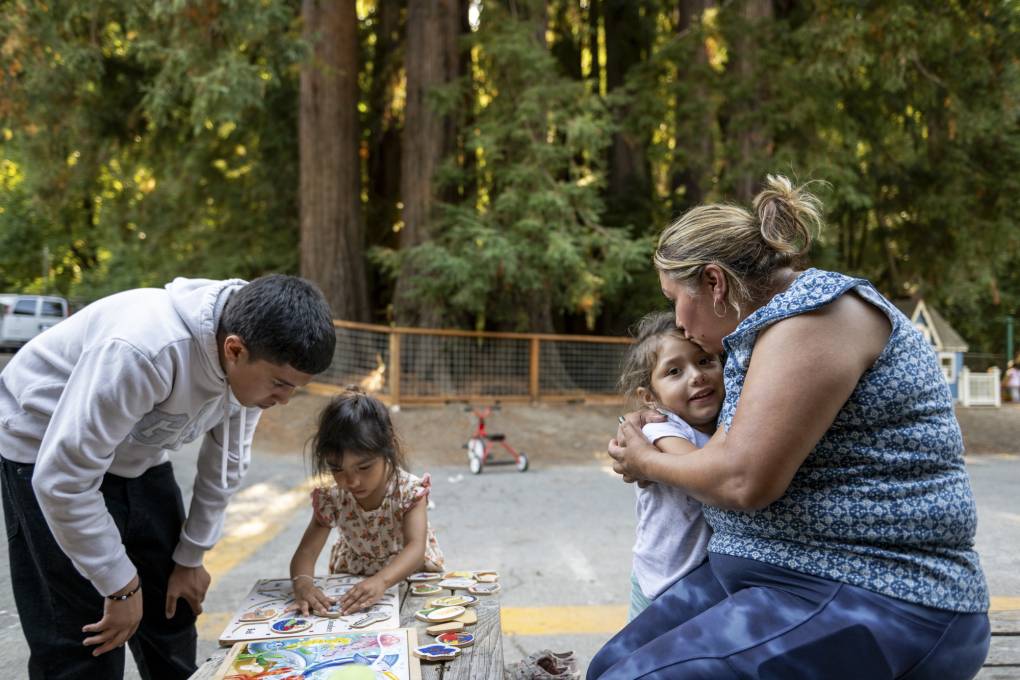
"caption": "Socorro Rivera hugs her daughter Kimberly while her son Jesse plays a game with her daughter Olivia at the Fairfax-San Anselmo Children's Center on Sept. 13, 2023.",
"description": null,
"title": "230913-ChildCareCenterEviction-036-BL-KQED",
"credit": "Beth LaBerge/KQED",
"status": "inherit",
"altTag": "An adult hugs and kisses a child while two other young people do a puzzle in an outdoor setting.",
"isLoading": false,
"fetchFailed": false
}
},
"audioPlayerReducer": {
"postId": "stream_live",
"isPaused": true,
"isPlaying": false,
"pfsActive": false,
"pledgeModalIsOpen": true,
"playerDrawerIsOpen": false,
"liveAudioPlayStartedAt": 0,
"liveAudioPlayContext": ""
},
"authorsReducer": {
"byline_news_11987456": {
"type": "authors",
"id": "byline_news_11987456",
"meta": {
"override": true
},
"slug": "byline_news_11987456",
"name": "\u003ca href=\"https://edsource.org/author/lthornton\">Lasherica Thornton\u003c/a>",
"isLoading": false
},
"byline_news_11983586": {
"type": "authors",
"id": "byline_news_11983586",
"meta": {
"override": true
},
"slug": "byline_news_11983586",
"name": "Cheyanne Mumphrey\u003cbr>Associated Press",
"isLoading": false
},
"ecruzguevarra": {
"type": "authors",
"id": "8654",
"meta": {
"index": "authors_1716337520",
"id": "8654",
"found": true
},
"name": "Ericka Cruz Guevarra",
"firstName": "Ericka",
"lastName": "Cruz Guevarra",
"slug": "ecruzguevarra",
"email": "ecruzguevarra@kqed.org",
"display_author_email": true,
"staff_mastheads": [
"news"
],
"title": "Producer, The Bay Podcast",
"bio": "Ericka Cruz Guevarra is host of \u003ca href=\"https://www.kqed.org/podcasts/thebay\">\u003cem>The Bay\u003c/em>\u003c/a> podcast at KQED. Before host, she was the show’s producer. Her work in that capacity includes a three-part reported series on policing in Vallejo, which won a 2020 excellence in journalism award from the Society of Professional Journalists. Ericka has worked as a breaking news reporter at Oregon Public Broadcasting, helped produce the Code Switch podcast, and was KQED’s inaugural Raul Ramirez Diversity Fund intern. She’s also an alumna of NPR’s Next Generation Radio program. Send her an email if you have strong feelings about whether Fairfield and Suisun City are the Bay. Ericka is represented by SAG-AFTRA.",
"avatar": "https://secure.gravatar.com/avatar/accefc1de4bafc7e234b69bcb9b6f6536c130fd84709bc3069ef11a78787e1bb?s=600&d=blank&r=g",
"twitter": "NotoriousECG",
"bluesky": null,
"facebook": null,
"instagram": null,
"linkedin": null,
"sites": [
{
"site": "arts",
"roles": [
"subscriber"
]
},
{
"site": "news",
"roles": [
"editor",
"manage_categories"
]
},
{
"site": "futureofyou",
"roles": [
"subscriber"
]
},
{
"site": "stateofhealth",
"roles": [
"subscriber"
]
},
{
"site": "science",
"roles": [
"editor"
]
},
{
"site": "forum",
"roles": [
"subscriber"
]
}
],
"headData": {
"title": "Ericka Cruz Guevarra | KQED",
"description": "Producer, The Bay Podcast",
"ogImgSrc": "https://secure.gravatar.com/avatar/accefc1de4bafc7e234b69bcb9b6f6536c130fd84709bc3069ef11a78787e1bb?s=600&d=blank&r=g",
"twImgSrc": "https://secure.gravatar.com/avatar/accefc1de4bafc7e234b69bcb9b6f6536c130fd84709bc3069ef11a78787e1bb?s=600&d=blank&r=g"
},
"isLoading": false,
"link": "/author/ecruzguevarra"
},
"amontecillo": {
"type": "authors",
"id": "11649",
"meta": {
"index": "authors_1716337520",
"id": "11649",
"found": true
},
"name": "Alan Montecillo",
"firstName": "Alan",
"lastName": "Montecillo",
"slug": "amontecillo",
"email": "amontecillo@kqed.org",
"display_author_email": false,
"staff_mastheads": [
"news"
],
"title": "KQED Contributor",
"bio": "Alan Montecillo is the senior editor of \u003cem>\u003ca href=\"http://kqed.org/thebay\">The Bay\u003c/a>, \u003c/em> KQED's local news podcast. Before moving to the Bay Area, he worked as a senior talk show producer for WILL in Champaign-Urbana, Illinois and at Oregon Public Broadcasting in Portland, Oregon. He has won journalism awards from the Society of Professional Journalists Northern California, the Public Media Journalists Association, The Signal Awards, and has also received a regional Edward R. Murrow award. Alan is a Filipino American from Hong Kong and a graduate of Reed College.",
"avatar": "https://secure.gravatar.com/avatar/268f53a2066899ea9efdd8a5900218b17c822d9862cbc9326cccec53ef41d349?s=600&d=blank&r=g",
"twitter": "alanmontecillo",
"bluesky": null,
"facebook": null,
"instagram": null,
"linkedin": null,
"sites": [
{
"site": "",
"roles": [
"editor"
]
},
{
"site": "news",
"roles": [
"editor",
"manage_categories"
]
}
],
"headData": {
"title": "Alan Montecillo | KQED",
"description": "KQED Contributor",
"ogImgSrc": "https://secure.gravatar.com/avatar/268f53a2066899ea9efdd8a5900218b17c822d9862cbc9326cccec53ef41d349?s=600&d=blank&r=g",
"twImgSrc": "https://secure.gravatar.com/avatar/268f53a2066899ea9efdd8a5900218b17c822d9862cbc9326cccec53ef41d349?s=600&d=blank&r=g"
},
"isLoading": false,
"link": "/author/amontecillo"
},
"ccabreralomeli": {
"type": "authors",
"id": "11708",
"meta": {
"index": "authors_1716337520",
"id": "11708",
"found": true
},
"name": "Carlos Cabrera-Lomelí",
"firstName": "Carlos",
"lastName": "Cabrera-Lomelí",
"slug": "ccabreralomeli",
"email": "ccabreralomeli@KQED.org",
"display_author_email": true,
"staff_mastheads": [
"news"
],
"title": "Community Reporter",
"bio": "Carlos Cabrera-Lomelí is a community reporter with KQED's digital engagement team. He also reports and co-produces for KQED's bilingual news hub KQED en Español. He grew up in San Francisco's Mission District and has previously worked with Univision, 48 Hills and REFORMA in Mexico City.",
"avatar": "https://secure.gravatar.com/avatar/c309be9665e484f887b818c89e273ecc673004f426f36b24d00a4d813a2e0518?s=600&d=blank&r=g",
"twitter": "@LomeliCabrera",
"bluesky": null,
"facebook": null,
"instagram": null,
"linkedin": null,
"sites": [
{
"site": "arts",
"roles": [
"editor"
]
},
{
"site": "news",
"roles": [
"editor"
]
},
{
"site": "about",
"roles": [
"editor"
]
},
{
"site": "science",
"roles": [
"editor"
]
},
{
"site": "perspectives",
"roles": [
"editor"
]
},
{
"site": "elections",
"roles": [
"editor"
]
},
{
"site": "liveblog",
"roles": [
"contributor"
]
}
],
"headData": {
"title": "Carlos Cabrera-Lomelí | KQED",
"description": "Community Reporter",
"ogImgSrc": "https://secure.gravatar.com/avatar/c309be9665e484f887b818c89e273ecc673004f426f36b24d00a4d813a2e0518?s=600&d=blank&r=g",
"twImgSrc": "https://secure.gravatar.com/avatar/c309be9665e484f887b818c89e273ecc673004f426f36b24d00a4d813a2e0518?s=600&d=blank&r=g"
},
"isLoading": false,
"link": "/author/ccabreralomeli"
},
"mesquinca": {
"type": "authors",
"id": "11802",
"meta": {
"index": "authors_1716337520",
"id": "11802",
"found": true
},
"name": "Maria Esquinca",
"firstName": "Maria",
"lastName": "Esquinca",
"slug": "mesquinca",
"email": "mesquinca@kqed.org",
"display_author_email": false,
"staff_mastheads": [],
"title": "Producer, The Bay",
"bio": "María Esquinca is a producer of The Bay. Before that, she was a New York Women’s Foundation IGNITE Fellow at Latino USA. She worked at Radio Bilingue where she covered the San Joaquin Valley. Maria has interned at WLRN, News 21, The New York Times Student Journalism Institute and at Crain’s Detroit Business as a Dow Jones News Fund Business Reporting Intern. She is an MFA graduate from the University of Miami. In 2017, she graduated from the Walter Cronkite School of Journalism and Mass Communication with a Master of Mass Communication. A fronteriza, she was born in Ciudad Juárez, Chihuahua, Mexico and grew up in El Paso, Texas.",
"avatar": "https://secure.gravatar.com/avatar/77cedba18aae91da775038ba06dcd8d0?s=600&d=blank&r=g",
"twitter": "@m_esquinca",
"facebook": null,
"instagram": null,
"linkedin": null,
"sites": [
{
"site": "news",
"roles": []
}
],
"headData": {
"title": "Maria Esquinca | KQED",
"description": "Producer, The Bay",
"ogImgSrc": "https://secure.gravatar.com/avatar/77cedba18aae91da775038ba06dcd8d0?s=600&d=blank&r=g",
"twImgSrc": "https://secure.gravatar.com/avatar/77cedba18aae91da775038ba06dcd8d0?s=600&d=blank&r=g"
},
"isLoading": false,
"link": "/author/mesquinca"
},
"daisynguyen": {
"type": "authors",
"id": "11829",
"meta": {
"index": "authors_1716337520",
"id": "11829",
"found": true
},
"name": "Daisy Nguyen",
"firstName": "Daisy",
"lastName": "Nguyen",
"slug": "daisynguyen",
"email": "daisynguyen@kqed.org",
"display_author_email": true,
"staff_mastheads": [
"news"
],
"title": "KQED Contributor",
"bio": "I have covered early childhood education and child care for KQED since 2022. I focus on policies aimed at increasing access to early care and education and how they shape individual lives. I've been a journalist for more than two decades, with most of that time devoted to covering breaking news throughout California for The Associated Press. I grew up in San Francisco and studied at UC Davis and Columbia University's Graduate School of Journalism. I live in Oakland with my husband and two kids.",
"avatar": "https://secure.gravatar.com/avatar/2da2127c27f7143b53ebd419800fd55f?s=600&d=blank&r=g",
"twitter": null,
"facebook": null,
"instagram": null,
"linkedin": "https://www.linkedin.com/in/daisynguyen/",
"sites": [
{
"site": "news",
"roles": [
"author"
]
},
{
"site": "liveblog",
"roles": [
"author"
]
}
],
"headData": {
"title": "Daisy Nguyen | KQED",
"description": "KQED Contributor",
"ogImgSrc": "https://secure.gravatar.com/avatar/2da2127c27f7143b53ebd419800fd55f?s=600&d=blank&r=g",
"twImgSrc": "https://secure.gravatar.com/avatar/2da2127c27f7143b53ebd419800fd55f?s=600&d=blank&r=g"
},
"isLoading": false,
"link": "/author/daisynguyen"
},
"eprickettmorgan": {
"type": "authors",
"id": "11898",
"meta": {
"index": "authors_1716337520",
"id": "11898",
"found": true
},
"name": "Ellie Prickett-Morgan",
"firstName": "Ellie",
"lastName": "Prickett-Morgan",
"slug": "eprickettmorgan",
"email": "eprickettmorgan@kqed.org",
"display_author_email": false,
"staff_mastheads": [],
"title": "KQED Contributor",
"bio": null,
"avatar": "https://secure.gravatar.com/avatar/fb236cba85704b1a64dc213889cd2886?s=600&d=blank&r=g",
"twitter": null,
"facebook": null,
"instagram": null,
"linkedin": null,
"sites": [
{
"site": "news",
"roles": []
}
],
"headData": {
"title": "Ellie Prickett-Morgan | KQED",
"description": "KQED Contributor",
"ogImgSrc": "https://secure.gravatar.com/avatar/fb236cba85704b1a64dc213889cd2886?s=600&d=blank&r=g",
"twImgSrc": "https://secure.gravatar.com/avatar/fb236cba85704b1a64dc213889cd2886?s=600&d=blank&r=g"
},
"isLoading": false,
"link": "/author/eprickettmorgan"
}
},
"pagesReducer": {
"news_tag_early-childhood-education-and-care": {
"type": "terms",
"id": "news_32102",
"meta": {
"index": "terms_1716263798",
"site": "news",
"id": "32102",
"score": 10.404627
},
"featImg": null,
"name": "early childhood education and care",
"description": null,
"taxonomy": "tag",
"headData": {
"twImgId": null,
"twTitle": null,
"ogTitle": null,
"ogImgId": null,
"twDescription": null,
"description": null,
"title": "early childhood education and care Archives | KQED News",
"ogDescription": null
},
"ttid": 32119,
"slug": "early-childhood-education-and-care",
"isLoading": false,
"title": "early childhood education and care",
"pageMeta": {
"site": "news",
"WpPageTemplate": "page-topic-editorial",
"currentPage": 7
},
"blocks": [
{
"blockName": "kqed/post-list",
"attrs": {
"layout": "cardArticle2",
"query": "posts/news?tag=early-childhood-education-and-care",
"seeMore": false,
"paginated": true,
"page": 7
}
},
{
"blockName": "kqed/ad"
}
]
}
},
"pfsSessionReducer": {},
"postsReducer": {
"stream_live": {
"type": "live",
"id": "stream_live",
"audioUrl": "https://streams.kqed.org/kqedradio",
"title": "Live Stream",
"excerpt": "Live Stream information currently unavailable.",
"link": "/radio",
"featImg": "",
"label": {
"name": "KQED Live",
"link": "/"
}
},
"stream_kqedNewscast": {
"type": "posts",
"id": "stream_kqedNewscast",
"audioUrl": "https://www.kqed.org/.stream/anon/radio/RDnews/newscast.mp3?_=1",
"title": "KQED Newscast",
"featImg": "",
"label": {
"name": "88.5 FM",
"link": "/"
}
},
"news_11987456": {
"type": "posts",
"id": "news_11987456",
"meta": {
"index": "posts_1716263798",
"site": "news",
"id": "11987456",
"score": null,
"sort": [
1716490803000
]
},
"guestAuthors": [],
"slug": "transitional-kindergarten-staffing-ratios-are-often-unmet-teachers-say-so-why-do-some-districts-escape-fines",
"title": "Transitional Kindergarten Staffing Ratios Are Often Unmet, Teachers Say. So Why Do Some Districts Escape Fines?",
"publishDate": 1716490803,
"format": "standard",
"headTitle": "Transitional Kindergarten Staffing Ratios Are Often Unmet, Teachers Say. So Why Do Some Districts Escape Fines? | KQED",
"labelTerm": {
"term": 33681,
"site": "news"
},
"content": "\u003cp>Four-year-olds, many of whom have never attended school or day care, are entering California classrooms in droves following the state’s \u003ca href=\"https://edsource.org/2021/how-californias-new-universal-transitional-kindergarten-program-will-be-rolled-out/657818\" target=\"_blank\" rel=\"noreferrer noopener\">rapid expansion\u003c/a> of transitional kindergarten, a grade preceding kindergarten.\u003c/p>\n\u003cp>In this grade, known as TK, young students are exposed to academics and become familiar with letters, sounds and numbers. They also acquire social, emotional and intellectual skills through play and exploration. For example, by sharing toys with their peers in a structured environment, they learn to communicate with each other and handle conflict.\u003c/p>\n\u003cp>Once designed to serve only children who missed the kindergarten age cutoff, TK has evolved and is now projected to reach all the state’s 4-year-olds by the 2025–26 school year. TK is the first year of a two-year kindergarten program that uses a curriculum modified for the age and developmental level of the participating children. When fully implemented, California will have the\u003ca href=\"https://edsource.org/2023/what-parents-should-know-about-transitional-kindergarten/688373\" target=\"_blank\" rel=\"noreferrer noopener\"> largest universal preschool program\u003c/a> in the nation, serving nearly 400,000 children.\u003c/p>\n\u003cp>[ad fullwidth]\u003c/p>\n\u003cp>Some of the state’s largest school districts, including \u003ca href=\"https://edsource.org/2022/lausd-teachers-hesitant-but-hopeful-as-tk-expansion-set-to-roll-out/669620\" target=\"_blank\" rel=\"noreferrer noopener\">Los Angeles Unified \u003c/a>and Fresno Unified, are ahead of the state’s timeline in offering that access.\u003c/p>\n\u003cp>Fresno Unified operates 116 transitional kindergarten classes. Los Angeles Unified has not released the number of TK classes it offers, but according to\u003ca class=\"external\" href=\"https://my.lausd.net/opendata/landing_page\" target=\"_blank\" rel=\"noreferrer noopener\"> district data\u003c/a>, they serve nearly 11,000 students.\u003c/p>\n\u003cp>Though imperative for students, the expansion has created a problem: Some districts are not staffing TK classrooms with enough adults to maintain the required 1:12 staff-student ratio, a problem that educators say puts the 4-year-old pupils at risk, hampers learning and violates state legislation.\u003c/p>\n\u003cp>Twenty schools in LAUSD have been cited by the state for understaffing classes and violating the ratio.\u003c/p>\n\u003cp>Teachers told EdSource that 4-year-olds can’t learn if they aren’t safe and properly supervised by adults and that not having enough adults in the classroom jeopardizes children’s safety.\u003c/p>\n\u003cp>“If you’re one adult and you’re managing so many children that have never been to school before, there isn’t any teaching going on,” said David Hunter, a teacher in Fresno Unified who has taught TK for the last six years of a 17-year career. “You’re just keeping them safe as best as you can, but you’re not actually able to teach.”\u003c/p>\n\u003cp>School districts jeopardize state funding if they fail to meet the state-set TK requirements of the 1:12 staff-student ratio and the average class size of 24 kids.\u003c/p>\n\u003cp>\u003ca href=\"https://edsource.org/2024/these-districts-charters-were-fined-for-violating-tk-requirements/712207\" target=\"_blank\" rel=\"noreferrer noopener\">Out of the 1,815 audit reports t\u003c/a>hat the California Department of Education reviewed, just seven school districts and 16 charter schools have been fined and will lose thousands of dollars in funding from their Local Control Funding Formula for failing to meet the staffing ratios during the 2022–23 school year. Teachers and others in the classroom say that many more districts and charters are not meeting the requirements but are managing to avoid punishment.\u003c/p>\n\u003cp>Los Angeles Unified, which is facing multimillion-dollar fines, considers being fined because the classes do not have one additional adult unfair, district leaders said at a board meeting earlier this year. Many other penalized districts blamed the national shortage of teachers and paraprofessionals, while some districts were critical of the California Department of Education for not clearly outlining the requirements.\u003c/p>\n\u003cp>Some teachers, on the other hand, say that what is unfair is that TK classes are not being staffed as outlined by the legislation to support young students.\u003c/p>\n\u003cp>According to the Fresno Teachers Association, more than a dozen TK classes were out of compliance with staffing ratios during the 2022–23 school year, yet Fresno Unified was not fined. Fresno educators told EdSource that school districts that were not in compliance last year, such as Fresno Unified, escaped detection and fines because fiscal penalties are based on sample auditing that did not check every school.\u003c/p>\n\u003cp>“This is a systems issue,” Hunter said, “and I want to see the system be better for everyone.”\u003c/p>\n\u003ch2 class=\"wp-block-heading\">Why do TK classes need extra staffing?\u003c/h2>\n\u003cp>The California Department of Education (CDE) \u003ca class=\"external\" href=\"https://www.cde.ca.gov/ci/gs/em/documents/tkrequirementswebinar.pdf\" target=\"_blank\" rel=\"noreferrer noopener\">has outlined numerous benefits\u003c/a> of a lower adult-to-student ratio in TK classes, including opportunities for individualized instruction, additional adult support, attention and supervision at all times.\u003c/p>\n\u003cp>Legislation requires district staff such as paraprofessionals to work alongside teachers to meet the ratio requirement and share responsibilities of serving the students.\u003c/p>\n\u003cp>On any given day, a TK student may need to use the restroom or have a potty accident; another may get sick, and others will require different types of attention.\u003c/p>\n\u003cp>“How do you manage that when there’s one of you and 21 4-year-olds?” Hunter said. “You need another adult to help deal with those situations.”\u003c/p>\n\u003cp>Hunter said he taught a class of 21 TK students without an aide from August to December 2022 during the 2022–23 school year, the first school year after the state added fiscal penalties related to TK requirements.\u003c/p>\n\u003cp>He said a teacher and an aide can split a large class into small groups to foster individualized learning, improve student assessment and evaluation and, ultimately, educate the young students — things that won’t happen in one large group of up to 24 4-year-olds.\u003c/p>\n\u003ch2 class=\"wp-block-heading\">Verifying compliance is difficult\u003c/h2>\n\u003cp>State compliance with TK requirements is verified in a district’s annual audit at the end of the school year, which is based on a representative sample of the district’s schools.\u003c/p>\n\u003cp>Schools that are out of compliance may go unchecked if the sampled schools in the district are compliant because the sampled schools meet compliance, even though other schools do not, some districts and charters avoid penalties.\u003c/p>\n\u003cp>Fresno Unified, Hunter’s district, was not one of the school systems fined. District spokesperson AJ Kato told EdSource that Fresno Unified has not had problems meeting the requirements other districts may be experiencing.\u003c/p>\n\u003cp>But that’s not what teachers say.\u003c/p>\n\u003cp>At least 13 classes, according to Fresno Teachers Association President Manuel Bonilla, only had one adult for more than 12 students.\u003c/p>\n\u003cp>“The district could have done a better job at hiring additional folks … or in an emergency term, having their administrative staff provide additional support, but that seemingly didn’t happen,” Bonilla said.\u003c/p>\n\u003cp>A Fresno Unified TK teacher and union leader surveyed his colleagues.\u003c/p>\n\u003cp>“They were out of compliance with the state, and ultimately, the problem is that the students aren’t getting the additional support that’s necessary,” Bonilla added.\u003c/p>\n\u003cp>Hunter said this is the second consecutive school year he’s been teaching out of compliance.\u003c/p>\n\u003cp>This school year, Hunter has a part-time aide but is still out of compliance because he is the only adult for 16 students on days the aide isn’t scheduled to work.\u003c/p>\n\u003cp>Having a full-time aide or the equivalent, he said, should be the baseline and is mandated by law.\u003c/p>\n\u003cp>According to the state Education Department, to be counted in the staffing ratio, the “assigned” adult must be a district employee who is dedicated and available to all TK students the entire school day. Student teachers and volunteers do not count toward it, nor do staff such as a special education aide or speech therapist who are assigned to work with specific students.\u003c/p>\n\u003cp>Part-time aides can satisfy the classroom staffing ratio, but only if the working time equals 100% of the time of a full-time aide, according to the \u003ca class=\"external\" href=\"https://www.cde.ca.gov/fg/aa/pa/tkfiscalfaq.asp\" target=\"_blank\" rel=\"noreferrer noopener\">CDE\u003c/a>. Because Hunter’s class has 16 students, he needs more than one part-time aide working enough hours to equal the hours of a full-time aide. He has only had one part-time aide this school year.\u003c/p>\n\u003cp>Laton Joint Unified was penalized $30,943 for having a 1:16 ratio last school year. The school had a paraprofessional scheduled for 1 hour, 45 minutes each day, and that person was not available for all students the entire school day, the audit report detailed.\u003c/p>\n\u003cp>There are also instances of aides being pulled for recess or cafeteria duty or other teaching responsibilities, such as removing that aide from the instructional minutes with students, teachers told EdSource.\u003c/p>\n\u003cp>“Rina,” a former TK teacher who asked to be identified only by her nickname, said that when she took a job at Ballington Academy in San Bernardino City Unified in the 2023–24 school year, the school’s one TK classroom had 18 students. Rina and her aide would align with state compliance for the 18 students. About a week before school started, Rina said the school informed her that the aide, though assigned to her TK students, would be pulled to other elementary classrooms whenever a teacher was absent.\u003c/p>\n\u003cp>“It was wrong,” she said. She only stayed in the position for about a week after school started.\u003c/p>\n\u003cp>Some schools and districts, such as Scholarship Prep Charter School in Oceanside, Pomona Unified in eastern Los Angeles County, and Culver City Unified in Los Angeles County, said in their audit reports that staffing shortages prevented them from complying with state guidelines.\u003c/p>\n\u003cp>But that’s no excuse, teachers say, because it’s up to district administration to recruit, hire and retain paraprofessionals, instead of making it the teacher’s problem, Rina said.\u003c/p>\n\u003cp>Some suggest that the problem with hiring and retaining paraprofessionals is the low compensation.\u003c/p>\n\u003cp>A preschool teacher’s aide at Ericson Elementary in Fresno Unified is not in the TK classroom but works with students who are the same age as those entering transitional kindergarten. Speaking with EdSource on condition of anonymity, she said aides, whether in the TK or preschool class, are dealing with the same challenge: subpar pay.\u003c/p>\n\u003cp>Throughout the day, especially when working in groups, she helps the preschoolers with writing their names and learning letters and numbers. At other times during the day, such as during reading time, the aide ensures students keep their hands to themselves and listen to the teacher. As an aide, she sees the impact and importance of her role.\u003c/p>\n\u003cp>“We’re like their (teacher’s) spine,” she said about paraprofessionals. “We’re there to support and help. We do so much for these kids.”\u003c/p>\n\u003cp>She is paid $15.90 an hour and has, over the last two years, questioned whether she should remain in the role.\u003c/p>\n\u003cp>“That’s not helping me,” she said. She’s had to take on side jobs in the district, such as at sporting events, or resorted to borrowing money from friends and family. “I have to buy food, pay bills and then, I have four kids.\u003c/p>\n\u003cp>“If they’re still going keep that low (salary), people are not going … to apply for a position as an aide.”\u003c/p>\n\u003ch2 class=\"wp-block-heading\">Can teachers do anything?\u003c/h2>\n\u003cp>As a teacher who’s been working out of compliance, Hunter wants districts to be held accountable.\u003c/p>\n\u003cp>“There’s a mechanism there, and I’d like to see that enforced,” Hunter said about the fiscal penalties outlined in legislation.\u003c/p>\n\u003cp>[aside label=\"Related Stories\" postID=\"news_11983586,news_11983016,news_11979071\"]While the only way to address the compliance is with fines — which Hunter called “reactive” — he said a tool to report violations throughout the year could push districts to comply sooner and stop teachers from working out of compliance.\u003c/p>\n\u003cp>Currently, there is no such system or tool.\u003c/p>\n\u003cp>And if teachers are providing instruction in classrooms that are out of compliance, they would not report the violation to the state, CDE spokesperson Scott Roark said via email.\u003c/p>\n\u003cp>“Complaints against a district, school, principal, teacher or school personnel are not within the jurisdiction of the CDE unless the complaint falls within the scope of the Uniform Complaint Procedures\u003cem>,” \u003c/em>Roark said, explaining that the TK requirements are under local control, with each district’s school board having authority over the complaint process.\u003c/p>\n\u003cp>The same reasoning applies to a teachers union hoping to report compliance concerns or violations.\u003c/p>\n\u003cp>However, the struggles teachers are experiencing shouldn’t detract from the importance of TK.\u003c/p>\n\u003ch2 class=\"wp-block-heading\">TK expansion is necessary; schools just need support\u003c/h2>\n\u003cp>Patricia Lozano, executive director of the advocacy group Early Edge California and a champion for expanding transitional kindergarten,\u003ca href=\"https://edsource.org/2023/what-parents-should-know-about-transitional-kindergarten/688373\" target=\"_blank\" rel=\"noreferrer noopener\"> told EdSource last year about the importance\u003c/a> of the program, including how it provides children who were infants during the pandemic with social and intellectual engagement as well as age- and developmentally-appropriate structure and routine to help them thrive.\u003c/p>\n\u003cp>Simply put, TK is imperative for students, said many teachers interviewed by EdSource.\u003c/p>\n\u003cp>Hunter, who has a background in early childhood education, said TK is vital for introducing students to what school is, for teaching socialization and exposing them to academics.\u003c/p>\n\u003cp>“Any child who’s been through TK is that much more ready to hit the ground running in kindergarten,” he said. “I just want to see the appropriate support that not only the state promised, but I want to see the districts live up to that support so we can show these learners the best we can.”\u003c/p>\n\u003cp>\u003ca href=\"https://edsource.org/2024/staffing-ratios-arent-being-met-teachers-say-why-are-some-districts-escaping-fines/712442\">\u003cem>This story originally appeared in EdSource.\u003c/em>\u003c/a>\u003c/p>\n\u003cp>[ad floatright]\u003c/p>\n",
"blocks": [],
"excerpt": null,
"status": "publish",
"parent": 0,
"modified": 1747955399,
"stats": {
"hasAudio": false,
"hasVideo": false,
"hasChartOrMap": false,
"iframeSrcs": [],
"hasGoogleForm": false,
"hasGallery": false,
"hasHearkenModule": false,
"hasPolis": false,
"paragraphCount": 62,
"wordCount": 2264
},
"headData": {
"title": "Transitional Kindergarten Staffing Ratios Are Often Unmet, Teachers Say. So Why Do Some Districts Escape Fines? | KQED",
"description": "Four-year-olds, many of whom have never attended school or day care, are entering California classrooms in droves following the state’s rapid expansion of transitional kindergarten, a grade preceding kindergarten. In this grade, known as TK, young students are exposed to academics and become familiar with letters, sounds and numbers. They also acquire social, emotional and intellectual skills through play and exploration. For example, by sharing toys with their peers in a structured environment, they learn to communicate with each other and handle conflict. Once designed to serve only children who missed the kindergarten age cutoff, TK has evolved and is now projected",
"ogTitle": "",
"ogDescription": "",
"ogImgId": "",
"twTitle": "",
"twDescription": "",
"twImgId": "",
"schema": {
"@context": "https://schema.org",
"@type": "NewsArticle",
"headline": "Transitional Kindergarten Staffing Ratios Are Often Unmet, Teachers Say. So Why Do Some Districts Escape Fines?",
"datePublished": "2024-05-23T12:00:03-07:00",
"dateModified": "2025-05-22T16:09:59-07:00",
"image": "https://cdn.kqed.org/wp-content/uploads/2020/02/KQED-OG-Image@1x.png",
"isAccessibleForFree": "True",
"publisher": {
"@type": "NewsMediaOrganization",
"@id": "https://www.kqed.org/#organization",
"name": "KQED",
"logo": "https://cdn.kqed.org/wp-content/uploads/2020/02/KQED-OG-Image@1x.png",
"url": "https://www.kqed.org",
"sameAs": [
"https://www.facebook.com/KQED",
"https://twitter.com/KQED",
"https://www.instagram.com/kqed/",
"https://www.tiktok.com/@kqedofficial",
"https://www.linkedin.com/company/kqed",
"https://www.youtube.com/channel/UCeC0IOo7i1P_61zVUWbJ4nw"
]
}
}
},
"sticky": false,
"nprByline": "\u003ca href=\"https://edsource.org/author/lthornton\">Lasherica Thornton\u003c/a>",
"nprStoryId": "kqed-11987456",
"excludeFromSiteSearch": "Include",
"showOnAuthorArchivePages": "No",
"articleAge": "0",
"path": "/news/11987456/transitional-kindergarten-staffing-ratios-are-often-unmet-teachers-say-so-why-do-some-districts-escape-fines",
"audioTrackLength": null,
"parsedContent": [
{
"type": "contentString",
"content": "\u003cdiv class=\"post-body\">\u003cp>\u003cp>Four-year-olds, many of whom have never attended school or day care, are entering California classrooms in droves following the state’s \u003ca href=\"https://edsource.org/2021/how-californias-new-universal-transitional-kindergarten-program-will-be-rolled-out/657818\" target=\"_blank\" rel=\"noreferrer noopener\">rapid expansion\u003c/a> of transitional kindergarten, a grade preceding kindergarten.\u003c/p>\n\u003cp>In this grade, known as TK, young students are exposed to academics and become familiar with letters, sounds and numbers. They also acquire social, emotional and intellectual skills through play and exploration. For example, by sharing toys with their peers in a structured environment, they learn to communicate with each other and handle conflict.\u003c/p>\n\u003cp>Once designed to serve only children who missed the kindergarten age cutoff, TK has evolved and is now projected to reach all the state’s 4-year-olds by the 2025–26 school year. TK is the first year of a two-year kindergarten program that uses a curriculum modified for the age and developmental level of the participating children. When fully implemented, California will have the\u003ca href=\"https://edsource.org/2023/what-parents-should-know-about-transitional-kindergarten/688373\" target=\"_blank\" rel=\"noreferrer noopener\"> largest universal preschool program\u003c/a> in the nation, serving nearly 400,000 children.\u003c/p>\n\u003cp>\u003c/p>\u003c/div>",
"attributes": {
"named": {},
"numeric": []
}
},
{
"type": "component",
"content": "",
"name": "ad",
"attributes": {
"named": {
"label": "fullwidth"
},
"numeric": [
"fullwidth"
]
}
},
{
"type": "contentString",
"content": "\u003cdiv class=\"post-body\">\u003cp>\u003c/p>\n\u003cp>Some of the state’s largest school districts, including \u003ca href=\"https://edsource.org/2022/lausd-teachers-hesitant-but-hopeful-as-tk-expansion-set-to-roll-out/669620\" target=\"_blank\" rel=\"noreferrer noopener\">Los Angeles Unified \u003c/a>and Fresno Unified, are ahead of the state’s timeline in offering that access.\u003c/p>\n\u003cp>Fresno Unified operates 116 transitional kindergarten classes. Los Angeles Unified has not released the number of TK classes it offers, but according to\u003ca class=\"external\" href=\"https://my.lausd.net/opendata/landing_page\" target=\"_blank\" rel=\"noreferrer noopener\"> district data\u003c/a>, they serve nearly 11,000 students.\u003c/p>\n\u003cp>Though imperative for students, the expansion has created a problem: Some districts are not staffing TK classrooms with enough adults to maintain the required 1:12 staff-student ratio, a problem that educators say puts the 4-year-old pupils at risk, hampers learning and violates state legislation.\u003c/p>\n\u003cp>Twenty schools in LAUSD have been cited by the state for understaffing classes and violating the ratio.\u003c/p>\n\u003cp>Teachers told EdSource that 4-year-olds can’t learn if they aren’t safe and properly supervised by adults and that not having enough adults in the classroom jeopardizes children’s safety.\u003c/p>\n\u003cp>“If you’re one adult and you’re managing so many children that have never been to school before, there isn’t any teaching going on,” said David Hunter, a teacher in Fresno Unified who has taught TK for the last six years of a 17-year career. “You’re just keeping them safe as best as you can, but you’re not actually able to teach.”\u003c/p>\n\u003cp>School districts jeopardize state funding if they fail to meet the state-set TK requirements of the 1:12 staff-student ratio and the average class size of 24 kids.\u003c/p>\n\u003cp>\u003ca href=\"https://edsource.org/2024/these-districts-charters-were-fined-for-violating-tk-requirements/712207\" target=\"_blank\" rel=\"noreferrer noopener\">Out of the 1,815 audit reports t\u003c/a>hat the California Department of Education reviewed, just seven school districts and 16 charter schools have been fined and will lose thousands of dollars in funding from their Local Control Funding Formula for failing to meet the staffing ratios during the 2022–23 school year. Teachers and others in the classroom say that many more districts and charters are not meeting the requirements but are managing to avoid punishment.\u003c/p>\n\u003cp>Los Angeles Unified, which is facing multimillion-dollar fines, considers being fined because the classes do not have one additional adult unfair, district leaders said at a board meeting earlier this year. Many other penalized districts blamed the national shortage of teachers and paraprofessionals, while some districts were critical of the California Department of Education for not clearly outlining the requirements.\u003c/p>\n\u003cp>Some teachers, on the other hand, say that what is unfair is that TK classes are not being staffed as outlined by the legislation to support young students.\u003c/p>\n\u003cp>According to the Fresno Teachers Association, more than a dozen TK classes were out of compliance with staffing ratios during the 2022–23 school year, yet Fresno Unified was not fined. Fresno educators told EdSource that school districts that were not in compliance last year, such as Fresno Unified, escaped detection and fines because fiscal penalties are based on sample auditing that did not check every school.\u003c/p>\n\u003cp>“This is a systems issue,” Hunter said, “and I want to see the system be better for everyone.”\u003c/p>\n\u003ch2 class=\"wp-block-heading\">Why do TK classes need extra staffing?\u003c/h2>\n\u003cp>The California Department of Education (CDE) \u003ca class=\"external\" href=\"https://www.cde.ca.gov/ci/gs/em/documents/tkrequirementswebinar.pdf\" target=\"_blank\" rel=\"noreferrer noopener\">has outlined numerous benefits\u003c/a> of a lower adult-to-student ratio in TK classes, including opportunities for individualized instruction, additional adult support, attention and supervision at all times.\u003c/p>\n\u003cp>Legislation requires district staff such as paraprofessionals to work alongside teachers to meet the ratio requirement and share responsibilities of serving the students.\u003c/p>\n\u003cp>On any given day, a TK student may need to use the restroom or have a potty accident; another may get sick, and others will require different types of attention.\u003c/p>\n\u003cp>“How do you manage that when there’s one of you and 21 4-year-olds?” Hunter said. “You need another adult to help deal with those situations.”\u003c/p>\n\u003cp>Hunter said he taught a class of 21 TK students without an aide from August to December 2022 during the 2022–23 school year, the first school year after the state added fiscal penalties related to TK requirements.\u003c/p>\n\u003cp>He said a teacher and an aide can split a large class into small groups to foster individualized learning, improve student assessment and evaluation and, ultimately, educate the young students — things that won’t happen in one large group of up to 24 4-year-olds.\u003c/p>\n\u003ch2 class=\"wp-block-heading\">Verifying compliance is difficult\u003c/h2>\n\u003cp>State compliance with TK requirements is verified in a district’s annual audit at the end of the school year, which is based on a representative sample of the district’s schools.\u003c/p>\n\u003cp>Schools that are out of compliance may go unchecked if the sampled schools in the district are compliant because the sampled schools meet compliance, even though other schools do not, some districts and charters avoid penalties.\u003c/p>\n\u003cp>Fresno Unified, Hunter’s district, was not one of the school systems fined. District spokesperson AJ Kato told EdSource that Fresno Unified has not had problems meeting the requirements other districts may be experiencing.\u003c/p>\n\u003cp>But that’s not what teachers say.\u003c/p>\n\u003cp>At least 13 classes, according to Fresno Teachers Association President Manuel Bonilla, only had one adult for more than 12 students.\u003c/p>\n\u003cp>“The district could have done a better job at hiring additional folks … or in an emergency term, having their administrative staff provide additional support, but that seemingly didn’t happen,” Bonilla said.\u003c/p>\n\u003cp>A Fresno Unified TK teacher and union leader surveyed his colleagues.\u003c/p>\n\u003cp>“They were out of compliance with the state, and ultimately, the problem is that the students aren’t getting the additional support that’s necessary,” Bonilla added.\u003c/p>\n\u003cp>Hunter said this is the second consecutive school year he’s been teaching out of compliance.\u003c/p>\n\u003cp>This school year, Hunter has a part-time aide but is still out of compliance because he is the only adult for 16 students on days the aide isn’t scheduled to work.\u003c/p>\n\u003cp>Having a full-time aide or the equivalent, he said, should be the baseline and is mandated by law.\u003c/p>\n\u003cp>According to the state Education Department, to be counted in the staffing ratio, the “assigned” adult must be a district employee who is dedicated and available to all TK students the entire school day. Student teachers and volunteers do not count toward it, nor do staff such as a special education aide or speech therapist who are assigned to work with specific students.\u003c/p>\n\u003cp>Part-time aides can satisfy the classroom staffing ratio, but only if the working time equals 100% of the time of a full-time aide, according to the \u003ca class=\"external\" href=\"https://www.cde.ca.gov/fg/aa/pa/tkfiscalfaq.asp\" target=\"_blank\" rel=\"noreferrer noopener\">CDE\u003c/a>. Because Hunter’s class has 16 students, he needs more than one part-time aide working enough hours to equal the hours of a full-time aide. He has only had one part-time aide this school year.\u003c/p>\n\u003cp>Laton Joint Unified was penalized $30,943 for having a 1:16 ratio last school year. The school had a paraprofessional scheduled for 1 hour, 45 minutes each day, and that person was not available for all students the entire school day, the audit report detailed.\u003c/p>\n\u003cp>There are also instances of aides being pulled for recess or cafeteria duty or other teaching responsibilities, such as removing that aide from the instructional minutes with students, teachers told EdSource.\u003c/p>\n\u003cp>“Rina,” a former TK teacher who asked to be identified only by her nickname, said that when she took a job at Ballington Academy in San Bernardino City Unified in the 2023–24 school year, the school’s one TK classroom had 18 students. Rina and her aide would align with state compliance for the 18 students. About a week before school started, Rina said the school informed her that the aide, though assigned to her TK students, would be pulled to other elementary classrooms whenever a teacher was absent.\u003c/p>\n\u003cp>“It was wrong,” she said. She only stayed in the position for about a week after school started.\u003c/p>\n\u003cp>Some schools and districts, such as Scholarship Prep Charter School in Oceanside, Pomona Unified in eastern Los Angeles County, and Culver City Unified in Los Angeles County, said in their audit reports that staffing shortages prevented them from complying with state guidelines.\u003c/p>\n\u003cp>But that’s no excuse, teachers say, because it’s up to district administration to recruit, hire and retain paraprofessionals, instead of making it the teacher’s problem, Rina said.\u003c/p>\n\u003cp>Some suggest that the problem with hiring and retaining paraprofessionals is the low compensation.\u003c/p>\n\u003cp>A preschool teacher’s aide at Ericson Elementary in Fresno Unified is not in the TK classroom but works with students who are the same age as those entering transitional kindergarten. Speaking with EdSource on condition of anonymity, she said aides, whether in the TK or preschool class, are dealing with the same challenge: subpar pay.\u003c/p>\n\u003cp>Throughout the day, especially when working in groups, she helps the preschoolers with writing their names and learning letters and numbers. At other times during the day, such as during reading time, the aide ensures students keep their hands to themselves and listen to the teacher. As an aide, she sees the impact and importance of her role.\u003c/p>\n\u003cp>“We’re like their (teacher’s) spine,” she said about paraprofessionals. “We’re there to support and help. We do so much for these kids.”\u003c/p>\n\u003cp>She is paid $15.90 an hour and has, over the last two years, questioned whether she should remain in the role.\u003c/p>\n\u003cp>“That’s not helping me,” she said. She’s had to take on side jobs in the district, such as at sporting events, or resorted to borrowing money from friends and family. “I have to buy food, pay bills and then, I have four kids.\u003c/p>\n\u003cp>“If they’re still going keep that low (salary), people are not going … to apply for a position as an aide.”\u003c/p>\n\u003ch2 class=\"wp-block-heading\">Can teachers do anything?\u003c/h2>\n\u003cp>As a teacher who’s been working out of compliance, Hunter wants districts to be held accountable.\u003c/p>\n\u003cp>“There’s a mechanism there, and I’d like to see that enforced,” Hunter said about the fiscal penalties outlined in legislation.\u003c/p>\n\u003cp>\u003c/p>\u003c/div>",
"attributes": {
"named": {},
"numeric": []
}
},
{
"type": "component",
"content": "",
"name": "aside",
"attributes": {
"named": {
"label": "Related Stories ",
"postid": "news_11983586,news_11983016,news_11979071"
},
"numeric": []
}
},
{
"type": "contentString",
"content": "\u003cdiv class=\"post-body\">\u003cp>While the only way to address the compliance is with fines — which Hunter called “reactive” — he said a tool to report violations throughout the year could push districts to comply sooner and stop teachers from working out of compliance.\u003c/p>\n\u003cp>Currently, there is no such system or tool.\u003c/p>\n\u003cp>And if teachers are providing instruction in classrooms that are out of compliance, they would not report the violation to the state, CDE spokesperson Scott Roark said via email.\u003c/p>\n\u003cp>“Complaints against a district, school, principal, teacher or school personnel are not within the jurisdiction of the CDE unless the complaint falls within the scope of the Uniform Complaint Procedures\u003cem>,” \u003c/em>Roark said, explaining that the TK requirements are under local control, with each district’s school board having authority over the complaint process.\u003c/p>\n\u003cp>The same reasoning applies to a teachers union hoping to report compliance concerns or violations.\u003c/p>\n\u003cp>However, the struggles teachers are experiencing shouldn’t detract from the importance of TK.\u003c/p>\n\u003ch2 class=\"wp-block-heading\">TK expansion is necessary; schools just need support\u003c/h2>\n\u003cp>Patricia Lozano, executive director of the advocacy group Early Edge California and a champion for expanding transitional kindergarten,\u003ca href=\"https://edsource.org/2023/what-parents-should-know-about-transitional-kindergarten/688373\" target=\"_blank\" rel=\"noreferrer noopener\"> told EdSource last year about the importance\u003c/a> of the program, including how it provides children who were infants during the pandemic with social and intellectual engagement as well as age- and developmentally-appropriate structure and routine to help them thrive.\u003c/p>\n\u003cp>Simply put, TK is imperative for students, said many teachers interviewed by EdSource.\u003c/p>\n\u003cp>Hunter, who has a background in early childhood education, said TK is vital for introducing students to what school is, for teaching socialization and exposing them to academics.\u003c/p>\n\u003cp>“Any child who’s been through TK is that much more ready to hit the ground running in kindergarten,” he said. “I just want to see the appropriate support that not only the state promised, but I want to see the districts live up to that support so we can show these learners the best we can.”\u003c/p>\n\u003cp>\u003ca href=\"https://edsource.org/2024/staffing-ratios-arent-being-met-teachers-say-why-are-some-districts-escaping-fines/712442\">\u003cem>This story originally appeared in EdSource.\u003c/em>\u003c/a>\u003c/p>\n\u003cp>\u003c/p>\u003c/div>",
"attributes": {
"named": {},
"numeric": []
}
},
{
"type": "component",
"content": "",
"name": "ad",
"attributes": {
"named": {
"label": "floatright"
},
"numeric": [
"floatright"
]
}
},
{
"type": "contentString",
"content": "\u003cdiv class=\"post-body\">\u003cp>\u003c/p>\n\u003c/div>\u003c/p>",
"attributes": {
"named": {},
"numeric": []
}
}
],
"link": "/news/11987456/transitional-kindergarten-staffing-ratios-are-often-unmet-teachers-say-so-why-do-some-districts-escape-fines",
"authors": [
"byline_news_11987456"
],
"categories": [
"news_31795",
"news_18540",
"news_8"
],
"tags": [
"news_30911",
"news_32102",
"news_2252"
],
"affiliates": [
"news_33681"
],
"featImg": "news_11987458",
"label": "news_33681"
},
"news_11984169": {
"type": "posts",
"id": "news_11984169",
"meta": {
"index": "posts_1716263798",
"site": "news",
"id": "11984169",
"score": null,
"sort": [
1714164766000
]
},
"guestAuthors": [],
"slug": "state-court-upholds-alameda-county-tax-measure-yielding-hundreds-of-millions-for-child-care",
"title": "State Court Upholds Alameda County Tax Measure Yielding Hundreds of Millions for Child Care",
"publishDate": 1714164766,
"format": "standard",
"headTitle": "State Court Upholds Alameda County Tax Measure Yielding Hundreds of Millions for Child Care | KQED",
"labelTerm": {
"site": "news"
},
"content": "\u003cp>After four years of legal debate, California’s highest court upheld an Alameda County sales tax measure to increase access to child care and pediatric health care for lower-income families.\u003c/p>\n\u003cp>This ruling makes Alameda County the latest Bay Area local government to increase a tax to fund early childhood education and care. San Francisco began implementing Baby Proposition C about two years ago after a legal challenge to the commercial tax initiative was resolved in court.\u003c/p>\n\u003cp>On Wednesday, the state Supreme Court \u003ca href=\"https://appellatecases.courtinfo.ca.gov/search/case/dockets.cfm?dist=1&doc_id=2410200&doc_no=A166404&request_token=NiIwLSEnXkw7W1BZSyMtTE9IMEw6UVxfJSM%2BVzpSMCAgCg%3D%3D\">denied a petition\u003c/a> to review a lower court’s ruling that Measure C is legitimate, thus making that decision final. That will allow the county to spend hundreds of millions of dollars collected from the 0.5% sales tax since July 2021. The funds have been held in escrow pending a taxpayer group’s legal challenge to the measure.\u003c/p>\n\u003cp>The ruling “validates the will of Alameda County voters to fund early education and ensure child care is accessible to all families, and that the labor of child care providers is honored and respected,” Clarissa Doutherd, executive director of the advocacy group Parent Voices Oakland.\u003c/p>\n\u003cp>“We are thrilled for the initial funding that will lift up children and families throughout the county who have had to suffer through delays that would have helped address growing poverty, under-resourced child care facilities, and severe pediatric needs,” she said.\u003c/p>\n\u003cp>[ad fullwidth]\u003c/p>\n\u003cp>The measure was passed by 64% of voters in March 2020, but the Alameda County Taxpayers Association argued\u003ca href=\"https://www.mercurynews.com/2022/07/07/alameda-countys-measure-c-for-child-care-funding-scores-a-legal-win-but-money-cant-flow-yet/\"> that state law requires 66%, or two-thirds vote, to pass\u003c/a> for local governments to raise taxes for a specific purpose. The group contends that elected officials, including the late county supervisor Wilma Chan, initiated the measure.\u003c/p>\n\u003cp>The county countered that the measure was put on the ballot after enough signatures were gathered to support it. For that reason, only a simple majority is needed for a citizen initiative.\u003c/p>\n\u003cp>Doutherd’s effort to put the measure before voters was the \u003ca href=\"https://www.clarissasbattle.com/\">subject of a documentary called “Clarissa’s Battle.”\u003c/a> Her struggle as a single mother trying to maintain work as a bookkeeper and pay for preschool for her son led to her advocacy for affordable early childhood education.[aside label='Related Coverage' tag='early-childhood']“What this means for me is that in my lifetime, I will see a huge transformation through this initiative that will make sure that parents at least will have an easier time and not know the panic and the fear and the pain of not being able to support themselves and go to work or go to school or even just know that their children are in a safe, nurturing environment,” she said.\u003c/p>\n\u003cp>\u003ca href=\"https://first5alameda.org/files/Appendix%20C-%20Local%20Child%20Care%20Ballot%20Measures.pdf\">When it was first proposed,\u003c/a> officials estimated the tax would raise about $150 million a year over 20 years to add more subsidized child care slots, increase early educators’ pay to at least $15 per hour (with annual adjustments for inflation) and offer free or low-cost pediatric health care.\u003c/p>\n\u003cp>First 5 Alameda County, which will administer the child care fund, also plans to use the money to fund training and professional development classes for providers to raise the quality of early education programs. The effort mirrors an ongoing effort in San Francisco to \u003ca href=\"https://www.kqed.org/news/11948690/business-tax-provides-crucial-funding-for-early-childhood-education-and-care-in-san-francisco\">use revenue from a commercial rent tax \u003c/a>to better compensate early educators and lower child care costs.\u003c/p>\n\u003cp>“The impact of this investment on Alameda County’s children, families and [early childhood education] workforce is not just transformative; it’s imperative for the health of our communities,” Kristin Spanos, CEO of First 5 Alameda County, said in a statement.\u003c/p>\n\u003cp>She said 21 licensed child care centers and 270 in-home family child care businesses in the county closed permanently between 2019 and 2021.\u003c/p>\n\u003cp>“The COVID-19 pandemic exposed and deepened the vulnerabilities of our already fragile, underfunded and fragmented system of licensed care,” Spanos said. “Funding from Measure C is a significant milestone in our journey toward creating an equity-centered early childhood system of care.”\u003c/p>\n\u003cp>A citizen oversight committee will oversee spending from the pediatric health care fund.\u003c/p>\n\u003cp>\u003c/p>\n",
"blocks": [],
"excerpt": "After a long legal battle, the ruling makes Alameda County the latest Bay Area local government to increase a tax to fund early childhood education and care.",
"status": "publish",
"parent": 0,
"modified": 1721146590,
"stats": {
"hasAudio": false,
"hasVideo": false,
"hasChartOrMap": false,
"iframeSrcs": [],
"hasGoogleForm": false,
"hasGallery": false,
"hasHearkenModule": false,
"hasPolis": false,
"paragraphCount": 16,
"wordCount": 699
},
"headData": {
"title": "State Court Upholds Alameda County Tax Measure Yielding Hundreds of Millions for Child Care | KQED",
"description": "After a long legal battle, the ruling makes Alameda County the latest Bay Area local government to increase a tax to fund early childhood education and care.",
"ogTitle": "",
"ogDescription": "",
"ogImgId": "",
"twTitle": "",
"twDescription": "",
"twImgId": "",
"schema": {
"@context": "https://schema.org",
"@type": "NewsArticle",
"headline": "State Court Upholds Alameda County Tax Measure Yielding Hundreds of Millions for Child Care",
"datePublished": "2024-04-26T13:52:46-07:00",
"dateModified": "2024-07-16T09:16:30-07:00",
"image": "https://cdn.kqed.org/wp-content/uploads/2020/02/KQED-OG-Image@1x.png",
"isAccessibleForFree": "True",
"publisher": {
"@type": "NewsMediaOrganization",
"@id": "https://www.kqed.org/#organization",
"name": "KQED",
"logo": "https://cdn.kqed.org/wp-content/uploads/2020/02/KQED-OG-Image@1x.png",
"url": "https://www.kqed.org",
"sameAs": [
"https://www.facebook.com/KQED",
"https://twitter.com/KQED",
"https://www.instagram.com/kqed/",
"https://www.tiktok.com/@kqedofficial",
"https://www.linkedin.com/company/kqed",
"https://www.youtube.com/channel/UCeC0IOo7i1P_61zVUWbJ4nw"
]
}
}
},
"sticky": false,
"excludeFromSiteSearch": "Include",
"articleAge": "0",
"path": "/news/11984169/state-court-upholds-alameda-county-tax-measure-yielding-hundreds-of-millions-for-child-care",
"audioTrackLength": null,
"parsedContent": [
{
"type": "contentString",
"content": "\u003cdiv class=\"post-body\">\u003cp>\u003cp>After four years of legal debate, California’s highest court upheld an Alameda County sales tax measure to increase access to child care and pediatric health care for lower-income families.\u003c/p>\n\u003cp>This ruling makes Alameda County the latest Bay Area local government to increase a tax to fund early childhood education and care. San Francisco began implementing Baby Proposition C about two years ago after a legal challenge to the commercial tax initiative was resolved in court.\u003c/p>\n\u003cp>On Wednesday, the state Supreme Court \u003ca href=\"https://appellatecases.courtinfo.ca.gov/search/case/dockets.cfm?dist=1&doc_id=2410200&doc_no=A166404&request_token=NiIwLSEnXkw7W1BZSyMtTE9IMEw6UVxfJSM%2BVzpSMCAgCg%3D%3D\">denied a petition\u003c/a> to review a lower court’s ruling that Measure C is legitimate, thus making that decision final. That will allow the county to spend hundreds of millions of dollars collected from the 0.5% sales tax since July 2021. The funds have been held in escrow pending a taxpayer group’s legal challenge to the measure.\u003c/p>\n\u003cp>The ruling “validates the will of Alameda County voters to fund early education and ensure child care is accessible to all families, and that the labor of child care providers is honored and respected,” Clarissa Doutherd, executive director of the advocacy group Parent Voices Oakland.\u003c/p>\n\u003cp>“We are thrilled for the initial funding that will lift up children and families throughout the county who have had to suffer through delays that would have helped address growing poverty, under-resourced child care facilities, and severe pediatric needs,” she said.\u003c/p>\n\u003cp>\u003c/p>\u003c/div>",
"attributes": {
"named": {},
"numeric": []
}
},
{
"type": "component",
"content": "",
"name": "ad",
"attributes": {
"named": {
"label": "fullwidth"
},
"numeric": [
"fullwidth"
]
}
},
{
"type": "contentString",
"content": "\u003cdiv class=\"post-body\">\u003cp>\u003c/p>\n\u003cp>The measure was passed by 64% of voters in March 2020, but the Alameda County Taxpayers Association argued\u003ca href=\"https://www.mercurynews.com/2022/07/07/alameda-countys-measure-c-for-child-care-funding-scores-a-legal-win-but-money-cant-flow-yet/\"> that state law requires 66%, or two-thirds vote, to pass\u003c/a> for local governments to raise taxes for a specific purpose. The group contends that elected officials, including the late county supervisor Wilma Chan, initiated the measure.\u003c/p>\n\u003cp>The county countered that the measure was put on the ballot after enough signatures were gathered to support it. For that reason, only a simple majority is needed for a citizen initiative.\u003c/p>\n\u003cp>Doutherd’s effort to put the measure before voters was the \u003ca href=\"https://www.clarissasbattle.com/\">subject of a documentary called “Clarissa’s Battle.”\u003c/a> Her struggle as a single mother trying to maintain work as a bookkeeper and pay for preschool for her son led to her advocacy for affordable early childhood education.\u003c/p>\u003c/div>",
"attributes": {
"named": {},
"numeric": []
}
},
{
"type": "component",
"content": "",
"name": "aside",
"attributes": {
"named": {
"label": "Related Coverage ",
"tag": "early-childhood"
},
"numeric": []
}
},
{
"type": "contentString",
"content": "\u003cdiv class=\"post-body\">\u003cp>“What this means for me is that in my lifetime, I will see a huge transformation through this initiative that will make sure that parents at least will have an easier time and not know the panic and the fear and the pain of not being able to support themselves and go to work or go to school or even just know that their children are in a safe, nurturing environment,” she said.\u003c/p>\n\u003cp>\u003ca href=\"https://first5alameda.org/files/Appendix%20C-%20Local%20Child%20Care%20Ballot%20Measures.pdf\">When it was first proposed,\u003c/a> officials estimated the tax would raise about $150 million a year over 20 years to add more subsidized child care slots, increase early educators’ pay to at least $15 per hour (with annual adjustments for inflation) and offer free or low-cost pediatric health care.\u003c/p>\n\u003cp>First 5 Alameda County, which will administer the child care fund, also plans to use the money to fund training and professional development classes for providers to raise the quality of early education programs. The effort mirrors an ongoing effort in San Francisco to \u003ca href=\"https://www.kqed.org/news/11948690/business-tax-provides-crucial-funding-for-early-childhood-education-and-care-in-san-francisco\">use revenue from a commercial rent tax \u003c/a>to better compensate early educators and lower child care costs.\u003c/p>\n\u003cp>“The impact of this investment on Alameda County’s children, families and [early childhood education] workforce is not just transformative; it’s imperative for the health of our communities,” Kristin Spanos, CEO of First 5 Alameda County, said in a statement.\u003c/p>\n\u003cp>She said 21 licensed child care centers and 270 in-home family child care businesses in the county closed permanently between 2019 and 2021.\u003c/p>\n\u003cp>“The COVID-19 pandemic exposed and deepened the vulnerabilities of our already fragile, underfunded and fragmented system of licensed care,” Spanos said. “Funding from Measure C is a significant milestone in our journey toward creating an equity-centered early childhood system of care.”\u003c/p>\n\u003cp>A citizen oversight committee will oversee spending from the pediatric health care fund.\u003c/p>\n\u003cp>\u003c/p>\n\u003c/div>\u003c/p>",
"attributes": {
"named": {},
"numeric": []
}
}
],
"link": "/news/11984169/state-court-upholds-alameda-county-tax-measure-yielding-hundreds-of-millions-for-child-care",
"authors": [
"11829"
],
"categories": [
"news_8"
],
"tags": [
"news_260",
"news_20754",
"news_32102",
"news_32928",
"news_27626"
],
"featImg": "news_11984193",
"label": "news"
},
"news_11983586": {
"type": "posts",
"id": "news_11983586",
"meta": {
"index": "posts_1716263798",
"site": "news",
"id": "11983586",
"score": null,
"sort": [
1713640589000
]
},
"guestAuthors": [],
"slug": "despite-californias-investments-in-public-preschool-challenges-around-child-care-continue",
"title": "Despite California's Investments in Public Preschool, Child Care Challenges Continue",
"publishDate": 1713640589,
"format": "standard",
"headTitle": "Despite California’s Investments in Public Preschool, Child Care Challenges Continue | KQED",
"labelTerm": {
"site": "news"
},
"content": "\u003cp>A year before I-Ting Quinn’s son was old enough for kindergarten, she and her husband had the option to enroll him in “transitional kindergarten,” a program offered for free by California elementary schools for some 4-year-olds.\u003c/p>\n\u003cp>Instead, they kept their son, Ethan, in a private day care center in Concord, Contra Costa County, at a cost of $400 a week.\u003c/p>\n\u003cp>Transitional kindergarten’s academic emphasis was appealing, but Ethan would have been in a half-day program, and options for after-school child care were limited. And for two parents with hectic work schedules in the hospitality industry, there was the convenience of having Ethan and his younger brother at the same day care, with a single stop for morning drop-off and evening pickup.\u003c/p>\n\u003cp>“Ethan is navigating changes at home with a new younger brother and then possibly a new school where he is the youngest,” Quinn said. “That doesn’t even include the concerns around drop-off and pickups, including transportation to and from his class to after-school care at a different location. It is just a lot to consider.”\u003c/p>\n\u003cp>Investments that California and other states have made in public preschool have helped many parents through a \u003ca href=\"https://apnews.com/article/daycare-child-care-democrats-congress-2919cf689423f62d90e28f7f40de2f39\">child care crisis\u003c/a>, in which quality options for early learners are often scarce and unaffordable. But many parents say the programs don’t work for their families. Even when Pre–K lasts the whole school day, working parents struggle to find child care before 9 a.m. and after 3 p.m.\u003c/p>\n\u003cp>No state has a more ambitious plan for universal preschool than California, which plans to extend eligibility for transitional kindergarten to all 4-year-olds by fall 2025 as part of a $2.7 billion, four-year expansion. The idea is to provide a two-year kindergarten program to prepare children earlier for the rigors of elementary school.\u003c/p>\n\u003cp>[ad fullwidth]\u003c/p>\n\u003cp>Enrollment in the optional program has grown more slowly than projected. Gov. Gavin Newsom, a Democrat, had estimated about 120,000 students would enroll last year; however, the average daily attendance was around 91,000 students.\u003c/p>\n\u003cp>Through December of this school year, the average daily attendance was about 125,000 students, said Sara Cortez, a policy analyst for the California Legislative Analyst’s Office.\u003c/p>\n\u003cp>Coming out of the COVID-19 pandemic, some families \u003ca href=\"https://apnews.com/article/kindergarten-school-registration-homeschool-f6a0c3a8f97f8d6cf616f201f68c04fe\">no longer see the same value\u003c/a> in traditional kindergarten. Some are just as happy with programs that don’t have an academic component. School days requiring midday pickups also can sway families toward private day cares, \u003ca href=\"https://apnews.com/article/head-start-preschool-child-care-teacher-pay-256a66cc4df8a331a2d0badcba7f72e8\">Head Start programs\u003c/a> and other alternatives offering full-day care.\u003c/p>\n\u003cp>Some schools hosting transitional kindergarten offer child care before or after instruction, but not all.\u003c/p>\n\u003cp>“If your school doesn’t offer those wraparound child care services at the beginning or end of school days, then staying in child care may be the only option parents have,” said Deborah Stipek, a former dean of the Graduate School of Education at Stanford University, who has advocated for equitable access to early childhood education in California.\u003c/p>\n\u003cp>States including Iowa, Michigan, New Jersey and Washington have provided early learning options similar to transitional kindergarten, and there is evidence of the program’s benefits.\u003c/p>\n\u003cp>In California, where the programs are taught by educators with the same credential requirements as kindergarten teachers, a five-year study found their students \u003ca href=\"https://www.air.org/project/study-californias-transitional-kindergarten-program\">entered kindergarten\u003c/a> with stronger mathematics and literacy skills. In Michigan, where the transitional kindergarten program is not offered statewide, the programs have been linked to \u003ca href=\"https://edworkingpapers.com/ai24-920\">increases in third-grade test scores\u003c/a> in math and English. A California study, however, found \u003ca href=\"https://www.ppic.org/publication/assessing-transitional-kindergartens-impact-on-elementary-school-trajectories/\">no such test score increase\u003c/a> by third or fourth grade.\u003c/p>\n\u003cp>“Kids are getting the opportunity to become familiar with the school environment before they start kindergarten,” said Anna Shapiro, a policy researcher at RAND who has studied early childhood program effectiveness for about a decade and analyzed the TK program in Michigan.\u003c/p>\n\u003cp>Another benefit to transitional kindergarten is that it’s free.\u003c/p>\n\u003cp>María Maldonado, who has seven children and works at a deli in Los Angeles, sends her 4-year-old daughter, Audrey, to transitional kindergarten at Para Los Niños Charter Elementary School. Her daughter likes it so much, Maldonado said she would happily pay even if it wasn’t free.\u003c/p>\n\u003cp>The program includes after-school care, so Audrey remains at the school from 7 a.m. until 6 p.m. Audrey is learning to read and can count to 35, and asks to stay at the school longer when her parents arrive well before pickup time, her mother said.\u003c/p>\n\u003cp>Maldonado only wishes she had heard about the program sooner for her other children. She said she was sold on the school after visiting and speaking to the teachers.\u003c/p>\n\u003cp>“Academically, they have to learn everything they’re taught. But if the atmosphere is good, that’s a combination that will keep kids happy. As a result, this girl loves going to school,” she said.\u003c/p>\n\u003cp>As of this school year, California’s transitional kindergarten was open only to 4-year-old children who turn 5 by early April. The cutoff will widen to include more kids this fall in a graduated expansion.\u003c/p>\n\u003cp>For Ethan’s parents, the emphasis on play-based learning at his day care center, run by KinderCare, was an important factor in their decision to keep him there, in addition to the all-day care.\u003c/p>\n\u003cp>“There are families who choose to stay with us because we have full-time, full-year care,” said Margot Gould, senior manager of government relations for KinderCare, which operates in 40 states.\u003c/p>\n\u003cp>Ethan’s father, Scott Quinn, recalls thinking, “How bad can it be?” when they opted out of transitional kindergarten. But he has been discouraged to see Ethan — one of the oldest kids in his day care class — pick up the behavior of kids who are several years younger than him.\u003c/p>\n\u003cp>“In retrospect, it would have been better to send him to school to be around kids his age and older,” he said.\u003c/p>\n\u003cp>[aside label=\"Related Stories\" postID=\"news_11983016,news_11979071,news_11982934\"]I-Ting Quinn said she also has feelings of regret as she sees Ethan outgrow some of his previous needs, including a midday nap. The couple considered enrolling him in TK midway through the school year, but ultimately decided it would cause too much stress in managing the logistics of their work schedules.\u003c/p>\n\u003cp>Raising Ethan was her first exposure to the fragmented landscape of early education, and she said she wishes she started considering the options even before she was pregnant.\u003c/p>\n\u003cp>“That’s easier said than done,” she said. The Quinns are planning to move to Connecticut this year to be closer to family and are looking into kindergarten options for Ethan. “We are for sure enrolling him in a public kindergarten. Not only is he ready, but we are.”\u003c/p>\n\u003cp>\u003cem>The Associated Press’ education coverage receives financial support from multiple private foundations. AP is solely responsible for all content. Find AP’s \u003ca href=\"https://www.ap.org/about/standards-for-working-with-outside-groups/\">standards\u003c/a> for working with philanthropies, a list of supporters and funded coverage areas at \u003ca href=\"https://www.ap.org/discover/Supporting-AP\">AP.org\u003c/a>.\u003c/em>\u003c/p>\n\u003cp>[ad floatright]\u003c/p>\n",
"blocks": [],
"excerpt": "Investments in public preschool have helped many parents through a child care crisis, but some parents say the programs don't work for them.",
"status": "publish",
"parent": 0,
"modified": 1726598153,
"stats": {
"hasAudio": false,
"hasVideo": false,
"hasChartOrMap": false,
"iframeSrcs": [],
"hasGoogleForm": false,
"hasGallery": false,
"hasHearkenModule": false,
"hasPolis": false,
"paragraphCount": 30,
"wordCount": 1238
},
"headData": {
"title": "Despite California's Investments in Public Preschool, Child Care Challenges Continue | KQED",
"description": "Investments in public preschool have helped many parents through a child care crisis, but some parents say the programs don't work for them.",
"ogTitle": "",
"ogDescription": "",
"ogImgId": "",
"twTitle": "",
"twDescription": "",
"twImgId": "",
"schema": {
"@context": "https://schema.org",
"@type": "NewsArticle",
"headline": "Despite California's Investments in Public Preschool, Child Care Challenges Continue",
"datePublished": "2024-04-20T12:16:29-07:00",
"dateModified": "2024-09-17T11:35:53-07:00",
"image": "https://cdn.kqed.org/wp-content/uploads/2020/02/KQED-OG-Image@1x.png",
"isAccessibleForFree": "True",
"publisher": {
"@type": "NewsMediaOrganization",
"@id": "https://www.kqed.org/#organization",
"name": "KQED",
"logo": "https://cdn.kqed.org/wp-content/uploads/2020/02/KQED-OG-Image@1x.png",
"url": "https://www.kqed.org",
"sameAs": [
"https://www.facebook.com/KQED",
"https://twitter.com/KQED",
"https://www.instagram.com/kqed/",
"https://www.tiktok.com/@kqedofficial",
"https://www.linkedin.com/company/kqed",
"https://www.youtube.com/channel/UCeC0IOo7i1P_61zVUWbJ4nw"
]
}
}
},
"sticky": false,
"nprByline": "Cheyanne Mumphrey\u003cbr>Associated Press",
"excludeFromSiteSearch": "Include",
"showOnAuthorArchivePages": "No",
"articleAge": "0",
"path": "/news/11983586/despite-californias-investments-in-public-preschool-challenges-around-child-care-continue",
"audioTrackLength": null,
"parsedContent": [
{
"type": "contentString",
"content": "\u003cdiv class=\"post-body\">\u003cp>\u003cp>A year before I-Ting Quinn’s son was old enough for kindergarten, she and her husband had the option to enroll him in “transitional kindergarten,” a program offered for free by California elementary schools for some 4-year-olds.\u003c/p>\n\u003cp>Instead, they kept their son, Ethan, in a private day care center in Concord, Contra Costa County, at a cost of $400 a week.\u003c/p>\n\u003cp>Transitional kindergarten’s academic emphasis was appealing, but Ethan would have been in a half-day program, and options for after-school child care were limited. And for two parents with hectic work schedules in the hospitality industry, there was the convenience of having Ethan and his younger brother at the same day care, with a single stop for morning drop-off and evening pickup.\u003c/p>\n\u003cp>“Ethan is navigating changes at home with a new younger brother and then possibly a new school where he is the youngest,” Quinn said. “That doesn’t even include the concerns around drop-off and pickups, including transportation to and from his class to after-school care at a different location. It is just a lot to consider.”\u003c/p>\n\u003cp>Investments that California and other states have made in public preschool have helped many parents through a \u003ca href=\"https://apnews.com/article/daycare-child-care-democrats-congress-2919cf689423f62d90e28f7f40de2f39\">child care crisis\u003c/a>, in which quality options for early learners are often scarce and unaffordable. But many parents say the programs don’t work for their families. Even when Pre–K lasts the whole school day, working parents struggle to find child care before 9 a.m. and after 3 p.m.\u003c/p>\n\u003cp>No state has a more ambitious plan for universal preschool than California, which plans to extend eligibility for transitional kindergarten to all 4-year-olds by fall 2025 as part of a $2.7 billion, four-year expansion. The idea is to provide a two-year kindergarten program to prepare children earlier for the rigors of elementary school.\u003c/p>\n\u003cp>\u003c/p>\u003c/div>",
"attributes": {
"named": {},
"numeric": []
}
},
{
"type": "component",
"content": "",
"name": "ad",
"attributes": {
"named": {
"label": "fullwidth"
},
"numeric": [
"fullwidth"
]
}
},
{
"type": "contentString",
"content": "\u003cdiv class=\"post-body\">\u003cp>\u003c/p>\n\u003cp>Enrollment in the optional program has grown more slowly than projected. Gov. Gavin Newsom, a Democrat, had estimated about 120,000 students would enroll last year; however, the average daily attendance was around 91,000 students.\u003c/p>\n\u003cp>Through December of this school year, the average daily attendance was about 125,000 students, said Sara Cortez, a policy analyst for the California Legislative Analyst’s Office.\u003c/p>\n\u003cp>Coming out of the COVID-19 pandemic, some families \u003ca href=\"https://apnews.com/article/kindergarten-school-registration-homeschool-f6a0c3a8f97f8d6cf616f201f68c04fe\">no longer see the same value\u003c/a> in traditional kindergarten. Some are just as happy with programs that don’t have an academic component. School days requiring midday pickups also can sway families toward private day cares, \u003ca href=\"https://apnews.com/article/head-start-preschool-child-care-teacher-pay-256a66cc4df8a331a2d0badcba7f72e8\">Head Start programs\u003c/a> and other alternatives offering full-day care.\u003c/p>\n\u003cp>Some schools hosting transitional kindergarten offer child care before or after instruction, but not all.\u003c/p>\n\u003cp>“If your school doesn’t offer those wraparound child care services at the beginning or end of school days, then staying in child care may be the only option parents have,” said Deborah Stipek, a former dean of the Graduate School of Education at Stanford University, who has advocated for equitable access to early childhood education in California.\u003c/p>\n\u003cp>States including Iowa, Michigan, New Jersey and Washington have provided early learning options similar to transitional kindergarten, and there is evidence of the program’s benefits.\u003c/p>\n\u003cp>In California, where the programs are taught by educators with the same credential requirements as kindergarten teachers, a five-year study found their students \u003ca href=\"https://www.air.org/project/study-californias-transitional-kindergarten-program\">entered kindergarten\u003c/a> with stronger mathematics and literacy skills. In Michigan, where the transitional kindergarten program is not offered statewide, the programs have been linked to \u003ca href=\"https://edworkingpapers.com/ai24-920\">increases in third-grade test scores\u003c/a> in math and English. A California study, however, found \u003ca href=\"https://www.ppic.org/publication/assessing-transitional-kindergartens-impact-on-elementary-school-trajectories/\">no such test score increase\u003c/a> by third or fourth grade.\u003c/p>\n\u003cp>“Kids are getting the opportunity to become familiar with the school environment before they start kindergarten,” said Anna Shapiro, a policy researcher at RAND who has studied early childhood program effectiveness for about a decade and analyzed the TK program in Michigan.\u003c/p>\n\u003cp>Another benefit to transitional kindergarten is that it’s free.\u003c/p>\n\u003cp>María Maldonado, who has seven children and works at a deli in Los Angeles, sends her 4-year-old daughter, Audrey, to transitional kindergarten at Para Los Niños Charter Elementary School. Her daughter likes it so much, Maldonado said she would happily pay even if it wasn’t free.\u003c/p>\n\u003cp>The program includes after-school care, so Audrey remains at the school from 7 a.m. until 6 p.m. Audrey is learning to read and can count to 35, and asks to stay at the school longer when her parents arrive well before pickup time, her mother said.\u003c/p>\n\u003cp>Maldonado only wishes she had heard about the program sooner for her other children. She said she was sold on the school after visiting and speaking to the teachers.\u003c/p>\n\u003cp>“Academically, they have to learn everything they’re taught. But if the atmosphere is good, that’s a combination that will keep kids happy. As a result, this girl loves going to school,” she said.\u003c/p>\n\u003cp>As of this school year, California’s transitional kindergarten was open only to 4-year-old children who turn 5 by early April. The cutoff will widen to include more kids this fall in a graduated expansion.\u003c/p>\n\u003cp>For Ethan’s parents, the emphasis on play-based learning at his day care center, run by KinderCare, was an important factor in their decision to keep him there, in addition to the all-day care.\u003c/p>\n\u003cp>“There are families who choose to stay with us because we have full-time, full-year care,” said Margot Gould, senior manager of government relations for KinderCare, which operates in 40 states.\u003c/p>\n\u003cp>Ethan’s father, Scott Quinn, recalls thinking, “How bad can it be?” when they opted out of transitional kindergarten. But he has been discouraged to see Ethan — one of the oldest kids in his day care class — pick up the behavior of kids who are several years younger than him.\u003c/p>\n\u003cp>“In retrospect, it would have been better to send him to school to be around kids his age and older,” he said.\u003c/p>\n\u003cp>\u003c/p>\u003c/div>",
"attributes": {
"named": {},
"numeric": []
}
},
{
"type": "component",
"content": "",
"name": "aside",
"attributes": {
"named": {
"label": "Related Stories ",
"postid": "news_11983016,news_11979071,news_11982934"
},
"numeric": []
}
},
{
"type": "contentString",
"content": "\u003cdiv class=\"post-body\">\u003cp>I-Ting Quinn said she also has feelings of regret as she sees Ethan outgrow some of his previous needs, including a midday nap. The couple considered enrolling him in TK midway through the school year, but ultimately decided it would cause too much stress in managing the logistics of their work schedules.\u003c/p>\n\u003cp>Raising Ethan was her first exposure to the fragmented landscape of early education, and she said she wishes she started considering the options even before she was pregnant.\u003c/p>\n\u003cp>“That’s easier said than done,” she said. The Quinns are planning to move to Connecticut this year to be closer to family and are looking into kindergarten options for Ethan. “We are for sure enrolling him in a public kindergarten. Not only is he ready, but we are.”\u003c/p>\n\u003cp>\u003cem>The Associated Press’ education coverage receives financial support from multiple private foundations. AP is solely responsible for all content. Find AP’s \u003ca href=\"https://www.ap.org/about/standards-for-working-with-outside-groups/\">standards\u003c/a> for working with philanthropies, a list of supporters and funded coverage areas at \u003ca href=\"https://www.ap.org/discover/Supporting-AP\">AP.org\u003c/a>.\u003c/em>\u003c/p>\n\u003cp>\u003c/p>\u003c/div>",
"attributes": {
"named": {},
"numeric": []
}
},
{
"type": "component",
"content": "",
"name": "ad",
"attributes": {
"named": {
"label": "floatright"
},
"numeric": [
"floatright"
]
}
},
{
"type": "contentString",
"content": "\u003cdiv class=\"post-body\">\u003cp>\u003c/p>\n\u003c/div>\u003c/p>",
"attributes": {
"named": {},
"numeric": []
}
}
],
"link": "/news/11983586/despite-californias-investments-in-public-preschool-challenges-around-child-care-continue",
"authors": [
"byline_news_11983586"
],
"categories": [
"news_8"
],
"tags": [
"news_20754",
"news_32102",
"news_20013",
"news_22350",
"news_17763"
],
"featImg": "news_11983592",
"label": "news"
},
"news_11983016": {
"type": "posts",
"id": "news_11983016",
"meta": {
"index": "posts_1716263798",
"site": "news",
"id": "11983016",
"score": null,
"sort": [
1713265239000
]
},
"guestAuthors": [],
"slug": "california-preschools-wrestle-to-comply-with-states-tightened-suspension-rules",
"title": "California Preschools Wrestle to Comply With State’s Tightened Suspension Rules",
"publishDate": 1713265239,
"format": "standard",
"headTitle": "California Preschools Wrestle to Comply With State’s Tightened Suspension Rules | KQED",
"labelTerm": {
"term": 72,
"site": "news"
},
"content": "\u003cp>Like many babies born around the time of the COVID-19 shutdowns, 4-year-old Cole grew up watching \u003cem>Cocomelon\u003c/em> and \u003cem>Bluey\u003c/em>.\u003c/p>\n\u003cp>The popular kids shows kept him entertained while his mom, Grace McPherson, helped his older sister with distance learning. However, too much screen time and social isolation took a toll on Cole’s development. His mom said he was “pretty much nonverbal” when he was 3 years old.[pullquote size=\"medium\" align=\"right\" citation=\"Grace McPherson, mother of 4-year-old Cole\"]‘They said that he’s not ready for preschool, and I was just shocked.’[/pullquote]So last fall, McPherson enrolled her son in a preschool in the Bay Area town of Oakley to help him catch up. The first day went smoothly. But on the second day, not long after dropping him off, the school called McPherson to pick up Cole because he refused to sit at circle time and was crying inconsolably.\u003c/p>\n\u003cp>“They said that he’s not ready for preschool, and I was just shocked,” she said.\u003c/p>\n\u003cp>The preschool director suggested coming back when Cole was more ready to follow directions, McPherson said. But she had made up her mind: she’d rather forfeit the $400 deposit for his tuition than return to a preschool that couldn’t support her son through a tantrum.\u003c/p>\n\u003cp>“I felt like they were just passing the buck,” she said. “And it’s just, ‘Here you go, here’s your child back. Figure out something else.’”\u003c/p>\n\u003cp>[ad fullwidth]\u003c/p>\n\u003cp>The school never told McPherson they suspended her son when they asked her to take him home. Still, their experience would be considered a suspension under a state law designed to limit exclusionary discipline in early childhood education.[pullquote size=\"medium\" align=\"right\" citation=\"Nina Buthee, executive director, EveryChild California\"]‘The intention is good, but in actuality, there just aren’t the resources there to help support these preschool programs to do it in a really effective way.’[/pullquote]Suspending or expelling children from preschool for hitting, biting and other challenging behavior\u003ca href=\"https://cep.asu.edu/sites/default/files/2022-09/exclusionary-discipline-093022-1.pdf\"> is surprisingly common\u003c/a>. It happens way more often to Black children, boys, and children with learning differences than others, according to the most recent \u003ca href=\"https://www2.ed.gov/about/offices/list/ocr/docs/crdc-discipline-school-climate-report.pdf\">federal civil rights data. \u003c/a>\u003c/p>\n\u003cp>California recently toughened rules around exclusionary discipline at preschools and child care centers that receive state funding, but implementing them has been tough for providers who are still dealing with stressed-out teachers, kids with fewer social skills and other long-lasting effects of the pandemic.\u003c/p>\n\u003cp>“The intention is good, but in actuality, there just aren’t the resources there to help support these preschool programs to do it in a really effective way,” said Nina Buthee, executive director of EveryChild California, an association of publicly funded early education programs.\u003c/p>\n\u003ch2>‘What it means to exclude a child’\u003c/h2>\n\u003cp>California is among 24 states with laws limiting preschool suspension and expulsion, according to \u003ca href=\"https://cep.asu.edu/sites/default/files/2023-12/state-discipline-120523_0.pdf\">the Children’s Equity Project\u003c/a> at Arizona State University, because studies have found that children who are removed from their classroom or sent home from school as a form of discipline tend to repeat the pattern in later years and become disengaged from school.\u003c/p>\n\u003cp>“It’s not acceptable,” said Adonai Mack, a founding member of Black Men for Education Equity, which advocated for the law. “There should be no reason why a young child in their earliest development is excluded from an educational opportunity.”\u003c/p>\n\u003cfigure id=\"attachment_11976825\" class=\"wp-caption aligncenter\" style=\"max-width: 2000px\">\u003cimg loading=\"lazy\" decoding=\"async\" class=\"size-full wp-image-11976825\" src=\"https://cdn.kqed.org/wp-content/uploads/sites/10/2024/02/240215-PRESCHOOLSUSPENSION-14-BL-KQED.jpg\" alt=\"\" width=\"2000\" height=\"1333\" srcset=\"https://cdn.kqed.org/wp-content/uploads/sites/10/2024/02/240215-PRESCHOOLSUSPENSION-14-BL-KQED.jpg 2000w, https://cdn.kqed.org/wp-content/uploads/sites/10/2024/02/240215-PRESCHOOLSUSPENSION-14-BL-KQED-800x533.jpg 800w, https://cdn.kqed.org/wp-content/uploads/sites/10/2024/02/240215-PRESCHOOLSUSPENSION-14-BL-KQED-1020x680.jpg 1020w, https://cdn.kqed.org/wp-content/uploads/sites/10/2024/02/240215-PRESCHOOLSUSPENSION-14-BL-KQED-160x107.jpg 160w, https://cdn.kqed.org/wp-content/uploads/sites/10/2024/02/240215-PRESCHOOLSUSPENSION-14-BL-KQED-1536x1024.jpg 1536w, https://cdn.kqed.org/wp-content/uploads/sites/10/2024/02/240215-PRESCHOOLSUSPENSION-14-BL-KQED-1920x1280.jpg 1920w\" sizes=\"(max-width: 2000px) 100vw, 2000px\">\u003cfigcaption class=\"wp-caption-text\">Grace McPherson spends time with her son Cole, 3, at Los Medanos College Child Study Center in Pittsburg on Feb. 15, 2024. \u003ccite>(Beth LaBerge/KQED)\u003c/cite>\u003c/figcaption>\u003c/figure>\n\u003cp>A 2017 law requires state-funded preschools to pursue and document ways they tried to support children with challenging behavior before resorting to expulsion. Another law passed in 2022 prohibits expulsion \u003cem>and\u003c/em> suspension and applies to both preschools and state-subsidized child care programs for infants and toddlers.[pullquote size=\"medium\" align=\"right\" citation=\"Adonai Mack, founding member, Black Men for Education Equity\"]‘There should be no reason why a young child in their earliest development is excluded from an educational opportunity.’[/pullquote]\u003ca href=\"https://www.cde.ca.gov/sp/cd/ci/mb2308.asp\">The rules \u003c/a>specifically prohibit teachers from sending children to another room or home in the middle of the day because of their behavior. That would be considered suspension. Teachers also can’t encourage a parent to unenroll from a program, and suspension or expulsion can only be used as a last resort when serious safety concerns exist.\u003c/p>\n\u003cp>The California law outlines one of the clearest definitions of suspension and expulsion, said Walter Gilliam, executive director of the Buffett Early Childhood Institute at the University of Nebraska.\u003c/p>\n\u003cp>Gilliam said teachers often don’t realize they’re suspending or expelling a child when they advise parents to find another school that’s “a better fit” or when they repeatedly ask parents to pick up their child early, creating an inconvenience that could lead parents to look elsewhere for more reliable child care.\u003c/p>\n\u003cp>“When we’re not very clear about what it means to exclude a child, then we run the risk of local implementers thinking that an exclusion means one thing and policymakers thinking that it means a completely different thing,” he said.\u003c/p>\n\u003cfigure id=\"attachment_11976829\" class=\"wp-caption aligncenter\" style=\"max-width: 2000px\">\u003cimg loading=\"lazy\" decoding=\"async\" class=\"size-full wp-image-11976829\" src=\"https://cdn.kqed.org/wp-content/uploads/sites/10/2024/02/240215-PRESCHOOLSUSPENSION-35-BL-KQED.jpg\" alt=\"\" width=\"2000\" height=\"1333\" srcset=\"https://cdn.kqed.org/wp-content/uploads/sites/10/2024/02/240215-PRESCHOOLSUSPENSION-35-BL-KQED.jpg 2000w, https://cdn.kqed.org/wp-content/uploads/sites/10/2024/02/240215-PRESCHOOLSUSPENSION-35-BL-KQED-800x533.jpg 800w, https://cdn.kqed.org/wp-content/uploads/sites/10/2024/02/240215-PRESCHOOLSUSPENSION-35-BL-KQED-1020x680.jpg 1020w, https://cdn.kqed.org/wp-content/uploads/sites/10/2024/02/240215-PRESCHOOLSUSPENSION-35-BL-KQED-160x107.jpg 160w, https://cdn.kqed.org/wp-content/uploads/sites/10/2024/02/240215-PRESCHOOLSUSPENSION-35-BL-KQED-1536x1024.jpg 1536w, https://cdn.kqed.org/wp-content/uploads/sites/10/2024/02/240215-PRESCHOOLSUSPENSION-35-BL-KQED-1920x1280.jpg 1920w\" sizes=\"(max-width: 2000px) 100vw, 2000px\">\u003cfigcaption class=\"wp-caption-text\">Danielle Jorgenson, known to students as Teacher Dani, cheers for students as they jump during a preschool class at Los Medanos College Child Study Center in Pittsburg on Feb. 15, 2024. \u003ccite>(Beth LaBerge/KQED)\u003c/cite>\u003c/figcaption>\u003c/figure>\n\u003cp>To ensure accountability, California law requires teachers to document ways they try to support children with challenging behaviors, such as setting behavior goals along with their parents and referring them to mental health consultants. Parents have the right to appeal a suspension or expulsion to state authorities.\u003c/p>\n\u003cp>To help make the policy work, lawmakers increased funding for preschool and child care centers that provide early childhood mental health consultation services — such as marriage and family therapists, social workers and child psychologists — for kids, their families or teachers.[aside postID=news_11979071 hero='https://cdn.kqed.org/wp-content/uploads/sites/10/2024/03/240309-EARLY-START-DEVELOPMENTAL-DELAYS-MD-02-KQED-1-1020x680.jpg']But Buthee said the law is placing demands on preschools and child care centers that are stretched thin by staffing shortages. Teachers sometimes get caught between providing one-on-one support for an ill-behaved child and ensuring there are enough adults in the room for the rest of the class.\u003c/p>\n\u003cp>Requiring teachers to keep records of how they dealt with a child acting up “feels like a gotcha policy” and makes a bigger deal out of what might be an age-appropriate behavior.\u003c/p>\n\u003cp>Members are also telling her they have a hard time finding early childhood mental health consultants.\u003c/p>\n\u003cp>“To actually find an individual in their community who is able to come in for an hour or a couple hours a week on a pretty short-term basis is very challenging,” she said.\u003c/p>\n\u003ch2>Building trust in a child’s life\u003c/h2>\n\u003cp>Linda Brault with the education research organization WestEd has seen this, too. She trains preschool teachers to work with children with challenging behavior.\u003c/p>\n\u003cp>“Right now, the stress level of the provider, and the fact that so many people haven’t gotten time to go to a training because they don’t have substitutes, or they’re working two jobs or whatever … I think we really have to address that,” she said.\u003c/p>\n\u003cfigure id=\"attachment_11976828\" class=\"wp-caption aligncenter\" style=\"max-width: 2000px\">\u003cimg loading=\"lazy\" decoding=\"async\" class=\"size-full wp-image-11976828\" src=\"https://cdn.kqed.org/wp-content/uploads/sites/10/2024/02/240215-PRESCHOOLSUSPENSION-29-BL-KQED.jpg\" alt=\"\" width=\"2000\" height=\"1333\" srcset=\"https://cdn.kqed.org/wp-content/uploads/sites/10/2024/02/240215-PRESCHOOLSUSPENSION-29-BL-KQED.jpg 2000w, https://cdn.kqed.org/wp-content/uploads/sites/10/2024/02/240215-PRESCHOOLSUSPENSION-29-BL-KQED-800x533.jpg 800w, https://cdn.kqed.org/wp-content/uploads/sites/10/2024/02/240215-PRESCHOOLSUSPENSION-29-BL-KQED-1020x680.jpg 1020w, https://cdn.kqed.org/wp-content/uploads/sites/10/2024/02/240215-PRESCHOOLSUSPENSION-29-BL-KQED-160x107.jpg 160w, https://cdn.kqed.org/wp-content/uploads/sites/10/2024/02/240215-PRESCHOOLSUSPENSION-29-BL-KQED-1536x1024.jpg 1536w, https://cdn.kqed.org/wp-content/uploads/sites/10/2024/02/240215-PRESCHOOLSUSPENSION-29-BL-KQED-1920x1280.jpg 1920w\" sizes=\"(max-width: 2000px) 100vw, 2000px\">\u003cfigcaption class=\"wp-caption-text\">Danielle Jorgenson, known to students as Teacher Dani, works with Cole, 3, in the garden during a preschool class at Los Medanos College Child Study Center in Pittsburg on Feb. 15, 2024. \u003ccite>(Beth LaBerge/KQED)\u003c/cite>\u003c/figcaption>\u003c/figure>\n\u003cp>The issue is crucial because the more stressed a teacher is, the more likely the teacher is to discipline a child. When teachers do have enough professional support and training to respond to a misbehaving child, Brault said, they tend to stay in their job and have fewer problems in the classroom.\u003c/p>\n\u003cp>“There is documentation and data that says children who are expelled and suspended in early childhood have a tendency to continue that pattern, so we really want to interrupt that,” she said.\u003c/p>\n\u003cp>McPherson eventually enrolled her son Cole at the Child Study Center, a preschool on the campus of Los Medanos College in Pittsburg, which is also a training ground for early educators. For the last decade, the school has been working hard to prevent suspensions and expulsions by meeting children where they’re at emotionally and developmentally.[aside postID=news_11968835 hero='https://ww2.kqed.org/app/uploads/sites/10/2023/12/20231108-Alameda-Black-Maternal-Health-021-JY-qut-1020x680.jpg']Cole’s teacher Danielle Jorgensen said when he first got there, he had trouble communicating.\u003c/p>\n\u003cp>“He would try to tell us something. We couldn’t understand him. So he would fall to the ground, kick and scream,” she said.\u003c/p>\n\u003cp>She said she would get on the floor, take deep breaths and try to understand him. If you discipline a child while their brain is not able to think and process, she said, you’re not helping the child learn how to self-calm.\u003c/p>\n\u003cp>“A lot of the things that we work on here is teaching them that it’s OK to have emotions and how to deal with them,” she said.\u003c/p>\n\u003cp>Jorgensen can take the time to work individually with Cole because there were enough interns in the room to watch over the other children, thanks to the preschool’s unique relationship with the college. She said she also tries to build relationships with parents and their kids to foster trust because once children feel safe, their brains are more open to learning.[pullquote size=\"medium\" align=\"right\" citation=\"Grace McPherson, mother to 4-year-old Cole\"]‘It really starts with the attuned, calm, trusted caregiver, teacher, parent in the child’s life. That really sets the tone for the relationships that the kids are going to have.’[/pullquote]McPherson said in just a few months, her son’s vocabulary exploded.\u003c/p>\n\u003cp>“His confidence, his ability to make friends, just overall his growth was extraordinary,” she said.\u003c/p>\n\u003cp>Getting her son reliable child care allowed McPherson to go back to school. She enrolled at Los Medanos to get a certification to teach middle school. She also received a grant to lower Cole’s preschool tuition, and in turn, she had to take a child development class and volunteer as a helper at the preschool.\u003c/p>\n\u003cp>She said the class gave her a greater appreciation for conscious discipline, a series of strategies used at the Child Study Center to teach social-emotional skills.\u003c/p>\n\u003cp>“It really starts with the attuned, calm, trusted caregiver, teacher, parent in the child’s life. That really sets the tone for the relationships that the kids are going to have,” she said.\u003c/p>\n\u003cp>\u003cem>For more information about California’s laws and how to prevent suspension and expulsion in early child care and education programs, check out \u003c/em>\u003ca href=\"https://preventingchildcareexpulsionca.org/\">\u003cem>https://preventingchildcareexpulsionca.org/\u003c/em>\u003c/a>\u003cem>.\u003c/em>\u003c/p>\n\u003cp>[ad floatright]\u003c/p>\n",
"blocks": [],
"excerpt": " New state rules make it harder for child care and preschool programs that receive state funding to suspend or expel children. Providers say the rules are placing more demands on a workforce still coping with post-pandemic challenges. ",
"status": "publish",
"parent": 0,
"modified": 1726598163,
"stats": {
"hasAudio": false,
"hasVideo": false,
"hasChartOrMap": false,
"iframeSrcs": [],
"hasGoogleForm": false,
"hasGallery": false,
"hasHearkenModule": false,
"hasPolis": false,
"paragraphCount": 35,
"wordCount": 1882
},
"headData": {
"title": "California Preschools Wrestle to Comply With State’s Tightened Suspension Rules | KQED",
"description": " New state rules make it harder for child care and preschool programs that receive state funding to suspend or expel children. Providers say the rules are placing more demands on a workforce still coping with post-pandemic challenges. ",
"ogTitle": "",
"ogDescription": "",
"ogImgId": "",
"twTitle": "",
"twDescription": "",
"twImgId": "",
"schema": {
"@context": "https://schema.org",
"@type": "NewsArticle",
"headline": "California Preschools Wrestle to Comply With State’s Tightened Suspension Rules",
"datePublished": "2024-04-16T04:00:39-07:00",
"dateModified": "2024-09-17T11:36:03-07:00",
"image": "https://cdn.kqed.org/wp-content/uploads/2020/02/KQED-OG-Image@1x.png",
"isAccessibleForFree": "True",
"publisher": {
"@type": "NewsMediaOrganization",
"@id": "https://www.kqed.org/#organization",
"name": "KQED",
"logo": "https://cdn.kqed.org/wp-content/uploads/2020/02/KQED-OG-Image@1x.png",
"url": "https://www.kqed.org",
"sameAs": [
"https://www.facebook.com/KQED",
"https://twitter.com/KQED",
"https://www.instagram.com/kqed/",
"https://www.tiktok.com/@kqedofficial",
"https://www.linkedin.com/company/kqed",
"https://www.youtube.com/channel/UCeC0IOo7i1P_61zVUWbJ4nw"
]
}
}
},
"audioUrl": "https://traffic.omny.fm/d/clips/0af137ef-751e-4b19-a055-aaef00d2d578/ffca7e9f-6831-41c5-bcaf-aaef00f5a073/0899d87b-9cb1-4efd-9a9c-b15301009962/audio.mp3",
"sticky": false,
"excludeFromSiteSearch": "Include",
"articleAge": "0",
"path": "/news/11983016/california-preschools-wrestle-to-comply-with-states-tightened-suspension-rules",
"audioTrackLength": null,
"parsedContent": [
{
"type": "contentString",
"content": "\u003cdiv class=\"post-body\">\u003cp>\u003cp>Like many babies born around the time of the COVID-19 shutdowns, 4-year-old Cole grew up watching \u003cem>Cocomelon\u003c/em> and \u003cem>Bluey\u003c/em>.\u003c/p>\n\u003cp>The popular kids shows kept him entertained while his mom, Grace McPherson, helped his older sister with distance learning. However, too much screen time and social isolation took a toll on Cole’s development. His mom said he was “pretty much nonverbal” when he was 3 years old.\u003c/p>\u003c/div>",
"attributes": {
"named": {},
"numeric": []
}
},
{
"type": "component",
"content": "‘They said that he’s not ready for preschool, and I was just shocked.’",
"name": "pullquote",
"attributes": {
"named": {
"size": "medium",
"align": "right",
"citation": "Grace McPherson, mother of 4-year-old Cole",
"label": ""
},
"numeric": []
}
},
{
"type": "contentString",
"content": "\u003cdiv class=\"post-body\">\u003cp>So last fall, McPherson enrolled her son in a preschool in the Bay Area town of Oakley to help him catch up. The first day went smoothly. But on the second day, not long after dropping him off, the school called McPherson to pick up Cole because he refused to sit at circle time and was crying inconsolably.\u003c/p>\n\u003cp>“They said that he’s not ready for preschool, and I was just shocked,” she said.\u003c/p>\n\u003cp>The preschool director suggested coming back when Cole was more ready to follow directions, McPherson said. But she had made up her mind: she’d rather forfeit the $400 deposit for his tuition than return to a preschool that couldn’t support her son through a tantrum.\u003c/p>\n\u003cp>“I felt like they were just passing the buck,” she said. “And it’s just, ‘Here you go, here’s your child back. Figure out something else.’”\u003c/p>\n\u003cp>\u003c/p>\u003c/div>",
"attributes": {
"named": {},
"numeric": []
}
},
{
"type": "component",
"content": "",
"name": "ad",
"attributes": {
"named": {
"label": "fullwidth"
},
"numeric": [
"fullwidth"
]
}
},
{
"type": "contentString",
"content": "\u003cdiv class=\"post-body\">\u003cp>\u003c/p>\n\u003cp>The school never told McPherson they suspended her son when they asked her to take him home. Still, their experience would be considered a suspension under a state law designed to limit exclusionary discipline in early childhood education.\u003c/p>\u003c/div>",
"attributes": {
"named": {},
"numeric": []
}
},
{
"type": "component",
"content": "‘The intention is good, but in actuality, there just aren’t the resources there to help support these preschool programs to do it in a really effective way.’",
"name": "pullquote",
"attributes": {
"named": {
"size": "medium",
"align": "right",
"citation": "Nina Buthee, executive director, EveryChild California",
"label": ""
},
"numeric": []
}
},
{
"type": "contentString",
"content": "\u003cdiv class=\"post-body\">\u003cp>Suspending or expelling children from preschool for hitting, biting and other challenging behavior\u003ca href=\"https://cep.asu.edu/sites/default/files/2022-09/exclusionary-discipline-093022-1.pdf\"> is surprisingly common\u003c/a>. It happens way more often to Black children, boys, and children with learning differences than others, according to the most recent \u003ca href=\"https://www2.ed.gov/about/offices/list/ocr/docs/crdc-discipline-school-climate-report.pdf\">federal civil rights data. \u003c/a>\u003c/p>\n\u003cp>California recently toughened rules around exclusionary discipline at preschools and child care centers that receive state funding, but implementing them has been tough for providers who are still dealing with stressed-out teachers, kids with fewer social skills and other long-lasting effects of the pandemic.\u003c/p>\n\u003cp>“The intention is good, but in actuality, there just aren’t the resources there to help support these preschool programs to do it in a really effective way,” said Nina Buthee, executive director of EveryChild California, an association of publicly funded early education programs.\u003c/p>\n\u003ch2>‘What it means to exclude a child’\u003c/h2>\n\u003cp>California is among 24 states with laws limiting preschool suspension and expulsion, according to \u003ca href=\"https://cep.asu.edu/sites/default/files/2023-12/state-discipline-120523_0.pdf\">the Children’s Equity Project\u003c/a> at Arizona State University, because studies have found that children who are removed from their classroom or sent home from school as a form of discipline tend to repeat the pattern in later years and become disengaged from school.\u003c/p>\n\u003cp>“It’s not acceptable,” said Adonai Mack, a founding member of Black Men for Education Equity, which advocated for the law. “There should be no reason why a young child in their earliest development is excluded from an educational opportunity.”\u003c/p>\n\u003cfigure id=\"attachment_11976825\" class=\"wp-caption aligncenter\" style=\"max-width: 2000px\">\u003cimg loading=\"lazy\" decoding=\"async\" class=\"size-full wp-image-11976825\" src=\"https://cdn.kqed.org/wp-content/uploads/sites/10/2024/02/240215-PRESCHOOLSUSPENSION-14-BL-KQED.jpg\" alt=\"\" width=\"2000\" height=\"1333\" srcset=\"https://cdn.kqed.org/wp-content/uploads/sites/10/2024/02/240215-PRESCHOOLSUSPENSION-14-BL-KQED.jpg 2000w, https://cdn.kqed.org/wp-content/uploads/sites/10/2024/02/240215-PRESCHOOLSUSPENSION-14-BL-KQED-800x533.jpg 800w, https://cdn.kqed.org/wp-content/uploads/sites/10/2024/02/240215-PRESCHOOLSUSPENSION-14-BL-KQED-1020x680.jpg 1020w, https://cdn.kqed.org/wp-content/uploads/sites/10/2024/02/240215-PRESCHOOLSUSPENSION-14-BL-KQED-160x107.jpg 160w, https://cdn.kqed.org/wp-content/uploads/sites/10/2024/02/240215-PRESCHOOLSUSPENSION-14-BL-KQED-1536x1024.jpg 1536w, https://cdn.kqed.org/wp-content/uploads/sites/10/2024/02/240215-PRESCHOOLSUSPENSION-14-BL-KQED-1920x1280.jpg 1920w\" sizes=\"(max-width: 2000px) 100vw, 2000px\">\u003cfigcaption class=\"wp-caption-text\">Grace McPherson spends time with her son Cole, 3, at Los Medanos College Child Study Center in Pittsburg on Feb. 15, 2024. \u003ccite>(Beth LaBerge/KQED)\u003c/cite>\u003c/figcaption>\u003c/figure>\n\u003cp>A 2017 law requires state-funded preschools to pursue and document ways they tried to support children with challenging behavior before resorting to expulsion. Another law passed in 2022 prohibits expulsion \u003cem>and\u003c/em> suspension and applies to both preschools and state-subsidized child care programs for infants and toddlers.\u003c/p>\u003c/div>",
"attributes": {
"named": {},
"numeric": []
}
},
{
"type": "component",
"content": "‘There should be no reason why a young child in their earliest development is excluded from an educational opportunity.’",
"name": "pullquote",
"attributes": {
"named": {
"size": "medium",
"align": "right",
"citation": "Adonai Mack, founding member, Black Men for Education Equity",
"label": ""
},
"numeric": []
}
},
{
"type": "contentString",
"content": "\u003cdiv class=\"post-body\">\u003cp>\u003ca href=\"https://www.cde.ca.gov/sp/cd/ci/mb2308.asp\">The rules \u003c/a>specifically prohibit teachers from sending children to another room or home in the middle of the day because of their behavior. That would be considered suspension. Teachers also can’t encourage a parent to unenroll from a program, and suspension or expulsion can only be used as a last resort when serious safety concerns exist.\u003c/p>\n\u003cp>The California law outlines one of the clearest definitions of suspension and expulsion, said Walter Gilliam, executive director of the Buffett Early Childhood Institute at the University of Nebraska.\u003c/p>\n\u003cp>Gilliam said teachers often don’t realize they’re suspending or expelling a child when they advise parents to find another school that’s “a better fit” or when they repeatedly ask parents to pick up their child early, creating an inconvenience that could lead parents to look elsewhere for more reliable child care.\u003c/p>\n\u003cp>“When we’re not very clear about what it means to exclude a child, then we run the risk of local implementers thinking that an exclusion means one thing and policymakers thinking that it means a completely different thing,” he said.\u003c/p>\n\u003cfigure id=\"attachment_11976829\" class=\"wp-caption aligncenter\" style=\"max-width: 2000px\">\u003cimg loading=\"lazy\" decoding=\"async\" class=\"size-full wp-image-11976829\" src=\"https://cdn.kqed.org/wp-content/uploads/sites/10/2024/02/240215-PRESCHOOLSUSPENSION-35-BL-KQED.jpg\" alt=\"\" width=\"2000\" height=\"1333\" srcset=\"https://cdn.kqed.org/wp-content/uploads/sites/10/2024/02/240215-PRESCHOOLSUSPENSION-35-BL-KQED.jpg 2000w, https://cdn.kqed.org/wp-content/uploads/sites/10/2024/02/240215-PRESCHOOLSUSPENSION-35-BL-KQED-800x533.jpg 800w, https://cdn.kqed.org/wp-content/uploads/sites/10/2024/02/240215-PRESCHOOLSUSPENSION-35-BL-KQED-1020x680.jpg 1020w, https://cdn.kqed.org/wp-content/uploads/sites/10/2024/02/240215-PRESCHOOLSUSPENSION-35-BL-KQED-160x107.jpg 160w, https://cdn.kqed.org/wp-content/uploads/sites/10/2024/02/240215-PRESCHOOLSUSPENSION-35-BL-KQED-1536x1024.jpg 1536w, https://cdn.kqed.org/wp-content/uploads/sites/10/2024/02/240215-PRESCHOOLSUSPENSION-35-BL-KQED-1920x1280.jpg 1920w\" sizes=\"(max-width: 2000px) 100vw, 2000px\">\u003cfigcaption class=\"wp-caption-text\">Danielle Jorgenson, known to students as Teacher Dani, cheers for students as they jump during a preschool class at Los Medanos College Child Study Center in Pittsburg on Feb. 15, 2024. \u003ccite>(Beth LaBerge/KQED)\u003c/cite>\u003c/figcaption>\u003c/figure>\n\u003cp>To ensure accountability, California law requires teachers to document ways they try to support children with challenging behaviors, such as setting behavior goals along with their parents and referring them to mental health consultants. Parents have the right to appeal a suspension or expulsion to state authorities.\u003c/p>\n\u003cp>To help make the policy work, lawmakers increased funding for preschool and child care centers that provide early childhood mental health consultation services — such as marriage and family therapists, social workers and child psychologists — for kids, their families or teachers.\u003c/p>\u003c/div>",
"attributes": {
"named": {},
"numeric": []
}
},
{
"type": "component",
"content": "",
"name": "aside",
"attributes": {
"named": {
"postid": "news_11979071",
"hero": "https://cdn.kqed.org/wp-content/uploads/sites/10/2024/03/240309-EARLY-START-DEVELOPMENTAL-DELAYS-MD-02-KQED-1-1020x680.jpg",
"label": ""
},
"numeric": []
}
},
{
"type": "contentString",
"content": "\u003cdiv class=\"post-body\">\u003cp>But Buthee said the law is placing demands on preschools and child care centers that are stretched thin by staffing shortages. Teachers sometimes get caught between providing one-on-one support for an ill-behaved child and ensuring there are enough adults in the room for the rest of the class.\u003c/p>\n\u003cp>Requiring teachers to keep records of how they dealt with a child acting up “feels like a gotcha policy” and makes a bigger deal out of what might be an age-appropriate behavior.\u003c/p>\n\u003cp>Members are also telling her they have a hard time finding early childhood mental health consultants.\u003c/p>\n\u003cp>“To actually find an individual in their community who is able to come in for an hour or a couple hours a week on a pretty short-term basis is very challenging,” she said.\u003c/p>\n\u003ch2>Building trust in a child’s life\u003c/h2>\n\u003cp>Linda Brault with the education research organization WestEd has seen this, too. She trains preschool teachers to work with children with challenging behavior.\u003c/p>\n\u003cp>“Right now, the stress level of the provider, and the fact that so many people haven’t gotten time to go to a training because they don’t have substitutes, or they’re working two jobs or whatever … I think we really have to address that,” she said.\u003c/p>\n\u003cfigure id=\"attachment_11976828\" class=\"wp-caption aligncenter\" style=\"max-width: 2000px\">\u003cimg loading=\"lazy\" decoding=\"async\" class=\"size-full wp-image-11976828\" src=\"https://cdn.kqed.org/wp-content/uploads/sites/10/2024/02/240215-PRESCHOOLSUSPENSION-29-BL-KQED.jpg\" alt=\"\" width=\"2000\" height=\"1333\" srcset=\"https://cdn.kqed.org/wp-content/uploads/sites/10/2024/02/240215-PRESCHOOLSUSPENSION-29-BL-KQED.jpg 2000w, https://cdn.kqed.org/wp-content/uploads/sites/10/2024/02/240215-PRESCHOOLSUSPENSION-29-BL-KQED-800x533.jpg 800w, https://cdn.kqed.org/wp-content/uploads/sites/10/2024/02/240215-PRESCHOOLSUSPENSION-29-BL-KQED-1020x680.jpg 1020w, https://cdn.kqed.org/wp-content/uploads/sites/10/2024/02/240215-PRESCHOOLSUSPENSION-29-BL-KQED-160x107.jpg 160w, https://cdn.kqed.org/wp-content/uploads/sites/10/2024/02/240215-PRESCHOOLSUSPENSION-29-BL-KQED-1536x1024.jpg 1536w, https://cdn.kqed.org/wp-content/uploads/sites/10/2024/02/240215-PRESCHOOLSUSPENSION-29-BL-KQED-1920x1280.jpg 1920w\" sizes=\"(max-width: 2000px) 100vw, 2000px\">\u003cfigcaption class=\"wp-caption-text\">Danielle Jorgenson, known to students as Teacher Dani, works with Cole, 3, in the garden during a preschool class at Los Medanos College Child Study Center in Pittsburg on Feb. 15, 2024. \u003ccite>(Beth LaBerge/KQED)\u003c/cite>\u003c/figcaption>\u003c/figure>\n\u003cp>The issue is crucial because the more stressed a teacher is, the more likely the teacher is to discipline a child. When teachers do have enough professional support and training to respond to a misbehaving child, Brault said, they tend to stay in their job and have fewer problems in the classroom.\u003c/p>\n\u003cp>“There is documentation and data that says children who are expelled and suspended in early childhood have a tendency to continue that pattern, so we really want to interrupt that,” she said.\u003c/p>\n\u003cp>McPherson eventually enrolled her son Cole at the Child Study Center, a preschool on the campus of Los Medanos College in Pittsburg, which is also a training ground for early educators. For the last decade, the school has been working hard to prevent suspensions and expulsions by meeting children where they’re at emotionally and developmentally.\u003c/p>\u003c/div>",
"attributes": {
"named": {},
"numeric": []
}
},
{
"type": "component",
"content": "",
"name": "aside",
"attributes": {
"named": {
"postid": "news_11968835",
"hero": "https://ww2.kqed.org/app/uploads/sites/10/2023/12/20231108-Alameda-Black-Maternal-Health-021-JY-qut-1020x680.jpg",
"label": ""
},
"numeric": []
}
},
{
"type": "contentString",
"content": "\u003cdiv class=\"post-body\">\u003cp>Cole’s teacher Danielle Jorgensen said when he first got there, he had trouble communicating.\u003c/p>\n\u003cp>“He would try to tell us something. We couldn’t understand him. So he would fall to the ground, kick and scream,” she said.\u003c/p>\n\u003cp>She said she would get on the floor, take deep breaths and try to understand him. If you discipline a child while their brain is not able to think and process, she said, you’re not helping the child learn how to self-calm.\u003c/p>\n\u003cp>“A lot of the things that we work on here is teaching them that it’s OK to have emotions and how to deal with them,” she said.\u003c/p>\n\u003cp>Jorgensen can take the time to work individually with Cole because there were enough interns in the room to watch over the other children, thanks to the preschool’s unique relationship with the college. She said she also tries to build relationships with parents and their kids to foster trust because once children feel safe, their brains are more open to learning.\u003c/p>\u003c/div>",
"attributes": {
"named": {},
"numeric": []
}
},
{
"type": "component",
"content": "‘It really starts with the attuned, calm, trusted caregiver, teacher, parent in the child’s life. That really sets the tone for the relationships that the kids are going to have.’",
"name": "pullquote",
"attributes": {
"named": {
"size": "medium",
"align": "right",
"citation": "Grace McPherson, mother to 4-year-old Cole",
"label": ""
},
"numeric": []
}
},
{
"type": "contentString",
"content": "\u003cdiv class=\"post-body\">\u003cp>McPherson said in just a few months, her son’s vocabulary exploded.\u003c/p>\n\u003cp>“His confidence, his ability to make friends, just overall his growth was extraordinary,” she said.\u003c/p>\n\u003cp>Getting her son reliable child care allowed McPherson to go back to school. She enrolled at Los Medanos to get a certification to teach middle school. She also received a grant to lower Cole’s preschool tuition, and in turn, she had to take a child development class and volunteer as a helper at the preschool.\u003c/p>\n\u003cp>She said the class gave her a greater appreciation for conscious discipline, a series of strategies used at the Child Study Center to teach social-emotional skills.\u003c/p>\n\u003cp>“It really starts with the attuned, calm, trusted caregiver, teacher, parent in the child’s life. That really sets the tone for the relationships that the kids are going to have,” she said.\u003c/p>\n\u003cp>\u003cem>For more information about California’s laws and how to prevent suspension and expulsion in early child care and education programs, check out \u003c/em>\u003ca href=\"https://preventingchildcareexpulsionca.org/\">\u003cem>https://preventingchildcareexpulsionca.org/\u003c/em>\u003c/a>\u003cem>.\u003c/em>\u003c/p>\n\u003cp>\u003c/p>\u003c/div>",
"attributes": {
"named": {},
"numeric": []
}
},
{
"type": "component",
"content": "",
"name": "ad",
"attributes": {
"named": {
"label": "floatright"
},
"numeric": [
"floatright"
]
}
},
{
"type": "contentString",
"content": "\u003cdiv class=\"post-body\">\u003cp>\u003c/p>\n\u003c/div>\u003c/p>",
"attributes": {
"named": {},
"numeric": []
}
}
],
"link": "/news/11983016/california-preschools-wrestle-to-comply-with-states-tightened-suspension-rules",
"authors": [
"11829"
],
"programs": [
"news_72"
],
"categories": [
"news_8"
],
"tags": [
"news_32102",
"news_20013",
"news_27626",
"news_17763"
],
"featImg": "news_11976827",
"label": "news_72"
},
"news_11980854": {
"type": "posts",
"id": "news_11980854",
"meta": {
"index": "posts_1716263798",
"site": "news",
"id": "11980854",
"score": null,
"sort": [
1711533606000
]
},
"guestAuthors": [],
"slug": "babies-and-toddlers-are-entitled-to-developmental-therapies-many-arent-getting-them",
"title": "Babies and Toddlers With Developmental Delays Are Entitled to Care. Many Aren't Getting It",
"publishDate": 1711533606,
"format": "audio",
"headTitle": "Babies and Toddlers With Developmental Delays Are Entitled to Care. Many Aren’t Getting It | KQED",
"labelTerm": {},
"content": "\u003cp class=\"p1\">\u003ca href=\"#episode-transcript\">\u003ci>View the full episode transcript.\u003c/i>\u003c/a>\u003c/p>\n\u003cp>Every child in California under 3 is entitled to early intervention services like physical, speech, and occupational therapy if they show signs that they need developmental support. Experts say getting these services early and in-person is critical for babies’ development, and that it can actually reduce the need for special education services later in life.\u003c/p>\n\u003cp>But many families aren’t receiving the care they need. KQED’s Daisy Nguyen explains why.\u003c/p>\n\u003cp>\u003cb>Links: \u003c/b>\u003c/p>\n\u003cul>\n\u003cli>\u003ca href=\"https://www.kqed.org/news/11980312/a-caregivers-guide-to-navigating-early-intervention-services\">‘Early Start’ 101: Here’s How Families Can Access Early Intervention Services for Younger Kids\u003c/a>\u003c/li>\n\u003c/ul>\n\u003cp>\u003c!-- iframe plugin v.4.3 wordpress.org/plugins/iframe/ -->\u003cbr>\n\u003ciframe loading=\"lazy\" frameborder=\"0\" height=\"200\" scrolling=\"no\" src=\"https://playlist.megaphone.fm/?e=KQINC5200793499\" width=\"100%\" class=\"iframe-class\">\u003c/iframe>\u003c/p>\n\u003ch2 id=\"episode-transcript\">Episode Transcript\u003c/h2>\n\u003cp>\u003ci>This is a computer-generated transcript. While our team has reviewed it, there may be errors.\u003c/i>\u003c/p>\n\u003cp>[ad fullwidth]\u003c/p>\n\u003cp>\u003cstrong>Ericka Cruz Guevarra: \u003c/strong>I’m Ericka Cruz Guevarra and welcome to the Bay. Local news to keep you rooted. Baby brains have lots to absorb early on. They’re learning how to walk and talk, and their brains are most adaptable in the first three years of life. That makes it a crucial period, because if the child shows signs of delays in their development, those first three years are the time to intervene.\u003c/p>\n\u003cp>\u003cstrong>Daisy Nguyen: \u003c/strong>Receiving early intervention services could really change the developmental path of a child. It could make a big difference, but it has to be given during this period.\u003c/p>\n\u003cp>\u003cstrong>Ericka Cruz Guevarra: \u003c/strong>In California, babies are entitled to help from the state. They show signs of developmental delay, and it happens through a program known as Early Start. But many of the neediest families aren’t getting that help today. I talked with KQED early childhood education reporter Daisy Nguyen about the barriers to getting babies crucial, life altering services on time.\u003c/p>\n\u003cp>\u003cstrong>Daisy Nguyen: \u003c/strong>Reyna Balladares, is a foster parent who lives in the tenderloin.\u003c/p>\n\u003cp>\u003cstrong>Reyna Balladares: \u003c/strong>\u003cem>[speaking spanish]\u003c/em>\u003c/p>\n\u003cp>\u003cstrong>Daisy Nguyen: \u003c/strong>Then she became a foster parent, during the pandemic. She told me that at the time when the, you know, the world was shutting down, she wanted to open up her home to help foster children. She first took care of a baby boy for about six months. And, I think that was a really good experience for her, even though ultimately, you know, that the child was placed in a different home.\u003c/p>\n\u003cp>\u003cstrong>Reyna Balladares: \u003c/strong>\u003cem>[speaking spanish]\u003c/em>\u003c/p>\n\u003cp>\u003cstrong>Daisy Nguyen: \u003c/strong>And then she met this little girl, this newborn baby in 2021.\u003c/p>\n\u003cp>\u003cstrong>Reyna Balladares: \u003c/strong>\u003cem>[speaking spanish]\u003c/em>\u003c/p>\n\u003cp>\u003cstrong>Daisy Nguyen: \u003c/strong>She told me that she just remembered the the baby’s smile and just how sweet her face was. How she lit up when she saw her second city.\u003c/p>\n\u003cp>\u003cstrong>Reyna Balladares: \u003c/strong>\u003cem>[speaking spanish]\u003c/em>\u003c/p>\n\u003cp>\u003cstrong>Daisy Nguyen: \u003c/strong>You know, it broke her heart that the situation, that in which this girl came to her. But the little glimmer of hope when she saw that the girl was making some progress in her development, really reinforced her desire to want to advocate for this, for this little girl.\u003c/p>\n\u003cp>\u003cstrong>Reyna Balladares: \u003c/strong>\u003cem>[speaking spanish]\u003c/em>\u003c/p>\n\u003cp>\u003cstrong>Ericka Cruz Guevarra: \u003c/strong>When did Reyna start to notice this little girl struggling a little bit in her development?\u003c/p>\n\u003cp>\u003cstrong>Daisy Nguyen: \u003c/strong>She said this child was just slow to begin walking and talking. And I think because Reyna had raised two daughters, she had some personal experience.\u003c/p>\n\u003cp>\u003cstrong>Reyna Balladares: \u003c/strong>\u003cem>[speaking spanish]\u003c/em>\u003c/p>\n\u003cp>\u003cstrong>Daisy Nguyen: \u003c/strong>She just felt something wasn’t right. And she she said she mentioned this to doctors who initially told her this is normal. That was slightly dismissive. But she was certain that there was something going on. And ultimately, after seeing specialists, it was confirmed to her that this little girl needed a lot of early intervention services, essentially to help her reach her potential. It was recommended that this little girl receives a physical therapy, speech therapy, occupational therapy, and feeding therapy.\u003c/p>\n\u003cp>\u003cstrong>Ericka Cruz Guevarra: \u003c/strong>We’re talking about really important services that kids need very early on. And I mean, I have to imagine time is of the essence. Why was it so hard for Rina to get the services that she needed for this baby girl? Why did she have to push so hard?\u003c/p>\n\u003cp>\u003cstrong>Daisy Nguyen: \u003c/strong>When I learned was just that the regional center has been overwhelmed, especially since the pandemic, with just a high caseload of children seeking services and probably some staffing shortages, not only at the regional center, but also with a shortage of early intervention providers. Families have to really push to get the services that they need in a timely manner and in the way that they want it to receive it, meaning if they want it to happen in the natural environment of the child.\u003c/p>\n\u003cp>\u003cstrong>Reyna Balladares: \u003c/strong>\u003cem>[speaking spanish]\u003c/em>\u003c/p>\n\u003cp>\u003cstrong>Daisy Nguyen: \u003c/strong>Reyna said that what she stumbled upon was just a lot of resistance by the therapist to come to the tenderloin, where she lives. She told me that the regional center coordinators told her that the therapists were just afraid to come to the tenderloin because they felt unsafe.\u003c/p>\n\u003cp>\u003cstrong>Ericka Cruz Guevarra: \u003c/strong>What does Reyna say about what it was like to not have therapists willing to meet with her foster daughter in person?\u003c/p>\n\u003cp>\u003cstrong>Daisy Nguyen: \u003c/strong>She just felt it was unjust that it was because of where she lives. The therapists weren’t coming there to provide the services that her foster daughter crucially needed.\u003c/p>\n\u003cp>\u003cstrong>Reyna Balladares: \u003c/strong>\u003cem>[speaking spanish]\u003c/em>\u003c/p>\n\u003cp>\u003cstrong>Daisy Nguyen: \u003c/strong>What happened instead was that she was given an alternative, but it wasn’t what she wanted. So the Golden Gate Regional Center was telling her that she could take her foster child to the different clinics across San Francisco to make all these different appointments, which kind of stacked up during the week for her. She had to take a lot of time out of her working days.\u003c/p>\n\u003cp>\u003cstrong>Reyna Balladares: \u003c/strong>\u003cem>[speaking spanish]\u003c/em>\u003c/p>\n\u003cp>\u003cstrong>Daisy Nguyen: \u003c/strong>But the other alternative was to have these services done through zoom.\u003c/p>\n\u003cp>\u003cstrong>Reyna Balladares: \u003c/strong>\u003cem>[speaking spanish]\u003c/em>\u003c/p>\n\u003cp>\u003cstrong>Daisy Nguyen: \u003c/strong>It wasn’t ideal. She said her foster child would not respond to the therapist or just not want to sit in front of a screen.\u003c/p>\n\u003cp>\u003cstrong>Ericka Cruz Guevarra: \u003c/strong>I want to step back a little bit, Daisy, and talk a little bit more about what early intervention services are, what kind of services are we talking about? Exactly? And I know these services are also things that families are entitled to. Right.\u003c/p>\n\u003cp>\u003cstrong>Daisy Nguyen: \u003c/strong>Children with developmental delays are entitled to receive a host of early intervention services to enhance their ability to sit or walk or talk. The services could include physical therapy, speech therapy, occupational therapy. It could even include equipment that helps young children maintain or improve certain skills, or parents could also receive some counseling and training to support their child’s developmental needs.\u003c/p>\n\u003cp>\u003cstrong>Daisy Nguyen: \u003c/strong>Getting the services as early as possible is crucial for children. Experts say that’s because this is a period when children’s brain are rapidly developing, and so they’re more adaptable. So receiving early intervention services could really change the developmental path of a child. It could make a big difference.\u003c/p>\n\u003cp>\u003cstrong>Daisy Nguyen: \u003c/strong>But it has to be given during this period. This is a federal program that’s administered in California by a network of nonprofit regional centers. So in the Bay area, the Golden Gate Regional Center is responsible for coordinating these services for families in San Francisco, Marin, and San Mateo County.\u003c/p>\n\u003cp>\u003cstrong>Ericka Cruz Guevarra: \u003c/strong>What are the bigger systemic problems with the state system for these early intervention services?\u003c/p>\n\u003cp>\u003cstrong>Daisy Nguyen: \u003c/strong>This program has always been plagued by understaffing and underinvestment by the government. The therapist who would provide these services. They are not paid a competitive rate. The rates in which the providers get paid have never been as competitive as what the private market is able to pay for these services, and so they’re just less incentivized to to provide services through this program.\u003c/p>\n\u003cp>\u003cstrong>Daisy Nguyen: \u003c/strong>And so they’re in demand, which means that the number of families who who need the service, who requested these services and are eligible for these services have to kind of wait sometimes just to get it. The other issue is that they don’t get paid to travel to a family’s home.\u003c/p>\n\u003cp>\u003cstrong>Daisy Nguyen: \u003c/strong>So as an alternative, what they’re able to offer to families is appointments in their offices or through telehealth, meaning appointments through zoom. And but for these some of these families, this is not what they considered an ideal way for their children to receive these services. They consider it substandard.\u003c/p>\n\u003cp>\u003cstrong>Ericka Cruz Guevarra: \u003c/strong>Coming up, how underfunding has hurt those who need the most help and how do we fix this? Stay with us.\u003c/p>\n\u003cp>\u003cstrong>Ericka Cruz Guevarra: \u003c/strong>I want to talk more Daisy through, I guess, some of the consequences of this inadequate funding, as you were kind of just starting to talk about. What did you find?\u003c/p>\n\u003cp>\u003cstrong>Daisy Nguyen: \u003c/strong>Doctor Jennifer Albon is a pediatrician at UCSF.\u003c/p>\n\u003cp>\u003cstrong>Dr. Jennifer Albon: \u003c/strong>Most of my young patients are needing early intervention services.\u003c/p>\n\u003cp>\u003cstrong>Daisy Nguyen: \u003c/strong>So she just is seeing, you know, growing geographic and socioeconomic disparities when it comes to who gets early intervention services in their home.\u003c/p>\n\u003cp>\u003cstrong>Dr. Jennifer Albon: \u003c/strong>I have many families who, like, live in certain neighborhoods of San Francisco, and the regional center has flat out told them and told us that there’s not providers who will go to your neighborhood, even within San Francisco.\u003c/p>\n\u003cp>\u003cstrong>Ericka Cruz Guevarra: \u003c/strong>What does Doctor Albon say about the importance of providing this treatment in these children’s homes, but specifically no matter where they live?\u003c/p>\n\u003cp>\u003cstrong>Daisy Nguyen: \u003c/strong>She says it’s just more ideal because children learn best when they’re in familiar surroundings.\u003c/p>\n\u003cp>\u003cstrong>Dr. Jennifer Albon: \u003c/strong>You know, they get scared of coming into like, offices and other things like that. So it’s harder for them to participate when it’s not like their natural environments.\u003c/p>\n\u003cp>\u003cstrong>Daisy Nguyen: \u003c/strong>The parents are also receiving some of the training themselves, so that for the rest of that week, when there’s no therapy, they’re able to practice what they’ve been trained to, you know, by the therapists to do.\u003c/p>\n\u003cp>\u003cstrong>Dr. Jennifer Albon: \u003c/strong>The goal for it to be kind of in their natural environment is that they have all of their regular things. And the and the therapists are showing the family what to do with what they have at home or in these natural environments.\u003c/p>\n\u003cp>\u003cstrong>Daisy Nguyen: \u003c/strong>And I should add that it is it’s a lot. It’s a law where it says that services should ideally be provided in the natural environment. The growth in online therapies have made it accessible for many people. But I think in the case with young children, it’s it’s created more inequities.\u003c/p>\n\u003cp>\u003cstrong>Ericka Cruz Guevarra: \u003c/strong>Will these issues that we’re talking about are systemic, as you described earlier, and they’re also not all new, but what can we do to fix this problem?\u003c/p>\n\u003cp>\u003cstrong>Daisy Nguyen: \u003c/strong>I spoke with leaders of the regional centers, and they say that’s really like the you know, they recognize that this is a distressing situation that they’ve been trying to address for a long time, and they can’t compel therapists to see children in person if they’re just not getting, you know, they’re not being paid enough to do it. And so they’re really calling for greater investment by the state and federal government in the program.\u003c/p>\n\u003cp>\u003cstrong>Daisy Nguyen: \u003c/strong>The state has been gradually been increasing the reimbursement rates for early intervention services. But this budget year, Governor Gavin Newsom wants to delay full implementation of the increases, and the regional center leaders are saying like they they really don’t think delay is a good idea, because increasing the rate is encouraging the therapists to do the work to go and see children in the natural environment. And also it’s encouraging them to to hire more people.\u003c/p>\n\u003cp>\u003cstrong>Daisy Nguyen: \u003c/strong>Ultra regional center services Sacramento and about 9 or 10 surrounding counties, and they receive some federal pandemic aid money to implement a pilot project, where they offered an incentive to therapists to go to underserved zip codes and also hard to reach areas in their region. And they noticed that these incentives, which is I think it was something like $200 per visit, that they saw an increase in the number of children seen in these underserved areas. So clearly, you know, money talks.\u003c/p>\n\u003cp>\u003cstrong>Ericka Cruz Guevarra: \u003c/strong>Coming back to Reyna Balladares, what is she going to do next?\u003c/p>\n\u003cp>\u003cstrong>Daisy Nguyen: \u003c/strong>Her foster child just turned three, which means she is, quote unquote, aged out of, early intervention services. And Raina believes that she could have made much more progress if she had received consistent services. Her daughter now will need more, special education services through the San Francisco Unified School District.\u003c/p>\n\u003cp>\u003cstrong>Ericka Cruz Guevarra: \u003c/strong>That is kind of heartbreaking, because it sounds like she wasn’t able to get the critical services she needed on time. But at the same time, Raina seems like this very active parent who knows a lot and who really pushed to make sure her kid got the services she needed. But I also imagine there’s probably lots of families who struggle to navigate these services, or maybe just don’t even have the time to and I mean, just maybe give up.\u003c/p>\n\u003cp>\u003cstrong>Daisy Nguyen: \u003c/strong>I think that’s what compelled, Reyna to speak with me, because she would she wanted to speak out on behalf of those parents who you can imagine. I think having a child who, if you’re. Especially if you’re a first time parent, just absorbing the news that your child has a developmental delay. These families are often in crisis, and they don’t have the time to make constant calls to the regional center and push for these types of services.\u003c/p>\n\u003cp>\u003cstrong>Reyna Balladares: \u003c/strong>\u003cem>[speaking spanish]\u003c/em>\u003c/p>\n\u003cp>\u003cstrong>Ericka Cruz Guevarra: \u003c/strong>Ultimately, Reyna wants to adopt the the baby girl, right?\u003c/p>\n\u003cp>\u003cstrong>Daisy Nguyen: \u003c/strong>She fell in love with this child.\u003c/p>\n\u003cp>\u003cstrong>Reyna Balladares: \u003c/strong>\u003cem>[speaking spanish]\u003c/em>\u003c/p>\n\u003cp>\u003cstrong>Daisy Nguyen: \u003c/strong>She is much closer to getting the adoption approved bundle.\u003c/p>\n\u003cp>\u003cstrong>Reyna Balladares: \u003c/strong>\u003cem>[speaking spanish]\u003c/em>\u003c/p>\n\u003cp>\u003cstrong>Daisy Nguyen: \u003c/strong>And when I met with them, I mean, you can just see this clear bond. And, she she just wants to do what’s best for this little girl.\u003c/p>\n\u003cp>\u003cstrong>Ericka Cruz Guevarra: \u003c/strong>Well, Daisy, thank you so much for breaking this down for us. I really appreciate it.\u003c/p>\n\u003cp>\u003cstrong>Daisy Nguyen: \u003c/strong>Yeah. No problem.\u003c/p>\n\u003cp>\u003cstrong>Ericka Cruz Guevarra: \u003c/strong>That was Daisy Nguyen, an early childhood education reporter for KQED. This 38 minute conversation with Daisy was cut down and edited by our intern, Ellie Prickett-Morgan and our senior editor, Alan Montecillo. Maria Esquinca is our producer. She scored this episode and added all the tape music courtesy of the Audio Network. Special thanks as well to Carlos Cabrera-Lomelí.\u003c/p>\n\u003cp>[ad floatright]\u003c/p>\n\u003cp>\u003cstrong>Ericka Cruz Guevarra: \u003c/strong>By the way, did you know that the Bay is listener supported? Meaning our funders are people just like you? So if you appreciate the value that the Bay brings to your life, consider becoming a KQED member. Just go to KQED.org/Donate. The Bay is a production of listener supported KQED in San Francisco. I’m Ericka Cruz Guevarra. Thanks for listening. Talk to you next time.\u003c/p>\n\n",
"blocks": [],
"excerpt": "Experts say getting these services early and in-person is critical for babies’ development.",
"status": "publish",
"parent": 0,
"modified": 1726004399,
"stats": {
"hasAudio": true,
"hasVideo": false,
"hasChartOrMap": false,
"iframeSrcs": [],
"hasGoogleForm": false,
"hasGallery": false,
"hasHearkenModule": false,
"hasPolis": false,
"paragraphCount": 75,
"wordCount": 2625
},
"headData": {
"title": "Babies and Toddlers With Developmental Delays Are Entitled to Care. Many Aren't Getting It | KQED",
"description": "Experts say getting these services early and in-person is critical for babies’ development.",
"ogTitle": "",
"ogDescription": "",
"ogImgId": "",
"twTitle": "",
"twDescription": "",
"twImgId": "",
"schema": {
"@context": "https://schema.org",
"@type": "NewsArticle",
"headline": "Babies and Toddlers With Developmental Delays Are Entitled to Care. Many Aren't Getting It",
"datePublished": "2024-03-27T03:00:06-07:00",
"dateModified": "2024-09-10T14:39:59-07:00",
"image": "https://cdn.kqed.org/wp-content/uploads/2020/02/KQED-OG-Image@1x.png",
"isAccessibleForFree": "True",
"publisher": {
"@type": "NewsMediaOrganization",
"@id": "https://www.kqed.org/#organization",
"name": "KQED",
"logo": "https://cdn.kqed.org/wp-content/uploads/2020/02/KQED-OG-Image@1x.png",
"url": "https://www.kqed.org",
"sameAs": [
"https://www.facebook.com/KQED",
"https://twitter.com/KQED",
"https://www.instagram.com/kqed/",
"https://www.tiktok.com/@kqedofficial",
"https://www.linkedin.com/company/kqed",
"https://www.youtube.com/channel/UCeC0IOo7i1P_61zVUWbJ4nw"
]
}
}
},
"source": "The Bay",
"sourceUrl": "https://www.kqed.org/podcasts/thebay/",
"audioUrl": "https://www.podtrac.com/pts/redirect.mp3/chrt.fm/track/G6C7C3/traffic.megaphone.fm/KQINC5200793499.mp3?updated=1711491360",
"sticky": false,
"excludeFromSiteSearch": "Include",
"articleAge": "0",
"path": "/news/11980854/babies-and-toddlers-are-entitled-to-developmental-therapies-many-arent-getting-them",
"audioTrackLength": null,
"parsedContent": [
{
"type": "contentString",
"content": "\u003cdiv class=\"post-body\">\u003cp>\u003cp class=\"p1\">\u003ca href=\"#episode-transcript\">\u003ci>View the full episode transcript.\u003c/i>\u003c/a>\u003c/p>\n\u003cp>Every child in California under 3 is entitled to early intervention services like physical, speech, and occupational therapy if they show signs that they need developmental support. Experts say getting these services early and in-person is critical for babies’ development, and that it can actually reduce the need for special education services later in life.\u003c/p>\n\u003cp>But many families aren’t receiving the care they need. KQED’s Daisy Nguyen explains why.\u003c/p>\n\u003cp>\u003cb>Links: \u003c/b>\u003c/p>\n\u003cul>\n\u003cli>\u003ca href=\"https://www.kqed.org/news/11980312/a-caregivers-guide-to-navigating-early-intervention-services\">‘Early Start’ 101: Here’s How Families Can Access Early Intervention Services for Younger Kids\u003c/a>\u003c/li>\n\u003c/ul>\n\u003cp>\u003c!-- iframe plugin v.4.3 wordpress.org/plugins/iframe/ -->\u003cbr>\n\u003ciframe loading=\"lazy\" frameborder=\"0\" height=\"200\" scrolling=\"no\" src=\"https://playlist.megaphone.fm/?e=KQINC5200793499\" width=\"100%\" class=\"iframe-class\">\u003c/iframe>\u003c/div>",
"attributes": {
"named": {},
"numeric": []
}
},
{
"type": "contentString",
"content": "\u003cdiv class=\"post-content post-body\">\u003ch2 id=\"episode-transcript\">Episode Transcript\u003c/h2>\n\u003cp>\u003ci>This is a computer-generated transcript. While our team has reviewed it, there may be errors.\u003c/i>\u003c/p>\n\u003cp>\u003c/p>\n\u003cp>\u003cstrong>Ericka Cruz Guevarra: \u003c/strong>I’m Ericka Cruz Guevarra and welcome to the Bay. Local news to keep you rooted. Baby brains have lots to absorb early on. They’re learning how to walk and talk, and their brains are most adaptable in the first three years of life. That makes it a crucial period, because if the child shows signs of delays in their development, those first three years are the time to intervene.\u003c/p>\n\u003cp>\u003cstrong>Daisy Nguyen: \u003c/strong>Receiving early intervention services could really change the developmental path of a child. It could make a big difference, but it has to be given during this period.\u003c/p>\n\u003cp>\u003cstrong>Ericka Cruz Guevarra: \u003c/strong>In California, babies are entitled to help from the state. They show signs of developmental delay, and it happens through a program known as Early Start. But many of the neediest families aren’t getting that help today. I talked with KQED early childhood education reporter Daisy Nguyen about the barriers to getting babies crucial, life altering services on time.\u003c/p>\n\u003cp>\u003cstrong>Daisy Nguyen: \u003c/strong>Reyna Balladares, is a foster parent who lives in the tenderloin.\u003c/p>\n\u003cp>\u003cstrong>Reyna Balladares: \u003c/strong>\u003cem>[speaking spanish]\u003c/em>\u003c/p>\n\u003cp>\u003cstrong>Daisy Nguyen: \u003c/strong>Then she became a foster parent, during the pandemic. She told me that at the time when the, you know, the world was shutting down, she wanted to open up her home to help foster children. She first took care of a baby boy for about six months. And, I think that was a really good experience for her, even though ultimately, you know, that the child was placed in a different home.\u003c/p>\n\u003cp>\u003cstrong>Reyna Balladares: \u003c/strong>\u003cem>[speaking spanish]\u003c/em>\u003c/p>\n\u003cp>\u003cstrong>Daisy Nguyen: \u003c/strong>And then she met this little girl, this newborn baby in 2021.\u003c/p>\n\u003cp>\u003cstrong>Reyna Balladares: \u003c/strong>\u003cem>[speaking spanish]\u003c/em>\u003c/p>\n\u003cp>\u003cstrong>Daisy Nguyen: \u003c/strong>She told me that she just remembered the the baby’s smile and just how sweet her face was. How she lit up when she saw her second city.\u003c/p>\n\u003cp>\u003cstrong>Reyna Balladares: \u003c/strong>\u003cem>[speaking spanish]\u003c/em>\u003c/p>\n\u003cp>\u003cstrong>Daisy Nguyen: \u003c/strong>You know, it broke her heart that the situation, that in which this girl came to her. But the little glimmer of hope when she saw that the girl was making some progress in her development, really reinforced her desire to want to advocate for this, for this little girl.\u003c/p>\n\u003cp>\u003cstrong>Reyna Balladares: \u003c/strong>\u003cem>[speaking spanish]\u003c/em>\u003c/p>\n\u003cp>\u003cstrong>Ericka Cruz Guevarra: \u003c/strong>When did Reyna start to notice this little girl struggling a little bit in her development?\u003c/p>\n\u003cp>\u003cstrong>Daisy Nguyen: \u003c/strong>She said this child was just slow to begin walking and talking. And I think because Reyna had raised two daughters, she had some personal experience.\u003c/p>\n\u003cp>\u003cstrong>Reyna Balladares: \u003c/strong>\u003cem>[speaking spanish]\u003c/em>\u003c/p>\n\u003cp>\u003cstrong>Daisy Nguyen: \u003c/strong>She just felt something wasn’t right. And she she said she mentioned this to doctors who initially told her this is normal. That was slightly dismissive. But she was certain that there was something going on. And ultimately, after seeing specialists, it was confirmed to her that this little girl needed a lot of early intervention services, essentially to help her reach her potential. It was recommended that this little girl receives a physical therapy, speech therapy, occupational therapy, and feeding therapy.\u003c/p>\n\u003cp>\u003cstrong>Ericka Cruz Guevarra: \u003c/strong>We’re talking about really important services that kids need very early on. And I mean, I have to imagine time is of the essence. Why was it so hard for Rina to get the services that she needed for this baby girl? Why did she have to push so hard?\u003c/p>\n\u003cp>\u003cstrong>Daisy Nguyen: \u003c/strong>When I learned was just that the regional center has been overwhelmed, especially since the pandemic, with just a high caseload of children seeking services and probably some staffing shortages, not only at the regional center, but also with a shortage of early intervention providers. Families have to really push to get the services that they need in a timely manner and in the way that they want it to receive it, meaning if they want it to happen in the natural environment of the child.\u003c/p>\n\u003cp>\u003cstrong>Reyna Balladares: \u003c/strong>\u003cem>[speaking spanish]\u003c/em>\u003c/p>\n\u003cp>\u003cstrong>Daisy Nguyen: \u003c/strong>Reyna said that what she stumbled upon was just a lot of resistance by the therapist to come to the tenderloin, where she lives. She told me that the regional center coordinators told her that the therapists were just afraid to come to the tenderloin because they felt unsafe.\u003c/p>\n\u003cp>\u003cstrong>Ericka Cruz Guevarra: \u003c/strong>What does Reyna say about what it was like to not have therapists willing to meet with her foster daughter in person?\u003c/p>\n\u003cp>\u003cstrong>Daisy Nguyen: \u003c/strong>She just felt it was unjust that it was because of where she lives. The therapists weren’t coming there to provide the services that her foster daughter crucially needed.\u003c/p>\n\u003cp>\u003cstrong>Reyna Balladares: \u003c/strong>\u003cem>[speaking spanish]\u003c/em>\u003c/p>\n\u003cp>\u003cstrong>Daisy Nguyen: \u003c/strong>What happened instead was that she was given an alternative, but it wasn’t what she wanted. So the Golden Gate Regional Center was telling her that she could take her foster child to the different clinics across San Francisco to make all these different appointments, which kind of stacked up during the week for her. She had to take a lot of time out of her working days.\u003c/p>\n\u003cp>\u003cstrong>Reyna Balladares: \u003c/strong>\u003cem>[speaking spanish]\u003c/em>\u003c/p>\n\u003cp>\u003cstrong>Daisy Nguyen: \u003c/strong>But the other alternative was to have these services done through zoom.\u003c/p>\n\u003cp>\u003cstrong>Reyna Balladares: \u003c/strong>\u003cem>[speaking spanish]\u003c/em>\u003c/p>\n\u003cp>\u003cstrong>Daisy Nguyen: \u003c/strong>It wasn’t ideal. She said her foster child would not respond to the therapist or just not want to sit in front of a screen.\u003c/p>\n\u003cp>\u003cstrong>Ericka Cruz Guevarra: \u003c/strong>I want to step back a little bit, Daisy, and talk a little bit more about what early intervention services are, what kind of services are we talking about? Exactly? And I know these services are also things that families are entitled to. Right.\u003c/p>\n\u003cp>\u003cstrong>Daisy Nguyen: \u003c/strong>Children with developmental delays are entitled to receive a host of early intervention services to enhance their ability to sit or walk or talk. The services could include physical therapy, speech therapy, occupational therapy. It could even include equipment that helps young children maintain or improve certain skills, or parents could also receive some counseling and training to support their child’s developmental needs.\u003c/p>\n\u003cp>\u003cstrong>Daisy Nguyen: \u003c/strong>Getting the services as early as possible is crucial for children. Experts say that’s because this is a period when children’s brain are rapidly developing, and so they’re more adaptable. So receiving early intervention services could really change the developmental path of a child. It could make a big difference.\u003c/p>\n\u003cp>\u003cstrong>Daisy Nguyen: \u003c/strong>But it has to be given during this period. This is a federal program that’s administered in California by a network of nonprofit regional centers. So in the Bay area, the Golden Gate Regional Center is responsible for coordinating these services for families in San Francisco, Marin, and San Mateo County.\u003c/p>\n\u003cp>\u003cstrong>Ericka Cruz Guevarra: \u003c/strong>What are the bigger systemic problems with the state system for these early intervention services?\u003c/p>\n\u003cp>\u003cstrong>Daisy Nguyen: \u003c/strong>This program has always been plagued by understaffing and underinvestment by the government. The therapist who would provide these services. They are not paid a competitive rate. The rates in which the providers get paid have never been as competitive as what the private market is able to pay for these services, and so they’re just less incentivized to to provide services through this program.\u003c/p>\n\u003cp>\u003cstrong>Daisy Nguyen: \u003c/strong>And so they’re in demand, which means that the number of families who who need the service, who requested these services and are eligible for these services have to kind of wait sometimes just to get it. The other issue is that they don’t get paid to travel to a family’s home.\u003c/p>\n\u003cp>\u003cstrong>Daisy Nguyen: \u003c/strong>So as an alternative, what they’re able to offer to families is appointments in their offices or through telehealth, meaning appointments through zoom. And but for these some of these families, this is not what they considered an ideal way for their children to receive these services. They consider it substandard.\u003c/p>\n\u003cp>\u003cstrong>Ericka Cruz Guevarra: \u003c/strong>Coming up, how underfunding has hurt those who need the most help and how do we fix this? Stay with us.\u003c/p>\n\u003cp>\u003cstrong>Ericka Cruz Guevarra: \u003c/strong>I want to talk more Daisy through, I guess, some of the consequences of this inadequate funding, as you were kind of just starting to talk about. What did you find?\u003c/p>\n\u003cp>\u003cstrong>Daisy Nguyen: \u003c/strong>Doctor Jennifer Albon is a pediatrician at UCSF.\u003c/p>\n\u003cp>\u003cstrong>Dr. Jennifer Albon: \u003c/strong>Most of my young patients are needing early intervention services.\u003c/p>\n\u003cp>\u003cstrong>Daisy Nguyen: \u003c/strong>So she just is seeing, you know, growing geographic and socioeconomic disparities when it comes to who gets early intervention services in their home.\u003c/p>\n\u003cp>\u003cstrong>Dr. Jennifer Albon: \u003c/strong>I have many families who, like, live in certain neighborhoods of San Francisco, and the regional center has flat out told them and told us that there’s not providers who will go to your neighborhood, even within San Francisco.\u003c/p>\n\u003cp>\u003cstrong>Ericka Cruz Guevarra: \u003c/strong>What does Doctor Albon say about the importance of providing this treatment in these children’s homes, but specifically no matter where they live?\u003c/p>\n\u003cp>\u003cstrong>Daisy Nguyen: \u003c/strong>She says it’s just more ideal because children learn best when they’re in familiar surroundings.\u003c/p>\n\u003cp>\u003cstrong>Dr. Jennifer Albon: \u003c/strong>You know, they get scared of coming into like, offices and other things like that. So it’s harder for them to participate when it’s not like their natural environments.\u003c/p>\n\u003cp>\u003cstrong>Daisy Nguyen: \u003c/strong>The parents are also receiving some of the training themselves, so that for the rest of that week, when there’s no therapy, they’re able to practice what they’ve been trained to, you know, by the therapists to do.\u003c/p>\n\u003cp>\u003cstrong>Dr. Jennifer Albon: \u003c/strong>The goal for it to be kind of in their natural environment is that they have all of their regular things. And the and the therapists are showing the family what to do with what they have at home or in these natural environments.\u003c/p>\n\u003cp>\u003cstrong>Daisy Nguyen: \u003c/strong>And I should add that it is it’s a lot. It’s a law where it says that services should ideally be provided in the natural environment. The growth in online therapies have made it accessible for many people. But I think in the case with young children, it’s it’s created more inequities.\u003c/p>\n\u003cp>\u003cstrong>Ericka Cruz Guevarra: \u003c/strong>Will these issues that we’re talking about are systemic, as you described earlier, and they’re also not all new, but what can we do to fix this problem?\u003c/p>\n\u003cp>\u003cstrong>Daisy Nguyen: \u003c/strong>I spoke with leaders of the regional centers, and they say that’s really like the you know, they recognize that this is a distressing situation that they’ve been trying to address for a long time, and they can’t compel therapists to see children in person if they’re just not getting, you know, they’re not being paid enough to do it. And so they’re really calling for greater investment by the state and federal government in the program.\u003c/p>\n\u003cp>\u003cstrong>Daisy Nguyen: \u003c/strong>The state has been gradually been increasing the reimbursement rates for early intervention services. But this budget year, Governor Gavin Newsom wants to delay full implementation of the increases, and the regional center leaders are saying like they they really don’t think delay is a good idea, because increasing the rate is encouraging the therapists to do the work to go and see children in the natural environment. And also it’s encouraging them to to hire more people.\u003c/p>\n\u003cp>\u003cstrong>Daisy Nguyen: \u003c/strong>Ultra regional center services Sacramento and about 9 or 10 surrounding counties, and they receive some federal pandemic aid money to implement a pilot project, where they offered an incentive to therapists to go to underserved zip codes and also hard to reach areas in their region. And they noticed that these incentives, which is I think it was something like $200 per visit, that they saw an increase in the number of children seen in these underserved areas. So clearly, you know, money talks.\u003c/p>\n\u003cp>\u003cstrong>Ericka Cruz Guevarra: \u003c/strong>Coming back to Reyna Balladares, what is she going to do next?\u003c/p>\n\u003cp>\u003cstrong>Daisy Nguyen: \u003c/strong>Her foster child just turned three, which means she is, quote unquote, aged out of, early intervention services. And Raina believes that she could have made much more progress if she had received consistent services. Her daughter now will need more, special education services through the San Francisco Unified School District.\u003c/p>\n\u003cp>\u003cstrong>Ericka Cruz Guevarra: \u003c/strong>That is kind of heartbreaking, because it sounds like she wasn’t able to get the critical services she needed on time. But at the same time, Raina seems like this very active parent who knows a lot and who really pushed to make sure her kid got the services she needed. But I also imagine there’s probably lots of families who struggle to navigate these services, or maybe just don’t even have the time to and I mean, just maybe give up.\u003c/p>\n\u003cp>\u003cstrong>Daisy Nguyen: \u003c/strong>I think that’s what compelled, Reyna to speak with me, because she would she wanted to speak out on behalf of those parents who you can imagine. I think having a child who, if you’re. Especially if you’re a first time parent, just absorbing the news that your child has a developmental delay. These families are often in crisis, and they don’t have the time to make constant calls to the regional center and push for these types of services.\u003c/p>\n\u003cp>\u003cstrong>Reyna Balladares: \u003c/strong>\u003cem>[speaking spanish]\u003c/em>\u003c/p>\n\u003cp>\u003cstrong>Ericka Cruz Guevarra: \u003c/strong>Ultimately, Reyna wants to adopt the the baby girl, right?\u003c/p>\n\u003cp>\u003cstrong>Daisy Nguyen: \u003c/strong>She fell in love with this child.\u003c/p>\n\u003cp>\u003cstrong>Reyna Balladares: \u003c/strong>\u003cem>[speaking spanish]\u003c/em>\u003c/p>\n\u003cp>\u003cstrong>Daisy Nguyen: \u003c/strong>She is much closer to getting the adoption approved bundle.\u003c/p>\n\u003cp>\u003cstrong>Reyna Balladares: \u003c/strong>\u003cem>[speaking spanish]\u003c/em>\u003c/p>\n\u003cp>\u003cstrong>Daisy Nguyen: \u003c/strong>And when I met with them, I mean, you can just see this clear bond. And, she she just wants to do what’s best for this little girl.\u003c/p>\n\u003cp>\u003cstrong>Ericka Cruz Guevarra: \u003c/strong>Well, Daisy, thank you so much for breaking this down for us. I really appreciate it.\u003c/p>\n\u003cp>\u003cstrong>Daisy Nguyen: \u003c/strong>Yeah. No problem.\u003c/p>\n\u003cp>\u003cstrong>Ericka Cruz Guevarra: \u003c/strong>That was Daisy Nguyen, an early childhood education reporter for KQED. This 38 minute conversation with Daisy was cut down and edited by our intern, Ellie Prickett-Morgan and our senior editor, Alan Montecillo. Maria Esquinca is our producer. She scored this episode and added all the tape music courtesy of the Audio Network. Special thanks as well to Carlos Cabrera-Lomelí.\u003c/p>\n\u003cp>\u003c/p>\n\u003cp>\u003cstrong>Ericka Cruz Guevarra: \u003c/strong>By the way, did you know that the Bay is listener supported? Meaning our funders are people just like you? So if you appreciate the value that the Bay brings to your life, consider becoming a KQED member. Just go to KQED.org/Donate. The Bay is a production of listener supported KQED in San Francisco. I’m Ericka Cruz Guevarra. Thanks for listening. Talk to you next time.\u003c/p>\n\n\u003c/div>"
}
],
"link": "/news/11980854/babies-and-toddlers-are-entitled-to-developmental-therapies-many-arent-getting-them",
"authors": [
"8654",
"11829",
"11802",
"11649",
"11898"
],
"programs": [
"news_28779"
],
"categories": [
"news_457",
"news_8"
],
"tags": [
"news_32102",
"news_18543",
"news_33812",
"news_17762",
"news_22598"
],
"featImg": "news_11979221",
"label": "source_news_11980854"
},
"news_11980312": {
"type": "posts",
"id": "news_11980312",
"meta": {
"index": "posts_1716263798",
"site": "news",
"id": "11980312",
"score": null,
"sort": [
1711117838000
]
},
"guestAuthors": [],
"slug": "a-caregivers-guide-to-navigating-early-intervention-services",
"title": "'Early Start' 101: Here's How Families Can Access Early Intervention Services for Younger Kids",
"publishDate": 1711117838,
"format": "standard",
"headTitle": "‘Early Start’ 101: Here’s How Families Can Access Early Intervention Services for Younger Kids | KQED",
"labelTerm": {
"site": "news"
},
"content": "\u003cp>\u003ca href=\"https://www.kqed.org/news/11981473/atencion-temprana-infantil-california\">\u003cem>Leer en español\u003c/em>\u003c/a>\u003c/p>\n\u003cp>In California, \u003ca href=\"https://my.clevelandclinic.org/health/diseases/14814-developmental-delay-in-children\">babies and toddlers with developmental delays\u003c/a> are entitled to receive a host of early intervention services to enhance their ability to sit, walk, talk or feed themselves. The services include physical therapy, speech therapy, occupational therapy or even equipment that helps young children maintain or improve certain skills. Parents and caregivers can also receive counseling and training to support their child’s needs.\u003c/p>\n\u003cp>\u003ca href=\"https://sites.ed.gov/idea/early-learning-early-childhood/#:~:text=The%20Individuals%20With%20Disabilities%20Education,and%20related%20services%20when%20children\">State and federal law guarantee early intervention services\u003c/a> through a program called Early Start because they help young children reach their potential and reduce the need for special education services when they enter school.\u003c/p>\n\u003cp>[aside postID=news_11979071 hero='https://cdn.kqed.org/wp-content/uploads/sites/10/2024/03/240309-EARLY-START-DEVELOPMENTAL-DELAYS-MD-02-KQED-1-1020x680.jpg']\u003ca href=\"https://www.cdc.gov/ncbddd/actearly/whyActEarly.html\">Getting the services as early as possible is crucial\u003c/a> for these children, experts say because their brains are the most adaptable during the first three years of life. The services should ideally be provided in the child’s home, daycare or other “natural environments” because \u003ca href=\"https://www.pacer.org/ec/early-intervention/natural-environments.asp\">young children learn best when they’re in familiar surroundings.\u003c/a>\u003c/p>\n\u003cp>But advocates tell KQED they’re seeing\u003ca href=\"https://www.kqed.org/news/11979071/californias-low-income-families-face-barriers-to-in-home-therapy-for-infants-with-developmental-delays\"> growing geographic and economic disparities\u003c/a> in who gets early intervention services in their natural environment — that is, these services aren’t being made equally available to all kids.\u003c/p>\n\u003cp>So, if you’re worried your child may have a developmental delay or have already encountered issues while trying to access these kinds of services for your family, here’s what you need to know about navigating the state’s Early Start system.\u003c/p>\n\u003ch2>\u003cstrong>How do I get started with securing Early Start services for my kid?\u003c/strong>\u003c/h2>\n\u003cp>A pediatrician, parent or even daycare provider can \u003ca href=\"https://arcanet.org/your-regional-center/\">contact their local regional center\u003c/a> to ask for early intervention services through Early Start.\u003c/p>\n\u003cp>Regional centers are nonprofit agencies that contract with the California Department of Developmental Services (DDS) to:\u003c/p>\n\u003cul>\n\u003cli>Evaluate a child for a developmental delay or disability.\u003c/li>\n\u003cli>Determine if the child is eligible for early intervention services.\u003c/li>\n\u003cli>Arrange for those services.\u003c/li>\n\u003c/ul>\n\u003cp>\u003ca href=\"https://www.dhcs.ca.gov/provgovpart/Prop-56/Pages/Prop56-Screenings-Developmental.aspx\">Medi-Cal, the state’s Medicare program, covers developmental screenings\u003c/a> during wellness checks for children at 9 months, 18 months and 30 months of age. The screening uses a standardized set of questions to see if a child’s motor, cognitive, social and emotional development are on track for their age. However, \u003ca href=\"https://first5center.org/blog/department-of-health-care-services-releases-2021-preventive-services-report\">data shows that the developmental screening rates for young children in Medi-Cal are very low\u003c/a>.\u003c/p>\n\u003cp>[ad fullwidth]\u003c/p>\n\u003cp>If you suspect your child isn’t meeting his or her developmental milestones, don’t be afraid to ask about any concerns you have. Reyna Balladares, a foster parent profiled in our story about early intervention, says that when she noticed her foster child was slow to begin walking and talking, doctors told her that what was happening with the girl was normal. A specialist eventually evaluated the toddler and determined that she, in fact, needed physical therapy, speech-language therapy, occupational therapy and feeding therapy.\u003c/p>\n\u003cp>“You have to be very conscious if something different is going on with the child,” Balladares says, “and we have to advocate for [them].”\u003c/p>\n\u003ch2>\u003cstrong>Who’s eligible for Early Start?\u003c/strong>\u003c/h2>\n\u003cp>\u003ca href=\"https://www.dds.ca.gov/wp-content/uploads/2023/04/SIP_Early-Start_English.pdf\">A child under 3 years old is qualified for early intervention services through Early Start (PDF) \u003c/a>if they’re diagnosed as being at risk for developmental delays or if they have a developmental delay “of at least 25%” that affects their:\u003c/p>\n\u003cul>\n\u003cli>Cognitive development (thinking and learning).\u003c/li>\n\u003cli>Speech development.\u003c/li>\n\u003cli>Physical and motor development, including their vision and hearing.\u003c/li>\n\u003cli>Social and emotional development.\u003c/li>\n\u003cli>Adaptive development (everyday living skills like eating or dressing).\u003c/li>\n\u003c/ul>\n\u003ch2>\u003cstrong>How much does Early Start cost?\u003c/strong>\u003c/h2>\n\u003cp>There is no charge for regional centers to evaluate for a developmental delay, determine a child’s eligibility and arrange for early intervention services.\u003c/p>\n\u003cp>However, they are “technically funders of last resort,” according to \u003ca href=\"https://calbudgetcenter.org/resources/understanding-how-infants-and-toddlers-with-disabilities-or-developmental-delays-receive-support/\">a report by the California Budget and Policy Center\u003c/a>. This means regional centers will only pay for services that are not covered by Medi-Cal or private insurance plans or while families wait for their insurance plan or Medi-Cal to approve the service.\u003c/p>\n\u003ch2>\u003cstrong>What are the rights of parents and caregivers for accessing Early Start services for a child?\u003c/strong>\u003c/h2>\n\u003cp>After being referred, regional centers have up to 45 days to evaluate the child, determine if they’re eligible for early intervention services, and propose an Individualized Family Service Plan (IFSP) that lays out the services that the child needs.\u003c/p>\n\u003cp>[pullquote align=\"right\" size=\"medium\" citation=\"Mariah Martinez, care coordinator manager, Support for Families of Children With Disabilities\"]‘Keep pushing to move the process along.’[/pullquote]Mariah Martinez, a care coordinator manager with the San Francisco-based nonprofit Support for Families of Children With Disabilities, suggests filling out the referral form (which you can find on each regional center’s website) and emailing it to the regional center, so you can begin documenting the process from the start.\u003c/p>\n\u003cp>“Once the regional center emails you back with the confirmation that they received it, then that’s when the timeline begins,” she says.\u003c/p>\n\u003cp>If the process then goes beyond 45 days, caregivers can contact their caseload manager or the officer of the day at the regional center to get an update on the status of their case, Martinez says.\u003c/p>\n\u003ch2>\u003cstrong>What if I’m not getting timely services?\u003c/strong>\u003c/h2>\n\u003cp>As frustrating as it sounds, parents and caregivers often have to call their regional center coordinator repeatedly. “Keep pushing to move the process along,” Martinez says. She also suggests reaching out to their child’s pediatrician or medical social worker, a family resource center (\u003ca href=\"https://sfdec.org/family-resource-centers/\">there are more than two dozen of these\u003c/a> located throughout neighborhoods in San Francisco, for example) or advocacy groups like Support for Families of Children With Disabilities to assist in communicating with their service coordinator.\u003c/p>\n\u003cp>“We try our best to get families connected to them,” she says. “And for the majority of time, I believe we’re pretty successful at getting them some sort of update regarding their case or if there’s anything else that the regional center needs from them. That way, the process goes a little bit smoother for them.”\u003c/p>\n\u003cp>Also, the First 5 Association of California offers a “Help Me Grow” program in each of the state’s 58 counties to help identify a family’s child development needs.\u003c/p>\n\u003ch2>\u003cstrong>What if I disagree with the service plan? Or if my child was denied Early Start services?\u003c/strong>\u003c/h2>\n\u003cp>The DDS suggests first talking with your service coordinator or asking the leadership of the regional center to review and reconsider their decision.\u003c/p>\n\u003cp>The next step after this could be seeking mediation or a due process hearing with the\u003ca href=\"https://www.dgs.ca.gov/OAH\"> Office of Administrative Hearings\u003c/a>. Martinez recommends “getting everything written down” so families will have documentation of their attempts to get services.\u003c/p>\n\u003cp>Martinez says it’s a good idea to seek legal advice from the \u003ca href=\"https://www.disabilityrightsca.org/what-we-do/programs/office-of-clients-rights-advocacy-ocra\">Office of Clients’ Rights Advocacy\u003c/a> before filing an appeal or complaint with the state. The OCRA has an attorney or advocate assigned to each regional center and is run by Disability Rights California.\u003c/p>\n\u003cp>[ad floatright]\u003c/p>\n",
"blocks": [],
"excerpt": "In California, babies and toddlers with developmental delays are entitled to a host of early intervention services that experts say are crucial during the first three years of life when their brains are the most adaptable.",
"status": "publish",
"parent": 0,
"modified": 1726598171,
"stats": {
"hasAudio": false,
"hasVideo": false,
"hasChartOrMap": false,
"iframeSrcs": [],
"hasGoogleForm": false,
"hasGallery": false,
"hasHearkenModule": false,
"hasPolis": false,
"paragraphCount": 26,
"wordCount": 1221
},
"headData": {
"title": "'Early Start' 101: Here's How Families Can Access Early Intervention Services for Younger Kids | KQED",
"description": "In California, babies and toddlers with developmental delays are entitled to a host of early intervention services that experts say are crucial during the first three years of life when their brains are the most adaptable.",
"ogTitle": "",
"ogDescription": "",
"ogImgId": "",
"twTitle": "",
"twDescription": "",
"twImgId": "",
"schema": {
"@context": "https://schema.org",
"@type": "NewsArticle",
"headline": "'Early Start' 101: Here's How Families Can Access Early Intervention Services for Younger Kids",
"datePublished": "2024-03-22T07:30:38-07:00",
"dateModified": "2024-09-17T11:36:11-07:00",
"image": "https://cdn.kqed.org/wp-content/uploads/2020/02/KQED-OG-Image@1x.png",
"isAccessibleForFree": "True",
"publisher": {
"@type": "NewsMediaOrganization",
"@id": "https://www.kqed.org/#organization",
"name": "KQED",
"logo": "https://cdn.kqed.org/wp-content/uploads/2020/02/KQED-OG-Image@1x.png",
"url": "https://www.kqed.org",
"sameAs": [
"https://www.facebook.com/KQED",
"https://twitter.com/KQED",
"https://www.instagram.com/kqed/",
"https://www.tiktok.com/@kqedofficial",
"https://www.linkedin.com/company/kqed",
"https://www.youtube.com/channel/UCeC0IOo7i1P_61zVUWbJ4nw"
]
}
}
},
"sticky": false,
"excludeFromSiteSearch": "Include",
"articleAge": "0",
"path": "/news/11980312/a-caregivers-guide-to-navigating-early-intervention-services",
"audioTrackLength": null,
"parsedContent": [
{
"type": "contentString",
"content": "\u003cdiv class=\"post-body\">\u003cp>\u003cp>\u003ca href=\"https://www.kqed.org/news/11981473/atencion-temprana-infantil-california\">\u003cem>Leer en español\u003c/em>\u003c/a>\u003c/p>\n\u003cp>In California, \u003ca href=\"https://my.clevelandclinic.org/health/diseases/14814-developmental-delay-in-children\">babies and toddlers with developmental delays\u003c/a> are entitled to receive a host of early intervention services to enhance their ability to sit, walk, talk or feed themselves. The services include physical therapy, speech therapy, occupational therapy or even equipment that helps young children maintain or improve certain skills. Parents and caregivers can also receive counseling and training to support their child’s needs.\u003c/p>\n\u003cp>\u003ca href=\"https://sites.ed.gov/idea/early-learning-early-childhood/#:~:text=The%20Individuals%20With%20Disabilities%20Education,and%20related%20services%20when%20children\">State and federal law guarantee early intervention services\u003c/a> through a program called Early Start because they help young children reach their potential and reduce the need for special education services when they enter school.\u003c/p>\n\u003cp>\u003c/p>\u003c/div>",
"attributes": {
"named": {},
"numeric": []
}
},
{
"type": "component",
"content": "",
"name": "aside",
"attributes": {
"named": {
"postid": "news_11979071",
"hero": "https://cdn.kqed.org/wp-content/uploads/sites/10/2024/03/240309-EARLY-START-DEVELOPMENTAL-DELAYS-MD-02-KQED-1-1020x680.jpg",
"label": ""
},
"numeric": []
}
},
{
"type": "contentString",
"content": "\u003cdiv class=\"post-body\">\u003cp>\u003ca href=\"https://www.cdc.gov/ncbddd/actearly/whyActEarly.html\">Getting the services as early as possible is crucial\u003c/a> for these children, experts say because their brains are the most adaptable during the first three years of life. The services should ideally be provided in the child’s home, daycare or other “natural environments” because \u003ca href=\"https://www.pacer.org/ec/early-intervention/natural-environments.asp\">young children learn best when they’re in familiar surroundings.\u003c/a>\u003c/p>\n\u003cp>But advocates tell KQED they’re seeing\u003ca href=\"https://www.kqed.org/news/11979071/californias-low-income-families-face-barriers-to-in-home-therapy-for-infants-with-developmental-delays\"> growing geographic and economic disparities\u003c/a> in who gets early intervention services in their natural environment — that is, these services aren’t being made equally available to all kids.\u003c/p>\n\u003cp>So, if you’re worried your child may have a developmental delay or have already encountered issues while trying to access these kinds of services for your family, here’s what you need to know about navigating the state’s Early Start system.\u003c/p>\n\u003ch2>\u003cstrong>How do I get started with securing Early Start services for my kid?\u003c/strong>\u003c/h2>\n\u003cp>A pediatrician, parent or even daycare provider can \u003ca href=\"https://arcanet.org/your-regional-center/\">contact their local regional center\u003c/a> to ask for early intervention services through Early Start.\u003c/p>\n\u003cp>Regional centers are nonprofit agencies that contract with the California Department of Developmental Services (DDS) to:\u003c/p>\n\u003cul>\n\u003cli>Evaluate a child for a developmental delay or disability.\u003c/li>\n\u003cli>Determine if the child is eligible for early intervention services.\u003c/li>\n\u003cli>Arrange for those services.\u003c/li>\n\u003c/ul>\n\u003cp>\u003ca href=\"https://www.dhcs.ca.gov/provgovpart/Prop-56/Pages/Prop56-Screenings-Developmental.aspx\">Medi-Cal, the state’s Medicare program, covers developmental screenings\u003c/a> during wellness checks for children at 9 months, 18 months and 30 months of age. The screening uses a standardized set of questions to see if a child’s motor, cognitive, social and emotional development are on track for their age. However, \u003ca href=\"https://first5center.org/blog/department-of-health-care-services-releases-2021-preventive-services-report\">data shows that the developmental screening rates for young children in Medi-Cal are very low\u003c/a>.\u003c/p>\n\u003cp>\u003c/p>\u003c/div>",
"attributes": {
"named": {},
"numeric": []
}
},
{
"type": "component",
"content": "",
"name": "ad",
"attributes": {
"named": {
"label": "fullwidth"
},
"numeric": [
"fullwidth"
]
}
},
{
"type": "contentString",
"content": "\u003cdiv class=\"post-body\">\u003cp>\u003c/p>\n\u003cp>If you suspect your child isn’t meeting his or her developmental milestones, don’t be afraid to ask about any concerns you have. Reyna Balladares, a foster parent profiled in our story about early intervention, says that when she noticed her foster child was slow to begin walking and talking, doctors told her that what was happening with the girl was normal. A specialist eventually evaluated the toddler and determined that she, in fact, needed physical therapy, speech-language therapy, occupational therapy and feeding therapy.\u003c/p>\n\u003cp>“You have to be very conscious if something different is going on with the child,” Balladares says, “and we have to advocate for [them].”\u003c/p>\n\u003ch2>\u003cstrong>Who’s eligible for Early Start?\u003c/strong>\u003c/h2>\n\u003cp>\u003ca href=\"https://www.dds.ca.gov/wp-content/uploads/2023/04/SIP_Early-Start_English.pdf\">A child under 3 years old is qualified for early intervention services through Early Start (PDF) \u003c/a>if they’re diagnosed as being at risk for developmental delays or if they have a developmental delay “of at least 25%” that affects their:\u003c/p>\n\u003cul>\n\u003cli>Cognitive development (thinking and learning).\u003c/li>\n\u003cli>Speech development.\u003c/li>\n\u003cli>Physical and motor development, including their vision and hearing.\u003c/li>\n\u003cli>Social and emotional development.\u003c/li>\n\u003cli>Adaptive development (everyday living skills like eating or dressing).\u003c/li>\n\u003c/ul>\n\u003ch2>\u003cstrong>How much does Early Start cost?\u003c/strong>\u003c/h2>\n\u003cp>There is no charge for regional centers to evaluate for a developmental delay, determine a child’s eligibility and arrange for early intervention services.\u003c/p>\n\u003cp>However, they are “technically funders of last resort,” according to \u003ca href=\"https://calbudgetcenter.org/resources/understanding-how-infants-and-toddlers-with-disabilities-or-developmental-delays-receive-support/\">a report by the California Budget and Policy Center\u003c/a>. This means regional centers will only pay for services that are not covered by Medi-Cal or private insurance plans or while families wait for their insurance plan or Medi-Cal to approve the service.\u003c/p>\n\u003ch2>\u003cstrong>What are the rights of parents and caregivers for accessing Early Start services for a child?\u003c/strong>\u003c/h2>\n\u003cp>After being referred, regional centers have up to 45 days to evaluate the child, determine if they’re eligible for early intervention services, and propose an Individualized Family Service Plan (IFSP) that lays out the services that the child needs.\u003c/p>\n\u003cp>\u003c/p>\u003c/div>",
"attributes": {
"named": {},
"numeric": []
}
},
{
"type": "component",
"content": "‘Keep pushing to move the process along.’",
"name": "pullquote",
"attributes": {
"named": {
"align": "right",
"size": "medium",
"citation": "Mariah Martinez, care coordinator manager, Support for Families of Children With Disabilities",
"label": ""
},
"numeric": []
}
},
{
"type": "contentString",
"content": "\u003cdiv class=\"post-body\">\u003cp>Mariah Martinez, a care coordinator manager with the San Francisco-based nonprofit Support for Families of Children With Disabilities, suggests filling out the referral form (which you can find on each regional center’s website) and emailing it to the regional center, so you can begin documenting the process from the start.\u003c/p>\n\u003cp>“Once the regional center emails you back with the confirmation that they received it, then that’s when the timeline begins,” she says.\u003c/p>\n\u003cp>If the process then goes beyond 45 days, caregivers can contact their caseload manager or the officer of the day at the regional center to get an update on the status of their case, Martinez says.\u003c/p>\n\u003ch2>\u003cstrong>What if I’m not getting timely services?\u003c/strong>\u003c/h2>\n\u003cp>As frustrating as it sounds, parents and caregivers often have to call their regional center coordinator repeatedly. “Keep pushing to move the process along,” Martinez says. She also suggests reaching out to their child’s pediatrician or medical social worker, a family resource center (\u003ca href=\"https://sfdec.org/family-resource-centers/\">there are more than two dozen of these\u003c/a> located throughout neighborhoods in San Francisco, for example) or advocacy groups like Support for Families of Children With Disabilities to assist in communicating with their service coordinator.\u003c/p>\n\u003cp>“We try our best to get families connected to them,” she says. “And for the majority of time, I believe we’re pretty successful at getting them some sort of update regarding their case or if there’s anything else that the regional center needs from them. That way, the process goes a little bit smoother for them.”\u003c/p>\n\u003cp>Also, the First 5 Association of California offers a “Help Me Grow” program in each of the state’s 58 counties to help identify a family’s child development needs.\u003c/p>\n\u003ch2>\u003cstrong>What if I disagree with the service plan? Or if my child was denied Early Start services?\u003c/strong>\u003c/h2>\n\u003cp>The DDS suggests first talking with your service coordinator or asking the leadership of the regional center to review and reconsider their decision.\u003c/p>\n\u003cp>The next step after this could be seeking mediation or a due process hearing with the\u003ca href=\"https://www.dgs.ca.gov/OAH\"> Office of Administrative Hearings\u003c/a>. Martinez recommends “getting everything written down” so families will have documentation of their attempts to get services.\u003c/p>\n\u003cp>Martinez says it’s a good idea to seek legal advice from the \u003ca href=\"https://www.disabilityrightsca.org/what-we-do/programs/office-of-clients-rights-advocacy-ocra\">Office of Clients’ Rights Advocacy\u003c/a> before filing an appeal or complaint with the state. The OCRA has an attorney or advocate assigned to each regional center and is run by Disability Rights California.\u003c/p>\n\u003cp>\u003c/p>\u003c/div>",
"attributes": {
"named": {},
"numeric": []
}
},
{
"type": "component",
"content": "",
"name": "ad",
"attributes": {
"named": {
"label": "floatright"
},
"numeric": [
"floatright"
]
}
},
{
"type": "contentString",
"content": "\u003cdiv class=\"post-body\">\u003cp>\u003c/p>\n\u003c/div>\u003c/p>",
"attributes": {
"named": {},
"numeric": []
}
}
],
"link": "/news/11980312/a-caregivers-guide-to-navigating-early-intervention-services",
"authors": [
"11829"
],
"categories": [
"news_18540",
"news_8"
],
"tags": [
"news_32707",
"news_32102",
"news_33920",
"news_20013",
"news_17996"
],
"featImg": "news_11977975",
"label": "news"
},
"news_11979071": {
"type": "posts",
"id": "news_11979071",
"meta": {
"index": "posts_1716263798",
"site": "news",
"id": "11979071",
"score": null,
"sort": [
1710340244000
]
},
"guestAuthors": [],
"slug": "californias-low-income-families-face-barriers-to-in-home-therapy-for-infants-with-developmental-delays",
"title": "Why These California Families Aren't Receiving Vital Early Development Services",
"publishDate": 1710340244,
"format": "standard",
"headTitle": "Why These California Families Aren’t Receiving Vital Early Development Services | KQED",
"labelTerm": {
"site": "news"
},
"content": "\u003cp>When the world shut down during the pandemic, Reyna Balladares decided to open her apartment in San Francisco’s Tenderloin neighborhood to a foster child.\u003c/p>\n\u003cp>A single mother of two grown daughters, Balladares heard from a social-worker friend about the challenges of finding a home for foster children and wanted to help.\u003c/p>\n\u003cp>Balladares took care of a baby boy for six months, and then in 2021, she got paired up with a newborn girl. As months went by, Balladares noticed she was slow to begin walking and talking.[pullquote size=\"medium\" align=\"right\" citation=\"Reyna Balladares, foster parent and San Francisco resident\"]‘They’re afraid to come to this community.’[/pullquote]A pediatrician recommended that the girl get physical, speech, occupational and feeding therapy to support her development. Balladares was referred to \u003ca href=\"https://www.dds.ca.gov/services/early-start/\">Early Start\u003c/a>, California’s early intervention program for infants and toddlers with developmental delays, which approved the treatments.\u003c/p>\n\u003cp>However, getting connected to certain therapists took months.\u003c/p>\n\u003cp>When Balladares asked a program coordinator about the long wait, she learned few therapists were willing to make house calls to her neighborhood, which has been at the center of the city’s homelessness and \u003ca href=\"https://www.kqed.org/news/11972898/2023-was-san-franciscos-deadliest-year-for-drug-overdoses-new-data-confirms\">drug crisis\u003c/a>.\u003c/p>\n\u003cp>“They’re afraid to come to this community,” she said.\u003c/p>\n\u003cp>And that kept the girl from getting the services she was entitled to receive.\u003c/p>\n\u003cp>[ad fullwidth]\u003c/p>\n\u003cp>California established Early Start in 1986 in response to a federal law guaranteeing early intervention services for children under 3, regardless of their families’ income levels. A network of nonprofit regional centers is responsible for determining a child’s eligibility for developmental support and arranging those services.\u003c/p>\n\u003cp>Getting services early on is crucial, \u003ca href=\"https://www.cdc.gov/ncbddd/actearly/whyActEarly.html\">experts say,\u003c/a> because babies’ brains are more adaptable during the first three years of life, and the intervention can head off the need for special education services later on.\u003c/p>\n\u003cp>The law also requires that children receive the services in their home, daycare or other “natural environments” as much as possible because young children learn best \u003ca href=\"https://www.pacer.org/ec/early-intervention/natural-environments.asp\">when they’re in familiar surroundings\u003c/a>.\u003c/p>\n\u003cfigure id=\"attachment_11977975\" class=\"wp-caption alignnone\" style=\"max-width: 2000px\">\u003cimg loading=\"lazy\" decoding=\"async\" class=\"wp-image-11977975 size-full\" src=\"https://cdn.kqed.org/wp-content/uploads/sites/10/2024/03/240301-EARLY-START-DEVELOPMENTAL-DELAYS-KSM-08-KQED.jpg\" alt=\"A collection of kids' toys sits on a beige and blue table beside a white wall.\" width=\"2000\" height=\"1333\" srcset=\"https://cdn.kqed.org/wp-content/uploads/sites/10/2024/03/240301-EARLY-START-DEVELOPMENTAL-DELAYS-KSM-08-KQED.jpg 2000w, https://cdn.kqed.org/wp-content/uploads/sites/10/2024/03/240301-EARLY-START-DEVELOPMENTAL-DELAYS-KSM-08-KQED-800x533.jpg 800w, https://cdn.kqed.org/wp-content/uploads/sites/10/2024/03/240301-EARLY-START-DEVELOPMENTAL-DELAYS-KSM-08-KQED-1020x680.jpg 1020w, https://cdn.kqed.org/wp-content/uploads/sites/10/2024/03/240301-EARLY-START-DEVELOPMENTAL-DELAYS-KSM-08-KQED-160x107.jpg 160w, https://cdn.kqed.org/wp-content/uploads/sites/10/2024/03/240301-EARLY-START-DEVELOPMENTAL-DELAYS-KSM-08-KQED-1536x1024.jpg 1536w, https://cdn.kqed.org/wp-content/uploads/sites/10/2024/03/240301-EARLY-START-DEVELOPMENTAL-DELAYS-KSM-08-KQED-1920x1280.jpg 1920w\" sizes=\"(max-width: 2000px) 100vw, 2000px\">\u003cfigcaption class=\"wp-caption-text\">A small table and chair with children’s toys in Reyna Balladares’ home in San Francisco on Feb. 26, 2024. \u003ccite>(Kathryn Styer-Martínez/KQED)\u003c/cite>\u003c/figcaption>\u003c/figure>\n\u003cp>Advocates tell KQED they see a growing divide between who gets quality services and who doesn’t.\u003c/p>\n\u003cp>“There’s vast inequities,” said Jennifer Albon, a pediatrician who treats children with high health care needs at UCSF Medical Center at Mount Zion.\u003c/p>\n\u003cp>She said several patients who live in the Tenderloin and other low-income districts like the Bayview did not receive at-home therapies because the Golden Gate Regional Center, which coordinates early intervention services in San Francisco, San Mateo and Marin counties, couldn’t find providers willing to see children there.[pullquote size=\"medium\" align=\"right\" citation=\"Jennifer Albon, pediatrician, UCSF Medical Center at Mount Zion\"]‘Families who are well-resourced and live in nicer areas, those are the only families who are getting that care in their natural environment, even though [they don’t have] the most need.’[/pullquote]“The regional center has flat-out told them and told us that there’s no providers who will go to your neighborhood,” she said. “Families who are well-resourced and live in nicer areas, those are the only families who are getting that care in their natural environment, even though [they don’t have] the most need.”\u003c/p>\n\u003cp>Child care centers in the Tenderloin are also impacted.\u003c/p>\n\u003cp>Heidi Lamar, director of Compass Children’s Center, said when she noticed a therapist had stopped showing up to work with a child, she reached out to a case manager at Golden Gate Regional Center or GGRC.\u003c/p>\n\u003cp>The case manager replied in an email message to Lamar: “The provider is not coming anymore because she was shoved onto the sidewalk by someone on the street while walking to Compass. She had previously been yelled at, cursed at, and followed by a man on a bicycle while walking to Compass on another occasion.”\u003c/p>\n\u003cp>The case manager acknowledged increased difficulty finding providers willing to go to the Tenderloin.[aside postID=news_11958841 hero='https://ww2.kqed.org/app/uploads/sites/10/2023/08/230822-HOME-HEALTHCARE-WORKER-LM-KQED-1020x680.jpg']“We can’t compel therapists to provide services in situations where they don’t feel safe,” the case manager wrote. “We just keep our fingers crossed that the providers don’t drop the families entirely.”\u003c/p>\n\u003cp>The Tenderloin has long been plagued by drug dealing, homelessness and mental illness — conditions that residents and business owners say \u003ca href=\"https://www.sfchronicle.com/sf/article/tenderloin-little-saigon-homeless-18601130.php\">have worsened since the pandemic\u003c/a>, despite city efforts to increase safety in the area.\u003c/p>\n\u003cp>It’s also a refuge for thousands of lower-income and immigrant families who come seeking affordable housing and social support from organizations like Compass. Another child care center — Wu Yee Children’s Services — hires a “street usher” to escort kids to playgrounds in the neighborhood.\u003c/p>\n\u003cp>“I’m sure you’ve seen in the news our neighborhood is struggling. There were two daytime shootings outside our school building in the last few months,” Lamar said. “But this is where we work every day; this is where our children and our families live. We have to serve them. We have to find a way.”\u003c/p>\n\u003cp>Frustrated by the delay in services, Lamar hired a speech and language pathologist to work on-site with children who have difficulty communicating.\u003c/p>\n\u003cp>Another parent, Ashley Chac, said she waited nine months to get a GGRC coordinator to respond to her request for occupational and physical therapy for her 1 1/2-year-old daughter.[pullquote size=\"medium\" align=\"right\" citation=\"Heidi Lamar, director, Compass Children’s Center\"]‘ … This is where we work every day, this is where our children and our families live. We have to serve them. We have to find a way.’[/pullquote]Chac said she’s upset about missing early intervention during a stage when it can make the greatest impact on her daughter’s development.\u003c/p>\n\u003cp>“Time is of the essence for her,” Chac said. “I’m mad that we fell through the cracks.”\u003c/p>\n\u003cp>Eric Zigman, executive director of the GGRC, said he’s keenly aware of providers’ reluctance to serve certain neighborhoods and calls it a distressing situation. He said his hands are tied as long as the state pays providers less than the market rate for their services.\u003c/p>\n\u003cp>“Until those rates are changed, we can’t control every action of every provider,” Zigman said.\u003c/p>\n\u003cp>Inadequate funding and a shortage of providers have limited regional centers’ ability to improve access and delivery of Early Start services, according to \u003ca href=\"https://calbudgetcenter.org/resources/california-can-better-support-infants-toddlers-with-disabilities-or-developmental-delays/\">a 2022 analysis of the program by the California Budget & Policy Center\u003c/a>.\u003c/p>\n\u003cp>Early Start’s problems have raised enough of a concern that the federal Office of Special Education Programs deemed California “\u003ca href=\"https://sites.ed.gov/idea/idea-files/2023-spp-apr-and-state-determination-letters-part-c-california/\">needs assistance\u003c/a>” to improve outcomes for children who receive early intervention services.\u003c/p>\n\u003ch2>Pushing back against Zoom therapy\u003c/h2>\n\u003cp>Advocates say that a growing reliance on telehealth is also leading to substandard care.\u003c/p>\n\u003cp>California allowed remote delivery of early intervention services at the beginning of the pandemic to ensure children continued to receive care. But as the threat of COVID-19 subsided, advocates said the practice continued.\u003c/p>\n\u003cp>Intervening early and in the child’s home should be the “gold standard,” said Amy Westling, executive director of the Association of Regional Center Agencies. However, the regional centers have a hard time finding providers and paying them a competitive rate, she said.\u003c/p>\n\u003cp>“If the service can’t be provided in the natural environment or we can’t identify a provider to do so, we don’t want to say then, ‘We’re not going to offer some alternative,’” Westling said.\u003c/p>\n\u003cp>Left without choices, Balladares tried virtual therapy, but she couldn’t get her foster daughter to focus or respond to the therapist. She said children need to form relationships in person in order to learn.\u003c/p>\n\u003cp>“Nothing replaces a person-to-person relationship, especially for a child,” she said.[pullquote size=\"medium\" align=\"right\" citation=\"Amy Westling, executive director, Association of Regional Center Agencies\"]‘If the service can’t be provided in the natural environment or we can’t identify a provider to do so, we don’t want to say then, ‘We’re not going to offer some alternative.”[/pullquote]In the end, Balladares had to cut back her work hours to take the girl to multiple appointments at different clinics each week.\u003c/p>\n\u003cp>“Running with [her] from one place to another, sometimes trying to make two different appointments in one day … then rushing home to prepare our meals,” she said. “She was exhausted, and so was I.”\u003c/p>\n\u003cp>After two years of therapies, Balladares said, the toddler hasn’t made as much progress as she hoped. After turning 3 last month, she is no longer eligible to receive services under Early Start and will require more therapies through the San Francisco Unified School District.\u003c/p>\n\u003cp>Critics say some therapists or their agencies are exploiting a loophole in the law that allows telehealth services if the child’s parents or guardians agree to the arrangement.\u003c/p>\n\u003cp>“How people took advantage of that was they said to the parent, ‘We can see your child next week virtually, but if we see them in person, it will take several months,’” said Elaine Westlake, a physical therapist who has been demanding a clearer policy on the use of telehealth for Early Start services. “So, of course, the parent says, ‘Well, I guess virtual.’”\u003c/p>\n\u003cp>Westlake said she saw a growing problem when parents in the Tenderloin wondered why she was the only therapist making home visits while others offered their services remotely. She thinks providers are leaning on telehealth because it saves on travel time. What’s more, Medi-Cal pays the same amount whether services are delivered remotely or in person.[aside postID=news_11961256 hero='https://ww2.kqed.org/app/uploads/sites/10/2023/09/023_KQED_LaBombaPreschool_04202023-1020x680.jpg']“It’s plain economics because you can see one child after the other [via telehealth],” Westlake said.\u003c/p>\n\u003cp>Westlake said she is not compensated for the time she spends driving to a child’s home or daycare for each physical therapy appointment. She’s seen the positive impact of that effort. Two recent patients were born prematurely and spent months in neonatal intensive-care units.\u003c/p>\n\u003cp>“When they came home from the hospital, the parents were afraid to even move them,” Westlake said. Now, she said, both children are walking, running and climbing.\u003c/p>\n\u003cp>“That never would have happened if I had not seen them in person,” Westlake said.\u003c/p>\n\u003cp>New York’s health department recently \u003ca href=\"https://www.health.ny.gov/community/infants_children/early_intervention/docs/eip_telehealth_guidance_document.pdf\">issued guidance on using telehealth\u003c/a> after the state’s comptroller \u003ca href=\"https://www.health.ny.gov/community/infants_children/early_intervention/docs/eip_telehealth_guidance_document.pdf\">issued an audit\u003c/a> that found many eligible children didn’t receive early intervention services or faced delays. The guidance lays out scenarios where telehealth is allowed and requires that early intervention providers document how they delivered the services.\u003c/p>\n\u003cp>Lawmakers there are also considering a 5% increase in payments for in-person services and an extra 4% for serving hard-to-reach or underserved areas.\u003c/p>\n\u003cp>In Northern California, a pilot project funded by the American Rescue Plan aimed at boosting in-person therapies showed promising results, according to Lori Banales, executive director of Alta California Regional Center, which serves Sacramento and nine surrounding counties.\u003c/p>\n\u003cfigure id=\"attachment_11978893\" class=\"wp-caption aligncenter\" style=\"max-width: 2000px\">\u003cimg loading=\"lazy\" decoding=\"async\" class=\"wp-image-11978893 size-full\" src=\"https://cdn.kqed.org/wp-content/uploads/sites/10/2024/03/240309-EARLY-START-DEVELOPMENTAL-DELAYS-MD-01-KQED.jpg\" alt=\"\" width=\"2000\" height=\"1333\" srcset=\"https://cdn.kqed.org/wp-content/uploads/sites/10/2024/03/240309-EARLY-START-DEVELOPMENTAL-DELAYS-MD-01-KQED.jpg 2000w, https://cdn.kqed.org/wp-content/uploads/sites/10/2024/03/240309-EARLY-START-DEVELOPMENTAL-DELAYS-MD-01-KQED-800x533.jpg 800w, https://cdn.kqed.org/wp-content/uploads/sites/10/2024/03/240309-EARLY-START-DEVELOPMENTAL-DELAYS-MD-01-KQED-1020x680.jpg 1020w, https://cdn.kqed.org/wp-content/uploads/sites/10/2024/03/240309-EARLY-START-DEVELOPMENTAL-DELAYS-MD-01-KQED-160x107.jpg 160w, https://cdn.kqed.org/wp-content/uploads/sites/10/2024/03/240309-EARLY-START-DEVELOPMENTAL-DELAYS-MD-01-KQED-1536x1024.jpg 1536w, https://cdn.kqed.org/wp-content/uploads/sites/10/2024/03/240309-EARLY-START-DEVELOPMENTAL-DELAYS-MD-01-KQED-1920x1280.jpg 1920w\" sizes=\"(max-width: 2000px) 100vw, 2000px\">\u003cfigcaption class=\"wp-caption-text\">Reyna Balladares and her 3-year-old foster child in San Francisco on March 9, 2024. \u003ccite>(Martin do Nascimento/KQED)\u003c/cite>\u003c/figcaption>\u003c/figure>\n\u003cp>The project offered $200 incentives for therapies done in underserved areas, in languages other than English or during hours that would accommodate parents’ work schedules, Banales said. Furthermore, $10,000 internship grants also helped early intervention providers to hire more bilingual therapists.\u003c/p>\n\u003cp>“We know that this works. Money does talk,” she said.\u003c/p>\n\u003cp>While California has been gradually raising reimbursement rates for providers, Gov. Gavin Newsom wants to delay fully funding the increases to save $1 billion in the next budget year as he moves to close a $38 billion shortfall. That would hinder ongoing efforts to grow the workforce and could lead to longer waits for services, according to\u003ca href=\"https://lao.ca.gov/reports/2024/4837/DDS-Budget-021324.pdf\"> a report by the state Legislative Analyst’s Office\u003c/a>.[pullquote size=\"medium\" align=\"right\" citation=\"Lori Banales, executive director, Alta California Regional Center\"]‘The very rapid growth puts a lot of pressure on a system where there’s just not enough clinicians. So I think there’s a lot of work to be done to close some of those gaps at this point.’[/pullquote]Some recent policy changes included hiring more regional center coordinators to lower caseloads and expanding eligibility for Early Start services, which is expected to add 10% more children into a program currently serving 56,000 infants and toddlers.\u003c/p>\n\u003cp>Westling said that’s a lot of change all at once.\u003c/p>\n\u003cp>“The very rapid growth puts a lot of pressure on a system where there’s just not enough clinicians,” she said. “So, I think there’s a lot of work to be done to close some of those gaps at this point.”\u003c/p>\n\u003cp>Until reform takes hold, Westlake urges her fellow therapists to uphold their code of ethics and care for kids in their natural environments — just as they did before telehealth came along.\u003c/p>\n\u003cp>“We did it before, and we can certainly do it again,” she said.\u003c/p>\n\u003cp>[ad floatright]\u003c/p>\n",
"blocks": [],
"excerpt": "In California, infants and toddlers with developmental delays qualify for in-home therapy through the Early Start program. Yet families in low-income neighborhoods, like the Tenderloin and the Bayview, face barriers as therapists refuse to provide services there, forcing parents to choose between inconvenient travel or remote therapy.",
"status": "publish",
"parent": 0,
"modified": 1726004406,
"stats": {
"hasAudio": false,
"hasVideo": false,
"hasChartOrMap": false,
"iframeSrcs": [],
"hasGoogleForm": false,
"hasGallery": false,
"hasHearkenModule": false,
"hasPolis": false,
"paragraphCount": 53,
"wordCount": 2338
},
"headData": {
"title": "Why These California Families Aren't Receiving Vital Early Development Services | KQED",
"description": "In California, infants and toddlers with developmental delays qualify for in-home therapy through the Early Start program. Yet families in low-income neighborhoods, like the Tenderloin and the Bayview, face barriers as therapists refuse to provide services there, forcing parents to choose between inconvenient travel or remote therapy.",
"ogTitle": "",
"ogDescription": "",
"ogImgId": "",
"twTitle": "",
"twDescription": "",
"twImgId": "",
"schema": {
"@context": "https://schema.org",
"@type": "NewsArticle",
"headline": "Why These California Families Aren't Receiving Vital Early Development Services",
"datePublished": "2024-03-13T07:30:44-07:00",
"dateModified": "2024-09-10T14:40:06-07:00",
"image": "https://cdn.kqed.org/wp-content/uploads/2020/02/KQED-OG-Image@1x.png",
"isAccessibleForFree": "True",
"publisher": {
"@type": "NewsMediaOrganization",
"@id": "https://www.kqed.org/#organization",
"name": "KQED",
"logo": "https://cdn.kqed.org/wp-content/uploads/2020/02/KQED-OG-Image@1x.png",
"url": "https://www.kqed.org",
"sameAs": [
"https://www.facebook.com/KQED",
"https://twitter.com/KQED",
"https://www.instagram.com/kqed/",
"https://www.tiktok.com/@kqedofficial",
"https://www.linkedin.com/company/kqed",
"https://www.youtube.com/channel/UCeC0IOo7i1P_61zVUWbJ4nw"
]
}
}
},
"audioUrl": "https://traffic.omny.fm/d/clips/0af137ef-751e-4b19-a055-aaef00d2d578/ffca7e9f-6831-41c5-bcaf-aaef00f5a073/dee39b07-f050-453f-b015-b1320104f703/audio.mp3?download=true",
"sticky": false,
"excludeFromSiteSearch": "Include",
"articleAge": "0",
"path": "/news/11979071/californias-low-income-families-face-barriers-to-in-home-therapy-for-infants-with-developmental-delays",
"audioTrackLength": null,
"parsedContent": [
{
"type": "contentString",
"content": "\u003cdiv class=\"post-body\">\u003cp>\u003cp>When the world shut down during the pandemic, Reyna Balladares decided to open her apartment in San Francisco’s Tenderloin neighborhood to a foster child.\u003c/p>\n\u003cp>A single mother of two grown daughters, Balladares heard from a social-worker friend about the challenges of finding a home for foster children and wanted to help.\u003c/p>\n\u003cp>Balladares took care of a baby boy for six months, and then in 2021, she got paired up with a newborn girl. As months went by, Balladares noticed she was slow to begin walking and talking.\u003c/p>\u003c/div>",
"attributes": {
"named": {},
"numeric": []
}
},
{
"type": "component",
"content": "‘They’re afraid to come to this community.’",
"name": "pullquote",
"attributes": {
"named": {
"size": "medium",
"align": "right",
"citation": "Reyna Balladares, foster parent and San Francisco resident",
"label": ""
},
"numeric": []
}
},
{
"type": "contentString",
"content": "\u003cdiv class=\"post-body\">\u003cp>A pediatrician recommended that the girl get physical, speech, occupational and feeding therapy to support her development. Balladares was referred to \u003ca href=\"https://www.dds.ca.gov/services/early-start/\">Early Start\u003c/a>, California’s early intervention program for infants and toddlers with developmental delays, which approved the treatments.\u003c/p>\n\u003cp>However, getting connected to certain therapists took months.\u003c/p>\n\u003cp>When Balladares asked a program coordinator about the long wait, she learned few therapists were willing to make house calls to her neighborhood, which has been at the center of the city’s homelessness and \u003ca href=\"https://www.kqed.org/news/11972898/2023-was-san-franciscos-deadliest-year-for-drug-overdoses-new-data-confirms\">drug crisis\u003c/a>.\u003c/p>\n\u003cp>“They’re afraid to come to this community,” she said.\u003c/p>\n\u003cp>And that kept the girl from getting the services she was entitled to receive.\u003c/p>\n\u003cp>\u003c/p>\u003c/div>",
"attributes": {
"named": {},
"numeric": []
}
},
{
"type": "component",
"content": "",
"name": "ad",
"attributes": {
"named": {
"label": "fullwidth"
},
"numeric": [
"fullwidth"
]
}
},
{
"type": "contentString",
"content": "\u003cdiv class=\"post-body\">\u003cp>\u003c/p>\n\u003cp>California established Early Start in 1986 in response to a federal law guaranteeing early intervention services for children under 3, regardless of their families’ income levels. A network of nonprofit regional centers is responsible for determining a child’s eligibility for developmental support and arranging those services.\u003c/p>\n\u003cp>Getting services early on is crucial, \u003ca href=\"https://www.cdc.gov/ncbddd/actearly/whyActEarly.html\">experts say,\u003c/a> because babies’ brains are more adaptable during the first three years of life, and the intervention can head off the need for special education services later on.\u003c/p>\n\u003cp>The law also requires that children receive the services in their home, daycare or other “natural environments” as much as possible because young children learn best \u003ca href=\"https://www.pacer.org/ec/early-intervention/natural-environments.asp\">when they’re in familiar surroundings\u003c/a>.\u003c/p>\n\u003cfigure id=\"attachment_11977975\" class=\"wp-caption alignnone\" style=\"max-width: 2000px\">\u003cimg loading=\"lazy\" decoding=\"async\" class=\"wp-image-11977975 size-full\" src=\"https://cdn.kqed.org/wp-content/uploads/sites/10/2024/03/240301-EARLY-START-DEVELOPMENTAL-DELAYS-KSM-08-KQED.jpg\" alt=\"A collection of kids' toys sits on a beige and blue table beside a white wall.\" width=\"2000\" height=\"1333\" srcset=\"https://cdn.kqed.org/wp-content/uploads/sites/10/2024/03/240301-EARLY-START-DEVELOPMENTAL-DELAYS-KSM-08-KQED.jpg 2000w, https://cdn.kqed.org/wp-content/uploads/sites/10/2024/03/240301-EARLY-START-DEVELOPMENTAL-DELAYS-KSM-08-KQED-800x533.jpg 800w, https://cdn.kqed.org/wp-content/uploads/sites/10/2024/03/240301-EARLY-START-DEVELOPMENTAL-DELAYS-KSM-08-KQED-1020x680.jpg 1020w, https://cdn.kqed.org/wp-content/uploads/sites/10/2024/03/240301-EARLY-START-DEVELOPMENTAL-DELAYS-KSM-08-KQED-160x107.jpg 160w, https://cdn.kqed.org/wp-content/uploads/sites/10/2024/03/240301-EARLY-START-DEVELOPMENTAL-DELAYS-KSM-08-KQED-1536x1024.jpg 1536w, https://cdn.kqed.org/wp-content/uploads/sites/10/2024/03/240301-EARLY-START-DEVELOPMENTAL-DELAYS-KSM-08-KQED-1920x1280.jpg 1920w\" sizes=\"(max-width: 2000px) 100vw, 2000px\">\u003cfigcaption class=\"wp-caption-text\">A small table and chair with children’s toys in Reyna Balladares’ home in San Francisco on Feb. 26, 2024. \u003ccite>(Kathryn Styer-Martínez/KQED)\u003c/cite>\u003c/figcaption>\u003c/figure>\n\u003cp>Advocates tell KQED they see a growing divide between who gets quality services and who doesn’t.\u003c/p>\n\u003cp>“There’s vast inequities,” said Jennifer Albon, a pediatrician who treats children with high health care needs at UCSF Medical Center at Mount Zion.\u003c/p>\n\u003cp>She said several patients who live in the Tenderloin and other low-income districts like the Bayview did not receive at-home therapies because the Golden Gate Regional Center, which coordinates early intervention services in San Francisco, San Mateo and Marin counties, couldn’t find providers willing to see children there.\u003c/p>\u003c/div>",
"attributes": {
"named": {},
"numeric": []
}
},
{
"type": "component",
"content": "‘Families who are well-resourced and live in nicer areas, those are the only families who are getting that care in their natural environment, even though [they don’t have] the most need.’",
"name": "pullquote",
"attributes": {
"named": {
"size": "medium",
"align": "right",
"citation": "Jennifer Albon, pediatrician, UCSF Medical Center at Mount Zion",
"label": ""
},
"numeric": []
}
},
{
"type": "contentString",
"content": "\u003cdiv class=\"post-body\">\u003cp>“The regional center has flat-out told them and told us that there’s no providers who will go to your neighborhood,” she said. “Families who are well-resourced and live in nicer areas, those are the only families who are getting that care in their natural environment, even though [they don’t have] the most need.”\u003c/p>\n\u003cp>Child care centers in the Tenderloin are also impacted.\u003c/p>\n\u003cp>Heidi Lamar, director of Compass Children’s Center, said when she noticed a therapist had stopped showing up to work with a child, she reached out to a case manager at Golden Gate Regional Center or GGRC.\u003c/p>\n\u003cp>The case manager replied in an email message to Lamar: “The provider is not coming anymore because she was shoved onto the sidewalk by someone on the street while walking to Compass. She had previously been yelled at, cursed at, and followed by a man on a bicycle while walking to Compass on another occasion.”\u003c/p>\n\u003cp>The case manager acknowledged increased difficulty finding providers willing to go to the Tenderloin.\u003c/p>\u003c/div>",
"attributes": {
"named": {},
"numeric": []
}
},
{
"type": "component",
"content": "",
"name": "aside",
"attributes": {
"named": {
"postid": "news_11958841",
"hero": "https://ww2.kqed.org/app/uploads/sites/10/2023/08/230822-HOME-HEALTHCARE-WORKER-LM-KQED-1020x680.jpg",
"label": ""
},
"numeric": []
}
},
{
"type": "contentString",
"content": "\u003cdiv class=\"post-body\">\u003cp>“We can’t compel therapists to provide services in situations where they don’t feel safe,” the case manager wrote. “We just keep our fingers crossed that the providers don’t drop the families entirely.”\u003c/p>\n\u003cp>The Tenderloin has long been plagued by drug dealing, homelessness and mental illness — conditions that residents and business owners say \u003ca href=\"https://www.sfchronicle.com/sf/article/tenderloin-little-saigon-homeless-18601130.php\">have worsened since the pandemic\u003c/a>, despite city efforts to increase safety in the area.\u003c/p>\n\u003cp>It’s also a refuge for thousands of lower-income and immigrant families who come seeking affordable housing and social support from organizations like Compass. Another child care center — Wu Yee Children’s Services — hires a “street usher” to escort kids to playgrounds in the neighborhood.\u003c/p>\n\u003cp>“I’m sure you’ve seen in the news our neighborhood is struggling. There were two daytime shootings outside our school building in the last few months,” Lamar said. “But this is where we work every day; this is where our children and our families live. We have to serve them. We have to find a way.”\u003c/p>\n\u003cp>Frustrated by the delay in services, Lamar hired a speech and language pathologist to work on-site with children who have difficulty communicating.\u003c/p>\n\u003cp>Another parent, Ashley Chac, said she waited nine months to get a GGRC coordinator to respond to her request for occupational and physical therapy for her 1 1/2-year-old daughter.\u003c/p>\u003c/div>",
"attributes": {
"named": {},
"numeric": []
}
},
{
"type": "component",
"content": "‘ … This is where we work every day, this is where our children and our families live. We have to serve them. We have to find a way.’",
"name": "pullquote",
"attributes": {
"named": {
"size": "medium",
"align": "right",
"citation": "Heidi Lamar, director, Compass Children’s Center",
"label": ""
},
"numeric": []
}
},
{
"type": "contentString",
"content": "\u003cdiv class=\"post-body\">\u003cp>Chac said she’s upset about missing early intervention during a stage when it can make the greatest impact on her daughter’s development.\u003c/p>\n\u003cp>“Time is of the essence for her,” Chac said. “I’m mad that we fell through the cracks.”\u003c/p>\n\u003cp>Eric Zigman, executive director of the GGRC, said he’s keenly aware of providers’ reluctance to serve certain neighborhoods and calls it a distressing situation. He said his hands are tied as long as the state pays providers less than the market rate for their services.\u003c/p>\n\u003cp>“Until those rates are changed, we can’t control every action of every provider,” Zigman said.\u003c/p>\n\u003cp>Inadequate funding and a shortage of providers have limited regional centers’ ability to improve access and delivery of Early Start services, according to \u003ca href=\"https://calbudgetcenter.org/resources/california-can-better-support-infants-toddlers-with-disabilities-or-developmental-delays/\">a 2022 analysis of the program by the California Budget & Policy Center\u003c/a>.\u003c/p>\n\u003cp>Early Start’s problems have raised enough of a concern that the federal Office of Special Education Programs deemed California “\u003ca href=\"https://sites.ed.gov/idea/idea-files/2023-spp-apr-and-state-determination-letters-part-c-california/\">needs assistance\u003c/a>” to improve outcomes for children who receive early intervention services.\u003c/p>\n\u003ch2>Pushing back against Zoom therapy\u003c/h2>\n\u003cp>Advocates say that a growing reliance on telehealth is also leading to substandard care.\u003c/p>\n\u003cp>California allowed remote delivery of early intervention services at the beginning of the pandemic to ensure children continued to receive care. But as the threat of COVID-19 subsided, advocates said the practice continued.\u003c/p>\n\u003cp>Intervening early and in the child’s home should be the “gold standard,” said Amy Westling, executive director of the Association of Regional Center Agencies. However, the regional centers have a hard time finding providers and paying them a competitive rate, she said.\u003c/p>\n\u003cp>“If the service can’t be provided in the natural environment or we can’t identify a provider to do so, we don’t want to say then, ‘We’re not going to offer some alternative,’” Westling said.\u003c/p>\n\u003cp>Left without choices, Balladares tried virtual therapy, but she couldn’t get her foster daughter to focus or respond to the therapist. She said children need to form relationships in person in order to learn.\u003c/p>\n\u003cp>“Nothing replaces a person-to-person relationship, especially for a child,” she said.\u003c/p>\u003c/div>",
"attributes": {
"named": {},
"numeric": []
}
},
{
"type": "component",
"content": "‘If the service can’t be provided in the natural environment or we can’t identify a provider to do so, we don’t want to say then, ‘We’re not going to offer some alternative.”",
"name": "pullquote",
"attributes": {
"named": {
"size": "medium",
"align": "right",
"citation": "Amy Westling, executive director, Association of Regional Center Agencies",
"label": ""
},
"numeric": []
}
},
{
"type": "contentString",
"content": "\u003cdiv class=\"post-body\">\u003cp>In the end, Balladares had to cut back her work hours to take the girl to multiple appointments at different clinics each week.\u003c/p>\n\u003cp>“Running with [her] from one place to another, sometimes trying to make two different appointments in one day … then rushing home to prepare our meals,” she said. “She was exhausted, and so was I.”\u003c/p>\n\u003cp>After two years of therapies, Balladares said, the toddler hasn’t made as much progress as she hoped. After turning 3 last month, she is no longer eligible to receive services under Early Start and will require more therapies through the San Francisco Unified School District.\u003c/p>\n\u003cp>Critics say some therapists or their agencies are exploiting a loophole in the law that allows telehealth services if the child’s parents or guardians agree to the arrangement.\u003c/p>\n\u003cp>“How people took advantage of that was they said to the parent, ‘We can see your child next week virtually, but if we see them in person, it will take several months,’” said Elaine Westlake, a physical therapist who has been demanding a clearer policy on the use of telehealth for Early Start services. “So, of course, the parent says, ‘Well, I guess virtual.’”\u003c/p>\n\u003cp>Westlake said she saw a growing problem when parents in the Tenderloin wondered why she was the only therapist making home visits while others offered their services remotely. She thinks providers are leaning on telehealth because it saves on travel time. What’s more, Medi-Cal pays the same amount whether services are delivered remotely or in person.\u003c/p>\u003c/div>",
"attributes": {
"named": {},
"numeric": []
}
},
{
"type": "component",
"content": "",
"name": "aside",
"attributes": {
"named": {
"postid": "news_11961256",
"hero": "https://ww2.kqed.org/app/uploads/sites/10/2023/09/023_KQED_LaBombaPreschool_04202023-1020x680.jpg",
"label": ""
},
"numeric": []
}
},
{
"type": "contentString",
"content": "\u003cdiv class=\"post-body\">\u003cp>“It’s plain economics because you can see one child after the other [via telehealth],” Westlake said.\u003c/p>\n\u003cp>Westlake said she is not compensated for the time she spends driving to a child’s home or daycare for each physical therapy appointment. She’s seen the positive impact of that effort. Two recent patients were born prematurely and spent months in neonatal intensive-care units.\u003c/p>\n\u003cp>“When they came home from the hospital, the parents were afraid to even move them,” Westlake said. Now, she said, both children are walking, running and climbing.\u003c/p>\n\u003cp>“That never would have happened if I had not seen them in person,” Westlake said.\u003c/p>\n\u003cp>New York’s health department recently \u003ca href=\"https://www.health.ny.gov/community/infants_children/early_intervention/docs/eip_telehealth_guidance_document.pdf\">issued guidance on using telehealth\u003c/a> after the state’s comptroller \u003ca href=\"https://www.health.ny.gov/community/infants_children/early_intervention/docs/eip_telehealth_guidance_document.pdf\">issued an audit\u003c/a> that found many eligible children didn’t receive early intervention services or faced delays. The guidance lays out scenarios where telehealth is allowed and requires that early intervention providers document how they delivered the services.\u003c/p>\n\u003cp>Lawmakers there are also considering a 5% increase in payments for in-person services and an extra 4% for serving hard-to-reach or underserved areas.\u003c/p>\n\u003cp>In Northern California, a pilot project funded by the American Rescue Plan aimed at boosting in-person therapies showed promising results, according to Lori Banales, executive director of Alta California Regional Center, which serves Sacramento and nine surrounding counties.\u003c/p>\n\u003cfigure id=\"attachment_11978893\" class=\"wp-caption aligncenter\" style=\"max-width: 2000px\">\u003cimg loading=\"lazy\" decoding=\"async\" class=\"wp-image-11978893 size-full\" src=\"https://cdn.kqed.org/wp-content/uploads/sites/10/2024/03/240309-EARLY-START-DEVELOPMENTAL-DELAYS-MD-01-KQED.jpg\" alt=\"\" width=\"2000\" height=\"1333\" srcset=\"https://cdn.kqed.org/wp-content/uploads/sites/10/2024/03/240309-EARLY-START-DEVELOPMENTAL-DELAYS-MD-01-KQED.jpg 2000w, https://cdn.kqed.org/wp-content/uploads/sites/10/2024/03/240309-EARLY-START-DEVELOPMENTAL-DELAYS-MD-01-KQED-800x533.jpg 800w, https://cdn.kqed.org/wp-content/uploads/sites/10/2024/03/240309-EARLY-START-DEVELOPMENTAL-DELAYS-MD-01-KQED-1020x680.jpg 1020w, https://cdn.kqed.org/wp-content/uploads/sites/10/2024/03/240309-EARLY-START-DEVELOPMENTAL-DELAYS-MD-01-KQED-160x107.jpg 160w, https://cdn.kqed.org/wp-content/uploads/sites/10/2024/03/240309-EARLY-START-DEVELOPMENTAL-DELAYS-MD-01-KQED-1536x1024.jpg 1536w, https://cdn.kqed.org/wp-content/uploads/sites/10/2024/03/240309-EARLY-START-DEVELOPMENTAL-DELAYS-MD-01-KQED-1920x1280.jpg 1920w\" sizes=\"(max-width: 2000px) 100vw, 2000px\">\u003cfigcaption class=\"wp-caption-text\">Reyna Balladares and her 3-year-old foster child in San Francisco on March 9, 2024. \u003ccite>(Martin do Nascimento/KQED)\u003c/cite>\u003c/figcaption>\u003c/figure>\n\u003cp>The project offered $200 incentives for therapies done in underserved areas, in languages other than English or during hours that would accommodate parents’ work schedules, Banales said. Furthermore, $10,000 internship grants also helped early intervention providers to hire more bilingual therapists.\u003c/p>\n\u003cp>“We know that this works. Money does talk,” she said.\u003c/p>\n\u003cp>While California has been gradually raising reimbursement rates for providers, Gov. Gavin Newsom wants to delay fully funding the increases to save $1 billion in the next budget year as he moves to close a $38 billion shortfall. That would hinder ongoing efforts to grow the workforce and could lead to longer waits for services, according to\u003ca href=\"https://lao.ca.gov/reports/2024/4837/DDS-Budget-021324.pdf\"> a report by the state Legislative Analyst’s Office\u003c/a>.\u003c/p>\u003c/div>",
"attributes": {
"named": {},
"numeric": []
}
},
{
"type": "component",
"content": "‘The very rapid growth puts a lot of pressure on a system where there’s just not enough clinicians. So I think there’s a lot of work to be done to close some of those gaps at this point.’",
"name": "pullquote",
"attributes": {
"named": {
"size": "medium",
"align": "right",
"citation": "Lori Banales, executive director, Alta California Regional Center",
"label": ""
},
"numeric": []
}
},
{
"type": "contentString",
"content": "\u003cdiv class=\"post-body\">\u003cp>Some recent policy changes included hiring more regional center coordinators to lower caseloads and expanding eligibility for Early Start services, which is expected to add 10% more children into a program currently serving 56,000 infants and toddlers.\u003c/p>\n\u003cp>Westling said that’s a lot of change all at once.\u003c/p>\n\u003cp>“The very rapid growth puts a lot of pressure on a system where there’s just not enough clinicians,” she said. “So, I think there’s a lot of work to be done to close some of those gaps at this point.”\u003c/p>\n\u003cp>Until reform takes hold, Westlake urges her fellow therapists to uphold their code of ethics and care for kids in their natural environments — just as they did before telehealth came along.\u003c/p>\n\u003cp>“We did it before, and we can certainly do it again,” she said.\u003c/p>\n\u003cp>\u003c/p>\u003c/div>",
"attributes": {
"named": {},
"numeric": []
}
},
{
"type": "component",
"content": "",
"name": "ad",
"attributes": {
"named": {
"label": "floatright"
},
"numeric": [
"floatright"
]
}
},
{
"type": "contentString",
"content": "\u003cdiv class=\"post-body\">\u003cp>\u003c/p>\n\u003c/div>\u003c/p>",
"attributes": {
"named": {},
"numeric": []
}
}
],
"link": "/news/11979071/californias-low-income-families-face-barriers-to-in-home-therapy-for-infants-with-developmental-delays",
"authors": [
"11829",
"11708"
],
"categories": [
"news_457",
"news_8"
],
"tags": [
"news_5706",
"news_18538",
"news_2043",
"news_29886",
"news_32102",
"news_32928",
"news_20013",
"news_27626",
"news_33718",
"news_18543",
"news_27660",
"news_38",
"news_3181"
],
"featImg": "news_11979221",
"label": "news"
},
"news_11968835": {
"type": "posts",
"id": "news_11968835",
"meta": {
"index": "posts_1716263798",
"site": "news",
"id": "11968835",
"score": null,
"sort": [
1701703845000
]
},
"guestAuthors": [],
"slug": "maternity-group-care-for-and-by-black-people-is-improving-outcomes-in-oakland",
"title": "Maternity Group Care for and by Black People Is Improving Outcomes in Oakland",
"publishDate": 1701703845,
"format": "standard",
"headTitle": "Maternity Group Care for and by Black People Is Improving Outcomes in Oakland | KQED",
"labelTerm": {
"site": "news"
},
"content": "\u003cp>Things didn’t go as planned when DeAnna Jones, 31, delivered her first child in Oakland three years ago.\u003c/p>\n\u003cp>She wanted to have a natural birth, but early contractions led doctors to medically induce her labor a week earlier than her due date. Her daughter’s birth turned out well, but she wished she had known more going into the experience.\u003c/p>\n\u003cp>“I did have a birth plan, and getting induced was not part of that,” Jones said. “So when it came at 39 weeks to be induced, I was like, okay … but I didn’t necessarily say why or can I wait until I’m actually 40 weeks or things that I probably should have asked.”\u003c/p>\n\u003cfigure id=\"attachment_11968844\" class=\"wp-caption alignnone\" style=\"max-width: 1920px\">\u003cimg loading=\"lazy\" decoding=\"async\" class=\"size-full wp-image-11968844\" src=\"https://ww2.kqed.org/app/uploads/sites/10/2023/12/20231108-Alameda-Black-Maternal-Health-023-JY-qut.jpg\" alt=\"Two African American women smiles as they go over a chart.\" width=\"1920\" height=\"1280\" srcset=\"https://cdn.kqed.org/wp-content/uploads/sites/10/2023/12/20231108-Alameda-Black-Maternal-Health-023-JY-qut.jpg 1920w, https://cdn.kqed.org/wp-content/uploads/sites/10/2023/12/20231108-Alameda-Black-Maternal-Health-023-JY-qut-800x533.jpg 800w, https://cdn.kqed.org/wp-content/uploads/sites/10/2023/12/20231108-Alameda-Black-Maternal-Health-023-JY-qut-1020x680.jpg 1020w, https://cdn.kqed.org/wp-content/uploads/sites/10/2023/12/20231108-Alameda-Black-Maternal-Health-023-JY-qut-160x107.jpg 160w, https://cdn.kqed.org/wp-content/uploads/sites/10/2023/12/20231108-Alameda-Black-Maternal-Health-023-JY-qut-1536x1024.jpg 1536w\" sizes=\"auto, (max-width: 1920px) 100vw, 1920px\">\u003cfigcaption class=\"wp-caption-text\">BElovedBIRTH Black Centering midwife Chantal Davis (left) holds up an infographic on decision making alongside program director Jyesha Wren (right) during a group care session for expectant Black mothers at the Alameda Wellness Center in Oakland on Wednesday, Nov. 8, 2023. \u003ccite>(Juliana Yamada/KQED)\u003c/cite>\u003c/figcaption>\u003c/figure>\n\u003cp>Jones didn’t feel mistreated during her experience at the Wilma Chan Highland Hospital Campus, but it gave her pause when she became pregnant again.\u003c/p>\n\u003cp>So Jones was excited when, around eight weeks into her second pregnancy, she was invited to participate in a group perinatal care program that’s trying to improve the patient experience for Black women like her who live in Alameda County. The program, called BElovedBIRTH Black Centering, is resulting in healthier births and prompting state officials to look into expanding it to other public hospitals in California.\u003c/p>\n\u003cp>The program groups up to a dozen Black women in similar stages of pregnancy and offers them care from a team of Black doctors, midwives, doulas, nutritionists, breastfeeding experts and other wellness professionals. Participants receive a range of services before, during and after giving birth — from childbirth education to mental health support and social services.\u003c/p>\n\u003cfigure id=\"attachment_11968845\" class=\"wp-caption alignnone\" style=\"max-width: 1920px\">\u003cimg loading=\"lazy\" decoding=\"async\" class=\"size-full wp-image-11968845\" src=\"https://ww2.kqed.org/app/uploads/sites/10/2023/12/20231108-Alameda-Black-Maternal-Health-014-JY-qut.jpg\" alt=\"African American women smile as they sit in a circle and listen to one of them speak.\" width=\"1920\" height=\"1280\" srcset=\"https://cdn.kqed.org/wp-content/uploads/sites/10/2023/12/20231108-Alameda-Black-Maternal-Health-014-JY-qut.jpg 1920w, https://cdn.kqed.org/wp-content/uploads/sites/10/2023/12/20231108-Alameda-Black-Maternal-Health-014-JY-qut-800x533.jpg 800w, https://cdn.kqed.org/wp-content/uploads/sites/10/2023/12/20231108-Alameda-Black-Maternal-Health-014-JY-qut-1020x680.jpg 1020w, https://cdn.kqed.org/wp-content/uploads/sites/10/2023/12/20231108-Alameda-Black-Maternal-Health-014-JY-qut-160x107.jpg 160w, https://cdn.kqed.org/wp-content/uploads/sites/10/2023/12/20231108-Alameda-Black-Maternal-Health-014-JY-qut-1536x1024.jpg 1536w\" sizes=\"auto, (max-width: 1920px) 100vw, 1920px\">\u003cfigcaption class=\"wp-caption-text\">Latasha Dixon (center) acts out a decision-making scenario during a BElovedBIRTH Black Centering group care session for expectant Black mothers at the Alameda Wellness Center. \u003ccite>(Juliana Yamada/KQED)\u003c/cite>\u003c/figcaption>\u003c/figure>\n\u003cp>The program also harnesses donations from the community to give away fresh produce, baby supplies, postpartum meal deliveries and pregnancy portraits with a professional photographer.\u003c/p>\n\u003cp>“We have really adopted the ‘it takes a village’ mindset and the commitment to say, okay, if we know better, we have to do better,” said Jyesha Wren, a midwife and director of the program.\u003c/p>\n\u003cp>[pullquote align=\"right\" size=\"medium\" citation=\"Jyesha Wren, director, BElovedBIRTH Black Centering\"]‘We have really adopted the ‘it takes a village’ mindset and the commitment to say, okay, if we know better, we have to do better.’[/pullquote]Wren, along with the Alameda Health System, which operates Highland Hospital and other community health centers, and the Alameda County Public Health Department, launched the program in 2020 to address the alarming rate of pregnancy-related deaths and complications affecting Black women. So far, the $3.5 million public-private initiative has served more than 200 patients who qualify for Medi-Cal because of their low income.\u003c/p>\n\u003cp>American women are dying during pregnancy or in the year after \u003ca href=\"https://www.commonwealthfund.org/blog/2022/us-maternal-mortality-crisis-continues-worsen-international-comparison\">at a far higher rate than in other wealthy nations\u003c/a>, and \u003ca href=\"https://www.cdc.gov/healthequity/features/maternal-mortality/index.html\">Black women are three times as likely to die\u003c/a> from giving birth as white mothers.\u003c/p>\n\u003cp>While California’s maternal mortality rate has been \u003ca href=\"https://www.cmqcc.org/research/maternal-mortality-review-ca-pamr/ca-pamr-recent-data\">lower than the rest of the \u003c/a>country in the last decade, \u003ca href=\"https://www.nber.org/system/files/working_papers/w30693/w30693.pdf\">a landmark study of babies born in the state (PDF)\u003c/a> between 2007 and 2016 found that childbirth is riskier for Black women, regardless of their socioeconomic status. The study, which examines birth, death and hospitalization records with income tax and demographic data, found that high-income Black mothers have the same risk of dying in the first year after giving birth as the poorest white mothers.\u003c/p>\n\u003cp>“There are many factors that may be driving this, but the primary factor behind all of that is racism in all of its forms, whether that’s structural or institutional or interpersonal racism,” said Kim Harley, a researcher at UC Berkeley’s School of Public Health. “We see that impacting the whole life course of Black birthing people, and it’s shown in the outcomes that they have during pregnancy.”\u003c/p>\n\u003cfigure id=\"attachment_11968851\" class=\"wp-caption alignnone\" style=\"max-width: 1920px\">\u003cimg loading=\"lazy\" decoding=\"async\" class=\"size-full wp-image-11968851\" src=\"https://ww2.kqed.org/app/uploads/sites/10/2023/12/20231108-Alameda-Black-Maternal-Health-019-JY-qut.jpg\" alt=\"A pregnant African American woman looks on as someone handles a catheter in a room with chairs.\" width=\"1920\" height=\"1280\" srcset=\"https://cdn.kqed.org/wp-content/uploads/sites/10/2023/12/20231108-Alameda-Black-Maternal-Health-019-JY-qut.jpg 1920w, https://cdn.kqed.org/wp-content/uploads/sites/10/2023/12/20231108-Alameda-Black-Maternal-Health-019-JY-qut-800x533.jpg 800w, https://cdn.kqed.org/wp-content/uploads/sites/10/2023/12/20231108-Alameda-Black-Maternal-Health-019-JY-qut-1020x680.jpg 1020w, https://cdn.kqed.org/wp-content/uploads/sites/10/2023/12/20231108-Alameda-Black-Maternal-Health-019-JY-qut-160x107.jpg 160w, https://cdn.kqed.org/wp-content/uploads/sites/10/2023/12/20231108-Alameda-Black-Maternal-Health-019-JY-qut-1536x1024.jpg 1536w\" sizes=\"auto, (max-width: 1920px) 100vw, 1920px\">\u003cfigcaption class=\"wp-caption-text\">DeAnna Jones watches as BElovedBIRTH Black Centering team members demonstrate a balloon catheter procedure during birth at a group care session for expectant Black mothers at the Alameda Wellness Center. \u003ccite>(Juliana Yamada/KQED)\u003c/cite>\u003c/figcaption>\u003c/figure>\n\u003cp>More recently, a survey of 2,400 mothers by the U.S. Centers for Disease Control and Prevention found that \u003ca href=\"https://www.cdc.gov/vitalsigns/respectful-maternity-care/index.html\">one in five women said they had been mistreated \u003c/a>while receiving maternity care. Mistreatment was reported most often by Black, Hispanic and multiracial moms and those with public or no insurance. What’s more, almost half of the women surveyed said they held back in asking questions or sharing concerns with their providers because they didn’t want to “make a big deal” or not feeling confident that they knew what they were talking about.\u003c/p>\n\u003ch2>A unique model of care\u003c/h2>\n\u003cp>BElovedBIRTH combines several strategies, such as having a doula provide nonmedical support during a birth, that \u003ca href=\"https://www.ncbi.nlm.nih.gov/pmc/articles/PMC10292163/\">has been shown to improve outcomes\u003c/a> for Black mothers and their babies.\u003c/p>\n\u003cp>While typical prenatal checkups last about 15 minutes and can leave parents feeling rushed and overwhelmed, BElovedBIRTH takes a different approach. Participants partake in group prenatal care, also known as centering, where they get two hours to learn about what’s happening to their bodies and ask questions.\u003c/p>\n\u003cfigure id=\"attachment_11968848\" class=\"wp-caption alignnone\" style=\"max-width: 1920px\">\u003cimg loading=\"lazy\" decoding=\"async\" class=\"size-full wp-image-11968848\" src=\"https://ww2.kqed.org/app/uploads/sites/10/2023/12/20231108-Alameda-Black-Maternal-Health-028-JY-qut.jpg\" alt=\"A pregnant woman is laying down and receiving prenatal care from another woman.\" width=\"1920\" height=\"1280\" srcset=\"https://cdn.kqed.org/wp-content/uploads/sites/10/2023/12/20231108-Alameda-Black-Maternal-Health-028-JY-qut.jpg 1920w, https://cdn.kqed.org/wp-content/uploads/sites/10/2023/12/20231108-Alameda-Black-Maternal-Health-028-JY-qut-800x533.jpg 800w, https://cdn.kqed.org/wp-content/uploads/sites/10/2023/12/20231108-Alameda-Black-Maternal-Health-028-JY-qut-1020x680.jpg 1020w, https://cdn.kqed.org/wp-content/uploads/sites/10/2023/12/20231108-Alameda-Black-Maternal-Health-028-JY-qut-160x107.jpg 160w, https://cdn.kqed.org/wp-content/uploads/sites/10/2023/12/20231108-Alameda-Black-Maternal-Health-028-JY-qut-1536x1024.jpg 1536w\" sizes=\"auto, (max-width: 1920px) 100vw, 1920px\">\u003cfigcaption class=\"wp-caption-text\">Midwife Chantal Davis finishes checking Taj’ae Harris’ baby’s heartbeat during a checkup at BElovedBIRTH Black Centering’s group care session for expectant Black mothers at the Alameda Wellness Center. \u003ccite>(Juliana Yamada/KQED)\u003c/cite>\u003c/figcaption>\u003c/figure>\n\u003cp>BElovedBIRTH participants meet twice a month at a clinic located in a former shopping mall in East Oakland, but the setting feels nothing like a medical office. Portraits of pregnant Black people hang on the wall and mellow Afrobeat music plays in the background. There’s a lounge filled with books where women sip tea and chat with each other.\u003c/p>\n\u003cp>[aside label=\"Related Stories\" postID=\"news_11965919,news_11943821,news_11958841\"]During a recent visit, six women, including DeAnna Jones, took turns going behind a room divider where a nurse measured their blood pressure and their baby’s heartbeat.\u003c/p>\n\u003cp>Then, they formed a circle to learn from a team of Black midwives and doulas about different methods for speeding up labor and the pros and cons of each one. They also role-played what it might be like if their deliveries don’t go as planned.\u003c/p>\n\u003cp>Dressed in a T-shirt that exposed her full belly, Jones went over a scenario where she was admitted to the hospital with high blood pressure. A midwife suggested speeding up contractions with medication or a balloon-like device to widen her cervix.\u003c/p>\n\u003cp>Jones weighed the risks and benefits of using either method or doing nothing at all and asked: “Is there a possibility that I can wait a little bit?” A doula stepped in and asked if she needed more time to discuss the options.\u003c/p>\n\u003cp>Jones said, “Yes,” seemingly relieved to have that choice.\u003c/p>\n\u003cfigure id=\"attachment_11968849\" class=\"wp-caption alignnone\" style=\"max-width: 1920px\">\u003cimg loading=\"lazy\" decoding=\"async\" class=\"size-full wp-image-11968849\" src=\"https://ww2.kqed.org/app/uploads/sites/10/2023/12/20231108-Alameda-Black-Maternal-Health-016-JY-qut.jpg\" alt=\"An African American woman holds a natal chart in front of a class.\" width=\"1920\" height=\"1280\" srcset=\"https://cdn.kqed.org/wp-content/uploads/sites/10/2023/12/20231108-Alameda-Black-Maternal-Health-016-JY-qut.jpg 1920w, https://cdn.kqed.org/wp-content/uploads/sites/10/2023/12/20231108-Alameda-Black-Maternal-Health-016-JY-qut-800x533.jpg 800w, https://cdn.kqed.org/wp-content/uploads/sites/10/2023/12/20231108-Alameda-Black-Maternal-Health-016-JY-qut-1020x680.jpg 1020w, https://cdn.kqed.org/wp-content/uploads/sites/10/2023/12/20231108-Alameda-Black-Maternal-Health-016-JY-qut-160x107.jpg 160w, https://cdn.kqed.org/wp-content/uploads/sites/10/2023/12/20231108-Alameda-Black-Maternal-Health-016-JY-qut-1536x1024.jpg 1536w\" sizes=\"auto, (max-width: 1920px) 100vw, 1920px\">\u003cfigcaption class=\"wp-caption-text\">Doula Mysti Dyse holds up a chart displaying cervix dilation during a BElovedBIRTH Black Centering group care session for expectant Black mothers at the Alameda Wellness Center. \u003ccite>(Juliana Yamada/KQED)\u003c/cite>\u003c/figcaption>\u003c/figure>\n\u003cp>The purpose of the exercise was to empower patients to make informed decisions.\u003c/p>\n\u003cp>“These things may seem kind of simple and basic, but the sad reality is that in most medicalized health care, they’re not happening,” Wren said.\u003c/p>\n\u003cp>“There’s no time for them to get information. There’s no time for them to be actually taking charge of their health care in that way and knowing what’s going on with their bodies and making their decisions and having them respected.”\u003c/p>\n\u003cfigure id=\"attachment_11968850\" class=\"wp-caption alignnone\" style=\"max-width: 1920px\">\u003cimg loading=\"lazy\" decoding=\"async\" class=\"size-full wp-image-11968850\" src=\"https://ww2.kqed.org/app/uploads/sites/10/2023/12/20231108-Alameda-Black-Maternal-Health-007-JY-qut.jpg\" alt=\"An African American woman smiles as she sits in front of a whiteboard with writing on it.\" width=\"1920\" height=\"1280\" srcset=\"https://cdn.kqed.org/wp-content/uploads/sites/10/2023/12/20231108-Alameda-Black-Maternal-Health-007-JY-qut.jpg 1920w, https://cdn.kqed.org/wp-content/uploads/sites/10/2023/12/20231108-Alameda-Black-Maternal-Health-007-JY-qut-800x533.jpg 800w, https://cdn.kqed.org/wp-content/uploads/sites/10/2023/12/20231108-Alameda-Black-Maternal-Health-007-JY-qut-1020x680.jpg 1020w, https://cdn.kqed.org/wp-content/uploads/sites/10/2023/12/20231108-Alameda-Black-Maternal-Health-007-JY-qut-160x107.jpg 160w, https://cdn.kqed.org/wp-content/uploads/sites/10/2023/12/20231108-Alameda-Black-Maternal-Health-007-JY-qut-1536x1024.jpg 1536w\" sizes=\"auto, (max-width: 1920px) 100vw, 1920px\">\u003cfigcaption class=\"wp-caption-text\">BElovedBIRTH Black Centering Program Director Jyesha Wren holds a group care session for expectant Black mothers at the Alameda Wellness Center. \u003ccite>(Juliana Yamada/KQED)\u003c/cite>\u003c/figcaption>\u003c/figure>\n\u003cp>In an independent survey of Black moms who participated in the program, the majority said they felt less stressed during pregnancy and more prepared to advocate for themselves.\u003c/p>\n\u003cp>Taj’ae Harris, 20, said before coming here, much of what she knew about childbirth came from TikTok and YouTube.\u003c/p>\n\u003cp>[pullquote align=\"right\" size=\"medium\" citation=\"Taj’ae Harris, program participant\"]‘I’ve been learning a lot of things, like the steps, like coping during labor, different tools being used, different things to ask the doctors, different things to make you feel safe.’[/pullquote]“But then actually coming in here and learning even more stuff, it all, like, pieced together,” she said. “So I’ve been learning a lot of things, like the steps, like coping during labor, different tools being used, different things to ask the doctors, different things to make you feel safe.”\u003c/p>\n\u003cp>Meanwhile, Jones said she feels more confident as she prepares for her second delivery.\u003c/p>\n\u003cp>“I wish I had this program then, but now that I’m in it, I’m excited and ready to go,” she said.\u003c/p>\n\u003cp>An ongoing study led by Harley, the reproductive epidemiologist at UC Berkeley, found that the BElovedBIRTH participants’ babies had a higher rate of being born at full term and with a healthy birth weight than other Black babies born at Highland, which is Alameda County’s main public hospital.\u003c/p>\n\u003cp>[ad fullwidth]\u003c/p>\n\u003cp>The California Department of Health Care Services, which administers Medi-Cal, is exploring ways to make a program like BElovedBIRTH financially sustainable so it can be implemented in other public health systems.\u003c/p>\n\u003cp>The program would expand the state’s recent efforts to\u003ca href=\"https://www.cdph.ca.gov/Programs/CFH/DMCAH/PEI/Pages/default.aspx\"> improve health equity for new parents and babies\u003c/a>. The state already expanded postpartum care and access to doulas for Medi-Cal patients. It’s starting to offer unconditional cash, ranging from $600 to $1000 per month, to pregnant people in certain communities who are at high risk for preterm birth or postpartum complications. The state’s pilot project is an expansion of \u003ca href=\"https://pretermbirthca.ucsf.edu/expecting-justice\">a San Francisco experiment that provides extra cash and doula care for Black and Pacific Islander pregnant people\u003c/a> — two groups that have the highest preterm birth rate in the city.\u003c/p>\n\u003cp>The state is also putting pressure on perinatal care providers to comply with a law requiring that their workers undergo unconscious bias training.\u003c/p>\n\u003cfigure id=\"attachment_11968854\" class=\"wp-caption alignnone\" style=\"max-width: 1920px\">\u003cimg loading=\"lazy\" decoding=\"async\" class=\"size-full wp-image-11968854\" src=\"https://ww2.kqed.org/app/uploads/sites/10/2023/12/20231108-Alameda-Black-Maternal-Health-025-JY-qut.jpg\" alt=\"Five African American women sit in a room, smiling and conversing.\" width=\"1920\" height=\"1280\" srcset=\"https://cdn.kqed.org/wp-content/uploads/sites/10/2023/12/20231108-Alameda-Black-Maternal-Health-025-JY-qut.jpg 1920w, https://cdn.kqed.org/wp-content/uploads/sites/10/2023/12/20231108-Alameda-Black-Maternal-Health-025-JY-qut-800x533.jpg 800w, https://cdn.kqed.org/wp-content/uploads/sites/10/2023/12/20231108-Alameda-Black-Maternal-Health-025-JY-qut-1020x680.jpg 1020w, https://cdn.kqed.org/wp-content/uploads/sites/10/2023/12/20231108-Alameda-Black-Maternal-Health-025-JY-qut-160x107.jpg 160w, https://cdn.kqed.org/wp-content/uploads/sites/10/2023/12/20231108-Alameda-Black-Maternal-Health-025-JY-qut-1536x1024.jpg 1536w\" sizes=\"auto, (max-width: 1920px) 100vw, 1920px\">\u003cfigcaption class=\"wp-caption-text\">From left to right: Monique Gomez, Taj’ae Harris, and Latasha Dixon attend a BElovedBIRTH Black Centering group care session for expectant Black mothers alongside midwife Chantal Davis and doula Mystic Dyse at the Alameda Wellness Center. \u003ccite>(Juliana Yamada/KQED)\u003c/cite>\u003c/figcaption>\u003c/figure>\n\u003cp>But two years after that law took effect, \u003ca href=\"https://www.kqed.org/news/11965919/california-hospitals-ignored-bias-training-despite-high-black-maternal-death-rate\">an investigation by the state Department of Justice\u003c/a> found only 17% of those providers began training their employees.\u003c/p>\n\u003cp>Wren said mandating unconscious bias training is a step in the right direction, but she thinks advancing health equity will also require empowering pregnant Black people so that they can demand a higher standard of care and holding health care providers accountable.\u003c/p>\n\u003cp>“It really is a matter of life and death for our health system to do things differently because we know that if we continue to deliver health care in the way that we have, we’ll continue to have preventable morbidity and mortality,” she said.\u003c/p>\n\u003ch2>A legacy of fighting for health equity\u003c/h2>\n\u003cp>Wren says the BElovedBIRTH Black Centering is thriving because of grassroots support in a community with a tradition of activism. It draws inspiration from the Black Panthers Party, which operated more than a dozen free medical clinics for Black communities in Oakland and elsewhere in the 1960s and 70s.\u003c/p>\n\u003cp>[pullquote align=\"right\" size=\"medium\" citation=\"Jyesha Wren, director, BElovedBIRTH Black Centering\"]‘It really is a matter of life and death for our health system to do things differently because we know that if we continue to deliver health care in the way that we have, we’ll continue to have preventable morbidity and mortality.’[/pullquote]They “really recognized the health impacts of racism in all of its forms and the need to do community-centered health care work that was by and for us,” she said.\u003c/p>\n\u003cp>The Oakland area also benefits from having a larger than usual pool of Black midwives, doulas and maternity care providers.\u003c/p>\n\u003cp>Wren credits the former head of Highland Hospital’s Maternal and Child Health department for taking the unusual step in the 1980s of including midwives in the labor and delivery room. That wasn’t common practice then but has since been shown to lower birth complications. The move created a robust midwife department, and some of its staff members are now supporting BElovedBIRTH participants.\u003c/p>\n\u003cfigure id=\"attachment_11968855\" class=\"wp-caption alignnone\" style=\"max-width: 1920px\">\u003cimg loading=\"lazy\" decoding=\"async\" class=\"size-full wp-image-11968855\" src=\"https://ww2.kqed.org/app/uploads/sites/10/2023/12/20231108-Alameda-Black-Maternal-Health-003-JY-qut.jpg\" alt=\"A wall full of photos, cards, messages.\" width=\"1920\" height=\"1280\" srcset=\"https://cdn.kqed.org/wp-content/uploads/sites/10/2023/12/20231108-Alameda-Black-Maternal-Health-003-JY-qut.jpg 1920w, https://cdn.kqed.org/wp-content/uploads/sites/10/2023/12/20231108-Alameda-Black-Maternal-Health-003-JY-qut-800x533.jpg 800w, https://cdn.kqed.org/wp-content/uploads/sites/10/2023/12/20231108-Alameda-Black-Maternal-Health-003-JY-qut-1020x680.jpg 1020w, https://cdn.kqed.org/wp-content/uploads/sites/10/2023/12/20231108-Alameda-Black-Maternal-Health-003-JY-qut-160x107.jpg 160w, https://cdn.kqed.org/wp-content/uploads/sites/10/2023/12/20231108-Alameda-Black-Maternal-Health-003-JY-qut-1536x1024.jpg 1536w\" sizes=\"auto, (max-width: 1920px) 100vw, 1920px\">\u003cfigcaption class=\"wp-caption-text\">Pregnancy portraits fill the walls of BElovedBIRTH Black Centering at the Alameda Wellness Center. \u003ccite>(Juliana Yamada/KQED)\u003c/cite>\u003c/figcaption>\u003c/figure>\n\u003cp>The doctor who advocated for midwives was James Jackson. His son, James E.T. Jackson, is now CEO of Alameda Health System.\u003c/p>\n\u003cp>“He understood their value, and what the Beloved program has shown is that the cohort model and working with midwives and doulas create a safe space for these mothers that they did not have before,” he said.\u003c/p>\n\u003cp>Alameda Health System is encouraged by the outcomes, the younger Jackson said and is looking to expand the program to other ethnic groups experiencing disproportionate rates of maternal and infant mortality.\u003c/p>\n\u003cp>[ad floatright]\u003c/p>\n",
"blocks": [],
"excerpt": "A new group prenatal care program called BElovedBIRTH Black Centering is resulting in healthier births and prompting state officials to look into expanding it to other public hospitals in California.",
"status": "publish",
"parent": 0,
"modified": 1738185646,
"stats": {
"hasAudio": false,
"hasVideo": false,
"hasChartOrMap": false,
"iframeSrcs": [],
"hasGoogleForm": false,
"hasGallery": false,
"hasHearkenModule": false,
"hasPolis": false,
"paragraphCount": 45,
"wordCount": 2273
},
"headData": {
"title": "Maternity Group Care for and by Black People Is Improving Outcomes in Oakland | KQED",
"description": "A new group prenatal care program called BElovedBIRTH Black Centering is resulting in healthier births and prompting state officials to look into expanding it to other public hospitals in California.",
"ogTitle": "",
"ogDescription": "",
"ogImgId": "",
"twTitle": "",
"twDescription": "",
"twImgId": "",
"schema": {
"@context": "https://schema.org",
"@type": "NewsArticle",
"headline": "Maternity Group Care for and by Black People Is Improving Outcomes in Oakland",
"datePublished": "2023-12-04T07:30:45-08:00",
"dateModified": "2025-01-29T13:20:46-08:00",
"image": "https://cdn.kqed.org/wp-content/uploads/2020/02/KQED-OG-Image@1x.png",
"isAccessibleForFree": "True",
"publisher": {
"@type": "NewsMediaOrganization",
"@id": "https://www.kqed.org/#organization",
"name": "KQED",
"logo": "https://cdn.kqed.org/wp-content/uploads/2020/02/KQED-OG-Image@1x.png",
"url": "https://www.kqed.org",
"sameAs": [
"https://www.facebook.com/KQED",
"https://twitter.com/KQED",
"https://www.instagram.com/kqed/",
"https://www.tiktok.com/@kqedofficial",
"https://www.linkedin.com/company/kqed",
"https://www.youtube.com/channel/UCeC0IOo7i1P_61zVUWbJ4nw"
]
}
}
},
"audioUrl": "https://traffic.omny.fm/d/clips/0af137ef-751e-4b19-a055-aaef00d2d578/ffca7e9f-6831-41c5-bcaf-aaef00f5a073/88bc4eaa-6bfe-46ec-b9ca-b0c901106cce/audio.mp3",
"sticky": false,
"excludeFromSiteSearch": "Include",
"articleAge": "0",
"path": "/news/11968835/maternity-group-care-for-and-by-black-people-is-improving-outcomes-in-oakland",
"audioTrackLength": null,
"parsedContent": [
{
"type": "contentString",
"content": "\u003cdiv class=\"post-body\">\u003cp>\u003cp>Things didn’t go as planned when DeAnna Jones, 31, delivered her first child in Oakland three years ago.\u003c/p>\n\u003cp>She wanted to have a natural birth, but early contractions led doctors to medically induce her labor a week earlier than her due date. Her daughter’s birth turned out well, but she wished she had known more going into the experience.\u003c/p>\n\u003cp>“I did have a birth plan, and getting induced was not part of that,” Jones said. “So when it came at 39 weeks to be induced, I was like, okay … but I didn’t necessarily say why or can I wait until I’m actually 40 weeks or things that I probably should have asked.”\u003c/p>\n\u003cfigure id=\"attachment_11968844\" class=\"wp-caption alignnone\" style=\"max-width: 1920px\">\u003cimg loading=\"lazy\" decoding=\"async\" class=\"size-full wp-image-11968844\" src=\"https://ww2.kqed.org/app/uploads/sites/10/2023/12/20231108-Alameda-Black-Maternal-Health-023-JY-qut.jpg\" alt=\"Two African American women smiles as they go over a chart.\" width=\"1920\" height=\"1280\" srcset=\"https://cdn.kqed.org/wp-content/uploads/sites/10/2023/12/20231108-Alameda-Black-Maternal-Health-023-JY-qut.jpg 1920w, https://cdn.kqed.org/wp-content/uploads/sites/10/2023/12/20231108-Alameda-Black-Maternal-Health-023-JY-qut-800x533.jpg 800w, https://cdn.kqed.org/wp-content/uploads/sites/10/2023/12/20231108-Alameda-Black-Maternal-Health-023-JY-qut-1020x680.jpg 1020w, https://cdn.kqed.org/wp-content/uploads/sites/10/2023/12/20231108-Alameda-Black-Maternal-Health-023-JY-qut-160x107.jpg 160w, https://cdn.kqed.org/wp-content/uploads/sites/10/2023/12/20231108-Alameda-Black-Maternal-Health-023-JY-qut-1536x1024.jpg 1536w\" sizes=\"auto, (max-width: 1920px) 100vw, 1920px\">\u003cfigcaption class=\"wp-caption-text\">BElovedBIRTH Black Centering midwife Chantal Davis (left) holds up an infographic on decision making alongside program director Jyesha Wren (right) during a group care session for expectant Black mothers at the Alameda Wellness Center in Oakland on Wednesday, Nov. 8, 2023. \u003ccite>(Juliana Yamada/KQED)\u003c/cite>\u003c/figcaption>\u003c/figure>\n\u003cp>Jones didn’t feel mistreated during her experience at the Wilma Chan Highland Hospital Campus, but it gave her pause when she became pregnant again.\u003c/p>\n\u003cp>So Jones was excited when, around eight weeks into her second pregnancy, she was invited to participate in a group perinatal care program that’s trying to improve the patient experience for Black women like her who live in Alameda County. The program, called BElovedBIRTH Black Centering, is resulting in healthier births and prompting state officials to look into expanding it to other public hospitals in California.\u003c/p>\n\u003cp>The program groups up to a dozen Black women in similar stages of pregnancy and offers them care from a team of Black doctors, midwives, doulas, nutritionists, breastfeeding experts and other wellness professionals. Participants receive a range of services before, during and after giving birth — from childbirth education to mental health support and social services.\u003c/p>\n\u003cfigure id=\"attachment_11968845\" class=\"wp-caption alignnone\" style=\"max-width: 1920px\">\u003cimg loading=\"lazy\" decoding=\"async\" class=\"size-full wp-image-11968845\" src=\"https://ww2.kqed.org/app/uploads/sites/10/2023/12/20231108-Alameda-Black-Maternal-Health-014-JY-qut.jpg\" alt=\"African American women smile as they sit in a circle and listen to one of them speak.\" width=\"1920\" height=\"1280\" srcset=\"https://cdn.kqed.org/wp-content/uploads/sites/10/2023/12/20231108-Alameda-Black-Maternal-Health-014-JY-qut.jpg 1920w, https://cdn.kqed.org/wp-content/uploads/sites/10/2023/12/20231108-Alameda-Black-Maternal-Health-014-JY-qut-800x533.jpg 800w, https://cdn.kqed.org/wp-content/uploads/sites/10/2023/12/20231108-Alameda-Black-Maternal-Health-014-JY-qut-1020x680.jpg 1020w, https://cdn.kqed.org/wp-content/uploads/sites/10/2023/12/20231108-Alameda-Black-Maternal-Health-014-JY-qut-160x107.jpg 160w, https://cdn.kqed.org/wp-content/uploads/sites/10/2023/12/20231108-Alameda-Black-Maternal-Health-014-JY-qut-1536x1024.jpg 1536w\" sizes=\"auto, (max-width: 1920px) 100vw, 1920px\">\u003cfigcaption class=\"wp-caption-text\">Latasha Dixon (center) acts out a decision-making scenario during a BElovedBIRTH Black Centering group care session for expectant Black mothers at the Alameda Wellness Center. \u003ccite>(Juliana Yamada/KQED)\u003c/cite>\u003c/figcaption>\u003c/figure>\n\u003cp>The program also harnesses donations from the community to give away fresh produce, baby supplies, postpartum meal deliveries and pregnancy portraits with a professional photographer.\u003c/p>\n\u003cp>“We have really adopted the ‘it takes a village’ mindset and the commitment to say, okay, if we know better, we have to do better,” said Jyesha Wren, a midwife and director of the program.\u003c/p>\n\u003cp>\u003c/p>\u003c/div>",
"attributes": {
"named": {},
"numeric": []
}
},
{
"type": "component",
"content": "‘We have really adopted the ‘it takes a village’ mindset and the commitment to say, okay, if we know better, we have to do better.’",
"name": "pullquote",
"attributes": {
"named": {
"align": "right",
"size": "medium",
"citation": "Jyesha Wren, director, BElovedBIRTH Black Centering",
"label": ""
},
"numeric": []
}
},
{
"type": "contentString",
"content": "\u003cdiv class=\"post-body\">\u003cp>Wren, along with the Alameda Health System, which operates Highland Hospital and other community health centers, and the Alameda County Public Health Department, launched the program in 2020 to address the alarming rate of pregnancy-related deaths and complications affecting Black women. So far, the $3.5 million public-private initiative has served more than 200 patients who qualify for Medi-Cal because of their low income.\u003c/p>\n\u003cp>American women are dying during pregnancy or in the year after \u003ca href=\"https://www.commonwealthfund.org/blog/2022/us-maternal-mortality-crisis-continues-worsen-international-comparison\">at a far higher rate than in other wealthy nations\u003c/a>, and \u003ca href=\"https://www.cdc.gov/healthequity/features/maternal-mortality/index.html\">Black women are three times as likely to die\u003c/a> from giving birth as white mothers.\u003c/p>\n\u003cp>While California’s maternal mortality rate has been \u003ca href=\"https://www.cmqcc.org/research/maternal-mortality-review-ca-pamr/ca-pamr-recent-data\">lower than the rest of the \u003c/a>country in the last decade, \u003ca href=\"https://www.nber.org/system/files/working_papers/w30693/w30693.pdf\">a landmark study of babies born in the state (PDF)\u003c/a> between 2007 and 2016 found that childbirth is riskier for Black women, regardless of their socioeconomic status. The study, which examines birth, death and hospitalization records with income tax and demographic data, found that high-income Black mothers have the same risk of dying in the first year after giving birth as the poorest white mothers.\u003c/p>\n\u003cp>“There are many factors that may be driving this, but the primary factor behind all of that is racism in all of its forms, whether that’s structural or institutional or interpersonal racism,” said Kim Harley, a researcher at UC Berkeley’s School of Public Health. “We see that impacting the whole life course of Black birthing people, and it’s shown in the outcomes that they have during pregnancy.”\u003c/p>\n\u003cfigure id=\"attachment_11968851\" class=\"wp-caption alignnone\" style=\"max-width: 1920px\">\u003cimg loading=\"lazy\" decoding=\"async\" class=\"size-full wp-image-11968851\" src=\"https://ww2.kqed.org/app/uploads/sites/10/2023/12/20231108-Alameda-Black-Maternal-Health-019-JY-qut.jpg\" alt=\"A pregnant African American woman looks on as someone handles a catheter in a room with chairs.\" width=\"1920\" height=\"1280\" srcset=\"https://cdn.kqed.org/wp-content/uploads/sites/10/2023/12/20231108-Alameda-Black-Maternal-Health-019-JY-qut.jpg 1920w, https://cdn.kqed.org/wp-content/uploads/sites/10/2023/12/20231108-Alameda-Black-Maternal-Health-019-JY-qut-800x533.jpg 800w, https://cdn.kqed.org/wp-content/uploads/sites/10/2023/12/20231108-Alameda-Black-Maternal-Health-019-JY-qut-1020x680.jpg 1020w, https://cdn.kqed.org/wp-content/uploads/sites/10/2023/12/20231108-Alameda-Black-Maternal-Health-019-JY-qut-160x107.jpg 160w, https://cdn.kqed.org/wp-content/uploads/sites/10/2023/12/20231108-Alameda-Black-Maternal-Health-019-JY-qut-1536x1024.jpg 1536w\" sizes=\"auto, (max-width: 1920px) 100vw, 1920px\">\u003cfigcaption class=\"wp-caption-text\">DeAnna Jones watches as BElovedBIRTH Black Centering team members demonstrate a balloon catheter procedure during birth at a group care session for expectant Black mothers at the Alameda Wellness Center. \u003ccite>(Juliana Yamada/KQED)\u003c/cite>\u003c/figcaption>\u003c/figure>\n\u003cp>More recently, a survey of 2,400 mothers by the U.S. Centers for Disease Control and Prevention found that \u003ca href=\"https://www.cdc.gov/vitalsigns/respectful-maternity-care/index.html\">one in five women said they had been mistreated \u003c/a>while receiving maternity care. Mistreatment was reported most often by Black, Hispanic and multiracial moms and those with public or no insurance. What’s more, almost half of the women surveyed said they held back in asking questions or sharing concerns with their providers because they didn’t want to “make a big deal” or not feeling confident that they knew what they were talking about.\u003c/p>\n\u003ch2>A unique model of care\u003c/h2>\n\u003cp>BElovedBIRTH combines several strategies, such as having a doula provide nonmedical support during a birth, that \u003ca href=\"https://www.ncbi.nlm.nih.gov/pmc/articles/PMC10292163/\">has been shown to improve outcomes\u003c/a> for Black mothers and their babies.\u003c/p>\n\u003cp>While typical prenatal checkups last about 15 minutes and can leave parents feeling rushed and overwhelmed, BElovedBIRTH takes a different approach. Participants partake in group prenatal care, also known as centering, where they get two hours to learn about what’s happening to their bodies and ask questions.\u003c/p>\n\u003cfigure id=\"attachment_11968848\" class=\"wp-caption alignnone\" style=\"max-width: 1920px\">\u003cimg loading=\"lazy\" decoding=\"async\" class=\"size-full wp-image-11968848\" src=\"https://ww2.kqed.org/app/uploads/sites/10/2023/12/20231108-Alameda-Black-Maternal-Health-028-JY-qut.jpg\" alt=\"A pregnant woman is laying down and receiving prenatal care from another woman.\" width=\"1920\" height=\"1280\" srcset=\"https://cdn.kqed.org/wp-content/uploads/sites/10/2023/12/20231108-Alameda-Black-Maternal-Health-028-JY-qut.jpg 1920w, https://cdn.kqed.org/wp-content/uploads/sites/10/2023/12/20231108-Alameda-Black-Maternal-Health-028-JY-qut-800x533.jpg 800w, https://cdn.kqed.org/wp-content/uploads/sites/10/2023/12/20231108-Alameda-Black-Maternal-Health-028-JY-qut-1020x680.jpg 1020w, https://cdn.kqed.org/wp-content/uploads/sites/10/2023/12/20231108-Alameda-Black-Maternal-Health-028-JY-qut-160x107.jpg 160w, https://cdn.kqed.org/wp-content/uploads/sites/10/2023/12/20231108-Alameda-Black-Maternal-Health-028-JY-qut-1536x1024.jpg 1536w\" sizes=\"auto, (max-width: 1920px) 100vw, 1920px\">\u003cfigcaption class=\"wp-caption-text\">Midwife Chantal Davis finishes checking Taj’ae Harris’ baby’s heartbeat during a checkup at BElovedBIRTH Black Centering’s group care session for expectant Black mothers at the Alameda Wellness Center. \u003ccite>(Juliana Yamada/KQED)\u003c/cite>\u003c/figcaption>\u003c/figure>\n\u003cp>BElovedBIRTH participants meet twice a month at a clinic located in a former shopping mall in East Oakland, but the setting feels nothing like a medical office. Portraits of pregnant Black people hang on the wall and mellow Afrobeat music plays in the background. There’s a lounge filled with books where women sip tea and chat with each other.\u003c/p>\n\u003cp>\u003c/p>\u003c/div>",
"attributes": {
"named": {},
"numeric": []
}
},
{
"type": "component",
"content": "",
"name": "aside",
"attributes": {
"named": {
"label": "Related Stories ",
"postid": "news_11965919,news_11943821,news_11958841"
},
"numeric": []
}
},
{
"type": "contentString",
"content": "\u003cdiv class=\"post-body\">\u003cp>During a recent visit, six women, including DeAnna Jones, took turns going behind a room divider where a nurse measured their blood pressure and their baby’s heartbeat.\u003c/p>\n\u003cp>Then, they formed a circle to learn from a team of Black midwives and doulas about different methods for speeding up labor and the pros and cons of each one. They also role-played what it might be like if their deliveries don’t go as planned.\u003c/p>\n\u003cp>Dressed in a T-shirt that exposed her full belly, Jones went over a scenario where she was admitted to the hospital with high blood pressure. A midwife suggested speeding up contractions with medication or a balloon-like device to widen her cervix.\u003c/p>\n\u003cp>Jones weighed the risks and benefits of using either method or doing nothing at all and asked: “Is there a possibility that I can wait a little bit?” A doula stepped in and asked if she needed more time to discuss the options.\u003c/p>\n\u003cp>Jones said, “Yes,” seemingly relieved to have that choice.\u003c/p>\n\u003cfigure id=\"attachment_11968849\" class=\"wp-caption alignnone\" style=\"max-width: 1920px\">\u003cimg loading=\"lazy\" decoding=\"async\" class=\"size-full wp-image-11968849\" src=\"https://ww2.kqed.org/app/uploads/sites/10/2023/12/20231108-Alameda-Black-Maternal-Health-016-JY-qut.jpg\" alt=\"An African American woman holds a natal chart in front of a class.\" width=\"1920\" height=\"1280\" srcset=\"https://cdn.kqed.org/wp-content/uploads/sites/10/2023/12/20231108-Alameda-Black-Maternal-Health-016-JY-qut.jpg 1920w, https://cdn.kqed.org/wp-content/uploads/sites/10/2023/12/20231108-Alameda-Black-Maternal-Health-016-JY-qut-800x533.jpg 800w, https://cdn.kqed.org/wp-content/uploads/sites/10/2023/12/20231108-Alameda-Black-Maternal-Health-016-JY-qut-1020x680.jpg 1020w, https://cdn.kqed.org/wp-content/uploads/sites/10/2023/12/20231108-Alameda-Black-Maternal-Health-016-JY-qut-160x107.jpg 160w, https://cdn.kqed.org/wp-content/uploads/sites/10/2023/12/20231108-Alameda-Black-Maternal-Health-016-JY-qut-1536x1024.jpg 1536w\" sizes=\"auto, (max-width: 1920px) 100vw, 1920px\">\u003cfigcaption class=\"wp-caption-text\">Doula Mysti Dyse holds up a chart displaying cervix dilation during a BElovedBIRTH Black Centering group care session for expectant Black mothers at the Alameda Wellness Center. \u003ccite>(Juliana Yamada/KQED)\u003c/cite>\u003c/figcaption>\u003c/figure>\n\u003cp>The purpose of the exercise was to empower patients to make informed decisions.\u003c/p>\n\u003cp>“These things may seem kind of simple and basic, but the sad reality is that in most medicalized health care, they’re not happening,” Wren said.\u003c/p>\n\u003cp>“There’s no time for them to get information. There’s no time for them to be actually taking charge of their health care in that way and knowing what’s going on with their bodies and making their decisions and having them respected.”\u003c/p>\n\u003cfigure id=\"attachment_11968850\" class=\"wp-caption alignnone\" style=\"max-width: 1920px\">\u003cimg loading=\"lazy\" decoding=\"async\" class=\"size-full wp-image-11968850\" src=\"https://ww2.kqed.org/app/uploads/sites/10/2023/12/20231108-Alameda-Black-Maternal-Health-007-JY-qut.jpg\" alt=\"An African American woman smiles as she sits in front of a whiteboard with writing on it.\" width=\"1920\" height=\"1280\" srcset=\"https://cdn.kqed.org/wp-content/uploads/sites/10/2023/12/20231108-Alameda-Black-Maternal-Health-007-JY-qut.jpg 1920w, https://cdn.kqed.org/wp-content/uploads/sites/10/2023/12/20231108-Alameda-Black-Maternal-Health-007-JY-qut-800x533.jpg 800w, https://cdn.kqed.org/wp-content/uploads/sites/10/2023/12/20231108-Alameda-Black-Maternal-Health-007-JY-qut-1020x680.jpg 1020w, https://cdn.kqed.org/wp-content/uploads/sites/10/2023/12/20231108-Alameda-Black-Maternal-Health-007-JY-qut-160x107.jpg 160w, https://cdn.kqed.org/wp-content/uploads/sites/10/2023/12/20231108-Alameda-Black-Maternal-Health-007-JY-qut-1536x1024.jpg 1536w\" sizes=\"auto, (max-width: 1920px) 100vw, 1920px\">\u003cfigcaption class=\"wp-caption-text\">BElovedBIRTH Black Centering Program Director Jyesha Wren holds a group care session for expectant Black mothers at the Alameda Wellness Center. \u003ccite>(Juliana Yamada/KQED)\u003c/cite>\u003c/figcaption>\u003c/figure>\n\u003cp>In an independent survey of Black moms who participated in the program, the majority said they felt less stressed during pregnancy and more prepared to advocate for themselves.\u003c/p>\n\u003cp>Taj’ae Harris, 20, said before coming here, much of what she knew about childbirth came from TikTok and YouTube.\u003c/p>\n\u003cp>\u003c/p>\u003c/div>",
"attributes": {
"named": {},
"numeric": []
}
},
{
"type": "component",
"content": "‘I’ve been learning a lot of things, like the steps, like coping during labor, different tools being used, different things to ask the doctors, different things to make you feel safe.’",
"name": "pullquote",
"attributes": {
"named": {
"align": "right",
"size": "medium",
"citation": "Taj’ae Harris, program participant",
"label": ""
},
"numeric": []
}
},
{
"type": "contentString",
"content": "\u003cdiv class=\"post-body\">\u003cp>“But then actually coming in here and learning even more stuff, it all, like, pieced together,” she said. “So I’ve been learning a lot of things, like the steps, like coping during labor, different tools being used, different things to ask the doctors, different things to make you feel safe.”\u003c/p>\n\u003cp>Meanwhile, Jones said she feels more confident as she prepares for her second delivery.\u003c/p>\n\u003cp>“I wish I had this program then, but now that I’m in it, I’m excited and ready to go,” she said.\u003c/p>\n\u003cp>An ongoing study led by Harley, the reproductive epidemiologist at UC Berkeley, found that the BElovedBIRTH participants’ babies had a higher rate of being born at full term and with a healthy birth weight than other Black babies born at Highland, which is Alameda County’s main public hospital.\u003c/p>\n\u003cp>\u003c/p>\u003c/div>",
"attributes": {
"named": {},
"numeric": []
}
},
{
"type": "component",
"content": "",
"name": "ad",
"attributes": {
"named": {
"label": "fullwidth"
},
"numeric": [
"fullwidth"
]
}
},
{
"type": "contentString",
"content": "\u003cdiv class=\"post-body\">\u003cp>\u003c/p>\n\u003cp>The California Department of Health Care Services, which administers Medi-Cal, is exploring ways to make a program like BElovedBIRTH financially sustainable so it can be implemented in other public health systems.\u003c/p>\n\u003cp>The program would expand the state’s recent efforts to\u003ca href=\"https://www.cdph.ca.gov/Programs/CFH/DMCAH/PEI/Pages/default.aspx\"> improve health equity for new parents and babies\u003c/a>. The state already expanded postpartum care and access to doulas for Medi-Cal patients. It’s starting to offer unconditional cash, ranging from $600 to $1000 per month, to pregnant people in certain communities who are at high risk for preterm birth or postpartum complications. The state’s pilot project is an expansion of \u003ca href=\"https://pretermbirthca.ucsf.edu/expecting-justice\">a San Francisco experiment that provides extra cash and doula care for Black and Pacific Islander pregnant people\u003c/a> — two groups that have the highest preterm birth rate in the city.\u003c/p>\n\u003cp>The state is also putting pressure on perinatal care providers to comply with a law requiring that their workers undergo unconscious bias training.\u003c/p>\n\u003cfigure id=\"attachment_11968854\" class=\"wp-caption alignnone\" style=\"max-width: 1920px\">\u003cimg loading=\"lazy\" decoding=\"async\" class=\"size-full wp-image-11968854\" src=\"https://ww2.kqed.org/app/uploads/sites/10/2023/12/20231108-Alameda-Black-Maternal-Health-025-JY-qut.jpg\" alt=\"Five African American women sit in a room, smiling and conversing.\" width=\"1920\" height=\"1280\" srcset=\"https://cdn.kqed.org/wp-content/uploads/sites/10/2023/12/20231108-Alameda-Black-Maternal-Health-025-JY-qut.jpg 1920w, https://cdn.kqed.org/wp-content/uploads/sites/10/2023/12/20231108-Alameda-Black-Maternal-Health-025-JY-qut-800x533.jpg 800w, https://cdn.kqed.org/wp-content/uploads/sites/10/2023/12/20231108-Alameda-Black-Maternal-Health-025-JY-qut-1020x680.jpg 1020w, https://cdn.kqed.org/wp-content/uploads/sites/10/2023/12/20231108-Alameda-Black-Maternal-Health-025-JY-qut-160x107.jpg 160w, https://cdn.kqed.org/wp-content/uploads/sites/10/2023/12/20231108-Alameda-Black-Maternal-Health-025-JY-qut-1536x1024.jpg 1536w\" sizes=\"auto, (max-width: 1920px) 100vw, 1920px\">\u003cfigcaption class=\"wp-caption-text\">From left to right: Monique Gomez, Taj’ae Harris, and Latasha Dixon attend a BElovedBIRTH Black Centering group care session for expectant Black mothers alongside midwife Chantal Davis and doula Mystic Dyse at the Alameda Wellness Center. \u003ccite>(Juliana Yamada/KQED)\u003c/cite>\u003c/figcaption>\u003c/figure>\n\u003cp>But two years after that law took effect, \u003ca href=\"https://www.kqed.org/news/11965919/california-hospitals-ignored-bias-training-despite-high-black-maternal-death-rate\">an investigation by the state Department of Justice\u003c/a> found only 17% of those providers began training their employees.\u003c/p>\n\u003cp>Wren said mandating unconscious bias training is a step in the right direction, but she thinks advancing health equity will also require empowering pregnant Black people so that they can demand a higher standard of care and holding health care providers accountable.\u003c/p>\n\u003cp>“It really is a matter of life and death for our health system to do things differently because we know that if we continue to deliver health care in the way that we have, we’ll continue to have preventable morbidity and mortality,” she said.\u003c/p>\n\u003ch2>A legacy of fighting for health equity\u003c/h2>\n\u003cp>Wren says the BElovedBIRTH Black Centering is thriving because of grassroots support in a community with a tradition of activism. It draws inspiration from the Black Panthers Party, which operated more than a dozen free medical clinics for Black communities in Oakland and elsewhere in the 1960s and 70s.\u003c/p>\n\u003cp>\u003c/p>\u003c/div>",
"attributes": {
"named": {},
"numeric": []
}
},
{
"type": "component",
"content": "‘It really is a matter of life and death for our health system to do things differently because we know that if we continue to deliver health care in the way that we have, we’ll continue to have preventable morbidity and mortality.’",
"name": "pullquote",
"attributes": {
"named": {
"align": "right",
"size": "medium",
"citation": "Jyesha Wren, director, BElovedBIRTH Black Centering",
"label": ""
},
"numeric": []
}
},
{
"type": "contentString",
"content": "\u003cdiv class=\"post-body\">\u003cp>They “really recognized the health impacts of racism in all of its forms and the need to do community-centered health care work that was by and for us,” she said.\u003c/p>\n\u003cp>The Oakland area also benefits from having a larger than usual pool of Black midwives, doulas and maternity care providers.\u003c/p>\n\u003cp>Wren credits the former head of Highland Hospital’s Maternal and Child Health department for taking the unusual step in the 1980s of including midwives in the labor and delivery room. That wasn’t common practice then but has since been shown to lower birth complications. The move created a robust midwife department, and some of its staff members are now supporting BElovedBIRTH participants.\u003c/p>\n\u003cfigure id=\"attachment_11968855\" class=\"wp-caption alignnone\" style=\"max-width: 1920px\">\u003cimg loading=\"lazy\" decoding=\"async\" class=\"size-full wp-image-11968855\" src=\"https://ww2.kqed.org/app/uploads/sites/10/2023/12/20231108-Alameda-Black-Maternal-Health-003-JY-qut.jpg\" alt=\"A wall full of photos, cards, messages.\" width=\"1920\" height=\"1280\" srcset=\"https://cdn.kqed.org/wp-content/uploads/sites/10/2023/12/20231108-Alameda-Black-Maternal-Health-003-JY-qut.jpg 1920w, https://cdn.kqed.org/wp-content/uploads/sites/10/2023/12/20231108-Alameda-Black-Maternal-Health-003-JY-qut-800x533.jpg 800w, https://cdn.kqed.org/wp-content/uploads/sites/10/2023/12/20231108-Alameda-Black-Maternal-Health-003-JY-qut-1020x680.jpg 1020w, https://cdn.kqed.org/wp-content/uploads/sites/10/2023/12/20231108-Alameda-Black-Maternal-Health-003-JY-qut-160x107.jpg 160w, https://cdn.kqed.org/wp-content/uploads/sites/10/2023/12/20231108-Alameda-Black-Maternal-Health-003-JY-qut-1536x1024.jpg 1536w\" sizes=\"auto, (max-width: 1920px) 100vw, 1920px\">\u003cfigcaption class=\"wp-caption-text\">Pregnancy portraits fill the walls of BElovedBIRTH Black Centering at the Alameda Wellness Center. \u003ccite>(Juliana Yamada/KQED)\u003c/cite>\u003c/figcaption>\u003c/figure>\n\u003cp>The doctor who advocated for midwives was James Jackson. His son, James E.T. Jackson, is now CEO of Alameda Health System.\u003c/p>\n\u003cp>“He understood their value, and what the Beloved program has shown is that the cohort model and working with midwives and doulas create a safe space for these mothers that they did not have before,” he said.\u003c/p>\n\u003cp>Alameda Health System is encouraged by the outcomes, the younger Jackson said and is looking to expand the program to other ethnic groups experiencing disproportionate rates of maternal and infant mortality.\u003c/p>\n\u003cp>\u003c/p>\u003c/div>",
"attributes": {
"named": {},
"numeric": []
}
},
{
"type": "component",
"content": "",
"name": "ad",
"attributes": {
"named": {
"label": "floatright"
},
"numeric": [
"floatright"
]
}
},
{
"type": "contentString",
"content": "\u003cdiv class=\"post-body\">\u003cp>\u003c/p>\n\u003c/div>\u003c/p>",
"attributes": {
"named": {},
"numeric": []
}
}
],
"link": "/news/11968835/maternity-group-care-for-and-by-black-people-is-improving-outcomes-in-oakland",
"authors": [
"11829"
],
"categories": [
"news_457",
"news_8"
],
"tags": [
"news_32102",
"news_27626",
"news_18543",
"news_23654",
"news_33578",
"news_21771",
"news_33583"
],
"featImg": "news_11968843",
"label": "news"
},
"news_11967796": {
"type": "posts",
"id": "news_11967796",
"meta": {
"index": "posts_1716263798",
"site": "news",
"id": "11967796",
"score": null,
"sort": [
1700479463000
]
},
"parent": 0,
"labelTerm": {
"site": "news"
},
"blocks": [],
"publishDate": 1700479463,
"format": "standard",
"title": "Feds Plan Higher Pay for Head Start Teachers Amid Severe Staff Shortage",
"headTitle": "Feds Plan Higher Pay for Head Start Teachers Amid Severe Staff Shortage | KQED",
"content": "\u003cp>The Biden administration wants to significantly raise the salaries of Head Start teachers to reverse the staffing shortage that it says is threatening the future of the early education program for children from lower-income families.\u003c/p>\n\u003cp>Under a proposed rule change \u003ca href=\"https://public-inspection.federalregister.gov/2023-25038.pdf\">published Monday on the Federal Register (PDF)\u003c/a>, Head Start teachers would have to be paid as much as preschool teachers in their local school district. That could mean an average increase of $10,000 per year for more than 27,500 Head Start staffers in California.\u003c/p>\n\u003cp>“For too long, our skilled and passionate Head Start workforce has been underpaid, which has impacted the program’s ability to retain and recruit qualified teachers,” Xavier Becerra, the secretary of the U.S. Department of Health and Human Services, said in a statement.\u003c/p>\n\u003cp>[ad fullwidth]\u003c/p>\n\u003cp>The change is necessary to ensure young children get reliable care and equal access to high-quality early education, advocates told KQED.\u003c/p>\n\u003cp>Head Start has been plagued by understaffing and high turnover rates since classrooms reopened after the pandemic shutdowns. A survey conducted by the National Head Start Association last month found that 15% of classrooms were closed due to high vacancy rates.\u003c/p>\n\u003cp>Members who responded to the survey cited low compensation as the main reason Head Start teachers — most of whom have at least a bachelor’s degree — were leaving for better-paying jobs at public schools or other sectors.\u003c/p>\n\u003cp>The national average salary for Head Start teachers was $39,096 per year, while the average pay for preschool teachers in a public school setting was $53,200 and $65,210 for kindergarten teachers, according to U.S. Bureau of Labor statistics.\u003c/p>\n\u003cp>[pullquote align=\"right\" size=\"medium\" citation=\"Xavier Becerra, secretary, U.S. Department of Health and Human Services\"]‘For too long, our skilled and passionate Head Start workforce has been underpaid, which has impacted the program’s ability to retain and recruit qualified teachers.’[/pullquote]The pay gap goes as far as 25% in Stanislaus County in the Central Valley, according to a comparison of school district and Head Start salaries conducted by the county’s Office of Education.\u003c/p>\n\u003cp>“There’s a stark difference, and that’s without going into the fact that Head Start teachers work year-round while K–12 teachers get winter, spring and summer breaks,” said Tony Jordan, executive director of the office’s Child & Family Services Division.\u003c/p>\n\u003cp>Wu Yee Children’s Services, the largest provider of Head Start programs in San Francisco, has a 17% vacancy rate and a low pool of substitute teachers, even though salaries range between $28 to $40 per hour thanks to additional funding from the city, said the center’s executive director, Monica Walters.\u003c/p>\n\u003cp>“With those wages, we’re still not attracting the people that we need, and they’re not staying because of all the other costs of living [in San Francisco],” she said.\u003c/p>\n\u003cp>The low pay, combined with the physically and emotionally demanding work, is driving high turnover rates, which affects the quality of care for young children.\u003c/p>\n\u003cp>“We all know that when kids don’t have the same teacher day after day or year over year, they don’t know what to expect,” Walters said. “Parents don’t know who they’re going to be talking to in the classroom, and that really affects outcomes for the kids.”\u003c/p>\n\u003cp>The lack of staffing is leading to longer wait lists. This year, California received funding to cover nearly 95,000 slots, but only about 85,000 children are enrolled, according to Melanee Cottrill, executive director of Head Start California.\u003c/p>\n\u003cp>Besides poor pay, she said many families don’t meet the income requirements to enroll in Head Start because the federal poverty guidelines are “unrealistically low” in California. For example, a family of four must have an annual income of $30,000 to qualify for Head Start.\u003c/p>\n\u003cp>[aside label=\"Related Stories\" postID=\"news_11965328,news_11964236,news_11959904\"]That’s why many early education programs combine funding from the California State Preschool Program, which provides subsidized early care and education for 3- to 5-year-old children. The income limit to qualify for the program — $96,000 for families of four — is higher than Head Start’s.\u003c/p>\n\u003cp>Higher reimbursement rates from the state program have helped programs like Izzi Early Education, the largest Head Start provider in San Mateo County, to increase their teachers’ salaries to about $38 per hour — which is about $5 less than what kindergarten teachers in the region earn hourly, said the program’s director, Angel Barrios.\u003cbr>\nShe applauds the proposed rule change that would put Head Start teachers on the same pay scale as elementary school teachers.\u003c/p>\n\u003cp>“That is our goal. We’re getting very close to it, but we’re not there yet,” Barrios said.\u003c/p>\n\u003cp>She said that since the pandemic, some of her teachers have moved as far away as Sacramento — and still commute back for work — because they couldn’t afford to live in San Mateo County.\u003c/p>\n\u003cp>To develop a pipeline of new teachers, her program offered Head Start parents and those interested in entering the profession a stipend to take child development classes and obtain permits to work in classrooms. Apprentices who want to continue their education receive free tuition from local colleges.\u003c/p>\n\u003cp>So far, 37 people have received their entry-level credentials, allowing Izzi to fill vacancies and open all of its classrooms this year, Barrios said.\u003c/p>\n\u003cp>“You have to be creative, innovative and … one of the ways that we were able to do that was to create this pipeline and include parents in our program,” she added.\u003c/p>\n\u003cp>The proposed rules also include important changes to improve mental health support and benefits such as paid leave, as well as support services for families enrolled in Head Start. The public has 60 days to submit comments on the proposed rules.\u003c/p>\n\u003cp>\u003c/p>\n",
"stats": {
"hasVideo": false,
"hasChartOrMap": false,
"hasAudio": false,
"hasPolis": false,
"wordCount": 1022,
"hasGoogleForm": false,
"hasGallery": false,
"hasHearkenModule": false,
"iframeSrcs": [],
"paragraphCount": 25
},
"modified": 1700522597,
"excerpt": "Plagued by high turnover rates and understaffing, the Head Start early child education program for lower-income families may get a boost from the Biden administration.",
"headData": {
"twImgId": "",
"twTitle": "",
"ogTitle": "",
"ogImgId": "",
"twDescription": "",
"description": "Plagued by high turnover rates and understaffing, the Head Start early child education program for lower-income families may get a boost from the Biden administration.",
"title": "Feds Plan Higher Pay for Head Start Teachers Amid Severe Staff Shortage | KQED",
"ogDescription": "",
"schema": {
"@context": "https://schema.org",
"@type": "NewsArticle",
"headline": "Feds Plan Higher Pay for Head Start Teachers Amid Severe Staff Shortage",
"datePublished": "2023-11-20T03:24:23-08:00",
"dateModified": "2023-11-20T15:23:17-08:00",
"image": "https://cdn.kqed.org/wp-content/uploads/2020/02/KQED-OG-Image@1x.png",
"isAccessibleForFree": "True",
"publisher": {
"@type": "NewsMediaOrganization",
"@id": "https://www.kqed.org/#organization",
"name": "KQED",
"logo": "https://cdn.kqed.org/wp-content/uploads/2020/02/KQED-OG-Image@1x.png",
"url": "https://www.kqed.org",
"sameAs": [
"https://www.facebook.com/KQED",
"https://twitter.com/KQED",
"https://www.instagram.com/kqed/",
"https://www.tiktok.com/@kqedofficial",
"https://www.linkedin.com/company/kqed",
"https://www.youtube.com/channel/UCeC0IOo7i1P_61zVUWbJ4nw"
]
}
}
},
"guestAuthors": [],
"slug": "feds-plan-higher-pay-for-head-start-teachers-amid-severe-staff-shortage",
"status": "publish",
"excludeFromSiteSearch": "Include",
"articleAge": "0",
"path": "/news/11967796/feds-plan-higher-pay-for-head-start-teachers-amid-severe-staff-shortage",
"audioTrackLength": null,
"parsedContent": [
{
"type": "contentString",
"content": "\u003cdiv class=\"post-body\">\u003cp>\u003cp>The Biden administration wants to significantly raise the salaries of Head Start teachers to reverse the staffing shortage that it says is threatening the future of the early education program for children from lower-income families.\u003c/p>\n\u003cp>Under a proposed rule change \u003ca href=\"https://public-inspection.federalregister.gov/2023-25038.pdf\">published Monday on the Federal Register (PDF)\u003c/a>, Head Start teachers would have to be paid as much as preschool teachers in their local school district. That could mean an average increase of $10,000 per year for more than 27,500 Head Start staffers in California.\u003c/p>\n\u003cp>“For too long, our skilled and passionate Head Start workforce has been underpaid, which has impacted the program’s ability to retain and recruit qualified teachers,” Xavier Becerra, the secretary of the U.S. Department of Health and Human Services, said in a statement.\u003c/p>\n\u003cp>\u003c/p>\u003c/div>",
"attributes": {
"named": {},
"numeric": []
}
},
{
"type": "component",
"content": "",
"name": "ad",
"attributes": {
"named": {
"label": "fullwidth"
},
"numeric": [
"fullwidth"
]
}
},
{
"type": "contentString",
"content": "\u003cdiv class=\"post-body\">\u003cp>\u003c/p>\n\u003cp>The change is necessary to ensure young children get reliable care and equal access to high-quality early education, advocates told KQED.\u003c/p>\n\u003cp>Head Start has been plagued by understaffing and high turnover rates since classrooms reopened after the pandemic shutdowns. A survey conducted by the National Head Start Association last month found that 15% of classrooms were closed due to high vacancy rates.\u003c/p>\n\u003cp>Members who responded to the survey cited low compensation as the main reason Head Start teachers — most of whom have at least a bachelor’s degree — were leaving for better-paying jobs at public schools or other sectors.\u003c/p>\n\u003cp>The national average salary for Head Start teachers was $39,096 per year, while the average pay for preschool teachers in a public school setting was $53,200 and $65,210 for kindergarten teachers, according to U.S. Bureau of Labor statistics.\u003c/p>\n\u003cp>\u003c/p>\u003c/div>",
"attributes": {
"named": {},
"numeric": []
}
},
{
"type": "component",
"content": "‘For too long, our skilled and passionate Head Start workforce has been underpaid, which has impacted the program’s ability to retain and recruit qualified teachers.’",
"name": "pullquote",
"attributes": {
"named": {
"align": "right",
"size": "medium",
"citation": "Xavier Becerra, secretary, U.S. Department of Health and Human Services",
"label": ""
},
"numeric": []
}
},
{
"type": "contentString",
"content": "\u003cdiv class=\"post-body\">\u003cp>The pay gap goes as far as 25% in Stanislaus County in the Central Valley, according to a comparison of school district and Head Start salaries conducted by the county’s Office of Education.\u003c/p>\n\u003cp>“There’s a stark difference, and that’s without going into the fact that Head Start teachers work year-round while K–12 teachers get winter, spring and summer breaks,” said Tony Jordan, executive director of the office’s Child & Family Services Division.\u003c/p>\n\u003cp>Wu Yee Children’s Services, the largest provider of Head Start programs in San Francisco, has a 17% vacancy rate and a low pool of substitute teachers, even though salaries range between $28 to $40 per hour thanks to additional funding from the city, said the center’s executive director, Monica Walters.\u003c/p>\n\u003cp>“With those wages, we’re still not attracting the people that we need, and they’re not staying because of all the other costs of living [in San Francisco],” she said.\u003c/p>\n\u003cp>The low pay, combined with the physically and emotionally demanding work, is driving high turnover rates, which affects the quality of care for young children.\u003c/p>\n\u003cp>“We all know that when kids don’t have the same teacher day after day or year over year, they don’t know what to expect,” Walters said. “Parents don’t know who they’re going to be talking to in the classroom, and that really affects outcomes for the kids.”\u003c/p>\n\u003cp>The lack of staffing is leading to longer wait lists. This year, California received funding to cover nearly 95,000 slots, but only about 85,000 children are enrolled, according to Melanee Cottrill, executive director of Head Start California.\u003c/p>\n\u003cp>Besides poor pay, she said many families don’t meet the income requirements to enroll in Head Start because the federal poverty guidelines are “unrealistically low” in California. For example, a family of four must have an annual income of $30,000 to qualify for Head Start.\u003c/p>\n\u003cp>\u003c/p>\u003c/div>",
"attributes": {
"named": {},
"numeric": []
}
},
{
"type": "component",
"content": "",
"name": "aside",
"attributes": {
"named": {
"label": "Related Stories ",
"postid": "news_11965328,news_11964236,news_11959904"
},
"numeric": []
}
},
{
"type": "contentString",
"content": "\u003cdiv class=\"post-body\">\u003cp>That’s why many early education programs combine funding from the California State Preschool Program, which provides subsidized early care and education for 3- to 5-year-old children. The income limit to qualify for the program — $96,000 for families of four — is higher than Head Start’s.\u003c/p>\n\u003cp>Higher reimbursement rates from the state program have helped programs like Izzi Early Education, the largest Head Start provider in San Mateo County, to increase their teachers’ salaries to about $38 per hour — which is about $5 less than what kindergarten teachers in the region earn hourly, said the program’s director, Angel Barrios.\u003cbr>\nShe applauds the proposed rule change that would put Head Start teachers on the same pay scale as elementary school teachers.\u003c/p>\n\u003cp>“That is our goal. We’re getting very close to it, but we’re not there yet,” Barrios said.\u003c/p>\n\u003cp>She said that since the pandemic, some of her teachers have moved as far away as Sacramento — and still commute back for work — because they couldn’t afford to live in San Mateo County.\u003c/p>\n\u003cp>To develop a pipeline of new teachers, her program offered Head Start parents and those interested in entering the profession a stipend to take child development classes and obtain permits to work in classrooms. Apprentices who want to continue their education receive free tuition from local colleges.\u003c/p>\n\u003cp>So far, 37 people have received their entry-level credentials, allowing Izzi to fill vacancies and open all of its classrooms this year, Barrios said.\u003c/p>\n\u003cp>“You have to be creative, innovative and … one of the ways that we were able to do that was to create this pipeline and include parents in our program,” she added.\u003c/p>\n\u003cp>The proposed rules also include important changes to improve mental health support and benefits such as paid leave, as well as support services for families enrolled in Head Start. The public has 60 days to submit comments on the proposed rules.\u003c/p>\n\u003cp>\u003c/p>\n\u003c/div>\u003c/p>",
"attributes": {
"named": {},
"numeric": []
}
}
],
"link": "/news/11967796/feds-plan-higher-pay-for-head-start-teachers-amid-severe-staff-shortage",
"authors": [
"11829"
],
"categories": [
"news_31795",
"news_18540",
"news_8"
],
"tags": [
"news_20754",
"news_32102",
"news_29460",
"news_27626",
"news_33388",
"news_22350",
"news_17763"
],
"featImg": "news_11967810",
"label": "news"
},
"news_11965328": {
"type": "posts",
"id": "news_11965328",
"meta": {
"index": "posts_1716263798",
"site": "news",
"id": "11965328",
"score": null,
"sort": [
1698105601000
]
},
"guestAuthors": [],
"slug": "california-head-start-families-face-transit-challenges-a-new-map-shows",
"title": "California Head Start Families Face Transit Challenges, A New Map Shows",
"publishDate": 1698105601,
"format": "standard",
"headTitle": "California Head Start Families Face Transit Challenges, A New Map Shows | KQED",
"labelTerm": {
"term": 72,
"site": "news"
},
"content": "\u003cp>About 30% of Head Start programs in California are not located within walking distance from a public transit stop, according to \u003ca href=\"https://www.civicmaps.org/head-start-transit-map\">a report and interactive map \u003c/a>released Monday by advocates calling on transit planners to improve access to the nation’s main early childhood education program for lower-income families. [pullquote size=\"medium\" align=\"right\" citation=\"Abigail Seldin, co-founder, Seldin / Haring-Smith Foundation\"]‘Anybody who’s tried to walk 2,000 feet with a squirming toddler understands intuitively, understands viscerally, why this is so important.’[/pullquote]The National Head Start Association and the Seldin / Haring-Smith Foundation’s Civic Mapping Initiative measured the proximity of local transit stops to Head Start centers across the country.\u003c/p>\n\u003cp>In California, almost 600 out of 1,900 Head Start centers are more than 0.2 miles (or 2,000 feet) away from a public transit stop, which researchers consider beyond walking distance for a preschooler.\u003c/p>\n\u003cp>“Anybody who’s tried to walk 2,000 feet with a squirming toddler understands intuitively, understands viscerally, why this is so important,” said Abigail Seldin, a co-founder of the mapping initiative.\u003c/p>\n\u003cp>[ad fullwidth]\u003c/p>\n\u003cp>Lack of transportation was identified as one of the top reasons income-eligible families don’t enroll or stay enrolled, according to a \u003ca href=\"https://nhsa.org/wp-content/uploads/2022/04/Head-Start-United-Removing-Barriers-to-Access-for-Children-and-Families-1.pdf\">nationwide survey of Head Start programs in 2021\u003c/a>.\u003c/p>\n\u003cp>Challenges around transportation access are linked to gentrification. Some Head Start centers built decades ago are in areas that are no longer affordable for families that are income-eligible for the federally subsidized, early learning program, the survey found.\u003c/p>\n\u003cp>\u003c!-- iframe plugin v.4.3 wordpress.org/plugins/iframe/ -->\u003cbr>\n\u003ciframe loading=\"lazy\" src=\"https://www.google.com/maps/d/embed?mid=1rO36W8FQeOoyc2R8_43Mj9Kt8g_1So8&ehbc=2E312F\" width=\"640\" height=\"480\" scrolling=\"no\" frameborder=\"0\" style=\"border:none;\" allowfullscreen=\"allowfullscreen\" class=\"iframe-class\">\u003c/iframe>\u003c/p>\n\u003cp>The analysis also discovered that nationally, 42% of Head Start centers have a transit stop within walking distance for a toddler and that another 19% are located within a mile of a bus stop. It’s close enough that a transit agency could reconfigure a route to accommodate families and Head Start staffers trying to get there. [aside postID=news_11943982 hero='https://ww2.kqed.org/app/uploads/sites/10/2023/02/RS63080_02172023_ksuzuki_tkprogress-121-qut-1-1020x678.jpg']Seldin said she hopes the data will lead transit planners to rethink how they can better serve families with young children, as the Memphis Area Transit Authority in Tennessee has done by moving bus stops nearer to three Head Start centers in their service area.\u003c/p>\n\u003cp>“Why should we make it difficult for families to access the number one anti-poverty program in America,” she said. “Ensuring transit access for families seems like a slam dunk way to ensure the success of families participating in that program.”\u003c/p>\n\u003cp>\u003c/p>\n",
"blocks": [],
"excerpt": "About 30% of California’s Head Start programs lack nearby public transit stops for families with young children. Advocates are urging for improved access.",
"status": "publish",
"parent": 0,
"modified": 1726598178,
"stats": {
"hasAudio": false,
"hasVideo": false,
"hasChartOrMap": true,
"iframeSrcs": [
"https://www.google.com/maps/d/embed"
],
"hasGoogleForm": false,
"hasGallery": false,
"hasHearkenModule": false,
"hasPolis": false,
"paragraphCount": 10,
"wordCount": 433
},
"headData": {
"title": "California Head Start Families Face Transit Challenges, A New Map Shows | KQED",
"description": "About 30% of California’s Head Start programs lack nearby public transit stops for families with young children. Advocates are urging for improved access.",
"ogTitle": "",
"ogDescription": "",
"ogImgId": "",
"twTitle": "",
"twDescription": "",
"twImgId": "",
"schema": {
"@context": "https://schema.org",
"@type": "NewsArticle",
"headline": "California Head Start Families Face Transit Challenges, A New Map Shows",
"datePublished": "2023-10-23T17:00:01-07:00",
"dateModified": "2024-09-17T11:36:18-07:00",
"image": "https://cdn.kqed.org/wp-content/uploads/2020/02/KQED-OG-Image@1x.png",
"isAccessibleForFree": "True",
"publisher": {
"@type": "NewsMediaOrganization",
"@id": "https://www.kqed.org/#organization",
"name": "KQED",
"logo": "https://cdn.kqed.org/wp-content/uploads/2020/02/KQED-OG-Image@1x.png",
"url": "https://www.kqed.org",
"sameAs": [
"https://www.facebook.com/KQED",
"https://twitter.com/KQED",
"https://www.instagram.com/kqed/",
"https://www.tiktok.com/@kqedofficial",
"https://www.linkedin.com/company/kqed",
"https://www.youtube.com/channel/UCeC0IOo7i1P_61zVUWbJ4nw"
]
}
}
},
"audioUrl": "https://traffic.omny.fm/d/clips/0af137ef-751e-4b19-a055-aaef00d2d578/ffca7e9f-6831-41c5-bcaf-aaef00f5a073/50d10338-624c-4754-bef8-b0a400e4d84d/audio.mp3",
"sticky": false,
"excludeFromSiteSearch": "Include",
"articleAge": "0",
"path": "/news/11965328/california-head-start-families-face-transit-challenges-a-new-map-shows",
"audioTrackLength": null,
"parsedContent": [
{
"type": "contentString",
"content": "\u003cdiv class=\"post-body\">\u003cp>\u003cp>About 30% of Head Start programs in California are not located within walking distance from a public transit stop, according to \u003ca href=\"https://www.civicmaps.org/head-start-transit-map\">a report and interactive map \u003c/a>released Monday by advocates calling on transit planners to improve access to the nation’s main early childhood education program for lower-income families. \u003c/p>\u003c/div>",
"attributes": {
"named": {},
"numeric": []
}
},
{
"type": "component",
"content": "‘Anybody who’s tried to walk 2,000 feet with a squirming toddler understands intuitively, understands viscerally, why this is so important.’",
"name": "pullquote",
"attributes": {
"named": {
"size": "medium",
"align": "right",
"citation": "Abigail Seldin, co-founder, Seldin / Haring-Smith Foundation",
"label": ""
},
"numeric": []
}
},
{
"type": "contentString",
"content": "\u003cdiv class=\"post-body\">\u003cp>The National Head Start Association and the Seldin / Haring-Smith Foundation’s Civic Mapping Initiative measured the proximity of local transit stops to Head Start centers across the country.\u003c/p>\n\u003cp>In California, almost 600 out of 1,900 Head Start centers are more than 0.2 miles (or 2,000 feet) away from a public transit stop, which researchers consider beyond walking distance for a preschooler.\u003c/p>\n\u003cp>“Anybody who’s tried to walk 2,000 feet with a squirming toddler understands intuitively, understands viscerally, why this is so important,” said Abigail Seldin, a co-founder of the mapping initiative.\u003c/p>\n\u003cp>\u003c/p>\u003c/div>",
"attributes": {
"named": {},
"numeric": []
}
},
{
"type": "component",
"content": "",
"name": "ad",
"attributes": {
"named": {
"label": "fullwidth"
},
"numeric": [
"fullwidth"
]
}
},
{
"type": "contentString",
"content": "\u003cdiv class=\"post-body\">\u003cp>\u003c/p>\n\u003cp>Lack of transportation was identified as one of the top reasons income-eligible families don’t enroll or stay enrolled, according to a \u003ca href=\"https://nhsa.org/wp-content/uploads/2022/04/Head-Start-United-Removing-Barriers-to-Access-for-Children-and-Families-1.pdf\">nationwide survey of Head Start programs in 2021\u003c/a>.\u003c/p>\n\u003cp>Challenges around transportation access are linked to gentrification. Some Head Start centers built decades ago are in areas that are no longer affordable for families that are income-eligible for the federally subsidized, early learning program, the survey found.\u003c/p>\n\u003cp>\u003c!-- iframe plugin v.4.3 wordpress.org/plugins/iframe/ -->\u003cbr>\n\u003ciframe loading=\"lazy\" src=\"https://www.google.com/maps/d/embed?mid=1rO36W8FQeOoyc2R8_43Mj9Kt8g_1So8&ehbc=2E312F\" width=\"640\" height=\"480\" scrolling=\"no\" frameborder=\"0\" style=\"border:none;\" allowfullscreen=\"allowfullscreen\" class=\"iframe-class\">\u003c/iframe>\u003c/p>\n\u003cp>The analysis also discovered that nationally, 42% of Head Start centers have a transit stop within walking distance for a toddler and that another 19% are located within a mile of a bus stop. It’s close enough that a transit agency could reconfigure a route to accommodate families and Head Start staffers trying to get there. \u003c/p>\u003c/div>",
"attributes": {
"named": {},
"numeric": []
}
},
{
"type": "component",
"content": "",
"name": "aside",
"attributes": {
"named": {
"postid": "news_11943982",
"hero": "https://ww2.kqed.org/app/uploads/sites/10/2023/02/RS63080_02172023_ksuzuki_tkprogress-121-qut-1-1020x678.jpg",
"label": ""
},
"numeric": []
}
},
{
"type": "contentString",
"content": "\u003cdiv class=\"post-body\">\u003cp>Seldin said she hopes the data will lead transit planners to rethink how they can better serve families with young children, as the Memphis Area Transit Authority in Tennessee has done by moving bus stops nearer to three Head Start centers in their service area.\u003c/p>\n\u003cp>“Why should we make it difficult for families to access the number one anti-poverty program in America,” she said. “Ensuring transit access for families seems like a slam dunk way to ensure the success of families participating in that program.”\u003c/p>\n\u003cp>\u003c/p>\n\u003c/div>\u003c/p>",
"attributes": {
"named": {},
"numeric": []
}
}
],
"link": "/news/11965328/california-head-start-families-face-transit-challenges-a-new-map-shows",
"authors": [
"11829"
],
"programs": [
"news_72"
],
"categories": [
"news_18540",
"news_8"
],
"tags": [
"news_18538",
"news_32768",
"news_32102",
"news_33388"
],
"featImg": "news_11965337",
"label": "news_72"
},
"news_11964236": {
"type": "posts",
"id": "news_11964236",
"meta": {
"index": "posts_1716263798",
"site": "news",
"id": "11964236",
"score": null,
"sort": [
1697205619000
]
},
"guestAuthors": [],
"slug": "how-a-california-child-care-workers-union-fought-for-living-wages-and-won",
"title": "How a California Child Care Workers' Union Fought for Living Wages — and Won",
"publishDate": 1697205619,
"format": "standard",
"headTitle": "How a California Child Care Workers’ Union Fought for Living Wages — and Won | KQED",
"labelTerm": {},
"content": "\u003cp>When Nancy Harvey opened a daycare out of her West Oakland home nearly two decades ago, she wanted to give kids in her neighborhood a high-quality preschool.\u003c/p>\n\u003cp>She was up for the challenge, but what she wasn’t prepared for was the low pay and lack of benefits: two things she took for granted when she worked in marketing and taught in private schools.\u003c/p>\n\u003cp>“A retirement plan was essential for anyone that worked a job and I couldn’t understand how this very valuable industry did not have that,” Harvey said.\u003c/p>\n\u003cp>[ad fullwidth]\u003c/p>\n\u003cp>As workers across occupations walked off the job during this \u003ca href=\"https://www.kqed.org/news/11963717/amid-kaiser-strike-a-look-at-the-biggest-union-walkouts-in-california-recently\">remarkable year of strikes\u003c/a>, a union representing 40,000 home-based child care providers like Harvey approved a landmark deal, which included a roughly 20% pay increase and unprecedented benefits. It was a big moment for a labor movement largely led by immigrants and women of color — two groups whose domestic work has \u003ca href=\"https://www.epi.org/blog/black-womens-labor-market-history-reveals-deep-seated-race-and-gender-discrimination/\">historically been undervalued and excluded \u003c/a>from labor protection laws.\u003c/p>\n\u003cp>Since child care in the United States is largely privatized, home-based providers are considered self-employed small business owners. But those who serve lower-income families have long argued they should be classified as public employees since their salaries depend on reimbursements from the state. In California, two-thirds of families who receive child care subsidies send their kids to home-based daycares.\u003c/p>\n\u003cp>For years, these providers complained \u003ca href=\"https://cscce.berkeley.edu/workforce-index-2020/the-early-educator-workforce/early-educator-pay-economic-insecurity-across-the-states/\">they were paid so little that they \u003cem>themselves\u003c/em> qualify for public assistance\u003c/a>.\u003c/p>\n\u003cp>“It spoke pretty loudly as to what folks really thought of child care providers, that we were just folks that they could use and not necessarily think about our well-being and our future,” Harvey said.\u003c/p>\n\u003cp>For Harvey, her involvement started with a knock on her door not long after she started her daycare. A union rep came in the middle of the children’s nap time and pitched unionizing as a strategy to improve pay and gain benefits. She said she didn’t hesitate to sign up.\u003c/p>\n\u003cp>[pullquote size=\"medium\" align=\"right\" citation=\"Nancy Harvey, child care provider, West Oakland\"]‘We have set them aside long enough and we can’t do that.’[/pullquote]Organizing isn’t easy for home-based workers because they work independently, but Harvey said she felt a duty to speak up for her industry because many providers were in the same situation she was in, but were too busy to effect change.\u003c/p>\n\u003cp>It took two decades of organizing — a lot of it done during nap time — before Child Care Providers United \u003ca href=\"https://www.gov.ca.gov/2019/09/30/governor-newsom-signs-legislation-allowing-child-care-providers-the-right-to-unionize/\">won the right in 2019 to collectively bargain\u003c/a>. The union represents 40,000 home-based child care providers. It is a partnership between two chapters of the Service Employees International Union locals and the American Federation of State, County and Municipal Employees.\u003c/p>\n\u003cp>But just as Harvey and other providers got ready to negotiate their first contract with the state, the pandemic hit, greatly intensifying their economic insecurity. As essential workers, many home-based providers kept their doors open, but still struggled to pay their bills. They said they were seeing lower revenues due to enrollment declines and higher costs due to inflation.\u003c/p>\n\u003cfigure id=\"attachment_11963691\" class=\"wp-caption aligncenter\" style=\"max-width: 800px\">\u003cimg loading=\"lazy\" decoding=\"async\" class=\"size-medium wp-image-11963691\" src=\"https://ww2.kqed.org/app/uploads/sites/10/2023/10/230810-FeltonInstituteRally-21-BL-KQED-800x533.jpg\" alt=\"A person speaks into a megaphone in front of a group of people.\" width=\"800\" height=\"533\" srcset=\"https://cdn.kqed.org/wp-content/uploads/sites/10/2023/10/230810-FeltonInstituteRally-21-BL-KQED-800x533.jpg 800w, https://cdn.kqed.org/wp-content/uploads/sites/10/2023/10/230810-FeltonInstituteRally-21-BL-KQED-1020x680.jpg 1020w, https://cdn.kqed.org/wp-content/uploads/sites/10/2023/10/230810-FeltonInstituteRally-21-BL-KQED-160x107.jpg 160w, https://cdn.kqed.org/wp-content/uploads/sites/10/2023/10/230810-FeltonInstituteRally-21-BL-KQED-1536x1024.jpg 1536w, https://cdn.kqed.org/wp-content/uploads/sites/10/2023/10/230810-FeltonInstituteRally-21-BL-KQED-1920x1280.jpg 1920w, https://cdn.kqed.org/wp-content/uploads/sites/10/2023/10/230810-FeltonInstituteRally-21-BL-KQED.jpg 2000w\" sizes=\"(max-width: 800px) 100vw, 800px\">\u003cfigcaption class=\"wp-caption-text\">Nancy Harvey speaks during a rally to bring attention to a gas leak Felton Institute employees say went unaddressed for more than a year outside of Felton’s Sunshine Community Center in San Francisco’s Mission District on Aug. 10, 2023. Felton Institute is a nonprofit serving children and families in the Bay Area. \u003ccite>(Beth LaBerge/KQED)\u003c/cite>\u003c/figcaption>\u003c/figure>\n\u003cp>“It was at that point that people really recognized the fact that, hey, this industry is important,” Harvey recalled. “We have set them aside long enough and we can’t do that.”\u003c/p>\n\u003cp>The union reached its first contract in 2021, securing $100 million for health care, plus funding for training and pandemic relief. \u003ca href=\"https://laborcenter.berkeley.edu/many-california-family-child-care-providers-will-now-be-better-able-to-afford-health-care/\">In one survey\u003c/a>, many home-based providers reported delaying or not getting needed health care because they couldn’t afford out-of-pocket costs.\u003c/p>\n\u003cp>Gaining the health care fund was bittersweet for Patricia Moran, a daycare owner in San José. She said a fellow provider and member of the negotiation team was diagnosed with lung cancer during the talks and didn’t live long enough to see it.\u003c/p>\n\u003cp>“I knew providers who were going to Mexico, crossing the border for cheaper medical care and going so fast and coming back so fast they would sometimes get into car accidents,” she said.\u003c/p>\n\u003cp>Moran, Harvey and dozens of providers bargained for the second contract this past year. They spent nights and weekends negotiating and held union demonstrations, including rallies outside the Capitol and the governor’s mansion.\u003c/p>\n\u003cfigure id=\"attachment_11963692\" class=\"wp-caption aligncenter\" style=\"max-width: 800px\">\u003cimg loading=\"lazy\" decoding=\"async\" class=\"size-medium wp-image-11963692\" src=\"https://ww2.kqed.org/app/uploads/sites/10/2023/10/231002-ChildCareLaborMovement-003-BL-KQED-800x533.jpg\" alt=\"A person stands by a window and looks at the camera.\" width=\"800\" height=\"533\" srcset=\"https://cdn.kqed.org/wp-content/uploads/sites/10/2023/10/231002-ChildCareLaborMovement-003-BL-KQED-800x533.jpg 800w, https://cdn.kqed.org/wp-content/uploads/sites/10/2023/10/231002-ChildCareLaborMovement-003-BL-KQED-1020x680.jpg 1020w, https://cdn.kqed.org/wp-content/uploads/sites/10/2023/10/231002-ChildCareLaborMovement-003-BL-KQED-160x107.jpg 160w, https://cdn.kqed.org/wp-content/uploads/sites/10/2023/10/231002-ChildCareLaborMovement-003-BL-KQED-1536x1024.jpg 1536w, https://cdn.kqed.org/wp-content/uploads/sites/10/2023/10/231002-ChildCareLaborMovement-003-BL-KQED-1920x1280.jpg 1920w, https://cdn.kqed.org/wp-content/uploads/sites/10/2023/10/231002-ChildCareLaborMovement-003-BL-KQED.jpg 2000w\" sizes=\"(max-width: 800px) 100vw, 800px\">\u003cfigcaption class=\"wp-caption-text\">Patricia Moran stands in her child care facility in San José on Oct. 2, 2023. \u003ccite>(Beth LaBerge/KQED)\u003c/cite>\u003c/figcaption>\u003c/figure>\n\u003cp>“I remember I slept like two hours because, in my daycare, some parents are bringing children at 5 o’clock in the morning,” Moran said. “I was like, OK, I’m going to sleep. Maybe, maybe not. No, I’m going to stay awake.”\u003c/p>\n\u003cp>The organizing paid off. Last month, the state finalized \u003ca href=\"https://www.kqed.org/news/11961256/newsom-signs-bills-boosting-child-care-for-struggling-californians-and-providers\">a landmark $2 billion deal \u003c/a>to give them their largest pay raise to date and launch the nation’s first retirement fund for unionized child care workers. The $80 million fund made California the first of \u003ca href=\"https://www.clasp.org/wp-content/uploads/2023/04/4.3.2023_Unionizing-Home-Based-Providers-to-Address-the-Child-Care-Crisis.pdf\">11 states with home-based child care worker unions (PDF) \u003c/a>to offer this benefit.\u003c/p>\n\u003cp>[pullquote size=\"medium\" align=\"right\" citation=\"Patricia Moran, child care provider, San José\"]‘I knew providers who were going to Mexico, crossing the border for cheaper medical care and going so fast and coming back so fast they would sometimes get into car accidents.’[/pullquote]Overall, the push to unionize child care workers has had more success in some states than others. Seven other states, for example, had granted that right to home-based child care providers before backing out, \u003ca href=\"https://www.clasp.org/wp-content/uploads/2023/04/4.3.2023_Unionizing-Home-Based-Providers-to-Address-the-Child-Care-Crisis.pdf\">according to the Center for Law and Social Policy (PDF)\u003c/a>.\u003c/p>\n\u003cp>It helped that in California, a record number of women in the state Legislature made \u003ca href=\"https://womenscaucus.legislature.ca.gov/news/2023-03-30-ca-legislative-women%E2%80%99s-caucus-announces-2023-priority-bill-package\">child care funding a priority in the 2023–24 budget year. \u003c/a>\u003c/p>\n\u003cp>State Sen. Nancy Skinner, an East Bay Democrat who chairs the Legislative Women’s Caucus, said funding was urgently needed because many child care programs permanently closed after the pandemic.\u003c/p>\n\u003cp>“So we just saw this collapse that affected not only families, obviously, and the little kids that really deserve good child care, but also affected California’s employers and our economy,” she said.\u003c/p>\n\u003cp>But perhaps the biggest victory is that they got the state to \u003ca href=\"https://calbudgetcenter.org/resources/californias-subsidized-child-care-providers-are-overdue-for-pay-raise/\">fundamentally change the way it pays\u003c/a> providers of subsidized child care programs so that they’ll get closer to earning a fair wage, whether they’re in the union or not.\u003c/p>\n\u003cp>That means, the benefit will extend to larger state-funded child care centers.\u003c/p>\n\u003cp>“They fought for the entire system … which is incredibly tremendous for all of us,” said Nina Buthee, executive director of the advocacy group EveryChild California.\u003c/p>\n\u003cp>Buthee said she hopes better pay will encourage more private daycares to serve families who qualify for child care subsidies.\u003c/p>\n\u003cp>[aside label='More on Affordable Child Care' tag='child-care']“It’s really a huge step forward in terms of equity when you think about who our workforce is,” said Brandy Jones Lawrence, a senior analyst at the Center for the Study of Child Care Employment at the University of California, Berkeley.\u003c/p>\n\u003cp>“It’s also a huge step forward in our commitment to systemic reform,” she added\u003cem>.\u003c/em>\u003c/p>\n\u003cp>Harvey said these gains were long overdue. She’s ecstatic about the changes and hopes child care workers in other states will follow in her union’s footsteps.\u003c/p>\n\u003cp>At 61 years old, she said she feels more secure about retiring in a few years.\u003c/p>\n\u003cp>“We think of a retirement plan as a pot of money that’s going to help you survive. And if you don’t have that, then how are you going to survive?” she said. “I’m glad that the state of California heard our cry.”\u003c/p>\n\u003cp>[ad floatright]\u003c/p>\n",
"blocks": [],
"excerpt": "A union of 40,000 home-based child care providers, largely led by immigrants and women of color, secured a 20% raise and new benefits, a win for labor rights.",
"status": "publish",
"parent": 0,
"modified": 1726004827,
"stats": {
"hasAudio": false,
"hasVideo": false,
"hasChartOrMap": false,
"iframeSrcs": [],
"hasGoogleForm": false,
"hasGallery": false,
"hasHearkenModule": false,
"hasPolis": false,
"paragraphCount": 33,
"wordCount": 1396
},
"headData": {
"title": "How a California Child Care Workers' Union Fought for Living Wages — and Won | KQED",
"description": "A union of 40,000 home-based child care providers, largely led by immigrants and women of color, secured a 20% raise and new benefits, a win for labor rights.",
"ogTitle": "",
"ogDescription": "",
"ogImgId": "",
"twTitle": "",
"twDescription": "",
"twImgId": "",
"schema": {
"@context": "https://schema.org",
"@type": "NewsArticle",
"headline": "How a California Child Care Workers' Union Fought for Living Wages — and Won",
"datePublished": "2023-10-13T07:00:19-07:00",
"dateModified": "2024-09-10T14:47:07-07:00",
"image": "https://cdn.kqed.org/wp-content/uploads/2020/02/KQED-OG-Image@1x.png",
"isAccessibleForFree": "True",
"publisher": {
"@type": "NewsMediaOrganization",
"@id": "https://www.kqed.org/#organization",
"name": "KQED",
"logo": "https://cdn.kqed.org/wp-content/uploads/2020/02/KQED-OG-Image@1x.png",
"url": "https://www.kqed.org",
"sameAs": [
"https://www.facebook.com/KQED",
"https://twitter.com/KQED",
"https://www.instagram.com/kqed/",
"https://www.tiktok.com/@kqedofficial",
"https://www.linkedin.com/company/kqed",
"https://www.youtube.com/channel/UCeC0IOo7i1P_61zVUWbJ4nw"
]
}
}
},
"source": "Early Childhood Education and Care",
"sourceUrl": "https://www.kqed.org/early-childhood-education-and-care",
"audioUrl": "https://traffic.omny.fm/d/clips/0af137ef-751e-4b19-a055-aaef00d2d578/ffca7e9f-6831-41c5-bcaf-aaef00f5a073/aecc4a92-1c62-4ae1-b927-b0960100d28d/audio.mp3",
"sticky": false,
"templateType": "standard",
"featuredImageType": "standard",
"excludeFromSiteSearch": "Include",
"articleAge": "0",
"path": "/news/11964236/how-a-california-child-care-workers-union-fought-for-living-wages-and-won",
"audioTrackLength": null,
"parsedContent": [
{
"type": "contentString",
"content": "\u003cdiv class=\"post-body\">\u003cp>\u003cp>When Nancy Harvey opened a daycare out of her West Oakland home nearly two decades ago, she wanted to give kids in her neighborhood a high-quality preschool.\u003c/p>\n\u003cp>She was up for the challenge, but what she wasn’t prepared for was the low pay and lack of benefits: two things she took for granted when she worked in marketing and taught in private schools.\u003c/p>\n\u003cp>“A retirement plan was essential for anyone that worked a job and I couldn’t understand how this very valuable industry did not have that,” Harvey said.\u003c/p>\n\u003cp>\u003c/p>\u003c/div>",
"attributes": {
"named": {},
"numeric": []
}
},
{
"type": "component",
"content": "",
"name": "ad",
"attributes": {
"named": {
"label": "fullwidth"
},
"numeric": [
"fullwidth"
]
}
},
{
"type": "contentString",
"content": "\u003cdiv class=\"post-body\">\u003cp>\u003c/p>\n\u003cp>As workers across occupations walked off the job during this \u003ca href=\"https://www.kqed.org/news/11963717/amid-kaiser-strike-a-look-at-the-biggest-union-walkouts-in-california-recently\">remarkable year of strikes\u003c/a>, a union representing 40,000 home-based child care providers like Harvey approved a landmark deal, which included a roughly 20% pay increase and unprecedented benefits. It was a big moment for a labor movement largely led by immigrants and women of color — two groups whose domestic work has \u003ca href=\"https://www.epi.org/blog/black-womens-labor-market-history-reveals-deep-seated-race-and-gender-discrimination/\">historically been undervalued and excluded \u003c/a>from labor protection laws.\u003c/p>\n\u003cp>Since child care in the United States is largely privatized, home-based providers are considered self-employed small business owners. But those who serve lower-income families have long argued they should be classified as public employees since their salaries depend on reimbursements from the state. In California, two-thirds of families who receive child care subsidies send their kids to home-based daycares.\u003c/p>\n\u003cp>For years, these providers complained \u003ca href=\"https://cscce.berkeley.edu/workforce-index-2020/the-early-educator-workforce/early-educator-pay-economic-insecurity-across-the-states/\">they were paid so little that they \u003cem>themselves\u003c/em> qualify for public assistance\u003c/a>.\u003c/p>\n\u003cp>“It spoke pretty loudly as to what folks really thought of child care providers, that we were just folks that they could use and not necessarily think about our well-being and our future,” Harvey said.\u003c/p>\n\u003cp>For Harvey, her involvement started with a knock on her door not long after she started her daycare. A union rep came in the middle of the children’s nap time and pitched unionizing as a strategy to improve pay and gain benefits. She said she didn’t hesitate to sign up.\u003c/p>\n\u003cp>\u003c/p>\u003c/div>",
"attributes": {
"named": {},
"numeric": []
}
},
{
"type": "component",
"content": "‘We have set them aside long enough and we can’t do that.’",
"name": "pullquote",
"attributes": {
"named": {
"size": "medium",
"align": "right",
"citation": "Nancy Harvey, child care provider, West Oakland",
"label": ""
},
"numeric": []
}
},
{
"type": "contentString",
"content": "\u003cdiv class=\"post-body\">\u003cp>Organizing isn’t easy for home-based workers because they work independently, but Harvey said she felt a duty to speak up for her industry because many providers were in the same situation she was in, but were too busy to effect change.\u003c/p>\n\u003cp>It took two decades of organizing — a lot of it done during nap time — before Child Care Providers United \u003ca href=\"https://www.gov.ca.gov/2019/09/30/governor-newsom-signs-legislation-allowing-child-care-providers-the-right-to-unionize/\">won the right in 2019 to collectively bargain\u003c/a>. The union represents 40,000 home-based child care providers. It is a partnership between two chapters of the Service Employees International Union locals and the American Federation of State, County and Municipal Employees.\u003c/p>\n\u003cp>But just as Harvey and other providers got ready to negotiate their first contract with the state, the pandemic hit, greatly intensifying their economic insecurity. As essential workers, many home-based providers kept their doors open, but still struggled to pay their bills. They said they were seeing lower revenues due to enrollment declines and higher costs due to inflation.\u003c/p>\n\u003cfigure id=\"attachment_11963691\" class=\"wp-caption aligncenter\" style=\"max-width: 800px\">\u003cimg loading=\"lazy\" decoding=\"async\" class=\"size-medium wp-image-11963691\" src=\"https://ww2.kqed.org/app/uploads/sites/10/2023/10/230810-FeltonInstituteRally-21-BL-KQED-800x533.jpg\" alt=\"A person speaks into a megaphone in front of a group of people.\" width=\"800\" height=\"533\" srcset=\"https://cdn.kqed.org/wp-content/uploads/sites/10/2023/10/230810-FeltonInstituteRally-21-BL-KQED-800x533.jpg 800w, https://cdn.kqed.org/wp-content/uploads/sites/10/2023/10/230810-FeltonInstituteRally-21-BL-KQED-1020x680.jpg 1020w, https://cdn.kqed.org/wp-content/uploads/sites/10/2023/10/230810-FeltonInstituteRally-21-BL-KQED-160x107.jpg 160w, https://cdn.kqed.org/wp-content/uploads/sites/10/2023/10/230810-FeltonInstituteRally-21-BL-KQED-1536x1024.jpg 1536w, https://cdn.kqed.org/wp-content/uploads/sites/10/2023/10/230810-FeltonInstituteRally-21-BL-KQED-1920x1280.jpg 1920w, https://cdn.kqed.org/wp-content/uploads/sites/10/2023/10/230810-FeltonInstituteRally-21-BL-KQED.jpg 2000w\" sizes=\"(max-width: 800px) 100vw, 800px\">\u003cfigcaption class=\"wp-caption-text\">Nancy Harvey speaks during a rally to bring attention to a gas leak Felton Institute employees say went unaddressed for more than a year outside of Felton’s Sunshine Community Center in San Francisco’s Mission District on Aug. 10, 2023. Felton Institute is a nonprofit serving children and families in the Bay Area. \u003ccite>(Beth LaBerge/KQED)\u003c/cite>\u003c/figcaption>\u003c/figure>\n\u003cp>“It was at that point that people really recognized the fact that, hey, this industry is important,” Harvey recalled. “We have set them aside long enough and we can’t do that.”\u003c/p>\n\u003cp>The union reached its first contract in 2021, securing $100 million for health care, plus funding for training and pandemic relief. \u003ca href=\"https://laborcenter.berkeley.edu/many-california-family-child-care-providers-will-now-be-better-able-to-afford-health-care/\">In one survey\u003c/a>, many home-based providers reported delaying or not getting needed health care because they couldn’t afford out-of-pocket costs.\u003c/p>\n\u003cp>Gaining the health care fund was bittersweet for Patricia Moran, a daycare owner in San José. She said a fellow provider and member of the negotiation team was diagnosed with lung cancer during the talks and didn’t live long enough to see it.\u003c/p>\n\u003cp>“I knew providers who were going to Mexico, crossing the border for cheaper medical care and going so fast and coming back so fast they would sometimes get into car accidents,” she said.\u003c/p>\n\u003cp>Moran, Harvey and dozens of providers bargained for the second contract this past year. They spent nights and weekends negotiating and held union demonstrations, including rallies outside the Capitol and the governor’s mansion.\u003c/p>\n\u003cfigure id=\"attachment_11963692\" class=\"wp-caption aligncenter\" style=\"max-width: 800px\">\u003cimg loading=\"lazy\" decoding=\"async\" class=\"size-medium wp-image-11963692\" src=\"https://ww2.kqed.org/app/uploads/sites/10/2023/10/231002-ChildCareLaborMovement-003-BL-KQED-800x533.jpg\" alt=\"A person stands by a window and looks at the camera.\" width=\"800\" height=\"533\" srcset=\"https://cdn.kqed.org/wp-content/uploads/sites/10/2023/10/231002-ChildCareLaborMovement-003-BL-KQED-800x533.jpg 800w, https://cdn.kqed.org/wp-content/uploads/sites/10/2023/10/231002-ChildCareLaborMovement-003-BL-KQED-1020x680.jpg 1020w, https://cdn.kqed.org/wp-content/uploads/sites/10/2023/10/231002-ChildCareLaborMovement-003-BL-KQED-160x107.jpg 160w, https://cdn.kqed.org/wp-content/uploads/sites/10/2023/10/231002-ChildCareLaborMovement-003-BL-KQED-1536x1024.jpg 1536w, https://cdn.kqed.org/wp-content/uploads/sites/10/2023/10/231002-ChildCareLaborMovement-003-BL-KQED-1920x1280.jpg 1920w, https://cdn.kqed.org/wp-content/uploads/sites/10/2023/10/231002-ChildCareLaborMovement-003-BL-KQED.jpg 2000w\" sizes=\"(max-width: 800px) 100vw, 800px\">\u003cfigcaption class=\"wp-caption-text\">Patricia Moran stands in her child care facility in San José on Oct. 2, 2023. \u003ccite>(Beth LaBerge/KQED)\u003c/cite>\u003c/figcaption>\u003c/figure>\n\u003cp>“I remember I slept like two hours because, in my daycare, some parents are bringing children at 5 o’clock in the morning,” Moran said. “I was like, OK, I’m going to sleep. Maybe, maybe not. No, I’m going to stay awake.”\u003c/p>\n\u003cp>The organizing paid off. Last month, the state finalized \u003ca href=\"https://www.kqed.org/news/11961256/newsom-signs-bills-boosting-child-care-for-struggling-californians-and-providers\">a landmark $2 billion deal \u003c/a>to give them their largest pay raise to date and launch the nation’s first retirement fund for unionized child care workers. The $80 million fund made California the first of \u003ca href=\"https://www.clasp.org/wp-content/uploads/2023/04/4.3.2023_Unionizing-Home-Based-Providers-to-Address-the-Child-Care-Crisis.pdf\">11 states with home-based child care worker unions (PDF) \u003c/a>to offer this benefit.\u003c/p>\n\u003cp>\u003c/p>\u003c/div>",
"attributes": {
"named": {},
"numeric": []
}
},
{
"type": "component",
"content": "‘I knew providers who were going to Mexico, crossing the border for cheaper medical care and going so fast and coming back so fast they would sometimes get into car accidents.’",
"name": "pullquote",
"attributes": {
"named": {
"size": "medium",
"align": "right",
"citation": "Patricia Moran, child care provider, San José",
"label": ""
},
"numeric": []
}
},
{
"type": "contentString",
"content": "\u003cdiv class=\"post-body\">\u003cp>Overall, the push to unionize child care workers has had more success in some states than others. Seven other states, for example, had granted that right to home-based child care providers before backing out, \u003ca href=\"https://www.clasp.org/wp-content/uploads/2023/04/4.3.2023_Unionizing-Home-Based-Providers-to-Address-the-Child-Care-Crisis.pdf\">according to the Center for Law and Social Policy (PDF)\u003c/a>.\u003c/p>\n\u003cp>It helped that in California, a record number of women in the state Legislature made \u003ca href=\"https://womenscaucus.legislature.ca.gov/news/2023-03-30-ca-legislative-women%E2%80%99s-caucus-announces-2023-priority-bill-package\">child care funding a priority in the 2023–24 budget year. \u003c/a>\u003c/p>\n\u003cp>State Sen. Nancy Skinner, an East Bay Democrat who chairs the Legislative Women’s Caucus, said funding was urgently needed because many child care programs permanently closed after the pandemic.\u003c/p>\n\u003cp>“So we just saw this collapse that affected not only families, obviously, and the little kids that really deserve good child care, but also affected California’s employers and our economy,” she said.\u003c/p>\n\u003cp>But perhaps the biggest victory is that they got the state to \u003ca href=\"https://calbudgetcenter.org/resources/californias-subsidized-child-care-providers-are-overdue-for-pay-raise/\">fundamentally change the way it pays\u003c/a> providers of subsidized child care programs so that they’ll get closer to earning a fair wage, whether they’re in the union or not.\u003c/p>\n\u003cp>That means, the benefit will extend to larger state-funded child care centers.\u003c/p>\n\u003cp>“They fought for the entire system … which is incredibly tremendous for all of us,” said Nina Buthee, executive director of the advocacy group EveryChild California.\u003c/p>\n\u003cp>Buthee said she hopes better pay will encourage more private daycares to serve families who qualify for child care subsidies.\u003c/p>\n\u003cp>\u003c/p>\u003c/div>",
"attributes": {
"named": {},
"numeric": []
}
},
{
"type": "component",
"content": "",
"name": "aside",
"attributes": {
"named": {
"label": "More on Affordable Child Care ",
"tag": "child-care"
},
"numeric": []
}
},
{
"type": "contentString",
"content": "\u003cdiv class=\"post-body\">\u003cp>“It’s really a huge step forward in terms of equity when you think about who our workforce is,” said Brandy Jones Lawrence, a senior analyst at the Center for the Study of Child Care Employment at the University of California, Berkeley.\u003c/p>\n\u003cp>“It’s also a huge step forward in our commitment to systemic reform,” she added\u003cem>.\u003c/em>\u003c/p>\n\u003cp>Harvey said these gains were long overdue. She’s ecstatic about the changes and hopes child care workers in other states will follow in her union’s footsteps.\u003c/p>\n\u003cp>At 61 years old, she said she feels more secure about retiring in a few years.\u003c/p>\n\u003cp>“We think of a retirement plan as a pot of money that’s going to help you survive. And if you don’t have that, then how are you going to survive?” she said. “I’m glad that the state of California heard our cry.”\u003c/p>\n\u003cp>\u003c/p>\u003c/div>",
"attributes": {
"named": {},
"numeric": []
}
},
{
"type": "component",
"content": "",
"name": "ad",
"attributes": {
"named": {
"label": "floatright"
},
"numeric": [
"floatright"
]
}
},
{
"type": "contentString",
"content": "\u003cdiv class=\"post-body\">\u003cp>\u003c/p>\n\u003c/div>\u003c/p>",
"attributes": {
"named": {},
"numeric": []
}
}
],
"link": "/news/11964236/how-a-california-child-care-workers-union-fought-for-living-wages-and-won",
"authors": [
"11829"
],
"programs": [
"news_72"
],
"categories": [
"news_31795",
"news_457",
"news_8"
],
"tags": [
"news_25647",
"news_18538",
"news_32887",
"news_20754",
"news_25966",
"news_32102",
"news_18543",
"news_20851",
"news_2318"
],
"featImg": "news_11963695",
"label": "source_news_11964236"
},
"news_11962162": {
"type": "posts",
"id": "news_11962162",
"meta": {
"index": "posts_1716263798",
"site": "news",
"id": "11962162",
"score": null,
"sort": [
1695639649000
]
},
"guestAuthors": [],
"slug": "bay-area-child-care-center-at-risk-of-closure-could-strain-working-families",
"title": "A Child Care Center's Possible Closure Shows Dire Shortage in Marin County",
"publishDate": 1695639649,
"format": "standard",
"headTitle": "A Child Care Center’s Possible Closure Shows Dire Shortage in Marin County | KQED",
"labelTerm": {
"site": "news"
},
"content": "\u003cp>As a social worker connecting residents to public assistance programs in Marin County, Amy Gramajo frequently helps families apply for free or low-cost child care.\u003c/p>\n\u003cp>Those families typically qualify for subsidized child care, but they wind up waiting for months, or even years before they land an open spot at a child care program.\u003c/p>\n\u003cp>[pullquote size=\"medium\" align=\"right\" citation=\"Amy Gramajo, social worker, Marin County\"]‘I don’t have any close family nearby to help me. If the center closes I don’t think I can maintain a full-time job or continue paying for an apartment here.’[/pullquote]The shortage of affordable child care in one of the most expensive counties in the Bay Area is weighing heavily on Gramajo. A center where she sends her 5- and 8-year-old daughters for child care is at risk of closing after losing its lease last month, putting dozens of working parents like her on edge about whether they’ll be able to find alternative care.\u003c/p>\n\u003cp>“I don’t have any close family nearby to help me. If the center closes I don’t think I can maintain a full-time job or continue paying for an apartment here,” she said.\u003c/p>\n\u003cp>For five decades, the Fairfax-San Anselmo Children’s Center has played a vital role in the lives of hundreds of lower-income families who rely on its early education and after-school programs. It’s one of just a few subsidized child care centers in Marin. Parents and students cherish the close-knit community and the fact that it’s located in a county park at the foot of Mount Tamalpais, giving children ample space to play outside.\u003c/p>\n\u003cp>[ad fullwidth]\u003c/p>\n\u003cp>“We’re surrounded by all these amazing trees and hiking trails, just being so close to nature is such an important part of any human’s development,” said Vesta Torres, 29, one of several teachers who started coming to the center as babies and who now work there to raise the next generation of kids.\u003c/p>\n\u003cp>For single or working parents with school-age kids, the center crucially fills in the gap during the afternoon hours or periods when school is out. Eva Polony said the center helped her get through the pandemic by providing a place for her teenage sons to go. The center also supervised her sons’ online learning while she was at work.\u003c/p>\n\u003cfigure id=\"attachment_11961419\" class=\"wp-caption aligncenter\" style=\"max-width: 2000px\">\u003cimg loading=\"lazy\" decoding=\"async\" class=\"wp-image-11961419 size-full\" src=\"https://ww2.kqed.org/app/uploads/sites/10/2023/09/230913-ChildCareCenterEviction-020-BL-KQED.jpg\" alt=\"A group of children on mats watch an adult in front of them.\" width=\"2000\" height=\"1333\" srcset=\"https://cdn.kqed.org/wp-content/uploads/sites/10/2023/09/230913-ChildCareCenterEviction-020-BL-KQED.jpg 2000w, https://cdn.kqed.org/wp-content/uploads/sites/10/2023/09/230913-ChildCareCenterEviction-020-BL-KQED-800x533.jpg 800w, https://cdn.kqed.org/wp-content/uploads/sites/10/2023/09/230913-ChildCareCenterEviction-020-BL-KQED-1020x680.jpg 1020w, https://cdn.kqed.org/wp-content/uploads/sites/10/2023/09/230913-ChildCareCenterEviction-020-BL-KQED-160x107.jpg 160w, https://cdn.kqed.org/wp-content/uploads/sites/10/2023/09/230913-ChildCareCenterEviction-020-BL-KQED-1536x1024.jpg 1536w, https://cdn.kqed.org/wp-content/uploads/sites/10/2023/09/230913-ChildCareCenterEviction-020-BL-KQED-1920x1280.jpg 1920w\" sizes=\"(max-width: 2000px) 100vw, 2000px\">\u003cfigcaption class=\"wp-caption-text\">Annie Hanna teaches a yoga class for children at the Fairfax San Anselmo Children’s Center. \u003ccite>(Beth LaBerge/KQED)\u003c/cite>\u003c/figcaption>\u003c/figure>\n\u003cp>“They are here for the essential workers and then some,” she said. “They’re just the foundation for families to keep working and to be able to feel secure. You know your kids’ needs are gonna be met.”\u003c/p>\n\u003cp>But the center’s future is uncertain.\u003c/p>\n\u003cp>[pullquote size=\"medium\" align=\"right\" citation=\"Eva Polony, resident, Marin County\"]‘They are here for the essential workers and then some. They’re just the foundation for families to keep working and to be able to feel secure. You know your kids’ needs are gonna be met.’[/pullquote]Its aging buildings have structural issues that led the Ross Valley School District, which owns the campus, to terminate the center’s lease on Aug. 31. The school board president, Shelley Hamilton, said \u003ca href=\"https://www.youtube.com/watch?v=B2mxmguLyVw&t=1457s\">at a recent hearing\u003c/a> that there were no immediate plans to evict the nonprofit organization that runs the center, but by operating without a lease, the group was exposing itself to increased safety and liability risks.\u003c/p>\n\u003cp>The center was holding out hope that the county Office of Education would buy the property and lease it back to the center. The office scrapped its plan, however, after a building inspection report concluded it might cost at least $14 million to bring the property up to current safety standards — an amount that John Carroll, the superintendent of Marin County schools, said his office doesn’t have.\u003c/p>\n\u003cp>Heidi Tomsky, the center’s executive director, disputes the findings of the report. She said inspectors were holding the buildings to more stringent standards reserved for schools, rather than for a licensed child care program like the Fairfax-San Anselmo Children’s Center.\u003c/p>\n\u003cfigure id=\"attachment_11961416\" class=\"wp-caption aligncenter\" style=\"max-width: 2000px\">\u003cimg loading=\"lazy\" decoding=\"async\" class=\"wp-image-11961416 size-full\" src=\"https://ww2.kqed.org/app/uploads/sites/10/2023/09/230913-ChildCareCenterEviction-005-BL-KQED.jpg\" alt=\"A person with long hair interacts with two children in an outdoor setting.\" width=\"2000\" height=\"1333\" srcset=\"https://cdn.kqed.org/wp-content/uploads/sites/10/2023/09/230913-ChildCareCenterEviction-005-BL-KQED.jpg 2000w, https://cdn.kqed.org/wp-content/uploads/sites/10/2023/09/230913-ChildCareCenterEviction-005-BL-KQED-800x533.jpg 800w, https://cdn.kqed.org/wp-content/uploads/sites/10/2023/09/230913-ChildCareCenterEviction-005-BL-KQED-1020x680.jpg 1020w, https://cdn.kqed.org/wp-content/uploads/sites/10/2023/09/230913-ChildCareCenterEviction-005-BL-KQED-160x107.jpg 160w, https://cdn.kqed.org/wp-content/uploads/sites/10/2023/09/230913-ChildCareCenterEviction-005-BL-KQED-1536x1024.jpg 1536w, https://cdn.kqed.org/wp-content/uploads/sites/10/2023/09/230913-ChildCareCenterEviction-005-BL-KQED-1920x1280.jpg 1920w\" sizes=\"(max-width: 2000px) 100vw, 2000px\">\u003cfigcaption class=\"wp-caption-text\">Executive Director Heidi Tomsky works with children on an art project at the Fairfax-San Anselmo Children’s Center. The center is one of the few to offer low-cost, subsidized child care in Marin County and is facing eviction after losing its lease on Aug. 31. \u003ccite>(Beth LaBerge/KQED)\u003c/cite>\u003c/figcaption>\u003c/figure>\n\u003cp>Under state law, child care centers undergo random inspections by the Department of Social Services’ Community Care Licensing division to ensure they meet all health and safety requirements.\u003c/p>\n\u003cp>“We know that the buildings need renovations. I’m not quite sure or convinced yet that they’re unsafe to the standard that some people believe they are,” Tomsky said.\u003c/p>\n\u003cp>She added that closing the center would create a ripple effect for the parents who send their kids there, many of whom are gardeners, house cleaners and restaurant and grocery store workers in the area.\u003c/p>\n\u003cp>[pullquote size=\"medium\" align=\"right\" citation=\"Heidi Tomsky, executive director, Fairfax-San Anselmo Children’s Center\"]‘Losing child care means likely that a family will lose their job, which will impact their housing, which will impact their food, which will impact their … whole entire economic security.’[/pullquote]“Losing child care means likely that a family will lose their job, which will impact their housing, which will impact their food, which will impact their … whole entire economic security,” Tomsky said.\u003c/p>\n\u003cp>Marin County is already one of the most expensive places to live in California, so the cost of child care is just as high.\u003c/p>\n\u003cp>\u003ca href=\"https://unitedwaysca.org/realcost/\">A recent report by the United Ways of California\u003c/a> found that nearly a quarter of households in Marin don’t earn enough to meet basic needs, including housing, food, transportation and child care.\u003c/p>\n\u003cp>Over the last five years, the average price for preschool in Marin has gone up nearly 40% to $2,315 a month, and up to $2,600 per month for infant care, according to Aideen Gaidmore, executive director of the Marin Child Care Council.\u003c/p>\n\u003cp>The high cost of child care is why more than 900 children are on a waitlist her agency maintains for subsidized child care, Gaidmore said. That means they qualify for low-cost or free child care, but there’s no guarantee they’ll get it because of insufficient funding, staffing or facilities to serve them.\u003c/p>\n\u003cfigure id=\"attachment_11961417\" class=\"wp-caption aligncenter\" style=\"max-width: 2000px\">\u003cimg loading=\"lazy\" decoding=\"async\" class=\"size-full wp-image-11961417\" src=\"https://ww2.kqed.org/app/uploads/sites/10/2023/09/230913-ChildCareCenterEviction-011-BL-KQED.jpg\" alt=\"A building and play area with children and adults in it.\" width=\"2000\" height=\"1333\" srcset=\"https://cdn.kqed.org/wp-content/uploads/sites/10/2023/09/230913-ChildCareCenterEviction-011-BL-KQED.jpg 2000w, https://cdn.kqed.org/wp-content/uploads/sites/10/2023/09/230913-ChildCareCenterEviction-011-BL-KQED-800x533.jpg 800w, https://cdn.kqed.org/wp-content/uploads/sites/10/2023/09/230913-ChildCareCenterEviction-011-BL-KQED-1020x680.jpg 1020w, https://cdn.kqed.org/wp-content/uploads/sites/10/2023/09/230913-ChildCareCenterEviction-011-BL-KQED-160x107.jpg 160w, https://cdn.kqed.org/wp-content/uploads/sites/10/2023/09/230913-ChildCareCenterEviction-011-BL-KQED-1536x1024.jpg 1536w, https://cdn.kqed.org/wp-content/uploads/sites/10/2023/09/230913-ChildCareCenterEviction-011-BL-KQED-1920x1280.jpg 1920w\" sizes=\"(max-width: 2000px) 100vw, 2000px\">\u003cfigcaption class=\"wp-caption-text\">Children play at the Fairfax San Anselmo Children’s Center in the Deer Park area of Fairfax. \u003ccite>(Beth LaBerge/KQED)\u003c/cite>\u003c/figcaption>\u003c/figure>\n\u003cp>“There are families who are eligible, but will never be pulled off that list for whatever reason,” she said.\u003c/p>\n\u003cp>Increased state funding and federal pandemic aid for child care have helped her agency to serve hundreds more families in the last two years, Gaidmore said, but the number of available slots hasn’t kept pace with demand.\u003c/p>\n\u003cp>[pullquote size=\"medium\" align=\"right\" citation=\"Aideen Gaidmore, executive director, Marin Child Care Council\"]‘There are families who are eligible, but will never be pulled off that list for whatever reason.’[/pullquote]There have been attempts locally to boost access to early education for Marin’s underserved children.\u003c/p>\n\u003cp>In 2016, a proposal \u003ca href=\"https://www.marincounty.org/depts/rv/election-info/past-elections/page-data/tabs-collection/past2016/nov-8/measure/measurea\">to raise the local sales tax by a \u003c/a>quarter-cent to raise about $12 million per year for the cause received 63% of votes, falling short of the two-thirds majority needed to pass. (A local taxpayer group \u003ca href=\"https://www.marincounty.org/depts/rv/election-info/past-elections/page-data/tabs-collection/past2016/nov-8/measure/measurea\">argued in voters’ pamphlets \u003c/a>that if the measure passed “many will flock to Marin for free child care.”)\u003c/p>\n\u003cp>Left with limited resources, local nonprofits such as the Marin Community Foundation instead focused on \u003ca href=\"https://www.marincf.org/buck-family-fund-grants/economic-opportunity/access-to-quality-child-care\">funding $1.5 million each year on financial assistance, particularly for single, working parents and training early educators\u003c/a> in subsidized programs. The philanthropic organization will phase out the program so it can develop and implement a strategic plan to expand access to child care in Marin.\u003c/p>\n\u003cp>[aside label='More on Bay Area Child Care' tag='child-care']Gaidmore said her agency used \u003ca href=\"https://www.whitehouse.gov/briefing-room/statements-releases/2022/10/21/fact-sheet-american-rescue-plan-funds-provided-a-critical-lifeline-to-200000-child-care-providers-helping-millions-of-families-to-work/\">federal pandemic aid\u003c/a> to help family child care homes get properly licensed to increase the kind of facilities set up for infant care. It’s also administering a guaranteed income program for 21 entry-level early educators, giving them $8,000 in stipends per year over a three-year period.\u003c/p>\n\u003cp>“We wanted to focus on teachers who were just coming into the field and how we could encourage them to stay there,” Gaidmore said. “We know that they’re the lowest paid. So it made more sense to bring that in.”\u003c/p>\n\u003cp>As for the nearly 90 families enrolled at the Fairfax-San Anselmo Children’s Center, Gaidmore said she’s trying to secure funding to minimize potential child care disruption for them.\u003c/p>\n\u003cp>“Our concern is really supporting those families in any way we can, and obviously the teachers and staff of the center,” she said.\u003c/p>\n\u003cp>[ad floatright]\u003c/p>\n",
"blocks": [],
"excerpt": "One of few subsidized options in Marin County, the Fairfax-San Anselmo Children’s Center faces closure from lease loss, worsening the child care shortage in this Bay Area county.",
"status": "publish",
"parent": 0,
"modified": 1721121769,
"stats": {
"hasAudio": false,
"hasVideo": false,
"hasChartOrMap": false,
"iframeSrcs": [],
"hasGoogleForm": false,
"hasGallery": false,
"hasHearkenModule": false,
"hasPolis": false,
"paragraphCount": 31,
"wordCount": 1548
},
"headData": {
"title": "A Child Care Center's Possible Closure Shows Dire Shortage in Marin County | KQED",
"description": "One of few subsidized options in Marin County, the Fairfax-San Anselmo Children’s Center faces closure from lease loss, worsening the child care shortage in this Bay Area county.",
"ogTitle": "",
"ogDescription": "",
"ogImgId": "",
"twTitle": "",
"twDescription": "",
"twImgId": "",
"schema": {
"@context": "https://schema.org",
"@type": "NewsArticle",
"headline": "A Child Care Center's Possible Closure Shows Dire Shortage in Marin County",
"datePublished": "2023-09-25T04:00:49-07:00",
"dateModified": "2024-07-16T02:22:49-07:00",
"image": "https://cdn.kqed.org/wp-content/uploads/2020/02/KQED-OG-Image@1x.png",
"isAccessibleForFree": "True",
"publisher": {
"@type": "NewsMediaOrganization",
"@id": "https://www.kqed.org/#organization",
"name": "KQED",
"logo": "https://cdn.kqed.org/wp-content/uploads/2020/02/KQED-OG-Image@1x.png",
"url": "https://www.kqed.org",
"sameAs": [
"https://www.facebook.com/KQED",
"https://twitter.com/KQED",
"https://www.instagram.com/kqed/",
"https://www.tiktok.com/@kqedofficial",
"https://www.linkedin.com/company/kqed",
"https://www.youtube.com/channel/UCeC0IOo7i1P_61zVUWbJ4nw"
]
}
}
},
"audioUrl": "https://traffic.omny.fm/d/clips/0af137ef-751e-4b19-a055-aaef00d2d578/ffca7e9f-6831-41c5-bcaf-aaef00f5a073/77424ce6-e841-444f-9033-b08100e40de8/audio.mp3",
"sticky": false,
"excludeFromSiteSearch": "Include",
"articleAge": "0",
"path": "/news/11962162/bay-area-child-care-center-at-risk-of-closure-could-strain-working-families",
"audioTrackLength": null,
"parsedContent": [
{
"type": "contentString",
"content": "\u003cdiv class=\"post-body\">\u003cp>\u003cp>As a social worker connecting residents to public assistance programs in Marin County, Amy Gramajo frequently helps families apply for free or low-cost child care.\u003c/p>\n\u003cp>Those families typically qualify for subsidized child care, but they wind up waiting for months, or even years before they land an open spot at a child care program.\u003c/p>\n\u003cp>\u003c/p>\u003c/div>",
"attributes": {
"named": {},
"numeric": []
}
},
{
"type": "component",
"content": "‘I don’t have any close family nearby to help me. If the center closes I don’t think I can maintain a full-time job or continue paying for an apartment here.’",
"name": "pullquote",
"attributes": {
"named": {
"size": "medium",
"align": "right",
"citation": "Amy Gramajo, social worker, Marin County",
"label": ""
},
"numeric": []
}
},
{
"type": "contentString",
"content": "\u003cdiv class=\"post-body\">\u003cp>The shortage of affordable child care in one of the most expensive counties in the Bay Area is weighing heavily on Gramajo. A center where she sends her 5- and 8-year-old daughters for child care is at risk of closing after losing its lease last month, putting dozens of working parents like her on edge about whether they’ll be able to find alternative care.\u003c/p>\n\u003cp>“I don’t have any close family nearby to help me. If the center closes I don’t think I can maintain a full-time job or continue paying for an apartment here,” she said.\u003c/p>\n\u003cp>For five decades, the Fairfax-San Anselmo Children’s Center has played a vital role in the lives of hundreds of lower-income families who rely on its early education and after-school programs. It’s one of just a few subsidized child care centers in Marin. Parents and students cherish the close-knit community and the fact that it’s located in a county park at the foot of Mount Tamalpais, giving children ample space to play outside.\u003c/p>\n\u003cp>\u003c/p>\u003c/div>",
"attributes": {
"named": {},
"numeric": []
}
},
{
"type": "component",
"content": "",
"name": "ad",
"attributes": {
"named": {
"label": "fullwidth"
},
"numeric": [
"fullwidth"
]
}
},
{
"type": "contentString",
"content": "\u003cdiv class=\"post-body\">\u003cp>\u003c/p>\n\u003cp>“We’re surrounded by all these amazing trees and hiking trails, just being so close to nature is such an important part of any human’s development,” said Vesta Torres, 29, one of several teachers who started coming to the center as babies and who now work there to raise the next generation of kids.\u003c/p>\n\u003cp>For single or working parents with school-age kids, the center crucially fills in the gap during the afternoon hours or periods when school is out. Eva Polony said the center helped her get through the pandemic by providing a place for her teenage sons to go. The center also supervised her sons’ online learning while she was at work.\u003c/p>\n\u003cfigure id=\"attachment_11961419\" class=\"wp-caption aligncenter\" style=\"max-width: 2000px\">\u003cimg loading=\"lazy\" decoding=\"async\" class=\"wp-image-11961419 size-full\" src=\"https://ww2.kqed.org/app/uploads/sites/10/2023/09/230913-ChildCareCenterEviction-020-BL-KQED.jpg\" alt=\"A group of children on mats watch an adult in front of them.\" width=\"2000\" height=\"1333\" srcset=\"https://cdn.kqed.org/wp-content/uploads/sites/10/2023/09/230913-ChildCareCenterEviction-020-BL-KQED.jpg 2000w, https://cdn.kqed.org/wp-content/uploads/sites/10/2023/09/230913-ChildCareCenterEviction-020-BL-KQED-800x533.jpg 800w, https://cdn.kqed.org/wp-content/uploads/sites/10/2023/09/230913-ChildCareCenterEviction-020-BL-KQED-1020x680.jpg 1020w, https://cdn.kqed.org/wp-content/uploads/sites/10/2023/09/230913-ChildCareCenterEviction-020-BL-KQED-160x107.jpg 160w, https://cdn.kqed.org/wp-content/uploads/sites/10/2023/09/230913-ChildCareCenterEviction-020-BL-KQED-1536x1024.jpg 1536w, https://cdn.kqed.org/wp-content/uploads/sites/10/2023/09/230913-ChildCareCenterEviction-020-BL-KQED-1920x1280.jpg 1920w\" sizes=\"(max-width: 2000px) 100vw, 2000px\">\u003cfigcaption class=\"wp-caption-text\">Annie Hanna teaches a yoga class for children at the Fairfax San Anselmo Children’s Center. \u003ccite>(Beth LaBerge/KQED)\u003c/cite>\u003c/figcaption>\u003c/figure>\n\u003cp>“They are here for the essential workers and then some,” she said. “They’re just the foundation for families to keep working and to be able to feel secure. You know your kids’ needs are gonna be met.”\u003c/p>\n\u003cp>But the center’s future is uncertain.\u003c/p>\n\u003cp>\u003c/p>\u003c/div>",
"attributes": {
"named": {},
"numeric": []
}
},
{
"type": "component",
"content": "‘They are here for the essential workers and then some. They’re just the foundation for families to keep working and to be able to feel secure. You know your kids’ needs are gonna be met.’",
"name": "pullquote",
"attributes": {
"named": {
"size": "medium",
"align": "right",
"citation": "Eva Polony, resident, Marin County",
"label": ""
},
"numeric": []
}
},
{
"type": "contentString",
"content": "\u003cdiv class=\"post-body\">\u003cp>Its aging buildings have structural issues that led the Ross Valley School District, which owns the campus, to terminate the center’s lease on Aug. 31. The school board president, Shelley Hamilton, said \u003ca href=\"https://www.youtube.com/watch?v=B2mxmguLyVw&t=1457s\">at a recent hearing\u003c/a> that there were no immediate plans to evict the nonprofit organization that runs the center, but by operating without a lease, the group was exposing itself to increased safety and liability risks.\u003c/p>\n\u003cp>The center was holding out hope that the county Office of Education would buy the property and lease it back to the center. The office scrapped its plan, however, after a building inspection report concluded it might cost at least $14 million to bring the property up to current safety standards — an amount that John Carroll, the superintendent of Marin County schools, said his office doesn’t have.\u003c/p>\n\u003cp>Heidi Tomsky, the center’s executive director, disputes the findings of the report. She said inspectors were holding the buildings to more stringent standards reserved for schools, rather than for a licensed child care program like the Fairfax-San Anselmo Children’s Center.\u003c/p>\n\u003cfigure id=\"attachment_11961416\" class=\"wp-caption aligncenter\" style=\"max-width: 2000px\">\u003cimg loading=\"lazy\" decoding=\"async\" class=\"wp-image-11961416 size-full\" src=\"https://ww2.kqed.org/app/uploads/sites/10/2023/09/230913-ChildCareCenterEviction-005-BL-KQED.jpg\" alt=\"A person with long hair interacts with two children in an outdoor setting.\" width=\"2000\" height=\"1333\" srcset=\"https://cdn.kqed.org/wp-content/uploads/sites/10/2023/09/230913-ChildCareCenterEviction-005-BL-KQED.jpg 2000w, https://cdn.kqed.org/wp-content/uploads/sites/10/2023/09/230913-ChildCareCenterEviction-005-BL-KQED-800x533.jpg 800w, https://cdn.kqed.org/wp-content/uploads/sites/10/2023/09/230913-ChildCareCenterEviction-005-BL-KQED-1020x680.jpg 1020w, https://cdn.kqed.org/wp-content/uploads/sites/10/2023/09/230913-ChildCareCenterEviction-005-BL-KQED-160x107.jpg 160w, https://cdn.kqed.org/wp-content/uploads/sites/10/2023/09/230913-ChildCareCenterEviction-005-BL-KQED-1536x1024.jpg 1536w, https://cdn.kqed.org/wp-content/uploads/sites/10/2023/09/230913-ChildCareCenterEviction-005-BL-KQED-1920x1280.jpg 1920w\" sizes=\"(max-width: 2000px) 100vw, 2000px\">\u003cfigcaption class=\"wp-caption-text\">Executive Director Heidi Tomsky works with children on an art project at the Fairfax-San Anselmo Children’s Center. The center is one of the few to offer low-cost, subsidized child care in Marin County and is facing eviction after losing its lease on Aug. 31. \u003ccite>(Beth LaBerge/KQED)\u003c/cite>\u003c/figcaption>\u003c/figure>\n\u003cp>Under state law, child care centers undergo random inspections by the Department of Social Services’ Community Care Licensing division to ensure they meet all health and safety requirements.\u003c/p>\n\u003cp>“We know that the buildings need renovations. I’m not quite sure or convinced yet that they’re unsafe to the standard that some people believe they are,” Tomsky said.\u003c/p>\n\u003cp>She added that closing the center would create a ripple effect for the parents who send their kids there, many of whom are gardeners, house cleaners and restaurant and grocery store workers in the area.\u003c/p>\n\u003cp>\u003c/p>\u003c/div>",
"attributes": {
"named": {},
"numeric": []
}
},
{
"type": "component",
"content": "‘Losing child care means likely that a family will lose their job, which will impact their housing, which will impact their food, which will impact their … whole entire economic security.’",
"name": "pullquote",
"attributes": {
"named": {
"size": "medium",
"align": "right",
"citation": "Heidi Tomsky, executive director, Fairfax-San Anselmo Children’s Center",
"label": ""
},
"numeric": []
}
},
{
"type": "contentString",
"content": "\u003cdiv class=\"post-body\">\u003cp>“Losing child care means likely that a family will lose their job, which will impact their housing, which will impact their food, which will impact their … whole entire economic security,” Tomsky said.\u003c/p>\n\u003cp>Marin County is already one of the most expensive places to live in California, so the cost of child care is just as high.\u003c/p>\n\u003cp>\u003ca href=\"https://unitedwaysca.org/realcost/\">A recent report by the United Ways of California\u003c/a> found that nearly a quarter of households in Marin don’t earn enough to meet basic needs, including housing, food, transportation and child care.\u003c/p>\n\u003cp>Over the last five years, the average price for preschool in Marin has gone up nearly 40% to $2,315 a month, and up to $2,600 per month for infant care, according to Aideen Gaidmore, executive director of the Marin Child Care Council.\u003c/p>\n\u003cp>The high cost of child care is why more than 900 children are on a waitlist her agency maintains for subsidized child care, Gaidmore said. That means they qualify for low-cost or free child care, but there’s no guarantee they’ll get it because of insufficient funding, staffing or facilities to serve them.\u003c/p>\n\u003cfigure id=\"attachment_11961417\" class=\"wp-caption aligncenter\" style=\"max-width: 2000px\">\u003cimg loading=\"lazy\" decoding=\"async\" class=\"size-full wp-image-11961417\" src=\"https://ww2.kqed.org/app/uploads/sites/10/2023/09/230913-ChildCareCenterEviction-011-BL-KQED.jpg\" alt=\"A building and play area with children and adults in it.\" width=\"2000\" height=\"1333\" srcset=\"https://cdn.kqed.org/wp-content/uploads/sites/10/2023/09/230913-ChildCareCenterEviction-011-BL-KQED.jpg 2000w, https://cdn.kqed.org/wp-content/uploads/sites/10/2023/09/230913-ChildCareCenterEviction-011-BL-KQED-800x533.jpg 800w, https://cdn.kqed.org/wp-content/uploads/sites/10/2023/09/230913-ChildCareCenterEviction-011-BL-KQED-1020x680.jpg 1020w, https://cdn.kqed.org/wp-content/uploads/sites/10/2023/09/230913-ChildCareCenterEviction-011-BL-KQED-160x107.jpg 160w, https://cdn.kqed.org/wp-content/uploads/sites/10/2023/09/230913-ChildCareCenterEviction-011-BL-KQED-1536x1024.jpg 1536w, https://cdn.kqed.org/wp-content/uploads/sites/10/2023/09/230913-ChildCareCenterEviction-011-BL-KQED-1920x1280.jpg 1920w\" sizes=\"(max-width: 2000px) 100vw, 2000px\">\u003cfigcaption class=\"wp-caption-text\">Children play at the Fairfax San Anselmo Children’s Center in the Deer Park area of Fairfax. \u003ccite>(Beth LaBerge/KQED)\u003c/cite>\u003c/figcaption>\u003c/figure>\n\u003cp>“There are families who are eligible, but will never be pulled off that list for whatever reason,” she said.\u003c/p>\n\u003cp>Increased state funding and federal pandemic aid for child care have helped her agency to serve hundreds more families in the last two years, Gaidmore said, but the number of available slots hasn’t kept pace with demand.\u003c/p>\n\u003cp>\u003c/p>\u003c/div>",
"attributes": {
"named": {},
"numeric": []
}
},
{
"type": "component",
"content": "‘There are families who are eligible, but will never be pulled off that list for whatever reason.’",
"name": "pullquote",
"attributes": {
"named": {
"size": "medium",
"align": "right",
"citation": "Aideen Gaidmore, executive director, Marin Child Care Council",
"label": ""
},
"numeric": []
}
},
{
"type": "contentString",
"content": "\u003cdiv class=\"post-body\">\u003cp>There have been attempts locally to boost access to early education for Marin’s underserved children.\u003c/p>\n\u003cp>In 2016, a proposal \u003ca href=\"https://www.marincounty.org/depts/rv/election-info/past-elections/page-data/tabs-collection/past2016/nov-8/measure/measurea\">to raise the local sales tax by a \u003c/a>quarter-cent to raise about $12 million per year for the cause received 63% of votes, falling short of the two-thirds majority needed to pass. (A local taxpayer group \u003ca href=\"https://www.marincounty.org/depts/rv/election-info/past-elections/page-data/tabs-collection/past2016/nov-8/measure/measurea\">argued in voters’ pamphlets \u003c/a>that if the measure passed “many will flock to Marin for free child care.”)\u003c/p>\n\u003cp>Left with limited resources, local nonprofits such as the Marin Community Foundation instead focused on \u003ca href=\"https://www.marincf.org/buck-family-fund-grants/economic-opportunity/access-to-quality-child-care\">funding $1.5 million each year on financial assistance, particularly for single, working parents and training early educators\u003c/a> in subsidized programs. The philanthropic organization will phase out the program so it can develop and implement a strategic plan to expand access to child care in Marin.\u003c/p>\n\u003cp>\u003c/p>\u003c/div>",
"attributes": {
"named": {},
"numeric": []
}
},
{
"type": "component",
"content": "",
"name": "aside",
"attributes": {
"named": {
"label": "More on Bay Area Child Care ",
"tag": "child-care"
},
"numeric": []
}
},
{
"type": "contentString",
"content": "\u003cdiv class=\"post-body\">\u003cp>Gaidmore said her agency used \u003ca href=\"https://www.whitehouse.gov/briefing-room/statements-releases/2022/10/21/fact-sheet-american-rescue-plan-funds-provided-a-critical-lifeline-to-200000-child-care-providers-helping-millions-of-families-to-work/\">federal pandemic aid\u003c/a> to help family child care homes get properly licensed to increase the kind of facilities set up for infant care. It’s also administering a guaranteed income program for 21 entry-level early educators, giving them $8,000 in stipends per year over a three-year period.\u003c/p>\n\u003cp>“We wanted to focus on teachers who were just coming into the field and how we could encourage them to stay there,” Gaidmore said. “We know that they’re the lowest paid. So it made more sense to bring that in.”\u003c/p>\n\u003cp>As for the nearly 90 families enrolled at the Fairfax-San Anselmo Children’s Center, Gaidmore said she’s trying to secure funding to minimize potential child care disruption for them.\u003c/p>\n\u003cp>“Our concern is really supporting those families in any way we can, and obviously the teachers and staff of the center,” she said.\u003c/p>\n\u003cp>\u003c/p>\u003c/div>",
"attributes": {
"named": {},
"numeric": []
}
},
{
"type": "component",
"content": "",
"name": "ad",
"attributes": {
"named": {
"label": "floatright"
},
"numeric": [
"floatright"
]
}
},
{
"type": "contentString",
"content": "\u003cdiv class=\"post-body\">\u003cp>\u003c/p>\n\u003c/div>\u003c/p>",
"attributes": {
"named": {},
"numeric": []
}
}
],
"link": "/news/11962162/bay-area-child-care-center-at-risk-of-closure-could-strain-working-families",
"authors": [
"11829"
],
"categories": [
"news_31795",
"news_8"
],
"tags": [
"news_25647",
"news_20754",
"news_32768",
"news_32102",
"news_27626",
"news_3729"
],
"featImg": "news_11961420",
"label": "news"
}
},
"podcastsReducer": {
"isFetching": false,
"fetchFailed": false,
"hasFetched": false,
"podcasts": {}
},
"radioProgramsReducer": {
"isFetching": false,
"fetchFailed": false,
"hasFetched": false,
"radioPrograms": {}
},
"radioSearchSegmentsReducer": {},
"programsReducer": {
"all-things-considered": {
"id": "all-things-considered",
"title": "All Things Considered",
"info": "Every weekday, \u003cem>All Things Considered\u003c/em> hosts Robert Siegel, Audie Cornish, Ari Shapiro, and Kelly McEvers present the program's trademark mix of news, interviews, commentaries, reviews, and offbeat features. Michel Martin hosts on the weekends.",
"airtime": "MON-FRI 1pm-2pm, 4:30pm-6:30pm\u003cbr />SAT-SUN 5pm-6pm",
"imageSrc": "https://cdn.kqed.org/wp-content/uploads/2024/04/All-Things-Considered-Podcast-Tile-360x360-1.jpg",
"officialWebsiteLink": "https://www.npr.org/programs/all-things-considered/",
"meta": {
"site": "news",
"source": "npr"
},
"link": "/radio/program/all-things-considered"
},
"american-suburb-podcast": {
"id": "american-suburb-podcast",
"title": "American Suburb: The Podcast",
"tagline": "The flip side of gentrification, told through one town",
"info": "Gentrification is changing cities across America, forcing people from neighborhoods they have long called home. Call them the displaced. Now those priced out of the Bay Area are looking for a better life in an unlikely place. American Suburb follows this migration to one California town along the Delta, 45 miles from San Francisco. But is this once sleepy suburb ready for them?",
"imageSrc": "https://cdn.kqed.org/wp-content/uploads/2024/04/American-Suburb-Podcast-Tile-703x703-1.jpg",
"officialWebsiteLink": "/news/series/american-suburb-podcast",
"meta": {
"site": "news",
"source": "kqed",
"order": 19
},
"link": "/news/series/american-suburb-podcast/",
"subscribe": {
"npr": "https://rpb3r.app.goo.gl/RBrW",
"apple": "https://itunes.apple.com/WebObjects/MZStore.woa/wa/viewPodcast?mt=2&id=1287748328",
"tuneIn": "https://tunein.com/radio/American-Suburb-p1086805/",
"rss": "https://ww2.kqed.org/news/series/american-suburb-podcast/feed/podcast",
"google": "https://podcasts.google.com/feed/aHR0cHM6Ly9mZWVkcy5tZWdhcGhvbmUuZm0vS1FJTkMzMDExODgxNjA5"
}
},
"baycurious": {
"id": "baycurious",
"title": "Bay Curious",
"tagline": "Exploring the Bay Area, one question at a time",
"info": "KQED’s new podcast, Bay Curious, gets to the bottom of the mysteries — both profound and peculiar — that give the Bay Area its unique identity. And we’ll do it with your help! You ask the questions. You decide what Bay Curious investigates. And you join us on the journey to find the answers.",
"imageSrc": "https://cdn.kqed.org/wp-content/uploads/2024/04/Bay-Curious-Podcast-Tile-703x703-1.jpg",
"imageAlt": "KQED Bay Curious",
"officialWebsiteLink": "/news/series/baycurious",
"meta": {
"site": "news",
"source": "kqed",
"order": 3
},
"link": "/podcasts/baycurious",
"subscribe": {
"apple": "https://podcasts.apple.com/us/podcast/bay-curious/id1172473406",
"npr": "https://www.npr.org/podcasts/500557090/bay-curious",
"rss": "https://ww2.kqed.org/news/category/bay-curious-podcast/feed/podcast",
"amazon": "https://music.amazon.com/podcasts/9a90d476-aa04-455d-9a4c-0871ed6216d4/bay-curious",
"stitcher": "https://www.stitcher.com/podcast/kqed/bay-curious",
"spotify": "https://open.spotify.com/show/6O76IdmhixfijmhTZLIJ8k"
}
},
"bbc-world-service": {
"id": "bbc-world-service",
"title": "BBC World Service",
"info": "The day's top stories from BBC News compiled twice daily in the week, once at weekends.",
"airtime": "MON-FRI 9pm-10pm, TUE-FRI 1am-2am",
"imageSrc": "https://cdn.kqed.org/wp-content/uploads/2024/04/BBC-World-Service-Podcast-Tile-360x360-1.jpg",
"officialWebsiteLink": "https://www.bbc.co.uk/sounds/play/live:bbc_world_service",
"meta": {
"site": "news",
"source": "BBC World Service"
},
"link": "/radio/program/bbc-world-service",
"subscribe": {
"apple": "https://itunes.apple.com/us/podcast/global-news-podcast/id135067274?mt=2",
"tuneIn": "https://tunein.com/radio/BBC-World-Service-p455581/",
"rss": "https://podcasts.files.bbci.co.uk/p02nq0gn.rss"
}
},
"californiareport": {
"id": "californiareport",
"title": "The California Report",
"tagline": "California, day by day",
"info": "KQED’s statewide radio news program providing daily coverage of issues, trends and public policy decisions.",
"imageSrc": "https://cdn.kqed.org/wp-content/uploads/2024/04/The-California-Report-Podcast-Tile-703x703-1.jpg",
"imageAlt": "KQED The California Report",
"officialWebsiteLink": "/californiareport",
"meta": {
"site": "news",
"source": "kqed",
"order": 8
},
"link": "/californiareport",
"subscribe": {
"apple": "https://podcasts.apple.com/us/podcast/kqeds-the-california-report/id79681292",
"amazon": "https://music.amazon.com/podcasts/26099305-72af-4542-9dde-ac1807fe36d5/kqed-s-the-california-report",
"npr": "https://www.npr.org/podcasts/432285393/the-california-report",
"stitcher": "https://www.stitcher.com/podcast/kqedfm-kqeds-the-california-report-podcast-8838",
"rss": "https://ww2.kqed.org/news/tag/tcram/feed/podcast"
}
},
"californiareportmagazine": {
"id": "californiareportmagazine",
"title": "The California Report Magazine",
"tagline": "Your state, your stories",
"info": "Every week, The California Report Magazine takes you on a road trip for the ears: to visit the places and meet the people who make California unique. The in-depth storytelling podcast from the California Report.",
"airtime": "FRI 4:30pm-5pm, 6:30pm-7pm, 11pm-11:30pm",
"imageSrc": "https://cdn.kqed.org/wp-content/uploads/2024/04/The-California-Report-Magazine-Podcast-Tile-703x703-1.jpg",
"imageAlt": "KQED The California Report Magazine",
"officialWebsiteLink": "/californiareportmagazine",
"meta": {
"site": "news",
"source": "kqed",
"order": 10
},
"link": "/californiareportmagazine",
"subscribe": {
"apple": "https://podcasts.apple.com/us/podcast/the-california-report-magazine/id1314750545",
"google": "https://podcasts.google.com/feed/aHR0cHM6Ly9mZWVkcy5tZWdhcGhvbmUuZm0vS1FJTkM3NjkwNjk1OTAz",
"npr": "https://www.npr.org/podcasts/564733126/the-california-report-magazine",
"stitcher": "https://www.stitcher.com/podcast/kqed/the-california-report-magazine",
"rss": "https://ww2.kqed.org/news/tag/tcrmag/feed/podcast"
}
},
"city-arts": {
"id": "city-arts",
"title": "City Arts & Lectures",
"info": "A one-hour radio program to hear celebrated writers, artists and thinkers address contemporary ideas and values, often discussing the creative process. Please note: tapes or transcripts are not available",
"imageSrc": "https://ww2.kqed.org/radio/wp-content/uploads/sites/50/2018/05/cityartsandlecture-300x300.jpg",
"officialWebsiteLink": "https://www.cityarts.net/",
"airtime": "SUN 1pm-2pm, TUE 10pm, WED 1am",
"meta": {
"site": "news",
"source": "City Arts & Lectures"
},
"link": "https://www.cityarts.net",
"subscribe": {
"tuneIn": "https://tunein.com/radio/City-Arts-and-Lectures-p692/",
"rss": "https://www.cityarts.net/feed/"
}
},
"closealltabs": {
"id": "closealltabs",
"title": "Close All Tabs",
"tagline": "Your irreverent guide to the trends redefining our world",
"info": "Close All Tabs breaks down how digital culture shapes our world through thoughtful insights and irreverent humor.",
"imageSrc": "https://cdn.kqed.org/wp-content/uploads/2025/02/CAT_2_Tile-scaled.jpg",
"imageAlt": "KQED Close All Tabs",
"officialWebsiteLink": "/podcasts/closealltabs",
"meta": {
"site": "news",
"source": "kqed",
"order": 1
},
"link": "/podcasts/closealltabs",
"subscribe": {
"apple": "https://podcasts.apple.com/us/podcast/close-all-tabs/id214663465",
"rss": "https://feeds.megaphone.fm/KQINC6993880386",
"amazon": "https://music.amazon.com/podcasts/92d9d4ac-67a3-4eed-b10a-fb45d45b1ef2/close-all-tabs",
"spotify": "https://open.spotify.com/show/6LAJFHnGK1pYXYzv6SIol6?si=deb0cae19813417c"
}
},
"code-switch-life-kit": {
"id": "code-switch-life-kit",
"title": "Code Switch / Life Kit",
"info": "\u003cem>Code Switch\u003c/em>, which listeners will hear in the first part of the hour, has fearless and much-needed conversations about race. Hosted by journalists of color, the show tackles the subject of race head-on, exploring how it impacts every part of society — from politics and pop culture to history, sports and more.\u003cbr />\u003cbr />\u003cem>Life Kit\u003c/em>, which will be in the second part of the hour, guides you through spaces and feelings no one prepares you for — from finances to mental health, from workplace microaggressions to imposter syndrome, from relationships to parenting. The show features experts with real world experience and shares their knowledge. Because everyone needs a little help being human.\u003cbr />\u003cbr />\u003ca href=\"https://www.npr.org/podcasts/510312/codeswitch\">\u003cem>Code Switch\u003c/em> offical site and podcast\u003c/a>\u003cbr />\u003ca href=\"https://www.npr.org/lifekit\">\u003cem>Life Kit\u003c/em> offical site and podcast\u003c/a>\u003cbr />",
"airtime": "SUN 9pm-10pm",
"imageSrc": "https://cdn.kqed.org/wp-content/uploads/2024/04/Code-Switch-Life-Kit-Podcast-Tile-360x360-1.jpg",
"meta": {
"site": "radio",
"source": "npr"
},
"link": "/radio/program/code-switch-life-kit",
"subscribe": {
"apple": "https://podcasts.apple.com/podcast/1112190608?mt=2&at=11l79Y&ct=nprdirectory",
"google": "https://podcasts.google.com/feed/aHR0cHM6Ly93d3cubnByLm9yZy9yc3MvcG9kY2FzdC5waHA_aWQ9NTEwMzEy",
"spotify": "https://open.spotify.com/show/3bExJ9JQpkwNhoHvaIIuyV",
"rss": "https://feeds.npr.org/510312/podcast.xml"
}
},
"commonwealth-club": {
"id": "commonwealth-club",
"title": "Commonwealth Club of California Podcast",
"info": "The Commonwealth Club of California is the nation's oldest and largest public affairs forum. As a non-partisan forum, The Club brings to the public airwaves diverse viewpoints on important topics. The Club's weekly radio broadcast - the oldest in the U.S., dating back to 1924 - is carried across the nation on public radio stations and is now podcasting. Our website archive features audio of our recent programs, as well as selected speeches from our long and distinguished history. This podcast feed is usually updated twice a week and is always un-edited.",
"airtime": "THU 10pm, FRI 1am",
"imageSrc": "https://cdn.kqed.org/wp-content/uploads/2024/04/Commonwealth-Club-Podcast-Tile-360x360-1.jpg",
"officialWebsiteLink": "https://www.commonwealthclub.org/podcasts",
"meta": {
"site": "news",
"source": "Commonwealth Club of California"
},
"link": "/radio/program/commonwealth-club",
"subscribe": {
"apple": "https://itunes.apple.com/us/podcast/commonwealth-club-of-california-podcast/id976334034?mt=2",
"google": "https://podcasts.google.com/feed/aHR0cDovL3d3dy5jb21tb253ZWFsdGhjbHViLm9yZy9hdWRpby9wb2RjYXN0L3dlZWtseS54bWw",
"tuneIn": "https://tunein.com/radio/Commonwealth-Club-of-California-p1060/"
}
},
"forum": {
"id": "forum",
"title": "Forum",
"tagline": "The conversation starts here",
"info": "KQED’s live call-in program discussing local, state, national and international issues, as well as in-depth interviews.",
"airtime": "MON-FRI 9am-11am, 10pm-11pm",
"imageSrc": "https://cdn.kqed.org/wp-content/uploads/2024/04/Forum-Podcast-Tile-703x703-1.jpg",
"imageAlt": "KQED Forum with Mina Kim and Alexis Madrigal",
"officialWebsiteLink": "/forum",
"meta": {
"site": "news",
"source": "kqed",
"order": 9
},
"link": "/forum",
"subscribe": {
"apple": "https://podcasts.apple.com/us/podcast/kqeds-forum/id73329719",
"google": "https://podcasts.google.com/feed/aHR0cHM6Ly9mZWVkcy5tZWdhcGhvbmUuZm0vS1FJTkM5NTU3MzgxNjMz",
"npr": "https://www.npr.org/podcasts/432307980/forum",
"stitcher": "https://www.stitcher.com/podcast/kqedfm-kqeds-forum-podcast",
"rss": "https://feeds.megaphone.fm/KQINC9557381633"
}
},
"freakonomics-radio": {
"id": "freakonomics-radio",
"title": "Freakonomics Radio",
"info": "Freakonomics Radio is a one-hour award-winning podcast and public-radio project hosted by Stephen Dubner, with co-author Steve Levitt as a regular guest. It is produced in partnership with WNYC.",
"imageSrc": "https://ww2.kqed.org/news/wp-content/uploads/sites/10/2018/05/freakonomicsRadio.png",
"officialWebsiteLink": "http://freakonomics.com/",
"airtime": "SUN 1am-2am, SAT 3pm-4pm",
"meta": {
"site": "radio",
"source": "WNYC"
},
"link": "/radio/program/freakonomics-radio",
"subscribe": {
"npr": "https://rpb3r.app.goo.gl/4s8b",
"apple": "https://itunes.apple.com/us/podcast/freakonomics-radio/id354668519",
"tuneIn": "https://tunein.com/podcasts/WNYC-Podcasts/Freakonomics-Radio-p272293/",
"rss": "https://feeds.feedburner.com/freakonomicsradio"
}
},
"fresh-air": {
"id": "fresh-air",
"title": "Fresh Air",
"info": "Hosted by Terry Gross, \u003cem>Fresh Air from WHYY\u003c/em> is the Peabody Award-winning weekday magazine of contemporary arts and issues. One of public radio's most popular programs, Fresh Air features intimate conversations with today's biggest luminaries.",
"airtime": "MON-FRI 7pm-8pm",
"imageSrc": "https://cdn.kqed.org/wp-content/uploads/2024/04/Fresh-Air-Podcast-Tile-360x360-1.jpg",
"officialWebsiteLink": "https://www.npr.org/programs/fresh-air/",
"meta": {
"site": "radio",
"source": "npr"
},
"link": "/radio/program/fresh-air",
"subscribe": {
"npr": "https://rpb3r.app.goo.gl/4s8b",
"apple": "https://itunes.apple.com/WebObjects/MZStore.woa/wa/viewPodcast?s=143441&mt=2&id=214089682&at=11l79Y&ct=nprdirectory",
"tuneIn": "https://tunein.com/radio/Fresh-Air-p17/",
"rss": "https://feeds.npr.org/381444908/podcast.xml"
}
},
"here-and-now": {
"id": "here-and-now",
"title": "Here & Now",
"info": "A live production of NPR and WBUR Boston, in collaboration with stations across the country, Here & Now reflects the fluid world of news as it's happening in the middle of the day, with timely, in-depth news, interviews and conversation. Hosted by Robin Young, Jeremy Hobson and Tonya Mosley.",
"airtime": "MON-THU 11am-12pm",
"imageSrc": "https://cdn.kqed.org/wp-content/uploads/2024/04/Here-And-Now-Podcast-Tile-360x360-1.jpg",
"officialWebsiteLink": "http://www.wbur.org/hereandnow",
"meta": {
"site": "news",
"source": "npr"
},
"link": "/radio/program/here-and-now",
"subsdcribe": {
"apple": "https://itunes.apple.com/WebObjects/MZStore.woa/wa/viewPodcast?mt=2&id=426698661",
"tuneIn": "https://tunein.com/radio/Here--Now-p211/",
"rss": "https://feeds.npr.org/510051/podcast.xml"
}
},
"hidden-brain": {
"id": "hidden-brain",
"title": "Hidden Brain",
"info": "Shankar Vedantam uses science and storytelling to reveal the unconscious patterns that drive human behavior, shape our choices and direct our relationships.",
"imageSrc": "https://ww2.kqed.org/radio/wp-content/uploads/sites/50/2018/05/hiddenbrain.jpg",
"officialWebsiteLink": "https://www.npr.org/series/423302056/hidden-brain",
"airtime": "SUN 7pm-8pm",
"meta": {
"site": "news",
"source": "NPR"
},
"link": "/radio/program/hidden-brain",
"subscribe": {
"apple": "https://itunes.apple.com/us/podcast/hidden-brain/id1028908750?mt=2",
"tuneIn": "https://tunein.com/podcasts/Science-Podcasts/Hidden-Brain-p787503/",
"rss": "https://feeds.npr.org/510308/podcast.xml"
}
},
"how-i-built-this": {
"id": "how-i-built-this",
"title": "How I Built This with Guy Raz",
"info": "Guy Raz dives into the stories behind some of the world's best known companies. How I Built This weaves a narrative journey about innovators, entrepreneurs and idealists—and the movements they built.",
"imageSrc": "https://ww2.kqed.org/news/wp-content/uploads/sites/10/2018/05/howIBuiltThis.png",
"officialWebsiteLink": "https://www.npr.org/podcasts/510313/how-i-built-this",
"airtime": "SUN 7:30pm-8pm",
"meta": {
"site": "news",
"source": "npr"
},
"link": "/radio/program/how-i-built-this",
"subscribe": {
"npr": "https://rpb3r.app.goo.gl/3zxy",
"apple": "https://itunes.apple.com/us/podcast/how-i-built-this-with-guy-raz/id1150510297?mt=2",
"tuneIn": "https://tunein.com/podcasts/Arts--Culture-Podcasts/How-I-Built-This-p910896/",
"rss": "https://feeds.npr.org/510313/podcast.xml"
}
},
"hyphenacion": {
"id": "hyphenacion",
"title": "Hyphenación",
"tagline": "Where conversation and cultura meet",
"info": "What kind of no sabo word is Hyphenación? For us, it’s about living within a hyphenation. Like being a third-gen Mexican-American from the Texas border now living that Bay Area Chicano life. Like Xorje! Each week we bring together a couple of hyphenated Latinos to talk all about personal life choices: family, careers, relationships, belonging … everything is on the table. ",
"imageSrc": "https://cdn.kqed.org/wp-content/uploads/2025/03/Hyphenacion_FinalAssets_PodcastTile.png",
"imageAlt": "KQED Hyphenación",
"officialWebsiteLink": "/podcasts/hyphenacion",
"meta": {
"site": "news",
"source": "kqed",
"order": 15
},
"link": "/podcasts/hyphenacion",
"subscribe": {
"apple": "https://podcasts.apple.com/us/podcast/hyphenaci%C3%B3n/id1191591838",
"spotify": "https://open.spotify.com/show/2p3Fifq96nw9BPcmFdIq0o?si=39209f7b25774f38",
"youtube": "https://www.youtube.com/c/kqedarts",
"amazon": "https://music.amazon.com/podcasts/6c3dd23c-93fb-4aab-97ba-1725fa6315f1/hyphenaci%C3%B3n",
"rss": "https://feeds.megaphone.fm/KQINC2275451163"
}
},
"jerrybrown": {
"id": "jerrybrown",
"title": "The Political Mind of Jerry Brown",
"tagline": "Lessons from a lifetime in politics",
"info": "The Political Mind of Jerry Brown brings listeners the wisdom of the former Governor, Mayor, and presidential candidate. Scott Shafer interviewed Brown for more than 40 hours, covering the former governor's life and half-century in the political game – and Brown has some lessons he'd like to share. ",
"imageSrc": "https://cdn.kqed.org/wp-content/uploads/2024/04/The-Political-Mind-of-Jerry-Brown-Podcast-Tile-703x703-1.jpg",
"imageAlt": "KQED The Political Mind of Jerry Brown",
"officialWebsiteLink": "/podcasts/jerrybrown",
"meta": {
"site": "news",
"source": "kqed",
"order": 18
},
"link": "/podcasts/jerrybrown",
"subscribe": {
"npr": "https://www.npr.org/podcasts/790253322/the-political-mind-of-jerry-brown",
"apple": "https://itunes.apple.com/us/podcast/id1492194549",
"rss": "https://ww2.kqed.org/news/series/jerrybrown/feed/podcast/",
"tuneIn": "http://tun.in/pjGcK",
"stitcher": "https://www.stitcher.com/podcast/kqed/the-political-mind-of-jerry-brown",
"spotify": "https://open.spotify.com/show/54C1dmuyFyKMFttY6X2j6r?si=K8SgRCoISNK6ZbjpXrX5-w",
"amazon": "https://music.amazon.com/podcasts/44420f75-3b0e-4301-ab3b-16da6b09e543/the-political-mind-of-jerry-brown"
}
},
"latino-usa": {
"id": "latino-usa",
"title": "Latino USA",
"airtime": "MON 1am-2am, SUN 6pm-7pm",
"info": "Latino USA, the radio journal of news and culture, is the only national, English-language radio program produced from a Latino perspective.",
"imageSrc": "https://ww2.kqed.org/radio/wp-content/uploads/sites/50/2018/04/latinoUsa.jpg",
"officialWebsiteLink": "http://latinousa.org/",
"meta": {
"site": "news",
"source": "npr"
},
"link": "/radio/program/latino-usa",
"subscribe": {
"npr": "https://rpb3r.app.goo.gl/xtTd",
"apple": "https://itunes.apple.com/WebObjects/MZStore.woa/wa/viewPodcast?s=143441&mt=2&id=79681317&at=11l79Y&ct=nprdirectory",
"tuneIn": "https://tunein.com/radio/Latino-USA-p621/",
"rss": "https://feeds.npr.org/510016/podcast.xml"
}
},
"marketplace": {
"id": "marketplace",
"title": "Marketplace",
"info": "Our flagship program, helmed by Kai Ryssdal, examines what the day in money delivered, through stories, conversations, newsworthy numbers and more. Updated Monday through Friday at about 3:30 p.m. PT.",
"airtime": "MON-FRI 4pm-4:30pm, MON-WED 6:30pm-7pm",
"imageSrc": "https://cdn.kqed.org/wp-content/uploads/2024/04/Marketplace-Podcast-Tile-360x360-1.jpg",
"officialWebsiteLink": "https://www.marketplace.org/",
"meta": {
"site": "news",
"source": "American Public Media"
},
"link": "/radio/program/marketplace",
"subscribe": {
"apple": "https://itunes.apple.com/WebObjects/MZStore.woa/wa/viewPodcast?s=143441&mt=2&id=201853034&at=11l79Y&ct=nprdirectory",
"tuneIn": "https://tunein.com/radio/APM-Marketplace-p88/",
"rss": "https://feeds.publicradio.org/public_feeds/marketplace-pm/rss/rss"
}
},
"masters-of-scale": {
"id": "masters-of-scale",
"title": "Masters of Scale",
"info": "Masters of Scale is an original podcast in which LinkedIn co-founder and Greylock Partner Reid Hoffman sets out to describe and prove theories that explain how great entrepreneurs take their companies from zero to a gazillion in ingenious fashion.",
"airtime": "Every other Wednesday June 12 through October 16 at 8pm (repeats Thursdays at 2am)",
"imageSrc": "https://cdn.kqed.org/wp-content/uploads/2024/04/Masters-of-Scale-Podcast-Tile-360x360-1.jpg",
"officialWebsiteLink": "https://mastersofscale.com/",
"meta": {
"site": "radio",
"source": "WaitWhat"
},
"link": "/radio/program/masters-of-scale",
"subscribe": {
"apple": "http://mastersofscale.app.link/",
"rss": "https://rss.art19.com/masters-of-scale"
}
},
"mindshift": {
"id": "mindshift",
"title": "MindShift",
"tagline": "A podcast about the future of learning and how we raise our kids",
"info": "The MindShift podcast explores the innovations in education that are shaping how kids learn. Hosts Ki Sung and Katrina Schwartz introduce listeners to educators, researchers, parents and students who are developing effective ways to improve how kids learn. We cover topics like how fed-up administrators are developing surprising tactics to deal with classroom disruptions; how listening to podcasts are helping kids develop reading skills; the consequences of overparenting; and why interdisciplinary learning can engage students on all ends of the traditional achievement spectrum. This podcast is part of the MindShift education site, a division of KQED News. KQED is an NPR/PBS member station based in San Francisco. You can also visit the MindShift website for episodes and supplemental blog posts or tweet us \u003ca href=\"https://twitter.com/MindShiftKQED\">@MindShiftKQED\u003c/a> or visit us at \u003ca href=\"/mindshift\">MindShift.KQED.org\u003c/a>",
"imageSrc": "https://cdn.kqed.org/wp-content/uploads/2024/04/Mindshift-Podcast-Tile-703x703-1.jpg",
"imageAlt": "KQED MindShift: How We Will Learn",
"officialWebsiteLink": "/mindshift/",
"meta": {
"site": "news",
"source": "kqed",
"order": 12
},
"link": "/podcasts/mindshift",
"subscribe": {
"apple": "https://podcasts.apple.com/us/podcast/mindshift-podcast/id1078765985",
"google": "https://podcasts.google.com/feed/aHR0cHM6Ly9mZWVkcy5tZWdhcGhvbmUuZm0vS1FJTkM1NzY0NjAwNDI5",
"npr": "https://www.npr.org/podcasts/464615685/mind-shift-podcast",
"stitcher": "https://www.stitcher.com/podcast/kqed/stories-teachers-share",
"spotify": "https://open.spotify.com/show/0MxSpNYZKNprFLCl7eEtyx"
}
},
"morning-edition": {
"id": "morning-edition",
"title": "Morning Edition",
"info": "\u003cem>Morning Edition\u003c/em> takes listeners around the country and the world with multi-faceted stories and commentaries every weekday. Hosts Steve Inskeep, David Greene and Rachel Martin bring you the latest breaking news and features to prepare you for the day.",
"airtime": "MON-FRI 3am-9am",
"imageSrc": "https://cdn.kqed.org/wp-content/uploads/2024/04/Morning-Edition-Podcast-Tile-360x360-1.jpg",
"officialWebsiteLink": "https://www.npr.org/programs/morning-edition/",
"meta": {
"site": "news",
"source": "npr"
},
"link": "/radio/program/morning-edition"
},
"onourwatch": {
"id": "onourwatch",
"title": "On Our Watch",
"tagline": "Deeply-reported investigative journalism",
"info": "For decades, the process for how police police themselves has been inconsistent – if not opaque. In some states, like California, these proceedings were completely hidden. After a new police transparency law unsealed scores of internal affairs files, our reporters set out to examine these cases and the shadow world of police discipline. On Our Watch brings listeners into the rooms where officers are questioned and witnesses are interrogated to find out who this system is really protecting. Is it the officers, or the public they've sworn to serve?",
"imageSrc": "https://cdn.kqed.org/wp-content/uploads/2024/04/On-Our-Watch-Podcast-Tile-703x703-1.jpg",
"imageAlt": "On Our Watch from NPR and KQED",
"officialWebsiteLink": "/podcasts/onourwatch",
"meta": {
"site": "news",
"source": "kqed",
"order": 11
},
"link": "/podcasts/onourwatch",
"subscribe": {
"apple": "https://podcasts.apple.com/podcast/id1567098962",
"google": "https://podcasts.google.com/feed/aHR0cHM6Ly9mZWVkcy5ucHIub3JnLzUxMDM2MC9wb2RjYXN0LnhtbD9zYz1nb29nbGVwb2RjYXN0cw",
"npr": "https://rpb3r.app.goo.gl/onourwatch",
"spotify": "https://open.spotify.com/show/0OLWoyizopu6tY1XiuX70x",
"tuneIn": "https://tunein.com/radio/On-Our-Watch-p1436229/",
"stitcher": "https://www.stitcher.com/show/on-our-watch",
"rss": "https://feeds.npr.org/510360/podcast.xml"
}
},
"on-the-media": {
"id": "on-the-media",
"title": "On The Media",
"info": "Our weekly podcast explores how the media 'sausage' is made, casts an incisive eye on fluctuations in the marketplace of ideas, and examines threats to the freedom of information and expression in America and abroad. For one hour a week, the show tries to lift the veil from the process of \"making media,\" especially news media, because it's through that lens that we see the world and the world sees us",
"airtime": "SUN 2pm-3pm, MON 12am-1am",
"imageSrc": "https://ww2.kqed.org/radio/wp-content/uploads/sites/50/2018/04/onTheMedia.png",
"officialWebsiteLink": "https://www.wnycstudios.org/shows/otm",
"meta": {
"site": "news",
"source": "wnyc"
},
"link": "/radio/program/on-the-media",
"subscribe": {
"apple": "https://itunes.apple.com/us/podcast/on-the-media/id73330715?mt=2",
"tuneIn": "https://tunein.com/radio/On-the-Media-p69/",
"rss": "http://feeds.wnyc.org/onthemedia"
}
},
"pbs-newshour": {
"id": "pbs-newshour",
"title": "PBS NewsHour",
"info": "Analysis, background reports and updates from the PBS NewsHour putting today's news in context.",
"airtime": "MON-FRI 3pm-4pm",
"imageSrc": "https://cdn.kqed.org/wp-content/uploads/2024/04/PBS-News-Hour-Podcast-Tile-360x360-1.jpg",
"officialWebsiteLink": "https://www.pbs.org/newshour/",
"meta": {
"site": "news",
"source": "pbs"
},
"link": "/radio/program/pbs-newshour",
"subscribe": {
"apple": "https://itunes.apple.com/us/podcast/pbs-newshour-full-show/id394432287?mt=2",
"tuneIn": "https://tunein.com/radio/PBS-NewsHour---Full-Show-p425698/",
"rss": "https://www.pbs.org/newshour/feeds/rss/podcasts/show"
}
},
"perspectives": {
"id": "perspectives",
"title": "Perspectives",
"tagline": "KQED's series of daily listener commentaries since 1991",
"info": "KQED's series of daily listener commentaries since 1991.",
"imageSrc": "https://cdn.kqed.org/wp-content/uploads/2025/01/Perspectives_Tile_Final.jpg",
"imageAlt": "KQED Perspectives",
"officialWebsiteLink": "/perspectives/",
"meta": {
"site": "radio",
"source": "kqed",
"order": 14
},
"link": "/perspectives",
"subscribe": {
"apple": "https://podcasts.apple.com/us/podcast/id73801135",
"npr": "https://www.npr.org/podcasts/432309616/perspectives",
"rss": "https://ww2.kqed.org/perspectives/category/perspectives/feed/",
"google": "https://podcasts.google.com/feed/aHR0cHM6Ly93dzIua3FlZC5vcmcvcGVyc3BlY3RpdmVzL2NhdGVnb3J5L3BlcnNwZWN0aXZlcy9mZWVkLw"
}
},
"planet-money": {
"id": "planet-money",
"title": "Planet Money",
"info": "The economy explained. Imagine you could call up a friend and say, Meet me at the bar and tell me what's going on with the economy. Now imagine that's actually a fun evening.",
"airtime": "SUN 3pm-4pm",
"imageSrc": "https://ww2.kqed.org/radio/wp-content/uploads/sites/50/2018/04/planetmoney.jpg",
"officialWebsiteLink": "https://www.npr.org/sections/money/",
"meta": {
"site": "news",
"source": "npr"
},
"link": "/radio/program/planet-money",
"subscribe": {
"npr": "https://rpb3r.app.goo.gl/M4f5",
"apple": "https://itunes.apple.com/us/podcast/planet-money/id290783428?mt=2",
"tuneIn": "https://tunein.com/podcasts/Business--Economics-Podcasts/Planet-Money-p164680/",
"rss": "https://feeds.npr.org/510289/podcast.xml"
}
},
"politicalbreakdown": {
"id": "politicalbreakdown",
"title": "Political Breakdown",
"tagline": "Politics from a personal perspective",
"info": "Political Breakdown is a new series that explores the political intersection of California and the nation. Each week hosts Scott Shafer and Marisa Lagos are joined with a new special guest to unpack politics -- with personality — and offer an insider’s glimpse at how politics happens.",
"airtime": "THU 6:30pm-7pm",
"imageSrc": "https://cdn.kqed.org/wp-content/uploads/2024/04/Political-Breakdown-2024-Podcast-Tile-703x703-1.jpg",
"imageAlt": "KQED Political Breakdown",
"officialWebsiteLink": "/podcasts/politicalbreakdown",
"meta": {
"site": "radio",
"source": "kqed",
"order": 5
},
"link": "/podcasts/politicalbreakdown",
"subscribe": {
"apple": "https://podcasts.apple.com/us/podcast/political-breakdown/id1327641087",
"amazon": "https://music.amazon.com/podcasts/e0c2d153-ad36-4c8d-901d-f1da6a724824/political-breakdown",
"npr": "https://www.npr.org/podcasts/572155894/political-breakdown",
"stitcher": "https://www.stitcher.com/podcast/kqed/political-breakdown",
"spotify": "https://open.spotify.com/show/07RVyIjIdk2WDuVehvBMoN",
"rss": "https://ww2.kqed.org/news/tag/political-breakdown/feed/podcast"
}
},
"possible": {
"id": "possible",
"title": "Possible",
"info": "Possible is hosted by entrepreneur Reid Hoffman and writer Aria Finger. Together in Possible, Hoffman and Finger lead enlightening discussions about building a brighter collective future. The show features interviews with visionary guests like Trevor Noah, Sam Altman and Janette Sadik-Khan. Possible paints an optimistic portrait of the world we can create through science, policy, business, art and our shared humanity. It asks: What if everything goes right for once? How can we get there? Each episode also includes a short fiction story generated by advanced AI GPT-4, serving as a thought-provoking springboard to speculate how humanity could leverage technology for good.",
"airtime": "SUN 2pm",
"imageSrc": "https://cdn.kqed.org/wp-content/uploads/2024/04/Possible-Podcast-Tile-360x360-1.jpg",
"officialWebsiteLink": "https://www.possible.fm/",
"meta": {
"site": "news",
"source": "Possible"
},
"link": "/radio/program/possible",
"subscribe": {
"apple": "https://podcasts.apple.com/us/podcast/possible/id1677184070",
"spotify": "https://open.spotify.com/show/730YpdUSNlMyPQwNnyjp4k"
}
},
"pri-the-world": {
"id": "pri-the-world",
"title": "PRI's The World: Latest Edition",
"info": "Each weekday, host Marco Werman and his team of producers bring you the world's most interesting stories in an hour of radio that reminds us just how small our planet really is.",
"airtime": "MON-FRI 2pm-3pm",
"imageSrc": "https://cdn.kqed.org/wp-content/uploads/2024/04/The-World-Podcast-Tile-360x360-1.jpg",
"officialWebsiteLink": "https://www.pri.org/programs/the-world",
"meta": {
"site": "news",
"source": "PRI"
},
"link": "/radio/program/pri-the-world",
"subscribe": {
"apple": "https://itunes.apple.com/us/podcast/pris-the-world-latest-edition/id278196007?mt=2",
"tuneIn": "https://tunein.com/podcasts/News--Politics-Podcasts/PRIs-The-World-p24/",
"rss": "http://feeds.feedburner.com/pri/theworld"
}
},
"radiolab": {
"id": "radiolab",
"title": "Radiolab",
"info": "A two-time Peabody Award-winner, Radiolab is an investigation told through sounds and stories, and centered around one big idea. In the Radiolab world, information sounds like music and science and culture collide. Hosted by Jad Abumrad and Robert Krulwich, the show is designed for listeners who demand skepticism, but appreciate wonder. WNYC Studios is the producer of other leading podcasts including Freakonomics Radio, Death, Sex & Money, On the Media and many more.",
"airtime": "SUN 12am-1am, SAT 2pm-3pm",
"imageSrc": "https://ww2.kqed.org/radio/wp-content/uploads/sites/50/2018/04/radiolab1400.png",
"officialWebsiteLink": "https://www.wnycstudios.org/shows/radiolab/",
"meta": {
"site": "science",
"source": "WNYC"
},
"link": "/radio/program/radiolab",
"subscribe": {
"apple": "https://itunes.apple.com/us/podcast/radiolab/id152249110?mt=2",
"tuneIn": "https://tunein.com/radio/RadioLab-p68032/",
"rss": "https://feeds.wnyc.org/radiolab"
}
},
"reveal": {
"id": "reveal",
"title": "Reveal",
"info": "Created by The Center for Investigative Reporting and PRX, Reveal is public radios first one-hour weekly radio show and podcast dedicated to investigative reporting. Credible, fact based and without a partisan agenda, Reveal combines the power and artistry of driveway moment storytelling with data-rich reporting on critically important issues. The result is stories that inform and inspire, arming our listeners with information to right injustices, hold the powerful accountable and improve lives.Reveal is hosted by Al Letson and showcases the award-winning work of CIR and newsrooms large and small across the nation. In a radio and podcast market crowded with choices, Reveal focuses on important and often surprising stories that illuminate the world for our listeners.",
"airtime": "SAT 4pm-5pm",
"imageSrc": "https://ww2.kqed.org/radio/wp-content/uploads/sites/50/2018/04/reveal300px.png",
"officialWebsiteLink": "https://www.revealnews.org/episodes/",
"meta": {
"site": "news",
"source": "npr"
},
"link": "/radio/program/reveal",
"subscribe": {
"apple": "https://itunes.apple.com/us/podcast/reveal/id886009669",
"tuneIn": "https://tunein.com/radio/Reveal-p679597/",
"rss": "http://feeds.revealradio.org/revealpodcast"
}
},
"rightnowish": {
"id": "rightnowish",
"title": "Rightnowish",
"tagline": "Art is where you find it",
"info": "Rightnowish digs into life in the Bay Area right now… ish. Journalist Pendarvis Harshaw takes us to galleries painted on the sides of liquor stores in West Oakland. We'll dance in warehouses in the Bayview, make smoothies with kids in South Berkeley, and listen to classical music in a 1984 Cutlass Supreme in Richmond. Every week, Pen talks to movers and shakers about how the Bay Area shapes what they create, and how they shape the place we call home.",
"imageSrc": "https://cdn.kqed.org/wp-content/uploads/2024/04/Rightnowish-Podcast-Tile-500x500-1.jpg",
"imageAlt": "KQED Rightnowish with Pendarvis Harshaw",
"officialWebsiteLink": "/podcasts/rightnowish",
"meta": {
"site": "arts",
"source": "kqed",
"order": 16
},
"link": "/podcasts/rightnowish",
"subscribe": {
"npr": "https://www.npr.org/podcasts/721590300/rightnowish",
"rss": "https://ww2.kqed.org/arts/programs/rightnowish/feed/podcast",
"apple": "https://podcasts.apple.com/us/podcast/rightnowish/id1482187648",
"stitcher": "https://www.stitcher.com/podcast/kqed/rightnowish",
"google": "https://podcasts.google.com/feed/aHR0cHM6Ly9mZWVkcy5tZWdhcGhvbmUuZm0vS1FJTkMxMjU5MTY3NDc4",
"spotify": "https://open.spotify.com/show/7kEJuafTzTVan7B78ttz1I"
}
},
"science-friday": {
"id": "science-friday",
"title": "Science Friday",
"info": "Science Friday is a weekly science talk show, broadcast live over public radio stations nationwide. Each week, the show focuses on science topics that are in the news and tries to bring an educated, balanced discussion to bear on the scientific issues at hand. Panels of expert guests join host Ira Flatow, a veteran science journalist, to discuss science and to take questions from listeners during the call-in portion of the program.",
"airtime": "FRI 11am-1pm",
"imageSrc": "https://cdn.kqed.org/wp-content/uploads/2024/04/Science-Friday-Podcast-Tile-360x360-1.jpg",
"officialWebsiteLink": "https://www.wnycstudios.org/shows/science-friday",
"meta": {
"site": "news",
"source": "npr"
},
"link": "/radio/program/science-friday",
"subscribe": {
"apple": "https://itunes.apple.com/WebObjects/MZStore.woa/wa/viewPodcast?s=143441&mt=2&id=73329284&at=11l79Y&ct=nprdirectory",
"tuneIn": "https://tunein.com/radio/Science-Friday-p394/",
"rss": "http://feeds.wnyc.org/science-friday"
}
},
"snap-judgment": {
"id": "snap-judgment",
"title": "Snap Judgment",
"tagline": "Real stories with killer beats",
"info": "The Snap Judgment radio show and podcast mixes real stories with killer beats to produce cinematic, dramatic radio. Snap's musical brand of storytelling dares listeners to see the world through the eyes of another. This is storytelling... with a BEAT!! Snap first aired on public radio stations nationwide in July 2010. Today, Snap Judgment airs on over 450 public radio stations and is brought to the airwaves by KQED & PRX.",
"airtime": "SAT 1pm-2pm, 9pm-10pm",
"imageSrc": "https://cdn.kqed.org/wp-content/uploads/2024/05/Snap-Judgment-Podcast-Tile-703x703-1.jpg",
"imageAlt": "KQED Snap Judgment",
"officialWebsiteLink": "https://snapjudgment.org",
"meta": {
"site": "arts",
"source": "kqed",
"order": 4
},
"link": "https://snapjudgment.org",
"subscribe": {
"apple": "https://podcasts.apple.com/us/podcast/snap-judgment/id283657561",
"npr": "https://www.npr.org/podcasts/449018144/snap-judgment",
"stitcher": "https://www.pandora.com/podcast/snap-judgment/PC:241?source=stitcher-sunset",
"spotify": "https://open.spotify.com/show/3Cct7ZWmxHNAtLgBTqjC5v",
"rss": "https://snap.feed.snapjudgment.org/"
}
},
"soldout": {
"id": "soldout",
"title": "SOLD OUT: Rethinking Housing in America",
"tagline": "A new future for housing",
"info": "Sold Out: Rethinking Housing in America",
"imageSrc": "https://cdn.kqed.org/wp-content/uploads/2024/04/Sold-Out-Podcast-Tile-703x703-1.jpg",
"imageAlt": "KQED Sold Out: Rethinking Housing in America",
"officialWebsiteLink": "/podcasts/soldout",
"meta": {
"site": "news",
"source": "kqed",
"order": 13
},
"link": "/podcasts/soldout",
"subscribe": {
"npr": "https://www.npr.org/podcasts/911586047/s-o-l-d-o-u-t-a-new-future-for-housing",
"apple": "https://podcasts.apple.com/us/podcast/introducing-sold-out-rethinking-housing-in-america/id1531354937",
"rss": "https://feeds.megaphone.fm/soldout",
"spotify": "https://open.spotify.com/show/38dTBSk2ISFoPiyYNoKn1X",
"stitcher": "https://www.stitcher.com/podcast/kqed/sold-out-rethinking-housing-in-america",
"tunein": "https://tunein.com/radio/SOLD-OUT-Rethinking-Housing-in-America-p1365871/"
}
},
"spooked": {
"id": "spooked",
"title": "Spooked",
"tagline": "True-life supernatural stories",
"info": "",
"imageSrc": "https://cdn.kqed.org/wp-content/uploads/2024/10/Spooked-Podcast-Tile-703x703-1.jpg",
"imageAlt": "KQED Spooked",
"officialWebsiteLink": "https://spookedpodcast.org/",
"meta": {
"site": "news",
"source": "kqed",
"order": 7
},
"link": "https://spookedpodcast.org/",
"subscribe": {
"apple": "https://podcasts.apple.com/us/podcast/spooked/id1279361017",
"npr": "https://www.npr.org/podcasts/549547848/snap-judgment-presents-spooked",
"spotify": "https://open.spotify.com/show/76571Rfl3m7PLJQZKQIGCT",
"rss": "https://feeds.simplecast.com/TBotaapn"
}
},
"tech-nation": {
"id": "tech-nation",
"title": "Tech Nation Radio Podcast",
"info": "Tech Nation is a weekly public radio program, hosted by Dr. Moira Gunn. Founded in 1993, it has grown from a simple interview show to a multi-faceted production, featuring conversations with noted technology and science leaders, and a weekly science and technology-related commentary.",
"airtime": "FRI 10pm",
"imageSrc": "https://cdn.kqed.org/wp-content/uploads/2024/04/Tech-Nation-Radio-Podcast-Tile-360x360-1.jpg",
"officialWebsiteLink": "http://technation.podomatic.com/",
"meta": {
"site": "science",
"source": "Tech Nation Media"
},
"link": "/radio/program/tech-nation",
"subscribe": {
"rss": "https://technation.podomatic.com/rss2.xml"
}
},
"ted-radio-hour": {
"id": "ted-radio-hour",
"title": "TED Radio Hour",
"info": "The TED Radio Hour is a journey through fascinating ideas, astonishing inventions, fresh approaches to old problems, and new ways to think and create.",
"airtime": "SUN 3pm-4pm, SAT 10pm-11pm",
"imageSrc": "https://ww2.kqed.org/radio/wp-content/uploads/sites/50/2018/04/tedRadioHour.jpg",
"officialWebsiteLink": "https://www.npr.org/programs/ted-radio-hour/?showDate=2018-06-22",
"meta": {
"site": "news",
"source": "npr"
},
"link": "/radio/program/ted-radio-hour",
"subscribe": {
"npr": "https://rpb3r.app.goo.gl/8vsS",
"apple": "https://itunes.apple.com/WebObjects/MZStore.woa/wa/viewPodcast?s=143441&mt=2&id=523121474&at=11l79Y&ct=nprdirectory",
"tuneIn": "https://tunein.com/radio/TED-Radio-Hour-p418021/",
"rss": "https://feeds.npr.org/510298/podcast.xml"
}
},
"thebay": {
"id": "thebay",
"title": "The Bay",
"tagline": "Local news to keep you rooted",
"info": "Host Devin Katayama walks you through the biggest story of the day with reporters and newsmakers.",
"imageSrc": "https://cdn.kqed.org/wp-content/uploads/2024/04/The-Bay-Podcast-Tile-703x703-1.jpg",
"imageAlt": "KQED The Bay",
"officialWebsiteLink": "/podcasts/thebay",
"meta": {
"site": "radio",
"source": "kqed",
"order": 2
},
"link": "/podcasts/thebay",
"subscribe": {
"apple": "https://podcasts.apple.com/us/podcast/the-bay/id1350043452",
"amazon": "https://music.amazon.com/podcasts/d800ea4c-7a2c-42f2-b861-edaf78a5db0b/the-bay",
"npr": "https://www.npr.org/podcasts/586725995/the-bay",
"stitcher": "https://www.stitcher.com/podcast/kqed/the-bay",
"spotify": "https://open.spotify.com/show/4BIKBKIujizLHlIlBNaAqQ",
"rss": "https://feeds.megaphone.fm/KQINC8259786327"
}
},
"thelatest": {
"id": "thelatest",
"title": "The Latest",
"tagline": "Trusted local news in real time",
"info": "",
"imageSrc": "https://cdn.kqed.org/wp-content/uploads/2025/05/The-Latest-2025-Podcast-Tile-703x703-1.jpg",
"imageAlt": "KQED The Latest",
"officialWebsiteLink": "/thelatest",
"meta": {
"site": "news",
"source": "kqed",
"order": 6
},
"link": "/thelatest",
"subscribe": {
"apple": "https://podcasts.apple.com/us/podcast/the-latest-from-kqed/id1197721799",
"npr": "https://www.npr.org/podcasts/1257949365/the-latest-from-k-q-e-d",
"spotify": "https://open.spotify.com/show/5KIIXMgM9GTi5AepwOYvIZ?si=bd3053fec7244dba",
"rss": "https://feeds.megaphone.fm/KQINC9137121918"
}
},
"theleap": {
"id": "theleap",
"title": "The Leap",
"tagline": "What if you closed your eyes, and jumped?",
"info": "Stories about people making dramatic, risky changes, told by award-winning public radio reporter Judy Campbell.",
"imageSrc": "https://cdn.kqed.org/wp-content/uploads/2024/04/The-Leap-Podcast-Tile-703x703-1.jpg",
"imageAlt": "KQED The Leap",
"officialWebsiteLink": "/podcasts/theleap",
"meta": {
"site": "news",
"source": "kqed",
"order": 17
},
"link": "/podcasts/theleap",
"subscribe": {
"apple": "https://podcasts.apple.com/us/podcast/the-leap/id1046668171",
"npr": "https://www.npr.org/podcasts/447248267/the-leap",
"stitcher": "https://www.stitcher.com/podcast/kqed/the-leap",
"spotify": "https://open.spotify.com/show/3sSlVHHzU0ytLwuGs1SD1U",
"rss": "https://ww2.kqed.org/news/programs/the-leap/feed/podcast"
}
},
"the-moth-radio-hour": {
"id": "the-moth-radio-hour",
"title": "The Moth Radio Hour",
"info": "Since its launch in 1997, The Moth has presented thousands of true stories, told live and without notes, to standing-room-only crowds worldwide. Moth storytellers stand alone, under a spotlight, with only a microphone and a roomful of strangers. The storyteller and the audience embark on a high-wire act of shared experience which is both terrifying and exhilarating. Since 2008, The Moth podcast has featured many of our favorite stories told live on Moth stages around the country. For information on all of our programs and live events, visit themoth.org.",
"airtime": "SAT 8pm-9pm and SUN 11am-12pm",
"imageSrc": "https://ww2.kqed.org/radio/wp-content/uploads/sites/50/2018/04/theMoth.jpg",
"officialWebsiteLink": "https://themoth.org/",
"meta": {
"site": "arts",
"source": "prx"
},
"link": "/radio/program/the-moth-radio-hour",
"subscribe": {
"apple": "https://itunes.apple.com/us/podcast/the-moth-podcast/id275699983?mt=2",
"tuneIn": "https://tunein.com/radio/The-Moth-p273888/",
"rss": "http://feeds.themoth.org/themothpodcast"
}
},
"the-new-yorker-radio-hour": {
"id": "the-new-yorker-radio-hour",
"title": "The New Yorker Radio Hour",
"info": "The New Yorker Radio Hour is a weekly program presented by the magazine's editor, David Remnick, and produced by WNYC Studios and The New Yorker. Each episode features a diverse mix of interviews, profiles, storytelling, and an occasional burst of humor inspired by the magazine, and shaped by its writers, artists, and editors. This isn't a radio version of a magazine, but something all its own, reflecting the rich possibilities of audio storytelling and conversation. Theme music for the show was composed and performed by Merrill Garbus of tUnE-YArDs.",
"airtime": "SAT 10am-11am",
"imageSrc": "https://cdn.kqed.org/wp-content/uploads/2024/04/The-New-Yorker-Podcast-Tile-360x360-1.jpg",
"officialWebsiteLink": "https://www.wnycstudios.org/shows/tnyradiohour",
"meta": {
"site": "arts",
"source": "WNYC"
},
"link": "/radio/program/the-new-yorker-radio-hour",
"subscribe": {
"apple": "https://itunes.apple.com/us/podcast/id1050430296",
"tuneIn": "https://tunein.com/podcasts/WNYC-Podcasts/New-Yorker-Radio-Hour-p803804/",
"rss": "https://feeds.feedburner.com/newyorkerradiohour"
}
},
"the-sam-sanders-show": {
"id": "the-sam-sanders-show",
"title": "The Sam Sanders Show",
"info": "One of public radio's most dynamic voices, Sam Sanders helped launch The NPR Politics Podcast and hosted NPR's hit show It's Been A Minute. Now, the award-winning host returns with something brand new, The Sam Sanders Show. Every week, Sam Sanders and friends dig into the culture that shapes our lives: what's driving the biggest trends, how artists really think, and even the memes you can't stop scrolling past. Sam is beloved for his way of unpacking the world and bringing you up close to fresh currents and engaging conversations. The Sam Sanders Show is smart, funny and always a good time.",
"airtime": "FRI 12-1pm AND SAT 11am-12pm",
"imageSrc": "https://cdn.kqed.org/wp-content/uploads/2025/11/The-Sam-Sanders-Show-Podcast-Tile-400x400-1.jpg",
"officialWebsiteLink": "https://www.kcrw.com/shows/the-sam-sanders-show/latest",
"meta": {
"site": "arts",
"source": "KCRW"
},
"link": "https://www.kcrw.com/shows/the-sam-sanders-show/latest",
"subscribe": {
"rss": "https://feed.cdnstream1.com/zjb/feed/download/ac/28/59/ac28594c-e1d0-4231-8728-61865cdc80e8.xml"
}
},
"the-splendid-table": {
"id": "the-splendid-table",
"title": "The Splendid Table",
"info": "\u003cem>The Splendid Table\u003c/em> hosts our nation's conversations about cooking, sustainability and food culture.",
"imageSrc": "https://cdn.kqed.org/wp-content/uploads/2024/04/The-Splendid-Table-Podcast-Tile-360x360-1.jpg",
"officialWebsiteLink": "https://www.splendidtable.org/",
"airtime": "SUN 10-11 pm",
"meta": {
"site": "radio",
"source": "npr"
},
"link": "/radio/program/the-splendid-table"
},
"this-american-life": {
"id": "this-american-life",
"title": "This American Life",
"info": "This American Life is a weekly public radio show, heard by 2.2 million people on more than 500 stations. Another 2.5 million people download the weekly podcast. It is hosted by Ira Glass, produced in collaboration with Chicago Public Media, delivered to stations by PRX The Public Radio Exchange, and has won all of the major broadcasting awards.",
"airtime": "SAT 12pm-1pm, 7pm-8pm",
"imageSrc": "https://ww2.kqed.org/radio/wp-content/uploads/sites/50/2018/04/thisAmericanLife.png",
"officialWebsiteLink": "https://www.thisamericanlife.org/",
"meta": {
"site": "news",
"source": "wbez"
},
"link": "/radio/program/this-american-life",
"subscribe": {
"apple": "https://itunes.apple.com/WebObjects/MZStore.woa/wa/viewPodcast?s=143441&mt=2&id=201671138&at=11l79Y&ct=nprdirectory",
"rss": "https://www.thisamericanlife.org/podcast/rss.xml"
}
},
"tinydeskradio": {
"id": "tinydeskradio",
"title": "Tiny Desk Radio",
"info": "We're bringing the best of Tiny Desk to the airwaves, only on public radio.",
"airtime": "SUN 8pm and SAT 9pm",
"imageSrc": "https://cdn.kqed.org/wp-content/uploads/2025/04/300x300-For-Member-Station-Logo-Tiny-Desk-Radio-@2x.png",
"officialWebsiteLink": "https://www.npr.org/series/g-s1-52030/tiny-desk-radio",
"meta": {
"site": "news",
"source": "npr"
},
"link": "/radio/program/tinydeskradio",
"subscribe": {
"rss": "https://feeds.npr.org/g-s1-52030/rss.xml"
}
},
"wait-wait-dont-tell-me": {
"id": "wait-wait-dont-tell-me",
"title": "Wait Wait... Don't Tell Me!",
"info": "Peter Sagal and Bill Kurtis host the weekly NPR News quiz show alongside some of the best and brightest news and entertainment personalities.",
"airtime": "SUN 10am-11am, SAT 11am-12pm, SAT 6pm-7pm",
"imageSrc": "https://cdn.kqed.org/wp-content/uploads/2024/04/Wait-Wait-Podcast-Tile-300x300-1.jpg",
"officialWebsiteLink": "https://www.npr.org/programs/wait-wait-dont-tell-me/",
"meta": {
"site": "news",
"source": "npr"
},
"link": "/radio/program/wait-wait-dont-tell-me",
"subscribe": {
"npr": "https://rpb3r.app.goo.gl/Xogv",
"apple": "https://itunes.apple.com/WebObjects/MZStore.woa/wa/viewPodcast?s=143441&mt=2&id=121493804&at=11l79Y&ct=nprdirectory",
"tuneIn": "https://tunein.com/radio/Wait-Wait-Dont-Tell-Me-p46/",
"rss": "https://feeds.npr.org/344098539/podcast.xml"
}
},
"weekend-edition-saturday": {
"id": "weekend-edition-saturday",
"title": "Weekend Edition Saturday",
"info": "Weekend Edition Saturday wraps up the week's news and offers a mix of analysis and features on a wide range of topics, including arts, sports, entertainment, and human interest stories. The two-hour program is hosted by NPR's Peabody Award-winning Scott Simon.",
"airtime": "SAT 5am-10am",
"imageSrc": "https://cdn.kqed.org/wp-content/uploads/2024/04/Weekend-Edition-Podcast-Tile-360x360-1.jpg",
"officialWebsiteLink": "https://www.npr.org/programs/weekend-edition-saturday/",
"meta": {
"site": "news",
"source": "npr"
},
"link": "/radio/program/weekend-edition-saturday"
},
"weekend-edition-sunday": {
"id": "weekend-edition-sunday",
"title": "Weekend Edition Sunday",
"info": "Weekend Edition Sunday features interviews with newsmakers, artists, scientists, politicians, musicians, writers, theologians and historians. The program has covered news events from Nelson Mandela's 1990 release from a South African prison to the capture of Saddam Hussein.",
"airtime": "SUN 5am-10am",
"imageSrc": "https://cdn.kqed.org/wp-content/uploads/2024/04/Weekend-Edition-Podcast-Tile-360x360-1.jpg",
"officialWebsiteLink": "https://www.npr.org/programs/weekend-edition-sunday/",
"meta": {
"site": "news",
"source": "npr"
},
"link": "/radio/program/weekend-edition-sunday"
}
},
"racesReducer": {},
"racesGenElectionReducer": {},
"racesGenElection2026Reducer": {},
"racesGenElection2026PresidentialReducer": {},
"radioSchedulesReducer": {},
"listsReducer": {
"posts/news?tag=early-childhood-education-and-care": {
"isFetching": false,
"latestQuery": {
"from": 72,
"size": 12
},
"vitalsOnly": false,
"totalRequested": 12,
"isLoading": false,
"isLoadingMore": true,
"total": {
"value": 112,
"relation": "eq"
},
"items": [
"news_11987456",
"news_11984169",
"news_11983586",
"news_11983016",
"news_11980854",
"news_11980312",
"news_11979071",
"news_11968835",
"news_11967796",
"news_11965328",
"news_11964236",
"news_11962162"
],
"complete": true
}
},
"recallGuideReducer": {
"intros": {},
"policy": {},
"candidates": {}
},
"savedArticleReducer": {
"articles": [],
"status": {}
},
"newslettersReducer": {
"isFetching": false,
"fetchFailed": false,
"hasFetched": false,
"newsletters": {},
"isSubscribing": false,
"isUnsubscribing": false,
"subscribedNewsletters": {}
},
"termsReducer": {
"about": {
"name": "About",
"type": "terms",
"id": "about",
"slug": "about",
"link": "/about",
"taxonomy": "site"
},
"arts": {
"name": "Arts & Culture",
"grouping": [
"arts",
"pop",
"trulyca"
],
"description": "KQED Arts provides daily in-depth coverage of the Bay Area's music, art, film, performing arts, literature and arts news, as well as cultural commentary and criticism.",
"type": "terms",
"id": "arts",
"slug": "arts",
"link": "/arts",
"taxonomy": "site"
},
"artschool": {
"name": "Art School",
"parent": "arts",
"type": "terms",
"id": "artschool",
"slug": "artschool",
"link": "/artschool",
"taxonomy": "site"
},
"bayareabites": {
"name": "KQED food",
"grouping": [
"food",
"bayareabites",
"checkplease"
],
"parent": "food",
"type": "terms",
"id": "bayareabites",
"slug": "bayareabites",
"link": "/food",
"taxonomy": "site"
},
"bayareahiphop": {
"name": "Bay Area Hiphop",
"type": "terms",
"id": "bayareahiphop",
"slug": "bayareahiphop",
"link": "/bayareahiphop",
"taxonomy": "site"
},
"campaign21": {
"name": "Campaign 21",
"type": "terms",
"id": "campaign21",
"slug": "campaign21",
"link": "/campaign21",
"taxonomy": "site"
},
"careers": {
"name": "Careers",
"type": "terms",
"id": "careers",
"slug": "careers",
"link": "/careers",
"taxonomy": "site"
},
"checkplease": {
"name": "KQED food",
"grouping": [
"food",
"bayareabites",
"checkplease"
],
"parent": "food",
"type": "terms",
"id": "checkplease",
"slug": "checkplease",
"link": "/food",
"taxonomy": "site"
},
"education": {
"name": "Education",
"grouping": [
"education"
],
"type": "terms",
"id": "education",
"slug": "education",
"link": "/education",
"taxonomy": "site"
},
"elections": {
"name": "Elections",
"type": "terms",
"id": "elections",
"slug": "elections",
"link": "/elections",
"taxonomy": "site"
},
"events": {
"name": "Events",
"type": "terms",
"id": "events",
"slug": "events",
"link": "/events",
"taxonomy": "site"
},
"event": {
"name": "Event",
"alias": "events",
"type": "terms",
"id": "event",
"slug": "event",
"link": "/event",
"taxonomy": "site"
},
"filmschoolshorts": {
"name": "Film School Shorts",
"type": "terms",
"id": "filmschoolshorts",
"slug": "filmschoolshorts",
"link": "/filmschoolshorts",
"taxonomy": "site"
},
"food": {
"name": "KQED food",
"grouping": [
"food",
"bayareabites",
"checkplease"
],
"type": "terms",
"id": "food",
"slug": "food",
"link": "/food",
"taxonomy": "site"
},
"forum": {
"name": "Forum",
"relatedContentQuery": "posts/forum?",
"parent": "news",
"type": "terms",
"id": "forum",
"slug": "forum",
"link": "/forum",
"taxonomy": "site"
},
"futureofyou": {
"name": "Future of You",
"grouping": [
"science",
"futureofyou"
],
"parent": "science",
"type": "terms",
"id": "futureofyou",
"slug": "futureofyou",
"link": "/futureofyou",
"taxonomy": "site"
},
"jpepinheart": {
"name": "KQED food",
"relatedContentQuery": "posts/food,bayareabites,checkplease",
"parent": "food",
"type": "terms",
"id": "jpepinheart",
"slug": "jpepinheart",
"link": "/food",
"taxonomy": "site"
},
"liveblog": {
"name": "Live Blog",
"type": "terms",
"id": "liveblog",
"slug": "liveblog",
"link": "/liveblog",
"taxonomy": "site"
},
"livetv": {
"name": "Live TV",
"parent": "tv",
"type": "terms",
"id": "livetv",
"slug": "livetv",
"link": "/livetv",
"taxonomy": "site"
},
"lowdown": {
"name": "The Lowdown",
"relatedContentQuery": "posts/lowdown?",
"parent": "news",
"type": "terms",
"id": "lowdown",
"slug": "lowdown",
"link": "/lowdown",
"taxonomy": "site"
},
"mindshift": {
"name": "Mindshift",
"parent": "news",
"description": "MindShift explores the future of education by highlighting the innovative – and sometimes counterintuitive – ways educators and parents are helping all children succeed.",
"type": "terms",
"id": "mindshift",
"slug": "mindshift",
"link": "/mindshift",
"taxonomy": "site"
},
"news": {
"name": "News",
"grouping": [
"news",
"forum"
],
"type": "terms",
"id": "news",
"slug": "news",
"link": "/news",
"taxonomy": "site"
},
"newsletters": {
"name": "newsletters",
"type": "terms",
"id": "newsletters",
"slug": "newsletters",
"link": "/newsletters",
"taxonomy": "site"
},
"perspectives": {
"name": "Perspectives",
"parent": "radio",
"type": "terms",
"id": "perspectives",
"slug": "perspectives",
"link": "/perspectives",
"taxonomy": "site"
},
"podcasts": {
"name": "Podcasts",
"type": "terms",
"id": "podcasts",
"slug": "podcasts",
"link": "/podcasts",
"taxonomy": "site"
},
"pop": {
"name": "Pop",
"parent": "arts",
"type": "terms",
"id": "pop",
"slug": "pop",
"link": "/pop",
"taxonomy": "site"
},
"pressroom": {
"name": "Pressroom",
"type": "terms",
"id": "pressroom",
"slug": "pressroom",
"link": "/pressroom",
"taxonomy": "site"
},
"quest": {
"name": "Quest",
"parent": "science",
"type": "terms",
"id": "quest",
"slug": "quest",
"link": "/quest",
"taxonomy": "site"
},
"radio": {
"name": "Radio",
"grouping": [
"forum",
"perspectives"
],
"description": "Listen to KQED Public Radio – home of Forum and The California Report – on 88.5 FM in San Francisco, 89.3 FM in Sacramento, 88.3 FM in Santa Rosa and 88.1 FM in Martinez.",
"type": "terms",
"id": "radio",
"slug": "radio",
"link": "/radio",
"taxonomy": "site"
},
"root": {
"name": "KQED",
"image": "https://ww2.kqed.org/app/uploads/2020/02/KQED-OG-Image@1x.png",
"imageWidth": 1200,
"imageHeight": 630,
"headData": {
"title": "KQED | News, Radio, Podcasts, TV | Public Media for Northern California",
"description": "KQED provides public radio, television, and independent reporting on issues that matter to the Bay Area. We’re the NPR and PBS member station for Northern California."
},
"type": "terms",
"id": "root",
"slug": "root",
"link": "/root",
"taxonomy": "site"
},
"science": {
"name": "Science",
"grouping": [
"science",
"futureofyou"
],
"description": "KQED Science brings you award-winning science and environment coverage from the Bay Area and beyond.",
"type": "terms",
"id": "science",
"slug": "science",
"link": "/science",
"taxonomy": "site"
},
"stateofhealth": {
"name": "State of Health",
"parent": "science",
"type": "terms",
"id": "stateofhealth",
"slug": "stateofhealth",
"link": "/stateofhealth",
"taxonomy": "site"
},
"support": {
"name": "Support",
"type": "terms",
"id": "support",
"slug": "support",
"link": "/support",
"taxonomy": "site"
},
"thedolist": {
"name": "The Do List",
"parent": "arts",
"type": "terms",
"id": "thedolist",
"slug": "thedolist",
"link": "/thedolist",
"taxonomy": "site"
},
"trulyca": {
"name": "Truly CA",
"grouping": [
"arts",
"pop",
"trulyca"
],
"parent": "arts",
"type": "terms",
"id": "trulyca",
"slug": "trulyca",
"link": "/trulyca",
"taxonomy": "site"
},
"tv": {
"name": "TV",
"type": "terms",
"id": "tv",
"slug": "tv",
"link": "/tv",
"taxonomy": "site"
},
"voterguide": {
"name": "Voter Guide",
"parent": "elections",
"alias": "elections",
"type": "terms",
"id": "voterguide",
"slug": "voterguide",
"link": "/voterguide",
"taxonomy": "site"
},
"guiaelectoral": {
"name": "Guia Electoral",
"parent": "elections",
"alias": "elections",
"type": "terms",
"id": "guiaelectoral",
"slug": "guiaelectoral",
"link": "/guiaelectoral",
"taxonomy": "site"
},
"news_tag_early-childhood-education-and-care": {
"isLoading": true
},
"news_32102": {
"type": "terms",
"id": "news_32102",
"meta": {
"index": "terms_1716263798",
"site": "news",
"id": "32102",
"found": true
},
"relationships": {},
"featImg": null,
"name": "early childhood education and care",
"description": null,
"taxonomy": "tag",
"headData": {
"twImgId": null,
"twTitle": null,
"ogTitle": null,
"ogImgId": null,
"twDescription": null,
"description": null,
"title": "early childhood education and care Archives | KQED News",
"ogDescription": null
},
"ttid": 32119,
"slug": "early-childhood-education-and-care",
"isLoading": false,
"link": "/news/tag/early-childhood-education-and-care"
},
"source_news_11980854": {
"type": "terms",
"id": "source_news_11980854",
"meta": {
"override": true
},
"name": "The Bay",
"link": "https://www.kqed.org/podcasts/thebay/",
"isLoading": false
},
"source_news_11964236": {
"type": "terms",
"id": "source_news_11964236",
"meta": {
"override": true
},
"name": "Early Childhood Education and Care",
"link": "https://www.kqed.org/early-childhood-education-and-care",
"isLoading": false
},
"news_31795": {
"type": "terms",
"id": "news_31795",
"meta": {
"index": "terms_1716263798",
"site": "news",
"id": "31795",
"found": true
},
"relationships": {},
"featImg": null,
"name": "California",
"description": null,
"taxonomy": "category",
"headData": {
"twImgId": null,
"twTitle": null,
"ogTitle": null,
"ogImgId": null,
"twDescription": null,
"description": null,
"title": "California Archives | KQED News",
"ogDescription": null
},
"ttid": 31812,
"slug": "california",
"isLoading": false,
"link": "/news/category/california"
},
"news_18540": {
"type": "terms",
"id": "news_18540",
"meta": {
"index": "terms_1716263798",
"site": "news",
"id": "18540",
"found": true
},
"relationships": {},
"featImg": null,
"name": "Education",
"description": null,
"taxonomy": "category",
"headData": {
"twImgId": null,
"twTitle": null,
"ogTitle": null,
"ogImgId": null,
"twDescription": null,
"description": null,
"title": "Education Archives | KQED News",
"ogDescription": null
},
"ttid": 2595,
"slug": "education",
"isLoading": false,
"link": "/news/category/education"
},
"news_8": {
"type": "terms",
"id": "news_8",
"meta": {
"index": "terms_1716263798",
"site": "news",
"id": "8",
"found": true
},
"relationships": {},
"featImg": null,
"name": "News",
"description": null,
"taxonomy": "category",
"headData": {
"twImgId": null,
"twTitle": null,
"ogTitle": null,
"ogImgId": null,
"twDescription": null,
"description": null,
"title": "News Archives | KQED News",
"ogDescription": null
},
"ttid": 8,
"slug": "news",
"isLoading": false,
"link": "/news/category/news"
},
"news_30911": {
"type": "terms",
"id": "news_30911",
"meta": {
"index": "terms_1716263798",
"site": "news",
"id": "30911",
"found": true
},
"relationships": {},
"featImg": null,
"name": "california schools",
"description": null,
"taxonomy": "tag",
"headData": {
"twImgId": null,
"twTitle": null,
"ogTitle": null,
"ogImgId": null,
"twDescription": null,
"description": null,
"title": "california schools Archives | KQED News",
"ogDescription": null
},
"ttid": 30928,
"slug": "california-schools",
"isLoading": false,
"link": "/news/tag/california-schools"
},
"news_2252": {
"type": "terms",
"id": "news_2252",
"meta": {
"index": "terms_1716263798",
"site": "news",
"id": "2252",
"found": true
},
"relationships": {},
"featImg": null,
"name": "transitional kindergarten",
"description": null,
"taxonomy": "tag",
"headData": {
"twImgId": null,
"twTitle": null,
"ogTitle": null,
"ogImgId": null,
"twDescription": null,
"description": null,
"title": "transitional kindergarten Archives | KQED News",
"ogDescription": null
},
"ttid": 2267,
"slug": "transitional-kindergarten",
"isLoading": false,
"link": "/news/tag/transitional-kindergarten"
},
"news_33681": {
"type": "terms",
"id": "news_33681",
"meta": {
"index": "terms_1716263798",
"site": "news",
"id": "33681",
"found": true
},
"relationships": {},
"featImg": null,
"name": "EdSource",
"description": null,
"taxonomy": "affiliate",
"headData": {
"twImgId": null,
"twTitle": null,
"ogTitle": null,
"ogImgId": null,
"twDescription": null,
"description": null,
"title": "EdSource Archives | KQED News",
"ogDescription": null
},
"ttid": 33698,
"slug": "edsource",
"isLoading": false,
"link": "/news/affiliate/edsource"
},
"news_33738": {
"type": "terms",
"id": "news_33738",
"meta": {
"index": "terms_1716263798",
"site": "news",
"id": "33738",
"found": true
},
"relationships": {},
"featImg": null,
"name": "California",
"description": null,
"taxonomy": "interest",
"headData": {
"twImgId": null,
"twTitle": null,
"ogTitle": null,
"ogImgId": null,
"twDescription": null,
"description": null,
"title": "California Archives | KQED News",
"ogDescription": null
},
"ttid": 33755,
"slug": "california",
"isLoading": false,
"link": "/news/interest/california"
},
"news_33746": {
"type": "terms",
"id": "news_33746",
"meta": {
"index": "terms_1716263798",
"site": "news",
"id": "33746",
"found": true
},
"relationships": {},
"featImg": null,
"name": "Education",
"description": null,
"taxonomy": "interest",
"headData": {
"twImgId": null,
"twTitle": null,
"ogTitle": null,
"ogImgId": null,
"twDescription": null,
"description": null,
"title": "Education Archives | KQED News",
"ogDescription": null
},
"ttid": 33763,
"slug": "education",
"isLoading": false,
"link": "/news/interest/education"
},
"news_33733": {
"type": "terms",
"id": "news_33733",
"meta": {
"index": "terms_1716263798",
"site": "news",
"id": "33733",
"found": true
},
"relationships": {},
"featImg": null,
"name": "News",
"description": null,
"taxonomy": "interest",
"headData": {
"twImgId": null,
"twTitle": null,
"ogTitle": null,
"ogImgId": null,
"twDescription": null,
"description": null,
"title": "News Archives | KQED News",
"ogDescription": null
},
"ttid": 33750,
"slug": "news",
"isLoading": false,
"link": "/news/interest/news"
},
"news_260": {
"type": "terms",
"id": "news_260",
"meta": {
"index": "terms_1716263798",
"site": "news",
"id": "260",
"found": true
},
"relationships": {},
"featImg": null,
"name": "Alameda County",
"description": null,
"taxonomy": "tag",
"headData": {
"twImgId": null,
"twTitle": null,
"ogTitle": null,
"ogImgId": null,
"twDescription": null,
"description": null,
"title": "Alameda County Archives | KQED News",
"ogDescription": null
},
"ttid": 268,
"slug": "alameda-county",
"isLoading": false,
"link": "/news/tag/alameda-county"
},
"news_20754": {
"type": "terms",
"id": "news_20754",
"meta": {
"index": "terms_1716263798",
"site": "news",
"id": "20754",
"found": true
},
"relationships": {},
"featImg": null,
"name": "child care",
"description": null,
"taxonomy": "tag",
"headData": {
"twImgId": null,
"twTitle": null,
"ogTitle": null,
"ogImgId": null,
"twDescription": null,
"description": null,
"title": "child care Archives | KQED News",
"ogDescription": null
},
"ttid": 20771,
"slug": "child-care",
"isLoading": false,
"link": "/news/tag/child-care"
},
"news_32928": {
"type": "terms",
"id": "news_32928",
"meta": {
"index": "terms_1716263798",
"site": "news",
"id": "32928",
"found": true
},
"relationships": {},
"featImg": null,
"name": "early childhood services",
"description": null,
"taxonomy": "tag",
"headData": {
"twImgId": null,
"twTitle": null,
"ogTitle": null,
"ogImgId": null,
"twDescription": null,
"description": null,
"title": "early childhood services Archives | KQED News",
"ogDescription": null
},
"ttid": 32945,
"slug": "early-childhood-services",
"isLoading": false,
"link": "/news/tag/early-childhood-services"
},
"news_27626": {
"type": "terms",
"id": "news_27626",
"meta": {
"index": "terms_1716263798",
"site": "news",
"id": "27626",
"found": true
},
"relationships": {},
"featImg": null,
"name": "featured-news",
"description": null,
"taxonomy": "tag",
"headData": {
"twImgId": null,
"twTitle": null,
"ogTitle": null,
"ogImgId": null,
"twDescription": null,
"description": null,
"title": "featured-news Archives | KQED News",
"ogDescription": null
},
"ttid": 27643,
"slug": "featured-news",
"isLoading": false,
"link": "/news/tag/featured-news"
},
"news_20013": {
"type": "terms",
"id": "news_20013",
"meta": {
"index": "terms_1716263798",
"site": "news",
"id": "20013",
"found": true
},
"relationships": {},
"featImg": null,
"name": "education",
"description": null,
"taxonomy": "tag",
"headData": {
"twImgId": null,
"twTitle": null,
"ogTitle": null,
"ogImgId": null,
"twDescription": null,
"description": null,
"title": "education Archives | KQED News",
"ogDescription": null
},
"ttid": 20030,
"slug": "education",
"isLoading": false,
"link": "/news/tag/education"
},
"news_22350": {
"type": "terms",
"id": "news_22350",
"meta": {
"index": "terms_1716263798",
"site": "news",
"id": "22350",
"found": true
},
"relationships": {},
"featImg": null,
"name": "kindergarten",
"description": null,
"taxonomy": "tag",
"headData": {
"twImgId": null,
"twTitle": null,
"ogTitle": null,
"ogImgId": null,
"twDescription": null,
"description": null,
"title": "kindergarten Archives | KQED News",
"ogDescription": null
},
"ttid": 22367,
"slug": "kindergarten",
"isLoading": false,
"link": "/news/tag/kindergarten"
},
"news_17763": {
"type": "terms",
"id": "news_17763",
"meta": {
"index": "terms_1716263798",
"site": "news",
"id": "17763",
"found": true
},
"relationships": {},
"featImg": null,
"name": "preschool",
"description": null,
"taxonomy": "tag",
"headData": {
"twImgId": null,
"twTitle": null,
"ogTitle": null,
"ogImgId": null,
"twDescription": null,
"description": null,
"title": "preschool Archives | KQED News",
"ogDescription": null
},
"ttid": 17797,
"slug": "preschool",
"isLoading": false,
"link": "/news/tag/preschool"
},
"news_72": {
"type": "terms",
"id": "news_72",
"meta": {
"index": "terms_1716263798",
"site": "news",
"id": "72",
"found": true
},
"relationships": {},
"featImg": "https://ww2.kqed.org/app/uploads/sites/10/2014/10/TCR-2-Logo-Web-Banners-03.png",
"name": "The California Report",
"description": null,
"taxonomy": "program",
"headData": {
"twImgId": null,
"twTitle": null,
"ogTitle": null,
"ogImgId": null,
"twDescription": null,
"description": null,
"title": "The California Report Archives | KQED News",
"ogDescription": null
},
"ttid": 6969,
"slug": "the-california-report",
"isLoading": false,
"link": "/news/program/the-california-report"
},
"news_28779": {
"type": "terms",
"id": "news_28779",
"meta": {
"index": "terms_1716263798",
"site": "news",
"id": "28779",
"found": true
},
"relationships": {},
"featImg": null,
"name": "The Bay",
"description": null,
"taxonomy": "program",
"headData": {
"twImgId": null,
"twTitle": null,
"ogTitle": null,
"ogImgId": null,
"twDescription": null,
"description": "The Bay is a daily news and culture program from KQED that covers the latest headlines, trends, and stories that matter to the Bay Area.",
"title": "The Bay Area Archives | KQED",
"ogDescription": null
},
"ttid": 28796,
"slug": "the-bay",
"isLoading": false,
"link": "/news/program/the-bay"
},
"news_457": {
"type": "terms",
"id": "news_457",
"meta": {
"index": "terms_1716263798",
"site": "news",
"id": "457",
"found": true
},
"relationships": {},
"featImg": null,
"name": "Health",
"description": null,
"taxonomy": "category",
"headData": {
"twImgId": null,
"twTitle": null,
"ogTitle": null,
"ogImgId": null,
"twDescription": null,
"description": null,
"title": "Health Archives | KQED News",
"ogDescription": null
},
"ttid": 16998,
"slug": "health",
"isLoading": false,
"link": "/news/category/health"
},
"news_18543": {
"type": "terms",
"id": "news_18543",
"meta": {
"index": "terms_1716263798",
"site": "news",
"id": "18543",
"found": true
},
"relationships": {},
"featImg": null,
"name": "Health",
"description": null,
"taxonomy": "tag",
"headData": {
"twImgId": null,
"twTitle": null,
"ogTitle": null,
"ogImgId": null,
"twDescription": null,
"description": null,
"title": "Health Archives | KQED News",
"ogDescription": null
},
"ttid": 466,
"slug": "health",
"isLoading": false,
"link": "/news/tag/health"
},
"news_33812": {
"type": "terms",
"id": "news_33812",
"meta": {
"index": "terms_1716263798",
"site": "news",
"id": "33812",
"found": true
},
"relationships": {},
"featImg": null,
"name": "Interests",
"description": null,
"taxonomy": "tag",
"headData": {
"twImgId": null,
"twTitle": null,
"ogTitle": null,
"ogImgId": null,
"twDescription": null,
"description": null,
"title": "Interests Archives | KQED News",
"ogDescription": null
},
"ttid": 33829,
"slug": "interests",
"isLoading": false,
"link": "/news/tag/interests"
},
"news_17762": {
"type": "terms",
"id": "news_17762",
"meta": {
"index": "terms_1716263798",
"site": "news",
"id": "17762",
"found": true
},
"relationships": {},
"featImg": null,
"name": "kids",
"description": null,
"taxonomy": "tag",
"headData": {
"twImgId": null,
"twTitle": null,
"ogTitle": null,
"ogImgId": null,
"twDescription": null,
"description": null,
"title": "kids Archives | KQED News",
"ogDescription": null
},
"ttid": 17796,
"slug": "kids",
"isLoading": false,
"link": "/news/tag/kids"
},
"news_22598": {
"type": "terms",
"id": "news_22598",
"meta": {
"index": "terms_1716263798",
"site": "news",
"id": "22598",
"found": true
},
"relationships": {},
"featImg": null,
"name": "The Bay",
"description": "\u003cimg class=\"alignnone size-medium wp-image-11638190\" src=\"https://ww2.kqed.org/news/wp-content/uploads/sites/10/2018/02/TheBay_1200x6301.png\" alt=\"\" />\r\n\u003cbr/>\r\n\r\nEvery good story starts local. So that’s where we start. \u003ci>The Bay\u003c/i> is storytelling for daily news. KQED host Devin Katayama talks with reporters to help us make sense of what’s happening in the Bay Area. One story. One conversation. One idea.\r\n\r\n\u003cstrong>Subscribe to The Bay:\u003c/strong>\r\n\r\n\u003ca href=\"https://itunes.apple.com/us/podcast/the-bay/id1350043452?mt=2\">\u003cimg src=\"https://ww2.kqed.org/news/wp-content/uploads/sites/10/2018/01/Listen_on_Apple_Podcasts_sRGB_US-e1515635079510.png\" />\u003c/a>",
"taxonomy": "tag",
"headData": {
"twImgId": null,
"twTitle": null,
"ogTitle": null,
"ogImgId": null,
"twDescription": null,
"description": "Every good story starts local. So that’s where we start. The Bay is storytelling for daily news. KQED host Devin Katayama talks with reporters to help us make sense of what’s happening in the Bay Area. One story. One conversation. One idea. Subscribe to The Bay:",
"title": "The Bay Archives | KQED News",
"ogDescription": null
},
"ttid": 22615,
"slug": "the-bay",
"isLoading": false,
"link": "/news/tag/the-bay"
},
"news_32707": {
"type": "terms",
"id": "news_32707",
"meta": {
"index": "terms_1716263798",
"site": "news",
"id": "32707",
"found": true
},
"relationships": {},
"featImg": null,
"name": "audience-news",
"description": null,
"taxonomy": "tag",
"headData": {
"twImgId": null,
"twTitle": null,
"ogTitle": null,
"ogImgId": null,
"twDescription": null,
"description": null,
"title": "audience-news Archives | KQED News",
"ogDescription": null
},
"ttid": 32724,
"slug": "audience-news",
"isLoading": false,
"link": "/news/tag/audience-news"
},
"news_33920": {
"type": "terms",
"id": "news_33920",
"meta": {
"index": "terms_1716263798",
"site": "news",
"id": "33920",
"found": true
},
"relationships": {},
"name": "early start",
"slug": "early-start",
"taxonomy": "tag",
"description": null,
"featImg": null,
"headData": {
"title": "early start | KQED News",
"description": null,
"ogTitle": null,
"ogDescription": null,
"ogImgId": null,
"twTitle": null,
"twDescription": null,
"twImgId": null,
"metaRobotsNoIndex": "noindex"
},
"ttid": 33937,
"isLoading": false,
"link": "/news/tag/early-start"
},
"news_17996": {
"type": "terms",
"id": "news_17996",
"meta": {
"index": "terms_1716263798",
"site": "news",
"id": "17996",
"found": true
},
"relationships": {},
"featImg": null,
"name": "News",
"description": null,
"taxonomy": "tag",
"headData": {
"twImgId": null,
"twTitle": null,
"ogTitle": null,
"ogImgId": null,
"twDescription": null,
"description": null,
"title": "News Archives | KQED News",
"ogDescription": null
},
"ttid": 18030,
"slug": "news",
"isLoading": false,
"link": "/news/tag/news"
},
"news_5706": {
"type": "terms",
"id": "news_5706",
"meta": {
"index": "terms_1716263798",
"site": "news",
"id": "5706",
"found": true
},
"relationships": {},
"featImg": null,
"name": "Bayview",
"description": null,
"taxonomy": "tag",
"headData": {
"twImgId": null,
"twTitle": null,
"ogTitle": null,
"ogImgId": null,
"twDescription": null,
"description": null,
"title": "Bayview Archives | KQED News",
"ogDescription": null
},
"ttid": 5730,
"slug": "bayview",
"isLoading": false,
"link": "/news/tag/bayview"
},
"news_18538": {
"type": "terms",
"id": "news_18538",
"meta": {
"index": "terms_1716263798",
"site": "news",
"id": "18538",
"found": true
},
"relationships": {},
"featImg": null,
"name": "California",
"description": null,
"taxonomy": "tag",
"headData": {
"twImgId": null,
"twTitle": null,
"ogTitle": null,
"ogImgId": null,
"twDescription": null,
"description": null,
"title": "California Archives | KQED News",
"ogDescription": null
},
"ttid": 31,
"slug": "california",
"isLoading": false,
"link": "/news/tag/california"
},
"news_2043": {
"type": "terms",
"id": "news_2043",
"meta": {
"index": "terms_1716263798",
"site": "news",
"id": "2043",
"found": true
},
"relationships": {},
"featImg": null,
"name": "children",
"description": null,
"taxonomy": "tag",
"headData": {
"twImgId": null,
"twTitle": null,
"ogTitle": null,
"ogImgId": null,
"twDescription": null,
"description": null,
"title": "children Archives | KQED News",
"ogDescription": null
},
"ttid": 2058,
"slug": "children",
"isLoading": false,
"link": "/news/tag/children"
},
"news_29886": {
"type": "terms",
"id": "news_29886",
"meta": {
"index": "terms_1716263798",
"site": "news",
"id": "29886",
"found": true
},
"relationships": {},
"featImg": null,
"name": "children's health",
"description": null,
"taxonomy": "tag",
"headData": {
"twImgId": null,
"twTitle": null,
"ogTitle": null,
"ogImgId": null,
"twDescription": null,
"description": null,
"title": "children's health Archives | KQED News",
"ogDescription": null
},
"ttid": 29903,
"slug": "childrens-health",
"isLoading": false,
"link": "/news/tag/childrens-health"
},
"news_33718": {
"type": "terms",
"id": "news_33718",
"meta": {
"index": "terms_1716263798",
"site": "news",
"id": "33718",
"found": true
},
"relationships": {},
"name": "foster youth",
"slug": "foster-youth",
"taxonomy": "tag",
"description": null,
"featImg": null,
"headData": {
"title": "foster youth | KQED News",
"description": null,
"ogTitle": null,
"ogDescription": null,
"ogImgId": null,
"twTitle": null,
"twDescription": null,
"twImgId": null,
"metaRobotsNoIndex": "noindex"
},
"ttid": 33735,
"isLoading": false,
"link": "/news/tag/foster-youth"
},
"news_27660": {
"type": "terms",
"id": "news_27660",
"meta": {
"index": "terms_1716263798",
"site": "news",
"id": "27660",
"found": true
},
"relationships": {},
"featImg": null,
"name": "pandemic",
"description": null,
"taxonomy": "tag",
"headData": {
"twImgId": null,
"twTitle": null,
"ogTitle": null,
"ogImgId": null,
"twDescription": null,
"description": null,
"title": "pandemic Archives | KQED News",
"ogDescription": null
},
"ttid": 27677,
"slug": "pandemic",
"isLoading": false,
"link": "/news/tag/pandemic"
},
"news_38": {
"type": "terms",
"id": "news_38",
"meta": {
"index": "terms_1716263798",
"site": "news",
"id": "38",
"found": true
},
"relationships": {},
"featImg": null,
"name": "San Francisco",
"description": null,
"taxonomy": "tag",
"headData": {
"twImgId": null,
"twTitle": null,
"ogTitle": null,
"ogImgId": null,
"twDescription": null,
"description": null,
"title": "San Francisco Archives | KQED News",
"ogDescription": null
},
"ttid": 58,
"slug": "san-francisco",
"isLoading": false,
"link": "/news/tag/san-francisco"
},
"news_3181": {
"type": "terms",
"id": "news_3181",
"meta": {
"index": "terms_1716263798",
"site": "news",
"id": "3181",
"found": true
},
"relationships": {},
"featImg": null,
"name": "Tenderloin",
"description": null,
"taxonomy": "tag",
"headData": {
"twImgId": null,
"twTitle": null,
"ogTitle": null,
"ogImgId": null,
"twDescription": null,
"description": null,
"title": "Tenderloin Archives | KQED News",
"ogDescription": null
},
"ttid": 3199,
"slug": "tenderloin",
"isLoading": false,
"link": "/news/tag/tenderloin"
},
"news_33747": {
"type": "terms",
"id": "news_33747",
"meta": {
"index": "terms_1716263798",
"site": "news",
"id": "33747",
"found": true
},
"relationships": {},
"featImg": null,
"name": "Health",
"description": null,
"taxonomy": "interest",
"headData": {
"twImgId": null,
"twTitle": null,
"ogTitle": null,
"ogImgId": null,
"twDescription": null,
"description": null,
"title": "Health Archives | KQED News",
"ogDescription": null
},
"ttid": 33764,
"slug": "health",
"isLoading": false,
"link": "/news/interest/health"
},
"news_23654": {
"type": "terms",
"id": "news_23654",
"meta": {
"index": "terms_1716263798",
"site": "news",
"id": "23654",
"found": true
},
"relationships": {},
"featImg": null,
"name": "Highland Hospital",
"description": null,
"taxonomy": "tag",
"headData": {
"twImgId": null,
"twTitle": null,
"ogTitle": null,
"ogImgId": null,
"twDescription": null,
"description": null,
"title": "Highland Hospital Archives | KQED News",
"ogDescription": null
},
"ttid": 23671,
"slug": "highland-hospital",
"isLoading": false,
"link": "/news/tag/highland-hospital"
},
"news_33578": {
"type": "terms",
"id": "news_33578",
"meta": {
"index": "terms_1716263798",
"site": "news",
"id": "33578",
"found": true
},
"relationships": {},
"featImg": null,
"name": "maternity care",
"description": null,
"taxonomy": "tag",
"headData": {
"twImgId": null,
"twTitle": null,
"ogTitle": null,
"ogImgId": null,
"twDescription": null,
"description": null,
"title": "maternity care Archives | KQED News",
"ogDescription": null
},
"ttid": 33595,
"slug": "maternity-care",
"isLoading": false,
"link": "/news/tag/maternity-care"
},
"news_21771": {
"type": "terms",
"id": "news_21771",
"meta": {
"index": "terms_1716263798",
"site": "news",
"id": "21771",
"found": true
},
"relationships": {},
"featImg": null,
"name": "pregnancy",
"description": null,
"taxonomy": "tag",
"headData": {
"twImgId": null,
"twTitle": null,
"ogTitle": null,
"ogImgId": null,
"twDescription": null,
"description": null,
"title": "pregnancy Archives | KQED News",
"ogDescription": null
},
"ttid": 21788,
"slug": "pregnancy",
"isLoading": false,
"link": "/news/tag/pregnancy"
},
"news_33583": {
"type": "terms",
"id": "news_33583",
"meta": {
"index": "terms_1716263798",
"site": "news",
"id": "33583",
"found": true
},
"relationships": {},
"featImg": null,
"name": "pregnancy-related deaths",
"description": null,
"taxonomy": "tag",
"headData": {
"twImgId": null,
"twTitle": null,
"ogTitle": null,
"ogImgId": null,
"twDescription": null,
"description": null,
"title": "pregnancy-related deaths Archives | KQED News",
"ogDescription": null
},
"ttid": 33600,
"slug": "pregnancy-related-deaths",
"isLoading": false,
"link": "/news/tag/pregnancy-related-deaths"
},
"news_29460": {
"type": "terms",
"id": "news_29460",
"meta": {
"index": "terms_1716263798",
"site": "news",
"id": "29460",
"found": true
},
"relationships": {},
"featImg": null,
"name": "early education",
"description": null,
"taxonomy": "tag",
"headData": {
"twImgId": null,
"twTitle": null,
"ogTitle": null,
"ogImgId": null,
"twDescription": null,
"description": null,
"title": "early education Archives | KQED News",
"ogDescription": null
},
"ttid": 29477,
"slug": "early-education",
"isLoading": false,
"link": "/news/tag/early-education"
},
"news_33388": {
"type": "terms",
"id": "news_33388",
"meta": {
"index": "terms_1716263798",
"site": "news",
"id": "33388",
"found": true
},
"relationships": {},
"featImg": null,
"name": "Head Start",
"description": null,
"taxonomy": "tag",
"headData": {
"twImgId": null,
"twTitle": null,
"ogTitle": null,
"ogImgId": null,
"twDescription": null,
"description": null,
"title": "Head Start Archives | KQED News",
"ogDescription": null
},
"ttid": 33405,
"slug": "head-start",
"isLoading": false,
"link": "/news/tag/head-start"
},
"news_32768": {
"type": "terms",
"id": "news_32768",
"meta": {
"index": "terms_1716263798",
"site": "news",
"id": "32768",
"found": true
},
"relationships": {},
"featImg": null,
"name": "child care centers",
"description": null,
"taxonomy": "tag",
"headData": {
"twImgId": null,
"twTitle": null,
"ogTitle": null,
"ogImgId": null,
"twDescription": null,
"description": null,
"title": "child care centers Archives | KQED News",
"ogDescription": null
},
"ttid": 32785,
"slug": "child-care-centers",
"isLoading": false,
"link": "/news/tag/child-care-centers"
},
"news_25647": {
"type": "terms",
"id": "news_25647",
"meta": {
"index": "terms_1716263798",
"site": "news",
"id": "25647",
"found": true
},
"relationships": {},
"name": "affordable child care",
"slug": "affordable-child-care",
"taxonomy": "tag",
"description": null,
"featImg": null,
"headData": {
"title": "affordable child care | KQED News",
"description": null,
"ogTitle": null,
"ogDescription": null,
"ogImgId": null,
"twTitle": null,
"twDescription": null,
"twImgId": null,
"metaRobotsNoIndex": "noindex"
},
"ttid": 25664,
"isLoading": false,
"link": "/news/tag/affordable-child-care"
},
"news_32887": {
"type": "terms",
"id": "news_32887",
"meta": {
"index": "terms_1716263798",
"site": "news",
"id": "32887",
"found": true
},
"relationships": {},
"featImg": null,
"name": "California child care workers",
"description": null,
"taxonomy": "tag",
"headData": {
"twImgId": null,
"twTitle": null,
"ogTitle": null,
"ogImgId": null,
"twDescription": null,
"description": null,
"title": "California child care workers Archives | KQED News",
"ogDescription": null
},
"ttid": 32904,
"slug": "california-child-care-workers",
"isLoading": false,
"link": "/news/tag/california-child-care-workers"
},
"news_25966": {
"type": "terms",
"id": "news_25966",
"meta": {
"index": "terms_1716263798",
"site": "news",
"id": "25966",
"found": true
},
"relationships": {},
"featImg": null,
"name": "child care providers",
"description": null,
"taxonomy": "tag",
"headData": {
"twImgId": null,
"twTitle": null,
"ogTitle": null,
"ogImgId": null,
"twDescription": null,
"description": null,
"title": "child care providers Archives | KQED News",
"ogDescription": null
},
"ttid": 25983,
"slug": "child-care-providers",
"isLoading": false,
"link": "/news/tag/child-care-providers"
},
"news_20851": {
"type": "terms",
"id": "news_20851",
"meta": {
"index": "terms_1716263798",
"site": "news",
"id": "20851",
"found": true
},
"relationships": {},
"featImg": null,
"name": "The California Report",
"description": null,
"taxonomy": "tag",
"headData": {
"twImgId": null,
"twTitle": null,
"ogTitle": null,
"ogImgId": null,
"twDescription": null,
"description": null,
"title": "The California Report Archives | KQED News",
"ogDescription": null
},
"ttid": 20868,
"slug": "the-california-report",
"isLoading": false,
"link": "/news/tag/the-california-report"
},
"news_2318": {
"type": "terms",
"id": "news_2318",
"meta": {
"index": "terms_1716263798",
"site": "news",
"id": "2318",
"found": true
},
"relationships": {},
"featImg": null,
"name": "West Oakland",
"description": null,
"taxonomy": "tag",
"headData": {
"twImgId": null,
"twTitle": null,
"ogTitle": null,
"ogImgId": null,
"twDescription": null,
"description": null,
"title": "West Oakland Archives | KQED News",
"ogDescription": null
},
"ttid": 2333,
"slug": "west-oakland",
"isLoading": false,
"link": "/news/tag/west-oakland"
},
"news_3729": {
"type": "terms",
"id": "news_3729",
"meta": {
"index": "terms_1716263798",
"site": "news",
"id": "3729",
"found": true
},
"relationships": {},
"featImg": null,
"name": "Marin County",
"description": null,
"taxonomy": "tag",
"headData": {
"twImgId": null,
"twTitle": null,
"ogTitle": null,
"ogImgId": null,
"twDescription": null,
"description": null,
"title": "Marin County Archives | KQED News",
"ogDescription": null
},
"ttid": 3747,
"slug": "marin-county",
"isLoading": false,
"link": "/news/tag/marin-county"
}
},
"userPermissionsReducer": {
"wpLoggedIn": false
},
"eventsReducer": {},
"fssReducer": {},
"tvDailyScheduleReducer": {},
"tvWeeklyScheduleReducer": {},
"tvPrimetimeScheduleReducer": {},
"tvMonthlyScheduleReducer": {},
"userAccountReducer": {
"user": {
"email": null,
"emailStatus": "EMAIL_UNVALIDATED",
"loggedStatus": "LOGGED_OUT",
"loggingChecked": false,
"articles": [],
"firstName": null,
"lastName": null,
"phoneNumber": null,
"fetchingMembership": false,
"membershipError": false,
"memberships": [
{
"id": null,
"startDate": null,
"firstName": null,
"lastName": null,
"familyNumber": null,
"memberNumber": null,
"memberSince": null,
"expirationDate": null,
"pfsEligible": false,
"isSustaining": false,
"membershipLevel": "Prospect",
"membershipStatus": "Non Member",
"lastGiftDate": null,
"renewalDate": null,
"lastDonationAmount": null
}
]
},
"authModal": {
"isOpen": false,
"view": "LANDING_VIEW"
},
"error": null
},
"youthMediaReducer": {},
"checkPleaseReducer": {
"filterData": {
"region": {
"key": "Restaurant Region",
"filters": [
"Any Region"
]
},
"cuisine": {
"key": "Restaurant Cuisine",
"filters": [
"Any Cuisine"
]
}
},
"restaurantDataById": {},
"restaurantIdsSorted": [],
"error": null
},
"userAgentReducer": {
"userAgent": "Mozilla/5.0 AppleWebKit/537.36 (KHTML, like Gecko; compatible; ClaudeBot/1.0; +claudebot@anthropic.com)",
"isBot": true
},
"requestOutcomesReducer": {
"notFound": []
}
}