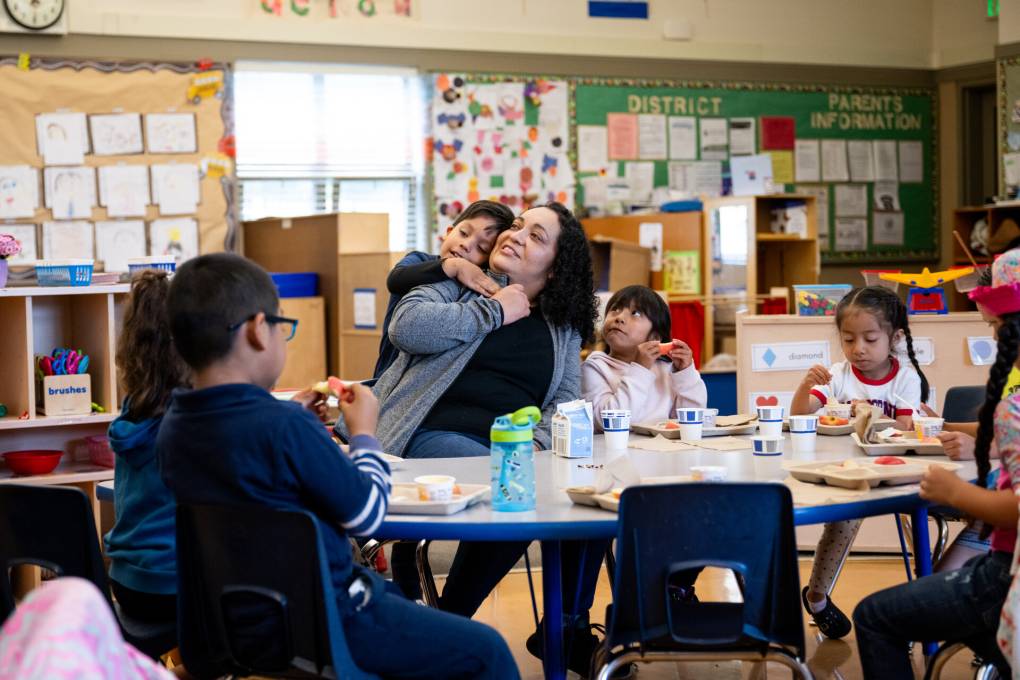
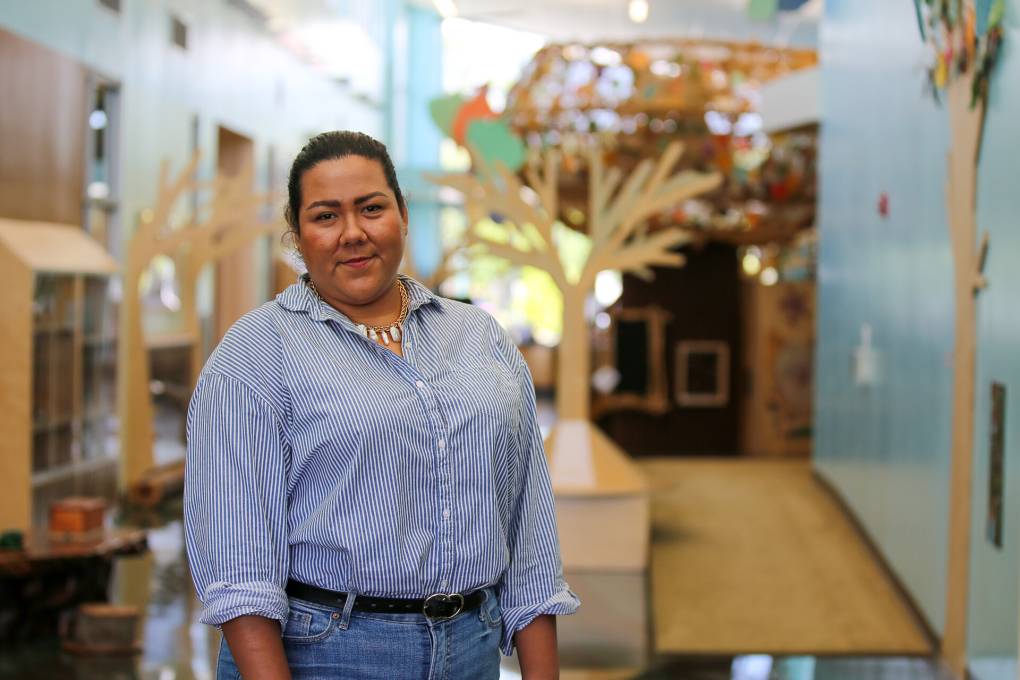
window.__IS_SSR__=true
window.__INITIAL_STATE__={
"attachmentsReducer": {
"audio_0": {
"type": "attachments",
"id": "audio_0",
"imgSizes": {
"kqedFullSize": {
"file": "https://ww2.kqed.org/news/wp-content/themes/KQED-unified/img/audio_bgs/background0.jpg"
}
}
},
"audio_1": {
"type": "attachments",
"id": "audio_1",
"imgSizes": {
"kqedFullSize": {
"file": "https://ww2.kqed.org/news/wp-content/themes/KQED-unified/img/audio_bgs/background1.jpg"
}
}
},
"audio_2": {
"type": "attachments",
"id": "audio_2",
"imgSizes": {
"kqedFullSize": {
"file": "https://ww2.kqed.org/news/wp-content/themes/KQED-unified/img/audio_bgs/background2.jpg"
}
}
},
"audio_3": {
"type": "attachments",
"id": "audio_3",
"imgSizes": {
"kqedFullSize": {
"file": "https://ww2.kqed.org/news/wp-content/themes/KQED-unified/img/audio_bgs/background3.jpg"
}
}
},
"audio_4": {
"type": "attachments",
"id": "audio_4",
"imgSizes": {
"kqedFullSize": {
"file": "https://ww2.kqed.org/news/wp-content/themes/KQED-unified/img/audio_bgs/background4.jpg"
}
}
},
"placeholder": {
"type": "attachments",
"id": "placeholder",
"imgSizes": {
"thumbnail": {
"file": "https://cdn.kqed.org/wp-content/uploads/2024/12/KQED-Default-Image-816638274-2000x1333-1-160x107.jpg",
"width": 160,
"height": 107,
"mimeType": "image/jpeg"
},
"medium": {
"file": "https://cdn.kqed.org/wp-content/uploads/2024/12/KQED-Default-Image-816638274-2000x1333-1-800x533.jpg",
"width": 800,
"height": 533,
"mimeType": "image/jpeg"
},
"medium_large": {
"file": "https://cdn.kqed.org/wp-content/uploads/2024/12/KQED-Default-Image-816638274-2000x1333-1-768x512.jpg",
"width": 768,
"height": 512,
"mimeType": "image/jpeg"
},
"large": {
"file": "https://cdn.kqed.org/wp-content/uploads/2024/12/KQED-Default-Image-816638274-2000x1333-1-1020x680.jpg",
"width": 1020,
"height": 680,
"mimeType": "image/jpeg"
},
"1536x1536": {
"file": "https://cdn.kqed.org/wp-content/uploads/2024/12/KQED-Default-Image-816638274-2000x1333-1-1536x1024.jpg",
"width": 1536,
"height": 1024,
"mimeType": "image/jpeg"
},
"fd-lrg": {
"file": "https://cdn.kqed.org/wp-content/uploads/2024/12/KQED-Default-Image-816638274-2000x1333-1-1536x1024.jpg",
"width": 1536,
"height": 1024,
"mimeType": "image/jpeg"
},
"fd-med": {
"file": "https://cdn.kqed.org/wp-content/uploads/2024/12/KQED-Default-Image-816638274-2000x1333-1-1020x680.jpg",
"width": 1020,
"height": 680,
"mimeType": "image/jpeg"
},
"fd-sm": {
"file": "https://cdn.kqed.org/wp-content/uploads/2024/12/KQED-Default-Image-816638274-2000x1333-1-800x533.jpg",
"width": 800,
"height": 533,
"mimeType": "image/jpeg"
},
"post-thumbnail": {
"file": "https://cdn.kqed.org/wp-content/uploads/2024/12/KQED-Default-Image-816638274-2000x1333-1-672x372.jpg",
"width": 672,
"height": 372,
"mimeType": "image/jpeg"
},
"twentyfourteen-full-width": {
"file": "https://cdn.kqed.org/wp-content/uploads/2024/12/KQED-Default-Image-816638274-2000x1333-1-1038x576.jpg",
"width": 1038,
"height": 576,
"mimeType": "image/jpeg"
},
"xxsmall": {
"file": "https://cdn.kqed.org/wp-content/uploads/2024/12/KQED-Default-Image-816638274-2000x1333-1-160x107.jpg",
"width": 160,
"height": 107,
"mimeType": "image/jpeg"
},
"xsmall": {
"file": "https://cdn.kqed.org/wp-content/uploads/2024/12/KQED-Default-Image-816638274-2000x1333-1-672x372.jpg",
"width": 672,
"height": 372,
"mimeType": "image/jpeg"
},
"small": {
"file": "https://cdn.kqed.org/wp-content/uploads/2024/12/KQED-Default-Image-816638274-2000x1333-1-672x372.jpg",
"width": 672,
"height": 372,
"mimeType": "image/jpeg"
},
"xlarge": {
"file": "https://cdn.kqed.org/wp-content/uploads/2024/12/KQED-Default-Image-816638274-2000x1333-1-1020x680.jpg",
"width": 1020,
"height": 680,
"mimeType": "image/jpeg"
},
"full-width": {
"file": "https://cdn.kqed.org/wp-content/uploads/2024/12/KQED-Default-Image-816638274-2000x1333-1-1920x1280.jpg",
"width": 1920,
"height": 1280,
"mimeType": "image/jpeg"
},
"guest-author-32": {
"file": "https://cdn.kqed.org/wp-content/uploads/2025/01/KQED-Default-Image-816638274-1333x1333-1-160x160.jpg",
"width": 32,
"height": 32,
"mimeType": "image/jpeg"
},
"guest-author-50": {
"file": "https://cdn.kqed.org/wp-content/uploads/2025/01/KQED-Default-Image-816638274-1333x1333-1-160x160.jpg",
"width": 50,
"height": 50,
"mimeType": "image/jpeg"
},
"guest-author-64": {
"file": "https://cdn.kqed.org/wp-content/uploads/2025/01/KQED-Default-Image-816638274-1333x1333-1-160x160.jpg",
"width": 64,
"height": 64,
"mimeType": "image/jpeg"
},
"guest-author-96": {
"file": "https://cdn.kqed.org/wp-content/uploads/2025/01/KQED-Default-Image-816638274-1333x1333-1-160x160.jpg",
"width": 96,
"height": 96,
"mimeType": "image/jpeg"
},
"guest-author-128": {
"file": "https://cdn.kqed.org/wp-content/uploads/2025/01/KQED-Default-Image-816638274-1333x1333-1-160x160.jpg",
"width": 128,
"height": 128,
"mimeType": "image/jpeg"
},
"detail": {
"file": "https://cdn.kqed.org/wp-content/uploads/2025/01/KQED-Default-Image-816638274-1333x1333-1-160x160.jpg",
"width": 160,
"height": 160,
"mimeType": "image/jpeg"
},
"kqedFullSize": {
"file": "https://cdn.kqed.org/wp-content/uploads/2024/12/KQED-Default-Image-816638274-2000x1333-1.jpg",
"width": 2000,
"height": 1333
}
}
},
"news_11990406": {
"type": "attachments",
"id": "news_11990406",
"meta": {
"index": "attachments_1716263798",
"site": "news",
"id": "11990406",
"found": true
},
"title": "240610-HomelessFamilies-35-BL_qut",
"publishDate": 1718382647,
"status": "inherit",
"parent": 0,
"modified": 1726251957,
"caption": "Shelter resident Analy Padilla prepares pozole alongside Claudia Carmona and Maria Figeroa in a teacher's lounge at Buena Vista Horace Mann Community School on June 10, 2024. The pozole will feed their families and others in one of San Francisco's largest shelters for families experiencing homelessness. The nonprofit Mission Action operates the shelter at Horace Mann after hours and during the summer when school is not in session.",
"credit": "Beth LaBerge/KQED",
"altTag": "A woman wearing glasses and a black shirt talks to a woman wearing a pink t-shirt in a kitchen, cutting food with two other people in the background.",
"description": null,
"imgSizes": {
"medium": {
"file": "https://cdn.kqed.org/wp-content/uploads/sites/10/2024/06/240610-HomelessFamilies-35-BL_qut-800x533.jpg",
"width": 800,
"height": 533,
"mimeType": "image/jpeg"
},
"large": {
"file": "https://cdn.kqed.org/wp-content/uploads/sites/10/2024/06/240610-HomelessFamilies-35-BL_qut-1020x680.jpg",
"width": 1020,
"height": 680,
"mimeType": "image/jpeg"
},
"thumbnail": {
"file": "https://cdn.kqed.org/wp-content/uploads/sites/10/2024/06/240610-HomelessFamilies-35-BL_qut-160x107.jpg",
"width": 160,
"height": 107,
"mimeType": "image/jpeg"
},
"1536x1536": {
"file": "https://cdn.kqed.org/wp-content/uploads/sites/10/2024/06/240610-HomelessFamilies-35-BL_qut-1536x1024.jpg",
"width": 1536,
"height": 1024,
"mimeType": "image/jpeg"
},
"post-thumbnail": {
"file": "https://cdn.kqed.org/wp-content/uploads/sites/10/2024/06/240610-HomelessFamilies-35-BL_qut-672x372.jpg",
"width": 672,
"height": 372,
"mimeType": "image/jpeg"
},
"twentyfourteen-full-width": {
"file": "https://cdn.kqed.org/wp-content/uploads/sites/10/2024/06/240610-HomelessFamilies-35-BL_qut-1038x576.jpg",
"width": 1038,
"height": 576,
"mimeType": "image/jpeg"
},
"kqedFullSize": {
"file": "https://cdn.kqed.org/wp-content/uploads/sites/10/2024/06/240610-HomelessFamilies-35-BL_qut.jpg",
"width": 1920,
"height": 1280
}
},
"isLoading": false,
"fetchFailed": false
},
"news_12004425": {
"type": "attachments",
"id": "news_12004425",
"meta": {
"index": "attachments_1716263798",
"site": "news",
"id": "12004425",
"found": true
},
"title": "240910-CHILDCARE REAX-MD-04-KQED",
"publishDate": 1726093717,
"status": "inherit",
"parent": 0,
"modified": 1726093733,
"caption": "Carolina Muñoz holds her daughter Soleil at a playground beside Lake Merritt in Oakland on Sept. 11, 2024.",
"credit": "Martin do Nascimento/KQED",
"altTag": null,
"description": null,
"imgSizes": {
"medium": {
"file": "https://cdn.kqed.org/wp-content/uploads/sites/10/2024/09/240910-CHILDCARE-REAX-MD-04-KQED-800x533.jpg",
"width": 800,
"height": 533,
"mimeType": "image/jpeg"
},
"large": {
"file": "https://cdn.kqed.org/wp-content/uploads/sites/10/2024/09/240910-CHILDCARE-REAX-MD-04-KQED-1020x680.jpg",
"width": 1020,
"height": 680,
"mimeType": "image/jpeg"
},
"thumbnail": {
"file": "https://cdn.kqed.org/wp-content/uploads/sites/10/2024/09/240910-CHILDCARE-REAX-MD-04-KQED-160x107.jpg",
"width": 160,
"height": 107,
"mimeType": "image/jpeg"
},
"1536x1536": {
"file": "https://cdn.kqed.org/wp-content/uploads/sites/10/2024/09/240910-CHILDCARE-REAX-MD-04-KQED-1536x1024.jpg",
"width": 1536,
"height": 1024,
"mimeType": "image/jpeg"
},
"post-thumbnail": {
"file": "https://cdn.kqed.org/wp-content/uploads/sites/10/2024/09/240910-CHILDCARE-REAX-MD-04-KQED-672x372.jpg",
"width": 672,
"height": 372,
"mimeType": "image/jpeg"
},
"twentyfourteen-full-width": {
"file": "https://cdn.kqed.org/wp-content/uploads/sites/10/2024/09/240910-CHILDCARE-REAX-MD-04-KQED-1038x576.jpg",
"width": 1038,
"height": 576,
"mimeType": "image/jpeg"
},
"full-width": {
"file": "https://cdn.kqed.org/wp-content/uploads/sites/10/2024/09/240910-CHILDCARE-REAX-MD-04-KQED-1920x1280.jpg",
"width": 1920,
"height": 1280,
"mimeType": "image/jpeg"
},
"kqedFullSize": {
"file": "https://cdn.kqed.org/wp-content/uploads/sites/10/2024/09/240910-CHILDCARE-REAX-MD-04-KQED.jpg",
"width": 2000,
"height": 1333
}
},
"isLoading": false,
"fetchFailed": false
},
"news_12000187": {
"type": "attachments",
"id": "news_12000187",
"meta": {
"index": "attachments_1716263798",
"site": "news",
"id": "12000187",
"found": true
},
"title": "Sad little child, boy, hugging his mother at home",
"publishDate": 1723665536,
"status": "inherit",
"parent": 12000147,
"modified": 1723665639,
"caption": "A new Bay Area study discovered that child-parent psychotherapy helps young children overcome trauma related to abuse, violence or grief by helping parents respond to their children’s distress in appropriate ways.",
"credit": "Tatyana Tomsickova/iStock",
"altTag": null,
"description": null,
"imgSizes": {
"medium": {
"file": "https://cdn.kqed.org/wp-content/uploads/sites/10/2024/08/iStock-515594796_qed-800x533.jpg",
"width": 800,
"height": 533,
"mimeType": "image/jpeg"
},
"large": {
"file": "https://cdn.kqed.org/wp-content/uploads/sites/10/2024/08/iStock-515594796_qed-1020x680.jpg",
"width": 1020,
"height": 680,
"mimeType": "image/jpeg"
},
"thumbnail": {
"file": "https://cdn.kqed.org/wp-content/uploads/sites/10/2024/08/iStock-515594796_qed-160x107.jpg",
"width": 160,
"height": 107,
"mimeType": "image/jpeg"
},
"1536x1536": {
"file": "https://cdn.kqed.org/wp-content/uploads/sites/10/2024/08/iStock-515594796_qed-1536x1024.jpg",
"width": 1536,
"height": 1024,
"mimeType": "image/jpeg"
},
"post-thumbnail": {
"file": "https://cdn.kqed.org/wp-content/uploads/sites/10/2024/08/iStock-515594796_qed-672x372.jpg",
"width": 672,
"height": 372,
"mimeType": "image/jpeg"
},
"twentyfourteen-full-width": {
"file": "https://cdn.kqed.org/wp-content/uploads/sites/10/2024/08/iStock-515594796_qed-1038x576.jpg",
"width": 1038,
"height": 576,
"mimeType": "image/jpeg"
},
"full-width": {
"file": "https://cdn.kqed.org/wp-content/uploads/sites/10/2024/08/iStock-515594796_qed-1920x1280.jpg",
"width": 1920,
"height": 1280,
"mimeType": "image/jpeg"
},
"kqedFullSize": {
"file": "https://cdn.kqed.org/wp-content/uploads/sites/10/2024/08/iStock-515594796_qed.jpg",
"width": 2000,
"height": 1333
}
},
"isLoading": false,
"fetchFailed": false
},
"news_11997144": {
"type": "attachments",
"id": "news_11997144",
"meta": {
"index": "attachments_1716263798",
"site": "news",
"id": "11997144",
"found": true
},
"title": "Miriam Bernal leads her transitional kindergarten class toward a restroom",
"publishDate": 1721846250,
"status": "inherit",
"parent": 11997115,
"modified": 1721954125,
"caption": "A teacher leads a transitional kindergarten class toward a restroom at Germain Academy for Academic Achievement on Monday, Aug. 14, 2023, in Chatsworth, Los Angeles County. ",
"credit": "Brian van der Brug/Los Angeles Times via Getty Images",
"altTag": null,
"description": null,
"imgSizes": {
"medium": {
"file": "https://cdn.kqed.org/wp-content/uploads/sites/10/2024/07/GettyImages-1599631146-800x516.jpg",
"width": 800,
"height": 516,
"mimeType": "image/jpeg"
},
"large": {
"file": "https://cdn.kqed.org/wp-content/uploads/sites/10/2024/07/GettyImages-1599631146-1020x657.jpg",
"width": 1020,
"height": 657,
"mimeType": "image/jpeg"
},
"thumbnail": {
"file": "https://cdn.kqed.org/wp-content/uploads/sites/10/2024/07/GettyImages-1599631146-160x103.jpg",
"width": 160,
"height": 103,
"mimeType": "image/jpeg"
},
"post-thumbnail": {
"file": "https://cdn.kqed.org/wp-content/uploads/sites/10/2024/07/GettyImages-1599631146-672x372.jpg",
"width": 672,
"height": 372,
"mimeType": "image/jpeg"
},
"twentyfourteen-full-width": {
"file": "https://cdn.kqed.org/wp-content/uploads/sites/10/2024/07/GettyImages-1599631146-1024x576.jpg",
"width": 1024,
"height": 576,
"mimeType": "image/jpeg"
},
"kqedFullSize": {
"file": "https://cdn.kqed.org/wp-content/uploads/sites/10/2024/07/GettyImages-1599631146.jpg",
"width": 1024,
"height": 660
}
},
"isLoading": false,
"fetchFailed": false
},
"news_11992941": {
"type": "attachments",
"id": "news_11992941",
"meta": {
"index": "attachments_1716263798",
"site": "news",
"id": "11992941",
"found": true
},
"title": "Trevor-Aguilar-2048x1319",
"publishDate": 1720032993,
"status": "inherit",
"parent": 11992935,
"modified": 1720043851,
"caption": "Trevor Aguilar, a 6-year-old, narrates his own story with a puppet while playing with Jacqui June Whitlock, a puppet education specialist at Children's Fairyland in Oakland.",
"credit": "Andrew Reed/EdSource",
"altTag": "A woman wearing a green dress holds puppets in front of a young boy wearing a blue shirt.",
"description": null,
"imgSizes": {
"medium": {
"file": "https://cdn.kqed.org/wp-content/uploads/sites/10/2024/07/Trevor-Aguilar-2048x1319-1-800x515.jpg",
"width": 800,
"height": 515,
"mimeType": "image/jpeg"
},
"large": {
"file": "https://cdn.kqed.org/wp-content/uploads/sites/10/2024/07/Trevor-Aguilar-2048x1319-1-1020x657.jpg",
"width": 1020,
"height": 657,
"mimeType": "image/jpeg"
},
"thumbnail": {
"file": "https://cdn.kqed.org/wp-content/uploads/sites/10/2024/07/Trevor-Aguilar-2048x1319-1-160x103.jpg",
"width": 160,
"height": 103,
"mimeType": "image/jpeg"
},
"1536x1536": {
"file": "https://cdn.kqed.org/wp-content/uploads/sites/10/2024/07/Trevor-Aguilar-2048x1319-1-1536x989.jpg",
"width": 1536,
"height": 989,
"mimeType": "image/jpeg"
},
"post-thumbnail": {
"file": "https://cdn.kqed.org/wp-content/uploads/sites/10/2024/07/Trevor-Aguilar-2048x1319-1-672x372.jpg",
"width": 672,
"height": 372,
"mimeType": "image/jpeg"
},
"twentyfourteen-full-width": {
"file": "https://cdn.kqed.org/wp-content/uploads/sites/10/2024/07/Trevor-Aguilar-2048x1319-1-1038x576.jpg",
"width": 1038,
"height": 576,
"mimeType": "image/jpeg"
},
"full-width": {
"file": "https://cdn.kqed.org/wp-content/uploads/sites/10/2024/07/Trevor-Aguilar-2048x1319-1-1920x1237.jpg",
"width": 1920,
"height": 1237,
"mimeType": "image/jpeg"
},
"kqedFullSize": {
"file": "https://cdn.kqed.org/wp-content/uploads/sites/10/2024/07/Trevor-Aguilar-2048x1319-1.jpg",
"width": 2048,
"height": 1319
}
},
"isLoading": false,
"fetchFailed": false
},
"news_11992199": {
"type": "attachments",
"id": "news_11992199",
"meta": {
"index": "attachments_1716263798",
"site": "news",
"id": "11992199",
"found": true
},
"title": "image",
"publishDate": 1719457477,
"status": "inherit",
"parent": 11992142,
"modified": 1719459134,
"caption": "Children play under a giant parachute at Lincoln Square Park in Oakland on May 24, 2024. Last year, the city of Oakland introduced its 'Ready, Set, Go' program, providing educational and social services to families experiencing housing instability, via an RV converted into a mobile Head Start classroom. ",
"credit": "Gina Castro/KQED",
"altTag": "A small Asian boy runs, smiling, under a multicolored parachute, as his mother and another younger boy watch.",
"description": null,
"imgSizes": {
"medium": {
"file": "https://cdn.kqed.org/wp-content/uploads/sites/10/2024/06/image-800x536.png",
"width": 800,
"height": 536,
"mimeType": "image/png"
},
"large": {
"file": "https://cdn.kqed.org/wp-content/uploads/sites/10/2024/06/image-1020x684.png",
"width": 1020,
"height": 684,
"mimeType": "image/png"
},
"thumbnail": {
"file": "https://cdn.kqed.org/wp-content/uploads/sites/10/2024/06/image-160x107.png",
"width": 160,
"height": 107,
"mimeType": "image/png"
},
"post-thumbnail": {
"file": "https://cdn.kqed.org/wp-content/uploads/sites/10/2024/06/image-672x372.png",
"width": 672,
"height": 372,
"mimeType": "image/png"
},
"twentyfourteen-full-width": {
"file": "https://cdn.kqed.org/wp-content/uploads/sites/10/2024/06/image-1038x576.png",
"width": 1038,
"height": 576,
"mimeType": "image/png"
},
"kqedFullSize": {
"file": "https://cdn.kqed.org/wp-content/uploads/sites/10/2024/06/image.png",
"width": 1193,
"height": 800
}
},
"isLoading": false,
"fetchFailed": false
},
"news_11988069": {
"type": "attachments",
"id": "news_11988069",
"meta": {
"index": "attachments_1716263798",
"site": "news",
"id": "11988069",
"found": true
},
"title": "240517-TKBilingualLearners-125-BL_qut",
"publishDate": 1717007259,
"status": "inherit",
"parent": 0,
"modified": 1718904839,
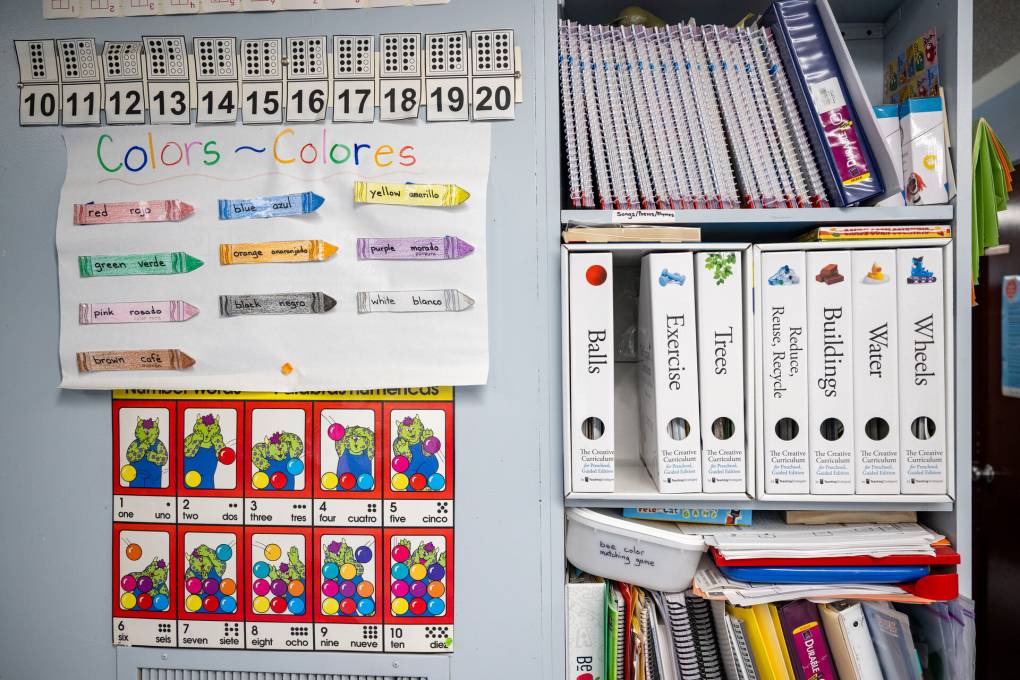
"caption": "Bilingual exercises hang on a wall in a classroom at Global Family Elementary School in Oakland.",
"credit": "Beth LaBerge/KQED",
"altTag": "Bilingual classroom materials hang on a wall.",
"description": null,
"imgSizes": {
"medium": {
"file": "https://cdn.kqed.org/wp-content/uploads/sites/10/2024/05/240517-TKBilingualLearners-125-BL_qut-800x533.jpg",
"width": 800,
"height": 533,
"mimeType": "image/jpeg"
},
"large": {
"file": "https://cdn.kqed.org/wp-content/uploads/sites/10/2024/05/240517-TKBilingualLearners-125-BL_qut-1020x680.jpg",
"width": 1020,
"height": 680,
"mimeType": "image/jpeg"
},
"thumbnail": {
"file": "https://cdn.kqed.org/wp-content/uploads/sites/10/2024/05/240517-TKBilingualLearners-125-BL_qut-160x107.jpg",
"width": 160,
"height": 107,
"mimeType": "image/jpeg"
},
"1536x1536": {
"file": "https://cdn.kqed.org/wp-content/uploads/sites/10/2024/05/240517-TKBilingualLearners-125-BL_qut-1536x1024.jpg",
"width": 1536,
"height": 1024,
"mimeType": "image/jpeg"
},
"post-thumbnail": {
"file": "https://cdn.kqed.org/wp-content/uploads/sites/10/2024/05/240517-TKBilingualLearners-125-BL_qut-672x372.jpg",
"width": 672,
"height": 372,
"mimeType": "image/jpeg"
},
"twentyfourteen-full-width": {
"file": "https://cdn.kqed.org/wp-content/uploads/sites/10/2024/05/240517-TKBilingualLearners-125-BL_qut-1038x576.jpg",
"width": 1038,
"height": 576,
"mimeType": "image/jpeg"
},
"kqedFullSize": {
"file": "https://cdn.kqed.org/wp-content/uploads/sites/10/2024/05/240517-TKBilingualLearners-125-BL_qut.jpg",
"width": 1920,
"height": 1280
}
},
"isLoading": false,
"fetchFailed": false
},
"news_11990555": {
"type": "attachments",
"id": "news_11990555",
"meta": {
"index": "attachments_1716263798",
"site": "news",
"id": "11990555",
"found": true
},
"title": "GettyImages-1322413592-homevisit",
"publishDate": 1718410413,
"status": "inherit",
"parent": 11990543,
"modified": 1718645958,
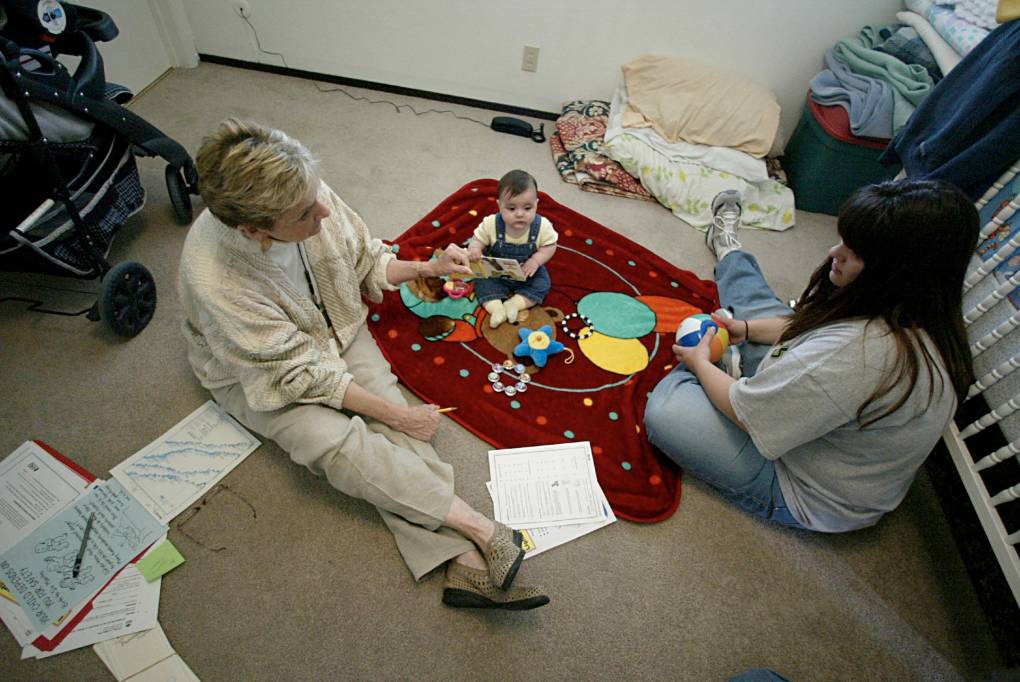
"caption": "A public health nurse visits a new parent at home in San Jose, California.",
"credit": "Lea Suzuki/The San Francisco Chronicle/Getty Images",
"altTag": "Two women sit on the floor while a baby sits between them.",
"description": null,
"imgSizes": {
"medium": {
"file": "https://cdn.kqed.org/wp-content/uploads/sites/10/2024/06/GettyImages-1322413592-homevisit-800x535.jpg",
"width": 800,
"height": 535,
"mimeType": "image/jpeg"
},
"large": {
"file": "https://cdn.kqed.org/wp-content/uploads/sites/10/2024/06/GettyImages-1322413592-homevisit-1020x682.jpg",
"width": 1020,
"height": 682,
"mimeType": "image/jpeg"
},
"thumbnail": {
"file": "https://cdn.kqed.org/wp-content/uploads/sites/10/2024/06/GettyImages-1322413592-homevisit-160x107.jpg",
"width": 160,
"height": 107,
"mimeType": "image/jpeg"
},
"1536x1536": {
"file": "https://cdn.kqed.org/wp-content/uploads/sites/10/2024/06/GettyImages-1322413592-homevisit-1536x1027.jpg",
"width": 1536,
"height": 1027,
"mimeType": "image/jpeg"
},
"post-thumbnail": {
"file": "https://cdn.kqed.org/wp-content/uploads/sites/10/2024/06/GettyImages-1322413592-homevisit-672x372.jpg",
"width": 672,
"height": 372,
"mimeType": "image/jpeg"
},
"twentyfourteen-full-width": {
"file": "https://cdn.kqed.org/wp-content/uploads/sites/10/2024/06/GettyImages-1322413592-homevisit-1038x576.jpg",
"width": 1038,
"height": 576,
"mimeType": "image/jpeg"
},
"kqedFullSize": {
"file": "https://cdn.kqed.org/wp-content/uploads/sites/10/2024/06/GettyImages-1322413592-homevisit.jpg",
"width": 1920,
"height": 1284
}
},
"isLoading": false,
"fetchFailed": false
},
"news_11989657": {
"type": "attachments",
"id": "news_11989657",
"meta": {
"index": "attachments_1716263798",
"site": "news",
"id": "11989657",
"found": true
},
"title": "240610-TKParentsDilemma-24-BL_qut",
"publishDate": 1718051259,
"status": "inherit",
"parent": 0,
"modified": 1718142095,
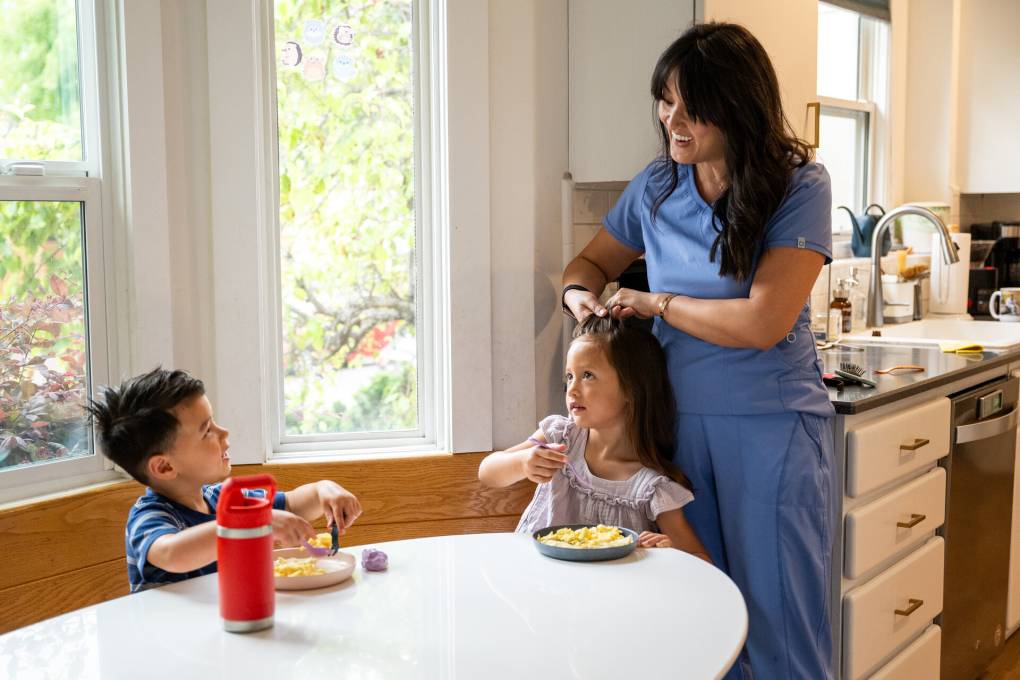
"caption": "Jennifer Currier prepares her two children, Kaia, 5, and Kane, 2, for summer camp at their home in Alameda on June 10 before her husband, Steve, takes the kids to camp and she leaves for work. On other days, a nanny takes the kids to school after both parents go to work.",
"credit": "Beth LaBerge/KQED",
"altTag": null,
"description": null,
"imgSizes": {
"medium": {
"file": "https://cdn.kqed.org/wp-content/uploads/sites/10/2024/06/240610-TKParentsDilemma-24-BL_qut-800x533.jpg",
"width": 800,
"height": 533,
"mimeType": "image/jpeg"
},
"large": {
"file": "https://cdn.kqed.org/wp-content/uploads/sites/10/2024/06/240610-TKParentsDilemma-24-BL_qut-1020x680.jpg",
"width": 1020,
"height": 680,
"mimeType": "image/jpeg"
},
"thumbnail": {
"file": "https://cdn.kqed.org/wp-content/uploads/sites/10/2024/06/240610-TKParentsDilemma-24-BL_qut-160x107.jpg",
"width": 160,
"height": 107,
"mimeType": "image/jpeg"
},
"1536x1536": {
"file": "https://cdn.kqed.org/wp-content/uploads/sites/10/2024/06/240610-TKParentsDilemma-24-BL_qut-1536x1024.jpg",
"width": 1536,
"height": 1024,
"mimeType": "image/jpeg"
},
"post-thumbnail": {
"file": "https://cdn.kqed.org/wp-content/uploads/sites/10/2024/06/240610-TKParentsDilemma-24-BL_qut-672x372.jpg",
"width": 672,
"height": 372,
"mimeType": "image/jpeg"
},
"twentyfourteen-full-width": {
"file": "https://cdn.kqed.org/wp-content/uploads/sites/10/2024/06/240610-TKParentsDilemma-24-BL_qut-1038x576.jpg",
"width": 1038,
"height": 576,
"mimeType": "image/jpeg"
},
"kqedFullSize": {
"file": "https://cdn.kqed.org/wp-content/uploads/sites/10/2024/06/240610-TKParentsDilemma-24-BL_qut.jpg",
"width": 1920,
"height": 1280
}
},
"isLoading": false,
"fetchFailed": false
},
"news_11989678": {
"type": "attachments",
"id": "news_11989678",
"meta": {
"index": "attachments_1716263798",
"site": "news",
"id": "11989678",
"found": true
},
"title": "TKBackPack",
"publishDate": 1718055818,
"status": "inherit",
"parent": 0,
"modified": 1734548641,
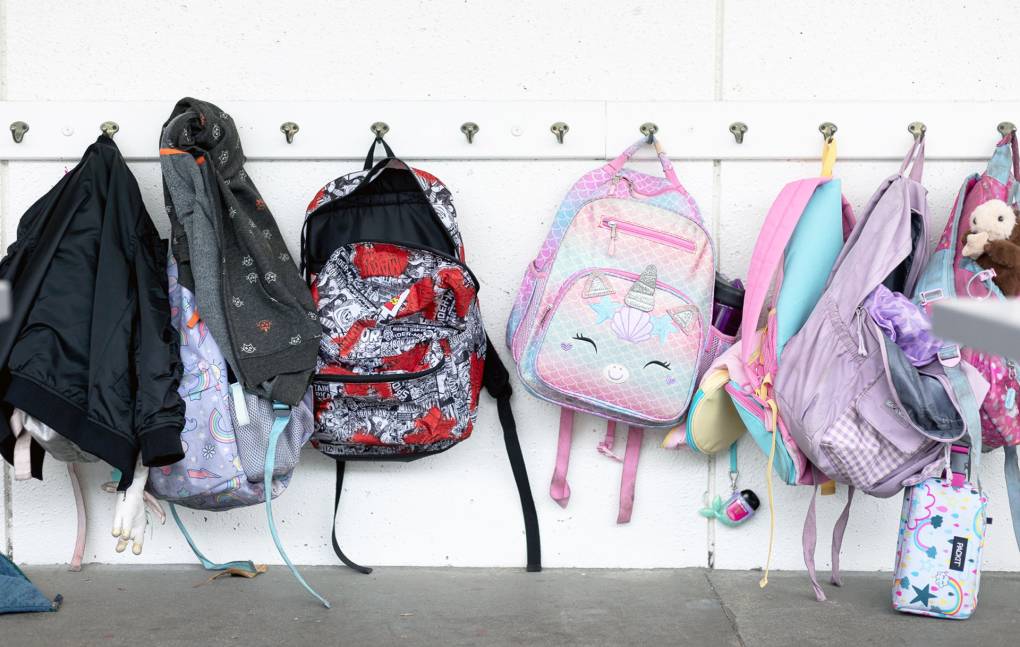
"caption": "Students' backpacks hang outside the transitional kindergarten classroom at Will Rogers Elementary School in Santa Monica.",
"credit": "Courtesy of Ashley Balderrama",
"altTag": null,
"description": null,
"imgSizes": {
"medium": {
"file": "https://cdn.kqed.org/wp-content/uploads/sites/10/2024/06/TKBackPack-800x508.jpg",
"width": 800,
"height": 508,
"mimeType": "image/jpeg"
},
"large": {
"file": "https://cdn.kqed.org/wp-content/uploads/sites/10/2024/06/TKBackPack-1020x647.jpg",
"width": 1020,
"height": 647,
"mimeType": "image/jpeg"
},
"thumbnail": {
"file": "https://cdn.kqed.org/wp-content/uploads/sites/10/2024/06/TKBackPack-160x102.jpg",
"width": 160,
"height": 102,
"mimeType": "image/jpeg"
},
"1536x1536": {
"file": "https://cdn.kqed.org/wp-content/uploads/sites/10/2024/06/TKBackPack-1536x974.jpg",
"width": 1536,
"height": 974,
"mimeType": "image/jpeg"
},
"post-thumbnail": {
"file": "https://cdn.kqed.org/wp-content/uploads/sites/10/2024/06/TKBackPack-672x372.jpg",
"width": 672,
"height": 372,
"mimeType": "image/jpeg"
},
"twentyfourteen-full-width": {
"file": "https://cdn.kqed.org/wp-content/uploads/sites/10/2024/06/TKBackPack-1038x576.jpg",
"width": 1038,
"height": 576,
"mimeType": "image/jpeg"
},
"kqedFullSize": {
"file": "https://cdn.kqed.org/wp-content/uploads/sites/10/2024/06/TKBackPack.jpg",
"width": 1920,
"height": 1218
}
},
"isLoading": false,
"fetchFailed": false
},
"news_11988055": {
"type": "attachments",
"id": "news_11988055",
"meta": {
"index": "attachments_1716263798",
"site": "news",
"id": "11988055",
"found": true
},
"title": "240517-TKBilingualLearners-27-BL_qut",
"publishDate": 1717006968,
"status": "inherit",
"parent": 0,
"modified": 1717794201,
"caption": "Teacher Cintya Valdivia sits with transitional kindergarten students during snack time at the International Community School in Oakland on May 17, 2024.",
"credit": "Beth LaBerge/KQED",
"altTag": "A teacher sits at a classroom table with young students as one student puts his arm tenderly around her neck",
"description": null,
"imgSizes": {
"medium": {
"file": "https://cdn.kqed.org/wp-content/uploads/sites/10/2024/05/240517-TKBilingualLearners-27-BL_qut-800x533.jpg",
"width": 800,
"height": 533,
"mimeType": "image/jpeg"
},
"large": {
"file": "https://cdn.kqed.org/wp-content/uploads/sites/10/2024/05/240517-TKBilingualLearners-27-BL_qut-1020x680.jpg",
"width": 1020,
"height": 680,
"mimeType": "image/jpeg"
},
"thumbnail": {
"file": "https://cdn.kqed.org/wp-content/uploads/sites/10/2024/05/240517-TKBilingualLearners-27-BL_qut-160x107.jpg",
"width": 160,
"height": 107,
"mimeType": "image/jpeg"
},
"1536x1536": {
"file": "https://cdn.kqed.org/wp-content/uploads/sites/10/2024/05/240517-TKBilingualLearners-27-BL_qut-1536x1024.jpg",
"width": 1536,
"height": 1024,
"mimeType": "image/jpeg"
},
"post-thumbnail": {
"file": "https://cdn.kqed.org/wp-content/uploads/sites/10/2024/05/240517-TKBilingualLearners-27-BL_qut-672x372.jpg",
"width": 672,
"height": 372,
"mimeType": "image/jpeg"
},
"twentyfourteen-full-width": {
"file": "https://cdn.kqed.org/wp-content/uploads/sites/10/2024/05/240517-TKBilingualLearners-27-BL_qut-1038x576.jpg",
"width": 1038,
"height": 576,
"mimeType": "image/jpeg"
},
"kqedFullSize": {
"file": "https://cdn.kqed.org/wp-content/uploads/sites/10/2024/05/240517-TKBilingualLearners-27-BL_qut.jpg",
"width": 1920,
"height": 1280
}
},
"isLoading": false,
"fetchFailed": false
},
"news_11987556": {
"type": "attachments",
"id": "news_11987556",
"meta": {
"index": "attachments_1716263798",
"site": "news",
"id": "11987556",
"found": true
},
"title": "240520-FAMILYRESOURCE-JG--2_qut",
"publishDate": 1716499945,
"status": "inherit",
"parent": 11987552,
"modified": 1716502208,
"caption": "Stephanie Ceja, a mother of three and a staff member at Catholic Charities of Santa Clara County, poses for a photo at Educare Family Resource Center in San José on May 20, 2024. Ceja is concerned about the impact the closures of Family Resource Centers will have in the region.",
"credit": "Joseph Geha/KQED",
"altTag": "A Latina woman stands inside a community center.",
"description": null,
"imgSizes": {
"medium": {
"file": "https://cdn.kqed.org/wp-content/uploads/sites/10/2024/05/240520-FAMILYRESOURCE-JG-2_qut-800x533.jpg",
"width": 800,
"height": 533,
"mimeType": "image/jpeg"
},
"large": {
"file": "https://cdn.kqed.org/wp-content/uploads/sites/10/2024/05/240520-FAMILYRESOURCE-JG-2_qut-1020x680.jpg",
"width": 1020,
"height": 680,
"mimeType": "image/jpeg"
},
"thumbnail": {
"file": "https://cdn.kqed.org/wp-content/uploads/sites/10/2024/05/240520-FAMILYRESOURCE-JG-2_qut-160x107.jpg",
"width": 160,
"height": 107,
"mimeType": "image/jpeg"
},
"1536x1536": {
"file": "https://cdn.kqed.org/wp-content/uploads/sites/10/2024/05/240520-FAMILYRESOURCE-JG-2_qut-1536x1024.jpg",
"width": 1536,
"height": 1024,
"mimeType": "image/jpeg"
},
"post-thumbnail": {
"file": "https://cdn.kqed.org/wp-content/uploads/sites/10/2024/05/240520-FAMILYRESOURCE-JG-2_qut-672x372.jpg",
"width": 672,
"height": 372,
"mimeType": "image/jpeg"
},
"twentyfourteen-full-width": {
"file": "https://cdn.kqed.org/wp-content/uploads/sites/10/2024/05/240520-FAMILYRESOURCE-JG-2_qut-1038x576.jpg",
"width": 1038,
"height": 576,
"mimeType": "image/jpeg"
},
"kqedFullSize": {
"file": "https://cdn.kqed.org/wp-content/uploads/sites/10/2024/05/240520-FAMILYRESOURCE-JG-2_qut.jpg",
"width": 1920,
"height": 1280
}
},
"isLoading": false,
"fetchFailed": false
}
},
"audioPlayerReducer": {
"postId": "stream_live",
"isPaused": true,
"isPlaying": false,
"pfsActive": false,
"pledgeModalIsOpen": true,
"playerDrawerIsOpen": false,
"liveAudioPlayStartedAt": 0,
"liveAudioPlayContext": ""
},
"authorsReducer": {
"byline_news_11992935": {
"type": "authors",
"id": "byline_news_11992935",
"meta": {
"override": true
},
"slug": "byline_news_11992935",
"name": "\u003ca href=\"https://edsource.org/author/kdsouza\">Karen D'Souza\u003c/a>, EdSource",
"isLoading": false
},
"byline_news_11989615": {
"type": "authors",
"id": "byline_news_11989615",
"meta": {
"override": true
},
"slug": "byline_news_11989615",
"name": "Elly Yu, LAist",
"isLoading": false
},
"btorres": {
"type": "authors",
"id": "11666",
"meta": {
"index": "authors_1716337520",
"id": "11666",
"found": true
},
"name": "Blanca Torres",
"firstName": "Blanca",
"lastName": "Torres",
"slug": "btorres",
"email": "btorres@kqed.org",
"display_author_email": true,
"staff_mastheads": [
"news"
],
"title": "Producer, Forum",
"bio": "Blanca Torres brings sharp news judgement and keen sense of lively conversation to her work as producer for Forum. She loves producing shows that leave listeners feeling like they heard distinctive voices, learned something new and gained a fresh perspective.\r\n\r\nShe joined KQED in January of 2020 after 16 years of working as a newspaper reporter most recently at the \u003cem>San Francisco Business Times,\u003c/em> where she wrote about real estate and economic development. Before that, she covered a variety of beats including crime, education, retail, workplace, the economy, consumer issues, and small business for the \u003cem>Contra Costa Times, Baltimore Sun\u003c/em> and\u003cem> The Seattle Times\u003c/em>. In addition to reporting, she worked as an editorial writer and columnist for the \u003cem>Seattle Times\u003c/em>. From 2017 to 2020, Blanca won a total of ten awards from the National Association of Real Estate Editors and won first place for land use reporting from the California News Publishers Association two years in a row. She is also a member and former board member for the National Association of Hispanic Journalists.\r\n\r\nA native of the Pacific Northwest, Blanca earned her bachelor's degree from Vanderbilt University in Nashville and a master's in fine arts in creative writing at Mills College. She lives in the East Bay with her family.",
"avatar": "https://secure.gravatar.com/avatar/50b49d19b14a1eed34f26ebf4681152cdd81574ed21851100871ccd29e578cdc?s=600&d=blank&r=g",
"twitter": "@blancawrites",
"bluesky": null,
"facebook": null,
"instagram": null,
"linkedin": null,
"sites": [
{
"site": "arts",
"roles": [
"editor"
]
},
{
"site": "news",
"roles": [
"editor"
]
},
{
"site": "forum",
"roles": [
"editor"
]
}
],
"headData": {
"title": "Blanca Torres | KQED",
"description": "Producer, Forum",
"ogImgSrc": "https://secure.gravatar.com/avatar/50b49d19b14a1eed34f26ebf4681152cdd81574ed21851100871ccd29e578cdc?s=600&d=blank&r=g",
"twImgSrc": "https://secure.gravatar.com/avatar/50b49d19b14a1eed34f26ebf4681152cdd81574ed21851100871ccd29e578cdc?s=600&d=blank&r=g"
},
"isLoading": false,
"link": "/author/btorres"
},
"ccabreralomeli": {
"type": "authors",
"id": "11708",
"meta": {
"index": "authors_1716337520",
"id": "11708",
"found": true
},
"name": "Carlos Cabrera-Lomelí",
"firstName": "Carlos",
"lastName": "Cabrera-Lomelí",
"slug": "ccabreralomeli",
"email": "ccabreralomeli@KQED.org",
"display_author_email": true,
"staff_mastheads": [
"news"
],
"title": "Community Reporter",
"bio": "Carlos Cabrera-Lomelí is a community reporter with KQED's digital engagement team. He also reports and co-produces for KQED's bilingual news hub KQED en Español. He grew up in San Francisco's Mission District and has previously worked with Univision, 48 Hills and REFORMA in Mexico City.",
"avatar": "https://secure.gravatar.com/avatar/c309be9665e484f887b818c89e273ecc673004f426f36b24d00a4d813a2e0518?s=600&d=blank&r=g",
"twitter": "@LomeliCabrera",
"bluesky": null,
"facebook": null,
"instagram": null,
"linkedin": null,
"sites": [
{
"site": "arts",
"roles": [
"editor"
]
},
{
"site": "news",
"roles": [
"editor"
]
},
{
"site": "about",
"roles": [
"editor"
]
},
{
"site": "science",
"roles": [
"editor"
]
},
{
"site": "perspectives",
"roles": [
"editor"
]
},
{
"site": "elections",
"roles": [
"editor"
]
},
{
"site": "liveblog",
"roles": [
"contributor"
]
}
],
"headData": {
"title": "Carlos Cabrera-Lomelí | KQED",
"description": "Community Reporter",
"ogImgSrc": "https://secure.gravatar.com/avatar/c309be9665e484f887b818c89e273ecc673004f426f36b24d00a4d813a2e0518?s=600&d=blank&r=g",
"twImgSrc": "https://secure.gravatar.com/avatar/c309be9665e484f887b818c89e273ecc673004f426f36b24d00a4d813a2e0518?s=600&d=blank&r=g"
},
"isLoading": false,
"link": "/author/ccabreralomeli"
},
"daisynguyen": {
"type": "authors",
"id": "11829",
"meta": {
"index": "authors_1716337520",
"id": "11829",
"found": true
},
"name": "Daisy Nguyen",
"firstName": "Daisy",
"lastName": "Nguyen",
"slug": "daisynguyen",
"email": "daisynguyen@kqed.org",
"display_author_email": true,
"staff_mastheads": [
"news"
],
"title": "KQED Contributor",
"bio": "I have covered early childhood education and child care for KQED since 2022. I focus on policies aimed at increasing access to early care and education and how they shape individual lives. I've been a journalist for more than two decades, with most of that time devoted to covering breaking news throughout California for The Associated Press. I grew up in San Francisco and studied at UC Davis and Columbia University's Graduate School of Journalism. I live in Oakland with my husband and two kids.",
"avatar": "https://secure.gravatar.com/avatar/2da2127c27f7143b53ebd419800fd55f?s=600&d=blank&r=g",
"twitter": null,
"facebook": null,
"instagram": null,
"linkedin": "https://www.linkedin.com/in/daisynguyen/",
"sites": [
{
"site": "news",
"roles": [
"author"
]
},
{
"site": "liveblog",
"roles": [
"author"
]
}
],
"headData": {
"title": "Daisy Nguyen | KQED",
"description": "KQED Contributor",
"ogImgSrc": "https://secure.gravatar.com/avatar/2da2127c27f7143b53ebd419800fd55f?s=600&d=blank&r=g",
"twImgSrc": "https://secure.gravatar.com/avatar/2da2127c27f7143b53ebd419800fd55f?s=600&d=blank&r=g"
},
"isLoading": false,
"link": "/author/daisynguyen"
},
"jgeha": {
"type": "authors",
"id": "11906",
"meta": {
"index": "authors_1716337520",
"id": "11906",
"found": true
},
"name": "Joseph Geha",
"firstName": "Joseph",
"lastName": "Geha",
"slug": "jgeha",
"email": "jgeha@kqed.org",
"display_author_email": false,
"staff_mastheads": [
"news",
"science"
],
"title": "KQED Contributor",
"bio": null,
"avatar": "https://secure.gravatar.com/avatar/ea84d2b6dd93d6369d453edf19dd583f117cd1759d2d9c9c92f9de77017354fe?s=600&d=blank&r=g",
"twitter": null,
"bluesky": null,
"facebook": null,
"instagram": null,
"linkedin": null,
"sites": [
{
"site": "news",
"roles": [
"editor"
]
},
{
"site": "liveblog",
"roles": [
"author"
]
}
],
"headData": {
"title": "Joseph Geha | KQED",
"description": "KQED Contributor",
"ogImgSrc": "https://secure.gravatar.com/avatar/ea84d2b6dd93d6369d453edf19dd583f117cd1759d2d9c9c92f9de77017354fe?s=600&d=blank&r=g",
"twImgSrc": "https://secure.gravatar.com/avatar/ea84d2b6dd93d6369d453edf19dd583f117cd1759d2d9c9c92f9de77017354fe?s=600&d=blank&r=g"
},
"isLoading": false,
"link": "/author/jgeha"
}
},
"pagesReducer": {
"news_tag_early-childhood-education-and-care": {
"type": "terms",
"id": "news_32102",
"meta": {
"index": "terms_1716263798",
"site": "news",
"id": "32102",
"score": 10.404648
},
"featImg": null,
"name": "early childhood education and care",
"description": null,
"taxonomy": "tag",
"headData": {
"twImgId": null,
"twTitle": null,
"ogTitle": null,
"ogImgId": null,
"twDescription": null,
"description": null,
"title": "early childhood education and care Archives | KQED News",
"ogDescription": null
},
"ttid": 32119,
"slug": "early-childhood-education-and-care",
"isLoading": false,
"title": "early childhood education and care",
"pageMeta": {
"site": "news",
"WpPageTemplate": "page-topic-editorial",
"currentPage": 6
},
"blocks": [
{
"blockName": "kqed/post-list",
"attrs": {
"layout": "cardArticle2",
"query": "posts/news?tag=early-childhood-education-and-care",
"seeMore": false,
"paginated": true,
"page": 6
}
},
{
"blockName": "kqed/ad"
}
]
}
},
"pfsSessionReducer": {},
"postsReducer": {
"stream_live": {
"type": "live",
"id": "stream_live",
"audioUrl": "https://streams.kqed.org/kqedradio",
"title": "Live Stream",
"excerpt": "Live Stream information currently unavailable.",
"link": "/radio",
"featImg": "",
"label": {
"name": "KQED Live",
"link": "/"
}
},
"stream_kqedNewscast": {
"type": "posts",
"id": "stream_kqedNewscast",
"audioUrl": "https://www.kqed.org/.stream/anon/radio/RDnews/newscast.mp3?_=1",
"title": "KQED Newscast",
"featImg": "",
"label": {
"name": "88.5 FM",
"link": "/"
}
},
"news_12003994": {
"type": "posts",
"id": "news_12003994",
"meta": {
"index": "posts_1716263798",
"site": "news",
"id": "12003994",
"score": null,
"sort": [
1726225232000
]
},
"guestAuthors": [],
"slug": "at-a-san-francisco-shelter-for-unhoused-families-cooking-helps-heal-trauma",
"title": "At a San Francisco Shelter for Unhoused Families, Cooking Helps Heal Trauma",
"publishDate": 1726225232,
"format": "standard",
"headTitle": "At a San Francisco Shelter for Unhoused Families, Cooking Helps Heal Trauma | KQED",
"labelTerm": {},
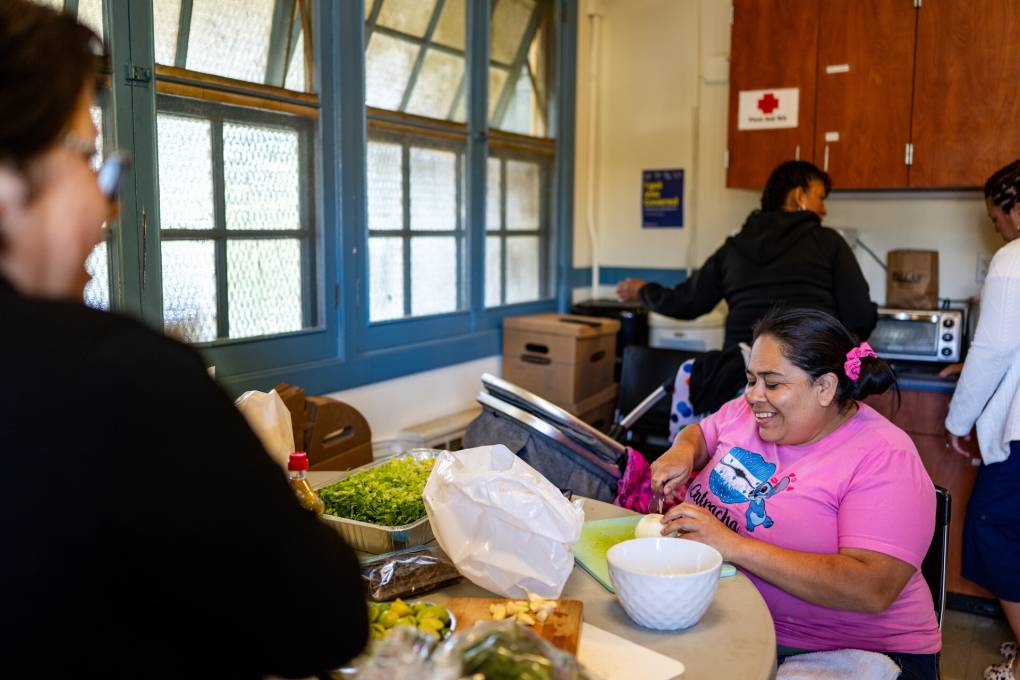
"content": "\u003cp>\u003ca href=\"https://www.sfusd.edu/school/buena-vista-horace-mann-k-8-community-school\">Buena Vista Horace Mann\u003c/a> is a Spanish immersion school for students from kindergarten to 8th grade in San Francisco’s bustling Mission District. But by night, it transforms into something completely unique in the city: a homeless shelter for families with children enrolled in the school district.\u003c/p>\n\u003cp>The shelter provides a hot meal, a shower and a place to sleep in the gym or auditorium. It was formed six years ago by some of the parents of the school who, during a particularly rainy winter, asked if they could sleep in the hallway or an empty classroom.\u003c/p>\n\u003cp>“They were staying in cars. They were staying in laundromats. They were riding the bus or BART back and forth every night just to pass the time in a place that felt relatively safe,” Principal Claudia DeLarios Moran said. “And here we had a building that wasn’t in use out of school time.”\u003c/p>\n\u003cp>The school partnered with the city’s Department of Homelessness and Supportive Housing to care for these families. The city pays for their housing, and the nonprofit \u003ca href=\"https://www.missionaction.org/our-work/housing-shelter/\">Mission Action runs the shelter\u003c/a>.\u003c/p>\n\u003cfigure id=\"attachment_11990405\" class=\"wp-caption aligncenter\" style=\"max-width: 1920px\">\u003ca href=\"https://cdn.kqed.org/wp-content/uploads/sites/10/2024/06/240610-HomelessFamilies-29-BL_qut.jpg\">\u003cimg loading=\"lazy\" decoding=\"async\" class=\"size-full wp-image-11990405\" src=\"https://cdn.kqed.org/wp-content/uploads/sites/10/2024/06/240610-HomelessFamilies-29-BL_qut.jpg\" alt=\"Beds, blankets and personal belongings in a gym.\" width=\"1920\" height=\"1280\" srcset=\"https://cdn.kqed.org/wp-content/uploads/sites/10/2024/06/240610-HomelessFamilies-29-BL_qut.jpg 1920w, https://cdn.kqed.org/wp-content/uploads/sites/10/2024/06/240610-HomelessFamilies-29-BL_qut-800x533.jpg 800w, https://cdn.kqed.org/wp-content/uploads/sites/10/2024/06/240610-HomelessFamilies-29-BL_qut-1020x680.jpg 1020w, https://cdn.kqed.org/wp-content/uploads/sites/10/2024/06/240610-HomelessFamilies-29-BL_qut-160x107.jpg 160w, https://cdn.kqed.org/wp-content/uploads/sites/10/2024/06/240610-HomelessFamilies-29-BL_qut-1536x1024.jpg 1536w\" sizes=\"(max-width: 1920px) 100vw, 1920px\">\u003c/a>\u003cfigcaption class=\"wp-caption-text\">Shelter beds are set up in a gym at Buena Vista Horace Mann Community School on June 10. \u003ccite>(Beth LaBerge/KQED)\u003c/cite>\u003c/figcaption>\u003c/figure>\n\u003cp>The number of families experiencing homelessness or on the verge of homelessness has grown in San Francisco since then, and in recent months, the shelter has had to turn away families at the door when it fills up. Advocates and educators like Moran worry this is traumatizing for kids in desperate need of stability. Studies show housing insecurity early in life affects\u003ca href=\"https://publications.aap.org/pediatrics/article/154/2/e2023064551/197596/Trajectories-of-Housing-Insecurity-From-Infancy-to?searchresult=1\"> children’s health down the line\u003c/a> and their\u003ca href=\"https://learningpolicyinstitute.org/sites/default/files/product-files/Students_Experiencing_Homelessness_BRIEF.pdf\"> chances of finishing high school\u003c/a>.\u003c/p>\n\u003cp>[ad fullwidth]\u003c/p>\n\u003cp>“That level of insecurity in their home lives makes it really difficult for them to concentrate on whatever amazing instruction the teachers have in store for them once they get here every day,” Moran said.\u003c/p>\n\u003cp>As principal of a community school, Moran said her job is to make sure that students’ basic needs are met so they can learn better. That means partnering with local food, health care and housing organizations and \u003ca href=\"https://www.kqed.org/mindshift/59903/when-students-basic-needs-are-met-by-community-schools-learning-can-flourish\">turning the campus into a hub for easy access to services\u003c/a> its immigrant and low-income student population needs.\u003c/p>\n\u003cp>Giving kids a safe place to sleep and a predictable routine can help lessen their anxiety. The shelter also focuses on the parents’ mental health by connecting them to social services and job training programs to help them get back on their feet.\u003c/p>\n\u003cp>To boost their morale, parents at the shelter are able to cook a meal together twice a month.\u003c/p>\n\u003cp>Cooking gives the parents agency and helps lift their self-esteem, said the shelter’s manager, Jacqui Portillo.\u003c/p>\n\u003cp>“They feel relaxed, they feel connected, they’re accomplished, they did something,” Portillo said.\u003c/p>\n\u003cfigure id=\"attachment_11990404\" class=\"wp-caption aligncenter\" style=\"max-width: 1920px\">\u003ca href=\"https://cdn.kqed.org/wp-content/uploads/sites/10/2024/06/240610-HomelessFamilies-30-BL_qut.jpg\">\u003cimg loading=\"lazy\" decoding=\"async\" class=\"size-full wp-image-11990404\" src=\"https://cdn.kqed.org/wp-content/uploads/sites/10/2024/06/240610-HomelessFamilies-30-BL_qut.jpg\" alt=\"A woman wearing headphones and holding audio equipment speaks with a woman wearing a blue vest and jeans in a gym.\" width=\"1920\" height=\"1280\" srcset=\"https://cdn.kqed.org/wp-content/uploads/sites/10/2024/06/240610-HomelessFamilies-30-BL_qut.jpg 1920w, https://cdn.kqed.org/wp-content/uploads/sites/10/2024/06/240610-HomelessFamilies-30-BL_qut-800x533.jpg 800w, https://cdn.kqed.org/wp-content/uploads/sites/10/2024/06/240610-HomelessFamilies-30-BL_qut-1020x680.jpg 1020w, https://cdn.kqed.org/wp-content/uploads/sites/10/2024/06/240610-HomelessFamilies-30-BL_qut-160x107.jpg 160w, https://cdn.kqed.org/wp-content/uploads/sites/10/2024/06/240610-HomelessFamilies-30-BL_qut-1536x1024.jpg 1536w\" sizes=\"(max-width: 1920px) 100vw, 1920px\">\u003c/a>\u003cfigcaption class=\"wp-caption-text\">Jacqui Portillo, community services director for Mission Action (right), speaks with KQED reporter Daisy Nguyen at Buena Vista Horace Mann Community School on June 10. \u003ccite>(Beth LaBerge/KQED)\u003c/cite>\u003c/figcaption>\u003c/figure>\n\u003cp>“The parent has to be okay in order to support their kids,” she said. “And this little moment is helping them to really be more engaged with the kids.”\u003c/p>\n\u003cp>On a recent visit, several shelter residents volunteered to make red pozole – a spicy and hearty Mexican soup. Reporters Daisy Nguyen and Carlos Cabrera-Lomeli spoke with two moms at the shelter, who explained what cooking does for them.\u003c/p>\n\u003ch3>Maria Figueroa\u003c/h3>\n\u003cp>Figueroa migrated from Tijuana, Mexico, in July 2023 with her 18-year-old daughter and 10-year-old son. She said it was too dangerous to raise her children in Mexico and is seeking political asylum in the U.S. When she arrived in San Francisco, she enrolled her kids in school and went back to school herself to train to be an in-home caregiver for sick and elderly people.\u003c/p>\n\u003cp>Figueroa said her kids often ask when they will get to taste her cooking again.\u003c/p>\n\u003cp>“I tell them, ‘God willing, when we have our own little place’ because, to be honest, we just can’t cook like that here [all the time] … only when an opportunity like this comes up,” she said.\u003c/p>\n\u003cfigure id=\"attachment_11990411\" class=\"wp-caption aligncenter\" style=\"max-width: 1920px\">\u003ca href=\"https://cdn.kqed.org/wp-content/uploads/sites/10/2024/06/240610-HomelessFamilies-63-BL_qut.jpg\">\u003cimg loading=\"lazy\" decoding=\"async\" class=\"size-full wp-image-11990411\" src=\"https://cdn.kqed.org/wp-content/uploads/sites/10/2024/06/240610-HomelessFamilies-63-BL_qut.jpg\" alt=\"A woman wearing a black hooded sweatshirt pours soup into a large pot in a kitchen.\" width=\"1920\" height=\"1280\" srcset=\"https://cdn.kqed.org/wp-content/uploads/sites/10/2024/06/240610-HomelessFamilies-63-BL_qut.jpg 1920w, https://cdn.kqed.org/wp-content/uploads/sites/10/2024/06/240610-HomelessFamilies-63-BL_qut-800x533.jpg 800w, https://cdn.kqed.org/wp-content/uploads/sites/10/2024/06/240610-HomelessFamilies-63-BL_qut-1020x680.jpg 1020w, https://cdn.kqed.org/wp-content/uploads/sites/10/2024/06/240610-HomelessFamilies-63-BL_qut-160x107.jpg 160w, https://cdn.kqed.org/wp-content/uploads/sites/10/2024/06/240610-HomelessFamilies-63-BL_qut-1536x1024.jpg 1536w\" sizes=\"(max-width: 1920px) 100vw, 1920px\">\u003c/a>\u003cfigcaption class=\"wp-caption-text\">Shelter resident Maria Figeroa helps make pozole in a teacher’s lounge at Buena Vista Horace Mann Community School on June 10. \u003ccite>(Beth LaBerge/KQED)\u003c/cite>\u003c/figcaption>\u003c/figure>\n\u003cp>She decided to make her signature dish – pozole – because it reminds her of home.\u003c/p>\n\u003cp>When we met, Figueroa had been staying at the shelter for nine months and said she saw the place as home and the shelter residents, her neighbors.\u003c/p>\n\u003cfigure id=\"attachment_11990408\" class=\"wp-caption aligncenter\" style=\"max-width: 1920px\">\u003ca href=\"https://cdn.kqed.org/wp-content/uploads/sites/10/2024/06/240610-HomelessFamilies-58-BL_qut.jpg\">\u003cimg loading=\"lazy\" decoding=\"async\" class=\"size-full wp-image-11990408\" src=\"https://cdn.kqed.org/wp-content/uploads/sites/10/2024/06/240610-HomelessFamilies-58-BL_qut.jpg\" alt=\"A hand touches chiles in a pan on a stovetop.\" width=\"1920\" height=\"1280\" srcset=\"https://cdn.kqed.org/wp-content/uploads/sites/10/2024/06/240610-HomelessFamilies-58-BL_qut.jpg 1920w, https://cdn.kqed.org/wp-content/uploads/sites/10/2024/06/240610-HomelessFamilies-58-BL_qut-800x533.jpg 800w, https://cdn.kqed.org/wp-content/uploads/sites/10/2024/06/240610-HomelessFamilies-58-BL_qut-1020x680.jpg 1020w, https://cdn.kqed.org/wp-content/uploads/sites/10/2024/06/240610-HomelessFamilies-58-BL_qut-160x107.jpg 160w, https://cdn.kqed.org/wp-content/uploads/sites/10/2024/06/240610-HomelessFamilies-58-BL_qut-1536x1024.jpg 1536w\" sizes=\"(max-width: 1920px) 100vw, 1920px\">\u003c/a>\u003cfigcaption class=\"wp-caption-text\">Shelter resident Maria Figeroa helps make pozole in the kitchen of a teacher’s lounge at Buena Vista Horace Mann Community School on June 10. \u003ccite>(Beth LaBerge/KQED)\u003c/cite>\u003c/figcaption>\u003c/figure>\n\u003cp>“Regardless of how you see the situation, we’re all here for the same thing. We all need a home, we need a place to sleep, a place to eat while we figure out our situation and here, we all see each other and what we’re going through,” she said.\u003c/p>\n\u003ch3>Analy Padilla\u003c/h3>\n\u003cp>Analy Padilla is from Honduras and has been living in this country for 21 years. She also came to this shelter nine months ago after her husband lost his job, and they couldn’t afford the rising cost of rent in San Francisco.\u003c/p>\n\u003cp>She said she, her husband and their two sons spent several nights sleeping in their car. They called everywhere for an open shelter space.\u003c/p>\n\u003cp>“And when they told me there was a spot for my family to stay here, I cried,” Padilla said. “I was so happy. I was finally going to have a home to be with my family.”\u003c/p>\n\u003cfigure id=\"attachment_11990407\" class=\"wp-caption aligncenter\" style=\"max-width: 1920px\">\u003ca href=\"https://cdn.kqed.org/wp-content/uploads/sites/10/2024/06/240610-HomelessFamilies-40-BL_qut.jpg\">\u003cimg loading=\"lazy\" decoding=\"async\" class=\"size-full wp-image-11990407\" src=\"https://cdn.kqed.org/wp-content/uploads/sites/10/2024/06/240610-HomelessFamilies-40-BL_qut.jpg\" alt=\"A woman wearing a pink t-shirt cuts food on a cutting board in a kitchen.\" width=\"1920\" height=\"1280\" srcset=\"https://cdn.kqed.org/wp-content/uploads/sites/10/2024/06/240610-HomelessFamilies-40-BL_qut.jpg 1920w, https://cdn.kqed.org/wp-content/uploads/sites/10/2024/06/240610-HomelessFamilies-40-BL_qut-800x533.jpg 800w, https://cdn.kqed.org/wp-content/uploads/sites/10/2024/06/240610-HomelessFamilies-40-BL_qut-1020x680.jpg 1020w, https://cdn.kqed.org/wp-content/uploads/sites/10/2024/06/240610-HomelessFamilies-40-BL_qut-160x107.jpg 160w, https://cdn.kqed.org/wp-content/uploads/sites/10/2024/06/240610-HomelessFamilies-40-BL_qut-1536x1024.jpg 1536w\" sizes=\"(max-width: 1920px) 100vw, 1920px\">\u003c/a>\u003cfigcaption class=\"wp-caption-text\">Shelter resident Analy Padilla helps prepare pozole in a teacher’s lounge at Buena Vista Horace Mann Community School on June 10. \u003ccite>(Beth LaBerge/KQED)\u003c/cite>\u003c/figcaption>\u003c/figure>\n\u003cp>Padilla said it’s not easy sharing the bathroom, eating and sleeping spaces with strangers or packing up her stuff each morning. The experience hit her 15-year-old son Kevin hard, she said. At school, his grades dropped, he skipped classes, and he became withdrawn. [aside postID=\"news_11996078,news_12003407\" label=\"Related Stories\"]\u003c/p>\n\u003cp>Padilla said she urged him to see the bright side of their situation.\u003c/p>\n\u003cp>“I told him: ‘This is only temporary. We will soon get out of here. Then you will have your own space and your life will go back to normal. But give thanks to God that we have a mattress, a blanket and that you’re not outside in the cold. Many people have to spend their nights outside.’”\u003c/p>\n\u003cp>Padilla said as the last school year progressed, he became more comfortable at the shelter and played with other kids there. She said he also joined a support group at his high school to talk through his experience.\u003c/p>\n\u003cfigure id=\"attachment_11990403\" class=\"wp-caption aligncenter\" style=\"max-width: 1920px\">\u003ca href=\"https://cdn.kqed.org/wp-content/uploads/sites/10/2024/06/240610-HomelessFamilies-23-BL_qut.jpg\">\u003cimg loading=\"lazy\" decoding=\"async\" class=\"size-full wp-image-11990403\" src=\"https://cdn.kqed.org/wp-content/uploads/sites/10/2024/06/240610-HomelessFamilies-23-BL_qut.jpg\" alt=\"A pink suitcase, shoes and a unicorn toy lie next to and on a blue bed.\" width=\"1920\" height=\"1280\" srcset=\"https://cdn.kqed.org/wp-content/uploads/sites/10/2024/06/240610-HomelessFamilies-23-BL_qut.jpg 1920w, https://cdn.kqed.org/wp-content/uploads/sites/10/2024/06/240610-HomelessFamilies-23-BL_qut-800x533.jpg 800w, https://cdn.kqed.org/wp-content/uploads/sites/10/2024/06/240610-HomelessFamilies-23-BL_qut-1020x680.jpg 1020w, https://cdn.kqed.org/wp-content/uploads/sites/10/2024/06/240610-HomelessFamilies-23-BL_qut-160x107.jpg 160w, https://cdn.kqed.org/wp-content/uploads/sites/10/2024/06/240610-HomelessFamilies-23-BL_qut-1536x1024.jpg 1536w\" sizes=\"(max-width: 1920px) 100vw, 1920px\">\u003c/a>\u003cfigcaption class=\"wp-caption-text\">A child’s belongings sit next to a shelter bed set up in an auditorium at Buena Vista Horace Mann Community School on June 10. \u003ccite>(Beth LaBerge/KQED)\u003c/cite>\u003c/figcaption>\u003c/figure>\n\u003cp>“He ended up liking it because, on the last day of the group, he told me, ‘Mom, the group is going to end, and we need to bring something to share.’ And I saw him so excited,” Padilla said.\u003c/p>\n\u003cp>She said she also tries to make the best of the situation, and getting to cook together helps her feel like she’s part of a big family.\u003c/p>\n\u003cp>She said that every two weeks, the cooks rotate duties: some decide what to make while others help with the prepping and cleaning.\u003c/p>\n\u003cp>[ad floatright]\u003c/p>\n\u003cp>“We make a good team,” she said. “If someone doesn’t know how to do something, someone else will know how to do it. But we all add our own seasoning there in the kitchen.”\u003c/p>\n\n",
"blocks": [],
"excerpt": "Buena Vista Horace Mann, a Spanish immersion school in San Francisco’s Mission District, turns into a homeless shelter at night for families with children enrolled in the school district.",
"status": "publish",
"parent": 0,
"modified": 1726607377,
"stats": {
"hasAudio": false,
"hasVideo": false,
"hasChartOrMap": false,
"iframeSrcs": [],
"hasGoogleForm": false,
"hasGallery": false,
"hasHearkenModule": false,
"hasPolis": false,
"paragraphCount": 32,
"wordCount": 1337
},
"headData": {
"title": "At a San Francisco Shelter for Unhoused Families, Cooking Helps Heal Trauma | KQED",
"description": "Buena Vista Horace Mann, a Spanish immersion school in San Francisco’s Mission District, turns into a homeless shelter at night for families with children enrolled in the school district.",
"ogTitle": "",
"ogDescription": "",
"ogImgId": "",
"twTitle": "",
"twDescription": "",
"twImgId": "",
"schema": {
"@context": "https://schema.org",
"@type": "NewsArticle",
"headline": "At a San Francisco Shelter for Unhoused Families, Cooking Helps Heal Trauma",
"datePublished": "2024-09-13T04:00:32-07:00",
"dateModified": "2024-09-17T14:09:37-07:00",
"image": "https://cdn.kqed.org/wp-content/uploads/2020/02/KQED-OG-Image@1x.png",
"isAccessibleForFree": "True",
"publisher": {
"@type": "NewsMediaOrganization",
"@id": "https://www.kqed.org/#organization",
"name": "KQED",
"logo": "https://cdn.kqed.org/wp-content/uploads/2020/02/KQED-OG-Image@1x.png",
"url": "https://www.kqed.org",
"sameAs": [
"https://www.facebook.com/KQED",
"https://twitter.com/KQED",
"https://www.instagram.com/kqed/",
"https://www.tiktok.com/@kqedofficial",
"https://www.linkedin.com/company/kqed",
"https://www.youtube.com/channel/UCeC0IOo7i1P_61zVUWbJ4nw"
]
}
}
},
"source": "The California Report Magazine",
"sourceUrl": "https://www.kqed.org/californiareportmagazine",
"audioUrl": "https://traffic.omny.fm/d/clips/0af137ef-751e-4b19-a055-aaef00d2d578/ffca7e9f-6831-41c5-bcaf-aaef00f5a073/ec6c3932-b3a3-4636-9e22-b1e8013f2601/audio.mp3",
"sticky": false,
"nprStoryId": "kqed-12003994",
"excludeFromSiteSearch": "Include",
"articleAge": "0",
"path": "/news/12003994/at-a-san-francisco-shelter-for-unhoused-families-cooking-helps-heal-trauma",
"audioTrackLength": null,
"parsedContent": [
{
"type": "contentString",
"content": "\u003cdiv class=\"post-body\">\u003cp>\u003cp>\u003ca href=\"https://www.sfusd.edu/school/buena-vista-horace-mann-k-8-community-school\">Buena Vista Horace Mann\u003c/a> is a Spanish immersion school for students from kindergarten to 8th grade in San Francisco’s bustling Mission District. But by night, it transforms into something completely unique in the city: a homeless shelter for families with children enrolled in the school district.\u003c/p>\n\u003cp>The shelter provides a hot meal, a shower and a place to sleep in the gym or auditorium. It was formed six years ago by some of the parents of the school who, during a particularly rainy winter, asked if they could sleep in the hallway or an empty classroom.\u003c/p>\n\u003cp>“They were staying in cars. They were staying in laundromats. They were riding the bus or BART back and forth every night just to pass the time in a place that felt relatively safe,” Principal Claudia DeLarios Moran said. “And here we had a building that wasn’t in use out of school time.”\u003c/p>\n\u003cp>The school partnered with the city’s Department of Homelessness and Supportive Housing to care for these families. The city pays for their housing, and the nonprofit \u003ca href=\"https://www.missionaction.org/our-work/housing-shelter/\">Mission Action runs the shelter\u003c/a>.\u003c/p>\n\u003cfigure id=\"attachment_11990405\" class=\"wp-caption aligncenter\" style=\"max-width: 1920px\">\u003ca href=\"https://cdn.kqed.org/wp-content/uploads/sites/10/2024/06/240610-HomelessFamilies-29-BL_qut.jpg\">\u003cimg loading=\"lazy\" decoding=\"async\" class=\"size-full wp-image-11990405\" src=\"https://cdn.kqed.org/wp-content/uploads/sites/10/2024/06/240610-HomelessFamilies-29-BL_qut.jpg\" alt=\"Beds, blankets and personal belongings in a gym.\" width=\"1920\" height=\"1280\" srcset=\"https://cdn.kqed.org/wp-content/uploads/sites/10/2024/06/240610-HomelessFamilies-29-BL_qut.jpg 1920w, https://cdn.kqed.org/wp-content/uploads/sites/10/2024/06/240610-HomelessFamilies-29-BL_qut-800x533.jpg 800w, https://cdn.kqed.org/wp-content/uploads/sites/10/2024/06/240610-HomelessFamilies-29-BL_qut-1020x680.jpg 1020w, https://cdn.kqed.org/wp-content/uploads/sites/10/2024/06/240610-HomelessFamilies-29-BL_qut-160x107.jpg 160w, https://cdn.kqed.org/wp-content/uploads/sites/10/2024/06/240610-HomelessFamilies-29-BL_qut-1536x1024.jpg 1536w\" sizes=\"(max-width: 1920px) 100vw, 1920px\">\u003c/a>\u003cfigcaption class=\"wp-caption-text\">Shelter beds are set up in a gym at Buena Vista Horace Mann Community School on June 10. \u003ccite>(Beth LaBerge/KQED)\u003c/cite>\u003c/figcaption>\u003c/figure>\n\u003cp>The number of families experiencing homelessness or on the verge of homelessness has grown in San Francisco since then, and in recent months, the shelter has had to turn away families at the door when it fills up. Advocates and educators like Moran worry this is traumatizing for kids in desperate need of stability. Studies show housing insecurity early in life affects\u003ca href=\"https://publications.aap.org/pediatrics/article/154/2/e2023064551/197596/Trajectories-of-Housing-Insecurity-From-Infancy-to?searchresult=1\"> children’s health down the line\u003c/a> and their\u003ca href=\"https://learningpolicyinstitute.org/sites/default/files/product-files/Students_Experiencing_Homelessness_BRIEF.pdf\"> chances of finishing high school\u003c/a>.\u003c/p>\n\u003cp>\u003c/p>\u003c/div>",
"attributes": {
"named": {},
"numeric": []
}
},
{
"type": "component",
"content": "",
"name": "ad",
"attributes": {
"named": {
"label": "fullwidth"
},
"numeric": [
"fullwidth"
]
}
},
{
"type": "contentString",
"content": "\u003cdiv class=\"post-body\">\u003cp>\u003c/p>\n\u003cp>“That level of insecurity in their home lives makes it really difficult for them to concentrate on whatever amazing instruction the teachers have in store for them once they get here every day,” Moran said.\u003c/p>\n\u003cp>As principal of a community school, Moran said her job is to make sure that students’ basic needs are met so they can learn better. That means partnering with local food, health care and housing organizations and \u003ca href=\"https://www.kqed.org/mindshift/59903/when-students-basic-needs-are-met-by-community-schools-learning-can-flourish\">turning the campus into a hub for easy access to services\u003c/a> its immigrant and low-income student population needs.\u003c/p>\n\u003cp>Giving kids a safe place to sleep and a predictable routine can help lessen their anxiety. The shelter also focuses on the parents’ mental health by connecting them to social services and job training programs to help them get back on their feet.\u003c/p>\n\u003cp>To boost their morale, parents at the shelter are able to cook a meal together twice a month.\u003c/p>\n\u003cp>Cooking gives the parents agency and helps lift their self-esteem, said the shelter’s manager, Jacqui Portillo.\u003c/p>\n\u003cp>“They feel relaxed, they feel connected, they’re accomplished, they did something,” Portillo said.\u003c/p>\n\u003cfigure id=\"attachment_11990404\" class=\"wp-caption aligncenter\" style=\"max-width: 1920px\">\u003ca href=\"https://cdn.kqed.org/wp-content/uploads/sites/10/2024/06/240610-HomelessFamilies-30-BL_qut.jpg\">\u003cimg loading=\"lazy\" decoding=\"async\" class=\"size-full wp-image-11990404\" src=\"https://cdn.kqed.org/wp-content/uploads/sites/10/2024/06/240610-HomelessFamilies-30-BL_qut.jpg\" alt=\"A woman wearing headphones and holding audio equipment speaks with a woman wearing a blue vest and jeans in a gym.\" width=\"1920\" height=\"1280\" srcset=\"https://cdn.kqed.org/wp-content/uploads/sites/10/2024/06/240610-HomelessFamilies-30-BL_qut.jpg 1920w, https://cdn.kqed.org/wp-content/uploads/sites/10/2024/06/240610-HomelessFamilies-30-BL_qut-800x533.jpg 800w, https://cdn.kqed.org/wp-content/uploads/sites/10/2024/06/240610-HomelessFamilies-30-BL_qut-1020x680.jpg 1020w, https://cdn.kqed.org/wp-content/uploads/sites/10/2024/06/240610-HomelessFamilies-30-BL_qut-160x107.jpg 160w, https://cdn.kqed.org/wp-content/uploads/sites/10/2024/06/240610-HomelessFamilies-30-BL_qut-1536x1024.jpg 1536w\" sizes=\"(max-width: 1920px) 100vw, 1920px\">\u003c/a>\u003cfigcaption class=\"wp-caption-text\">Jacqui Portillo, community services director for Mission Action (right), speaks with KQED reporter Daisy Nguyen at Buena Vista Horace Mann Community School on June 10. \u003ccite>(Beth LaBerge/KQED)\u003c/cite>\u003c/figcaption>\u003c/figure>\n\u003cp>“The parent has to be okay in order to support their kids,” she said. “And this little moment is helping them to really be more engaged with the kids.”\u003c/p>\n\u003cp>On a recent visit, several shelter residents volunteered to make red pozole – a spicy and hearty Mexican soup. Reporters Daisy Nguyen and Carlos Cabrera-Lomeli spoke with two moms at the shelter, who explained what cooking does for them.\u003c/p>\n\u003ch3>Maria Figueroa\u003c/h3>\n\u003cp>Figueroa migrated from Tijuana, Mexico, in July 2023 with her 18-year-old daughter and 10-year-old son. She said it was too dangerous to raise her children in Mexico and is seeking political asylum in the U.S. When she arrived in San Francisco, she enrolled her kids in school and went back to school herself to train to be an in-home caregiver for sick and elderly people.\u003c/p>\n\u003cp>Figueroa said her kids often ask when they will get to taste her cooking again.\u003c/p>\n\u003cp>“I tell them, ‘God willing, when we have our own little place’ because, to be honest, we just can’t cook like that here [all the time] … only when an opportunity like this comes up,” she said.\u003c/p>\n\u003cfigure id=\"attachment_11990411\" class=\"wp-caption aligncenter\" style=\"max-width: 1920px\">\u003ca href=\"https://cdn.kqed.org/wp-content/uploads/sites/10/2024/06/240610-HomelessFamilies-63-BL_qut.jpg\">\u003cimg loading=\"lazy\" decoding=\"async\" class=\"size-full wp-image-11990411\" src=\"https://cdn.kqed.org/wp-content/uploads/sites/10/2024/06/240610-HomelessFamilies-63-BL_qut.jpg\" alt=\"A woman wearing a black hooded sweatshirt pours soup into a large pot in a kitchen.\" width=\"1920\" height=\"1280\" srcset=\"https://cdn.kqed.org/wp-content/uploads/sites/10/2024/06/240610-HomelessFamilies-63-BL_qut.jpg 1920w, https://cdn.kqed.org/wp-content/uploads/sites/10/2024/06/240610-HomelessFamilies-63-BL_qut-800x533.jpg 800w, https://cdn.kqed.org/wp-content/uploads/sites/10/2024/06/240610-HomelessFamilies-63-BL_qut-1020x680.jpg 1020w, https://cdn.kqed.org/wp-content/uploads/sites/10/2024/06/240610-HomelessFamilies-63-BL_qut-160x107.jpg 160w, https://cdn.kqed.org/wp-content/uploads/sites/10/2024/06/240610-HomelessFamilies-63-BL_qut-1536x1024.jpg 1536w\" sizes=\"(max-width: 1920px) 100vw, 1920px\">\u003c/a>\u003cfigcaption class=\"wp-caption-text\">Shelter resident Maria Figeroa helps make pozole in a teacher’s lounge at Buena Vista Horace Mann Community School on June 10. \u003ccite>(Beth LaBerge/KQED)\u003c/cite>\u003c/figcaption>\u003c/figure>\n\u003cp>She decided to make her signature dish – pozole – because it reminds her of home.\u003c/p>\n\u003cp>When we met, Figueroa had been staying at the shelter for nine months and said she saw the place as home and the shelter residents, her neighbors.\u003c/p>\n\u003cfigure id=\"attachment_11990408\" class=\"wp-caption aligncenter\" style=\"max-width: 1920px\">\u003ca href=\"https://cdn.kqed.org/wp-content/uploads/sites/10/2024/06/240610-HomelessFamilies-58-BL_qut.jpg\">\u003cimg loading=\"lazy\" decoding=\"async\" class=\"size-full wp-image-11990408\" src=\"https://cdn.kqed.org/wp-content/uploads/sites/10/2024/06/240610-HomelessFamilies-58-BL_qut.jpg\" alt=\"A hand touches chiles in a pan on a stovetop.\" width=\"1920\" height=\"1280\" srcset=\"https://cdn.kqed.org/wp-content/uploads/sites/10/2024/06/240610-HomelessFamilies-58-BL_qut.jpg 1920w, https://cdn.kqed.org/wp-content/uploads/sites/10/2024/06/240610-HomelessFamilies-58-BL_qut-800x533.jpg 800w, https://cdn.kqed.org/wp-content/uploads/sites/10/2024/06/240610-HomelessFamilies-58-BL_qut-1020x680.jpg 1020w, https://cdn.kqed.org/wp-content/uploads/sites/10/2024/06/240610-HomelessFamilies-58-BL_qut-160x107.jpg 160w, https://cdn.kqed.org/wp-content/uploads/sites/10/2024/06/240610-HomelessFamilies-58-BL_qut-1536x1024.jpg 1536w\" sizes=\"(max-width: 1920px) 100vw, 1920px\">\u003c/a>\u003cfigcaption class=\"wp-caption-text\">Shelter resident Maria Figeroa helps make pozole in the kitchen of a teacher’s lounge at Buena Vista Horace Mann Community School on June 10. \u003ccite>(Beth LaBerge/KQED)\u003c/cite>\u003c/figcaption>\u003c/figure>\n\u003cp>“Regardless of how you see the situation, we’re all here for the same thing. We all need a home, we need a place to sleep, a place to eat while we figure out our situation and here, we all see each other and what we’re going through,” she said.\u003c/p>\n\u003ch3>Analy Padilla\u003c/h3>\n\u003cp>Analy Padilla is from Honduras and has been living in this country for 21 years. She also came to this shelter nine months ago after her husband lost his job, and they couldn’t afford the rising cost of rent in San Francisco.\u003c/p>\n\u003cp>She said she, her husband and their two sons spent several nights sleeping in their car. They called everywhere for an open shelter space.\u003c/p>\n\u003cp>“And when they told me there was a spot for my family to stay here, I cried,” Padilla said. “I was so happy. I was finally going to have a home to be with my family.”\u003c/p>\n\u003cfigure id=\"attachment_11990407\" class=\"wp-caption aligncenter\" style=\"max-width: 1920px\">\u003ca href=\"https://cdn.kqed.org/wp-content/uploads/sites/10/2024/06/240610-HomelessFamilies-40-BL_qut.jpg\">\u003cimg loading=\"lazy\" decoding=\"async\" class=\"size-full wp-image-11990407\" src=\"https://cdn.kqed.org/wp-content/uploads/sites/10/2024/06/240610-HomelessFamilies-40-BL_qut.jpg\" alt=\"A woman wearing a pink t-shirt cuts food on a cutting board in a kitchen.\" width=\"1920\" height=\"1280\" srcset=\"https://cdn.kqed.org/wp-content/uploads/sites/10/2024/06/240610-HomelessFamilies-40-BL_qut.jpg 1920w, https://cdn.kqed.org/wp-content/uploads/sites/10/2024/06/240610-HomelessFamilies-40-BL_qut-800x533.jpg 800w, https://cdn.kqed.org/wp-content/uploads/sites/10/2024/06/240610-HomelessFamilies-40-BL_qut-1020x680.jpg 1020w, https://cdn.kqed.org/wp-content/uploads/sites/10/2024/06/240610-HomelessFamilies-40-BL_qut-160x107.jpg 160w, https://cdn.kqed.org/wp-content/uploads/sites/10/2024/06/240610-HomelessFamilies-40-BL_qut-1536x1024.jpg 1536w\" sizes=\"(max-width: 1920px) 100vw, 1920px\">\u003c/a>\u003cfigcaption class=\"wp-caption-text\">Shelter resident Analy Padilla helps prepare pozole in a teacher’s lounge at Buena Vista Horace Mann Community School on June 10. \u003ccite>(Beth LaBerge/KQED)\u003c/cite>\u003c/figcaption>\u003c/figure>\n\u003cp>Padilla said it’s not easy sharing the bathroom, eating and sleeping spaces with strangers or packing up her stuff each morning. The experience hit her 15-year-old son Kevin hard, she said. At school, his grades dropped, he skipped classes, and he became withdrawn. \u003c/p>\u003c/div>",
"attributes": {
"named": {},
"numeric": []
}
},
{
"type": "component",
"content": "",
"name": "aside",
"attributes": {
"named": {
"postid": "news_11996078,news_12003407",
"label": "Related Stories "
},
"numeric": []
}
},
{
"type": "contentString",
"content": "\u003cdiv class=\"post-body\">\u003cp>\u003c/p>\n\u003cp>Padilla said she urged him to see the bright side of their situation.\u003c/p>\n\u003cp>“I told him: ‘This is only temporary. We will soon get out of here. Then you will have your own space and your life will go back to normal. But give thanks to God that we have a mattress, a blanket and that you’re not outside in the cold. Many people have to spend their nights outside.’”\u003c/p>\n\u003cp>Padilla said as the last school year progressed, he became more comfortable at the shelter and played with other kids there. She said he also joined a support group at his high school to talk through his experience.\u003c/p>\n\u003cfigure id=\"attachment_11990403\" class=\"wp-caption aligncenter\" style=\"max-width: 1920px\">\u003ca href=\"https://cdn.kqed.org/wp-content/uploads/sites/10/2024/06/240610-HomelessFamilies-23-BL_qut.jpg\">\u003cimg loading=\"lazy\" decoding=\"async\" class=\"size-full wp-image-11990403\" src=\"https://cdn.kqed.org/wp-content/uploads/sites/10/2024/06/240610-HomelessFamilies-23-BL_qut.jpg\" alt=\"A pink suitcase, shoes and a unicorn toy lie next to and on a blue bed.\" width=\"1920\" height=\"1280\" srcset=\"https://cdn.kqed.org/wp-content/uploads/sites/10/2024/06/240610-HomelessFamilies-23-BL_qut.jpg 1920w, https://cdn.kqed.org/wp-content/uploads/sites/10/2024/06/240610-HomelessFamilies-23-BL_qut-800x533.jpg 800w, https://cdn.kqed.org/wp-content/uploads/sites/10/2024/06/240610-HomelessFamilies-23-BL_qut-1020x680.jpg 1020w, https://cdn.kqed.org/wp-content/uploads/sites/10/2024/06/240610-HomelessFamilies-23-BL_qut-160x107.jpg 160w, https://cdn.kqed.org/wp-content/uploads/sites/10/2024/06/240610-HomelessFamilies-23-BL_qut-1536x1024.jpg 1536w\" sizes=\"(max-width: 1920px) 100vw, 1920px\">\u003c/a>\u003cfigcaption class=\"wp-caption-text\">A child’s belongings sit next to a shelter bed set up in an auditorium at Buena Vista Horace Mann Community School on June 10. \u003ccite>(Beth LaBerge/KQED)\u003c/cite>\u003c/figcaption>\u003c/figure>\n\u003cp>“He ended up liking it because, on the last day of the group, he told me, ‘Mom, the group is going to end, and we need to bring something to share.’ And I saw him so excited,” Padilla said.\u003c/p>\n\u003cp>She said she also tries to make the best of the situation, and getting to cook together helps her feel like she’s part of a big family.\u003c/p>\n\u003cp>She said that every two weeks, the cooks rotate duties: some decide what to make while others help with the prepping and cleaning.\u003c/p>\n\u003cp>\u003c/p>\u003c/div>",
"attributes": {
"named": {},
"numeric": []
}
},
{
"type": "component",
"content": "",
"name": "ad",
"attributes": {
"named": {
"label": "floatright"
},
"numeric": [
"floatright"
]
}
},
{
"type": "contentString",
"content": "\u003cdiv class=\"post-body\">\u003cp>\u003c/p>\n\u003cp>“We make a good team,” she said. “If someone doesn’t know how to do something, someone else will know how to do it. But we all add our own seasoning there in the kitchen.”\u003c/p>\n\n\u003c/div>\u003c/p>",
"attributes": {
"named": {},
"numeric": []
}
}
],
"link": "/news/12003994/at-a-san-francisco-shelter-for-unhoused-families-cooking-helps-heal-trauma",
"authors": [
"11829",
"11708"
],
"programs": [
"news_72",
"news_26731"
],
"categories": [
"news_18540",
"news_24114",
"news_6266",
"news_8"
],
"tags": [
"news_32102",
"news_27626",
"news_4020",
"news_1775",
"news_28373",
"news_38",
"news_2998",
"news_3457"
],
"featImg": "news_11990406",
"label": "source_news_12003994"
},
"news_12004431": {
"type": "posts",
"id": "news_12004431",
"meta": {
"index": "posts_1716263798",
"site": "news",
"id": "12004431",
"score": null,
"sort": [
1726138854000
]
},
"guestAuthors": [],
"slug": "california-parents-struggle-with-high-child-care-costs-ahead-of-presidential-election",
"title": "California Parents Struggle With High Child Care Costs Ahead of Presidential Election",
"publishDate": 1726138854,
"format": "standard",
"headTitle": "California Parents Struggle With High Child Care Costs Ahead of Presidential Election | KQED",
"labelTerm": {
"site": "news"
},
"content": "\u003cp>The rising cost of having babies and caring for them has become a central issue in the \u003ca href=\"https://www.kqed.org/news/tag/presidential-election\">presidential election\u003c/a>, and it’s hitting home with California parents as they contemplate their vote in November.\u003c/p>\n\u003cp>According to a new report from First 5 California, 48% of parents in the state find it difficult or very difficult to find \u003ca href=\"https://www.kqed.org/news/tag/child-care\">child care\u003c/a> they can afford.\u003c/p>\n\u003cp>Half of the respondents also said child care issues have a negative impact on their job or career, according to the survey of more than a thousand parents and business owners. About 70% said they pieced together childcare by altering their work hours or relying on family, friends or neighbors, leaving them feeling stressed or guilty.\u003c/p>\n\u003cp>[ad fullwidth]\u003c/p>\n\u003cp>“When you have that stress and that guilt, how productive are you when you do show up [to work]?” said Jackie Thu-Huong Wong, executive director of the child advocacy organization, which is launching \u003ca href=\"https://www.raisecastrong.com/\">a campaign to raise awareness about the child care crisis\u003c/a> and its impact on the state’s economy.\u003c/p>\n\u003cp>Vice President Kamala Harris and former President Donald Trump offer starkly different ideas on lowering the financial burden of caring for young children.\u003c/p>\n\u003cfigure id=\"attachment_12004353\" class=\"wp-caption aligncenter\" style=\"max-width: 2000px\">\u003cimg loading=\"lazy\" decoding=\"async\" class=\"size-full wp-image-12004353\" src=\"https://cdn.kqed.org/wp-content/uploads/sites/10/2024/09/240911-CHILDCARE-REAX-MD-02-KQED.jpg\" alt=\"\" width=\"2000\" height=\"1333\" srcset=\"https://cdn.kqed.org/wp-content/uploads/sites/10/2024/09/240911-CHILDCARE-REAX-MD-02-KQED.jpg 2000w, https://cdn.kqed.org/wp-content/uploads/sites/10/2024/09/240911-CHILDCARE-REAX-MD-02-KQED-800x533.jpg 800w, https://cdn.kqed.org/wp-content/uploads/sites/10/2024/09/240911-CHILDCARE-REAX-MD-02-KQED-1020x680.jpg 1020w, https://cdn.kqed.org/wp-content/uploads/sites/10/2024/09/240911-CHILDCARE-REAX-MD-02-KQED-160x107.jpg 160w, https://cdn.kqed.org/wp-content/uploads/sites/10/2024/09/240911-CHILDCARE-REAX-MD-02-KQED-1536x1024.jpg 1536w, https://cdn.kqed.org/wp-content/uploads/sites/10/2024/09/240911-CHILDCARE-REAX-MD-02-KQED-1920x1280.jpg 1920w\" sizes=\"(max-width: 2000px) 100vw, 2000px\">\u003cfigcaption class=\"wp-caption-text\">People walk around Lake Merritt in Oakland on Sept. 11, 2024. \u003ccite>(Martin do Nascimento/KQED)\u003c/cite>\u003c/figcaption>\u003c/figure>\n\u003cp>During Tuesday’s \u003ca href=\"https://abcnews.go.com/Politics/harris-trump-presidential-debate-transcript/story?id=113560542\">presidential debate\u003c/a>, Harris highlighted her proposal to give families with newborns a $6,000 child tax credit and gave a shout-out to “working women who can barely afford child care.”\u003c/p>\n\u003cp>She said the money would help families afford a crib, car seat, clothes and other essential items “to help you in that most critical stage of your child’s development.”\u003c/p>\n\u003cp>That kind of money could go a long way for Oakland resident Carolina Munoz, who became a first-time mom eight months ago. She said she’s putting off going back to work as a hairstylist because “it’s cheaper” for her to stay at home than to pay someone else to watch her daughter, Soleil.\u003c/p>\n\u003cp>“Things add up, right? Daycare or even having somebody watch her a couple days a week that is extremely expensive,” Munoz said Wednesday.\u003c/p>\n\u003cp>[aside postID=news_11992142 hero='https://cdn.kqed.org/wp-content/uploads/sites/10/2024/06/image-1020x684.png']\u003c/p>\n\u003cp>The $6,000 tax credit would help offset the cost of diapers, food and age-appropriate toys and activities that support her child’s development, she said.\u003c/p>\n\u003cp>Munoz said Harris’ proposals to lower the cost of living and healthcare for families resonate with her as she grapples with the cost of raising a child.\u003c/p>\n\u003cp>“I think Kamala really cares about what we all go through as a community, as a society, which is a safe environment for our children,” including the ability for parents to provide for their children so they have a secure future, she said.\u003c/p>\n\u003cp>When asked last week how he would bring down the high cost of child care, Trump gave a rambling answer that \u003ca href=\"https://apnews.com/article/trump-economy-harris-corporate-taxes-15ba5ecfdf5e907bd9b2c349b07222b8\">suggested that increasing tariffs on foreign imports\u003c/a> could raise enough money to help fix the problem.\u003c/p>\n\u003cp>\u003cspan style=\"margin: 0px;padding: 0px\">His running mate, JD Vance, has mentioned \u003ca href=\"https://www.cbsnews.com/news/transcript-jd-vance-on-face-the-nation-aug-11-2024/\" target=\"_blank\" rel=\"noopener\">raising the child tax credit and giving grandparents or stay-at-home parents\u003c/a> a “credit” or a “check” for taking care of kids so that families have more options for childcare arrangements that work for them.\u003c/span>\u003c/p>\n\u003cp>“If you open up kinship and other options for families, you will relieve some pressure on the daycare system in this country,” \u003ca href=\"https://x.com/JDVance/status/1831701121758589425\">he wrote on social media site X l\u003c/a>ast week. He also criticized “a totally broken” educational pathway that’s keeping people from getting jobs in child care.\u003c/p>\n\u003cp>\u003c/p>\n",
"blocks": [],
"excerpt": "Harris and Trump offer starkly different approaches to the high cost of care, an issue that impacts a high percentage of California parents.",
"status": "publish",
"parent": 0,
"modified": 1728427129,
"stats": {
"hasAudio": false,
"hasVideo": false,
"hasChartOrMap": false,
"iframeSrcs": [],
"hasGoogleForm": false,
"hasGallery": false,
"hasHearkenModule": false,
"hasPolis": false,
"paragraphCount": 18,
"wordCount": 628
},
"headData": {
"title": "California Parents Struggle With High Child Care Costs Ahead of Presidential Election | KQED",
"description": "Harris and Trump offer starkly different approaches to the high cost of care, an issue that impacts a high percentage of California parents.",
"ogTitle": "",
"ogDescription": "",
"ogImgId": "",
"twTitle": "",
"twDescription": "",
"twImgId": "",
"schema": {
"@context": "https://schema.org",
"@type": "NewsArticle",
"headline": "California Parents Struggle With High Child Care Costs Ahead of Presidential Election",
"datePublished": "2024-09-12T04:00:54-07:00",
"dateModified": "2024-10-08T15:38:49-07:00",
"image": "https://cdn.kqed.org/wp-content/uploads/2020/02/KQED-OG-Image@1x.png",
"isAccessibleForFree": "True",
"publisher": {
"@type": "NewsMediaOrganization",
"@id": "https://www.kqed.org/#organization",
"name": "KQED",
"logo": "https://cdn.kqed.org/wp-content/uploads/2020/02/KQED-OG-Image@1x.png",
"url": "https://www.kqed.org",
"sameAs": [
"https://www.facebook.com/KQED",
"https://twitter.com/KQED",
"https://www.instagram.com/kqed/",
"https://www.tiktok.com/@kqedofficial",
"https://www.linkedin.com/company/kqed",
"https://www.youtube.com/channel/UCeC0IOo7i1P_61zVUWbJ4nw"
]
}
}
},
"audioUrl": "https://traffic.omny.fm/d/clips/0af137ef-751e-4b19-a055-aaef00d2d578/ffca7e9f-6831-41c5-bcaf-aaef00f5a073/ca2f3c97-2f73-45ab-94dd-b1e9012c8906/audio.mp3",
"sticky": false,
"nprStoryId": "kqed-12004431",
"excludeFromSiteSearch": "Include",
"articleAge": "0",
"path": "/news/12004431/california-parents-struggle-with-high-child-care-costs-ahead-of-presidential-election",
"audioTrackLength": null,
"parsedContent": [
{
"type": "contentString",
"content": "\u003cdiv class=\"post-body\">\u003cp>\u003cp>The rising cost of having babies and caring for them has become a central issue in the \u003ca href=\"https://www.kqed.org/news/tag/presidential-election\">presidential election\u003c/a>, and it’s hitting home with California parents as they contemplate their vote in November.\u003c/p>\n\u003cp>According to a new report from First 5 California, 48% of parents in the state find it difficult or very difficult to find \u003ca href=\"https://www.kqed.org/news/tag/child-care\">child care\u003c/a> they can afford.\u003c/p>\n\u003cp>Half of the respondents also said child care issues have a negative impact on their job or career, according to the survey of more than a thousand parents and business owners. About 70% said they pieced together childcare by altering their work hours or relying on family, friends or neighbors, leaving them feeling stressed or guilty.\u003c/p>\n\u003cp>\u003c/p>\u003c/div>",
"attributes": {
"named": {},
"numeric": []
}
},
{
"type": "component",
"content": "",
"name": "ad",
"attributes": {
"named": {
"label": "fullwidth"
},
"numeric": [
"fullwidth"
]
}
},
{
"type": "contentString",
"content": "\u003cdiv class=\"post-body\">\u003cp>\u003c/p>\n\u003cp>“When you have that stress and that guilt, how productive are you when you do show up [to work]?” said Jackie Thu-Huong Wong, executive director of the child advocacy organization, which is launching \u003ca href=\"https://www.raisecastrong.com/\">a campaign to raise awareness about the child care crisis\u003c/a> and its impact on the state’s economy.\u003c/p>\n\u003cp>Vice President Kamala Harris and former President Donald Trump offer starkly different ideas on lowering the financial burden of caring for young children.\u003c/p>\n\u003cfigure id=\"attachment_12004353\" class=\"wp-caption aligncenter\" style=\"max-width: 2000px\">\u003cimg loading=\"lazy\" decoding=\"async\" class=\"size-full wp-image-12004353\" src=\"https://cdn.kqed.org/wp-content/uploads/sites/10/2024/09/240911-CHILDCARE-REAX-MD-02-KQED.jpg\" alt=\"\" width=\"2000\" height=\"1333\" srcset=\"https://cdn.kqed.org/wp-content/uploads/sites/10/2024/09/240911-CHILDCARE-REAX-MD-02-KQED.jpg 2000w, https://cdn.kqed.org/wp-content/uploads/sites/10/2024/09/240911-CHILDCARE-REAX-MD-02-KQED-800x533.jpg 800w, https://cdn.kqed.org/wp-content/uploads/sites/10/2024/09/240911-CHILDCARE-REAX-MD-02-KQED-1020x680.jpg 1020w, https://cdn.kqed.org/wp-content/uploads/sites/10/2024/09/240911-CHILDCARE-REAX-MD-02-KQED-160x107.jpg 160w, https://cdn.kqed.org/wp-content/uploads/sites/10/2024/09/240911-CHILDCARE-REAX-MD-02-KQED-1536x1024.jpg 1536w, https://cdn.kqed.org/wp-content/uploads/sites/10/2024/09/240911-CHILDCARE-REAX-MD-02-KQED-1920x1280.jpg 1920w\" sizes=\"(max-width: 2000px) 100vw, 2000px\">\u003cfigcaption class=\"wp-caption-text\">People walk around Lake Merritt in Oakland on Sept. 11, 2024. \u003ccite>(Martin do Nascimento/KQED)\u003c/cite>\u003c/figcaption>\u003c/figure>\n\u003cp>During Tuesday’s \u003ca href=\"https://abcnews.go.com/Politics/harris-trump-presidential-debate-transcript/story?id=113560542\">presidential debate\u003c/a>, Harris highlighted her proposal to give families with newborns a $6,000 child tax credit and gave a shout-out to “working women who can barely afford child care.”\u003c/p>\n\u003cp>She said the money would help families afford a crib, car seat, clothes and other essential items “to help you in that most critical stage of your child’s development.”\u003c/p>\n\u003cp>That kind of money could go a long way for Oakland resident Carolina Munoz, who became a first-time mom eight months ago. She said she’s putting off going back to work as a hairstylist because “it’s cheaper” for her to stay at home than to pay someone else to watch her daughter, Soleil.\u003c/p>\n\u003cp>“Things add up, right? Daycare or even having somebody watch her a couple days a week that is extremely expensive,” Munoz said Wednesday.\u003c/p>\n\u003cp>\u003c/p>\u003c/div>",
"attributes": {
"named": {},
"numeric": []
}
},
{
"type": "component",
"content": "",
"name": "aside",
"attributes": {
"named": {
"postid": "news_11992142",
"hero": "https://cdn.kqed.org/wp-content/uploads/sites/10/2024/06/image-1020x684.png",
"label": ""
},
"numeric": []
}
},
{
"type": "contentString",
"content": "\u003cdiv class=\"post-body\">\u003cp>\u003c/p>\n\u003cp>The $6,000 tax credit would help offset the cost of diapers, food and age-appropriate toys and activities that support her child’s development, she said.\u003c/p>\n\u003cp>Munoz said Harris’ proposals to lower the cost of living and healthcare for families resonate with her as she grapples with the cost of raising a child.\u003c/p>\n\u003cp>“I think Kamala really cares about what we all go through as a community, as a society, which is a safe environment for our children,” including the ability for parents to provide for their children so they have a secure future, she said.\u003c/p>\n\u003cp>When asked last week how he would bring down the high cost of child care, Trump gave a rambling answer that \u003ca href=\"https://apnews.com/article/trump-economy-harris-corporate-taxes-15ba5ecfdf5e907bd9b2c349b07222b8\">suggested that increasing tariffs on foreign imports\u003c/a> could raise enough money to help fix the problem.\u003c/p>\n\u003cp>\u003cspan style=\"margin: 0px;padding: 0px\">His running mate, JD Vance, has mentioned \u003ca href=\"https://www.cbsnews.com/news/transcript-jd-vance-on-face-the-nation-aug-11-2024/\" target=\"_blank\" rel=\"noopener\">raising the child tax credit and giving grandparents or stay-at-home parents\u003c/a> a “credit” or a “check” for taking care of kids so that families have more options for childcare arrangements that work for them.\u003c/span>\u003c/p>\n\u003cp>“If you open up kinship and other options for families, you will relieve some pressure on the daycare system in this country,” \u003ca href=\"https://x.com/JDVance/status/1831701121758589425\">he wrote on social media site X l\u003c/a>ast week. He also criticized “a totally broken” educational pathway that’s keeping people from getting jobs in child care.\u003c/p>\n\u003cp>\u003c/p>\n\u003c/div>\u003c/p>",
"attributes": {
"named": {},
"numeric": []
}
}
],
"link": "/news/12004431/california-parents-struggle-with-high-child-care-costs-ahead-of-presidential-election",
"authors": [
"11829"
],
"categories": [
"news_18540",
"news_457",
"news_8",
"news_13"
],
"tags": [
"news_32102",
"news_27626",
"news_34377",
"news_18543",
"news_34054",
"news_17968"
],
"featImg": "news_12004425",
"label": "news"
},
"news_12000147": {
"type": "posts",
"id": "news_12000147",
"meta": {
"index": "posts_1716263798",
"site": "news",
"id": "12000147",
"score": null,
"sort": [
1723666116000
]
},
"guestAuthors": [],
"slug": "bay-area-study-finds-early-childhood-trauma-therapy-can-prevent-serious-disease",
"title": "Bay Area Study Finds Early Childhood Trauma Therapy Can Prevent Serious Disease",
"publishDate": 1723666116,
"format": "standard",
"headTitle": "Bay Area Study Finds Early Childhood Trauma Therapy Can Prevent Serious Disease | KQED",
"labelTerm": {
"site": "news"
},
"content": "\u003cp>A form of psychotherapy to address early childhood trauma has the potential to prevent serious disease later in life by slowing down the rapid aging of the body’s cells, according to \u003ca href=\"https://journals.sagepub.com/doi/10.1177/09567976241260247\">a study published Wednesday\u003c/a> in the journal \u003cem>Psychological Science\u003c/em>.\u003c/p>\n\u003cp>The study, which focuses on a group of \u003ca href=\"https://www.kqed.org/news/tag/bay-area\">Bay Area\u003c/a> youngsters who received child-parent psychotherapy, shows that the treatment not only has psychological benefits but is making a difference on a biological level, according to a team of researchers at UCSF.\u003c/p>\n\u003cp>“We know that stress is associated with all sorts of health and disease outcomes later in life, and we’ve learned that stress gets under the skin to affect our physiology as early as early childhood,” said Nicki Bush, a psychiatry and pediatrics professor at UCSF.\u003c/p>\n\u003cp>The study’s findings are “just one more bit of strong evidence that shows intervening on trauma early in life can have a really positive impact on children and their families,” she said.\u003c/p>\n\u003cp>[ad fullwidth]\u003c/p>\n\u003cp>Child-parent psychotherapy, also known as CPP, helps young children overcome trauma related to abuse, violence or grief by helping parents respond to their children’s distress in appropriate ways. During sessions, therapists incorporate toys to help children process their traumatic experiences and help parents understand how their children’s behavior is linked to their own exposure to trauma.\u003c/p>\n\u003cp>The goal is to heal the relationship between adult and child and help prevent what psychiatrists call the intergenerational transmission of trauma during a sensitive period of the child’s development.\u003c/p>\n\u003cp>“The brain grows fastest in the first five years of life, and so it’s most malleable [then],” said Alicia Lieberman, who pioneered this form of therapy at UCSF three decades ago. “That’s why it’s so important to make sure that the neural connections that happen [during this time] are associated with protection, with safety, with trust, with growth, with pleasure, with exploration.”\u003c/p>\n\u003cfigure id=\"attachment_12000191\" class=\"wp-caption aligncenter\" style=\"max-width: 2000px\">\u003cimg loading=\"lazy\" decoding=\"async\" class=\"size-full wp-image-12000191\" src=\"https://cdn.kqed.org/wp-content/uploads/sites/10/2024/08/019_KQED_BerkeleyYMCAEricaDavis_11162022_qed.jpg\" alt=\"\" width=\"2000\" height=\"1333\" srcset=\"https://cdn.kqed.org/wp-content/uploads/sites/10/2024/08/019_KQED_BerkeleyYMCAEricaDavis_11162022_qed.jpg 2000w, https://cdn.kqed.org/wp-content/uploads/sites/10/2024/08/019_KQED_BerkeleyYMCAEricaDavis_11162022_qed-800x533.jpg 800w, https://cdn.kqed.org/wp-content/uploads/sites/10/2024/08/019_KQED_BerkeleyYMCAEricaDavis_11162022_qed-1020x680.jpg 1020w, https://cdn.kqed.org/wp-content/uploads/sites/10/2024/08/019_KQED_BerkeleyYMCAEricaDavis_11162022_qed-160x107.jpg 160w, https://cdn.kqed.org/wp-content/uploads/sites/10/2024/08/019_KQED_BerkeleyYMCAEricaDavis_11162022_qed-1536x1024.jpg 1536w, https://cdn.kqed.org/wp-content/uploads/sites/10/2024/08/019_KQED_BerkeleyYMCAEricaDavis_11162022_qed-1920x1280.jpg 1920w\" sizes=\"(max-width: 2000px) 100vw, 2000px\">\u003cfigcaption class=\"wp-caption-text\">Children play during recess in Berkeley on Nov. 16, 2022. \u003ccite>(Beth LaBerge/KQED)\u003c/cite>\u003c/figcaption>\u003c/figure>\n\u003cp>Previous studies have shown that exposure to a greater number of adverse childhood experiences, including physical, emotional and sexual abuse, neglect and domestic violence, may \u003ca href=\"https://www.ncbi.nlm.nih.gov/pmc/articles/PMC9924940/\">accelerate aging in older adults\u003c/a> and that \u003ca href=\"https://www.ncbi.nlm.nih.gov/pmc/articles/PMC5566406/\">exposure to violence speeds up children’s epigenetic clock\u003c/a>.\u003c/p>\n\u003cp>The concept of an epigenetic clock was developed about a decade ago by Steve Horvath, a principal investigator at the Bay Area biotech company Altos Labs, to estimate a person’s biological age by looking at a chemical tag in their DNA called methyl groups.\u003c/p>\n\u003cp>Because child-parent psychotherapy\u003ca href=\"https://childparentpsychotherapy.com/about/research/\"> has been shown\u003c/a> to lower traumatic stress symptoms and behavior problems in children, researchers wanted to see whether the treatment has any effect on the rate at which their bodies are aging.\u003c/p>\n\u003cp>They swabbed the cheeks of a group of children between 2 and 6 years old who received up to 20 weekly child-parent psychotherapy sessions and compared the DNA samples from their saliva to those of another group of children who experienced trauma but didn’t receive the treatment. The study was conducted in San Francisco and Oakland between 2013 and 2015.\u003c/p>\n\u003cp>All the children had epigenetic clocks that ran on average at the same speed when the study began. But after two years, the kids who didn’t receive the therapy had a faster-ticking epigenetic clock than those who received therapy.\u003c/p>\n\u003cp>Researchers say the level of trauma was higher for the children who received the therapy than the kids in the comparison group, which makes the findings even more noteworthy. The majority of participants from both groups were mixed-race or Latin American and from low-income households.\u003c/p>\n\u003cp>“It makes sense that when children are exposed to stress [they’re] working really hard to cope with these environments, but that adaptation can come at a cost because their bodies are working harder,” said the study’s co-author, Allie Sullivan. “That’s when we can potentially see associations with future health problems like chronic disease.”\u003c/p>\n\u003cp>\u003cspan style=\"font-weight: 400\">[aside postID=news_11992142 hero='https://cdn.kqed.org/wp-content/uploads/sites/10/2024/06/image-1020x684.png']\u003c/span>\u003c/p>\n\u003cp>Bush said she hopes evidence that the therapy can slow cellular aging takes away the stigma oftentimes associated with seeking mental and behavioral health support.\u003c/p>\n\u003cp>The study is one of several underway that shows the impact of toxic stress or traumatic stress on the developing body and the impact of “really good interventions” that can reverse or slow down the biological toll of these kinds of stress, said Dr. Rahil Briggs, a child psychologist and national director of \u003ca href=\"https://www.healthysteps.org/\">Healthy Steps\u003c/a>, a program that provides early childhood development support to low-income families.\u003c/p>\n\u003cp>She \u003ca href=\"https://jamanetwork.com/journals/jamanetworkopen/fullarticle/2759759#google_vignette\">cited a study\u003c/a> that found babies whose mothers experienced psychological distress had lower electrical activity in the brain.\u003c/p>\n\u003cp>“We have long known that there’s no health without mental health,” Briggs, who was not involved in the UCSF research, said. “But now we see the link between stress and anxiety and something like severe maternal depression and the actual, physical well-being of the infant or toddler.”\u003c/p>\n\u003cp>She hopes the findings make a convincing case for funding dyadic care as part of a child’s pediatric checkups. Dyadic care is based on the idea that a parent’s or caregiver’s well-being is important for a child’s healthy development.\u003c/p>\n\u003cp>Last year, California \u003ca href=\"https://mcweb.apps.prd.cammis.medi-cal.ca.gov/news/31905\">began covering dyadic services for Medi-Cal patients\u003c/a>. That means doctors can get reimbursed for screening the child and parent for mental and behavioral health problems and referring them to appropriate follow-up care. Children up to 20 years old and their parents qualify for the benefit.\u003c/p>\n\u003cp>Child-parent psychotherapy is also covered under the state’s $4.7 billion Children and Youth Behavioral Health Initiative. A diagnosis is required before treatment can begin.\u003c/p>\n\u003cp>“If you can show that trauma affects biology in a manner we can’t control consciously and that therapy can reverse that biological harm, it gets people to think, ‘Gosh, I may not be concerned about mental health, but I’m compelled to invest in and support policies that would pay for this type of intervention because it’s going to prevent asthma, it’s going to prevent obesity or heart disease down the line,’” Bush said.\u003c/p>\n\u003cp>[ad floatright]\u003c/p>\n",
"blocks": [],
"excerpt": "Child-parent psychotherapy helps young children overcome trauma related to abuse, violence or grief by helping parents respond to their children’s distress in appropriate ways.",
"status": "publish",
"parent": 0,
"modified": 1726598080,
"stats": {
"hasAudio": false,
"hasVideo": false,
"hasChartOrMap": false,
"iframeSrcs": [],
"hasGoogleForm": false,
"hasGallery": false,
"hasHearkenModule": false,
"hasPolis": false,
"paragraphCount": 25,
"wordCount": 1088
},
"headData": {
"title": "Bay Area Study Finds Early Childhood Trauma Therapy Can Prevent Serious Disease | KQED",
"description": "Child-parent psychotherapy helps young children overcome trauma related to abuse, violence or grief by helping parents respond to their children’s distress in appropriate ways.",
"ogTitle": "",
"ogDescription": "",
"ogImgId": "",
"twTitle": "",
"twDescription": "",
"twImgId": "",
"schema": {
"@context": "https://schema.org",
"@type": "NewsArticle",
"headline": "Bay Area Study Finds Early Childhood Trauma Therapy Can Prevent Serious Disease",
"datePublished": "2024-08-14T13:08:36-07:00",
"dateModified": "2024-09-17T11:34:40-07:00",
"image": "https://cdn.kqed.org/wp-content/uploads/2020/02/KQED-OG-Image@1x.png",
"isAccessibleForFree": "True",
"publisher": {
"@type": "NewsMediaOrganization",
"@id": "https://www.kqed.org/#organization",
"name": "KQED",
"logo": "https://cdn.kqed.org/wp-content/uploads/2020/02/KQED-OG-Image@1x.png",
"url": "https://www.kqed.org",
"sameAs": [
"https://www.facebook.com/KQED",
"https://twitter.com/KQED",
"https://www.instagram.com/kqed/",
"https://www.tiktok.com/@kqedofficial",
"https://www.linkedin.com/company/kqed",
"https://www.youtube.com/channel/UCeC0IOo7i1P_61zVUWbJ4nw"
]
}
}
},
"audioUrl": "https://traffic.omny.fm/d/clips/0af137ef-751e-4b19-a055-aaef00d2d578/ffca7e9f-6831-41c5-bcaf-aaef00f5a073/41435a28-0f2a-409f-a2e3-b1d2010a5c1d/audio.mp3",
"sticky": false,
"nprStoryId": "kqed-12000147",
"excludeFromSiteSearch": "Include",
"articleAge": "0",
"path": "/news/12000147/bay-area-study-finds-early-childhood-trauma-therapy-can-prevent-serious-disease",
"audioTrackLength": null,
"parsedContent": [
{
"type": "contentString",
"content": "\u003cdiv class=\"post-body\">\u003cp>\u003cp>A form of psychotherapy to address early childhood trauma has the potential to prevent serious disease later in life by slowing down the rapid aging of the body’s cells, according to \u003ca href=\"https://journals.sagepub.com/doi/10.1177/09567976241260247\">a study published Wednesday\u003c/a> in the journal \u003cem>Psychological Science\u003c/em>.\u003c/p>\n\u003cp>The study, which focuses on a group of \u003ca href=\"https://www.kqed.org/news/tag/bay-area\">Bay Area\u003c/a> youngsters who received child-parent psychotherapy, shows that the treatment not only has psychological benefits but is making a difference on a biological level, according to a team of researchers at UCSF.\u003c/p>\n\u003cp>“We know that stress is associated with all sorts of health and disease outcomes later in life, and we’ve learned that stress gets under the skin to affect our physiology as early as early childhood,” said Nicki Bush, a psychiatry and pediatrics professor at UCSF.\u003c/p>\n\u003cp>The study’s findings are “just one more bit of strong evidence that shows intervening on trauma early in life can have a really positive impact on children and their families,” she said.\u003c/p>\n\u003cp>\u003c/p>\u003c/div>",
"attributes": {
"named": {},
"numeric": []
}
},
{
"type": "component",
"content": "",
"name": "ad",
"attributes": {
"named": {
"label": "fullwidth"
},
"numeric": [
"fullwidth"
]
}
},
{
"type": "contentString",
"content": "\u003cdiv class=\"post-body\">\u003cp>\u003c/p>\n\u003cp>Child-parent psychotherapy, also known as CPP, helps young children overcome trauma related to abuse, violence or grief by helping parents respond to their children’s distress in appropriate ways. During sessions, therapists incorporate toys to help children process their traumatic experiences and help parents understand how their children’s behavior is linked to their own exposure to trauma.\u003c/p>\n\u003cp>The goal is to heal the relationship between adult and child and help prevent what psychiatrists call the intergenerational transmission of trauma during a sensitive period of the child’s development.\u003c/p>\n\u003cp>“The brain grows fastest in the first five years of life, and so it’s most malleable [then],” said Alicia Lieberman, who pioneered this form of therapy at UCSF three decades ago. “That’s why it’s so important to make sure that the neural connections that happen [during this time] are associated with protection, with safety, with trust, with growth, with pleasure, with exploration.”\u003c/p>\n\u003cfigure id=\"attachment_12000191\" class=\"wp-caption aligncenter\" style=\"max-width: 2000px\">\u003cimg loading=\"lazy\" decoding=\"async\" class=\"size-full wp-image-12000191\" src=\"https://cdn.kqed.org/wp-content/uploads/sites/10/2024/08/019_KQED_BerkeleyYMCAEricaDavis_11162022_qed.jpg\" alt=\"\" width=\"2000\" height=\"1333\" srcset=\"https://cdn.kqed.org/wp-content/uploads/sites/10/2024/08/019_KQED_BerkeleyYMCAEricaDavis_11162022_qed.jpg 2000w, https://cdn.kqed.org/wp-content/uploads/sites/10/2024/08/019_KQED_BerkeleyYMCAEricaDavis_11162022_qed-800x533.jpg 800w, https://cdn.kqed.org/wp-content/uploads/sites/10/2024/08/019_KQED_BerkeleyYMCAEricaDavis_11162022_qed-1020x680.jpg 1020w, https://cdn.kqed.org/wp-content/uploads/sites/10/2024/08/019_KQED_BerkeleyYMCAEricaDavis_11162022_qed-160x107.jpg 160w, https://cdn.kqed.org/wp-content/uploads/sites/10/2024/08/019_KQED_BerkeleyYMCAEricaDavis_11162022_qed-1536x1024.jpg 1536w, https://cdn.kqed.org/wp-content/uploads/sites/10/2024/08/019_KQED_BerkeleyYMCAEricaDavis_11162022_qed-1920x1280.jpg 1920w\" sizes=\"(max-width: 2000px) 100vw, 2000px\">\u003cfigcaption class=\"wp-caption-text\">Children play during recess in Berkeley on Nov. 16, 2022. \u003ccite>(Beth LaBerge/KQED)\u003c/cite>\u003c/figcaption>\u003c/figure>\n\u003cp>Previous studies have shown that exposure to a greater number of adverse childhood experiences, including physical, emotional and sexual abuse, neglect and domestic violence, may \u003ca href=\"https://www.ncbi.nlm.nih.gov/pmc/articles/PMC9924940/\">accelerate aging in older adults\u003c/a> and that \u003ca href=\"https://www.ncbi.nlm.nih.gov/pmc/articles/PMC5566406/\">exposure to violence speeds up children’s epigenetic clock\u003c/a>.\u003c/p>\n\u003cp>The concept of an epigenetic clock was developed about a decade ago by Steve Horvath, a principal investigator at the Bay Area biotech company Altos Labs, to estimate a person’s biological age by looking at a chemical tag in their DNA called methyl groups.\u003c/p>\n\u003cp>Because child-parent psychotherapy\u003ca href=\"https://childparentpsychotherapy.com/about/research/\"> has been shown\u003c/a> to lower traumatic stress symptoms and behavior problems in children, researchers wanted to see whether the treatment has any effect on the rate at which their bodies are aging.\u003c/p>\n\u003cp>They swabbed the cheeks of a group of children between 2 and 6 years old who received up to 20 weekly child-parent psychotherapy sessions and compared the DNA samples from their saliva to those of another group of children who experienced trauma but didn’t receive the treatment. The study was conducted in San Francisco and Oakland between 2013 and 2015.\u003c/p>\n\u003cp>All the children had epigenetic clocks that ran on average at the same speed when the study began. But after two years, the kids who didn’t receive the therapy had a faster-ticking epigenetic clock than those who received therapy.\u003c/p>\n\u003cp>Researchers say the level of trauma was higher for the children who received the therapy than the kids in the comparison group, which makes the findings even more noteworthy. The majority of participants from both groups were mixed-race or Latin American and from low-income households.\u003c/p>\n\u003cp>“It makes sense that when children are exposed to stress [they’re] working really hard to cope with these environments, but that adaptation can come at a cost because their bodies are working harder,” said the study’s co-author, Allie Sullivan. “That’s when we can potentially see associations with future health problems like chronic disease.”\u003c/p>\n\u003cp>\u003cspan style=\"font-weight: 400\">\u003c/p>\u003c/div>",
"attributes": {
"named": {},
"numeric": []
}
},
{
"type": "component",
"content": "",
"name": "aside",
"attributes": {
"named": {
"postid": "news_11992142",
"hero": "https://cdn.kqed.org/wp-content/uploads/sites/10/2024/06/image-1020x684.png",
"label": ""
},
"numeric": []
}
},
{
"type": "contentString",
"content": "\u003cdiv class=\"post-body\">\u003cp>\u003c/span>\u003c/p>\n\u003cp>Bush said she hopes evidence that the therapy can slow cellular aging takes away the stigma oftentimes associated with seeking mental and behavioral health support.\u003c/p>\n\u003cp>The study is one of several underway that shows the impact of toxic stress or traumatic stress on the developing body and the impact of “really good interventions” that can reverse or slow down the biological toll of these kinds of stress, said Dr. Rahil Briggs, a child psychologist and national director of \u003ca href=\"https://www.healthysteps.org/\">Healthy Steps\u003c/a>, a program that provides early childhood development support to low-income families.\u003c/p>\n\u003cp>She \u003ca href=\"https://jamanetwork.com/journals/jamanetworkopen/fullarticle/2759759#google_vignette\">cited a study\u003c/a> that found babies whose mothers experienced psychological distress had lower electrical activity in the brain.\u003c/p>\n\u003cp>“We have long known that there’s no health without mental health,” Briggs, who was not involved in the UCSF research, said. “But now we see the link between stress and anxiety and something like severe maternal depression and the actual, physical well-being of the infant or toddler.”\u003c/p>\n\u003cp>She hopes the findings make a convincing case for funding dyadic care as part of a child’s pediatric checkups. Dyadic care is based on the idea that a parent’s or caregiver’s well-being is important for a child’s healthy development.\u003c/p>\n\u003cp>Last year, California \u003ca href=\"https://mcweb.apps.prd.cammis.medi-cal.ca.gov/news/31905\">began covering dyadic services for Medi-Cal patients\u003c/a>. That means doctors can get reimbursed for screening the child and parent for mental and behavioral health problems and referring them to appropriate follow-up care. Children up to 20 years old and their parents qualify for the benefit.\u003c/p>\n\u003cp>Child-parent psychotherapy is also covered under the state’s $4.7 billion Children and Youth Behavioral Health Initiative. A diagnosis is required before treatment can begin.\u003c/p>\n\u003cp>“If you can show that trauma affects biology in a manner we can’t control consciously and that therapy can reverse that biological harm, it gets people to think, ‘Gosh, I may not be concerned about mental health, but I’m compelled to invest in and support policies that would pay for this type of intervention because it’s going to prevent asthma, it’s going to prevent obesity or heart disease down the line,’” Bush said.\u003c/p>\n\u003cp>\u003c/p>\u003c/div>",
"attributes": {
"named": {},
"numeric": []
}
},
{
"type": "component",
"content": "",
"name": "ad",
"attributes": {
"named": {
"label": "floatright"
},
"numeric": [
"floatright"
]
}
},
{
"type": "contentString",
"content": "\u003cdiv class=\"post-body\">\u003cp>\u003c/p>\n\u003c/div>\u003c/p>",
"attributes": {
"named": {},
"numeric": []
}
}
],
"link": "/news/12000147/bay-area-study-finds-early-childhood-trauma-therapy-can-prevent-serious-disease",
"authors": [
"11829"
],
"categories": [
"news_18540",
"news_8"
],
"tags": [
"news_18538",
"news_32102",
"news_32928",
"news_20013",
"news_38",
"news_2138",
"news_922",
"news_676"
],
"featImg": "news_12000187",
"label": "news"
},
"news_11997115": {
"type": "posts",
"id": "news_11997115",
"meta": {
"index": "posts_1716263798",
"site": "news",
"id": "11997115",
"score": null,
"sort": [
1721991631000
]
},
"guestAuthors": [],
"slug": "uc-berkeley-report-finds-enrollment-in-californias-public-preschool-programs-hasnt-recovered-from-pandemic",
"title": "UC Berkeley Report Finds Enrollment in California's Public Preschool Programs Hasn't Recovered From Pandemic",
"publishDate": 1721991631,
"format": "standard",
"headTitle": "UC Berkeley Report Finds Enrollment in California’s Public Preschool Programs Hasn’t Recovered From Pandemic | KQED",
"labelTerm": {
"site": "news"
},
"content": "\u003cp>Since 2021, the federal and state governments have boosted spending on child care and early education by more than $5 billion to help California’s youngest kids recover from COVID-19 pandemic shutdowns.\u003c/p>\n\u003cp>However, many families have not responded with the same level of enthusiasm, according to \u003ca href=\"https://drive.google.com/file/d/1XAP_2Jm3Uv4m0zbqy4Tk59b2yxM3k3Y9/view\">an analysis of state data (PDF)\u003c/a> published Wednesday by researchers at the UC Berkeley School of Education. While enrollment in transitional kindergarten \u003ca href=\"https://www.cde.ca.gov/nr/ne/yr24/yr24rel30.asp\">has significantly grown\u003c/a> in the last three years as the state admits more 4-year-olds into the new grade, demand for other programs that serve this age group, such as Head Start and the California State Preschool Program, has been relatively flat, according to the new findings.\u003c/p>\n\u003cp>The data show that overall enrollment in public preschool has not returned to pre-pandemic levels, according to Bruce Fuller, who led the analysis.\u003c/p>\n\u003cp>[ad fullwidth]\u003c/p>\n\u003cp>“We just have made very little progress since 2019,” said Fuller, an education and public policy professor at UC Berkeley.\u003c/p>\n\u003cp>Early childhood education in California has long been a patchwork of government-run preschools, private and nonprofit centers, and family child care sites that are run out of providers’ homes. The state typically pays for children from the lowest-income homes. An example is vouchers that give parents the option of putting their kids in a center or at home, under the care of a provider, family member or friend.\u003c/p>\n\u003cp>When lawmakers signed off on a $2.7 billion plan to make transitional kindergarten, or TK, available to all 4-year-olds by the 2025–26 school year, experts warned it would take away students and teachers from other early childhood education programs, including private preschools because it’s free and offers teachers better pay and benefits.\u003c/p>\n\u003cp>The state responded to that concern by expanding the California State Preschool Program and widening access to that program for 3- and 4-year-olds from lower-income households. The state focuses on this population because \u003ca href=\"https://www.acf.hhs.gov/sites/default/files/documents/opre/%232023-226%20Benefits%20from%20ECE%20Highlight%20508.pdf\">research shows (PDF)\u003c/a> that kids from lower-income households gain more academic and social skills and benefit more from two years of participating in a high-quality preschool program than kids from more affluent households.\u003c/p>\n\u003cp>\u003cimg loading=\"lazy\" decoding=\"async\" class=\"alignnone size-full wp-image-11997124\" src=\"https://cdn.kqed.org/wp-content/uploads/sites/10/2024/07/Image-7-24-24-at-11.01%E2%80%AFAM-scaled-e1721844340937.jpg\" alt=\"\" width=\"1280\" height=\"1339\" srcset=\"https://cdn.kqed.org/wp-content/uploads/sites/10/2024/07/Image-7-24-24-at-11.01 AM-scaled-e1721844340937.jpg 1280w, https://cdn.kqed.org/wp-content/uploads/sites/10/2024/07/Image-7-24-24-at-11.01 AM-scaled-e1721844340937-800x837.jpg 800w, https://cdn.kqed.org/wp-content/uploads/sites/10/2024/07/Image-7-24-24-at-11.01 AM-scaled-e1721844340937-1020x1067.jpg 1020w, https://cdn.kqed.org/wp-content/uploads/sites/10/2024/07/Image-7-24-24-at-11.01 AM-scaled-e1721844340937-160x167.jpg 160w\" sizes=\"(max-width: 1280px) 100vw, 1280px\">\u003c/p>\n\u003cp>But Fuller said these policies contradict each other and add more confusion to what he calls a “crazy quilt of programs that’s hard for parents to understand.”\u003c/p>\n\u003cp>Fuller points to a 20% jump in vouchers between 2021 and 2023, indicating a growing preference for child care arrangements that offer parents more choice and flexibility but discourage them from signing up for preschool.\u003c/p>\n\u003cp>Child care advocates say the popularity of vouchers points to a greater need for child care that matches families’ individual needs, whether during irregular hours for those who work weekend or night shifts or in a setting that aligns with their cultural or linguistic preferences.\u003c/p>\n\u003cp>“Just because you build (a preschool program), people will not come,” said Linda Asato, executive director of the nonprofit California Child Care Resource & Referral Network. “It may not make sense for families. When setting that goal of universal TK, it can’t be done in a vacuum because it may not be what everyone wants.”\u003c/p>\n\u003cp>Meanwhile, a pandemic-era “hold harmless” policy, which guarantees a certain level of funding regardless of the number of children enrolled, may have had an unintended consequence for California State Preschool programs.\u003c/p>\n\u003cp>“During COVID, those programs continued to get the same budget they had in 2019,” Fuller said. “Initially, that was sensible because you didn’t want to start laying off staff and closing down preschools, but it also doesn’t create an incentive to move towards [enrolling 3-year-olds] because why not have smaller classes, and maybe bump up your salary a little bit?”\u003c/p>\n\u003cp>\u003cimg loading=\"lazy\" decoding=\"async\" class=\"alignnone size-full wp-image-11997130\" src=\"https://cdn.kqed.org/wp-content/uploads/sites/10/2024/07/Image-7-24-24-at-11.09%E2%80%AFAM-scaled-e1721844707499.jpg\" alt=\"\" width=\"1591\" height=\"1326\" srcset=\"https://cdn.kqed.org/wp-content/uploads/sites/10/2024/07/Image-7-24-24-at-11.09 AM-scaled-e1721844707499.jpg 1591w, https://cdn.kqed.org/wp-content/uploads/sites/10/2024/07/Image-7-24-24-at-11.09 AM-scaled-e1721844707499-800x667.jpg 800w, https://cdn.kqed.org/wp-content/uploads/sites/10/2024/07/Image-7-24-24-at-11.09 AM-scaled-e1721844707499-1020x850.jpg 1020w, https://cdn.kqed.org/wp-content/uploads/sites/10/2024/07/Image-7-24-24-at-11.09 AM-scaled-e1721844707499-160x133.jpg 160w, https://cdn.kqed.org/wp-content/uploads/sites/10/2024/07/Image-7-24-24-at-11.09 AM-scaled-e1721844707499-1536x1280.jpg 1536w\" sizes=\"(max-width: 1591px) 100vw, 1591px\">\u003c/p>\n\u003cp>As a result, $713 million in unspent California State Preschool Program funding was returned to the state coffers, according to a \u003ca href=\"https://ebudget.ca.gov/2024-25/pdf/Enacted/BudgetSummary/K-12Education.pdf\">summary of the 2024–25 state budget (PDF)\u003c/a>.\u003c/p>\n\u003cp>Al Muratsuchi, who chairs the state Assembly’s education committee, acknowledges the expansion of TK is disrupting other programs and that more work needs to be done to inform parents about their options and ensure there are enough workers and facilities to provide a high-quality early childhood education for all kids.\u003c/p>\n\u003cp>“We are in a transitional period,” said Muratsuchi, a Democrat from Torrance.\u003c/p>\n\u003cp>The analysis also identified zip codes that are populated with young kids but don’t have few, if any, public preschool programs. They include parts of the Central Valley and Central Coast, plus fast-growing working-class suburbs like Antioch and Livermore in the Bay Area. Fuller said these communities lack the “civic infrastructure,” like community-based organizations or school districts, to bid for state funding for a preschool program.\u003c/p>\n\u003cp>He hopes the analysis will compel state officials to target funding on families that have almost no preschool options in their community and simplify the child care and early education system for parents.\u003c/p>\n\u003cp>Muratsuchi thinks one possible solution is to further invest in community schools that provide a variety of social support services for students and their families on campus, and those services could include childcare and preschool programs.\u003c/p>\n\u003cp>“We need to continue to build upon this community school model and take advantage of the existing public school infrastructure,” he said.\u003c/p>\n\u003cp>\u003c/p>\n",
"blocks": [],
"excerpt": "The new analysis state data into three public preschool programs comes despite a $5 billion boost in spending on early education in California.",
"status": "publish",
"parent": 0,
"modified": 1726598086,
"stats": {
"hasAudio": false,
"hasVideo": false,
"hasChartOrMap": false,
"iframeSrcs": [],
"hasGoogleForm": false,
"hasGallery": false,
"hasHearkenModule": false,
"hasPolis": false,
"paragraphCount": 24,
"wordCount": 907
},
"headData": {
"title": "UC Berkeley Report Finds Enrollment in California's Public Preschool Programs Hasn't Recovered From Pandemic | KQED",
"description": "The new analysis state data into three public preschool programs comes despite a $5 billion boost in spending on early education in California.",
"ogTitle": "",
"ogDescription": "",
"ogImgId": "",
"twTitle": "",
"twDescription": "",
"twImgId": "",
"socialDescription": "The new analysis state data into three public preschool programs comes despite a $5 billion boost in spending on early education in California.",
"schema": {
"@context": "https://schema.org",
"@type": "NewsArticle",
"headline": "UC Berkeley Report Finds Enrollment in California's Public Preschool Programs Hasn't Recovered From Pandemic",
"datePublished": "2024-07-26T04:00:31-07:00",
"dateModified": "2024-09-17T11:34:46-07:00",
"image": "https://cdn.kqed.org/wp-content/uploads/2020/02/KQED-OG-Image@1x.png",
"isAccessibleForFree": "True",
"publisher": {
"@type": "NewsMediaOrganization",
"@id": "https://www.kqed.org/#organization",
"name": "KQED",
"logo": "https://cdn.kqed.org/wp-content/uploads/2020/02/KQED-OG-Image@1x.png",
"url": "https://www.kqed.org",
"sameAs": [
"https://www.facebook.com/KQED",
"https://twitter.com/KQED",
"https://www.instagram.com/kqed/",
"https://www.tiktok.com/@kqedofficial",
"https://www.linkedin.com/company/kqed",
"https://www.youtube.com/channel/UCeC0IOo7i1P_61zVUWbJ4nw"
]
}
}
},
"audioUrl": "https://traffic.omny.fm/d/clips/0af137ef-751e-4b19-a055-aaef00d2d578/ffca7e9f-6831-41c5-bcaf-aaef00f5a073/cfdfcf92-89cb-4ecf-b349-b1bc011dd09e/audio.mp3",
"sticky": false,
"nprStoryId": "kqed-11997115",
"templateType": "standard",
"featuredImageType": "standard",
"excludeFromSiteSearch": "Include",
"articleAge": "0",
"path": "/news/11997115/uc-berkeley-report-finds-enrollment-in-californias-public-preschool-programs-hasnt-recovered-from-pandemic",
"audioTrackLength": null,
"parsedContent": [
{
"type": "contentString",
"content": "\u003cdiv class=\"post-body\">\u003cp>\u003cp>Since 2021, the federal and state governments have boosted spending on child care and early education by more than $5 billion to help California’s youngest kids recover from COVID-19 pandemic shutdowns.\u003c/p>\n\u003cp>However, many families have not responded with the same level of enthusiasm, according to \u003ca href=\"https://drive.google.com/file/d/1XAP_2Jm3Uv4m0zbqy4Tk59b2yxM3k3Y9/view\">an analysis of state data (PDF)\u003c/a> published Wednesday by researchers at the UC Berkeley School of Education. While enrollment in transitional kindergarten \u003ca href=\"https://www.cde.ca.gov/nr/ne/yr24/yr24rel30.asp\">has significantly grown\u003c/a> in the last three years as the state admits more 4-year-olds into the new grade, demand for other programs that serve this age group, such as Head Start and the California State Preschool Program, has been relatively flat, according to the new findings.\u003c/p>\n\u003cp>The data show that overall enrollment in public preschool has not returned to pre-pandemic levels, according to Bruce Fuller, who led the analysis.\u003c/p>\n\u003cp>\u003c/p>\u003c/div>",
"attributes": {
"named": {},
"numeric": []
}
},
{
"type": "component",
"content": "",
"name": "ad",
"attributes": {
"named": {
"label": "fullwidth"
},
"numeric": [
"fullwidth"
]
}
},
{
"type": "contentString",
"content": "\u003cdiv class=\"post-body\">\u003cp>\u003c/p>\n\u003cp>“We just have made very little progress since 2019,” said Fuller, an education and public policy professor at UC Berkeley.\u003c/p>\n\u003cp>Early childhood education in California has long been a patchwork of government-run preschools, private and nonprofit centers, and family child care sites that are run out of providers’ homes. The state typically pays for children from the lowest-income homes. An example is vouchers that give parents the option of putting their kids in a center or at home, under the care of a provider, family member or friend.\u003c/p>\n\u003cp>When lawmakers signed off on a $2.7 billion plan to make transitional kindergarten, or TK, available to all 4-year-olds by the 2025–26 school year, experts warned it would take away students and teachers from other early childhood education programs, including private preschools because it’s free and offers teachers better pay and benefits.\u003c/p>\n\u003cp>The state responded to that concern by expanding the California State Preschool Program and widening access to that program for 3- and 4-year-olds from lower-income households. The state focuses on this population because \u003ca href=\"https://www.acf.hhs.gov/sites/default/files/documents/opre/%232023-226%20Benefits%20from%20ECE%20Highlight%20508.pdf\">research shows (PDF)\u003c/a> that kids from lower-income households gain more academic and social skills and benefit more from two years of participating in a high-quality preschool program than kids from more affluent households.\u003c/p>\n\u003cp>\u003cimg loading=\"lazy\" decoding=\"async\" class=\"alignnone size-full wp-image-11997124\" src=\"https://cdn.kqed.org/wp-content/uploads/sites/10/2024/07/Image-7-24-24-at-11.01%E2%80%AFAM-scaled-e1721844340937.jpg\" alt=\"\" width=\"1280\" height=\"1339\" srcset=\"https://cdn.kqed.org/wp-content/uploads/sites/10/2024/07/Image-7-24-24-at-11.01 AM-scaled-e1721844340937.jpg 1280w, https://cdn.kqed.org/wp-content/uploads/sites/10/2024/07/Image-7-24-24-at-11.01 AM-scaled-e1721844340937-800x837.jpg 800w, https://cdn.kqed.org/wp-content/uploads/sites/10/2024/07/Image-7-24-24-at-11.01 AM-scaled-e1721844340937-1020x1067.jpg 1020w, https://cdn.kqed.org/wp-content/uploads/sites/10/2024/07/Image-7-24-24-at-11.01 AM-scaled-e1721844340937-160x167.jpg 160w\" sizes=\"(max-width: 1280px) 100vw, 1280px\">\u003c/p>\n\u003cp>But Fuller said these policies contradict each other and add more confusion to what he calls a “crazy quilt of programs that’s hard for parents to understand.”\u003c/p>\n\u003cp>Fuller points to a 20% jump in vouchers between 2021 and 2023, indicating a growing preference for child care arrangements that offer parents more choice and flexibility but discourage them from signing up for preschool.\u003c/p>\n\u003cp>Child care advocates say the popularity of vouchers points to a greater need for child care that matches families’ individual needs, whether during irregular hours for those who work weekend or night shifts or in a setting that aligns with their cultural or linguistic preferences.\u003c/p>\n\u003cp>“Just because you build (a preschool program), people will not come,” said Linda Asato, executive director of the nonprofit California Child Care Resource & Referral Network. “It may not make sense for families. When setting that goal of universal TK, it can’t be done in a vacuum because it may not be what everyone wants.”\u003c/p>\n\u003cp>Meanwhile, a pandemic-era “hold harmless” policy, which guarantees a certain level of funding regardless of the number of children enrolled, may have had an unintended consequence for California State Preschool programs.\u003c/p>\n\u003cp>“During COVID, those programs continued to get the same budget they had in 2019,” Fuller said. “Initially, that was sensible because you didn’t want to start laying off staff and closing down preschools, but it also doesn’t create an incentive to move towards [enrolling 3-year-olds] because why not have smaller classes, and maybe bump up your salary a little bit?”\u003c/p>\n\u003cp>\u003cimg loading=\"lazy\" decoding=\"async\" class=\"alignnone size-full wp-image-11997130\" src=\"https://cdn.kqed.org/wp-content/uploads/sites/10/2024/07/Image-7-24-24-at-11.09%E2%80%AFAM-scaled-e1721844707499.jpg\" alt=\"\" width=\"1591\" height=\"1326\" srcset=\"https://cdn.kqed.org/wp-content/uploads/sites/10/2024/07/Image-7-24-24-at-11.09 AM-scaled-e1721844707499.jpg 1591w, https://cdn.kqed.org/wp-content/uploads/sites/10/2024/07/Image-7-24-24-at-11.09 AM-scaled-e1721844707499-800x667.jpg 800w, https://cdn.kqed.org/wp-content/uploads/sites/10/2024/07/Image-7-24-24-at-11.09 AM-scaled-e1721844707499-1020x850.jpg 1020w, https://cdn.kqed.org/wp-content/uploads/sites/10/2024/07/Image-7-24-24-at-11.09 AM-scaled-e1721844707499-160x133.jpg 160w, https://cdn.kqed.org/wp-content/uploads/sites/10/2024/07/Image-7-24-24-at-11.09 AM-scaled-e1721844707499-1536x1280.jpg 1536w\" sizes=\"(max-width: 1591px) 100vw, 1591px\">\u003c/p>\n\u003cp>As a result, $713 million in unspent California State Preschool Program funding was returned to the state coffers, according to a \u003ca href=\"https://ebudget.ca.gov/2024-25/pdf/Enacted/BudgetSummary/K-12Education.pdf\">summary of the 2024–25 state budget (PDF)\u003c/a>.\u003c/p>\n\u003cp>Al Muratsuchi, who chairs the state Assembly’s education committee, acknowledges the expansion of TK is disrupting other programs and that more work needs to be done to inform parents about their options and ensure there are enough workers and facilities to provide a high-quality early childhood education for all kids.\u003c/p>\n\u003cp>“We are in a transitional period,” said Muratsuchi, a Democrat from Torrance.\u003c/p>\n\u003cp>The analysis also identified zip codes that are populated with young kids but don’t have few, if any, public preschool programs. They include parts of the Central Valley and Central Coast, plus fast-growing working-class suburbs like Antioch and Livermore in the Bay Area. Fuller said these communities lack the “civic infrastructure,” like community-based organizations or school districts, to bid for state funding for a preschool program.\u003c/p>\n\u003cp>He hopes the analysis will compel state officials to target funding on families that have almost no preschool options in their community and simplify the child care and early education system for parents.\u003c/p>\n\u003cp>Muratsuchi thinks one possible solution is to further invest in community schools that provide a variety of social support services for students and their families on campus, and those services could include childcare and preschool programs.\u003c/p>\n\u003cp>“We need to continue to build upon this community school model and take advantage of the existing public school infrastructure,” he said.\u003c/p>\n\u003cp>\u003c/p>\n\u003c/div>\u003c/p>",
"attributes": {
"named": {},
"numeric": []
}
}
],
"link": "/news/11997115/uc-berkeley-report-finds-enrollment-in-californias-public-preschool-programs-hasnt-recovered-from-pandemic",
"authors": [
"11829"
],
"categories": [
"news_18540",
"news_8"
],
"tags": [
"news_30911",
"news_20754",
"news_32102"
],
"featImg": "news_11997144",
"label": "news"
},
"news_11992935": {
"type": "posts",
"id": "news_11992935",
"meta": {
"index": "posts_1716263798",
"site": "news",
"id": "11992935",
"score": null,
"sort": [
1720103450000
]
},
"guestAuthors": [],
"slug": "puppetry-is-far-more-than-childs-play-for-young-learners-in-oakland",
"title": "Puppetry Is Far More Than Child's Play for Young Learners in Oakland",
"publishDate": 1720103450,
"format": "standard",
"headTitle": "Puppetry Is Far More Than Child’s Play for Young Learners in Oakland | KQED",
"labelTerm": {},
"content": "\u003cp>Puppetry is more than just child’s play at Children’s Fairyland, Oakland’s iconic storybook theme park. Small children have been stimulated by the wonders of live performance at the \u003ca class=\"external\" href=\"https://fairyland.org/events-and-performances/puppet-shows/\" target=\"_blank\" rel=\"noopener\">Storybook Puppet Theater\u003c/a> since 1956, but now they will also be exposed to arts education programming specially crafted for preschool learners. A new puppet education initiative, \u003ca class=\"external\" href=\"https://fairyland.org/events-and-performances/puppet-shows/\" target=\"_blank\" rel=\"noopener\">Puppet Playdates\u003c/a>, takes hands-on learning to the next level.\u003c/p>\n\u003cp>Once upon a time comes alive for a new generation every Thursday after the 11 a.m. and 2 p.m. puppet shows, when children are cordially invited to a nearby meadow to make friends with marionettes after the curtain falls.\u003c/p>\n\u003cp>On a recent morning, Amber Rose Arthur, 5, wasted no time breathing life into the unicorn puppet, its sparkles glittering in the sun. Every so often, she gently nudged other children with the unicorn’s horn to bestow them with magic powers. In the interests of total disclosure: She gave this reporter some enchantment, too.\u003c/p>\n\u003cfigure id=\"attachment_11992939\" class=\"wp-caption aligncenter\" style=\"max-width: 2033px\">\u003ca href=\"https://cdn.kqed.org/wp-content/uploads/sites/10/2024/07/Amber-Rose-Arthurjpg-scaled-1.jpg\">\u003cimg loading=\"lazy\" decoding=\"async\" class=\"size-full wp-image-11992939\" src=\"https://cdn.kqed.org/wp-content/uploads/sites/10/2024/07/Amber-Rose-Arthurjpg-scaled-1.jpg\" alt=\"A young girl wearing a pink vest holds a puppet on her right hand.\" width=\"2033\" height=\"2560\" srcset=\"https://cdn.kqed.org/wp-content/uploads/sites/10/2024/07/Amber-Rose-Arthurjpg-scaled-1.jpg 2033w, https://cdn.kqed.org/wp-content/uploads/sites/10/2024/07/Amber-Rose-Arthurjpg-scaled-1-800x1007.jpg 800w, https://cdn.kqed.org/wp-content/uploads/sites/10/2024/07/Amber-Rose-Arthurjpg-scaled-1-1020x1284.jpg 1020w, https://cdn.kqed.org/wp-content/uploads/sites/10/2024/07/Amber-Rose-Arthurjpg-scaled-1-160x201.jpg 160w, https://cdn.kqed.org/wp-content/uploads/sites/10/2024/07/Amber-Rose-Arthurjpg-scaled-1-1220x1536.jpg 1220w, https://cdn.kqed.org/wp-content/uploads/sites/10/2024/07/Amber-Rose-Arthurjpg-scaled-1-1626x2048.jpg 1626w, https://cdn.kqed.org/wp-content/uploads/sites/10/2024/07/Amber-Rose-Arthurjpg-scaled-1-1920x2418.jpg 1920w\" sizes=\"(max-width: 2033px) 100vw, 2033px\">\u003c/a>\u003cfigcaption class=\"wp-caption-text\">Amber Rose Arthur plays with a puppet. \u003ccite>(Andrew Reed/EdSource)\u003c/cite>\u003c/figcaption>\u003c/figure>\n\u003cp>“They don’t get enough arts in school anymore, so events like this are great,” said her father, Gregory Arthur, watching as the little girl explored the craft of puppetry and social interactions in one fell swoop. “It stimulates the brain more than a lot of other things. It gets them to think and learn, and it makes them smile.”\u003c/p>\n\u003cp>Nestled on the shores of Lake Merritt, this bewitching arts education program invites children to learn the magic of puppetry while immersing themselves in classic fables, including James M. Barrie’s \u003cem>Peter Pan\u003c/em>, Frank L. Baum’s \u003cem>The Wizard of Oz\u003c/em> and Hans Christian Andersen’s \u003cem>The Snow Queen\u003c/em>. This program also lays the groundwork for a proposed puppet education program that will pay visits to early-learning classrooms in Oakland Unified School District (OUSD).\u003c/p>\n\u003cp>[ad fullwidth]\u003c/p>\n\u003cp>“Fairyland is designed to inspire a young child to have a great imagination,” said Joy Peacock, client and community relations director for the PNC Foundation, the philanthropic arm of PNC Bank, which is partnering on the puppet-based early-learning program. “It’s not all laid out there for you, like in TV. You have to rely on your own imagination. Puppetry is very interactive, it’s very tactile, it’s very creative.”\u003c/p>\n\u003cp>Coming out of the pandemic, Fairyland held focus groups with local teachers to pinpoint what kinds of activities would be most beneficial for the preschool cohort, and the takeaway was that children today need more social-emotional learning as well as more exposure to the creative impulse. Enter puppets.\u003c/p>\n\u003cp>“One of the things that actually made me really sad is that the teachers were saying the children are losing their imagination,” said Maria Rodriguez, manager of the puppet theater. “They’re losing their ability to make-believe. For me, you know, I can’t imagine life without imagination, so I was just like, oh goodness. We need to help inspire the children to learn how to make-believe. We want to help them to light that spark.”\u003c/p>\n\u003cp>https://youtu.be/01ZRaXTZKcM?si=xVwohBbWND7N_X9T\u003c/p>\n\u003cp>That’s basically Jacqui June Whitlock’s calling in life. A former transitional kindergarten teacher with a background in theater and an affinity for puppetry, this is her dream gig. She studied child development in college and the art of shadow puppetry in Bali. She has encountered more than one child who was too afraid to express themselves until she handed them a puppet. Suddenly, they found their voice.\u003c/p>\n\u003cp>“For me, this has been like a lifelong career. Incorporating social-emotional learning with puppetry, that’s my bread and butter,” said Whitlock, a puppet education specialist. “Something wonderful happens when you hand a child a puppet. Puppets are a great conduit for storytelling and learning without putting any pressure on the child.”\u003c/p>\n\u003cp>Whitlock is a master at teaching through play. Holding court with a cavalcade of puppets, from rabbits and dragons to cats, after a recent performance of “Peter Pan,” she relishes helping children spin yarns of their own.\u003c/p>\n\u003cp>“I’ve been dreaming of doing a program like this for years. It’s amazing that we finally have the funding to do it,” she said. “In America, we tend to think of puppets as simple toys for children, but really, there’s so much more to puppetry. Many other cultures think of them as more than that. They can be a very complex tool.”\u003c/p>\n\u003cp>At the play dates, she helps guide groups of pint-sized puppeteers as they learn and play. If a child has a puppet pretend to bite her, for example, she inquires whether the puppet is hungry, opening up a dialogue with the child. But she always wants the kiddo to lead the way.\u003c/p>\n\u003cp>“They weave their own story,” said Whitlock, who crafts a lot of her own puppets by hand. “You’re not really telling them what the story is, they’re telling you.”\u003c/p>\n\u003cp>Empowering children to express themselves is particularly critical right now, experts say, because this generation missed out on so many formative experiences because of school closures and other pandemic disruptions. The arts can be an effortless way to boost special emotional learning, she says, through the kind of make-believe games that children are naturally drawn to.\u003c/p>\n\u003cfigure id=\"attachment_11992940\" class=\"wp-caption aligncenter\" style=\"max-width: 2560px\">\u003ca href=\"https://cdn.kqed.org/wp-content/uploads/sites/10/2024/07/Childrens-Fairyland-scaled-1.jpg\">\u003cimg loading=\"lazy\" decoding=\"async\" class=\"size-full wp-image-11992940\" src=\"https://cdn.kqed.org/wp-content/uploads/sites/10/2024/07/Childrens-Fairyland-scaled-1.jpg\" alt=\"Children play with puppets outside.\" width=\"2560\" height=\"1440\" srcset=\"https://cdn.kqed.org/wp-content/uploads/sites/10/2024/07/Childrens-Fairyland-scaled-1.jpg 2560w, https://cdn.kqed.org/wp-content/uploads/sites/10/2024/07/Childrens-Fairyland-scaled-1-800x450.jpg 800w, https://cdn.kqed.org/wp-content/uploads/sites/10/2024/07/Childrens-Fairyland-scaled-1-1020x574.jpg 1020w, https://cdn.kqed.org/wp-content/uploads/sites/10/2024/07/Childrens-Fairyland-scaled-1-160x90.jpg 160w, https://cdn.kqed.org/wp-content/uploads/sites/10/2024/07/Childrens-Fairyland-scaled-1-1536x864.jpg 1536w, https://cdn.kqed.org/wp-content/uploads/sites/10/2024/07/Childrens-Fairyland-scaled-1-2048x1152.jpg 2048w, https://cdn.kqed.org/wp-content/uploads/sites/10/2024/07/Childrens-Fairyland-scaled-1-1920x1080.jpg 1920w\" sizes=\"(max-width: 2560px) 100vw, 2560px\">\u003c/a>\u003cfigcaption class=\"wp-caption-text\">Jacqui June Whitlock, a puppet education specialist at Children’s Fairyland in Oakland, teaches through puppet play and imagination. \u003ccite>(Andrew Reed/EdSource)\u003c/cite>\u003c/figcaption>\u003c/figure>\n\u003cp>“Teachers were saying that they were seeing a lack of imagination or a lack of pretend play happening in their classrooms, noticing that children weren’t interacting as much,” she said. “And puppets are an excellent tool for cultivating that pretend play, also just communicating with each other, it’s sort of like a conduit for your personality … It just makes it so easy for them to communicate with each other and break down that barrier.”\u003c/p>\n\u003cp>Puppets can play a role in helping children communicate on a deeper level, experts say, by externalizing their emotions onto the inanimate object. The puppet becomes a proxy that helps kids process hard situations, grapple with fears and explore their feelings through metaphor.\u003c/p>\n\u003cp>[aside postID=\"mindshift_63891,news_11992142,news_11989955\" label=\"Related Stories\"]“One of my favorite things that I’ve observed is that puppet playtime creates a lot of interaction between the grownup and the kiddo,” said Whitlock. “It’s like time slows down for them. Also, I put in a bench recently, so now I’m also seeing a lot of elders, and I love the interactions between grandparents and their littles. It’s very nurturing.”\u003c/p>\n\u003cp>Of course, puppetry can also fuel expressions of pure escapism, encouraging little children to create their own big adventures.\u003c/p>\n\u003cp>“Children and puppetry go hand in hand because kids have no trouble suspending their disbelief and endowing the simplest props with life,” said Carey Perloff, former artistic director of San Francisco’s American Conservatory Theater and a longtime puppet proponent. “Puppets are a direct conduit to the imagination. Because they can be realistic or totally abstract, they invite audience members to project their own idea of character and circumstance onto a piece of fabric or some papier mache, and thus to transform it into something magical.”\u003c/p>\n\u003cfigure id=\"attachment_11992942\" class=\"wp-caption aligncenter\" style=\"max-width: 2560px\">\u003ca href=\"https://cdn.kqed.org/wp-content/uploads/sites/10/2024/07/Trevor-Aguilar1-scaled-1.jpg\">\u003cimg loading=\"lazy\" decoding=\"async\" class=\"size-full wp-image-11992942\" src=\"https://cdn.kqed.org/wp-content/uploads/sites/10/2024/07/Trevor-Aguilar1-scaled-1.jpg\" alt=\"A young boy wearing a blue shirt plays with a puppet next to a woman wearing a green dress who is putting string into a bag.\" width=\"2560\" height=\"2287\" srcset=\"https://cdn.kqed.org/wp-content/uploads/sites/10/2024/07/Trevor-Aguilar1-scaled-1.jpg 2560w, https://cdn.kqed.org/wp-content/uploads/sites/10/2024/07/Trevor-Aguilar1-scaled-1-800x715.jpg 800w, https://cdn.kqed.org/wp-content/uploads/sites/10/2024/07/Trevor-Aguilar1-scaled-1-1020x911.jpg 1020w, https://cdn.kqed.org/wp-content/uploads/sites/10/2024/07/Trevor-Aguilar1-scaled-1-160x143.jpg 160w, https://cdn.kqed.org/wp-content/uploads/sites/10/2024/07/Trevor-Aguilar1-scaled-1-1536x1372.jpg 1536w, https://cdn.kqed.org/wp-content/uploads/sites/10/2024/07/Trevor-Aguilar1-scaled-1-2048x1830.jpg 2048w, https://cdn.kqed.org/wp-content/uploads/sites/10/2024/07/Trevor-Aguilar1-scaled-1-1920x1715.jpg 1920w\" sizes=\"(max-width: 2560px) 100vw, 2560px\">\u003c/a>\u003cfigcaption class=\"wp-caption-text\">Trevor Aguilar finds joy in using his imagination with a dragon puppet. \u003ccite>(Andrew Reed/EdSource)\u003c/cite>\u003c/figcaption>\u003c/figure>\n\u003cp>Trevor Aguilar, for one, celebrated his sixth birthday by weaving a tale of intrigue with his new fuzzy friends. He narrated an adventure in which the grandmother puppet saved the townspeople from the evil machinations of the fire-breathing dragon puppet. The last child at the puppet play date didn’t seem to want the fun to end.\u003c/p>\n\u003cp>Indeed, some children become so enamored of the marionettes that they make a point of paying a visit to Whitlock and her buckets of puppets every time they visit the park.\u003c/p>\n\u003cp>“I’ve got my regulars, which is so great,” said Whitlock. “They know exactly what they want. ‘OK, I’m here. I’m getting the raccoon puppet today.’”\u003c/p>\n\u003cp>[ad floatright]\u003c/p>\n\u003cp>\u003ca href=\"https://edsource.org/2024/puppetry-is-far-more-than-childs-play-for-young-learners-in-oakland/715230\">\u003cem>This story originally appeared in EdSource.\u003c/em>\u003c/a>\u003c/p>\n\n",
"blocks": [],
"excerpt": "Coming out of the pandemic, many children are struggling with imaginative play and make-believe, experts say.",
"status": "publish",
"parent": 0,
"modified": 1726598094,
"stats": {
"hasAudio": false,
"hasVideo": false,
"hasChartOrMap": false,
"iframeSrcs": [],
"hasGoogleForm": false,
"hasGallery": false,
"hasHearkenModule": false,
"hasPolis": false,
"paragraphCount": 26,
"wordCount": 1419
},
"headData": {
"title": "Puppetry Is Far More Than Child's Play for Young Learners in Oakland | KQED",
"description": "Coming out of the pandemic, many children are struggling with imaginative play and make-believe, experts say.",
"ogTitle": "",
"ogDescription": "",
"ogImgId": "",
"twTitle": "",
"twDescription": "",
"twImgId": "",
"schema": {
"@context": "https://schema.org",
"@type": "NewsArticle",
"headline": "Puppetry Is Far More Than Child's Play for Young Learners in Oakland",
"datePublished": "2024-07-04T07:30:50-07:00",
"dateModified": "2024-09-17T11:34:54-07:00",
"image": "https://cdn.kqed.org/wp-content/uploads/2020/02/KQED-OG-Image@1x.png",
"isAccessibleForFree": "True",
"publisher": {
"@type": "NewsMediaOrganization",
"@id": "https://www.kqed.org/#organization",
"name": "KQED",
"logo": "https://cdn.kqed.org/wp-content/uploads/2020/02/KQED-OG-Image@1x.png",
"url": "https://www.kqed.org",
"sameAs": [
"https://www.facebook.com/KQED",
"https://twitter.com/KQED",
"https://www.instagram.com/kqed/",
"https://www.tiktok.com/@kqedofficial",
"https://www.linkedin.com/company/kqed",
"https://www.youtube.com/channel/UCeC0IOo7i1P_61zVUWbJ4nw"
]
}
}
},
"source": "EdSource",
"sourceUrl": "https://edsource.org",
"sticky": false,
"nprByline": "\u003ca href=\"https://edsource.org/author/kdsouza\">Karen D'Souza\u003c/a>, EdSource",
"excludeFromSiteSearch": "Include",
"showOnAuthorArchivePages": "No",
"articleAge": "0",
"path": "/news/11992935/puppetry-is-far-more-than-childs-play-for-young-learners-in-oakland",
"audioTrackLength": null,
"parsedContent": [
{
"type": "contentString",
"content": "\u003cdiv class=\"post-body\">\u003cp>\u003cp>Puppetry is more than just child’s play at Children’s Fairyland, Oakland’s iconic storybook theme park. Small children have been stimulated by the wonders of live performance at the \u003ca class=\"external\" href=\"https://fairyland.org/events-and-performances/puppet-shows/\" target=\"_blank\" rel=\"noopener\">Storybook Puppet Theater\u003c/a> since 1956, but now they will also be exposed to arts education programming specially crafted for preschool learners. A new puppet education initiative, \u003ca class=\"external\" href=\"https://fairyland.org/events-and-performances/puppet-shows/\" target=\"_blank\" rel=\"noopener\">Puppet Playdates\u003c/a>, takes hands-on learning to the next level.\u003c/p>\n\u003cp>Once upon a time comes alive for a new generation every Thursday after the 11 a.m. and 2 p.m. puppet shows, when children are cordially invited to a nearby meadow to make friends with marionettes after the curtain falls.\u003c/p>\n\u003cp>On a recent morning, Amber Rose Arthur, 5, wasted no time breathing life into the unicorn puppet, its sparkles glittering in the sun. Every so often, she gently nudged other children with the unicorn’s horn to bestow them with magic powers. In the interests of total disclosure: She gave this reporter some enchantment, too.\u003c/p>\n\u003cfigure id=\"attachment_11992939\" class=\"wp-caption aligncenter\" style=\"max-width: 2033px\">\u003ca href=\"https://cdn.kqed.org/wp-content/uploads/sites/10/2024/07/Amber-Rose-Arthurjpg-scaled-1.jpg\">\u003cimg loading=\"lazy\" decoding=\"async\" class=\"size-full wp-image-11992939\" src=\"https://cdn.kqed.org/wp-content/uploads/sites/10/2024/07/Amber-Rose-Arthurjpg-scaled-1.jpg\" alt=\"A young girl wearing a pink vest holds a puppet on her right hand.\" width=\"2033\" height=\"2560\" srcset=\"https://cdn.kqed.org/wp-content/uploads/sites/10/2024/07/Amber-Rose-Arthurjpg-scaled-1.jpg 2033w, https://cdn.kqed.org/wp-content/uploads/sites/10/2024/07/Amber-Rose-Arthurjpg-scaled-1-800x1007.jpg 800w, https://cdn.kqed.org/wp-content/uploads/sites/10/2024/07/Amber-Rose-Arthurjpg-scaled-1-1020x1284.jpg 1020w, https://cdn.kqed.org/wp-content/uploads/sites/10/2024/07/Amber-Rose-Arthurjpg-scaled-1-160x201.jpg 160w, https://cdn.kqed.org/wp-content/uploads/sites/10/2024/07/Amber-Rose-Arthurjpg-scaled-1-1220x1536.jpg 1220w, https://cdn.kqed.org/wp-content/uploads/sites/10/2024/07/Amber-Rose-Arthurjpg-scaled-1-1626x2048.jpg 1626w, https://cdn.kqed.org/wp-content/uploads/sites/10/2024/07/Amber-Rose-Arthurjpg-scaled-1-1920x2418.jpg 1920w\" sizes=\"(max-width: 2033px) 100vw, 2033px\">\u003c/a>\u003cfigcaption class=\"wp-caption-text\">Amber Rose Arthur plays with a puppet. \u003ccite>(Andrew Reed/EdSource)\u003c/cite>\u003c/figcaption>\u003c/figure>\n\u003cp>“They don’t get enough arts in school anymore, so events like this are great,” said her father, Gregory Arthur, watching as the little girl explored the craft of puppetry and social interactions in one fell swoop. “It stimulates the brain more than a lot of other things. It gets them to think and learn, and it makes them smile.”\u003c/p>\n\u003cp>Nestled on the shores of Lake Merritt, this bewitching arts education program invites children to learn the magic of puppetry while immersing themselves in classic fables, including James M. Barrie’s \u003cem>Peter Pan\u003c/em>, Frank L. Baum’s \u003cem>The Wizard of Oz\u003c/em> and Hans Christian Andersen’s \u003cem>The Snow Queen\u003c/em>. This program also lays the groundwork for a proposed puppet education program that will pay visits to early-learning classrooms in Oakland Unified School District (OUSD).\u003c/p>\n\u003cp>\u003c/p>\u003c/div>",
"attributes": {
"named": {},
"numeric": []
}
},
{
"type": "component",
"content": "",
"name": "ad",
"attributes": {
"named": {
"label": "fullwidth"
},
"numeric": [
"fullwidth"
]
}
},
{
"type": "contentString",
"content": "\u003cdiv class=\"post-body\">\u003cp>\u003c/p>\n\u003cp>“Fairyland is designed to inspire a young child to have a great imagination,” said Joy Peacock, client and community relations director for the PNC Foundation, the philanthropic arm of PNC Bank, which is partnering on the puppet-based early-learning program. “It’s not all laid out there for you, like in TV. You have to rely on your own imagination. Puppetry is very interactive, it’s very tactile, it’s very creative.”\u003c/p>\n\u003cp>Coming out of the pandemic, Fairyland held focus groups with local teachers to pinpoint what kinds of activities would be most beneficial for the preschool cohort, and the takeaway was that children today need more social-emotional learning as well as more exposure to the creative impulse. Enter puppets.\u003c/p>\n\u003cp>“One of the things that actually made me really sad is that the teachers were saying the children are losing their imagination,” said Maria Rodriguez, manager of the puppet theater. “They’re losing their ability to make-believe. For me, you know, I can’t imagine life without imagination, so I was just like, oh goodness. We need to help inspire the children to learn how to make-believe. We want to help them to light that spark.”\u003c/p>\u003c/p>\u003cp>\u003cspan class='utils-parseShortcode-shortcodes-__youtubeShortcode__embedYoutube'>\n \u003cspan class='utils-parseShortcode-shortcodes-__youtubeShortcode__embedYoutubeInside'>\n \u003ciframe\n loading='lazy'\n class='utils-parseShortcode-shortcodes-__youtubeShortcode__youtubePlayer'\n type='text/html'\n src='//www.youtube.com/embed/01ZRaXTZKcM'\n title='//www.youtube.com/embed/01ZRaXTZKcM'\n allowfullscreen='true'\n style='border:0;'>\u003c/iframe>\n \u003c/span>\n \u003c/span>\u003c/p>\u003cp>\u003cp>That’s basically Jacqui June Whitlock’s calling in life. A former transitional kindergarten teacher with a background in theater and an affinity for puppetry, this is her dream gig. She studied child development in college and the art of shadow puppetry in Bali. She has encountered more than one child who was too afraid to express themselves until she handed them a puppet. Suddenly, they found their voice.\u003c/p>\n\u003cp>“For me, this has been like a lifelong career. Incorporating social-emotional learning with puppetry, that’s my bread and butter,” said Whitlock, a puppet education specialist. “Something wonderful happens when you hand a child a puppet. Puppets are a great conduit for storytelling and learning without putting any pressure on the child.”\u003c/p>\n\u003cp>Whitlock is a master at teaching through play. Holding court with a cavalcade of puppets, from rabbits and dragons to cats, after a recent performance of “Peter Pan,” she relishes helping children spin yarns of their own.\u003c/p>\n\u003cp>“I’ve been dreaming of doing a program like this for years. It’s amazing that we finally have the funding to do it,” she said. “In America, we tend to think of puppets as simple toys for children, but really, there’s so much more to puppetry. Many other cultures think of them as more than that. They can be a very complex tool.”\u003c/p>\n\u003cp>At the play dates, she helps guide groups of pint-sized puppeteers as they learn and play. If a child has a puppet pretend to bite her, for example, she inquires whether the puppet is hungry, opening up a dialogue with the child. But she always wants the kiddo to lead the way.\u003c/p>\n\u003cp>“They weave their own story,” said Whitlock, who crafts a lot of her own puppets by hand. “You’re not really telling them what the story is, they’re telling you.”\u003c/p>\n\u003cp>Empowering children to express themselves is particularly critical right now, experts say, because this generation missed out on so many formative experiences because of school closures and other pandemic disruptions. The arts can be an effortless way to boost special emotional learning, she says, through the kind of make-believe games that children are naturally drawn to.\u003c/p>\n\u003cfigure id=\"attachment_11992940\" class=\"wp-caption aligncenter\" style=\"max-width: 2560px\">\u003ca href=\"https://cdn.kqed.org/wp-content/uploads/sites/10/2024/07/Childrens-Fairyland-scaled-1.jpg\">\u003cimg loading=\"lazy\" decoding=\"async\" class=\"size-full wp-image-11992940\" src=\"https://cdn.kqed.org/wp-content/uploads/sites/10/2024/07/Childrens-Fairyland-scaled-1.jpg\" alt=\"Children play with puppets outside.\" width=\"2560\" height=\"1440\" srcset=\"https://cdn.kqed.org/wp-content/uploads/sites/10/2024/07/Childrens-Fairyland-scaled-1.jpg 2560w, https://cdn.kqed.org/wp-content/uploads/sites/10/2024/07/Childrens-Fairyland-scaled-1-800x450.jpg 800w, https://cdn.kqed.org/wp-content/uploads/sites/10/2024/07/Childrens-Fairyland-scaled-1-1020x574.jpg 1020w, https://cdn.kqed.org/wp-content/uploads/sites/10/2024/07/Childrens-Fairyland-scaled-1-160x90.jpg 160w, https://cdn.kqed.org/wp-content/uploads/sites/10/2024/07/Childrens-Fairyland-scaled-1-1536x864.jpg 1536w, https://cdn.kqed.org/wp-content/uploads/sites/10/2024/07/Childrens-Fairyland-scaled-1-2048x1152.jpg 2048w, https://cdn.kqed.org/wp-content/uploads/sites/10/2024/07/Childrens-Fairyland-scaled-1-1920x1080.jpg 1920w\" sizes=\"(max-width: 2560px) 100vw, 2560px\">\u003c/a>\u003cfigcaption class=\"wp-caption-text\">Jacqui June Whitlock, a puppet education specialist at Children’s Fairyland in Oakland, teaches through puppet play and imagination. \u003ccite>(Andrew Reed/EdSource)\u003c/cite>\u003c/figcaption>\u003c/figure>\n\u003cp>“Teachers were saying that they were seeing a lack of imagination or a lack of pretend play happening in their classrooms, noticing that children weren’t interacting as much,” she said. “And puppets are an excellent tool for cultivating that pretend play, also just communicating with each other, it’s sort of like a conduit for your personality … It just makes it so easy for them to communicate with each other and break down that barrier.”\u003c/p>\n\u003cp>Puppets can play a role in helping children communicate on a deeper level, experts say, by externalizing their emotions onto the inanimate object. The puppet becomes a proxy that helps kids process hard situations, grapple with fears and explore their feelings through metaphor.\u003c/p>\n\u003cp>\u003c/p>\u003c/div>",
"attributes": {
"named": {},
"numeric": []
}
},
{
"type": "component",
"content": "",
"name": "aside",
"attributes": {
"named": {
"postid": "mindshift_63891,news_11992142,news_11989955",
"label": "Related Stories "
},
"numeric": []
}
},
{
"type": "contentString",
"content": "\u003cdiv class=\"post-body\">\u003cp>“One of my favorite things that I’ve observed is that puppet playtime creates a lot of interaction between the grownup and the kiddo,” said Whitlock. “It’s like time slows down for them. Also, I put in a bench recently, so now I’m also seeing a lot of elders, and I love the interactions between grandparents and their littles. It’s very nurturing.”\u003c/p>\n\u003cp>Of course, puppetry can also fuel expressions of pure escapism, encouraging little children to create their own big adventures.\u003c/p>\n\u003cp>“Children and puppetry go hand in hand because kids have no trouble suspending their disbelief and endowing the simplest props with life,” said Carey Perloff, former artistic director of San Francisco’s American Conservatory Theater and a longtime puppet proponent. “Puppets are a direct conduit to the imagination. Because they can be realistic or totally abstract, they invite audience members to project their own idea of character and circumstance onto a piece of fabric or some papier mache, and thus to transform it into something magical.”\u003c/p>\n\u003cfigure id=\"attachment_11992942\" class=\"wp-caption aligncenter\" style=\"max-width: 2560px\">\u003ca href=\"https://cdn.kqed.org/wp-content/uploads/sites/10/2024/07/Trevor-Aguilar1-scaled-1.jpg\">\u003cimg loading=\"lazy\" decoding=\"async\" class=\"size-full wp-image-11992942\" src=\"https://cdn.kqed.org/wp-content/uploads/sites/10/2024/07/Trevor-Aguilar1-scaled-1.jpg\" alt=\"A young boy wearing a blue shirt plays with a puppet next to a woman wearing a green dress who is putting string into a bag.\" width=\"2560\" height=\"2287\" srcset=\"https://cdn.kqed.org/wp-content/uploads/sites/10/2024/07/Trevor-Aguilar1-scaled-1.jpg 2560w, https://cdn.kqed.org/wp-content/uploads/sites/10/2024/07/Trevor-Aguilar1-scaled-1-800x715.jpg 800w, https://cdn.kqed.org/wp-content/uploads/sites/10/2024/07/Trevor-Aguilar1-scaled-1-1020x911.jpg 1020w, https://cdn.kqed.org/wp-content/uploads/sites/10/2024/07/Trevor-Aguilar1-scaled-1-160x143.jpg 160w, https://cdn.kqed.org/wp-content/uploads/sites/10/2024/07/Trevor-Aguilar1-scaled-1-1536x1372.jpg 1536w, https://cdn.kqed.org/wp-content/uploads/sites/10/2024/07/Trevor-Aguilar1-scaled-1-2048x1830.jpg 2048w, https://cdn.kqed.org/wp-content/uploads/sites/10/2024/07/Trevor-Aguilar1-scaled-1-1920x1715.jpg 1920w\" sizes=\"(max-width: 2560px) 100vw, 2560px\">\u003c/a>\u003cfigcaption class=\"wp-caption-text\">Trevor Aguilar finds joy in using his imagination with a dragon puppet. \u003ccite>(Andrew Reed/EdSource)\u003c/cite>\u003c/figcaption>\u003c/figure>\n\u003cp>Trevor Aguilar, for one, celebrated his sixth birthday by weaving a tale of intrigue with his new fuzzy friends. He narrated an adventure in which the grandmother puppet saved the townspeople from the evil machinations of the fire-breathing dragon puppet. The last child at the puppet play date didn’t seem to want the fun to end.\u003c/p>\n\u003cp>Indeed, some children become so enamored of the marionettes that they make a point of paying a visit to Whitlock and her buckets of puppets every time they visit the park.\u003c/p>\n\u003cp>“I’ve got my regulars, which is so great,” said Whitlock. “They know exactly what they want. ‘OK, I’m here. I’m getting the raccoon puppet today.’”\u003c/p>\n\u003cp>\u003c/p>\u003c/div>",
"attributes": {
"named": {},
"numeric": []
}
},
{
"type": "component",
"content": "",
"name": "ad",
"attributes": {
"named": {
"label": "floatright"
},
"numeric": [
"floatright"
]
}
},
{
"type": "contentString",
"content": "\u003cdiv class=\"post-body\">\u003cp>\u003c/p>\n\u003cp>\u003ca href=\"https://edsource.org/2024/puppetry-is-far-more-than-childs-play-for-young-learners-in-oakland/715230\">\u003cem>This story originally appeared in EdSource.\u003c/em>\u003c/a>\u003c/p>\n\n\u003c/div>\u003c/p>",
"attributes": {
"named": {},
"numeric": []
}
}
],
"link": "/news/11992935/puppetry-is-far-more-than-childs-play-for-young-learners-in-oakland",
"authors": [
"byline_news_11992935"
],
"categories": [
"news_18540",
"news_8"
],
"tags": [
"news_2043",
"news_32102",
"news_3778"
],
"affiliates": [
"news_33681"
],
"featImg": "news_11992941",
"label": "source_news_11992935"
},
"news_11992142": {
"type": "posts",
"id": "news_11992142",
"meta": {
"index": "posts_1716263798",
"site": "news",
"id": "11992142",
"score": null,
"sort": [
1719486058000
]
},
"guestAuthors": [],
"slug": "how-this-classroom-on-wheels-is-meeting-oaklands-unhoused-kids-where-they-are",
"title": "How This Classroom on Wheels Is Meeting Oakland's Unhoused Kids Where They Are",
"publishDate": 1719486058,
"format": "standard",
"headTitle": "How This Classroom on Wheels Is Meeting Oakland’s Unhoused Kids Where They Are | KQED",
"labelTerm": {
"site": "news"
},
"content": "\u003cp>From a distance, the lime-green vehicle with wide awnings looks like a fancy food truck.\u003c/p>\n\u003cp>But the tricked-out RV has all the necessities of a preschool classroom, including a short toilet and sink, carpeted play area and cabinets full of building blocks, musical instruments and art supplies.\u003c/p>\n\u003cp>One recent morning, the mobile classroom was parked near a recreation center in Oakland’s Chinatown.\u003c/p>\n\u003cp>Outside, staffers rolled out rugs and laid out books, toys and snacks before gathering a group of children for a singalong. A flat-screen TV hanging on one side of the RV showed “Sesame Street,” but the roughly two dozen toddlers were more interested in chasing bubbles and playing at the sand table.\u003c/p>\n\u003cp>Since its launch in November, this preschool on wheels has been going to homeless shelters and city parks in Oakland in an effort to keep more children enrolled in Head Start and Early Head Start programs, which serve children from lower-income families. The stop in Chinatown gives parents who signed up for Head Start’s home visiting program a chance to socialize and get information about their children’s development.\u003c/p>\n\u003cp>[ad fullwidth]\u003c/p>\n\u003cp>Previously, many children weren’t showing up consistently or on time, and a significant number inevitably dropped out, particularly those who didn’t have a stable place to live.\u003c/p>\n\u003cp>This most recent school year, 78 out 423 Oakland families — or more than 18% — who qualified for Head Start, experienced homelessness, according to Everardo Mendoza, the program’s recruitment and enrollment coordinator. These families can’t afford rent on their own, he said, so they tend to “double up or triple up” in small apartments with other families or sleep in shelters or their cars.\u003c/p>\n\u003cp>It’s a way to meet kids and families where they are, Mendoza said.\u003c/p>\n\u003cfigure id=\"attachment_11988306\" class=\"wp-caption alignnone\" style=\"max-width: 1920px\">\u003ca href=\"https://cdn.kqed.org/wp-content/uploads/sites/10/2024/05/20240524_MobileHeadStart-34_qut.jpg\">\u003cimg loading=\"lazy\" decoding=\"async\" class=\"size-full wp-image-11988306\" src=\"https://cdn.kqed.org/wp-content/uploads/sites/10/2024/05/20240524_MobileHeadStart-34_qut.jpg\" alt=\"Two mothers play with their young children on a green rug inside a classroom.\" width=\"1920\" height=\"1280\" srcset=\"https://cdn.kqed.org/wp-content/uploads/sites/10/2024/05/20240524_MobileHeadStart-34_qut.jpg 1920w, https://cdn.kqed.org/wp-content/uploads/sites/10/2024/05/20240524_MobileHeadStart-34_qut-800x533.jpg 800w, https://cdn.kqed.org/wp-content/uploads/sites/10/2024/05/20240524_MobileHeadStart-34_qut-1020x680.jpg 1020w, https://cdn.kqed.org/wp-content/uploads/sites/10/2024/05/20240524_MobileHeadStart-34_qut-160x107.jpg 160w, https://cdn.kqed.org/wp-content/uploads/sites/10/2024/05/20240524_MobileHeadStart-34_qut-1536x1024.jpg 1536w\" sizes=\"(max-width: 1920px) 100vw, 1920px\">\u003c/a>\u003cfigcaption class=\"wp-caption-text\">Families play with their children inside Oakland’s Head Start mobile classroom on May 24, 2024. \u003ccite>(Gina Castro/KQED)\u003c/cite>\u003c/figcaption>\u003c/figure>\n\u003cp>“We didn’t want families to be dropping because they don’t have control of their housing situation,” he said. “We wanted to follow them to wherever they go and continue to provide the services that they need.”\u003c/p>\n\u003cp>Mobile classrooms are increasingly being deployed in places short on accessible and affordable preschools.\u003c/p>\n\u003cp>In Colorado, a preschool on wheels rolls up to \u003ca href=\"https://unitedwaydenver.org/news_post/first-mobile-preschool-in-denver-launched/\">Denver neighborhoods with few child care options\u003c/a> and a bilingual preschool on wheels called \u003ca href=\"https://www.aspenpublicradio.org/education/2019-09-09/the-wheels-on-the-bus-el-busesito-preschool-takes-school-on-wheels\">El Busesito\u003c/a> serves Spanish-speaking families in the Roaring Fork Valley. The \u003ca href=\"https://www.lasvegasnevada.gov/Residents/Education/Strong-Start-Academies\">city of Las Vegas\u003c/a> and \u003ca href=\"https://www.xiente.org/programs/preschool-youth-services/mobile-preschool/\">a nonprofit in Philadelphia\u003c/a> also provide half-day early learning programs in their mobile classrooms.\u003c/p>\n\u003cp>Oakland’s $530,000 investment in its mobile classroom is helping the city meet the growing demand for Head Start. There are more than 400 families on the waitlist for the program, according to the city’s Head Start program director, Diveena Cooppan, who said the program has wrestled with finding enough workers and facilities.\u003c/p>\n\u003cp>[aside label=\"more on early childhood education\" tag=\"early-childhood-education\"]“A facility where we could have that space for all those classrooms, from infants to preschool, is ideal but rare and hard to find,” she said. “So this model is actually more cost-effective than [operating a center].”\u003c/p>\n\u003cp>Throughout Alameda County, almost 700 families are experiencing homelessness, according to \u003ca href=\"https://everyonehome.org/main/continuum-of-care/point-in-time-count-2024/\">a January point-in-time count survey\u003c/a> — down 17% from two years ago. But experts say that’s likely an undercount because families with young kids often get overlooked, as they are more likely to sleep in motels, their cars or on someone’s couch, as opposed to on the street or in a shelter.\u003c/p>\n\u003cp>“That’s why we call it hidden homelessness,” said Erin Patterson, director of education initiatives at SchoolHouse Connection, a nonprofit in Washington, D.C., focused on youth homelessness. “And so it really feels like we are ignoring this whole portion of the homeless population.”\u003c/p>\n\u003cp>SchoolHouse Connection \u003ca href=\"https://schoolhouseconnection.org/wp-content/uploads/2024/04/Infant-and-Toddler-Homelessness-Across-50-States-2021-2022.pdf\">estimates that in California\u003c/a>, only one in six infants and toddlers experiencing homelessness are enrolled in early childhood development programs like Head Start.\u003c/p>\n\u003cp>It’s a heartbreaking statistic, Patterson said, because these are the kids who need it most.\u003c/p>\n\u003cp>“For an infant or toddler to be experiencing homelessness and not knowing where they’re going to sleep during a time when they’re supposed to be potty trained and have routine and consistency, that’s difficult enough,” she said.\u003c/p>\n\u003cp>Programs like Head Start offer a range of support for unhoused families, from free diapers to access to educators who are trained in caring for children affected by trauma.\u003c/p>\n\u003cfigure id=\"attachment_11988312\" class=\"wp-caption alignnone\" style=\"max-width: 1920px\">\u003ca href=\"https://cdn.kqed.org/wp-content/uploads/sites/10/2024/05/20240524_MobileHeadStart-38_qut.jpg\">\u003cimg loading=\"lazy\" decoding=\"async\" class=\"size-full wp-image-11988312\" src=\"https://cdn.kqed.org/wp-content/uploads/sites/10/2024/05/20240524_MobileHeadStart-38_qut.jpg\" alt=\"Two parents play with a small child outside as a large green truck with the letters 'ready set go' printed on it appears in the background\" width=\"1920\" height=\"1280\" srcset=\"https://cdn.kqed.org/wp-content/uploads/sites/10/2024/05/20240524_MobileHeadStart-38_qut.jpg 1920w, https://cdn.kqed.org/wp-content/uploads/sites/10/2024/05/20240524_MobileHeadStart-38_qut-800x533.jpg 800w, https://cdn.kqed.org/wp-content/uploads/sites/10/2024/05/20240524_MobileHeadStart-38_qut-1020x680.jpg 1020w, https://cdn.kqed.org/wp-content/uploads/sites/10/2024/05/20240524_MobileHeadStart-38_qut-160x107.jpg 160w, https://cdn.kqed.org/wp-content/uploads/sites/10/2024/05/20240524_MobileHeadStart-38_qut-1536x1024.jpg 1536w\" sizes=\"(max-width: 1920px) 100vw, 1920px\">\u003c/a>\u003cfigcaption class=\"wp-caption-text\">Parents Jay and Jasmine play with their 18-month-old son, Jayden, outside Oakland’s Head Start mobile classroom at Lincoln Square Park in Oakland on May 24, 2024. \u003ccite>(Gina Castro/KQED)\u003c/cite>\u003c/figcaption>\u003c/figure>\n\u003cp>“Everything the parent or the adult in the situation is experiencing in terms of trauma, the child is also experiencing,” Patterson said. “Babies experiencing homelessness carry trauma. They feel stress, but they can’t articulate it with words yet. And so that’s why it’s even more critical to get interventions and supports to them as early as possible.”\u003c/p>\n\u003cp>Oakland Mayor Sheng Thao, who leaned on Head Start services for her son when she was a single mother experiencing homelessness, called the city’s new mobile classroom a “huge game changer.”\u003c/p>\n\u003cp>“Just because your family is going through some housing issues or housing insecurity doesn’t mean that the resources for your children should stop,” she said \u003ca href=\"https://www.instagram.com/reel/CzpQnYLNe2V/?igsh=MTc4MmM1YmI2Ng%3D%3D\">at a news conference\u003c/a> announcing the program last November. “It actually means that you need it more.”\u003c/p>\n\u003cp>The mobile Head Start classroom currently serves families who signed up for home visits but may not have a steady place to live.\u003c/p>\n\u003cp>The rest of the mobile classroom’s spacious interior includes a kitchenette, a health-check station and a computer area — equipped with its own server— where parents can access the Internet to work on job or housing applications.\u003c/p>\n\u003cfigure id=\"attachment_11988309\" class=\"wp-caption alignnone\" style=\"max-width: 1920px\">\u003ca href=\"https://cdn.kqed.org/wp-content/uploads/sites/10/2024/05/20240524_MobileHeadStart-40_qut.jpg\">\u003cimg loading=\"lazy\" decoding=\"async\" class=\"size-full wp-image-11988309\" src=\"https://cdn.kqed.org/wp-content/uploads/sites/10/2024/05/20240524_MobileHeadStart-40_qut.jpg\" alt=\"A small Asian boy sits on an outside map on the ground, playing with toys.\" width=\"1920\" height=\"1280\" srcset=\"https://cdn.kqed.org/wp-content/uploads/sites/10/2024/05/20240524_MobileHeadStart-40_qut.jpg 1920w, https://cdn.kqed.org/wp-content/uploads/sites/10/2024/05/20240524_MobileHeadStart-40_qut-800x533.jpg 800w, https://cdn.kqed.org/wp-content/uploads/sites/10/2024/05/20240524_MobileHeadStart-40_qut-1020x680.jpg 1020w, https://cdn.kqed.org/wp-content/uploads/sites/10/2024/05/20240524_MobileHeadStart-40_qut-160x107.jpg 160w, https://cdn.kqed.org/wp-content/uploads/sites/10/2024/05/20240524_MobileHeadStart-40_qut-1536x1024.jpg 1536w\" sizes=\"(max-width: 1920px) 100vw, 1920px\">\u003c/a>\u003cfigcaption class=\"wp-caption-text\">Shi Li Zhong (right) with her two young sons outside the Head Start mobile classroom at Lincoln Square Park in Oakland on May 24, 2024. \u003ccite>(Gina Castro/KQED)\u003c/cite>\u003c/figcaption>\u003c/figure>\n\u003cp>“We know that in a lot of different areas that we are in, there may not be access to technology, so we want to ensure that’s not a barrier to families,” said Shelley Taylor, who oversees Head Start facilities for the city.\u003c/p>\n\u003cp>Staffers also use the space to conduct developmental screenings.\u003c/p>\n\u003cp>Shi Li Zhong, who came to the mobile classroom event in Chinatown, said she didn’t know her older son had a speech delay until he was enrolled in Head Start when he was almost 2 years old. A caseworker referred her to a speech therapist, and she said her son is now starting to talk more.\u003c/p>\n\u003cp>“There were a lot of things I didn’t know,” Zhong said about being a first-time parent.\u003c/p>\n\u003cp>[ad floatright]\u003c/p>\n\u003cp>She came to this event with her second son, who is almost 1, to give him a chance to interact with other children and for her a chance to build community.\u003c/p>\n\n",
"blocks": [],
"excerpt": "In Oakland, nearly 20% of young children enrolled in Head Start are experiencing homelessness — prompting the city to create a preschool on wheels to reach them where they are. ",
"status": "publish",
"parent": 0,
"modified": 1719511134,
"stats": {
"hasAudio": false,
"hasVideo": false,
"hasChartOrMap": false,
"iframeSrcs": [],
"hasGoogleForm": false,
"hasGallery": false,
"hasHearkenModule": false,
"hasPolis": false,
"paragraphCount": 31,
"wordCount": 1232
},
"headData": {
"title": "How This Classroom on Wheels Is Meeting Oakland's Unhoused Kids Where They Are | KQED",
"description": "In Oakland, nearly 20% of young children enrolled in Head Start are experiencing homelessness — prompting the city to create a preschool on wheels to reach them where they are. ",
"ogTitle": "",
"ogDescription": "",
"ogImgId": "",
"twTitle": "",
"twDescription": "",
"twImgId": "",
"schema": {
"@context": "https://schema.org",
"@type": "NewsArticle",
"headline": "How This Classroom on Wheels Is Meeting Oakland's Unhoused Kids Where They Are",
"datePublished": "2024-06-27T04:00:58-07:00",
"dateModified": "2024-06-27T10:58:54-07:00",
"image": "https://cdn.kqed.org/wp-content/uploads/2020/02/KQED-OG-Image@1x.png",
"isAccessibleForFree": "True",
"publisher": {
"@type": "NewsMediaOrganization",
"@id": "https://www.kqed.org/#organization",
"name": "KQED",
"logo": "https://cdn.kqed.org/wp-content/uploads/2020/02/KQED-OG-Image@1x.png",
"url": "https://www.kqed.org",
"sameAs": [
"https://www.facebook.com/KQED",
"https://twitter.com/KQED",
"https://www.instagram.com/kqed/",
"https://www.tiktok.com/@kqedofficial",
"https://www.linkedin.com/company/kqed",
"https://www.youtube.com/channel/UCeC0IOo7i1P_61zVUWbJ4nw"
]
}
}
},
"audioUrl": "https://traffic.omny.fm/d/clips/0af137ef-751e-4b19-a055-aaef00d2d578/ffca7e9f-6831-41c5-bcaf-aaef00f5a073/3b01413c-236f-4f82-b488-b19c00f4bc40/audio.mp3",
"sticky": false,
"nprStoryId": "kqed-11992142",
"excludeFromSiteSearch": "Include",
"articleAge": "0",
"path": "/news/11992142/how-this-classroom-on-wheels-is-meeting-oaklands-unhoused-kids-where-they-are",
"audioTrackLength": null,
"parsedContent": [
{
"type": "contentString",
"content": "\u003cdiv class=\"post-body\">\u003cp>\u003cp>From a distance, the lime-green vehicle with wide awnings looks like a fancy food truck.\u003c/p>\n\u003cp>But the tricked-out RV has all the necessities of a preschool classroom, including a short toilet and sink, carpeted play area and cabinets full of building blocks, musical instruments and art supplies.\u003c/p>\n\u003cp>One recent morning, the mobile classroom was parked near a recreation center in Oakland’s Chinatown.\u003c/p>\n\u003cp>Outside, staffers rolled out rugs and laid out books, toys and snacks before gathering a group of children for a singalong. A flat-screen TV hanging on one side of the RV showed “Sesame Street,” but the roughly two dozen toddlers were more interested in chasing bubbles and playing at the sand table.\u003c/p>\n\u003cp>Since its launch in November, this preschool on wheels has been going to homeless shelters and city parks in Oakland in an effort to keep more children enrolled in Head Start and Early Head Start programs, which serve children from lower-income families. The stop in Chinatown gives parents who signed up for Head Start’s home visiting program a chance to socialize and get information about their children’s development.\u003c/p>\n\u003cp>\u003c/p>\u003c/div>",
"attributes": {
"named": {},
"numeric": []
}
},
{
"type": "component",
"content": "",
"name": "ad",
"attributes": {
"named": {
"label": "fullwidth"
},
"numeric": [
"fullwidth"
]
}
},
{
"type": "contentString",
"content": "\u003cdiv class=\"post-body\">\u003cp>\u003c/p>\n\u003cp>Previously, many children weren’t showing up consistently or on time, and a significant number inevitably dropped out, particularly those who didn’t have a stable place to live.\u003c/p>\n\u003cp>This most recent school year, 78 out 423 Oakland families — or more than 18% — who qualified for Head Start, experienced homelessness, according to Everardo Mendoza, the program’s recruitment and enrollment coordinator. These families can’t afford rent on their own, he said, so they tend to “double up or triple up” in small apartments with other families or sleep in shelters or their cars.\u003c/p>\n\u003cp>It’s a way to meet kids and families where they are, Mendoza said.\u003c/p>\n\u003cfigure id=\"attachment_11988306\" class=\"wp-caption alignnone\" style=\"max-width: 1920px\">\u003ca href=\"https://cdn.kqed.org/wp-content/uploads/sites/10/2024/05/20240524_MobileHeadStart-34_qut.jpg\">\u003cimg loading=\"lazy\" decoding=\"async\" class=\"size-full wp-image-11988306\" src=\"https://cdn.kqed.org/wp-content/uploads/sites/10/2024/05/20240524_MobileHeadStart-34_qut.jpg\" alt=\"Two mothers play with their young children on a green rug inside a classroom.\" width=\"1920\" height=\"1280\" srcset=\"https://cdn.kqed.org/wp-content/uploads/sites/10/2024/05/20240524_MobileHeadStart-34_qut.jpg 1920w, https://cdn.kqed.org/wp-content/uploads/sites/10/2024/05/20240524_MobileHeadStart-34_qut-800x533.jpg 800w, https://cdn.kqed.org/wp-content/uploads/sites/10/2024/05/20240524_MobileHeadStart-34_qut-1020x680.jpg 1020w, https://cdn.kqed.org/wp-content/uploads/sites/10/2024/05/20240524_MobileHeadStart-34_qut-160x107.jpg 160w, https://cdn.kqed.org/wp-content/uploads/sites/10/2024/05/20240524_MobileHeadStart-34_qut-1536x1024.jpg 1536w\" sizes=\"(max-width: 1920px) 100vw, 1920px\">\u003c/a>\u003cfigcaption class=\"wp-caption-text\">Families play with their children inside Oakland’s Head Start mobile classroom on May 24, 2024. \u003ccite>(Gina Castro/KQED)\u003c/cite>\u003c/figcaption>\u003c/figure>\n\u003cp>“We didn’t want families to be dropping because they don’t have control of their housing situation,” he said. “We wanted to follow them to wherever they go and continue to provide the services that they need.”\u003c/p>\n\u003cp>Mobile classrooms are increasingly being deployed in places short on accessible and affordable preschools.\u003c/p>\n\u003cp>In Colorado, a preschool on wheels rolls up to \u003ca href=\"https://unitedwaydenver.org/news_post/first-mobile-preschool-in-denver-launched/\">Denver neighborhoods with few child care options\u003c/a> and a bilingual preschool on wheels called \u003ca href=\"https://www.aspenpublicradio.org/education/2019-09-09/the-wheels-on-the-bus-el-busesito-preschool-takes-school-on-wheels\">El Busesito\u003c/a> serves Spanish-speaking families in the Roaring Fork Valley. The \u003ca href=\"https://www.lasvegasnevada.gov/Residents/Education/Strong-Start-Academies\">city of Las Vegas\u003c/a> and \u003ca href=\"https://www.xiente.org/programs/preschool-youth-services/mobile-preschool/\">a nonprofit in Philadelphia\u003c/a> also provide half-day early learning programs in their mobile classrooms.\u003c/p>\n\u003cp>Oakland’s $530,000 investment in its mobile classroom is helping the city meet the growing demand for Head Start. There are more than 400 families on the waitlist for the program, according to the city’s Head Start program director, Diveena Cooppan, who said the program has wrestled with finding enough workers and facilities.\u003c/p>\n\u003cp>\u003c/p>\u003c/div>",
"attributes": {
"named": {},
"numeric": []
}
},
{
"type": "component",
"content": "",
"name": "aside",
"attributes": {
"named": {
"label": "more on early childhood education ",
"tag": "early-childhood-education"
},
"numeric": []
}
},
{
"type": "contentString",
"content": "\u003cdiv class=\"post-body\">\u003cp>“A facility where we could have that space for all those classrooms, from infants to preschool, is ideal but rare and hard to find,” she said. “So this model is actually more cost-effective than [operating a center].”\u003c/p>\n\u003cp>Throughout Alameda County, almost 700 families are experiencing homelessness, according to \u003ca href=\"https://everyonehome.org/main/continuum-of-care/point-in-time-count-2024/\">a January point-in-time count survey\u003c/a> — down 17% from two years ago. But experts say that’s likely an undercount because families with young kids often get overlooked, as they are more likely to sleep in motels, their cars or on someone’s couch, as opposed to on the street or in a shelter.\u003c/p>\n\u003cp>“That’s why we call it hidden homelessness,” said Erin Patterson, director of education initiatives at SchoolHouse Connection, a nonprofit in Washington, D.C., focused on youth homelessness. “And so it really feels like we are ignoring this whole portion of the homeless population.”\u003c/p>\n\u003cp>SchoolHouse Connection \u003ca href=\"https://schoolhouseconnection.org/wp-content/uploads/2024/04/Infant-and-Toddler-Homelessness-Across-50-States-2021-2022.pdf\">estimates that in California\u003c/a>, only one in six infants and toddlers experiencing homelessness are enrolled in early childhood development programs like Head Start.\u003c/p>\n\u003cp>It’s a heartbreaking statistic, Patterson said, because these are the kids who need it most.\u003c/p>\n\u003cp>“For an infant or toddler to be experiencing homelessness and not knowing where they’re going to sleep during a time when they’re supposed to be potty trained and have routine and consistency, that’s difficult enough,” she said.\u003c/p>\n\u003cp>Programs like Head Start offer a range of support for unhoused families, from free diapers to access to educators who are trained in caring for children affected by trauma.\u003c/p>\n\u003cfigure id=\"attachment_11988312\" class=\"wp-caption alignnone\" style=\"max-width: 1920px\">\u003ca href=\"https://cdn.kqed.org/wp-content/uploads/sites/10/2024/05/20240524_MobileHeadStart-38_qut.jpg\">\u003cimg loading=\"lazy\" decoding=\"async\" class=\"size-full wp-image-11988312\" src=\"https://cdn.kqed.org/wp-content/uploads/sites/10/2024/05/20240524_MobileHeadStart-38_qut.jpg\" alt=\"Two parents play with a small child outside as a large green truck with the letters 'ready set go' printed on it appears in the background\" width=\"1920\" height=\"1280\" srcset=\"https://cdn.kqed.org/wp-content/uploads/sites/10/2024/05/20240524_MobileHeadStart-38_qut.jpg 1920w, https://cdn.kqed.org/wp-content/uploads/sites/10/2024/05/20240524_MobileHeadStart-38_qut-800x533.jpg 800w, https://cdn.kqed.org/wp-content/uploads/sites/10/2024/05/20240524_MobileHeadStart-38_qut-1020x680.jpg 1020w, https://cdn.kqed.org/wp-content/uploads/sites/10/2024/05/20240524_MobileHeadStart-38_qut-160x107.jpg 160w, https://cdn.kqed.org/wp-content/uploads/sites/10/2024/05/20240524_MobileHeadStart-38_qut-1536x1024.jpg 1536w\" sizes=\"(max-width: 1920px) 100vw, 1920px\">\u003c/a>\u003cfigcaption class=\"wp-caption-text\">Parents Jay and Jasmine play with their 18-month-old son, Jayden, outside Oakland’s Head Start mobile classroom at Lincoln Square Park in Oakland on May 24, 2024. \u003ccite>(Gina Castro/KQED)\u003c/cite>\u003c/figcaption>\u003c/figure>\n\u003cp>“Everything the parent or the adult in the situation is experiencing in terms of trauma, the child is also experiencing,” Patterson said. “Babies experiencing homelessness carry trauma. They feel stress, but they can’t articulate it with words yet. And so that’s why it’s even more critical to get interventions and supports to them as early as possible.”\u003c/p>\n\u003cp>Oakland Mayor Sheng Thao, who leaned on Head Start services for her son when she was a single mother experiencing homelessness, called the city’s new mobile classroom a “huge game changer.”\u003c/p>\n\u003cp>“Just because your family is going through some housing issues or housing insecurity doesn’t mean that the resources for your children should stop,” she said \u003ca href=\"https://www.instagram.com/reel/CzpQnYLNe2V/?igsh=MTc4MmM1YmI2Ng%3D%3D\">at a news conference\u003c/a> announcing the program last November. “It actually means that you need it more.”\u003c/p>\n\u003cp>The mobile Head Start classroom currently serves families who signed up for home visits but may not have a steady place to live.\u003c/p>\n\u003cp>The rest of the mobile classroom’s spacious interior includes a kitchenette, a health-check station and a computer area — equipped with its own server— where parents can access the Internet to work on job or housing applications.\u003c/p>\n\u003cfigure id=\"attachment_11988309\" class=\"wp-caption alignnone\" style=\"max-width: 1920px\">\u003ca href=\"https://cdn.kqed.org/wp-content/uploads/sites/10/2024/05/20240524_MobileHeadStart-40_qut.jpg\">\u003cimg loading=\"lazy\" decoding=\"async\" class=\"size-full wp-image-11988309\" src=\"https://cdn.kqed.org/wp-content/uploads/sites/10/2024/05/20240524_MobileHeadStart-40_qut.jpg\" alt=\"A small Asian boy sits on an outside map on the ground, playing with toys.\" width=\"1920\" height=\"1280\" srcset=\"https://cdn.kqed.org/wp-content/uploads/sites/10/2024/05/20240524_MobileHeadStart-40_qut.jpg 1920w, https://cdn.kqed.org/wp-content/uploads/sites/10/2024/05/20240524_MobileHeadStart-40_qut-800x533.jpg 800w, https://cdn.kqed.org/wp-content/uploads/sites/10/2024/05/20240524_MobileHeadStart-40_qut-1020x680.jpg 1020w, https://cdn.kqed.org/wp-content/uploads/sites/10/2024/05/20240524_MobileHeadStart-40_qut-160x107.jpg 160w, https://cdn.kqed.org/wp-content/uploads/sites/10/2024/05/20240524_MobileHeadStart-40_qut-1536x1024.jpg 1536w\" sizes=\"(max-width: 1920px) 100vw, 1920px\">\u003c/a>\u003cfigcaption class=\"wp-caption-text\">Shi Li Zhong (right) with her two young sons outside the Head Start mobile classroom at Lincoln Square Park in Oakland on May 24, 2024. \u003ccite>(Gina Castro/KQED)\u003c/cite>\u003c/figcaption>\u003c/figure>\n\u003cp>“We know that in a lot of different areas that we are in, there may not be access to technology, so we want to ensure that’s not a barrier to families,” said Shelley Taylor, who oversees Head Start facilities for the city.\u003c/p>\n\u003cp>Staffers also use the space to conduct developmental screenings.\u003c/p>\n\u003cp>Shi Li Zhong, who came to the mobile classroom event in Chinatown, said she didn’t know her older son had a speech delay until he was enrolled in Head Start when he was almost 2 years old. A caseworker referred her to a speech therapist, and she said her son is now starting to talk more.\u003c/p>\n\u003cp>“There were a lot of things I didn’t know,” Zhong said about being a first-time parent.\u003c/p>\n\u003cp>\u003c/p>\u003c/div>",
"attributes": {
"named": {},
"numeric": []
}
},
{
"type": "component",
"content": "",
"name": "ad",
"attributes": {
"named": {
"label": "floatright"
},
"numeric": [
"floatright"
]
}
},
{
"type": "contentString",
"content": "\u003cdiv class=\"post-body\">\u003cp>\u003c/p>\n\u003cp>She came to this event with her second son, who is almost 1, to give him a chance to interact with other children and for her a chance to build community.\u003c/p>\n\n\u003c/div>\u003c/p>",
"attributes": {
"named": {},
"numeric": []
}
}
],
"link": "/news/11992142/how-this-classroom-on-wheels-is-meeting-oaklands-unhoused-kids-where-they-are",
"authors": [
"11829"
],
"categories": [
"news_18540",
"news_6266",
"news_8"
],
"tags": [
"news_32102",
"news_20013",
"news_27626",
"news_33388",
"news_1775",
"news_34054"
],
"featImg": "news_11992199",
"label": "news"
},
"news_11990691": {
"type": "posts",
"id": "news_11990691",
"meta": {
"index": "posts_1716263798",
"site": "news",
"id": "11990691",
"score": null,
"sort": [
1718809244000
]
},
"guestAuthors": [],
"slug": "california-school-district-finds-a-way-to-bring-absent-kids-back-to-class",
"title": "California School District Finds a Way to Bring Absent Kids Back to Class",
"publishDate": 1718809244,
"format": "standard",
"headTitle": "California School District Finds a Way to Bring Absent Kids Back to Class | KQED",
"labelTerm": {
"term": 72,
"site": "news"
},
"content": "\u003cp>The number of \u003ca href=\"https://www.ppic.org/blog/exploring-the-spike-in-chronic-absenteeism-among-k-12-students/\">California kids missing too many school days\u003c/a> tripled — from 12% to 30% — during the pandemic, and school districts have been searching for ways to bring them back.\u003c/p>\n\u003cp>The staff at Alvord Unified School District, which serves roughly 16,000 students in Riverside County, turned to technology to help engage with families after staff got overwhelmed tracking attendance and mailing truancy letters to those with three or more unexcused absences.\u003c/p>\n\u003cp>“They were spending a large amount of time just doing clerical work that didn’t allow them to actually do what needed to be done,” said Ian Fish, who oversees attendance as the district’s assistant director of student services.\u003c/p>\n\u003cp>[ad fullwidth]\u003c/p>\n\u003cp>So, at the beginning of the 2022–23 school year, the district hired an outside firm called SchoolStatus to track attendance data and communicate with parents via texts, emails and postcards in multiple languages. Fish said it has freed up his staff to make phone calls or home visits to better understand the reasons behind the absences and offer help such as counseling or connecting families to social services.\u003c/p>\n\u003cp>“Rather than say ‘what’s going on? You’re going to get a citation,’ why not call and say ‘hey, we miss having [your child] in school. How can we get him here? What can we do to support him?’ I think that’s why we’ve seen some progress over the last two years in terms of our attendance,” Fish said, adding that the district’s chronic absenteeism rate improved by 10 percentage points.\u003c/p>\n\u003cp>School districts across California are investing hundreds of thousands of dollars in efforts to detect chronically absent students, \u003ca href=\"https://www.edweek.org/leadership/why-chronic-absenteeism-is-a-budget-problem-too/2024/05\">or to hire firms to do that work for them\u003c/a>, because the amount of state funding they receive depends on enrollment and attendance.\u003c/p>\n\u003cp>Alvord Unified pays School Status $240,0000 annually for its service, using \u003ca href=\"https://www.cde.ca.gov/ls/he/hn/elostrategies.asp\">state funding for post-pandemic learning recovery.\u003c/a> The company said \u003ca href=\"https://www.schoolstatus.com/wp-content/uploads/SchoolStatus_National-K-12-Attendance-Data-Insights.pdf\">in a report released Tuesday\u003c/a> that school districts that use its attendance management strategies saw a 22% reduction in chronic absenteeism between the 2021–22 to 2022–23 school years.\u003c/p>\n\u003cp>“We like to say we’re creating a culture of achievement, starting with creating a culture of showing up,” said Grace Spencer, an attendance expert at SchoolStatus. “It starts with notifying parents in a timely, consistent manner, with positive messaging in their family’s home language.”\u003c/p>\n\u003cp>The messages may start with a notification about how many days their child missed school, how much learning time they missed compared to their classmates, and how students who are chronically absent are likely to struggle academically.\u003c/p>\n\u003cp>If the absences continue, the system will step up its warnings but it tries to focus on encouraging and celebrating attendance, she said.\u003c/p>\n\u003cp>“Postcards that say ‘we love it when you’re in school. We miss you when you’re not here.’ It’s that personal touch [saying] we want you in school, and school is important,” she said.\u003c/p>\n\u003cp>Sending text messages and postcards with language that “stresses common purpose and is more warm than judgmental” might be an effective, low-cost solution to chronic absenteeism, said Stanford University education professor Thomas Dee.[aside label=\"More Education Stories\" tag=\"early-childhood-education\"]However, he said the SchoolStatus report might be overstating the impact of its service since it doesn’t compare the change in chronic absenteeism rate for districts that weren’t using its services.\u003c/p>\n\u003cp>“Messaging is an incredibly promising, important, and underutilized strategy for reducing chronic absenteeism, but I can’t say that this analysis credibly establishes the impact of this service,” Dee said.\u003c/p>\n\u003cp>He said he’d like to see the state make this kind of messaging system available to all districts to help them connect with students and their families.\u003c/p>\n\u003cp>“It is a lot to ask any one district to kind of create the system themselves or contract for themselves, so I think that’s one of the key ways in which California and other states are failing to address the enduring problem we have with our academic recovery from the pandemic,” he said.\u003c/p>\n\u003cp>The California Department of Education didn’t respond immediately to a request for comment.\u003c/p>\n\u003cp>\u003c/p>\n",
"blocks": [],
"excerpt": "To combat chronic absenteeism, one school district in Southern California is turning to technology to positively engage with students and their families.",
"status": "publish",
"parent": 0,
"modified": 1726598103,
"stats": {
"hasAudio": false,
"hasVideo": false,
"hasChartOrMap": false,
"iframeSrcs": [],
"hasGoogleForm": false,
"hasGallery": false,
"hasHearkenModule": false,
"hasPolis": false,
"paragraphCount": 18,
"wordCount": 740
},
"headData": {
"title": "California School District Finds a Way to Bring Absent Kids Back to Class | KQED",
"description": "To combat chronic absenteeism, one school district in Southern California is turning to technology to positively engage with students and their families.",
"ogTitle": "",
"ogDescription": "",
"ogImgId": "",
"twTitle": "",
"twDescription": "",
"twImgId": "",
"schema": {
"@context": "https://schema.org",
"@type": "NewsArticle",
"headline": "California School District Finds a Way to Bring Absent Kids Back to Class",
"datePublished": "2024-06-19T08:00:44-07:00",
"dateModified": "2024-09-17T11:35:03-07:00",
"image": "https://cdn.kqed.org/wp-content/uploads/2020/02/KQED-OG-Image@1x.png",
"isAccessibleForFree": "True",
"publisher": {
"@type": "NewsMediaOrganization",
"@id": "https://www.kqed.org/#organization",
"name": "KQED",
"logo": "https://cdn.kqed.org/wp-content/uploads/2020/02/KQED-OG-Image@1x.png",
"url": "https://www.kqed.org",
"sameAs": [
"https://www.facebook.com/KQED",
"https://twitter.com/KQED",
"https://www.instagram.com/kqed/",
"https://www.tiktok.com/@kqedofficial",
"https://www.linkedin.com/company/kqed",
"https://www.youtube.com/channel/UCeC0IOo7i1P_61zVUWbJ4nw"
]
}
}
},
"sticky": false,
"nprStoryId": "kqed-11990691",
"excludeFromSiteSearch": "Include",
"articleAge": "0",
"path": "/news/11990691/california-school-district-finds-a-way-to-bring-absent-kids-back-to-class",
"audioTrackLength": null,
"parsedContent": [
{
"type": "contentString",
"content": "\u003cdiv class=\"post-body\">\u003cp>\u003cp>The number of \u003ca href=\"https://www.ppic.org/blog/exploring-the-spike-in-chronic-absenteeism-among-k-12-students/\">California kids missing too many school days\u003c/a> tripled — from 12% to 30% — during the pandemic, and school districts have been searching for ways to bring them back.\u003c/p>\n\u003cp>The staff at Alvord Unified School District, which serves roughly 16,000 students in Riverside County, turned to technology to help engage with families after staff got overwhelmed tracking attendance and mailing truancy letters to those with three or more unexcused absences.\u003c/p>\n\u003cp>“They were spending a large amount of time just doing clerical work that didn’t allow them to actually do what needed to be done,” said Ian Fish, who oversees attendance as the district’s assistant director of student services.\u003c/p>\n\u003cp>\u003c/p>\u003c/div>",
"attributes": {
"named": {},
"numeric": []
}
},
{
"type": "component",
"content": "",
"name": "ad",
"attributes": {
"named": {
"label": "fullwidth"
},
"numeric": [
"fullwidth"
]
}
},
{
"type": "contentString",
"content": "\u003cdiv class=\"post-body\">\u003cp>\u003c/p>\n\u003cp>So, at the beginning of the 2022–23 school year, the district hired an outside firm called SchoolStatus to track attendance data and communicate with parents via texts, emails and postcards in multiple languages. Fish said it has freed up his staff to make phone calls or home visits to better understand the reasons behind the absences and offer help such as counseling or connecting families to social services.\u003c/p>\n\u003cp>“Rather than say ‘what’s going on? You’re going to get a citation,’ why not call and say ‘hey, we miss having [your child] in school. How can we get him here? What can we do to support him?’ I think that’s why we’ve seen some progress over the last two years in terms of our attendance,” Fish said, adding that the district’s chronic absenteeism rate improved by 10 percentage points.\u003c/p>\n\u003cp>School districts across California are investing hundreds of thousands of dollars in efforts to detect chronically absent students, \u003ca href=\"https://www.edweek.org/leadership/why-chronic-absenteeism-is-a-budget-problem-too/2024/05\">or to hire firms to do that work for them\u003c/a>, because the amount of state funding they receive depends on enrollment and attendance.\u003c/p>\n\u003cp>Alvord Unified pays School Status $240,0000 annually for its service, using \u003ca href=\"https://www.cde.ca.gov/ls/he/hn/elostrategies.asp\">state funding for post-pandemic learning recovery.\u003c/a> The company said \u003ca href=\"https://www.schoolstatus.com/wp-content/uploads/SchoolStatus_National-K-12-Attendance-Data-Insights.pdf\">in a report released Tuesday\u003c/a> that school districts that use its attendance management strategies saw a 22% reduction in chronic absenteeism between the 2021–22 to 2022–23 school years.\u003c/p>\n\u003cp>“We like to say we’re creating a culture of achievement, starting with creating a culture of showing up,” said Grace Spencer, an attendance expert at SchoolStatus. “It starts with notifying parents in a timely, consistent manner, with positive messaging in their family’s home language.”\u003c/p>\n\u003cp>The messages may start with a notification about how many days their child missed school, how much learning time they missed compared to their classmates, and how students who are chronically absent are likely to struggle academically.\u003c/p>\n\u003cp>If the absences continue, the system will step up its warnings but it tries to focus on encouraging and celebrating attendance, she said.\u003c/p>\n\u003cp>“Postcards that say ‘we love it when you’re in school. We miss you when you’re not here.’ It’s that personal touch [saying] we want you in school, and school is important,” she said.\u003c/p>\n\u003cp>Sending text messages and postcards with language that “stresses common purpose and is more warm than judgmental” might be an effective, low-cost solution to chronic absenteeism, said Stanford University education professor Thomas Dee.\u003c/p>\u003c/div>",
"attributes": {
"named": {},
"numeric": []
}
},
{
"type": "component",
"content": "",
"name": "aside",
"attributes": {
"named": {
"label": "More Education Stories ",
"tag": "early-childhood-education"
},
"numeric": []
}
},
{
"type": "contentString",
"content": "\u003cdiv class=\"post-body\">\u003cp>However, he said the SchoolStatus report might be overstating the impact of its service since it doesn’t compare the change in chronic absenteeism rate for districts that weren’t using its services.\u003c/p>\n\u003cp>“Messaging is an incredibly promising, important, and underutilized strategy for reducing chronic absenteeism, but I can’t say that this analysis credibly establishes the impact of this service,” Dee said.\u003c/p>\n\u003cp>He said he’d like to see the state make this kind of messaging system available to all districts to help them connect with students and their families.\u003c/p>\n\u003cp>“It is a lot to ask any one district to kind of create the system themselves or contract for themselves, so I think that’s one of the key ways in which California and other states are failing to address the enduring problem we have with our academic recovery from the pandemic,” he said.\u003c/p>\n\u003cp>The California Department of Education didn’t respond immediately to a request for comment.\u003c/p>\n\u003cp>\u003c/p>\n\u003c/div>\u003c/p>",
"attributes": {
"named": {},
"numeric": []
}
}
],
"link": "/news/11990691/california-school-district-finds-a-way-to-bring-absent-kids-back-to-class",
"authors": [
"11829"
],
"programs": [
"news_72"
],
"categories": [
"news_8"
],
"tags": [
"news_1386",
"news_18538",
"news_31231",
"news_32102",
"news_20013",
"news_21308"
],
"featImg": "news_11988069",
"label": "news_72"
},
"news_11990543": {
"type": "posts",
"id": "news_11990543",
"meta": {
"index": "posts_1716263798",
"site": "news",
"id": "11990543",
"score": null,
"sort": [
1718452856000
]
},
"guestAuthors": [],
"slug": "california-program-providing-home-visits-to-low-income-moms-faces-budget-cuts",
"title": "Home Visits for Lower-Income Moms Among California Programs Facing Budget Cuts",
"publishDate": 1718452856,
"format": "standard",
"headTitle": "Home Visits for Lower-Income Moms Among California Programs Facing Budget Cuts | KQED",
"labelTerm": {
"site": "news"
},
"content": "\u003cp>Gov. Gavin Newsom and legislative leaders are negotiating the state’s final budget by July 1 after failing to agree on several sticking points, including \u003ca href=\"https://apnews.com/article/california-legislature-budget-gov-gavin-newsom-d0ecb7821c2fb5a02ab46cb1bad6bd8c\">how much social spending the state will cut\u003c/a>.\u003c/p>\n\u003cp>To plug a multibillion-dollar deficit, Newsom proposed in May to halt a multi-year plan to add 200,000 subsidized child care spaces by 2028 and cut 40% in funding for a program that prioritizes emergency child care for foster children and another 45% for another program that provides home visits to CalWORKS-eligible moms.\u003c/p>\n\u003cp>Advocates say that would set back five years of work building a program that has been shown to improve the health and well-being of parents and children born into poverty.\u003c/p>\n\u003cp>“At a time when there needs to be more investment in the future, taking these kinds of programs away is really just shooting ourselves in the foot,” said Charna Widby, deputy director of Riverside County’s First Five commission, who has been helping to expand the program there.[ad fullwidth]\u003c/p>\n\u003cp>The CalWORKS home visiting program matches recipients with a nurse, social worker or trained professional for regular visits around the birth and first two years of a child’s life. Advocates say these voluntary home visits can be a lifeline to families during a vulnerable and sometimes isolating life stage. \u003ca href=\"https://www.cdss.ca.gov/calworks-home-visiting-program/evaluation\">An independent evaluation\u003c/a> of the program found that when the participants were referred to housing or mental health services, the majority accessed them. What’s more, participating children received developmental screening at a higher rate than children on Medi-Cal.[aside label=\"Related Stories\" tag=\"early-childhood-education\"]Widby said it had taken a few years to train the workforce and build the system to provide home visits.\u003c/p>\n\u003cp>“But it’s started to pick up steam in building capacity, especially in the last two years, so to destabilize that now kind of eliminates a large investment that the state and counties have been making,” she said.\u003c/p>\n\u003cp>If the cuts proposed by Newsom go through, Widby said Riverside County can only serve about 200 families — out of more than 20,000 who could be eligible. Legislative leaders want to preserve spending levels for the program in the \u003ca href=\"https://abgt.assembly.ca.gov/system/files/2024-05/summary-of-joint-legislative-budget-plan.pdf\">preliminary budget they passed Thursday\u003c/a>.\u003c/p>\n\u003cp>In far Northern California, 13 out of 35 currently enrolled families in Humboldt County could lose access to the home visiting program, said Kathryn O’Malley, supervising public health nurse at the county’s Department of Health & Human Services.\u003c/p>\n\u003cp>“Rural communities have less infrastructure to serve families, and most importantly, those families with the greatest social and economic needs,” she said. “We have less access to transportation, low-income housing, subsidized child care and specialty medical care. Providing home visiting services helps close some of the gaps and assists with accessing services.”\u003c/p>\n\u003cp>\u003c/p>\n",
"blocks": [],
"excerpt": "Advocates say the budget cuts would set back a program that has been shown to improve the health and well-being of parents and children born into poverty.",
"status": "publish",
"parent": 0,
"modified": 1726598112,
"stats": {
"hasAudio": false,
"hasVideo": false,
"hasChartOrMap": false,
"iframeSrcs": [],
"hasGoogleForm": false,
"hasGallery": false,
"hasHearkenModule": false,
"hasPolis": false,
"paragraphCount": 10,
"wordCount": 480
},
"headData": {
"title": "Home Visits for Lower-Income Moms Among California Programs Facing Budget Cuts | KQED",
"description": "Advocates say the budget cuts would set back a program that has been shown to improve the health and well-being of parents and children born into poverty.",
"ogTitle": "",
"ogDescription": "",
"ogImgId": "",
"twTitle": "",
"twDescription": "",
"twImgId": "",
"schema": {
"@context": "https://schema.org",
"@type": "NewsArticle",
"headline": "Home Visits for Lower-Income Moms Among California Programs Facing Budget Cuts",
"datePublished": "2024-06-15T05:00:56-07:00",
"dateModified": "2024-09-17T11:35:12-07:00",
"image": "https://cdn.kqed.org/wp-content/uploads/2020/02/KQED-OG-Image@1x.png",
"isAccessibleForFree": "True",
"publisher": {
"@type": "NewsMediaOrganization",
"@id": "https://www.kqed.org/#organization",
"name": "KQED",
"logo": "https://cdn.kqed.org/wp-content/uploads/2020/02/KQED-OG-Image@1x.png",
"url": "https://www.kqed.org",
"sameAs": [
"https://www.facebook.com/KQED",
"https://twitter.com/KQED",
"https://www.instagram.com/kqed/",
"https://www.tiktok.com/@kqedofficial",
"https://www.linkedin.com/company/kqed",
"https://www.youtube.com/channel/UCeC0IOo7i1P_61zVUWbJ4nw"
]
}
}
},
"sticky": false,
"nprStoryId": "kqed-11990543",
"excludeFromSiteSearch": "Include",
"articleAge": "0",
"path": "/news/11990543/california-program-providing-home-visits-to-low-income-moms-faces-budget-cuts",
"audioTrackLength": null,
"parsedContent": [
{
"type": "contentString",
"content": "\u003cdiv class=\"post-body\">\u003cp>\u003cp>Gov. Gavin Newsom and legislative leaders are negotiating the state’s final budget by July 1 after failing to agree on several sticking points, including \u003ca href=\"https://apnews.com/article/california-legislature-budget-gov-gavin-newsom-d0ecb7821c2fb5a02ab46cb1bad6bd8c\">how much social spending the state will cut\u003c/a>.\u003c/p>\n\u003cp>To plug a multibillion-dollar deficit, Newsom proposed in May to halt a multi-year plan to add 200,000 subsidized child care spaces by 2028 and cut 40% in funding for a program that prioritizes emergency child care for foster children and another 45% for another program that provides home visits to CalWORKS-eligible moms.\u003c/p>\n\u003cp>Advocates say that would set back five years of work building a program that has been shown to improve the health and well-being of parents and children born into poverty.\u003c/p>\n\u003cp>“At a time when there needs to be more investment in the future, taking these kinds of programs away is really just shooting ourselves in the foot,” said Charna Widby, deputy director of Riverside County’s First Five commission, who has been helping to expand the program there.\u003c/p>\u003c/div>",
"attributes": {
"named": {},
"numeric": []
}
},
{
"type": "component",
"content": "",
"name": "ad",
"attributes": {
"named": {
"label": "fullwidth"
},
"numeric": [
"fullwidth"
]
}
},
{
"type": "contentString",
"content": "\u003cdiv class=\"post-body\">\u003cp>\u003c/p>\n\u003cp>The CalWORKS home visiting program matches recipients with a nurse, social worker or trained professional for regular visits around the birth and first two years of a child’s life. Advocates say these voluntary home visits can be a lifeline to families during a vulnerable and sometimes isolating life stage. \u003ca href=\"https://www.cdss.ca.gov/calworks-home-visiting-program/evaluation\">An independent evaluation\u003c/a> of the program found that when the participants were referred to housing or mental health services, the majority accessed them. What’s more, participating children received developmental screening at a higher rate than children on Medi-Cal.\u003c/p>\u003c/div>",
"attributes": {
"named": {},
"numeric": []
}
},
{
"type": "component",
"content": "",
"name": "aside",
"attributes": {
"named": {
"label": "Related Stories ",
"tag": "early-childhood-education"
},
"numeric": []
}
},
{
"type": "contentString",
"content": "\u003cdiv class=\"post-body\">\u003cp>Widby said it had taken a few years to train the workforce and build the system to provide home visits.\u003c/p>\n\u003cp>“But it’s started to pick up steam in building capacity, especially in the last two years, so to destabilize that now kind of eliminates a large investment that the state and counties have been making,” she said.\u003c/p>\n\u003cp>If the cuts proposed by Newsom go through, Widby said Riverside County can only serve about 200 families — out of more than 20,000 who could be eligible. Legislative leaders want to preserve spending levels for the program in the \u003ca href=\"https://abgt.assembly.ca.gov/system/files/2024-05/summary-of-joint-legislative-budget-plan.pdf\">preliminary budget they passed Thursday\u003c/a>.\u003c/p>\n\u003cp>In far Northern California, 13 out of 35 currently enrolled families in Humboldt County could lose access to the home visiting program, said Kathryn O’Malley, supervising public health nurse at the county’s Department of Health & Human Services.\u003c/p>\n\u003cp>“Rural communities have less infrastructure to serve families, and most importantly, those families with the greatest social and economic needs,” she said. “We have less access to transportation, low-income housing, subsidized child care and specialty medical care. Providing home visiting services helps close some of the gaps and assists with accessing services.”\u003c/p>\n\u003cp>\u003c/p>\n\u003c/div>\u003c/p>",
"attributes": {
"named": {},
"numeric": []
}
}
],
"link": "/news/11990543/california-program-providing-home-visits-to-low-income-moms-faces-budget-cuts",
"authors": [
"11829"
],
"categories": [
"news_8"
],
"tags": [
"news_32102",
"news_27626",
"news_689",
"news_28373"
],
"featImg": "news_11990555",
"label": "news"
},
"news_11989789": {
"type": "posts",
"id": "news_11989789",
"meta": {
"index": "posts_1716263798",
"site": "news",
"id": "11989789",
"score": null,
"sort": [
1718202634000
]
},
"guestAuthors": [],
"slug": "as-californias-transitional-kindergarten-enrollment-grows-parents-must-make-big-choices",
"title": "As California's Transitional Kindergarten Enrollment Grows, Parents Must Make Big Choices",
"publishDate": 1718202634,
"format": "standard",
"headTitle": "As California’s Transitional Kindergarten Enrollment Grows, Parents Must Make Big Choices | KQED",
"labelTerm": {
"term": 72,
"site": "news"
},
"content": "\u003cp>\u003cem>California is in the middle of an ambitious plan to offer transitional kindergarten to all 4-year-olds by the 2025–26 school year. KQED and LAist are teaming up \u003ca href=\"https://www.kqed.org/news/11989615/california-struggles-with-classroom-space-for-transitional-kindergarten\">on a series\u003c/a> examining the challenges the state faces as it tries to add a new grade to its sprawling public school system.\u003c/em>\u003c/p>\n\u003cp>[dropcap]W[/dropcap]hen the end-of-day bell buzzes in Mrs. Nobriga’s transitional kindergarten class at Holbrook Language Academy in Concord, her students excitedly cluster on the carpet, waiting to be picked up.\u003c/p>\n\u003cp>One student, Galilea, runs to her family and hugs her dad, Victor Buendia, and younger brother, Fabian.\u003c/p>\n\u003cp>For Buendia, the simple act of picking up his daughter from school requires some maneuvering.\u003c/p>\n\u003cp>[ad fullwidth]\u003c/p>\n\u003cp>As an emergency medical technician, he used to work a day shift and wouldn’t get home until late in the evening. But he switched his schedule to start at 4 a.m., so now he’s off by noon — giving him enough to get home, change, load his 2-year-old son Fabian in the car and pick up Galilea when school ends at 1:35 p.m. His wife, Karina Buendia, handles the morning drop-off before heading to her 9-to-5 job as a nurse.\u003c/p>\n\u003cp>“We talked, and we were like, ‘You know what? It’s going to be an early shift,’ but I know I’m going to be out early. I’m going to be able to come and pick her up,” Victor Buendia said. “We want her to know that we’re there for her.”\u003c/p>\n\u003cfigure id=\"attachment_11989792\" class=\"wp-caption aligncenter\" style=\"max-width: 1920px\">\u003cimg loading=\"lazy\" decoding=\"async\" class=\"size-full wp-image-11989792\" src=\"https://cdn.kqed.org/wp-content/uploads/sites/10/2024/06/240520-TKParentsDilemma-53-BL_qut.jpg\" alt=\"\" width=\"1920\" height=\"1280\" srcset=\"https://cdn.kqed.org/wp-content/uploads/sites/10/2024/06/240520-TKParentsDilemma-53-BL_qut.jpg 1920w, https://cdn.kqed.org/wp-content/uploads/sites/10/2024/06/240520-TKParentsDilemma-53-BL_qut-800x533.jpg 800w, https://cdn.kqed.org/wp-content/uploads/sites/10/2024/06/240520-TKParentsDilemma-53-BL_qut-1020x680.jpg 1020w, https://cdn.kqed.org/wp-content/uploads/sites/10/2024/06/240520-TKParentsDilemma-53-BL_qut-160x107.jpg 160w, https://cdn.kqed.org/wp-content/uploads/sites/10/2024/06/240520-TKParentsDilemma-53-BL_qut-1536x1024.jpg 1536w\" sizes=\"(max-width: 1920px) 100vw, 1920px\">\u003cfigcaption class=\"wp-caption-text\">Victor and Karina Buendia pick up their daughter Galilea, 5, after a transitional kindergarten class at Holbrook Language Academy in Concord on May 20. \u003ccite>(Beth LaBerge/KQED)\u003c/cite>\u003c/figcaption>\u003c/figure>\n\u003cp>The Buendias are among the thousands of parents who have opted into California’s ambitious $2.7 billion expansion of transitional kindergarten. In 2021, lawmakers voted to gradually phase in the grade on public school campuses over a five-year period until it covers all 4-year-olds in the state. Gov. Gavin Newsom has made universal TK a hallmark of his administration.\u003c/p>\n\u003cp>Enrollment has significantly increased to 150,000 students this past school year, but the state still has a long way to go to reach its goal of serving more than 300,000 by the fall of 2025.\u003c/p>\n\u003cp>The program’s growth will largely depend on parents buying into the program, but the transition to this new grade creates logistical challenges that force working parents like the Buendias to make difficult choices.[aside postID=news_11989465 hero='https://cdn.kqed.org/wp-content/uploads/sites/10/2024/05/240517-TKBilingualLearners-27-BL_qut-1020x680.jpg']KQED interviewed several families about their experiences with TK and many said drop-off and pick-up arrangements are a major hurdle. Others said their neighborhood school didn’t offer TK, and programs at other schools were difficult to travel to. Some parents said they missed key deadlines because they didn’t know their child was eligible.\u003c/p>\n\u003cp>“This is a major expansion over the course of five years — it’s historic,” said Hanna Melnick, senior policy advisor at the Learning Policy Institute. To accommodate a new grade, schools need additional classroom space, supplies, teachers and outreach to families. The state has provided funding, but progress has varied by school district and individual school.\u003c/p>\n\u003cp>“It’s very exciting that California has prioritized early learning,” Melnick said. “It’s going to be messy no matter where you go to expand this quickly.”\u003c/p>\n\u003cp>The Learning Policy Institute surveyed parents who didn’t enroll their kids in TK and found that the most common reasons were that the school did not offer before- or after-school care or that the available school was not close to home.\u003c/p>\n\u003cp>Some families have opted out of public school altogether or are waiting longer to enroll their kids, like when they are 6 years old. But there is still a gap of missing students, Melnick said, who are not enrolled in public school, private school or homeschooling.\u003c/p>\n\u003cfigure id=\"attachment_11988709\" class=\"wp-caption aligncenter\" style=\"max-width: 2000px\">\u003cimg loading=\"lazy\" decoding=\"async\" class=\"size-full wp-image-11988709\" src=\"https://cdn.kqed.org/wp-content/uploads/sites/10/2024/06/240520-TKPARENTSDILEMMA-60-BL-KQED.jpg\" alt=\"\" width=\"2000\" height=\"1333\" srcset=\"https://cdn.kqed.org/wp-content/uploads/sites/10/2024/06/240520-TKPARENTSDILEMMA-60-BL-KQED.jpg 2000w, https://cdn.kqed.org/wp-content/uploads/sites/10/2024/06/240520-TKPARENTSDILEMMA-60-BL-KQED-800x533.jpg 800w, https://cdn.kqed.org/wp-content/uploads/sites/10/2024/06/240520-TKPARENTSDILEMMA-60-BL-KQED-1020x680.jpg 1020w, https://cdn.kqed.org/wp-content/uploads/sites/10/2024/06/240520-TKPARENTSDILEMMA-60-BL-KQED-160x107.jpg 160w, https://cdn.kqed.org/wp-content/uploads/sites/10/2024/06/240520-TKPARENTSDILEMMA-60-BL-KQED-1536x1024.jpg 1536w, https://cdn.kqed.org/wp-content/uploads/sites/10/2024/06/240520-TKPARENTSDILEMMA-60-BL-KQED-1920x1280.jpg 1920w\" sizes=\"(max-width: 2000px) 100vw, 2000px\">\u003cfigcaption class=\"wp-caption-text\">Victor and Karina Buendia, along with their son Fabian, 3, pick up their daughter Galilea, 5, after a transitional kindergarten class at Holbrook Language Academy in Concord on May 20. \u003ccite>(Beth LaBerge/KQED)\u003c/cite>\u003c/figcaption>\u003c/figure>\n\u003cp>“We knew coming from the pandemic that enrollment across the country has fallen in preschool everywhere,” she said. “We simply don’t really know what’s happening with a lot of families.”\u003c/p>\n\u003cp>Like many parents, the Buendias worried about sending their 4-year-old to an elementary school and wondered if she would adapt to a structured school environment.\u003c/p>\n\u003cp>“I was kind of skeptical,” Victor Buendia said. “At first, I was like, I don’t know how I feel about leaving my kid for long hours.”\u003c/p>\n\u003cp>Before starting TK, Galilea stayed home with her grandparents, which had its benefits, but she also spent a lot of time isolated from other kids during the pandemic. When she did see other kids, like at the park, she didn’t know how to interact with them.\u003c/p>\n\u003cp>Now that Galilea will be off to kindergarten next fall, her parents are thrilled with the progress she’s made socially and academically and said enrolling her in TK was the right choice.\u003c/p>\n\u003cp>“In our case, [TK] was a great help,” Karina Buendia said. “Galilea turned 1 during COVID-19. She was struggling with socialization, so for us, she is getting the skills she needs.”\u003c/p>\n\u003ch2>Getting into school and getting there\u003c/h2>\n\u003cp>Alameda mom, Jennifer Currier, said when she first heard about transitional kindergarten, signing up her daughter Kaia seemed like a no-brainer. She heard great things about Alameda’s public schools and enrolling could help them save the $2,000 monthly tuition they were paying for private preschool.\u003c/p>\n\u003cp>But, their neighborhood school did not offer TK, so they had to consider other schools in the district, some of which would require driving through “horrendous traffic.”\u003c/p>\n\u003cfigure id=\"attachment_11989660\" class=\"wp-caption aligncenter\" style=\"max-width: 1920px\">\u003cimg loading=\"lazy\" decoding=\"async\" class=\"size-full wp-image-11989660\" src=\"https://cdn.kqed.org/wp-content/uploads/sites/10/2024/06/240610-TKParentsDilemma-43-BL_qut.jpg\" alt=\"\" width=\"1920\" height=\"1280\" srcset=\"https://cdn.kqed.org/wp-content/uploads/sites/10/2024/06/240610-TKParentsDilemma-43-BL_qut.jpg 1920w, https://cdn.kqed.org/wp-content/uploads/sites/10/2024/06/240610-TKParentsDilemma-43-BL_qut-800x533.jpg 800w, https://cdn.kqed.org/wp-content/uploads/sites/10/2024/06/240610-TKParentsDilemma-43-BL_qut-1020x680.jpg 1020w, https://cdn.kqed.org/wp-content/uploads/sites/10/2024/06/240610-TKParentsDilemma-43-BL_qut-160x107.jpg 160w, https://cdn.kqed.org/wp-content/uploads/sites/10/2024/06/240610-TKParentsDilemma-43-BL_qut-1536x1024.jpg 1536w\" sizes=\"(max-width: 1920px) 100vw, 1920px\">\u003cfigcaption class=\"wp-caption-text\">Jennifer and Steve Currier leave the house with their two children, Kaia, 5, and Kane, 2, in Alameda on June 10, before Steve takes the kids to camp and Jennifer leaves for work. \u003ccite>(Beth LaBerge/KQED)\u003c/cite>\u003c/figcaption>\u003c/figure>\n\u003cp>Only one Alameda school offering TK was a feasible distance away for Currier’s daughter, so landing a spot was crucial. She compared registration to securing tickets to the Coachella music festival.\u003c/p>\n\u003cp>Last school year, 81% of school districts, county offices of education and charter schools reported offering TK at all of their elementary schools. In addition, 82% reported providing full-day classes, and sometimes alongside part-day classes, according to the state Department of Education.\u003c/p>\n\u003cp>The Alameda Unified School District has taken a deliberately slow approach to implementing universal TK, said Tanya Harris, director for elementary education.\u003c/p>\n\u003cp>The district has nine elementary schools but has added TK incrementally since the statewide expansion started. This fall, six of the district’s schools will offer TK before expanding to all or most of the schools by fall 2025.\u003c/p>\n\u003cp>Demand has been high, with classes filling up to capacity each year, Harris said, but the district has not wanted to rush to add more.\u003c/p>\n\u003cp>“It has been nice to have the slower rollout to be really thoughtful and really find the right folks to be in the classroom,” Harris said.\u003c/p>\n\u003cp>Once Currier managed to enroll her daughter, the next step was figuring out transportation. Currier, an eye doctor, and her husband, an air traffic controller, need to be out of the house well before the kids start school.\u003c/p>\n\u003cfigure id=\"attachment_11989655\" class=\"wp-caption aligncenter\" style=\"max-width: 1920px\">\u003cimg loading=\"lazy\" decoding=\"async\" class=\"size-full wp-image-11989655\" src=\"https://cdn.kqed.org/wp-content/uploads/sites/10/2024/06/240610-TKParentsDilemma-37-BL_qut.jpg\" alt=\"\" width=\"1920\" height=\"1280\" srcset=\"https://cdn.kqed.org/wp-content/uploads/sites/10/2024/06/240610-TKParentsDilemma-37-BL_qut.jpg 1920w, https://cdn.kqed.org/wp-content/uploads/sites/10/2024/06/240610-TKParentsDilemma-37-BL_qut-800x533.jpg 800w, https://cdn.kqed.org/wp-content/uploads/sites/10/2024/06/240610-TKParentsDilemma-37-BL_qut-1020x680.jpg 1020w, https://cdn.kqed.org/wp-content/uploads/sites/10/2024/06/240610-TKParentsDilemma-37-BL_qut-160x107.jpg 160w, https://cdn.kqed.org/wp-content/uploads/sites/10/2024/06/240610-TKParentsDilemma-37-BL_qut-1536x1024.jpg 1536w\" sizes=\"(max-width: 1920px) 100vw, 1920px\">\u003cfigcaption class=\"wp-caption-text\">Jennifer and Steve Currier prepare their two children, Kaia, 5, and Kane, 2, for summer camp at their home in Alameda on June 10. \u003ccite>(Beth LaBerge/KQED)\u003c/cite>\u003c/figcaption>\u003c/figure>\n\u003cp>So they hired a morning nanny who ferries their daughter to school and their 3-year-old son to preschool. In the afternoon, their daughter stays on for after-school care. Even with paying for the morning nanny at $35 per hour and after-school care at $525 per month, the Curriers are saving about $800 a month on childcare.\u003c/p>\n\u003cp>Despite the difficulties, Currier said she feels grateful.\u003c/p>\n\u003cp>“It was a really good fit for [Kaia] to be in TK because she was able to encounter lots of different people from different parts of Alameda,” she said. But she knows others may not be able to make the same choice.\u003c/p>\n\u003cp>“The hours [for TK] can be challenging for a lot of people,” she said. “My husband and I have talked about this a lot, how do people make it work?”\u003c/p>\n\u003cp>State education officials say they’re encouraged by increased enrollment to TK across all racial and ethnic groups because one of their goals is to provide equitable access to the state’s youngest learners.\u003c/p>\n\u003cp>“There’s that overall hope that more and more families find access to high-quality, universal pre-K and that TK is one of those really strong options that’s available to them in a really good way in their community,” said Sarah Neville-Morgan, deputy superintendent at the CDE. A mark of quality, she added, includes having children in the same neighborhood going to the same TK classroom, regardless of their family’s income level.\u003c/p>\n\u003ch2>‘It’s hard to compete with free’\u003c/h2>\n\u003cp>For some parents, the high cost of child care drove them to choose TK.\u003c/p>\n\u003cp>“It’s hard to compete with free,” said Alexis Ford, who lives in Concord and enrolled her son Mikey in TK last fall at the same school as Galilea.\u003c/p>\n\u003cp>Alexis Ford works at a Head Start child care center, which serves low-income families, but couldn’t enroll her son there because her family’s earnings were above the eligibility requirement for the federal preschool program. Before TK, Mikey was cared for by his grandparents and went to a private preschool part-time because full-time care was too expensive.\u003c/p>\n\u003cfigure id=\"attachment_11989820\" class=\"wp-caption aligncenter\" style=\"max-width: 2000px\">\u003cimg loading=\"lazy\" decoding=\"async\" class=\"size-full wp-image-11989820\" src=\"https://cdn.kqed.org/wp-content/uploads/sites/10/2024/06/240520-TKParentsDilemma-01-BL.jpg\" alt=\"\" width=\"2000\" height=\"1333\" srcset=\"https://cdn.kqed.org/wp-content/uploads/sites/10/2024/06/240520-TKParentsDilemma-01-BL.jpg 2000w, https://cdn.kqed.org/wp-content/uploads/sites/10/2024/06/240520-TKParentsDilemma-01-BL-800x533.jpg 800w, https://cdn.kqed.org/wp-content/uploads/sites/10/2024/06/240520-TKParentsDilemma-01-BL-1020x680.jpg 1020w, https://cdn.kqed.org/wp-content/uploads/sites/10/2024/06/240520-TKParentsDilemma-01-BL-160x107.jpg 160w, https://cdn.kqed.org/wp-content/uploads/sites/10/2024/06/240520-TKParentsDilemma-01-BL-1536x1024.jpg 1536w, https://cdn.kqed.org/wp-content/uploads/sites/10/2024/06/240520-TKParentsDilemma-01-BL-1920x1280.jpg 1920w\" sizes=\"(max-width: 2000px) 100vw, 2000px\">\u003cfigcaption class=\"wp-caption-text\">Mikey, 5, (right) works on an exercise with another student in a transitional kindergarten class at Holbrook Language Academy in Concord on May 20. \u003ccite>(Beth LaBerge/KQED)\u003c/cite>\u003c/figcaption>\u003c/figure>\n\u003cp>At first, Ford said she was hesitant about making the transition to TK.\u003c/p>\n\u003cp>“If we could have afforded to send Mikey for full-time at St. Michael’s, we probably would have kept them there until kindergarten,” she said. “Preschool centers and family child care homes can offer a smaller group, more individualized care, for longer.”\u003c/p>\n\u003cp>Mikey was diagnosed with autism when he was three and now receives specialized services at school to help him with speech and other skills. So far, he’s done well in a regular classroom.\u003c/p>\n\u003cp>“We are pretty satisfied,” Ford said. “The plan is he will be here through eighth grade.”\u003c/p>\n\u003cp>For some parents, the shifting eligibility deadlines for TK have created confusion. For this current school year, kids had to turn 4 by April 2. For the class entering this fall, the cut-off is June 2. And for the 2025-26 school year, the cut-off date will move for good to Sept. 1.\u003c/p>\n\u003cp>Christina Martinez of Concord said she feels like her daughter, Skye Ruiz, “fell through the TK cracks.”[aside postID=news_11989615 hero='https://cdn.kqed.org/wp-content/uploads/sites/10/2024/06/TKBackPack-1020x647.jpg']Skye was too young to enroll in TK last fall. This year, she’s eligible for kindergarten because she will be 5 by Sept. 1, but her mother is unsure if she’s ready. Skye has been attending a half-day program that is mostly play-based. It’s great, Martinez said but hasn’t provided her daughter much academic preparation for kindergarten.\u003c/p>\n\u003cp>Martinez decided to enroll Skye in a private TK program at St. Mary’s, a Catholic School in Walnut Creek.\u003c/p>\n\u003cp>Martinez said she hopes the extra year will help Skye ease into school.\u003c/p>\n\u003cp>“I have to pay whatever I have to pay to make sure my kids get an acceptable education at this point,” she said.\u003c/p>\n\u003cp>The whole process of deciding on which school and which grade to start with was “very stressful,” Martinez said.\u003c/p>\n\u003cp>“I did not anticipate that at all,” she said. “These are the things you do not think about when you’re going to have a baby. Like, wow, I’m going to have to think about your whole academic career when you’re 4.”\u003c/p>\n\u003cp>Now that her family has decided, she’s looking forward to her daughter starting school.\u003c/p>\n\u003cp>“I’m just hopefully optimistic,” Martinez said, “that it’s the right place for my daughter.”\u003c/p>\n\u003cp>\u003ca href=\"https://www.kqed.org/author/daisynguyen\">\u003cem>Daisy Nguyen\u003c/em>\u003c/a>\u003cem> contributed reporting for this story.\u003c/em>\u003c/p>\n\u003cp>[ad floatright]\u003c/p>\n",
"blocks": [],
"excerpt": "As California moves toward its goal of serving more than 300,000 students by the fall of 2025, the success of universal TK will largely depend on parents buying into the program.",
"status": "publish",
"parent": 0,
"modified": 1718233426,
"stats": {
"hasAudio": false,
"hasVideo": false,
"hasChartOrMap": false,
"iframeSrcs": [],
"hasGoogleForm": false,
"hasGallery": false,
"hasHearkenModule": false,
"hasPolis": false,
"paragraphCount": 53,
"wordCount": 2192
},
"headData": {
"title": "As California's Transitional Kindergarten Enrollment Grows, Parents Must Make Big Choices | KQED",
"description": "As California moves toward its goal of serving more than 300,000 students by the fall of 2025, the success of universal TK will largely depend on parents buying into the program.",
"ogTitle": "",
"ogDescription": "",
"ogImgId": "",
"twTitle": "",
"twDescription": "",
"twImgId": "",
"schema": {
"@context": "https://schema.org",
"@type": "NewsArticle",
"headline": "As California's Transitional Kindergarten Enrollment Grows, Parents Must Make Big Choices",
"datePublished": "2024-06-12T07:30:34-07:00",
"dateModified": "2024-06-12T16:03:46-07:00",
"image": "https://cdn.kqed.org/wp-content/uploads/2020/02/KQED-OG-Image@1x.png",
"isAccessibleForFree": "True",
"publisher": {
"@type": "NewsMediaOrganization",
"@id": "https://www.kqed.org/#organization",
"name": "KQED",
"logo": "https://cdn.kqed.org/wp-content/uploads/2020/02/KQED-OG-Image@1x.png",
"url": "https://www.kqed.org",
"sameAs": [
"https://www.facebook.com/KQED",
"https://twitter.com/KQED",
"https://www.instagram.com/kqed/",
"https://www.tiktok.com/@kqedofficial",
"https://www.linkedin.com/company/kqed",
"https://www.youtube.com/channel/UCeC0IOo7i1P_61zVUWbJ4nw"
]
}
}
},
"audioUrl": "https://traffic.omny.fm/d/clips/0af137ef-751e-4b19-a055-aaef00d2d578/ffca7e9f-6831-41c5-bcaf-aaef00f5a073/899697ce-1677-49b5-8e27-b18d00fb2aaa/audio.mp3",
"sticky": false,
"nprStoryId": "kqed-11989789",
"excludeFromSiteSearch": "Include",
"articleAge": "0",
"path": "/news/11989789/as-californias-transitional-kindergarten-enrollment-grows-parents-must-make-big-choices",
"audioTrackLength": null,
"parsedContent": [
{
"type": "contentString",
"content": "\u003cdiv class=\"post-body\">\u003cp>\u003cp>\u003cem>California is in the middle of an ambitious plan to offer transitional kindergarten to all 4-year-olds by the 2025–26 school year. KQED and LAist are teaming up \u003ca href=\"https://www.kqed.org/news/11989615/california-struggles-with-classroom-space-for-transitional-kindergarten\">on a series\u003c/a> examining the challenges the state faces as it tries to add a new grade to its sprawling public school system.\u003c/em>\u003c/p>\n\u003cp>\u003c/p>\u003cp>\u003cspan class=\"utils-parseShortcode-shortcodes-__dropcapShortcode__dropcap\">W\u003c/span>\u003c/p>\u003cp>hen the end-of-day bell buzzes in Mrs. Nobriga’s transitional kindergarten class at Holbrook Language Academy in Concord, her students excitedly cluster on the carpet, waiting to be picked up.\u003c/p>\n\u003cp>One student, Galilea, runs to her family and hugs her dad, Victor Buendia, and younger brother, Fabian.\u003c/p>\n\u003cp>For Buendia, the simple act of picking up his daughter from school requires some maneuvering.\u003c/p>\n\u003cp>\u003c/p>\u003c/div>",
"attributes": {
"named": {},
"numeric": []
}
},
{
"type": "component",
"content": "",
"name": "ad",
"attributes": {
"named": {
"label": "fullwidth"
},
"numeric": [
"fullwidth"
]
}
},
{
"type": "contentString",
"content": "\u003cdiv class=\"post-body\">\u003cp>\u003c/p>\n\u003cp>As an emergency medical technician, he used to work a day shift and wouldn’t get home until late in the evening. But he switched his schedule to start at 4 a.m., so now he’s off by noon — giving him enough to get home, change, load his 2-year-old son Fabian in the car and pick up Galilea when school ends at 1:35 p.m. His wife, Karina Buendia, handles the morning drop-off before heading to her 9-to-5 job as a nurse.\u003c/p>\n\u003cp>“We talked, and we were like, ‘You know what? It’s going to be an early shift,’ but I know I’m going to be out early. I’m going to be able to come and pick her up,” Victor Buendia said. “We want her to know that we’re there for her.”\u003c/p>\n\u003cfigure id=\"attachment_11989792\" class=\"wp-caption aligncenter\" style=\"max-width: 1920px\">\u003cimg loading=\"lazy\" decoding=\"async\" class=\"size-full wp-image-11989792\" src=\"https://cdn.kqed.org/wp-content/uploads/sites/10/2024/06/240520-TKParentsDilemma-53-BL_qut.jpg\" alt=\"\" width=\"1920\" height=\"1280\" srcset=\"https://cdn.kqed.org/wp-content/uploads/sites/10/2024/06/240520-TKParentsDilemma-53-BL_qut.jpg 1920w, https://cdn.kqed.org/wp-content/uploads/sites/10/2024/06/240520-TKParentsDilemma-53-BL_qut-800x533.jpg 800w, https://cdn.kqed.org/wp-content/uploads/sites/10/2024/06/240520-TKParentsDilemma-53-BL_qut-1020x680.jpg 1020w, https://cdn.kqed.org/wp-content/uploads/sites/10/2024/06/240520-TKParentsDilemma-53-BL_qut-160x107.jpg 160w, https://cdn.kqed.org/wp-content/uploads/sites/10/2024/06/240520-TKParentsDilemma-53-BL_qut-1536x1024.jpg 1536w\" sizes=\"(max-width: 1920px) 100vw, 1920px\">\u003cfigcaption class=\"wp-caption-text\">Victor and Karina Buendia pick up their daughter Galilea, 5, after a transitional kindergarten class at Holbrook Language Academy in Concord on May 20. \u003ccite>(Beth LaBerge/KQED)\u003c/cite>\u003c/figcaption>\u003c/figure>\n\u003cp>The Buendias are among the thousands of parents who have opted into California’s ambitious $2.7 billion expansion of transitional kindergarten. In 2021, lawmakers voted to gradually phase in the grade on public school campuses over a five-year period until it covers all 4-year-olds in the state. Gov. Gavin Newsom has made universal TK a hallmark of his administration.\u003c/p>\n\u003cp>Enrollment has significantly increased to 150,000 students this past school year, but the state still has a long way to go to reach its goal of serving more than 300,000 by the fall of 2025.\u003c/p>\n\u003cp>The program’s growth will largely depend on parents buying into the program, but the transition to this new grade creates logistical challenges that force working parents like the Buendias to make difficult choices.\u003c/p>\u003c/div>",
"attributes": {
"named": {},
"numeric": []
}
},
{
"type": "component",
"content": "",
"name": "aside",
"attributes": {
"named": {
"postid": "news_11989465",
"hero": "https://cdn.kqed.org/wp-content/uploads/sites/10/2024/05/240517-TKBilingualLearners-27-BL_qut-1020x680.jpg",
"label": ""
},
"numeric": []
}
},
{
"type": "contentString",
"content": "\u003cdiv class=\"post-body\">\u003cp>KQED interviewed several families about their experiences with TK and many said drop-off and pick-up arrangements are a major hurdle. Others said their neighborhood school didn’t offer TK, and programs at other schools were difficult to travel to. Some parents said they missed key deadlines because they didn’t know their child was eligible.\u003c/p>\n\u003cp>“This is a major expansion over the course of five years — it’s historic,” said Hanna Melnick, senior policy advisor at the Learning Policy Institute. To accommodate a new grade, schools need additional classroom space, supplies, teachers and outreach to families. The state has provided funding, but progress has varied by school district and individual school.\u003c/p>\n\u003cp>“It’s very exciting that California has prioritized early learning,” Melnick said. “It’s going to be messy no matter where you go to expand this quickly.”\u003c/p>\n\u003cp>The Learning Policy Institute surveyed parents who didn’t enroll their kids in TK and found that the most common reasons were that the school did not offer before- or after-school care or that the available school was not close to home.\u003c/p>\n\u003cp>Some families have opted out of public school altogether or are waiting longer to enroll their kids, like when they are 6 years old. But there is still a gap of missing students, Melnick said, who are not enrolled in public school, private school or homeschooling.\u003c/p>\n\u003cfigure id=\"attachment_11988709\" class=\"wp-caption aligncenter\" style=\"max-width: 2000px\">\u003cimg loading=\"lazy\" decoding=\"async\" class=\"size-full wp-image-11988709\" src=\"https://cdn.kqed.org/wp-content/uploads/sites/10/2024/06/240520-TKPARENTSDILEMMA-60-BL-KQED.jpg\" alt=\"\" width=\"2000\" height=\"1333\" srcset=\"https://cdn.kqed.org/wp-content/uploads/sites/10/2024/06/240520-TKPARENTSDILEMMA-60-BL-KQED.jpg 2000w, https://cdn.kqed.org/wp-content/uploads/sites/10/2024/06/240520-TKPARENTSDILEMMA-60-BL-KQED-800x533.jpg 800w, https://cdn.kqed.org/wp-content/uploads/sites/10/2024/06/240520-TKPARENTSDILEMMA-60-BL-KQED-1020x680.jpg 1020w, https://cdn.kqed.org/wp-content/uploads/sites/10/2024/06/240520-TKPARENTSDILEMMA-60-BL-KQED-160x107.jpg 160w, https://cdn.kqed.org/wp-content/uploads/sites/10/2024/06/240520-TKPARENTSDILEMMA-60-BL-KQED-1536x1024.jpg 1536w, https://cdn.kqed.org/wp-content/uploads/sites/10/2024/06/240520-TKPARENTSDILEMMA-60-BL-KQED-1920x1280.jpg 1920w\" sizes=\"(max-width: 2000px) 100vw, 2000px\">\u003cfigcaption class=\"wp-caption-text\">Victor and Karina Buendia, along with their son Fabian, 3, pick up their daughter Galilea, 5, after a transitional kindergarten class at Holbrook Language Academy in Concord on May 20. \u003ccite>(Beth LaBerge/KQED)\u003c/cite>\u003c/figcaption>\u003c/figure>\n\u003cp>“We knew coming from the pandemic that enrollment across the country has fallen in preschool everywhere,” she said. “We simply don’t really know what’s happening with a lot of families.”\u003c/p>\n\u003cp>Like many parents, the Buendias worried about sending their 4-year-old to an elementary school and wondered if she would adapt to a structured school environment.\u003c/p>\n\u003cp>“I was kind of skeptical,” Victor Buendia said. “At first, I was like, I don’t know how I feel about leaving my kid for long hours.”\u003c/p>\n\u003cp>Before starting TK, Galilea stayed home with her grandparents, which had its benefits, but she also spent a lot of time isolated from other kids during the pandemic. When she did see other kids, like at the park, she didn’t know how to interact with them.\u003c/p>\n\u003cp>Now that Galilea will be off to kindergarten next fall, her parents are thrilled with the progress she’s made socially and academically and said enrolling her in TK was the right choice.\u003c/p>\n\u003cp>“In our case, [TK] was a great help,” Karina Buendia said. “Galilea turned 1 during COVID-19. She was struggling with socialization, so for us, she is getting the skills she needs.”\u003c/p>\n\u003ch2>Getting into school and getting there\u003c/h2>\n\u003cp>Alameda mom, Jennifer Currier, said when she first heard about transitional kindergarten, signing up her daughter Kaia seemed like a no-brainer. She heard great things about Alameda’s public schools and enrolling could help them save the $2,000 monthly tuition they were paying for private preschool.\u003c/p>\n\u003cp>But, their neighborhood school did not offer TK, so they had to consider other schools in the district, some of which would require driving through “horrendous traffic.”\u003c/p>\n\u003cfigure id=\"attachment_11989660\" class=\"wp-caption aligncenter\" style=\"max-width: 1920px\">\u003cimg loading=\"lazy\" decoding=\"async\" class=\"size-full wp-image-11989660\" src=\"https://cdn.kqed.org/wp-content/uploads/sites/10/2024/06/240610-TKParentsDilemma-43-BL_qut.jpg\" alt=\"\" width=\"1920\" height=\"1280\" srcset=\"https://cdn.kqed.org/wp-content/uploads/sites/10/2024/06/240610-TKParentsDilemma-43-BL_qut.jpg 1920w, https://cdn.kqed.org/wp-content/uploads/sites/10/2024/06/240610-TKParentsDilemma-43-BL_qut-800x533.jpg 800w, https://cdn.kqed.org/wp-content/uploads/sites/10/2024/06/240610-TKParentsDilemma-43-BL_qut-1020x680.jpg 1020w, https://cdn.kqed.org/wp-content/uploads/sites/10/2024/06/240610-TKParentsDilemma-43-BL_qut-160x107.jpg 160w, https://cdn.kqed.org/wp-content/uploads/sites/10/2024/06/240610-TKParentsDilemma-43-BL_qut-1536x1024.jpg 1536w\" sizes=\"(max-width: 1920px) 100vw, 1920px\">\u003cfigcaption class=\"wp-caption-text\">Jennifer and Steve Currier leave the house with their two children, Kaia, 5, and Kane, 2, in Alameda on June 10, before Steve takes the kids to camp and Jennifer leaves for work. \u003ccite>(Beth LaBerge/KQED)\u003c/cite>\u003c/figcaption>\u003c/figure>\n\u003cp>Only one Alameda school offering TK was a feasible distance away for Currier’s daughter, so landing a spot was crucial. She compared registration to securing tickets to the Coachella music festival.\u003c/p>\n\u003cp>Last school year, 81% of school districts, county offices of education and charter schools reported offering TK at all of their elementary schools. In addition, 82% reported providing full-day classes, and sometimes alongside part-day classes, according to the state Department of Education.\u003c/p>\n\u003cp>The Alameda Unified School District has taken a deliberately slow approach to implementing universal TK, said Tanya Harris, director for elementary education.\u003c/p>\n\u003cp>The district has nine elementary schools but has added TK incrementally since the statewide expansion started. This fall, six of the district’s schools will offer TK before expanding to all or most of the schools by fall 2025.\u003c/p>\n\u003cp>Demand has been high, with classes filling up to capacity each year, Harris said, but the district has not wanted to rush to add more.\u003c/p>\n\u003cp>“It has been nice to have the slower rollout to be really thoughtful and really find the right folks to be in the classroom,” Harris said.\u003c/p>\n\u003cp>Once Currier managed to enroll her daughter, the next step was figuring out transportation. Currier, an eye doctor, and her husband, an air traffic controller, need to be out of the house well before the kids start school.\u003c/p>\n\u003cfigure id=\"attachment_11989655\" class=\"wp-caption aligncenter\" style=\"max-width: 1920px\">\u003cimg loading=\"lazy\" decoding=\"async\" class=\"size-full wp-image-11989655\" src=\"https://cdn.kqed.org/wp-content/uploads/sites/10/2024/06/240610-TKParentsDilemma-37-BL_qut.jpg\" alt=\"\" width=\"1920\" height=\"1280\" srcset=\"https://cdn.kqed.org/wp-content/uploads/sites/10/2024/06/240610-TKParentsDilemma-37-BL_qut.jpg 1920w, https://cdn.kqed.org/wp-content/uploads/sites/10/2024/06/240610-TKParentsDilemma-37-BL_qut-800x533.jpg 800w, https://cdn.kqed.org/wp-content/uploads/sites/10/2024/06/240610-TKParentsDilemma-37-BL_qut-1020x680.jpg 1020w, https://cdn.kqed.org/wp-content/uploads/sites/10/2024/06/240610-TKParentsDilemma-37-BL_qut-160x107.jpg 160w, https://cdn.kqed.org/wp-content/uploads/sites/10/2024/06/240610-TKParentsDilemma-37-BL_qut-1536x1024.jpg 1536w\" sizes=\"(max-width: 1920px) 100vw, 1920px\">\u003cfigcaption class=\"wp-caption-text\">Jennifer and Steve Currier prepare their two children, Kaia, 5, and Kane, 2, for summer camp at their home in Alameda on June 10. \u003ccite>(Beth LaBerge/KQED)\u003c/cite>\u003c/figcaption>\u003c/figure>\n\u003cp>So they hired a morning nanny who ferries their daughter to school and their 3-year-old son to preschool. In the afternoon, their daughter stays on for after-school care. Even with paying for the morning nanny at $35 per hour and after-school care at $525 per month, the Curriers are saving about $800 a month on childcare.\u003c/p>\n\u003cp>Despite the difficulties, Currier said she feels grateful.\u003c/p>\n\u003cp>“It was a really good fit for [Kaia] to be in TK because she was able to encounter lots of different people from different parts of Alameda,” she said. But she knows others may not be able to make the same choice.\u003c/p>\n\u003cp>“The hours [for TK] can be challenging for a lot of people,” she said. “My husband and I have talked about this a lot, how do people make it work?”\u003c/p>\n\u003cp>State education officials say they’re encouraged by increased enrollment to TK across all racial and ethnic groups because one of their goals is to provide equitable access to the state’s youngest learners.\u003c/p>\n\u003cp>“There’s that overall hope that more and more families find access to high-quality, universal pre-K and that TK is one of those really strong options that’s available to them in a really good way in their community,” said Sarah Neville-Morgan, deputy superintendent at the CDE. A mark of quality, she added, includes having children in the same neighborhood going to the same TK classroom, regardless of their family’s income level.\u003c/p>\n\u003ch2>‘It’s hard to compete with free’\u003c/h2>\n\u003cp>For some parents, the high cost of child care drove them to choose TK.\u003c/p>\n\u003cp>“It’s hard to compete with free,” said Alexis Ford, who lives in Concord and enrolled her son Mikey in TK last fall at the same school as Galilea.\u003c/p>\n\u003cp>Alexis Ford works at a Head Start child care center, which serves low-income families, but couldn’t enroll her son there because her family’s earnings were above the eligibility requirement for the federal preschool program. Before TK, Mikey was cared for by his grandparents and went to a private preschool part-time because full-time care was too expensive.\u003c/p>\n\u003cfigure id=\"attachment_11989820\" class=\"wp-caption aligncenter\" style=\"max-width: 2000px\">\u003cimg loading=\"lazy\" decoding=\"async\" class=\"size-full wp-image-11989820\" src=\"https://cdn.kqed.org/wp-content/uploads/sites/10/2024/06/240520-TKParentsDilemma-01-BL.jpg\" alt=\"\" width=\"2000\" height=\"1333\" srcset=\"https://cdn.kqed.org/wp-content/uploads/sites/10/2024/06/240520-TKParentsDilemma-01-BL.jpg 2000w, https://cdn.kqed.org/wp-content/uploads/sites/10/2024/06/240520-TKParentsDilemma-01-BL-800x533.jpg 800w, https://cdn.kqed.org/wp-content/uploads/sites/10/2024/06/240520-TKParentsDilemma-01-BL-1020x680.jpg 1020w, https://cdn.kqed.org/wp-content/uploads/sites/10/2024/06/240520-TKParentsDilemma-01-BL-160x107.jpg 160w, https://cdn.kqed.org/wp-content/uploads/sites/10/2024/06/240520-TKParentsDilemma-01-BL-1536x1024.jpg 1536w, https://cdn.kqed.org/wp-content/uploads/sites/10/2024/06/240520-TKParentsDilemma-01-BL-1920x1280.jpg 1920w\" sizes=\"(max-width: 2000px) 100vw, 2000px\">\u003cfigcaption class=\"wp-caption-text\">Mikey, 5, (right) works on an exercise with another student in a transitional kindergarten class at Holbrook Language Academy in Concord on May 20. \u003ccite>(Beth LaBerge/KQED)\u003c/cite>\u003c/figcaption>\u003c/figure>\n\u003cp>At first, Ford said she was hesitant about making the transition to TK.\u003c/p>\n\u003cp>“If we could have afforded to send Mikey for full-time at St. Michael’s, we probably would have kept them there until kindergarten,” she said. “Preschool centers and family child care homes can offer a smaller group, more individualized care, for longer.”\u003c/p>\n\u003cp>Mikey was diagnosed with autism when he was three and now receives specialized services at school to help him with speech and other skills. So far, he’s done well in a regular classroom.\u003c/p>\n\u003cp>“We are pretty satisfied,” Ford said. “The plan is he will be here through eighth grade.”\u003c/p>\n\u003cp>For some parents, the shifting eligibility deadlines for TK have created confusion. For this current school year, kids had to turn 4 by April 2. For the class entering this fall, the cut-off is June 2. And for the 2025-26 school year, the cut-off date will move for good to Sept. 1.\u003c/p>\n\u003cp>Christina Martinez of Concord said she feels like her daughter, Skye Ruiz, “fell through the TK cracks.”\u003c/p>\u003c/div>",
"attributes": {
"named": {},
"numeric": []
}
},
{
"type": "component",
"content": "",
"name": "aside",
"attributes": {
"named": {
"postid": "news_11989615",
"hero": "https://cdn.kqed.org/wp-content/uploads/sites/10/2024/06/TKBackPack-1020x647.jpg",
"label": ""
},
"numeric": []
}
},
{
"type": "contentString",
"content": "\u003cdiv class=\"post-body\">\u003cp>Skye was too young to enroll in TK last fall. This year, she’s eligible for kindergarten because she will be 5 by Sept. 1, but her mother is unsure if she’s ready. Skye has been attending a half-day program that is mostly play-based. It’s great, Martinez said but hasn’t provided her daughter much academic preparation for kindergarten.\u003c/p>\n\u003cp>Martinez decided to enroll Skye in a private TK program at St. Mary’s, a Catholic School in Walnut Creek.\u003c/p>\n\u003cp>Martinez said she hopes the extra year will help Skye ease into school.\u003c/p>\n\u003cp>“I have to pay whatever I have to pay to make sure my kids get an acceptable education at this point,” she said.\u003c/p>\n\u003cp>The whole process of deciding on which school and which grade to start with was “very stressful,” Martinez said.\u003c/p>\n\u003cp>“I did not anticipate that at all,” she said. “These are the things you do not think about when you’re going to have a baby. Like, wow, I’m going to have to think about your whole academic career when you’re 4.”\u003c/p>\n\u003cp>Now that her family has decided, she’s looking forward to her daughter starting school.\u003c/p>\n\u003cp>“I’m just hopefully optimistic,” Martinez said, “that it’s the right place for my daughter.”\u003c/p>\n\u003cp>\u003ca href=\"https://www.kqed.org/author/daisynguyen\">\u003cem>Daisy Nguyen\u003c/em>\u003c/a>\u003cem> contributed reporting for this story.\u003c/em>\u003c/p>\n\u003cp>\u003c/p>\u003c/div>",
"attributes": {
"named": {},
"numeric": []
}
},
{
"type": "component",
"content": "",
"name": "ad",
"attributes": {
"named": {
"label": "floatright"
},
"numeric": [
"floatright"
]
}
},
{
"type": "contentString",
"content": "\u003cdiv class=\"post-body\">\u003cp>\u003c/p>\n\u003c/div>\u003c/p>",
"attributes": {
"named": {},
"numeric": []
}
}
],
"link": "/news/11989789/as-californias-transitional-kindergarten-enrollment-grows-parents-must-make-big-choices",
"authors": [
"11666"
],
"programs": [
"news_72"
],
"categories": [
"news_18540",
"news_8"
],
"tags": [
"news_18538",
"news_32102",
"news_20013",
"news_27626",
"news_6904",
"news_27924",
"news_17708",
"news_25409"
],
"featImg": "news_11989657",
"label": "news_72"
},
"news_11989615": {
"type": "posts",
"id": "news_11989615",
"meta": {
"index": "posts_1716263798",
"site": "news",
"id": "11989615",
"score": null,
"sort": [
1718103646000
]
},
"guestAuthors": [],
"slug": "california-struggles-with-classroom-space-for-transitional-kindergarten",
"title": "California Struggles With Classroom Space For Transitional Kindergarten",
"publishDate": 1718103646,
"format": "standard",
"headTitle": "California Struggles With Classroom Space For Transitional Kindergarten | KQED",
"labelTerm": {
"term": 72,
"site": "news"
},
"content": "\u003cp>\u003cem>California is in the middle of an ambitious plan to offer transitional kindergarten to all 4-year-olds by the 2025–26 school year. KQED and LAist are teaming up \u003ca href=\"https://www.kqed.org/news/11989465/california-teacher-shortage-hinders-transitional-kindergarten-and-bilingual-education-goals\">on a series\u003c/a> examining the challenges the state faces as it tries to add a new grade to its sprawling public school system.\u003c/em>\u003c/p>\n\u003cp>[dropcap]W[/dropcap]hen Thomas Pace, director of facilities at San Bernardino City Unified, thinks about all the construction that needs to happen at the schools in his district, he struggles to get the math to work.\u003c/p>\n\u003cp>Many of the existing kindergarten classrooms don’t meet \u003ca href=\"https://www.cde.ca.gov/ls/fa/sf/kindergartenstandard.asp#:~:text=Kindergarten%20classroom%20size%20for%20permanent,all%20areas%20of%20the%20classroom.\">state standards\u003c/a>, and now, they’re preparing to layer in another grade for young children: transitional kindergarten.\u003c/p>\n\u003cp>In 2021, California embarked on a \u003ca href=\"https://www.gov.ca.gov/2021/07/09/california-roars-back-governor-newsom-signs-historic-education-package-to-reimagine-public-schools/\">$2.7 billion plan\u003c/a> to offer TK to all 4-year-olds by the 2025–26 school year in what’s poised to be the largest free pre-K program in the country.\u003c/p>\n\u003cp>But school districts across the state, like Pace’s, are struggling to build or modify the facilities most appropriate for these new young learners.\u003c/p>\n\u003cp>[ad fullwidth]\u003c/p>\n\u003ch2>Why the rollout is expensive and hard\u003c/h2>\n\u003cp>San Bernardino City Unified is at the tail end of using $250 million in bond money the city raised over a decade ago for school improvements.\u003c/p>\n\u003cp>“All of the specialized space is highly expensive, and for those school districts that lack the local resources, we struggle to make those improvements on a grand scale,” Pace said. “So we were already struggling to catch up even in the kinder realm. Now, you add in a greater offering for TK, it just puts a larger burden on local school districts.”\u003c/p>\n\u003cfigure id=\"attachment_11989675\" class=\"wp-caption aligncenter\" style=\"max-width: 1920px\">\u003cimg loading=\"lazy\" decoding=\"async\" class=\"size-full wp-image-11989675\" src=\"https://cdn.kqed.org/wp-content/uploads/sites/10/2024/06/TKConstruction.jpg\" alt=\"\" width=\"1920\" height=\"1287\" srcset=\"https://cdn.kqed.org/wp-content/uploads/sites/10/2024/06/TKConstruction.jpg 1920w, https://cdn.kqed.org/wp-content/uploads/sites/10/2024/06/TKConstruction-800x536.jpg 800w, https://cdn.kqed.org/wp-content/uploads/sites/10/2024/06/TKConstruction-1020x684.jpg 1020w, https://cdn.kqed.org/wp-content/uploads/sites/10/2024/06/TKConstruction-160x107.jpg 160w, https://cdn.kqed.org/wp-content/uploads/sites/10/2024/06/TKConstruction-1536x1030.jpg 1536w\" sizes=\"(max-width: 1920px) 100vw, 1920px\">\u003cfigcaption class=\"wp-caption-text\">Mock-ups showing a planned new building and field hang on a fence in front of a construction site at Will Rogers Elementary School in Santa Monica. \u003ccite>(Courtesy Ashley Balderrama)\u003c/cite>\u003c/figcaption>\u003c/figure>\n\u003cp>\u003ca href=\"https://www.cde.ca.gov/ls/fa/sf/title5regs.asp#:~:text=Kindergarten%20classroom%20size%20for%20permanent,all%20areas%20of%20the%20classroom.\">State requirements\u003c/a> for\u003ca href=\"https://www.cde.ca.gov/ci/gs/em/kinderfaq.asp\"> new TK classrooms\u003c/a> (and kindergarten classrooms) are different than those of typical classrooms. Four-year-olds can’t just sit at desks all day. They also need space to play, indoors and outdoors. They also need supervision when going to the bathroom, which means having a restroom inside the classroom, or close by.\u003c/p>\n\u003cp>In San Bernardino, 150 of the 190 early education classrooms don’t meet those standards, Pace said.[aside postID=news_11989465 hero='https://cdn.kqed.org/wp-content/uploads/sites/10/2024/05/240517-TKBilingualLearners-27-BL_qut-1020x680.jpg']An initial analysis of state data by the Learning Policy Institute, yet to be published, found most districts reported having classroom space for early learners, but a third expressed concerns about adequate facilities, including square footage, bathrooms and outdoor play areas.\u003c/p>\n\u003cp>In 2022, California expanded a\u003ca href=\"https://www.dgs.ca.gov/OPSC/Services/Page-Content/Office-of-Public-School-Construction-Services-List-Folder/Access-Full-Day-Kindergarten-Facilities-Grant-Program-Funding\"> grant program\u003c/a> to help school districts build or renovate transitional kindergarten classrooms. Through two rounds of funding, the state has given out over $585 million.\u003c/p>\n\u003cp>However, that program requires school districts to be able to provide matching funds at the local level. And districts have asserted that the way funding is structured makes it harder for lower-resourced districts to get money.\u003c/p>\n\u003cp>“We have lots of classrooms that need to be modified,” Pace said. “We lack the local funding source to match, and we lack the state funding for it. So if the governor doesn’t continue to fund TK improvements to facilities, we are going to struggle.”\u003c/p>\n\u003cp>Last month, the governor, in his May revised budget, \u003ca href=\"https://laist.com/news/education/early-childhood-education-pre-k/governor-newsom-budget-revise-money-for-transitional-kindergarten-classrooms\">cut more than half a billion dollars\u003c/a> for that program. Lawmakers are weighing putting a statewide bond on the ballot in November.\u003c/p>\n\u003cp>A spokesperson for the Department of General Services said in its last filing round, $1.04 billion worth of requests were not funded.\u003c/p>\n\u003cp>\u003c!-- iframe plugin v.4.3 wordpress.org/plugins/iframe/ -->\u003cbr>\n\u003ciframe loading=\"lazy\" src=\"https://flo.uri.sh/visualisation/18298913/embed?auto=1\" width=\"1000\" height=\"820\" scrolling=\"yes\" class=\"iframe-class\" frameborder=\"0\">\u003c/iframe>\u003c/p>\n\u003ch2>Why learning environments matter\u003c/h2>\n\u003cp>Children gather around on a large colorful rug in the center of a TK classroom at Will Rogers Elementary in Santa Monica. The classroom has a wooden toddler play loft, puppets and toys and tiny-sized furniture for 4-year-olds. But it’s only about 900 square feet and doesn’t have a restroom inside.\u003c/p>\n\u003cp>Space is important for young children because they learn through play, said Susan Samarge-Powell, director of early learning at Santa Monica-Malibu Unified School District.\u003c/p>\n\u003cfigure id=\"attachment_11989676\" class=\"wp-caption aligncenter\" style=\"max-width: 1920px\">\u003cimg loading=\"lazy\" decoding=\"async\" class=\"size-full wp-image-11989676\" src=\"https://cdn.kqed.org/wp-content/uploads/sites/10/2024/06/TKSamargePowell.jpg\" alt=\"\" width=\"1920\" height=\"1314\" srcset=\"https://cdn.kqed.org/wp-content/uploads/sites/10/2024/06/TKSamargePowell.jpg 1920w, https://cdn.kqed.org/wp-content/uploads/sites/10/2024/06/TKSamargePowell-800x548.jpg 800w, https://cdn.kqed.org/wp-content/uploads/sites/10/2024/06/TKSamargePowell-1020x698.jpg 1020w, https://cdn.kqed.org/wp-content/uploads/sites/10/2024/06/TKSamargePowell-160x110.jpg 160w, https://cdn.kqed.org/wp-content/uploads/sites/10/2024/06/TKSamargePowell-1536x1051.jpg 1536w\" sizes=\"(max-width: 1920px) 100vw, 1920px\">\u003cfigcaption class=\"wp-caption-text\">Dr. Susan Samarge-Powell, director of Child Development Services at Santa Monica-Malibu Unified School District. \u003ccite>(Courtesy Ashley Balderrama)\u003c/cite>\u003c/figcaption>\u003c/figure>\n\u003cp>“So rather than students sitting at a desk all day long, that’s not what our early learning environments are about,” she said. “It’s about moving around, they’re moving all day long. And so, having that space to afford them that ability is a big deal.”\u003c/p>\n\u003cp>She said restrooms are also a big deal because four-year-olds don’t have quite the same bladder control as older kids.\u003c/p>\n\u003cp>“When you have little bodies, they have to go to the bathroom often. With the older kids, we can say, we’re going before recess. But with littles, whenever they’re ready, you have to go. So, it’s a challenge,” she said.\u003c/p>\n\u003cp>Across the other side of the elementary school, construction is underway to build new early learning classrooms that offer students an ideal environment — with their own play yard and bathrooms. District officials hope it’ll be ready by the summer of 2025, but the district won’t be finished with most of its other TK construction until 2026 or 2027, said Carey Upton, the district’s chief operations officer.\u003c/p>\n\u003cp>“We’re playing catchup, and I think all school districts are,” Upton said. But Upton added his district, which includes Malibu, has the benefit of high-assessed property values and bond measures that tend to pass.\u003c/p>\n\u003cp>“It works OK for school districts that have funding. It works really poorly for school districts that don’t who don’t have the money to front the costs,” Upton said.\u003c/p>\n\u003ch2>Should the state wait to expand TK?\u003c/h2>\n\u003cp>When state lawmakers \u003ca href=\"https://www.gov.ca.gov/2021/10/05/governor-newsom-signs-early-childhood-legislation-highlights-transformative-investments-in-early-learning/\">announced the expansion of TK in 2021\u003c/a>, officials said it would provide “high-quality learning opportunities” for every child.\u003c/p>\n\u003cp>However, Sara Hinkley, a program manager for the University of California, Berkeley’s Center for Cities + Schools, said quality may vary based on ZIP code.\u003c/p>\n\u003cfigure id=\"attachment_11989679\" class=\"wp-caption aligncenter\" style=\"max-width: 1920px\">\u003cimg loading=\"lazy\" decoding=\"async\" class=\"size-full wp-image-11989679\" src=\"https://cdn.kqed.org/wp-content/uploads/sites/10/2024/06/TKClassWall.jpg\" alt=\"\" width=\"1920\" height=\"1258\" srcset=\"https://cdn.kqed.org/wp-content/uploads/sites/10/2024/06/TKClassWall.jpg 1920w, https://cdn.kqed.org/wp-content/uploads/sites/10/2024/06/TKClassWall-800x524.jpg 800w, https://cdn.kqed.org/wp-content/uploads/sites/10/2024/06/TKClassWall-1020x668.jpg 1020w, https://cdn.kqed.org/wp-content/uploads/sites/10/2024/06/TKClassWall-160x105.jpg 160w, https://cdn.kqed.org/wp-content/uploads/sites/10/2024/06/TKClassWall-1536x1006.jpg 1536w\" sizes=\"(max-width: 1920px) 100vw, 1920px\">\u003cfigcaption class=\"wp-caption-text\">The transitional kindergarten classroom’s pet hamster at Will Rogers Elementary School in Santa Monica. \u003ccite>(Courtesy Ashley Balderrama)\u003c/cite>\u003c/figcaption>\u003c/figure>\n\u003cp>“If you see that as being very uneven, then the idea of TK being a way to make up the difference between kids who have access to nice, expensive preschool experiences and kids whose families can’t afford to send them to those kinds of experiences — we’ve kind of missed the entire goal of the expanded program, and that would be a shame,” Hinkley said.\u003c/p>\n\u003cp>“I think what we’ll also end up seeing is that local districts that can raise money locally, that can issue voter-approved general obligation bonds to retrofit these facilities, will have better educational environments for their very young kids,” she added.\u003c/p>\n\u003cp>LAist reached out to Assemblymember Kevin McCarty, who authored the \u003ca href=\"https://a06.asmdc.org/universal-transitional-kindergarten\">expansion of transitional kindergarten\u003c/a>. His office said he was unable to comment.\u003c/p>\n\u003cp>Dale Farran, professor emeritus at Vanderbilt University, said the state should wait to implement TK until schools have the appropriate spaces for it.\u003c/p>\n\u003cp>“[Kids] need to be up, they need to be exploring, they need to be interacting with each other and with the teacher, and they need to have an environment that facilitates all of that happening,” she said.\u003c/p>\n\u003cp>When bathrooms aren’t in the classroom, for instance, or their lunch is in the cafeteria with older students, it leads to more “transition” time, she explained, with kids having to line up to go to the bathroom or walk down the hall. Not only does that lead to less learning time, but it also leads to teachers having to exert more behavioral control on kids, she said.\u003c/p>\n\u003cp>“There’s a lot of just waiting. And what happens with 4-year-olds and 5-year-olds, is they get fidgety during all that wait time, right? And they may even start talking to a friend. And that leads teachers then to start what we call ‘behavior disapproval,’ Like, ‘Put a bubble in your mouth,’ or ‘I told you no talking in the hall,’” she said. “And so, children are hearing a lot more nos than they are hearing yeses. And that’s also not good for children.”\u003c/p>\n\u003cp>Farran worked on a 2022 study in Tennessee that found that students who went to Tennessee’s public pre-K program had more behavior problems and lower test scores.\u003c/p>\n\u003cp>If not done right, she said: “It will solidify the inequity at an earlier age.”\u003c/p>\n\u003ch2>How does the state help besides money?\u003c/h2>\n\u003cp>The California Department of Education said there are ways to make classrooms best suited for children, beyond the actual building. It’s advising local school districts on best practices — on how to arrange child-sized furniture and making classrooms appropriate for 4-year-olds. The department also has a \u003ca href=\"https://www.caeducatorstogether.org/resources/124848/developmentally-appropriate-toileting-practices-toolkit-final\">toolkit for helping kids go to the bathroom\u003c/a>.\u003c/p>\n\u003cp>When bathrooms aren’t inside the classroom, teachers work with aides and other support staff to ensure they take kids to the restrooms in teams and developmentally appropriate ways, said Sarah Neville-Morgan, deputy superintendent at CDE.\u003c/p>\n\u003cfigure id=\"attachment_11989677\" class=\"wp-caption aligncenter\" style=\"max-width: 1920px\">\u003cimg loading=\"lazy\" decoding=\"async\" class=\"size-full wp-image-11989677\" src=\"https://cdn.kqed.org/wp-content/uploads/sites/10/2024/06/TKPersonHoldingFolder.jpg\" alt=\"\" width=\"1920\" height=\"1297\" srcset=\"https://cdn.kqed.org/wp-content/uploads/sites/10/2024/06/TKPersonHoldingFolder.jpg 1920w, https://cdn.kqed.org/wp-content/uploads/sites/10/2024/06/TKPersonHoldingFolder-800x540.jpg 800w, https://cdn.kqed.org/wp-content/uploads/sites/10/2024/06/TKPersonHoldingFolder-1020x689.jpg 1020w, https://cdn.kqed.org/wp-content/uploads/sites/10/2024/06/TKPersonHoldingFolder-160x108.jpg 160w, https://cdn.kqed.org/wp-content/uploads/sites/10/2024/06/TKPersonHoldingFolder-1536x1038.jpg 1536w\" sizes=\"(max-width: 1920px) 100vw, 1920px\">\u003cfigcaption class=\"wp-caption-text\">An official holds mock-ups for future buildings currently under construction at Will Rogers Elementary School in Santa Monica. \u003ccite>(Courtesy Ashley Balderrama)\u003c/cite>\u003c/figcaption>\u003c/figure>\n\u003cp>“I think it goes far beyond what the school looks like now,” she said.\u003c/p>\n\u003cp>A study by the \u003ca href=\"https://www.air.org/resource/qa/transitional-kindergarten-qa-karen-manship\">American Institutes for Research\u003c/a> found children who attended TK in California had stronger literacy and math skills when entering kindergarten than kids who didn’t attend the program.\u003c/p>\n\u003cp>Neville-Morgan also pointed to touring Boston preschools, where in one case, children had to go up a floor to use the restroom because they were in an older building. “But their outcomes, \u003ca href=\"https://www.npr.org/sections/money/2021/05/18/997501946/the-case-for-universal-pre-k-just-got-stronger\">their results\u003c/a> from the Boston public schools, universal pre-K are phenomenal,” she said.\u003c/p>\n\u003cp>She said giving 4-year-olds access to transitional kindergarten will better set them up for success later in life.\u003c/p>\n\u003cp>“We’re investing in [universal TK] … to give more children those chances, those opportunities to later go out and have access to home ownership, to higher ed or for pathways that give them, not just a living wage, but a really good salary occupation,” she said.\u003c/p>\n\u003ch2>What do districts without local funds do?\u003c/h2>\n\u003cp>San Bernardino City Unified received some funding from the state grant program to help build an early learning center at the site of a high school. But that would just be for seven classrooms across a very large district.\u003c/p>\n\u003cp>Pace said the district didn’t apply for another round because they didn’t have enough local money to put up a match, which the state requires for the grants. There’s an exception for financial hardship, but that adds some limits on how money can be spent.\u003c/p>\n\u003cfigure id=\"attachment_11989680\" class=\"wp-caption aligncenter\" style=\"max-width: 1920px\">\u003cimg loading=\"lazy\" decoding=\"async\" class=\"size-full wp-image-11989680\" src=\"https://cdn.kqed.org/wp-content/uploads/sites/10/2024/06/KindergartenBooks.jpg\" alt=\"\" width=\"1920\" height=\"1297\" srcset=\"https://cdn.kqed.org/wp-content/uploads/sites/10/2024/06/KindergartenBooks.jpg 1920w, https://cdn.kqed.org/wp-content/uploads/sites/10/2024/06/KindergartenBooks-800x540.jpg 800w, https://cdn.kqed.org/wp-content/uploads/sites/10/2024/06/KindergartenBooks-1020x689.jpg 1020w, https://cdn.kqed.org/wp-content/uploads/sites/10/2024/06/KindergartenBooks-160x108.jpg 160w, https://cdn.kqed.org/wp-content/uploads/sites/10/2024/06/KindergartenBooks-1536x1038.jpg 1536w\" sizes=\"(max-width: 1920px) 100vw, 1920px\">\u003cfigcaption class=\"wp-caption-text\">Instruction books are displayed inside a transitional kindergarten classroom. \u003ccite>(Courtesy Ashley Balderrama)\u003c/cite>\u003c/figcaption>\u003c/figure>\n\u003cp>“That’s the inequitable part about the system — if you have the money, you can turn in [the applications],” Pace said.\u003c/p>\n\u003cp>Fontana Unified School District applied for more than $23 million but hasn’t received any of it and the district is in the process of putting a bond in November. Leslie Barnes, associate superintendent of business services at Fontana Unified, said the district is looking to put TK classrooms in seven schools.\u003c/p>\n\u003cp>“The fact that they haven’t slowed down the TK rollout, but yet aren’t providing the funding, we need to be available to provide that on our own,” Barnes said.\u003c/p>\n\u003cp>Alan Reising, business services administrator with Long Beach Unified and chair of the Coalition for Adequate School Housing, said districts will be forced to re-prioritize their local dollars.\u003c/p>\n\u003cp>“It was disappointing because there’s such a demand out there for [the funding],” he said.\u003c/p>\n\u003cp>“Whether or not we are ready for them, students are coming,” Reising said. “And so, we will do what we have done for decades, which is we will make do with what we have.”\u003c/p>\n\u003cp>[ad floatright]\u003c/p>\n",
"blocks": [],
"excerpt": "California school districts are struggling to build or modify the classroom space most appropriate to support new young learners.",
"status": "publish",
"parent": 0,
"modified": 1718216911,
"stats": {
"hasAudio": false,
"hasVideo": false,
"hasChartOrMap": true,
"iframeSrcs": [
"https://flo.uri.sh/visualisation/18298913/embed"
],
"hasGoogleForm": false,
"hasGallery": false,
"hasHearkenModule": false,
"hasPolis": false,
"paragraphCount": 51,
"wordCount": 2105
},
"headData": {
"title": "California Struggles With Classroom Space For Transitional Kindergarten | KQED",
"description": "California school districts are struggling to build or modify the classroom space most appropriate to support new young learners.",
"ogTitle": "",
"ogDescription": "",
"ogImgId": "",
"twTitle": "",
"twDescription": "",
"twImgId": "",
"schema": {
"@context": "https://schema.org",
"@type": "NewsArticle",
"headline": "California Struggles With Classroom Space For Transitional Kindergarten",
"datePublished": "2024-06-11T04:00:46-07:00",
"dateModified": "2024-06-12T11:28:31-07:00",
"image": "https://cdn.kqed.org/wp-content/uploads/2020/02/KQED-OG-Image@1x.png",
"isAccessibleForFree": "True",
"publisher": {
"@type": "NewsMediaOrganization",
"@id": "https://www.kqed.org/#organization",
"name": "KQED",
"logo": "https://cdn.kqed.org/wp-content/uploads/2020/02/KQED-OG-Image@1x.png",
"url": "https://www.kqed.org",
"sameAs": [
"https://www.facebook.com/KQED",
"https://twitter.com/KQED",
"https://www.instagram.com/kqed/",
"https://www.tiktok.com/@kqedofficial",
"https://www.linkedin.com/company/kqed",
"https://www.youtube.com/channel/UCeC0IOo7i1P_61zVUWbJ4nw"
]
}
}
},
"audioUrl": "https://traffic.omny.fm/d/clips/0af137ef-751e-4b19-a055-aaef00d2d578/ffca7e9f-6831-41c5-bcaf-aaef00f5a073/6a963ae6-bf7c-4627-9bd7-b18c0103e9a4/audio.mp3",
"sticky": false,
"nprByline": "Elly Yu, LAist",
"nprStoryId": "kqed-11989615",
"excludeFromSiteSearch": "Include",
"showOnAuthorArchivePages": "No",
"articleAge": "0",
"path": "/news/11989615/california-struggles-with-classroom-space-for-transitional-kindergarten",
"audioTrackLength": null,
"parsedContent": [
{
"type": "contentString",
"content": "\u003cdiv class=\"post-body\">\u003cp>\u003cp>\u003cem>California is in the middle of an ambitious plan to offer transitional kindergarten to all 4-year-olds by the 2025–26 school year. KQED and LAist are teaming up \u003ca href=\"https://www.kqed.org/news/11989465/california-teacher-shortage-hinders-transitional-kindergarten-and-bilingual-education-goals\">on a series\u003c/a> examining the challenges the state faces as it tries to add a new grade to its sprawling public school system.\u003c/em>\u003c/p>\n\u003cp>\u003c/p>\u003cp>\u003cspan class=\"utils-parseShortcode-shortcodes-__dropcapShortcode__dropcap\">W\u003c/span>\u003c/p>\u003cp>hen Thomas Pace, director of facilities at San Bernardino City Unified, thinks about all the construction that needs to happen at the schools in his district, he struggles to get the math to work.\u003c/p>\n\u003cp>Many of the existing kindergarten classrooms don’t meet \u003ca href=\"https://www.cde.ca.gov/ls/fa/sf/kindergartenstandard.asp#:~:text=Kindergarten%20classroom%20size%20for%20permanent,all%20areas%20of%20the%20classroom.\">state standards\u003c/a>, and now, they’re preparing to layer in another grade for young children: transitional kindergarten.\u003c/p>\n\u003cp>In 2021, California embarked on a \u003ca href=\"https://www.gov.ca.gov/2021/07/09/california-roars-back-governor-newsom-signs-historic-education-package-to-reimagine-public-schools/\">$2.7 billion plan\u003c/a> to offer TK to all 4-year-olds by the 2025–26 school year in what’s poised to be the largest free pre-K program in the country.\u003c/p>\n\u003cp>But school districts across the state, like Pace’s, are struggling to build or modify the facilities most appropriate for these new young learners.\u003c/p>\n\u003cp>\u003c/p>\u003c/div>",
"attributes": {
"named": {},
"numeric": []
}
},
{
"type": "component",
"content": "",
"name": "ad",
"attributes": {
"named": {
"label": "fullwidth"
},
"numeric": [
"fullwidth"
]
}
},
{
"type": "contentString",
"content": "\u003cdiv class=\"post-body\">\u003cp>\u003c/p>\n\u003ch2>Why the rollout is expensive and hard\u003c/h2>\n\u003cp>San Bernardino City Unified is at the tail end of using $250 million in bond money the city raised over a decade ago for school improvements.\u003c/p>\n\u003cp>“All of the specialized space is highly expensive, and for those school districts that lack the local resources, we struggle to make those improvements on a grand scale,” Pace said. “So we were already struggling to catch up even in the kinder realm. Now, you add in a greater offering for TK, it just puts a larger burden on local school districts.”\u003c/p>\n\u003cfigure id=\"attachment_11989675\" class=\"wp-caption aligncenter\" style=\"max-width: 1920px\">\u003cimg loading=\"lazy\" decoding=\"async\" class=\"size-full wp-image-11989675\" src=\"https://cdn.kqed.org/wp-content/uploads/sites/10/2024/06/TKConstruction.jpg\" alt=\"\" width=\"1920\" height=\"1287\" srcset=\"https://cdn.kqed.org/wp-content/uploads/sites/10/2024/06/TKConstruction.jpg 1920w, https://cdn.kqed.org/wp-content/uploads/sites/10/2024/06/TKConstruction-800x536.jpg 800w, https://cdn.kqed.org/wp-content/uploads/sites/10/2024/06/TKConstruction-1020x684.jpg 1020w, https://cdn.kqed.org/wp-content/uploads/sites/10/2024/06/TKConstruction-160x107.jpg 160w, https://cdn.kqed.org/wp-content/uploads/sites/10/2024/06/TKConstruction-1536x1030.jpg 1536w\" sizes=\"(max-width: 1920px) 100vw, 1920px\">\u003cfigcaption class=\"wp-caption-text\">Mock-ups showing a planned new building and field hang on a fence in front of a construction site at Will Rogers Elementary School in Santa Monica. \u003ccite>(Courtesy Ashley Balderrama)\u003c/cite>\u003c/figcaption>\u003c/figure>\n\u003cp>\u003ca href=\"https://www.cde.ca.gov/ls/fa/sf/title5regs.asp#:~:text=Kindergarten%20classroom%20size%20for%20permanent,all%20areas%20of%20the%20classroom.\">State requirements\u003c/a> for\u003ca href=\"https://www.cde.ca.gov/ci/gs/em/kinderfaq.asp\"> new TK classrooms\u003c/a> (and kindergarten classrooms) are different than those of typical classrooms. Four-year-olds can’t just sit at desks all day. They also need space to play, indoors and outdoors. They also need supervision when going to the bathroom, which means having a restroom inside the classroom, or close by.\u003c/p>\n\u003cp>In San Bernardino, 150 of the 190 early education classrooms don’t meet those standards, Pace said.\u003c/p>\u003c/div>",
"attributes": {
"named": {},
"numeric": []
}
},
{
"type": "component",
"content": "",
"name": "aside",
"attributes": {
"named": {
"postid": "news_11989465",
"hero": "https://cdn.kqed.org/wp-content/uploads/sites/10/2024/05/240517-TKBilingualLearners-27-BL_qut-1020x680.jpg",
"label": ""
},
"numeric": []
}
},
{
"type": "contentString",
"content": "\u003cdiv class=\"post-body\">\u003cp>An initial analysis of state data by the Learning Policy Institute, yet to be published, found most districts reported having classroom space for early learners, but a third expressed concerns about adequate facilities, including square footage, bathrooms and outdoor play areas.\u003c/p>\n\u003cp>In 2022, California expanded a\u003ca href=\"https://www.dgs.ca.gov/OPSC/Services/Page-Content/Office-of-Public-School-Construction-Services-List-Folder/Access-Full-Day-Kindergarten-Facilities-Grant-Program-Funding\"> grant program\u003c/a> to help school districts build or renovate transitional kindergarten classrooms. Through two rounds of funding, the state has given out over $585 million.\u003c/p>\n\u003cp>However, that program requires school districts to be able to provide matching funds at the local level. And districts have asserted that the way funding is structured makes it harder for lower-resourced districts to get money.\u003c/p>\n\u003cp>“We have lots of classrooms that need to be modified,” Pace said. “We lack the local funding source to match, and we lack the state funding for it. So if the governor doesn’t continue to fund TK improvements to facilities, we are going to struggle.”\u003c/p>\n\u003cp>Last month, the governor, in his May revised budget, \u003ca href=\"https://laist.com/news/education/early-childhood-education-pre-k/governor-newsom-budget-revise-money-for-transitional-kindergarten-classrooms\">cut more than half a billion dollars\u003c/a> for that program. Lawmakers are weighing putting a statewide bond on the ballot in November.\u003c/p>\n\u003cp>A spokesperson for the Department of General Services said in its last filing round, $1.04 billion worth of requests were not funded.\u003c/p>\n\u003cp>\u003c!-- iframe plugin v.4.3 wordpress.org/plugins/iframe/ -->\u003cbr>\n\u003ciframe loading=\"lazy\" src=\"https://flo.uri.sh/visualisation/18298913/embed?auto=1\" width=\"1000\" height=\"820\" scrolling=\"yes\" class=\"iframe-class\" frameborder=\"0\">\u003c/iframe>\u003c/p>\n\u003ch2>Why learning environments matter\u003c/h2>\n\u003cp>Children gather around on a large colorful rug in the center of a TK classroom at Will Rogers Elementary in Santa Monica. The classroom has a wooden toddler play loft, puppets and toys and tiny-sized furniture for 4-year-olds. But it’s only about 900 square feet and doesn’t have a restroom inside.\u003c/p>\n\u003cp>Space is important for young children because they learn through play, said Susan Samarge-Powell, director of early learning at Santa Monica-Malibu Unified School District.\u003c/p>\n\u003cfigure id=\"attachment_11989676\" class=\"wp-caption aligncenter\" style=\"max-width: 1920px\">\u003cimg loading=\"lazy\" decoding=\"async\" class=\"size-full wp-image-11989676\" src=\"https://cdn.kqed.org/wp-content/uploads/sites/10/2024/06/TKSamargePowell.jpg\" alt=\"\" width=\"1920\" height=\"1314\" srcset=\"https://cdn.kqed.org/wp-content/uploads/sites/10/2024/06/TKSamargePowell.jpg 1920w, https://cdn.kqed.org/wp-content/uploads/sites/10/2024/06/TKSamargePowell-800x548.jpg 800w, https://cdn.kqed.org/wp-content/uploads/sites/10/2024/06/TKSamargePowell-1020x698.jpg 1020w, https://cdn.kqed.org/wp-content/uploads/sites/10/2024/06/TKSamargePowell-160x110.jpg 160w, https://cdn.kqed.org/wp-content/uploads/sites/10/2024/06/TKSamargePowell-1536x1051.jpg 1536w\" sizes=\"(max-width: 1920px) 100vw, 1920px\">\u003cfigcaption class=\"wp-caption-text\">Dr. Susan Samarge-Powell, director of Child Development Services at Santa Monica-Malibu Unified School District. \u003ccite>(Courtesy Ashley Balderrama)\u003c/cite>\u003c/figcaption>\u003c/figure>\n\u003cp>“So rather than students sitting at a desk all day long, that’s not what our early learning environments are about,” she said. “It’s about moving around, they’re moving all day long. And so, having that space to afford them that ability is a big deal.”\u003c/p>\n\u003cp>She said restrooms are also a big deal because four-year-olds don’t have quite the same bladder control as older kids.\u003c/p>\n\u003cp>“When you have little bodies, they have to go to the bathroom often. With the older kids, we can say, we’re going before recess. But with littles, whenever they’re ready, you have to go. So, it’s a challenge,” she said.\u003c/p>\n\u003cp>Across the other side of the elementary school, construction is underway to build new early learning classrooms that offer students an ideal environment — with their own play yard and bathrooms. District officials hope it’ll be ready by the summer of 2025, but the district won’t be finished with most of its other TK construction until 2026 or 2027, said Carey Upton, the district’s chief operations officer.\u003c/p>\n\u003cp>“We’re playing catchup, and I think all school districts are,” Upton said. But Upton added his district, which includes Malibu, has the benefit of high-assessed property values and bond measures that tend to pass.\u003c/p>\n\u003cp>“It works OK for school districts that have funding. It works really poorly for school districts that don’t who don’t have the money to front the costs,” Upton said.\u003c/p>\n\u003ch2>Should the state wait to expand TK?\u003c/h2>\n\u003cp>When state lawmakers \u003ca href=\"https://www.gov.ca.gov/2021/10/05/governor-newsom-signs-early-childhood-legislation-highlights-transformative-investments-in-early-learning/\">announced the expansion of TK in 2021\u003c/a>, officials said it would provide “high-quality learning opportunities” for every child.\u003c/p>\n\u003cp>However, Sara Hinkley, a program manager for the University of California, Berkeley’s Center for Cities + Schools, said quality may vary based on ZIP code.\u003c/p>\n\u003cfigure id=\"attachment_11989679\" class=\"wp-caption aligncenter\" style=\"max-width: 1920px\">\u003cimg loading=\"lazy\" decoding=\"async\" class=\"size-full wp-image-11989679\" src=\"https://cdn.kqed.org/wp-content/uploads/sites/10/2024/06/TKClassWall.jpg\" alt=\"\" width=\"1920\" height=\"1258\" srcset=\"https://cdn.kqed.org/wp-content/uploads/sites/10/2024/06/TKClassWall.jpg 1920w, https://cdn.kqed.org/wp-content/uploads/sites/10/2024/06/TKClassWall-800x524.jpg 800w, https://cdn.kqed.org/wp-content/uploads/sites/10/2024/06/TKClassWall-1020x668.jpg 1020w, https://cdn.kqed.org/wp-content/uploads/sites/10/2024/06/TKClassWall-160x105.jpg 160w, https://cdn.kqed.org/wp-content/uploads/sites/10/2024/06/TKClassWall-1536x1006.jpg 1536w\" sizes=\"(max-width: 1920px) 100vw, 1920px\">\u003cfigcaption class=\"wp-caption-text\">The transitional kindergarten classroom’s pet hamster at Will Rogers Elementary School in Santa Monica. \u003ccite>(Courtesy Ashley Balderrama)\u003c/cite>\u003c/figcaption>\u003c/figure>\n\u003cp>“If you see that as being very uneven, then the idea of TK being a way to make up the difference between kids who have access to nice, expensive preschool experiences and kids whose families can’t afford to send them to those kinds of experiences — we’ve kind of missed the entire goal of the expanded program, and that would be a shame,” Hinkley said.\u003c/p>\n\u003cp>“I think what we’ll also end up seeing is that local districts that can raise money locally, that can issue voter-approved general obligation bonds to retrofit these facilities, will have better educational environments for their very young kids,” she added.\u003c/p>\n\u003cp>LAist reached out to Assemblymember Kevin McCarty, who authored the \u003ca href=\"https://a06.asmdc.org/universal-transitional-kindergarten\">expansion of transitional kindergarten\u003c/a>. His office said he was unable to comment.\u003c/p>\n\u003cp>Dale Farran, professor emeritus at Vanderbilt University, said the state should wait to implement TK until schools have the appropriate spaces for it.\u003c/p>\n\u003cp>“[Kids] need to be up, they need to be exploring, they need to be interacting with each other and with the teacher, and they need to have an environment that facilitates all of that happening,” she said.\u003c/p>\n\u003cp>When bathrooms aren’t in the classroom, for instance, or their lunch is in the cafeteria with older students, it leads to more “transition” time, she explained, with kids having to line up to go to the bathroom or walk down the hall. Not only does that lead to less learning time, but it also leads to teachers having to exert more behavioral control on kids, she said.\u003c/p>\n\u003cp>“There’s a lot of just waiting. And what happens with 4-year-olds and 5-year-olds, is they get fidgety during all that wait time, right? And they may even start talking to a friend. And that leads teachers then to start what we call ‘behavior disapproval,’ Like, ‘Put a bubble in your mouth,’ or ‘I told you no talking in the hall,’” she said. “And so, children are hearing a lot more nos than they are hearing yeses. And that’s also not good for children.”\u003c/p>\n\u003cp>Farran worked on a 2022 study in Tennessee that found that students who went to Tennessee’s public pre-K program had more behavior problems and lower test scores.\u003c/p>\n\u003cp>If not done right, she said: “It will solidify the inequity at an earlier age.”\u003c/p>\n\u003ch2>How does the state help besides money?\u003c/h2>\n\u003cp>The California Department of Education said there are ways to make classrooms best suited for children, beyond the actual building. It’s advising local school districts on best practices — on how to arrange child-sized furniture and making classrooms appropriate for 4-year-olds. The department also has a \u003ca href=\"https://www.caeducatorstogether.org/resources/124848/developmentally-appropriate-toileting-practices-toolkit-final\">toolkit for helping kids go to the bathroom\u003c/a>.\u003c/p>\n\u003cp>When bathrooms aren’t inside the classroom, teachers work with aides and other support staff to ensure they take kids to the restrooms in teams and developmentally appropriate ways, said Sarah Neville-Morgan, deputy superintendent at CDE.\u003c/p>\n\u003cfigure id=\"attachment_11989677\" class=\"wp-caption aligncenter\" style=\"max-width: 1920px\">\u003cimg loading=\"lazy\" decoding=\"async\" class=\"size-full wp-image-11989677\" src=\"https://cdn.kqed.org/wp-content/uploads/sites/10/2024/06/TKPersonHoldingFolder.jpg\" alt=\"\" width=\"1920\" height=\"1297\" srcset=\"https://cdn.kqed.org/wp-content/uploads/sites/10/2024/06/TKPersonHoldingFolder.jpg 1920w, https://cdn.kqed.org/wp-content/uploads/sites/10/2024/06/TKPersonHoldingFolder-800x540.jpg 800w, https://cdn.kqed.org/wp-content/uploads/sites/10/2024/06/TKPersonHoldingFolder-1020x689.jpg 1020w, https://cdn.kqed.org/wp-content/uploads/sites/10/2024/06/TKPersonHoldingFolder-160x108.jpg 160w, https://cdn.kqed.org/wp-content/uploads/sites/10/2024/06/TKPersonHoldingFolder-1536x1038.jpg 1536w\" sizes=\"(max-width: 1920px) 100vw, 1920px\">\u003cfigcaption class=\"wp-caption-text\">An official holds mock-ups for future buildings currently under construction at Will Rogers Elementary School in Santa Monica. \u003ccite>(Courtesy Ashley Balderrama)\u003c/cite>\u003c/figcaption>\u003c/figure>\n\u003cp>“I think it goes far beyond what the school looks like now,” she said.\u003c/p>\n\u003cp>A study by the \u003ca href=\"https://www.air.org/resource/qa/transitional-kindergarten-qa-karen-manship\">American Institutes for Research\u003c/a> found children who attended TK in California had stronger literacy and math skills when entering kindergarten than kids who didn’t attend the program.\u003c/p>\n\u003cp>Neville-Morgan also pointed to touring Boston preschools, where in one case, children had to go up a floor to use the restroom because they were in an older building. “But their outcomes, \u003ca href=\"https://www.npr.org/sections/money/2021/05/18/997501946/the-case-for-universal-pre-k-just-got-stronger\">their results\u003c/a> from the Boston public schools, universal pre-K are phenomenal,” she said.\u003c/p>\n\u003cp>She said giving 4-year-olds access to transitional kindergarten will better set them up for success later in life.\u003c/p>\n\u003cp>“We’re investing in [universal TK] … to give more children those chances, those opportunities to later go out and have access to home ownership, to higher ed or for pathways that give them, not just a living wage, but a really good salary occupation,” she said.\u003c/p>\n\u003ch2>What do districts without local funds do?\u003c/h2>\n\u003cp>San Bernardino City Unified received some funding from the state grant program to help build an early learning center at the site of a high school. But that would just be for seven classrooms across a very large district.\u003c/p>\n\u003cp>Pace said the district didn’t apply for another round because they didn’t have enough local money to put up a match, which the state requires for the grants. There’s an exception for financial hardship, but that adds some limits on how money can be spent.\u003c/p>\n\u003cfigure id=\"attachment_11989680\" class=\"wp-caption aligncenter\" style=\"max-width: 1920px\">\u003cimg loading=\"lazy\" decoding=\"async\" class=\"size-full wp-image-11989680\" src=\"https://cdn.kqed.org/wp-content/uploads/sites/10/2024/06/KindergartenBooks.jpg\" alt=\"\" width=\"1920\" height=\"1297\" srcset=\"https://cdn.kqed.org/wp-content/uploads/sites/10/2024/06/KindergartenBooks.jpg 1920w, https://cdn.kqed.org/wp-content/uploads/sites/10/2024/06/KindergartenBooks-800x540.jpg 800w, https://cdn.kqed.org/wp-content/uploads/sites/10/2024/06/KindergartenBooks-1020x689.jpg 1020w, https://cdn.kqed.org/wp-content/uploads/sites/10/2024/06/KindergartenBooks-160x108.jpg 160w, https://cdn.kqed.org/wp-content/uploads/sites/10/2024/06/KindergartenBooks-1536x1038.jpg 1536w\" sizes=\"(max-width: 1920px) 100vw, 1920px\">\u003cfigcaption class=\"wp-caption-text\">Instruction books are displayed inside a transitional kindergarten classroom. \u003ccite>(Courtesy Ashley Balderrama)\u003c/cite>\u003c/figcaption>\u003c/figure>\n\u003cp>“That’s the inequitable part about the system — if you have the money, you can turn in [the applications],” Pace said.\u003c/p>\n\u003cp>Fontana Unified School District applied for more than $23 million but hasn’t received any of it and the district is in the process of putting a bond in November. Leslie Barnes, associate superintendent of business services at Fontana Unified, said the district is looking to put TK classrooms in seven schools.\u003c/p>\n\u003cp>“The fact that they haven’t slowed down the TK rollout, but yet aren’t providing the funding, we need to be available to provide that on our own,” Barnes said.\u003c/p>\n\u003cp>Alan Reising, business services administrator with Long Beach Unified and chair of the Coalition for Adequate School Housing, said districts will be forced to re-prioritize their local dollars.\u003c/p>\n\u003cp>“It was disappointing because there’s such a demand out there for [the funding],” he said.\u003c/p>\n\u003cp>“Whether or not we are ready for them, students are coming,” Reising said. “And so, we will do what we have done for decades, which is we will make do with what we have.”\u003c/p>\n\u003cp>\u003c/p>\u003c/div>",
"attributes": {
"named": {},
"numeric": []
}
},
{
"type": "component",
"content": "",
"name": "ad",
"attributes": {
"named": {
"label": "floatright"
},
"numeric": [
"floatright"
]
}
},
{
"type": "contentString",
"content": "\u003cdiv class=\"post-body\">\u003cp>\u003c/p>\n\u003c/div>\u003c/p>",
"attributes": {
"named": {},
"numeric": []
}
}
],
"link": "/news/11989615/california-struggles-with-classroom-space-for-transitional-kindergarten",
"authors": [
"byline_news_11989615"
],
"programs": [
"news_72"
],
"categories": [
"news_18540",
"news_8"
],
"tags": [
"news_30911",
"news_32102",
"news_27626",
"news_2252"
],
"affiliates": [
"news_24117"
],
"featImg": "news_11989678",
"label": "news_72"
},
"news_11989465": {
"type": "posts",
"id": "news_11989465",
"meta": {
"index": "posts_1716263798",
"site": "news",
"id": "11989465",
"score": null,
"sort": [
1718017231000
]
},
"guestAuthors": [],
"slug": "california-teacher-shortage-hinders-transitional-kindergarten-and-bilingual-education-goals",
"title": "California Teacher Shortage Hinders Transitional Kindergarten and Bilingual Education Goals",
"publishDate": 1718017231,
"format": "standard",
"headTitle": "California Teacher Shortage Hinders Transitional Kindergarten and Bilingual Education Goals | KQED",
"labelTerm": {
"term": 72,
"site": "news"
},
"content": "\u003cp>\u003cem>California is in the middle of an ambitious plan to offer transitional kindergarten to all 4-year-olds by the 2025–26 school year in what’s poised to be the largest free preschool program in the country. KQED and LAist are teaming up on a series examining the challenges the state faces as it tries to add a new grade to its sprawling public school system.\u003c/em>\u003c/p>\n\u003cp>[dropcap]F[/dropcap]or students in the transitional kindergarten classroom at Oakland’s International Community Elementary School, the day is split in half. They spend their mornings speaking and learning Spanish from teacher Cintya Valdivia. After lunch, they learn everything in English from teacher Sophie Siebert.\u003c/p>\n\u003cp>When the school year began, the 4- and 5-year-olds dreaded switching to English, Seibert said. The school is in Fruitvale, home to the city’s largest Latin American immigrant community, and with many students speaking Spanish or a Mayan language called Mam at home, they were not yet comfortable with English.\u003c/p>\n\u003cp>But by the end of the year, assessments showed that the students were picking up a lot of English, Seibert said.\u003c/p>\n\u003cp>[ad fullwidth]\u003c/p>\n\u003cp>One student she called her “favorite, rebellious Venezuelan kid” often avoided talking to her by saying, “I can’t speak English, Miss.” He wound up passing his assessments with flying colors, she said.\u003c/p>\n\u003cp>“I just looked at him like, ‘OK, you can’t understand me? You did pretty well, bilingual genius,’” Seibert said. “And so, it’s really cool to see their confidence grow in another language.”\u003c/p>\n\u003cfigure id=\"attachment_11988058\" class=\"wp-caption aligncenter\" style=\"max-width: 1920px\">\u003cimg loading=\"lazy\" decoding=\"async\" class=\"size-full wp-image-11988058\" src=\"https://cdn.kqed.org/wp-content/uploads/sites/10/2024/05/240517-TKBilingualLearners-55-BL_qut.jpg\" alt=\"A teacher smiles as she plays with students at an outdoor play gym slide\" width=\"1920\" height=\"1280\" srcset=\"https://cdn.kqed.org/wp-content/uploads/sites/10/2024/05/240517-TKBilingualLearners-55-BL_qut.jpg 1920w, https://cdn.kqed.org/wp-content/uploads/sites/10/2024/05/240517-TKBilingualLearners-55-BL_qut-800x533.jpg 800w, https://cdn.kqed.org/wp-content/uploads/sites/10/2024/05/240517-TKBilingualLearners-55-BL_qut-1020x680.jpg 1020w, https://cdn.kqed.org/wp-content/uploads/sites/10/2024/05/240517-TKBilingualLearners-55-BL_qut-160x107.jpg 160w, https://cdn.kqed.org/wp-content/uploads/sites/10/2024/05/240517-TKBilingualLearners-55-BL_qut-1536x1024.jpg 1536w\" sizes=\"(max-width: 1920px) 100vw, 1920px\">\u003cfigcaption class=\"wp-caption-text\">Teacher Sophie Seiberth speaks with transitional kindergarten students during recess at the International Community School in Oakland. \u003ccite>(Beth LaBerge/KQED)\u003c/cite>\u003c/figcaption>\u003c/figure>\n\u003cp>Meanwhile, Valdivia said the Spanish-speaking students’ vocabulary grew in their native language, and their sentence structures became more complex.\u003c/p>\n\u003cp>Valdivia and Siebert’s classroom is a model of California’s effort to boost bilingual education while it also works to make transitional kindergarten available to all 4-year-olds by next fall. School districts are offering TK classes in Spanish, Vietnamese, Korean and other languages that reflect the linguistic diversity of their community and to seize upon the window when young learners are most open to language development.\u003c/p>\n\u003cp>They have a lot of catching up to do: California\u003ca href=\"https://tcf.org/content/report/moving-from-vision-to-reality-establishing-california-as-a-national-bilingual-education-and-dual-language-immersion-leader/\"> is behind other states\u003c/a> when it comes to investing in bilingual education and enrolling English learners in dual-language immersion programs, experts said, and the state may not have enough teachers to reach its big goals.\u003c/p>\n\u003cfigure id=\"attachment_11988062\" class=\"wp-caption aligncenter\" style=\"max-width: 1920px\">\u003cimg loading=\"lazy\" decoding=\"async\" class=\"size-full wp-image-11988062\" src=\"https://cdn.kqed.org/wp-content/uploads/sites/10/2024/05/240517-TKBilingualLearners-98-BL_qut.jpg\" alt=\"A young student stands and raises her hand in class as other students around her remain seated in a classroom\" width=\"1920\" height=\"1280\" srcset=\"https://cdn.kqed.org/wp-content/uploads/sites/10/2024/05/240517-TKBilingualLearners-98-BL_qut.jpg 1920w, https://cdn.kqed.org/wp-content/uploads/sites/10/2024/05/240517-TKBilingualLearners-98-BL_qut-800x533.jpg 800w, https://cdn.kqed.org/wp-content/uploads/sites/10/2024/05/240517-TKBilingualLearners-98-BL_qut-1020x680.jpg 1020w, https://cdn.kqed.org/wp-content/uploads/sites/10/2024/05/240517-TKBilingualLearners-98-BL_qut-160x107.jpg 160w, https://cdn.kqed.org/wp-content/uploads/sites/10/2024/05/240517-TKBilingualLearners-98-BL_qut-1536x1024.jpg 1536w\" sizes=\"(max-width: 1920px) 100vw, 1920px\">\u003cfigcaption class=\"wp-caption-text\">Students raise their hands in a bilingual transitional kindergarten class at Global Family Elementary School in Oakland. \u003ccite>(Beth LaBerge/KQED)\u003c/cite>\u003c/figcaption>\u003c/figure>\n\u003cp>“There are enormous numbers of dual language learners in California, and taking advantage of those children’s languages and helping them develop them fully is going to be a really big lift,” said Conor Williams, a researcher at The Century Foundation who examined the state’s bilingual education policies. “Could the state do more? Absolutely.”\u003c/p>\n\u003cp>In California, nearly 60% of children under the age of 6 live in homes where a language other than English is spoken, according to \u003ca href=\"https://www.migrationpolicy.org/sites/default/files/publications/mpi-nciip_dll-fact-sheet2022_ca-final.pdf\">an analysis of U.S Census data\u003c/a>. [aside postID=news_11979071 hero='https://cdn.kqed.org/wp-content/uploads/sites/10/2024/03/240309-EARLY-START-DEVELOPMENTAL-DELAYS-MD-02-KQED-1-1020x680.jpg']\u003ca href=\"https://www.air.org/resource/blog-post/how-expanding-transitional-kindergarten-california-can-benefit-dual-language\">A five-year study shows\u003c/a> these dual language learners, who are more likely to live in low-income households, benefit the most from a year of transitional kindergarten. When they get to kindergarten, they’re ahead of their peers in math and literacy skills.\u003c/p>\n\u003cp>“Sometimes, we hear, ‘Oh, if they want to learn English, we need to get them in English classrooms,’ but actually, the opposite is true,” said Carolyne Crolotte, who promotes dual language learner programs for Early Edge California. “If children have a very strong foundation in their home language, they actually learn English more easily.”\u003cstrong> \u003c/strong>\u003c/p>\n\u003cp>School districts across the state are promoting the value of bilingualism. In Oakland, parents can attend district-sponsored presentations on how to keep a child’s home language alive so they don’t lose it when they start going to school. In Los Angeles County, billboards and bus stop benches are plastered with the message “two languages, twice the opportunities.”\u003c/p>\n\u003cp>It’s a dramatic shift in public attitude and policy toward bilingual education.\u003c/p>\n\u003cp>In 1998, California voters passed Proposition 227, which limited bilingual education in public schools. Backers of the measure were worried bilingual instruction was delaying dual language learners’ ability to read, write and speak English because they were spending too much time learning in their home language.\u003c/p>\n\u003cfigure id=\"attachment_11988060\" class=\"wp-caption aligncenter\" style=\"max-width: 1920px\">\u003cimg loading=\"lazy\" decoding=\"async\" class=\"size-full wp-image-11988060\" src=\"https://cdn.kqed.org/wp-content/uploads/sites/10/2024/05/240517-TKBilingualLearners-80-BL_qut.jpg\" alt=\"Three young students hold hands outside as they walk away from the camera towards a play gym structure during recess\" width=\"1920\" height=\"1280\" srcset=\"https://cdn.kqed.org/wp-content/uploads/sites/10/2024/05/240517-TKBilingualLearners-80-BL_qut.jpg 1920w, https://cdn.kqed.org/wp-content/uploads/sites/10/2024/05/240517-TKBilingualLearners-80-BL_qut-800x533.jpg 800w, https://cdn.kqed.org/wp-content/uploads/sites/10/2024/05/240517-TKBilingualLearners-80-BL_qut-1020x680.jpg 1020w, https://cdn.kqed.org/wp-content/uploads/sites/10/2024/05/240517-TKBilingualLearners-80-BL_qut-160x107.jpg 160w, https://cdn.kqed.org/wp-content/uploads/sites/10/2024/05/240517-TKBilingualLearners-80-BL_qut-1536x1024.jpg 1536w\" sizes=\"(max-width: 1920px) 100vw, 1920px\">\u003cfigcaption class=\"wp-caption-text\">Transitional kindergarten students play outside during recess at the International Community School in Oakland on May 17, 2024. \u003ccite>(Beth LaBerge/KQED)\u003c/cite>\u003c/figcaption>\u003c/figure>\n\u003cp>Then, in 2016, \u003ca href=\"https://www.kqed.org/news/11146643/the-return-of-bilingual-education-in-california\">voters overturned that policy\u003c/a>, paving the way for language immersion programs.\u003c/p>\n\u003cp>But by that time, the damage was done. Proposition 227 dismantled bilingual teacher training programs, Crolotte said, and now school districts struggle to find qualified teachers as the demand for language immersion programs grows.\u003c/p>\n\u003cp>“It’s been a challenge trying to get teachers back into the classroom and then also to get new bilingual teachers to fill these classrooms,” she said.\u003c/p>\n\u003cp>The shortage affects all grades, but is particularly acute at the TK level because each classroom needs more teachers.\u003c/p>\n\u003cfigure id=\"attachment_11988071\" class=\"wp-caption aligncenter\" style=\"max-width: 1920px\">\u003cimg loading=\"lazy\" decoding=\"async\" class=\"size-full wp-image-11988071\" src=\"https://cdn.kqed.org/wp-content/uploads/sites/10/2024/05/240517-TKBilingualLearners-130-BL_qut.jpg\" alt=\"A young girl reads a bilingual exercise book at a classroom table\" width=\"1920\" height=\"1280\" srcset=\"https://cdn.kqed.org/wp-content/uploads/sites/10/2024/05/240517-TKBilingualLearners-130-BL_qut.jpg 1920w, https://cdn.kqed.org/wp-content/uploads/sites/10/2024/05/240517-TKBilingualLearners-130-BL_qut-800x533.jpg 800w, https://cdn.kqed.org/wp-content/uploads/sites/10/2024/05/240517-TKBilingualLearners-130-BL_qut-1020x680.jpg 1020w, https://cdn.kqed.org/wp-content/uploads/sites/10/2024/05/240517-TKBilingualLearners-130-BL_qut-160x107.jpg 160w, https://cdn.kqed.org/wp-content/uploads/sites/10/2024/05/240517-TKBilingualLearners-130-BL_qut-1536x1024.jpg 1536w\" sizes=\"(max-width: 1920px) 100vw, 1920px\">\u003cfigcaption class=\"wp-caption-text\">A student reads a book in English and Spanish in a bilingual transitional kindergarten class at Global Family Elementary School in Oakland on May 17, 2024. \u003ccite>(Beth LaBerge/KQED)\u003c/cite>\u003c/figcaption>\u003c/figure>\n\u003cp>Currently, the state sets the average class size for transitional kindergarten at 24, with one adult for every 12 students to ensure they receive enough attention and supervision — two marks of a high-quality early childhood education program. By the 2025–26 school year, the demand for teachers will be greater as the state lowers the average class size to 20, or one adult for every 10 students.\u003c/p>\n\u003cp>Already, school districts and charter schools surveyed by the California Department of Education said they’re having a hard time finding fully credentialed teachers to teach TK by the 2025–26 school year.\u003c/p>\n\u003cp>These agencies also had challenges hiring assistant teachers to maintain adult-child ratios, resulting in a 12% vacancy rate for the position at the beginning of the 2022–23 school year. That number slightly improved to 8% by the middle of that year.\u003c/p>\n\u003cp>“These positions are some of the most difficult to staff because pay is lower, and often those positions are part-day,” said Hanna Melnick, senior policy advisor at the Learning Policy Institute, who analyzed the survey results.\u003c/p>\n\u003cfigure id=\"attachment_11988057\" class=\"wp-caption aligncenter\" style=\"max-width: 1920px\">\u003cimg loading=\"lazy\" decoding=\"async\" class=\"size-full wp-image-11988057\" src=\"https://cdn.kqed.org/wp-content/uploads/sites/10/2024/05/240517-TKBilingualLearners-45-BL_qut.jpg\" alt=\"A teacher smiles in a classroom as a line of young children line up in front of her\" width=\"1920\" height=\"1280\" srcset=\"https://cdn.kqed.org/wp-content/uploads/sites/10/2024/05/240517-TKBilingualLearners-45-BL_qut.jpg 1920w, https://cdn.kqed.org/wp-content/uploads/sites/10/2024/05/240517-TKBilingualLearners-45-BL_qut-800x533.jpg 800w, https://cdn.kqed.org/wp-content/uploads/sites/10/2024/05/240517-TKBilingualLearners-45-BL_qut-1020x680.jpg 1020w, https://cdn.kqed.org/wp-content/uploads/sites/10/2024/05/240517-TKBilingualLearners-45-BL_qut-160x107.jpg 160w, https://cdn.kqed.org/wp-content/uploads/sites/10/2024/05/240517-TKBilingualLearners-45-BL_qut-1536x1024.jpg 1536w\" sizes=\"(max-width: 1920px) 100vw, 1920px\">\u003cfigcaption class=\"wp-caption-text\">Teacher Cintya Valdivia prepares to take transitional kindergarten students outside for recess at the International Community School in Oakland on May 17, 2024. \u003ccite>(Beth LaBerge/KQED)\u003c/cite>\u003c/figcaption>\u003c/figure>\n\u003cp>A sample audit of school districts found that at least 20 school districts and 50 charter schools failed to comply with the TK class size requirement and/or adult-to-child ratio in the 2022–23 year when the four-year expansion began. These districts and charter schools faced fines ranging from $1,706 to nearly $7 million, \u003ca href=\"https://edsource.org/2024/these-districts-charters-were-fined-for-violating-tk-requirements/712207\">according to a report by EdSource\u003c/a>.\u003c/p>\n\u003cp>The districts blamed the problem on a nationwide teacher shortage and difficulty hiring assistant teachers.\u003c/p>\n\u003cp>California invested $25 million to address the shortage to prepare teachers to work in dual-language classroom settings. As part of the TK expansion, the state also invested hundreds of millions of dollars to increase the number of early educators in TK and the California State Preschool Program, which serves income-eligible 3- to 4-year-olds.\u003c/p>\n\u003cp>Critics say the state is missing out on \u003ca href=\"https://cscce.berkeley.edu/publications/data-snapshot/early-educators-equipped-to-teach-tk/\">a valuable source of teachers\u003c/a>: those who already have experience working with 4-year-olds in private and nonprofit child care settings and may already have met some of the requirements for a teaching credential.\u003c/p>\n\u003cfigure id=\"attachment_11988064\" class=\"wp-caption aligncenter\" style=\"max-width: 1920px\">\u003cimg loading=\"lazy\" decoding=\"async\" class=\"size-full wp-image-11988064\" src=\"https://cdn.kqed.org/wp-content/uploads/sites/10/2024/05/240517-TKBilingualLearners-107-BL_qut.jpg\" alt=\"A young girl looks at a bilingual calendar on a classroom wall\" width=\"1920\" height=\"1280\" srcset=\"https://cdn.kqed.org/wp-content/uploads/sites/10/2024/05/240517-TKBilingualLearners-107-BL_qut.jpg 1920w, https://cdn.kqed.org/wp-content/uploads/sites/10/2024/05/240517-TKBilingualLearners-107-BL_qut-800x533.jpg 800w, https://cdn.kqed.org/wp-content/uploads/sites/10/2024/05/240517-TKBilingualLearners-107-BL_qut-1020x680.jpg 1020w, https://cdn.kqed.org/wp-content/uploads/sites/10/2024/05/240517-TKBilingualLearners-107-BL_qut-160x107.jpg 160w, https://cdn.kqed.org/wp-content/uploads/sites/10/2024/05/240517-TKBilingualLearners-107-BL_qut-1536x1024.jpg 1536w\" sizes=\"(max-width: 1920px) 100vw, 1920px\">\u003cfigcaption class=\"wp-caption-text\">A student works on a language exercise in a bilingual transitional kindergarten class at Global Family Elementary School in Oakland. \u003ccite>(Beth LaBerge/KQED)\u003c/cite>\u003c/figcaption>\u003c/figure>\n\u003cp>They also point out that women of color and immigrant women form the backbone of the early child care workforce, and by easing their way into the TK classrooms, they could better reflect the diversity of the student body and improve their wages.\u003c/p>\n\u003cp>“When it comes to young children, you come to work with your entire heart and your full emotional self. That requires training and experience, and just having more education [from a credentialing program] isn’t going to create that,” said Krystell Guzman, co-director of La Plazita Preschool, a private preschool chain in Oakland and San Leandro.\u003c/p>\n\u003cp>She said most 4-year-old students are leaving her program to attend the Spanish immersion TK classes at OUSD, leaving her to scramble to preserve jobs for the immigrant women on her staff.\u003c/p>\n\u003cp>Advocates for racial equity in public education support \u003ca href=\"https://legiscan.com/CA/text/AB1106/id/2829894\">a bill by Central Valley Assemblymember Esmeralda Soria\u003c/a> that would incentivize educators already in the early learning and care field to train to become TK teachers. Offering stipends, child care, transportation and academic support to those educators — many of whom already have bachelor’s degrees — would give them a boost as they pursue their credential, said Natalie Wheatfall-Lum, director of TK–12 policy at EdTrust-West.\u003c/p>\n\u003cfigure id=\"attachment_11988066\" class=\"wp-caption aligncenter\" style=\"max-width: 1920px\">\u003cimg loading=\"lazy\" decoding=\"async\" class=\"size-full wp-image-11988066\" src=\"https://cdn.kqed.org/wp-content/uploads/sites/10/2024/05/240517-TKBilingualLearners-113-BL_qut.jpg\" alt=\"Two young students, photographed from above, work on an exercise at a classroom table\" width=\"1920\" height=\"1280\" srcset=\"https://cdn.kqed.org/wp-content/uploads/sites/10/2024/05/240517-TKBilingualLearners-113-BL_qut.jpg 1920w, https://cdn.kqed.org/wp-content/uploads/sites/10/2024/05/240517-TKBilingualLearners-113-BL_qut-800x533.jpg 800w, https://cdn.kqed.org/wp-content/uploads/sites/10/2024/05/240517-TKBilingualLearners-113-BL_qut-1020x680.jpg 1020w, https://cdn.kqed.org/wp-content/uploads/sites/10/2024/05/240517-TKBilingualLearners-113-BL_qut-160x107.jpg 160w, https://cdn.kqed.org/wp-content/uploads/sites/10/2024/05/240517-TKBilingualLearners-113-BL_qut-1536x1024.jpg 1536w\" sizes=\"(max-width: 1920px) 100vw, 1920px\">\u003cfigcaption class=\"wp-caption-text\">Students work on language exercises in a bilingual transitional kindergarten class at Global Family Elementary School in Oakland. \u003ccite>(Beth LaBerge/KQED)\u003c/cite>\u003c/figcaption>\u003c/figure>\n\u003cp>“We know that being in a culturally and linguistically affirming environment and being taught by culturally and linguistically diverse educators is an effective equity strategy — that’s part of what ‘quality’ means,” she said. “So we want families to be able to choose TK without having to compromise on quality — including a space where they feel welcomed and can see themselves represented.”\u003c/p>\n\u003cp>The California Department of Education is responding to this concern by advising educators that even when they don’t speak their student’s home language, they can learn a few words or provide books that recognize the child’s home language. This recommendation will be included in a new edition of the Preschool/Transitional Kindergarten Learning Foundations, which the department will release this summer.\u003c/p>\n\u003cp>Meanwhile, school districts like Oakland Unified are partnering with a local college to recruit new teachers and offering financial aid to current staff who want to work in TK classrooms.\u003c/p>\n\u003cp>Seibert received an emergency permit through the district to co-teach the dual immersion TK classroom at International Community Elementary School while she earned her credential.\u003c/p>\n\u003cfigure id=\"attachment_11988068\" class=\"wp-caption aligncenter\" style=\"max-width: 1920px\">\u003cimg loading=\"lazy\" decoding=\"async\" class=\"size-full wp-image-11988068\" src=\"https://cdn.kqed.org/wp-content/uploads/sites/10/2024/05/240517-TKBilingualLearners-123-BL_qut.jpg\" alt=\"Three young children in the foreground work on an exercise as a bilingual alphabet hangs on the wall of a classroom behind them\" width=\"1920\" height=\"1280\" srcset=\"https://cdn.kqed.org/wp-content/uploads/sites/10/2024/05/240517-TKBilingualLearners-123-BL_qut.jpg 1920w, https://cdn.kqed.org/wp-content/uploads/sites/10/2024/05/240517-TKBilingualLearners-123-BL_qut-800x533.jpg 800w, https://cdn.kqed.org/wp-content/uploads/sites/10/2024/05/240517-TKBilingualLearners-123-BL_qut-1020x680.jpg 1020w, https://cdn.kqed.org/wp-content/uploads/sites/10/2024/05/240517-TKBilingualLearners-123-BL_qut-160x107.jpg 160w, https://cdn.kqed.org/wp-content/uploads/sites/10/2024/05/240517-TKBilingualLearners-123-BL_qut-1536x1024.jpg 1536w\" sizes=\"(max-width: 1920px) 100vw, 1920px\">\u003cfigcaption class=\"wp-caption-text\">Students work on language exercises in a bilingual transitional kindergarten class at Global Family Elementary School in Oakland. \u003ccite>(Beth LaBerge/KQED)\u003c/cite>\u003c/figcaption>\u003c/figure>\n\u003cp>The 29-year-old has experience working at a private preschool but said she was drawn to the statewide effort to provide free early education for all children. She said working side-by-side with Valdivia, and getting additional support from a classroom aide, gave her a chance to hone her teaching skills and provide one-on-one support to the students who needed it.\u003c/p>\n\u003cp>Her goal was to help students get used to the routines of the school day, learn to solve problems and collaborate with their peers — skills that she said would help them succeed in kindergarten and beyond.\u003c/p>\n\u003cp>“Those are key goals we’re trying to reach. All the letter recognition, rhyming skills and counting are just like the icing on top,” she said.\u003c/p>\n\u003cp>She knows she’s fortunate.\u003c/p>\n\u003cp>Next year, the district won’t have enough funding to put two teachers and an aide in one classroom.\u003c/p>\n\u003cp>[ad floatright]\u003c/p>\n",
"blocks": [],
"excerpt": "It’s uncertain whether California will have enough teachers to meet its ambitious goals of providing transitional kindergarten to all 4-year-olds and increasing bilingual education for dual language learners.",
"status": "publish",
"parent": 0,
"modified": 1727211879,
"stats": {
"hasAudio": false,
"hasVideo": false,
"hasChartOrMap": false,
"iframeSrcs": [],
"hasGoogleForm": false,
"hasGallery": false,
"hasHearkenModule": false,
"hasPolis": false,
"paragraphCount": 42,
"wordCount": 1975
},
"headData": {
"title": "California Teacher Shortage Hinders Transitional Kindergarten and Bilingual Education Goals | KQED",
"description": "It’s uncertain whether California will have enough teachers to meet its ambitious goals of providing transitional kindergarten to all 4-year-olds and increasing bilingual education for dual language learners.",
"ogTitle": "",
"ogDescription": "",
"ogImgId": "",
"twTitle": "",
"twDescription": "",
"twImgId": "",
"schema": {
"@context": "https://schema.org",
"@type": "NewsArticle",
"headline": "California Teacher Shortage Hinders Transitional Kindergarten and Bilingual Education Goals",
"datePublished": "2024-06-10T04:00:31-07:00",
"dateModified": "2024-09-24T14:04:39-07:00",
"image": "https://cdn.kqed.org/wp-content/uploads/2020/02/KQED-OG-Image@1x.png",
"isAccessibleForFree": "True",
"publisher": {
"@type": "NewsMediaOrganization",
"@id": "https://www.kqed.org/#organization",
"name": "KQED",
"logo": "https://cdn.kqed.org/wp-content/uploads/2020/02/KQED-OG-Image@1x.png",
"url": "https://www.kqed.org",
"sameAs": [
"https://www.facebook.com/KQED",
"https://twitter.com/KQED",
"https://www.instagram.com/kqed/",
"https://www.tiktok.com/@kqedofficial",
"https://www.linkedin.com/company/kqed",
"https://www.youtube.com/channel/UCeC0IOo7i1P_61zVUWbJ4nw"
]
}
}
},
"audioUrl": "https://traffic.omny.fm/d/clips/0af137ef-751e-4b19-a055-aaef00d2d578/ffca7e9f-6831-41c5-bcaf-aaef00f5a073/e2f48c4a-0aa2-408f-b750-b18b0103b91a/audio.mp3",
"sticky": false,
"nprStoryId": "kqed-11989465",
"excludeFromSiteSearch": "Include",
"articleAge": "0",
"path": "/news/11989465/california-teacher-shortage-hinders-transitional-kindergarten-and-bilingual-education-goals",
"audioTrackLength": null,
"parsedContent": [
{
"type": "contentString",
"content": "\u003cdiv class=\"post-body\">\u003cp>\u003cp>\u003cem>California is in the middle of an ambitious plan to offer transitional kindergarten to all 4-year-olds by the 2025–26 school year in what’s poised to be the largest free preschool program in the country. KQED and LAist are teaming up on a series examining the challenges the state faces as it tries to add a new grade to its sprawling public school system.\u003c/em>\u003c/p>\n\u003cp>\u003c/p>\u003cp>\u003cspan class=\"utils-parseShortcode-shortcodes-__dropcapShortcode__dropcap\">F\u003c/span>\u003c/p>\u003cp>or students in the transitional kindergarten classroom at Oakland’s International Community Elementary School, the day is split in half. They spend their mornings speaking and learning Spanish from teacher Cintya Valdivia. After lunch, they learn everything in English from teacher Sophie Siebert.\u003c/p>\n\u003cp>When the school year began, the 4- and 5-year-olds dreaded switching to English, Seibert said. The school is in Fruitvale, home to the city’s largest Latin American immigrant community, and with many students speaking Spanish or a Mayan language called Mam at home, they were not yet comfortable with English.\u003c/p>\n\u003cp>But by the end of the year, assessments showed that the students were picking up a lot of English, Seibert said.\u003c/p>\n\u003cp>\u003c/p>\u003c/div>",
"attributes": {
"named": {},
"numeric": []
}
},
{
"type": "component",
"content": "",
"name": "ad",
"attributes": {
"named": {
"label": "fullwidth"
},
"numeric": [
"fullwidth"
]
}
},
{
"type": "contentString",
"content": "\u003cdiv class=\"post-body\">\u003cp>\u003c/p>\n\u003cp>One student she called her “favorite, rebellious Venezuelan kid” often avoided talking to her by saying, “I can’t speak English, Miss.” He wound up passing his assessments with flying colors, she said.\u003c/p>\n\u003cp>“I just looked at him like, ‘OK, you can’t understand me? You did pretty well, bilingual genius,’” Seibert said. “And so, it’s really cool to see their confidence grow in another language.”\u003c/p>\n\u003cfigure id=\"attachment_11988058\" class=\"wp-caption aligncenter\" style=\"max-width: 1920px\">\u003cimg loading=\"lazy\" decoding=\"async\" class=\"size-full wp-image-11988058\" src=\"https://cdn.kqed.org/wp-content/uploads/sites/10/2024/05/240517-TKBilingualLearners-55-BL_qut.jpg\" alt=\"A teacher smiles as she plays with students at an outdoor play gym slide\" width=\"1920\" height=\"1280\" srcset=\"https://cdn.kqed.org/wp-content/uploads/sites/10/2024/05/240517-TKBilingualLearners-55-BL_qut.jpg 1920w, https://cdn.kqed.org/wp-content/uploads/sites/10/2024/05/240517-TKBilingualLearners-55-BL_qut-800x533.jpg 800w, https://cdn.kqed.org/wp-content/uploads/sites/10/2024/05/240517-TKBilingualLearners-55-BL_qut-1020x680.jpg 1020w, https://cdn.kqed.org/wp-content/uploads/sites/10/2024/05/240517-TKBilingualLearners-55-BL_qut-160x107.jpg 160w, https://cdn.kqed.org/wp-content/uploads/sites/10/2024/05/240517-TKBilingualLearners-55-BL_qut-1536x1024.jpg 1536w\" sizes=\"(max-width: 1920px) 100vw, 1920px\">\u003cfigcaption class=\"wp-caption-text\">Teacher Sophie Seiberth speaks with transitional kindergarten students during recess at the International Community School in Oakland. \u003ccite>(Beth LaBerge/KQED)\u003c/cite>\u003c/figcaption>\u003c/figure>\n\u003cp>Meanwhile, Valdivia said the Spanish-speaking students’ vocabulary grew in their native language, and their sentence structures became more complex.\u003c/p>\n\u003cp>Valdivia and Siebert’s classroom is a model of California’s effort to boost bilingual education while it also works to make transitional kindergarten available to all 4-year-olds by next fall. School districts are offering TK classes in Spanish, Vietnamese, Korean and other languages that reflect the linguistic diversity of their community and to seize upon the window when young learners are most open to language development.\u003c/p>\n\u003cp>They have a lot of catching up to do: California\u003ca href=\"https://tcf.org/content/report/moving-from-vision-to-reality-establishing-california-as-a-national-bilingual-education-and-dual-language-immersion-leader/\"> is behind other states\u003c/a> when it comes to investing in bilingual education and enrolling English learners in dual-language immersion programs, experts said, and the state may not have enough teachers to reach its big goals.\u003c/p>\n\u003cfigure id=\"attachment_11988062\" class=\"wp-caption aligncenter\" style=\"max-width: 1920px\">\u003cimg loading=\"lazy\" decoding=\"async\" class=\"size-full wp-image-11988062\" src=\"https://cdn.kqed.org/wp-content/uploads/sites/10/2024/05/240517-TKBilingualLearners-98-BL_qut.jpg\" alt=\"A young student stands and raises her hand in class as other students around her remain seated in a classroom\" width=\"1920\" height=\"1280\" srcset=\"https://cdn.kqed.org/wp-content/uploads/sites/10/2024/05/240517-TKBilingualLearners-98-BL_qut.jpg 1920w, https://cdn.kqed.org/wp-content/uploads/sites/10/2024/05/240517-TKBilingualLearners-98-BL_qut-800x533.jpg 800w, https://cdn.kqed.org/wp-content/uploads/sites/10/2024/05/240517-TKBilingualLearners-98-BL_qut-1020x680.jpg 1020w, https://cdn.kqed.org/wp-content/uploads/sites/10/2024/05/240517-TKBilingualLearners-98-BL_qut-160x107.jpg 160w, https://cdn.kqed.org/wp-content/uploads/sites/10/2024/05/240517-TKBilingualLearners-98-BL_qut-1536x1024.jpg 1536w\" sizes=\"(max-width: 1920px) 100vw, 1920px\">\u003cfigcaption class=\"wp-caption-text\">Students raise their hands in a bilingual transitional kindergarten class at Global Family Elementary School in Oakland. \u003ccite>(Beth LaBerge/KQED)\u003c/cite>\u003c/figcaption>\u003c/figure>\n\u003cp>“There are enormous numbers of dual language learners in California, and taking advantage of those children’s languages and helping them develop them fully is going to be a really big lift,” said Conor Williams, a researcher at The Century Foundation who examined the state’s bilingual education policies. “Could the state do more? Absolutely.”\u003c/p>\n\u003cp>In California, nearly 60% of children under the age of 6 live in homes where a language other than English is spoken, according to \u003ca href=\"https://www.migrationpolicy.org/sites/default/files/publications/mpi-nciip_dll-fact-sheet2022_ca-final.pdf\">an analysis of U.S Census data\u003c/a>. \u003c/p>\u003c/div>",
"attributes": {
"named": {},
"numeric": []
}
},
{
"type": "component",
"content": "",
"name": "aside",
"attributes": {
"named": {
"postid": "news_11979071",
"hero": "https://cdn.kqed.org/wp-content/uploads/sites/10/2024/03/240309-EARLY-START-DEVELOPMENTAL-DELAYS-MD-02-KQED-1-1020x680.jpg",
"label": ""
},
"numeric": []
}
},
{
"type": "contentString",
"content": "\u003cdiv class=\"post-body\">\u003cp>\u003ca href=\"https://www.air.org/resource/blog-post/how-expanding-transitional-kindergarten-california-can-benefit-dual-language\">A five-year study shows\u003c/a> these dual language learners, who are more likely to live in low-income households, benefit the most from a year of transitional kindergarten. When they get to kindergarten, they’re ahead of their peers in math and literacy skills.\u003c/p>\n\u003cp>“Sometimes, we hear, ‘Oh, if they want to learn English, we need to get them in English classrooms,’ but actually, the opposite is true,” said Carolyne Crolotte, who promotes dual language learner programs for Early Edge California. “If children have a very strong foundation in their home language, they actually learn English more easily.”\u003cstrong> \u003c/strong>\u003c/p>\n\u003cp>School districts across the state are promoting the value of bilingualism. In Oakland, parents can attend district-sponsored presentations on how to keep a child’s home language alive so they don’t lose it when they start going to school. In Los Angeles County, billboards and bus stop benches are plastered with the message “two languages, twice the opportunities.”\u003c/p>\n\u003cp>It’s a dramatic shift in public attitude and policy toward bilingual education.\u003c/p>\n\u003cp>In 1998, California voters passed Proposition 227, which limited bilingual education in public schools. Backers of the measure were worried bilingual instruction was delaying dual language learners’ ability to read, write and speak English because they were spending too much time learning in their home language.\u003c/p>\n\u003cfigure id=\"attachment_11988060\" class=\"wp-caption aligncenter\" style=\"max-width: 1920px\">\u003cimg loading=\"lazy\" decoding=\"async\" class=\"size-full wp-image-11988060\" src=\"https://cdn.kqed.org/wp-content/uploads/sites/10/2024/05/240517-TKBilingualLearners-80-BL_qut.jpg\" alt=\"Three young students hold hands outside as they walk away from the camera towards a play gym structure during recess\" width=\"1920\" height=\"1280\" srcset=\"https://cdn.kqed.org/wp-content/uploads/sites/10/2024/05/240517-TKBilingualLearners-80-BL_qut.jpg 1920w, https://cdn.kqed.org/wp-content/uploads/sites/10/2024/05/240517-TKBilingualLearners-80-BL_qut-800x533.jpg 800w, https://cdn.kqed.org/wp-content/uploads/sites/10/2024/05/240517-TKBilingualLearners-80-BL_qut-1020x680.jpg 1020w, https://cdn.kqed.org/wp-content/uploads/sites/10/2024/05/240517-TKBilingualLearners-80-BL_qut-160x107.jpg 160w, https://cdn.kqed.org/wp-content/uploads/sites/10/2024/05/240517-TKBilingualLearners-80-BL_qut-1536x1024.jpg 1536w\" sizes=\"(max-width: 1920px) 100vw, 1920px\">\u003cfigcaption class=\"wp-caption-text\">Transitional kindergarten students play outside during recess at the International Community School in Oakland on May 17, 2024. \u003ccite>(Beth LaBerge/KQED)\u003c/cite>\u003c/figcaption>\u003c/figure>\n\u003cp>Then, in 2016, \u003ca href=\"https://www.kqed.org/news/11146643/the-return-of-bilingual-education-in-california\">voters overturned that policy\u003c/a>, paving the way for language immersion programs.\u003c/p>\n\u003cp>But by that time, the damage was done. Proposition 227 dismantled bilingual teacher training programs, Crolotte said, and now school districts struggle to find qualified teachers as the demand for language immersion programs grows.\u003c/p>\n\u003cp>“It’s been a challenge trying to get teachers back into the classroom and then also to get new bilingual teachers to fill these classrooms,” she said.\u003c/p>\n\u003cp>The shortage affects all grades, but is particularly acute at the TK level because each classroom needs more teachers.\u003c/p>\n\u003cfigure id=\"attachment_11988071\" class=\"wp-caption aligncenter\" style=\"max-width: 1920px\">\u003cimg loading=\"lazy\" decoding=\"async\" class=\"size-full wp-image-11988071\" src=\"https://cdn.kqed.org/wp-content/uploads/sites/10/2024/05/240517-TKBilingualLearners-130-BL_qut.jpg\" alt=\"A young girl reads a bilingual exercise book at a classroom table\" width=\"1920\" height=\"1280\" srcset=\"https://cdn.kqed.org/wp-content/uploads/sites/10/2024/05/240517-TKBilingualLearners-130-BL_qut.jpg 1920w, https://cdn.kqed.org/wp-content/uploads/sites/10/2024/05/240517-TKBilingualLearners-130-BL_qut-800x533.jpg 800w, https://cdn.kqed.org/wp-content/uploads/sites/10/2024/05/240517-TKBilingualLearners-130-BL_qut-1020x680.jpg 1020w, https://cdn.kqed.org/wp-content/uploads/sites/10/2024/05/240517-TKBilingualLearners-130-BL_qut-160x107.jpg 160w, https://cdn.kqed.org/wp-content/uploads/sites/10/2024/05/240517-TKBilingualLearners-130-BL_qut-1536x1024.jpg 1536w\" sizes=\"(max-width: 1920px) 100vw, 1920px\">\u003cfigcaption class=\"wp-caption-text\">A student reads a book in English and Spanish in a bilingual transitional kindergarten class at Global Family Elementary School in Oakland on May 17, 2024. \u003ccite>(Beth LaBerge/KQED)\u003c/cite>\u003c/figcaption>\u003c/figure>\n\u003cp>Currently, the state sets the average class size for transitional kindergarten at 24, with one adult for every 12 students to ensure they receive enough attention and supervision — two marks of a high-quality early childhood education program. By the 2025–26 school year, the demand for teachers will be greater as the state lowers the average class size to 20, or one adult for every 10 students.\u003c/p>\n\u003cp>Already, school districts and charter schools surveyed by the California Department of Education said they’re having a hard time finding fully credentialed teachers to teach TK by the 2025–26 school year.\u003c/p>\n\u003cp>These agencies also had challenges hiring assistant teachers to maintain adult-child ratios, resulting in a 12% vacancy rate for the position at the beginning of the 2022–23 school year. That number slightly improved to 8% by the middle of that year.\u003c/p>\n\u003cp>“These positions are some of the most difficult to staff because pay is lower, and often those positions are part-day,” said Hanna Melnick, senior policy advisor at the Learning Policy Institute, who analyzed the survey results.\u003c/p>\n\u003cfigure id=\"attachment_11988057\" class=\"wp-caption aligncenter\" style=\"max-width: 1920px\">\u003cimg loading=\"lazy\" decoding=\"async\" class=\"size-full wp-image-11988057\" src=\"https://cdn.kqed.org/wp-content/uploads/sites/10/2024/05/240517-TKBilingualLearners-45-BL_qut.jpg\" alt=\"A teacher smiles in a classroom as a line of young children line up in front of her\" width=\"1920\" height=\"1280\" srcset=\"https://cdn.kqed.org/wp-content/uploads/sites/10/2024/05/240517-TKBilingualLearners-45-BL_qut.jpg 1920w, https://cdn.kqed.org/wp-content/uploads/sites/10/2024/05/240517-TKBilingualLearners-45-BL_qut-800x533.jpg 800w, https://cdn.kqed.org/wp-content/uploads/sites/10/2024/05/240517-TKBilingualLearners-45-BL_qut-1020x680.jpg 1020w, https://cdn.kqed.org/wp-content/uploads/sites/10/2024/05/240517-TKBilingualLearners-45-BL_qut-160x107.jpg 160w, https://cdn.kqed.org/wp-content/uploads/sites/10/2024/05/240517-TKBilingualLearners-45-BL_qut-1536x1024.jpg 1536w\" sizes=\"(max-width: 1920px) 100vw, 1920px\">\u003cfigcaption class=\"wp-caption-text\">Teacher Cintya Valdivia prepares to take transitional kindergarten students outside for recess at the International Community School in Oakland on May 17, 2024. \u003ccite>(Beth LaBerge/KQED)\u003c/cite>\u003c/figcaption>\u003c/figure>\n\u003cp>A sample audit of school districts found that at least 20 school districts and 50 charter schools failed to comply with the TK class size requirement and/or adult-to-child ratio in the 2022–23 year when the four-year expansion began. These districts and charter schools faced fines ranging from $1,706 to nearly $7 million, \u003ca href=\"https://edsource.org/2024/these-districts-charters-were-fined-for-violating-tk-requirements/712207\">according to a report by EdSource\u003c/a>.\u003c/p>\n\u003cp>The districts blamed the problem on a nationwide teacher shortage and difficulty hiring assistant teachers.\u003c/p>\n\u003cp>California invested $25 million to address the shortage to prepare teachers to work in dual-language classroom settings. As part of the TK expansion, the state also invested hundreds of millions of dollars to increase the number of early educators in TK and the California State Preschool Program, which serves income-eligible 3- to 4-year-olds.\u003c/p>\n\u003cp>Critics say the state is missing out on \u003ca href=\"https://cscce.berkeley.edu/publications/data-snapshot/early-educators-equipped-to-teach-tk/\">a valuable source of teachers\u003c/a>: those who already have experience working with 4-year-olds in private and nonprofit child care settings and may already have met some of the requirements for a teaching credential.\u003c/p>\n\u003cfigure id=\"attachment_11988064\" class=\"wp-caption aligncenter\" style=\"max-width: 1920px\">\u003cimg loading=\"lazy\" decoding=\"async\" class=\"size-full wp-image-11988064\" src=\"https://cdn.kqed.org/wp-content/uploads/sites/10/2024/05/240517-TKBilingualLearners-107-BL_qut.jpg\" alt=\"A young girl looks at a bilingual calendar on a classroom wall\" width=\"1920\" height=\"1280\" srcset=\"https://cdn.kqed.org/wp-content/uploads/sites/10/2024/05/240517-TKBilingualLearners-107-BL_qut.jpg 1920w, https://cdn.kqed.org/wp-content/uploads/sites/10/2024/05/240517-TKBilingualLearners-107-BL_qut-800x533.jpg 800w, https://cdn.kqed.org/wp-content/uploads/sites/10/2024/05/240517-TKBilingualLearners-107-BL_qut-1020x680.jpg 1020w, https://cdn.kqed.org/wp-content/uploads/sites/10/2024/05/240517-TKBilingualLearners-107-BL_qut-160x107.jpg 160w, https://cdn.kqed.org/wp-content/uploads/sites/10/2024/05/240517-TKBilingualLearners-107-BL_qut-1536x1024.jpg 1536w\" sizes=\"(max-width: 1920px) 100vw, 1920px\">\u003cfigcaption class=\"wp-caption-text\">A student works on a language exercise in a bilingual transitional kindergarten class at Global Family Elementary School in Oakland. \u003ccite>(Beth LaBerge/KQED)\u003c/cite>\u003c/figcaption>\u003c/figure>\n\u003cp>They also point out that women of color and immigrant women form the backbone of the early child care workforce, and by easing their way into the TK classrooms, they could better reflect the diversity of the student body and improve their wages.\u003c/p>\n\u003cp>“When it comes to young children, you come to work with your entire heart and your full emotional self. That requires training and experience, and just having more education [from a credentialing program] isn’t going to create that,” said Krystell Guzman, co-director of La Plazita Preschool, a private preschool chain in Oakland and San Leandro.\u003c/p>\n\u003cp>She said most 4-year-old students are leaving her program to attend the Spanish immersion TK classes at OUSD, leaving her to scramble to preserve jobs for the immigrant women on her staff.\u003c/p>\n\u003cp>Advocates for racial equity in public education support \u003ca href=\"https://legiscan.com/CA/text/AB1106/id/2829894\">a bill by Central Valley Assemblymember Esmeralda Soria\u003c/a> that would incentivize educators already in the early learning and care field to train to become TK teachers. Offering stipends, child care, transportation and academic support to those educators — many of whom already have bachelor’s degrees — would give them a boost as they pursue their credential, said Natalie Wheatfall-Lum, director of TK–12 policy at EdTrust-West.\u003c/p>\n\u003cfigure id=\"attachment_11988066\" class=\"wp-caption aligncenter\" style=\"max-width: 1920px\">\u003cimg loading=\"lazy\" decoding=\"async\" class=\"size-full wp-image-11988066\" src=\"https://cdn.kqed.org/wp-content/uploads/sites/10/2024/05/240517-TKBilingualLearners-113-BL_qut.jpg\" alt=\"Two young students, photographed from above, work on an exercise at a classroom table\" width=\"1920\" height=\"1280\" srcset=\"https://cdn.kqed.org/wp-content/uploads/sites/10/2024/05/240517-TKBilingualLearners-113-BL_qut.jpg 1920w, https://cdn.kqed.org/wp-content/uploads/sites/10/2024/05/240517-TKBilingualLearners-113-BL_qut-800x533.jpg 800w, https://cdn.kqed.org/wp-content/uploads/sites/10/2024/05/240517-TKBilingualLearners-113-BL_qut-1020x680.jpg 1020w, https://cdn.kqed.org/wp-content/uploads/sites/10/2024/05/240517-TKBilingualLearners-113-BL_qut-160x107.jpg 160w, https://cdn.kqed.org/wp-content/uploads/sites/10/2024/05/240517-TKBilingualLearners-113-BL_qut-1536x1024.jpg 1536w\" sizes=\"(max-width: 1920px) 100vw, 1920px\">\u003cfigcaption class=\"wp-caption-text\">Students work on language exercises in a bilingual transitional kindergarten class at Global Family Elementary School in Oakland. \u003ccite>(Beth LaBerge/KQED)\u003c/cite>\u003c/figcaption>\u003c/figure>\n\u003cp>“We know that being in a culturally and linguistically affirming environment and being taught by culturally and linguistically diverse educators is an effective equity strategy — that’s part of what ‘quality’ means,” she said. “So we want families to be able to choose TK without having to compromise on quality — including a space where they feel welcomed and can see themselves represented.”\u003c/p>\n\u003cp>The California Department of Education is responding to this concern by advising educators that even when they don’t speak their student’s home language, they can learn a few words or provide books that recognize the child’s home language. This recommendation will be included in a new edition of the Preschool/Transitional Kindergarten Learning Foundations, which the department will release this summer.\u003c/p>\n\u003cp>Meanwhile, school districts like Oakland Unified are partnering with a local college to recruit new teachers and offering financial aid to current staff who want to work in TK classrooms.\u003c/p>\n\u003cp>Seibert received an emergency permit through the district to co-teach the dual immersion TK classroom at International Community Elementary School while she earned her credential.\u003c/p>\n\u003cfigure id=\"attachment_11988068\" class=\"wp-caption aligncenter\" style=\"max-width: 1920px\">\u003cimg loading=\"lazy\" decoding=\"async\" class=\"size-full wp-image-11988068\" src=\"https://cdn.kqed.org/wp-content/uploads/sites/10/2024/05/240517-TKBilingualLearners-123-BL_qut.jpg\" alt=\"Three young children in the foreground work on an exercise as a bilingual alphabet hangs on the wall of a classroom behind them\" width=\"1920\" height=\"1280\" srcset=\"https://cdn.kqed.org/wp-content/uploads/sites/10/2024/05/240517-TKBilingualLearners-123-BL_qut.jpg 1920w, https://cdn.kqed.org/wp-content/uploads/sites/10/2024/05/240517-TKBilingualLearners-123-BL_qut-800x533.jpg 800w, https://cdn.kqed.org/wp-content/uploads/sites/10/2024/05/240517-TKBilingualLearners-123-BL_qut-1020x680.jpg 1020w, https://cdn.kqed.org/wp-content/uploads/sites/10/2024/05/240517-TKBilingualLearners-123-BL_qut-160x107.jpg 160w, https://cdn.kqed.org/wp-content/uploads/sites/10/2024/05/240517-TKBilingualLearners-123-BL_qut-1536x1024.jpg 1536w\" sizes=\"(max-width: 1920px) 100vw, 1920px\">\u003cfigcaption class=\"wp-caption-text\">Students work on language exercises in a bilingual transitional kindergarten class at Global Family Elementary School in Oakland. \u003ccite>(Beth LaBerge/KQED)\u003c/cite>\u003c/figcaption>\u003c/figure>\n\u003cp>The 29-year-old has experience working at a private preschool but said she was drawn to the statewide effort to provide free early education for all children. She said working side-by-side with Valdivia, and getting additional support from a classroom aide, gave her a chance to hone her teaching skills and provide one-on-one support to the students who needed it.\u003c/p>\n\u003cp>Her goal was to help students get used to the routines of the school day, learn to solve problems and collaborate with their peers — skills that she said would help them succeed in kindergarten and beyond.\u003c/p>\n\u003cp>“Those are key goals we’re trying to reach. All the letter recognition, rhyming skills and counting are just like the icing on top,” she said.\u003c/p>\n\u003cp>She knows she’s fortunate.\u003c/p>\n\u003cp>Next year, the district won’t have enough funding to put two teachers and an aide in one classroom.\u003c/p>\n\u003cp>\u003c/p>\u003c/div>",
"attributes": {
"named": {},
"numeric": []
}
},
{
"type": "component",
"content": "",
"name": "ad",
"attributes": {
"named": {
"label": "floatright"
},
"numeric": [
"floatright"
]
}
},
{
"type": "contentString",
"content": "\u003cdiv class=\"post-body\">\u003cp>\u003c/p>\n\u003c/div>\u003c/p>",
"attributes": {
"named": {},
"numeric": []
}
}
],
"link": "/news/11989465/california-teacher-shortage-hinders-transitional-kindergarten-and-bilingual-education-goals",
"authors": [
"11829"
],
"programs": [
"news_72"
],
"categories": [
"news_18540",
"news_1169",
"news_8",
"news_33520"
],
"tags": [
"news_18177",
"news_18538",
"news_32102",
"news_20013",
"news_27626",
"news_6904",
"news_20202",
"news_25409",
"news_2672",
"news_2044",
"news_2252"
],
"featImg": "news_11988055",
"label": "news_72"
},
"news_11987552": {
"type": "posts",
"id": "news_11987552",
"meta": {
"index": "posts_1716263798",
"site": "news",
"id": "11987552",
"score": null,
"sort": [
1716500413000
]
},
"guestAuthors": [],
"slug": "several-family-resource-centers-to-close-across-santa-clara-county",
"title": "Several Family Resource Centers to Close Across Santa Clara County",
"publishDate": 1716500413,
"format": "standard",
"headTitle": "Several Family Resource Centers to Close Across Santa Clara County | KQED",
"labelTerm": {
"site": "news"
},
"content": "\u003cp>Catholic Charities of Santa Clara County, which runs 11 of the Family Resource Centers out of about 20 in Santa Clara County, will shut down up to six of them across San José and Sunnyvale by this summer, officials told KQED. The closures will create significant challenges for families who rely on these centers, which provide a range of support and educational programs, including classes for parents and children, diapers and food, as well as books and recreational materials.\u003c/p>\n\u003cp>The centers’ funding has decreased by roughly 75% due to an ongoing decline in Proposition 10 tobacco taxes. Those taxes fund a range of early childhood development and family support programs around the state, overseen by First 5 California.\u003c/p>\n\u003cp>[aside postID=news_11955931 hero='https://cdn.kqed.org/wp-content/uploads/sites/10/2023/07/GettyImages-1486127438-1020x667.jpg']“What was the challenge for us is the depth of the cuts for this coming year,” Catholic Charities CEO Greg Kepferle said. “There’s not enough money to run all these centers. And so tough decisions have to be made.”\u003c/p>\n\u003cp>Kepferle said the organization typically received around $4 million annually from the state taxes to run the family centers, administered through a local agency, but is receiving just $1 million for the upcoming fiscal year.\u003c/p>\n\u003cp>The five centers closing are Sherman Oaks, Evergreen, Cureton and Hubbard in San José and the San Miguel center in Sunnyvale, according to a spokesperson for the nonprofit. Cureton and Hubbard will close in August, while the others will close at the end of June.\u003c/p>\n\u003cp>A sixth center, Luther Burbank, is also at risk of closure, but Catholic Charities is pursuing an alternative funding deal to keep running that location for another year.\u003c/p>\n\u003cp>[ad fullwidth]\u003c/p>\n\u003cp>Due to the potential for closures, Catholic Charities informed 45 employees late last month their jobs were at risk and filed the required layoff notices with the state, according to \u003ca href=\"https://biglocalnews.org/content/tools/layoff-watch.html\">Big Local News’ Layoff Watch\u003c/a>. Kepferle said some of those employees are already finding other roles within the organization, though it’s unclear how many will ultimately be retained.\u003c/p>\n\u003cp>For the centers that can stay open, some of which have other funding sources to complement the First 5 money, Kepferle said the level of services is likely to shrink.\u003c/p>\n\u003cp>“We still want to have a footprint in the neighborhoods, but it may not be the same. One of the things that we have relied on pretty extensively is the power of volunteers. So our hope is that where we can, we’ll try to leverage that power in the volunteer community to keep services going,” he said.\u003c/p>\n\u003cp>Stephanie Ceja, a mother who started as a client, began volunteering in 2020 to help others. She’s now on staff at Catholic Charities, working in family support programs, and said the cuts could be a major blow to kids and parents.\u003c/p>\n\u003cp>“It will take away so many resources and so many lives that could potentially become better,” she said.\u003c/p>\n\u003cp>By her late 20s, Ceja was a mom to three young children, including a daughter who developed special needs at 15 months old. While her husband worked long hours to help provide for their family, Ceja put her entire focus into making sure her kids got what they needed each day.\u003c/p>\n\u003cp>The stress of parenting, while also learning about her daughter Violet’s autism and bouncing between medical appointments, pushed her into a depression.\u003c/p>\n\u003cp>“I forgot about my passions. I just focused on basically surviving for my kids,” Ceja said. “I left theater, and it was very hard to make friends because I was always with my kids at home or at the store. I wanted to give them the childhood that I didn’t have.”\u003c/p>\n\u003cp>But when another parent at Violet’s school invited Ceja to come explore the Family Resource Center in San José’s Seven Trees neighborhood, she said things began to improve for her almost immediately.\u003c/p>\n\u003cp>“I felt heard, and I felt like I was not alone anymore. It was the community that was being formed, the people who were there, the other moms who also felt safe to come here. You talk and forget about, you know, the dirty dishes or the laundry,” she said.\u003c/p>\n\u003cp>She would leave her kids at classes at the center where they would learn, sing and play, while she and later her husband would also take parenting classes.\u003c/p>\n\u003cp>“Just having those resources completely started opening my mind to other ways of parenting and even connecting with people who had other resources for my kids that I didn’t know about,” she said.\u003c/p>\n\u003cfigure id=\"attachment_11987559\" class=\"wp-caption alignright\" style=\"max-width: 640px\">\u003ca href=\"https://ww2.kqed.org/news/2024/05/23/several-family-resource-centers-to-close-across-santa-clara-county/pxl_20240520_2114040012/\" rel=\"attachment wp-att-11987559\">\u003cimg loading=\"lazy\" decoding=\"async\" class=\"size-large wp-image-11987559\" src=\"https://cdn.kqed.org/wp-content/uploads/sites/10/2024/05/PXL_20240520_2114040012-1020x768.jpg\" alt=\"the outside of a low building with a courtyard in front\" width=\"640\" height=\"482\" srcset=\"https://cdn.kqed.org/wp-content/uploads/sites/10/2024/05/PXL_20240520_2114040012-1020x768.jpg 1020w, https://cdn.kqed.org/wp-content/uploads/sites/10/2024/05/PXL_20240520_2114040012-800x602.jpg 800w, https://cdn.kqed.org/wp-content/uploads/sites/10/2024/05/PXL_20240520_2114040012-160x120.jpg 160w, https://cdn.kqed.org/wp-content/uploads/sites/10/2024/05/PXL_20240520_2114040012-1536x1156.jpg 1536w, https://cdn.kqed.org/wp-content/uploads/sites/10/2024/05/PXL_20240520_2114040012-2048x1542.jpg 2048w, https://cdn.kqed.org/wp-content/uploads/sites/10/2024/05/PXL_20240520_2114040012-1920x1445.jpg 1920w\" sizes=\"(max-width: 640px) 100vw, 640px\">\u003c/a>\u003cfigcaption class=\"wp-caption-text\">The Educare Family Resource Center in San Jose is one of the family centers that is scheduled to stay open. \u003ccite>(Joseph Geha/KQED)\u003c/cite>\u003c/figcaption>\u003c/figure>\n\u003cp>First 5 Santa Clara County, which oversees and allocates the local portion of tobacco tax funding in the Valley, has been adapting to the tax revenue decline by building \u003ca href=\"https://www.first5kids.org/about-us/strategic-plan/\">new strategic plans\u003c/a>. Leaders say they plan to focus on serving families most in need, including those facing unstable housing, those with children with disabilities or who are lower-income and immigrant families, especially those with no documentation or mixed documentation.\u003c/p>\n\u003cp>However, officials said the step California lawmakers took to ban the sale of most flavored tobacco products in late 2022 led to a greater decline in tax revenue and added to the need to make steep cuts. Other programs are being affected beyond Family Resource Centers, including some that support children’s mental health and well-being and home visitation services.\u003c/p>\n\u003cp>In the last five fiscal years, revenues for the First 5 Santa Clara County averaged $26.3 million annually, with about $14 million coming from Proposition 10. This year, tobacco tax funding is down to about $11 million, officials said.\u003c/p>\n\u003cp>“We do anticipate that for some families, this will be really difficult because their local or their closest Family Resource Center will be closing,” said Jennifer Kelleher Cloyd, CEO of First 5 Santa Clara County. “Our Family Resource Centers have been kind of the hallmark of First 5 work for many years.”\u003c/p>\n\u003cp>Cloyd said that because First 5 was the primary or sole funder for many of these centers, the organization has been encouraging and supporting nonprofits that carry out this work to seek out other funding from grants, foundations, corporations or local governments.\u003c/p>\n\u003cp>“We are really committed to trying to make sure we have communication for families about where else they can continue to access resources,” Cloyd said.\u003c/p>\n\u003cp>First 5 chapters from around the state are also appealing to legislators to find other sources of money to backfill early childhood and family support as tobacco tax revenues continue to fall. But it’s unclear if or when that could materialize.\u003c/p>\n\u003cp>With the state grappling with \u003ca href=\"https://www.kqed.org/news/11985932/newsoms-solution-to-a-45-billion-budget-deficit\">an estimated $45 billion budget deficit\u003c/a>, additional funding cuts may be in the works. Gov. Gavin Newsom’s May budget revision proposed more cuts to programs and services aimed at young children and families, First 5 said.\u003c/p>\n\u003cp>“It’s definitely very painful to see,” Ceja said of the center closures and the loss of some staff members. “At the end of the day, they are part of the community, and people love them.”\u003c/p>\n\u003cp>[ad floatright]\u003c/p>\n",
"blocks": [],
"excerpt": "Catholic Charities of Santa Clara County is closing up to six Family Resource Centers as it faces a steep dropoff in funding from state tobacco taxes.",
"status": "publish",
"parent": 0,
"modified": 1726598132,
"stats": {
"hasAudio": false,
"hasVideo": false,
"hasChartOrMap": false,
"iframeSrcs": [],
"hasGoogleForm": false,
"hasGallery": false,
"hasHearkenModule": false,
"hasPolis": false,
"paragraphCount": 29,
"wordCount": 1245
},
"headData": {
"title": "Several Family Resource Centers to Close Across Santa Clara County | KQED",
"description": "Catholic Charities of Santa Clara County is closing up to six Family Resource Centers as it faces a steep dropoff in funding from state tobacco taxes.",
"ogTitle": "",
"ogDescription": "",
"ogImgId": "",
"twTitle": "",
"twDescription": "",
"twImgId": "",
"schema": {
"@context": "https://schema.org",
"@type": "NewsArticle",
"headline": "Several Family Resource Centers to Close Across Santa Clara County",
"datePublished": "2024-05-23T14:40:13-07:00",
"dateModified": "2024-09-17T11:35:32-07:00",
"image": "https://cdn.kqed.org/wp-content/uploads/2020/02/KQED-OG-Image@1x.png",
"isAccessibleForFree": "True",
"publisher": {
"@type": "NewsMediaOrganization",
"@id": "https://www.kqed.org/#organization",
"name": "KQED",
"logo": "https://cdn.kqed.org/wp-content/uploads/2020/02/KQED-OG-Image@1x.png",
"url": "https://www.kqed.org",
"sameAs": [
"https://www.facebook.com/KQED",
"https://twitter.com/KQED",
"https://www.instagram.com/kqed/",
"https://www.tiktok.com/@kqedofficial",
"https://www.linkedin.com/company/kqed",
"https://www.youtube.com/channel/UCeC0IOo7i1P_61zVUWbJ4nw"
]
}
}
},
"sticky": false,
"nprStoryId": "kqed-11987552",
"excludeFromSiteSearch": "Include",
"articleAge": "0",
"path": "/news/11987552/several-family-resource-centers-to-close-across-santa-clara-county",
"audioTrackLength": null,
"parsedContent": [
{
"type": "contentString",
"content": "\u003cdiv class=\"post-body\">\u003cp>\u003cp>Catholic Charities of Santa Clara County, which runs 11 of the Family Resource Centers out of about 20 in Santa Clara County, will shut down up to six of them across San José and Sunnyvale by this summer, officials told KQED. The closures will create significant challenges for families who rely on these centers, which provide a range of support and educational programs, including classes for parents and children, diapers and food, as well as books and recreational materials.\u003c/p>\n\u003cp>The centers’ funding has decreased by roughly 75% due to an ongoing decline in Proposition 10 tobacco taxes. Those taxes fund a range of early childhood development and family support programs around the state, overseen by First 5 California.\u003c/p>\n\u003cp>\u003c/p>\u003c/div>",
"attributes": {
"named": {},
"numeric": []
}
},
{
"type": "component",
"content": "",
"name": "aside",
"attributes": {
"named": {
"postid": "news_11955931",
"hero": "https://cdn.kqed.org/wp-content/uploads/sites/10/2023/07/GettyImages-1486127438-1020x667.jpg",
"label": ""
},
"numeric": []
}
},
{
"type": "contentString",
"content": "\u003cdiv class=\"post-body\">\u003cp>“What was the challenge for us is the depth of the cuts for this coming year,” Catholic Charities CEO Greg Kepferle said. “There’s not enough money to run all these centers. And so tough decisions have to be made.”\u003c/p>\n\u003cp>Kepferle said the organization typically received around $4 million annually from the state taxes to run the family centers, administered through a local agency, but is receiving just $1 million for the upcoming fiscal year.\u003c/p>\n\u003cp>The five centers closing are Sherman Oaks, Evergreen, Cureton and Hubbard in San José and the San Miguel center in Sunnyvale, according to a spokesperson for the nonprofit. Cureton and Hubbard will close in August, while the others will close at the end of June.\u003c/p>\n\u003cp>A sixth center, Luther Burbank, is also at risk of closure, but Catholic Charities is pursuing an alternative funding deal to keep running that location for another year.\u003c/p>\n\u003cp>\u003c/p>\u003c/div>",
"attributes": {
"named": {},
"numeric": []
}
},
{
"type": "component",
"content": "",
"name": "ad",
"attributes": {
"named": {
"label": "fullwidth"
},
"numeric": [
"fullwidth"
]
}
},
{
"type": "contentString",
"content": "\u003cdiv class=\"post-body\">\u003cp>\u003c/p>\n\u003cp>Due to the potential for closures, Catholic Charities informed 45 employees late last month their jobs were at risk and filed the required layoff notices with the state, according to \u003ca href=\"https://biglocalnews.org/content/tools/layoff-watch.html\">Big Local News’ Layoff Watch\u003c/a>. Kepferle said some of those employees are already finding other roles within the organization, though it’s unclear how many will ultimately be retained.\u003c/p>\n\u003cp>For the centers that can stay open, some of which have other funding sources to complement the First 5 money, Kepferle said the level of services is likely to shrink.\u003c/p>\n\u003cp>“We still want to have a footprint in the neighborhoods, but it may not be the same. One of the things that we have relied on pretty extensively is the power of volunteers. So our hope is that where we can, we’ll try to leverage that power in the volunteer community to keep services going,” he said.\u003c/p>\n\u003cp>Stephanie Ceja, a mother who started as a client, began volunteering in 2020 to help others. She’s now on staff at Catholic Charities, working in family support programs, and said the cuts could be a major blow to kids and parents.\u003c/p>\n\u003cp>“It will take away so many resources and so many lives that could potentially become better,” she said.\u003c/p>\n\u003cp>By her late 20s, Ceja was a mom to three young children, including a daughter who developed special needs at 15 months old. While her husband worked long hours to help provide for their family, Ceja put her entire focus into making sure her kids got what they needed each day.\u003c/p>\n\u003cp>The stress of parenting, while also learning about her daughter Violet’s autism and bouncing between medical appointments, pushed her into a depression.\u003c/p>\n\u003cp>“I forgot about my passions. I just focused on basically surviving for my kids,” Ceja said. “I left theater, and it was very hard to make friends because I was always with my kids at home or at the store. I wanted to give them the childhood that I didn’t have.”\u003c/p>\n\u003cp>But when another parent at Violet’s school invited Ceja to come explore the Family Resource Center in San José’s Seven Trees neighborhood, she said things began to improve for her almost immediately.\u003c/p>\n\u003cp>“I felt heard, and I felt like I was not alone anymore. It was the community that was being formed, the people who were there, the other moms who also felt safe to come here. You talk and forget about, you know, the dirty dishes or the laundry,” she said.\u003c/p>\n\u003cp>She would leave her kids at classes at the center where they would learn, sing and play, while she and later her husband would also take parenting classes.\u003c/p>\n\u003cp>“Just having those resources completely started opening my mind to other ways of parenting and even connecting with people who had other resources for my kids that I didn’t know about,” she said.\u003c/p>\n\u003cfigure id=\"attachment_11987559\" class=\"wp-caption alignright\" style=\"max-width: 640px\">\u003ca href=\"https://ww2.kqed.org/news/2024/05/23/several-family-resource-centers-to-close-across-santa-clara-county/pxl_20240520_2114040012/\" rel=\"attachment wp-att-11987559\">\u003cimg loading=\"lazy\" decoding=\"async\" class=\"size-large wp-image-11987559\" src=\"https://cdn.kqed.org/wp-content/uploads/sites/10/2024/05/PXL_20240520_2114040012-1020x768.jpg\" alt=\"the outside of a low building with a courtyard in front\" width=\"640\" height=\"482\" srcset=\"https://cdn.kqed.org/wp-content/uploads/sites/10/2024/05/PXL_20240520_2114040012-1020x768.jpg 1020w, https://cdn.kqed.org/wp-content/uploads/sites/10/2024/05/PXL_20240520_2114040012-800x602.jpg 800w, https://cdn.kqed.org/wp-content/uploads/sites/10/2024/05/PXL_20240520_2114040012-160x120.jpg 160w, https://cdn.kqed.org/wp-content/uploads/sites/10/2024/05/PXL_20240520_2114040012-1536x1156.jpg 1536w, https://cdn.kqed.org/wp-content/uploads/sites/10/2024/05/PXL_20240520_2114040012-2048x1542.jpg 2048w, https://cdn.kqed.org/wp-content/uploads/sites/10/2024/05/PXL_20240520_2114040012-1920x1445.jpg 1920w\" sizes=\"(max-width: 640px) 100vw, 640px\">\u003c/a>\u003cfigcaption class=\"wp-caption-text\">The Educare Family Resource Center in San Jose is one of the family centers that is scheduled to stay open. \u003ccite>(Joseph Geha/KQED)\u003c/cite>\u003c/figcaption>\u003c/figure>\n\u003cp>First 5 Santa Clara County, which oversees and allocates the local portion of tobacco tax funding in the Valley, has been adapting to the tax revenue decline by building \u003ca href=\"https://www.first5kids.org/about-us/strategic-plan/\">new strategic plans\u003c/a>. Leaders say they plan to focus on serving families most in need, including those facing unstable housing, those with children with disabilities or who are lower-income and immigrant families, especially those with no documentation or mixed documentation.\u003c/p>\n\u003cp>However, officials said the step California lawmakers took to ban the sale of most flavored tobacco products in late 2022 led to a greater decline in tax revenue and added to the need to make steep cuts. Other programs are being affected beyond Family Resource Centers, including some that support children’s mental health and well-being and home visitation services.\u003c/p>\n\u003cp>In the last five fiscal years, revenues for the First 5 Santa Clara County averaged $26.3 million annually, with about $14 million coming from Proposition 10. This year, tobacco tax funding is down to about $11 million, officials said.\u003c/p>\n\u003cp>“We do anticipate that for some families, this will be really difficult because their local or their closest Family Resource Center will be closing,” said Jennifer Kelleher Cloyd, CEO of First 5 Santa Clara County. “Our Family Resource Centers have been kind of the hallmark of First 5 work for many years.”\u003c/p>\n\u003cp>Cloyd said that because First 5 was the primary or sole funder for many of these centers, the organization has been encouraging and supporting nonprofits that carry out this work to seek out other funding from grants, foundations, corporations or local governments.\u003c/p>\n\u003cp>“We are really committed to trying to make sure we have communication for families about where else they can continue to access resources,” Cloyd said.\u003c/p>\n\u003cp>First 5 chapters from around the state are also appealing to legislators to find other sources of money to backfill early childhood and family support as tobacco tax revenues continue to fall. But it’s unclear if or when that could materialize.\u003c/p>\n\u003cp>With the state grappling with \u003ca href=\"https://www.kqed.org/news/11985932/newsoms-solution-to-a-45-billion-budget-deficit\">an estimated $45 billion budget deficit\u003c/a>, additional funding cuts may be in the works. Gov. Gavin Newsom’s May budget revision proposed more cuts to programs and services aimed at young children and families, First 5 said.\u003c/p>\n\u003cp>“It’s definitely very painful to see,” Ceja said of the center closures and the loss of some staff members. “At the end of the day, they are part of the community, and people love them.”\u003c/p>\n\u003cp>\u003c/p>\u003c/div>",
"attributes": {
"named": {},
"numeric": []
}
},
{
"type": "component",
"content": "",
"name": "ad",
"attributes": {
"named": {
"label": "floatright"
},
"numeric": [
"floatright"
]
}
},
{
"type": "contentString",
"content": "\u003cdiv class=\"post-body\">\u003cp>\u003c/p>\n\u003c/div>\u003c/p>",
"attributes": {
"named": {},
"numeric": []
}
}
],
"link": "/news/11987552/several-family-resource-centers-to-close-across-santa-clara-county",
"authors": [
"11906"
],
"categories": [
"news_8"
],
"tags": [
"news_402",
"news_32102",
"news_18188",
"news_21285"
],
"featImg": "news_11987556",
"label": "news"
}
},
"podcastsReducer": {
"isFetching": false,
"fetchFailed": false,
"hasFetched": false,
"podcasts": {}
},
"radioProgramsReducer": {
"isFetching": false,
"fetchFailed": false,
"hasFetched": false,
"radioPrograms": {}
},
"radioSearchSegmentsReducer": {},
"programsReducer": {
"all-things-considered": {
"id": "all-things-considered",
"title": "All Things Considered",
"info": "Every weekday, \u003cem>All Things Considered\u003c/em> hosts Robert Siegel, Audie Cornish, Ari Shapiro, and Kelly McEvers present the program's trademark mix of news, interviews, commentaries, reviews, and offbeat features. Michel Martin hosts on the weekends.",
"airtime": "MON-FRI 1pm-2pm, 4:30pm-6:30pm\u003cbr />SAT-SUN 5pm-6pm",
"imageSrc": "https://cdn.kqed.org/wp-content/uploads/2024/04/All-Things-Considered-Podcast-Tile-360x360-1.jpg",
"officialWebsiteLink": "https://www.npr.org/programs/all-things-considered/",
"meta": {
"site": "news",
"source": "npr"
},
"link": "/radio/program/all-things-considered"
},
"american-suburb-podcast": {
"id": "american-suburb-podcast",
"title": "American Suburb: The Podcast",
"tagline": "The flip side of gentrification, told through one town",
"info": "Gentrification is changing cities across America, forcing people from neighborhoods they have long called home. Call them the displaced. Now those priced out of the Bay Area are looking for a better life in an unlikely place. American Suburb follows this migration to one California town along the Delta, 45 miles from San Francisco. But is this once sleepy suburb ready for them?",
"imageSrc": "https://cdn.kqed.org/wp-content/uploads/2024/04/American-Suburb-Podcast-Tile-703x703-1.jpg",
"officialWebsiteLink": "/news/series/american-suburb-podcast",
"meta": {
"site": "news",
"source": "kqed",
"order": 19
},
"link": "/news/series/american-suburb-podcast/",
"subscribe": {
"npr": "https://rpb3r.app.goo.gl/RBrW",
"apple": "https://itunes.apple.com/WebObjects/MZStore.woa/wa/viewPodcast?mt=2&id=1287748328",
"tuneIn": "https://tunein.com/radio/American-Suburb-p1086805/",
"rss": "https://ww2.kqed.org/news/series/american-suburb-podcast/feed/podcast",
"google": "https://podcasts.google.com/feed/aHR0cHM6Ly9mZWVkcy5tZWdhcGhvbmUuZm0vS1FJTkMzMDExODgxNjA5"
}
},
"baycurious": {
"id": "baycurious",
"title": "Bay Curious",
"tagline": "Exploring the Bay Area, one question at a time",
"info": "KQED’s new podcast, Bay Curious, gets to the bottom of the mysteries — both profound and peculiar — that give the Bay Area its unique identity. And we’ll do it with your help! You ask the questions. You decide what Bay Curious investigates. And you join us on the journey to find the answers.",
"imageSrc": "https://cdn.kqed.org/wp-content/uploads/2024/04/Bay-Curious-Podcast-Tile-703x703-1.jpg",
"imageAlt": "KQED Bay Curious",
"officialWebsiteLink": "/news/series/baycurious",
"meta": {
"site": "news",
"source": "kqed",
"order": 3
},
"link": "/podcasts/baycurious",
"subscribe": {
"apple": "https://podcasts.apple.com/us/podcast/bay-curious/id1172473406",
"npr": "https://www.npr.org/podcasts/500557090/bay-curious",
"rss": "https://ww2.kqed.org/news/category/bay-curious-podcast/feed/podcast",
"amazon": "https://music.amazon.com/podcasts/9a90d476-aa04-455d-9a4c-0871ed6216d4/bay-curious",
"stitcher": "https://www.stitcher.com/podcast/kqed/bay-curious",
"spotify": "https://open.spotify.com/show/6O76IdmhixfijmhTZLIJ8k"
}
},
"bbc-world-service": {
"id": "bbc-world-service",
"title": "BBC World Service",
"info": "The day's top stories from BBC News compiled twice daily in the week, once at weekends.",
"airtime": "MON-FRI 9pm-10pm, TUE-FRI 1am-2am",
"imageSrc": "https://cdn.kqed.org/wp-content/uploads/2024/04/BBC-World-Service-Podcast-Tile-360x360-1.jpg",
"officialWebsiteLink": "https://www.bbc.co.uk/sounds/play/live:bbc_world_service",
"meta": {
"site": "news",
"source": "BBC World Service"
},
"link": "/radio/program/bbc-world-service",
"subscribe": {
"apple": "https://itunes.apple.com/us/podcast/global-news-podcast/id135067274?mt=2",
"tuneIn": "https://tunein.com/radio/BBC-World-Service-p455581/",
"rss": "https://podcasts.files.bbci.co.uk/p02nq0gn.rss"
}
},
"californiareport": {
"id": "californiareport",
"title": "The California Report",
"tagline": "California, day by day",
"info": "KQED’s statewide radio news program providing daily coverage of issues, trends and public policy decisions.",
"imageSrc": "https://cdn.kqed.org/wp-content/uploads/2024/04/The-California-Report-Podcast-Tile-703x703-1.jpg",
"imageAlt": "KQED The California Report",
"officialWebsiteLink": "/californiareport",
"meta": {
"site": "news",
"source": "kqed",
"order": 8
},
"link": "/californiareport",
"subscribe": {
"apple": "https://podcasts.apple.com/us/podcast/kqeds-the-california-report/id79681292",
"amazon": "https://music.amazon.com/podcasts/26099305-72af-4542-9dde-ac1807fe36d5/kqed-s-the-california-report",
"npr": "https://www.npr.org/podcasts/432285393/the-california-report",
"stitcher": "https://www.stitcher.com/podcast/kqedfm-kqeds-the-california-report-podcast-8838",
"rss": "https://ww2.kqed.org/news/tag/tcram/feed/podcast"
}
},
"californiareportmagazine": {
"id": "californiareportmagazine",
"title": "The California Report Magazine",
"tagline": "Your state, your stories",
"info": "Every week, The California Report Magazine takes you on a road trip for the ears: to visit the places and meet the people who make California unique. The in-depth storytelling podcast from the California Report.",
"airtime": "FRI 4:30pm-5pm, 6:30pm-7pm, 11pm-11:30pm",
"imageSrc": "https://cdn.kqed.org/wp-content/uploads/2024/04/The-California-Report-Magazine-Podcast-Tile-703x703-1.jpg",
"imageAlt": "KQED The California Report Magazine",
"officialWebsiteLink": "/californiareportmagazine",
"meta": {
"site": "news",
"source": "kqed",
"order": 10
},
"link": "/californiareportmagazine",
"subscribe": {
"apple": "https://podcasts.apple.com/us/podcast/the-california-report-magazine/id1314750545",
"google": "https://podcasts.google.com/feed/aHR0cHM6Ly9mZWVkcy5tZWdhcGhvbmUuZm0vS1FJTkM3NjkwNjk1OTAz",
"npr": "https://www.npr.org/podcasts/564733126/the-california-report-magazine",
"stitcher": "https://www.stitcher.com/podcast/kqed/the-california-report-magazine",
"rss": "https://ww2.kqed.org/news/tag/tcrmag/feed/podcast"
}
},
"city-arts": {
"id": "city-arts",
"title": "City Arts & Lectures",
"info": "A one-hour radio program to hear celebrated writers, artists and thinkers address contemporary ideas and values, often discussing the creative process. Please note: tapes or transcripts are not available",
"imageSrc": "https://ww2.kqed.org/radio/wp-content/uploads/sites/50/2018/05/cityartsandlecture-300x300.jpg",
"officialWebsiteLink": "https://www.cityarts.net/",
"airtime": "SUN 1pm-2pm, TUE 10pm, WED 1am",
"meta": {
"site": "news",
"source": "City Arts & Lectures"
},
"link": "https://www.cityarts.net",
"subscribe": {
"tuneIn": "https://tunein.com/radio/City-Arts-and-Lectures-p692/",
"rss": "https://www.cityarts.net/feed/"
}
},
"closealltabs": {
"id": "closealltabs",
"title": "Close All Tabs",
"tagline": "Your irreverent guide to the trends redefining our world",
"info": "Close All Tabs breaks down how digital culture shapes our world through thoughtful insights and irreverent humor.",
"imageSrc": "https://cdn.kqed.org/wp-content/uploads/2025/02/CAT_2_Tile-scaled.jpg",
"imageAlt": "KQED Close All Tabs",
"officialWebsiteLink": "/podcasts/closealltabs",
"meta": {
"site": "news",
"source": "kqed",
"order": 1
},
"link": "/podcasts/closealltabs",
"subscribe": {
"apple": "https://podcasts.apple.com/us/podcast/close-all-tabs/id214663465",
"rss": "https://feeds.megaphone.fm/KQINC6993880386",
"amazon": "https://music.amazon.com/podcasts/92d9d4ac-67a3-4eed-b10a-fb45d45b1ef2/close-all-tabs",
"spotify": "https://open.spotify.com/show/6LAJFHnGK1pYXYzv6SIol6?si=deb0cae19813417c"
}
},
"code-switch-life-kit": {
"id": "code-switch-life-kit",
"title": "Code Switch / Life Kit",
"info": "\u003cem>Code Switch\u003c/em>, which listeners will hear in the first part of the hour, has fearless and much-needed conversations about race. Hosted by journalists of color, the show tackles the subject of race head-on, exploring how it impacts every part of society — from politics and pop culture to history, sports and more.\u003cbr />\u003cbr />\u003cem>Life Kit\u003c/em>, which will be in the second part of the hour, guides you through spaces and feelings no one prepares you for — from finances to mental health, from workplace microaggressions to imposter syndrome, from relationships to parenting. The show features experts with real world experience and shares their knowledge. Because everyone needs a little help being human.\u003cbr />\u003cbr />\u003ca href=\"https://www.npr.org/podcasts/510312/codeswitch\">\u003cem>Code Switch\u003c/em> offical site and podcast\u003c/a>\u003cbr />\u003ca href=\"https://www.npr.org/lifekit\">\u003cem>Life Kit\u003c/em> offical site and podcast\u003c/a>\u003cbr />",
"airtime": "SUN 9pm-10pm",
"imageSrc": "https://cdn.kqed.org/wp-content/uploads/2024/04/Code-Switch-Life-Kit-Podcast-Tile-360x360-1.jpg",
"meta": {
"site": "radio",
"source": "npr"
},
"link": "/radio/program/code-switch-life-kit",
"subscribe": {
"apple": "https://podcasts.apple.com/podcast/1112190608?mt=2&at=11l79Y&ct=nprdirectory",
"google": "https://podcasts.google.com/feed/aHR0cHM6Ly93d3cubnByLm9yZy9yc3MvcG9kY2FzdC5waHA_aWQ9NTEwMzEy",
"spotify": "https://open.spotify.com/show/3bExJ9JQpkwNhoHvaIIuyV",
"rss": "https://feeds.npr.org/510312/podcast.xml"
}
},
"commonwealth-club": {
"id": "commonwealth-club",
"title": "Commonwealth Club of California Podcast",
"info": "The Commonwealth Club of California is the nation's oldest and largest public affairs forum. As a non-partisan forum, The Club brings to the public airwaves diverse viewpoints on important topics. The Club's weekly radio broadcast - the oldest in the U.S., dating back to 1924 - is carried across the nation on public radio stations and is now podcasting. Our website archive features audio of our recent programs, as well as selected speeches from our long and distinguished history. This podcast feed is usually updated twice a week and is always un-edited.",
"airtime": "THU 10pm, FRI 1am",
"imageSrc": "https://cdn.kqed.org/wp-content/uploads/2024/04/Commonwealth-Club-Podcast-Tile-360x360-1.jpg",
"officialWebsiteLink": "https://www.commonwealthclub.org/podcasts",
"meta": {
"site": "news",
"source": "Commonwealth Club of California"
},
"link": "/radio/program/commonwealth-club",
"subscribe": {
"apple": "https://itunes.apple.com/us/podcast/commonwealth-club-of-california-podcast/id976334034?mt=2",
"google": "https://podcasts.google.com/feed/aHR0cDovL3d3dy5jb21tb253ZWFsdGhjbHViLm9yZy9hdWRpby9wb2RjYXN0L3dlZWtseS54bWw",
"tuneIn": "https://tunein.com/radio/Commonwealth-Club-of-California-p1060/"
}
},
"forum": {
"id": "forum",
"title": "Forum",
"tagline": "The conversation starts here",
"info": "KQED’s live call-in program discussing local, state, national and international issues, as well as in-depth interviews.",
"airtime": "MON-FRI 9am-11am, 10pm-11pm",
"imageSrc": "https://cdn.kqed.org/wp-content/uploads/2024/04/Forum-Podcast-Tile-703x703-1.jpg",
"imageAlt": "KQED Forum with Mina Kim and Alexis Madrigal",
"officialWebsiteLink": "/forum",
"meta": {
"site": "news",
"source": "kqed",
"order": 9
},
"link": "/forum",
"subscribe": {
"apple": "https://podcasts.apple.com/us/podcast/kqeds-forum/id73329719",
"google": "https://podcasts.google.com/feed/aHR0cHM6Ly9mZWVkcy5tZWdhcGhvbmUuZm0vS1FJTkM5NTU3MzgxNjMz",
"npr": "https://www.npr.org/podcasts/432307980/forum",
"stitcher": "https://www.stitcher.com/podcast/kqedfm-kqeds-forum-podcast",
"rss": "https://feeds.megaphone.fm/KQINC9557381633"
}
},
"freakonomics-radio": {
"id": "freakonomics-radio",
"title": "Freakonomics Radio",
"info": "Freakonomics Radio is a one-hour award-winning podcast and public-radio project hosted by Stephen Dubner, with co-author Steve Levitt as a regular guest. It is produced in partnership with WNYC.",
"imageSrc": "https://ww2.kqed.org/news/wp-content/uploads/sites/10/2018/05/freakonomicsRadio.png",
"officialWebsiteLink": "http://freakonomics.com/",
"airtime": "SUN 1am-2am, SAT 3pm-4pm",
"meta": {
"site": "radio",
"source": "WNYC"
},
"link": "/radio/program/freakonomics-radio",
"subscribe": {
"npr": "https://rpb3r.app.goo.gl/4s8b",
"apple": "https://itunes.apple.com/us/podcast/freakonomics-radio/id354668519",
"tuneIn": "https://tunein.com/podcasts/WNYC-Podcasts/Freakonomics-Radio-p272293/",
"rss": "https://feeds.feedburner.com/freakonomicsradio"
}
},
"fresh-air": {
"id": "fresh-air",
"title": "Fresh Air",
"info": "Hosted by Terry Gross, \u003cem>Fresh Air from WHYY\u003c/em> is the Peabody Award-winning weekday magazine of contemporary arts and issues. One of public radio's most popular programs, Fresh Air features intimate conversations with today's biggest luminaries.",
"airtime": "MON-FRI 7pm-8pm",
"imageSrc": "https://cdn.kqed.org/wp-content/uploads/2024/04/Fresh-Air-Podcast-Tile-360x360-1.jpg",
"officialWebsiteLink": "https://www.npr.org/programs/fresh-air/",
"meta": {
"site": "radio",
"source": "npr"
},
"link": "/radio/program/fresh-air",
"subscribe": {
"npr": "https://rpb3r.app.goo.gl/4s8b",
"apple": "https://itunes.apple.com/WebObjects/MZStore.woa/wa/viewPodcast?s=143441&mt=2&id=214089682&at=11l79Y&ct=nprdirectory",
"tuneIn": "https://tunein.com/radio/Fresh-Air-p17/",
"rss": "https://feeds.npr.org/381444908/podcast.xml"
}
},
"here-and-now": {
"id": "here-and-now",
"title": "Here & Now",
"info": "A live production of NPR and WBUR Boston, in collaboration with stations across the country, Here & Now reflects the fluid world of news as it's happening in the middle of the day, with timely, in-depth news, interviews and conversation. Hosted by Robin Young, Jeremy Hobson and Tonya Mosley.",
"airtime": "MON-THU 11am-12pm",
"imageSrc": "https://cdn.kqed.org/wp-content/uploads/2024/04/Here-And-Now-Podcast-Tile-360x360-1.jpg",
"officialWebsiteLink": "http://www.wbur.org/hereandnow",
"meta": {
"site": "news",
"source": "npr"
},
"link": "/radio/program/here-and-now",
"subsdcribe": {
"apple": "https://itunes.apple.com/WebObjects/MZStore.woa/wa/viewPodcast?mt=2&id=426698661",
"tuneIn": "https://tunein.com/radio/Here--Now-p211/",
"rss": "https://feeds.npr.org/510051/podcast.xml"
}
},
"hidden-brain": {
"id": "hidden-brain",
"title": "Hidden Brain",
"info": "Shankar Vedantam uses science and storytelling to reveal the unconscious patterns that drive human behavior, shape our choices and direct our relationships.",
"imageSrc": "https://ww2.kqed.org/radio/wp-content/uploads/sites/50/2018/05/hiddenbrain.jpg",
"officialWebsiteLink": "https://www.npr.org/series/423302056/hidden-brain",
"airtime": "SUN 7pm-8pm",
"meta": {
"site": "news",
"source": "NPR"
},
"link": "/radio/program/hidden-brain",
"subscribe": {
"apple": "https://itunes.apple.com/us/podcast/hidden-brain/id1028908750?mt=2",
"tuneIn": "https://tunein.com/podcasts/Science-Podcasts/Hidden-Brain-p787503/",
"rss": "https://feeds.npr.org/510308/podcast.xml"
}
},
"how-i-built-this": {
"id": "how-i-built-this",
"title": "How I Built This with Guy Raz",
"info": "Guy Raz dives into the stories behind some of the world's best known companies. How I Built This weaves a narrative journey about innovators, entrepreneurs and idealists—and the movements they built.",
"imageSrc": "https://ww2.kqed.org/news/wp-content/uploads/sites/10/2018/05/howIBuiltThis.png",
"officialWebsiteLink": "https://www.npr.org/podcasts/510313/how-i-built-this",
"airtime": "SUN 7:30pm-8pm",
"meta": {
"site": "news",
"source": "npr"
},
"link": "/radio/program/how-i-built-this",
"subscribe": {
"npr": "https://rpb3r.app.goo.gl/3zxy",
"apple": "https://itunes.apple.com/us/podcast/how-i-built-this-with-guy-raz/id1150510297?mt=2",
"tuneIn": "https://tunein.com/podcasts/Arts--Culture-Podcasts/How-I-Built-This-p910896/",
"rss": "https://feeds.npr.org/510313/podcast.xml"
}
},
"hyphenacion": {
"id": "hyphenacion",
"title": "Hyphenación",
"tagline": "Where conversation and cultura meet",
"info": "What kind of no sabo word is Hyphenación? For us, it’s about living within a hyphenation. Like being a third-gen Mexican-American from the Texas border now living that Bay Area Chicano life. Like Xorje! Each week we bring together a couple of hyphenated Latinos to talk all about personal life choices: family, careers, relationships, belonging … everything is on the table. ",
"imageSrc": "https://cdn.kqed.org/wp-content/uploads/2025/03/Hyphenacion_FinalAssets_PodcastTile.png",
"imageAlt": "KQED Hyphenación",
"officialWebsiteLink": "/podcasts/hyphenacion",
"meta": {
"site": "news",
"source": "kqed",
"order": 15
},
"link": "/podcasts/hyphenacion",
"subscribe": {
"apple": "https://podcasts.apple.com/us/podcast/hyphenaci%C3%B3n/id1191591838",
"spotify": "https://open.spotify.com/show/2p3Fifq96nw9BPcmFdIq0o?si=39209f7b25774f38",
"youtube": "https://www.youtube.com/c/kqedarts",
"amazon": "https://music.amazon.com/podcasts/6c3dd23c-93fb-4aab-97ba-1725fa6315f1/hyphenaci%C3%B3n",
"rss": "https://feeds.megaphone.fm/KQINC2275451163"
}
},
"jerrybrown": {
"id": "jerrybrown",
"title": "The Political Mind of Jerry Brown",
"tagline": "Lessons from a lifetime in politics",
"info": "The Political Mind of Jerry Brown brings listeners the wisdom of the former Governor, Mayor, and presidential candidate. Scott Shafer interviewed Brown for more than 40 hours, covering the former governor's life and half-century in the political game – and Brown has some lessons he'd like to share. ",
"imageSrc": "https://cdn.kqed.org/wp-content/uploads/2024/04/The-Political-Mind-of-Jerry-Brown-Podcast-Tile-703x703-1.jpg",
"imageAlt": "KQED The Political Mind of Jerry Brown",
"officialWebsiteLink": "/podcasts/jerrybrown",
"meta": {
"site": "news",
"source": "kqed",
"order": 18
},
"link": "/podcasts/jerrybrown",
"subscribe": {
"npr": "https://www.npr.org/podcasts/790253322/the-political-mind-of-jerry-brown",
"apple": "https://itunes.apple.com/us/podcast/id1492194549",
"rss": "https://ww2.kqed.org/news/series/jerrybrown/feed/podcast/",
"tuneIn": "http://tun.in/pjGcK",
"stitcher": "https://www.stitcher.com/podcast/kqed/the-political-mind-of-jerry-brown",
"spotify": "https://open.spotify.com/show/54C1dmuyFyKMFttY6X2j6r?si=K8SgRCoISNK6ZbjpXrX5-w",
"amazon": "https://music.amazon.com/podcasts/44420f75-3b0e-4301-ab3b-16da6b09e543/the-political-mind-of-jerry-brown"
}
},
"latino-usa": {
"id": "latino-usa",
"title": "Latino USA",
"airtime": "MON 1am-2am, SUN 6pm-7pm",
"info": "Latino USA, the radio journal of news and culture, is the only national, English-language radio program produced from a Latino perspective.",
"imageSrc": "https://ww2.kqed.org/radio/wp-content/uploads/sites/50/2018/04/latinoUsa.jpg",
"officialWebsiteLink": "http://latinousa.org/",
"meta": {
"site": "news",
"source": "npr"
},
"link": "/radio/program/latino-usa",
"subscribe": {
"npr": "https://rpb3r.app.goo.gl/xtTd",
"apple": "https://itunes.apple.com/WebObjects/MZStore.woa/wa/viewPodcast?s=143441&mt=2&id=79681317&at=11l79Y&ct=nprdirectory",
"tuneIn": "https://tunein.com/radio/Latino-USA-p621/",
"rss": "https://feeds.npr.org/510016/podcast.xml"
}
},
"marketplace": {
"id": "marketplace",
"title": "Marketplace",
"info": "Our flagship program, helmed by Kai Ryssdal, examines what the day in money delivered, through stories, conversations, newsworthy numbers and more. Updated Monday through Friday at about 3:30 p.m. PT.",
"airtime": "MON-FRI 4pm-4:30pm, MON-WED 6:30pm-7pm",
"imageSrc": "https://cdn.kqed.org/wp-content/uploads/2024/04/Marketplace-Podcast-Tile-360x360-1.jpg",
"officialWebsiteLink": "https://www.marketplace.org/",
"meta": {
"site": "news",
"source": "American Public Media"
},
"link": "/radio/program/marketplace",
"subscribe": {
"apple": "https://itunes.apple.com/WebObjects/MZStore.woa/wa/viewPodcast?s=143441&mt=2&id=201853034&at=11l79Y&ct=nprdirectory",
"tuneIn": "https://tunein.com/radio/APM-Marketplace-p88/",
"rss": "https://feeds.publicradio.org/public_feeds/marketplace-pm/rss/rss"
}
},
"masters-of-scale": {
"id": "masters-of-scale",
"title": "Masters of Scale",
"info": "Masters of Scale is an original podcast in which LinkedIn co-founder and Greylock Partner Reid Hoffman sets out to describe and prove theories that explain how great entrepreneurs take their companies from zero to a gazillion in ingenious fashion.",
"airtime": "Every other Wednesday June 12 through October 16 at 8pm (repeats Thursdays at 2am)",
"imageSrc": "https://cdn.kqed.org/wp-content/uploads/2024/04/Masters-of-Scale-Podcast-Tile-360x360-1.jpg",
"officialWebsiteLink": "https://mastersofscale.com/",
"meta": {
"site": "radio",
"source": "WaitWhat"
},
"link": "/radio/program/masters-of-scale",
"subscribe": {
"apple": "http://mastersofscale.app.link/",
"rss": "https://rss.art19.com/masters-of-scale"
}
},
"mindshift": {
"id": "mindshift",
"title": "MindShift",
"tagline": "A podcast about the future of learning and how we raise our kids",
"info": "The MindShift podcast explores the innovations in education that are shaping how kids learn. Hosts Ki Sung and Katrina Schwartz introduce listeners to educators, researchers, parents and students who are developing effective ways to improve how kids learn. We cover topics like how fed-up administrators are developing surprising tactics to deal with classroom disruptions; how listening to podcasts are helping kids develop reading skills; the consequences of overparenting; and why interdisciplinary learning can engage students on all ends of the traditional achievement spectrum. This podcast is part of the MindShift education site, a division of KQED News. KQED is an NPR/PBS member station based in San Francisco. You can also visit the MindShift website for episodes and supplemental blog posts or tweet us \u003ca href=\"https://twitter.com/MindShiftKQED\">@MindShiftKQED\u003c/a> or visit us at \u003ca href=\"/mindshift\">MindShift.KQED.org\u003c/a>",
"imageSrc": "https://cdn.kqed.org/wp-content/uploads/2024/04/Mindshift-Podcast-Tile-703x703-1.jpg",
"imageAlt": "KQED MindShift: How We Will Learn",
"officialWebsiteLink": "/mindshift/",
"meta": {
"site": "news",
"source": "kqed",
"order": 12
},
"link": "/podcasts/mindshift",
"subscribe": {
"apple": "https://podcasts.apple.com/us/podcast/mindshift-podcast/id1078765985",
"google": "https://podcasts.google.com/feed/aHR0cHM6Ly9mZWVkcy5tZWdhcGhvbmUuZm0vS1FJTkM1NzY0NjAwNDI5",
"npr": "https://www.npr.org/podcasts/464615685/mind-shift-podcast",
"stitcher": "https://www.stitcher.com/podcast/kqed/stories-teachers-share",
"spotify": "https://open.spotify.com/show/0MxSpNYZKNprFLCl7eEtyx"
}
},
"morning-edition": {
"id": "morning-edition",
"title": "Morning Edition",
"info": "\u003cem>Morning Edition\u003c/em> takes listeners around the country and the world with multi-faceted stories and commentaries every weekday. Hosts Steve Inskeep, David Greene and Rachel Martin bring you the latest breaking news and features to prepare you for the day.",
"airtime": "MON-FRI 3am-9am",
"imageSrc": "https://cdn.kqed.org/wp-content/uploads/2024/04/Morning-Edition-Podcast-Tile-360x360-1.jpg",
"officialWebsiteLink": "https://www.npr.org/programs/morning-edition/",
"meta": {
"site": "news",
"source": "npr"
},
"link": "/radio/program/morning-edition"
},
"onourwatch": {
"id": "onourwatch",
"title": "On Our Watch",
"tagline": "Deeply-reported investigative journalism",
"info": "For decades, the process for how police police themselves has been inconsistent – if not opaque. In some states, like California, these proceedings were completely hidden. After a new police transparency law unsealed scores of internal affairs files, our reporters set out to examine these cases and the shadow world of police discipline. On Our Watch brings listeners into the rooms where officers are questioned and witnesses are interrogated to find out who this system is really protecting. Is it the officers, or the public they've sworn to serve?",
"imageSrc": "https://cdn.kqed.org/wp-content/uploads/2024/04/On-Our-Watch-Podcast-Tile-703x703-1.jpg",
"imageAlt": "On Our Watch from NPR and KQED",
"officialWebsiteLink": "/podcasts/onourwatch",
"meta": {
"site": "news",
"source": "kqed",
"order": 11
},
"link": "/podcasts/onourwatch",
"subscribe": {
"apple": "https://podcasts.apple.com/podcast/id1567098962",
"google": "https://podcasts.google.com/feed/aHR0cHM6Ly9mZWVkcy5ucHIub3JnLzUxMDM2MC9wb2RjYXN0LnhtbD9zYz1nb29nbGVwb2RjYXN0cw",
"npr": "https://rpb3r.app.goo.gl/onourwatch",
"spotify": "https://open.spotify.com/show/0OLWoyizopu6tY1XiuX70x",
"tuneIn": "https://tunein.com/radio/On-Our-Watch-p1436229/",
"stitcher": "https://www.stitcher.com/show/on-our-watch",
"rss": "https://feeds.npr.org/510360/podcast.xml"
}
},
"on-the-media": {
"id": "on-the-media",
"title": "On The Media",
"info": "Our weekly podcast explores how the media 'sausage' is made, casts an incisive eye on fluctuations in the marketplace of ideas, and examines threats to the freedom of information and expression in America and abroad. For one hour a week, the show tries to lift the veil from the process of \"making media,\" especially news media, because it's through that lens that we see the world and the world sees us",
"airtime": "SUN 2pm-3pm, MON 12am-1am",
"imageSrc": "https://ww2.kqed.org/radio/wp-content/uploads/sites/50/2018/04/onTheMedia.png",
"officialWebsiteLink": "https://www.wnycstudios.org/shows/otm",
"meta": {
"site": "news",
"source": "wnyc"
},
"link": "/radio/program/on-the-media",
"subscribe": {
"apple": "https://itunes.apple.com/us/podcast/on-the-media/id73330715?mt=2",
"tuneIn": "https://tunein.com/radio/On-the-Media-p69/",
"rss": "http://feeds.wnyc.org/onthemedia"
}
},
"pbs-newshour": {
"id": "pbs-newshour",
"title": "PBS NewsHour",
"info": "Analysis, background reports and updates from the PBS NewsHour putting today's news in context.",
"airtime": "MON-FRI 3pm-4pm",
"imageSrc": "https://cdn.kqed.org/wp-content/uploads/2024/04/PBS-News-Hour-Podcast-Tile-360x360-1.jpg",
"officialWebsiteLink": "https://www.pbs.org/newshour/",
"meta": {
"site": "news",
"source": "pbs"
},
"link": "/radio/program/pbs-newshour",
"subscribe": {
"apple": "https://itunes.apple.com/us/podcast/pbs-newshour-full-show/id394432287?mt=2",
"tuneIn": "https://tunein.com/radio/PBS-NewsHour---Full-Show-p425698/",
"rss": "https://www.pbs.org/newshour/feeds/rss/podcasts/show"
}
},
"perspectives": {
"id": "perspectives",
"title": "Perspectives",
"tagline": "KQED's series of daily listener commentaries since 1991",
"info": "KQED's series of daily listener commentaries since 1991.",
"imageSrc": "https://cdn.kqed.org/wp-content/uploads/2025/01/Perspectives_Tile_Final.jpg",
"imageAlt": "KQED Perspectives",
"officialWebsiteLink": "/perspectives/",
"meta": {
"site": "radio",
"source": "kqed",
"order": 14
},
"link": "/perspectives",
"subscribe": {
"apple": "https://podcasts.apple.com/us/podcast/id73801135",
"npr": "https://www.npr.org/podcasts/432309616/perspectives",
"rss": "https://ww2.kqed.org/perspectives/category/perspectives/feed/",
"google": "https://podcasts.google.com/feed/aHR0cHM6Ly93dzIua3FlZC5vcmcvcGVyc3BlY3RpdmVzL2NhdGVnb3J5L3BlcnNwZWN0aXZlcy9mZWVkLw"
}
},
"planet-money": {
"id": "planet-money",
"title": "Planet Money",
"info": "The economy explained. Imagine you could call up a friend and say, Meet me at the bar and tell me what's going on with the economy. Now imagine that's actually a fun evening.",
"airtime": "SUN 3pm-4pm",
"imageSrc": "https://ww2.kqed.org/radio/wp-content/uploads/sites/50/2018/04/planetmoney.jpg",
"officialWebsiteLink": "https://www.npr.org/sections/money/",
"meta": {
"site": "news",
"source": "npr"
},
"link": "/radio/program/planet-money",
"subscribe": {
"npr": "https://rpb3r.app.goo.gl/M4f5",
"apple": "https://itunes.apple.com/us/podcast/planet-money/id290783428?mt=2",
"tuneIn": "https://tunein.com/podcasts/Business--Economics-Podcasts/Planet-Money-p164680/",
"rss": "https://feeds.npr.org/510289/podcast.xml"
}
},
"politicalbreakdown": {
"id": "politicalbreakdown",
"title": "Political Breakdown",
"tagline": "Politics from a personal perspective",
"info": "Political Breakdown is a new series that explores the political intersection of California and the nation. Each week hosts Scott Shafer and Marisa Lagos are joined with a new special guest to unpack politics -- with personality — and offer an insider’s glimpse at how politics happens.",
"airtime": "THU 6:30pm-7pm",
"imageSrc": "https://cdn.kqed.org/wp-content/uploads/2024/04/Political-Breakdown-2024-Podcast-Tile-703x703-1.jpg",
"imageAlt": "KQED Political Breakdown",
"officialWebsiteLink": "/podcasts/politicalbreakdown",
"meta": {
"site": "radio",
"source": "kqed",
"order": 5
},
"link": "/podcasts/politicalbreakdown",
"subscribe": {
"apple": "https://podcasts.apple.com/us/podcast/political-breakdown/id1327641087",
"amazon": "https://music.amazon.com/podcasts/e0c2d153-ad36-4c8d-901d-f1da6a724824/political-breakdown",
"npr": "https://www.npr.org/podcasts/572155894/political-breakdown",
"stitcher": "https://www.stitcher.com/podcast/kqed/political-breakdown",
"spotify": "https://open.spotify.com/show/07RVyIjIdk2WDuVehvBMoN",
"rss": "https://ww2.kqed.org/news/tag/political-breakdown/feed/podcast"
}
},
"possible": {
"id": "possible",
"title": "Possible",
"info": "Possible is hosted by entrepreneur Reid Hoffman and writer Aria Finger. Together in Possible, Hoffman and Finger lead enlightening discussions about building a brighter collective future. The show features interviews with visionary guests like Trevor Noah, Sam Altman and Janette Sadik-Khan. Possible paints an optimistic portrait of the world we can create through science, policy, business, art and our shared humanity. It asks: What if everything goes right for once? How can we get there? Each episode also includes a short fiction story generated by advanced AI GPT-4, serving as a thought-provoking springboard to speculate how humanity could leverage technology for good.",
"airtime": "SUN 2pm",
"imageSrc": "https://cdn.kqed.org/wp-content/uploads/2024/04/Possible-Podcast-Tile-360x360-1.jpg",
"officialWebsiteLink": "https://www.possible.fm/",
"meta": {
"site": "news",
"source": "Possible"
},
"link": "/radio/program/possible",
"subscribe": {
"apple": "https://podcasts.apple.com/us/podcast/possible/id1677184070",
"spotify": "https://open.spotify.com/show/730YpdUSNlMyPQwNnyjp4k"
}
},
"pri-the-world": {
"id": "pri-the-world",
"title": "PRI's The World: Latest Edition",
"info": "Each weekday, host Marco Werman and his team of producers bring you the world's most interesting stories in an hour of radio that reminds us just how small our planet really is.",
"airtime": "MON-FRI 2pm-3pm",
"imageSrc": "https://cdn.kqed.org/wp-content/uploads/2024/04/The-World-Podcast-Tile-360x360-1.jpg",
"officialWebsiteLink": "https://www.pri.org/programs/the-world",
"meta": {
"site": "news",
"source": "PRI"
},
"link": "/radio/program/pri-the-world",
"subscribe": {
"apple": "https://itunes.apple.com/us/podcast/pris-the-world-latest-edition/id278196007?mt=2",
"tuneIn": "https://tunein.com/podcasts/News--Politics-Podcasts/PRIs-The-World-p24/",
"rss": "http://feeds.feedburner.com/pri/theworld"
}
},
"radiolab": {
"id": "radiolab",
"title": "Radiolab",
"info": "A two-time Peabody Award-winner, Radiolab is an investigation told through sounds and stories, and centered around one big idea. In the Radiolab world, information sounds like music and science and culture collide. Hosted by Jad Abumrad and Robert Krulwich, the show is designed for listeners who demand skepticism, but appreciate wonder. WNYC Studios is the producer of other leading podcasts including Freakonomics Radio, Death, Sex & Money, On the Media and many more.",
"airtime": "SUN 12am-1am, SAT 2pm-3pm",
"imageSrc": "https://ww2.kqed.org/radio/wp-content/uploads/sites/50/2018/04/radiolab1400.png",
"officialWebsiteLink": "https://www.wnycstudios.org/shows/radiolab/",
"meta": {
"site": "science",
"source": "WNYC"
},
"link": "/radio/program/radiolab",
"subscribe": {
"apple": "https://itunes.apple.com/us/podcast/radiolab/id152249110?mt=2",
"tuneIn": "https://tunein.com/radio/RadioLab-p68032/",
"rss": "https://feeds.wnyc.org/radiolab"
}
},
"reveal": {
"id": "reveal",
"title": "Reveal",
"info": "Created by The Center for Investigative Reporting and PRX, Reveal is public radios first one-hour weekly radio show and podcast dedicated to investigative reporting. Credible, fact based and without a partisan agenda, Reveal combines the power and artistry of driveway moment storytelling with data-rich reporting on critically important issues. The result is stories that inform and inspire, arming our listeners with information to right injustices, hold the powerful accountable and improve lives.Reveal is hosted by Al Letson and showcases the award-winning work of CIR and newsrooms large and small across the nation. In a radio and podcast market crowded with choices, Reveal focuses on important and often surprising stories that illuminate the world for our listeners.",
"airtime": "SAT 4pm-5pm",
"imageSrc": "https://ww2.kqed.org/radio/wp-content/uploads/sites/50/2018/04/reveal300px.png",
"officialWebsiteLink": "https://www.revealnews.org/episodes/",
"meta": {
"site": "news",
"source": "npr"
},
"link": "/radio/program/reveal",
"subscribe": {
"apple": "https://itunes.apple.com/us/podcast/reveal/id886009669",
"tuneIn": "https://tunein.com/radio/Reveal-p679597/",
"rss": "http://feeds.revealradio.org/revealpodcast"
}
},
"rightnowish": {
"id": "rightnowish",
"title": "Rightnowish",
"tagline": "Art is where you find it",
"info": "Rightnowish digs into life in the Bay Area right now… ish. Journalist Pendarvis Harshaw takes us to galleries painted on the sides of liquor stores in West Oakland. We'll dance in warehouses in the Bayview, make smoothies with kids in South Berkeley, and listen to classical music in a 1984 Cutlass Supreme in Richmond. Every week, Pen talks to movers and shakers about how the Bay Area shapes what they create, and how they shape the place we call home.",
"imageSrc": "https://cdn.kqed.org/wp-content/uploads/2024/04/Rightnowish-Podcast-Tile-500x500-1.jpg",
"imageAlt": "KQED Rightnowish with Pendarvis Harshaw",
"officialWebsiteLink": "/podcasts/rightnowish",
"meta": {
"site": "arts",
"source": "kqed",
"order": 16
},
"link": "/podcasts/rightnowish",
"subscribe": {
"npr": "https://www.npr.org/podcasts/721590300/rightnowish",
"rss": "https://ww2.kqed.org/arts/programs/rightnowish/feed/podcast",
"apple": "https://podcasts.apple.com/us/podcast/rightnowish/id1482187648",
"stitcher": "https://www.stitcher.com/podcast/kqed/rightnowish",
"google": "https://podcasts.google.com/feed/aHR0cHM6Ly9mZWVkcy5tZWdhcGhvbmUuZm0vS1FJTkMxMjU5MTY3NDc4",
"spotify": "https://open.spotify.com/show/7kEJuafTzTVan7B78ttz1I"
}
},
"science-friday": {
"id": "science-friday",
"title": "Science Friday",
"info": "Science Friday is a weekly science talk show, broadcast live over public radio stations nationwide. Each week, the show focuses on science topics that are in the news and tries to bring an educated, balanced discussion to bear on the scientific issues at hand. Panels of expert guests join host Ira Flatow, a veteran science journalist, to discuss science and to take questions from listeners during the call-in portion of the program.",
"airtime": "FRI 11am-1pm",
"imageSrc": "https://cdn.kqed.org/wp-content/uploads/2024/04/Science-Friday-Podcast-Tile-360x360-1.jpg",
"officialWebsiteLink": "https://www.wnycstudios.org/shows/science-friday",
"meta": {
"site": "news",
"source": "npr"
},
"link": "/radio/program/science-friday",
"subscribe": {
"apple": "https://itunes.apple.com/WebObjects/MZStore.woa/wa/viewPodcast?s=143441&mt=2&id=73329284&at=11l79Y&ct=nprdirectory",
"tuneIn": "https://tunein.com/radio/Science-Friday-p394/",
"rss": "http://feeds.wnyc.org/science-friday"
}
},
"snap-judgment": {
"id": "snap-judgment",
"title": "Snap Judgment",
"tagline": "Real stories with killer beats",
"info": "The Snap Judgment radio show and podcast mixes real stories with killer beats to produce cinematic, dramatic radio. Snap's musical brand of storytelling dares listeners to see the world through the eyes of another. This is storytelling... with a BEAT!! Snap first aired on public radio stations nationwide in July 2010. Today, Snap Judgment airs on over 450 public radio stations and is brought to the airwaves by KQED & PRX.",
"airtime": "SAT 1pm-2pm, 9pm-10pm",
"imageSrc": "https://cdn.kqed.org/wp-content/uploads/2024/05/Snap-Judgment-Podcast-Tile-703x703-1.jpg",
"imageAlt": "KQED Snap Judgment",
"officialWebsiteLink": "https://snapjudgment.org",
"meta": {
"site": "arts",
"source": "kqed",
"order": 4
},
"link": "https://snapjudgment.org",
"subscribe": {
"apple": "https://podcasts.apple.com/us/podcast/snap-judgment/id283657561",
"npr": "https://www.npr.org/podcasts/449018144/snap-judgment",
"stitcher": "https://www.pandora.com/podcast/snap-judgment/PC:241?source=stitcher-sunset",
"spotify": "https://open.spotify.com/show/3Cct7ZWmxHNAtLgBTqjC5v",
"rss": "https://snap.feed.snapjudgment.org/"
}
},
"soldout": {
"id": "soldout",
"title": "SOLD OUT: Rethinking Housing in America",
"tagline": "A new future for housing",
"info": "Sold Out: Rethinking Housing in America",
"imageSrc": "https://cdn.kqed.org/wp-content/uploads/2024/04/Sold-Out-Podcast-Tile-703x703-1.jpg",
"imageAlt": "KQED Sold Out: Rethinking Housing in America",
"officialWebsiteLink": "/podcasts/soldout",
"meta": {
"site": "news",
"source": "kqed",
"order": 13
},
"link": "/podcasts/soldout",
"subscribe": {
"npr": "https://www.npr.org/podcasts/911586047/s-o-l-d-o-u-t-a-new-future-for-housing",
"apple": "https://podcasts.apple.com/us/podcast/introducing-sold-out-rethinking-housing-in-america/id1531354937",
"rss": "https://feeds.megaphone.fm/soldout",
"spotify": "https://open.spotify.com/show/38dTBSk2ISFoPiyYNoKn1X",
"stitcher": "https://www.stitcher.com/podcast/kqed/sold-out-rethinking-housing-in-america",
"tunein": "https://tunein.com/radio/SOLD-OUT-Rethinking-Housing-in-America-p1365871/"
}
},
"spooked": {
"id": "spooked",
"title": "Spooked",
"tagline": "True-life supernatural stories",
"info": "",
"imageSrc": "https://cdn.kqed.org/wp-content/uploads/2024/10/Spooked-Podcast-Tile-703x703-1.jpg",
"imageAlt": "KQED Spooked",
"officialWebsiteLink": "https://spookedpodcast.org/",
"meta": {
"site": "news",
"source": "kqed",
"order": 7
},
"link": "https://spookedpodcast.org/",
"subscribe": {
"apple": "https://podcasts.apple.com/us/podcast/spooked/id1279361017",
"npr": "https://www.npr.org/podcasts/549547848/snap-judgment-presents-spooked",
"spotify": "https://open.spotify.com/show/76571Rfl3m7PLJQZKQIGCT",
"rss": "https://feeds.simplecast.com/TBotaapn"
}
},
"tech-nation": {
"id": "tech-nation",
"title": "Tech Nation Radio Podcast",
"info": "Tech Nation is a weekly public radio program, hosted by Dr. Moira Gunn. Founded in 1993, it has grown from a simple interview show to a multi-faceted production, featuring conversations with noted technology and science leaders, and a weekly science and technology-related commentary.",
"airtime": "FRI 10pm",
"imageSrc": "https://cdn.kqed.org/wp-content/uploads/2024/04/Tech-Nation-Radio-Podcast-Tile-360x360-1.jpg",
"officialWebsiteLink": "http://technation.podomatic.com/",
"meta": {
"site": "science",
"source": "Tech Nation Media"
},
"link": "/radio/program/tech-nation",
"subscribe": {
"rss": "https://technation.podomatic.com/rss2.xml"
}
},
"ted-radio-hour": {
"id": "ted-radio-hour",
"title": "TED Radio Hour",
"info": "The TED Radio Hour is a journey through fascinating ideas, astonishing inventions, fresh approaches to old problems, and new ways to think and create.",
"airtime": "SUN 3pm-4pm, SAT 10pm-11pm",
"imageSrc": "https://ww2.kqed.org/radio/wp-content/uploads/sites/50/2018/04/tedRadioHour.jpg",
"officialWebsiteLink": "https://www.npr.org/programs/ted-radio-hour/?showDate=2018-06-22",
"meta": {
"site": "news",
"source": "npr"
},
"link": "/radio/program/ted-radio-hour",
"subscribe": {
"npr": "https://rpb3r.app.goo.gl/8vsS",
"apple": "https://itunes.apple.com/WebObjects/MZStore.woa/wa/viewPodcast?s=143441&mt=2&id=523121474&at=11l79Y&ct=nprdirectory",
"tuneIn": "https://tunein.com/radio/TED-Radio-Hour-p418021/",
"rss": "https://feeds.npr.org/510298/podcast.xml"
}
},
"thebay": {
"id": "thebay",
"title": "The Bay",
"tagline": "Local news to keep you rooted",
"info": "Host Devin Katayama walks you through the biggest story of the day with reporters and newsmakers.",
"imageSrc": "https://cdn.kqed.org/wp-content/uploads/2024/04/The-Bay-Podcast-Tile-703x703-1.jpg",
"imageAlt": "KQED The Bay",
"officialWebsiteLink": "/podcasts/thebay",
"meta": {
"site": "radio",
"source": "kqed",
"order": 2
},
"link": "/podcasts/thebay",
"subscribe": {
"apple": "https://podcasts.apple.com/us/podcast/the-bay/id1350043452",
"amazon": "https://music.amazon.com/podcasts/d800ea4c-7a2c-42f2-b861-edaf78a5db0b/the-bay",
"npr": "https://www.npr.org/podcasts/586725995/the-bay",
"stitcher": "https://www.stitcher.com/podcast/kqed/the-bay",
"spotify": "https://open.spotify.com/show/4BIKBKIujizLHlIlBNaAqQ",
"rss": "https://feeds.megaphone.fm/KQINC8259786327"
}
},
"thelatest": {
"id": "thelatest",
"title": "The Latest",
"tagline": "Trusted local news in real time",
"info": "",
"imageSrc": "https://cdn.kqed.org/wp-content/uploads/2025/05/The-Latest-2025-Podcast-Tile-703x703-1.jpg",
"imageAlt": "KQED The Latest",
"officialWebsiteLink": "/thelatest",
"meta": {
"site": "news",
"source": "kqed",
"order": 6
},
"link": "/thelatest",
"subscribe": {
"apple": "https://podcasts.apple.com/us/podcast/the-latest-from-kqed/id1197721799",
"npr": "https://www.npr.org/podcasts/1257949365/the-latest-from-k-q-e-d",
"spotify": "https://open.spotify.com/show/5KIIXMgM9GTi5AepwOYvIZ?si=bd3053fec7244dba",
"rss": "https://feeds.megaphone.fm/KQINC9137121918"
}
},
"theleap": {
"id": "theleap",
"title": "The Leap",
"tagline": "What if you closed your eyes, and jumped?",
"info": "Stories about people making dramatic, risky changes, told by award-winning public radio reporter Judy Campbell.",
"imageSrc": "https://cdn.kqed.org/wp-content/uploads/2024/04/The-Leap-Podcast-Tile-703x703-1.jpg",
"imageAlt": "KQED The Leap",
"officialWebsiteLink": "/podcasts/theleap",
"meta": {
"site": "news",
"source": "kqed",
"order": 17
},
"link": "/podcasts/theleap",
"subscribe": {
"apple": "https://podcasts.apple.com/us/podcast/the-leap/id1046668171",
"npr": "https://www.npr.org/podcasts/447248267/the-leap",
"stitcher": "https://www.stitcher.com/podcast/kqed/the-leap",
"spotify": "https://open.spotify.com/show/3sSlVHHzU0ytLwuGs1SD1U",
"rss": "https://ww2.kqed.org/news/programs/the-leap/feed/podcast"
}
},
"the-moth-radio-hour": {
"id": "the-moth-radio-hour",
"title": "The Moth Radio Hour",
"info": "Since its launch in 1997, The Moth has presented thousands of true stories, told live and without notes, to standing-room-only crowds worldwide. Moth storytellers stand alone, under a spotlight, with only a microphone and a roomful of strangers. The storyteller and the audience embark on a high-wire act of shared experience which is both terrifying and exhilarating. Since 2008, The Moth podcast has featured many of our favorite stories told live on Moth stages around the country. For information on all of our programs and live events, visit themoth.org.",
"airtime": "SAT 8pm-9pm and SUN 11am-12pm",
"imageSrc": "https://ww2.kqed.org/radio/wp-content/uploads/sites/50/2018/04/theMoth.jpg",
"officialWebsiteLink": "https://themoth.org/",
"meta": {
"site": "arts",
"source": "prx"
},
"link": "/radio/program/the-moth-radio-hour",
"subscribe": {
"apple": "https://itunes.apple.com/us/podcast/the-moth-podcast/id275699983?mt=2",
"tuneIn": "https://tunein.com/radio/The-Moth-p273888/",
"rss": "http://feeds.themoth.org/themothpodcast"
}
},
"the-new-yorker-radio-hour": {
"id": "the-new-yorker-radio-hour",
"title": "The New Yorker Radio Hour",
"info": "The New Yorker Radio Hour is a weekly program presented by the magazine's editor, David Remnick, and produced by WNYC Studios and The New Yorker. Each episode features a diverse mix of interviews, profiles, storytelling, and an occasional burst of humor inspired by the magazine, and shaped by its writers, artists, and editors. This isn't a radio version of a magazine, but something all its own, reflecting the rich possibilities of audio storytelling and conversation. Theme music for the show was composed and performed by Merrill Garbus of tUnE-YArDs.",
"airtime": "SAT 10am-11am",
"imageSrc": "https://cdn.kqed.org/wp-content/uploads/2024/04/The-New-Yorker-Podcast-Tile-360x360-1.jpg",
"officialWebsiteLink": "https://www.wnycstudios.org/shows/tnyradiohour",
"meta": {
"site": "arts",
"source": "WNYC"
},
"link": "/radio/program/the-new-yorker-radio-hour",
"subscribe": {
"apple": "https://itunes.apple.com/us/podcast/id1050430296",
"tuneIn": "https://tunein.com/podcasts/WNYC-Podcasts/New-Yorker-Radio-Hour-p803804/",
"rss": "https://feeds.feedburner.com/newyorkerradiohour"
}
},
"the-sam-sanders-show": {
"id": "the-sam-sanders-show",
"title": "The Sam Sanders Show",
"info": "One of public radio's most dynamic voices, Sam Sanders helped launch The NPR Politics Podcast and hosted NPR's hit show It's Been A Minute. Now, the award-winning host returns with something brand new, The Sam Sanders Show. Every week, Sam Sanders and friends dig into the culture that shapes our lives: what's driving the biggest trends, how artists really think, and even the memes you can't stop scrolling past. Sam is beloved for his way of unpacking the world and bringing you up close to fresh currents and engaging conversations. The Sam Sanders Show is smart, funny and always a good time.",
"airtime": "FRI 12-1pm AND SAT 11am-12pm",
"imageSrc": "https://cdn.kqed.org/wp-content/uploads/2025/11/The-Sam-Sanders-Show-Podcast-Tile-400x400-1.jpg",
"officialWebsiteLink": "https://www.kcrw.com/shows/the-sam-sanders-show/latest",
"meta": {
"site": "arts",
"source": "KCRW"
},
"link": "https://www.kcrw.com/shows/the-sam-sanders-show/latest",
"subscribe": {
"rss": "https://feed.cdnstream1.com/zjb/feed/download/ac/28/59/ac28594c-e1d0-4231-8728-61865cdc80e8.xml"
}
},
"the-splendid-table": {
"id": "the-splendid-table",
"title": "The Splendid Table",
"info": "\u003cem>The Splendid Table\u003c/em> hosts our nation's conversations about cooking, sustainability and food culture.",
"imageSrc": "https://cdn.kqed.org/wp-content/uploads/2024/04/The-Splendid-Table-Podcast-Tile-360x360-1.jpg",
"officialWebsiteLink": "https://www.splendidtable.org/",
"airtime": "SUN 10-11 pm",
"meta": {
"site": "radio",
"source": "npr"
},
"link": "/radio/program/the-splendid-table"
},
"this-american-life": {
"id": "this-american-life",
"title": "This American Life",
"info": "This American Life is a weekly public radio show, heard by 2.2 million people on more than 500 stations. Another 2.5 million people download the weekly podcast. It is hosted by Ira Glass, produced in collaboration with Chicago Public Media, delivered to stations by PRX The Public Radio Exchange, and has won all of the major broadcasting awards.",
"airtime": "SAT 12pm-1pm, 7pm-8pm",
"imageSrc": "https://ww2.kqed.org/radio/wp-content/uploads/sites/50/2018/04/thisAmericanLife.png",
"officialWebsiteLink": "https://www.thisamericanlife.org/",
"meta": {
"site": "news",
"source": "wbez"
},
"link": "/radio/program/this-american-life",
"subscribe": {
"apple": "https://itunes.apple.com/WebObjects/MZStore.woa/wa/viewPodcast?s=143441&mt=2&id=201671138&at=11l79Y&ct=nprdirectory",
"rss": "https://www.thisamericanlife.org/podcast/rss.xml"
}
},
"tinydeskradio": {
"id": "tinydeskradio",
"title": "Tiny Desk Radio",
"info": "We're bringing the best of Tiny Desk to the airwaves, only on public radio.",
"airtime": "SUN 8pm and SAT 9pm",
"imageSrc": "https://cdn.kqed.org/wp-content/uploads/2025/04/300x300-For-Member-Station-Logo-Tiny-Desk-Radio-@2x.png",
"officialWebsiteLink": "https://www.npr.org/series/g-s1-52030/tiny-desk-radio",
"meta": {
"site": "news",
"source": "npr"
},
"link": "/radio/program/tinydeskradio",
"subscribe": {
"rss": "https://feeds.npr.org/g-s1-52030/rss.xml"
}
},
"wait-wait-dont-tell-me": {
"id": "wait-wait-dont-tell-me",
"title": "Wait Wait... Don't Tell Me!",
"info": "Peter Sagal and Bill Kurtis host the weekly NPR News quiz show alongside some of the best and brightest news and entertainment personalities.",
"airtime": "SUN 10am-11am, SAT 11am-12pm, SAT 6pm-7pm",
"imageSrc": "https://cdn.kqed.org/wp-content/uploads/2024/04/Wait-Wait-Podcast-Tile-300x300-1.jpg",
"officialWebsiteLink": "https://www.npr.org/programs/wait-wait-dont-tell-me/",
"meta": {
"site": "news",
"source": "npr"
},
"link": "/radio/program/wait-wait-dont-tell-me",
"subscribe": {
"npr": "https://rpb3r.app.goo.gl/Xogv",
"apple": "https://itunes.apple.com/WebObjects/MZStore.woa/wa/viewPodcast?s=143441&mt=2&id=121493804&at=11l79Y&ct=nprdirectory",
"tuneIn": "https://tunein.com/radio/Wait-Wait-Dont-Tell-Me-p46/",
"rss": "https://feeds.npr.org/344098539/podcast.xml"
}
},
"weekend-edition-saturday": {
"id": "weekend-edition-saturday",
"title": "Weekend Edition Saturday",
"info": "Weekend Edition Saturday wraps up the week's news and offers a mix of analysis and features on a wide range of topics, including arts, sports, entertainment, and human interest stories. The two-hour program is hosted by NPR's Peabody Award-winning Scott Simon.",
"airtime": "SAT 5am-10am",
"imageSrc": "https://cdn.kqed.org/wp-content/uploads/2024/04/Weekend-Edition-Podcast-Tile-360x360-1.jpg",
"officialWebsiteLink": "https://www.npr.org/programs/weekend-edition-saturday/",
"meta": {
"site": "news",
"source": "npr"
},
"link": "/radio/program/weekend-edition-saturday"
},
"weekend-edition-sunday": {
"id": "weekend-edition-sunday",
"title": "Weekend Edition Sunday",
"info": "Weekend Edition Sunday features interviews with newsmakers, artists, scientists, politicians, musicians, writers, theologians and historians. The program has covered news events from Nelson Mandela's 1990 release from a South African prison to the capture of Saddam Hussein.",
"airtime": "SUN 5am-10am",
"imageSrc": "https://cdn.kqed.org/wp-content/uploads/2024/04/Weekend-Edition-Podcast-Tile-360x360-1.jpg",
"officialWebsiteLink": "https://www.npr.org/programs/weekend-edition-sunday/",
"meta": {
"site": "news",
"source": "npr"
},
"link": "/radio/program/weekend-edition-sunday"
}
},
"racesReducer": {},
"racesGenElectionReducer": {},
"racesGenElection2026Reducer": {},
"racesGenElection2026PresidentialReducer": {},
"radioSchedulesReducer": {},
"listsReducer": {
"posts/news?tag=early-childhood-education-and-care": {
"isFetching": false,
"latestQuery": {
"from": 60,
"size": 12
},
"vitalsOnly": false,
"totalRequested": 12,
"isLoading": false,
"isLoadingMore": true,
"total": {
"value": 112,
"relation": "eq"
},
"items": [
"news_12003994",
"news_12004431",
"news_12000147",
"news_11997115",
"news_11992935",
"news_11992142",
"news_11990691",
"news_11990543",
"news_11989789",
"news_11989615",
"news_11989465",
"news_11987552"
],
"complete": true
}
},
"recallGuideReducer": {
"intros": {},
"policy": {},
"candidates": {}
},
"savedArticleReducer": {
"articles": [],
"status": {}
},
"newslettersReducer": {
"isFetching": false,
"fetchFailed": false,
"hasFetched": false,
"newsletters": {},
"isSubscribing": false,
"isUnsubscribing": false,
"subscribedNewsletters": {}
},
"termsReducer": {
"about": {
"name": "About",
"type": "terms",
"id": "about",
"slug": "about",
"link": "/about",
"taxonomy": "site"
},
"arts": {
"name": "Arts & Culture",
"grouping": [
"arts",
"pop",
"trulyca"
],
"description": "KQED Arts provides daily in-depth coverage of the Bay Area's music, art, film, performing arts, literature and arts news, as well as cultural commentary and criticism.",
"type": "terms",
"id": "arts",
"slug": "arts",
"link": "/arts",
"taxonomy": "site"
},
"artschool": {
"name": "Art School",
"parent": "arts",
"type": "terms",
"id": "artschool",
"slug": "artschool",
"link": "/artschool",
"taxonomy": "site"
},
"bayareabites": {
"name": "KQED food",
"grouping": [
"food",
"bayareabites",
"checkplease"
],
"parent": "food",
"type": "terms",
"id": "bayareabites",
"slug": "bayareabites",
"link": "/food",
"taxonomy": "site"
},
"bayareahiphop": {
"name": "Bay Area Hiphop",
"type": "terms",
"id": "bayareahiphop",
"slug": "bayareahiphop",
"link": "/bayareahiphop",
"taxonomy": "site"
},
"campaign21": {
"name": "Campaign 21",
"type": "terms",
"id": "campaign21",
"slug": "campaign21",
"link": "/campaign21",
"taxonomy": "site"
},
"careers": {
"name": "Careers",
"type": "terms",
"id": "careers",
"slug": "careers",
"link": "/careers",
"taxonomy": "site"
},
"checkplease": {
"name": "KQED food",
"grouping": [
"food",
"bayareabites",
"checkplease"
],
"parent": "food",
"type": "terms",
"id": "checkplease",
"slug": "checkplease",
"link": "/food",
"taxonomy": "site"
},
"education": {
"name": "Education",
"grouping": [
"education"
],
"type": "terms",
"id": "education",
"slug": "education",
"link": "/education",
"taxonomy": "site"
},
"elections": {
"name": "Elections",
"type": "terms",
"id": "elections",
"slug": "elections",
"link": "/elections",
"taxonomy": "site"
},
"events": {
"name": "Events",
"type": "terms",
"id": "events",
"slug": "events",
"link": "/events",
"taxonomy": "site"
},
"event": {
"name": "Event",
"alias": "events",
"type": "terms",
"id": "event",
"slug": "event",
"link": "/event",
"taxonomy": "site"
},
"filmschoolshorts": {
"name": "Film School Shorts",
"type": "terms",
"id": "filmschoolshorts",
"slug": "filmschoolshorts",
"link": "/filmschoolshorts",
"taxonomy": "site"
},
"food": {
"name": "KQED food",
"grouping": [
"food",
"bayareabites",
"checkplease"
],
"type": "terms",
"id": "food",
"slug": "food",
"link": "/food",
"taxonomy": "site"
},
"forum": {
"name": "Forum",
"relatedContentQuery": "posts/forum?",
"parent": "news",
"type": "terms",
"id": "forum",
"slug": "forum",
"link": "/forum",
"taxonomy": "site"
},
"futureofyou": {
"name": "Future of You",
"grouping": [
"science",
"futureofyou"
],
"parent": "science",
"type": "terms",
"id": "futureofyou",
"slug": "futureofyou",
"link": "/futureofyou",
"taxonomy": "site"
},
"jpepinheart": {
"name": "KQED food",
"relatedContentQuery": "posts/food,bayareabites,checkplease",
"parent": "food",
"type": "terms",
"id": "jpepinheart",
"slug": "jpepinheart",
"link": "/food",
"taxonomy": "site"
},
"liveblog": {
"name": "Live Blog",
"type": "terms",
"id": "liveblog",
"slug": "liveblog",
"link": "/liveblog",
"taxonomy": "site"
},
"livetv": {
"name": "Live TV",
"parent": "tv",
"type": "terms",
"id": "livetv",
"slug": "livetv",
"link": "/livetv",
"taxonomy": "site"
},
"lowdown": {
"name": "The Lowdown",
"relatedContentQuery": "posts/lowdown?",
"parent": "news",
"type": "terms",
"id": "lowdown",
"slug": "lowdown",
"link": "/lowdown",
"taxonomy": "site"
},
"mindshift": {
"name": "Mindshift",
"parent": "news",
"description": "MindShift explores the future of education by highlighting the innovative – and sometimes counterintuitive – ways educators and parents are helping all children succeed.",
"type": "terms",
"id": "mindshift",
"slug": "mindshift",
"link": "/mindshift",
"taxonomy": "site"
},
"news": {
"name": "News",
"grouping": [
"news",
"forum"
],
"type": "terms",
"id": "news",
"slug": "news",
"link": "/news",
"taxonomy": "site"
},
"newsletters": {
"name": "newsletters",
"type": "terms",
"id": "newsletters",
"slug": "newsletters",
"link": "/newsletters",
"taxonomy": "site"
},
"perspectives": {
"name": "Perspectives",
"parent": "radio",
"type": "terms",
"id": "perspectives",
"slug": "perspectives",
"link": "/perspectives",
"taxonomy": "site"
},
"podcasts": {
"name": "Podcasts",
"type": "terms",
"id": "podcasts",
"slug": "podcasts",
"link": "/podcasts",
"taxonomy": "site"
},
"pop": {
"name": "Pop",
"parent": "arts",
"type": "terms",
"id": "pop",
"slug": "pop",
"link": "/pop",
"taxonomy": "site"
},
"pressroom": {
"name": "Pressroom",
"type": "terms",
"id": "pressroom",
"slug": "pressroom",
"link": "/pressroom",
"taxonomy": "site"
},
"quest": {
"name": "Quest",
"parent": "science",
"type": "terms",
"id": "quest",
"slug": "quest",
"link": "/quest",
"taxonomy": "site"
},
"radio": {
"name": "Radio",
"grouping": [
"forum",
"perspectives"
],
"description": "Listen to KQED Public Radio – home of Forum and The California Report – on 88.5 FM in San Francisco, 89.3 FM in Sacramento, 88.3 FM in Santa Rosa and 88.1 FM in Martinez.",
"type": "terms",
"id": "radio",
"slug": "radio",
"link": "/radio",
"taxonomy": "site"
},
"root": {
"name": "KQED",
"image": "https://ww2.kqed.org/app/uploads/2020/02/KQED-OG-Image@1x.png",
"imageWidth": 1200,
"imageHeight": 630,
"headData": {
"title": "KQED | News, Radio, Podcasts, TV | Public Media for Northern California",
"description": "KQED provides public radio, television, and independent reporting on issues that matter to the Bay Area. We’re the NPR and PBS member station for Northern California."
},
"type": "terms",
"id": "root",
"slug": "root",
"link": "/root",
"taxonomy": "site"
},
"science": {
"name": "Science",
"grouping": [
"science",
"futureofyou"
],
"description": "KQED Science brings you award-winning science and environment coverage from the Bay Area and beyond.",
"type": "terms",
"id": "science",
"slug": "science",
"link": "/science",
"taxonomy": "site"
},
"stateofhealth": {
"name": "State of Health",
"parent": "science",
"type": "terms",
"id": "stateofhealth",
"slug": "stateofhealth",
"link": "/stateofhealth",
"taxonomy": "site"
},
"support": {
"name": "Support",
"type": "terms",
"id": "support",
"slug": "support",
"link": "/support",
"taxonomy": "site"
},
"thedolist": {
"name": "The Do List",
"parent": "arts",
"type": "terms",
"id": "thedolist",
"slug": "thedolist",
"link": "/thedolist",
"taxonomy": "site"
},
"trulyca": {
"name": "Truly CA",
"grouping": [
"arts",
"pop",
"trulyca"
],
"parent": "arts",
"type": "terms",
"id": "trulyca",
"slug": "trulyca",
"link": "/trulyca",
"taxonomy": "site"
},
"tv": {
"name": "TV",
"type": "terms",
"id": "tv",
"slug": "tv",
"link": "/tv",
"taxonomy": "site"
},
"voterguide": {
"name": "Voter Guide",
"parent": "elections",
"alias": "elections",
"type": "terms",
"id": "voterguide",
"slug": "voterguide",
"link": "/voterguide",
"taxonomy": "site"
},
"guiaelectoral": {
"name": "Guia Electoral",
"parent": "elections",
"alias": "elections",
"type": "terms",
"id": "guiaelectoral",
"slug": "guiaelectoral",
"link": "/guiaelectoral",
"taxonomy": "site"
},
"news_tag_early-childhood-education-and-care": {
"isLoading": true
},
"news_32102": {
"type": "terms",
"id": "news_32102",
"meta": {
"index": "terms_1716263798",
"site": "news",
"id": "32102",
"found": true
},
"relationships": {},
"featImg": null,
"name": "early childhood education and care",
"description": null,
"taxonomy": "tag",
"headData": {
"twImgId": null,
"twTitle": null,
"ogTitle": null,
"ogImgId": null,
"twDescription": null,
"description": null,
"title": "early childhood education and care Archives | KQED News",
"ogDescription": null
},
"ttid": 32119,
"slug": "early-childhood-education-and-care",
"isLoading": false,
"link": "/news/tag/early-childhood-education-and-care"
},
"source_news_12003994": {
"type": "terms",
"id": "source_news_12003994",
"meta": {
"override": true
},
"name": "The California Report Magazine",
"link": "https://www.kqed.org/californiareportmagazine",
"isLoading": false
},
"source_news_11992935": {
"type": "terms",
"id": "source_news_11992935",
"meta": {
"override": true
},
"name": "EdSource",
"link": "https://edsource.org",
"isLoading": false
},
"news_72": {
"type": "terms",
"id": "news_72",
"meta": {
"index": "terms_1716263798",
"site": "news",
"id": "72",
"found": true
},
"relationships": {},
"featImg": "https://ww2.kqed.org/app/uploads/sites/10/2014/10/TCR-2-Logo-Web-Banners-03.png",
"name": "The California Report",
"description": null,
"taxonomy": "program",
"headData": {
"twImgId": null,
"twTitle": null,
"ogTitle": null,
"ogImgId": null,
"twDescription": null,
"description": null,
"title": "The California Report Archives | KQED News",
"ogDescription": null
},
"ttid": 6969,
"slug": "the-california-report",
"isLoading": false,
"link": "/news/program/the-california-report"
},
"news_26731": {
"type": "terms",
"id": "news_26731",
"meta": {
"index": "terms_1716263798",
"site": "news",
"id": "26731",
"found": true
},
"relationships": {},
"featImg": null,
"name": "The California Report Magazine",
"description": null,
"taxonomy": "program",
"headData": {
"twImgId": null,
"twTitle": null,
"ogTitle": null,
"ogImgId": null,
"twDescription": null,
"description": null,
"title": "The California Report Magazine Archives | KQED News",
"ogDescription": null
},
"ttid": 26748,
"slug": "the-california-report-magazine",
"isLoading": false,
"link": "/news/program/the-california-report-magazine"
},
"news_18540": {
"type": "terms",
"id": "news_18540",
"meta": {
"index": "terms_1716263798",
"site": "news",
"id": "18540",
"found": true
},
"relationships": {},
"featImg": null,
"name": "Education",
"description": null,
"taxonomy": "category",
"headData": {
"twImgId": null,
"twTitle": null,
"ogTitle": null,
"ogImgId": null,
"twDescription": null,
"description": null,
"title": "Education Archives | KQED News",
"ogDescription": null
},
"ttid": 2595,
"slug": "education",
"isLoading": false,
"link": "/news/category/education"
},
"news_24114": {
"type": "terms",
"id": "news_24114",
"meta": {
"index": "terms_1716263798",
"site": "news",
"id": "24114",
"found": true
},
"relationships": {},
"featImg": null,
"name": "Food",
"description": null,
"taxonomy": "category",
"headData": {
"twImgId": null,
"twTitle": null,
"ogTitle": null,
"ogImgId": null,
"twDescription": null,
"description": null,
"title": "Food Archives | KQED News",
"ogDescription": null
},
"ttid": 24131,
"slug": "food",
"isLoading": false,
"link": "/news/category/food"
},
"news_6266": {
"type": "terms",
"id": "news_6266",
"meta": {
"index": "terms_1716263798",
"site": "news",
"id": "6266",
"found": true
},
"relationships": {},
"featImg": null,
"name": "Housing",
"description": null,
"taxonomy": "category",
"headData": {
"twImgId": null,
"twTitle": null,
"ogTitle": null,
"ogImgId": null,
"twDescription": null,
"description": null,
"title": "Housing Archives | KQED News",
"ogDescription": null
},
"ttid": 6290,
"slug": "housing",
"isLoading": false,
"link": "/news/category/housing"
},
"news_8": {
"type": "terms",
"id": "news_8",
"meta": {
"index": "terms_1716263798",
"site": "news",
"id": "8",
"found": true
},
"relationships": {},
"featImg": null,
"name": "News",
"description": null,
"taxonomy": "category",
"headData": {
"twImgId": null,
"twTitle": null,
"ogTitle": null,
"ogImgId": null,
"twDescription": null,
"description": null,
"title": "News Archives | KQED News",
"ogDescription": null
},
"ttid": 8,
"slug": "news",
"isLoading": false,
"link": "/news/category/news"
},
"news_27626": {
"type": "terms",
"id": "news_27626",
"meta": {
"index": "terms_1716263798",
"site": "news",
"id": "27626",
"found": true
},
"relationships": {},
"featImg": null,
"name": "featured-news",
"description": null,
"taxonomy": "tag",
"headData": {
"twImgId": null,
"twTitle": null,
"ogTitle": null,
"ogImgId": null,
"twDescription": null,
"description": null,
"title": "featured-news Archives | KQED News",
"ogDescription": null
},
"ttid": 27643,
"slug": "featured-news",
"isLoading": false,
"link": "/news/tag/featured-news"
},
"news_4020": {
"type": "terms",
"id": "news_4020",
"meta": {
"index": "terms_1716263798",
"site": "news",
"id": "4020",
"found": true
},
"relationships": {},
"name": "Homelessness",
"slug": "homelessness",
"taxonomy": "tag",
"description": null,
"featImg": null,
"headData": {
"title": "Homelessness | KQED News",
"description": null,
"ogTitle": null,
"ogDescription": null,
"ogImgId": null,
"twTitle": null,
"twDescription": null,
"twImgId": null,
"metaRobotsNoIndex": "index"
},
"ttid": 4039,
"isLoading": false,
"link": "/news/tag/homelessness"
},
"news_1775": {
"type": "terms",
"id": "news_1775",
"meta": {
"index": "terms_1716263798",
"site": "news",
"id": "1775",
"found": true
},
"relationships": {},
"featImg": null,
"name": "housing",
"description": null,
"taxonomy": "tag",
"headData": {
"twImgId": null,
"twTitle": null,
"ogTitle": null,
"ogImgId": null,
"twDescription": null,
"description": null,
"title": "housing Archives | KQED News",
"ogDescription": null
},
"ttid": 1790,
"slug": "housing",
"isLoading": false,
"link": "/news/tag/housing"
},
"news_28373": {
"type": "terms",
"id": "news_28373",
"meta": {
"index": "terms_1716263798",
"site": "news",
"id": "28373",
"found": true
},
"relationships": {},
"featImg": null,
"name": "parents",
"description": null,
"taxonomy": "tag",
"headData": {
"twImgId": null,
"twTitle": null,
"ogTitle": null,
"ogImgId": null,
"twDescription": null,
"description": null,
"title": "parents Archives | KQED News",
"ogDescription": null
},
"ttid": 28390,
"slug": "parents",
"isLoading": false,
"link": "/news/tag/parents"
},
"news_38": {
"type": "terms",
"id": "news_38",
"meta": {
"index": "terms_1716263798",
"site": "news",
"id": "38",
"found": true
},
"relationships": {},
"featImg": null,
"name": "San Francisco",
"description": null,
"taxonomy": "tag",
"headData": {
"twImgId": null,
"twTitle": null,
"ogTitle": null,
"ogImgId": null,
"twDescription": null,
"description": null,
"title": "San Francisco Archives | KQED News",
"ogDescription": null
},
"ttid": 58,
"slug": "san-francisco",
"isLoading": false,
"link": "/news/tag/san-francisco"
},
"news_2998": {
"type": "terms",
"id": "news_2998",
"meta": {
"index": "terms_1716263798",
"site": "news",
"id": "2998",
"found": true
},
"relationships": {},
"featImg": null,
"name": "schools",
"description": null,
"taxonomy": "tag",
"headData": {
"twImgId": null,
"twTitle": null,
"ogTitle": null,
"ogImgId": null,
"twDescription": null,
"description": null,
"title": "schools Archives | KQED News",
"ogDescription": null
},
"ttid": 3016,
"slug": "schools",
"isLoading": false,
"link": "/news/tag/schools"
},
"news_3457": {
"type": "terms",
"id": "news_3457",
"meta": {
"index": "terms_1716263798",
"site": "news",
"id": "3457",
"found": true
},
"relationships": {},
"name": "Students",
"slug": "students",
"taxonomy": "tag",
"description": null,
"featImg": null,
"headData": {
"title": "Students | KQED News",
"description": null,
"ogTitle": null,
"ogDescription": null,
"ogImgId": null,
"twTitle": null,
"twDescription": null,
"twImgId": null
},
"ttid": 3475,
"isLoading": false,
"link": "/news/tag/students"
},
"news_33739": {
"type": "terms",
"id": "news_33739",
"meta": {
"index": "terms_1716263798",
"site": "news",
"id": "33739",
"found": true
},
"relationships": {},
"featImg": null,
"name": "Housing",
"description": null,
"taxonomy": "interest",
"headData": {
"twImgId": null,
"twTitle": null,
"ogTitle": null,
"ogImgId": null,
"twDescription": null,
"description": null,
"title": "Housing Archives | KQED News",
"ogDescription": null
},
"ttid": 33756,
"slug": "housing",
"isLoading": false,
"link": "/news/interest/housing"
},
"news_33733": {
"type": "terms",
"id": "news_33733",
"meta": {
"index": "terms_1716263798",
"site": "news",
"id": "33733",
"found": true
},
"relationships": {},
"featImg": null,
"name": "News",
"description": null,
"taxonomy": "interest",
"headData": {
"twImgId": null,
"twTitle": null,
"ogTitle": null,
"ogImgId": null,
"twDescription": null,
"description": null,
"title": "News Archives | KQED News",
"ogDescription": null
},
"ttid": 33750,
"slug": "news",
"isLoading": false,
"link": "/news/interest/news"
},
"news_33729": {
"type": "terms",
"id": "news_33729",
"meta": {
"index": "terms_1716263798",
"site": "news",
"id": "33729",
"found": true
},
"relationships": {},
"featImg": null,
"name": "San Francisco",
"description": null,
"taxonomy": "interest",
"headData": {
"twImgId": null,
"twTitle": null,
"ogTitle": null,
"ogImgId": null,
"twDescription": null,
"description": null,
"title": "San Francisco Archives | KQED News",
"ogDescription": null
},
"ttid": 33746,
"slug": "san-francisco",
"isLoading": false,
"link": "/news/interest/san-francisco"
},
"news_457": {
"type": "terms",
"id": "news_457",
"meta": {
"index": "terms_1716263798",
"site": "news",
"id": "457",
"found": true
},
"relationships": {},
"featImg": null,
"name": "Health",
"description": null,
"taxonomy": "category",
"headData": {
"twImgId": null,
"twTitle": null,
"ogTitle": null,
"ogImgId": null,
"twDescription": null,
"description": null,
"title": "Health Archives | KQED News",
"ogDescription": null
},
"ttid": 16998,
"slug": "health",
"isLoading": false,
"link": "/news/category/health"
},
"news_13": {
"type": "terms",
"id": "news_13",
"meta": {
"index": "terms_1716263798",
"site": "news",
"id": "13",
"found": true
},
"relationships": {},
"name": "Politics",
"slug": "politics",
"taxonomy": "category",
"description": null,
"featImg": null,
"headData": {
"title": "Politics | KQED News",
"description": null,
"ogTitle": null,
"ogDescription": null,
"ogImgId": null,
"twTitle": null,
"twDescription": null,
"twImgId": null
},
"ttid": 13,
"isLoading": false,
"link": "/news/category/politics"
},
"news_34377": {
"type": "terms",
"id": "news_34377",
"meta": {
"index": "terms_1716263798",
"site": "news",
"id": "34377",
"found": true
},
"relationships": {},
"name": "featured-politics",
"slug": "featured-politics",
"taxonomy": "tag",
"description": null,
"featImg": null,
"headData": {
"title": "featured-politics Archives | KQED News",
"description": null,
"ogTitle": null,
"ogDescription": null,
"ogImgId": null,
"twTitle": null,
"twDescription": null,
"twImgId": null
},
"ttid": 34394,
"isLoading": false,
"link": "/news/tag/featured-politics"
},
"news_18543": {
"type": "terms",
"id": "news_18543",
"meta": {
"index": "terms_1716263798",
"site": "news",
"id": "18543",
"found": true
},
"relationships": {},
"featImg": null,
"name": "Health",
"description": null,
"taxonomy": "tag",
"headData": {
"twImgId": null,
"twTitle": null,
"ogTitle": null,
"ogImgId": null,
"twDescription": null,
"description": null,
"title": "Health Archives | KQED News",
"ogDescription": null
},
"ttid": 466,
"slug": "health",
"isLoading": false,
"link": "/news/tag/health"
},
"news_34054": {
"type": "terms",
"id": "news_34054",
"meta": {
"index": "terms_1716263798",
"site": "news",
"id": "34054",
"found": true
},
"relationships": {},
"featImg": null,
"name": "oakland",
"description": null,
"taxonomy": "tag",
"headData": {
"twImgId": null,
"twTitle": null,
"ogTitle": null,
"ogImgId": null,
"twDescription": null,
"description": null,
"title": "oakland Archives | KQED News",
"ogDescription": null
},
"ttid": 34071,
"slug": "oakland",
"isLoading": false,
"link": "/news/tag/oakland"
},
"news_17968": {
"type": "terms",
"id": "news_17968",
"meta": {
"index": "terms_1716263798",
"site": "news",
"id": "17968",
"found": true
},
"relationships": {},
"name": "Politics",
"slug": "politics",
"taxonomy": "tag",
"description": null,
"featImg": null,
"headData": {
"title": "Politics | KQED News",
"description": null,
"ogTitle": null,
"ogDescription": null,
"ogImgId": null,
"twTitle": null,
"twDescription": null,
"twImgId": null
},
"ttid": 18002,
"isLoading": false,
"link": "/news/tag/politics"
},
"news_33747": {
"type": "terms",
"id": "news_33747",
"meta": {
"index": "terms_1716263798",
"site": "news",
"id": "33747",
"found": true
},
"relationships": {},
"featImg": null,
"name": "Health",
"description": null,
"taxonomy": "interest",
"headData": {
"twImgId": null,
"twTitle": null,
"ogTitle": null,
"ogImgId": null,
"twDescription": null,
"description": null,
"title": "Health Archives | KQED News",
"ogDescription": null
},
"ttid": 33764,
"slug": "health",
"isLoading": false,
"link": "/news/interest/health"
},
"news_33734": {
"type": "terms",
"id": "news_33734",
"meta": {
"index": "terms_1716263798",
"site": "news",
"id": "33734",
"found": true
},
"relationships": {},
"featImg": null,
"name": "Local Politics",
"description": null,
"taxonomy": "interest",
"headData": {
"twImgId": null,
"twTitle": null,
"ogTitle": null,
"ogImgId": null,
"twDescription": null,
"description": null,
"title": "Local Politics Archives | KQED News",
"ogDescription": null
},
"ttid": 33751,
"slug": "local-politics",
"isLoading": false,
"link": "/news/interest/local-politics"
},
"news_18538": {
"type": "terms",
"id": "news_18538",
"meta": {
"index": "terms_1716263798",
"site": "news",
"id": "18538",
"found": true
},
"relationships": {},
"featImg": null,
"name": "California",
"description": null,
"taxonomy": "tag",
"headData": {
"twImgId": null,
"twTitle": null,
"ogTitle": null,
"ogImgId": null,
"twDescription": null,
"description": null,
"title": "California Archives | KQED News",
"ogDescription": null
},
"ttid": 31,
"slug": "california",
"isLoading": false,
"link": "/news/tag/california"
},
"news_32928": {
"type": "terms",
"id": "news_32928",
"meta": {
"index": "terms_1716263798",
"site": "news",
"id": "32928",
"found": true
},
"relationships": {},
"featImg": null,
"name": "early childhood services",
"description": null,
"taxonomy": "tag",
"headData": {
"twImgId": null,
"twTitle": null,
"ogTitle": null,
"ogImgId": null,
"twDescription": null,
"description": null,
"title": "early childhood services Archives | KQED News",
"ogDescription": null
},
"ttid": 32945,
"slug": "early-childhood-services",
"isLoading": false,
"link": "/news/tag/early-childhood-services"
},
"news_20013": {
"type": "terms",
"id": "news_20013",
"meta": {
"index": "terms_1716263798",
"site": "news",
"id": "20013",
"found": true
},
"relationships": {},
"featImg": null,
"name": "education",
"description": null,
"taxonomy": "tag",
"headData": {
"twImgId": null,
"twTitle": null,
"ogTitle": null,
"ogImgId": null,
"twDescription": null,
"description": null,
"title": "education Archives | KQED News",
"ogDescription": null
},
"ttid": 20030,
"slug": "education",
"isLoading": false,
"link": "/news/tag/education"
},
"news_2138": {
"type": "terms",
"id": "news_2138",
"meta": {
"index": "terms_1716263798",
"site": "news",
"id": "2138",
"found": true
},
"relationships": {},
"featImg": null,
"name": "trauma",
"description": null,
"taxonomy": "tag",
"headData": {
"twImgId": null,
"twTitle": null,
"ogTitle": null,
"ogImgId": null,
"twDescription": null,
"description": null,
"title": "trauma Archives | KQED News",
"ogDescription": null
},
"ttid": 2153,
"slug": "trauma",
"isLoading": false,
"link": "/news/tag/trauma"
},
"news_922": {
"type": "terms",
"id": "news_922",
"meta": {
"index": "terms_1716263798",
"site": "news",
"id": "922",
"found": true
},
"relationships": {},
"featImg": null,
"name": "ucsf",
"description": null,
"taxonomy": "tag",
"headData": {
"twImgId": null,
"twTitle": null,
"ogTitle": null,
"ogImgId": null,
"twDescription": null,
"description": null,
"title": "ucsf Archives | KQED News",
"ogDescription": null
},
"ttid": 932,
"slug": "ucsf",
"isLoading": false,
"link": "/news/tag/ucsf"
},
"news_676": {
"type": "terms",
"id": "news_676",
"meta": {
"index": "terms_1716263798",
"site": "news",
"id": "676",
"found": true
},
"relationships": {},
"featImg": null,
"name": "University of San Francisco",
"description": null,
"taxonomy": "tag",
"headData": {
"twImgId": null,
"twTitle": null,
"ogTitle": null,
"ogImgId": null,
"twDescription": null,
"description": null,
"title": "University of San Francisco Archives | KQED News",
"ogDescription": null
},
"ttid": 685,
"slug": "university-of-san-francisco",
"isLoading": false,
"link": "/news/tag/university-of-san-francisco"
},
"news_33746": {
"type": "terms",
"id": "news_33746",
"meta": {
"index": "terms_1716263798",
"site": "news",
"id": "33746",
"found": true
},
"relationships": {},
"featImg": null,
"name": "Education",
"description": null,
"taxonomy": "interest",
"headData": {
"twImgId": null,
"twTitle": null,
"ogTitle": null,
"ogImgId": null,
"twDescription": null,
"description": null,
"title": "Education Archives | KQED News",
"ogDescription": null
},
"ttid": 33763,
"slug": "education",
"isLoading": false,
"link": "/news/interest/education"
},
"news_30911": {
"type": "terms",
"id": "news_30911",
"meta": {
"index": "terms_1716263798",
"site": "news",
"id": "30911",
"found": true
},
"relationships": {},
"featImg": null,
"name": "california schools",
"description": null,
"taxonomy": "tag",
"headData": {
"twImgId": null,
"twTitle": null,
"ogTitle": null,
"ogImgId": null,
"twDescription": null,
"description": null,
"title": "california schools Archives | KQED News",
"ogDescription": null
},
"ttid": 30928,
"slug": "california-schools",
"isLoading": false,
"link": "/news/tag/california-schools"
},
"news_20754": {
"type": "terms",
"id": "news_20754",
"meta": {
"index": "terms_1716263798",
"site": "news",
"id": "20754",
"found": true
},
"relationships": {},
"featImg": null,
"name": "child care",
"description": null,
"taxonomy": "tag",
"headData": {
"twImgId": null,
"twTitle": null,
"ogTitle": null,
"ogImgId": null,
"twDescription": null,
"description": null,
"title": "child care Archives | KQED News",
"ogDescription": null
},
"ttid": 20771,
"slug": "child-care",
"isLoading": false,
"link": "/news/tag/child-care"
},
"news_33738": {
"type": "terms",
"id": "news_33738",
"meta": {
"index": "terms_1716263798",
"site": "news",
"id": "33738",
"found": true
},
"relationships": {},
"featImg": null,
"name": "California",
"description": null,
"taxonomy": "interest",
"headData": {
"twImgId": null,
"twTitle": null,
"ogTitle": null,
"ogImgId": null,
"twDescription": null,
"description": null,
"title": "California Archives | KQED News",
"ogDescription": null
},
"ttid": 33755,
"slug": "california",
"isLoading": false,
"link": "/news/interest/california"
},
"news_2043": {
"type": "terms",
"id": "news_2043",
"meta": {
"index": "terms_1716263798",
"site": "news",
"id": "2043",
"found": true
},
"relationships": {},
"featImg": null,
"name": "children",
"description": null,
"taxonomy": "tag",
"headData": {
"twImgId": null,
"twTitle": null,
"ogTitle": null,
"ogImgId": null,
"twDescription": null,
"description": null,
"title": "children Archives | KQED News",
"ogDescription": null
},
"ttid": 2058,
"slug": "children",
"isLoading": false,
"link": "/news/tag/children"
},
"news_3778": {
"type": "terms",
"id": "news_3778",
"meta": {
"index": "terms_1716263798",
"site": "news",
"id": "3778",
"found": true
},
"relationships": {},
"name": "toymaker",
"slug": "toymaker",
"taxonomy": "tag",
"description": null,
"featImg": null,
"headData": {
"title": "toymaker | KQED News",
"description": null,
"ogTitle": null,
"ogDescription": null,
"ogImgId": null,
"twTitle": null,
"twDescription": null,
"twImgId": null,
"metaRobotsNoIndex": "noindex"
},
"ttid": 3796,
"isLoading": false,
"link": "/news/tag/toymaker"
},
"news_33681": {
"type": "terms",
"id": "news_33681",
"meta": {
"index": "terms_1716263798",
"site": "news",
"id": "33681",
"found": true
},
"relationships": {},
"featImg": null,
"name": "EdSource",
"description": null,
"taxonomy": "affiliate",
"headData": {
"twImgId": null,
"twTitle": null,
"ogTitle": null,
"ogImgId": null,
"twDescription": null,
"description": null,
"title": "EdSource Archives | KQED News",
"ogDescription": null
},
"ttid": 33698,
"slug": "edsource",
"isLoading": false,
"link": "/news/affiliate/edsource"
},
"news_33388": {
"type": "terms",
"id": "news_33388",
"meta": {
"index": "terms_1716263798",
"site": "news",
"id": "33388",
"found": true
},
"relationships": {},
"featImg": null,
"name": "Head Start",
"description": null,
"taxonomy": "tag",
"headData": {
"twImgId": null,
"twTitle": null,
"ogTitle": null,
"ogImgId": null,
"twDescription": null,
"description": null,
"title": "Head Start Archives | KQED News",
"ogDescription": null
},
"ttid": 33405,
"slug": "head-start",
"isLoading": false,
"link": "/news/tag/head-start"
},
"news_33741": {
"type": "terms",
"id": "news_33741",
"meta": {
"index": "terms_1716263798",
"site": "news",
"id": "33741",
"found": true
},
"relationships": {},
"featImg": null,
"name": "East Bay",
"description": null,
"taxonomy": "interest",
"headData": {
"twImgId": null,
"twTitle": null,
"ogTitle": null,
"ogImgId": null,
"twDescription": null,
"description": null,
"title": "East Bay Archives | KQED News",
"ogDescription": null
},
"ttid": 33758,
"slug": "east-bay",
"isLoading": false,
"link": "/news/interest/east-bay"
},
"news_33730": {
"type": "terms",
"id": "news_33730",
"meta": {
"index": "terms_1716263798",
"site": "news",
"id": "33730",
"found": true
},
"relationships": {},
"featImg": null,
"name": "Oakland",
"description": null,
"taxonomy": "interest",
"headData": {
"twImgId": null,
"twTitle": null,
"ogTitle": null,
"ogImgId": null,
"twDescription": null,
"description": null,
"title": "Oakland Archives | KQED News",
"ogDescription": null
},
"ttid": 33747,
"slug": "oakland",
"isLoading": false,
"link": "/news/interest/oakland"
},
"news_1386": {
"type": "terms",
"id": "news_1386",
"meta": {
"index": "terms_1716263798",
"site": "news",
"id": "1386",
"found": true
},
"relationships": {},
"featImg": null,
"name": "Bay Area",
"description": null,
"taxonomy": "tag",
"headData": {
"twImgId": null,
"twTitle": null,
"ogTitle": null,
"ogImgId": null,
"twDescription": null,
"description": null,
"title": "Bay Area Archives | KQED News",
"ogDescription": null
},
"ttid": 1398,
"slug": "bay-area",
"isLoading": false,
"link": "/news/tag/bay-area"
},
"news_31231": {
"type": "terms",
"id": "news_31231",
"meta": {
"index": "terms_1716263798",
"site": "news",
"id": "31231",
"found": true
},
"relationships": {},
"name": "chronic absenteeism",
"slug": "chronic-absenteeism",
"taxonomy": "tag",
"description": null,
"featImg": null,
"headData": {
"title": "chronic absenteeism | KQED News",
"description": null,
"ogTitle": null,
"ogDescription": null,
"ogImgId": null,
"twTitle": null,
"twDescription": null,
"twImgId": null,
"metaRobotsNoIndex": "noindex"
},
"ttid": 31248,
"isLoading": false,
"link": "/news/tag/chronic-absenteeism"
},
"news_21308": {
"type": "terms",
"id": "news_21308",
"meta": {
"index": "terms_1716263798",
"site": "news",
"id": "21308",
"found": true
},
"relationships": {},
"featImg": null,
"name": "low-income",
"description": null,
"taxonomy": "tag",
"headData": {
"twImgId": null,
"twTitle": null,
"ogTitle": null,
"ogImgId": null,
"twDescription": null,
"description": null,
"title": "low-income Archives | KQED News",
"ogDescription": null
},
"ttid": 21325,
"slug": "low-income",
"isLoading": false,
"link": "/news/tag/low-income"
},
"news_689": {
"type": "terms",
"id": "news_689",
"meta": {
"index": "terms_1716263798",
"site": "news",
"id": "689",
"found": true
},
"relationships": {},
"featImg": null,
"name": "Parenting",
"description": null,
"taxonomy": "tag",
"headData": {
"twImgId": null,
"twTitle": null,
"ogTitle": null,
"ogImgId": null,
"twDescription": null,
"description": null,
"title": "Parenting Archives | KQED News",
"ogDescription": null
},
"ttid": 698,
"slug": "parenting",
"isLoading": false,
"link": "/news/tag/parenting"
},
"news_6904": {
"type": "terms",
"id": "news_6904",
"meta": {
"index": "terms_1716263798",
"site": "news",
"id": "6904",
"found": true
},
"relationships": {},
"featImg": null,
"name": "immigrant children",
"description": null,
"taxonomy": "tag",
"headData": {
"twImgId": null,
"twTitle": null,
"ogTitle": null,
"ogImgId": null,
"twDescription": null,
"description": null,
"title": "immigrant children Archives | KQED News",
"ogDescription": null
},
"ttid": 6928,
"slug": "immigrant-children",
"isLoading": false,
"link": "/news/tag/immigrant-children"
},
"news_27924": {
"type": "terms",
"id": "news_27924",
"meta": {
"index": "terms_1716263798",
"site": "news",
"id": "27924",
"found": true
},
"relationships": {},
"featImg": null,
"name": "immigrant students",
"description": null,
"taxonomy": "tag",
"headData": {
"twImgId": null,
"twTitle": null,
"ogTitle": null,
"ogImgId": null,
"twDescription": null,
"description": null,
"title": "immigrant students Archives | KQED News",
"ogDescription": null
},
"ttid": 27941,
"slug": "immigrant-students",
"isLoading": false,
"link": "/news/tag/immigrant-students"
},
"news_17708": {
"type": "terms",
"id": "news_17708",
"meta": {
"index": "terms_1716263798",
"site": "news",
"id": "17708",
"found": true
},
"relationships": {},
"featImg": null,
"name": "immigrants",
"description": null,
"taxonomy": "tag",
"headData": {
"twImgId": null,
"twTitle": null,
"ogTitle": null,
"ogImgId": null,
"twDescription": null,
"description": null,
"title": "immigrants Archives | KQED News",
"ogDescription": null
},
"ttid": 17742,
"slug": "immigrants",
"isLoading": false,
"link": "/news/tag/immigrants"
},
"news_25409": {
"type": "terms",
"id": "news_25409",
"meta": {
"index": "terms_1716263798",
"site": "news",
"id": "25409",
"found": true
},
"relationships": {},
"featImg": null,
"name": "Latinx",
"description": null,
"taxonomy": "tag",
"headData": {
"twImgId": null,
"twTitle": null,
"ogTitle": null,
"ogImgId": null,
"twDescription": null,
"description": null,
"title": "Latinx Archives | KQED News",
"ogDescription": null
},
"ttid": 25426,
"slug": "latinx",
"isLoading": false,
"link": "/news/tag/latinx"
},
"news_2252": {
"type": "terms",
"id": "news_2252",
"meta": {
"index": "terms_1716263798",
"site": "news",
"id": "2252",
"found": true
},
"relationships": {},
"featImg": null,
"name": "transitional kindergarten",
"description": null,
"taxonomy": "tag",
"headData": {
"twImgId": null,
"twTitle": null,
"ogTitle": null,
"ogImgId": null,
"twDescription": null,
"description": null,
"title": "transitional kindergarten Archives | KQED News",
"ogDescription": null
},
"ttid": 2267,
"slug": "transitional-kindergarten",
"isLoading": false,
"link": "/news/tag/transitional-kindergarten"
},
"news_24117": {
"type": "terms",
"id": "news_24117",
"meta": {
"index": "terms_1716263798",
"site": "news",
"id": "24117",
"found": true
},
"relationships": {},
"featImg": null,
"name": "LAist",
"description": null,
"taxonomy": "affiliate",
"headData": {
"twImgId": null,
"twTitle": null,
"ogTitle": null,
"ogImgId": null,
"twDescription": null,
"description": null,
"title": "LAist Archives | KQED Arts",
"ogDescription": null
},
"ttid": 24134,
"slug": "laist",
"isLoading": false,
"link": "/news/affiliate/laist"
},
"news_1169": {
"type": "terms",
"id": "news_1169",
"meta": {
"index": "terms_1716263798",
"site": "news",
"id": "1169",
"found": true
},
"relationships": {},
"featImg": null,
"name": "Immigration",
"description": null,
"taxonomy": "category",
"headData": {
"twImgId": null,
"twTitle": null,
"ogTitle": null,
"ogImgId": null,
"twDescription": null,
"description": null,
"title": "Immigration Archives | KQED News",
"ogDescription": null
},
"ttid": 1180,
"slug": "immigration",
"isLoading": false,
"link": "/news/category/immigration"
},
"news_33520": {
"type": "terms",
"id": "news_33520",
"meta": {
"index": "terms_1716263798",
"site": "news",
"id": "33520",
"found": true
},
"relationships": {},
"featImg": null,
"name": "Podcast",
"description": null,
"taxonomy": "category",
"headData": {
"twImgId": null,
"twTitle": null,
"ogTitle": null,
"ogImgId": null,
"twDescription": null,
"description": null,
"title": "Podcast Archives | KQED News",
"ogDescription": null
},
"ttid": 33537,
"slug": "podcast",
"isLoading": false,
"link": "/news/category/podcast"
},
"news_18177": {
"type": "terms",
"id": "news_18177",
"meta": {
"index": "terms_1716263798",
"site": "news",
"id": "18177",
"found": true
},
"relationships": {},
"featImg": null,
"name": "bilingual",
"description": null,
"taxonomy": "tag",
"headData": {
"twImgId": null,
"twTitle": null,
"ogTitle": null,
"ogImgId": null,
"twDescription": null,
"description": null,
"title": "bilingual Archives | KQED News",
"ogDescription": null
},
"ttid": 18211,
"slug": "bilingual",
"isLoading": false,
"link": "/news/tag/bilingual"
},
"news_20202": {
"type": "terms",
"id": "news_20202",
"meta": {
"index": "terms_1716263798",
"site": "news",
"id": "20202",
"found": true
},
"relationships": {},
"featImg": null,
"name": "immigration",
"description": null,
"taxonomy": "tag",
"headData": {
"twImgId": null,
"twTitle": null,
"ogTitle": null,
"ogImgId": null,
"twDescription": null,
"description": null,
"title": "immigration Archives | KQED News",
"ogDescription": null
},
"ttid": 20219,
"slug": "immigration",
"isLoading": false,
"link": "/news/tag/immigration"
},
"news_2672": {
"type": "terms",
"id": "news_2672",
"meta": {
"index": "terms_1716263798",
"site": "news",
"id": "2672",
"found": true
},
"relationships": {},
"featImg": null,
"name": "Photography",
"description": "Witness the Bay Area through captivating images and compelling narratives. Explore the latest visually-driven storytelling by KQED and immerse yourself in the heart of our community.",
"taxonomy": "tag",
"headData": {
"twImgId": null,
"twTitle": null,
"ogTitle": null,
"ogImgId": null,
"twDescription": null,
"description": "Witness the Bay Area through captivating images and compelling narratives. Explore the latest visually-driven storytelling by KQED and immerse yourself in the heart of our community.",
"title": "Photography Archives | KQED News",
"ogDescription": null
},
"ttid": 2689,
"slug": "photography",
"isLoading": false,
"link": "/news/tag/photography"
},
"news_2044": {
"type": "terms",
"id": "news_2044",
"meta": {
"index": "terms_1716263798",
"site": "news",
"id": "2044",
"found": true
},
"relationships": {},
"featImg": null,
"name": "teachers",
"description": null,
"taxonomy": "tag",
"headData": {
"twImgId": null,
"twTitle": null,
"ogTitle": null,
"ogImgId": null,
"twDescription": null,
"description": null,
"title": "teachers Archives | KQED News",
"ogDescription": null
},
"ttid": 2059,
"slug": "teachers",
"isLoading": false,
"link": "/news/tag/teachers"
},
"news_402": {
"type": "terms",
"id": "news_402",
"meta": {
"index": "terms_1716263798",
"site": "news",
"id": "402",
"found": true
},
"relationships": {},
"featImg": null,
"name": "California budget",
"description": null,
"taxonomy": "tag",
"headData": {
"twImgId": null,
"twTitle": null,
"ogTitle": null,
"ogImgId": null,
"twDescription": null,
"description": null,
"title": "California budget Archives | KQED News",
"ogDescription": null
},
"ttid": 410,
"slug": "california-budget",
"isLoading": false,
"link": "/news/tag/california-budget"
},
"news_18188": {
"type": "terms",
"id": "news_18188",
"meta": {
"index": "terms_1716263798",
"site": "news",
"id": "18188",
"found": true
},
"relationships": {},
"featImg": null,
"name": "Santa Clara County",
"description": null,
"taxonomy": "tag",
"headData": {
"twImgId": null,
"twTitle": null,
"ogTitle": null,
"ogImgId": null,
"twDescription": null,
"description": null,
"title": "Santa Clara County Archives | KQED News",
"ogDescription": null
},
"ttid": 18222,
"slug": "santa-clara-county",
"isLoading": false,
"link": "/news/tag/santa-clara-county"
},
"news_21285": {
"type": "terms",
"id": "news_21285",
"meta": {
"index": "terms_1716263798",
"site": "news",
"id": "21285",
"found": true
},
"relationships": {},
"featImg": null,
"name": "South Bay",
"description": null,
"taxonomy": "tag",
"headData": {
"twImgId": null,
"twTitle": null,
"ogTitle": null,
"ogImgId": null,
"twDescription": null,
"description": null,
"title": "South Bay Archives | KQED News",
"ogDescription": null
},
"ttid": 21302,
"slug": "south-bay",
"isLoading": false,
"link": "/news/tag/south-bay"
}
},
"userPermissionsReducer": {
"wpLoggedIn": false
},
"eventsReducer": {},
"fssReducer": {},
"tvDailyScheduleReducer": {},
"tvWeeklyScheduleReducer": {},
"tvPrimetimeScheduleReducer": {},
"tvMonthlyScheduleReducer": {},
"userAccountReducer": {
"user": {
"email": null,
"emailStatus": "EMAIL_UNVALIDATED",
"loggedStatus": "LOGGED_OUT",
"loggingChecked": false,
"articles": [],
"firstName": null,
"lastName": null,
"phoneNumber": null,
"fetchingMembership": false,
"membershipError": false,
"memberships": [
{
"id": null,
"startDate": null,
"firstName": null,
"lastName": null,
"familyNumber": null,
"memberNumber": null,
"memberSince": null,
"expirationDate": null,
"pfsEligible": false,
"isSustaining": false,
"membershipLevel": "Prospect",
"membershipStatus": "Non Member",
"lastGiftDate": null,
"renewalDate": null,
"lastDonationAmount": null
}
]
},
"authModal": {
"isOpen": false,
"view": "LANDING_VIEW"
},
"error": null
},
"youthMediaReducer": {},
"checkPleaseReducer": {
"filterData": {
"region": {
"key": "Restaurant Region",
"filters": [
"Any Region"
]
},
"cuisine": {
"key": "Restaurant Cuisine",
"filters": [
"Any Cuisine"
]
}
},
"restaurantDataById": {},
"restaurantIdsSorted": [],
"error": null
},
"userAgentReducer": {
"userAgent": "Mozilla/5.0 AppleWebKit/537.36 (KHTML, like Gecko; compatible; ClaudeBot/1.0; +claudebot@anthropic.com)",
"isBot": true
},
"requestOutcomesReducer": {
"notFound": []
}
}