window.__IS_SSR__=true
window.__INITIAL_STATE__={
"attachmentsReducer": {
"audio_0": {
"type": "attachments",
"id": "audio_0",
"imgSizes": {
"kqedFullSize": {
"file": "https://ww2.kqed.org/news/wp-content/themes/KQED-unified/img/audio_bgs/background0.jpg"
}
}
},
"audio_1": {
"type": "attachments",
"id": "audio_1",
"imgSizes": {
"kqedFullSize": {
"file": "https://ww2.kqed.org/news/wp-content/themes/KQED-unified/img/audio_bgs/background1.jpg"
}
}
},
"audio_2": {
"type": "attachments",
"id": "audio_2",
"imgSizes": {
"kqedFullSize": {
"file": "https://ww2.kqed.org/news/wp-content/themes/KQED-unified/img/audio_bgs/background2.jpg"
}
}
},
"audio_3": {
"type": "attachments",
"id": "audio_3",
"imgSizes": {
"kqedFullSize": {
"file": "https://ww2.kqed.org/news/wp-content/themes/KQED-unified/img/audio_bgs/background3.jpg"
}
}
},
"audio_4": {
"type": "attachments",
"id": "audio_4",
"imgSizes": {
"kqedFullSize": {
"file": "https://ww2.kqed.org/news/wp-content/themes/KQED-unified/img/audio_bgs/background4.jpg"
}
}
},
"placeholder": {
"type": "attachments",
"id": "placeholder",
"imgSizes": {
"thumbnail": {
"file": "https://cdn.kqed.org/wp-content/uploads/2024/12/KQED-Default-Image-816638274-2000x1333-1-160x107.jpg",
"width": 160,
"height": 107,
"mimeType": "image/jpeg"
},
"medium": {
"file": "https://cdn.kqed.org/wp-content/uploads/2024/12/KQED-Default-Image-816638274-2000x1333-1-800x533.jpg",
"width": 800,
"height": 533,
"mimeType": "image/jpeg"
},
"medium_large": {
"file": "https://cdn.kqed.org/wp-content/uploads/2024/12/KQED-Default-Image-816638274-2000x1333-1-768x512.jpg",
"width": 768,
"height": 512,
"mimeType": "image/jpeg"
},
"large": {
"file": "https://cdn.kqed.org/wp-content/uploads/2024/12/KQED-Default-Image-816638274-2000x1333-1-1020x680.jpg",
"width": 1020,
"height": 680,
"mimeType": "image/jpeg"
},
"1536x1536": {
"file": "https://cdn.kqed.org/wp-content/uploads/2024/12/KQED-Default-Image-816638274-2000x1333-1-1536x1024.jpg",
"width": 1536,
"height": 1024,
"mimeType": "image/jpeg"
},
"fd-lrg": {
"file": "https://cdn.kqed.org/wp-content/uploads/2024/12/KQED-Default-Image-816638274-2000x1333-1-1536x1024.jpg",
"width": 1536,
"height": 1024,
"mimeType": "image/jpeg"
},
"fd-med": {
"file": "https://cdn.kqed.org/wp-content/uploads/2024/12/KQED-Default-Image-816638274-2000x1333-1-1020x680.jpg",
"width": 1020,
"height": 680,
"mimeType": "image/jpeg"
},
"fd-sm": {
"file": "https://cdn.kqed.org/wp-content/uploads/2024/12/KQED-Default-Image-816638274-2000x1333-1-800x533.jpg",
"width": 800,
"height": 533,
"mimeType": "image/jpeg"
},
"post-thumbnail": {
"file": "https://cdn.kqed.org/wp-content/uploads/2024/12/KQED-Default-Image-816638274-2000x1333-1-672x372.jpg",
"width": 672,
"height": 372,
"mimeType": "image/jpeg"
},
"twentyfourteen-full-width": {
"file": "https://cdn.kqed.org/wp-content/uploads/2024/12/KQED-Default-Image-816638274-2000x1333-1-1038x576.jpg",
"width": 1038,
"height": 576,
"mimeType": "image/jpeg"
},
"xxsmall": {
"file": "https://cdn.kqed.org/wp-content/uploads/2024/12/KQED-Default-Image-816638274-2000x1333-1-160x107.jpg",
"width": 160,
"height": 107,
"mimeType": "image/jpeg"
},
"xsmall": {
"file": "https://cdn.kqed.org/wp-content/uploads/2024/12/KQED-Default-Image-816638274-2000x1333-1-672x372.jpg",
"width": 672,
"height": 372,
"mimeType": "image/jpeg"
},
"small": {
"file": "https://cdn.kqed.org/wp-content/uploads/2024/12/KQED-Default-Image-816638274-2000x1333-1-672x372.jpg",
"width": 672,
"height": 372,
"mimeType": "image/jpeg"
},
"xlarge": {
"file": "https://cdn.kqed.org/wp-content/uploads/2024/12/KQED-Default-Image-816638274-2000x1333-1-1020x680.jpg",
"width": 1020,
"height": 680,
"mimeType": "image/jpeg"
},
"full-width": {
"file": "https://cdn.kqed.org/wp-content/uploads/2024/12/KQED-Default-Image-816638274-2000x1333-1-1920x1280.jpg",
"width": 1920,
"height": 1280,
"mimeType": "image/jpeg"
},
"guest-author-32": {
"file": "https://cdn.kqed.org/wp-content/uploads/2025/01/KQED-Default-Image-816638274-1333x1333-1-160x160.jpg",
"width": 32,
"height": 32,
"mimeType": "image/jpeg"
},
"guest-author-50": {
"file": "https://cdn.kqed.org/wp-content/uploads/2025/01/KQED-Default-Image-816638274-1333x1333-1-160x160.jpg",
"width": 50,
"height": 50,
"mimeType": "image/jpeg"
},
"guest-author-64": {
"file": "https://cdn.kqed.org/wp-content/uploads/2025/01/KQED-Default-Image-816638274-1333x1333-1-160x160.jpg",
"width": 64,
"height": 64,
"mimeType": "image/jpeg"
},
"guest-author-96": {
"file": "https://cdn.kqed.org/wp-content/uploads/2025/01/KQED-Default-Image-816638274-1333x1333-1-160x160.jpg",
"width": 96,
"height": 96,
"mimeType": "image/jpeg"
},
"guest-author-128": {
"file": "https://cdn.kqed.org/wp-content/uploads/2025/01/KQED-Default-Image-816638274-1333x1333-1-160x160.jpg",
"width": 128,
"height": 128,
"mimeType": "image/jpeg"
},
"detail": {
"file": "https://cdn.kqed.org/wp-content/uploads/2025/01/KQED-Default-Image-816638274-1333x1333-1-160x160.jpg",
"width": 160,
"height": 160,
"mimeType": "image/jpeg"
},
"kqedFullSize": {
"file": "https://cdn.kqed.org/wp-content/uploads/2024/12/KQED-Default-Image-816638274-2000x1333-1.jpg",
"width": 2000,
"height": 1333
}
}
},
"news_11933210": {
"type": "attachments",
"id": "news_11933210",
"meta": {
"index": "attachments_1716263798",
"site": "news",
"id": "11933210",
"found": true
},
"parent": 11933199,
"imgSizes": {
"twentyfourteen-full-width": {
"file": "https://ww2.kqed.org/app/uploads/sites/10/2022/11/037_KQED_OneLoveBlackCommunity_11132022-1038x576.jpg",
"width": 1038,
"mimeType": "image/jpeg",
"height": 576
},
"thumbnail": {
"file": "https://ww2.kqed.org/app/uploads/sites/10/2022/11/037_KQED_OneLoveBlackCommunity_11132022-160x107.jpg",
"width": 160,
"mimeType": "image/jpeg",
"height": 107
},
"post-thumbnail": {
"file": "https://ww2.kqed.org/app/uploads/sites/10/2022/11/037_KQED_OneLoveBlackCommunity_11132022-672x372.jpg",
"width": 672,
"mimeType": "image/jpeg",
"height": 372
},
"kqedFullSize": {
"file": "https://ww2.kqed.org/app/uploads/sites/10/2022/11/037_KQED_OneLoveBlackCommunity_11132022.jpg",
"width": 1920,
"height": 1280
},
"large": {
"file": "https://ww2.kqed.org/app/uploads/sites/10/2022/11/037_KQED_OneLoveBlackCommunity_11132022-1020x680.jpg",
"width": 1020,
"mimeType": "image/jpeg",
"height": 680
},
"1536x1536": {
"file": "https://ww2.kqed.org/app/uploads/sites/10/2022/11/037_KQED_OneLoveBlackCommunity_11132022-1536x1024.jpg",
"width": 1536,
"mimeType": "image/jpeg",
"height": 1024
},
"medium": {
"file": "https://ww2.kqed.org/app/uploads/sites/10/2022/11/037_KQED_OneLoveBlackCommunity_11132022-800x533.jpg",
"width": 800,
"mimeType": "image/jpeg",
"height": 533
}
},
"publishDate": 1669244484,
"modified": 1670552067,
"caption": "Sabrina Hall holds her newborn, Harleigh Quin, at her home in the Bayview neighborhood of local nonprofit San Francisco, on Nov. 13, 2022, while visiting with volunteers from One Love Black Community.",
"description": null,
"title": "037_KQED_OneLoveBlackCommunity_11132022",
"credit": "Beth LaBerge/KQED",
"status": "inherit",
"altTag": "A woman sitting on a couch holding a baby.",
"isLoading": false,
"fetchFailed": false
},
"news_11933206": {
"type": "attachments",
"id": "news_11933206",
"meta": {
"index": "attachments_1716263798",
"site": "news",
"id": "11933206",
"found": true
},
"parent": 11933199,
"imgSizes": {
"twentyfourteen-full-width": {
"file": "https://ww2.kqed.org/app/uploads/sites/10/2022/11/053_KQED_OneLoveBlackCommunity_11132022-1038x576.jpg",
"width": 1038,
"mimeType": "image/jpeg",
"height": 576
},
"thumbnail": {
"file": "https://ww2.kqed.org/app/uploads/sites/10/2022/11/053_KQED_OneLoveBlackCommunity_11132022-160x107.jpg",
"width": 160,
"mimeType": "image/jpeg",
"height": 107
},
"post-thumbnail": {
"file": "https://ww2.kqed.org/app/uploads/sites/10/2022/11/053_KQED_OneLoveBlackCommunity_11132022-672x372.jpg",
"width": 672,
"mimeType": "image/jpeg",
"height": 372
},
"kqedFullSize": {
"file": "https://ww2.kqed.org/app/uploads/sites/10/2022/11/053_KQED_OneLoveBlackCommunity_11132022.jpg",
"width": 1920,
"height": 1280
},
"large": {
"file": "https://ww2.kqed.org/app/uploads/sites/10/2022/11/053_KQED_OneLoveBlackCommunity_11132022-1020x680.jpg",
"width": 1020,
"mimeType": "image/jpeg",
"height": 680
},
"1536x1536": {
"file": "https://ww2.kqed.org/app/uploads/sites/10/2022/11/053_KQED_OneLoveBlackCommunity_11132022-1536x1024.jpg",
"width": 1536,
"mimeType": "image/jpeg",
"height": 1024
},
"medium": {
"file": "https://ww2.kqed.org/app/uploads/sites/10/2022/11/053_KQED_OneLoveBlackCommunity_11132022-800x533.jpg",
"width": 800,
"mimeType": "image/jpeg",
"height": 533
}
},
"publishDate": 1669244336,
"modified": 1669861820,
"caption": "Cassandra Perkins hands a box to Danesha Johnson outside her home on Treasure Island during One Love Black Community's 'Sunday Show Up' on Nov. 13, 2022.",
"description": null,
"title": "053_KQED_OneLoveBlackCommunity_11132022",
"credit": "Beth LaBerge/KQED",
"status": "inherit",
"altTag": "A young woman wearing glasses holds a cardboard box in front of a woman wearing a green jacket.",
"isLoading": false,
"fetchFailed": false
},
"news_11929192": {
"type": "attachments",
"id": "news_11929192",
"meta": {
"index": "attachments_1716263798",
"site": "news",
"id": "11929192",
"found": true
},
"parent": 11929082,
"imgSizes": {
"twentyfourteen-full-width": {
"file": "https://ww2.kqed.org/app/uploads/sites/10/2022/10/RS52303_021_SanLeandro_KidConnectPreschool_10222021-qut-1038x576.jpg",
"width": 1038,
"mimeType": "image/jpeg",
"height": 576
},
"thumbnail": {
"file": "https://ww2.kqed.org/app/uploads/sites/10/2022/10/RS52303_021_SanLeandro_KidConnectPreschool_10222021-qut-160x107.jpg",
"width": 160,
"mimeType": "image/jpeg",
"height": 107
},
"post-thumbnail": {
"file": "https://ww2.kqed.org/app/uploads/sites/10/2022/10/RS52303_021_SanLeandro_KidConnectPreschool_10222021-qut-672x372.jpg",
"width": 672,
"mimeType": "image/jpeg",
"height": 372
},
"kqedFullSize": {
"file": "https://ww2.kqed.org/app/uploads/sites/10/2022/10/RS52303_021_SanLeandro_KidConnectPreschool_10222021-qut.jpg",
"width": 1920,
"height": 1280
},
"large": {
"file": "https://ww2.kqed.org/app/uploads/sites/10/2022/10/RS52303_021_SanLeandro_KidConnectPreschool_10222021-qut-1020x680.jpg",
"width": 1020,
"mimeType": "image/jpeg",
"height": 680
},
"1536x1536": {
"file": "https://ww2.kqed.org/app/uploads/sites/10/2022/10/RS52303_021_SanLeandro_KidConnectPreschool_10222021-qut-1536x1024.jpg",
"width": 1536,
"mimeType": "image/jpeg",
"height": 1024
},
"medium": {
"file": "https://ww2.kqed.org/app/uploads/sites/10/2022/10/RS52303_021_SanLeandro_KidConnectPreschool_10222021-qut-800x533.jpg",
"width": 800,
"mimeType": "image/jpeg",
"height": 533
}
},
"publishDate": 1666026410,
"modified": 1666027546,
"caption": "A teacher works with students on an art project at Kids Connect Infant Care and Preschool in San Leandro. Changes at the state level as well as in San Francisco mean it could soon be easier for parents to access and navigate the early childhood education system.",
"description": null,
"title": "RS52303_021_SanLeandro_KidConnectPreschool_10222021-qut",
"credit": "Beth LaBerge/KQED",
"status": "inherit",
"altTag": "a young child in a colorful sweater works on an art project at preschool while a teacher helps",
"isLoading": false,
"fetchFailed": false
},
"news_11928121": {
"type": "attachments",
"id": "news_11928121",
"meta": {
"index": "attachments_1716263798",
"site": "news",
"id": "11928121",
"found": true
},
"parent": 11928111,
"imgSizes": {
"twentyfourteen-full-width": {
"file": "https://ww2.kqed.org/app/uploads/sites/10/2022/10/IMG_0041-1038x576.jpg",
"width": 1038,
"mimeType": "image/jpeg",
"height": 576
},
"thumbnail": {
"file": "https://ww2.kqed.org/app/uploads/sites/10/2022/10/IMG_0041-160x120.jpg",
"width": 160,
"mimeType": "image/jpeg",
"height": 120
},
"post-thumbnail": {
"file": "https://ww2.kqed.org/app/uploads/sites/10/2022/10/IMG_0041-672x372.jpg",
"width": 672,
"mimeType": "image/jpeg",
"height": 372
},
"kqedFullSize": {
"file": "https://ww2.kqed.org/app/uploads/sites/10/2022/10/IMG_0041-scaled.jpg",
"width": 2560,
"height": 1920
},
"2048x2048": {
"file": "https://ww2.kqed.org/app/uploads/sites/10/2022/10/IMG_0041-2048x1536.jpg",
"width": 2048,
"mimeType": "image/jpeg",
"height": 1536
},
"large": {
"file": "https://ww2.kqed.org/app/uploads/sites/10/2022/10/IMG_0041-1020x765.jpg",
"width": 1020,
"mimeType": "image/jpeg",
"height": 765
},
"1536x1536": {
"file": "https://ww2.kqed.org/app/uploads/sites/10/2022/10/IMG_0041-1536x1152.jpg",
"width": 1536,
"mimeType": "image/jpeg",
"height": 1152
},
"full-width": {
"file": "https://ww2.kqed.org/app/uploads/sites/10/2022/10/IMG_0041-1920x1440.jpg",
"width": 1920,
"mimeType": "image/jpeg",
"height": 1440
},
"medium": {
"file": "https://ww2.kqed.org/app/uploads/sites/10/2022/10/IMG_0041-800x600.jpg",
"width": 800,
"mimeType": "image/jpeg",
"height": 600
}
},
"publishDate": 1665182014,
"modified": 1665188790,
"caption": "A closed classroom at Old Gallinas Children's Center in San Rafael on Sept. 29, 2022. Funding is available, and plenty of families are waiting to enroll, but a teacher shortage has forced California to close classrooms since the start of the school year. A statewide survey of government-contracted early education programs last month indicate that they could be missing 4,000 to 5,000 teachers.",
"description": null,
"title": "IMG_0041",
"credit": "Daisy Nguyen/KQED",
"status": "inherit",
"altTag": "An empty preschool classroom with chairs on desks.",
"isLoading": false,
"fetchFailed": false
},
"news_11922717": {
"type": "attachments",
"id": "news_11922717",
"meta": {
"index": "attachments_1716263798",
"site": "news",
"id": "11922717",
"found": true
},
"parent": 11922708,
"imgSizes": {
"twentyfourteen-full-width": {
"file": "https://ww2.kqed.org/app/uploads/sites/10/2022/08/RS57716_IMG_0008-qut-1038x576.jpg",
"width": 1038,
"mimeType": "image/jpeg",
"height": 576
},
"thumbnail": {
"file": "https://ww2.kqed.org/app/uploads/sites/10/2022/08/RS57716_IMG_0008-qut-160x120.jpg",
"width": 160,
"mimeType": "image/jpeg",
"height": 120
},
"post-thumbnail": {
"file": "https://ww2.kqed.org/app/uploads/sites/10/2022/08/RS57716_IMG_0008-qut-672x372.jpg",
"width": 672,
"mimeType": "image/jpeg",
"height": 372
},
"kqedFullSize": {
"file": "https://ww2.kqed.org/app/uploads/sites/10/2022/08/RS57716_IMG_0008-qut.jpg",
"width": 1920,
"height": 1440
},
"large": {
"file": "https://ww2.kqed.org/app/uploads/sites/10/2022/08/RS57716_IMG_0008-qut-1020x765.jpg",
"width": 1020,
"mimeType": "image/jpeg",
"height": 765
},
"1536x1536": {
"file": "https://ww2.kqed.org/app/uploads/sites/10/2022/08/RS57716_IMG_0008-qut-1536x1152.jpg",
"width": 1536,
"mimeType": "image/jpeg",
"height": 1152
},
"medium": {
"file": "https://ww2.kqed.org/app/uploads/sites/10/2022/08/RS57716_IMG_0008-qut-800x600.jpg",
"width": 800,
"mimeType": "image/jpeg",
"height": 600
}
},
"publishDate": 1660679641,
"modified": 1660688672,
"caption": "Flordeliza Dalit's transitional kindergarten classroom, ready to welcome students at Jesse G. Sanchez Elementary School in Salinas. The beginning of a three-year, $2.7 billion plan to widen access to pre-kindergarten to 4-year-old children in California is off to an uneven start. Some school districts are seeing dismally low enrollment while others are reporting high demand.",
"description": null,
"title": "RS57716_IMG_0008-qut",
"credit": "Daisy Nguyen/KQED",
"status": "inherit",
"altTag": "children's desks with supplies on them in a classroom",
"isLoading": false,
"fetchFailed": false
},
"news_11921329": {
"type": "attachments",
"id": "news_11921329",
"meta": {
"index": "attachments_1716263798",
"site": "news",
"id": "11921329",
"found": true
},
"parent": 11921165,
"imgSizes": {
"twentyfourteen-full-width": {
"file": "https://ww2.kqed.org/app/uploads/sites/10/2022/08/RS57524_JeanFamily-qut-1038x576.jpg",
"width": 1038,
"mimeType": "image/jpeg",
"height": 576
},
"thumbnail": {
"file": "https://ww2.kqed.org/app/uploads/sites/10/2022/08/RS57524_JeanFamily-qut-160x120.jpg",
"width": 160,
"mimeType": "image/jpeg",
"height": 120
},
"post-thumbnail": {
"file": "https://ww2.kqed.org/app/uploads/sites/10/2022/08/RS57524_JeanFamily-qut-672x372.jpg",
"width": 672,
"mimeType": "image/jpeg",
"height": 372
},
"kqedFullSize": {
"file": "https://ww2.kqed.org/app/uploads/sites/10/2022/08/RS57524_JeanFamily-qut.jpg",
"width": 1920,
"height": 1440
},
"large": {
"file": "https://ww2.kqed.org/app/uploads/sites/10/2022/08/RS57524_JeanFamily-qut-1020x765.jpg",
"width": 1020,
"mimeType": "image/jpeg",
"height": 765
},
"1536x1536": {
"file": "https://ww2.kqed.org/app/uploads/sites/10/2022/08/RS57524_JeanFamily-qut-1536x1152.jpg",
"width": 1536,
"mimeType": "image/jpeg",
"height": 1152
},
"medium": {
"file": "https://ww2.kqed.org/app/uploads/sites/10/2022/08/RS57524_JeanFamily-qut-800x600.jpg",
"width": 800,
"mimeType": "image/jpeg",
"height": 600
}
},
"publishDate": 1659477203,
"modified": 1659636615,
"caption": "Shirley and Chris Jean with their twins Chandler (L) and Chase (R) at Leaps & Bounds Pediatric Therapy in Norco, on May 17, 2022. Twice per week, the three-year-old boys go there to ride a horse as a form of physical therapy and visit farm animals.",
"description": null,
"title": "RS57524_JeanFamily-qut",
"credit": "Daisy Nguyen/KQED",
"status": "inherit",
"altTag": "A man and a woman with their young child standing in front of a vehicle.",
"isLoading": false,
"fetchFailed": false
},
"news_11893804": {
"type": "attachments",
"id": "news_11893804",
"meta": {
"index": "attachments_1716263798",
"site": "news",
"id": "11893804",
"found": true
},
"parent": 11893791,
"imgSizes": {
"twentyfourteen-full-width": {
"file": "https://ww2.kqed.org/app/uploads/sites/10/2021/10/RS52136_018_SanLeandro_KidsConnectPreschool_10222021-qut-1038x576.jpg",
"width": 1038,
"mimeType": "image/jpeg",
"height": 576
},
"thumbnail": {
"file": "https://ww2.kqed.org/app/uploads/sites/10/2021/10/RS52136_018_SanLeandro_KidsConnectPreschool_10222021-qut-160x107.jpg",
"width": 160,
"mimeType": "image/jpeg",
"height": 107
},
"post-thumbnail": {
"file": "https://ww2.kqed.org/app/uploads/sites/10/2021/10/RS52136_018_SanLeandro_KidsConnectPreschool_10222021-qut-672x372.jpg",
"width": 672,
"mimeType": "image/jpeg",
"height": 372
},
"kqedFullSize": {
"file": "https://ww2.kqed.org/app/uploads/sites/10/2021/10/RS52136_018_SanLeandro_KidsConnectPreschool_10222021-qut.jpg",
"width": 1920,
"height": 1280
},
"large": {
"file": "https://ww2.kqed.org/app/uploads/sites/10/2021/10/RS52136_018_SanLeandro_KidsConnectPreschool_10222021-qut-1020x680.jpg",
"width": 1020,
"mimeType": "image/jpeg",
"height": 680
},
"1536x1536": {
"file": "https://ww2.kqed.org/app/uploads/sites/10/2021/10/RS52136_018_SanLeandro_KidsConnectPreschool_10222021-qut-1536x1024.jpg",
"width": 1536,
"mimeType": "image/jpeg",
"height": 1024
},
"medium": {
"file": "https://ww2.kqed.org/app/uploads/sites/10/2021/10/RS52136_018_SanLeandro_KidsConnectPreschool_10222021-qut-800x533.jpg",
"width": 800,
"mimeType": "image/jpeg",
"height": 533
}
},
"publishDate": 1635277710,
"modified": 1635295918,
"caption": "Bri Davis leads a game for a classroom of preschool children at Kids Konnect Infant Care and Preschool in San Leandro on Oct. 22, 2021.",
"description": null,
"title": "RS52136_018_SanLeandro_KidsConnectPreschool_10222021-qut",
"credit": "Beth LaBerge/KQED",
"status": "inherit",
"altTag": "Bri Davis leads a game for a classroom of preschool children in a gym.",
"isLoading": false,
"fetchFailed": false
},
"news_11851370": {
"type": "attachments",
"id": "news_11851370",
"meta": {
"index": "attachments_1716263798",
"site": "news",
"id": "11851370",
"found": true
},
"parent": 11851365,
"imgSizes": {
"apple_news_ca_landscape_5_5": {
"file": "https://ww2.kqed.org/app/uploads/sites/10/2020/12/RS46403_007_KQED_Hayward_Daycare_12152020-qut-1044x783.jpg",
"width": 1044,
"mimeType": "image/jpeg",
"height": 783
},
"apple_news_ca_square_4_0": {
"file": "https://ww2.kqed.org/app/uploads/sites/10/2020/12/RS46403_007_KQED_Hayward_Daycare_12152020-qut-470x470.jpg",
"width": 470,
"mimeType": "image/jpeg",
"height": 470
},
"twentyfourteen-full-width": {
"file": "https://ww2.kqed.org/app/uploads/sites/10/2020/12/RS46403_007_KQED_Hayward_Daycare_12152020-qut-1038x576.jpg",
"width": 1038,
"mimeType": "image/jpeg",
"height": 576
},
"thumbnail": {
"file": "https://ww2.kqed.org/app/uploads/sites/10/2020/12/RS46403_007_KQED_Hayward_Daycare_12152020-qut-160x107.jpg",
"width": 160,
"mimeType": "image/jpeg",
"height": 107
},
"post-thumbnail": {
"file": "https://ww2.kqed.org/app/uploads/sites/10/2020/12/RS46403_007_KQED_Hayward_Daycare_12152020-qut-672x372.jpg",
"width": 672,
"mimeType": "image/jpeg",
"height": 372
},
"kqedFullSize": {
"file": "https://ww2.kqed.org/app/uploads/sites/10/2020/12/RS46403_007_KQED_Hayward_Daycare_12152020-qut.jpg",
"width": 1920,
"height": 1280
},
"apple_news_ca_landscape_4_7": {
"file": "https://ww2.kqed.org/app/uploads/sites/10/2020/12/RS46403_007_KQED_Hayward_Daycare_12152020-qut-632x474.jpg",
"width": 632,
"mimeType": "image/jpeg",
"height": 474
},
"large": {
"file": "https://ww2.kqed.org/app/uploads/sites/10/2020/12/RS46403_007_KQED_Hayward_Daycare_12152020-qut-1020x680.jpg",
"width": 1020,
"mimeType": "image/jpeg",
"height": 680
},
"apple_news_ca_landscape_4_0": {
"file": "https://ww2.kqed.org/app/uploads/sites/10/2020/12/RS46403_007_KQED_Hayward_Daycare_12152020-qut-536x402.jpg",
"width": 536,
"mimeType": "image/jpeg",
"height": 402
},
"apple_news_ca_portrait_12_9": {
"file": "https://ww2.kqed.org/app/uploads/sites/10/2020/12/RS46403_007_KQED_Hayward_Daycare_12152020-qut-1122x1280.jpg",
"width": 1122,
"mimeType": "image/jpeg",
"height": 1280
},
"medium": {
"file": "https://ww2.kqed.org/app/uploads/sites/10/2020/12/RS46403_007_KQED_Hayward_Daycare_12152020-qut-800x533.jpg",
"width": 800,
"mimeType": "image/jpeg",
"height": 533
},
"apple_news_ca_portrait_4_0": {
"file": "https://ww2.kqed.org/app/uploads/sites/10/2020/12/RS46403_007_KQED_Hayward_Daycare_12152020-qut-354x472.jpg",
"width": 354,
"mimeType": "image/jpeg",
"height": 472
},
"apple_news_ca_portrait_9_7": {
"file": "https://ww2.kqed.org/app/uploads/sites/10/2020/12/RS46403_007_KQED_Hayward_Daycare_12152020-qut-840x1120.jpg",
"width": 840,
"mimeType": "image/jpeg",
"height": 1120
},
"apple_news_ca_landscape_12_9": {
"file": "https://ww2.kqed.org/app/uploads/sites/10/2020/12/RS46403_007_KQED_Hayward_Daycare_12152020-qut-1832x1280.jpg",
"width": 1832,
"mimeType": "image/jpeg",
"height": 1280
},
"apple_news_ca_square_9_7": {
"file": "https://ww2.kqed.org/app/uploads/sites/10/2020/12/RS46403_007_KQED_Hayward_Daycare_12152020-qut-1104x1104.jpg",
"width": 1104,
"mimeType": "image/jpeg",
"height": 1104
},
"1536x1536": {
"file": "https://ww2.kqed.org/app/uploads/sites/10/2020/12/RS46403_007_KQED_Hayward_Daycare_12152020-qut-1536x1024.jpg",
"width": 1536,
"mimeType": "image/jpeg",
"height": 1024
},
"apple_news_ca_portrait_4_7": {
"file": "https://ww2.kqed.org/app/uploads/sites/10/2020/12/RS46403_007_KQED_Hayward_Daycare_12152020-qut-414x552.jpg",
"width": 414,
"mimeType": "image/jpeg",
"height": 552
},
"apple_news_ca_square_12_9": {
"file": "https://ww2.kqed.org/app/uploads/sites/10/2020/12/RS46403_007_KQED_Hayward_Daycare_12152020-qut-1472x1280.jpg",
"width": 1472,
"mimeType": "image/jpeg",
"height": 1280
},
"apple_news_ca_portrait_5_5": {
"file": "https://ww2.kqed.org/app/uploads/sites/10/2020/12/RS46403_007_KQED_Hayward_Daycare_12152020-qut-687x916.jpg",
"width": 687,
"mimeType": "image/jpeg",
"height": 916
},
"apple_news_ca_square_4_7": {
"file": "https://ww2.kqed.org/app/uploads/sites/10/2020/12/RS46403_007_KQED_Hayward_Daycare_12152020-qut-550x550.jpg",
"width": 550,
"mimeType": "image/jpeg",
"height": 550
},
"apple_news_ca_landscape_9_7": {
"file": "https://ww2.kqed.org/app/uploads/sites/10/2020/12/RS46403_007_KQED_Hayward_Daycare_12152020-qut-1376x1032.jpg",
"width": 1376,
"mimeType": "image/jpeg",
"height": 1032
},
"apple_news_ca_square_5_5": {
"file": "https://ww2.kqed.org/app/uploads/sites/10/2020/12/RS46403_007_KQED_Hayward_Daycare_12152020-qut-912x912.jpg",
"width": 912,
"mimeType": "image/jpeg",
"height": 912
}
},
"publishDate": 1608147317,
"modified": 1608320818,
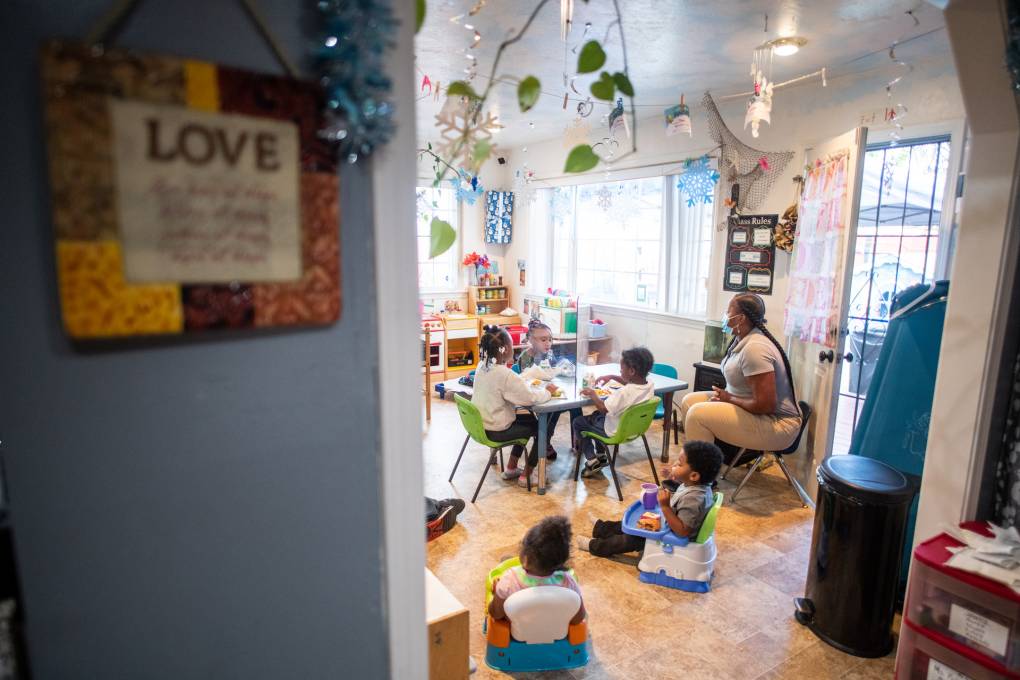
"caption": "Katina Richardson sits with the children in the day care that she runs in Hayward on Dec. 15, 2020.",
"description": "Katina Richardson sits with the children in the daycare that she runs in Hayward on Dec. 15, 2020.",
"title": "RS46403_007_KQED_Hayward_Daycare_12152020-qut",
"credit": "Beth LaBerge/KQED",
"status": "inherit",
"altTag": null,
"isLoading": false,
"fetchFailed": false
},
"news_11782412": {
"type": "attachments",
"id": "news_11782412",
"meta": {
"index": "attachments_1716263798",
"site": "news",
"id": "11782412",
"found": true
},
"parent": 11782393,
"imgSizes": {
"apple_news_ca_landscape_5_5": {
"file": "https://ww2.kqed.org/app/uploads/sites/10/2019/10/RS39716_Nest_012-qut-1044x783.jpg",
"width": 1044,
"mimeType": "image/jpeg",
"height": 783
},
"apple_news_ca_square_4_0": {
"file": "https://ww2.kqed.org/app/uploads/sites/10/2019/10/RS39716_Nest_012-qut-470x470.jpg",
"width": 470,
"mimeType": "image/jpeg",
"height": 470
},
"twentyfourteen-full-width": {
"file": "https://ww2.kqed.org/app/uploads/sites/10/2019/10/RS39716_Nest_012-qut-1038x576.jpg",
"width": 1038,
"mimeType": "image/jpeg",
"height": 576
},
"thumbnail": {
"file": "https://ww2.kqed.org/app/uploads/sites/10/2019/10/RS39716_Nest_012-qut-160x107.jpg",
"width": 160,
"mimeType": "image/jpeg",
"height": 107
},
"post-thumbnail": {
"file": "https://ww2.kqed.org/app/uploads/sites/10/2019/10/RS39716_Nest_012-qut-672x372.jpg",
"width": 672,
"mimeType": "image/jpeg",
"height": 372
},
"kqedFullSize": {
"file": "https://ww2.kqed.org/app/uploads/sites/10/2019/10/RS39716_Nest_012-qut.jpg",
"width": 1920,
"height": 1280
},
"apple_news_ca_landscape_4_7": {
"file": "https://ww2.kqed.org/app/uploads/sites/10/2019/10/RS39716_Nest_012-qut-632x474.jpg",
"width": 632,
"mimeType": "image/jpeg",
"height": 474
},
"large": {
"file": "https://ww2.kqed.org/app/uploads/sites/10/2019/10/RS39716_Nest_012-qut-1020x680.jpg",
"width": 1020,
"mimeType": "image/jpeg",
"height": 680
},
"complete_open_graph": {
"file": "https://ww2.kqed.org/app/uploads/sites/10/2019/10/RS39716_Nest_012-qut-1200x800.jpg",
"width": 1200,
"mimeType": "image/jpeg",
"height": 800
},
"apple_news_ca_landscape_4_0": {
"file": "https://ww2.kqed.org/app/uploads/sites/10/2019/10/RS39716_Nest_012-qut-536x402.jpg",
"width": 536,
"mimeType": "image/jpeg",
"height": 402
},
"apple_news_ca_portrait_12_9": {
"file": "https://ww2.kqed.org/app/uploads/sites/10/2019/10/RS39716_Nest_012-qut-1122x1280.jpg",
"width": 1122,
"mimeType": "image/jpeg",
"height": 1280
},
"medium": {
"file": "https://ww2.kqed.org/app/uploads/sites/10/2019/10/RS39716_Nest_012-qut-800x533.jpg",
"width": 800,
"mimeType": "image/jpeg",
"height": 533
},
"apple_news_ca_portrait_4_0": {
"file": "https://ww2.kqed.org/app/uploads/sites/10/2019/10/RS39716_Nest_012-qut-354x472.jpg",
"width": 354,
"mimeType": "image/jpeg",
"height": 472
},
"apple_news_ca_portrait_9_7": {
"file": "https://ww2.kqed.org/app/uploads/sites/10/2019/10/RS39716_Nest_012-qut-840x1120.jpg",
"width": 840,
"mimeType": "image/jpeg",
"height": 1120
},
"apple_news_ca_landscape_12_9": {
"file": "https://ww2.kqed.org/app/uploads/sites/10/2019/10/RS39716_Nest_012-qut-1832x1280.jpg",
"width": 1832,
"mimeType": "image/jpeg",
"height": 1280
},
"apple_news_ca_square_9_7": {
"file": "https://ww2.kqed.org/app/uploads/sites/10/2019/10/RS39716_Nest_012-qut-1104x1104.jpg",
"width": 1104,
"mimeType": "image/jpeg",
"height": 1104
},
"apple_news_ca_portrait_4_7": {
"file": "https://ww2.kqed.org/app/uploads/sites/10/2019/10/RS39716_Nest_012-qut-414x552.jpg",
"width": 414,
"mimeType": "image/jpeg",
"height": 552
},
"apple_news_ca_square_12_9": {
"file": "https://ww2.kqed.org/app/uploads/sites/10/2019/10/RS39716_Nest_012-qut-1472x1280.jpg",
"width": 1472,
"mimeType": "image/jpeg",
"height": 1280
},
"apple_news_ca_portrait_5_5": {
"file": "https://ww2.kqed.org/app/uploads/sites/10/2019/10/RS39716_Nest_012-qut-687x916.jpg",
"width": 687,
"mimeType": "image/jpeg",
"height": 916
},
"full-width": {
"file": "https://ww2.kqed.org/app/uploads/sites/10/2019/10/RS39716_Nest_012-qut-1920x1280.jpg",
"width": 1920,
"mimeType": "image/jpeg",
"height": 1280
},
"apple_news_ca_square_4_7": {
"file": "https://ww2.kqed.org/app/uploads/sites/10/2019/10/RS39716_Nest_012-qut-550x550.jpg",
"width": 550,
"mimeType": "image/jpeg",
"height": 550
},
"apple_news_ca_landscape_9_7": {
"file": "https://ww2.kqed.org/app/uploads/sites/10/2019/10/RS39716_Nest_012-qut-1376x1032.jpg",
"width": 1376,
"mimeType": "image/jpeg",
"height": 1032
},
"apple_news_ca_square_5_5": {
"file": "https://ww2.kqed.org/app/uploads/sites/10/2019/10/RS39716_Nest_012-qut-912x912.jpg",
"width": 912,
"mimeType": "image/jpeg",
"height": 912
}
},
"publishDate": 1571945386,
"modified": 1572025030,
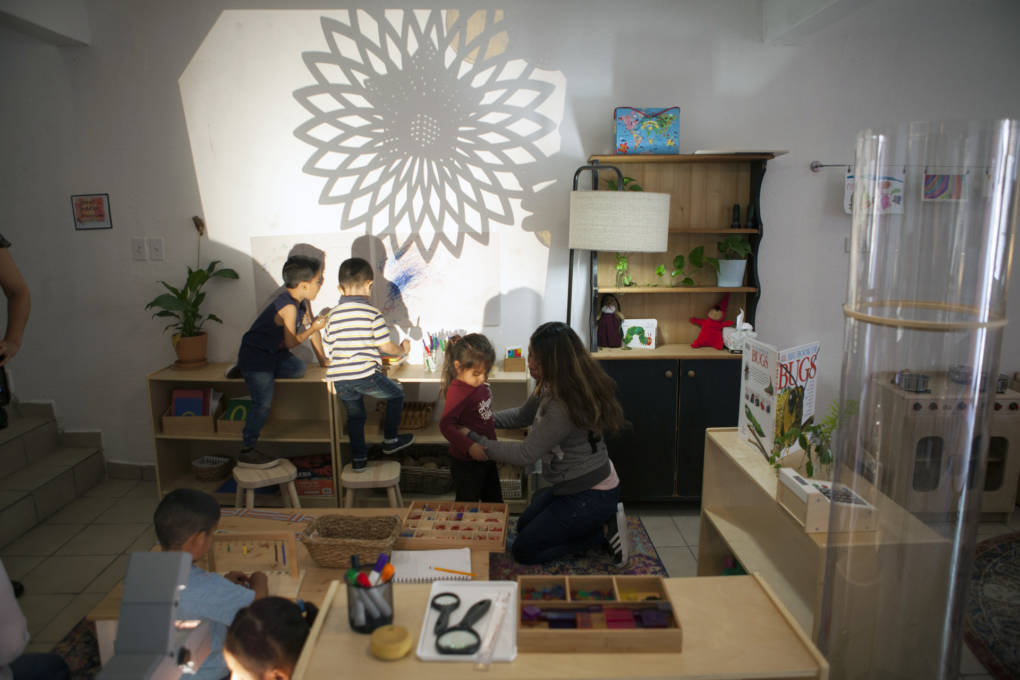
"caption": "Kids project shapes onto the walls at the Nest Tijuana. ",
"description": "Kids project shapes onto the walls and play with colorful magnetic blocks at the Nest Tijuana. ",
"title": "RS39716_Nest_012-qut",
"credit": "Erin Siegal McIntyre/KQED",
"status": "inherit",
"isLoading": false,
"fetchFailed": false
},
"news_11755259": {
"type": "attachments",
"id": "news_11755259",
"meta": {
"index": "attachments_1716263798",
"site": "news",
"id": "11755259",
"found": true
},
"parent": 11754857,
"imgSizes": {
"apple_news_ca_landscape_5_5": {
"file": "https://ww2.kqed.org/app/uploads/sites/10/2019/06/kids-breakfast-1044x783.jpg",
"width": 1044,
"mimeType": "image/jpeg",
"height": 783
},
"apple_news_ca_square_4_0": {
"file": "https://ww2.kqed.org/app/uploads/sites/10/2019/06/kids-breakfast-470x470.jpg",
"width": 470,
"mimeType": "image/jpeg",
"height": 470
},
"twentyfourteen-full-width": {
"file": "https://ww2.kqed.org/app/uploads/sites/10/2019/06/kids-breakfast-1038x576.jpg",
"width": 1038,
"mimeType": "image/jpeg",
"height": 576
},
"thumbnail": {
"file": "https://ww2.kqed.org/app/uploads/sites/10/2019/06/kids-breakfast-160x120.jpg",
"width": 160,
"mimeType": "image/jpeg",
"height": 120
},
"post-thumbnail": {
"file": "https://ww2.kqed.org/app/uploads/sites/10/2019/06/kids-breakfast-672x372.jpg",
"width": 672,
"mimeType": "image/jpeg",
"height": 372
},
"kqedFullSize": {
"file": "https://ww2.kqed.org/app/uploads/sites/10/2019/06/kids-breakfast-e1591200497799.jpg",
"width": 1331,
"height": 998
},
"apple_news_ca_landscape_4_7": {
"file": "https://ww2.kqed.org/app/uploads/sites/10/2019/06/kids-breakfast-632x474.jpg",
"width": 632,
"mimeType": "image/jpeg",
"height": 474
},
"large": {
"file": "https://ww2.kqed.org/app/uploads/sites/10/2019/06/kids-breakfast-1020x765.jpg",
"width": 1020,
"mimeType": "image/jpeg",
"height": 765
},
"complete_open_graph": {
"file": "https://ww2.kqed.org/app/uploads/sites/10/2019/06/kids-breakfast-1200x900.jpg",
"width": 1200,
"mimeType": "image/jpeg",
"height": 900
},
"apple_news_ca_landscape_4_0": {
"file": "https://ww2.kqed.org/app/uploads/sites/10/2019/06/kids-breakfast-536x402.jpg",
"width": 536,
"mimeType": "image/jpeg",
"height": 402
},
"apple_news_ca_portrait_12_9": {
"file": "https://ww2.kqed.org/app/uploads/sites/10/2019/06/kids-breakfast-1122x1440.jpg",
"width": 1122,
"mimeType": "image/jpeg",
"height": 1440
},
"medium": {
"file": "https://ww2.kqed.org/app/uploads/sites/10/2019/06/kids-breakfast-800x600.jpg",
"width": 800,
"mimeType": "image/jpeg",
"height": 600
},
"apple_news_ca_portrait_4_0": {
"file": "https://ww2.kqed.org/app/uploads/sites/10/2019/06/kids-breakfast-354x472.jpg",
"width": 354,
"mimeType": "image/jpeg",
"height": 472
},
"apple_news_ca_portrait_9_7": {
"file": "https://ww2.kqed.org/app/uploads/sites/10/2019/06/kids-breakfast-840x1120.jpg",
"width": 840,
"mimeType": "image/jpeg",
"height": 1120
},
"apple_news_ca_landscape_12_9": {
"file": "https://ww2.kqed.org/app/uploads/sites/10/2019/06/kids-breakfast-1832x1374.jpg",
"width": 1832,
"mimeType": "image/jpeg",
"height": 1374
},
"apple_news_ca_square_9_7": {
"file": "https://ww2.kqed.org/app/uploads/sites/10/2019/06/kids-breakfast-1104x1104.jpg",
"width": 1104,
"mimeType": "image/jpeg",
"height": 1104
},
"apple_news_ca_portrait_4_7": {
"file": "https://ww2.kqed.org/app/uploads/sites/10/2019/06/kids-breakfast-414x552.jpg",
"width": 414,
"mimeType": "image/jpeg",
"height": 552
},
"apple_news_ca_square_12_9": {
"file": "https://ww2.kqed.org/app/uploads/sites/10/2019/06/kids-breakfast-1472x1440.jpg",
"width": 1472,
"mimeType": "image/jpeg",
"height": 1440
},
"apple_news_ca_portrait_5_5": {
"file": "https://ww2.kqed.org/app/uploads/sites/10/2019/06/kids-breakfast-687x916.jpg",
"width": 687,
"mimeType": "image/jpeg",
"height": 916
},
"full-width": {
"file": "https://ww2.kqed.org/app/uploads/sites/10/2019/06/kids-breakfast-1920x1440.jpg",
"width": 1920,
"mimeType": "image/jpeg",
"height": 1440
},
"apple_news_ca_square_4_7": {
"file": "https://ww2.kqed.org/app/uploads/sites/10/2019/06/kids-breakfast-550x550.jpg",
"width": 550,
"mimeType": "image/jpeg",
"height": 550
},
"apple_news_ca_landscape_9_7": {
"file": "https://ww2.kqed.org/app/uploads/sites/10/2019/06/kids-breakfast-1376x1032.jpg",
"width": 1376,
"mimeType": "image/jpeg",
"height": 1032
},
"apple_news_ca_square_5_5": {
"file": "https://ww2.kqed.org/app/uploads/sites/10/2019/06/kids-breakfast-912x912.jpg",
"width": 912,
"mimeType": "image/jpeg",
"height": 912
}
},
"publishDate": 1560811843,
"modified": 1563837592,
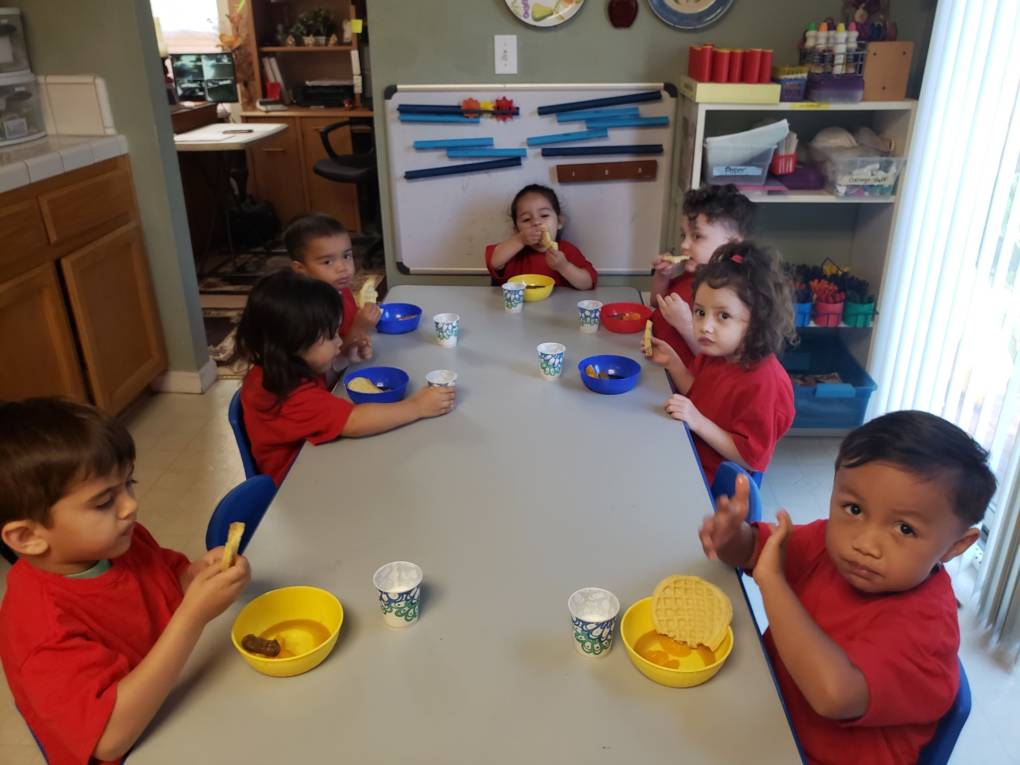
"caption": "Kids at Alexander Preschool and Child Care in Elk Grove eat breakfast.",
"description": "Kids at Alexander Preschool and Child Care in Elk Grove, CA eat breakfast.",
"title": "kids breakfast",
"credit": "Katie Orr/KQED",
"status": "inherit",
"isLoading": false,
"fetchFailed": false
},
"news_11745458": {
"type": "attachments",
"id": "news_11745458",
"meta": {
"index": "attachments_1716263798",
"site": "news",
"id": "11745458",
"found": true
},
"parent": 11745428,
"imgSizes": {
"apple_news_ca_landscape_5_5": {
"file": "https://ww2.kqed.org/app/uploads/sites/10/2019/05/RS36994_On-BART-qut-1044x783.jpg",
"width": 1044,
"mimeType": "image/jpeg",
"height": 783
},
"apple_news_ca_square_4_0": {
"file": "https://ww2.kqed.org/app/uploads/sites/10/2019/05/RS36994_On-BART-qut-470x470.jpg",
"width": 470,
"mimeType": "image/jpeg",
"height": 470
},
"twentyfourteen-full-width": {
"file": "https://ww2.kqed.org/app/uploads/sites/10/2019/05/RS36994_On-BART-qut-1038x576.jpg",
"width": 1038,
"mimeType": "image/jpeg",
"height": 576
},
"thumbnail": {
"file": "https://ww2.kqed.org/app/uploads/sites/10/2019/05/RS36994_On-BART-qut-160x120.jpg",
"width": 160,
"mimeType": "image/jpeg",
"height": 120
},
"post-thumbnail": {
"file": "https://ww2.kqed.org/app/uploads/sites/10/2019/05/RS36994_On-BART-qut-672x372.jpg",
"width": 672,
"mimeType": "image/jpeg",
"height": 372
},
"kqedFullSize": {
"file": "https://ww2.kqed.org/app/uploads/sites/10/2019/05/RS36994_On-BART-qut.jpg",
"width": 1920,
"height": 1440
},
"apple_news_ca_landscape_4_7": {
"file": "https://ww2.kqed.org/app/uploads/sites/10/2019/05/RS36994_On-BART-qut-632x474.jpg",
"width": 632,
"mimeType": "image/jpeg",
"height": 474
},
"large": {
"file": "https://ww2.kqed.org/app/uploads/sites/10/2019/05/RS36994_On-BART-qut-1020x765.jpg",
"width": 1020,
"mimeType": "image/jpeg",
"height": 765
},
"complete_open_graph": {
"file": "https://ww2.kqed.org/app/uploads/sites/10/2019/05/RS36994_On-BART-qut-1200x900.jpg",
"width": 1200,
"mimeType": "image/jpeg",
"height": 900
},
"apple_news_ca_landscape_4_0": {
"file": "https://ww2.kqed.org/app/uploads/sites/10/2019/05/RS36994_On-BART-qut-536x402.jpg",
"width": 536,
"mimeType": "image/jpeg",
"height": 402
},
"apple_news_ca_portrait_12_9": {
"file": "https://ww2.kqed.org/app/uploads/sites/10/2019/05/RS36994_On-BART-qut-1122x1440.jpg",
"width": 1122,
"mimeType": "image/jpeg",
"height": 1440
},
"medium": {
"file": "https://ww2.kqed.org/app/uploads/sites/10/2019/05/RS36994_On-BART-qut-800x600.jpg",
"width": 800,
"mimeType": "image/jpeg",
"height": 600
},
"apple_news_ca_portrait_4_0": {
"file": "https://ww2.kqed.org/app/uploads/sites/10/2019/05/RS36994_On-BART-qut-354x472.jpg",
"width": 354,
"mimeType": "image/jpeg",
"height": 472
},
"apple_news_ca_portrait_9_7": {
"file": "https://ww2.kqed.org/app/uploads/sites/10/2019/05/RS36994_On-BART-qut-840x1120.jpg",
"width": 840,
"mimeType": "image/jpeg",
"height": 1120
},
"apple_news_ca_landscape_12_9": {
"file": "https://ww2.kqed.org/app/uploads/sites/10/2019/05/RS36994_On-BART-qut-1832x1374.jpg",
"width": 1832,
"mimeType": "image/jpeg",
"height": 1374
},
"apple_news_ca_square_9_7": {
"file": "https://ww2.kqed.org/app/uploads/sites/10/2019/05/RS36994_On-BART-qut-1104x1104.jpg",
"width": 1104,
"mimeType": "image/jpeg",
"height": 1104
},
"apple_news_ca_portrait_4_7": {
"file": "https://ww2.kqed.org/app/uploads/sites/10/2019/05/RS36994_On-BART-qut-414x552.jpg",
"width": 414,
"mimeType": "image/jpeg",
"height": 552
},
"apple_news_ca_square_12_9": {
"file": "https://ww2.kqed.org/app/uploads/sites/10/2019/05/RS36994_On-BART-qut-1472x1440.jpg",
"width": 1472,
"mimeType": "image/jpeg",
"height": 1440
},
"apple_news_ca_portrait_5_5": {
"file": "https://ww2.kqed.org/app/uploads/sites/10/2019/05/RS36994_On-BART-qut-687x916.jpg",
"width": 687,
"mimeType": "image/jpeg",
"height": 916
},
"full-width": {
"file": "https://ww2.kqed.org/app/uploads/sites/10/2019/05/RS36994_On-BART-qut-1920x1440.jpg",
"width": 1920,
"mimeType": "image/jpeg",
"height": 1440
},
"apple_news_ca_square_4_7": {
"file": "https://ww2.kqed.org/app/uploads/sites/10/2019/05/RS36994_On-BART-qut-550x550.jpg",
"width": 550,
"mimeType": "image/jpeg",
"height": 550
},
"apple_news_ca_landscape_9_7": {
"file": "https://ww2.kqed.org/app/uploads/sites/10/2019/05/RS36994_On-BART-qut-1376x1032.jpg",
"width": 1376,
"mimeType": "image/jpeg",
"height": 1032
},
"apple_news_ca_square_5_5": {
"file": "https://ww2.kqed.org/app/uploads/sites/10/2019/05/RS36994_On-BART-qut-912x912.jpg",
"width": 912,
"mimeType": "image/jpeg",
"height": 912
}
},
"publishDate": 1557184413,
"modified": 1557269715,
"caption": "Jacquelyne Gettone and her son, Matthew, ride BART on their way to day care and work.",
"description": "Jacquelyne Gettone and her son Matthew ride the BART on their way to day care and work.",
"title": "RS36994_On BART-qut",
"credit": "Katie Orr/KQED",
"status": "inherit",
"isLoading": false,
"fetchFailed": false
},
"news_11744002": {
"type": "attachments",
"id": "news_11744002",
"meta": {
"index": "attachments_1716263798",
"site": "news",
"id": "11744002",
"found": true
},
"parent": 11743975,
"imgSizes": {
"twentyfourteen-full-width": {
"file": "https://ww2.kqed.org/app/uploads/sites/10/2019/04/RS10235_017-1038x576.jpg",
"width": 1038,
"mimeType": "image/jpeg",
"height": 576
},
"thumbnail": {
"file": "https://ww2.kqed.org/app/uploads/sites/10/2019/04/RS10235_017-160x107.jpg",
"width": 160,
"mimeType": "image/jpeg",
"height": 107
},
"post-thumbnail": {
"file": "https://ww2.kqed.org/app/uploads/sites/10/2019/04/RS10235_017-672x372.jpg",
"width": 672,
"mimeType": "image/jpeg",
"height": 372
},
"kqedFullSize": {
"file": "https://ww2.kqed.org/app/uploads/sites/10/2019/04/RS10235_017.jpg",
"width": 1200,
"height": 800
},
"large": {
"file": "https://ww2.kqed.org/app/uploads/sites/10/2019/04/RS10235_017-1020x680.jpg",
"width": 1020,
"mimeType": "image/jpeg",
"height": 680
},
"complete_open_graph": {
"file": "https://ww2.kqed.org/app/uploads/sites/10/2019/04/RS10235_017-1200x800.jpg",
"width": 1200,
"mimeType": "image/jpeg",
"height": 800
},
"medium": {
"file": "https://ww2.kqed.org/app/uploads/sites/10/2019/04/RS10235_017-800x533.jpg",
"width": 800,
"mimeType": "image/jpeg",
"height": 533
}
},
"publishDate": 1556665265,
"modified": 1556665635,
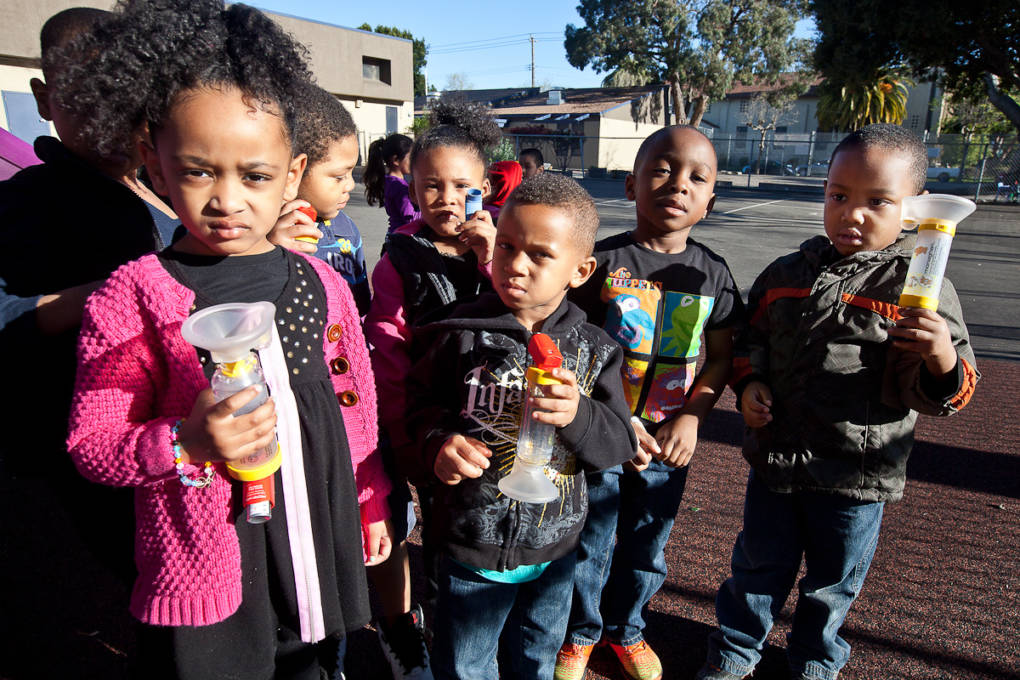
"caption": "Students at a preschool in West Oakland, where a significant number of children have asthma and bring inhalers to class.",
"description": null,
"title": "RS10235_017",
"credit": "Deborah Svoboda/KQED",
"status": "inherit",
"isLoading": false,
"fetchFailed": false
}
},
"audioPlayerReducer": {
"postId": "stream_live",
"isPaused": true,
"isPlaying": false,
"pfsActive": false,
"pledgeModalIsOpen": true,
"playerDrawerIsOpen": false,
"liveAudioPlayStartedAt": 0,
"liveAudioPlayContext": ""
},
"authorsReducer": {
"byline_news_11893791": {
"type": "authors",
"id": "byline_news_11893791",
"meta": {
"override": true
},
"slug": "byline_news_11893791",
"name": "Deepa Fernandes",
"isLoading": false
},
"byline_news_11743975": {
"type": "authors",
"id": "byline_news_11743975",
"meta": {
"override": true
},
"slug": "byline_news_11743975",
"name": "Deepa Fernandes",
"isLoading": false
},
"astupi": {
"type": "authors",
"id": "70",
"meta": {
"index": "authors_1716337520",
"id": "70",
"found": true
},
"name": "Amanda Stupi",
"firstName": "Amanda",
"lastName": "Stupi",
"slug": "astupi",
"email": "astupi@kqed.org",
"display_author_email": false,
"staff_mastheads": [],
"title": "Senior Engagement Producer",
"bio": "Amanda joined KQED Science’s engagement team as a Senior Audience Engagement Strategist in the spring of 2019. She has helped craft messaging around wildfires, the coronavirus pandemic, climate change and many other stories. She has also brought KQED Science to new platforms such as Reddit’s Ask Me Anything series. Prior to joining KQED Science, Amanda spent seven years as an engagement producer with Forum, KQED’s daily live call-in show. She got her start in radio at KALW's weekly call in show, City Visions, before going on to an internship and stint at NPR's Talk of the Nation.\r\n\r\nPrior to journalism, Amanda taught English at Lowell High School. She's a native of Petaluma and currently lives under the \"South San Francisco the Industrial City\" sign in South City. She believes that engagement is vital to news’s future and that good journalism listens as much as it asks questions.",
"avatar": "https://secure.gravatar.com/avatar/e981c503e5c162da701dcaccfbf87e35?s=600&d=blank&r=g",
"twitter": null,
"facebook": null,
"instagram": null,
"linkedin": null,
"sites": [
{
"site": "arts",
"roles": [
"Contributor"
]
},
{
"site": "news",
"roles": [
"editor"
]
},
{
"site": "pop",
"roles": [
"contributor"
]
},
{
"site": "stateofhealth",
"roles": [
"editor"
]
},
{
"site": "science",
"roles": []
},
{
"site": "perspectives",
"roles": [
"editor"
]
}
],
"headData": {
"title": "Amanda Stupi | KQED",
"description": "Senior Engagement Producer",
"ogImgSrc": "https://secure.gravatar.com/avatar/e981c503e5c162da701dcaccfbf87e35?s=600&d=blank&r=g",
"twImgSrc": "https://secure.gravatar.com/avatar/e981c503e5c162da701dcaccfbf87e35?s=600&d=blank&r=g"
},
"isLoading": false,
"link": "/author/astupi"
},
"sasha-khokha": {
"type": "authors",
"id": "254",
"meta": {
"index": "authors_1716337520",
"id": "254",
"found": true
},
"name": "Sasha Khokha",
"firstName": "Sasha",
"lastName": "Khokha",
"slug": "sasha-khokha",
"email": "skhokha@kqed.org",
"display_author_email": true,
"staff_mastheads": [
"news"
],
"title": "Host, The California Report Magazine",
"bio": "Sasha Khokha is the host of \u003cem>The California Report's \u003c/em> weekly magazine program, which takes listeners on sound-rich excursions to meet the people that make the Golden State unique -- through audio documentaries and long-form stories. As \u003cem>The California Report's\u003c/em> Central Valley Bureau Chief based in Fresno for nearly a dozen years, Sasha brought the lives and concerns of rural Californians to listeners around the state. Her reporting helped expose the hidden price immigrant women janitors and farmworkers may pay to keep their jobs: sexual assault at work. It inspired two new California laws to protect them from sexual harassment. She was a key member of the reporting team for the Frontline film \u003cem>Rape on the Night Shift, \u003c/em>which was nominated for two national Emmys. Sasha has also won a national Edward R. Murrow and a national PRNDI award for investigative reporting, as well as multiple prizes from the Society for Professional Journalists. Sasha is a proud alum of the UC Berkeley Graduate School of Journalism and Brown University and a member of the South Asian Journalists Association.",
"avatar": "https://secure.gravatar.com/avatar/e4b5e1541aaeea2aa356aa1fb2a68950?s=600&d=blank&r=g",
"twitter": "KQEDSashaKhokha",
"facebook": null,
"instagram": null,
"linkedin": null,
"sites": [
{
"site": "news",
"roles": [
"editor"
]
},
{
"site": "stateofhealth",
"roles": [
"author"
]
},
{
"site": "science",
"roles": [
"author"
]
},
{
"site": "quest",
"roles": [
"subscriber"
]
}
],
"headData": {
"title": "Sasha Khokha | KQED",
"description": "Host, The California Report Magazine",
"ogImgSrc": "https://secure.gravatar.com/avatar/e4b5e1541aaeea2aa356aa1fb2a68950?s=600&d=blank&r=g",
"twImgSrc": "https://secure.gravatar.com/avatar/e4b5e1541aaeea2aa356aa1fb2a68950?s=600&d=blank&r=g"
},
"isLoading": false,
"link": "/author/sasha-khokha"
},
"korr": {
"type": "authors",
"id": "11200",
"meta": {
"index": "authors_1716337520",
"id": "11200",
"found": true
},
"name": "Katie Orr",
"firstName": "Katie",
"lastName": "Orr",
"slug": "korr",
"email": "korr@kqed.org",
"display_author_email": false,
"staff_mastheads": [],
"title": "KQED Contributor",
"bio": "Katie Orr was a Sacramento-based reporter for KQED's Politics and Government Desk, covering the state Capitol and a variety of issues including women in politics, voting and elections and legislation. Prior to joining KQED in 2016, Katie was state government reporter for Capital Public Radio in Sacramento. She's also worked for KPBS in San Diego, where she covered City Hall.\r\n\r\nKatie received her masters degree in political science from San Diego State University and holds a Bachelors degree in broadcast journalism from Arizona State University.\r\n\r\nIn 2015 Katie won a national Clarion Award for a series of stories she did on women in California politics. She's been honored by the Society for Professional Journalists and, in 2013, was named by \u003cem>The Washington Post\u003c/em> as one of the country's top state Capitol reporters. She's also reported for the award-winning documentary series \u003cem>The View from Here \u003c/em>and was part of the team that won national PRNDI and Gabriel Awards in 2015. She lives in Sacramento with her husband. Twitter: @1KatieOrr",
"avatar": "https://secure.gravatar.com/avatar/41a40b25845adc78f50808670860449e?s=600&d=blank&r=g",
"twitter": "1katieorr",
"facebook": null,
"instagram": null,
"linkedin": null,
"sites": [
{
"site": "news",
"roles": [
"subscriber"
]
},
{
"site": "stateofhealth",
"roles": [
"author"
]
},
{
"site": "forum",
"roles": [
"author"
]
}
],
"headData": {
"title": "Katie Orr | KQED",
"description": "KQED Contributor",
"ogImgSrc": "https://secure.gravatar.com/avatar/41a40b25845adc78f50808670860449e?s=600&d=blank&r=g",
"twImgSrc": "https://secure.gravatar.com/avatar/41a40b25845adc78f50808670860449e?s=600&d=blank&r=g"
},
"isLoading": false,
"link": "/author/korr"
},
"lsarah": {
"type": "authors",
"id": "11626",
"meta": {
"index": "authors_1716337520",
"id": "11626",
"found": true
},
"name": "Lakshmi Sarah",
"firstName": "Lakshmi",
"lastName": "Sarah",
"slug": "lsarah",
"email": "lsarah@kqed.org",
"display_author_email": false,
"staff_mastheads": [],
"title": "Digital Producer",
"bio": "Lakshmi Sarah is an educator, author and journalist with a focus on innovative storytelling. She has worked with newspapers, radio and magazines from Ahmedabad, India to Los Angeles, California. She has written and produced for Die Zeit, Global Voices, AJ+, KQED, Fusion Media Group and the New York Times.",
"avatar": "https://secure.gravatar.com/avatar/652dcaecd8b28826fc17a8b2d6bb4e93?s=600&d=blank&r=g",
"twitter": "lakitalki",
"facebook": null,
"instagram": "https://www.instagram.com/laki.talki/",
"linkedin": "https://www.linkedin.com/in/lakisarah/",
"sites": [
{
"site": "arts",
"roles": []
},
{
"site": "news",
"roles": []
},
{
"site": "bayareabites",
"roles": []
},
{
"site": "science",
"roles": []
}
],
"headData": {
"title": "Lakshmi Sarah | KQED",
"description": "Digital Producer",
"ogImgSrc": "https://secure.gravatar.com/avatar/652dcaecd8b28826fc17a8b2d6bb4e93?s=600&d=blank&r=g",
"twImgSrc": "https://secure.gravatar.com/avatar/652dcaecd8b28826fc17a8b2d6bb4e93?s=600&d=blank&r=g"
},
"isLoading": false,
"link": "/author/lsarah"
},
"blaberge": {
"type": "authors",
"id": "11667",
"meta": {
"index": "authors_1716337520",
"id": "11667",
"found": true
},
"name": "Beth LaBerge",
"firstName": "Beth",
"lastName": "LaBerge",
"slug": "blaberge",
"email": "blaberge@KQED.org",
"display_author_email": true,
"staff_mastheads": [
"news"
],
"title": "Photographer, News",
"bio": "Beth LaBerge is a visual journalist for \u003ca href=\"https://www.kqed.org/news\">KQED News\u003c/a>.",
"avatar": "https://secure.gravatar.com/avatar/ce49ecd7a1306685637b45a1f6f5dedfc4ae9481966eb596fea5160466dd6319?s=600&d=blank&r=g",
"twitter": null,
"bluesky": null,
"facebook": null,
"instagram": "https://www.instagram.com/bethlaberge/",
"linkedin": null,
"sites": [
{
"site": "arts",
"roles": [
"editor",
"manage_categories"
]
},
{
"site": "news",
"roles": [
"editor",
"edit_plugins",
"manage_categories"
]
},
{
"site": "science",
"roles": [
"editor",
"contributor",
"author",
"manage_categories"
]
},
{
"site": "perspectives",
"roles": [
"editor"
]
},
{
"site": "liveblog",
"roles": [
"editor"
]
}
],
"headData": {
"title": "Beth LaBerge | KQED",
"description": "Photographer, News",
"ogImgSrc": "https://secure.gravatar.com/avatar/ce49ecd7a1306685637b45a1f6f5dedfc4ae9481966eb596fea5160466dd6319?s=600&d=blank&r=g",
"twImgSrc": "https://secure.gravatar.com/avatar/ce49ecd7a1306685637b45a1f6f5dedfc4ae9481966eb596fea5160466dd6319?s=600&d=blank&r=g"
},
"isLoading": false,
"link": "/author/blaberge"
},
"nnavarro": {
"type": "authors",
"id": "11756",
"meta": {
"index": "authors_1716337520",
"id": "11756",
"found": true
},
"name": "Natalia Navarro",
"firstName": "Natalia",
"lastName": "Navarro",
"slug": "nnavarro",
"email": "nnavarro@kqed.org",
"display_author_email": true,
"staff_mastheads": [
"news"
],
"title": "Afternoon News Anchor",
"bio": "Natalia Navarro is KQED's afternoon radio news anchor. She came to KQED in 2021 from Colorado Public Radio, where she was a reporter and host. She has received several awards for her work covering daily and breaking news from professional organizations such as the San Francisco Press Club, Society of Professional Journalists and the Colorado Broadcasters Association. Natalia is originally from Tucson, Arizona, where she got her start in journalism writing for the Arizona Daily Star, Arizona Public Media and the Tucson Weekly. Natalia earned her bachelor's degree in journalism and economics, and her master's degree in journalism from the University of Arizona.",
"avatar": "https://secure.gravatar.com/avatar/a2bdb19fd9520bdea295a2d5f9b2ad65ec51cf0bf559fb1cc041d3a0a04d62ad?s=600&d=blank&r=g",
"twitter": "@NataliaVNavarro",
"bluesky": null,
"facebook": null,
"instagram": null,
"linkedin": null,
"sites": [
{
"site": "news",
"roles": [
"editor"
]
}
],
"headData": {
"title": "Natalia Navarro | KQED",
"description": "Afternoon News Anchor",
"ogImgSrc": "https://secure.gravatar.com/avatar/a2bdb19fd9520bdea295a2d5f9b2ad65ec51cf0bf559fb1cc041d3a0a04d62ad?s=600&d=blank&r=g",
"twImgSrc": "https://secure.gravatar.com/avatar/a2bdb19fd9520bdea295a2d5f9b2ad65ec51cf0bf559fb1cc041d3a0a04d62ad?s=600&d=blank&r=g"
},
"isLoading": false,
"link": "/author/nnavarro"
},
"daisynguyen": {
"type": "authors",
"id": "11829",
"meta": {
"index": "authors_1716337520",
"id": "11829",
"found": true
},
"name": "Daisy Nguyen",
"firstName": "Daisy",
"lastName": "Nguyen",
"slug": "daisynguyen",
"email": "daisynguyen@kqed.org",
"display_author_email": true,
"staff_mastheads": [
"news"
],
"title": "KQED Contributor",
"bio": "I have covered early childhood education and child care for KQED since 2022. I focus on policies aimed at increasing access to early care and education and how they shape individual lives. I've been a journalist for more than two decades, with most of that time devoted to covering breaking news throughout California for The Associated Press. I grew up in San Francisco and studied at UC Davis and Columbia University's Graduate School of Journalism. I live in Oakland with my husband and two kids.",
"avatar": "https://secure.gravatar.com/avatar/2da2127c27f7143b53ebd419800fd55f?s=600&d=blank&r=g",
"twitter": null,
"facebook": null,
"instagram": null,
"linkedin": "https://www.linkedin.com/in/daisynguyen/",
"sites": [
{
"site": "news",
"roles": [
"author"
]
},
{
"site": "liveblog",
"roles": [
"author"
]
}
],
"headData": {
"title": "Daisy Nguyen | KQED",
"description": "KQED Contributor",
"ogImgSrc": "https://secure.gravatar.com/avatar/2da2127c27f7143b53ebd419800fd55f?s=600&d=blank&r=g",
"twImgSrc": "https://secure.gravatar.com/avatar/2da2127c27f7143b53ebd419800fd55f?s=600&d=blank&r=g"
},
"isLoading": false,
"link": "/author/daisynguyen"
}
},
"pagesReducer": {
"news_tag_early-childhood-education-and-care": {
"type": "terms",
"id": "news_32102",
"meta": {
"index": "terms_1716263798",
"site": "news",
"id": "32102",
"score": 10.404627
},
"featImg": null,
"name": "early childhood education and care",
"description": null,
"taxonomy": "tag",
"headData": {
"twImgId": null,
"twTitle": null,
"ogTitle": null,
"ogImgId": null,
"twDescription": null,
"description": null,
"title": "early childhood education and care Archives | KQED News",
"ogDescription": null
},
"ttid": 32119,
"slug": "early-childhood-education-and-care",
"isLoading": false,
"title": "early childhood education and care",
"pageMeta": {
"site": "news",
"WpPageTemplate": "page-topic-editorial",
"currentPage": 9
},
"blocks": [
{
"blockName": "kqed/post-list",
"attrs": {
"layout": "cardArticle2",
"query": "posts/news?tag=early-childhood-education-and-care",
"seeMore": false,
"paginated": true,
"page": 9
}
},
{
"blockName": "kqed/ad"
}
]
}
},
"pfsSessionReducer": {},
"postsReducer": {
"stream_live": {
"type": "live",
"id": "stream_live",
"audioUrl": "https://streams.kqed.org/kqedradio",
"title": "Live Stream",
"excerpt": "Live Stream information currently unavailable.",
"link": "/radio",
"featImg": "",
"label": {
"name": "KQED Live",
"link": "/"
}
},
"stream_kqedNewscast": {
"type": "posts",
"id": "stream_kqedNewscast",
"audioUrl": "https://www.kqed.org/.stream/anon/radio/RDnews/newscast.mp3?_=1",
"title": "KQED Newscast",
"featImg": "",
"label": {
"name": "88.5 FM",
"link": "/"
}
},
"news_11934715": {
"type": "posts",
"id": "news_11934715",
"meta": {
"index": "posts_1716263798",
"site": "news",
"id": "11934715",
"score": null,
"sort": [
1670590822000
]
},
"guestAuthors": [],
"slug": "guaranteed-income-program-for-pregnant-black-people-expands-to-4-california-counties",
"title": "Guaranteed Income Program for Pregnant Black People Expands to 4 California Counties",
"publishDate": 1670590822,
"format": "standard",
"headTitle": "Guaranteed Income Program for Pregnant Black People Expands to 4 California Counties | KQED",
"labelTerm": {},
"content": "\u003cp>A first-in-the-nation experiment to give cash to pregnant Black people in San Francisco is expanding to four counties in California after receiving $6.5 million in city and state funding.\u003c/p>\n\u003cp>Since June 2021, the Abundant Birth Project has given $1,000 per month to nearly 150 Black residents during a portion of their pregnancies and the first six months of their children’s lives. With the extra funding from the California Department of Social Services and another $1.5 million in city funds, the program aims to reach another 525 people in San Francisco, Alameda, Contra Costa, Los Angeles and Riverside counties.[pullquote size=\"medium\" align=\"right\" citation=\"Dr. Zea Malawa, director, Expecting Justice\"]‘This funding will provide pregnant people with economic stability during this critical phase in their lives while allowing public health institutions to test a novel and promising public health intervention.’[/pullquote]The goal is to provide financial relief during pregnancy for people who face the highest degrees of income disparities and racial inequity.\u003c/p>\n\u003cp>“This guaranteed income program helps ease some of the financial burdens that all too often keep mothers from being able to prioritize their own health and ultimately impact the health of their babies and family,” Mayor London Breed said in a statement announcing the expansion on Tuesday.\u003c/p>\n\u003cp>“We hope the Abundant Birth Project serves as a model to address racial birth disparities throughout the region and state, and across the country.”\u003c/p>\n\u003cp>Black women experience the \u003ca href=\"https://www.cdc.gov/healthequity/features/maternal-mortality/index.html\">highest maternal mortality rates\u003c/a> among any population and are twice as likely than white women \u003ca href=\"https://www.cdc.gov/reproductivehealth/features/premature-birth/index.html\">to have a preterm birth\u003c/a>. It’s a cause for alarm because premature births are the leading cause of newborn deaths and can lead to lifelong health issues, including chronic disease, learning disabilities and behavioral health issues.[aside postID=\"news_11933199\" label=\"Related Post\"]“For so long, Black women have been excluded from the resources needed to have safe and healthy pregnancies. This funding will provide pregnant people with economic stability during this critical phase in their lives while allowing public health institutions to test a novel and promising public health intervention,” said Dr. Zea Malawa, director of Expecting Justice, which is overseeing the project with the San Francisco Department of Public Health.\u003c/p>\n\u003cp>The health impacts of the program are being studied by the University of California at San Francisco, Berkeley and Davis. In San Francisco, recipients are randomly selected after meeting eligibility requirements (they must be in their first or second trimester and have a household income of less than $100,000 per year). Participation in the study is voluntary.\u003c/p>\n\u003cp>Most participants have said the application process was easy and the program “felt more dignified,” because participants can choose how best to spend the money, said Michaela Taylor, project manager for Expecting Justice. She said some recipients use the extra cash to supplement their family leave, so they can stay home longer to recover from childbirth and bond with their baby.\u003c/p>\n\u003cp>“We want to make sure we’re replicating that as we expand, because that’s the whole thing about abundance, (which is) making sure folks feel celebrated and that they’re just getting a lot of resources,” Taylor said.\u003c/p>\n\u003cp>Expecting Justice is partnering with the Alameda County Public Health Department, the Richmond Rapid Response Fund, the Los Angeles County Department of Public Health, and the Riverside Community Health Foundation to serve their communities over the next two to three years beginning in mid-2023. Recipients will receive monthly stipends of $600 to $1,000 over 12 months, depending on which county they live in.\u003c/p>\n\u003cp>[ad fullwidth]\u003c/p>\n\u003cp>\u003c/p>\n",
"blocks": [],
"excerpt": "A first-in-the-nation experiment to give cash to pregnant Black people in San Francisco is expanding to four counties in California after receiving $6.5 million in city and state funding.",
"status": "publish",
"parent": 0,
"modified": 1721159067,
"stats": {
"hasAudio": false,
"hasVideo": false,
"hasChartOrMap": false,
"iframeSrcs": [],
"hasGoogleForm": false,
"hasGallery": false,
"hasHearkenModule": false,
"hasPolis": false,
"paragraphCount": 11,
"wordCount": 614
},
"headData": {
"title": "Guaranteed Income Program for Pregnant Black People Expands to 4 California Counties | KQED",
"description": "A first-in-the-nation experiment to give cash to pregnant Black people in San Francisco is expanding to four counties in California after receiving $6.5 million in city and state funding.",
"ogTitle": "",
"ogDescription": "",
"ogImgId": "",
"twTitle": "",
"twDescription": "",
"twImgId": "",
"schema": {
"@context": "https://schema.org",
"@type": "NewsArticle",
"headline": "Guaranteed Income Program for Pregnant Black People Expands to 4 California Counties",
"datePublished": "2022-12-09T05:00:22-08:00",
"dateModified": "2024-07-16T12:44:27-07:00",
"image": "https://cdn.kqed.org/wp-content/uploads/2020/02/KQED-OG-Image@1x.png",
"isAccessibleForFree": "True",
"publisher": {
"@type": "NewsMediaOrganization",
"@id": "https://www.kqed.org/#organization",
"name": "KQED",
"logo": "https://cdn.kqed.org/wp-content/uploads/2020/02/KQED-OG-Image@1x.png",
"url": "https://www.kqed.org",
"sameAs": [
"https://www.facebook.com/KQED",
"https://twitter.com/KQED",
"https://www.instagram.com/kqed/",
"https://www.tiktok.com/@kqedofficial",
"https://www.linkedin.com/company/kqed",
"https://www.youtube.com/channel/UCeC0IOo7i1P_61zVUWbJ4nw"
]
}
}
},
"source": "Early Childhood Education and Care",
"sourceUrl": "https://www.kqed.org/early-childhood-education-and-care",
"sticky": false,
"excludeFromSiteSearch": "Include",
"articleAge": "0",
"path": "/news/11934715/guaranteed-income-program-for-pregnant-black-people-expands-to-4-california-counties",
"audioTrackLength": null,
"parsedContent": [
{
"type": "contentString",
"content": "\u003cdiv class=\"post-body\">\u003cp>\u003cp>A first-in-the-nation experiment to give cash to pregnant Black people in San Francisco is expanding to four counties in California after receiving $6.5 million in city and state funding.\u003c/p>\n\u003cp>Since June 2021, the Abundant Birth Project has given $1,000 per month to nearly 150 Black residents during a portion of their pregnancies and the first six months of their children’s lives. With the extra funding from the California Department of Social Services and another $1.5 million in city funds, the program aims to reach another 525 people in San Francisco, Alameda, Contra Costa, Los Angeles and Riverside counties.\u003c/p>\u003c/div>",
"attributes": {
"named": {},
"numeric": []
}
},
{
"type": "component",
"content": "‘This funding will provide pregnant people with economic stability during this critical phase in their lives while allowing public health institutions to test a novel and promising public health intervention.’",
"name": "pullquote",
"attributes": {
"named": {
"size": "medium",
"align": "right",
"citation": "Dr. Zea Malawa, director, Expecting Justice",
"label": ""
},
"numeric": []
}
},
{
"type": "contentString",
"content": "\u003cdiv class=\"post-body\">\u003cp>The goal is to provide financial relief during pregnancy for people who face the highest degrees of income disparities and racial inequity.\u003c/p>\n\u003cp>“This guaranteed income program helps ease some of the financial burdens that all too often keep mothers from being able to prioritize their own health and ultimately impact the health of their babies and family,” Mayor London Breed said in a statement announcing the expansion on Tuesday.\u003c/p>\n\u003cp>“We hope the Abundant Birth Project serves as a model to address racial birth disparities throughout the region and state, and across the country.”\u003c/p>\n\u003cp>Black women experience the \u003ca href=\"https://www.cdc.gov/healthequity/features/maternal-mortality/index.html\">highest maternal mortality rates\u003c/a> among any population and are twice as likely than white women \u003ca href=\"https://www.cdc.gov/reproductivehealth/features/premature-birth/index.html\">to have a preterm birth\u003c/a>. It’s a cause for alarm because premature births are the leading cause of newborn deaths and can lead to lifelong health issues, including chronic disease, learning disabilities and behavioral health issues.\u003c/p>\u003c/div>",
"attributes": {
"named": {},
"numeric": []
}
},
{
"type": "component",
"content": "",
"name": "aside",
"attributes": {
"named": {
"postid": "news_11933199",
"label": "Related Post "
},
"numeric": []
}
},
{
"type": "contentString",
"content": "\u003cdiv class=\"post-body\">\u003cp>“For so long, Black women have been excluded from the resources needed to have safe and healthy pregnancies. This funding will provide pregnant people with economic stability during this critical phase in their lives while allowing public health institutions to test a novel and promising public health intervention,” said Dr. Zea Malawa, director of Expecting Justice, which is overseeing the project with the San Francisco Department of Public Health.\u003c/p>\n\u003cp>The health impacts of the program are being studied by the University of California at San Francisco, Berkeley and Davis. In San Francisco, recipients are randomly selected after meeting eligibility requirements (they must be in their first or second trimester and have a household income of less than $100,000 per year). Participation in the study is voluntary.\u003c/p>\n\u003cp>Most participants have said the application process was easy and the program “felt more dignified,” because participants can choose how best to spend the money, said Michaela Taylor, project manager for Expecting Justice. She said some recipients use the extra cash to supplement their family leave, so they can stay home longer to recover from childbirth and bond with their baby.\u003c/p>\n\u003cp>“We want to make sure we’re replicating that as we expand, because that’s the whole thing about abundance, (which is) making sure folks feel celebrated and that they’re just getting a lot of resources,” Taylor said.\u003c/p>\n\u003cp>Expecting Justice is partnering with the Alameda County Public Health Department, the Richmond Rapid Response Fund, the Los Angeles County Department of Public Health, and the Riverside Community Health Foundation to serve their communities over the next two to three years beginning in mid-2023. Recipients will receive monthly stipends of $600 to $1,000 over 12 months, depending on which county they live in.\u003c/p>\n\u003cp>\u003c/p>\u003c/div>",
"attributes": {
"named": {},
"numeric": []
}
},
{
"type": "component",
"content": "",
"name": "ad",
"attributes": {
"named": {
"label": "fullwidth"
},
"numeric": [
"fullwidth"
]
}
},
{
"type": "contentString",
"content": "\u003cdiv class=\"post-body\">\u003cp>\u003c/p>\n\u003cp>\u003c/p>\n\u003c/div>\u003c/p>",
"attributes": {
"named": {},
"numeric": []
}
}
],
"link": "/news/11934715/guaranteed-income-program-for-pregnant-black-people-expands-to-4-california-counties",
"authors": [
"11829"
],
"categories": [
"news_8"
],
"tags": [
"news_18538",
"news_32102",
"news_21405",
"news_27626",
"news_20219"
],
"featImg": "news_11933210",
"label": "source_news_11934715"
},
"news_11933199": {
"type": "posts",
"id": "news_11933199",
"meta": {
"index": "posts_1716263798",
"site": "news",
"id": "11933199",
"score": null,
"sort": [
1669816923000
]
},
"guestAuthors": [],
"slug": "diapers-food-and-cash-san-francisco-group-helps-black-moms-one-delivery-at-a-time",
"title": "Diapers, Food and Cash: San Francisco Group Helps Black Families, One Delivery at a Time",
"publishDate": 1669816923,
"format": "standard",
"headTitle": "Diapers, Food and Cash: San Francisco Group Helps Black Families, One Delivery at a Time | KQED",
"labelTerm": {},
"content": "\u003cp>\u003cem>This story contains clarifications.\u003c/em>\u003c/p>\n\u003cp>In a storage room behind an old dance studio in San Francisco’s Bayview neighborhood, four volunteers busily pack diapers, wipes, fresh produce and other household essentials into cardboard boxes.\u003c/p>\n\u003cp>Asmara Gebre, a nurse-midwife and founder of \u003ca href=\"https://oneloveblackcommunity.org/\">One Love Black Community\u003c/a>, a local group dedicated to improving Black people’s access to reproductive health care, shuffles through notes. She calls a client who gave birth a month earlier to find out what she needs.\u003c/p>\n\u003cp>“Do you already have a hand pump or just an electric pump?” Gebre asks. “Are you exclusively breastfeeding or formula feeding, too?”[pullquote size=\"medium\" align=\"right\" citation=\"Asmara Gebre, nurse-midwife and founder, One Love Black Community\"]‘I have not met one patient that doesn’t care about their pregnancy or want the best for themselves and their baby, though there are so many factors around them that are influencing their ability to engage or not engage in the kind of quality of care that they want.’[/pullquote]Once the boxes are filled and crammed into car trunks and back seats, the volunteers caravan across San Francisco to make deliveries to expectant and new Black parents.\u003c/p>\n\u003cp>The “Sunday Show Ups” began at the start of the pandemic when Gebre noticed that few of the Black patients at her Zuckerberg San Francisco General Hospital clinic were taking advantage of a pantry a doctor had set up for pregnant patients. Concerned about insufficient outreach to a vulnerable population during an uncertain time, Gebre sought donations on social media for her Black patients, and the grassroots effort took off.\u003c/p>\n\u003cp>“There were disparities in access to masks, access to education and factual information around the pandemic,” Gebre says. “Out of this hard period, we created a space where we can engage in conversations and give back to the community in a positive way.”\u003c/p>\n\u003cfigure id=\"attachment_11933205\" class=\"wp-caption aligncenter\" style=\"max-width: 800px\">\u003ca href=\"https://ww2.kqed.org/app/uploads/sites/10/2022/11/029_KQED_OneLoveBlackCommunity_11132022.jpg\">\u003cimg loading=\"lazy\" decoding=\"async\" class=\"size-medium wp-image-11933205\" src=\"https://ww2.kqed.org/app/uploads/sites/10/2022/11/029_KQED_OneLoveBlackCommunity_11132022-800x533.jpg\" alt=\"A woman wearing a face mask looking down and holding a cellphone stands next to a woman wearing a brown hooded sweater outside. \" width=\"800\" height=\"533\" srcset=\"https://cdn.kqed.org/wp-content/uploads/sites/10/2022/11/029_KQED_OneLoveBlackCommunity_11132022-800x533.jpg 800w, https://cdn.kqed.org/wp-content/uploads/sites/10/2022/11/029_KQED_OneLoveBlackCommunity_11132022-1020x680.jpg 1020w, https://cdn.kqed.org/wp-content/uploads/sites/10/2022/11/029_KQED_OneLoveBlackCommunity_11132022-160x107.jpg 160w, https://cdn.kqed.org/wp-content/uploads/sites/10/2022/11/029_KQED_OneLoveBlackCommunity_11132022-1536x1024.jpg 1536w, https://cdn.kqed.org/wp-content/uploads/sites/10/2022/11/029_KQED_OneLoveBlackCommunity_11132022.jpg 1920w\" sizes=\"(max-width: 800px) 100vw, 800px\">\u003c/a>\u003cfigcaption class=\"wp-caption-text\">One Love Black Community organizer Asmara Gebre speaks with expectant mother Tanisha Bell about resources for her newborn in Bayview-Hunters Point, San Francisco, on Nov. 13, 2022, during the organization’s ‘Sunday Show Up.’ \u003ccite>(Beth LaBerge/KQED)\u003c/cite>\u003c/figcaption>\u003c/figure>\n\u003cp>The focus on Black families is personal and purposeful: Gebre, 34, was living in a home for pregnant people more than 15 years ago. She relates to the multitude of challenges her patients face. As a medical professional, she has seen Black birthing people suffer from higher rates of pregnancy-related complications and preterm births even as the city’s Black population dwindles.\u003c/p>\n\u003cp>In San Francisco, Black birthing people make up \u003ca href=\"https://www.sfdph.org/dph/files/MCHdocs/Epi/2022/5-3%20_Disparities_in_preterm_birth_and_days_of_gestation_lost_2020-2021.pdf\">half of the city’s pregnancy-related deaths, and Black children make up 15% of infant deaths (PDF)\u003c/a> despite representing just 4% of all births. City data also shows nearly 14% of Black infants are born prematurely compared with 7.3% of white infants. It’s a cause for alarm because preterm babies are more likely to experience chronic disease, not to mention learning and behavioral difficulties in school.\u003c/p>\n\u003cp>At first, the donations included masks, hand sanitizer, diapers, children’s books, produce and money. The cash donations allowed Gebre to distribute $200 per household — no strings attached.\u003c/p>\n\u003cp>As her network of volunteers grew, so did her reach.\u003c/p>\n\u003cfigure id=\"attachment_11933208\" class=\"wp-caption aligncenter\" style=\"max-width: 800px\">\u003ca href=\"https://ww2.kqed.org/app/uploads/sites/10/2022/11/063_KQED_OneLoveBlackCommunity_11132022-1.jpg\">\u003cimg loading=\"lazy\" decoding=\"async\" class=\"size-medium wp-image-11933208\" src=\"https://ww2.kqed.org/app/uploads/sites/10/2022/11/063_KQED_OneLoveBlackCommunity_11132022-1-800x533.jpg\" alt=\"Two women standing outside with the woman on the right wearing all black and the woman on the left wearing a green jacket with a black t-shirt.\" width=\"800\" height=\"533\" srcset=\"https://cdn.kqed.org/wp-content/uploads/sites/10/2022/11/063_KQED_OneLoveBlackCommunity_11132022-1-800x533.jpg 800w, https://cdn.kqed.org/wp-content/uploads/sites/10/2022/11/063_KQED_OneLoveBlackCommunity_11132022-1-1020x680.jpg 1020w, https://cdn.kqed.org/wp-content/uploads/sites/10/2022/11/063_KQED_OneLoveBlackCommunity_11132022-1-160x107.jpg 160w, https://cdn.kqed.org/wp-content/uploads/sites/10/2022/11/063_KQED_OneLoveBlackCommunity_11132022-1-1536x1024.jpg 1536w, https://cdn.kqed.org/wp-content/uploads/sites/10/2022/11/063_KQED_OneLoveBlackCommunity_11132022-1.jpg 1920w\" sizes=\"(max-width: 800px) 100vw, 800px\">\u003c/a>\u003cfigcaption class=\"wp-caption-text\">Cassandra Perkins (left) and Asmara Gebre pose for a portrait on Treasure Island after making all their deliveries during One Love Black Community’s ‘Sunday Show Up’ on Nov. 13, 2022. \u003ccite>(Beth LaBerge/KQED)\u003c/cite>\u003c/figcaption>\u003c/figure>\n\u003cp>With the help of her most dedicated volunteer, Cassandra Perkins — an outreach coordinator for the San Francisco Department of Public Health — they expanded their deliveries to new parents participating in the California Black Infant Health program and to pregnant people who are unhoused. They also aligned with several Bay Area initiatives that are trying to address \u003ca href=\"https://www.medicalnewstoday.com/articles/weathering-what-are-the-health-effects-of-stress-and-discrimination\">racial inequalities to improve Black maternal health\u003c/a>.\u003c/p>\n\u003cp>Perkins has spent the last 23 years working in HIV and family planning clinics in the city’s Black neighborhoods. She has an easy smile and is the kind of person who gives away books, socks and toiletries stashed in her car to people she meets on the street.\u003c/p>\n\u003cp>She calls the Sunday Show-Ups her church.\u003c/p>\n\u003cp>“I look like them, so it’s easier for them to relate to me … just to inform, educate and be of service and always treat people with dignity and respect and you get it back tenfold,” Perkins says.\u003c/p>\n\u003cp>She said after birthing patients leave the hospital and recover at home, many of them miss out on information about services focused on Black people’s health. The home visits are filling a crucial gap in postpartum care and establishes One Love Black Community as a reliable source of information to a community wary of outsiders after experiencing decades of poverty, environmental injustice and racial discrimination.\u003c/p>\n\u003cp>Bayview-Hunters Point became a Black neighborhood in the 1940s as African Americans from the Gulf Coast migrated to the Bay Area to work at the nearby Navy shipyard. After World War II ended, jobs evaporated. Black people, who were limited in where they could live in San Francisco due to racist housing policy, were left languishing in the area, surrounded by pollution left over from the shipyard.\u003c/p>\n\u003cp>“If they show initiative in how much they care to help you, then that’s the most helpful because they make you want to put more initiative into yourself,” says Charise Haley, who met Perkins when she was living on the streets and pregnant with her now 10-month-old son.\u003c/p>\n\u003cp>Haley, who continues to cope with losing her partner to suicide, says she’s close to receiving a subsidized apartment.\u003c/p>\n\u003cp>“Cassandra is one of my favorite people because if it wasn’t for her actually believing in what I can do, I probably wouldn’t be where I am right now,” she says about Perkins.\u003c/p>\n\u003cp>Haley was among seven women who received deliveries on one Sunday last month.\u003c/p>\n\u003cfigure id=\"attachment_11933209\" class=\"wp-caption aligncenter\" style=\"max-width: 800px\">\u003ca href=\"https://ww2.kqed.org/app/uploads/sites/10/2022/11/043_KQED_OneLoveBlackCommunity_11132022.jpg\">\u003cimg loading=\"lazy\" decoding=\"async\" class=\"size-medium wp-image-11933209\" src=\"https://ww2.kqed.org/app/uploads/sites/10/2022/11/043_KQED_OneLoveBlackCommunity_11132022-800x533.jpg\" alt=\"A woman wearing glasses puts a small child into a stroller shaped like a toy car.\" width=\"800\" height=\"533\" srcset=\"https://cdn.kqed.org/wp-content/uploads/sites/10/2022/11/043_KQED_OneLoveBlackCommunity_11132022-800x533.jpg 800w, https://cdn.kqed.org/wp-content/uploads/sites/10/2022/11/043_KQED_OneLoveBlackCommunity_11132022-1020x680.jpg 1020w, https://cdn.kqed.org/wp-content/uploads/sites/10/2022/11/043_KQED_OneLoveBlackCommunity_11132022-160x107.jpg 160w, https://cdn.kqed.org/wp-content/uploads/sites/10/2022/11/043_KQED_OneLoveBlackCommunity_11132022-1536x1024.jpg 1536w, https://cdn.kqed.org/wp-content/uploads/sites/10/2022/11/043_KQED_OneLoveBlackCommunity_11132022.jpg 1920w\" sizes=\"(max-width: 800px) 100vw, 800px\">\u003c/a>\u003cfigcaption class=\"wp-caption-text\">Charise Haley picks up her son Isaiah from his toy car outside her home in San Francisco on Nov. 13, 2022, during a visit by One Love Black Community volunteers. \u003ccite>(Beth LaBerge/KQED)\u003c/cite>\u003c/figcaption>\u003c/figure>\n\u003cp>I ride with Gebre in her SUV that’s cluttered with baby supplies in the back and her half-eaten breakfast in the front. A tireless multitasker, she also finds time to lead \u003ca href=\"https://blackcentering.ucsf.edu/\">Black Centering\u003c/a>, a program at SF General where she organizes nature walks, CPR classes and other community-building activities for expectant Black parents.\u003c/p>\n\u003cp>Perkins and Katiana Carey-Simms, a midwifery student, follow in two other cars filled with supplies. Meanwhile, Gebre’s son Devin comes along to pack and haul boxes.\u003c/p>\n\u003cp>We go uphill to an apartment complex overlooking the bay and meet Crystal Hill, who is receiving her first delivery from One Love Black Community. Inside her unit, football plays on the TV while Hill’s 2-month-old boy lies in a baby swing.\u003c/p>\n\u003cp>Big pots of stew simmer in the kitchen, and the aroma prompts Gebre to offer to sign Hill up for six weeks of meals delivered by \u003ca href=\"https://www.m2mpostpartum.org/nourish\">Postpartum Justice\u003c/a>, an organization that recruits Bay Area restaurants to cook nourishing meals for Black people healing from childbirth.\u003c/p>\n\u003cp>“I need to start getting healthy because I have high blood pressure and diabetes that stayed with me after [pregnancy],” Hill, 40, tells her.\u003c/p>\n\u003cp>“This would be a beautiful transition, just having some nice meals and sharing with the family and thinking differently,” Gebre replies.\u003c/p>\n\u003cp>A short drive later, we stop at the Bayview home of a pregnant woman Perkins recently met while shopping at Safeway. Perkins urges the woman, who declines to be interviewed, to enroll in the \u003ca href=\"https://www.expectingjustice.org/\">Abundant Birth Project\u003c/a> because she is in her first trimester and thus eligible. The guaranteed income program gives $1,000 per month to a randomly selected group of Black and Pacific Islander pregnant people who face some of the greatest degrees of income inequality in one of the nation’s most expensive cities.\u003c/p>\n\u003cfigure id=\"attachment_11933210\" class=\"wp-caption aligncenter\" style=\"max-width: 800px\">\u003ca href=\"https://ww2.kqed.org/app/uploads/sites/10/2022/11/037_KQED_OneLoveBlackCommunity_11132022.jpg\">\u003cimg loading=\"lazy\" decoding=\"async\" class=\"size-medium wp-image-11933210\" src=\"https://ww2.kqed.org/app/uploads/sites/10/2022/11/037_KQED_OneLoveBlackCommunity_11132022-800x533.jpg\" alt=\"A woman sitting on a couch holding a baby.\" width=\"800\" height=\"533\" srcset=\"https://cdn.kqed.org/wp-content/uploads/sites/10/2022/11/037_KQED_OneLoveBlackCommunity_11132022-800x533.jpg 800w, https://cdn.kqed.org/wp-content/uploads/sites/10/2022/11/037_KQED_OneLoveBlackCommunity_11132022-1020x680.jpg 1020w, https://cdn.kqed.org/wp-content/uploads/sites/10/2022/11/037_KQED_OneLoveBlackCommunity_11132022-160x107.jpg 160w, https://cdn.kqed.org/wp-content/uploads/sites/10/2022/11/037_KQED_OneLoveBlackCommunity_11132022-1536x1024.jpg 1536w, https://cdn.kqed.org/wp-content/uploads/sites/10/2022/11/037_KQED_OneLoveBlackCommunity_11132022.jpg 1920w\" sizes=\"(max-width: 800px) 100vw, 800px\">\u003c/a>\u003cfigcaption class=\"wp-caption-text\">Sabrina Hall holds her newborn, Harleigh Quin, at her home in Bayview on Nov. 13, 2022, while visiting with volunteers from One Love Black Community. \u003ccite>(Beth LaBerge/KQED)\u003c/cite>\u003c/figcaption>\u003c/figure>\n\u003cp>The experiment is part of a \u003ca href=\"https://www.mayorsforagi.org/\">growing number of guaranteed income programs\u003c/a> responding to racial and economic inequality by giving unconditional cash directly to people in need. Abundant Birth’s goal is to ease financial stress for these people and improve their health outcomes.\u003c/p>\n\u003cp>Gebre stopped taking cash gifts for a while due to tax reasons, but has resumed accepting them as donations after receiving fiscal sponsorship from the San Francisco Public Health Foundation.\u003c/p>\n\u003cp>She estimates 300 women have received deliveries from One Love Black Community in just over two years. This Christmas, she hopes to show up for 100 families with the help of volunteers from a Black sorority for registered nurses, Lambda Chi Chi.\u003c/p>\n\u003cp>She recalls the small acts of kindness that made a big difference for her when she was raising Devin in the Santa Cruz area. Gebre volunteered at a horse ranch when Devin was a boy. When someone there saw her struggling, they slipped a surprise in the book Gebre was reading.\u003c/p>\n\u003cp>[aside label='Early Childhood Education and Care' tag='early-childhood-education-and-care']“I remember one day I was running out of gas and was like, ‘I don’t know how I’m going to get through this week of school.’ I opened the book and there was $100 in cash in there,” Gebre says. “There were so many moments where my community showed up for me. Little things here and there, but they add up.”\u003c/p>\n\u003cp>She says she’s driven to give back because of the support she received.\u003c/p>\n\u003cp>When we reach Sabrina Hall at her home in an industrial part of the Bayview, Gebre and Perkins pitch the postpartum meals and \u003ca href=\"https://womenshealth.ucsf.edu/coe/embrace-perinatal-care-black-families\">online support group\u003c/a> for Black moms facilitated by UC San Francisco.\u003c/p>\n\u003cp>Hall, 41, says she developed gestational diabetes during pregnancy and suffered nerve damage and other complications after delivering her daughter, Harleigh Quin, three weeks early. The baby weighed just 5 pounds.\u003c/p>\n\u003cp>The experience was nonetheless an improvement from four previous pregnancies, Hall says. She participated in the guaranteed income study, and says the extra cash helped her buy baby gear and catch up on some bills.\u003c/p>\n\u003cp>“With my other kids, no one told me about doulas. [There was] just a lack of education,” Hall says. “This birth, I had a doula, I had Black Infant Health — you know, just the support. I had no one to speak for me with the medical office or the staff. And this time I had an advocate.”\u003c/p>\n\u003cfigure id=\"attachment_11933204\" class=\"wp-caption aligncenter\" style=\"max-width: 800px\">\u003ca href=\"https://ww2.kqed.org/app/uploads/sites/10/2022/11/016_KQED_OneLoveBlackCommunity_11132022.jpg\">\u003cimg loading=\"lazy\" decoding=\"async\" class=\"size-medium wp-image-11933204\" src=\"https://ww2.kqed.org/app/uploads/sites/10/2022/11/016_KQED_OneLoveBlackCommunity_11132022-800x533.jpg\" alt=\"Boxes filled with diapers, formula and other essentials sitting in a cart.\" width=\"800\" height=\"533\" srcset=\"https://cdn.kqed.org/wp-content/uploads/sites/10/2022/11/016_KQED_OneLoveBlackCommunity_11132022-800x533.jpg 800w, https://cdn.kqed.org/wp-content/uploads/sites/10/2022/11/016_KQED_OneLoveBlackCommunity_11132022-1020x680.jpg 1020w, https://cdn.kqed.org/wp-content/uploads/sites/10/2022/11/016_KQED_OneLoveBlackCommunity_11132022-160x107.jpg 160w, https://cdn.kqed.org/wp-content/uploads/sites/10/2022/11/016_KQED_OneLoveBlackCommunity_11132022-1536x1024.jpg 1536w, https://cdn.kqed.org/wp-content/uploads/sites/10/2022/11/016_KQED_OneLoveBlackCommunity_11132022.jpg 1920w\" sizes=\"(max-width: 800px) 100vw, 800px\">\u003c/a>\u003cfigcaption class=\"wp-caption-text\">Boxes filled with diapers, formula and other essentials are loaded into a car to be delivered to mothers throughout San Francisco and Treasure Island as a part of One Love Black Community’s ‘Sunday Show Up’ on Nov. 13, 2022. \u003ccite>(Beth LaBerge/KQED)\u003c/cite>\u003c/figcaption>\u003c/figure>\n\u003cp>Back in the car, Gebre says since the guaranteed income pilot launched two years ago, she noticed that patients who receive the money participate more actively in their prenatal care. For example, patients in transitional housing were more likely to find transportation to show up for their appointments.\u003c/p>\n\u003cp>“I have not met one patient that doesn’t care about their pregnancy or want the best for themselves and their baby, though there are so many factors around them that are influencing their ability to engage or not engage in the kind of quality of care that they want,” she says. “When you’re able to provide additional resources to minimize those stress factors — that burden, that toll is no longer present — you can notice the difference in patients and how they engage in care.”\u003c/p>\n\u003cp>She drives across a section of the Bay Bridge and exits onto Treasure Island, passing a housing construction project and new ferry terminal. She parks in front of a cluster of townhouses to check on her former patient Danesha Johnson.\u003c/p>\n\u003cp>“How are you?” Gebre asks while hugging Johnson, who gave birth a month earlier.\u003c/p>\n\u003cp>“The recovery is fine, no complications. I’m fine,” the 21-year-old says.\u003c/p>\n\u003cp>When Johnson’s partner, Darrian Burrows, comes out to carry the supplies inside, Gebre tells Perkins that he assisted her in the delivery room and caught his daughter when Johnson made her final push. Perkins remembers seeing him in the hospital when Johnson was in labor, and she’s overcome with emotions.\u003c/p>\n\u003cp>“That was so beautiful for you to be in the tub with her when she was going through labor to help ease things,” she says as tears fill her eyes.\u003c/p>\n\u003cp>“You’re giving me the chills, because I work in our communities of color and they’re always giving our men a hard time,” Perkins continues. “And some programs, there’s something for the mom and the baby but they don’t want the dad involved. So just to see you all as a couple and loving one another and having a baby brung into this world together … .”\u003c/p>\n\u003cp>Bearing witness to a happy, healthy birth makes her want to keep this thing going, she says.\u003c/p>\n\u003cp>\u003cem>Nov. 30: This story has been updated to reflect that One Love Black Community is inclusive of all Black people accessing reproductive services in San Francisco.\u003c/em>\u003c/p>\n\u003cp>[ad fullwidth]\u003c/p>\n\u003cp>[ad floatright]\u003c/p>\n",
"blocks": [],
"excerpt": "In San Francisco, Black birthing people make up half of the city's pregnancy-related deaths, and Black children make up 15% of infant deaths despite representing just 4% of all births. One Love Black Community focuses on improving Black people's access to reproductive health care.",
"status": "publish",
"parent": 0,
"modified": 1726005109,
"stats": {
"hasAudio": false,
"hasVideo": false,
"hasChartOrMap": false,
"iframeSrcs": [],
"hasGoogleForm": false,
"hasGallery": false,
"hasHearkenModule": false,
"hasPolis": false,
"paragraphCount": 49,
"wordCount": 2288
},
"headData": {
"title": "Diapers, Food and Cash: San Francisco Group Helps Black Families, One Delivery at a Time | KQED",
"description": "In San Francisco, Black birthing people make up half of the city's pregnancy-related deaths, and Black children make up 15% of infant deaths despite representing just 4% of all births. One Love Black Community focuses on improving Black people's access to reproductive health care.",
"ogTitle": "",
"ogDescription": "",
"ogImgId": "",
"twTitle": "",
"twDescription": "",
"twImgId": "",
"schema": {
"@context": "https://schema.org",
"@type": "NewsArticle",
"headline": "Diapers, Food and Cash: San Francisco Group Helps Black Families, One Delivery at a Time",
"datePublished": "2022-11-30T06:02:03-08:00",
"dateModified": "2024-09-10T14:51:49-07:00",
"image": "https://cdn.kqed.org/wp-content/uploads/2020/02/KQED-OG-Image@1x.png",
"isAccessibleForFree": "True",
"publisher": {
"@type": "NewsMediaOrganization",
"@id": "https://www.kqed.org/#organization",
"name": "KQED",
"logo": "https://cdn.kqed.org/wp-content/uploads/2020/02/KQED-OG-Image@1x.png",
"url": "https://www.kqed.org",
"sameAs": [
"https://www.facebook.com/KQED",
"https://twitter.com/KQED",
"https://www.instagram.com/kqed/",
"https://www.tiktok.com/@kqedofficial",
"https://www.linkedin.com/company/kqed",
"https://www.youtube.com/channel/UCeC0IOo7i1P_61zVUWbJ4nw"
]
}
}
},
"source": "Early Childhood Education and Care",
"sourceUrl": "https://www.kqed.org/early-childhood-education-and-care",
"audioUrl": "https://traffic.omny.fm/d/clips/0af137ef-751e-4b19-a055-aaef00d2d578/ffca7e9f-6831-41c5-bcaf-aaef00f5a073/3e407cd5-ce68-447f-94db-af64014c9de2/audio.mp3",
"sticky": false,
"excludeFromSiteSearch": "Include",
"path": "/news/11933199/diapers-food-and-cash-san-francisco-group-helps-black-moms-one-delivery-at-a-time",
"audioTrackLength": null,
"parsedContent": [
{
"type": "contentString",
"content": "\u003cdiv class=\"post-body\">\u003cp>\u003cp>\u003cem>This story contains clarifications.\u003c/em>\u003c/p>\n\u003cp>In a storage room behind an old dance studio in San Francisco’s Bayview neighborhood, four volunteers busily pack diapers, wipes, fresh produce and other household essentials into cardboard boxes.\u003c/p>\n\u003cp>Asmara Gebre, a nurse-midwife and founder of \u003ca href=\"https://oneloveblackcommunity.org/\">One Love Black Community\u003c/a>, a local group dedicated to improving Black people’s access to reproductive health care, shuffles through notes. She calls a client who gave birth a month earlier to find out what she needs.\u003c/p>\n\u003cp>“Do you already have a hand pump or just an electric pump?” Gebre asks. “Are you exclusively breastfeeding or formula feeding, too?”\u003c/p>\u003c/div>",
"attributes": {
"named": {},
"numeric": []
}
},
{
"type": "component",
"content": "‘I have not met one patient that doesn’t care about their pregnancy or want the best for themselves and their baby, though there are so many factors around them that are influencing their ability to engage or not engage in the kind of quality of care that they want.’",
"name": "pullquote",
"attributes": {
"named": {
"size": "medium",
"align": "right",
"citation": "Asmara Gebre, nurse-midwife and founder, One Love Black Community",
"label": ""
},
"numeric": []
}
},
{
"type": "contentString",
"content": "\u003cdiv class=\"post-body\">\u003cp>Once the boxes are filled and crammed into car trunks and back seats, the volunteers caravan across San Francisco to make deliveries to expectant and new Black parents.\u003c/p>\n\u003cp>The “Sunday Show Ups” began at the start of the pandemic when Gebre noticed that few of the Black patients at her Zuckerberg San Francisco General Hospital clinic were taking advantage of a pantry a doctor had set up for pregnant patients. Concerned about insufficient outreach to a vulnerable population during an uncertain time, Gebre sought donations on social media for her Black patients, and the grassroots effort took off.\u003c/p>\n\u003cp>“There were disparities in access to masks, access to education and factual information around the pandemic,” Gebre says. “Out of this hard period, we created a space where we can engage in conversations and give back to the community in a positive way.”\u003c/p>\n\u003cfigure id=\"attachment_11933205\" class=\"wp-caption aligncenter\" style=\"max-width: 800px\">\u003ca href=\"https://ww2.kqed.org/app/uploads/sites/10/2022/11/029_KQED_OneLoveBlackCommunity_11132022.jpg\">\u003cimg loading=\"lazy\" decoding=\"async\" class=\"size-medium wp-image-11933205\" src=\"https://ww2.kqed.org/app/uploads/sites/10/2022/11/029_KQED_OneLoveBlackCommunity_11132022-800x533.jpg\" alt=\"A woman wearing a face mask looking down and holding a cellphone stands next to a woman wearing a brown hooded sweater outside. \" width=\"800\" height=\"533\" srcset=\"https://cdn.kqed.org/wp-content/uploads/sites/10/2022/11/029_KQED_OneLoveBlackCommunity_11132022-800x533.jpg 800w, https://cdn.kqed.org/wp-content/uploads/sites/10/2022/11/029_KQED_OneLoveBlackCommunity_11132022-1020x680.jpg 1020w, https://cdn.kqed.org/wp-content/uploads/sites/10/2022/11/029_KQED_OneLoveBlackCommunity_11132022-160x107.jpg 160w, https://cdn.kqed.org/wp-content/uploads/sites/10/2022/11/029_KQED_OneLoveBlackCommunity_11132022-1536x1024.jpg 1536w, https://cdn.kqed.org/wp-content/uploads/sites/10/2022/11/029_KQED_OneLoveBlackCommunity_11132022.jpg 1920w\" sizes=\"(max-width: 800px) 100vw, 800px\">\u003c/a>\u003cfigcaption class=\"wp-caption-text\">One Love Black Community organizer Asmara Gebre speaks with expectant mother Tanisha Bell about resources for her newborn in Bayview-Hunters Point, San Francisco, on Nov. 13, 2022, during the organization’s ‘Sunday Show Up.’ \u003ccite>(Beth LaBerge/KQED)\u003c/cite>\u003c/figcaption>\u003c/figure>\n\u003cp>The focus on Black families is personal and purposeful: Gebre, 34, was living in a home for pregnant people more than 15 years ago. She relates to the multitude of challenges her patients face. As a medical professional, she has seen Black birthing people suffer from higher rates of pregnancy-related complications and preterm births even as the city’s Black population dwindles.\u003c/p>\n\u003cp>In San Francisco, Black birthing people make up \u003ca href=\"https://www.sfdph.org/dph/files/MCHdocs/Epi/2022/5-3%20_Disparities_in_preterm_birth_and_days_of_gestation_lost_2020-2021.pdf\">half of the city’s pregnancy-related deaths, and Black children make up 15% of infant deaths (PDF)\u003c/a> despite representing just 4% of all births. City data also shows nearly 14% of Black infants are born prematurely compared with 7.3% of white infants. It’s a cause for alarm because preterm babies are more likely to experience chronic disease, not to mention learning and behavioral difficulties in school.\u003c/p>\n\u003cp>At first, the donations included masks, hand sanitizer, diapers, children’s books, produce and money. The cash donations allowed Gebre to distribute $200 per household — no strings attached.\u003c/p>\n\u003cp>As her network of volunteers grew, so did her reach.\u003c/p>\n\u003cfigure id=\"attachment_11933208\" class=\"wp-caption aligncenter\" style=\"max-width: 800px\">\u003ca href=\"https://ww2.kqed.org/app/uploads/sites/10/2022/11/063_KQED_OneLoveBlackCommunity_11132022-1.jpg\">\u003cimg loading=\"lazy\" decoding=\"async\" class=\"size-medium wp-image-11933208\" src=\"https://ww2.kqed.org/app/uploads/sites/10/2022/11/063_KQED_OneLoveBlackCommunity_11132022-1-800x533.jpg\" alt=\"Two women standing outside with the woman on the right wearing all black and the woman on the left wearing a green jacket with a black t-shirt.\" width=\"800\" height=\"533\" srcset=\"https://cdn.kqed.org/wp-content/uploads/sites/10/2022/11/063_KQED_OneLoveBlackCommunity_11132022-1-800x533.jpg 800w, https://cdn.kqed.org/wp-content/uploads/sites/10/2022/11/063_KQED_OneLoveBlackCommunity_11132022-1-1020x680.jpg 1020w, https://cdn.kqed.org/wp-content/uploads/sites/10/2022/11/063_KQED_OneLoveBlackCommunity_11132022-1-160x107.jpg 160w, https://cdn.kqed.org/wp-content/uploads/sites/10/2022/11/063_KQED_OneLoveBlackCommunity_11132022-1-1536x1024.jpg 1536w, https://cdn.kqed.org/wp-content/uploads/sites/10/2022/11/063_KQED_OneLoveBlackCommunity_11132022-1.jpg 1920w\" sizes=\"(max-width: 800px) 100vw, 800px\">\u003c/a>\u003cfigcaption class=\"wp-caption-text\">Cassandra Perkins (left) and Asmara Gebre pose for a portrait on Treasure Island after making all their deliveries during One Love Black Community’s ‘Sunday Show Up’ on Nov. 13, 2022. \u003ccite>(Beth LaBerge/KQED)\u003c/cite>\u003c/figcaption>\u003c/figure>\n\u003cp>With the help of her most dedicated volunteer, Cassandra Perkins — an outreach coordinator for the San Francisco Department of Public Health — they expanded their deliveries to new parents participating in the California Black Infant Health program and to pregnant people who are unhoused. They also aligned with several Bay Area initiatives that are trying to address \u003ca href=\"https://www.medicalnewstoday.com/articles/weathering-what-are-the-health-effects-of-stress-and-discrimination\">racial inequalities to improve Black maternal health\u003c/a>.\u003c/p>\n\u003cp>Perkins has spent the last 23 years working in HIV and family planning clinics in the city’s Black neighborhoods. She has an easy smile and is the kind of person who gives away books, socks and toiletries stashed in her car to people she meets on the street.\u003c/p>\n\u003cp>She calls the Sunday Show-Ups her church.\u003c/p>\n\u003cp>“I look like them, so it’s easier for them to relate to me … just to inform, educate and be of service and always treat people with dignity and respect and you get it back tenfold,” Perkins says.\u003c/p>\n\u003cp>She said after birthing patients leave the hospital and recover at home, many of them miss out on information about services focused on Black people’s health. The home visits are filling a crucial gap in postpartum care and establishes One Love Black Community as a reliable source of information to a community wary of outsiders after experiencing decades of poverty, environmental injustice and racial discrimination.\u003c/p>\n\u003cp>Bayview-Hunters Point became a Black neighborhood in the 1940s as African Americans from the Gulf Coast migrated to the Bay Area to work at the nearby Navy shipyard. After World War II ended, jobs evaporated. Black people, who were limited in where they could live in San Francisco due to racist housing policy, were left languishing in the area, surrounded by pollution left over from the shipyard.\u003c/p>\n\u003cp>“If they show initiative in how much they care to help you, then that’s the most helpful because they make you want to put more initiative into yourself,” says Charise Haley, who met Perkins when she was living on the streets and pregnant with her now 10-month-old son.\u003c/p>\n\u003cp>Haley, who continues to cope with losing her partner to suicide, says she’s close to receiving a subsidized apartment.\u003c/p>\n\u003cp>“Cassandra is one of my favorite people because if it wasn’t for her actually believing in what I can do, I probably wouldn’t be where I am right now,” she says about Perkins.\u003c/p>\n\u003cp>Haley was among seven women who received deliveries on one Sunday last month.\u003c/p>\n\u003cfigure id=\"attachment_11933209\" class=\"wp-caption aligncenter\" style=\"max-width: 800px\">\u003ca href=\"https://ww2.kqed.org/app/uploads/sites/10/2022/11/043_KQED_OneLoveBlackCommunity_11132022.jpg\">\u003cimg loading=\"lazy\" decoding=\"async\" class=\"size-medium wp-image-11933209\" src=\"https://ww2.kqed.org/app/uploads/sites/10/2022/11/043_KQED_OneLoveBlackCommunity_11132022-800x533.jpg\" alt=\"A woman wearing glasses puts a small child into a stroller shaped like a toy car.\" width=\"800\" height=\"533\" srcset=\"https://cdn.kqed.org/wp-content/uploads/sites/10/2022/11/043_KQED_OneLoveBlackCommunity_11132022-800x533.jpg 800w, https://cdn.kqed.org/wp-content/uploads/sites/10/2022/11/043_KQED_OneLoveBlackCommunity_11132022-1020x680.jpg 1020w, https://cdn.kqed.org/wp-content/uploads/sites/10/2022/11/043_KQED_OneLoveBlackCommunity_11132022-160x107.jpg 160w, https://cdn.kqed.org/wp-content/uploads/sites/10/2022/11/043_KQED_OneLoveBlackCommunity_11132022-1536x1024.jpg 1536w, https://cdn.kqed.org/wp-content/uploads/sites/10/2022/11/043_KQED_OneLoveBlackCommunity_11132022.jpg 1920w\" sizes=\"(max-width: 800px) 100vw, 800px\">\u003c/a>\u003cfigcaption class=\"wp-caption-text\">Charise Haley picks up her son Isaiah from his toy car outside her home in San Francisco on Nov. 13, 2022, during a visit by One Love Black Community volunteers. \u003ccite>(Beth LaBerge/KQED)\u003c/cite>\u003c/figcaption>\u003c/figure>\n\u003cp>I ride with Gebre in her SUV that’s cluttered with baby supplies in the back and her half-eaten breakfast in the front. A tireless multitasker, she also finds time to lead \u003ca href=\"https://blackcentering.ucsf.edu/\">Black Centering\u003c/a>, a program at SF General where she organizes nature walks, CPR classes and other community-building activities for expectant Black parents.\u003c/p>\n\u003cp>Perkins and Katiana Carey-Simms, a midwifery student, follow in two other cars filled with supplies. Meanwhile, Gebre’s son Devin comes along to pack and haul boxes.\u003c/p>\n\u003cp>We go uphill to an apartment complex overlooking the bay and meet Crystal Hill, who is receiving her first delivery from One Love Black Community. Inside her unit, football plays on the TV while Hill’s 2-month-old boy lies in a baby swing.\u003c/p>\n\u003cp>Big pots of stew simmer in the kitchen, and the aroma prompts Gebre to offer to sign Hill up for six weeks of meals delivered by \u003ca href=\"https://www.m2mpostpartum.org/nourish\">Postpartum Justice\u003c/a>, an organization that recruits Bay Area restaurants to cook nourishing meals for Black people healing from childbirth.\u003c/p>\n\u003cp>“I need to start getting healthy because I have high blood pressure and diabetes that stayed with me after [pregnancy],” Hill, 40, tells her.\u003c/p>\n\u003cp>“This would be a beautiful transition, just having some nice meals and sharing with the family and thinking differently,” Gebre replies.\u003c/p>\n\u003cp>A short drive later, we stop at the Bayview home of a pregnant woman Perkins recently met while shopping at Safeway. Perkins urges the woman, who declines to be interviewed, to enroll in the \u003ca href=\"https://www.expectingjustice.org/\">Abundant Birth Project\u003c/a> because she is in her first trimester and thus eligible. The guaranteed income program gives $1,000 per month to a randomly selected group of Black and Pacific Islander pregnant people who face some of the greatest degrees of income inequality in one of the nation’s most expensive cities.\u003c/p>\n\u003cfigure id=\"attachment_11933210\" class=\"wp-caption aligncenter\" style=\"max-width: 800px\">\u003ca href=\"https://ww2.kqed.org/app/uploads/sites/10/2022/11/037_KQED_OneLoveBlackCommunity_11132022.jpg\">\u003cimg loading=\"lazy\" decoding=\"async\" class=\"size-medium wp-image-11933210\" src=\"https://ww2.kqed.org/app/uploads/sites/10/2022/11/037_KQED_OneLoveBlackCommunity_11132022-800x533.jpg\" alt=\"A woman sitting on a couch holding a baby.\" width=\"800\" height=\"533\" srcset=\"https://cdn.kqed.org/wp-content/uploads/sites/10/2022/11/037_KQED_OneLoveBlackCommunity_11132022-800x533.jpg 800w, https://cdn.kqed.org/wp-content/uploads/sites/10/2022/11/037_KQED_OneLoveBlackCommunity_11132022-1020x680.jpg 1020w, https://cdn.kqed.org/wp-content/uploads/sites/10/2022/11/037_KQED_OneLoveBlackCommunity_11132022-160x107.jpg 160w, https://cdn.kqed.org/wp-content/uploads/sites/10/2022/11/037_KQED_OneLoveBlackCommunity_11132022-1536x1024.jpg 1536w, https://cdn.kqed.org/wp-content/uploads/sites/10/2022/11/037_KQED_OneLoveBlackCommunity_11132022.jpg 1920w\" sizes=\"(max-width: 800px) 100vw, 800px\">\u003c/a>\u003cfigcaption class=\"wp-caption-text\">Sabrina Hall holds her newborn, Harleigh Quin, at her home in Bayview on Nov. 13, 2022, while visiting with volunteers from One Love Black Community. \u003ccite>(Beth LaBerge/KQED)\u003c/cite>\u003c/figcaption>\u003c/figure>\n\u003cp>The experiment is part of a \u003ca href=\"https://www.mayorsforagi.org/\">growing number of guaranteed income programs\u003c/a> responding to racial and economic inequality by giving unconditional cash directly to people in need. Abundant Birth’s goal is to ease financial stress for these people and improve their health outcomes.\u003c/p>\n\u003cp>Gebre stopped taking cash gifts for a while due to tax reasons, but has resumed accepting them as donations after receiving fiscal sponsorship from the San Francisco Public Health Foundation.\u003c/p>\n\u003cp>She estimates 300 women have received deliveries from One Love Black Community in just over two years. This Christmas, she hopes to show up for 100 families with the help of volunteers from a Black sorority for registered nurses, Lambda Chi Chi.\u003c/p>\n\u003cp>She recalls the small acts of kindness that made a big difference for her when she was raising Devin in the Santa Cruz area. Gebre volunteered at a horse ranch when Devin was a boy. When someone there saw her struggling, they slipped a surprise in the book Gebre was reading.\u003c/p>\n\u003cp>\u003c/p>\u003c/div>",
"attributes": {
"named": {},
"numeric": []
}
},
{
"type": "component",
"content": "",
"name": "aside",
"attributes": {
"named": {
"label": "Early Childhood Education and Care ",
"tag": "early-childhood-education-and-care"
},
"numeric": []
}
},
{
"type": "contentString",
"content": "\u003cdiv class=\"post-body\">\u003cp>“I remember one day I was running out of gas and was like, ‘I don’t know how I’m going to get through this week of school.’ I opened the book and there was $100 in cash in there,” Gebre says. “There were so many moments where my community showed up for me. Little things here and there, but they add up.”\u003c/p>\n\u003cp>She says she’s driven to give back because of the support she received.\u003c/p>\n\u003cp>When we reach Sabrina Hall at her home in an industrial part of the Bayview, Gebre and Perkins pitch the postpartum meals and \u003ca href=\"https://womenshealth.ucsf.edu/coe/embrace-perinatal-care-black-families\">online support group\u003c/a> for Black moms facilitated by UC San Francisco.\u003c/p>\n\u003cp>Hall, 41, says she developed gestational diabetes during pregnancy and suffered nerve damage and other complications after delivering her daughter, Harleigh Quin, three weeks early. The baby weighed just 5 pounds.\u003c/p>\n\u003cp>The experience was nonetheless an improvement from four previous pregnancies, Hall says. She participated in the guaranteed income study, and says the extra cash helped her buy baby gear and catch up on some bills.\u003c/p>\n\u003cp>“With my other kids, no one told me about doulas. [There was] just a lack of education,” Hall says. “This birth, I had a doula, I had Black Infant Health — you know, just the support. I had no one to speak for me with the medical office or the staff. And this time I had an advocate.”\u003c/p>\n\u003cfigure id=\"attachment_11933204\" class=\"wp-caption aligncenter\" style=\"max-width: 800px\">\u003ca href=\"https://ww2.kqed.org/app/uploads/sites/10/2022/11/016_KQED_OneLoveBlackCommunity_11132022.jpg\">\u003cimg loading=\"lazy\" decoding=\"async\" class=\"size-medium wp-image-11933204\" src=\"https://ww2.kqed.org/app/uploads/sites/10/2022/11/016_KQED_OneLoveBlackCommunity_11132022-800x533.jpg\" alt=\"Boxes filled with diapers, formula and other essentials sitting in a cart.\" width=\"800\" height=\"533\" srcset=\"https://cdn.kqed.org/wp-content/uploads/sites/10/2022/11/016_KQED_OneLoveBlackCommunity_11132022-800x533.jpg 800w, https://cdn.kqed.org/wp-content/uploads/sites/10/2022/11/016_KQED_OneLoveBlackCommunity_11132022-1020x680.jpg 1020w, https://cdn.kqed.org/wp-content/uploads/sites/10/2022/11/016_KQED_OneLoveBlackCommunity_11132022-160x107.jpg 160w, https://cdn.kqed.org/wp-content/uploads/sites/10/2022/11/016_KQED_OneLoveBlackCommunity_11132022-1536x1024.jpg 1536w, https://cdn.kqed.org/wp-content/uploads/sites/10/2022/11/016_KQED_OneLoveBlackCommunity_11132022.jpg 1920w\" sizes=\"(max-width: 800px) 100vw, 800px\">\u003c/a>\u003cfigcaption class=\"wp-caption-text\">Boxes filled with diapers, formula and other essentials are loaded into a car to be delivered to mothers throughout San Francisco and Treasure Island as a part of One Love Black Community’s ‘Sunday Show Up’ on Nov. 13, 2022. \u003ccite>(Beth LaBerge/KQED)\u003c/cite>\u003c/figcaption>\u003c/figure>\n\u003cp>Back in the car, Gebre says since the guaranteed income pilot launched two years ago, she noticed that patients who receive the money participate more actively in their prenatal care. For example, patients in transitional housing were more likely to find transportation to show up for their appointments.\u003c/p>\n\u003cp>“I have not met one patient that doesn’t care about their pregnancy or want the best for themselves and their baby, though there are so many factors around them that are influencing their ability to engage or not engage in the kind of quality of care that they want,” she says. “When you’re able to provide additional resources to minimize those stress factors — that burden, that toll is no longer present — you can notice the difference in patients and how they engage in care.”\u003c/p>\n\u003cp>She drives across a section of the Bay Bridge and exits onto Treasure Island, passing a housing construction project and new ferry terminal. She parks in front of a cluster of townhouses to check on her former patient Danesha Johnson.\u003c/p>\n\u003cp>“How are you?” Gebre asks while hugging Johnson, who gave birth a month earlier.\u003c/p>\n\u003cp>“The recovery is fine, no complications. I’m fine,” the 21-year-old says.\u003c/p>\n\u003cp>When Johnson’s partner, Darrian Burrows, comes out to carry the supplies inside, Gebre tells Perkins that he assisted her in the delivery room and caught his daughter when Johnson made her final push. Perkins remembers seeing him in the hospital when Johnson was in labor, and she’s overcome with emotions.\u003c/p>\n\u003cp>“That was so beautiful for you to be in the tub with her when she was going through labor to help ease things,” she says as tears fill her eyes.\u003c/p>\n\u003cp>“You’re giving me the chills, because I work in our communities of color and they’re always giving our men a hard time,” Perkins continues. “And some programs, there’s something for the mom and the baby but they don’t want the dad involved. So just to see you all as a couple and loving one another and having a baby brung into this world together … .”\u003c/p>\n\u003cp>Bearing witness to a happy, healthy birth makes her want to keep this thing going, she says.\u003c/p>\n\u003cp>\u003cem>Nov. 30: This story has been updated to reflect that One Love Black Community is inclusive of all Black people accessing reproductive services in San Francisco.\u003c/em>\u003c/p>\n\u003cp>\u003c/p>\u003c/div>",
"attributes": {
"named": {},
"numeric": []
}
},
{
"type": "component",
"content": "",
"name": "ad",
"attributes": {
"named": {
"label": "fullwidth"
},
"numeric": [
"fullwidth"
]
}
},
{
"type": "contentString",
"content": "\u003cdiv class=\"post-body\">\u003cp>\u003c/p>\n\u003cp>\u003c/p>\u003c/div>",
"attributes": {
"named": {},
"numeric": []
}
},
{
"type": "component",
"content": "",
"name": "ad",
"attributes": {
"named": {
"label": "floatright"
},
"numeric": [
"floatright"
]
}
},
{
"type": "contentString",
"content": "\u003cdiv class=\"post-body\">\u003cp>\u003c/p>\n\u003c/div>\u003c/p>",
"attributes": {
"named": {},
"numeric": []
}
}
],
"link": "/news/11933199/diapers-food-and-cash-san-francisco-group-helps-black-moms-one-delivery-at-a-time",
"authors": [
"11829"
],
"categories": [
"news_18540",
"news_457",
"news_8"
],
"tags": [
"news_30678",
"news_32102",
"news_27626",
"news_18543"
],
"featImg": "news_11933206",
"label": "source_news_11933199"
},
"news_11929082": {
"type": "posts",
"id": "news_11929082",
"meta": {
"index": "posts_1716263798",
"site": "news",
"id": "11929082",
"score": null,
"sort": [
1666028766000
]
},
"guestAuthors": [],
"slug": "wondering-how-to-find-affordable-child-care-or-preschool-in-san-francisco-here-are-some-resources",
"title": "San Francisco's New Department of Early Childhood Wants to Make It Easier for Families to Get Subsidized Child Care",
"publishDate": 1666028766,
"format": "standard",
"headTitle": "San Francisco’s New Department of Early Childhood Wants to Make It Easier for Families to Get Subsidized Child Care | KQED",
"labelTerm": {},
"content": "\u003cp>Recent changes in San Francisco and on the statewide level mean it could soon be easier to navigate the process of finding publicly funded care and education for children.\u003c/p>\n\u003cp>This week, San Francisco launched the city’s new \u003ca href=\"https://sfdec.org/\" target=\"_blank\" rel=\"noopener noreferrer\">Department of Early Childhood\u003c/a>. The department promises to provide children under 6 with expanded access to child care and education with the backing of nearly $300 million in funding.\u003c/p>\n\u003cp>[aside label='Early Childhood Education and Care' tag='early-childhood-education-and-care']And at the state level, two recent developments aim to streamline the search and enrollment process: A few weeks ago, Gov. Gavin Newsom signed a bill that will cut layers of red tape for families applying for subsidized child care and preschool. Services for children and families are typically spread across multiple state agencies, forcing parents to go from one office to another to apply for services, frequently redocumenting the same income and other eligibility information. The new law (\u003ca href=\"https://earlyedgecalifornia.org/wp-content/uploads/2022/03/SB-1047-Factsheet_Childcare-for-Infants-and-Toddlers.pdf\" target=\"_blank\" rel=\"noopener noreferrer\">SB 1047, by state Senator Monique Limón, D-Santa Barbara\u003c/a>) cuts the paperwork and eases the enrollment process.\u003c/p>\n\u003cp>On October 11, the state also launched a new search website at \u003ca href=\"http://Mychildcareplan.org\">Mychildcareplan.org\u003c/a>.\u003c/p>\n\u003ch2>What’s the current early childhood education landscape in San Francisco, and how is it changing?\u003c/h2>\n\u003cp>In an interview with KQED’s Natalia Navarro, Ingrid Mezquita, executive director of the new Department of Early Childhood in San Francisco, described the current early care and education system in San Francisco as very decentralized, mirroring most other state and national systems. “They have different tuition rates. They have different funding availability, whether it’s from the state or the feds,” she said.\u003c/p>\n\u003cp>[ad fullwidth]\u003c/p>\n\u003cp>The new department is aiming to unify these resources and services. “Families [will] have access to the information that they need, not only around what’s available in their neighborhood or in the area that they’re looking for, but also what financing is available for their child care,” she said. This will allow families to see whether they are eligible for federal, state or local funding.\u003c/p>\n\u003ch2>How will this new department work to ensure equity in the kinds of families that it serves?\u003c/h2>\n\u003cp>“Our focus is always going to be families who are in greatest need,” Mezquita said. “We want to make sure that the services and supports are meaningful.”\u003c/p>\n\u003cp>Mezquita said their goal is to reduce or eliminate racial disparities. “We’re in this unique position where not only are we going to be funding child care, but we’re also looking at children in a holistic way,” she said. She said this will include looking at comprehensive services and ensuring there are no gaps or missing links to support children and their families.\u003c/p>\n\u003ch2>\u003cstrong>When are you expecting expanded services to be available to families?\u003c/strong>\u003c/h2>\n\u003cp>“We were just approved as a new department, so we’re building that infrastructure,” said Mezquita. “We’ve already expanded eligibility for families who are making up to 110% of area median income, meaning that if you’re making roughly around $120,000 or below, you may be eligible for child care financing through our department.”\u003c/p>\n\u003ch2>How will families benefit from the merging of two separate departments?\u003c/h2>\n\u003cp>Mezquita said the information will soon be in a centralized place, and the department will be able to provide families information in multiple languages, “not only for their child care, but also for their child’s well-being,” she added. “San Francisco has an array of services and supports for families. And one of the most difficult thing has been being able to find them.”\u003c/p>\n\u003ch2>When can San Francisco families access the information?\u003c/h2>\n\u003cp>Mezquita said she’s hoping it will be accessible in the next few months. “We already have a portal, which is where families can find child care: \u003ca href=\"https://www.earlylearningsf.org/#/Dashboard\">Early Learning San Francisco\u003c/a>. You can easily find child care in your area. You can see what you’re eligible for in case you’re eligible for any financial assistance.”\u003c/p>\n\u003ch2>How do I access the California State Preschool Program?\u003c/h2>\n\u003cp>If your family is seeking access to the California State Preschool Program, you’re automatically eligible for the early education program if you’re already enrolled in Medi-Cal, CalFresh, WIC or Head Start.\u003c/p>\n\u003cp>Once your child is enrolled, the new law guarantees two years of care and education. Previously, families were granted only 12 months of service and had to reapply for an extension.\u003c/p>\n\u003ch2>Where can I find affordable, quality child care elsewhere in California?\u003c/h2>\n\u003cp>A new state-funded website helps match families struggling to find affordable, quality care with providers. \u003ca href=\"https://mychildcareplan.org/\" target=\"_blank\" rel=\"noopener noreferrer\">Mychildcareplan.org \u003c/a>launched on October 11, and lists every licensed provider in California and their safety record, including their history of inspections and any citations they may have received; their vacancies; the type of care they provide; and the language(s) spoken at their center.\u003c/p>\n\u003cp>The new website consolidates information from each of the state’s 58 local child care resource and referral agencies, connecting families to child care, financial aid and other services. It also aims to better serve parents and caregivers who may work in one county but live in another.\u003c/p>\n\u003cp>“You can enter your ZIP code, you could enter the city, and then it does radial search depending on … your filters,” said Linda Asato of the California Child Care Resource and Referral Network. “You’re no longer just bound by the information at that one agency.”\u003c/p>\n\u003cp>\u003c/p>\n\u003cp>The website is free and does not charge a subscription fee for parents or providers. It can be used in English, Spanish, traditional Chinese and Vietnamese.\u003c/p>\n\n",
"blocks": [],
"excerpt": "New changes at both the city and state levels aim to streamline the notoriously complex early childhood education system for parents and caregivers, and expand eligibility for financial aid.",
"status": "publish",
"parent": 0,
"modified": 1726598230,
"stats": {
"hasAudio": false,
"hasVideo": false,
"hasChartOrMap": false,
"iframeSrcs": [],
"hasGoogleForm": false,
"hasGallery": false,
"hasHearkenModule": false,
"hasPolis": false,
"paragraphCount": 19,
"wordCount": 973
},
"headData": {
"title": "San Francisco's New Department of Early Childhood Wants to Make It Easier for Families to Get Subsidized Child Care | KQED",
"description": "New changes at both the city and state levels aim to streamline the notoriously complex early childhood education system for parents and caregivers, and expand eligibility for financial aid.",
"ogTitle": "",
"ogDescription": "",
"ogImgId": "",
"twTitle": "",
"twDescription": "",
"twImgId": "",
"schema": {
"@context": "https://schema.org",
"@type": "NewsArticle",
"headline": "San Francisco's New Department of Early Childhood Wants to Make It Easier for Families to Get Subsidized Child Care",
"datePublished": "2022-10-17T10:46:06-07:00",
"dateModified": "2024-09-17T11:37:10-07:00",
"image": "https://cdn.kqed.org/wp-content/uploads/2020/02/KQED-OG-Image@1x.png",
"isAccessibleForFree": "True",
"publisher": {
"@type": "NewsMediaOrganization",
"@id": "https://www.kqed.org/#organization",
"name": "KQED",
"logo": "https://cdn.kqed.org/wp-content/uploads/2020/02/KQED-OG-Image@1x.png",
"url": "https://www.kqed.org",
"sameAs": [
"https://www.facebook.com/KQED",
"https://twitter.com/KQED",
"https://www.instagram.com/kqed/",
"https://www.tiktok.com/@kqedofficial",
"https://www.linkedin.com/company/kqed",
"https://www.youtube.com/channel/UCeC0IOo7i1P_61zVUWbJ4nw"
]
}
}
},
"source": "Early Childhood Education and Care",
"sourceUrl": "https://www.kqed.org/early-childhood-education-and-care",
"audioUrl": "https://traffic.omny.fm/d/clips/0af137ef-751e-4b19-a055-aaef00d2d578/ffca7e9f-6831-4[…]f-aaef00f5a073/4c5a04ae-e4eb-4943-a922-af2f012b3fca/audio.mp3",
"sticky": false,
"excludeFromSiteSearch": "Include",
"path": "/news/11929082/wondering-how-to-find-affordable-child-care-or-preschool-in-san-francisco-here-are-some-resources",
"audioTrackLength": null,
"parsedContent": [
{
"type": "contentString",
"content": "\u003cdiv class=\"post-body\">\u003cp>\u003cp>Recent changes in San Francisco and on the statewide level mean it could soon be easier to navigate the process of finding publicly funded care and education for children.\u003c/p>\n\u003cp>This week, San Francisco launched the city’s new \u003ca href=\"https://sfdec.org/\" target=\"_blank\" rel=\"noopener noreferrer\">Department of Early Childhood\u003c/a>. The department promises to provide children under 6 with expanded access to child care and education with the backing of nearly $300 million in funding.\u003c/p>\n\u003cp>\u003c/p>\u003c/div>",
"attributes": {
"named": {},
"numeric": []
}
},
{
"type": "component",
"content": "",
"name": "aside",
"attributes": {
"named": {
"label": "Early Childhood Education and Care ",
"tag": "early-childhood-education-and-care"
},
"numeric": []
}
},
{
"type": "contentString",
"content": "\u003cdiv class=\"post-body\">\u003cp>And at the state level, two recent developments aim to streamline the search and enrollment process: A few weeks ago, Gov. Gavin Newsom signed a bill that will cut layers of red tape for families applying for subsidized child care and preschool. Services for children and families are typically spread across multiple state agencies, forcing parents to go from one office to another to apply for services, frequently redocumenting the same income and other eligibility information. The new law (\u003ca href=\"https://earlyedgecalifornia.org/wp-content/uploads/2022/03/SB-1047-Factsheet_Childcare-for-Infants-and-Toddlers.pdf\" target=\"_blank\" rel=\"noopener noreferrer\">SB 1047, by state Senator Monique Limón, D-Santa Barbara\u003c/a>) cuts the paperwork and eases the enrollment process.\u003c/p>\n\u003cp>On October 11, the state also launched a new search website at \u003ca href=\"http://Mychildcareplan.org\">Mychildcareplan.org\u003c/a>.\u003c/p>\n\u003ch2>What’s the current early childhood education landscape in San Francisco, and how is it changing?\u003c/h2>\n\u003cp>In an interview with KQED’s Natalia Navarro, Ingrid Mezquita, executive director of the new Department of Early Childhood in San Francisco, described the current early care and education system in San Francisco as very decentralized, mirroring most other state and national systems. “They have different tuition rates. They have different funding availability, whether it’s from the state or the feds,” she said.\u003c/p>\n\u003cp>\u003c/p>\u003c/div>",
"attributes": {
"named": {},
"numeric": []
}
},
{
"type": "component",
"content": "",
"name": "ad",
"attributes": {
"named": {
"label": "fullwidth"
},
"numeric": [
"fullwidth"
]
}
},
{
"type": "contentString",
"content": "\u003cdiv class=\"post-body\">\u003cp>\u003c/p>\n\u003cp>The new department is aiming to unify these resources and services. “Families [will] have access to the information that they need, not only around what’s available in their neighborhood or in the area that they’re looking for, but also what financing is available for their child care,” she said. This will allow families to see whether they are eligible for federal, state or local funding.\u003c/p>\n\u003ch2>How will this new department work to ensure equity in the kinds of families that it serves?\u003c/h2>\n\u003cp>“Our focus is always going to be families who are in greatest need,” Mezquita said. “We want to make sure that the services and supports are meaningful.”\u003c/p>\n\u003cp>Mezquita said their goal is to reduce or eliminate racial disparities. “We’re in this unique position where not only are we going to be funding child care, but we’re also looking at children in a holistic way,” she said. She said this will include looking at comprehensive services and ensuring there are no gaps or missing links to support children and their families.\u003c/p>\n\u003ch2>\u003cstrong>When are you expecting expanded services to be available to families?\u003c/strong>\u003c/h2>\n\u003cp>“We were just approved as a new department, so we’re building that infrastructure,” said Mezquita. “We’ve already expanded eligibility for families who are making up to 110% of area median income, meaning that if you’re making roughly around $120,000 or below, you may be eligible for child care financing through our department.”\u003c/p>\n\u003ch2>How will families benefit from the merging of two separate departments?\u003c/h2>\n\u003cp>Mezquita said the information will soon be in a centralized place, and the department will be able to provide families information in multiple languages, “not only for their child care, but also for their child’s well-being,” she added. “San Francisco has an array of services and supports for families. And one of the most difficult thing has been being able to find them.”\u003c/p>\n\u003ch2>When can San Francisco families access the information?\u003c/h2>\n\u003cp>Mezquita said she’s hoping it will be accessible in the next few months. “We already have a portal, which is where families can find child care: \u003ca href=\"https://www.earlylearningsf.org/#/Dashboard\">Early Learning San Francisco\u003c/a>. You can easily find child care in your area. You can see what you’re eligible for in case you’re eligible for any financial assistance.”\u003c/p>\n\u003ch2>How do I access the California State Preschool Program?\u003c/h2>\n\u003cp>If your family is seeking access to the California State Preschool Program, you’re automatically eligible for the early education program if you’re already enrolled in Medi-Cal, CalFresh, WIC or Head Start.\u003c/p>\n\u003cp>Once your child is enrolled, the new law guarantees two years of care and education. Previously, families were granted only 12 months of service and had to reapply for an extension.\u003c/p>\n\u003ch2>Where can I find affordable, quality child care elsewhere in California?\u003c/h2>\n\u003cp>A new state-funded website helps match families struggling to find affordable, quality care with providers. \u003ca href=\"https://mychildcareplan.org/\" target=\"_blank\" rel=\"noopener noreferrer\">Mychildcareplan.org \u003c/a>launched on October 11, and lists every licensed provider in California and their safety record, including their history of inspections and any citations they may have received; their vacancies; the type of care they provide; and the language(s) spoken at their center.\u003c/p>\n\u003cp>The new website consolidates information from each of the state’s 58 local child care resource and referral agencies, connecting families to child care, financial aid and other services. It also aims to better serve parents and caregivers who may work in one county but live in another.\u003c/p>\n\u003cp>“You can enter your ZIP code, you could enter the city, and then it does radial search depending on … your filters,” said Linda Asato of the California Child Care Resource and Referral Network. “You’re no longer just bound by the information at that one agency.”\u003c/p>\n\u003cp>\u003c/p>\n\u003cp>The website is free and does not charge a subscription fee for parents or providers. It can be used in English, Spanish, traditional Chinese and Vietnamese.\u003c/p>\n\n\u003c/div>\u003c/p>",
"attributes": {
"named": {},
"numeric": []
}
}
],
"link": "/news/11929082/wondering-how-to-find-affordable-child-care-or-preschool-in-san-francisco-here-are-some-resources",
"authors": [
"11626",
"11756",
"11829",
"70"
],
"categories": [
"news_31795",
"news_1758",
"news_18540",
"news_28250",
"news_8"
],
"tags": [
"news_20754",
"news_32102",
"news_17763"
],
"featImg": "news_11929192",
"label": "source_news_11929082"
},
"news_11928111": {
"type": "posts",
"id": "news_11928111",
"meta": {
"index": "posts_1716263798",
"site": "news",
"id": "11928111",
"score": null,
"sort": [
1665406911000
]
},
"parent": 0,
"labelTerm": {},
"blocks": [],
"publishDate": 1665406911,
"format": "standard",
"title": "Teacher Shortages Force Dozens of California Preschools to Close Classrooms",
"headTitle": "KQED News",
"content": "\u003cp>\u003cspan style=\"font-weight: 400\">A severe teacher shortage has forced dozens of preschools\u003c/span>\u003cspan style=\"font-weight: 400\"> in California to shut down some of their classrooms since the start of the school year.\u003c/span>\u003c/p>\n\u003cp>\u003cspan style=\"font-weight: 400\">The funding for these subsidized classrooms is available, and plenty of children from lower-income families are waiting to enroll. But there aren’t enough teachers — a situation that could get worse as the state begins to pour billions of dollars into transitional kindergarten, threatening to destabilize the early education workforce.\u003c/span>\u003c/p>\n\u003cp>\u003cspan style=\"font-weight: 400\">“We have over 25 classrooms that we can put kids in, but we don’t have employees,” said Donna Sneeringer, chief strategy officer at the Child Care Resource Center, which serves children in Head Start programs in Los Angeles and San Bernardino counties. When she began comparing notes with other child care agencies in Southern California, the number grew to 100.\u003c/span>\u003c/p>\n\u003cp>Her findings prompted a statewide survey of government-contracted early education programs last month. According to the survey, which had about a 20% response rate, there are a total of almost 1,300 unfilled teacher positions. That means, overall, these programs serving the state’s children from lower-income families could be missing 4,000 to 5,000 teachers, according to Christopher Maricle, executive director of Head Start California, which conducted the survey along with the advocacy group EveryChild California.\u003c/p>\n\u003cp>\u003cspan style=\"font-weight: 400\">The staggering numbers didn’t surprise him. \u003c/span>\u003c/p>\n\u003cp>\u003cspan style=\"font-weight: 400\">Low wages were driving away early childhood educators, who are overwhelmingly women of color, long before the pandemic began. But \u003c/span>\u003ca href=\"https://medicine.yale.edu/childstudy/news-article/childcare-professionals-endured-higher-rates-of-depression-stress-and-asthma-during-the-pandemic-us-study-reveals/\">\u003cspan style=\"font-weight: 400\">the physical, mental and financial stress they endured during the public health crisis\u003c/span>\u003c/a>\u003cspan style=\"font-weight: 400\">, and the recession, accelerated their Great Resignation. Some teachers moved to more affordable locations, while others chose early retirement or left for better-paying jobs in other industries.\u003c/span>\u003c/p>\n\u003cp>\u003cspan style=\"font-weight: 400\">\u003cspan style=\"font-weight: 400\">Some are also shifting to public schools, where they stand to double their salaries as widening access to transitional kindergarten opens new job opportunities for them — and \u003c/span>\u003ca href=\"https://www.kqed.org/news/11893791/why-californias-universal-transitional-kindergarten-plan-poses-a-threat-to-some-early-childhood-ed-providers\">\u003cspan style=\"font-weight: 400\">threatens to destabilize\u003c/span>\u003c/a>\u003cspan style=\"font-weight: 400\"> the already fragile child care industry.\u003c/span>\u003c/span>\u003c/p>\n\u003cp>\u003cspan style=\"font-weight: 400\">“It’s the perfect, horrible storm,” said Maricle, who thinks the expansion of \u003c/span>\u003cspan style=\"font-weight: 400\">TK starting this school year in California \u003c/span>\u003cspan style=\"font-weight: 400\">exacerbated the staffing problem. “You’ve got inflation, you’ve got a rising minimum wage that makes it more attractive for people who are in Head Start to make similar wages at McDonald’s. Then there was the pandemic, which made it harder to enroll families, and the stress of doing the work really increased for the staff.\u003c/span>\u003c/p>\n\u003cp>\u003cspan style=\"font-weight: 400\">“All of those pressures together are just putting enormous stress on the system.”[pullquote align=\"right\" size=\"medium\" citation=\"Iris Marin-Lima, site manager, Old Gallinas Children's Center\"]'It was really a huge struggle. (I felt) like sometimes crying because really you didn't want to (cancel class) and there was not any other option.'[/pullquote]\u003cspan style=\"font-weight: 400\">TK was established in California a decade ago to provide an extra year of schooling for kids who narrowly miss the cutoff to go to kindergarten. Last year, California lawmakers transformed the state’s early learning system by committing $2.7 billion toward expanding the program to all 4-year-olds. \u003c/span>\u003c/span>\u003c/p>\n\u003cp>\u003cspan style=\"font-weight: 400\">It was a victory for advocates, who asserted that a universal program will lift children’s early development and lead to \u003c/span>\u003ca href=\"https://www.crocus.georgetown.edu/#_ga=2.34377573.530940750.1663795469-1280683115.1663795469\">\u003cspan style=\"font-weight: 400\">long-term success\u003c/span>\u003c/a>\u003cspan style=\"font-weight: 400\">, such as a greater likelihood of graduating high school and attending college. \u003c/span>\u003c/p>\n\u003cp>\u003cspan style=\"font-weight: 400\">By the 2025-26 school year, universal TK could cover more than 300,000 children. To ensure that they get the attention they need, state law requires significantly lowering the student-to-teacher ratio. In previous years, a teacher could lead a TK classroom of up to 31 students. But starting this school year, the ratio dramatically lowered to one teacher for every 12 students.\u003c/span>\u003c/p>\n\u003cp>\u003cspan style=\"font-weight: 400\">The demand will require \u003c/span>\u003ca href=\"https://learningpolicyinstitute.org/product/ca-transitional-kindergarten-workforce-brief\">\u003cspan style=\"font-weight: 400\">upward of 15,500 new teachers and 19,500 teacher aides\u003c/span>\u003c/a>\u003cspan style=\"font-weight: 400\"> by full implementation, according to estimates by the Learning Policy Institute in Palo Alto. \u003c/span>\u003c/p>\n\u003cp>\u003cspan style=\"font-weight: 400\">Tens of thousands of teachers at home- or community-based preschools who already have a college degree and experience working with 4-year-olds \u003c/span>\u003ca href=\"https://cscce.berkeley.edu/publications/data-snapshot/double-or-nothing-potential-tk-wages-for-californias-early-educators/\">\u003cspan style=\"font-weight: 400\">could be qualified to teach TK\u003c/span>\u003c/a>\u003cspan style=\"font-weight: 400\">. In the Bay Area, a preschool teacher making an average salary of $51,500 could earn nearly $85,000 teaching TK, according to the Center for the Study of Child Care Employment at UC Berkeley.\u003c/span>\u003cspan style=\"font-weight: 400\"> \u003c/span>\u003c/p>\n\u003cp>\u003cspan style=\"font-weight: 400\">The state agency in charge of licensing professional educators is working to adopt a credentialing program to teach TK through third grade, and California is investing more than $2.5 billion to train new teachers. \u003c/span>\u003c/p>\n\u003cp>\u003cspan style=\"font-weight: 400\">“It’s fantastic to see, finally, doors are opening for early childhood educators that are beginning to lead to professional wages,” said Scott Moore, CEO of Kidango, the largest provider of subsidized preschools in the Bay Area. \u003c/span>\u003c/p>\n\u003cp>\u003cspan style=\"font-weight: 400\">He said that although his nonprofit has been able to raise teacher salaries from a minimum wage of $11 per hour six years ago to $20 per hour now — and soon, he hopes, a living wage of $26 per hour — it won’t be able to compete with school districts that can provide pensions, retirement and better health care benefits. \u003c/span>\u003c/p>\n\u003cp>\u003cspan style=\"font-weight: 400\">“These are things that teachers deserve and need. So while we know that it means we’ve got to lose some teachers, and that’s hard, we know it’s best for them,” he said. “It makes us work harder to increase our wages and benefits even more.”\u003c/span>\u003c/p>\n\u003cp>[aside label='Early Childhood Education and Care' tag='early-childhood-education-and-care']\u003cspan style=\"font-weight: 400\">He believes more competitive salaries will attract new workers and create a pipeline of teachers starting in early childhood education and advancing to higher grade levels.\u003c/span>\u003c/p>\n\u003cp>\u003cspan style=\"font-weight: 400\">In the meantime, child care providers are offering retention bonuses, pay raises, mental health support and other incentives to try to keep the teachers they have. \u003c/span>\u003c/p>\n\u003cp>\u003cspan style=\"font-weight: 400\">At Old Gallinas Children’s Center in San Rafael, providers closed three classrooms to avoid staff burnout. The school strictly requires one teacher for every eight children. When the omicron variant was spreading in the spring and teachers were calling in sick, managers scrambled to meet that ratio. When they couldn’t, they called parents, sometimes at the last minute, to cancel class.\u003c/span>\u003c/p>\n\u003cp>\u003cspan style=\"font-weight: 400\">“It was really a huge struggle. (I felt) like sometimes crying because really you didn’t want to do it and there was not any other option,” said the school’s site manager, Iris Marin-Lima. \u003c/span>\u003c/p>\n\u003cp>\u003cspan style=\"font-weight: 400\">Before the pandemic, the nonprofit that operates Old Gallinas and other Head Start sites in Marin County served more than 1,000 kids, a majority of them from immigrant households and beginning to learn English. Today, just under 500 are enrolled, according to Chandra Alexandre, CEO of Community Action Marin. \u003c/span>\u003c/p>\n\u003cp>\u003cspan style=\"font-weight: 400\">Although the county has a reputation of being one of the nation’s wealthiest, census figures show 6% of residents live in poverty.\u003c/span>\u003c/p>\n\u003cp>\u003cspan style=\"font-weight: 400\">Many providers blend federal and state funding to better pay teachers and offer year-round, full-day preschool to accommodate working families. Moore, the CEO of Kidango in Fremont, said higher state reimbursement rates for serving 3-year-olds, dual language learners and children with special needs has allowed him to increase wages.\u003c/span>\u003c/p>\n\u003cp>\u003cspan style=\"font-weight: 400\">Local governments are also stepping up.\u003c/span>\u003c/p>\n\u003cp>\u003cspan style=\"font-weight: 400\">In San Francisco, more than 2,000 teachers and assistant teachers are getting a bump in their paychecks this month as the city institutes a $28-per-hour minimum wage by relying on funds from a commercial real estate tax that was passed by voters. In Alameda County, voters passed a sales tax measure in March 2020 to boost child care workers’ wages, but the money is being held in an account pending a legal challenge by a taxpayers’ association.\u003c/span>\u003c/p>\n\u003cp>\u003cspan style=\"font-weight: 400\">Meanwhile, the National Head Start Association is lobbying Congress to increase compensation for teachers by at least $2.5 billion per year. In a \u003c/span>\u003ca href=\"https://nhsa.org/wp-content/uploads/2022/05/2022.05-Workforce-Brief.pdf\">\u003cspan style=\"font-weight: 400\">survey of 900 Head Start grant recipients\u003c/span>\u003c/a>\u003cspan style=\"font-weight: 400\"> nationwide, 90% said they closed classrooms, either temporarily or permanently, due to lack of staff, and 57% said low pay was the top reason for teachers’ departures.\u003c/span>\u003c/p>\n\u003cp>\u003cspan style=\"font-weight: 400\">Maricle said Head Start salaries have not kept pace with the program’s increasingly rigorous requirements for teachers.\u003c/span>\u003c/p>\n\u003cp>\u003cspan style=\"font-weight: 400\">“What we need is for Congress to continue the conversation it had during COVID, which revealed the importance of early childhood care to the entire economy, and pay the people who get bachelor’s degrees and special training in early brain development … those people should be paid professional wages,” he said.\u003c/span>\u003c/p>\n\u003cp>\u003cem>Editor's note: A previous version of this story omitted the full last name of Old Gallinas Children Center’s site manager, as well as an attribution for data about the number of Head Start children served in Marin County.\u003c/em>\u003c/p>\n\u003cp>[ad fullwidth]\u003c/p>\n\u003cp>[ad floatright]\u003c/p>\n",
"stats": {
"hasVideo": false,
"hasChartOrMap": false,
"hasAudio": false,
"hasPolis": false,
"wordCount": 1488,
"hasGoogleForm": false,
"hasGallery": false,
"hasHearkenModule": false,
"iframeSrcs": [],
"paragraphCount": 32
},
"modified": 1670444240,
"excerpt": "California has made funding available for subsidized preschools, and plenty of kids from lower-income families are waiting to enroll. The major sticking point: not enough teachers to keep classrooms open.",
"headData": {
"twImgId": "",
"twTitle": "",
"ogTitle": "",
"ogImgId": "",
"twDescription": "",
"description": "California has made funding available for subsidized preschools, and plenty of kids from lower-income families are waiting to enroll. The major sticking point: not enough teachers to keep classrooms open.",
"title": "Teacher Shortages Force Dozens of California Preschools to Close Classrooms | KQED",
"ogDescription": "",
"schema": {
"@context": "https://schema.org",
"@type": "NewsArticle",
"headline": "Teacher Shortages Force Dozens of California Preschools to Close Classrooms",
"datePublished": "2022-10-10T06:01:51-07:00",
"dateModified": "2022-12-07T12:17:20-08:00",
"image": "https://cdn.kqed.org/wp-content/uploads/2020/02/KQED-OG-Image@1x.png",
"isAccessibleForFree": "True",
"publisher": {
"@type": "NewsMediaOrganization",
"@id": "https://www.kqed.org/#organization",
"name": "KQED",
"logo": "https://cdn.kqed.org/wp-content/uploads/2020/02/KQED-OG-Image@1x.png",
"url": "https://www.kqed.org",
"sameAs": [
"https://www.facebook.com/KQED",
"https://twitter.com/KQED",
"https://www.instagram.com/kqed/",
"https://www.tiktok.com/@kqedofficial",
"https://www.linkedin.com/company/kqed",
"https://www.youtube.com/channel/UCeC0IOo7i1P_61zVUWbJ4nw"
]
}
}
},
"guestAuthors": [],
"slug": "teacher-shortages-force-dozens-of-california-preschools-to-close-classrooms",
"status": "publish",
"sourceUrl": "https://www.kqed.org/early-childhood-education-and-care",
"audioUrl": "https://traffic.omny.fm/d/clips/0af137ef-751e-4b19-a055-aaef00d2d578/ffca7e9f-6831-41c5-bcaf-aaef00f5a073/41985b18-ea65-4354-8464-af2a00faf54a/audio.mp3",
"excludeFromSiteSearch": "Include",
"source": "Early Childhood Education and Care",
"path": "/news/11928111/teacher-shortages-force-dozens-of-california-preschools-to-close-classrooms",
"audioTrackLength": null,
"parsedContent": [
{
"type": "contentString",
"content": "\u003cdiv class=\"post-body\">\u003cp>\u003cp>\u003cspan style=\"font-weight: 400\">A severe teacher shortage has forced dozens of preschools\u003c/span>\u003cspan style=\"font-weight: 400\"> in California to shut down some of their classrooms since the start of the school year.\u003c/span>\u003c/p>\n\u003cp>\u003cspan style=\"font-weight: 400\">The funding for these subsidized classrooms is available, and plenty of children from lower-income families are waiting to enroll. But there aren’t enough teachers — a situation that could get worse as the state begins to pour billions of dollars into transitional kindergarten, threatening to destabilize the early education workforce.\u003c/span>\u003c/p>\n\u003cp>\u003cspan style=\"font-weight: 400\">“We have over 25 classrooms that we can put kids in, but we don’t have employees,” said Donna Sneeringer, chief strategy officer at the Child Care Resource Center, which serves children in Head Start programs in Los Angeles and San Bernardino counties. When she began comparing notes with other child care agencies in Southern California, the number grew to 100.\u003c/span>\u003c/p>\n\u003cp>Her findings prompted a statewide survey of government-contracted early education programs last month. According to the survey, which had about a 20% response rate, there are a total of almost 1,300 unfilled teacher positions. That means, overall, these programs serving the state’s children from lower-income families could be missing 4,000 to 5,000 teachers, according to Christopher Maricle, executive director of Head Start California, which conducted the survey along with the advocacy group EveryChild California.\u003c/p>\n\u003cp>\u003cspan style=\"font-weight: 400\">The staggering numbers didn’t surprise him. \u003c/span>\u003c/p>\n\u003cp>\u003cspan style=\"font-weight: 400\">Low wages were driving away early childhood educators, who are overwhelmingly women of color, long before the pandemic began. But \u003c/span>\u003ca href=\"https://medicine.yale.edu/childstudy/news-article/childcare-professionals-endured-higher-rates-of-depression-stress-and-asthma-during-the-pandemic-us-study-reveals/\">\u003cspan style=\"font-weight: 400\">the physical, mental and financial stress they endured during the public health crisis\u003c/span>\u003c/a>\u003cspan style=\"font-weight: 400\">, and the recession, accelerated their Great Resignation. Some teachers moved to more affordable locations, while others chose early retirement or left for better-paying jobs in other industries.\u003c/span>\u003c/p>\n\u003cp>\u003cspan style=\"font-weight: 400\">\u003cspan style=\"font-weight: 400\">Some are also shifting to public schools, where they stand to double their salaries as widening access to transitional kindergarten opens new job opportunities for them — and \u003c/span>\u003ca href=\"https://www.kqed.org/news/11893791/why-californias-universal-transitional-kindergarten-plan-poses-a-threat-to-some-early-childhood-ed-providers\">\u003cspan style=\"font-weight: 400\">threatens to destabilize\u003c/span>\u003c/a>\u003cspan style=\"font-weight: 400\"> the already fragile child care industry.\u003c/span>\u003c/span>\u003c/p>\n\u003cp>\u003cspan style=\"font-weight: 400\">“It’s the perfect, horrible storm,” said Maricle, who thinks the expansion of \u003c/span>\u003cspan style=\"font-weight: 400\">TK starting this school year in California \u003c/span>\u003cspan style=\"font-weight: 400\">exacerbated the staffing problem. “You’ve got inflation, you’ve got a rising minimum wage that makes it more attractive for people who are in Head Start to make similar wages at McDonald’s. Then there was the pandemic, which made it harder to enroll families, and the stress of doing the work really increased for the staff.\u003c/span>\u003c/p>\n\u003cp>\u003cspan style=\"font-weight: 400\">“All of those pressures together are just putting enormous stress on the system.”\u003c/p>\u003c/div>",
"attributes": {
"named": {},
"numeric": []
}
},
{
"type": "component",
"content": "'It was really a huge struggle. (I felt) like sometimes crying because really you didn't want to (cancel class) and there was not any other option.'",
"name": "pullquote",
"attributes": {
"named": {
"align": "right",
"size": "medium",
"citation": "Iris Marin-Lima, site manager, Old Gallinas Children's Center",
"label": ""
},
"numeric": []
}
},
{
"type": "contentString",
"content": "\u003cdiv class=\"post-body\">\u003cp>\u003cspan style=\"font-weight: 400\">TK was established in California a decade ago to provide an extra year of schooling for kids who narrowly miss the cutoff to go to kindergarten. Last year, California lawmakers transformed the state’s early learning system by committing $2.7 billion toward expanding the program to all 4-year-olds. \u003c/span>\u003c/span>\u003c/p>\n\u003cp>\u003cspan style=\"font-weight: 400\">It was a victory for advocates, who asserted that a universal program will lift children’s early development and lead to \u003c/span>\u003ca href=\"https://www.crocus.georgetown.edu/#_ga=2.34377573.530940750.1663795469-1280683115.1663795469\">\u003cspan style=\"font-weight: 400\">long-term success\u003c/span>\u003c/a>\u003cspan style=\"font-weight: 400\">, such as a greater likelihood of graduating high school and attending college. \u003c/span>\u003c/p>\n\u003cp>\u003cspan style=\"font-weight: 400\">By the 2025-26 school year, universal TK could cover more than 300,000 children. To ensure that they get the attention they need, state law requires significantly lowering the student-to-teacher ratio. In previous years, a teacher could lead a TK classroom of up to 31 students. But starting this school year, the ratio dramatically lowered to one teacher for every 12 students.\u003c/span>\u003c/p>\n\u003cp>\u003cspan style=\"font-weight: 400\">The demand will require \u003c/span>\u003ca href=\"https://learningpolicyinstitute.org/product/ca-transitional-kindergarten-workforce-brief\">\u003cspan style=\"font-weight: 400\">upward of 15,500 new teachers and 19,500 teacher aides\u003c/span>\u003c/a>\u003cspan style=\"font-weight: 400\"> by full implementation, according to estimates by the Learning Policy Institute in Palo Alto. \u003c/span>\u003c/p>\n\u003cp>\u003cspan style=\"font-weight: 400\">Tens of thousands of teachers at home- or community-based preschools who already have a college degree and experience working with 4-year-olds \u003c/span>\u003ca href=\"https://cscce.berkeley.edu/publications/data-snapshot/double-or-nothing-potential-tk-wages-for-californias-early-educators/\">\u003cspan style=\"font-weight: 400\">could be qualified to teach TK\u003c/span>\u003c/a>\u003cspan style=\"font-weight: 400\">. In the Bay Area, a preschool teacher making an average salary of $51,500 could earn nearly $85,000 teaching TK, according to the Center for the Study of Child Care Employment at UC Berkeley.\u003c/span>\u003cspan style=\"font-weight: 400\"> \u003c/span>\u003c/p>\n\u003cp>\u003cspan style=\"font-weight: 400\">The state agency in charge of licensing professional educators is working to adopt a credentialing program to teach TK through third grade, and California is investing more than $2.5 billion to train new teachers. \u003c/span>\u003c/p>\n\u003cp>\u003cspan style=\"font-weight: 400\">“It’s fantastic to see, finally, doors are opening for early childhood educators that are beginning to lead to professional wages,” said Scott Moore, CEO of Kidango, the largest provider of subsidized preschools in the Bay Area. \u003c/span>\u003c/p>\n\u003cp>\u003cspan style=\"font-weight: 400\">He said that although his nonprofit has been able to raise teacher salaries from a minimum wage of $11 per hour six years ago to $20 per hour now — and soon, he hopes, a living wage of $26 per hour — it won’t be able to compete with school districts that can provide pensions, retirement and better health care benefits. \u003c/span>\u003c/p>\n\u003cp>\u003cspan style=\"font-weight: 400\">“These are things that teachers deserve and need. So while we know that it means we’ve got to lose some teachers, and that’s hard, we know it’s best for them,” he said. “It makes us work harder to increase our wages and benefits even more.”\u003c/span>\u003c/p>\n\u003cp>\u003c/p>\u003c/div>",
"attributes": {
"named": {},
"numeric": []
}
},
{
"type": "component",
"content": "",
"name": "aside",
"attributes": {
"named": {
"label": "Early Childhood Education and Care ",
"tag": "early-childhood-education-and-care"
},
"numeric": []
}
},
{
"type": "contentString",
"content": "\u003cdiv class=\"post-body\">\u003cp>\u003cspan style=\"font-weight: 400\">He believes more competitive salaries will attract new workers and create a pipeline of teachers starting in early childhood education and advancing to higher grade levels.\u003c/span>\u003c/p>\n\u003cp>\u003cspan style=\"font-weight: 400\">In the meantime, child care providers are offering retention bonuses, pay raises, mental health support and other incentives to try to keep the teachers they have. \u003c/span>\u003c/p>\n\u003cp>\u003cspan style=\"font-weight: 400\">At Old Gallinas Children’s Center in San Rafael, providers closed three classrooms to avoid staff burnout. The school strictly requires one teacher for every eight children. When the omicron variant was spreading in the spring and teachers were calling in sick, managers scrambled to meet that ratio. When they couldn’t, they called parents, sometimes at the last minute, to cancel class.\u003c/span>\u003c/p>\n\u003cp>\u003cspan style=\"font-weight: 400\">“It was really a huge struggle. (I felt) like sometimes crying because really you didn’t want to do it and there was not any other option,” said the school’s site manager, Iris Marin-Lima. \u003c/span>\u003c/p>\n\u003cp>\u003cspan style=\"font-weight: 400\">Before the pandemic, the nonprofit that operates Old Gallinas and other Head Start sites in Marin County served more than 1,000 kids, a majority of them from immigrant households and beginning to learn English. Today, just under 500 are enrolled, according to Chandra Alexandre, CEO of Community Action Marin. \u003c/span>\u003c/p>\n\u003cp>\u003cspan style=\"font-weight: 400\">Although the county has a reputation of being one of the nation’s wealthiest, census figures show 6% of residents live in poverty.\u003c/span>\u003c/p>\n\u003cp>\u003cspan style=\"font-weight: 400\">Many providers blend federal and state funding to better pay teachers and offer year-round, full-day preschool to accommodate working families. Moore, the CEO of Kidango in Fremont, said higher state reimbursement rates for serving 3-year-olds, dual language learners and children with special needs has allowed him to increase wages.\u003c/span>\u003c/p>\n\u003cp>\u003cspan style=\"font-weight: 400\">Local governments are also stepping up.\u003c/span>\u003c/p>\n\u003cp>\u003cspan style=\"font-weight: 400\">In San Francisco, more than 2,000 teachers and assistant teachers are getting a bump in their paychecks this month as the city institutes a $28-per-hour minimum wage by relying on funds from a commercial real estate tax that was passed by voters. In Alameda County, voters passed a sales tax measure in March 2020 to boost child care workers’ wages, but the money is being held in an account pending a legal challenge by a taxpayers’ association.\u003c/span>\u003c/p>\n\u003cp>\u003cspan style=\"font-weight: 400\">Meanwhile, the National Head Start Association is lobbying Congress to increase compensation for teachers by at least $2.5 billion per year. In a \u003c/span>\u003ca href=\"https://nhsa.org/wp-content/uploads/2022/05/2022.05-Workforce-Brief.pdf\">\u003cspan style=\"font-weight: 400\">survey of 900 Head Start grant recipients\u003c/span>\u003c/a>\u003cspan style=\"font-weight: 400\"> nationwide, 90% said they closed classrooms, either temporarily or permanently, due to lack of staff, and 57% said low pay was the top reason for teachers’ departures.\u003c/span>\u003c/p>\n\u003cp>\u003cspan style=\"font-weight: 400\">Maricle said Head Start salaries have not kept pace with the program’s increasingly rigorous requirements for teachers.\u003c/span>\u003c/p>\n\u003cp>\u003cspan style=\"font-weight: 400\">“What we need is for Congress to continue the conversation it had during COVID, which revealed the importance of early childhood care to the entire economy, and pay the people who get bachelor’s degrees and special training in early brain development … those people should be paid professional wages,” he said.\u003c/span>\u003c/p>\n\u003cp>\u003cem>Editor's note: A previous version of this story omitted the full last name of Old Gallinas Children Center’s site manager, as well as an attribution for data about the number of Head Start children served in Marin County.\u003c/em>\u003c/p>\n\u003cp>\u003c/p>\u003c/div>",
"attributes": {
"named": {},
"numeric": []
}
},
{
"type": "component",
"content": "",
"name": "ad",
"attributes": {
"named": {
"label": "fullwidth"
},
"numeric": [
"fullwidth"
]
}
},
{
"type": "contentString",
"content": "\u003cdiv class=\"post-body\">\u003cp>\u003c/p>\n\u003cp>\u003c/p>\u003c/div>",
"attributes": {
"named": {},
"numeric": []
}
},
{
"type": "component",
"content": "",
"name": "ad",
"attributes": {
"named": {
"label": "floatright"
},
"numeric": [
"floatright"
]
}
},
{
"type": "contentString",
"content": "\u003cdiv class=\"post-body\">\u003cp>\u003c/p>\n\u003c/div>\u003c/p>",
"attributes": {
"named": {},
"numeric": []
}
}
],
"link": "/news/11928111/teacher-shortages-force-dozens-of-california-preschools-to-close-classrooms",
"authors": [
"11829"
],
"categories": [
"news_18540",
"news_8"
],
"tags": [
"news_20754",
"news_32102",
"news_20013",
"news_27626",
"news_17763",
"news_18434"
],
"featImg": "news_11928121",
"label": "source_news_11928111"
},
"news_11922708": {
"type": "posts",
"id": "news_11922708",
"meta": {
"index": "posts_1716263798",
"site": "news",
"id": "11922708",
"score": null,
"sort": [
1660741351000
]
},
"guestAuthors": [],
"slug": "californias-2-7-billion-plan-to-expand-transitional-kindergarten-is-off-to-an-uneven-start",
"title": "California's $2.7 Billion Plan to Expand Transitional Kindergarten Is Off to an Uneven Start",
"publishDate": 1660741351,
"format": "standard",
"headTitle": "California’s $2.7 Billion Plan to Expand Transitional Kindergarten Is Off to an Uneven Start | KQED",
"labelTerm": {},
"content": "\u003cp>When Gov. Gavin Newsom held \u003ca href=\"https://www.youtube.com/watch?v=uwii7zCZmBM\">a press conference\u003c/a> at a Monterey County elementary school in May 2021, he announced historic funding for a pre-kindergarten grade, hailing his multibillion-dollar proposal as key to California’s pandemic recovery.\u003c/p>\n\u003cp>Achieving universal access to transitional kindergarten for 4-year-olds, he said, “is so foundational and so important” toward narrowing the so-called \u003ca href=\"https://journals.sagepub.com/doi/full/10.1177/2332858416657343\">readiness gap\u003c/a> between kids in lower-income families and those in middle-income families before their traditional schooling begins. Providing a free, high-quality early education program not only benefits youngsters but allows parents to return to the workforce, Newsom said.\u003c/p>\n\u003cp>But the beginning of a three-year, $2.7 billion plan to expand transitional kindergarten, or TK, is off to an uneven start. Administrators at some public school districts who had hoped expansion would offset the statewide decline in student enrollment are seeing low turnouts at the start of this school year. Other districts report high demand from parents seeking child care relief.\u003c/p>\n\u003cp>[aside label='Early Childhood Education and Care' tag='early-childhood-education-and-care']In Salinas, about 400 students are eligible by age to enter transitional kindergarten, but less than half were enrolled when school began last week. It’s a sharp drop-off from pre-pandemic years, when nearly all children who were qualified for TK showed up, according to Jim Koenig, superintendent of Alisal Union School District.\u003c/p>\n\u003cp>Meanwhile, the superintendent of the state’s largest school district, Los Angeles Unified, estimates that more than 10,000 school-age children weren’t registered for the school year that began Monday. He believes many of them are concentrated in the earliest grades, from transitional kindergarten through first grade.\u003c/p>\n\u003cp>“We’re very concerned about that loss of enrollment because we’re not seeing a spike of enrollment in other school settings,” Alberto M. Carvahlo said at a recent news conference, referring to private and charter schools.\u003c/p>\n\u003cp>Carvahlo said school administrators went into neighborhoods to track the missing students, and found that many of their families moved out of state or shifted to homeschooling. In some cases, older students were staying home to care for their younger siblings.\u003c/p>\n\u003cp>Participation in TK was rising statewide before COVID-19, but dropped by 23% for the 2020-21 school year. The greatest decline was among Black and Native American children and kids from lower-income families, according to an analysis of enrollment data by the \u003ca href=\"https://www.ppic.org/blog/what-do-enrollment-declines-mean-for-transitional-kindergarten/\">Public Policy Institute of California\u003c/a>.\u003c/p>\n\u003ch2>The lingering toll of COVID\u003c/h2>\n\u003cp>In the Salinas Valley, the coronavirus hit the working class hard — and the toll has lingered.\u003c/p>\n\u003cp>The Alisal Union district serves about 7,500 students, mostly children of immigrants and farmworkers in East Salinas, 70% of whom are English learners. Koenig thinks some of these working parents are still worried about COVID. Salinas, about 85 miles southeast of San Francisco, is the most populous city in Monterey County.\u003c/p>\n\u003cp>“I think they’re just still concerned about enrolling these very young kids in school and possibly exposing them to the virus,” Koenig said.\u003c/p>\n\u003cp>The rate of COVID infection among farmworkers in the Salinas Valley was \u003ca href=\"https://www.google.com/url?q=https://jamanetwork.com/journals/jamanetworkopen/fullarticle/2784117&sa=D&source=docs&ust=1660681526314875&usg=AOvVaw0i9rhHkjup2AbnredunNuv\">four times higher\u003c/a> than in the rest of the local population during the later half of 2020, according to a study that suggested crowded housing as a contributing factor.\u003c/p>\n\u003cfigure id=\"attachment_11922723\" class=\"wp-caption aligncenter\" style=\"max-width: 1920px\">\u003ca href=\"https://ww2.kqed.org/app/uploads/sites/10/2022/08/RS57715_IMG_0017-qut.jpg\">\u003cimg loading=\"lazy\" decoding=\"async\" class=\"size-full wp-image-11922723\" src=\"https://ww2.kqed.org/app/uploads/sites/10/2022/08/RS57715_IMG_0017-qut.jpg\" alt=\"a banner hangs on a school fence against a blue sky\" width=\"1920\" height=\"1440\" srcset=\"https://cdn.kqed.org/wp-content/uploads/sites/10/2022/08/RS57715_IMG_0017-qut.jpg 1920w, https://cdn.kqed.org/wp-content/uploads/sites/10/2022/08/RS57715_IMG_0017-qut-800x600.jpg 800w, https://cdn.kqed.org/wp-content/uploads/sites/10/2022/08/RS57715_IMG_0017-qut-1020x765.jpg 1020w, https://cdn.kqed.org/wp-content/uploads/sites/10/2022/08/RS57715_IMG_0017-qut-160x120.jpg 160w, https://cdn.kqed.org/wp-content/uploads/sites/10/2022/08/RS57715_IMG_0017-qut-1536x1152.jpg 1536w\" sizes=\"(max-width: 1920px) 100vw, 1920px\">\u003c/a>\u003cfigcaption class=\"wp-caption-text\">A banner hangs on the fence outside Jesse G. Sanchez Elementary School in Salinas, encouraging parents to enroll students. The area is home to many migrant workers who were hit hard by COVID, and some educators think low enrollment is due to fears about exposing kids to the virus. \u003ccite>(Daisy Nguyen/KQED)\u003c/cite>\u003c/figcaption>\u003c/figure>\n\u003cp>\u003ca href=\"https://www.co.monterey.ca.us/government/departments-a-h/health/diseases/2019-novel-coronavirus-covid-19/2019-novel-coronavirus-2019-ncov-local-data/vaccines\">Only 5% of children under 4\u003c/a> in Monterey County have gotten the COVID vaccine, though it’s not clear whether that is driving under-enrollment. Nationwide, children are behind on routine immunizations against illnesses such as measles, mumps and pertussis, which are required to attend public school. In California, the COVID vaccine will not be a requirement for students until at least the 2023-24 school year. Many school districts have relaxed masking rules.\u003c/p>\n\u003cp>School is not mandatory in California until kids turn 6, but years of research have detailed how pre-kindergarten shapes young brains and \u003ca href=\"https://www.brookings.edu/wp-content/uploads/2017/04/duke_prekstudy_final_4-4-17_hires.pdf\">advances children’s development\u003c/a>.\u003c/p>\n\u003cp>[pullquote align=\"right\" size=\"medium\" citation=\"Julie Ellis, administrator for the TK rollout at the Simi Valley Unified School District\"]‘Pre-K education (was) mostly available through private preschools. And now we have a public institution that’s welcoming these 4-year-olds. It kind of levels the playing field for students to have early access to public education.’[/pullquote]Transitional kindergarten was created in California a decade ago to provide an extra year of schooling for kids who narrowly miss the cutoff to go to kindergarten. Until now, only older 4-year-olds were eligible to participate. Under the expansion plan, districts must gradually add more children, grouping them by their birth months so that by fall 2025, anyone who turns 4 by Sept. 1 can go to TK. As the program increases in size, the student-to-teacher ratio must lower to 10-to-1 by 2025 to ensure students get the attention they need. This year, the ratio is 12-to-1.\u003c/p>\n\u003cp>Luz Alonso said she looked into enrolling her 4-year-old daughter at a school operated by Alisal Union School District, and asked a school official if there would be enough staff to assist her child with potty training.\u003c/p>\n\u003cp>“When I asked for support, they just said, ‘Well, she’s just going to have to do it on her own.’ I was like, ‘Oh, my goodness, that’s not what I want for her. That’s not right. I mean, they are too little (for TK),’” she said.\u003c/p>\n\u003cp>Alonso said she decided her child would be better off spending another year in a Head Start program, where class sizes are typically smaller.\u003c/p>\n\u003cp>[ad fullwidth]\u003c/p>\n\u003ch2>Leveling the playing field\u003c/h2>\n\u003cp>Meanwhile, school districts in San Diego and Simi Valley, which went ahead and accepted all 4-year-old children this school year, reported high application rates.\u003c/p>\n\u003cp>“It shows how much the community needs it,” said Julie Ellis, who helped oversee the TK rollout at the Simi Valley Unified School District. “Pre-K education (was) mostly available through private preschools. And now we have a public institution that’s welcoming these 4-year-olds. It kind of levels the playing field for students to have early access to public education.”\u003c/p>\n\u003cfigure id=\"attachment_11922719\" class=\"wp-caption aligncenter\" style=\"max-width: 1920px\">\u003ca href=\"https://ww2.kqed.org/app/uploads/sites/10/2022/08/RS57713_FullSizeRender-2-qut.jpg\">\u003cimg loading=\"lazy\" decoding=\"async\" class=\"size-full wp-image-11922719\" src=\"https://ww2.kqed.org/app/uploads/sites/10/2022/08/RS57713_FullSizeRender-2-qut.jpg\" alt=\"a woman with black hair prepares an elementary school classroom with colorful decorations\" width=\"1920\" height=\"1440\" srcset=\"https://cdn.kqed.org/wp-content/uploads/sites/10/2022/08/RS57713_FullSizeRender-2-qut.jpg 1920w, https://cdn.kqed.org/wp-content/uploads/sites/10/2022/08/RS57713_FullSizeRender-2-qut-800x600.jpg 800w, https://cdn.kqed.org/wp-content/uploads/sites/10/2022/08/RS57713_FullSizeRender-2-qut-1020x765.jpg 1020w, https://cdn.kqed.org/wp-content/uploads/sites/10/2022/08/RS57713_FullSizeRender-2-qut-160x120.jpg 160w, https://cdn.kqed.org/wp-content/uploads/sites/10/2022/08/RS57713_FullSizeRender-2-qut-1536x1152.jpg 1536w\" sizes=\"(max-width: 1920px) 100vw, 1920px\">\u003c/a>\u003cfigcaption class=\"wp-caption-text\">Flordeliza Dalit prepares her transitional kindergarten classroom on July 29, 2022, before welcoming students at Jesse G. Sanchez Elementary School in Salinas. \u003ccite>(Daisy Nguyen/KQED)\u003c/cite>\u003c/figcaption>\u003c/figure>\n\u003cp>Koenig said his district tried to get out information about the new program to the parent community by word of mouth and through a bilingual ad campaign on local television. The week before school started, teachers like Flordeliza Dalit held open houses to introduce themselves and their classrooms to new students.\u003c/p>\n\u003cp>Dalit is teaching the only TK classroom at Sanchez Elementary School in Salinas. Low enrollment led the school district to consolidate a TK classroom at another school with hers. Right before the school year began, she prepared homework folders and care packages stuffed with wooden puzzles, pencils, erasers and candy to welcome her new students.\u003c/p>\n\u003cp>When some kids stopped coming to her spacious and colorful classroom last year, the 64-year-old teacher called parents to learn why.\u003c/p>\n\u003cp>“A lot of these parents are migrant workers, so they work really early in the morning and the children had no one to drop them off,” Dalit said.\u003c/p>\n\u003cp>Because TK will be most of her students’ first exposure to school or an adult who speaks English, she said she tries to make learning fun so children will hopefully want to come back.\u003c/p>\n\u003cp>She does this by providing a play-based curriculum where students are developing social-emotional, preliteracy and motor skills at their own pace.\u003c/p>\n\u003cp>“They don’t even know that they are learning,” Dalit said. “A lot of it is self-exploration and they are learning (by) themselves.”\u003c/p>\n\u003cp>[ad floatright]\u003c/p>\n",
"blocks": [],
"excerpt": "Gov. Gavin Newsom hailed the program as a game-changer for early childhood education, working parents and even pandemic recovery — but many eligible families have been slow to enroll.",
"status": "publish",
"parent": 0,
"modified": 1721131167,
"stats": {
"hasAudio": false,
"hasVideo": false,
"hasChartOrMap": false,
"iframeSrcs": [],
"hasGoogleForm": false,
"hasGallery": false,
"hasHearkenModule": false,
"hasPolis": false,
"paragraphCount": 29,
"wordCount": 1378
},
"headData": {
"title": "California's $2.7 Billion Plan to Expand Transitional Kindergarten Is Off to an Uneven Start | KQED",
"description": "Gov. Gavin Newsom hailed the program as a game-changer for early childhood education, working parents and even pandemic recovery — but many eligible families have been slow to enroll.",
"ogTitle": "",
"ogDescription": "",
"ogImgId": "",
"twTitle": "",
"twDescription": "",
"twImgId": "",
"schema": {
"@context": "https://schema.org",
"@type": "NewsArticle",
"headline": "California's $2.7 Billion Plan to Expand Transitional Kindergarten Is Off to an Uneven Start",
"datePublished": "2022-08-17T06:02:31-07:00",
"dateModified": "2024-07-16T04:59:27-07:00",
"image": "https://cdn.kqed.org/wp-content/uploads/2020/02/KQED-OG-Image@1x.png",
"isAccessibleForFree": "True",
"publisher": {
"@type": "NewsMediaOrganization",
"@id": "https://www.kqed.org/#organization",
"name": "KQED",
"logo": "https://cdn.kqed.org/wp-content/uploads/2020/02/KQED-OG-Image@1x.png",
"url": "https://www.kqed.org",
"sameAs": [
"https://www.facebook.com/KQED",
"https://twitter.com/KQED",
"https://www.instagram.com/kqed/",
"https://www.tiktok.com/@kqedofficial",
"https://www.linkedin.com/company/kqed",
"https://www.youtube.com/channel/UCeC0IOo7i1P_61zVUWbJ4nw"
]
}
}
},
"source": "Early Childhood Education and Care",
"sourceUrl": "https://www.kqed.org/early-childhood-education-and-care",
"audioUrl": "https://traffic.omny.fm/d/clips/0af137ef-751e-4b19-a055-aaef00d2d578/ffca7e9f-6831-41c5-bcaf-aaef00f5a073/73eb51e2-501c-4c06-b347-aef4010735f6/audio.mp3",
"sticky": false,
"excludeFromSiteSearch": "Include",
"showOnAuthorArchivePages": "No",
"path": "/news/11922708/californias-2-7-billion-plan-to-expand-transitional-kindergarten-is-off-to-an-uneven-start",
"audioTrackLength": null,
"parsedContent": [
{
"type": "contentString",
"content": "\u003cdiv class=\"post-body\">\u003cp>\u003cp>When Gov. Gavin Newsom held \u003ca href=\"https://www.youtube.com/watch?v=uwii7zCZmBM\">a press conference\u003c/a> at a Monterey County elementary school in May 2021, he announced historic funding for a pre-kindergarten grade, hailing his multibillion-dollar proposal as key to California’s pandemic recovery.\u003c/p>\n\u003cp>Achieving universal access to transitional kindergarten for 4-year-olds, he said, “is so foundational and so important” toward narrowing the so-called \u003ca href=\"https://journals.sagepub.com/doi/full/10.1177/2332858416657343\">readiness gap\u003c/a> between kids in lower-income families and those in middle-income families before their traditional schooling begins. Providing a free, high-quality early education program not only benefits youngsters but allows parents to return to the workforce, Newsom said.\u003c/p>\n\u003cp>But the beginning of a three-year, $2.7 billion plan to expand transitional kindergarten, or TK, is off to an uneven start. Administrators at some public school districts who had hoped expansion would offset the statewide decline in student enrollment are seeing low turnouts at the start of this school year. Other districts report high demand from parents seeking child care relief.\u003c/p>\n\u003cp>\u003c/p>\u003c/div>",
"attributes": {
"named": {},
"numeric": []
}
},
{
"type": "component",
"content": "",
"name": "aside",
"attributes": {
"named": {
"label": "Early Childhood Education and Care ",
"tag": "early-childhood-education-and-care"
},
"numeric": []
}
},
{
"type": "contentString",
"content": "\u003cdiv class=\"post-body\">\u003cp>In Salinas, about 400 students are eligible by age to enter transitional kindergarten, but less than half were enrolled when school began last week. It’s a sharp drop-off from pre-pandemic years, when nearly all children who were qualified for TK showed up, according to Jim Koenig, superintendent of Alisal Union School District.\u003c/p>\n\u003cp>Meanwhile, the superintendent of the state’s largest school district, Los Angeles Unified, estimates that more than 10,000 school-age children weren’t registered for the school year that began Monday. He believes many of them are concentrated in the earliest grades, from transitional kindergarten through first grade.\u003c/p>\n\u003cp>“We’re very concerned about that loss of enrollment because we’re not seeing a spike of enrollment in other school settings,” Alberto M. Carvahlo said at a recent news conference, referring to private and charter schools.\u003c/p>\n\u003cp>Carvahlo said school administrators went into neighborhoods to track the missing students, and found that many of their families moved out of state or shifted to homeschooling. In some cases, older students were staying home to care for their younger siblings.\u003c/p>\n\u003cp>Participation in TK was rising statewide before COVID-19, but dropped by 23% for the 2020-21 school year. The greatest decline was among Black and Native American children and kids from lower-income families, according to an analysis of enrollment data by the \u003ca href=\"https://www.ppic.org/blog/what-do-enrollment-declines-mean-for-transitional-kindergarten/\">Public Policy Institute of California\u003c/a>.\u003c/p>\n\u003ch2>The lingering toll of COVID\u003c/h2>\n\u003cp>In the Salinas Valley, the coronavirus hit the working class hard — and the toll has lingered.\u003c/p>\n\u003cp>The Alisal Union district serves about 7,500 students, mostly children of immigrants and farmworkers in East Salinas, 70% of whom are English learners. Koenig thinks some of these working parents are still worried about COVID. Salinas, about 85 miles southeast of San Francisco, is the most populous city in Monterey County.\u003c/p>\n\u003cp>“I think they’re just still concerned about enrolling these very young kids in school and possibly exposing them to the virus,” Koenig said.\u003c/p>\n\u003cp>The rate of COVID infection among farmworkers in the Salinas Valley was \u003ca href=\"https://www.google.com/url?q=https://jamanetwork.com/journals/jamanetworkopen/fullarticle/2784117&sa=D&source=docs&ust=1660681526314875&usg=AOvVaw0i9rhHkjup2AbnredunNuv\">four times higher\u003c/a> than in the rest of the local population during the later half of 2020, according to a study that suggested crowded housing as a contributing factor.\u003c/p>\n\u003cfigure id=\"attachment_11922723\" class=\"wp-caption aligncenter\" style=\"max-width: 1920px\">\u003ca href=\"https://ww2.kqed.org/app/uploads/sites/10/2022/08/RS57715_IMG_0017-qut.jpg\">\u003cimg loading=\"lazy\" decoding=\"async\" class=\"size-full wp-image-11922723\" src=\"https://ww2.kqed.org/app/uploads/sites/10/2022/08/RS57715_IMG_0017-qut.jpg\" alt=\"a banner hangs on a school fence against a blue sky\" width=\"1920\" height=\"1440\" srcset=\"https://cdn.kqed.org/wp-content/uploads/sites/10/2022/08/RS57715_IMG_0017-qut.jpg 1920w, https://cdn.kqed.org/wp-content/uploads/sites/10/2022/08/RS57715_IMG_0017-qut-800x600.jpg 800w, https://cdn.kqed.org/wp-content/uploads/sites/10/2022/08/RS57715_IMG_0017-qut-1020x765.jpg 1020w, https://cdn.kqed.org/wp-content/uploads/sites/10/2022/08/RS57715_IMG_0017-qut-160x120.jpg 160w, https://cdn.kqed.org/wp-content/uploads/sites/10/2022/08/RS57715_IMG_0017-qut-1536x1152.jpg 1536w\" sizes=\"(max-width: 1920px) 100vw, 1920px\">\u003c/a>\u003cfigcaption class=\"wp-caption-text\">A banner hangs on the fence outside Jesse G. Sanchez Elementary School in Salinas, encouraging parents to enroll students. The area is home to many migrant workers who were hit hard by COVID, and some educators think low enrollment is due to fears about exposing kids to the virus. \u003ccite>(Daisy Nguyen/KQED)\u003c/cite>\u003c/figcaption>\u003c/figure>\n\u003cp>\u003ca href=\"https://www.co.monterey.ca.us/government/departments-a-h/health/diseases/2019-novel-coronavirus-covid-19/2019-novel-coronavirus-2019-ncov-local-data/vaccines\">Only 5% of children under 4\u003c/a> in Monterey County have gotten the COVID vaccine, though it’s not clear whether that is driving under-enrollment. Nationwide, children are behind on routine immunizations against illnesses such as measles, mumps and pertussis, which are required to attend public school. In California, the COVID vaccine will not be a requirement for students until at least the 2023-24 school year. Many school districts have relaxed masking rules.\u003c/p>\n\u003cp>School is not mandatory in California until kids turn 6, but years of research have detailed how pre-kindergarten shapes young brains and \u003ca href=\"https://www.brookings.edu/wp-content/uploads/2017/04/duke_prekstudy_final_4-4-17_hires.pdf\">advances children’s development\u003c/a>.\u003c/p>\n\u003cp>\u003c/p>\u003c/div>",
"attributes": {
"named": {},
"numeric": []
}
},
{
"type": "component",
"content": "‘Pre-K education (was) mostly available through private preschools. And now we have a public institution that’s welcoming these 4-year-olds. It kind of levels the playing field for students to have early access to public education.’",
"name": "pullquote",
"attributes": {
"named": {
"align": "right",
"size": "medium",
"citation": "Julie Ellis, administrator for the TK rollout at the Simi Valley Unified School District",
"label": ""
},
"numeric": []
}
},
{
"type": "contentString",
"content": "\u003cdiv class=\"post-body\">\u003cp>Transitional kindergarten was created in California a decade ago to provide an extra year of schooling for kids who narrowly miss the cutoff to go to kindergarten. Until now, only older 4-year-olds were eligible to participate. Under the expansion plan, districts must gradually add more children, grouping them by their birth months so that by fall 2025, anyone who turns 4 by Sept. 1 can go to TK. As the program increases in size, the student-to-teacher ratio must lower to 10-to-1 by 2025 to ensure students get the attention they need. This year, the ratio is 12-to-1.\u003c/p>\n\u003cp>Luz Alonso said she looked into enrolling her 4-year-old daughter at a school operated by Alisal Union School District, and asked a school official if there would be enough staff to assist her child with potty training.\u003c/p>\n\u003cp>“When I asked for support, they just said, ‘Well, she’s just going to have to do it on her own.’ I was like, ‘Oh, my goodness, that’s not what I want for her. That’s not right. I mean, they are too little (for TK),’” she said.\u003c/p>\n\u003cp>Alonso said she decided her child would be better off spending another year in a Head Start program, where class sizes are typically smaller.\u003c/p>\n\u003cp>\u003c/p>\u003c/div>",
"attributes": {
"named": {},
"numeric": []
}
},
{
"type": "component",
"content": "",
"name": "ad",
"attributes": {
"named": {
"label": "fullwidth"
},
"numeric": [
"fullwidth"
]
}
},
{
"type": "contentString",
"content": "\u003cdiv class=\"post-body\">\u003cp>\u003c/p>\n\u003ch2>Leveling the playing field\u003c/h2>\n\u003cp>Meanwhile, school districts in San Diego and Simi Valley, which went ahead and accepted all 4-year-old children this school year, reported high application rates.\u003c/p>\n\u003cp>“It shows how much the community needs it,” said Julie Ellis, who helped oversee the TK rollout at the Simi Valley Unified School District. “Pre-K education (was) mostly available through private preschools. And now we have a public institution that’s welcoming these 4-year-olds. It kind of levels the playing field for students to have early access to public education.”\u003c/p>\n\u003cfigure id=\"attachment_11922719\" class=\"wp-caption aligncenter\" style=\"max-width: 1920px\">\u003ca href=\"https://ww2.kqed.org/app/uploads/sites/10/2022/08/RS57713_FullSizeRender-2-qut.jpg\">\u003cimg loading=\"lazy\" decoding=\"async\" class=\"size-full wp-image-11922719\" src=\"https://ww2.kqed.org/app/uploads/sites/10/2022/08/RS57713_FullSizeRender-2-qut.jpg\" alt=\"a woman with black hair prepares an elementary school classroom with colorful decorations\" width=\"1920\" height=\"1440\" srcset=\"https://cdn.kqed.org/wp-content/uploads/sites/10/2022/08/RS57713_FullSizeRender-2-qut.jpg 1920w, https://cdn.kqed.org/wp-content/uploads/sites/10/2022/08/RS57713_FullSizeRender-2-qut-800x600.jpg 800w, https://cdn.kqed.org/wp-content/uploads/sites/10/2022/08/RS57713_FullSizeRender-2-qut-1020x765.jpg 1020w, https://cdn.kqed.org/wp-content/uploads/sites/10/2022/08/RS57713_FullSizeRender-2-qut-160x120.jpg 160w, https://cdn.kqed.org/wp-content/uploads/sites/10/2022/08/RS57713_FullSizeRender-2-qut-1536x1152.jpg 1536w\" sizes=\"(max-width: 1920px) 100vw, 1920px\">\u003c/a>\u003cfigcaption class=\"wp-caption-text\">Flordeliza Dalit prepares her transitional kindergarten classroom on July 29, 2022, before welcoming students at Jesse G. Sanchez Elementary School in Salinas. \u003ccite>(Daisy Nguyen/KQED)\u003c/cite>\u003c/figcaption>\u003c/figure>\n\u003cp>Koenig said his district tried to get out information about the new program to the parent community by word of mouth and through a bilingual ad campaign on local television. The week before school started, teachers like Flordeliza Dalit held open houses to introduce themselves and their classrooms to new students.\u003c/p>\n\u003cp>Dalit is teaching the only TK classroom at Sanchez Elementary School in Salinas. Low enrollment led the school district to consolidate a TK classroom at another school with hers. Right before the school year began, she prepared homework folders and care packages stuffed with wooden puzzles, pencils, erasers and candy to welcome her new students.\u003c/p>\n\u003cp>When some kids stopped coming to her spacious and colorful classroom last year, the 64-year-old teacher called parents to learn why.\u003c/p>\n\u003cp>“A lot of these parents are migrant workers, so they work really early in the morning and the children had no one to drop them off,” Dalit said.\u003c/p>\n\u003cp>Because TK will be most of her students’ first exposure to school or an adult who speaks English, she said she tries to make learning fun so children will hopefully want to come back.\u003c/p>\n\u003cp>She does this by providing a play-based curriculum where students are developing social-emotional, preliteracy and motor skills at their own pace.\u003c/p>\n\u003cp>“They don’t even know that they are learning,” Dalit said. “A lot of it is self-exploration and they are learning (by) themselves.”\u003c/p>\n\u003cp>\u003c/p>\u003c/div>",
"attributes": {
"named": {},
"numeric": []
}
},
{
"type": "component",
"content": "",
"name": "ad",
"attributes": {
"named": {
"label": "floatright"
},
"numeric": [
"floatright"
]
}
},
{
"type": "contentString",
"content": "\u003cdiv class=\"post-body\">\u003cp>\u003c/p>\n\u003c/div>\u003c/p>",
"attributes": {
"named": {},
"numeric": []
}
}
],
"link": "/news/11922708/californias-2-7-billion-plan-to-expand-transitional-kindergarten-is-off-to-an-uneven-start",
"authors": [
"11829"
],
"programs": [
"news_72"
],
"categories": [
"news_18540",
"news_8"
],
"tags": [
"news_32102",
"news_20013",
"news_27626",
"news_16",
"news_22350",
"news_20516",
"news_4889",
"news_2252"
],
"featImg": "news_11922717",
"label": "source_news_11922708"
},
"news_11921165": {
"type": "posts",
"id": "news_11921165",
"meta": {
"index": "posts_1716263798",
"site": "news",
"id": "11921165",
"score": null,
"sort": [
1659614537000
]
},
"guestAuthors": [],
"slug": "income-limits-for-subsidized-preschool-in-california-are-going-up-a-look-at-one-familys-struggle-to-access-early-education",
"title": "Income Limits for Subsidized Preschool in California Are Going Up. Will It Be Enough to Help Families?",
"publishDate": 1659614537,
"format": "standard",
"headTitle": "Income Limits for Subsidized Preschool in California Are Going Up. Will It Be Enough to Help Families? | KQED",
"labelTerm": {},
"content": "\u003cp>Shirley Jean is an adaptive P.E. teacher whose job requires driving from school to school in the sprawling city of San Bernardino to work with students with disabilities.\u003c/p>\n\u003cp>She gets a $187 monthly mileage stipend to cover the cost of gas. It’s a drop in the bucket with skyrocketing gas prices, but the stipend became a burden when she enrolled her three-year-old twins in preschool.\u003c/p>\n\u003cp>The stipend lifted her monthly paycheck $71 above the income limit to qualify for state-subsidized preschool, which kept her from enrolling both boys in the same school. Desperate for a solution, she underwent elective surgery so she could take a medical leave, and lower her monthly pay just once, which would be enough to make the cut for the preschool program.\u003c/p>\n\u003cp>She thinks the low-income requirement doesn’t take into account inflation in today’s economy, and is keeping working parents from pursuing jobs with better pay.\u003c/p>\n\u003cp>“How do you acquire generational wealth when you’re set to only make a certain income?” Jean said. “Why are we promoting poverty? Why are we saying like, ‘No, don’t keep going, limit yourself for your kids to go to school or limit yourself so that you can qualify for this program.’”\u003c/p>\n\u003cp>[ad fullwidth]\u003c/p>\n\u003cp>Her situation underscores the kinds of barriers lower-middle-class families must overcome to get access to early education. California \u003ca href=\"https://nieer.org/wp-content/uploads/2022/04/YB2021_Full_Report.pdf\">trails behind other states\u003c/a> in offering subsidized preschool, \u003ca href=\"https://calbudgetcenter.org/resources/millions-of-children-are-eligible-for-subsidized-child-care/\">serving just a fraction\u003c/a> of the three- and four-year-olds eligible for a program meant to lift their early learning and narrow education disparities.\u003c/p>\n\u003cp>Jean discovered the complexities of eligibility in the spring when one of her sons, Chase, was admitted to a state-funded preschool classroom run by the San Bernardino City Unified School District. The California State Preschool Program gives priority to disadvantaged children, including kids who are poor, homeless, in foster care or have special needs.\u003c/p>\n\u003cp>Chase got in because he was diagnosed with a mild form of autism that requires special education. Meanwhile, Chase’s fraternal twin, Chandler, was disqualified because Jean’s salary didn’t meet the state’s definition of low income. Instead, he went to a private daycare.\u003c/p>\n\u003cfigure id=\"attachment_11921326\" class=\"wp-caption aligncenter\" style=\"max-width: 1920px\">\u003cimg loading=\"lazy\" decoding=\"async\" class=\"size-full wp-image-11921326\" src=\"https://ww2.kqed.org/app/uploads/sites/10/2022/08/RS57526_Twins-qut.jpg\" alt=\"Two children are playing in a yard\" width=\"1920\" height=\"1440\" srcset=\"https://cdn.kqed.org/wp-content/uploads/sites/10/2022/08/RS57526_Twins-qut.jpg 1920w, https://cdn.kqed.org/wp-content/uploads/sites/10/2022/08/RS57526_Twins-qut-800x600.jpg 800w, https://cdn.kqed.org/wp-content/uploads/sites/10/2022/08/RS57526_Twins-qut-1020x765.jpg 1020w, https://cdn.kqed.org/wp-content/uploads/sites/10/2022/08/RS57526_Twins-qut-160x120.jpg 160w, https://cdn.kqed.org/wp-content/uploads/sites/10/2022/08/RS57526_Twins-qut-1536x1152.jpg 1536w\" sizes=\"(max-width: 1920px) 100vw, 1920px\">\u003cfigcaption class=\"wp-caption-text\">Three-year-old twins Chase (L) and Chandler (R) Jean play together at Leaps & Bounds Pediatric Therapy, a ranch where the boys ride horses as a form of physical therapy and visit with farm animals. \u003ccite>(Daisy Nguyen/KQED)\u003c/cite>\u003c/figcaption>\u003c/figure>\n\u003cp>The 35-year-old mother thought the policy put her boys on an uneven playing field.\u003c/p>\n\u003cp>“The district is helping one child make progress in terms of education while hurting my other child, and it’s based on my income,” she said.\u003c/p>\n\u003cp>[pullquote size='medium' align='right' citation=\"Shirley Jean, San Bernardino resident\"]‘The district is helping one child make progress in terms of education while hurting my other child, and it’s based on my income.’[/pullquote]\u003c/p>\n\u003cp>The school district isn’t the gatekeeper, however. Each year, state legislators set the income ceilings used to determine a family’s eligibility when they negotiate the year’s budget. To make the cut, a family’s monthly income must be at or below 85% of the state median income. Currently, the threshold for a family of four tops out at $7,441 per month, or $89,297 per year.\u003c/p>\n\u003cp>The ceiling is about to be higher thanks to a surge in state revenues that’s allowing lawmakers to make historic investments in early education. The latest budget raised income eligibility for families at 100% of the state median income and also sets aside $18 million to begin planning the framework for universal preschool.\u003c/p>\n\u003cp>The idea \u003ca href=\"https://edsource.org/2022/child-care-access-is-key-to-pandemic-recovery-for-californias-children-and-working-families/674791\">is championed by state Sen. Connie Leyva, D-Chino\u003c/a>, who wants children to attend preschool — regardless of their families’ income — either in a public school or at a licensed, community-based child care setting of their choice.\u003c/p>\n\u003cp>“For us to be able to eliminate the income eligibility would be huge for so many families,” Leyva told KQED. “Some people are spending 30% of their income on child care, and then you add to that very expensive housing, and you have families that decide, well, maybe one parent should stay home and usually that is the mom.”\u003c/p>\n\u003cfigure id=\"attachment_11921330\" class=\"wp-caption aligncenter\" style=\"max-width: 1920px\">\u003cimg loading=\"lazy\" decoding=\"async\" class=\"size-full wp-image-11921330\" src=\"https://ww2.kqed.org/app/uploads/sites/10/2022/08/RS57523_Daycare-qut.jpg\" alt=\"A man holding a child's hand head toward a building.\" width=\"1920\" height=\"1440\" srcset=\"https://cdn.kqed.org/wp-content/uploads/sites/10/2022/08/RS57523_Daycare-qut.jpg 1920w, https://cdn.kqed.org/wp-content/uploads/sites/10/2022/08/RS57523_Daycare-qut-800x600.jpg 800w, https://cdn.kqed.org/wp-content/uploads/sites/10/2022/08/RS57523_Daycare-qut-1020x765.jpg 1020w, https://cdn.kqed.org/wp-content/uploads/sites/10/2022/08/RS57523_Daycare-qut-160x120.jpg 160w, https://cdn.kqed.org/wp-content/uploads/sites/10/2022/08/RS57523_Daycare-qut-1536x1152.jpg 1536w\" sizes=\"(max-width: 1920px) 100vw, 1920px\">\u003cfigcaption class=\"wp-caption-text\">Chris Jean walks his three-year-old son Chase to Oak Tree Learning Center in San Bernardino on May 17, 2022. Chase used to spend three hours each morning at a state-funded preschool before going to join his twin brother Chandler at this private daycare the rest of the afternoon. Their parents were paying more for daycare than their monthly mortgage. The twins are now enrolled in a preschool program funded by the San Bernardino City Unified School District. \u003ccite>(Daisy Nguyen/KQED)\u003c/cite>\u003c/figcaption>\u003c/figure>\n\u003cp>\u003ca href=\"https://calbudgetcenter.org/app/uploads/2019/01/Fact-Sheet_Millions-of-Children-Are-Eligible-for-Subsidized-Child-Care-but-Only-a-Fraction-Received-Services-in-2017_01.28.2019.pdf\">An analysis by the California Budget & Policy Center\u003c/a> found that, in 2017, just one in nine children eligible for subsidy were enrolled in a child care or developmental program — largely because of lack of funding. The state doesn’t have a concrete number because funding for a centralized waitlist for families waiting to obtain subsidized care was cut in 2011.\u003c/p>\n\u003cp>Jean earns $7,325 a month — just enough to be eligible. But her mileage stipend pushed her salary above the line. She became her family’s sole income earner after her husband, Chris, was laid off from his job at an assisted-living facility during the pandemic. He’s trying to start a physical therapy business, but said the demands of driving the boys to their separate schools and appointments keeps him from pursuing full-time work.\u003c/p>\n\u003cp>One morning in May, I tagged along as the family prepared for the day. Chase and Chandler ate breakfast and were dressed and ready to go by 8 a.m. They grabbed their favorite toy trucks and dinosaurs before hopping into the family’s SUV. During the 10-minute ride to Chase’s preschool, he played quietly while his chatty brother commanded attention.\u003c/p>\n\u003cp>Chase spends three hours at the state program located at an elementary school that faces the San Bernardino Mountains, then goes to the private daycare five minutes away. After arriving, he takes a nap and spends the rest of the afternoon there before getting picked up around 3 p.m.\u003c/p>\n\u003cfigure id=\"attachment_11921325\" class=\"wp-caption aligncenter\" style=\"max-width: 1920px\">\u003cimg loading=\"lazy\" decoding=\"async\" class=\"size-full wp-image-11921325\" src=\"https://ww2.kqed.org/app/uploads/sites/10/2022/08/RS57522_Chris-qut.jpg\" alt=\"A man is putting a child into a car seat.\" width=\"1920\" height=\"1440\" srcset=\"https://cdn.kqed.org/wp-content/uploads/sites/10/2022/08/RS57522_Chris-qut.jpg 1920w, https://cdn.kqed.org/wp-content/uploads/sites/10/2022/08/RS57522_Chris-qut-800x600.jpg 800w, https://cdn.kqed.org/wp-content/uploads/sites/10/2022/08/RS57522_Chris-qut-1020x765.jpg 1020w, https://cdn.kqed.org/wp-content/uploads/sites/10/2022/08/RS57522_Chris-qut-160x120.jpg 160w, https://cdn.kqed.org/wp-content/uploads/sites/10/2022/08/RS57522_Chris-qut-1536x1152.jpg 1536w\" sizes=\"(max-width: 1920px) 100vw, 1920px\">\u003cfigcaption class=\"wp-caption-text\">Chris Jean helps Chase unbuckle from his car seat as the father prepares to drop his three-year-old son off at Oak Tree Learning Center in San Bernardino on May 17, 2022. \u003ccite>(Daisy Nguyen/KQED)\u003c/cite>\u003c/figcaption>\u003c/figure>\n\u003cp>Chris Jean says the boys’ separate schedules created an inconvenience for the family. He said they get anxious during the transitions from home to school. Twice per week, he also picks them up from daycare and drives to Leaps & Bounds Pediatric Therapy, a ranch 40 minutes away in the city of Norco. The boys get to ride a horse as a form of physical therapy and visit farm animals.\u003c/p>\n\u003cp>The Jeans say the $1,650 monthly bill for daycare is more than their mortgage, but say it has provided the boys a safe place to play and socialize after a year of staying at home to avoid the coronavirus.\u003c/p>\n\u003cp>They said Chase was making noticeable progress in a preschool classroom of 12 that mixes children with disabilities with non-disabled children, allowing them to learn alongside each other. I observed the students working in small groups to draw the life stages of a spider before moving to a rug to sing “Itsy Bitsy Spider” and practice their phonics.\u003c/p>\n\u003cp>[pullquote size='medium' align='left' citation=\"Shirley Jean, San Bernardino resident\"]‘I’ve seen Chase grow in areas academically. When he comes home, he’s always sharing something new with us. I see the growth, where I never really receive that information from the daycare.’[/pullquote]\u003c/p>\n\u003cp>The Jeans said they don’t know what their sons are learning at daycare, because parents are restricted inside the facility due to COVID-19 safety protocols.\u003c/p>\n\u003cp>“I’ve seen Chase grow in areas academically. When he comes home, he’s always sharing something new with us,” Jean said. “I see the growth, where I never really receive that information from the daycare.”\u003c/p>\n\u003cp>The Jeans believe the income ceiling is squeezing Black families like theirs who are living paycheck to paycheck.\u003c/p>\n\u003cp>“It’s like, should you go to work and try to work more hours to try to help support your family or just, you know, maintain the bare minimum?” Chris Jean wondered.\u003c/p>\n\u003cp>The couple met while students at Cal State San Bernardino. Chris grew up in West Adams and his wife is from Compton, both historically working-class Black neighborhoods in South Los Angeles. After finishing college, they decided to settle in the Inland Empire because the region has\u003ca href=\"https://indicators.sbcounty.gov/income/median-household-income-and-cost-of-living/\"> the lowest cost of living in Southern California\u003c/a>.\u003c/p>\n\u003cfigure id=\"attachment_11921328\" class=\"wp-caption aligncenter\" style=\"max-width: 1920px\">\u003cimg loading=\"lazy\" decoding=\"async\" class=\"size-full wp-image-11921328\" src=\"https://ww2.kqed.org/app/uploads/sites/10/2022/08/RS57525_Jeans-qut.jpg\" alt=\"A man and woman with their child sitting.\" width=\"1920\" height=\"1440\" srcset=\"https://cdn.kqed.org/wp-content/uploads/sites/10/2022/08/RS57525_Jeans-qut.jpg 1920w, https://cdn.kqed.org/wp-content/uploads/sites/10/2022/08/RS57525_Jeans-qut-800x600.jpg 800w, https://cdn.kqed.org/wp-content/uploads/sites/10/2022/08/RS57525_Jeans-qut-1020x765.jpg 1020w, https://cdn.kqed.org/wp-content/uploads/sites/10/2022/08/RS57525_Jeans-qut-160x120.jpg 160w, https://cdn.kqed.org/wp-content/uploads/sites/10/2022/08/RS57525_Jeans-qut-1536x1152.jpg 1536w\" sizes=\"(max-width: 1920px) 100vw, 1920px\">\u003cfigcaption class=\"wp-caption-text\">Chris and Shirley Jean wait with their three-year-old son Chase for his physical therapy session at Leaps & Bounds Pediatric Therapy in Norco, on May 17, 2022. Chase was admitted to a California State Preschool program because he was diagnosed with a mild form of autism that requires special education. But his twin brother Chandler was disqualified because their mother’s salary is $71 above the income limit to qualify for state-subsidized preschool. \u003ccite>(Daisy Nguyen/KQED)\u003c/cite>\u003c/figcaption>\u003c/figure>\n\u003cp>Shirley was enrolled in Head Start when she was three years old and said the program helped her get ready for school. Academic achievement matters to her, so much so that she went on to earn a doctorate in health and human performances.\u003c/p>\n\u003cp>Braces could have corrected her dental issue, but she chose surgery — and lowering her income by taking a medical leave — to get her son into the program. The budget deal signed by Gov. Gavin Newsom last month would have solved Jean’s problem without having to undergo elective surgery.\u003c/p>\n\u003cp>The situation was so maddening, she went before the school board on May 3 pleading for better access to the program.\u003c/p>\n\u003cp>“If you decide to get a decent job, such as becoming a teacher, then your children will suffer and not be able to attend school, at least preschool,” she said during the meeting. “I am an educator teaching students with disabilities, but I can not even provide a free and affordable education for my own child.”\u003c/p>\n\u003cfigure id=\"attachment_11921574\" class=\"wp-caption alignright\" style=\"max-width: 485px\">\u003cimg loading=\"lazy\" decoding=\"async\" src=\"https://ww2.kqed.org/app/uploads/sites/10/2022/08/Chase-and-Chandler.jpg\" alt=\"Two little boys holding hands.\" width=\"485\" height=\"285\" class=\"size-full wp-image-11921574\" srcset=\"https://cdn.kqed.org/wp-content/uploads/sites/10/2022/08/Chase-and-Chandler.jpg 485w, https://cdn.kqed.org/wp-content/uploads/sites/10/2022/08/Chase-and-Chandler-160x94.jpg 160w\" sizes=\"(max-width: 485px) 100vw, 485px\">\u003cfigcaption class=\"wp-caption-text\">Chase and Chandler Jean on their first day in preschool on Aug. 1, 2022. They are now enrolled in the same preschool classroom funded by the San Bernardino City Unified School District. \u003ccite>(Courtesy of Shirley Jean)\u003c/cite>\u003c/figcaption>\u003c/figure>\n\u003cp>When she was ready to submit Chandler’s application for the state-funded preschool classroom in June, Jean learned the district decided to fund its own preschool classroom. There will be room for both of her sons in school, which started Monday.\u003c/p>\n\u003cp>Things worked out for the Jean’s, but numerous families are facing similar dilemmas and many more who qualify for state-subsidized child care are \u003ca href=\"https://www.kqed.org/news/11745428/one-womans-endless-wait-for-state-subsidized-child-care\">waiting for an open spot\u003c/a>.\u003c/p>\n\u003cp>Latashia Kelly, the director of child development programs for San Bernardino’s school district, said close to 20 applicants were in the same situation as the Jeans last school year.\u003c/p>\n\u003cp>“Having this program for low-income (earners) is amazing,” Kelly said. “However, we’re still leaving out a majority of our population.”\u003c/p>\n\u003cp>The director of the boys’ daycare said she has seen families give up rather than jump through hoops to obtain subsidized care.\u003c/p>\n\u003cp>“You have parents that don’t work and get assistance, and they’re going to get all the funding and all the help in the world,” said Melissa Davis of Oak Tree Learning Center.\u003c/p>\n\u003cp>[ad floatright]\u003c/p>\n\u003cp>“But then you get people that are in the middle like us, where we’re trying to get this assistance for our kids, but the door gets hung on our face all the time because we make this much money. But we’re barely living too.”\u003c/p>\n\n",
"blocks": [],
"excerpt": "The latest state budget raised income eligibility for families at 100% of the state median income and also sets aside $18 million to begin planning the framework for universal preschool.",
"status": "publish",
"parent": 0,
"modified": 1726598241,
"stats": {
"hasAudio": false,
"hasVideo": false,
"hasChartOrMap": false,
"iframeSrcs": [],
"hasGoogleForm": false,
"hasGallery": false,
"hasHearkenModule": false,
"hasPolis": false,
"paragraphCount": 41,
"wordCount": 2055
},
"headData": {
"title": "Income Limits for Subsidized Preschool in California Are Going Up. Will It Be Enough to Help Families? | KQED",
"description": "The latest state budget raised income eligibility for families at 100% of the state median income and also sets aside $18 million to begin planning the framework for universal preschool.",
"ogTitle": "",
"ogDescription": "",
"ogImgId": "",
"twTitle": "",
"twDescription": "",
"twImgId": "",
"schema": {
"@context": "https://schema.org",
"@type": "NewsArticle",
"headline": "Income Limits for Subsidized Preschool in California Are Going Up. Will It Be Enough to Help Families?",
"datePublished": "2022-08-04T05:02:17-07:00",
"dateModified": "2024-09-17T11:37:21-07:00",
"image": "https://cdn.kqed.org/wp-content/uploads/2020/02/KQED-OG-Image@1x.png",
"isAccessibleForFree": "True",
"publisher": {
"@type": "NewsMediaOrganization",
"@id": "https://www.kqed.org/#organization",
"name": "KQED",
"logo": "https://cdn.kqed.org/wp-content/uploads/2020/02/KQED-OG-Image@1x.png",
"url": "https://www.kqed.org",
"sameAs": [
"https://www.facebook.com/KQED",
"https://twitter.com/KQED",
"https://www.instagram.com/kqed/",
"https://www.tiktok.com/@kqedofficial",
"https://www.linkedin.com/company/kqed",
"https://www.youtube.com/channel/UCeC0IOo7i1P_61zVUWbJ4nw"
]
}
}
},
"source": "Early Childhood Education and Care",
"sourceUrl": "https://www.kqed.org/early-childhood-education-and-care",
"audioUrl": "https://traffic.omny.fm/d/clips/0af137ef-751e-4b19-a055-aaef00d2d578/ffca7e9f-6831-4[…]f-aaef00f5a073/d5dc4beb-1736-42a1-b0a9-aee7010a95d0/audio.mp3",
"sticky": false,
"excludeFromSiteSearch": "Include",
"showOnAuthorArchivePages": "No",
"path": "/news/11921165/income-limits-for-subsidized-preschool-in-california-are-going-up-a-look-at-one-familys-struggle-to-access-early-education",
"audioTrackLength": null,
"parsedContent": [
{
"type": "contentString",
"content": "\u003cdiv class=\"post-body\">\u003cp>\u003cp>Shirley Jean is an adaptive P.E. teacher whose job requires driving from school to school in the sprawling city of San Bernardino to work with students with disabilities.\u003c/p>\n\u003cp>She gets a $187 monthly mileage stipend to cover the cost of gas. It’s a drop in the bucket with skyrocketing gas prices, but the stipend became a burden when she enrolled her three-year-old twins in preschool.\u003c/p>\n\u003cp>The stipend lifted her monthly paycheck $71 above the income limit to qualify for state-subsidized preschool, which kept her from enrolling both boys in the same school. Desperate for a solution, she underwent elective surgery so she could take a medical leave, and lower her monthly pay just once, which would be enough to make the cut for the preschool program.\u003c/p>\n\u003cp>She thinks the low-income requirement doesn’t take into account inflation in today’s economy, and is keeping working parents from pursuing jobs with better pay.\u003c/p>\n\u003cp>“How do you acquire generational wealth when you’re set to only make a certain income?” Jean said. “Why are we promoting poverty? Why are we saying like, ‘No, don’t keep going, limit yourself for your kids to go to school or limit yourself so that you can qualify for this program.’”\u003c/p>\n\u003cp>\u003c/p>\u003c/div>",
"attributes": {
"named": {},
"numeric": []
}
},
{
"type": "component",
"content": "",
"name": "ad",
"attributes": {
"named": {
"label": "fullwidth"
},
"numeric": [
"fullwidth"
]
}
},
{
"type": "contentString",
"content": "\u003cdiv class=\"post-body\">\u003cp>\u003c/p>\n\u003cp>Her situation underscores the kinds of barriers lower-middle-class families must overcome to get access to early education. California \u003ca href=\"https://nieer.org/wp-content/uploads/2022/04/YB2021_Full_Report.pdf\">trails behind other states\u003c/a> in offering subsidized preschool, \u003ca href=\"https://calbudgetcenter.org/resources/millions-of-children-are-eligible-for-subsidized-child-care/\">serving just a fraction\u003c/a> of the three- and four-year-olds eligible for a program meant to lift their early learning and narrow education disparities.\u003c/p>\n\u003cp>Jean discovered the complexities of eligibility in the spring when one of her sons, Chase, was admitted to a state-funded preschool classroom run by the San Bernardino City Unified School District. The California State Preschool Program gives priority to disadvantaged children, including kids who are poor, homeless, in foster care or have special needs.\u003c/p>\n\u003cp>Chase got in because he was diagnosed with a mild form of autism that requires special education. Meanwhile, Chase’s fraternal twin, Chandler, was disqualified because Jean’s salary didn’t meet the state’s definition of low income. Instead, he went to a private daycare.\u003c/p>\n\u003cfigure id=\"attachment_11921326\" class=\"wp-caption aligncenter\" style=\"max-width: 1920px\">\u003cimg loading=\"lazy\" decoding=\"async\" class=\"size-full wp-image-11921326\" src=\"https://ww2.kqed.org/app/uploads/sites/10/2022/08/RS57526_Twins-qut.jpg\" alt=\"Two children are playing in a yard\" width=\"1920\" height=\"1440\" srcset=\"https://cdn.kqed.org/wp-content/uploads/sites/10/2022/08/RS57526_Twins-qut.jpg 1920w, https://cdn.kqed.org/wp-content/uploads/sites/10/2022/08/RS57526_Twins-qut-800x600.jpg 800w, https://cdn.kqed.org/wp-content/uploads/sites/10/2022/08/RS57526_Twins-qut-1020x765.jpg 1020w, https://cdn.kqed.org/wp-content/uploads/sites/10/2022/08/RS57526_Twins-qut-160x120.jpg 160w, https://cdn.kqed.org/wp-content/uploads/sites/10/2022/08/RS57526_Twins-qut-1536x1152.jpg 1536w\" sizes=\"(max-width: 1920px) 100vw, 1920px\">\u003cfigcaption class=\"wp-caption-text\">Three-year-old twins Chase (L) and Chandler (R) Jean play together at Leaps & Bounds Pediatric Therapy, a ranch where the boys ride horses as a form of physical therapy and visit with farm animals. \u003ccite>(Daisy Nguyen/KQED)\u003c/cite>\u003c/figcaption>\u003c/figure>\n\u003cp>The 35-year-old mother thought the policy put her boys on an uneven playing field.\u003c/p>\n\u003cp>“The district is helping one child make progress in terms of education while hurting my other child, and it’s based on my income,” she said.\u003c/p>\n\u003cp>\u003c/p>\u003c/div>",
"attributes": {
"named": {},
"numeric": []
}
},
{
"type": "component",
"content": "‘The district is helping one child make progress in terms of education while hurting my other child, and it’s based on my income.’",
"name": "pullquote",
"attributes": {
"named": {
"size": "medium",
"align": "right",
"citation": "Shirley Jean, San Bernardino resident",
"label": ""
},
"numeric": []
}
},
{
"type": "contentString",
"content": "\u003cdiv class=\"post-body\">\u003cp>\u003c/p>\n\u003cp>The school district isn’t the gatekeeper, however. Each year, state legislators set the income ceilings used to determine a family’s eligibility when they negotiate the year’s budget. To make the cut, a family’s monthly income must be at or below 85% of the state median income. Currently, the threshold for a family of four tops out at $7,441 per month, or $89,297 per year.\u003c/p>\n\u003cp>The ceiling is about to be higher thanks to a surge in state revenues that’s allowing lawmakers to make historic investments in early education. The latest budget raised income eligibility for families at 100% of the state median income and also sets aside $18 million to begin planning the framework for universal preschool.\u003c/p>\n\u003cp>The idea \u003ca href=\"https://edsource.org/2022/child-care-access-is-key-to-pandemic-recovery-for-californias-children-and-working-families/674791\">is championed by state Sen. Connie Leyva, D-Chino\u003c/a>, who wants children to attend preschool — regardless of their families’ income — either in a public school or at a licensed, community-based child care setting of their choice.\u003c/p>\n\u003cp>“For us to be able to eliminate the income eligibility would be huge for so many families,” Leyva told KQED. “Some people are spending 30% of their income on child care, and then you add to that very expensive housing, and you have families that decide, well, maybe one parent should stay home and usually that is the mom.”\u003c/p>\n\u003cfigure id=\"attachment_11921330\" class=\"wp-caption aligncenter\" style=\"max-width: 1920px\">\u003cimg loading=\"lazy\" decoding=\"async\" class=\"size-full wp-image-11921330\" src=\"https://ww2.kqed.org/app/uploads/sites/10/2022/08/RS57523_Daycare-qut.jpg\" alt=\"A man holding a child's hand head toward a building.\" width=\"1920\" height=\"1440\" srcset=\"https://cdn.kqed.org/wp-content/uploads/sites/10/2022/08/RS57523_Daycare-qut.jpg 1920w, https://cdn.kqed.org/wp-content/uploads/sites/10/2022/08/RS57523_Daycare-qut-800x600.jpg 800w, https://cdn.kqed.org/wp-content/uploads/sites/10/2022/08/RS57523_Daycare-qut-1020x765.jpg 1020w, https://cdn.kqed.org/wp-content/uploads/sites/10/2022/08/RS57523_Daycare-qut-160x120.jpg 160w, https://cdn.kqed.org/wp-content/uploads/sites/10/2022/08/RS57523_Daycare-qut-1536x1152.jpg 1536w\" sizes=\"(max-width: 1920px) 100vw, 1920px\">\u003cfigcaption class=\"wp-caption-text\">Chris Jean walks his three-year-old son Chase to Oak Tree Learning Center in San Bernardino on May 17, 2022. Chase used to spend three hours each morning at a state-funded preschool before going to join his twin brother Chandler at this private daycare the rest of the afternoon. Their parents were paying more for daycare than their monthly mortgage. The twins are now enrolled in a preschool program funded by the San Bernardino City Unified School District. \u003ccite>(Daisy Nguyen/KQED)\u003c/cite>\u003c/figcaption>\u003c/figure>\n\u003cp>\u003ca href=\"https://calbudgetcenter.org/app/uploads/2019/01/Fact-Sheet_Millions-of-Children-Are-Eligible-for-Subsidized-Child-Care-but-Only-a-Fraction-Received-Services-in-2017_01.28.2019.pdf\">An analysis by the California Budget & Policy Center\u003c/a> found that, in 2017, just one in nine children eligible for subsidy were enrolled in a child care or developmental program — largely because of lack of funding. The state doesn’t have a concrete number because funding for a centralized waitlist for families waiting to obtain subsidized care was cut in 2011.\u003c/p>\n\u003cp>Jean earns $7,325 a month — just enough to be eligible. But her mileage stipend pushed her salary above the line. She became her family’s sole income earner after her husband, Chris, was laid off from his job at an assisted-living facility during the pandemic. He’s trying to start a physical therapy business, but said the demands of driving the boys to their separate schools and appointments keeps him from pursuing full-time work.\u003c/p>\n\u003cp>One morning in May, I tagged along as the family prepared for the day. Chase and Chandler ate breakfast and were dressed and ready to go by 8 a.m. They grabbed their favorite toy trucks and dinosaurs before hopping into the family’s SUV. During the 10-minute ride to Chase’s preschool, he played quietly while his chatty brother commanded attention.\u003c/p>\n\u003cp>Chase spends three hours at the state program located at an elementary school that faces the San Bernardino Mountains, then goes to the private daycare five minutes away. After arriving, he takes a nap and spends the rest of the afternoon there before getting picked up around 3 p.m.\u003c/p>\n\u003cfigure id=\"attachment_11921325\" class=\"wp-caption aligncenter\" style=\"max-width: 1920px\">\u003cimg loading=\"lazy\" decoding=\"async\" class=\"size-full wp-image-11921325\" src=\"https://ww2.kqed.org/app/uploads/sites/10/2022/08/RS57522_Chris-qut.jpg\" alt=\"A man is putting a child into a car seat.\" width=\"1920\" height=\"1440\" srcset=\"https://cdn.kqed.org/wp-content/uploads/sites/10/2022/08/RS57522_Chris-qut.jpg 1920w, https://cdn.kqed.org/wp-content/uploads/sites/10/2022/08/RS57522_Chris-qut-800x600.jpg 800w, https://cdn.kqed.org/wp-content/uploads/sites/10/2022/08/RS57522_Chris-qut-1020x765.jpg 1020w, https://cdn.kqed.org/wp-content/uploads/sites/10/2022/08/RS57522_Chris-qut-160x120.jpg 160w, https://cdn.kqed.org/wp-content/uploads/sites/10/2022/08/RS57522_Chris-qut-1536x1152.jpg 1536w\" sizes=\"(max-width: 1920px) 100vw, 1920px\">\u003cfigcaption class=\"wp-caption-text\">Chris Jean helps Chase unbuckle from his car seat as the father prepares to drop his three-year-old son off at Oak Tree Learning Center in San Bernardino on May 17, 2022. \u003ccite>(Daisy Nguyen/KQED)\u003c/cite>\u003c/figcaption>\u003c/figure>\n\u003cp>Chris Jean says the boys’ separate schedules created an inconvenience for the family. He said they get anxious during the transitions from home to school. Twice per week, he also picks them up from daycare and drives to Leaps & Bounds Pediatric Therapy, a ranch 40 minutes away in the city of Norco. The boys get to ride a horse as a form of physical therapy and visit farm animals.\u003c/p>\n\u003cp>The Jeans say the $1,650 monthly bill for daycare is more than their mortgage, but say it has provided the boys a safe place to play and socialize after a year of staying at home to avoid the coronavirus.\u003c/p>\n\u003cp>They said Chase was making noticeable progress in a preschool classroom of 12 that mixes children with disabilities with non-disabled children, allowing them to learn alongside each other. I observed the students working in small groups to draw the life stages of a spider before moving to a rug to sing “Itsy Bitsy Spider” and practice their phonics.\u003c/p>\n\u003cp>\u003c/p>\u003c/div>",
"attributes": {
"named": {},
"numeric": []
}
},
{
"type": "component",
"content": "‘I’ve seen Chase grow in areas academically. When he comes home, he’s always sharing something new with us. I see the growth, where I never really receive that information from the daycare.’",
"name": "pullquote",
"attributes": {
"named": {
"size": "medium",
"align": "left",
"citation": "Shirley Jean, San Bernardino resident",
"label": ""
},
"numeric": []
}
},
{
"type": "contentString",
"content": "\u003cdiv class=\"post-body\">\u003cp>\u003c/p>\n\u003cp>The Jeans said they don’t know what their sons are learning at daycare, because parents are restricted inside the facility due to COVID-19 safety protocols.\u003c/p>\n\u003cp>“I’ve seen Chase grow in areas academically. When he comes home, he’s always sharing something new with us,” Jean said. “I see the growth, where I never really receive that information from the daycare.”\u003c/p>\n\u003cp>The Jeans believe the income ceiling is squeezing Black families like theirs who are living paycheck to paycheck.\u003c/p>\n\u003cp>“It’s like, should you go to work and try to work more hours to try to help support your family or just, you know, maintain the bare minimum?” Chris Jean wondered.\u003c/p>\n\u003cp>The couple met while students at Cal State San Bernardino. Chris grew up in West Adams and his wife is from Compton, both historically working-class Black neighborhoods in South Los Angeles. After finishing college, they decided to settle in the Inland Empire because the region has\u003ca href=\"https://indicators.sbcounty.gov/income/median-household-income-and-cost-of-living/\"> the lowest cost of living in Southern California\u003c/a>.\u003c/p>\n\u003cfigure id=\"attachment_11921328\" class=\"wp-caption aligncenter\" style=\"max-width: 1920px\">\u003cimg loading=\"lazy\" decoding=\"async\" class=\"size-full wp-image-11921328\" src=\"https://ww2.kqed.org/app/uploads/sites/10/2022/08/RS57525_Jeans-qut.jpg\" alt=\"A man and woman with their child sitting.\" width=\"1920\" height=\"1440\" srcset=\"https://cdn.kqed.org/wp-content/uploads/sites/10/2022/08/RS57525_Jeans-qut.jpg 1920w, https://cdn.kqed.org/wp-content/uploads/sites/10/2022/08/RS57525_Jeans-qut-800x600.jpg 800w, https://cdn.kqed.org/wp-content/uploads/sites/10/2022/08/RS57525_Jeans-qut-1020x765.jpg 1020w, https://cdn.kqed.org/wp-content/uploads/sites/10/2022/08/RS57525_Jeans-qut-160x120.jpg 160w, https://cdn.kqed.org/wp-content/uploads/sites/10/2022/08/RS57525_Jeans-qut-1536x1152.jpg 1536w\" sizes=\"(max-width: 1920px) 100vw, 1920px\">\u003cfigcaption class=\"wp-caption-text\">Chris and Shirley Jean wait with their three-year-old son Chase for his physical therapy session at Leaps & Bounds Pediatric Therapy in Norco, on May 17, 2022. Chase was admitted to a California State Preschool program because he was diagnosed with a mild form of autism that requires special education. But his twin brother Chandler was disqualified because their mother’s salary is $71 above the income limit to qualify for state-subsidized preschool. \u003ccite>(Daisy Nguyen/KQED)\u003c/cite>\u003c/figcaption>\u003c/figure>\n\u003cp>Shirley was enrolled in Head Start when she was three years old and said the program helped her get ready for school. Academic achievement matters to her, so much so that she went on to earn a doctorate in health and human performances.\u003c/p>\n\u003cp>Braces could have corrected her dental issue, but she chose surgery — and lowering her income by taking a medical leave — to get her son into the program. The budget deal signed by Gov. Gavin Newsom last month would have solved Jean’s problem without having to undergo elective surgery.\u003c/p>\n\u003cp>The situation was so maddening, she went before the school board on May 3 pleading for better access to the program.\u003c/p>\n\u003cp>“If you decide to get a decent job, such as becoming a teacher, then your children will suffer and not be able to attend school, at least preschool,” she said during the meeting. “I am an educator teaching students with disabilities, but I can not even provide a free and affordable education for my own child.”\u003c/p>\n\u003cfigure id=\"attachment_11921574\" class=\"wp-caption alignright\" style=\"max-width: 485px\">\u003cimg loading=\"lazy\" decoding=\"async\" src=\"https://ww2.kqed.org/app/uploads/sites/10/2022/08/Chase-and-Chandler.jpg\" alt=\"Two little boys holding hands.\" width=\"485\" height=\"285\" class=\"size-full wp-image-11921574\" srcset=\"https://cdn.kqed.org/wp-content/uploads/sites/10/2022/08/Chase-and-Chandler.jpg 485w, https://cdn.kqed.org/wp-content/uploads/sites/10/2022/08/Chase-and-Chandler-160x94.jpg 160w\" sizes=\"(max-width: 485px) 100vw, 485px\">\u003cfigcaption class=\"wp-caption-text\">Chase and Chandler Jean on their first day in preschool on Aug. 1, 2022. They are now enrolled in the same preschool classroom funded by the San Bernardino City Unified School District. \u003ccite>(Courtesy of Shirley Jean)\u003c/cite>\u003c/figcaption>\u003c/figure>\n\u003cp>When she was ready to submit Chandler’s application for the state-funded preschool classroom in June, Jean learned the district decided to fund its own preschool classroom. There will be room for both of her sons in school, which started Monday.\u003c/p>\n\u003cp>Things worked out for the Jean’s, but numerous families are facing similar dilemmas and many more who qualify for state-subsidized child care are \u003ca href=\"https://www.kqed.org/news/11745428/one-womans-endless-wait-for-state-subsidized-child-care\">waiting for an open spot\u003c/a>.\u003c/p>\n\u003cp>Latashia Kelly, the director of child development programs for San Bernardino’s school district, said close to 20 applicants were in the same situation as the Jeans last school year.\u003c/p>\n\u003cp>“Having this program for low-income (earners) is amazing,” Kelly said. “However, we’re still leaving out a majority of our population.”\u003c/p>\n\u003cp>The director of the boys’ daycare said she has seen families give up rather than jump through hoops to obtain subsidized care.\u003c/p>\n\u003cp>“You have parents that don’t work and get assistance, and they’re going to get all the funding and all the help in the world,” said Melissa Davis of Oak Tree Learning Center.\u003c/p>\n\u003cp>\u003c/p>\u003c/div>",
"attributes": {
"named": {},
"numeric": []
}
},
{
"type": "component",
"content": "",
"name": "ad",
"attributes": {
"named": {
"label": "floatright"
},
"numeric": [
"floatright"
]
}
},
{
"type": "contentString",
"content": "\u003cdiv class=\"post-body\">\u003cp>\u003c/p>\n\u003cp>“But then you get people that are in the middle like us, where we’re trying to get this assistance for our kids, but the door gets hung on our face all the time because we make this much money. But we’re barely living too.”\u003c/p>\n\n\u003c/div>\u003c/p>",
"attributes": {
"named": {},
"numeric": []
}
}
],
"link": "/news/11921165/income-limits-for-subsidized-preschool-in-california-are-going-up-a-look-at-one-familys-struggle-to-access-early-education",
"authors": [
"11829"
],
"programs": [
"news_72"
],
"categories": [
"news_18540",
"news_8"
],
"tags": [
"news_32102",
"news_27626",
"news_17763"
],
"featImg": "news_11921329",
"label": "source_news_11921165"
},
"news_11893791": {
"type": "posts",
"id": "news_11893791",
"meta": {
"index": "posts_1716263798",
"site": "news",
"id": "11893791",
"score": null,
"sort": [
1635287027000
]
},
"guestAuthors": [],
"slug": "why-californias-universal-transitional-kindergarten-plan-poses-a-threat-to-some-early-childhood-ed-providers",
"title": "Why California's Universal Transitional Kindergarten Plan Poses a Threat to Some Early Childhood Ed Providers",
"publishDate": 1635287027,
"format": "standard",
"headTitle": "Why California’s Universal Transitional Kindergarten Plan Poses a Threat to Some Early Childhood Ed Providers | KQED",
"labelTerm": {
"site": "news"
},
"content": "\u003cp>Universal preschool is coming to California in 2025, a major victory, years in the making for early childhood education advocates.\u003c/p>\n\u003cp>“It’s the biggest thing we’ve ever done in California for our youngest learners,” said Assemblymember Kevin McCarty, a Sacramento Democrat who led the push for universal preschool in California during the last decade.\u003c/p>\n\u003cp>McCarty is the architect of the $2.7 billion initiative, which was authorized as part of an education funding bill signed into law in July. The program, called universal transitional kindergarten, will be gradually phased in over the next five years on public school campuses, expanding existing TK classrooms until it covers all 4-year-olds in the state. By the 2025-26 school year, at full implementation, the program is expected to benefit 300,000 children, according to McCarty’s office.\u003c/p>\n\u003cp>“This is a game changer,” McCarty said.\u003c/p>\n\u003cp>But Makinya Ward is not celebrating.\u003c/p>\n\u003cp>As a new mother, the San Leandro resident struggled to find quality preschool for her children. She wanted them to grow and develop through play, and also be nurtured by caring teachers. When she couldn’t find a suitable child care center, Ward started her own in 2009.\u003c/p>\n\u003cfigure id=\"attachment_11893799\" class=\"wp-caption aligncenter\" style=\"max-width: 1920px\">\u003ca href=\"https://ww2.kqed.org/app/uploads/sites/10/2021/10/RS52121_003_SanLeandro_KidsConnectPreschool_10222021-qut.jpg\">\u003cimg loading=\"lazy\" decoding=\"async\" class=\"wp-image-11893799 size-full\" src=\"https://ww2.kqed.org/app/uploads/sites/10/2021/10/RS52121_003_SanLeandro_KidsConnectPreschool_10222021-qut.jpg\" alt=\"A woman wearing a mask kneels beside a young student dribbling something amber-colored onto a cookie sheet.\" width=\"1920\" height=\"1280\" srcset=\"https://cdn.kqed.org/wp-content/uploads/sites/10/2021/10/RS52121_003_SanLeandro_KidsConnectPreschool_10222021-qut.jpg 1920w, https://cdn.kqed.org/wp-content/uploads/sites/10/2021/10/RS52121_003_SanLeandro_KidsConnectPreschool_10222021-qut-800x533.jpg 800w, https://cdn.kqed.org/wp-content/uploads/sites/10/2021/10/RS52121_003_SanLeandro_KidsConnectPreschool_10222021-qut-1020x680.jpg 1020w, https://cdn.kqed.org/wp-content/uploads/sites/10/2021/10/RS52121_003_SanLeandro_KidsConnectPreschool_10222021-qut-160x107.jpg 160w, https://cdn.kqed.org/wp-content/uploads/sites/10/2021/10/RS52121_003_SanLeandro_KidsConnectPreschool_10222021-qut-1536x1024.jpg 1536w\" sizes=\"(max-width: 1920px) 100vw, 1920px\">\u003c/a>\u003cfigcaption class=\"wp-caption-text\">Bri Davis helps a student with a science experiment at Kids Konnect Infant Care and Preschool in San Leandro on Oct. 22, 2021. \u003ccite>(Beth LaBerge/KQED)\u003c/cite>\u003c/figcaption>\u003c/figure>\n\u003cp>Twelve years later, Ward runs five centers, serving 165 children from infants to 5-year-olds in Alameda and San Mateo counties. But the state’s newly minted plan could undo all that.\u003c/p>\n\u003cp>While advocates celebrate the addition of this new grade level to the public school system, many of those who currently provide much of California’s early childhood education options, often women of color like Ward, are worried they will be nudged out of the equation.\u003c/p>\n\u003ch3>Fear of losing students\u003c/h3>\n\u003cp>Early childhood education in California has long been a hard-to-navigate patchwork of government-run preschools, private and nonprofit centers, and family child care sites that are run out of providers’ homes. The state pays for the children from the lowest-income homes, and quality varies widely. The state’s new universal TK program is designed to streamline options, improve quality and reach more children.\u003c/p>\n\u003cp>Yet, in an ironic twist, Ward and other preschool directors fear the universal program could result in less care for infants and toddlers, as private centers might not be able to survive financially if they lose their 4-year-olds to the free school-based program.\u003c/p>\n\u003cp>Ward worries she will lose up to a third of her little students — many if not all of her 4-year-olds — causing a significant loss of income that could leave her unable to continue paying the rest of her teachers.\u003c/p>\n\u003cp>The business model for preschools is unique, affected by laws that mandate a higher ratio of teachers needed for the youngest children.\u003c/p>\n\u003cp>In California, child care centers are required by law to have one adult present for every four kids under age 2, while the ratio for 4-year-olds is one adult for every 12 kids.\u003c/p>\n\u003cp>“You take a loss on infants and toddlers and you make a marginal gain on 4- and 5-year-olds,” said Dave Esbin, executive director of California Quality Early Learning, or CQEL, a nonprofit that supports community-based child care providers.\u003c/p>\n\u003cp>Losing tuition from older children will cut into the small padding preschools have to help cover the more expensive care of children under 2.\u003c/p>\n\u003cfigure id=\"attachment_11893802\" class=\"wp-caption aligncenter\" style=\"max-width: 1920px\">\u003ca href=\"https://ww2.kqed.org/app/uploads/sites/10/2021/10/RS52126_008_SanLeandro_KidsConnectPreschool_10222021-qut.jpg\">\u003cimg loading=\"lazy\" decoding=\"async\" class=\"wp-image-11893802 size-full\" src=\"https://ww2.kqed.org/app/uploads/sites/10/2021/10/RS52126_008_SanLeandro_KidsConnectPreschool_10222021-qut.jpg\" alt=\"A woman in a pink short-sleeved sweater and masks holds up a baby with a pacifier in its mouth.\" width=\"1920\" height=\"1280\" srcset=\"https://cdn.kqed.org/wp-content/uploads/sites/10/2021/10/RS52126_008_SanLeandro_KidsConnectPreschool_10222021-qut.jpg 1920w, https://cdn.kqed.org/wp-content/uploads/sites/10/2021/10/RS52126_008_SanLeandro_KidsConnectPreschool_10222021-qut-800x533.jpg 800w, https://cdn.kqed.org/wp-content/uploads/sites/10/2021/10/RS52126_008_SanLeandro_KidsConnectPreschool_10222021-qut-1020x680.jpg 1020w, https://cdn.kqed.org/wp-content/uploads/sites/10/2021/10/RS52126_008_SanLeandro_KidsConnectPreschool_10222021-qut-160x107.jpg 160w, https://cdn.kqed.org/wp-content/uploads/sites/10/2021/10/RS52126_008_SanLeandro_KidsConnectPreschool_10222021-qut-1536x1024.jpg 1536w\" sizes=\"(max-width: 1920px) 100vw, 1920px\">\u003c/a>\u003cfigcaption class=\"wp-caption-text\">A teacher takes care of an infant at Kids Konnect Infant Care and Preschool in San Leandro on Oct. 22, 2021. \u003ccite>(Beth LaBerge/KQED)\u003c/cite>\u003c/figcaption>\u003c/figure>\n\u003cp>“It will be difficult for us if we are no longer able to serve 4-year-olds, because we depend on those tuitions in order to pay for the expense of the younger children,” Ward said.\u003c/p>\n\u003cp>In 2019, there were about 290,000 4-year-olds in early childhood education programs, according to American Community Survey data analyzed by the Population Reference Bureau for this story. As many as 200,000 of those 4-year-olds could potentially leave private day care centers for free public school TK come 2025.\u003c/p>\n\u003cp>“TK extracts the one age group that [private] providers depend upon for stability, so many providers will close forever in the coming years,” Esbin said. “Those that don’t close will need to raise infant and toddler tuition to survive, which will be completely unaffordable for even more families.”\u003c/p>\n\u003cp>In other words, parents might win by having free preschool for their 4-year-olds, but that could potentially come at the cost of losing care for their younger children.\u003c/p>\n\u003ch3>Seeking a middle ground\u003c/h3>\n\u003cp>It didn’t have to be this way, Ward said.\u003c/p>\n\u003cp>“I feel like those of us who provide the care were not invited to the table to talk about some ways that we could work collaboratively so that we would minimize the impact and effects on families,” she said.\u003c/p>\n\u003cp>The civil rights group Advancement Project California was at the table during negotiations with lawmakers, pushing for an equitable universal TK plan that would prioritize the state’s many children of color who typically have not had equal access to early childhood education. Khydeeja Alam, the group’s senior policy and advocacy director, acknowledges that many preschools and family child care centers run by women of color will suffer if they are not meaningfully included in the state’s plan.\u003c/p>\n\u003cp>“Those were some of the toughest conversations we had with the Legislature,” Alam said.\u003c/p>\n\u003cp>As it stands, the state’s new transitional kindergarten offerings will be available at existing public schools. Ward supports a model where centers like hers could also provide the preschool programming that the state pays for, similar to what exists in New York City, in what’s known as a “mixed delivery system.”\u003c/p>\n\u003cfigure id=\"attachment_11893800\" class=\"wp-caption alignnone\" style=\"max-width: 1920px\">\u003ca href=\"https://ww2.kqed.org/app/uploads/sites/10/2021/10/RS52122_004_SanLeandro_KidsConnectPreschool_10222021-qut.jpg\">\u003cimg loading=\"lazy\" decoding=\"async\" class=\"wp-image-11893800 size-full\" src=\"https://ww2.kqed.org/app/uploads/sites/10/2021/10/RS52122_004_SanLeandro_KidsConnectPreschool_10222021-qut.jpg\" alt=\"An overhead view of a child's head and arm, and a teacher's hands and arms, working together to color in an outline of a farmer.\" width=\"1920\" height=\"1280\" srcset=\"https://cdn.kqed.org/wp-content/uploads/sites/10/2021/10/RS52122_004_SanLeandro_KidsConnectPreschool_10222021-qut.jpg 1920w, https://cdn.kqed.org/wp-content/uploads/sites/10/2021/10/RS52122_004_SanLeandro_KidsConnectPreschool_10222021-qut-800x533.jpg 800w, https://cdn.kqed.org/wp-content/uploads/sites/10/2021/10/RS52122_004_SanLeandro_KidsConnectPreschool_10222021-qut-1020x680.jpg 1020w, https://cdn.kqed.org/wp-content/uploads/sites/10/2021/10/RS52122_004_SanLeandro_KidsConnectPreschool_10222021-qut-160x107.jpg 160w, https://cdn.kqed.org/wp-content/uploads/sites/10/2021/10/RS52122_004_SanLeandro_KidsConnectPreschool_10222021-qut-1536x1024.jpg 1536w\" sizes=\"(max-width: 1920px) 100vw, 1920px\">\u003c/a>\u003cfigcaption class=\"wp-caption-text\">A teacher works with students on a coloring project at Kids Konnect Infant Care and Preschool in San Leandro on Oct. 22, 2021. \u003ccite>(Beth LaBerge/KQED)\u003c/cite>\u003c/figcaption>\u003c/figure>\n\u003cp>But there are challenges with this model, too. When universal preschool was opened to both public and private providers in New York City in 2014, \u003ca href=\"https://www.edsurge.com/news/2021-05-10-the-unintended-consequences-of-universal-preschool\">many private providers shifted to serving more 4-year-olds to benefit from the stable income it provided, while cutting back on more costly infant and toddler care\u003c/a>. The result was a deficit in child care available for children under 2.\u003c/p>\n\u003cp>There has to be a middle ground, Alam said.\u003c/p>\n\u003cp>“I just don’t see school districts taking on the whole responsibility of UTK on their own,” she said. “We don’t have enough facilities. We don’t have enough teachers. So this is really an opportunity for private providers and school districts to work together.”\u003c/p>\n\u003cp>Esbin, of CQEL, suggests that private providers be allowed to continue serving 4-year-olds, possibly as contractors hired by the local school districts receiving the new state funds. “Other states have implemented mixed-delivery systems and included the entire child care community to take part, and that’s what you have to do to create a healthy child care system to serve all communities,” Esbin said, \u003ca href=\"https://earlychildhood.marylandpublicschools.org/PDG\">pointing to Maryland as one example[aside postID=news_11892267,news_11892891 label='Related Posts']\u003c/a>.\u003c/p>\n\u003cp>But Assemblymember McCarty is opposed to the idea. “We don’t contract out eighth grade and fifth grade and third grade, so I don’t know how we’re going to contract out a grade,” McCarty said.\u003c/p>\n\u003cp>McCarty also doesn’t believe family child care centers and other private facilities will be forced to close when universal TK is fully implemented in 2025. “There are plenty of 3-year-olds that are going to need service,” he said. “So we’re telling these programs, ‘Hey, you can serve 3-year-olds.’”\u003c/p>\n\u003ch3>Importance of play\u003c/h3>\n\u003cp>Ward also worries that public schools can’t fully meet the developmental needs of 4-year-olds, something her programs do through experiential learning and play-based curriculum. Her teachers use cooking activities, water play and tricycles to foster early literacy and numerical concepts. For instance, when making pancakes, preschoolers measure ingredients and learn about simple fractions, and with water play, they use different size containers to begin to understand volume.\u003c/p>\n\u003cp>In contrast, she says, TK looks a lot more like school where “play” is highly structured: For example, using play dough to form numbers or letters, versus free play, which many experts say helps foster learning.\u003c/p>\n\u003cp>Some parents like more structure and academics for their preschooler, and some might want a truly play-based model, says Los Angeles preschool director Jennifer Carter. And it’s this ability to choose that parents will lose if free preschool is only available in a TK classroom on an elementary school campus.\u003c/p>\n\u003cfigure id=\"attachment_11893801\" class=\"wp-caption aligncenter\" style=\"max-width: 1920px\">\u003ca href=\"https://ww2.kqed.org/app/uploads/sites/10/2021/10/RS52123_005_SanLeandro_KidsConnectPreschool_10222021-qut.jpg\">\u003cimg loading=\"lazy\" decoding=\"async\" class=\"wp-image-11893801 size-full\" src=\"https://ww2.kqed.org/app/uploads/sites/10/2021/10/RS52123_005_SanLeandro_KidsConnectPreschool_10222021-qut.jpg\" alt=\"A woman and three kids, all wearing masks and the kids in smocks, sit at a round table painting the same jack-o'-lantern in the middle. \" width=\"1920\" height=\"1280\" srcset=\"https://cdn.kqed.org/wp-content/uploads/sites/10/2021/10/RS52123_005_SanLeandro_KidsConnectPreschool_10222021-qut.jpg 1920w, https://cdn.kqed.org/wp-content/uploads/sites/10/2021/10/RS52123_005_SanLeandro_KidsConnectPreschool_10222021-qut-800x533.jpg 800w, https://cdn.kqed.org/wp-content/uploads/sites/10/2021/10/RS52123_005_SanLeandro_KidsConnectPreschool_10222021-qut-1020x680.jpg 1020w, https://cdn.kqed.org/wp-content/uploads/sites/10/2021/10/RS52123_005_SanLeandro_KidsConnectPreschool_10222021-qut-160x107.jpg 160w, https://cdn.kqed.org/wp-content/uploads/sites/10/2021/10/RS52123_005_SanLeandro_KidsConnectPreschool_10222021-qut-1536x1024.jpg 1536w\" sizes=\"(max-width: 1920px) 100vw, 1920px\">\u003c/a>\u003cfigcaption class=\"wp-caption-text\">Teacher Roz Tavares helps students paint a pumpkin at Kids Konnect Infant Care and Preschool in San Leandro on Oct. 22, 2021. \u003ccite>(Beth LaBerge/KQED)\u003c/cite>\u003c/figcaption>\u003c/figure>\n\u003cp>“Four-year-olds should not be sitting at a desk doing worksheets,” she said.\u003c/p>\n\u003cp>There are also concerns about the well-being of Black children who will be attending preschool as part of the public school system, said Keisha Nzewi, director of public policy at the California Child Care Resource and Referral Network.\u003c/p>\n\u003cp>“My concern is starting the school-to-prison pipeline even earlier because behaviors that are age-appropriate are not going to be tolerated,” she said. \u003ca class=\"c-link\" href=\"https://www.washingtonpost.com/education/2020/11/26/new-federal-data-shows-black-preschoolers-still-disciplined-far-higher-rates-than-whites/\" target=\"_blank\" rel=\"noopener noreferrer\" data-stringify-link=\"https://www.washingtonpost.com/education/2020/11/26/new-federal-data-shows-black-preschoolers-still-disciplined-far-higher-rates-than-whites/\" data-sk=\"tooltip_parent\" data-remove-tab-index=\"true\" aria-describedby=\"sk-tooltip-14974\">Black preschoolers are already disciplined and expelled at far higher rates than their white peers\u003c/a>, yet if that now happens earlier, it will follow them for longer throughout their educational careers, Nzewi said.[pullquote size=\"medium\" align=\"right\" citation=\" Khydeeja Alam, senior policy and advocacy director of Advancement Project California\"]‘I just don’t see school districts taking on the whole responsibility of UTK on their own. We don’t have enough facilities. We don’t have enough teachers.’[/pullquote]\u003c/p>\n\u003cp>There are also logistical challenges. The transition to universal TK, which will be a much shorter day than what is now provided by most private programs, could create challenges for working parents, many of whom will be left scrambling to find new before- and after-care options for their children. Practitioners like Carter doubt they’ll be able to hire and pay enough teachers to work only in the early mornings and late afternoons, and argue that transporting kids back and forth will be a mess.\u003c/p>\n\u003cp>“There is an expectation that private centers will transport kids to and from school. The logistics alone are ridiculous,” she said.\u003c/p>\n\u003ch3>Oversight concerns\u003c/h3>\n\u003cp>Michael Olenick, president and CEO of the Child Care Resource Center in Los Angeles, worries that elementary school campuses do not have the infrastructure to cater to the specific needs of preschool-age children, citing bathrooms as an example. Preschools often have very specific toilets, with half doors and special seats, and they are usually inside the preschool classroom, instead of down the hall or elsewhere.\u003c/p>\n\u003cp>“Four-year-olds, when they need to go, they need to go,” Olenick said. “Does that mean that you’re going to walk 10 or 20 kids all together to the bathroom?”\u003c/p>\n\u003cfigure id=\"attachment_11893806\" class=\"wp-caption aligncenter\" style=\"max-width: 1920px\">\u003ca href=\"https://ww2.kqed.org/app/uploads/sites/10/2021/10/RS52120_002_SanLeandro_KidsConnectPreschool_10222021-qut.jpg\">\u003cimg loading=\"lazy\" decoding=\"async\" class=\"wp-image-11893806 size-full\" src=\"https://ww2.kqed.org/app/uploads/sites/10/2021/10/RS52120_002_SanLeandro_KidsConnectPreschool_10222021-qut.jpg\" alt=\"A woman wearing a mask leans over a low wooden table where a group of masked children are opening tubs of markers.\" width=\"1920\" height=\"1280\" srcset=\"https://cdn.kqed.org/wp-content/uploads/sites/10/2021/10/RS52120_002_SanLeandro_KidsConnectPreschool_10222021-qut.jpg 1920w, https://cdn.kqed.org/wp-content/uploads/sites/10/2021/10/RS52120_002_SanLeandro_KidsConnectPreschool_10222021-qut-800x533.jpg 800w, https://cdn.kqed.org/wp-content/uploads/sites/10/2021/10/RS52120_002_SanLeandro_KidsConnectPreschool_10222021-qut-1020x680.jpg 1020w, https://cdn.kqed.org/wp-content/uploads/sites/10/2021/10/RS52120_002_SanLeandro_KidsConnectPreschool_10222021-qut-160x107.jpg 160w, https://cdn.kqed.org/wp-content/uploads/sites/10/2021/10/RS52120_002_SanLeandro_KidsConnectPreschool_10222021-qut-1536x1024.jpg 1536w\" sizes=\"(max-width: 1920px) 100vw, 1920px\">\u003c/a>\u003cfigcaption class=\"wp-caption-text\">A teacher works with students on an art project at Kids Konnect Infant Care and Preschool in San Leandro on Oct. 22, 2021. \u003ccite>(Beth LaBerge/KQED)\u003c/cite>\u003c/figcaption>\u003c/figure>\n\u003cp>Olenick said he’s encouraged that the state’s new program will mandate a 10:1 student-to-teacher ratio in all public TK classes by 2025. The program will also require the curriculum to be developmentally appropriate and require TK teachers to have at least 24 units of child development study, all of which he says are important “guard rails” for quality.\u003c/p>\n\u003cp>[ad fullwidth]But Olenick worries about school districts complying with these mandates. “Whether anybody will check on that, I don’t know,” he said.\u003c/p>\n\u003cp>And in rural areas, focusing just on 4-year-olds will be hard, Olenick adds. Many school districts are so small they already combine TK students with kindergarteners.\u003c/p>\n\u003cp>McCarty is well aware of these concerns. After years of fighting for universal preschool for California, he wants it to work, he said.\u003c/p>\n\u003cp>“Some classrooms may not have a bathroom, they may not have little sinks for little kids, so we put several hundred million dollars in this year’s budget [and] we’ll probably do that again next year and the following year to help districts build more [TK] classrooms,” he said.\u003c/p>\n\u003cp>But pouring more money into public schools won’t solve all those problems, argues Jennifer Carter, the LA preschool director. She worries that as private centers downsize because of the new state program, the early childhood education workforce will be decimated.\u003c/p>\n\u003cfigure id=\"attachment_11893803\" class=\"wp-caption aligncenter\" style=\"max-width: 1920px\">\u003ca href=\"https://ww2.kqed.org/app/uploads/sites/10/2021/10/RS52133_015_SanLeandro_KidsConnectPreschool_10222021-qut.jpg\">\u003cimg loading=\"lazy\" decoding=\"async\" class=\"wp-image-11893803 size-full\" src=\"https://ww2.kqed.org/app/uploads/sites/10/2021/10/RS52133_015_SanLeandro_KidsConnectPreschool_10222021-qut.jpg\" alt=\"A motley, not-quite-straight, line of little kids stands in a bright hallway.\" width=\"1920\" height=\"1280\" srcset=\"https://cdn.kqed.org/wp-content/uploads/sites/10/2021/10/RS52133_015_SanLeandro_KidsConnectPreschool_10222021-qut.jpg 1920w, https://cdn.kqed.org/wp-content/uploads/sites/10/2021/10/RS52133_015_SanLeandro_KidsConnectPreschool_10222021-qut-800x533.jpg 800w, https://cdn.kqed.org/wp-content/uploads/sites/10/2021/10/RS52133_015_SanLeandro_KidsConnectPreschool_10222021-qut-1020x680.jpg 1020w, https://cdn.kqed.org/wp-content/uploads/sites/10/2021/10/RS52133_015_SanLeandro_KidsConnectPreschool_10222021-qut-160x107.jpg 160w, https://cdn.kqed.org/wp-content/uploads/sites/10/2021/10/RS52133_015_SanLeandro_KidsConnectPreschool_10222021-qut-1536x1024.jpg 1536w\" sizes=\"(max-width: 1920px) 100vw, 1920px\">\u003c/a>\u003cfigcaption class=\"wp-caption-text\">Bri Davis leads a classroom of children to the gym at Kids Konnect Infant Care and Preschool in San Leandro on Oct. 22, 2021. \u003ccite>(Beth LaBerge/KQED)\u003c/cite>\u003c/figcaption>\u003c/figure>\n\u003cp>“A lot of Black and Brown women are going to be out of work,” Carter said. “I am really worried that the state of early childhood education is going to be catastrophically miserable in about five years.”\u003c/p>\n\u003cp>Khydeeja Alam of Advancement Project California hears the frustrations of providers like Carter and Ward, both Black women who have overcome many obstacles to keep their preschool doors open. She believes there is still time to include the private sector in more meaningful ways.\u003c/p>\n\u003cp>“I think it’s an opportunity for growth, it’s an opportunity for creativity, and it’s an opportunity for partnerships,” she said.\u003c/p>\n\u003cp>\u003cem>Deepa Fernandes is an early childhood reporting fellow at Pacific Oaks College, which is funded in part by First 5 LA.\u003c/em>\u003c/p>\n\u003cp> \u003c/p>\n\u003cp>[ad floatright]\u003c/p>\n",
"blocks": [],
"excerpt": "Free transitional kindergarten for 4-year-olds is coming to California in 2025. But some private early childhood providers — many of whom are women of color — worry they'll lose a significant number of students as a result, and could struggle to stay open.",
"status": "publish",
"parent": 0,
"modified": 1726598249,
"stats": {
"hasAudio": false,
"hasVideo": false,
"hasChartOrMap": false,
"iframeSrcs": [],
"hasGoogleForm": false,
"hasGallery": false,
"hasHearkenModule": false,
"hasPolis": false,
"paragraphCount": 51,
"wordCount": 2354
},
"headData": {
"title": "Why California's Universal Transitional Kindergarten Plan Poses a Threat to Some Early Childhood Ed Providers | KQED",
"description": "Free transitional kindergarten for 4-year-olds is coming to California in 2025. But some private early childhood providers — many of whom are women of color — worry they'll lose a significant number of students as a result, and could struggle to stay open.",
"ogTitle": "",
"ogDescription": "",
"ogImgId": "",
"twTitle": "",
"twDescription": "",
"twImgId": "",
"schema": {
"@context": "https://schema.org",
"@type": "NewsArticle",
"headline": "Why California's Universal Transitional Kindergarten Plan Poses a Threat to Some Early Childhood Ed Providers",
"datePublished": "2021-10-26T15:23:47-07:00",
"dateModified": "2024-09-17T11:37:29-07:00",
"image": "https://cdn.kqed.org/wp-content/uploads/2020/02/KQED-OG-Image@1x.png",
"isAccessibleForFree": "True",
"publisher": {
"@type": "NewsMediaOrganization",
"@id": "https://www.kqed.org/#organization",
"name": "KQED",
"logo": "https://cdn.kqed.org/wp-content/uploads/2020/02/KQED-OG-Image@1x.png",
"url": "https://www.kqed.org",
"sameAs": [
"https://www.facebook.com/KQED",
"https://twitter.com/KQED",
"https://www.instagram.com/kqed/",
"https://www.tiktok.com/@kqedofficial",
"https://www.linkedin.com/company/kqed",
"https://www.youtube.com/channel/UCeC0IOo7i1P_61zVUWbJ4nw"
]
}
}
},
"sticky": false,
"nprByline": "Deepa Fernandes",
"excludeFromSiteSearch": "Include",
"path": "/news/11893791/why-californias-universal-transitional-kindergarten-plan-poses-a-threat-to-some-early-childhood-ed-providers",
"audioTrackLength": null,
"parsedContent": [
{
"type": "contentString",
"content": "\u003cdiv class=\"post-body\">\u003cp>\u003cp>Universal preschool is coming to California in 2025, a major victory, years in the making for early childhood education advocates.\u003c/p>\n\u003cp>“It’s the biggest thing we’ve ever done in California for our youngest learners,” said Assemblymember Kevin McCarty, a Sacramento Democrat who led the push for universal preschool in California during the last decade.\u003c/p>\n\u003cp>McCarty is the architect of the $2.7 billion initiative, which was authorized as part of an education funding bill signed into law in July. The program, called universal transitional kindergarten, will be gradually phased in over the next five years on public school campuses, expanding existing TK classrooms until it covers all 4-year-olds in the state. By the 2025-26 school year, at full implementation, the program is expected to benefit 300,000 children, according to McCarty’s office.\u003c/p>\n\u003cp>“This is a game changer,” McCarty said.\u003c/p>\n\u003cp>But Makinya Ward is not celebrating.\u003c/p>\n\u003cp>As a new mother, the San Leandro resident struggled to find quality preschool for her children. She wanted them to grow and develop through play, and also be nurtured by caring teachers. When she couldn’t find a suitable child care center, Ward started her own in 2009.\u003c/p>\n\u003cfigure id=\"attachment_11893799\" class=\"wp-caption aligncenter\" style=\"max-width: 1920px\">\u003ca href=\"https://ww2.kqed.org/app/uploads/sites/10/2021/10/RS52121_003_SanLeandro_KidsConnectPreschool_10222021-qut.jpg\">\u003cimg loading=\"lazy\" decoding=\"async\" class=\"wp-image-11893799 size-full\" src=\"https://ww2.kqed.org/app/uploads/sites/10/2021/10/RS52121_003_SanLeandro_KidsConnectPreschool_10222021-qut.jpg\" alt=\"A woman wearing a mask kneels beside a young student dribbling something amber-colored onto a cookie sheet.\" width=\"1920\" height=\"1280\" srcset=\"https://cdn.kqed.org/wp-content/uploads/sites/10/2021/10/RS52121_003_SanLeandro_KidsConnectPreschool_10222021-qut.jpg 1920w, https://cdn.kqed.org/wp-content/uploads/sites/10/2021/10/RS52121_003_SanLeandro_KidsConnectPreschool_10222021-qut-800x533.jpg 800w, https://cdn.kqed.org/wp-content/uploads/sites/10/2021/10/RS52121_003_SanLeandro_KidsConnectPreschool_10222021-qut-1020x680.jpg 1020w, https://cdn.kqed.org/wp-content/uploads/sites/10/2021/10/RS52121_003_SanLeandro_KidsConnectPreschool_10222021-qut-160x107.jpg 160w, https://cdn.kqed.org/wp-content/uploads/sites/10/2021/10/RS52121_003_SanLeandro_KidsConnectPreschool_10222021-qut-1536x1024.jpg 1536w\" sizes=\"(max-width: 1920px) 100vw, 1920px\">\u003c/a>\u003cfigcaption class=\"wp-caption-text\">Bri Davis helps a student with a science experiment at Kids Konnect Infant Care and Preschool in San Leandro on Oct. 22, 2021. \u003ccite>(Beth LaBerge/KQED)\u003c/cite>\u003c/figcaption>\u003c/figure>\n\u003cp>Twelve years later, Ward runs five centers, serving 165 children from infants to 5-year-olds in Alameda and San Mateo counties. But the state’s newly minted plan could undo all that.\u003c/p>\n\u003cp>While advocates celebrate the addition of this new grade level to the public school system, many of those who currently provide much of California’s early childhood education options, often women of color like Ward, are worried they will be nudged out of the equation.\u003c/p>\n\u003ch3>Fear of losing students\u003c/h3>\n\u003cp>Early childhood education in California has long been a hard-to-navigate patchwork of government-run preschools, private and nonprofit centers, and family child care sites that are run out of providers’ homes. The state pays for the children from the lowest-income homes, and quality varies widely. The state’s new universal TK program is designed to streamline options, improve quality and reach more children.\u003c/p>\n\u003cp>Yet, in an ironic twist, Ward and other preschool directors fear the universal program could result in less care for infants and toddlers, as private centers might not be able to survive financially if they lose their 4-year-olds to the free school-based program.\u003c/p>\n\u003cp>Ward worries she will lose up to a third of her little students — many if not all of her 4-year-olds — causing a significant loss of income that could leave her unable to continue paying the rest of her teachers.\u003c/p>\n\u003cp>The business model for preschools is unique, affected by laws that mandate a higher ratio of teachers needed for the youngest children.\u003c/p>\n\u003cp>In California, child care centers are required by law to have one adult present for every four kids under age 2, while the ratio for 4-year-olds is one adult for every 12 kids.\u003c/p>\n\u003cp>“You take a loss on infants and toddlers and you make a marginal gain on 4- and 5-year-olds,” said Dave Esbin, executive director of California Quality Early Learning, or CQEL, a nonprofit that supports community-based child care providers.\u003c/p>\n\u003cp>Losing tuition from older children will cut into the small padding preschools have to help cover the more expensive care of children under 2.\u003c/p>\n\u003cfigure id=\"attachment_11893802\" class=\"wp-caption aligncenter\" style=\"max-width: 1920px\">\u003ca href=\"https://ww2.kqed.org/app/uploads/sites/10/2021/10/RS52126_008_SanLeandro_KidsConnectPreschool_10222021-qut.jpg\">\u003cimg loading=\"lazy\" decoding=\"async\" class=\"wp-image-11893802 size-full\" src=\"https://ww2.kqed.org/app/uploads/sites/10/2021/10/RS52126_008_SanLeandro_KidsConnectPreschool_10222021-qut.jpg\" alt=\"A woman in a pink short-sleeved sweater and masks holds up a baby with a pacifier in its mouth.\" width=\"1920\" height=\"1280\" srcset=\"https://cdn.kqed.org/wp-content/uploads/sites/10/2021/10/RS52126_008_SanLeandro_KidsConnectPreschool_10222021-qut.jpg 1920w, https://cdn.kqed.org/wp-content/uploads/sites/10/2021/10/RS52126_008_SanLeandro_KidsConnectPreschool_10222021-qut-800x533.jpg 800w, https://cdn.kqed.org/wp-content/uploads/sites/10/2021/10/RS52126_008_SanLeandro_KidsConnectPreschool_10222021-qut-1020x680.jpg 1020w, https://cdn.kqed.org/wp-content/uploads/sites/10/2021/10/RS52126_008_SanLeandro_KidsConnectPreschool_10222021-qut-160x107.jpg 160w, https://cdn.kqed.org/wp-content/uploads/sites/10/2021/10/RS52126_008_SanLeandro_KidsConnectPreschool_10222021-qut-1536x1024.jpg 1536w\" sizes=\"(max-width: 1920px) 100vw, 1920px\">\u003c/a>\u003cfigcaption class=\"wp-caption-text\">A teacher takes care of an infant at Kids Konnect Infant Care and Preschool in San Leandro on Oct. 22, 2021. \u003ccite>(Beth LaBerge/KQED)\u003c/cite>\u003c/figcaption>\u003c/figure>\n\u003cp>“It will be difficult for us if we are no longer able to serve 4-year-olds, because we depend on those tuitions in order to pay for the expense of the younger children,” Ward said.\u003c/p>\n\u003cp>In 2019, there were about 290,000 4-year-olds in early childhood education programs, according to American Community Survey data analyzed by the Population Reference Bureau for this story. As many as 200,000 of those 4-year-olds could potentially leave private day care centers for free public school TK come 2025.\u003c/p>\n\u003cp>“TK extracts the one age group that [private] providers depend upon for stability, so many providers will close forever in the coming years,” Esbin said. “Those that don’t close will need to raise infant and toddler tuition to survive, which will be completely unaffordable for even more families.”\u003c/p>\n\u003cp>In other words, parents might win by having free preschool for their 4-year-olds, but that could potentially come at the cost of losing care for their younger children.\u003c/p>\n\u003ch3>Seeking a middle ground\u003c/h3>\n\u003cp>It didn’t have to be this way, Ward said.\u003c/p>\n\u003cp>“I feel like those of us who provide the care were not invited to the table to talk about some ways that we could work collaboratively so that we would minimize the impact and effects on families,” she said.\u003c/p>\n\u003cp>The civil rights group Advancement Project California was at the table during negotiations with lawmakers, pushing for an equitable universal TK plan that would prioritize the state’s many children of color who typically have not had equal access to early childhood education. Khydeeja Alam, the group’s senior policy and advocacy director, acknowledges that many preschools and family child care centers run by women of color will suffer if they are not meaningfully included in the state’s plan.\u003c/p>\n\u003cp>“Those were some of the toughest conversations we had with the Legislature,” Alam said.\u003c/p>\n\u003cp>As it stands, the state’s new transitional kindergarten offerings will be available at existing public schools. Ward supports a model where centers like hers could also provide the preschool programming that the state pays for, similar to what exists in New York City, in what’s known as a “mixed delivery system.”\u003c/p>\n\u003cfigure id=\"attachment_11893800\" class=\"wp-caption alignnone\" style=\"max-width: 1920px\">\u003ca href=\"https://ww2.kqed.org/app/uploads/sites/10/2021/10/RS52122_004_SanLeandro_KidsConnectPreschool_10222021-qut.jpg\">\u003cimg loading=\"lazy\" decoding=\"async\" class=\"wp-image-11893800 size-full\" src=\"https://ww2.kqed.org/app/uploads/sites/10/2021/10/RS52122_004_SanLeandro_KidsConnectPreschool_10222021-qut.jpg\" alt=\"An overhead view of a child's head and arm, and a teacher's hands and arms, working together to color in an outline of a farmer.\" width=\"1920\" height=\"1280\" srcset=\"https://cdn.kqed.org/wp-content/uploads/sites/10/2021/10/RS52122_004_SanLeandro_KidsConnectPreschool_10222021-qut.jpg 1920w, https://cdn.kqed.org/wp-content/uploads/sites/10/2021/10/RS52122_004_SanLeandro_KidsConnectPreschool_10222021-qut-800x533.jpg 800w, https://cdn.kqed.org/wp-content/uploads/sites/10/2021/10/RS52122_004_SanLeandro_KidsConnectPreschool_10222021-qut-1020x680.jpg 1020w, https://cdn.kqed.org/wp-content/uploads/sites/10/2021/10/RS52122_004_SanLeandro_KidsConnectPreschool_10222021-qut-160x107.jpg 160w, https://cdn.kqed.org/wp-content/uploads/sites/10/2021/10/RS52122_004_SanLeandro_KidsConnectPreschool_10222021-qut-1536x1024.jpg 1536w\" sizes=\"(max-width: 1920px) 100vw, 1920px\">\u003c/a>\u003cfigcaption class=\"wp-caption-text\">A teacher works with students on a coloring project at Kids Konnect Infant Care and Preschool in San Leandro on Oct. 22, 2021. \u003ccite>(Beth LaBerge/KQED)\u003c/cite>\u003c/figcaption>\u003c/figure>\n\u003cp>But there are challenges with this model, too. When universal preschool was opened to both public and private providers in New York City in 2014, \u003ca href=\"https://www.edsurge.com/news/2021-05-10-the-unintended-consequences-of-universal-preschool\">many private providers shifted to serving more 4-year-olds to benefit from the stable income it provided, while cutting back on more costly infant and toddler care\u003c/a>. The result was a deficit in child care available for children under 2.\u003c/p>\n\u003cp>There has to be a middle ground, Alam said.\u003c/p>\n\u003cp>“I just don’t see school districts taking on the whole responsibility of UTK on their own,” she said. “We don’t have enough facilities. We don’t have enough teachers. So this is really an opportunity for private providers and school districts to work together.”\u003c/p>\n\u003cp>Esbin, of CQEL, suggests that private providers be allowed to continue serving 4-year-olds, possibly as contractors hired by the local school districts receiving the new state funds. “Other states have implemented mixed-delivery systems and included the entire child care community to take part, and that’s what you have to do to create a healthy child care system to serve all communities,” Esbin said, \u003ca href=\"https://earlychildhood.marylandpublicschools.org/PDG\">pointing to Maryland as one example\u003c/p>\u003c/div>",
"attributes": {
"named": {},
"numeric": []
}
},
{
"type": "component",
"content": "",
"name": "aside",
"attributes": {
"named": {
"postid": "news_11892267,news_11892891",
"label": "Related Posts "
},
"numeric": []
}
},
{
"type": "contentString",
"content": "\u003cdiv class=\"post-body\">\u003cp>\u003c/a>.\u003c/p>\n\u003cp>But Assemblymember McCarty is opposed to the idea. “We don’t contract out eighth grade and fifth grade and third grade, so I don’t know how we’re going to contract out a grade,” McCarty said.\u003c/p>\n\u003cp>McCarty also doesn’t believe family child care centers and other private facilities will be forced to close when universal TK is fully implemented in 2025. “There are plenty of 3-year-olds that are going to need service,” he said. “So we’re telling these programs, ‘Hey, you can serve 3-year-olds.’”\u003c/p>\n\u003ch3>Importance of play\u003c/h3>\n\u003cp>Ward also worries that public schools can’t fully meet the developmental needs of 4-year-olds, something her programs do through experiential learning and play-based curriculum. Her teachers use cooking activities, water play and tricycles to foster early literacy and numerical concepts. For instance, when making pancakes, preschoolers measure ingredients and learn about simple fractions, and with water play, they use different size containers to begin to understand volume.\u003c/p>\n\u003cp>In contrast, she says, TK looks a lot more like school where “play” is highly structured: For example, using play dough to form numbers or letters, versus free play, which many experts say helps foster learning.\u003c/p>\n\u003cp>Some parents like more structure and academics for their preschooler, and some might want a truly play-based model, says Los Angeles preschool director Jennifer Carter. And it’s this ability to choose that parents will lose if free preschool is only available in a TK classroom on an elementary school campus.\u003c/p>\n\u003cfigure id=\"attachment_11893801\" class=\"wp-caption aligncenter\" style=\"max-width: 1920px\">\u003ca href=\"https://ww2.kqed.org/app/uploads/sites/10/2021/10/RS52123_005_SanLeandro_KidsConnectPreschool_10222021-qut.jpg\">\u003cimg loading=\"lazy\" decoding=\"async\" class=\"wp-image-11893801 size-full\" src=\"https://ww2.kqed.org/app/uploads/sites/10/2021/10/RS52123_005_SanLeandro_KidsConnectPreschool_10222021-qut.jpg\" alt=\"A woman and three kids, all wearing masks and the kids in smocks, sit at a round table painting the same jack-o'-lantern in the middle. \" width=\"1920\" height=\"1280\" srcset=\"https://cdn.kqed.org/wp-content/uploads/sites/10/2021/10/RS52123_005_SanLeandro_KidsConnectPreschool_10222021-qut.jpg 1920w, https://cdn.kqed.org/wp-content/uploads/sites/10/2021/10/RS52123_005_SanLeandro_KidsConnectPreschool_10222021-qut-800x533.jpg 800w, https://cdn.kqed.org/wp-content/uploads/sites/10/2021/10/RS52123_005_SanLeandro_KidsConnectPreschool_10222021-qut-1020x680.jpg 1020w, https://cdn.kqed.org/wp-content/uploads/sites/10/2021/10/RS52123_005_SanLeandro_KidsConnectPreschool_10222021-qut-160x107.jpg 160w, https://cdn.kqed.org/wp-content/uploads/sites/10/2021/10/RS52123_005_SanLeandro_KidsConnectPreschool_10222021-qut-1536x1024.jpg 1536w\" sizes=\"(max-width: 1920px) 100vw, 1920px\">\u003c/a>\u003cfigcaption class=\"wp-caption-text\">Teacher Roz Tavares helps students paint a pumpkin at Kids Konnect Infant Care and Preschool in San Leandro on Oct. 22, 2021. \u003ccite>(Beth LaBerge/KQED)\u003c/cite>\u003c/figcaption>\u003c/figure>\n\u003cp>“Four-year-olds should not be sitting at a desk doing worksheets,” she said.\u003c/p>\n\u003cp>There are also concerns about the well-being of Black children who will be attending preschool as part of the public school system, said Keisha Nzewi, director of public policy at the California Child Care Resource and Referral Network.\u003c/p>\n\u003cp>“My concern is starting the school-to-prison pipeline even earlier because behaviors that are age-appropriate are not going to be tolerated,” she said. \u003ca class=\"c-link\" href=\"https://www.washingtonpost.com/education/2020/11/26/new-federal-data-shows-black-preschoolers-still-disciplined-far-higher-rates-than-whites/\" target=\"_blank\" rel=\"noopener noreferrer\" data-stringify-link=\"https://www.washingtonpost.com/education/2020/11/26/new-federal-data-shows-black-preschoolers-still-disciplined-far-higher-rates-than-whites/\" data-sk=\"tooltip_parent\" data-remove-tab-index=\"true\" aria-describedby=\"sk-tooltip-14974\">Black preschoolers are already disciplined and expelled at far higher rates than their white peers\u003c/a>, yet if that now happens earlier, it will follow them for longer throughout their educational careers, Nzewi said.\u003c/p>\u003c/div>",
"attributes": {
"named": {},
"numeric": []
}
},
{
"type": "component",
"content": "‘I just don’t see school districts taking on the whole responsibility of UTK on their own. We don’t have enough facilities. We don’t have enough teachers.’",
"name": "pullquote",
"attributes": {
"named": {
"size": "medium",
"align": "right",
"citation": " Khydeeja Alam, senior policy and advocacy director of Advancement Project California",
"label": ""
},
"numeric": []
}
},
{
"type": "contentString",
"content": "\u003cdiv class=\"post-body\">\u003cp>\u003c/p>\n\u003cp>There are also logistical challenges. The transition to universal TK, which will be a much shorter day than what is now provided by most private programs, could create challenges for working parents, many of whom will be left scrambling to find new before- and after-care options for their children. Practitioners like Carter doubt they’ll be able to hire and pay enough teachers to work only in the early mornings and late afternoons, and argue that transporting kids back and forth will be a mess.\u003c/p>\n\u003cp>“There is an expectation that private centers will transport kids to and from school. The logistics alone are ridiculous,” she said.\u003c/p>\n\u003ch3>Oversight concerns\u003c/h3>\n\u003cp>Michael Olenick, president and CEO of the Child Care Resource Center in Los Angeles, worries that elementary school campuses do not have the infrastructure to cater to the specific needs of preschool-age children, citing bathrooms as an example. Preschools often have very specific toilets, with half doors and special seats, and they are usually inside the preschool classroom, instead of down the hall or elsewhere.\u003c/p>\n\u003cp>“Four-year-olds, when they need to go, they need to go,” Olenick said. “Does that mean that you’re going to walk 10 or 20 kids all together to the bathroom?”\u003c/p>\n\u003cfigure id=\"attachment_11893806\" class=\"wp-caption aligncenter\" style=\"max-width: 1920px\">\u003ca href=\"https://ww2.kqed.org/app/uploads/sites/10/2021/10/RS52120_002_SanLeandro_KidsConnectPreschool_10222021-qut.jpg\">\u003cimg loading=\"lazy\" decoding=\"async\" class=\"wp-image-11893806 size-full\" src=\"https://ww2.kqed.org/app/uploads/sites/10/2021/10/RS52120_002_SanLeandro_KidsConnectPreschool_10222021-qut.jpg\" alt=\"A woman wearing a mask leans over a low wooden table where a group of masked children are opening tubs of markers.\" width=\"1920\" height=\"1280\" srcset=\"https://cdn.kqed.org/wp-content/uploads/sites/10/2021/10/RS52120_002_SanLeandro_KidsConnectPreschool_10222021-qut.jpg 1920w, https://cdn.kqed.org/wp-content/uploads/sites/10/2021/10/RS52120_002_SanLeandro_KidsConnectPreschool_10222021-qut-800x533.jpg 800w, https://cdn.kqed.org/wp-content/uploads/sites/10/2021/10/RS52120_002_SanLeandro_KidsConnectPreschool_10222021-qut-1020x680.jpg 1020w, https://cdn.kqed.org/wp-content/uploads/sites/10/2021/10/RS52120_002_SanLeandro_KidsConnectPreschool_10222021-qut-160x107.jpg 160w, https://cdn.kqed.org/wp-content/uploads/sites/10/2021/10/RS52120_002_SanLeandro_KidsConnectPreschool_10222021-qut-1536x1024.jpg 1536w\" sizes=\"(max-width: 1920px) 100vw, 1920px\">\u003c/a>\u003cfigcaption class=\"wp-caption-text\">A teacher works with students on an art project at Kids Konnect Infant Care and Preschool in San Leandro on Oct. 22, 2021. \u003ccite>(Beth LaBerge/KQED)\u003c/cite>\u003c/figcaption>\u003c/figure>\n\u003cp>Olenick said he’s encouraged that the state’s new program will mandate a 10:1 student-to-teacher ratio in all public TK classes by 2025. The program will also require the curriculum to be developmentally appropriate and require TK teachers to have at least 24 units of child development study, all of which he says are important “guard rails” for quality.\u003c/p>\n\u003cp>\u003c/p>\u003c/div>",
"attributes": {
"named": {},
"numeric": []
}
},
{
"type": "component",
"content": "",
"name": "ad",
"attributes": {
"named": {
"label": "fullwidth"
},
"numeric": [
"fullwidth"
]
}
},
{
"type": "contentString",
"content": "\u003cdiv class=\"post-body\">\u003cp>But Olenick worries about school districts complying with these mandates. “Whether anybody will check on that, I don’t know,” he said.\u003c/p>\n\u003cp>And in rural areas, focusing just on 4-year-olds will be hard, Olenick adds. Many school districts are so small they already combine TK students with kindergarteners.\u003c/p>\n\u003cp>McCarty is well aware of these concerns. After years of fighting for universal preschool for California, he wants it to work, he said.\u003c/p>\n\u003cp>“Some classrooms may not have a bathroom, they may not have little sinks for little kids, so we put several hundred million dollars in this year’s budget [and] we’ll probably do that again next year and the following year to help districts build more [TK] classrooms,” he said.\u003c/p>\n\u003cp>But pouring more money into public schools won’t solve all those problems, argues Jennifer Carter, the LA preschool director. She worries that as private centers downsize because of the new state program, the early childhood education workforce will be decimated.\u003c/p>\n\u003cfigure id=\"attachment_11893803\" class=\"wp-caption aligncenter\" style=\"max-width: 1920px\">\u003ca href=\"https://ww2.kqed.org/app/uploads/sites/10/2021/10/RS52133_015_SanLeandro_KidsConnectPreschool_10222021-qut.jpg\">\u003cimg loading=\"lazy\" decoding=\"async\" class=\"wp-image-11893803 size-full\" src=\"https://ww2.kqed.org/app/uploads/sites/10/2021/10/RS52133_015_SanLeandro_KidsConnectPreschool_10222021-qut.jpg\" alt=\"A motley, not-quite-straight, line of little kids stands in a bright hallway.\" width=\"1920\" height=\"1280\" srcset=\"https://cdn.kqed.org/wp-content/uploads/sites/10/2021/10/RS52133_015_SanLeandro_KidsConnectPreschool_10222021-qut.jpg 1920w, https://cdn.kqed.org/wp-content/uploads/sites/10/2021/10/RS52133_015_SanLeandro_KidsConnectPreschool_10222021-qut-800x533.jpg 800w, https://cdn.kqed.org/wp-content/uploads/sites/10/2021/10/RS52133_015_SanLeandro_KidsConnectPreschool_10222021-qut-1020x680.jpg 1020w, https://cdn.kqed.org/wp-content/uploads/sites/10/2021/10/RS52133_015_SanLeandro_KidsConnectPreschool_10222021-qut-160x107.jpg 160w, https://cdn.kqed.org/wp-content/uploads/sites/10/2021/10/RS52133_015_SanLeandro_KidsConnectPreschool_10222021-qut-1536x1024.jpg 1536w\" sizes=\"(max-width: 1920px) 100vw, 1920px\">\u003c/a>\u003cfigcaption class=\"wp-caption-text\">Bri Davis leads a classroom of children to the gym at Kids Konnect Infant Care and Preschool in San Leandro on Oct. 22, 2021. \u003ccite>(Beth LaBerge/KQED)\u003c/cite>\u003c/figcaption>\u003c/figure>\n\u003cp>“A lot of Black and Brown women are going to be out of work,” Carter said. “I am really worried that the state of early childhood education is going to be catastrophically miserable in about five years.”\u003c/p>\n\u003cp>Khydeeja Alam of Advancement Project California hears the frustrations of providers like Carter and Ward, both Black women who have overcome many obstacles to keep their preschool doors open. She believes there is still time to include the private sector in more meaningful ways.\u003c/p>\n\u003cp>“I think it’s an opportunity for growth, it’s an opportunity for creativity, and it’s an opportunity for partnerships,” she said.\u003c/p>\n\u003cp>\u003cem>Deepa Fernandes is an early childhood reporting fellow at Pacific Oaks College, which is funded in part by First 5 LA.\u003c/em>\u003c/p>\n\u003cp> \u003c/p>\n\u003cp>\u003c/p>\u003c/div>",
"attributes": {
"named": {},
"numeric": []
}
},
{
"type": "component",
"content": "",
"name": "ad",
"attributes": {
"named": {
"label": "floatright"
},
"numeric": [
"floatright"
]
}
},
{
"type": "contentString",
"content": "\u003cdiv class=\"post-body\">\u003cp>\u003c/p>\n\u003c/div>\u003c/p>",
"attributes": {
"named": {},
"numeric": []
}
}
],
"link": "/news/11893791/why-californias-universal-transitional-kindergarten-plan-poses-a-threat-to-some-early-childhood-ed-providers",
"authors": [
"byline_news_11893791"
],
"categories": [
"news_18540",
"news_8"
],
"tags": [
"news_32102",
"news_20013",
"news_17763"
],
"featImg": "news_11893804",
"label": "news"
},
"news_11851365": {
"type": "posts",
"id": "news_11851365",
"meta": {
"index": "posts_1716263798",
"site": "news",
"id": "11851365",
"score": null,
"sort": [
1608161739000
]
},
"guestAuthors": [],
"slug": "californias-child-care-providers-largely-on-their-own-to-struggle-through-pandemic",
"title": "California's Child Care Providers Largely on Their Own to Struggle Through Pandemic",
"publishDate": 1608161739,
"format": "image",
"headTitle": "California’s Child Care Providers Largely on Their Own to Struggle Through Pandemic | KQED",
"labelTerm": {
"site": "news"
},
"content": "\u003cp>The COVID-19 pandemic has been tough for California’s child care providers. Some saw their enrollment numbers plummet — along with their revenue — as families decided to keep children home. Others decided they couldn’t risk exposing themselves or their families to the virus and decided to shut down. The California Department of Social Services estimates more than 2,400 providers have permanently closed. Thousands more have weathered temporary closures. [aside tag=\"child-care-providers\" label=\"more coverage\"]\u003c/p>\n\u003cp>For those that choose to remain open, it’s been rough going. Many saw their workloads increase as they opened their homes to kids who would normally be in school — more kids means more food and supplies. Providers are also required to take additional safety measures to protect against the virus. That all adds up to increased costs for providers, who get little, if any, help from the state.\u003c/p>\n\u003cp>Child care workers are considered essential. And in the beginning of the pandemic, the state initially allocated $100 million to expand child care, and pay for protective equipment and cleaning supplies for providers. But that money has been spent, and additional support from the federal government has not materialized.\u003c/p>\n\u003cp>The state’s newly formed Child Care Providers United union represents providers who watch kids that receive state subsidies for care. The union filed an \u003ca href=\"https://www.kqed.org/news/11847863/child-care-providers-say-californias-subsidized-system-is-collapsing-under-pandemic-pressure\">unfair labor practice complaint\u003c/a> against the state in November, accusing officials of failing to collaborate with providers on solutions to pandemic-related issues.\u003c/p>\n\u003cp>Katina Richardson owns and operates The Little’s Daycare out of her home in Hayward. She works with her assistant and friend Undrea Williams. They shared how they’re trying to make it work.\u003c/p>\n\u003cfigure id=\"attachment_11851375\" class=\"wp-caption aligncenter\" style=\"max-width: 1920px\">\u003cimg loading=\"lazy\" decoding=\"async\" class=\"size-full wp-image-11851375\" src=\"https://ww2.kqed.org/app/uploads/sites/10/2020/12/RS46420_024_KQED_Hayward_Daycare_12152020-qut.jpg\" alt=\"\" width=\"1920\" height=\"1280\" srcset=\"https://cdn.kqed.org/wp-content/uploads/sites/10/2020/12/RS46420_024_KQED_Hayward_Daycare_12152020-qut.jpg 1920w, https://cdn.kqed.org/wp-content/uploads/sites/10/2020/12/RS46420_024_KQED_Hayward_Daycare_12152020-qut-800x533.jpg 800w, https://cdn.kqed.org/wp-content/uploads/sites/10/2020/12/RS46420_024_KQED_Hayward_Daycare_12152020-qut-1020x680.jpg 1020w, https://cdn.kqed.org/wp-content/uploads/sites/10/2020/12/RS46420_024_KQED_Hayward_Daycare_12152020-qut-160x107.jpg 160w, https://cdn.kqed.org/wp-content/uploads/sites/10/2020/12/RS46420_024_KQED_Hayward_Daycare_12152020-qut-1536x1024.jpg 1536w\" sizes=\"(max-width: 1920px) 100vw, 1920px\">\u003cfigcaption class=\"wp-caption-text\">Katina Richardson sits outside of the day care that she runs in Hayward on Dec. 15, 2020. \u003ccite>(Beth LaBerge/KQED)\u003c/cite>\u003c/figcaption>\u003c/figure>\n\u003cp>During the pandemic, Richardson has been tasked with caring for more children and taking on responsibilities she didn’t have before. She’s managed to stay open, but says it’s a stressful time. And because of that, it’s important to follow all the rules so her kids have somewhere to go.\u003c/p>\n\u003cp>“The kids have really caught on,” she said. “I’m really proud of them for what they do, as little people.”\u003c/p>\n\u003cfigure id=\"attachment_11851369\" class=\"wp-caption aligncenter\" style=\"max-width: 1920px\">\u003cimg loading=\"lazy\" decoding=\"async\" class=\"size-full wp-image-11851369\" src=\"https://ww2.kqed.org/app/uploads/sites/10/2020/12/RS46402_006_KQED_Hayward_Daycare_12152020-qut.jpg\" alt=\"\" width=\"1920\" height=\"1280\" srcset=\"https://cdn.kqed.org/wp-content/uploads/sites/10/2020/12/RS46402_006_KQED_Hayward_Daycare_12152020-qut.jpg 1920w, https://cdn.kqed.org/wp-content/uploads/sites/10/2020/12/RS46402_006_KQED_Hayward_Daycare_12152020-qut-800x533.jpg 800w, https://cdn.kqed.org/wp-content/uploads/sites/10/2020/12/RS46402_006_KQED_Hayward_Daycare_12152020-qut-1020x680.jpg 1020w, https://cdn.kqed.org/wp-content/uploads/sites/10/2020/12/RS46402_006_KQED_Hayward_Daycare_12152020-qut-160x107.jpg 160w, https://cdn.kqed.org/wp-content/uploads/sites/10/2020/12/RS46402_006_KQED_Hayward_Daycare_12152020-qut-1536x1024.jpg 1536w\" sizes=\"(max-width: 1920px) 100vw, 1920px\">\u003cfigcaption class=\"wp-caption-text\">Undrea Williams talks to a child during lunchtime at a day care in Hayward on Dec. 15, 2020. \u003ccite>(Beth LaBerge/KQED)\u003c/cite>\u003c/figcaption>\u003c/figure>\n\u003cp>Williams said she’s had to leave her other job working with autistic kids because she’s trying to keep her social bubble smaller.\u003c/p>\n\u003cp>“I have a grandbaby that’s 3 years old at my home, and my daughter and my mom,” Williams said. “So I have to make sure that I’m safe at all times to make sure that they’re safe when I go home.”\u003c/p>\n\u003cfigure id=\"attachment_11851367\" class=\"wp-caption aligncenter\" style=\"max-width: 1920px\">\u003cimg loading=\"lazy\" decoding=\"async\" class=\"size-full wp-image-11851367\" src=\"https://ww2.kqed.org/app/uploads/sites/10/2020/12/RS46397_001_KQED_Hayward_Daycare_12152020-qut.jpg\" alt=\"\" width=\"1920\" height=\"1280\" srcset=\"https://cdn.kqed.org/wp-content/uploads/sites/10/2020/12/RS46397_001_KQED_Hayward_Daycare_12152020-qut.jpg 1920w, https://cdn.kqed.org/wp-content/uploads/sites/10/2020/12/RS46397_001_KQED_Hayward_Daycare_12152020-qut-800x533.jpg 800w, https://cdn.kqed.org/wp-content/uploads/sites/10/2020/12/RS46397_001_KQED_Hayward_Daycare_12152020-qut-1020x680.jpg 1020w, https://cdn.kqed.org/wp-content/uploads/sites/10/2020/12/RS46397_001_KQED_Hayward_Daycare_12152020-qut-160x107.jpg 160w, https://cdn.kqed.org/wp-content/uploads/sites/10/2020/12/RS46397_001_KQED_Hayward_Daycare_12152020-qut-1536x1024.jpg 1536w\" sizes=\"(max-width: 1920px) 100vw, 1920px\">\u003cfigcaption class=\"wp-caption-text\">Meyonna attends school through Zoom in the living room at Katina Richardson’s day care in Hayward on Dec. 15, 2020. \u003ccite>(Beth LaBerge/KQED)\u003c/cite>\u003c/figcaption>\u003c/figure>\n\u003cp>One of the biggest challenges of the pandemic has been accommodating school children that need to attend distance learning. Richardson has opened her home to older children she would normally only watch after school, but who now have nowhere else to go. She said they’re juggling three to four different teachers that Zoom with the children.\u003c/p>\n\u003cp>“We’re making sure they’re doing their work correctly. They’re submitting it, uploading it to the computers. Making sure that they get up and get on Zoom at that time,” she said. “We have so many different timers to go off here. All day you hear phones dinging because it’s reminding us to remind them to get on to the computers.”\u003c/p>\n\u003cfigure id=\"attachment_11851373\" class=\"wp-caption aligncenter\" style=\"max-width: 1920px\">\u003cimg loading=\"lazy\" decoding=\"async\" class=\"size-full wp-image-11851373\" src=\"https://ww2.kqed.org/app/uploads/sites/10/2020/12/RS46417_021_KQED_Hayward_Daycare_12152020-qut.jpg\" alt=\"\" width=\"1920\" height=\"1280\" srcset=\"https://cdn.kqed.org/wp-content/uploads/sites/10/2020/12/RS46417_021_KQED_Hayward_Daycare_12152020-qut.jpg 1920w, https://cdn.kqed.org/wp-content/uploads/sites/10/2020/12/RS46417_021_KQED_Hayward_Daycare_12152020-qut-800x533.jpg 800w, https://cdn.kqed.org/wp-content/uploads/sites/10/2020/12/RS46417_021_KQED_Hayward_Daycare_12152020-qut-1020x680.jpg 1020w, https://cdn.kqed.org/wp-content/uploads/sites/10/2020/12/RS46417_021_KQED_Hayward_Daycare_12152020-qut-160x107.jpg 160w, https://cdn.kqed.org/wp-content/uploads/sites/10/2020/12/RS46417_021_KQED_Hayward_Daycare_12152020-qut-1536x1024.jpg 1536w\" sizes=\"(max-width: 1920px) 100vw, 1920px\">\u003cfigcaption class=\"wp-caption-text\">Lauren reads a book behind a plexiglass divider at a day care run by Katina Richardson in Hayward on Dec. 15, 2020. \u003ccite>(Beth LaBerge/KQED)\u003c/cite>\u003c/figcaption>\u003c/figure>\n\u003cp>Safety is a top priority for both women. They wear masks and face shields and try to limit their physical contact with the kids, who also wear masks. There are also procedures in place for drop-off and pickup.\u003c/p>\n\u003cp>“All the kids have to put their coats into a tote so that they’re not touching,” Richardson said. “We have a thermometer. We’re taking their temperatures and logging it daily as they’re entering the day care.”\u003c/p>\n\u003cp>Richardson also bought plexiglass dividers she puts between the kids to help stop the spread of germs. She’s switched to paper plates and cups for meal times.\u003c/p>\n\u003cfigure id=\"attachment_11851372\" class=\"wp-caption aligncenter\" style=\"max-width: 1920px\">\u003cimg loading=\"lazy\" decoding=\"async\" class=\"size-full wp-image-11851372\" src=\"https://ww2.kqed.org/app/uploads/sites/10/2020/12/RS46411_015_KQED_Hayward_Daycare_12152020-qut.jpg\" alt=\"\" width=\"1920\" height=\"1280\" srcset=\"https://cdn.kqed.org/wp-content/uploads/sites/10/2020/12/RS46411_015_KQED_Hayward_Daycare_12152020-qut.jpg 1920w, https://cdn.kqed.org/wp-content/uploads/sites/10/2020/12/RS46411_015_KQED_Hayward_Daycare_12152020-qut-800x533.jpg 800w, https://cdn.kqed.org/wp-content/uploads/sites/10/2020/12/RS46411_015_KQED_Hayward_Daycare_12152020-qut-1020x680.jpg 1020w, https://cdn.kqed.org/wp-content/uploads/sites/10/2020/12/RS46411_015_KQED_Hayward_Daycare_12152020-qut-160x107.jpg 160w, https://cdn.kqed.org/wp-content/uploads/sites/10/2020/12/RS46411_015_KQED_Hayward_Daycare_12152020-qut-1536x1024.jpg 1536w\" sizes=\"(max-width: 1920px) 100vw, 1920px\">\u003cfigcaption class=\"wp-caption-text\">Katina Richardson cleans the table after one of the children finished lunch at the day care that she runs in Hayward on Dec. 15, 2020. \u003ccite>(Beth LaBerge/KQED)\u003c/cite>\u003c/figcaption>\u003c/figure>\n\u003cp>Richardson and Williams are constantly wiping down surfaces and toys. The cost of these safety measures and caring for more kids all day adds up. And while schools have budgets and staff and supply chains to help get them through, child care providers are largely on their own.\u003c/p>\n\u003cp>“And it’s hard for us because we can’t get our supplies,” Williams said. “If we work nine to five, it’s hard to get out to get supplies. By the time we go get them, they’re not there.”\u003c/p>\n\u003cfigure id=\"attachment_11851368\" class=\"wp-caption aligncenter\" style=\"max-width: 1920px\">\u003cimg loading=\"lazy\" decoding=\"async\" class=\"size-full wp-image-11851368\" src=\"https://ww2.kqed.org/app/uploads/sites/10/2020/12/RS46401_005_KQED_Hayward_Daycare_12152020-qut.jpg\" alt=\"\" width=\"1920\" height=\"1280\" srcset=\"https://cdn.kqed.org/wp-content/uploads/sites/10/2020/12/RS46401_005_KQED_Hayward_Daycare_12152020-qut.jpg 1920w, https://cdn.kqed.org/wp-content/uploads/sites/10/2020/12/RS46401_005_KQED_Hayward_Daycare_12152020-qut-800x533.jpg 800w, https://cdn.kqed.org/wp-content/uploads/sites/10/2020/12/RS46401_005_KQED_Hayward_Daycare_12152020-qut-1020x680.jpg 1020w, https://cdn.kqed.org/wp-content/uploads/sites/10/2020/12/RS46401_005_KQED_Hayward_Daycare_12152020-qut-160x107.jpg 160w, https://cdn.kqed.org/wp-content/uploads/sites/10/2020/12/RS46401_005_KQED_Hayward_Daycare_12152020-qut-1536x1024.jpg 1536w\" sizes=\"(max-width: 1920px) 100vw, 1920px\">\u003cfigcaption class=\"wp-caption-text\">Katina Richardson sits with the children in the day care that she runs in Hayward on Dec. 15, 2020. \u003ccite>(Beth LaBerge/KQED)\u003c/cite>\u003c/figcaption>\u003c/figure>\n\u003cp>Richardson is a member of the child care providers union. She said it’s frustrating that businesses like hers don’t get more support from the state. She said, as an essential worker, she should be receiving some assistance.\u003c/p>\n\u003cp>“We should have received some form of increase for extra supplies, extra food that we’re buying. Because now we’re buying food to feed kids that are normally not here for breakfast and lunch. They’re normally in school,” Richardson said. “And the state needs to understand that. That us as providers, I have not shut my door. Not one day.” [ad fullwidth]\u003c/p>\n\u003cp>\u003c/p>\n",
"blocks": [],
"excerpt": "Two child care providers share how they're holding on as thousands of others have closed.",
"status": "publish",
"parent": 0,
"modified": 1726598257,
"stats": {
"hasAudio": false,
"hasVideo": false,
"hasChartOrMap": false,
"iframeSrcs": [],
"hasGoogleForm": false,
"hasGallery": false,
"hasHearkenModule": false,
"hasPolis": false,
"paragraphCount": 19,
"wordCount": 1043
},
"headData": {
"title": "California's Child Care Providers Largely on Their Own to Struggle Through Pandemic | KQED",
"description": "Two child care providers share how they're holding on as thousands of others have closed.",
"ogTitle": "",
"ogDescription": "",
"ogImgId": "",
"twTitle": "",
"twDescription": "",
"twImgId": "",
"schema": {
"@context": "https://schema.org",
"@type": "NewsArticle",
"headline": "California's Child Care Providers Largely on Their Own to Struggle Through Pandemic",
"datePublished": "2020-12-16T15:35:39-08:00",
"dateModified": "2024-09-17T11:37:37-07:00",
"image": "https://cdn.kqed.org/wp-content/uploads/2020/02/KQED-OG-Image@1x.png",
"isAccessibleForFree": "True",
"publisher": {
"@type": "NewsMediaOrganization",
"@id": "https://www.kqed.org/#organization",
"name": "KQED",
"logo": "https://cdn.kqed.org/wp-content/uploads/2020/02/KQED-OG-Image@1x.png",
"url": "https://www.kqed.org",
"sameAs": [
"https://www.facebook.com/KQED",
"https://twitter.com/KQED",
"https://www.instagram.com/kqed/",
"https://www.tiktok.com/@kqedofficial",
"https://www.linkedin.com/company/kqed",
"https://www.youtube.com/channel/UCeC0IOo7i1P_61zVUWbJ4nw"
]
}
}
},
"sticky": false,
"excludeFromSiteSearch": "Include",
"articleAge": "0",
"path": "/news/11851365/californias-child-care-providers-largely-on-their-own-to-struggle-through-pandemic",
"audioTrackLength": null,
"parsedContent": [
{
"type": "contentString",
"content": "\u003cdiv class=\"post-body\">\u003cp>\u003cp>The COVID-19 pandemic has been tough for California’s child care providers. Some saw their enrollment numbers plummet — along with their revenue — as families decided to keep children home. Others decided they couldn’t risk exposing themselves or their families to the virus and decided to shut down. The California Department of Social Services estimates more than 2,400 providers have permanently closed. Thousands more have weathered temporary closures. \u003c/p>\u003c/div>",
"attributes": {
"named": {},
"numeric": []
}
},
{
"type": "component",
"content": "",
"name": "aside",
"attributes": {
"named": {
"tag": "child-care-providers",
"label": "more coverage "
},
"numeric": []
}
},
{
"type": "contentString",
"content": "\u003cdiv class=\"post-body\">\u003cp>\u003c/p>\n\u003cp>For those that choose to remain open, it’s been rough going. Many saw their workloads increase as they opened their homes to kids who would normally be in school — more kids means more food and supplies. Providers are also required to take additional safety measures to protect against the virus. That all adds up to increased costs for providers, who get little, if any, help from the state.\u003c/p>\n\u003cp>Child care workers are considered essential. And in the beginning of the pandemic, the state initially allocated $100 million to expand child care, and pay for protective equipment and cleaning supplies for providers. But that money has been spent, and additional support from the federal government has not materialized.\u003c/p>\n\u003cp>The state’s newly formed Child Care Providers United union represents providers who watch kids that receive state subsidies for care. The union filed an \u003ca href=\"https://www.kqed.org/news/11847863/child-care-providers-say-californias-subsidized-system-is-collapsing-under-pandemic-pressure\">unfair labor practice complaint\u003c/a> against the state in November, accusing officials of failing to collaborate with providers on solutions to pandemic-related issues.\u003c/p>\n\u003cp>Katina Richardson owns and operates The Little’s Daycare out of her home in Hayward. She works with her assistant and friend Undrea Williams. They shared how they’re trying to make it work.\u003c/p>\n\u003cfigure id=\"attachment_11851375\" class=\"wp-caption aligncenter\" style=\"max-width: 1920px\">\u003cimg loading=\"lazy\" decoding=\"async\" class=\"size-full wp-image-11851375\" src=\"https://ww2.kqed.org/app/uploads/sites/10/2020/12/RS46420_024_KQED_Hayward_Daycare_12152020-qut.jpg\" alt=\"\" width=\"1920\" height=\"1280\" srcset=\"https://cdn.kqed.org/wp-content/uploads/sites/10/2020/12/RS46420_024_KQED_Hayward_Daycare_12152020-qut.jpg 1920w, https://cdn.kqed.org/wp-content/uploads/sites/10/2020/12/RS46420_024_KQED_Hayward_Daycare_12152020-qut-800x533.jpg 800w, https://cdn.kqed.org/wp-content/uploads/sites/10/2020/12/RS46420_024_KQED_Hayward_Daycare_12152020-qut-1020x680.jpg 1020w, https://cdn.kqed.org/wp-content/uploads/sites/10/2020/12/RS46420_024_KQED_Hayward_Daycare_12152020-qut-160x107.jpg 160w, https://cdn.kqed.org/wp-content/uploads/sites/10/2020/12/RS46420_024_KQED_Hayward_Daycare_12152020-qut-1536x1024.jpg 1536w\" sizes=\"(max-width: 1920px) 100vw, 1920px\">\u003cfigcaption class=\"wp-caption-text\">Katina Richardson sits outside of the day care that she runs in Hayward on Dec. 15, 2020. \u003ccite>(Beth LaBerge/KQED)\u003c/cite>\u003c/figcaption>\u003c/figure>\n\u003cp>During the pandemic, Richardson has been tasked with caring for more children and taking on responsibilities she didn’t have before. She’s managed to stay open, but says it’s a stressful time. And because of that, it’s important to follow all the rules so her kids have somewhere to go.\u003c/p>\n\u003cp>“The kids have really caught on,” she said. “I’m really proud of them for what they do, as little people.”\u003c/p>\n\u003cfigure id=\"attachment_11851369\" class=\"wp-caption aligncenter\" style=\"max-width: 1920px\">\u003cimg loading=\"lazy\" decoding=\"async\" class=\"size-full wp-image-11851369\" src=\"https://ww2.kqed.org/app/uploads/sites/10/2020/12/RS46402_006_KQED_Hayward_Daycare_12152020-qut.jpg\" alt=\"\" width=\"1920\" height=\"1280\" srcset=\"https://cdn.kqed.org/wp-content/uploads/sites/10/2020/12/RS46402_006_KQED_Hayward_Daycare_12152020-qut.jpg 1920w, https://cdn.kqed.org/wp-content/uploads/sites/10/2020/12/RS46402_006_KQED_Hayward_Daycare_12152020-qut-800x533.jpg 800w, https://cdn.kqed.org/wp-content/uploads/sites/10/2020/12/RS46402_006_KQED_Hayward_Daycare_12152020-qut-1020x680.jpg 1020w, https://cdn.kqed.org/wp-content/uploads/sites/10/2020/12/RS46402_006_KQED_Hayward_Daycare_12152020-qut-160x107.jpg 160w, https://cdn.kqed.org/wp-content/uploads/sites/10/2020/12/RS46402_006_KQED_Hayward_Daycare_12152020-qut-1536x1024.jpg 1536w\" sizes=\"(max-width: 1920px) 100vw, 1920px\">\u003cfigcaption class=\"wp-caption-text\">Undrea Williams talks to a child during lunchtime at a day care in Hayward on Dec. 15, 2020. \u003ccite>(Beth LaBerge/KQED)\u003c/cite>\u003c/figcaption>\u003c/figure>\n\u003cp>Williams said she’s had to leave her other job working with autistic kids because she’s trying to keep her social bubble smaller.\u003c/p>\n\u003cp>“I have a grandbaby that’s 3 years old at my home, and my daughter and my mom,” Williams said. “So I have to make sure that I’m safe at all times to make sure that they’re safe when I go home.”\u003c/p>\n\u003cfigure id=\"attachment_11851367\" class=\"wp-caption aligncenter\" style=\"max-width: 1920px\">\u003cimg loading=\"lazy\" decoding=\"async\" class=\"size-full wp-image-11851367\" src=\"https://ww2.kqed.org/app/uploads/sites/10/2020/12/RS46397_001_KQED_Hayward_Daycare_12152020-qut.jpg\" alt=\"\" width=\"1920\" height=\"1280\" srcset=\"https://cdn.kqed.org/wp-content/uploads/sites/10/2020/12/RS46397_001_KQED_Hayward_Daycare_12152020-qut.jpg 1920w, https://cdn.kqed.org/wp-content/uploads/sites/10/2020/12/RS46397_001_KQED_Hayward_Daycare_12152020-qut-800x533.jpg 800w, https://cdn.kqed.org/wp-content/uploads/sites/10/2020/12/RS46397_001_KQED_Hayward_Daycare_12152020-qut-1020x680.jpg 1020w, https://cdn.kqed.org/wp-content/uploads/sites/10/2020/12/RS46397_001_KQED_Hayward_Daycare_12152020-qut-160x107.jpg 160w, https://cdn.kqed.org/wp-content/uploads/sites/10/2020/12/RS46397_001_KQED_Hayward_Daycare_12152020-qut-1536x1024.jpg 1536w\" sizes=\"(max-width: 1920px) 100vw, 1920px\">\u003cfigcaption class=\"wp-caption-text\">Meyonna attends school through Zoom in the living room at Katina Richardson’s day care in Hayward on Dec. 15, 2020. \u003ccite>(Beth LaBerge/KQED)\u003c/cite>\u003c/figcaption>\u003c/figure>\n\u003cp>One of the biggest challenges of the pandemic has been accommodating school children that need to attend distance learning. Richardson has opened her home to older children she would normally only watch after school, but who now have nowhere else to go. She said they’re juggling three to four different teachers that Zoom with the children.\u003c/p>\n\u003cp>“We’re making sure they’re doing their work correctly. They’re submitting it, uploading it to the computers. Making sure that they get up and get on Zoom at that time,” she said. “We have so many different timers to go off here. All day you hear phones dinging because it’s reminding us to remind them to get on to the computers.”\u003c/p>\n\u003cfigure id=\"attachment_11851373\" class=\"wp-caption aligncenter\" style=\"max-width: 1920px\">\u003cimg loading=\"lazy\" decoding=\"async\" class=\"size-full wp-image-11851373\" src=\"https://ww2.kqed.org/app/uploads/sites/10/2020/12/RS46417_021_KQED_Hayward_Daycare_12152020-qut.jpg\" alt=\"\" width=\"1920\" height=\"1280\" srcset=\"https://cdn.kqed.org/wp-content/uploads/sites/10/2020/12/RS46417_021_KQED_Hayward_Daycare_12152020-qut.jpg 1920w, https://cdn.kqed.org/wp-content/uploads/sites/10/2020/12/RS46417_021_KQED_Hayward_Daycare_12152020-qut-800x533.jpg 800w, https://cdn.kqed.org/wp-content/uploads/sites/10/2020/12/RS46417_021_KQED_Hayward_Daycare_12152020-qut-1020x680.jpg 1020w, https://cdn.kqed.org/wp-content/uploads/sites/10/2020/12/RS46417_021_KQED_Hayward_Daycare_12152020-qut-160x107.jpg 160w, https://cdn.kqed.org/wp-content/uploads/sites/10/2020/12/RS46417_021_KQED_Hayward_Daycare_12152020-qut-1536x1024.jpg 1536w\" sizes=\"(max-width: 1920px) 100vw, 1920px\">\u003cfigcaption class=\"wp-caption-text\">Lauren reads a book behind a plexiglass divider at a day care run by Katina Richardson in Hayward on Dec. 15, 2020. \u003ccite>(Beth LaBerge/KQED)\u003c/cite>\u003c/figcaption>\u003c/figure>\n\u003cp>Safety is a top priority for both women. They wear masks and face shields and try to limit their physical contact with the kids, who also wear masks. There are also procedures in place for drop-off and pickup.\u003c/p>\n\u003cp>“All the kids have to put their coats into a tote so that they’re not touching,” Richardson said. “We have a thermometer. We’re taking their temperatures and logging it daily as they’re entering the day care.”\u003c/p>\n\u003cp>Richardson also bought plexiglass dividers she puts between the kids to help stop the spread of germs. She’s switched to paper plates and cups for meal times.\u003c/p>\n\u003cfigure id=\"attachment_11851372\" class=\"wp-caption aligncenter\" style=\"max-width: 1920px\">\u003cimg loading=\"lazy\" decoding=\"async\" class=\"size-full wp-image-11851372\" src=\"https://ww2.kqed.org/app/uploads/sites/10/2020/12/RS46411_015_KQED_Hayward_Daycare_12152020-qut.jpg\" alt=\"\" width=\"1920\" height=\"1280\" srcset=\"https://cdn.kqed.org/wp-content/uploads/sites/10/2020/12/RS46411_015_KQED_Hayward_Daycare_12152020-qut.jpg 1920w, https://cdn.kqed.org/wp-content/uploads/sites/10/2020/12/RS46411_015_KQED_Hayward_Daycare_12152020-qut-800x533.jpg 800w, https://cdn.kqed.org/wp-content/uploads/sites/10/2020/12/RS46411_015_KQED_Hayward_Daycare_12152020-qut-1020x680.jpg 1020w, https://cdn.kqed.org/wp-content/uploads/sites/10/2020/12/RS46411_015_KQED_Hayward_Daycare_12152020-qut-160x107.jpg 160w, https://cdn.kqed.org/wp-content/uploads/sites/10/2020/12/RS46411_015_KQED_Hayward_Daycare_12152020-qut-1536x1024.jpg 1536w\" sizes=\"(max-width: 1920px) 100vw, 1920px\">\u003cfigcaption class=\"wp-caption-text\">Katina Richardson cleans the table after one of the children finished lunch at the day care that she runs in Hayward on Dec. 15, 2020. \u003ccite>(Beth LaBerge/KQED)\u003c/cite>\u003c/figcaption>\u003c/figure>\n\u003cp>Richardson and Williams are constantly wiping down surfaces and toys. The cost of these safety measures and caring for more kids all day adds up. And while schools have budgets and staff and supply chains to help get them through, child care providers are largely on their own.\u003c/p>\n\u003cp>“And it’s hard for us because we can’t get our supplies,” Williams said. “If we work nine to five, it’s hard to get out to get supplies. By the time we go get them, they’re not there.”\u003c/p>\n\u003cfigure id=\"attachment_11851368\" class=\"wp-caption aligncenter\" style=\"max-width: 1920px\">\u003cimg loading=\"lazy\" decoding=\"async\" class=\"size-full wp-image-11851368\" src=\"https://ww2.kqed.org/app/uploads/sites/10/2020/12/RS46401_005_KQED_Hayward_Daycare_12152020-qut.jpg\" alt=\"\" width=\"1920\" height=\"1280\" srcset=\"https://cdn.kqed.org/wp-content/uploads/sites/10/2020/12/RS46401_005_KQED_Hayward_Daycare_12152020-qut.jpg 1920w, https://cdn.kqed.org/wp-content/uploads/sites/10/2020/12/RS46401_005_KQED_Hayward_Daycare_12152020-qut-800x533.jpg 800w, https://cdn.kqed.org/wp-content/uploads/sites/10/2020/12/RS46401_005_KQED_Hayward_Daycare_12152020-qut-1020x680.jpg 1020w, https://cdn.kqed.org/wp-content/uploads/sites/10/2020/12/RS46401_005_KQED_Hayward_Daycare_12152020-qut-160x107.jpg 160w, https://cdn.kqed.org/wp-content/uploads/sites/10/2020/12/RS46401_005_KQED_Hayward_Daycare_12152020-qut-1536x1024.jpg 1536w\" sizes=\"(max-width: 1920px) 100vw, 1920px\">\u003cfigcaption class=\"wp-caption-text\">Katina Richardson sits with the children in the day care that she runs in Hayward on Dec. 15, 2020. \u003ccite>(Beth LaBerge/KQED)\u003c/cite>\u003c/figcaption>\u003c/figure>\n\u003cp>Richardson is a member of the child care providers union. She said it’s frustrating that businesses like hers don’t get more support from the state. She said, as an essential worker, she should be receiving some assistance.\u003c/p>\n\u003cp>“We should have received some form of increase for extra supplies, extra food that we’re buying. Because now we’re buying food to feed kids that are normally not here for breakfast and lunch. They’re normally in school,” Richardson said. “And the state needs to understand that. That us as providers, I have not shut my door. Not one day.” \u003c/p>\u003c/div>",
"attributes": {
"named": {},
"numeric": []
}
},
{
"type": "component",
"content": "",
"name": "ad",
"attributes": {
"named": {
"label": "fullwidth"
},
"numeric": [
"fullwidth"
]
}
},
{
"type": "contentString",
"content": "\u003cdiv class=\"post-body\">\u003cp>\u003c/p>\n\u003cp>\u003c/p>\n\u003c/div>\u003c/p>",
"attributes": {
"named": {},
"numeric": []
}
}
],
"link": "/news/11851365/californias-child-care-providers-largely-on-their-own-to-struggle-through-pandemic",
"authors": [
"11200",
"11667"
],
"categories": [
"news_18540",
"news_457",
"news_8"
],
"tags": [
"news_18538",
"news_25966",
"news_2043",
"news_27350",
"news_27504",
"news_32102",
"news_27626",
"news_2672"
],
"featImg": "news_11851370",
"label": "news"
},
"news_11782393": {
"type": "posts",
"id": "news_11782393",
"meta": {
"index": "posts_1716263798",
"site": "news",
"id": "11782393",
"score": null,
"sort": [
1572046907000
]
},
"guestAuthors": [],
"slug": "california-teachers-build-a-nest-for-migrant-kids-at-the-border",
"title": "California Teachers Build a 'Nest' for Migrant Kids at the Border",
"publishDate": 1572046907,
"format": "audio",
"headTitle": "California Teachers Build a ‘Nest’ for Migrant Kids at the Border | KQED",
"labelTerm": {
"term": 72,
"site": "news"
},
"content": "\u003cp>Classical music plays, silk curtains blow in the wind and comfy couches offer a place to curl up with a book. There are wooden toys, colorful magnetic blocks, and crayons organized by color in glass jars. Children use light projectors to make patterns and shapes on the walls.\u003c/p>\n\u003cp>It may sound like a high-end early childhood education center in California, but this is Tijuana. \u003c/p>\n\u003cp>The students and their parents have fled violence in Central America, or other parts of Mexico, and are waiting for their asylum applications to the U.S. to be processed.\u003c/p>\n\u003cfigure id=\"attachment_11782433\" class=\"wp-caption aligncenter\" style=\"max-width: 800px\">\u003cimg loading=\"lazy\" decoding=\"async\" class=\"size-medium wp-image-11782433\" src=\"https://ww2.kqed.org/news/wp-content/uploads/sites/10/2019/10/RS39733_Nest_077-qut-800x533.jpg\" alt=\"\" width=\"800\" height=\"533\" srcset=\"https://cdn.kqed.org/wp-content/uploads/sites/10/2019/10/RS39733_Nest_077-qut-800x533.jpg 800w, https://cdn.kqed.org/wp-content/uploads/sites/10/2019/10/RS39733_Nest_077-qut-160x107.jpg 160w, https://cdn.kqed.org/wp-content/uploads/sites/10/2019/10/RS39733_Nest_077-qut-1020x680.jpg 1020w, https://cdn.kqed.org/wp-content/uploads/sites/10/2019/10/RS39733_Nest_077-qut-1200x800.jpg 1200w, https://cdn.kqed.org/wp-content/uploads/sites/10/2019/10/RS39733_Nest_077-qut.jpg 1920w\" sizes=\"(max-width: 800px) 100vw, 800px\">\u003cfigcaption class=\"wp-caption-text\">Three-year-old Kevin, whose family fled cartel violence in Michoacán, plays at the light table with magnetic blocks at the Nest Tijuana. \u003ccite>(Erin Siegal McIntyre/KQED)\u003c/cite>\u003c/figcaption>\u003c/figure>\n\u003cp>A California woman opened this school, the Nest, in September. It’s the first one of its kind attached to a migrant shelter in the Mexican border town. \u003c/p>\n\u003cp>They welcome children 6 and under, and give them a chance to spend time away from the crowded shelter across the street — and to just be kids.\u003c/p>\n\u003cp>“This isn’t a Band-Aid solution,” said founder Alise Shafer Ivey, a veteran early childhood director from Santa Monica. “This isn’t sweetening the day of a child who might be stuck on a mattress in a shelter. Of course we’re sweetening the day of that child, but it’s so much more than that. This is about really setting a trajectory that will have an impact.”\u003c/p>\n\u003cp>\u003cb>Families Sharing a Single Mattress in Crowded Shelter\u003c/b>\u003c/p>\n\u003cp>Patricia’s 2-year-old daughter is one of the new students at the Nest. On the trip to Tijuana, Patricia’s two girls kept asking where their dad was. But how could Patricia tell them? They couldn’t even go to the funeral. It was too dangerous to show up to bury her husband.\u003c/p>\n\u003cfigure id=\"attachment_11782423\" class=\"wp-caption alignright\" style=\"max-width: 269px\">\u003cimg loading=\"lazy\" decoding=\"async\" class=\" wp-image-11782423\" src=\"https://ww2.kqed.org/news/wp-content/uploads/sites/10/2019/10/RS39724_Nest_034-qut-800x1200.jpg\" alt=\"\" width=\"269\" height=\"404\" srcset=\"https://cdn.kqed.org/wp-content/uploads/sites/10/2019/10/RS39724_Nest_034-qut-800x1200.jpg 800w, https://cdn.kqed.org/wp-content/uploads/sites/10/2019/10/RS39724_Nest_034-qut-160x240.jpg 160w, https://cdn.kqed.org/wp-content/uploads/sites/10/2019/10/RS39724_Nest_034-qut-1020x1530.jpg 1020w, https://cdn.kqed.org/wp-content/uploads/sites/10/2019/10/RS39724_Nest_034-qut.jpg 1920w\" sizes=\"(max-width: 269px) 100vw, 269px\">\u003cfigcaption class=\"wp-caption-text\">Patricia and her daughter, 2, fled their home the same day her husband was killed for failing to pay a bribe to members of a cartel in Michoacán. \u003ccite>(Erin Siegal McIntyre/KQED)\u003c/cite>\u003c/figcaption>\u003c/figure>\n\u003cp>He had been a small-business owner in the western state of Michoacán, which has seen a \u003ca href=\"https://www.washingtonpost.com/world/the_americas/13-police-killed-by-gunmen-in-mexican-state-of-michoacan/2019/10/14/e84aef6c-eea5-11e9-bb7e-d2026ee0c199_story.html\">recent spike in violence\u003c/a> linked to drug cartels. When some men arrived at his shop demanding a bribe, he asked for more time to get the money. They killed him. Patricia and her girls, the older one is 5, fled that afternoon. (KQED is not using Patricia’s real name to protect her identity.)\u003c/p>\n\u003cp>Patricia didn’t look back until she got to the shelter in Tijuana. It felt overwhelming: more than 150 people sharing four bathrooms, a single washing machine and one mattress to share with her girls.\u003c/p>\n\u003cp>Families like Patricia’s are arriving in Tijuana at a time when applications for asylum at the US-Mexico border have been \u003ca href=\"https://www.justice.gov/eoir/page/file/1106366/download\">surging.\u003c/a>\u003c/p>\n\u003cp>Many are waiting in crowded shelters at the border for longer periods under the Trump administration’s controversial \u003ca href=\"https://www.kqed.org/news/11758516/fear-confusion-and-separation-as-trump-administration-sends-migrants-back-to-mexico\">“Remain in Mexico” program\u003c/a>. Although it’s been challenged in court, the program has required more than 56,000 asylum-seekers (mostly Central Americans) to wait in Mexico while their cases are processed in the U.S.\u003c/p>\n\u003cp>At the same time, a spike in cartel violence has \u003ca href=\"https://www.washingtonpost.com/national/surge-of-mexican-migrants-is-new-challenge-for-trump-border-crackdown/2019/10/18/c40f6e72-f029-11e9-b648-76bcf86eb67e_story.html\">forced a lot of Mexican families\u003c/a> like Patricia’s to seek asylum in the U.S., too — and find space in overflowing shelters in border towns like Tijuana.\u003c/p>\n\u003cfigure id=\"attachment_11782419\" class=\"wp-caption alignnone\" style=\"max-width: 800px\">\u003cimg loading=\"lazy\" decoding=\"async\" class=\"size-medium wp-image-11782419\" src=\"https://ww2.kqed.org/news/wp-content/uploads/sites/10/2019/10/RS39721_Nest_025-qut-800x533.jpg\" alt=\"\" width=\"800\" height=\"533\" srcset=\"https://cdn.kqed.org/wp-content/uploads/sites/10/2019/10/RS39721_Nest_025-qut-800x533.jpg 800w, https://cdn.kqed.org/wp-content/uploads/sites/10/2019/10/RS39721_Nest_025-qut-160x107.jpg 160w, https://cdn.kqed.org/wp-content/uploads/sites/10/2019/10/RS39721_Nest_025-qut-1020x680.jpg 1020w, https://cdn.kqed.org/wp-content/uploads/sites/10/2019/10/RS39721_Nest_025-qut-1200x800.jpg 1200w, https://cdn.kqed.org/wp-content/uploads/sites/10/2019/10/RS39721_Nest_025-qut.jpg 1920w\" sizes=\"(max-width: 800px) 100vw, 800px\">\u003cfigcaption class=\"wp-caption-text\">Families wait in line at the shelter to eat a meal donated by students at a local medical college in Tijuana. \u003ccite>(Erin Siegal McIntyre/KQED)\u003c/cite>\u003c/figcaption>\u003c/figure>\n\u003cp>“These kids have seen things no child should see,” said Ivey. “They’ve been stripped of their homelands, they’ve left their families behind. They’ve been stuffed in trunks of cars and crossed over borders.\u003c/p>\n\u003cp>“To think we’re going to deliver them to a kindergarten in the U.S. and think it’s going to go well? Not necessarily,” she added.\u003c/p>\n\u003cp>\u003ca href=\"https://www.kqed.org/mindshift/48155/what-the-science-says-about-how-preschool-benefits-children\">Research\u003c/a> shows kids who have a hard time adjusting socially before age 5 have a lot of trouble catching up. If kids who’ve experienced the trauma of fleeing their homes can play and relax away from the stress of the crowded shelter, it could give them some sense of stability, experts say.\u003c/p>\n\u003cfigure id=\"attachment_11782409\" class=\"wp-caption alignnone\" style=\"max-width: 800px\">\u003cimg loading=\"lazy\" decoding=\"async\" class=\"size-medium wp-image-11782409\" src=\"https://ww2.kqed.org/news/wp-content/uploads/sites/10/2019/10/RS39713_Nest_004-qut-800x533.jpg\" alt='A child walks through shapes projected on a wall at \"The Nest\" in Tijuana.' width=\"800\" height=\"533\" srcset=\"https://cdn.kqed.org/wp-content/uploads/sites/10/2019/10/RS39713_Nest_004-qut-800x533.jpg 800w, https://cdn.kqed.org/wp-content/uploads/sites/10/2019/10/RS39713_Nest_004-qut-160x107.jpg 160w, https://cdn.kqed.org/wp-content/uploads/sites/10/2019/10/RS39713_Nest_004-qut-1020x680.jpg 1020w, https://cdn.kqed.org/wp-content/uploads/sites/10/2019/10/RS39713_Nest_004-qut-1200x800.jpg 1200w, https://cdn.kqed.org/wp-content/uploads/sites/10/2019/10/RS39713_Nest_004-qut.jpg 1920w\" sizes=\"(max-width: 800px) 100vw, 800px\">\u003cfigcaption class=\"wp-caption-text\">A child walks through shapes projected on a wall at the Tijuana Nest. \u003ccite>(Erin Siegal McIntyre/KQED)\u003c/cite>\u003c/figcaption>\u003c/figure>\n\u003cp>\u003cb>An Unlikely Pair Share a Common Mission \u003c/b>\u003c/p>\n\u003cfigure id=\"attachment_11782429\" class=\"wp-caption alignright\" style=\"max-width: 334px\">\u003cimg loading=\"lazy\" decoding=\"async\" class=\" wp-image-11782429\" src=\"https://ww2.kqed.org/news/wp-content/uploads/sites/10/2019/10/RS39730_Nest_056-qut-800x1200.jpg\" alt=\"\" width=\"334\" height=\"501\" srcset=\"https://cdn.kqed.org/wp-content/uploads/sites/10/2019/10/RS39730_Nest_056-qut-800x1200.jpg 800w, https://cdn.kqed.org/wp-content/uploads/sites/10/2019/10/RS39730_Nest_056-qut-160x240.jpg 160w, https://cdn.kqed.org/wp-content/uploads/sites/10/2019/10/RS39730_Nest_056-qut-1020x1530.jpg 1020w, https://cdn.kqed.org/wp-content/uploads/sites/10/2019/10/RS39730_Nest_056-qut.jpg 1920w\" sizes=\"(max-width: 334px) 100vw, 334px\">\u003cfigcaption class=\"wp-caption-text\">Alise Shafer Ivey and Leticia Herrera Hernández at the Nest Tijuana in October 2019. \u003ccite>(Erin Siegal McIntyre/KQED)\u003c/cite>\u003c/figcaption>\u003c/figure>\n\u003cp>The idea for the Nest began with a trip Ivey took to Lesvos, Greece, after retiring from decades of directing the \u003ca href=\"https://www.evergreencommunityschool.com/\">Evergreen Community School\u003c/a> in Santa Monica. She met a relief worker who invited her to visit a refugee camp, which then housed mostly Syrian migrants.\u003c/p>\n\u003cp>Children were “digging in the dirt, playing with nails in their pockets,” Ivey said. “They had old cigarette lighters that they had found. There was nothing for children.”\u003c/p>\n\u003cp>Ivey offered to set up a space for refugee kids to play. She returned to California, raising $10,000 through a nonprofit she helped found, the \u003ca href=\"https://www.thinkwithus.org/\">Pedagogical Institute of Los Angeles.\u003c/a> She went on to set up Nests in Samos, Greece, then two more in the Congo.\u003c/p>\n\u003cp>Early childhood teachers, many from California, use their vacation time to volunteer for a few weeks at the Nests. They train refugees to work with young children, a skill that could help them find a job if they get asylum in a new country.\u003c/p>\n\u003cp>The Tijuana Nest got its start after Ivey visited the shelter across the street, where Patricia and her girls sought refuge. Ivey instantly connected with Leticia Herrera Hernández, who runs the shelter. They’re both strong believers in prioritizing the needs of children, especially when parents are going through trauma.\u003c/p>\n\u003cfigure id=\"attachment_11782436\" class=\"wp-caption alignnone\" style=\"max-width: 800px\">\u003cimg loading=\"lazy\" decoding=\"async\" class=\"size-medium wp-image-11782436\" src=\"https://ww2.kqed.org/news/wp-content/uploads/sites/10/2019/10/RS39738_Nest_085-qut-800x533.jpg\" alt=\"\" width=\"800\" height=\"533\" srcset=\"https://cdn.kqed.org/wp-content/uploads/sites/10/2019/10/RS39738_Nest_085-qut-800x533.jpg 800w, https://cdn.kqed.org/wp-content/uploads/sites/10/2019/10/RS39738_Nest_085-qut-160x107.jpg 160w, https://cdn.kqed.org/wp-content/uploads/sites/10/2019/10/RS39738_Nest_085-qut-1020x680.jpg 1020w, https://cdn.kqed.org/wp-content/uploads/sites/10/2019/10/RS39738_Nest_085-qut-1200x800.jpg 1200w, https://cdn.kqed.org/wp-content/uploads/sites/10/2019/10/RS39738_Nest_085-qut.jpg 1920w\" sizes=\"(max-width: 800px) 100vw, 800px\">\u003cfigcaption class=\"wp-caption-text\">Viviana Lundgren (left) is an early childhood teacher in La Jolla who uses her vacation days to volunteer at the Nest in Tijuana. \u003ccite>(Erin Siegal McIntyre/KQED)\u003c/cite>\u003c/figcaption>\u003c/figure>\n\u003cp>Herrera had already worked with a California group\u003ca href=\"https://www.reuters.com/article/us-usa-immigration-mexico-school/at-u-s-mexico-border-a-bus-becomes-a-school-for-migrant-children-in-limbo-idUSKCN1UV25J\"> to set up a makeshift elementary school next to her shelter, in an old bus.\u003c/a> But there was nothing for toddlers and preschool-age kids.\u003c/p>\n\u003cp>“The kids would just spend their days playing on their parents’ phones, having tantrums, and we’d be trying to get them to play to entertain themselves,” Herrera said in Spanish.\u003c/p>\n\u003cp>[pullquote size='medium' align='right' citation=\"Alise Shafer Ivey, veteran early childhood director\"]‘This isn’t sweetening the day of a child who might be stuck on a mattress in a shelter. This is about really setting a trajectory that will have an impact.’[/pullquote]So she was thrilled when Ivey proposed renting the house and opening an engaging play space for young children who live in the shelter.\u003c/p>\n\u003cp>Herrera and Ivey make an unlikely pair. Ivey doesn’t speak Spanish and was raised Jewish. She doesn’t count on God or governments to change things. Herrera is a devout Catholic, guided by her unwavering faith that God will provide.\u003c/p>\n\u003cp>Herrera came to working with refugee families via a different path than Ivey: through tragedy. She used to own a beauty salon and lived an upper-class life in Tijuana. Then her son was killed in a car accident in 2002 in his mid-20s.\u003c/p>\n\u003cp>“Everything I thought was important didn’t matter. … I just wanted to die,” said Herrera.\u003c/p>\n\u003cfigure id=\"attachment_11782437\" class=\"wp-caption alignnone\" style=\"max-width: 800px\">\u003cimg loading=\"lazy\" decoding=\"async\" class=\"size-medium wp-image-11782437\" src=\"https://ww2.kqed.org/news/wp-content/uploads/sites/10/2019/10/RS39739_Nest_086-qut-800x533.jpg\" alt=\"\" width=\"800\" height=\"533\" srcset=\"https://cdn.kqed.org/wp-content/uploads/sites/10/2019/10/RS39739_Nest_086-qut-800x533.jpg 800w, https://cdn.kqed.org/wp-content/uploads/sites/10/2019/10/RS39739_Nest_086-qut-160x107.jpg 160w, https://cdn.kqed.org/wp-content/uploads/sites/10/2019/10/RS39739_Nest_086-qut-1020x680.jpg 1020w, https://cdn.kqed.org/wp-content/uploads/sites/10/2019/10/RS39739_Nest_086-qut-1200x800.jpg 1200w, https://cdn.kqed.org/wp-content/uploads/sites/10/2019/10/RS39739_Nest_086-qut.jpg 1920w\" sizes=\"(max-width: 800px) 100vw, 800px\">\u003cfigcaption class=\"wp-caption-text\">After the death of her son, Leticia Herrera Hernández founded a shelter for migrants in Tijuana. \u003ccite>(Erin Siegal McIntyre/KQED)\u003c/cite>\u003c/figcaption>\u003c/figure>\n\u003cp>A priest urged her to channel her pain into helping people. In 2010, a friend asked her to go to the border to hand out food to homeless migrants.\u003c/p>\n\u003cp>“It crushed my soul to see people so hungry,” Herrera said. “They were wiping every last drop of food from the pots with a tortilla. I left doubting that I had ever done anything meaningful with my life. I started to try to figure out how I could build a house for them.”\u003c/p>\n\u003cp>[ad fullwidth]\u003c/p>\n\u003cp>A Catholic charity helped Herrera find a space to start a shelter. It became one of the first to house LGBTQ migrants from Central America, attracting the ire of homophobic neighbors who \u003ca href=\"https://www.eluniversal.com.mx/estados/atacan-migrantes-trans-en-albergue-de-tijuana\">tried to burn it down.\u003c/a>\u003c/p>\n\u003cp>These days, most of the families she houses are from Mexico, fleeing an \u003ca href=\"https://www.washingtonpost.com/world/the_americas/13-police-killed-by-gunmen-in-mexican-state-of-michoacan/2019/10/14/e84aef6c-eea5-11e9-bb7e-d2026ee0c199_story.html\">uptick in cartel violence in the states of Guerrero and Michoacán. \u003c/a>\u003c/p>\n\u003cp>\u003cstrong>Parents Get a Space to Play, Too\u003c/strong>\u003c/p>\n\u003cp>At parent orientation night at the Nest, Ivey did what she would do back at her former school in Santa Monica: lay out a spread with wine and cheese. She talked about brain science and neural pathways, and why memorizing ABCs is not enough.\u003c/p>\n\u003cfigure id=\"attachment_11782410\" class=\"wp-caption alignnone\" style=\"max-width: 800px\">\u003cimg loading=\"lazy\" decoding=\"async\" class=\"size-medium wp-image-11782410\" src=\"https://ww2.kqed.org/news/wp-content/uploads/sites/10/2019/10/RS39714_Nest_009-qut-800x533.jpg\" alt=\"\" width=\"800\" height=\"533\" srcset=\"https://cdn.kqed.org/wp-content/uploads/sites/10/2019/10/RS39714_Nest_009-qut-800x533.jpg 800w, https://cdn.kqed.org/wp-content/uploads/sites/10/2019/10/RS39714_Nest_009-qut-160x107.jpg 160w, https://cdn.kqed.org/wp-content/uploads/sites/10/2019/10/RS39714_Nest_009-qut-1020x680.jpg 1020w, https://cdn.kqed.org/wp-content/uploads/sites/10/2019/10/RS39714_Nest_009-qut-1200x800.jpg 1200w, https://cdn.kqed.org/wp-content/uploads/sites/10/2019/10/RS39714_Nest_009-qut.jpg 1920w\" sizes=\"(max-width: 800px) 100vw, 800px\">\u003cfigcaption class=\"wp-caption-text\">Asylum-seekers at the shelter across the street train as teachers at the Nest, gaining valuable skills that could land them a job in the US if they win their asylum case. \u003ccite>(Erin Siegal McIntyre/KQED)\u003c/cite>\u003c/figcaption>\u003c/figure>\n\u003cp>[aside tag='migrants' label='Related Coverage']“The more we talk to children about their ideas and ask them ‘I wonder how that would work?’ Not quizzing them, but just wondering with them, the more all of those parts of the brain are activated\u003ci>,” \u003c/i>Ivey told the parents, many of whom had never been able to send their kids to preschool in their hometowns.\u003c/p>\n\u003cp>She encouraged them to try out the magnetic wall where they can build a ramp for a ball to roll down. She showed them the light table, the painting area, the clay. Just like their kids do each day, the parents acted in a short play they wrote.\u003c/p>\n\u003cp>A lot of giggling broke out as Julieta, mom to Kevin, 3, pretended to be a grandmother in a story based on “Little Red Riding Hood.” She walked hunched over, her hands on her back, to meet a wolf.\u003c/p>\n\u003cp>The other parents whooped and applauded Julieta’s performance. Ivey said it’s the first time she’d seen Julieta smile.\u003c/p>\n\u003cfigure id=\"attachment_11782422\" class=\"wp-caption aligncenter\" style=\"max-width: 800px\">\u003cimg loading=\"lazy\" decoding=\"async\" class=\"size-medium wp-image-11782422\" src=\"https://ww2.kqed.org/news/wp-content/uploads/sites/10/2019/10/RS39723_Nest_030-qut-800x1200.jpg\" alt=\"\" width=\"800\" height=\"1200\" srcset=\"https://cdn.kqed.org/wp-content/uploads/sites/10/2019/10/RS39723_Nest_030-qut-800x1200.jpg 800w, https://cdn.kqed.org/wp-content/uploads/sites/10/2019/10/RS39723_Nest_030-qut-160x240.jpg 160w, https://cdn.kqed.org/wp-content/uploads/sites/10/2019/10/RS39723_Nest_030-qut-1020x1530.jpg 1020w, https://cdn.kqed.org/wp-content/uploads/sites/10/2019/10/RS39723_Nest_030-qut.jpg 1920w\" sizes=\"(max-width: 800px) 100vw, 800px\">\u003cfigcaption class=\"wp-caption-text\">Julieta and her son, Kevin, fled cartel violence in Michoacán. They don’t want to show their faces or use Julieta’s real name for fear of being identified and targeted. \u003ccite>(Erin Siegal McIntyre/KQED)\u003c/cite>\u003c/figcaption>\u003c/figure>\n\u003cp>Julieta and Kevin fled cartel violence in Michoacán. When they arrived in Tijuana in August, he had a really hard time accepting the shelter as home. He would hit other kids, yell at them. The Nest has helped him to adjust.\u003c/p>\n\u003cp>“Now he doesn’t fight. He plays with the other kids,” Julieta said in Spanish (KQED isn’t using her real name to protect her identity since she is fleeing violence). “I used to have to grab him so he would turn and listen to me. Now he turns and looks at me. He reaches for my hand.”\u003c/p>\n\u003cfigure id=\"attachment_11782427\" class=\"wp-caption aligncenter\" style=\"max-width: 800px\">\u003cimg loading=\"lazy\" decoding=\"async\" class=\"size-medium wp-image-11782427\" src=\"https://ww2.kqed.org/news/wp-content/uploads/sites/10/2019/10/RS39728_Nest_050-qut-800x1200.jpg\" alt=\"\" width=\"800\" height=\"1200\" srcset=\"https://cdn.kqed.org/wp-content/uploads/sites/10/2019/10/RS39728_Nest_050-qut-800x1200.jpg 800w, https://cdn.kqed.org/wp-content/uploads/sites/10/2019/10/RS39728_Nest_050-qut-160x240.jpg 160w, https://cdn.kqed.org/wp-content/uploads/sites/10/2019/10/RS39728_Nest_050-qut-1020x1530.jpg 1020w, https://cdn.kqed.org/wp-content/uploads/sites/10/2019/10/RS39728_Nest_050-qut.jpg 1920w\" sizes=\"(max-width: 800px) 100vw, 800px\">\u003cfigcaption class=\"wp-caption-text\">Kevin, 3, sends scarves up through a plastic tube attached to a fan and shrieks with delight as they suspend in the air above his head. \u003ccite>(Erin Siegal McIntyre/KQED)\u003c/cite>\u003c/figcaption>\u003c/figure>\n\u003cp>Kevin loves sending silk scarves up through a vertical plastic tube attached to a tiny fan.\u003c/p>\n\u003cp>“Otra Vez! Otra Vez! (Again! Again!)” he shrieked as he watched them float and suspend above his head.\u003c/p>\n\u003cp>When a scarf got stuck on a ceiling fan, he had to figure out how to retrieve it. At the Nest, kids get to make a lot of decisions. They’ve had so little control over what has happened so far in their young lives.\u003c/p>\n\u003cp>Eventually, Kevin and several other kids lugged over a heavy ladder. A volunteer teacher from San Diego supervised them as they climbed up to get the scarf down.\u003c/p>\n\u003cfigure id=\"attachment_11782434\" class=\"wp-caption alignnone\" style=\"max-width: 800px\">\u003cimg loading=\"lazy\" decoding=\"async\" class=\"size-medium wp-image-11782434\" src=\"https://ww2.kqed.org/news/wp-content/uploads/sites/10/2019/10/RS39734_Nest_079-qut-800x533.jpg\" alt=\"\" width=\"800\" height=\"533\" srcset=\"https://cdn.kqed.org/wp-content/uploads/sites/10/2019/10/RS39734_Nest_079-qut-800x533.jpg 800w, https://cdn.kqed.org/wp-content/uploads/sites/10/2019/10/RS39734_Nest_079-qut-160x107.jpg 160w, https://cdn.kqed.org/wp-content/uploads/sites/10/2019/10/RS39734_Nest_079-qut-1020x680.jpg 1020w, https://cdn.kqed.org/wp-content/uploads/sites/10/2019/10/RS39734_Nest_079-qut-1200x800.jpg 1200w, https://cdn.kqed.org/wp-content/uploads/sites/10/2019/10/RS39734_Nest_079-qut.jpg 1920w\" sizes=\"(max-width: 800px) 100vw, 800px\">\u003cfigcaption class=\"wp-caption-text\">Alise Shafer Ivey spent 34 years as the director of a private nonprofit school in Santa Monica, before founding the Pedagogical Institute of Los Angeles, which sponsors “Nests” at refugee camps and shelters around the world. \u003ccite>(Erin Siegal McIntyre/KQED)\u003c/cite>\u003c/figcaption>\u003c/figure>\n\u003cp>That kind of waiting, watching and letting kids problem-solve has been eye-opening for some parents.\u003c/p>\n\u003cp>“I’ve learned to be a better dad,” said Alfredo, another asylum-seeker who has been volunteering at the Nest (KQED isn’t using his real name to protect him from being located by a cartel that had targeted his family). “I used to tell them, ‘No, do it this way. Because I said so.’ And I learned that I was wrong. Having them do things on their own gives them more confidence in their decisions.”\u003c/p>\n\u003cfigure id=\"attachment_11782408\" class=\"wp-caption alignnone\" style=\"max-width: 800px\">\u003cimg loading=\"lazy\" decoding=\"async\" class=\"size-medium wp-image-11782408\" src=\"https://ww2.kqed.org/news/wp-content/uploads/sites/10/2019/10/RS39712_Nest_001-qut-800x533.jpg\" alt=\"\" width=\"800\" height=\"533\" srcset=\"https://cdn.kqed.org/wp-content/uploads/sites/10/2019/10/RS39712_Nest_001-qut-800x533.jpg 800w, https://cdn.kqed.org/wp-content/uploads/sites/10/2019/10/RS39712_Nest_001-qut-160x107.jpg 160w, https://cdn.kqed.org/wp-content/uploads/sites/10/2019/10/RS39712_Nest_001-qut-1020x680.jpg 1020w, https://cdn.kqed.org/wp-content/uploads/sites/10/2019/10/RS39712_Nest_001-qut-1200x800.jpg 1200w, https://cdn.kqed.org/wp-content/uploads/sites/10/2019/10/RS39712_Nest_001-qut.jpg 1920w\" sizes=\"(max-width: 800px) 100vw, 800px\">\u003cfigcaption class=\"wp-caption-text\">Paintings dry on a rack in the outdoor art area at the Nest. \u003ccite>(Erin Siegal McIntyre/KQED)\u003c/cite>\u003c/figcaption>\u003c/figure>\n\u003cp>The Nest also seeks to offer the children a refuge from the crowded shelter, where many of their fellow residents are fleeing life-threatening violence. A few ways they do that: forbidding adults from talking about adult problems and banning cellphones. The adults who volunteer just focus on being with the kids.\u003c/p>\n\u003cp>“We protect the sacredness of this place,” said Ivey. “This is about children.”\u003c/p>\n\u003cp>[ad floatright]\u003c/p>\n",
"blocks": [],
"excerpt": "California teachers have opened the first preschool attached to a migrant shelter in Tijuana, called 'The Nest.' ",
"status": "publish",
"parent": 0,
"modified": 1726598266,
"stats": {
"hasAudio": false,
"hasVideo": false,
"hasChartOrMap": false,
"iframeSrcs": [],
"hasGoogleForm": false,
"hasGallery": false,
"hasHearkenModule": false,
"hasPolis": false,
"paragraphCount": 50,
"wordCount": 2240
},
"headData": {
"title": "California Teachers Build a 'Nest' for Migrant Kids at the Border | KQED",
"description": "California teachers have opened the first preschool attached to a migrant shelter in Tijuana, called 'The Nest.' ",
"ogTitle": "",
"ogDescription": "",
"ogImgId": "",
"twTitle": "",
"twDescription": "",
"twImgId": "",
"schema": {
"@context": "https://schema.org",
"@type": "NewsArticle",
"headline": "California Teachers Build a 'Nest' for Migrant Kids at the Border",
"datePublished": "2019-10-25T16:41:47-07:00",
"dateModified": "2024-09-17T11:37:46-07:00",
"image": "https://cdn.kqed.org/wp-content/uploads/2020/02/KQED-OG-Image@1x.png",
"isAccessibleForFree": "True",
"publisher": {
"@type": "NewsMediaOrganization",
"@id": "https://www.kqed.org/#organization",
"name": "KQED",
"logo": "https://cdn.kqed.org/wp-content/uploads/2020/02/KQED-OG-Image@1x.png",
"url": "https://www.kqed.org",
"sameAs": [
"https://www.facebook.com/KQED",
"https://twitter.com/KQED",
"https://www.instagram.com/kqed/",
"https://www.tiktok.com/@kqedofficial",
"https://www.linkedin.com/company/kqed",
"https://www.youtube.com/channel/UCeC0IOo7i1P_61zVUWbJ4nw"
]
}
}
},
"audioUrl": "https://www.kqed.org/.stream/anon/radio/tcrmag/2019/10/KhokhaMigrantShelterKids.mp3",
"sticky": false,
"audioTrackLength": 692,
"path": "/news/11782393/california-teachers-build-a-nest-for-migrant-kids-at-the-border",
"parsedContent": [
{
"type": "contentString",
"content": "\u003cdiv class=\"post-body\">\u003cp>\u003cp>Classical music plays, silk curtains blow in the wind and comfy couches offer a place to curl up with a book. There are wooden toys, colorful magnetic blocks, and crayons organized by color in glass jars. Children use light projectors to make patterns and shapes on the walls.\u003c/p>\n\u003cp>It may sound like a high-end early childhood education center in California, but this is Tijuana. \u003c/p>\n\u003cp>The students and their parents have fled violence in Central America, or other parts of Mexico, and are waiting for their asylum applications to the U.S. to be processed.\u003c/p>\n\u003cfigure id=\"attachment_11782433\" class=\"wp-caption aligncenter\" style=\"max-width: 800px\">\u003cimg loading=\"lazy\" decoding=\"async\" class=\"size-medium wp-image-11782433\" src=\"https://ww2.kqed.org/news/wp-content/uploads/sites/10/2019/10/RS39733_Nest_077-qut-800x533.jpg\" alt=\"\" width=\"800\" height=\"533\" srcset=\"https://cdn.kqed.org/wp-content/uploads/sites/10/2019/10/RS39733_Nest_077-qut-800x533.jpg 800w, https://cdn.kqed.org/wp-content/uploads/sites/10/2019/10/RS39733_Nest_077-qut-160x107.jpg 160w, https://cdn.kqed.org/wp-content/uploads/sites/10/2019/10/RS39733_Nest_077-qut-1020x680.jpg 1020w, https://cdn.kqed.org/wp-content/uploads/sites/10/2019/10/RS39733_Nest_077-qut-1200x800.jpg 1200w, https://cdn.kqed.org/wp-content/uploads/sites/10/2019/10/RS39733_Nest_077-qut.jpg 1920w\" sizes=\"(max-width: 800px) 100vw, 800px\">\u003cfigcaption class=\"wp-caption-text\">Three-year-old Kevin, whose family fled cartel violence in Michoacán, plays at the light table with magnetic blocks at the Nest Tijuana. \u003ccite>(Erin Siegal McIntyre/KQED)\u003c/cite>\u003c/figcaption>\u003c/figure>\n\u003cp>A California woman opened this school, the Nest, in September. It’s the first one of its kind attached to a migrant shelter in the Mexican border town. \u003c/p>\n\u003cp>They welcome children 6 and under, and give them a chance to spend time away from the crowded shelter across the street — and to just be kids.\u003c/p>\n\u003cp>“This isn’t a Band-Aid solution,” said founder Alise Shafer Ivey, a veteran early childhood director from Santa Monica. “This isn’t sweetening the day of a child who might be stuck on a mattress in a shelter. Of course we’re sweetening the day of that child, but it’s so much more than that. This is about really setting a trajectory that will have an impact.”\u003c/p>\n\u003cp>\u003cb>Families Sharing a Single Mattress in Crowded Shelter\u003c/b>\u003c/p>\n\u003cp>Patricia’s 2-year-old daughter is one of the new students at the Nest. On the trip to Tijuana, Patricia’s two girls kept asking where their dad was. But how could Patricia tell them? They couldn’t even go to the funeral. It was too dangerous to show up to bury her husband.\u003c/p>\n\u003cfigure id=\"attachment_11782423\" class=\"wp-caption alignright\" style=\"max-width: 269px\">\u003cimg loading=\"lazy\" decoding=\"async\" class=\" wp-image-11782423\" src=\"https://ww2.kqed.org/news/wp-content/uploads/sites/10/2019/10/RS39724_Nest_034-qut-800x1200.jpg\" alt=\"\" width=\"269\" height=\"404\" srcset=\"https://cdn.kqed.org/wp-content/uploads/sites/10/2019/10/RS39724_Nest_034-qut-800x1200.jpg 800w, https://cdn.kqed.org/wp-content/uploads/sites/10/2019/10/RS39724_Nest_034-qut-160x240.jpg 160w, https://cdn.kqed.org/wp-content/uploads/sites/10/2019/10/RS39724_Nest_034-qut-1020x1530.jpg 1020w, https://cdn.kqed.org/wp-content/uploads/sites/10/2019/10/RS39724_Nest_034-qut.jpg 1920w\" sizes=\"(max-width: 269px) 100vw, 269px\">\u003cfigcaption class=\"wp-caption-text\">Patricia and her daughter, 2, fled their home the same day her husband was killed for failing to pay a bribe to members of a cartel in Michoacán. \u003ccite>(Erin Siegal McIntyre/KQED)\u003c/cite>\u003c/figcaption>\u003c/figure>\n\u003cp>He had been a small-business owner in the western state of Michoacán, which has seen a \u003ca href=\"https://www.washingtonpost.com/world/the_americas/13-police-killed-by-gunmen-in-mexican-state-of-michoacan/2019/10/14/e84aef6c-eea5-11e9-bb7e-d2026ee0c199_story.html\">recent spike in violence\u003c/a> linked to drug cartels. When some men arrived at his shop demanding a bribe, he asked for more time to get the money. They killed him. Patricia and her girls, the older one is 5, fled that afternoon. (KQED is not using Patricia’s real name to protect her identity.)\u003c/p>\n\u003cp>Patricia didn’t look back until she got to the shelter in Tijuana. It felt overwhelming: more than 150 people sharing four bathrooms, a single washing machine and one mattress to share with her girls.\u003c/p>\n\u003cp>Families like Patricia’s are arriving in Tijuana at a time when applications for asylum at the US-Mexico border have been \u003ca href=\"https://www.justice.gov/eoir/page/file/1106366/download\">surging.\u003c/a>\u003c/p>\n\u003cp>Many are waiting in crowded shelters at the border for longer periods under the Trump administration’s controversial \u003ca href=\"https://www.kqed.org/news/11758516/fear-confusion-and-separation-as-trump-administration-sends-migrants-back-to-mexico\">“Remain in Mexico” program\u003c/a>. Although it’s been challenged in court, the program has required more than 56,000 asylum-seekers (mostly Central Americans) to wait in Mexico while their cases are processed in the U.S.\u003c/p>\n\u003cp>At the same time, a spike in cartel violence has \u003ca href=\"https://www.washingtonpost.com/national/surge-of-mexican-migrants-is-new-challenge-for-trump-border-crackdown/2019/10/18/c40f6e72-f029-11e9-b648-76bcf86eb67e_story.html\">forced a lot of Mexican families\u003c/a> like Patricia’s to seek asylum in the U.S., too — and find space in overflowing shelters in border towns like Tijuana.\u003c/p>\n\u003cfigure id=\"attachment_11782419\" class=\"wp-caption alignnone\" style=\"max-width: 800px\">\u003cimg loading=\"lazy\" decoding=\"async\" class=\"size-medium wp-image-11782419\" src=\"https://ww2.kqed.org/news/wp-content/uploads/sites/10/2019/10/RS39721_Nest_025-qut-800x533.jpg\" alt=\"\" width=\"800\" height=\"533\" srcset=\"https://cdn.kqed.org/wp-content/uploads/sites/10/2019/10/RS39721_Nest_025-qut-800x533.jpg 800w, https://cdn.kqed.org/wp-content/uploads/sites/10/2019/10/RS39721_Nest_025-qut-160x107.jpg 160w, https://cdn.kqed.org/wp-content/uploads/sites/10/2019/10/RS39721_Nest_025-qut-1020x680.jpg 1020w, https://cdn.kqed.org/wp-content/uploads/sites/10/2019/10/RS39721_Nest_025-qut-1200x800.jpg 1200w, https://cdn.kqed.org/wp-content/uploads/sites/10/2019/10/RS39721_Nest_025-qut.jpg 1920w\" sizes=\"(max-width: 800px) 100vw, 800px\">\u003cfigcaption class=\"wp-caption-text\">Families wait in line at the shelter to eat a meal donated by students at a local medical college in Tijuana. \u003ccite>(Erin Siegal McIntyre/KQED)\u003c/cite>\u003c/figcaption>\u003c/figure>\n\u003cp>“These kids have seen things no child should see,” said Ivey. “They’ve been stripped of their homelands, they’ve left their families behind. They’ve been stuffed in trunks of cars and crossed over borders.\u003c/p>\n\u003cp>“To think we’re going to deliver them to a kindergarten in the U.S. and think it’s going to go well? Not necessarily,” she added.\u003c/p>\n\u003cp>\u003ca href=\"https://www.kqed.org/mindshift/48155/what-the-science-says-about-how-preschool-benefits-children\">Research\u003c/a> shows kids who have a hard time adjusting socially before age 5 have a lot of trouble catching up. If kids who’ve experienced the trauma of fleeing their homes can play and relax away from the stress of the crowded shelter, it could give them some sense of stability, experts say.\u003c/p>\n\u003cfigure id=\"attachment_11782409\" class=\"wp-caption alignnone\" style=\"max-width: 800px\">\u003cimg loading=\"lazy\" decoding=\"async\" class=\"size-medium wp-image-11782409\" src=\"https://ww2.kqed.org/news/wp-content/uploads/sites/10/2019/10/RS39713_Nest_004-qut-800x533.jpg\" alt='A child walks through shapes projected on a wall at \"The Nest\" in Tijuana.' width=\"800\" height=\"533\" srcset=\"https://cdn.kqed.org/wp-content/uploads/sites/10/2019/10/RS39713_Nest_004-qut-800x533.jpg 800w, https://cdn.kqed.org/wp-content/uploads/sites/10/2019/10/RS39713_Nest_004-qut-160x107.jpg 160w, https://cdn.kqed.org/wp-content/uploads/sites/10/2019/10/RS39713_Nest_004-qut-1020x680.jpg 1020w, https://cdn.kqed.org/wp-content/uploads/sites/10/2019/10/RS39713_Nest_004-qut-1200x800.jpg 1200w, https://cdn.kqed.org/wp-content/uploads/sites/10/2019/10/RS39713_Nest_004-qut.jpg 1920w\" sizes=\"(max-width: 800px) 100vw, 800px\">\u003cfigcaption class=\"wp-caption-text\">A child walks through shapes projected on a wall at the Tijuana Nest. \u003ccite>(Erin Siegal McIntyre/KQED)\u003c/cite>\u003c/figcaption>\u003c/figure>\n\u003cp>\u003cb>An Unlikely Pair Share a Common Mission \u003c/b>\u003c/p>\n\u003cfigure id=\"attachment_11782429\" class=\"wp-caption alignright\" style=\"max-width: 334px\">\u003cimg loading=\"lazy\" decoding=\"async\" class=\" wp-image-11782429\" src=\"https://ww2.kqed.org/news/wp-content/uploads/sites/10/2019/10/RS39730_Nest_056-qut-800x1200.jpg\" alt=\"\" width=\"334\" height=\"501\" srcset=\"https://cdn.kqed.org/wp-content/uploads/sites/10/2019/10/RS39730_Nest_056-qut-800x1200.jpg 800w, https://cdn.kqed.org/wp-content/uploads/sites/10/2019/10/RS39730_Nest_056-qut-160x240.jpg 160w, https://cdn.kqed.org/wp-content/uploads/sites/10/2019/10/RS39730_Nest_056-qut-1020x1530.jpg 1020w, https://cdn.kqed.org/wp-content/uploads/sites/10/2019/10/RS39730_Nest_056-qut.jpg 1920w\" sizes=\"(max-width: 334px) 100vw, 334px\">\u003cfigcaption class=\"wp-caption-text\">Alise Shafer Ivey and Leticia Herrera Hernández at the Nest Tijuana in October 2019. \u003ccite>(Erin Siegal McIntyre/KQED)\u003c/cite>\u003c/figcaption>\u003c/figure>\n\u003cp>The idea for the Nest began with a trip Ivey took to Lesvos, Greece, after retiring from decades of directing the \u003ca href=\"https://www.evergreencommunityschool.com/\">Evergreen Community School\u003c/a> in Santa Monica. She met a relief worker who invited her to visit a refugee camp, which then housed mostly Syrian migrants.\u003c/p>\n\u003cp>Children were “digging in the dirt, playing with nails in their pockets,” Ivey said. “They had old cigarette lighters that they had found. There was nothing for children.”\u003c/p>\n\u003cp>Ivey offered to set up a space for refugee kids to play. She returned to California, raising $10,000 through a nonprofit she helped found, the \u003ca href=\"https://www.thinkwithus.org/\">Pedagogical Institute of Los Angeles.\u003c/a> She went on to set up Nests in Samos, Greece, then two more in the Congo.\u003c/p>\n\u003cp>Early childhood teachers, many from California, use their vacation time to volunteer for a few weeks at the Nests. They train refugees to work with young children, a skill that could help them find a job if they get asylum in a new country.\u003c/p>\n\u003cp>The Tijuana Nest got its start after Ivey visited the shelter across the street, where Patricia and her girls sought refuge. Ivey instantly connected with Leticia Herrera Hernández, who runs the shelter. They’re both strong believers in prioritizing the needs of children, especially when parents are going through trauma.\u003c/p>\n\u003cfigure id=\"attachment_11782436\" class=\"wp-caption alignnone\" style=\"max-width: 800px\">\u003cimg loading=\"lazy\" decoding=\"async\" class=\"size-medium wp-image-11782436\" src=\"https://ww2.kqed.org/news/wp-content/uploads/sites/10/2019/10/RS39738_Nest_085-qut-800x533.jpg\" alt=\"\" width=\"800\" height=\"533\" srcset=\"https://cdn.kqed.org/wp-content/uploads/sites/10/2019/10/RS39738_Nest_085-qut-800x533.jpg 800w, https://cdn.kqed.org/wp-content/uploads/sites/10/2019/10/RS39738_Nest_085-qut-160x107.jpg 160w, https://cdn.kqed.org/wp-content/uploads/sites/10/2019/10/RS39738_Nest_085-qut-1020x680.jpg 1020w, https://cdn.kqed.org/wp-content/uploads/sites/10/2019/10/RS39738_Nest_085-qut-1200x800.jpg 1200w, https://cdn.kqed.org/wp-content/uploads/sites/10/2019/10/RS39738_Nest_085-qut.jpg 1920w\" sizes=\"(max-width: 800px) 100vw, 800px\">\u003cfigcaption class=\"wp-caption-text\">Viviana Lundgren (left) is an early childhood teacher in La Jolla who uses her vacation days to volunteer at the Nest in Tijuana. \u003ccite>(Erin Siegal McIntyre/KQED)\u003c/cite>\u003c/figcaption>\u003c/figure>\n\u003cp>Herrera had already worked with a California group\u003ca href=\"https://www.reuters.com/article/us-usa-immigration-mexico-school/at-u-s-mexico-border-a-bus-becomes-a-school-for-migrant-children-in-limbo-idUSKCN1UV25J\"> to set up a makeshift elementary school next to her shelter, in an old bus.\u003c/a> But there was nothing for toddlers and preschool-age kids.\u003c/p>\n\u003cp>“The kids would just spend their days playing on their parents’ phones, having tantrums, and we’d be trying to get them to play to entertain themselves,” Herrera said in Spanish.\u003c/p>\n\u003cp>\u003c/p>\u003c/div>",
"attributes": {
"named": {},
"numeric": []
}
},
{
"type": "component",
"content": "‘This isn’t sweetening the day of a child who might be stuck on a mattress in a shelter. This is about really setting a trajectory that will have an impact.’",
"name": "pullquote",
"attributes": {
"named": {
"size": "medium",
"align": "right",
"citation": "Alise Shafer Ivey, veteran early childhood director",
"label": ""
},
"numeric": []
}
},
{
"type": "contentString",
"content": "\u003cdiv class=\"post-body\">\u003cp>So she was thrilled when Ivey proposed renting the house and opening an engaging play space for young children who live in the shelter.\u003c/p>\n\u003cp>Herrera and Ivey make an unlikely pair. Ivey doesn’t speak Spanish and was raised Jewish. She doesn’t count on God or governments to change things. Herrera is a devout Catholic, guided by her unwavering faith that God will provide.\u003c/p>\n\u003cp>Herrera came to working with refugee families via a different path than Ivey: through tragedy. She used to own a beauty salon and lived an upper-class life in Tijuana. Then her son was killed in a car accident in 2002 in his mid-20s.\u003c/p>\n\u003cp>“Everything I thought was important didn’t matter. … I just wanted to die,” said Herrera.\u003c/p>\n\u003cfigure id=\"attachment_11782437\" class=\"wp-caption alignnone\" style=\"max-width: 800px\">\u003cimg loading=\"lazy\" decoding=\"async\" class=\"size-medium wp-image-11782437\" src=\"https://ww2.kqed.org/news/wp-content/uploads/sites/10/2019/10/RS39739_Nest_086-qut-800x533.jpg\" alt=\"\" width=\"800\" height=\"533\" srcset=\"https://cdn.kqed.org/wp-content/uploads/sites/10/2019/10/RS39739_Nest_086-qut-800x533.jpg 800w, https://cdn.kqed.org/wp-content/uploads/sites/10/2019/10/RS39739_Nest_086-qut-160x107.jpg 160w, https://cdn.kqed.org/wp-content/uploads/sites/10/2019/10/RS39739_Nest_086-qut-1020x680.jpg 1020w, https://cdn.kqed.org/wp-content/uploads/sites/10/2019/10/RS39739_Nest_086-qut-1200x800.jpg 1200w, https://cdn.kqed.org/wp-content/uploads/sites/10/2019/10/RS39739_Nest_086-qut.jpg 1920w\" sizes=\"(max-width: 800px) 100vw, 800px\">\u003cfigcaption class=\"wp-caption-text\">After the death of her son, Leticia Herrera Hernández founded a shelter for migrants in Tijuana. \u003ccite>(Erin Siegal McIntyre/KQED)\u003c/cite>\u003c/figcaption>\u003c/figure>\n\u003cp>A priest urged her to channel her pain into helping people. In 2010, a friend asked her to go to the border to hand out food to homeless migrants.\u003c/p>\n\u003cp>“It crushed my soul to see people so hungry,” Herrera said. “They were wiping every last drop of food from the pots with a tortilla. I left doubting that I had ever done anything meaningful with my life. I started to try to figure out how I could build a house for them.”\u003c/p>\n\u003cp>\u003c/p>\u003c/div>",
"attributes": {
"named": {},
"numeric": []
}
},
{
"type": "component",
"content": "",
"name": "ad",
"attributes": {
"named": {
"label": "fullwidth"
},
"numeric": [
"fullwidth"
]
}
},
{
"type": "contentString",
"content": "\u003cdiv class=\"post-body\">\u003cp>\u003c/p>\n\u003cp>A Catholic charity helped Herrera find a space to start a shelter. It became one of the first to house LGBTQ migrants from Central America, attracting the ire of homophobic neighbors who \u003ca href=\"https://www.eluniversal.com.mx/estados/atacan-migrantes-trans-en-albergue-de-tijuana\">tried to burn it down.\u003c/a>\u003c/p>\n\u003cp>These days, most of the families she houses are from Mexico, fleeing an \u003ca href=\"https://www.washingtonpost.com/world/the_americas/13-police-killed-by-gunmen-in-mexican-state-of-michoacan/2019/10/14/e84aef6c-eea5-11e9-bb7e-d2026ee0c199_story.html\">uptick in cartel violence in the states of Guerrero and Michoacán. \u003c/a>\u003c/p>\n\u003cp>\u003cstrong>Parents Get a Space to Play, Too\u003c/strong>\u003c/p>\n\u003cp>At parent orientation night at the Nest, Ivey did what she would do back at her former school in Santa Monica: lay out a spread with wine and cheese. She talked about brain science and neural pathways, and why memorizing ABCs is not enough.\u003c/p>\n\u003cfigure id=\"attachment_11782410\" class=\"wp-caption alignnone\" style=\"max-width: 800px\">\u003cimg loading=\"lazy\" decoding=\"async\" class=\"size-medium wp-image-11782410\" src=\"https://ww2.kqed.org/news/wp-content/uploads/sites/10/2019/10/RS39714_Nest_009-qut-800x533.jpg\" alt=\"\" width=\"800\" height=\"533\" srcset=\"https://cdn.kqed.org/wp-content/uploads/sites/10/2019/10/RS39714_Nest_009-qut-800x533.jpg 800w, https://cdn.kqed.org/wp-content/uploads/sites/10/2019/10/RS39714_Nest_009-qut-160x107.jpg 160w, https://cdn.kqed.org/wp-content/uploads/sites/10/2019/10/RS39714_Nest_009-qut-1020x680.jpg 1020w, https://cdn.kqed.org/wp-content/uploads/sites/10/2019/10/RS39714_Nest_009-qut-1200x800.jpg 1200w, https://cdn.kqed.org/wp-content/uploads/sites/10/2019/10/RS39714_Nest_009-qut.jpg 1920w\" sizes=\"(max-width: 800px) 100vw, 800px\">\u003cfigcaption class=\"wp-caption-text\">Asylum-seekers at the shelter across the street train as teachers at the Nest, gaining valuable skills that could land them a job in the US if they win their asylum case. \u003ccite>(Erin Siegal McIntyre/KQED)\u003c/cite>\u003c/figcaption>\u003c/figure>\n\u003cp>\u003c/p>\u003c/div>",
"attributes": {
"named": {},
"numeric": []
}
},
{
"type": "component",
"content": "",
"name": "aside",
"attributes": {
"named": {
"tag": "migrants",
"label": "Related Coverage "
},
"numeric": []
}
},
{
"type": "contentString",
"content": "\u003cdiv class=\"post-body\">\u003cp>“The more we talk to children about their ideas and ask them ‘I wonder how that would work?’ Not quizzing them, but just wondering with them, the more all of those parts of the brain are activated\u003ci>,” \u003c/i>Ivey told the parents, many of whom had never been able to send their kids to preschool in their hometowns.\u003c/p>\n\u003cp>She encouraged them to try out the magnetic wall where they can build a ramp for a ball to roll down. She showed them the light table, the painting area, the clay. Just like their kids do each day, the parents acted in a short play they wrote.\u003c/p>\n\u003cp>A lot of giggling broke out as Julieta, mom to Kevin, 3, pretended to be a grandmother in a story based on “Little Red Riding Hood.” She walked hunched over, her hands on her back, to meet a wolf.\u003c/p>\n\u003cp>The other parents whooped and applauded Julieta’s performance. Ivey said it’s the first time she’d seen Julieta smile.\u003c/p>\n\u003cfigure id=\"attachment_11782422\" class=\"wp-caption aligncenter\" style=\"max-width: 800px\">\u003cimg loading=\"lazy\" decoding=\"async\" class=\"size-medium wp-image-11782422\" src=\"https://ww2.kqed.org/news/wp-content/uploads/sites/10/2019/10/RS39723_Nest_030-qut-800x1200.jpg\" alt=\"\" width=\"800\" height=\"1200\" srcset=\"https://cdn.kqed.org/wp-content/uploads/sites/10/2019/10/RS39723_Nest_030-qut-800x1200.jpg 800w, https://cdn.kqed.org/wp-content/uploads/sites/10/2019/10/RS39723_Nest_030-qut-160x240.jpg 160w, https://cdn.kqed.org/wp-content/uploads/sites/10/2019/10/RS39723_Nest_030-qut-1020x1530.jpg 1020w, https://cdn.kqed.org/wp-content/uploads/sites/10/2019/10/RS39723_Nest_030-qut.jpg 1920w\" sizes=\"(max-width: 800px) 100vw, 800px\">\u003cfigcaption class=\"wp-caption-text\">Julieta and her son, Kevin, fled cartel violence in Michoacán. They don’t want to show their faces or use Julieta’s real name for fear of being identified and targeted. \u003ccite>(Erin Siegal McIntyre/KQED)\u003c/cite>\u003c/figcaption>\u003c/figure>\n\u003cp>Julieta and Kevin fled cartel violence in Michoacán. When they arrived in Tijuana in August, he had a really hard time accepting the shelter as home. He would hit other kids, yell at them. The Nest has helped him to adjust.\u003c/p>\n\u003cp>“Now he doesn’t fight. He plays with the other kids,” Julieta said in Spanish (KQED isn’t using her real name to protect her identity since she is fleeing violence). “I used to have to grab him so he would turn and listen to me. Now he turns and looks at me. He reaches for my hand.”\u003c/p>\n\u003cfigure id=\"attachment_11782427\" class=\"wp-caption aligncenter\" style=\"max-width: 800px\">\u003cimg loading=\"lazy\" decoding=\"async\" class=\"size-medium wp-image-11782427\" src=\"https://ww2.kqed.org/news/wp-content/uploads/sites/10/2019/10/RS39728_Nest_050-qut-800x1200.jpg\" alt=\"\" width=\"800\" height=\"1200\" srcset=\"https://cdn.kqed.org/wp-content/uploads/sites/10/2019/10/RS39728_Nest_050-qut-800x1200.jpg 800w, https://cdn.kqed.org/wp-content/uploads/sites/10/2019/10/RS39728_Nest_050-qut-160x240.jpg 160w, https://cdn.kqed.org/wp-content/uploads/sites/10/2019/10/RS39728_Nest_050-qut-1020x1530.jpg 1020w, https://cdn.kqed.org/wp-content/uploads/sites/10/2019/10/RS39728_Nest_050-qut.jpg 1920w\" sizes=\"(max-width: 800px) 100vw, 800px\">\u003cfigcaption class=\"wp-caption-text\">Kevin, 3, sends scarves up through a plastic tube attached to a fan and shrieks with delight as they suspend in the air above his head. \u003ccite>(Erin Siegal McIntyre/KQED)\u003c/cite>\u003c/figcaption>\u003c/figure>\n\u003cp>Kevin loves sending silk scarves up through a vertical plastic tube attached to a tiny fan.\u003c/p>\n\u003cp>“Otra Vez! Otra Vez! (Again! Again!)” he shrieked as he watched them float and suspend above his head.\u003c/p>\n\u003cp>When a scarf got stuck on a ceiling fan, he had to figure out how to retrieve it. At the Nest, kids get to make a lot of decisions. They’ve had so little control over what has happened so far in their young lives.\u003c/p>\n\u003cp>Eventually, Kevin and several other kids lugged over a heavy ladder. A volunteer teacher from San Diego supervised them as they climbed up to get the scarf down.\u003c/p>\n\u003cfigure id=\"attachment_11782434\" class=\"wp-caption alignnone\" style=\"max-width: 800px\">\u003cimg loading=\"lazy\" decoding=\"async\" class=\"size-medium wp-image-11782434\" src=\"https://ww2.kqed.org/news/wp-content/uploads/sites/10/2019/10/RS39734_Nest_079-qut-800x533.jpg\" alt=\"\" width=\"800\" height=\"533\" srcset=\"https://cdn.kqed.org/wp-content/uploads/sites/10/2019/10/RS39734_Nest_079-qut-800x533.jpg 800w, https://cdn.kqed.org/wp-content/uploads/sites/10/2019/10/RS39734_Nest_079-qut-160x107.jpg 160w, https://cdn.kqed.org/wp-content/uploads/sites/10/2019/10/RS39734_Nest_079-qut-1020x680.jpg 1020w, https://cdn.kqed.org/wp-content/uploads/sites/10/2019/10/RS39734_Nest_079-qut-1200x800.jpg 1200w, https://cdn.kqed.org/wp-content/uploads/sites/10/2019/10/RS39734_Nest_079-qut.jpg 1920w\" sizes=\"(max-width: 800px) 100vw, 800px\">\u003cfigcaption class=\"wp-caption-text\">Alise Shafer Ivey spent 34 years as the director of a private nonprofit school in Santa Monica, before founding the Pedagogical Institute of Los Angeles, which sponsors “Nests” at refugee camps and shelters around the world. \u003ccite>(Erin Siegal McIntyre/KQED)\u003c/cite>\u003c/figcaption>\u003c/figure>\n\u003cp>That kind of waiting, watching and letting kids problem-solve has been eye-opening for some parents.\u003c/p>\n\u003cp>“I’ve learned to be a better dad,” said Alfredo, another asylum-seeker who has been volunteering at the Nest (KQED isn’t using his real name to protect him from being located by a cartel that had targeted his family). “I used to tell them, ‘No, do it this way. Because I said so.’ And I learned that I was wrong. Having them do things on their own gives them more confidence in their decisions.”\u003c/p>\n\u003cfigure id=\"attachment_11782408\" class=\"wp-caption alignnone\" style=\"max-width: 800px\">\u003cimg loading=\"lazy\" decoding=\"async\" class=\"size-medium wp-image-11782408\" src=\"https://ww2.kqed.org/news/wp-content/uploads/sites/10/2019/10/RS39712_Nest_001-qut-800x533.jpg\" alt=\"\" width=\"800\" height=\"533\" srcset=\"https://cdn.kqed.org/wp-content/uploads/sites/10/2019/10/RS39712_Nest_001-qut-800x533.jpg 800w, https://cdn.kqed.org/wp-content/uploads/sites/10/2019/10/RS39712_Nest_001-qut-160x107.jpg 160w, https://cdn.kqed.org/wp-content/uploads/sites/10/2019/10/RS39712_Nest_001-qut-1020x680.jpg 1020w, https://cdn.kqed.org/wp-content/uploads/sites/10/2019/10/RS39712_Nest_001-qut-1200x800.jpg 1200w, https://cdn.kqed.org/wp-content/uploads/sites/10/2019/10/RS39712_Nest_001-qut.jpg 1920w\" sizes=\"(max-width: 800px) 100vw, 800px\">\u003cfigcaption class=\"wp-caption-text\">Paintings dry on a rack in the outdoor art area at the Nest. \u003ccite>(Erin Siegal McIntyre/KQED)\u003c/cite>\u003c/figcaption>\u003c/figure>\n\u003cp>The Nest also seeks to offer the children a refuge from the crowded shelter, where many of their fellow residents are fleeing life-threatening violence. A few ways they do that: forbidding adults from talking about adult problems and banning cellphones. The adults who volunteer just focus on being with the kids.\u003c/p>\n\u003cp>“We protect the sacredness of this place,” said Ivey. “This is about children.”\u003c/p>\n\u003cp>\u003c/p>\u003c/div>",
"attributes": {
"named": {},
"numeric": []
}
},
{
"type": "component",
"content": "",
"name": "ad",
"attributes": {
"named": {
"label": "floatright"
},
"numeric": [
"floatright"
]
}
},
{
"type": "contentString",
"content": "\u003cdiv class=\"post-body\">\u003cp>\u003c/p>\n\u003c/div>\u003c/p>",
"attributes": {
"named": {},
"numeric": []
}
}
],
"link": "/news/11782393/california-teachers-build-a-nest-for-migrant-kids-at-the-border",
"authors": [
"254"
],
"programs": [
"news_72"
],
"categories": [
"news_18540",
"news_457",
"news_1169",
"news_8"
],
"tags": [
"news_23087",
"news_32102",
"news_20013",
"news_20202",
"news_2403",
"news_20463",
"news_4486",
"news_18226",
"news_3327",
"news_17041",
"news_18121"
],
"featImg": "news_11782412",
"label": "news_72"
},
"news_11762764": {
"type": "posts",
"id": "news_11762764",
"meta": {
"index": "posts_1716263798",
"site": "news",
"id": "11762764",
"score": null,
"sort": [
1563874236000
]
},
"guestAuthors": [],
"slug": "report-california-parents-cant-afford-to-pay-more-for-child-care-workers-cant-make-a-living",
"title": "Report: California Parents Can't Afford to Pay More for Child Care – Workers Can't Make a Living",
"publishDate": 1563874236,
"format": "audio",
"headTitle": "Report: California Parents Can’t Afford to Pay More for Child Care – Workers Can’t Make a Living | KQED",
"labelTerm": {
"term": 72,
"site": "news"
},
"content": "\u003cp>Child care provider Pat Alexander has been in the industry for nearly 50 years. She and her husband currently run an in-home child care center outside Sacramento. And still, after all these years, she’s \u003ca href=\"https://www.kqed.org/news/11754857/they-may-be-in-demand-but-child-care-workers-still-struggle-to-make-ends-meet\">barely making ends meet\u003c/a>.\u003c/p>\n\u003cp>“After our deductions and our business expenses, our salary was close to $24,000 for two of us,” she said.\u003c/p>\n\u003cp>[pullquote size='small' align='right' citation='Elise Gould, co-author of a new report on early child care and education costs']‘Early educators are expected to underwrite the costs of the broken child care system with their low wages.’[/pullquote]Alexander’s situation is the norm, according to a \u003ca href=\"https://www.epi.org/170307/pre/b7a9a323f03a5d02bff17f258fc64fab44fb4a0bd8342c52d63545374f944a02/\">new report\u003c/a> released Tuesday from the Economic Policy Institute and UC Berkeley’s Center for the Study of Child Care Employment. Overall, the report finds California’s early educators are six times as likely as K–12 teachers to live in poverty.\u003c/p>\n\u003cp>“Parents want to have high quality for their kids but they often can’t afford it,” said Elise Gould, who co-authored the report. “And the other side of that is early educators are expected to underwrite the costs of the broken child care system with their low wages.”\u003c/p>\n\u003cp>The economics of the system don’t add up. For example, Alexander currently charges about $600 a month for care. She can’t charge more because she needs to stay competitive. But that means she can’t afford to hire an assistant or pay herself for all the hours she spends planning lessons, shopping for supplies and cleaning up after the kids.\u003c/p>\n\u003cp>[ad fullwidth]\u003c/p>\n\u003cp>Gould said child care centers face cost burdens as well — including for renting the space.\u003c/p>\n\u003cp>[pullquote size='small' align='right' citation='Pat Alexander, who runs a child care center in Elk Grove with her husband']‘After our deductions and our business expenses, our salary was close to $24,000 for two of us.’[/pullquote]“You need to staff a center for as long as it takes for parents to be able to drop off their kids, then transport themselves to work, work their full day, and then be able to get back and pick up their kids at the end of the day,” she said, which can add up to a 12-hour day for child care workers.\u003c/p>\n\u003cp>Parents face their own economic challenges, too. The report finds center-based infant care costs the typical family in the state 25% of their annual income. The average fee for full-time child care in California ranges from $11,200 a year for a 4-year-old to $16,500 a year for an infant.\u003c/p>\n\u003cp>[aside tag='child-care' label='Related Coverage']Gould and her co-authors suggested that lawmakers overhaul the child care system. They recommend funding professional development for early education teachers and paying them in line with what K-12 teachers make. Incorporating those changes, and others, would cost money. The report estimates a revamped system would cost between about $30 billion and $75 billion a year.\u003c/p>\n\u003cp>Letting the system continue as it is hurts everyone, Gould said.\u003c/p>\n\u003cp>“If teachers aren’t doing well, if they’re experiencing stress because of their low pay, then that’s going to factor into the quality (of care) that those children are getting,” she said.\u003c/p>\n\u003cp>And Gould points out the early childhood workforce is largely made up of women, who she said are undervalued for the work they do.\u003c/p>\n\u003cp>“I think that there’s an undervaluing in terms of the teaching of young children. Undervaluing of what has been historically women’s work — historically women of color doing that work,” she said.\u003c/p>\n\u003cp>\u003c/p>\n\u003cp>The Legislature is considering several bills aimed at improving the early child care system. The legislation includes an effort \u003ca href=\"http://leginfo.legislature.ca.gov/faces/billTextClient.xhtml?bill_id=201920200AB378\">to let in-home providers unionize\u003c/a>, and requiring \u003ca href=\"http://leginfo.legislature.ca.gov/faces/billTextClient.xhtml?bill_id=201920200AB123\">more training\u003c/a> for child care workers.\u003c/p>\n\n",
"blocks": [],
"excerpt": "California's early childhood care and education system is drastically underfunded, and child care workers are carrying the burden, a new study says.",
"status": "publish",
"parent": 0,
"modified": 1726598276,
"stats": {
"hasAudio": false,
"hasVideo": false,
"hasChartOrMap": false,
"iframeSrcs": [],
"hasGoogleForm": false,
"hasGallery": false,
"hasHearkenModule": false,
"hasPolis": false,
"paragraphCount": 16,
"wordCount": 673
},
"headData": {
"title": "Report: California Parents Can't Afford to Pay More for Child Care – Workers Can't Make a Living | KQED",
"description": "California's early childhood care and education system is drastically underfunded, and child care workers are carrying the burden, a new study says.",
"ogTitle": "",
"ogDescription": "",
"ogImgId": "",
"twTitle": "",
"twDescription": "",
"twImgId": "",
"schema": {
"@context": "https://schema.org",
"@type": "NewsArticle",
"headline": "Report: California Parents Can't Afford to Pay More for Child Care – Workers Can't Make a Living",
"datePublished": "2019-07-23T02:30:36-07:00",
"dateModified": "2024-09-17T11:37:56-07:00",
"image": "https://cdn.kqed.org/wp-content/uploads/2020/02/KQED-OG-Image@1x.png",
"isAccessibleForFree": "True",
"publisher": {
"@type": "NewsMediaOrganization",
"@id": "https://www.kqed.org/#organization",
"name": "KQED",
"logo": "https://cdn.kqed.org/wp-content/uploads/2020/02/KQED-OG-Image@1x.png",
"url": "https://www.kqed.org",
"sameAs": [
"https://www.facebook.com/KQED",
"https://twitter.com/KQED",
"https://www.instagram.com/kqed/",
"https://www.tiktok.com/@kqedofficial",
"https://www.linkedin.com/company/kqed",
"https://www.youtube.com/channel/UCeC0IOo7i1P_61zVUWbJ4nw"
]
}
}
},
"audioUrl": "https://www.kqed.org/.stream/anon/radio/tcr/2019/07/OrrChildcareNeedsOverhaul.mp3",
"sticky": false,
"audioTrackLength": 101,
"path": "/news/11762764/report-california-parents-cant-afford-to-pay-more-for-child-care-workers-cant-make-a-living",
"audioDuration": 101000,
"parsedContent": [
{
"type": "contentString",
"content": "\u003cdiv class=\"post-body\">\u003cp>\u003cp>Child care provider Pat Alexander has been in the industry for nearly 50 years. She and her husband currently run an in-home child care center outside Sacramento. And still, after all these years, she’s \u003ca href=\"https://www.kqed.org/news/11754857/they-may-be-in-demand-but-child-care-workers-still-struggle-to-make-ends-meet\">barely making ends meet\u003c/a>.\u003c/p>\n\u003cp>“After our deductions and our business expenses, our salary was close to $24,000 for two of us,” she said.\u003c/p>\n\u003cp>\u003c/p>\u003c/div>",
"attributes": {
"named": {},
"numeric": []
}
},
{
"type": "component",
"content": "‘Early educators are expected to underwrite the costs of the broken child care system with their low wages.’",
"name": "pullquote",
"attributes": {
"named": {
"size": "small",
"align": "right",
"citation": "Elise Gould, co-author of a new report on early child care and education costs",
"label": ""
},
"numeric": []
}
},
{
"type": "contentString",
"content": "\u003cdiv class=\"post-body\">\u003cp>Alexander’s situation is the norm, according to a \u003ca href=\"https://www.epi.org/170307/pre/b7a9a323f03a5d02bff17f258fc64fab44fb4a0bd8342c52d63545374f944a02/\">new report\u003c/a> released Tuesday from the Economic Policy Institute and UC Berkeley’s Center for the Study of Child Care Employment. Overall, the report finds California’s early educators are six times as likely as K–12 teachers to live in poverty.\u003c/p>\n\u003cp>“Parents want to have high quality for their kids but they often can’t afford it,” said Elise Gould, who co-authored the report. “And the other side of that is early educators are expected to underwrite the costs of the broken child care system with their low wages.”\u003c/p>\n\u003cp>The economics of the system don’t add up. For example, Alexander currently charges about $600 a month for care. She can’t charge more because she needs to stay competitive. But that means she can’t afford to hire an assistant or pay herself for all the hours she spends planning lessons, shopping for supplies and cleaning up after the kids.\u003c/p>\n\u003cp>\u003c/p>\u003c/div>",
"attributes": {
"named": {},
"numeric": []
}
},
{
"type": "component",
"content": "",
"name": "ad",
"attributes": {
"named": {
"label": "fullwidth"
},
"numeric": [
"fullwidth"
]
}
},
{
"type": "contentString",
"content": "\u003cdiv class=\"post-body\">\u003cp>\u003c/p>\n\u003cp>Gould said child care centers face cost burdens as well — including for renting the space.\u003c/p>\n\u003cp>\u003c/p>\u003c/div>",
"attributes": {
"named": {},
"numeric": []
}
},
{
"type": "component",
"content": "‘After our deductions and our business expenses, our salary was close to $24,000 for two of us.’",
"name": "pullquote",
"attributes": {
"named": {
"size": "small",
"align": "right",
"citation": "Pat Alexander, who runs a child care center in Elk Grove with her husband",
"label": ""
},
"numeric": []
}
},
{
"type": "contentString",
"content": "\u003cdiv class=\"post-body\">\u003cp>“You need to staff a center for as long as it takes for parents to be able to drop off their kids, then transport themselves to work, work their full day, and then be able to get back and pick up their kids at the end of the day,” she said, which can add up to a 12-hour day for child care workers.\u003c/p>\n\u003cp>Parents face their own economic challenges, too. The report finds center-based infant care costs the typical family in the state 25% of their annual income. The average fee for full-time child care in California ranges from $11,200 a year for a 4-year-old to $16,500 a year for an infant.\u003c/p>\n\u003cp>\u003c/p>\u003c/div>",
"attributes": {
"named": {},
"numeric": []
}
},
{
"type": "component",
"content": "",
"name": "aside",
"attributes": {
"named": {
"tag": "child-care",
"label": "Related Coverage "
},
"numeric": []
}
},
{
"type": "contentString",
"content": "\u003cdiv class=\"post-body\">\u003cp>Gould and her co-authors suggested that lawmakers overhaul the child care system. They recommend funding professional development for early education teachers and paying them in line with what K-12 teachers make. Incorporating those changes, and others, would cost money. The report estimates a revamped system would cost between about $30 billion and $75 billion a year.\u003c/p>\n\u003cp>Letting the system continue as it is hurts everyone, Gould said.\u003c/p>\n\u003cp>“If teachers aren’t doing well, if they’re experiencing stress because of their low pay, then that’s going to factor into the quality (of care) that those children are getting,” she said.\u003c/p>\n\u003cp>And Gould points out the early childhood workforce is largely made up of women, who she said are undervalued for the work they do.\u003c/p>\n\u003cp>“I think that there’s an undervaluing in terms of the teaching of young children. Undervaluing of what has been historically women’s work — historically women of color doing that work,” she said.\u003c/p>\n\u003cp>\u003c/p>\n\u003cp>The Legislature is considering several bills aimed at improving the early child care system. The legislation includes an effort \u003ca href=\"http://leginfo.legislature.ca.gov/faces/billTextClient.xhtml?bill_id=201920200AB378\">to let in-home providers unionize\u003c/a>, and requiring \u003ca href=\"http://leginfo.legislature.ca.gov/faces/billTextClient.xhtml?bill_id=201920200AB123\">more training\u003c/a> for child care workers.\u003c/p>\n\n\u003c/div>\u003c/p>",
"attributes": {
"named": {},
"numeric": []
}
}
],
"link": "/news/11762764/report-california-parents-cant-afford-to-pay-more-for-child-care-workers-cant-make-a-living",
"authors": [
"11200"
],
"programs": [
"news_72"
],
"categories": [
"news_1758",
"news_18540",
"news_457",
"news_8",
"news_13"
],
"tags": [
"news_25647",
"news_20754",
"news_32102"
],
"featImg": "news_11755259",
"label": "news_72"
},
"news_11745428": {
"type": "posts",
"id": "news_11745428",
"meta": {
"index": "posts_1716263798",
"site": "news",
"id": "11745428",
"score": null,
"sort": [
1557298913000
]
},
"guestAuthors": [],
"slug": "one-womans-endless-wait-for-state-subsidized-child-care",
"title": "One Woman's Endless Wait for State-Subsidized Child Care",
"publishDate": 1557298913,
"format": "standard",
"headTitle": "One Woman’s Endless Wait for State-Subsidized Child Care | KQED",
"labelTerm": {
"term": 25328,
"site": "news"
},
"content": "\u003cp>Finding child care in California can be tough for everyone. It’s even more difficult for families living paycheck to paycheck — families who make too much for welfare, but not enough to pay for care comfortably. Many of those families apply to receive subsidized child care through the state. But the slots are limited and the wait can last for years.\u003c/p>\n\u003cp>Between her two younger children, Jacquelyne Gettone has been waiting to receive state-subsidized child care for over a decade.\u003c/p>\n\u003cp>[aside label=\"More on affordable child care\" tag=\"child-care\"]\u003c/p>\n\u003cp>On a recent Tuesday morning, Gettone is up at 5:30 a.m., preparing for the day. This morning I’m following her on her commute. She quickly irons the blazer she’ll wear to work and the shirt her 2-year-old son, Matthew, will wear to day care. When she hears Matthew crying in the bedroom, she goes to scoop him out of bed.\u003c/p>\n\u003cp>Within a few minutes, Matthew is dressed and ready for school. The toddler is still sleepy and a bit fussy. But Gettone is on a tight schedule and there’s little time to ease Matthew into the day. They need to be out the front door by 6 a.m. Without a car, they face a complex commute, one that involves Uber rides and BART trips. Gettone said it can take up to 2.5 hours.\u003c/p>\n\u003cp>“Depending on if an Uber is three minutes away or 20 minutes away. It’s like a gamble,” she said.\u003c/p>\n\u003cp>Today they’re in luck: An Uber is just a couple of minutes away. Gettone grabs her bags and Matthew’s things, including his large, toddler-sized car seat, and heads out the door. From her home in Antioch, she’ll head to Pittsburg to drop her son at a day care she can afford without state subsidies, and then on to Oakland, where she has a job with the city. In the Uber, Matthew vies for her attention.\u003c/p>\n\u003cp>“Mom … mom … Mom.. mom,” he says repeatedly, as Gettone tries to make small talk with her driver.\u003c/p>\n\u003cp>Though she works hard to stay positive, this is not how Gettone wants to spend her mornings and evenings. Her commute costs her time with Matthew and her three older children.\u003c/p>\n\u003cp>“When I come home I’m tired and I’ve missed the whole day,” she said. “Usually I’d be able to come home, cook and talk to them, and ask them how their day was. By the time I get home, everybody’s getting ready for bed.”\u003c/p>\n\u003cp>But she doesn’t have a lot of options. Gettone has applied for state-subsidized child care for Matthew but has been on the waiting list for over a year. If she got it, the state would cover most — if not all — of her child care costs. It would also free up some of her money for other things, like a car, and possibly allow her to afford a more convenient child care program.\u003c/p>\n\u003cp>But the number of state-subsidized child care slots is incredibly limited. \u003ca href=\"https://calbudgetcenter.org/wp-content/uploads/2019/02/Kristin-Schumacher_ChildCare-Webinar_02.25.2019.pdf\">The California Budget and Policy Center\u003c/a> found that of the roughly 2 million kids that qualify for some kind of subsidized care, just 228,100 are actually enrolled in programs that operate on more than a part-time basis. An additional 96,700 kids are enrolled in part-day preschool. A mix of high program demand, high child care costs, a lack of child care facilities and a low-paid workforce combine to make providing enough affordable care difficult.\u003c/p>\n\u003cp>\u003cimg loading=\"lazy\" decoding=\"async\" class=\"alignnone size-medium wp-image-11745452\" src=\"https://ww2.kqed.org/news/wp-content/uploads/sites/10/2019/05/Eligibile-Graphic-800x583.jpg\" alt=\"\" width=\"800\" height=\"583\" srcset=\"https://cdn.kqed.org/wp-content/uploads/sites/10/2019/05/Eligibile-Graphic-800x583.jpg 800w, https://cdn.kqed.org/wp-content/uploads/sites/10/2019/05/Eligibile-Graphic-160x117.jpg 160w, https://cdn.kqed.org/wp-content/uploads/sites/10/2019/05/Eligibile-Graphic.jpg 960w\" sizes=\"(max-width: 800px) 100vw, 800px\">\u003c/p>\n\u003cp>The lack of affordable care for Matthew has already taken a steep toll on Gettone. When he was born, she was just beginning to run her own hair salon. At first she was optimistic she’d get some help from the state for his child care.\u003c/p>\n\u003cp>“I figured, you know, maybe some time soon I’ll get a call or something,” she said. “And I even called and stressed to them that I’m at risk for losing my business. They’re like, oh well, call back, just call back.”\u003c/p>\n\u003cp>Her name never came up. Gettone made too much money while running her salon to qualify for state welfare, which would give her automatic access to care. So after a couple of months of waiting and struggling to maintain her business and pay for child care without help, she made the hard decision to close her shop.\u003c/p>\n\u003cp>“I had to sacrifice either my dreams or have my son pursue his dreams,” she said. “And my kids’ dreams are more important because I want to see them make it. And that’s what I did. I let go of it.”\u003c/p>\n\u003cp>She finds herself in a similar position now. She still qualifies for child care subsidies, even though she’s employed with the city of Oakland. And Matthew remains on the waiting list.\u003c/p>\n\u003cp>The state has made some progress in expanding access to care since it was slashed during the Great Recession. At one point, California cut more than $1 billion in funding. Now, spending has largely been restored to pre-recession levels, about $3.6 billion last year, for child care and preschool. Gettone and other advocates are supportive of \u003ca href=\"http://leginfo.legislature.ca.gov/faces/billTextClient.xhtml?bill_id=201920200AB194\">Assembly Bill 194\u003c/a>, which would allocate an additional $1 billion for state-subsidized care. In his May budget revision, Gov. Gavin Newsom is proposing to spend $80.5 million on additional child care slots. Another $54.2 million would go to CalWORKs stage 1 child care.\u003c/p>\n\u003cp>\u003cimg loading=\"lazy\" decoding=\"async\" class=\"alignnone size-medium wp-image-11745453\" src=\"https://ww2.kqed.org/news/wp-content/uploads/sites/10/2019/05/Spending-Graphic-800x582.jpg\" alt=\"\" width=\"800\" height=\"582\" srcset=\"https://cdn.kqed.org/wp-content/uploads/sites/10/2019/05/Spending-Graphic-800x582.jpg 800w, https://cdn.kqed.org/wp-content/uploads/sites/10/2019/05/Spending-Graphic-160x116.jpg 160w, https://cdn.kqed.org/wp-content/uploads/sites/10/2019/05/Spending-Graphic.jpg 961w\" sizes=\"(max-width: 800px) 100vw, 800px\">\u003c/p>\n\u003cp>Back on her commute, after a short Uber ride from her home to the BART station, Gettone is hurrying to catch her train. Little Matthew has chosen this harried moment to have a meltdown, as 2-year-olds do. So Gettone picks him up while I grab the bulky car seat and we sprint down the stairs to the train. We make it, but as we settle in, I keep thinking: She usually does this alone?\u003c/p>\n\u003cp>A short ride later and we transfer to another BART that will drop us off in Pittsburg. From there she takes an Uber to drop Matthew at day care and quickly returns to the BART station.\u003c/p>\n\u003cp>Gettone knows her son is in good hands. The same teacher also looked after her 12-year-old daughter, Margeaux, who has never received subsidized care, even though she’s been on the waiting list since she was a baby.\u003c/p>\n\u003cp>Gettone would like things to be a bit easier.\u003c/p>\n\u003cp>“I would like to be closer to my job so I wouldn’t have to commute so far and I would like to have affordable transportation to get there,” she said. “That would alleviate a lot of stress. As well as the funding for child care would help, too. That would help a lot.”\u003c/p>\n\u003cp>But for now she’s trying to make it work. Back at the BART station, Gettone boards the train for the final leg of her trip. Roughly 40 minutes later, around 8 a.m., the train pulls into downtown Oakland. Gettone steps off, ready to begin her day.\u003c/p>\n\u003cp>[ad fullwidth]\u003c/p>\n\u003cp>[ad floatright]\u003c/p>\n",
"blocks": [],
"excerpt": "Finding child care in California can be tough for everyone. It’s even more difficult for families living paycheck to paycheck and hoping to receive subsidized child care through the state.",
"status": "publish",
"parent": 0,
"modified": 1726598283,
"stats": {
"hasAudio": false,
"hasVideo": false,
"hasChartOrMap": false,
"iframeSrcs": [],
"hasGoogleForm": false,
"hasGallery": false,
"hasHearkenModule": false,
"hasPolis": false,
"paragraphCount": 28,
"wordCount": 1241
},
"headData": {
"title": "One Woman's Endless Wait for State-Subsidized Child Care | KQED",
"description": "Finding child care in California can be tough for everyone. It’s even more difficult for families living paycheck to paycheck and hoping to receive subsidized child care through the state.",
"ogTitle": "",
"ogDescription": "",
"ogImgId": "",
"twTitle": "",
"twDescription": "",
"twImgId": "",
"schema": {
"@context": "https://schema.org",
"@type": "NewsArticle",
"headline": "One Woman's Endless Wait for State-Subsidized Child Care",
"datePublished": "2019-05-08T00:01:53-07:00",
"dateModified": "2024-09-17T11:38:03-07:00",
"image": "https://cdn.kqed.org/wp-content/uploads/2020/02/KQED-OG-Image@1x.png",
"isAccessibleForFree": "True",
"publisher": {
"@type": "NewsMediaOrganization",
"@id": "https://www.kqed.org/#organization",
"name": "KQED",
"logo": "https://cdn.kqed.org/wp-content/uploads/2020/02/KQED-OG-Image@1x.png",
"url": "https://www.kqed.org",
"sameAs": [
"https://www.facebook.com/KQED",
"https://twitter.com/KQED",
"https://www.instagram.com/kqed/",
"https://www.tiktok.com/@kqedofficial",
"https://www.linkedin.com/company/kqed",
"https://www.youtube.com/channel/UCeC0IOo7i1P_61zVUWbJ4nw"
]
}
}
},
"audioUrl": "https://www.kqed.org/.stream/anon/radio/RDnews/2019/05/OrrChildcareWaitingList.mp3",
"sticky": false,
"audioTrackLength": 422,
"path": "/news/11745428/one-womans-endless-wait-for-state-subsidized-child-care",
"audioDuration": 422000,
"parsedContent": [
{
"type": "contentString",
"content": "\u003cdiv class=\"post-body\">\u003cp>\u003cp>Finding child care in California can be tough for everyone. It’s even more difficult for families living paycheck to paycheck — families who make too much for welfare, but not enough to pay for care comfortably. Many of those families apply to receive subsidized child care through the state. But the slots are limited and the wait can last for years.\u003c/p>\n\u003cp>Between her two younger children, Jacquelyne Gettone has been waiting to receive state-subsidized child care for over a decade.\u003c/p>\n\u003cp>\u003c/p>\u003c/div>",
"attributes": {
"named": {},
"numeric": []
}
},
{
"type": "component",
"content": "",
"name": "aside",
"attributes": {
"named": {
"label": "More on affordable child care ",
"tag": "child-care"
},
"numeric": []
}
},
{
"type": "contentString",
"content": "\u003cdiv class=\"post-body\">\u003cp>\u003c/p>\n\u003cp>On a recent Tuesday morning, Gettone is up at 5:30 a.m., preparing for the day. This morning I’m following her on her commute. She quickly irons the blazer she’ll wear to work and the shirt her 2-year-old son, Matthew, will wear to day care. When she hears Matthew crying in the bedroom, she goes to scoop him out of bed.\u003c/p>\n\u003cp>Within a few minutes, Matthew is dressed and ready for school. The toddler is still sleepy and a bit fussy. But Gettone is on a tight schedule and there’s little time to ease Matthew into the day. They need to be out the front door by 6 a.m. Without a car, they face a complex commute, one that involves Uber rides and BART trips. Gettone said it can take up to 2.5 hours.\u003c/p>\n\u003cp>“Depending on if an Uber is three minutes away or 20 minutes away. It’s like a gamble,” she said.\u003c/p>\n\u003cp>Today they’re in luck: An Uber is just a couple of minutes away. Gettone grabs her bags and Matthew’s things, including his large, toddler-sized car seat, and heads out the door. From her home in Antioch, she’ll head to Pittsburg to drop her son at a day care she can afford without state subsidies, and then on to Oakland, where she has a job with the city. In the Uber, Matthew vies for her attention.\u003c/p>\n\u003cp>“Mom … mom … Mom.. mom,” he says repeatedly, as Gettone tries to make small talk with her driver.\u003c/p>\n\u003cp>Though she works hard to stay positive, this is not how Gettone wants to spend her mornings and evenings. Her commute costs her time with Matthew and her three older children.\u003c/p>\n\u003cp>“When I come home I’m tired and I’ve missed the whole day,” she said. “Usually I’d be able to come home, cook and talk to them, and ask them how their day was. By the time I get home, everybody’s getting ready for bed.”\u003c/p>\n\u003cp>But she doesn’t have a lot of options. Gettone has applied for state-subsidized child care for Matthew but has been on the waiting list for over a year. If she got it, the state would cover most — if not all — of her child care costs. It would also free up some of her money for other things, like a car, and possibly allow her to afford a more convenient child care program.\u003c/p>\n\u003cp>But the number of state-subsidized child care slots is incredibly limited. \u003ca href=\"https://calbudgetcenter.org/wp-content/uploads/2019/02/Kristin-Schumacher_ChildCare-Webinar_02.25.2019.pdf\">The California Budget and Policy Center\u003c/a> found that of the roughly 2 million kids that qualify for some kind of subsidized care, just 228,100 are actually enrolled in programs that operate on more than a part-time basis. An additional 96,700 kids are enrolled in part-day preschool. A mix of high program demand, high child care costs, a lack of child care facilities and a low-paid workforce combine to make providing enough affordable care difficult.\u003c/p>\n\u003cp>\u003cimg loading=\"lazy\" decoding=\"async\" class=\"alignnone size-medium wp-image-11745452\" src=\"https://ww2.kqed.org/news/wp-content/uploads/sites/10/2019/05/Eligibile-Graphic-800x583.jpg\" alt=\"\" width=\"800\" height=\"583\" srcset=\"https://cdn.kqed.org/wp-content/uploads/sites/10/2019/05/Eligibile-Graphic-800x583.jpg 800w, https://cdn.kqed.org/wp-content/uploads/sites/10/2019/05/Eligibile-Graphic-160x117.jpg 160w, https://cdn.kqed.org/wp-content/uploads/sites/10/2019/05/Eligibile-Graphic.jpg 960w\" sizes=\"(max-width: 800px) 100vw, 800px\">\u003c/p>\n\u003cp>The lack of affordable care for Matthew has already taken a steep toll on Gettone. When he was born, she was just beginning to run her own hair salon. At first she was optimistic she’d get some help from the state for his child care.\u003c/p>\n\u003cp>“I figured, you know, maybe some time soon I’ll get a call or something,” she said. “And I even called and stressed to them that I’m at risk for losing my business. They’re like, oh well, call back, just call back.”\u003c/p>\n\u003cp>Her name never came up. Gettone made too much money while running her salon to qualify for state welfare, which would give her automatic access to care. So after a couple of months of waiting and struggling to maintain her business and pay for child care without help, she made the hard decision to close her shop.\u003c/p>\n\u003cp>“I had to sacrifice either my dreams or have my son pursue his dreams,” she said. “And my kids’ dreams are more important because I want to see them make it. And that’s what I did. I let go of it.”\u003c/p>\n\u003cp>She finds herself in a similar position now. She still qualifies for child care subsidies, even though she’s employed with the city of Oakland. And Matthew remains on the waiting list.\u003c/p>\n\u003cp>The state has made some progress in expanding access to care since it was slashed during the Great Recession. At one point, California cut more than $1 billion in funding. Now, spending has largely been restored to pre-recession levels, about $3.6 billion last year, for child care and preschool. Gettone and other advocates are supportive of \u003ca href=\"http://leginfo.legislature.ca.gov/faces/billTextClient.xhtml?bill_id=201920200AB194\">Assembly Bill 194\u003c/a>, which would allocate an additional $1 billion for state-subsidized care. In his May budget revision, Gov. Gavin Newsom is proposing to spend $80.5 million on additional child care slots. Another $54.2 million would go to CalWORKs stage 1 child care.\u003c/p>\n\u003cp>\u003cimg loading=\"lazy\" decoding=\"async\" class=\"alignnone size-medium wp-image-11745453\" src=\"https://ww2.kqed.org/news/wp-content/uploads/sites/10/2019/05/Spending-Graphic-800x582.jpg\" alt=\"\" width=\"800\" height=\"582\" srcset=\"https://cdn.kqed.org/wp-content/uploads/sites/10/2019/05/Spending-Graphic-800x582.jpg 800w, https://cdn.kqed.org/wp-content/uploads/sites/10/2019/05/Spending-Graphic-160x116.jpg 160w, https://cdn.kqed.org/wp-content/uploads/sites/10/2019/05/Spending-Graphic.jpg 961w\" sizes=\"(max-width: 800px) 100vw, 800px\">\u003c/p>\n\u003cp>Back on her commute, after a short Uber ride from her home to the BART station, Gettone is hurrying to catch her train. Little Matthew has chosen this harried moment to have a meltdown, as 2-year-olds do. So Gettone picks him up while I grab the bulky car seat and we sprint down the stairs to the train. We make it, but as we settle in, I keep thinking: She usually does this alone?\u003c/p>\n\u003cp>A short ride later and we transfer to another BART that will drop us off in Pittsburg. From there she takes an Uber to drop Matthew at day care and quickly returns to the BART station.\u003c/p>\n\u003cp>Gettone knows her son is in good hands. The same teacher also looked after her 12-year-old daughter, Margeaux, who has never received subsidized care, even though she’s been on the waiting list since she was a baby.\u003c/p>\n\u003cp>Gettone would like things to be a bit easier.\u003c/p>\n\u003cp>“I would like to be closer to my job so I wouldn’t have to commute so far and I would like to have affordable transportation to get there,” she said. “That would alleviate a lot of stress. As well as the funding for child care would help, too. That would help a lot.”\u003c/p>\n\u003cp>But for now she’s trying to make it work. Back at the BART station, Gettone boards the train for the final leg of her trip. Roughly 40 minutes later, around 8 a.m., the train pulls into downtown Oakland. Gettone steps off, ready to begin her day.\u003c/p>\n\u003cp>\u003c/p>\u003c/div>",
"attributes": {
"named": {},
"numeric": []
}
},
{
"type": "component",
"content": "",
"name": "ad",
"attributes": {
"named": {
"label": "fullwidth"
},
"numeric": [
"fullwidth"
]
}
},
{
"type": "contentString",
"content": "\u003cdiv class=\"post-body\">\u003cp>\u003c/p>\n\u003cp>\u003c/p>\u003c/div>",
"attributes": {
"named": {},
"numeric": []
}
},
{
"type": "component",
"content": "",
"name": "ad",
"attributes": {
"named": {
"label": "floatright"
},
"numeric": [
"floatright"
]
}
},
{
"type": "contentString",
"content": "\u003cdiv class=\"post-body\">\u003cp>\u003c/p>\n\u003c/div>\u003c/p>",
"attributes": {
"named": {},
"numeric": []
}
}
],
"link": "/news/11745428/one-womans-endless-wait-for-state-subsidized-child-care",
"authors": [
"11200"
],
"series": [
"news_25328"
],
"categories": [
"news_8",
"news_13"
],
"tags": [
"news_25647",
"news_22178",
"news_32102"
],
"featImg": "news_11745458",
"label": "news_25328"
},
"news_11743975": {
"type": "posts",
"id": "news_11743975",
"meta": {
"index": "posts_1716263798",
"site": "news",
"id": "11743975",
"score": null,
"sort": [
1556668438000
]
},
"guestAuthors": [],
"slug": "a-bold-new-early-childhood-plan-for-california-aims-for-equity",
"title": "A Bold New Early Childhood Plan for California Aims for 'Equity'",
"publishDate": 1556668438,
"format": "audio",
"headTitle": "A Bold New Early Childhood Plan for California Aims for ‘Equity’ | KQED",
"labelTerm": {
"term": 72,
"site": "news"
},
"content": "\u003cp>Few would argue that California’s child care system is in need of major reform. Today, \u003ca href=\"https://www.kidsdata.org/topic/99/childcare-availability/table#fmt=262&loc=2,127,347,1763,331,348,336,171,321,345,357,332,324,369,358,362,360,337,327,364,356,217,353,328,354,323,352,320,339,334,365,343,330,367,344,355,366,368,265,349,361,4,273,59,370,326,333,322,341,338,350,342,329,325,359,351,363,340,335&tf=95&ch=1248&sortColumnId=0&sortType=asc\" target=\"_blank\" rel=\"noopener\">a whopping 77% of children statewide\u003c/a> lack access to a licensed child care program, and many of those who teach and care for the state’s youngest are making marginally above minimum wage.\u003c/p>\n\u003cp>[aside label=\"Related\" tag=\"child-care\"]\u003c/p>\n\u003cp>The system is currently “at a crisis level,” according to Michael Olenick, head of the Los Angeles-based Child Care Resource Center. Yet he’s hopeful that things will improve. Olenick just finished participating in a state Assembly blue-ribbon commission, which \u003ca href=\"https://speaker.asmdc.org/sites/speaker.asmdc.org/files/pdf/BRC-Final-Report.pdf\" target=\"_blank\" rel=\"noopener\">released a report\u003c/a> on Monday suggesting major improvements to the state’s early childhood education system.\u003c/p>\n\u003cp>The commission spent two years traversing the state, talking to everyone from parents and day care providers to activists and lawmakers in an effort to compile a detailed blueprint for what the system should look like.\u003c/p>\n\u003cp>The report brings a “holistic approach to all of the issues in the early childhood education space,” Olenick said. “Not only did we look at what needed to be addressed, we described how it should be addressed and put out a time frame.”\u003c/p>\n\u003cp>[ad fullwidth]\u003c/p>\n\u003cp>Initiated by Assembly Speaker Anthony Rendon, D-Paramount, who ran a large child care facility in Los Angeles prior to his election, the commission aimed to transcend the yearly budget debates on early childhood education and map out a long-term plan.\u003c/p>\n\u003cp>The 108-page report paints an early care landscape that looks dramatically different from what currently exists. The report calls for paid family leave, more home-visiting nurses, better training for the early care workforce and developmental screenings for every child. It also urges removing the “complicated barriers” that some immigrants face in having to prove their children’s eligibility for subsidized care, and stresses the importance of parent input in the policymaking process.\u003c/p>\n\u003cp>Additionally, the report calls for pay parity between preschool teachers and elementary school teachers, noting that some preschool teachers now make as little as minimum wage.\u003c/p>\n\u003cp>“Kindergarten teachers get paid three times more than child care workers,” said Rendon. “We know that in California today, making $12.29 an hour is not going to allow someone to pay their rent and to raise a family.”\u003c/p>\n\u003cp>Child care providers can make even less, something that Tonia McMillian, who has run a day care program out of her Bellflower home for 25 years, knows all too well.\u003c/p>\n\u003cp>“I’m no longer accepting any new infants, toddlers and preschool-age children,” said McMillian, who participated in the commission. “It’s just too hard to make ends meet.”\u003c/p>\n\u003cp>McMillian, who is active in the local chapter of the Service Employees International Union, could afford to buy health insurance only recently, but she has no retirement plan, a situation faced by day care providers across the state.\u003c/p>\n\u003cp>Over the past five years, Los Angeles County has lost roughly 1,600 day care facilities, amounting to 15,000 fewer child care slots in a county where access is already limited, according to figures provided by the state Department of Social Services.\u003c/p>\n\u003cp>“We really need to make sure that providers and people like me are not just living right there at the edge of falling off the cliff,” McMillian said.\u003c/p>\n\u003cp>Christine Johnson-Staub, an early childhood expert at the Center for Law and Social Policy in Washington, D.C., said the report details how California could become a national model for early education programs.\u003c/p>\n\u003cp>“It is centered on the voices of families and what they need,” Johnson-Staub said. “It is centered on addressing racial inequities and other types of inequities to access, and that’s going to be a game changer for the whole national conversation,”\u003c/p>\n\u003cp>The commission report emphasizes that the crisis in the state’s early care system disproportionately affects children of color. It’s a question of equity, Rendon said, “where children on one side of town don’t get the same programs as children on another side of town.”\u003c/p>\n\u003cp>The report calls for streamlining the eligibility system so that low-income families can qualify for quality child care and keep it, even if they receive small pay bumps. It recommends that low-income families pay no more than 7% of their income for child care.\u003c/p>\n\u003cp>Rendon is aware that previous reports of this nature have collected dust, but he’s confident this one will be different. That’s in large part because of\u003ca href=\"https://www.kqed.org/news/11714457/early-childhood-advocates-eagerly-await-newsom-administration\" target=\"_blank\" rel=\"noopener\"> pledges by Gov. Gavin Newsom\u003c/a> to prioritize early childhood education.\u003c/p>\n\u003cp>“I think we have a better chance of getting it done now than we’ve ever had in the history of our state,” Rendon said.\u003c/p>\n\u003cp>\u003c/p>\n\u003cp>\u003cem>Deepa Fernandes is an Early Childhood reporting fellow at Pacific Oaks College. The fellowship is funded in part by First 5 LA.\u003c/em>\u003c/p>\n\n",
"blocks": [],
"excerpt": "The commission report emphasizes that the crisis in the state’s early child care system disproportionately affects children of color.",
"status": "publish",
"parent": 0,
"modified": 1726598290,
"stats": {
"hasAudio": false,
"hasVideo": false,
"hasChartOrMap": false,
"iframeSrcs": [],
"hasGoogleForm": false,
"hasGallery": false,
"hasHearkenModule": false,
"hasPolis": false,
"paragraphCount": 23,
"wordCount": 838
},
"headData": {
"title": "A Bold New Early Childhood Plan for California Aims for 'Equity' | KQED",
"description": "The commission report emphasizes that the crisis in the state’s early child care system disproportionately affects children of color.",
"ogTitle": "",
"ogDescription": "",
"ogImgId": "",
"twTitle": "",
"twDescription": "",
"twImgId": "",
"schema": {
"@context": "https://schema.org",
"@type": "NewsArticle",
"headline": "A Bold New Early Childhood Plan for California Aims for 'Equity'",
"datePublished": "2019-04-30T16:53:58-07:00",
"dateModified": "2024-09-17T11:38:10-07:00",
"image": "https://cdn.kqed.org/wp-content/uploads/2020/02/KQED-OG-Image@1x.png",
"isAccessibleForFree": "True",
"publisher": {
"@type": "NewsMediaOrganization",
"@id": "https://www.kqed.org/#organization",
"name": "KQED",
"logo": "https://cdn.kqed.org/wp-content/uploads/2020/02/KQED-OG-Image@1x.png",
"url": "https://www.kqed.org",
"sameAs": [
"https://www.facebook.com/KQED",
"https://twitter.com/KQED",
"https://www.instagram.com/kqed/",
"https://www.tiktok.com/@kqedofficial",
"https://www.linkedin.com/company/kqed",
"https://www.youtube.com/channel/UCeC0IOo7i1P_61zVUWbJ4nw"
]
}
}
},
"audioUrl": "https://www.kqed.org/.stream/anon/radio/tcr/2019/04/FernandesEarlyChildhoodEdTCRAM190430.mp3",
"sticky": false,
"nprByline": "Deepa Fernandes",
"audioTrackLength": 171,
"path": "/news/11743975/a-bold-new-early-childhood-plan-for-california-aims-for-equity",
"parsedContent": [
{
"type": "contentString",
"content": "\u003cdiv class=\"post-body\">\u003cp>\u003cp>Few would argue that California’s child care system is in need of major reform. Today, \u003ca href=\"https://www.kidsdata.org/topic/99/childcare-availability/table#fmt=262&loc=2,127,347,1763,331,348,336,171,321,345,357,332,324,369,358,362,360,337,327,364,356,217,353,328,354,323,352,320,339,334,365,343,330,367,344,355,366,368,265,349,361,4,273,59,370,326,333,322,341,338,350,342,329,325,359,351,363,340,335&tf=95&ch=1248&sortColumnId=0&sortType=asc\" target=\"_blank\" rel=\"noopener\">a whopping 77% of children statewide\u003c/a> lack access to a licensed child care program, and many of those who teach and care for the state’s youngest are making marginally above minimum wage.\u003c/p>\n\u003cp>\u003c/p>\u003c/div>",
"attributes": {
"named": {},
"numeric": []
}
},
{
"type": "component",
"content": "",
"name": "aside",
"attributes": {
"named": {
"label": "Related ",
"tag": "child-care"
},
"numeric": []
}
},
{
"type": "contentString",
"content": "\u003cdiv class=\"post-body\">\u003cp>\u003c/p>\n\u003cp>The system is currently “at a crisis level,” according to Michael Olenick, head of the Los Angeles-based Child Care Resource Center. Yet he’s hopeful that things will improve. Olenick just finished participating in a state Assembly blue-ribbon commission, which \u003ca href=\"https://speaker.asmdc.org/sites/speaker.asmdc.org/files/pdf/BRC-Final-Report.pdf\" target=\"_blank\" rel=\"noopener\">released a report\u003c/a> on Monday suggesting major improvements to the state’s early childhood education system.\u003c/p>\n\u003cp>The commission spent two years traversing the state, talking to everyone from parents and day care providers to activists and lawmakers in an effort to compile a detailed blueprint for what the system should look like.\u003c/p>\n\u003cp>The report brings a “holistic approach to all of the issues in the early childhood education space,” Olenick said. “Not only did we look at what needed to be addressed, we described how it should be addressed and put out a time frame.”\u003c/p>\n\u003cp>\u003c/p>\u003c/div>",
"attributes": {
"named": {},
"numeric": []
}
},
{
"type": "component",
"content": "",
"name": "ad",
"attributes": {
"named": {
"label": "fullwidth"
},
"numeric": [
"fullwidth"
]
}
},
{
"type": "contentString",
"content": "\u003cdiv class=\"post-body\">\u003cp>\u003c/p>\n\u003cp>Initiated by Assembly Speaker Anthony Rendon, D-Paramount, who ran a large child care facility in Los Angeles prior to his election, the commission aimed to transcend the yearly budget debates on early childhood education and map out a long-term plan.\u003c/p>\n\u003cp>The 108-page report paints an early care landscape that looks dramatically different from what currently exists. The report calls for paid family leave, more home-visiting nurses, better training for the early care workforce and developmental screenings for every child. It also urges removing the “complicated barriers” that some immigrants face in having to prove their children’s eligibility for subsidized care, and stresses the importance of parent input in the policymaking process.\u003c/p>\n\u003cp>Additionally, the report calls for pay parity between preschool teachers and elementary school teachers, noting that some preschool teachers now make as little as minimum wage.\u003c/p>\n\u003cp>“Kindergarten teachers get paid three times more than child care workers,” said Rendon. “We know that in California today, making $12.29 an hour is not going to allow someone to pay their rent and to raise a family.”\u003c/p>\n\u003cp>Child care providers can make even less, something that Tonia McMillian, who has run a day care program out of her Bellflower home for 25 years, knows all too well.\u003c/p>\n\u003cp>“I’m no longer accepting any new infants, toddlers and preschool-age children,” said McMillian, who participated in the commission. “It’s just too hard to make ends meet.”\u003c/p>\n\u003cp>McMillian, who is active in the local chapter of the Service Employees International Union, could afford to buy health insurance only recently, but she has no retirement plan, a situation faced by day care providers across the state.\u003c/p>\n\u003cp>Over the past five years, Los Angeles County has lost roughly 1,600 day care facilities, amounting to 15,000 fewer child care slots in a county where access is already limited, according to figures provided by the state Department of Social Services.\u003c/p>\n\u003cp>“We really need to make sure that providers and people like me are not just living right there at the edge of falling off the cliff,” McMillian said.\u003c/p>\n\u003cp>Christine Johnson-Staub, an early childhood expert at the Center for Law and Social Policy in Washington, D.C., said the report details how California could become a national model for early education programs.\u003c/p>\n\u003cp>“It is centered on the voices of families and what they need,” Johnson-Staub said. “It is centered on addressing racial inequities and other types of inequities to access, and that’s going to be a game changer for the whole national conversation,”\u003c/p>\n\u003cp>The commission report emphasizes that the crisis in the state’s early care system disproportionately affects children of color. It’s a question of equity, Rendon said, “where children on one side of town don’t get the same programs as children on another side of town.”\u003c/p>\n\u003cp>The report calls for streamlining the eligibility system so that low-income families can qualify for quality child care and keep it, even if they receive small pay bumps. It recommends that low-income families pay no more than 7% of their income for child care.\u003c/p>\n\u003cp>Rendon is aware that previous reports of this nature have collected dust, but he’s confident this one will be different. That’s in large part because of\u003ca href=\"https://www.kqed.org/news/11714457/early-childhood-advocates-eagerly-await-newsom-administration\" target=\"_blank\" rel=\"noopener\"> pledges by Gov. Gavin Newsom\u003c/a> to prioritize early childhood education.\u003c/p>\n\u003cp>“I think we have a better chance of getting it done now than we’ve ever had in the history of our state,” Rendon said.\u003c/p>\n\u003cp>\u003c/p>\n\u003cp>\u003cem>Deepa Fernandes is an Early Childhood reporting fellow at Pacific Oaks College. The fellowship is funded in part by First 5 LA.\u003c/em>\u003c/p>\n\n\u003c/div>\u003c/p>",
"attributes": {
"named": {},
"numeric": []
}
}
],
"link": "/news/11743975/a-bold-new-early-childhood-plan-for-california-aims-for-equity",
"authors": [
"byline_news_11743975"
],
"programs": [
"news_72"
],
"categories": [
"news_18540",
"news_8",
"news_13"
],
"tags": [
"news_19085",
"news_20754",
"news_32102"
],
"featImg": "news_11744002",
"label": "news_72"
}
},
"podcastsReducer": {
"isFetching": false,
"fetchFailed": false,
"hasFetched": false,
"podcasts": {}
},
"radioProgramsReducer": {
"isFetching": false,
"fetchFailed": false,
"hasFetched": false,
"radioPrograms": {}
},
"radioSearchSegmentsReducer": {},
"programsReducer": {
"all-things-considered": {
"id": "all-things-considered",
"title": "All Things Considered",
"info": "Every weekday, \u003cem>All Things Considered\u003c/em> hosts Robert Siegel, Audie Cornish, Ari Shapiro, and Kelly McEvers present the program's trademark mix of news, interviews, commentaries, reviews, and offbeat features. Michel Martin hosts on the weekends.",
"airtime": "MON-FRI 1pm-2pm, 4:30pm-6:30pm\u003cbr />SAT-SUN 5pm-6pm",
"imageSrc": "https://cdn.kqed.org/wp-content/uploads/2024/04/All-Things-Considered-Podcast-Tile-360x360-1.jpg",
"officialWebsiteLink": "https://www.npr.org/programs/all-things-considered/",
"meta": {
"site": "news",
"source": "npr"
},
"link": "/radio/program/all-things-considered"
},
"american-suburb-podcast": {
"id": "american-suburb-podcast",
"title": "American Suburb: The Podcast",
"tagline": "The flip side of gentrification, told through one town",
"info": "Gentrification is changing cities across America, forcing people from neighborhoods they have long called home. Call them the displaced. Now those priced out of the Bay Area are looking for a better life in an unlikely place. American Suburb follows this migration to one California town along the Delta, 45 miles from San Francisco. But is this once sleepy suburb ready for them?",
"imageSrc": "https://cdn.kqed.org/wp-content/uploads/2024/04/American-Suburb-Podcast-Tile-703x703-1.jpg",
"officialWebsiteLink": "/news/series/american-suburb-podcast",
"meta": {
"site": "news",
"source": "kqed",
"order": 19
},
"link": "/news/series/american-suburb-podcast/",
"subscribe": {
"npr": "https://rpb3r.app.goo.gl/RBrW",
"apple": "https://itunes.apple.com/WebObjects/MZStore.woa/wa/viewPodcast?mt=2&id=1287748328",
"tuneIn": "https://tunein.com/radio/American-Suburb-p1086805/",
"rss": "https://ww2.kqed.org/news/series/american-suburb-podcast/feed/podcast",
"google": "https://podcasts.google.com/feed/aHR0cHM6Ly9mZWVkcy5tZWdhcGhvbmUuZm0vS1FJTkMzMDExODgxNjA5"
}
},
"baycurious": {
"id": "baycurious",
"title": "Bay Curious",
"tagline": "Exploring the Bay Area, one question at a time",
"info": "KQED’s new podcast, Bay Curious, gets to the bottom of the mysteries — both profound and peculiar — that give the Bay Area its unique identity. And we’ll do it with your help! You ask the questions. You decide what Bay Curious investigates. And you join us on the journey to find the answers.",
"imageSrc": "https://cdn.kqed.org/wp-content/uploads/2024/04/Bay-Curious-Podcast-Tile-703x703-1.jpg",
"imageAlt": "KQED Bay Curious",
"officialWebsiteLink": "/news/series/baycurious",
"meta": {
"site": "news",
"source": "kqed",
"order": 3
},
"link": "/podcasts/baycurious",
"subscribe": {
"apple": "https://podcasts.apple.com/us/podcast/bay-curious/id1172473406",
"npr": "https://www.npr.org/podcasts/500557090/bay-curious",
"rss": "https://ww2.kqed.org/news/category/bay-curious-podcast/feed/podcast",
"amazon": "https://music.amazon.com/podcasts/9a90d476-aa04-455d-9a4c-0871ed6216d4/bay-curious",
"stitcher": "https://www.stitcher.com/podcast/kqed/bay-curious",
"spotify": "https://open.spotify.com/show/6O76IdmhixfijmhTZLIJ8k"
}
},
"bbc-world-service": {
"id": "bbc-world-service",
"title": "BBC World Service",
"info": "The day's top stories from BBC News compiled twice daily in the week, once at weekends.",
"airtime": "MON-FRI 9pm-10pm, TUE-FRI 1am-2am",
"imageSrc": "https://cdn.kqed.org/wp-content/uploads/2024/04/BBC-World-Service-Podcast-Tile-360x360-1.jpg",
"officialWebsiteLink": "https://www.bbc.co.uk/sounds/play/live:bbc_world_service",
"meta": {
"site": "news",
"source": "BBC World Service"
},
"link": "/radio/program/bbc-world-service",
"subscribe": {
"apple": "https://itunes.apple.com/us/podcast/global-news-podcast/id135067274?mt=2",
"tuneIn": "https://tunein.com/radio/BBC-World-Service-p455581/",
"rss": "https://podcasts.files.bbci.co.uk/p02nq0gn.rss"
}
},
"californiareport": {
"id": "californiareport",
"title": "The California Report",
"tagline": "California, day by day",
"info": "KQED’s statewide radio news program providing daily coverage of issues, trends and public policy decisions.",
"imageSrc": "https://cdn.kqed.org/wp-content/uploads/2024/04/The-California-Report-Podcast-Tile-703x703-1.jpg",
"imageAlt": "KQED The California Report",
"officialWebsiteLink": "/californiareport",
"meta": {
"site": "news",
"source": "kqed",
"order": 8
},
"link": "/californiareport",
"subscribe": {
"apple": "https://podcasts.apple.com/us/podcast/kqeds-the-california-report/id79681292",
"amazon": "https://music.amazon.com/podcasts/26099305-72af-4542-9dde-ac1807fe36d5/kqed-s-the-california-report",
"npr": "https://www.npr.org/podcasts/432285393/the-california-report",
"stitcher": "https://www.stitcher.com/podcast/kqedfm-kqeds-the-california-report-podcast-8838",
"rss": "https://ww2.kqed.org/news/tag/tcram/feed/podcast"
}
},
"californiareportmagazine": {
"id": "californiareportmagazine",
"title": "The California Report Magazine",
"tagline": "Your state, your stories",
"info": "Every week, The California Report Magazine takes you on a road trip for the ears: to visit the places and meet the people who make California unique. The in-depth storytelling podcast from the California Report.",
"airtime": "FRI 4:30pm-5pm, 6:30pm-7pm, 11pm-11:30pm",
"imageSrc": "https://cdn.kqed.org/wp-content/uploads/2024/04/The-California-Report-Magazine-Podcast-Tile-703x703-1.jpg",
"imageAlt": "KQED The California Report Magazine",
"officialWebsiteLink": "/californiareportmagazine",
"meta": {
"site": "news",
"source": "kqed",
"order": 10
},
"link": "/californiareportmagazine",
"subscribe": {
"apple": "https://podcasts.apple.com/us/podcast/the-california-report-magazine/id1314750545",
"google": "https://podcasts.google.com/feed/aHR0cHM6Ly9mZWVkcy5tZWdhcGhvbmUuZm0vS1FJTkM3NjkwNjk1OTAz",
"npr": "https://www.npr.org/podcasts/564733126/the-california-report-magazine",
"stitcher": "https://www.stitcher.com/podcast/kqed/the-california-report-magazine",
"rss": "https://ww2.kqed.org/news/tag/tcrmag/feed/podcast"
}
},
"city-arts": {
"id": "city-arts",
"title": "City Arts & Lectures",
"info": "A one-hour radio program to hear celebrated writers, artists and thinkers address contemporary ideas and values, often discussing the creative process. Please note: tapes or transcripts are not available",
"imageSrc": "https://ww2.kqed.org/radio/wp-content/uploads/sites/50/2018/05/cityartsandlecture-300x300.jpg",
"officialWebsiteLink": "https://www.cityarts.net/",
"airtime": "SUN 1pm-2pm, TUE 10pm, WED 1am",
"meta": {
"site": "news",
"source": "City Arts & Lectures"
},
"link": "https://www.cityarts.net",
"subscribe": {
"tuneIn": "https://tunein.com/radio/City-Arts-and-Lectures-p692/",
"rss": "https://www.cityarts.net/feed/"
}
},
"closealltabs": {
"id": "closealltabs",
"title": "Close All Tabs",
"tagline": "Your irreverent guide to the trends redefining our world",
"info": "Close All Tabs breaks down how digital culture shapes our world through thoughtful insights and irreverent humor.",
"imageSrc": "https://cdn.kqed.org/wp-content/uploads/2025/02/CAT_2_Tile-scaled.jpg",
"imageAlt": "KQED Close All Tabs",
"officialWebsiteLink": "/podcasts/closealltabs",
"meta": {
"site": "news",
"source": "kqed",
"order": 1
},
"link": "/podcasts/closealltabs",
"subscribe": {
"apple": "https://podcasts.apple.com/us/podcast/close-all-tabs/id214663465",
"rss": "https://feeds.megaphone.fm/KQINC6993880386",
"amazon": "https://music.amazon.com/podcasts/92d9d4ac-67a3-4eed-b10a-fb45d45b1ef2/close-all-tabs",
"spotify": "https://open.spotify.com/show/6LAJFHnGK1pYXYzv6SIol6?si=deb0cae19813417c"
}
},
"code-switch-life-kit": {
"id": "code-switch-life-kit",
"title": "Code Switch / Life Kit",
"info": "\u003cem>Code Switch\u003c/em>, which listeners will hear in the first part of the hour, has fearless and much-needed conversations about race. Hosted by journalists of color, the show tackles the subject of race head-on, exploring how it impacts every part of society — from politics and pop culture to history, sports and more.\u003cbr />\u003cbr />\u003cem>Life Kit\u003c/em>, which will be in the second part of the hour, guides you through spaces and feelings no one prepares you for — from finances to mental health, from workplace microaggressions to imposter syndrome, from relationships to parenting. The show features experts with real world experience and shares their knowledge. Because everyone needs a little help being human.\u003cbr />\u003cbr />\u003ca href=\"https://www.npr.org/podcasts/510312/codeswitch\">\u003cem>Code Switch\u003c/em> offical site and podcast\u003c/a>\u003cbr />\u003ca href=\"https://www.npr.org/lifekit\">\u003cem>Life Kit\u003c/em> offical site and podcast\u003c/a>\u003cbr />",
"airtime": "SUN 9pm-10pm",
"imageSrc": "https://cdn.kqed.org/wp-content/uploads/2024/04/Code-Switch-Life-Kit-Podcast-Tile-360x360-1.jpg",
"meta": {
"site": "radio",
"source": "npr"
},
"link": "/radio/program/code-switch-life-kit",
"subscribe": {
"apple": "https://podcasts.apple.com/podcast/1112190608?mt=2&at=11l79Y&ct=nprdirectory",
"google": "https://podcasts.google.com/feed/aHR0cHM6Ly93d3cubnByLm9yZy9yc3MvcG9kY2FzdC5waHA_aWQ9NTEwMzEy",
"spotify": "https://open.spotify.com/show/3bExJ9JQpkwNhoHvaIIuyV",
"rss": "https://feeds.npr.org/510312/podcast.xml"
}
},
"commonwealth-club": {
"id": "commonwealth-club",
"title": "Commonwealth Club of California Podcast",
"info": "The Commonwealth Club of California is the nation's oldest and largest public affairs forum. As a non-partisan forum, The Club brings to the public airwaves diverse viewpoints on important topics. The Club's weekly radio broadcast - the oldest in the U.S., dating back to 1924 - is carried across the nation on public radio stations and is now podcasting. Our website archive features audio of our recent programs, as well as selected speeches from our long and distinguished history. This podcast feed is usually updated twice a week and is always un-edited.",
"airtime": "THU 10pm, FRI 1am",
"imageSrc": "https://cdn.kqed.org/wp-content/uploads/2024/04/Commonwealth-Club-Podcast-Tile-360x360-1.jpg",
"officialWebsiteLink": "https://www.commonwealthclub.org/podcasts",
"meta": {
"site": "news",
"source": "Commonwealth Club of California"
},
"link": "/radio/program/commonwealth-club",
"subscribe": {
"apple": "https://itunes.apple.com/us/podcast/commonwealth-club-of-california-podcast/id976334034?mt=2",
"google": "https://podcasts.google.com/feed/aHR0cDovL3d3dy5jb21tb253ZWFsdGhjbHViLm9yZy9hdWRpby9wb2RjYXN0L3dlZWtseS54bWw",
"tuneIn": "https://tunein.com/radio/Commonwealth-Club-of-California-p1060/"
}
},
"forum": {
"id": "forum",
"title": "Forum",
"tagline": "The conversation starts here",
"info": "KQED’s live call-in program discussing local, state, national and international issues, as well as in-depth interviews.",
"airtime": "MON-FRI 9am-11am, 10pm-11pm",
"imageSrc": "https://cdn.kqed.org/wp-content/uploads/2024/04/Forum-Podcast-Tile-703x703-1.jpg",
"imageAlt": "KQED Forum with Mina Kim and Alexis Madrigal",
"officialWebsiteLink": "/forum",
"meta": {
"site": "news",
"source": "kqed",
"order": 9
},
"link": "/forum",
"subscribe": {
"apple": "https://podcasts.apple.com/us/podcast/kqeds-forum/id73329719",
"google": "https://podcasts.google.com/feed/aHR0cHM6Ly9mZWVkcy5tZWdhcGhvbmUuZm0vS1FJTkM5NTU3MzgxNjMz",
"npr": "https://www.npr.org/podcasts/432307980/forum",
"stitcher": "https://www.stitcher.com/podcast/kqedfm-kqeds-forum-podcast",
"rss": "https://feeds.megaphone.fm/KQINC9557381633"
}
},
"freakonomics-radio": {
"id": "freakonomics-radio",
"title": "Freakonomics Radio",
"info": "Freakonomics Radio is a one-hour award-winning podcast and public-radio project hosted by Stephen Dubner, with co-author Steve Levitt as a regular guest. It is produced in partnership with WNYC.",
"imageSrc": "https://ww2.kqed.org/news/wp-content/uploads/sites/10/2018/05/freakonomicsRadio.png",
"officialWebsiteLink": "http://freakonomics.com/",
"airtime": "SUN 1am-2am, SAT 3pm-4pm",
"meta": {
"site": "radio",
"source": "WNYC"
},
"link": "/radio/program/freakonomics-radio",
"subscribe": {
"npr": "https://rpb3r.app.goo.gl/4s8b",
"apple": "https://itunes.apple.com/us/podcast/freakonomics-radio/id354668519",
"tuneIn": "https://tunein.com/podcasts/WNYC-Podcasts/Freakonomics-Radio-p272293/",
"rss": "https://feeds.feedburner.com/freakonomicsradio"
}
},
"fresh-air": {
"id": "fresh-air",
"title": "Fresh Air",
"info": "Hosted by Terry Gross, \u003cem>Fresh Air from WHYY\u003c/em> is the Peabody Award-winning weekday magazine of contemporary arts and issues. One of public radio's most popular programs, Fresh Air features intimate conversations with today's biggest luminaries.",
"airtime": "MON-FRI 7pm-8pm",
"imageSrc": "https://cdn.kqed.org/wp-content/uploads/2024/04/Fresh-Air-Podcast-Tile-360x360-1.jpg",
"officialWebsiteLink": "https://www.npr.org/programs/fresh-air/",
"meta": {
"site": "radio",
"source": "npr"
},
"link": "/radio/program/fresh-air",
"subscribe": {
"npr": "https://rpb3r.app.goo.gl/4s8b",
"apple": "https://itunes.apple.com/WebObjects/MZStore.woa/wa/viewPodcast?s=143441&mt=2&id=214089682&at=11l79Y&ct=nprdirectory",
"tuneIn": "https://tunein.com/radio/Fresh-Air-p17/",
"rss": "https://feeds.npr.org/381444908/podcast.xml"
}
},
"here-and-now": {
"id": "here-and-now",
"title": "Here & Now",
"info": "A live production of NPR and WBUR Boston, in collaboration with stations across the country, Here & Now reflects the fluid world of news as it's happening in the middle of the day, with timely, in-depth news, interviews and conversation. Hosted by Robin Young, Jeremy Hobson and Tonya Mosley.",
"airtime": "MON-THU 11am-12pm",
"imageSrc": "https://cdn.kqed.org/wp-content/uploads/2024/04/Here-And-Now-Podcast-Tile-360x360-1.jpg",
"officialWebsiteLink": "http://www.wbur.org/hereandnow",
"meta": {
"site": "news",
"source": "npr"
},
"link": "/radio/program/here-and-now",
"subsdcribe": {
"apple": "https://itunes.apple.com/WebObjects/MZStore.woa/wa/viewPodcast?mt=2&id=426698661",
"tuneIn": "https://tunein.com/radio/Here--Now-p211/",
"rss": "https://feeds.npr.org/510051/podcast.xml"
}
},
"hidden-brain": {
"id": "hidden-brain",
"title": "Hidden Brain",
"info": "Shankar Vedantam uses science and storytelling to reveal the unconscious patterns that drive human behavior, shape our choices and direct our relationships.",
"imageSrc": "https://ww2.kqed.org/radio/wp-content/uploads/sites/50/2018/05/hiddenbrain.jpg",
"officialWebsiteLink": "https://www.npr.org/series/423302056/hidden-brain",
"airtime": "SUN 7pm-8pm",
"meta": {
"site": "news",
"source": "NPR"
},
"link": "/radio/program/hidden-brain",
"subscribe": {
"apple": "https://itunes.apple.com/us/podcast/hidden-brain/id1028908750?mt=2",
"tuneIn": "https://tunein.com/podcasts/Science-Podcasts/Hidden-Brain-p787503/",
"rss": "https://feeds.npr.org/510308/podcast.xml"
}
},
"how-i-built-this": {
"id": "how-i-built-this",
"title": "How I Built This with Guy Raz",
"info": "Guy Raz dives into the stories behind some of the world's best known companies. How I Built This weaves a narrative journey about innovators, entrepreneurs and idealists—and the movements they built.",
"imageSrc": "https://ww2.kqed.org/news/wp-content/uploads/sites/10/2018/05/howIBuiltThis.png",
"officialWebsiteLink": "https://www.npr.org/podcasts/510313/how-i-built-this",
"airtime": "SUN 7:30pm-8pm",
"meta": {
"site": "news",
"source": "npr"
},
"link": "/radio/program/how-i-built-this",
"subscribe": {
"npr": "https://rpb3r.app.goo.gl/3zxy",
"apple": "https://itunes.apple.com/us/podcast/how-i-built-this-with-guy-raz/id1150510297?mt=2",
"tuneIn": "https://tunein.com/podcasts/Arts--Culture-Podcasts/How-I-Built-This-p910896/",
"rss": "https://feeds.npr.org/510313/podcast.xml"
}
},
"hyphenacion": {
"id": "hyphenacion",
"title": "Hyphenación",
"tagline": "Where conversation and cultura meet",
"info": "What kind of no sabo word is Hyphenación? For us, it’s about living within a hyphenation. Like being a third-gen Mexican-American from the Texas border now living that Bay Area Chicano life. Like Xorje! Each week we bring together a couple of hyphenated Latinos to talk all about personal life choices: family, careers, relationships, belonging … everything is on the table. ",
"imageSrc": "https://cdn.kqed.org/wp-content/uploads/2025/03/Hyphenacion_FinalAssets_PodcastTile.png",
"imageAlt": "KQED Hyphenación",
"officialWebsiteLink": "/podcasts/hyphenacion",
"meta": {
"site": "news",
"source": "kqed",
"order": 15
},
"link": "/podcasts/hyphenacion",
"subscribe": {
"apple": "https://podcasts.apple.com/us/podcast/hyphenaci%C3%B3n/id1191591838",
"spotify": "https://open.spotify.com/show/2p3Fifq96nw9BPcmFdIq0o?si=39209f7b25774f38",
"youtube": "https://www.youtube.com/c/kqedarts",
"amazon": "https://music.amazon.com/podcasts/6c3dd23c-93fb-4aab-97ba-1725fa6315f1/hyphenaci%C3%B3n",
"rss": "https://feeds.megaphone.fm/KQINC2275451163"
}
},
"jerrybrown": {
"id": "jerrybrown",
"title": "The Political Mind of Jerry Brown",
"tagline": "Lessons from a lifetime in politics",
"info": "The Political Mind of Jerry Brown brings listeners the wisdom of the former Governor, Mayor, and presidential candidate. Scott Shafer interviewed Brown for more than 40 hours, covering the former governor's life and half-century in the political game – and Brown has some lessons he'd like to share. ",
"imageSrc": "https://cdn.kqed.org/wp-content/uploads/2024/04/The-Political-Mind-of-Jerry-Brown-Podcast-Tile-703x703-1.jpg",
"imageAlt": "KQED The Political Mind of Jerry Brown",
"officialWebsiteLink": "/podcasts/jerrybrown",
"meta": {
"site": "news",
"source": "kqed",
"order": 18
},
"link": "/podcasts/jerrybrown",
"subscribe": {
"npr": "https://www.npr.org/podcasts/790253322/the-political-mind-of-jerry-brown",
"apple": "https://itunes.apple.com/us/podcast/id1492194549",
"rss": "https://ww2.kqed.org/news/series/jerrybrown/feed/podcast/",
"tuneIn": "http://tun.in/pjGcK",
"stitcher": "https://www.stitcher.com/podcast/kqed/the-political-mind-of-jerry-brown",
"spotify": "https://open.spotify.com/show/54C1dmuyFyKMFttY6X2j6r?si=K8SgRCoISNK6ZbjpXrX5-w",
"amazon": "https://music.amazon.com/podcasts/44420f75-3b0e-4301-ab3b-16da6b09e543/the-political-mind-of-jerry-brown"
}
},
"latino-usa": {
"id": "latino-usa",
"title": "Latino USA",
"airtime": "MON 1am-2am, SUN 6pm-7pm",
"info": "Latino USA, the radio journal of news and culture, is the only national, English-language radio program produced from a Latino perspective.",
"imageSrc": "https://ww2.kqed.org/radio/wp-content/uploads/sites/50/2018/04/latinoUsa.jpg",
"officialWebsiteLink": "http://latinousa.org/",
"meta": {
"site": "news",
"source": "npr"
},
"link": "/radio/program/latino-usa",
"subscribe": {
"npr": "https://rpb3r.app.goo.gl/xtTd",
"apple": "https://itunes.apple.com/WebObjects/MZStore.woa/wa/viewPodcast?s=143441&mt=2&id=79681317&at=11l79Y&ct=nprdirectory",
"tuneIn": "https://tunein.com/radio/Latino-USA-p621/",
"rss": "https://feeds.npr.org/510016/podcast.xml"
}
},
"marketplace": {
"id": "marketplace",
"title": "Marketplace",
"info": "Our flagship program, helmed by Kai Ryssdal, examines what the day in money delivered, through stories, conversations, newsworthy numbers and more. Updated Monday through Friday at about 3:30 p.m. PT.",
"airtime": "MON-FRI 4pm-4:30pm, MON-WED 6:30pm-7pm",
"imageSrc": "https://cdn.kqed.org/wp-content/uploads/2024/04/Marketplace-Podcast-Tile-360x360-1.jpg",
"officialWebsiteLink": "https://www.marketplace.org/",
"meta": {
"site": "news",
"source": "American Public Media"
},
"link": "/radio/program/marketplace",
"subscribe": {
"apple": "https://itunes.apple.com/WebObjects/MZStore.woa/wa/viewPodcast?s=143441&mt=2&id=201853034&at=11l79Y&ct=nprdirectory",
"tuneIn": "https://tunein.com/radio/APM-Marketplace-p88/",
"rss": "https://feeds.publicradio.org/public_feeds/marketplace-pm/rss/rss"
}
},
"masters-of-scale": {
"id": "masters-of-scale",
"title": "Masters of Scale",
"info": "Masters of Scale is an original podcast in which LinkedIn co-founder and Greylock Partner Reid Hoffman sets out to describe and prove theories that explain how great entrepreneurs take their companies from zero to a gazillion in ingenious fashion.",
"airtime": "Every other Wednesday June 12 through October 16 at 8pm (repeats Thursdays at 2am)",
"imageSrc": "https://cdn.kqed.org/wp-content/uploads/2024/04/Masters-of-Scale-Podcast-Tile-360x360-1.jpg",
"officialWebsiteLink": "https://mastersofscale.com/",
"meta": {
"site": "radio",
"source": "WaitWhat"
},
"link": "/radio/program/masters-of-scale",
"subscribe": {
"apple": "http://mastersofscale.app.link/",
"rss": "https://rss.art19.com/masters-of-scale"
}
},
"mindshift": {
"id": "mindshift",
"title": "MindShift",
"tagline": "A podcast about the future of learning and how we raise our kids",
"info": "The MindShift podcast explores the innovations in education that are shaping how kids learn. Hosts Ki Sung and Katrina Schwartz introduce listeners to educators, researchers, parents and students who are developing effective ways to improve how kids learn. We cover topics like how fed-up administrators are developing surprising tactics to deal with classroom disruptions; how listening to podcasts are helping kids develop reading skills; the consequences of overparenting; and why interdisciplinary learning can engage students on all ends of the traditional achievement spectrum. This podcast is part of the MindShift education site, a division of KQED News. KQED is an NPR/PBS member station based in San Francisco. You can also visit the MindShift website for episodes and supplemental blog posts or tweet us \u003ca href=\"https://twitter.com/MindShiftKQED\">@MindShiftKQED\u003c/a> or visit us at \u003ca href=\"/mindshift\">MindShift.KQED.org\u003c/a>",
"imageSrc": "https://cdn.kqed.org/wp-content/uploads/2024/04/Mindshift-Podcast-Tile-703x703-1.jpg",
"imageAlt": "KQED MindShift: How We Will Learn",
"officialWebsiteLink": "/mindshift/",
"meta": {
"site": "news",
"source": "kqed",
"order": 12
},
"link": "/podcasts/mindshift",
"subscribe": {
"apple": "https://podcasts.apple.com/us/podcast/mindshift-podcast/id1078765985",
"google": "https://podcasts.google.com/feed/aHR0cHM6Ly9mZWVkcy5tZWdhcGhvbmUuZm0vS1FJTkM1NzY0NjAwNDI5",
"npr": "https://www.npr.org/podcasts/464615685/mind-shift-podcast",
"stitcher": "https://www.stitcher.com/podcast/kqed/stories-teachers-share",
"spotify": "https://open.spotify.com/show/0MxSpNYZKNprFLCl7eEtyx"
}
},
"morning-edition": {
"id": "morning-edition",
"title": "Morning Edition",
"info": "\u003cem>Morning Edition\u003c/em> takes listeners around the country and the world with multi-faceted stories and commentaries every weekday. Hosts Steve Inskeep, David Greene and Rachel Martin bring you the latest breaking news and features to prepare you for the day.",
"airtime": "MON-FRI 3am-9am",
"imageSrc": "https://cdn.kqed.org/wp-content/uploads/2024/04/Morning-Edition-Podcast-Tile-360x360-1.jpg",
"officialWebsiteLink": "https://www.npr.org/programs/morning-edition/",
"meta": {
"site": "news",
"source": "npr"
},
"link": "/radio/program/morning-edition"
},
"onourwatch": {
"id": "onourwatch",
"title": "On Our Watch",
"tagline": "Deeply-reported investigative journalism",
"info": "For decades, the process for how police police themselves has been inconsistent – if not opaque. In some states, like California, these proceedings were completely hidden. After a new police transparency law unsealed scores of internal affairs files, our reporters set out to examine these cases and the shadow world of police discipline. On Our Watch brings listeners into the rooms where officers are questioned and witnesses are interrogated to find out who this system is really protecting. Is it the officers, or the public they've sworn to serve?",
"imageSrc": "https://cdn.kqed.org/wp-content/uploads/2024/04/On-Our-Watch-Podcast-Tile-703x703-1.jpg",
"imageAlt": "On Our Watch from NPR and KQED",
"officialWebsiteLink": "/podcasts/onourwatch",
"meta": {
"site": "news",
"source": "kqed",
"order": 11
},
"link": "/podcasts/onourwatch",
"subscribe": {
"apple": "https://podcasts.apple.com/podcast/id1567098962",
"google": "https://podcasts.google.com/feed/aHR0cHM6Ly9mZWVkcy5ucHIub3JnLzUxMDM2MC9wb2RjYXN0LnhtbD9zYz1nb29nbGVwb2RjYXN0cw",
"npr": "https://rpb3r.app.goo.gl/onourwatch",
"spotify": "https://open.spotify.com/show/0OLWoyizopu6tY1XiuX70x",
"tuneIn": "https://tunein.com/radio/On-Our-Watch-p1436229/",
"stitcher": "https://www.stitcher.com/show/on-our-watch",
"rss": "https://feeds.npr.org/510360/podcast.xml"
}
},
"on-the-media": {
"id": "on-the-media",
"title": "On The Media",
"info": "Our weekly podcast explores how the media 'sausage' is made, casts an incisive eye on fluctuations in the marketplace of ideas, and examines threats to the freedom of information and expression in America and abroad. For one hour a week, the show tries to lift the veil from the process of \"making media,\" especially news media, because it's through that lens that we see the world and the world sees us",
"airtime": "SUN 2pm-3pm, MON 12am-1am",
"imageSrc": "https://ww2.kqed.org/radio/wp-content/uploads/sites/50/2018/04/onTheMedia.png",
"officialWebsiteLink": "https://www.wnycstudios.org/shows/otm",
"meta": {
"site": "news",
"source": "wnyc"
},
"link": "/radio/program/on-the-media",
"subscribe": {
"apple": "https://itunes.apple.com/us/podcast/on-the-media/id73330715?mt=2",
"tuneIn": "https://tunein.com/radio/On-the-Media-p69/",
"rss": "http://feeds.wnyc.org/onthemedia"
}
},
"pbs-newshour": {
"id": "pbs-newshour",
"title": "PBS NewsHour",
"info": "Analysis, background reports and updates from the PBS NewsHour putting today's news in context.",
"airtime": "MON-FRI 3pm-4pm",
"imageSrc": "https://cdn.kqed.org/wp-content/uploads/2024/04/PBS-News-Hour-Podcast-Tile-360x360-1.jpg",
"officialWebsiteLink": "https://www.pbs.org/newshour/",
"meta": {
"site": "news",
"source": "pbs"
},
"link": "/radio/program/pbs-newshour",
"subscribe": {
"apple": "https://itunes.apple.com/us/podcast/pbs-newshour-full-show/id394432287?mt=2",
"tuneIn": "https://tunein.com/radio/PBS-NewsHour---Full-Show-p425698/",
"rss": "https://www.pbs.org/newshour/feeds/rss/podcasts/show"
}
},
"perspectives": {
"id": "perspectives",
"title": "Perspectives",
"tagline": "KQED's series of daily listener commentaries since 1991",
"info": "KQED's series of daily listener commentaries since 1991.",
"imageSrc": "https://cdn.kqed.org/wp-content/uploads/2025/01/Perspectives_Tile_Final.jpg",
"imageAlt": "KQED Perspectives",
"officialWebsiteLink": "/perspectives/",
"meta": {
"site": "radio",
"source": "kqed",
"order": 14
},
"link": "/perspectives",
"subscribe": {
"apple": "https://podcasts.apple.com/us/podcast/id73801135",
"npr": "https://www.npr.org/podcasts/432309616/perspectives",
"rss": "https://ww2.kqed.org/perspectives/category/perspectives/feed/",
"google": "https://podcasts.google.com/feed/aHR0cHM6Ly93dzIua3FlZC5vcmcvcGVyc3BlY3RpdmVzL2NhdGVnb3J5L3BlcnNwZWN0aXZlcy9mZWVkLw"
}
},
"planet-money": {
"id": "planet-money",
"title": "Planet Money",
"info": "The economy explained. Imagine you could call up a friend and say, Meet me at the bar and tell me what's going on with the economy. Now imagine that's actually a fun evening.",
"airtime": "SUN 3pm-4pm",
"imageSrc": "https://ww2.kqed.org/radio/wp-content/uploads/sites/50/2018/04/planetmoney.jpg",
"officialWebsiteLink": "https://www.npr.org/sections/money/",
"meta": {
"site": "news",
"source": "npr"
},
"link": "/radio/program/planet-money",
"subscribe": {
"npr": "https://rpb3r.app.goo.gl/M4f5",
"apple": "https://itunes.apple.com/us/podcast/planet-money/id290783428?mt=2",
"tuneIn": "https://tunein.com/podcasts/Business--Economics-Podcasts/Planet-Money-p164680/",
"rss": "https://feeds.npr.org/510289/podcast.xml"
}
},
"politicalbreakdown": {
"id": "politicalbreakdown",
"title": "Political Breakdown",
"tagline": "Politics from a personal perspective",
"info": "Political Breakdown is a new series that explores the political intersection of California and the nation. Each week hosts Scott Shafer and Marisa Lagos are joined with a new special guest to unpack politics -- with personality — and offer an insider’s glimpse at how politics happens.",
"airtime": "THU 6:30pm-7pm",
"imageSrc": "https://cdn.kqed.org/wp-content/uploads/2024/04/Political-Breakdown-2024-Podcast-Tile-703x703-1.jpg",
"imageAlt": "KQED Political Breakdown",
"officialWebsiteLink": "/podcasts/politicalbreakdown",
"meta": {
"site": "radio",
"source": "kqed",
"order": 5
},
"link": "/podcasts/politicalbreakdown",
"subscribe": {
"apple": "https://podcasts.apple.com/us/podcast/political-breakdown/id1327641087",
"amazon": "https://music.amazon.com/podcasts/e0c2d153-ad36-4c8d-901d-f1da6a724824/political-breakdown",
"npr": "https://www.npr.org/podcasts/572155894/political-breakdown",
"stitcher": "https://www.stitcher.com/podcast/kqed/political-breakdown",
"spotify": "https://open.spotify.com/show/07RVyIjIdk2WDuVehvBMoN",
"rss": "https://ww2.kqed.org/news/tag/political-breakdown/feed/podcast"
}
},
"possible": {
"id": "possible",
"title": "Possible",
"info": "Possible is hosted by entrepreneur Reid Hoffman and writer Aria Finger. Together in Possible, Hoffman and Finger lead enlightening discussions about building a brighter collective future. The show features interviews with visionary guests like Trevor Noah, Sam Altman and Janette Sadik-Khan. Possible paints an optimistic portrait of the world we can create through science, policy, business, art and our shared humanity. It asks: What if everything goes right for once? How can we get there? Each episode also includes a short fiction story generated by advanced AI GPT-4, serving as a thought-provoking springboard to speculate how humanity could leverage technology for good.",
"airtime": "SUN 2pm",
"imageSrc": "https://cdn.kqed.org/wp-content/uploads/2024/04/Possible-Podcast-Tile-360x360-1.jpg",
"officialWebsiteLink": "https://www.possible.fm/",
"meta": {
"site": "news",
"source": "Possible"
},
"link": "/radio/program/possible",
"subscribe": {
"apple": "https://podcasts.apple.com/us/podcast/possible/id1677184070",
"spotify": "https://open.spotify.com/show/730YpdUSNlMyPQwNnyjp4k"
}
},
"pri-the-world": {
"id": "pri-the-world",
"title": "PRI's The World: Latest Edition",
"info": "Each weekday, host Marco Werman and his team of producers bring you the world's most interesting stories in an hour of radio that reminds us just how small our planet really is.",
"airtime": "MON-FRI 2pm-3pm",
"imageSrc": "https://cdn.kqed.org/wp-content/uploads/2024/04/The-World-Podcast-Tile-360x360-1.jpg",
"officialWebsiteLink": "https://www.pri.org/programs/the-world",
"meta": {
"site": "news",
"source": "PRI"
},
"link": "/radio/program/pri-the-world",
"subscribe": {
"apple": "https://itunes.apple.com/us/podcast/pris-the-world-latest-edition/id278196007?mt=2",
"tuneIn": "https://tunein.com/podcasts/News--Politics-Podcasts/PRIs-The-World-p24/",
"rss": "http://feeds.feedburner.com/pri/theworld"
}
},
"radiolab": {
"id": "radiolab",
"title": "Radiolab",
"info": "A two-time Peabody Award-winner, Radiolab is an investigation told through sounds and stories, and centered around one big idea. In the Radiolab world, information sounds like music and science and culture collide. Hosted by Jad Abumrad and Robert Krulwich, the show is designed for listeners who demand skepticism, but appreciate wonder. WNYC Studios is the producer of other leading podcasts including Freakonomics Radio, Death, Sex & Money, On the Media and many more.",
"airtime": "SUN 12am-1am, SAT 2pm-3pm",
"imageSrc": "https://ww2.kqed.org/radio/wp-content/uploads/sites/50/2018/04/radiolab1400.png",
"officialWebsiteLink": "https://www.wnycstudios.org/shows/radiolab/",
"meta": {
"site": "science",
"source": "WNYC"
},
"link": "/radio/program/radiolab",
"subscribe": {
"apple": "https://itunes.apple.com/us/podcast/radiolab/id152249110?mt=2",
"tuneIn": "https://tunein.com/radio/RadioLab-p68032/",
"rss": "https://feeds.wnyc.org/radiolab"
}
},
"reveal": {
"id": "reveal",
"title": "Reveal",
"info": "Created by The Center for Investigative Reporting and PRX, Reveal is public radios first one-hour weekly radio show and podcast dedicated to investigative reporting. Credible, fact based and without a partisan agenda, Reveal combines the power and artistry of driveway moment storytelling with data-rich reporting on critically important issues. The result is stories that inform and inspire, arming our listeners with information to right injustices, hold the powerful accountable and improve lives.Reveal is hosted by Al Letson and showcases the award-winning work of CIR and newsrooms large and small across the nation. In a radio and podcast market crowded with choices, Reveal focuses on important and often surprising stories that illuminate the world for our listeners.",
"airtime": "SAT 4pm-5pm",
"imageSrc": "https://ww2.kqed.org/radio/wp-content/uploads/sites/50/2018/04/reveal300px.png",
"officialWebsiteLink": "https://www.revealnews.org/episodes/",
"meta": {
"site": "news",
"source": "npr"
},
"link": "/radio/program/reveal",
"subscribe": {
"apple": "https://itunes.apple.com/us/podcast/reveal/id886009669",
"tuneIn": "https://tunein.com/radio/Reveal-p679597/",
"rss": "http://feeds.revealradio.org/revealpodcast"
}
},
"rightnowish": {
"id": "rightnowish",
"title": "Rightnowish",
"tagline": "Art is where you find it",
"info": "Rightnowish digs into life in the Bay Area right now… ish. Journalist Pendarvis Harshaw takes us to galleries painted on the sides of liquor stores in West Oakland. We'll dance in warehouses in the Bayview, make smoothies with kids in South Berkeley, and listen to classical music in a 1984 Cutlass Supreme in Richmond. Every week, Pen talks to movers and shakers about how the Bay Area shapes what they create, and how they shape the place we call home.",
"imageSrc": "https://cdn.kqed.org/wp-content/uploads/2024/04/Rightnowish-Podcast-Tile-500x500-1.jpg",
"imageAlt": "KQED Rightnowish with Pendarvis Harshaw",
"officialWebsiteLink": "/podcasts/rightnowish",
"meta": {
"site": "arts",
"source": "kqed",
"order": 16
},
"link": "/podcasts/rightnowish",
"subscribe": {
"npr": "https://www.npr.org/podcasts/721590300/rightnowish",
"rss": "https://ww2.kqed.org/arts/programs/rightnowish/feed/podcast",
"apple": "https://podcasts.apple.com/us/podcast/rightnowish/id1482187648",
"stitcher": "https://www.stitcher.com/podcast/kqed/rightnowish",
"google": "https://podcasts.google.com/feed/aHR0cHM6Ly9mZWVkcy5tZWdhcGhvbmUuZm0vS1FJTkMxMjU5MTY3NDc4",
"spotify": "https://open.spotify.com/show/7kEJuafTzTVan7B78ttz1I"
}
},
"science-friday": {
"id": "science-friday",
"title": "Science Friday",
"info": "Science Friday is a weekly science talk show, broadcast live over public radio stations nationwide. Each week, the show focuses on science topics that are in the news and tries to bring an educated, balanced discussion to bear on the scientific issues at hand. Panels of expert guests join host Ira Flatow, a veteran science journalist, to discuss science and to take questions from listeners during the call-in portion of the program.",
"airtime": "FRI 11am-1pm",
"imageSrc": "https://cdn.kqed.org/wp-content/uploads/2024/04/Science-Friday-Podcast-Tile-360x360-1.jpg",
"officialWebsiteLink": "https://www.wnycstudios.org/shows/science-friday",
"meta": {
"site": "news",
"source": "npr"
},
"link": "/radio/program/science-friday",
"subscribe": {
"apple": "https://itunes.apple.com/WebObjects/MZStore.woa/wa/viewPodcast?s=143441&mt=2&id=73329284&at=11l79Y&ct=nprdirectory",
"tuneIn": "https://tunein.com/radio/Science-Friday-p394/",
"rss": "http://feeds.wnyc.org/science-friday"
}
},
"snap-judgment": {
"id": "snap-judgment",
"title": "Snap Judgment",
"tagline": "Real stories with killer beats",
"info": "The Snap Judgment radio show and podcast mixes real stories with killer beats to produce cinematic, dramatic radio. Snap's musical brand of storytelling dares listeners to see the world through the eyes of another. This is storytelling... with a BEAT!! Snap first aired on public radio stations nationwide in July 2010. Today, Snap Judgment airs on over 450 public radio stations and is brought to the airwaves by KQED & PRX.",
"airtime": "SAT 1pm-2pm, 9pm-10pm",
"imageSrc": "https://cdn.kqed.org/wp-content/uploads/2024/05/Snap-Judgment-Podcast-Tile-703x703-1.jpg",
"imageAlt": "KQED Snap Judgment",
"officialWebsiteLink": "https://snapjudgment.org",
"meta": {
"site": "arts",
"source": "kqed",
"order": 4
},
"link": "https://snapjudgment.org",
"subscribe": {
"apple": "https://podcasts.apple.com/us/podcast/snap-judgment/id283657561",
"npr": "https://www.npr.org/podcasts/449018144/snap-judgment",
"stitcher": "https://www.pandora.com/podcast/snap-judgment/PC:241?source=stitcher-sunset",
"spotify": "https://open.spotify.com/show/3Cct7ZWmxHNAtLgBTqjC5v",
"rss": "https://snap.feed.snapjudgment.org/"
}
},
"soldout": {
"id": "soldout",
"title": "SOLD OUT: Rethinking Housing in America",
"tagline": "A new future for housing",
"info": "Sold Out: Rethinking Housing in America",
"imageSrc": "https://cdn.kqed.org/wp-content/uploads/2024/04/Sold-Out-Podcast-Tile-703x703-1.jpg",
"imageAlt": "KQED Sold Out: Rethinking Housing in America",
"officialWebsiteLink": "/podcasts/soldout",
"meta": {
"site": "news",
"source": "kqed",
"order": 13
},
"link": "/podcasts/soldout",
"subscribe": {
"npr": "https://www.npr.org/podcasts/911586047/s-o-l-d-o-u-t-a-new-future-for-housing",
"apple": "https://podcasts.apple.com/us/podcast/introducing-sold-out-rethinking-housing-in-america/id1531354937",
"rss": "https://feeds.megaphone.fm/soldout",
"spotify": "https://open.spotify.com/show/38dTBSk2ISFoPiyYNoKn1X",
"stitcher": "https://www.stitcher.com/podcast/kqed/sold-out-rethinking-housing-in-america",
"tunein": "https://tunein.com/radio/SOLD-OUT-Rethinking-Housing-in-America-p1365871/"
}
},
"spooked": {
"id": "spooked",
"title": "Spooked",
"tagline": "True-life supernatural stories",
"info": "",
"imageSrc": "https://cdn.kqed.org/wp-content/uploads/2024/10/Spooked-Podcast-Tile-703x703-1.jpg",
"imageAlt": "KQED Spooked",
"officialWebsiteLink": "https://spookedpodcast.org/",
"meta": {
"site": "news",
"source": "kqed",
"order": 7
},
"link": "https://spookedpodcast.org/",
"subscribe": {
"apple": "https://podcasts.apple.com/us/podcast/spooked/id1279361017",
"npr": "https://www.npr.org/podcasts/549547848/snap-judgment-presents-spooked",
"spotify": "https://open.spotify.com/show/76571Rfl3m7PLJQZKQIGCT",
"rss": "https://feeds.simplecast.com/TBotaapn"
}
},
"tech-nation": {
"id": "tech-nation",
"title": "Tech Nation Radio Podcast",
"info": "Tech Nation is a weekly public radio program, hosted by Dr. Moira Gunn. Founded in 1993, it has grown from a simple interview show to a multi-faceted production, featuring conversations with noted technology and science leaders, and a weekly science and technology-related commentary.",
"airtime": "FRI 10pm",
"imageSrc": "https://cdn.kqed.org/wp-content/uploads/2024/04/Tech-Nation-Radio-Podcast-Tile-360x360-1.jpg",
"officialWebsiteLink": "http://technation.podomatic.com/",
"meta": {
"site": "science",
"source": "Tech Nation Media"
},
"link": "/radio/program/tech-nation",
"subscribe": {
"rss": "https://technation.podomatic.com/rss2.xml"
}
},
"ted-radio-hour": {
"id": "ted-radio-hour",
"title": "TED Radio Hour",
"info": "The TED Radio Hour is a journey through fascinating ideas, astonishing inventions, fresh approaches to old problems, and new ways to think and create.",
"airtime": "SUN 3pm-4pm, SAT 10pm-11pm",
"imageSrc": "https://ww2.kqed.org/radio/wp-content/uploads/sites/50/2018/04/tedRadioHour.jpg",
"officialWebsiteLink": "https://www.npr.org/programs/ted-radio-hour/?showDate=2018-06-22",
"meta": {
"site": "news",
"source": "npr"
},
"link": "/radio/program/ted-radio-hour",
"subscribe": {
"npr": "https://rpb3r.app.goo.gl/8vsS",
"apple": "https://itunes.apple.com/WebObjects/MZStore.woa/wa/viewPodcast?s=143441&mt=2&id=523121474&at=11l79Y&ct=nprdirectory",
"tuneIn": "https://tunein.com/radio/TED-Radio-Hour-p418021/",
"rss": "https://feeds.npr.org/510298/podcast.xml"
}
},
"thebay": {
"id": "thebay",
"title": "The Bay",
"tagline": "Local news to keep you rooted",
"info": "Host Devin Katayama walks you through the biggest story of the day with reporters and newsmakers.",
"imageSrc": "https://cdn.kqed.org/wp-content/uploads/2024/04/The-Bay-Podcast-Tile-703x703-1.jpg",
"imageAlt": "KQED The Bay",
"officialWebsiteLink": "/podcasts/thebay",
"meta": {
"site": "radio",
"source": "kqed",
"order": 2
},
"link": "/podcasts/thebay",
"subscribe": {
"apple": "https://podcasts.apple.com/us/podcast/the-bay/id1350043452",
"amazon": "https://music.amazon.com/podcasts/d800ea4c-7a2c-42f2-b861-edaf78a5db0b/the-bay",
"npr": "https://www.npr.org/podcasts/586725995/the-bay",
"stitcher": "https://www.stitcher.com/podcast/kqed/the-bay",
"spotify": "https://open.spotify.com/show/4BIKBKIujizLHlIlBNaAqQ",
"rss": "https://feeds.megaphone.fm/KQINC8259786327"
}
},
"thelatest": {
"id": "thelatest",
"title": "The Latest",
"tagline": "Trusted local news in real time",
"info": "",
"imageSrc": "https://cdn.kqed.org/wp-content/uploads/2025/05/The-Latest-2025-Podcast-Tile-703x703-1.jpg",
"imageAlt": "KQED The Latest",
"officialWebsiteLink": "/thelatest",
"meta": {
"site": "news",
"source": "kqed",
"order": 6
},
"link": "/thelatest",
"subscribe": {
"apple": "https://podcasts.apple.com/us/podcast/the-latest-from-kqed/id1197721799",
"npr": "https://www.npr.org/podcasts/1257949365/the-latest-from-k-q-e-d",
"spotify": "https://open.spotify.com/show/5KIIXMgM9GTi5AepwOYvIZ?si=bd3053fec7244dba",
"rss": "https://feeds.megaphone.fm/KQINC9137121918"
}
},
"theleap": {
"id": "theleap",
"title": "The Leap",
"tagline": "What if you closed your eyes, and jumped?",
"info": "Stories about people making dramatic, risky changes, told by award-winning public radio reporter Judy Campbell.",
"imageSrc": "https://cdn.kqed.org/wp-content/uploads/2024/04/The-Leap-Podcast-Tile-703x703-1.jpg",
"imageAlt": "KQED The Leap",
"officialWebsiteLink": "/podcasts/theleap",
"meta": {
"site": "news",
"source": "kqed",
"order": 17
},
"link": "/podcasts/theleap",
"subscribe": {
"apple": "https://podcasts.apple.com/us/podcast/the-leap/id1046668171",
"npr": "https://www.npr.org/podcasts/447248267/the-leap",
"stitcher": "https://www.stitcher.com/podcast/kqed/the-leap",
"spotify": "https://open.spotify.com/show/3sSlVHHzU0ytLwuGs1SD1U",
"rss": "https://ww2.kqed.org/news/programs/the-leap/feed/podcast"
}
},
"the-moth-radio-hour": {
"id": "the-moth-radio-hour",
"title": "The Moth Radio Hour",
"info": "Since its launch in 1997, The Moth has presented thousands of true stories, told live and without notes, to standing-room-only crowds worldwide. Moth storytellers stand alone, under a spotlight, with only a microphone and a roomful of strangers. The storyteller and the audience embark on a high-wire act of shared experience which is both terrifying and exhilarating. Since 2008, The Moth podcast has featured many of our favorite stories told live on Moth stages around the country. For information on all of our programs and live events, visit themoth.org.",
"airtime": "SAT 8pm-9pm and SUN 11am-12pm",
"imageSrc": "https://ww2.kqed.org/radio/wp-content/uploads/sites/50/2018/04/theMoth.jpg",
"officialWebsiteLink": "https://themoth.org/",
"meta": {
"site": "arts",
"source": "prx"
},
"link": "/radio/program/the-moth-radio-hour",
"subscribe": {
"apple": "https://itunes.apple.com/us/podcast/the-moth-podcast/id275699983?mt=2",
"tuneIn": "https://tunein.com/radio/The-Moth-p273888/",
"rss": "http://feeds.themoth.org/themothpodcast"
}
},
"the-new-yorker-radio-hour": {
"id": "the-new-yorker-radio-hour",
"title": "The New Yorker Radio Hour",
"info": "The New Yorker Radio Hour is a weekly program presented by the magazine's editor, David Remnick, and produced by WNYC Studios and The New Yorker. Each episode features a diverse mix of interviews, profiles, storytelling, and an occasional burst of humor inspired by the magazine, and shaped by its writers, artists, and editors. This isn't a radio version of a magazine, but something all its own, reflecting the rich possibilities of audio storytelling and conversation. Theme music for the show was composed and performed by Merrill Garbus of tUnE-YArDs.",
"airtime": "SAT 10am-11am",
"imageSrc": "https://cdn.kqed.org/wp-content/uploads/2024/04/The-New-Yorker-Podcast-Tile-360x360-1.jpg",
"officialWebsiteLink": "https://www.wnycstudios.org/shows/tnyradiohour",
"meta": {
"site": "arts",
"source": "WNYC"
},
"link": "/radio/program/the-new-yorker-radio-hour",
"subscribe": {
"apple": "https://itunes.apple.com/us/podcast/id1050430296",
"tuneIn": "https://tunein.com/podcasts/WNYC-Podcasts/New-Yorker-Radio-Hour-p803804/",
"rss": "https://feeds.feedburner.com/newyorkerradiohour"
}
},
"the-sam-sanders-show": {
"id": "the-sam-sanders-show",
"title": "The Sam Sanders Show",
"info": "One of public radio's most dynamic voices, Sam Sanders helped launch The NPR Politics Podcast and hosted NPR's hit show It's Been A Minute. Now, the award-winning host returns with something brand new, The Sam Sanders Show. Every week, Sam Sanders and friends dig into the culture that shapes our lives: what's driving the biggest trends, how artists really think, and even the memes you can't stop scrolling past. Sam is beloved for his way of unpacking the world and bringing you up close to fresh currents and engaging conversations. The Sam Sanders Show is smart, funny and always a good time.",
"airtime": "FRI 12-1pm AND SAT 11am-12pm",
"imageSrc": "https://cdn.kqed.org/wp-content/uploads/2025/11/The-Sam-Sanders-Show-Podcast-Tile-400x400-1.jpg",
"officialWebsiteLink": "https://www.kcrw.com/shows/the-sam-sanders-show/latest",
"meta": {
"site": "arts",
"source": "KCRW"
},
"link": "https://www.kcrw.com/shows/the-sam-sanders-show/latest",
"subscribe": {
"rss": "https://feed.cdnstream1.com/zjb/feed/download/ac/28/59/ac28594c-e1d0-4231-8728-61865cdc80e8.xml"
}
},
"the-splendid-table": {
"id": "the-splendid-table",
"title": "The Splendid Table",
"info": "\u003cem>The Splendid Table\u003c/em> hosts our nation's conversations about cooking, sustainability and food culture.",
"imageSrc": "https://cdn.kqed.org/wp-content/uploads/2024/04/The-Splendid-Table-Podcast-Tile-360x360-1.jpg",
"officialWebsiteLink": "https://www.splendidtable.org/",
"airtime": "SUN 10-11 pm",
"meta": {
"site": "radio",
"source": "npr"
},
"link": "/radio/program/the-splendid-table"
},
"this-american-life": {
"id": "this-american-life",
"title": "This American Life",
"info": "This American Life is a weekly public radio show, heard by 2.2 million people on more than 500 stations. Another 2.5 million people download the weekly podcast. It is hosted by Ira Glass, produced in collaboration with Chicago Public Media, delivered to stations by PRX The Public Radio Exchange, and has won all of the major broadcasting awards.",
"airtime": "SAT 12pm-1pm, 7pm-8pm",
"imageSrc": "https://ww2.kqed.org/radio/wp-content/uploads/sites/50/2018/04/thisAmericanLife.png",
"officialWebsiteLink": "https://www.thisamericanlife.org/",
"meta": {
"site": "news",
"source": "wbez"
},
"link": "/radio/program/this-american-life",
"subscribe": {
"apple": "https://itunes.apple.com/WebObjects/MZStore.woa/wa/viewPodcast?s=143441&mt=2&id=201671138&at=11l79Y&ct=nprdirectory",
"rss": "https://www.thisamericanlife.org/podcast/rss.xml"
}
},
"tinydeskradio": {
"id": "tinydeskradio",
"title": "Tiny Desk Radio",
"info": "We're bringing the best of Tiny Desk to the airwaves, only on public radio.",
"airtime": "SUN 8pm and SAT 9pm",
"imageSrc": "https://cdn.kqed.org/wp-content/uploads/2025/04/300x300-For-Member-Station-Logo-Tiny-Desk-Radio-@2x.png",
"officialWebsiteLink": "https://www.npr.org/series/g-s1-52030/tiny-desk-radio",
"meta": {
"site": "news",
"source": "npr"
},
"link": "/radio/program/tinydeskradio",
"subscribe": {
"rss": "https://feeds.npr.org/g-s1-52030/rss.xml"
}
},
"wait-wait-dont-tell-me": {
"id": "wait-wait-dont-tell-me",
"title": "Wait Wait... Don't Tell Me!",
"info": "Peter Sagal and Bill Kurtis host the weekly NPR News quiz show alongside some of the best and brightest news and entertainment personalities.",
"airtime": "SUN 10am-11am, SAT 11am-12pm, SAT 6pm-7pm",
"imageSrc": "https://cdn.kqed.org/wp-content/uploads/2024/04/Wait-Wait-Podcast-Tile-300x300-1.jpg",
"officialWebsiteLink": "https://www.npr.org/programs/wait-wait-dont-tell-me/",
"meta": {
"site": "news",
"source": "npr"
},
"link": "/radio/program/wait-wait-dont-tell-me",
"subscribe": {
"npr": "https://rpb3r.app.goo.gl/Xogv",
"apple": "https://itunes.apple.com/WebObjects/MZStore.woa/wa/viewPodcast?s=143441&mt=2&id=121493804&at=11l79Y&ct=nprdirectory",
"tuneIn": "https://tunein.com/radio/Wait-Wait-Dont-Tell-Me-p46/",
"rss": "https://feeds.npr.org/344098539/podcast.xml"
}
},
"weekend-edition-saturday": {
"id": "weekend-edition-saturday",
"title": "Weekend Edition Saturday",
"info": "Weekend Edition Saturday wraps up the week's news and offers a mix of analysis and features on a wide range of topics, including arts, sports, entertainment, and human interest stories. The two-hour program is hosted by NPR's Peabody Award-winning Scott Simon.",
"airtime": "SAT 5am-10am",
"imageSrc": "https://cdn.kqed.org/wp-content/uploads/2024/04/Weekend-Edition-Podcast-Tile-360x360-1.jpg",
"officialWebsiteLink": "https://www.npr.org/programs/weekend-edition-saturday/",
"meta": {
"site": "news",
"source": "npr"
},
"link": "/radio/program/weekend-edition-saturday"
},
"weekend-edition-sunday": {
"id": "weekend-edition-sunday",
"title": "Weekend Edition Sunday",
"info": "Weekend Edition Sunday features interviews with newsmakers, artists, scientists, politicians, musicians, writers, theologians and historians. The program has covered news events from Nelson Mandela's 1990 release from a South African prison to the capture of Saddam Hussein.",
"airtime": "SUN 5am-10am",
"imageSrc": "https://cdn.kqed.org/wp-content/uploads/2024/04/Weekend-Edition-Podcast-Tile-360x360-1.jpg",
"officialWebsiteLink": "https://www.npr.org/programs/weekend-edition-sunday/",
"meta": {
"site": "news",
"source": "npr"
},
"link": "/radio/program/weekend-edition-sunday"
}
},
"racesReducer": {},
"racesGenElectionReducer": {},
"racesGenElection2026Reducer": {},
"racesGenElection2026PresidentialReducer": {},
"radioSchedulesReducer": {},
"listsReducer": {
"posts/news?tag=early-childhood-education-and-care": {
"isFetching": false,
"latestQuery": {
"from": 96,
"size": 12
},
"vitalsOnly": false,
"totalRequested": 12,
"isLoading": false,
"isLoadingMore": true,
"total": {
"value": 112,
"relation": "eq"
},
"items": [
"news_11934715",
"news_11933199",
"news_11929082",
"news_11928111",
"news_11922708",
"news_11921165",
"news_11893791",
"news_11851365",
"news_11782393",
"news_11762764",
"news_11745428",
"news_11743975"
],
"complete": true
}
},
"recallGuideReducer": {
"intros": {},
"policy": {},
"candidates": {}
},
"savedArticleReducer": {
"articles": [],
"status": {}
},
"newslettersReducer": {
"isFetching": false,
"fetchFailed": false,
"hasFetched": false,
"newsletters": {},
"isSubscribing": false,
"isUnsubscribing": false,
"subscribedNewsletters": {}
},
"termsReducer": {
"about": {
"name": "About",
"type": "terms",
"id": "about",
"slug": "about",
"link": "/about",
"taxonomy": "site"
},
"arts": {
"name": "Arts & Culture",
"grouping": [
"arts",
"pop",
"trulyca"
],
"description": "KQED Arts provides daily in-depth coverage of the Bay Area's music, art, film, performing arts, literature and arts news, as well as cultural commentary and criticism.",
"type": "terms",
"id": "arts",
"slug": "arts",
"link": "/arts",
"taxonomy": "site"
},
"artschool": {
"name": "Art School",
"parent": "arts",
"type": "terms",
"id": "artschool",
"slug": "artschool",
"link": "/artschool",
"taxonomy": "site"
},
"bayareabites": {
"name": "KQED food",
"grouping": [
"food",
"bayareabites",
"checkplease"
],
"parent": "food",
"type": "terms",
"id": "bayareabites",
"slug": "bayareabites",
"link": "/food",
"taxonomy": "site"
},
"bayareahiphop": {
"name": "Bay Area Hiphop",
"type": "terms",
"id": "bayareahiphop",
"slug": "bayareahiphop",
"link": "/bayareahiphop",
"taxonomy": "site"
},
"campaign21": {
"name": "Campaign 21",
"type": "terms",
"id": "campaign21",
"slug": "campaign21",
"link": "/campaign21",
"taxonomy": "site"
},
"careers": {
"name": "Careers",
"type": "terms",
"id": "careers",
"slug": "careers",
"link": "/careers",
"taxonomy": "site"
},
"checkplease": {
"name": "KQED food",
"grouping": [
"food",
"bayareabites",
"checkplease"
],
"parent": "food",
"type": "terms",
"id": "checkplease",
"slug": "checkplease",
"link": "/food",
"taxonomy": "site"
},
"education": {
"name": "Education",
"grouping": [
"education"
],
"type": "terms",
"id": "education",
"slug": "education",
"link": "/education",
"taxonomy": "site"
},
"elections": {
"name": "Elections",
"type": "terms",
"id": "elections",
"slug": "elections",
"link": "/elections",
"taxonomy": "site"
},
"events": {
"name": "Events",
"type": "terms",
"id": "events",
"slug": "events",
"link": "/events",
"taxonomy": "site"
},
"event": {
"name": "Event",
"alias": "events",
"type": "terms",
"id": "event",
"slug": "event",
"link": "/event",
"taxonomy": "site"
},
"filmschoolshorts": {
"name": "Film School Shorts",
"type": "terms",
"id": "filmschoolshorts",
"slug": "filmschoolshorts",
"link": "/filmschoolshorts",
"taxonomy": "site"
},
"food": {
"name": "KQED food",
"grouping": [
"food",
"bayareabites",
"checkplease"
],
"type": "terms",
"id": "food",
"slug": "food",
"link": "/food",
"taxonomy": "site"
},
"forum": {
"name": "Forum",
"relatedContentQuery": "posts/forum?",
"parent": "news",
"type": "terms",
"id": "forum",
"slug": "forum",
"link": "/forum",
"taxonomy": "site"
},
"futureofyou": {
"name": "Future of You",
"grouping": [
"science",
"futureofyou"
],
"parent": "science",
"type": "terms",
"id": "futureofyou",
"slug": "futureofyou",
"link": "/futureofyou",
"taxonomy": "site"
},
"jpepinheart": {
"name": "KQED food",
"relatedContentQuery": "posts/food,bayareabites,checkplease",
"parent": "food",
"type": "terms",
"id": "jpepinheart",
"slug": "jpepinheart",
"link": "/food",
"taxonomy": "site"
},
"liveblog": {
"name": "Live Blog",
"type": "terms",
"id": "liveblog",
"slug": "liveblog",
"link": "/liveblog",
"taxonomy": "site"
},
"livetv": {
"name": "Live TV",
"parent": "tv",
"type": "terms",
"id": "livetv",
"slug": "livetv",
"link": "/livetv",
"taxonomy": "site"
},
"lowdown": {
"name": "The Lowdown",
"relatedContentQuery": "posts/lowdown?",
"parent": "news",
"type": "terms",
"id": "lowdown",
"slug": "lowdown",
"link": "/lowdown",
"taxonomy": "site"
},
"mindshift": {
"name": "Mindshift",
"parent": "news",
"description": "MindShift explores the future of education by highlighting the innovative – and sometimes counterintuitive – ways educators and parents are helping all children succeed.",
"type": "terms",
"id": "mindshift",
"slug": "mindshift",
"link": "/mindshift",
"taxonomy": "site"
},
"news": {
"name": "News",
"grouping": [
"news",
"forum"
],
"type": "terms",
"id": "news",
"slug": "news",
"link": "/news",
"taxonomy": "site"
},
"newsletters": {
"name": "newsletters",
"type": "terms",
"id": "newsletters",
"slug": "newsletters",
"link": "/newsletters",
"taxonomy": "site"
},
"perspectives": {
"name": "Perspectives",
"parent": "radio",
"type": "terms",
"id": "perspectives",
"slug": "perspectives",
"link": "/perspectives",
"taxonomy": "site"
},
"podcasts": {
"name": "Podcasts",
"type": "terms",
"id": "podcasts",
"slug": "podcasts",
"link": "/podcasts",
"taxonomy": "site"
},
"pop": {
"name": "Pop",
"parent": "arts",
"type": "terms",
"id": "pop",
"slug": "pop",
"link": "/pop",
"taxonomy": "site"
},
"pressroom": {
"name": "Pressroom",
"type": "terms",
"id": "pressroom",
"slug": "pressroom",
"link": "/pressroom",
"taxonomy": "site"
},
"quest": {
"name": "Quest",
"parent": "science",
"type": "terms",
"id": "quest",
"slug": "quest",
"link": "/quest",
"taxonomy": "site"
},
"radio": {
"name": "Radio",
"grouping": [
"forum",
"perspectives"
],
"description": "Listen to KQED Public Radio – home of Forum and The California Report – on 88.5 FM in San Francisco, 89.3 FM in Sacramento, 88.3 FM in Santa Rosa and 88.1 FM in Martinez.",
"type": "terms",
"id": "radio",
"slug": "radio",
"link": "/radio",
"taxonomy": "site"
},
"root": {
"name": "KQED",
"image": "https://ww2.kqed.org/app/uploads/2020/02/KQED-OG-Image@1x.png",
"imageWidth": 1200,
"imageHeight": 630,
"headData": {
"title": "KQED | News, Radio, Podcasts, TV | Public Media for Northern California",
"description": "KQED provides public radio, television, and independent reporting on issues that matter to the Bay Area. We’re the NPR and PBS member station for Northern California."
},
"type": "terms",
"id": "root",
"slug": "root",
"link": "/root",
"taxonomy": "site"
},
"science": {
"name": "Science",
"grouping": [
"science",
"futureofyou"
],
"description": "KQED Science brings you award-winning science and environment coverage from the Bay Area and beyond.",
"type": "terms",
"id": "science",
"slug": "science",
"link": "/science",
"taxonomy": "site"
},
"stateofhealth": {
"name": "State of Health",
"parent": "science",
"type": "terms",
"id": "stateofhealth",
"slug": "stateofhealth",
"link": "/stateofhealth",
"taxonomy": "site"
},
"support": {
"name": "Support",
"type": "terms",
"id": "support",
"slug": "support",
"link": "/support",
"taxonomy": "site"
},
"thedolist": {
"name": "The Do List",
"parent": "arts",
"type": "terms",
"id": "thedolist",
"slug": "thedolist",
"link": "/thedolist",
"taxonomy": "site"
},
"trulyca": {
"name": "Truly CA",
"grouping": [
"arts",
"pop",
"trulyca"
],
"parent": "arts",
"type": "terms",
"id": "trulyca",
"slug": "trulyca",
"link": "/trulyca",
"taxonomy": "site"
},
"tv": {
"name": "TV",
"type": "terms",
"id": "tv",
"slug": "tv",
"link": "/tv",
"taxonomy": "site"
},
"voterguide": {
"name": "Voter Guide",
"parent": "elections",
"alias": "elections",
"type": "terms",
"id": "voterguide",
"slug": "voterguide",
"link": "/voterguide",
"taxonomy": "site"
},
"guiaelectoral": {
"name": "Guia Electoral",
"parent": "elections",
"alias": "elections",
"type": "terms",
"id": "guiaelectoral",
"slug": "guiaelectoral",
"link": "/guiaelectoral",
"taxonomy": "site"
},
"news_tag_early-childhood-education-and-care": {
"isLoading": true
},
"news_32102": {
"type": "terms",
"id": "news_32102",
"meta": {
"index": "terms_1716263798",
"site": "news",
"id": "32102",
"found": true
},
"relationships": {},
"featImg": null,
"name": "early childhood education and care",
"description": null,
"taxonomy": "tag",
"headData": {
"twImgId": null,
"twTitle": null,
"ogTitle": null,
"ogImgId": null,
"twDescription": null,
"description": null,
"title": "early childhood education and care Archives | KQED News",
"ogDescription": null
},
"ttid": 32119,
"slug": "early-childhood-education-and-care",
"isLoading": false,
"link": "/news/tag/early-childhood-education-and-care"
},
"source_news_11934715": {
"type": "terms",
"id": "source_news_11934715",
"meta": {
"override": true
},
"name": "Early Childhood Education and Care",
"link": "https://www.kqed.org/early-childhood-education-and-care",
"isLoading": false
},
"source_news_11933199": {
"type": "terms",
"id": "source_news_11933199",
"meta": {
"override": true
},
"name": "Early Childhood Education and Care",
"link": "https://www.kqed.org/early-childhood-education-and-care",
"isLoading": false
},
"source_news_11929082": {
"type": "terms",
"id": "source_news_11929082",
"meta": {
"override": true
},
"name": "Early Childhood Education and Care",
"link": "https://www.kqed.org/early-childhood-education-and-care",
"isLoading": false
},
"source_news_11928111": {
"type": "terms",
"id": "source_news_11928111",
"meta": {
"override": true
},
"name": "Early Childhood Education and Care",
"link": "https://www.kqed.org/early-childhood-education-and-care",
"isLoading": false
},
"source_news_11922708": {
"type": "terms",
"id": "source_news_11922708",
"meta": {
"override": true
},
"name": "Early Childhood Education and Care",
"link": "https://www.kqed.org/early-childhood-education-and-care",
"isLoading": false
},
"source_news_11921165": {
"type": "terms",
"id": "source_news_11921165",
"meta": {
"override": true
},
"name": "Early Childhood Education and Care",
"link": "https://www.kqed.org/early-childhood-education-and-care",
"isLoading": false
},
"news_8": {
"type": "terms",
"id": "news_8",
"meta": {
"index": "terms_1716263798",
"site": "news",
"id": "8",
"found": true
},
"relationships": {},
"featImg": null,
"name": "News",
"description": null,
"taxonomy": "category",
"headData": {
"twImgId": null,
"twTitle": null,
"ogTitle": null,
"ogImgId": null,
"twDescription": null,
"description": null,
"title": "News Archives | KQED News",
"ogDescription": null
},
"ttid": 8,
"slug": "news",
"isLoading": false,
"link": "/news/category/news"
},
"news_18538": {
"type": "terms",
"id": "news_18538",
"meta": {
"index": "terms_1716263798",
"site": "news",
"id": "18538",
"found": true
},
"relationships": {},
"featImg": null,
"name": "California",
"description": null,
"taxonomy": "tag",
"headData": {
"twImgId": null,
"twTitle": null,
"ogTitle": null,
"ogImgId": null,
"twDescription": null,
"description": null,
"title": "California Archives | KQED News",
"ogDescription": null
},
"ttid": 31,
"slug": "california",
"isLoading": false,
"link": "/news/tag/california"
},
"news_21405": {
"type": "terms",
"id": "news_21405",
"meta": {
"index": "terms_1716263798",
"site": "news",
"id": "21405",
"found": true
},
"relationships": {},
"featImg": null,
"name": "equity",
"description": null,
"taxonomy": "tag",
"headData": {
"twImgId": null,
"twTitle": null,
"ogTitle": null,
"ogImgId": null,
"twDescription": null,
"description": null,
"title": "equity Archives | KQED News",
"ogDescription": null
},
"ttid": 21422,
"slug": "equity",
"isLoading": false,
"link": "/news/tag/equity"
},
"news_27626": {
"type": "terms",
"id": "news_27626",
"meta": {
"index": "terms_1716263798",
"site": "news",
"id": "27626",
"found": true
},
"relationships": {},
"featImg": null,
"name": "featured-news",
"description": null,
"taxonomy": "tag",
"headData": {
"twImgId": null,
"twTitle": null,
"ogTitle": null,
"ogImgId": null,
"twDescription": null,
"description": null,
"title": "featured-news Archives | KQED News",
"ogDescription": null
},
"ttid": 27643,
"slug": "featured-news",
"isLoading": false,
"link": "/news/tag/featured-news"
},
"news_20219": {
"type": "terms",
"id": "news_20219",
"meta": {
"index": "terms_1716263798",
"site": "news",
"id": "20219",
"found": true
},
"relationships": {},
"featImg": null,
"name": "race",
"description": null,
"taxonomy": "tag",
"headData": {
"twImgId": null,
"twTitle": null,
"ogTitle": null,
"ogImgId": null,
"twDescription": null,
"description": null,
"title": "race Archives | KQED News",
"ogDescription": null
},
"ttid": 20236,
"slug": "race",
"isLoading": false,
"link": "/news/tag/race"
},
"news_18540": {
"type": "terms",
"id": "news_18540",
"meta": {
"index": "terms_1716263798",
"site": "news",
"id": "18540",
"found": true
},
"relationships": {},
"featImg": null,
"name": "Education",
"description": null,
"taxonomy": "category",
"headData": {
"twImgId": null,
"twTitle": null,
"ogTitle": null,
"ogImgId": null,
"twDescription": null,
"description": null,
"title": "Education Archives | KQED News",
"ogDescription": null
},
"ttid": 2595,
"slug": "education",
"isLoading": false,
"link": "/news/category/education"
},
"news_457": {
"type": "terms",
"id": "news_457",
"meta": {
"index": "terms_1716263798",
"site": "news",
"id": "457",
"found": true
},
"relationships": {},
"featImg": null,
"name": "Health",
"description": null,
"taxonomy": "category",
"headData": {
"twImgId": null,
"twTitle": null,
"ogTitle": null,
"ogImgId": null,
"twDescription": null,
"description": null,
"title": "Health Archives | KQED News",
"ogDescription": null
},
"ttid": 16998,
"slug": "health",
"isLoading": false,
"link": "/news/category/health"
},
"news_30678": {
"type": "terms",
"id": "news_30678",
"meta": {
"index": "terms_1716263798",
"site": "news",
"id": "30678",
"found": true
},
"relationships": {},
"featImg": null,
"name": "Black women",
"description": null,
"taxonomy": "tag",
"headData": {
"twImgId": null,
"twTitle": null,
"ogTitle": null,
"ogImgId": null,
"twDescription": null,
"description": null,
"title": "Black women Archives | KQED News",
"ogDescription": null
},
"ttid": 30695,
"slug": "black-women",
"isLoading": false,
"link": "/news/tag/black-women"
},
"news_18543": {
"type": "terms",
"id": "news_18543",
"meta": {
"index": "terms_1716263798",
"site": "news",
"id": "18543",
"found": true
},
"relationships": {},
"featImg": null,
"name": "Health",
"description": null,
"taxonomy": "tag",
"headData": {
"twImgId": null,
"twTitle": null,
"ogTitle": null,
"ogImgId": null,
"twDescription": null,
"description": null,
"title": "Health Archives | KQED News",
"ogDescription": null
},
"ttid": 466,
"slug": "health",
"isLoading": false,
"link": "/news/tag/health"
},
"news_31795": {
"type": "terms",
"id": "news_31795",
"meta": {
"index": "terms_1716263798",
"site": "news",
"id": "31795",
"found": true
},
"relationships": {},
"featImg": null,
"name": "California",
"description": null,
"taxonomy": "category",
"headData": {
"twImgId": null,
"twTitle": null,
"ogTitle": null,
"ogImgId": null,
"twDescription": null,
"description": null,
"title": "California Archives | KQED News",
"ogDescription": null
},
"ttid": 31812,
"slug": "california",
"isLoading": false,
"link": "/news/category/california"
},
"news_1758": {
"type": "terms",
"id": "news_1758",
"meta": {
"index": "terms_1716263798",
"site": "news",
"id": "1758",
"found": true
},
"relationships": {},
"featImg": null,
"name": "Economy",
"description": null,
"taxonomy": "category",
"headData": {
"twImgId": null,
"twTitle": null,
"ogTitle": null,
"ogImgId": null,
"twDescription": null,
"description": "Full coverage of the economy",
"title": "Economy Archives | KQED News",
"ogDescription": null
},
"ttid": 2648,
"slug": "economy",
"isLoading": false,
"link": "/news/category/economy"
},
"news_28250": {
"type": "terms",
"id": "news_28250",
"meta": {
"index": "terms_1716263798",
"site": "news",
"id": "28250",
"found": true
},
"relationships": {},
"featImg": null,
"name": "Local",
"description": null,
"taxonomy": "category",
"headData": {
"twImgId": null,
"twTitle": null,
"ogTitle": null,
"ogImgId": null,
"twDescription": null,
"description": null,
"title": "Local Archives | KQED News",
"ogDescription": null
},
"ttid": 28267,
"slug": "local",
"isLoading": false,
"link": "/news/category/local"
},
"news_20754": {
"type": "terms",
"id": "news_20754",
"meta": {
"index": "terms_1716263798",
"site": "news",
"id": "20754",
"found": true
},
"relationships": {},
"featImg": null,
"name": "child care",
"description": null,
"taxonomy": "tag",
"headData": {
"twImgId": null,
"twTitle": null,
"ogTitle": null,
"ogImgId": null,
"twDescription": null,
"description": null,
"title": "child care Archives | KQED News",
"ogDescription": null
},
"ttid": 20771,
"slug": "child-care",
"isLoading": false,
"link": "/news/tag/child-care"
},
"news_17763": {
"type": "terms",
"id": "news_17763",
"meta": {
"index": "terms_1716263798",
"site": "news",
"id": "17763",
"found": true
},
"relationships": {},
"featImg": null,
"name": "preschool",
"description": null,
"taxonomy": "tag",
"headData": {
"twImgId": null,
"twTitle": null,
"ogTitle": null,
"ogImgId": null,
"twDescription": null,
"description": null,
"title": "preschool Archives | KQED News",
"ogDescription": null
},
"ttid": 17797,
"slug": "preschool",
"isLoading": false,
"link": "/news/tag/preschool"
},
"news_20013": {
"type": "terms",
"id": "news_20013",
"meta": {
"index": "terms_1716263798",
"site": "news",
"id": "20013",
"found": true
},
"relationships": {},
"featImg": null,
"name": "education",
"description": null,
"taxonomy": "tag",
"headData": {
"twImgId": null,
"twTitle": null,
"ogTitle": null,
"ogImgId": null,
"twDescription": null,
"description": null,
"title": "education Archives | KQED News",
"ogDescription": null
},
"ttid": 20030,
"slug": "education",
"isLoading": false,
"link": "/news/tag/education"
},
"news_18434": {
"type": "terms",
"id": "news_18434",
"meta": {
"index": "terms_1716263798",
"site": "news",
"id": "18434",
"found": true
},
"relationships": {},
"featImg": null,
"name": "teacher shortage",
"description": null,
"taxonomy": "tag",
"headData": {
"twImgId": null,
"twTitle": null,
"ogTitle": null,
"ogImgId": null,
"twDescription": null,
"description": null,
"title": "teacher shortage Archives | KQED News",
"ogDescription": null
},
"ttid": 18468,
"slug": "teacher-shortage",
"isLoading": false,
"link": "/news/tag/teacher-shortage"
},
"news_72": {
"type": "terms",
"id": "news_72",
"meta": {
"index": "terms_1716263798",
"site": "news",
"id": "72",
"found": true
},
"relationships": {},
"featImg": "https://ww2.kqed.org/app/uploads/sites/10/2014/10/TCR-2-Logo-Web-Banners-03.png",
"name": "The California Report",
"description": null,
"taxonomy": "program",
"headData": {
"twImgId": null,
"twTitle": null,
"ogTitle": null,
"ogImgId": null,
"twDescription": null,
"description": null,
"title": "The California Report Archives | KQED News",
"ogDescription": null
},
"ttid": 6969,
"slug": "the-california-report",
"isLoading": false,
"link": "/news/program/the-california-report"
},
"news_16": {
"type": "terms",
"id": "news_16",
"meta": {
"index": "terms_1716263798",
"site": "news",
"id": "16",
"found": true
},
"relationships": {},
"featImg": null,
"name": "Gavin Newsom",
"description": null,
"taxonomy": "tag",
"headData": {
"twImgId": null,
"twTitle": null,
"ogTitle": null,
"ogImgId": null,
"twDescription": null,
"description": null,
"title": "Gavin Newsom Archives | KQED News",
"ogDescription": null
},
"ttid": 16,
"slug": "gavin-newsom",
"isLoading": false,
"link": "/news/tag/gavin-newsom"
},
"news_22350": {
"type": "terms",
"id": "news_22350",
"meta": {
"index": "terms_1716263798",
"site": "news",
"id": "22350",
"found": true
},
"relationships": {},
"featImg": null,
"name": "kindergarten",
"description": null,
"taxonomy": "tag",
"headData": {
"twImgId": null,
"twTitle": null,
"ogTitle": null,
"ogImgId": null,
"twDescription": null,
"description": null,
"title": "kindergarten Archives | KQED News",
"ogDescription": null
},
"ttid": 22367,
"slug": "kindergarten",
"isLoading": false,
"link": "/news/tag/kindergarten"
},
"news_20516": {
"type": "terms",
"id": "news_20516",
"meta": {
"index": "terms_1716263798",
"site": "news",
"id": "20516",
"found": true
},
"relationships": {},
"featImg": null,
"name": "public schools",
"description": null,
"taxonomy": "tag",
"headData": {
"twImgId": null,
"twTitle": null,
"ogTitle": null,
"ogImgId": null,
"twDescription": null,
"description": null,
"title": "public schools Archives | KQED News",
"ogDescription": null
},
"ttid": 20533,
"slug": "public-schools",
"isLoading": false,
"link": "/news/tag/public-schools"
},
"news_4889": {
"type": "terms",
"id": "news_4889",
"meta": {
"index": "terms_1716263798",
"site": "news",
"id": "4889",
"found": true
},
"relationships": {},
"featImg": null,
"name": "Salinas",
"description": null,
"taxonomy": "tag",
"headData": {
"twImgId": null,
"twTitle": null,
"ogTitle": null,
"ogImgId": null,
"twDescription": null,
"description": null,
"title": "Salinas Archives | KQED News",
"ogDescription": null
},
"ttid": 4908,
"slug": "salinas",
"isLoading": false,
"link": "/news/tag/salinas"
},
"news_2252": {
"type": "terms",
"id": "news_2252",
"meta": {
"index": "terms_1716263798",
"site": "news",
"id": "2252",
"found": true
},
"relationships": {},
"featImg": null,
"name": "transitional kindergarten",
"description": null,
"taxonomy": "tag",
"headData": {
"twImgId": null,
"twTitle": null,
"ogTitle": null,
"ogImgId": null,
"twDescription": null,
"description": null,
"title": "transitional kindergarten Archives | KQED News",
"ogDescription": null
},
"ttid": 2267,
"slug": "transitional-kindergarten",
"isLoading": false,
"link": "/news/tag/transitional-kindergarten"
},
"news_25966": {
"type": "terms",
"id": "news_25966",
"meta": {
"index": "terms_1716263798",
"site": "news",
"id": "25966",
"found": true
},
"relationships": {},
"featImg": null,
"name": "child care providers",
"description": null,
"taxonomy": "tag",
"headData": {
"twImgId": null,
"twTitle": null,
"ogTitle": null,
"ogImgId": null,
"twDescription": null,
"description": null,
"title": "child care providers Archives | KQED News",
"ogDescription": null
},
"ttid": 25983,
"slug": "child-care-providers",
"isLoading": false,
"link": "/news/tag/child-care-providers"
},
"news_2043": {
"type": "terms",
"id": "news_2043",
"meta": {
"index": "terms_1716263798",
"site": "news",
"id": "2043",
"found": true
},
"relationships": {},
"featImg": null,
"name": "children",
"description": null,
"taxonomy": "tag",
"headData": {
"twImgId": null,
"twTitle": null,
"ogTitle": null,
"ogImgId": null,
"twDescription": null,
"description": null,
"title": "children Archives | KQED News",
"ogDescription": null
},
"ttid": 2058,
"slug": "children",
"isLoading": false,
"link": "/news/tag/children"
},
"news_27350": {
"type": "terms",
"id": "news_27350",
"meta": {
"index": "terms_1716263798",
"site": "news",
"id": "27350",
"found": true
},
"relationships": {},
"featImg": null,
"name": "coronavirus",
"description": null,
"taxonomy": "tag",
"headData": {
"twImgId": null,
"twTitle": null,
"ogTitle": null,
"ogImgId": null,
"twDescription": null,
"description": null,
"title": "coronavirus Archives | KQED News",
"ogDescription": null
},
"ttid": 27367,
"slug": "coronavirus",
"isLoading": false,
"link": "/news/tag/coronavirus"
},
"news_27504": {
"type": "terms",
"id": "news_27504",
"meta": {
"index": "terms_1716263798",
"site": "news",
"id": "27504",
"found": true
},
"relationships": {},
"featImg": null,
"name": "covid-19",
"description": null,
"taxonomy": "tag",
"headData": {
"twImgId": null,
"twTitle": null,
"ogTitle": null,
"ogImgId": null,
"twDescription": null,
"description": null,
"title": "covid-19 Archives | KQED News",
"ogDescription": null
},
"ttid": 27521,
"slug": "covid-19",
"isLoading": false,
"link": "/news/tag/covid-19"
},
"news_2672": {
"type": "terms",
"id": "news_2672",
"meta": {
"index": "terms_1716263798",
"site": "news",
"id": "2672",
"found": true
},
"relationships": {},
"featImg": null,
"name": "Photography",
"description": "Witness the Bay Area through captivating images and compelling narratives. Explore the latest visually-driven storytelling by KQED and immerse yourself in the heart of our community.",
"taxonomy": "tag",
"headData": {
"twImgId": null,
"twTitle": null,
"ogTitle": null,
"ogImgId": null,
"twDescription": null,
"description": "Witness the Bay Area through captivating images and compelling narratives. Explore the latest visually-driven storytelling by KQED and immerse yourself in the heart of our community.",
"title": "Photography Archives | KQED News",
"ogDescription": null
},
"ttid": 2689,
"slug": "photography",
"isLoading": false,
"link": "/news/tag/photography"
},
"news_1169": {
"type": "terms",
"id": "news_1169",
"meta": {
"index": "terms_1716263798",
"site": "news",
"id": "1169",
"found": true
},
"relationships": {},
"featImg": null,
"name": "Immigration",
"description": null,
"taxonomy": "category",
"headData": {
"twImgId": null,
"twTitle": null,
"ogTitle": null,
"ogImgId": null,
"twDescription": null,
"description": null,
"title": "Immigration Archives | KQED News",
"ogDescription": null
},
"ttid": 1180,
"slug": "immigration",
"isLoading": false,
"link": "/news/category/immigration"
},
"news_23087": {
"type": "terms",
"id": "news_23087",
"meta": {
"index": "terms_1716263798",
"site": "news",
"id": "23087",
"found": true
},
"relationships": {},
"featImg": null,
"name": "Asylum",
"description": null,
"taxonomy": "tag",
"headData": {
"twImgId": null,
"twTitle": null,
"ogTitle": null,
"ogImgId": null,
"twDescription": null,
"description": null,
"title": "Asylum Archives | KQED News",
"ogDescription": null
},
"ttid": 23104,
"slug": "asylum",
"isLoading": false,
"link": "/news/tag/asylum"
},
"news_20202": {
"type": "terms",
"id": "news_20202",
"meta": {
"index": "terms_1716263798",
"site": "news",
"id": "20202",
"found": true
},
"relationships": {},
"featImg": null,
"name": "immigration",
"description": null,
"taxonomy": "tag",
"headData": {
"twImgId": null,
"twTitle": null,
"ogTitle": null,
"ogImgId": null,
"twDescription": null,
"description": null,
"title": "immigration Archives | KQED News",
"ogDescription": null
},
"ttid": 20219,
"slug": "immigration",
"isLoading": false,
"link": "/news/tag/immigration"
},
"news_2403": {
"type": "terms",
"id": "news_2403",
"meta": {
"index": "terms_1716263798",
"site": "news",
"id": "2403",
"found": true
},
"relationships": {},
"featImg": null,
"name": "Mexico",
"description": null,
"taxonomy": "tag",
"headData": {
"twImgId": null,
"twTitle": null,
"ogTitle": null,
"ogImgId": null,
"twDescription": null,
"description": null,
"title": "Mexico Archives | KQED News",
"ogDescription": null
},
"ttid": 2418,
"slug": "mexico",
"isLoading": false,
"link": "/news/tag/mexico"
},
"news_20463": {
"type": "terms",
"id": "news_20463",
"meta": {
"index": "terms_1716263798",
"site": "news",
"id": "20463",
"found": true
},
"relationships": {},
"featImg": null,
"name": "refugee",
"description": null,
"taxonomy": "tag",
"headData": {
"twImgId": null,
"twTitle": null,
"ogTitle": null,
"ogImgId": null,
"twDescription": null,
"description": null,
"title": "refugee Archives | KQED News",
"ogDescription": null
},
"ttid": 20480,
"slug": "refugee",
"isLoading": false,
"link": "/news/tag/refugee"
},
"news_4486": {
"type": "terms",
"id": "news_4486",
"meta": {
"index": "terms_1716263798",
"site": "news",
"id": "4486",
"found": true
},
"relationships": {},
"featImg": null,
"name": "San Diego",
"description": null,
"taxonomy": "tag",
"headData": {
"twImgId": null,
"twTitle": null,
"ogTitle": null,
"ogImgId": null,
"twDescription": null,
"description": null,
"title": "San Diego Archives | KQED News",
"ogDescription": null
},
"ttid": 4505,
"slug": "san-diego",
"isLoading": false,
"link": "/news/tag/san-diego"
},
"news_18226": {
"type": "terms",
"id": "news_18226",
"meta": {
"index": "terms_1716263798",
"site": "news",
"id": "18226",
"found": true
},
"relationships": {},
"featImg": null,
"name": "Santa Monica",
"description": null,
"taxonomy": "tag",
"headData": {
"twImgId": null,
"twTitle": null,
"ogTitle": null,
"ogImgId": null,
"twDescription": null,
"description": null,
"title": "Santa Monica Archives | KQED News",
"ogDescription": null
},
"ttid": 18260,
"slug": "santa-monica",
"isLoading": false,
"link": "/news/tag/santa-monica"
},
"news_3327": {
"type": "terms",
"id": "news_3327",
"meta": {
"index": "terms_1716263798",
"site": "news",
"id": "3327",
"found": true
},
"relationships": {},
"featImg": null,
"name": "shelter",
"description": null,
"taxonomy": "tag",
"headData": {
"twImgId": null,
"twTitle": null,
"ogTitle": null,
"ogImgId": null,
"twDescription": null,
"description": null,
"title": "shelter Archives | KQED News",
"ogDescription": null
},
"ttid": 3345,
"slug": "shelter",
"isLoading": false,
"link": "/news/tag/shelter"
},
"news_17041": {
"type": "terms",
"id": "news_17041",
"meta": {
"index": "terms_1716263798",
"site": "news",
"id": "17041",
"found": true
},
"relationships": {},
"featImg": null,
"name": "the-california-report-featured",
"description": null,
"taxonomy": "tag",
"headData": {
"twImgId": null,
"twTitle": null,
"ogTitle": null,
"ogImgId": null,
"twDescription": null,
"description": null,
"title": "the-california-report-featured Archives | KQED News",
"ogDescription": null
},
"ttid": 17067,
"slug": "the-california-report-featured",
"isLoading": false,
"link": "/news/tag/the-california-report-featured"
},
"news_18121": {
"type": "terms",
"id": "news_18121",
"meta": {
"index": "terms_1716263798",
"site": "news",
"id": "18121",
"found": true
},
"relationships": {},
"featImg": null,
"name": "Tijuana",
"description": null,
"taxonomy": "tag",
"headData": {
"twImgId": null,
"twTitle": null,
"ogTitle": null,
"ogImgId": null,
"twDescription": null,
"description": null,
"title": "Tijuana Archives | KQED News",
"ogDescription": null
},
"ttid": 18155,
"slug": "tijuana",
"isLoading": false,
"link": "/news/tag/tijuana"
},
"news_13": {
"type": "terms",
"id": "news_13",
"meta": {
"index": "terms_1716263798",
"site": "news",
"id": "13",
"found": true
},
"relationships": {},
"name": "Politics",
"slug": "politics",
"taxonomy": "category",
"description": null,
"featImg": null,
"headData": {
"title": "Politics | KQED News",
"description": null,
"ogTitle": null,
"ogDescription": null,
"ogImgId": null,
"twTitle": null,
"twDescription": null,
"twImgId": null
},
"ttid": 13,
"isLoading": false,
"link": "/news/category/politics"
},
"news_25647": {
"type": "terms",
"id": "news_25647",
"meta": {
"index": "terms_1716263798",
"site": "news",
"id": "25647",
"found": true
},
"relationships": {},
"name": "affordable child care",
"slug": "affordable-child-care",
"taxonomy": "tag",
"description": null,
"featImg": null,
"headData": {
"title": "affordable child care | KQED News",
"description": null,
"ogTitle": null,
"ogDescription": null,
"ogImgId": null,
"twTitle": null,
"twDescription": null,
"twImgId": null,
"metaRobotsNoIndex": "noindex"
},
"ttid": 25664,
"isLoading": false,
"link": "/news/tag/affordable-child-care"
},
"news_25328": {
"type": "terms",
"id": "news_25328",
"meta": {
"index": "terms_1716263798",
"site": "news",
"id": "25328",
"found": true
},
"relationships": {},
"featImg": null,
"name": "Starting Blocks",
"description": "<img src=\"https://ww2.kqed.org/news/wp-content/uploads/sites/10/2019/03/startingblocks_v1-800x450.jpg\" alt=\"\" width=\"800\" height=\"450\" class=\"alignnone size-medium wp-image-11736117\" />",
"taxonomy": "series",
"headData": {
"twImgId": null,
"twTitle": null,
"ogTitle": null,
"ogImgId": null,
"twDescription": null,
"description": "<img src=\"https://ww2.kqed.org/news/wp-content/uploads/sites/10/2019/03/startingblocks_v1-800x450.jpg\" alt=\"\" width=\"800\" height=\"450\" class=\"alignnone size-medium wp-image-11736117\" />",
"title": "Starting Blocks Archives | KQED News",
"ogDescription": null
},
"ttid": 25345,
"slug": "starting-blocks",
"isLoading": false,
"link": "/news/series/starting-blocks"
},
"news_22178": {
"type": "terms",
"id": "news_22178",
"meta": {
"index": "terms_1716263798",
"site": "news",
"id": "22178",
"found": true
},
"relationships": {},
"featImg": null,
"name": "California State Budget",
"description": null,
"taxonomy": "tag",
"headData": {
"twImgId": null,
"twTitle": null,
"ogTitle": null,
"ogImgId": null,
"twDescription": null,
"description": null,
"title": "California State Budget Archives | KQED News",
"ogDescription": null
},
"ttid": 22195,
"slug": "california-state-budget",
"isLoading": false,
"link": "/news/tag/california-state-budget"
},
"news_19085": {
"type": "terms",
"id": "news_19085",
"meta": {
"index": "terms_1716263798",
"site": "news",
"id": "19085",
"found": true
},
"relationships": {},
"featImg": null,
"name": "Anthony Rendon",
"description": null,
"taxonomy": "tag",
"headData": {
"twImgId": null,
"twTitle": null,
"ogTitle": null,
"ogImgId": null,
"twDescription": null,
"description": null,
"title": "Anthony Rendon Archives | KQED News",
"ogDescription": null
},
"ttid": 19102,
"slug": "anthony-rendon",
"isLoading": false,
"link": "/news/tag/anthony-rendon"
}
},
"userPermissionsReducer": {
"wpLoggedIn": false
},
"eventsReducer": {},
"fssReducer": {},
"tvDailyScheduleReducer": {},
"tvWeeklyScheduleReducer": {},
"tvPrimetimeScheduleReducer": {},
"tvMonthlyScheduleReducer": {},
"userAccountReducer": {
"user": {
"email": null,
"emailStatus": "EMAIL_UNVALIDATED",
"loggedStatus": "LOGGED_OUT",
"loggingChecked": false,
"articles": [],
"firstName": null,
"lastName": null,
"phoneNumber": null,
"fetchingMembership": false,
"membershipError": false,
"memberships": [
{
"id": null,
"startDate": null,
"firstName": null,
"lastName": null,
"familyNumber": null,
"memberNumber": null,
"memberSince": null,
"expirationDate": null,
"pfsEligible": false,
"isSustaining": false,
"membershipLevel": "Prospect",
"membershipStatus": "Non Member",
"lastGiftDate": null,
"renewalDate": null,
"lastDonationAmount": null
}
]
},
"authModal": {
"isOpen": false,
"view": "LANDING_VIEW"
},
"error": null
},
"youthMediaReducer": {},
"checkPleaseReducer": {
"filterData": {
"region": {
"key": "Restaurant Region",
"filters": [
"Any Region"
]
},
"cuisine": {
"key": "Restaurant Cuisine",
"filters": [
"Any Cuisine"
]
}
},
"restaurantDataById": {},
"restaurantIdsSorted": [],
"error": null
},
"userAgentReducer": {
"userAgent": "Mozilla/5.0 AppleWebKit/537.36 (KHTML, like Gecko; compatible; ClaudeBot/1.0; +claudebot@anthropic.com)",
"isBot": true
},
"requestOutcomesReducer": {
"notFound": []
}
}