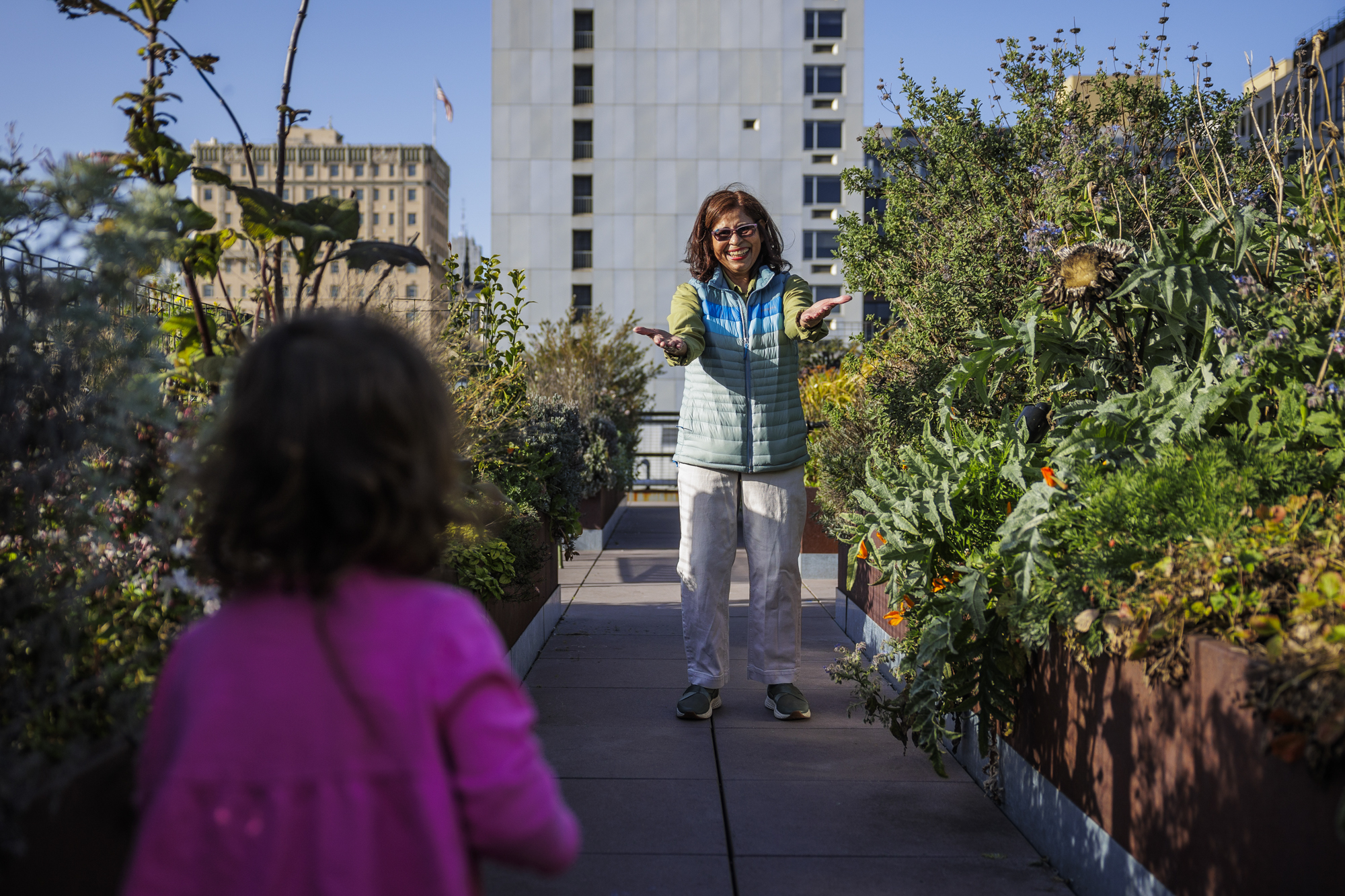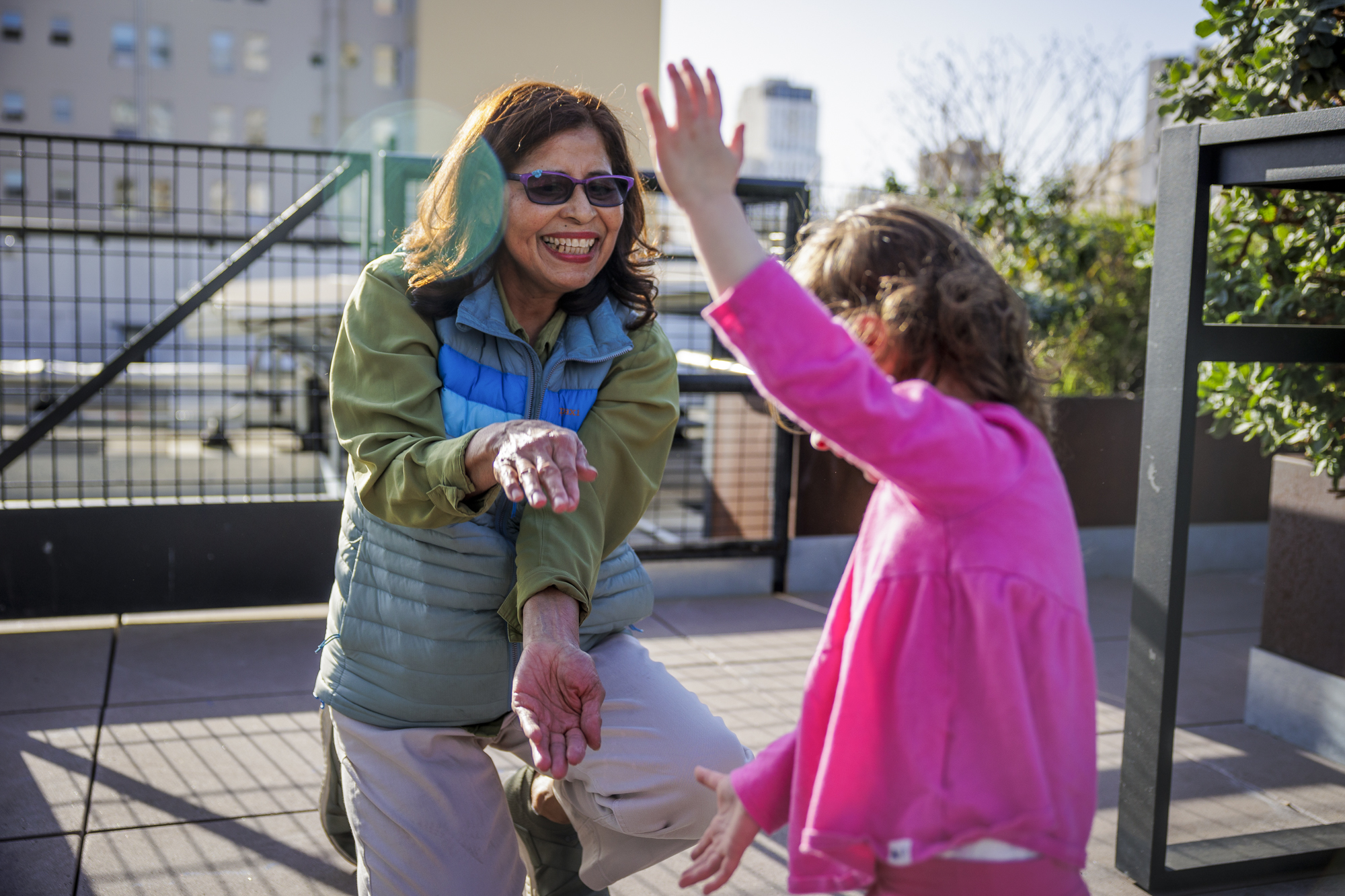
When the world shut down during the pandemic, Reyna Balladares decided to open her apartment in San Francisco’s Tenderloin neighborhood to a foster child.
A single mother of two grown daughters, Balladares heard from a social-worker friend about the challenges of finding a home for foster children and wanted to help.
Balladares took care of a baby boy for six months, and then in 2021, she got paired up with a newborn girl. As months went by, Balladares noticed she was slow to begin walking and talking.
A pediatrician recommended that the girl get physical, speech, occupational and feeding therapy to support her development. Balladares was referred to Early Start, California’s early intervention program for infants and toddlers with developmental delays, which approved the treatments.
However, getting connected to certain therapists took months.
When Balladares asked a program coordinator about the long wait, she learned few therapists were willing to make house calls to her neighborhood, which has been at the center of the city’s homelessness and drug crisis.
“They’re afraid to come to this community,” she said.
And that kept the girl from getting the services she was entitled to receive.