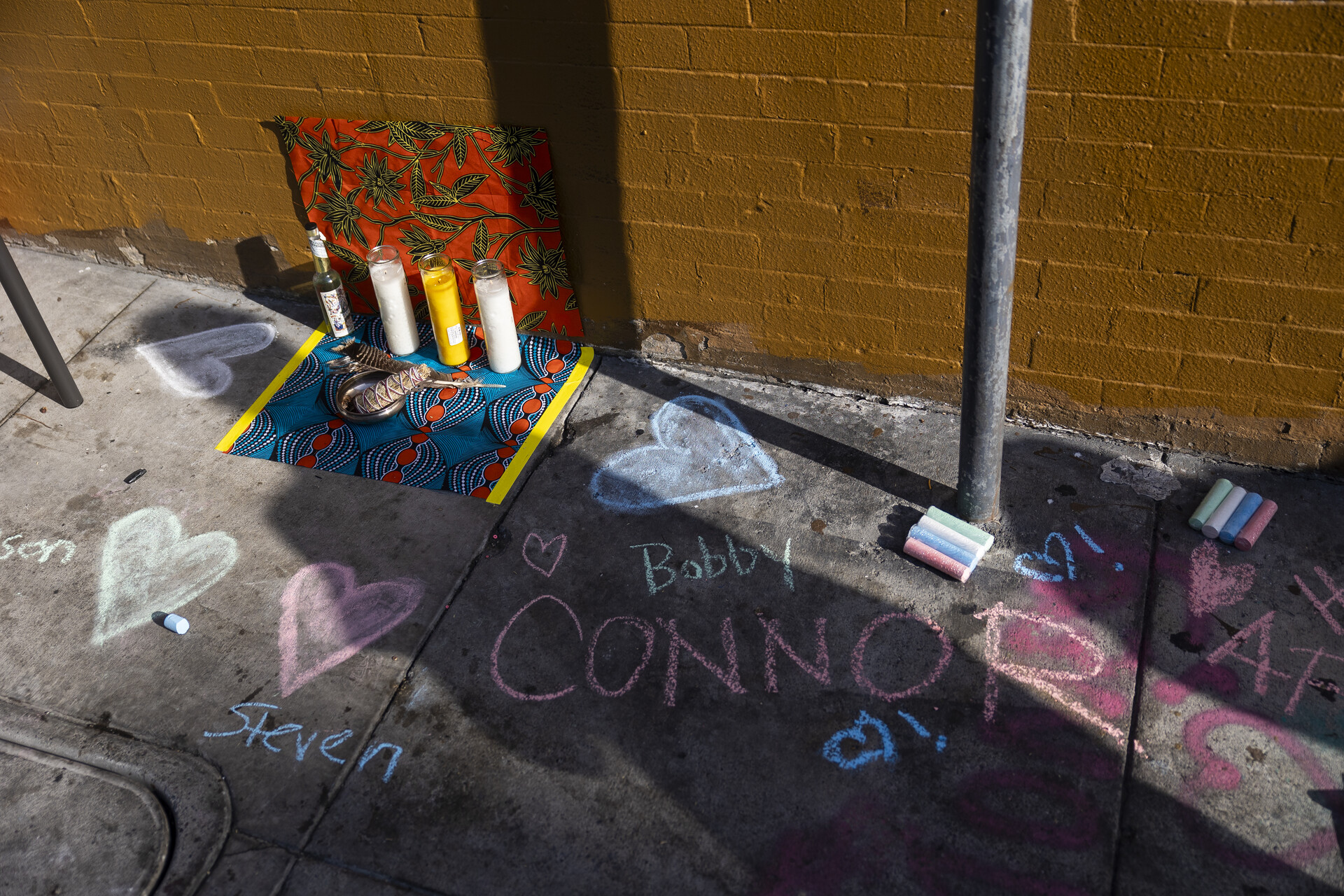
San Francisco recorded 806 drug overdose deaths in 2023, more than in any other year on record, a tragic milestone that experts have predicted for months.
“Every 4 1/2 minutes, someone dies of overdose,” said Dr. Grant Colfax, director of the San Francisco Department of Public Health, at a press conference on Wednesday, detailing new preliminary data from the city’s medical examiner’s office.
“This local and national crisis is driven by multiple factors,” he added, pointing to a combination of pharmaceutical marketing, poverty, limited drug-treatment options and “decades of under-investment in behavioral health care.”
Nearly 80% of all overdose deaths in the city last year involved fentanyl, a synthetic opioid about 50 times stronger than heroin, the new data shows. Commonly used in medical settings to treat pain, fentanyl first appeared in the illicit drug supply on the East Coast around 2013 and began wreaking havoc in San Francisco and other West Coast cities about five years later.
The data also shows a slight uptick in the presence of xylazine, also known as tranq, in overdose deaths.
Previously, San Francisco’s worst overdose year on record had been in 2020 — with 726 recorded deaths — as overdoses spiked after the city went under a strict COVID-19 shelter-in-place order, severely limiting many medical services and prevention options.
The following two years saw a slight drop in overdose deaths, a change that medical experts say is hard to attribute to any single factor.
However, one tool that San Francisco employed in 2022 — a supervised consumption site — was found to have prevented more than 300 overdose deaths, according to city data and independent research. People struggling with addiction could come to the facility near Civic Center to use illicit drugs in a sterile environment, with medically-trained staff on-site to reverse overdoses and, ideally, connect participants to other crucial resources, like housing, drug treatment and basic health services.
The city ran a single supervised consumption site, called the Tenderloin Center, for 11 months in 2022 and reported no overdose deaths at the facility during that time.
But the site’s high-visibility location in United Nations Plaza drew sharp criticism, particularly from local business owners, and it was shuttered by the end of that year.