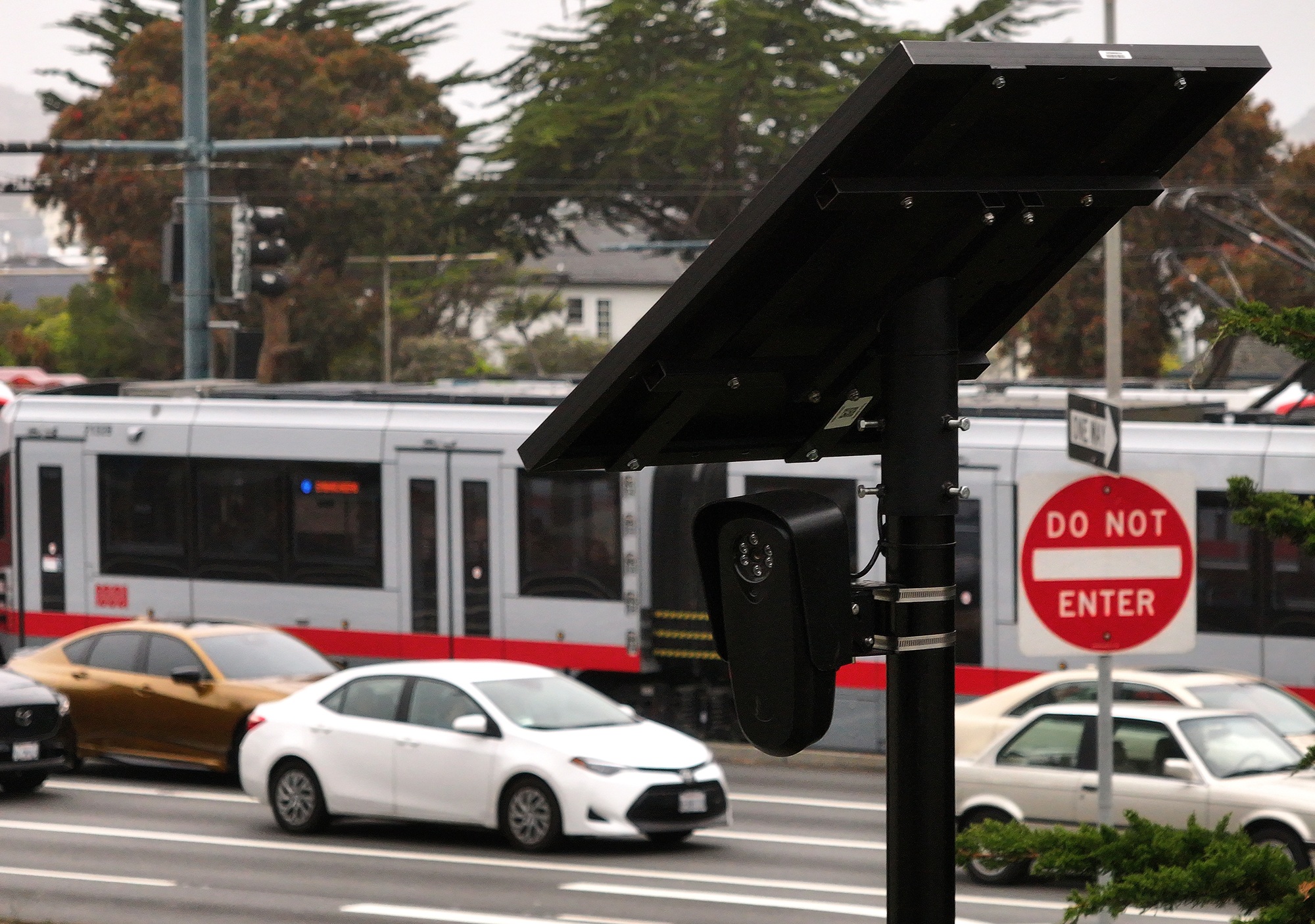
San Francisco Resident’s Surveillance ‘Walking Tour’ Maps Big Brother’s Expansion in the City
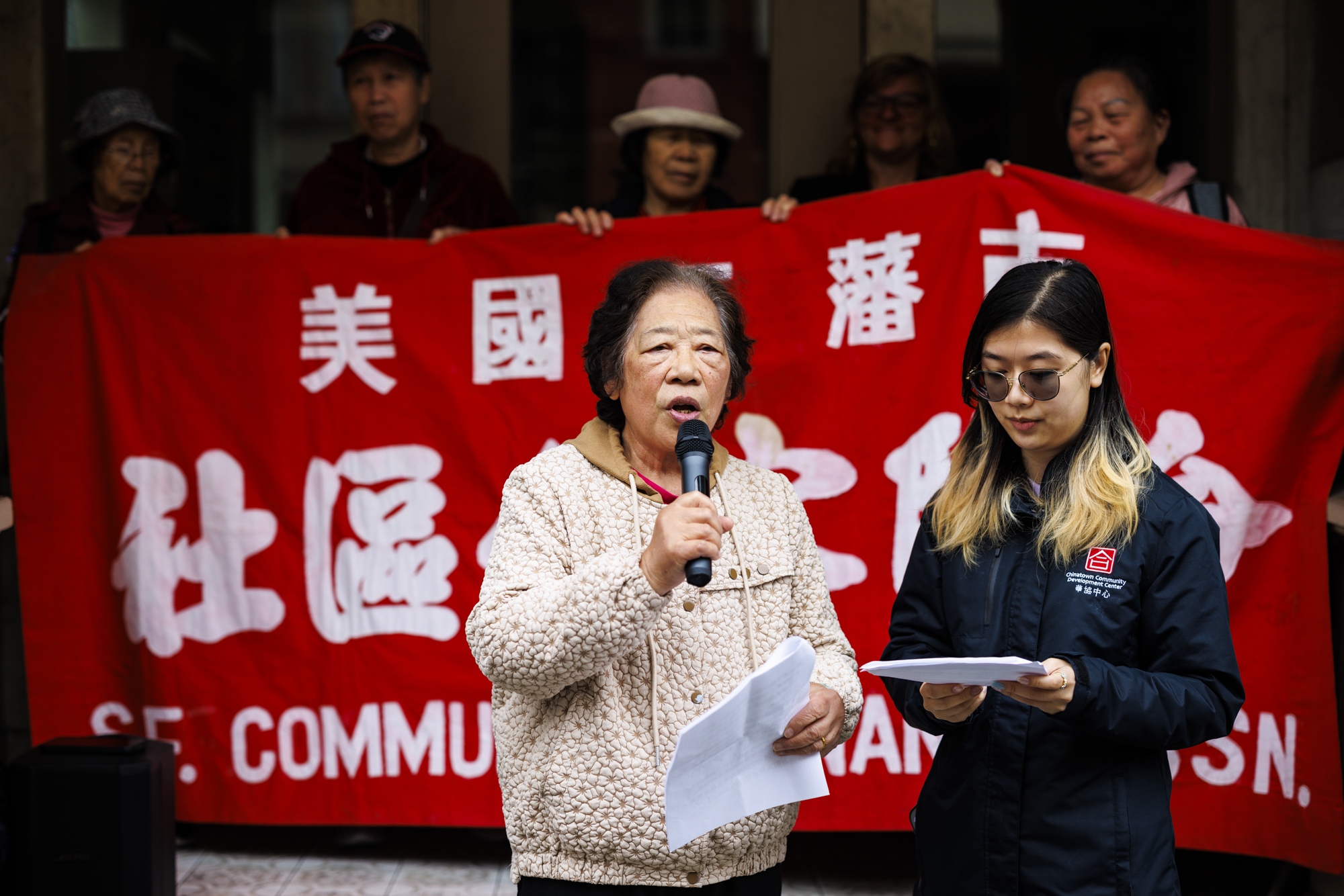
San Francisco Chinatown Tenants Form Union as Evictions Loom
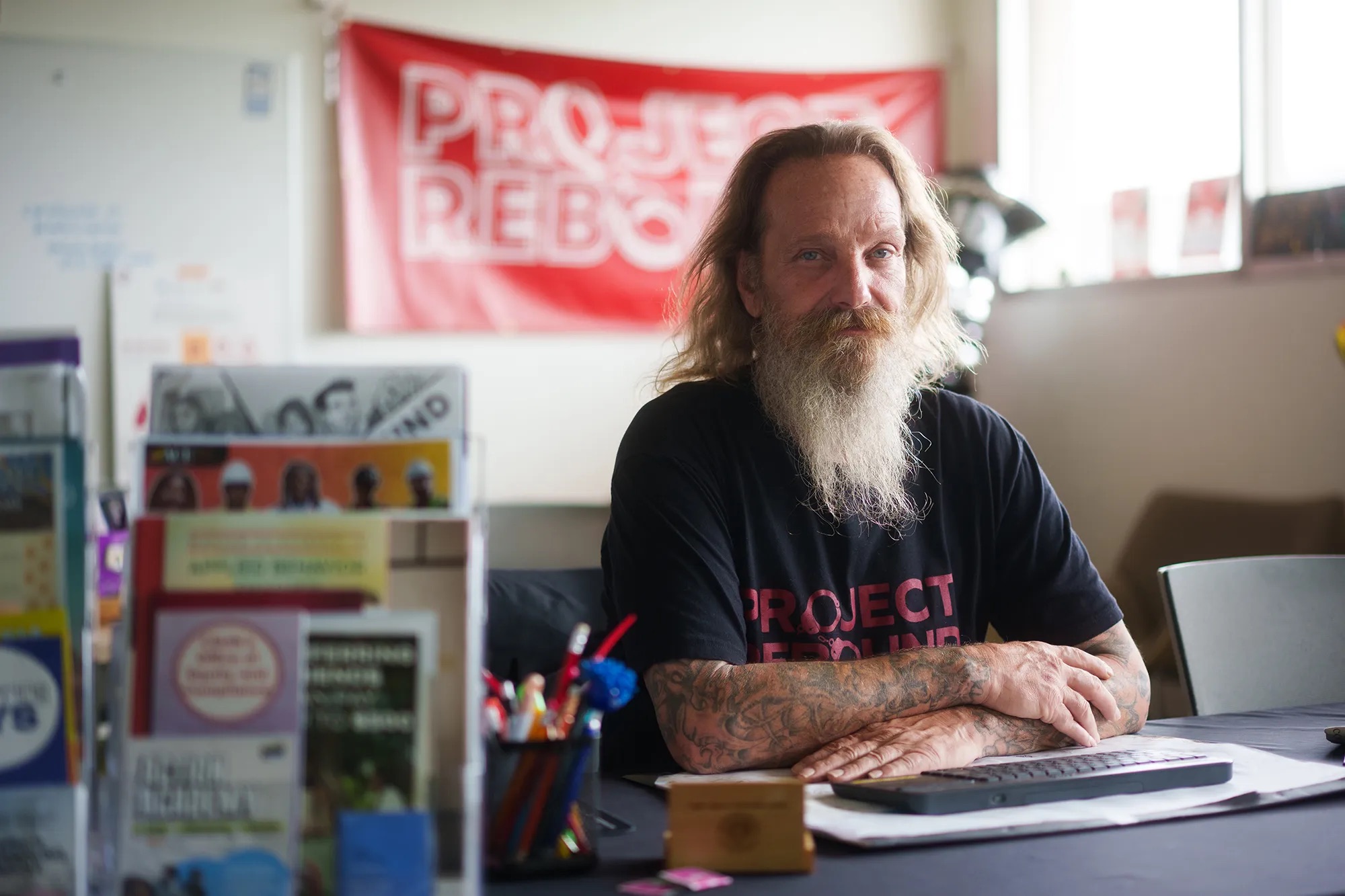
California Gave Every Student in Prison a Laptop. How Community Colleges Are Using Them
Surveillance Pricing Is Making Life More Expensive. Here’s How It Works and What You Can Do
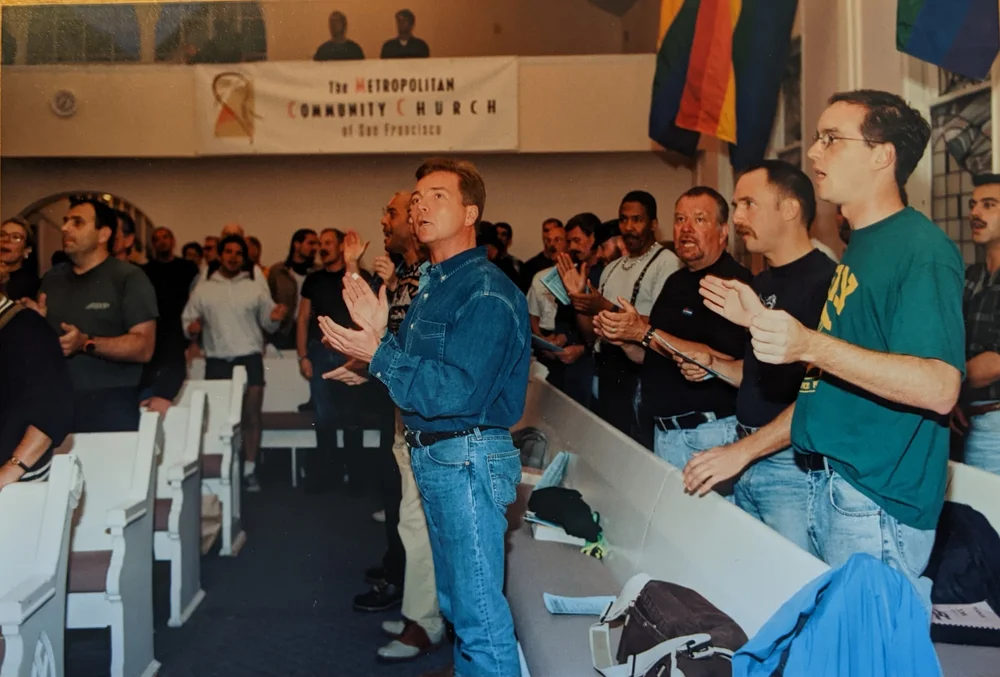
When We All Get to Heaven: Inside a Queer SF Church During the AIDS Crisis
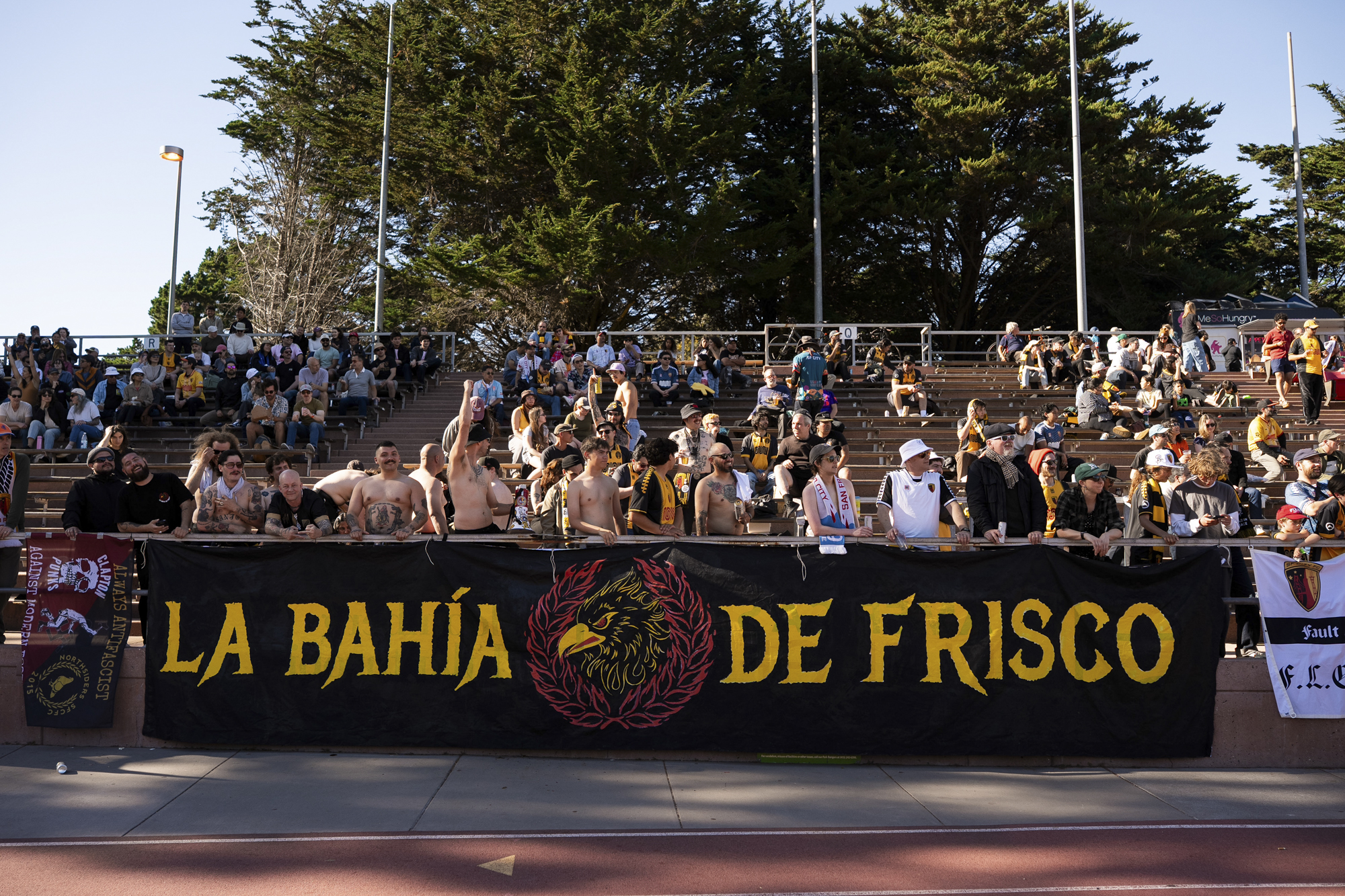
How the Bay Area Helped Shape US Soccer Ahead of the 2026 World Cup
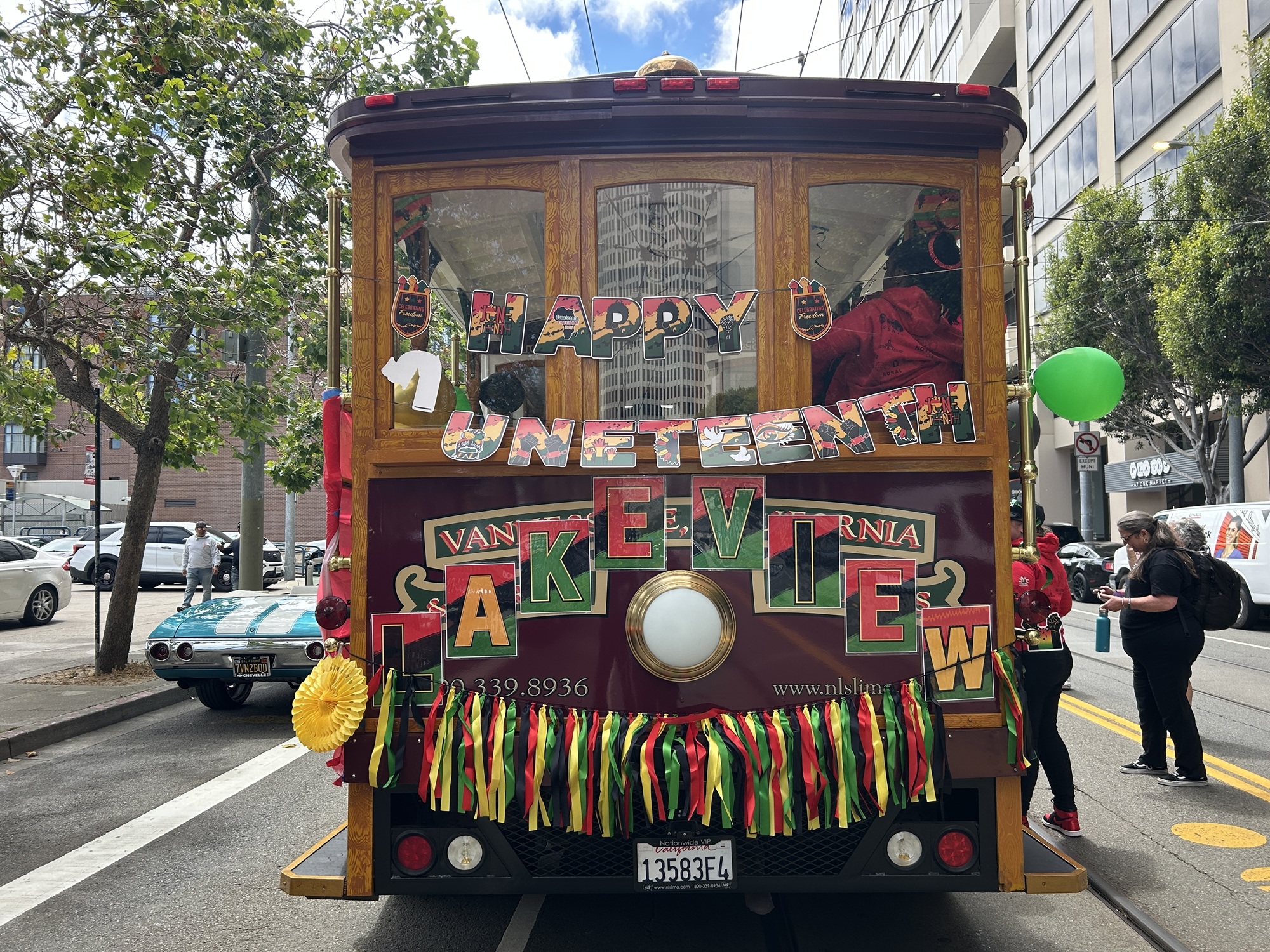
Black American Culture, Knowledge in the Spotlight at Juneteenth Celebrations in the Bay
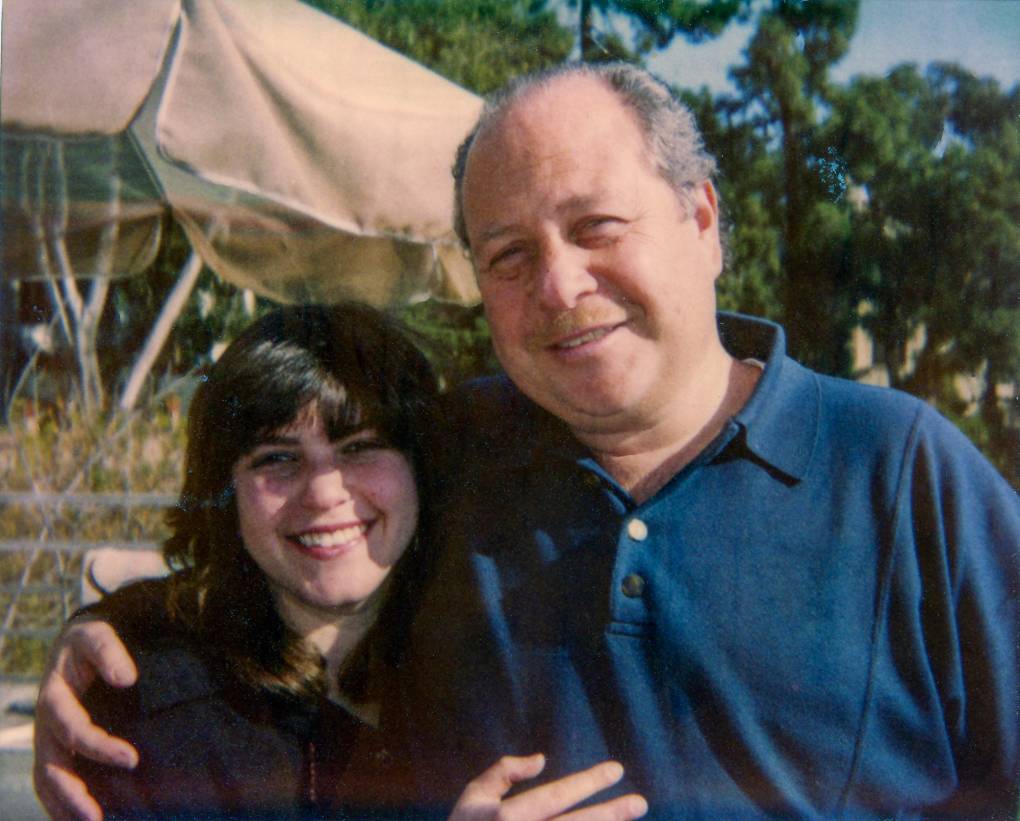
A Daughter’s 25-Year Journey to Heal a Broken Radio—and Grieve Her Father
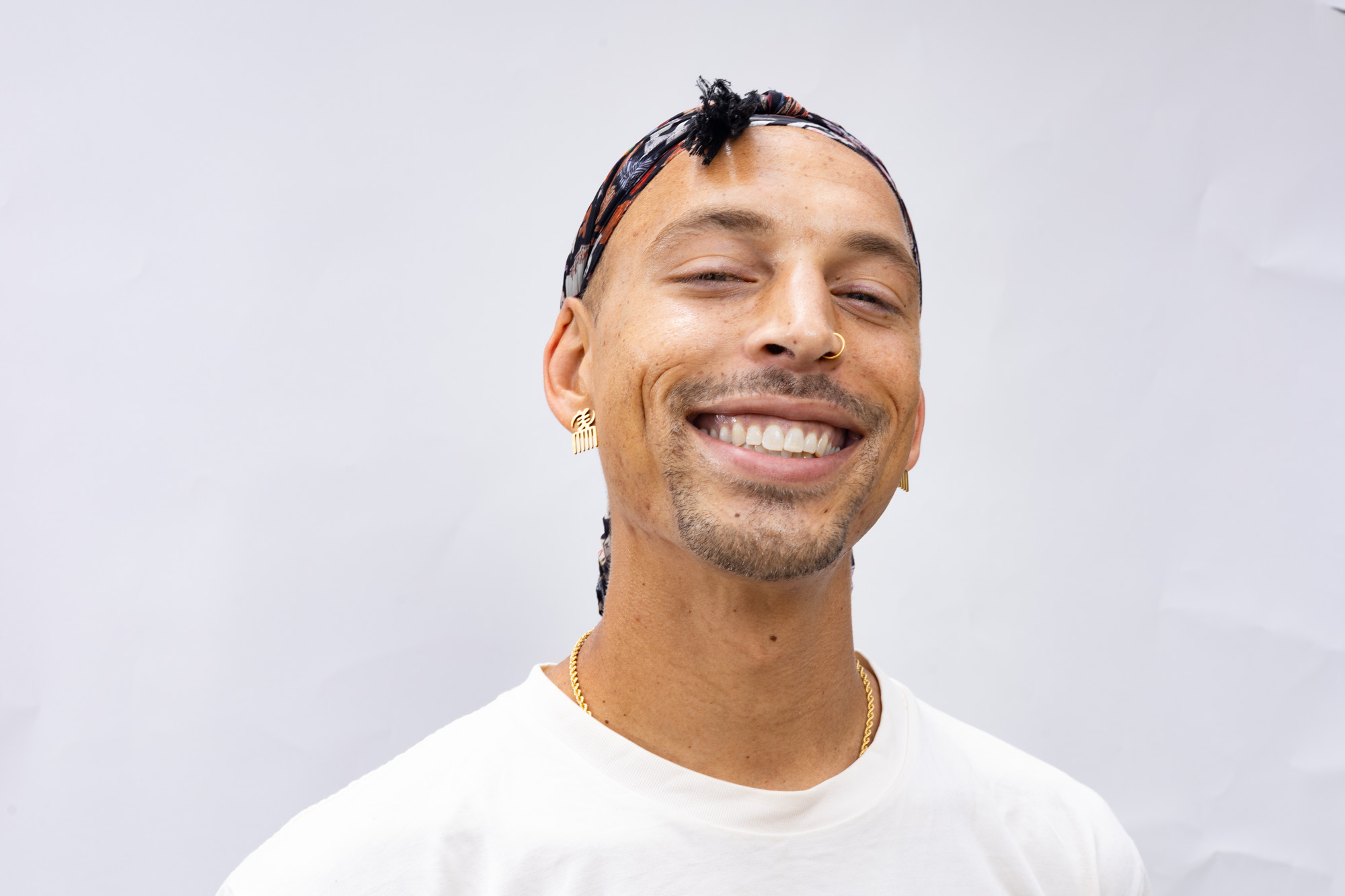
What Does Repair Look Like Today? Voices From an Oakland Juneteenth Celebration
Player sponsored by
window.__IS_SSR__=true
window.__INITIAL_STATE__={
"attachmentsReducer": {
"audio_0": {
"type": "attachments",
"id": "audio_0",
"imgSizes": {
"kqedFullSize": {
"file": "https://ww2.kqed.org/news/wp-content/themes/KQED-unified/img/audio_bgs/background0.jpg"
}
}
},
"audio_1": {
"type": "attachments",
"id": "audio_1",
"imgSizes": {
"kqedFullSize": {
"file": "https://ww2.kqed.org/news/wp-content/themes/KQED-unified/img/audio_bgs/background1.jpg"
}
}
},
"audio_2": {
"type": "attachments",
"id": "audio_2",
"imgSizes": {
"kqedFullSize": {
"file": "https://ww2.kqed.org/news/wp-content/themes/KQED-unified/img/audio_bgs/background2.jpg"
}
}
},
"audio_3": {
"type": "attachments",
"id": "audio_3",
"imgSizes": {
"kqedFullSize": {
"file": "https://ww2.kqed.org/news/wp-content/themes/KQED-unified/img/audio_bgs/background3.jpg"
}
}
},
"audio_4": {
"type": "attachments",
"id": "audio_4",
"imgSizes": {
"kqedFullSize": {
"file": "https://ww2.kqed.org/news/wp-content/themes/KQED-unified/img/audio_bgs/background4.jpg"
}
}
},
"placeholder": {
"type": "attachments",
"id": "placeholder",
"imgSizes": {
"thumbnail": {
"file": "https://cdn.kqed.org/wp-content/uploads/2024/12/KQED-Default-Image-816638274-2000x1333-1-160x107.jpg",
"width": 160,
"height": 107,
"mimeType": "image/jpeg"
},
"medium": {
"file": "https://cdn.kqed.org/wp-content/uploads/2024/12/KQED-Default-Image-816638274-2000x1333-1-800x533.jpg",
"width": 800,
"height": 533,
"mimeType": "image/jpeg"
},
"medium_large": {
"file": "https://cdn.kqed.org/wp-content/uploads/2024/12/KQED-Default-Image-816638274-2000x1333-1-768x512.jpg",
"width": 768,
"height": 512,
"mimeType": "image/jpeg"
},
"large": {
"file": "https://cdn.kqed.org/wp-content/uploads/2024/12/KQED-Default-Image-816638274-2000x1333-1-1020x680.jpg",
"width": 1020,
"height": 680,
"mimeType": "image/jpeg"
},
"1536x1536": {
"file": "https://cdn.kqed.org/wp-content/uploads/2024/12/KQED-Default-Image-816638274-2000x1333-1-1536x1024.jpg",
"width": 1536,
"height": 1024,
"mimeType": "image/jpeg"
},
"fd-lrg": {
"file": "https://cdn.kqed.org/wp-content/uploads/2024/12/KQED-Default-Image-816638274-2000x1333-1-1536x1024.jpg",
"width": 1536,
"height": 1024,
"mimeType": "image/jpeg"
},
"fd-med": {
"file": "https://cdn.kqed.org/wp-content/uploads/2024/12/KQED-Default-Image-816638274-2000x1333-1-1020x680.jpg",
"width": 1020,
"height": 680,
"mimeType": "image/jpeg"
},
"fd-sm": {
"file": "https://cdn.kqed.org/wp-content/uploads/2024/12/KQED-Default-Image-816638274-2000x1333-1-800x533.jpg",
"width": 800,
"height": 533,
"mimeType": "image/jpeg"
},
"post-thumbnail": {
"file": "https://cdn.kqed.org/wp-content/uploads/2024/12/KQED-Default-Image-816638274-2000x1333-1-672x372.jpg",
"width": 672,
"height": 372,
"mimeType": "image/jpeg"
},
"twentyfourteen-full-width": {
"file": "https://cdn.kqed.org/wp-content/uploads/2024/12/KQED-Default-Image-816638274-2000x1333-1-1038x576.jpg",
"width": 1038,
"height": 576,
"mimeType": "image/jpeg"
},
"xxsmall": {
"file": "https://cdn.kqed.org/wp-content/uploads/2024/12/KQED-Default-Image-816638274-2000x1333-1-160x107.jpg",
"width": 160,
"height": 107,
"mimeType": "image/jpeg"
},
"xsmall": {
"file": "https://cdn.kqed.org/wp-content/uploads/2024/12/KQED-Default-Image-816638274-2000x1333-1-672x372.jpg",
"width": 672,
"height": 372,
"mimeType": "image/jpeg"
},
"small": {
"file": "https://cdn.kqed.org/wp-content/uploads/2024/12/KQED-Default-Image-816638274-2000x1333-1-672x372.jpg",
"width": 672,
"height": 372,
"mimeType": "image/jpeg"
},
"xlarge": {
"file": "https://cdn.kqed.org/wp-content/uploads/2024/12/KQED-Default-Image-816638274-2000x1333-1-1020x680.jpg",
"width": 1020,
"height": 680,
"mimeType": "image/jpeg"
},
"full-width": {
"file": "https://cdn.kqed.org/wp-content/uploads/2024/12/KQED-Default-Image-816638274-2000x1333-1-1920x1280.jpg",
"width": 1920,
"height": 1280,
"mimeType": "image/jpeg"
},
"guest-author-32": {
"file": "https://cdn.kqed.org/wp-content/uploads/2025/01/KQED-Default-Image-816638274-1333x1333-1-160x160.jpg",
"width": 32,
"height": 32,
"mimeType": "image/jpeg"
},
"guest-author-50": {
"file": "https://cdn.kqed.org/wp-content/uploads/2025/01/KQED-Default-Image-816638274-1333x1333-1-160x160.jpg",
"width": 50,
"height": 50,
"mimeType": "image/jpeg"
},
"guest-author-64": {
"file": "https://cdn.kqed.org/wp-content/uploads/2025/01/KQED-Default-Image-816638274-1333x1333-1-160x160.jpg",
"width": 64,
"height": 64,
"mimeType": "image/jpeg"
},
"guest-author-96": {
"file": "https://cdn.kqed.org/wp-content/uploads/2025/01/KQED-Default-Image-816638274-1333x1333-1-160x160.jpg",
"width": 96,
"height": 96,
"mimeType": "image/jpeg"
},
"guest-author-128": {
"file": "https://cdn.kqed.org/wp-content/uploads/2025/01/KQED-Default-Image-816638274-1333x1333-1-160x160.jpg",
"width": 128,
"height": 128,
"mimeType": "image/jpeg"
},
"detail": {
"file": "https://cdn.kqed.org/wp-content/uploads/2025/01/KQED-Default-Image-816638274-1333x1333-1-160x160.jpg",
"width": 160,
"height": 160,
"mimeType": "image/jpeg"
},
"kqedFullSize": {
"file": "https://cdn.kqed.org/wp-content/uploads/2024/12/KQED-Default-Image-816638274-2000x1333-1.jpg",
"width": 2000,
"height": 1333
}
}
},
"news_12069708": {
"type": "attachments",
"id": "news_12069708",
"meta": {
"index": "attachments_1716263798",
"site": "news",
"id": "12069708",
"found": true
},
"title": "San Francisco Deploys License-Plate Reading Cameras To Catch Offenders",
"publishDate": 1768413795,
"status": "inherit",
"parent": 12069705,
"modified": 1768413847,
"caption": "In an aerial view, an automated license plate reader is seen mounted on a pole on June 13, 2024, in San Francisco, California. Independent writer Larry Kubin of \"The Fogline\" toured the city to find a wide network of surveillance, including Flock Safety cameras. ",
"credit": "Justin Sullivan/Getty Images",
"altTag": null,
"description": null,
"imgSizes": {
"thumbnail": {
"file": "https://cdn.kqed.org/wp-content/uploads/sites/10/2026/01/SFFlockSafetyGetty-160x112.jpg",
"width": 160,
"height": 112,
"mimeType": "image/jpeg"
},
"1536x1536": {
"file": "https://cdn.kqed.org/wp-content/uploads/sites/10/2026/01/SFFlockSafetyGetty-1536x1080.jpg",
"width": 1536,
"height": 1080,
"mimeType": "image/jpeg"
},
"post-thumbnail": {
"file": "https://cdn.kqed.org/wp-content/uploads/sites/10/2026/01/SFFlockSafetyGetty-672x372.jpg",
"width": 672,
"height": 372,
"mimeType": "image/jpeg"
},
"twentyfourteen-full-width": {
"file": "https://cdn.kqed.org/wp-content/uploads/sites/10/2026/01/SFFlockSafetyGetty-1038x576.jpg",
"width": 1038,
"height": 576,
"mimeType": "image/jpeg"
},
"npr-cds-wide": {
"file": "https://cdn.kqed.org/wp-content/uploads/sites/10/2026/01/SFFlockSafetyGetty-1200x675.jpg",
"width": 1200,
"height": 675,
"mimeType": "image/jpeg"
},
"kqedFullSize": {
"file": "https://cdn.kqed.org/wp-content/uploads/sites/10/2026/01/SFFlockSafetyGetty.jpg",
"width": 2000,
"height": 1406
}
},
"isLoading": false,
"fetchFailed": false
},
"news_12088406": {
"type": "attachments",
"id": "news_12088406",
"meta": {
"index": "attachments_1716263798",
"site": "news",
"id": "12088406",
"found": true
},
"title": "260622-SF CHINATOWN TENANT RALLY-MD-06-KQED",
"publishDate": 1782166384,
"status": "inherit",
"parent": 0,
"modified": 1782170056,
"caption": "Yi Hung Wong, with the Community Tenants Association, speaks at a rally in front of 1120 Jackson St. in San Francisco to protest evictions and rent hikes proposed by the property's new owner, on June 22, 2026.",
"credit": "Martin do Nascimento/KQED",
"altTag": null,
"description": null,
"imgSizes": {
"thumbnail": {
"file": "https://cdn.kqed.org/wp-content/uploads/sites/10/2026/06/260622-SF-CHINATOWN-TENANT-RALLY-MD-06-KQED-160x107.jpg",
"width": 160,
"height": 107,
"mimeType": "image/jpeg"
},
"1536x1536": {
"file": "https://cdn.kqed.org/wp-content/uploads/sites/10/2026/06/260622-SF-CHINATOWN-TENANT-RALLY-MD-06-KQED-1536x1025.jpg",
"width": 1536,
"height": 1025,
"mimeType": "image/jpeg"
},
"post-thumbnail": {
"file": "https://cdn.kqed.org/wp-content/uploads/sites/10/2026/06/260622-SF-CHINATOWN-TENANT-RALLY-MD-06-KQED-672x372.jpg",
"width": 672,
"height": 372,
"mimeType": "image/jpeg"
},
"twentyfourteen-full-width": {
"file": "https://cdn.kqed.org/wp-content/uploads/sites/10/2026/06/260622-SF-CHINATOWN-TENANT-RALLY-MD-06-KQED-1038x576.jpg",
"width": 1038,
"height": 576,
"mimeType": "image/jpeg"
},
"npr-cds-wide": {
"file": "https://cdn.kqed.org/wp-content/uploads/sites/10/2026/06/260622-SF-CHINATOWN-TENANT-RALLY-MD-06-KQED-1200x675.jpg",
"width": 1200,
"height": 675,
"mimeType": "image/jpeg"
},
"npr-cds-square": {
"file": "https://cdn.kqed.org/wp-content/uploads/sites/10/2026/06/260622-SF-CHINATOWN-TENANT-RALLY-MD-06-KQED-600x600.jpg",
"width": 600,
"height": 600,
"mimeType": "image/jpeg"
},
"kqedFullSize": {
"file": "https://cdn.kqed.org/wp-content/uploads/sites/10/2026/06/260622-SF-CHINATOWN-TENANT-RALLY-MD-06-KQED.jpg",
"width": 2000,
"height": 1334
}
},
"isLoading": false,
"fetchFailed": false
},
"news_12088389": {
"type": "attachments",
"id": "news_12088389",
"meta": {
"index": "attachments_1716263798",
"site": "news",
"id": "12088389",
"found": true
},
"title": "052626_Project-Rebound_JAH_03_CM",
"publishDate": 1782161120,
"status": "inherit",
"parent": 12088386,
"modified": 1782161136,
"caption": "Garret Eiferman, a graduate student, inside the Project Rebound study room at Cal State Northridge on May 26, 2026. ",
"credit": "Jules Hotz for CalMatters",
"altTag": null,
"description": null,
"imgSizes": {
"thumbnail": {
"file": "https://cdn.kqed.org/wp-content/uploads/sites/10/2026/06/052626_Project-Rebound_JAH_03_CM-160x107.jpeg",
"width": 160,
"height": 107,
"mimeType": "image/jpeg"
},
"1536x1536": {
"file": "https://cdn.kqed.org/wp-content/uploads/sites/10/2026/06/052626_Project-Rebound_JAH_03_CM-1536x1024.jpeg",
"width": 1536,
"height": 1024,
"mimeType": "image/jpeg"
},
"post-thumbnail": {
"file": "https://cdn.kqed.org/wp-content/uploads/sites/10/2026/06/052626_Project-Rebound_JAH_03_CM-672x372.jpeg",
"width": 672,
"height": 372,
"mimeType": "image/jpeg"
},
"twentyfourteen-full-width": {
"file": "https://cdn.kqed.org/wp-content/uploads/sites/10/2026/06/052626_Project-Rebound_JAH_03_CM-1038x576.jpeg",
"width": 1038,
"height": 576,
"mimeType": "image/jpeg"
},
"npr-cds-wide": {
"file": "https://cdn.kqed.org/wp-content/uploads/sites/10/2026/06/052626_Project-Rebound_JAH_03_CM-1200x675.jpeg",
"width": 1200,
"height": 675,
"mimeType": "image/jpeg"
},
"npr-cds-square": {
"file": "https://cdn.kqed.org/wp-content/uploads/sites/10/2026/06/052626_Project-Rebound_JAH_03_CM-600x600.jpeg",
"width": 600,
"height": 600,
"mimeType": "image/jpeg"
},
"kqedFullSize": {
"file": "https://cdn.kqed.org/wp-content/uploads/sites/10/2026/06/052626_Project-Rebound_JAH_03_CM.jpeg",
"width": 2000,
"height": 1333
}
},
"isLoading": false,
"fetchFailed": false
},
"news_12085877": {
"type": "attachments",
"id": "news_12085877",
"meta": {
"index": "attachments_1716263798",
"site": "news",
"id": "12085877",
"found": true
},
"title": "CAT — Surveillance Pricing.img",
"publishDate": 1780448446,
"status": "inherit",
"parent": 12085876,
"modified": 1780448827,
"caption": "Figures in suits with surveillance cameras for heads overlook a collage of gas stations, grocery shelves and stock tickers. Surveillance pricing is the practice of using consumers' personal data to determine what they'll pay.",
"credit": "Composite by Morgan Sung; Images by Getty Images",
"altTag": "A collage of images including three figures in suits with surveillance cameras for heads, overlaid on a double exposure image of a red fuel pump nozzle, a gas station, grocery store fruit and a dollar bill. The text \"Close All Tabs\" appears in the upper right corner.",
"description": null,
"imgSizes": {
"thumbnail": {
"file": "https://cdn.kqed.org/wp-content/uploads/sites/10/2026/06/CAT-—-Surveillance-Pricing.img_-160x90.png",
"width": 160,
"height": 90,
"mimeType": "image/png"
},
"1536x1536": {
"file": "https://cdn.kqed.org/wp-content/uploads/sites/10/2026/06/CAT-—-Surveillance-Pricing.img_-1536x864.png",
"width": 1536,
"height": 864,
"mimeType": "image/png"
},
"post-thumbnail": {
"file": "https://cdn.kqed.org/wp-content/uploads/sites/10/2026/06/CAT-—-Surveillance-Pricing.img_-672x372.png",
"width": 672,
"height": 372,
"mimeType": "image/png"
},
"twentyfourteen-full-width": {
"file": "https://cdn.kqed.org/wp-content/uploads/sites/10/2026/06/CAT-—-Surveillance-Pricing.img_-1038x576.png",
"width": 1038,
"height": 576,
"mimeType": "image/png"
},
"npr-cds-wide": {
"file": "https://cdn.kqed.org/wp-content/uploads/sites/10/2026/06/CAT-—-Surveillance-Pricing.img_-1200x675.png",
"width": 1200,
"height": 675,
"mimeType": "image/png"
},
"npr-cds-square": {
"file": "https://cdn.kqed.org/wp-content/uploads/sites/10/2026/06/CAT-—-Surveillance-Pricing.img_-600x600.png",
"width": 600,
"height": 600,
"mimeType": "image/png"
},
"kqedFullSize": {
"file": "https://cdn.kqed.org/wp-content/uploads/sites/10/2026/06/CAT-—-Surveillance-Pricing.img_.png",
"width": 1920,
"height": 1080
}
},
"isLoading": false,
"fetchFailed": false
},
"news_12088131": {
"type": "attachments",
"id": "news_12088131",
"meta": {
"index": "attachments_1716263798",
"site": "news",
"id": "12088131",
"found": true
},
"title": "Image_ND_Clapping_2+(1)",
"publishDate": 1781806244,
"status": "inherit",
"parent": 12088129,
"modified": 1781806324,
"caption": null,
"credit": "Courtesy of the MCC San Francisco Collection. San Francisco Public Library. ",
"altTag": null,
"description": "Worship and Praise at MCC San Francisco. Date unknown. ",
"imgSizes": {
"thumbnail": {
"file": "https://cdn.kqed.org/wp-content/uploads/sites/10/2026/06/Image_ND_Clapping_21-160x108.png",
"width": 160,
"height": 108,
"mimeType": "image/png"
},
"post-thumbnail": {
"file": "https://cdn.kqed.org/wp-content/uploads/sites/10/2026/06/Image_ND_Clapping_21-672x372.png",
"width": 672,
"height": 372,
"mimeType": "image/png"
},
"twentyfourteen-full-width": {
"file": "https://cdn.kqed.org/wp-content/uploads/sites/10/2026/06/Image_ND_Clapping_21-1000x576.png",
"width": 1000,
"height": 576,
"mimeType": "image/png"
},
"npr-cds-wide": {
"file": "https://cdn.kqed.org/wp-content/uploads/sites/10/2026/06/Image_ND_Clapping_21-1000x675.png",
"width": 1000,
"height": 675,
"mimeType": "image/png"
},
"npr-cds-square": {
"file": "https://cdn.kqed.org/wp-content/uploads/sites/10/2026/06/Image_ND_Clapping_21-600x600.png",
"width": 600,
"height": 600,
"mimeType": "image/png"
},
"kqedFullSize": {
"file": "https://cdn.kqed.org/wp-content/uploads/sites/10/2026/06/Image_ND_Clapping_21.png",
"width": 1000,
"height": 677
}
},
"isLoading": false,
"fetchFailed": false
},
"news_12084953": {
"type": "attachments",
"id": "news_12084953",
"meta": {
"index": "attachments_1716263798",
"site": "news",
"id": "12084953",
"found": true
},
"title": "260522-SF City FC vs. Davis Legacy-AC-12-KQED",
"publishDate": 1779469392,
"status": "inherit",
"parent": 0,
"modified": 1779469417,
"caption": "Die-hard fans of the San Francisco City Football Club gather at the spectator railing to cheer and heckle during the San Francisco City Football Club vs. Davis Legacy Soccer Club game at Kezar Stadium on May 17. 2026.",
"credit": "Aryk Copley for KQED",
"altTag": null,
"description": null,
"imgSizes": {
"thumbnail": {
"file": "https://cdn.kqed.org/wp-content/uploads/sites/10/2026/05/260522-SF-City-FC-vs.-Davis-Legacy-AC-12-KQED-160x107.jpg",
"width": 160,
"height": 107,
"mimeType": "image/jpeg"
},
"1536x1536": {
"file": "https://cdn.kqed.org/wp-content/uploads/sites/10/2026/05/260522-SF-City-FC-vs.-Davis-Legacy-AC-12-KQED-1536x1024.jpg",
"width": 1536,
"height": 1024,
"mimeType": "image/jpeg"
},
"post-thumbnail": {
"file": "https://cdn.kqed.org/wp-content/uploads/sites/10/2026/05/260522-SF-City-FC-vs.-Davis-Legacy-AC-12-KQED-672x372.jpg",
"width": 672,
"height": 372,
"mimeType": "image/jpeg"
},
"twentyfourteen-full-width": {
"file": "https://cdn.kqed.org/wp-content/uploads/sites/10/2026/05/260522-SF-City-FC-vs.-Davis-Legacy-AC-12-KQED-1038x576.jpg",
"width": 1038,
"height": 576,
"mimeType": "image/jpeg"
},
"npr-cds-wide": {
"file": "https://cdn.kqed.org/wp-content/uploads/sites/10/2026/05/260522-SF-City-FC-vs.-Davis-Legacy-AC-12-KQED-1200x675.jpg",
"width": 1200,
"height": 675,
"mimeType": "image/jpeg"
},
"npr-cds-square": {
"file": "https://cdn.kqed.org/wp-content/uploads/sites/10/2026/05/260522-SF-City-FC-vs.-Davis-Legacy-AC-12-KQED-600x600.jpg",
"width": 600,
"height": 600,
"mimeType": "image/jpeg"
},
"kqedFullSize": {
"file": "https://cdn.kqed.org/wp-content/uploads/sites/10/2026/05/260522-SF-City-FC-vs.-Davis-Legacy-AC-12-KQED.jpg",
"width": 2000,
"height": 1333
}
},
"isLoading": false,
"fetchFailed": false
},
"news_12088306": {
"type": "attachments",
"id": "news_12088306",
"meta": {
"index": "attachments_1716263798",
"site": "news",
"id": "12088306",
"found": true
},
"title": "Juneteenth SF 5",
"publishDate": 1781991412,
"status": "inherit",
"parent": 12088297,
"modified": 1781991572,
"caption": "A decorated cable car at the fourth annual Juneteenth Parade in San Francisco, California, on Saturday, June 20, 2026. ",
"credit": "Lakshmi Sarah/KQED",
"altTag": null,
"description": null,
"imgSizes": {
"thumbnail": {
"file": "https://cdn.kqed.org/wp-content/uploads/sites/10/2026/06/Juneteenth-SF-5-160x120.jpg",
"width": 160,
"height": 120,
"mimeType": "image/jpeg"
},
"1536x1536": {
"file": "https://cdn.kqed.org/wp-content/uploads/sites/10/2026/06/Juneteenth-SF-5-1536x1152.jpg",
"width": 1536,
"height": 1152,
"mimeType": "image/jpeg"
},
"post-thumbnail": {
"file": "https://cdn.kqed.org/wp-content/uploads/sites/10/2026/06/Juneteenth-SF-5-672x372.jpg",
"width": 672,
"height": 372,
"mimeType": "image/jpeg"
},
"twentyfourteen-full-width": {
"file": "https://cdn.kqed.org/wp-content/uploads/sites/10/2026/06/Juneteenth-SF-5-1038x576.jpg",
"width": 1038,
"height": 576,
"mimeType": "image/jpeg"
},
"npr-cds-wide": {
"file": "https://cdn.kqed.org/wp-content/uploads/sites/10/2026/06/Juneteenth-SF-5-1200x675.jpg",
"width": 1200,
"height": 675,
"mimeType": "image/jpeg"
},
"npr-cds-square": {
"file": "https://cdn.kqed.org/wp-content/uploads/sites/10/2026/06/Juneteenth-SF-5-600x600.jpg",
"width": 600,
"height": 600,
"mimeType": "image/jpeg"
},
"kqedFullSize": {
"file": "https://cdn.kqed.org/wp-content/uploads/sites/10/2026/06/Juneteenth-SF-5.jpg",
"width": 2000,
"height": 1500
}
},
"isLoading": false,
"fetchFailed": false
},
"news_12041339": {
"type": "attachments",
"id": "news_12041339",
"meta": {
"index": "attachments_1716263798",
"site": "news",
"id": "12041339",
"found": true
},
"title": "250522-RADIO RADIO-RM-01-KQED",
"publishDate": 1747950041,
"status": "inherit",
"parent": 0,
"modified": 1752000851,
"caption": "Rachael Myrow and her father, Fred Myrow, in a photo taken in the 1990s in Los Angeles. He died a few years later, leaving her to sort through a personal museum of audio technologies in his home music studio. ",
"credit": "Rachael Myrow/KQED",
"altTag": "A middle-aged man smiles at the camera with his arm draped around a smiling young woman, his daughter.",
"description": "Rachael Myrow and her father Fred Myrow in a photo taken in the 1990s in Los Angeles. ",
"imgSizes": {
"medium": {
"file": "https://cdn.kqed.org/wp-content/uploads/sites/10/2025/05/250522-RADIO-RADIO-RM-01-KQED-800x644.jpg",
"width": 800,
"height": 644,
"mimeType": "image/jpeg"
},
"large": {
"file": "https://cdn.kqed.org/wp-content/uploads/sites/10/2025/05/250522-RADIO-RADIO-RM-01-KQED-1020x821.jpg",
"width": 1020,
"height": 821,
"mimeType": "image/jpeg"
},
"thumbnail": {
"file": "https://cdn.kqed.org/wp-content/uploads/sites/10/2025/05/250522-RADIO-RADIO-RM-01-KQED-160x129.jpg",
"width": 160,
"height": 129,
"mimeType": "image/jpeg"
},
"1536x1536": {
"file": "https://cdn.kqed.org/wp-content/uploads/sites/10/2025/05/250522-RADIO-RADIO-RM-01-KQED-1536x1236.jpg",
"width": 1536,
"height": 1236,
"mimeType": "image/jpeg"
},
"post-thumbnail": {
"file": "https://cdn.kqed.org/wp-content/uploads/sites/10/2025/05/250522-RADIO-RADIO-RM-01-KQED-672x372.jpg",
"width": 672,
"height": 372,
"mimeType": "image/jpeg"
},
"twentyfourteen-full-width": {
"file": "https://cdn.kqed.org/wp-content/uploads/sites/10/2025/05/250522-RADIO-RADIO-RM-01-KQED-1038x576.jpg",
"width": 1038,
"height": 576,
"mimeType": "image/jpeg"
},
"full-width": {
"file": "https://cdn.kqed.org/wp-content/uploads/sites/10/2025/05/250522-RADIO-RADIO-RM-01-KQED-1920x1546.jpg",
"width": 1920,
"height": 1546,
"mimeType": "image/jpeg"
},
"kqedFullSize": {
"file": "https://cdn.kqed.org/wp-content/uploads/sites/10/2025/05/250522-RADIO-RADIO-RM-01-KQED.jpg",
"width": 2000,
"height": 1610
}
},
"isLoading": false,
"fetchFailed": false
},
"news_12088274": {
"type": "attachments",
"id": "news_12088274",
"meta": {
"index": "attachments_1716263798",
"site": "news",
"id": "12088274",
"found": true
},
"title": "20260619_Juneteenth_GC-13",
"publishDate": 1781912517,
"status": "inherit",
"parent": 0,
"modified": 1781912616,
"caption": null,
"credit": "Gina Castro for KQED",
"altTag": null,
"description": null,
"imgSizes": {
"thumbnail": {
"file": "https://cdn.kqed.org/wp-content/uploads/sites/10/2026/06/20260619_Juneteenth_GC-13-160x107.jpg",
"width": 160,
"height": 107,
"mimeType": "image/jpeg"
},
"1536x1536": {
"file": "https://cdn.kqed.org/wp-content/uploads/sites/10/2026/06/20260619_Juneteenth_GC-13-1536x1024.jpg",
"width": 1536,
"height": 1024,
"mimeType": "image/jpeg"
},
"post-thumbnail": {
"file": "https://cdn.kqed.org/wp-content/uploads/sites/10/2026/06/20260619_Juneteenth_GC-13-672x372.jpg",
"width": 672,
"height": 372,
"mimeType": "image/jpeg"
},
"twentyfourteen-full-width": {
"file": "https://cdn.kqed.org/wp-content/uploads/sites/10/2026/06/20260619_Juneteenth_GC-13-1038x576.jpg",
"width": 1038,
"height": 576,
"mimeType": "image/jpeg"
},
"npr-cds-wide": {
"file": "https://cdn.kqed.org/wp-content/uploads/sites/10/2026/06/20260619_Juneteenth_GC-13-1200x675.jpg",
"width": 1200,
"height": 675,
"mimeType": "image/jpeg"
},
"npr-cds-square": {
"file": "https://cdn.kqed.org/wp-content/uploads/sites/10/2026/06/20260619_Juneteenth_GC-13-600x600.jpg",
"width": 600,
"height": 600,
"mimeType": "image/jpeg"
},
"kqedFullSize": {
"file": "https://cdn.kqed.org/wp-content/uploads/sites/10/2026/06/20260619_Juneteenth_GC-13.jpg",
"width": 2000,
"height": 1333
}
},
"isLoading": false,
"fetchFailed": false
}
},
"audioPlayerReducer": {
"postId": "stream_live",
"isPaused": true,
"isPlaying": false,
"pfsActive": false,
"pledgeModalIsOpen": true,
"playerDrawerIsOpen": false,
"liveAudioPlayStartedAt": 0,
"liveAudioPlayContext": ""
},
"authorsReducer": {
"byline_news_12088386": {
"type": "authors",
"id": "byline_news_12088386",
"meta": {
"override": true
},
"slug": "byline_news_12088386",
"name": "Ella Carter-Klauschie, CalMatters",
"isLoading": false
},
"rachael-myrow": {
"type": "authors",
"id": "251",
"meta": {
"index": "authors_1716337520",
"id": "251",
"found": true
},
"name": "Rachael Myrow",
"firstName": "Rachael",
"lastName": "Myrow",
"slug": "rachael-myrow",
"email": "rmyrow@kqed.org",
"display_author_email": true,
"staff_mastheads": [
"news"
],
"title": "Senior Editor of KQED's Silicon Valley News Desk",
"bio": "• I write and edit stories about how Silicon Valley power and policies shape everyday life in California. I’m also passionate about making Bay Area history and culture more accessible to a broad public. • I’ve been a journalist for most of my life, starting in high school with The Franklin Press in Los Angeles, where I grew up. While earning my first degree in English at UC Berkeley, I got my start in public radio at KALX-FM. After completing a second degree in journalism at Cal, I landed my first professional job at Marketplace, then moved on to KPCC (now LAist), and then KQED, where I hosted The California Report for more than seven years. • My reporting has appeared on NPR, The World, WBUR’s \u003ci>Here & Now\u003c/i>, and the BBC. I also guest host for KQED’s \u003ci>Forum\u003c/i>, as well as the Commonwealth Club in San Francisco. • I speak periodically on media, democracy and technology issues, and do voiceover work for documentaries and educational video projects. • Outside of the studio, you'll find me hiking Bay Area trails and whipping up Insta-ready meals in my kitchen. • I do not accept gifts, money, or favors from anyone connected to my reporting, I don't pay people for information, and I do not support or donate to political causes. • I strive to treat the people I report on with fairness, honesty, and respect. I also recognize there are often multiple sides to a story and work to verify information through multiple sources and documentation. If I get something wrong, I correct it.",
"avatar": "https://secure.gravatar.com/avatar/87bf8cb5874e045cdff430523a6d48b1?s=600&d=blank&r=g",
"twitter": "rachaelmyrow",
"facebook": null,
"instagram": null,
"linkedin": "https://www.linkedin.com/in/rachaelmyrow/",
"sites": [
{
"site": "arts",
"roles": [
"administrator"
]
},
{
"site": "news",
"roles": [
"edit_others_posts",
"editor"
]
},
{
"site": "futureofyou",
"roles": [
"editor"
]
},
{
"site": "bayareabites",
"roles": [
"editor"
]
},
{
"site": "stateofhealth",
"roles": [
"editor"
]
},
{
"site": "science",
"roles": [
"editor"
]
},
{
"site": "food",
"roles": [
"editor"
]
},
{
"site": "forum",
"roles": [
"editor"
]
},
{
"site": "liveblog",
"roles": [
"author"
]
}
],
"headData": {
"title": "Rachael Myrow | KQED",
"description": "Senior Editor of KQED's Silicon Valley News Desk",
"ogImgSrc": "https://secure.gravatar.com/avatar/87bf8cb5874e045cdff430523a6d48b1?s=600&d=blank&r=g",
"twImgSrc": "https://secure.gravatar.com/avatar/87bf8cb5874e045cdff430523a6d48b1?s=600&d=blank&r=g"
},
"isLoading": false,
"link": "/author/rachael-myrow"
},
"ecruzguevarra": {
"type": "authors",
"id": "8654",
"meta": {
"index": "authors_1716337520",
"id": "8654",
"found": true
},
"name": "Ericka Cruz Guevarra",
"firstName": "Ericka",
"lastName": "Cruz Guevarra",
"slug": "ecruzguevarra",
"email": "ecruzguevarra@kqed.org",
"display_author_email": true,
"staff_mastheads": [
"news"
],
"title": "Producer, The Bay Podcast",
"bio": "Ericka Cruz Guevarra is host of \u003ca href=\"https://www.kqed.org/podcasts/thebay\">\u003cem>The Bay\u003c/em>\u003c/a> podcast at KQED. Before host, she was the show’s producer. Her work in that capacity includes a three-part reported series on policing in Vallejo, which won a 2020 excellence in journalism award from the Society of Professional Journalists. Ericka has worked as a breaking news reporter at Oregon Public Broadcasting, helped produce the Code Switch podcast, and was KQED’s inaugural Raul Ramirez Diversity Fund intern. She’s also an alumna of NPR’s Next Generation Radio program. Send her an email if you have strong feelings about whether Fairfield and Suisun City are the Bay. Ericka is represented by SAG-AFTRA.",
"avatar": "https://secure.gravatar.com/avatar/25e5ab8d3d53fad2dcc7bb2b5c506b1a?s=600&d=blank&r=g",
"twitter": "NotoriousECG",
"facebook": null,
"instagram": null,
"linkedin": null,
"sites": [
{
"site": "arts",
"roles": [
"subscriber"
]
},
{
"site": "news",
"roles": [
"editor",
"manage_categories"
]
},
{
"site": "futureofyou",
"roles": [
"subscriber"
]
},
{
"site": "stateofhealth",
"roles": [
"subscriber"
]
},
{
"site": "science",
"roles": [
"editor"
]
},
{
"site": "forum",
"roles": [
"subscriber"
]
}
],
"headData": {
"title": "Ericka Cruz Guevarra | KQED",
"description": "Producer, The Bay Podcast",
"ogImgSrc": "https://secure.gravatar.com/avatar/25e5ab8d3d53fad2dcc7bb2b5c506b1a?s=600&d=blank&r=g",
"twImgSrc": "https://secure.gravatar.com/avatar/25e5ab8d3d53fad2dcc7bb2b5c506b1a?s=600&d=blank&r=g"
},
"isLoading": false,
"link": "/author/ecruzguevarra"
},
"ernestoaguilar": {
"type": "authors",
"id": "11783",
"meta": {
"index": "authors_1716337520",
"id": "11783",
"found": true
},
"name": "Ernesto Aguilar",
"firstName": "Ernesto",
"lastName": "Aguilar",
"slug": "ernestoaguilar",
"email": "eaguilar@kqed.org",
"display_author_email": true,
"staff_mastheads": [
"news"
],
"title": "Executive Director of Radio Programming and Content Innovation Initiatives",
"bio": "Born in East Houston, Ernesto Aguilar’s life was transformed by public media. His career has traversed daily newspapers and alternative weeklies to public radio news and program director roles. At KQED, he oversees radio broadcast content and innovation initiatives in the Content division, including leading its AI Working Group. Prior to KQED, Aguilar served public media as executive director of the National Federation of Community Broadcasters. A Robert C. Maynard Institute for Journalism Education Fellow, Sulzberger Executive Leadership Fellow, Craig Newmark Graduate School of Journalism at CUNY AI in Journalism Leadership cohort selection and Public Media CEO/COO Bootcamp graduate, Aguilar has a B.A. in journalism, with minors in sociology and Women’s Studies from the University of Houston. In his spare time, he writes OIGO, a newsletter on public media and Latino audiences, and AI and Public Media Futures, a newsletter on artificial intelligence's impact on public broadcasting.",
"avatar": "https://secure.gravatar.com/avatar/3d1cf94be8d5fd3a3c8aa1e755cefa3c?s=600&d=mm&r=g",
"twitter": "@eaXLR",
"facebook": "https://www.facebook.com/eaXLR/",
"instagram": "https://www.instagram.com/eaxlr/",
"linkedin": "https://www.linkedin.com/in/eaxlr/",
"sites": [
{
"site": "",
"roles": [
"editor"
]
},
{
"site": "arts",
"roles": [
"editor"
]
},
{
"site": "news",
"roles": [
"editor"
]
},
{
"site": "about",
"roles": [
"editor"
]
},
{
"site": "radio",
"roles": [
"editor"
]
}
],
"headData": {
"title": "Ernesto Aguilar | KQED",
"description": "Executive Director of Radio Programming and Content Innovation Initiatives",
"ogImgSrc": "https://secure.gravatar.com/avatar/3d1cf94be8d5fd3a3c8aa1e755cefa3c?s=600&d=mm&r=g",
"twImgSrc": "https://secure.gravatar.com/avatar/3d1cf94be8d5fd3a3c8aa1e755cefa3c?s=600&d=mm&r=g"
},
"isLoading": false,
"link": "/author/ernestoaguilar"
},
"sjohnson": {
"type": "authors",
"id": "11840",
"meta": {
"index": "authors_1716337520",
"id": "11840",
"found": true
},
"name": "Sydney Johnson",
"firstName": "Sydney",
"lastName": "Johnson",
"slug": "sjohnson",
"email": "sjohnson@kqed.org",
"display_author_email": false,
"staff_mastheads": [
"news"
],
"title": "KQED Reporter",
"bio": "Sydney Johnson is a general assignment reporter at KQED. She previously reported on public health and city government at the San Francisco Examiner, and before that, she covered statewide education policy for EdSource. Her reporting has won multiple local, state and national awards. Sydney is a graduate of the University of California, Berkeley and lives in San Francisco.",
"avatar": "https://secure.gravatar.com/avatar/97855f2719b72ad6190b7c535fe642c8?s=600&d=blank&r=g",
"twitter": "sydneyfjohnson",
"facebook": null,
"instagram": null,
"linkedin": null,
"sites": [
{
"site": "news",
"roles": [
"editor"
]
}
],
"headData": {
"title": "Sydney Johnson | KQED",
"description": "KQED Reporter",
"ogImgSrc": "https://secure.gravatar.com/avatar/97855f2719b72ad6190b7c535fe642c8?s=600&d=blank&r=g",
"twImgSrc": "https://secure.gravatar.com/avatar/97855f2719b72ad6190b7c535fe642c8?s=600&d=blank&r=g"
},
"isLoading": false,
"link": "/author/sjohnson"
},
"nkhan": {
"type": "authors",
"id": "11867",
"meta": {
"index": "authors_1716337520",
"id": "11867",
"found": true
},
"name": "Nisa Khan",
"firstName": "Nisa",
"lastName": "Khan",
"slug": "nkhan",
"email": "nkhan@kqed.org",
"display_author_email": false,
"staff_mastheads": [],
"title": "KQED Contributor",
"bio": "Nisa Khan is a reporter for KQED's Audience News Desk. She was formerly a data reporter at Michigan Radio. She earned a Bachelor of Science in Information from the University of Michigan and a Master of Arts in Communication from Stanford University.",
"avatar": "https://secure.gravatar.com/avatar/a3bf1efcfbe7658d13a434cc54d0b2e3?s=600&d=blank&r=g",
"twitter": "mnisakhan",
"bluesky": null,
"facebook": null,
"instagram": null,
"linkedin": null,
"sites": [
{
"site": "arts",
"roles": [
"editor"
]
},
{
"site": "news",
"roles": [
"editor"
]
},
{
"site": "science",
"roles": [
"editor",
"author"
]
},
{
"site": "forum",
"roles": [
"editor"
]
},
{
"site": "liveblog",
"roles": [
"contributor"
]
}
],
"headData": {
"title": "Nisa Khan | KQED",
"description": "KQED Contributor",
"ogImgSrc": "https://secure.gravatar.com/avatar/a3bf1efcfbe7658d13a434cc54d0b2e3?s=600&d=blank&r=g",
"twImgSrc": "https://secure.gravatar.com/avatar/a3bf1efcfbe7658d13a434cc54d0b2e3?s=600&d=blank&r=g"
},
"isLoading": false,
"link": "/author/nkhan"
},
"gcastro": {
"type": "authors",
"id": "11908",
"meta": {
"index": "authors_1716337520",
"id": "11908",
"found": true
},
"name": "Gina Castro",
"firstName": "Gina",
"lastName": "Castro",
"slug": "gcastro",
"email": "gcastro@kqed.org",
"display_author_email": false,
"staff_mastheads": [
"news"
],
"title": "KQED Contributor",
"bio": null,
"avatar": "https://secure.gravatar.com/avatar/27b36c9ac0b86aced91deb0fc63fc510307488fa6761ac6062ac2eb798ed123f?s=600&d=blank&r=g",
"twitter": null,
"bluesky": null,
"facebook": null,
"instagram": null,
"linkedin": null,
"sites": [
{
"site": "arts",
"roles": [
"editor"
]
},
{
"site": "news",
"roles": [
"editor"
]
},
{
"site": "science",
"roles": [
"editor"
]
}
],
"headData": {
"title": "Gina Castro | KQED",
"description": "KQED Contributor",
"ogImgSrc": "https://secure.gravatar.com/avatar/27b36c9ac0b86aced91deb0fc63fc510307488fa6761ac6062ac2eb798ed123f?s=600&d=blank&r=g",
"twImgSrc": "https://secure.gravatar.com/avatar/27b36c9ac0b86aced91deb0fc63fc510307488fa6761ac6062ac2eb798ed123f?s=600&d=blank&r=g"
},
"isLoading": false,
"link": "/author/gcastro"
},
"skennedy": {
"type": "authors",
"id": "11935",
"meta": {
"index": "authors_1716337520",
"id": "11935",
"found": true
},
"name": "Samantha Kennedy",
"firstName": "Samantha",
"lastName": "Kennedy",
"slug": "skennedy",
"email": "SKennedy@kqed.org",
"display_author_email": false,
"staff_mastheads": [],
"title": "KQED Contributor",
"bio": null,
"avatar": "https://secure.gravatar.com/avatar/43c08445062d04cdb6776b73517064c6?s=600&d=blank&r=g",
"twitter": null,
"bluesky": null,
"facebook": null,
"instagram": null,
"linkedin": null,
"sites": [
{
"site": "arts",
"roles": [
"author"
]
},
{
"site": "news",
"roles": [
"editor"
]
},
{
"site": "science",
"roles": [
"editor"
]
}
],
"headData": {
"title": "Samantha Kennedy | KQED",
"description": "KQED Contributor",
"ogImgSrc": "https://secure.gravatar.com/avatar/43c08445062d04cdb6776b73517064c6?s=600&d=blank&r=g",
"twImgSrc": "https://secure.gravatar.com/avatar/43c08445062d04cdb6776b73517064c6?s=600&d=blank&r=g"
},
"isLoading": false,
"link": "/author/skennedy"
},
"msung": {
"type": "authors",
"id": "11944",
"meta": {
"index": "authors_1716337520",
"id": "11944",
"found": true
},
"name": "Morgan Sung",
"firstName": "Morgan",
"lastName": "Sung",
"slug": "msung",
"email": "msung@kqed.org",
"display_author_email": false,
"staff_mastheads": [],
"title": "Close All Tabs Host",
"bio": null,
"avatar": "https://secure.gravatar.com/avatar/34033b8d232ee6c987ca6f0a1a28f0e5?s=600&d=blank&r=g",
"twitter": null,
"facebook": null,
"instagram": null,
"linkedin": null,
"sites": [
{
"site": "news",
"roles": [
"editor"
]
}
],
"headData": {
"title": "Morgan Sung | KQED",
"description": "Close All Tabs Host",
"ogImgSrc": "https://secure.gravatar.com/avatar/34033b8d232ee6c987ca6f0a1a28f0e5?s=600&d=blank&r=g",
"twImgSrc": "https://secure.gravatar.com/avatar/34033b8d232ee6c987ca6f0a1a28f0e5?s=600&d=blank&r=g"
},
"isLoading": false,
"link": "/author/msung"
}
},
"pagesReducer": {
"news_category_news": {
"type": "terms",
"id": "news_8",
"meta": {
"index": "terms_1716263798",
"site": "news",
"id": "8",
"score": 10.808947
},
"featImg": null,
"name": "News",
"description": null,
"taxonomy": "category",
"headData": {
"twImgId": null,
"twTitle": null,
"ogTitle": null,
"ogImgId": null,
"twDescription": null,
"description": null,
"title": "News Archives | KQED News",
"ogDescription": null
},
"ttid": 8,
"slug": "news",
"isLoading": false,
"title": "News",
"pageMeta": {
"site": "news",
"WpPageTemplate": "page-topic-editorial"
},
"blocks": [
{
"blockName": "kqed/post-list",
"attrs": {
"layout": "cardArticle2",
"query": "posts/news?category=news",
"seeMore": true
}
},
{
"blockName": "kqed/ad"
}
]
}
},
"pfsSessionReducer": {},
"postsReducer": {
"stream_live": {
"type": "live",
"id": "stream_live",
"audioUrl": "https://streams.kqed.org/kqedradio",
"title": "Live Stream",
"excerpt": "Live Stream information currently unavailable.",
"link": "/radio",
"featImg": "",
"label": {
"name": "KQED Live",
"link": "/"
}
},
"stream_kqedNewscast": {
"type": "posts",
"id": "stream_kqedNewscast",
"audioUrl": "https://www.kqed.org/.stream/anon/radio/RDnews/newscast.mp3?_=1",
"title": "KQED Newscast",
"featImg": "",
"label": {
"name": "88.5 FM",
"link": "/"
}
},
"news_12088310": {
"type": "posts",
"id": "news_12088310",
"meta": {
"index": "posts_1716263798",
"site": "news",
"id": "12088310",
"score": null,
"sort": [
1782172880000
]
},
"guestAuthors": [],
"slug": "san-francisco-residents-tour-of-surveillance-infrastructure-shows-system-greater-than-sum-of-its-parts",
"title": "San Francisco Resident’s Surveillance ‘Walking Tour’ Maps Big Brother’s Expansion in the City",
"publishDate": 1782172880,
"format": "standard",
"headTitle": "San Francisco Resident’s Surveillance ‘Walking Tour’ Maps Big Brother’s Expansion in the City | KQED",
"labelTerm": {
"site": "news"
},
"content": "\u003cp>\u003ca href=\"https://www.kqed.org/news/tag/san-francisco\">San Francisco\u003c/a> is a surveillance city — or at least, that’s how local writer Larry Kubin now sees it.\u003c/p>\n\u003cp>He even worries that it might soon look like something out of a sci-fi show. Humanoid robots and things like that.\u003c/p>\n\u003cp>Kubin toured the city in search of the same surveillance infrastructure technology that sparked\u003ca href=\"https://www.kqed.org/news/12080233/san-jose-residents-sue-city-saying-flock-safety-cameras-allow-mass-surveillance\"> a recent surge in criticism\u003c/a> over privacy concerns. He discovered around 700 San Francisco Police Department drone flights in February, a rundown of city-owned tech, and separate private cameras, all swarming amidst a push for even more surveillance.\u003c/p>\n\u003cp>Kubin has since published those findings in \u003ca href=\"https://www.foglinesf.com/p/a-walking-tour-of-surveillance-infrastructure-in-san-francisco\">\u003cem>The Fogline\u003c/em>\u003c/a>, an independent site he runs with his wife.\u003c/p>\n\u003cp>[ad fullwidth]\u003c/p>\n\u003cp>“It’s just where trends are heading, and thinking about where to draw the line on what makes people safe versus where it starts to get a little invasive,” Kubin said.\u003c/p>\n\u003cp>Kubin’s research included scrutiny of the around 400 Flock Safety automated license plate readers that SFPD uses. Police Chief Derrick Lew\u003ca href=\"https://www.kqed.org/news/12088076/san-francisco-police-audit-shows-feds-accessed-license-plate-data-hundreds-of-times\"> said last week \u003c/a>that out-of-state and federal law enforcement agencies had “improperly” accessed the data, after the Northern California Regional Intelligence Center queried the system hundreds of times.\u003c/p>\n\u003cp>The incident prompted SFPD to stop sharing Flock data with NCRIC and another agency, the Western States Information Network.\u003c/p>\n\u003cfigure id=\"attachment_12088321\" class=\"wp-caption alignleft\" style=\"max-width: 1200px\">\u003cimg loading=\"lazy\" decoding=\"async\" class=\"size-full wp-image-12088321\" src=\"https://cdn.kqed.org/wp-content/uploads/sites/10/2026/06/st-francis-wood.jpg\" alt=\"\" width=\"1200\" height=\"900\" srcset=\"https://cdn.kqed.org/wp-content/uploads/sites/10/2026/06/st-francis-wood.jpg 1200w, https://cdn.kqed.org/wp-content/uploads/sites/10/2026/06/st-francis-wood-160x120.jpg 160w\" sizes=\"auto, (max-width: 1200px) 100vw, 1200px\">\u003cfigcaption class=\"wp-caption-text\">Flock Safety automated license plate readers in the St. Francis Wood neighborhood in San Francisco, California. \u003ccite>(Courtesy of Larry Kubin)\u003c/cite>\u003c/figcaption>\u003c/figure>\n\u003cp>It wasn’t the first of the city’s problems with Flock. In 2025, an investigation by \u003ca href=\"https://sfstandard.com/2025/09/08/sfpd-flock-alpr-ice-data-sharing/\">\u003cem>The San Francisco Standard\u003c/em> \u003c/a>revealed that SFPD had allowed out-of-state agencies to search its system 1.6 million times, a possible violation of state law. Some SFPD personnel also appeared to make searches on behalf of federal agencies.\u003c/p>\n\u003cp>Bay Area cities \u003ca href=\"https://www.kqed.org/news/12069705/santa-cruz-the-first-in-california-to-terminate-its-contract-with-flock-safety\">Santa Cruz\u003c/a>, \u003ca href=\"https://www.kqed.org/news/12072077/as-california-cities-grow-wary-of-flock-safety-cameras-mountain-views-shuts-its-off\">Mountain View\u003c/a>, \u003ca href=\"https://ccpulse.org/2026/05/07/el-cerrito-becomes-first-in-county-to-drop-flock-after-unauthorized-searches/\">El Cerrito\u003c/a> and the town of Los Altos Hills have canceled Flock contracts over similar concerns surrounding improper data sharing, after each city discovered that their own data had been searched in similar ways. Santa Clara County also \u003ca href=\"https://www.kqed.org/news/12074467/santa-clara-county-leaders-cut-out-flock-safety-in-new-surveillance-policy\">iced the company out\u003c/a>, and Berkeley council members \u003ca href=\"https://www.kqed.org/news/12082887/berkeley-extends-surveillance-contract-with-flock-safety-but-rejects-major-expansion\">last month approved \u003c/a>a contract extension, but not an expansion.\u003c/p>\n\u003cp>Flock’s attention in the media, plus a 2019 look at Seattle’s surveillance infrastructure, was part of Kubin’s inspiration for the tour.\u003c/p>\n\u003cp>“I wanted to look more into that because my initial reaction was, like, ‘Oh, reading a license plate, that’s not so bad,’” Kubin said.\u003c/p>\n\u003cp>But then he started spotting cameras in “postcard views” of the city and places where people relax. He said it feels like a much different world than the one he grew up in.\u003c/p>\n\u003cp>“We shouldn’t have to need this much technology,” Kubin said. “We shouldn’t need a police surveillance technology inventory that’s continuing to expand.”\u003c/p>\n\u003cfigure id=\"attachment_12088322\" class=\"wp-caption aligncenter\" style=\"max-width: 1500px\">\u003cimg loading=\"lazy\" decoding=\"async\" class=\"size-full wp-image-12088322\" src=\"https://cdn.kqed.org/wp-content/uploads/sites/10/2026/06/painted-ladies.jpg\" alt=\"\" width=\"1500\" height=\"1125\" srcset=\"https://cdn.kqed.org/wp-content/uploads/sites/10/2026/06/painted-ladies.jpg 1500w, https://cdn.kqed.org/wp-content/uploads/sites/10/2026/06/painted-ladies-160x120.jpg 160w\" sizes=\"auto, (max-width: 1500px) 100vw, 1500px\">\u003cfigcaption class=\"wp-caption-text\">A public safety camera, at right, on the same street as the Painted Ladies in San Francisco, California. \u003ccite>(Courtesy of Larry Kubin)\u003c/cite>\u003c/figcaption>\u003c/figure>\n\u003cp>Kubin partly blamed the city’s voter-approved Proposition E. The 2024 ballot measure gave SFPD the green light to roll out new surveillance technology for a full year without an official policy.\u003c/p>\n\u003cp>“I’m just picturing where we are now and whether it can become like a sci-fi TV show, right?” Kubin said. Kubin said that with the “new powers of things like Proposition E, the checks and balances are a bit looser.”\u003c/p>\n\u003cp>Proponents of the measure have defended it, \u003ca href=\"https://www.kqed.org/news/11977185/police-want-drones-in-car-chases-how-sfs-prop-e-could-affect-that\">with a former spokesperson for the Yes on E campaign saying \u003c/a>officers are “highly trained and should be trusted to make smart decisions” regarding the use of drones in high-speed chases.[aside postID=news_12067461 hero='https://cdn.kqed.org/wp-content/uploads/sites/10/2025/04/250428-OAKLAND-CITY-HALL-FILE-MD-02_qed.jpg']SFPD’s surveillance network has increased in recent years, opening its fully operational Real Time Investigation Center at its headquarters last year. Mayor Daniel Lurie touted it as an important resource in his efforts to keep the city safe and clean.\u003c/p>\n\u003cp>The center houses a central hub that synthesizes real-time data from Flock cameras, drones and other public safety cameras. As of its reopening, the center helped make at least 800 arrests, \u003ca href=\"https://abc7news.com/post/how-sfpds-new-investigation-center-is-catching-criminals-faster-using-400-cameras-drones/18247811/\">according to ABC7\u003c/a>.\u003c/p>\n\u003cp>But the San Francisco-based Electronic Frontier Foundation is a critic of the center and its origin story.\u003c/p>\n\u003cp>EFF said that these centers, which other cities like \u003ca href=\"https://www.sjpd.org/about-us/organization/bureau-of-investigations/real-time-intelligence-center\">San José\u003c/a> also have, \u003ca href=\"https://www.eff.org/deeplinks/2025/09/san-francisco-gets-invasive-billionaire-bought-surveillance-hq\">are \u003c/a>“basically control rooms that pull together all feeds from a vast warrantless digital dragnet.”\u003c/p>\n\u003cp>SFPD’s center was funded partly through Proposition E, with \u003ca href=\"https://www.kqed.org/news/11978236/propositions-e-and-f-in-san-francisco-appear-headed-for-victory\">later additional backing \u003c/a>from crypto billionaire and Ripple CEO Chris Larsen. Larsen, through Ripple and his nonprofit San Francisco Police Community Foundation, \u003ca href=\"https://www.kqed.org/news/12042515/sf-crypto-billionaire-wants-to-donate-millions-for-police-drones-surveillance-efforts\">gifted $9.4 million\u003c/a> to the new headquarters.\u003c/p>\n\u003cp>Larsen’s support was another source of inspiration for Kubin’s deep dive into surveillance. He said that, while Larsen’s “crypto billionaire” title was not enough to upset him, his name had come up a lot in funding for increasing police technology.\u003c/p>\n\u003cp>Kubin said that the introduction of each surveillance tool in isolation — Flock automated license plate reader cameras, drones, ShotSpotter technology and so on — might’ve made sense at the time for safety. But he worries that it will soon evolve into something else.\u003c/p>\n\u003cp>“The fact that all those different modalities are coming together into this Real-Time Investigation Center, the whole of that is now greater than the sum of its parts,” Kubin said.\u003c/p>\n\u003cp>\u003c/p>\n",
"blocks": [],
"excerpt": "Independent writer Larry Kubin documented a fast-growing police network of license plate cameras and drones.",
"status": "publish",
"parent": 0,
"modified": 1782176065,
"stats": {
"hasAudio": false,
"hasVideo": false,
"hasChartOrMap": false,
"iframeSrcs": [],
"hasGoogleForm": false,
"hasGallery": false,
"hasHearkenModule": false,
"hasPolis": false,
"paragraphCount": 25,
"wordCount": 950
},
"headData": {
"title": "San Francisco Resident’s Surveillance ‘Walking Tour’ Maps Big Brother’s Expansion in the City | KQED",
"description": "Independent writer Larry Kubin documented a fast-growing police network of license plate cameras and drones.",
"ogTitle": "",
"ogDescription": "",
"ogImgId": "",
"twTitle": "",
"twDescription": "",
"twImgId": "",
"schema": {
"@context": "https://schema.org",
"@type": "NewsArticle",
"headline": "San Francisco Resident’s Surveillance ‘Walking Tour’ Maps Big Brother’s Expansion in the City",
"datePublished": "2026-06-22T17:01:20-07:00",
"dateModified": "2026-06-22T17:54:25-07:00",
"image": "https://cdn.kqed.org/wp-content/uploads/2020/02/KQED-OG-Image@1x.png",
"isAccessibleForFree": "True",
"publisher": {
"@type": "NewsMediaOrganization",
"@id": "https://www.kqed.org/#organization",
"name": "KQED",
"logo": "https://cdn.kqed.org/wp-content/uploads/2020/02/KQED-OG-Image@1x.png",
"url": "https://www.kqed.org",
"sameAs": [
"https://www.facebook.com/KQED",
"https://twitter.com/KQED",
"https://www.instagram.com/kqed/",
"https://www.tiktok.com/@kqedofficial",
"https://www.linkedin.com/company/kqed",
"https://www.youtube.com/channel/UCeC0IOo7i1P_61zVUWbJ4nw"
]
}
}
},
"primaryCategory": {
"termId": 28250,
"slug": "local",
"name": "Local"
},
"sticky": false,
"nprStoryId": "kqed-12088310",
"templateType": "standard",
"featuredImageType": "standard",
"excludeFromSiteSearch": "Include",
"articleAge": "0",
"path": "/news/12088310/san-francisco-residents-tour-of-surveillance-infrastructure-shows-system-greater-than-sum-of-its-parts",
"audioTrackLength": null,
"parsedContent": [
{
"type": "contentString",
"content": "\u003cdiv class=\"post-body\">\u003cp>\u003cp>\u003ca href=\"https://www.kqed.org/news/tag/san-francisco\">San Francisco\u003c/a> is a surveillance city — or at least, that’s how local writer Larry Kubin now sees it.\u003c/p>\n\u003cp>He even worries that it might soon look like something out of a sci-fi show. Humanoid robots and things like that.\u003c/p>\n\u003cp>Kubin toured the city in search of the same surveillance infrastructure technology that sparked\u003ca href=\"https://www.kqed.org/news/12080233/san-jose-residents-sue-city-saying-flock-safety-cameras-allow-mass-surveillance\"> a recent surge in criticism\u003c/a> over privacy concerns. He discovered around 700 San Francisco Police Department drone flights in February, a rundown of city-owned tech, and separate private cameras, all swarming amidst a push for even more surveillance.\u003c/p>\n\u003cp>Kubin has since published those findings in \u003ca href=\"https://www.foglinesf.com/p/a-walking-tour-of-surveillance-infrastructure-in-san-francisco\">\u003cem>The Fogline\u003c/em>\u003c/a>, an independent site he runs with his wife.\u003c/p>\n\u003cp>\u003c/p>\u003c/div>",
"attributes": {
"named": {},
"numeric": []
}
},
{
"type": "component",
"content": "",
"name": "ad",
"attributes": {
"named": {
"label": "fullwidth"
},
"numeric": [
"fullwidth"
]
}
},
{
"type": "contentString",
"content": "\u003cdiv class=\"post-body\">\u003cp>\u003c/p>\n\u003cp>“It’s just where trends are heading, and thinking about where to draw the line on what makes people safe versus where it starts to get a little invasive,” Kubin said.\u003c/p>\n\u003cp>Kubin’s research included scrutiny of the around 400 Flock Safety automated license plate readers that SFPD uses. Police Chief Derrick Lew\u003ca href=\"https://www.kqed.org/news/12088076/san-francisco-police-audit-shows-feds-accessed-license-plate-data-hundreds-of-times\"> said last week \u003c/a>that out-of-state and federal law enforcement agencies had “improperly” accessed the data, after the Northern California Regional Intelligence Center queried the system hundreds of times.\u003c/p>\n\u003cp>The incident prompted SFPD to stop sharing Flock data with NCRIC and another agency, the Western States Information Network.\u003c/p>\n\u003cfigure id=\"attachment_12088321\" class=\"wp-caption alignleft\" style=\"max-width: 1200px\">\u003cimg loading=\"lazy\" decoding=\"async\" class=\"size-full wp-image-12088321\" src=\"https://cdn.kqed.org/wp-content/uploads/sites/10/2026/06/st-francis-wood.jpg\" alt=\"\" width=\"1200\" height=\"900\" srcset=\"https://cdn.kqed.org/wp-content/uploads/sites/10/2026/06/st-francis-wood.jpg 1200w, https://cdn.kqed.org/wp-content/uploads/sites/10/2026/06/st-francis-wood-160x120.jpg 160w\" sizes=\"auto, (max-width: 1200px) 100vw, 1200px\">\u003cfigcaption class=\"wp-caption-text\">Flock Safety automated license plate readers in the St. Francis Wood neighborhood in San Francisco, California. \u003ccite>(Courtesy of Larry Kubin)\u003c/cite>\u003c/figcaption>\u003c/figure>\n\u003cp>It wasn’t the first of the city’s problems with Flock. In 2025, an investigation by \u003ca href=\"https://sfstandard.com/2025/09/08/sfpd-flock-alpr-ice-data-sharing/\">\u003cem>The San Francisco Standard\u003c/em> \u003c/a>revealed that SFPD had allowed out-of-state agencies to search its system 1.6 million times, a possible violation of state law. Some SFPD personnel also appeared to make searches on behalf of federal agencies.\u003c/p>\n\u003cp>Bay Area cities \u003ca href=\"https://www.kqed.org/news/12069705/santa-cruz-the-first-in-california-to-terminate-its-contract-with-flock-safety\">Santa Cruz\u003c/a>, \u003ca href=\"https://www.kqed.org/news/12072077/as-california-cities-grow-wary-of-flock-safety-cameras-mountain-views-shuts-its-off\">Mountain View\u003c/a>, \u003ca href=\"https://ccpulse.org/2026/05/07/el-cerrito-becomes-first-in-county-to-drop-flock-after-unauthorized-searches/\">El Cerrito\u003c/a> and the town of Los Altos Hills have canceled Flock contracts over similar concerns surrounding improper data sharing, after each city discovered that their own data had been searched in similar ways. Santa Clara County also \u003ca href=\"https://www.kqed.org/news/12074467/santa-clara-county-leaders-cut-out-flock-safety-in-new-surveillance-policy\">iced the company out\u003c/a>, and Berkeley council members \u003ca href=\"https://www.kqed.org/news/12082887/berkeley-extends-surveillance-contract-with-flock-safety-but-rejects-major-expansion\">last month approved \u003c/a>a contract extension, but not an expansion.\u003c/p>\n\u003cp>Flock’s attention in the media, plus a 2019 look at Seattle’s surveillance infrastructure, was part of Kubin’s inspiration for the tour.\u003c/p>\n\u003cp>“I wanted to look more into that because my initial reaction was, like, ‘Oh, reading a license plate, that’s not so bad,’” Kubin said.\u003c/p>\n\u003cp>But then he started spotting cameras in “postcard views” of the city and places where people relax. He said it feels like a much different world than the one he grew up in.\u003c/p>\n\u003cp>“We shouldn’t have to need this much technology,” Kubin said. “We shouldn’t need a police surveillance technology inventory that’s continuing to expand.”\u003c/p>\n\u003cfigure id=\"attachment_12088322\" class=\"wp-caption aligncenter\" style=\"max-width: 1500px\">\u003cimg loading=\"lazy\" decoding=\"async\" class=\"size-full wp-image-12088322\" src=\"https://cdn.kqed.org/wp-content/uploads/sites/10/2026/06/painted-ladies.jpg\" alt=\"\" width=\"1500\" height=\"1125\" srcset=\"https://cdn.kqed.org/wp-content/uploads/sites/10/2026/06/painted-ladies.jpg 1500w, https://cdn.kqed.org/wp-content/uploads/sites/10/2026/06/painted-ladies-160x120.jpg 160w\" sizes=\"auto, (max-width: 1500px) 100vw, 1500px\">\u003cfigcaption class=\"wp-caption-text\">A public safety camera, at right, on the same street as the Painted Ladies in San Francisco, California. \u003ccite>(Courtesy of Larry Kubin)\u003c/cite>\u003c/figcaption>\u003c/figure>\n\u003cp>Kubin partly blamed the city’s voter-approved Proposition E. The 2024 ballot measure gave SFPD the green light to roll out new surveillance technology for a full year without an official policy.\u003c/p>\n\u003cp>“I’m just picturing where we are now and whether it can become like a sci-fi TV show, right?” Kubin said. Kubin said that with the “new powers of things like Proposition E, the checks and balances are a bit looser.”\u003c/p>\n\u003cp>Proponents of the measure have defended it, \u003ca href=\"https://www.kqed.org/news/11977185/police-want-drones-in-car-chases-how-sfs-prop-e-could-affect-that\">with a former spokesperson for the Yes on E campaign saying \u003c/a>officers are “highly trained and should be trusted to make smart decisions” regarding the use of drones in high-speed chases.\u003c/p>\u003c/div>",
"attributes": {
"named": {},
"numeric": []
}
},
{
"type": "component",
"content": "",
"name": "aside",
"attributes": {
"named": {
"postid": "news_12067461",
"hero": "https://cdn.kqed.org/wp-content/uploads/sites/10/2025/04/250428-OAKLAND-CITY-HALL-FILE-MD-02_qed.jpg",
"label": ""
},
"numeric": []
}
},
{
"type": "contentString",
"content": "\u003cdiv class=\"post-body\">\u003cp>SFPD’s surveillance network has increased in recent years, opening its fully operational Real Time Investigation Center at its headquarters last year. Mayor Daniel Lurie touted it as an important resource in his efforts to keep the city safe and clean.\u003c/p>\n\u003cp>The center houses a central hub that synthesizes real-time data from Flock cameras, drones and other public safety cameras. As of its reopening, the center helped make at least 800 arrests, \u003ca href=\"https://abc7news.com/post/how-sfpds-new-investigation-center-is-catching-criminals-faster-using-400-cameras-drones/18247811/\">according to ABC7\u003c/a>.\u003c/p>\n\u003cp>But the San Francisco-based Electronic Frontier Foundation is a critic of the center and its origin story.\u003c/p>\n\u003cp>EFF said that these centers, which other cities like \u003ca href=\"https://www.sjpd.org/about-us/organization/bureau-of-investigations/real-time-intelligence-center\">San José\u003c/a> also have, \u003ca href=\"https://www.eff.org/deeplinks/2025/09/san-francisco-gets-invasive-billionaire-bought-surveillance-hq\">are \u003c/a>“basically control rooms that pull together all feeds from a vast warrantless digital dragnet.”\u003c/p>\n\u003cp>SFPD’s center was funded partly through Proposition E, with \u003ca href=\"https://www.kqed.org/news/11978236/propositions-e-and-f-in-san-francisco-appear-headed-for-victory\">later additional backing \u003c/a>from crypto billionaire and Ripple CEO Chris Larsen. Larsen, through Ripple and his nonprofit San Francisco Police Community Foundation, \u003ca href=\"https://www.kqed.org/news/12042515/sf-crypto-billionaire-wants-to-donate-millions-for-police-drones-surveillance-efforts\">gifted $9.4 million\u003c/a> to the new headquarters.\u003c/p>\n\u003cp>Larsen’s support was another source of inspiration for Kubin’s deep dive into surveillance. He said that, while Larsen’s “crypto billionaire” title was not enough to upset him, his name had come up a lot in funding for increasing police technology.\u003c/p>\n\u003cp>Kubin said that the introduction of each surveillance tool in isolation — Flock automated license plate reader cameras, drones, ShotSpotter technology and so on — might’ve made sense at the time for safety. But he worries that it will soon evolve into something else.\u003c/p>\n\u003cp>“The fact that all those different modalities are coming together into this Real-Time Investigation Center, the whole of that is now greater than the sum of its parts,” Kubin said.\u003c/p>\n\u003cp>\u003c/p>\n\u003c/div>\u003c/p>",
"attributes": {
"named": {},
"numeric": []
}
}
],
"link": "/news/12088310/san-francisco-residents-tour-of-surveillance-infrastructure-shows-system-greater-than-sum-of-its-parts",
"authors": [
"11935"
],
"categories": [
"news_28250",
"news_8"
],
"tags": [
"news_27626",
"news_36201",
"news_38"
],
"featImg": "news_12069708",
"label": "news"
},
"news_12088339": {
"type": "posts",
"id": "news_12088339",
"meta": {
"index": "posts_1716263798",
"site": "news",
"id": "12088339",
"score": null,
"sort": [
1782168053000
]
},
"guestAuthors": [],
"slug": "san-francisco-chinatown-tenants-form-union-as-evictions-loom",
"title": "San Francisco Chinatown Tenants Form Union as Evictions Loom",
"publishDate": 1782168053,
"format": "standard",
"headTitle": "San Francisco Chinatown Tenants Form Union as Evictions Loom | KQED",
"labelTerm": {
"site": "news"
},
"content": "\u003cp>Several longtime residents of a San Francisco \u003ca href=\"https://www.kqed.org/news/tag/chinatown\">Chinatown\u003c/a> building are facing eviction in what they believe is an effort to turn the units over so the new owner can charge higher rents. Now, they’re working together to fight back.\u003c/p>\n\u003cp>Tenants at 1120 Jackson St. on the border of Nob Hill and Chinatown, including many Chinese immigrants who have lived in the building for decades, announced Monday they are forming a union and urging their new landlord to drop the eviction cases.\u003c/p>\n\u003cp>Their struggle comes as rents in San Francisco are skyrocketing, largely driven by the artificial intelligence industry boom, and as evictions in the city are at the highest levels in nearly a decade.\u003c/p>\n\u003cp>[ad fullwidth]\u003c/p>\n\u003cp>“I hope that the landlord of this building will hear our voice and stop this kind of harassment and eviction. Any planned evictions need to be stopped,” said Kin Wong, who has lived in the 16-unit building with his wife for more than 35 years.\u003c/p>\n\u003cp>Since the building was sold last summer, six residents have received eviction notices following apartment inspections and nuisance complaints about trash and clutter, according to Shelby Nacino, an attorney with the Asian Law Caucus who is representing tenants.\u003c/p>\n\u003cp>In one complaint obtained by KQED, a resident was dinged for having installed a washing machine “without permission,” but also cited for “unsanitary conditions” in the unit.\u003c/p>\n\u003cfigure id=\"attachment_12088402\" class=\"wp-caption aligncenter\" style=\"max-width: 2000px\">\u003cimg loading=\"lazy\" decoding=\"async\" class=\"size-full wp-image-12088402\" src=\"https://cdn.kqed.org/wp-content/uploads/sites/10/2026/06/260622-SF-CHINATOWN-TENANT-RALLY-MD-02-KQED.jpg\" alt=\"\" width=\"2000\" height=\"1334\" srcset=\"https://cdn.kqed.org/wp-content/uploads/sites/10/2026/06/260622-SF-CHINATOWN-TENANT-RALLY-MD-02-KQED.jpg 2000w, https://cdn.kqed.org/wp-content/uploads/sites/10/2026/06/260622-SF-CHINATOWN-TENANT-RALLY-MD-02-KQED-160x107.jpg 160w, https://cdn.kqed.org/wp-content/uploads/sites/10/2026/06/260622-SF-CHINATOWN-TENANT-RALLY-MD-02-KQED-1536x1025.jpg 1536w\" sizes=\"auto, (max-width: 2000px) 100vw, 2000px\">\u003cfigcaption class=\"wp-caption-text\">King Yan and others rally in front of 1120 Jackson St. in San Francisco to protest evictions and rent hikes proposed by the property’s new owner, on June 22, 2026. \u003ccite>(Martin do Nascimento/KQED)\u003c/cite>\u003c/figcaption>\u003c/figure>\n\u003cp>Many of the residents are monolingual Chinese speakers and have struggled to get clear information about what is happening to them or their neighbors, Nacino said.\u003c/p>\n\u003cp>“It’s not normal to have six nuisance evictions in one building that are all very similar. The notices have slightly different language, but the gist of all six of them is that these people are so messy and so poor at maintaining their units that they’re causing a health and safety concern,” Nacino said. “What we’re really concerned about is the lack of communication. And so that’s why we’re here today.”\u003c/p>\n\u003cp>Kin Ying Mac’s family is among them. She and her mother moved into the building in 2001 from Hong Kong, and she later married and raised her children in a separate unit in the building to remain close to care for her elderly mother.[aside postID=news_12087973 hero='https://cdn.kqed.org/wp-content/uploads/sites/10/2026/02/260127-SUPERBOWLHOMELESSNESS-13-BL-KQED.jpg']“These inspections feel harassing, and all the while, I have not received any communications on what more I can do,” Mac said, adding that the previous owner and building manager never raised similar complaints about how they maintain their homes. “My kids are teens now. They have grown up in this building.”\u003c/p>\n\u003cp>Others, like Wong, have been hit with massive rent hikes that they say they can’t afford. For years under the previous building ownership, Wong’s wife worked as a resident manager at the rent-controlled property.\u003c/p>\n\u003cp>That allowed them to maintain an exceptionally low rent around $210, Wong said. But after the building recently sold, the new owners began charging them $2,600 for the same one-bedroom where the couple raised their three children, he said.\u003c/p>\n\u003cp>Emily Wong, Kin Wong’s daughter, called the situation in her parents’ building a “shame.”\u003c/p>\n\u003cp>“It speaks to how difficult housing is in San Francisco,” she said. “My parents have said the only reason they have been able to save and put me and my siblings through college is because the building is rent-controlled and not eating up half of their income, especially as people who didn’t work in tech or medicine, but doing blue-collar labor.”\u003c/p>\n\u003cfigure id=\"attachment_12088403\" class=\"wp-caption aligncenter\" style=\"max-width: 2000px\">\u003cimg loading=\"lazy\" decoding=\"async\" class=\"size-full wp-image-12088403\" src=\"https://cdn.kqed.org/wp-content/uploads/sites/10/2026/06/260622-SF-CHINATOWN-TENANT-RALLY-MD-03-KQED.jpg\" alt=\"\" width=\"2000\" height=\"1334\" srcset=\"https://cdn.kqed.org/wp-content/uploads/sites/10/2026/06/260622-SF-CHINATOWN-TENANT-RALLY-MD-03-KQED.jpg 2000w, https://cdn.kqed.org/wp-content/uploads/sites/10/2026/06/260622-SF-CHINATOWN-TENANT-RALLY-MD-03-KQED-160x107.jpg 160w, https://cdn.kqed.org/wp-content/uploads/sites/10/2026/06/260622-SF-CHINATOWN-TENANT-RALLY-MD-03-KQED-1536x1025.jpg 1536w\" sizes=\"auto, (max-width: 2000px) 100vw, 2000px\">\u003cfigcaption class=\"wp-caption-text\">Kit Ying Mac speaks at a rally in front of 1120 Jackson St. in San Francisco to protest evictions and rent hikes proposed by the property’s new owner, on June 22, 2026. \u003ccite>(Martin do Nascimento/KQED)\u003c/cite>\u003c/figcaption>\u003c/figure>\n\u003cp>The owners of the building, operating under a private LLC called Nabob Hill, said that they had documentation of every allegation of nuisance, which include “clutter and hoarding.” The owners also alleged that some tenants reside in other homes, which the tenants have denied.\u003c/p>\n\u003cp>“The owners are confident that these matters will be resolved properly and lawfully, based upon their faith in the judicial process. At every stage, the owners have endeavored to act in full compliance with the law and have extended numerous courtesy notices to the tenants in an effort to address these issues amicably before pursuing further action,” Daniel Bornstein, who is legally representing Nabob Hill, LLC, said in an email on behalf of the owners. “The owners are pursuing these matters with the expectation that a resolution with the tenants will be fair, just, and equitable, considering the allegations of each particular matter.”\u003c/p>\n\u003cp>The average price for a two-bedroom apartment in San Francisco is currently around $5,800, according to \u003ca href=\"https://www.zillow.com/rental-manager/market-trends/san-francisco-ca/?bedrooms=2\">Zillow\u003c/a>, a 35% increase from one year ago.\u003c/p>\n\u003cp>An \u003ca href=\"https://vanguardproperties.com/home-search/listings/8540838278265249025-1120-1126-Jackson-Street\">online listing\u003c/a> for the property, now marked as closed, said that current rents in the building are significantly below-market, “with an estimated 224% rental upside achievable through unit turnover.”\u003c/p>\n\u003cp>Many of the longtime residents in the building have been able to stay in San Francisco on fixed incomes due to the city’s rent-control policies.\u003c/p>\n\u003cfigure id=\"attachment_12088405\" class=\"wp-caption aligncenter\" style=\"max-width: 2000px\">\u003cimg loading=\"lazy\" decoding=\"async\" class=\"size-full wp-image-12088405\" src=\"https://cdn.kqed.org/wp-content/uploads/sites/10/2026/06/260622-SF-CHINATOWN-TENANT-RALLY-MD-05-KQED.jpg\" alt=\"\" width=\"2000\" height=\"1334\" srcset=\"https://cdn.kqed.org/wp-content/uploads/sites/10/2026/06/260622-SF-CHINATOWN-TENANT-RALLY-MD-05-KQED.jpg 2000w, https://cdn.kqed.org/wp-content/uploads/sites/10/2026/06/260622-SF-CHINATOWN-TENANT-RALLY-MD-05-KQED-160x107.jpg 160w, https://cdn.kqed.org/wp-content/uploads/sites/10/2026/06/260622-SF-CHINATOWN-TENANT-RALLY-MD-05-KQED-1536x1025.jpg 1536w\" sizes=\"auto, (max-width: 2000px) 100vw, 2000px\">\u003cfigcaption class=\"wp-caption-text\">Laura Chiera, with Legal Assistance for the Elderly, speaks at a rally in front of 1120 Jackson St. in San Francisco to protest evictions and rent hikes proposed by the property’s new owner, on June 22, 2026. \u003ccite>(Martin do Nascimento/KQED)\u003c/cite>\u003c/figcaption>\u003c/figure>\n\u003cp>It’s a charming older building along the cable car route, and was even pictured in a scene in \u003cem>The Princess Diaries\u003c/em> where Anne Hathaway as Mia Thermopolis is pushing her scooter up a hill.\u003c/p>\n\u003cp>As the real estate market around the current tech boom soars, tenants like Wong are increasingly feeling the pressure from building owners who want to cash in on the moment, said Molly Goldberg, director of San Francisco’s Anti-Displacement Coalition.\u003c/p>\n\u003cp>“What we’re seeing is the anticipation of an ability to get higher rents from these buildings. We’re seeing speculators go after buildings that have large numbers of long-term rent control tenants,” Goldberg said. “Our rights don’t change when a building is for sale.”\u003c/p>\n\u003cp>Laura Chiera, executive director of Legal Assistance to the Elderly, said that eviction notices have increased by roughly 25% in the last year and caseloads at her organization are spilling over. Statewide, seniors represent the fastest-growing demographic of people experiencing homelessness.\u003c/p>\n\u003cp>“We are turning seniors away because we do not have the capacity to take all of the evictions that seniors in San Francisco are facing,” she said.\u003c/p>\n\u003cfigure id=\"attachment_12088408\" class=\"wp-caption aligncenter\" style=\"max-width: 2000px\">\u003cimg loading=\"lazy\" decoding=\"async\" class=\"size-full wp-image-12088408\" src=\"https://cdn.kqed.org/wp-content/uploads/sites/10/2026/06/260622-SF-CHINATOWN-TENANT-RALLY-MD-08-KQED.jpg\" alt=\"\" width=\"2000\" height=\"1334\" srcset=\"https://cdn.kqed.org/wp-content/uploads/sites/10/2026/06/260622-SF-CHINATOWN-TENANT-RALLY-MD-08-KQED.jpg 2000w, https://cdn.kqed.org/wp-content/uploads/sites/10/2026/06/260622-SF-CHINATOWN-TENANT-RALLY-MD-08-KQED-160x107.jpg 160w, https://cdn.kqed.org/wp-content/uploads/sites/10/2026/06/260622-SF-CHINATOWN-TENANT-RALLY-MD-08-KQED-1536x1025.jpg 1536w\" sizes=\"auto, (max-width: 2000px) 100vw, 2000px\">\u003cfigcaption class=\"wp-caption-text\">People rally in front of 1120 Jackson St. in San Francisco to protest evictions and rent hikes proposed by the property’s new owner, on June 22, 2026. \u003ccite>(Martin do Nascimento/KQED)\u003c/cite>\u003c/figcaption>\u003c/figure>\n\u003cp>San Francisco has stronger tenant protections and rent control policies than many other cities, but it’s often up to residents themselves to understand and assert those rights.\u003c/p>\n\u003cp>Tenants told KQED they hope the union will allow them to share information and resources as they navigate their legal cases.\u003c/p>\n\u003cp>“I am part of the Tenants Association because we feel that the landlord is trying to take us out one by one,” Mac said. “My neighbors’ support has given me strength.”\u003c/p>\n\u003cp>[ad floatright]\u003c/p>\n",
"blocks": [],
"excerpt": "Residents who have lived in the building at 1120 Jackson St. for decades say they are facing eviction and other pressure to leave. ",
"status": "publish",
"parent": 0,
"modified": 1782170681,
"stats": {
"hasAudio": false,
"hasVideo": false,
"hasChartOrMap": false,
"iframeSrcs": [],
"hasGoogleForm": false,
"hasGallery": false,
"hasHearkenModule": false,
"hasPolis": false,
"paragraphCount": 28,
"wordCount": 1318
},
"headData": {
"title": "San Francisco Chinatown Tenants Form Union as Evictions Loom | KQED",
"description": "Residents who have lived in the building at 1120 Jackson St. for decades say they are facing eviction and other pressure to leave. ",
"ogTitle": "",
"ogDescription": "",
"ogImgId": "",
"twTitle": "",
"twDescription": "",
"twImgId": "",
"schema": {
"@context": "https://schema.org",
"@type": "NewsArticle",
"headline": "San Francisco Chinatown Tenants Form Union as Evictions Loom",
"datePublished": "2026-06-22T15:40:53-07:00",
"dateModified": "2026-06-22T16:24:41-07:00",
"image": "https://cdn.kqed.org/wp-content/uploads/2020/02/KQED-OG-Image@1x.png",
"isAccessibleForFree": "True",
"publisher": {
"@type": "NewsMediaOrganization",
"@id": "https://www.kqed.org/#organization",
"name": "KQED",
"logo": "https://cdn.kqed.org/wp-content/uploads/2020/02/KQED-OG-Image@1x.png",
"url": "https://www.kqed.org",
"sameAs": [
"https://www.facebook.com/KQED",
"https://twitter.com/KQED",
"https://www.instagram.com/kqed/",
"https://www.tiktok.com/@kqedofficial",
"https://www.linkedin.com/company/kqed",
"https://www.youtube.com/channel/UCeC0IOo7i1P_61zVUWbJ4nw"
]
}
}
},
"primaryCategory": {
"termId": 6266,
"slug": "housing",
"name": "Housing"
},
"sticky": false,
"nprStoryId": "kqed-12088339",
"templateType": "standard",
"featuredImageType": "standard",
"excludeFromSiteSearch": "Include",
"articleAge": "0",
"path": "/news/12088339/san-francisco-chinatown-tenants-form-union-as-evictions-loom",
"audioTrackLength": null,
"parsedContent": [
{
"type": "contentString",
"content": "\u003cdiv class=\"post-body\">\u003cp>\u003cp>Several longtime residents of a San Francisco \u003ca href=\"https://www.kqed.org/news/tag/chinatown\">Chinatown\u003c/a> building are facing eviction in what they believe is an effort to turn the units over so the new owner can charge higher rents. Now, they’re working together to fight back.\u003c/p>\n\u003cp>Tenants at 1120 Jackson St. on the border of Nob Hill and Chinatown, including many Chinese immigrants who have lived in the building for decades, announced Monday they are forming a union and urging their new landlord to drop the eviction cases.\u003c/p>\n\u003cp>Their struggle comes as rents in San Francisco are skyrocketing, largely driven by the artificial intelligence industry boom, and as evictions in the city are at the highest levels in nearly a decade.\u003c/p>\n\u003cp>\u003c/p>\u003c/div>",
"attributes": {
"named": {},
"numeric": []
}
},
{
"type": "component",
"content": "",
"name": "ad",
"attributes": {
"named": {
"label": "fullwidth"
},
"numeric": [
"fullwidth"
]
}
},
{
"type": "contentString",
"content": "\u003cdiv class=\"post-body\">\u003cp>\u003c/p>\n\u003cp>“I hope that the landlord of this building will hear our voice and stop this kind of harassment and eviction. Any planned evictions need to be stopped,” said Kin Wong, who has lived in the 16-unit building with his wife for more than 35 years.\u003c/p>\n\u003cp>Since the building was sold last summer, six residents have received eviction notices following apartment inspections and nuisance complaints about trash and clutter, according to Shelby Nacino, an attorney with the Asian Law Caucus who is representing tenants.\u003c/p>\n\u003cp>In one complaint obtained by KQED, a resident was dinged for having installed a washing machine “without permission,” but also cited for “unsanitary conditions” in the unit.\u003c/p>\n\u003cfigure id=\"attachment_12088402\" class=\"wp-caption aligncenter\" style=\"max-width: 2000px\">\u003cimg loading=\"lazy\" decoding=\"async\" class=\"size-full wp-image-12088402\" src=\"https://cdn.kqed.org/wp-content/uploads/sites/10/2026/06/260622-SF-CHINATOWN-TENANT-RALLY-MD-02-KQED.jpg\" alt=\"\" width=\"2000\" height=\"1334\" srcset=\"https://cdn.kqed.org/wp-content/uploads/sites/10/2026/06/260622-SF-CHINATOWN-TENANT-RALLY-MD-02-KQED.jpg 2000w, https://cdn.kqed.org/wp-content/uploads/sites/10/2026/06/260622-SF-CHINATOWN-TENANT-RALLY-MD-02-KQED-160x107.jpg 160w, https://cdn.kqed.org/wp-content/uploads/sites/10/2026/06/260622-SF-CHINATOWN-TENANT-RALLY-MD-02-KQED-1536x1025.jpg 1536w\" sizes=\"auto, (max-width: 2000px) 100vw, 2000px\">\u003cfigcaption class=\"wp-caption-text\">King Yan and others rally in front of 1120 Jackson St. in San Francisco to protest evictions and rent hikes proposed by the property’s new owner, on June 22, 2026. \u003ccite>(Martin do Nascimento/KQED)\u003c/cite>\u003c/figcaption>\u003c/figure>\n\u003cp>Many of the residents are monolingual Chinese speakers and have struggled to get clear information about what is happening to them or their neighbors, Nacino said.\u003c/p>\n\u003cp>“It’s not normal to have six nuisance evictions in one building that are all very similar. The notices have slightly different language, but the gist of all six of them is that these people are so messy and so poor at maintaining their units that they’re causing a health and safety concern,” Nacino said. “What we’re really concerned about is the lack of communication. And so that’s why we’re here today.”\u003c/p>\n\u003cp>Kin Ying Mac’s family is among them. She and her mother moved into the building in 2001 from Hong Kong, and she later married and raised her children in a separate unit in the building to remain close to care for her elderly mother.\u003c/p>\u003c/div>",
"attributes": {
"named": {},
"numeric": []
}
},
{
"type": "component",
"content": "",
"name": "aside",
"attributes": {
"named": {
"postid": "news_12087973",
"hero": "https://cdn.kqed.org/wp-content/uploads/sites/10/2026/02/260127-SUPERBOWLHOMELESSNESS-13-BL-KQED.jpg",
"label": ""
},
"numeric": []
}
},
{
"type": "contentString",
"content": "\u003cdiv class=\"post-body\">\u003cp>“These inspections feel harassing, and all the while, I have not received any communications on what more I can do,” Mac said, adding that the previous owner and building manager never raised similar complaints about how they maintain their homes. “My kids are teens now. They have grown up in this building.”\u003c/p>\n\u003cp>Others, like Wong, have been hit with massive rent hikes that they say they can’t afford. For years under the previous building ownership, Wong’s wife worked as a resident manager at the rent-controlled property.\u003c/p>\n\u003cp>That allowed them to maintain an exceptionally low rent around $210, Wong said. But after the building recently sold, the new owners began charging them $2,600 for the same one-bedroom where the couple raised their three children, he said.\u003c/p>\n\u003cp>Emily Wong, Kin Wong’s daughter, called the situation in her parents’ building a “shame.”\u003c/p>\n\u003cp>“It speaks to how difficult housing is in San Francisco,” she said. “My parents have said the only reason they have been able to save and put me and my siblings through college is because the building is rent-controlled and not eating up half of their income, especially as people who didn’t work in tech or medicine, but doing blue-collar labor.”\u003c/p>\n\u003cfigure id=\"attachment_12088403\" class=\"wp-caption aligncenter\" style=\"max-width: 2000px\">\u003cimg loading=\"lazy\" decoding=\"async\" class=\"size-full wp-image-12088403\" src=\"https://cdn.kqed.org/wp-content/uploads/sites/10/2026/06/260622-SF-CHINATOWN-TENANT-RALLY-MD-03-KQED.jpg\" alt=\"\" width=\"2000\" height=\"1334\" srcset=\"https://cdn.kqed.org/wp-content/uploads/sites/10/2026/06/260622-SF-CHINATOWN-TENANT-RALLY-MD-03-KQED.jpg 2000w, https://cdn.kqed.org/wp-content/uploads/sites/10/2026/06/260622-SF-CHINATOWN-TENANT-RALLY-MD-03-KQED-160x107.jpg 160w, https://cdn.kqed.org/wp-content/uploads/sites/10/2026/06/260622-SF-CHINATOWN-TENANT-RALLY-MD-03-KQED-1536x1025.jpg 1536w\" sizes=\"auto, (max-width: 2000px) 100vw, 2000px\">\u003cfigcaption class=\"wp-caption-text\">Kit Ying Mac speaks at a rally in front of 1120 Jackson St. in San Francisco to protest evictions and rent hikes proposed by the property’s new owner, on June 22, 2026. \u003ccite>(Martin do Nascimento/KQED)\u003c/cite>\u003c/figcaption>\u003c/figure>\n\u003cp>The owners of the building, operating under a private LLC called Nabob Hill, said that they had documentation of every allegation of nuisance, which include “clutter and hoarding.” The owners also alleged that some tenants reside in other homes, which the tenants have denied.\u003c/p>\n\u003cp>“The owners are confident that these matters will be resolved properly and lawfully, based upon their faith in the judicial process. At every stage, the owners have endeavored to act in full compliance with the law and have extended numerous courtesy notices to the tenants in an effort to address these issues amicably before pursuing further action,” Daniel Bornstein, who is legally representing Nabob Hill, LLC, said in an email on behalf of the owners. “The owners are pursuing these matters with the expectation that a resolution with the tenants will be fair, just, and equitable, considering the allegations of each particular matter.”\u003c/p>\n\u003cp>The average price for a two-bedroom apartment in San Francisco is currently around $5,800, according to \u003ca href=\"https://www.zillow.com/rental-manager/market-trends/san-francisco-ca/?bedrooms=2\">Zillow\u003c/a>, a 35% increase from one year ago.\u003c/p>\n\u003cp>An \u003ca href=\"https://vanguardproperties.com/home-search/listings/8540838278265249025-1120-1126-Jackson-Street\">online listing\u003c/a> for the property, now marked as closed, said that current rents in the building are significantly below-market, “with an estimated 224% rental upside achievable through unit turnover.”\u003c/p>\n\u003cp>Many of the longtime residents in the building have been able to stay in San Francisco on fixed incomes due to the city’s rent-control policies.\u003c/p>\n\u003cfigure id=\"attachment_12088405\" class=\"wp-caption aligncenter\" style=\"max-width: 2000px\">\u003cimg loading=\"lazy\" decoding=\"async\" class=\"size-full wp-image-12088405\" src=\"https://cdn.kqed.org/wp-content/uploads/sites/10/2026/06/260622-SF-CHINATOWN-TENANT-RALLY-MD-05-KQED.jpg\" alt=\"\" width=\"2000\" height=\"1334\" srcset=\"https://cdn.kqed.org/wp-content/uploads/sites/10/2026/06/260622-SF-CHINATOWN-TENANT-RALLY-MD-05-KQED.jpg 2000w, https://cdn.kqed.org/wp-content/uploads/sites/10/2026/06/260622-SF-CHINATOWN-TENANT-RALLY-MD-05-KQED-160x107.jpg 160w, https://cdn.kqed.org/wp-content/uploads/sites/10/2026/06/260622-SF-CHINATOWN-TENANT-RALLY-MD-05-KQED-1536x1025.jpg 1536w\" sizes=\"auto, (max-width: 2000px) 100vw, 2000px\">\u003cfigcaption class=\"wp-caption-text\">Laura Chiera, with Legal Assistance for the Elderly, speaks at a rally in front of 1120 Jackson St. in San Francisco to protest evictions and rent hikes proposed by the property’s new owner, on June 22, 2026. \u003ccite>(Martin do Nascimento/KQED)\u003c/cite>\u003c/figcaption>\u003c/figure>\n\u003cp>It’s a charming older building along the cable car route, and was even pictured in a scene in \u003cem>The Princess Diaries\u003c/em> where Anne Hathaway as Mia Thermopolis is pushing her scooter up a hill.\u003c/p>\n\u003cp>As the real estate market around the current tech boom soars, tenants like Wong are increasingly feeling the pressure from building owners who want to cash in on the moment, said Molly Goldberg, director of San Francisco’s Anti-Displacement Coalition.\u003c/p>\n\u003cp>“What we’re seeing is the anticipation of an ability to get higher rents from these buildings. We’re seeing speculators go after buildings that have large numbers of long-term rent control tenants,” Goldberg said. “Our rights don’t change when a building is for sale.”\u003c/p>\n\u003cp>Laura Chiera, executive director of Legal Assistance to the Elderly, said that eviction notices have increased by roughly 25% in the last year and caseloads at her organization are spilling over. Statewide, seniors represent the fastest-growing demographic of people experiencing homelessness.\u003c/p>\n\u003cp>“We are turning seniors away because we do not have the capacity to take all of the evictions that seniors in San Francisco are facing,” she said.\u003c/p>\n\u003cfigure id=\"attachment_12088408\" class=\"wp-caption aligncenter\" style=\"max-width: 2000px\">\u003cimg loading=\"lazy\" decoding=\"async\" class=\"size-full wp-image-12088408\" src=\"https://cdn.kqed.org/wp-content/uploads/sites/10/2026/06/260622-SF-CHINATOWN-TENANT-RALLY-MD-08-KQED.jpg\" alt=\"\" width=\"2000\" height=\"1334\" srcset=\"https://cdn.kqed.org/wp-content/uploads/sites/10/2026/06/260622-SF-CHINATOWN-TENANT-RALLY-MD-08-KQED.jpg 2000w, https://cdn.kqed.org/wp-content/uploads/sites/10/2026/06/260622-SF-CHINATOWN-TENANT-RALLY-MD-08-KQED-160x107.jpg 160w, https://cdn.kqed.org/wp-content/uploads/sites/10/2026/06/260622-SF-CHINATOWN-TENANT-RALLY-MD-08-KQED-1536x1025.jpg 1536w\" sizes=\"auto, (max-width: 2000px) 100vw, 2000px\">\u003cfigcaption class=\"wp-caption-text\">People rally in front of 1120 Jackson St. in San Francisco to protest evictions and rent hikes proposed by the property’s new owner, on June 22, 2026. \u003ccite>(Martin do Nascimento/KQED)\u003c/cite>\u003c/figcaption>\u003c/figure>\n\u003cp>San Francisco has stronger tenant protections and rent control policies than many other cities, but it’s often up to residents themselves to understand and assert those rights.\u003c/p>\n\u003cp>Tenants told KQED they hope the union will allow them to share information and resources as they navigate their legal cases.\u003c/p>\n\u003cp>“I am part of the Tenants Association because we feel that the landlord is trying to take us out one by one,” Mac said. “My neighbors’ support has given me strength.”\u003c/p>\n\u003cp>\u003c/p>\u003c/div>",
"attributes": {
"named": {},
"numeric": []
}
},
{
"type": "component",
"content": "",
"name": "ad",
"attributes": {
"named": {
"label": "floatright"
},
"numeric": [
"floatright"
]
}
},
{
"type": "contentString",
"content": "\u003cdiv class=\"post-body\">\u003cp>\u003c/p>\n\u003c/div>\u003c/p>",
"attributes": {
"named": {},
"numeric": []
}
}
],
"link": "/news/12088339/san-francisco-chinatown-tenants-form-union-as-evictions-loom",
"authors": [
"11840"
],
"categories": [
"news_6266",
"news_28250",
"news_8"
],
"tags": [
"news_393",
"news_21883",
"news_27626",
"news_1775",
"news_38",
"news_34973"
],
"featImg": "news_12088406",
"label": "news"
},
"news_12088386": {
"type": "posts",
"id": "news_12088386",
"meta": {
"index": "posts_1716263798",
"site": "news",
"id": "12088386",
"score": null,
"sort": [
1782163851000
]
},
"guestAuthors": [],
"slug": "california-gave-every-student-in-prison-a-laptop-how-community-colleges-are-using-them",
"title": "California Gave Every Student in Prison a Laptop. How Community Colleges Are Using Them",
"publishDate": 1782163851,
"format": "standard",
"headTitle": "California Gave Every Student in Prison a Laptop. How Community Colleges Are Using Them | KQED",
"labelTerm": {},
"content": "\u003cp>\u003c!-- Creative Commons Attribution-NonCommercial-NoDerivatives https://creativecommons.org/licenses/by-nc-nd/4.0/ -->\u003c/p>\n\u003cfigure>\u003c/figure>\n\u003cp>\u003cem>This story was originally published by \u003ca href=\"https://calmatters.org/\">CalMatters\u003c/a>. \u003ca href=\"https://calmatters.org/subscribe-to-calmatters/\">Sign up\u003c/a> for their newsletters.\u003c/em>\u003c/p>\n\u003cp>Across \u003ca href=\"https://www.kqed.org/news/tag/california\">California\u003c/a>, every incarcerated individual taking a college course now has a tool those of us on the outside take for granted: a laptop.\u003c/p>\n\u003cp>In the past three years, the prison system spent $23.2 million to distribute 30,000 laptops to all incarcerated students.\u003c/p>\n\u003cp>Almost half of those went to the 13,000 inmates enrolled in community college, who are increasingly doing their coursework online.\u003c/p>\n\u003cp>[ad fullwidth]\u003c/p>\n\u003cp>The growth of online learning marks a shift away from correspondence courses, where inmates receive assignments in physical packets, fill them out, and mail them back to colleges, with limited feedback.\u003c/p>\n\u003cp>While some community colleges still offer those types of courses, the laptops are starting to replace the packets.\u003c/p>\n\u003cp>Meanwhile, students and faculty alike debate whether online courses are as effective as in-person courses. Some teachers say online options reduce disruptions when students have to miss class due to court hearings or prison lockdowns.\u003c/p>\n\u003cfigure id=\"attachment_12088391\" class=\"wp-caption aligncenter\" style=\"max-width: 2000px\">\u003cimg loading=\"lazy\" decoding=\"async\" class=\"size-full wp-image-12088391\" src=\"https://cdn.kqed.org/wp-content/uploads/sites/10/2026/06/052626_Project-Rebound_JAH_13_CM.jpeg\" alt=\"\" width=\"2000\" height=\"1333\" srcset=\"https://cdn.kqed.org/wp-content/uploads/sites/10/2026/06/052626_Project-Rebound_JAH_13_CM.jpeg 2000w, https://cdn.kqed.org/wp-content/uploads/sites/10/2026/06/052626_Project-Rebound_JAH_13_CM-160x107.jpeg 160w, https://cdn.kqed.org/wp-content/uploads/sites/10/2026/06/052626_Project-Rebound_JAH_13_CM-1536x1024.jpeg 1536w\" sizes=\"auto, (max-width: 2000px) 100vw, 2000px\">\u003cfigcaption class=\"wp-caption-text\">The Project Rebound study room at Cal State Northridge on May 26, 2026. \u003ccite>(Jules Hotz for CalMatters)\u003c/cite>\u003c/figcaption>\u003c/figure>\n\u003cp>Some students say they prefer in-person courses because they can build invaluable connections. In either mode of learning, inmates say using laptops helps them prepare for life on the outside.\u003c/p>\n\u003cp>“The more we understand about today’s world, the better we’ll be equipped to get out into the workforce as things continue to change,” incarcerated student Richard Moye said in an interview. “We don’t want to get left behind. … Tech literacy is of the utmost importance behind prison walls.”\u003c/p>\n\u003ch2>Online courses could increase enrollment\u003c/h2>\n\u003cp>In 2024, the state Legislative Analyst’s Office \u003ca href=\"https://lao.ca.gov/reports/2024/4913/CC-Programs-State-Prisons-070124.pdf\">recommended\u003c/a> improving the California Community Colleges’ prison education program, called Rising Scholars.\u003c/p>\n\u003cp>The Legislature’s spending and policy adviser recommended addressing limited classroom space by offering more online courses. The office also suggested Rising Scholars prioritize enrollment for students still pursuing their first degrees, to allow for greater student access.\u003c/p>\n\u003cp>Today, 104 of the 116 community colleges in the state partner with prisons to provide courses and degree programs. According to data tracked by the community colleges, over 21,000 courses took place in prisons during fall 2025.\u003c/p>\n\u003cfigure id=\"attachment_12088394\" class=\"wp-caption aligncenter\" style=\"max-width: 2000px\">\u003cimg loading=\"lazy\" decoding=\"async\" class=\"size-full wp-image-12088394\" src=\"https://cdn.kqed.org/wp-content/uploads/sites/10/2026/06/052626_Project-Rebound_JAH_18_CM.jpeg\" alt=\"\" width=\"2000\" height=\"1333\" srcset=\"https://cdn.kqed.org/wp-content/uploads/sites/10/2026/06/052626_Project-Rebound_JAH_18_CM.jpeg 2000w, https://cdn.kqed.org/wp-content/uploads/sites/10/2026/06/052626_Project-Rebound_JAH_18_CM-160x107.jpeg 160w, https://cdn.kqed.org/wp-content/uploads/sites/10/2026/06/052626_Project-Rebound_JAH_18_CM-1536x1024.jpeg 1536w\" sizes=\"auto, (max-width: 2000px) 100vw, 2000px\">\u003cfigcaption class=\"wp-caption-text\">Garret Eiferman, a graduate student, uses one of the computers inside the Project Rebound study room at Cal State Northridge on May 26, 2026. \u003ccite>(Jules Hotz for CalMatters)\u003c/cite>\u003c/figcaption>\u003c/figure>\n\u003cp>Twenty colleges offer courses in person, with a faculty member commuting to the prison to teach the course. The rest teach courses either online or, with diminishing frequency, via mail correspondence, according to the California Community Colleges Chancellor’s Office.\u003c/p>\n\u003cp>The true number of online versus mail correspondence courses taken by incarcerated community college students is unknown. While community colleges have the option to track courses using the data labels “correspondence” or “text one-way,” there is no consistency as far as which ones they use, according to the Chancellor’s Office.\u003c/p>\n\u003cp>In-person classes can be difficult to get into because of enrollment caps and limited classroom space. The average in-person course generally ranges from 18 to 40 students.[aside postID=news_12087201 hero='https://cdn.kqed.org/wp-content/uploads/sites/10/2026/06/CollegeGraduationGetty.jpg']Many colleges enroll students on a first-come, first-served basis, enabling people on their second or third degree to “crowd out” those on their first degree, according to Orlando Sanchez Zavala, a policy analyst for the Legislative Analyst’s Office.\u003c/p>\n\u003cp>Sanchez Zavala said prioritizing enrollment for people pursuing their first degree would have the most impact on lowering recidivism rates.\u003c/p>\n\u003cp>Leaving prison with a degree can make parolees eligible for a wider range of jobs, and more prepared to enter the workforce, reducing their likelihood of reoffending.\u003c/p>\n\u003cp>According to the prison system’s recidivism report, during the 2018-2019 fiscal year, those who earned an associate’s degree while incarcerated had a 8.5% conviction rate in the three years after getting out, compared to a 41.9% conviction rate for all individuals released that same year.\u003c/p>\n\u003cp>Sanchez Zavala also suggested utilizing correspondence and online classes to open more courses with lower enrollment caps, allowing more incarcerated people to access community college.\u003c/p>\n\u003ch2>Incarcerated students face multiple barriers\u003c/h2>\n\u003cp>For in-person courses, a major challenge is finding classroom space in prisons. Though prisons have classrooms, they are also used for other programming and group meetings. Sometimes, classes take place in gyms or dining areas.\u003c/p>\n\u003cp>Joseph Bruno Martinez, 40, said he struggled to get into classes when he was incarcerated at high-security facilities, where institution-wide lockdowns sometimes interrupted learning.\u003c/p>\n\u003cp>Formerly incarcerated student Garret Eiferman, 56, said he found that prison correctional officers were not always amenable to helping incarcerated students complete degrees.\u003c/p>\n\u003cfigure id=\"attachment_12054782\" class=\"wp-caption aligncenter\" style=\"max-width: 2000px\">\u003cimg loading=\"lazy\" decoding=\"async\" class=\"size-full wp-image-12054782\" src=\"https://cdn.kqed.org/wp-content/uploads/sites/10/2025/09/PrisonHeatCM1.jpg\" alt=\"\" width=\"2000\" height=\"1333\" srcset=\"https://cdn.kqed.org/wp-content/uploads/sites/10/2025/09/PrisonHeatCM1.jpg 2000w, https://cdn.kqed.org/wp-content/uploads/sites/10/2025/09/PrisonHeatCM1-160x107.jpg 160w, https://cdn.kqed.org/wp-content/uploads/sites/10/2025/09/PrisonHeatCM1-1536x1024.jpg 1536w\" sizes=\"auto, (max-width: 2000px) 100vw, 2000px\">\u003cfigcaption class=\"wp-caption-text\">Guard towers outside Kern Valley State Prison on Nov. 15, 2022. \u003ccite>(Larry Valenzuela/CalMatters via CatchLight Local)\u003c/cite>\u003c/figcaption>\u003c/figure>\n\u003cp>He had to build relationships with officers so he could use the classrooms past 7 p.m., and, at times, even convince officers to allow his classmates to leave their buildings to attend class.\u003c/p>\n\u003cp>He cited other obstacles to his instruction as well, including out-of-date textbooks with the hard covers ripped off for safety reasons, little to no feedback on his correspondence coursework, and challenges balancing work and other prison programs with classes.\u003c/p>\n\u003cp>Though he didn’t take any online-only courses when he was in prison, Eiferman said he can see the benefits for students as they grapple with the obstacles he went through trying to take in-person courses.\u003c/p>\n\u003ch2>Online courses improve tech literacy\u003c/h2>\n\u003cp>The new laptops offer much to the inmates: education, enrichment, and — for those who will go free one day — future employment.\u003c/p>\n\u003cp>For Moye, online education is important for technology literacy. Moye, 44, has been incarcerated for 16 years and takes courses online and in-person through Solano Community College at California Medical Facility in Vacaville.\u003c/p>\n\u003cp>Moye said a lack of emphasis on tech literacy in prisons is a “disservice to this community” as jobs on the outside require applicants to be skilled at using computers and other tech. Online learning is closing this gap for incarcerated people.\u003c/p>\n\u003cfigure id=\"attachment_12088395\" class=\"wp-caption aligncenter\" style=\"max-width: 2000px\">\u003cimg loading=\"lazy\" decoding=\"async\" class=\"size-full wp-image-12088395\" src=\"https://cdn.kqed.org/wp-content/uploads/sites/10/2026/06/052626_Project-Rebound_JAH_23_CM.jpeg\" alt=\"\" width=\"2000\" height=\"1333\" srcset=\"https://cdn.kqed.org/wp-content/uploads/sites/10/2026/06/052626_Project-Rebound_JAH_23_CM.jpeg 2000w, https://cdn.kqed.org/wp-content/uploads/sites/10/2026/06/052626_Project-Rebound_JAH_23_CM-160x107.jpeg 160w, https://cdn.kqed.org/wp-content/uploads/sites/10/2026/06/052626_Project-Rebound_JAH_23_CM-1536x1024.jpeg 1536w\" sizes=\"auto, (max-width: 2000px) 100vw, 2000px\">\u003cfigcaption class=\"wp-caption-text\">Graduate student Garret Eiferman at Cal State Northridge campus on May 26, 2026. \u003ccite>(Jules Hotz for CalMatters)\u003c/cite>\u003c/figcaption>\u003c/figure>\n\u003cp>Students and teachers told CalMatters they now complete much of their coursework and grading through the online learning site Canvas, which is used across the state’s higher education systems for assigning and submitting work, as well as messaging between students and instructors.\u003c/p>\n\u003cp>Isela Ocegueda is the vice president of instruction at Coastline College and teaches an online English course to incarcerated students. She says using Canvas streamlines an incarcerated student’s transition from school on the inside to school on the outside. At her college, 80% of instruction is online.\u003c/p>\n\u003cp>Until 2023, Coastline College provided courses in prisons through mail-in correspondence. The college calls its new online format “Canvas-supported correspondence.” Ocegueda says the online format allows instructors to offer more creative assignments and thorough feedback. Her first assignment to her English class last semester was a journal entry, in which she asked students to introduce themselves and tell her how she can help them throughout the class.\u003c/p>\n\u003cp>The class final is a research paper, on which Ocegueda can give instant feedback and edits to students who can turn in multiple drafts, which was nearly impossible through snail-mail correspondence.\u003c/p>\n\u003cp>“Imagine just trying to receive essays in the mail and then make your corrections and then send them back,” Ocegueda said. “That was really hard to do in the mail version of correspondence. … Canvas-supported correspondence allows more for that writing process to actually happen.”\u003c/p>\n\u003ch2>Obstacles to online instruction\u003c/h2>\n\u003cp>While major improvements to Wi-Fi connectivity and research materials for inmate coursework have been made, there are still obstacles.\u003c/p>\n\u003cp>Wi-Fi access varies from prison to prison, and it can often take up to a week for students to get reading materials approved by prison librarians for them to access.\u003c/p>\n\u003cp>Students at Pelican Bay State Prison in Del Norte County and California Institution for Women in San Bernardino County say they can’t access Canvas in their cells due to a lack of Wi-Fi, while students at Folsom State Prison and San Quentin Rehabilitation Center say they are able to complete coursework from their cells, where the Wi-Fi is strong.\u003c/p>\n\u003cfigure id=\"attachment_11992341\" class=\"wp-caption aligncenter\" style=\"max-width: 2000px\">\u003cimg loading=\"lazy\" decoding=\"async\" class=\"size-full wp-image-11992341\" src=\"https://cdn.kqed.org/wp-content/uploads/sites/10/2024/06/006_KQED_NEWFOLSOMPRISONSACRAMENTO_04132023-KQED.jpg\" alt=\"A watchtower at a prison, with prison walls and barbed wire in the foreground.\" width=\"2000\" height=\"1333\" srcset=\"https://cdn.kqed.org/wp-content/uploads/sites/10/2024/06/006_KQED_NEWFOLSOMPRISONSACRAMENTO_04132023-KQED.jpg 2000w, https://cdn.kqed.org/wp-content/uploads/sites/10/2024/06/006_KQED_NEWFOLSOMPRISONSACRAMENTO_04132023-KQED-800x533.jpg 800w, https://cdn.kqed.org/wp-content/uploads/sites/10/2024/06/006_KQED_NEWFOLSOMPRISONSACRAMENTO_04132023-KQED-1020x680.jpg 1020w, https://cdn.kqed.org/wp-content/uploads/sites/10/2024/06/006_KQED_NEWFOLSOMPRISONSACRAMENTO_04132023-KQED-160x107.jpg 160w, https://cdn.kqed.org/wp-content/uploads/sites/10/2024/06/006_KQED_NEWFOLSOMPRISONSACRAMENTO_04132023-KQED-1536x1024.jpg 1536w, https://cdn.kqed.org/wp-content/uploads/sites/10/2024/06/006_KQED_NEWFOLSOMPRISONSACRAMENTO_04132023-KQED-1920x1280.jpg 1920w\" sizes=\"auto, (max-width: 2000px) 100vw, 2000px\">\u003cfigcaption class=\"wp-caption-text\">A watch tower at California State Prison, Sacramento, on April 13, 2023. \u003ccite>(Beth LaBerge/KQED)\u003c/cite>\u003c/figcaption>\u003c/figure>\n\u003cp>According to a state prison system spokesperson, inmates have Wi-Fi access in the housing units at all but four state prisons. All prisons have Wi-Fi in education areas and classrooms, though signal strength may vary, according to the spokesperson.\u003c/p>\n\u003cp>Some students pursuing bachelor’s degrees in prisons \u003ca href=\"https://calmatters.org/education/higher-education/2025/08/prison-education/\">reported\u003c/a> to CalMatters last year ongoing challenges with Wi-Fi and limited access to research materials, with some wishing they could do a simple Google search for information.\u003c/p>\n\u003cp>Solano College English professor Ben Brookeshire’s main teaching challenge is delay in students accessing what he calls the “information space.” Some documents his students might need to explore on digital research libraries require approval from prison librarians.\u003c/p>\n\u003ch2>In-person courses boost engagement\u003c/h2>\n\u003cp>Eiferman, now a Cal State Northridge graduate student, did most of his in-prison coursework via correspondence courses from Palo Verde and Coastline colleges from 2009 to 2019.\u003c/p>\n\u003cp>Eiferman holds an associate in arts, an associate in science and a business certificate from his time incarcerated. He was also pursuing a U.S. history degree when he paroled in 2020.\u003c/p>\n\u003cp>“The bulk of my interaction with professors during the degree completion was very minimal. It’s distance learning, so that means it’s all done with an envelope and a stamp, and feedback was never a thing,” Eiferman said. “It was extremely challenging to transfer out here to the university, thinking that I knew stuff that I didn’t or stuff that I knew that needed to be retaught and relearned correctly.”\u003c/p>\n\u003cfigure id=\"attachment_12088396\" class=\"wp-caption aligncenter\" style=\"max-width: 1980px\">\u003cimg loading=\"lazy\" decoding=\"async\" class=\"size-full wp-image-12088396\" src=\"https://cdn.kqed.org/wp-content/uploads/sites/10/2026/06/GettyImages-2230923952.jpg\" alt=\"\" width=\"1980\" height=\"1320\" srcset=\"https://cdn.kqed.org/wp-content/uploads/sites/10/2026/06/GettyImages-2230923952.jpg 1980w, https://cdn.kqed.org/wp-content/uploads/sites/10/2026/06/GettyImages-2230923952-160x107.jpg 160w, https://cdn.kqed.org/wp-content/uploads/sites/10/2026/06/GettyImages-2230923952-1536x1024.jpg 1536w\" sizes=\"auto, (max-width: 1980px) 100vw, 1980px\">\u003cfigcaption class=\"wp-caption-text\">California State University, Northridge on Friday, Aug. 22, 2025. \u003ccite>(Myung J. Chun/Los Angeles Times via Getty Images)\u003c/cite>\u003c/figcaption>\u003c/figure>\n\u003cp>Eiferman took his first in-person course through Bakersfield College at Golden State Community Correctional Facility, a medium-security prison in the southern San Joaquin Valley.\u003c/p>\n\u003cp>It was a math class, a subject he had always struggled with, but Eiferman said he had “aha moments” and was even able to help teach his fellow students. He said he took people “under his wings” to conduct “spirit building” and encourage them to stay in class.\u003c/p>\n\u003cp>Moye said in-person classes allow students to more clearly understand teachers’ expectations. They also offer group interaction, peer support, tutoring and collaboration on class assignments.\u003c/p>\n\u003cp>Data tracked by the community college system indicates a 77% success rate for internet-based and correspondence instruction, and an 85% success rate for in-person instruction, for incarcerated students in spring 2025.[aside postID=news_12086323 hero='https://cdn.kqed.org/wp-content/uploads/sites/10/2025/09/250923-ASPIRE-SAFETY-CONDITIONS-MD-02-KQED-1.jpg']“Success” means the student earned a C or higher, or a “pass” in non-letter graded courses. Incarcerated students have a success rate 10% higher than community college students overall in in-person courses.\u003c/p>\n\u003cp>“I’m a fan of in-person learning,” Moye said. “That’s my favorite style of learning, because to me, it resembles most what’s going on in society. If we’re trying to prepare incarcerated men and women for society, we have to have it look as much like society as possible.”\u003c/p>\n\u003cp>Brookeshire said he has seen his peers debate the merits of online versus in-person courses in the prisons. He said he knows online courses are inevitable, but he strictly teaches in person because it’s the best way for him to connect with students.\u003c/p>\n\u003cp>“I’m very passionate,” Brookshire said. “I really believe there’s magic in a classroom, and I really believe that face-to-face instruction is irreplaceable.”\u003c/p>\n\u003cp>\u003cem>Joe Garcia contributed to this story.\u003c/em>\u003c/p>\n\u003cp>\u003cem>Ella Carter-Klauschie is a contributor with the College Journalism Network, a collaboration between CalMatters and student journalists from across California. CalMatters higher education coverage is supported by a grant from the College Futures Foundation.\u003c/em>\u003c/p>\n\u003cp>\u003cem>This article was \u003ca href=\"https://calmatters.org/education/2026/06/california-community-college-prisons-laptops-online-classes/\">originally published on CalMatters\u003c/a> and was republished under the \u003ca href=\"https://creativecommons.org/licenses/by-nc-nd/4.0/\">Creative Commons Attribution-NonCommercial-NoDerivatives\u003c/a> license.\u003c/em>\u003c/p>\n\u003cp>[ad floatright]\u003c/p>\n",
"blocks": [],
"excerpt": "California prisons have given 30,000 laptops to incarcerated students. Inmates say using technology prepares them to enter the workforce.",
"status": "publish",
"parent": 0,
"modified": 1782164208,
"stats": {
"hasAudio": false,
"hasVideo": false,
"hasChartOrMap": false,
"iframeSrcs": [],
"hasGoogleForm": false,
"hasGallery": false,
"hasHearkenModule": false,
"hasPolis": false,
"paragraphCount": 55,
"wordCount": 2124
},
"headData": {
"title": "California Gave Every Student in Prison a Laptop. How Community Colleges Are Using Them | KQED",
"description": "California prisons have given 30,000 laptops to incarcerated students. Inmates say using technology prepares them to enter the workforce.",
"ogTitle": "",
"ogDescription": "",
"ogImgId": "",
"twTitle": "",
"twDescription": "",
"twImgId": "",
"schema": {
"@context": "https://schema.org",
"@type": "NewsArticle",
"headline": "California Gave Every Student in Prison a Laptop. How Community Colleges Are Using Them",
"datePublished": "2026-06-22T14:30:51-07:00",
"dateModified": "2026-06-22T14:36:48-07:00",
"image": "https://cdn.kqed.org/wp-content/uploads/2020/02/KQED-OG-Image@1x.png",
"isAccessibleForFree": "True",
"publisher": {
"@type": "NewsMediaOrganization",
"@id": "https://www.kqed.org/#organization",
"name": "KQED",
"logo": "https://cdn.kqed.org/wp-content/uploads/2020/02/KQED-OG-Image@1x.png",
"url": "https://www.kqed.org",
"sameAs": [
"https://www.facebook.com/KQED",
"https://twitter.com/KQED",
"https://www.instagram.com/kqed/",
"https://www.tiktok.com/@kqedofficial",
"https://www.linkedin.com/company/kqed",
"https://www.youtube.com/channel/UCeC0IOo7i1P_61zVUWbJ4nw"
]
}
}
},
"primaryCategory": {
"termId": 18540,
"slug": "education",
"name": "Education"
},
"source": "CalMatters",
"sourceUrl": "https://calmatters.org/",
"sticky": false,
"nprByline": "Ella Carter-Klauschie, CalMatters",
"nprStoryId": "kqed-12088386",
"templateType": "standard",
"featuredImageType": "standard",
"excludeFromSiteSearch": "Include",
"showOnAuthorArchivePages": "No",
"articleAge": "0",
"path": "/news/12088386/california-gave-every-student-in-prison-a-laptop-how-community-colleges-are-using-them",
"audioTrackLength": null,
"parsedContent": [
{
"type": "contentString",
"content": "\u003cdiv class=\"post-body\">\u003cp>\u003cp>\u003c!-- Creative Commons Attribution-NonCommercial-NoDerivatives https://creativecommons.org/licenses/by-nc-nd/4.0/ -->\u003c/p>\n\u003cfigure>\u003c/figure>\n\u003cp>\u003cem>This story was originally published by \u003ca href=\"https://calmatters.org/\">CalMatters\u003c/a>. \u003ca href=\"https://calmatters.org/subscribe-to-calmatters/\">Sign up\u003c/a> for their newsletters.\u003c/em>\u003c/p>\n\u003cp>Across \u003ca href=\"https://www.kqed.org/news/tag/california\">California\u003c/a>, every incarcerated individual taking a college course now has a tool those of us on the outside take for granted: a laptop.\u003c/p>\n\u003cp>In the past three years, the prison system spent $23.2 million to distribute 30,000 laptops to all incarcerated students.\u003c/p>\n\u003cp>Almost half of those went to the 13,000 inmates enrolled in community college, who are increasingly doing their coursework online.\u003c/p>\n\u003cp>\u003c/p>\u003c/div>",
"attributes": {
"named": {},
"numeric": []
}
},
{
"type": "component",
"content": "",
"name": "ad",
"attributes": {
"named": {
"label": "fullwidth"
},
"numeric": [
"fullwidth"
]
}
},
{
"type": "contentString",
"content": "\u003cdiv class=\"post-body\">\u003cp>\u003c/p>\n\u003cp>The growth of online learning marks a shift away from correspondence courses, where inmates receive assignments in physical packets, fill them out, and mail them back to colleges, with limited feedback.\u003c/p>\n\u003cp>While some community colleges still offer those types of courses, the laptops are starting to replace the packets.\u003c/p>\n\u003cp>Meanwhile, students and faculty alike debate whether online courses are as effective as in-person courses. Some teachers say online options reduce disruptions when students have to miss class due to court hearings or prison lockdowns.\u003c/p>\n\u003cfigure id=\"attachment_12088391\" class=\"wp-caption aligncenter\" style=\"max-width: 2000px\">\u003cimg loading=\"lazy\" decoding=\"async\" class=\"size-full wp-image-12088391\" src=\"https://cdn.kqed.org/wp-content/uploads/sites/10/2026/06/052626_Project-Rebound_JAH_13_CM.jpeg\" alt=\"\" width=\"2000\" height=\"1333\" srcset=\"https://cdn.kqed.org/wp-content/uploads/sites/10/2026/06/052626_Project-Rebound_JAH_13_CM.jpeg 2000w, https://cdn.kqed.org/wp-content/uploads/sites/10/2026/06/052626_Project-Rebound_JAH_13_CM-160x107.jpeg 160w, https://cdn.kqed.org/wp-content/uploads/sites/10/2026/06/052626_Project-Rebound_JAH_13_CM-1536x1024.jpeg 1536w\" sizes=\"auto, (max-width: 2000px) 100vw, 2000px\">\u003cfigcaption class=\"wp-caption-text\">The Project Rebound study room at Cal State Northridge on May 26, 2026. \u003ccite>(Jules Hotz for CalMatters)\u003c/cite>\u003c/figcaption>\u003c/figure>\n\u003cp>Some students say they prefer in-person courses because they can build invaluable connections. In either mode of learning, inmates say using laptops helps them prepare for life on the outside.\u003c/p>\n\u003cp>“The more we understand about today’s world, the better we’ll be equipped to get out into the workforce as things continue to change,” incarcerated student Richard Moye said in an interview. “We don’t want to get left behind. … Tech literacy is of the utmost importance behind prison walls.”\u003c/p>\n\u003ch2>Online courses could increase enrollment\u003c/h2>\n\u003cp>In 2024, the state Legislative Analyst’s Office \u003ca href=\"https://lao.ca.gov/reports/2024/4913/CC-Programs-State-Prisons-070124.pdf\">recommended\u003c/a> improving the California Community Colleges’ prison education program, called Rising Scholars.\u003c/p>\n\u003cp>The Legislature’s spending and policy adviser recommended addressing limited classroom space by offering more online courses. The office also suggested Rising Scholars prioritize enrollment for students still pursuing their first degrees, to allow for greater student access.\u003c/p>\n\u003cp>Today, 104 of the 116 community colleges in the state partner with prisons to provide courses and degree programs. According to data tracked by the community colleges, over 21,000 courses took place in prisons during fall 2025.\u003c/p>\n\u003cfigure id=\"attachment_12088394\" class=\"wp-caption aligncenter\" style=\"max-width: 2000px\">\u003cimg loading=\"lazy\" decoding=\"async\" class=\"size-full wp-image-12088394\" src=\"https://cdn.kqed.org/wp-content/uploads/sites/10/2026/06/052626_Project-Rebound_JAH_18_CM.jpeg\" alt=\"\" width=\"2000\" height=\"1333\" srcset=\"https://cdn.kqed.org/wp-content/uploads/sites/10/2026/06/052626_Project-Rebound_JAH_18_CM.jpeg 2000w, https://cdn.kqed.org/wp-content/uploads/sites/10/2026/06/052626_Project-Rebound_JAH_18_CM-160x107.jpeg 160w, https://cdn.kqed.org/wp-content/uploads/sites/10/2026/06/052626_Project-Rebound_JAH_18_CM-1536x1024.jpeg 1536w\" sizes=\"auto, (max-width: 2000px) 100vw, 2000px\">\u003cfigcaption class=\"wp-caption-text\">Garret Eiferman, a graduate student, uses one of the computers inside the Project Rebound study room at Cal State Northridge on May 26, 2026. \u003ccite>(Jules Hotz for CalMatters)\u003c/cite>\u003c/figcaption>\u003c/figure>\n\u003cp>Twenty colleges offer courses in person, with a faculty member commuting to the prison to teach the course. The rest teach courses either online or, with diminishing frequency, via mail correspondence, according to the California Community Colleges Chancellor’s Office.\u003c/p>\n\u003cp>The true number of online versus mail correspondence courses taken by incarcerated community college students is unknown. While community colleges have the option to track courses using the data labels “correspondence” or “text one-way,” there is no consistency as far as which ones they use, according to the Chancellor’s Office.\u003c/p>\n\u003cp>In-person classes can be difficult to get into because of enrollment caps and limited classroom space. The average in-person course generally ranges from 18 to 40 students.\u003c/p>\u003c/div>",
"attributes": {
"named": {},
"numeric": []
}
},
{
"type": "component",
"content": "",
"name": "aside",
"attributes": {
"named": {
"postid": "news_12087201",
"hero": "https://cdn.kqed.org/wp-content/uploads/sites/10/2026/06/CollegeGraduationGetty.jpg",
"label": ""
},
"numeric": []
}
},
{
"type": "contentString",
"content": "\u003cdiv class=\"post-body\">\u003cp>Many colleges enroll students on a first-come, first-served basis, enabling people on their second or third degree to “crowd out” those on their first degree, according to Orlando Sanchez Zavala, a policy analyst for the Legislative Analyst’s Office.\u003c/p>\n\u003cp>Sanchez Zavala said prioritizing enrollment for people pursuing their first degree would have the most impact on lowering recidivism rates.\u003c/p>\n\u003cp>Leaving prison with a degree can make parolees eligible for a wider range of jobs, and more prepared to enter the workforce, reducing their likelihood of reoffending.\u003c/p>\n\u003cp>According to the prison system’s recidivism report, during the 2018-2019 fiscal year, those who earned an associate’s degree while incarcerated had a 8.5% conviction rate in the three years after getting out, compared to a 41.9% conviction rate for all individuals released that same year.\u003c/p>\n\u003cp>Sanchez Zavala also suggested utilizing correspondence and online classes to open more courses with lower enrollment caps, allowing more incarcerated people to access community college.\u003c/p>\n\u003ch2>Incarcerated students face multiple barriers\u003c/h2>\n\u003cp>For in-person courses, a major challenge is finding classroom space in prisons. Though prisons have classrooms, they are also used for other programming and group meetings. Sometimes, classes take place in gyms or dining areas.\u003c/p>\n\u003cp>Joseph Bruno Martinez, 40, said he struggled to get into classes when he was incarcerated at high-security facilities, where institution-wide lockdowns sometimes interrupted learning.\u003c/p>\n\u003cp>Formerly incarcerated student Garret Eiferman, 56, said he found that prison correctional officers were not always amenable to helping incarcerated students complete degrees.\u003c/p>\n\u003cfigure id=\"attachment_12054782\" class=\"wp-caption aligncenter\" style=\"max-width: 2000px\">\u003cimg loading=\"lazy\" decoding=\"async\" class=\"size-full wp-image-12054782\" src=\"https://cdn.kqed.org/wp-content/uploads/sites/10/2025/09/PrisonHeatCM1.jpg\" alt=\"\" width=\"2000\" height=\"1333\" srcset=\"https://cdn.kqed.org/wp-content/uploads/sites/10/2025/09/PrisonHeatCM1.jpg 2000w, https://cdn.kqed.org/wp-content/uploads/sites/10/2025/09/PrisonHeatCM1-160x107.jpg 160w, https://cdn.kqed.org/wp-content/uploads/sites/10/2025/09/PrisonHeatCM1-1536x1024.jpg 1536w\" sizes=\"auto, (max-width: 2000px) 100vw, 2000px\">\u003cfigcaption class=\"wp-caption-text\">Guard towers outside Kern Valley State Prison on Nov. 15, 2022. \u003ccite>(Larry Valenzuela/CalMatters via CatchLight Local)\u003c/cite>\u003c/figcaption>\u003c/figure>\n\u003cp>He had to build relationships with officers so he could use the classrooms past 7 p.m., and, at times, even convince officers to allow his classmates to leave their buildings to attend class.\u003c/p>\n\u003cp>He cited other obstacles to his instruction as well, including out-of-date textbooks with the hard covers ripped off for safety reasons, little to no feedback on his correspondence coursework, and challenges balancing work and other prison programs with classes.\u003c/p>\n\u003cp>Though he didn’t take any online-only courses when he was in prison, Eiferman said he can see the benefits for students as they grapple with the obstacles he went through trying to take in-person courses.\u003c/p>\n\u003ch2>Online courses improve tech literacy\u003c/h2>\n\u003cp>The new laptops offer much to the inmates: education, enrichment, and — for those who will go free one day — future employment.\u003c/p>\n\u003cp>For Moye, online education is important for technology literacy. Moye, 44, has been incarcerated for 16 years and takes courses online and in-person through Solano Community College at California Medical Facility in Vacaville.\u003c/p>\n\u003cp>Moye said a lack of emphasis on tech literacy in prisons is a “disservice to this community” as jobs on the outside require applicants to be skilled at using computers and other tech. Online learning is closing this gap for incarcerated people.\u003c/p>\n\u003cfigure id=\"attachment_12088395\" class=\"wp-caption aligncenter\" style=\"max-width: 2000px\">\u003cimg loading=\"lazy\" decoding=\"async\" class=\"size-full wp-image-12088395\" src=\"https://cdn.kqed.org/wp-content/uploads/sites/10/2026/06/052626_Project-Rebound_JAH_23_CM.jpeg\" alt=\"\" width=\"2000\" height=\"1333\" srcset=\"https://cdn.kqed.org/wp-content/uploads/sites/10/2026/06/052626_Project-Rebound_JAH_23_CM.jpeg 2000w, https://cdn.kqed.org/wp-content/uploads/sites/10/2026/06/052626_Project-Rebound_JAH_23_CM-160x107.jpeg 160w, https://cdn.kqed.org/wp-content/uploads/sites/10/2026/06/052626_Project-Rebound_JAH_23_CM-1536x1024.jpeg 1536w\" sizes=\"auto, (max-width: 2000px) 100vw, 2000px\">\u003cfigcaption class=\"wp-caption-text\">Graduate student Garret Eiferman at Cal State Northridge campus on May 26, 2026. \u003ccite>(Jules Hotz for CalMatters)\u003c/cite>\u003c/figcaption>\u003c/figure>\n\u003cp>Students and teachers told CalMatters they now complete much of their coursework and grading through the online learning site Canvas, which is used across the state’s higher education systems for assigning and submitting work, as well as messaging between students and instructors.\u003c/p>\n\u003cp>Isela Ocegueda is the vice president of instruction at Coastline College and teaches an online English course to incarcerated students. She says using Canvas streamlines an incarcerated student’s transition from school on the inside to school on the outside. At her college, 80% of instruction is online.\u003c/p>\n\u003cp>Until 2023, Coastline College provided courses in prisons through mail-in correspondence. The college calls its new online format “Canvas-supported correspondence.” Ocegueda says the online format allows instructors to offer more creative assignments and thorough feedback. Her first assignment to her English class last semester was a journal entry, in which she asked students to introduce themselves and tell her how she can help them throughout the class.\u003c/p>\n\u003cp>The class final is a research paper, on which Ocegueda can give instant feedback and edits to students who can turn in multiple drafts, which was nearly impossible through snail-mail correspondence.\u003c/p>\n\u003cp>“Imagine just trying to receive essays in the mail and then make your corrections and then send them back,” Ocegueda said. “That was really hard to do in the mail version of correspondence. … Canvas-supported correspondence allows more for that writing process to actually happen.”\u003c/p>\n\u003ch2>Obstacles to online instruction\u003c/h2>\n\u003cp>While major improvements to Wi-Fi connectivity and research materials for inmate coursework have been made, there are still obstacles.\u003c/p>\n\u003cp>Wi-Fi access varies from prison to prison, and it can often take up to a week for students to get reading materials approved by prison librarians for them to access.\u003c/p>\n\u003cp>Students at Pelican Bay State Prison in Del Norte County and California Institution for Women in San Bernardino County say they can’t access Canvas in their cells due to a lack of Wi-Fi, while students at Folsom State Prison and San Quentin Rehabilitation Center say they are able to complete coursework from their cells, where the Wi-Fi is strong.\u003c/p>\n\u003cfigure id=\"attachment_11992341\" class=\"wp-caption aligncenter\" style=\"max-width: 2000px\">\u003cimg loading=\"lazy\" decoding=\"async\" class=\"size-full wp-image-11992341\" src=\"https://cdn.kqed.org/wp-content/uploads/sites/10/2024/06/006_KQED_NEWFOLSOMPRISONSACRAMENTO_04132023-KQED.jpg\" alt=\"A watchtower at a prison, with prison walls and barbed wire in the foreground.\" width=\"2000\" height=\"1333\" srcset=\"https://cdn.kqed.org/wp-content/uploads/sites/10/2024/06/006_KQED_NEWFOLSOMPRISONSACRAMENTO_04132023-KQED.jpg 2000w, https://cdn.kqed.org/wp-content/uploads/sites/10/2024/06/006_KQED_NEWFOLSOMPRISONSACRAMENTO_04132023-KQED-800x533.jpg 800w, https://cdn.kqed.org/wp-content/uploads/sites/10/2024/06/006_KQED_NEWFOLSOMPRISONSACRAMENTO_04132023-KQED-1020x680.jpg 1020w, https://cdn.kqed.org/wp-content/uploads/sites/10/2024/06/006_KQED_NEWFOLSOMPRISONSACRAMENTO_04132023-KQED-160x107.jpg 160w, https://cdn.kqed.org/wp-content/uploads/sites/10/2024/06/006_KQED_NEWFOLSOMPRISONSACRAMENTO_04132023-KQED-1536x1024.jpg 1536w, https://cdn.kqed.org/wp-content/uploads/sites/10/2024/06/006_KQED_NEWFOLSOMPRISONSACRAMENTO_04132023-KQED-1920x1280.jpg 1920w\" sizes=\"auto, (max-width: 2000px) 100vw, 2000px\">\u003cfigcaption class=\"wp-caption-text\">A watch tower at California State Prison, Sacramento, on April 13, 2023. \u003ccite>(Beth LaBerge/KQED)\u003c/cite>\u003c/figcaption>\u003c/figure>\n\u003cp>According to a state prison system spokesperson, inmates have Wi-Fi access in the housing units at all but four state prisons. All prisons have Wi-Fi in education areas and classrooms, though signal strength may vary, according to the spokesperson.\u003c/p>\n\u003cp>Some students pursuing bachelor’s degrees in prisons \u003ca href=\"https://calmatters.org/education/higher-education/2025/08/prison-education/\">reported\u003c/a> to CalMatters last year ongoing challenges with Wi-Fi and limited access to research materials, with some wishing they could do a simple Google search for information.\u003c/p>\n\u003cp>Solano College English professor Ben Brookeshire’s main teaching challenge is delay in students accessing what he calls the “information space.” Some documents his students might need to explore on digital research libraries require approval from prison librarians.\u003c/p>\n\u003ch2>In-person courses boost engagement\u003c/h2>\n\u003cp>Eiferman, now a Cal State Northridge graduate student, did most of his in-prison coursework via correspondence courses from Palo Verde and Coastline colleges from 2009 to 2019.\u003c/p>\n\u003cp>Eiferman holds an associate in arts, an associate in science and a business certificate from his time incarcerated. He was also pursuing a U.S. history degree when he paroled in 2020.\u003c/p>\n\u003cp>“The bulk of my interaction with professors during the degree completion was very minimal. It’s distance learning, so that means it’s all done with an envelope and a stamp, and feedback was never a thing,” Eiferman said. “It was extremely challenging to transfer out here to the university, thinking that I knew stuff that I didn’t or stuff that I knew that needed to be retaught and relearned correctly.”\u003c/p>\n\u003cfigure id=\"attachment_12088396\" class=\"wp-caption aligncenter\" style=\"max-width: 1980px\">\u003cimg loading=\"lazy\" decoding=\"async\" class=\"size-full wp-image-12088396\" src=\"https://cdn.kqed.org/wp-content/uploads/sites/10/2026/06/GettyImages-2230923952.jpg\" alt=\"\" width=\"1980\" height=\"1320\" srcset=\"https://cdn.kqed.org/wp-content/uploads/sites/10/2026/06/GettyImages-2230923952.jpg 1980w, https://cdn.kqed.org/wp-content/uploads/sites/10/2026/06/GettyImages-2230923952-160x107.jpg 160w, https://cdn.kqed.org/wp-content/uploads/sites/10/2026/06/GettyImages-2230923952-1536x1024.jpg 1536w\" sizes=\"auto, (max-width: 1980px) 100vw, 1980px\">\u003cfigcaption class=\"wp-caption-text\">California State University, Northridge on Friday, Aug. 22, 2025. \u003ccite>(Myung J. Chun/Los Angeles Times via Getty Images)\u003c/cite>\u003c/figcaption>\u003c/figure>\n\u003cp>Eiferman took his first in-person course through Bakersfield College at Golden State Community Correctional Facility, a medium-security prison in the southern San Joaquin Valley.\u003c/p>\n\u003cp>It was a math class, a subject he had always struggled with, but Eiferman said he had “aha moments” and was even able to help teach his fellow students. He said he took people “under his wings” to conduct “spirit building” and encourage them to stay in class.\u003c/p>\n\u003cp>Moye said in-person classes allow students to more clearly understand teachers’ expectations. They also offer group interaction, peer support, tutoring and collaboration on class assignments.\u003c/p>\n\u003cp>Data tracked by the community college system indicates a 77% success rate for internet-based and correspondence instruction, and an 85% success rate for in-person instruction, for incarcerated students in spring 2025.\u003c/p>\u003c/div>",
"attributes": {
"named": {},
"numeric": []
}
},
{
"type": "component",
"content": "",
"name": "aside",
"attributes": {
"named": {
"postid": "news_12086323",
"hero": "https://cdn.kqed.org/wp-content/uploads/sites/10/2025/09/250923-ASPIRE-SAFETY-CONDITIONS-MD-02-KQED-1.jpg",
"label": ""
},
"numeric": []
}
},
{
"type": "contentString",
"content": "\u003cdiv class=\"post-body\">\u003cp>“Success” means the student earned a C or higher, or a “pass” in non-letter graded courses. Incarcerated students have a success rate 10% higher than community college students overall in in-person courses.\u003c/p>\n\u003cp>“I’m a fan of in-person learning,” Moye said. “That’s my favorite style of learning, because to me, it resembles most what’s going on in society. If we’re trying to prepare incarcerated men and women for society, we have to have it look as much like society as possible.”\u003c/p>\n\u003cp>Brookeshire said he has seen his peers debate the merits of online versus in-person courses in the prisons. He said he knows online courses are inevitable, but he strictly teaches in person because it’s the best way for him to connect with students.\u003c/p>\n\u003cp>“I’m very passionate,” Brookshire said. “I really believe there’s magic in a classroom, and I really believe that face-to-face instruction is irreplaceable.”\u003c/p>\n\u003cp>\u003cem>Joe Garcia contributed to this story.\u003c/em>\u003c/p>\n\u003cp>\u003cem>Ella Carter-Klauschie is a contributor with the College Journalism Network, a collaboration between CalMatters and student journalists from across California. CalMatters higher education coverage is supported by a grant from the College Futures Foundation.\u003c/em>\u003c/p>\n\u003cp>\u003cem>This article was \u003ca href=\"https://calmatters.org/education/2026/06/california-community-college-prisons-laptops-online-classes/\">originally published on CalMatters\u003c/a> and was republished under the \u003ca href=\"https://creativecommons.org/licenses/by-nc-nd/4.0/\">Creative Commons Attribution-NonCommercial-NoDerivatives\u003c/a> license.\u003c/em>\u003c/p>\n\u003cp>\u003c/p>\u003c/div>",
"attributes": {
"named": {},
"numeric": []
}
},
{
"type": "component",
"content": "",
"name": "ad",
"attributes": {
"named": {
"label": "floatright"
},
"numeric": [
"floatright"
]
}
},
{
"type": "contentString",
"content": "\u003cdiv class=\"post-body\">\u003cp>\u003c/p>\n\u003c/div>\u003c/p>",
"attributes": {
"named": {},
"numeric": []
}
}
],
"link": "/news/12088386/california-gave-every-student-in-prison-a-laptop-how-community-colleges-are-using-them",
"authors": [
"byline_news_12088386"
],
"categories": [
"news_34167",
"news_18540",
"news_8"
],
"tags": [
"news_616",
"news_221",
"news_20013",
"news_30805",
"news_24020"
],
"affiliates": [
"news_18481"
],
"featImg": "news_12088389",
"label": "source_news_12088386"
},
"news_12088157": {
"type": "posts",
"id": "news_12088157",
"meta": {
"index": "posts_1716263798",
"site": "news",
"id": "12088157",
"score": null,
"sort": [
1782136816000
]
},
"guestAuthors": [],
"slug": "surveillance-pricing-is-making-life-more-expensive-heres-how-it-works-and-what-you-can-do",
"title": "Surveillance Pricing Is Making Life More Expensive. Here’s How It Works and What You Can Do",
"publishDate": 1782136816,
"format": "standard",
"headTitle": "Surveillance Pricing Is Making Life More Expensive. Here’s How It Works and What You Can Do | KQED",
"labelTerm": {
"site": "news"
},
"content": "\u003cp>\u003cem>This story is a collaboration between KQED’s podcast \u003c/em>\u003ca href=\"https://www.kqed.org/podcasts/closealltabs\">\u003cem>Close All Tabs \u003c/em>\u003c/a>\u003cem>and \u003c/em>\u003ca href=\"https://www.kqed.org/affordability\">\u003cem>How We Get By\u003c/em>\u003c/a>\u003cem>, a series exploring how people are coping with rising costs in the Bay Area and California. \u003c/em>\u003c/p>\n\u003cp>In April, American airline company JetBlue accidentally, \u003cem>possibly \u003c/em>confirmed a superstition long suspected by travelers: that corporations might be looking at your internet data and price-gouging based on your habits.\u003c/p>\n\u003cp>As outlined in a class action lawsuit, a JetBlue customer posted on social media platform X to complain that a flight they were looking at had increased by $200 overnight.\u003c/p>\n\u003cp>To which JetBlue’s official corporate X account replied: \u003ca href=\"https://www.reuters.com/sustainability/boards-policy-regulation/lawsuit-accuses-jetblue-using-customers-personal-data-raise-air-fares-2026-04-23/\">‘Try clearing your cache and cookies or booking with an incognito window.\u003c/a>”\u003c/p>\n\u003cp>The post from JetBlue was a “stunning thing to see on Twitter,” said Lindsay Owens, an economic sociologist who runs \u003ca href=\"https://groundworkcollaborative.org/\">the affordability think tank Groundwork Collaborative\u003c/a>.\u003c/p>\n\u003cp>[ad fullwidth]\u003c/p>\n\u003cp>The company’s tweet was deleted, with \u003ca href=\"https://gizmodo.com/jetblue-responds-to-accusations-of-using-surveillance-pricing-after-viral-tweet-2000748602\">JetBlue’s team claiming\u003c/a> that the post was mistaken and that the carrier didn’t use personal information to set flight prices. But for experts like Owens, it felt like a confession.\u003c/p>\n\u003cp>JetBlue is \u003ca href=\"https://www.reuters.com/sustainability/boards-policy-regulation/lawsuit-accuses-jetblue-using-customers-personal-data-raise-air-fares-2026-04-23/\">now facing a lawsuit\u003c/a> for allegedly using what’s called “surveillance pricing.” But it’s not the first time Owens has run into this from an airline. In fact, last year, she said she listened in on \u003ca href=\"https://abcnews.com/GMA/Travel/delta-ai-ticket-pricing-means-air-travel/story?id=124343088\">a Delta call discussing the carrier’s new partnership with Israel-based AI company\u003c/a> Fetcherr, which specializes in personalized pricing.\u003c/p>\n\u003cp>In Fetcherr’s white paper, “phase two was called \u003ca href=\"https://www.bloomberg.com/news/articles/2025-08-04/how-ai-can-raise-airline-ticket-prices\">‘the exploitation phase,’\u003c/a>” Owens said. “That’s when they’ve learned everything they can about Delta’s competitors, about their customers, and when they start going for broke, and they start increasing those prices and getting better revenues for Delta.”\u003c/p>\n\u003cfigure id=\"attachment_12050041\" class=\"wp-caption aligncenter\" style=\"max-width: 2000px\">\u003cimg loading=\"lazy\" decoding=\"async\" class=\"size-full wp-image-12050041\" src=\"https://cdn.kqed.org/wp-content/uploads/sites/10/2025/07/DeltaSFOGetty.jpg\" alt=\"\" width=\"2000\" height=\"1332\" srcset=\"https://cdn.kqed.org/wp-content/uploads/sites/10/2025/07/DeltaSFOGetty.jpg 2000w, https://cdn.kqed.org/wp-content/uploads/sites/10/2025/07/DeltaSFOGetty-160x107.jpg 160w, https://cdn.kqed.org/wp-content/uploads/sites/10/2025/07/DeltaSFOGetty-1536x1023.jpg 1536w\" sizes=\"auto, (max-width: 2000px) 100vw, 2000px\">\u003cfigcaption class=\"wp-caption-text\">A Delta Airlines plane lands at San Francisco International Airport (SFO) in San Francisco, California, on July 24, 2025. \u003ccite>(Tayfun Coskun/Anadolu via Getty Images)\u003c/cite>\u003c/figcaption>\u003c/figure>\n\u003cp>Delta found itself in a firestorm when details of the partnership went public, leading Delta to \u003ca href=\"https://www.wsj.com/business/airlines/delta-gets-blowback-for-using-ai-to-set-airfares-c9e1d9ea\">later announce it didn’t plan to go through with the strategy\u003c/a>. The airline wrote \u003ca href=\"https://news.delta.com/delta-responds-misinformation-around-ai-pricing\">in a public letter\u003c/a> to senators inquiring about the program that “there is no fare product Delta has ever used, is testing or plans to use that targets customers with individualized prices based on personal data.”\u003c/p>\n\u003cp>Consumers are already painfully familiar with the concept of “dynamic pricing,” in which the cost fluctuates based on supply and demand. The most famous example, of course, is \u003ca href=\"https://www.kqed.org/arts/13988577/live-nation-ticketmaster-acted-as-monopoly-overcharged-tickets-jury-trial-verdict\">concert tickets getting more expensive as seats fill up\u003c/a>. It’s even being used to dictate \u003ca href=\"https://www.kqed.org/news/12086537/paying-for-parking-in-san-francisco-make-sure-youre-using-the-right-apps\">parking meter prices in San Francisco.\u003c/a>\u003c/p>\n\u003cp>But surveillance pricing goes further than that.\u003c/p>\n\u003cp>“They’re doing anything they can to learn about you, including sometimes spying on you,” Owens said. “Companies gather a lot of data about us. Some of it we offer up willingly: our browsing history. We accept the cookies. We agree to let them sell our data.”\u003c/p>\n\u003cp>“And all of that can be used to set a price for you specifically,” she said.\u003c/p>\n\u003cp>KQED’s \u003ca href=\"https://www.kqed.org/news/12085876/12085876\">Close All Tabs podcast spoke to Owens\u003c/a> about the world of surveillance pricing, how it shows up in day-to-day shopping, whether it’s even legal in the first place and what customers like you can ultimately do to avoid it.\u003c/p>\n\u003ch2>Where did surveillance pricing even come from?\u003c/h2>\n\u003cp>“The way to think about the advent of surveillance pricing is to start with the advent of surveillance \u003cem>advertising\u003c/em>,” Owens said.[aside postID=news_12069507 hero='https://cdn.kqed.org/wp-content/uploads/sites/10/2023/06/230629-WiFi-Illo-AV-KQED.jpg']She said it started with DoubleClick, \u003ca href=\"https://www.forbes.com/sites/jjcolao/2013/07/24/gilt-10gen-doubleclick-meet-the-duo-behind-new-yorks-most-successful-tech-companies/\">a company founded in 1995\u003c/a> that “really pioneered and built the infrastructure for surveillance advertising on the internet.” DoubleClick tracked what you looked at online and, in Owens’ words, “built an advertising system to serve it back to you.”\u003c/p>\n\u003cp>Users are probably familiar with this concept. Perhaps you looked at an item but didn’t buy it – but then you see it on your feed again and again, until you perhaps finally buy it.\u003c/p>\n\u003cp>\u003ca href=\"https://googlepress.blogspot.com/2007/04/google-to-acquire-doubleclick_13.html\">Google eventually purchased DoubleClick in the 2000s\u003c/a>, “and Google [was] the advertising king in the early digital era,” Owens said.\u003c/p>\n\u003cp>As companies get better at knowing what you want, she said that it was a “logical next step” for companies to also figure out how much you might be \u003cem>willing \u003c/em>to pay.\u003c/p>\n\u003cp>“Marrying sort of dynamic pricing with surveillance advertising is how we get to the modern form of surveillance pricing that we’re starting to see today,” Owens said.\u003c/p>\n\u003ch2>What are some examples of surveillance pricing?\u003c/h2>\n\u003cp>Back in 2012, \u003ca href=\"https://www.wsj.com/articles/SB10001424127887323777204578189391813881534\">a Wall Street Journal analysis\u003c/a> found that Staples determined pricing for customers depending on ZIP code. If the user lived in a ZIP code farther away from a competitor, the price was likely to go up.\u003c/p>\n\u003cp>Just a few years later, \u003ca href=\"https://www.propublica.org/article/asians-nearly-twice-as-likely-to-get-higher-price-from-princeton-review\">a 2015 investigation by\u003cem> ProPublica\u003c/em>\u003c/a>, in which the news outlet analyzed prices from The Princeton Review, a test-preparation service for high school students.\u003c/p>\n\u003cp>“What they determined is that folks in ZIP codes with a larger percentage of Asian Americans were almost twice as likely to be offered that higher price than others,” Owens said. This surge, dubbed “The Tiger Mom Tax” by \u003cem>ProPublica\u003c/em>, impacted Asian residents in lower-income ZIP codes as well.\u003c/p>\n\u003cfigure id=\"attachment_12033653\" class=\"wp-caption aligncenter\" style=\"max-width: 2000px\">\u003cimg loading=\"lazy\" decoding=\"async\" class=\"size-full wp-image-12033653\" src=\"https://cdn.kqed.org/wp-content/uploads/sites/10/2025/03/IMG_1196-scaled-e1759530132238.jpg\" alt=\"\" width=\"2000\" height=\"1500\">\u003cfigcaption class=\"wp-caption-text\">Uber’s headquarters in San Francisco’s Mission Bay neighborhood on Oct. 12, 2022. \u003ccite>(Farida Jhabvala Romero/KQED)\u003c/cite>\u003c/figcaption>\u003c/figure>\n\u003cp>Owens called these “some of the early examples of companies starting to toy around with gauging your desperation.”\u003c/p>\n\u003cp>In 2022, research conducted in over six different countries by advocacy groups Mozilla Foundation and Consumers International found that dating app Tinder’s personalized pricing algorithm was \u003ca href=\"https://www.mozillafoundation.org/en/blog/new-research-tinders-opaque-unfair-pricing-algorithm-can-charge-users-up-to-five-times-more-for-same-service/\">charging users aged over 30 more money\u003c/a> than younger users for its premium Tinder Plus service. In the previous year, the \u003ca href=\"https://news.bloomberglaw.com/us-law-week/tinders-24-million-deal-to-end-age-discrimination-suit-undone\">company faced a lawsuit in California\u003c/a> over this pricing structure.\u003c/p>\n\u003cp>Rideshare app Uber has also been a common target of surveillance pricing allegations, although \u003ca href=\"https://www.vice.com/en/article/uber-surge-pricing-phone-battery/\">the company has consistently denied this\u003c/a>. In 2016, \u003ca href=\"https://www.npr.org/transcripts/478266839\">on NPR’s podcast Hidden Brain\u003c/a>, an economic researcher at Uber said people were likely to pay higher prices if their phone battery was low.\u003c/p>\n\u003cfigure id=\"attachment_12053385\" class=\"wp-caption aligncenter\" style=\"max-width: 2000px\">\u003cimg loading=\"lazy\" decoding=\"async\" class=\"size-full wp-image-12053385\" src=\"https://cdn.kqed.org/wp-content/uploads/sites/10/2025/08/IMG_0527_qed.jpg\" alt=\"\" width=\"2000\" height=\"1333\" srcset=\"https://cdn.kqed.org/wp-content/uploads/sites/10/2025/08/IMG_0527_qed.jpg 2000w, https://cdn.kqed.org/wp-content/uploads/sites/10/2025/08/IMG_0527_qed-160x107.jpg 160w, https://cdn.kqed.org/wp-content/uploads/sites/10/2025/08/IMG_0527_qed-1536x1024.jpg 1536w\" sizes=\"auto, (max-width: 2000px) 100vw, 2000px\">\u003cfigcaption class=\"wp-caption-text\">An Uber and Lyft driver drops off a customer in San Francisco’s downtown neighborhood on Aug. 31, 2015. \u003ccite>(Ericka Cruz Guevarra/KQED)\u003c/cite>\u003c/figcaption>\u003c/figure>\n\u003cp>“We absolutely don’t use that to kind of like, push you a higher surge price,” said the researcher, Keith Chen. “But it’s an interesting kind of psychological fact of human behavior.”\u003c/p>\n\u003cp>However, in 2023, \u003ca href=\"https://www.vice.com/en/article/uber-surge-pricing-phone-battery/\">a Belgian newspaper\u003c/a> accused Uber of increasing the price of a trip based on the user’s battery percentage, and in 2024, then-Sen. Sherrod Brown of Ohio called for more \u003ca href=\"https://www.banking.senate.gov/newsroom/majority/brown-demands-transparency-from-uber-and-lyft-on-surge-pricing\">transparency on pricing from both Uber and Lyft\u003c/a>.\u003c/p>\n\u003cp>And just last year\u003cem>, Washington Post\u003c/em> tech columnist Geoffrey Fowler looked into \u003ca href=\"https://www.instagram.com/p/DQICzkmEuaV/\">the data collected by his Starbucks loyalty program\u003c/a> and said that, in actuality, the more coffee he ordered, the fewer discounts he got.\u003c/p>\n\u003cp>“My loyalty was working against me,” Fowler said.\u003c/p>\n\u003ch2>What data do companies have on me to determine these prices?\u003c/h2>\n\u003cp>A lot.\u003c/p>\n\u003cp>Owens said users give up \u003cem>plenty \u003c/em>of information, like agreeing to terms and conditions that a user didn’t read, or signing up for a loyalty program.\u003c/p>\n\u003cp>“They might be connected to your bank account and know when it’s payday,” Owens said. “They might have information about your location. They might have your purchase history, what you buy weekly, what you haven’t bought in a while that you usually buy, and so you’re due for.”\u003c/p>\n\u003cfigure id=\"attachment_12069528\" class=\"wp-caption aligncenter\" style=\"max-width: 2000px\">\u003cimg loading=\"lazy\" decoding=\"async\" class=\"wp-image-12069528 size-full\" src=\"https://cdn.kqed.org/wp-content/uploads/sites/10/2026/01/DataPrivacyGetty2.jpg\" alt=\"\" width=\"2000\" height=\"1334\" srcset=\"https://cdn.kqed.org/wp-content/uploads/sites/10/2026/01/DataPrivacyGetty2.jpg 2000w, https://cdn.kqed.org/wp-content/uploads/sites/10/2026/01/DataPrivacyGetty2-160x107.jpg 160w, https://cdn.kqed.org/wp-content/uploads/sites/10/2026/01/DataPrivacyGetty2-1536x1025.jpg 1536w\" sizes=\"auto, (max-width: 2000px) 100vw, 2000px\">\u003cfigcaption class=\"wp-caption-text\">California Attorney General Rob Bonta says the state is looking into surveillance pricing, a way in which companies use personal data to determine the cost of items. \u003ccite>(Rain Star/Getty Images)\u003c/cite>\u003c/figcaption>\u003c/figure>\n\u003cp>Owens said websites can also track your \u003cem>mouse\u003c/em> movements online: What you hover over, how long you hover over it, what you click on, what you put in your cart, but don’t buy.\u003c/p>\n\u003cp>“They can buy information about you from third parties,” Owens said. “Breadcrumb trails of data you leave when you participate in e-commerce provides a really robust set of data that companies can use to predict how much you’re willing to pay for any given item.”\u003c/p>\n\u003ch2>Where does AI fit into all this?\u003c/h2>\n\u003cp>Another emerging way companies can potentially learn more about a user’s habits is through chatbots and AI agents, which are sometimes used by consumers to help with shopping.\u003c/p>\n\u003cp>Walmart’s CEO was alleged to have told investors that \u003ca href=\"https://finance.yahoo.com/sectors/technology/articles/walmart-ceo-reportedly-brags-companys-030000384.html\">the company’s chatbot, named Sparky, was nudging consumers to spend more\u003c/a> in conversations.\u003c/p>\n\u003cp>Researchers at Princeton University and the University of Washington tried out comparison shopping on advanced large language models (LLMs) to study how those models would respond. One scenario, for example, was an LLM making a recommendation between two equal products, one affordable and non-sponsored and the other expensive \u003cem>and \u003c/em>sponsored.\u003c/p>\n\u003cfigure id=\"attachment_11935110\" class=\"wp-caption aligncenter\" style=\"max-width: 2000px\">\u003cimg loading=\"lazy\" decoding=\"async\" class=\"size-full wp-image-11935110\" src=\"https://cdn.kqed.org/wp-content/uploads/sites/10/2022/12/gettyimages-1242531753-216b37ee591f345f918ae8092986ad1d44cfc9c5-scaled-e1781818411521.jpg\" alt=\"A small boy stands in a shopping cart next to a woman wearing a white shirt looking at vegetables in a grocery store.\" width=\"2000\" height=\"1500\">\u003cfigcaption class=\"wp-caption-text\">Customers shop in the produce section of a Walmart store in Burbank, California, on Aug.15, 2022. \u003ccite>(Robyn Beck/AFP via Getty Images)\u003c/cite>\u003c/figcaption>\u003c/figure>\n\u003cp>The option benefiting the user would recommend the affordable, non-sponsored product, while the option benefiting the corporation would recommend the expensive, sponsored product. But according to \u003ca href=\"https://arxiv.org/html/2604.08525v1\">the paper published in early April\u003c/a>, the researchers found that although “frequency varies widely across different LLMs and scenarios,” all current LLMs exhibit “risky behaviors favoring the company over the user.”\u003c/p>\n\u003cp>While Owens said she thinks chatbots are “really the next big frontier in surveillance pricing,” she added that the good news is that people “aren’t overwhelmingly shopping in AI right now.”\u003c/p>\n\u003cp>Nonetheless, “it would be great to get this one fixed before the horse is out of the barn, because the future doesn’t look great,” she said.\u003c/p>\n\u003ch2>What can consumers do to limit surveillance pricing?\u003c/h2>\n\u003cp>Owens said she believed in the power of consumer boycotts and taking complaints to social media or a public forum when something seems wrong, like the JetBlue customer did.\u003c/p>\n\u003cp>Customers can also think about how they “comparison shop.” In the past, “it used to be that you would look at the same item at two different stores, see which store offered you the better price,” Owens said.\u003c/p>\n\u003cfigure id=\"attachment_11962972\" class=\"wp-caption aligncenter\" style=\"max-width: 1920px\">\u003cimg loading=\"lazy\" decoding=\"async\" class=\"size-full wp-image-11962972\" src=\"https://cdn.kqed.org/wp-content/uploads/sites/10/2023/09/GettyImages-1258924953-qut.jpg\" alt=\"A passenger jet with JETBLUE on the side takes off from a runway.\" width=\"1920\" height=\"1280\" srcset=\"https://cdn.kqed.org/wp-content/uploads/sites/10/2023/09/GettyImages-1258924953-qut.jpg 1920w, https://cdn.kqed.org/wp-content/uploads/sites/10/2023/09/GettyImages-1258924953-qut-800x533.jpg 800w, https://cdn.kqed.org/wp-content/uploads/sites/10/2023/09/GettyImages-1258924953-qut-1020x680.jpg 1020w, https://cdn.kqed.org/wp-content/uploads/sites/10/2023/09/GettyImages-1258924953-qut-160x107.jpg 160w, https://cdn.kqed.org/wp-content/uploads/sites/10/2023/09/GettyImages-1258924953-qut-1536x1024.jpg 1536w\" sizes=\"auto, (max-width: 1920px) 100vw, 1920px\">\u003cfigcaption class=\"wp-caption-text\">A JetBlue passenger plane takes off from San Francisco International Airport in San Francisco, California, on June 21, 2023. \u003ccite>(Tayfun Coskun/Anadolu Agency via Getty Images)\u003c/cite>\u003c/figcaption>\u003c/figure>\n\u003cp>But now, “you probably need to comparison shop \u003cem>within \u003c/em>stores,” advised Owens, meaning consumers should compare the price of an item on the app, the website \u003cem>and \u003c/em>the brick-and-mortar store, then go with the lower price.\u003c/p>\n\u003cp>Alternatively, customers can ask someone else, like a friend, to log into \u003cem>their \u003c/em>account at the same retailer and see which of you gets the better price.\u003c/p>\n\u003cp>Owens also suggested a browser that offers more privacy protection to limit how much a company can track you. To learn more, KQED has \u003ca href=\"https://www.kqed.org/news/12070405/how-to-protect-your-information-online-in-2026\">a thorough guide on how to get started on digital hygiene and good privacy practices online\u003c/a>.\u003c/p>\n\u003cp>But ultimately, she emphasized that she did not believe it was the consumer’s job to “try to beat the machine.”\u003c/p>\n\u003cp>“Shopping against the robot is not a future anybody wants to have,” she said.\u003c/p>\n\u003cp>“It should be lawmakers’ job and policymakers’ job to make sure markets are fair and honest.”\u003c/p>\n\u003ch2>Is surveillance pricing even legal?\u003c/h2>\n\u003cp>The short answer: Yes. But California has been looking into the issue.\u003c/p>\n\u003cp>State Attorney General Rob Bonta \u003ca href=\"https://oag.ca.gov/news/press-releases/data-privacy-day-attorney-general-bonta-focuses-surveillance-pricing-compliance\">opened an investigation into surveillance pricing\u003c/a> by asking companies in the retail, grocery and hotel sectors to share about how they use personal data.\u003c/p>\n\u003cp>“Practices like surveillance pricing may undermine consumer trust, unfairly raise prices, and when conducted without proper disclosure or beyond reasonable expectations, may violate California law,” Bonta said in a January statement.\u003c/p>\n\u003cfigure id=\"attachment_12063671\" class=\"wp-caption aligncenter\" style=\"max-width: 2000px\">\u003cimg loading=\"lazy\" decoding=\"async\" class=\"size-full wp-image-12063671\" src=\"https://cdn.kqed.org/wp-content/uploads/sites/10/2025/11/RobBontaAP.jpg\" alt=\"\" width=\"2000\" height=\"1333\" srcset=\"https://cdn.kqed.org/wp-content/uploads/sites/10/2025/11/RobBontaAP.jpg 2000w, https://cdn.kqed.org/wp-content/uploads/sites/10/2025/11/RobBontaAP-160x107.jpg 160w, https://cdn.kqed.org/wp-content/uploads/sites/10/2025/11/RobBontaAP-1536x1024.jpg 1536w\" sizes=\"auto, (max-width: 2000px) 100vw, 2000px\">\u003cfigcaption class=\"wp-caption-text\">California Attorney General Rob Bonta speaks to reporters as Arizona Attorney General Kris Mayes, left, and Oregon Attorney General Dan Rayfield, right, listen outside the Supreme Court on Wednesday, Nov. 5, 2025, in Washington, D.C. \u003ccite>(Mark Schiefelbein/AP Photo)\u003c/cite>\u003c/figcaption>\u003c/figure>\n\u003cp>There is also a new law introduced \u003ca href=\"https://www.eff.org/deeplinks/2026/06/californias-bill-ban-surveillance-pricing\">in the state legislature\u003c/a> that aims to outright ban the practice, supported by \u003ca href=\"https://www.eff.org/document/20260526-eff-letter-supporting-cal-ab-2564\">privacy groups like the Electronic Frontier Foundation\u003c/a>.\u003c/p>\n\u003cp>In general, the United States has lagged behind other countries in \u003ca href=\"https://www.security.org/resources/digital-privacy-legislation-by-state/\">comprehensive data privacy laws\u003c/a>. The Federal Trade Commission, led by Lina Khan during the Biden Administration, released \u003ca href=\"https://www.ftc.gov/system/files/ftc_gov/pdf/p246202_surveillancepricing6bstudy_researchsummaries_redacted.pdf\">a study on surveillance pricing in January 2025\u003c/a>, but under President Trump, “the federal government is not really leading the charge right now,” Owens said.\u003c/p>\n\u003cp>One way legal action on surveillance pricing might get somewhere, Owens said: with lawmakers tackling surveillance \u003cem>wages,\u003c/em> in which companies “can use the exact same tools to learn about their workers and figure out the minimum they’re willing to charge.”\u003c/p>\n\u003cp>This practice has already been seen to impact workers like \u003ca href=\"https://fortune.com/2026/04/23/nursing-gig-economy-minimum-wage-ai-surveillance/\">nurses\u003c/a> and \u003ca href=\"https://www.instagram.com/reel/DSX0eQsFfHD/\">rideshare drivers\u003c/a>, and in cases where “algorithmic wage discrimination falls afoul of existing employment discrimination and labor laws,” Owens said there may be opportunities for “enforcement agencies to go ahead and crack down on those practices even without updating the law.”\u003c/p>\n\u003cp>However, Colorado’s Governor recently vetoed a\u003ca href=\"https://www.cbsnews.com/colorado/news/colorado-gov-jared-polis-vetoes-surveillance-pricing-bill/\"> bill that would ban corporations from using personal data to set individual prices \u003cem>and \u003c/em>wages\u003c/a>. In New York, the state is \u003ca href=\"https://ag.ny.gov/press-release/2025/attorney-general-james-warns-new-yorkers-about-algorithmic-pricing-new-law-takes\">enforcing a disclosure law\u003c/a>, which requires companies to tell you when a price was set by an algorithm using your data.\u003c/p>\n\u003cp>Privacy and consumer advocates are monitoring the bill in California closely, Owens said, given the huge implications for the future of surveillance pricing.\u003c/p>\n\u003cp>“It would be a game changer for a state as large as California, with as many tech companies located in California as there are, to pass a bill like this,” Owens said.\u003c/p>\n\u003cp>\u003cem>This story has been updated the to reflect that the organization Lindsay Owens runs is called Groundwork Collaborative, not Groundwork Collection. \u003c/em>\u003c/p>\n\u003cp>[ad floatright]\u003c/p>\n",
"blocks": [],
"excerpt": "California’s attorney general says the state is looking into surveillance pricing, in which companies use personal data to determine the cost of items. But what does the practice look like in action — and how can customers avoid it?",
"status": "publish",
"parent": 0,
"modified": 1782153324,
"stats": {
"hasAudio": false,
"hasVideo": false,
"hasChartOrMap": false,
"iframeSrcs": [],
"hasGoogleForm": false,
"hasGallery": false,
"hasHearkenModule": false,
"hasPolis": false,
"paragraphCount": 61,
"wordCount": 2426
},
"headData": {
"title": "Surveillance Pricing Is Making Life More Expensive. Here’s How It Works and What You Can Do | KQED",
"description": "California’s attorney general says the state is looking into surveillance pricing, in which companies use personal data to determine the cost of items. But what does the practice look like in action — and how can customers avoid it?",
"ogTitle": "",
"ogDescription": "",
"ogImgId": "",
"twTitle": "",
"twDescription": "",
"twImgId": "",
"schema": {
"@context": "https://schema.org",
"@type": "NewsArticle",
"headline": "Surveillance Pricing Is Making Life More Expensive. Here’s How It Works and What You Can Do",
"datePublished": "2026-06-22T07:00:16-07:00",
"dateModified": "2026-06-22T11:35:24-07:00",
"image": "https://cdn.kqed.org/wp-content/uploads/2020/02/KQED-OG-Image@1x.png",
"isAccessibleForFree": "True",
"publisher": {
"@type": "NewsMediaOrganization",
"@id": "https://www.kqed.org/#organization",
"name": "KQED",
"logo": "https://cdn.kqed.org/wp-content/uploads/2020/02/KQED-OG-Image@1x.png",
"url": "https://www.kqed.org",
"sameAs": [
"https://www.facebook.com/KQED",
"https://twitter.com/KQED",
"https://www.instagram.com/kqed/",
"https://www.tiktok.com/@kqedofficial",
"https://www.linkedin.com/company/kqed",
"https://www.youtube.com/channel/UCeC0IOo7i1P_61zVUWbJ4nw"
]
}
}
},
"primaryCategory": {
"termId": 34168,
"slug": "guides-and-explainers",
"name": "Guides and Explainers"
},
"sticky": false,
"nprStoryId": "kqed-12088157",
"templateType": "standard",
"featuredImageType": "standard",
"excludeFromSiteSearch": "Include",
"articleAge": "0",
"path": "/news/12088157/surveillance-pricing-is-making-life-more-expensive-heres-how-it-works-and-what-you-can-do",
"audioTrackLength": null,
"parsedContent": [
{
"type": "contentString",
"content": "\u003cdiv class=\"post-body\">\u003cp>\u003cp>\u003cem>This story is a collaboration between KQED’s podcast \u003c/em>\u003ca href=\"https://www.kqed.org/podcasts/closealltabs\">\u003cem>Close All Tabs \u003c/em>\u003c/a>\u003cem>and \u003c/em>\u003ca href=\"https://www.kqed.org/affordability\">\u003cem>How We Get By\u003c/em>\u003c/a>\u003cem>, a series exploring how people are coping with rising costs in the Bay Area and California. \u003c/em>\u003c/p>\n\u003cp>In April, American airline company JetBlue accidentally, \u003cem>possibly \u003c/em>confirmed a superstition long suspected by travelers: that corporations might be looking at your internet data and price-gouging based on your habits.\u003c/p>\n\u003cp>As outlined in a class action lawsuit, a JetBlue customer posted on social media platform X to complain that a flight they were looking at had increased by $200 overnight.\u003c/p>\n\u003cp>To which JetBlue’s official corporate X account replied: \u003ca href=\"https://www.reuters.com/sustainability/boards-policy-regulation/lawsuit-accuses-jetblue-using-customers-personal-data-raise-air-fares-2026-04-23/\">‘Try clearing your cache and cookies or booking with an incognito window.\u003c/a>”\u003c/p>\n\u003cp>The post from JetBlue was a “stunning thing to see on Twitter,” said Lindsay Owens, an economic sociologist who runs \u003ca href=\"https://groundworkcollaborative.org/\">the affordability think tank Groundwork Collaborative\u003c/a>.\u003c/p>\n\u003cp>\u003c/p>\u003c/div>",
"attributes": {
"named": {},
"numeric": []
}
},
{
"type": "component",
"content": "",
"name": "ad",
"attributes": {
"named": {
"label": "fullwidth"
},
"numeric": [
"fullwidth"
]
}
},
{
"type": "contentString",
"content": "\u003cdiv class=\"post-body\">\u003cp>\u003c/p>\n\u003cp>The company’s tweet was deleted, with \u003ca href=\"https://gizmodo.com/jetblue-responds-to-accusations-of-using-surveillance-pricing-after-viral-tweet-2000748602\">JetBlue’s team claiming\u003c/a> that the post was mistaken and that the carrier didn’t use personal information to set flight prices. But for experts like Owens, it felt like a confession.\u003c/p>\n\u003cp>JetBlue is \u003ca href=\"https://www.reuters.com/sustainability/boards-policy-regulation/lawsuit-accuses-jetblue-using-customers-personal-data-raise-air-fares-2026-04-23/\">now facing a lawsuit\u003c/a> for allegedly using what’s called “surveillance pricing.” But it’s not the first time Owens has run into this from an airline. In fact, last year, she said she listened in on \u003ca href=\"https://abcnews.com/GMA/Travel/delta-ai-ticket-pricing-means-air-travel/story?id=124343088\">a Delta call discussing the carrier’s new partnership with Israel-based AI company\u003c/a> Fetcherr, which specializes in personalized pricing.\u003c/p>\n\u003cp>In Fetcherr’s white paper, “phase two was called \u003ca href=\"https://www.bloomberg.com/news/articles/2025-08-04/how-ai-can-raise-airline-ticket-prices\">‘the exploitation phase,’\u003c/a>” Owens said. “That’s when they’ve learned everything they can about Delta’s competitors, about their customers, and when they start going for broke, and they start increasing those prices and getting better revenues for Delta.”\u003c/p>\n\u003cfigure id=\"attachment_12050041\" class=\"wp-caption aligncenter\" style=\"max-width: 2000px\">\u003cimg loading=\"lazy\" decoding=\"async\" class=\"size-full wp-image-12050041\" src=\"https://cdn.kqed.org/wp-content/uploads/sites/10/2025/07/DeltaSFOGetty.jpg\" alt=\"\" width=\"2000\" height=\"1332\" srcset=\"https://cdn.kqed.org/wp-content/uploads/sites/10/2025/07/DeltaSFOGetty.jpg 2000w, https://cdn.kqed.org/wp-content/uploads/sites/10/2025/07/DeltaSFOGetty-160x107.jpg 160w, https://cdn.kqed.org/wp-content/uploads/sites/10/2025/07/DeltaSFOGetty-1536x1023.jpg 1536w\" sizes=\"auto, (max-width: 2000px) 100vw, 2000px\">\u003cfigcaption class=\"wp-caption-text\">A Delta Airlines plane lands at San Francisco International Airport (SFO) in San Francisco, California, on July 24, 2025. \u003ccite>(Tayfun Coskun/Anadolu via Getty Images)\u003c/cite>\u003c/figcaption>\u003c/figure>\n\u003cp>Delta found itself in a firestorm when details of the partnership went public, leading Delta to \u003ca href=\"https://www.wsj.com/business/airlines/delta-gets-blowback-for-using-ai-to-set-airfares-c9e1d9ea\">later announce it didn’t plan to go through with the strategy\u003c/a>. The airline wrote \u003ca href=\"https://news.delta.com/delta-responds-misinformation-around-ai-pricing\">in a public letter\u003c/a> to senators inquiring about the program that “there is no fare product Delta has ever used, is testing or plans to use that targets customers with individualized prices based on personal data.”\u003c/p>\n\u003cp>Consumers are already painfully familiar with the concept of “dynamic pricing,” in which the cost fluctuates based on supply and demand. The most famous example, of course, is \u003ca href=\"https://www.kqed.org/arts/13988577/live-nation-ticketmaster-acted-as-monopoly-overcharged-tickets-jury-trial-verdict\">concert tickets getting more expensive as seats fill up\u003c/a>. It’s even being used to dictate \u003ca href=\"https://www.kqed.org/news/12086537/paying-for-parking-in-san-francisco-make-sure-youre-using-the-right-apps\">parking meter prices in San Francisco.\u003c/a>\u003c/p>\n\u003cp>But surveillance pricing goes further than that.\u003c/p>\n\u003cp>“They’re doing anything they can to learn about you, including sometimes spying on you,” Owens said. “Companies gather a lot of data about us. Some of it we offer up willingly: our browsing history. We accept the cookies. We agree to let them sell our data.”\u003c/p>\n\u003cp>“And all of that can be used to set a price for you specifically,” she said.\u003c/p>\n\u003cp>KQED’s \u003ca href=\"https://www.kqed.org/news/12085876/12085876\">Close All Tabs podcast spoke to Owens\u003c/a> about the world of surveillance pricing, how it shows up in day-to-day shopping, whether it’s even legal in the first place and what customers like you can ultimately do to avoid it.\u003c/p>\n\u003ch2>Where did surveillance pricing even come from?\u003c/h2>\n\u003cp>“The way to think about the advent of surveillance pricing is to start with the advent of surveillance \u003cem>advertising\u003c/em>,” Owens said.\u003c/p>\u003c/div>",
"attributes": {
"named": {},
"numeric": []
}
},
{
"type": "component",
"content": "",
"name": "aside",
"attributes": {
"named": {
"postid": "news_12069507",
"hero": "https://cdn.kqed.org/wp-content/uploads/sites/10/2023/06/230629-WiFi-Illo-AV-KQED.jpg",
"label": ""
},
"numeric": []
}
},
{
"type": "contentString",
"content": "\u003cdiv class=\"post-body\">\u003cp>She said it started with DoubleClick, \u003ca href=\"https://www.forbes.com/sites/jjcolao/2013/07/24/gilt-10gen-doubleclick-meet-the-duo-behind-new-yorks-most-successful-tech-companies/\">a company founded in 1995\u003c/a> that “really pioneered and built the infrastructure for surveillance advertising on the internet.” DoubleClick tracked what you looked at online and, in Owens’ words, “built an advertising system to serve it back to you.”\u003c/p>\n\u003cp>Users are probably familiar with this concept. Perhaps you looked at an item but didn’t buy it – but then you see it on your feed again and again, until you perhaps finally buy it.\u003c/p>\n\u003cp>\u003ca href=\"https://googlepress.blogspot.com/2007/04/google-to-acquire-doubleclick_13.html\">Google eventually purchased DoubleClick in the 2000s\u003c/a>, “and Google [was] the advertising king in the early digital era,” Owens said.\u003c/p>\n\u003cp>As companies get better at knowing what you want, she said that it was a “logical next step” for companies to also figure out how much you might be \u003cem>willing \u003c/em>to pay.\u003c/p>\n\u003cp>“Marrying sort of dynamic pricing with surveillance advertising is how we get to the modern form of surveillance pricing that we’re starting to see today,” Owens said.\u003c/p>\n\u003ch2>What are some examples of surveillance pricing?\u003c/h2>\n\u003cp>Back in 2012, \u003ca href=\"https://www.wsj.com/articles/SB10001424127887323777204578189391813881534\">a Wall Street Journal analysis\u003c/a> found that Staples determined pricing for customers depending on ZIP code. If the user lived in a ZIP code farther away from a competitor, the price was likely to go up.\u003c/p>\n\u003cp>Just a few years later, \u003ca href=\"https://www.propublica.org/article/asians-nearly-twice-as-likely-to-get-higher-price-from-princeton-review\">a 2015 investigation by\u003cem> ProPublica\u003c/em>\u003c/a>, in which the news outlet analyzed prices from The Princeton Review, a test-preparation service for high school students.\u003c/p>\n\u003cp>“What they determined is that folks in ZIP codes with a larger percentage of Asian Americans were almost twice as likely to be offered that higher price than others,” Owens said. This surge, dubbed “The Tiger Mom Tax” by \u003cem>ProPublica\u003c/em>, impacted Asian residents in lower-income ZIP codes as well.\u003c/p>\n\u003cfigure id=\"attachment_12033653\" class=\"wp-caption aligncenter\" style=\"max-width: 2000px\">\u003cimg loading=\"lazy\" decoding=\"async\" class=\"size-full wp-image-12033653\" src=\"https://cdn.kqed.org/wp-content/uploads/sites/10/2025/03/IMG_1196-scaled-e1759530132238.jpg\" alt=\"\" width=\"2000\" height=\"1500\">\u003cfigcaption class=\"wp-caption-text\">Uber’s headquarters in San Francisco’s Mission Bay neighborhood on Oct. 12, 2022. \u003ccite>(Farida Jhabvala Romero/KQED)\u003c/cite>\u003c/figcaption>\u003c/figure>\n\u003cp>Owens called these “some of the early examples of companies starting to toy around with gauging your desperation.”\u003c/p>\n\u003cp>In 2022, research conducted in over six different countries by advocacy groups Mozilla Foundation and Consumers International found that dating app Tinder’s personalized pricing algorithm was \u003ca href=\"https://www.mozillafoundation.org/en/blog/new-research-tinders-opaque-unfair-pricing-algorithm-can-charge-users-up-to-five-times-more-for-same-service/\">charging users aged over 30 more money\u003c/a> than younger users for its premium Tinder Plus service. In the previous year, the \u003ca href=\"https://news.bloomberglaw.com/us-law-week/tinders-24-million-deal-to-end-age-discrimination-suit-undone\">company faced a lawsuit in California\u003c/a> over this pricing structure.\u003c/p>\n\u003cp>Rideshare app Uber has also been a common target of surveillance pricing allegations, although \u003ca href=\"https://www.vice.com/en/article/uber-surge-pricing-phone-battery/\">the company has consistently denied this\u003c/a>. In 2016, \u003ca href=\"https://www.npr.org/transcripts/478266839\">on NPR’s podcast Hidden Brain\u003c/a>, an economic researcher at Uber said people were likely to pay higher prices if their phone battery was low.\u003c/p>\n\u003cfigure id=\"attachment_12053385\" class=\"wp-caption aligncenter\" style=\"max-width: 2000px\">\u003cimg loading=\"lazy\" decoding=\"async\" class=\"size-full wp-image-12053385\" src=\"https://cdn.kqed.org/wp-content/uploads/sites/10/2025/08/IMG_0527_qed.jpg\" alt=\"\" width=\"2000\" height=\"1333\" srcset=\"https://cdn.kqed.org/wp-content/uploads/sites/10/2025/08/IMG_0527_qed.jpg 2000w, https://cdn.kqed.org/wp-content/uploads/sites/10/2025/08/IMG_0527_qed-160x107.jpg 160w, https://cdn.kqed.org/wp-content/uploads/sites/10/2025/08/IMG_0527_qed-1536x1024.jpg 1536w\" sizes=\"auto, (max-width: 2000px) 100vw, 2000px\">\u003cfigcaption class=\"wp-caption-text\">An Uber and Lyft driver drops off a customer in San Francisco’s downtown neighborhood on Aug. 31, 2015. \u003ccite>(Ericka Cruz Guevarra/KQED)\u003c/cite>\u003c/figcaption>\u003c/figure>\n\u003cp>“We absolutely don’t use that to kind of like, push you a higher surge price,” said the researcher, Keith Chen. “But it’s an interesting kind of psychological fact of human behavior.”\u003c/p>\n\u003cp>However, in 2023, \u003ca href=\"https://www.vice.com/en/article/uber-surge-pricing-phone-battery/\">a Belgian newspaper\u003c/a> accused Uber of increasing the price of a trip based on the user’s battery percentage, and in 2024, then-Sen. Sherrod Brown of Ohio called for more \u003ca href=\"https://www.banking.senate.gov/newsroom/majority/brown-demands-transparency-from-uber-and-lyft-on-surge-pricing\">transparency on pricing from both Uber and Lyft\u003c/a>.\u003c/p>\n\u003cp>And just last year\u003cem>, Washington Post\u003c/em> tech columnist Geoffrey Fowler looked into \u003ca href=\"https://www.instagram.com/p/DQICzkmEuaV/\">the data collected by his Starbucks loyalty program\u003c/a> and said that, in actuality, the more coffee he ordered, the fewer discounts he got.\u003c/p>\n\u003cp>“My loyalty was working against me,” Fowler said.\u003c/p>\n\u003ch2>What data do companies have on me to determine these prices?\u003c/h2>\n\u003cp>A lot.\u003c/p>\n\u003cp>Owens said users give up \u003cem>plenty \u003c/em>of information, like agreeing to terms and conditions that a user didn’t read, or signing up for a loyalty program.\u003c/p>\n\u003cp>“They might be connected to your bank account and know when it’s payday,” Owens said. “They might have information about your location. They might have your purchase history, what you buy weekly, what you haven’t bought in a while that you usually buy, and so you’re due for.”\u003c/p>\n\u003cfigure id=\"attachment_12069528\" class=\"wp-caption aligncenter\" style=\"max-width: 2000px\">\u003cimg loading=\"lazy\" decoding=\"async\" class=\"wp-image-12069528 size-full\" src=\"https://cdn.kqed.org/wp-content/uploads/sites/10/2026/01/DataPrivacyGetty2.jpg\" alt=\"\" width=\"2000\" height=\"1334\" srcset=\"https://cdn.kqed.org/wp-content/uploads/sites/10/2026/01/DataPrivacyGetty2.jpg 2000w, https://cdn.kqed.org/wp-content/uploads/sites/10/2026/01/DataPrivacyGetty2-160x107.jpg 160w, https://cdn.kqed.org/wp-content/uploads/sites/10/2026/01/DataPrivacyGetty2-1536x1025.jpg 1536w\" sizes=\"auto, (max-width: 2000px) 100vw, 2000px\">\u003cfigcaption class=\"wp-caption-text\">California Attorney General Rob Bonta says the state is looking into surveillance pricing, a way in which companies use personal data to determine the cost of items. \u003ccite>(Rain Star/Getty Images)\u003c/cite>\u003c/figcaption>\u003c/figure>\n\u003cp>Owens said websites can also track your \u003cem>mouse\u003c/em> movements online: What you hover over, how long you hover over it, what you click on, what you put in your cart, but don’t buy.\u003c/p>\n\u003cp>“They can buy information about you from third parties,” Owens said. “Breadcrumb trails of data you leave when you participate in e-commerce provides a really robust set of data that companies can use to predict how much you’re willing to pay for any given item.”\u003c/p>\n\u003ch2>Where does AI fit into all this?\u003c/h2>\n\u003cp>Another emerging way companies can potentially learn more about a user’s habits is through chatbots and AI agents, which are sometimes used by consumers to help with shopping.\u003c/p>\n\u003cp>Walmart’s CEO was alleged to have told investors that \u003ca href=\"https://finance.yahoo.com/sectors/technology/articles/walmart-ceo-reportedly-brags-companys-030000384.html\">the company’s chatbot, named Sparky, was nudging consumers to spend more\u003c/a> in conversations.\u003c/p>\n\u003cp>Researchers at Princeton University and the University of Washington tried out comparison shopping on advanced large language models (LLMs) to study how those models would respond. One scenario, for example, was an LLM making a recommendation between two equal products, one affordable and non-sponsored and the other expensive \u003cem>and \u003c/em>sponsored.\u003c/p>\n\u003cfigure id=\"attachment_11935110\" class=\"wp-caption aligncenter\" style=\"max-width: 2000px\">\u003cimg loading=\"lazy\" decoding=\"async\" class=\"size-full wp-image-11935110\" src=\"https://cdn.kqed.org/wp-content/uploads/sites/10/2022/12/gettyimages-1242531753-216b37ee591f345f918ae8092986ad1d44cfc9c5-scaled-e1781818411521.jpg\" alt=\"A small boy stands in a shopping cart next to a woman wearing a white shirt looking at vegetables in a grocery store.\" width=\"2000\" height=\"1500\">\u003cfigcaption class=\"wp-caption-text\">Customers shop in the produce section of a Walmart store in Burbank, California, on Aug.15, 2022. \u003ccite>(Robyn Beck/AFP via Getty Images)\u003c/cite>\u003c/figcaption>\u003c/figure>\n\u003cp>The option benefiting the user would recommend the affordable, non-sponsored product, while the option benefiting the corporation would recommend the expensive, sponsored product. But according to \u003ca href=\"https://arxiv.org/html/2604.08525v1\">the paper published in early April\u003c/a>, the researchers found that although “frequency varies widely across different LLMs and scenarios,” all current LLMs exhibit “risky behaviors favoring the company over the user.”\u003c/p>\n\u003cp>While Owens said she thinks chatbots are “really the next big frontier in surveillance pricing,” she added that the good news is that people “aren’t overwhelmingly shopping in AI right now.”\u003c/p>\n\u003cp>Nonetheless, “it would be great to get this one fixed before the horse is out of the barn, because the future doesn’t look great,” she said.\u003c/p>\n\u003ch2>What can consumers do to limit surveillance pricing?\u003c/h2>\n\u003cp>Owens said she believed in the power of consumer boycotts and taking complaints to social media or a public forum when something seems wrong, like the JetBlue customer did.\u003c/p>\n\u003cp>Customers can also think about how they “comparison shop.” In the past, “it used to be that you would look at the same item at two different stores, see which store offered you the better price,” Owens said.\u003c/p>\n\u003cfigure id=\"attachment_11962972\" class=\"wp-caption aligncenter\" style=\"max-width: 1920px\">\u003cimg loading=\"lazy\" decoding=\"async\" class=\"size-full wp-image-11962972\" src=\"https://cdn.kqed.org/wp-content/uploads/sites/10/2023/09/GettyImages-1258924953-qut.jpg\" alt=\"A passenger jet with JETBLUE on the side takes off from a runway.\" width=\"1920\" height=\"1280\" srcset=\"https://cdn.kqed.org/wp-content/uploads/sites/10/2023/09/GettyImages-1258924953-qut.jpg 1920w, https://cdn.kqed.org/wp-content/uploads/sites/10/2023/09/GettyImages-1258924953-qut-800x533.jpg 800w, https://cdn.kqed.org/wp-content/uploads/sites/10/2023/09/GettyImages-1258924953-qut-1020x680.jpg 1020w, https://cdn.kqed.org/wp-content/uploads/sites/10/2023/09/GettyImages-1258924953-qut-160x107.jpg 160w, https://cdn.kqed.org/wp-content/uploads/sites/10/2023/09/GettyImages-1258924953-qut-1536x1024.jpg 1536w\" sizes=\"auto, (max-width: 1920px) 100vw, 1920px\">\u003cfigcaption class=\"wp-caption-text\">A JetBlue passenger plane takes off from San Francisco International Airport in San Francisco, California, on June 21, 2023. \u003ccite>(Tayfun Coskun/Anadolu Agency via Getty Images)\u003c/cite>\u003c/figcaption>\u003c/figure>\n\u003cp>But now, “you probably need to comparison shop \u003cem>within \u003c/em>stores,” advised Owens, meaning consumers should compare the price of an item on the app, the website \u003cem>and \u003c/em>the brick-and-mortar store, then go with the lower price.\u003c/p>\n\u003cp>Alternatively, customers can ask someone else, like a friend, to log into \u003cem>their \u003c/em>account at the same retailer and see which of you gets the better price.\u003c/p>\n\u003cp>Owens also suggested a browser that offers more privacy protection to limit how much a company can track you. To learn more, KQED has \u003ca href=\"https://www.kqed.org/news/12070405/how-to-protect-your-information-online-in-2026\">a thorough guide on how to get started on digital hygiene and good privacy practices online\u003c/a>.\u003c/p>\n\u003cp>But ultimately, she emphasized that she did not believe it was the consumer’s job to “try to beat the machine.”\u003c/p>\n\u003cp>“Shopping against the robot is not a future anybody wants to have,” she said.\u003c/p>\n\u003cp>“It should be lawmakers’ job and policymakers’ job to make sure markets are fair and honest.”\u003c/p>\n\u003ch2>Is surveillance pricing even legal?\u003c/h2>\n\u003cp>The short answer: Yes. But California has been looking into the issue.\u003c/p>\n\u003cp>State Attorney General Rob Bonta \u003ca href=\"https://oag.ca.gov/news/press-releases/data-privacy-day-attorney-general-bonta-focuses-surveillance-pricing-compliance\">opened an investigation into surveillance pricing\u003c/a> by asking companies in the retail, grocery and hotel sectors to share about how they use personal data.\u003c/p>\n\u003cp>“Practices like surveillance pricing may undermine consumer trust, unfairly raise prices, and when conducted without proper disclosure or beyond reasonable expectations, may violate California law,” Bonta said in a January statement.\u003c/p>\n\u003cfigure id=\"attachment_12063671\" class=\"wp-caption aligncenter\" style=\"max-width: 2000px\">\u003cimg loading=\"lazy\" decoding=\"async\" class=\"size-full wp-image-12063671\" src=\"https://cdn.kqed.org/wp-content/uploads/sites/10/2025/11/RobBontaAP.jpg\" alt=\"\" width=\"2000\" height=\"1333\" srcset=\"https://cdn.kqed.org/wp-content/uploads/sites/10/2025/11/RobBontaAP.jpg 2000w, https://cdn.kqed.org/wp-content/uploads/sites/10/2025/11/RobBontaAP-160x107.jpg 160w, https://cdn.kqed.org/wp-content/uploads/sites/10/2025/11/RobBontaAP-1536x1024.jpg 1536w\" sizes=\"auto, (max-width: 2000px) 100vw, 2000px\">\u003cfigcaption class=\"wp-caption-text\">California Attorney General Rob Bonta speaks to reporters as Arizona Attorney General Kris Mayes, left, and Oregon Attorney General Dan Rayfield, right, listen outside the Supreme Court on Wednesday, Nov. 5, 2025, in Washington, D.C. \u003ccite>(Mark Schiefelbein/AP Photo)\u003c/cite>\u003c/figcaption>\u003c/figure>\n\u003cp>There is also a new law introduced \u003ca href=\"https://www.eff.org/deeplinks/2026/06/californias-bill-ban-surveillance-pricing\">in the state legislature\u003c/a> that aims to outright ban the practice, supported by \u003ca href=\"https://www.eff.org/document/20260526-eff-letter-supporting-cal-ab-2564\">privacy groups like the Electronic Frontier Foundation\u003c/a>.\u003c/p>\n\u003cp>In general, the United States has lagged behind other countries in \u003ca href=\"https://www.security.org/resources/digital-privacy-legislation-by-state/\">comprehensive data privacy laws\u003c/a>. The Federal Trade Commission, led by Lina Khan during the Biden Administration, released \u003ca href=\"https://www.ftc.gov/system/files/ftc_gov/pdf/p246202_surveillancepricing6bstudy_researchsummaries_redacted.pdf\">a study on surveillance pricing in January 2025\u003c/a>, but under President Trump, “the federal government is not really leading the charge right now,” Owens said.\u003c/p>\n\u003cp>One way legal action on surveillance pricing might get somewhere, Owens said: with lawmakers tackling surveillance \u003cem>wages,\u003c/em> in which companies “can use the exact same tools to learn about their workers and figure out the minimum they’re willing to charge.”\u003c/p>\n\u003cp>This practice has already been seen to impact workers like \u003ca href=\"https://fortune.com/2026/04/23/nursing-gig-economy-minimum-wage-ai-surveillance/\">nurses\u003c/a> and \u003ca href=\"https://www.instagram.com/reel/DSX0eQsFfHD/\">rideshare drivers\u003c/a>, and in cases where “algorithmic wage discrimination falls afoul of existing employment discrimination and labor laws,” Owens said there may be opportunities for “enforcement agencies to go ahead and crack down on those practices even without updating the law.”\u003c/p>\n\u003cp>However, Colorado’s Governor recently vetoed a\u003ca href=\"https://www.cbsnews.com/colorado/news/colorado-gov-jared-polis-vetoes-surveillance-pricing-bill/\"> bill that would ban corporations from using personal data to set individual prices \u003cem>and \u003c/em>wages\u003c/a>. In New York, the state is \u003ca href=\"https://ag.ny.gov/press-release/2025/attorney-general-james-warns-new-yorkers-about-algorithmic-pricing-new-law-takes\">enforcing a disclosure law\u003c/a>, which requires companies to tell you when a price was set by an algorithm using your data.\u003c/p>\n\u003cp>Privacy and consumer advocates are monitoring the bill in California closely, Owens said, given the huge implications for the future of surveillance pricing.\u003c/p>\n\u003cp>“It would be a game changer for a state as large as California, with as many tech companies located in California as there are, to pass a bill like this,” Owens said.\u003c/p>\n\u003cp>\u003cem>This story has been updated the to reflect that the organization Lindsay Owens runs is called Groundwork Collaborative, not Groundwork Collection. \u003c/em>\u003c/p>\n\u003cp>\u003c/p>\u003c/div>",
"attributes": {
"named": {},
"numeric": []
}
},
{
"type": "component",
"content": "",
"name": "ad",
"attributes": {
"named": {
"label": "floatright"
},
"numeric": [
"floatright"
]
}
},
{
"type": "contentString",
"content": "\u003cdiv class=\"post-body\">\u003cp>\u003c/p>\n\u003c/div>\u003c/p>",
"attributes": {
"named": {},
"numeric": []
}
}
],
"link": "/news/12088157/surveillance-pricing-is-making-life-more-expensive-heres-how-it-works-and-what-you-can-do",
"authors": [
"11944",
"11867"
],
"categories": [
"news_34168",
"news_8",
"news_248"
],
"tags": [
"news_26598",
"news_32707",
"news_1386",
"news_22844",
"news_36742",
"news_18545",
"news_36350",
"news_27626",
"news_4289",
"news_1631"
],
"featImg": "news_12085877",
"label": "news"
},
"news_12088129": {
"type": "posts",
"id": "news_12088129",
"meta": {
"index": "posts_1716263798",
"site": "news",
"id": "12088129",
"score": null,
"sort": [
1782122454000
]
},
"guestAuthors": [],
"slug": "how-this-gay-affirming-church-grappled-with-the-aids-crisis",
"title": "When We All Get to Heaven: Inside a Queer SF Church During the AIDS Crisis",
"publishDate": 1782122454,
"format": "audio",
"headTitle": "When We All Get to Heaven: Inside a Queer SF Church During the AIDS Crisis | KQED",
"labelTerm": {},
"content": "\u003cp>The Metropolitan Community Church of San Francisco (MCC-SF) was one of the first gay-positive Christian churches. During the height of the AIDS crisis, it was a place where hundreds of LGBTQ Christians found community, sustenance, and healing as they grappled with the illness and death of the epidemic.\u003c/p>\n\u003cp>\u003ci>When We All Get to Heaven, \u003c/i>a 10-episode audio documentary series produced by Eureka Street Productions and distributed by Slate, follows queer Christians caught between two communities: a religious world that said gays had no place, and a gay rights movement that said God had no place.\u003c/p>\n\u003cp>\u003cb>Links:\u003c/b>\u003c/p>\n\u003cul>\n\u003cli>Listen: \u003ca href=\"https://slate.com/podcasts/when-we-all-get-to-heaven\">When We All Get to Heaven\u003c/a>\u003c/li>\n\u003c/ul>\n\u003cp>\u003c!-- iframe plugin v.4.3 wordpress.org/plugins/iframe/ -->\u003cbr>\n\u003ciframe loading=\"lazy\" frameborder=\"0\" height=\"200\" scrolling=\"no\" src=\"https://playlist.megaphone.fm?e=KQINC8049586568\" width=\"100%\" class=\"iframe-class\">\u003c/iframe>\u003c/p>\n\u003cp>\u003cspan class=\"\" title=\"\">\u003ci>Some members of the KQED podcast team are represented by The Screen Actors Guild, American Federation of Television and Radio Artists, San Francisco-Northern California Local.\u003c/i>\u003c/span>\u003c/p>\n\u003cp>[ad fullwidth]\u003c/p>\u003cp>\u003c/p>\n",
"blocks": [],
"excerpt": "The Metropolitan Community Church of San Francisco (MCC-SF) was one of the first gay-positive Christian churches.",
"status": "publish",
"parent": 0,
"modified": 1782083134,
"stats": {
"hasAudio": true,
"hasVideo": false,
"hasChartOrMap": false,
"iframeSrcs": [],
"hasGoogleForm": false,
"hasGallery": false,
"hasHearkenModule": false,
"hasPolis": false,
"paragraphCount": 7,
"wordCount": 134
},
"headData": {
"title": "When We All Get to Heaven: Inside a Queer SF Church During the AIDS Crisis | KQED",
"description": "The Metropolitan Community Church of San Francisco (MCC-SF) was one of the first gay-positive Christian churches.",
"ogTitle": "",
"ogDescription": "",
"ogImgId": "",
"twTitle": "",
"twDescription": "",
"twImgId": "",
"socialDescription": "The Metropolitan Community Church of San Francisco (MCC-SF) was one of the first gay-positive Christian churches.",
"schema": {
"@context": "https://schema.org",
"@type": "NewsArticle",
"headline": "When We All Get to Heaven: Inside a Queer SF Church During the AIDS Crisis",
"datePublished": "2026-06-22T03:00:54-07:00",
"dateModified": "2026-06-21T16:05:34-07:00",
"image": "https://cdn.kqed.org/wp-content/uploads/2020/02/KQED-OG-Image@1x.png",
"isAccessibleForFree": "True",
"publisher": {
"@type": "NewsMediaOrganization",
"@id": "https://www.kqed.org/#organization",
"name": "KQED",
"logo": "https://cdn.kqed.org/wp-content/uploads/2020/02/KQED-OG-Image@1x.png",
"url": "https://www.kqed.org",
"sameAs": [
"https://www.facebook.com/KQED",
"https://twitter.com/KQED",
"https://www.instagram.com/kqed/",
"https://www.tiktok.com/@kqedofficial",
"https://www.linkedin.com/company/kqed",
"https://www.youtube.com/channel/UCeC0IOo7i1P_61zVUWbJ4nw"
]
}
}
},
"primaryCategory": {
"termId": 33520,
"slug": "podcast",
"name": "Podcast"
},
"source": "The Bay",
"sourceUrl": "https://www.kqed.org/podcasts/thebay",
"audioUrl": "https://www.podtrac.com/pts/redirect.mp3/traffic.megaphone.fm/KQINC8049586568.mp3",
"sticky": false,
"templateType": "standard",
"featuredImageType": "standard",
"excludeFromSiteSearch": "Include",
"articleAge": "0",
"path": "/news/12088129/how-this-gay-affirming-church-grappled-with-the-aids-crisis",
"audioTrackLength": null,
"parsedContent": [
{
"type": "contentString",
"content": "\u003cdiv class=\"post-body\">\u003cp>\u003cp>The Metropolitan Community Church of San Francisco (MCC-SF) was one of the first gay-positive Christian churches. During the height of the AIDS crisis, it was a place where hundreds of LGBTQ Christians found community, sustenance, and healing as they grappled with the illness and death of the epidemic.\u003c/p>\n\u003cp>\u003ci>When We All Get to Heaven, \u003c/i>a 10-episode audio documentary series produced by Eureka Street Productions and distributed by Slate, follows queer Christians caught between two communities: a religious world that said gays had no place, and a gay rights movement that said God had no place.\u003c/p>\n\u003cp>\u003cb>Links:\u003c/b>\u003c/p>\n\u003cul>\n\u003cli>Listen: \u003ca href=\"https://slate.com/podcasts/when-we-all-get-to-heaven\">When We All Get to Heaven\u003c/a>\u003c/li>\n\u003c/ul>\n\u003cp>\u003c!-- iframe plugin v.4.3 wordpress.org/plugins/iframe/ -->\u003cbr>\n\u003ciframe loading=\"lazy\" frameborder=\"0\" height=\"200\" scrolling=\"no\" src=\"https://playlist.megaphone.fm?e=KQINC8049586568\" width=\"100%\" class=\"iframe-class\">\u003c/iframe>\u003c/p>\n\u003cp>\u003cspan class=\"\" title=\"\">\u003ci>Some members of the KQED podcast team are represented by The Screen Actors Guild, American Federation of Television and Radio Artists, San Francisco-Northern California Local.\u003c/i>\u003c/span>\u003c/p>\n\u003cp>\u003c/p>\u003c/div>",
"attributes": {
"named": {},
"numeric": []
}
},
{
"type": "component",
"content": "",
"name": "ad",
"attributes": {
"named": {
"label": "fullwidth"
},
"numeric": [
"fullwidth"
]
}
},
{
"type": "contentString",
"content": "\u003cdiv class=\"post-body\">\u003cp>\u003c/p>\u003cp>\u003c/p>\n\u003c/div>\u003c/p>",
"attributes": {
"named": {},
"numeric": []
}
}
],
"link": "/news/12088129/how-this-gay-affirming-church-grappled-with-the-aids-crisis",
"authors": [
"8654"
],
"categories": [
"news_8",
"news_33520"
],
"tags": [
"news_1510",
"news_5438",
"news_29548",
"news_33812",
"news_20004",
"news_856",
"news_38",
"news_22598"
],
"featImg": "news_12088131",
"label": "source_news_12088129"
},
"news_12087770": {
"type": "posts",
"id": "news_12087770",
"meta": {
"index": "posts_1716263798",
"site": "news",
"id": "12087770",
"score": null,
"sort": [
1782068402000
]
},
"guestAuthors": [],
"slug": "how-the-bay-area-helped-shape-u-s-soccer-ahead-of-the-2026-world-cup",
"title": "How the Bay Area Helped Shape US Soccer Ahead of the 2026 World Cup",
"publishDate": 1782068402,
"format": "standard",
"headTitle": "How the Bay Area Helped Shape US Soccer Ahead of the 2026 World Cup | KQED",
"labelTerm": {
"site": "news"
},
"content": "\u003cp>With the 2026 FIFA Men’s \u003ca href=\"https://www.kqed.org/news/tag/world-cup\">World Cup coming to the Bay Area\u003c/a>, KQED and Arizona State University’s Great Game Lab present Bay Area Soccer Legacy, a program that explores how Northern California became a dynamic hub of soccer in the United States.\u003c/p>\n\u003cp>Bay Area Soccer Legacy portrays the rich diversity of the region’s soccer subcultures and how they connect so many of our communities to the rest of the world.\u003c/p>\n\u003cp>[ad fullwidth]\u003c/p>\n\u003cp>The program examines early attempts to launch professional leagues in the United States, the vital role played by Bay Area universities in growing the women’s game overseas, the importance of tech giants like Apple (with Ted Lasso and MLS streaming rights) and Electronic Arts (with its legendary FIFA video game series) in connecting us to the global game and the groundbreaking work done by organizations like Soccer Without Borders and Oakland Roots and Soul to leverage the power of the global game to improve lives across our communities.\u003c/p>\n\u003cp>\u003c/p>\n",
"blocks": [],
"excerpt": "A new KQED and Arizona State University project examines the people, teams and institutions that made the Bay Area a center of soccer culture and innovation.",
"status": "publish",
"parent": 0,
"modified": 1781821895,
"stats": {
"hasAudio": false,
"hasVideo": false,
"hasChartOrMap": false,
"iframeSrcs": [],
"hasGoogleForm": false,
"hasGallery": false,
"hasHearkenModule": false,
"hasPolis": false,
"paragraphCount": 5,
"wordCount": 168
},
"headData": {
"title": "How the Bay Area Helped Shape US Soccer Ahead of the 2026 World Cup | KQED",
"description": "A new KQED and Arizona State University project examines the people, teams and institutions that made the Bay Area a center of soccer culture and innovation.",
"ogTitle": "",
"ogDescription": "",
"ogImgId": "",
"twTitle": "",
"twDescription": "",
"twImgId": "",
"schema": {
"@context": "https://schema.org",
"@type": "NewsArticle",
"headline": "How the Bay Area Helped Shape US Soccer Ahead of the 2026 World Cup",
"datePublished": "2026-06-21T12:00:02-07:00",
"dateModified": "2026-06-18T15:31:35-07:00",
"image": "https://cdn.kqed.org/wp-content/uploads/2020/02/KQED-OG-Image@1x.png",
"isAccessibleForFree": "True",
"publisher": {
"@type": "NewsMediaOrganization",
"@id": "https://www.kqed.org/#organization",
"name": "KQED",
"logo": "https://cdn.kqed.org/wp-content/uploads/2020/02/KQED-OG-Image@1x.png",
"url": "https://www.kqed.org",
"sameAs": [
"https://www.facebook.com/KQED",
"https://twitter.com/KQED",
"https://www.instagram.com/kqed/",
"https://www.tiktok.com/@kqedofficial",
"https://www.linkedin.com/company/kqed",
"https://www.youtube.com/channel/UCeC0IOo7i1P_61zVUWbJ4nw"
]
}
}
},
"primaryCategory": {
"termId": 8,
"slug": "news",
"name": "News"
},
"audioUrl": "https://traffic.omny.fm/d/clips/0af137ef-751e-4b19-a055-aaef00d2d578/ffca7e9f-6831-4[…]f-aaef00f5a073/799aff0f-7dfb-4aa8-b424-b46b01747cf6/audio.mp3",
"sticky": false,
"templateType": "standard",
"featuredImageType": "standard",
"excludeFromSiteSearch": "Include",
"articleAge": "0",
"path": "/news/12087770/how-the-bay-area-helped-shape-u-s-soccer-ahead-of-the-2026-world-cup",
"audioTrackLength": null,
"parsedContent": [
{
"type": "contentString",
"content": "\u003cdiv class=\"post-body\">\u003cp>\u003cp>With the 2026 FIFA Men’s \u003ca href=\"https://www.kqed.org/news/tag/world-cup\">World Cup coming to the Bay Area\u003c/a>, KQED and Arizona State University’s Great Game Lab present Bay Area Soccer Legacy, a program that explores how Northern California became a dynamic hub of soccer in the United States.\u003c/p>\n\u003cp>Bay Area Soccer Legacy portrays the rich diversity of the region’s soccer subcultures and how they connect so many of our communities to the rest of the world.\u003c/p>\n\u003cp>\u003c/p>\u003c/div>",
"attributes": {
"named": {},
"numeric": []
}
},
{
"type": "component",
"content": "",
"name": "ad",
"attributes": {
"named": {
"label": "fullwidth"
},
"numeric": [
"fullwidth"
]
}
},
{
"type": "contentString",
"content": "\u003cdiv class=\"post-body\">\u003cp>\u003c/p>\n\u003cp>The program examines early attempts to launch professional leagues in the United States, the vital role played by Bay Area universities in growing the women’s game overseas, the importance of tech giants like Apple (with Ted Lasso and MLS streaming rights) and Electronic Arts (with its legendary FIFA video game series) in connecting us to the global game and the groundbreaking work done by organizations like Soccer Without Borders and Oakland Roots and Soul to leverage the power of the global game to improve lives across our communities.\u003c/p>\n\u003cp>\u003c/p>\n\u003c/div>\u003c/p>",
"attributes": {
"named": {},
"numeric": []
}
}
],
"link": "/news/12087770/how-the-bay-area-helped-shape-u-s-soccer-ahead-of-the-2026-world-cup",
"authors": [
"11783"
],
"categories": [
"news_31795",
"news_8"
],
"tags": [
"news_1386",
"news_27626",
"news_9",
"news_38",
"news_1489",
"news_6464"
],
"featImg": "news_12084953",
"label": "news"
},
"news_12088297": {
"type": "posts",
"id": "news_12088297",
"meta": {
"index": "posts_1716263798",
"site": "news",
"id": "12088297",
"score": null,
"sort": [
1781996464000
]
},
"guestAuthors": [],
"slug": "black-american-culture-knowledge-in-the-spotlight-at-juneteenth-celebrations-in-the-bay",
"title": "Black American Culture, Knowledge in the Spotlight at Juneteenth Celebrations in the Bay",
"publishDate": 1781996464,
"format": "standard",
"headTitle": "Black American Culture, Knowledge in the Spotlight at Juneteenth Celebrations in the Bay | KQED",
"labelTerm": {
"site": "news"
},
"content": "\u003cp>\u003ca href=\"https://www.kqed.org/news/tag/san-francisco\">San Francisco\u003c/a> city blocks pulsed with celebrations of Black culture and freedom today.\u003c/p>\n\u003cp>Floats of Black-led organizations, many draped in variations of the Pan African flag, and a group of Black cowboys. The buzz of a church choir and old cars. Juneteenth was in full swing in the city.\u003c/p>\n\u003cp>It’s one of many Bay Area cities holding Juneteenth celebrations this month, centering Black joy as they commemorate when enslaved Black Texans learned of their freedom in 1865.\u003c/p>\n\u003cp>[ad fullwidth]\u003c/p>\n\u003cp>San Francisco’s annual event, in its fourth year, started with a parade down Market Street and ended with an hours-long party at Embarcadero Plaza.\u003c/p>\n\u003cp>Juneteenth, recognized officially on June 19 every year, has only been federally honored since 2021. But Black Americans have long recognized the day’s history, and, this year, the work that still needs to be done.\u003c/p>\n\u003cp>Sincere Dow, a transit operator with the San Francisco Municipal Transportation Agency, said that it’s important to never let the day die down.\u003c/p>\n\u003cp>“I know we have been going back in time it seems like, but it’s important that we remember the progress we have made and try and continue to make progress going forward,” Dow said.\u003c/p>\n\u003cfigure id=\"attachment_12088303\" class=\"wp-caption aligncenter\" style=\"max-width: 2000px\">\u003cimg loading=\"lazy\" decoding=\"async\" class=\"size-full wp-image-12088303\" src=\"https://cdn.kqed.org/wp-content/uploads/sites/10/2026/06/Juneteenth-SF.jpg\" alt=\"\" width=\"2000\" height=\"1500\" srcset=\"https://cdn.kqed.org/wp-content/uploads/sites/10/2026/06/Juneteenth-SF.jpg 2000w, https://cdn.kqed.org/wp-content/uploads/sites/10/2026/06/Juneteenth-SF-160x120.jpg 160w, https://cdn.kqed.org/wp-content/uploads/sites/10/2026/06/Juneteenth-SF-1536x1152.jpg 1536w\" sizes=\"auto, (max-width: 2000px) 100vw, 2000px\">\u003cfigcaption class=\"wp-caption-text\">Transit operators gather for a photo before the San Francisco Juneteenth Parade begins on Saturday, June 20, 2026. \u003ccite>(Lakshmi Sarah/KQED)\u003c/cite>\u003c/figcaption>\u003c/figure>\n\u003cp>Since President Donald Trump began his second term in 2025, his administration has taken steps \u003ca href=\"https://www.kqed.org/news/12034699/racial-justice-advocates-stay-course-dei-faces-mounting-attacks\">to dismantle policies\u003c/a> that aim to create more diverse and inclusive institutions.\u003c/p>\n\u003cp>The National Park Service no longer offers free-entry days for Juneteenth or Martin Luther King Jr. Day, diversity, equity and inclusion initiatives have been cut, and the Pentagon’s observances of Juneteenth and Black History Month were paused last year.\u003c/p>\n\u003cp>Rodney Leggett said the Trump administration’s policies are exactly why history needs to be kept alive.\u003c/p>\n\u003cfigure id=\"attachment_12088304\" class=\"wp-caption aligncenter\" style=\"max-width: 2000px\">\u003cimg loading=\"lazy\" decoding=\"async\" class=\"wp-image-12088304 size-full\" src=\"https://cdn.kqed.org/wp-content/uploads/sites/10/2026/06/Juneteenth-SF-3.jpg\" alt=\"\" width=\"2000\" height=\"1500\" srcset=\"https://cdn.kqed.org/wp-content/uploads/sites/10/2026/06/Juneteenth-SF-3.jpg 2000w, https://cdn.kqed.org/wp-content/uploads/sites/10/2026/06/Juneteenth-SF-3-160x120.jpg 160w, https://cdn.kqed.org/wp-content/uploads/sites/10/2026/06/Juneteenth-SF-3-1536x1152.jpg 1536w\" sizes=\"auto, (max-width: 2000px) 100vw, 2000px\">\u003cfigcaption class=\"wp-caption-text\">Annette and Rodney Leggett at the fourth annual Juneteenth Parade in San Francisco, California, on Saturday, June 20, 2026. \u003ccite>(Lakshmi Sarah/KQED)\u003c/cite>\u003c/figcaption>\u003c/figure>\n\u003cp>“They’re trying to change the past,” said Leggett, who met his wife 42 years ago at a Juneteenth festival. “They can’t allow people to bury our history by banning books and things of that nature.”\u003c/p>\n\u003cp>Marie Hobs, who attended the parade in her 1971 Oldsmobile Cutlass Supreme, focused on unity as her reason for showing up. She said she came out for the generations to come.\u003c/p>\n\u003cp>“To show that African Americans, other cultures and everyone can get together, have a good time and just celebrate excellence,” Hobs said. “Not just Black excellence, but all excellence of people, of being a human race here in America and trying to survive in this economy.”\u003c/p>\n\u003cfigure id=\"attachment_12088302\" class=\"wp-caption aligncenter\" style=\"max-width: 2000px\">\u003cimg loading=\"lazy\" decoding=\"async\" class=\"size-full wp-image-12088302\" src=\"https://cdn.kqed.org/wp-content/uploads/sites/10/2026/06/Juneteenth-SF-6.jpg\" alt=\"\" width=\"2000\" height=\"1500\" srcset=\"https://cdn.kqed.org/wp-content/uploads/sites/10/2026/06/Juneteenth-SF-6.jpg 2000w, https://cdn.kqed.org/wp-content/uploads/sites/10/2026/06/Juneteenth-SF-6-160x120.jpg 160w, https://cdn.kqed.org/wp-content/uploads/sites/10/2026/06/Juneteenth-SF-6-1536x1152.jpg 1536w\" sizes=\"auto, (max-width: 2000px) 100vw, 2000px\">\u003cfigcaption class=\"wp-caption-text\">Marie Hobs drives her car in San Francisco’s Juneteenth Parade on Saturday, June 20, 2026. \u003ccite>(Lakshmi Sarah/KQED)\u003c/cite>\u003c/figcaption>\u003c/figure>\n\u003cp>The cities of Oakland and Antioch, home to some of the region’s largest share of Black residents, hosted their own events this week. At a Friday event put on by the Oakland Museum of California, attendees stressed the importance of honoring a Black history that’s often been erased.\u003c/p>\n\u003cp>Maxwell Drati told KQED at the event that he wanted to see reparations for Black Americans go further than just money.\u003c/p>\n\u003cp>“I want to see concentrated efforts by the government to repair the damage they’ve systemically done to our communities,” Drati said.\u003c/p>\n\u003cfigure id=\"attachment_12088275\" class=\"wp-caption aligncenter\" style=\"max-width: 2000px\">\u003cimg loading=\"lazy\" decoding=\"async\" class=\"size-full wp-image-12088275\" src=\"https://cdn.kqed.org/wp-content/uploads/sites/10/2026/06/20260619_Juneteenth_GC-15.jpg\" alt=\"\" width=\"2000\" height=\"1333\" srcset=\"https://cdn.kqed.org/wp-content/uploads/sites/10/2026/06/20260619_Juneteenth_GC-15.jpg 2000w, https://cdn.kqed.org/wp-content/uploads/sites/10/2026/06/20260619_Juneteenth_GC-15-160x107.jpg 160w, https://cdn.kqed.org/wp-content/uploads/sites/10/2026/06/20260619_Juneteenth_GC-15-1536x1024.jpg 1536w\" sizes=\"auto, (max-width: 2000px) 100vw, 2000px\">\u003cfigcaption class=\"wp-caption-text\">Maxwell Drati. \u003ccite>(Gina Castro for KQED)\u003c/cite>\u003c/figcaption>\u003c/figure>\n\u003cp>Antioch Councilmember Monica Wilson, the city’s first Black woman to serve on the City Council, spoke at a city-sponsored event on Friday.\u003c/p>\n\u003cp>“The hard work, the sweat and the tears to get to today,” Wilson said Friday. “We have so much more work to do.”\u003c/p>\n\u003cp>Other cities aren’t missing out on the celebration.\u003c/p>\n\u003cp>Vallejo’s Juneteenth Parade and Festival and Berkeley’s Juneteenth Festival are also taking place this weekend, with other events in Healdsburg, San Jose, Menlo Park and Santa Rosa already having taken place this month.\u003c/p>\n\u003cp>\u003cem>KQED’s \u003c/em>\u003ca href=\"https://www.kqed.org/author/lakshmi\">\u003cem>Lakshmi Sarah\u003c/em>\u003c/a>\u003cem> contributed to this report. \u003c/em>\u003c/p>\n\u003cp>\u003c/p>\n",
"blocks": [],
"excerpt": "San Francisco, Oakland hold annual events commemorating when Black Americans learned of their freedom from slavery.",
"status": "publish",
"parent": 0,
"modified": 1781996464,
"stats": {
"hasAudio": false,
"hasVideo": false,
"hasChartOrMap": false,
"iframeSrcs": [],
"hasGoogleForm": false,
"hasGallery": false,
"hasHearkenModule": false,
"hasPolis": false,
"paragraphCount": 23,
"wordCount": 696
},
"headData": {
"title": "Black American Culture, Knowledge in the Spotlight at Juneteenth Celebrations in the Bay | KQED",
"description": "San Francisco, Oakland hold annual events commemorating when Black Americans learned of their freedom from slavery.",
"ogTitle": "",
"ogDescription": "",
"ogImgId": "",
"twTitle": "",
"twDescription": "",
"twImgId": "",
"schema": {
"@context": "https://schema.org",
"@type": "NewsArticle",
"headline": "Black American Culture, Knowledge in the Spotlight at Juneteenth Celebrations in the Bay",
"datePublished": "2026-06-20T16:01:04-07:00",
"dateModified": "2026-06-20T16:01:04-07:00",
"image": "https://cdn.kqed.org/wp-content/uploads/2020/02/KQED-OG-Image@1x.png",
"isAccessibleForFree": "True",
"publisher": {
"@type": "NewsMediaOrganization",
"@id": "https://www.kqed.org/#organization",
"name": "KQED",
"logo": "https://cdn.kqed.org/wp-content/uploads/2020/02/KQED-OG-Image@1x.png",
"url": "https://www.kqed.org",
"sameAs": [
"https://www.facebook.com/KQED",
"https://twitter.com/KQED",
"https://www.instagram.com/kqed/",
"https://www.tiktok.com/@kqedofficial",
"https://www.linkedin.com/company/kqed",
"https://www.youtube.com/channel/UCeC0IOo7i1P_61zVUWbJ4nw"
]
}
}
},
"primaryCategory": {
"termId": 8,
"slug": "news",
"name": "News"
},
"sticky": false,
"nprStoryId": "kqed-12088297",
"templateType": "standard",
"featuredImageType": "standard",
"excludeFromSiteSearch": "Include",
"articleAge": "0",
"path": "/news/12088297/black-american-culture-knowledge-in-the-spotlight-at-juneteenth-celebrations-in-the-bay",
"audioTrackLength": null,
"parsedContent": [
{
"type": "contentString",
"content": "\u003cdiv class=\"post-body\">\u003cp>\u003cp>\u003ca href=\"https://www.kqed.org/news/tag/san-francisco\">San Francisco\u003c/a> city blocks pulsed with celebrations of Black culture and freedom today.\u003c/p>\n\u003cp>Floats of Black-led organizations, many draped in variations of the Pan African flag, and a group of Black cowboys. The buzz of a church choir and old cars. Juneteenth was in full swing in the city.\u003c/p>\n\u003cp>It’s one of many Bay Area cities holding Juneteenth celebrations this month, centering Black joy as they commemorate when enslaved Black Texans learned of their freedom in 1865.\u003c/p>\n\u003cp>\u003c/p>\u003c/div>",
"attributes": {
"named": {},
"numeric": []
}
},
{
"type": "component",
"content": "",
"name": "ad",
"attributes": {
"named": {
"label": "fullwidth"
},
"numeric": [
"fullwidth"
]
}
},
{
"type": "contentString",
"content": "\u003cdiv class=\"post-body\">\u003cp>\u003c/p>\n\u003cp>San Francisco’s annual event, in its fourth year, started with a parade down Market Street and ended with an hours-long party at Embarcadero Plaza.\u003c/p>\n\u003cp>Juneteenth, recognized officially on June 19 every year, has only been federally honored since 2021. But Black Americans have long recognized the day’s history, and, this year, the work that still needs to be done.\u003c/p>\n\u003cp>Sincere Dow, a transit operator with the San Francisco Municipal Transportation Agency, said that it’s important to never let the day die down.\u003c/p>\n\u003cp>“I know we have been going back in time it seems like, but it’s important that we remember the progress we have made and try and continue to make progress going forward,” Dow said.\u003c/p>\n\u003cfigure id=\"attachment_12088303\" class=\"wp-caption aligncenter\" style=\"max-width: 2000px\">\u003cimg loading=\"lazy\" decoding=\"async\" class=\"size-full wp-image-12088303\" src=\"https://cdn.kqed.org/wp-content/uploads/sites/10/2026/06/Juneteenth-SF.jpg\" alt=\"\" width=\"2000\" height=\"1500\" srcset=\"https://cdn.kqed.org/wp-content/uploads/sites/10/2026/06/Juneteenth-SF.jpg 2000w, https://cdn.kqed.org/wp-content/uploads/sites/10/2026/06/Juneteenth-SF-160x120.jpg 160w, https://cdn.kqed.org/wp-content/uploads/sites/10/2026/06/Juneteenth-SF-1536x1152.jpg 1536w\" sizes=\"auto, (max-width: 2000px) 100vw, 2000px\">\u003cfigcaption class=\"wp-caption-text\">Transit operators gather for a photo before the San Francisco Juneteenth Parade begins on Saturday, June 20, 2026. \u003ccite>(Lakshmi Sarah/KQED)\u003c/cite>\u003c/figcaption>\u003c/figure>\n\u003cp>Since President Donald Trump began his second term in 2025, his administration has taken steps \u003ca href=\"https://www.kqed.org/news/12034699/racial-justice-advocates-stay-course-dei-faces-mounting-attacks\">to dismantle policies\u003c/a> that aim to create more diverse and inclusive institutions.\u003c/p>\n\u003cp>The National Park Service no longer offers free-entry days for Juneteenth or Martin Luther King Jr. Day, diversity, equity and inclusion initiatives have been cut, and the Pentagon’s observances of Juneteenth and Black History Month were paused last year.\u003c/p>\n\u003cp>Rodney Leggett said the Trump administration’s policies are exactly why history needs to be kept alive.\u003c/p>\n\u003cfigure id=\"attachment_12088304\" class=\"wp-caption aligncenter\" style=\"max-width: 2000px\">\u003cimg loading=\"lazy\" decoding=\"async\" class=\"wp-image-12088304 size-full\" src=\"https://cdn.kqed.org/wp-content/uploads/sites/10/2026/06/Juneteenth-SF-3.jpg\" alt=\"\" width=\"2000\" height=\"1500\" srcset=\"https://cdn.kqed.org/wp-content/uploads/sites/10/2026/06/Juneteenth-SF-3.jpg 2000w, https://cdn.kqed.org/wp-content/uploads/sites/10/2026/06/Juneteenth-SF-3-160x120.jpg 160w, https://cdn.kqed.org/wp-content/uploads/sites/10/2026/06/Juneteenth-SF-3-1536x1152.jpg 1536w\" sizes=\"auto, (max-width: 2000px) 100vw, 2000px\">\u003cfigcaption class=\"wp-caption-text\">Annette and Rodney Leggett at the fourth annual Juneteenth Parade in San Francisco, California, on Saturday, June 20, 2026. \u003ccite>(Lakshmi Sarah/KQED)\u003c/cite>\u003c/figcaption>\u003c/figure>\n\u003cp>“They’re trying to change the past,” said Leggett, who met his wife 42 years ago at a Juneteenth festival. “They can’t allow people to bury our history by banning books and things of that nature.”\u003c/p>\n\u003cp>Marie Hobs, who attended the parade in her 1971 Oldsmobile Cutlass Supreme, focused on unity as her reason for showing up. She said she came out for the generations to come.\u003c/p>\n\u003cp>“To show that African Americans, other cultures and everyone can get together, have a good time and just celebrate excellence,” Hobs said. “Not just Black excellence, but all excellence of people, of being a human race here in America and trying to survive in this economy.”\u003c/p>\n\u003cfigure id=\"attachment_12088302\" class=\"wp-caption aligncenter\" style=\"max-width: 2000px\">\u003cimg loading=\"lazy\" decoding=\"async\" class=\"size-full wp-image-12088302\" src=\"https://cdn.kqed.org/wp-content/uploads/sites/10/2026/06/Juneteenth-SF-6.jpg\" alt=\"\" width=\"2000\" height=\"1500\" srcset=\"https://cdn.kqed.org/wp-content/uploads/sites/10/2026/06/Juneteenth-SF-6.jpg 2000w, https://cdn.kqed.org/wp-content/uploads/sites/10/2026/06/Juneteenth-SF-6-160x120.jpg 160w, https://cdn.kqed.org/wp-content/uploads/sites/10/2026/06/Juneteenth-SF-6-1536x1152.jpg 1536w\" sizes=\"auto, (max-width: 2000px) 100vw, 2000px\">\u003cfigcaption class=\"wp-caption-text\">Marie Hobs drives her car in San Francisco’s Juneteenth Parade on Saturday, June 20, 2026. \u003ccite>(Lakshmi Sarah/KQED)\u003c/cite>\u003c/figcaption>\u003c/figure>\n\u003cp>The cities of Oakland and Antioch, home to some of the region’s largest share of Black residents, hosted their own events this week. At a Friday event put on by the Oakland Museum of California, attendees stressed the importance of honoring a Black history that’s often been erased.\u003c/p>\n\u003cp>Maxwell Drati told KQED at the event that he wanted to see reparations for Black Americans go further than just money.\u003c/p>\n\u003cp>“I want to see concentrated efforts by the government to repair the damage they’ve systemically done to our communities,” Drati said.\u003c/p>\n\u003cfigure id=\"attachment_12088275\" class=\"wp-caption aligncenter\" style=\"max-width: 2000px\">\u003cimg loading=\"lazy\" decoding=\"async\" class=\"size-full wp-image-12088275\" src=\"https://cdn.kqed.org/wp-content/uploads/sites/10/2026/06/20260619_Juneteenth_GC-15.jpg\" alt=\"\" width=\"2000\" height=\"1333\" srcset=\"https://cdn.kqed.org/wp-content/uploads/sites/10/2026/06/20260619_Juneteenth_GC-15.jpg 2000w, https://cdn.kqed.org/wp-content/uploads/sites/10/2026/06/20260619_Juneteenth_GC-15-160x107.jpg 160w, https://cdn.kqed.org/wp-content/uploads/sites/10/2026/06/20260619_Juneteenth_GC-15-1536x1024.jpg 1536w\" sizes=\"auto, (max-width: 2000px) 100vw, 2000px\">\u003cfigcaption class=\"wp-caption-text\">Maxwell Drati. \u003ccite>(Gina Castro for KQED)\u003c/cite>\u003c/figcaption>\u003c/figure>\n\u003cp>Antioch Councilmember Monica Wilson, the city’s first Black woman to serve on the City Council, spoke at a city-sponsored event on Friday.\u003c/p>\n\u003cp>“The hard work, the sweat and the tears to get to today,” Wilson said Friday. “We have so much more work to do.”\u003c/p>\n\u003cp>Other cities aren’t missing out on the celebration.\u003c/p>\n\u003cp>Vallejo’s Juneteenth Parade and Festival and Berkeley’s Juneteenth Festival are also taking place this weekend, with other events in Healdsburg, San Jose, Menlo Park and Santa Rosa already having taken place this month.\u003c/p>\n\u003cp>\u003cem>KQED’s \u003c/em>\u003ca href=\"https://www.kqed.org/author/lakshmi\">\u003cem>Lakshmi Sarah\u003c/em>\u003c/a>\u003cem> contributed to this report. \u003c/em>\u003c/p>\n\u003cp>\u003c/p>\n\u003c/div>\u003c/p>",
"attributes": {
"named": {},
"numeric": []
}
}
],
"link": "/news/12088297/black-american-culture-knowledge-in-the-spotlight-at-juneteenth-celebrations-in-the-bay",
"authors": [
"11935"
],
"categories": [
"news_28250",
"news_8"
],
"tags": [
"news_23528",
"news_38"
],
"featImg": "news_12088306",
"label": "news"
},
"news_12047317": {
"type": "posts",
"id": "news_12047317",
"meta": {
"index": "posts_1716263798",
"site": "news",
"id": "12047317",
"score": null,
"sort": [
1781972231000
]
},
"guestAuthors": [],
"slug": "how-a-1957-vintage-radio-rekindled-a-daughters-bond-with-her-dad",
"title": "A Daughter’s 25-Year Journey to Heal a Broken Radio—and Grieve Her Father",
"publishDate": 1781972231,
"format": "standard",
"headTitle": "A Daughter’s 25-Year Journey to Heal a Broken Radio—and Grieve Her Father | KQED",
"labelTerm": {},
"content": "\u003cp>Not long after my dad’s death in January of 1999, I was tasked with the inventorying and selling of his vast and varied collection of \u003ca href=\"https://www.kqed.org/news/10559298/at-cupertinos-electronics-flea-market-yesterdays-high-tech-is-todays-treasure\">audio equipment\u003c/a>. While in a state of shock — he was only 59, I was only 29 — I surveyed his former audio domain: a garage studio that still smelled of his cigars.\u003c/p>\n\u003cp>It was the age of synthesizers, and a huge mixing board dominated the room. Below it, an array of equipment racks blinked at me. Above, two black speakers the size of file drawers perched like sentinels of the advancing era of digital music production.\u003c/p>\n\u003cp>My father, Fred Myrow, was a talented composer following in the footsteps of multiple generations of talented musicians. He wrote avant-garde music. He was briefly the composer-in-residence at the New York Philharmonic (\u003ca href=\"https://medium.com/@rmyrow20/ashes-ashes-we-all-fall-down-ddf305a74003\">until he met my mom\u003c/a> and blew a deadline by failing to finish a composition for which posters had already been put up around the city).\u003c/p>\n\u003cp>[ad fullwidth]\u003c/p>\n\u003cp>Later, he wrote\u003ca href=\"https://www.youtube.com/watch?v=sdVb9jC_El0\"> soundtracks\u003c/a> for movies like\u003ca href=\"https://www.imdb.com/title/tt0079714/\"> \u003cem>Phantasm\u003c/em>\u003c/a> and\u003ca href=\"https://www.imdb.com/title/tt0070723/?ref_=fn_al_tt_1\"> \u003cem>Soylent Green\u003c/em>\u003c/a>. (I know, I know: “Soylent Green is people!”) He also wrote music for the theater; my favorites were his collaborations with the adventurous — and also gone-from-us-too-soon —\u003ca href=\"https://en.wikipedia.org/wiki/Reza_Abdoh\"> Reza Abdoh\u003c/a>.\u003c/p>\n\u003cp>My father’s four-decade career spanned multiple technologies. Some he borrowed, like the foot-pedal-powered\u003ca href=\"blank\"> Movieolas\u003c/a> that Hollywood studios lent him to support his soundtrack writing. When I was a small girl in the early 1970s, he would call me over to watch a silent scene with him on a Movieola’s tiny screen, singing out a melody in falsetto before marking the notes on score paper with colored pencils.\u003c/p>\n\u003cfigure id=\"attachment_12041340\" class=\"wp-caption aligncenter\" style=\"max-width: 2000px\">\u003cimg loading=\"lazy\" decoding=\"async\" class=\"size-full wp-image-12041340\" src=\"https://cdn.kqed.org/wp-content/uploads/sites/10/2025/05/250522-RADIO-RADIO-RM-02-KQED.jpg\" alt=\"A 1950s era West German radio features a wood cabinet and grille.\" width=\"2000\" height=\"1500\" srcset=\"https://cdn.kqed.org/wp-content/uploads/sites/10/2025/05/250522-RADIO-RADIO-RM-02-KQED.jpg 2000w, https://cdn.kqed.org/wp-content/uploads/sites/10/2025/05/250522-RADIO-RADIO-RM-02-KQED-800x600.jpg 800w, https://cdn.kqed.org/wp-content/uploads/sites/10/2025/05/250522-RADIO-RADIO-RM-02-KQED-1020x765.jpg 1020w, https://cdn.kqed.org/wp-content/uploads/sites/10/2025/05/250522-RADIO-RADIO-RM-02-KQED-160x120.jpg 160w, https://cdn.kqed.org/wp-content/uploads/sites/10/2025/05/250522-RADIO-RADIO-RM-02-KQED-1536x1152.jpg 1536w, https://cdn.kqed.org/wp-content/uploads/sites/10/2025/05/250522-RADIO-RADIO-RM-02-KQED-1920x1440.jpg 1920w\" sizes=\"auto, (max-width: 2000px) 100vw, 2000px\">\u003cfigcaption class=\"wp-caption-text\">In 1999, KQED’s Rachael Myrow discovered her father’s Telefunken Opus 7. She wiped off decades of dust and plugged it in. After a slight delay, an orchestra filled the room with a warm, rich sound that took her breath away. Seconds later, the radio died and the air filled with the smell of burning dust. \u003ccite>(Rachael Myrow/KQED)\u003c/cite>\u003c/figcaption>\u003c/figure>\n\u003cp>As the years passed, he bought other machines — and inevitably stored them as they became obsolete, including three \u003ca href=\"https://www.kqed.org/arts/12198994/how-bing-crosby-and-silicon-valley-revolutionized-radio-and-tv\">reel-to-reel tape machines\u003c/a> widely used for high-fidelity audio work from the 1940s through the end of the 20th century.\u003c/p>\n\u003cp>I used them myself at the beginning of my career in public radio at \u003cem>Marketplace\u003c/em>. Why he needed three of them, I’ll never know. Obviously, he had a hoarding problem.\u003c/p>\n\u003cp>But of all the machines I found in that overstuffed garage, the most marvelous was a 1957 tabletop Telefunken Opus 7, a vintage radio covered in thick dust and buried in the back of a loft.\u003c/p>\n\u003cp>Like so many radios in the mid-20th century, it was housed in a handsomely crafted wooden cabinet, with a gorgeous grille above a glass panel featuring gold-painted tuning options — AM and FM, of course, but also shortwave, with helpful markers for Munich, Stuttgart, New York, Paris, Rome, even\u003ca href=\"https://www.vaticannews.va/en.html\"> Vatican Radio\u003c/a>.[aside postID=news_12043312 hero='https://cdn.kqed.org/wp-content/uploads/sites/10/2025/06/CLAIRE-SCHWARTZ-L-AND-NINA-RAJ-WITH-A-CHILD_S-DRAWING-RECOVERED-BY-RAJ-AFTER-THE-EATON-FIRE-KQED-1020x765.jpg']I hauled the Opus 7 down, wiped off the surface dust and plugged it in. The lights behind its panel glowed softly and yellow. After a slight delay, an orchestra filled the room with a warm, rich sound. It took my breath away. Seconds later, the sound faded, followed by a crackle — and then the air filled with the smell of burning dust.\u003c/p>\n\u003cp>Whoops.\u003c/p>\n\u003cp>I opened the back of the Opus 7 and stared at the dust-covered metallic innards. I was a radio reporter, but I’d never seen the inside of a radio. To my untrained eye, the vacuum tubes looked burned out. So I’d need to replace them? I put them in a little box, but I didn’t have the vaguest idea where to find new tubes — nor the money or time.\u003c/p>\n\u003cp>That is to say, I had a lot to deal with after my dad died. Each time I moved in the years that followed — and I moved many times — I’d haul the radio with me, thinking, “I really should get this thing fixed.” The radio became a psychologically fraught loose end, one of many gathering dust in the recesses of my subconscious.\u003c/p>\n\u003cp>Seven years after his death, my career brought me from Los Angeles, where I grew up, to the San Francisco Bay Area. The radio sat in storage until I moved into a home with more space. So much time had passed — 16 years! — I’d forgotten all about it. Perched silently on top of a bureau, the radio seemed to rebuke me: “When will you fix me? When will my sound fill a room again?”\u003c/p>\n\u003cfigure id=\"attachment_12041347\" class=\"wp-caption aligncenter\" style=\"max-width: 2000px\">\u003cimg loading=\"lazy\" decoding=\"async\" class=\"size-full wp-image-12041347\" src=\"https://cdn.kqed.org/wp-content/uploads/sites/10/2025/05/250522-RADIO-RADIO-RM-09-KQED.jpg\" alt=\"A museum display of vacuum tubes from the 20th century.\" width=\"2000\" height=\"1500\" srcset=\"https://cdn.kqed.org/wp-content/uploads/sites/10/2025/05/250522-RADIO-RADIO-RM-09-KQED.jpg 2000w, https://cdn.kqed.org/wp-content/uploads/sites/10/2025/05/250522-RADIO-RADIO-RM-09-KQED-800x600.jpg 800w, https://cdn.kqed.org/wp-content/uploads/sites/10/2025/05/250522-RADIO-RADIO-RM-09-KQED-1020x765.jpg 1020w, https://cdn.kqed.org/wp-content/uploads/sites/10/2025/05/250522-RADIO-RADIO-RM-09-KQED-160x120.jpg 160w, https://cdn.kqed.org/wp-content/uploads/sites/10/2025/05/250522-RADIO-RADIO-RM-09-KQED-1536x1152.jpg 1536w, https://cdn.kqed.org/wp-content/uploads/sites/10/2025/05/250522-RADIO-RADIO-RM-09-KQED-1920x1440.jpg 1920w\" sizes=\"auto, (max-width: 2000px) 100vw, 2000px\">\u003cfigcaption class=\"wp-caption-text\">In the early days of radio, vacuum tubes, like these on display at the California Historical Radio Society in Alameda, California, amplified weak electromagnetic signals picked up by the antenna. \u003ccite>(Rachael Myrow/KQED)\u003c/cite>\u003c/figcaption>\u003c/figure>\n\u003cp>On the recommendation of colleagues at KQED, I found the repair directory for the\u003ca href=\"https://californiahistoricalradio.com/repair-directory/\"> California Historical Radio Society\u003c/a> and got in touch with\u003ca href=\"https://www.simonsvintagerepair.com\"> Simon Favre\u003c/a>. I visited the retired Silicon Valley engineer in his Milpitas living room, which was filled with cabinet radios in various stages of repair.\u003c/p>\n\u003cp>“I like the style of the early-to-mid-20th-century radios,” he told me. “I guess it’s kind of nostalgia. There was a certain style to that era, you know, the 20s up to the 50s. It’s kind of my sweet spot for fixing things.”\u003c/p>\n\u003cp>The 72-year-old Favre, who worked in various roles for Silicon Valley companies, has been a “hardware guy” and a “tinkerer” since childhood. He diagnosed the problems with my Opus 7 and, for $200, replaced some capacitors, mended a plastic tuning wheel with super glue and baking soda, and yes, replaced the vacuum tubes.\u003c/p>\n\u003cp>When I plugged the radio in at home, there was a pause, then a rush of static. I turned the dial slightly, and orchestral strings once again filled the air. I jumped up and down with delight. If only Dad could see it — and hear it.\u003c/p>\n\u003cfigure id=\"attachment_12041341\" class=\"wp-caption aligncenter\" style=\"max-width: 2000px\">\u003cimg loading=\"lazy\" decoding=\"async\" class=\"size-full wp-image-12041341\" src=\"https://cdn.kqed.org/wp-content/uploads/sites/10/2025/05/250522-RADIO-RADIO-RM-03-KQED.jpg\" alt=\"A framed photograph of a young, smiling man.\" width=\"2000\" height=\"1500\" srcset=\"https://cdn.kqed.org/wp-content/uploads/sites/10/2025/05/250522-RADIO-RADIO-RM-03-KQED.jpg 2000w, https://cdn.kqed.org/wp-content/uploads/sites/10/2025/05/250522-RADIO-RADIO-RM-03-KQED-800x600.jpg 800w, https://cdn.kqed.org/wp-content/uploads/sites/10/2025/05/250522-RADIO-RADIO-RM-03-KQED-1020x765.jpg 1020w, https://cdn.kqed.org/wp-content/uploads/sites/10/2025/05/250522-RADIO-RADIO-RM-03-KQED-160x120.jpg 160w, https://cdn.kqed.org/wp-content/uploads/sites/10/2025/05/250522-RADIO-RADIO-RM-03-KQED-1536x1152.jpg 1536w, https://cdn.kqed.org/wp-content/uploads/sites/10/2025/05/250522-RADIO-RADIO-RM-03-KQED-1920x1440.jpg 1920w\" sizes=\"auto, (max-width: 2000px) 100vw, 2000px\">\u003cfigcaption class=\"wp-caption-text\">Fred Myrow as a young man, full of hope and confidence for his life and career. \u003ccite>(Rachael Myrow/KQED)\u003c/cite>\u003c/figcaption>\u003c/figure>\n\u003cp>It was surprisingly easy to restore the physical radio. But the radio’s backstory remained a mystery. Did my father purchase it when he studied in the early 1960s at the\u003ca href=\"http://www.santacecilia.it/en/chi_siamo/accademia/storia.html\"> Santa Cecilia Academy of Music\u003c/a> in Rome? Was it a gift to him from my grandparents? A nostalgic find bought from a secondhand store?\u003c/p>\n\u003cp>Time tears at the wiring that connects us to the people who fix us in space and time. As we age and those around us die, the connections and the stories burn out, one by one. Just a handful of people who knew my dad are still around — people, I thought, who just might know.\u003c/p>\n\u003cp>I texted a photo of the radio to my godfather, the magnificent composer and arranger\u003ca href=\"https://flypaper.soundfly.com/discover/inimitable-legacy-van-dyke-parks-journey-song/\"> Van Dyke Parks\u003c/a>. He and my dad were like two peas in a pod, similar in talent and outlook. Van Dyke texted back to remind me that he didn’t meet my dad until 1967 or ’68. But remarkably, Van Dyke had bought that exact radio model in 1957 when he was a boy, while acting in a \u003cem>Heidi\u003c/em> film for RKO in Munich.\u003c/p>\n\u003cp>Van Dyke rang me on the phone, his mind racing with memories. “You hit the heartstrings with that particular picture. So beautiful to behold,” he said. While he didn’t know the particulars of my dad’s radio or how he acquired it, Van Dyke recalled what the Opus 7 meant in a time before satellites and the internet accustomed us to tinny, compressed music on demand.\u003c/p>\n\u003cfigure id=\"attachment_12041346\" class=\"wp-caption aligncenter\" style=\"max-width: 2000px\">\u003cimg loading=\"lazy\" decoding=\"async\" class=\"size-full wp-image-12041346\" src=\"https://cdn.kqed.org/wp-content/uploads/sites/10/2025/05/250522-RADIO-RADIO-RM-08-KQED.jpg\" alt=\"The insides of a 1957 radio feature dust covered speakers above a dust covered chassis of other radio parts.\" width=\"2000\" height=\"1500\" srcset=\"https://cdn.kqed.org/wp-content/uploads/sites/10/2025/05/250522-RADIO-RADIO-RM-08-KQED.jpg 2000w, https://cdn.kqed.org/wp-content/uploads/sites/10/2025/05/250522-RADIO-RADIO-RM-08-KQED-800x600.jpg 800w, https://cdn.kqed.org/wp-content/uploads/sites/10/2025/05/250522-RADIO-RADIO-RM-08-KQED-1020x765.jpg 1020w, https://cdn.kqed.org/wp-content/uploads/sites/10/2025/05/250522-RADIO-RADIO-RM-08-KQED-160x120.jpg 160w, https://cdn.kqed.org/wp-content/uploads/sites/10/2025/05/250522-RADIO-RADIO-RM-08-KQED-1536x1152.jpg 1536w, https://cdn.kqed.org/wp-content/uploads/sites/10/2025/05/250522-RADIO-RADIO-RM-08-KQED-1920x1440.jpg 1920w\" sizes=\"auto, (max-width: 2000px) 100vw, 2000px\">\u003cfigcaption class=\"wp-caption-text\">A view inside the unrepaired Telefunken Opus 7. \u003ccite>(Rachael Myrow/KQED)\u003c/cite>\u003c/figcaption>\u003c/figure>\n\u003cp>“This was a big deal, shortwave,” he sighed, thinking back to happy hours spent listening to great European conductors like\u003ca href=\"https://www.nytimes.com/2023/11/03/arts/music/otto-klemperer-conductor.html\"> Otto Klemperer\u003c/a>. Then, being the strings specialist he is, Van Dyke praised the way tube amps make partials (higher-frequency vibrations) that you get from a rosin bow “really available.”\u003c/p>\n\u003cp>I know what he means, even without having his classical training. In that brief moment back in 1999, when my dad’s radio surged to life, I responded most to the harmonic thrum of the string instruments. A quarter-century later, the memory of that sound rushed back, twinned with grief and nostalgia for my father and his music.\u003c/p>\n\u003cp>The internet has afforded my father some posthumous appreciation, especially in the comments sections on YouTube clips of his soundtracks. I wish he were alive to read them, given how much he struggled when alive for his music to be heard.\u003c/p>\n\u003cp>Many of the people we love die before we do, leaving us \u003ca href=\"https://www.kqed.org/arts/13824126/the-dead-will-talk-to-you-now-or-at-least-listen-in-santa-cruz\">helplessly nostalgic\u003c/a>. My own nostalgia comes attached to the music my father left as his legacy, along with the equipment that fostered his creativity.\u003c/p>\n\u003cp>I still have a number of microcassette tapes on which my dad recorded many notes to himself. A quarter-century later, it’s still too painful for me to listen to the sound of his voice, especially from the last years of his life. The white-hot grief I felt in 1999 comes rushing up, and I have to hit the stop button. The tapes sit in a box on a high shelf in my own home studio now, gathering their own dust.\u003c/p>\n\u003cp>But when I turn on that Telefunken Opus 7, with the dial set to the Bay Area’s classical station, KDFC, the panel glows with that warm, yellow light, the vacuum tubes engage, and an orchestra fills my room.\u003c/p>\n\u003cp>My heart grows full as the music swells, and I can feel my dad wink at me from across an otherwise unbreachable expanse of space and time.\u003c/p>\n\u003cp>[ad floatright]\u003c/p>\n",
"blocks": [],
"excerpt": "A 1957 Telefunken Opus 7 radio traveled with a daughter from Los Angeles to the Bay Area — sitting in silence and collecting dust — until she finally had it restored, rekindling her connection to her late father’s musical legacy.",
"status": "publish",
"parent": 0,
"modified": 1781972177,
"stats": {
"hasAudio": false,
"hasVideo": false,
"hasChartOrMap": false,
"iframeSrcs": [],
"hasGoogleForm": false,
"hasGallery": false,
"hasHearkenModule": false,
"hasPolis": false,
"paragraphCount": 30,
"wordCount": 1716
},
"headData": {
"title": "A Daughter’s 25-Year Journey to Heal a Broken Radio—and Grieve Her Father | KQED",
"description": "A 1957 Telefunken Opus 7 radio traveled with a daughter from Los Angeles to the Bay Area — sitting in silence and collecting dust — until she finally had it restored, rekindling her connection to her late father’s musical legacy.",
"ogTitle": "",
"ogDescription": "",
"ogImgId": "",
"twTitle": "",
"twDescription": "",
"twImgId": "",
"schema": {
"@context": "https://schema.org",
"@type": "NewsArticle",
"headline": "A Daughter’s 25-Year Journey to Heal a Broken Radio—and Grieve Her Father",
"datePublished": "2026-06-20T09:17:11-07:00",
"dateModified": "2026-06-20T09:16:17-07:00",
"image": "https://cdn.kqed.org/wp-content/uploads/2020/02/KQED-OG-Image@1x.png",
"isAccessibleForFree": "True",
"publisher": {
"@type": "NewsMediaOrganization",
"@id": "https://www.kqed.org/#organization",
"name": "KQED",
"logo": "https://cdn.kqed.org/wp-content/uploads/2020/02/KQED-OG-Image@1x.png",
"url": "https://www.kqed.org",
"sameAs": [
"https://www.facebook.com/KQED",
"https://twitter.com/KQED",
"https://www.instagram.com/kqed/",
"https://www.tiktok.com/@kqedofficial",
"https://www.linkedin.com/company/kqed",
"https://www.youtube.com/channel/UCeC0IOo7i1P_61zVUWbJ4nw"
]
}
}
},
"primaryCategory": {
"termId": 8,
"slug": "news",
"name": "News"
},
"source": "Commentary",
"audioUrl": "https://traffic.omny.fm/d/clips/0af137ef-751e-4b19-a055-aaef00d2d578/ffca7e9f-6831-41c5-bcaf-aaef00f5a073/630692e8-4e97-4b4a-8711-b3150115e833/audio.mp3",
"sticky": false,
"nprStoryId": "kqed-12047317",
"templateType": "standard",
"featuredImageType": "standard",
"excludeFromSiteSearch": "Include",
"articleAge": "0",
"path": "/news/12047317/how-a-1957-vintage-radio-rekindled-a-daughters-bond-with-her-dad",
"audioTrackLength": null,
"parsedContent": [
{
"type": "contentString",
"content": "\u003cdiv class=\"post-body\">\u003cp>\u003cp>Not long after my dad’s death in January of 1999, I was tasked with the inventorying and selling of his vast and varied collection of \u003ca href=\"https://www.kqed.org/news/10559298/at-cupertinos-electronics-flea-market-yesterdays-high-tech-is-todays-treasure\">audio equipment\u003c/a>. While in a state of shock — he was only 59, I was only 29 — I surveyed his former audio domain: a garage studio that still smelled of his cigars.\u003c/p>\n\u003cp>It was the age of synthesizers, and a huge mixing board dominated the room. Below it, an array of equipment racks blinked at me. Above, two black speakers the size of file drawers perched like sentinels of the advancing era of digital music production.\u003c/p>\n\u003cp>My father, Fred Myrow, was a talented composer following in the footsteps of multiple generations of talented musicians. He wrote avant-garde music. He was briefly the composer-in-residence at the New York Philharmonic (\u003ca href=\"https://medium.com/@rmyrow20/ashes-ashes-we-all-fall-down-ddf305a74003\">until he met my mom\u003c/a> and blew a deadline by failing to finish a composition for which posters had already been put up around the city).\u003c/p>\n\u003cp>\u003c/p>\u003c/div>",
"attributes": {
"named": {},
"numeric": []
}
},
{
"type": "component",
"content": "",
"name": "ad",
"attributes": {
"named": {
"label": "fullwidth"
},
"numeric": [
"fullwidth"
]
}
},
{
"type": "contentString",
"content": "\u003cdiv class=\"post-body\">\u003cp>\u003c/p>\n\u003cp>Later, he wrote\u003ca href=\"https://www.youtube.com/watch?v=sdVb9jC_El0\"> soundtracks\u003c/a> for movies like\u003ca href=\"https://www.imdb.com/title/tt0079714/\"> \u003cem>Phantasm\u003c/em>\u003c/a> and\u003ca href=\"https://www.imdb.com/title/tt0070723/?ref_=fn_al_tt_1\"> \u003cem>Soylent Green\u003c/em>\u003c/a>. (I know, I know: “Soylent Green is people!”) He also wrote music for the theater; my favorites were his collaborations with the adventurous — and also gone-from-us-too-soon —\u003ca href=\"https://en.wikipedia.org/wiki/Reza_Abdoh\"> Reza Abdoh\u003c/a>.\u003c/p>\n\u003cp>My father’s four-decade career spanned multiple technologies. Some he borrowed, like the foot-pedal-powered\u003ca href=\"blank\"> Movieolas\u003c/a> that Hollywood studios lent him to support his soundtrack writing. When I was a small girl in the early 1970s, he would call me over to watch a silent scene with him on a Movieola’s tiny screen, singing out a melody in falsetto before marking the notes on score paper with colored pencils.\u003c/p>\n\u003cfigure id=\"attachment_12041340\" class=\"wp-caption aligncenter\" style=\"max-width: 2000px\">\u003cimg loading=\"lazy\" decoding=\"async\" class=\"size-full wp-image-12041340\" src=\"https://cdn.kqed.org/wp-content/uploads/sites/10/2025/05/250522-RADIO-RADIO-RM-02-KQED.jpg\" alt=\"A 1950s era West German radio features a wood cabinet and grille.\" width=\"2000\" height=\"1500\" srcset=\"https://cdn.kqed.org/wp-content/uploads/sites/10/2025/05/250522-RADIO-RADIO-RM-02-KQED.jpg 2000w, https://cdn.kqed.org/wp-content/uploads/sites/10/2025/05/250522-RADIO-RADIO-RM-02-KQED-800x600.jpg 800w, https://cdn.kqed.org/wp-content/uploads/sites/10/2025/05/250522-RADIO-RADIO-RM-02-KQED-1020x765.jpg 1020w, https://cdn.kqed.org/wp-content/uploads/sites/10/2025/05/250522-RADIO-RADIO-RM-02-KQED-160x120.jpg 160w, https://cdn.kqed.org/wp-content/uploads/sites/10/2025/05/250522-RADIO-RADIO-RM-02-KQED-1536x1152.jpg 1536w, https://cdn.kqed.org/wp-content/uploads/sites/10/2025/05/250522-RADIO-RADIO-RM-02-KQED-1920x1440.jpg 1920w\" sizes=\"auto, (max-width: 2000px) 100vw, 2000px\">\u003cfigcaption class=\"wp-caption-text\">In 1999, KQED’s Rachael Myrow discovered her father’s Telefunken Opus 7. She wiped off decades of dust and plugged it in. After a slight delay, an orchestra filled the room with a warm, rich sound that took her breath away. Seconds later, the radio died and the air filled with the smell of burning dust. \u003ccite>(Rachael Myrow/KQED)\u003c/cite>\u003c/figcaption>\u003c/figure>\n\u003cp>As the years passed, he bought other machines — and inevitably stored them as they became obsolete, including three \u003ca href=\"https://www.kqed.org/arts/12198994/how-bing-crosby-and-silicon-valley-revolutionized-radio-and-tv\">reel-to-reel tape machines\u003c/a> widely used for high-fidelity audio work from the 1940s through the end of the 20th century.\u003c/p>\n\u003cp>I used them myself at the beginning of my career in public radio at \u003cem>Marketplace\u003c/em>. Why he needed three of them, I’ll never know. Obviously, he had a hoarding problem.\u003c/p>\n\u003cp>But of all the machines I found in that overstuffed garage, the most marvelous was a 1957 tabletop Telefunken Opus 7, a vintage radio covered in thick dust and buried in the back of a loft.\u003c/p>\n\u003cp>Like so many radios in the mid-20th century, it was housed in a handsomely crafted wooden cabinet, with a gorgeous grille above a glass panel featuring gold-painted tuning options — AM and FM, of course, but also shortwave, with helpful markers for Munich, Stuttgart, New York, Paris, Rome, even\u003ca href=\"https://www.vaticannews.va/en.html\"> Vatican Radio\u003c/a>.\u003c/p>\u003c/div>",
"attributes": {
"named": {},
"numeric": []
}
},
{
"type": "component",
"content": "",
"name": "aside",
"attributes": {
"named": {
"postid": "news_12043312",
"hero": "https://cdn.kqed.org/wp-content/uploads/sites/10/2025/06/CLAIRE-SCHWARTZ-L-AND-NINA-RAJ-WITH-A-CHILD_S-DRAWING-RECOVERED-BY-RAJ-AFTER-THE-EATON-FIRE-KQED-1020x765.jpg",
"label": ""
},
"numeric": []
}
},
{
"type": "contentString",
"content": "\u003cdiv class=\"post-body\">\u003cp>I hauled the Opus 7 down, wiped off the surface dust and plugged it in. The lights behind its panel glowed softly and yellow. After a slight delay, an orchestra filled the room with a warm, rich sound. It took my breath away. Seconds later, the sound faded, followed by a crackle — and then the air filled with the smell of burning dust.\u003c/p>\n\u003cp>Whoops.\u003c/p>\n\u003cp>I opened the back of the Opus 7 and stared at the dust-covered metallic innards. I was a radio reporter, but I’d never seen the inside of a radio. To my untrained eye, the vacuum tubes looked burned out. So I’d need to replace them? I put them in a little box, but I didn’t have the vaguest idea where to find new tubes — nor the money or time.\u003c/p>\n\u003cp>That is to say, I had a lot to deal with after my dad died. Each time I moved in the years that followed — and I moved many times — I’d haul the radio with me, thinking, “I really should get this thing fixed.” The radio became a psychologically fraught loose end, one of many gathering dust in the recesses of my subconscious.\u003c/p>\n\u003cp>Seven years after his death, my career brought me from Los Angeles, where I grew up, to the San Francisco Bay Area. The radio sat in storage until I moved into a home with more space. So much time had passed — 16 years! — I’d forgotten all about it. Perched silently on top of a bureau, the radio seemed to rebuke me: “When will you fix me? When will my sound fill a room again?”\u003c/p>\n\u003cfigure id=\"attachment_12041347\" class=\"wp-caption aligncenter\" style=\"max-width: 2000px\">\u003cimg loading=\"lazy\" decoding=\"async\" class=\"size-full wp-image-12041347\" src=\"https://cdn.kqed.org/wp-content/uploads/sites/10/2025/05/250522-RADIO-RADIO-RM-09-KQED.jpg\" alt=\"A museum display of vacuum tubes from the 20th century.\" width=\"2000\" height=\"1500\" srcset=\"https://cdn.kqed.org/wp-content/uploads/sites/10/2025/05/250522-RADIO-RADIO-RM-09-KQED.jpg 2000w, https://cdn.kqed.org/wp-content/uploads/sites/10/2025/05/250522-RADIO-RADIO-RM-09-KQED-800x600.jpg 800w, https://cdn.kqed.org/wp-content/uploads/sites/10/2025/05/250522-RADIO-RADIO-RM-09-KQED-1020x765.jpg 1020w, https://cdn.kqed.org/wp-content/uploads/sites/10/2025/05/250522-RADIO-RADIO-RM-09-KQED-160x120.jpg 160w, https://cdn.kqed.org/wp-content/uploads/sites/10/2025/05/250522-RADIO-RADIO-RM-09-KQED-1536x1152.jpg 1536w, https://cdn.kqed.org/wp-content/uploads/sites/10/2025/05/250522-RADIO-RADIO-RM-09-KQED-1920x1440.jpg 1920w\" sizes=\"auto, (max-width: 2000px) 100vw, 2000px\">\u003cfigcaption class=\"wp-caption-text\">In the early days of radio, vacuum tubes, like these on display at the California Historical Radio Society in Alameda, California, amplified weak electromagnetic signals picked up by the antenna. \u003ccite>(Rachael Myrow/KQED)\u003c/cite>\u003c/figcaption>\u003c/figure>\n\u003cp>On the recommendation of colleagues at KQED, I found the repair directory for the\u003ca href=\"https://californiahistoricalradio.com/repair-directory/\"> California Historical Radio Society\u003c/a> and got in touch with\u003ca href=\"https://www.simonsvintagerepair.com\"> Simon Favre\u003c/a>. I visited the retired Silicon Valley engineer in his Milpitas living room, which was filled with cabinet radios in various stages of repair.\u003c/p>\n\u003cp>“I like the style of the early-to-mid-20th-century radios,” he told me. “I guess it’s kind of nostalgia. There was a certain style to that era, you know, the 20s up to the 50s. It’s kind of my sweet spot for fixing things.”\u003c/p>\n\u003cp>The 72-year-old Favre, who worked in various roles for Silicon Valley companies, has been a “hardware guy” and a “tinkerer” since childhood. He diagnosed the problems with my Opus 7 and, for $200, replaced some capacitors, mended a plastic tuning wheel with super glue and baking soda, and yes, replaced the vacuum tubes.\u003c/p>\n\u003cp>When I plugged the radio in at home, there was a pause, then a rush of static. I turned the dial slightly, and orchestral strings once again filled the air. I jumped up and down with delight. If only Dad could see it — and hear it.\u003c/p>\n\u003cfigure id=\"attachment_12041341\" class=\"wp-caption aligncenter\" style=\"max-width: 2000px\">\u003cimg loading=\"lazy\" decoding=\"async\" class=\"size-full wp-image-12041341\" src=\"https://cdn.kqed.org/wp-content/uploads/sites/10/2025/05/250522-RADIO-RADIO-RM-03-KQED.jpg\" alt=\"A framed photograph of a young, smiling man.\" width=\"2000\" height=\"1500\" srcset=\"https://cdn.kqed.org/wp-content/uploads/sites/10/2025/05/250522-RADIO-RADIO-RM-03-KQED.jpg 2000w, https://cdn.kqed.org/wp-content/uploads/sites/10/2025/05/250522-RADIO-RADIO-RM-03-KQED-800x600.jpg 800w, https://cdn.kqed.org/wp-content/uploads/sites/10/2025/05/250522-RADIO-RADIO-RM-03-KQED-1020x765.jpg 1020w, https://cdn.kqed.org/wp-content/uploads/sites/10/2025/05/250522-RADIO-RADIO-RM-03-KQED-160x120.jpg 160w, https://cdn.kqed.org/wp-content/uploads/sites/10/2025/05/250522-RADIO-RADIO-RM-03-KQED-1536x1152.jpg 1536w, https://cdn.kqed.org/wp-content/uploads/sites/10/2025/05/250522-RADIO-RADIO-RM-03-KQED-1920x1440.jpg 1920w\" sizes=\"auto, (max-width: 2000px) 100vw, 2000px\">\u003cfigcaption class=\"wp-caption-text\">Fred Myrow as a young man, full of hope and confidence for his life and career. \u003ccite>(Rachael Myrow/KQED)\u003c/cite>\u003c/figcaption>\u003c/figure>\n\u003cp>It was surprisingly easy to restore the physical radio. But the radio’s backstory remained a mystery. Did my father purchase it when he studied in the early 1960s at the\u003ca href=\"http://www.santacecilia.it/en/chi_siamo/accademia/storia.html\"> Santa Cecilia Academy of Music\u003c/a> in Rome? Was it a gift to him from my grandparents? A nostalgic find bought from a secondhand store?\u003c/p>\n\u003cp>Time tears at the wiring that connects us to the people who fix us in space and time. As we age and those around us die, the connections and the stories burn out, one by one. Just a handful of people who knew my dad are still around — people, I thought, who just might know.\u003c/p>\n\u003cp>I texted a photo of the radio to my godfather, the magnificent composer and arranger\u003ca href=\"https://flypaper.soundfly.com/discover/inimitable-legacy-van-dyke-parks-journey-song/\"> Van Dyke Parks\u003c/a>. He and my dad were like two peas in a pod, similar in talent and outlook. Van Dyke texted back to remind me that he didn’t meet my dad until 1967 or ’68. But remarkably, Van Dyke had bought that exact radio model in 1957 when he was a boy, while acting in a \u003cem>Heidi\u003c/em> film for RKO in Munich.\u003c/p>\n\u003cp>Van Dyke rang me on the phone, his mind racing with memories. “You hit the heartstrings with that particular picture. So beautiful to behold,” he said. While he didn’t know the particulars of my dad’s radio or how he acquired it, Van Dyke recalled what the Opus 7 meant in a time before satellites and the internet accustomed us to tinny, compressed music on demand.\u003c/p>\n\u003cfigure id=\"attachment_12041346\" class=\"wp-caption aligncenter\" style=\"max-width: 2000px\">\u003cimg loading=\"lazy\" decoding=\"async\" class=\"size-full wp-image-12041346\" src=\"https://cdn.kqed.org/wp-content/uploads/sites/10/2025/05/250522-RADIO-RADIO-RM-08-KQED.jpg\" alt=\"The insides of a 1957 radio feature dust covered speakers above a dust covered chassis of other radio parts.\" width=\"2000\" height=\"1500\" srcset=\"https://cdn.kqed.org/wp-content/uploads/sites/10/2025/05/250522-RADIO-RADIO-RM-08-KQED.jpg 2000w, https://cdn.kqed.org/wp-content/uploads/sites/10/2025/05/250522-RADIO-RADIO-RM-08-KQED-800x600.jpg 800w, https://cdn.kqed.org/wp-content/uploads/sites/10/2025/05/250522-RADIO-RADIO-RM-08-KQED-1020x765.jpg 1020w, https://cdn.kqed.org/wp-content/uploads/sites/10/2025/05/250522-RADIO-RADIO-RM-08-KQED-160x120.jpg 160w, https://cdn.kqed.org/wp-content/uploads/sites/10/2025/05/250522-RADIO-RADIO-RM-08-KQED-1536x1152.jpg 1536w, https://cdn.kqed.org/wp-content/uploads/sites/10/2025/05/250522-RADIO-RADIO-RM-08-KQED-1920x1440.jpg 1920w\" sizes=\"auto, (max-width: 2000px) 100vw, 2000px\">\u003cfigcaption class=\"wp-caption-text\">A view inside the unrepaired Telefunken Opus 7. \u003ccite>(Rachael Myrow/KQED)\u003c/cite>\u003c/figcaption>\u003c/figure>\n\u003cp>“This was a big deal, shortwave,” he sighed, thinking back to happy hours spent listening to great European conductors like\u003ca href=\"https://www.nytimes.com/2023/11/03/arts/music/otto-klemperer-conductor.html\"> Otto Klemperer\u003c/a>. Then, being the strings specialist he is, Van Dyke praised the way tube amps make partials (higher-frequency vibrations) that you get from a rosin bow “really available.”\u003c/p>\n\u003cp>I know what he means, even without having his classical training. In that brief moment back in 1999, when my dad’s radio surged to life, I responded most to the harmonic thrum of the string instruments. A quarter-century later, the memory of that sound rushed back, twinned with grief and nostalgia for my father and his music.\u003c/p>\n\u003cp>The internet has afforded my father some posthumous appreciation, especially in the comments sections on YouTube clips of his soundtracks. I wish he were alive to read them, given how much he struggled when alive for his music to be heard.\u003c/p>\n\u003cp>Many of the people we love die before we do, leaving us \u003ca href=\"https://www.kqed.org/arts/13824126/the-dead-will-talk-to-you-now-or-at-least-listen-in-santa-cruz\">helplessly nostalgic\u003c/a>. My own nostalgia comes attached to the music my father left as his legacy, along with the equipment that fostered his creativity.\u003c/p>\n\u003cp>I still have a number of microcassette tapes on which my dad recorded many notes to himself. A quarter-century later, it’s still too painful for me to listen to the sound of his voice, especially from the last years of his life. The white-hot grief I felt in 1999 comes rushing up, and I have to hit the stop button. The tapes sit in a box on a high shelf in my own home studio now, gathering their own dust.\u003c/p>\n\u003cp>But when I turn on that Telefunken Opus 7, with the dial set to the Bay Area’s classical station, KDFC, the panel glows with that warm, yellow light, the vacuum tubes engage, and an orchestra fills my room.\u003c/p>\n\u003cp>My heart grows full as the music swells, and I can feel my dad wink at me from across an otherwise unbreachable expanse of space and time.\u003c/p>\n\u003cp>\u003c/p>\u003c/div>",
"attributes": {
"named": {},
"numeric": []
}
},
{
"type": "component",
"content": "",
"name": "ad",
"attributes": {
"named": {
"label": "floatright"
},
"numeric": [
"floatright"
]
}
},
{
"type": "contentString",
"content": "\u003cdiv class=\"post-body\">\u003cp>\u003c/p>\n\u003c/div>\u003c/p>",
"attributes": {
"named": {},
"numeric": []
}
}
],
"link": "/news/12047317/how-a-1957-vintage-radio-rekindled-a-daughters-bond-with-her-dad",
"authors": [
"251"
],
"categories": [
"news_29992",
"news_223",
"news_31795",
"news_34169",
"news_28250",
"news_8"
],
"tags": [
"news_19133",
"news_32662",
"news_1386",
"news_18538",
"news_31116",
"news_27626",
"news_4",
"news_21795",
"news_38",
"news_34586"
],
"featImg": "news_12041339",
"label": "source_news_12047317"
},
"news_12087644": {
"type": "posts",
"id": "news_12087644",
"meta": {
"index": "posts_1716263798",
"site": "news",
"id": "12087644",
"score": null,
"sort": [
1781917093000
]
},
"guestAuthors": [],
"slug": "what-does-repair-look-like-today-voices-from-an-oakland-juneteenth-celebration",
"title": "What Does Repair Look Like Today? Voices From an Oakland Juneteenth Celebration",
"publishDate": 1781917093,
"format": "standard",
"headTitle": "What Does Repair Look Like Today? Voices From an Oakland Juneteenth Celebration | KQED",
"labelTerm": {},
"content": "\u003cp>\u003ca href=\"https://www.kqed.org/news/tag/juneteenth\">Juneteenth\u003c/a> commemorates the day in 1865 when enslaved Black Americans in Texas finally learned they were free — more than two years after the Emancipation Proclamation. It is a celebration of freedom, but also a reminder that freedom delayed is freedom denied, and that the legacy of slavery did not end with emancipation.\u003c/p>\n\u003cp>At a time when some political leaders and institutions are \u003ca href=\"https://www.kqed.org/news/12034699/racial-justice-advocates-stay-course-dei-faces-mounting-attacks\">seeking to narrow\u003c/a> how slavery, racism and the contributions of Black Americans are discussed in public life, Juneteenth stands as a reminder that \u003ca href=\"https://www.kqed.org/news/11941469/the-reasons-for-reparations-and-why-theyre-necessary-to-achieve-equity\">understanding history\u003c/a> is essential to understanding the present.\u003c/p>\n\u003cp>[ad fullwidth]\u003c/p>\n\u003cp>For the past four years, \u003ca href=\"https://www.kqed.org/reparations\">KQED’s Reparations Desk\u003c/a> has reported on the people, policies and communities grappling with that legacy. Our journalism has explored how \u003ca href=\"https://www.kqed.org/news/12049197/alameda-county-moves-ahead-with-reparations-plan-for-displaced-russell-city-residents\">historic injustices\u003c/a> continue to shape \u003ca href=\"https://www.kqed.org/news/12036599/wall-war-vet-fight-land-one-familys-50-year-battle-livermore\">housing\u003c/a>, \u003ca href=\"https://www.kqed.org/news/12044638/california-reparations-bills-definition-12-million-explainer\">wealth\u003c/a>, \u003ca href=\"https://www.kqed.org/news/12050844/where-past-meets-possible-black-futures-ball-illuminates-dreams-in-oakland\">education and opportunity\u003c/a>, while documenting the \u003ca href=\"https://www.kqed.org/news/12060403/reparations-bills-establish-foundation-to-turn-californias-vision-into-reality\">growing movement\u003c/a> to \u003ca href=\"https://www.kqed.org/news/12008246/i-would-have-been-a-great-mom-california-finally-pays-reparations-to-woman-it-sterilized\">address those harms\u003c/a> through reparations and other forms of redress.\u003c/p>\n\u003cp>But this work is about more than policy. It is about repair. What does it mean to repair damage that accumulated across generations? What does accountability look like when the effects of discrimination remain visible in neighborhoods, schools and family histories? \u003ca href=\"https://www.kqed.org/news/12021914/rise-east-unlocks-100-million-to-reimagine-east-oakland\">And how are communities already working to rebuild what was taken\u003c/a>?\u003c/p>\n\u003cp>As part of Juneteenth celebrations at the Oakland Museum of California, we asked attendees a simple question: Juneteenth marks the end of slavery. What does repair look like today? Their answers reflect a range of perspectives, experiences and hopes for the future. Together, they offer a snapshot of how people are thinking about freedom, justice and the unfinished work of freedom.\u003c/p>\n\u003ch2>Raylene Ezike and son, Chinua Ezike\u003c/h2>\n\u003cfigure id=\"attachment_12088268\" class=\"wp-caption aligncenter\" style=\"max-width: 2000px\">\u003cimg loading=\"lazy\" decoding=\"async\" class=\"wp-image-12088268 size-full\" src=\"https://cdn.kqed.org/wp-content/uploads/sites/10/2026/06/20260619_Juneteenth_GC-3.jpg\" alt=\"\" width=\"2000\" height=\"1538\" srcset=\"https://cdn.kqed.org/wp-content/uploads/sites/10/2026/06/20260619_Juneteenth_GC-3.jpg 2000w, https://cdn.kqed.org/wp-content/uploads/sites/10/2026/06/20260619_Juneteenth_GC-3-160x123.jpg 160w, https://cdn.kqed.org/wp-content/uploads/sites/10/2026/06/20260619_Juneteenth_GC-3-1536x1181.jpg 1536w\" sizes=\"auto, (max-width: 2000px) 100vw, 2000px\">\u003cfigcaption class=\"wp-caption-text\">Raylene Ezike and son, Chinua Ezike. \u003ccite>(Gina Castro for KQED)\u003c/cite>\u003c/figcaption>\u003c/figure>\n\u003cp class=\"p1\">“Repair means honoring the history and taking the time to learn the history and making a commitment not to repeat the mistakes of the past,” Raylene said.\u003c/p>\n\u003cp class=\"p1\">Chinua added: “Removing the barriers that were previously in people’s places to succeed in life particularly for younger people because they don’t have the same history and outlook on life and providing them with the same opportunities as everyone else so that they don’t have to have the same history of struggle.”\u003c/p>\n\u003ch2>Maxwell Drati\u003c/h2>\n\u003cfigure id=\"attachment_12088275\" class=\"wp-caption aligncenter\" style=\"max-width: 2000px\">\u003cimg loading=\"lazy\" decoding=\"async\" class=\"size-full wp-image-12088275\" src=\"https://cdn.kqed.org/wp-content/uploads/sites/10/2026/06/20260619_Juneteenth_GC-15.jpg\" alt=\"\" width=\"2000\" height=\"1333\" srcset=\"https://cdn.kqed.org/wp-content/uploads/sites/10/2026/06/20260619_Juneteenth_GC-15.jpg 2000w, https://cdn.kqed.org/wp-content/uploads/sites/10/2026/06/20260619_Juneteenth_GC-15-160x107.jpg 160w, https://cdn.kqed.org/wp-content/uploads/sites/10/2026/06/20260619_Juneteenth_GC-15-1536x1024.jpg 1536w\" sizes=\"auto, (max-width: 2000px) 100vw, 2000px\">\u003cfigcaption class=\"wp-caption-text\">Maxwell Drati. \u003ccite>(Gina Castro for KQED)\u003c/cite>\u003c/figcaption>\u003c/figure>\n\u003cp>“Going beyond the money I want to see concentrated efforts by the government to repair the damage they’ve systemically done to our communities. I want to see pipeline being built for students who graduate from HBCU’s and colleges to full-time jobs. I want to see Black banks, businesses, hospitals, law offices. To me, reparations means giving us the ability to stand not just on one leg, but on two legs, to be able to compete in the race because it’s not fair that we were set back.”\u003c/p>\n\u003ch2> Jess Bailey\u003c/h2>\n\u003cfigure id=\"attachment_12088272\" class=\"wp-caption aligncenter\" style=\"max-width: 2000px\">\u003cimg loading=\"lazy\" decoding=\"async\" class=\"wp-image-12088272 size-full\" src=\"https://cdn.kqed.org/wp-content/uploads/sites/10/2026/06/20260619_Juneteenth_GC-9.jpg\" alt=\"\" width=\"2000\" height=\"1360\" srcset=\"https://cdn.kqed.org/wp-content/uploads/sites/10/2026/06/20260619_Juneteenth_GC-9.jpg 2000w, https://cdn.kqed.org/wp-content/uploads/sites/10/2026/06/20260619_Juneteenth_GC-9-160x109.jpg 160w, https://cdn.kqed.org/wp-content/uploads/sites/10/2026/06/20260619_Juneteenth_GC-9-1536x1044.jpg 1536w\" sizes=\"auto, (max-width: 2000px) 100vw, 2000px\">\u003cfigcaption class=\"wp-caption-text\">Jess Bailey. \u003ccite>(Gina Castro for KQED)\u003c/cite>\u003c/figcaption>\u003c/figure>\n\u003cp>“I think some of what it means is taking responsibility for the economic conditions today that are directly responsible coming from slavery. I also would love for white people to get really clear about the ways that racism has been created on this land to disenfranchise everyone and the micro interactions that they have, even walking down the street, like when is your body tense around somebody who is Black, Latino, queer. To dig in and do the excavation of that work would be an excellent start.”\u003c/p>\n\u003ch2>Jimi Ray and Asa Jean\u003c/h2>\n\u003cfigure id=\"attachment_12088269\" class=\"wp-caption aligncenter\" style=\"max-width: 2000px\">\u003cimg loading=\"lazy\" decoding=\"async\" class=\"wp-image-12088269 size-full\" src=\"https://cdn.kqed.org/wp-content/uploads/sites/10/2026/06/20260619_Juneteenth_GC-5.jpg\" alt=\"\" width=\"2000\" height=\"1352\" srcset=\"https://cdn.kqed.org/wp-content/uploads/sites/10/2026/06/20260619_Juneteenth_GC-5.jpg 2000w, https://cdn.kqed.org/wp-content/uploads/sites/10/2026/06/20260619_Juneteenth_GC-5-160x108.jpg 160w, https://cdn.kqed.org/wp-content/uploads/sites/10/2026/06/20260619_Juneteenth_GC-5-1536x1038.jpg 1536w\" sizes=\"auto, (max-width: 2000px) 100vw, 2000px\">\u003cfigcaption class=\"wp-caption-text\">Jimi Ray and Asa Jean. \u003ccite>(Gina Castro for KQED)\u003c/cite>\u003c/figcaption>\u003c/figure>\n\u003cp>“To sum it up, there’s a saying that my grandmother said, ‘Don’t be surprised when you start tripping over the stuff that you keep sweeping under the rug,’ and I feel like we keep sweeping all of the sins of this country under the rug and getting shocked and surprised when it constantly comes back to biting us,” said Ray, Asa Jean’s nanny. “I think the first thing we need to do is actually start to address the problems instead of pretending that there aren’t any and that’s all I gotta say.”\u003c/p>\n\u003ch2>Azayza Jimenez\u003c/h2>\n\u003cfigure id=\"attachment_12088270\" class=\"wp-caption aligncenter\" style=\"max-width: 2000px\">\u003cimg loading=\"lazy\" decoding=\"async\" class=\"wp-image-12088270 size-full\" src=\"https://cdn.kqed.org/wp-content/uploads/sites/10/2026/06/20260619_Juneteenth_GC-6.jpg\" alt=\"\" width=\"2000\" height=\"1305\" srcset=\"https://cdn.kqed.org/wp-content/uploads/sites/10/2026/06/20260619_Juneteenth_GC-6.jpg 2000w, https://cdn.kqed.org/wp-content/uploads/sites/10/2026/06/20260619_Juneteenth_GC-6-160x104.jpg 160w, https://cdn.kqed.org/wp-content/uploads/sites/10/2026/06/20260619_Juneteenth_GC-6-1536x1002.jpg 1536w\" sizes=\"auto, (max-width: 2000px) 100vw, 2000px\">\u003cfigcaption class=\"wp-caption-text\">Azayza Jimenez. \u003ccite>(Gina Castro for KQED)\u003c/cite>\u003c/figcaption>\u003c/figure>\n\u003cp>“Repair is taking every opportunity we can to be in joyous relationships with one another, especially in 2026. And just given the history of the United States, it is political to live in that good feeling and it is political to say that life is good. And for us to come together and to honor good life, it’s pushing against all of the forces that we don’t f— with right now. And it matters to be in community.”\u003c/p>\n\u003ch2>Cameron Joy\u003c/h2>\n\u003cfigure id=\"attachment_12088273\" class=\"wp-caption aligncenter\" style=\"max-width: 1867px\">\u003cimg loading=\"lazy\" decoding=\"async\" class=\"wp-image-12088273 size-full\" src=\"https://cdn.kqed.org/wp-content/uploads/sites/10/2026/06/20260619_Juneteenth_GC-12.jpg\" alt=\"\" width=\"1867\" height=\"2000\" srcset=\"https://cdn.kqed.org/wp-content/uploads/sites/10/2026/06/20260619_Juneteenth_GC-12.jpg 1867w, https://cdn.kqed.org/wp-content/uploads/sites/10/2026/06/20260619_Juneteenth_GC-12-160x171.jpg 160w, https://cdn.kqed.org/wp-content/uploads/sites/10/2026/06/20260619_Juneteenth_GC-12-1434x1536.jpg 1434w\" sizes=\"auto, (max-width: 1867px) 100vw, 1867px\">\u003cfigcaption class=\"wp-caption-text\">Cameron Joy. \u003ccite>(Gina Castro for KQED)\u003c/cite>\u003c/figcaption>\u003c/figure>\n\u003cp>“I feel like just everybody coming together no matter what race, just coming together and having a good time.”\u003c/p>\n\u003ch2>Marc Philpart\u003c/h2>\n\u003cfigure id=\"attachment_12088276\" class=\"wp-caption aligncenter\" style=\"max-width: 2000px\">\u003cimg loading=\"lazy\" decoding=\"async\" class=\"wp-image-12088276 size-full\" src=\"https://cdn.kqed.org/wp-content/uploads/sites/10/2026/06/20260619_Juneteenth_GC-21.jpg\" alt=\"\" width=\"2000\" height=\"1333\" srcset=\"https://cdn.kqed.org/wp-content/uploads/sites/10/2026/06/20260619_Juneteenth_GC-21.jpg 2000w, https://cdn.kqed.org/wp-content/uploads/sites/10/2026/06/20260619_Juneteenth_GC-21-160x107.jpg 160w, https://cdn.kqed.org/wp-content/uploads/sites/10/2026/06/20260619_Juneteenth_GC-21-1536x1024.jpg 1536w\" sizes=\"auto, (max-width: 2000px) 100vw, 2000px\">\u003cfigcaption class=\"wp-caption-text\">Marc Philpart. \u003ccite>(Gina Castro for KQED)\u003c/cite>\u003c/figcaption>\u003c/figure>\n\u003cp>“Repair is justice. It is a freedom from poverty, brutality, violence and freedom from all of the injustices that continue to enshackle people to this day.”\u003c/p>\n\u003ch2>Kendi Only and Maya Barnes\u003c/h2>\n\u003cfigure id=\"attachment_12088267\" class=\"wp-caption aligncenter\" style=\"max-width: 2000px\">\u003cimg loading=\"lazy\" decoding=\"async\" class=\"wp-image-12088267 size-full\" src=\"https://cdn.kqed.org/wp-content/uploads/sites/10/2026/06/20260619_Juneteenth_GC-2.jpg\" alt=\"\" width=\"2000\" height=\"1547\" srcset=\"https://cdn.kqed.org/wp-content/uploads/sites/10/2026/06/20260619_Juneteenth_GC-2.jpg 2000w, https://cdn.kqed.org/wp-content/uploads/sites/10/2026/06/20260619_Juneteenth_GC-2-160x124.jpg 160w, https://cdn.kqed.org/wp-content/uploads/sites/10/2026/06/20260619_Juneteenth_GC-2-1536x1188.jpg 1536w\" sizes=\"auto, (max-width: 2000px) 100vw, 2000px\">\u003cfigcaption class=\"wp-caption-text\">Maya Barnes and Kendi Only. \u003ccite>(Gina Castro for KQED)\u003c/cite>\u003c/figcaption>\u003c/figure>\n\u003cp>“Paying Black people what they deserve. You say you support it, —pay us,” Barnes said. “We suffered for so long and so many other people have gotten reparations, but we’ve never gotten anything and we’re still fighting just to be recognized in a lot of different places so I think just more of that all over every city.”\u003c/p>\n\u003cp>“Demolish the highway. Connect West Oakland to the rest of Oakland,” Only said.\u003c/p>\n\u003cp>\u003cem>KQED’s \u003ca href=\"https://www.kqed.org/author/otaylor\">Otis R. Taylor Jr.\u003c/a> and Gustavo Hernandez contributed to this story\u003c/em>.\u003c/p>\n\u003ch2>What Does Repair Look Like? Start Here.\u003c/h2>\n\u003cp>What does reparations actually mean? Who is pursuing it? What policies are moving forward, and which remain symbolic? As conversations about repair grow across the country, understanding the facts has never been more important.\u003c/p>\n\u003cp>Subscribe to \u003ca href=\"https://airtable.com/appYRab8nOv1F5DoN/pag8qdExQMOokhv5S/form\">\u003cem>A Declaration of Repair\u003c/em>\u003c/a>, a weekly newsletter from KQED that follows the people, policies and ideas shaping the reparations movement. Through reporting, accountability tracking and analysis, we help readers understand how past harms continue to shape the present — and explore what efforts to repair them look like today.\u003c/p>\n\u003cp>\u003ca href=\"https://airtable.com/appYRab8nOv1F5DoN/pag8qdExQMOokhv5S/form\">SUBSCRIBE HERE\u003c/a>\u003c/p>\n\u003cp>[ad floatright]\u003c/p>\n",
"blocks": [],
"excerpt": "Attendees at the Oakland Museum of California’s Juneteenth festival reflect on freedom, accountability and the legacy of slavery in America.",
"status": "publish",
"parent": 0,
"modified": 1782064107,
"stats": {
"hasAudio": false,
"hasVideo": false,
"hasChartOrMap": false,
"iframeSrcs": [],
"hasGoogleForm": false,
"hasGallery": false,
"hasHearkenModule": false,
"hasPolis": false,
"paragraphCount": 19,
"wordCount": 1057
},
"headData": {
"title": "What Does Repair Look Like Today? Voices From an Oakland Juneteenth Celebration | KQED",
"description": "Attendees at the Oakland Museum of California’s Juneteenth festival reflect on freedom, accountability and the legacy of slavery in America.",
"ogTitle": "",
"ogDescription": "",
"ogImgId": "",
"twTitle": "",
"twDescription": "",
"twImgId": "",
"schema": {
"@context": "https://schema.org",
"@type": "NewsArticle",
"headline": "What Does Repair Look Like Today? Voices From an Oakland Juneteenth Celebration",
"datePublished": "2026-06-19T17:58:13-07:00",
"dateModified": "2026-06-21T10:48:27-07:00",
"image": "https://cdn.kqed.org/wp-content/uploads/2020/02/KQED-OG-Image@1x.png",
"isAccessibleForFree": "True",
"publisher": {
"@type": "NewsMediaOrganization",
"@id": "https://www.kqed.org/#organization",
"name": "KQED",
"logo": "https://cdn.kqed.org/wp-content/uploads/2020/02/KQED-OG-Image@1x.png",
"url": "https://www.kqed.org",
"sameAs": [
"https://www.facebook.com/KQED",
"https://twitter.com/KQED",
"https://www.instagram.com/kqed/",
"https://www.tiktok.com/@kqedofficial",
"https://www.linkedin.com/company/kqed",
"https://www.youtube.com/channel/UCeC0IOo7i1P_61zVUWbJ4nw"
]
}
}
},
"primaryCategory": {
"termId": 34199,
"slug": "reparations",
"name": "Reparations"
},
"source": "Reparations in California",
"sourceUrl": "https://www.kqed.org/reparations",
"sticky": false,
"nprStoryId": "kqed-12087644",
"templateType": "standard",
"featuredImageType": "standard",
"excludeFromSiteSearch": "Include",
"articleAge": "0",
"path": "/news/12087644/what-does-repair-look-like-today-voices-from-an-oakland-juneteenth-celebration",
"audioTrackLength": null,
"parsedContent": [
{
"type": "contentString",
"content": "\u003cdiv class=\"post-body\">\u003cp>\u003cp>\u003ca href=\"https://www.kqed.org/news/tag/juneteenth\">Juneteenth\u003c/a> commemorates the day in 1865 when enslaved Black Americans in Texas finally learned they were free — more than two years after the Emancipation Proclamation. It is a celebration of freedom, but also a reminder that freedom delayed is freedom denied, and that the legacy of slavery did not end with emancipation.\u003c/p>\n\u003cp>At a time when some political leaders and institutions are \u003ca href=\"https://www.kqed.org/news/12034699/racial-justice-advocates-stay-course-dei-faces-mounting-attacks\">seeking to narrow\u003c/a> how slavery, racism and the contributions of Black Americans are discussed in public life, Juneteenth stands as a reminder that \u003ca href=\"https://www.kqed.org/news/11941469/the-reasons-for-reparations-and-why-theyre-necessary-to-achieve-equity\">understanding history\u003c/a> is essential to understanding the present.\u003c/p>\n\u003cp>\u003c/p>\u003c/div>",
"attributes": {
"named": {},
"numeric": []
}
},
{
"type": "component",
"content": "",
"name": "ad",
"attributes": {
"named": {
"label": "fullwidth"
},
"numeric": [
"fullwidth"
]
}
},
{
"type": "contentString",
"content": "\u003cdiv class=\"post-body\">\u003cp>\u003c/p>\n\u003cp>For the past four years, \u003ca href=\"https://www.kqed.org/reparations\">KQED’s Reparations Desk\u003c/a> has reported on the people, policies and communities grappling with that legacy. Our journalism has explored how \u003ca href=\"https://www.kqed.org/news/12049197/alameda-county-moves-ahead-with-reparations-plan-for-displaced-russell-city-residents\">historic injustices\u003c/a> continue to shape \u003ca href=\"https://www.kqed.org/news/12036599/wall-war-vet-fight-land-one-familys-50-year-battle-livermore\">housing\u003c/a>, \u003ca href=\"https://www.kqed.org/news/12044638/california-reparations-bills-definition-12-million-explainer\">wealth\u003c/a>, \u003ca href=\"https://www.kqed.org/news/12050844/where-past-meets-possible-black-futures-ball-illuminates-dreams-in-oakland\">education and opportunity\u003c/a>, while documenting the \u003ca href=\"https://www.kqed.org/news/12060403/reparations-bills-establish-foundation-to-turn-californias-vision-into-reality\">growing movement\u003c/a> to \u003ca href=\"https://www.kqed.org/news/12008246/i-would-have-been-a-great-mom-california-finally-pays-reparations-to-woman-it-sterilized\">address those harms\u003c/a> through reparations and other forms of redress.\u003c/p>\n\u003cp>But this work is about more than policy. It is about repair. What does it mean to repair damage that accumulated across generations? What does accountability look like when the effects of discrimination remain visible in neighborhoods, schools and family histories? \u003ca href=\"https://www.kqed.org/news/12021914/rise-east-unlocks-100-million-to-reimagine-east-oakland\">And how are communities already working to rebuild what was taken\u003c/a>?\u003c/p>\n\u003cp>As part of Juneteenth celebrations at the Oakland Museum of California, we asked attendees a simple question: Juneteenth marks the end of slavery. What does repair look like today? Their answers reflect a range of perspectives, experiences and hopes for the future. Together, they offer a snapshot of how people are thinking about freedom, justice and the unfinished work of freedom.\u003c/p>\n\u003ch2>Raylene Ezike and son, Chinua Ezike\u003c/h2>\n\u003cfigure id=\"attachment_12088268\" class=\"wp-caption aligncenter\" style=\"max-width: 2000px\">\u003cimg loading=\"lazy\" decoding=\"async\" class=\"wp-image-12088268 size-full\" src=\"https://cdn.kqed.org/wp-content/uploads/sites/10/2026/06/20260619_Juneteenth_GC-3.jpg\" alt=\"\" width=\"2000\" height=\"1538\" srcset=\"https://cdn.kqed.org/wp-content/uploads/sites/10/2026/06/20260619_Juneteenth_GC-3.jpg 2000w, https://cdn.kqed.org/wp-content/uploads/sites/10/2026/06/20260619_Juneteenth_GC-3-160x123.jpg 160w, https://cdn.kqed.org/wp-content/uploads/sites/10/2026/06/20260619_Juneteenth_GC-3-1536x1181.jpg 1536w\" sizes=\"auto, (max-width: 2000px) 100vw, 2000px\">\u003cfigcaption class=\"wp-caption-text\">Raylene Ezike and son, Chinua Ezike. \u003ccite>(Gina Castro for KQED)\u003c/cite>\u003c/figcaption>\u003c/figure>\n\u003cp class=\"p1\">“Repair means honoring the history and taking the time to learn the history and making a commitment not to repeat the mistakes of the past,” Raylene said.\u003c/p>\n\u003cp class=\"p1\">Chinua added: “Removing the barriers that were previously in people’s places to succeed in life particularly for younger people because they don’t have the same history and outlook on life and providing them with the same opportunities as everyone else so that they don’t have to have the same history of struggle.”\u003c/p>\n\u003ch2>Maxwell Drati\u003c/h2>\n\u003cfigure id=\"attachment_12088275\" class=\"wp-caption aligncenter\" style=\"max-width: 2000px\">\u003cimg loading=\"lazy\" decoding=\"async\" class=\"size-full wp-image-12088275\" src=\"https://cdn.kqed.org/wp-content/uploads/sites/10/2026/06/20260619_Juneteenth_GC-15.jpg\" alt=\"\" width=\"2000\" height=\"1333\" srcset=\"https://cdn.kqed.org/wp-content/uploads/sites/10/2026/06/20260619_Juneteenth_GC-15.jpg 2000w, https://cdn.kqed.org/wp-content/uploads/sites/10/2026/06/20260619_Juneteenth_GC-15-160x107.jpg 160w, https://cdn.kqed.org/wp-content/uploads/sites/10/2026/06/20260619_Juneteenth_GC-15-1536x1024.jpg 1536w\" sizes=\"auto, (max-width: 2000px) 100vw, 2000px\">\u003cfigcaption class=\"wp-caption-text\">Maxwell Drati. \u003ccite>(Gina Castro for KQED)\u003c/cite>\u003c/figcaption>\u003c/figure>\n\u003cp>“Going beyond the money I want to see concentrated efforts by the government to repair the damage they’ve systemically done to our communities. I want to see pipeline being built for students who graduate from HBCU’s and colleges to full-time jobs. I want to see Black banks, businesses, hospitals, law offices. To me, reparations means giving us the ability to stand not just on one leg, but on two legs, to be able to compete in the race because it’s not fair that we were set back.”\u003c/p>\n\u003ch2> Jess Bailey\u003c/h2>\n\u003cfigure id=\"attachment_12088272\" class=\"wp-caption aligncenter\" style=\"max-width: 2000px\">\u003cimg loading=\"lazy\" decoding=\"async\" class=\"wp-image-12088272 size-full\" src=\"https://cdn.kqed.org/wp-content/uploads/sites/10/2026/06/20260619_Juneteenth_GC-9.jpg\" alt=\"\" width=\"2000\" height=\"1360\" srcset=\"https://cdn.kqed.org/wp-content/uploads/sites/10/2026/06/20260619_Juneteenth_GC-9.jpg 2000w, https://cdn.kqed.org/wp-content/uploads/sites/10/2026/06/20260619_Juneteenth_GC-9-160x109.jpg 160w, https://cdn.kqed.org/wp-content/uploads/sites/10/2026/06/20260619_Juneteenth_GC-9-1536x1044.jpg 1536w\" sizes=\"auto, (max-width: 2000px) 100vw, 2000px\">\u003cfigcaption class=\"wp-caption-text\">Jess Bailey. \u003ccite>(Gina Castro for KQED)\u003c/cite>\u003c/figcaption>\u003c/figure>\n\u003cp>“I think some of what it means is taking responsibility for the economic conditions today that are directly responsible coming from slavery. I also would love for white people to get really clear about the ways that racism has been created on this land to disenfranchise everyone and the micro interactions that they have, even walking down the street, like when is your body tense around somebody who is Black, Latino, queer. To dig in and do the excavation of that work would be an excellent start.”\u003c/p>\n\u003ch2>Jimi Ray and Asa Jean\u003c/h2>\n\u003cfigure id=\"attachment_12088269\" class=\"wp-caption aligncenter\" style=\"max-width: 2000px\">\u003cimg loading=\"lazy\" decoding=\"async\" class=\"wp-image-12088269 size-full\" src=\"https://cdn.kqed.org/wp-content/uploads/sites/10/2026/06/20260619_Juneteenth_GC-5.jpg\" alt=\"\" width=\"2000\" height=\"1352\" srcset=\"https://cdn.kqed.org/wp-content/uploads/sites/10/2026/06/20260619_Juneteenth_GC-5.jpg 2000w, https://cdn.kqed.org/wp-content/uploads/sites/10/2026/06/20260619_Juneteenth_GC-5-160x108.jpg 160w, https://cdn.kqed.org/wp-content/uploads/sites/10/2026/06/20260619_Juneteenth_GC-5-1536x1038.jpg 1536w\" sizes=\"auto, (max-width: 2000px) 100vw, 2000px\">\u003cfigcaption class=\"wp-caption-text\">Jimi Ray and Asa Jean. \u003ccite>(Gina Castro for KQED)\u003c/cite>\u003c/figcaption>\u003c/figure>\n\u003cp>“To sum it up, there’s a saying that my grandmother said, ‘Don’t be surprised when you start tripping over the stuff that you keep sweeping under the rug,’ and I feel like we keep sweeping all of the sins of this country under the rug and getting shocked and surprised when it constantly comes back to biting us,” said Ray, Asa Jean’s nanny. “I think the first thing we need to do is actually start to address the problems instead of pretending that there aren’t any and that’s all I gotta say.”\u003c/p>\n\u003ch2>Azayza Jimenez\u003c/h2>\n\u003cfigure id=\"attachment_12088270\" class=\"wp-caption aligncenter\" style=\"max-width: 2000px\">\u003cimg loading=\"lazy\" decoding=\"async\" class=\"wp-image-12088270 size-full\" src=\"https://cdn.kqed.org/wp-content/uploads/sites/10/2026/06/20260619_Juneteenth_GC-6.jpg\" alt=\"\" width=\"2000\" height=\"1305\" srcset=\"https://cdn.kqed.org/wp-content/uploads/sites/10/2026/06/20260619_Juneteenth_GC-6.jpg 2000w, https://cdn.kqed.org/wp-content/uploads/sites/10/2026/06/20260619_Juneteenth_GC-6-160x104.jpg 160w, https://cdn.kqed.org/wp-content/uploads/sites/10/2026/06/20260619_Juneteenth_GC-6-1536x1002.jpg 1536w\" sizes=\"auto, (max-width: 2000px) 100vw, 2000px\">\u003cfigcaption class=\"wp-caption-text\">Azayza Jimenez. \u003ccite>(Gina Castro for KQED)\u003c/cite>\u003c/figcaption>\u003c/figure>\n\u003cp>“Repair is taking every opportunity we can to be in joyous relationships with one another, especially in 2026. And just given the history of the United States, it is political to live in that good feeling and it is political to say that life is good. And for us to come together and to honor good life, it’s pushing against all of the forces that we don’t f— with right now. And it matters to be in community.”\u003c/p>\n\u003ch2>Cameron Joy\u003c/h2>\n\u003cfigure id=\"attachment_12088273\" class=\"wp-caption aligncenter\" style=\"max-width: 1867px\">\u003cimg loading=\"lazy\" decoding=\"async\" class=\"wp-image-12088273 size-full\" src=\"https://cdn.kqed.org/wp-content/uploads/sites/10/2026/06/20260619_Juneteenth_GC-12.jpg\" alt=\"\" width=\"1867\" height=\"2000\" srcset=\"https://cdn.kqed.org/wp-content/uploads/sites/10/2026/06/20260619_Juneteenth_GC-12.jpg 1867w, https://cdn.kqed.org/wp-content/uploads/sites/10/2026/06/20260619_Juneteenth_GC-12-160x171.jpg 160w, https://cdn.kqed.org/wp-content/uploads/sites/10/2026/06/20260619_Juneteenth_GC-12-1434x1536.jpg 1434w\" sizes=\"auto, (max-width: 1867px) 100vw, 1867px\">\u003cfigcaption class=\"wp-caption-text\">Cameron Joy. \u003ccite>(Gina Castro for KQED)\u003c/cite>\u003c/figcaption>\u003c/figure>\n\u003cp>“I feel like just everybody coming together no matter what race, just coming together and having a good time.”\u003c/p>\n\u003ch2>Marc Philpart\u003c/h2>\n\u003cfigure id=\"attachment_12088276\" class=\"wp-caption aligncenter\" style=\"max-width: 2000px\">\u003cimg loading=\"lazy\" decoding=\"async\" class=\"wp-image-12088276 size-full\" src=\"https://cdn.kqed.org/wp-content/uploads/sites/10/2026/06/20260619_Juneteenth_GC-21.jpg\" alt=\"\" width=\"2000\" height=\"1333\" srcset=\"https://cdn.kqed.org/wp-content/uploads/sites/10/2026/06/20260619_Juneteenth_GC-21.jpg 2000w, https://cdn.kqed.org/wp-content/uploads/sites/10/2026/06/20260619_Juneteenth_GC-21-160x107.jpg 160w, https://cdn.kqed.org/wp-content/uploads/sites/10/2026/06/20260619_Juneteenth_GC-21-1536x1024.jpg 1536w\" sizes=\"auto, (max-width: 2000px) 100vw, 2000px\">\u003cfigcaption class=\"wp-caption-text\">Marc Philpart. \u003ccite>(Gina Castro for KQED)\u003c/cite>\u003c/figcaption>\u003c/figure>\n\u003cp>“Repair is justice. It is a freedom from poverty, brutality, violence and freedom from all of the injustices that continue to enshackle people to this day.”\u003c/p>\n\u003ch2>Kendi Only and Maya Barnes\u003c/h2>\n\u003cfigure id=\"attachment_12088267\" class=\"wp-caption aligncenter\" style=\"max-width: 2000px\">\u003cimg loading=\"lazy\" decoding=\"async\" class=\"wp-image-12088267 size-full\" src=\"https://cdn.kqed.org/wp-content/uploads/sites/10/2026/06/20260619_Juneteenth_GC-2.jpg\" alt=\"\" width=\"2000\" height=\"1547\" srcset=\"https://cdn.kqed.org/wp-content/uploads/sites/10/2026/06/20260619_Juneteenth_GC-2.jpg 2000w, https://cdn.kqed.org/wp-content/uploads/sites/10/2026/06/20260619_Juneteenth_GC-2-160x124.jpg 160w, https://cdn.kqed.org/wp-content/uploads/sites/10/2026/06/20260619_Juneteenth_GC-2-1536x1188.jpg 1536w\" sizes=\"auto, (max-width: 2000px) 100vw, 2000px\">\u003cfigcaption class=\"wp-caption-text\">Maya Barnes and Kendi Only. \u003ccite>(Gina Castro for KQED)\u003c/cite>\u003c/figcaption>\u003c/figure>\n\u003cp>“Paying Black people what they deserve. You say you support it, —pay us,” Barnes said. “We suffered for so long and so many other people have gotten reparations, but we’ve never gotten anything and we’re still fighting just to be recognized in a lot of different places so I think just more of that all over every city.”\u003c/p>\n\u003cp>“Demolish the highway. Connect West Oakland to the rest of Oakland,” Only said.\u003c/p>\n\u003cp>\u003cem>KQED’s \u003ca href=\"https://www.kqed.org/author/otaylor\">Otis R. Taylor Jr.\u003c/a> and Gustavo Hernandez contributed to this story\u003c/em>.\u003c/p>\n\u003ch2>What Does Repair Look Like? Start Here.\u003c/h2>\n\u003cp>What does reparations actually mean? Who is pursuing it? What policies are moving forward, and which remain symbolic? As conversations about repair grow across the country, understanding the facts has never been more important.\u003c/p>\n\u003cp>Subscribe to \u003ca href=\"https://airtable.com/appYRab8nOv1F5DoN/pag8qdExQMOokhv5S/form\">\u003cem>A Declaration of Repair\u003c/em>\u003c/a>, a weekly newsletter from KQED that follows the people, policies and ideas shaping the reparations movement. Through reporting, accountability tracking and analysis, we help readers understand how past harms continue to shape the present — and explore what efforts to repair them look like today.\u003c/p>\n\u003cp>\u003ca href=\"https://airtable.com/appYRab8nOv1F5DoN/pag8qdExQMOokhv5S/form\">SUBSCRIBE HERE\u003c/a>\u003c/p>\n\u003cp>\u003c/p>\u003c/div>",
"attributes": {
"named": {},
"numeric": []
}
},
{
"type": "component",
"content": "",
"name": "ad",
"attributes": {
"named": {
"label": "floatright"
},
"numeric": [
"floatright"
]
}
},
{
"type": "contentString",
"content": "\u003cdiv class=\"post-body\">\u003cp>\u003c/p>\n\u003c/div>\u003c/p>",
"attributes": {
"named": {},
"numeric": []
}
}
],
"link": "/news/12087644/what-does-repair-look-like-today-voices-from-an-oakland-juneteenth-celebration",
"authors": [
"11908"
],
"categories": [
"news_31795",
"news_34169",
"news_8",
"news_34199"
],
"tags": [
"news_18538",
"news_33935",
"news_27626",
"news_23528",
"news_2501",
"news_2672",
"news_2923"
],
"featImg": "news_12088274",
"label": "source_news_12087644"
}
},
"podcastsReducer": {
"isFetching": false,
"fetchFailed": false,
"hasFetched": false,
"podcasts": {}
},
"radioProgramsReducer": {
"isFetching": false,
"fetchFailed": false,
"hasFetched": false,
"radioPrograms": {}
},
"programsReducer": {
"all-things-considered": {
"id": "all-things-considered",
"title": "All Things Considered",
"info": "Every weekday, \u003cem>All Things Considered\u003c/em> hosts Robert Siegel, Audie Cornish, Ari Shapiro, and Kelly McEvers present the program's trademark mix of news, interviews, commentaries, reviews, and offbeat features. Michel Martin hosts on the weekends.",
"airtime": "MON-FRI 1pm-2pm, 4:30pm-6:30pm\u003cbr />SAT-SUN 5pm-6pm",
"imageSrc": "https://cdn.kqed.org/wp-content/uploads/2024/04/All-Things-Considered-Podcast-Tile-360x360-1.jpg",
"officialWebsiteLink": "https://www.npr.org/programs/all-things-considered/",
"meta": {
"site": "news",
"source": "npr"
},
"link": "/radio/program/all-things-considered"
},
"american-suburb-podcast": {
"id": "american-suburb-podcast",
"title": "American Suburb: The Podcast",
"tagline": "The flip side of gentrification, told through one town",
"info": "Gentrification is changing cities across America, forcing people from neighborhoods they have long called home. Call them the displaced. Now those priced out of the Bay Area are looking for a better life in an unlikely place. American Suburb follows this migration to one California town along the Delta, 45 miles from San Francisco. But is this once sleepy suburb ready for them?",
"imageSrc": "https://cdn.kqed.org/wp-content/uploads/2024/04/American-Suburb-Podcast-Tile-703x703-1.jpg",
"officialWebsiteLink": "/news/series/american-suburb-podcast",
"meta": {
"site": "news",
"source": "kqed",
"order": 19
},
"link": "/news/series/american-suburb-podcast/",
"subscribe": {
"npr": "https://rpb3r.app.goo.gl/RBrW",
"apple": "https://itunes.apple.com/WebObjects/MZStore.woa/wa/viewPodcast?mt=2&id=1287748328",
"tuneIn": "https://tunein.com/radio/American-Suburb-p1086805/",
"rss": "https://ww2.kqed.org/news/series/american-suburb-podcast/feed/podcast",
"google": "https://podcasts.google.com/feed/aHR0cHM6Ly9mZWVkcy5tZWdhcGhvbmUuZm0vS1FJTkMzMDExODgxNjA5"
}
},
"baycurious": {
"id": "baycurious",
"title": "Bay Curious",
"tagline": "Exploring the Bay Area, one question at a time",
"info": "KQED’s new podcast, Bay Curious, gets to the bottom of the mysteries — both profound and peculiar — that give the Bay Area its unique identity. And we’ll do it with your help! You ask the questions. You decide what Bay Curious investigates. And you join us on the journey to find the answers.",
"imageSrc": "https://cdn.kqed.org/wp-content/uploads/2024/04/Bay-Curious-Podcast-Tile-703x703-1.jpg",
"imageAlt": "KQED Bay Curious",
"officialWebsiteLink": "/news/series/baycurious",
"meta": {
"site": "news",
"source": "kqed",
"order": 3
},
"link": "/podcasts/baycurious",
"subscribe": {
"apple": "https://podcasts.apple.com/us/podcast/bay-curious/id1172473406",
"npr": "https://www.npr.org/podcasts/500557090/bay-curious",
"rss": "https://ww2.kqed.org/news/category/bay-curious-podcast/feed/podcast",
"amazon": "https://music.amazon.com/podcasts/9a90d476-aa04-455d-9a4c-0871ed6216d4/bay-curious",
"stitcher": "https://www.stitcher.com/podcast/kqed/bay-curious",
"spotify": "https://open.spotify.com/show/6O76IdmhixfijmhTZLIJ8k"
}
},
"bbc-world-service": {
"id": "bbc-world-service",
"title": "BBC World Service",
"info": "The day's top stories from BBC News compiled twice daily in the week, once at weekends.",
"airtime": "MON-FRI 9pm-10pm, TUE-FRI 1am-2am",
"imageSrc": "https://cdn.kqed.org/wp-content/uploads/2024/04/BBC-World-Service-Podcast-Tile-360x360-1.jpg",
"officialWebsiteLink": "https://www.bbc.co.uk/sounds/play/live:bbc_world_service",
"meta": {
"site": "news",
"source": "BBC World Service"
},
"link": "/radio/program/bbc-world-service",
"subscribe": {
"apple": "https://itunes.apple.com/us/podcast/global-news-podcast/id135067274?mt=2",
"tuneIn": "https://tunein.com/radio/BBC-World-Service-p455581/",
"rss": "https://podcasts.files.bbci.co.uk/p02nq0gn.rss"
}
},
"californiareport": {
"id": "californiareport",
"title": "The California Report",
"tagline": "California, day by day",
"info": "KQED’s statewide radio news program providing daily coverage of issues, trends and public policy decisions.",
"imageSrc": "https://cdn.kqed.org/wp-content/uploads/2024/04/The-California-Report-Podcast-Tile-703x703-1.jpg",
"imageAlt": "KQED The California Report",
"officialWebsiteLink": "/californiareport",
"meta": {
"site": "news",
"source": "kqed",
"order": 8
},
"link": "/californiareport",
"subscribe": {
"apple": "https://podcasts.apple.com/us/podcast/kqeds-the-california-report/id79681292",
"amazon": "https://music.amazon.com/podcasts/26099305-72af-4542-9dde-ac1807fe36d5/kqed-s-the-california-report",
"npr": "https://www.npr.org/podcasts/432285393/the-california-report",
"stitcher": "https://www.stitcher.com/podcast/kqedfm-kqeds-the-california-report-podcast-8838",
"rss": "https://ww2.kqed.org/news/tag/tcram/feed/podcast"
}
},
"californiareportmagazine": {
"id": "californiareportmagazine",
"title": "The California Report Magazine",
"tagline": "Your state, your stories",
"info": "Every week, The California Report Magazine takes you on a road trip for the ears: to visit the places and meet the people who make California unique. The in-depth storytelling podcast from the California Report.",
"airtime": "FRI 4:30pm-5pm, 6:30pm-7pm, 11pm-11:30pm",
"imageSrc": "https://cdn.kqed.org/wp-content/uploads/2024/04/The-California-Report-Magazine-Podcast-Tile-703x703-1.jpg",
"imageAlt": "KQED The California Report Magazine",
"officialWebsiteLink": "/californiareportmagazine",
"meta": {
"site": "news",
"source": "kqed",
"order": 10
},
"link": "/californiareportmagazine",
"subscribe": {
"apple": "https://podcasts.apple.com/us/podcast/the-california-report-magazine/id1314750545",
"google": "https://podcasts.google.com/feed/aHR0cHM6Ly9mZWVkcy5tZWdhcGhvbmUuZm0vS1FJTkM3NjkwNjk1OTAz",
"npr": "https://www.npr.org/podcasts/564733126/the-california-report-magazine",
"stitcher": "https://www.stitcher.com/podcast/kqed/the-california-report-magazine",
"rss": "https://ww2.kqed.org/news/tag/tcrmag/feed/podcast"
}
},
"city-arts": {
"id": "city-arts",
"title": "City Arts & Lectures",
"info": "A one-hour radio program to hear celebrated writers, artists and thinkers address contemporary ideas and values, often discussing the creative process. Please note: tapes or transcripts are not available",
"imageSrc": "https://ww2.kqed.org/radio/wp-content/uploads/sites/50/2018/05/cityartsandlecture-300x300.jpg",
"officialWebsiteLink": "https://www.cityarts.net/",
"airtime": "SUN 1pm-2pm, TUE 10pm, WED 1am",
"meta": {
"site": "news",
"source": "City Arts & Lectures"
},
"link": "https://www.cityarts.net",
"subscribe": {
"tuneIn": "https://tunein.com/radio/City-Arts-and-Lectures-p692/",
"rss": "https://www.cityarts.net/feed/"
}
},
"closealltabs": {
"id": "closealltabs",
"title": "Close All Tabs",
"tagline": "Your irreverent guide to the trends redefining our world",
"info": "Close All Tabs breaks down how digital culture shapes our world through thoughtful insights and irreverent humor.",
"imageSrc": "https://cdn.kqed.org/wp-content/uploads/2025/02/CAT_2_Tile-scaled.jpg",
"imageAlt": "KQED Close All Tabs",
"officialWebsiteLink": "/podcasts/closealltabs",
"meta": {
"site": "news",
"source": "kqed",
"order": 1
},
"link": "/podcasts/closealltabs",
"subscribe": {
"apple": "https://podcasts.apple.com/us/podcast/close-all-tabs/id214663465",
"rss": "https://feeds.megaphone.fm/KQINC6993880386",
"amazon": "https://music.amazon.com/podcasts/92d9d4ac-67a3-4eed-b10a-fb45d45b1ef2/close-all-tabs",
"spotify": "https://open.spotify.com/show/6LAJFHnGK1pYXYzv6SIol6?si=deb0cae19813417c"
}
},
"code-switch-life-kit": {
"id": "code-switch-life-kit",
"title": "Code Switch / Life Kit",
"info": "\u003cem>Code Switch\u003c/em>, which listeners will hear in the first part of the hour, has fearless and much-needed conversations about race. Hosted by journalists of color, the show tackles the subject of race head-on, exploring how it impacts every part of society — from politics and pop culture to history, sports and more.\u003cbr />\u003cbr />\u003cem>Life Kit\u003c/em>, which will be in the second part of the hour, guides you through spaces and feelings no one prepares you for — from finances to mental health, from workplace microaggressions to imposter syndrome, from relationships to parenting. The show features experts with real world experience and shares their knowledge. Because everyone needs a little help being human.\u003cbr />\u003cbr />\u003ca href=\"https://www.npr.org/podcasts/510312/codeswitch\">\u003cem>Code Switch\u003c/em> offical site and podcast\u003c/a>\u003cbr />\u003ca href=\"https://www.npr.org/lifekit\">\u003cem>Life Kit\u003c/em> offical site and podcast\u003c/a>\u003cbr />",
"airtime": "SUN 9pm-10pm",
"imageSrc": "https://cdn.kqed.org/wp-content/uploads/2024/04/Code-Switch-Life-Kit-Podcast-Tile-360x360-1.jpg",
"meta": {
"site": "radio",
"source": "npr"
},
"link": "/radio/program/code-switch-life-kit",
"subscribe": {
"apple": "https://podcasts.apple.com/podcast/1112190608?mt=2&at=11l79Y&ct=nprdirectory",
"google": "https://podcasts.google.com/feed/aHR0cHM6Ly93d3cubnByLm9yZy9yc3MvcG9kY2FzdC5waHA_aWQ9NTEwMzEy",
"spotify": "https://open.spotify.com/show/3bExJ9JQpkwNhoHvaIIuyV",
"rss": "https://feeds.npr.org/510312/podcast.xml"
}
},
"commonwealth-club": {
"id": "commonwealth-club",
"title": "Commonwealth Club of California Podcast",
"info": "The Commonwealth Club of California is the nation's oldest and largest public affairs forum. As a non-partisan forum, The Club brings to the public airwaves diverse viewpoints on important topics. The Club's weekly radio broadcast - the oldest in the U.S., dating back to 1924 - is carried across the nation on public radio stations and is now podcasting. Our website archive features audio of our recent programs, as well as selected speeches from our long and distinguished history. This podcast feed is usually updated twice a week and is always un-edited.",
"airtime": "THU 10pm, FRI 1am",
"imageSrc": "https://cdn.kqed.org/wp-content/uploads/2024/04/Commonwealth-Club-Podcast-Tile-360x360-1.jpg",
"officialWebsiteLink": "https://www.commonwealthclub.org/podcasts",
"meta": {
"site": "news",
"source": "Commonwealth Club of California"
},
"link": "/radio/program/commonwealth-club",
"subscribe": {
"apple": "https://itunes.apple.com/us/podcast/commonwealth-club-of-california-podcast/id976334034?mt=2",
"google": "https://podcasts.google.com/feed/aHR0cDovL3d3dy5jb21tb253ZWFsdGhjbHViLm9yZy9hdWRpby9wb2RjYXN0L3dlZWtseS54bWw",
"tuneIn": "https://tunein.com/radio/Commonwealth-Club-of-California-p1060/"
}
},
"forum": {
"id": "forum",
"title": "Forum",
"tagline": "The conversation starts here",
"info": "KQED’s live call-in program discussing local, state, national and international issues, as well as in-depth interviews.",
"airtime": "MON-FRI 9am-11am, 10pm-11pm",
"imageSrc": "https://cdn.kqed.org/wp-content/uploads/2024/04/Forum-Podcast-Tile-703x703-1.jpg",
"imageAlt": "KQED Forum with Mina Kim and Alexis Madrigal",
"officialWebsiteLink": "/forum",
"meta": {
"site": "news",
"source": "kqed",
"order": 9
},
"link": "/forum",
"subscribe": {
"apple": "https://podcasts.apple.com/us/podcast/kqeds-forum/id73329719",
"google": "https://podcasts.google.com/feed/aHR0cHM6Ly9mZWVkcy5tZWdhcGhvbmUuZm0vS1FJTkM5NTU3MzgxNjMz",
"npr": "https://www.npr.org/podcasts/432307980/forum",
"stitcher": "https://www.stitcher.com/podcast/kqedfm-kqeds-forum-podcast",
"rss": "https://feeds.megaphone.fm/KQINC9557381633"
}
},
"freakonomics-radio": {
"id": "freakonomics-radio",
"title": "Freakonomics Radio",
"info": "Freakonomics Radio is a one-hour award-winning podcast and public-radio project hosted by Stephen Dubner, with co-author Steve Levitt as a regular guest. It is produced in partnership with WNYC.",
"imageSrc": "https://ww2.kqed.org/news/wp-content/uploads/sites/10/2018/05/freakonomicsRadio.png",
"officialWebsiteLink": "http://freakonomics.com/",
"airtime": "SUN 1am-2am, SAT 3pm-4pm",
"meta": {
"site": "radio",
"source": "WNYC"
},
"link": "/radio/program/freakonomics-radio",
"subscribe": {
"npr": "https://rpb3r.app.goo.gl/4s8b",
"apple": "https://itunes.apple.com/us/podcast/freakonomics-radio/id354668519",
"tuneIn": "https://tunein.com/podcasts/WNYC-Podcasts/Freakonomics-Radio-p272293/",
"rss": "https://feeds.feedburner.com/freakonomicsradio"
}
},
"fresh-air": {
"id": "fresh-air",
"title": "Fresh Air",
"info": "Hosted by Terry Gross, \u003cem>Fresh Air from WHYY\u003c/em> is the Peabody Award-winning weekday magazine of contemporary arts and issues. One of public radio's most popular programs, Fresh Air features intimate conversations with today's biggest luminaries.",
"airtime": "MON-FRI 7pm-8pm",
"imageSrc": "https://cdn.kqed.org/wp-content/uploads/2024/04/Fresh-Air-Podcast-Tile-360x360-1.jpg",
"officialWebsiteLink": "https://www.npr.org/programs/fresh-air/",
"meta": {
"site": "radio",
"source": "npr"
},
"link": "/radio/program/fresh-air",
"subscribe": {
"npr": "https://rpb3r.app.goo.gl/4s8b",
"apple": "https://itunes.apple.com/WebObjects/MZStore.woa/wa/viewPodcast?s=143441&mt=2&id=214089682&at=11l79Y&ct=nprdirectory",
"tuneIn": "https://tunein.com/radio/Fresh-Air-p17/",
"rss": "https://feeds.npr.org/381444908/podcast.xml"
}
},
"here-and-now": {
"id": "here-and-now",
"title": "Here & Now",
"info": "A live production of NPR and WBUR Boston, in collaboration with stations across the country, Here & Now reflects the fluid world of news as it's happening in the middle of the day, with timely, in-depth news, interviews and conversation. Hosted by Robin Young, Jeremy Hobson and Tonya Mosley.",
"airtime": "MON-THU 11am-12pm",
"imageSrc": "https://cdn.kqed.org/wp-content/uploads/2024/04/Here-And-Now-Podcast-Tile-360x360-1.jpg",
"officialWebsiteLink": "http://www.wbur.org/hereandnow",
"meta": {
"site": "news",
"source": "npr"
},
"link": "/radio/program/here-and-now",
"subsdcribe": {
"apple": "https://itunes.apple.com/WebObjects/MZStore.woa/wa/viewPodcast?mt=2&id=426698661",
"tuneIn": "https://tunein.com/radio/Here--Now-p211/",
"rss": "https://feeds.npr.org/510051/podcast.xml"
}
},
"hidden-brain": {
"id": "hidden-brain",
"title": "Hidden Brain",
"info": "Shankar Vedantam uses science and storytelling to reveal the unconscious patterns that drive human behavior, shape our choices and direct our relationships.",
"imageSrc": "https://ww2.kqed.org/radio/wp-content/uploads/sites/50/2018/05/hiddenbrain.jpg",
"officialWebsiteLink": "https://www.npr.org/series/423302056/hidden-brain",
"airtime": "SUN 7pm-8pm",
"meta": {
"site": "news",
"source": "NPR"
},
"link": "/radio/program/hidden-brain",
"subscribe": {
"apple": "https://itunes.apple.com/us/podcast/hidden-brain/id1028908750?mt=2",
"tuneIn": "https://tunein.com/podcasts/Science-Podcasts/Hidden-Brain-p787503/",
"rss": "https://feeds.npr.org/510308/podcast.xml"
}
},
"how-i-built-this": {
"id": "how-i-built-this",
"title": "How I Built This with Guy Raz",
"info": "Guy Raz dives into the stories behind some of the world's best known companies. How I Built This weaves a narrative journey about innovators, entrepreneurs and idealists—and the movements they built.",
"imageSrc": "https://ww2.kqed.org/news/wp-content/uploads/sites/10/2018/05/howIBuiltThis.png",
"officialWebsiteLink": "https://www.npr.org/podcasts/510313/how-i-built-this",
"airtime": "SUN 7:30pm-8pm",
"meta": {
"site": "news",
"source": "npr"
},
"link": "/radio/program/how-i-built-this",
"subscribe": {
"npr": "https://rpb3r.app.goo.gl/3zxy",
"apple": "https://itunes.apple.com/us/podcast/how-i-built-this-with-guy-raz/id1150510297?mt=2",
"tuneIn": "https://tunein.com/podcasts/Arts--Culture-Podcasts/How-I-Built-This-p910896/",
"rss": "https://feeds.npr.org/510313/podcast.xml"
}
},
"hyphenacion": {
"id": "hyphenacion",
"title": "Hyphenación",
"tagline": "Where conversation and cultura meet",
"info": "What kind of no sabo word is Hyphenación? For us, it’s about living within a hyphenation. Like being a third-gen Mexican-American from the Texas border now living that Bay Area Chicano life. Like Xorje! Each week we bring together a couple of hyphenated Latinos to talk all about personal life choices: family, careers, relationships, belonging … everything is on the table. ",
"imageSrc": "https://cdn.kqed.org/wp-content/uploads/2025/03/Hyphenacion_FinalAssets_PodcastTile.png",
"imageAlt": "KQED Hyphenación",
"officialWebsiteLink": "/podcasts/hyphenacion",
"meta": {
"site": "news",
"source": "kqed",
"order": 15
},
"link": "/podcasts/hyphenacion",
"subscribe": {
"apple": "https://podcasts.apple.com/us/podcast/hyphenaci%C3%B3n/id1191591838",
"spotify": "https://open.spotify.com/show/2p3Fifq96nw9BPcmFdIq0o?si=39209f7b25774f38",
"youtube": "https://www.youtube.com/c/kqedarts",
"amazon": "https://music.amazon.com/podcasts/6c3dd23c-93fb-4aab-97ba-1725fa6315f1/hyphenaci%C3%B3n",
"rss": "https://feeds.megaphone.fm/KQINC2275451163"
}
},
"jerrybrown": {
"id": "jerrybrown",
"title": "The Political Mind of Jerry Brown",
"tagline": "Lessons from a lifetime in politics",
"info": "The Political Mind of Jerry Brown brings listeners the wisdom of the former Governor, Mayor, and presidential candidate. Scott Shafer interviewed Brown for more than 40 hours, covering the former governor's life and half-century in the political game – and Brown has some lessons he'd like to share. ",
"imageSrc": "https://cdn.kqed.org/wp-content/uploads/2024/04/The-Political-Mind-of-Jerry-Brown-Podcast-Tile-703x703-1.jpg",
"imageAlt": "KQED The Political Mind of Jerry Brown",
"officialWebsiteLink": "/podcasts/jerrybrown",
"meta": {
"site": "news",
"source": "kqed",
"order": 18
},
"link": "/podcasts/jerrybrown",
"subscribe": {
"npr": "https://www.npr.org/podcasts/790253322/the-political-mind-of-jerry-brown",
"apple": "https://itunes.apple.com/us/podcast/id1492194549",
"rss": "https://ww2.kqed.org/news/series/jerrybrown/feed/podcast/",
"tuneIn": "http://tun.in/pjGcK",
"stitcher": "https://www.stitcher.com/podcast/kqed/the-political-mind-of-jerry-brown",
"spotify": "https://open.spotify.com/show/54C1dmuyFyKMFttY6X2j6r?si=K8SgRCoISNK6ZbjpXrX5-w",
"amazon": "https://music.amazon.com/podcasts/44420f75-3b0e-4301-ab3b-16da6b09e543/the-political-mind-of-jerry-brown"
}
},
"latino-usa": {
"id": "latino-usa",
"title": "Latino USA",
"airtime": "MON 1am-2am, SUN 6pm-7pm",
"info": "Latino USA, the radio journal of news and culture, is the only national, English-language radio program produced from a Latino perspective.",
"imageSrc": "https://ww2.kqed.org/radio/wp-content/uploads/sites/50/2018/04/latinoUsa.jpg",
"officialWebsiteLink": "http://latinousa.org/",
"meta": {
"site": "news",
"source": "npr"
},
"link": "/radio/program/latino-usa",
"subscribe": {
"npr": "https://rpb3r.app.goo.gl/xtTd",
"apple": "https://itunes.apple.com/WebObjects/MZStore.woa/wa/viewPodcast?s=143441&mt=2&id=79681317&at=11l79Y&ct=nprdirectory",
"tuneIn": "https://tunein.com/radio/Latino-USA-p621/",
"rss": "https://feeds.npr.org/510016/podcast.xml"
}
},
"marketplace": {
"id": "marketplace",
"title": "Marketplace",
"info": "Our flagship program, helmed by Kai Ryssdal, examines what the day in money delivered, through stories, conversations, newsworthy numbers and more. Updated Monday through Friday at about 3:30 p.m. PT.",
"airtime": "MON-FRI 4pm-4:30pm, MON-WED 6:30pm-7pm",
"imageSrc": "https://cdn.kqed.org/wp-content/uploads/2024/04/Marketplace-Podcast-Tile-360x360-1.jpg",
"officialWebsiteLink": "https://www.marketplace.org/",
"meta": {
"site": "news",
"source": "American Public Media"
},
"link": "/radio/program/marketplace",
"subscribe": {
"apple": "https://itunes.apple.com/WebObjects/MZStore.woa/wa/viewPodcast?s=143441&mt=2&id=201853034&at=11l79Y&ct=nprdirectory",
"tuneIn": "https://tunein.com/radio/APM-Marketplace-p88/",
"rss": "https://feeds.publicradio.org/public_feeds/marketplace-pm/rss/rss"
}
},
"masters-of-scale": {
"id": "masters-of-scale",
"title": "Masters of Scale",
"info": "Masters of Scale is an original podcast in which LinkedIn co-founder and Greylock Partner Reid Hoffman sets out to describe and prove theories that explain how great entrepreneurs take their companies from zero to a gazillion in ingenious fashion.",
"airtime": "Every other Wednesday June 12 through October 16 at 8pm (repeats Thursdays at 2am)",
"imageSrc": "https://cdn.kqed.org/wp-content/uploads/2024/04/Masters-of-Scale-Podcast-Tile-360x360-1.jpg",
"officialWebsiteLink": "https://mastersofscale.com/",
"meta": {
"site": "radio",
"source": "WaitWhat"
},
"link": "/radio/program/masters-of-scale",
"subscribe": {
"apple": "http://mastersofscale.app.link/",
"rss": "https://rss.art19.com/masters-of-scale"
}
},
"mindshift": {
"id": "mindshift",
"title": "MindShift",
"tagline": "A podcast about the future of learning and how we raise our kids",
"info": "The MindShift podcast explores the innovations in education that are shaping how kids learn. Hosts Ki Sung and Katrina Schwartz introduce listeners to educators, researchers, parents and students who are developing effective ways to improve how kids learn. We cover topics like how fed-up administrators are developing surprising tactics to deal with classroom disruptions; how listening to podcasts are helping kids develop reading skills; the consequences of overparenting; and why interdisciplinary learning can engage students on all ends of the traditional achievement spectrum. This podcast is part of the MindShift education site, a division of KQED News. KQED is an NPR/PBS member station based in San Francisco. You can also visit the MindShift website for episodes and supplemental blog posts or tweet us \u003ca href=\"https://twitter.com/MindShiftKQED\">@MindShiftKQED\u003c/a> or visit us at \u003ca href=\"/mindshift\">MindShift.KQED.org\u003c/a>",
"imageSrc": "https://cdn.kqed.org/wp-content/uploads/2024/04/Mindshift-Podcast-Tile-703x703-1.jpg",
"imageAlt": "KQED MindShift: How We Will Learn",
"officialWebsiteLink": "/mindshift/",
"meta": {
"site": "news",
"source": "kqed",
"order": 12
},
"link": "/podcasts/mindshift",
"subscribe": {
"apple": "https://podcasts.apple.com/us/podcast/mindshift-podcast/id1078765985",
"google": "https://podcasts.google.com/feed/aHR0cHM6Ly9mZWVkcy5tZWdhcGhvbmUuZm0vS1FJTkM1NzY0NjAwNDI5",
"npr": "https://www.npr.org/podcasts/464615685/mind-shift-podcast",
"stitcher": "https://www.stitcher.com/podcast/kqed/stories-teachers-share",
"spotify": "https://open.spotify.com/show/0MxSpNYZKNprFLCl7eEtyx"
}
},
"morning-edition": {
"id": "morning-edition",
"title": "Morning Edition",
"info": "\u003cem>Morning Edition\u003c/em> takes listeners around the country and the world with multi-faceted stories and commentaries every weekday. Hosts Steve Inskeep, David Greene and Rachel Martin bring you the latest breaking news and features to prepare you for the day.",
"airtime": "MON-FRI 3am-9am",
"imageSrc": "https://cdn.kqed.org/wp-content/uploads/2024/04/Morning-Edition-Podcast-Tile-360x360-1.jpg",
"officialWebsiteLink": "https://www.npr.org/programs/morning-edition/",
"meta": {
"site": "news",
"source": "npr"
},
"link": "/radio/program/morning-edition"
},
"onourwatch": {
"id": "onourwatch",
"title": "On Our Watch",
"tagline": "Deeply-reported investigative journalism",
"info": "For decades, the process for how police police themselves has been inconsistent – if not opaque. In some states, like California, these proceedings were completely hidden. After a new police transparency law unsealed scores of internal affairs files, our reporters set out to examine these cases and the shadow world of police discipline. On Our Watch brings listeners into the rooms where officers are questioned and witnesses are interrogated to find out who this system is really protecting. Is it the officers, or the public they've sworn to serve?",
"imageSrc": "https://cdn.kqed.org/wp-content/uploads/2024/04/On-Our-Watch-Podcast-Tile-703x703-1.jpg",
"imageAlt": "On Our Watch from NPR and KQED",
"officialWebsiteLink": "/podcasts/onourwatch",
"meta": {
"site": "news",
"source": "kqed",
"order": 11
},
"link": "/podcasts/onourwatch",
"subscribe": {
"apple": "https://podcasts.apple.com/podcast/id1567098962",
"google": "https://podcasts.google.com/feed/aHR0cHM6Ly9mZWVkcy5ucHIub3JnLzUxMDM2MC9wb2RjYXN0LnhtbD9zYz1nb29nbGVwb2RjYXN0cw",
"npr": "https://rpb3r.app.goo.gl/onourwatch",
"spotify": "https://open.spotify.com/show/0OLWoyizopu6tY1XiuX70x",
"tuneIn": "https://tunein.com/radio/On-Our-Watch-p1436229/",
"stitcher": "https://www.stitcher.com/show/on-our-watch",
"rss": "https://feeds.npr.org/510360/podcast.xml"
}
},
"on-the-media": {
"id": "on-the-media",
"title": "On The Media",
"info": "Our weekly podcast explores how the media 'sausage' is made, casts an incisive eye on fluctuations in the marketplace of ideas, and examines threats to the freedom of information and expression in America and abroad. For one hour a week, the show tries to lift the veil from the process of \"making media,\" especially news media, because it's through that lens that we see the world and the world sees us",
"airtime": "SUN 2pm-3pm, MON 12am-1am",
"imageSrc": "https://ww2.kqed.org/radio/wp-content/uploads/sites/50/2018/04/onTheMedia.png",
"officialWebsiteLink": "https://www.wnycstudios.org/shows/otm",
"meta": {
"site": "news",
"source": "wnyc"
},
"link": "/radio/program/on-the-media",
"subscribe": {
"apple": "https://itunes.apple.com/us/podcast/on-the-media/id73330715?mt=2",
"tuneIn": "https://tunein.com/radio/On-the-Media-p69/",
"rss": "http://feeds.wnyc.org/onthemedia"
}
},
"pbs-newshour": {
"id": "pbs-newshour",
"title": "PBS NewsHour",
"info": "Analysis, background reports and updates from the PBS NewsHour putting today's news in context.",
"airtime": "MON-FRI 3pm-4pm",
"imageSrc": "https://cdn.kqed.org/wp-content/uploads/2024/04/PBS-News-Hour-Podcast-Tile-360x360-1.jpg",
"officialWebsiteLink": "https://www.pbs.org/newshour/",
"meta": {
"site": "news",
"source": "pbs"
},
"link": "/radio/program/pbs-newshour",
"subscribe": {
"apple": "https://itunes.apple.com/us/podcast/pbs-newshour-full-show/id394432287?mt=2",
"tuneIn": "https://tunein.com/radio/PBS-NewsHour---Full-Show-p425698/",
"rss": "https://www.pbs.org/newshour/feeds/rss/podcasts/show"
}
},
"perspectives": {
"id": "perspectives",
"title": "Perspectives",
"tagline": "KQED's series of daily listener commentaries since 1991",
"info": "KQED's series of daily listener commentaries since 1991.",
"imageSrc": "https://cdn.kqed.org/wp-content/uploads/2025/01/Perspectives_Tile_Final.jpg",
"imageAlt": "KQED Perspectives",
"officialWebsiteLink": "/perspectives/",
"meta": {
"site": "radio",
"source": "kqed",
"order": 14
},
"link": "/perspectives",
"subscribe": {
"apple": "https://podcasts.apple.com/us/podcast/id73801135",
"npr": "https://www.npr.org/podcasts/432309616/perspectives",
"rss": "https://ww2.kqed.org/perspectives/category/perspectives/feed/",
"google": "https://podcasts.google.com/feed/aHR0cHM6Ly93dzIua3FlZC5vcmcvcGVyc3BlY3RpdmVzL2NhdGVnb3J5L3BlcnNwZWN0aXZlcy9mZWVkLw"
}
},
"planet-money": {
"id": "planet-money",
"title": "Planet Money",
"info": "The economy explained. Imagine you could call up a friend and say, Meet me at the bar and tell me what's going on with the economy. Now imagine that's actually a fun evening.",
"airtime": "SUN 3pm-4pm",
"imageSrc": "https://ww2.kqed.org/radio/wp-content/uploads/sites/50/2018/04/planetmoney.jpg",
"officialWebsiteLink": "https://www.npr.org/sections/money/",
"meta": {
"site": "news",
"source": "npr"
},
"link": "/radio/program/planet-money",
"subscribe": {
"npr": "https://rpb3r.app.goo.gl/M4f5",
"apple": "https://itunes.apple.com/us/podcast/planet-money/id290783428?mt=2",
"tuneIn": "https://tunein.com/podcasts/Business--Economics-Podcasts/Planet-Money-p164680/",
"rss": "https://feeds.npr.org/510289/podcast.xml"
}
},
"politicalbreakdown": {
"id": "politicalbreakdown",
"title": "Political Breakdown",
"tagline": "Politics from a personal perspective",
"info": "Political Breakdown is a new series that explores the political intersection of California and the nation. Each week hosts Scott Shafer and Marisa Lagos are joined with a new special guest to unpack politics -- with personality — and offer an insider’s glimpse at how politics happens.",
"airtime": "THU 6:30pm-7pm",
"imageSrc": "https://cdn.kqed.org/wp-content/uploads/2024/04/Political-Breakdown-2024-Podcast-Tile-703x703-1.jpg",
"imageAlt": "KQED Political Breakdown",
"officialWebsiteLink": "/podcasts/politicalbreakdown",
"meta": {
"site": "radio",
"source": "kqed",
"order": 5
},
"link": "/podcasts/politicalbreakdown",
"subscribe": {
"apple": "https://podcasts.apple.com/us/podcast/political-breakdown/id1327641087",
"amazon": "https://music.amazon.com/podcasts/e0c2d153-ad36-4c8d-901d-f1da6a724824/political-breakdown",
"npr": "https://www.npr.org/podcasts/572155894/political-breakdown",
"stitcher": "https://www.stitcher.com/podcast/kqed/political-breakdown",
"spotify": "https://open.spotify.com/show/07RVyIjIdk2WDuVehvBMoN",
"rss": "https://ww2.kqed.org/news/tag/political-breakdown/feed/podcast"
}
},
"possible": {
"id": "possible",
"title": "Possible",
"info": "Possible is hosted by entrepreneur Reid Hoffman and writer Aria Finger. Together in Possible, Hoffman and Finger lead enlightening discussions about building a brighter collective future. The show features interviews with visionary guests like Trevor Noah, Sam Altman and Janette Sadik-Khan. Possible paints an optimistic portrait of the world we can create through science, policy, business, art and our shared humanity. It asks: What if everything goes right for once? How can we get there? Each episode also includes a short fiction story generated by advanced AI GPT-4, serving as a thought-provoking springboard to speculate how humanity could leverage technology for good.",
"airtime": "SUN 2pm",
"imageSrc": "https://cdn.kqed.org/wp-content/uploads/2024/04/Possible-Podcast-Tile-360x360-1.jpg",
"officialWebsiteLink": "https://www.possible.fm/",
"meta": {
"site": "news",
"source": "Possible"
},
"link": "/radio/program/possible",
"subscribe": {
"apple": "https://podcasts.apple.com/us/podcast/possible/id1677184070",
"spotify": "https://open.spotify.com/show/730YpdUSNlMyPQwNnyjp4k"
}
},
"pri-the-world": {
"id": "pri-the-world",
"title": "PRI's The World: Latest Edition",
"info": "Each weekday, host Marco Werman and his team of producers bring you the world's most interesting stories in an hour of radio that reminds us just how small our planet really is.",
"airtime": "MON-FRI 2pm-3pm",
"imageSrc": "https://cdn.kqed.org/wp-content/uploads/2024/04/The-World-Podcast-Tile-360x360-1.jpg",
"officialWebsiteLink": "https://www.pri.org/programs/the-world",
"meta": {
"site": "news",
"source": "PRI"
},
"link": "/radio/program/pri-the-world",
"subscribe": {
"apple": "https://itunes.apple.com/us/podcast/pris-the-world-latest-edition/id278196007?mt=2",
"tuneIn": "https://tunein.com/podcasts/News--Politics-Podcasts/PRIs-The-World-p24/",
"rss": "http://feeds.feedburner.com/pri/theworld"
}
},
"radiolab": {
"id": "radiolab",
"title": "Radiolab",
"info": "A two-time Peabody Award-winner, Radiolab is an investigation told through sounds and stories, and centered around one big idea. In the Radiolab world, information sounds like music and science and culture collide. Hosted by Jad Abumrad and Robert Krulwich, the show is designed for listeners who demand skepticism, but appreciate wonder. WNYC Studios is the producer of other leading podcasts including Freakonomics Radio, Death, Sex & Money, On the Media and many more.",
"airtime": "SUN 12am-1am, SAT 2pm-3pm",
"imageSrc": "https://ww2.kqed.org/radio/wp-content/uploads/sites/50/2018/04/radiolab1400.png",
"officialWebsiteLink": "https://www.wnycstudios.org/shows/radiolab/",
"meta": {
"site": "science",
"source": "WNYC"
},
"link": "/radio/program/radiolab",
"subscribe": {
"apple": "https://itunes.apple.com/us/podcast/radiolab/id152249110?mt=2",
"tuneIn": "https://tunein.com/radio/RadioLab-p68032/",
"rss": "https://feeds.wnyc.org/radiolab"
}
},
"reveal": {
"id": "reveal",
"title": "Reveal",
"info": "Created by The Center for Investigative Reporting and PRX, Reveal is public radios first one-hour weekly radio show and podcast dedicated to investigative reporting. Credible, fact based and without a partisan agenda, Reveal combines the power and artistry of driveway moment storytelling with data-rich reporting on critically important issues. The result is stories that inform and inspire, arming our listeners with information to right injustices, hold the powerful accountable and improve lives.Reveal is hosted by Al Letson and showcases the award-winning work of CIR and newsrooms large and small across the nation. In a radio and podcast market crowded with choices, Reveal focuses on important and often surprising stories that illuminate the world for our listeners.",
"airtime": "SAT 4pm-5pm",
"imageSrc": "https://ww2.kqed.org/radio/wp-content/uploads/sites/50/2018/04/reveal300px.png",
"officialWebsiteLink": "https://www.revealnews.org/episodes/",
"meta": {
"site": "news",
"source": "npr"
},
"link": "/radio/program/reveal",
"subscribe": {
"apple": "https://itunes.apple.com/us/podcast/reveal/id886009669",
"tuneIn": "https://tunein.com/radio/Reveal-p679597/",
"rss": "http://feeds.revealradio.org/revealpodcast"
}
},
"rightnowish": {
"id": "rightnowish",
"title": "Rightnowish",
"tagline": "Art is where you find it",
"info": "Rightnowish digs into life in the Bay Area right now… ish. Journalist Pendarvis Harshaw takes us to galleries painted on the sides of liquor stores in West Oakland. We'll dance in warehouses in the Bayview, make smoothies with kids in South Berkeley, and listen to classical music in a 1984 Cutlass Supreme in Richmond. Every week, Pen talks to movers and shakers about how the Bay Area shapes what they create, and how they shape the place we call home.",
"imageSrc": "https://cdn.kqed.org/wp-content/uploads/2024/04/Rightnowish-Podcast-Tile-500x500-1.jpg",
"imageAlt": "KQED Rightnowish with Pendarvis Harshaw",
"officialWebsiteLink": "/podcasts/rightnowish",
"meta": {
"site": "arts",
"source": "kqed",
"order": 16
},
"link": "/podcasts/rightnowish",
"subscribe": {
"npr": "https://www.npr.org/podcasts/721590300/rightnowish",
"rss": "https://ww2.kqed.org/arts/programs/rightnowish/feed/podcast",
"apple": "https://podcasts.apple.com/us/podcast/rightnowish/id1482187648",
"stitcher": "https://www.stitcher.com/podcast/kqed/rightnowish",
"google": "https://podcasts.google.com/feed/aHR0cHM6Ly9mZWVkcy5tZWdhcGhvbmUuZm0vS1FJTkMxMjU5MTY3NDc4",
"spotify": "https://open.spotify.com/show/7kEJuafTzTVan7B78ttz1I"
}
},
"science-friday": {
"id": "science-friday",
"title": "Science Friday",
"info": "Science Friday is a weekly science talk show, broadcast live over public radio stations nationwide. Each week, the show focuses on science topics that are in the news and tries to bring an educated, balanced discussion to bear on the scientific issues at hand. Panels of expert guests join host Ira Flatow, a veteran science journalist, to discuss science and to take questions from listeners during the call-in portion of the program.",
"airtime": "FRI 11am-1pm",
"imageSrc": "https://cdn.kqed.org/wp-content/uploads/2024/04/Science-Friday-Podcast-Tile-360x360-1.jpg",
"officialWebsiteLink": "https://www.wnycstudios.org/shows/science-friday",
"meta": {
"site": "news",
"source": "npr"
},
"link": "/radio/program/science-friday",
"subscribe": {
"apple": "https://itunes.apple.com/WebObjects/MZStore.woa/wa/viewPodcast?s=143441&mt=2&id=73329284&at=11l79Y&ct=nprdirectory",
"tuneIn": "https://tunein.com/radio/Science-Friday-p394/",
"rss": "http://feeds.wnyc.org/science-friday"
}
},
"snap-judgment": {
"id": "snap-judgment",
"title": "Snap Judgment",
"tagline": "Real stories with killer beats",
"info": "The Snap Judgment radio show and podcast mixes real stories with killer beats to produce cinematic, dramatic radio. Snap's musical brand of storytelling dares listeners to see the world through the eyes of another. This is storytelling... with a BEAT!! Snap first aired on public radio stations nationwide in July 2010. Today, Snap Judgment airs on over 450 public radio stations and is brought to the airwaves by KQED & PRX.",
"airtime": "SAT 1pm-2pm, 9pm-10pm",
"imageSrc": "https://cdn.kqed.org/wp-content/uploads/2024/05/Snap-Judgment-Podcast-Tile-703x703-1.jpg",
"imageAlt": "KQED Snap Judgment",
"officialWebsiteLink": "https://snapjudgment.org",
"meta": {
"site": "arts",
"source": "kqed",
"order": 4
},
"link": "https://snapjudgment.org",
"subscribe": {
"apple": "https://podcasts.apple.com/us/podcast/snap-judgment/id283657561",
"npr": "https://www.npr.org/podcasts/449018144/snap-judgment",
"stitcher": "https://www.pandora.com/podcast/snap-judgment/PC:241?source=stitcher-sunset",
"spotify": "https://open.spotify.com/show/3Cct7ZWmxHNAtLgBTqjC5v",
"rss": "https://snap.feed.snapjudgment.org/"
}
},
"soldout": {
"id": "soldout",
"title": "SOLD OUT: Rethinking Housing in America",
"tagline": "A new future for housing",
"info": "Sold Out: Rethinking Housing in America",
"imageSrc": "https://cdn.kqed.org/wp-content/uploads/2024/04/Sold-Out-Podcast-Tile-703x703-1.jpg",
"imageAlt": "KQED Sold Out: Rethinking Housing in America",
"officialWebsiteLink": "/podcasts/soldout",
"meta": {
"site": "news",
"source": "kqed",
"order": 13
},
"link": "/podcasts/soldout",
"subscribe": {
"npr": "https://www.npr.org/podcasts/911586047/s-o-l-d-o-u-t-a-new-future-for-housing",
"apple": "https://podcasts.apple.com/us/podcast/introducing-sold-out-rethinking-housing-in-america/id1531354937",
"rss": "https://feeds.megaphone.fm/soldout",
"spotify": "https://open.spotify.com/show/38dTBSk2ISFoPiyYNoKn1X",
"stitcher": "https://www.stitcher.com/podcast/kqed/sold-out-rethinking-housing-in-america",
"tunein": "https://tunein.com/radio/SOLD-OUT-Rethinking-Housing-in-America-p1365871/"
}
},
"spooked": {
"id": "spooked",
"title": "Spooked",
"tagline": "True-life supernatural stories",
"info": "",
"imageSrc": "https://cdn.kqed.org/wp-content/uploads/2024/10/Spooked-Podcast-Tile-703x703-1.jpg",
"imageAlt": "KQED Spooked",
"officialWebsiteLink": "https://spookedpodcast.org/",
"meta": {
"site": "news",
"source": "kqed",
"order": 7
},
"link": "https://spookedpodcast.org/",
"subscribe": {
"apple": "https://podcasts.apple.com/us/podcast/spooked/id1279361017",
"npr": "https://www.npr.org/podcasts/549547848/snap-judgment-presents-spooked",
"spotify": "https://open.spotify.com/show/76571Rfl3m7PLJQZKQIGCT",
"rss": "https://feeds.simplecast.com/TBotaapn"
}
},
"tech-nation": {
"id": "tech-nation",
"title": "Tech Nation Radio Podcast",
"info": "Tech Nation is a weekly public radio program, hosted by Dr. Moira Gunn. Founded in 1993, it has grown from a simple interview show to a multi-faceted production, featuring conversations with noted technology and science leaders, and a weekly science and technology-related commentary.",
"airtime": "FRI 10pm",
"imageSrc": "https://cdn.kqed.org/wp-content/uploads/2024/04/Tech-Nation-Radio-Podcast-Tile-360x360-1.jpg",
"officialWebsiteLink": "http://technation.podomatic.com/",
"meta": {
"site": "science",
"source": "Tech Nation Media"
},
"link": "/radio/program/tech-nation",
"subscribe": {
"rss": "https://technation.podomatic.com/rss2.xml"
}
},
"ted-radio-hour": {
"id": "ted-radio-hour",
"title": "TED Radio Hour",
"info": "The TED Radio Hour is a journey through fascinating ideas, astonishing inventions, fresh approaches to old problems, and new ways to think and create.",
"airtime": "SUN 3pm-4pm, SAT 10pm-11pm",
"imageSrc": "https://ww2.kqed.org/radio/wp-content/uploads/sites/50/2018/04/tedRadioHour.jpg",
"officialWebsiteLink": "https://www.npr.org/programs/ted-radio-hour/?showDate=2018-06-22",
"meta": {
"site": "news",
"source": "npr"
},
"link": "/radio/program/ted-radio-hour",
"subscribe": {
"npr": "https://rpb3r.app.goo.gl/8vsS",
"apple": "https://itunes.apple.com/WebObjects/MZStore.woa/wa/viewPodcast?s=143441&mt=2&id=523121474&at=11l79Y&ct=nprdirectory",
"tuneIn": "https://tunein.com/radio/TED-Radio-Hour-p418021/",
"rss": "https://feeds.npr.org/510298/podcast.xml"
}
},
"thebay": {
"id": "thebay",
"title": "The Bay",
"tagline": "Local news to keep you rooted",
"info": "Host Devin Katayama walks you through the biggest story of the day with reporters and newsmakers.",
"imageSrc": "https://cdn.kqed.org/wp-content/uploads/2024/04/The-Bay-Podcast-Tile-703x703-1.jpg",
"imageAlt": "KQED The Bay",
"officialWebsiteLink": "/podcasts/thebay",
"meta": {
"site": "radio",
"source": "kqed",
"order": 2
},
"link": "/podcasts/thebay",
"subscribe": {
"apple": "https://podcasts.apple.com/us/podcast/the-bay/id1350043452",
"amazon": "https://music.amazon.com/podcasts/d800ea4c-7a2c-42f2-b861-edaf78a5db0b/the-bay",
"npr": "https://www.npr.org/podcasts/586725995/the-bay",
"stitcher": "https://www.stitcher.com/podcast/kqed/the-bay",
"spotify": "https://open.spotify.com/show/4BIKBKIujizLHlIlBNaAqQ",
"rss": "https://feeds.megaphone.fm/KQINC8259786327"
}
},
"thelatest": {
"id": "thelatest",
"title": "The Latest",
"tagline": "Trusted local news in real time",
"info": "",
"imageSrc": "https://cdn.kqed.org/wp-content/uploads/2025/05/The-Latest-2025-Podcast-Tile-703x703-1.jpg",
"imageAlt": "KQED The Latest",
"officialWebsiteLink": "/thelatest",
"meta": {
"site": "news",
"source": "kqed",
"order": 6
},
"link": "/thelatest",
"subscribe": {
"apple": "https://podcasts.apple.com/us/podcast/the-latest-from-kqed/id1197721799",
"npr": "https://www.npr.org/podcasts/1257949365/the-latest-from-k-q-e-d",
"spotify": "https://open.spotify.com/show/5KIIXMgM9GTi5AepwOYvIZ?si=bd3053fec7244dba",
"rss": "https://feeds.megaphone.fm/KQINC9137121918"
}
},
"theleap": {
"id": "theleap",
"title": "The Leap",
"tagline": "What if you closed your eyes, and jumped?",
"info": "Stories about people making dramatic, risky changes, told by award-winning public radio reporter Judy Campbell.",
"imageSrc": "https://cdn.kqed.org/wp-content/uploads/2024/04/The-Leap-Podcast-Tile-703x703-1.jpg",
"imageAlt": "KQED The Leap",
"officialWebsiteLink": "/podcasts/theleap",
"meta": {
"site": "news",
"source": "kqed",
"order": 17
},
"link": "/podcasts/theleap",
"subscribe": {
"apple": "https://podcasts.apple.com/us/podcast/the-leap/id1046668171",
"npr": "https://www.npr.org/podcasts/447248267/the-leap",
"stitcher": "https://www.stitcher.com/podcast/kqed/the-leap",
"spotify": "https://open.spotify.com/show/3sSlVHHzU0ytLwuGs1SD1U",
"rss": "https://ww2.kqed.org/news/programs/the-leap/feed/podcast"
}
},
"the-moth-radio-hour": {
"id": "the-moth-radio-hour",
"title": "The Moth Radio Hour",
"info": "Since its launch in 1997, The Moth has presented thousands of true stories, told live and without notes, to standing-room-only crowds worldwide. Moth storytellers stand alone, under a spotlight, with only a microphone and a roomful of strangers. The storyteller and the audience embark on a high-wire act of shared experience which is both terrifying and exhilarating. Since 2008, The Moth podcast has featured many of our favorite stories told live on Moth stages around the country. For information on all of our programs and live events, visit themoth.org.",
"airtime": "SAT 8pm-9pm and SUN 11am-12pm",
"imageSrc": "https://ww2.kqed.org/radio/wp-content/uploads/sites/50/2018/04/theMoth.jpg",
"officialWebsiteLink": "https://themoth.org/",
"meta": {
"site": "arts",
"source": "prx"
},
"link": "/radio/program/the-moth-radio-hour",
"subscribe": {
"apple": "https://itunes.apple.com/us/podcast/the-moth-podcast/id275699983?mt=2",
"tuneIn": "https://tunein.com/radio/The-Moth-p273888/",
"rss": "http://feeds.themoth.org/themothpodcast"
}
},
"the-new-yorker-radio-hour": {
"id": "the-new-yorker-radio-hour",
"title": "The New Yorker Radio Hour",
"info": "The New Yorker Radio Hour is a weekly program presented by the magazine's editor, David Remnick, and produced by WNYC Studios and The New Yorker. Each episode features a diverse mix of interviews, profiles, storytelling, and an occasional burst of humor inspired by the magazine, and shaped by its writers, artists, and editors. This isn't a radio version of a magazine, but something all its own, reflecting the rich possibilities of audio storytelling and conversation. Theme music for the show was composed and performed by Merrill Garbus of tUnE-YArDs.",
"airtime": "SAT 10am-11am",
"imageSrc": "https://cdn.kqed.org/wp-content/uploads/2024/04/The-New-Yorker-Podcast-Tile-360x360-1.jpg",
"officialWebsiteLink": "https://www.wnycstudios.org/shows/tnyradiohour",
"meta": {
"site": "arts",
"source": "WNYC"
},
"link": "/radio/program/the-new-yorker-radio-hour",
"subscribe": {
"apple": "https://itunes.apple.com/us/podcast/id1050430296",
"tuneIn": "https://tunein.com/podcasts/WNYC-Podcasts/New-Yorker-Radio-Hour-p803804/",
"rss": "https://feeds.feedburner.com/newyorkerradiohour"
}
},
"the-sam-sanders-show": {
"id": "the-sam-sanders-show",
"title": "The Sam Sanders Show",
"info": "One of public radio's most dynamic voices, Sam Sanders helped launch The NPR Politics Podcast and hosted NPR's hit show It's Been A Minute. Now, the award-winning host returns with something brand new, The Sam Sanders Show. Every week, Sam Sanders and friends dig into the culture that shapes our lives: what's driving the biggest trends, how artists really think, and even the memes you can't stop scrolling past. Sam is beloved for his way of unpacking the world and bringing you up close to fresh currents and engaging conversations. The Sam Sanders Show is smart, funny and always a good time.",
"airtime": "FRI 12-1pm AND SAT 11am-12pm",
"imageSrc": "https://cdn.kqed.org/wp-content/uploads/2025/11/The-Sam-Sanders-Show-Podcast-Tile-400x400-1.jpg",
"officialWebsiteLink": "https://www.kcrw.com/shows/the-sam-sanders-show/latest",
"meta": {
"site": "arts",
"source": "KCRW"
},
"link": "https://www.kcrw.com/shows/the-sam-sanders-show/latest",
"subscribe": {
"rss": "https://feed.cdnstream1.com/zjb/feed/download/ac/28/59/ac28594c-e1d0-4231-8728-61865cdc80e8.xml"
}
},
"the-splendid-table": {
"id": "the-splendid-table",
"title": "The Splendid Table",
"info": "\u003cem>The Splendid Table\u003c/em> hosts our nation's conversations about cooking, sustainability and food culture.",
"imageSrc": "https://cdn.kqed.org/wp-content/uploads/2024/04/The-Splendid-Table-Podcast-Tile-360x360-1.jpg",
"officialWebsiteLink": "https://www.splendidtable.org/",
"airtime": "SUN 10-11 pm",
"meta": {
"site": "radio",
"source": "npr"
},
"link": "/radio/program/the-splendid-table"
},
"this-american-life": {
"id": "this-american-life",
"title": "This American Life",
"info": "This American Life is a weekly public radio show, heard by 2.2 million people on more than 500 stations. Another 2.5 million people download the weekly podcast. It is hosted by Ira Glass, produced in collaboration with Chicago Public Media, delivered to stations by PRX The Public Radio Exchange, and has won all of the major broadcasting awards.",
"airtime": "SAT 12pm-1pm, 7pm-8pm",
"imageSrc": "https://ww2.kqed.org/radio/wp-content/uploads/sites/50/2018/04/thisAmericanLife.png",
"officialWebsiteLink": "https://www.thisamericanlife.org/",
"meta": {
"site": "news",
"source": "wbez"
},
"link": "/radio/program/this-american-life",
"subscribe": {
"apple": "https://itunes.apple.com/WebObjects/MZStore.woa/wa/viewPodcast?s=143441&mt=2&id=201671138&at=11l79Y&ct=nprdirectory",
"rss": "https://www.thisamericanlife.org/podcast/rss.xml"
}
},
"tinydeskradio": {
"id": "tinydeskradio",
"title": "Tiny Desk Radio",
"info": "We're bringing the best of Tiny Desk to the airwaves, only on public radio.",
"airtime": "SUN 8pm and SAT 9pm",
"imageSrc": "https://cdn.kqed.org/wp-content/uploads/2025/04/300x300-For-Member-Station-Logo-Tiny-Desk-Radio-@2x.png",
"officialWebsiteLink": "https://www.npr.org/series/g-s1-52030/tiny-desk-radio",
"meta": {
"site": "news",
"source": "npr"
},
"link": "/radio/program/tinydeskradio",
"subscribe": {
"rss": "https://feeds.npr.org/g-s1-52030/rss.xml"
}
},
"wait-wait-dont-tell-me": {
"id": "wait-wait-dont-tell-me",
"title": "Wait Wait... Don't Tell Me!",
"info": "Peter Sagal and Bill Kurtis host the weekly NPR News quiz show alongside some of the best and brightest news and entertainment personalities.",
"airtime": "SUN 10am-11am, SAT 11am-12pm, SAT 6pm-7pm",
"imageSrc": "https://cdn.kqed.org/wp-content/uploads/2024/04/Wait-Wait-Podcast-Tile-300x300-1.jpg",
"officialWebsiteLink": "https://www.npr.org/programs/wait-wait-dont-tell-me/",
"meta": {
"site": "news",
"source": "npr"
},
"link": "/radio/program/wait-wait-dont-tell-me",
"subscribe": {
"npr": "https://rpb3r.app.goo.gl/Xogv",
"apple": "https://itunes.apple.com/WebObjects/MZStore.woa/wa/viewPodcast?s=143441&mt=2&id=121493804&at=11l79Y&ct=nprdirectory",
"tuneIn": "https://tunein.com/radio/Wait-Wait-Dont-Tell-Me-p46/",
"rss": "https://feeds.npr.org/344098539/podcast.xml"
}
},
"weekend-edition-saturday": {
"id": "weekend-edition-saturday",
"title": "Weekend Edition Saturday",
"info": "Weekend Edition Saturday wraps up the week's news and offers a mix of analysis and features on a wide range of topics, including arts, sports, entertainment, and human interest stories. The two-hour program is hosted by NPR's Peabody Award-winning Scott Simon.",
"airtime": "SAT 5am-10am",
"imageSrc": "https://cdn.kqed.org/wp-content/uploads/2024/04/Weekend-Edition-Podcast-Tile-360x360-1.jpg",
"officialWebsiteLink": "https://www.npr.org/programs/weekend-edition-saturday/",
"meta": {
"site": "news",
"source": "npr"
},
"link": "/radio/program/weekend-edition-saturday"
},
"weekend-edition-sunday": {
"id": "weekend-edition-sunday",
"title": "Weekend Edition Sunday",
"info": "Weekend Edition Sunday features interviews with newsmakers, artists, scientists, politicians, musicians, writers, theologians and historians. The program has covered news events from Nelson Mandela's 1990 release from a South African prison to the capture of Saddam Hussein.",
"airtime": "SUN 5am-10am",
"imageSrc": "https://cdn.kqed.org/wp-content/uploads/2024/04/Weekend-Edition-Podcast-Tile-360x360-1.jpg",
"officialWebsiteLink": "https://www.npr.org/programs/weekend-edition-sunday/",
"meta": {
"site": "news",
"source": "npr"
},
"link": "/radio/program/weekend-edition-sunday"
}
},
"racesReducer": {},
"racesGenElectionReducer": {},
"racesGenElection2026Reducer": {},
"radioSchedulesReducer": {},
"listsReducer": {
"posts/news?category=news": {
"isFetching": false,
"latestQuery": {
"from": 0,
"size": 9
},
"vitalsOnly": false,
"totalRequested": 9,
"isLoading": false,
"isLoadingMore": true,
"total": {
"value": 10000,
"relation": "gte"
},
"items": [
"news_12088310",
"news_12088339",
"news_12088386",
"news_12088157",
"news_12088129",
"news_12087770",
"news_12088297",
"news_12047317",
"news_12087644"
],
"complete": true
}
},
"recallGuideReducer": {
"intros": {},
"policy": {},
"candidates": {}
},
"savedArticleReducer": {
"articles": [],
"status": {}
},
"newslettersReducer": {
"isFetching": false,
"fetchFailed": false,
"hasFetched": false,
"newsletters": {},
"isSubscribing": false,
"isUnsubscribing": false,
"subscribedNewsletters": {}
},
"termsReducer": {
"about": {
"name": "About",
"type": "terms",
"id": "about",
"slug": "about",
"link": "/about",
"taxonomy": "site"
},
"arts": {
"name": "Arts & Culture",
"grouping": [
"arts",
"pop",
"trulyca"
],
"description": "KQED Arts provides daily in-depth coverage of the Bay Area's music, art, film, performing arts, literature and arts news, as well as cultural commentary and criticism.",
"type": "terms",
"id": "arts",
"slug": "arts",
"link": "/arts",
"taxonomy": "site"
},
"artschool": {
"name": "Art School",
"parent": "arts",
"type": "terms",
"id": "artschool",
"slug": "artschool",
"link": "/artschool",
"taxonomy": "site"
},
"bayareabites": {
"name": "KQED food",
"grouping": [
"food",
"bayareabites",
"checkplease"
],
"parent": "food",
"type": "terms",
"id": "bayareabites",
"slug": "bayareabites",
"link": "/food",
"taxonomy": "site"
},
"bayareahiphop": {
"name": "Bay Area Hiphop",
"type": "terms",
"id": "bayareahiphop",
"slug": "bayareahiphop",
"link": "/bayareahiphop",
"taxonomy": "site"
},
"campaign21": {
"name": "Campaign 21",
"type": "terms",
"id": "campaign21",
"slug": "campaign21",
"link": "/campaign21",
"taxonomy": "site"
},
"careers": {
"name": "Careers",
"type": "terms",
"id": "careers",
"slug": "careers",
"link": "/careers",
"taxonomy": "site"
},
"checkplease": {
"name": "KQED food",
"grouping": [
"food",
"bayareabites",
"checkplease"
],
"parent": "food",
"type": "terms",
"id": "checkplease",
"slug": "checkplease",
"link": "/food",
"taxonomy": "site"
},
"education": {
"name": "Education",
"grouping": [
"education"
],
"type": "terms",
"id": "education",
"slug": "education",
"link": "/education",
"taxonomy": "site"
},
"elections": {
"name": "Elections",
"type": "terms",
"id": "elections",
"slug": "elections",
"link": "/elections",
"taxonomy": "site"
},
"events": {
"name": "Events",
"type": "terms",
"id": "events",
"slug": "events",
"link": "/events",
"taxonomy": "site"
},
"event": {
"name": "Event",
"alias": "events",
"type": "terms",
"id": "event",
"slug": "event",
"link": "/event",
"taxonomy": "site"
},
"filmschoolshorts": {
"name": "Film School Shorts",
"type": "terms",
"id": "filmschoolshorts",
"slug": "filmschoolshorts",
"link": "/filmschoolshorts",
"taxonomy": "site"
},
"food": {
"name": "KQED food",
"grouping": [
"food",
"bayareabites",
"checkplease"
],
"type": "terms",
"id": "food",
"slug": "food",
"link": "/food",
"taxonomy": "site"
},
"forum": {
"name": "Forum",
"relatedContentQuery": "posts/forum?",
"parent": "news",
"type": "terms",
"id": "forum",
"slug": "forum",
"link": "/forum",
"taxonomy": "site"
},
"futureofyou": {
"name": "Future of You",
"grouping": [
"science",
"futureofyou"
],
"parent": "science",
"type": "terms",
"id": "futureofyou",
"slug": "futureofyou",
"link": "/futureofyou",
"taxonomy": "site"
},
"jpepinheart": {
"name": "KQED food",
"relatedContentQuery": "posts/food,bayareabites,checkplease",
"parent": "food",
"type": "terms",
"id": "jpepinheart",
"slug": "jpepinheart",
"link": "/food",
"taxonomy": "site"
},
"liveblog": {
"name": "Live Blog",
"type": "terms",
"id": "liveblog",
"slug": "liveblog",
"link": "/liveblog",
"taxonomy": "site"
},
"livetv": {
"name": "Live TV",
"parent": "tv",
"type": "terms",
"id": "livetv",
"slug": "livetv",
"link": "/livetv",
"taxonomy": "site"
},
"lowdown": {
"name": "The Lowdown",
"relatedContentQuery": "posts/lowdown?",
"parent": "news",
"type": "terms",
"id": "lowdown",
"slug": "lowdown",
"link": "/lowdown",
"taxonomy": "site"
},
"mindshift": {
"name": "Mindshift",
"parent": "news",
"description": "MindShift explores the future of education by highlighting the innovative – and sometimes counterintuitive – ways educators and parents are helping all children succeed.",
"type": "terms",
"id": "mindshift",
"slug": "mindshift",
"link": "/mindshift",
"taxonomy": "site"
},
"news": {
"name": "News",
"grouping": [
"news",
"forum"
],
"type": "terms",
"id": "news",
"slug": "news",
"link": "/news",
"taxonomy": "site"
},
"newsletters": {
"name": "newsletters",
"type": "terms",
"id": "newsletters",
"slug": "newsletters",
"link": "/newsletters",
"taxonomy": "site"
},
"perspectives": {
"name": "Perspectives",
"parent": "radio",
"type": "terms",
"id": "perspectives",
"slug": "perspectives",
"link": "/perspectives",
"taxonomy": "site"
},
"podcasts": {
"name": "Podcasts",
"type": "terms",
"id": "podcasts",
"slug": "podcasts",
"link": "/podcasts",
"taxonomy": "site"
},
"pop": {
"name": "Pop",
"parent": "arts",
"type": "terms",
"id": "pop",
"slug": "pop",
"link": "/pop",
"taxonomy": "site"
},
"pressroom": {
"name": "Pressroom",
"type": "terms",
"id": "pressroom",
"slug": "pressroom",
"link": "/pressroom",
"taxonomy": "site"
},
"quest": {
"name": "Quest",
"parent": "science",
"type": "terms",
"id": "quest",
"slug": "quest",
"link": "/quest",
"taxonomy": "site"
},
"radio": {
"name": "Radio",
"grouping": [
"forum",
"perspectives"
],
"description": "Listen to KQED Public Radio – home of Forum and The California Report – on 88.5 FM in San Francisco, 89.3 FM in Sacramento, 88.3 FM in Santa Rosa and 88.1 FM in Martinez.",
"type": "terms",
"id": "radio",
"slug": "radio",
"link": "/radio",
"taxonomy": "site"
},
"root": {
"name": "KQED",
"image": "https://ww2.kqed.org/app/uploads/2020/02/KQED-OG-Image@1x.png",
"imageWidth": 1200,
"imageHeight": 630,
"headData": {
"title": "KQED | News, Radio, Podcasts, TV | Public Media for Northern California",
"description": "KQED provides public radio, television, and independent reporting on issues that matter to the Bay Area. We’re the NPR and PBS member station for Northern California."
},
"type": "terms",
"id": "root",
"slug": "root",
"link": "/root",
"taxonomy": "site"
},
"science": {
"name": "Science",
"grouping": [
"science",
"futureofyou"
],
"description": "KQED Science brings you award-winning science and environment coverage from the Bay Area and beyond.",
"type": "terms",
"id": "science",
"slug": "science",
"link": "/science",
"taxonomy": "site"
},
"stateofhealth": {
"name": "State of Health",
"parent": "science",
"type": "terms",
"id": "stateofhealth",
"slug": "stateofhealth",
"link": "/stateofhealth",
"taxonomy": "site"
},
"support": {
"name": "Support",
"type": "terms",
"id": "support",
"slug": "support",
"link": "/support",
"taxonomy": "site"
},
"thedolist": {
"name": "The Do List",
"parent": "arts",
"type": "terms",
"id": "thedolist",
"slug": "thedolist",
"link": "/thedolist",
"taxonomy": "site"
},
"trulyca": {
"name": "Truly CA",
"grouping": [
"arts",
"pop",
"trulyca"
],
"parent": "arts",
"type": "terms",
"id": "trulyca",
"slug": "trulyca",
"link": "/trulyca",
"taxonomy": "site"
},
"tv": {
"name": "TV",
"type": "terms",
"id": "tv",
"slug": "tv",
"link": "/tv",
"taxonomy": "site"
},
"voterguide": {
"name": "Voter Guide",
"parent": "elections",
"alias": "elections",
"type": "terms",
"id": "voterguide",
"slug": "voterguide",
"link": "/voterguide",
"taxonomy": "site"
},
"guiaelectoral": {
"name": "Guia Electoral",
"parent": "elections",
"alias": "elections",
"type": "terms",
"id": "guiaelectoral",
"slug": "guiaelectoral",
"link": "/guiaelectoral",
"taxonomy": "site"
},
"news_category_news": {
"isLoading": true
},
"news_8": {
"type": "terms",
"id": "news_8",
"meta": {
"index": "terms_1716263798",
"site": "news",
"id": "8",
"found": true
},
"relationships": {},
"featImg": null,
"name": "News",
"description": null,
"taxonomy": "category",
"headData": {
"twImgId": null,
"twTitle": null,
"ogTitle": null,
"ogImgId": null,
"twDescription": null,
"description": null,
"title": "News Archives | KQED News",
"ogDescription": null
},
"ttid": 8,
"slug": "news",
"isLoading": false,
"link": "/news/category/news"
},
"source_news_12088386": {
"type": "terms",
"id": "source_news_12088386",
"meta": {
"override": true
},
"name": "CalMatters",
"link": "https://calmatters.org/",
"isLoading": false
},
"source_news_12088129": {
"type": "terms",
"id": "source_news_12088129",
"meta": {
"override": true
},
"name": "The Bay",
"link": "https://www.kqed.org/podcasts/thebay",
"isLoading": false
},
"source_news_12047317": {
"type": "terms",
"id": "source_news_12047317",
"meta": {
"override": true
},
"name": "Commentary",
"isLoading": false
},
"source_news_12087644": {
"type": "terms",
"id": "source_news_12087644",
"meta": {
"override": true
},
"name": "Reparations in California",
"link": "https://www.kqed.org/reparations",
"isLoading": false
},
"news_28250": {
"type": "terms",
"id": "news_28250",
"meta": {
"index": "terms_1716263798",
"site": "news",
"id": "28250",
"found": true
},
"relationships": {},
"featImg": null,
"name": "Local",
"description": null,
"taxonomy": "category",
"headData": {
"twImgId": null,
"twTitle": null,
"ogTitle": null,
"ogImgId": null,
"twDescription": null,
"description": null,
"title": "Local Archives | KQED News",
"ogDescription": null
},
"ttid": 28267,
"slug": "local",
"isLoading": false,
"link": "/news/category/local"
},
"news_27626": {
"type": "terms",
"id": "news_27626",
"meta": {
"index": "terms_1716263798",
"site": "news",
"id": "27626",
"found": true
},
"relationships": {},
"featImg": null,
"name": "featured-news",
"description": null,
"taxonomy": "tag",
"headData": {
"twImgId": null,
"twTitle": null,
"ogTitle": null,
"ogImgId": null,
"twDescription": null,
"description": null,
"title": "featured-news Archives | KQED News",
"ogDescription": null
},
"ttid": 27643,
"slug": "featured-news",
"isLoading": false,
"link": "/news/tag/featured-news"
},
"news_36201": {
"type": "terms",
"id": "news_36201",
"meta": {
"index": "terms_1716263798",
"site": "news",
"id": "36201",
"found": true
},
"relationships": {},
"name": "Flock Safety",
"slug": "flock-safety",
"taxonomy": "tag",
"description": null,
"featImg": null,
"headData": {
"title": "Flock Safety | KQED News",
"description": null,
"ogTitle": null,
"ogDescription": null,
"ogImgId": null,
"twTitle": null,
"twDescription": null,
"twImgId": null
},
"ttid": 36218,
"isLoading": false,
"link": "/news/tag/flock-safety"
},
"news_38": {
"type": "terms",
"id": "news_38",
"meta": {
"index": "terms_1716263798",
"site": "news",
"id": "38",
"found": true
},
"relationships": {},
"featImg": null,
"name": "San Francisco",
"description": null,
"taxonomy": "tag",
"headData": {
"twImgId": null,
"twTitle": null,
"ogTitle": null,
"ogImgId": null,
"twDescription": null,
"description": null,
"title": "San Francisco Archives | KQED News",
"ogDescription": null
},
"ttid": 58,
"slug": "san-francisco",
"isLoading": false,
"link": "/news/tag/san-francisco"
},
"news_33733": {
"type": "terms",
"id": "news_33733",
"meta": {
"index": "terms_1716263798",
"site": "news",
"id": "33733",
"found": true
},
"relationships": {},
"featImg": null,
"name": "News",
"description": null,
"taxonomy": "interest",
"headData": {
"twImgId": null,
"twTitle": null,
"ogTitle": null,
"ogImgId": null,
"twDescription": null,
"description": null,
"title": "News Archives | KQED News",
"ogDescription": null
},
"ttid": 33750,
"slug": "news",
"isLoading": false,
"link": "/news/interest/news"
},
"news_33729": {
"type": "terms",
"id": "news_33729",
"meta": {
"index": "terms_1716263798",
"site": "news",
"id": "33729",
"found": true
},
"relationships": {},
"featImg": null,
"name": "San Francisco",
"description": null,
"taxonomy": "interest",
"headData": {
"twImgId": null,
"twTitle": null,
"ogTitle": null,
"ogImgId": null,
"twDescription": null,
"description": null,
"title": "San Francisco Archives | KQED News",
"ogDescription": null
},
"ttid": 33746,
"slug": "san-francisco",
"isLoading": false,
"link": "/news/interest/san-francisco"
},
"news_6266": {
"type": "terms",
"id": "news_6266",
"meta": {
"index": "terms_1716263798",
"site": "news",
"id": "6266",
"found": true
},
"relationships": {},
"featImg": null,
"name": "Housing",
"description": null,
"taxonomy": "category",
"headData": {
"twImgId": null,
"twTitle": null,
"ogTitle": null,
"ogImgId": null,
"twDescription": null,
"description": null,
"title": "Housing Archives | KQED News",
"ogDescription": null
},
"ttid": 6290,
"slug": "housing",
"isLoading": false,
"link": "/news/category/housing"
},
"news_393": {
"type": "terms",
"id": "news_393",
"meta": {
"index": "terms_1716263798",
"site": "news",
"id": "393",
"found": true
},
"relationships": {},
"featImg": null,
"name": "Chinatown",
"description": null,
"taxonomy": "tag",
"headData": {
"twImgId": null,
"twTitle": null,
"ogTitle": null,
"ogImgId": null,
"twDescription": null,
"description": null,
"title": "Chinatown Archives | KQED News",
"ogDescription": null
},
"ttid": 401,
"slug": "chinatown",
"isLoading": false,
"link": "/news/tag/chinatown"
},
"news_21883": {
"type": "terms",
"id": "news_21883",
"meta": {
"index": "terms_1716263798",
"site": "news",
"id": "21883",
"found": true
},
"relationships": {},
"featImg": null,
"name": "eviction",
"description": null,
"taxonomy": "tag",
"headData": {
"twImgId": null,
"twTitle": null,
"ogTitle": null,
"ogImgId": null,
"twDescription": null,
"description": null,
"title": "eviction Archives | KQED News",
"ogDescription": null
},
"ttid": 21900,
"slug": "eviction",
"isLoading": false,
"link": "/news/tag/eviction"
},
"news_1775": {
"type": "terms",
"id": "news_1775",
"meta": {
"index": "terms_1716263798",
"site": "news",
"id": "1775",
"found": true
},
"relationships": {},
"featImg": null,
"name": "housing",
"description": null,
"taxonomy": "tag",
"headData": {
"twImgId": null,
"twTitle": null,
"ogTitle": null,
"ogImgId": null,
"twDescription": null,
"description": null,
"title": "housing Archives | KQED News",
"ogDescription": null
},
"ttid": 1790,
"slug": "housing",
"isLoading": false,
"link": "/news/tag/housing"
},
"news_34973": {
"type": "terms",
"id": "news_34973",
"meta": {
"index": "terms_1716263798",
"site": "news",
"id": "34973",
"found": true
},
"relationships": {},
"name": "tenants rights",
"slug": "tenants-rights",
"taxonomy": "tag",
"description": null,
"featImg": null,
"headData": {
"title": "tenants rights | KQED News",
"description": null,
"ogTitle": null,
"ogDescription": null,
"ogImgId": null,
"twTitle": null,
"twDescription": null,
"twImgId": null
},
"ttid": 34990,
"isLoading": false,
"link": "/news/tag/tenants-rights"
},
"news_33739": {
"type": "terms",
"id": "news_33739",
"meta": {
"index": "terms_1716263798",
"site": "news",
"id": "33739",
"found": true
},
"relationships": {},
"featImg": null,
"name": "Housing",
"description": null,
"taxonomy": "interest",
"headData": {
"twImgId": null,
"twTitle": null,
"ogTitle": null,
"ogImgId": null,
"twDescription": null,
"description": null,
"title": "Housing Archives | KQED News",
"ogDescription": null
},
"ttid": 33756,
"slug": "housing",
"isLoading": false,
"link": "/news/interest/housing"
},
"news_34167": {
"type": "terms",
"id": "news_34167",
"meta": {
"index": "terms_1716263798",
"site": "news",
"id": "34167",
"found": true
},
"relationships": {},
"name": "Criminal Justice",
"slug": "criminal-justice",
"taxonomy": "category",
"description": null,
"featImg": null,
"headData": {
"title": "Criminal Justice Archives | KQED News",
"description": null,
"ogTitle": null,
"ogDescription": null,
"ogImgId": null,
"twTitle": null,
"twDescription": null,
"twImgId": null
},
"ttid": 34184,
"isLoading": false,
"link": "/news/category/criminal-justice"
},
"news_18540": {
"type": "terms",
"id": "news_18540",
"meta": {
"index": "terms_1716263798",
"site": "news",
"id": "18540",
"found": true
},
"relationships": {},
"featImg": null,
"name": "Education",
"description": null,
"taxonomy": "category",
"headData": {
"twImgId": null,
"twTitle": null,
"ogTitle": null,
"ogImgId": null,
"twDescription": null,
"description": null,
"title": "Education Archives | KQED News",
"ogDescription": null
},
"ttid": 2595,
"slug": "education",
"isLoading": false,
"link": "/news/category/education"
},
"news_616": {
"type": "terms",
"id": "news_616",
"meta": {
"index": "terms_1716263798",
"site": "news",
"id": "616",
"found": true
},
"relationships": {},
"featImg": null,
"name": "California prisons",
"description": null,
"taxonomy": "tag",
"headData": {
"twImgId": null,
"twTitle": null,
"ogTitle": null,
"ogImgId": null,
"twDescription": null,
"description": null,
"title": "California prisons Archives | KQED News",
"ogDescription": null
},
"ttid": 625,
"slug": "california-prisons",
"isLoading": false,
"link": "/news/tag/california-prisons"
},
"news_221": {
"type": "terms",
"id": "news_221",
"meta": {
"index": "terms_1716263798",
"site": "news",
"id": "221",
"found": true
},
"relationships": {},
"featImg": null,
"name": "California State University",
"description": null,
"taxonomy": "tag",
"headData": {
"twImgId": null,
"twTitle": null,
"ogTitle": null,
"ogImgId": null,
"twDescription": null,
"description": null,
"title": "California State University Archives | KQED News",
"ogDescription": null
},
"ttid": 229,
"slug": "california-state-university",
"isLoading": false,
"link": "/news/tag/california-state-university"
},
"news_20013": {
"type": "terms",
"id": "news_20013",
"meta": {
"index": "terms_1716263798",
"site": "news",
"id": "20013",
"found": true
},
"relationships": {},
"featImg": null,
"name": "education",
"description": null,
"taxonomy": "tag",
"headData": {
"twImgId": null,
"twTitle": null,
"ogTitle": null,
"ogImgId": null,
"twDescription": null,
"description": null,
"title": "education Archives | KQED News",
"ogDescription": null
},
"ttid": 20030,
"slug": "education",
"isLoading": false,
"link": "/news/tag/education"
},
"news_30805": {
"type": "terms",
"id": "news_30805",
"meta": {
"index": "terms_1716263798",
"site": "news",
"id": "30805",
"found": true
},
"relationships": {},
"name": "Folsom State Prison",
"slug": "folsom-state-prison",
"taxonomy": "tag",
"description": null,
"featImg": null,
"headData": {
"title": "Folsom State Prison | KQED News",
"description": null,
"ogTitle": null,
"ogDescription": null,
"ogImgId": null,
"twTitle": null,
"twDescription": null,
"twImgId": null,
"metaRobotsNoIndex": "noindex"
},
"ttid": 30822,
"isLoading": false,
"link": "/news/tag/folsom-state-prison"
},
"news_24020": {
"type": "terms",
"id": "news_24020",
"meta": {
"index": "terms_1716263798",
"site": "news",
"id": "24020",
"found": true
},
"relationships": {},
"featImg": null,
"name": "prison reform",
"description": null,
"taxonomy": "tag",
"headData": {
"twImgId": null,
"twTitle": null,
"ogTitle": null,
"ogImgId": null,
"twDescription": null,
"description": null,
"title": "prison reform Archives | KQED News",
"ogDescription": null
},
"ttid": 24037,
"slug": "prison-reform",
"isLoading": false,
"link": "/news/tag/prison-reform"
},
"news_18481": {
"type": "terms",
"id": "news_18481",
"meta": {
"index": "terms_1716263798",
"site": "news",
"id": "18481",
"found": true
},
"relationships": {},
"featImg": null,
"name": "CALmatters",
"description": null,
"taxonomy": "affiliate",
"headData": {
"twImgId": null,
"twTitle": null,
"ogTitle": null,
"ogImgId": null,
"twDescription": null,
"description": null,
"title": "CALmatters Archives | KQED Arts",
"ogDescription": null
},
"ttid": 18515,
"slug": "calmatters",
"isLoading": false,
"link": "/news/affiliate/calmatters"
},
"news_33738": {
"type": "terms",
"id": "news_33738",
"meta": {
"index": "terms_1716263798",
"site": "news",
"id": "33738",
"found": true
},
"relationships": {},
"featImg": null,
"name": "California",
"description": null,
"taxonomy": "interest",
"headData": {
"twImgId": null,
"twTitle": null,
"ogTitle": null,
"ogImgId": null,
"twDescription": null,
"description": null,
"title": "California Archives | KQED News",
"ogDescription": null
},
"ttid": 33755,
"slug": "california",
"isLoading": false,
"link": "/news/interest/california"
},
"news_33746": {
"type": "terms",
"id": "news_33746",
"meta": {
"index": "terms_1716263798",
"site": "news",
"id": "33746",
"found": true
},
"relationships": {},
"featImg": null,
"name": "Education",
"description": null,
"taxonomy": "interest",
"headData": {
"twImgId": null,
"twTitle": null,
"ogTitle": null,
"ogImgId": null,
"twDescription": null,
"description": null,
"title": "Education Archives | KQED News",
"ogDescription": null
},
"ttid": 33763,
"slug": "education",
"isLoading": false,
"link": "/news/interest/education"
},
"news_34168": {
"type": "terms",
"id": "news_34168",
"meta": {
"index": "terms_1716263798",
"site": "news",
"id": "34168",
"found": true
},
"relationships": {},
"name": "Guides and Explainers",
"slug": "guides-and-explainers",
"taxonomy": "category",
"description": null,
"featImg": null,
"headData": {
"title": "Guides and Explainers Archives | KQED News",
"description": null,
"ogTitle": null,
"ogDescription": null,
"ogImgId": null,
"twTitle": null,
"twDescription": null,
"twImgId": null
},
"ttid": 34185,
"isLoading": false,
"link": "/news/category/guides-and-explainers"
},
"news_248": {
"type": "terms",
"id": "news_248",
"meta": {
"index": "terms_1716263798",
"site": "news",
"id": "248",
"found": true
},
"relationships": {},
"featImg": null,
"name": "Technology",
"description": null,
"taxonomy": "category",
"headData": {
"twImgId": null,
"twTitle": null,
"ogTitle": null,
"ogImgId": null,
"twDescription": null,
"description": null,
"title": "Technology Archives | KQED News",
"ogDescription": null
},
"ttid": 256,
"slug": "technology",
"isLoading": false,
"link": "/news/category/technology"
},
"news_26598": {
"type": "terms",
"id": "news_26598",
"meta": {
"index": "terms_1716263798",
"site": "news",
"id": "26598",
"found": true
},
"relationships": {},
"name": "affordability",
"slug": "affordability",
"taxonomy": "tag",
"description": null,
"featImg": null,
"headData": {
"title": "affordability | KQED News",
"description": null,
"ogTitle": null,
"ogDescription": null,
"ogImgId": null,
"twTitle": null,
"twDescription": null,
"twImgId": null,
"metaRobotsNoIndex": "noindex"
},
"ttid": 26615,
"isLoading": false,
"link": "/news/tag/affordability"
},
"news_32707": {
"type": "terms",
"id": "news_32707",
"meta": {
"index": "terms_1716263798",
"site": "news",
"id": "32707",
"found": true
},
"relationships": {},
"featImg": null,
"name": "audience-news",
"description": null,
"taxonomy": "tag",
"headData": {
"twImgId": null,
"twTitle": null,
"ogTitle": null,
"ogImgId": null,
"twDescription": null,
"description": null,
"title": "audience-news Archives | KQED News",
"ogDescription": null
},
"ttid": 32724,
"slug": "audience-news",
"isLoading": false,
"link": "/news/tag/audience-news"
},
"news_1386": {
"type": "terms",
"id": "news_1386",
"meta": {
"index": "terms_1716263798",
"site": "news",
"id": "1386",
"found": true
},
"relationships": {},
"featImg": null,
"name": "Bay Area",
"description": null,
"taxonomy": "tag",
"headData": {
"twImgId": null,
"twTitle": null,
"ogTitle": null,
"ogImgId": null,
"twDescription": null,
"description": null,
"title": "Bay Area Archives | KQED News",
"ogDescription": null
},
"ttid": 1398,
"slug": "bay-area",
"isLoading": false,
"link": "/news/tag/bay-area"
},
"news_22844": {
"type": "terms",
"id": "news_22844",
"meta": {
"index": "terms_1716263798",
"site": "news",
"id": "22844",
"found": true
},
"relationships": {},
"featImg": null,
"name": "Data Privacy",
"description": null,
"taxonomy": "tag",
"headData": {
"twImgId": null,
"twTitle": null,
"ogTitle": null,
"ogImgId": null,
"twDescription": null,
"description": null,
"title": "Data Privacy Archives | KQED News",
"ogDescription": null
},
"ttid": 22861,
"slug": "data-privacy",
"isLoading": false,
"link": "/news/tag/data-privacy"
},
"news_36742": {
"type": "terms",
"id": "news_36742",
"meta": {
"index": "terms_1716263798",
"site": "news",
"id": "36742",
"found": true
},
"relationships": {},
"name": "data sharing",
"slug": "data-sharing",
"taxonomy": "tag",
"description": null,
"featImg": null,
"headData": {
"title": "data sharing | KQED News",
"description": null,
"ogTitle": null,
"ogDescription": null,
"ogImgId": null,
"twTitle": null,
"twDescription": null,
"twImgId": null
},
"ttid": 36759,
"isLoading": false,
"link": "/news/tag/data-sharing"
},
"news_18545": {
"type": "terms",
"id": "news_18545",
"meta": {
"index": "terms_1716263798",
"site": "news",
"id": "18545",
"found": true
},
"relationships": {},
"featImg": null,
"name": "Economy",
"description": null,
"taxonomy": "tag",
"headData": {
"twImgId": null,
"twTitle": null,
"ogTitle": null,
"ogImgId": null,
"twDescription": null,
"description": null,
"title": "Economy Archives | KQED News",
"ogDescription": null
},
"ttid": 1771,
"slug": "economy",
"isLoading": false,
"link": "/news/tag/economy"
},
"news_36350": {
"type": "terms",
"id": "news_36350",
"meta": {
"index": "terms_1716263798",
"site": "news",
"id": "36350",
"found": true
},
"relationships": {},
"name": "featured-affordability",
"slug": "featured-affordability",
"taxonomy": "tag",
"description": null,
"featImg": null,
"headData": {
"title": "featured-affordability | KQED News",
"description": null,
"ogTitle": null,
"ogDescription": null,
"ogImgId": null,
"twTitle": null,
"twDescription": null,
"twImgId": null
},
"ttid": 36367,
"isLoading": false,
"link": "/news/tag/featured-affordability"
},
"news_4289": {
"type": "terms",
"id": "news_4289",
"meta": {
"index": "terms_1716263798",
"site": "news",
"id": "4289",
"found": true
},
"relationships": {},
"featImg": null,
"name": "surveillance",
"description": null,
"taxonomy": "tag",
"headData": {
"twImgId": null,
"twTitle": null,
"ogTitle": null,
"ogImgId": null,
"twDescription": null,
"description": null,
"title": "surveillance Archives | KQED News",
"ogDescription": null
},
"ttid": 4308,
"slug": "surveillance",
"isLoading": false,
"link": "/news/tag/surveillance"
},
"news_1631": {
"type": "terms",
"id": "news_1631",
"meta": {
"index": "terms_1716263798",
"site": "news",
"id": "1631",
"found": true
},
"relationships": {},
"name": "Technology",
"slug": "technology",
"taxonomy": "tag",
"description": null,
"featImg": null,
"headData": {
"title": "Technology | KQED News",
"description": null,
"ogTitle": null,
"ogDescription": null,
"ogImgId": null,
"twTitle": null,
"twDescription": null,
"twImgId": null
},
"ttid": 1643,
"isLoading": false,
"link": "/news/tag/technology"
},
"news_33732": {
"type": "terms",
"id": "news_33732",
"meta": {
"index": "terms_1716263798",
"site": "news",
"id": "33732",
"found": true
},
"relationships": {},
"featImg": null,
"name": "Technology",
"description": null,
"taxonomy": "interest",
"headData": {
"twImgId": null,
"twTitle": null,
"ogTitle": null,
"ogImgId": null,
"twDescription": null,
"description": null,
"title": "Technology Archives | KQED News",
"ogDescription": null
},
"ttid": 33749,
"slug": "technology",
"isLoading": false,
"link": "/news/interest/technology"
},
"news_33520": {
"type": "terms",
"id": "news_33520",
"meta": {
"index": "terms_1716263798",
"site": "news",
"id": "33520",
"found": true
},
"relationships": {},
"featImg": null,
"name": "Podcast",
"description": null,
"taxonomy": "category",
"headData": {
"twImgId": null,
"twTitle": null,
"ogTitle": null,
"ogImgId": null,
"twDescription": null,
"description": null,
"title": "Podcast Archives | KQED News",
"ogDescription": null
},
"ttid": 33537,
"slug": "podcast",
"isLoading": false,
"link": "/news/category/podcast"
},
"news_1510": {
"type": "terms",
"id": "news_1510",
"meta": {
"index": "terms_1716263798",
"site": "news",
"id": "1510",
"found": true
},
"relationships": {},
"featImg": null,
"name": "AIDS",
"description": null,
"taxonomy": "tag",
"headData": {
"twImgId": null,
"twTitle": null,
"ogTitle": null,
"ogImgId": null,
"twDescription": null,
"description": null,
"title": "AIDS Archives | KQED News",
"ogDescription": null
},
"ttid": 1522,
"slug": "aids",
"isLoading": false,
"link": "/news/tag/aids"
},
"news_5438": {
"type": "terms",
"id": "news_5438",
"meta": {
"index": "terms_1716263798",
"site": "news",
"id": "5438",
"found": true
},
"relationships": {},
"featImg": null,
"name": "gay rights",
"description": null,
"taxonomy": "tag",
"headData": {
"twImgId": null,
"twTitle": null,
"ogTitle": null,
"ogImgId": null,
"twDescription": null,
"description": null,
"title": "gay rights Archives | KQED News",
"ogDescription": null
},
"ttid": 5461,
"slug": "gay-rights",
"isLoading": false,
"link": "/news/tag/gay-rights"
},
"news_29548": {
"type": "terms",
"id": "news_29548",
"meta": {
"index": "terms_1716263798",
"site": "news",
"id": "29548",
"found": true
},
"relationships": {},
"featImg": null,
"name": "HIV/AIDS",
"description": null,
"taxonomy": "tag",
"headData": {
"twImgId": null,
"twTitle": null,
"ogTitle": null,
"ogImgId": null,
"twDescription": null,
"description": null,
"title": "HIV/AIDS Archives | KQED News",
"ogDescription": null
},
"ttid": 29565,
"slug": "hiv-aids",
"isLoading": false,
"link": "/news/tag/hiv-aids"
},
"news_33812": {
"type": "terms",
"id": "news_33812",
"meta": {
"index": "terms_1716263798",
"site": "news",
"id": "33812",
"found": true
},
"relationships": {},
"featImg": null,
"name": "Interests",
"description": null,
"taxonomy": "tag",
"headData": {
"twImgId": null,
"twTitle": null,
"ogTitle": null,
"ogImgId": null,
"twDescription": null,
"description": null,
"title": "Interests Archives | KQED News",
"ogDescription": null
},
"ttid": 33829,
"slug": "interests",
"isLoading": false,
"link": "/news/tag/interests"
},
"news_20004": {
"type": "terms",
"id": "news_20004",
"meta": {
"index": "terms_1716263798",
"site": "news",
"id": "20004",
"found": true
},
"relationships": {},
"featImg": null,
"name": "LGBTQ",
"description": null,
"taxonomy": "tag",
"headData": {
"twImgId": null,
"twTitle": null,
"ogTitle": null,
"ogImgId": null,
"twDescription": null,
"description": null,
"title": "LGBTQ Archives | KQED News",
"ogDescription": null
},
"ttid": 20021,
"slug": "lgbtq",
"isLoading": false,
"link": "/news/tag/lgbtq"
},
"news_856": {
"type": "terms",
"id": "news_856",
"meta": {
"index": "terms_1716263798",
"site": "news",
"id": "856",
"found": true
},
"relationships": {},
"featImg": null,
"name": "Religion",
"description": null,
"taxonomy": "tag",
"headData": {
"twImgId": null,
"twTitle": null,
"ogTitle": null,
"ogImgId": null,
"twDescription": null,
"description": null,
"title": "Religion Archives | KQED News",
"ogDescription": null
},
"ttid": 866,
"slug": "religion",
"isLoading": false,
"link": "/news/tag/religion"
},
"news_22598": {
"type": "terms",
"id": "news_22598",
"meta": {
"index": "terms_1716263798",
"site": "news",
"id": "22598",
"found": true
},
"relationships": {},
"featImg": null,
"name": "The Bay",
"description": "\u003cimg class=\"alignnone size-medium wp-image-11638190\" src=\"https://ww2.kqed.org/news/wp-content/uploads/sites/10/2018/02/TheBay_1200x6301.png\" alt=\"\" />\r\n\u003cbr/>\r\n\r\nEvery good story starts local. So that’s where we start. \u003ci>The Bay\u003c/i> is storytelling for daily news. KQED host Devin Katayama talks with reporters to help us make sense of what’s happening in the Bay Area. One story. One conversation. One idea.\r\n\r\n\u003cstrong>Subscribe to The Bay:\u003c/strong>\r\n\r\n\u003ca href=\"https://itunes.apple.com/us/podcast/the-bay/id1350043452?mt=2\">\u003cimg src=\"https://ww2.kqed.org/news/wp-content/uploads/sites/10/2018/01/Listen_on_Apple_Podcasts_sRGB_US-e1515635079510.png\" />\u003c/a>",
"taxonomy": "tag",
"headData": {
"twImgId": null,
"twTitle": null,
"ogTitle": null,
"ogImgId": null,
"twDescription": null,
"description": "Every good story starts local. So that’s where we start. The Bay is storytelling for daily news. KQED host Devin Katayama talks with reporters to help us make sense of what’s happening in the Bay Area. One story. One conversation. One idea. Subscribe to The Bay:",
"title": "The Bay Archives | KQED News",
"ogDescription": null
},
"ttid": 22615,
"slug": "the-bay",
"isLoading": false,
"link": "/news/tag/the-bay"
},
"news_31795": {
"type": "terms",
"id": "news_31795",
"meta": {
"index": "terms_1716263798",
"site": "news",
"id": "31795",
"found": true
},
"relationships": {},
"featImg": null,
"name": "California",
"description": null,
"taxonomy": "category",
"headData": {
"twImgId": null,
"twTitle": null,
"ogTitle": null,
"ogImgId": null,
"twDescription": null,
"description": null,
"title": "California Archives | KQED News",
"ogDescription": null
},
"ttid": 31812,
"slug": "california",
"isLoading": false,
"link": "/news/category/california"
},
"news_9": {
"type": "terms",
"id": "news_9",
"meta": {
"index": "terms_1716263798",
"site": "news",
"id": "9",
"found": true
},
"relationships": {},
"featImg": null,
"name": "KQED",
"description": null,
"taxonomy": "tag",
"headData": {
"twImgId": null,
"twTitle": null,
"ogTitle": null,
"ogImgId": null,
"twDescription": null,
"description": null,
"title": "KQED Archives | KQED News",
"ogDescription": null
},
"ttid": 150,
"slug": "kqed",
"isLoading": false,
"link": "/news/tag/kqed"
},
"news_1489": {
"type": "terms",
"id": "news_1489",
"meta": {
"index": "terms_1716263798",
"site": "news",
"id": "1489",
"found": true
},
"relationships": {},
"featImg": null,
"name": "soccer",
"description": null,
"taxonomy": "tag",
"headData": {
"twImgId": null,
"twTitle": null,
"ogTitle": null,
"ogImgId": null,
"twDescription": null,
"description": null,
"title": "soccer Archives | KQED News",
"ogDescription": null
},
"ttid": 1501,
"slug": "soccer",
"isLoading": false,
"link": "/news/tag/soccer"
},
"news_6464": {
"type": "terms",
"id": "news_6464",
"meta": {
"index": "terms_1716263798",
"site": "news",
"id": "6464",
"found": true
},
"relationships": {},
"featImg": null,
"name": "World Cup",
"description": null,
"taxonomy": "tag",
"headData": {
"twImgId": null,
"twTitle": null,
"ogTitle": null,
"ogImgId": null,
"twDescription": null,
"description": null,
"title": "World Cup Archives | KQED News",
"ogDescription": null
},
"ttid": 6488,
"slug": "world-cup",
"isLoading": false,
"link": "/news/tag/world-cup"
},
"news_23528": {
"type": "terms",
"id": "news_23528",
"meta": {
"index": "terms_1716263798",
"site": "news",
"id": "23528",
"found": true
},
"relationships": {},
"featImg": null,
"name": "Juneteenth",
"description": null,
"taxonomy": "tag",
"headData": {
"twImgId": null,
"twTitle": null,
"ogTitle": null,
"ogImgId": null,
"twDescription": null,
"description": null,
"title": "Juneteenth Archives | KQED News",
"ogDescription": null
},
"ttid": 23545,
"slug": "juneteenth",
"isLoading": false,
"link": "/news/tag/juneteenth"
},
"news_29992": {
"type": "terms",
"id": "news_29992",
"meta": {
"index": "terms_1716263798",
"site": "news",
"id": "29992",
"found": true
},
"relationships": {},
"featImg": null,
"name": "Arts",
"description": null,
"taxonomy": "category",
"headData": {
"twImgId": null,
"twTitle": null,
"ogTitle": null,
"ogImgId": null,
"twDescription": null,
"description": null,
"title": "Arts Archives | KQED News",
"ogDescription": null
},
"ttid": 30009,
"slug": "arts",
"isLoading": false,
"link": "/news/category/arts"
},
"news_223": {
"type": "terms",
"id": "news_223",
"meta": {
"index": "terms_1716263798",
"site": "news",
"id": "223",
"found": true
},
"relationships": {},
"featImg": null,
"name": "Arts and Culture",
"description": null,
"taxonomy": "category",
"headData": {
"twImgId": null,
"twTitle": null,
"ogTitle": null,
"ogImgId": null,
"twDescription": null,
"description": null,
"title": "Arts and Culture Archives | KQED News",
"ogDescription": null
},
"ttid": 231,
"slug": "arts-and-culture",
"isLoading": false,
"link": "/news/category/arts-and-culture"
},
"news_34169": {
"type": "terms",
"id": "news_34169",
"meta": {
"index": "terms_1716263798",
"site": "news",
"id": "34169",
"found": true
},
"relationships": {},
"name": "Cultural Commentary",
"slug": "cultural-commentary",
"taxonomy": "category",
"description": null,
"featImg": null,
"headData": {
"title": "Cultural Commentary Archives | KQED News",
"description": null,
"ogTitle": null,
"ogDescription": null,
"ogImgId": null,
"twTitle": null,
"twDescription": null,
"twImgId": null
},
"ttid": 34186,
"isLoading": false,
"link": "/news/category/cultural-commentary"
},
"news_19133": {
"type": "terms",
"id": "news_19133",
"meta": {
"index": "terms_1716263798",
"site": "news",
"id": "19133",
"found": true
},
"relationships": {},
"featImg": null,
"name": "Arts",
"description": null,
"taxonomy": "tag",
"headData": {
"twImgId": null,
"twTitle": null,
"ogTitle": null,
"ogImgId": null,
"twDescription": null,
"description": null,
"title": "Arts Archives | KQED News",
"ogDescription": null
},
"ttid": 19150,
"slug": "arts",
"isLoading": false,
"link": "/news/tag/arts"
},
"news_32662": {
"type": "terms",
"id": "news_32662",
"meta": {
"index": "terms_1716263798",
"site": "news",
"id": "32662",
"found": true
},
"relationships": {},
"featImg": null,
"name": "arts and culture",
"description": null,
"taxonomy": "tag",
"headData": {
"twImgId": null,
"twTitle": null,
"ogTitle": null,
"ogImgId": null,
"twDescription": null,
"description": null,
"title": "arts and culture Archives | KQED News",
"ogDescription": null
},
"ttid": 32679,
"slug": "arts-and-culture",
"isLoading": false,
"link": "/news/tag/arts-and-culture"
},
"news_18538": {
"type": "terms",
"id": "news_18538",
"meta": {
"index": "terms_1716263798",
"site": "news",
"id": "18538",
"found": true
},
"relationships": {},
"featImg": null,
"name": "California",
"description": null,
"taxonomy": "tag",
"headData": {
"twImgId": null,
"twTitle": null,
"ogTitle": null,
"ogImgId": null,
"twDescription": null,
"description": null,
"title": "California Archives | KQED News",
"ogDescription": null
},
"ttid": 31,
"slug": "california",
"isLoading": false,
"link": "/news/tag/california"
},
"news_31116": {
"type": "terms",
"id": "news_31116",
"meta": {
"index": "terms_1716263798",
"site": "news",
"id": "31116",
"found": true
},
"relationships": {},
"featImg": null,
"name": "commentary",
"description": null,
"taxonomy": "tag",
"headData": {
"twImgId": null,
"twTitle": null,
"ogTitle": null,
"ogImgId": null,
"twDescription": null,
"description": null,
"title": "commentary Archives | KQED News",
"ogDescription": null
},
"ttid": 31133,
"slug": "commentary",
"isLoading": false,
"link": "/news/tag/commentary"
},
"news_4": {
"type": "terms",
"id": "news_4",
"meta": {
"index": "terms_1716263798",
"site": "news",
"id": "4",
"found": true
},
"relationships": {},
"featImg": null,
"name": "los angeles",
"description": null,
"taxonomy": "tag",
"headData": {
"twImgId": null,
"twTitle": null,
"ogTitle": null,
"ogImgId": null,
"twDescription": null,
"description": null,
"title": "los angeles Archives | KQED News",
"ogDescription": null
},
"ttid": 4,
"slug": "los-angeles",
"isLoading": false,
"link": "/news/tag/los-angeles"
},
"news_21795": {
"type": "terms",
"id": "news_21795",
"meta": {
"index": "terms_1716263798",
"site": "news",
"id": "21795",
"found": true
},
"relationships": {},
"featImg": null,
"name": "Radio",
"description": null,
"taxonomy": "tag",
"headData": {
"twImgId": null,
"twTitle": null,
"ogTitle": null,
"ogImgId": null,
"twDescription": null,
"description": null,
"title": "Radio Archives | KQED News",
"ogDescription": null
},
"ttid": 21812,
"slug": "radio",
"isLoading": false,
"link": "/news/tag/radio"
},
"news_34586": {
"type": "terms",
"id": "news_34586",
"meta": {
"index": "terms_1716263798",
"site": "news",
"id": "34586",
"found": true
},
"relationships": {},
"name": "Silicon Valley",
"slug": "silicon-valley",
"taxonomy": "tag",
"description": null,
"featImg": null,
"headData": {
"title": "Silicon Valley | KQED News",
"description": null,
"ogTitle": null,
"ogDescription": null,
"ogImgId": null,
"twTitle": null,
"twDescription": null,
"twImgId": null
},
"ttid": 34603,
"isLoading": false,
"link": "/news/tag/silicon-valley"
},
"news_33736": {
"type": "terms",
"id": "news_33736",
"meta": {
"index": "terms_1716263798",
"site": "news",
"id": "33736",
"found": true
},
"relationships": {},
"featImg": null,
"name": "Arts and Culture",
"description": null,
"taxonomy": "interest",
"headData": {
"twImgId": null,
"twTitle": null,
"ogTitle": null,
"ogImgId": null,
"twDescription": null,
"description": null,
"title": "Arts and Culture Archives | KQED News",
"ogDescription": null
},
"ttid": 33753,
"slug": "arts-and-culture",
"isLoading": false,
"link": "/news/interest/arts-and-culture"
},
"news_34199": {
"type": "terms",
"id": "news_34199",
"meta": {
"index": "terms_1716263798",
"site": "news",
"id": "34199",
"found": true
},
"relationships": {},
"name": "Reparations",
"slug": "reparations",
"taxonomy": "category",
"description": null,
"featImg": null,
"headData": {
"title": "Reparations Archives | KQED News",
"description": null,
"ogTitle": null,
"ogDescription": null,
"ogImgId": null,
"twTitle": null,
"twDescription": null,
"twImgId": null
},
"ttid": 34216,
"isLoading": false,
"link": "/news/category/reparations"
},
"news_33935": {
"type": "terms",
"id": "news_33935",
"meta": {
"index": "terms_1716263798",
"site": "news",
"id": "33935",
"found": true
},
"relationships": {},
"featImg": null,
"name": "featured-california-reparations",
"description": null,
"taxonomy": "tag",
"headData": {
"twImgId": null,
"twTitle": null,
"ogTitle": null,
"ogImgId": null,
"twDescription": null,
"description": null,
"title": "featured-california-reparations Archives | KQED News",
"ogDescription": null
},
"ttid": 33952,
"slug": "featured-california-reparations",
"isLoading": false,
"link": "/news/tag/featured-california-reparations"
},
"news_2501": {
"type": "terms",
"id": "news_2501",
"meta": {
"index": "terms_1716263798",
"site": "news",
"id": "2501",
"found": true
},
"relationships": {},
"featImg": null,
"name": "Oakland Museum of California",
"description": null,
"taxonomy": "tag",
"headData": {
"twImgId": null,
"twTitle": null,
"ogTitle": null,
"ogImgId": null,
"twDescription": null,
"description": null,
"title": "Oakland Museum of California Archives | KQED News",
"ogDescription": null
},
"ttid": 2516,
"slug": "oakland-museum-of-california",
"isLoading": false,
"link": "/news/tag/oakland-museum-of-california"
},
"news_2672": {
"type": "terms",
"id": "news_2672",
"meta": {
"index": "terms_1716263798",
"site": "news",
"id": "2672",
"found": true
},
"relationships": {},
"featImg": null,
"name": "Photography",
"description": "Witness the Bay Area through captivating images and compelling narratives. Explore the latest visually-driven storytelling by KQED and immerse yourself in the heart of our community.",
"taxonomy": "tag",
"headData": {
"twImgId": null,
"twTitle": null,
"ogTitle": null,
"ogImgId": null,
"twDescription": null,
"description": "Witness the Bay Area through captivating images and compelling narratives. Explore the latest visually-driven storytelling by KQED and immerse yourself in the heart of our community.",
"title": "Photography Archives | KQED News",
"ogDescription": null
},
"ttid": 2689,
"slug": "photography",
"isLoading": false,
"link": "/news/tag/photography"
},
"news_2923": {
"type": "terms",
"id": "news_2923",
"meta": {
"index": "terms_1716263798",
"site": "news",
"id": "2923",
"found": true
},
"relationships": {},
"featImg": null,
"name": "reparations",
"description": null,
"taxonomy": "tag",
"headData": {
"twImgId": null,
"twTitle": null,
"ogTitle": null,
"ogImgId": null,
"twDescription": null,
"description": null,
"title": "reparations Archives | KQED News",
"ogDescription": null
},
"ttid": 2941,
"slug": "reparations",
"isLoading": false,
"link": "/news/tag/reparations"
},
"news_33741": {
"type": "terms",
"id": "news_33741",
"meta": {
"index": "terms_1716263798",
"site": "news",
"id": "33741",
"found": true
},
"relationships": {},
"featImg": null,
"name": "East Bay",
"description": null,
"taxonomy": "interest",
"headData": {
"twImgId": null,
"twTitle": null,
"ogTitle": null,
"ogImgId": null,
"twDescription": null,
"description": null,
"title": "East Bay Archives | KQED News",
"ogDescription": null
},
"ttid": 33758,
"slug": "east-bay",
"isLoading": false,
"link": "/news/interest/east-bay"
},
"news_33730": {
"type": "terms",
"id": "news_33730",
"meta": {
"index": "terms_1716263798",
"site": "news",
"id": "33730",
"found": true
},
"relationships": {},
"featImg": null,
"name": "Oakland",
"description": null,
"taxonomy": "interest",
"headData": {
"twImgId": null,
"twTitle": null,
"ogTitle": null,
"ogImgId": null,
"twDescription": null,
"description": null,
"title": "Oakland Archives | KQED News",
"ogDescription": null
},
"ttid": 33747,
"slug": "oakland",
"isLoading": false,
"link": "/news/interest/oakland"
}
},
"userPermissionsReducer": {
"wpLoggedIn": false
},
"eventsReducer": {},
"fssReducer": {},
"tvDailyScheduleReducer": {},
"tvWeeklyScheduleReducer": {},
"tvPrimetimeScheduleReducer": {},
"tvMonthlyScheduleReducer": {},
"userAccountReducer": {
"user": {
"email": null,
"emailStatus": "EMAIL_UNVALIDATED",
"loggedStatus": "LOGGED_OUT",
"loggingChecked": false,
"articles": [],
"firstName": null,
"lastName": null,
"phoneNumber": null,
"fetchingMembership": false,
"membershipError": false,
"memberships": [
{
"id": null,
"startDate": null,
"firstName": null,
"lastName": null,
"familyNumber": null,
"memberNumber": null,
"memberSince": null,
"expirationDate": null,
"pfsEligible": false,
"isSustaining": false,
"membershipLevel": "Prospect",
"membershipStatus": "Non Member",
"lastGiftDate": null,
"renewalDate": null,
"lastDonationAmount": null
}
]
},
"authModal": {
"isOpen": false,
"view": "LANDING_VIEW"
},
"error": null
},
"youthMediaReducer": {},
"checkPleaseReducer": {
"filterData": {
"region": {
"key": "Restaurant Region",
"filters": [
"Any Region"
]
},
"cuisine": {
"key": "Restaurant Cuisine",
"filters": [
"Any Cuisine"
]
}
},
"restaurantDataById": {},
"restaurantIdsSorted": [],
"error": null
},
"userAgentReducer": {
"userAgent": "Mozilla/5.0 AppleWebKit/537.36 (KHTML, like Gecko; compatible; ClaudeBot/1.0; +claudebot@anthropic.com)",
"isBot": true
}
}