window.__IS_SSR__=true
window.__INITIAL_STATE__={
"attachmentsReducer": {
"audio_0": {
"type": "attachments",
"id": "audio_0",
"imgSizes": {
"kqedFullSize": {
"file": "https://ww2.kqed.org/news/wp-content/themes/KQED-unified/img/audio_bgs/background0.jpg"
}
}
},
"audio_1": {
"type": "attachments",
"id": "audio_1",
"imgSizes": {
"kqedFullSize": {
"file": "https://ww2.kqed.org/news/wp-content/themes/KQED-unified/img/audio_bgs/background1.jpg"
}
}
},
"audio_2": {
"type": "attachments",
"id": "audio_2",
"imgSizes": {
"kqedFullSize": {
"file": "https://ww2.kqed.org/news/wp-content/themes/KQED-unified/img/audio_bgs/background2.jpg"
}
}
},
"audio_3": {
"type": "attachments",
"id": "audio_3",
"imgSizes": {
"kqedFullSize": {
"file": "https://ww2.kqed.org/news/wp-content/themes/KQED-unified/img/audio_bgs/background3.jpg"
}
}
},
"audio_4": {
"type": "attachments",
"id": "audio_4",
"imgSizes": {
"kqedFullSize": {
"file": "https://ww2.kqed.org/news/wp-content/themes/KQED-unified/img/audio_bgs/background4.jpg"
}
}
},
"placeholder": {
"type": "attachments",
"id": "placeholder",
"imgSizes": {
"thumbnail": {
"file": "https://cdn.kqed.org/wp-content/uploads/2024/12/KQED-Default-Image-816638274-2000x1333-1-160x107.jpg",
"width": 160,
"height": 107,
"mimeType": "image/jpeg"
},
"medium": {
"file": "https://cdn.kqed.org/wp-content/uploads/2024/12/KQED-Default-Image-816638274-2000x1333-1-800x533.jpg",
"width": 800,
"height": 533,
"mimeType": "image/jpeg"
},
"medium_large": {
"file": "https://cdn.kqed.org/wp-content/uploads/2024/12/KQED-Default-Image-816638274-2000x1333-1-768x512.jpg",
"width": 768,
"height": 512,
"mimeType": "image/jpeg"
},
"large": {
"file": "https://cdn.kqed.org/wp-content/uploads/2024/12/KQED-Default-Image-816638274-2000x1333-1-1020x680.jpg",
"width": 1020,
"height": 680,
"mimeType": "image/jpeg"
},
"1536x1536": {
"file": "https://cdn.kqed.org/wp-content/uploads/2024/12/KQED-Default-Image-816638274-2000x1333-1-1536x1024.jpg",
"width": 1536,
"height": 1024,
"mimeType": "image/jpeg"
},
"fd-lrg": {
"file": "https://cdn.kqed.org/wp-content/uploads/2024/12/KQED-Default-Image-816638274-2000x1333-1-1536x1024.jpg",
"width": 1536,
"height": 1024,
"mimeType": "image/jpeg"
},
"fd-med": {
"file": "https://cdn.kqed.org/wp-content/uploads/2024/12/KQED-Default-Image-816638274-2000x1333-1-1020x680.jpg",
"width": 1020,
"height": 680,
"mimeType": "image/jpeg"
},
"fd-sm": {
"file": "https://cdn.kqed.org/wp-content/uploads/2024/12/KQED-Default-Image-816638274-2000x1333-1-800x533.jpg",
"width": 800,
"height": 533,
"mimeType": "image/jpeg"
},
"post-thumbnail": {
"file": "https://cdn.kqed.org/wp-content/uploads/2024/12/KQED-Default-Image-816638274-2000x1333-1-672x372.jpg",
"width": 672,
"height": 372,
"mimeType": "image/jpeg"
},
"twentyfourteen-full-width": {
"file": "https://cdn.kqed.org/wp-content/uploads/2024/12/KQED-Default-Image-816638274-2000x1333-1-1038x576.jpg",
"width": 1038,
"height": 576,
"mimeType": "image/jpeg"
},
"xxsmall": {
"file": "https://cdn.kqed.org/wp-content/uploads/2024/12/KQED-Default-Image-816638274-2000x1333-1-160x107.jpg",
"width": 160,
"height": 107,
"mimeType": "image/jpeg"
},
"xsmall": {
"file": "https://cdn.kqed.org/wp-content/uploads/2024/12/KQED-Default-Image-816638274-2000x1333-1-672x372.jpg",
"width": 672,
"height": 372,
"mimeType": "image/jpeg"
},
"small": {
"file": "https://cdn.kqed.org/wp-content/uploads/2024/12/KQED-Default-Image-816638274-2000x1333-1-672x372.jpg",
"width": 672,
"height": 372,
"mimeType": "image/jpeg"
},
"xlarge": {
"file": "https://cdn.kqed.org/wp-content/uploads/2024/12/KQED-Default-Image-816638274-2000x1333-1-1020x680.jpg",
"width": 1020,
"height": 680,
"mimeType": "image/jpeg"
},
"full-width": {
"file": "https://cdn.kqed.org/wp-content/uploads/2024/12/KQED-Default-Image-816638274-2000x1333-1-1920x1280.jpg",
"width": 1920,
"height": 1280,
"mimeType": "image/jpeg"
},
"guest-author-32": {
"file": "https://cdn.kqed.org/wp-content/uploads/2025/01/KQED-Default-Image-816638274-1333x1333-1-160x160.jpg",
"width": 32,
"height": 32,
"mimeType": "image/jpeg"
},
"guest-author-50": {
"file": "https://cdn.kqed.org/wp-content/uploads/2025/01/KQED-Default-Image-816638274-1333x1333-1-160x160.jpg",
"width": 50,
"height": 50,
"mimeType": "image/jpeg"
},
"guest-author-64": {
"file": "https://cdn.kqed.org/wp-content/uploads/2025/01/KQED-Default-Image-816638274-1333x1333-1-160x160.jpg",
"width": 64,
"height": 64,
"mimeType": "image/jpeg"
},
"guest-author-96": {
"file": "https://cdn.kqed.org/wp-content/uploads/2025/01/KQED-Default-Image-816638274-1333x1333-1-160x160.jpg",
"width": 96,
"height": 96,
"mimeType": "image/jpeg"
},
"guest-author-128": {
"file": "https://cdn.kqed.org/wp-content/uploads/2025/01/KQED-Default-Image-816638274-1333x1333-1-160x160.jpg",
"width": 128,
"height": 128,
"mimeType": "image/jpeg"
},
"detail": {
"file": "https://cdn.kqed.org/wp-content/uploads/2025/01/KQED-Default-Image-816638274-1333x1333-1-160x160.jpg",
"width": 160,
"height": 160,
"mimeType": "image/jpeg"
},
"kqedFullSize": {
"file": "https://cdn.kqed.org/wp-content/uploads/2024/12/KQED-Default-Image-816638274-2000x1333-1.jpg",
"width": 2000,
"height": 1333
}
}
},
"news_11835523": {
"type": "attachments",
"id": "news_11835523",
"meta": {
"index": "attachments_1716263798",
"site": "news",
"id": "11835523",
"found": true
},
"parent": 11835504,
"imgSizes": {
"apple_news_ca_landscape_5_5": {
"file": "https://ww2.kqed.org/app/uploads/sites/10/2020/08/RS44620_GettyImages-1006392270-qut-1044x783.jpg",
"width": 1044,
"mimeType": "image/jpeg",
"height": 783
},
"apple_news_ca_square_4_0": {
"file": "https://ww2.kqed.org/app/uploads/sites/10/2020/08/RS44620_GettyImages-1006392270-qut-470x470.jpg",
"width": 470,
"mimeType": "image/jpeg",
"height": 470
},
"twentyfourteen-full-width": {
"file": "https://ww2.kqed.org/app/uploads/sites/10/2020/08/RS44620_GettyImages-1006392270-qut-1038x576.jpg",
"width": 1038,
"mimeType": "image/jpeg",
"height": 576
},
"thumbnail": {
"file": "https://ww2.kqed.org/app/uploads/sites/10/2020/08/RS44620_GettyImages-1006392270-qut-160x105.jpg",
"width": 160,
"mimeType": "image/jpeg",
"height": 105
},
"post-thumbnail": {
"file": "https://ww2.kqed.org/app/uploads/sites/10/2020/08/RS44620_GettyImages-1006392270-qut-672x372.jpg",
"width": 672,
"mimeType": "image/jpeg",
"height": 372
},
"kqedFullSize": {
"file": "https://ww2.kqed.org/app/uploads/sites/10/2020/08/RS44620_GettyImages-1006392270-qut.jpg",
"width": 1920,
"height": 1262
},
"apple_news_ca_landscape_4_7": {
"file": "https://ww2.kqed.org/app/uploads/sites/10/2020/08/RS44620_GettyImages-1006392270-qut-632x474.jpg",
"width": 632,
"mimeType": "image/jpeg",
"height": 474
},
"large": {
"file": "https://ww2.kqed.org/app/uploads/sites/10/2020/08/RS44620_GettyImages-1006392270-qut-1020x670.jpg",
"width": 1020,
"mimeType": "image/jpeg",
"height": 670
},
"apple_news_ca_landscape_4_0": {
"file": "https://ww2.kqed.org/app/uploads/sites/10/2020/08/RS44620_GettyImages-1006392270-qut-536x402.jpg",
"width": 536,
"mimeType": "image/jpeg",
"height": 402
},
"apple_news_ca_portrait_12_9": {
"file": "https://ww2.kqed.org/app/uploads/sites/10/2020/08/RS44620_GettyImages-1006392270-qut-1122x1262.jpg",
"width": 1122,
"mimeType": "image/jpeg",
"height": 1262
},
"medium": {
"file": "https://ww2.kqed.org/app/uploads/sites/10/2020/08/RS44620_GettyImages-1006392270-qut-800x526.jpg",
"width": 800,
"mimeType": "image/jpeg",
"height": 526
},
"apple_news_ca_portrait_4_0": {
"file": "https://ww2.kqed.org/app/uploads/sites/10/2020/08/RS44620_GettyImages-1006392270-qut-354x472.jpg",
"width": 354,
"mimeType": "image/jpeg",
"height": 472
},
"apple_news_ca_portrait_9_7": {
"file": "https://ww2.kqed.org/app/uploads/sites/10/2020/08/RS44620_GettyImages-1006392270-qut-840x1120.jpg",
"width": 840,
"mimeType": "image/jpeg",
"height": 1120
},
"apple_news_ca_landscape_12_9": {
"file": "https://ww2.kqed.org/app/uploads/sites/10/2020/08/RS44620_GettyImages-1006392270-qut-1832x1262.jpg",
"width": 1832,
"mimeType": "image/jpeg",
"height": 1262
},
"apple_news_ca_square_9_7": {
"file": "https://ww2.kqed.org/app/uploads/sites/10/2020/08/RS44620_GettyImages-1006392270-qut-1104x1104.jpg",
"width": 1104,
"mimeType": "image/jpeg",
"height": 1104
},
"1536x1536": {
"file": "https://ww2.kqed.org/app/uploads/sites/10/2020/08/RS44620_GettyImages-1006392270-qut-1536x1010.jpg",
"width": 1536,
"mimeType": "image/jpeg",
"height": 1010
},
"apple_news_ca_portrait_4_7": {
"file": "https://ww2.kqed.org/app/uploads/sites/10/2020/08/RS44620_GettyImages-1006392270-qut-414x552.jpg",
"width": 414,
"mimeType": "image/jpeg",
"height": 552
},
"apple_news_ca_square_12_9": {
"file": "https://ww2.kqed.org/app/uploads/sites/10/2020/08/RS44620_GettyImages-1006392270-qut-1472x1262.jpg",
"width": 1472,
"mimeType": "image/jpeg",
"height": 1262
},
"apple_news_ca_portrait_5_5": {
"file": "https://ww2.kqed.org/app/uploads/sites/10/2020/08/RS44620_GettyImages-1006392270-qut-687x916.jpg",
"width": 687,
"mimeType": "image/jpeg",
"height": 916
},
"apple_news_ca_square_4_7": {
"file": "https://ww2.kqed.org/app/uploads/sites/10/2020/08/RS44620_GettyImages-1006392270-qut-550x550.jpg",
"width": 550,
"mimeType": "image/jpeg",
"height": 550
},
"apple_news_ca_landscape_9_7": {
"file": "https://ww2.kqed.org/app/uploads/sites/10/2020/08/RS44620_GettyImages-1006392270-qut-1376x1032.jpg",
"width": 1376,
"mimeType": "image/jpeg",
"height": 1032
},
"apple_news_ca_square_5_5": {
"file": "https://ww2.kqed.org/app/uploads/sites/10/2020/08/RS44620_GettyImages-1006392270-qut-912x912.jpg",
"width": 912,
"mimeType": "image/jpeg",
"height": 912
}
},
"publishDate": 1598558874,
"modified": 1598650387,
"caption": "A young gray fox pants while taking cover under a guard rail on the side of the road during 108-degree heat as the Carr Fire raged near Whiskeytown on July 27, 2018.",
"description": "A young gray fox pants while taking cover under a guard rail on the side of the road during 108-degree heat as the Carr Fire raged near Whiskeytown on July 27, 2018.",
"title": "US-WILDFIRES-CALIFORNIA-WILDFIRE-fire-COYOTE",
"credit": "Josh Edelson/AFP via Getty Images",
"status": "inherit",
"isLoading": false,
"fetchFailed": false
},
"news_11835191": {
"type": "attachments",
"id": "news_11835191",
"meta": {
"index": "attachments_1716263798",
"site": "news",
"id": "11835191",
"found": true
},
"parent": 11834901,
"imgSizes": {
"apple_news_ca_landscape_5_5": {
"file": "https://ww2.kqed.org/app/uploads/sites/10/2020/08/RS44499_023_KQED_Vacaville_LNULightningComplexFire_08192020-qut-1044x783.jpg",
"width": 1044,
"mimeType": "image/jpeg",
"height": 783
},
"apple_news_ca_square_4_0": {
"file": "https://ww2.kqed.org/app/uploads/sites/10/2020/08/RS44499_023_KQED_Vacaville_LNULightningComplexFire_08192020-qut-470x470.jpg",
"width": 470,
"mimeType": "image/jpeg",
"height": 470
},
"twentyfourteen-full-width": {
"file": "https://ww2.kqed.org/app/uploads/sites/10/2020/08/RS44499_023_KQED_Vacaville_LNULightningComplexFire_08192020-qut-1038x576.jpg",
"width": 1038,
"mimeType": "image/jpeg",
"height": 576
},
"thumbnail": {
"file": "https://ww2.kqed.org/app/uploads/sites/10/2020/08/RS44499_023_KQED_Vacaville_LNULightningComplexFire_08192020-qut-160x107.jpg",
"width": 160,
"mimeType": "image/jpeg",
"height": 107
},
"post-thumbnail": {
"file": "https://ww2.kqed.org/app/uploads/sites/10/2020/08/RS44499_023_KQED_Vacaville_LNULightningComplexFire_08192020-qut-672x372.jpg",
"width": 672,
"mimeType": "image/jpeg",
"height": 372
},
"kqedFullSize": {
"file": "https://ww2.kqed.org/app/uploads/sites/10/2020/08/RS44499_023_KQED_Vacaville_LNULightningComplexFire_08192020-qut.jpg",
"width": 1920,
"height": 1280
},
"apple_news_ca_landscape_4_7": {
"file": "https://ww2.kqed.org/app/uploads/sites/10/2020/08/RS44499_023_KQED_Vacaville_LNULightningComplexFire_08192020-qut-632x474.jpg",
"width": 632,
"mimeType": "image/jpeg",
"height": 474
},
"large": {
"file": "https://ww2.kqed.org/app/uploads/sites/10/2020/08/RS44499_023_KQED_Vacaville_LNULightningComplexFire_08192020-qut-1020x680.jpg",
"width": 1020,
"mimeType": "image/jpeg",
"height": 680
},
"apple_news_ca_landscape_4_0": {
"file": "https://ww2.kqed.org/app/uploads/sites/10/2020/08/RS44499_023_KQED_Vacaville_LNULightningComplexFire_08192020-qut-536x402.jpg",
"width": 536,
"mimeType": "image/jpeg",
"height": 402
},
"apple_news_ca_portrait_12_9": {
"file": "https://ww2.kqed.org/app/uploads/sites/10/2020/08/RS44499_023_KQED_Vacaville_LNULightningComplexFire_08192020-qut-1122x1280.jpg",
"width": 1122,
"mimeType": "image/jpeg",
"height": 1280
},
"medium": {
"file": "https://ww2.kqed.org/app/uploads/sites/10/2020/08/RS44499_023_KQED_Vacaville_LNULightningComplexFire_08192020-qut-800x533.jpg",
"width": 800,
"mimeType": "image/jpeg",
"height": 533
},
"apple_news_ca_portrait_4_0": {
"file": "https://ww2.kqed.org/app/uploads/sites/10/2020/08/RS44499_023_KQED_Vacaville_LNULightningComplexFire_08192020-qut-354x472.jpg",
"width": 354,
"mimeType": "image/jpeg",
"height": 472
},
"apple_news_ca_portrait_9_7": {
"file": "https://ww2.kqed.org/app/uploads/sites/10/2020/08/RS44499_023_KQED_Vacaville_LNULightningComplexFire_08192020-qut-840x1120.jpg",
"width": 840,
"mimeType": "image/jpeg",
"height": 1120
},
"apple_news_ca_landscape_12_9": {
"file": "https://ww2.kqed.org/app/uploads/sites/10/2020/08/RS44499_023_KQED_Vacaville_LNULightningComplexFire_08192020-qut-1832x1280.jpg",
"width": 1832,
"mimeType": "image/jpeg",
"height": 1280
},
"apple_news_ca_square_9_7": {
"file": "https://ww2.kqed.org/app/uploads/sites/10/2020/08/RS44499_023_KQED_Vacaville_LNULightningComplexFire_08192020-qut-1104x1104.jpg",
"width": 1104,
"mimeType": "image/jpeg",
"height": 1104
},
"1536x1536": {
"file": "https://ww2.kqed.org/app/uploads/sites/10/2020/08/RS44499_023_KQED_Vacaville_LNULightningComplexFire_08192020-qut-1536x1024.jpg",
"width": 1536,
"mimeType": "image/jpeg",
"height": 1024
},
"apple_news_ca_portrait_4_7": {
"file": "https://ww2.kqed.org/app/uploads/sites/10/2020/08/RS44499_023_KQED_Vacaville_LNULightningComplexFire_08192020-qut-414x552.jpg",
"width": 414,
"mimeType": "image/jpeg",
"height": 552
},
"apple_news_ca_square_12_9": {
"file": "https://ww2.kqed.org/app/uploads/sites/10/2020/08/RS44499_023_KQED_Vacaville_LNULightningComplexFire_08192020-qut-1472x1280.jpg",
"width": 1472,
"mimeType": "image/jpeg",
"height": 1280
},
"apple_news_ca_portrait_5_5": {
"file": "https://ww2.kqed.org/app/uploads/sites/10/2020/08/RS44499_023_KQED_Vacaville_LNULightningComplexFire_08192020-qut-687x916.jpg",
"width": 687,
"mimeType": "image/jpeg",
"height": 916
},
"apple_news_ca_square_4_7": {
"file": "https://ww2.kqed.org/app/uploads/sites/10/2020/08/RS44499_023_KQED_Vacaville_LNULightningComplexFire_08192020-qut-550x550.jpg",
"width": 550,
"mimeType": "image/jpeg",
"height": 550
},
"apple_news_ca_landscape_9_7": {
"file": "https://ww2.kqed.org/app/uploads/sites/10/2020/08/RS44499_023_KQED_Vacaville_LNULightningComplexFire_08192020-qut-1376x1032.jpg",
"width": 1376,
"mimeType": "image/jpeg",
"height": 1032
},
"apple_news_ca_square_5_5": {
"file": "https://ww2.kqed.org/app/uploads/sites/10/2020/08/RS44499_023_KQED_Vacaville_LNULightningComplexFire_08192020-qut-912x912.jpg",
"width": 912,
"mimeType": "image/jpeg",
"height": 912
}
},
"publishDate": 1598394348,
"modified": 1598480111,
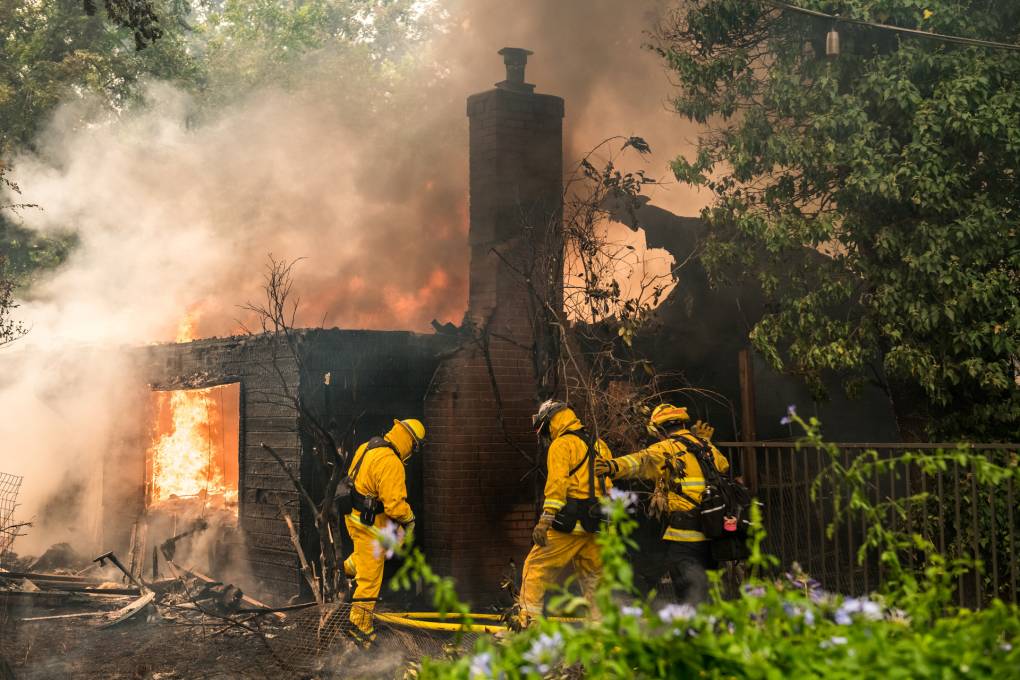
"caption": "Firefighters battle the LNU Lightning Complex blaze as it engulfs a home off Pleasants Valley Road near Vacaville on Aug. 19, 2020.",
"description": "Firefighters battle the LNU Lightning Complex blaze as it engulfs a home off Pleasants Valley Road near Vacaville on Aug. 19, 2020.",
"title": "RS44499_023_KQED_Vacaville_LNULightningComplexFire_08192020-qut",
"credit": "Beth LaBerge/KQED",
"status": "inherit",
"isLoading": false,
"fetchFailed": false
},
"news_11835136": {
"type": "attachments",
"id": "news_11835136",
"meta": {
"index": "attachments_1716263798",
"site": "news",
"id": "11835136",
"found": true
},
"parent": 11835124,
"imgSizes": {
"apple_news_ca_landscape_5_5": {
"file": "https://ww2.kqed.org/app/uploads/sites/10/2020/08/BB-1044x783.png",
"width": 1044,
"mimeType": "image/png",
"height": 783
},
"apple_news_ca_square_4_0": {
"file": "https://ww2.kqed.org/app/uploads/sites/10/2020/08/BB-470x470.png",
"width": 470,
"mimeType": "image/png",
"height": 470
},
"twentyfourteen-full-width": {
"file": "https://ww2.kqed.org/app/uploads/sites/10/2020/08/BB-1038x576.png",
"width": 1038,
"mimeType": "image/png",
"height": 576
},
"thumbnail": {
"file": "https://ww2.kqed.org/app/uploads/sites/10/2020/08/BB-160x108.png",
"width": 160,
"mimeType": "image/png",
"height": 108
},
"post-thumbnail": {
"file": "https://ww2.kqed.org/app/uploads/sites/10/2020/08/BB-672x372.png",
"width": 672,
"mimeType": "image/png",
"height": 372
},
"kqedFullSize": {
"file": "https://ww2.kqed.org/app/uploads/sites/10/2020/08/BB.png",
"width": 1900,
"height": 1280
},
"apple_news_ca_landscape_4_7": {
"file": "https://ww2.kqed.org/app/uploads/sites/10/2020/08/BB-632x474.png",
"width": 632,
"mimeType": "image/png",
"height": 474
},
"large": {
"file": "https://ww2.kqed.org/app/uploads/sites/10/2020/08/BB-1020x687.png",
"width": 1020,
"mimeType": "image/png",
"height": 687
},
"apple_news_ca_landscape_4_0": {
"file": "https://ww2.kqed.org/app/uploads/sites/10/2020/08/BB-536x402.png",
"width": 536,
"mimeType": "image/png",
"height": 402
},
"apple_news_ca_portrait_12_9": {
"file": "https://ww2.kqed.org/app/uploads/sites/10/2020/08/BB-1122x1280.png",
"width": 1122,
"mimeType": "image/png",
"height": 1280
},
"medium": {
"file": "https://ww2.kqed.org/app/uploads/sites/10/2020/08/BB-800x539.png",
"width": 800,
"mimeType": "image/png",
"height": 539
},
"apple_news_ca_portrait_4_0": {
"file": "https://ww2.kqed.org/app/uploads/sites/10/2020/08/BB-354x472.png",
"width": 354,
"mimeType": "image/png",
"height": 472
},
"apple_news_ca_portrait_9_7": {
"file": "https://ww2.kqed.org/app/uploads/sites/10/2020/08/BB-840x1120.png",
"width": 840,
"mimeType": "image/png",
"height": 1120
},
"apple_news_ca_landscape_12_9": {
"file": "https://ww2.kqed.org/app/uploads/sites/10/2020/08/BB-1832x1280.png",
"width": 1832,
"mimeType": "image/png",
"height": 1280
},
"apple_news_ca_square_9_7": {
"file": "https://ww2.kqed.org/app/uploads/sites/10/2020/08/BB-1104x1104.png",
"width": 1104,
"mimeType": "image/png",
"height": 1104
},
"1536x1536": {
"file": "https://ww2.kqed.org/app/uploads/sites/10/2020/08/BB-1536x1035.png",
"width": 1536,
"mimeType": "image/png",
"height": 1035
},
"apple_news_ca_portrait_4_7": {
"file": "https://ww2.kqed.org/app/uploads/sites/10/2020/08/BB-414x552.png",
"width": 414,
"mimeType": "image/png",
"height": 552
},
"apple_news_ca_square_12_9": {
"file": "https://ww2.kqed.org/app/uploads/sites/10/2020/08/BB-1472x1280.png",
"width": 1472,
"mimeType": "image/png",
"height": 1280
},
"apple_news_ca_portrait_5_5": {
"file": "https://ww2.kqed.org/app/uploads/sites/10/2020/08/BB-687x916.png",
"width": 687,
"mimeType": "image/png",
"height": 916
},
"apple_news_ca_square_4_7": {
"file": "https://ww2.kqed.org/app/uploads/sites/10/2020/08/BB-550x550.png",
"width": 550,
"mimeType": "image/png",
"height": 550
},
"apple_news_ca_landscape_9_7": {
"file": "https://ww2.kqed.org/app/uploads/sites/10/2020/08/BB-1376x1032.png",
"width": 1376,
"mimeType": "image/png",
"height": 1032
},
"apple_news_ca_square_5_5": {
"file": "https://ww2.kqed.org/app/uploads/sites/10/2020/08/BB-912x912.png",
"width": 912,
"mimeType": "image/png",
"height": 912
}
},
"publishDate": 1598385204,
"modified": 1598391462,
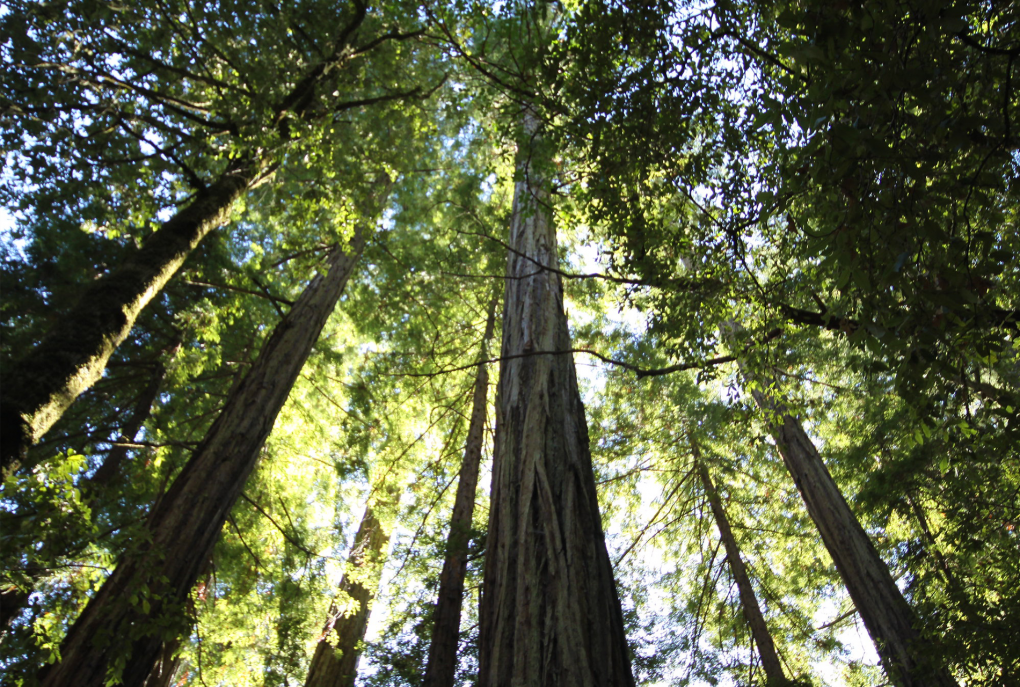
"caption": "Redwoods tower over Big Basin State Park before the CZU fire complex ravaged much of the area beginning last week. Many of the park's massive, old-growth redwoods have reportedly survived the worst of the damage.",
"description": "Redwoods tower over Big Basin State Park before the CZU fire complex ravaged much of the area beginning last week. Many of the park's massive, old-growth redwoods have reportedly survived the worst of the damage.",
"title": "bigbasin",
"credit": "Hyper Hamlet/Flickr",
"status": "inherit",
"isLoading": false,
"fetchFailed": false
},
"news_11835085": {
"type": "attachments",
"id": "news_11835085",
"meta": {
"index": "attachments_1716263798",
"site": "news",
"id": "11835085",
"found": true
},
"parent": 11835084,
"imgSizes": {
"apple_news_ca_landscape_5_5": {
"file": "https://ww2.kqed.org/app/uploads/sites/10/2020/08/dsc02521_wide-ed87adb7552c8b4e9a87444375add18341be69f4-1044x783.jpg",
"width": 1044,
"mimeType": "image/jpeg",
"height": 783
},
"apple_news_ca_square_4_0": {
"file": "https://ww2.kqed.org/app/uploads/sites/10/2020/08/dsc02521_wide-ed87adb7552c8b4e9a87444375add18341be69f4-470x470.jpg",
"width": 470,
"mimeType": "image/jpeg",
"height": 470
},
"twentyfourteen-full-width": {
"file": "https://ww2.kqed.org/app/uploads/sites/10/2020/08/dsc02521_wide-ed87adb7552c8b4e9a87444375add18341be69f4-1038x576.jpg",
"width": 1038,
"mimeType": "image/jpeg",
"height": 576
},
"thumbnail": {
"file": "https://ww2.kqed.org/app/uploads/sites/10/2020/08/dsc02521_wide-ed87adb7552c8b4e9a87444375add18341be69f4-160x90.jpg",
"width": 160,
"mimeType": "image/jpeg",
"height": 90
},
"post-thumbnail": {
"file": "https://ww2.kqed.org/app/uploads/sites/10/2020/08/dsc02521_wide-ed87adb7552c8b4e9a87444375add18341be69f4-672x372.jpg",
"width": 672,
"mimeType": "image/jpeg",
"height": 372
},
"kqedFullSize": {
"file": "https://ww2.kqed.org/app/uploads/sites/10/2020/08/dsc02521_wide-ed87adb7552c8b4e9a87444375add18341be69f4-scaled-e1598378319919.jpg",
"width": 1920,
"height": 1080
},
"2048x2048": {
"file": "https://ww2.kqed.org/app/uploads/sites/10/2020/08/dsc02521_wide-ed87adb7552c8b4e9a87444375add18341be69f4-2048x1152.jpg",
"width": 2048,
"mimeType": "image/jpeg",
"height": 1152
},
"apple_news_ca_landscape_4_7": {
"file": "https://ww2.kqed.org/app/uploads/sites/10/2020/08/dsc02521_wide-ed87adb7552c8b4e9a87444375add18341be69f4-632x474.jpg",
"width": 632,
"mimeType": "image/jpeg",
"height": 474
},
"large": {
"file": "https://ww2.kqed.org/app/uploads/sites/10/2020/08/dsc02521_wide-ed87adb7552c8b4e9a87444375add18341be69f4-1020x574.jpg",
"width": 1020,
"mimeType": "image/jpeg",
"height": 574
},
"apple_news_ca_landscape_4_0": {
"file": "https://ww2.kqed.org/app/uploads/sites/10/2020/08/dsc02521_wide-ed87adb7552c8b4e9a87444375add18341be69f4-536x402.jpg",
"width": 536,
"mimeType": "image/jpeg",
"height": 402
},
"apple_news_ca_portrait_12_9": {
"file": "https://ww2.kqed.org/app/uploads/sites/10/2020/08/dsc02521_wide-ed87adb7552c8b4e9a87444375add18341be69f4-1122x1496.jpg",
"width": 1122,
"mimeType": "image/jpeg",
"height": 1496
},
"medium": {
"file": "https://ww2.kqed.org/app/uploads/sites/10/2020/08/dsc02521_wide-ed87adb7552c8b4e9a87444375add18341be69f4-800x450.jpg",
"width": 800,
"mimeType": "image/jpeg",
"height": 450
},
"apple_news_ca_portrait_4_0": {
"file": "https://ww2.kqed.org/app/uploads/sites/10/2020/08/dsc02521_wide-ed87adb7552c8b4e9a87444375add18341be69f4-354x472.jpg",
"width": 354,
"mimeType": "image/jpeg",
"height": 472
},
"apple_news_ca_portrait_9_7": {
"file": "https://ww2.kqed.org/app/uploads/sites/10/2020/08/dsc02521_wide-ed87adb7552c8b4e9a87444375add18341be69f4-840x1120.jpg",
"width": 840,
"mimeType": "image/jpeg",
"height": 1120
},
"apple_news_ca_landscape_12_9": {
"file": "https://ww2.kqed.org/app/uploads/sites/10/2020/08/dsc02521_wide-ed87adb7552c8b4e9a87444375add18341be69f4-1832x1374.jpg",
"width": 1832,
"mimeType": "image/jpeg",
"height": 1374
},
"apple_news_ca_square_9_7": {
"file": "https://ww2.kqed.org/app/uploads/sites/10/2020/08/dsc02521_wide-ed87adb7552c8b4e9a87444375add18341be69f4-1104x1104.jpg",
"width": 1104,
"mimeType": "image/jpeg",
"height": 1104
},
"1536x1536": {
"file": "https://ww2.kqed.org/app/uploads/sites/10/2020/08/dsc02521_wide-ed87adb7552c8b4e9a87444375add18341be69f4-1536x864.jpg",
"width": 1536,
"mimeType": "image/jpeg",
"height": 864
},
"apple_news_ca_portrait_4_7": {
"file": "https://ww2.kqed.org/app/uploads/sites/10/2020/08/dsc02521_wide-ed87adb7552c8b4e9a87444375add18341be69f4-414x552.jpg",
"width": 414,
"mimeType": "image/jpeg",
"height": 552
},
"apple_news_ca_square_12_9": {
"file": "https://ww2.kqed.org/app/uploads/sites/10/2020/08/dsc02521_wide-ed87adb7552c8b4e9a87444375add18341be69f4-1472x1472.jpg",
"width": 1472,
"mimeType": "image/jpeg",
"height": 1472
},
"apple_news_ca_portrait_5_5": {
"file": "https://ww2.kqed.org/app/uploads/sites/10/2020/08/dsc02521_wide-ed87adb7552c8b4e9a87444375add18341be69f4-687x916.jpg",
"width": 687,
"mimeType": "image/jpeg",
"height": 916
},
"full-width": {
"file": "https://ww2.kqed.org/app/uploads/sites/10/2020/08/dsc02521_wide-ed87adb7552c8b4e9a87444375add18341be69f4-1920x1080.jpg",
"width": 1920,
"mimeType": "image/jpeg",
"height": 1080
},
"apple_news_ca_square_4_7": {
"file": "https://ww2.kqed.org/app/uploads/sites/10/2020/08/dsc02521_wide-ed87adb7552c8b4e9a87444375add18341be69f4-550x550.jpg",
"width": 550,
"mimeType": "image/jpeg",
"height": 550
},
"apple_news_ca_landscape_9_7": {
"file": "https://ww2.kqed.org/app/uploads/sites/10/2020/08/dsc02521_wide-ed87adb7552c8b4e9a87444375add18341be69f4-1376x1032.jpg",
"width": 1376,
"mimeType": "image/jpeg",
"height": 1032
},
"apple_news_ca_square_5_5": {
"file": "https://ww2.kqed.org/app/uploads/sites/10/2020/08/dsc02521_wide-ed87adb7552c8b4e9a87444375add18341be69f4-912x912.jpg",
"width": 912,
"mimeType": "image/jpeg",
"height": 912
}
},
"publishDate": 1598378126,
"modified": 1598378357,
"caption": "Goode looks on as sourberry bushes burn. After the bushes are burned in the winter, they sprout again in the spring.",
"description": null,
"title": "Goode looks on as sourberry bushes burn. After the bushes are burned in the winter, they sprout again in the spring.",
"credit": "Lauren Sommer/NPR",
"status": "inherit",
"isLoading": false,
"fetchFailed": false
},
"news_11834257": {
"type": "attachments",
"id": "news_11834257",
"meta": {
"index": "attachments_1716263798",
"site": "news",
"id": "11834257",
"found": true
},
"parent": 11834253,
"imgSizes": {
"apple_news_ca_landscape_5_5": {
"file": "https://ww2.kqed.org/app/uploads/sites/10/2020/08/RS44512_take-heed-billboard-qut-1044x783.jpg",
"width": 1044,
"mimeType": "image/jpeg",
"height": 783
},
"apple_news_ca_square_4_0": {
"file": "https://ww2.kqed.org/app/uploads/sites/10/2020/08/RS44512_take-heed-billboard-qut-470x470.jpg",
"width": 470,
"mimeType": "image/jpeg",
"height": 470
},
"twentyfourteen-full-width": {
"file": "https://ww2.kqed.org/app/uploads/sites/10/2020/08/RS44512_take-heed-billboard-qut-1038x576.jpg",
"width": 1038,
"mimeType": "image/jpeg",
"height": 576
},
"thumbnail": {
"file": "https://ww2.kqed.org/app/uploads/sites/10/2020/08/RS44512_take-heed-billboard-qut-160x120.jpg",
"width": 160,
"mimeType": "image/jpeg",
"height": 120
},
"post-thumbnail": {
"file": "https://ww2.kqed.org/app/uploads/sites/10/2020/08/RS44512_take-heed-billboard-qut-672x372.jpg",
"width": 672,
"mimeType": "image/jpeg",
"height": 372
},
"kqedFullSize": {
"file": "https://ww2.kqed.org/app/uploads/sites/10/2020/08/RS44512_take-heed-billboard-qut.jpg",
"width": 1920,
"height": 1440
},
"apple_news_ca_landscape_4_7": {
"file": "https://ww2.kqed.org/app/uploads/sites/10/2020/08/RS44512_take-heed-billboard-qut-632x474.jpg",
"width": 632,
"mimeType": "image/jpeg",
"height": 474
},
"large": {
"file": "https://ww2.kqed.org/app/uploads/sites/10/2020/08/RS44512_take-heed-billboard-qut-1020x765.jpg",
"width": 1020,
"mimeType": "image/jpeg",
"height": 765
},
"apple_news_ca_landscape_4_0": {
"file": "https://ww2.kqed.org/app/uploads/sites/10/2020/08/RS44512_take-heed-billboard-qut-536x402.jpg",
"width": 536,
"mimeType": "image/jpeg",
"height": 402
},
"apple_news_ca_portrait_12_9": {
"file": "https://ww2.kqed.org/app/uploads/sites/10/2020/08/RS44512_take-heed-billboard-qut-1122x1440.jpg",
"width": 1122,
"mimeType": "image/jpeg",
"height": 1440
},
"medium": {
"file": "https://ww2.kqed.org/app/uploads/sites/10/2020/08/RS44512_take-heed-billboard-qut-800x600.jpg",
"width": 800,
"mimeType": "image/jpeg",
"height": 600
},
"apple_news_ca_portrait_4_0": {
"file": "https://ww2.kqed.org/app/uploads/sites/10/2020/08/RS44512_take-heed-billboard-qut-354x472.jpg",
"width": 354,
"mimeType": "image/jpeg",
"height": 472
},
"apple_news_ca_portrait_9_7": {
"file": "https://ww2.kqed.org/app/uploads/sites/10/2020/08/RS44512_take-heed-billboard-qut-840x1120.jpg",
"width": 840,
"mimeType": "image/jpeg",
"height": 1120
},
"apple_news_ca_landscape_12_9": {
"file": "https://ww2.kqed.org/app/uploads/sites/10/2020/08/RS44512_take-heed-billboard-qut-1832x1374.jpg",
"width": 1832,
"mimeType": "image/jpeg",
"height": 1374
},
"apple_news_ca_square_9_7": {
"file": "https://ww2.kqed.org/app/uploads/sites/10/2020/08/RS44512_take-heed-billboard-qut-1104x1104.jpg",
"width": 1104,
"mimeType": "image/jpeg",
"height": 1104
},
"1536x1536": {
"file": "https://ww2.kqed.org/app/uploads/sites/10/2020/08/RS44512_take-heed-billboard-qut-1536x1152.jpg",
"width": 1536,
"mimeType": "image/jpeg",
"height": 1152
},
"apple_news_ca_portrait_4_7": {
"file": "https://ww2.kqed.org/app/uploads/sites/10/2020/08/RS44512_take-heed-billboard-qut-414x552.jpg",
"width": 414,
"mimeType": "image/jpeg",
"height": 552
},
"apple_news_ca_square_12_9": {
"file": "https://ww2.kqed.org/app/uploads/sites/10/2020/08/RS44512_take-heed-billboard-qut-1472x1440.jpg",
"width": 1472,
"mimeType": "image/jpeg",
"height": 1440
},
"apple_news_ca_portrait_5_5": {
"file": "https://ww2.kqed.org/app/uploads/sites/10/2020/08/RS44512_take-heed-billboard-qut-687x916.jpg",
"width": 687,
"mimeType": "image/jpeg",
"height": 916
},
"apple_news_ca_square_4_7": {
"file": "https://ww2.kqed.org/app/uploads/sites/10/2020/08/RS44512_take-heed-billboard-qut-550x550.jpg",
"width": 550,
"mimeType": "image/jpeg",
"height": 550
},
"apple_news_ca_landscape_9_7": {
"file": "https://ww2.kqed.org/app/uploads/sites/10/2020/08/RS44512_take-heed-billboard-qut-1376x1032.jpg",
"width": 1376,
"mimeType": "image/jpeg",
"height": 1032
},
"apple_news_ca_square_5_5": {
"file": "https://ww2.kqed.org/app/uploads/sites/10/2020/08/RS44512_take-heed-billboard-qut-912x912.jpg",
"width": 912,
"mimeType": "image/jpeg",
"height": 912
}
},
"publishDate": 1597941415,
"modified": 1597941918,
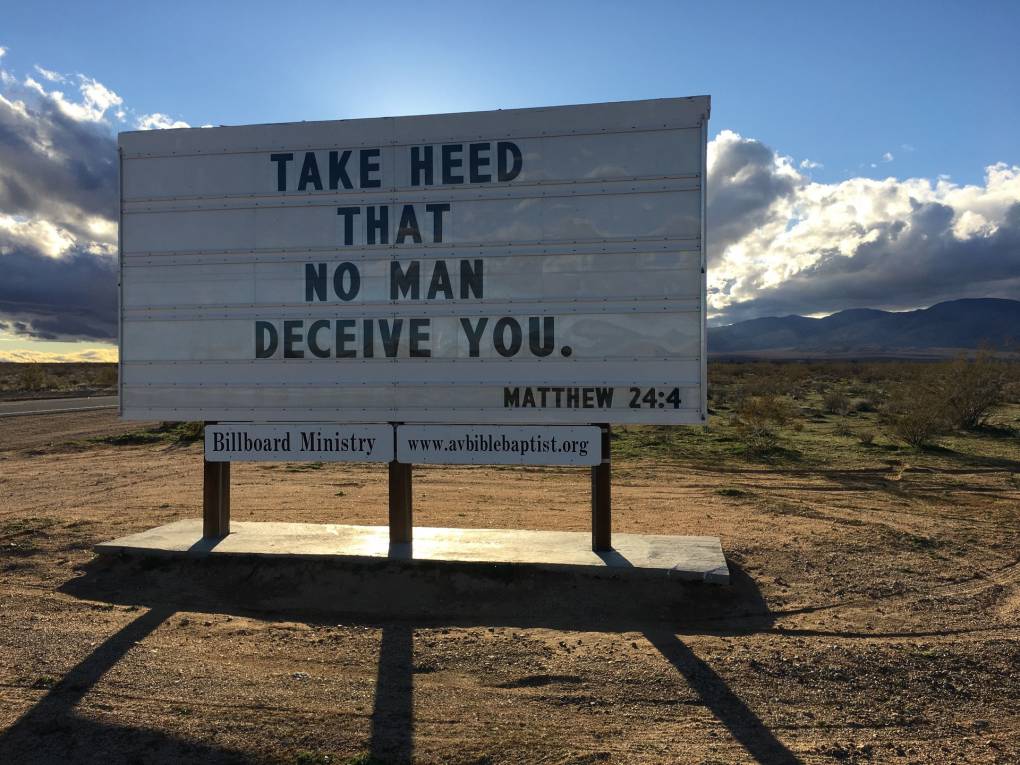
"caption": "Every time reporter Emily Guerin visited California City for her investigation into real estate schemes, this billboard on the outskirts of town displayed a different Bible verse.",
"description": null,
"title": "RS44512_take heed billboard-qut",
"credit": "Emily Guerin/KPCC",
"status": "inherit",
"isLoading": false,
"fetchFailed": false
},
"news_11834209": {
"type": "attachments",
"id": "news_11834209",
"meta": {
"index": "attachments_1716263798",
"site": "news",
"id": "11834209",
"found": true
},
"parent": 11834151,
"imgSizes": {
"apple_news_ca_square_4_0": {
"file": "https://ww2.kqed.org/app/uploads/sites/10/2020/08/1920_gettyimages-1267249671-470x328.jpg",
"width": 470,
"mimeType": "image/jpeg",
"height": 328
},
"thumbnail": {
"file": "https://ww2.kqed.org/app/uploads/sites/10/2020/08/1920_gettyimages-1267249671-160x90.jpg",
"width": 160,
"mimeType": "image/jpeg",
"height": 90
},
"kqedFullSize": {
"file": "https://ww2.kqed.org/app/uploads/sites/10/2020/08/1920_gettyimages-1267249671.jpg",
"width": 582,
"height": 328
},
"apple_news_ca_portrait_4_7": {
"file": "https://ww2.kqed.org/app/uploads/sites/10/2020/08/1920_gettyimages-1267249671-414x328.jpg",
"width": 414,
"mimeType": "image/jpeg",
"height": 328
},
"apple_news_ca_square_4_7": {
"file": "https://ww2.kqed.org/app/uploads/sites/10/2020/08/1920_gettyimages-1267249671-550x328.jpg",
"width": 550,
"mimeType": "image/jpeg",
"height": 328
},
"apple_news_ca_landscape_4_0": {
"file": "https://ww2.kqed.org/app/uploads/sites/10/2020/08/1920_gettyimages-1267249671-536x328.jpg",
"width": 536,
"mimeType": "image/jpeg",
"height": 328
},
"apple_news_ca_portrait_4_0": {
"file": "https://ww2.kqed.org/app/uploads/sites/10/2020/08/1920_gettyimages-1267249671-354x328.jpg",
"width": 354,
"mimeType": "image/jpeg",
"height": 328
}
},
"publishDate": 1597896664,
"modified": 1597897927,
"caption": "Democratic vice presidential nominee U.S. Sen. Kamala Harris (D-CA) speaks on the third night of the Democratic National Convention from the Chase Center August 19, 2020 in Wilmington, Delaware. The convention, which was once expected to draw 50,000 people to Milwaukee, Wisconsin, is now taking place virtually due to the coronavirus pandemic. ",
"description": null,
"title": "1920_gettyimages-1267249671",
"credit": "Win McNamee/Getty Images",
"status": "inherit",
"isLoading": false,
"fetchFailed": false
},
"news_11834311": {
"type": "attachments",
"id": "news_11834311",
"meta": {
"index": "attachments_1716263798",
"site": "news",
"id": "11834311",
"found": true
},
"parent": 11834046,
"imgSizes": {
"apple_news_ca_landscape_5_5": {
"file": "https://ww2.kqed.org/app/uploads/sites/10/2020/08/Boulder-Creek-Road-Closure-1044x783.jpg",
"width": 1044,
"mimeType": "image/jpeg",
"height": 783
},
"apple_news_ca_square_4_0": {
"file": "https://ww2.kqed.org/app/uploads/sites/10/2020/08/Boulder-Creek-Road-Closure-470x470.jpg",
"width": 470,
"mimeType": "image/jpeg",
"height": 470
},
"twentyfourteen-full-width": {
"file": "https://ww2.kqed.org/app/uploads/sites/10/2020/08/Boulder-Creek-Road-Closure-1038x576.jpg",
"width": 1038,
"mimeType": "image/jpeg",
"height": 576
},
"thumbnail": {
"file": "https://ww2.kqed.org/app/uploads/sites/10/2020/08/Boulder-Creek-Road-Closure-160x100.jpg",
"width": 160,
"mimeType": "image/jpeg",
"height": 100
},
"post-thumbnail": {
"file": "https://ww2.kqed.org/app/uploads/sites/10/2020/08/Boulder-Creek-Road-Closure-672x372.jpg",
"width": 672,
"mimeType": "image/jpeg",
"height": 372
},
"kqedFullSize": {
"file": "https://ww2.kqed.org/app/uploads/sites/10/2020/08/Boulder-Creek-Road-Closure.jpg",
"width": 1620,
"height": 1017
},
"apple_news_ca_landscape_4_7": {
"file": "https://ww2.kqed.org/app/uploads/sites/10/2020/08/Boulder-Creek-Road-Closure-632x474.jpg",
"width": 632,
"mimeType": "image/jpeg",
"height": 474
},
"large": {
"file": "https://ww2.kqed.org/app/uploads/sites/10/2020/08/Boulder-Creek-Road-Closure-1020x640.jpg",
"width": 1020,
"mimeType": "image/jpeg",
"height": 640
},
"apple_news_ca_landscape_4_0": {
"file": "https://ww2.kqed.org/app/uploads/sites/10/2020/08/Boulder-Creek-Road-Closure-536x402.jpg",
"width": 536,
"mimeType": "image/jpeg",
"height": 402
},
"apple_news_ca_portrait_12_9": {
"file": "https://ww2.kqed.org/app/uploads/sites/10/2020/08/Boulder-Creek-Road-Closure-1122x1017.jpg",
"width": 1122,
"mimeType": "image/jpeg",
"height": 1017
},
"medium": {
"file": "https://ww2.kqed.org/app/uploads/sites/10/2020/08/Boulder-Creek-Road-Closure-800x502.jpg",
"width": 800,
"mimeType": "image/jpeg",
"height": 502
},
"apple_news_ca_portrait_4_0": {
"file": "https://ww2.kqed.org/app/uploads/sites/10/2020/08/Boulder-Creek-Road-Closure-354x472.jpg",
"width": 354,
"mimeType": "image/jpeg",
"height": 472
},
"apple_news_ca_portrait_9_7": {
"file": "https://ww2.kqed.org/app/uploads/sites/10/2020/08/Boulder-Creek-Road-Closure-840x1017.jpg",
"width": 840,
"mimeType": "image/jpeg",
"height": 1017
},
"apple_news_ca_square_9_7": {
"file": "https://ww2.kqed.org/app/uploads/sites/10/2020/08/Boulder-Creek-Road-Closure-1104x1017.jpg",
"width": 1104,
"mimeType": "image/jpeg",
"height": 1017
},
"1536x1536": {
"file": "https://ww2.kqed.org/app/uploads/sites/10/2020/08/Boulder-Creek-Road-Closure-1536x964.jpg",
"width": 1536,
"mimeType": "image/jpeg",
"height": 964
},
"apple_news_ca_portrait_4_7": {
"file": "https://ww2.kqed.org/app/uploads/sites/10/2020/08/Boulder-Creek-Road-Closure-414x552.jpg",
"width": 414,
"mimeType": "image/jpeg",
"height": 552
},
"apple_news_ca_square_12_9": {
"file": "https://ww2.kqed.org/app/uploads/sites/10/2020/08/Boulder-Creek-Road-Closure-1472x1017.jpg",
"width": 1472,
"mimeType": "image/jpeg",
"height": 1017
},
"apple_news_ca_portrait_5_5": {
"file": "https://ww2.kqed.org/app/uploads/sites/10/2020/08/Boulder-Creek-Road-Closure-687x916.jpg",
"width": 687,
"mimeType": "image/jpeg",
"height": 916
},
"apple_news_ca_square_4_7": {
"file": "https://ww2.kqed.org/app/uploads/sites/10/2020/08/Boulder-Creek-Road-Closure-550x550.jpg",
"width": 550,
"mimeType": "image/jpeg",
"height": 550
},
"apple_news_ca_landscape_9_7": {
"file": "https://ww2.kqed.org/app/uploads/sites/10/2020/08/Boulder-Creek-Road-Closure-1376x1017.jpg",
"width": 1376,
"mimeType": "image/jpeg",
"height": 1017
},
"apple_news_ca_square_5_5": {
"file": "https://ww2.kqed.org/app/uploads/sites/10/2020/08/Boulder-Creek-Road-Closure-912x912.jpg",
"width": 912,
"mimeType": "image/jpeg",
"height": 912
}
},
"publishDate": 1597955360,
"modified": 1597955621,
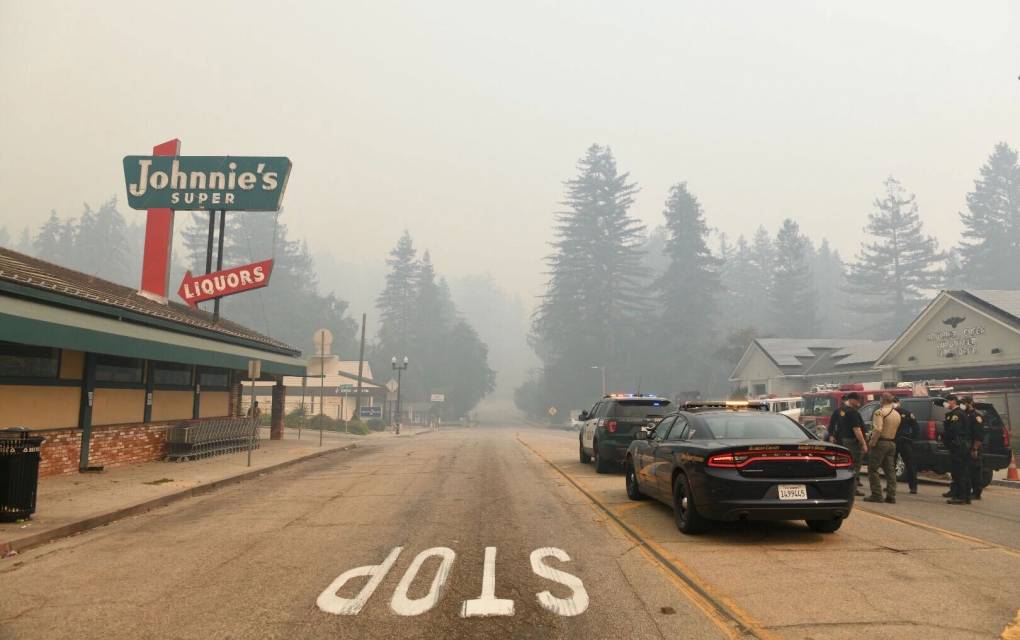
"caption": "Law enforcement personnel enforce a traffic barrier in Boulder Creek as residents of the Santa Cruz mountains continued to evacuate from the CZU Lightning Complex fires on Aug. 20.",
"description": "Law enforcement personnel enforce a traffic barrier in Boulder Creek as residents of the Santa Cruz mountains continued to evacuate from the CZU Lightning Complex fires on Aug. 20.",
"title": "Boulder-Creek-Road-Closure",
"credit": "Beth LaBerge/KQED",
"status": "inherit",
"isLoading": false,
"fetchFailed": false
},
"news_11833753": {
"type": "attachments",
"id": "news_11833753",
"meta": {
"index": "attachments_1716263798",
"site": "news",
"id": "11833753",
"found": true
},
"title": "PGE-Subcontractors-Inspect",
"publishDate": 1597704586,
"status": "inherit",
"parent": 11833283,
"modified": 1740089314,
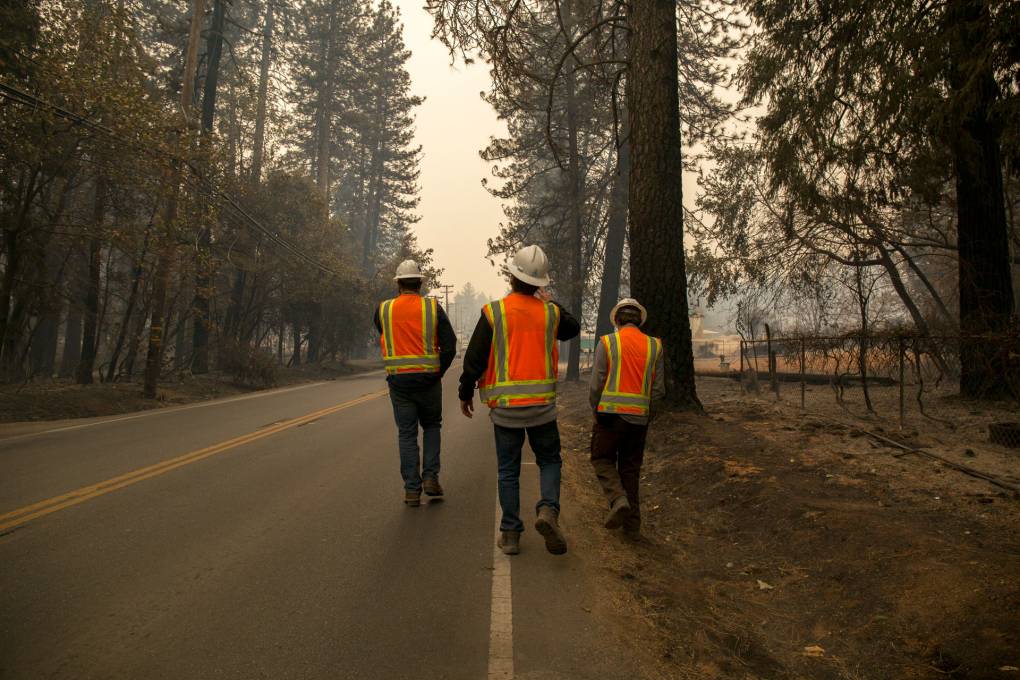
"caption": "PG&E subcontractors assess vegetation at risk for catching fire near Paradise, California, on Nov. 13, 2018, five days after a PG&E transmission line sparked the Camp Fire, the deadliest and most destructive wildfire in modern California history. The blaze leveled the town of Paradise and killed 85 people.",
"credit": "Anne Wernikoff/KQED",
"altTag": "PG&E subcontractors assess vegetation at risk for catching fire near Paradise, Calif. on Nov. 13, 2018, five days after a PG&E transmission line sparked the Camp Fire, the deadliest and most destructive wildfire in modern California history. The blaze leveled the town of Paradise and killed 85 people.",
"description": "PG&E subcontractors assess vegetation at risk for catching fire near Paradise, Calif. on Nov. 13, 2018, five days after a PG&E transmission line sparked the Camp Fire, the deadliest and most destructive wildfire in modern California history. The blaze leveled the town of Paradise and killed 85 people.",
"imgSizes": {
"medium": {
"file": "https://cdn.kqed.org/wp-content/uploads/sites/10/2020/08/PGE-Subcontractors-Inspect-800x533.jpg",
"width": 800,
"height": 533,
"mimeType": "image/jpeg"
},
"large": {
"file": "https://cdn.kqed.org/wp-content/uploads/sites/10/2020/08/PGE-Subcontractors-Inspect-1020x680.jpg",
"width": 1020,
"height": 680,
"mimeType": "image/jpeg"
},
"thumbnail": {
"file": "https://cdn.kqed.org/wp-content/uploads/sites/10/2020/08/PGE-Subcontractors-Inspect-160x107.jpg",
"width": 160,
"height": 107,
"mimeType": "image/jpeg"
},
"1536x1536": {
"file": "https://cdn.kqed.org/wp-content/uploads/sites/10/2020/08/PGE-Subcontractors-Inspect-1536x1024.jpg",
"width": 1536,
"height": 1024,
"mimeType": "image/jpeg"
},
"post-thumbnail": {
"file": "https://cdn.kqed.org/wp-content/uploads/sites/10/2020/08/PGE-Subcontractors-Inspect-672x372.jpg",
"width": 672,
"height": 372,
"mimeType": "image/jpeg"
},
"twentyfourteen-full-width": {
"file": "https://cdn.kqed.org/wp-content/uploads/sites/10/2020/08/PGE-Subcontractors-Inspect-1038x576.jpg",
"width": 1038,
"height": 576,
"mimeType": "image/jpeg"
},
"apple_news_ca_landscape_12_9": {
"file": "https://cdn.kqed.org/wp-content/uploads/sites/10/2020/08/PGE-Subcontractors-Inspect-1832x1280.jpg",
"width": 1832,
"height": 1280,
"mimeType": "image/jpeg"
},
"apple_news_ca_landscape_9_7": {
"file": "https://cdn.kqed.org/wp-content/uploads/sites/10/2020/08/PGE-Subcontractors-Inspect-1376x1032.jpg",
"width": 1376,
"height": 1032,
"mimeType": "image/jpeg"
},
"apple_news_ca_landscape_5_5": {
"file": "https://cdn.kqed.org/wp-content/uploads/sites/10/2020/08/PGE-Subcontractors-Inspect-1044x783.jpg",
"width": 1044,
"height": 783,
"mimeType": "image/jpeg"
},
"apple_news_ca_landscape_4_7": {
"file": "https://cdn.kqed.org/wp-content/uploads/sites/10/2020/08/PGE-Subcontractors-Inspect-632x474.jpg",
"width": 632,
"height": 474,
"mimeType": "image/jpeg"
},
"apple_news_ca_landscape_4_0": {
"file": "https://cdn.kqed.org/wp-content/uploads/sites/10/2020/08/PGE-Subcontractors-Inspect-536x402.jpg",
"width": 536,
"height": 402,
"mimeType": "image/jpeg"
},
"apple_news_ca_portrait_12_9": {
"file": "https://cdn.kqed.org/wp-content/uploads/sites/10/2020/08/PGE-Subcontractors-Inspect-1122x1280.jpg",
"width": 1122,
"height": 1280,
"mimeType": "image/jpeg"
},
"apple_news_ca_portrait_9_7": {
"file": "https://cdn.kqed.org/wp-content/uploads/sites/10/2020/08/PGE-Subcontractors-Inspect-840x1120.jpg",
"width": 840,
"height": 1120,
"mimeType": "image/jpeg"
},
"apple_news_ca_portrait_5_5": {
"file": "https://cdn.kqed.org/wp-content/uploads/sites/10/2020/08/PGE-Subcontractors-Inspect-687x916.jpg",
"width": 687,
"height": 916,
"mimeType": "image/jpeg"
},
"apple_news_ca_portrait_4_7": {
"file": "https://cdn.kqed.org/wp-content/uploads/sites/10/2020/08/PGE-Subcontractors-Inspect-414x552.jpg",
"width": 414,
"height": 552,
"mimeType": "image/jpeg"
},
"apple_news_ca_portrait_4_0": {
"file": "https://cdn.kqed.org/wp-content/uploads/sites/10/2020/08/PGE-Subcontractors-Inspect-354x472.jpg",
"width": 354,
"height": 472,
"mimeType": "image/jpeg"
},
"apple_news_ca_square_12_9": {
"file": "https://cdn.kqed.org/wp-content/uploads/sites/10/2020/08/PGE-Subcontractors-Inspect-1472x1280.jpg",
"width": 1472,
"height": 1280,
"mimeType": "image/jpeg"
},
"apple_news_ca_square_9_7": {
"file": "https://cdn.kqed.org/wp-content/uploads/sites/10/2020/08/PGE-Subcontractors-Inspect-1104x1104.jpg",
"width": 1104,
"height": 1104,
"mimeType": "image/jpeg"
},
"apple_news_ca_square_5_5": {
"file": "https://cdn.kqed.org/wp-content/uploads/sites/10/2020/08/PGE-Subcontractors-Inspect-912x912.jpg",
"width": 912,
"height": 912,
"mimeType": "image/jpeg"
},
"apple_news_ca_square_4_7": {
"file": "https://cdn.kqed.org/wp-content/uploads/sites/10/2020/08/PGE-Subcontractors-Inspect-550x550.jpg",
"width": 550,
"height": 550,
"mimeType": "image/jpeg"
},
"apple_news_ca_square_4_0": {
"file": "https://cdn.kqed.org/wp-content/uploads/sites/10/2020/08/PGE-Subcontractors-Inspect-470x470.jpg",
"width": 470,
"height": 470,
"mimeType": "image/jpeg"
},
"kqedFullSize": {
"file": "https://cdn.kqed.org/wp-content/uploads/sites/10/2020/08/PGE-Subcontractors-Inspect.jpg",
"width": 1920,
"height": 1280
}
},
"isLoading": false,
"fetchFailed": false
},
"news_11833684": {
"type": "attachments",
"id": "news_11833684",
"meta": {
"index": "attachments_1716263798",
"site": "news",
"id": "11833684",
"found": true
},
"parent": 11833670,
"imgSizes": {
"apple_news_ca_landscape_5_5": {
"file": "https://ww2.kqed.org/app/uploads/sites/10/2020/08/RS44435_GettyImages-1228073346-qut-1044x783.jpg",
"width": 1044,
"mimeType": "image/jpeg",
"height": 783
},
"apple_news_ca_square_4_0": {
"file": "https://ww2.kqed.org/app/uploads/sites/10/2020/08/RS44435_GettyImages-1228073346-qut-470x470.jpg",
"width": 470,
"mimeType": "image/jpeg",
"height": 470
},
"twentyfourteen-full-width": {
"file": "https://ww2.kqed.org/app/uploads/sites/10/2020/08/RS44435_GettyImages-1228073346-qut-1038x576.jpg",
"width": 1038,
"mimeType": "image/jpeg",
"height": 576
},
"thumbnail": {
"file": "https://ww2.kqed.org/app/uploads/sites/10/2020/08/RS44435_GettyImages-1228073346-qut-160x107.jpg",
"width": 160,
"mimeType": "image/jpeg",
"height": 107
},
"post-thumbnail": {
"file": "https://ww2.kqed.org/app/uploads/sites/10/2020/08/RS44435_GettyImages-1228073346-qut-672x372.jpg",
"width": 672,
"mimeType": "image/jpeg",
"height": 372
},
"kqedFullSize": {
"file": "https://ww2.kqed.org/app/uploads/sites/10/2020/08/RS44435_GettyImages-1228073346-qut.jpg",
"width": 1920,
"height": 1280
},
"apple_news_ca_landscape_4_7": {
"file": "https://ww2.kqed.org/app/uploads/sites/10/2020/08/RS44435_GettyImages-1228073346-qut-632x474.jpg",
"width": 632,
"mimeType": "image/jpeg",
"height": 474
},
"large": {
"file": "https://ww2.kqed.org/app/uploads/sites/10/2020/08/RS44435_GettyImages-1228073346-qut-1020x680.jpg",
"width": 1020,
"mimeType": "image/jpeg",
"height": 680
},
"apple_news_ca_landscape_4_0": {
"file": "https://ww2.kqed.org/app/uploads/sites/10/2020/08/RS44435_GettyImages-1228073346-qut-536x402.jpg",
"width": 536,
"mimeType": "image/jpeg",
"height": 402
},
"apple_news_ca_portrait_12_9": {
"file": "https://ww2.kqed.org/app/uploads/sites/10/2020/08/RS44435_GettyImages-1228073346-qut-1122x1280.jpg",
"width": 1122,
"mimeType": "image/jpeg",
"height": 1280
},
"medium": {
"file": "https://ww2.kqed.org/app/uploads/sites/10/2020/08/RS44435_GettyImages-1228073346-qut-800x533.jpg",
"width": 800,
"mimeType": "image/jpeg",
"height": 533
},
"apple_news_ca_portrait_4_0": {
"file": "https://ww2.kqed.org/app/uploads/sites/10/2020/08/RS44435_GettyImages-1228073346-qut-354x472.jpg",
"width": 354,
"mimeType": "image/jpeg",
"height": 472
},
"apple_news_ca_portrait_9_7": {
"file": "https://ww2.kqed.org/app/uploads/sites/10/2020/08/RS44435_GettyImages-1228073346-qut-840x1120.jpg",
"width": 840,
"mimeType": "image/jpeg",
"height": 1120
},
"apple_news_ca_landscape_12_9": {
"file": "https://ww2.kqed.org/app/uploads/sites/10/2020/08/RS44435_GettyImages-1228073346-qut-1832x1280.jpg",
"width": 1832,
"mimeType": "image/jpeg",
"height": 1280
},
"apple_news_ca_square_9_7": {
"file": "https://ww2.kqed.org/app/uploads/sites/10/2020/08/RS44435_GettyImages-1228073346-qut-1104x1104.jpg",
"width": 1104,
"mimeType": "image/jpeg",
"height": 1104
},
"1536x1536": {
"file": "https://ww2.kqed.org/app/uploads/sites/10/2020/08/RS44435_GettyImages-1228073346-qut-1536x1024.jpg",
"width": 1536,
"mimeType": "image/jpeg",
"height": 1024
},
"apple_news_ca_portrait_4_7": {
"file": "https://ww2.kqed.org/app/uploads/sites/10/2020/08/RS44435_GettyImages-1228073346-qut-414x552.jpg",
"width": 414,
"mimeType": "image/jpeg",
"height": 552
},
"apple_news_ca_square_12_9": {
"file": "https://ww2.kqed.org/app/uploads/sites/10/2020/08/RS44435_GettyImages-1228073346-qut-1472x1280.jpg",
"width": 1472,
"mimeType": "image/jpeg",
"height": 1280
},
"apple_news_ca_portrait_5_5": {
"file": "https://ww2.kqed.org/app/uploads/sites/10/2020/08/RS44435_GettyImages-1228073346-qut-687x916.jpg",
"width": 687,
"mimeType": "image/jpeg",
"height": 916
},
"apple_news_ca_square_4_7": {
"file": "https://ww2.kqed.org/app/uploads/sites/10/2020/08/RS44435_GettyImages-1228073346-qut-550x550.jpg",
"width": 550,
"mimeType": "image/jpeg",
"height": 550
},
"apple_news_ca_landscape_9_7": {
"file": "https://ww2.kqed.org/app/uploads/sites/10/2020/08/RS44435_GettyImages-1228073346-qut-1376x1032.jpg",
"width": 1376,
"mimeType": "image/jpeg",
"height": 1032
},
"apple_news_ca_square_5_5": {
"file": "https://ww2.kqed.org/app/uploads/sites/10/2020/08/RS44435_GettyImages-1228073346-qut-912x912.jpg",
"width": 912,
"mimeType": "image/jpeg",
"height": 912
}
},
"publishDate": 1597690629,
"modified": 1597691104,
"caption": "A man sits under electrical transmission lines in Redondo Beach on Aug. 16, 2020. PG&E blacked out power to about 220,000 customers on Friday and Saturday evenings as the state grappled with a surge in power demand amid a widespread heat wave.",
"description": "A man sits under electrical transmission lines in Redondo Beach on Aug. 16, 2020. PG&E blacked out power to about 220,000 customers on Friday and Saturday evenings as the state grappled with a surge in power demand amid a widespread heat wave.",
"title": "US-HEAT-POWER-OUTAGE",
"credit": "APU GOMES/AFP via Getty Images",
"status": "inherit",
"isLoading": false,
"fetchFailed": false
},
"news_11833560": {
"type": "attachments",
"id": "news_11833560",
"meta": {
"index": "attachments_1716263798",
"site": "news",
"id": "11833560",
"found": true
},
"parent": 11833556,
"imgSizes": {
"apple_news_ca_landscape_5_5": {
"file": "https://ww2.kqed.org/app/uploads/sites/10/2020/08/GettyImages-1180293368-1044x783.jpg",
"width": 1044,
"mimeType": "image/jpeg",
"height": 783
},
"apple_news_ca_square_4_0": {
"file": "https://ww2.kqed.org/app/uploads/sites/10/2020/08/GettyImages-1180293368-470x470.jpg",
"width": 470,
"mimeType": "image/jpeg",
"height": 470
},
"twentyfourteen-full-width": {
"file": "https://ww2.kqed.org/app/uploads/sites/10/2020/08/GettyImages-1180293368-1038x576.jpg",
"width": 1038,
"mimeType": "image/jpeg",
"height": 576
},
"thumbnail": {
"file": "https://ww2.kqed.org/app/uploads/sites/10/2020/08/GettyImages-1180293368-160x102.jpg",
"width": 160,
"mimeType": "image/jpeg",
"height": 102
},
"post-thumbnail": {
"file": "https://ww2.kqed.org/app/uploads/sites/10/2020/08/GettyImages-1180293368-672x372.jpg",
"width": 672,
"mimeType": "image/jpeg",
"height": 372
},
"kqedFullSize": {
"file": "https://ww2.kqed.org/app/uploads/sites/10/2020/08/GettyImages-1180293368-scaled-e1597544834428.jpg",
"width": 1920,
"height": 1229
},
"2048x2048": {
"file": "https://ww2.kqed.org/app/uploads/sites/10/2020/08/GettyImages-1180293368-2048x1312.jpg",
"width": 2048,
"mimeType": "image/jpeg",
"height": 1312
},
"apple_news_ca_landscape_4_7": {
"file": "https://ww2.kqed.org/app/uploads/sites/10/2020/08/GettyImages-1180293368-632x474.jpg",
"width": 632,
"mimeType": "image/jpeg",
"height": 474
},
"large": {
"file": "https://ww2.kqed.org/app/uploads/sites/10/2020/08/GettyImages-1180293368-1020x653.jpg",
"width": 1020,
"mimeType": "image/jpeg",
"height": 653
},
"apple_news_ca_landscape_4_0": {
"file": "https://ww2.kqed.org/app/uploads/sites/10/2020/08/GettyImages-1180293368-536x402.jpg",
"width": 536,
"mimeType": "image/jpeg",
"height": 402
},
"apple_news_ca_portrait_12_9": {
"file": "https://ww2.kqed.org/app/uploads/sites/10/2020/08/GettyImages-1180293368-1122x1496.jpg",
"width": 1122,
"mimeType": "image/jpeg",
"height": 1496
},
"medium": {
"file": "https://ww2.kqed.org/app/uploads/sites/10/2020/08/GettyImages-1180293368-800x512.jpg",
"width": 800,
"mimeType": "image/jpeg",
"height": 512
},
"apple_news_ca_portrait_4_0": {
"file": "https://ww2.kqed.org/app/uploads/sites/10/2020/08/GettyImages-1180293368-354x472.jpg",
"width": 354,
"mimeType": "image/jpeg",
"height": 472
},
"apple_news_ca_portrait_9_7": {
"file": "https://ww2.kqed.org/app/uploads/sites/10/2020/08/GettyImages-1180293368-840x1120.jpg",
"width": 840,
"mimeType": "image/jpeg",
"height": 1120
},
"apple_news_ca_landscape_12_9": {
"file": "https://ww2.kqed.org/app/uploads/sites/10/2020/08/GettyImages-1180293368-1832x1374.jpg",
"width": 1832,
"mimeType": "image/jpeg",
"height": 1374
},
"apple_news_ca_square_9_7": {
"file": "https://ww2.kqed.org/app/uploads/sites/10/2020/08/GettyImages-1180293368-1104x1104.jpg",
"width": 1104,
"mimeType": "image/jpeg",
"height": 1104
},
"1536x1536": {
"file": "https://ww2.kqed.org/app/uploads/sites/10/2020/08/GettyImages-1180293368-1536x984.jpg",
"width": 1536,
"mimeType": "image/jpeg",
"height": 984
},
"apple_news_ca_portrait_4_7": {
"file": "https://ww2.kqed.org/app/uploads/sites/10/2020/08/GettyImages-1180293368-414x552.jpg",
"width": 414,
"mimeType": "image/jpeg",
"height": 552
},
"apple_news_ca_square_12_9": {
"file": "https://ww2.kqed.org/app/uploads/sites/10/2020/08/GettyImages-1180293368-1472x1472.jpg",
"width": 1472,
"mimeType": "image/jpeg",
"height": 1472
},
"apple_news_ca_portrait_5_5": {
"file": "https://ww2.kqed.org/app/uploads/sites/10/2020/08/GettyImages-1180293368-687x916.jpg",
"width": 687,
"mimeType": "image/jpeg",
"height": 916
},
"full-width": {
"file": "https://ww2.kqed.org/app/uploads/sites/10/2020/08/GettyImages-1180293368-1920x1230.jpg",
"width": 1920,
"mimeType": "image/jpeg",
"height": 1230
},
"apple_news_ca_square_4_7": {
"file": "https://ww2.kqed.org/app/uploads/sites/10/2020/08/GettyImages-1180293368-550x550.jpg",
"width": 550,
"mimeType": "image/jpeg",
"height": 550
},
"apple_news_ca_landscape_9_7": {
"file": "https://ww2.kqed.org/app/uploads/sites/10/2020/08/GettyImages-1180293368-1376x1032.jpg",
"width": 1376,
"mimeType": "image/jpeg",
"height": 1032
},
"apple_news_ca_square_5_5": {
"file": "https://ww2.kqed.org/app/uploads/sites/10/2020/08/GettyImages-1180293368-912x912.jpg",
"width": 912,
"mimeType": "image/jpeg",
"height": 912
}
},
"publishDate": 1597544792,
"modified": 1597547273,
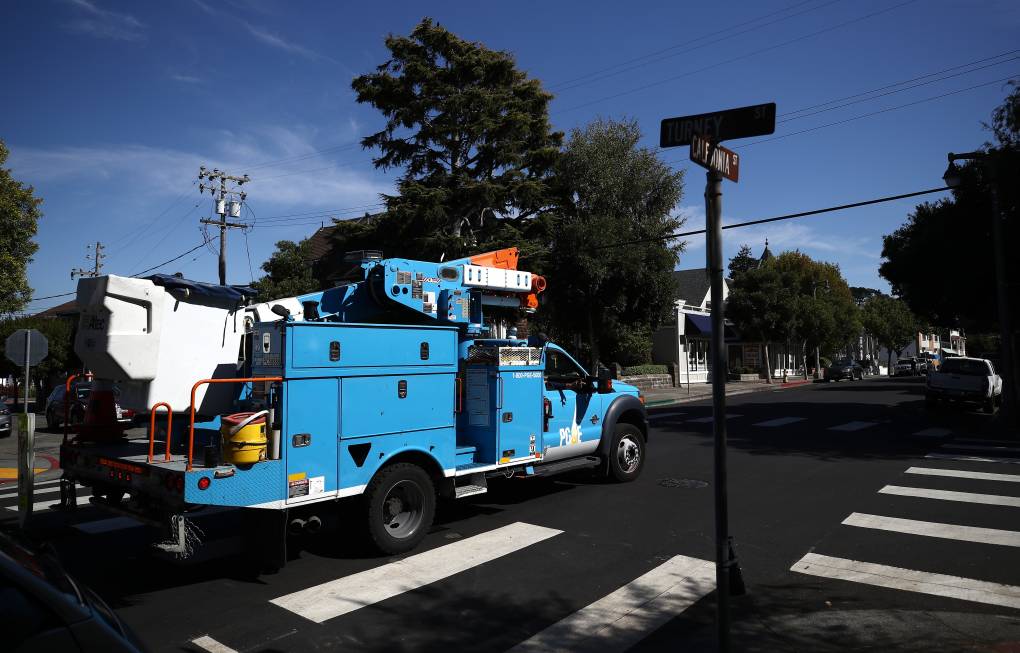
"caption": "A PG&E crew patrols Sausalito in October 2019 in preparation for a public safety power shutoff. ",
"description": null,
"title": "PG&E Power Outages",
"credit": "Ezra Shaw/Getty Images",
"status": "inherit",
"isLoading": false,
"fetchFailed": false
},
"news_11833522": {
"type": "attachments",
"id": "news_11833522",
"meta": {
"index": "attachments_1716263798",
"site": "news",
"id": "11833522",
"found": true
},
"parent": 11833521,
"imgSizes": {
"apple_news_ca_square_4_0": {
"file": "https://ww2.kqed.org/app/uploads/sites/10/2020/08/1000-1-470x470.jpeg",
"width": 470,
"mimeType": "image/jpeg",
"height": 470
},
"twentyfourteen-full-width": {
"file": "https://ww2.kqed.org/app/uploads/sites/10/2020/08/1000-1-1000x576.jpeg",
"width": 1000,
"mimeType": "image/jpeg",
"height": 576
},
"thumbnail": {
"file": "https://ww2.kqed.org/app/uploads/sites/10/2020/08/1000-1-160x107.jpeg",
"width": 160,
"mimeType": "image/jpeg",
"height": 107
},
"post-thumbnail": {
"file": "https://ww2.kqed.org/app/uploads/sites/10/2020/08/1000-1-672x372.jpeg",
"width": 672,
"mimeType": "image/jpeg",
"height": 372
},
"kqedFullSize": {
"file": "https://ww2.kqed.org/app/uploads/sites/10/2020/08/1000-1.jpeg",
"width": 1000,
"height": 666
},
"apple_news_ca_landscape_4_7": {
"file": "https://ww2.kqed.org/app/uploads/sites/10/2020/08/1000-1-632x474.jpeg",
"width": 632,
"mimeType": "image/jpeg",
"height": 474
},
"apple_news_ca_landscape_4_0": {
"file": "https://ww2.kqed.org/app/uploads/sites/10/2020/08/1000-1-536x402.jpeg",
"width": 536,
"mimeType": "image/jpeg",
"height": 402
},
"medium": {
"file": "https://ww2.kqed.org/app/uploads/sites/10/2020/08/1000-1-800x533.jpeg",
"width": 800,
"mimeType": "image/jpeg",
"height": 533
},
"apple_news_ca_portrait_4_0": {
"file": "https://ww2.kqed.org/app/uploads/sites/10/2020/08/1000-1-354x472.jpeg",
"width": 354,
"mimeType": "image/jpeg",
"height": 472
},
"apple_news_ca_portrait_9_7": {
"file": "https://ww2.kqed.org/app/uploads/sites/10/2020/08/1000-1-840x666.jpeg",
"width": 840,
"mimeType": "image/jpeg",
"height": 666
},
"apple_news_ca_portrait_4_7": {
"file": "https://ww2.kqed.org/app/uploads/sites/10/2020/08/1000-1-414x552.jpeg",
"width": 414,
"mimeType": "image/jpeg",
"height": 552
},
"apple_news_ca_portrait_5_5": {
"file": "https://ww2.kqed.org/app/uploads/sites/10/2020/08/1000-1-687x666.jpeg",
"width": 687,
"mimeType": "image/jpeg",
"height": 666
},
"apple_news_ca_square_4_7": {
"file": "https://ww2.kqed.org/app/uploads/sites/10/2020/08/1000-1-550x550.jpeg",
"width": 550,
"mimeType": "image/jpeg",
"height": 550
},
"apple_news_ca_square_5_5": {
"file": "https://ww2.kqed.org/app/uploads/sites/10/2020/08/1000-1-912x666.jpeg",
"width": 912,
"mimeType": "image/jpeg",
"height": 666
}
},
"publishDate": 1597465412,
"modified": 1597465794,
"caption": "California's heat wave has strained the state's electrical system. Pacific Gas & Electric announced on Friday that it would turn off power in rotating outages for about an hour at a time until 11 p.m. The state's heat wave also brings the threat of wildfires and spreading coronavirus infections as people flock to beaches and recreation areas. ",
"description": null,
"title": null,
"credit": "Marcio Jose Sanchez/AP Photo",
"status": "inherit",
"isLoading": false,
"fetchFailed": false
},
"news_11832120": {
"type": "attachments",
"id": "news_11832120",
"meta": {
"index": "attachments_1716263798",
"site": "news",
"id": "11832120",
"found": true
},
"parent": 11832103,
"imgSizes": {
"apple_news_ca_square_4_0": {
"file": "https://ww2.kqed.org/app/uploads/sites/10/2020/08/csrc-laraza-b12f4c3-mm-012-a_orig-470x470.jpg",
"width": 470,
"mimeType": "image/jpeg",
"height": 470
},
"twentyfourteen-full-width": {
"file": "https://ww2.kqed.org/app/uploads/sites/10/2020/08/csrc-laraza-b12f4c3-mm-012-a_orig-1022x576.jpg",
"width": 1022,
"mimeType": "image/jpeg",
"height": 576
},
"thumbnail": {
"file": "https://ww2.kqed.org/app/uploads/sites/10/2020/08/csrc-laraza-b12f4c3-mm-012-a_orig-160x103.jpg",
"width": 160,
"mimeType": "image/jpeg",
"height": 103
},
"post-thumbnail": {
"file": "https://ww2.kqed.org/app/uploads/sites/10/2020/08/csrc-laraza-b12f4c3-mm-012-a_orig-672x372.jpg",
"width": 672,
"mimeType": "image/jpeg",
"height": 372
},
"kqedFullSize": {
"file": "https://ww2.kqed.org/app/uploads/sites/10/2020/08/csrc-laraza-b12f4c3-mm-012-a_orig.jpg",
"width": 1022,
"height": 656
},
"apple_news_ca_landscape_4_7": {
"file": "https://ww2.kqed.org/app/uploads/sites/10/2020/08/csrc-laraza-b12f4c3-mm-012-a_orig-632x474.jpg",
"width": 632,
"mimeType": "image/jpeg",
"height": 474
},
"large": {
"file": "https://ww2.kqed.org/app/uploads/sites/10/2020/08/csrc-laraza-b12f4c3-mm-012-a_orig-1020x655.jpg",
"width": 1020,
"mimeType": "image/jpeg",
"height": 655
},
"apple_news_ca_landscape_4_0": {
"file": "https://ww2.kqed.org/app/uploads/sites/10/2020/08/csrc-laraza-b12f4c3-mm-012-a_orig-536x402.jpg",
"width": 536,
"mimeType": "image/jpeg",
"height": 402
},
"medium": {
"file": "https://ww2.kqed.org/app/uploads/sites/10/2020/08/csrc-laraza-b12f4c3-mm-012-a_orig-800x514.jpg",
"width": 800,
"mimeType": "image/jpeg",
"height": 514
},
"apple_news_ca_portrait_4_0": {
"file": "https://ww2.kqed.org/app/uploads/sites/10/2020/08/csrc-laraza-b12f4c3-mm-012-a_orig-354x472.jpg",
"width": 354,
"mimeType": "image/jpeg",
"height": 472
},
"apple_news_ca_portrait_9_7": {
"file": "https://ww2.kqed.org/app/uploads/sites/10/2020/08/csrc-laraza-b12f4c3-mm-012-a_orig-840x656.jpg",
"width": 840,
"mimeType": "image/jpeg",
"height": 656
},
"apple_news_ca_portrait_4_7": {
"file": "https://ww2.kqed.org/app/uploads/sites/10/2020/08/csrc-laraza-b12f4c3-mm-012-a_orig-414x552.jpg",
"width": 414,
"mimeType": "image/jpeg",
"height": 552
},
"apple_news_ca_portrait_5_5": {
"file": "https://ww2.kqed.org/app/uploads/sites/10/2020/08/csrc-laraza-b12f4c3-mm-012-a_orig-687x656.jpg",
"width": 687,
"mimeType": "image/jpeg",
"height": 656
},
"apple_news_ca_square_4_7": {
"file": "https://ww2.kqed.org/app/uploads/sites/10/2020/08/csrc-laraza-b12f4c3-mm-012-a_orig-550x550.jpg",
"width": 550,
"mimeType": "image/jpeg",
"height": 550
},
"apple_news_ca_square_5_5": {
"file": "https://ww2.kqed.org/app/uploads/sites/10/2020/08/csrc-laraza-b12f4c3-mm-012-a_orig-912x656.jpg",
"width": 912,
"mimeType": "image/jpeg",
"height": 656
}
},
"publishDate": 1596732764,
"modified": 1596733587,
"caption": "The Brown Berets salute at their camp on Catalina Island. ",
"description": null,
"title": "csrc-laraza-b12f4c3-mm-012-a_orig",
"credit": "Maria Marquez Sanchez, La Raza photograph collection. Courtesy of UCLA Chicano Studies Research Center",
"status": "inherit",
"isLoading": false,
"fetchFailed": false
}
},
"audioPlayerReducer": {
"postId": "stream_live",
"isPaused": true,
"isPlaying": false,
"pfsActive": false,
"pledgeModalIsOpen": true,
"playerDrawerIsOpen": false,
"liveAudioPlayStartedAt": 0,
"liveAudioPlayContext": ""
},
"authorsReducer": {
"byline_news_11833283": {
"type": "authors",
"id": "byline_news_11833283",
"meta": {
"override": true
},
"slug": "byline_news_11833283",
"name": "\u003ca href=\"https://www.pbs.org/wgbh/frontline/person/katie-worth/\">Katie Worth\u003c/a>, \u003ca href=\"https://www.pbs.org/wgbh/frontline/person/karen-pinchin/\">Karen Pinchin\u003c/a> and \u003ca href=\"https://www.pbs.org/wgbh/frontline/person/lucie-sullivan/\">Lucie Sullivan\u003c/a>\u003cbr>\u003ca href=\"https://www.pbs.org/wgbh/frontline/\">FRONTLINE\u003c/a>",
"isLoading": false
},
"danbrekke": {
"type": "authors",
"id": "222",
"meta": {
"index": "authors_1716337520",
"id": "222",
"found": true
},
"name": "Dan Brekke",
"firstName": "Dan",
"lastName": "Brekke",
"slug": "danbrekke",
"email": "dbrekke@kqed.org",
"display_author_email": true,
"staff_mastheads": [
"news",
"science"
],
"title": "KQED Editor and Reporter",
"bio": "Dan Brekke is a reporter and editor for KQED News, responsible for coverage of topics ranging from California water issues to the Bay Area's transportation challenges. In a newsroom career that began in Chicago in 1972, Dan has worked for \u003cem>The San Francisco Examiner,\u003c/em> Wired and TechTV and has been published in The New York Times, The New York Times Magazine, Business 2.0, Salon and elsewhere.\r\n\r\nSince joining KQED in 2007, Dan has reported, edited and produced both radio and online features and breaking news pieces. He has shared as both editor and reporter in four Society of Professional Journalists Norcal Excellence in Journalism awards and one Edward R. Murrow regional award. He was chosen for a spring 2017 residency at the Mesa Refuge to advance his research on California salmon.\r\n\r\nEmail Dan at: \u003ca href=\"mailto:dbrekke@kqed.org\">dbrekke@kqed.org\u003c/a>\r\n\r\n\u003cstrong>Twitter:\u003c/strong> \u003ca href=\"https://twitter.com/danbrekke\" rel=\"noopener noreferrer\">twitter.com/danbrekke\u003c/a>\r\n\u003cstrong>Facebook:\u003c/strong> \u003ca href=\"https://www.facebook.com/danbrekke\" rel=\"noopener noreferrer\">www.facebook.com/danbrekke\u003c/a>\r\n\u003cstrong>LinkedIn:\u003c/strong> \u003ca href=\"https://www.linkedin.com/in/danbrekke\" rel=\"noopener noreferrer\">www.linkedin.com/in/danbrekke\u003c/a>",
"avatar": "https://secure.gravatar.com/avatar/c8126230345efca3f7aa89b1a402be45?s=600&d=mm&r=g",
"twitter": "danbrekke",
"facebook": null,
"instagram": "https://www.instagram.com/dan.brekke/",
"linkedin": "https://www.linkedin.com/in/danbrekke/",
"sites": [
{
"site": "news",
"roles": [
"administrator",
"create_posts"
]
},
{
"site": "stateofhealth",
"roles": [
"editor"
]
},
{
"site": "science",
"roles": [
"editor"
]
},
{
"site": "quest",
"roles": [
"contributor"
]
},
{
"site": "food",
"roles": [
"contributor"
]
},
{
"site": "forum",
"roles": [
"contributor"
]
},
{
"site": "liveblog",
"roles": [
"editor"
]
}
],
"headData": {
"title": "Dan Brekke | KQED",
"description": "KQED Editor and Reporter",
"ogImgSrc": "https://secure.gravatar.com/avatar/c8126230345efca3f7aa89b1a402be45?s=600&d=mm&r=g",
"twImgSrc": "https://secure.gravatar.com/avatar/c8126230345efca3f7aa89b1a402be45?s=600&d=mm&r=g"
},
"isLoading": false,
"link": "/author/danbrekke"
},
"kqednewsstaffandwires": {
"type": "authors",
"id": "237",
"meta": {
"index": "authors_1716337520",
"id": "237",
"found": true
},
"name": "KQED News Staff and Wires",
"firstName": "KQED News Staff and Wires",
"lastName": null,
"slug": "kqednewsstaffandwires",
"email": "onlinenewsstaff@kqed.org",
"display_author_email": false,
"staff_mastheads": [],
"title": null,
"bio": null,
"avatar": "https://secure.gravatar.com/avatar/72295af8ebbfbd19a4948f5271285664?s=600&d=blank&r=g",
"twitter": null,
"facebook": null,
"instagram": null,
"linkedin": null,
"sites": [
{
"site": "arts",
"roles": [
"contributor"
]
},
{
"site": "news",
"roles": [
"contributor"
]
},
{
"site": "lowdown",
"roles": [
"author"
]
},
{
"site": "stateofhealth",
"roles": [
"contributor"
]
},
{
"site": "food",
"roles": [
"author"
]
}
],
"headData": {
"title": "KQED News Staff and Wires | KQED",
"description": null,
"ogImgSrc": "https://secure.gravatar.com/avatar/72295af8ebbfbd19a4948f5271285664?s=600&d=blank&r=g",
"twImgSrc": "https://secure.gravatar.com/avatar/72295af8ebbfbd19a4948f5271285664?s=600&d=blank&r=g"
},
"isLoading": false,
"link": "/author/kqednewsstaffandwires"
},
"laurensommer": {
"type": "authors",
"id": "239",
"meta": {
"index": "authors_1716337520",
"id": "239",
"found": true
},
"name": "Lauren Sommer",
"firstName": "Lauren",
"lastName": "Sommer",
"slug": "laurensommer",
"email": "lsommer@kqed.org",
"display_author_email": false,
"staff_mastheads": [],
"title": "KQED Contributor",
"bio": "Lauren is a radio reporter formerly covering environment, water, and energy for KQED Science. As part of her day job, she has scaled Sierra Nevada peaks, run from charging elephant seals, and desperately tried to get her sea legs - all in pursuit of good radio. Her work has appeared on Marketplace, Living on Earth, Science Friday and NPR's Morning Edition and All Things Considered. You can find her on Twitter at \u003ca href=\"https://twitter.com/lesommer\">@lesommer\u003c/a>.",
"avatar": "https://secure.gravatar.com/avatar/33aa3772bb86c6ad45b8aca6a238bbdf?s=600&d=blank&r=g",
"twitter": null,
"facebook": null,
"instagram": null,
"linkedin": null,
"sites": [
{
"site": "news",
"roles": [
"author"
]
},
{
"site": "science",
"roles": [
"editor",
"manage_content_types",
"manage_taxonomies"
]
},
{
"site": "quest",
"roles": [
"editor"
]
}
],
"headData": {
"title": "Lauren Sommer | KQED",
"description": "KQED Contributor",
"ogImgSrc": "https://secure.gravatar.com/avatar/33aa3772bb86c6ad45b8aca6a238bbdf?s=600&d=blank&r=g",
"twImgSrc": "https://secure.gravatar.com/avatar/33aa3772bb86c6ad45b8aca6a238bbdf?s=600&d=blank&r=g"
},
"isLoading": false,
"link": "/author/laurensommer"
},
"samharnett": {
"type": "authors",
"id": "253",
"meta": {
"index": "authors_1716337520",
"id": "253",
"found": true
},
"name": "Sam Harnett",
"firstName": "Sam",
"lastName": "Harnett",
"slug": "samharnett",
"email": "samharnett@gmail.com",
"display_author_email": false,
"staff_mastheads": [],
"title": "KQED Contributor",
"bio": "Sam Harnett covered tech and work at KQED. He is the co-creator of \u003cem>\u003ca href=\"http://www.theworldaccordingtosound.org\">The World According to Sound\u003c/a>,\u003c/em> a 90-second podcast that features different sounds and the stories behind them.\r\n\r\nBefore coming to KQED, Sam worked as an independent reporter who contributed regularly to \u003cem>The California Report, Marketplace,\u003c/em> \u003cem>The World \u003c/em>and NPR.",
"avatar": "https://secure.gravatar.com/avatar/2538b972ac02f2b9546c7a6c59a0f3d0?s=600&d=blank&r=g",
"twitter": "Samwharnett",
"facebook": null,
"instagram": null,
"linkedin": null,
"sites": [
{
"site": "news",
"roles": [
"edit_others_posts",
"subscriber"
]
},
{
"site": "stateofhealth",
"roles": [
"author"
]
},
{
"site": "science",
"roles": [
"editor"
]
},
{
"site": "quest",
"roles": [
"subscriber"
]
}
],
"headData": {
"title": "Sam Harnett | KQED",
"description": "KQED Contributor",
"ogImgSrc": "https://secure.gravatar.com/avatar/2538b972ac02f2b9546c7a6c59a0f3d0?s=600&d=blank&r=g",
"twImgSrc": "https://secure.gravatar.com/avatar/2538b972ac02f2b9546c7a6c59a0f3d0?s=600&d=blank&r=g"
},
"isLoading": false,
"link": "/author/samharnett"
},
"sasha-khokha": {
"type": "authors",
"id": "254",
"meta": {
"index": "authors_1716337520",
"id": "254",
"found": true
},
"name": "Sasha Khokha",
"firstName": "Sasha",
"lastName": "Khokha",
"slug": "sasha-khokha",
"email": "skhokha@kqed.org",
"display_author_email": true,
"staff_mastheads": [
"news"
],
"title": "Host, The California Report Magazine",
"bio": "Sasha Khokha is the host of \u003cem>The California Report's \u003c/em> weekly magazine program, which takes listeners on sound-rich excursions to meet the people that make the Golden State unique -- through audio documentaries and long-form stories. As \u003cem>The California Report's\u003c/em> Central Valley Bureau Chief based in Fresno for nearly a dozen years, Sasha brought the lives and concerns of rural Californians to listeners around the state. Her reporting helped expose the hidden price immigrant women janitors and farmworkers may pay to keep their jobs: sexual assault at work. It inspired two new California laws to protect them from sexual harassment. She was a key member of the reporting team for the Frontline film \u003cem>Rape on the Night Shift, \u003c/em>which was nominated for two national Emmys. Sasha has also won a national Edward R. Murrow and a national PRNDI award for investigative reporting, as well as multiple prizes from the Society for Professional Journalists. Sasha is a proud alum of the UC Berkeley Graduate School of Journalism and Brown University and a member of the South Asian Journalists Association.",
"avatar": "https://secure.gravatar.com/avatar/e4b5e1541aaeea2aa356aa1fb2a68950?s=600&d=blank&r=g",
"twitter": "KQEDSashaKhokha",
"facebook": null,
"instagram": null,
"linkedin": null,
"sites": [
{
"site": "news",
"roles": [
"editor"
]
},
{
"site": "stateofhealth",
"roles": [
"author"
]
},
{
"site": "science",
"roles": [
"author"
]
},
{
"site": "quest",
"roles": [
"subscriber"
]
}
],
"headData": {
"title": "Sasha Khokha | KQED",
"description": "Host, The California Report Magazine",
"ogImgSrc": "https://secure.gravatar.com/avatar/e4b5e1541aaeea2aa356aa1fb2a68950?s=600&d=blank&r=g",
"twImgSrc": "https://secure.gravatar.com/avatar/e4b5e1541aaeea2aa356aa1fb2a68950?s=600&d=blank&r=g"
},
"isLoading": false,
"link": "/author/sasha-khokha"
},
"mlagos": {
"type": "authors",
"id": "3239",
"meta": {
"index": "authors_1716337520",
"id": "3239",
"found": true
},
"name": "Marisa Lagos",
"firstName": "Marisa",
"lastName": "Lagos",
"slug": "mlagos",
"email": "mlagos@kqed.org",
"display_author_email": false,
"staff_mastheads": [
"news"
],
"title": "KQED Contributor",
"bio": "Marisa Lagos is a correspondent for KQED’s California Politics and Government Desk and co-hosts the award-winning show and podcast, Political Breakdown. At KQED, Lagos also conducts reporting, analysis and investigations into state, local and national politics for radio, TV, online and onstage. In 2022, she and co-host, Scott Shafer, moderated the only gubernatorial debate in California. In 2020, the \u003ci>Washington Post\u003c/i> named her one of the top political journalists in California; she was nominated for a Peabody and won several other awards for her work investigating the 2017 California wildfires. She has worked at the \u003ci>San Francisco Chronicle\u003c/i>, \u003ci>San Francisco Examiner\u003c/i> and \u003ci>Los Angeles Times\u003c/i>. A UC Santa Barbara graduate, she lives in San Francisco with her two sons and husband.",
"avatar": "https://secure.gravatar.com/avatar/a261a0d3696fc066871ef96b85b5e7d2?s=600&d=blank&r=g",
"twitter": "@mlagos",
"facebook": null,
"instagram": null,
"linkedin": null,
"sites": [
{
"site": "arts",
"roles": [
"author"
]
},
{
"site": "news",
"roles": [
"editor"
]
},
{
"site": "science",
"roles": [
"editor"
]
},
{
"site": "forum",
"roles": [
"author"
]
},
{
"site": "liveblog",
"roles": [
"author"
]
}
],
"headData": {
"title": "Marisa Lagos | KQED",
"description": "KQED Contributor",
"ogImgSrc": "https://secure.gravatar.com/avatar/a261a0d3696fc066871ef96b85b5e7d2?s=600&d=blank&r=g",
"twImgSrc": "https://secure.gravatar.com/avatar/a261a0d3696fc066871ef96b85b5e7d2?s=600&d=blank&r=g"
},
"isLoading": false,
"link": "/author/mlagos"
},
"agarces": {
"type": "authors",
"id": "11367",
"meta": {
"index": "authors_1716337520",
"id": "11367",
"found": true
},
"name": "Audrey Garces",
"firstName": "Audrey",
"lastName": "Garces",
"slug": "agarces",
"email": "agarces@kqed.org",
"display_author_email": false,
"staff_mastheads": [
"news"
],
"title": "Digital Producer",
"bio": "Audrey is a former digital producer at KQED News. Previously, she was a KQED Raul Ramirez Diversity Fund intern where she developed stories that focused on highlighting diverse voices in journalism. Prior to her work at KQED, she worked as a news intern at the San Francisco Examiner. Audrey graduated from San Francisco State University with a B.A. in journalism and a minor in political science.",
"avatar": "https://secure.gravatar.com/avatar/5211bc2e6a809b9956da169e35ce63d5?s=600&d=blank&r=g",
"twitter": "audgar",
"facebook": null,
"instagram": null,
"linkedin": null,
"sites": [
{
"site": "arts",
"roles": []
},
{
"site": "news",
"roles": [
"subscriber"
]
},
{
"site": "science",
"roles": [
"editor"
]
},
{
"site": "forum",
"roles": [
"editor"
]
},
{
"site": "perspectives",
"roles": [
"administrator"
]
}
],
"headData": {
"title": "Audrey Garces | KQED",
"description": "Digital Producer",
"ogImgSrc": "https://secure.gravatar.com/avatar/5211bc2e6a809b9956da169e35ce63d5?s=600&d=blank&r=g",
"twImgSrc": "https://secure.gravatar.com/avatar/5211bc2e6a809b9956da169e35ce63d5?s=600&d=blank&r=g"
},
"isLoading": false,
"link": "/author/agarces"
},
"amarkowitz": {
"type": "authors",
"id": "11660",
"meta": {
"index": "authors_1716337520",
"id": "11660",
"found": true
},
"name": "Ariella Markowitz",
"firstName": "Ariella",
"lastName": "Markowitz",
"slug": "amarkowitz",
"email": "amarkowitz@kqed.org",
"display_author_email": false,
"staff_mastheads": [],
"title": "KQED Contributor",
"bio": "Ariella is a former intern for the California Report Magazine. Before that, she helped mobilize freelance journalists with Association of Independents in Radio (AIR) and made radio features for KALW. Ariella loves investigative reporting, personal stories that interrogate power, and spicy vegan cooking.",
"avatar": "https://secure.gravatar.com/avatar/a49317e9a9fc1762b408b2ca90b38a13?s=600&d=blank&r=g",
"twitter": "ariellaudio",
"facebook": null,
"instagram": null,
"linkedin": null,
"sites": [
{
"site": "news",
"roles": [
"subscriber"
]
},
{
"site": "forum",
"roles": [
"editor"
]
},
{
"site": "perspectives",
"roles": [
"administrator"
]
}
],
"headData": {
"title": "Ariella Markowitz | KQED",
"description": "KQED Contributor",
"ogImgSrc": "https://secure.gravatar.com/avatar/a49317e9a9fc1762b408b2ca90b38a13?s=600&d=blank&r=g",
"twImgSrc": "https://secure.gravatar.com/avatar/a49317e9a9fc1762b408b2ca90b38a13?s=600&d=blank&r=g"
},
"isLoading": false,
"link": "/author/amarkowitz"
}
},
"pagesReducer": {
"news_tag_california": {
"type": "terms",
"id": "news_18538",
"meta": {
"index": "terms_1716263798",
"site": "news",
"id": "18538",
"score": 6.8456693
},
"featImg": null,
"name": "California",
"description": null,
"taxonomy": "tag",
"headData": {
"twImgId": null,
"twTitle": null,
"ogTitle": null,
"ogImgId": null,
"twDescription": null,
"description": null,
"title": "California Archives | KQED News",
"ogDescription": null
},
"ttid": 31,
"slug": "california",
"isLoading": false,
"title": "California",
"pageMeta": {
"site": "news",
"WpPageTemplate": "page-topic-editorial",
"currentPage": 196
},
"blocks": [
{
"blockName": "kqed/post-list",
"attrs": {
"layout": "cardArticle2",
"query": "posts/news?tag=california",
"seeMore": false,
"paginated": true,
"page": 196
}
},
{
"blockName": "kqed/ad"
}
]
}
},
"pfsSessionReducer": {},
"postsReducer": {
"stream_live": {
"type": "live",
"id": "stream_live",
"audioUrl": "https://streams.kqed.org/kqedradio",
"title": "Live Stream",
"excerpt": "Live Stream information currently unavailable.",
"link": "/radio",
"featImg": "",
"label": {
"name": "KQED Live",
"link": "/"
}
},
"stream_kqedNewscast": {
"type": "posts",
"id": "stream_kqedNewscast",
"audioUrl": "https://www.kqed.org/.stream/anon/radio/RDnews/newscast.mp3?_=1",
"title": "KQED Newscast",
"featImg": "",
"label": {
"name": "88.5 FM",
"link": "/"
}
},
"news_11835504": {
"type": "posts",
"id": "news_11835504",
"meta": {
"index": "posts_1716263798",
"site": "news",
"id": "11835504",
"score": null,
"sort": [
1598644375000
]
},
"guestAuthors": [],
"slug": "californias-wildlife-can-handle-fires-human-encroachment-is-the-problem",
"title": "California's Wildlife Can Handle Fires – Human Encroachment Is the Problem",
"publishDate": 1598644375,
"format": "audio",
"headTitle": "California’s Wildlife Can Handle Fires – Human Encroachment Is the Problem | KQED",
"labelTerm": {
"term": 72,
"site": "news"
},
"content": "\u003cp>At 5:33 a.m. on May 13, 2017, Steven Sergeant was standing at the edge of Mississippi Lake in \u003ca href=\"http://parks.ca.gov/henrycoe/\" target=\"_blank\" rel=\"noopener noreferrer\">Henry W. Coe State Park\u003c/a> southeast of San Jose. The sun was just starting to peek over the horizon.\u003c/p>\n\u003cp>You could hear the morning chorus of birds, fish jumping in the lake, black-tailed jackrabbits beginning to stir. Sergeant set up his recording gear to \u003ca href=\"https://soundcloud.com/henrywcoesp\">capture it all.\u003c/a>\u003c/p>\n\u003cp>Earlier this week, the area around that lake was engulfed by the massive \u003ca href=\"https://www.fire.ca.gov/incidents/2020/8/18/scu-lightning-complex/\">SCU Lightning Complex\u003c/a> wildfire. About 40,000 acres of Henry Coe burned, half of the entire park. That actually made Wes Gray, a natural resource manager for California State Parks, pretty happy.\u003c/p>\n\u003cp>“From the ecological standpoint,” he said, “I think the plants and animals are going to see a great benefit from this fire at Henry Coe.”\u003c/p>\n\u003cp>Gray said you couldn’t really have asked for a better fire, which can be hard to safely introduce in a state park. \u003c/p>\n\u003cp>“We’re always trying to reintroduce fire,” Gray said, “because all of the plant and animal communities in California are fire adapted.”\u003c/p>\n\u003cp>[ad fullwidth]\u003c/p>\n\u003cp>With \u003ca href=\"https://www.kqed.org/news/11834132/see-where-wildfires-are-burning-in-california\">hundreds of wildfires currently burning\u003c/a> across California, you may have found yourself wondering how the state’s wildlife is coping. The answer is better than you might imagine, given how the fires have impacted humans and the general apocalyptic feeling many of us have with the current state of the world.\u003c/p>\n\u003cp>Take redwoods. Much of \u003ca href=\"https://www.parks.ca.gov/?page_id=540\" target=\"_blank\" rel=\"noopener noreferrer\">Big Basin Redwoods State Park\u003c/a> north of Santa Cruz was burned by the CZU Lightning Complex. Scientists say most of the \u003ca href=\"https://www.kqed.org/news/11835124/some-good-news-many-of-big-basins-ancient-redwoods-appear-to-have-survived\" target=\"_blank\" rel=\"noopener noreferrer\">redwoods will be fine\u003c/a>. They have flame-resistant bark and super-high canopies that avoid flame. They actually need some fire. It clears competitors and makes great sequoia seeds germinate.\u003c/p>\n\u003cp>But what about the rest of California’s wildlife? \u003c/p>\n\u003cfigure id=\"attachment_11835525\" class=\"wp-caption aligncenter\" style=\"max-width: 1280px\">\u003cimg loading=\"lazy\" decoding=\"async\" class=\"wp-image-11835525 size-full\" src=\"https://ww2.kqed.org/app/uploads/sites/10/2020/08/IMG_4618.jpg\" alt=\"Part of Henry W. Coe State Park burned by the SCU Lightning Complex fires of 2020\" width=\"1280\" height=\"960\" srcset=\"https://cdn.kqed.org/wp-content/uploads/sites/10/2020/08/IMG_4618.jpg 1280w, https://cdn.kqed.org/wp-content/uploads/sites/10/2020/08/IMG_4618-800x600.jpg 800w, https://cdn.kqed.org/wp-content/uploads/sites/10/2020/08/IMG_4618-1020x765.jpg 1020w, https://cdn.kqed.org/wp-content/uploads/sites/10/2020/08/IMG_4618-160x120.jpg 160w, https://cdn.kqed.org/wp-content/uploads/sites/10/2020/08/IMG_4618-1044x783.jpg 1044w, https://cdn.kqed.org/wp-content/uploads/sites/10/2020/08/IMG_4618-632x474.jpg 632w, https://cdn.kqed.org/wp-content/uploads/sites/10/2020/08/IMG_4618-536x402.jpg 536w\" sizes=\"(max-width: 1280px) 100vw, 1280px\">\u003cfigcaption class=\"wp-caption-text\">Part of Henry W. Coe State Park burned by the SCU Lightning Complex fires of 2020 \u003ccite>(Courtesy of Wes Gray)\u003c/cite>\u003c/figcaption>\u003c/figure>\n\u003ch3>Birds\u003c/h3>\n\u003cp>Let’s start with birds. Adult birds simply fly away, but that leaves baby birds to face the flames on their own. That brings us to \u003ca href=\"https://www.kqed.org/news/tag/california-condor\" target=\"_blank\" rel=\"noopener noreferrer\">California condors\u003c/a>, a critically endangered species.\u003c/p>\n\u003cp>There are currently four baby condors missing near Big Sur. That sounds bad. But it actually may not be a tragedy. \u003c/p>\n\u003cp>According to the Ventana Wildlife Society, most baby condors survive wildfires, especially if their nests happen to be located in redwoods. A Big Sur condor sanctuary, however, did not survive the latest round of fire. The whole thing burned, and now the Ventana Wildlife Society is \u003ca href=\"https://www.ventanaws.org\" target=\"_blank\" rel=\"noopener noreferrer\">seeking donations\u003c/a> to rebuild.\u003c/p>\n\u003cp>https://twitter.com/LosPadresNF/status/1298998672634638336?s=20\u003c/p>\n\u003cp>https://twitter.com/CALFIRECZU/status/1299397191052587008?s=20\u003c/p>\n\u003ch3>Small Mammals\u003c/h3>\n\u003cp>What about small mammals like squirrels, rabbits and chipmunks?\u003c/p>\n\u003cp>They either flee to large rocky areas – yes, picture dozens of furry fellows perched on rocks surrounded by flame – or they burrow underground. Scientists say a squirrel den is a pretty safe place for most fires. Some are up to 6 feet deep. \u003c/p>\n\u003cp>Who knows, that far down, you could sleep right through a fire. Especially if it burned through the area fast.\u003c/p>\n\u003ch3>Large Mammals\u003c/h3>\n\u003cp>Elk and deer will take refuge in a stream, or try to outrun the flames. Gray, the state park natural resource manager, said that’s harder in fires with high winds or when fires are moving uphill. Sometimes then an animal will get trapped and burned.\u003c/p>\n\u003cp>Big predators are some of the worst off when it comes to wildfires. \u003c/p>\n\u003cp>It’s not a problem of speed. Bobcats and mountain lions can outrun most fires. But the question is, where do they go? Human development has made that much harder to answer.\u003c/p>\n\u003cp>“If there are a lot of developed areas around a fire, that’s a problem because there is no place for these animals to go to,” said Jon Keeley, a research scientist with the \u003ca href=\"https://www.usgs.gov\" target=\"_blank\" rel=\"noopener noreferrer\">U.S. Geological Survey\u003c/a>. \u003c/p>\n\u003cp>Humans have already destroyed so much habitat in California. \u003c/p>\n\u003cp>Over a quarter of the state’s landmass \u003ca href=\"https://aic.ucdavis.edu/publications/moca/moca_current/moca09/moca09chapter1.pdf\">is used for agriculture\u003c/a>, 96% of the state’s original old-growth coast redwoods\u003ca href=\"https://www.nps.gov/redw/faqs.htm#:~:text=96%20percent%20of%20the%20original,old%2Dgrowth%20redwoods%20in%20California.\">have been logged\u003c/a>, an estimated \u003ca href=\"https://defenders.org/blog/2017/08/californias-disappearing-wetlands-face-new-perils#:~:text=In%20the%20past%20century%2C%20California,much%20of%20our%20state's%20wildlife.\">90% of wetlands destroyed\u003c/a>, and the state is carved up by \u003ca href=\"https://blog.cubitplanning.com/2010/02/road-miles-by-state/\">394,000 miles of road\u003c/a>.\u003c/p>\n\u003cp>So when a fire destroys habitat, it’s hard for predators to find food. That’s why you might see them roaming around streets and populated areas after a fire.\u003c/p>\n\u003cp>https://twitter.com/mattcoelho/status/1296840290062360578?s=20\u003c/p>\n\u003cp>“In most metropolitan areas they see plenty of examples of wildlife coming out of wildland areas simply for lack of food,” Gray said. Sometimes a mountain lion survives a wildfire, only to die from starvation.\u003c/p>\n\u003cp>This is the real danger — that human-caused climate change and development that \u003ca href=\"https://www.kqed.org/science/1943266/one-potential-solution-to-fires-in-the-wilderness-dont-build-there\" target=\"_blank\" rel=\"noopener noreferrer\">encroaches\u003c/a> into woodlands, wetlands and deserts, has destroyed too much habitat for mountain lions, condors and the like to survive, especially as wildfires displace them from what little home they have left.\u003c/p>\n\u003cp>\u003c/p>\n",
"blocks": [],
"excerpt": "Wildlife in California can cope with fire better than you might imagine. But a lack of habitat to escape to due to development and human-caused climate change is the real danger.",
"status": "publish",
"parent": 0,
"modified": 1722638345,
"stats": {
"hasAudio": false,
"hasVideo": false,
"hasChartOrMap": false,
"iframeSrcs": [],
"hasGoogleForm": false,
"hasGallery": false,
"hasHearkenModule": false,
"hasPolis": false,
"paragraphCount": 26,
"wordCount": 843
},
"headData": {
"title": "California's Wildlife Can Handle Fires – Human Encroachment Is the Problem | KQED",
"description": "Wildlife in California can cope with fire better than you might imagine. But a lack of habitat to escape to due to development and human-caused climate change is the real danger.",
"ogTitle": "",
"ogDescription": "",
"ogImgId": "",
"twTitle": "",
"twDescription": "",
"twImgId": "",
"schema": {
"@context": "https://schema.org",
"@type": "NewsArticle",
"headline": "California's Wildlife Can Handle Fires – Human Encroachment Is the Problem",
"datePublished": "2020-08-28T12:52:55-07:00",
"dateModified": "2024-08-02T15:39:05-07:00",
"image": "https://cdn.kqed.org/wp-content/uploads/2020/02/KQED-OG-Image@1x.png",
"isAccessibleForFree": "True",
"publisher": {
"@type": "NewsMediaOrganization",
"@id": "https://www.kqed.org/#organization",
"name": "KQED",
"logo": "https://cdn.kqed.org/wp-content/uploads/2020/02/KQED-OG-Image@1x.png",
"url": "https://www.kqed.org",
"sameAs": [
"https://www.facebook.com/KQED",
"https://twitter.com/KQED",
"https://www.instagram.com/kqed/",
"https://www.tiktok.com/@kqedofficial",
"https://www.linkedin.com/company/kqed",
"https://www.youtube.com/channel/UCeC0IOo7i1P_61zVUWbJ4nw"
]
}
}
},
"audioUrl": "https://traffic.omny.fm/d/clips/0af137ef-751e-4b19-a055-aaef00d2d578/ffca7e9f-6831-41c5-bcaf-aaef00f5a073/268ed5e8-9ece-4687-9175-ac240107bffa/audio.mp3",
"sticky": false,
"path": "/news/11835504/californias-wildlife-can-handle-fires-human-encroachment-is-the-problem",
"audioTrackLength": null,
"parsedContent": [
{
"type": "contentString",
"content": "\u003cdiv class=\"post-body\">\u003cp>\u003cp>At 5:33 a.m. on May 13, 2017, Steven Sergeant was standing at the edge of Mississippi Lake in \u003ca href=\"http://parks.ca.gov/henrycoe/\" target=\"_blank\" rel=\"noopener noreferrer\">Henry W. Coe State Park\u003c/a> southeast of San Jose. The sun was just starting to peek over the horizon.\u003c/p>\n\u003cp>You could hear the morning chorus of birds, fish jumping in the lake, black-tailed jackrabbits beginning to stir. Sergeant set up his recording gear to \u003ca href=\"https://soundcloud.com/henrywcoesp\">capture it all.\u003c/a>\u003c/p>\n\u003cp>Earlier this week, the area around that lake was engulfed by the massive \u003ca href=\"https://www.fire.ca.gov/incidents/2020/8/18/scu-lightning-complex/\">SCU Lightning Complex\u003c/a> wildfire. About 40,000 acres of Henry Coe burned, half of the entire park. That actually made Wes Gray, a natural resource manager for California State Parks, pretty happy.\u003c/p>\n\u003cp>“From the ecological standpoint,” he said, “I think the plants and animals are going to see a great benefit from this fire at Henry Coe.”\u003c/p>\n\u003cp>Gray said you couldn’t really have asked for a better fire, which can be hard to safely introduce in a state park. \u003c/p>\n\u003cp>“We’re always trying to reintroduce fire,” Gray said, “because all of the plant and animal communities in California are fire adapted.”\u003c/p>\n\u003cp>\u003c/p>\u003c/div>",
"attributes": {
"named": {},
"numeric": []
}
},
{
"type": "component",
"content": "",
"name": "ad",
"attributes": {
"named": {
"label": "fullwidth"
},
"numeric": [
"fullwidth"
]
}
},
{
"type": "contentString",
"content": "\u003cdiv class=\"post-body\">\u003cp>\u003c/p>\n\u003cp>With \u003ca href=\"https://www.kqed.org/news/11834132/see-where-wildfires-are-burning-in-california\">hundreds of wildfires currently burning\u003c/a> across California, you may have found yourself wondering how the state’s wildlife is coping. The answer is better than you might imagine, given how the fires have impacted humans and the general apocalyptic feeling many of us have with the current state of the world.\u003c/p>\n\u003cp>Take redwoods. Much of \u003ca href=\"https://www.parks.ca.gov/?page_id=540\" target=\"_blank\" rel=\"noopener noreferrer\">Big Basin Redwoods State Park\u003c/a> north of Santa Cruz was burned by the CZU Lightning Complex. Scientists say most of the \u003ca href=\"https://www.kqed.org/news/11835124/some-good-news-many-of-big-basins-ancient-redwoods-appear-to-have-survived\" target=\"_blank\" rel=\"noopener noreferrer\">redwoods will be fine\u003c/a>. They have flame-resistant bark and super-high canopies that avoid flame. They actually need some fire. It clears competitors and makes great sequoia seeds germinate.\u003c/p>\n\u003cp>But what about the rest of California’s wildlife? \u003c/p>\n\u003cfigure id=\"attachment_11835525\" class=\"wp-caption aligncenter\" style=\"max-width: 1280px\">\u003cimg loading=\"lazy\" decoding=\"async\" class=\"wp-image-11835525 size-full\" src=\"https://ww2.kqed.org/app/uploads/sites/10/2020/08/IMG_4618.jpg\" alt=\"Part of Henry W. Coe State Park burned by the SCU Lightning Complex fires of 2020\" width=\"1280\" height=\"960\" srcset=\"https://cdn.kqed.org/wp-content/uploads/sites/10/2020/08/IMG_4618.jpg 1280w, https://cdn.kqed.org/wp-content/uploads/sites/10/2020/08/IMG_4618-800x600.jpg 800w, https://cdn.kqed.org/wp-content/uploads/sites/10/2020/08/IMG_4618-1020x765.jpg 1020w, https://cdn.kqed.org/wp-content/uploads/sites/10/2020/08/IMG_4618-160x120.jpg 160w, https://cdn.kqed.org/wp-content/uploads/sites/10/2020/08/IMG_4618-1044x783.jpg 1044w, https://cdn.kqed.org/wp-content/uploads/sites/10/2020/08/IMG_4618-632x474.jpg 632w, https://cdn.kqed.org/wp-content/uploads/sites/10/2020/08/IMG_4618-536x402.jpg 536w\" sizes=\"(max-width: 1280px) 100vw, 1280px\">\u003cfigcaption class=\"wp-caption-text\">Part of Henry W. Coe State Park burned by the SCU Lightning Complex fires of 2020 \u003ccite>(Courtesy of Wes Gray)\u003c/cite>\u003c/figcaption>\u003c/figure>\n\u003ch3>Birds\u003c/h3>\n\u003cp>Let’s start with birds. Adult birds simply fly away, but that leaves baby birds to face the flames on their own. That brings us to \u003ca href=\"https://www.kqed.org/news/tag/california-condor\" target=\"_blank\" rel=\"noopener noreferrer\">California condors\u003c/a>, a critically endangered species.\u003c/p>\n\u003cp>There are currently four baby condors missing near Big Sur. That sounds bad. But it actually may not be a tragedy. \u003c/p>\n\u003cp>According to the Ventana Wildlife Society, most baby condors survive wildfires, especially if their nests happen to be located in redwoods. A Big Sur condor sanctuary, however, did not survive the latest round of fire. The whole thing burned, and now the Ventana Wildlife Society is \u003ca href=\"https://www.ventanaws.org\" target=\"_blank\" rel=\"noopener noreferrer\">seeking donations\u003c/a> to rebuild.\u003c/p>\u003c/p>\u003c/div>",
"attributes": {
"named": {},
"numeric": []
}
},
{
"type": "component",
"content": "",
"name": "singleTwitterStatus",
"attributes": {
"named": {
"id": "1298998672634638336"
},
"numeric": []
}
},
{
"type": "contentString",
"content": "\u003cdiv class=\"post-body\">\u003cp>\u003c/p>\u003c/div>",
"attributes": {
"named": {},
"numeric": []
}
},
{
"type": "component",
"content": "",
"name": "singleTwitterStatus",
"attributes": {
"named": {
"id": "1299397191052587008"
},
"numeric": []
}
},
{
"type": "contentString",
"content": "\u003cdiv class=\"post-body\">\u003cp>\n\u003ch3>Small Mammals\u003c/h3>\n\u003cp>What about small mammals like squirrels, rabbits and chipmunks?\u003c/p>\n\u003cp>They either flee to large rocky areas – yes, picture dozens of furry fellows perched on rocks surrounded by flame – or they burrow underground. Scientists say a squirrel den is a pretty safe place for most fires. Some are up to 6 feet deep. \u003c/p>\n\u003cp>Who knows, that far down, you could sleep right through a fire. Especially if it burned through the area fast.\u003c/p>\n\u003ch3>Large Mammals\u003c/h3>\n\u003cp>Elk and deer will take refuge in a stream, or try to outrun the flames. Gray, the state park natural resource manager, said that’s harder in fires with high winds or when fires are moving uphill. Sometimes then an animal will get trapped and burned.\u003c/p>\n\u003cp>Big predators are some of the worst off when it comes to wildfires. \u003c/p>\n\u003cp>It’s not a problem of speed. Bobcats and mountain lions can outrun most fires. But the question is, where do they go? Human development has made that much harder to answer.\u003c/p>\n\u003cp>“If there are a lot of developed areas around a fire, that’s a problem because there is no place for these animals to go to,” said Jon Keeley, a research scientist with the \u003ca href=\"https://www.usgs.gov\" target=\"_blank\" rel=\"noopener noreferrer\">U.S. Geological Survey\u003c/a>. \u003c/p>\n\u003cp>Humans have already destroyed so much habitat in California. \u003c/p>\n\u003cp>Over a quarter of the state’s landmass \u003ca href=\"https://aic.ucdavis.edu/publications/moca/moca_current/moca09/moca09chapter1.pdf\">is used for agriculture\u003c/a>, 96% of the state’s original old-growth coast redwoods\u003ca href=\"https://www.nps.gov/redw/faqs.htm#:~:text=96%20percent%20of%20the%20original,old%2Dgrowth%20redwoods%20in%20California.\">have been logged\u003c/a>, an estimated \u003ca href=\"https://defenders.org/blog/2017/08/californias-disappearing-wetlands-face-new-perils#:~:text=In%20the%20past%20century%2C%20California,much%20of%20our%20state's%20wildlife.\">90% of wetlands destroyed\u003c/a>, and the state is carved up by \u003ca href=\"https://blog.cubitplanning.com/2010/02/road-miles-by-state/\">394,000 miles of road\u003c/a>.\u003c/p>\n\u003cp>So when a fire destroys habitat, it’s hard for predators to find food. That’s why you might see them roaming around streets and populated areas after a fire.\u003c/p>\u003c/p>\u003c/div>",
"attributes": {
"named": {},
"numeric": []
}
},
{
"type": "component",
"content": "",
"name": "singleTwitterStatus",
"attributes": {
"named": {
"id": "1296840290062360578"
},
"numeric": []
}
},
{
"type": "contentString",
"content": "\u003cdiv class=\"post-body\">\u003cp>\n\u003cp>“In most metropolitan areas they see plenty of examples of wildlife coming out of wildland areas simply for lack of food,” Gray said. Sometimes a mountain lion survives a wildfire, only to die from starvation.\u003c/p>\n\u003cp>This is the real danger — that human-caused climate change and development that \u003ca href=\"https://www.kqed.org/science/1943266/one-potential-solution-to-fires-in-the-wilderness-dont-build-there\" target=\"_blank\" rel=\"noopener noreferrer\">encroaches\u003c/a> into woodlands, wetlands and deserts, has destroyed too much habitat for mountain lions, condors and the like to survive, especially as wildfires displace them from what little home they have left.\u003c/p>\n\u003cp>\u003c/p>\n\u003c/div>\u003c/p>",
"attributes": {
"named": {},
"numeric": []
}
}
],
"link": "/news/11835504/californias-wildlife-can-handle-fires-human-encroachment-is-the-problem",
"authors": [
"253"
],
"programs": [
"news_72"
],
"categories": [
"news_19906",
"news_8"
],
"tags": [
"news_18132",
"news_18538",
"news_4463",
"news_1421"
],
"featImg": "news_11835523",
"label": "news_72"
},
"news_11835318": {
"type": "posts",
"id": "news_11835318",
"meta": {
"index": "posts_1716263798",
"site": "news",
"id": "11835318",
"score": null,
"sort": [
1598480397000
]
},
"guestAuthors": [],
"slug": "fema-disaster-assistance-in-california-how-fire-survivors-can-apply",
"title": "FEMA Disaster Assistance in California: How Fire Survivors Can Apply",
"publishDate": 1598480397,
"format": "standard",
"headTitle": "FEMA Disaster Assistance in California: How Fire Survivors Can Apply | KQED",
"labelTerm": {
"site": "news"
},
"content": "\u003cp>\u003ca href=\"https://www.kqed.org/news/11835692/como-puede-solicitar-asistencia-financiera-de-fema-por-los-incendios-forestales-en-california\" target=\"_blank\" rel=\"noopener noreferrer\">\u003cem>Leer en español\u003c/em>\u003c/a>\u003c/p>\n\u003cp>If you’ve been impacted by the recent lightning-sparked wildfires burning in and around the Bay Area, you can now register for disaster-related financial assistance though the Federal Emergency Management Agency (FEMA) in partnership with California’s Office of Emergency Services.\u003c/p>\n\u003cp>Grants are available for those impacted by the \u003ca href=\"https://www.kqed.org/news/11835259/good-weather-reinforcements-aiding-battle-to-control-huge-bay-area-wildfires\">ongoing wildfires\u003c/a> affecting Lake, Monterey, Napa, San Mateo, Santa Cruz, Solano, Sonoma and Yolo counties — which have so far collectively forced at least 170,000 residents to evacuate and destroyed more than 1,200 homes and other buildings.\u003c/p>\n\u003cp>FEMA’s financial assistance can help cover expenses including rent, home repair or replacement and other needs — such as child care, medical and dental expenses.\u003c/p>\n\u003cp>Remember: This assistance is available for survivors of the California wildfires that began Aug. 14, not for pandemic-related needs.\u003cbr>\n[ad fullwidth]\u003c/p>\n\u003ch3>How to Apply\u003c/h3>\n\u003cp>To apply for disaster-related assistance through FEMA, it’s important to return to your home — as soon as Cal Fire and law enforcement officials say it’s safe to do so — document the damage and file any insurance claims as quickly as possible, according to Frank Mansell, a FEMA spokesperson based out of Oakland.\u003c/p>\n\u003cp>Mansell said most of FEMA’s activities can’t take place until insurance claims have been filed, and insurance companies may be able to provide funds for living expenses in the meantime.\u003c/p>\n\u003cp>“Pretty much every insurance policy, both renter and homeowners, in California comes with an alternate living expense (policy), which means that once you file with your insurance company, they will advance you money for living expenses in very short order that will help tide you over while the application is going through FEMA,” Mansell said.\u003c/p>\n\u003cp>Here is a checklist of what to do if you plan to apply for FEMA assistance:\u003c/p>\n\u003cul>\n\u003cli>First, check out \u003ca href=\"https://www.kqed.org/news/11835665/evacuated-by-wildfire-heres-how-to-check-your-home-when-you-return-even-if-everything-seems-fine\">KQED’s post-disaster checklist\u003c/a> after you’ve been given the all clear to ensure you’re returning home safely\u003c/li>\n\u003cli>Once you’ve returned home, take photographs and video of the damage. Keep all receipts related to home repair\u003c/li>\n\u003cli>File a claim for the damage through your insurance company. Your insurance claim needs to be settled first because FEMA can’t duplicate assistance coming from other sources\u003c/li>\n\u003cli>If you’ve experienced losses that aren’t covered by your insurance, whether it be completely or partially, \u003ca href=\"https://www.disasterassistance.gov/\">apply for assistance though FEMA online\u003c/a>. You can also \u003ca href=\"https://www.fema.gov/about/news-multimedia/app\">download the FEMA app\u003c/a> available for iOS and Android, or call (800) 621-3362 (TTY 800-462-7585)\u003c/li>\n\u003cli>Be prepared to provide FEMA with the following information: your social security number, insurance policy information, address of the damaged primary dwelling, a description of damage and losses, current mailing address and phone number, total household annual income and the routing and account numbers of your bank account\u003c/li>\n\u003cli>You may be contacted to undergo a remote inspection process — more on that below\u003c/li>\n\u003cli>Make an online account with FEMA to check the status of your application, view messages and update your personal information, if needed. You should also upload important documents online, or mail them to FEMA at P.O. Box 10055, Hyattsville, Maryland, 20782 or fax them to (800) 827-8112\u003c/li>\n\u003c/ul>\n\u003ch3>Remote Inspection Process\u003c/h3>\n\u003cp>Due to the pandemic, FEMA has been conducting disaster-related home inspections over the phone since mid-March.\u003c/p>\n\u003cp>[aside postID=\"news_11833686,news_11834132,science_1930023\" label=\"Fire Resources\"]\u003c/p>\n\u003cp>If you can’t safely live in your home, someone from FEMA will call you to schedule a remote inspection. FEMA can provide translation and ASL interpreters for applicants who need it.\u003c/p>\n\u003cp>“It’s our experience that we’ve done so many inspections based on … other previous cases, we can get pretty good at assessing damage remotely. So it should save some time,” Mansell said.\u003c/p>\n\u003cp>You can expect the inspector to ask you a series of identification questions and request that you describe the damage in detail over the phone. They may also ask for additional photos of the damage. If there’s still more information needed after the call, FEMA may send an inspector to look at the property in person.\u003c/p>\n\u003cp>If your home has suffered minimal enough damage that you can still live in it, FEMA may or may not request a remote inspection.\u003c/p>\n\u003cp>Remote inspections aren’t required for other types of FEMA grants that cover child care, transportation, medical, dental, funeral expenses, moving and storage assistance.\u003c/p>\n\u003cp>\u003ca href=\"https://www.fema.gov/fact-sheet/individual-and-households-program-remote-inspections\">Here is more information\u003c/a> from FEMA about the remote inspection process.\u003c/p>\n\u003ch3>Need Additional Help?\u003c/h3>\n\u003cp>If you have any questions, contact the FEMA helpline at (800) 621-3362 (TTY 800-462-7585). If you use 711 or Video Relay Service, call (800) 621-3362.\u003c/p>\n\u003cp>Customer service representatives from the U.S. Small Business Administration’s \u003ca href=\"https://www.benefits.gov/benefit/1503\">Virtual Disaster Loan Outreach Center\u003c/a> can help business owners and individuals with questions about SBA’s disaster loan program at FOCWAssistance@sba.gov or (916) 735-1500.\u003c/p>\n\u003cp>If you don’t agree with FEMA’s decision regarding your application, you have 60 days from the date on FEMA’s determination letter to submit an appeal with additional information or documentation. If you’re insured, you have up to a year to appeal and to provide an insurance determination letter.\u003c/p>\n\u003cp>\u003c/p>\n",
"blocks": [],
"excerpt": "FEMA’s assistance can help cover expenses including rent, home repair or replacement and other needs such as child care, medical and dental expenses.",
"status": "publish",
"parent": 0,
"modified": 1721126131,
"stats": {
"hasAudio": false,
"hasVideo": false,
"hasChartOrMap": false,
"iframeSrcs": [],
"hasGoogleForm": false,
"hasGallery": false,
"hasHearkenModule": false,
"hasPolis": false,
"paragraphCount": 21,
"wordCount": 895
},
"headData": {
"title": "FEMA Disaster Assistance in California: How Fire Survivors Can Apply | KQED",
"description": "FEMA’s assistance can help cover expenses including rent, home repair or replacement and other needs such as child care, medical and dental expenses.",
"ogTitle": "",
"ogDescription": "",
"ogImgId": "",
"twTitle": "",
"twDescription": "",
"twImgId": "",
"schema": {
"@context": "https://schema.org",
"@type": "NewsArticle",
"headline": "FEMA Disaster Assistance in California: How Fire Survivors Can Apply",
"datePublished": "2020-08-26T15:19:57-07:00",
"dateModified": "2024-07-16T03:35:31-07:00",
"image": "https://cdn.kqed.org/wp-content/uploads/2020/02/KQED-OG-Image@1x.png",
"isAccessibleForFree": "True",
"publisher": {
"@type": "NewsMediaOrganization",
"@id": "https://www.kqed.org/#organization",
"name": "KQED",
"logo": "https://cdn.kqed.org/wp-content/uploads/2020/02/KQED-OG-Image@1x.png",
"url": "https://www.kqed.org",
"sameAs": [
"https://www.facebook.com/KQED",
"https://twitter.com/KQED",
"https://www.instagram.com/kqed/",
"https://www.tiktok.com/@kqedofficial",
"https://www.linkedin.com/company/kqed",
"https://www.youtube.com/channel/UCeC0IOo7i1P_61zVUWbJ4nw"
]
}
}
},
"sticky": false,
"path": "/news/11835318/fema-disaster-assistance-in-california-how-fire-survivors-can-apply",
"audioTrackLength": null,
"parsedContent": [
{
"type": "contentString",
"content": "\u003cdiv class=\"post-body\">\u003cp>\u003cp>\u003ca href=\"https://www.kqed.org/news/11835692/como-puede-solicitar-asistencia-financiera-de-fema-por-los-incendios-forestales-en-california\" target=\"_blank\" rel=\"noopener noreferrer\">\u003cem>Leer en español\u003c/em>\u003c/a>\u003c/p>\n\u003cp>If you’ve been impacted by the recent lightning-sparked wildfires burning in and around the Bay Area, you can now register for disaster-related financial assistance though the Federal Emergency Management Agency (FEMA) in partnership with California’s Office of Emergency Services.\u003c/p>\n\u003cp>Grants are available for those impacted by the \u003ca href=\"https://www.kqed.org/news/11835259/good-weather-reinforcements-aiding-battle-to-control-huge-bay-area-wildfires\">ongoing wildfires\u003c/a> affecting Lake, Monterey, Napa, San Mateo, Santa Cruz, Solano, Sonoma and Yolo counties — which have so far collectively forced at least 170,000 residents to evacuate and destroyed more than 1,200 homes and other buildings.\u003c/p>\n\u003cp>FEMA’s financial assistance can help cover expenses including rent, home repair or replacement and other needs — such as child care, medical and dental expenses.\u003c/p>\n\u003cp>Remember: This assistance is available for survivors of the California wildfires that began Aug. 14, not for pandemic-related needs.\u003cbr>\n\u003c/p>\u003c/div>",
"attributes": {
"named": {},
"numeric": []
}
},
{
"type": "component",
"content": "",
"name": "ad",
"attributes": {
"named": {
"label": "fullwidth"
},
"numeric": [
"fullwidth"
]
}
},
{
"type": "contentString",
"content": "\u003cdiv class=\"post-body\">\u003cp>\u003c/p>\n\u003ch3>How to Apply\u003c/h3>\n\u003cp>To apply for disaster-related assistance through FEMA, it’s important to return to your home — as soon as Cal Fire and law enforcement officials say it’s safe to do so — document the damage and file any insurance claims as quickly as possible, according to Frank Mansell, a FEMA spokesperson based out of Oakland.\u003c/p>\n\u003cp>Mansell said most of FEMA’s activities can’t take place until insurance claims have been filed, and insurance companies may be able to provide funds for living expenses in the meantime.\u003c/p>\n\u003cp>“Pretty much every insurance policy, both renter and homeowners, in California comes with an alternate living expense (policy), which means that once you file with your insurance company, they will advance you money for living expenses in very short order that will help tide you over while the application is going through FEMA,” Mansell said.\u003c/p>\n\u003cp>Here is a checklist of what to do if you plan to apply for FEMA assistance:\u003c/p>\n\u003cul>\n\u003cli>First, check out \u003ca href=\"https://www.kqed.org/news/11835665/evacuated-by-wildfire-heres-how-to-check-your-home-when-you-return-even-if-everything-seems-fine\">KQED’s post-disaster checklist\u003c/a> after you’ve been given the all clear to ensure you’re returning home safely\u003c/li>\n\u003cli>Once you’ve returned home, take photographs and video of the damage. Keep all receipts related to home repair\u003c/li>\n\u003cli>File a claim for the damage through your insurance company. Your insurance claim needs to be settled first because FEMA can’t duplicate assistance coming from other sources\u003c/li>\n\u003cli>If you’ve experienced losses that aren’t covered by your insurance, whether it be completely or partially, \u003ca href=\"https://www.disasterassistance.gov/\">apply for assistance though FEMA online\u003c/a>. You can also \u003ca href=\"https://www.fema.gov/about/news-multimedia/app\">download the FEMA app\u003c/a> available for iOS and Android, or call (800) 621-3362 (TTY 800-462-7585)\u003c/li>\n\u003cli>Be prepared to provide FEMA with the following information: your social security number, insurance policy information, address of the damaged primary dwelling, a description of damage and losses, current mailing address and phone number, total household annual income and the routing and account numbers of your bank account\u003c/li>\n\u003cli>You may be contacted to undergo a remote inspection process — more on that below\u003c/li>\n\u003cli>Make an online account with FEMA to check the status of your application, view messages and update your personal information, if needed. You should also upload important documents online, or mail them to FEMA at P.O. Box 10055, Hyattsville, Maryland, 20782 or fax them to (800) 827-8112\u003c/li>\n\u003c/ul>\n\u003ch3>Remote Inspection Process\u003c/h3>\n\u003cp>Due to the pandemic, FEMA has been conducting disaster-related home inspections over the phone since mid-March.\u003c/p>\n\u003cp>\u003c/p>\u003c/div>",
"attributes": {
"named": {},
"numeric": []
}
},
{
"type": "component",
"content": "",
"name": "aside",
"attributes": {
"named": {
"postid": "news_11833686,news_11834132,science_1930023",
"label": "Fire Resources "
},
"numeric": []
}
},
{
"type": "contentString",
"content": "\u003cdiv class=\"post-body\">\u003cp>\u003c/p>\n\u003cp>If you can’t safely live in your home, someone from FEMA will call you to schedule a remote inspection. FEMA can provide translation and ASL interpreters for applicants who need it.\u003c/p>\n\u003cp>“It’s our experience that we’ve done so many inspections based on … other previous cases, we can get pretty good at assessing damage remotely. So it should save some time,” Mansell said.\u003c/p>\n\u003cp>You can expect the inspector to ask you a series of identification questions and request that you describe the damage in detail over the phone. They may also ask for additional photos of the damage. If there’s still more information needed after the call, FEMA may send an inspector to look at the property in person.\u003c/p>\n\u003cp>If your home has suffered minimal enough damage that you can still live in it, FEMA may or may not request a remote inspection.\u003c/p>\n\u003cp>Remote inspections aren’t required for other types of FEMA grants that cover child care, transportation, medical, dental, funeral expenses, moving and storage assistance.\u003c/p>\n\u003cp>\u003ca href=\"https://www.fema.gov/fact-sheet/individual-and-households-program-remote-inspections\">Here is more information\u003c/a> from FEMA about the remote inspection process.\u003c/p>\n\u003ch3>Need Additional Help?\u003c/h3>\n\u003cp>If you have any questions, contact the FEMA helpline at (800) 621-3362 (TTY 800-462-7585). If you use 711 or Video Relay Service, call (800) 621-3362.\u003c/p>\n\u003cp>Customer service representatives from the U.S. Small Business Administration’s \u003ca href=\"https://www.benefits.gov/benefit/1503\">Virtual Disaster Loan Outreach Center\u003c/a> can help business owners and individuals with questions about SBA’s disaster loan program at FOCWAssistance@sba.gov or (916) 735-1500.\u003c/p>\n\u003cp>If you don’t agree with FEMA’s decision regarding your application, you have 60 days from the date on FEMA’s determination letter to submit an appeal with additional information or documentation. If you’re insured, you have up to a year to appeal and to provide an insurance determination letter.\u003c/p>\n\u003cp>\u003c/p>\n\u003c/div>\u003c/p>",
"attributes": {
"named": {},
"numeric": []
}
}
],
"link": "/news/11835318/fema-disaster-assistance-in-california-how-fire-survivors-can-apply",
"authors": [
"11367"
],
"categories": [
"news_19906",
"news_8"
],
"tags": [
"news_18538",
"news_28442",
"news_21917",
"news_27808",
"news_28447",
"news_4463",
"news_34092"
],
"featImg": "news_11835191",
"label": "news"
},
"news_11835124": {
"type": "posts",
"id": "news_11835124",
"meta": {
"index": "posts_1716263798",
"site": "news",
"id": "11835124",
"score": null,
"sort": [
1598393145000
]
},
"guestAuthors": [],
"slug": "some-good-news-many-of-big-basins-ancient-redwoods-appear-to-have-survived",
"title": "Some Good News: Many of Big Basin's Ancient Redwoods Appear to Have Survived",
"publishDate": 1598393145,
"format": "image",
"headTitle": "Some Good News: Many of Big Basin’s Ancient Redwoods Appear to Have Survived | KQED",
"labelTerm": {
"site": "news"
},
"content": "\u003cp>When the massive CZU Lightning Complex fire began sweeping through California’s oldest state park last week, it was feared many trees in a grove of old-growth redwoods — some of them 2,000 years old and among the tallest living things on Earth — may finally have succumbed.\u003c/p>\n\u003cp>But an Associated Press reporter and photographer hiked the renowned Redwood Trail at Big Basin Redwoods State Park on Monday, and said most of the ancient redwoods he observed appeared to have withstood the blaze. Among the survivors is one dubbed Mother of the Forest.\u003c/p>\n\u003cp>“That is such good news, I can’t tell you how much that gives me peace of mind,” said Laura McLendon, conservation director for the Sempervirens Fund, an environmental group dedicated to the protection of redwoods and their habitats.\u003c/p>\n\u003cp>Redwood forests are meant to burn, she said, so reports earlier this week that the state park in the Santa Cruz mountains was “gone” were misleading.\u003c/p>\n\u003cp>https://www.youtube.com/watch?v=mTH9TyhZIEY\u003c/p>\n\u003cp>[ad fullwidth]\u003c/p>\n\u003cp>The historic park headquarters has been completely destroyed, as have many small buildings and elements of campground infrastructure that went up in flames as the fire swept through the park.\u003c/p>\n\u003cp>“But the forest is not gone,” McLendon said. “It will regrow. Every old growth redwood I’ve ever seen, in Big Basin and other parks, has fire scars on them. They’ve been through multiple fires, possibly worse than this.”\u003c/p>\n\u003cp>[pullquote size='medium' align='right' citation=\"Laura McLendon, conservation director for the Sempervirens Fund\"]‘The forest is not gone. It will regrow. Every old growth redwood I’ve ever seen, in Big Basin and other parks, has fire scars on them.’[/pullquote]\u003c/p>\n\u003cp>When forest fires, windstorms and lightning hit redwood trees, those that don’t topple can resprout. Mother of the Forest, for example, used to be 329 feet tall, the tallest tree in the park. After the top broke off in a storm, a new trunk sprouted where the old growth had been.\u003c/p>\n\u003cp>Trees that fall feed the forest floor, and become nurse trees from which new redwoods grow. Forest critters, from banana slugs to insects, thrive under logs.\u003c/p>\n\u003cp>On Monday, Steller’s jays searched for insects around the park’s partially burned outdoor amphitheater and woodpeckers could be heard hammering on trees. Occasionally a thundering crash echoed through the valley as large branches or burning trees fell.\u003c/p>\n\u003cp>https://twitter.com/RandyVMedia/status/1296663082878423040\u003c/p>\n\u003cp>When Big Basin opened in 1902 it marked the genesis of redwood conservation. The park now receives about 250,000 visitors a year from around the world, and millions have walked the Redwood Trail.\u003c/p>\n\u003cp>The park only recently reopened after COVID-19 related closures and now is closed again indefinitely because of the fire. The road in is blocked by several large trees that fell across it, some waist-high, some still on fire.\u003c/p>\n\u003cp>While there is a great deal of work to be done rebuilding campgrounds, clearing trails and managing damaged madrones, oaks and firs, Big Basin will recover, McLendon said.\u003c/p>\n\u003cp>“The forest, in some ways, is resetting,” she said.\u003c/p>\n\u003cp>The Sempervirens Fund on Tuesday launched a public fundraising campaign to assist the recovery of Big Basin.\u003c/p>\n\u003cp>https://twitter.com/SempervirensFnd/status/1298302256320634880\u003c/p>\n\u003cp>The funds they receive will be used in the immediate term to help the California State Parks system get into the park and assess the situation, said Sempervirens Fund spokesperson Matt Shaffer — something they haven’t yet been able to do.\u003c/p>\n\u003cp>“There’s a lot of work to do just to clean up what’s been damaged, much less assess what needs to be fixed,” Shaffer said, stressing the need for California State Parks officials to be able to move blockages, cut up debris, maintain access roads and repair or replace infrastructure within Big Basin.\u003c/p>\n\u003cp>The organization said 100% of the donations received will go to assist in these endeavors.\u003c/p>\n\u003cp>State Parks District Superintendent Chris Spohrer said he was pleased to know many of the redwoods had survived. He said an assessment team had only been able to check buildings so far, and that he hopes they can inspect the trees in the coming days.\u003c/p>\n\u003cp>“The reason those trees are so old is because they are really resilient,” he said.\u003c/p>\n\u003cp>\u003c/p>\n\u003cp>\u003cem>KQED’s Carly Severn and The Associated Press contributed to this story.\u003c/em>\u003c/p>\n\n",
"blocks": [],
"excerpt": "After a massive wildfire swept through California's oldest state park, many of the ancient redwoods there appear to have withstood the blaze.",
"status": "publish",
"parent": 0,
"modified": 1721126177,
"stats": {
"hasAudio": false,
"hasVideo": true,
"hasChartOrMap": false,
"iframeSrcs": [],
"hasGoogleForm": false,
"hasGallery": false,
"hasHearkenModule": false,
"hasPolis": false,
"paragraphCount": 23,
"wordCount": 749
},
"headData": {
"title": "Some Good News: Many of Big Basin's Ancient Redwoods Appear to Have Survived | KQED",
"description": "After a massive wildfire swept through California's oldest state park, many of the ancient redwoods there appear to have withstood the blaze.",
"ogTitle": "",
"ogDescription": "",
"ogImgId": "",
"twTitle": "",
"twDescription": "",
"twImgId": "",
"socialDescription": "After a massive wildfire swept through California's oldest state park, many of the ancient redwoods there appear to have withstood the blaze.",
"schema": {
"@context": "https://schema.org",
"@type": "NewsArticle",
"headline": "Some Good News: Many of Big Basin's Ancient Redwoods Appear to Have Survived",
"datePublished": "2020-08-25T15:05:45-07:00",
"dateModified": "2024-07-16T03:36:17-07:00",
"image": "https://cdn.kqed.org/wp-content/uploads/2020/02/KQED-OG-Image@1x.png",
"isAccessibleForFree": "True",
"publisher": {
"@type": "NewsMediaOrganization",
"@id": "https://www.kqed.org/#organization",
"name": "KQED",
"logo": "https://cdn.kqed.org/wp-content/uploads/2020/02/KQED-OG-Image@1x.png",
"url": "https://www.kqed.org",
"sameAs": [
"https://www.facebook.com/KQED",
"https://twitter.com/KQED",
"https://www.instagram.com/kqed/",
"https://www.tiktok.com/@kqedofficial",
"https://www.linkedin.com/company/kqed",
"https://www.youtube.com/channel/UCeC0IOo7i1P_61zVUWbJ4nw"
]
}
}
},
"sticky": false,
"path": "/news/11835124/some-good-news-many-of-big-basins-ancient-redwoods-appear-to-have-survived",
"audioTrackLength": null,
"parsedContent": [
{
"type": "contentString",
"content": "\u003cdiv class=\"post-body\">\u003cp>\u003cp>When the massive CZU Lightning Complex fire began sweeping through California’s oldest state park last week, it was feared many trees in a grove of old-growth redwoods — some of them 2,000 years old and among the tallest living things on Earth — may finally have succumbed.\u003c/p>\n\u003cp>But an Associated Press reporter and photographer hiked the renowned Redwood Trail at Big Basin Redwoods State Park on Monday, and said most of the ancient redwoods he observed appeared to have withstood the blaze. Among the survivors is one dubbed Mother of the Forest.\u003c/p>\n\u003cp>“That is such good news, I can’t tell you how much that gives me peace of mind,” said Laura McLendon, conservation director for the Sempervirens Fund, an environmental group dedicated to the protection of redwoods and their habitats.\u003c/p>\n\u003cp>Redwood forests are meant to burn, she said, so reports earlier this week that the state park in the Santa Cruz mountains was “gone” were misleading.\u003c/p>\u003c/p>\u003cp>\u003cspan class='utils-parseShortcode-shortcodes-__youtubeShortcode__embedYoutube'>\n \u003cspan class='utils-parseShortcode-shortcodes-__youtubeShortcode__embedYoutubeInside'>\n \u003ciframe\n loading='lazy'\n class='utils-parseShortcode-shortcodes-__youtubeShortcode__youtubePlayer'\n type='text/html'\n src='//www.youtube.com/embed/mTH9TyhZIEY'\n title='//www.youtube.com/embed/mTH9TyhZIEY'\n allowfullscreen='true'\n style='border:0;'>\u003c/iframe>\n \u003c/span>\n \u003c/span>\u003c/p>\u003cp>\u003cp>\u003c/p>\u003c/div>",
"attributes": {
"named": {},
"numeric": []
}
},
{
"type": "component",
"content": "",
"name": "ad",
"attributes": {
"named": {
"label": "fullwidth"
},
"numeric": [
"fullwidth"
]
}
},
{
"type": "contentString",
"content": "\u003cdiv class=\"post-body\">\u003cp>\u003c/p>\n\u003cp>The historic park headquarters has been completely destroyed, as have many small buildings and elements of campground infrastructure that went up in flames as the fire swept through the park.\u003c/p>\n\u003cp>“But the forest is not gone,” McLendon said. “It will regrow. Every old growth redwood I’ve ever seen, in Big Basin and other parks, has fire scars on them. They’ve been through multiple fires, possibly worse than this.”\u003c/p>\n\u003cp>\u003c/p>\u003c/div>",
"attributes": {
"named": {},
"numeric": []
}
},
{
"type": "component",
"content": "‘The forest is not gone. It will regrow. Every old growth redwood I’ve ever seen, in Big Basin and other parks, has fire scars on them.’",
"name": "pullquote",
"attributes": {
"named": {
"size": "medium",
"align": "right",
"citation": "Laura McLendon, conservation director for the Sempervirens Fund",
"label": ""
},
"numeric": []
}
},
{
"type": "contentString",
"content": "\u003cdiv class=\"post-body\">\u003cp>\u003c/p>\n\u003cp>When forest fires, windstorms and lightning hit redwood trees, those that don’t topple can resprout. Mother of the Forest, for example, used to be 329 feet tall, the tallest tree in the park. After the top broke off in a storm, a new trunk sprouted where the old growth had been.\u003c/p>\n\u003cp>Trees that fall feed the forest floor, and become nurse trees from which new redwoods grow. Forest critters, from banana slugs to insects, thrive under logs.\u003c/p>\n\u003cp>On Monday, Steller’s jays searched for insects around the park’s partially burned outdoor amphitheater and woodpeckers could be heard hammering on trees. Occasionally a thundering crash echoed through the valley as large branches or burning trees fell.\u003c/p>\u003c/p>\u003c/div>",
"attributes": {
"named": {},
"numeric": []
}
},
{
"type": "component",
"content": "",
"name": "singleTwitterStatus",
"attributes": {
"named": {
"id": "1296663082878423040"
},
"numeric": []
}
},
{
"type": "contentString",
"content": "\u003cdiv class=\"post-body\">\u003cp>\n\u003cp>When Big Basin opened in 1902 it marked the genesis of redwood conservation. The park now receives about 250,000 visitors a year from around the world, and millions have walked the Redwood Trail.\u003c/p>\n\u003cp>The park only recently reopened after COVID-19 related closures and now is closed again indefinitely because of the fire. The road in is blocked by several large trees that fell across it, some waist-high, some still on fire.\u003c/p>\n\u003cp>While there is a great deal of work to be done rebuilding campgrounds, clearing trails and managing damaged madrones, oaks and firs, Big Basin will recover, McLendon said.\u003c/p>\n\u003cp>“The forest, in some ways, is resetting,” she said.\u003c/p>\n\u003cp>The Sempervirens Fund on Tuesday launched a public fundraising campaign to assist the recovery of Big Basin.\u003c/p>\u003c/p>\u003c/div>",
"attributes": {
"named": {},
"numeric": []
}
},
{
"type": "component",
"content": "",
"name": "singleTwitterStatus",
"attributes": {
"named": {
"id": "1298302256320634880"
},
"numeric": []
}
},
{
"type": "contentString",
"content": "\u003cdiv class=\"post-body\">\u003cp>\n\u003cp>The funds they receive will be used in the immediate term to help the California State Parks system get into the park and assess the situation, said Sempervirens Fund spokesperson Matt Shaffer — something they haven’t yet been able to do.\u003c/p>\n\u003cp>“There’s a lot of work to do just to clean up what’s been damaged, much less assess what needs to be fixed,” Shaffer said, stressing the need for California State Parks officials to be able to move blockages, cut up debris, maintain access roads and repair or replace infrastructure within Big Basin.\u003c/p>\n\u003cp>The organization said 100% of the donations received will go to assist in these endeavors.\u003c/p>\n\u003cp>State Parks District Superintendent Chris Spohrer said he was pleased to know many of the redwoods had survived. He said an assessment team had only been able to check buildings so far, and that he hopes they can inspect the trees in the coming days.\u003c/p>\n\u003cp>“The reason those trees are so old is because they are really resilient,” he said.\u003c/p>\n\u003cp>\u003c/p>\n\u003cp>\u003cem>KQED’s Carly Severn and The Associated Press contributed to this story.\u003c/em>\u003c/p>\n\n\u003c/div>\u003c/p>",
"attributes": {
"named": {},
"numeric": []
}
}
],
"link": "/news/11835124/some-good-news-many-of-big-basins-ancient-redwoods-appear-to-have-survived",
"authors": [
"237"
],
"categories": [
"news_19906",
"news_8"
],
"tags": [
"news_28435",
"news_18538",
"news_28442",
"news_20023",
"news_21950",
"news_21176",
"news_20527",
"news_21801",
"news_4463"
],
"featImg": "news_11835136",
"label": "news"
},
"news_11835084": {
"type": "posts",
"id": "news_11835084",
"meta": {
"index": "posts_1716263798",
"site": "news",
"id": "11835084",
"score": null,
"sort": [
1598381599000
]
},
"parent": 0,
"labelTerm": {},
"blocks": [],
"publishDate": 1598381599,
"format": "image",
"disqusTitle": "To Manage Wildfire, California Looks to What Tribes Have Known All Along",
"title": "To Manage Wildfire, California Looks to What Tribes Have Known All Along",
"headTitle": "NPR | KQED News",
"content": "\u003cp>On a cool February morning, around 60 people gathered in the Sierra Nevada foothills to take part in a ceremony that, for many decades, was banned.\u003c/p>\n\u003cp>Men and women from Native American tribes in Northern California stood in a circle, alongside university students and locals from around the town of Mariposa. Several wore bright yellow shirts made of flame-resistant fabric. For the next two days, the group would be carefully lighting fires in the surrounding hills.\u003c/p>\n\u003cp>Also sprinkled throughout the crowd were officials from the state government, which a century ago had largely prohibited California's tribes from continuing their ancient practice of controlled burns.\u003c/p>\n\u003cp>Fire has always been part of California's landscape. But long before the vast blazes of recent years, Native American tribes held annual controlled burns that cleared out underbrush and encouraged new plant growth.\u003c/p>\n\u003cp>[pullquote size=\"medium\" align=\"right\" citation=\"Ron Goode, tribal chairman of the North Fork Mono\"]'We don't put fire on the ground and not know how it's going to turn out. That's what makes it cultural burning, because we cultivate.'[/pullquote]\u003c/p>\n\u003cp>Now, with wildfires raging across Northern California, joining other record-breaking fires from recent years, government officials say tackling the fire problem will mean bringing back \"good fire,\" much like California's tribes once did.\u003c/p>\n\u003cp>\"We don't put fire on the ground and not know how it's going to turn out,\" Ron Goode, tribal chairman of the \u003ca href=\"https://www.northforkrancheria-nsn.gov/\">North Fork Mono\u003c/a>, tells the group. \"That's what makes it cultural burning, because we cultivate.\"\u003c/p>\n\u003cp>When Western settlers forcibly removed tribes from their land and banned religious ceremonies, cultural burning largely disappeared. Instead, state and federal authorities focused on swiftly extinguishing wildfires.\u003c/p>\n\u003cp>[ad fullwidth]\u003c/p>\n\u003cp>But fire suppression has only made California's wildfire risk worse. Without regular burns, the landscape grew thick with vegetation that dries out every summer, creating kindling for the fires that have recently destroyed California communities. Climate change and warming temperatures make those landscapes even more fire-prone.\u003c/p>\n\u003cp>So, tribal leaders and government officials are forging new partnerships. State and federal land managers have hundreds of thousands of acres that need careful burning to reduce the risk of extreme wildfires. Tribes are eager to gain access to those ancestral lands to restore traditional burning.\u003c/p>\n\u003cp>\"This is old land,\" Goode tells the circle. \"It's been in use for thousands and thousands of years. And so what we're doing out here is restoring life.\"\u003c/p>\n\u003cfigure id=\"attachment_11835096\" class=\"wp-caption alignnone\" style=\"max-width: 800px\">\u003cimg class=\"size-medium wp-image-11835096\" src=\"https://ww2.kqed.org/app/uploads/sites/10/2020/08/cburn4_custom-c65d9559500ed15c0d52a1d22faf412143a5a919-s2500-c85-800x449.jpg\" alt=\"\" width=\"800\" height=\"449\" srcset=\"https://ww2.kqed.org/app/uploads/sites/10/2020/08/cburn4_custom-c65d9559500ed15c0d52a1d22faf412143a5a919-s2500-c85-800x449.jpg 800w, https://ww2.kqed.org/app/uploads/sites/10/2020/08/cburn4_custom-c65d9559500ed15c0d52a1d22faf412143a5a919-s2500-c85-1020x573.jpg 1020w, https://ww2.kqed.org/app/uploads/sites/10/2020/08/cburn4_custom-c65d9559500ed15c0d52a1d22faf412143a5a919-s2500-c85-160x90.jpg 160w, https://ww2.kqed.org/app/uploads/sites/10/2020/08/cburn4_custom-c65d9559500ed15c0d52a1d22faf412143a5a919-s2500-c85-1536x863.jpg 1536w, https://ww2.kqed.org/app/uploads/sites/10/2020/08/cburn4_custom-c65d9559500ed15c0d52a1d22faf412143a5a919-s2500-c85-2048x1150.jpg 2048w, https://ww2.kqed.org/app/uploads/sites/10/2020/08/cburn4_custom-c65d9559500ed15c0d52a1d22faf412143a5a919-s2500-c85-1920x1078.jpg 1920w\" sizes=\"(max-width: 800px) 100vw, 800px\">\u003cfigcaption class=\"wp-caption-text\">Ron Goode and Ray Gutteriez keep an eye on a burning sourberry bush. \u003ccite>(Lauren Sommer/NPR)\u003c/cite>\u003c/figcaption>\u003c/figure>\n\u003ch3>Cultural Burning\u003c/h3>\n\u003cp>After a blessing, the group grabs shovels and chainsaws before heading out into the brush. It's late winter, and Mariposa's oak woodlands are dry and largely dormant, which is when controlled burning is safest.\u003c/p>\n\u003cp>\"Sourberries,\" Goode says, spotting a bare-limbed, tangled bush. \"Three-leaf sumac. There's a good one right there.\"\u003c/p>\n\u003cp>The group begins harvesting the long branches, which are used in traditional basket-weaving. It can take hundreds of branches to create just one piece.\u003c/p>\n\u003cp>[pullquote size=\"medium\" align=\"right\" citation=\"Ron Goode, tribal chairman of the North Fork Mono\"]'When I was a kid, I learned from my mother. But my mother got in trouble when she burned because the fire department didn't want her doing what we're doing today.'[/pullquote]\u003c/p>\n\u003cp>Ray Gutteriez then takes a lighter to burn the plant, which encourages new growth that produces the flexible, straight branches prized by weavers. The plant is adapted to fire. Its root stock remains intact after burning and will quickly resprout after spring rains.\u003c/p>\n\u003cp>\"All of our basket material needs to be tended to in some way,\" Gutteriez says, an ecologist and member of the Wuksachi Band of Mono Indians. \"So they need to be burned, and they're used to being burned. And then next year, we'll probably have sticks that are 6, 7 feet tall in one year.\"\u003c/p>\n\u003cp>The group also burns a large field, several acres across, which is choked with dead grass.\u003c/p>\n\u003cp>\"When I was a kid, I learned from my mother,\" Goode says of when he first started doing cultural burning. \"But my mother got in trouble when she burned because the fire department didn't want her doing what we're doing today.\"\u003c/p>\n\u003ch3>History of Suppression\u003c/h3>\n\u003cp>Before 1800, \u003ca href=\"https://nature.berkeley.edu/stephenslab/wp-content/uploads/2015/04/Stephens-et-al.-CA-fire-area-FEM-2007.pdf\">several million acres burned every year\u003c/a> in California due to both Indigenous burning and lightning-caused fires, far more than even the worst wildfire years today. Tribes used low-grade fires to shape the landscape, encouraging certain plants to grow both for tribal use and to attract game.\u003c/p>\n\u003cp>The arrival of Western settlers dramatically changed the fire regime.\u003c/p>\n\u003cp>\"They came with their concepts of being afraid of fire,\" Goode says. \"They didn't understand fire in the sense of the tool that it could be to create and what it did to help generate and rejuvenate the land. So they brought in suppression.\"\u003c/p>\n\u003cp>The U.S. Forest Service infamously had the \"\u003ca href=\"https://www.fs.fed.us/rm/pubs_other/rmrs_2007_donovan_j001.pdf\">10 a.m. policy\u003c/a>\": to put out all forest fires by 10 a.m. the next day. Without regular fires to clear out underbrush, forests quickly became overgrown, creating the conditions for more extreme fires.\u003c/p>\n\u003cp>\"A cultural burn is very spiritual,\" Keith Turner of the North Fork Mono says. \"I used to fight fire for the Forest Service. And it was all about fighting fire.\"\u003c/p>\n\u003cp>Native American tribes were forcibly displaced, and their religious ceremonies were banned throughout the state by the early 1900s.\u003c/p>\n\u003cp>\"There was actually a bounty on California Indian people,\" says Beth Rose Middleton Manning, professor of Native American studies at the University of California, Davis. \"The governor had announced a war of extermination. So you have all that history, and it really fostered removal — settler ownership of Indigenous lands.\"\u003c/p>\n\u003cp>Now, Goode and other tribal leaders have been reaching out to ecologists, researchers and fire agencies about the importance of Indigenous knowledge.\u003c/p>\n\u003cp>\"I think it's really important that we don't think about traditional burning as: what information can we learn from native people and then exclude people and move on with non-natives managing the land,\" Middleton Manning says. \"But that native people are at the forefront and leading.\"\u003c/p>\n\u003ch3>Forming Partnerships\u003c/h3>\n\u003cp>With wildfires causing record-breaking destruction in the last few years, California has committed to reducing the vegetation \u003ca href=\"https://www.gov.ca.gov/2019/12/31/california-certifies-statewide-programmatic-environmental-impact-review-to-protect-californians-from-catastrophic-wildfires/\">on a half-million acres\u003c/a>. The federal government has set a similar goal. But there's a long way to go to reach those numbers, and controlled burning can be challenging in landscapes with too much fuel.\u003c/p>\n\u003cp>\"Fire is a very wicked problem when you have years of suppression, because the longer you don't have fire in the system, the harder it is to put it back in,\" says Jonathan Long, ecologist with the Forest Service's Pacific Southwest Research Station. \"So what we're trying to do is get these footholds.\"\u003c/p>\n\u003cp>In Northern California, the \u003ca href=\"https://www.karuk.us/index.php/departments/natural-resources/eco-cultural-revitalization/wildland-fire-program\">Karuk\u003c/a> and \u003ca href=\"https://www.yuroktribe.org/\">Yurok\u003c/a> tribes have partnered with the Forest Service to manage land for traditional values and wildfire management. \u003ca href=\"https://news.stanford.edu/2019/08/27/traditional-fire-management-help-revitalize-american-indian-cultures/\">Studies have shown\u003c/a> that the two goals work hand in hand.\u003c/p>\n\u003cp>[aside tag=\"wildfires\" label=\"related coverage\"]\u003c/p>\n\u003cp>\"By having these partnerships with the tribes, I think we can get that very frequent use of fire back in the system,\" Long says.\u003c/p>\n\u003cp>Jennifer Montgomery uses a drip torch, essentially a beefed-up lighter, to spread a line of fire at the corner of a field. As director of California's Forest Management Task Force, she knows the state is working against the clock to address its growing wildfire risk.\u003c/p>\n\u003cp>\"It's an opportunity for me to see how effective cultural fire can be in addressing the issues we have around uncontrolled wildfire,\" Montgomery says. \"The work that we did today, if a fire comes through there, it will drop down to the ground and frankly it may, given the right circumstances, just stop the fire entirely on its own.\"\u003c/p>\n\u003cp>Still, it's early days in developing these partnerships for many tribes, particularly after a long history of inequality created and reinforced by the government. Many California regional air regulators require burn permits over concerns about smoke and air pollution. Some counties offer special permits for tribes to facilitate their burns, but others don't.\u003c/p>\n\u003cp>Goode says he is hoping that bringing together a wide network of researchers, officials, students and tribes will help those conversations happen faster.\u003c/p>\n\u003cp>\"I'm excited,\" he says, looking across the blackened field in the early evening light. \"I'm elated. Because I'm looking around at what we've done. How beautiful the land is looking. And it is. It is.\"\u003c/p>\n\u003cdiv class=\"fullattribution\">\u003cem>Copyright 2020 NPR. To see more, visit \u003ca href=\"https://www.npr.org\">npr.org\u003c/a>.\u003cimg src=\"https://www.google-analytics.com/__utm.gif?utmac=UA-5828686-4&utmdt=To+Manage+Wildfire%2C+California+Looks+To+What+Tribes+Have+Known+All+Along&utme=8(APIKey)9(MDAxOTAwOTE4MDEyMTkxMDAzNjczZDljZA004)\">\u003c/em>\u003c/div>\n\u003cp>[ad floatright]\u003c/p>\n",
"disqusIdentifier": "11835084 https://ww2.kqed.org/news/?p=11835084",
"disqusUrl": "https://ww2.kqed.org/news/2020/08/25/to-manage-wildfire-california-looks-to-what-tribes-have-known-all-along/",
"stats": {
"hasVideo": false,
"hasChartOrMap": false,
"hasAudio": false,
"hasPolis": false,
"wordCount": 1451,
"hasGoogleForm": false,
"hasGallery": false,
"hasHearkenModule": false,
"iframeSrcs": [],
"paragraphCount": 40
},
"modified": 1598388670,
"excerpt": "Native American tribes are restoring traditional burning in California, which could help the state reduce the risk of extreme wildfires.",
"headData": {
"twImgId": "",
"twTitle": "",
"ogTitle": "",
"ogImgId": "",
"twDescription": "",
"description": "Native American tribes are restoring traditional burning in California, which could help the state reduce the risk of extreme wildfires.",
"title": "To Manage Wildfire, California Looks to What Tribes Have Known All Along | KQED",
"ogDescription": "",
"schema": {
"@context": "https://schema.org",
"@type": "NewsArticle",
"headline": "To Manage Wildfire, California Looks to What Tribes Have Known All Along",
"datePublished": "2020-08-25T11:53:19-07:00",
"dateModified": "2020-08-25T13:51:10-07:00",
"image": "https://cdn.kqed.org/wp-content/uploads/2020/02/KQED-OG-Image@1x.png",
"isAccessibleForFree": "True",
"publisher": {
"@type": "NewsMediaOrganization",
"@id": "https://www.kqed.org/#organization",
"name": "KQED",
"logo": "https://cdn.kqed.org/wp-content/uploads/2020/02/KQED-OG-Image@1x.png",
"url": "https://www.kqed.org",
"sameAs": [
"https://www.facebook.com/KQED",
"https://twitter.com/KQED",
"https://www.instagram.com/kqed/",
"https://www.tiktok.com/@kqedofficial",
"https://www.linkedin.com/company/kqed",
"https://www.youtube.com/channel/UCeC0IOo7i1P_61zVUWbJ4nw"
]
}
}
},
"guestAuthors": [],
"slug": "to-manage-wildfire-california-looks-to-what-tribes-have-known-all-along",
"status": "publish",
"sourceUrl": "npr.org",
"nprApiLink": "http://api.npr.org/query?id=899422710&apiKey=MDAxOTAwOTE4MDEyMTkxMDAzNjczZDljZA004",
"nprStoryDate": "Mon, 24 Aug 2020 09:00:29 -0400",
"nprLastModifiedDate": "Mon, 24 Aug 2020 19:52:33 -0400",
"nprHtmlLink": "https://www.npr.org/2020/08/24/899422710/to-manage-wildfire-california-looks-to-what-tribes-have-known-all-along?ft=nprml&f=899422710",
"nprImageAgency": "NPR",
"nprImageCredit": "Lauren Sommer",
"source": "NPR",
"nprStoryId": "899422710",
"nprRetrievedStory": "1",
"nprPubDate": "Mon, 24 Aug 2020 19:52:00 -0400",
"path": "/news/11835084/to-manage-wildfire-california-looks-to-what-tribes-have-known-all-along",
"audioTrackLength": null,
"parsedContent": [
{
"type": "contentString",
"content": "\u003cdiv class=\"post-body\">\u003cp>\u003cp>On a cool February morning, around 60 people gathered in the Sierra Nevada foothills to take part in a ceremony that, for many decades, was banned.\u003c/p>\n\u003cp>Men and women from Native American tribes in Northern California stood in a circle, alongside university students and locals from around the town of Mariposa. Several wore bright yellow shirts made of flame-resistant fabric. For the next two days, the group would be carefully lighting fires in the surrounding hills.\u003c/p>\n\u003cp>Also sprinkled throughout the crowd were officials from the state government, which a century ago had largely prohibited California's tribes from continuing their ancient practice of controlled burns.\u003c/p>\n\u003cp>Fire has always been part of California's landscape. But long before the vast blazes of recent years, Native American tribes held annual controlled burns that cleared out underbrush and encouraged new plant growth.\u003c/p>\n\u003cp>\u003c/p>\u003c/div>",
"attributes": {
"named": {},
"numeric": []
}
},
{
"type": "component",
"content": "'We don't put fire on the ground and not know how it's going to turn out. That's what makes it cultural burning, because we cultivate.'",
"name": "pullquote",
"attributes": {
"named": {
"size": "medium",
"align": "right",
"citation": "Ron Goode, tribal chairman of the North Fork Mono",
"label": ""
},
"numeric": []
}
},
{
"type": "contentString",
"content": "\u003cdiv class=\"post-body\">\u003cp>\u003c/p>\n\u003cp>Now, with wildfires raging across Northern California, joining other record-breaking fires from recent years, government officials say tackling the fire problem will mean bringing back \"good fire,\" much like California's tribes once did.\u003c/p>\n\u003cp>\"We don't put fire on the ground and not know how it's going to turn out,\" Ron Goode, tribal chairman of the \u003ca href=\"https://www.northforkrancheria-nsn.gov/\">North Fork Mono\u003c/a>, tells the group. \"That's what makes it cultural burning, because we cultivate.\"\u003c/p>\n\u003cp>When Western settlers forcibly removed tribes from their land and banned religious ceremonies, cultural burning largely disappeared. Instead, state and federal authorities focused on swiftly extinguishing wildfires.\u003c/p>\n\u003cp>\u003c/p>\u003c/div>",
"attributes": {
"named": {},
"numeric": []
}
},
{
"type": "component",
"content": "",
"name": "ad",
"attributes": {
"named": {
"label": "fullwidth"
},
"numeric": [
"fullwidth"
]
}
},
{
"type": "contentString",
"content": "\u003cdiv class=\"post-body\">\u003cp>\u003c/p>\n\u003cp>But fire suppression has only made California's wildfire risk worse. Without regular burns, the landscape grew thick with vegetation that dries out every summer, creating kindling for the fires that have recently destroyed California communities. Climate change and warming temperatures make those landscapes even more fire-prone.\u003c/p>\n\u003cp>So, tribal leaders and government officials are forging new partnerships. State and federal land managers have hundreds of thousands of acres that need careful burning to reduce the risk of extreme wildfires. Tribes are eager to gain access to those ancestral lands to restore traditional burning.\u003c/p>\n\u003cp>\"This is old land,\" Goode tells the circle. \"It's been in use for thousands and thousands of years. And so what we're doing out here is restoring life.\"\u003c/p>\n\u003cfigure id=\"attachment_11835096\" class=\"wp-caption alignnone\" style=\"max-width: 800px\">\u003cimg class=\"size-medium wp-image-11835096\" src=\"https://ww2.kqed.org/app/uploads/sites/10/2020/08/cburn4_custom-c65d9559500ed15c0d52a1d22faf412143a5a919-s2500-c85-800x449.jpg\" alt=\"\" width=\"800\" height=\"449\" srcset=\"https://ww2.kqed.org/app/uploads/sites/10/2020/08/cburn4_custom-c65d9559500ed15c0d52a1d22faf412143a5a919-s2500-c85-800x449.jpg 800w, https://ww2.kqed.org/app/uploads/sites/10/2020/08/cburn4_custom-c65d9559500ed15c0d52a1d22faf412143a5a919-s2500-c85-1020x573.jpg 1020w, https://ww2.kqed.org/app/uploads/sites/10/2020/08/cburn4_custom-c65d9559500ed15c0d52a1d22faf412143a5a919-s2500-c85-160x90.jpg 160w, https://ww2.kqed.org/app/uploads/sites/10/2020/08/cburn4_custom-c65d9559500ed15c0d52a1d22faf412143a5a919-s2500-c85-1536x863.jpg 1536w, https://ww2.kqed.org/app/uploads/sites/10/2020/08/cburn4_custom-c65d9559500ed15c0d52a1d22faf412143a5a919-s2500-c85-2048x1150.jpg 2048w, https://ww2.kqed.org/app/uploads/sites/10/2020/08/cburn4_custom-c65d9559500ed15c0d52a1d22faf412143a5a919-s2500-c85-1920x1078.jpg 1920w\" sizes=\"(max-width: 800px) 100vw, 800px\">\u003cfigcaption class=\"wp-caption-text\">Ron Goode and Ray Gutteriez keep an eye on a burning sourberry bush. \u003ccite>(Lauren Sommer/NPR)\u003c/cite>\u003c/figcaption>\u003c/figure>\n\u003ch3>Cultural Burning\u003c/h3>\n\u003cp>After a blessing, the group grabs shovels and chainsaws before heading out into the brush. It's late winter, and Mariposa's oak woodlands are dry and largely dormant, which is when controlled burning is safest.\u003c/p>\n\u003cp>\"Sourberries,\" Goode says, spotting a bare-limbed, tangled bush. \"Three-leaf sumac. There's a good one right there.\"\u003c/p>\n\u003cp>The group begins harvesting the long branches, which are used in traditional basket-weaving. It can take hundreds of branches to create just one piece.\u003c/p>\n\u003cp>\u003c/p>\u003c/div>",
"attributes": {
"named": {},
"numeric": []
}
},
{
"type": "component",
"content": "'When I was a kid, I learned from my mother. But my mother got in trouble when she burned because the fire department didn't want her doing what we're doing today.'",
"name": "pullquote",
"attributes": {
"named": {
"size": "medium",
"align": "right",
"citation": "Ron Goode, tribal chairman of the North Fork Mono",
"label": ""
},
"numeric": []
}
},
{
"type": "contentString",
"content": "\u003cdiv class=\"post-body\">\u003cp>\u003c/p>\n\u003cp>Ray Gutteriez then takes a lighter to burn the plant, which encourages new growth that produces the flexible, straight branches prized by weavers. The plant is adapted to fire. Its root stock remains intact after burning and will quickly resprout after spring rains.\u003c/p>\n\u003cp>\"All of our basket material needs to be tended to in some way,\" Gutteriez says, an ecologist and member of the Wuksachi Band of Mono Indians. \"So they need to be burned, and they're used to being burned. And then next year, we'll probably have sticks that are 6, 7 feet tall in one year.\"\u003c/p>\n\u003cp>The group also burns a large field, several acres across, which is choked with dead grass.\u003c/p>\n\u003cp>\"When I was a kid, I learned from my mother,\" Goode says of when he first started doing cultural burning. \"But my mother got in trouble when she burned because the fire department didn't want her doing what we're doing today.\"\u003c/p>\n\u003ch3>History of Suppression\u003c/h3>\n\u003cp>Before 1800, \u003ca href=\"https://nature.berkeley.edu/stephenslab/wp-content/uploads/2015/04/Stephens-et-al.-CA-fire-area-FEM-2007.pdf\">several million acres burned every year\u003c/a> in California due to both Indigenous burning and lightning-caused fires, far more than even the worst wildfire years today. Tribes used low-grade fires to shape the landscape, encouraging certain plants to grow both for tribal use and to attract game.\u003c/p>\n\u003cp>The arrival of Western settlers dramatically changed the fire regime.\u003c/p>\n\u003cp>\"They came with their concepts of being afraid of fire,\" Goode says. \"They didn't understand fire in the sense of the tool that it could be to create and what it did to help generate and rejuvenate the land. So they brought in suppression.\"\u003c/p>\n\u003cp>The U.S. Forest Service infamously had the \"\u003ca href=\"https://www.fs.fed.us/rm/pubs_other/rmrs_2007_donovan_j001.pdf\">10 a.m. policy\u003c/a>\": to put out all forest fires by 10 a.m. the next day. Without regular fires to clear out underbrush, forests quickly became overgrown, creating the conditions for more extreme fires.\u003c/p>\n\u003cp>\"A cultural burn is very spiritual,\" Keith Turner of the North Fork Mono says. \"I used to fight fire for the Forest Service. And it was all about fighting fire.\"\u003c/p>\n\u003cp>Native American tribes were forcibly displaced, and their religious ceremonies were banned throughout the state by the early 1900s.\u003c/p>\n\u003cp>\"There was actually a bounty on California Indian people,\" says Beth Rose Middleton Manning, professor of Native American studies at the University of California, Davis. \"The governor had announced a war of extermination. So you have all that history, and it really fostered removal — settler ownership of Indigenous lands.\"\u003c/p>\n\u003cp>Now, Goode and other tribal leaders have been reaching out to ecologists, researchers and fire agencies about the importance of Indigenous knowledge.\u003c/p>\n\u003cp>\"I think it's really important that we don't think about traditional burning as: what information can we learn from native people and then exclude people and move on with non-natives managing the land,\" Middleton Manning says. \"But that native people are at the forefront and leading.\"\u003c/p>\n\u003ch3>Forming Partnerships\u003c/h3>\n\u003cp>With wildfires causing record-breaking destruction in the last few years, California has committed to reducing the vegetation \u003ca href=\"https://www.gov.ca.gov/2019/12/31/california-certifies-statewide-programmatic-environmental-impact-review-to-protect-californians-from-catastrophic-wildfires/\">on a half-million acres\u003c/a>. The federal government has set a similar goal. But there's a long way to go to reach those numbers, and controlled burning can be challenging in landscapes with too much fuel.\u003c/p>\n\u003cp>\"Fire is a very wicked problem when you have years of suppression, because the longer you don't have fire in the system, the harder it is to put it back in,\" says Jonathan Long, ecologist with the Forest Service's Pacific Southwest Research Station. \"So what we're trying to do is get these footholds.\"\u003c/p>\n\u003cp>In Northern California, the \u003ca href=\"https://www.karuk.us/index.php/departments/natural-resources/eco-cultural-revitalization/wildland-fire-program\">Karuk\u003c/a> and \u003ca href=\"https://www.yuroktribe.org/\">Yurok\u003c/a> tribes have partnered with the Forest Service to manage land for traditional values and wildfire management. \u003ca href=\"https://news.stanford.edu/2019/08/27/traditional-fire-management-help-revitalize-american-indian-cultures/\">Studies have shown\u003c/a> that the two goals work hand in hand.\u003c/p>\n\u003cp>\u003c/p>\u003c/div>",
"attributes": {
"named": {},
"numeric": []
}
},
{
"type": "component",
"content": "",
"name": "aside",
"attributes": {
"named": {
"tag": "wildfires",
"label": "related coverage "
},
"numeric": []
}
},
{
"type": "contentString",
"content": "\u003cdiv class=\"post-body\">\u003cp>\u003c/p>\n\u003cp>\"By having these partnerships with the tribes, I think we can get that very frequent use of fire back in the system,\" Long says.\u003c/p>\n\u003cp>Jennifer Montgomery uses a drip torch, essentially a beefed-up lighter, to spread a line of fire at the corner of a field. As director of California's Forest Management Task Force, she knows the state is working against the clock to address its growing wildfire risk.\u003c/p>\n\u003cp>\"It's an opportunity for me to see how effective cultural fire can be in addressing the issues we have around uncontrolled wildfire,\" Montgomery says. \"The work that we did today, if a fire comes through there, it will drop down to the ground and frankly it may, given the right circumstances, just stop the fire entirely on its own.\"\u003c/p>\n\u003cp>Still, it's early days in developing these partnerships for many tribes, particularly after a long history of inequality created and reinforced by the government. Many California regional air regulators require burn permits over concerns about smoke and air pollution. Some counties offer special permits for tribes to facilitate their burns, but others don't.\u003c/p>\n\u003cp>Goode says he is hoping that bringing together a wide network of researchers, officials, students and tribes will help those conversations happen faster.\u003c/p>\n\u003cp>\"I'm excited,\" he says, looking across the blackened field in the early evening light. \"I'm elated. Because I'm looking around at what we've done. How beautiful the land is looking. And it is. It is.\"\u003c/p>\n\u003cdiv class=\"fullattribution\">\u003cem>Copyright 2020 NPR. To see more, visit \u003ca href=\"https://www.npr.org\">npr.org\u003c/a>.\u003cimg src=\"https://www.google-analytics.com/__utm.gif?utmac=UA-5828686-4&utmdt=To+Manage+Wildfire%2C+California+Looks+To+What+Tribes+Have+Known+All+Along&utme=8(APIKey)9(MDAxOTAwOTE4MDEyMTkxMDAzNjczZDljZA004)\">\u003c/em>\u003c/div>\n\u003cp>\u003c/p>\u003c/div>",
"attributes": {
"named": {},
"numeric": []
}
},
{
"type": "component",
"content": "",
"name": "ad",
"attributes": {
"named": {
"label": "floatright"
},
"numeric": [
"floatright"
]
}
},
{
"type": "contentString",
"content": "\u003cdiv class=\"post-body\">\u003cp>\u003c/p>\n\u003c/div>\u003c/p>",
"attributes": {
"named": {},
"numeric": []
}
}
],
"link": "/news/11835084/to-manage-wildfire-california-looks-to-what-tribes-have-known-all-along",
"authors": [
"239"
],
"categories": [
"news_19906",
"news_8",
"news_356"
],
"tags": [
"news_18538",
"news_27966",
"news_1262",
"news_4463"
],
"affiliates": [
"news_253"
],
"featImg": "news_11835085",
"label": "source_news_11835084"
},
"news_11834253": {
"type": "posts",
"id": "news_11834253",
"meta": {
"index": "posts_1716263798",
"site": "news",
"id": "11834253",
"score": null,
"sort": [
1598052912000
]
},
"guestAuthors": [],
"slug": "the-mirage-of-california-city-deception-power-and-money-in-the-mojave-desert",
"title": "The Mirage of 'California City': Deception, Power and Money in the Mojave Desert",
"publishDate": 1598052912,
"format": "audio",
"headTitle": "The Mirage of ‘California City’: Deception, Power and Money in the Mojave Desert | KQED",
"labelTerm": {
"term": 26731,
"site": "news"
},
"content": "\u003cp>In 2017, Ben Perez went to a Mojave Desert resort for a free vacation and ended up signing away his life savings.\u003c/p>\n\u003cp>He was sold on an idea that a mostly uninhabited, sun-baked desert city might one day become the next Palm Springs, the next Silicon Valley. It turned out Perez is one of tens of thousands of people who’ve been drawn into this mirage for decades.\u003c/p>\n\u003cp>The new podcast \u003ca href=\"https://laist.com/podcasts/california-city.php\">“California City”\u003c/a> follows award-winning journalist Emily Guerin in uncovering the mind-boggling history of a place made up of sprawling suburbs … with no houses. A place where empty desert land is presented as a ticket to the American Dream.\u003c/p>\n\u003cfigure id=\"attachment_11834254\" class=\"wp-caption alignnone\" style=\"max-width: 800px\">\u003cimg loading=\"lazy\" decoding=\"async\" class=\"size-medium wp-image-11834254\" src=\"https://ww2.kqed.org/app/uploads/sites/10/2020/08/RS44509__Drone-Roads-0668-qut-800x600.jpg\" alt=\"\" width=\"800\" height=\"600\" srcset=\"https://cdn.kqed.org/wp-content/uploads/sites/10/2020/08/RS44509__Drone-Roads-0668-qut-800x600.jpg 800w, https://cdn.kqed.org/wp-content/uploads/sites/10/2020/08/RS44509__Drone-Roads-0668-qut-1020x764.jpg 1020w, https://cdn.kqed.org/wp-content/uploads/sites/10/2020/08/RS44509__Drone-Roads-0668-qut-160x120.jpg 160w, https://cdn.kqed.org/wp-content/uploads/sites/10/2020/08/RS44509__Drone-Roads-0668-qut-1536x1151.jpg 1536w, https://cdn.kqed.org/wp-content/uploads/sites/10/2020/08/RS44509__Drone-Roads-0668-qut-1832x1374.jpg 1832w, https://cdn.kqed.org/wp-content/uploads/sites/10/2020/08/RS44509__Drone-Roads-0668-qut-1376x1032.jpg 1376w, https://cdn.kqed.org/wp-content/uploads/sites/10/2020/08/RS44509__Drone-Roads-0668-qut-1044x783.jpg 1044w, https://cdn.kqed.org/wp-content/uploads/sites/10/2020/08/RS44509__Drone-Roads-0668-qut-632x474.jpg 632w, https://cdn.kqed.org/wp-content/uploads/sites/10/2020/08/RS44509__Drone-Roads-0668-qut-536x402.jpg 536w, https://cdn.kqed.org/wp-content/uploads/sites/10/2020/08/RS44509__Drone-Roads-0668-qut.jpg 1920w\" sizes=\"(max-width: 800px) 100vw, 800px\">\u003cfigcaption class=\"wp-caption-text\">California City is carved out of the Mojave Desert. It was designed in the late 1950s for hundreds of thousands of people, but today, there are only about 14,000 residents. Many neighborhoods remain unbuilt. Dirt roads lead to nowhere. Some have street signs, but many are unnamed. One former resident remembered standing at the corner of ‘blank and blank.’ \u003ccite>(Chava Sanchez/KPCC)\u003c/cite>\u003c/figcaption>\u003c/figure>\n\u003cp>For decades, real estate developers have gotten rich by selling this fever dream to thousands of people, many of whom are hard-working immigrants looking to build a better future.\u003c/p>\n\u003cp>But the reality is much different.\u003c/p>\n\u003cp>The land investments never paid off, and the landowners — many of whom scraped together their life savings to buy a plot of land — were left with next to nothing.\u003c/p>\n\u003cfigure id=\"attachment_11834255\" class=\"wp-caption alignnone\" style=\"max-width: 800px\">\u003cimg loading=\"lazy\" decoding=\"async\" class=\"size-medium wp-image-11834255\" src=\"https://ww2.kqed.org/app/uploads/sites/10/2020/08/RS44510_Desert-_For-Sale_-qut-800x533.jpg\" alt=\"\" width=\"800\" height=\"533\" srcset=\"https://cdn.kqed.org/wp-content/uploads/sites/10/2020/08/RS44510_Desert-_For-Sale_-qut-800x533.jpg 800w, https://cdn.kqed.org/wp-content/uploads/sites/10/2020/08/RS44510_Desert-_For-Sale_-qut-1020x680.jpg 1020w, https://cdn.kqed.org/wp-content/uploads/sites/10/2020/08/RS44510_Desert-_For-Sale_-qut-160x107.jpg 160w, https://cdn.kqed.org/wp-content/uploads/sites/10/2020/08/RS44510_Desert-_For-Sale_-qut-1536x1024.jpg 1536w, https://cdn.kqed.org/wp-content/uploads/sites/10/2020/08/RS44510_Desert-_For-Sale_-qut.jpg 1920w\" sizes=\"(max-width: 800px) 100vw, 800px\">\u003cfigcaption class=\"wp-caption-text\">California City is filled with signs advertising vacant land for sale. \u003ccite>(Chava Sanchez/KPCC)\u003c/cite>\u003c/figcaption>\u003c/figure>\n\u003cp>California City is just a few miles north of Edwards Air Force Base.\u003c/p>\n\u003cp>It’s the third-largest city in the state by land area, but the population stood at only 14,120 in the last census. It’s a one-bar town surrounded by a vast layout of unpaved streets, filled with people too afraid to talk about the heart of the problem.\u003c/p>\n\u003cp>[ad fullwidth]\u003c/p>\n\u003cp>It’s a story in which victims can be perpetrators and heroes can be villains — from the do-gooder attorney who helped thousands of people before committing a heinous crime of his own, to a former police chief who decided not to investigate an open secret in his own town.\u003c/p>\n\u003cp>To uncover the full scope of this story, and raise awareness about the thousands of people who were affected, this Western crime noir goes back to where it all got started 60 years ago by an immigrant with a dream of his own.\u003c/p>\n\u003cfigure id=\"attachment_11834256\" class=\"wp-caption alignnone\" style=\"max-width: 800px\">\u003cimg loading=\"lazy\" decoding=\"async\" class=\"size-medium wp-image-11834256\" src=\"https://ww2.kqed.org/app/uploads/sites/10/2020/08/RS44511_Drone-CA-City-0489-qut-800x600.jpg\" alt=\"\" width=\"800\" height=\"600\" srcset=\"https://cdn.kqed.org/wp-content/uploads/sites/10/2020/08/RS44511_Drone-CA-City-0489-qut-800x600.jpg 800w, https://cdn.kqed.org/wp-content/uploads/sites/10/2020/08/RS44511_Drone-CA-City-0489-qut-1020x764.jpg 1020w, https://cdn.kqed.org/wp-content/uploads/sites/10/2020/08/RS44511_Drone-CA-City-0489-qut-160x120.jpg 160w, https://cdn.kqed.org/wp-content/uploads/sites/10/2020/08/RS44511_Drone-CA-City-0489-qut-1536x1151.jpg 1536w, https://cdn.kqed.org/wp-content/uploads/sites/10/2020/08/RS44511_Drone-CA-City-0489-qut-1832x1374.jpg 1832w, https://cdn.kqed.org/wp-content/uploads/sites/10/2020/08/RS44511_Drone-CA-City-0489-qut-1376x1032.jpg 1376w, https://cdn.kqed.org/wp-content/uploads/sites/10/2020/08/RS44511_Drone-CA-City-0489-qut-1044x783.jpg 1044w, https://cdn.kqed.org/wp-content/uploads/sites/10/2020/08/RS44511_Drone-CA-City-0489-qut-632x474.jpg 632w, https://cdn.kqed.org/wp-content/uploads/sites/10/2020/08/RS44511_Drone-CA-City-0489-qut-536x402.jpg 536w, https://cdn.kqed.org/wp-content/uploads/sites/10/2020/08/RS44511_Drone-CA-City-0489-qut.jpg 1920w\" sizes=\"(max-width: 800px) 100vw, 800px\">\u003cfigcaption class=\"wp-caption-text\">California City is the third largest city in the state – by land area. But it’s never become the thriving community early developers promised it would be. \u003ccite>(Chava Sanchez/KPCC)\u003c/cite>\u003c/figcaption>\u003c/figure>\n\u003cp>In this episode of the California Report Magazine, Guerin tells us how salespeople convinced Ben Perez to spend 5 years’ worth of his savings in a matter of three hours.\u003c/p>\n\u003cp>It’s an excerpt from the first episode of the California City podcast, an 8-part series from our partners at \u003ca href=\"https://www.laiststudios.com/\">LAist Studios.\u003c/a>\u003c/p>\n\u003cp>\u003c/p>\n",
"blocks": [],
"excerpt": "California City: a would-be city of the future, where empty desert land is sold as a ticket to the American Dream.",
"status": "publish",
"parent": 0,
"modified": 1721156085,
"stats": {
"hasAudio": false,
"hasVideo": false,
"hasChartOrMap": false,
"iframeSrcs": [],
"hasGoogleForm": false,
"hasGallery": false,
"hasHearkenModule": false,
"hasPolis": false,
"paragraphCount": 14,
"wordCount": 513
},
"headData": {
"title": "The Mirage of 'California City': Deception, Power and Money in the Mojave Desert | KQED",
"description": "California City: a would-be city of the future, where empty desert land is sold as a ticket to the American Dream.",
"ogTitle": "",
"ogDescription": "",
"ogImgId": "",
"twTitle": "",
"twDescription": "",
"twImgId": "",
"schema": {
"@context": "https://schema.org",
"@type": "NewsArticle",
"headline": "The Mirage of 'California City': Deception, Power and Money in the Mojave Desert",
"datePublished": "2020-08-21T16:35:12-07:00",
"dateModified": "2024-07-16T11:54:45-07:00",
"image": "https://cdn.kqed.org/wp-content/uploads/2020/02/KQED-OG-Image@1x.png",
"isAccessibleForFree": "True",
"publisher": {
"@type": "NewsMediaOrganization",
"@id": "https://www.kqed.org/#organization",
"name": "KQED",
"logo": "https://cdn.kqed.org/wp-content/uploads/2020/02/KQED-OG-Image@1x.png",
"url": "https://www.kqed.org",
"sameAs": [
"https://www.facebook.com/KQED",
"https://twitter.com/KQED",
"https://www.instagram.com/kqed/",
"https://www.tiktok.com/@kqedofficial",
"https://www.linkedin.com/company/kqed",
"https://www.youtube.com/channel/UCeC0IOo7i1P_61zVUWbJ4nw"
]
}
}
},
"audioUrl": "https://www.podtrac.com/pts/redirect.mp3/traffic.megaphone.fm/KQINC6738994031.mp3",
"sticky": false,
"path": "/news/11834253/the-mirage-of-california-city-deception-power-and-money-in-the-mojave-desert",
"audioTrackLength": null,
"parsedContent": [
{
"type": "contentString",
"content": "\u003cdiv class=\"post-body\">\u003cp>\u003cp>In 2017, Ben Perez went to a Mojave Desert resort for a free vacation and ended up signing away his life savings.\u003c/p>\n\u003cp>He was sold on an idea that a mostly uninhabited, sun-baked desert city might one day become the next Palm Springs, the next Silicon Valley. It turned out Perez is one of tens of thousands of people who’ve been drawn into this mirage for decades.\u003c/p>\n\u003cp>The new podcast \u003ca href=\"https://laist.com/podcasts/california-city.php\">“California City”\u003c/a> follows award-winning journalist Emily Guerin in uncovering the mind-boggling history of a place made up of sprawling suburbs … with no houses. A place where empty desert land is presented as a ticket to the American Dream.\u003c/p>\n\u003cfigure id=\"attachment_11834254\" class=\"wp-caption alignnone\" style=\"max-width: 800px\">\u003cimg loading=\"lazy\" decoding=\"async\" class=\"size-medium wp-image-11834254\" src=\"https://ww2.kqed.org/app/uploads/sites/10/2020/08/RS44509__Drone-Roads-0668-qut-800x600.jpg\" alt=\"\" width=\"800\" height=\"600\" srcset=\"https://cdn.kqed.org/wp-content/uploads/sites/10/2020/08/RS44509__Drone-Roads-0668-qut-800x600.jpg 800w, https://cdn.kqed.org/wp-content/uploads/sites/10/2020/08/RS44509__Drone-Roads-0668-qut-1020x764.jpg 1020w, https://cdn.kqed.org/wp-content/uploads/sites/10/2020/08/RS44509__Drone-Roads-0668-qut-160x120.jpg 160w, https://cdn.kqed.org/wp-content/uploads/sites/10/2020/08/RS44509__Drone-Roads-0668-qut-1536x1151.jpg 1536w, https://cdn.kqed.org/wp-content/uploads/sites/10/2020/08/RS44509__Drone-Roads-0668-qut-1832x1374.jpg 1832w, https://cdn.kqed.org/wp-content/uploads/sites/10/2020/08/RS44509__Drone-Roads-0668-qut-1376x1032.jpg 1376w, https://cdn.kqed.org/wp-content/uploads/sites/10/2020/08/RS44509__Drone-Roads-0668-qut-1044x783.jpg 1044w, https://cdn.kqed.org/wp-content/uploads/sites/10/2020/08/RS44509__Drone-Roads-0668-qut-632x474.jpg 632w, https://cdn.kqed.org/wp-content/uploads/sites/10/2020/08/RS44509__Drone-Roads-0668-qut-536x402.jpg 536w, https://cdn.kqed.org/wp-content/uploads/sites/10/2020/08/RS44509__Drone-Roads-0668-qut.jpg 1920w\" sizes=\"(max-width: 800px) 100vw, 800px\">\u003cfigcaption class=\"wp-caption-text\">California City is carved out of the Mojave Desert. It was designed in the late 1950s for hundreds of thousands of people, but today, there are only about 14,000 residents. Many neighborhoods remain unbuilt. Dirt roads lead to nowhere. Some have street signs, but many are unnamed. One former resident remembered standing at the corner of ‘blank and blank.’ \u003ccite>(Chava Sanchez/KPCC)\u003c/cite>\u003c/figcaption>\u003c/figure>\n\u003cp>For decades, real estate developers have gotten rich by selling this fever dream to thousands of people, many of whom are hard-working immigrants looking to build a better future.\u003c/p>\n\u003cp>But the reality is much different.\u003c/p>\n\u003cp>The land investments never paid off, and the landowners — many of whom scraped together their life savings to buy a plot of land — were left with next to nothing.\u003c/p>\n\u003cfigure id=\"attachment_11834255\" class=\"wp-caption alignnone\" style=\"max-width: 800px\">\u003cimg loading=\"lazy\" decoding=\"async\" class=\"size-medium wp-image-11834255\" src=\"https://ww2.kqed.org/app/uploads/sites/10/2020/08/RS44510_Desert-_For-Sale_-qut-800x533.jpg\" alt=\"\" width=\"800\" height=\"533\" srcset=\"https://cdn.kqed.org/wp-content/uploads/sites/10/2020/08/RS44510_Desert-_For-Sale_-qut-800x533.jpg 800w, https://cdn.kqed.org/wp-content/uploads/sites/10/2020/08/RS44510_Desert-_For-Sale_-qut-1020x680.jpg 1020w, https://cdn.kqed.org/wp-content/uploads/sites/10/2020/08/RS44510_Desert-_For-Sale_-qut-160x107.jpg 160w, https://cdn.kqed.org/wp-content/uploads/sites/10/2020/08/RS44510_Desert-_For-Sale_-qut-1536x1024.jpg 1536w, https://cdn.kqed.org/wp-content/uploads/sites/10/2020/08/RS44510_Desert-_For-Sale_-qut.jpg 1920w\" sizes=\"(max-width: 800px) 100vw, 800px\">\u003cfigcaption class=\"wp-caption-text\">California City is filled with signs advertising vacant land for sale. \u003ccite>(Chava Sanchez/KPCC)\u003c/cite>\u003c/figcaption>\u003c/figure>\n\u003cp>California City is just a few miles north of Edwards Air Force Base.\u003c/p>\n\u003cp>It’s the third-largest city in the state by land area, but the population stood at only 14,120 in the last census. It’s a one-bar town surrounded by a vast layout of unpaved streets, filled with people too afraid to talk about the heart of the problem.\u003c/p>\n\u003cp>\u003c/p>\u003c/div>",
"attributes": {
"named": {},
"numeric": []
}
},
{
"type": "component",
"content": "",
"name": "ad",
"attributes": {
"named": {
"label": "fullwidth"
},
"numeric": [
"fullwidth"
]
}
},
{
"type": "contentString",
"content": "\u003cdiv class=\"post-body\">\u003cp>\u003c/p>\n\u003cp>It’s a story in which victims can be perpetrators and heroes can be villains — from the do-gooder attorney who helped thousands of people before committing a heinous crime of his own, to a former police chief who decided not to investigate an open secret in his own town.\u003c/p>\n\u003cp>To uncover the full scope of this story, and raise awareness about the thousands of people who were affected, this Western crime noir goes back to where it all got started 60 years ago by an immigrant with a dream of his own.\u003c/p>\n\u003cfigure id=\"attachment_11834256\" class=\"wp-caption alignnone\" style=\"max-width: 800px\">\u003cimg loading=\"lazy\" decoding=\"async\" class=\"size-medium wp-image-11834256\" src=\"https://ww2.kqed.org/app/uploads/sites/10/2020/08/RS44511_Drone-CA-City-0489-qut-800x600.jpg\" alt=\"\" width=\"800\" height=\"600\" srcset=\"https://cdn.kqed.org/wp-content/uploads/sites/10/2020/08/RS44511_Drone-CA-City-0489-qut-800x600.jpg 800w, https://cdn.kqed.org/wp-content/uploads/sites/10/2020/08/RS44511_Drone-CA-City-0489-qut-1020x764.jpg 1020w, https://cdn.kqed.org/wp-content/uploads/sites/10/2020/08/RS44511_Drone-CA-City-0489-qut-160x120.jpg 160w, https://cdn.kqed.org/wp-content/uploads/sites/10/2020/08/RS44511_Drone-CA-City-0489-qut-1536x1151.jpg 1536w, https://cdn.kqed.org/wp-content/uploads/sites/10/2020/08/RS44511_Drone-CA-City-0489-qut-1832x1374.jpg 1832w, https://cdn.kqed.org/wp-content/uploads/sites/10/2020/08/RS44511_Drone-CA-City-0489-qut-1376x1032.jpg 1376w, https://cdn.kqed.org/wp-content/uploads/sites/10/2020/08/RS44511_Drone-CA-City-0489-qut-1044x783.jpg 1044w, https://cdn.kqed.org/wp-content/uploads/sites/10/2020/08/RS44511_Drone-CA-City-0489-qut-632x474.jpg 632w, https://cdn.kqed.org/wp-content/uploads/sites/10/2020/08/RS44511_Drone-CA-City-0489-qut-536x402.jpg 536w, https://cdn.kqed.org/wp-content/uploads/sites/10/2020/08/RS44511_Drone-CA-City-0489-qut.jpg 1920w\" sizes=\"(max-width: 800px) 100vw, 800px\">\u003cfigcaption class=\"wp-caption-text\">California City is the third largest city in the state – by land area. But it’s never become the thriving community early developers promised it would be. \u003ccite>(Chava Sanchez/KPCC)\u003c/cite>\u003c/figcaption>\u003c/figure>\n\u003cp>In this episode of the California Report Magazine, Guerin tells us how salespeople convinced Ben Perez to spend 5 years’ worth of his savings in a matter of three hours.\u003c/p>\n\u003cp>It’s an excerpt from the first episode of the California City podcast, an 8-part series from our partners at \u003ca href=\"https://www.laiststudios.com/\">LAist Studios.\u003c/a>\u003c/p>\n\u003cp>\u003c/p>\n\u003c/div>\u003c/p>",
"attributes": {
"named": {},
"numeric": []
}
}
],
"link": "/news/11834253/the-mirage-of-california-city-deception-power-and-money-in-the-mojave-desert",
"authors": [
"254"
],
"programs": [
"news_72",
"news_26731"
],
"categories": [
"news_6266",
"news_8"
],
"tags": [
"news_18538",
"news_20023",
"news_5056",
"news_17708",
"news_20732",
"news_28426",
"news_27065",
"news_4308",
"news_21268",
"news_22018",
"news_483"
],
"affiliates": [
"news_7055",
"news_24117"
],
"featImg": "news_11834257",
"label": "news_26731"
},
"news_11834151": {
"type": "posts",
"id": "news_11834151",
"meta": {
"index": "posts_1716263798",
"site": "news",
"id": "11834151",
"score": null,
"sort": [
1597898329000
]
},
"guestAuthors": [],
"slug": "senator-kamala-harris-takes-her-place-in-history-as-vp-nominee",
"title": "Senator Kamala Harris Takes Her Place in History as VP Nominee",
"publishDate": 1597898329,
"format": "standard",
"headTitle": "Senator Kamala Harris Takes Her Place in History as VP Nominee | KQED",
"labelTerm": {},
"content": "\u003cp>Senator Kamala Harris made history Wednesday night, becoming the first woman of color to accept the Democratic nomination for vice president in a speech where she passionately articulated the lessons she learned from her own mother, and what this election will mean for generations to come.\u003c/p>\n\u003cp>“In this election, we have a chance to change the course of history. We’re all in this fight,” said Harris, an Oakland native who is both the first Black woman and Asian American to appear on a major party ticket.\u003c/p>\n\u003cp>“Years from now, this moment will have passed. And our children and our grandchildren will look in our eyes and ask us: ‘Where were you when the stakes were so high? They will ask us, what was it like?’ And we will tell them. We will tell them, not just how we felt. We will tell them what we did,” Harris said.\u003c/p>\n\u003cp>https://twitter.com/KamalaHarris/status/1296287361186308097\u003c/p>\n\u003cp>Harris faced a tough challenge: Her speech came after a forceful, scathing and unprecedented indictment of President Donald Trump by his predecessor, former President Barack Obama. And, Harris was speaking from a largely empty hall, set up to look like a regular convention arena but attended by just a handful of reporters after the Democratic Party scrapped its original convention plans in favor of a COVID-19 safe virtual gathering.\u003c/p>\n\u003cp>[ad fullwidth]\u003c/p>\n\u003cp>Still, Harris, the daughter of Indian and Jamaican immigrants, spoke emotionally about the women whose “shoulders she stands on” — including the suffragists who succeeded 100 years ago this week in securing women’s right to vote. But her strongest moments came when she talked about her own mother — Shyamala Gopalan, and what she taught Harris and her sister, Maya, about family, community and “the values that would chart the course of our lives.” [aside postID=\"news_11833616\" label=\"More Related Coverage\"]\u003c/p>\n\u003cp>“Even as she taught us to keep our family at the center of our world, she also pushed us to see a world beyond ourselves,” Harris said. “She taught us to be conscious and compassionate about the struggles of all people. To believe public service is a noble cause and the fight for justice is a shared responsibility.”\u003c/p>\n\u003cp>Harris said those lessons led her to her career path: as a lawyer, a district attorney, an attorney general and a U.S. Senator. While she didn’t attack Trump as forcefully as she has at times, Harris was blunt when assessing his record, at one point leaving this line hanging: “I know a predator when I see one.”Donald Trump’s failure of leadership has cost lives and livelihoods,” she said later. “We’re at an inflection point. The constant chaos leaves us adrift. The incompetence makes us feel afraid. The callousness makes us feel alone. It’s a lot. And here’s the thing: We can do better and deserve so much more.”\u003c/p>\n\u003cp>Harris spoke from Delaware, the home state of Democratic presidential nominee Joe Biden, on the third night of this year’s virtual Democratic National Convention. Her remarks capped an evening that also included remarks from Obama, House Speaker Nancy Pelosi and 2016 Democratic nominee Hillary Clinton.\u003c/p>\n\u003cp>Before Harris’ keynote, Democrats highlighted a number of key issues — climate change, gun violence, immigration and domestic violence — featuring activists from around the nation.\u003c/p>\n\u003cp>In speeches by female leaders, including Pelosi and Clinton, Harris’ record was repeatedly invoked as counterpoint to Trump’s. [aside tag=\"politics\" label=\"More Related Stories\"]\u003c/p>\n\u003cp>“We need leaders equal to this moment of sacrifice and service — we need Joe Biden and Kamala Harris,” Clinton said.\u003c/p>\n\u003cp>Clinton’s speech nodded to both Harris’ history as a prosecutor and her mixed race family.\u003c/p>\n\u003cp>“Tonight I am thinking of the girls and boys who see themselves in America’s future because of Kamala Harris—a Black woman, the daughter of Jamaican and Indian immigrants, and our nominee for Vice President of the United States,” Clinton said. “This is our country’s story: breaking down barriers and expanding the circle of possibility.”\u003c/p>\n\u003cp>She implored young people not to “give up on America,” saying Biden picked the right partner in Harris.\u003c/p>\n\u003cp>“Kamala is relentless in the pursuit of justice, and uncommonly kind. When her press secretary Tyrone Gayle, a remarkable young man who had also worked on my campaign, was dying of cancer, she dropped everything to be with him in his final moments. Because that’s who she is,” Clinton said.\u003c/p>\n\u003cp>The former presidential candidate also noted Harris’ reputation as a tough former prosecutor: “I know a thing or two about the slings and arrows coming her way. Kamala can handle them all,” she said with a smile.\u003c/p>\n\u003cp>Pelosi echoed that sentiment, saying that on this 100th anniversary of women’s suffrage “Kamala Harris is the Vice President we need right now—committed to our Constitution, brilliant in defending it, and a witness to the women of this nation that their voices will be heard.”\u003c/p>\n\u003cp>Former President Obama said that Biden had chosen “the ideal partner, who is more than prepared for the job, someone who knows what it’s like to overcome barriers.”\u003c/p>\n\u003cp>https://twitter.com/BarackObama/status/1296288887011246080\u003c/p>\n\u003cp>Addisu Demissie, a Democratic consultant who helped plan this year’s virtual event, said the speech was a chance for Harris to introduce herself to Americans.\u003c/p>\n\u003cp>“For those of us here in California … she has 100 percent name recognition among the voters,” he said, “but for the rest of the country, most people who are going to watch this — it’s their first real introduction to her.”\u003c/p>\n\u003cp>\u003c/p>\n\u003cp>“What you’re gonna see is somebody introducing themselves to the country … I think it’s going to hit one way for us here in California. But it really isn’t about introducing her to California. It’s about introducing her to 49 other states,” he said.\u003c/p>\n\n",
"blocks": [],
"excerpt": "Introducing herself to the country, Senator Kamala Harris took direct aim at President Trump's record. ",
"status": "publish",
"parent": 0,
"modified": 1728430732,
"stats": {
"hasAudio": false,
"hasVideo": false,
"hasChartOrMap": false,
"iframeSrcs": [],
"hasGoogleForm": false,
"hasGallery": false,
"hasHearkenModule": false,
"hasPolis": false,
"paragraphCount": 23,
"wordCount": 1049
},
"headData": {
"title": "Senator Kamala Harris Takes Her Place in History as VP Nominee | KQED",
"description": "Introducing herself to the country, Senator Kamala Harris took direct aim at President Trump's record. ",
"ogTitle": "",
"ogDescription": "",
"ogImgId": "",
"twTitle": "",
"twDescription": "",
"twImgId": "",
"schema": {
"@context": "https://schema.org",
"@type": "NewsArticle",
"headline": "Senator Kamala Harris Takes Her Place in History as VP Nominee",
"datePublished": "2020-08-19T21:38:49-07:00",
"dateModified": "2024-10-08T16:38:52-07:00",
"image": "https://cdn.kqed.org/wp-content/uploads/2020/02/KQED-OG-Image@1x.png",
"isAccessibleForFree": "True",
"publisher": {
"@type": "NewsMediaOrganization",
"@id": "https://www.kqed.org/#organization",
"name": "KQED",
"logo": "https://cdn.kqed.org/wp-content/uploads/2020/02/KQED-OG-Image@1x.png",
"url": "https://www.kqed.org",
"sameAs": [
"https://www.facebook.com/KQED",
"https://twitter.com/KQED",
"https://www.instagram.com/kqed/",
"https://www.tiktok.com/@kqedofficial",
"https://www.linkedin.com/company/kqed",
"https://www.youtube.com/channel/UCeC0IOo7i1P_61zVUWbJ4nw"
]
}
}
},
"source": "News",
"sourceUrl": "http://kqed.org/",
"sticky": false,
"path": "/news/11834151/senator-kamala-harris-takes-her-place-in-history-as-vp-nominee",
"audioTrackLength": null,
"parsedContent": [
{
"type": "contentString",
"content": "\u003cdiv class=\"post-body\">\u003cp>\u003cp>Senator Kamala Harris made history Wednesday night, becoming the first woman of color to accept the Democratic nomination for vice president in a speech where she passionately articulated the lessons she learned from her own mother, and what this election will mean for generations to come.\u003c/p>\n\u003cp>“In this election, we have a chance to change the course of history. We’re all in this fight,” said Harris, an Oakland native who is both the first Black woman and Asian American to appear on a major party ticket.\u003c/p>\n\u003cp>“Years from now, this moment will have passed. And our children and our grandchildren will look in our eyes and ask us: ‘Where were you when the stakes were so high? They will ask us, what was it like?’ And we will tell them. We will tell them, not just how we felt. We will tell them what we did,” Harris said.\u003c/p>\u003c/p>\u003c/div>",
"attributes": {
"named": {},
"numeric": []
}
},
{
"type": "component",
"content": "",
"name": "singleTwitterStatus",
"attributes": {
"named": {
"id": "1296287361186308097"
},
"numeric": []
}
},
{
"type": "contentString",
"content": "\u003cdiv class=\"post-body\">\u003cp>\n\u003cp>Harris faced a tough challenge: Her speech came after a forceful, scathing and unprecedented indictment of President Donald Trump by his predecessor, former President Barack Obama. And, Harris was speaking from a largely empty hall, set up to look like a regular convention arena but attended by just a handful of reporters after the Democratic Party scrapped its original convention plans in favor of a COVID-19 safe virtual gathering.\u003c/p>\n\u003cp>\u003c/p>\u003c/div>",
"attributes": {
"named": {},
"numeric": []
}
},
{
"type": "component",
"content": "",
"name": "ad",
"attributes": {
"named": {
"label": "fullwidth"
},
"numeric": [
"fullwidth"
]
}
},
{
"type": "contentString",
"content": "\u003cdiv class=\"post-body\">\u003cp>\u003c/p>\n\u003cp>Still, Harris, the daughter of Indian and Jamaican immigrants, spoke emotionally about the women whose “shoulders she stands on” — including the suffragists who succeeded 100 years ago this week in securing women’s right to vote. But her strongest moments came when she talked about her own mother — Shyamala Gopalan, and what she taught Harris and her sister, Maya, about family, community and “the values that would chart the course of our lives.” \u003c/p>\u003c/div>",
"attributes": {
"named": {},
"numeric": []
}
},
{
"type": "component",
"content": "",
"name": "aside",
"attributes": {
"named": {
"postid": "news_11833616",
"label": "More Related Coverage "
},
"numeric": []
}
},
{
"type": "contentString",
"content": "\u003cdiv class=\"post-body\">\u003cp>\u003c/p>\n\u003cp>“Even as she taught us to keep our family at the center of our world, she also pushed us to see a world beyond ourselves,” Harris said. “She taught us to be conscious and compassionate about the struggles of all people. To believe public service is a noble cause and the fight for justice is a shared responsibility.”\u003c/p>\n\u003cp>Harris said those lessons led her to her career path: as a lawyer, a district attorney, an attorney general and a U.S. Senator. While she didn’t attack Trump as forcefully as she has at times, Harris was blunt when assessing his record, at one point leaving this line hanging: “I know a predator when I see one.”Donald Trump’s failure of leadership has cost lives and livelihoods,” she said later. “We’re at an inflection point. The constant chaos leaves us adrift. The incompetence makes us feel afraid. The callousness makes us feel alone. It’s a lot. And here’s the thing: We can do better and deserve so much more.”\u003c/p>\n\u003cp>Harris spoke from Delaware, the home state of Democratic presidential nominee Joe Biden, on the third night of this year’s virtual Democratic National Convention. Her remarks capped an evening that also included remarks from Obama, House Speaker Nancy Pelosi and 2016 Democratic nominee Hillary Clinton.\u003c/p>\n\u003cp>Before Harris’ keynote, Democrats highlighted a number of key issues — climate change, gun violence, immigration and domestic violence — featuring activists from around the nation.\u003c/p>\n\u003cp>In speeches by female leaders, including Pelosi and Clinton, Harris’ record was repeatedly invoked as counterpoint to Trump’s. \u003c/p>\u003c/div>",
"attributes": {
"named": {},
"numeric": []
}
},
{
"type": "component",
"content": "",
"name": "aside",
"attributes": {
"named": {
"tag": "politics",
"label": "More Related Stories "
},
"numeric": []
}
},
{
"type": "contentString",
"content": "\u003cdiv class=\"post-body\">\u003cp>\u003c/p>\n\u003cp>“We need leaders equal to this moment of sacrifice and service — we need Joe Biden and Kamala Harris,” Clinton said.\u003c/p>\n\u003cp>Clinton’s speech nodded to both Harris’ history as a prosecutor and her mixed race family.\u003c/p>\n\u003cp>“Tonight I am thinking of the girls and boys who see themselves in America’s future because of Kamala Harris—a Black woman, the daughter of Jamaican and Indian immigrants, and our nominee for Vice President of the United States,” Clinton said. “This is our country’s story: breaking down barriers and expanding the circle of possibility.”\u003c/p>\n\u003cp>She implored young people not to “give up on America,” saying Biden picked the right partner in Harris.\u003c/p>\n\u003cp>“Kamala is relentless in the pursuit of justice, and uncommonly kind. When her press secretary Tyrone Gayle, a remarkable young man who had also worked on my campaign, was dying of cancer, she dropped everything to be with him in his final moments. Because that’s who she is,” Clinton said.\u003c/p>\n\u003cp>The former presidential candidate also noted Harris’ reputation as a tough former prosecutor: “I know a thing or two about the slings and arrows coming her way. Kamala can handle them all,” she said with a smile.\u003c/p>\n\u003cp>Pelosi echoed that sentiment, saying that on this 100th anniversary of women’s suffrage “Kamala Harris is the Vice President we need right now—committed to our Constitution, brilliant in defending it, and a witness to the women of this nation that their voices will be heard.”\u003c/p>\n\u003cp>Former President Obama said that Biden had chosen “the ideal partner, who is more than prepared for the job, someone who knows what it’s like to overcome barriers.”\u003c/p>\u003c/p>\u003c/div>",
"attributes": {
"named": {},
"numeric": []
}
},
{
"type": "component",
"content": "",
"name": "singleTwitterStatus",
"attributes": {
"named": {
"id": "1296288887011246080"
},
"numeric": []
}
},
{
"type": "contentString",
"content": "\u003cdiv class=\"post-body\">\u003cp>\n\u003cp>Addisu Demissie, a Democratic consultant who helped plan this year’s virtual event, said the speech was a chance for Harris to introduce herself to Americans.\u003c/p>\n\u003cp>“For those of us here in California … she has 100 percent name recognition among the voters,” he said, “but for the rest of the country, most people who are going to watch this — it’s their first real introduction to her.”\u003c/p>\n\u003cp>\u003c/p>\n\u003cp>“What you’re gonna see is somebody introducing themselves to the country … I think it’s going to hit one way for us here in California. But it really isn’t about introducing her to California. It’s about introducing her to 49 other states,” he said.\u003c/p>\n\n\u003c/div>\u003c/p>",
"attributes": {
"named": {},
"numeric": []
}
}
],
"link": "/news/11834151/senator-kamala-harris-takes-her-place-in-history-as-vp-nominee",
"authors": [
"3239"
],
"categories": [
"news_8",
"news_13"
],
"tags": [
"news_18538",
"news_3093",
"news_28756",
"news_717",
"news_61",
"news_17968",
"news_28194"
],
"featImg": "news_11834209",
"label": "source_news_11834151"
},
"news_11834046": {
"type": "posts",
"id": "news_11834046",
"meta": {
"index": "posts_1716263798",
"site": "news",
"id": "11834046",
"score": null,
"sort": [
1597853355000
]
},
"parent": 0,
"labelTerm": {
"site": "news"
},
"blocks": [],
"publishDate": 1597853355,
"format": "standard",
"disqusTitle": "Tens of Thousands Forced to Evacuate as Wildfires Rage From North Bay to Peninsula",
"title": "Tens of Thousands Forced to Evacuate as Wildfires Rage From North Bay to Peninsula",
"headTitle": "KQED News",
"content": "\u003cp>\u003cstrong>\u003ca href=\"https://www.kqed.org/news/11834086/what-you-need-to-know-bay-area-lightning-fires\">Find more details on evacuations and other essential wildfire information here\u003c/a>\u003c/strong>\u003c/p>\n\u003cp>\u003cem>Updated 11:15 p.m. Thursday\u003c/em>\u003c/p>\n\u003cp>A spate of wildfires sparked by lightning over the weekend continued to spread rapidly across large expanses of the outer Bay Area. The fires — in the North Bay, East Bay and Peninsula regions — remained largely uncontained as crews, already stretched thin, contend with high winds, rough terrain and triple-digit temperatures amid a week-long heat wave. One grouping of fires — dubbed the LNU Lightning Complex in Napa, Sonoma and Solano counties — more than doubled in area since Wednesday, blazing across 131,00 acres by Thursday morning and threatening some 30,500 houses and other buildings.\u003c/p>\n\u003cp>By early Thursday, tens of thousands of residents from the North Bay to the Peninsula were ordered to evacuate in the face of three major groupings — or complexes — of fire blazing throughout the region. \u003ca href=\"#original\">Click here\u003c/a> to skip to our original post below the updates section.\u003c/p>\n\u003ch3>\u003cstrong>The latest updates\u003c/strong>\u003c/h3>\n\u003cp>\u003cstrong>11:15 p.m. Thursday: Evacuation warning orders for the community of Platina in Shasta County\u003c/strong>\u003c/p>\n\u003cp>https://twitter.com/CAL_FIRE/status/1296688405233848322\u003c/p>\n\u003cp>Effective immediately, an evacuation warning has been issued by Cal Fire for the community of Platina, Calif. in Shasta County. Cal Fire officials are asking citizens of Platina to prepare in the event that evacuations become necessary. Citing \"fire behavior, no containment, lack of resources to include personnel and aircraft,\" Cal Fire advises residents to \"get ready, clear vegetation around your property, have your important documents and medications ready to go.\" For more information, refer to \u003ca href=\"https://www.fire.ca.gov/media/4996/readysetgo_plan.pdf\">the READY, SET, GO program\u003c/a> at fire.ca.gov.\u003c/p>\n\u003cp>\u003cstrong>8:30 p.m. Thursday: New evacuation orders for Santa Cruz County\u003c/strong>\u003c/p>\n\u003cp>On Thursday evening, Cal Fire issued additional evacuation orders in Santa Cruz County, which includes the campus of University of California, Santa Cruz.\u003c/p>\n\u003cp>https://twitter.com/CALFIRECZU/status/1296633985586454529?s=20\u003c/p>\n\u003cp>Effective immediately, the following orders apply to:\u003cbr>\n- All Scott’s Valley residents west of State Route 17.\u003cbr>\n- The Santa Cruz County area of east of Zayante Canyon, west of State Route 17 and south of State Route 35.\u003cbr>\n- University of California, Santa Cruz campus only.\u003c/p>\n\u003cp>Santa Cruz County evacuation centers are located at:\u003cbr>\n- Santa Cruz County Fairground, 2601 E. Lake Avenue in Watsonville\u003cbr>\n- Santa Cruz Civic Auditorium, 307 Church Street, Santa Cruz (At Capacity)\u003cbr>\n- Santa Cruz Seventh Day Adventist Camp Ground, 1931 Soquel San Jose Rd \u003c/p>\n\u003cp>View the most current evacuation map and information: \u003ca href=\"http://www.smco.community.zonehaven.com\">www.smco.community.zonehaven.com\u003c/a> \u003c/p>\n\u003cp>\u003cstrong>5 p.m. Thursday: New evacuation orders, warnings issued in Santa Clara County\u003c/strong>\u003c/p>\n\u003cp>Cal Fire issued new evacuation orders and warnings to Santa Clara County residents late Thursday afternoon in response to the SCU Lightning Complex of fires that since Sunday has burned more than 137,000 acres across five counties and remained only 5% contained.\u003c/p>\n\u003cp>https://twitter.com/calfireSCU/status/1296537523510894592\u003c/p>\n\u003cp>The following areas, previously under an evacuation warning, are now under a mandatory evacuation order:\u003c/p>\n\u003cp>- East of Shingle Valley Road and everything east of Anderson Lake, east of Coyote Creek, east of Coyote Reservoir, east of Roop Road, east of Leavesly Road, east of Crews Road, east of Ferguson Road.\u003cbr>\n- East and north of state Highway 152\u003cbr>\n- West of the Merced County Line, north of Highway 152\u003cbr>\n- South of Metcalf Road at Shingle Valley Road, east to the\u003cbr>\nStanislaus County Line\u003c/p>\n\u003cp>Areas now under an evacuation warning include:\u003c/p>\n\u003cp>- South of Metcalf Road, east of Coyote Creek to the Anderson Lake\u003cbr>\nShore, east of Cochrane Road, east of Hill Road, and south of Main Avenue, north of Maple Avenue, east of Foothill Avenue, north of San Martin Avenue, east of New Avenue\u003cbr>\n- West of Shingle Valley Road and everything west of Anderson Lake, west of Coyote Creek, west of Coyote reservoir, north and west of Roop Road between Coyote Reservoir Road and New Avenue\u003cbr>\n- East of Lovers Lane and the Santa Cruz County line\u003cbr>\n- South of Highway 152 to the San Benito County Line\u003cbr>\n-West to the Merced County Line\u003cbr>\n- North of the San Benito County Line to Highway 152\u003c/p>\n\u003cp>There are road closures at Holiday Drive at East Dunne Avenue; Coyote Reservoir Road at Roop Road; Canada Road at Highway 152; and Highway 152 at Belle Station.\u003c/p>\n\u003cp>An evacuation shelter for Santa Clara County residents is available at Ann Sobrato High School in the Performing Arts Building at 401 Burnett Ave. in Morgan Hill.\u003c/p>\n\u003cp>Evacuees that need animal services can call Santa Clara County Animal Services at (408) 686-3900.\u003c/p>\n\u003cp>\u003cstrong>4 p.m. Thursday: Santa Cruz County asks all visitors to leave to free up shelter capacity\u003c/strong>\u003c/p>\n\u003cp>The Santa Cruz County Emergency Operations Center on Thursday afternoon requested that all visitors and tourists staying in local overnight accommodations like hotels and vacation rentals leave the county immediately in order to free up shelter capacity for wildfire evacuees. With local shelters nearing capacity, the EOC is working with local agencies, including cities and school districts, to provide more shelter space.\u003c/p>\n\u003cfigure id=\"attachment_11834387\" class=\"wp-caption alignnone\" style=\"max-width: 1620px\">\u003cimg class=\"size-full wp-image-11834387\" src=\"https://ww2.kqed.org/app/uploads/sites/10/2020/08/Image-from-iOS.jpg\" alt=\"\" width=\"1620\" height=\"1080\" srcset=\"https://ww2.kqed.org/app/uploads/sites/10/2020/08/Image-from-iOS.jpg 1620w, https://ww2.kqed.org/app/uploads/sites/10/2020/08/Image-from-iOS-800x533.jpg 800w, https://ww2.kqed.org/app/uploads/sites/10/2020/08/Image-from-iOS-1020x680.jpg 1020w, https://ww2.kqed.org/app/uploads/sites/10/2020/08/Image-from-iOS-160x107.jpg 160w, https://ww2.kqed.org/app/uploads/sites/10/2020/08/Image-from-iOS-1536x1024.jpg 1536w\" sizes=\"(max-width: 1620px) 100vw, 1620px\">\u003cfigcaption class=\"wp-caption-text\">Tents set up inside a large exhibition hall at the Santa Cruz County Fairground evacuation center. \u003ccite>(Beth LaBerge/KQED)\u003c/cite>\u003c/figcaption>\u003c/figure>\n\u003cp>The county is also asking evacuees to first seek shelter with friends and family and is urging residents with extra bedrooms or even tents to share their information on social media platforms like Nextdoor and Facebook.\u003c/p>\n\u003cp>Those leaving the county should depart south on state Highway 1 or north on state Highway 17.\u003c/p>\n\u003cp>The scale of existing and anticipated evacuation orders because of the CZU August Lighting Complex of wildfires is unprecedented, officials said. As of Thursday morning, the fires had already burned 40,000 acres and were 0% contained.\u003c/p>\n\u003cp>See the most current \u003ca href=\"https://storymaps.arcgis.com/stories/f0121f7f2f0941afb3ed70529b2cee75.\">evacuation map here\u003c/a>.\u003c/p>\n\u003cp>\u003cstrong>3 p.m. Thursday: Evacuation warnings issued for UC Santa Cruz, Scotts Valley\u003cbr>\n\u003c/strong>\u003cbr>\nOn Thursday afternoon, Cal Fire issued an evacuation warning for the entire UC Santa Cruz campus and the the nearby communities of Paradise Park and the area of Scotts Valley west of State Route 17 (encompassing the downtown area). Cal Fire said said an evacuation warning is issued when \"the threat is plausible for fire activity to increase and your residence may be in the affected area.\"\u003c/p>\n\u003cfigure id=\"attachment_11834390\" class=\"wp-caption alignnone\" style=\"max-width: 1620px\">\u003cimg class=\"size-full wp-image-11834390\" src=\"https://ww2.kqed.org/app/uploads/sites/10/2020/08/Image-from-iOS-1.jpg\" alt=\"\" width=\"1620\" height=\"1080\" srcset=\"https://ww2.kqed.org/app/uploads/sites/10/2020/08/Image-from-iOS-1.jpg 1620w, https://ww2.kqed.org/app/uploads/sites/10/2020/08/Image-from-iOS-1-800x533.jpg 800w, https://ww2.kqed.org/app/uploads/sites/10/2020/08/Image-from-iOS-1-1020x680.jpg 1020w, https://ww2.kqed.org/app/uploads/sites/10/2020/08/Image-from-iOS-1-160x107.jpg 160w, https://ww2.kqed.org/app/uploads/sites/10/2020/08/Image-from-iOS-1-1536x1024.jpg 1536w\" sizes=\"(max-width: 1620px) 100vw, 1620px\">\u003cfigcaption class=\"wp-caption-text\">Gavin Earnest, 62, inside a tent at the Santa Cruz County Fairgrounds evacuation center on Aug. 20, 2020. He and his mother, Elizabeth Earnest, evacuated from their Boulder Creek home two days ago. \u003ccite>(Beth LaBerge/KQED)\u003c/cite>\u003c/figcaption>\u003c/figure>\n\u003cp>Nearby evacuation centers include:\u003c/p>\n\u003cul>\n\u003cli>Santa Cruz County Fairground: 2601 E. Lake Ave. in Watsonville\u003c/li>\n\u003cli>Santa Cruz Seventh-day Adventist campground: Soquel San Jose Rd. in Soquel\u003c/li>\n\u003cli>Santa Cruz Civic Auditorium: 307 Church Street in Santa Cruz (was at capacity as of Thursday afternoon).\u003c/li>\n\u003c/ul>\n\u003cp>https://twitter.com/CALFIRECZU/status/1296561778038513664\u003c/p>\n\u003cp>\u003cstrong>12:15 p.m. Thursday: Walbridge Fire in Sonoma County now top priority in North Bay\u003cbr>\n\u003c/strong>\u003cbr>\nThe 14,500-acre Walbridge Fire in Sonoma County is now the top priority for firefighting efforts in the LNU Lightning Complex of fires burning in the North Bay, fire officials said. The lightning-ignited blaze, which merged overnight with the Stewart Fire, poses a serious threat to Guerneville and neighboring Russian River communities. See map of fire perimeters and evacuation zones \u003ca href=\"https://sonomacounty.maps.arcgis.com/apps/webappviewer/index.html?id=69a0e54e9e2b48c086d122027b21c961\">here\u003c/a>.\u003c/p>\n\u003cp>\"Were hoping to make a lot better progress today. We are expecting better conditions than we had the last couple of days,\" said Santa Rosa Assistant Fire Marshal Paul Lowenthal at a press briefing Thursday morning.\u003c/p>\n\u003cp>\u003cstrong>11 a.m. Thursday: LNU Complex has burned 131,000 acres, with 0% containment\u003cbr>\n\u003c/strong>\u003cbr>\nThe LNU Lightning Complex of fires raging in the North Bay has collectively burned 131,000 acres, destroyed 105 structures and damaged 70 others as of Thursday morning, Cal Fire officials said.An estimated 30,500 structures remain threatened by the wildfires, which have prompted widespread evacuations in Sonoma, Napa and Solano counties, among other communities. Cal Fire says the fires are at 0% containment.\u003c/p>\n\u003cp>https://twitter.com/CALFIRELNU/status/1296469315705802752\u003c/p>\n\u003cp>The largest of the fires is the Hennessey Fire, which started near Hennessey Ridge Road in Napa County and has spread across 105,000 acres, according to Cal Fire. Another large blaze, the Walbridge Fire west of Healdsburg, has charred 14,500 acres while the Meyers Fire north of Jenner is at 3,000 acres as of Thursday morning.\u003c/p>\n\u003cp>\u003cstrong>10 a.m. Thursday: Nearly all East Bay regional parks closed\u003cbr>\n\u003c/strong>\u003cbr>\nDue to the extreme fire activity in the region, nearly all East Bay regional parks — except some shoreline locations — have been shut down closed until further notice, the \u003ca href=\"http://except%20some%20shoreline%20parks\">East Bay Regional Park District announced\u003c/a>.\u003c/p>\n\u003cp>https://twitter.com/EBRPD/status/1296243710162862080\u003c/p>\n\u003cp>The district is currently experiencing an unprecedented number of wildfires in parks, including Round Valley Regional Preserve, Morgan Territory Regional Preserve, Del Valle Regional Park, Sunol Wilderness Regional Preserve, Ohlone Wilderness Regional Preserve, Mission Peak Regional Preserve, and Pleasanton Ridge Regional Park. Paved regional trails are not affected by the closures and will remain open.\u003c/p>\n\u003cp>The following parks remain open:\u003c/p>\n\u003cul>\n\u003cli>Crown Beach State Park\u003c/li>\n\u003cli>Hayward Regional Shoreline\u003c/li>\n\u003cli>MLK Jr. Regional Shoreline\u003c/li>\n\u003cli>McLaughlin Eastshore State Park\u003c/li>\n\u003cli>Oyster Bay Regional Shoreline\u003c/li>\n\u003cli>Point Isabel Regional Shoreline\u003c/li>\n\u003cli>Quarry Lakes Regional Recreation Area\u003c/li>\n\u003c/ul>\n\u003cp>\u003cstrong>8:30 a.m. Thursday: Entire town of Felton in Santa Cruz Mountains ordered to evacuate\u003c/strong>\u003c/p>\n\u003cp>Cal Fire \u003ca href=\"https://twitter.com/CALFIRECZU/status/1296467128464310273\">has ordered\u003c/a> all Felton residents to evacuate immediately due to severe fire danger. That includes all six of Felton's evacuation zones. Evacuation centers have been established in San Mateo County at Half Moon Bay High School (1 Lewis Foster Dr.) and in Santa Cruz County at the Civic Auditorium (307 Church St., and 2601 East Lake Ave., Watsonville) and the Santa Cruz Civic Auditorium, 307 Church Street in Santa Cruz.\u003c/p>\n\u003cp>Incident information line: 831-335-6717\u003c/p>\n\u003cp>https://twitter.com/CALFIRECZU/status/1296467128464310273\u003c/p>\n\u003cp>\u003cstrong>8 a.m. Thursday: PG&E worker dies near Vacaville\u003c/strong>\u003c/p>\n\u003cp>A PG&E worker was found unresponsive in his vehicle in the Gates Canyon area in Vacaville Wednesday, where he had been assisting first responders battling the Hennessey Fire, \u003ca href=\"https://twitter.com/CALFIRELNU/status/1296470631194726409/photo/1\">Cal Fire confirmed\u003c/a> Thursday. CPR was performed and the employee was then brought to a local hospital and pronounced dead. The employee's name has not been released.\u003c/p>\n\u003cp>https://twitter.com/CALFIRELNU/status/1296470631194726409\u003c/p>\n\u003cp>\u003ca id=\"original\">\u003c/a>\u003cstrong>Original post (last updated Wednesday, 4:30 p.m.):\u003c/strong>\u003c/p>\n\u003cp>Tens of thousands of people were under orders to evacuate from the North Bay to the Peninsula early Wednesday as three major series of lightning-sparked wildfires blazed out of control across the Bay Area amid a heat wave now in its sixth day.\u003c/p>\n\u003cp>\"Throughout the state of California right now, we are stretched thin for crews\" because of the fires, said Will Powers, a Cal Fire spokesman. \"Air resources have been stretched thin throughout the whole state.\"\u003c/p>\n\u003cp>[aside postID=news_11833686 hero='https://ww2.kqed.org/app/uploads/sites/10/2020/08/Hennessey-fire-1020x609.jpg']Gov. Gavin Newsom blamed \"this extraordinary weather we’re experiencing and all of these lightning strikes” for a total of 367 known fires now burning across California. Newsom said the state had recorded nearly 11,000 lightning strikes in 72 hours.\u003c/p>\n\u003cp>On the outskirts of the Solano County city of Vacaville, police and firefighters went door to door late Tuesday and early Wednesday in a scramble to warn residents to evacuate as one of the eight blazes that are part of the \u003ca href=\"https://www.fire.ca.gov/incidents/2020/8/18/lnu-lightning-complex-includes-hennessey-gamble-15-10-spanish-markley-13-4-11-16/\">LNU Lightning Complex\u003c/a> raced toward the residential areas from the northwest. Fire officials said at least 50 structures were destroyed and 50 were damaged and that four people were injured.\u003c/p>\n\u003cp>\u003cem>\u003ca href=\"https://twitter.com/CALFIRELNU\">Find the latest evacuation orders here\u003c/a>.\u003c/em>\u003c/p>\n\u003cp>The LNU Lightning Complex includes lightning-sparked fires burning from the Sonoma County coast east across Napa County and Solano County. The blazes had burned a total 46,225 acres by early Wednesday. Most of the fires are burning in areas with limited access and steep terrain, making it difficult to get crews in. Fire crews were stretched too thin overnight to focus on more than immediate life-saving measures.\u003c/p>\n\u003cp>https://twitter.com/mgafni/status/1296046197409345537?s=20\u003c/p>\n\u003cp>San Francisco Chronicle reporter Matthias Gafni, who traveled down Pleasants Valley Road on the western outskirts of Vacaville shortly after 4:00 a.m., told KQED that houses were on fire when he arrived, but that most people had evacuated from that area.\u003c/p>\n\u003cp>\"It appeared the fire had just crossed the road and swept eastward towards the city proper,\" Gafni said. \"Houses were on fire. Structures, cars, explosions were being heard as propane tanks exploded and gas lines were whizzing. And it was a pretty chaotic scene when I when I first showed up.\"\u003c/p>\n\u003cp>[ad fullwidth]\u003c/p>\n\u003cp>Christopher Godley, Sonoma County's emergency management director, said about 10,000 people were under evacuation orders as crews battled two blazes and were working to set up an evacuation center with alternate locations for people exhibiting COVID-19 symptoms.\u003c/p>\n\u003cp>He conceded that resources are strapped statewide.\u003c/p>\n\u003cp>“It’s difficult to second guess what the fire commanders are doing with their aircraft. But it’s not like last year when we saw just a huge wealth of resources flowing into the county,\" he said. “It is what it is.”\u003c/p>\n\u003cfigure id=\"attachment_11834110\" class=\"wp-caption aligncenter\" style=\"max-width: 1620px\">\u003cimg class=\"size-full wp-image-11834110\" src=\"https://ww2.kqed.org/app/uploads/sites/10/2020/08/LNU-fire-vacaville-burned-cars.jpg\" alt=\"Vehicles burned by the LNU Lightning Complex sit off Pleasants Valley Road near Vacaville on Aug. 19, 2020.\" width=\"1620\" height=\"1080\" srcset=\"https://ww2.kqed.org/app/uploads/sites/10/2020/08/LNU-fire-vacaville-burned-cars.jpg 1620w, https://ww2.kqed.org/app/uploads/sites/10/2020/08/LNU-fire-vacaville-burned-cars-800x533.jpg 800w, https://ww2.kqed.org/app/uploads/sites/10/2020/08/LNU-fire-vacaville-burned-cars-1020x680.jpg 1020w, https://ww2.kqed.org/app/uploads/sites/10/2020/08/LNU-fire-vacaville-burned-cars-160x107.jpg 160w, https://ww2.kqed.org/app/uploads/sites/10/2020/08/LNU-fire-vacaville-burned-cars-1536x1024.jpg 1536w\" sizes=\"(max-width: 1620px) 100vw, 1620px\">\u003cfigcaption class=\"wp-caption-text\">Vehicles burned by the LNU Lightning Complex sit off Pleasants Valley Road near Vacaville on Aug. 19, 2020. \u003ccite>(Beth LaBerge/KQED)\u003c/cite>\u003c/figcaption>\u003c/figure>\n\u003cp>State Sen. Bill Dodd, who represents the area, said the fires burning in Napa and Sonoma counties were mostly affecting less populated areas.\u003c/p>\n\u003cp>“I think the people around here, even the people that have structures in harm’s way, understand that they’re in a more rural area and that the people in more densely populated areas have to get the resources first,\" he said.\u003c/p>\n\u003cp>Late Wednesday afternoon, Cal Fire issued an evacuation order for residents of the Hidden Valley Lake and Jerusalem Valley areas of Lake County, suggesting a potentially dangerous northward move into that county.\u003c/p>\n\u003cp>In San Mateo and Santa Cruz counties, about 22,000 people were ordered to evacuate overnight due to the \u003ca href=\"https://www.fire.ca.gov/incidents/2020/8/17/czu-august-lightning-complex/\">CZU August Lightning Complex fire\u003c/a>, burning in the Santa Cruz mountains, Cal Fire spokesman Jonathan Cox said.\u003c/p>\n\u003cp>\u003cem>\u003ca href=\"https://twitter.com/CALFIRECZU\">Find the latest evacuation orders here.\u003c/a>\u003c/em>\u003c/p>\n\u003cp>That fire – also comprised of multiple lightning-sparked blazes – quickly expanded to 10,000 acres overnight and is at 0% containment.\u003c/p>\n\u003cp>https://twitter.com/CALFIRECZU/status/1296005460022067200?s=20\u003c/p>\n\u003cp>“Last night we saw a major increase in fire activity in both San Mateo and Santa Cruz counties,” Cox said Wednesday morning. “And we saw several of the fires merge together and make a significant run into Santa Cruz County.”\u003c/p>\n\u003cp>“This is a very active timber fire burning in two counties with a serious threat to both public safety and for structures that are out in front of it.\"\u003c/p>\n\u003cp>Officials issued evacuation orders late Tuesday night for people living in the Boulder Creek and Ben Lomond areas along Highway 9, and for Bonny Doon down towards Davenport on Highway 1 as multiple blazes merged together in the mountains between Big Basin State Park and Bonny Doon, threatening to move further south and east.\u003c/p>\n\u003cp>Increased winds on Wednesday afternoon appeared to fuel the blaze's growth and cause the formation of a large pyrocumulus cloud - large, thunderhead-like clouds which top out at high altitudes and are themselves capable of producing lightning. All of the three major complex fires \u003ca href=\"https://twitter.com/Weather_West/status/1296209917410455552?s=20\">were producing pyrocumulus clouds\u003c/a> Wednesday afternoon.\u003c/p>\n\u003cp>https://twitter.com/RobMayeda/status/1296217706300022784?s=20\u003c/p>\n\u003cp>Cal Fire issued an additional evacuation warning for the Santa Cruz mountains at 2:00 p.m., requesting that all residents leave from areas west of Highway 9 to Empire Grade, and south from Bear Creek Road to Felton.\u003c/p>\n\u003cp>Cal Fire spokeswoman Cecile Juliette said crews spent all night and all morning evacuating people with the help of the Santa Cruz County sheriff's office. She said the COVID-19 pandemic has created another challenging layer for evacuees.\u003c/p>\n\u003cp>\"The Red Cross now can't put them all in one big gymnasium. You know, they'll have to get them hotel rooms, and so that just adds another layer.\"\u003c/p>\n\u003cp>https://twitter.com/sanmateoco/status/1296105613399744515?s=20\u003c/p>\n\u003cp>Evacuees from the CZU August Lightning Complex blazes were being sent to the Santa Cruz County fairgrounds in Watsonville, where \u003ca href=\"https://twitter.com/hannah_hagemann/status/1296155025018720256?s=20\">tents were set up\u003c/a> inside an air conditioned building as a COVID-19 safety measure.\u003c/p>\n\u003cp>\"It's frightening to think maybe you don't have a home to go back to,\" said Toni Bravo, who evacuated from the Boulder Creek area with her son Josh at midnight.\u003c/p>\n\u003cp>https://twitter.com/hannah_hagemann/status/1296118724785651714?s=20\u003c/p>\n\u003cp>In San Mateo County, a separate \u003ca href=\"https://www.smco.community.zonehaven.com/\">evacuation center\u003c/a> has been set up at Pescadero High School in Pescadero.\u003c/p>\n\u003cp>In the East Bay, a cluster of 20 separate lightning-sparked fires dubbed the \u003ca href=\"https://www.fire.ca.gov/incidents/2020/8/18/scu-lightning-complex/\">SCU Lightning Complex\u003c/a> threatened about 1,400 structures in rugged terrain with dense brush.\u003c/p>\n\u003cp>\u003cem>\u003ca href=\"https://twitter.com/calfireSCU\">Find the latest evacuation orders here.\u003c/a>\u003c/em>\u003c/p>\n\u003cp>Those fires, burning in Contra Costa, Alameda, Santa Clara, Stanislaus and San Joaquin counties have now burned 85,000 acres and are 5% contained. Two people have been injured.\u003c/p>\n\u003cp>The SCU Lightning Complex is burning in what's regarded as the Diablo Range, east of Mount Diablo, east of Fremont, and northeast of Mount Hamilton. The biggest fires are the Del Puerto, burning west of the town of Patterson along Del Puerto Canyon Road, and the Reservoir, just east of the Calaveras Reservoir.\u003c/p>\n\u003cp>https://twitter.com/AlamedaCoFire/status/1295540694128287746?s=20\u003c/p>\n\u003cp>Most of the blazes are believed to have been sparked by lightning strikes from the unusual series of thunderstorms that rolled across the Bay Area beginning early last Sunday. Meteorologist Jan Null with Golden Gate Weather Services said the lightning storms and ongoing sizzling temperatures created a very dangerous combination.\u003c/p>\n\u003cp>\"With the very dry fuels that we have, both from the temperatures and the fact it's been almost three months since there's been any significant rain in the state... It's just been the perfect scenario for this sort of event to happen.\"\u003c/p>\n\u003cp>Regarding the forecast for the next few days, Null sounded a meager note of optimism.\u003c/p>\n\u003cp>\"I think we are past the high point of the heat wave,\" he said, noting that Wednesday should be the last triple-digit temperature day in the inland Bay Area and into the Central Valley, but temperatures are still expected to reach the 90s.\u003c/p>\n\u003cp>The slight weather change is more likely to help crews battling the CZU August Lightning Complex Fire along the coast.\u003c/p>\n\u003cp>\"We're starting to see a little bit of a deeper marine layer, so we will see some cooling along the coastal areas that will bring some higher humidities in,\" Null said. \"But again, fuels are extremely dry. We are looking at fuels that, a few weeks ago, were drier by a month than what they normally are.\"\u003c/p>\n\u003cp>\u003cem>This post will be updated.\u003c/em>\u003c/p>\n\u003cp>\u003cem>This post includes reporting from The Associated Press, Bay City News and KQED's Dan Brekke, David Marks, Matthew Green, Adhiti Bandlamudi and Hannah Hagemann. \u003c/em>\u003c/p>\n\u003cp>[ad floatright]\u003c/p>\n",
"disqusIdentifier": "11834046 https://ww2.kqed.org/news/?p=11834046",
"disqusUrl": "https://ww2.kqed.org/news/2020/08/19/thousands-forced-to-evacuate-as-wildfires-rage-from-north-bay-to-peninsula/",
"stats": {
"hasVideo": false,
"hasChartOrMap": false,
"hasAudio": false,
"hasPolis": false,
"wordCount": 3162,
"hasGoogleForm": false,
"hasGallery": false,
"hasHearkenModule": false,
"iframeSrcs": [],
"paragraphCount": 82
},
"modified": 1597990686,
"excerpt": "A spate of wildfires sparked by lightning over the weekend continue to burn out of control across vast expanses of the outer Bay Area on Thursday.",
"headData": {
"twImgId": "",
"twTitle": "",
"ogTitle": "",
"ogImgId": "",
"twDescription": "",
"description": "A spate of wildfires sparked by lightning over the weekend continue to burn out of control across vast expanses of the outer Bay Area on Thursday.",
"title": "Tens of Thousands Forced to Evacuate as Wildfires Rage From North Bay to Peninsula | KQED",
"ogDescription": "",
"schema": {
"@context": "https://schema.org",
"@type": "NewsArticle",
"headline": "Tens of Thousands Forced to Evacuate as Wildfires Rage From North Bay to Peninsula",
"datePublished": "2020-08-19T09:09:15-07:00",
"dateModified": "2020-08-20T23:18:06-07:00",
"image": "https://cdn.kqed.org/wp-content/uploads/2020/02/KQED-OG-Image@1x.png",
"isAccessibleForFree": "True",
"publisher": {
"@type": "NewsMediaOrganization",
"@id": "https://www.kqed.org/#organization",
"name": "KQED",
"logo": "https://cdn.kqed.org/wp-content/uploads/2020/02/KQED-OG-Image@1x.png",
"url": "https://www.kqed.org",
"sameAs": [
"https://www.facebook.com/KQED",
"https://twitter.com/KQED",
"https://www.instagram.com/kqed/",
"https://www.tiktok.com/@kqedofficial",
"https://www.linkedin.com/company/kqed",
"https://www.youtube.com/channel/UCeC0IOo7i1P_61zVUWbJ4nw"
]
}
}
},
"guestAuthors": [],
"slug": "thousands-forced-to-evacuate-as-wildfires-rage-from-north-bay-to-peninsula",
"status": "publish",
"path": "/news/11834046/thousands-forced-to-evacuate-as-wildfires-rage-from-north-bay-to-peninsula",
"audioTrackLength": null,
"parsedContent": [
{
"type": "contentString",
"content": "\u003cdiv class=\"post-body\">\u003cp>\u003cp>\u003cstrong>\u003ca href=\"https://www.kqed.org/news/11834086/what-you-need-to-know-bay-area-lightning-fires\">Find more details on evacuations and other essential wildfire information here\u003c/a>\u003c/strong>\u003c/p>\n\u003cp>\u003cem>Updated 11:15 p.m. Thursday\u003c/em>\u003c/p>\n\u003cp>A spate of wildfires sparked by lightning over the weekend continued to spread rapidly across large expanses of the outer Bay Area. The fires — in the North Bay, East Bay and Peninsula regions — remained largely uncontained as crews, already stretched thin, contend with high winds, rough terrain and triple-digit temperatures amid a week-long heat wave. One grouping of fires — dubbed the LNU Lightning Complex in Napa, Sonoma and Solano counties — more than doubled in area since Wednesday, blazing across 131,00 acres by Thursday morning and threatening some 30,500 houses and other buildings.\u003c/p>\n\u003cp>By early Thursday, tens of thousands of residents from the North Bay to the Peninsula were ordered to evacuate in the face of three major groupings — or complexes — of fire blazing throughout the region. \u003ca href=\"#original\">Click here\u003c/a> to skip to our original post below the updates section.\u003c/p>\n\u003ch3>\u003cstrong>The latest updates\u003c/strong>\u003c/h3>\n\u003cp>\u003cstrong>11:15 p.m. Thursday: Evacuation warning orders for the community of Platina in Shasta County\u003c/strong>\u003c/p>\u003c/p>\u003c/div>",
"attributes": {
"named": {},
"numeric": []
}
},
{
"type": "component",
"content": "",
"name": "singleTwitterStatus",
"attributes": {
"named": {
"id": "1296688405233848322"
},
"numeric": []
}
},
{
"type": "contentString",
"content": "\u003cdiv class=\"post-body\">\u003cp>\n\u003cp>Effective immediately, an evacuation warning has been issued by Cal Fire for the community of Platina, Calif. in Shasta County. Cal Fire officials are asking citizens of Platina to prepare in the event that evacuations become necessary. Citing \"fire behavior, no containment, lack of resources to include personnel and aircraft,\" Cal Fire advises residents to \"get ready, clear vegetation around your property, have your important documents and medications ready to go.\" For more information, refer to \u003ca href=\"https://www.fire.ca.gov/media/4996/readysetgo_plan.pdf\">the READY, SET, GO program\u003c/a> at fire.ca.gov.\u003c/p>\n\u003cp>\u003cstrong>8:30 p.m. Thursday: New evacuation orders for Santa Cruz County\u003c/strong>\u003c/p>\n\u003cp>On Thursday evening, Cal Fire issued additional evacuation orders in Santa Cruz County, which includes the campus of University of California, Santa Cruz.\u003c/p>\u003c/p>\u003c/div>",
"attributes": {
"named": {},
"numeric": []
}
},
{
"type": "component",
"content": "",
"name": "singleTwitterStatus",
"attributes": {
"named": {
"id": "1296633985586454529"
},
"numeric": []
}
},
{
"type": "contentString",
"content": "\u003cdiv class=\"post-body\">\u003cp>\n\u003cp>Effective immediately, the following orders apply to:\u003cbr>\n- All Scott’s Valley residents west of State Route 17.\u003cbr>\n- The Santa Cruz County area of east of Zayante Canyon, west of State Route 17 and south of State Route 35.\u003cbr>\n- University of California, Santa Cruz campus only.\u003c/p>\n\u003cp>Santa Cruz County evacuation centers are located at:\u003cbr>\n- Santa Cruz County Fairground, 2601 E. Lake Avenue in Watsonville\u003cbr>\n- Santa Cruz Civic Auditorium, 307 Church Street, Santa Cruz (At Capacity)\u003cbr>\n- Santa Cruz Seventh Day Adventist Camp Ground, 1931 Soquel San Jose Rd \u003c/p>\n\u003cp>View the most current evacuation map and information: \u003ca href=\"http://www.smco.community.zonehaven.com\">www.smco.community.zonehaven.com\u003c/a> \u003c/p>\n\u003cp>\u003cstrong>5 p.m. Thursday: New evacuation orders, warnings issued in Santa Clara County\u003c/strong>\u003c/p>\n\u003cp>Cal Fire issued new evacuation orders and warnings to Santa Clara County residents late Thursday afternoon in response to the SCU Lightning Complex of fires that since Sunday has burned more than 137,000 acres across five counties and remained only 5% contained.\u003c/p>\u003c/p>\u003c/div>",
"attributes": {
"named": {},
"numeric": []
}
},
{
"type": "component",
"content": "",
"name": "singleTwitterStatus",
"attributes": {
"named": {
"id": "1296537523510894592"
},
"numeric": []
}
},
{
"type": "contentString",
"content": "\u003cdiv class=\"post-body\">\u003cp>\n\u003cp>The following areas, previously under an evacuation warning, are now under a mandatory evacuation order:\u003c/p>\n\u003cp>- East of Shingle Valley Road and everything east of Anderson Lake, east of Coyote Creek, east of Coyote Reservoir, east of Roop Road, east of Leavesly Road, east of Crews Road, east of Ferguson Road.\u003cbr>\n- East and north of state Highway 152\u003cbr>\n- West of the Merced County Line, north of Highway 152\u003cbr>\n- South of Metcalf Road at Shingle Valley Road, east to the\u003cbr>\nStanislaus County Line\u003c/p>\n\u003cp>Areas now under an evacuation warning include:\u003c/p>\n\u003cp>- South of Metcalf Road, east of Coyote Creek to the Anderson Lake\u003cbr>\nShore, east of Cochrane Road, east of Hill Road, and south of Main Avenue, north of Maple Avenue, east of Foothill Avenue, north of San Martin Avenue, east of New Avenue\u003cbr>\n- West of Shingle Valley Road and everything west of Anderson Lake, west of Coyote Creek, west of Coyote reservoir, north and west of Roop Road between Coyote Reservoir Road and New Avenue\u003cbr>\n- East of Lovers Lane and the Santa Cruz County line\u003cbr>\n- South of Highway 152 to the San Benito County Line\u003cbr>\n-West to the Merced County Line\u003cbr>\n- North of the San Benito County Line to Highway 152\u003c/p>\n\u003cp>There are road closures at Holiday Drive at East Dunne Avenue; Coyote Reservoir Road at Roop Road; Canada Road at Highway 152; and Highway 152 at Belle Station.\u003c/p>\n\u003cp>An evacuation shelter for Santa Clara County residents is available at Ann Sobrato High School in the Performing Arts Building at 401 Burnett Ave. in Morgan Hill.\u003c/p>\n\u003cp>Evacuees that need animal services can call Santa Clara County Animal Services at (408) 686-3900.\u003c/p>\n\u003cp>\u003cstrong>4 p.m. Thursday: Santa Cruz County asks all visitors to leave to free up shelter capacity\u003c/strong>\u003c/p>\n\u003cp>The Santa Cruz County Emergency Operations Center on Thursday afternoon requested that all visitors and tourists staying in local overnight accommodations like hotels and vacation rentals leave the county immediately in order to free up shelter capacity for wildfire evacuees. With local shelters nearing capacity, the EOC is working with local agencies, including cities and school districts, to provide more shelter space.\u003c/p>\n\u003cfigure id=\"attachment_11834387\" class=\"wp-caption alignnone\" style=\"max-width: 1620px\">\u003cimg class=\"size-full wp-image-11834387\" src=\"https://ww2.kqed.org/app/uploads/sites/10/2020/08/Image-from-iOS.jpg\" alt=\"\" width=\"1620\" height=\"1080\" srcset=\"https://ww2.kqed.org/app/uploads/sites/10/2020/08/Image-from-iOS.jpg 1620w, https://ww2.kqed.org/app/uploads/sites/10/2020/08/Image-from-iOS-800x533.jpg 800w, https://ww2.kqed.org/app/uploads/sites/10/2020/08/Image-from-iOS-1020x680.jpg 1020w, https://ww2.kqed.org/app/uploads/sites/10/2020/08/Image-from-iOS-160x107.jpg 160w, https://ww2.kqed.org/app/uploads/sites/10/2020/08/Image-from-iOS-1536x1024.jpg 1536w\" sizes=\"(max-width: 1620px) 100vw, 1620px\">\u003cfigcaption class=\"wp-caption-text\">Tents set up inside a large exhibition hall at the Santa Cruz County Fairground evacuation center. \u003ccite>(Beth LaBerge/KQED)\u003c/cite>\u003c/figcaption>\u003c/figure>\n\u003cp>The county is also asking evacuees to first seek shelter with friends and family and is urging residents with extra bedrooms or even tents to share their information on social media platforms like Nextdoor and Facebook.\u003c/p>\n\u003cp>Those leaving the county should depart south on state Highway 1 or north on state Highway 17.\u003c/p>\n\u003cp>The scale of existing and anticipated evacuation orders because of the CZU August Lighting Complex of wildfires is unprecedented, officials said. As of Thursday morning, the fires had already burned 40,000 acres and were 0% contained.\u003c/p>\n\u003cp>See the most current \u003ca href=\"https://storymaps.arcgis.com/stories/f0121f7f2f0941afb3ed70529b2cee75.\">evacuation map here\u003c/a>.\u003c/p>\n\u003cp>\u003cstrong>3 p.m. Thursday: Evacuation warnings issued for UC Santa Cruz, Scotts Valley\u003cbr>\n\u003c/strong>\u003cbr>\nOn Thursday afternoon, Cal Fire issued an evacuation warning for the entire UC Santa Cruz campus and the the nearby communities of Paradise Park and the area of Scotts Valley west of State Route 17 (encompassing the downtown area). Cal Fire said said an evacuation warning is issued when \"the threat is plausible for fire activity to increase and your residence may be in the affected area.\"\u003c/p>\n\u003cfigure id=\"attachment_11834390\" class=\"wp-caption alignnone\" style=\"max-width: 1620px\">\u003cimg class=\"size-full wp-image-11834390\" src=\"https://ww2.kqed.org/app/uploads/sites/10/2020/08/Image-from-iOS-1.jpg\" alt=\"\" width=\"1620\" height=\"1080\" srcset=\"https://ww2.kqed.org/app/uploads/sites/10/2020/08/Image-from-iOS-1.jpg 1620w, https://ww2.kqed.org/app/uploads/sites/10/2020/08/Image-from-iOS-1-800x533.jpg 800w, https://ww2.kqed.org/app/uploads/sites/10/2020/08/Image-from-iOS-1-1020x680.jpg 1020w, https://ww2.kqed.org/app/uploads/sites/10/2020/08/Image-from-iOS-1-160x107.jpg 160w, https://ww2.kqed.org/app/uploads/sites/10/2020/08/Image-from-iOS-1-1536x1024.jpg 1536w\" sizes=\"(max-width: 1620px) 100vw, 1620px\">\u003cfigcaption class=\"wp-caption-text\">Gavin Earnest, 62, inside a tent at the Santa Cruz County Fairgrounds evacuation center on Aug. 20, 2020. He and his mother, Elizabeth Earnest, evacuated from their Boulder Creek home two days ago. \u003ccite>(Beth LaBerge/KQED)\u003c/cite>\u003c/figcaption>\u003c/figure>\n\u003cp>Nearby evacuation centers include:\u003c/p>\n\u003cul>\n\u003cli>Santa Cruz County Fairground: 2601 E. Lake Ave. in Watsonville\u003c/li>\n\u003cli>Santa Cruz Seventh-day Adventist campground: Soquel San Jose Rd. in Soquel\u003c/li>\n\u003cli>Santa Cruz Civic Auditorium: 307 Church Street in Santa Cruz (was at capacity as of Thursday afternoon).\u003c/li>\n\u003c/ul>\u003c/p>\u003c/div>",
"attributes": {
"named": {},
"numeric": []
}
},
{
"type": "component",
"content": "",
"name": "singleTwitterStatus",
"attributes": {
"named": {
"id": "1296561778038513664"
},
"numeric": []
}
},
{
"type": "contentString",
"content": "\u003cdiv class=\"post-body\">\u003cp>\n\u003cp>\u003cstrong>12:15 p.m. Thursday: Walbridge Fire in Sonoma County now top priority in North Bay\u003cbr>\n\u003c/strong>\u003cbr>\nThe 14,500-acre Walbridge Fire in Sonoma County is now the top priority for firefighting efforts in the LNU Lightning Complex of fires burning in the North Bay, fire officials said. The lightning-ignited blaze, which merged overnight with the Stewart Fire, poses a serious threat to Guerneville and neighboring Russian River communities. See map of fire perimeters and evacuation zones \u003ca href=\"https://sonomacounty.maps.arcgis.com/apps/webappviewer/index.html?id=69a0e54e9e2b48c086d122027b21c961\">here\u003c/a>.\u003c/p>\n\u003cp>\"Were hoping to make a lot better progress today. We are expecting better conditions than we had the last couple of days,\" said Santa Rosa Assistant Fire Marshal Paul Lowenthal at a press briefing Thursday morning.\u003c/p>\n\u003cp>\u003cstrong>11 a.m. Thursday: LNU Complex has burned 131,000 acres, with 0% containment\u003cbr>\n\u003c/strong>\u003cbr>\nThe LNU Lightning Complex of fires raging in the North Bay has collectively burned 131,000 acres, destroyed 105 structures and damaged 70 others as of Thursday morning, Cal Fire officials said.An estimated 30,500 structures remain threatened by the wildfires, which have prompted widespread evacuations in Sonoma, Napa and Solano counties, among other communities. Cal Fire says the fires are at 0% containment.\u003c/p>\u003c/p>\u003c/div>",
"attributes": {
"named": {},
"numeric": []
}
},
{
"type": "component",
"content": "",
"name": "singleTwitterStatus",
"attributes": {
"named": {
"id": "1296469315705802752"
},
"numeric": []
}
},
{
"type": "contentString",
"content": "\u003cdiv class=\"post-body\">\u003cp>\n\u003cp>The largest of the fires is the Hennessey Fire, which started near Hennessey Ridge Road in Napa County and has spread across 105,000 acres, according to Cal Fire. Another large blaze, the Walbridge Fire west of Healdsburg, has charred 14,500 acres while the Meyers Fire north of Jenner is at 3,000 acres as of Thursday morning.\u003c/p>\n\u003cp>\u003cstrong>10 a.m. Thursday: Nearly all East Bay regional parks closed\u003cbr>\n\u003c/strong>\u003cbr>\nDue to the extreme fire activity in the region, nearly all East Bay regional parks — except some shoreline locations — have been shut down closed until further notice, the \u003ca href=\"http://except%20some%20shoreline%20parks\">East Bay Regional Park District announced\u003c/a>.\u003c/p>\u003c/p>\u003c/div>",
"attributes": {
"named": {},
"numeric": []
}
},
{
"type": "component",
"content": "",
"name": "singleTwitterStatus",
"attributes": {
"named": {
"id": "1296243710162862080"
},
"numeric": []
}
},
{
"type": "contentString",
"content": "\u003cdiv class=\"post-body\">\u003cp>\n\u003cp>The district is currently experiencing an unprecedented number of wildfires in parks, including Round Valley Regional Preserve, Morgan Territory Regional Preserve, Del Valle Regional Park, Sunol Wilderness Regional Preserve, Ohlone Wilderness Regional Preserve, Mission Peak Regional Preserve, and Pleasanton Ridge Regional Park. Paved regional trails are not affected by the closures and will remain open.\u003c/p>\n\u003cp>The following parks remain open:\u003c/p>\n\u003cul>\n\u003cli>Crown Beach State Park\u003c/li>\n\u003cli>Hayward Regional Shoreline\u003c/li>\n\u003cli>MLK Jr. Regional Shoreline\u003c/li>\n\u003cli>McLaughlin Eastshore State Park\u003c/li>\n\u003cli>Oyster Bay Regional Shoreline\u003c/li>\n\u003cli>Point Isabel Regional Shoreline\u003c/li>\n\u003cli>Quarry Lakes Regional Recreation Area\u003c/li>\n\u003c/ul>\n\u003cp>\u003cstrong>8:30 a.m. Thursday: Entire town of Felton in Santa Cruz Mountains ordered to evacuate\u003c/strong>\u003c/p>\n\u003cp>Cal Fire \u003ca href=\"https://twitter.com/CALFIRECZU/status/1296467128464310273\">has ordered\u003c/a> all Felton residents to evacuate immediately due to severe fire danger. That includes all six of Felton's evacuation zones. Evacuation centers have been established in San Mateo County at Half Moon Bay High School (1 Lewis Foster Dr.) and in Santa Cruz County at the Civic Auditorium (307 Church St., and 2601 East Lake Ave., Watsonville) and the Santa Cruz Civic Auditorium, 307 Church Street in Santa Cruz.\u003c/p>\n\u003cp>Incident information line: 831-335-6717\u003c/p>\u003c/p>\u003c/div>",
"attributes": {
"named": {},
"numeric": []
}
},
{
"type": "component",
"content": "",
"name": "singleTwitterStatus",
"attributes": {
"named": {
"id": "1296467128464310273"
},
"numeric": []
}
},
{
"type": "contentString",
"content": "\u003cdiv class=\"post-body\">\u003cp>\n\u003cp>\u003cstrong>8 a.m. Thursday: PG&E worker dies near Vacaville\u003c/strong>\u003c/p>\n\u003cp>A PG&E worker was found unresponsive in his vehicle in the Gates Canyon area in Vacaville Wednesday, where he had been assisting first responders battling the Hennessey Fire, \u003ca href=\"https://twitter.com/CALFIRELNU/status/1296470631194726409/photo/1\">Cal Fire confirmed\u003c/a> Thursday. CPR was performed and the employee was then brought to a local hospital and pronounced dead. The employee's name has not been released.\u003c/p>\u003c/p>\u003c/div>",
"attributes": {
"named": {},
"numeric": []
}
},
{
"type": "component",
"content": "",
"name": "singleTwitterStatus",
"attributes": {
"named": {
"id": "1296470631194726409"
},
"numeric": []
}
},
{
"type": "contentString",
"content": "\u003cdiv class=\"post-body\">\u003cp>\n\u003cp>\u003ca id=\"original\">\u003c/a>\u003cstrong>Original post (last updated Wednesday, 4:30 p.m.):\u003c/strong>\u003c/p>\n\u003cp>Tens of thousands of people were under orders to evacuate from the North Bay to the Peninsula early Wednesday as three major series of lightning-sparked wildfires blazed out of control across the Bay Area amid a heat wave now in its sixth day.\u003c/p>\n\u003cp>\"Throughout the state of California right now, we are stretched thin for crews\" because of the fires, said Will Powers, a Cal Fire spokesman. \"Air resources have been stretched thin throughout the whole state.\"\u003c/p>\n\u003cp>\u003c/p>\u003c/div>",
"attributes": {
"named": {},
"numeric": []
}
},
{
"type": "component",
"content": "",
"name": "aside",
"attributes": {
"named": {
"postid": "news_11833686",
"hero": "https://ww2.kqed.org/app/uploads/sites/10/2020/08/Hennessey-fire-1020x609.jpg",
"label": ""
},
"numeric": []
}
},
{
"type": "contentString",
"content": "\u003cdiv class=\"post-body\">\u003cp>Gov. Gavin Newsom blamed \"this extraordinary weather we’re experiencing and all of these lightning strikes” for a total of 367 known fires now burning across California. Newsom said the state had recorded nearly 11,000 lightning strikes in 72 hours.\u003c/p>\n\u003cp>On the outskirts of the Solano County city of Vacaville, police and firefighters went door to door late Tuesday and early Wednesday in a scramble to warn residents to evacuate as one of the eight blazes that are part of the \u003ca href=\"https://www.fire.ca.gov/incidents/2020/8/18/lnu-lightning-complex-includes-hennessey-gamble-15-10-spanish-markley-13-4-11-16/\">LNU Lightning Complex\u003c/a> raced toward the residential areas from the northwest. Fire officials said at least 50 structures were destroyed and 50 were damaged and that four people were injured.\u003c/p>\n\u003cp>\u003cem>\u003ca href=\"https://twitter.com/CALFIRELNU\">Find the latest evacuation orders here\u003c/a>.\u003c/em>\u003c/p>\n\u003cp>The LNU Lightning Complex includes lightning-sparked fires burning from the Sonoma County coast east across Napa County and Solano County. The blazes had burned a total 46,225 acres by early Wednesday. Most of the fires are burning in areas with limited access and steep terrain, making it difficult to get crews in. Fire crews were stretched too thin overnight to focus on more than immediate life-saving measures.\u003c/p>\u003c/p>\u003c/div>",
"attributes": {
"named": {},
"numeric": []
}
},
{
"type": "component",
"content": "",
"name": "singleTwitterStatus",
"attributes": {
"named": {
"id": "1296046197409345537"
},
"numeric": []
}
},
{
"type": "contentString",
"content": "\u003cdiv class=\"post-body\">\u003cp>\n\u003cp>San Francisco Chronicle reporter Matthias Gafni, who traveled down Pleasants Valley Road on the western outskirts of Vacaville shortly after 4:00 a.m., told KQED that houses were on fire when he arrived, but that most people had evacuated from that area.\u003c/p>\n\u003cp>\"It appeared the fire had just crossed the road and swept eastward towards the city proper,\" Gafni said. \"Houses were on fire. Structures, cars, explosions were being heard as propane tanks exploded and gas lines were whizzing. And it was a pretty chaotic scene when I when I first showed up.\"\u003c/p>\n\u003cp>\u003c/p>\u003c/div>",
"attributes": {
"named": {},
"numeric": []
}
},
{
"type": "component",
"content": "",
"name": "ad",
"attributes": {
"named": {
"label": "fullwidth"
},
"numeric": [
"fullwidth"
]
}
},
{
"type": "contentString",
"content": "\u003cdiv class=\"post-body\">\u003cp>\u003c/p>\n\u003cp>Christopher Godley, Sonoma County's emergency management director, said about 10,000 people were under evacuation orders as crews battled two blazes and were working to set up an evacuation center with alternate locations for people exhibiting COVID-19 symptoms.\u003c/p>\n\u003cp>He conceded that resources are strapped statewide.\u003c/p>\n\u003cp>“It’s difficult to second guess what the fire commanders are doing with their aircraft. But it’s not like last year when we saw just a huge wealth of resources flowing into the county,\" he said. “It is what it is.”\u003c/p>\n\u003cfigure id=\"attachment_11834110\" class=\"wp-caption aligncenter\" style=\"max-width: 1620px\">\u003cimg class=\"size-full wp-image-11834110\" src=\"https://ww2.kqed.org/app/uploads/sites/10/2020/08/LNU-fire-vacaville-burned-cars.jpg\" alt=\"Vehicles burned by the LNU Lightning Complex sit off Pleasants Valley Road near Vacaville on Aug. 19, 2020.\" width=\"1620\" height=\"1080\" srcset=\"https://ww2.kqed.org/app/uploads/sites/10/2020/08/LNU-fire-vacaville-burned-cars.jpg 1620w, https://ww2.kqed.org/app/uploads/sites/10/2020/08/LNU-fire-vacaville-burned-cars-800x533.jpg 800w, https://ww2.kqed.org/app/uploads/sites/10/2020/08/LNU-fire-vacaville-burned-cars-1020x680.jpg 1020w, https://ww2.kqed.org/app/uploads/sites/10/2020/08/LNU-fire-vacaville-burned-cars-160x107.jpg 160w, https://ww2.kqed.org/app/uploads/sites/10/2020/08/LNU-fire-vacaville-burned-cars-1536x1024.jpg 1536w\" sizes=\"(max-width: 1620px) 100vw, 1620px\">\u003cfigcaption class=\"wp-caption-text\">Vehicles burned by the LNU Lightning Complex sit off Pleasants Valley Road near Vacaville on Aug. 19, 2020. \u003ccite>(Beth LaBerge/KQED)\u003c/cite>\u003c/figcaption>\u003c/figure>\n\u003cp>State Sen. Bill Dodd, who represents the area, said the fires burning in Napa and Sonoma counties were mostly affecting less populated areas.\u003c/p>\n\u003cp>“I think the people around here, even the people that have structures in harm’s way, understand that they’re in a more rural area and that the people in more densely populated areas have to get the resources first,\" he said.\u003c/p>\n\u003cp>Late Wednesday afternoon, Cal Fire issued an evacuation order for residents of the Hidden Valley Lake and Jerusalem Valley areas of Lake County, suggesting a potentially dangerous northward move into that county.\u003c/p>\n\u003cp>In San Mateo and Santa Cruz counties, about 22,000 people were ordered to evacuate overnight due to the \u003ca href=\"https://www.fire.ca.gov/incidents/2020/8/17/czu-august-lightning-complex/\">CZU August Lightning Complex fire\u003c/a>, burning in the Santa Cruz mountains, Cal Fire spokesman Jonathan Cox said.\u003c/p>\n\u003cp>\u003cem>\u003ca href=\"https://twitter.com/CALFIRECZU\">Find the latest evacuation orders here.\u003c/a>\u003c/em>\u003c/p>\n\u003cp>That fire – also comprised of multiple lightning-sparked blazes – quickly expanded to 10,000 acres overnight and is at 0% containment.\u003c/p>\u003c/p>\u003c/div>",
"attributes": {
"named": {},
"numeric": []
}
},
{
"type": "component",
"content": "",
"name": "singleTwitterStatus",
"attributes": {
"named": {
"id": "1296005460022067200"
},
"numeric": []
}
},
{
"type": "contentString",
"content": "\u003cdiv class=\"post-body\">\u003cp>\n\u003cp>“Last night we saw a major increase in fire activity in both San Mateo and Santa Cruz counties,” Cox said Wednesday morning. “And we saw several of the fires merge together and make a significant run into Santa Cruz County.”\u003c/p>\n\u003cp>“This is a very active timber fire burning in two counties with a serious threat to both public safety and for structures that are out in front of it.\"\u003c/p>\n\u003cp>Officials issued evacuation orders late Tuesday night for people living in the Boulder Creek and Ben Lomond areas along Highway 9, and for Bonny Doon down towards Davenport on Highway 1 as multiple blazes merged together in the mountains between Big Basin State Park and Bonny Doon, threatening to move further south and east.\u003c/p>\n\u003cp>Increased winds on Wednesday afternoon appeared to fuel the blaze's growth and cause the formation of a large pyrocumulus cloud - large, thunderhead-like clouds which top out at high altitudes and are themselves capable of producing lightning. All of the three major complex fires \u003ca href=\"https://twitter.com/Weather_West/status/1296209917410455552?s=20\">were producing pyrocumulus clouds\u003c/a> Wednesday afternoon.\u003c/p>\u003c/p>\u003c/div>",
"attributes": {
"named": {},
"numeric": []
}
},
{
"type": "component",
"content": "",
"name": "singleTwitterStatus",
"attributes": {
"named": {
"id": "1296217706300022784"
},
"numeric": []
}
},
{
"type": "contentString",
"content": "\u003cdiv class=\"post-body\">\u003cp>\n\u003cp>Cal Fire issued an additional evacuation warning for the Santa Cruz mountains at 2:00 p.m., requesting that all residents leave from areas west of Highway 9 to Empire Grade, and south from Bear Creek Road to Felton.\u003c/p>\n\u003cp>Cal Fire spokeswoman Cecile Juliette said crews spent all night and all morning evacuating people with the help of the Santa Cruz County sheriff's office. She said the COVID-19 pandemic has created another challenging layer for evacuees.\u003c/p>\n\u003cp>\"The Red Cross now can't put them all in one big gymnasium. You know, they'll have to get them hotel rooms, and so that just adds another layer.\"\u003c/p>\u003c/p>\u003c/div>",
"attributes": {
"named": {},
"numeric": []
}
},
{
"type": "component",
"content": "",
"name": "singleTwitterStatus",
"attributes": {
"named": {
"id": "1296105613399744515"
},
"numeric": []
}
},
{
"type": "contentString",
"content": "\u003cdiv class=\"post-body\">\u003cp>\n\u003cp>Evacuees from the CZU August Lightning Complex blazes were being sent to the Santa Cruz County fairgrounds in Watsonville, where \u003ca href=\"https://twitter.com/hannah_hagemann/status/1296155025018720256?s=20\">tents were set up\u003c/a> inside an air conditioned building as a COVID-19 safety measure.\u003c/p>\n\u003cp>\"It's frightening to think maybe you don't have a home to go back to,\" said Toni Bravo, who evacuated from the Boulder Creek area with her son Josh at midnight.\u003c/p>\u003c/p>\u003c/div>",
"attributes": {
"named": {},
"numeric": []
}
},
{
"type": "component",
"content": "",
"name": "singleTwitterStatus",
"attributes": {
"named": {
"id": "1296118724785651714"
},
"numeric": []
}
},
{
"type": "contentString",
"content": "\u003cdiv class=\"post-body\">\u003cp>\n\u003cp>In San Mateo County, a separate \u003ca href=\"https://www.smco.community.zonehaven.com/\">evacuation center\u003c/a> has been set up at Pescadero High School in Pescadero.\u003c/p>\n\u003cp>In the East Bay, a cluster of 20 separate lightning-sparked fires dubbed the \u003ca href=\"https://www.fire.ca.gov/incidents/2020/8/18/scu-lightning-complex/\">SCU Lightning Complex\u003c/a> threatened about 1,400 structures in rugged terrain with dense brush.\u003c/p>\n\u003cp>\u003cem>\u003ca href=\"https://twitter.com/calfireSCU\">Find the latest evacuation orders here.\u003c/a>\u003c/em>\u003c/p>\n\u003cp>Those fires, burning in Contra Costa, Alameda, Santa Clara, Stanislaus and San Joaquin counties have now burned 85,000 acres and are 5% contained. Two people have been injured.\u003c/p>\n\u003cp>The SCU Lightning Complex is burning in what's regarded as the Diablo Range, east of Mount Diablo, east of Fremont, and northeast of Mount Hamilton. The biggest fires are the Del Puerto, burning west of the town of Patterson along Del Puerto Canyon Road, and the Reservoir, just east of the Calaveras Reservoir.\u003c/p>\u003c/p>\u003c/div>",
"attributes": {
"named": {},
"numeric": []
}
},
{
"type": "component",
"content": "",
"name": "singleTwitterStatus",
"attributes": {
"named": {
"id": "1295540694128287746"
},
"numeric": []
}
},
{
"type": "contentString",
"content": "\u003cdiv class=\"post-body\">\u003cp>\n\u003cp>Most of the blazes are believed to have been sparked by lightning strikes from the unusual series of thunderstorms that rolled across the Bay Area beginning early last Sunday. Meteorologist Jan Null with Golden Gate Weather Services said the lightning storms and ongoing sizzling temperatures created a very dangerous combination.\u003c/p>\n\u003cp>\"With the very dry fuels that we have, both from the temperatures and the fact it's been almost three months since there's been any significant rain in the state... It's just been the perfect scenario for this sort of event to happen.\"\u003c/p>\n\u003cp>Regarding the forecast for the next few days, Null sounded a meager note of optimism.\u003c/p>\n\u003cp>\"I think we are past the high point of the heat wave,\" he said, noting that Wednesday should be the last triple-digit temperature day in the inland Bay Area and into the Central Valley, but temperatures are still expected to reach the 90s.\u003c/p>\n\u003cp>The slight weather change is more likely to help crews battling the CZU August Lightning Complex Fire along the coast.\u003c/p>\n\u003cp>\"We're starting to see a little bit of a deeper marine layer, so we will see some cooling along the coastal areas that will bring some higher humidities in,\" Null said. \"But again, fuels are extremely dry. We are looking at fuels that, a few weeks ago, were drier by a month than what they normally are.\"\u003c/p>\n\u003cp>\u003cem>This post will be updated.\u003c/em>\u003c/p>\n\u003cp>\u003cem>This post includes reporting from The Associated Press, Bay City News and KQED's Dan Brekke, David Marks, Matthew Green, Adhiti Bandlamudi and Hannah Hagemann. \u003c/em>\u003c/p>\n\u003cp>\u003c/p>\u003c/div>",
"attributes": {
"named": {},
"numeric": []
}
},
{
"type": "component",
"content": "",
"name": "ad",
"attributes": {
"named": {
"label": "floatright"
},
"numeric": [
"floatright"
]
}
},
{
"type": "contentString",
"content": "\u003cdiv class=\"post-body\">\u003cp>\u003c/p>\n\u003c/div>\u003c/p>",
"attributes": {
"named": {},
"numeric": []
}
}
],
"link": "/news/11834046/thousands-forced-to-evacuate-as-wildfires-rage-from-north-bay-to-peninsula",
"authors": [
"237"
],
"categories": [
"news_19906",
"news_8",
"news_356"
],
"tags": [
"news_18538",
"news_1467",
"news_27626",
"news_28199",
"news_6565",
"news_551",
"news_721",
"news_20527",
"news_23938",
"news_4981",
"news_27264",
"news_4463"
],
"featImg": "news_11834311",
"label": "news"
},
"news_11833283": {
"type": "posts",
"id": "news_11833283",
"meta": {
"index": "posts_1716263798",
"site": "news",
"id": "11833283",
"score": null,
"sort": [
1597766436000
]
},
"parent": 0,
"labelTerm": {
"site": "news"
},
"blocks": [],
"publishDate": 1597766436,
"format": "image",
"disqusTitle": "'Deflect, Delay, Defer': Decade of PG&E Wildfire Safety Pushback Preceded Disasters",
"title": "'Deflect, Delay, Defer': Decade of PG&E Wildfire Safety Pushback Preceded Disasters",
"headTitle": "KQED News",
"content": "\u003cp>\u003cem>This story was co-published with the PBS series \u003ca href=\"https://www.pbs.org/wgbh/frontline/\">FRONTLINE\u003c/a>.\u003c/em>\u003c/p>\n\u003cp>[dropcap]A[/dropcap]fter sparking a series of deadly fires in Northern California and then shutting off power to millions of people in an attempt to avoid sparking more, Pacific Gas & Electric has started on an ambitious slate of upgrades that it says will drastically reduce the number of new fires sparked by its electrical equipment.\u003c/p>\n\u003cp>The utility giant’s leaders have said that transformation may take as long as a decade. But a detailed review of documents and hearings shows that PG&E spent the last 10 years resisting many of those very same reforms.\u003c/p>\n\u003cp>A FRONTLINE investigation found dozens of instances of such pushback: For instance, the company fought a proposal that it report every fire its equipment caused, describing the measure as an “unnecessary cost” of time and resources in a 2010 filing. The following year, responding to another proposal, its attorneys wrote that “PG&E does not agree that it is necessary to require a formal plan specific to fire prevention.” And for years, the Northern California company argued to regulators that it shouldn’t be held to the same standards as its Southern California counterparts, saying wind-driven fire risk in its territory was significantly lower than in Southern California.\u003c/p>\n\u003cp>These battles unfolded mainly within a little-publicized proceeding overseen by its regulator, the California Public Utilities Commission. In recent years, the commission has monitored the utilities’ fire safety more aggressively. But from 2008 to 2018, even as it wrote rules aimed at reducing utility wildfires, the commission didn’t have a single staff member who specialized in wildfire prevention. During that period, according to three former employees, the commission was hamstrung by too few enforcement officers and distracted by simultaneous investigations into other utility catastrophes, which allowed utility lawyers to dominate its proceedings.\u003c/p>\n\u003cp>[pullquote size=\"medium\" align=\"right\" citation=\"Mark Ferron, former CPUC commissioner\"]'On a scale from one to 10, where 10 is really obstructive and zero is completely cooperative, I would have put PG&E at a nine.'[/pullquote]In many cases, PG&E could have upgraded its systems and passed along those costs to its consumers as rate increases. After starting a devastating fire in 2018, the company filed for bankruptcy. Its exit plan, approved in June, leaves the company as much as $38 billion in debt, including $13.5 billion in compensation owed to people who lost their homes and businesses in fires over the last several years.\u003c/p>\n\u003cp>PG&E wasn’t the only utility that pushed back against fire-prevention regulations. California’s two other major investor-owned utilities, Southern California Edison and San Diego Gas & Electric, usually sided with them. But documents and interviews suggest that the vigor and persistence of PG&E’s resistance stood out.\u003c/p>\n\u003cp>[ad fullwidth]\u003c/p>\n\u003cp>“On a scale from one to 10, where 10 is really obstructive and zero is completely cooperative, I would have put PG&E at a nine,” said Mark Ferron, a CPUC commissioner from 2011 to 2014.\u003c/p>\n\u003cp>“The culture of PG&E has been to push back,” said Timothy Alan Simon, the former CPUC commissioner assigned to oversee the first years of the proceeding. “I think that kind of attitude has backfired.”\u003c/p>\n\u003cp>The uncooperative power company, together with an overwhelmed regulator, a rapidly warming climate and a growing population living in California’s tinder-dry forests combined to set the stage for tragedy: PG&E equipment has been found responsible for numerous wildfires in recent years, including the 2018 Camp Fire that burned nearly 14,000 homes and killed scores of people in the town of Paradise and nearby communities.\u003c/p>\n\u003cp>In June, PG&E \u003ca href=\"https://www.kqed.org/news/11824596/pge-pleads-guilty-to-84-deaths-in-wildfire-that-destroyed-paradise\">pleaded guilty\u003c/a> to 84 counts of involuntary manslaughter in connection with the blaze.\u003c/p>\n\u003cp>[aside postID=news_11824596 hero='https://ww2.kqed.org/app/uploads/sites/10/2020/06/RS33914_111318_AW_CampFire_02-qut-1020x680.jpg']FRONTLINE’s review of hundreds of documents filed with CPUC between 2008 and 2019 reveals that PG&E and its regulators repeatedly failed to swiftly adopt stringent safety measures. The story those records tell has been corroborated by interviews with more than a dozen experts and officials, some now retired, who attended years of hearings and workshops. PG&E’s recent embrace of fire safety policies, they say, has taken place only after years of resistance — a pattern that caused them deep exasperation.\u003c/p>\n\u003cp>“Deflect, delay, defer … we would joke that these were the rules of utility rulemaking,” said Los Angeles County Deputy Fire Chief John Todd, one of the few firefighting professionals who attended the CPUC hearings. “There was just no movement. It felt that they were just going to run out the clock on you.”\u003c/p>\n\u003cp>Many fire prevention measures were first proposed by a small, determined cadre of safety advocates long before they were forced upon the utilities by the CPUC or frustrated state lawmakers.\u003c/p>\n\u003cp>“We called it the glacial rodeo,” said Joseph Mitchell, a San Diego County resident who devoted years advocating for greater fire safety. “PG&E was just very, very hesitant. … I think it's come back to bite them now.”\u003c/p>\n\u003cp>Responding to a list of questions regarding the pushback on fire safety measures described in this story, PG&E spokesperson Jennifer Robison said in an email that “PG&E is very much focused on the future and re-imagining the company as one driven by the twin goals of safety and better serving our customers.” The devastating 2017 and 2018 fires “have made it clear that we must work together to continue to do what we must to keep our customers, their families and communities safe,” she said.\u003c/p>\n\u003cp>Robison points to the “state-of-the-art technology and techniques” the company has implemented in the last three years, including new fire-spread modeling, hundreds of new weather stations and cameras that allow for more granular weather forecasting and fire monitoring, and line inspections that sometimes include drones and helicopters. She says PG&E has begun replacing conventional power lines in wildfire-prone areas with insulated “tree wire” that’s less likely to spark a blaze if it comes into contact with vegetation. And she says the company has begun the process of dividing up its distribution system so that fire safety power shutoffs affect fewer people. These and other measures “lessen the risk that our equipment will start a wildfire.”\u003c/p>\n\u003cp>She referred to a summary on PG&E’s website detailing the many strides the company has made toward fire safety over the last three years.\u003c/p>\n\u003cp>“We remain deeply, deeply sorry for the terrible devastation we have caused,” said former company CEO William Johnson in a June 18 public statement accompanying the company’s guilty plea for the Camp Fire deaths. “We are intently focused on reducing the risk of wildfire in our communities.”\u003c/p>\n\u003cfigure id=\"attachment_11833769\" class=\"wp-caption aligncenter\" style=\"max-width: 1920px\">\u003cimg class=\"size-full wp-image-11833769\" src=\"https://ww2.kqed.org/app/uploads/sites/10/2020/08/PGE-Cuts-Line-After-Camp-Fire-2-scaled-e1597706943224.jpg\" alt=\"PG&E workers cut damaged power lines near Paradise on Nov. 13, 2018, five days after a PG&E transmission line sparked the Camp Fire, the deadliest and most destructive wildfire in modern California history.\" width=\"1920\" height=\"1405\">\u003cfigcaption class=\"wp-caption-text\">PG&E workers cut damaged power lines near Paradise on Nov. 13, 2018, five days after a PG&E transmission line sparked the Camp Fire, the deadliest and most destructive wildfire in modern California history. \u003ccite>(Anne Wernikoff/KQED)\u003c/cite>\u003c/figcaption>\u003c/figure>\n\u003cp>Asked to respond to charges that the CPUC’s approach to wildfire safety wasn’t aggressive enough in the years leading to the disasters of 2017 and 2018, commission spokesperson Terrie Prosper said in an email that the agency has been “working hard to address wildfire issues, both by ramping up staffing and by creating new policies and working with sister agencies. … Since the massive wildfires began a few years ago, the CPUC has taken a number of steps to ensure rules were in place for utilities, who have an obligation to safely operate their systems.”\u003c/p>\n\u003cp>After more than 100 deaths in PG&E-caused fires since 2015, critics of the utility and its regulator say such changes have come too late.\u003c/p>\n\u003cp>Former CPUC commissioner Catherine Sandoval says PG&E knew it had a wildfire problem fueled by drought and bark-beetle tree die-offs long before taking its recent steps.\u003c/p>\n\u003cp>“They knew that their territory was very vulnerable to wildfire,” she said. “Any assertion that they were just getting started on it in 2019 is disingenuous.\"\u003c/p>\n\u003cp>In November 2018, Mitchell was devastated as he listened to news reports of the Camp Fire.\u003c/p>\n\u003cp>“I had tears streaming down my face,” he said. “I mean, it was so frustrating to have worked so hard on this for so long, and to have this horrendous failure.”\u003c/p>\n\u003ch3>‘Trench Warfare’\u003c/h3>\n\u003cp>Mitchell, a physicist who worked in Europe before moving to California, bought his white, two-story San Diego County bungalow in 1999. Surrounded by crooked cacti and leggy rose bushes, the home sits atop a scrub-lined road northeast of San Diego in an area historically prone to devastating wildfires. In dry years — meaning most years — any wayward spark can ignite an inferno.\u003c/p>\n\u003cp>Haunted by the prospect that a wildfire could reduce his life to rubble, Mitchell rigged a rooftop watering system to protect his home in 2003. Soon after, a fire destroyed hundreds of nearby homes. Thanks to his system, when Mitchell and his wife Diane Conklin returned to theirs, roses still bloomed around their unscathed home.\u003c/p>\n\u003cfigure id=\"attachment_11833783\" class=\"wp-caption aligncenter\" style=\"max-width: 1536px\">\u003cimg class=\"size-full wp-image-11833783\" src=\"https://ww2.kqed.org/app/uploads/sites/10/2020/08/MitchellHouse.jpg\" alt=\"Before he became involved in state-level hearings on wildfire safety, San Diego-area engineer Joseph Mitchell designed this rooftop watering system to protect his own home from fire.\" width=\"1536\" height=\"1024\" srcset=\"https://ww2.kqed.org/app/uploads/sites/10/2020/08/MitchellHouse.jpg 1536w, https://ww2.kqed.org/app/uploads/sites/10/2020/08/MitchellHouse-800x533.jpg 800w, https://ww2.kqed.org/app/uploads/sites/10/2020/08/MitchellHouse-1020x680.jpg 1020w, https://ww2.kqed.org/app/uploads/sites/10/2020/08/MitchellHouse-160x107.jpg 160w\" sizes=\"(max-width: 1536px) 100vw, 1536px\">\u003cfigcaption class=\"wp-caption-text\">Before he became involved in state-level hearings on wildfire safety, San Diego-area engineer Joseph Mitchell designed this rooftop watering system to protect his own home from fire. \u003ccite>(Courtesy Joseph Mitchell)\u003c/cite>\u003c/figcaption>\u003c/figure>\n\u003cp>When San Diego Gas & Electric proposed a new power line through the neighborhood, Mitchell began investigating its potential fire risk and found a stunning relationship: Electrical equipment starts 10 percent or fewer of California’s fires, but has caused 40 percent of the state’s worst blazes. That’s because the high winds that can snap power poles and bring down lines can transform a spark into a catastrophe. When SDG&E equipment ignited the Witch Fire in 2007, Mitchell’s home again survived — but 1,100 others did not. He and Conklin decided they had to do more to protect their community.\u003c/p>\n\u003cp>So did the CPUC: In late 2008, the regulator opened a proceeding aimed at preventing future utility-caused fires. Thus began a years-long process in which stakeholders — including utility companies, state and city agencies, telecommunications firms, safety advocates and CPUC officials — could propose and debate new rules the utilities would have to follow.\u003c/p>\n\u003cp>Mitchell and Conklin, a law school graduate, threw themselves into the process as advocates under the name Mussey Grade Road Alliance, after their San Diego County community. Mitchell consulted wildfire experts and immersed himself in research papers while Conklin handled the legal paperwork. To encourage public involvement in proceedings, the CPUC pays participants for their time and labor; since 2006, Mitchell estimates that the couple has received close to $700,000 from the CPUC for their work on wildfires.\u003c/p>\n\u003cp>As the proceeding unfolded, it calcified into a series of standoffs between opposing camps. On one side: Mitchell, Conklin, a handful of municipal fire and elected officials, and the CPUC Consumer Protection and Safety Division — the department tasked with advocating for safety. On the other: attorneys representing the utilities.\u003c/p>\n\u003cp>[pullquote size=\"medium\" align=\"right\" citation=\"Mike Florio, former CPUC commissioner\"]'We had a very skeleton internal staff that didn’t really have any kind of wildfire expertise... I guess it’s human nature, you don’t get a focus on something until it becomes a problem.'[/pullquote]Southern California Edison, with territory far larger than San Diego Gas & Electric’s but not as sprawling or complex as PG&E’s, was dogged by the danger of the region’s famous Santa Ana winds. Despite this specter of higher fire risk, their attorneys nearly always sided with PG&E during the hearings.\u003c/p>\n\u003cp>SDG&E, which has the smallest and simplest system of the three major utilities, was the most likely to agree to proposed fire safety rules, as it had already invested in reforms after its equipment had touched off major fires in 2003 and 2007.\u003c/p>\n\u003cp>“They wanted to make some real changes,” said Los Angeles County Fire’s John Todd.\u003c/p>\n\u003cp>Todd had trained as a forester before being hired by the county’s fire agency and believed safety should trump financial considerations. He expected to be involved in the CPUC proceeding for a few months at the most.\u003c/p>\n\u003cp>“Eventually I learned that this was going to be a long game,” Todd said. He attended meetings for years, growing incredulous at how long it took to get new rules written. “It was trench warfare. … We weren't moving, we were just locked into place.”\u003c/p>\n\u003cp>The workload was unsustainable, Todd says, and he eventually stepped back to focus on pressing safety issues in his own community. That left the process even more vulnerable to domination by the utilities, he said, because once everyone else returned to their day jobs, “who's over there still working on the rule book?”\u003c/p>\n\u003cp>Another official at many hearings was now-retired Laguna Beach Fire Chief Jeff LaTendresse. He recalls that utility lawyers would frequently call for a vote over a motion, transforming a regulatory process into a democratic one. “It was all run by the utilities,” he said.\u003c/p>\n\u003cp>He often found himself the only fire official present during a given hearing, but was convinced that if other local fire officials had known about the proceeding, they would have been there. The Laguna Beach team became so frustrated with the lack of community involvement that they reached out to their state senator, John Moorlach. In 2016, Moorlach introduced a bill that would have required the CPUC and Cal Fire, the state firefighting agency, to consult with local officials and fire departments in identifying areas where overhead power lines posed an increased wildfire risk. Gov. Jerry Brown vetoed the bill, saying the agencies were already addressing the issue.\u003c/p>\n\u003cp>Simon, the CPUC commissioner, admits the regulator has not always been rigorous about encouraging public involvement, a “blind spot” that can tilt the balance of power.\u003c/p>\n\u003cp>“The utilities have a very deep bench, which oftentimes can outmatch local governments or other intervenors,” he said.\u003c/p>\n\u003cp>In many cases, the commission eventually did rule in favor of safety policies — but only after years of contentious hearings. Several people, including three former CPUC employees, told FRONTLINE that the regulator’s biggest problem was an absence of in-house expertise.\u003c/p>\n\u003cp>“We had a very skeleton internal staff that didn’t really have any kind of wildfire expertise,” said Mike Florio, a former commissioner who oversaw the proceeding between 2011 and 2017. “I guess it’s human nature, you don’t get a focus on something until it becomes a problem.”\u003c/p>\n\u003cp>The commission has since addressed its understaffing, said CPUC spokesperson Prosper: In 2018, the agency hired its first three engineers dedicated to wildfires. At the direction of the Legislature, the CPUC has established a new Wildfire Safety Division, which will audit and evaluate utilities’ safety plans. Another new division will provide advisory support to CPUC on safety policies.\u003c/p>\n\u003ch3>‘A Waste of Commission Staff and Utility Time’\u003c/h3>\n\u003cp>Almost as soon as the 2008 wildfire safety proceeding began, its slow pace worried CPUC’s safety division. In a March 2009 filing, commission engineer Ray Fugere wrote that “certain entities… would have the commission act like Nero fiddling while Rome burned. … Fires ignited by electric power lines have been responsible for some of the largest wildland fires in California’s history.”\u003c/p>\n\u003cp>To understand how the utilities influenced the pace and outcome of the proceeding, FRONTLINE’s investigation focused on three proposed rules: One would require utilities to report each fire that their equipment started. A second would create detailed maps to identify fire-prone parts of the system. A third would require utilities to create contingency plans for extreme winds.\u003c/p>\n\u003cp>Mitchell’s group made the first proposal – that utilities track and report every fire – as soon as the proceeding began. As it stood, utilities only reported fires that burned more than 100 acres. But Mitchell believed that gathering data on all fires — even small ones — would help utilities identify problem areas and prevent larger blazes.\u003c/p>\n\u003cp>PG&E immediately opposed the idea, saying that earlier efforts to collect such data had proven “a waste of commission staff and utility time” and that being required to disclose its role in fires could create new legal liabilities. Mitchell “would like to have the electric utilities collect fire incident data on the theory that it might be helpful for study in the future,” wrote PG&E’s attorneys in January 2010. PG&E put forth an alternate proposal, which would require utilities and the CPUC’s safety division to jointly assess “adequacy of fire-related data.”\u003c/p>\n\u003cp>[aside label=\"Older and Overlooked\" hero=\"https://ww2.kqed.org/app/uploads/sites/35/2020/08/RS44306_GettyImages-1059345394-qut.jpg\" heroURL=\"https://www.kqed.org/science/1968076\" link1=\"https://data.kqed.org/olderandoverlooked/index.html,See How Wildfires Endanger Older Californians - and Find Out If Your Address Is in a Fire-Prone Area\" link2=\"https://www.kqed.org/science/1968076/even-after-care-homes-abandoned-residents-california-still-isnt-ready-for-wildfires,Even After Care Homes Abandoned Residents, California Still Isn't Ready for Wildfires\" link3=\"https://www.kqed.org/science/1968093,The Questions to Ask Your Loved One's Facility\" link4=\"https://www.kqed.org/science/1968417/millions-of-older-californians-live-where-wildfire-threatens-mostly-theyre-on-their-own,Millions of Older Californians Live Where Wildfire Threatens. Mostly, They're on Their Own\"]Initially, the CPUC rejected both Mitchell’s and PG&E’s proposals. “We are not convinced that the … proposal to require [utilities] to report detailed data on all power-line fires will be any more successful than our previous effort,” it wrote in a 2012 decision. But the commission promised to reconsider the issue in a future phase of the proceeding.\u003c/p>\n\u003cp>Mitchell’s group continued to advocate for fire reporting, while PG&E and Southern California Edison persisted in their opposition, now arguing the idea was impractical because it would largely rely on “field observations made by utility personnel who are not trained forensic fire investigators.” Finally, in 2013, PG&E and Edison agreed to the mandate after negotiating changes that would limit their liability. But even after that, PG&E and Edison pushed for the rule to apply exclusively to “extreme” or “very high” fire threat areas.\u003c/p>\n\u003cp>It wasn’t until 2014 — the proceeding’s sixth year — that the commission finally mandated utilities track and report all fires, noting that PG&E and Edison remained “lukewarm” about the plan while SDG&E “strongly” supported it.\u003c/p>\n\u003cp>PG&E’s Robison did not comment on the company’s opposition to reporting its system’s fires, but she said that data now provides “an invaluable tool” for PG&E and regulators, allowing them to “evaluate diverse risks, better understand the effects of extreme weather, and, most importantly, improve wildfire safety.” She noted that the reported data has shown that the majority of fires associated with its system were “relatively small in size” and occurred outside high-risk areas. Further, she said, the data has shown that the number of fires within its highest risk territories has decreased by nearly 30 percent over the last two years, she said.\u003c/p>\n\u003ch3>‘A Fire Prevention Plan Is Not Necessary’\u003c/h3>\n\u003cp>A second key proposal made early in the rulemaking would require utilities to create contingency plans for the extreme winds that can cause fast-moving, destructive wildfires. The utilities could then assess what equipment might be vulnerable under worst-case wind conditions and either reinforce it or take other safety steps, like power shutoffs.\u003c/p>\n\u003cp>Again, PG&E pushed back, describing the idea as “misplaced” for several reasons: It fell under an inappropriate legal framework; duplicated plans already in existence; and assumed that “somehow utilities (or anyone else) can predict wildfires started by” power lines. Edison endorsed PG&E’s position, adding that the company “does not believe such costs are outweighed by the uncertain benefits of this proposal.”\u003c/p>\n\u003cfigure id=\"attachment_11833796\" class=\"wp-caption aligncenter\" style=\"max-width: 1920px\">\u003cimg class=\"size-full wp-image-11833796\" src=\"https://ww2.kqed.org/app/uploads/sites/10/2020/08/Fire-in-Paradise-screengrab-e1597709923559.jpg\" alt=\"A satellite image shows the Camp Fire - driven by high winds after it was sparked by PG&E equipment - as it consumes the town of Paradise in Nov., 2018. The blaze remains the deadliest and most destructive in California history.\" width=\"1920\" height=\"1080\">\u003cfigcaption class=\"wp-caption-text\">A satellite image shows the Camp Fire - driven by high winds after it was sparked by PG&E equipment - as it consumes the town of Paradise in Nov., 2018. The blaze remains the deadliest and most destructive in modern state history. \u003ccite>(FRONTLINE)\u003c/cite>\u003c/figcaption>\u003c/figure>\n\u003cp>PG&E also argued that if adopted, the mandate should only apply to Southern California utilities: “High winds in Northern California are most frequently associated with winter storms (not summer fire risk) and may not play as great a role in potential fire risk in Northern California as they do in Southern California,” the company’s lawyers wrote in 2011.\u003c/p>\n\u003cp>It was an argument PG&E made for years: That it should be held to different fire safety standards than its Southern Californian counterparts. Yet according to fire officials interviewed for this story, the historical record shows that wind-driven wildfire has always been a part of Northern California’s landscape.\u003c/p>\n\u003cp>In its 2012 decision, the CPUC required the two Southern California utilities to create fire prevention plans while asking PG&E to make a “good faith” effort to determine if its territory needed one too. Months later, PG&E told the commission that it had done its due diligence and “determined a fire prevention plan is not necessary” for its Northern California facilities. However, it nonetheless included a six-page summary of its territory-wide fire prevention and mitigation plans. The CPUC in 2013 approved the filing despite protests from Mitchell’s group that it was grossly inadequate.\u003c/p>\n\u003cp>It took a disaster of historic proportions and a sweeping change in state law to force PG&E to finally create a rigorous, enforceable fire protection plan.\u003c/p>\n\u003cp>Power line-sparked fires swept through parts of Northern California in October 2017, destroying nearly 10,000 structures and killing 44 people. State Sen. Bill Dodd, who represents a wine country district that saw some of the worst of the destruction, was so incensed that PG&E lacked a legally binding wildfire safety plan that he wrote a law requiring the state's utilities to develop plans or face criminal charges.\u003c/p>\n\u003cfigure id=\"attachment_11833791\" class=\"wp-caption aligncenter\" style=\"max-width: 1920px\">\u003cimg class=\"size-full wp-image-11833791\" src=\"https://ww2.kqed.org/app/uploads/sites/10/2020/08/Bill-Dodd-2017-Firestorm-Destruction-scaled-e1597708551796.jpg\" alt=\"California State Sen. Bill Dodd stands outside a home at the Silverado Crest residential complex in Napa County not long after it was destroyed by the wine country firestorm of Oct. 2017. Dodd lived nearby.\" width=\"1920\" height=\"1280\">\u003cfigcaption class=\"wp-caption-text\">California State Sen. Bill Dodd stands outside a home at the Silverado Crest residential complex in Napa County not long after it was destroyed by the wine country firestorm of Oct. 2017. Dodd lived nearby. \u003ccite>(Sheraz Sadiq/KQED)\u003c/cite>\u003c/figcaption>\u003c/figure>\n\u003cp>In February 2019, PG&E submitted the first of its newly required annual wildfire mitigation plans. In that 145-page blueprint, the company envisioned spending at least $1.7 billion for a program including improved infrastructure, a dramatically expanded effort to find and trim or remove dangerous trees near power lines, and expanding its network of remote weather stations to provide better awareness during periods of high fire danger. The plan also relied heavily on public safety power shutoffs to minimize the risk of wildfires during extremely windy, dry weather.\u003c/p>\n\u003cp>A CPUC administrative law judge signed off on the plan, though she identified several aspects of PG&E’s plan that required improvement in the following years’ plans. Responding, PG&E wrote, “we will not solve the problems of catastrophic wildfires in one year.”\u003c/p>\n\u003cp>Asked about the utility’s initial resistance to creating a fire contingency plan, PG&E’s Robison referred to a section of the 2012 decision in which the CPUC echoed the PG&E’s longstanding argument that Southern California “is the area of the state with the greatest risk” of utility-caused fires. Edison’s spokesman David Song said his company had never been “opposed to performing risk analysis on equipment based on high winds in high fire areas,” but rather contested the legal framework of the proposal and believed it conflicted with other requirements.\u003c/p>\n\u003cp>PG&E got mixed reviews for its execution of the first year’s plan. Unlike 2017 and 2018, no one died in fires sparked by the company’s equipment. But its widespread power shutoffs, which reached a climax during prolonged windstorms in October 2019 when more than 1 million customers were blacked out, were initially plagued by poor communication with the public.\u003c/p>\n\u003cfigure id=\"attachment_11833778\" class=\"wp-caption aligncenter\" style=\"max-width: 1920px\">\u003cimg class=\"size-full wp-image-11833778\" src=\"https://ww2.kqed.org/app/uploads/sites/10/2020/08/Bill-Johnson-at-CPUC-Meeting-Shutoffs.jpg\" alt=\"PG&E CEO Bill Johnson addressed the utility's widespread power shutoffs at an emergency meeting of the California Public Utilities Commission on Oct. 18, 2019.\" width=\"1920\" height=\"1280\" srcset=\"https://ww2.kqed.org/app/uploads/sites/10/2020/08/Bill-Johnson-at-CPUC-Meeting-Shutoffs.jpg 1920w, https://ww2.kqed.org/app/uploads/sites/10/2020/08/Bill-Johnson-at-CPUC-Meeting-Shutoffs-800x533.jpg 800w, https://ww2.kqed.org/app/uploads/sites/10/2020/08/Bill-Johnson-at-CPUC-Meeting-Shutoffs-1020x680.jpg 1020w, https://ww2.kqed.org/app/uploads/sites/10/2020/08/Bill-Johnson-at-CPUC-Meeting-Shutoffs-160x107.jpg 160w, https://ww2.kqed.org/app/uploads/sites/10/2020/08/Bill-Johnson-at-CPUC-Meeting-Shutoffs-1536x1024.jpg 1536w\" sizes=\"(max-width: 1920px) 100vw, 1920px\">\u003cfigcaption class=\"wp-caption-text\">PG&E CEO Bill Johnson addressed the utility's widespread power shutoffs at an emergency meeting of the California Public Utilities Commission on Oct. 18, 2019. \u003ccite>(Stephanie Lister/KQED)\u003c/cite>\u003c/figcaption>\u003c/figure>\n\u003cp>Although the utility reported it found hundreds of locations where the shutoffs probably prevented fires, one of its high-voltage transmission lines touched off one of the year’s most destructive blazes — the Kincade Fire, which broke out as 80 m.p.h. gusts raked a mountainous area north of San Francisco. About 200,000 people were forced from their homes during the incident, which destroyed 374 structures.\u003c/p>\n\u003ch3>A Battle Over Maps\u003c/h3>\n\u003cp>A third proposal advocated by Mitchell’s group and the CPUC’s safety division championed the creation of elaborate statewide fire maps overseen by the commission. Fire scientists have long known that a granular map of winds and other weather factors, layered on maps of vegetation, topography, human settlement and power lines, can provide invaluable insight into where fires may start and spread. Such maps could help utilities focus maintenance work on the areas at highest risk.\u003c/p>\n\u003cp>San Diego Gas & Electric had already mapped its system. PG&E and Southern California Edison were open to the idea, but pushed back on a series of specifics. PG&E attorneys asked that the CPUC not enforce the maps in an “absolute or prescriptive” way. “It should be made clear in the standard or rule that the maps are simply a guideline, and not the ultimate authority,” PG&E attorneys wrote in 2009.\u003c/p>\n\u003cp>The CPUC adopted interim fire maps for Southern California that year, but when Mitchell’s group and the commission’s safety division pushed for statewide maps with detailed wind data, Edison said the proposal would “impose significant costs on the utilities” and would duplicate work already done.\u003c/p>\n\u003cp>“Do not adopt,” PG&E attorneys wrote. “[The proposal] should be rejected outright. It overreaches in many respects, including the fact that it proposes that the maps be funded by the [utilities].” The company began suggesting the commission postpone the map question until a later phase of the proceeding, a suggestion the CPUC agreed to over the objections of safety advocates.\u003c/p>\n\u003cp>By 2015, PG&E and SoCal Edison had stopped resisting the concept but continued to influence the plan in ways that safety advocates believed delayed its implementation and diminished its rigor. That May, the CPUC opened a whole new proceeding to specifically focus on the maps and other issues that hadn’t been resolved.\u003c/p>\n\u003cp>Even in 2016, after Cal Fire concluded PG&E equipment had sparked a 70,000-acre wind-driven fire in Amador and Calaveras counties the year before, the utility continued to assert the fire threat in its territory was “very different from conditions in Southern California.”\u003c/p>\n\u003cp>Around then, Mitchell noticed that wind-specific maps — the core of his initial proposal — had been diluted.\u003c/p>\n\u003cp>“We have been promised a steak, and it has been turned into a hash, and then put into a stew, which has been used to make a soup,” Mitchell wrote. “If the commission is to deliver on what it has promised ratepayers in this proceeding … it will need to pull the steak back out of the soup.”\u003c/p>\n\u003cp>In January 2018 — nearly a decade after the mapping proposal was first made — the CPUC adopted new fire maps and required utilities to use remote weather stations to monitor high winds. Mitchell notes that the maps still lack the detailed wind data that would help utilities pinpoint vulnerable infrastructure.\u003c/p>\n\u003cp>Asked recently about its early opposition to detailed, CPUC-managed maps, Edison’s spokesperson, Song, said the utility’s “concern was procedural in nature, not with the substance of the rulemaking.” In response to a similar inquiry, PG&E’s Robison said the current map is helping PG&E and others prioritize safety, prevention and response efforts. She added that it shows how dramatically climate impacts are increasing fire risk. “In less than a decade, the area served by PG&E that the CPUC designated to be at a high risk of wildfire has tripled from 15 percent to more than 50 percent,” she said.\u003c/p>\n\u003ch3>Stopping Sparks\u003c/h3>\n\u003cp>Regulatory hearings weren’t the only arena in which PG&E took a sluggish approach to addressing fire safety. FRONTLINE’s investigation found the utility also failed to adopt a risk-reduction technique that had been used by other utilities for years.\u003c/p>\n\u003cp>When power lines suffer a problem — for instance, a branch striking the line — devices called \"reclosers\" will halt the flow of electricity, then immediately try to restore it. (When lights flicker at a home or an office building, it’s likely due to a recloser doing its job.)\u003c/p>\n\u003cp>For at least 30 years, utilities have known that reclosers can also start fires. For instance, if a line breaks and falls on brush-covered ground, the recloser’s attempt to resume the flow of power can spark a fire. A 1989 booklet titled “Power Line Fire Prevention Field Guide,” written by utility companies in conjunction with state fire agencies, outlined the risk: “Automatic reclosers, by re-energizing the line... increase the probability of ignition,” the booklet said.\u003c/p>\n\u003cp>As a result, many utilities have long-standing policies to turn off reclosers during fire season, opting for the laborious but safer method of sending out a crew to manually check a power line when it faults. Southern California Edison told FRONTLINE that it has had a policy in place to block reclosers during fire season since at least 1956; SDG&E began doing the same after its 2007 fire and hasn’t identified a recloser-linked fire since.\u003c/p>\n\u003cp>“That’s a real basic, easy thing to do,” said Hal Mortier, SDG&E’s retired head of fire safety.\u003c/p>\n\u003cp>Regulators raised the danger of reclosers with PG&E more than once: Former commissioner Simon said the regulator had “extensive dialogue” about reclosers with all utilities after the 2007 Witch Fire in San Diego County. And at a state Senate hearing in 2015, Sen. Jerry Hill of suburban San Francisco again asked utility officials about recloser risks. Representatives from SDG&E and Edison said they had recloser policies in place, while Pat Hogan, a PG&E senior vice president, said his company’s policy was “very similar to my colleagues’.”\u003c/p>\n\u003cp>In fact, PG&E did not have a formal recloser policy — a reality that came to light two years later when an active recloser re-energized a fallen line north of San Francisco, sparking a fire. It joined with four other nearby fires, part of the October 2017 wildfire siege, which ultimately killed three people and burned 172 structures.\u003c/p>\n\u003cp>PG&E only implemented a system-wide recloser shutoff policy in June 2018, after Sen. Hill authored a bill mandating they do so. When asked by FRONTLINE why the company had long failed to adopt such a measure, PG&E’s Robison did not respond directly, but rather outlined the specifics of the June 2018 program they were legally required to implement.\u003c/p>\n\u003cp>\"We are able to disable reclosing on those line reclosers based on a daily decision-making process during periods of high fire danger, as determined by our Wildfire Safety Operations Center,\" Robison said.\u003c/p>\n\u003ch3>'A Right to Expect Better'\u003c/h3>\n\u003cp>After killing scores of people and destroying billions of dollars of property, PG&E has now adopted a drastic new measure: It routinely cuts power to large portions of the state during times of high fire risk.\u003c/p>\n\u003cp>San Diego Gas & Electric started giving the measure considerable thought more than a decade ago. After the Witch Fire, SDG&E asked the CPUC for a special proceeding to develop a policy on power shutoffs during high winds. It implemented its first power shutoff under that policy in 2013, and then invested in grid upgrades allowing the utility to, for example, cut power to homes on a single ridge rather than to a whole city. The utility has also ramped up communication systems to notify customers as threatening conditions develop.\u003c/p>\n\u003cp>PG&E and SoCal Edison declined to participate in the proceeding that created the first preemptive power shutoff rules. When the subject was raised in 2010, PG&E said it had little interest.\u003c/p>\n\u003cp>“No company makes any money when it is forced to terminate power,” utility attorneys wrote. “Termination of power at multiple locations is the last thing that a utility wants to do.” As recently as January 2018, just months after disastrous electricity-sparked fires swept Northern California, PG&E’s former senior vice president Pat Hogan said in a state Senate hearing that the company was open to the idea, but did not have plans to implement it.\u003c/p>\n\u003cp>This changed months later, after CalFire concluded that PG&E equipment had caused 12 of the previous year’s fires. In October 2018, PG&E conducted its first major intentional blackout during a period of high winds and extremely low humidity, turning off power to 60,000 customers in seven counties. But an event several weeks later led to a dramatic shift in how PG&E and state regulators looked at public safety power shutoffs.\u003c/p>\n\u003cp>On Nov. 8, a badly worn piece of equipment on a PG&E transmission tower failed, providing the spark that ignited the Camp Fire and incinerated Paradise. PG&E’s policy at the time did not include shutting down its high-voltage transmission lines during fire safety blackouts. The utility said doing that would be overly complex, might affect the stability of its power grid and would likely affect millions of people in its service area. The company’s stance changed after the Camp Fire, with PG&E deciding in 2019 it would include transmission lines in its power shutoff plans. Partly as a consequence, the company repeatedly turned off power last fall to hundreds of thousands of customers at a time.\u003c/p>\n\u003cfigure id=\"attachment_11833788\" class=\"wp-caption aligncenter\" style=\"max-width: 1920px\">\u003cimg class=\"size-full wp-image-11833788\" src=\"https://ww2.kqed.org/app/uploads/sites/10/2020/08/Power-Shutoff-Oakland-2019-scaled-e1597708246761.jpg\" alt=\"Oakland's darkened Montclair neighborhood at dusk during a PG&E power shutoff on Oct. 10, 2019.\" width=\"1920\" height=\"1281\">\u003cfigcaption class=\"wp-caption-text\">Oakland's darkened Montclair neighborhood at dusk during a PG&E power shutoff on Oct. 10, 2019. \u003ccite>(Stephanie Lister/KQED)\u003c/cite>\u003c/figcaption>\u003c/figure>\n\u003cp>Amid widespread criticism of the 2019 shutoffs, PG&E CEO Johnson said it will likely take at least a decade for the company to fortify the system enough to make blackouts unnecessary. That comment drew public outcry, and since then, PG&E has laid out a new plan for power shutoffs, promising future shutoffs will be “smarter, smaller and shorter.”\u003c/p>\n\u003cp>As California faces the perennial threat of a potentially catastrophic fire season — as well as a global pandemic that threatens to hamper firefighting efforts — many involved in the CPUC wildfire rulemaking reflect on the process with regret: that it took so long; that the commission was hobbled by insufficient expertise; that aggressive safety measures weren’t adopted sooner. It’s impossible to know if those differences could have prevented any given fire, but they cannot help but speculate.\u003c/p>\n\u003cp>\"At the end of the day, I still think that the results are watered down, and it’s for economic reasons,” said retired Laguna Beach Fire Chief Jeff LaTendresse. “But look at what these fires are costing [PG&E]. Not just in losses, but in lawsuits.”\u003c/p>\n\u003cp>After hundreds of hours spent navigating the unwieldy CPUC proceedings, Joseph Mitchell still considers utility-caused wildfires a solvable problem. This gives him hope, as well as commitment to the cause of utility safety.\u003c/p>\n\u003cp>“The changes have been very slow,” he said. “People have a right to be upset, they have a right to be concerned, and I think they have a right to expect better.”\u003c/p>\n\u003cp>\u003cem>This story includes additional reporting from Jodi Wei, and additional editing from KQED's Dan Brekke.\u003c/em>\u003c/p>\n\u003cp>[ad floatright]\u003c/p>\n",
"disqusIdentifier": "11833283 https://ww2.kqed.org/news/?p=11833283",
"disqusUrl": "https://ww2.kqed.org/news/2020/08/18/deflect-delay-defer-decade-of-pge-wildfire-safety-pushback-preceded-disasters/",
"stats": {
"hasVideo": false,
"hasChartOrMap": false,
"hasAudio": false,
"hasPolis": false,
"wordCount": 6287,
"hasGoogleForm": false,
"hasGallery": false,
"hasHearkenModule": false,
"iframeSrcs": [],
"paragraphCount": 97
},
"modified": 1597773287,
"excerpt": "A FRONTLINE review of documents and hearings shows that PG&E spent the better part of 10 years fiercely resisting calls for critical wildfire safety reforms.",
"headData": {
"twImgId": "",
"twTitle": "",
"ogTitle": "",
"ogImgId": "",
"twDescription": "",
"description": "PG&E says a slate of upgrades to reduce the number of fires its equipment sparks may take a decade. But a review shows PG&E spent the last 10 years resisting many of those same reforms.",
"title": "'Deflect, Delay, Defer': Decade of PG&E Wildfire Safety Pushback Preceded Disasters | KQED",
"ogDescription": "",
"schema": {
"@context": "https://schema.org",
"@type": "NewsArticle",
"headline": "'Deflect, Delay, Defer': Decade of PG&E Wildfire Safety Pushback Preceded Disasters",
"datePublished": "2020-08-18T09:00:36-07:00",
"dateModified": "2020-08-18T10:54:47-07:00",
"image": "https://cdn.kqed.org/wp-content/uploads/2020/02/KQED-OG-Image@1x.png",
"isAccessibleForFree": "True",
"publisher": {
"@type": "NewsMediaOrganization",
"@id": "https://www.kqed.org/#organization",
"name": "KQED",
"logo": "https://cdn.kqed.org/wp-content/uploads/2020/02/KQED-OG-Image@1x.png",
"url": "https://www.kqed.org",
"sameAs": [
"https://www.facebook.com/KQED",
"https://twitter.com/KQED",
"https://www.instagram.com/kqed/",
"https://www.tiktok.com/@kqedofficial",
"https://www.linkedin.com/company/kqed",
"https://www.youtube.com/channel/UCeC0IOo7i1P_61zVUWbJ4nw"
]
}
}
},
"guestAuthors": [],
"slug": "deflect-delay-defer-decade-of-pge-wildfire-safety-pushback-preceded-disasters",
"status": "publish",
"nprByline": "\u003ca href=\"https://www.pbs.org/wgbh/frontline/person/katie-worth/\">Katie Worth\u003c/a>, \u003ca href=\"https://www.pbs.org/wgbh/frontline/person/karen-pinchin/\">Karen Pinchin\u003c/a> and \u003ca href=\"https://www.pbs.org/wgbh/frontline/person/lucie-sullivan/\">Lucie Sullivan\u003c/a>\u003cbr>\u003ca href=\"https://www.pbs.org/wgbh/frontline/\">FRONTLINE\u003c/a>",
"path": "/news/11833283/deflect-delay-defer-decade-of-pge-wildfire-safety-pushback-preceded-disasters",
"audioTrackLength": null,
"parsedContent": [
{
"type": "contentString",
"content": "\u003cdiv class=\"post-body\">\u003cp>\u003cp>\u003cem>This story was co-published with the PBS series \u003ca href=\"https://www.pbs.org/wgbh/frontline/\">FRONTLINE\u003c/a>.\u003c/em>\u003c/p>\n\u003cp>\u003c/p>\u003cp>\u003cspan class=\"utils-parseShortcode-shortcodes-__dropcapShortcode__dropcap\">A\u003c/span>\u003c/p>\u003cp>fter sparking a series of deadly fires in Northern California and then shutting off power to millions of people in an attempt to avoid sparking more, Pacific Gas & Electric has started on an ambitious slate of upgrades that it says will drastically reduce the number of new fires sparked by its electrical equipment.\u003c/p>\n\u003cp>The utility giant’s leaders have said that transformation may take as long as a decade. But a detailed review of documents and hearings shows that PG&E spent the last 10 years resisting many of those very same reforms.\u003c/p>\n\u003cp>A FRONTLINE investigation found dozens of instances of such pushback: For instance, the company fought a proposal that it report every fire its equipment caused, describing the measure as an “unnecessary cost” of time and resources in a 2010 filing. The following year, responding to another proposal, its attorneys wrote that “PG&E does not agree that it is necessary to require a formal plan specific to fire prevention.” And for years, the Northern California company argued to regulators that it shouldn’t be held to the same standards as its Southern California counterparts, saying wind-driven fire risk in its territory was significantly lower than in Southern California.\u003c/p>\n\u003cp>These battles unfolded mainly within a little-publicized proceeding overseen by its regulator, the California Public Utilities Commission. In recent years, the commission has monitored the utilities’ fire safety more aggressively. But from 2008 to 2018, even as it wrote rules aimed at reducing utility wildfires, the commission didn’t have a single staff member who specialized in wildfire prevention. During that period, according to three former employees, the commission was hamstrung by too few enforcement officers and distracted by simultaneous investigations into other utility catastrophes, which allowed utility lawyers to dominate its proceedings.\u003c/p>\n\u003cp>\u003c/p>\u003c/div>",
"attributes": {
"named": {},
"numeric": []
}
},
{
"type": "component",
"content": "'On a scale from one to 10, where 10 is really obstructive and zero is completely cooperative, I would have put PG&E at a nine.'",
"name": "pullquote",
"attributes": {
"named": {
"size": "medium",
"align": "right",
"citation": "Mark Ferron, former CPUC commissioner",
"label": ""
},
"numeric": []
}
},
{
"type": "contentString",
"content": "\u003cdiv class=\"post-body\">\u003cp>In many cases, PG&E could have upgraded its systems and passed along those costs to its consumers as rate increases. After starting a devastating fire in 2018, the company filed for bankruptcy. Its exit plan, approved in June, leaves the company as much as $38 billion in debt, including $13.5 billion in compensation owed to people who lost their homes and businesses in fires over the last several years.\u003c/p>\n\u003cp>PG&E wasn’t the only utility that pushed back against fire-prevention regulations. California’s two other major investor-owned utilities, Southern California Edison and San Diego Gas & Electric, usually sided with them. But documents and interviews suggest that the vigor and persistence of PG&E’s resistance stood out.\u003c/p>\n\u003cp>\u003c/p>\u003c/div>",
"attributes": {
"named": {},
"numeric": []
}
},
{
"type": "component",
"content": "",
"name": "ad",
"attributes": {
"named": {
"label": "fullwidth"
},
"numeric": [
"fullwidth"
]
}
},
{
"type": "contentString",
"content": "\u003cdiv class=\"post-body\">\u003cp>\u003c/p>\n\u003cp>“On a scale from one to 10, where 10 is really obstructive and zero is completely cooperative, I would have put PG&E at a nine,” said Mark Ferron, a CPUC commissioner from 2011 to 2014.\u003c/p>\n\u003cp>“The culture of PG&E has been to push back,” said Timothy Alan Simon, the former CPUC commissioner assigned to oversee the first years of the proceeding. “I think that kind of attitude has backfired.”\u003c/p>\n\u003cp>The uncooperative power company, together with an overwhelmed regulator, a rapidly warming climate and a growing population living in California’s tinder-dry forests combined to set the stage for tragedy: PG&E equipment has been found responsible for numerous wildfires in recent years, including the 2018 Camp Fire that burned nearly 14,000 homes and killed scores of people in the town of Paradise and nearby communities.\u003c/p>\n\u003cp>In June, PG&E \u003ca href=\"https://www.kqed.org/news/11824596/pge-pleads-guilty-to-84-deaths-in-wildfire-that-destroyed-paradise\">pleaded guilty\u003c/a> to 84 counts of involuntary manslaughter in connection with the blaze.\u003c/p>\n\u003cp>\u003c/p>\u003c/div>",
"attributes": {
"named": {},
"numeric": []
}
},
{
"type": "component",
"content": "",
"name": "aside",
"attributes": {
"named": {
"postid": "news_11824596",
"hero": "https://ww2.kqed.org/app/uploads/sites/10/2020/06/RS33914_111318_AW_CampFire_02-qut-1020x680.jpg",
"label": ""
},
"numeric": []
}
},
{
"type": "contentString",
"content": "\u003cdiv class=\"post-body\">\u003cp>FRONTLINE’s review of hundreds of documents filed with CPUC between 2008 and 2019 reveals that PG&E and its regulators repeatedly failed to swiftly adopt stringent safety measures. The story those records tell has been corroborated by interviews with more than a dozen experts and officials, some now retired, who attended years of hearings and workshops. PG&E’s recent embrace of fire safety policies, they say, has taken place only after years of resistance — a pattern that caused them deep exasperation.\u003c/p>\n\u003cp>“Deflect, delay, defer … we would joke that these were the rules of utility rulemaking,” said Los Angeles County Deputy Fire Chief John Todd, one of the few firefighting professionals who attended the CPUC hearings. “There was just no movement. It felt that they were just going to run out the clock on you.”\u003c/p>\n\u003cp>Many fire prevention measures were first proposed by a small, determined cadre of safety advocates long before they were forced upon the utilities by the CPUC or frustrated state lawmakers.\u003c/p>\n\u003cp>“We called it the glacial rodeo,” said Joseph Mitchell, a San Diego County resident who devoted years advocating for greater fire safety. “PG&E was just very, very hesitant. … I think it's come back to bite them now.”\u003c/p>\n\u003cp>Responding to a list of questions regarding the pushback on fire safety measures described in this story, PG&E spokesperson Jennifer Robison said in an email that “PG&E is very much focused on the future and re-imagining the company as one driven by the twin goals of safety and better serving our customers.” The devastating 2017 and 2018 fires “have made it clear that we must work together to continue to do what we must to keep our customers, their families and communities safe,” she said.\u003c/p>\n\u003cp>Robison points to the “state-of-the-art technology and techniques” the company has implemented in the last three years, including new fire-spread modeling, hundreds of new weather stations and cameras that allow for more granular weather forecasting and fire monitoring, and line inspections that sometimes include drones and helicopters. She says PG&E has begun replacing conventional power lines in wildfire-prone areas with insulated “tree wire” that’s less likely to spark a blaze if it comes into contact with vegetation. And she says the company has begun the process of dividing up its distribution system so that fire safety power shutoffs affect fewer people. These and other measures “lessen the risk that our equipment will start a wildfire.”\u003c/p>\n\u003cp>She referred to a summary on PG&E’s website detailing the many strides the company has made toward fire safety over the last three years.\u003c/p>\n\u003cp>“We remain deeply, deeply sorry for the terrible devastation we have caused,” said former company CEO William Johnson in a June 18 public statement accompanying the company’s guilty plea for the Camp Fire deaths. “We are intently focused on reducing the risk of wildfire in our communities.”\u003c/p>\n\u003cfigure id=\"attachment_11833769\" class=\"wp-caption aligncenter\" style=\"max-width: 1920px\">\u003cimg class=\"size-full wp-image-11833769\" src=\"https://ww2.kqed.org/app/uploads/sites/10/2020/08/PGE-Cuts-Line-After-Camp-Fire-2-scaled-e1597706943224.jpg\" alt=\"PG&E workers cut damaged power lines near Paradise on Nov. 13, 2018, five days after a PG&E transmission line sparked the Camp Fire, the deadliest and most destructive wildfire in modern California history.\" width=\"1920\" height=\"1405\">\u003cfigcaption class=\"wp-caption-text\">PG&E workers cut damaged power lines near Paradise on Nov. 13, 2018, five days after a PG&E transmission line sparked the Camp Fire, the deadliest and most destructive wildfire in modern California history. \u003ccite>(Anne Wernikoff/KQED)\u003c/cite>\u003c/figcaption>\u003c/figure>\n\u003cp>Asked to respond to charges that the CPUC’s approach to wildfire safety wasn’t aggressive enough in the years leading to the disasters of 2017 and 2018, commission spokesperson Terrie Prosper said in an email that the agency has been “working hard to address wildfire issues, both by ramping up staffing and by creating new policies and working with sister agencies. … Since the massive wildfires began a few years ago, the CPUC has taken a number of steps to ensure rules were in place for utilities, who have an obligation to safely operate their systems.”\u003c/p>\n\u003cp>After more than 100 deaths in PG&E-caused fires since 2015, critics of the utility and its regulator say such changes have come too late.\u003c/p>\n\u003cp>Former CPUC commissioner Catherine Sandoval says PG&E knew it had a wildfire problem fueled by drought and bark-beetle tree die-offs long before taking its recent steps.\u003c/p>\n\u003cp>“They knew that their territory was very vulnerable to wildfire,” she said. “Any assertion that they were just getting started on it in 2019 is disingenuous.\"\u003c/p>\n\u003cp>In November 2018, Mitchell was devastated as he listened to news reports of the Camp Fire.\u003c/p>\n\u003cp>“I had tears streaming down my face,” he said. “I mean, it was so frustrating to have worked so hard on this for so long, and to have this horrendous failure.”\u003c/p>\n\u003ch3>‘Trench Warfare’\u003c/h3>\n\u003cp>Mitchell, a physicist who worked in Europe before moving to California, bought his white, two-story San Diego County bungalow in 1999. Surrounded by crooked cacti and leggy rose bushes, the home sits atop a scrub-lined road northeast of San Diego in an area historically prone to devastating wildfires. In dry years — meaning most years — any wayward spark can ignite an inferno.\u003c/p>\n\u003cp>Haunted by the prospect that a wildfire could reduce his life to rubble, Mitchell rigged a rooftop watering system to protect his home in 2003. Soon after, a fire destroyed hundreds of nearby homes. Thanks to his system, when Mitchell and his wife Diane Conklin returned to theirs, roses still bloomed around their unscathed home.\u003c/p>\n\u003cfigure id=\"attachment_11833783\" class=\"wp-caption aligncenter\" style=\"max-width: 1536px\">\u003cimg class=\"size-full wp-image-11833783\" src=\"https://ww2.kqed.org/app/uploads/sites/10/2020/08/MitchellHouse.jpg\" alt=\"Before he became involved in state-level hearings on wildfire safety, San Diego-area engineer Joseph Mitchell designed this rooftop watering system to protect his own home from fire.\" width=\"1536\" height=\"1024\" srcset=\"https://ww2.kqed.org/app/uploads/sites/10/2020/08/MitchellHouse.jpg 1536w, https://ww2.kqed.org/app/uploads/sites/10/2020/08/MitchellHouse-800x533.jpg 800w, https://ww2.kqed.org/app/uploads/sites/10/2020/08/MitchellHouse-1020x680.jpg 1020w, https://ww2.kqed.org/app/uploads/sites/10/2020/08/MitchellHouse-160x107.jpg 160w\" sizes=\"(max-width: 1536px) 100vw, 1536px\">\u003cfigcaption class=\"wp-caption-text\">Before he became involved in state-level hearings on wildfire safety, San Diego-area engineer Joseph Mitchell designed this rooftop watering system to protect his own home from fire. \u003ccite>(Courtesy Joseph Mitchell)\u003c/cite>\u003c/figcaption>\u003c/figure>\n\u003cp>When San Diego Gas & Electric proposed a new power line through the neighborhood, Mitchell began investigating its potential fire risk and found a stunning relationship: Electrical equipment starts 10 percent or fewer of California’s fires, but has caused 40 percent of the state’s worst blazes. That’s because the high winds that can snap power poles and bring down lines can transform a spark into a catastrophe. When SDG&E equipment ignited the Witch Fire in 2007, Mitchell’s home again survived — but 1,100 others did not. He and Conklin decided they had to do more to protect their community.\u003c/p>\n\u003cp>So did the CPUC: In late 2008, the regulator opened a proceeding aimed at preventing future utility-caused fires. Thus began a years-long process in which stakeholders — including utility companies, state and city agencies, telecommunications firms, safety advocates and CPUC officials — could propose and debate new rules the utilities would have to follow.\u003c/p>\n\u003cp>Mitchell and Conklin, a law school graduate, threw themselves into the process as advocates under the name Mussey Grade Road Alliance, after their San Diego County community. Mitchell consulted wildfire experts and immersed himself in research papers while Conklin handled the legal paperwork. To encourage public involvement in proceedings, the CPUC pays participants for their time and labor; since 2006, Mitchell estimates that the couple has received close to $700,000 from the CPUC for their work on wildfires.\u003c/p>\n\u003cp>As the proceeding unfolded, it calcified into a series of standoffs between opposing camps. On one side: Mitchell, Conklin, a handful of municipal fire and elected officials, and the CPUC Consumer Protection and Safety Division — the department tasked with advocating for safety. On the other: attorneys representing the utilities.\u003c/p>\n\u003cp>\u003c/p>\u003c/div>",
"attributes": {
"named": {},
"numeric": []
}
},
{
"type": "component",
"content": "'We had a very skeleton internal staff that didn’t really have any kind of wildfire expertise... I guess it’s human nature, you don’t get a focus on something until it becomes a problem.'",
"name": "pullquote",
"attributes": {
"named": {
"size": "medium",
"align": "right",
"citation": "Mike Florio, former CPUC commissioner",
"label": ""
},
"numeric": []
}
},
{
"type": "contentString",
"content": "\u003cdiv class=\"post-body\">\u003cp>Southern California Edison, with territory far larger than San Diego Gas & Electric’s but not as sprawling or complex as PG&E’s, was dogged by the danger of the region’s famous Santa Ana winds. Despite this specter of higher fire risk, their attorneys nearly always sided with PG&E during the hearings.\u003c/p>\n\u003cp>SDG&E, which has the smallest and simplest system of the three major utilities, was the most likely to agree to proposed fire safety rules, as it had already invested in reforms after its equipment had touched off major fires in 2003 and 2007.\u003c/p>\n\u003cp>“They wanted to make some real changes,” said Los Angeles County Fire’s John Todd.\u003c/p>\n\u003cp>Todd had trained as a forester before being hired by the county’s fire agency and believed safety should trump financial considerations. He expected to be involved in the CPUC proceeding for a few months at the most.\u003c/p>\n\u003cp>“Eventually I learned that this was going to be a long game,” Todd said. He attended meetings for years, growing incredulous at how long it took to get new rules written. “It was trench warfare. … We weren't moving, we were just locked into place.”\u003c/p>\n\u003cp>The workload was unsustainable, Todd says, and he eventually stepped back to focus on pressing safety issues in his own community. That left the process even more vulnerable to domination by the utilities, he said, because once everyone else returned to their day jobs, “who's over there still working on the rule book?”\u003c/p>\n\u003cp>Another official at many hearings was now-retired Laguna Beach Fire Chief Jeff LaTendresse. He recalls that utility lawyers would frequently call for a vote over a motion, transforming a regulatory process into a democratic one. “It was all run by the utilities,” he said.\u003c/p>\n\u003cp>He often found himself the only fire official present during a given hearing, but was convinced that if other local fire officials had known about the proceeding, they would have been there. The Laguna Beach team became so frustrated with the lack of community involvement that they reached out to their state senator, John Moorlach. In 2016, Moorlach introduced a bill that would have required the CPUC and Cal Fire, the state firefighting agency, to consult with local officials and fire departments in identifying areas where overhead power lines posed an increased wildfire risk. Gov. Jerry Brown vetoed the bill, saying the agencies were already addressing the issue.\u003c/p>\n\u003cp>Simon, the CPUC commissioner, admits the regulator has not always been rigorous about encouraging public involvement, a “blind spot” that can tilt the balance of power.\u003c/p>\n\u003cp>“The utilities have a very deep bench, which oftentimes can outmatch local governments or other intervenors,” he said.\u003c/p>\n\u003cp>In many cases, the commission eventually did rule in favor of safety policies — but only after years of contentious hearings. Several people, including three former CPUC employees, told FRONTLINE that the regulator’s biggest problem was an absence of in-house expertise.\u003c/p>\n\u003cp>“We had a very skeleton internal staff that didn’t really have any kind of wildfire expertise,” said Mike Florio, a former commissioner who oversaw the proceeding between 2011 and 2017. “I guess it’s human nature, you don’t get a focus on something until it becomes a problem.”\u003c/p>\n\u003cp>The commission has since addressed its understaffing, said CPUC spokesperson Prosper: In 2018, the agency hired its first three engineers dedicated to wildfires. At the direction of the Legislature, the CPUC has established a new Wildfire Safety Division, which will audit and evaluate utilities’ safety plans. Another new division will provide advisory support to CPUC on safety policies.\u003c/p>\n\u003ch3>‘A Waste of Commission Staff and Utility Time’\u003c/h3>\n\u003cp>Almost as soon as the 2008 wildfire safety proceeding began, its slow pace worried CPUC’s safety division. In a March 2009 filing, commission engineer Ray Fugere wrote that “certain entities… would have the commission act like Nero fiddling while Rome burned. … Fires ignited by electric power lines have been responsible for some of the largest wildland fires in California’s history.”\u003c/p>\n\u003cp>To understand how the utilities influenced the pace and outcome of the proceeding, FRONTLINE’s investigation focused on three proposed rules: One would require utilities to report each fire that their equipment started. A second would create detailed maps to identify fire-prone parts of the system. A third would require utilities to create contingency plans for extreme winds.\u003c/p>\n\u003cp>Mitchell’s group made the first proposal – that utilities track and report every fire – as soon as the proceeding began. As it stood, utilities only reported fires that burned more than 100 acres. But Mitchell believed that gathering data on all fires — even small ones — would help utilities identify problem areas and prevent larger blazes.\u003c/p>\n\u003cp>PG&E immediately opposed the idea, saying that earlier efforts to collect such data had proven “a waste of commission staff and utility time” and that being required to disclose its role in fires could create new legal liabilities. Mitchell “would like to have the electric utilities collect fire incident data on the theory that it might be helpful for study in the future,” wrote PG&E’s attorneys in January 2010. PG&E put forth an alternate proposal, which would require utilities and the CPUC’s safety division to jointly assess “adequacy of fire-related data.”\u003c/p>\n\u003cp>\u003c/p>\u003c/div>",
"attributes": {
"named": {},
"numeric": []
}
},
{
"type": "component",
"content": "",
"name": "aside",
"attributes": {
"named": {
"label": "Older and Overlooked ",
"hero": "https://ww2.kqed.org/app/uploads/sites/35/2020/08/RS44306_GettyImages-1059345394-qut.jpg",
"herourl": "https://www.kqed.org/science/1968076",
"link1": "https://data.kqed.org/olderandoverlooked/index.html,See How Wildfires Endanger Older Californians - and Find Out If Your Address Is in a Fire-Prone Area",
"link2": "https://www.kqed.org/science/1968076/even-after-care-homes-abandoned-residents-california-still-isnt-ready-for-wildfires,Even After Care Homes Abandoned Residents, California Still Isn't Ready for Wildfires",
"link3": "https://www.kqed.org/science/1968093,The Questions to Ask Your Loved One's Facility",
"link4": "https://www.kqed.org/science/1968417/millions-of-older-californians-live-where-wildfire-threatens-mostly-theyre-on-their-own,Millions of Older Californians Live Where Wildfire Threatens. Mostly, They're on Their Own"
},
"numeric": []
}
},
{
"type": "contentString",
"content": "\u003cdiv class=\"post-body\">\u003cp>Initially, the CPUC rejected both Mitchell’s and PG&E’s proposals. “We are not convinced that the … proposal to require [utilities] to report detailed data on all power-line fires will be any more successful than our previous effort,” it wrote in a 2012 decision. But the commission promised to reconsider the issue in a future phase of the proceeding.\u003c/p>\n\u003cp>Mitchell’s group continued to advocate for fire reporting, while PG&E and Southern California Edison persisted in their opposition, now arguing the idea was impractical because it would largely rely on “field observations made by utility personnel who are not trained forensic fire investigators.” Finally, in 2013, PG&E and Edison agreed to the mandate after negotiating changes that would limit their liability. But even after that, PG&E and Edison pushed for the rule to apply exclusively to “extreme” or “very high” fire threat areas.\u003c/p>\n\u003cp>It wasn’t until 2014 — the proceeding’s sixth year — that the commission finally mandated utilities track and report all fires, noting that PG&E and Edison remained “lukewarm” about the plan while SDG&E “strongly” supported it.\u003c/p>\n\u003cp>PG&E’s Robison did not comment on the company’s opposition to reporting its system’s fires, but she said that data now provides “an invaluable tool” for PG&E and regulators, allowing them to “evaluate diverse risks, better understand the effects of extreme weather, and, most importantly, improve wildfire safety.” She noted that the reported data has shown that the majority of fires associated with its system were “relatively small in size” and occurred outside high-risk areas. Further, she said, the data has shown that the number of fires within its highest risk territories has decreased by nearly 30 percent over the last two years, she said.\u003c/p>\n\u003ch3>‘A Fire Prevention Plan Is Not Necessary’\u003c/h3>\n\u003cp>A second key proposal made early in the rulemaking would require utilities to create contingency plans for the extreme winds that can cause fast-moving, destructive wildfires. The utilities could then assess what equipment might be vulnerable under worst-case wind conditions and either reinforce it or take other safety steps, like power shutoffs.\u003c/p>\n\u003cp>Again, PG&E pushed back, describing the idea as “misplaced” for several reasons: It fell under an inappropriate legal framework; duplicated plans already in existence; and assumed that “somehow utilities (or anyone else) can predict wildfires started by” power lines. Edison endorsed PG&E’s position, adding that the company “does not believe such costs are outweighed by the uncertain benefits of this proposal.”\u003c/p>\n\u003cfigure id=\"attachment_11833796\" class=\"wp-caption aligncenter\" style=\"max-width: 1920px\">\u003cimg class=\"size-full wp-image-11833796\" src=\"https://ww2.kqed.org/app/uploads/sites/10/2020/08/Fire-in-Paradise-screengrab-e1597709923559.jpg\" alt=\"A satellite image shows the Camp Fire - driven by high winds after it was sparked by PG&E equipment - as it consumes the town of Paradise in Nov., 2018. The blaze remains the deadliest and most destructive in California history.\" width=\"1920\" height=\"1080\">\u003cfigcaption class=\"wp-caption-text\">A satellite image shows the Camp Fire - driven by high winds after it was sparked by PG&E equipment - as it consumes the town of Paradise in Nov., 2018. The blaze remains the deadliest and most destructive in modern state history. \u003ccite>(FRONTLINE)\u003c/cite>\u003c/figcaption>\u003c/figure>\n\u003cp>PG&E also argued that if adopted, the mandate should only apply to Southern California utilities: “High winds in Northern California are most frequently associated with winter storms (not summer fire risk) and may not play as great a role in potential fire risk in Northern California as they do in Southern California,” the company’s lawyers wrote in 2011.\u003c/p>\n\u003cp>It was an argument PG&E made for years: That it should be held to different fire safety standards than its Southern Californian counterparts. Yet according to fire officials interviewed for this story, the historical record shows that wind-driven wildfire has always been a part of Northern California’s landscape.\u003c/p>\n\u003cp>In its 2012 decision, the CPUC required the two Southern California utilities to create fire prevention plans while asking PG&E to make a “good faith” effort to determine if its territory needed one too. Months later, PG&E told the commission that it had done its due diligence and “determined a fire prevention plan is not necessary” for its Northern California facilities. However, it nonetheless included a six-page summary of its territory-wide fire prevention and mitigation plans. The CPUC in 2013 approved the filing despite protests from Mitchell’s group that it was grossly inadequate.\u003c/p>\n\u003cp>It took a disaster of historic proportions and a sweeping change in state law to force PG&E to finally create a rigorous, enforceable fire protection plan.\u003c/p>\n\u003cp>Power line-sparked fires swept through parts of Northern California in October 2017, destroying nearly 10,000 structures and killing 44 people. State Sen. Bill Dodd, who represents a wine country district that saw some of the worst of the destruction, was so incensed that PG&E lacked a legally binding wildfire safety plan that he wrote a law requiring the state's utilities to develop plans or face criminal charges.\u003c/p>\n\u003cfigure id=\"attachment_11833791\" class=\"wp-caption aligncenter\" style=\"max-width: 1920px\">\u003cimg class=\"size-full wp-image-11833791\" src=\"https://ww2.kqed.org/app/uploads/sites/10/2020/08/Bill-Dodd-2017-Firestorm-Destruction-scaled-e1597708551796.jpg\" alt=\"California State Sen. Bill Dodd stands outside a home at the Silverado Crest residential complex in Napa County not long after it was destroyed by the wine country firestorm of Oct. 2017. Dodd lived nearby.\" width=\"1920\" height=\"1280\">\u003cfigcaption class=\"wp-caption-text\">California State Sen. Bill Dodd stands outside a home at the Silverado Crest residential complex in Napa County not long after it was destroyed by the wine country firestorm of Oct. 2017. Dodd lived nearby. \u003ccite>(Sheraz Sadiq/KQED)\u003c/cite>\u003c/figcaption>\u003c/figure>\n\u003cp>In February 2019, PG&E submitted the first of its newly required annual wildfire mitigation plans. In that 145-page blueprint, the company envisioned spending at least $1.7 billion for a program including improved infrastructure, a dramatically expanded effort to find and trim or remove dangerous trees near power lines, and expanding its network of remote weather stations to provide better awareness during periods of high fire danger. The plan also relied heavily on public safety power shutoffs to minimize the risk of wildfires during extremely windy, dry weather.\u003c/p>\n\u003cp>A CPUC administrative law judge signed off on the plan, though she identified several aspects of PG&E’s plan that required improvement in the following years’ plans. Responding, PG&E wrote, “we will not solve the problems of catastrophic wildfires in one year.”\u003c/p>\n\u003cp>Asked about the utility’s initial resistance to creating a fire contingency plan, PG&E’s Robison referred to a section of the 2012 decision in which the CPUC echoed the PG&E’s longstanding argument that Southern California “is the area of the state with the greatest risk” of utility-caused fires. Edison’s spokesman David Song said his company had never been “opposed to performing risk analysis on equipment based on high winds in high fire areas,” but rather contested the legal framework of the proposal and believed it conflicted with other requirements.\u003c/p>\n\u003cp>PG&E got mixed reviews for its execution of the first year’s plan. Unlike 2017 and 2018, no one died in fires sparked by the company’s equipment. But its widespread power shutoffs, which reached a climax during prolonged windstorms in October 2019 when more than 1 million customers were blacked out, were initially plagued by poor communication with the public.\u003c/p>\n\u003cfigure id=\"attachment_11833778\" class=\"wp-caption aligncenter\" style=\"max-width: 1920px\">\u003cimg class=\"size-full wp-image-11833778\" src=\"https://ww2.kqed.org/app/uploads/sites/10/2020/08/Bill-Johnson-at-CPUC-Meeting-Shutoffs.jpg\" alt=\"PG&E CEO Bill Johnson addressed the utility's widespread power shutoffs at an emergency meeting of the California Public Utilities Commission on Oct. 18, 2019.\" width=\"1920\" height=\"1280\" srcset=\"https://ww2.kqed.org/app/uploads/sites/10/2020/08/Bill-Johnson-at-CPUC-Meeting-Shutoffs.jpg 1920w, https://ww2.kqed.org/app/uploads/sites/10/2020/08/Bill-Johnson-at-CPUC-Meeting-Shutoffs-800x533.jpg 800w, https://ww2.kqed.org/app/uploads/sites/10/2020/08/Bill-Johnson-at-CPUC-Meeting-Shutoffs-1020x680.jpg 1020w, https://ww2.kqed.org/app/uploads/sites/10/2020/08/Bill-Johnson-at-CPUC-Meeting-Shutoffs-160x107.jpg 160w, https://ww2.kqed.org/app/uploads/sites/10/2020/08/Bill-Johnson-at-CPUC-Meeting-Shutoffs-1536x1024.jpg 1536w\" sizes=\"(max-width: 1920px) 100vw, 1920px\">\u003cfigcaption class=\"wp-caption-text\">PG&E CEO Bill Johnson addressed the utility's widespread power shutoffs at an emergency meeting of the California Public Utilities Commission on Oct. 18, 2019. \u003ccite>(Stephanie Lister/KQED)\u003c/cite>\u003c/figcaption>\u003c/figure>\n\u003cp>Although the utility reported it found hundreds of locations where the shutoffs probably prevented fires, one of its high-voltage transmission lines touched off one of the year’s most destructive blazes — the Kincade Fire, which broke out as 80 m.p.h. gusts raked a mountainous area north of San Francisco. About 200,000 people were forced from their homes during the incident, which destroyed 374 structures.\u003c/p>\n\u003ch3>A Battle Over Maps\u003c/h3>\n\u003cp>A third proposal advocated by Mitchell’s group and the CPUC’s safety division championed the creation of elaborate statewide fire maps overseen by the commission. Fire scientists have long known that a granular map of winds and other weather factors, layered on maps of vegetation, topography, human settlement and power lines, can provide invaluable insight into where fires may start and spread. Such maps could help utilities focus maintenance work on the areas at highest risk.\u003c/p>\n\u003cp>San Diego Gas & Electric had already mapped its system. PG&E and Southern California Edison were open to the idea, but pushed back on a series of specifics. PG&E attorneys asked that the CPUC not enforce the maps in an “absolute or prescriptive” way. “It should be made clear in the standard or rule that the maps are simply a guideline, and not the ultimate authority,” PG&E attorneys wrote in 2009.\u003c/p>\n\u003cp>The CPUC adopted interim fire maps for Southern California that year, but when Mitchell’s group and the commission’s safety division pushed for statewide maps with detailed wind data, Edison said the proposal would “impose significant costs on the utilities” and would duplicate work already done.\u003c/p>\n\u003cp>“Do not adopt,” PG&E attorneys wrote. “[The proposal] should be rejected outright. It overreaches in many respects, including the fact that it proposes that the maps be funded by the [utilities].” The company began suggesting the commission postpone the map question until a later phase of the proceeding, a suggestion the CPUC agreed to over the objections of safety advocates.\u003c/p>\n\u003cp>By 2015, PG&E and SoCal Edison had stopped resisting the concept but continued to influence the plan in ways that safety advocates believed delayed its implementation and diminished its rigor. That May, the CPUC opened a whole new proceeding to specifically focus on the maps and other issues that hadn’t been resolved.\u003c/p>\n\u003cp>Even in 2016, after Cal Fire concluded PG&E equipment had sparked a 70,000-acre wind-driven fire in Amador and Calaveras counties the year before, the utility continued to assert the fire threat in its territory was “very different from conditions in Southern California.”\u003c/p>\n\u003cp>Around then, Mitchell noticed that wind-specific maps — the core of his initial proposal — had been diluted.\u003c/p>\n\u003cp>“We have been promised a steak, and it has been turned into a hash, and then put into a stew, which has been used to make a soup,” Mitchell wrote. “If the commission is to deliver on what it has promised ratepayers in this proceeding … it will need to pull the steak back out of the soup.”\u003c/p>\n\u003cp>In January 2018 — nearly a decade after the mapping proposal was first made — the CPUC adopted new fire maps and required utilities to use remote weather stations to monitor high winds. Mitchell notes that the maps still lack the detailed wind data that would help utilities pinpoint vulnerable infrastructure.\u003c/p>\n\u003cp>Asked recently about its early opposition to detailed, CPUC-managed maps, Edison’s spokesperson, Song, said the utility’s “concern was procedural in nature, not with the substance of the rulemaking.” In response to a similar inquiry, PG&E’s Robison said the current map is helping PG&E and others prioritize safety, prevention and response efforts. She added that it shows how dramatically climate impacts are increasing fire risk. “In less than a decade, the area served by PG&E that the CPUC designated to be at a high risk of wildfire has tripled from 15 percent to more than 50 percent,” she said.\u003c/p>\n\u003ch3>Stopping Sparks\u003c/h3>\n\u003cp>Regulatory hearings weren’t the only arena in which PG&E took a sluggish approach to addressing fire safety. FRONTLINE’s investigation found the utility also failed to adopt a risk-reduction technique that had been used by other utilities for years.\u003c/p>\n\u003cp>When power lines suffer a problem — for instance, a branch striking the line — devices called \"reclosers\" will halt the flow of electricity, then immediately try to restore it. (When lights flicker at a home or an office building, it’s likely due to a recloser doing its job.)\u003c/p>\n\u003cp>For at least 30 years, utilities have known that reclosers can also start fires. For instance, if a line breaks and falls on brush-covered ground, the recloser’s attempt to resume the flow of power can spark a fire. A 1989 booklet titled “Power Line Fire Prevention Field Guide,” written by utility companies in conjunction with state fire agencies, outlined the risk: “Automatic reclosers, by re-energizing the line... increase the probability of ignition,” the booklet said.\u003c/p>\n\u003cp>As a result, many utilities have long-standing policies to turn off reclosers during fire season, opting for the laborious but safer method of sending out a crew to manually check a power line when it faults. Southern California Edison told FRONTLINE that it has had a policy in place to block reclosers during fire season since at least 1956; SDG&E began doing the same after its 2007 fire and hasn’t identified a recloser-linked fire since.\u003c/p>\n\u003cp>“That’s a real basic, easy thing to do,” said Hal Mortier, SDG&E’s retired head of fire safety.\u003c/p>\n\u003cp>Regulators raised the danger of reclosers with PG&E more than once: Former commissioner Simon said the regulator had “extensive dialogue” about reclosers with all utilities after the 2007 Witch Fire in San Diego County. And at a state Senate hearing in 2015, Sen. Jerry Hill of suburban San Francisco again asked utility officials about recloser risks. Representatives from SDG&E and Edison said they had recloser policies in place, while Pat Hogan, a PG&E senior vice president, said his company’s policy was “very similar to my colleagues’.”\u003c/p>\n\u003cp>In fact, PG&E did not have a formal recloser policy — a reality that came to light two years later when an active recloser re-energized a fallen line north of San Francisco, sparking a fire. It joined with four other nearby fires, part of the October 2017 wildfire siege, which ultimately killed three people and burned 172 structures.\u003c/p>\n\u003cp>PG&E only implemented a system-wide recloser shutoff policy in June 2018, after Sen. Hill authored a bill mandating they do so. When asked by FRONTLINE why the company had long failed to adopt such a measure, PG&E’s Robison did not respond directly, but rather outlined the specifics of the June 2018 program they were legally required to implement.\u003c/p>\n\u003cp>\"We are able to disable reclosing on those line reclosers based on a daily decision-making process during periods of high fire danger, as determined by our Wildfire Safety Operations Center,\" Robison said.\u003c/p>\n\u003ch3>'A Right to Expect Better'\u003c/h3>\n\u003cp>After killing scores of people and destroying billions of dollars of property, PG&E has now adopted a drastic new measure: It routinely cuts power to large portions of the state during times of high fire risk.\u003c/p>\n\u003cp>San Diego Gas & Electric started giving the measure considerable thought more than a decade ago. After the Witch Fire, SDG&E asked the CPUC for a special proceeding to develop a policy on power shutoffs during high winds. It implemented its first power shutoff under that policy in 2013, and then invested in grid upgrades allowing the utility to, for example, cut power to homes on a single ridge rather than to a whole city. The utility has also ramped up communication systems to notify customers as threatening conditions develop.\u003c/p>\n\u003cp>PG&E and SoCal Edison declined to participate in the proceeding that created the first preemptive power shutoff rules. When the subject was raised in 2010, PG&E said it had little interest.\u003c/p>\n\u003cp>“No company makes any money when it is forced to terminate power,” utility attorneys wrote. “Termination of power at multiple locations is the last thing that a utility wants to do.” As recently as January 2018, just months after disastrous electricity-sparked fires swept Northern California, PG&E’s former senior vice president Pat Hogan said in a state Senate hearing that the company was open to the idea, but did not have plans to implement it.\u003c/p>\n\u003cp>This changed months later, after CalFire concluded that PG&E equipment had caused 12 of the previous year’s fires. In October 2018, PG&E conducted its first major intentional blackout during a period of high winds and extremely low humidity, turning off power to 60,000 customers in seven counties. But an event several weeks later led to a dramatic shift in how PG&E and state regulators looked at public safety power shutoffs.\u003c/p>\n\u003cp>On Nov. 8, a badly worn piece of equipment on a PG&E transmission tower failed, providing the spark that ignited the Camp Fire and incinerated Paradise. PG&E’s policy at the time did not include shutting down its high-voltage transmission lines during fire safety blackouts. The utility said doing that would be overly complex, might affect the stability of its power grid and would likely affect millions of people in its service area. The company’s stance changed after the Camp Fire, with PG&E deciding in 2019 it would include transmission lines in its power shutoff plans. Partly as a consequence, the company repeatedly turned off power last fall to hundreds of thousands of customers at a time.\u003c/p>\n\u003cfigure id=\"attachment_11833788\" class=\"wp-caption aligncenter\" style=\"max-width: 1920px\">\u003cimg class=\"size-full wp-image-11833788\" src=\"https://ww2.kqed.org/app/uploads/sites/10/2020/08/Power-Shutoff-Oakland-2019-scaled-e1597708246761.jpg\" alt=\"Oakland's darkened Montclair neighborhood at dusk during a PG&E power shutoff on Oct. 10, 2019.\" width=\"1920\" height=\"1281\">\u003cfigcaption class=\"wp-caption-text\">Oakland's darkened Montclair neighborhood at dusk during a PG&E power shutoff on Oct. 10, 2019. \u003ccite>(Stephanie Lister/KQED)\u003c/cite>\u003c/figcaption>\u003c/figure>\n\u003cp>Amid widespread criticism of the 2019 shutoffs, PG&E CEO Johnson said it will likely take at least a decade for the company to fortify the system enough to make blackouts unnecessary. That comment drew public outcry, and since then, PG&E has laid out a new plan for power shutoffs, promising future shutoffs will be “smarter, smaller and shorter.”\u003c/p>\n\u003cp>As California faces the perennial threat of a potentially catastrophic fire season — as well as a global pandemic that threatens to hamper firefighting efforts — many involved in the CPUC wildfire rulemaking reflect on the process with regret: that it took so long; that the commission was hobbled by insufficient expertise; that aggressive safety measures weren’t adopted sooner. It’s impossible to know if those differences could have prevented any given fire, but they cannot help but speculate.\u003c/p>\n\u003cp>\"At the end of the day, I still think that the results are watered down, and it’s for economic reasons,” said retired Laguna Beach Fire Chief Jeff LaTendresse. “But look at what these fires are costing [PG&E]. Not just in losses, but in lawsuits.”\u003c/p>\n\u003cp>After hundreds of hours spent navigating the unwieldy CPUC proceedings, Joseph Mitchell still considers utility-caused wildfires a solvable problem. This gives him hope, as well as commitment to the cause of utility safety.\u003c/p>\n\u003cp>“The changes have been very slow,” he said. “People have a right to be upset, they have a right to be concerned, and I think they have a right to expect better.”\u003c/p>\n\u003cp>\u003cem>This story includes additional reporting from Jodi Wei, and additional editing from KQED's Dan Brekke.\u003c/em>\u003c/p>\n\u003cp>\u003c/p>\u003c/div>",
"attributes": {
"named": {},
"numeric": []
}
},
{
"type": "component",
"content": "",
"name": "ad",
"attributes": {
"named": {
"label": "floatright"
},
"numeric": [
"floatright"
]
}
},
{
"type": "contentString",
"content": "\u003cdiv class=\"post-body\">\u003cp>\u003c/p>\n\u003c/div>\u003c/p>",
"attributes": {
"named": {},
"numeric": []
}
}
],
"link": "/news/11833283/deflect-delay-defer-decade-of-pge-wildfire-safety-pushback-preceded-disasters",
"authors": [
"byline_news_11833283"
],
"categories": [
"news_19906",
"news_8",
"news_356"
],
"tags": [
"news_18538",
"news_24483",
"news_19179",
"news_27626",
"news_28199",
"news_140",
"news_24802",
"news_26868",
"news_26802",
"news_26806",
"news_22228"
],
"featImg": "news_11833753",
"label": "news"
},
"news_11833670": {
"type": "posts",
"id": "news_11833670",
"meta": {
"index": "posts_1716263798",
"site": "news",
"id": "11833670",
"score": null,
"sort": [
1597728337000
]
},
"guestAuthors": [],
"slug": "newsom-orders-investigation-of-heat-wave-power-outages",
"title": "With New Blackouts Looming, Newsom Orders Investigation of Heat Wave Power Outages",
"publishDate": 1597728337,
"format": "standard",
"headTitle": "With New Blackouts Looming, Newsom Orders Investigation of Heat Wave Power Outages | KQED",
"labelTerm": {
"site": "news"
},
"content": "\u003cp>\u003cstrong>Update, 10:25 p.m. Monday: \u003c/strong> Despite an afternoon and evening of advisories from the state’s power grid manager that widespread rotating outages were imminent because of excessive electrical demand and a shortage of supply, no forced blackouts were conducted Monday. \u003c/p>\n\u003cp>The California Independent System Operator said no rolling outages were necessary because of cooler than expected temperatures in some parts of the state and because pleas for conservation appeared to be effective. \u003c/p>\n\u003cp>The agency had declared a Stage 2 power emergency, meaning reserve generating capacity was close to being exhausted, at 3:30 p.m. The emergency notice was canceled a little more than four hours later. \u003c/p>\n\u003cp>https://twitter.com/California_ISO/status/1295562107430281216\u003c/p>\n\u003cp>Monday’s power emergency came after rotating outages were ordered in parts of the state Friday and Saturday evenings because of a dangerously low level of reserve power. \u003c/p>\n\u003cp>The power agency, PG&E, Gov. Gavin Newsom and others are cautioning that with the statewide heat wave expected to continue through at least Wednesday night, further blackouts will be avoided only if Californians continue efforts to conserve power. \u003c/p>\n\u003cp>The California ISO is forecasting record demand Tuesday. \u003c/p>\n\u003cp>\u003cstrong>Original post, last updated 6:30 p.m. Monday \u003c/strong>\u003c/p>\n\u003cp>Gov. Gavin Newsom called Monday for an investigation into why the agency that manages the state’s power grid imposed two nights of rolling blackouts over the weekend.\u003c/p>\n\u003cp>Newsom’s directive was accompanied by \u003ca href=\"http://gov.ca.gov/wp-content/uploads/2020/08/8.16.20-Extreme-Heat-Event-proclamation.pdf\" target=\"_blank\" rel=\"noopener noreferrer\">an emergency proclamation\u003c/a> allowing some large energy users, including ships anchored in the state’s ports, to use generator power instead of drawing electricity from the state’s overstretched grid.\u003c/p>\n\u003cp>Even as the governor explained his directives during a noon media briefing, officials with the California Independent System Operator were saying in a separate public meeting that rotating power outages were likely in some parts of the state as early as 3 p.m. to 4 p.m. Monday.\u003c/p>\n\u003cp>The agency said in a media briefing early Monday afternoon that as many as 3.3 million utility customers statewide could be affected later in the day by rotating blackouts, with outages for individual customers lasting one to two hours.\u003c/p>\n\u003cp>https://twitter.com/danbrekke/status/1295525834124439552?s=20\u003c/p>\n\u003cp>That outages would be a replay on a much larger scale of rolling blackouts that CAISO ordered Friday and Saturday evening as the agency struggled to contend with a surge in power demand amid a siege of extremely high temperatures across most of the state.\u003c/p>\n\u003cp>PG&E blacked out about 220,000 customers on both evenings as part of the rotating outages. Newsom said Monday that the power interruptions reflect poorly on the state.\u003c/p>\n\u003cp>“These blackouts, which occurred without prior warning or enough time for preparation, are unacceptable and unbefitting of the nation’s largest and most innovative state,” Newsom wrote in a letter to Marybel Batjer, president of the California Public Utilities Commission, Stephen Berberich, president and CEO of the independent system operator, and David Hochschild, chair of the California Energy Commission.\u003c/p>\n\u003cp>“Residents, communities and other governmental organizations did not receive sufficient warning that these de-energizations could occur,” Newsom wrote. “Collectively, energy regulators failed to anticipate this event and to take necessary actions to ensure reliable power to Californians. This cannot stand. California residents and businesses deserve better from their government.”\u003c/p>\n\u003cp>[ad fullwidth]\u003c/p>\n\u003cp>Newsom, noting that he was not notified until “moments before” outages began on Friday and Saturday evenings, said “grid operators were caught flat footed, unable to avert disruptive blackouts and to adequately warn the public.”\u003c/p>\n\u003cp>Power demand will be at or above record levels Monday and Tuesday as the hot weather continues.\u003c/p>\n\u003cp>On Sunday, CAISO called for widespread electricity conservation through Wednesday night and cautioned businesses and residents about “the likelihood of power outages during the late afternoon and evening hours.”\u003c/p>\n\u003cp>\u003cem>This story will be updated.\u003c/em>\u003c/p>\n\u003cp>\u003c/p>\n",
"blocks": [],
"excerpt": "'These blackouts ... are unacceptable and unbefitting of the nation’s largest and most innovative state,' the governor said in directing utility regulators and power agencies to explain why outages occurred. ",
"status": "publish",
"parent": 0,
"modified": 1721126090,
"stats": {
"hasAudio": false,
"hasVideo": false,
"hasChartOrMap": false,
"iframeSrcs": [],
"hasGoogleForm": false,
"hasGallery": false,
"hasHearkenModule": false,
"hasPolis": false,
"paragraphCount": 21,
"wordCount": 652
},
"headData": {
"title": "With New Blackouts Looming, Newsom Orders Investigation of Heat Wave Power Outages | KQED",
"description": "'These blackouts ... are unacceptable and unbefitting of the nation’s largest and most innovative state,' the governor said in directing utility regulators and power agencies to explain why outages occurred. ",
"ogTitle": "",
"ogDescription": "",
"ogImgId": "",
"twTitle": "",
"twDescription": "",
"twImgId": "",
"schema": {
"@context": "https://schema.org",
"@type": "NewsArticle",
"headline": "With New Blackouts Looming, Newsom Orders Investigation of Heat Wave Power Outages",
"datePublished": "2020-08-17T22:25:37-07:00",
"dateModified": "2024-07-16T03:34:50-07:00",
"image": "https://cdn.kqed.org/wp-content/uploads/2020/02/KQED-OG-Image@1x.png",
"isAccessibleForFree": "True",
"publisher": {
"@type": "NewsMediaOrganization",
"@id": "https://www.kqed.org/#organization",
"name": "KQED",
"logo": "https://cdn.kqed.org/wp-content/uploads/2020/02/KQED-OG-Image@1x.png",
"url": "https://www.kqed.org",
"sameAs": [
"https://www.facebook.com/KQED",
"https://twitter.com/KQED",
"https://www.instagram.com/kqed/",
"https://www.tiktok.com/@kqedofficial",
"https://www.linkedin.com/company/kqed",
"https://www.youtube.com/channel/UCeC0IOo7i1P_61zVUWbJ4nw"
]
}
}
},
"sticky": false,
"path": "/news/11833670/newsom-orders-investigation-of-heat-wave-power-outages",
"audioTrackLength": null,
"parsedContent": [
{
"type": "contentString",
"content": "\u003cdiv class=\"post-body\">\u003cp>\u003cp>\u003cstrong>Update, 10:25 p.m. Monday: \u003c/strong> Despite an afternoon and evening of advisories from the state’s power grid manager that widespread rotating outages were imminent because of excessive electrical demand and a shortage of supply, no forced blackouts were conducted Monday. \u003c/p>\n\u003cp>The California Independent System Operator said no rolling outages were necessary because of cooler than expected temperatures in some parts of the state and because pleas for conservation appeared to be effective. \u003c/p>\n\u003cp>The agency had declared a Stage 2 power emergency, meaning reserve generating capacity was close to being exhausted, at 3:30 p.m. The emergency notice was canceled a little more than four hours later. \u003c/p>\u003c/p>\u003c/div>",
"attributes": {
"named": {},
"numeric": []
}
},
{
"type": "component",
"content": "",
"name": "singleTwitterStatus",
"attributes": {
"named": {
"id": "1295562107430281216"
},
"numeric": []
}
},
{
"type": "contentString",
"content": "\u003cdiv class=\"post-body\">\u003cp>\n\u003cp>Monday’s power emergency came after rotating outages were ordered in parts of the state Friday and Saturday evenings because of a dangerously low level of reserve power. \u003c/p>\n\u003cp>The power agency, PG&E, Gov. Gavin Newsom and others are cautioning that with the statewide heat wave expected to continue through at least Wednesday night, further blackouts will be avoided only if Californians continue efforts to conserve power. \u003c/p>\n\u003cp>The California ISO is forecasting record demand Tuesday. \u003c/p>\n\u003cp>\u003cstrong>Original post, last updated 6:30 p.m. Monday \u003c/strong>\u003c/p>\n\u003cp>Gov. Gavin Newsom called Monday for an investigation into why the agency that manages the state’s power grid imposed two nights of rolling blackouts over the weekend.\u003c/p>\n\u003cp>Newsom’s directive was accompanied by \u003ca href=\"http://gov.ca.gov/wp-content/uploads/2020/08/8.16.20-Extreme-Heat-Event-proclamation.pdf\" target=\"_blank\" rel=\"noopener noreferrer\">an emergency proclamation\u003c/a> allowing some large energy users, including ships anchored in the state’s ports, to use generator power instead of drawing electricity from the state’s overstretched grid.\u003c/p>\n\u003cp>Even as the governor explained his directives during a noon media briefing, officials with the California Independent System Operator were saying in a separate public meeting that rotating power outages were likely in some parts of the state as early as 3 p.m. to 4 p.m. Monday.\u003c/p>\n\u003cp>The agency said in a media briefing early Monday afternoon that as many as 3.3 million utility customers statewide could be affected later in the day by rotating blackouts, with outages for individual customers lasting one to two hours.\u003c/p>\u003c/p>\u003c/div>",
"attributes": {
"named": {},
"numeric": []
}
},
{
"type": "component",
"content": "",
"name": "singleTwitterStatus",
"attributes": {
"named": {
"id": "1295525834124439552"
},
"numeric": []
}
},
{
"type": "contentString",
"content": "\u003cdiv class=\"post-body\">\u003cp>\n\u003cp>That outages would be a replay on a much larger scale of rolling blackouts that CAISO ordered Friday and Saturday evening as the agency struggled to contend with a surge in power demand amid a siege of extremely high temperatures across most of the state.\u003c/p>\n\u003cp>PG&E blacked out about 220,000 customers on both evenings as part of the rotating outages. Newsom said Monday that the power interruptions reflect poorly on the state.\u003c/p>\n\u003cp>“These blackouts, which occurred without prior warning or enough time for preparation, are unacceptable and unbefitting of the nation’s largest and most innovative state,” Newsom wrote in a letter to Marybel Batjer, president of the California Public Utilities Commission, Stephen Berberich, president and CEO of the independent system operator, and David Hochschild, chair of the California Energy Commission.\u003c/p>\n\u003cp>“Residents, communities and other governmental organizations did not receive sufficient warning that these de-energizations could occur,” Newsom wrote. “Collectively, energy regulators failed to anticipate this event and to take necessary actions to ensure reliable power to Californians. This cannot stand. California residents and businesses deserve better from their government.”\u003c/p>\n\u003cp>\u003c/p>\u003c/div>",
"attributes": {
"named": {},
"numeric": []
}
},
{
"type": "component",
"content": "",
"name": "ad",
"attributes": {
"named": {
"label": "fullwidth"
},
"numeric": [
"fullwidth"
]
}
},
{
"type": "contentString",
"content": "\u003cdiv class=\"post-body\">\u003cp>\u003c/p>\n\u003cp>Newsom, noting that he was not notified until “moments before” outages began on Friday and Saturday evenings, said “grid operators were caught flat footed, unable to avert disruptive blackouts and to adequately warn the public.”\u003c/p>\n\u003cp>Power demand will be at or above record levels Monday and Tuesday as the hot weather continues.\u003c/p>\n\u003cp>On Sunday, CAISO called for widespread electricity conservation through Wednesday night and cautioned businesses and residents about “the likelihood of power outages during the late afternoon and evening hours.”\u003c/p>\n\u003cp>\u003cem>This story will be updated.\u003c/em>\u003c/p>\n\u003cp>\u003c/p>\n\u003c/div>\u003c/p>",
"attributes": {
"named": {},
"numeric": []
}
}
],
"link": "/news/11833670/newsom-orders-investigation-of-heat-wave-power-outages",
"authors": [
"222"
],
"categories": [
"news_8",
"news_356"
],
"tags": [
"news_18538",
"news_21973",
"news_27626",
"news_28199",
"news_16",
"news_18578",
"news_140",
"news_26815"
],
"featImg": "news_11833684",
"label": "news"
},
"news_11833556": {
"type": "posts",
"id": "news_11833556",
"meta": {
"index": "posts_1716263798",
"site": "news",
"id": "11833556",
"score": null,
"sort": [
1597610725000
]
},
"guestAuthors": [],
"slug": "for-2nd-night-in-row-heatwave-triggers-power-emergency-and-order-for-rolling-blackouts",
"title": "Grid Operator: More Power Outages 'Likely' as Heat Wave Grinds On",
"publishDate": 1597610725,
"format": "standard",
"headTitle": "Grid Operator: More Power Outages ‘Likely’ as Heat Wave Grinds On | KQED",
"labelTerm": {
"site": "news"
},
"content": "\u003cp>\u003cstrong>Update, 1:45 p.m. Sunday:\u003c/strong> The agency that manages the state’s electrical grid is issuing a statewide power conservation alert with the ongoing heat wave and the demand for electricity expected to intensify over the next two to three days.\u003c/p>\n\u003cp>The \u003ca href=\"http://www.caiso.com/TodaysOutlook/Pages/default.aspx\" target=\"_blank\" rel=\"noopener noreferrer\">California Independent System Operator\u003c/a> said Sunday morning it will declare a Flex Alert to cover the period through Wednesday evening and cautioned that power outages are likely in the coming days.\u003c/p>\n\u003cp>“The California ISO continues to experience considerable challenges on the electric grid during this record breaking heat wave,” the agency said in a system operating message. “… Grid operators are working to secure every megawatt available in the system and for import, however consumers and stakeholders should be prepared for the likelihood of power outages during the late afternoon and evening hours. Our forecast suggest temperatures and demand for energy are increasing from previous days. Energy supplies will continue to be limited throughout the week and conservation is urgently needed.”\u003c/p>\n\u003cp>Sunday’s announcement follows two consecutive nights during which the power agency has run critically low on reserve generating capacity and ordered rotating blackouts. Those incidents affected about 220,000 PG&E customers on both Friday and Saturday nights.\u003c/p>\n\u003cp>California ISO spokeswoman Anne Gonzales said Saturday the supply situation had been complicated by the extent of the heat wave, which covers most of the western and southwestern United States.\u003c/p>\n\u003cp>[ad fullwidth]\u003c/p>\n\u003cp>On Friday, she said, the grid agency was “looking for imports” from out of state.\u003c/p>\n\u003cp>“But the resources never materialized,” she said. “The Southwest has record breaking temperatures right now, and they had to use their power for their own air-conditioning use. Everyone was using their own energy.”\u003c/p>\n\u003cp>The ISO’s forecast for Sunday sees demand levels increasing from Saturday’s levels, and late Sunday morning the agency issued a “grid warning notice” anticipating that as was the case the last two evening, reserve generating capacity will be limited.\u003c/p>\n\u003cp>The ISO and utility experts say that reserve capacity, consisting of offline generators that can be rapidly brought online in the event of significant power failures in the system, is crucial to maintaining overall grid stability and preventing a systemwide blackout.\u003c/p>\n\u003cp>Monday’s electrical demand, again driven by extreme temperatures and demand for air-conditioning, is expected to be significantly higher than the levels of the last several days. In fact, the ISO’s early projection puts peak demand at within 1% of the record generation levels set during the July 2006 heat storm.\u003c/p>\n\u003cp>\u003cem>Original post, last updated 8:10 p.m. Saturday\u003c/em>\u003c/p>\n\u003cp>For the second evening in a row, California electrical grid managers Saturday night declared a power emergency, prompting a round of rolling power outages in parts of PG&E’s service territory.\u003c/p>\n\u003cp>The company said Saturday night that rotating blackouts began at 6:30 p.m. and affected about 220,000 customers in portions of the Central Coast and Central Valley, including Monterey, Santa Cruz and San Joaquin counties.\u003c/p>\n\u003cp>PG&E \u003ca href=\"http://critweb-outage.pgealerts.com/?WT.mc_id=Vanity_pge-outages\" target=\"_blank\" rel=\"noopener noreferrer\">outage lists\u003c/a> showed about 62,000 customers without power in and around Stockton and another 35,000 blacked out in the Monterey and Carmel areas.\u003c/p>\n\u003cp>Power restoration began within an hour after the blackouts started, the company said. It said it expected all of the affected customers to have their lights back on by midnight.\u003c/p>\n\u003cp>The California Independent System Operator, the agency that manages the state’s complex power grid, had expressed optimism as late as 4:30 p.m. that no emergency declaration would be necessary.\u003c/p>\n\u003cp>An emergency Friday night — formally known as a Stage 3 System Emergency — had prompted PG&E and other major utilities to conduct rotating blackouts in their service areas. The rolling outages were the first imposed in the state since the electricity deregulation crisis of 2001.\u003c/p>\n\u003cp>In the Bay Area, the most extensive Friday night outages took place in the North Bay. PG&E said those outages affected about 220,000 customers.\u003c/p>\n\u003cp>Saturday night’s Stage 3 emergency occurred as most of California endured a second straight day of triple-digit temperatures. The demand for air-conditioning across the state drove consumption levels nearly as high as they had been on Friday.\u003c/p>\n\u003cp>Although CAISO had issued a series of warnings and alerts throughout the Saturday that the reserve generating capacity needed to maintain grid stability might be insufficient, the situation seemed to have eased by late afternoon.\u003c/p>\n\u003cp>Earlier in the afternoon, CAISO spokeswoman Anne Gonzales said in a phone interview that the agency’s operations team believed “we’ll meet power needs without going into an emergency.”\u003c/p>\n\u003cp>But at 6:15 p.m., the agency issued a Stage 2 alert as demand stayed relatively high and supply fell with the daily drop in solar power available to the grid.\u003c/p>\n\u003cp>\u003c/p>\n\u003cp>At 6:27 p.m., CAISO issued its Stage 3 emergency notice and ordered PG&E and others to reduce demand through rotating outages. Then at 6:47 p.m., the alert was reduced to Stage 2 again, allowing PG&E to begin the process of restoring power to blacked-out customers.\u003c/p>\n\n",
"blocks": [],
"excerpt": "Agency that manages state's power system says continued extreme heat and demand for air-conditioning will continue to put grid under stress. ",
"status": "publish",
"parent": 0,
"modified": 1721152280,
"stats": {
"hasAudio": false,
"hasVideo": false,
"hasChartOrMap": false,
"iframeSrcs": [],
"hasGoogleForm": false,
"hasGallery": false,
"hasHearkenModule": false,
"hasPolis": false,
"paragraphCount": 25,
"wordCount": 880
},
"headData": {
"title": "Grid Operator: More Power Outages 'Likely' as Heat Wave Grinds On | KQED",
"description": "Agency that manages state's power system says continued extreme heat and demand for air-conditioning will continue to put grid under stress. ",
"ogTitle": "",
"ogDescription": "",
"ogImgId": "",
"twTitle": "",
"twDescription": "",
"twImgId": "",
"schema": {
"@context": "https://schema.org",
"@type": "NewsArticle",
"headline": "Grid Operator: More Power Outages 'Likely' as Heat Wave Grinds On",
"datePublished": "2020-08-16T13:45:25-07:00",
"dateModified": "2024-07-16T10:51:20-07:00",
"image": "https://cdn.kqed.org/wp-content/uploads/2020/02/KQED-OG-Image@1x.png",
"isAccessibleForFree": "True",
"publisher": {
"@type": "NewsMediaOrganization",
"@id": "https://www.kqed.org/#organization",
"name": "KQED",
"logo": "https://cdn.kqed.org/wp-content/uploads/2020/02/KQED-OG-Image@1x.png",
"url": "https://www.kqed.org",
"sameAs": [
"https://www.facebook.com/KQED",
"https://twitter.com/KQED",
"https://www.instagram.com/kqed/",
"https://www.tiktok.com/@kqedofficial",
"https://www.linkedin.com/company/kqed",
"https://www.youtube.com/channel/UCeC0IOo7i1P_61zVUWbJ4nw"
]
}
}
},
"sticky": false,
"path": "/news/11833556/for-2nd-night-in-row-heatwave-triggers-power-emergency-and-order-for-rolling-blackouts",
"audioTrackLength": null,
"parsedContent": [
{
"type": "contentString",
"content": "\u003cdiv class=\"post-body\">\u003cp>\u003cp>\u003cstrong>Update, 1:45 p.m. Sunday:\u003c/strong> The agency that manages the state’s electrical grid is issuing a statewide power conservation alert with the ongoing heat wave and the demand for electricity expected to intensify over the next two to three days.\u003c/p>\n\u003cp>The \u003ca href=\"http://www.caiso.com/TodaysOutlook/Pages/default.aspx\" target=\"_blank\" rel=\"noopener noreferrer\">California Independent System Operator\u003c/a> said Sunday morning it will declare a Flex Alert to cover the period through Wednesday evening and cautioned that power outages are likely in the coming days.\u003c/p>\n\u003cp>“The California ISO continues to experience considerable challenges on the electric grid during this record breaking heat wave,” the agency said in a system operating message. “… Grid operators are working to secure every megawatt available in the system and for import, however consumers and stakeholders should be prepared for the likelihood of power outages during the late afternoon and evening hours. Our forecast suggest temperatures and demand for energy are increasing from previous days. Energy supplies will continue to be limited throughout the week and conservation is urgently needed.”\u003c/p>\n\u003cp>Sunday’s announcement follows two consecutive nights during which the power agency has run critically low on reserve generating capacity and ordered rotating blackouts. Those incidents affected about 220,000 PG&E customers on both Friday and Saturday nights.\u003c/p>\n\u003cp>California ISO spokeswoman Anne Gonzales said Saturday the supply situation had been complicated by the extent of the heat wave, which covers most of the western and southwestern United States.\u003c/p>\n\u003cp>\u003c/p>\u003c/div>",
"attributes": {
"named": {},
"numeric": []
}
},
{
"type": "component",
"content": "",
"name": "ad",
"attributes": {
"named": {
"label": "fullwidth"
},
"numeric": [
"fullwidth"
]
}
},
{
"type": "contentString",
"content": "\u003cdiv class=\"post-body\">\u003cp>\u003c/p>\n\u003cp>On Friday, she said, the grid agency was “looking for imports” from out of state.\u003c/p>\n\u003cp>“But the resources never materialized,” she said. “The Southwest has record breaking temperatures right now, and they had to use their power for their own air-conditioning use. Everyone was using their own energy.”\u003c/p>\n\u003cp>The ISO’s forecast for Sunday sees demand levels increasing from Saturday’s levels, and late Sunday morning the agency issued a “grid warning notice” anticipating that as was the case the last two evening, reserve generating capacity will be limited.\u003c/p>\n\u003cp>The ISO and utility experts say that reserve capacity, consisting of offline generators that can be rapidly brought online in the event of significant power failures in the system, is crucial to maintaining overall grid stability and preventing a systemwide blackout.\u003c/p>\n\u003cp>Monday’s electrical demand, again driven by extreme temperatures and demand for air-conditioning, is expected to be significantly higher than the levels of the last several days. In fact, the ISO’s early projection puts peak demand at within 1% of the record generation levels set during the July 2006 heat storm.\u003c/p>\n\u003cp>\u003cem>Original post, last updated 8:10 p.m. Saturday\u003c/em>\u003c/p>\n\u003cp>For the second evening in a row, California electrical grid managers Saturday night declared a power emergency, prompting a round of rolling power outages in parts of PG&E’s service territory.\u003c/p>\n\u003cp>The company said Saturday night that rotating blackouts began at 6:30 p.m. and affected about 220,000 customers in portions of the Central Coast and Central Valley, including Monterey, Santa Cruz and San Joaquin counties.\u003c/p>\n\u003cp>PG&E \u003ca href=\"http://critweb-outage.pgealerts.com/?WT.mc_id=Vanity_pge-outages\" target=\"_blank\" rel=\"noopener noreferrer\">outage lists\u003c/a> showed about 62,000 customers without power in and around Stockton and another 35,000 blacked out in the Monterey and Carmel areas.\u003c/p>\n\u003cp>Power restoration began within an hour after the blackouts started, the company said. It said it expected all of the affected customers to have their lights back on by midnight.\u003c/p>\n\u003cp>The California Independent System Operator, the agency that manages the state’s complex power grid, had expressed optimism as late as 4:30 p.m. that no emergency declaration would be necessary.\u003c/p>\n\u003cp>An emergency Friday night — formally known as a Stage 3 System Emergency — had prompted PG&E and other major utilities to conduct rotating blackouts in their service areas. The rolling outages were the first imposed in the state since the electricity deregulation crisis of 2001.\u003c/p>\n\u003cp>In the Bay Area, the most extensive Friday night outages took place in the North Bay. PG&E said those outages affected about 220,000 customers.\u003c/p>\n\u003cp>Saturday night’s Stage 3 emergency occurred as most of California endured a second straight day of triple-digit temperatures. The demand for air-conditioning across the state drove consumption levels nearly as high as they had been on Friday.\u003c/p>\n\u003cp>Although CAISO had issued a series of warnings and alerts throughout the Saturday that the reserve generating capacity needed to maintain grid stability might be insufficient, the situation seemed to have eased by late afternoon.\u003c/p>\n\u003cp>Earlier in the afternoon, CAISO spokeswoman Anne Gonzales said in a phone interview that the agency’s operations team believed “we’ll meet power needs without going into an emergency.”\u003c/p>\n\u003cp>But at 6:15 p.m., the agency issued a Stage 2 alert as demand stayed relatively high and supply fell with the daily drop in solar power available to the grid.\u003c/p>\n\u003cp>\u003c/p>\n\u003cp>At 6:27 p.m., CAISO issued its Stage 3 emergency notice and ordered PG&E and others to reduce demand through rotating outages. Then at 6:47 p.m., the alert was reduced to Stage 2 again, allowing PG&E to begin the process of restoring power to blacked-out customers.\u003c/p>\n\n\u003c/div>\u003c/p>",
"attributes": {
"named": {},
"numeric": []
}
}
],
"link": "/news/11833556/for-2nd-night-in-row-heatwave-triggers-power-emergency-and-order-for-rolling-blackouts",
"authors": [
"222"
],
"categories": [
"news_8",
"news_356",
"news_27832"
],
"tags": [
"news_28410",
"news_18538",
"news_27626",
"news_28199",
"news_140",
"news_28700"
],
"featImg": "news_11833560",
"label": "news"
},
"news_11833521": {
"type": "posts",
"id": "news_11833521",
"meta": {
"index": "posts_1716263798",
"site": "news",
"id": "11833521",
"score": null,
"sort": [
1597471911000
]
},
"parent": 0,
"labelTerm": {},
"blocks": [],
"publishDate": 1597471911,
"format": "standard",
"disqusTitle": "California's Extreme Heat Wave Prompts Rolling Power Outages",
"title": "California's Extreme Heat Wave Prompts Rolling Power Outages",
"headTitle": "KQED News",
"content": "\u003cp>\u003cem>Updated 9:30 a.m. on August 15\u003c/em>\u003c/p>\n\u003cp>For the first time in nearly two decades, state power managers ordered rolling power outages across California. Hundreds of thousands lost power Friday night as a heat wave strained the state's electrical system.\u003c/p>\n\u003cp>The California Independent System Operator, which manages the power grid, declared a Stage 3 emergency around 6:30 p.m. and directed utilities around the state to shed their power loads. A Stage 3 Emergency indicates the demand for power outstrips the available supply.\u003c/p>\n\u003cp>Shortly before 9 p.m., the grid operator lifted the emergency declaration.\u003c/p>\n\u003cp>“Extreme heat is really the driver behind this,” said Anne Gonzales, spokeswoman for the power grid operator.\u003c/p>\n\u003cp>[ad fullwidth]\u003c/p>\n\u003cp>PG&E, the state’s largest utility, tweeted that it would turn off power to about 200,000 to 250,000 customers in rotating outages for about an hour at a time until around 11 p.m.\u003c/p>\n\u003cp>The decision to implement rolling outages came as temperatures around the state hit triple digits in many areas, and air-conditioning use soared.\u003c/p>\n\u003cp>The heat wave is expected to last through next week and the power grid operator will decide whether to continue the rolling outages on a day-to-day basis, Gonzales said.\u003c/p>\n\u003cp>“We’re dealing with weather, clouds, wildfires ... these are quickly evolving situations, quickly changing,” Gonzales said.\u003c/p>\n\u003cp>Stanford University energy researcher Michael Wara said energy regulators were faced with a choice: “Cross their fingers and hope for the best” or preemptively turn off power for customers. “If you don't make it over that peak, if you're not lucky when you cross your fingers, you can get a system-wide blackout that would have extended beyond California's borders and might have lasted for several days,” he said.\u003c/p>\n\u003cp>PG&E spokesperson Jeff Smith said \"we would just encourage all of our customers to conserve as much energy as possible over the course of the next few days as we're going to see continued multiple days of extreme heat.\"\u003c/p>\n\u003cp>https://twitter.com/PGE4Me/status/1294493895485661185\u003c/p>\n\u003cp>California ISO's Gonzales said temperatures were 10 to 20 degrees above normal in some areas, and that cloudy weather from the remnants of a recent tropical weather system reduced power generation from solar plants.\u003c/p>\n\u003cp>The state urged the utility to buy more power, but a high-pressure system building over Western states meant there was less available.\u003c/p>\n\u003cp>Temperatures and energy use dropped during the evening, and California ISO said the outages ended by 9 p.m.[pullquote size=\"medium\" align=\"right\" citation=\"Jeff Smith, PG&E\"]'We would just encourage all of our customers to conserve as much energy as possible over the course of the next few days as we're going to see continued multiple days of extreme heat.'[/pullquote]\u003c/p>\n\u003cp>The last time the state ordered rolling outages was during an energy crisis in 2001. Blackouts occurred several times from January to May, including one that affected more than 1.5 million customers in March. The cause was a combination of energy shortages and market manipulation by energy wholesalers, \u003ca href=\"https://www.kqed.org/news/11779330/newsom-pge-and-the-perils-of-power-politics\">including Enron Corp., which infamously drove up prices by withholding energy supplies\u003c/a>.\u003c/p>\n\u003cp>Counties up and down the state reported scattered outages, although the city of Los Angeles, which has its own power generating system, wasn’t affected.\u003c/p>\n\u003cp>Police departments warned people to watch out on roads where stoplights were out.\u003c/p>\n\u003cp>In Sonoma County, the Santa Rosa Police Department received a flood of calls and pleaded with residents: “Please do not call 911 unless you have an emergency.”\u003c/p>\n\u003ch3>Heat wave continues\u003c/h3>\n\u003cp>The heat surpassed historical records in several cities Friday. Downtown San Francisco hit 90 degrees, topping a high of 86 that was set on Aug. 14, 1995. Salinas hit 102, 18 degrees above the record set just last year. Palm Springs hit 120, breaking a 2015 record by several degrees.\u003c/p>\n\u003cp>Sweltering weather is expected to continue into Wednesday across greater Los Angeles, the Central Valley, Sierra Nevada foothills and parts of the San Francisco Bay Area.\u003c/p>\n\u003cp>\u003ca href=\"https://www.sccgov.org/sites/oes/residents/Pages/hot-weather-information.aspx\" target=\"_blank\" rel=\"noopener noreferrer\">Santa Clara\u003c/a>, \u003ca href=\"https://www.acgov.org/emergencysite/documents/Cooling-Centers_062020.pdf\" target=\"_blank\" rel=\"noopener noreferrer\">Alameda\u003c/a> and \u003ca href=\"https://www.contracosta.ca.gov/civicalerts.aspx?aid=2295\" target=\"_blank\" rel=\"noopener noreferrer\">Contra Costa\u003c/a> counties opened cooling centers that will welcome people this weekend from the afternoon to the early evening.\u003c/p>\n\u003cp>There are 12 cooling centers across Santa Clara County, including three in San Jose alone. Due to the coronavirus pandemic, cooling centers will require people to have their temperatures taken and answer some health screening questions before they enter.\u003c/p>\n\u003cp>Charlotte Graham from San Jose's Parks and Recreation Department says she's never seen the centers reach capacity but that could change this year: \"With places like malls and movie theaters being closed where people might go to get air-conditioning, those are not available right now, so we very well could see an uptick in visitation.\"\u003c/p>\n\u003cp>\u003ca href=\"https://www.sanjoseca.gov/Home/Components/News/News/1207/\" target=\"_blank\" rel=\"noopener noreferrer\">San Jose's cooling centers\u003c/a> will remain open until at least next Wednesday, Aug. 19.\u003c/p>\n\u003cp>Officials in San Francisco, on the other hand, are concerned about coronavirus transmissions during the heat wave. As a result, the city won't be operating cooling centers, according to Mary Ellen Carroll, executive director of the city's Department of Emergency Management.\u003c/p>\n\u003cp>https://twitter.com/SF_emergency/status/1294312515510263808\u003c/p>\n\u003cp>San Francisco officials said the city is recommending people stay home and that if the heat indoors gets intolerable to go outside to a shady place where they can stay cool and distant from other people.\u003c/p>\n\u003cp>[aside postID=\"science_1968473\" label=\"California Heat Wave\"]“Congregate indoor sites are not safe necessarily during COVID-19. It is better to follow other instructions during this heat wave,” Carroll said.\u003c/p>\n\u003cp>Carroll encouraged residents to check on family, friends and neighbors, especially older adults and those in frail health, and reminded people to always wear a face mask when in the vicinity of people who don’t share their household.\u003c/p>\n\u003cp>“We know it’s going to be beautiful out this weekend but we just want everyone to remember that we are in a very serious response to this COVID-19 virus,” Carroll said.\u003c/p>\n\u003cp>In addition to the possibility of heatstroke and other hot-weather illnesses, health officers were concerned that people will pack beaches, lakes and other recreation areas without following mask and social distancing orders — a major concern in the state that has seen more than 600,000 coronavirus cases.\u003c/p>\n\u003cp>https://twitter.com/LondonBreed/status/1294658041866903554\u003c/p>\n\u003cp>Israel saw a COVID-19 resurgence after a May heat wave inspired school officials to let children remove their masks, Dr. George Rutherford, an epidemiologist at UCSF, told the San Francisco Chronicle.\u003c/p>\n\u003cp>“People will want to take off their masks when it’s hot,” Rutherford said. “Don’t do it.”\u003c/p>\n\u003cp>\u003cem>KQED's Lily Jamali, Adhiti Bandlamudi, Raquel Maria Dillon and Julie Chang contributed to this report.\u003c/em>\u003c/p>\n\u003cp>[ad floatright]\u003c/p>\n\u003cp>\u003cem>This report contains additional reporting from the Associated Press. \u003c/em>\u003c/p>\n\n",
"disqusIdentifier": "11833521 https://ww2.kqed.org/news/?p=11833521",
"disqusUrl": "https://ww2.kqed.org/news/2020/08/14/californias-extreme-heat-wave-prompts-rolling-power-outages/",
"stats": {
"hasVideo": false,
"hasChartOrMap": false,
"hasAudio": false,
"hasPolis": false,
"wordCount": 1155,
"hasGoogleForm": false,
"hasGallery": false,
"hasHearkenModule": false,
"iframeSrcs": [],
"paragraphCount": 36
},
"modified": 1617230949,
"excerpt": "California declared a stage 3 power emergency and implemented rolling blackouts on Friday in response to increased electricity usage during the state's extreme heat wave, which is expected to last through next week.",
"headData": {
"twImgId": "",
"twTitle": "",
"ogTitle": "",
"ogImgId": "",
"twDescription": "",
"description": "California declared a stage 3 power emergency and implemented rolling blackouts on Friday in response to increased electricity usage during the state's extreme heat wave, which is expected to last through next week.",
"title": "California's Extreme Heat Wave Prompts Rolling Power Outages | KQED",
"ogDescription": "",
"schema": {
"@context": "https://schema.org",
"@type": "NewsArticle",
"headline": "California's Extreme Heat Wave Prompts Rolling Power Outages",
"datePublished": "2020-08-14T23:11:51-07:00",
"dateModified": "2021-03-31T15:49:09-07:00",
"image": "https://cdn.kqed.org/wp-content/uploads/2020/02/KQED-OG-Image@1x.png",
"isAccessibleForFree": "True",
"publisher": {
"@type": "NewsMediaOrganization",
"@id": "https://www.kqed.org/#organization",
"name": "KQED",
"logo": "https://cdn.kqed.org/wp-content/uploads/2020/02/KQED-OG-Image@1x.png",
"url": "https://www.kqed.org",
"sameAs": [
"https://www.facebook.com/KQED",
"https://twitter.com/KQED",
"https://www.instagram.com/kqed/",
"https://www.tiktok.com/@kqedofficial",
"https://www.linkedin.com/company/kqed",
"https://www.youtube.com/channel/UCeC0IOo7i1P_61zVUWbJ4nw"
]
}
}
},
"guestAuthors": [],
"slug": "californias-extreme-heat-wave-prompts-rolling-power-outages",
"status": "publish",
"sourceUrl": "http://kqed.org/",
"source": "News",
"path": "/news/11833521/californias-extreme-heat-wave-prompts-rolling-power-outages",
"audioTrackLength": null,
"parsedContent": [
{
"type": "contentString",
"content": "\u003cdiv class=\"post-body\">\u003cp>\u003cp>\u003cem>Updated 9:30 a.m. on August 15\u003c/em>\u003c/p>\n\u003cp>For the first time in nearly two decades, state power managers ordered rolling power outages across California. Hundreds of thousands lost power Friday night as a heat wave strained the state's electrical system.\u003c/p>\n\u003cp>The California Independent System Operator, which manages the power grid, declared a Stage 3 emergency around 6:30 p.m. and directed utilities around the state to shed their power loads. A Stage 3 Emergency indicates the demand for power outstrips the available supply.\u003c/p>\n\u003cp>Shortly before 9 p.m., the grid operator lifted the emergency declaration.\u003c/p>\n\u003cp>“Extreme heat is really the driver behind this,” said Anne Gonzales, spokeswoman for the power grid operator.\u003c/p>\n\u003cp>\u003c/p>\u003c/div>",
"attributes": {
"named": {},
"numeric": []
}
},
{
"type": "component",
"content": "",
"name": "ad",
"attributes": {
"named": {
"label": "fullwidth"
},
"numeric": [
"fullwidth"
]
}
},
{
"type": "contentString",
"content": "\u003cdiv class=\"post-body\">\u003cp>\u003c/p>\n\u003cp>PG&E, the state’s largest utility, tweeted that it would turn off power to about 200,000 to 250,000 customers in rotating outages for about an hour at a time until around 11 p.m.\u003c/p>\n\u003cp>The decision to implement rolling outages came as temperatures around the state hit triple digits in many areas, and air-conditioning use soared.\u003c/p>\n\u003cp>The heat wave is expected to last through next week and the power grid operator will decide whether to continue the rolling outages on a day-to-day basis, Gonzales said.\u003c/p>\n\u003cp>“We’re dealing with weather, clouds, wildfires ... these are quickly evolving situations, quickly changing,” Gonzales said.\u003c/p>\n\u003cp>Stanford University energy researcher Michael Wara said energy regulators were faced with a choice: “Cross their fingers and hope for the best” or preemptively turn off power for customers. “If you don't make it over that peak, if you're not lucky when you cross your fingers, you can get a system-wide blackout that would have extended beyond California's borders and might have lasted for several days,” he said.\u003c/p>\n\u003cp>PG&E spokesperson Jeff Smith said \"we would just encourage all of our customers to conserve as much energy as possible over the course of the next few days as we're going to see continued multiple days of extreme heat.\"\u003c/p>\u003c/p>\u003c/div>",
"attributes": {
"named": {},
"numeric": []
}
},
{
"type": "component",
"content": "",
"name": "singleTwitterStatus",
"attributes": {
"named": {
"id": "1294493895485661185"
},
"numeric": []
}
},
{
"type": "contentString",
"content": "\u003cdiv class=\"post-body\">\u003cp>\n\u003cp>California ISO's Gonzales said temperatures were 10 to 20 degrees above normal in some areas, and that cloudy weather from the remnants of a recent tropical weather system reduced power generation from solar plants.\u003c/p>\n\u003cp>The state urged the utility to buy more power, but a high-pressure system building over Western states meant there was less available.\u003c/p>\n\u003cp>Temperatures and energy use dropped during the evening, and California ISO said the outages ended by 9 p.m.\u003c/p>\u003c/div>",
"attributes": {
"named": {},
"numeric": []
}
},
{
"type": "component",
"content": "'We would just encourage all of our customers to conserve as much energy as possible over the course of the next few days as we're going to see continued multiple days of extreme heat.'",
"name": "pullquote",
"attributes": {
"named": {
"size": "medium",
"align": "right",
"citation": "Jeff Smith, PG&E",
"label": ""
},
"numeric": []
}
},
{
"type": "contentString",
"content": "\u003cdiv class=\"post-body\">\u003cp>\u003c/p>\n\u003cp>The last time the state ordered rolling outages was during an energy crisis in 2001. Blackouts occurred several times from January to May, including one that affected more than 1.5 million customers in March. The cause was a combination of energy shortages and market manipulation by energy wholesalers, \u003ca href=\"https://www.kqed.org/news/11779330/newsom-pge-and-the-perils-of-power-politics\">including Enron Corp., which infamously drove up prices by withholding energy supplies\u003c/a>.\u003c/p>\n\u003cp>Counties up and down the state reported scattered outages, although the city of Los Angeles, which has its own power generating system, wasn’t affected.\u003c/p>\n\u003cp>Police departments warned people to watch out on roads where stoplights were out.\u003c/p>\n\u003cp>In Sonoma County, the Santa Rosa Police Department received a flood of calls and pleaded with residents: “Please do not call 911 unless you have an emergency.”\u003c/p>\n\u003ch3>Heat wave continues\u003c/h3>\n\u003cp>The heat surpassed historical records in several cities Friday. Downtown San Francisco hit 90 degrees, topping a high of 86 that was set on Aug. 14, 1995. Salinas hit 102, 18 degrees above the record set just last year. Palm Springs hit 120, breaking a 2015 record by several degrees.\u003c/p>\n\u003cp>Sweltering weather is expected to continue into Wednesday across greater Los Angeles, the Central Valley, Sierra Nevada foothills and parts of the San Francisco Bay Area.\u003c/p>\n\u003cp>\u003ca href=\"https://www.sccgov.org/sites/oes/residents/Pages/hot-weather-information.aspx\" target=\"_blank\" rel=\"noopener noreferrer\">Santa Clara\u003c/a>, \u003ca href=\"https://www.acgov.org/emergencysite/documents/Cooling-Centers_062020.pdf\" target=\"_blank\" rel=\"noopener noreferrer\">Alameda\u003c/a> and \u003ca href=\"https://www.contracosta.ca.gov/civicalerts.aspx?aid=2295\" target=\"_blank\" rel=\"noopener noreferrer\">Contra Costa\u003c/a> counties opened cooling centers that will welcome people this weekend from the afternoon to the early evening.\u003c/p>\n\u003cp>There are 12 cooling centers across Santa Clara County, including three in San Jose alone. Due to the coronavirus pandemic, cooling centers will require people to have their temperatures taken and answer some health screening questions before they enter.\u003c/p>\n\u003cp>Charlotte Graham from San Jose's Parks and Recreation Department says she's never seen the centers reach capacity but that could change this year: \"With places like malls and movie theaters being closed where people might go to get air-conditioning, those are not available right now, so we very well could see an uptick in visitation.\"\u003c/p>\n\u003cp>\u003ca href=\"https://www.sanjoseca.gov/Home/Components/News/News/1207/\" target=\"_blank\" rel=\"noopener noreferrer\">San Jose's cooling centers\u003c/a> will remain open until at least next Wednesday, Aug. 19.\u003c/p>\n\u003cp>Officials in San Francisco, on the other hand, are concerned about coronavirus transmissions during the heat wave. As a result, the city won't be operating cooling centers, according to Mary Ellen Carroll, executive director of the city's Department of Emergency Management.\u003c/p>\u003c/p>\u003c/div>",
"attributes": {
"named": {},
"numeric": []
}
},
{
"type": "component",
"content": "",
"name": "singleTwitterStatus",
"attributes": {
"named": {
"id": "1294312515510263808"
},
"numeric": []
}
},
{
"type": "contentString",
"content": "\u003cdiv class=\"post-body\">\u003cp>\n\u003cp>San Francisco officials said the city is recommending people stay home and that if the heat indoors gets intolerable to go outside to a shady place where they can stay cool and distant from other people.\u003c/p>\n\u003cp>\u003c/p>\u003c/div>",
"attributes": {
"named": {},
"numeric": []
}
},
{
"type": "component",
"content": "",
"name": "aside",
"attributes": {
"named": {
"postid": "science_1968473",
"label": "California Heat Wave "
},
"numeric": []
}
},
{
"type": "contentString",
"content": "\u003cdiv class=\"post-body\">\u003cp>“Congregate indoor sites are not safe necessarily during COVID-19. It is better to follow other instructions during this heat wave,” Carroll said.\u003c/p>\n\u003cp>Carroll encouraged residents to check on family, friends and neighbors, especially older adults and those in frail health, and reminded people to always wear a face mask when in the vicinity of people who don’t share their household.\u003c/p>\n\u003cp>“We know it’s going to be beautiful out this weekend but we just want everyone to remember that we are in a very serious response to this COVID-19 virus,” Carroll said.\u003c/p>\n\u003cp>In addition to the possibility of heatstroke and other hot-weather illnesses, health officers were concerned that people will pack beaches, lakes and other recreation areas without following mask and social distancing orders — a major concern in the state that has seen more than 600,000 coronavirus cases.\u003c/p>\u003c/p>\u003c/div>",
"attributes": {
"named": {},
"numeric": []
}
},
{
"type": "component",
"content": "",
"name": "singleTwitterStatus",
"attributes": {
"named": {
"id": "1294658041866903554"
},
"numeric": []
}
},
{
"type": "contentString",
"content": "\u003cdiv class=\"post-body\">\u003cp>\n\u003cp>Israel saw a COVID-19 resurgence after a May heat wave inspired school officials to let children remove their masks, Dr. George Rutherford, an epidemiologist at UCSF, told the San Francisco Chronicle.\u003c/p>\n\u003cp>“People will want to take off their masks when it’s hot,” Rutherford said. “Don’t do it.”\u003c/p>\n\u003cp>\u003cem>KQED's Lily Jamali, Adhiti Bandlamudi, Raquel Maria Dillon and Julie Chang contributed to this report.\u003c/em>\u003c/p>\n\u003cp>\u003c/p>\u003c/div>",
"attributes": {
"named": {},
"numeric": []
}
},
{
"type": "component",
"content": "",
"name": "ad",
"attributes": {
"named": {
"label": "floatright"
},
"numeric": [
"floatright"
]
}
},
{
"type": "contentString",
"content": "\u003cdiv class=\"post-body\">\u003cp>\u003c/p>\n\u003cp>\u003cem>This report contains additional reporting from the Associated Press. \u003c/em>\u003c/p>\n\n\u003c/div>\u003c/p>",
"attributes": {
"named": {},
"numeric": []
}
}
],
"link": "/news/11833521/californias-extreme-heat-wave-prompts-rolling-power-outages",
"authors": [
"237"
],
"categories": [
"news_8"
],
"tags": [
"news_18538",
"news_27626",
"news_18578",
"news_140",
"news_1084",
"news_28700"
],
"featImg": "news_11833522",
"label": "source_news_11833521"
},
"news_11832103": {
"type": "posts",
"id": "news_11832103",
"meta": {
"index": "posts_1716263798",
"site": "news",
"id": "11832103",
"score": null,
"sort": [
1597446044000
]
},
"guestAuthors": [],
"slug": "the-forgotten-occupation-of-catalina-island",
"title": "The Forgotten Occupation of Catalina Island",
"publishDate": 1597446044,
"format": "image",
"headTitle": "The Forgotten Occupation of Catalina Island | KQED",
"labelTerm": {
"term": 26731,
"site": "news"
},
"content": "\u003cp>In August 1972, a Chicano-rights group called the Brown Berets camped out on Catalina Island for three weeks, demanding that its almost 42,000 acres of undeveloped land be turned into housing. I grew up on Catalina, but only recently learned about this slice of history.\u003c/p>\n\u003cp>I did know about this cliff overlooking the ocean, with enough space to pitch a few tents. It’s beautiful in a down-to-earth way, with all this sparkly broken glass and carved initials in the breezy eucalyptus trees. Locals call the spot “Burrito Point,” and I heard stories as a kid that there was an occupy movement that happened here in the ’70s, but never anything more.\u003c/p>\n\u003cfigure id=\"attachment_11832119\" class=\"wp-caption alignnone\" style=\"max-width: 800px\">\u003cimg loading=\"lazy\" decoding=\"async\" class=\"size-medium wp-image-11832119\" src=\"https://ww2.kqed.org/app/uploads/sites/10/2020/08/IMG_2860-800x600.jpg\" alt=\"\" width=\"800\" height=\"600\" srcset=\"https://cdn.kqed.org/wp-content/uploads/sites/10/2020/08/IMG_2860-800x600.jpg 800w, https://cdn.kqed.org/wp-content/uploads/sites/10/2020/08/IMG_2860-1020x765.jpg 1020w, https://cdn.kqed.org/wp-content/uploads/sites/10/2020/08/IMG_2860-160x120.jpg 160w, https://cdn.kqed.org/wp-content/uploads/sites/10/2020/08/IMG_2860-1536x1152.jpg 1536w, https://cdn.kqed.org/wp-content/uploads/sites/10/2020/08/IMG_2860-2048x1536.jpg 2048w, https://cdn.kqed.org/wp-content/uploads/sites/10/2020/08/IMG_2860-1920x1440.jpg 1920w, https://cdn.kqed.org/wp-content/uploads/sites/10/2020/08/IMG_2860-1832x1374.jpg 1832w, https://cdn.kqed.org/wp-content/uploads/sites/10/2020/08/IMG_2860-1376x1032.jpg 1376w, https://cdn.kqed.org/wp-content/uploads/sites/10/2020/08/IMG_2860-1044x783.jpg 1044w, https://cdn.kqed.org/wp-content/uploads/sites/10/2020/08/IMG_2860-632x474.jpg 632w, https://cdn.kqed.org/wp-content/uploads/sites/10/2020/08/IMG_2860-536x402.jpg 536w\" sizes=\"(max-width: 800px) 100vw, 800px\">\u003cfigcaption class=\"wp-caption-text\">“Burrito Point” overlooking Avalon Harbor. \u003ccite>(KQED)\u003c/cite>\u003c/figcaption>\u003c/figure>\n\u003cp>Now, I’m back on the island in my hometown of Avalon, and I wanted to dig up some local scoops. I googled it, and stumbled upon this radical history that I never learned about in school.\u003c/p>\n\u003cp>Growing up, my town was conservative, defined by tourism — and it still is. It’s still encouraging visitors during a pandemic. Most residents are Latino, but white people are the ones who run the local government, businesses and are the landowners.\u003c/p>\n\u003cp>In 1972, the mayor of Avalon wrote in a newspaper editorial that “Avalon’s reputation on the mainland” is “a place of fun and recreation, not politics.”\u003c/p>\n\u003cp>[ad fullwidth]\u003c/p>\n\u003cp>Yet politics found its way to Catalina Island.\u003c/p>\n\u003cp>“The Mexican Americans, OK. Those are the people that were shortchanged more than anybody. And we continue to get shortchanged,” said David Sanchez, who still leads the Brown Berets full time. Sanchez founded the group, and he orchestrated the occupation. Growing up in South Central Los Angeles, he confronted gang violence, police brutality, racism and discrimination.\u003c/p>\n\u003cp>“I don’t know how I survived it, but I did survive,” Sanchez said. “It just made me aware that America was not the Disneyland that I thought it was supposed to be.”\u003c/p>\n\u003cp>He wanted to create an alternative to joining a gang — an organization that champions cultural pride, unity, education and advocacy: the Brown Berets. The group was born in 1967 in an East L.A. coffee house that was hopping with radical activity called La Piranya. They started using it as a headquarters.\u003c/p>\n\u003cp>“The coffee wasn’t very good,” Sanchez said. “Sometimes it was two days old. But nonetheless, our main point was to organize the community. That was our hidden agenda.” And that they did. They recruited members from local universities, local neighborhoods and even from gangs like Primera Flats.\u003c/p>\n\u003cfigure id=\"attachment_11832126\" class=\"wp-caption alignnone\" style=\"max-width: 800px\">\u003cimg loading=\"lazy\" decoding=\"async\" class=\"size-medium wp-image-11832126\" src=\"https://ww2.kqed.org/app/uploads/sites/10/2020/08/RS44242_Screen-Shot-2020-08-06-at-8.49.25-AM-qut-800x538.jpg\" alt=\"\" width=\"800\" height=\"538\" srcset=\"https://cdn.kqed.org/wp-content/uploads/sites/10/2020/08/RS44242_Screen-Shot-2020-08-06-at-8.49.25-AM-qut-800x538.jpg 800w, https://cdn.kqed.org/wp-content/uploads/sites/10/2020/08/RS44242_Screen-Shot-2020-08-06-at-8.49.25-AM-qut-1020x686.jpg 1020w, https://cdn.kqed.org/wp-content/uploads/sites/10/2020/08/RS44242_Screen-Shot-2020-08-06-at-8.49.25-AM-qut-160x108.jpg 160w, https://cdn.kqed.org/wp-content/uploads/sites/10/2020/08/RS44242_Screen-Shot-2020-08-06-at-8.49.25-AM-qut.jpg 1392w\" sizes=\"(max-width: 800px) 100vw, 800px\">\u003cfigcaption class=\"wp-caption-text\">From left to right: Fred Lopez, David Sanchez, Carlos Montes and Ralph Ramirez in Los Angeles, who were leaders of the Brown Berets in 1968. \u003ccite>(Courtesy of UCLA's LA Times Photographic Archives Collection)\u003c/cite>\u003c/figcaption>\u003c/figure>\n\u003cp>A lot of people joined the movement, and chapters of the Brown Berets started popping up across the country. Sanchez estimates they had about 5,000 members nationally in 1972.\u003c/p>\n\u003cp>A \u003ca href=\"https://www.youtube.com/watch?v=famNeiosTVk\">student film\u003c/a> called “Chicano Moratorium” chronicled the movement in the streets of L.A. The Brown Berets helped organize mass protests against the disproportionate number of Chicanos dying in the Vietnam War. They were known for direct action against police violence, showing up outside police departments whenever a cop killed or brutalized someone.\u003c/p>\n\u003cfigure id=\"attachment_11832124\" class=\"wp-caption alignnone\" style=\"max-width: 800px\">\u003cimg loading=\"lazy\" decoding=\"async\" class=\"size-medium wp-image-11832124\" src=\"https://ww2.kqed.org/app/uploads/sites/10/2020/08/RS44246_Screen-Shot-2020-08-06-at-9.11.18-AM-qut-800x552.jpg\" alt=\"\" width=\"800\" height=\"552\" srcset=\"https://cdn.kqed.org/wp-content/uploads/sites/10/2020/08/RS44246_Screen-Shot-2020-08-06-at-9.11.18-AM-qut-800x552.jpg 800w, https://cdn.kqed.org/wp-content/uploads/sites/10/2020/08/RS44246_Screen-Shot-2020-08-06-at-9.11.18-AM-qut-1020x704.jpg 1020w, https://cdn.kqed.org/wp-content/uploads/sites/10/2020/08/RS44246_Screen-Shot-2020-08-06-at-9.11.18-AM-qut-160x110.jpg 160w, https://cdn.kqed.org/wp-content/uploads/sites/10/2020/08/RS44246_Screen-Shot-2020-08-06-at-9.11.18-AM-qut.jpg 1270w\" sizes=\"(max-width: 800px) 100vw, 800px\">\u003cfigcaption class=\"wp-caption-text\">Brown Berets march in the Chicano Moratorium movement in August 1970. \u003ccite>(Courtesy of \"Chicano Moratorium\")\u003c/cite>\u003c/figcaption>\u003c/figure>\n\u003cp>One fateful weekend, Sanchez decided to hop on the SS Catalina — strictly for vacation.\u003c/p>\n\u003cp>“It was just very beautiful. You had the beaches, the ocean, you had the hills, the sky, the flying fish … it’s really a really, really nice place to go,” Sanchez said. “I’d like to retire there some day.”\u003c/p>\n\u003cp>Something about the island stuck with him. He rented an apartment.\u003c/p>\n\u003cp>“On the weekends, I would go out there and I just really got to know the people and the people from Tremont,” he said. “And I’d party with the locals.”\u003c/p>\n\u003cp>Tremont is Catalina’s only public housing option. His new friends told him about how hard it was to afford housing on the island. They said the city council had passed a measure that limited household sizes to five people. Alongside discrimination and high rents, folks struggled to make a living. So Sanchez had an idea: to occupy the island.\u003c/p>\n\u003cp>He was inspired by the \u003ca href=\"https://www.kqed.org/arts/13870041/alcatraz-occupation-50\">Occupation of Alcatraz\u003c/a> that happened just three years earlier, but also by \u003ca href=\"https://www.history.com/topics/mexican-american-war/treaty-of-guadalupe-hidalgo\">the Treaty of Guadalupe Hidalgo\u003c/a>. The treaty ended the war with Mexico in 1848 and gave a huge chunk of land to America. To Sanchez, the treaty is proof Indigenous and Mexican people were systematically disenfranchised and stripped of their land rights.\u003c/p>\n\u003cp>To top it off, neither Catalina Island nor the Channel Islands were explicitly mentioned in the treaty.\u003c/p>\n\u003cp>Though the Mexican government ended up discrediting their claims, Sanchez said the idea was: This land should belong to the people, not the landowners.\u003c/p>\n\u003cp>\u003cstrong>The Occupation\u003c/strong>\u003c/p>\n\u003cp>On Aug. 30, local newspaper The Catalina Islander reported that “a group of young Brown Berets were discovered encamped on the bluff above the Casino, on Santa Catalina Island Company property.”\u003c/p>\n\u003cp>The Brown Berets decided to camp on this elevated point overlooking the ocean, which Sanchez planned as a strategic location.\u003c/p>\n\u003cfigure id=\"attachment_11832120\" class=\"wp-caption alignnone\" style=\"max-width: 800px\">\u003cimg loading=\"lazy\" decoding=\"async\" class=\"size-medium wp-image-11832120\" src=\"https://ww2.kqed.org/app/uploads/sites/10/2020/08/csrc-laraza-b12f4c3-mm-012-a_orig-800x514.jpg\" alt=\"\" width=\"800\" height=\"514\" srcset=\"https://cdn.kqed.org/wp-content/uploads/sites/10/2020/08/csrc-laraza-b12f4c3-mm-012-a_orig-800x514.jpg 800w, https://cdn.kqed.org/wp-content/uploads/sites/10/2020/08/csrc-laraza-b12f4c3-mm-012-a_orig-1020x655.jpg 1020w, https://cdn.kqed.org/wp-content/uploads/sites/10/2020/08/csrc-laraza-b12f4c3-mm-012-a_orig-160x103.jpg 160w, https://cdn.kqed.org/wp-content/uploads/sites/10/2020/08/csrc-laraza-b12f4c3-mm-012-a_orig.jpg 1022w\" sizes=\"(max-width: 800px) 100vw, 800px\">\u003cfigcaption class=\"wp-caption-text\">The Brown Berets salute at their camp on Catalina Island. \u003ccite>(Maria Marquez Sanchez, La Raza photograph collection. Courtesy of UCLA Chicano Studies Research Center)\u003c/cite>\u003c/figcaption>\u003c/figure>\n\u003cp>“They always say ‘take the high land!’ It fortifies you from people who want to harm you,” Sanchez said.\u003c/p>\n\u003cp>They put up the Mexican flag, and called the spot “Campo Tecolote.” They didn’t have the resources to stay long — but Sanchez figured he’d wing it.\u003c/p>\n\u003cfigure id=\"attachment_11832128\" class=\"wp-caption alignnone\" style=\"max-width: 416px\">\u003cimg loading=\"lazy\" decoding=\"async\" class=\"size-full wp-image-11832128\" src=\"https://ww2.kqed.org/app/uploads/sites/10/2020/08/csrc-laraza-b12f4c2-mm-005-a.jpg\" alt=\"\" width=\"416\" height=\"270\" srcset=\"https://cdn.kqed.org/wp-content/uploads/sites/10/2020/08/csrc-laraza-b12f4c2-mm-005-a.jpg 416w, https://cdn.kqed.org/wp-content/uploads/sites/10/2020/08/csrc-laraza-b12f4c2-mm-005-a-160x104.jpg 160w, https://cdn.kqed.org/wp-content/uploads/sites/10/2020/08/csrc-laraza-b12f4c2-mm-005-a-414x270.jpg 414w\" sizes=\"(max-width: 416px) 100vw, 416px\">\u003cfigcaption class=\"wp-caption-text\">The Brown Berets pitch tents on ‘Campo Tecolote.’ \u003ccite>(Maria Marquez Sanchez, La Raza photograph collection. Courtesy of UCLA Chicano Studies Research Center)\u003c/cite>\u003c/figcaption>\u003c/figure>\n\u003cp>“I went over there with $800. That’s all I had for the whole operation,” Sanchez said. In total, 26 Brown Berets came for the occupation. “We bought food and, you know, a lot of the Mexican American girls came to our camp, they would bring us enchiladas and beans.” And burritos. \u003c/p>\n\u003cp>That’s one version of how “Burrito Point” got its name. John Regalado Jr. remembers a racist version of the origin story. He said that “The way I remember ‘Burrito Point’ getting it’s name was because the locals began calling the occupiers the ‘Brown Burritos’ instead of the Brown Berets.”\u003c/p>\n\u003cp>Locals like Maria Lopez were the ones bringing them food. She was a teenager that summer, working at the local beach stand.\u003c/p>\n\u003cp>“So many townspeople were going crazy, but I got to talk to them. I got to know David (Sanchez) … Being part of that on a small island was pretty cool. Though we did get a lot of backlash from all the white people here.”\u003c/p>\n\u003cp>The Brown Berets were technically squatting on private property, but the mayor of Avalon, Ray Rydell, didn’t get law enforcement involved for the first few weeks. He wrote that “a mass arrest would have a very poor effect on Labor Day weekend,” and that “they wanted to be arrested … their ACLU attorneys would be ready to defend them.”\u003c/p>\n\u003cp>Many white locals did not see the Brown Berets as guests. The mayor referred to the occupation as “an invasion.” He accused them of “using the Big Lie propaganda techniques of Nazi Germany — fabricating a big story that fits your purpose” regarding the Brown Beret’s treaty claim. He wrote that “in the real democratic community of Avalon, there are no hyphenated Americans — no Irish-Americans, no Norwegian-Americans, no Mexican Americans — just Americans … Don’t let these racist Brown Berets confuse you.”\u003c/p>\n\u003cfigure id=\"attachment_11833047\" class=\"wp-caption aligncenter\" style=\"max-width: 800px\">\u003cimg loading=\"lazy\" decoding=\"async\" class=\"size-medium wp-image-11833047\" src=\"https://ww2.kqed.org/app/uploads/sites/10/2020/08/IMG_3229-800x600.jpg\" alt=\"\" width=\"800\" height=\"600\">\u003cfigcaption class=\"wp-caption-text\">Maria Lopez and David Sanchez reunite after 20 years when Sanchez visited Catalina Island this August. \u003ccite>(Ariella Markowitz/KQED)\u003c/cite>\u003c/figcaption>\u003c/figure>\n\u003cp>I posted about the occupation in the local Facebook community discussion forum. A handful of people nostalgically remember bringing the Brown Berets food and hanging out at Burrito Point. But others remember plotted violence against the outsiders from East L.A. As the Facebook comments detail, some residents felt like the Brown Berets overstayed their welcome and wanted to take matters into their own hands.\u003c/p>\n\u003cp>Bob Schatan wrote: \u003cem>“The Brown Berets were an early version of the ANTIFA/BLM gangs of today. They camped out up there with no toilets, water, etc. and soon developed strong body odor. It was awful standing anywhere near them in the grocery store line. What really pissed off the local fathers was when they started talking up local girls with romantic revolutionary garbage. By then it had been a couple weeks or longer and everyone was sick of them. I don’t remember what it was that set off the locals but a bunch of the men in town met up at the golf course with baseball bats, golf clubs and such and were all ready to go up and pound the idiots.”\u003c/em>\u003c/p>\n\u003cp>Chris Clayson wrote: \u003cem>“It was a big deal in a tiny town there was no violence. I never felt threatened.”\u003c/em>\u003c/p>\n\u003cp>Pas Lopez wrote: \u003cem>“I was bummed that some of Our ‘Good Citizens’ were armed with handguns, intent on raiding a camp of unwitting Young People.”\u003c/em>\u003c/p>\n\u003cp>The Catalina Islander reported that the mob, which consisted of anonymous residents, had even “brought a chartered boat for the purpose of transporting the Brown Berets to the mainland.” They met at the country club. That “vigilante-type” meeting — which Mayor Rydell attended and wrote about — didn’t end in violence. According to the local paper, Sheriff Jack Vaughn told the mob to bide their time and to let law enforcement handle the situation.\u003c/p>\n\u003cp>But David Sanchez said someone tried to come and take down their Mexican flag.\u003c/p>\n\u003cp>“He got stuck in the cactus bush,” Sanchez said. “We were defended by nature.”\u003c/p>\n\u003cp>After three weeks, on Sept. 22, Los Angeles County policemen arrived to enforce an illegal zoning ordinance. Since the Brown Berets were rooted in principles of nonviolence, they didn’t resist and were escorted off the island.\u003c/p>\n\u003cfigure id=\"attachment_11832127\" class=\"wp-caption alignnone\" style=\"max-width: 500px\">\u003cimg loading=\"lazy\" decoding=\"async\" class=\"size-full wp-image-11832127\" src=\"https://ww2.kqed.org/app/uploads/sites/10/2020/08/RS44240_notesfromaztlan-qut.jpg\" alt=\"\" width=\"500\" height=\"616\" srcset=\"https://cdn.kqed.org/wp-content/uploads/sites/10/2020/08/RS44240_notesfromaztlan-qut.jpg 500w, https://cdn.kqed.org/wp-content/uploads/sites/10/2020/08/RS44240_notesfromaztlan-qut-160x197.jpg 160w\" sizes=\"(max-width: 500px) 100vw, 500px\">\u003cfigcaption class=\"wp-caption-text\">The Brown Berets are escorted off the island by the LA Sheriff’s Department. \u003ccite>(Courtesy of the National Brown Beret's Website)\u003c/cite>\u003c/figcaption>\u003c/figure>\n\u003cp>Mayor Rydell wrote that “the departure of the Brown Berets was observed by most residents of the Island. Cabrillo Mole was packed with islanders obviously relieved to see the group leave. While the departing group chanted ‘Chicano Power,’ those on the shore sang ‘God Bless America.’ ” No islanders I spoke to confirmed that this happened.\u003c/p>\n\u003cp>Rydell also wrote, “living in the same town with these soggy, chocolate soldiers for three weeks was not pleasant for anybody,” which reflects the casual, unchecked racism of the time.\u003c/p>\n\u003cp>The occupation didn’t end with more housing on Catalina, it left my community divided, but it made national news. So I asked Sanchez: Do you see it as a success?\u003c/p>\n\u003cp>“It was a success because it marked history,” he said. “The problem was that the police began to attack the organization on the mainland.”\u003c/p>\n\u003cp>Sanchez says the FBI’s \u003ca href=\"https://vault.fbi.gov/cointel-pro\">COINTELPRO\u003c/a> targeted the group, attacked their supply lines and caused chaos within the organization. Sanchez disbanded the Brown Berets in 1973 for the members’ protection.\u003c/p>\n\u003cp>Occupying Catalina Island was their last act, for a long time. So Sanchez switched gears. He got his Ph.D. in communications and became a teacher and a drug and alcohol counselor. “I think I’ve done what I had to do and I continue to, to stand for the rights of the people,” he said.\u003c/p>\n\u003cfigure id=\"attachment_11833053\" class=\"wp-caption alignnone\" style=\"max-width: 800px\">\u003cimg loading=\"lazy\" decoding=\"async\" class=\"size-medium wp-image-11833053\" src=\"https://ww2.kqed.org/app/uploads/sites/10/2020/08/david-on-catalina-800x800.jpg\" alt=\"\" width=\"800\" height=\"800\" srcset=\"https://cdn.kqed.org/wp-content/uploads/sites/10/2020/08/david-on-catalina-800x800.jpg 800w, https://cdn.kqed.org/wp-content/uploads/sites/10/2020/08/david-on-catalina-160x160.jpg 160w, https://cdn.kqed.org/wp-content/uploads/sites/10/2020/08/david-on-catalina-912x912.jpg 912w, https://cdn.kqed.org/wp-content/uploads/sites/10/2020/08/david-on-catalina-550x550.jpg 550w, https://cdn.kqed.org/wp-content/uploads/sites/10/2020/08/david-on-catalina-470x470.jpg 470w, https://cdn.kqed.org/wp-content/uploads/sites/10/2020/08/david-on-catalina.jpg 960w\" sizes=\"(max-width: 800px) 100vw, 800px\">\u003cfigcaption class=\"wp-caption-text\">David Sanchez in 2020, visiting Catalina Island. \u003ccite>(Courtesy of David Sanchez)\u003c/cite>\u003c/figcaption>\u003c/figure>\n\u003cp>Sanchez started the Brown Berets up again in the mid-1990s. These days, they organize vigils and demand justice for victims of police violence in Los Angeles, and have protested outside the Los Angeles County District Attorney’s Office during the recent Black Lives Matter protests. And they’re going to be gathering for the 50th anniversary of the Chicano Moratorium protests later this August.\u003c/p>\n\u003cp>What Sanchez and the Brown Berets did 50 years ago on Catalina Island lives on in the impact it made on people’s lives. The story that stuck with me the most was Ana Meza Araiza’s.\u003c/p>\n\u003cp>Meza lives in Ukiah, but she immigrated to Catalina Island with her family from Juarez, Mexico, when she was 4.\u003c/p>\n\u003cfigure id=\"attachment_11832121\" class=\"wp-caption alignnone\" style=\"max-width: 745px\">\u003cimg loading=\"lazy\" decoding=\"async\" class=\"size-full wp-image-11832121\" src=\"https://ww2.kqed.org/app/uploads/sites/10/2020/08/RS44239_117105354_10164326229560434_1838334830026982622_n-qut.jpg\" alt=\"\" width=\"745\" height=\"745\" srcset=\"https://cdn.kqed.org/wp-content/uploads/sites/10/2020/08/RS44239_117105354_10164326229560434_1838334830026982622_n-qut.jpg 745w, https://cdn.kqed.org/wp-content/uploads/sites/10/2020/08/RS44239_117105354_10164326229560434_1838334830026982622_n-qut-160x160.jpg 160w, https://cdn.kqed.org/wp-content/uploads/sites/10/2020/08/RS44239_117105354_10164326229560434_1838334830026982622_n-qut-550x550.jpg 550w, https://cdn.kqed.org/wp-content/uploads/sites/10/2020/08/RS44239_117105354_10164326229560434_1838334830026982622_n-qut-470x470.jpg 470w\" sizes=\"(max-width: 745px) 100vw, 745px\">\u003cfigcaption class=\"wp-caption-text\">Ana Meza Araiza in the 1960s at Burrito Point, with her dad, grandmother and brother. \u003ccite>(Courtesy of Ana Meza Araiza)\u003c/cite>\u003c/figcaption>\u003c/figure>\n\u003cp>She was a teenager when the Brown Berets came to the island. She remembers her white classmates talking about wanting to “kick the Brown Berets off the Hill.”\u003c/p>\n\u003cp>Even though she called the island home, she says she felt invisible. There was no Chicano pride.\u003c/p>\n\u003cp>“It wasn’t OK be Mexican. Mexican was like a dirty word,” Meza said. “You had to be white. But to me, I belonged there.”\u003c/p>\n\u003cp>She recalls meeting one of the members of the Brown Berets and spending the afternoon with her. And that moment stuck with Meza, even after her protective dad forbid her from talking to them again.\u003c/p>\n\u003cp>Years later, she left the island and had a long career organizing farmworkers and helping domestic violence survivors. She credits her life trajectory to those seeds planted by the Brown Berets.\u003c/p>\n\u003cp>[ad floatright]\u003c/p>\n\u003cp>\u003cem>An earlier version of this story was reported for KCRW’s radio race and was co-produced by Carly Sabicer.\u003c/em>\u003c/p>\n\n",
"blocks": [],
"excerpt": "In August 1972, a Chicano-rights group called the Brown Berets camped out on Catalina Island for four weeks, demanding that its almost 42,000 acres of undeveloped land be turned into housing.",
"status": "publish",
"parent": 0,
"modified": 1721156040,
"stats": {
"hasAudio": false,
"hasVideo": false,
"hasChartOrMap": false,
"iframeSrcs": [],
"hasGoogleForm": false,
"hasGallery": false,
"hasHearkenModule": false,
"hasPolis": false,
"paragraphCount": 56,
"wordCount": 2368
},
"headData": {
"title": "The Forgotten Occupation of Catalina Island | KQED",
"description": "In August 1972, a Chicano-rights group called the Brown Berets camped out on Catalina Island for four weeks, demanding that its almost 42,000 acres of undeveloped land be turned into housing.",
"ogTitle": "",
"ogDescription": "",
"ogImgId": "",
"twTitle": "",
"twDescription": "",
"twImgId": "",
"schema": {
"@context": "https://schema.org",
"@type": "NewsArticle",
"headline": "The Forgotten Occupation of Catalina Island",
"datePublished": "2020-08-14T16:00:44-07:00",
"dateModified": "2024-07-16T11:54:00-07:00",
"image": "https://cdn.kqed.org/wp-content/uploads/2020/02/KQED-OG-Image@1x.png",
"isAccessibleForFree": "True",
"publisher": {
"@type": "NewsMediaOrganization",
"@id": "https://www.kqed.org/#organization",
"name": "KQED",
"logo": "https://cdn.kqed.org/wp-content/uploads/2020/02/KQED-OG-Image@1x.png",
"url": "https://www.kqed.org",
"sameAs": [
"https://www.facebook.com/KQED",
"https://twitter.com/KQED",
"https://www.instagram.com/kqed/",
"https://www.tiktok.com/@kqedofficial",
"https://www.linkedin.com/company/kqed",
"https://www.youtube.com/channel/UCeC0IOo7i1P_61zVUWbJ4nw"
]
}
}
},
"audioUrl": "https://traffic.omny.fm/d/clips/0af137ef-751e-4b19-a055-aaef00d2d578/ffca7e9f-6831-41c5-bcaf-aaef00f5a073/fbcefe21-ef6a-423c-b77a-ac1701857d2e/audio.mp3",
"sticky": false,
"path": "/news/11832103/the-forgotten-occupation-of-catalina-island",
"audioTrackLength": null,
"parsedContent": [
{
"type": "contentString",
"content": "\u003cdiv class=\"post-body\">\u003cp>\u003cp>In August 1972, a Chicano-rights group called the Brown Berets camped out on Catalina Island for three weeks, demanding that its almost 42,000 acres of undeveloped land be turned into housing. I grew up on Catalina, but only recently learned about this slice of history.\u003c/p>\n\u003cp>I did know about this cliff overlooking the ocean, with enough space to pitch a few tents. It’s beautiful in a down-to-earth way, with all this sparkly broken glass and carved initials in the breezy eucalyptus trees. Locals call the spot “Burrito Point,” and I heard stories as a kid that there was an occupy movement that happened here in the ’70s, but never anything more.\u003c/p>\n\u003cfigure id=\"attachment_11832119\" class=\"wp-caption alignnone\" style=\"max-width: 800px\">\u003cimg loading=\"lazy\" decoding=\"async\" class=\"size-medium wp-image-11832119\" src=\"https://ww2.kqed.org/app/uploads/sites/10/2020/08/IMG_2860-800x600.jpg\" alt=\"\" width=\"800\" height=\"600\" srcset=\"https://cdn.kqed.org/wp-content/uploads/sites/10/2020/08/IMG_2860-800x600.jpg 800w, https://cdn.kqed.org/wp-content/uploads/sites/10/2020/08/IMG_2860-1020x765.jpg 1020w, https://cdn.kqed.org/wp-content/uploads/sites/10/2020/08/IMG_2860-160x120.jpg 160w, https://cdn.kqed.org/wp-content/uploads/sites/10/2020/08/IMG_2860-1536x1152.jpg 1536w, https://cdn.kqed.org/wp-content/uploads/sites/10/2020/08/IMG_2860-2048x1536.jpg 2048w, https://cdn.kqed.org/wp-content/uploads/sites/10/2020/08/IMG_2860-1920x1440.jpg 1920w, https://cdn.kqed.org/wp-content/uploads/sites/10/2020/08/IMG_2860-1832x1374.jpg 1832w, https://cdn.kqed.org/wp-content/uploads/sites/10/2020/08/IMG_2860-1376x1032.jpg 1376w, https://cdn.kqed.org/wp-content/uploads/sites/10/2020/08/IMG_2860-1044x783.jpg 1044w, https://cdn.kqed.org/wp-content/uploads/sites/10/2020/08/IMG_2860-632x474.jpg 632w, https://cdn.kqed.org/wp-content/uploads/sites/10/2020/08/IMG_2860-536x402.jpg 536w\" sizes=\"(max-width: 800px) 100vw, 800px\">\u003cfigcaption class=\"wp-caption-text\">“Burrito Point” overlooking Avalon Harbor. \u003ccite>(KQED)\u003c/cite>\u003c/figcaption>\u003c/figure>\n\u003cp>Now, I’m back on the island in my hometown of Avalon, and I wanted to dig up some local scoops. I googled it, and stumbled upon this radical history that I never learned about in school.\u003c/p>\n\u003cp>Growing up, my town was conservative, defined by tourism — and it still is. It’s still encouraging visitors during a pandemic. Most residents are Latino, but white people are the ones who run the local government, businesses and are the landowners.\u003c/p>\n\u003cp>In 1972, the mayor of Avalon wrote in a newspaper editorial that “Avalon’s reputation on the mainland” is “a place of fun and recreation, not politics.”\u003c/p>\n\u003cp>\u003c/p>\u003c/div>",
"attributes": {
"named": {},
"numeric": []
}
},
{
"type": "component",
"content": "",
"name": "ad",
"attributes": {
"named": {
"label": "fullwidth"
},
"numeric": [
"fullwidth"
]
}
},
{
"type": "contentString",
"content": "\u003cdiv class=\"post-body\">\u003cp>\u003c/p>\n\u003cp>Yet politics found its way to Catalina Island.\u003c/p>\n\u003cp>“The Mexican Americans, OK. Those are the people that were shortchanged more than anybody. And we continue to get shortchanged,” said David Sanchez, who still leads the Brown Berets full time. Sanchez founded the group, and he orchestrated the occupation. Growing up in South Central Los Angeles, he confronted gang violence, police brutality, racism and discrimination.\u003c/p>\n\u003cp>“I don’t know how I survived it, but I did survive,” Sanchez said. “It just made me aware that America was not the Disneyland that I thought it was supposed to be.”\u003c/p>\n\u003cp>He wanted to create an alternative to joining a gang — an organization that champions cultural pride, unity, education and advocacy: the Brown Berets. The group was born in 1967 in an East L.A. coffee house that was hopping with radical activity called La Piranya. They started using it as a headquarters.\u003c/p>\n\u003cp>“The coffee wasn’t very good,” Sanchez said. “Sometimes it was two days old. But nonetheless, our main point was to organize the community. That was our hidden agenda.” And that they did. They recruited members from local universities, local neighborhoods and even from gangs like Primera Flats.\u003c/p>\n\u003cfigure id=\"attachment_11832126\" class=\"wp-caption alignnone\" style=\"max-width: 800px\">\u003cimg loading=\"lazy\" decoding=\"async\" class=\"size-medium wp-image-11832126\" src=\"https://ww2.kqed.org/app/uploads/sites/10/2020/08/RS44242_Screen-Shot-2020-08-06-at-8.49.25-AM-qut-800x538.jpg\" alt=\"\" width=\"800\" height=\"538\" srcset=\"https://cdn.kqed.org/wp-content/uploads/sites/10/2020/08/RS44242_Screen-Shot-2020-08-06-at-8.49.25-AM-qut-800x538.jpg 800w, https://cdn.kqed.org/wp-content/uploads/sites/10/2020/08/RS44242_Screen-Shot-2020-08-06-at-8.49.25-AM-qut-1020x686.jpg 1020w, https://cdn.kqed.org/wp-content/uploads/sites/10/2020/08/RS44242_Screen-Shot-2020-08-06-at-8.49.25-AM-qut-160x108.jpg 160w, https://cdn.kqed.org/wp-content/uploads/sites/10/2020/08/RS44242_Screen-Shot-2020-08-06-at-8.49.25-AM-qut.jpg 1392w\" sizes=\"(max-width: 800px) 100vw, 800px\">\u003cfigcaption class=\"wp-caption-text\">From left to right: Fred Lopez, David Sanchez, Carlos Montes and Ralph Ramirez in Los Angeles, who were leaders of the Brown Berets in 1968. \u003ccite>(Courtesy of UCLA's LA Times Photographic Archives Collection)\u003c/cite>\u003c/figcaption>\u003c/figure>\n\u003cp>A lot of people joined the movement, and chapters of the Brown Berets started popping up across the country. Sanchez estimates they had about 5,000 members nationally in 1972.\u003c/p>\n\u003cp>A \u003ca href=\"https://www.youtube.com/watch?v=famNeiosTVk\">student film\u003c/a> called “Chicano Moratorium” chronicled the movement in the streets of L.A. The Brown Berets helped organize mass protests against the disproportionate number of Chicanos dying in the Vietnam War. They were known for direct action against police violence, showing up outside police departments whenever a cop killed or brutalized someone.\u003c/p>\n\u003cfigure id=\"attachment_11832124\" class=\"wp-caption alignnone\" style=\"max-width: 800px\">\u003cimg loading=\"lazy\" decoding=\"async\" class=\"size-medium wp-image-11832124\" src=\"https://ww2.kqed.org/app/uploads/sites/10/2020/08/RS44246_Screen-Shot-2020-08-06-at-9.11.18-AM-qut-800x552.jpg\" alt=\"\" width=\"800\" height=\"552\" srcset=\"https://cdn.kqed.org/wp-content/uploads/sites/10/2020/08/RS44246_Screen-Shot-2020-08-06-at-9.11.18-AM-qut-800x552.jpg 800w, https://cdn.kqed.org/wp-content/uploads/sites/10/2020/08/RS44246_Screen-Shot-2020-08-06-at-9.11.18-AM-qut-1020x704.jpg 1020w, https://cdn.kqed.org/wp-content/uploads/sites/10/2020/08/RS44246_Screen-Shot-2020-08-06-at-9.11.18-AM-qut-160x110.jpg 160w, https://cdn.kqed.org/wp-content/uploads/sites/10/2020/08/RS44246_Screen-Shot-2020-08-06-at-9.11.18-AM-qut.jpg 1270w\" sizes=\"(max-width: 800px) 100vw, 800px\">\u003cfigcaption class=\"wp-caption-text\">Brown Berets march in the Chicano Moratorium movement in August 1970. \u003ccite>(Courtesy of \"Chicano Moratorium\")\u003c/cite>\u003c/figcaption>\u003c/figure>\n\u003cp>One fateful weekend, Sanchez decided to hop on the SS Catalina — strictly for vacation.\u003c/p>\n\u003cp>“It was just very beautiful. You had the beaches, the ocean, you had the hills, the sky, the flying fish … it’s really a really, really nice place to go,” Sanchez said. “I’d like to retire there some day.”\u003c/p>\n\u003cp>Something about the island stuck with him. He rented an apartment.\u003c/p>\n\u003cp>“On the weekends, I would go out there and I just really got to know the people and the people from Tremont,” he said. “And I’d party with the locals.”\u003c/p>\n\u003cp>Tremont is Catalina’s only public housing option. His new friends told him about how hard it was to afford housing on the island. They said the city council had passed a measure that limited household sizes to five people. Alongside discrimination and high rents, folks struggled to make a living. So Sanchez had an idea: to occupy the island.\u003c/p>\n\u003cp>He was inspired by the \u003ca href=\"https://www.kqed.org/arts/13870041/alcatraz-occupation-50\">Occupation of Alcatraz\u003c/a> that happened just three years earlier, but also by \u003ca href=\"https://www.history.com/topics/mexican-american-war/treaty-of-guadalupe-hidalgo\">the Treaty of Guadalupe Hidalgo\u003c/a>. The treaty ended the war with Mexico in 1848 and gave a huge chunk of land to America. To Sanchez, the treaty is proof Indigenous and Mexican people were systematically disenfranchised and stripped of their land rights.\u003c/p>\n\u003cp>To top it off, neither Catalina Island nor the Channel Islands were explicitly mentioned in the treaty.\u003c/p>\n\u003cp>Though the Mexican government ended up discrediting their claims, Sanchez said the idea was: This land should belong to the people, not the landowners.\u003c/p>\n\u003cp>\u003cstrong>The Occupation\u003c/strong>\u003c/p>\n\u003cp>On Aug. 30, local newspaper The Catalina Islander reported that “a group of young Brown Berets were discovered encamped on the bluff above the Casino, on Santa Catalina Island Company property.”\u003c/p>\n\u003cp>The Brown Berets decided to camp on this elevated point overlooking the ocean, which Sanchez planned as a strategic location.\u003c/p>\n\u003cfigure id=\"attachment_11832120\" class=\"wp-caption alignnone\" style=\"max-width: 800px\">\u003cimg loading=\"lazy\" decoding=\"async\" class=\"size-medium wp-image-11832120\" src=\"https://ww2.kqed.org/app/uploads/sites/10/2020/08/csrc-laraza-b12f4c3-mm-012-a_orig-800x514.jpg\" alt=\"\" width=\"800\" height=\"514\" srcset=\"https://cdn.kqed.org/wp-content/uploads/sites/10/2020/08/csrc-laraza-b12f4c3-mm-012-a_orig-800x514.jpg 800w, https://cdn.kqed.org/wp-content/uploads/sites/10/2020/08/csrc-laraza-b12f4c3-mm-012-a_orig-1020x655.jpg 1020w, https://cdn.kqed.org/wp-content/uploads/sites/10/2020/08/csrc-laraza-b12f4c3-mm-012-a_orig-160x103.jpg 160w, https://cdn.kqed.org/wp-content/uploads/sites/10/2020/08/csrc-laraza-b12f4c3-mm-012-a_orig.jpg 1022w\" sizes=\"(max-width: 800px) 100vw, 800px\">\u003cfigcaption class=\"wp-caption-text\">The Brown Berets salute at their camp on Catalina Island. \u003ccite>(Maria Marquez Sanchez, La Raza photograph collection. Courtesy of UCLA Chicano Studies Research Center)\u003c/cite>\u003c/figcaption>\u003c/figure>\n\u003cp>“They always say ‘take the high land!’ It fortifies you from people who want to harm you,” Sanchez said.\u003c/p>\n\u003cp>They put up the Mexican flag, and called the spot “Campo Tecolote.” They didn’t have the resources to stay long — but Sanchez figured he’d wing it.\u003c/p>\n\u003cfigure id=\"attachment_11832128\" class=\"wp-caption alignnone\" style=\"max-width: 416px\">\u003cimg loading=\"lazy\" decoding=\"async\" class=\"size-full wp-image-11832128\" src=\"https://ww2.kqed.org/app/uploads/sites/10/2020/08/csrc-laraza-b12f4c2-mm-005-a.jpg\" alt=\"\" width=\"416\" height=\"270\" srcset=\"https://cdn.kqed.org/wp-content/uploads/sites/10/2020/08/csrc-laraza-b12f4c2-mm-005-a.jpg 416w, https://cdn.kqed.org/wp-content/uploads/sites/10/2020/08/csrc-laraza-b12f4c2-mm-005-a-160x104.jpg 160w, https://cdn.kqed.org/wp-content/uploads/sites/10/2020/08/csrc-laraza-b12f4c2-mm-005-a-414x270.jpg 414w\" sizes=\"(max-width: 416px) 100vw, 416px\">\u003cfigcaption class=\"wp-caption-text\">The Brown Berets pitch tents on ‘Campo Tecolote.’ \u003ccite>(Maria Marquez Sanchez, La Raza photograph collection. Courtesy of UCLA Chicano Studies Research Center)\u003c/cite>\u003c/figcaption>\u003c/figure>\n\u003cp>“I went over there with $800. That’s all I had for the whole operation,” Sanchez said. In total, 26 Brown Berets came for the occupation. “We bought food and, you know, a lot of the Mexican American girls came to our camp, they would bring us enchiladas and beans.” And burritos. \u003c/p>\n\u003cp>That’s one version of how “Burrito Point” got its name. John Regalado Jr. remembers a racist version of the origin story. He said that “The way I remember ‘Burrito Point’ getting it’s name was because the locals began calling the occupiers the ‘Brown Burritos’ instead of the Brown Berets.”\u003c/p>\n\u003cp>Locals like Maria Lopez were the ones bringing them food. She was a teenager that summer, working at the local beach stand.\u003c/p>\n\u003cp>“So many townspeople were going crazy, but I got to talk to them. I got to know David (Sanchez) … Being part of that on a small island was pretty cool. Though we did get a lot of backlash from all the white people here.”\u003c/p>\n\u003cp>The Brown Berets were technically squatting on private property, but the mayor of Avalon, Ray Rydell, didn’t get law enforcement involved for the first few weeks. He wrote that “a mass arrest would have a very poor effect on Labor Day weekend,” and that “they wanted to be arrested … their ACLU attorneys would be ready to defend them.”\u003c/p>\n\u003cp>Many white locals did not see the Brown Berets as guests. The mayor referred to the occupation as “an invasion.” He accused them of “using the Big Lie propaganda techniques of Nazi Germany — fabricating a big story that fits your purpose” regarding the Brown Beret’s treaty claim. He wrote that “in the real democratic community of Avalon, there are no hyphenated Americans — no Irish-Americans, no Norwegian-Americans, no Mexican Americans — just Americans … Don’t let these racist Brown Berets confuse you.”\u003c/p>\n\u003cfigure id=\"attachment_11833047\" class=\"wp-caption aligncenter\" style=\"max-width: 800px\">\u003cimg loading=\"lazy\" decoding=\"async\" class=\"size-medium wp-image-11833047\" src=\"https://ww2.kqed.org/app/uploads/sites/10/2020/08/IMG_3229-800x600.jpg\" alt=\"\" width=\"800\" height=\"600\">\u003cfigcaption class=\"wp-caption-text\">Maria Lopez and David Sanchez reunite after 20 years when Sanchez visited Catalina Island this August. \u003ccite>(Ariella Markowitz/KQED)\u003c/cite>\u003c/figcaption>\u003c/figure>\n\u003cp>I posted about the occupation in the local Facebook community discussion forum. A handful of people nostalgically remember bringing the Brown Berets food and hanging out at Burrito Point. But others remember plotted violence against the outsiders from East L.A. As the Facebook comments detail, some residents felt like the Brown Berets overstayed their welcome and wanted to take matters into their own hands.\u003c/p>\n\u003cp>Bob Schatan wrote: \u003cem>“The Brown Berets were an early version of the ANTIFA/BLM gangs of today. They camped out up there with no toilets, water, etc. and soon developed strong body odor. It was awful standing anywhere near them in the grocery store line. What really pissed off the local fathers was when they started talking up local girls with romantic revolutionary garbage. By then it had been a couple weeks or longer and everyone was sick of them. I don’t remember what it was that set off the locals but a bunch of the men in town met up at the golf course with baseball bats, golf clubs and such and were all ready to go up and pound the idiots.”\u003c/em>\u003c/p>\n\u003cp>Chris Clayson wrote: \u003cem>“It was a big deal in a tiny town there was no violence. I never felt threatened.”\u003c/em>\u003c/p>\n\u003cp>Pas Lopez wrote: \u003cem>“I was bummed that some of Our ‘Good Citizens’ were armed with handguns, intent on raiding a camp of unwitting Young People.”\u003c/em>\u003c/p>\n\u003cp>The Catalina Islander reported that the mob, which consisted of anonymous residents, had even “brought a chartered boat for the purpose of transporting the Brown Berets to the mainland.” They met at the country club. That “vigilante-type” meeting — which Mayor Rydell attended and wrote about — didn’t end in violence. According to the local paper, Sheriff Jack Vaughn told the mob to bide their time and to let law enforcement handle the situation.\u003c/p>\n\u003cp>But David Sanchez said someone tried to come and take down their Mexican flag.\u003c/p>\n\u003cp>“He got stuck in the cactus bush,” Sanchez said. “We were defended by nature.”\u003c/p>\n\u003cp>After three weeks, on Sept. 22, Los Angeles County policemen arrived to enforce an illegal zoning ordinance. Since the Brown Berets were rooted in principles of nonviolence, they didn’t resist and were escorted off the island.\u003c/p>\n\u003cfigure id=\"attachment_11832127\" class=\"wp-caption alignnone\" style=\"max-width: 500px\">\u003cimg loading=\"lazy\" decoding=\"async\" class=\"size-full wp-image-11832127\" src=\"https://ww2.kqed.org/app/uploads/sites/10/2020/08/RS44240_notesfromaztlan-qut.jpg\" alt=\"\" width=\"500\" height=\"616\" srcset=\"https://cdn.kqed.org/wp-content/uploads/sites/10/2020/08/RS44240_notesfromaztlan-qut.jpg 500w, https://cdn.kqed.org/wp-content/uploads/sites/10/2020/08/RS44240_notesfromaztlan-qut-160x197.jpg 160w\" sizes=\"(max-width: 500px) 100vw, 500px\">\u003cfigcaption class=\"wp-caption-text\">The Brown Berets are escorted off the island by the LA Sheriff’s Department. \u003ccite>(Courtesy of the National Brown Beret's Website)\u003c/cite>\u003c/figcaption>\u003c/figure>\n\u003cp>Mayor Rydell wrote that “the departure of the Brown Berets was observed by most residents of the Island. Cabrillo Mole was packed with islanders obviously relieved to see the group leave. While the departing group chanted ‘Chicano Power,’ those on the shore sang ‘God Bless America.’ ” No islanders I spoke to confirmed that this happened.\u003c/p>\n\u003cp>Rydell also wrote, “living in the same town with these soggy, chocolate soldiers for three weeks was not pleasant for anybody,” which reflects the casual, unchecked racism of the time.\u003c/p>\n\u003cp>The occupation didn’t end with more housing on Catalina, it left my community divided, but it made national news. So I asked Sanchez: Do you see it as a success?\u003c/p>\n\u003cp>“It was a success because it marked history,” he said. “The problem was that the police began to attack the organization on the mainland.”\u003c/p>\n\u003cp>Sanchez says the FBI’s \u003ca href=\"https://vault.fbi.gov/cointel-pro\">COINTELPRO\u003c/a> targeted the group, attacked their supply lines and caused chaos within the organization. Sanchez disbanded the Brown Berets in 1973 for the members’ protection.\u003c/p>\n\u003cp>Occupying Catalina Island was their last act, for a long time. So Sanchez switched gears. He got his Ph.D. in communications and became a teacher and a drug and alcohol counselor. “I think I’ve done what I had to do and I continue to, to stand for the rights of the people,” he said.\u003c/p>\n\u003cfigure id=\"attachment_11833053\" class=\"wp-caption alignnone\" style=\"max-width: 800px\">\u003cimg loading=\"lazy\" decoding=\"async\" class=\"size-medium wp-image-11833053\" src=\"https://ww2.kqed.org/app/uploads/sites/10/2020/08/david-on-catalina-800x800.jpg\" alt=\"\" width=\"800\" height=\"800\" srcset=\"https://cdn.kqed.org/wp-content/uploads/sites/10/2020/08/david-on-catalina-800x800.jpg 800w, https://cdn.kqed.org/wp-content/uploads/sites/10/2020/08/david-on-catalina-160x160.jpg 160w, https://cdn.kqed.org/wp-content/uploads/sites/10/2020/08/david-on-catalina-912x912.jpg 912w, https://cdn.kqed.org/wp-content/uploads/sites/10/2020/08/david-on-catalina-550x550.jpg 550w, https://cdn.kqed.org/wp-content/uploads/sites/10/2020/08/david-on-catalina-470x470.jpg 470w, https://cdn.kqed.org/wp-content/uploads/sites/10/2020/08/david-on-catalina.jpg 960w\" sizes=\"(max-width: 800px) 100vw, 800px\">\u003cfigcaption class=\"wp-caption-text\">David Sanchez in 2020, visiting Catalina Island. \u003ccite>(Courtesy of David Sanchez)\u003c/cite>\u003c/figcaption>\u003c/figure>\n\u003cp>Sanchez started the Brown Berets up again in the mid-1990s. These days, they organize vigils and demand justice for victims of police violence in Los Angeles, and have protested outside the Los Angeles County District Attorney’s Office during the recent Black Lives Matter protests. And they’re going to be gathering for the 50th anniversary of the Chicano Moratorium protests later this August.\u003c/p>\n\u003cp>What Sanchez and the Brown Berets did 50 years ago on Catalina Island lives on in the impact it made on people’s lives. The story that stuck with me the most was Ana Meza Araiza’s.\u003c/p>\n\u003cp>Meza lives in Ukiah, but she immigrated to Catalina Island with her family from Juarez, Mexico, when she was 4.\u003c/p>\n\u003cfigure id=\"attachment_11832121\" class=\"wp-caption alignnone\" style=\"max-width: 745px\">\u003cimg loading=\"lazy\" decoding=\"async\" class=\"size-full wp-image-11832121\" src=\"https://ww2.kqed.org/app/uploads/sites/10/2020/08/RS44239_117105354_10164326229560434_1838334830026982622_n-qut.jpg\" alt=\"\" width=\"745\" height=\"745\" srcset=\"https://cdn.kqed.org/wp-content/uploads/sites/10/2020/08/RS44239_117105354_10164326229560434_1838334830026982622_n-qut.jpg 745w, https://cdn.kqed.org/wp-content/uploads/sites/10/2020/08/RS44239_117105354_10164326229560434_1838334830026982622_n-qut-160x160.jpg 160w, https://cdn.kqed.org/wp-content/uploads/sites/10/2020/08/RS44239_117105354_10164326229560434_1838334830026982622_n-qut-550x550.jpg 550w, https://cdn.kqed.org/wp-content/uploads/sites/10/2020/08/RS44239_117105354_10164326229560434_1838334830026982622_n-qut-470x470.jpg 470w\" sizes=\"(max-width: 745px) 100vw, 745px\">\u003cfigcaption class=\"wp-caption-text\">Ana Meza Araiza in the 1960s at Burrito Point, with her dad, grandmother and brother. \u003ccite>(Courtesy of Ana Meza Araiza)\u003c/cite>\u003c/figcaption>\u003c/figure>\n\u003cp>She was a teenager when the Brown Berets came to the island. She remembers her white classmates talking about wanting to “kick the Brown Berets off the Hill.”\u003c/p>\n\u003cp>Even though she called the island home, she says she felt invisible. There was no Chicano pride.\u003c/p>\n\u003cp>“It wasn’t OK be Mexican. Mexican was like a dirty word,” Meza said. “You had to be white. But to me, I belonged there.”\u003c/p>\n\u003cp>She recalls meeting one of the members of the Brown Berets and spending the afternoon with her. And that moment stuck with Meza, even after her protective dad forbid her from talking to them again.\u003c/p>\n\u003cp>Years later, she left the island and had a long career organizing farmworkers and helping domestic violence survivors. She credits her life trajectory to those seeds planted by the Brown Berets.\u003c/p>\n\u003cp>\u003c/p>\u003c/div>",
"attributes": {
"named": {},
"numeric": []
}
},
{
"type": "component",
"content": "",
"name": "ad",
"attributes": {
"named": {
"label": "floatright"
},
"numeric": [
"floatright"
]
}
},
{
"type": "contentString",
"content": "\u003cdiv class=\"post-body\">\u003cp>\u003c/p>\n\u003cp>\u003cem>An earlier version of this story was reported for KCRW’s radio race and was co-produced by Carly Sabicer.\u003c/em>\u003c/p>\n\n\u003c/div>\u003c/p>",
"attributes": {
"named": {},
"numeric": []
}
}
],
"link": "/news/11832103/the-forgotten-occupation-of-catalina-island",
"authors": [
"11660"
],
"programs": [
"news_72",
"news_26731"
],
"categories": [
"news_8"
],
"tags": [
"news_18538",
"news_27563"
],
"featImg": "news_11832120",
"label": "news_26731"
}
},
"podcastsReducer": {
"isFetching": false,
"fetchFailed": false,
"hasFetched": false,
"podcasts": {}
},
"radioProgramsReducer": {
"isFetching": false,
"fetchFailed": false,
"hasFetched": false,
"radioPrograms": {}
},
"programsReducer": {
"all-things-considered": {
"id": "all-things-considered",
"title": "All Things Considered",
"info": "Every weekday, \u003cem>All Things Considered\u003c/em> hosts Robert Siegel, Audie Cornish, Ari Shapiro, and Kelly McEvers present the program's trademark mix of news, interviews, commentaries, reviews, and offbeat features. Michel Martin hosts on the weekends.",
"airtime": "MON-FRI 1pm-2pm, 4:30pm-6:30pm\u003cbr />SAT-SUN 5pm-6pm",
"imageSrc": "https://cdn.kqed.org/wp-content/uploads/2024/04/All-Things-Considered-Podcast-Tile-360x360-1.jpg",
"officialWebsiteLink": "https://www.npr.org/programs/all-things-considered/",
"meta": {
"site": "news",
"source": "npr"
},
"link": "/radio/program/all-things-considered"
},
"american-suburb-podcast": {
"id": "american-suburb-podcast",
"title": "American Suburb: The Podcast",
"tagline": "The flip side of gentrification, told through one town",
"info": "Gentrification is changing cities across America, forcing people from neighborhoods they have long called home. Call them the displaced. Now those priced out of the Bay Area are looking for a better life in an unlikely place. American Suburb follows this migration to one California town along the Delta, 45 miles from San Francisco. But is this once sleepy suburb ready for them?",
"imageSrc": "https://cdn.kqed.org/wp-content/uploads/2024/04/American-Suburb-Podcast-Tile-703x703-1.jpg",
"officialWebsiteLink": "/news/series/american-suburb-podcast",
"meta": {
"site": "news",
"source": "kqed",
"order": 19
},
"link": "/news/series/american-suburb-podcast/",
"subscribe": {
"npr": "https://rpb3r.app.goo.gl/RBrW",
"apple": "https://itunes.apple.com/WebObjects/MZStore.woa/wa/viewPodcast?mt=2&id=1287748328",
"tuneIn": "https://tunein.com/radio/American-Suburb-p1086805/",
"rss": "https://ww2.kqed.org/news/series/american-suburb-podcast/feed/podcast",
"google": "https://podcasts.google.com/feed/aHR0cHM6Ly9mZWVkcy5tZWdhcGhvbmUuZm0vS1FJTkMzMDExODgxNjA5"
}
},
"baycurious": {
"id": "baycurious",
"title": "Bay Curious",
"tagline": "Exploring the Bay Area, one question at a time",
"info": "KQED’s new podcast, Bay Curious, gets to the bottom of the mysteries — both profound and peculiar — that give the Bay Area its unique identity. And we’ll do it with your help! You ask the questions. You decide what Bay Curious investigates. And you join us on the journey to find the answers.",
"imageSrc": "https://cdn.kqed.org/wp-content/uploads/2024/04/Bay-Curious-Podcast-Tile-703x703-1.jpg",
"imageAlt": "KQED Bay Curious",
"officialWebsiteLink": "/news/series/baycurious",
"meta": {
"site": "news",
"source": "kqed",
"order": 3
},
"link": "/podcasts/baycurious",
"subscribe": {
"apple": "https://podcasts.apple.com/us/podcast/bay-curious/id1172473406",
"npr": "https://www.npr.org/podcasts/500557090/bay-curious",
"rss": "https://ww2.kqed.org/news/category/bay-curious-podcast/feed/podcast",
"amazon": "https://music.amazon.com/podcasts/9a90d476-aa04-455d-9a4c-0871ed6216d4/bay-curious",
"stitcher": "https://www.stitcher.com/podcast/kqed/bay-curious",
"spotify": "https://open.spotify.com/show/6O76IdmhixfijmhTZLIJ8k"
}
},
"bbc-world-service": {
"id": "bbc-world-service",
"title": "BBC World Service",
"info": "The day's top stories from BBC News compiled twice daily in the week, once at weekends.",
"airtime": "MON-FRI 9pm-10pm, TUE-FRI 1am-2am",
"imageSrc": "https://cdn.kqed.org/wp-content/uploads/2024/04/BBC-World-Service-Podcast-Tile-360x360-1.jpg",
"officialWebsiteLink": "https://www.bbc.co.uk/sounds/play/live:bbc_world_service",
"meta": {
"site": "news",
"source": "BBC World Service"
},
"link": "/radio/program/bbc-world-service",
"subscribe": {
"apple": "https://itunes.apple.com/us/podcast/global-news-podcast/id135067274?mt=2",
"tuneIn": "https://tunein.com/radio/BBC-World-Service-p455581/",
"rss": "https://podcasts.files.bbci.co.uk/p02nq0gn.rss"
}
},
"californiareport": {
"id": "californiareport",
"title": "The California Report",
"tagline": "California, day by day",
"info": "KQED’s statewide radio news program providing daily coverage of issues, trends and public policy decisions.",
"imageSrc": "https://cdn.kqed.org/wp-content/uploads/2024/04/The-California-Report-Podcast-Tile-703x703-1.jpg",
"imageAlt": "KQED The California Report",
"officialWebsiteLink": "/californiareport",
"meta": {
"site": "news",
"source": "kqed",
"order": 8
},
"link": "/californiareport",
"subscribe": {
"apple": "https://podcasts.apple.com/us/podcast/kqeds-the-california-report/id79681292",
"amazon": "https://music.amazon.com/podcasts/26099305-72af-4542-9dde-ac1807fe36d5/kqed-s-the-california-report",
"npr": "https://www.npr.org/podcasts/432285393/the-california-report",
"stitcher": "https://www.stitcher.com/podcast/kqedfm-kqeds-the-california-report-podcast-8838",
"rss": "https://ww2.kqed.org/news/tag/tcram/feed/podcast"
}
},
"californiareportmagazine": {
"id": "californiareportmagazine",
"title": "The California Report Magazine",
"tagline": "Your state, your stories",
"info": "Every week, The California Report Magazine takes you on a road trip for the ears: to visit the places and meet the people who make California unique. The in-depth storytelling podcast from the California Report.",
"airtime": "FRI 4:30pm-5pm, 6:30pm-7pm, 11pm-11:30pm",
"imageSrc": "https://cdn.kqed.org/wp-content/uploads/2024/04/The-California-Report-Magazine-Podcast-Tile-703x703-1.jpg",
"imageAlt": "KQED The California Report Magazine",
"officialWebsiteLink": "/californiareportmagazine",
"meta": {
"site": "news",
"source": "kqed",
"order": 10
},
"link": "/californiareportmagazine",
"subscribe": {
"apple": "https://podcasts.apple.com/us/podcast/the-california-report-magazine/id1314750545",
"google": "https://podcasts.google.com/feed/aHR0cHM6Ly9mZWVkcy5tZWdhcGhvbmUuZm0vS1FJTkM3NjkwNjk1OTAz",
"npr": "https://www.npr.org/podcasts/564733126/the-california-report-magazine",
"stitcher": "https://www.stitcher.com/podcast/kqed/the-california-report-magazine",
"rss": "https://ww2.kqed.org/news/tag/tcrmag/feed/podcast"
}
},
"city-arts": {
"id": "city-arts",
"title": "City Arts & Lectures",
"info": "A one-hour radio program to hear celebrated writers, artists and thinkers address contemporary ideas and values, often discussing the creative process. Please note: tapes or transcripts are not available",
"imageSrc": "https://ww2.kqed.org/radio/wp-content/uploads/sites/50/2018/05/cityartsandlecture-300x300.jpg",
"officialWebsiteLink": "https://www.cityarts.net/",
"airtime": "SUN 1pm-2pm, TUE 10pm, WED 1am",
"meta": {
"site": "news",
"source": "City Arts & Lectures"
},
"link": "https://www.cityarts.net",
"subscribe": {
"tuneIn": "https://tunein.com/radio/City-Arts-and-Lectures-p692/",
"rss": "https://www.cityarts.net/feed/"
}
},
"closealltabs": {
"id": "closealltabs",
"title": "Close All Tabs",
"tagline": "Your irreverent guide to the trends redefining our world",
"info": "Close All Tabs breaks down how digital culture shapes our world through thoughtful insights and irreverent humor.",
"imageSrc": "https://cdn.kqed.org/wp-content/uploads/2025/02/CAT_2_Tile-scaled.jpg",
"imageAlt": "KQED Close All Tabs",
"officialWebsiteLink": "/podcasts/closealltabs",
"meta": {
"site": "news",
"source": "kqed",
"order": 1
},
"link": "/podcasts/closealltabs",
"subscribe": {
"apple": "https://podcasts.apple.com/us/podcast/close-all-tabs/id214663465",
"rss": "https://feeds.megaphone.fm/KQINC6993880386",
"amazon": "https://music.amazon.com/podcasts/92d9d4ac-67a3-4eed-b10a-fb45d45b1ef2/close-all-tabs",
"spotify": "https://open.spotify.com/show/6LAJFHnGK1pYXYzv6SIol6?si=deb0cae19813417c"
}
},
"code-switch-life-kit": {
"id": "code-switch-life-kit",
"title": "Code Switch / Life Kit",
"info": "\u003cem>Code Switch\u003c/em>, which listeners will hear in the first part of the hour, has fearless and much-needed conversations about race. Hosted by journalists of color, the show tackles the subject of race head-on, exploring how it impacts every part of society — from politics and pop culture to history, sports and more.\u003cbr />\u003cbr />\u003cem>Life Kit\u003c/em>, which will be in the second part of the hour, guides you through spaces and feelings no one prepares you for — from finances to mental health, from workplace microaggressions to imposter syndrome, from relationships to parenting. The show features experts with real world experience and shares their knowledge. Because everyone needs a little help being human.\u003cbr />\u003cbr />\u003ca href=\"https://www.npr.org/podcasts/510312/codeswitch\">\u003cem>Code Switch\u003c/em> offical site and podcast\u003c/a>\u003cbr />\u003ca href=\"https://www.npr.org/lifekit\">\u003cem>Life Kit\u003c/em> offical site and podcast\u003c/a>\u003cbr />",
"airtime": "SUN 9pm-10pm",
"imageSrc": "https://cdn.kqed.org/wp-content/uploads/2024/04/Code-Switch-Life-Kit-Podcast-Tile-360x360-1.jpg",
"meta": {
"site": "radio",
"source": "npr"
},
"link": "/radio/program/code-switch-life-kit",
"subscribe": {
"apple": "https://podcasts.apple.com/podcast/1112190608?mt=2&at=11l79Y&ct=nprdirectory",
"google": "https://podcasts.google.com/feed/aHR0cHM6Ly93d3cubnByLm9yZy9yc3MvcG9kY2FzdC5waHA_aWQ9NTEwMzEy",
"spotify": "https://open.spotify.com/show/3bExJ9JQpkwNhoHvaIIuyV",
"rss": "https://feeds.npr.org/510312/podcast.xml"
}
},
"commonwealth-club": {
"id": "commonwealth-club",
"title": "Commonwealth Club of California Podcast",
"info": "The Commonwealth Club of California is the nation's oldest and largest public affairs forum. As a non-partisan forum, The Club brings to the public airwaves diverse viewpoints on important topics. The Club's weekly radio broadcast - the oldest in the U.S., dating back to 1924 - is carried across the nation on public radio stations and is now podcasting. Our website archive features audio of our recent programs, as well as selected speeches from our long and distinguished history. This podcast feed is usually updated twice a week and is always un-edited.",
"airtime": "THU 10pm, FRI 1am",
"imageSrc": "https://cdn.kqed.org/wp-content/uploads/2024/04/Commonwealth-Club-Podcast-Tile-360x360-1.jpg",
"officialWebsiteLink": "https://www.commonwealthclub.org/podcasts",
"meta": {
"site": "news",
"source": "Commonwealth Club of California"
},
"link": "/radio/program/commonwealth-club",
"subscribe": {
"apple": "https://itunes.apple.com/us/podcast/commonwealth-club-of-california-podcast/id976334034?mt=2",
"google": "https://podcasts.google.com/feed/aHR0cDovL3d3dy5jb21tb253ZWFsdGhjbHViLm9yZy9hdWRpby9wb2RjYXN0L3dlZWtseS54bWw",
"tuneIn": "https://tunein.com/radio/Commonwealth-Club-of-California-p1060/"
}
},
"forum": {
"id": "forum",
"title": "Forum",
"tagline": "The conversation starts here",
"info": "KQED’s live call-in program discussing local, state, national and international issues, as well as in-depth interviews.",
"airtime": "MON-FRI 9am-11am, 10pm-11pm",
"imageSrc": "https://cdn.kqed.org/wp-content/uploads/2024/04/Forum-Podcast-Tile-703x703-1.jpg",
"imageAlt": "KQED Forum with Mina Kim and Alexis Madrigal",
"officialWebsiteLink": "/forum",
"meta": {
"site": "news",
"source": "kqed",
"order": 9
},
"link": "/forum",
"subscribe": {
"apple": "https://podcasts.apple.com/us/podcast/kqeds-forum/id73329719",
"google": "https://podcasts.google.com/feed/aHR0cHM6Ly9mZWVkcy5tZWdhcGhvbmUuZm0vS1FJTkM5NTU3MzgxNjMz",
"npr": "https://www.npr.org/podcasts/432307980/forum",
"stitcher": "https://www.stitcher.com/podcast/kqedfm-kqeds-forum-podcast",
"rss": "https://feeds.megaphone.fm/KQINC9557381633"
}
},
"freakonomics-radio": {
"id": "freakonomics-radio",
"title": "Freakonomics Radio",
"info": "Freakonomics Radio is a one-hour award-winning podcast and public-radio project hosted by Stephen Dubner, with co-author Steve Levitt as a regular guest. It is produced in partnership with WNYC.",
"imageSrc": "https://ww2.kqed.org/news/wp-content/uploads/sites/10/2018/05/freakonomicsRadio.png",
"officialWebsiteLink": "http://freakonomics.com/",
"airtime": "SUN 1am-2am, SAT 3pm-4pm",
"meta": {
"site": "radio",
"source": "WNYC"
},
"link": "/radio/program/freakonomics-radio",
"subscribe": {
"npr": "https://rpb3r.app.goo.gl/4s8b",
"apple": "https://itunes.apple.com/us/podcast/freakonomics-radio/id354668519",
"tuneIn": "https://tunein.com/podcasts/WNYC-Podcasts/Freakonomics-Radio-p272293/",
"rss": "https://feeds.feedburner.com/freakonomicsradio"
}
},
"fresh-air": {
"id": "fresh-air",
"title": "Fresh Air",
"info": "Hosted by Terry Gross, \u003cem>Fresh Air from WHYY\u003c/em> is the Peabody Award-winning weekday magazine of contemporary arts and issues. One of public radio's most popular programs, Fresh Air features intimate conversations with today's biggest luminaries.",
"airtime": "MON-FRI 7pm-8pm",
"imageSrc": "https://cdn.kqed.org/wp-content/uploads/2024/04/Fresh-Air-Podcast-Tile-360x360-1.jpg",
"officialWebsiteLink": "https://www.npr.org/programs/fresh-air/",
"meta": {
"site": "radio",
"source": "npr"
},
"link": "/radio/program/fresh-air",
"subscribe": {
"npr": "https://rpb3r.app.goo.gl/4s8b",
"apple": "https://itunes.apple.com/WebObjects/MZStore.woa/wa/viewPodcast?s=143441&mt=2&id=214089682&at=11l79Y&ct=nprdirectory",
"tuneIn": "https://tunein.com/radio/Fresh-Air-p17/",
"rss": "https://feeds.npr.org/381444908/podcast.xml"
}
},
"here-and-now": {
"id": "here-and-now",
"title": "Here & Now",
"info": "A live production of NPR and WBUR Boston, in collaboration with stations across the country, Here & Now reflects the fluid world of news as it's happening in the middle of the day, with timely, in-depth news, interviews and conversation. Hosted by Robin Young, Jeremy Hobson and Tonya Mosley.",
"airtime": "MON-THU 11am-12pm",
"imageSrc": "https://cdn.kqed.org/wp-content/uploads/2024/04/Here-And-Now-Podcast-Tile-360x360-1.jpg",
"officialWebsiteLink": "http://www.wbur.org/hereandnow",
"meta": {
"site": "news",
"source": "npr"
},
"link": "/radio/program/here-and-now",
"subsdcribe": {
"apple": "https://itunes.apple.com/WebObjects/MZStore.woa/wa/viewPodcast?mt=2&id=426698661",
"tuneIn": "https://tunein.com/radio/Here--Now-p211/",
"rss": "https://feeds.npr.org/510051/podcast.xml"
}
},
"hidden-brain": {
"id": "hidden-brain",
"title": "Hidden Brain",
"info": "Shankar Vedantam uses science and storytelling to reveal the unconscious patterns that drive human behavior, shape our choices and direct our relationships.",
"imageSrc": "https://ww2.kqed.org/radio/wp-content/uploads/sites/50/2018/05/hiddenbrain.jpg",
"officialWebsiteLink": "https://www.npr.org/series/423302056/hidden-brain",
"airtime": "SUN 7pm-8pm",
"meta": {
"site": "news",
"source": "NPR"
},
"link": "/radio/program/hidden-brain",
"subscribe": {
"apple": "https://itunes.apple.com/us/podcast/hidden-brain/id1028908750?mt=2",
"tuneIn": "https://tunein.com/podcasts/Science-Podcasts/Hidden-Brain-p787503/",
"rss": "https://feeds.npr.org/510308/podcast.xml"
}
},
"how-i-built-this": {
"id": "how-i-built-this",
"title": "How I Built This with Guy Raz",
"info": "Guy Raz dives into the stories behind some of the world's best known companies. How I Built This weaves a narrative journey about innovators, entrepreneurs and idealists—and the movements they built.",
"imageSrc": "https://ww2.kqed.org/news/wp-content/uploads/sites/10/2018/05/howIBuiltThis.png",
"officialWebsiteLink": "https://www.npr.org/podcasts/510313/how-i-built-this",
"airtime": "SUN 7:30pm-8pm",
"meta": {
"site": "news",
"source": "npr"
},
"link": "/radio/program/how-i-built-this",
"subscribe": {
"npr": "https://rpb3r.app.goo.gl/3zxy",
"apple": "https://itunes.apple.com/us/podcast/how-i-built-this-with-guy-raz/id1150510297?mt=2",
"tuneIn": "https://tunein.com/podcasts/Arts--Culture-Podcasts/How-I-Built-This-p910896/",
"rss": "https://feeds.npr.org/510313/podcast.xml"
}
},
"hyphenacion": {
"id": "hyphenacion",
"title": "Hyphenación",
"tagline": "Where conversation and cultura meet",
"info": "What kind of no sabo word is Hyphenación? For us, it’s about living within a hyphenation. Like being a third-gen Mexican-American from the Texas border now living that Bay Area Chicano life. Like Xorje! Each week we bring together a couple of hyphenated Latinos to talk all about personal life choices: family, careers, relationships, belonging … everything is on the table. ",
"imageSrc": "https://cdn.kqed.org/wp-content/uploads/2025/03/Hyphenacion_FinalAssets_PodcastTile.png",
"imageAlt": "KQED Hyphenación",
"officialWebsiteLink": "/podcasts/hyphenacion",
"meta": {
"site": "news",
"source": "kqed",
"order": 15
},
"link": "/podcasts/hyphenacion",
"subscribe": {
"apple": "https://podcasts.apple.com/us/podcast/hyphenaci%C3%B3n/id1191591838",
"spotify": "https://open.spotify.com/show/2p3Fifq96nw9BPcmFdIq0o?si=39209f7b25774f38",
"youtube": "https://www.youtube.com/c/kqedarts",
"amazon": "https://music.amazon.com/podcasts/6c3dd23c-93fb-4aab-97ba-1725fa6315f1/hyphenaci%C3%B3n",
"rss": "https://feeds.megaphone.fm/KQINC2275451163"
}
},
"jerrybrown": {
"id": "jerrybrown",
"title": "The Political Mind of Jerry Brown",
"tagline": "Lessons from a lifetime in politics",
"info": "The Political Mind of Jerry Brown brings listeners the wisdom of the former Governor, Mayor, and presidential candidate. Scott Shafer interviewed Brown for more than 40 hours, covering the former governor's life and half-century in the political game – and Brown has some lessons he'd like to share. ",
"imageSrc": "https://cdn.kqed.org/wp-content/uploads/2024/04/The-Political-Mind-of-Jerry-Brown-Podcast-Tile-703x703-1.jpg",
"imageAlt": "KQED The Political Mind of Jerry Brown",
"officialWebsiteLink": "/podcasts/jerrybrown",
"meta": {
"site": "news",
"source": "kqed",
"order": 18
},
"link": "/podcasts/jerrybrown",
"subscribe": {
"npr": "https://www.npr.org/podcasts/790253322/the-political-mind-of-jerry-brown",
"apple": "https://itunes.apple.com/us/podcast/id1492194549",
"rss": "https://ww2.kqed.org/news/series/jerrybrown/feed/podcast/",
"tuneIn": "http://tun.in/pjGcK",
"stitcher": "https://www.stitcher.com/podcast/kqed/the-political-mind-of-jerry-brown",
"spotify": "https://open.spotify.com/show/54C1dmuyFyKMFttY6X2j6r?si=K8SgRCoISNK6ZbjpXrX5-w",
"amazon": "https://music.amazon.com/podcasts/44420f75-3b0e-4301-ab3b-16da6b09e543/the-political-mind-of-jerry-brown"
}
},
"latino-usa": {
"id": "latino-usa",
"title": "Latino USA",
"airtime": "MON 1am-2am, SUN 6pm-7pm",
"info": "Latino USA, the radio journal of news and culture, is the only national, English-language radio program produced from a Latino perspective.",
"imageSrc": "https://ww2.kqed.org/radio/wp-content/uploads/sites/50/2018/04/latinoUsa.jpg",
"officialWebsiteLink": "http://latinousa.org/",
"meta": {
"site": "news",
"source": "npr"
},
"link": "/radio/program/latino-usa",
"subscribe": {
"npr": "https://rpb3r.app.goo.gl/xtTd",
"apple": "https://itunes.apple.com/WebObjects/MZStore.woa/wa/viewPodcast?s=143441&mt=2&id=79681317&at=11l79Y&ct=nprdirectory",
"tuneIn": "https://tunein.com/radio/Latino-USA-p621/",
"rss": "https://feeds.npr.org/510016/podcast.xml"
}
},
"marketplace": {
"id": "marketplace",
"title": "Marketplace",
"info": "Our flagship program, helmed by Kai Ryssdal, examines what the day in money delivered, through stories, conversations, newsworthy numbers and more. Updated Monday through Friday at about 3:30 p.m. PT.",
"airtime": "MON-FRI 4pm-4:30pm, MON-WED 6:30pm-7pm",
"imageSrc": "https://cdn.kqed.org/wp-content/uploads/2024/04/Marketplace-Podcast-Tile-360x360-1.jpg",
"officialWebsiteLink": "https://www.marketplace.org/",
"meta": {
"site": "news",
"source": "American Public Media"
},
"link": "/radio/program/marketplace",
"subscribe": {
"apple": "https://itunes.apple.com/WebObjects/MZStore.woa/wa/viewPodcast?s=143441&mt=2&id=201853034&at=11l79Y&ct=nprdirectory",
"tuneIn": "https://tunein.com/radio/APM-Marketplace-p88/",
"rss": "https://feeds.publicradio.org/public_feeds/marketplace-pm/rss/rss"
}
},
"masters-of-scale": {
"id": "masters-of-scale",
"title": "Masters of Scale",
"info": "Masters of Scale is an original podcast in which LinkedIn co-founder and Greylock Partner Reid Hoffman sets out to describe and prove theories that explain how great entrepreneurs take their companies from zero to a gazillion in ingenious fashion.",
"airtime": "Every other Wednesday June 12 through October 16 at 8pm (repeats Thursdays at 2am)",
"imageSrc": "https://cdn.kqed.org/wp-content/uploads/2024/04/Masters-of-Scale-Podcast-Tile-360x360-1.jpg",
"officialWebsiteLink": "https://mastersofscale.com/",
"meta": {
"site": "radio",
"source": "WaitWhat"
},
"link": "/radio/program/masters-of-scale",
"subscribe": {
"apple": "http://mastersofscale.app.link/",
"rss": "https://rss.art19.com/masters-of-scale"
}
},
"mindshift": {
"id": "mindshift",
"title": "MindShift",
"tagline": "A podcast about the future of learning and how we raise our kids",
"info": "The MindShift podcast explores the innovations in education that are shaping how kids learn. Hosts Ki Sung and Katrina Schwartz introduce listeners to educators, researchers, parents and students who are developing effective ways to improve how kids learn. We cover topics like how fed-up administrators are developing surprising tactics to deal with classroom disruptions; how listening to podcasts are helping kids develop reading skills; the consequences of overparenting; and why interdisciplinary learning can engage students on all ends of the traditional achievement spectrum. This podcast is part of the MindShift education site, a division of KQED News. KQED is an NPR/PBS member station based in San Francisco. You can also visit the MindShift website for episodes and supplemental blog posts or tweet us \u003ca href=\"https://twitter.com/MindShiftKQED\">@MindShiftKQED\u003c/a> or visit us at \u003ca href=\"/mindshift\">MindShift.KQED.org\u003c/a>",
"imageSrc": "https://cdn.kqed.org/wp-content/uploads/2024/04/Mindshift-Podcast-Tile-703x703-1.jpg",
"imageAlt": "KQED MindShift: How We Will Learn",
"officialWebsiteLink": "/mindshift/",
"meta": {
"site": "news",
"source": "kqed",
"order": 12
},
"link": "/podcasts/mindshift",
"subscribe": {
"apple": "https://podcasts.apple.com/us/podcast/mindshift-podcast/id1078765985",
"google": "https://podcasts.google.com/feed/aHR0cHM6Ly9mZWVkcy5tZWdhcGhvbmUuZm0vS1FJTkM1NzY0NjAwNDI5",
"npr": "https://www.npr.org/podcasts/464615685/mind-shift-podcast",
"stitcher": "https://www.stitcher.com/podcast/kqed/stories-teachers-share",
"spotify": "https://open.spotify.com/show/0MxSpNYZKNprFLCl7eEtyx"
}
},
"morning-edition": {
"id": "morning-edition",
"title": "Morning Edition",
"info": "\u003cem>Morning Edition\u003c/em> takes listeners around the country and the world with multi-faceted stories and commentaries every weekday. Hosts Steve Inskeep, David Greene and Rachel Martin bring you the latest breaking news and features to prepare you for the day.",
"airtime": "MON-FRI 3am-9am",
"imageSrc": "https://cdn.kqed.org/wp-content/uploads/2024/04/Morning-Edition-Podcast-Tile-360x360-1.jpg",
"officialWebsiteLink": "https://www.npr.org/programs/morning-edition/",
"meta": {
"site": "news",
"source": "npr"
},
"link": "/radio/program/morning-edition"
},
"onourwatch": {
"id": "onourwatch",
"title": "On Our Watch",
"tagline": "Deeply-reported investigative journalism",
"info": "For decades, the process for how police police themselves has been inconsistent – if not opaque. In some states, like California, these proceedings were completely hidden. After a new police transparency law unsealed scores of internal affairs files, our reporters set out to examine these cases and the shadow world of police discipline. On Our Watch brings listeners into the rooms where officers are questioned and witnesses are interrogated to find out who this system is really protecting. Is it the officers, or the public they've sworn to serve?",
"imageSrc": "https://cdn.kqed.org/wp-content/uploads/2024/04/On-Our-Watch-Podcast-Tile-703x703-1.jpg",
"imageAlt": "On Our Watch from NPR and KQED",
"officialWebsiteLink": "/podcasts/onourwatch",
"meta": {
"site": "news",
"source": "kqed",
"order": 11
},
"link": "/podcasts/onourwatch",
"subscribe": {
"apple": "https://podcasts.apple.com/podcast/id1567098962",
"google": "https://podcasts.google.com/feed/aHR0cHM6Ly9mZWVkcy5ucHIub3JnLzUxMDM2MC9wb2RjYXN0LnhtbD9zYz1nb29nbGVwb2RjYXN0cw",
"npr": "https://rpb3r.app.goo.gl/onourwatch",
"spotify": "https://open.spotify.com/show/0OLWoyizopu6tY1XiuX70x",
"tuneIn": "https://tunein.com/radio/On-Our-Watch-p1436229/",
"stitcher": "https://www.stitcher.com/show/on-our-watch",
"rss": "https://feeds.npr.org/510360/podcast.xml"
}
},
"on-the-media": {
"id": "on-the-media",
"title": "On The Media",
"info": "Our weekly podcast explores how the media 'sausage' is made, casts an incisive eye on fluctuations in the marketplace of ideas, and examines threats to the freedom of information and expression in America and abroad. For one hour a week, the show tries to lift the veil from the process of \"making media,\" especially news media, because it's through that lens that we see the world and the world sees us",
"airtime": "SUN 2pm-3pm, MON 12am-1am",
"imageSrc": "https://ww2.kqed.org/radio/wp-content/uploads/sites/50/2018/04/onTheMedia.png",
"officialWebsiteLink": "https://www.wnycstudios.org/shows/otm",
"meta": {
"site": "news",
"source": "wnyc"
},
"link": "/radio/program/on-the-media",
"subscribe": {
"apple": "https://itunes.apple.com/us/podcast/on-the-media/id73330715?mt=2",
"tuneIn": "https://tunein.com/radio/On-the-Media-p69/",
"rss": "http://feeds.wnyc.org/onthemedia"
}
},
"pbs-newshour": {
"id": "pbs-newshour",
"title": "PBS NewsHour",
"info": "Analysis, background reports and updates from the PBS NewsHour putting today's news in context.",
"airtime": "MON-FRI 3pm-4pm",
"imageSrc": "https://cdn.kqed.org/wp-content/uploads/2024/04/PBS-News-Hour-Podcast-Tile-360x360-1.jpg",
"officialWebsiteLink": "https://www.pbs.org/newshour/",
"meta": {
"site": "news",
"source": "pbs"
},
"link": "/radio/program/pbs-newshour",
"subscribe": {
"apple": "https://itunes.apple.com/us/podcast/pbs-newshour-full-show/id394432287?mt=2",
"tuneIn": "https://tunein.com/radio/PBS-NewsHour---Full-Show-p425698/",
"rss": "https://www.pbs.org/newshour/feeds/rss/podcasts/show"
}
},
"perspectives": {
"id": "perspectives",
"title": "Perspectives",
"tagline": "KQED's series of daily listener commentaries since 1991",
"info": "KQED's series of daily listener commentaries since 1991.",
"imageSrc": "https://cdn.kqed.org/wp-content/uploads/2025/01/Perspectives_Tile_Final.jpg",
"imageAlt": "KQED Perspectives",
"officialWebsiteLink": "/perspectives/",
"meta": {
"site": "radio",
"source": "kqed",
"order": 14
},
"link": "/perspectives",
"subscribe": {
"apple": "https://podcasts.apple.com/us/podcast/id73801135",
"npr": "https://www.npr.org/podcasts/432309616/perspectives",
"rss": "https://ww2.kqed.org/perspectives/category/perspectives/feed/",
"google": "https://podcasts.google.com/feed/aHR0cHM6Ly93dzIua3FlZC5vcmcvcGVyc3BlY3RpdmVzL2NhdGVnb3J5L3BlcnNwZWN0aXZlcy9mZWVkLw"
}
},
"planet-money": {
"id": "planet-money",
"title": "Planet Money",
"info": "The economy explained. Imagine you could call up a friend and say, Meet me at the bar and tell me what's going on with the economy. Now imagine that's actually a fun evening.",
"airtime": "SUN 3pm-4pm",
"imageSrc": "https://ww2.kqed.org/radio/wp-content/uploads/sites/50/2018/04/planetmoney.jpg",
"officialWebsiteLink": "https://www.npr.org/sections/money/",
"meta": {
"site": "news",
"source": "npr"
},
"link": "/radio/program/planet-money",
"subscribe": {
"npr": "https://rpb3r.app.goo.gl/M4f5",
"apple": "https://itunes.apple.com/us/podcast/planet-money/id290783428?mt=2",
"tuneIn": "https://tunein.com/podcasts/Business--Economics-Podcasts/Planet-Money-p164680/",
"rss": "https://feeds.npr.org/510289/podcast.xml"
}
},
"politicalbreakdown": {
"id": "politicalbreakdown",
"title": "Political Breakdown",
"tagline": "Politics from a personal perspective",
"info": "Political Breakdown is a new series that explores the political intersection of California and the nation. Each week hosts Scott Shafer and Marisa Lagos are joined with a new special guest to unpack politics -- with personality — and offer an insider’s glimpse at how politics happens.",
"airtime": "THU 6:30pm-7pm",
"imageSrc": "https://cdn.kqed.org/wp-content/uploads/2024/04/Political-Breakdown-2024-Podcast-Tile-703x703-1.jpg",
"imageAlt": "KQED Political Breakdown",
"officialWebsiteLink": "/podcasts/politicalbreakdown",
"meta": {
"site": "radio",
"source": "kqed",
"order": 5
},
"link": "/podcasts/politicalbreakdown",
"subscribe": {
"apple": "https://podcasts.apple.com/us/podcast/political-breakdown/id1327641087",
"amazon": "https://music.amazon.com/podcasts/e0c2d153-ad36-4c8d-901d-f1da6a724824/political-breakdown",
"npr": "https://www.npr.org/podcasts/572155894/political-breakdown",
"stitcher": "https://www.stitcher.com/podcast/kqed/political-breakdown",
"spotify": "https://open.spotify.com/show/07RVyIjIdk2WDuVehvBMoN",
"rss": "https://ww2.kqed.org/news/tag/political-breakdown/feed/podcast"
}
},
"possible": {
"id": "possible",
"title": "Possible",
"info": "Possible is hosted by entrepreneur Reid Hoffman and writer Aria Finger. Together in Possible, Hoffman and Finger lead enlightening discussions about building a brighter collective future. The show features interviews with visionary guests like Trevor Noah, Sam Altman and Janette Sadik-Khan. Possible paints an optimistic portrait of the world we can create through science, policy, business, art and our shared humanity. It asks: What if everything goes right for once? How can we get there? Each episode also includes a short fiction story generated by advanced AI GPT-4, serving as a thought-provoking springboard to speculate how humanity could leverage technology for good.",
"airtime": "SUN 2pm",
"imageSrc": "https://cdn.kqed.org/wp-content/uploads/2024/04/Possible-Podcast-Tile-360x360-1.jpg",
"officialWebsiteLink": "https://www.possible.fm/",
"meta": {
"site": "news",
"source": "Possible"
},
"link": "/radio/program/possible",
"subscribe": {
"apple": "https://podcasts.apple.com/us/podcast/possible/id1677184070",
"spotify": "https://open.spotify.com/show/730YpdUSNlMyPQwNnyjp4k"
}
},
"pri-the-world": {
"id": "pri-the-world",
"title": "PRI's The World: Latest Edition",
"info": "Each weekday, host Marco Werman and his team of producers bring you the world's most interesting stories in an hour of radio that reminds us just how small our planet really is.",
"airtime": "MON-FRI 2pm-3pm",
"imageSrc": "https://cdn.kqed.org/wp-content/uploads/2024/04/The-World-Podcast-Tile-360x360-1.jpg",
"officialWebsiteLink": "https://www.pri.org/programs/the-world",
"meta": {
"site": "news",
"source": "PRI"
},
"link": "/radio/program/pri-the-world",
"subscribe": {
"apple": "https://itunes.apple.com/us/podcast/pris-the-world-latest-edition/id278196007?mt=2",
"tuneIn": "https://tunein.com/podcasts/News--Politics-Podcasts/PRIs-The-World-p24/",
"rss": "http://feeds.feedburner.com/pri/theworld"
}
},
"radiolab": {
"id": "radiolab",
"title": "Radiolab",
"info": "A two-time Peabody Award-winner, Radiolab is an investigation told through sounds and stories, and centered around one big idea. In the Radiolab world, information sounds like music and science and culture collide. Hosted by Jad Abumrad and Robert Krulwich, the show is designed for listeners who demand skepticism, but appreciate wonder. WNYC Studios is the producer of other leading podcasts including Freakonomics Radio, Death, Sex & Money, On the Media and many more.",
"airtime": "SUN 12am-1am, SAT 2pm-3pm",
"imageSrc": "https://ww2.kqed.org/radio/wp-content/uploads/sites/50/2018/04/radiolab1400.png",
"officialWebsiteLink": "https://www.wnycstudios.org/shows/radiolab/",
"meta": {
"site": "science",
"source": "WNYC"
},
"link": "/radio/program/radiolab",
"subscribe": {
"apple": "https://itunes.apple.com/us/podcast/radiolab/id152249110?mt=2",
"tuneIn": "https://tunein.com/radio/RadioLab-p68032/",
"rss": "https://feeds.wnyc.org/radiolab"
}
},
"reveal": {
"id": "reveal",
"title": "Reveal",
"info": "Created by The Center for Investigative Reporting and PRX, Reveal is public radios first one-hour weekly radio show and podcast dedicated to investigative reporting. Credible, fact based and without a partisan agenda, Reveal combines the power and artistry of driveway moment storytelling with data-rich reporting on critically important issues. The result is stories that inform and inspire, arming our listeners with information to right injustices, hold the powerful accountable and improve lives.Reveal is hosted by Al Letson and showcases the award-winning work of CIR and newsrooms large and small across the nation. In a radio and podcast market crowded with choices, Reveal focuses on important and often surprising stories that illuminate the world for our listeners.",
"airtime": "SAT 4pm-5pm",
"imageSrc": "https://ww2.kqed.org/radio/wp-content/uploads/sites/50/2018/04/reveal300px.png",
"officialWebsiteLink": "https://www.revealnews.org/episodes/",
"meta": {
"site": "news",
"source": "npr"
},
"link": "/radio/program/reveal",
"subscribe": {
"apple": "https://itunes.apple.com/us/podcast/reveal/id886009669",
"tuneIn": "https://tunein.com/radio/Reveal-p679597/",
"rss": "http://feeds.revealradio.org/revealpodcast"
}
},
"rightnowish": {
"id": "rightnowish",
"title": "Rightnowish",
"tagline": "Art is where you find it",
"info": "Rightnowish digs into life in the Bay Area right now… ish. Journalist Pendarvis Harshaw takes us to galleries painted on the sides of liquor stores in West Oakland. We'll dance in warehouses in the Bayview, make smoothies with kids in South Berkeley, and listen to classical music in a 1984 Cutlass Supreme in Richmond. Every week, Pen talks to movers and shakers about how the Bay Area shapes what they create, and how they shape the place we call home.",
"imageSrc": "https://cdn.kqed.org/wp-content/uploads/2024/04/Rightnowish-Podcast-Tile-500x500-1.jpg",
"imageAlt": "KQED Rightnowish with Pendarvis Harshaw",
"officialWebsiteLink": "/podcasts/rightnowish",
"meta": {
"site": "arts",
"source": "kqed",
"order": 16
},
"link": "/podcasts/rightnowish",
"subscribe": {
"npr": "https://www.npr.org/podcasts/721590300/rightnowish",
"rss": "https://ww2.kqed.org/arts/programs/rightnowish/feed/podcast",
"apple": "https://podcasts.apple.com/us/podcast/rightnowish/id1482187648",
"stitcher": "https://www.stitcher.com/podcast/kqed/rightnowish",
"google": "https://podcasts.google.com/feed/aHR0cHM6Ly9mZWVkcy5tZWdhcGhvbmUuZm0vS1FJTkMxMjU5MTY3NDc4",
"spotify": "https://open.spotify.com/show/7kEJuafTzTVan7B78ttz1I"
}
},
"science-friday": {
"id": "science-friday",
"title": "Science Friday",
"info": "Science Friday is a weekly science talk show, broadcast live over public radio stations nationwide. Each week, the show focuses on science topics that are in the news and tries to bring an educated, balanced discussion to bear on the scientific issues at hand. Panels of expert guests join host Ira Flatow, a veteran science journalist, to discuss science and to take questions from listeners during the call-in portion of the program.",
"airtime": "FRI 11am-1pm",
"imageSrc": "https://cdn.kqed.org/wp-content/uploads/2024/04/Science-Friday-Podcast-Tile-360x360-1.jpg",
"officialWebsiteLink": "https://www.wnycstudios.org/shows/science-friday",
"meta": {
"site": "news",
"source": "npr"
},
"link": "/radio/program/science-friday",
"subscribe": {
"apple": "https://itunes.apple.com/WebObjects/MZStore.woa/wa/viewPodcast?s=143441&mt=2&id=73329284&at=11l79Y&ct=nprdirectory",
"tuneIn": "https://tunein.com/radio/Science-Friday-p394/",
"rss": "http://feeds.wnyc.org/science-friday"
}
},
"snap-judgment": {
"id": "snap-judgment",
"title": "Snap Judgment",
"tagline": "Real stories with killer beats",
"info": "The Snap Judgment radio show and podcast mixes real stories with killer beats to produce cinematic, dramatic radio. Snap's musical brand of storytelling dares listeners to see the world through the eyes of another. This is storytelling... with a BEAT!! Snap first aired on public radio stations nationwide in July 2010. Today, Snap Judgment airs on over 450 public radio stations and is brought to the airwaves by KQED & PRX.",
"airtime": "SAT 1pm-2pm, 9pm-10pm",
"imageSrc": "https://cdn.kqed.org/wp-content/uploads/2024/05/Snap-Judgment-Podcast-Tile-703x703-1.jpg",
"imageAlt": "KQED Snap Judgment",
"officialWebsiteLink": "https://snapjudgment.org",
"meta": {
"site": "arts",
"source": "kqed",
"order": 4
},
"link": "https://snapjudgment.org",
"subscribe": {
"apple": "https://podcasts.apple.com/us/podcast/snap-judgment/id283657561",
"npr": "https://www.npr.org/podcasts/449018144/snap-judgment",
"stitcher": "https://www.pandora.com/podcast/snap-judgment/PC:241?source=stitcher-sunset",
"spotify": "https://open.spotify.com/show/3Cct7ZWmxHNAtLgBTqjC5v",
"rss": "https://snap.feed.snapjudgment.org/"
}
},
"soldout": {
"id": "soldout",
"title": "SOLD OUT: Rethinking Housing in America",
"tagline": "A new future for housing",
"info": "Sold Out: Rethinking Housing in America",
"imageSrc": "https://cdn.kqed.org/wp-content/uploads/2024/04/Sold-Out-Podcast-Tile-703x703-1.jpg",
"imageAlt": "KQED Sold Out: Rethinking Housing in America",
"officialWebsiteLink": "/podcasts/soldout",
"meta": {
"site": "news",
"source": "kqed",
"order": 13
},
"link": "/podcasts/soldout",
"subscribe": {
"npr": "https://www.npr.org/podcasts/911586047/s-o-l-d-o-u-t-a-new-future-for-housing",
"apple": "https://podcasts.apple.com/us/podcast/introducing-sold-out-rethinking-housing-in-america/id1531354937",
"rss": "https://feeds.megaphone.fm/soldout",
"spotify": "https://open.spotify.com/show/38dTBSk2ISFoPiyYNoKn1X",
"stitcher": "https://www.stitcher.com/podcast/kqed/sold-out-rethinking-housing-in-america",
"tunein": "https://tunein.com/radio/SOLD-OUT-Rethinking-Housing-in-America-p1365871/"
}
},
"spooked": {
"id": "spooked",
"title": "Spooked",
"tagline": "True-life supernatural stories",
"info": "",
"imageSrc": "https://cdn.kqed.org/wp-content/uploads/2024/10/Spooked-Podcast-Tile-703x703-1.jpg",
"imageAlt": "KQED Spooked",
"officialWebsiteLink": "https://spookedpodcast.org/",
"meta": {
"site": "news",
"source": "kqed",
"order": 7
},
"link": "https://spookedpodcast.org/",
"subscribe": {
"apple": "https://podcasts.apple.com/us/podcast/spooked/id1279361017",
"npr": "https://www.npr.org/podcasts/549547848/snap-judgment-presents-spooked",
"spotify": "https://open.spotify.com/show/76571Rfl3m7PLJQZKQIGCT",
"rss": "https://feeds.simplecast.com/TBotaapn"
}
},
"tech-nation": {
"id": "tech-nation",
"title": "Tech Nation Radio Podcast",
"info": "Tech Nation is a weekly public radio program, hosted by Dr. Moira Gunn. Founded in 1993, it has grown from a simple interview show to a multi-faceted production, featuring conversations with noted technology and science leaders, and a weekly science and technology-related commentary.",
"airtime": "FRI 10pm",
"imageSrc": "https://cdn.kqed.org/wp-content/uploads/2024/04/Tech-Nation-Radio-Podcast-Tile-360x360-1.jpg",
"officialWebsiteLink": "http://technation.podomatic.com/",
"meta": {
"site": "science",
"source": "Tech Nation Media"
},
"link": "/radio/program/tech-nation",
"subscribe": {
"rss": "https://technation.podomatic.com/rss2.xml"
}
},
"ted-radio-hour": {
"id": "ted-radio-hour",
"title": "TED Radio Hour",
"info": "The TED Radio Hour is a journey through fascinating ideas, astonishing inventions, fresh approaches to old problems, and new ways to think and create.",
"airtime": "SUN 3pm-4pm, SAT 10pm-11pm",
"imageSrc": "https://ww2.kqed.org/radio/wp-content/uploads/sites/50/2018/04/tedRadioHour.jpg",
"officialWebsiteLink": "https://www.npr.org/programs/ted-radio-hour/?showDate=2018-06-22",
"meta": {
"site": "news",
"source": "npr"
},
"link": "/radio/program/ted-radio-hour",
"subscribe": {
"npr": "https://rpb3r.app.goo.gl/8vsS",
"apple": "https://itunes.apple.com/WebObjects/MZStore.woa/wa/viewPodcast?s=143441&mt=2&id=523121474&at=11l79Y&ct=nprdirectory",
"tuneIn": "https://tunein.com/radio/TED-Radio-Hour-p418021/",
"rss": "https://feeds.npr.org/510298/podcast.xml"
}
},
"thebay": {
"id": "thebay",
"title": "The Bay",
"tagline": "Local news to keep you rooted",
"info": "Host Devin Katayama walks you through the biggest story of the day with reporters and newsmakers.",
"imageSrc": "https://cdn.kqed.org/wp-content/uploads/2024/04/The-Bay-Podcast-Tile-703x703-1.jpg",
"imageAlt": "KQED The Bay",
"officialWebsiteLink": "/podcasts/thebay",
"meta": {
"site": "radio",
"source": "kqed",
"order": 2
},
"link": "/podcasts/thebay",
"subscribe": {
"apple": "https://podcasts.apple.com/us/podcast/the-bay/id1350043452",
"amazon": "https://music.amazon.com/podcasts/d800ea4c-7a2c-42f2-b861-edaf78a5db0b/the-bay",
"npr": "https://www.npr.org/podcasts/586725995/the-bay",
"stitcher": "https://www.stitcher.com/podcast/kqed/the-bay",
"spotify": "https://open.spotify.com/show/4BIKBKIujizLHlIlBNaAqQ",
"rss": "https://feeds.megaphone.fm/KQINC8259786327"
}
},
"thelatest": {
"id": "thelatest",
"title": "The Latest",
"tagline": "Trusted local news in real time",
"info": "",
"imageSrc": "https://cdn.kqed.org/wp-content/uploads/2025/05/The-Latest-2025-Podcast-Tile-703x703-1.jpg",
"imageAlt": "KQED The Latest",
"officialWebsiteLink": "/thelatest",
"meta": {
"site": "news",
"source": "kqed",
"order": 6
},
"link": "/thelatest",
"subscribe": {
"apple": "https://podcasts.apple.com/us/podcast/the-latest-from-kqed/id1197721799",
"npr": "https://www.npr.org/podcasts/1257949365/the-latest-from-k-q-e-d",
"spotify": "https://open.spotify.com/show/5KIIXMgM9GTi5AepwOYvIZ?si=bd3053fec7244dba",
"rss": "https://feeds.megaphone.fm/KQINC9137121918"
}
},
"theleap": {
"id": "theleap",
"title": "The Leap",
"tagline": "What if you closed your eyes, and jumped?",
"info": "Stories about people making dramatic, risky changes, told by award-winning public radio reporter Judy Campbell.",
"imageSrc": "https://cdn.kqed.org/wp-content/uploads/2024/04/The-Leap-Podcast-Tile-703x703-1.jpg",
"imageAlt": "KQED The Leap",
"officialWebsiteLink": "/podcasts/theleap",
"meta": {
"site": "news",
"source": "kqed",
"order": 17
},
"link": "/podcasts/theleap",
"subscribe": {
"apple": "https://podcasts.apple.com/us/podcast/the-leap/id1046668171",
"npr": "https://www.npr.org/podcasts/447248267/the-leap",
"stitcher": "https://www.stitcher.com/podcast/kqed/the-leap",
"spotify": "https://open.spotify.com/show/3sSlVHHzU0ytLwuGs1SD1U",
"rss": "https://ww2.kqed.org/news/programs/the-leap/feed/podcast"
}
},
"the-moth-radio-hour": {
"id": "the-moth-radio-hour",
"title": "The Moth Radio Hour",
"info": "Since its launch in 1997, The Moth has presented thousands of true stories, told live and without notes, to standing-room-only crowds worldwide. Moth storytellers stand alone, under a spotlight, with only a microphone and a roomful of strangers. The storyteller and the audience embark on a high-wire act of shared experience which is both terrifying and exhilarating. Since 2008, The Moth podcast has featured many of our favorite stories told live on Moth stages around the country. For information on all of our programs and live events, visit themoth.org.",
"airtime": "SAT 8pm-9pm and SUN 11am-12pm",
"imageSrc": "https://ww2.kqed.org/radio/wp-content/uploads/sites/50/2018/04/theMoth.jpg",
"officialWebsiteLink": "https://themoth.org/",
"meta": {
"site": "arts",
"source": "prx"
},
"link": "/radio/program/the-moth-radio-hour",
"subscribe": {
"apple": "https://itunes.apple.com/us/podcast/the-moth-podcast/id275699983?mt=2",
"tuneIn": "https://tunein.com/radio/The-Moth-p273888/",
"rss": "http://feeds.themoth.org/themothpodcast"
}
},
"the-new-yorker-radio-hour": {
"id": "the-new-yorker-radio-hour",
"title": "The New Yorker Radio Hour",
"info": "The New Yorker Radio Hour is a weekly program presented by the magazine's editor, David Remnick, and produced by WNYC Studios and The New Yorker. Each episode features a diverse mix of interviews, profiles, storytelling, and an occasional burst of humor inspired by the magazine, and shaped by its writers, artists, and editors. This isn't a radio version of a magazine, but something all its own, reflecting the rich possibilities of audio storytelling and conversation. Theme music for the show was composed and performed by Merrill Garbus of tUnE-YArDs.",
"airtime": "SAT 10am-11am",
"imageSrc": "https://cdn.kqed.org/wp-content/uploads/2024/04/The-New-Yorker-Podcast-Tile-360x360-1.jpg",
"officialWebsiteLink": "https://www.wnycstudios.org/shows/tnyradiohour",
"meta": {
"site": "arts",
"source": "WNYC"
},
"link": "/radio/program/the-new-yorker-radio-hour",
"subscribe": {
"apple": "https://itunes.apple.com/us/podcast/id1050430296",
"tuneIn": "https://tunein.com/podcasts/WNYC-Podcasts/New-Yorker-Radio-Hour-p803804/",
"rss": "https://feeds.feedburner.com/newyorkerradiohour"
}
},
"the-sam-sanders-show": {
"id": "the-sam-sanders-show",
"title": "The Sam Sanders Show",
"info": "One of public radio's most dynamic voices, Sam Sanders helped launch The NPR Politics Podcast and hosted NPR's hit show It's Been A Minute. Now, the award-winning host returns with something brand new, The Sam Sanders Show. Every week, Sam Sanders and friends dig into the culture that shapes our lives: what's driving the biggest trends, how artists really think, and even the memes you can't stop scrolling past. Sam is beloved for his way of unpacking the world and bringing you up close to fresh currents and engaging conversations. The Sam Sanders Show is smart, funny and always a good time.",
"airtime": "FRI 12-1pm AND SAT 11am-12pm",
"imageSrc": "https://cdn.kqed.org/wp-content/uploads/2025/11/The-Sam-Sanders-Show-Podcast-Tile-400x400-1.jpg",
"officialWebsiteLink": "https://www.kcrw.com/shows/the-sam-sanders-show/latest",
"meta": {
"site": "arts",
"source": "KCRW"
},
"link": "https://www.kcrw.com/shows/the-sam-sanders-show/latest",
"subscribe": {
"rss": "https://feed.cdnstream1.com/zjb/feed/download/ac/28/59/ac28594c-e1d0-4231-8728-61865cdc80e8.xml"
}
},
"the-splendid-table": {
"id": "the-splendid-table",
"title": "The Splendid Table",
"info": "\u003cem>The Splendid Table\u003c/em> hosts our nation's conversations about cooking, sustainability and food culture.",
"imageSrc": "https://cdn.kqed.org/wp-content/uploads/2024/04/The-Splendid-Table-Podcast-Tile-360x360-1.jpg",
"officialWebsiteLink": "https://www.splendidtable.org/",
"airtime": "SUN 10-11 pm",
"meta": {
"site": "radio",
"source": "npr"
},
"link": "/radio/program/the-splendid-table"
},
"this-american-life": {
"id": "this-american-life",
"title": "This American Life",
"info": "This American Life is a weekly public radio show, heard by 2.2 million people on more than 500 stations. Another 2.5 million people download the weekly podcast. It is hosted by Ira Glass, produced in collaboration with Chicago Public Media, delivered to stations by PRX The Public Radio Exchange, and has won all of the major broadcasting awards.",
"airtime": "SAT 12pm-1pm, 7pm-8pm",
"imageSrc": "https://ww2.kqed.org/radio/wp-content/uploads/sites/50/2018/04/thisAmericanLife.png",
"officialWebsiteLink": "https://www.thisamericanlife.org/",
"meta": {
"site": "news",
"source": "wbez"
},
"link": "/radio/program/this-american-life",
"subscribe": {
"apple": "https://itunes.apple.com/WebObjects/MZStore.woa/wa/viewPodcast?s=143441&mt=2&id=201671138&at=11l79Y&ct=nprdirectory",
"rss": "https://www.thisamericanlife.org/podcast/rss.xml"
}
},
"tinydeskradio": {
"id": "tinydeskradio",
"title": "Tiny Desk Radio",
"info": "We're bringing the best of Tiny Desk to the airwaves, only on public radio.",
"airtime": "SUN 8pm and SAT 9pm",
"imageSrc": "https://cdn.kqed.org/wp-content/uploads/2025/04/300x300-For-Member-Station-Logo-Tiny-Desk-Radio-@2x.png",
"officialWebsiteLink": "https://www.npr.org/series/g-s1-52030/tiny-desk-radio",
"meta": {
"site": "news",
"source": "npr"
},
"link": "/radio/program/tinydeskradio",
"subscribe": {
"rss": "https://feeds.npr.org/g-s1-52030/rss.xml"
}
},
"wait-wait-dont-tell-me": {
"id": "wait-wait-dont-tell-me",
"title": "Wait Wait... Don't Tell Me!",
"info": "Peter Sagal and Bill Kurtis host the weekly NPR News quiz show alongside some of the best and brightest news and entertainment personalities.",
"airtime": "SUN 10am-11am, SAT 11am-12pm, SAT 6pm-7pm",
"imageSrc": "https://cdn.kqed.org/wp-content/uploads/2024/04/Wait-Wait-Podcast-Tile-300x300-1.jpg",
"officialWebsiteLink": "https://www.npr.org/programs/wait-wait-dont-tell-me/",
"meta": {
"site": "news",
"source": "npr"
},
"link": "/radio/program/wait-wait-dont-tell-me",
"subscribe": {
"npr": "https://rpb3r.app.goo.gl/Xogv",
"apple": "https://itunes.apple.com/WebObjects/MZStore.woa/wa/viewPodcast?s=143441&mt=2&id=121493804&at=11l79Y&ct=nprdirectory",
"tuneIn": "https://tunein.com/radio/Wait-Wait-Dont-Tell-Me-p46/",
"rss": "https://feeds.npr.org/344098539/podcast.xml"
}
},
"weekend-edition-saturday": {
"id": "weekend-edition-saturday",
"title": "Weekend Edition Saturday",
"info": "Weekend Edition Saturday wraps up the week's news and offers a mix of analysis and features on a wide range of topics, including arts, sports, entertainment, and human interest stories. The two-hour program is hosted by NPR's Peabody Award-winning Scott Simon.",
"airtime": "SAT 5am-10am",
"imageSrc": "https://cdn.kqed.org/wp-content/uploads/2024/04/Weekend-Edition-Podcast-Tile-360x360-1.jpg",
"officialWebsiteLink": "https://www.npr.org/programs/weekend-edition-saturday/",
"meta": {
"site": "news",
"source": "npr"
},
"link": "/radio/program/weekend-edition-saturday"
},
"weekend-edition-sunday": {
"id": "weekend-edition-sunday",
"title": "Weekend Edition Sunday",
"info": "Weekend Edition Sunday features interviews with newsmakers, artists, scientists, politicians, musicians, writers, theologians and historians. The program has covered news events from Nelson Mandela's 1990 release from a South African prison to the capture of Saddam Hussein.",
"airtime": "SUN 5am-10am",
"imageSrc": "https://cdn.kqed.org/wp-content/uploads/2024/04/Weekend-Edition-Podcast-Tile-360x360-1.jpg",
"officialWebsiteLink": "https://www.npr.org/programs/weekend-edition-sunday/",
"meta": {
"site": "news",
"source": "npr"
},
"link": "/radio/program/weekend-edition-sunday"
}
},
"racesReducer": {},
"racesGenElectionReducer": {},
"racesGenElection2026Reducer": {},
"radioSchedulesReducer": {},
"listsReducer": {
"posts/news?tag=california": {
"isFetching": false,
"latestQuery": {
"from": 2340,
"size": 12
},
"vitalsOnly": false,
"totalRequested": 12,
"isLoading": false,
"isLoadingMore": true,
"total": {
"value": 2769,
"relation": "eq"
},
"items": [
"news_11835504",
"news_11835318",
"news_11835124",
"news_11835084",
"news_11834253",
"news_11834151",
"news_11834046",
"news_11833283",
"news_11833670",
"news_11833556",
"news_11833521",
"news_11832103"
],
"complete": true
}
},
"recallGuideReducer": {
"intros": {},
"policy": {},
"candidates": {}
},
"savedArticleReducer": {
"articles": [],
"status": {}
},
"newslettersReducer": {
"isFetching": false,
"fetchFailed": false,
"hasFetched": false,
"newsletters": {},
"isSubscribing": false,
"isUnsubscribing": false,
"subscribedNewsletters": {}
},
"termsReducer": {
"about": {
"name": "About",
"type": "terms",
"id": "about",
"slug": "about",
"link": "/about",
"taxonomy": "site"
},
"arts": {
"name": "Arts & Culture",
"grouping": [
"arts",
"pop",
"trulyca"
],
"description": "KQED Arts provides daily in-depth coverage of the Bay Area's music, art, film, performing arts, literature and arts news, as well as cultural commentary and criticism.",
"type": "terms",
"id": "arts",
"slug": "arts",
"link": "/arts",
"taxonomy": "site"
},
"artschool": {
"name": "Art School",
"parent": "arts",
"type": "terms",
"id": "artschool",
"slug": "artschool",
"link": "/artschool",
"taxonomy": "site"
},
"bayareabites": {
"name": "KQED food",
"grouping": [
"food",
"bayareabites",
"checkplease"
],
"parent": "food",
"type": "terms",
"id": "bayareabites",
"slug": "bayareabites",
"link": "/food",
"taxonomy": "site"
},
"bayareahiphop": {
"name": "Bay Area Hiphop",
"type": "terms",
"id": "bayareahiphop",
"slug": "bayareahiphop",
"link": "/bayareahiphop",
"taxonomy": "site"
},
"campaign21": {
"name": "Campaign 21",
"type": "terms",
"id": "campaign21",
"slug": "campaign21",
"link": "/campaign21",
"taxonomy": "site"
},
"careers": {
"name": "Careers",
"type": "terms",
"id": "careers",
"slug": "careers",
"link": "/careers",
"taxonomy": "site"
},
"checkplease": {
"name": "KQED food",
"grouping": [
"food",
"bayareabites",
"checkplease"
],
"parent": "food",
"type": "terms",
"id": "checkplease",
"slug": "checkplease",
"link": "/food",
"taxonomy": "site"
},
"education": {
"name": "Education",
"grouping": [
"education"
],
"type": "terms",
"id": "education",
"slug": "education",
"link": "/education",
"taxonomy": "site"
},
"elections": {
"name": "Elections",
"type": "terms",
"id": "elections",
"slug": "elections",
"link": "/elections",
"taxonomy": "site"
},
"events": {
"name": "Events",
"type": "terms",
"id": "events",
"slug": "events",
"link": "/events",
"taxonomy": "site"
},
"event": {
"name": "Event",
"alias": "events",
"type": "terms",
"id": "event",
"slug": "event",
"link": "/event",
"taxonomy": "site"
},
"filmschoolshorts": {
"name": "Film School Shorts",
"type": "terms",
"id": "filmschoolshorts",
"slug": "filmschoolshorts",
"link": "/filmschoolshorts",
"taxonomy": "site"
},
"food": {
"name": "KQED food",
"grouping": [
"food",
"bayareabites",
"checkplease"
],
"type": "terms",
"id": "food",
"slug": "food",
"link": "/food",
"taxonomy": "site"
},
"forum": {
"name": "Forum",
"relatedContentQuery": "posts/forum?",
"parent": "news",
"type": "terms",
"id": "forum",
"slug": "forum",
"link": "/forum",
"taxonomy": "site"
},
"futureofyou": {
"name": "Future of You",
"grouping": [
"science",
"futureofyou"
],
"parent": "science",
"type": "terms",
"id": "futureofyou",
"slug": "futureofyou",
"link": "/futureofyou",
"taxonomy": "site"
},
"jpepinheart": {
"name": "KQED food",
"relatedContentQuery": "posts/food,bayareabites,checkplease",
"parent": "food",
"type": "terms",
"id": "jpepinheart",
"slug": "jpepinheart",
"link": "/food",
"taxonomy": "site"
},
"liveblog": {
"name": "Live Blog",
"type": "terms",
"id": "liveblog",
"slug": "liveblog",
"link": "/liveblog",
"taxonomy": "site"
},
"livetv": {
"name": "Live TV",
"parent": "tv",
"type": "terms",
"id": "livetv",
"slug": "livetv",
"link": "/livetv",
"taxonomy": "site"
},
"lowdown": {
"name": "The Lowdown",
"relatedContentQuery": "posts/lowdown?",
"parent": "news",
"type": "terms",
"id": "lowdown",
"slug": "lowdown",
"link": "/lowdown",
"taxonomy": "site"
},
"mindshift": {
"name": "Mindshift",
"parent": "news",
"description": "MindShift explores the future of education by highlighting the innovative – and sometimes counterintuitive – ways educators and parents are helping all children succeed.",
"type": "terms",
"id": "mindshift",
"slug": "mindshift",
"link": "/mindshift",
"taxonomy": "site"
},
"news": {
"name": "News",
"grouping": [
"news",
"forum"
],
"type": "terms",
"id": "news",
"slug": "news",
"link": "/news",
"taxonomy": "site"
},
"newsletters": {
"name": "newsletters",
"type": "terms",
"id": "newsletters",
"slug": "newsletters",
"link": "/newsletters",
"taxonomy": "site"
},
"perspectives": {
"name": "Perspectives",
"parent": "radio",
"type": "terms",
"id": "perspectives",
"slug": "perspectives",
"link": "/perspectives",
"taxonomy": "site"
},
"podcasts": {
"name": "Podcasts",
"type": "terms",
"id": "podcasts",
"slug": "podcasts",
"link": "/podcasts",
"taxonomy": "site"
},
"pop": {
"name": "Pop",
"parent": "arts",
"type": "terms",
"id": "pop",
"slug": "pop",
"link": "/pop",
"taxonomy": "site"
},
"pressroom": {
"name": "Pressroom",
"type": "terms",
"id": "pressroom",
"slug": "pressroom",
"link": "/pressroom",
"taxonomy": "site"
},
"quest": {
"name": "Quest",
"parent": "science",
"type": "terms",
"id": "quest",
"slug": "quest",
"link": "/quest",
"taxonomy": "site"
},
"radio": {
"name": "Radio",
"grouping": [
"forum",
"perspectives"
],
"description": "Listen to KQED Public Radio – home of Forum and The California Report – on 88.5 FM in San Francisco, 89.3 FM in Sacramento, 88.3 FM in Santa Rosa and 88.1 FM in Martinez.",
"type": "terms",
"id": "radio",
"slug": "radio",
"link": "/radio",
"taxonomy": "site"
},
"root": {
"name": "KQED",
"image": "https://ww2.kqed.org/app/uploads/2020/02/KQED-OG-Image@1x.png",
"imageWidth": 1200,
"imageHeight": 630,
"headData": {
"title": "KQED | News, Radio, Podcasts, TV | Public Media for Northern California",
"description": "KQED provides public radio, television, and independent reporting on issues that matter to the Bay Area. We’re the NPR and PBS member station for Northern California."
},
"type": "terms",
"id": "root",
"slug": "root",
"link": "/root",
"taxonomy": "site"
},
"science": {
"name": "Science",
"grouping": [
"science",
"futureofyou"
],
"description": "KQED Science brings you award-winning science and environment coverage from the Bay Area and beyond.",
"type": "terms",
"id": "science",
"slug": "science",
"link": "/science",
"taxonomy": "site"
},
"stateofhealth": {
"name": "State of Health",
"parent": "science",
"type": "terms",
"id": "stateofhealth",
"slug": "stateofhealth",
"link": "/stateofhealth",
"taxonomy": "site"
},
"support": {
"name": "Support",
"type": "terms",
"id": "support",
"slug": "support",
"link": "/support",
"taxonomy": "site"
},
"thedolist": {
"name": "The Do List",
"parent": "arts",
"type": "terms",
"id": "thedolist",
"slug": "thedolist",
"link": "/thedolist",
"taxonomy": "site"
},
"trulyca": {
"name": "Truly CA",
"grouping": [
"arts",
"pop",
"trulyca"
],
"parent": "arts",
"type": "terms",
"id": "trulyca",
"slug": "trulyca",
"link": "/trulyca",
"taxonomy": "site"
},
"tv": {
"name": "TV",
"type": "terms",
"id": "tv",
"slug": "tv",
"link": "/tv",
"taxonomy": "site"
},
"voterguide": {
"name": "Voter Guide",
"parent": "elections",
"alias": "elections",
"type": "terms",
"id": "voterguide",
"slug": "voterguide",
"link": "/voterguide",
"taxonomy": "site"
},
"guiaelectoral": {
"name": "Guia Electoral",
"parent": "elections",
"alias": "elections",
"type": "terms",
"id": "guiaelectoral",
"slug": "guiaelectoral",
"link": "/guiaelectoral",
"taxonomy": "site"
},
"news_tag_california": {
"isLoading": true
},
"news_18538": {
"type": "terms",
"id": "news_18538",
"meta": {
"index": "terms_1716263798",
"site": "news",
"id": "18538",
"found": true
},
"relationships": {},
"featImg": null,
"name": "California",
"description": null,
"taxonomy": "tag",
"headData": {
"twImgId": null,
"twTitle": null,
"ogTitle": null,
"ogImgId": null,
"twDescription": null,
"description": null,
"title": "California Archives | KQED News",
"ogDescription": null
},
"ttid": 31,
"slug": "california",
"isLoading": false,
"link": "/news/tag/california"
},
"source_news_11835084": {
"type": "terms",
"id": "source_news_11835084",
"meta": {
"override": true
},
"name": "NPR",
"link": "npr.org",
"isLoading": false
},
"source_news_11834151": {
"type": "terms",
"id": "source_news_11834151",
"meta": {
"override": true
},
"name": "News",
"link": "http://kqed.org/",
"isLoading": false
},
"source_news_11833521": {
"type": "terms",
"id": "source_news_11833521",
"meta": {
"override": true
},
"name": "News",
"link": "http://kqed.org/",
"isLoading": false
},
"news_72": {
"type": "terms",
"id": "news_72",
"meta": {
"index": "terms_1716263798",
"site": "news",
"id": "72",
"found": true
},
"relationships": {},
"featImg": "https://ww2.kqed.org/app/uploads/sites/10/2014/10/TCR-2-Logo-Web-Banners-03.png",
"name": "The California Report",
"description": null,
"taxonomy": "program",
"headData": {
"twImgId": null,
"twTitle": null,
"ogTitle": null,
"ogImgId": null,
"twDescription": null,
"description": null,
"title": "The California Report Archives | KQED News",
"ogDescription": null
},
"ttid": 6969,
"slug": "the-california-report",
"isLoading": false,
"link": "/news/program/the-california-report"
},
"news_19906": {
"type": "terms",
"id": "news_19906",
"meta": {
"index": "terms_1716263798",
"site": "news",
"id": "19906",
"found": true
},
"relationships": {},
"featImg": null,
"name": "Environment",
"description": null,
"taxonomy": "category",
"headData": {
"twImgId": null,
"twTitle": null,
"ogTitle": null,
"ogImgId": null,
"twDescription": null,
"description": null,
"title": "Environment Archives | KQED News",
"ogDescription": null
},
"ttid": 19923,
"slug": "environment",
"isLoading": false,
"link": "/news/category/environment"
},
"news_8": {
"type": "terms",
"id": "news_8",
"meta": {
"index": "terms_1716263798",
"site": "news",
"id": "8",
"found": true
},
"relationships": {},
"featImg": null,
"name": "News",
"description": null,
"taxonomy": "category",
"headData": {
"twImgId": null,
"twTitle": null,
"ogTitle": null,
"ogImgId": null,
"twDescription": null,
"description": null,
"title": "News Archives | KQED News",
"ogDescription": null
},
"ttid": 8,
"slug": "news",
"isLoading": false,
"link": "/news/category/news"
},
"news_18132": {
"type": "terms",
"id": "news_18132",
"meta": {
"index": "terms_1716263798",
"site": "news",
"id": "18132",
"found": true
},
"relationships": {},
"featImg": null,
"name": "animals",
"description": null,
"taxonomy": "tag",
"headData": {
"twImgId": null,
"twTitle": null,
"ogTitle": null,
"ogImgId": null,
"twDescription": null,
"description": null,
"title": "animals Archives | KQED News",
"ogDescription": null
},
"ttid": 18166,
"slug": "animals",
"isLoading": false,
"link": "/news/tag/animals"
},
"news_4463": {
"type": "terms",
"id": "news_4463",
"meta": {
"index": "terms_1716263798",
"site": "news",
"id": "4463",
"found": true
},
"relationships": {},
"featImg": null,
"name": "wildfires",
"description": null,
"taxonomy": "tag",
"headData": {
"twImgId": null,
"twTitle": null,
"ogTitle": null,
"ogImgId": null,
"twDescription": null,
"description": null,
"title": "wildfires Archives | KQED News",
"ogDescription": null
},
"ttid": 4482,
"slug": "wildfires",
"isLoading": false,
"link": "/news/tag/wildfires"
},
"news_1421": {
"type": "terms",
"id": "news_1421",
"meta": {
"index": "terms_1716263798",
"site": "news",
"id": "1421",
"found": true
},
"relationships": {},
"featImg": null,
"name": "wildlife",
"description": null,
"taxonomy": "tag",
"headData": {
"twImgId": null,
"twTitle": null,
"ogTitle": null,
"ogImgId": null,
"twDescription": null,
"description": null,
"title": "wildlife Archives | KQED News",
"ogDescription": null
},
"ttid": 1433,
"slug": "wildlife",
"isLoading": false,
"link": "/news/tag/wildlife"
},
"news_28442": {
"type": "terms",
"id": "news_28442",
"meta": {
"index": "terms_1716263798",
"site": "news",
"id": "28442",
"found": true
},
"relationships": {},
"featImg": null,
"name": "CZULightningcomplex",
"description": null,
"taxonomy": "tag",
"headData": {
"twImgId": null,
"twTitle": null,
"ogTitle": null,
"ogImgId": null,
"twDescription": null,
"description": null,
"title": "CZULightningcomplex Archives | KQED News",
"ogDescription": null
},
"ttid": 28459,
"slug": "czulightningcomplex",
"isLoading": false,
"link": "/news/tag/czulightningcomplex"
},
"news_21917": {
"type": "terms",
"id": "news_21917",
"meta": {
"index": "terms_1716263798",
"site": "news",
"id": "21917",
"found": true
},
"relationships": {},
"featImg": null,
"name": "FEMA",
"description": null,
"taxonomy": "tag",
"headData": {
"twImgId": null,
"twTitle": null,
"ogTitle": null,
"ogImgId": null,
"twDescription": null,
"description": null,
"title": "FEMA Archives | KQED News",
"ogDescription": null
},
"ttid": 21934,
"slug": "fema",
"isLoading": false,
"link": "/news/tag/fema"
},
"news_27808": {
"type": "terms",
"id": "news_27808",
"meta": {
"index": "terms_1716263798",
"site": "news",
"id": "27808",
"found": true
},
"relationships": {},
"featImg": null,
"name": "resource",
"description": null,
"taxonomy": "tag",
"headData": {
"twImgId": null,
"twTitle": null,
"ogTitle": null,
"ogImgId": null,
"twDescription": null,
"description": null,
"title": "resource Archives | KQED News",
"ogDescription": null
},
"ttid": 27825,
"slug": "resource",
"isLoading": false,
"link": "/news/tag/resource"
},
"news_28447": {
"type": "terms",
"id": "news_28447",
"meta": {
"index": "terms_1716263798",
"site": "news",
"id": "28447",
"found": true
},
"relationships": {},
"featImg": null,
"name": "SCULightningcomplex",
"description": null,
"taxonomy": "tag",
"headData": {
"twImgId": null,
"twTitle": null,
"ogTitle": null,
"ogImgId": null,
"twDescription": null,
"description": null,
"title": "SCULightningcomplex Archives | KQED News",
"ogDescription": null
},
"ttid": 28464,
"slug": "sculightningcomplex",
"isLoading": false,
"link": "/news/tag/sculightningcomplex"
},
"news_34092": {
"type": "terms",
"id": "news_34092",
"meta": {
"index": "terms_1716263798",
"site": "news",
"id": "34092",
"found": true
},
"relationships": {},
"name": "wildifres",
"slug": "wildifres",
"taxonomy": "tag",
"description": null,
"featImg": null,
"headData": {
"title": "wildifres | KQED News",
"description": null,
"ogTitle": null,
"ogDescription": null,
"ogImgId": null,
"twTitle": null,
"twDescription": null,
"twImgId": null,
"metaRobotsNoIndex": "noindex"
},
"ttid": 34109,
"isLoading": false,
"link": "/news/tag/wildifres"
},
"news_28435": {
"type": "terms",
"id": "news_28435",
"meta": {
"index": "terms_1716263798",
"site": "news",
"id": "28435",
"found": true
},
"relationships": {},
"name": "#CZUlightning",
"slug": "czulightning",
"taxonomy": "tag",
"description": null,
"featImg": null,
"headData": {
"title": "#CZUlightning | KQED News",
"description": null,
"ogTitle": null,
"ogDescription": null,
"ogImgId": null,
"twTitle": null,
"twDescription": null,
"twImgId": null,
"metaRobotsNoIndex": "noindex"
},
"ttid": 28452,
"isLoading": false,
"link": "/news/tag/czulightning"
},
"news_20023": {
"type": "terms",
"id": "news_20023",
"meta": {
"index": "terms_1716263798",
"site": "news",
"id": "20023",
"found": true
},
"relationships": {},
"featImg": null,
"name": "environment",
"description": null,
"taxonomy": "tag",
"headData": {
"twImgId": null,
"twTitle": null,
"ogTitle": null,
"ogImgId": null,
"twDescription": null,
"description": null,
"title": "environment Archives | KQED News",
"ogDescription": null
},
"ttid": 20040,
"slug": "environment",
"isLoading": false,
"link": "/news/tag/environment"
},
"news_21950": {
"type": "terms",
"id": "news_21950",
"meta": {
"index": "terms_1716263798",
"site": "news",
"id": "21950",
"found": true
},
"relationships": {},
"featImg": null,
"name": "nature",
"description": null,
"taxonomy": "tag",
"headData": {
"twImgId": null,
"twTitle": null,
"ogTitle": null,
"ogImgId": null,
"twDescription": null,
"description": null,
"title": "nature Archives | KQED News",
"ogDescription": null
},
"ttid": 21967,
"slug": "nature",
"isLoading": false,
"link": "/news/tag/nature"
},
"news_21176": {
"type": "terms",
"id": "news_21176",
"meta": {
"index": "terms_1716263798",
"site": "news",
"id": "21176",
"found": true
},
"relationships": {},
"featImg": null,
"name": "redwoods",
"description": null,
"taxonomy": "tag",
"headData": {
"twImgId": null,
"twTitle": null,
"ogTitle": null,
"ogImgId": null,
"twDescription": null,
"description": null,
"title": "redwoods Archives | KQED News",
"ogDescription": null
},
"ttid": 21193,
"slug": "redwoods",
"isLoading": false,
"link": "/news/tag/redwoods"
},
"news_20527": {
"type": "terms",
"id": "news_20527",
"meta": {
"index": "terms_1716263798",
"site": "news",
"id": "20527",
"found": true
},
"relationships": {},
"featImg": null,
"name": "Santa Cruz County",
"description": null,
"taxonomy": "tag",
"headData": {
"twImgId": null,
"twTitle": null,
"ogTitle": null,
"ogImgId": null,
"twDescription": null,
"description": null,
"title": "Santa Cruz County Archives | KQED News",
"ogDescription": null
},
"ttid": 20544,
"slug": "santa-cruz-county",
"isLoading": false,
"link": "/news/tag/santa-cruz-county"
},
"news_21801": {
"type": "terms",
"id": "news_21801",
"meta": {
"index": "terms_1716263798",
"site": "news",
"id": "21801",
"found": true
},
"relationships": {},
"featImg": null,
"name": "Santa Cruz Mountains",
"description": null,
"taxonomy": "tag",
"headData": {
"twImgId": null,
"twTitle": null,
"ogTitle": null,
"ogImgId": null,
"twDescription": null,
"description": null,
"title": "Santa Cruz Mountains Archives | KQED News",
"ogDescription": null
},
"ttid": 21818,
"slug": "santa-cruz-mountains",
"isLoading": false,
"link": "/news/tag/santa-cruz-mountains"
},
"news_356": {
"type": "terms",
"id": "news_356",
"meta": {
"index": "terms_1716263798",
"site": "news",
"id": "356",
"found": true
},
"relationships": {},
"featImg": null,
"name": "Science",
"description": null,
"taxonomy": "category",
"headData": {
"twImgId": null,
"twTitle": null,
"ogTitle": null,
"ogImgId": null,
"twDescription": null,
"description": null,
"title": "Science Archives | KQED News",
"ogDescription": null
},
"ttid": 364,
"slug": "science",
"isLoading": false,
"link": "/news/category/science"
},
"news_27966": {
"type": "terms",
"id": "news_27966",
"meta": {
"index": "terms_1716263798",
"site": "news",
"id": "27966",
"found": true
},
"relationships": {},
"featImg": null,
"name": "indigenous",
"description": null,
"taxonomy": "tag",
"headData": {
"twImgId": null,
"twTitle": null,
"ogTitle": null,
"ogImgId": null,
"twDescription": null,
"description": null,
"title": "indigenous Archives | KQED News",
"ogDescription": null
},
"ttid": 27983,
"slug": "indigenous",
"isLoading": false,
"link": "/news/tag/indigenous"
},
"news_1262": {
"type": "terms",
"id": "news_1262",
"meta": {
"index": "terms_1716263798",
"site": "news",
"id": "1262",
"found": true
},
"relationships": {},
"featImg": null,
"name": "native americans",
"description": null,
"taxonomy": "tag",
"headData": {
"twImgId": null,
"twTitle": null,
"ogTitle": null,
"ogImgId": null,
"twDescription": null,
"description": null,
"title": "native americans Archives | KQED News",
"ogDescription": null
},
"ttid": 1274,
"slug": "native-americans",
"isLoading": false,
"link": "/news/tag/native-americans"
},
"news_253": {
"type": "terms",
"id": "news_253",
"meta": {
"index": "terms_1716263798",
"site": "news",
"id": "253",
"found": true
},
"relationships": {},
"featImg": null,
"name": "NPR",
"description": null,
"taxonomy": "affiliate",
"headData": {
"twImgId": null,
"twTitle": null,
"ogTitle": null,
"ogImgId": null,
"twDescription": null,
"description": "KQED is the NPR station for the Bay Area, providing award-winning news, programming, and community engagement.",
"title": "NPR Archives - Get the Latest News and Reports from California | KQED",
"ogDescription": null
},
"ttid": 7083,
"slug": "npr",
"isLoading": false,
"link": "/news/affiliate/npr"
},
"news_26731": {
"type": "terms",
"id": "news_26731",
"meta": {
"index": "terms_1716263798",
"site": "news",
"id": "26731",
"found": true
},
"relationships": {},
"featImg": null,
"name": "The California Report Magazine",
"description": null,
"taxonomy": "program",
"headData": {
"twImgId": null,
"twTitle": null,
"ogTitle": null,
"ogImgId": null,
"twDescription": null,
"description": null,
"title": "The California Report Magazine Archives | KQED News",
"ogDescription": null
},
"ttid": 26748,
"slug": "the-california-report-magazine",
"isLoading": false,
"link": "/news/program/the-california-report-magazine"
},
"news_6266": {
"type": "terms",
"id": "news_6266",
"meta": {
"index": "terms_1716263798",
"site": "news",
"id": "6266",
"found": true
},
"relationships": {},
"featImg": null,
"name": "Housing",
"description": null,
"taxonomy": "category",
"headData": {
"twImgId": null,
"twTitle": null,
"ogTitle": null,
"ogImgId": null,
"twDescription": null,
"description": null,
"title": "Housing Archives | KQED News",
"ogDescription": null
},
"ttid": 6290,
"slug": "housing",
"isLoading": false,
"link": "/news/category/housing"
},
"news_5056": {
"type": "terms",
"id": "news_5056",
"meta": {
"index": "terms_1716263798",
"site": "news",
"id": "5056",
"found": true
},
"relationships": {},
"featImg": null,
"name": "Filipino Americans",
"description": null,
"taxonomy": "tag",
"headData": {
"twImgId": null,
"twTitle": null,
"ogTitle": null,
"ogImgId": null,
"twDescription": null,
"description": null,
"title": "Filipino Americans Archives | KQED News",
"ogDescription": null
},
"ttid": 5077,
"slug": "filipino-americans",
"isLoading": false,
"link": "/news/tag/filipino-americans"
},
"news_17708": {
"type": "terms",
"id": "news_17708",
"meta": {
"index": "terms_1716263798",
"site": "news",
"id": "17708",
"found": true
},
"relationships": {},
"featImg": null,
"name": "immigrants",
"description": null,
"taxonomy": "tag",
"headData": {
"twImgId": null,
"twTitle": null,
"ogTitle": null,
"ogImgId": null,
"twDescription": null,
"description": null,
"title": "immigrants Archives | KQED News",
"ogDescription": null
},
"ttid": 17742,
"slug": "immigrants",
"isLoading": false,
"link": "/news/tag/immigrants"
},
"news_20732": {
"type": "terms",
"id": "news_20732",
"meta": {
"index": "terms_1716263798",
"site": "news",
"id": "20732",
"found": true
},
"relationships": {},
"featImg": null,
"name": "Mojave Desert",
"description": null,
"taxonomy": "tag",
"headData": {
"twImgId": null,
"twTitle": null,
"ogTitle": null,
"ogImgId": null,
"twDescription": null,
"description": null,
"title": "Mojave Desert Archives | KQED News",
"ogDescription": null
},
"ttid": 20749,
"slug": "mojave-desert",
"isLoading": false,
"link": "/news/tag/mojave-desert"
},
"news_28426": {
"type": "terms",
"id": "news_28426",
"meta": {
"index": "terms_1716263798",
"site": "news",
"id": "28426",
"found": true
},
"relationships": {},
"featImg": null,
"name": "podcast",
"description": null,
"taxonomy": "tag",
"headData": {
"twImgId": null,
"twTitle": null,
"ogTitle": null,
"ogImgId": null,
"twDescription": null,
"description": null,
"title": "podcast Archives | KQED News",
"ogDescription": null
},
"ttid": 28443,
"slug": "podcast",
"isLoading": false,
"link": "/news/tag/podcast"
},
"news_27065": {
"type": "terms",
"id": "news_27065",
"meta": {
"index": "terms_1716263798",
"site": "news",
"id": "27065",
"found": true
},
"relationships": {},
"name": "real estate speculation",
"slug": "real-estate-speculation",
"taxonomy": "tag",
"description": null,
"featImg": null,
"headData": {
"title": "real estate speculation | KQED News",
"description": null,
"ogTitle": null,
"ogDescription": null,
"ogImgId": null,
"twTitle": null,
"twDescription": null,
"twImgId": null,
"metaRobotsNoIndex": "noindex"
},
"ttid": 27082,
"isLoading": false,
"link": "/news/tag/real-estate-speculation"
},
"news_4308": {
"type": "terms",
"id": "news_4308",
"meta": {
"index": "terms_1716263798",
"site": "news",
"id": "4308",
"found": true
},
"relationships": {},
"featImg": null,
"name": "scam",
"description": null,
"taxonomy": "tag",
"headData": {
"twImgId": null,
"twTitle": null,
"ogTitle": null,
"ogImgId": null,
"twDescription": null,
"description": null,
"title": "scam Archives | KQED News",
"ogDescription": null
},
"ttid": 4327,
"slug": "scam",
"isLoading": false,
"link": "/news/tag/scam"
},
"news_21268": {
"type": "terms",
"id": "news_21268",
"meta": {
"index": "terms_1716263798",
"site": "news",
"id": "21268",
"found": true
},
"relationships": {},
"featImg": null,
"name": "tcrarchive",
"description": null,
"taxonomy": "tag",
"headData": {
"twImgId": null,
"twTitle": null,
"ogTitle": null,
"ogImgId": null,
"twDescription": null,
"description": null,
"title": "tcrarchive Archives | KQED News",
"ogDescription": null
},
"ttid": 21285,
"slug": "tcrarchive",
"isLoading": false,
"link": "/news/tag/tcrarchive"
},
"news_22018": {
"type": "terms",
"id": "news_22018",
"meta": {
"index": "terms_1716263798",
"site": "news",
"id": "22018",
"found": true
},
"relationships": {},
"featImg": null,
"name": "TCRMag",
"description": null,
"taxonomy": "tag",
"headData": {
"twImgId": null,
"twTitle": null,
"ogTitle": null,
"ogImgId": null,
"twDescription": null,
"description": null,
"title": "TCRMag Archives | KQED News",
"ogDescription": null
},
"ttid": 22035,
"slug": "tcrmag",
"isLoading": false,
"link": "/news/tag/tcrmag"
},
"news_483": {
"type": "terms",
"id": "news_483",
"meta": {
"index": "terms_1716263798",
"site": "news",
"id": "483",
"found": true
},
"relationships": {},
"featImg": null,
"name": "water",
"description": null,
"taxonomy": "tag",
"headData": {
"twImgId": null,
"twTitle": null,
"ogTitle": null,
"ogImgId": null,
"twDescription": null,
"description": null,
"title": "water Archives | KQED News",
"ogDescription": null
},
"ttid": 492,
"slug": "water-2",
"isLoading": false,
"link": "/news/tag/water-2"
},
"news_7055": {
"type": "terms",
"id": "news_7055",
"meta": {
"index": "terms_1716263798",
"site": "news",
"id": "7055",
"found": true
},
"relationships": {},
"featImg": null,
"name": "KPCC",
"description": null,
"taxonomy": "affiliate",
"headData": {
"twImgId": null,
"twTitle": null,
"ogTitle": null,
"ogImgId": null,
"twDescription": null,
"description": null,
"title": "KPCC Archives | KQED Arts",
"ogDescription": null
},
"ttid": 7082,
"slug": "kpcc",
"isLoading": false,
"link": "/news/affiliate/kpcc"
},
"news_24117": {
"type": "terms",
"id": "news_24117",
"meta": {
"index": "terms_1716263798",
"site": "news",
"id": "24117",
"found": true
},
"relationships": {},
"featImg": null,
"name": "LAist",
"description": null,
"taxonomy": "affiliate",
"headData": {
"twImgId": null,
"twTitle": null,
"ogTitle": null,
"ogImgId": null,
"twDescription": null,
"description": null,
"title": "LAist Archives | KQED Arts",
"ogDescription": null
},
"ttid": 24134,
"slug": "laist",
"isLoading": false,
"link": "/news/affiliate/laist"
},
"news_13": {
"type": "terms",
"id": "news_13",
"meta": {
"index": "terms_1716263798",
"site": "news",
"id": "13",
"found": true
},
"relationships": {},
"name": "Politics",
"slug": "politics",
"taxonomy": "category",
"description": null,
"featImg": null,
"headData": {
"title": "Politics | KQED News",
"description": null,
"ogTitle": null,
"ogDescription": null,
"ogImgId": null,
"twTitle": null,
"twDescription": null,
"twImgId": null
},
"ttid": 13,
"isLoading": false,
"link": "/news/category/politics"
},
"news_3093": {
"type": "terms",
"id": "news_3093",
"meta": {
"index": "terms_1716263798",
"site": "news",
"id": "3093",
"found": true
},
"relationships": {},
"featImg": null,
"name": "Democratic National Convention",
"description": null,
"taxonomy": "tag",
"headData": {
"twImgId": null,
"twTitle": null,
"ogTitle": null,
"ogImgId": null,
"twDescription": null,
"description": null,
"title": "Democratic National Convention Archives | KQED News",
"ogDescription": null
},
"ttid": 3111,
"slug": "democratic-national-convention",
"isLoading": false,
"link": "/news/tag/democratic-national-convention"
},
"news_28756": {
"type": "terms",
"id": "news_28756",
"meta": {
"index": "terms_1716263798",
"site": "news",
"id": "28756",
"found": true
},
"relationships": {},
"name": "Election 2020",
"slug": "election-2020",
"taxonomy": "tag",
"description": null,
"featImg": null,
"headData": {
"title": "Election 2020 | KQED News",
"description": null,
"ogTitle": null,
"ogDescription": null,
"ogImgId": null,
"twTitle": null,
"twDescription": null,
"twImgId": null
},
"ttid": 28773,
"isLoading": false,
"link": "/news/tag/election-2020"
},
"news_717": {
"type": "terms",
"id": "news_717",
"meta": {
"index": "terms_1716263798",
"site": "news",
"id": "717",
"found": true
},
"relationships": {},
"featImg": null,
"name": "Joe Biden",
"description": null,
"taxonomy": "tag",
"headData": {
"twImgId": null,
"twTitle": null,
"ogTitle": null,
"ogImgId": null,
"twDescription": null,
"description": null,
"title": "Joe Biden Archives | KQED News",
"ogDescription": null
},
"ttid": 726,
"slug": "joe-biden",
"isLoading": false,
"link": "/news/tag/joe-biden"
},
"news_61": {
"type": "terms",
"id": "news_61",
"meta": {
"index": "terms_1716263798",
"site": "news",
"id": "61",
"found": true
},
"relationships": {},
"name": "Kamala Harris",
"slug": "kamala-harris",
"taxonomy": "tag",
"description": "Browse all our stories on Vice President Kamala Harris, including archive coverage of her accomplishments — and controversies — during her time in Bay Area and California politics before 2020.\r\n\r\nThe Oakland-born, Berkeley-raised Harris was San Francisco district attorney from 2004–10, California attorney general from 2011–17 and United States senator for California from 2017–21. In 2020, she became the first woman, the first Black woman and the first South Asian woman to be elected to vice president.",
"featImg": null,
"headData": {
"title": "Kamala Harris Archives | KQED News",
"description": "Browse all our stories on Vice President Kamala Harris, including archive coverage of her accomplishments — and controversies — during her time in Bay Area and California politics before 2020. The Oakland-born, Berkeley-raised Harris was San Francisco district attorney from 2004–10, California attorney general from 2011–17 and United States senator for California from 2017–21. In 2020, she became the first woman, the first Black woman and the first South Asian woman to be elected to vice president.",
"ogTitle": null,
"ogDescription": null,
"ogImgId": null,
"twTitle": null,
"twDescription": null,
"twImgId": null
},
"ttid": 62,
"isLoading": false,
"link": "/news/tag/kamala-harris"
},
"news_17968": {
"type": "terms",
"id": "news_17968",
"meta": {
"index": "terms_1716263798",
"site": "news",
"id": "17968",
"found": true
},
"relationships": {},
"name": "Politics",
"slug": "politics",
"taxonomy": "tag",
"description": null,
"featImg": null,
"headData": {
"title": "Politics | KQED News",
"description": null,
"ogTitle": null,
"ogDescription": null,
"ogImgId": null,
"twTitle": null,
"twDescription": null,
"twImgId": null
},
"ttid": 18002,
"isLoading": false,
"link": "/news/tag/politics"
},
"news_28194": {
"type": "terms",
"id": "news_28194",
"meta": {
"index": "terms_1716263798",
"site": "news",
"id": "28194",
"found": true
},
"relationships": {},
"featImg": null,
"name": "Vice President",
"description": null,
"taxonomy": "tag",
"headData": {
"twImgId": null,
"twTitle": null,
"ogTitle": null,
"ogImgId": null,
"twDescription": null,
"description": null,
"title": "Vice President Archives | KQED News",
"ogDescription": null
},
"ttid": 28211,
"slug": "vice-president",
"isLoading": false,
"link": "/news/tag/vice-president"
},
"news_1467": {
"type": "terms",
"id": "news_1467",
"meta": {
"index": "terms_1716263798",
"site": "news",
"id": "1467",
"found": true
},
"relationships": {},
"featImg": null,
"name": "Contra Costa County",
"description": null,
"taxonomy": "tag",
"headData": {
"twImgId": null,
"twTitle": null,
"ogTitle": null,
"ogImgId": null,
"twDescription": null,
"description": null,
"title": "Contra Costa County Archives | KQED News",
"ogDescription": null
},
"ttid": 1479,
"slug": "contra-costa-county",
"isLoading": false,
"link": "/news/tag/contra-costa-county"
},
"news_27626": {
"type": "terms",
"id": "news_27626",
"meta": {
"index": "terms_1716263798",
"site": "news",
"id": "27626",
"found": true
},
"relationships": {},
"featImg": null,
"name": "featured-news",
"description": null,
"taxonomy": "tag",
"headData": {
"twImgId": null,
"twTitle": null,
"ogTitle": null,
"ogImgId": null,
"twDescription": null,
"description": null,
"title": "featured-news Archives | KQED News",
"ogDescription": null
},
"ttid": 27643,
"slug": "featured-news",
"isLoading": false,
"link": "/news/tag/featured-news"
},
"news_28199": {
"type": "terms",
"id": "news_28199",
"meta": {
"index": "terms_1716263798",
"site": "news",
"id": "28199",
"found": true
},
"relationships": {},
"featImg": null,
"name": "featured-science",
"description": null,
"taxonomy": "tag",
"headData": {
"twImgId": null,
"twTitle": null,
"ogTitle": null,
"ogImgId": null,
"twDescription": null,
"description": null,
"title": "featured-science Archives | KQED News",
"ogDescription": null
},
"ttid": 28216,
"slug": "featured-science",
"isLoading": false,
"link": "/news/tag/featured-science"
},
"news_6565": {
"type": "terms",
"id": "news_6565",
"meta": {
"index": "terms_1716263798",
"site": "news",
"id": "6565",
"found": true
},
"relationships": {},
"featImg": null,
"name": "Napa County",
"description": null,
"taxonomy": "tag",
"headData": {
"twImgId": null,
"twTitle": null,
"ogTitle": null,
"ogImgId": null,
"twDescription": null,
"description": null,
"title": "Napa County Archives | KQED News",
"ogDescription": null
},
"ttid": 6589,
"slug": "napa-county",
"isLoading": false,
"link": "/news/tag/napa-county"
},
"news_551": {
"type": "terms",
"id": "news_551",
"meta": {
"index": "terms_1716263798",
"site": "news",
"id": "551",
"found": true
},
"relationships": {},
"featImg": null,
"name": "San Mateo County",
"description": null,
"taxonomy": "tag",
"headData": {
"twImgId": null,
"twTitle": null,
"ogTitle": null,
"ogImgId": null,
"twDescription": null,
"description": null,
"title": "San Mateo County Archives | KQED News",
"ogDescription": null
},
"ttid": 560,
"slug": "san-mateo-county",
"isLoading": false,
"link": "/news/tag/san-mateo-county"
},
"news_721": {
"type": "terms",
"id": "news_721",
"meta": {
"index": "terms_1716263798",
"site": "news",
"id": "721",
"found": true
},
"relationships": {},
"featImg": null,
"name": "Santa Cruz",
"description": null,
"taxonomy": "tag",
"headData": {
"twImgId": null,
"twTitle": null,
"ogTitle": null,
"ogImgId": null,
"twDescription": null,
"description": null,
"title": "Santa Cruz Archives | KQED News",
"ogDescription": null
},
"ttid": 730,
"slug": "santa-cruz",
"isLoading": false,
"link": "/news/tag/santa-cruz"
},
"news_23938": {
"type": "terms",
"id": "news_23938",
"meta": {
"index": "terms_1716263798",
"site": "news",
"id": "23938",
"found": true
},
"relationships": {},
"featImg": null,
"name": "Solano County",
"description": null,
"taxonomy": "tag",
"headData": {
"twImgId": null,
"twTitle": null,
"ogTitle": null,
"ogImgId": null,
"twDescription": null,
"description": null,
"title": "Solano County Archives | KQED News",
"ogDescription": null
},
"ttid": 23955,
"slug": "solano-county",
"isLoading": false,
"link": "/news/tag/solano-county"
},
"news_4981": {
"type": "terms",
"id": "news_4981",
"meta": {
"index": "terms_1716263798",
"site": "news",
"id": "4981",
"found": true
},
"relationships": {},
"featImg": null,
"name": "Sonoma County",
"description": null,
"taxonomy": "tag",
"headData": {
"twImgId": null,
"twTitle": null,
"ogTitle": null,
"ogImgId": null,
"twDescription": null,
"description": null,
"title": "Sonoma County Archives | KQED News",
"ogDescription": null
},
"ttid": 5000,
"slug": "sonoma-county",
"isLoading": false,
"link": "/news/tag/sonoma-county"
},
"news_27264": {
"type": "terms",
"id": "news_27264",
"meta": {
"index": "terms_1716263798",
"site": "news",
"id": "27264",
"found": true
},
"relationships": {},
"featImg": null,
"name": "Vacaville",
"description": null,
"taxonomy": "tag",
"headData": {
"twImgId": null,
"twTitle": null,
"ogTitle": null,
"ogImgId": null,
"twDescription": null,
"description": null,
"title": "Vacaville Archives | KQED News",
"ogDescription": null
},
"ttid": 27281,
"slug": "vacaville",
"isLoading": false,
"link": "/news/tag/vacaville"
},
"news_24483": {
"type": "terms",
"id": "news_24483",
"meta": {
"index": "terms_1716263798",
"site": "news",
"id": "24483",
"found": true
},
"relationships": {},
"featImg": null,
"name": "Camp Fire",
"description": null,
"taxonomy": "tag",
"headData": {
"twImgId": null,
"twTitle": null,
"ogTitle": null,
"ogImgId": null,
"twDescription": null,
"description": null,
"title": "Camp Fire Archives | KQED News",
"ogDescription": null
},
"ttid": 24500,
"slug": "camp-fire",
"isLoading": false,
"link": "/news/tag/camp-fire"
},
"news_19179": {
"type": "terms",
"id": "news_19179",
"meta": {
"index": "terms_1716263798",
"site": "news",
"id": "19179",
"found": true
},
"relationships": {},
"featImg": null,
"name": "CPUC",
"description": null,
"taxonomy": "tag",
"headData": {
"twImgId": null,
"twTitle": null,
"ogTitle": null,
"ogImgId": null,
"twDescription": null,
"description": null,
"title": "CPUC Archives | KQED News",
"ogDescription": null
},
"ttid": 19196,
"slug": "cpuc",
"isLoading": false,
"link": "/news/tag/cpuc"
},
"news_140": {
"type": "terms",
"id": "news_140",
"meta": {
"index": "terms_1716263798",
"site": "news",
"id": "140",
"found": true
},
"relationships": {},
"featImg": null,
"name": "PG&E",
"description": null,
"taxonomy": "tag",
"headData": {
"twImgId": null,
"twTitle": null,
"ogTitle": null,
"ogImgId": null,
"twDescription": null,
"description": null,
"title": "PG&E Archives | KQED News",
"ogDescription": null
},
"ttid": 144,
"slug": "pge",
"isLoading": false,
"link": "/news/tag/pge"
},
"news_24802": {
"type": "terms",
"id": "news_24802",
"meta": {
"index": "terms_1716263798",
"site": "news",
"id": "24802",
"found": true
},
"relationships": {},
"featImg": null,
"name": "PG&E bankruptcy",
"description": null,
"taxonomy": "tag",
"headData": {
"twImgId": null,
"twTitle": null,
"ogTitle": null,
"ogImgId": null,
"twDescription": null,
"description": null,
"title": "PG&E bankruptcy Archives | KQED News",
"ogDescription": null
},
"ttid": 24819,
"slug": "pge-bankruptcy",
"isLoading": false,
"link": "/news/tag/pge-bankruptcy"
},
"news_26868": {
"type": "terms",
"id": "news_26868",
"meta": {
"index": "terms_1716263798",
"site": "news",
"id": "26868",
"found": true
},
"relationships": {},
"featImg": null,
"name": "PG&E power shutoffs",
"description": null,
"taxonomy": "tag",
"headData": {
"twImgId": null,
"twTitle": null,
"ogTitle": null,
"ogImgId": null,
"twDescription": null,
"description": null,
"title": "PG&E power shutoffs Archives | KQED News",
"ogDescription": null
},
"ttid": 26885,
"slug": "pge-power-shutoffs",
"isLoading": false,
"link": "/news/tag/pge-power-shutoffs"
},
"news_26802": {
"type": "terms",
"id": "news_26802",
"meta": {
"index": "terms_1716263798",
"site": "news",
"id": "26802",
"found": true
},
"relationships": {},
"featImg": null,
"name": "power shutoffs",
"description": null,
"taxonomy": "tag",
"headData": {
"twImgId": null,
"twTitle": null,
"ogTitle": null,
"ogImgId": null,
"twDescription": null,
"description": null,
"title": "power shutoffs Archives | KQED News",
"ogDescription": null
},
"ttid": 26819,
"slug": "power-shutoffs",
"isLoading": false,
"link": "/news/tag/power-shutoffs"
},
"news_26806": {
"type": "terms",
"id": "news_26806",
"meta": {
"index": "terms_1716263798",
"site": "news",
"id": "26806",
"found": true
},
"relationships": {},
"featImg": null,
"name": "psps",
"description": null,
"taxonomy": "tag",
"headData": {
"twImgId": null,
"twTitle": null,
"ogTitle": null,
"ogImgId": null,
"twDescription": null,
"description": null,
"title": "psps Archives | KQED News",
"ogDescription": null
},
"ttid": 26823,
"slug": "psps",
"isLoading": false,
"link": "/news/tag/psps"
},
"news_22228": {
"type": "terms",
"id": "news_22228",
"meta": {
"index": "terms_1716263798",
"site": "news",
"id": "22228",
"found": true
},
"relationships": {},
"featImg": null,
"name": "Southern California Edison",
"description": null,
"taxonomy": "tag",
"headData": {
"twImgId": null,
"twTitle": null,
"ogTitle": null,
"ogImgId": null,
"twDescription": null,
"description": null,
"title": "Southern California Edison Archives | KQED News",
"ogDescription": null
},
"ttid": 22245,
"slug": "southern-california-edison",
"isLoading": false,
"link": "/news/tag/southern-california-edison"
},
"news_21973": {
"type": "terms",
"id": "news_21973",
"meta": {
"index": "terms_1716263798",
"site": "news",
"id": "21973",
"found": true
},
"relationships": {},
"featImg": null,
"name": "energy",
"description": null,
"taxonomy": "tag",
"headData": {
"twImgId": null,
"twTitle": null,
"ogTitle": null,
"ogImgId": null,
"twDescription": null,
"description": null,
"title": "energy Archives | KQED News",
"ogDescription": null
},
"ttid": 21990,
"slug": "energy",
"isLoading": false,
"link": "/news/tag/energy"
},
"news_16": {
"type": "terms",
"id": "news_16",
"meta": {
"index": "terms_1716263798",
"site": "news",
"id": "16",
"found": true
},
"relationships": {},
"featImg": null,
"name": "Gavin Newsom",
"description": null,
"taxonomy": "tag",
"headData": {
"twImgId": null,
"twTitle": null,
"ogTitle": null,
"ogImgId": null,
"twDescription": null,
"description": null,
"title": "Gavin Newsom Archives | KQED News",
"ogDescription": null
},
"ttid": 16,
"slug": "gavin-newsom",
"isLoading": false,
"link": "/news/tag/gavin-newsom"
},
"news_18578": {
"type": "terms",
"id": "news_18578",
"meta": {
"index": "terms_1716263798",
"site": "news",
"id": "18578",
"found": true
},
"relationships": {},
"featImg": null,
"name": "heat wave",
"description": null,
"taxonomy": "tag",
"headData": {
"twImgId": null,
"twTitle": null,
"ogTitle": null,
"ogImgId": null,
"twDescription": null,
"description": null,
"title": "heat wave Archives | KQED News",
"ogDescription": null
},
"ttid": 18595,
"slug": "heat-wave",
"isLoading": false,
"link": "/news/tag/heat-wave"
},
"news_26815": {
"type": "terms",
"id": "news_26815",
"meta": {
"index": "terms_1716263798",
"site": "news",
"id": "26815",
"found": true
},
"relationships": {},
"featImg": null,
"name": "pg&e blackouts",
"description": null,
"taxonomy": "tag",
"headData": {
"twImgId": null,
"twTitle": null,
"ogTitle": null,
"ogImgId": null,
"twDescription": null,
"description": null,
"title": "pg&e blackouts Archives | KQED News",
"ogDescription": null
},
"ttid": 26832,
"slug": "pge-blackouts",
"isLoading": false,
"link": "/news/tag/pge-blackouts"
},
"news_27832": {
"type": "terms",
"id": "news_27832",
"meta": {
"index": "terms_1716263798",
"site": "news",
"id": "27832",
"found": true
},
"relationships": {},
"featImg": null,
"name": "Youth Senior Year",
"description": null,
"taxonomy": "category",
"headData": {
"twImgId": null,
"twTitle": null,
"ogTitle": null,
"ogImgId": null,
"twDescription": null,
"description": null,
"title": "Youth Senior Year Archives | KQED News",
"ogDescription": null
},
"ttid": 27849,
"slug": "youth-senior-year",
"isLoading": false,
"link": "/news/category/youth-senior-year"
},
"news_28410": {
"type": "terms",
"id": "news_28410",
"meta": {
"index": "terms_1716263798",
"site": "news",
"id": "28410",
"found": true
},
"relationships": {},
"featImg": null,
"name": "CAISO",
"description": null,
"taxonomy": "tag",
"headData": {
"twImgId": null,
"twTitle": null,
"ogTitle": null,
"ogImgId": null,
"twDescription": null,
"description": null,
"title": "CAISO Archives | KQED News",
"ogDescription": null
},
"ttid": 28427,
"slug": "caiso",
"isLoading": false,
"link": "/news/tag/caiso"
},
"news_28700": {
"type": "terms",
"id": "news_28700",
"meta": {
"index": "terms_1716263798",
"site": "news",
"id": "28700",
"found": true
},
"relationships": {},
"featImg": null,
"name": "rolling blackouts",
"description": null,
"taxonomy": "tag",
"headData": {
"twImgId": null,
"twTitle": null,
"ogTitle": null,
"ogImgId": null,
"twDescription": null,
"description": null,
"title": "rolling blackouts Archives | KQED News",
"ogDescription": null
},
"ttid": 28717,
"slug": "rolling-blackouts",
"isLoading": false,
"link": "/news/tag/rolling-blackouts"
},
"news_1084": {
"type": "terms",
"id": "news_1084",
"meta": {
"index": "terms_1716263798",
"site": "news",
"id": "1084",
"found": true
},
"relationships": {},
"featImg": null,
"name": "power outage",
"description": null,
"taxonomy": "tag",
"headData": {
"twImgId": null,
"twTitle": null,
"ogTitle": null,
"ogImgId": null,
"twDescription": null,
"description": null,
"title": "power outage Archives | KQED News",
"ogDescription": null
},
"ttid": 1095,
"slug": "power-outage",
"isLoading": false,
"link": "/news/tag/power-outage"
},
"news_27563": {
"type": "terms",
"id": "news_27563",
"meta": {
"index": "terms_1716263798",
"site": "news",
"id": "27563",
"found": true
},
"relationships": {},
"featImg": null,
"name": "Catalina Island",
"description": null,
"taxonomy": "tag",
"headData": {
"twImgId": null,
"twTitle": null,
"ogTitle": null,
"ogImgId": null,
"twDescription": null,
"description": null,
"title": "Catalina Island Archives | KQED News",
"ogDescription": null
},
"ttid": 27580,
"slug": "catalina-island",
"isLoading": false,
"link": "/news/tag/catalina-island"
}
},
"userPermissionsReducer": {
"wpLoggedIn": false
},
"eventsReducer": {},
"fssReducer": {},
"tvDailyScheduleReducer": {},
"tvWeeklyScheduleReducer": {},
"tvPrimetimeScheduleReducer": {},
"tvMonthlyScheduleReducer": {},
"userAccountReducer": {
"user": {
"email": null,
"emailStatus": "EMAIL_UNVALIDATED",
"loggedStatus": "LOGGED_OUT",
"loggingChecked": false,
"articles": [],
"firstName": null,
"lastName": null,
"phoneNumber": null,
"fetchingMembership": false,
"membershipError": false,
"memberships": [
{
"id": null,
"startDate": null,
"firstName": null,
"lastName": null,
"familyNumber": null,
"memberNumber": null,
"memberSince": null,
"expirationDate": null,
"pfsEligible": false,
"isSustaining": false,
"membershipLevel": "Prospect",
"membershipStatus": "Non Member",
"lastGiftDate": null,
"renewalDate": null,
"lastDonationAmount": null
}
]
},
"authModal": {
"isOpen": false,
"view": "LANDING_VIEW"
},
"error": null
},
"youthMediaReducer": {},
"checkPleaseReducer": {
"filterData": {
"region": {
"key": "Restaurant Region",
"filters": [
"Any Region"
]
},
"cuisine": {
"key": "Restaurant Cuisine",
"filters": [
"Any Cuisine"
]
}
},
"restaurantDataById": {},
"restaurantIdsSorted": [],
"error": null
},
"userAgentReducer": {
"userAgent": "Mozilla/5.0 AppleWebKit/537.36 (KHTML, like Gecko; compatible; ClaudeBot/1.0; +claudebot@anthropic.com)",
"isBot": true
}
}