window.__IS_SSR__=true
window.__INITIAL_STATE__={
"attachmentsReducer": {
"audio_0": {
"type": "attachments",
"id": "audio_0",
"imgSizes": {
"kqedFullSize": {
"file": "https://ww2.kqed.org/news/wp-content/themes/KQED-unified/img/audio_bgs/background0.jpg"
}
}
},
"audio_1": {
"type": "attachments",
"id": "audio_1",
"imgSizes": {
"kqedFullSize": {
"file": "https://ww2.kqed.org/news/wp-content/themes/KQED-unified/img/audio_bgs/background1.jpg"
}
}
},
"audio_2": {
"type": "attachments",
"id": "audio_2",
"imgSizes": {
"kqedFullSize": {
"file": "https://ww2.kqed.org/news/wp-content/themes/KQED-unified/img/audio_bgs/background2.jpg"
}
}
},
"audio_3": {
"type": "attachments",
"id": "audio_3",
"imgSizes": {
"kqedFullSize": {
"file": "https://ww2.kqed.org/news/wp-content/themes/KQED-unified/img/audio_bgs/background3.jpg"
}
}
},
"audio_4": {
"type": "attachments",
"id": "audio_4",
"imgSizes": {
"kqedFullSize": {
"file": "https://ww2.kqed.org/news/wp-content/themes/KQED-unified/img/audio_bgs/background4.jpg"
}
}
},
"placeholder": {
"type": "attachments",
"id": "placeholder",
"imgSizes": {
"thumbnail": {
"file": "https://cdn.kqed.org/wp-content/uploads/2024/12/KQED-Default-Image-816638274-2000x1333-1-160x107.jpg",
"width": 160,
"height": 107,
"mimeType": "image/jpeg"
},
"medium": {
"file": "https://cdn.kqed.org/wp-content/uploads/2024/12/KQED-Default-Image-816638274-2000x1333-1-800x533.jpg",
"width": 800,
"height": 533,
"mimeType": "image/jpeg"
},
"medium_large": {
"file": "https://cdn.kqed.org/wp-content/uploads/2024/12/KQED-Default-Image-816638274-2000x1333-1-768x512.jpg",
"width": 768,
"height": 512,
"mimeType": "image/jpeg"
},
"large": {
"file": "https://cdn.kqed.org/wp-content/uploads/2024/12/KQED-Default-Image-816638274-2000x1333-1-1020x680.jpg",
"width": 1020,
"height": 680,
"mimeType": "image/jpeg"
},
"1536x1536": {
"file": "https://cdn.kqed.org/wp-content/uploads/2024/12/KQED-Default-Image-816638274-2000x1333-1-1536x1024.jpg",
"width": 1536,
"height": 1024,
"mimeType": "image/jpeg"
},
"fd-lrg": {
"file": "https://cdn.kqed.org/wp-content/uploads/2024/12/KQED-Default-Image-816638274-2000x1333-1-1536x1024.jpg",
"width": 1536,
"height": 1024,
"mimeType": "image/jpeg"
},
"fd-med": {
"file": "https://cdn.kqed.org/wp-content/uploads/2024/12/KQED-Default-Image-816638274-2000x1333-1-1020x680.jpg",
"width": 1020,
"height": 680,
"mimeType": "image/jpeg"
},
"fd-sm": {
"file": "https://cdn.kqed.org/wp-content/uploads/2024/12/KQED-Default-Image-816638274-2000x1333-1-800x533.jpg",
"width": 800,
"height": 533,
"mimeType": "image/jpeg"
},
"post-thumbnail": {
"file": "https://cdn.kqed.org/wp-content/uploads/2024/12/KQED-Default-Image-816638274-2000x1333-1-672x372.jpg",
"width": 672,
"height": 372,
"mimeType": "image/jpeg"
},
"twentyfourteen-full-width": {
"file": "https://cdn.kqed.org/wp-content/uploads/2024/12/KQED-Default-Image-816638274-2000x1333-1-1038x576.jpg",
"width": 1038,
"height": 576,
"mimeType": "image/jpeg"
},
"xxsmall": {
"file": "https://cdn.kqed.org/wp-content/uploads/2024/12/KQED-Default-Image-816638274-2000x1333-1-160x107.jpg",
"width": 160,
"height": 107,
"mimeType": "image/jpeg"
},
"xsmall": {
"file": "https://cdn.kqed.org/wp-content/uploads/2024/12/KQED-Default-Image-816638274-2000x1333-1-672x372.jpg",
"width": 672,
"height": 372,
"mimeType": "image/jpeg"
},
"small": {
"file": "https://cdn.kqed.org/wp-content/uploads/2024/12/KQED-Default-Image-816638274-2000x1333-1-672x372.jpg",
"width": 672,
"height": 372,
"mimeType": "image/jpeg"
},
"xlarge": {
"file": "https://cdn.kqed.org/wp-content/uploads/2024/12/KQED-Default-Image-816638274-2000x1333-1-1020x680.jpg",
"width": 1020,
"height": 680,
"mimeType": "image/jpeg"
},
"full-width": {
"file": "https://cdn.kqed.org/wp-content/uploads/2024/12/KQED-Default-Image-816638274-2000x1333-1-1920x1280.jpg",
"width": 1920,
"height": 1280,
"mimeType": "image/jpeg"
},
"guest-author-32": {
"file": "https://cdn.kqed.org/wp-content/uploads/2025/01/KQED-Default-Image-816638274-1333x1333-1-160x160.jpg",
"width": 32,
"height": 32,
"mimeType": "image/jpeg"
},
"guest-author-50": {
"file": "https://cdn.kqed.org/wp-content/uploads/2025/01/KQED-Default-Image-816638274-1333x1333-1-160x160.jpg",
"width": 50,
"height": 50,
"mimeType": "image/jpeg"
},
"guest-author-64": {
"file": "https://cdn.kqed.org/wp-content/uploads/2025/01/KQED-Default-Image-816638274-1333x1333-1-160x160.jpg",
"width": 64,
"height": 64,
"mimeType": "image/jpeg"
},
"guest-author-96": {
"file": "https://cdn.kqed.org/wp-content/uploads/2025/01/KQED-Default-Image-816638274-1333x1333-1-160x160.jpg",
"width": 96,
"height": 96,
"mimeType": "image/jpeg"
},
"guest-author-128": {
"file": "https://cdn.kqed.org/wp-content/uploads/2025/01/KQED-Default-Image-816638274-1333x1333-1-160x160.jpg",
"width": 128,
"height": 128,
"mimeType": "image/jpeg"
},
"detail": {
"file": "https://cdn.kqed.org/wp-content/uploads/2025/01/KQED-Default-Image-816638274-1333x1333-1-160x160.jpg",
"width": 160,
"height": 160,
"mimeType": "image/jpeg"
},
"kqedFullSize": {
"file": "https://cdn.kqed.org/wp-content/uploads/2024/12/KQED-Default-Image-816638274-2000x1333-1.jpg",
"width": 2000,
"height": 1333
}
}
},
"news_11853247": {
"type": "attachments",
"id": "news_11853247",
"meta": {
"index": "attachments_1716263798",
"site": "news",
"id": "11853247",
"found": true
},
"parent": 11853246,
"imgSizes": {
"apple_news_ca_landscape_5_5": {
"file": "https://ww2.kqed.org/app/uploads/sites/10/2020/12/GettyImages-1229643785-1044x783.jpg",
"width": 1044,
"mimeType": "image/jpeg",
"height": 783
},
"apple_news_ca_square_4_0": {
"file": "https://ww2.kqed.org/app/uploads/sites/10/2020/12/GettyImages-1229643785-470x470.jpg",
"width": 470,
"mimeType": "image/jpeg",
"height": 470
},
"twentyfourteen-full-width": {
"file": "https://ww2.kqed.org/app/uploads/sites/10/2020/12/GettyImages-1229643785-1038x576.jpg",
"width": 1038,
"mimeType": "image/jpeg",
"height": 576
},
"thumbnail": {
"file": "https://ww2.kqed.org/app/uploads/sites/10/2020/12/GettyImages-1229643785-160x99.jpg",
"width": 160,
"mimeType": "image/jpeg",
"height": 99
},
"post-thumbnail": {
"file": "https://ww2.kqed.org/app/uploads/sites/10/2020/12/GettyImages-1229643785-672x372.jpg",
"width": 672,
"mimeType": "image/jpeg",
"height": 372
},
"kqedFullSize": {
"file": "https://ww2.kqed.org/app/uploads/sites/10/2020/12/GettyImages-1229643785-scaled.jpg",
"width": 2560,
"height": 1579
},
"2048x2048": {
"file": "https://ww2.kqed.org/app/uploads/sites/10/2020/12/GettyImages-1229643785-2048x1263.jpg",
"width": 2048,
"mimeType": "image/jpeg",
"height": 1263
},
"apple_news_ca_landscape_4_7": {
"file": "https://ww2.kqed.org/app/uploads/sites/10/2020/12/GettyImages-1229643785-632x474.jpg",
"width": 632,
"mimeType": "image/jpeg",
"height": 474
},
"large": {
"file": "https://ww2.kqed.org/app/uploads/sites/10/2020/12/GettyImages-1229643785-1020x629.jpg",
"width": 1020,
"mimeType": "image/jpeg",
"height": 629
},
"apple_news_ca_landscape_4_0": {
"file": "https://ww2.kqed.org/app/uploads/sites/10/2020/12/GettyImages-1229643785-536x402.jpg",
"width": 536,
"mimeType": "image/jpeg",
"height": 402
},
"apple_news_ca_portrait_12_9": {
"file": "https://ww2.kqed.org/app/uploads/sites/10/2020/12/GettyImages-1229643785-1122x1496.jpg",
"width": 1122,
"mimeType": "image/jpeg",
"height": 1496
},
"medium": {
"file": "https://ww2.kqed.org/app/uploads/sites/10/2020/12/GettyImages-1229643785-800x494.jpg",
"width": 800,
"mimeType": "image/jpeg",
"height": 494
},
"apple_news_ca_portrait_4_0": {
"file": "https://ww2.kqed.org/app/uploads/sites/10/2020/12/GettyImages-1229643785-354x472.jpg",
"width": 354,
"mimeType": "image/jpeg",
"height": 472
},
"apple_news_ca_portrait_9_7": {
"file": "https://ww2.kqed.org/app/uploads/sites/10/2020/12/GettyImages-1229643785-840x1120.jpg",
"width": 840,
"mimeType": "image/jpeg",
"height": 1120
},
"apple_news_ca_landscape_12_9": {
"file": "https://ww2.kqed.org/app/uploads/sites/10/2020/12/GettyImages-1229643785-1832x1374.jpg",
"width": 1832,
"mimeType": "image/jpeg",
"height": 1374
},
"apple_news_ca_square_9_7": {
"file": "https://ww2.kqed.org/app/uploads/sites/10/2020/12/GettyImages-1229643785-1104x1104.jpg",
"width": 1104,
"mimeType": "image/jpeg",
"height": 1104
},
"1536x1536": {
"file": "https://ww2.kqed.org/app/uploads/sites/10/2020/12/GettyImages-1229643785-1536x948.jpg",
"width": 1536,
"mimeType": "image/jpeg",
"height": 948
},
"apple_news_ca_portrait_4_7": {
"file": "https://ww2.kqed.org/app/uploads/sites/10/2020/12/GettyImages-1229643785-414x552.jpg",
"width": 414,
"mimeType": "image/jpeg",
"height": 552
},
"apple_news_ca_square_12_9": {
"file": "https://ww2.kqed.org/app/uploads/sites/10/2020/12/GettyImages-1229643785-1472x1472.jpg",
"width": 1472,
"mimeType": "image/jpeg",
"height": 1472
},
"apple_news_ca_portrait_5_5": {
"file": "https://ww2.kqed.org/app/uploads/sites/10/2020/12/GettyImages-1229643785-687x916.jpg",
"width": 687,
"mimeType": "image/jpeg",
"height": 916
},
"full-width": {
"file": "https://ww2.kqed.org/app/uploads/sites/10/2020/12/GettyImages-1229643785-1920x1184.jpg",
"width": 1920,
"mimeType": "image/jpeg",
"height": 1184
},
"apple_news_ca_square_4_7": {
"file": "https://ww2.kqed.org/app/uploads/sites/10/2020/12/GettyImages-1229643785-550x550.jpg",
"width": 550,
"mimeType": "image/jpeg",
"height": 550
},
"apple_news_ca_landscape_9_7": {
"file": "https://ww2.kqed.org/app/uploads/sites/10/2020/12/GettyImages-1229643785-1376x1032.jpg",
"width": 1376,
"mimeType": "image/jpeg",
"height": 1032
},
"apple_news_ca_square_5_5": {
"file": "https://ww2.kqed.org/app/uploads/sites/10/2020/12/GettyImages-1229643785-912x912.jpg",
"width": 912,
"mimeType": "image/jpeg",
"height": 912
}
},
"publishDate": 1609360097,
"modified": 1609372187,
"caption": "First grade students prepare for class at St. Joseph Catholic School in La Puente, California on Nov. 16, 2020, where pre-kindergarten to second grade students in need of special services returned to the classroom for in-person instruction. ",
"description": null,
"title": "GettyImages-1229643785",
"credit": "Frederic J. Brown/AFP via Getty Images",
"status": "inherit",
"altTag": "First grade students prepare for class at St. Joseph Catholic School in La Puente, California on November 16, 2020, where pre-kindergarten to second grade students in need of special services returned to the classroom for in-person instruction.",
"isLoading": false,
"fetchFailed": false
},
"news_11852807": {
"type": "attachments",
"id": "news_11852807",
"meta": {
"index": "attachments_1716263798",
"site": "news",
"id": "11852807",
"found": true
},
"parent": 11852806,
"imgSizes": {
"apple_news_ca_square_4_0": {
"file": "https://ww2.kqed.org/app/uploads/sites/10/2020/12/1000-470x470.jpeg",
"width": 470,
"mimeType": "image/jpeg",
"height": 470
},
"twentyfourteen-full-width": {
"file": "https://ww2.kqed.org/app/uploads/sites/10/2020/12/1000-1000x576.jpeg",
"width": 1000,
"mimeType": "image/jpeg",
"height": 576
},
"thumbnail": {
"file": "https://ww2.kqed.org/app/uploads/sites/10/2020/12/1000-160x106.jpeg",
"width": 160,
"mimeType": "image/jpeg",
"height": 106
},
"post-thumbnail": {
"file": "https://ww2.kqed.org/app/uploads/sites/10/2020/12/1000-672x372.jpeg",
"width": 672,
"mimeType": "image/jpeg",
"height": 372
},
"kqedFullSize": {
"file": "https://ww2.kqed.org/app/uploads/sites/10/2020/12/1000.jpeg",
"width": 1000,
"height": 665
},
"apple_news_ca_landscape_4_7": {
"file": "https://ww2.kqed.org/app/uploads/sites/10/2020/12/1000-632x474.jpeg",
"width": 632,
"mimeType": "image/jpeg",
"height": 474
},
"apple_news_ca_landscape_4_0": {
"file": "https://ww2.kqed.org/app/uploads/sites/10/2020/12/1000-536x402.jpeg",
"width": 536,
"mimeType": "image/jpeg",
"height": 402
},
"medium": {
"file": "https://ww2.kqed.org/app/uploads/sites/10/2020/12/1000-800x532.jpeg",
"width": 800,
"mimeType": "image/jpeg",
"height": 532
},
"apple_news_ca_portrait_4_0": {
"file": "https://ww2.kqed.org/app/uploads/sites/10/2020/12/1000-354x472.jpeg",
"width": 354,
"mimeType": "image/jpeg",
"height": 472
},
"apple_news_ca_portrait_9_7": {
"file": "https://ww2.kqed.org/app/uploads/sites/10/2020/12/1000-840x665.jpeg",
"width": 840,
"mimeType": "image/jpeg",
"height": 665
},
"apple_news_ca_portrait_4_7": {
"file": "https://ww2.kqed.org/app/uploads/sites/10/2020/12/1000-414x552.jpeg",
"width": 414,
"mimeType": "image/jpeg",
"height": 552
},
"apple_news_ca_portrait_5_5": {
"file": "https://ww2.kqed.org/app/uploads/sites/10/2020/12/1000-687x665.jpeg",
"width": 687,
"mimeType": "image/jpeg",
"height": 665
},
"apple_news_ca_square_4_7": {
"file": "https://ww2.kqed.org/app/uploads/sites/10/2020/12/1000-550x550.jpeg",
"width": 550,
"mimeType": "image/jpeg",
"height": 550
},
"apple_news_ca_square_5_5": {
"file": "https://ww2.kqed.org/app/uploads/sites/10/2020/12/1000-912x665.jpeg",
"width": 912,
"mimeType": "image/jpeg",
"height": 665
}
},
"publishDate": 1608846601,
"modified": 1608846706,
"caption": "Phlebotomist lab assistant Jennifer Cukati, right, and Registered Nurse Carina Klescewski, left, care for a COVID-19 patient inside the Sutter Roseville Medical Center ICU in Roseville, Calif. ",
"description": null,
"title": "1000",
"credit": "Renee C. Byer/The Sacramento Bee via AP",
"status": "inherit",
"altTag": "Phlebotomist lab assistant Jennifer Cukati, right, and Registered Nurse Carina Klescewski, left, care for a COVID-19 patient inside the Sutter Roseville Medical Center ICU in Roseville, Calif.",
"isLoading": false,
"fetchFailed": false
},
"news_11851461": {
"type": "attachments",
"id": "news_11851461",
"meta": {
"index": "attachments_1716263798",
"site": "news",
"id": "11851461",
"found": true
},
"parent": 11851450,
"imgSizes": {
"apple_news_ca_landscape_5_5": {
"file": "https://ww2.kqed.org/app/uploads/sites/10/2020/12/009_KQED_Oakland_BriannaNoble_05292020-1044x783.jpg",
"width": 1044,
"mimeType": "image/jpeg",
"height": 783
},
"apple_news_ca_square_4_0": {
"file": "https://ww2.kqed.org/app/uploads/sites/10/2020/12/009_KQED_Oakland_BriannaNoble_05292020-470x470.jpg",
"width": 470,
"mimeType": "image/jpeg",
"height": 470
},
"twentyfourteen-full-width": {
"file": "https://ww2.kqed.org/app/uploads/sites/10/2020/12/009_KQED_Oakland_BriannaNoble_05292020-1038x576.jpg",
"width": 1038,
"mimeType": "image/jpeg",
"height": 576
},
"thumbnail": {
"file": "https://ww2.kqed.org/app/uploads/sites/10/2020/12/009_KQED_Oakland_BriannaNoble_05292020-160x107.jpg",
"width": 160,
"mimeType": "image/jpeg",
"height": 107
},
"post-thumbnail": {
"file": "https://ww2.kqed.org/app/uploads/sites/10/2020/12/009_KQED_Oakland_BriannaNoble_05292020-672x372.jpg",
"width": 672,
"mimeType": "image/jpeg",
"height": 372
},
"kqedFullSize": {
"file": "https://ww2.kqed.org/app/uploads/sites/10/2020/12/009_KQED_Oakland_BriannaNoble_05292020-e1608235487751.jpg",
"width": 1920,
"height": 1280
},
"apple_news_ca_landscape_4_7": {
"file": "https://ww2.kqed.org/app/uploads/sites/10/2020/12/009_KQED_Oakland_BriannaNoble_05292020-632x474.jpg",
"width": 632,
"mimeType": "image/jpeg",
"height": 474
},
"large": {
"file": "https://ww2.kqed.org/app/uploads/sites/10/2020/12/009_KQED_Oakland_BriannaNoble_05292020-1020x680.jpg",
"width": 1020,
"mimeType": "image/jpeg",
"height": 680
},
"apple_news_ca_landscape_4_0": {
"file": "https://ww2.kqed.org/app/uploads/sites/10/2020/12/009_KQED_Oakland_BriannaNoble_05292020-536x402.jpg",
"width": 536,
"mimeType": "image/jpeg",
"height": 402
},
"apple_news_ca_portrait_12_9": {
"file": "https://ww2.kqed.org/app/uploads/sites/10/2020/12/009_KQED_Oakland_BriannaNoble_05292020-1122x1280.jpg",
"width": 1122,
"mimeType": "image/jpeg",
"height": 1280
},
"medium": {
"file": "https://ww2.kqed.org/app/uploads/sites/10/2020/12/009_KQED_Oakland_BriannaNoble_05292020-800x533.jpg",
"width": 800,
"mimeType": "image/jpeg",
"height": 533
},
"apple_news_ca_portrait_4_0": {
"file": "https://ww2.kqed.org/app/uploads/sites/10/2020/12/009_KQED_Oakland_BriannaNoble_05292020-354x472.jpg",
"width": 354,
"mimeType": "image/jpeg",
"height": 472
},
"apple_news_ca_portrait_9_7": {
"file": "https://ww2.kqed.org/app/uploads/sites/10/2020/12/009_KQED_Oakland_BriannaNoble_05292020-840x1120.jpg",
"width": 840,
"mimeType": "image/jpeg",
"height": 1120
},
"apple_news_ca_landscape_12_9": {
"file": "https://ww2.kqed.org/app/uploads/sites/10/2020/12/009_KQED_Oakland_BriannaNoble_05292020-1832x1280.jpg",
"width": 1832,
"mimeType": "image/jpeg",
"height": 1280
},
"apple_news_ca_square_9_7": {
"file": "https://ww2.kqed.org/app/uploads/sites/10/2020/12/009_KQED_Oakland_BriannaNoble_05292020-1104x1104.jpg",
"width": 1104,
"mimeType": "image/jpeg",
"height": 1104
},
"1536x1536": {
"file": "https://ww2.kqed.org/app/uploads/sites/10/2020/12/009_KQED_Oakland_BriannaNoble_05292020-1536x1024.jpg",
"width": 1536,
"mimeType": "image/jpeg",
"height": 1024
},
"apple_news_ca_portrait_4_7": {
"file": "https://ww2.kqed.org/app/uploads/sites/10/2020/12/009_KQED_Oakland_BriannaNoble_05292020-414x552.jpg",
"width": 414,
"mimeType": "image/jpeg",
"height": 552
},
"apple_news_ca_square_12_9": {
"file": "https://ww2.kqed.org/app/uploads/sites/10/2020/12/009_KQED_Oakland_BriannaNoble_05292020-1472x1280.jpg",
"width": 1472,
"mimeType": "image/jpeg",
"height": 1280
},
"apple_news_ca_portrait_5_5": {
"file": "https://ww2.kqed.org/app/uploads/sites/10/2020/12/009_KQED_Oakland_BriannaNoble_05292020-687x916.jpg",
"width": 687,
"mimeType": "image/jpeg",
"height": 916
},
"apple_news_ca_square_4_7": {
"file": "https://ww2.kqed.org/app/uploads/sites/10/2020/12/009_KQED_Oakland_BriannaNoble_05292020-550x550.jpg",
"width": 550,
"mimeType": "image/jpeg",
"height": 550
},
"apple_news_ca_landscape_9_7": {
"file": "https://ww2.kqed.org/app/uploads/sites/10/2020/12/009_KQED_Oakland_BriannaNoble_05292020-1376x1032.jpg",
"width": 1376,
"mimeType": "image/jpeg",
"height": 1032
},
"apple_news_ca_square_5_5": {
"file": "https://ww2.kqed.org/app/uploads/sites/10/2020/12/009_KQED_Oakland_BriannaNoble_05292020-912x912.jpg",
"width": 912,
"mimeType": "image/jpeg",
"height": 912
}
},
"publishDate": 1608155234,
"modified": 1608238899,
"caption": null,
"description": "Brianna Noble rides her horse Dapper Dan down Broadway in Oakland on May 29, 2020.",
"title": "009_KQED_Oakland_BriannaNoble_05292020",
"credit": "Beth LaBerge/KQED",
"status": "inherit",
"altTag": null,
"isLoading": false,
"fetchFailed": false
},
"news_11851319": {
"type": "attachments",
"id": "news_11851319",
"meta": {
"index": "attachments_1716263798",
"site": "news",
"id": "11851319",
"found": true
},
"parent": 11851318,
"imgSizes": {
"apple_news_ca_landscape_5_5": {
"file": "https://ww2.kqed.org/app/uploads/sites/10/2020/12/illustration_VaccineShenanigans_V1-Spanish-Article-Use-Only-1044x783.jpg",
"width": 1044,
"mimeType": "image/jpeg",
"height": 783
},
"apple_news_ca_square_4_0": {
"file": "https://ww2.kqed.org/app/uploads/sites/10/2020/12/illustration_VaccineShenanigans_V1-Spanish-Article-Use-Only-470x470.jpg",
"width": 470,
"mimeType": "image/jpeg",
"height": 470
},
"twentyfourteen-full-width": {
"file": "https://ww2.kqed.org/app/uploads/sites/10/2020/12/illustration_VaccineShenanigans_V1-Spanish-Article-Use-Only-1038x576.jpg",
"width": 1038,
"mimeType": "image/jpeg",
"height": 576
},
"thumbnail": {
"file": "https://ww2.kqed.org/app/uploads/sites/10/2020/12/illustration_VaccineShenanigans_V1-Spanish-Article-Use-Only-160x106.jpg",
"width": 160,
"mimeType": "image/jpeg",
"height": 106
},
"post-thumbnail": {
"file": "https://ww2.kqed.org/app/uploads/sites/10/2020/12/illustration_VaccineShenanigans_V1-Spanish-Article-Use-Only-672x372.jpg",
"width": 672,
"mimeType": "image/jpeg",
"height": 372
},
"kqedFullSize": {
"file": "https://ww2.kqed.org/app/uploads/sites/10/2020/12/illustration_VaccineShenanigans_V1-Spanish-Article-Use-Only.jpg",
"width": 1200,
"height": 798
},
"apple_news_ca_landscape_4_7": {
"file": "https://ww2.kqed.org/app/uploads/sites/10/2020/12/illustration_VaccineShenanigans_V1-Spanish-Article-Use-Only-632x474.jpg",
"width": 632,
"mimeType": "image/jpeg",
"height": 474
},
"large": {
"file": "https://ww2.kqed.org/app/uploads/sites/10/2020/12/illustration_VaccineShenanigans_V1-Spanish-Article-Use-Only-1020x678.jpg",
"width": 1020,
"mimeType": "image/jpeg",
"height": 678
},
"apple_news_ca_landscape_4_0": {
"file": "https://ww2.kqed.org/app/uploads/sites/10/2020/12/illustration_VaccineShenanigans_V1-Spanish-Article-Use-Only-536x402.jpg",
"width": 536,
"mimeType": "image/jpeg",
"height": 402
},
"apple_news_ca_portrait_12_9": {
"file": "https://ww2.kqed.org/app/uploads/sites/10/2020/12/illustration_VaccineShenanigans_V1-Spanish-Article-Use-Only-1122x798.jpg",
"width": 1122,
"mimeType": "image/jpeg",
"height": 798
},
"medium": {
"file": "https://ww2.kqed.org/app/uploads/sites/10/2020/12/illustration_VaccineShenanigans_V1-Spanish-Article-Use-Only-800x532.jpg",
"width": 800,
"mimeType": "image/jpeg",
"height": 532
},
"apple_news_ca_portrait_4_0": {
"file": "https://ww2.kqed.org/app/uploads/sites/10/2020/12/illustration_VaccineShenanigans_V1-Spanish-Article-Use-Only-354x472.jpg",
"width": 354,
"mimeType": "image/jpeg",
"height": 472
},
"apple_news_ca_portrait_9_7": {
"file": "https://ww2.kqed.org/app/uploads/sites/10/2020/12/illustration_VaccineShenanigans_V1-Spanish-Article-Use-Only-840x798.jpg",
"width": 840,
"mimeType": "image/jpeg",
"height": 798
},
"apple_news_ca_square_9_7": {
"file": "https://ww2.kqed.org/app/uploads/sites/10/2020/12/illustration_VaccineShenanigans_V1-Spanish-Article-Use-Only-1104x798.jpg",
"width": 1104,
"mimeType": "image/jpeg",
"height": 798
},
"apple_news_ca_portrait_4_7": {
"file": "https://ww2.kqed.org/app/uploads/sites/10/2020/12/illustration_VaccineShenanigans_V1-Spanish-Article-Use-Only-414x552.jpg",
"width": 414,
"mimeType": "image/jpeg",
"height": 552
},
"apple_news_ca_portrait_5_5": {
"file": "https://ww2.kqed.org/app/uploads/sites/10/2020/12/illustration_VaccineShenanigans_V1-Spanish-Article-Use-Only-687x798.jpg",
"width": 687,
"mimeType": "image/jpeg",
"height": 798
},
"apple_news_ca_square_4_7": {
"file": "https://ww2.kqed.org/app/uploads/sites/10/2020/12/illustration_VaccineShenanigans_V1-Spanish-Article-Use-Only-550x550.jpg",
"width": 550,
"mimeType": "image/jpeg",
"height": 550
},
"apple_news_ca_square_5_5": {
"file": "https://ww2.kqed.org/app/uploads/sites/10/2020/12/illustration_VaccineShenanigans_V1-Spanish-Article-Use-Only-912x798.jpg",
"width": 912,
"mimeType": "image/jpeg",
"height": 798
}
},
"publishDate": 1608095802,
"modified": 1608141678,
"caption": "Ilustración de Anne Wernikoff para CalMatters",
"description": "Ilustración de Anne Wernikoff para CalMatters, iStock",
"title": "illustration_VaccineShenanigans_V1-Spanish-Article-Use-Only",
"credit": "iStock",
"status": "inherit",
"altTag": null,
"isLoading": false,
"fetchFailed": false
},
"news_11851370": {
"type": "attachments",
"id": "news_11851370",
"meta": {
"index": "attachments_1716263798",
"site": "news",
"id": "11851370",
"found": true
},
"parent": 11851365,
"imgSizes": {
"apple_news_ca_landscape_5_5": {
"file": "https://ww2.kqed.org/app/uploads/sites/10/2020/12/RS46403_007_KQED_Hayward_Daycare_12152020-qut-1044x783.jpg",
"width": 1044,
"mimeType": "image/jpeg",
"height": 783
},
"apple_news_ca_square_4_0": {
"file": "https://ww2.kqed.org/app/uploads/sites/10/2020/12/RS46403_007_KQED_Hayward_Daycare_12152020-qut-470x470.jpg",
"width": 470,
"mimeType": "image/jpeg",
"height": 470
},
"twentyfourteen-full-width": {
"file": "https://ww2.kqed.org/app/uploads/sites/10/2020/12/RS46403_007_KQED_Hayward_Daycare_12152020-qut-1038x576.jpg",
"width": 1038,
"mimeType": "image/jpeg",
"height": 576
},
"thumbnail": {
"file": "https://ww2.kqed.org/app/uploads/sites/10/2020/12/RS46403_007_KQED_Hayward_Daycare_12152020-qut-160x107.jpg",
"width": 160,
"mimeType": "image/jpeg",
"height": 107
},
"post-thumbnail": {
"file": "https://ww2.kqed.org/app/uploads/sites/10/2020/12/RS46403_007_KQED_Hayward_Daycare_12152020-qut-672x372.jpg",
"width": 672,
"mimeType": "image/jpeg",
"height": 372
},
"kqedFullSize": {
"file": "https://ww2.kqed.org/app/uploads/sites/10/2020/12/RS46403_007_KQED_Hayward_Daycare_12152020-qut.jpg",
"width": 1920,
"height": 1280
},
"apple_news_ca_landscape_4_7": {
"file": "https://ww2.kqed.org/app/uploads/sites/10/2020/12/RS46403_007_KQED_Hayward_Daycare_12152020-qut-632x474.jpg",
"width": 632,
"mimeType": "image/jpeg",
"height": 474
},
"large": {
"file": "https://ww2.kqed.org/app/uploads/sites/10/2020/12/RS46403_007_KQED_Hayward_Daycare_12152020-qut-1020x680.jpg",
"width": 1020,
"mimeType": "image/jpeg",
"height": 680
},
"apple_news_ca_landscape_4_0": {
"file": "https://ww2.kqed.org/app/uploads/sites/10/2020/12/RS46403_007_KQED_Hayward_Daycare_12152020-qut-536x402.jpg",
"width": 536,
"mimeType": "image/jpeg",
"height": 402
},
"apple_news_ca_portrait_12_9": {
"file": "https://ww2.kqed.org/app/uploads/sites/10/2020/12/RS46403_007_KQED_Hayward_Daycare_12152020-qut-1122x1280.jpg",
"width": 1122,
"mimeType": "image/jpeg",
"height": 1280
},
"medium": {
"file": "https://ww2.kqed.org/app/uploads/sites/10/2020/12/RS46403_007_KQED_Hayward_Daycare_12152020-qut-800x533.jpg",
"width": 800,
"mimeType": "image/jpeg",
"height": 533
},
"apple_news_ca_portrait_4_0": {
"file": "https://ww2.kqed.org/app/uploads/sites/10/2020/12/RS46403_007_KQED_Hayward_Daycare_12152020-qut-354x472.jpg",
"width": 354,
"mimeType": "image/jpeg",
"height": 472
},
"apple_news_ca_portrait_9_7": {
"file": "https://ww2.kqed.org/app/uploads/sites/10/2020/12/RS46403_007_KQED_Hayward_Daycare_12152020-qut-840x1120.jpg",
"width": 840,
"mimeType": "image/jpeg",
"height": 1120
},
"apple_news_ca_landscape_12_9": {
"file": "https://ww2.kqed.org/app/uploads/sites/10/2020/12/RS46403_007_KQED_Hayward_Daycare_12152020-qut-1832x1280.jpg",
"width": 1832,
"mimeType": "image/jpeg",
"height": 1280
},
"apple_news_ca_square_9_7": {
"file": "https://ww2.kqed.org/app/uploads/sites/10/2020/12/RS46403_007_KQED_Hayward_Daycare_12152020-qut-1104x1104.jpg",
"width": 1104,
"mimeType": "image/jpeg",
"height": 1104
},
"1536x1536": {
"file": "https://ww2.kqed.org/app/uploads/sites/10/2020/12/RS46403_007_KQED_Hayward_Daycare_12152020-qut-1536x1024.jpg",
"width": 1536,
"mimeType": "image/jpeg",
"height": 1024
},
"apple_news_ca_portrait_4_7": {
"file": "https://ww2.kqed.org/app/uploads/sites/10/2020/12/RS46403_007_KQED_Hayward_Daycare_12152020-qut-414x552.jpg",
"width": 414,
"mimeType": "image/jpeg",
"height": 552
},
"apple_news_ca_square_12_9": {
"file": "https://ww2.kqed.org/app/uploads/sites/10/2020/12/RS46403_007_KQED_Hayward_Daycare_12152020-qut-1472x1280.jpg",
"width": 1472,
"mimeType": "image/jpeg",
"height": 1280
},
"apple_news_ca_portrait_5_5": {
"file": "https://ww2.kqed.org/app/uploads/sites/10/2020/12/RS46403_007_KQED_Hayward_Daycare_12152020-qut-687x916.jpg",
"width": 687,
"mimeType": "image/jpeg",
"height": 916
},
"apple_news_ca_square_4_7": {
"file": "https://ww2.kqed.org/app/uploads/sites/10/2020/12/RS46403_007_KQED_Hayward_Daycare_12152020-qut-550x550.jpg",
"width": 550,
"mimeType": "image/jpeg",
"height": 550
},
"apple_news_ca_landscape_9_7": {
"file": "https://ww2.kqed.org/app/uploads/sites/10/2020/12/RS46403_007_KQED_Hayward_Daycare_12152020-qut-1376x1032.jpg",
"width": 1376,
"mimeType": "image/jpeg",
"height": 1032
},
"apple_news_ca_square_5_5": {
"file": "https://ww2.kqed.org/app/uploads/sites/10/2020/12/RS46403_007_KQED_Hayward_Daycare_12152020-qut-912x912.jpg",
"width": 912,
"mimeType": "image/jpeg",
"height": 912
}
},
"publishDate": 1608147317,
"modified": 1608320818,
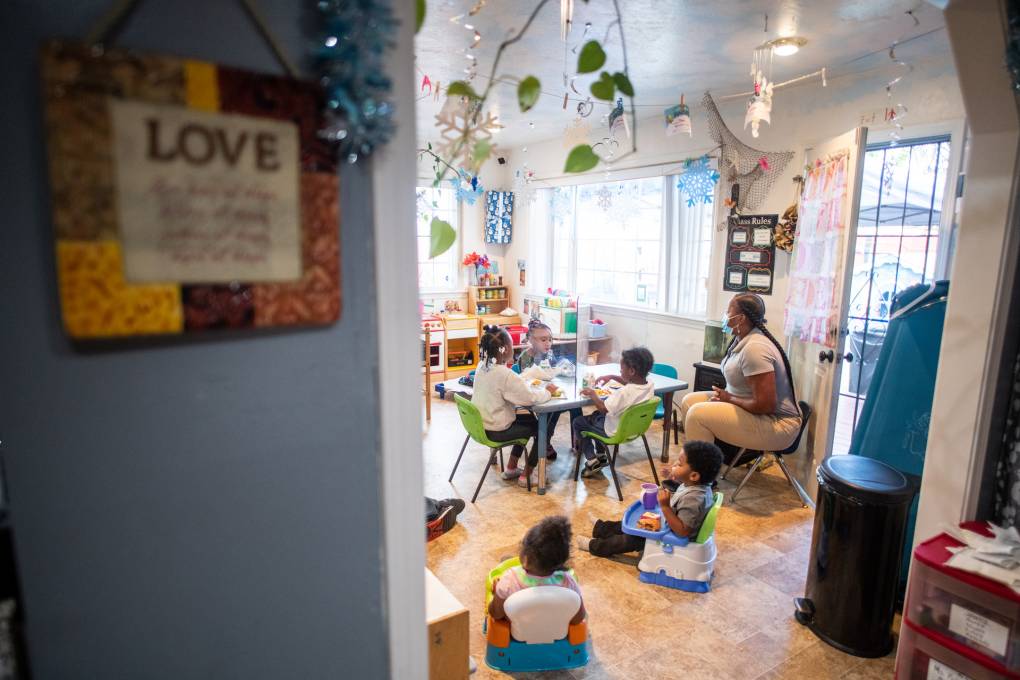
"caption": "Katina Richardson sits with the children in the day care that she runs in Hayward on Dec. 15, 2020.",
"description": "Katina Richardson sits with the children in the daycare that she runs in Hayward on Dec. 15, 2020.",
"title": "RS46403_007_KQED_Hayward_Daycare_12152020-qut",
"credit": "Beth LaBerge/KQED",
"status": "inherit",
"altTag": null,
"isLoading": false,
"fetchFailed": false
},
"news_11851084": {
"type": "attachments",
"id": "news_11851084",
"meta": {
"index": "attachments_1716263798",
"site": "news",
"id": "11851084",
"found": true
},
"title": "Amazon-Shipping-Container",
"publishDate": 1607989656,
"status": "inherit",
"parent": 11851063,
"modified": 1721163918,
"caption": "An Amazon shipping container rolls through the Port of Long Beach on April 22, 2020. Amazon's Prime Day sale will run from July 16 to 17, and the retailer has promised to offer its lowest prices so far this year.",
"credit": "Robyn Beck/AFP via Getty Images",
"altTag": "A shipping container with an arrow pointing to the word \"prime\" is seen on the street. One person in a safety vest stands to the right side of the container.",
"description": "An Amazon shipping container rolls through the Port of Long Beach on April 22, 2020.",
"imgSizes": {
"medium": {
"file": "https://cdn.kqed.org/wp-content/uploads/sites/10/2020/12/Amazon-Shipping-Container-800x598.jpg",
"width": 800,
"height": 598,
"mimeType": "image/jpeg"
},
"large": {
"file": "https://cdn.kqed.org/wp-content/uploads/sites/10/2020/12/Amazon-Shipping-Container-1020x762.jpg",
"width": 1020,
"height": 762,
"mimeType": "image/jpeg"
},
"thumbnail": {
"file": "https://cdn.kqed.org/wp-content/uploads/sites/10/2020/12/Amazon-Shipping-Container-160x120.jpg",
"width": 160,
"height": 120,
"mimeType": "image/jpeg"
},
"1536x1536": {
"file": "https://cdn.kqed.org/wp-content/uploads/sites/10/2020/12/Amazon-Shipping-Container-1536x1147.jpg",
"width": 1536,
"height": 1147,
"mimeType": "image/jpeg"
},
"post-thumbnail": {
"file": "https://cdn.kqed.org/wp-content/uploads/sites/10/2020/12/Amazon-Shipping-Container-672x372.jpg",
"width": 672,
"height": 372,
"mimeType": "image/jpeg"
},
"twentyfourteen-full-width": {
"file": "https://cdn.kqed.org/wp-content/uploads/sites/10/2020/12/Amazon-Shipping-Container-1038x576.jpg",
"width": 1038,
"height": 576,
"mimeType": "image/jpeg"
},
"apple_news_ca_landscape_12_9": {
"file": "https://cdn.kqed.org/wp-content/uploads/sites/10/2020/12/Amazon-Shipping-Container-1832x1374.jpg",
"width": 1832,
"height": 1374,
"mimeType": "image/jpeg"
},
"apple_news_ca_landscape_9_7": {
"file": "https://cdn.kqed.org/wp-content/uploads/sites/10/2020/12/Amazon-Shipping-Container-1376x1032.jpg",
"width": 1376,
"height": 1032,
"mimeType": "image/jpeg"
},
"apple_news_ca_landscape_5_5": {
"file": "https://cdn.kqed.org/wp-content/uploads/sites/10/2020/12/Amazon-Shipping-Container-1044x783.jpg",
"width": 1044,
"height": 783,
"mimeType": "image/jpeg"
},
"apple_news_ca_landscape_4_7": {
"file": "https://cdn.kqed.org/wp-content/uploads/sites/10/2020/12/Amazon-Shipping-Container-632x474.jpg",
"width": 632,
"height": 474,
"mimeType": "image/jpeg"
},
"apple_news_ca_landscape_4_0": {
"file": "https://cdn.kqed.org/wp-content/uploads/sites/10/2020/12/Amazon-Shipping-Container-536x402.jpg",
"width": 536,
"height": 402,
"mimeType": "image/jpeg"
},
"apple_news_ca_portrait_12_9": {
"file": "https://cdn.kqed.org/wp-content/uploads/sites/10/2020/12/Amazon-Shipping-Container-1122x1434.jpg",
"width": 1122,
"height": 1434,
"mimeType": "image/jpeg"
},
"apple_news_ca_portrait_9_7": {
"file": "https://cdn.kqed.org/wp-content/uploads/sites/10/2020/12/Amazon-Shipping-Container-840x1120.jpg",
"width": 840,
"height": 1120,
"mimeType": "image/jpeg"
},
"apple_news_ca_portrait_5_5": {
"file": "https://cdn.kqed.org/wp-content/uploads/sites/10/2020/12/Amazon-Shipping-Container-687x916.jpg",
"width": 687,
"height": 916,
"mimeType": "image/jpeg"
},
"apple_news_ca_portrait_4_7": {
"file": "https://cdn.kqed.org/wp-content/uploads/sites/10/2020/12/Amazon-Shipping-Container-414x552.jpg",
"width": 414,
"height": 552,
"mimeType": "image/jpeg"
},
"apple_news_ca_portrait_4_0": {
"file": "https://cdn.kqed.org/wp-content/uploads/sites/10/2020/12/Amazon-Shipping-Container-354x472.jpg",
"width": 354,
"height": 472,
"mimeType": "image/jpeg"
},
"apple_news_ca_square_12_9": {
"file": "https://cdn.kqed.org/wp-content/uploads/sites/10/2020/12/Amazon-Shipping-Container-1472x1434.jpg",
"width": 1472,
"height": 1434,
"mimeType": "image/jpeg"
},
"apple_news_ca_square_9_7": {
"file": "https://cdn.kqed.org/wp-content/uploads/sites/10/2020/12/Amazon-Shipping-Container-1104x1104.jpg",
"width": 1104,
"height": 1104,
"mimeType": "image/jpeg"
},
"apple_news_ca_square_5_5": {
"file": "https://cdn.kqed.org/wp-content/uploads/sites/10/2020/12/Amazon-Shipping-Container-912x912.jpg",
"width": 912,
"height": 912,
"mimeType": "image/jpeg"
},
"apple_news_ca_square_4_7": {
"file": "https://cdn.kqed.org/wp-content/uploads/sites/10/2020/12/Amazon-Shipping-Container-550x550.jpg",
"width": 550,
"height": 550,
"mimeType": "image/jpeg"
},
"apple_news_ca_square_4_0": {
"file": "https://cdn.kqed.org/wp-content/uploads/sites/10/2020/12/Amazon-Shipping-Container-470x470.jpg",
"width": 470,
"height": 470,
"mimeType": "image/jpeg"
},
"kqedFullSize": {
"file": "https://cdn.kqed.org/wp-content/uploads/sites/10/2020/12/Amazon-Shipping-Container.jpg",
"width": 1920,
"height": 1434
}
},
"isLoading": false,
"fetchFailed": false
},
"news_11850896": {
"type": "attachments",
"id": "news_11850896",
"meta": {
"index": "attachments_1716263798",
"site": "news",
"id": "11850896",
"found": true
},
"parent": 11850772,
"imgSizes": {
"apple_news_ca_landscape_5_5": {
"file": "https://ww2.kqed.org/app/uploads/sites/10/2020/12/Heavenly-Riders-2010-1044x783.jpg",
"width": 1044,
"mimeType": "image/jpeg",
"height": 783
},
"apple_news_ca_square_4_0": {
"file": "https://ww2.kqed.org/app/uploads/sites/10/2020/12/Heavenly-Riders-2010-470x470.jpg",
"width": 470,
"mimeType": "image/jpeg",
"height": 470
},
"twentyfourteen-full-width": {
"file": "https://ww2.kqed.org/app/uploads/sites/10/2020/12/Heavenly-Riders-2010-1038x576.jpg",
"width": 1038,
"mimeType": "image/jpeg",
"height": 576
},
"thumbnail": {
"file": "https://ww2.kqed.org/app/uploads/sites/10/2020/12/Heavenly-Riders-2010-160x110.jpg",
"width": 160,
"mimeType": "image/jpeg",
"height": 110
},
"post-thumbnail": {
"file": "https://ww2.kqed.org/app/uploads/sites/10/2020/12/Heavenly-Riders-2010-672x372.jpg",
"width": 672,
"mimeType": "image/jpeg",
"height": 372
},
"kqedFullSize": {
"file": "https://ww2.kqed.org/app/uploads/sites/10/2020/12/Heavenly-Riders-2010.jpg",
"width": 1920,
"height": 1315
},
"apple_news_ca_landscape_4_7": {
"file": "https://ww2.kqed.org/app/uploads/sites/10/2020/12/Heavenly-Riders-2010-632x474.jpg",
"width": 632,
"mimeType": "image/jpeg",
"height": 474
},
"large": {
"file": "https://ww2.kqed.org/app/uploads/sites/10/2020/12/Heavenly-Riders-2010-1020x699.jpg",
"width": 1020,
"mimeType": "image/jpeg",
"height": 699
},
"apple_news_ca_landscape_4_0": {
"file": "https://ww2.kqed.org/app/uploads/sites/10/2020/12/Heavenly-Riders-2010-536x402.jpg",
"width": 536,
"mimeType": "image/jpeg",
"height": 402
},
"apple_news_ca_portrait_12_9": {
"file": "https://ww2.kqed.org/app/uploads/sites/10/2020/12/Heavenly-Riders-2010-1122x1315.jpg",
"width": 1122,
"mimeType": "image/jpeg",
"height": 1315
},
"medium": {
"file": "https://ww2.kqed.org/app/uploads/sites/10/2020/12/Heavenly-Riders-2010-800x548.jpg",
"width": 800,
"mimeType": "image/jpeg",
"height": 548
},
"apple_news_ca_portrait_4_0": {
"file": "https://ww2.kqed.org/app/uploads/sites/10/2020/12/Heavenly-Riders-2010-354x472.jpg",
"width": 354,
"mimeType": "image/jpeg",
"height": 472
},
"apple_news_ca_portrait_9_7": {
"file": "https://ww2.kqed.org/app/uploads/sites/10/2020/12/Heavenly-Riders-2010-840x1120.jpg",
"width": 840,
"mimeType": "image/jpeg",
"height": 1120
},
"apple_news_ca_landscape_12_9": {
"file": "https://ww2.kqed.org/app/uploads/sites/10/2020/12/Heavenly-Riders-2010-1832x1315.jpg",
"width": 1832,
"mimeType": "image/jpeg",
"height": 1315
},
"apple_news_ca_square_9_7": {
"file": "https://ww2.kqed.org/app/uploads/sites/10/2020/12/Heavenly-Riders-2010-1104x1104.jpg",
"width": 1104,
"mimeType": "image/jpeg",
"height": 1104
},
"1536x1536": {
"file": "https://ww2.kqed.org/app/uploads/sites/10/2020/12/Heavenly-Riders-2010-1536x1052.jpg",
"width": 1536,
"mimeType": "image/jpeg",
"height": 1052
},
"apple_news_ca_portrait_4_7": {
"file": "https://ww2.kqed.org/app/uploads/sites/10/2020/12/Heavenly-Riders-2010-414x552.jpg",
"width": 414,
"mimeType": "image/jpeg",
"height": 552
},
"apple_news_ca_square_12_9": {
"file": "https://ww2.kqed.org/app/uploads/sites/10/2020/12/Heavenly-Riders-2010-1472x1315.jpg",
"width": 1472,
"mimeType": "image/jpeg",
"height": 1315
},
"apple_news_ca_portrait_5_5": {
"file": "https://ww2.kqed.org/app/uploads/sites/10/2020/12/Heavenly-Riders-2010-687x916.jpg",
"width": 687,
"mimeType": "image/jpeg",
"height": 916
},
"apple_news_ca_square_4_7": {
"file": "https://ww2.kqed.org/app/uploads/sites/10/2020/12/Heavenly-Riders-2010-550x550.jpg",
"width": 550,
"mimeType": "image/jpeg",
"height": 550
},
"apple_news_ca_landscape_9_7": {
"file": "https://ww2.kqed.org/app/uploads/sites/10/2020/12/Heavenly-Riders-2010-1376x1032.jpg",
"width": 1376,
"mimeType": "image/jpeg",
"height": 1032
},
"apple_news_ca_square_5_5": {
"file": "https://ww2.kqed.org/app/uploads/sites/10/2020/12/Heavenly-Riders-2010-912x912.jpg",
"width": 912,
"mimeType": "image/jpeg",
"height": 912
}
},
"publishDate": 1607734540,
"modified": 1607734648,
"caption": "Snowboarders at South Lake Tahoe's Heavenly Resort, pictured in 2010.",
"description": "Snowboarders at South Lake Tahoe's Heavenly Resort, pictured in 2010.",
"title": "Heavenly-Riders-2010",
"credit": "\u003ca href=\"https://www.flickr.com/photos/asad7874/\">Mirza Asad Baig\u003c/a>/Flickr",
"status": "inherit",
"altTag": "Snowboarders at South Lake Tahoe's Heavenly Resort",
"isLoading": false,
"fetchFailed": false
},
"news_11850741": {
"type": "attachments",
"id": "news_11850741",
"meta": {
"index": "attachments_1716263798",
"site": "news",
"id": "11850741",
"found": true
},
"parent": 11850740,
"imgSizes": {
"apple_news_ca_landscape_5_5": {
"file": "https://ww2.kqed.org/app/uploads/sites/10/2020/12/paulino-ramos-memorial-2_custom-47807a245af4a29ef8ae713f99d649c35ab0b9bb-1044x783.jpg",
"width": 1044,
"mimeType": "image/jpeg",
"height": 783
},
"apple_news_ca_square_4_0": {
"file": "https://ww2.kqed.org/app/uploads/sites/10/2020/12/paulino-ramos-memorial-2_custom-47807a245af4a29ef8ae713f99d649c35ab0b9bb-470x470.jpg",
"width": 470,
"mimeType": "image/jpeg",
"height": 470
},
"twentyfourteen-full-width": {
"file": "https://ww2.kqed.org/app/uploads/sites/10/2020/12/paulino-ramos-memorial-2_custom-47807a245af4a29ef8ae713f99d649c35ab0b9bb-1038x576.jpg",
"width": 1038,
"mimeType": "image/jpeg",
"height": 576
},
"thumbnail": {
"file": "https://ww2.kqed.org/app/uploads/sites/10/2020/12/paulino-ramos-memorial-2_custom-47807a245af4a29ef8ae713f99d649c35ab0b9bb-160x122.jpg",
"width": 160,
"mimeType": "image/jpeg",
"height": 122
},
"post-thumbnail": {
"file": "https://ww2.kqed.org/app/uploads/sites/10/2020/12/paulino-ramos-memorial-2_custom-47807a245af4a29ef8ae713f99d649c35ab0b9bb-672x372.jpg",
"width": 672,
"mimeType": "image/jpeg",
"height": 372
},
"kqedFullSize": {
"file": "https://ww2.kqed.org/app/uploads/sites/10/2020/12/paulino-ramos-memorial-2_custom-47807a245af4a29ef8ae713f99d649c35ab0b9bb-scaled.jpg",
"width": 2560,
"height": 1958
},
"2048x2048": {
"file": "https://ww2.kqed.org/app/uploads/sites/10/2020/12/paulino-ramos-memorial-2_custom-47807a245af4a29ef8ae713f99d649c35ab0b9bb-2048x1567.jpg",
"width": 2048,
"mimeType": "image/jpeg",
"height": 1567
},
"apple_news_ca_landscape_4_7": {
"file": "https://ww2.kqed.org/app/uploads/sites/10/2020/12/paulino-ramos-memorial-2_custom-47807a245af4a29ef8ae713f99d649c35ab0b9bb-632x474.jpg",
"width": 632,
"mimeType": "image/jpeg",
"height": 474
},
"large": {
"file": "https://ww2.kqed.org/app/uploads/sites/10/2020/12/paulino-ramos-memorial-2_custom-47807a245af4a29ef8ae713f99d649c35ab0b9bb-1020x780.jpg",
"width": 1020,
"mimeType": "image/jpeg",
"height": 780
},
"apple_news_ca_landscape_4_0": {
"file": "https://ww2.kqed.org/app/uploads/sites/10/2020/12/paulino-ramos-memorial-2_custom-47807a245af4a29ef8ae713f99d649c35ab0b9bb-536x402.jpg",
"width": 536,
"mimeType": "image/jpeg",
"height": 402
},
"apple_news_ca_portrait_12_9": {
"file": "https://ww2.kqed.org/app/uploads/sites/10/2020/12/paulino-ramos-memorial-2_custom-47807a245af4a29ef8ae713f99d649c35ab0b9bb-1122x1496.jpg",
"width": 1122,
"mimeType": "image/jpeg",
"height": 1496
},
"medium": {
"file": "https://ww2.kqed.org/app/uploads/sites/10/2020/12/paulino-ramos-memorial-2_custom-47807a245af4a29ef8ae713f99d649c35ab0b9bb-800x612.jpg",
"width": 800,
"mimeType": "image/jpeg",
"height": 612
},
"apple_news_ca_portrait_4_0": {
"file": "https://ww2.kqed.org/app/uploads/sites/10/2020/12/paulino-ramos-memorial-2_custom-47807a245af4a29ef8ae713f99d649c35ab0b9bb-354x472.jpg",
"width": 354,
"mimeType": "image/jpeg",
"height": 472
},
"apple_news_ca_portrait_9_7": {
"file": "https://ww2.kqed.org/app/uploads/sites/10/2020/12/paulino-ramos-memorial-2_custom-47807a245af4a29ef8ae713f99d649c35ab0b9bb-840x1120.jpg",
"width": 840,
"mimeType": "image/jpeg",
"height": 1120
},
"apple_news_ca_landscape_12_9": {
"file": "https://ww2.kqed.org/app/uploads/sites/10/2020/12/paulino-ramos-memorial-2_custom-47807a245af4a29ef8ae713f99d649c35ab0b9bb-1832x1374.jpg",
"width": 1832,
"mimeType": "image/jpeg",
"height": 1374
},
"apple_news_ca_square_9_7": {
"file": "https://ww2.kqed.org/app/uploads/sites/10/2020/12/paulino-ramos-memorial-2_custom-47807a245af4a29ef8ae713f99d649c35ab0b9bb-1104x1104.jpg",
"width": 1104,
"mimeType": "image/jpeg",
"height": 1104
},
"1536x1536": {
"file": "https://ww2.kqed.org/app/uploads/sites/10/2020/12/paulino-ramos-memorial-2_custom-47807a245af4a29ef8ae713f99d649c35ab0b9bb-1536x1175.jpg",
"width": 1536,
"mimeType": "image/jpeg",
"height": 1175
},
"apple_news_ca_portrait_4_7": {
"file": "https://ww2.kqed.org/app/uploads/sites/10/2020/12/paulino-ramos-memorial-2_custom-47807a245af4a29ef8ae713f99d649c35ab0b9bb-414x552.jpg",
"width": 414,
"mimeType": "image/jpeg",
"height": 552
},
"apple_news_ca_square_12_9": {
"file": "https://ww2.kqed.org/app/uploads/sites/10/2020/12/paulino-ramos-memorial-2_custom-47807a245af4a29ef8ae713f99d649c35ab0b9bb-1472x1472.jpg",
"width": 1472,
"mimeType": "image/jpeg",
"height": 1472
},
"apple_news_ca_portrait_5_5": {
"file": "https://ww2.kqed.org/app/uploads/sites/10/2020/12/paulino-ramos-memorial-2_custom-47807a245af4a29ef8ae713f99d649c35ab0b9bb-687x916.jpg",
"width": 687,
"mimeType": "image/jpeg",
"height": 916
},
"full-width": {
"file": "https://ww2.kqed.org/app/uploads/sites/10/2020/12/paulino-ramos-memorial-2_custom-47807a245af4a29ef8ae713f99d649c35ab0b9bb-1920x1469.jpg",
"width": 1920,
"mimeType": "image/jpeg",
"height": 1469
},
"apple_news_ca_square_4_7": {
"file": "https://ww2.kqed.org/app/uploads/sites/10/2020/12/paulino-ramos-memorial-2_custom-47807a245af4a29ef8ae713f99d649c35ab0b9bb-550x550.jpg",
"width": 550,
"mimeType": "image/jpeg",
"height": 550
},
"apple_news_ca_landscape_9_7": {
"file": "https://ww2.kqed.org/app/uploads/sites/10/2020/12/paulino-ramos-memorial-2_custom-47807a245af4a29ef8ae713f99d649c35ab0b9bb-1376x1032.jpg",
"width": 1376,
"mimeType": "image/jpeg",
"height": 1032
},
"apple_news_ca_square_5_5": {
"file": "https://ww2.kqed.org/app/uploads/sites/10/2020/12/paulino-ramos-memorial-2_custom-47807a245af4a29ef8ae713f99d649c35ab0b9bb-912x912.jpg",
"width": 912,
"mimeType": "image/jpeg",
"height": 912
}
},
"publishDate": 1607709244,
"modified": 1607709411,
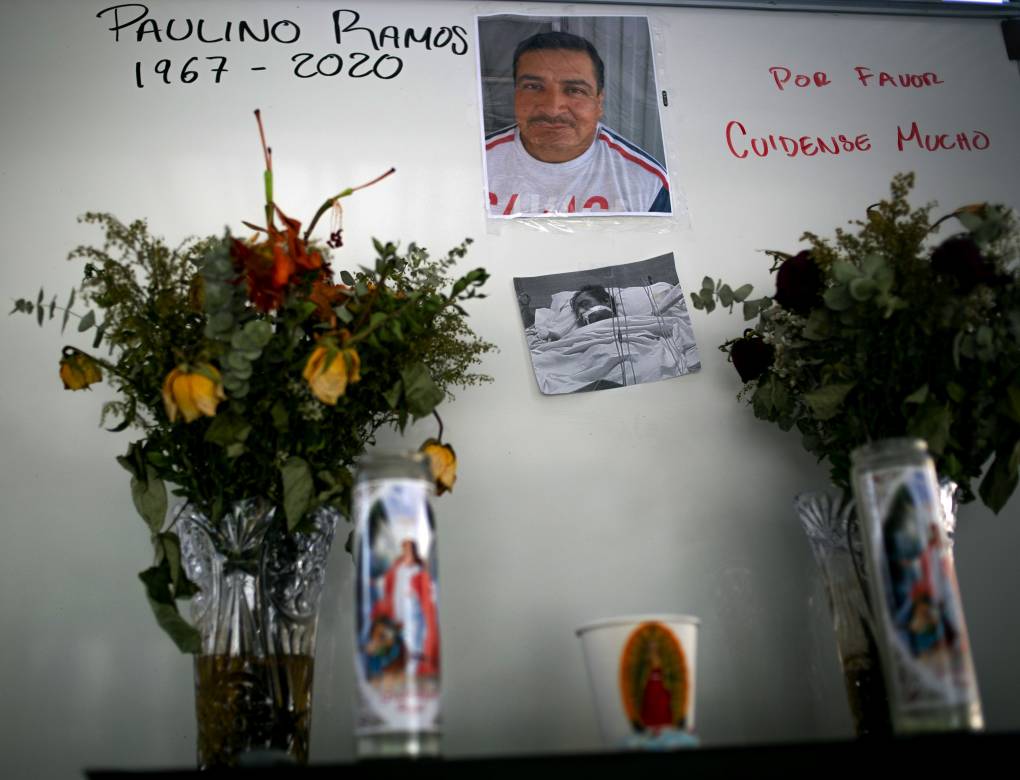
"caption": "Workers at the CARECEN Day Labor Center in Los Angeles constructed a makeshift memorial for fellow worker Paulino Ramos, who died of COVID-19 in September.",
"description": "Workers at the CARECEN Day Labor Center in Los Angeles constructed a makeshift memorial for fellow worker Paulino Ramos, who died of COVID-19 in September.",
"title": "Workers at the CARECEN Day Labor Center in Los Angeles constructed a makeshift memorial for fellow worker Paulino Ramos, who died of COVID-19 in September.",
"credit": "Danny Hajek/NPR",
"status": "inherit",
"altTag": "A memorial for Paulino Ramos",
"isLoading": false,
"fetchFailed": false
},
"news_11850544": {
"type": "attachments",
"id": "news_11850544",
"meta": {
"index": "attachments_1716263798",
"site": "news",
"id": "11850544",
"found": true
},
"parent": 11850489,
"imgSizes": {
"apple_news_ca_landscape_5_5": {
"file": "https://ww2.kqed.org/app/uploads/sites/10/2020/12/MuniBusMaskRequired-1044x783.jpg",
"width": 1044,
"mimeType": "image/jpeg",
"height": 783
},
"apple_news_ca_square_4_0": {
"file": "https://ww2.kqed.org/app/uploads/sites/10/2020/12/MuniBusMaskRequired-470x470.jpg",
"width": 470,
"mimeType": "image/jpeg",
"height": 470
},
"twentyfourteen-full-width": {
"file": "https://ww2.kqed.org/app/uploads/sites/10/2020/12/MuniBusMaskRequired-1038x576.jpg",
"width": 1038,
"mimeType": "image/jpeg",
"height": 576
},
"thumbnail": {
"file": "https://ww2.kqed.org/app/uploads/sites/10/2020/12/MuniBusMaskRequired-160x107.jpg",
"width": 160,
"mimeType": "image/jpeg",
"height": 107
},
"post-thumbnail": {
"file": "https://ww2.kqed.org/app/uploads/sites/10/2020/12/MuniBusMaskRequired-672x372.jpg",
"width": 672,
"mimeType": "image/jpeg",
"height": 372
},
"kqedFullSize": {
"file": "https://ww2.kqed.org/app/uploads/sites/10/2020/12/MuniBusMaskRequired.jpg",
"width": 1920,
"height": 1280
},
"apple_news_ca_landscape_4_7": {
"file": "https://ww2.kqed.org/app/uploads/sites/10/2020/12/MuniBusMaskRequired-632x474.jpg",
"width": 632,
"mimeType": "image/jpeg",
"height": 474
},
"large": {
"file": "https://ww2.kqed.org/app/uploads/sites/10/2020/12/MuniBusMaskRequired-1020x680.jpg",
"width": 1020,
"mimeType": "image/jpeg",
"height": 680
},
"apple_news_ca_landscape_4_0": {
"file": "https://ww2.kqed.org/app/uploads/sites/10/2020/12/MuniBusMaskRequired-536x402.jpg",
"width": 536,
"mimeType": "image/jpeg",
"height": 402
},
"apple_news_ca_portrait_12_9": {
"file": "https://ww2.kqed.org/app/uploads/sites/10/2020/12/MuniBusMaskRequired-1122x1280.jpg",
"width": 1122,
"mimeType": "image/jpeg",
"height": 1280
},
"medium": {
"file": "https://ww2.kqed.org/app/uploads/sites/10/2020/12/MuniBusMaskRequired-800x533.jpg",
"width": 800,
"mimeType": "image/jpeg",
"height": 533
},
"apple_news_ca_portrait_4_0": {
"file": "https://ww2.kqed.org/app/uploads/sites/10/2020/12/MuniBusMaskRequired-354x472.jpg",
"width": 354,
"mimeType": "image/jpeg",
"height": 472
},
"apple_news_ca_portrait_9_7": {
"file": "https://ww2.kqed.org/app/uploads/sites/10/2020/12/MuniBusMaskRequired-840x1120.jpg",
"width": 840,
"mimeType": "image/jpeg",
"height": 1120
},
"apple_news_ca_landscape_12_9": {
"file": "https://ww2.kqed.org/app/uploads/sites/10/2020/12/MuniBusMaskRequired-1832x1280.jpg",
"width": 1832,
"mimeType": "image/jpeg",
"height": 1280
},
"apple_news_ca_square_9_7": {
"file": "https://ww2.kqed.org/app/uploads/sites/10/2020/12/MuniBusMaskRequired-1104x1104.jpg",
"width": 1104,
"mimeType": "image/jpeg",
"height": 1104
},
"1536x1536": {
"file": "https://ww2.kqed.org/app/uploads/sites/10/2020/12/MuniBusMaskRequired-1536x1024.jpg",
"width": 1536,
"mimeType": "image/jpeg",
"height": 1024
},
"apple_news_ca_portrait_4_7": {
"file": "https://ww2.kqed.org/app/uploads/sites/10/2020/12/MuniBusMaskRequired-414x552.jpg",
"width": 414,
"mimeType": "image/jpeg",
"height": 552
},
"apple_news_ca_square_12_9": {
"file": "https://ww2.kqed.org/app/uploads/sites/10/2020/12/MuniBusMaskRequired-1472x1280.jpg",
"width": 1472,
"mimeType": "image/jpeg",
"height": 1280
},
"apple_news_ca_portrait_5_5": {
"file": "https://ww2.kqed.org/app/uploads/sites/10/2020/12/MuniBusMaskRequired-687x916.jpg",
"width": 687,
"mimeType": "image/jpeg",
"height": 916
},
"apple_news_ca_square_4_7": {
"file": "https://ww2.kqed.org/app/uploads/sites/10/2020/12/MuniBusMaskRequired-550x550.jpg",
"width": 550,
"mimeType": "image/jpeg",
"height": 550
},
"apple_news_ca_landscape_9_7": {
"file": "https://ww2.kqed.org/app/uploads/sites/10/2020/12/MuniBusMaskRequired-1376x1032.jpg",
"width": 1376,
"mimeType": "image/jpeg",
"height": 1032
},
"apple_news_ca_square_5_5": {
"file": "https://ww2.kqed.org/app/uploads/sites/10/2020/12/MuniBusMaskRequired-912x912.jpg",
"width": 912,
"mimeType": "image/jpeg",
"height": 912
}
},
"publishDate": 1607561583,
"modified": 1607561681,
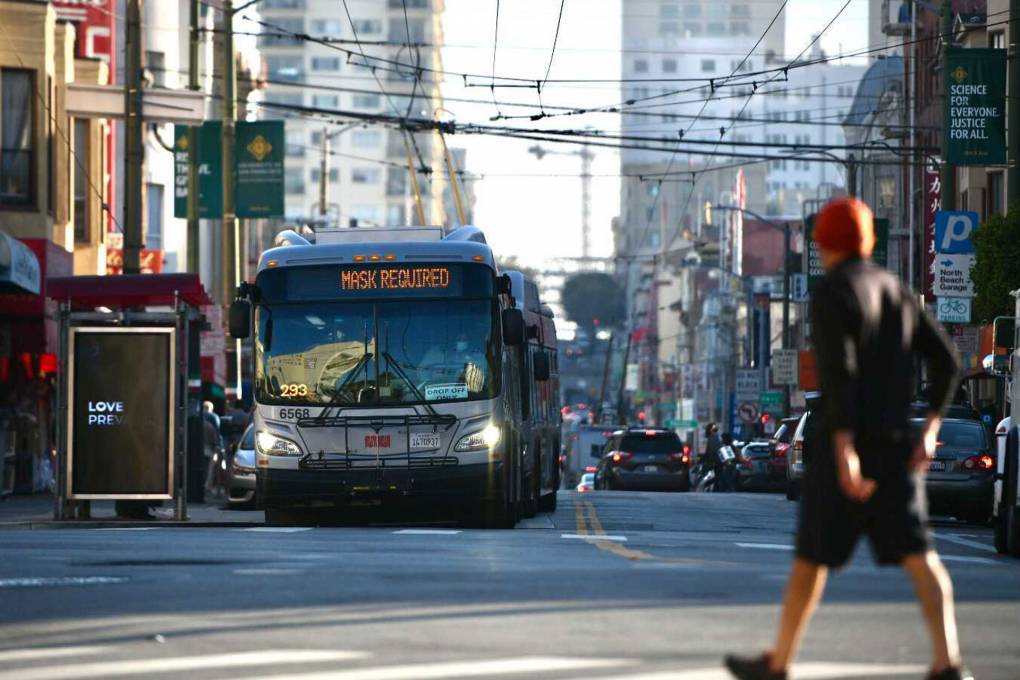
"caption": "A pedestrian walks near a Muni bus with a marquee reading 'Masks Required' in San Francisco on Dec. 4, 2020.",
"description": "A pedestrian walks near a Muni bus with a marquee reading 'Masks Required' in San Francisco on Dec. 4, 2020.",
"title": "MuniBusMaskRequired",
"credit": "Beth LaBerge/KQED",
"status": "inherit",
"altTag": "Pedestrian walks in North Beach, bus in the background",
"isLoading": false,
"fetchFailed": false
},
"news_11850235": {
"type": "attachments",
"id": "news_11850235",
"meta": {
"index": "attachments_1716263798",
"site": "news",
"id": "11850235",
"found": true
},
"parent": 11850234,
"imgSizes": {
"apple_news_ca_square_4_0": {
"file": "https://ww2.kqed.org/app/uploads/sites/10/2020/12/RS46158_GettyImages-1218838341-qut-1020x673-1-470x470.jpg",
"width": 470,
"mimeType": "image/jpeg",
"height": 470
},
"twentyfourteen-full-width": {
"file": "https://ww2.kqed.org/app/uploads/sites/10/2020/12/RS46158_GettyImages-1218838341-qut-1020x673-1-1020x576.jpg",
"width": 1020,
"mimeType": "image/jpeg",
"height": 576
},
"thumbnail": {
"file": "https://ww2.kqed.org/app/uploads/sites/10/2020/12/RS46158_GettyImages-1218838341-qut-1020x673-1-160x106.jpg",
"width": 160,
"mimeType": "image/jpeg",
"height": 106
},
"post-thumbnail": {
"file": "https://ww2.kqed.org/app/uploads/sites/10/2020/12/RS46158_GettyImages-1218838341-qut-1020x673-1-672x372.jpg",
"width": 672,
"mimeType": "image/jpeg",
"height": 372
},
"kqedFullSize": {
"file": "https://ww2.kqed.org/app/uploads/sites/10/2020/12/RS46158_GettyImages-1218838341-qut-1020x673-1.jpg",
"width": 1020,
"height": 673
},
"apple_news_ca_landscape_4_7": {
"file": "https://ww2.kqed.org/app/uploads/sites/10/2020/12/RS46158_GettyImages-1218838341-qut-1020x673-1-632x474.jpg",
"width": 632,
"mimeType": "image/jpeg",
"height": 474
},
"apple_news_ca_landscape_4_0": {
"file": "https://ww2.kqed.org/app/uploads/sites/10/2020/12/RS46158_GettyImages-1218838341-qut-1020x673-1-536x402.jpg",
"width": 536,
"mimeType": "image/jpeg",
"height": 402
},
"medium": {
"file": "https://ww2.kqed.org/app/uploads/sites/10/2020/12/RS46158_GettyImages-1218838341-qut-1020x673-1-800x528.jpg",
"width": 800,
"mimeType": "image/jpeg",
"height": 528
},
"apple_news_ca_portrait_4_0": {
"file": "https://ww2.kqed.org/app/uploads/sites/10/2020/12/RS46158_GettyImages-1218838341-qut-1020x673-1-354x472.jpg",
"width": 354,
"mimeType": "image/jpeg",
"height": 472
},
"apple_news_ca_portrait_9_7": {
"file": "https://ww2.kqed.org/app/uploads/sites/10/2020/12/RS46158_GettyImages-1218838341-qut-1020x673-1-840x673.jpg",
"width": 840,
"mimeType": "image/jpeg",
"height": 673
},
"apple_news_ca_portrait_4_7": {
"file": "https://ww2.kqed.org/app/uploads/sites/10/2020/12/RS46158_GettyImages-1218838341-qut-1020x673-1-414x552.jpg",
"width": 414,
"mimeType": "image/jpeg",
"height": 552
},
"apple_news_ca_portrait_5_5": {
"file": "https://ww2.kqed.org/app/uploads/sites/10/2020/12/RS46158_GettyImages-1218838341-qut-1020x673-1-687x673.jpg",
"width": 687,
"mimeType": "image/jpeg",
"height": 673
},
"apple_news_ca_square_4_7": {
"file": "https://ww2.kqed.org/app/uploads/sites/10/2020/12/RS46158_GettyImages-1218838341-qut-1020x673-1-550x550.jpg",
"width": 550,
"mimeType": "image/jpeg",
"height": 550
},
"apple_news_ca_square_5_5": {
"file": "https://ww2.kqed.org/app/uploads/sites/10/2020/12/RS46158_GettyImages-1218838341-qut-1020x673-1-912x673.jpg",
"width": 912,
"mimeType": "image/jpeg",
"height": 673
}
},
"publishDate": 1607459060,
"modified": 1607459297,
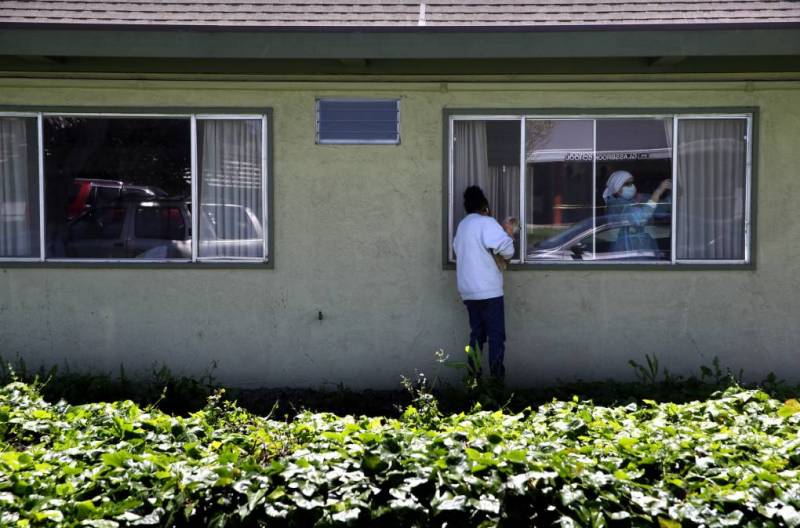
"caption": "Adrina Rodríguez sostiene a su perro mientras ve por una de las ventanas del centro 'Gateway Care and Rehabilitation', en donde está internado su padre, quien dio negativo para su prueba de coronavirus el 14 de abril del 2020 en Hayward, California. El centro 'Gateway Care and Rehabilitation' aún permanece abierto luego de que un décimo paciente muera por complicaciones de covid-19.",
"description": "Adrina Rodríguez sostiene a su perro mientras ve por una de las ventanas del centro 'Gateway Care and Rehabilitation', en donde está internado su padre, quien dio negativo para su prueba de coronavirus el 14 de abril del 2020 en Hayward, California. El centro 'Gateway Care and Rehabilitation' aún permanece abierto luego de que un décimo paciente muera por complicaciones de covid-19.",
"title": "RS46158_GettyImages-1218838341-qut-1020x673",
"credit": "Justin Sullivan/Getty Images",
"status": "inherit",
"altTag": null,
"isLoading": false,
"fetchFailed": false
},
"news_10710958": {
"type": "attachments",
"id": "news_10710958",
"meta": {
"index": "attachments_1716263798",
"site": "news",
"id": "10710958",
"found": true
},
"parent": 10710739,
"imgSizes": {
"twentyfourteen-full-width": {
"file": "https://ww2.kqed.org/app/uploads/sites/10/2015/10/FosterFarmsTruck-1038x576.jpg",
"width": 1038,
"mimeType": "image/jpeg",
"height": 576
},
"thumbnail": {
"file": "https://ww2.kqed.org/app/uploads/sites/10/2015/10/FosterFarmsTruck-400x220.jpg",
"width": 400,
"mimeType": "image/jpeg",
"height": 220
},
"fd-sm": {
"file": "https://ww2.kqed.org/app/uploads/sites/10/2015/10/FosterFarmsTruck-960x528.jpg",
"width": 960,
"mimeType": "image/jpeg",
"height": 528
},
"post-thumbnail": {
"file": "https://ww2.kqed.org/app/uploads/sites/10/2015/10/FosterFarmsTruck-672x372.jpg",
"width": 672,
"mimeType": "image/jpeg",
"height": 372
},
"kqedFullSize": {
"file": "https://ww2.kqed.org/app/uploads/sites/10/2015/10/FosterFarmsTruck.jpg",
"width": 1920,
"height": 1056
},
"large": {
"file": "https://ww2.kqed.org/app/uploads/sites/10/2015/10/FosterFarmsTruck-1440x792.jpg",
"width": 1440,
"mimeType": "image/jpeg",
"height": 792
},
"guest-author-96": {
"file": "https://ww2.kqed.org/app/uploads/sites/10/2015/10/FosterFarmsTruck-96x96.jpg",
"width": 96,
"mimeType": "image/jpeg",
"height": 96
},
"medium": {
"file": "https://ww2.kqed.org/app/uploads/sites/10/2015/10/FosterFarmsTruck-800x440.jpg",
"width": 800,
"mimeType": "image/jpeg",
"height": 440
},
"guest-author-64": {
"file": "https://ww2.kqed.org/app/uploads/sites/10/2015/10/FosterFarmsTruck-64x64.jpg",
"width": 64,
"mimeType": "image/jpeg",
"height": 64
},
"guest-author-32": {
"file": "https://ww2.kqed.org/app/uploads/sites/10/2015/10/FosterFarmsTruck-32x32.jpg",
"width": 32,
"mimeType": "image/jpeg",
"height": 32
},
"jmtc-small-thumb": {
"file": "https://ww2.kqed.org/app/uploads/sites/10/2015/10/FosterFarmsTruck-280x150.jpg",
"width": 280,
"mimeType": "image/jpeg",
"height": 150
},
"fd-lrg": {
"file": "https://ww2.kqed.org/app/uploads/sites/10/2015/10/FosterFarmsTruck-1920x1056.jpg",
"width": 1920,
"mimeType": "image/jpeg",
"height": 1056
},
"fd-med": {
"file": "https://ww2.kqed.org/app/uploads/sites/10/2015/10/FosterFarmsTruck-1180x649.jpg",
"width": 1180,
"mimeType": "image/jpeg",
"height": 649
},
"detail": {
"file": "https://ww2.kqed.org/app/uploads/sites/10/2015/10/FosterFarmsTruck-75x75.jpg",
"width": 75,
"mimeType": "image/jpeg",
"height": 75
},
"guest-author-128": {
"file": "https://ww2.kqed.org/app/uploads/sites/10/2015/10/FosterFarmsTruck-128x128.jpg",
"width": 128,
"mimeType": "image/jpeg",
"height": 128
}
},
"publishDate": 1444258732,
"modified": 1607472123,
"caption": "A Foster Farms truck rolls through Livingston in 2015.",
"description": "A Foster Farms truck rolls through Livingston.",
"title": "FosterFarmsTruck",
"credit": "Sasha Khokha/KQED",
"status": "inherit",
"altTag": "A Foster Farms truck rolls through Livingston.",
"isLoading": false,
"fetchFailed": false
},
"news_11849962": {
"type": "attachments",
"id": "news_11849962",
"meta": {
"index": "attachments_1716263798",
"site": "news",
"id": "11849962",
"found": true
},
"parent": 11849950,
"imgSizes": {
"apple_news_ca_landscape_5_5": {
"file": "https://ww2.kqed.org/app/uploads/sites/10/2020/12/RS42591_008_KQED_SanFrancisco_Businesses_04072020-qut-1044x783.jpg",
"width": 1044,
"mimeType": "image/jpeg",
"height": 783
},
"apple_news_ca_square_4_0": {
"file": "https://ww2.kqed.org/app/uploads/sites/10/2020/12/RS42591_008_KQED_SanFrancisco_Businesses_04072020-qut-470x470.jpg",
"width": 470,
"mimeType": "image/jpeg",
"height": 470
},
"twentyfourteen-full-width": {
"file": "https://ww2.kqed.org/app/uploads/sites/10/2020/12/RS42591_008_KQED_SanFrancisco_Businesses_04072020-qut-1038x576.jpg",
"width": 1038,
"mimeType": "image/jpeg",
"height": 576
},
"thumbnail": {
"file": "https://ww2.kqed.org/app/uploads/sites/10/2020/12/RS42591_008_KQED_SanFrancisco_Businesses_04072020-qut-160x107.jpg",
"width": 160,
"mimeType": "image/jpeg",
"height": 107
},
"post-thumbnail": {
"file": "https://ww2.kqed.org/app/uploads/sites/10/2020/12/RS42591_008_KQED_SanFrancisco_Businesses_04072020-qut-672x372.jpg",
"width": 672,
"mimeType": "image/jpeg",
"height": 372
},
"kqedFullSize": {
"file": "https://ww2.kqed.org/app/uploads/sites/10/2020/12/RS42591_008_KQED_SanFrancisco_Businesses_04072020-qut.jpg",
"width": 1920,
"height": 1280
},
"apple_news_ca_landscape_4_7": {
"file": "https://ww2.kqed.org/app/uploads/sites/10/2020/12/RS42591_008_KQED_SanFrancisco_Businesses_04072020-qut-632x474.jpg",
"width": 632,
"mimeType": "image/jpeg",
"height": 474
},
"large": {
"file": "https://ww2.kqed.org/app/uploads/sites/10/2020/12/RS42591_008_KQED_SanFrancisco_Businesses_04072020-qut-1020x680.jpg",
"width": 1020,
"mimeType": "image/jpeg",
"height": 680
},
"apple_news_ca_landscape_4_0": {
"file": "https://ww2.kqed.org/app/uploads/sites/10/2020/12/RS42591_008_KQED_SanFrancisco_Businesses_04072020-qut-536x402.jpg",
"width": 536,
"mimeType": "image/jpeg",
"height": 402
},
"apple_news_ca_portrait_12_9": {
"file": "https://ww2.kqed.org/app/uploads/sites/10/2020/12/RS42591_008_KQED_SanFrancisco_Businesses_04072020-qut-1122x1280.jpg",
"width": 1122,
"mimeType": "image/jpeg",
"height": 1280
},
"medium": {
"file": "https://ww2.kqed.org/app/uploads/sites/10/2020/12/RS42591_008_KQED_SanFrancisco_Businesses_04072020-qut-800x533.jpg",
"width": 800,
"mimeType": "image/jpeg",
"height": 533
},
"apple_news_ca_portrait_4_0": {
"file": "https://ww2.kqed.org/app/uploads/sites/10/2020/12/RS42591_008_KQED_SanFrancisco_Businesses_04072020-qut-354x472.jpg",
"width": 354,
"mimeType": "image/jpeg",
"height": 472
},
"apple_news_ca_portrait_9_7": {
"file": "https://ww2.kqed.org/app/uploads/sites/10/2020/12/RS42591_008_KQED_SanFrancisco_Businesses_04072020-qut-840x1120.jpg",
"width": 840,
"mimeType": "image/jpeg",
"height": 1120
},
"apple_news_ca_landscape_12_9": {
"file": "https://ww2.kqed.org/app/uploads/sites/10/2020/12/RS42591_008_KQED_SanFrancisco_Businesses_04072020-qut-1832x1280.jpg",
"width": 1832,
"mimeType": "image/jpeg",
"height": 1280
},
"apple_news_ca_square_9_7": {
"file": "https://ww2.kqed.org/app/uploads/sites/10/2020/12/RS42591_008_KQED_SanFrancisco_Businesses_04072020-qut-1104x1104.jpg",
"width": 1104,
"mimeType": "image/jpeg",
"height": 1104
},
"1536x1536": {
"file": "https://ww2.kqed.org/app/uploads/sites/10/2020/12/RS42591_008_KQED_SanFrancisco_Businesses_04072020-qut-1536x1024.jpg",
"width": 1536,
"mimeType": "image/jpeg",
"height": 1024
},
"apple_news_ca_portrait_4_7": {
"file": "https://ww2.kqed.org/app/uploads/sites/10/2020/12/RS42591_008_KQED_SanFrancisco_Businesses_04072020-qut-414x552.jpg",
"width": 414,
"mimeType": "image/jpeg",
"height": 552
},
"apple_news_ca_square_12_9": {
"file": "https://ww2.kqed.org/app/uploads/sites/10/2020/12/RS42591_008_KQED_SanFrancisco_Businesses_04072020-qut-1472x1280.jpg",
"width": 1472,
"mimeType": "image/jpeg",
"height": 1280
},
"apple_news_ca_portrait_5_5": {
"file": "https://ww2.kqed.org/app/uploads/sites/10/2020/12/RS42591_008_KQED_SanFrancisco_Businesses_04072020-qut-687x916.jpg",
"width": 687,
"mimeType": "image/jpeg",
"height": 916
},
"apple_news_ca_square_4_7": {
"file": "https://ww2.kqed.org/app/uploads/sites/10/2020/12/RS42591_008_KQED_SanFrancisco_Businesses_04072020-qut-550x550.jpg",
"width": 550,
"mimeType": "image/jpeg",
"height": 550
},
"apple_news_ca_landscape_9_7": {
"file": "https://ww2.kqed.org/app/uploads/sites/10/2020/12/RS42591_008_KQED_SanFrancisco_Businesses_04072020-qut-1376x1032.jpg",
"width": 1376,
"mimeType": "image/jpeg",
"height": 1032
},
"apple_news_ca_square_5_5": {
"file": "https://ww2.kqed.org/app/uploads/sites/10/2020/12/RS42591_008_KQED_SanFrancisco_Businesses_04072020-qut-912x912.jpg",
"width": 912,
"mimeType": "image/jpeg",
"height": 912
}
},
"publishDate": 1607290167,
"modified": 1607290194,
"caption": "The marquee for the Warfield reads, 'Stay Safe & Healthy. We Miss Your Smiling Faces,' on Market Street in San Francisco on April 7, 2020.",
"description": null,
"title": "RS42591_008_KQED_SanFrancisco_Businesses_04072020-qut",
"credit": "Beth LaBerge/KQED",
"status": "inherit",
"altTag": null,
"isLoading": false,
"fetchFailed": false
}
},
"audioPlayerReducer": {
"postId": "stream_live",
"isPaused": true,
"isPlaying": false,
"pfsActive": false,
"pledgeModalIsOpen": true,
"playerDrawerIsOpen": false,
"liveAudioPlayStartedAt": 0,
"liveAudioPlayContext": ""
},
"authorsReducer": {
"byline_news_11853246": {
"type": "authors",
"id": "byline_news_11853246",
"meta": {
"override": true
},
"slug": "byline_news_11853246",
"name": "Don Thompson\u003cbr>Associated Press ",
"isLoading": false
},
"byline_news_11852806": {
"type": "authors",
"id": "byline_news_11852806",
"meta": {
"override": true
},
"slug": "byline_news_11852806",
"name": "John Antczak and Don Thompson \u003cbr> Associated Press",
"isLoading": false
},
"byline_news_11851318": {
"type": "authors",
"id": "byline_news_11851318",
"meta": {
"override": true
},
"slug": "byline_news_11851318",
"name": "\u003ca href=\"https://calmatters.org/author/anaibarra/\">Ana B. Ibarra\u003c/a>",
"isLoading": false
},
"byline_news_11851063": {
"type": "authors",
"id": "byline_news_11851063",
"meta": {
"override": true
},
"slug": "byline_news_11851063",
"name": "The Associated Press",
"isLoading": false
},
"byline_news_11850740": {
"type": "authors",
"id": "byline_news_11850740",
"meta": {
"override": true
},
"slug": "byline_news_11850740",
"name": "\u003ca href=\"https://www.npr.org/people/426314944/daniel-hajek\">Danny Hajek\u003c/a>",
"isLoading": false
},
"byline_news_11849950": {
"type": "authors",
"id": "byline_news_11849950",
"meta": {
"override": true
},
"slug": "byline_news_11849950",
"name": "Jocelyn Gecker \u003cbr> Associated Press",
"isLoading": false
},
"lisapickoffwhite-2": {
"type": "authors",
"id": "199",
"meta": {
"index": "authors_1716337520",
"id": "199",
"found": true
},
"name": "Lisa Pickoff-White",
"firstName": "Lisa",
"lastName": "Pickoff-White",
"slug": "lisapickoffwhite-2",
"email": "lpickoffwhite@kqed.org",
"display_author_email": false,
"staff_mastheads": [
"news"
],
"title": "Data Journalist, Senior Producer",
"bio": "Lisa Pickoff-White is KQED's data reporter. Lisa specializes in simplifying complex topics and bringing them to life through compelling visuals, including photography and data visualizations. She previously has worked at the Center for Investigative Reporting and other national outlets. Her work has been honored with awards from the Online News Association, Investigative Reporters and Editors, the Society of Professional Journalists and SXSW Interactive. \u003cstrong> \u003c/strong>",
"avatar": "https://secure.gravatar.com/avatar/5513c5f3967df792aa65bee2501e84d6?s=600&d=blank&r=g",
"twitter": "pickoffwhite",
"facebook": null,
"instagram": null,
"linkedin": null,
"sites": [
{
"site": "",
"roles": [
"editor"
]
},
{
"site": "arts",
"roles": []
},
{
"site": "news",
"roles": [
"administrator"
]
},
{
"site": "about",
"roles": [
"editor"
]
},
{
"site": "stateofhealth",
"roles": [
"administrator"
]
},
{
"site": "science",
"roles": [
"editor"
]
},
{
"site": "quest",
"roles": [
"editor"
]
},
{
"site": "forum",
"roles": [
"editor"
]
}
],
"headData": {
"title": "Lisa Pickoff-White | KQED",
"description": "Data Journalist, Senior Producer",
"ogImgSrc": "https://secure.gravatar.com/avatar/5513c5f3967df792aa65bee2501e84d6?s=600&d=blank&r=g",
"twImgSrc": "https://secure.gravatar.com/avatar/5513c5f3967df792aa65bee2501e84d6?s=600&d=blank&r=g"
},
"isLoading": false,
"link": "/author/lisapickoffwhite-2"
},
"korr": {
"type": "authors",
"id": "11200",
"meta": {
"index": "authors_1716337520",
"id": "11200",
"found": true
},
"name": "Katie Orr",
"firstName": "Katie",
"lastName": "Orr",
"slug": "korr",
"email": "korr@kqed.org",
"display_author_email": false,
"staff_mastheads": [],
"title": "KQED Contributor",
"bio": "Katie Orr was a Sacramento-based reporter for KQED's Politics and Government Desk, covering the state Capitol and a variety of issues including women in politics, voting and elections and legislation. Prior to joining KQED in 2016, Katie was state government reporter for Capital Public Radio in Sacramento. She's also worked for KPBS in San Diego, where she covered City Hall.\r\n\r\nKatie received her masters degree in political science from San Diego State University and holds a Bachelors degree in broadcast journalism from Arizona State University.\r\n\r\nIn 2015 Katie won a national Clarion Award for a series of stories she did on women in California politics. She's been honored by the Society for Professional Journalists and, in 2013, was named by \u003cem>The Washington Post\u003c/em> as one of the country's top state Capitol reporters. She's also reported for the award-winning documentary series \u003cem>The View from Here \u003c/em>and was part of the team that won national PRNDI and Gabriel Awards in 2015. She lives in Sacramento with her husband. Twitter: @1KatieOrr",
"avatar": "https://secure.gravatar.com/avatar/41a40b25845adc78f50808670860449e?s=600&d=blank&r=g",
"twitter": "1katieorr",
"facebook": null,
"instagram": null,
"linkedin": null,
"sites": [
{
"site": "news",
"roles": [
"subscriber"
]
},
{
"site": "stateofhealth",
"roles": [
"author"
]
},
{
"site": "forum",
"roles": [
"author"
]
}
],
"headData": {
"title": "Katie Orr | KQED",
"description": "KQED Contributor",
"ogImgSrc": "https://secure.gravatar.com/avatar/41a40b25845adc78f50808670860449e?s=600&d=blank&r=g",
"twImgSrc": "https://secure.gravatar.com/avatar/41a40b25845adc78f50808670860449e?s=600&d=blank&r=g"
},
"isLoading": false,
"link": "/author/korr"
},
"mpeterson": {
"type": "authors",
"id": "11223",
"meta": {
"index": "authors_1716337520",
"id": "11223",
"found": true
},
"name": "Molly Peterson",
"firstName": "Molly",
"lastName": "Peterson",
"slug": "mpeterson",
"email": "mpeterson@kqed.org",
"display_author_email": false,
"staff_mastheads": [],
"title": null,
"bio": "Molly Peterson reports for KQED science and news on climate change, catastrophe and risk. Previously she was environment correspondent at Southern California Public Radio. Her work has also appeared at The New York Times, The Guardian, on NPR, at High Country News, on Code Switch, and other national outlets. She has been honored with awards from Public Radio News Directors Incorporated, Investigative Reporters and Editors, the Society for Professional Journalists, the Los Angeles Press Club, and RTNDA Edward R. Murrow awards, among others.",
"avatar": "https://secure.gravatar.com/avatar/7908e2807131f776cc8165c649530b05?s=600&d=blank&r=g",
"twitter": "Mollydacious",
"facebook": null,
"instagram": "https://www.instagram.com/radiomolly/",
"linkedin": null,
"sites": [
{
"site": "news",
"roles": [
"subscriber"
]
},
{
"site": "futureofyou",
"roles": [
"editor"
]
},
{
"site": "science",
"roles": [
"editor"
]
}
],
"headData": {
"title": "Molly Peterson | KQED",
"description": null,
"ogImgSrc": "https://secure.gravatar.com/avatar/7908e2807131f776cc8165c649530b05?s=600&d=blank&r=g",
"twImgSrc": "https://secure.gravatar.com/avatar/7908e2807131f776cc8165c649530b05?s=600&d=blank&r=g"
},
"isLoading": false,
"link": "/author/mpeterson"
},
"ahall": {
"type": "authors",
"id": "11490",
"meta": {
"index": "authors_1716337520",
"id": "11490",
"found": true
},
"name": "Alex Hall",
"firstName": "Alex",
"lastName": "Hall",
"slug": "ahall",
"email": "ahall@kqed.org",
"display_author_email": false,
"staff_mastheads": [
"news"
],
"title": "KQED Enterprise & Accountability Reporter",
"bio": "Alex Hall is KQED's Enterprise and Accountability Reporter. She previously covered the Central Valley for five years from KQED's bureau in Fresno. Before joining KQED, Alex was an investigative reporting fellow at Wisconsin Public Radio and the Wisconsin Center for Investigative Journalism. She has also worked as a bilingual producer for NPR's investigative unit and freelance video producer for Reuters TV on the Latin America desk. She got her start in journalism in South America, where she worked as a radio producer and Spanish-English translator for CNN Chile. Her documentary and investigation into the series of deadly COVID-19 outbreaks at Foster Farms won a national Edward R. Murrow award and was named an Investigative Reporters & Editors award finalist. Alex's reporting for Reveal on the Wisconsin dairy industry's reliance on undocumented immigrant labor was made into a film, Los Lecheros, which won a regional Edward R. Murrow award for best news documentary.",
"avatar": "https://secure.gravatar.com/avatar/defcbeb88b0bf591ff9af41f22644051?s=600&d=blank&r=g",
"twitter": "@chalexhall",
"facebook": null,
"instagram": null,
"linkedin": null,
"sites": [
{
"site": "news",
"roles": [
"editor"
]
},
{
"site": "liveblog",
"roles": [
"author"
]
}
],
"headData": {
"title": "Alex Hall | KQED",
"description": "KQED Enterprise & Accountability Reporter",
"ogImgSrc": "https://secure.gravatar.com/avatar/defcbeb88b0bf591ff9af41f22644051?s=600&d=blank&r=g",
"twImgSrc": "https://secure.gravatar.com/avatar/defcbeb88b0bf591ff9af41f22644051?s=600&d=blank&r=g"
},
"isLoading": false,
"link": "/author/ahall"
},
"mwiley": {
"type": "authors",
"id": "11526",
"meta": {
"index": "authors_1716337520",
"id": "11526",
"found": true
},
"name": "Michelle Wiley",
"firstName": "Michelle",
"lastName": "Wiley",
"slug": "mwiley",
"email": "mwiley@KQED.org",
"display_author_email": true,
"staff_mastheads": [],
"title": null,
"bio": "Michelle Wiley was the senior editor of weekends.",
"avatar": "https://secure.gravatar.com/avatar/3b897d82a09e8587e8e73fa69fbcc635?s=600&d=blank&r=g",
"twitter": "michelleewiley",
"facebook": null,
"instagram": null,
"linkedin": null,
"sites": [
{
"site": "",
"roles": [
"editor"
]
},
{
"site": "arts",
"roles": [
"editor"
]
},
{
"site": "news",
"roles": [
"subscriber"
]
},
{
"site": "lowdown",
"roles": [
"editor"
]
},
{
"site": "science",
"roles": [
"editor"
]
},
{
"site": "podcasts",
"roles": [
"editor"
]
}
],
"headData": {
"title": "Michelle Wiley | KQED",
"description": null,
"ogImgSrc": "https://secure.gravatar.com/avatar/3b897d82a09e8587e8e73fa69fbcc635?s=600&d=blank&r=g",
"twImgSrc": "https://secure.gravatar.com/avatar/3b897d82a09e8587e8e73fa69fbcc635?s=600&d=blank&r=g"
},
"isLoading": false,
"link": "/author/mwiley"
},
"blaberge": {
"type": "authors",
"id": "11667",
"meta": {
"index": "authors_1716337520",
"id": "11667",
"found": true
},
"name": "Beth LaBerge",
"firstName": "Beth",
"lastName": "LaBerge",
"slug": "blaberge",
"email": "blaberge@KQED.org",
"display_author_email": true,
"staff_mastheads": [
"news"
],
"title": "Photographer, News",
"bio": "Beth LaBerge is a visual journalist for \u003ca href=\"https://www.kqed.org/news\">KQED News\u003c/a>.",
"avatar": "https://secure.gravatar.com/avatar/15e224cd55918d1876693b8280954875?s=600&d=blank&r=g",
"twitter": null,
"facebook": null,
"instagram": "https://www.instagram.com/bethlaberge/",
"linkedin": null,
"sites": [
{
"site": "arts",
"roles": [
"editor"
]
},
{
"site": "news",
"roles": [
"editor"
]
},
{
"site": "science",
"roles": [
"editor",
"contributor",
"author"
]
},
{
"site": "liveblog",
"roles": [
"editor"
]
}
],
"headData": {
"title": "Beth LaBerge | KQED",
"description": "Photographer, News",
"ogImgSrc": "https://secure.gravatar.com/avatar/15e224cd55918d1876693b8280954875?s=600&d=blank&r=g",
"twImgSrc": "https://secure.gravatar.com/avatar/15e224cd55918d1876693b8280954875?s=600&d=blank&r=g"
},
"isLoading": false,
"link": "/author/blaberge"
}
},
"pagesReducer": {
"news_tag_california": {
"type": "terms",
"id": "news_18538",
"meta": {
"index": "terms_1716263798",
"site": "news",
"id": "18538",
"score": 6.8456693
},
"featImg": null,
"name": "California",
"description": null,
"taxonomy": "tag",
"headData": {
"twImgId": null,
"twTitle": null,
"ogTitle": null,
"ogImgId": null,
"twDescription": null,
"description": null,
"title": "California Archives | KQED News",
"ogDescription": null
},
"ttid": 31,
"slug": "california",
"isLoading": false,
"title": "California",
"pageMeta": {
"site": "news",
"WpPageTemplate": "page-topic-editorial",
"currentPage": 188
},
"blocks": [
{
"blockName": "kqed/post-list",
"attrs": {
"layout": "cardArticle2",
"query": "posts/news?tag=california",
"seeMore": false,
"paginated": true,
"page": 188
}
},
{
"blockName": "kqed/ad"
}
]
}
},
"pfsSessionReducer": {},
"postsReducer": {
"stream_live": {
"type": "live",
"id": "stream_live",
"audioUrl": "https://streams.kqed.org/kqedradio",
"title": "Live Stream",
"excerpt": "Live Stream information currently unavailable.",
"link": "/radio",
"featImg": "",
"label": {
"name": "KQED Live",
"link": "/"
}
},
"stream_kqedNewscast": {
"type": "posts",
"id": "stream_kqedNewscast",
"audioUrl": "https://www.kqed.org/.stream/anon/radio/RDnews/newscast.mp3?_=1",
"title": "KQED Newscast",
"featImg": "",
"label": {
"name": "88.5 FM",
"link": "/"
}
},
"news_11853246": {
"type": "posts",
"id": "news_11853246",
"meta": {
"index": "posts_1716263798",
"site": "news",
"id": "11853246",
"score": null,
"sort": [
1609364517000
]
},
"parent": 0,
"labelTerm": {
"site": "news"
},
"blocks": [],
"publishDate": 1609364517,
"format": "standard",
"disqusTitle": "Gov. Gavin Newsom Offers Plans to Reopen In-Person Schools",
"title": "Gov. Gavin Newsom Offers Plans to Reopen In-Person Schools",
"headTitle": "KQED News",
"content": "\u003cp>California Gov. Gavin Newsom on Wednesday encouraged schools to resume in-person education next year, starting with the youngest students, and promised $2 billion in state aid to promote coronavirus testing, increased ventilation of classrooms and personal protective equipment.\u003c/p>\n\u003cp>The recommendation was driven by \u003ca href=\"https://www.cdph.ca.gov/Programs/CID/DCDC/Pages/COVID-19/Safe-Schools-for-All-Plan-Science.aspx\">increasing evidence\u003c/a> that there are lower risks and increased benefits from in-person instruction particularly for the youngest students, he said. It comes amid increased pressure on schools to reopen campuses based on those rationales.\u003c/p>\n\u003cp>“As a father of four, I know firsthand what parents, educators and pediatricians continue to say: In-person is the best setting to meet not only the learning needs, but the mental health and social-emotional needs of our kids,” Newsom said in a statement.\u003c/p>\n\u003cp>\u003ca href=\"https://www.cdph.ca.gov/Programs/CID/DCDC/Pages/COVID-19/Safe-Schools-for-All-Plan-Summary.aspx\">The proposal\u003c/a> comes as California remains consumed by a growing pandemic crisis.\u003c/p>\n\u003cp>The governor announced 432 additional deaths, a record for a single day’s reporting but likely including lagging death reports from the holiday. Newsom did not immediately clarify. California has had more than 24,500 deaths during the pandemic.\u003c/p>\n\u003cp>[ad fullwidth]\u003c/p>\n\u003cp>Hospitals, particularly in Southern California, are increasingly stretched by soaring cases that are expected to grow in coming weeks. But hope is on the horizon as vaccines begin rolling out, with educators among those recommended for shots after the initial round goes to health care workers and those in congregate care facilities.\u003c/p>\n\u003cp>Newsom called for \u003ca href=\"https://www.gov.ca.gov/2020/12/30/governor-newsom-unveils-californias-safe-schools-for-all-plan/\">a phased approach\u003c/a>, focusing first on those in transitional kindergarten through second grade as well as children with disabilities, those who have limited access to technology at home and those who he said “have struggled more than most with distance learning.”[pullquote size=\"medium\" align=\"right\" citation=\"Gov. Gavin Newsom\"]'As a father of four, I know firsthand what parents, educators and pediatricians continue to say: In-person is the best setting to meet not only the learning needs, but the mental health and social-emotional needs of our kids.'[/pullquote]\u003c/p>\n\u003cp>The plan's \u003ca href=\"https://www.cdph.ca.gov/Programs/CID/DCDC/Pages/COVID-19/Safe-Schools-for-All-Plan-Rationale.aspx\">rationale\u003c/a> also highlights that schools provide safety and stability for foster and homeless youth, and other students disproportionately impacted by the pandemic.\u003c/p>\n\u003cp>Other grades would be phased in during the spring, but remote learning would continue to be allowed if parents and students wish, and for those who have health vulnerabilities that make it risky to return to the classroom.\u003c/p>\n\u003cp>Aside from the $2 billion in assistance that Newsom said he will include in his proposed budget next month, he said his administration will push for safety measures.\u003c/p>\n\u003cp>Those include frequent testing for all students and staff, up to weekly testing in areas with high rates of virus transmission. All students and staff should have masks, there should be increased contact tracing for those who test positive for the virus, and he backed making school staff a priority for vaccinations.\u003c/p>\n\u003cp>https://twitter.com/GavinNewsom/status/1344359614448431105?s=20\u003cbr>\nhttps://twitter.com/GavinNewsom/status/1344359618210746368\u003c/p>\n\u003cp>Dr. Naomi Bardach, a UCSF pediatrician and expert on school safety, will lead what Newsom is calling a Safe Schools for All Team composed of state health, education and occupational safety representatives. He said the team will help schools with their safety plans and provide support materials for educators.\u003c/p>\n\u003cp>Additionally, Newsom said all schools will be required to submit their safety plans to the state, which will be made publicly available online. They will also have to report in real time data, including any in-school transmissions.\u003c/p>\n\u003cp>The state will also have a website where parents and students can see their school’s reopening status, state funding and any school outbreaks. It will also have a way for educators and parents to report any problems or concerns, which he said will allow the state to impose what his office called “escalating levels of intervention beginning with technical assistance and ending with legal enforcement.”\u003c/p>\n\u003cp>California State PTA President Celia Jaffe, in a statement provided by Newsom’s office, said the plan “is rooted in science, health and safety — all key tenets to any conversation about returning to in-person instruction.”\u003c/p>\n\u003cp>His office also had other statements of support from state lawmakers, educators and health experts.\u003c/p>\n\u003cp>The move comes even as the state’s most densely populated area continues to set new death and hospitalization records and will remain under strict stay-home orders for the foreseeable future as another hospital-filling coronavirus surge looms in mere weeks.[aside postID=\"news_11851837,news_11848013,news_11847863\" label=\"Related Coverage\"]\u003c/p>\n\u003cp>California’s top health official, Dr. Mark Ghaly, announced Tuesday an extension of the Dec. 6 lockdown restrictions for L.A. County and 22 others in Southern California and the agricultural San Joaquin Valley. The regions have about 60% of the state’s population of 40 million and also have seen COVID-19 surges since the Thanksgiving holiday that have left hospitals struggling to find beds for emergency room and intensive care unit patients.\u003c/p>\n\u003cp>Some hospitals have set up tents to hold ER patients, and one converted a disused cafeteria to handle patients.\u003c/p>\n\u003cp>State officials notified hospitals late Monday they should prepare for the possibility that they will have to resort to “crisis care” guidelines established earlier in the pandemic, which allow for rationing treatment when staff, medicine and supplies are running short.\u003c/p>\n\u003cp>Ghaly and other health officials have said people ignoring social distancing to gather with friends and relatives over Thanksgiving led to a “surge on top of a surge” that has resulted in the medical crisis.\u003c/p>\n\u003cp>The hospital rates appeared to be stabilizing in general statewide but they remained explosively high in the south, and Ghaly urged people to stay home on New Year’s to avoid an even worse surge in January and early February.\u003c/p>\n\u003cp>\u003c/p>\n\u003cp>\u003cem>KQED's Joe Fitzgerald Rodriguez and Cecilia Lei also contributed to this report.\u003c/em>\u003c/p>\n\n",
"disqusIdentifier": "11853246 https://ww2.kqed.org/news/?p=11853246",
"disqusUrl": "https://ww2.kqed.org/news/2020/12/30/gov-gavin-newsom-offers-plans-to-reopen-in-person-schools/",
"stats": {
"hasVideo": false,
"hasChartOrMap": false,
"hasAudio": false,
"hasPolis": false,
"wordCount": 975,
"hasGoogleForm": false,
"hasGallery": false,
"hasHearkenModule": false,
"iframeSrcs": [],
"paragraphCount": 25
},
"modified": 1609372190,
"excerpt": "The recommendation was driven by increasing evidence that there are lower risks and increased benefits from in-person instruction, particularly for the youngest students, the governor said",
"headData": {
"twImgId": "",
"twTitle": "",
"ogTitle": "",
"ogImgId": "",
"twDescription": "",
"description": "The recommendation was driven by increasing evidence that there are lower risks and increased benefits from in-person instruction, particularly for the youngest students, the governor said",
"title": "Gov. Gavin Newsom Offers Plans to Reopen In-Person Schools | KQED",
"ogDescription": "",
"schema": {
"@context": "https://schema.org",
"@type": "NewsArticle",
"headline": "Gov. Gavin Newsom Offers Plans to Reopen In-Person Schools",
"datePublished": "2020-12-30T13:41:57-08:00",
"dateModified": "2020-12-30T15:49:50-08:00",
"image": "https://cdn.kqed.org/wp-content/uploads/2020/02/KQED-OG-Image@1x.png",
"isAccessibleForFree": "True",
"publisher": {
"@type": "NewsMediaOrganization",
"@id": "https://www.kqed.org/#organization",
"name": "KQED",
"logo": "https://cdn.kqed.org/wp-content/uploads/2020/02/KQED-OG-Image@1x.png",
"url": "https://www.kqed.org",
"sameAs": [
"https://www.facebook.com/KQED",
"https://twitter.com/KQED",
"https://www.instagram.com/kqed/",
"https://www.tiktok.com/@kqedofficial",
"https://www.linkedin.com/company/kqed",
"https://www.youtube.com/channel/UCeC0IOo7i1P_61zVUWbJ4nw"
]
}
}
},
"guestAuthors": [],
"slug": "gov-gavin-newsom-offers-plans-to-reopen-in-person-schools",
"status": "publish",
"nprByline": "Don Thompson\u003cbr>Associated Press ",
"path": "/news/11853246/gov-gavin-newsom-offers-plans-to-reopen-in-person-schools",
"audioTrackLength": null,
"parsedContent": [
{
"type": "contentString",
"content": "\u003cdiv class=\"post-body\">\u003cp>\u003cp>California Gov. Gavin Newsom on Wednesday encouraged schools to resume in-person education next year, starting with the youngest students, and promised $2 billion in state aid to promote coronavirus testing, increased ventilation of classrooms and personal protective equipment.\u003c/p>\n\u003cp>The recommendation was driven by \u003ca href=\"https://www.cdph.ca.gov/Programs/CID/DCDC/Pages/COVID-19/Safe-Schools-for-All-Plan-Science.aspx\">increasing evidence\u003c/a> that there are lower risks and increased benefits from in-person instruction particularly for the youngest students, he said. It comes amid increased pressure on schools to reopen campuses based on those rationales.\u003c/p>\n\u003cp>“As a father of four, I know firsthand what parents, educators and pediatricians continue to say: In-person is the best setting to meet not only the learning needs, but the mental health and social-emotional needs of our kids,” Newsom said in a statement.\u003c/p>\n\u003cp>\u003ca href=\"https://www.cdph.ca.gov/Programs/CID/DCDC/Pages/COVID-19/Safe-Schools-for-All-Plan-Summary.aspx\">The proposal\u003c/a> comes as California remains consumed by a growing pandemic crisis.\u003c/p>\n\u003cp>The governor announced 432 additional deaths, a record for a single day’s reporting but likely including lagging death reports from the holiday. Newsom did not immediately clarify. California has had more than 24,500 deaths during the pandemic.\u003c/p>\n\u003cp>\u003c/p>\u003c/div>",
"attributes": {
"named": {},
"numeric": []
}
},
{
"type": "component",
"content": "",
"name": "ad",
"attributes": {
"named": {
"label": "fullwidth"
},
"numeric": [
"fullwidth"
]
}
},
{
"type": "contentString",
"content": "\u003cdiv class=\"post-body\">\u003cp>\u003c/p>\n\u003cp>Hospitals, particularly in Southern California, are increasingly stretched by soaring cases that are expected to grow in coming weeks. But hope is on the horizon as vaccines begin rolling out, with educators among those recommended for shots after the initial round goes to health care workers and those in congregate care facilities.\u003c/p>\n\u003cp>Newsom called for \u003ca href=\"https://www.gov.ca.gov/2020/12/30/governor-newsom-unveils-californias-safe-schools-for-all-plan/\">a phased approach\u003c/a>, focusing first on those in transitional kindergarten through second grade as well as children with disabilities, those who have limited access to technology at home and those who he said “have struggled more than most with distance learning.”\u003c/p>\u003c/div>",
"attributes": {
"named": {},
"numeric": []
}
},
{
"type": "component",
"content": "'As a father of four, I know firsthand what parents, educators and pediatricians continue to say: In-person is the best setting to meet not only the learning needs, but the mental health and social-emotional needs of our kids.'",
"name": "pullquote",
"attributes": {
"named": {
"size": "medium",
"align": "right",
"citation": "Gov. Gavin Newsom",
"label": ""
},
"numeric": []
}
},
{
"type": "contentString",
"content": "\u003cdiv class=\"post-body\">\u003cp>\u003c/p>\n\u003cp>The plan's \u003ca href=\"https://www.cdph.ca.gov/Programs/CID/DCDC/Pages/COVID-19/Safe-Schools-for-All-Plan-Rationale.aspx\">rationale\u003c/a> also highlights that schools provide safety and stability for foster and homeless youth, and other students disproportionately impacted by the pandemic.\u003c/p>\n\u003cp>Other grades would be phased in during the spring, but remote learning would continue to be allowed if parents and students wish, and for those who have health vulnerabilities that make it risky to return to the classroom.\u003c/p>\n\u003cp>Aside from the $2 billion in assistance that Newsom said he will include in his proposed budget next month, he said his administration will push for safety measures.\u003c/p>\n\u003cp>Those include frequent testing for all students and staff, up to weekly testing in areas with high rates of virus transmission. All students and staff should have masks, there should be increased contact tracing for those who test positive for the virus, and he backed making school staff a priority for vaccinations.\u003c/p>\u003c/p>\u003c/div>",
"attributes": {
"named": {},
"numeric": []
}
},
{
"type": "component",
"content": "",
"name": "singleTwitterStatus",
"attributes": {
"named": {
"id": "1344359614448431105"
},
"numeric": []
}
},
{
"type": "contentString",
"content": "\u003cdiv class=\"post-body\">\u003cp>\u003cbr>\u003c/p>\u003c/div>",
"attributes": {
"named": {},
"numeric": []
}
},
{
"type": "component",
"content": "",
"name": "singleTwitterStatus",
"attributes": {
"named": {
"id": "1344359618210746368"
},
"numeric": []
}
},
{
"type": "contentString",
"content": "\u003cdiv class=\"post-body\">\u003cp>\n\u003cp>Dr. Naomi Bardach, a UCSF pediatrician and expert on school safety, will lead what Newsom is calling a Safe Schools for All Team composed of state health, education and occupational safety representatives. He said the team will help schools with their safety plans and provide support materials for educators.\u003c/p>\n\u003cp>Additionally, Newsom said all schools will be required to submit their safety plans to the state, which will be made publicly available online. They will also have to report in real time data, including any in-school transmissions.\u003c/p>\n\u003cp>The state will also have a website where parents and students can see their school’s reopening status, state funding and any school outbreaks. It will also have a way for educators and parents to report any problems or concerns, which he said will allow the state to impose what his office called “escalating levels of intervention beginning with technical assistance and ending with legal enforcement.”\u003c/p>\n\u003cp>California State PTA President Celia Jaffe, in a statement provided by Newsom’s office, said the plan “is rooted in science, health and safety — all key tenets to any conversation about returning to in-person instruction.”\u003c/p>\n\u003cp>His office also had other statements of support from state lawmakers, educators and health experts.\u003c/p>\n\u003cp>The move comes even as the state’s most densely populated area continues to set new death and hospitalization records and will remain under strict stay-home orders for the foreseeable future as another hospital-filling coronavirus surge looms in mere weeks.\u003c/p>\u003c/div>",
"attributes": {
"named": {},
"numeric": []
}
},
{
"type": "component",
"content": "",
"name": "aside",
"attributes": {
"named": {
"postid": "news_11851837,news_11848013,news_11847863",
"label": "Related Coverage "
},
"numeric": []
}
},
{
"type": "contentString",
"content": "\u003cdiv class=\"post-body\">\u003cp>\u003c/p>\n\u003cp>California’s top health official, Dr. Mark Ghaly, announced Tuesday an extension of the Dec. 6 lockdown restrictions for L.A. County and 22 others in Southern California and the agricultural San Joaquin Valley. The regions have about 60% of the state’s population of 40 million and also have seen COVID-19 surges since the Thanksgiving holiday that have left hospitals struggling to find beds for emergency room and intensive care unit patients.\u003c/p>\n\u003cp>Some hospitals have set up tents to hold ER patients, and one converted a disused cafeteria to handle patients.\u003c/p>\n\u003cp>State officials notified hospitals late Monday they should prepare for the possibility that they will have to resort to “crisis care” guidelines established earlier in the pandemic, which allow for rationing treatment when staff, medicine and supplies are running short.\u003c/p>\n\u003cp>Ghaly and other health officials have said people ignoring social distancing to gather with friends and relatives over Thanksgiving led to a “surge on top of a surge” that has resulted in the medical crisis.\u003c/p>\n\u003cp>The hospital rates appeared to be stabilizing in general statewide but they remained explosively high in the south, and Ghaly urged people to stay home on New Year’s to avoid an even worse surge in January and early February.\u003c/p>\n\u003cp>\u003c/p>\n\u003cp>\u003cem>KQED's Joe Fitzgerald Rodriguez and Cecilia Lei also contributed to this report.\u003c/em>\u003c/p>\n\n\u003c/div>\u003c/p>",
"attributes": {
"named": {},
"numeric": []
}
}
],
"link": "/news/11853246/gov-gavin-newsom-offers-plans-to-reopen-in-person-schools",
"authors": [
"byline_news_11853246"
],
"categories": [
"news_18540",
"news_8"
],
"tags": [
"news_18538",
"news_27350",
"news_20013",
"news_16",
"news_2998"
],
"featImg": "news_11853247",
"label": "news"
},
"news_11852806": {
"type": "posts",
"id": "news_11852806",
"meta": {
"index": "posts_1716263798",
"site": "news",
"id": "11852806",
"score": null,
"sort": [
1608848132000
]
},
"parent": 0,
"labelTerm": {},
"blocks": [],
"publishDate": 1608848132,
"format": "standard",
"disqusTitle": "California Becomes First State With 2 Million COVID-19 Cases",
"title": "California Becomes First State With 2 Million COVID-19 Cases",
"headTitle": "KQED News",
"content": "\u003cp>California became the first state to record 2 million confirmed coronavirus cases, reaching the milestone on Christmas Eve as nearly the entire state was under a strict stay-at-home order and hospitals were flooded with the largest crush of cases since the pandemic began.\u003c/p>\n\u003cp>A tally by Johns Hopkins University showed the nation’s most populous state has recorded 2,010,157 infections since January.\u003c/p>\n\u003cp>At least 23,635 people have died from the virus.\u003c/p>\n\u003cp>The first COVID-19 case in California was confirmed Jan. 25. It took 292 days to get to 1 million infections on Nov. 11.\u003c/p>\n\u003cp>Just 44 days later, the number topped 2 million.\u003c/p>\n\u003cp>[ad fullwidth]\u003c/p>\n\u003cp>The California Department of Public Health separately tallied 2,003,146 cases, a one-day bump of 39,070 infections but down from the one-day peak of nearly 54,000 cases at mid-month. The state’s death toll climbed by 351, also down from the record high set last week. Another 427 people were hospitalized, raising the total to 18,875. The 3,962 in intensive care units was a record high, as is the number of those hospitalized\u003c/p>\n\u003cp>California’s infection rate — in terms of the number of cases per 100,000 people — is lower than the U.S. average. But its nearly 40 million residents mean the outbreak outpaces other states in sheer numbers.\u003c/p>\n\u003cp>The grim milestone comes as the COVID-19 crisis strains the state’s medical system well beyond its normal capacity, prompting hospitals to put emergency room patients in tents and treat others in offices and auditoriums, while filling many of its intensive care units to overflowing.[pullquote size=\"medium\" align=\"right\" citation=\"Carmela Coyle, California Hospital Association CEO\"]'Two million COVID-19 cases in California is a regrettable milestone, and it means that thousands of Californians will spend this holiday season in a hospital.'[/pullquote]\u003c/p>\n\u003cp>“In most hospitals about half of all of the beds are filled with COVID patients and half of all the ICU beds are filled with COVID patients, and two thirds of these patients are suffocating due to the inflammation that’s in their lungs that’s caused by the virus,” said Dr. Christina Ghaly, director of the Los Angeles County Department of Health Services.\u003c/p>\n\u003cp>“They’re suffocating to the point that they can no longer breathe on their own, and they have to have someone put a tube down their throat, in order to oxygenate their organs. Many of these people will not live to be in 2021.”\u003c/p>\n\u003cp>The state has seen its number of cases climb exponentially in recent weeks, fueled largely by people who ignored warnings and held traditional Thanksgiving gatherings, health officials say.\u003c/p>\n\u003cp>The milestone prompted new warnings that the state’s medical system will be overwhelmed and unable to provide proper care if people ignore increasingly urgent warnings to avoid gathering for the holidays, or at least take precautions like meeting outside in masks and at a safe distance, or opening windows and turning on fans if they meet indoors.\u003c/p>\n\u003cp>“Two million COVID-19 cases in California is a regrettable milestone, and it means that thousands of Californians will spend this holiday season in a hospital,” said Carmela Coyle, president and CEO of the California Hospital Association. “On Christmas Eve, Californians can still make a choice to avoid unnecessary travel and gatherings on Christmas Day. We all must do what we can to slow the relentless spread of this virus.”\u003c/p>\n\u003cp>In a rare ray of hope, a statistical model that state officials have been using to project hospitalizations predicts more than 71,000 patients in one month’s time — still an unsustainable four times the current number of patients but roughly 40,000 fewer than the same model had been projecting just days ago.\u003c/p>\n\u003cp>The transmission rate — the number of people that one infected person will in turn infect — has been slowing for nearly two weeks, and it is nearing the point that would bring fewer infections from each person who contracts the virus.\u003c/p>\n\u003cp>In addition, the rate of positive cases reached a new high of 12.4% over a two-week period, but it was starting to trend downward over the last seven days from a peak of 13.3% to 12.6%. The seven day rate was 12.1% on Thursday.\u003c/p>\n\u003cp>Gov. Gavin Newsom on Wednesday called the slowing growth rates “a modest indication of a possible sign of some good news.” He credited stay-home orders for nearly the entire state that imposed an overnight curfew, shuttered many businesses and restricted most retail to 20% capacity. Restaurants may only serve takeout.\u003c/p>\n\u003cp>Pleas to avoid social gatherings for the Christmas and New Year’s holidays rang with special desperation in Southern California. Los Angeles County is leading the surge, accounting for one-third of the state’s COVID-19 cases and nearly 40% of deaths.[aside label='Related Coverage' tag='coronavirus']\u003c/p>\n\u003cp>“We know that this emergency is our darkest day, maybe the darkest day in our city’s history,” Los Angeles Mayor Eric Garcetti said Wednesday, when the county reported its highest death toll and hospitalizations in a single day since the pandemic began — 145 deaths and more than 6,000 people in hospitals.\u003c/p>\n\u003cp>More than 9,000 people have died from the coronavirus in the county.\u003c/p>\n\u003cp>If LA County continues to see the same growth in COVID-19 infections in the next two weeks, hospitals may find themselves having to ration care because of a lack of medical staff, Garcetti said.\u003c/p>\n\u003cp>“That means the doctors will be forced to determine who lives and who dies,” he said.\u003c/p>\n\u003cp>Medical workers are discouraged and outraged over scenes of crowded outdoor malls, packed parking lots, and parents and children walking around without masks, Ghaly said Wednesday.\u003c/p>\n\u003cp>Dr. Jim Keany, associate director of Mission Hospital’s emergency department in Southern California’s Orange County, wonders how much more they can handle.\u003c/p>\n\u003cp>“Are we going to have the resources to take care of our community?” he said.\u003c/p>\n\u003cp>\u003c/p>\n\u003cp>\u003cem>Thompson reported from Sacramento. Associated Press Writer Stefanie Dazio in Los Angeles contributed to this story.\u003c/em>\u003c/p>\n\n",
"disqusIdentifier": "11852806 https://ww2.kqed.org/news/?p=11852806",
"disqusUrl": "https://ww2.kqed.org/news/2020/12/24/california-becomes-first-state-with-2-million-covid-19-cases/",
"stats": {
"hasVideo": false,
"hasChartOrMap": false,
"hasAudio": false,
"hasPolis": false,
"wordCount": 1055,
"hasGoogleForm": false,
"hasGallery": false,
"hasHearkenModule": false,
"iframeSrcs": [],
"paragraphCount": 28
},
"modified": 1608911711,
"excerpt": "California reached a grim milestone of 2 million confirmed coronavirus cases on Christmas Eve as the state's hospitals were flooded with the largest crush of cases since the pandemic began.",
"headData": {
"twImgId": "",
"twTitle": "",
"ogTitle": "",
"ogImgId": "",
"twDescription": "",
"description": "California reached a grim milestone of 2 million confirmed coronavirus cases on Christmas Eve as the state's hospitals were flooded with the largest crush of cases since the pandemic began.",
"title": "California Becomes First State With 2 Million COVID-19 Cases | KQED",
"ogDescription": "",
"schema": {
"@context": "https://schema.org",
"@type": "NewsArticle",
"headline": "California Becomes First State With 2 Million COVID-19 Cases",
"datePublished": "2020-12-24T14:15:32-08:00",
"dateModified": "2020-12-25T07:55:11-08:00",
"image": "https://cdn.kqed.org/wp-content/uploads/2020/02/KQED-OG-Image@1x.png",
"isAccessibleForFree": "True",
"publisher": {
"@type": "NewsMediaOrganization",
"@id": "https://www.kqed.org/#organization",
"name": "KQED",
"logo": "https://cdn.kqed.org/wp-content/uploads/2020/02/KQED-OG-Image@1x.png",
"url": "https://www.kqed.org",
"sameAs": [
"https://www.facebook.com/KQED",
"https://twitter.com/KQED",
"https://www.instagram.com/kqed/",
"https://www.tiktok.com/@kqedofficial",
"https://www.linkedin.com/company/kqed",
"https://www.youtube.com/channel/UCeC0IOo7i1P_61zVUWbJ4nw"
]
}
}
},
"guestAuthors": [],
"slug": "california-becomes-first-state-with-2-million-covid-19-cases",
"status": "publish",
"sourceUrl": "https://www.kqed.org/",
"nprByline": "John Antczak and Don Thompson \u003cbr> Associated Press",
"source": "News",
"path": "/news/11852806/california-becomes-first-state-with-2-million-covid-19-cases",
"audioTrackLength": null,
"parsedContent": [
{
"type": "contentString",
"content": "\u003cdiv class=\"post-body\">\u003cp>\u003cp>California became the first state to record 2 million confirmed coronavirus cases, reaching the milestone on Christmas Eve as nearly the entire state was under a strict stay-at-home order and hospitals were flooded with the largest crush of cases since the pandemic began.\u003c/p>\n\u003cp>A tally by Johns Hopkins University showed the nation’s most populous state has recorded 2,010,157 infections since January.\u003c/p>\n\u003cp>At least 23,635 people have died from the virus.\u003c/p>\n\u003cp>The first COVID-19 case in California was confirmed Jan. 25. It took 292 days to get to 1 million infections on Nov. 11.\u003c/p>\n\u003cp>Just 44 days later, the number topped 2 million.\u003c/p>\n\u003cp>\u003c/p>\u003c/div>",
"attributes": {
"named": {},
"numeric": []
}
},
{
"type": "component",
"content": "",
"name": "ad",
"attributes": {
"named": {
"label": "fullwidth"
},
"numeric": [
"fullwidth"
]
}
},
{
"type": "contentString",
"content": "\u003cdiv class=\"post-body\">\u003cp>\u003c/p>\n\u003cp>The California Department of Public Health separately tallied 2,003,146 cases, a one-day bump of 39,070 infections but down from the one-day peak of nearly 54,000 cases at mid-month. The state’s death toll climbed by 351, also down from the record high set last week. Another 427 people were hospitalized, raising the total to 18,875. The 3,962 in intensive care units was a record high, as is the number of those hospitalized\u003c/p>\n\u003cp>California’s infection rate — in terms of the number of cases per 100,000 people — is lower than the U.S. average. But its nearly 40 million residents mean the outbreak outpaces other states in sheer numbers.\u003c/p>\n\u003cp>The grim milestone comes as the COVID-19 crisis strains the state’s medical system well beyond its normal capacity, prompting hospitals to put emergency room patients in tents and treat others in offices and auditoriums, while filling many of its intensive care units to overflowing.\u003c/p>\u003c/div>",
"attributes": {
"named": {},
"numeric": []
}
},
{
"type": "component",
"content": "'Two million COVID-19 cases in California is a regrettable milestone, and it means that thousands of Californians will spend this holiday season in a hospital.'",
"name": "pullquote",
"attributes": {
"named": {
"size": "medium",
"align": "right",
"citation": "Carmela Coyle, California Hospital Association CEO",
"label": ""
},
"numeric": []
}
},
{
"type": "contentString",
"content": "\u003cdiv class=\"post-body\">\u003cp>\u003c/p>\n\u003cp>“In most hospitals about half of all of the beds are filled with COVID patients and half of all the ICU beds are filled with COVID patients, and two thirds of these patients are suffocating due to the inflammation that’s in their lungs that’s caused by the virus,” said Dr. Christina Ghaly, director of the Los Angeles County Department of Health Services.\u003c/p>\n\u003cp>“They’re suffocating to the point that they can no longer breathe on their own, and they have to have someone put a tube down their throat, in order to oxygenate their organs. Many of these people will not live to be in 2021.”\u003c/p>\n\u003cp>The state has seen its number of cases climb exponentially in recent weeks, fueled largely by people who ignored warnings and held traditional Thanksgiving gatherings, health officials say.\u003c/p>\n\u003cp>The milestone prompted new warnings that the state’s medical system will be overwhelmed and unable to provide proper care if people ignore increasingly urgent warnings to avoid gathering for the holidays, or at least take precautions like meeting outside in masks and at a safe distance, or opening windows and turning on fans if they meet indoors.\u003c/p>\n\u003cp>“Two million COVID-19 cases in California is a regrettable milestone, and it means that thousands of Californians will spend this holiday season in a hospital,” said Carmela Coyle, president and CEO of the California Hospital Association. “On Christmas Eve, Californians can still make a choice to avoid unnecessary travel and gatherings on Christmas Day. We all must do what we can to slow the relentless spread of this virus.”\u003c/p>\n\u003cp>In a rare ray of hope, a statistical model that state officials have been using to project hospitalizations predicts more than 71,000 patients in one month’s time — still an unsustainable four times the current number of patients but roughly 40,000 fewer than the same model had been projecting just days ago.\u003c/p>\n\u003cp>The transmission rate — the number of people that one infected person will in turn infect — has been slowing for nearly two weeks, and it is nearing the point that would bring fewer infections from each person who contracts the virus.\u003c/p>\n\u003cp>In addition, the rate of positive cases reached a new high of 12.4% over a two-week period, but it was starting to trend downward over the last seven days from a peak of 13.3% to 12.6%. The seven day rate was 12.1% on Thursday.\u003c/p>\n\u003cp>Gov. Gavin Newsom on Wednesday called the slowing growth rates “a modest indication of a possible sign of some good news.” He credited stay-home orders for nearly the entire state that imposed an overnight curfew, shuttered many businesses and restricted most retail to 20% capacity. Restaurants may only serve takeout.\u003c/p>\n\u003cp>Pleas to avoid social gatherings for the Christmas and New Year’s holidays rang with special desperation in Southern California. Los Angeles County is leading the surge, accounting for one-third of the state’s COVID-19 cases and nearly 40% of deaths.\u003c/p>\u003c/div>",
"attributes": {
"named": {},
"numeric": []
}
},
{
"type": "component",
"content": "",
"name": "aside",
"attributes": {
"named": {
"label": "Related Coverage ",
"tag": "coronavirus"
},
"numeric": []
}
},
{
"type": "contentString",
"content": "\u003cdiv class=\"post-body\">\u003cp>\u003c/p>\n\u003cp>“We know that this emergency is our darkest day, maybe the darkest day in our city’s history,” Los Angeles Mayor Eric Garcetti said Wednesday, when the county reported its highest death toll and hospitalizations in a single day since the pandemic began — 145 deaths and more than 6,000 people in hospitals.\u003c/p>\n\u003cp>More than 9,000 people have died from the coronavirus in the county.\u003c/p>\n\u003cp>If LA County continues to see the same growth in COVID-19 infections in the next two weeks, hospitals may find themselves having to ration care because of a lack of medical staff, Garcetti said.\u003c/p>\n\u003cp>“That means the doctors will be forced to determine who lives and who dies,” he said.\u003c/p>\n\u003cp>Medical workers are discouraged and outraged over scenes of crowded outdoor malls, packed parking lots, and parents and children walking around without masks, Ghaly said Wednesday.\u003c/p>\n\u003cp>Dr. Jim Keany, associate director of Mission Hospital’s emergency department in Southern California’s Orange County, wonders how much more they can handle.\u003c/p>\n\u003cp>“Are we going to have the resources to take care of our community?” he said.\u003c/p>\n\u003cp>\u003c/p>\n\u003cp>\u003cem>Thompson reported from Sacramento. Associated Press Writer Stefanie Dazio in Los Angeles contributed to this story.\u003c/em>\u003c/p>\n\n\u003c/div>\u003c/p>",
"attributes": {
"named": {},
"numeric": []
}
}
],
"link": "/news/11852806/california-becomes-first-state-with-2-million-covid-19-cases",
"authors": [
"byline_news_11852806"
],
"categories": [
"news_8"
],
"tags": [
"news_18538",
"news_27350",
"news_27504",
"news_27626"
],
"featImg": "news_11852807",
"label": "source_news_11852806"
},
"news_11851450": {
"type": "posts",
"id": "news_11851450",
"meta": {
"index": "posts_1716263798",
"site": "news",
"id": "11851450",
"score": null,
"sort": [
1608243893000
]
},
"parent": 0,
"labelTerm": {
"site": "news"
},
"blocks": [],
"publishDate": 1608243893,
"format": "aside",
"disqusTitle": "20 Photos That Defined the Bay Area in 2020",
"title": "20 Photos That Defined the Bay Area in 2020",
"headTitle": "KQED News",
"content": "\u003cp>[dropcap]I[/dropcap]t’s been quite a year. So much happened, and we experienced most of it in isolation. We transformed our homes into offices, schools and sometimes mask-making factories. We absorbed moments of violence, solidarity and great compassion through screens rather than face to face. But whether or not we were able to join marches for racial justice or comfort our far-flung loved ones in person, we were more connected than ever before by a shared global condition: the coronavirus pandemic.\u003c/p>\n\u003cp>Looking back on 2020, it’s hard to comprehend that an entire year has gone by. Throughout these 12 months, KQED’s visual journalist Beth LaBerge has captured many of the moments that will define our memories of this year in the Bay Area. With the hope of vaccinations ahead, there is so much to be done in 2021, but more than anything, this collection of images reminds me of how capable we are. \u003cem>–Sarah Hotchkiss\u003c/em>\u003c/p>\n\u003cp>\u003cimg class=\"aligncenter size-full wp-image-11851473\" src=\"https://ww2.kqed.org/app/uploads/sites/10/2020/12/028_KQED_SanFrancisco_WomensMarch_01182020-e1608238002800.jpg\" alt=\"\" width=\"1920\" height=\"1278\" />\u003c/p>\n\u003cp>The San Francisco Women’s March heads down Market Street toward the Embarcadero on Jan. 18, 2020. Thousands of people joined in the fourth annual protest with the theme of “Together We Rise,” emphasizing the importance of voting out Trump in the November election. \u003ca href=\"https://www.kqed.org/news/11796942/photos-2020-womens-marches-from-around-the-bay\" target=\"_blank\" rel=\"noopener noreferrer\">Read more\u003c/a>.\u003c/p>\n\u003cp>\u003cimg class=\"aligncenter size-full wp-image-11851456\" src=\"https://ww2.kqed.org/app/uploads/sites/10/2020/12/001_KQED_SanFrancisco_ClayTheaterRockyHorror_01262020-e1608238056615.jpg\" alt=\"\" width=\"1920\" height=\"1278\" />\u003c/p>\n\u003cp>Rice flies in the air during the wedding scene in \"The Rocky Horror Picture Show\" amid a sold-out performance at the Clay Theatre on Jan. 25, 2020.\u003c/p>\n\u003cp>Many theaters don’t like to host the film due to the mess and late-night debauchery. The Clay welcomed the cast back in 2007 when no other theater was playing the film. This midnight movie performance was the last for the theater, which shut its doors on Jan. 26, 2020, after 110 years. \u003ca href=\"https://www.kqed.org/news/11797562/last-picture-show-historic-sf-theater-plays-its-final-midnight-movie\" target=\"_blank\" rel=\"noopener noreferrer\">Read more\u003c/a>.\u003c/p>\n\u003cp>\u003cimg class=\"aligncenter size-full wp-image-11851457\" src=\"https://ww2.kqed.org/app/uploads/sites/10/2020/12/002_KQED_SanFrancisco_EmptyShelves_03152020-e1608238177955.jpg\" alt=\"\" width=\"1920\" height=\"1280\" />\u003c/p>\n\u003cp>A man reads a sign on an empty shelf once occupied by paper products notifying customers that toilet paper is restricted to one package per person at a Target in Colma on March 15, 2020.\u003c/p>\n\u003cp>Fears over COVID-19 and a shelter-in-place order that took effect in the Bay Area on March 17 contributed to people panic-buying household products. \u003ca href=\"https://www.kqed.org/news/11805625/coronavirus-in-the-bay-area-your-questions-answered\" target=\"_blank\" rel=\"noopener noreferrer\">Read more\u003c/a>.\u003c/p>\n\u003cp>\u003cimg class=\"aligncenter size-full wp-image-11851458\" src=\"https://ww2.kqed.org/app/uploads/sites/10/2020/12/003_KQED_SanFrancisco_ClayTheaterRockyHorror_01262020-2-e1608238354200.jpg\" alt=\"\" width=\"1920\" height=\"1280\" />\u003c/p>\n\u003cp>Jayson Naona, a biotech technician with Cure Biomedical, tests ventilator functionality at Bloom Energy in Sunnyvale on March 28, 2020.\u003c/p>\n\u003cp>Bloom Energy is a fuel cell generator company that switched over to refurbishing ventilators as an increasing number of patients experienced respiratory issues as a result of COVID-19. \u003ca href=\"https://www.kqed.org/news/11809502/photos-gov-newsom-and-san-jose-mayor-sam-liccardo-tour-ventilator-refurbishing-site\" target=\"_blank\" rel=\"noopener noreferrer\">Read more\u003c/a>.\u003c/p>\n\u003cp>\u003cimg class=\"aligncenter size-full wp-image-11851459\" src=\"https://ww2.kqed.org/app/uploads/sites/10/2020/12/006_KQED_DalyCity_SetonProtest_04022020-e1608238414588.jpg\" alt=\"\" width=\"1920\" height=\"1278\" />\u003c/p>\n\u003cp>Seton Medical Center employees practice safe distancing at a rally at the hospital in Daly City on April 2, 2020, to bring awareness to their need for more protective equipment.\u003c/p>\n\u003cp>“Nurses and front-line health care providers, we want to work, we want to be able to take care of patients,” said intensive care nurse Phoebe Minkler. “But we also have to be able to take care of ourselves and stay safe.” \u003ca href=\"https://www.kqed.org/news/11810376/nurses-at-daly-city-coronavirus-hospital-sound-alarm-over-shortage-of-n95-masks-medical-supplies\" target=\"_blank\" rel=\"noopener noreferrer\">Read more\u003c/a>.\u003c/p>\n\u003cp>\u003cimg class=\"aligncenter size-full wp-image-11851472\" src=\"https://ww2.kqed.org/app/uploads/sites/10/2020/12/026_KQED_SanFrancisco_Chinatown_05052020-e1608238521596.jpg\" alt=\"\" width=\"1920\" height=\"1278\" />\u003c/p>\n\u003cp>A staff member at Chinatown Community Development Center helps to distribute meals at New Asia restaurant in San Francisco’s Chinatown on April 5, 2020.\u003c/p>\n\u003cp>CCDC partnered with New Asia to form the Community Kitchen Meal Take-out Program, which provides 700 take-out meals to families in SROs, five days a week. \u003ca href=\"https://www.kqed.org/news/11816116/chinatown-housing-group-feeds-vulnerable-sro-tenants-by-reviving-legacy-restaurants\" target=\"_blank\" rel=\"noopener noreferrer\">Read more\u003c/a>.\u003c/p>\n\u003cp>\u003cimg class=\"aligncenter size-full wp-image-11851460\" src=\"https://ww2.kqed.org/app/uploads/sites/10/2020/12/008_KQED_SanFrancisco_TentEncampments_05052020-e1608238664359.jpg\" alt=\"\" width=\"1920\" height=\"1280\" />\u003c/p>\n\u003cp>A man wears an American flag in front of tents lining Fulton Street near City Hall in San Francisco on May 5, 2020, just days before the first city-sanctioned open-air tent encampment took their place.\u003c/p>\n\u003cp>These “Safe Sleeping Sites” would be a place for unhoused people to be socially distant during the COVID-19 pandemic while also providing services such as bathrooms, showers and food. \u003ca href=\"https://www.kqed.org/news/11816648/sf-used-to-trash-homeless-tents-now-the-city-will-sanction-these-safe-sleeping-sites\" target=\"_blank\" rel=\"noopener noreferrer\">Read more\u003c/a>.\u003c/p>\n\u003cp>\u003cimg class=\"aligncenter size-full wp-image-11851461\" src=\"https://ww2.kqed.org/app/uploads/sites/10/2020/12/009_KQED_Oakland_BriannaNoble_05292020-e1608235487751.jpg\" alt=\"\" width=\"1920\" height=\"1280\" />\u003c/p>\n\u003cp>Brianna Noble rides her horse Dapper Dan down Broadway in Oakland on May 29, 2020 during a protest over the Minneapolis police killing of George Floyd. \u003ca href=\"https://www.kqed.org/news/11822227/oaklands-protest-rider-on-why-she-took-to-horseback-for-george-floyd\" target=\"_blank\" rel=\"noopener noreferrer\">Read more\u003c/a>.\u003c/p>\n\u003cp>\u003cimg class=\"aligncenter size-full wp-image-11851462\" src=\"https://ww2.kqed.org/app/uploads/sites/10/2020/12/012_KQED_Oakland_Juneteenth_06192020-e1608238932730.jpg\" alt=\"\" width=\"1920\" height=\"1280\" />\u003c/p>\n\u003cp>Political activist, scholar and author Angela Davis addresses the assembled crowd at the June 19 Juneteenth rally at the Port of Oakland, which was shut down to mark the day.\u003c/p>\n\u003cp>“Thank you for shutting down the ports today, on Juneteenth ... the day when we renew our commitment to the struggle for freedom,” she said. \u003ca href=\"https://www.kqed.org/news/11825274/updates-bay-area-honors-juneteenth-on-the-streets\" target=\"_blank\" rel=\"noopener noreferrer\">Read more\u003c/a>.\u003c/p>\n\u003cp>\u003cimg class=\"aligncenter size-full wp-image-11851566\" src=\"https://ww2.kqed.org/app/uploads/sites/10/2020/12/001_KQED_PhilipMelendez_07252020-e1608238981912.jpg\" alt=\"\" width=\"1920\" height=\"1280\" />\u003c/p>\n\u003cp>Philip Melendez touches up a haircut that he gave to himself at his home on July 25, 2020. He learned to cut his own hair while in prison, which has helped him adapt to life during a pandemic.\u003c/p>\n\u003cp>Melendez is currently a program director for \u003ca href=\"https://restorecal.org/ourstory/\" target=\"_blank\" rel=\"noopener noreferrer\">Re:Store Justice\u003c/a>, an organization working toward what they term “restorative policy change.” The group brings together those who have been convicted of homicide to meet with family members of homicide victims. \u003ca href=\"https://www.kqed.org/news/11832910/released-from-san-quentin-rebuilding-their-lives\">Read more.\u003c/a>\u003c/p>\n\u003cp>\u003cimg class=\"aligncenter size-full wp-image-11851463\" src=\"https://ww2.kqed.org/app/uploads/sites/10/2020/12/013_KQED_Vacaville_LNULightningComplexFire_08192020-e1608239041696.jpg\" alt=\"\" width=\"1920\" height=\"1280\" />\u003c/p>\n\u003cp>A firefighter battles the LNU Lightning Complex blaze as it engulfs a home off Pleasants Valley Road near Vacaville on Aug. 19, 2020.\u003c/p>\n\u003cp>A series of wildfires sparked by lightning beginning on Aug. 16 spread rapidly across wide stretches of the outer Bay Area as fire crews contended with high winds, dry air and triple-digit temperatures amid an extended heat wave. \u003ca href=\"https://www.kqed.org/news/11834452/tens-of-thousands-flee-as-wildfires-rip-across-northern-california\" target=\"_blank\" rel=\"noopener noreferrer\">Read more\u003c/a>.\u003c/p>\n\u003cp>\u003cimg class=\"aligncenter size-full wp-image-11851464\" src=\"https://ww2.kqed.org/app/uploads/sites/10/2020/12/015_KQED_SanFrancisco_OrangeSky_09092020-e1608239083247.jpg\" alt=\"\" width=\"1920\" height=\"1280\" />\u003c/p>\n\u003cp>A surfer catches a wave at Ocean Beach in San Francisco under an orange-red sky on Sept. 9, 2020.\u003c/p>\n\u003cp>Dense smoke plumes from multiple large wildfires burning in parts of Northern California and Oregon blocked out the sun, covering the Bay Area in a surreal orange glow. \u003ca href=\"https://www.kqed.org/arts/13886045/people-are-surfing-under-smoky-orange-skies-in-san-francisco\" target=\"_blank\" rel=\"noopener noreferrer\">Read more\u003c/a>.\u003c/p>\n\u003cp>\u003cimg class=\"aligncenter size-full wp-image-11851465\" src=\"https://ww2.kqed.org/app/uploads/sites/10/2020/12/016_KQED_BigBasin_Fire_09102020-e1608239135432.jpg\" alt=\"\" width=\"1920\" height=\"1280\" />\u003c/p>\n\u003cp>Sandra Raya, senior park aide for interpreters, looks at burned redwood branches at Big Basin Redwoods State Park on Sept. 10, 2020.\u003c/p>\n\u003cp>The CZU Lightning Complex wildfire tore through the park in August, forcing its closure. Most of the redwoods in the park withstood the blaze, and now efforts are in place to re-imagine the park for the future, including addressing climate change and inclusivity for its visitors. \u003ca href=\"https://www.kqed.org/news/11837196/after-fire-a-charred-big-basin-looks-to-the-future-and-new-life\" target=\"_blank\" rel=\"noopener noreferrer\">Read more\u003c/a>.\u003c/p>\n\u003cp>\u003cimg class=\"aligncenter size-full wp-image-11851466\" src=\"https://ww2.kqed.org/app/uploads/sites/10/2020/12/017_KQED_Oakland_WatsonFamily_09162020-e1608239180149.jpg\" alt=\"\" width=\"1920\" height=\"1280\" />\u003c/p>\n\u003cp>Halima Watson attends school from her home in Oakland on Sept. 16, 2020. She is an eighth-grader at Edna Brewer Middle school who says of all her distance learning classes, math has been the best. She balances her school work with online zoomed gymnastics classes five days a week and biking with her family for exercise.\u003c/p>\n\u003cp>\u003cimg class=\"aligncenter size-full wp-image-11851485\" src=\"https://ww2.kqed.org/app/uploads/sites/10/2020/12/032_KQED_Oakland_BreonnaTaylorRally_09242020-e1608239255286.jpg\" alt=\"\" width=\"1920\" height=\"1280\" />\u003c/p>\n\u003cp>Venus Morris, SHADE advocate, speaks out against police killings in front of a Breonna Taylor mural on 15th Street and Broadway in Oakland on Sept. 24, 2020.\u003c/p>\n\u003cp>“We’ve straightened our hair, we’ve code switched, what more do you want?” she said. \u003ca href=\"https://www.kqed.org/news/11839529/war-on-us-black-women-rally-in-oakland-for-breonna-taylor\" target=\"_blank\" rel=\"noopener noreferrer\">Read more\u003c/a>.\u003c/p>\n\u003cp>\u003cimg class=\"aligncenter size-full wp-image-11851467\" src=\"https://ww2.kqed.org/app/uploads/sites/10/2020/12/019_KQED_Oakland_RegistrarofVoters_10272020-e1608239314523.jpg\" alt=\"\" width=\"1920\" height=\"1280\" />\u003c/p>\n\u003cp>Henok Welday and his son Nathan drop off a mail-in ballot at the Alameda County Registrar of Voters in Oakland on Oct. 27, 2020.\u003c/p>\n\u003cp>“We are all human beings. I would like the chance that I’ve been given here to be given to other people too,” said Welday, who fled an Eritrean regime accused by the United Nations of crimes against humanity. “People may have no other choice than to leave their countries and seek a better life here.” \u003ca href=\"https://www.kqed.org/news/11844635/trump-focused-on-restricting-immigration-how-are-bay-area-immigrant-voters-responding\" target=\"_blank\" rel=\"noopener noreferrer\">Read more\u003c/a>.\u003c/p>\n\u003cp>\u003cimg class=\"aligncenter size-full wp-image-11851469\" src=\"https://ww2.kqed.org/app/uploads/sites/10/2020/12/020_KQED_Oakland_COVIDTesting_10312020-e1608239391102.jpg\" alt=\"\" width=\"1920\" height=\"1280\" />\u003c/p>\n\u003cp>Joy Kirkwood, an outreach specialist at LifeLong Medical Care, receives a COVID-19 test at Acts Full Gospel Church in Oakland on Oct. 31, 2020.\u003c/p>\n\u003cp>\u003cimg class=\"aligncenter size-full wp-image-11851470\" src=\"https://ww2.kqed.org/app/uploads/sites/10/2020/12/021_KQED_SanFrancisco_BidenHarrisCelebration_11072020-e1608239553685.jpg\" alt=\"\" width=\"1920\" height=\"1280\" />\u003c/p>\n\u003cp>Hundreds of supporters of President-elect Joe Biden and Vice President-elect Kamala Harris take to the streets of the Castro neighborhood in San Francisco on Nov. 7, 2020 to celebrate their victory.\u003c/p>\n\u003cp>“Today is a day for celebration and joy, and tomorrow we get back to the fight,” said Ariel Ajagu. \u003ca href=\"https://www.kqed.org/news/11846482/bay-area-celebrates-biden-harris-win-this-weekend\" target=\"_blank\" rel=\"noopener noreferrer\">Read more\u003c/a>.\u003c/p>\n\u003cp>\u003cimg class=\"aligncenter size-full wp-image-11851471\" src=\"https://ww2.kqed.org/app/uploads/sites/10/2020/12/024_KQED_Oakland_BidenHarrisCelebration_11072020-e1608239608355.jpg\" alt=\"\" width=\"1920\" height=\"1280\" />\u003c/p>\n\u003cp>Oakland’s Grand Lake Theater marquee reads “America just told Trump, you’re fired!” on Nov. 7, 2020, after victory was announced for President-elect Joe Biden and Vice President-elect Kamala Harris. \u003ca href=\"https://www.kqed.org/news/11846896/its-important-that-we-celebrate-how-the-bay-area-savored-a-biden-harris-victory\">Read more.\u003c/a>\u003c/p>\n\u003cp>\u003cimg class=\"aligncenter size-full wp-image-11851575\" src=\"https://ww2.kqed.org/app/uploads/sites/10/2020/12/021_KQED_Hayward_Daycare_12152020.jpg\" alt=\"\" width=\"1866\" height=\"1243\" srcset=\"https://ww2.kqed.org/app/uploads/sites/10/2020/12/021_KQED_Hayward_Daycare_12152020.jpg 1866w, https://ww2.kqed.org/app/uploads/sites/10/2020/12/021_KQED_Hayward_Daycare_12152020-800x533.jpg 800w, https://ww2.kqed.org/app/uploads/sites/10/2020/12/021_KQED_Hayward_Daycare_12152020-1020x679.jpg 1020w, https://ww2.kqed.org/app/uploads/sites/10/2020/12/021_KQED_Hayward_Daycare_12152020-160x107.jpg 160w, https://ww2.kqed.org/app/uploads/sites/10/2020/12/021_KQED_Hayward_Daycare_12152020-1536x1023.jpg 1536w\" sizes=\"(max-width: 1866px) 100vw, 1866px\" />\u003c/p>\n\u003cp>Lauren reads a book behind a plexiglass divider at The Little’s Daycare run out of the home of Katina Richardson in Hayward on Dec. 15, 2020.\u003c/p>\n\u003cp>During the pandemic, Richardson has been tasked with caring for more children and taking on responsibilities she didn’t have before, like making sure school-age children complete assignments. She’s managed to stay open, but says it’s a stressful time. \u003ca href=\"https://www.kqed.org/news/11851365/californias-child-care-providers-largely-on-their-own-to-struggle-through-pandemic\">Read more.\u003c/a>\u003c/p>\n",
"disqusIdentifier": "11851450 https://ww2.kqed.org/news/?p=11851450",
"disqusUrl": "https://ww2.kqed.org/news/2020/12/17/20-photos-that-defined-the-bay-area-in-2020/",
"stats": {
"hasVideo": false,
"hasChartOrMap": false,
"hasAudio": false,
"hasPolis": false,
"wordCount": 1322,
"hasGoogleForm": false,
"hasGallery": false,
"hasHearkenModule": false,
"iframeSrcs": [],
"paragraphCount": 57
},
"modified": 1608325759,
"excerpt": "Look back on a year like no other through the lens of KQED visual journalist Beth LaBerge.",
"headData": {
"twImgId": "",
"twTitle": "",
"ogTitle": "",
"ogImgId": "",
"twDescription": "",
"description": "Look back on a year like no other through the lens of KQED visual journalist Beth LaBerge.",
"title": "20 Photos That Defined the Bay Area in 2020 | KQED",
"ogDescription": "",
"schema": {
"@context": "https://schema.org",
"@type": "NewsArticle",
"headline": "20 Photos That Defined the Bay Area in 2020",
"datePublished": "2020-12-17T14:24:53-08:00",
"dateModified": "2020-12-18T13:09:19-08:00",
"image": "https://cdn.kqed.org/wp-content/uploads/2020/02/KQED-OG-Image@1x.png",
"isAccessibleForFree": "True",
"publisher": {
"@type": "NewsMediaOrganization",
"@id": "https://www.kqed.org/#organization",
"name": "KQED",
"logo": "https://cdn.kqed.org/wp-content/uploads/2020/02/KQED-OG-Image@1x.png",
"url": "https://www.kqed.org",
"sameAs": [
"https://www.facebook.com/KQED",
"https://twitter.com/KQED",
"https://www.instagram.com/kqed/",
"https://www.tiktok.com/@kqedofficial",
"https://www.linkedin.com/company/kqed",
"https://www.youtube.com/channel/UCeC0IOo7i1P_61zVUWbJ4nw"
]
}
}
},
"guestAuthors": [],
"slug": "20-photos-that-defined-the-bay-area-in-2020",
"status": "publish",
"templateType": "standard",
"featuredImageType": "standard",
"path": "/news/11851450/20-photos-that-defined-the-bay-area-in-2020",
"audioTrackLength": null,
"parsedContent": [
{
"type": "contentString",
"content": "\u003cdiv class=\"post-body\">\u003cp>\u003cp>\u003c/p>\u003cp>\u003cspan class=\"utils-parseShortcode-shortcodes-__dropcapShortcode__dropcap\">I\u003c/span>\u003c/p>\u003cp>t’s been quite a year. So much happened, and we experienced most of it in isolation. We transformed our homes into offices, schools and sometimes mask-making factories. We absorbed moments of violence, solidarity and great compassion through screens rather than face to face. But whether or not we were able to join marches for racial justice or comfort our far-flung loved ones in person, we were more connected than ever before by a shared global condition: the coronavirus pandemic.\u003c/p>\n\u003cp>Looking back on 2020, it’s hard to comprehend that an entire year has gone by. Throughout these 12 months, KQED’s visual journalist Beth LaBerge has captured many of the moments that will define our memories of this year in the Bay Area. With the hope of vaccinations ahead, there is so much to be done in 2021, but more than anything, this collection of images reminds me of how capable we are. \u003cem>–Sarah Hotchkiss\u003c/em>\u003c/p>\n\u003cp>\u003cimg class=\"aligncenter size-full wp-image-11851473\" src=\"https://ww2.kqed.org/app/uploads/sites/10/2020/12/028_KQED_SanFrancisco_WomensMarch_01182020-e1608238002800.jpg\" alt=\"\" width=\"1920\" height=\"1278\" />\u003c/p>\n\u003cp>The San Francisco Women’s March heads down Market Street toward the Embarcadero on Jan. 18, 2020. Thousands of people joined in the fourth annual protest with the theme of “Together We Rise,” emphasizing the importance of voting out Trump in the November election. \u003ca href=\"https://www.kqed.org/news/11796942/photos-2020-womens-marches-from-around-the-bay\" target=\"_blank\" rel=\"noopener noreferrer\">Read more\u003c/a>.\u003c/p>\n\u003cp>\u003cimg class=\"aligncenter size-full wp-image-11851456\" src=\"https://ww2.kqed.org/app/uploads/sites/10/2020/12/001_KQED_SanFrancisco_ClayTheaterRockyHorror_01262020-e1608238056615.jpg\" alt=\"\" width=\"1920\" height=\"1278\" />\u003c/p>\n\u003cp>Rice flies in the air during the wedding scene in \"The Rocky Horror Picture Show\" amid a sold-out performance at the Clay Theatre on Jan. 25, 2020.\u003c/p>\n\u003cp>Many theaters don’t like to host the film due to the mess and late-night debauchery. The Clay welcomed the cast back in 2007 when no other theater was playing the film. This midnight movie performance was the last for the theater, which shut its doors on Jan. 26, 2020, after 110 years. \u003ca href=\"https://www.kqed.org/news/11797562/last-picture-show-historic-sf-theater-plays-its-final-midnight-movie\" target=\"_blank\" rel=\"noopener noreferrer\">Read more\u003c/a>.\u003c/p>\n\u003cp>\u003cimg class=\"aligncenter size-full wp-image-11851457\" src=\"https://ww2.kqed.org/app/uploads/sites/10/2020/12/002_KQED_SanFrancisco_EmptyShelves_03152020-e1608238177955.jpg\" alt=\"\" width=\"1920\" height=\"1280\" />\u003c/p>\n\u003cp>A man reads a sign on an empty shelf once occupied by paper products notifying customers that toilet paper is restricted to one package per person at a Target in Colma on March 15, 2020.\u003c/p>\n\u003cp>Fears over COVID-19 and a shelter-in-place order that took effect in the Bay Area on March 17 contributed to people panic-buying household products. \u003ca href=\"https://www.kqed.org/news/11805625/coronavirus-in-the-bay-area-your-questions-answered\" target=\"_blank\" rel=\"noopener noreferrer\">Read more\u003c/a>.\u003c/p>\n\u003cp>\u003cimg class=\"aligncenter size-full wp-image-11851458\" src=\"https://ww2.kqed.org/app/uploads/sites/10/2020/12/003_KQED_SanFrancisco_ClayTheaterRockyHorror_01262020-2-e1608238354200.jpg\" alt=\"\" width=\"1920\" height=\"1280\" />\u003c/p>\n\u003cp>Jayson Naona, a biotech technician with Cure Biomedical, tests ventilator functionality at Bloom Energy in Sunnyvale on March 28, 2020.\u003c/p>\n\u003cp>Bloom Energy is a fuel cell generator company that switched over to refurbishing ventilators as an increasing number of patients experienced respiratory issues as a result of COVID-19. \u003ca href=\"https://www.kqed.org/news/11809502/photos-gov-newsom-and-san-jose-mayor-sam-liccardo-tour-ventilator-refurbishing-site\" target=\"_blank\" rel=\"noopener noreferrer\">Read more\u003c/a>.\u003c/p>\n\u003cp>\u003cimg class=\"aligncenter size-full wp-image-11851459\" src=\"https://ww2.kqed.org/app/uploads/sites/10/2020/12/006_KQED_DalyCity_SetonProtest_04022020-e1608238414588.jpg\" alt=\"\" width=\"1920\" height=\"1278\" />\u003c/p>\n\u003cp>Seton Medical Center employees practice safe distancing at a rally at the hospital in Daly City on April 2, 2020, to bring awareness to their need for more protective equipment.\u003c/p>\n\u003cp>“Nurses and front-line health care providers, we want to work, we want to be able to take care of patients,” said intensive care nurse Phoebe Minkler. “But we also have to be able to take care of ourselves and stay safe.” \u003ca href=\"https://www.kqed.org/news/11810376/nurses-at-daly-city-coronavirus-hospital-sound-alarm-over-shortage-of-n95-masks-medical-supplies\" target=\"_blank\" rel=\"noopener noreferrer\">Read more\u003c/a>.\u003c/p>\n\u003cp>\u003cimg class=\"aligncenter size-full wp-image-11851472\" src=\"https://ww2.kqed.org/app/uploads/sites/10/2020/12/026_KQED_SanFrancisco_Chinatown_05052020-e1608238521596.jpg\" alt=\"\" width=\"1920\" height=\"1278\" />\u003c/p>\n\u003cp>A staff member at Chinatown Community Development Center helps to distribute meals at New Asia restaurant in San Francisco’s Chinatown on April 5, 2020.\u003c/p>\n\u003cp>CCDC partnered with New Asia to form the Community Kitchen Meal Take-out Program, which provides 700 take-out meals to families in SROs, five days a week. \u003ca href=\"https://www.kqed.org/news/11816116/chinatown-housing-group-feeds-vulnerable-sro-tenants-by-reviving-legacy-restaurants\" target=\"_blank\" rel=\"noopener noreferrer\">Read more\u003c/a>.\u003c/p>\n\u003cp>\u003cimg class=\"aligncenter size-full wp-image-11851460\" src=\"https://ww2.kqed.org/app/uploads/sites/10/2020/12/008_KQED_SanFrancisco_TentEncampments_05052020-e1608238664359.jpg\" alt=\"\" width=\"1920\" height=\"1280\" />\u003c/p>\n\u003cp>A man wears an American flag in front of tents lining Fulton Street near City Hall in San Francisco on May 5, 2020, just days before the first city-sanctioned open-air tent encampment took their place.\u003c/p>\n\u003cp>These “Safe Sleeping Sites” would be a place for unhoused people to be socially distant during the COVID-19 pandemic while also providing services such as bathrooms, showers and food. \u003ca href=\"https://www.kqed.org/news/11816648/sf-used-to-trash-homeless-tents-now-the-city-will-sanction-these-safe-sleeping-sites\" target=\"_blank\" rel=\"noopener noreferrer\">Read more\u003c/a>.\u003c/p>\n\u003cp>\u003cimg class=\"aligncenter size-full wp-image-11851461\" src=\"https://ww2.kqed.org/app/uploads/sites/10/2020/12/009_KQED_Oakland_BriannaNoble_05292020-e1608235487751.jpg\" alt=\"\" width=\"1920\" height=\"1280\" />\u003c/p>\n\u003cp>Brianna Noble rides her horse Dapper Dan down Broadway in Oakland on May 29, 2020 during a protest over the Minneapolis police killing of George Floyd. \u003ca href=\"https://www.kqed.org/news/11822227/oaklands-protest-rider-on-why-she-took-to-horseback-for-george-floyd\" target=\"_blank\" rel=\"noopener noreferrer\">Read more\u003c/a>.\u003c/p>\n\u003cp>\u003cimg class=\"aligncenter size-full wp-image-11851462\" src=\"https://ww2.kqed.org/app/uploads/sites/10/2020/12/012_KQED_Oakland_Juneteenth_06192020-e1608238932730.jpg\" alt=\"\" width=\"1920\" height=\"1280\" />\u003c/p>\n\u003cp>Political activist, scholar and author Angela Davis addresses the assembled crowd at the June 19 Juneteenth rally at the Port of Oakland, which was shut down to mark the day.\u003c/p>\n\u003cp>“Thank you for shutting down the ports today, on Juneteenth ... the day when we renew our commitment to the struggle for freedom,” she said. \u003ca href=\"https://www.kqed.org/news/11825274/updates-bay-area-honors-juneteenth-on-the-streets\" target=\"_blank\" rel=\"noopener noreferrer\">Read more\u003c/a>.\u003c/p>\n\u003cp>\u003cimg class=\"aligncenter size-full wp-image-11851566\" src=\"https://ww2.kqed.org/app/uploads/sites/10/2020/12/001_KQED_PhilipMelendez_07252020-e1608238981912.jpg\" alt=\"\" width=\"1920\" height=\"1280\" />\u003c/p>\n\u003cp>Philip Melendez touches up a haircut that he gave to himself at his home on July 25, 2020. He learned to cut his own hair while in prison, which has helped him adapt to life during a pandemic.\u003c/p>\n\u003cp>Melendez is currently a program director for \u003ca href=\"https://restorecal.org/ourstory/\" target=\"_blank\" rel=\"noopener noreferrer\">Re:Store Justice\u003c/a>, an organization working toward what they term “restorative policy change.” The group brings together those who have been convicted of homicide to meet with family members of homicide victims. \u003ca href=\"https://www.kqed.org/news/11832910/released-from-san-quentin-rebuilding-their-lives\">Read more.\u003c/a>\u003c/p>\n\u003cp>\u003cimg class=\"aligncenter size-full wp-image-11851463\" src=\"https://ww2.kqed.org/app/uploads/sites/10/2020/12/013_KQED_Vacaville_LNULightningComplexFire_08192020-e1608239041696.jpg\" alt=\"\" width=\"1920\" height=\"1280\" />\u003c/p>\n\u003cp>A firefighter battles the LNU Lightning Complex blaze as it engulfs a home off Pleasants Valley Road near Vacaville on Aug. 19, 2020.\u003c/p>\n\u003cp>A series of wildfires sparked by lightning beginning on Aug. 16 spread rapidly across wide stretches of the outer Bay Area as fire crews contended with high winds, dry air and triple-digit temperatures amid an extended heat wave. \u003ca href=\"https://www.kqed.org/news/11834452/tens-of-thousands-flee-as-wildfires-rip-across-northern-california\" target=\"_blank\" rel=\"noopener noreferrer\">Read more\u003c/a>.\u003c/p>\n\u003cp>\u003cimg class=\"aligncenter size-full wp-image-11851464\" src=\"https://ww2.kqed.org/app/uploads/sites/10/2020/12/015_KQED_SanFrancisco_OrangeSky_09092020-e1608239083247.jpg\" alt=\"\" width=\"1920\" height=\"1280\" />\u003c/p>\n\u003cp>A surfer catches a wave at Ocean Beach in San Francisco under an orange-red sky on Sept. 9, 2020.\u003c/p>\n\u003cp>Dense smoke plumes from multiple large wildfires burning in parts of Northern California and Oregon blocked out the sun, covering the Bay Area in a surreal orange glow. \u003ca href=\"https://www.kqed.org/arts/13886045/people-are-surfing-under-smoky-orange-skies-in-san-francisco\" target=\"_blank\" rel=\"noopener noreferrer\">Read more\u003c/a>.\u003c/p>\n\u003cp>\u003cimg class=\"aligncenter size-full wp-image-11851465\" src=\"https://ww2.kqed.org/app/uploads/sites/10/2020/12/016_KQED_BigBasin_Fire_09102020-e1608239135432.jpg\" alt=\"\" width=\"1920\" height=\"1280\" />\u003c/p>\n\u003cp>Sandra Raya, senior park aide for interpreters, looks at burned redwood branches at Big Basin Redwoods State Park on Sept. 10, 2020.\u003c/p>\n\u003cp>The CZU Lightning Complex wildfire tore through the park in August, forcing its closure. Most of the redwoods in the park withstood the blaze, and now efforts are in place to re-imagine the park for the future, including addressing climate change and inclusivity for its visitors. \u003ca href=\"https://www.kqed.org/news/11837196/after-fire-a-charred-big-basin-looks-to-the-future-and-new-life\" target=\"_blank\" rel=\"noopener noreferrer\">Read more\u003c/a>.\u003c/p>\n\u003cp>\u003cimg class=\"aligncenter size-full wp-image-11851466\" src=\"https://ww2.kqed.org/app/uploads/sites/10/2020/12/017_KQED_Oakland_WatsonFamily_09162020-e1608239180149.jpg\" alt=\"\" width=\"1920\" height=\"1280\" />\u003c/p>\n\u003cp>Halima Watson attends school from her home in Oakland on Sept. 16, 2020. She is an eighth-grader at Edna Brewer Middle school who says of all her distance learning classes, math has been the best. She balances her school work with online zoomed gymnastics classes five days a week and biking with her family for exercise.\u003c/p>\n\u003cp>\u003cimg class=\"aligncenter size-full wp-image-11851485\" src=\"https://ww2.kqed.org/app/uploads/sites/10/2020/12/032_KQED_Oakland_BreonnaTaylorRally_09242020-e1608239255286.jpg\" alt=\"\" width=\"1920\" height=\"1280\" />\u003c/p>\n\u003cp>Venus Morris, SHADE advocate, speaks out against police killings in front of a Breonna Taylor mural on 15th Street and Broadway in Oakland on Sept. 24, 2020.\u003c/p>\n\u003cp>“We’ve straightened our hair, we’ve code switched, what more do you want?” she said. \u003ca href=\"https://www.kqed.org/news/11839529/war-on-us-black-women-rally-in-oakland-for-breonna-taylor\" target=\"_blank\" rel=\"noopener noreferrer\">Read more\u003c/a>.\u003c/p>\n\u003cp>\u003cimg class=\"aligncenter size-full wp-image-11851467\" src=\"https://ww2.kqed.org/app/uploads/sites/10/2020/12/019_KQED_Oakland_RegistrarofVoters_10272020-e1608239314523.jpg\" alt=\"\" width=\"1920\" height=\"1280\" />\u003c/p>\n\u003cp>Henok Welday and his son Nathan drop off a mail-in ballot at the Alameda County Registrar of Voters in Oakland on Oct. 27, 2020.\u003c/p>\n\u003cp>“We are all human beings. I would like the chance that I’ve been given here to be given to other people too,” said Welday, who fled an Eritrean regime accused by the United Nations of crimes against humanity. “People may have no other choice than to leave their countries and seek a better life here.” \u003ca href=\"https://www.kqed.org/news/11844635/trump-focused-on-restricting-immigration-how-are-bay-area-immigrant-voters-responding\" target=\"_blank\" rel=\"noopener noreferrer\">Read more\u003c/a>.\u003c/p>\n\u003cp>\u003cimg class=\"aligncenter size-full wp-image-11851469\" src=\"https://ww2.kqed.org/app/uploads/sites/10/2020/12/020_KQED_Oakland_COVIDTesting_10312020-e1608239391102.jpg\" alt=\"\" width=\"1920\" height=\"1280\" />\u003c/p>\n\u003cp>Joy Kirkwood, an outreach specialist at LifeLong Medical Care, receives a COVID-19 test at Acts Full Gospel Church in Oakland on Oct. 31, 2020.\u003c/p>\n\u003cp>\u003cimg class=\"aligncenter size-full wp-image-11851470\" src=\"https://ww2.kqed.org/app/uploads/sites/10/2020/12/021_KQED_SanFrancisco_BidenHarrisCelebration_11072020-e1608239553685.jpg\" alt=\"\" width=\"1920\" height=\"1280\" />\u003c/p>\n\u003cp>Hundreds of supporters of President-elect Joe Biden and Vice President-elect Kamala Harris take to the streets of the Castro neighborhood in San Francisco on Nov. 7, 2020 to celebrate their victory.\u003c/p>\n\u003cp>“Today is a day for celebration and joy, and tomorrow we get back to the fight,” said Ariel Ajagu. \u003ca href=\"https://www.kqed.org/news/11846482/bay-area-celebrates-biden-harris-win-this-weekend\" target=\"_blank\" rel=\"noopener noreferrer\">Read more\u003c/a>.\u003c/p>\n\u003cp>\u003cimg class=\"aligncenter size-full wp-image-11851471\" src=\"https://ww2.kqed.org/app/uploads/sites/10/2020/12/024_KQED_Oakland_BidenHarrisCelebration_11072020-e1608239608355.jpg\" alt=\"\" width=\"1920\" height=\"1280\" />\u003c/p>\n\u003cp>Oakland’s Grand Lake Theater marquee reads “America just told Trump, you’re fired!” on Nov. 7, 2020, after victory was announced for President-elect Joe Biden and Vice President-elect Kamala Harris. \u003ca href=\"https://www.kqed.org/news/11846896/its-important-that-we-celebrate-how-the-bay-area-savored-a-biden-harris-victory\">Read more.\u003c/a>\u003c/p>\n\u003cp>\u003cimg class=\"aligncenter size-full wp-image-11851575\" src=\"https://ww2.kqed.org/app/uploads/sites/10/2020/12/021_KQED_Hayward_Daycare_12152020.jpg\" alt=\"\" width=\"1866\" height=\"1243\" srcset=\"https://ww2.kqed.org/app/uploads/sites/10/2020/12/021_KQED_Hayward_Daycare_12152020.jpg 1866w, https://ww2.kqed.org/app/uploads/sites/10/2020/12/021_KQED_Hayward_Daycare_12152020-800x533.jpg 800w, https://ww2.kqed.org/app/uploads/sites/10/2020/12/021_KQED_Hayward_Daycare_12152020-1020x679.jpg 1020w, https://ww2.kqed.org/app/uploads/sites/10/2020/12/021_KQED_Hayward_Daycare_12152020-160x107.jpg 160w, https://ww2.kqed.org/app/uploads/sites/10/2020/12/021_KQED_Hayward_Daycare_12152020-1536x1023.jpg 1536w\" sizes=\"(max-width: 1866px) 100vw, 1866px\" />\u003c/p>\n\u003cp>Lauren reads a book behind a plexiglass divider at The Little’s Daycare run out of the home of Katina Richardson in Hayward on Dec. 15, 2020.\u003c/p>\n\u003cp>During the pandemic, Richardson has been tasked with caring for more children and taking on responsibilities she didn’t have before, like making sure school-age children complete assignments. She’s managed to stay open, but says it’s a stressful time. \u003ca href=\"https://www.kqed.org/news/11851365/californias-child-care-providers-largely-on-their-own-to-struggle-through-pandemic\">Read more.\u003c/a>\u003c/p>\n\u003c/div>\u003c/p>",
"attributes": {
"named": {},
"numeric": []
}
}
],
"link": "/news/11851450/20-photos-that-defined-the-bay-area-in-2020",
"authors": [
"11667"
],
"categories": [
"news_223",
"news_8"
],
"tags": [
"news_28939",
"news_18538",
"news_27626",
"news_2672"
],
"featImg": "news_11851461",
"label": "news"
},
"news_11851318": {
"type": "posts",
"id": "news_11851318",
"meta": {
"index": "posts_1716263798",
"site": "news",
"id": "11851318",
"score": null,
"sort": [
1608232716000
]
},
"parent": 0,
"labelTerm": {},
"blocks": [],
"publishDate": 1608232716,
"format": "standard",
"disqusTitle": "¿Puede California proteger la vacuna contra covid-19 de los tramposos y estafadores?",
"title": "¿Puede California proteger la vacuna contra covid-19 de los tramposos y estafadores?",
"headTitle": "KQED News",
"content": "\u003cp>\u003ca href=\"https://calmatters.org/health/coronavirus/2020/12/california-cut-line-covid-vaccine/\">\u003cem>Read in English\u003c/em>\u003c/a>\u003c/p>\n\u003cp>Lo que parecía una tarea hercúlea hace apenas unos meses ya se logró: la vacuna contra covid-19.\u003c/p>\n\u003cp>A lo largo de las próximas semanas, las vacunas estarán disponibles en cantidades limitadas en California y en el resto del país, y sólo para personas de alto riesgo, y se espera que el suministro aumente en los próximos meses. Los expertos estiman que las vacunas estarán disponibles para el público en general durante la primavera.\u003c/p>\n\u003cp>Hasta entonces, metase en la fila.\u003c/p>\n\u003cp>Pero la pandemia ya ha mostrado profundas desigualdades, estafas, codicia, fraude y un sistema que favorece a los ricos y famosos. ¿Será lo mismo con la vacuna contra covid-19?\u003c/p>\n\u003cp>“Seremos muy agresivos para asegurar que aquellos con medios, aquellos con influencia, no desplacen a los que más merecen las vacunas”, dijo el gobernador Gavin Newsom en una reciente rueda de prensa.\u003c/p>\n\u003cp>El estado, dijo, monitoreará la distribución muy de cerca.\u003c/p>\n\u003cp>Sin embargo, sobran razones para preocuparse. Al comienzo de la pandemia, cuando las pruebas eran escasas y no estaban disponibles para la mayoría, los ricos estaban obteniendo pruebas a través de \u003ca href=\"https://www.reuters.com/article/us-health-coronavirus-testing-sollis/how-one-elite-new-york-medical-provider-got-its-patients-coronavirus-tests-idUSKBN2170GR\">servicios de consejería médica\u003c/a>, informó Reuters en marzo. Cuando el presidente Donald Trump y su abogado personal Rudy Giuliani contrajeron covid-19, tuvieron acceso a tratamientos únicos que incluían terapia de anticuerpos. Giuliani, \u003ca href=\"https://www.reuters.com/article/usa-trump-giuliani/rudy-giuliani-diagnosed-with-covid-19-says-will-leave-hospital-soon-idUKKBN28I358\">cuyos síntomas se reportaron como leves\u003c/a>, luego admitió que \u003ca href=\"https://www.nytimes.com/2020/12/09/us/politics/trump-coronavirus-treatments.html?searchResultPosition=1\">su estatus de “celebridad”\u003c/a> lo ayudó a acceder cuidado que posiblemente no estuviera disponible para otros.\u003c/p>\n\u003cp>[ad fullwidth]\u003c/p>\n\u003cp>El domingo, \u003ca href=\"https://www.nytimes.com/2020/12/13/world/trump-delays-a-plan-to-fast-track-vaccines-for-white-house-staff-members.html\">el New York Times informó\u003c/a> que la administración de Trump planeaba ofrecer la vacuna a los miembros superiores del personal de la Casa Blanca, a pesar de que estas primeras dosis están reservadas para centros de salud y hogares de ancianos. El presidente luego \u003ca href=\"https://twitter.com/realDonaldTrump/status/1338325735778476035?s=20\">negó esto en Twitter\u003c/a> y dijo que esperaba recibir una vacuna en el “momento apropiado”.\u003c/p>\n\u003cp>Incluso antes de que se autorizara el uso de la vacuna de Pfizer en los EE. UU., \u003ca href=\"https://www.hollywoodreporter.com/video/snl-recap-jason-bateman-jokes-about-vaccine-monkey-attack-more-thr-news\">celebridades bromearon\u003c/a> sobre haber recibido ya su oportunidad, un guiño al privilegio de Hollywood que permitió a celebridades como \u003ca href=\"https://www.vice.com/en/article/939mve/how-are-celebrities-getting-tested-for-covid-19\">Heidi Klum y Kris Jenner\u003c/a> hacerse la prueba al principio de la pandemia. Mientras tanto \u003ca href=\"https://sports.yahoo.com/report-nhl-planning-private-purchase-of-covid-19-vaccine-011408607.html\">la Liga Nacional de Hockey\u003c/a> había comenzado a planificar la compra privada de dosis poco después de que Canadá aprobara la vacuna Pfizer.\u003c/p>\n\u003cp>[pullquote align=\"right\" size=\"medium\" citation=\"Gavin Newsom, gobernador de California\"]'Seremos muy agresivos para asegurar que aquellos con medios, aquellos con influencia, no desplacen a los que más merecen las vacunas.'[/pullquote]\u003c/p>\n\u003cp>Aceptando que el sistema no siempre es justo, Newsom y otros líderes de California han prometido equidad en la distribución de lo que por fin está disponible.\u003c/p>\n\u003cp>El pasado lunes, en el Centro Médico de Los Ángeles de Kaiser Permanente, donde un grupo selecto de trabajadores de la salud fueron vacunados, Newsom dijo que confía en la eficacia y seguridad de la vacuna, pero no haría fila frente a aquellos que son “más merecedores”.\u003c/p>\n\u003cp>“Espero ser vacunado… pero no voy a interponerme en el camino de ninguno de los trabajadores esenciales”, dijo él.\u003c/p>\n\u003cp>\u003ca href=\"https://calmatters.org/health/coronavirus/2020/12/california-priorities-first-covid-vaccines/?\">El plan\u003c/a> es primero ofrecer las vacunas a los trabajadores de la salud y a los residentes de hogares para adultos mayores, luego a otros trabajadores esenciales y personas que corren mayor riesgo de enfermarse. Newsom formó un panel de expertos para redactar esos planes y también un grupo distinto de asesoría para ofrecer información sobre quién debería ir primero y por qué. Aún no se ha decidido quiénes seguirán después de este sector de trabajadores de salud.\u003c/p>\n\u003cp>En un correo electrónico, el Departamento de Salud Pública de California dijo que para hacer el proceso más transparente, publicará las cifras sobre la administración de la vacuna en un tablero público que se actualizará periódicamente.\u003c/p>\n\u003cp>“Daremos a conocer la mayor cantidad de datos posible sin dejar de cumplir plenamente con las leyes federales y estatales de privacidad del paciente”, dijo un portavoz del departamento.\u003c/p>\n\u003cp>La \u003ca href=\"https://www.unr.edu/public-health/faculty/trudy-larson\">doctora Trudy Larson\u003c/a>, decana de la facultad de ciencias de la salud de la comunidad de la Universidad de Nevada, Reno, cree que monitorear cercamente este proceso ayudará a prevenir cualquier fraude significativo, especialmente en los primeros meses. Cada dosis deberá tenerse en cuenta, ella agregó.\u003c/p>\n\u003cp>Los estados, por ejemplo, recopilarán información de las personas que reciben la vacuna. Esa información se ingresará en un registro estatal de vacunación.\u003c/p>\n\u003cp>“Siento que esto puede ser una manera para verificar las cifras para poder decir ‘Bien, estamos alcanzando a todas las personas asignadas al Nivel 1, ahora podemos pasar al Nivel 2’, lo que también podría disuadir para las personas que intenten llegar al frente de la fila ”, dijo Larson.\u003c/p>\n\u003cp>El Departamento de Salud Pública de California dijo que no compartirá nombres, direcciones ni detalles personales con el gobierno federal. El programa de vacunación de California no recopila números de seguro social.\u003c/p>\n\u003cp>Sin embargo, una vez que la distribución vaya más allá de la primera fase y las dosis comiencen a enviarse directamente a los médicos y farmacias locales, aumentará la posibilidad de que las personas intenten mover los hilos para obtener las valiosas inyecciones, dijeron los expertos.\u003c/p>\n\u003cp>Siempre habrá alguien que intente engañar al sistema. “Es imposible que eso no suceda”, dijo el doctor Belas Matyas, oficial de salud del Condado de Solano. La pregunta, dijo, es si sucederá lo suficiente como para interrumpir verdaderamente la distribución. Espera que no.\u003c/p>\n\u003cp>Pero tomar ventaja del sistema no se trata sólo de que las personas compren su camino al frente de la línea. También existe la posibilidad de robo de vacunas e inyecciones falsificadas. En 2004, durante una escasez de vacunas contra la influenza, los funcionarios federales \u003ca href=\"https://usatoday30.usatoday.com/news/nation/2004-11-23-flushots-seized_x.htm\">incautaron miles de dosis importadas ilegalmente\u003c/a> y se dirigieron al mercado negro. En 2009, durante la pandemia de gripe porcina, los Centros para el Control y la Prevención de Enfermedades de EE.UU. informaron sobre una serie de “irregularidades en la distribución y la comercialización” relacionadas con \u003ca href=\"https://www.cdc.gov/h1n1flu/vaccination/h1n1_fraud_abuse.htm\">la vacuna contra el virus H1N1\u003c/a>.\u003c/p>\n\u003cp>[aside label ='Historias Relacionadas' tag='kqed-en-espanol']A principios de este mes, la Organización Internacional de Policía Criminal (Interpol) emitió un “aviso naranja” a nivel mundial, advirtiendo a los países que las vacunas contra covid-19 probablemente podrían ser un objetivo principal del crimen organizado, tanto en línea como en persona. \u003ca href=\"https://www.interpol.int/en/News-and-Events/News/2020/INTERPOL-warns-of-organized-crime-threat-to-COVID-19-vaccines\">Advirtió\u003c/a> del robo y la posibilidad de que la gente anuncie, venda y administre vacunas falsas.\u003c/p>\n\u003cp>Los expertos afirman que el público debe recordar que las vacunas serán gratuitas y debe tener cuidado con cualquiera que ofrezca una dosis anticipada en cambio de dinero. Además, los anuncios que promocionan terapias, suplementos y otros productos como curas para covid-19 probablemente son estafas. Hasta el mes pasado, la Comisión Federal de Comercio había enviado \u003ca href=\"https://www.ftc.gov/news-events/press-releases/2020/11/ftc-sends-letters-warning-20-more-marketers-stop-making\">330 cartas para advertir a empresas\u003c/a> que hicieron afirmaciones sin proveer evidencia de que sus productos ayudan contra el virus.\u003c/p>\n\u003cp>Según la Fiscalía General de California, las preguntas sobre posibles fraudes relacionados con las vacunas serán dirigidas a la oficina del gobernador. La junta médica del estado, que supervisa las acciones disciplinarias de los médicos, dijo que revisará las quejas que reciba sobre posible administración inadecuada de vacunas, como lo hace con cualquier otra queja.\u003c/p>\n\u003cp>\u003cem>La cobertura de CalMatters COVID-19, traducción y distribución cuenta con el apoyo de generosas subvenciones de fundación Blue Shield of California, la fundación California Wellness y la fundación California Health Care.\u003c/em>\u003c/p>\n\u003cp>[ad floatright]\u003c/p>\n",
"disqusIdentifier": "11851318 https://ww2.kqed.org/news/?p=11851318",
"disqusUrl": "https://ww2.kqed.org/news/2020/12/17/puede-california-proteger-la-vacuna-contra-covid-19-de-los-tramposos-y-estafadores/",
"stats": {
"hasVideo": false,
"hasChartOrMap": false,
"hasAudio": false,
"hasPolis": false,
"wordCount": 1445,
"hasGoogleForm": false,
"hasGallery": false,
"hasHearkenModule": false,
"iframeSrcs": [],
"paragraphCount": 30
},
"modified": 1608232716,
"excerpt": "Con la llegada de la vacuna, existe la posibilidad que individuos intenten tomar ventaja del sistema y vacunarse antes de su turno. Sin embargo, el estado de California tiene un plan para prevenir posibles fraudes o estafas.",
"headData": {
"twImgId": "",
"twTitle": "",
"ogTitle": "",
"ogImgId": "",
"twDescription": "",
"description": "Con la llegada de la vacuna, existe la posibilidad que individuos intenten tomar ventaja del sistema y vacunarse antes de su turno. Sin embargo, el estado de California tiene un plan para prevenir posibles fraudes o estafas.",
"title": "¿Puede California proteger la vacuna contra covid-19 de los tramposos y estafadores? | KQED",
"ogDescription": "",
"schema": {
"@context": "https://schema.org",
"@type": "NewsArticle",
"headline": "¿Puede California proteger la vacuna contra covid-19 de los tramposos y estafadores?",
"datePublished": "2020-12-17T11:18:36-08:00",
"dateModified": "2020-12-17T11:18:36-08:00",
"image": "https://cdn.kqed.org/wp-content/uploads/2020/02/KQED-OG-Image@1x.png",
"isAccessibleForFree": "True",
"publisher": {
"@type": "NewsMediaOrganization",
"@id": "https://www.kqed.org/#organization",
"name": "KQED",
"logo": "https://cdn.kqed.org/wp-content/uploads/2020/02/KQED-OG-Image@1x.png",
"url": "https://www.kqed.org",
"sameAs": [
"https://www.facebook.com/KQED",
"https://twitter.com/KQED",
"https://www.instagram.com/kqed/",
"https://www.tiktok.com/@kqedofficial",
"https://www.linkedin.com/company/kqed",
"https://www.youtube.com/channel/UCeC0IOo7i1P_61zVUWbJ4nw"
]
}
}
},
"guestAuthors": [],
"slug": "puede-california-proteger-la-vacuna-contra-covid-19-de-los-tramposos-y-estafadores",
"status": "publish",
"sourceUrl": "https://calmatters.org/category/calmatters-en-espanol/",
"nprByline": "\u003ca href=\"https://calmatters.org/author/anaibarra/\">Ana B. Ibarra\u003c/a>",
"source": "CalMatters",
"path": "/news/11851318/puede-california-proteger-la-vacuna-contra-covid-19-de-los-tramposos-y-estafadores",
"audioTrackLength": null,
"parsedContent": [
{
"type": "contentString",
"content": "\u003cdiv class=\"post-body\">\u003cp>\u003cp>\u003ca href=\"https://calmatters.org/health/coronavirus/2020/12/california-cut-line-covid-vaccine/\">\u003cem>Read in English\u003c/em>\u003c/a>\u003c/p>\n\u003cp>Lo que parecía una tarea hercúlea hace apenas unos meses ya se logró: la vacuna contra covid-19.\u003c/p>\n\u003cp>A lo largo de las próximas semanas, las vacunas estarán disponibles en cantidades limitadas en California y en el resto del país, y sólo para personas de alto riesgo, y se espera que el suministro aumente en los próximos meses. Los expertos estiman que las vacunas estarán disponibles para el público en general durante la primavera.\u003c/p>\n\u003cp>Hasta entonces, metase en la fila.\u003c/p>\n\u003cp>Pero la pandemia ya ha mostrado profundas desigualdades, estafas, codicia, fraude y un sistema que favorece a los ricos y famosos. ¿Será lo mismo con la vacuna contra covid-19?\u003c/p>\n\u003cp>“Seremos muy agresivos para asegurar que aquellos con medios, aquellos con influencia, no desplacen a los que más merecen las vacunas”, dijo el gobernador Gavin Newsom en una reciente rueda de prensa.\u003c/p>\n\u003cp>El estado, dijo, monitoreará la distribución muy de cerca.\u003c/p>\n\u003cp>Sin embargo, sobran razones para preocuparse. Al comienzo de la pandemia, cuando las pruebas eran escasas y no estaban disponibles para la mayoría, los ricos estaban obteniendo pruebas a través de \u003ca href=\"https://www.reuters.com/article/us-health-coronavirus-testing-sollis/how-one-elite-new-york-medical-provider-got-its-patients-coronavirus-tests-idUSKBN2170GR\">servicios de consejería médica\u003c/a>, informó Reuters en marzo. Cuando el presidente Donald Trump y su abogado personal Rudy Giuliani contrajeron covid-19, tuvieron acceso a tratamientos únicos que incluían terapia de anticuerpos. Giuliani, \u003ca href=\"https://www.reuters.com/article/usa-trump-giuliani/rudy-giuliani-diagnosed-with-covid-19-says-will-leave-hospital-soon-idUKKBN28I358\">cuyos síntomas se reportaron como leves\u003c/a>, luego admitió que \u003ca href=\"https://www.nytimes.com/2020/12/09/us/politics/trump-coronavirus-treatments.html?searchResultPosition=1\">su estatus de “celebridad”\u003c/a> lo ayudó a acceder cuidado que posiblemente no estuviera disponible para otros.\u003c/p>\n\u003cp>\u003c/p>\u003c/div>",
"attributes": {
"named": {},
"numeric": []
}
},
{
"type": "component",
"content": "",
"name": "ad",
"attributes": {
"named": {
"label": "fullwidth"
},
"numeric": [
"fullwidth"
]
}
},
{
"type": "contentString",
"content": "\u003cdiv class=\"post-body\">\u003cp>\u003c/p>\n\u003cp>El domingo, \u003ca href=\"https://www.nytimes.com/2020/12/13/world/trump-delays-a-plan-to-fast-track-vaccines-for-white-house-staff-members.html\">el New York Times informó\u003c/a> que la administración de Trump planeaba ofrecer la vacuna a los miembros superiores del personal de la Casa Blanca, a pesar de que estas primeras dosis están reservadas para centros de salud y hogares de ancianos. El presidente luego \u003ca href=\"https://twitter.com/realDonaldTrump/status/1338325735778476035?s=20\">negó esto en Twitter\u003c/a> y dijo que esperaba recibir una vacuna en el “momento apropiado”.\u003c/p>\n\u003cp>Incluso antes de que se autorizara el uso de la vacuna de Pfizer en los EE. UU., \u003ca href=\"https://www.hollywoodreporter.com/video/snl-recap-jason-bateman-jokes-about-vaccine-monkey-attack-more-thr-news\">celebridades bromearon\u003c/a> sobre haber recibido ya su oportunidad, un guiño al privilegio de Hollywood que permitió a celebridades como \u003ca href=\"https://www.vice.com/en/article/939mve/how-are-celebrities-getting-tested-for-covid-19\">Heidi Klum y Kris Jenner\u003c/a> hacerse la prueba al principio de la pandemia. Mientras tanto \u003ca href=\"https://sports.yahoo.com/report-nhl-planning-private-purchase-of-covid-19-vaccine-011408607.html\">la Liga Nacional de Hockey\u003c/a> había comenzado a planificar la compra privada de dosis poco después de que Canadá aprobara la vacuna Pfizer.\u003c/p>\n\u003cp>\u003c/p>\u003c/div>",
"attributes": {
"named": {},
"numeric": []
}
},
{
"type": "component",
"content": "'Seremos muy agresivos para asegurar que aquellos con medios, aquellos con influencia, no desplacen a los que más merecen las vacunas.'",
"name": "pullquote",
"attributes": {
"named": {
"align": "right",
"size": "medium",
"citation": "Gavin Newsom, gobernador de California",
"label": ""
},
"numeric": []
}
},
{
"type": "contentString",
"content": "\u003cdiv class=\"post-body\">\u003cp>\u003c/p>\n\u003cp>Aceptando que el sistema no siempre es justo, Newsom y otros líderes de California han prometido equidad en la distribución de lo que por fin está disponible.\u003c/p>\n\u003cp>El pasado lunes, en el Centro Médico de Los Ángeles de Kaiser Permanente, donde un grupo selecto de trabajadores de la salud fueron vacunados, Newsom dijo que confía en la eficacia y seguridad de la vacuna, pero no haría fila frente a aquellos que son “más merecedores”.\u003c/p>\n\u003cp>“Espero ser vacunado… pero no voy a interponerme en el camino de ninguno de los trabajadores esenciales”, dijo él.\u003c/p>\n\u003cp>\u003ca href=\"https://calmatters.org/health/coronavirus/2020/12/california-priorities-first-covid-vaccines/?\">El plan\u003c/a> es primero ofrecer las vacunas a los trabajadores de la salud y a los residentes de hogares para adultos mayores, luego a otros trabajadores esenciales y personas que corren mayor riesgo de enfermarse. Newsom formó un panel de expertos para redactar esos planes y también un grupo distinto de asesoría para ofrecer información sobre quién debería ir primero y por qué. Aún no se ha decidido quiénes seguirán después de este sector de trabajadores de salud.\u003c/p>\n\u003cp>En un correo electrónico, el Departamento de Salud Pública de California dijo que para hacer el proceso más transparente, publicará las cifras sobre la administración de la vacuna en un tablero público que se actualizará periódicamente.\u003c/p>\n\u003cp>“Daremos a conocer la mayor cantidad de datos posible sin dejar de cumplir plenamente con las leyes federales y estatales de privacidad del paciente”, dijo un portavoz del departamento.\u003c/p>\n\u003cp>La \u003ca href=\"https://www.unr.edu/public-health/faculty/trudy-larson\">doctora Trudy Larson\u003c/a>, decana de la facultad de ciencias de la salud de la comunidad de la Universidad de Nevada, Reno, cree que monitorear cercamente este proceso ayudará a prevenir cualquier fraude significativo, especialmente en los primeros meses. Cada dosis deberá tenerse en cuenta, ella agregó.\u003c/p>\n\u003cp>Los estados, por ejemplo, recopilarán información de las personas que reciben la vacuna. Esa información se ingresará en un registro estatal de vacunación.\u003c/p>\n\u003cp>“Siento que esto puede ser una manera para verificar las cifras para poder decir ‘Bien, estamos alcanzando a todas las personas asignadas al Nivel 1, ahora podemos pasar al Nivel 2’, lo que también podría disuadir para las personas que intenten llegar al frente de la fila ”, dijo Larson.\u003c/p>\n\u003cp>El Departamento de Salud Pública de California dijo que no compartirá nombres, direcciones ni detalles personales con el gobierno federal. El programa de vacunación de California no recopila números de seguro social.\u003c/p>\n\u003cp>Sin embargo, una vez que la distribución vaya más allá de la primera fase y las dosis comiencen a enviarse directamente a los médicos y farmacias locales, aumentará la posibilidad de que las personas intenten mover los hilos para obtener las valiosas inyecciones, dijeron los expertos.\u003c/p>\n\u003cp>Siempre habrá alguien que intente engañar al sistema. “Es imposible que eso no suceda”, dijo el doctor Belas Matyas, oficial de salud del Condado de Solano. La pregunta, dijo, es si sucederá lo suficiente como para interrumpir verdaderamente la distribución. Espera que no.\u003c/p>\n\u003cp>Pero tomar ventaja del sistema no se trata sólo de que las personas compren su camino al frente de la línea. También existe la posibilidad de robo de vacunas e inyecciones falsificadas. En 2004, durante una escasez de vacunas contra la influenza, los funcionarios federales \u003ca href=\"https://usatoday30.usatoday.com/news/nation/2004-11-23-flushots-seized_x.htm\">incautaron miles de dosis importadas ilegalmente\u003c/a> y se dirigieron al mercado negro. En 2009, durante la pandemia de gripe porcina, los Centros para el Control y la Prevención de Enfermedades de EE.UU. informaron sobre una serie de “irregularidades en la distribución y la comercialización” relacionadas con \u003ca href=\"https://www.cdc.gov/h1n1flu/vaccination/h1n1_fraud_abuse.htm\">la vacuna contra el virus H1N1\u003c/a>.\u003c/p>\n\u003cp>\u003c/p>\u003c/div>",
"attributes": {
"named": {},
"numeric": []
}
},
{
"type": "component",
"content": "",
"name": "aside",
"attributes": {
"named": {
"label": "Historias Relacionadas ",
"tag": "kqed-en-espanol"
},
"numeric": []
}
},
{
"type": "contentString",
"content": "\u003cdiv class=\"post-body\">\u003cp>A principios de este mes, la Organización Internacional de Policía Criminal (Interpol) emitió un “aviso naranja” a nivel mundial, advirtiendo a los países que las vacunas contra covid-19 probablemente podrían ser un objetivo principal del crimen organizado, tanto en línea como en persona. \u003ca href=\"https://www.interpol.int/en/News-and-Events/News/2020/INTERPOL-warns-of-organized-crime-threat-to-COVID-19-vaccines\">Advirtió\u003c/a> del robo y la posibilidad de que la gente anuncie, venda y administre vacunas falsas.\u003c/p>\n\u003cp>Los expertos afirman que el público debe recordar que las vacunas serán gratuitas y debe tener cuidado con cualquiera que ofrezca una dosis anticipada en cambio de dinero. Además, los anuncios que promocionan terapias, suplementos y otros productos como curas para covid-19 probablemente son estafas. Hasta el mes pasado, la Comisión Federal de Comercio había enviado \u003ca href=\"https://www.ftc.gov/news-events/press-releases/2020/11/ftc-sends-letters-warning-20-more-marketers-stop-making\">330 cartas para advertir a empresas\u003c/a> que hicieron afirmaciones sin proveer evidencia de que sus productos ayudan contra el virus.\u003c/p>\n\u003cp>Según la Fiscalía General de California, las preguntas sobre posibles fraudes relacionados con las vacunas serán dirigidas a la oficina del gobernador. La junta médica del estado, que supervisa las acciones disciplinarias de los médicos, dijo que revisará las quejas que reciba sobre posible administración inadecuada de vacunas, como lo hace con cualquier otra queja.\u003c/p>\n\u003cp>\u003cem>La cobertura de CalMatters COVID-19, traducción y distribución cuenta con el apoyo de generosas subvenciones de fundación Blue Shield of California, la fundación California Wellness y la fundación California Health Care.\u003c/em>\u003c/p>\n\u003cp>\u003c/p>\u003c/div>",
"attributes": {
"named": {},
"numeric": []
}
},
{
"type": "component",
"content": "",
"name": "ad",
"attributes": {
"named": {
"label": "floatright"
},
"numeric": [
"floatright"
]
}
},
{
"type": "contentString",
"content": "\u003cdiv class=\"post-body\">\u003cp>\u003c/p>\n\u003c/div>\u003c/p>",
"attributes": {
"named": {},
"numeric": []
}
}
],
"link": "/news/11851318/puede-california-proteger-la-vacuna-contra-covid-19-de-los-tramposos-y-estafadores",
"authors": [
"byline_news_11851318"
],
"categories": [
"news_28523"
],
"tags": [
"news_18538",
"news_27504",
"news_27735",
"news_28586",
"news_27775",
"news_28444",
"news_28935",
"news_28584"
],
"featImg": "news_11851319",
"label": "source_news_11851318"
},
"news_11851365": {
"type": "posts",
"id": "news_11851365",
"meta": {
"index": "posts_1716263798",
"site": "news",
"id": "11851365",
"score": null,
"sort": [
1608161739000
]
},
"guestAuthors": [],
"slug": "californias-child-care-providers-largely-on-their-own-to-struggle-through-pandemic",
"title": "California's Child Care Providers Largely on Their Own to Struggle Through Pandemic",
"publishDate": 1608161739,
"format": "image",
"headTitle": "California’s Child Care Providers Largely on Their Own to Struggle Through Pandemic | KQED",
"labelTerm": {
"site": "news"
},
"content": "\u003cp>The COVID-19 pandemic has been tough for California’s child care providers. Some saw their enrollment numbers plummet — along with their revenue — as families decided to keep children home. Others decided they couldn’t risk exposing themselves or their families to the virus and decided to shut down. The California Department of Social Services estimates more than 2,400 providers have permanently closed. Thousands more have weathered temporary closures. [aside tag=\"child-care-providers\" label=\"more coverage\"]\u003c/p>\n\u003cp>For those that choose to remain open, it’s been rough going. Many saw their workloads increase as they opened their homes to kids who would normally be in school — more kids means more food and supplies. Providers are also required to take additional safety measures to protect against the virus. That all adds up to increased costs for providers, who get little, if any, help from the state.\u003c/p>\n\u003cp>Child care workers are considered essential. And in the beginning of the pandemic, the state initially allocated $100 million to expand child care, and pay for protective equipment and cleaning supplies for providers. But that money has been spent, and additional support from the federal government has not materialized.\u003c/p>\n\u003cp>The state’s newly formed Child Care Providers United union represents providers who watch kids that receive state subsidies for care. The union filed an \u003ca href=\"https://www.kqed.org/news/11847863/child-care-providers-say-californias-subsidized-system-is-collapsing-under-pandemic-pressure\">unfair labor practice complaint\u003c/a> against the state in November, accusing officials of failing to collaborate with providers on solutions to pandemic-related issues.\u003c/p>\n\u003cp>Katina Richardson owns and operates The Little’s Daycare out of her home in Hayward. She works with her assistant and friend Undrea Williams. They shared how they’re trying to make it work.\u003c/p>\n\u003cfigure id=\"attachment_11851375\" class=\"wp-caption aligncenter\" style=\"max-width: 1920px\">\u003cimg loading=\"lazy\" decoding=\"async\" class=\"size-full wp-image-11851375\" src=\"https://ww2.kqed.org/app/uploads/sites/10/2020/12/RS46420_024_KQED_Hayward_Daycare_12152020-qut.jpg\" alt=\"\" width=\"1920\" height=\"1280\" srcset=\"https://cdn.kqed.org/wp-content/uploads/sites/10/2020/12/RS46420_024_KQED_Hayward_Daycare_12152020-qut.jpg 1920w, https://cdn.kqed.org/wp-content/uploads/sites/10/2020/12/RS46420_024_KQED_Hayward_Daycare_12152020-qut-800x533.jpg 800w, https://cdn.kqed.org/wp-content/uploads/sites/10/2020/12/RS46420_024_KQED_Hayward_Daycare_12152020-qut-1020x680.jpg 1020w, https://cdn.kqed.org/wp-content/uploads/sites/10/2020/12/RS46420_024_KQED_Hayward_Daycare_12152020-qut-160x107.jpg 160w, https://cdn.kqed.org/wp-content/uploads/sites/10/2020/12/RS46420_024_KQED_Hayward_Daycare_12152020-qut-1536x1024.jpg 1536w\" sizes=\"(max-width: 1920px) 100vw, 1920px\">\u003cfigcaption class=\"wp-caption-text\">Katina Richardson sits outside of the day care that she runs in Hayward on Dec. 15, 2020. \u003ccite>(Beth LaBerge/KQED)\u003c/cite>\u003c/figcaption>\u003c/figure>\n\u003cp>During the pandemic, Richardson has been tasked with caring for more children and taking on responsibilities she didn’t have before. She’s managed to stay open, but says it’s a stressful time. And because of that, it’s important to follow all the rules so her kids have somewhere to go.\u003c/p>\n\u003cp>“The kids have really caught on,” she said. “I’m really proud of them for what they do, as little people.”\u003c/p>\n\u003cfigure id=\"attachment_11851369\" class=\"wp-caption aligncenter\" style=\"max-width: 1920px\">\u003cimg loading=\"lazy\" decoding=\"async\" class=\"size-full wp-image-11851369\" src=\"https://ww2.kqed.org/app/uploads/sites/10/2020/12/RS46402_006_KQED_Hayward_Daycare_12152020-qut.jpg\" alt=\"\" width=\"1920\" height=\"1280\" srcset=\"https://cdn.kqed.org/wp-content/uploads/sites/10/2020/12/RS46402_006_KQED_Hayward_Daycare_12152020-qut.jpg 1920w, https://cdn.kqed.org/wp-content/uploads/sites/10/2020/12/RS46402_006_KQED_Hayward_Daycare_12152020-qut-800x533.jpg 800w, https://cdn.kqed.org/wp-content/uploads/sites/10/2020/12/RS46402_006_KQED_Hayward_Daycare_12152020-qut-1020x680.jpg 1020w, https://cdn.kqed.org/wp-content/uploads/sites/10/2020/12/RS46402_006_KQED_Hayward_Daycare_12152020-qut-160x107.jpg 160w, https://cdn.kqed.org/wp-content/uploads/sites/10/2020/12/RS46402_006_KQED_Hayward_Daycare_12152020-qut-1536x1024.jpg 1536w\" sizes=\"(max-width: 1920px) 100vw, 1920px\">\u003cfigcaption class=\"wp-caption-text\">Undrea Williams talks to a child during lunchtime at a day care in Hayward on Dec. 15, 2020. \u003ccite>(Beth LaBerge/KQED)\u003c/cite>\u003c/figcaption>\u003c/figure>\n\u003cp>Williams said she’s had to leave her other job working with autistic kids because she’s trying to keep her social bubble smaller.\u003c/p>\n\u003cp>“I have a grandbaby that’s 3 years old at my home, and my daughter and my mom,” Williams said. “So I have to make sure that I’m safe at all times to make sure that they’re safe when I go home.”\u003c/p>\n\u003cfigure id=\"attachment_11851367\" class=\"wp-caption aligncenter\" style=\"max-width: 1920px\">\u003cimg loading=\"lazy\" decoding=\"async\" class=\"size-full wp-image-11851367\" src=\"https://ww2.kqed.org/app/uploads/sites/10/2020/12/RS46397_001_KQED_Hayward_Daycare_12152020-qut.jpg\" alt=\"\" width=\"1920\" height=\"1280\" srcset=\"https://cdn.kqed.org/wp-content/uploads/sites/10/2020/12/RS46397_001_KQED_Hayward_Daycare_12152020-qut.jpg 1920w, https://cdn.kqed.org/wp-content/uploads/sites/10/2020/12/RS46397_001_KQED_Hayward_Daycare_12152020-qut-800x533.jpg 800w, https://cdn.kqed.org/wp-content/uploads/sites/10/2020/12/RS46397_001_KQED_Hayward_Daycare_12152020-qut-1020x680.jpg 1020w, https://cdn.kqed.org/wp-content/uploads/sites/10/2020/12/RS46397_001_KQED_Hayward_Daycare_12152020-qut-160x107.jpg 160w, https://cdn.kqed.org/wp-content/uploads/sites/10/2020/12/RS46397_001_KQED_Hayward_Daycare_12152020-qut-1536x1024.jpg 1536w\" sizes=\"(max-width: 1920px) 100vw, 1920px\">\u003cfigcaption class=\"wp-caption-text\">Meyonna attends school through Zoom in the living room at Katina Richardson’s day care in Hayward on Dec. 15, 2020. \u003ccite>(Beth LaBerge/KQED)\u003c/cite>\u003c/figcaption>\u003c/figure>\n\u003cp>One of the biggest challenges of the pandemic has been accommodating school children that need to attend distance learning. Richardson has opened her home to older children she would normally only watch after school, but who now have nowhere else to go. She said they’re juggling three to four different teachers that Zoom with the children.\u003c/p>\n\u003cp>“We’re making sure they’re doing their work correctly. They’re submitting it, uploading it to the computers. Making sure that they get up and get on Zoom at that time,” she said. “We have so many different timers to go off here. All day you hear phones dinging because it’s reminding us to remind them to get on to the computers.”\u003c/p>\n\u003cfigure id=\"attachment_11851373\" class=\"wp-caption aligncenter\" style=\"max-width: 1920px\">\u003cimg loading=\"lazy\" decoding=\"async\" class=\"size-full wp-image-11851373\" src=\"https://ww2.kqed.org/app/uploads/sites/10/2020/12/RS46417_021_KQED_Hayward_Daycare_12152020-qut.jpg\" alt=\"\" width=\"1920\" height=\"1280\" srcset=\"https://cdn.kqed.org/wp-content/uploads/sites/10/2020/12/RS46417_021_KQED_Hayward_Daycare_12152020-qut.jpg 1920w, https://cdn.kqed.org/wp-content/uploads/sites/10/2020/12/RS46417_021_KQED_Hayward_Daycare_12152020-qut-800x533.jpg 800w, https://cdn.kqed.org/wp-content/uploads/sites/10/2020/12/RS46417_021_KQED_Hayward_Daycare_12152020-qut-1020x680.jpg 1020w, https://cdn.kqed.org/wp-content/uploads/sites/10/2020/12/RS46417_021_KQED_Hayward_Daycare_12152020-qut-160x107.jpg 160w, https://cdn.kqed.org/wp-content/uploads/sites/10/2020/12/RS46417_021_KQED_Hayward_Daycare_12152020-qut-1536x1024.jpg 1536w\" sizes=\"(max-width: 1920px) 100vw, 1920px\">\u003cfigcaption class=\"wp-caption-text\">Lauren reads a book behind a plexiglass divider at a day care run by Katina Richardson in Hayward on Dec. 15, 2020. \u003ccite>(Beth LaBerge/KQED)\u003c/cite>\u003c/figcaption>\u003c/figure>\n\u003cp>Safety is a top priority for both women. They wear masks and face shields and try to limit their physical contact with the kids, who also wear masks. There are also procedures in place for drop-off and pickup.\u003c/p>\n\u003cp>“All the kids have to put their coats into a tote so that they’re not touching,” Richardson said. “We have a thermometer. We’re taking their temperatures and logging it daily as they’re entering the day care.”\u003c/p>\n\u003cp>Richardson also bought plexiglass dividers she puts between the kids to help stop the spread of germs. She’s switched to paper plates and cups for meal times.\u003c/p>\n\u003cfigure id=\"attachment_11851372\" class=\"wp-caption aligncenter\" style=\"max-width: 1920px\">\u003cimg loading=\"lazy\" decoding=\"async\" class=\"size-full wp-image-11851372\" src=\"https://ww2.kqed.org/app/uploads/sites/10/2020/12/RS46411_015_KQED_Hayward_Daycare_12152020-qut.jpg\" alt=\"\" width=\"1920\" height=\"1280\" srcset=\"https://cdn.kqed.org/wp-content/uploads/sites/10/2020/12/RS46411_015_KQED_Hayward_Daycare_12152020-qut.jpg 1920w, https://cdn.kqed.org/wp-content/uploads/sites/10/2020/12/RS46411_015_KQED_Hayward_Daycare_12152020-qut-800x533.jpg 800w, https://cdn.kqed.org/wp-content/uploads/sites/10/2020/12/RS46411_015_KQED_Hayward_Daycare_12152020-qut-1020x680.jpg 1020w, https://cdn.kqed.org/wp-content/uploads/sites/10/2020/12/RS46411_015_KQED_Hayward_Daycare_12152020-qut-160x107.jpg 160w, https://cdn.kqed.org/wp-content/uploads/sites/10/2020/12/RS46411_015_KQED_Hayward_Daycare_12152020-qut-1536x1024.jpg 1536w\" sizes=\"(max-width: 1920px) 100vw, 1920px\">\u003cfigcaption class=\"wp-caption-text\">Katina Richardson cleans the table after one of the children finished lunch at the day care that she runs in Hayward on Dec. 15, 2020. \u003ccite>(Beth LaBerge/KQED)\u003c/cite>\u003c/figcaption>\u003c/figure>\n\u003cp>Richardson and Williams are constantly wiping down surfaces and toys. The cost of these safety measures and caring for more kids all day adds up. And while schools have budgets and staff and supply chains to help get them through, child care providers are largely on their own.\u003c/p>\n\u003cp>“And it’s hard for us because we can’t get our supplies,” Williams said. “If we work nine to five, it’s hard to get out to get supplies. By the time we go get them, they’re not there.”\u003c/p>\n\u003cfigure id=\"attachment_11851368\" class=\"wp-caption aligncenter\" style=\"max-width: 1920px\">\u003cimg loading=\"lazy\" decoding=\"async\" class=\"size-full wp-image-11851368\" src=\"https://ww2.kqed.org/app/uploads/sites/10/2020/12/RS46401_005_KQED_Hayward_Daycare_12152020-qut.jpg\" alt=\"\" width=\"1920\" height=\"1280\" srcset=\"https://cdn.kqed.org/wp-content/uploads/sites/10/2020/12/RS46401_005_KQED_Hayward_Daycare_12152020-qut.jpg 1920w, https://cdn.kqed.org/wp-content/uploads/sites/10/2020/12/RS46401_005_KQED_Hayward_Daycare_12152020-qut-800x533.jpg 800w, https://cdn.kqed.org/wp-content/uploads/sites/10/2020/12/RS46401_005_KQED_Hayward_Daycare_12152020-qut-1020x680.jpg 1020w, https://cdn.kqed.org/wp-content/uploads/sites/10/2020/12/RS46401_005_KQED_Hayward_Daycare_12152020-qut-160x107.jpg 160w, https://cdn.kqed.org/wp-content/uploads/sites/10/2020/12/RS46401_005_KQED_Hayward_Daycare_12152020-qut-1536x1024.jpg 1536w\" sizes=\"(max-width: 1920px) 100vw, 1920px\">\u003cfigcaption class=\"wp-caption-text\">Katina Richardson sits with the children in the day care that she runs in Hayward on Dec. 15, 2020. \u003ccite>(Beth LaBerge/KQED)\u003c/cite>\u003c/figcaption>\u003c/figure>\n\u003cp>Richardson is a member of the child care providers union. She said it’s frustrating that businesses like hers don’t get more support from the state. She said, as an essential worker, she should be receiving some assistance.\u003c/p>\n\u003cp>“We should have received some form of increase for extra supplies, extra food that we’re buying. Because now we’re buying food to feed kids that are normally not here for breakfast and lunch. They’re normally in school,” Richardson said. “And the state needs to understand that. That us as providers, I have not shut my door. Not one day.” [ad fullwidth]\u003c/p>\n\u003cp>\u003c/p>\n",
"blocks": [],
"excerpt": "Two child care providers share how they're holding on as thousands of others have closed.",
"status": "publish",
"parent": 0,
"modified": 1726598257,
"stats": {
"hasAudio": false,
"hasVideo": false,
"hasChartOrMap": false,
"iframeSrcs": [],
"hasGoogleForm": false,
"hasGallery": false,
"hasHearkenModule": false,
"hasPolis": false,
"paragraphCount": 19,
"wordCount": 1043
},
"headData": {
"title": "California's Child Care Providers Largely on Their Own to Struggle Through Pandemic | KQED",
"description": "Two child care providers share how they're holding on as thousands of others have closed.",
"ogTitle": "",
"ogDescription": "",
"ogImgId": "",
"twTitle": "",
"twDescription": "",
"twImgId": "",
"schema": {
"@context": "https://schema.org",
"@type": "NewsArticle",
"headline": "California's Child Care Providers Largely on Their Own to Struggle Through Pandemic",
"datePublished": "2020-12-16T15:35:39-08:00",
"dateModified": "2024-09-17T11:37:37-07:00",
"image": "https://cdn.kqed.org/wp-content/uploads/2020/02/KQED-OG-Image@1x.png",
"isAccessibleForFree": "True",
"publisher": {
"@type": "NewsMediaOrganization",
"@id": "https://www.kqed.org/#organization",
"name": "KQED",
"logo": "https://cdn.kqed.org/wp-content/uploads/2020/02/KQED-OG-Image@1x.png",
"url": "https://www.kqed.org",
"sameAs": [
"https://www.facebook.com/KQED",
"https://twitter.com/KQED",
"https://www.instagram.com/kqed/",
"https://www.tiktok.com/@kqedofficial",
"https://www.linkedin.com/company/kqed",
"https://www.youtube.com/channel/UCeC0IOo7i1P_61zVUWbJ4nw"
]
}
}
},
"sticky": false,
"excludeFromSiteSearch": "Include",
"articleAge": "0",
"path": "/news/11851365/californias-child-care-providers-largely-on-their-own-to-struggle-through-pandemic",
"audioTrackLength": null,
"parsedContent": [
{
"type": "contentString",
"content": "\u003cdiv class=\"post-body\">\u003cp>\u003cp>The COVID-19 pandemic has been tough for California’s child care providers. Some saw their enrollment numbers plummet — along with their revenue — as families decided to keep children home. Others decided they couldn’t risk exposing themselves or their families to the virus and decided to shut down. The California Department of Social Services estimates more than 2,400 providers have permanently closed. Thousands more have weathered temporary closures. \u003c/p>\u003c/div>",
"attributes": {
"named": {},
"numeric": []
}
},
{
"type": "component",
"content": "",
"name": "aside",
"attributes": {
"named": {
"tag": "child-care-providers",
"label": "more coverage "
},
"numeric": []
}
},
{
"type": "contentString",
"content": "\u003cdiv class=\"post-body\">\u003cp>\u003c/p>\n\u003cp>For those that choose to remain open, it’s been rough going. Many saw their workloads increase as they opened their homes to kids who would normally be in school — more kids means more food and supplies. Providers are also required to take additional safety measures to protect against the virus. That all adds up to increased costs for providers, who get little, if any, help from the state.\u003c/p>\n\u003cp>Child care workers are considered essential. And in the beginning of the pandemic, the state initially allocated $100 million to expand child care, and pay for protective equipment and cleaning supplies for providers. But that money has been spent, and additional support from the federal government has not materialized.\u003c/p>\n\u003cp>The state’s newly formed Child Care Providers United union represents providers who watch kids that receive state subsidies for care. The union filed an \u003ca href=\"https://www.kqed.org/news/11847863/child-care-providers-say-californias-subsidized-system-is-collapsing-under-pandemic-pressure\">unfair labor practice complaint\u003c/a> against the state in November, accusing officials of failing to collaborate with providers on solutions to pandemic-related issues.\u003c/p>\n\u003cp>Katina Richardson owns and operates The Little’s Daycare out of her home in Hayward. She works with her assistant and friend Undrea Williams. They shared how they’re trying to make it work.\u003c/p>\n\u003cfigure id=\"attachment_11851375\" class=\"wp-caption aligncenter\" style=\"max-width: 1920px\">\u003cimg loading=\"lazy\" decoding=\"async\" class=\"size-full wp-image-11851375\" src=\"https://ww2.kqed.org/app/uploads/sites/10/2020/12/RS46420_024_KQED_Hayward_Daycare_12152020-qut.jpg\" alt=\"\" width=\"1920\" height=\"1280\" srcset=\"https://cdn.kqed.org/wp-content/uploads/sites/10/2020/12/RS46420_024_KQED_Hayward_Daycare_12152020-qut.jpg 1920w, https://cdn.kqed.org/wp-content/uploads/sites/10/2020/12/RS46420_024_KQED_Hayward_Daycare_12152020-qut-800x533.jpg 800w, https://cdn.kqed.org/wp-content/uploads/sites/10/2020/12/RS46420_024_KQED_Hayward_Daycare_12152020-qut-1020x680.jpg 1020w, https://cdn.kqed.org/wp-content/uploads/sites/10/2020/12/RS46420_024_KQED_Hayward_Daycare_12152020-qut-160x107.jpg 160w, https://cdn.kqed.org/wp-content/uploads/sites/10/2020/12/RS46420_024_KQED_Hayward_Daycare_12152020-qut-1536x1024.jpg 1536w\" sizes=\"(max-width: 1920px) 100vw, 1920px\">\u003cfigcaption class=\"wp-caption-text\">Katina Richardson sits outside of the day care that she runs in Hayward on Dec. 15, 2020. \u003ccite>(Beth LaBerge/KQED)\u003c/cite>\u003c/figcaption>\u003c/figure>\n\u003cp>During the pandemic, Richardson has been tasked with caring for more children and taking on responsibilities she didn’t have before. She’s managed to stay open, but says it’s a stressful time. And because of that, it’s important to follow all the rules so her kids have somewhere to go.\u003c/p>\n\u003cp>“The kids have really caught on,” she said. “I’m really proud of them for what they do, as little people.”\u003c/p>\n\u003cfigure id=\"attachment_11851369\" class=\"wp-caption aligncenter\" style=\"max-width: 1920px\">\u003cimg loading=\"lazy\" decoding=\"async\" class=\"size-full wp-image-11851369\" src=\"https://ww2.kqed.org/app/uploads/sites/10/2020/12/RS46402_006_KQED_Hayward_Daycare_12152020-qut.jpg\" alt=\"\" width=\"1920\" height=\"1280\" srcset=\"https://cdn.kqed.org/wp-content/uploads/sites/10/2020/12/RS46402_006_KQED_Hayward_Daycare_12152020-qut.jpg 1920w, https://cdn.kqed.org/wp-content/uploads/sites/10/2020/12/RS46402_006_KQED_Hayward_Daycare_12152020-qut-800x533.jpg 800w, https://cdn.kqed.org/wp-content/uploads/sites/10/2020/12/RS46402_006_KQED_Hayward_Daycare_12152020-qut-1020x680.jpg 1020w, https://cdn.kqed.org/wp-content/uploads/sites/10/2020/12/RS46402_006_KQED_Hayward_Daycare_12152020-qut-160x107.jpg 160w, https://cdn.kqed.org/wp-content/uploads/sites/10/2020/12/RS46402_006_KQED_Hayward_Daycare_12152020-qut-1536x1024.jpg 1536w\" sizes=\"(max-width: 1920px) 100vw, 1920px\">\u003cfigcaption class=\"wp-caption-text\">Undrea Williams talks to a child during lunchtime at a day care in Hayward on Dec. 15, 2020. \u003ccite>(Beth LaBerge/KQED)\u003c/cite>\u003c/figcaption>\u003c/figure>\n\u003cp>Williams said she’s had to leave her other job working with autistic kids because she’s trying to keep her social bubble smaller.\u003c/p>\n\u003cp>“I have a grandbaby that’s 3 years old at my home, and my daughter and my mom,” Williams said. “So I have to make sure that I’m safe at all times to make sure that they’re safe when I go home.”\u003c/p>\n\u003cfigure id=\"attachment_11851367\" class=\"wp-caption aligncenter\" style=\"max-width: 1920px\">\u003cimg loading=\"lazy\" decoding=\"async\" class=\"size-full wp-image-11851367\" src=\"https://ww2.kqed.org/app/uploads/sites/10/2020/12/RS46397_001_KQED_Hayward_Daycare_12152020-qut.jpg\" alt=\"\" width=\"1920\" height=\"1280\" srcset=\"https://cdn.kqed.org/wp-content/uploads/sites/10/2020/12/RS46397_001_KQED_Hayward_Daycare_12152020-qut.jpg 1920w, https://cdn.kqed.org/wp-content/uploads/sites/10/2020/12/RS46397_001_KQED_Hayward_Daycare_12152020-qut-800x533.jpg 800w, https://cdn.kqed.org/wp-content/uploads/sites/10/2020/12/RS46397_001_KQED_Hayward_Daycare_12152020-qut-1020x680.jpg 1020w, https://cdn.kqed.org/wp-content/uploads/sites/10/2020/12/RS46397_001_KQED_Hayward_Daycare_12152020-qut-160x107.jpg 160w, https://cdn.kqed.org/wp-content/uploads/sites/10/2020/12/RS46397_001_KQED_Hayward_Daycare_12152020-qut-1536x1024.jpg 1536w\" sizes=\"(max-width: 1920px) 100vw, 1920px\">\u003cfigcaption class=\"wp-caption-text\">Meyonna attends school through Zoom in the living room at Katina Richardson’s day care in Hayward on Dec. 15, 2020. \u003ccite>(Beth LaBerge/KQED)\u003c/cite>\u003c/figcaption>\u003c/figure>\n\u003cp>One of the biggest challenges of the pandemic has been accommodating school children that need to attend distance learning. Richardson has opened her home to older children she would normally only watch after school, but who now have nowhere else to go. She said they’re juggling three to four different teachers that Zoom with the children.\u003c/p>\n\u003cp>“We’re making sure they’re doing their work correctly. They’re submitting it, uploading it to the computers. Making sure that they get up and get on Zoom at that time,” she said. “We have so many different timers to go off here. All day you hear phones dinging because it’s reminding us to remind them to get on to the computers.”\u003c/p>\n\u003cfigure id=\"attachment_11851373\" class=\"wp-caption aligncenter\" style=\"max-width: 1920px\">\u003cimg loading=\"lazy\" decoding=\"async\" class=\"size-full wp-image-11851373\" src=\"https://ww2.kqed.org/app/uploads/sites/10/2020/12/RS46417_021_KQED_Hayward_Daycare_12152020-qut.jpg\" alt=\"\" width=\"1920\" height=\"1280\" srcset=\"https://cdn.kqed.org/wp-content/uploads/sites/10/2020/12/RS46417_021_KQED_Hayward_Daycare_12152020-qut.jpg 1920w, https://cdn.kqed.org/wp-content/uploads/sites/10/2020/12/RS46417_021_KQED_Hayward_Daycare_12152020-qut-800x533.jpg 800w, https://cdn.kqed.org/wp-content/uploads/sites/10/2020/12/RS46417_021_KQED_Hayward_Daycare_12152020-qut-1020x680.jpg 1020w, https://cdn.kqed.org/wp-content/uploads/sites/10/2020/12/RS46417_021_KQED_Hayward_Daycare_12152020-qut-160x107.jpg 160w, https://cdn.kqed.org/wp-content/uploads/sites/10/2020/12/RS46417_021_KQED_Hayward_Daycare_12152020-qut-1536x1024.jpg 1536w\" sizes=\"(max-width: 1920px) 100vw, 1920px\">\u003cfigcaption class=\"wp-caption-text\">Lauren reads a book behind a plexiglass divider at a day care run by Katina Richardson in Hayward on Dec. 15, 2020. \u003ccite>(Beth LaBerge/KQED)\u003c/cite>\u003c/figcaption>\u003c/figure>\n\u003cp>Safety is a top priority for both women. They wear masks and face shields and try to limit their physical contact with the kids, who also wear masks. There are also procedures in place for drop-off and pickup.\u003c/p>\n\u003cp>“All the kids have to put their coats into a tote so that they’re not touching,” Richardson said. “We have a thermometer. We’re taking their temperatures and logging it daily as they’re entering the day care.”\u003c/p>\n\u003cp>Richardson also bought plexiglass dividers she puts between the kids to help stop the spread of germs. She’s switched to paper plates and cups for meal times.\u003c/p>\n\u003cfigure id=\"attachment_11851372\" class=\"wp-caption aligncenter\" style=\"max-width: 1920px\">\u003cimg loading=\"lazy\" decoding=\"async\" class=\"size-full wp-image-11851372\" src=\"https://ww2.kqed.org/app/uploads/sites/10/2020/12/RS46411_015_KQED_Hayward_Daycare_12152020-qut.jpg\" alt=\"\" width=\"1920\" height=\"1280\" srcset=\"https://cdn.kqed.org/wp-content/uploads/sites/10/2020/12/RS46411_015_KQED_Hayward_Daycare_12152020-qut.jpg 1920w, https://cdn.kqed.org/wp-content/uploads/sites/10/2020/12/RS46411_015_KQED_Hayward_Daycare_12152020-qut-800x533.jpg 800w, https://cdn.kqed.org/wp-content/uploads/sites/10/2020/12/RS46411_015_KQED_Hayward_Daycare_12152020-qut-1020x680.jpg 1020w, https://cdn.kqed.org/wp-content/uploads/sites/10/2020/12/RS46411_015_KQED_Hayward_Daycare_12152020-qut-160x107.jpg 160w, https://cdn.kqed.org/wp-content/uploads/sites/10/2020/12/RS46411_015_KQED_Hayward_Daycare_12152020-qut-1536x1024.jpg 1536w\" sizes=\"(max-width: 1920px) 100vw, 1920px\">\u003cfigcaption class=\"wp-caption-text\">Katina Richardson cleans the table after one of the children finished lunch at the day care that she runs in Hayward on Dec. 15, 2020. \u003ccite>(Beth LaBerge/KQED)\u003c/cite>\u003c/figcaption>\u003c/figure>\n\u003cp>Richardson and Williams are constantly wiping down surfaces and toys. The cost of these safety measures and caring for more kids all day adds up. And while schools have budgets and staff and supply chains to help get them through, child care providers are largely on their own.\u003c/p>\n\u003cp>“And it’s hard for us because we can’t get our supplies,” Williams said. “If we work nine to five, it’s hard to get out to get supplies. By the time we go get them, they’re not there.”\u003c/p>\n\u003cfigure id=\"attachment_11851368\" class=\"wp-caption aligncenter\" style=\"max-width: 1920px\">\u003cimg loading=\"lazy\" decoding=\"async\" class=\"size-full wp-image-11851368\" src=\"https://ww2.kqed.org/app/uploads/sites/10/2020/12/RS46401_005_KQED_Hayward_Daycare_12152020-qut.jpg\" alt=\"\" width=\"1920\" height=\"1280\" srcset=\"https://cdn.kqed.org/wp-content/uploads/sites/10/2020/12/RS46401_005_KQED_Hayward_Daycare_12152020-qut.jpg 1920w, https://cdn.kqed.org/wp-content/uploads/sites/10/2020/12/RS46401_005_KQED_Hayward_Daycare_12152020-qut-800x533.jpg 800w, https://cdn.kqed.org/wp-content/uploads/sites/10/2020/12/RS46401_005_KQED_Hayward_Daycare_12152020-qut-1020x680.jpg 1020w, https://cdn.kqed.org/wp-content/uploads/sites/10/2020/12/RS46401_005_KQED_Hayward_Daycare_12152020-qut-160x107.jpg 160w, https://cdn.kqed.org/wp-content/uploads/sites/10/2020/12/RS46401_005_KQED_Hayward_Daycare_12152020-qut-1536x1024.jpg 1536w\" sizes=\"(max-width: 1920px) 100vw, 1920px\">\u003cfigcaption class=\"wp-caption-text\">Katina Richardson sits with the children in the day care that she runs in Hayward on Dec. 15, 2020. \u003ccite>(Beth LaBerge/KQED)\u003c/cite>\u003c/figcaption>\u003c/figure>\n\u003cp>Richardson is a member of the child care providers union. She said it’s frustrating that businesses like hers don’t get more support from the state. She said, as an essential worker, she should be receiving some assistance.\u003c/p>\n\u003cp>“We should have received some form of increase for extra supplies, extra food that we’re buying. Because now we’re buying food to feed kids that are normally not here for breakfast and lunch. They’re normally in school,” Richardson said. “And the state needs to understand that. That us as providers, I have not shut my door. Not one day.” \u003c/p>\u003c/div>",
"attributes": {
"named": {},
"numeric": []
}
},
{
"type": "component",
"content": "",
"name": "ad",
"attributes": {
"named": {
"label": "fullwidth"
},
"numeric": [
"fullwidth"
]
}
},
{
"type": "contentString",
"content": "\u003cdiv class=\"post-body\">\u003cp>\u003c/p>\n\u003cp>\u003c/p>\n\u003c/div>\u003c/p>",
"attributes": {
"named": {},
"numeric": []
}
}
],
"link": "/news/11851365/californias-child-care-providers-largely-on-their-own-to-struggle-through-pandemic",
"authors": [
"11200",
"11667"
],
"categories": [
"news_18540",
"news_457",
"news_8"
],
"tags": [
"news_18538",
"news_25966",
"news_2043",
"news_27350",
"news_27504",
"news_32102",
"news_27626",
"news_2672"
],
"featImg": "news_11851370",
"label": "news"
},
"news_11851063": {
"type": "posts",
"id": "news_11851063",
"meta": {
"index": "posts_1716263798",
"site": "news",
"id": "11851063",
"score": null,
"sort": [
1607990398000
]
},
"parent": 0,
"labelTerm": {
"site": "news"
},
"blocks": [],
"publishDate": 1607990398,
"format": "standard",
"disqusTitle": "California Demands Amazon Comply With Subpoenas Over COVID-19 Worker Safety",
"title": "California Demands Amazon Comply With Subpoenas Over COVID-19 Worker Safety",
"headTitle": "KQED News",
"content": "\u003cp>California Attorney General Xavier Becerra on Monday asked a judge to order Amazon to comply with subpoenas his office issued nearly four months ago as part of an investigation into how the company is protecting workers from the coronavirus at its facilities.\u003c/p>\n\u003cp>Becerra said the online sales giant hasn't provided enough information on its coronavirus safety steps and the status of infections and deaths at its shipping facilities across California. The attorney general \u003ca href=\"https://www.kqed.org/news/11850090/why-some-advocates-say-ag-becerra-makes-sense-as-bidens-health-secretary\">is President-elect Joe Biden's pick\u003c/a> to be the first Latino to lead the Health and Human Services Department.\u003c/p>\n\u003cp>[pullquote size=\"medium\" align=\"right\" citation=\"Attorney General Xavier Becerra\"]'While Amazon continues to operate profitably, it has been less than forthcoming about its operations and its practices to protect its workers.'[/pullquote]\"We're investigating because we got reports, information, complaints about conditions, incidents,\" Becerra said. While the investigation is ongoing, \"we believe that it merits looking into Amazon's protocols, practices, based on information that we have received.\" \u003c/p>\n\u003cp>The company did not immediately respond to a request for comment left through an email that the company provides for members of the media.\u003c/p>\n\u003cp>Becerra wants a Sacramento County Superior Court judge to find that the company hasn't given specific details on its coronavirus prevention efforts in response to subpoenas issued Aug. 19, including its sick leave policies and cleaning procedures. He also wants access to the company's raw data on the number of infections and deaths at its facilities in California.\u003c/p>\n\u003cp>\"We urgently need to know about complaints made by Amazon associates to the company about working conditions, potential retaliation taken against employees who raise these workplace safety concerns,\" he said. \"We don't have time to drag our feet ... our state finds itself in the thick of this pandemic.\" \u003c/p>\n\u003cp>His office wants to know which facilities have the highest infection rates, how the company defines which employees have been diagnosed with the virus, any contacts it has had with health officials, and documents related to any lawsuits or investigations by either individuals or other agencies. \u003c/p>\n\u003cp>[ad fullwidth]\u003c/p>\n\u003cp>Becerra routinely declines comment on ongoing investigations, but called a virtual news conference to criticize Amazon for making billions of dollars during the pandemic as consumers increasingly turn to online purchases over brick-and-mortar stores — profits that he said are built on the labor of employees who put themselves at risk.\u003c/p>\n\u003cp>The company projects sales will top $100 billion in the final quarter of 2020, and in the third quarter \"its revenues soared while its profits tripled compared to 2019,\" Becerra said. \u003c/p>\n\u003cp>\"While Amazon continues to operate profitably, it has been less than forthcoming about its operations and its practices to protect its workers.\"\u003c/p>\n\u003cp>He said the subpoenas followed months of informal communications with the company over its health and safety policies. \u003c/p>\n\u003cp>[aside label='Coronavirus Coverage' tag='coronavirus']The company has missed several chances to comply, he said, but he said the investigation is continuing and he has made no decision on whether its practices are adequate — in part because he has not received enough information from the company.\u003c/p>\n\u003cp>The probe began last spring, his office said in seeking the court order, and officials first sent Amazon a letter in May seeking information. \u003c/p>\n\u003cp>Becerra's court filing lists media reports about three Amazon workers' deaths, but said the company mentioned none of them in its responses.\u003c/p>\n\u003cp>Becerra's office first publicly disclosed the investigation in a court filing in July in a San Francisco Superior Court case in which an employee accused the company of not doing enough to safeguard staff, such as requiring social distancing and cleaning equipment.\u003c/p>\n\u003cp>Cal/OSHA, more formally the known as the state's Division of Occupational Safety and Health, and the San Francisco Department of Public Health have also launched investigations, according to that court filing. Officials in other states have also launched investigations into Amazon workers' complaints.\u003c/p>\n\u003cp>\u003c/p>\n",
"disqusIdentifier": "11851063 https://ww2.kqed.org/news/?p=11851063",
"disqusUrl": "https://ww2.kqed.org/news/2020/12/14/california-demands-amazon-comply-with-subpoenas-over-covid-19-worker-safety/",
"stats": {
"hasVideo": false,
"hasChartOrMap": false,
"hasAudio": false,
"hasPolis": false,
"wordCount": 652,
"hasGoogleForm": false,
"hasGallery": false,
"hasHearkenModule": false,
"iframeSrcs": [],
"paragraphCount": 18
},
"modified": 1607994128,
"excerpt": "Attorney General Xavier Becerra on Monday asked a judge to order Amazon to comply with subpoenas his office issued as part of an investigation into how Amazon is protecting workers.",
"headData": {
"twImgId": "",
"twTitle": "",
"ogTitle": "",
"ogImgId": "",
"twDescription": "",
"description": "Attorney General Xavier Becerra on Monday asked a judge to order Amazon to comply with subpoenas his office issued as part of an investigation into how Amazon is protecting workers.",
"title": "California Demands Amazon Comply With Subpoenas Over COVID-19 Worker Safety | KQED",
"ogDescription": "",
"schema": {
"@context": "https://schema.org",
"@type": "NewsArticle",
"headline": "California Demands Amazon Comply With Subpoenas Over COVID-19 Worker Safety",
"datePublished": "2020-12-14T15:59:58-08:00",
"dateModified": "2020-12-14T17:02:08-08:00",
"image": "https://cdn.kqed.org/wp-content/uploads/2020/02/KQED-OG-Image@1x.png",
"isAccessibleForFree": "True",
"publisher": {
"@type": "NewsMediaOrganization",
"@id": "https://www.kqed.org/#organization",
"name": "KQED",
"logo": "https://cdn.kqed.org/wp-content/uploads/2020/02/KQED-OG-Image@1x.png",
"url": "https://www.kqed.org",
"sameAs": [
"https://www.facebook.com/KQED",
"https://twitter.com/KQED",
"https://www.instagram.com/kqed/",
"https://www.tiktok.com/@kqedofficial",
"https://www.linkedin.com/company/kqed",
"https://www.youtube.com/channel/UCeC0IOo7i1P_61zVUWbJ4nw"
]
}
}
},
"guestAuthors": [],
"slug": "california-demands-amazon-comply-with-subpoenas-over-covid-19-worker-safety",
"status": "publish",
"nprByline": "The Associated Press",
"path": "/news/11851063/california-demands-amazon-comply-with-subpoenas-over-covid-19-worker-safety",
"audioTrackLength": null,
"parsedContent": [
{
"type": "contentString",
"content": "\u003cdiv class=\"post-body\">\u003cp>\u003cp>California Attorney General Xavier Becerra on Monday asked a judge to order Amazon to comply with subpoenas his office issued nearly four months ago as part of an investigation into how the company is protecting workers from the coronavirus at its facilities.\u003c/p>\n\u003cp>Becerra said the online sales giant hasn't provided enough information on its coronavirus safety steps and the status of infections and deaths at its shipping facilities across California. The attorney general \u003ca href=\"https://www.kqed.org/news/11850090/why-some-advocates-say-ag-becerra-makes-sense-as-bidens-health-secretary\">is President-elect Joe Biden's pick\u003c/a> to be the first Latino to lead the Health and Human Services Department.\u003c/p>\n\u003cp>\u003c/p>\u003c/div>",
"attributes": {
"named": {},
"numeric": []
}
},
{
"type": "component",
"content": "'While Amazon continues to operate profitably, it has been less than forthcoming about its operations and its practices to protect its workers.'",
"name": "pullquote",
"attributes": {
"named": {
"size": "medium",
"align": "right",
"citation": "Attorney General Xavier Becerra",
"label": ""
},
"numeric": []
}
},
{
"type": "contentString",
"content": "\u003cdiv class=\"post-body\">\u003cp>\"We're investigating because we got reports, information, complaints about conditions, incidents,\" Becerra said. While the investigation is ongoing, \"we believe that it merits looking into Amazon's protocols, practices, based on information that we have received.\" \u003c/p>\n\u003cp>The company did not immediately respond to a request for comment left through an email that the company provides for members of the media.\u003c/p>\n\u003cp>Becerra wants a Sacramento County Superior Court judge to find that the company hasn't given specific details on its coronavirus prevention efforts in response to subpoenas issued Aug. 19, including its sick leave policies and cleaning procedures. He also wants access to the company's raw data on the number of infections and deaths at its facilities in California.\u003c/p>\n\u003cp>\"We urgently need to know about complaints made by Amazon associates to the company about working conditions, potential retaliation taken against employees who raise these workplace safety concerns,\" he said. \"We don't have time to drag our feet ... our state finds itself in the thick of this pandemic.\" \u003c/p>\n\u003cp>His office wants to know which facilities have the highest infection rates, how the company defines which employees have been diagnosed with the virus, any contacts it has had with health officials, and documents related to any lawsuits or investigations by either individuals or other agencies. \u003c/p>\n\u003cp>\u003c/p>\u003c/div>",
"attributes": {
"named": {},
"numeric": []
}
},
{
"type": "component",
"content": "",
"name": "ad",
"attributes": {
"named": {
"label": "fullwidth"
},
"numeric": [
"fullwidth"
]
}
},
{
"type": "contentString",
"content": "\u003cdiv class=\"post-body\">\u003cp>\u003c/p>\n\u003cp>Becerra routinely declines comment on ongoing investigations, but called a virtual news conference to criticize Amazon for making billions of dollars during the pandemic as consumers increasingly turn to online purchases over brick-and-mortar stores — profits that he said are built on the labor of employees who put themselves at risk.\u003c/p>\n\u003cp>The company projects sales will top $100 billion in the final quarter of 2020, and in the third quarter \"its revenues soared while its profits tripled compared to 2019,\" Becerra said. \u003c/p>\n\u003cp>\"While Amazon continues to operate profitably, it has been less than forthcoming about its operations and its practices to protect its workers.\"\u003c/p>\n\u003cp>He said the subpoenas followed months of informal communications with the company over its health and safety policies. \u003c/p>\n\u003cp>\u003c/p>\u003c/div>",
"attributes": {
"named": {},
"numeric": []
}
},
{
"type": "component",
"content": "",
"name": "aside",
"attributes": {
"named": {
"label": "Coronavirus Coverage ",
"tag": "coronavirus"
},
"numeric": []
}
},
{
"type": "contentString",
"content": "\u003cdiv class=\"post-body\">\u003cp>The company has missed several chances to comply, he said, but he said the investigation is continuing and he has made no decision on whether its practices are adequate — in part because he has not received enough information from the company.\u003c/p>\n\u003cp>The probe began last spring, his office said in seeking the court order, and officials first sent Amazon a letter in May seeking information. \u003c/p>\n\u003cp>Becerra's court filing lists media reports about three Amazon workers' deaths, but said the company mentioned none of them in its responses.\u003c/p>\n\u003cp>Becerra's office first publicly disclosed the investigation in a court filing in July in a San Francisco Superior Court case in which an employee accused the company of not doing enough to safeguard staff, such as requiring social distancing and cleaning equipment.\u003c/p>\n\u003cp>Cal/OSHA, more formally the known as the state's Division of Occupational Safety and Health, and the San Francisco Department of Public Health have also launched investigations, according to that court filing. Officials in other states have also launched investigations into Amazon workers' complaints.\u003c/p>\n\u003cp>\u003c/p>\n\u003c/div>\u003c/p>",
"attributes": {
"named": {},
"numeric": []
}
}
],
"link": "/news/11851063/california-demands-amazon-comply-with-subpoenas-over-covid-19-worker-safety",
"authors": [
"byline_news_11851063"
],
"categories": [
"news_1758",
"news_457",
"news_6188",
"news_8"
],
"tags": [
"news_1611",
"news_18538",
"news_27350",
"news_27504",
"news_19904",
"news_23007",
"news_20378"
],
"featImg": "news_11851084",
"label": "news"
},
"news_11850772": {
"type": "posts",
"id": "news_11850772",
"meta": {
"index": "posts_1716263798",
"site": "news",
"id": "11850772",
"score": null,
"sort": [
1607737303000
]
},
"parent": 0,
"labelTerm": {
"site": "news"
},
"blocks": [],
"publishDate": 1607737303,
"format": "standard",
"disqusTitle": "Is Tahoe 'Closed'? What to Know About Winter Sports Visits in a Stay-at-Home Order",
"title": "Is Tahoe 'Closed'? What to Know About Winter Sports Visits in a Stay-at-Home Order",
"headTitle": "KQED News",
"content": "\u003cp>\u003cstrong>\u003cem>Updated Wednesday, Jan. 13:\u003c/em>\u003c/strong> California has \u003ca href=\"https://www.kqed.org/news/11855070/california-lifts-stay-at-home-order-for-sacramento-region\">lifted the regional stay-at-home order for the greater Sacramento region\u003c/a>, which includes the Lake Tahoe area. \u003c/p>\n\u003cp>This means hotels in the Tahoe region can once again offer accommodation to leisure travelers, which was previously reserved for essential travel only. However, the Bay Area remains under the regional stay-at-home order, which asks residents to stay at home except for essential activities.\u003c/p>\n\u003cp>Additionally, on Jan. 6, California issued a \u003ca href=\"https://www.cdph.ca.gov/Programs/CID/DCDC/Pages/COVID-19/Travel-Advisory.aspx\">new travel advisory\u003c/a> that states that residents should avoid non-essential travel to any part of California more than 120 miles from their homes.\u003c/p>\n\u003cp>\u003cem>Original story from Jan. 5:\u003c/em>\u003c/p>\n\u003cp>After a skiing and snowboarding season that was cut short by COVID-19 last March just as long-awaited big snows began to arrive, scores of winter sports enthusiasts in the Bay Area and across Northern California have been itching to head up to the Lake Tahoe region for some time on the slopes.\u003c/p>\n\u003cp>\u003cstrong>Skip straight to:\u003c/strong>\u003c/p>\n\u003cul>\n\u003cli>\u003cstrong>\u003ca href=\"#travel\">Can I travel to Tahoe?\u003c/a>\u003c/strong>\u003c/li>\n\u003cli>\u003cstrong>\u003ca href=\"#hotels\">What about hotels and accommodation?\u003c/a>\u003c/strong>\u003c/li>\n\u003cli>\u003cstrong>\u003ca href=\"#enforcement\">How is this being enforced?\u003c/a>\u003c/strong>\u003c/li>\n\u003c/ul>\n\u003cp>But with COVID-19 cases \u003ca href=\"https://www.kqed.org/news/11850757/california-icu-capacity-see-your-countys-available-beds\">spiking and hospitals continuing to fill up\u003c/a>, regional stay-at-home orders are once again limiting travel and businesses across most of the state. The Greater Sacramento region, which includes the Lake Tahoe area counties of El Dorado, Placer, Nevada and Amador, became subject to the stay-at-home order after ICU capacity in that region dipped below 15% on Dec. 11. Just days later, the 11 counties that \u003ca href=\"https://www.kqed.org/coronavirusliveupdates/news/11851396/entire-bay-area-region-now-subject-to-strict-stay-at-home-order\">make up the state-designated Bay Area region\u003c/a> became subject to the same order, and remain under it.\u003c/p>\n\u003cp>On Jan. 1, the California Department of Public Health announced that the Greater Sacramento region would continue to stay under the regional stay-at-home order — because the area’s four-week projected ICU capacity did not meet the criteria to exit the order.\u003c/p>\n\u003cp>[aside postID=news_11850757 hero='https://ww2.kqed.org/app/uploads/sites/10/2020/12/H0WEY-span-style-text-align-center-display-block-icu-bed-availability-by-county-span--1038x576.png']But despite those spiking cases, guidance from the state regarding travel for the purposes of outdoor winter recreation has been slightly uneven. Gov. Gavin Newsom specifically encouraged Californians to take part in outdoor activities like skiing and snowboarding when he announced the state's stay-at-home orders – and some hotels are being less proactive than others in canceling reservations.\u003c/p>\n\u003cp>So what should you do?\u003c/p>\n\u003ch3>\u003ca id=\"travel\">\u003c/a>Can I Travel to Tahoe During Stay-at-Home Orders?\u003c/h3>\n\u003cp>Overall, it's discouraged. But it's complicated.\u003c/p>\n\u003cp>According to \u003ca href=\"https://www.gov.ca.gov/wp-content/uploads/2020/12/12.3.20-Stay-at-Home-Order-ICU-Scenario.pdf\">the state's stay-at-home orders\u003c/a>, all residents living in a region under the order \"shall stay home or at their place of residence except as necessary to conduct activities associated with the operation, maintenance, or usage of critical infrastructure.\"\u003c/p>\n\u003cp>Additionally, the \u003ca href=\"https://www.cdph.ca.gov/Programs/CID/DCDC/Pages/COVID-19/limited-stay-at-home-order.aspx\">limited stay-at-home order\u003c/a>, which was put in place back in November, has also been extended and will now expire only after the regional stay-at-home order has ended across California. Those restrictions say that nonessential activities — including \"all activities conducted outside the residence, lodging, or temporary accommodation with members of other households\" — are prohibited between 10 p.m. and 5 a.m for counties with widespread coronavirus risk (also known as Tier 1 or purple tier.) El Dorado, Placer, Amador and Nevada counties \u003ca href=\"https://covid19.ca.gov/safer-economy/\">still fall under this risk category\u003c/a>, according to the state.\u003c/p>\n\u003cp>[aside tag=\"covid-19,coronavirus\" label=\"more coverage\"]\u003c/p>\n\u003cp>But, in the \u003cem>same\u003c/em> state order, it says nothing in the state guidance prevents households from leaving their residence, so long as they're not socializing with other households. It also acknowledges that outdoor exercise is essential for promoting physical and mental health.\u003c/p>\n\u003cp>So what should you do? County officials say, \u003cem>if\u003c/em> you're going to go, make it a short trip.\u003c/p>\n\u003cp>\"The preference is to stay in your local area. But if you come to Tahoe from the Bay Area, make it a day trip. And while you're in Tahoe, take all the precautions,\" said Carla Hass, communications director for El Dorado County.\u003c/p>\n\u003cp>\"It's a long day, but it certainly is doable,\" Hass said. \"And people have been doing it for generations.\"\u003c/p>\n\u003cp>People like Paige Hutson, a Marin County resident who's been skiing in Tahoe for 45 years. She says day trips are doable, just make sure to pack a lunch before you go.\u003c/p>\n\u003cp>\"People just need to stop for a moment and think: Are they contributing or are they part of the solution? And take personal responsibility for the things that we are all doing on a day-to-day basis to prevent the spread of COVID-19,\" she said.\u003c/p>\n\u003cp>Jon Slaughter, director of marketing for Sugar Bowl resort in North Lake Tahoe, echoed the encouragement to make a Tahoe trip a day trip.\u003c/p>\n\u003cp>\"You're just going to come up, you're going to enjoy the outdoors, have a blast,\" he said. \"I mean, the snow's great. The weather's been beautiful.\"\u003c/p>\n\u003cp>\"But then you're going to stay together and then you're going to head back home after that,\" he urged.\u003c/p>\n\u003ch3>\u003ca id=\"hotels\">\u003c/a>I Had a Hotel Reservation. What Should I Do?\u003c/h3>\n\u003cp>While resorts are open for skiing and snowboarding, staying overnight is generally off the table while a stay-at-home order is in effect. Under the new order, hotels and short-term rentals are unable to offer lodgings to nonessential travelers, from in-state or out-of-state.\u003c/p>\n\u003cp>But how hotels should inform their guests of the change is less clear. At The Village at Squaw Valley Lodging, staff said they were proactively contacting guests to cancel their reservations in December. And Placer County officials said in a statement that they were working to notify short-term rental owners in the county about the order, and \"educate them about the rental restriction that is now in place.\"\u003c/p>\n\u003cp>So if you have a reservation on the books in the next few weeks, and you haven't heard anything yet, you may want to check in to make sure you can get a refund or reschedule your travel.\u003c/p>\n\u003ch3>If I Stay on the Nevada-side of Tahoe, Do I Need to Quarantine When I Come Back?\u003c/h3>\n\u003cp>Technically, yes! According to the \u003ca href=\"https://www.cdph.ca.gov/Programs/CID/DCDC/Pages/COVID-19/Travel-Advisory.aspx\">travel advisory\u003c/a> issued in mid-November, anyone traveling from outside the state should self-quarantine for 14 days upon arrival in California.\u003c/p>\n\u003cp>That makes things complicated for areas like South Lake Tahoe, which sit close to or on the California/Nevada border.\u003c/p>\n\u003cp>[pullquote size='medium' align='right' citation='Carla Hass, communications director for El Dorado County']'The time has never been more ripe for personal responsibility than it is today.'[/pullquote]\u003c/p>\n\u003cp>Hass affirms that, yes, best practice would be to quarantine for two weeks. But she also encourages visitors to use their common sense and follow best practices, like social distancing and wearing masks.\u003c/p>\n\u003cp>\"Nobody is going to be standing at the state line, asking you where you've come from and where you're going,\" she said. \"The time has never been more ripe for personal responsibility than it is today.\"\u003c/p>\n\u003cp>San Francisco has also \u003ca href=\"https://www.kqed.org/coronavirusliveupdates/news/11853337/sf-extends-travel-restrictions-local-stay-at-home-order\">extended\u003c/a> its \u003ca href=\"https://www.kqed.org/coronavirusliveupdates/news/11851616/san-francisco-orders-10-day-quarantine-for-anyone-traveling-from-outside-bay-area\">mandatory 10-day quarantine\u003c/a> for anyone coming into the city from outside nine counties in the greater Bay Area region. The order first went into effect on Dec. 18 and officials say \u003ca href=\"https://sf.gov/news/travel-quarantine-and-local-stay-home-orders-extended\">the extension will now continue\u003c/a> until the region is no longer subject to the state’s regional stay-at-home order.\u003c/p>\n\u003cp>[ad fullwidth]\u003c/p>\n\u003ch3>\u003ca id=\"enforcement\">\u003c/a>How Will This Order Be Enforced?\u003c/h3>\n\u003cp>According to the state, failure to comply with the stay-at-home order can result in a monetary fine, a misdemeanor, revocation of a business license or other court-imposed penalties. The state works with local officials to implement the order.\u003c/p>\n\u003cp>But many local sheriff's offices have been reticent when it comes to hard-line enforcement. Both Placer and El Dorado counties' sheriff's offices said they would focus mainly on providing education rather than punishment.\u003c/p>\n\u003cp>In El Dorado County, sheriff's officials suggested that residents who witness noncompliance with the order to report it to the county Department of Public Health. Placer County officials encourage residents to call 211.\u003c/p>\n\u003cp>According to Hutson, the best way to look at the regulations is as an investment in the future.\u003c/p>\n\u003cp>\"It may be different at the end of January,\" she said. \"If we do a good job now, maybe we'll have the ability to spend the weekend or several days skiing, which is what we all want.\"\u003c/p>\n\u003cp>[ad floatright]\u003c/p>\n",
"disqusIdentifier": "11850772 https://ww2.kqed.org/news/?p=11850772",
"disqusUrl": "https://ww2.kqed.org/news/2020/12/11/is-tahoe-closed-what-to-know-about-winter-sports-visits-in-a-stay-at-home-order/",
"stats": {
"hasVideo": false,
"hasChartOrMap": false,
"hasAudio": false,
"hasPolis": false,
"wordCount": 1431,
"hasGoogleForm": false,
"hasGallery": false,
"hasHearkenModule": false,
"iframeSrcs": [],
"paragraphCount": 39
},
"modified": 1610578373,
"excerpt": "How do California's regional stay-at-home orders affect the ski resorts of Lake Tahoe, and anyone from the Bay Area wanting to visit? It's complicated.",
"headData": {
"twImgId": "",
"twTitle": "",
"ogTitle": "",
"ogImgId": "",
"twDescription": "",
"description": "How do California's regional stay-at-home orders affect the ski resorts of Lake Tahoe, and anyone from the Bay Area wanting to visit? It's complicated.",
"title": "Is Tahoe 'Closed'? What to Know About Winter Sports Visits in a Stay-at-Home Order | KQED",
"ogDescription": "",
"schema": {
"@context": "https://schema.org",
"@type": "NewsArticle",
"headline": "Is Tahoe 'Closed'? What to Know About Winter Sports Visits in a Stay-at-Home Order",
"datePublished": "2020-12-11T17:41:43-08:00",
"dateModified": "2021-01-13T14:52:53-08:00",
"image": "https://cdn.kqed.org/wp-content/uploads/2020/02/KQED-OG-Image@1x.png",
"isAccessibleForFree": "True",
"publisher": {
"@type": "NewsMediaOrganization",
"@id": "https://www.kqed.org/#organization",
"name": "KQED",
"logo": "https://cdn.kqed.org/wp-content/uploads/2020/02/KQED-OG-Image@1x.png",
"url": "https://www.kqed.org",
"sameAs": [
"https://www.facebook.com/KQED",
"https://twitter.com/KQED",
"https://www.instagram.com/kqed/",
"https://www.tiktok.com/@kqedofficial",
"https://www.linkedin.com/company/kqed",
"https://www.youtube.com/channel/UCeC0IOo7i1P_61zVUWbJ4nw"
]
}
}
},
"guestAuthors": [],
"slug": "is-tahoe-closed-what-to-know-about-winter-sports-visits-in-a-stay-at-home-order",
"status": "publish",
"path": "/news/11850772/is-tahoe-closed-what-to-know-about-winter-sports-visits-in-a-stay-at-home-order",
"audioTrackLength": null,
"parsedContent": [
{
"type": "contentString",
"content": "\u003cdiv class=\"post-body\">\u003cp>\u003cp>\u003cstrong>\u003cem>Updated Wednesday, Jan. 13:\u003c/em>\u003c/strong> California has \u003ca href=\"https://www.kqed.org/news/11855070/california-lifts-stay-at-home-order-for-sacramento-region\">lifted the regional stay-at-home order for the greater Sacramento region\u003c/a>, which includes the Lake Tahoe area. \u003c/p>\n\u003cp>This means hotels in the Tahoe region can once again offer accommodation to leisure travelers, which was previously reserved for essential travel only. However, the Bay Area remains under the regional stay-at-home order, which asks residents to stay at home except for essential activities.\u003c/p>\n\u003cp>Additionally, on Jan. 6, California issued a \u003ca href=\"https://www.cdph.ca.gov/Programs/CID/DCDC/Pages/COVID-19/Travel-Advisory.aspx\">new travel advisory\u003c/a> that states that residents should avoid non-essential travel to any part of California more than 120 miles from their homes.\u003c/p>\n\u003cp>\u003cem>Original story from Jan. 5:\u003c/em>\u003c/p>\n\u003cp>After a skiing and snowboarding season that was cut short by COVID-19 last March just as long-awaited big snows began to arrive, scores of winter sports enthusiasts in the Bay Area and across Northern California have been itching to head up to the Lake Tahoe region for some time on the slopes.\u003c/p>\n\u003cp>\u003cstrong>Skip straight to:\u003c/strong>\u003c/p>\n\u003cul>\n\u003cli>\u003cstrong>\u003ca href=\"#travel\">Can I travel to Tahoe?\u003c/a>\u003c/strong>\u003c/li>\n\u003cli>\u003cstrong>\u003ca href=\"#hotels\">What about hotels and accommodation?\u003c/a>\u003c/strong>\u003c/li>\n\u003cli>\u003cstrong>\u003ca href=\"#enforcement\">How is this being enforced?\u003c/a>\u003c/strong>\u003c/li>\n\u003c/ul>\n\u003cp>But with COVID-19 cases \u003ca href=\"https://www.kqed.org/news/11850757/california-icu-capacity-see-your-countys-available-beds\">spiking and hospitals continuing to fill up\u003c/a>, regional stay-at-home orders are once again limiting travel and businesses across most of the state. The Greater Sacramento region, which includes the Lake Tahoe area counties of El Dorado, Placer, Nevada and Amador, became subject to the stay-at-home order after ICU capacity in that region dipped below 15% on Dec. 11. Just days later, the 11 counties that \u003ca href=\"https://www.kqed.org/coronavirusliveupdates/news/11851396/entire-bay-area-region-now-subject-to-strict-stay-at-home-order\">make up the state-designated Bay Area region\u003c/a> became subject to the same order, and remain under it.\u003c/p>\n\u003cp>On Jan. 1, the California Department of Public Health announced that the Greater Sacramento region would continue to stay under the regional stay-at-home order — because the area’s four-week projected ICU capacity did not meet the criteria to exit the order.\u003c/p>\n\u003cp>\u003c/p>\u003c/div>",
"attributes": {
"named": {},
"numeric": []
}
},
{
"type": "component",
"content": "",
"name": "aside",
"attributes": {
"named": {
"postid": "news_11850757",
"hero": "https://ww2.kqed.org/app/uploads/sites/10/2020/12/H0WEY-span-style-text-align-center-display-block-icu-bed-availability-by-county-span--1038x576.png",
"label": ""
},
"numeric": []
}
},
{
"type": "contentString",
"content": "\u003cdiv class=\"post-body\">\u003cp>But despite those spiking cases, guidance from the state regarding travel for the purposes of outdoor winter recreation has been slightly uneven. Gov. Gavin Newsom specifically encouraged Californians to take part in outdoor activities like skiing and snowboarding when he announced the state's stay-at-home orders – and some hotels are being less proactive than others in canceling reservations.\u003c/p>\n\u003cp>So what should you do?\u003c/p>\n\u003ch3>\u003ca id=\"travel\">\u003c/a>Can I Travel to Tahoe During Stay-at-Home Orders?\u003c/h3>\n\u003cp>Overall, it's discouraged. But it's complicated.\u003c/p>\n\u003cp>According to \u003ca href=\"https://www.gov.ca.gov/wp-content/uploads/2020/12/12.3.20-Stay-at-Home-Order-ICU-Scenario.pdf\">the state's stay-at-home orders\u003c/a>, all residents living in a region under the order \"shall stay home or at their place of residence except as necessary to conduct activities associated with the operation, maintenance, or usage of critical infrastructure.\"\u003c/p>\n\u003cp>Additionally, the \u003ca href=\"https://www.cdph.ca.gov/Programs/CID/DCDC/Pages/COVID-19/limited-stay-at-home-order.aspx\">limited stay-at-home order\u003c/a>, which was put in place back in November, has also been extended and will now expire only after the regional stay-at-home order has ended across California. Those restrictions say that nonessential activities — including \"all activities conducted outside the residence, lodging, or temporary accommodation with members of other households\" — are prohibited between 10 p.m. and 5 a.m for counties with widespread coronavirus risk (also known as Tier 1 or purple tier.) El Dorado, Placer, Amador and Nevada counties \u003ca href=\"https://covid19.ca.gov/safer-economy/\">still fall under this risk category\u003c/a>, according to the state.\u003c/p>\n\u003cp>\u003c/p>\u003c/div>",
"attributes": {
"named": {},
"numeric": []
}
},
{
"type": "component",
"content": "",
"name": "aside",
"attributes": {
"named": {
"tag": "covid-19,coronavirus",
"label": "more coverage "
},
"numeric": []
}
},
{
"type": "contentString",
"content": "\u003cdiv class=\"post-body\">\u003cp>\u003c/p>\n\u003cp>But, in the \u003cem>same\u003c/em> state order, it says nothing in the state guidance prevents households from leaving their residence, so long as they're not socializing with other households. It also acknowledges that outdoor exercise is essential for promoting physical and mental health.\u003c/p>\n\u003cp>So what should you do? County officials say, \u003cem>if\u003c/em> you're going to go, make it a short trip.\u003c/p>\n\u003cp>\"The preference is to stay in your local area. But if you come to Tahoe from the Bay Area, make it a day trip. And while you're in Tahoe, take all the precautions,\" said Carla Hass, communications director for El Dorado County.\u003c/p>\n\u003cp>\"It's a long day, but it certainly is doable,\" Hass said. \"And people have been doing it for generations.\"\u003c/p>\n\u003cp>People like Paige Hutson, a Marin County resident who's been skiing in Tahoe for 45 years. She says day trips are doable, just make sure to pack a lunch before you go.\u003c/p>\n\u003cp>\"People just need to stop for a moment and think: Are they contributing or are they part of the solution? And take personal responsibility for the things that we are all doing on a day-to-day basis to prevent the spread of COVID-19,\" she said.\u003c/p>\n\u003cp>Jon Slaughter, director of marketing for Sugar Bowl resort in North Lake Tahoe, echoed the encouragement to make a Tahoe trip a day trip.\u003c/p>\n\u003cp>\"You're just going to come up, you're going to enjoy the outdoors, have a blast,\" he said. \"I mean, the snow's great. The weather's been beautiful.\"\u003c/p>\n\u003cp>\"But then you're going to stay together and then you're going to head back home after that,\" he urged.\u003c/p>\n\u003ch3>\u003ca id=\"hotels\">\u003c/a>I Had a Hotel Reservation. What Should I Do?\u003c/h3>\n\u003cp>While resorts are open for skiing and snowboarding, staying overnight is generally off the table while a stay-at-home order is in effect. Under the new order, hotels and short-term rentals are unable to offer lodgings to nonessential travelers, from in-state or out-of-state.\u003c/p>\n\u003cp>But how hotels should inform their guests of the change is less clear. At The Village at Squaw Valley Lodging, staff said they were proactively contacting guests to cancel their reservations in December. And Placer County officials said in a statement that they were working to notify short-term rental owners in the county about the order, and \"educate them about the rental restriction that is now in place.\"\u003c/p>\n\u003cp>So if you have a reservation on the books in the next few weeks, and you haven't heard anything yet, you may want to check in to make sure you can get a refund or reschedule your travel.\u003c/p>\n\u003ch3>If I Stay on the Nevada-side of Tahoe, Do I Need to Quarantine When I Come Back?\u003c/h3>\n\u003cp>Technically, yes! According to the \u003ca href=\"https://www.cdph.ca.gov/Programs/CID/DCDC/Pages/COVID-19/Travel-Advisory.aspx\">travel advisory\u003c/a> issued in mid-November, anyone traveling from outside the state should self-quarantine for 14 days upon arrival in California.\u003c/p>\n\u003cp>That makes things complicated for areas like South Lake Tahoe, which sit close to or on the California/Nevada border.\u003c/p>\n\u003cp>\u003c/p>\u003c/div>",
"attributes": {
"named": {},
"numeric": []
}
},
{
"type": "component",
"content": "'The time has never been more ripe for personal responsibility than it is today.'",
"name": "pullquote",
"attributes": {
"named": {
"size": "medium",
"align": "right",
"citation": "Carla Hass, communications director for El Dorado County",
"label": ""
},
"numeric": []
}
},
{
"type": "contentString",
"content": "\u003cdiv class=\"post-body\">\u003cp>\u003c/p>\n\u003cp>Hass affirms that, yes, best practice would be to quarantine for two weeks. But she also encourages visitors to use their common sense and follow best practices, like social distancing and wearing masks.\u003c/p>\n\u003cp>\"Nobody is going to be standing at the state line, asking you where you've come from and where you're going,\" she said. \"The time has never been more ripe for personal responsibility than it is today.\"\u003c/p>\n\u003cp>San Francisco has also \u003ca href=\"https://www.kqed.org/coronavirusliveupdates/news/11853337/sf-extends-travel-restrictions-local-stay-at-home-order\">extended\u003c/a> its \u003ca href=\"https://www.kqed.org/coronavirusliveupdates/news/11851616/san-francisco-orders-10-day-quarantine-for-anyone-traveling-from-outside-bay-area\">mandatory 10-day quarantine\u003c/a> for anyone coming into the city from outside nine counties in the greater Bay Area region. The order first went into effect on Dec. 18 and officials say \u003ca href=\"https://sf.gov/news/travel-quarantine-and-local-stay-home-orders-extended\">the extension will now continue\u003c/a> until the region is no longer subject to the state’s regional stay-at-home order.\u003c/p>\n\u003cp>\u003c/p>\u003c/div>",
"attributes": {
"named": {},
"numeric": []
}
},
{
"type": "component",
"content": "",
"name": "ad",
"attributes": {
"named": {
"label": "fullwidth"
},
"numeric": [
"fullwidth"
]
}
},
{
"type": "contentString",
"content": "\u003cdiv class=\"post-body\">\u003cp>\u003c/p>\n\u003ch3>\u003ca id=\"enforcement\">\u003c/a>How Will This Order Be Enforced?\u003c/h3>\n\u003cp>According to the state, failure to comply with the stay-at-home order can result in a monetary fine, a misdemeanor, revocation of a business license or other court-imposed penalties. The state works with local officials to implement the order.\u003c/p>\n\u003cp>But many local sheriff's offices have been reticent when it comes to hard-line enforcement. Both Placer and El Dorado counties' sheriff's offices said they would focus mainly on providing education rather than punishment.\u003c/p>\n\u003cp>In El Dorado County, sheriff's officials suggested that residents who witness noncompliance with the order to report it to the county Department of Public Health. Placer County officials encourage residents to call 211.\u003c/p>\n\u003cp>According to Hutson, the best way to look at the regulations is as an investment in the future.\u003c/p>\n\u003cp>\"It may be different at the end of January,\" she said. \"If we do a good job now, maybe we'll have the ability to spend the weekend or several days skiing, which is what we all want.\"\u003c/p>\n\u003cp>\u003c/p>\u003c/div>",
"attributes": {
"named": {},
"numeric": []
}
},
{
"type": "component",
"content": "",
"name": "ad",
"attributes": {
"named": {
"label": "floatright"
},
"numeric": [
"floatright"
]
}
},
{
"type": "contentString",
"content": "\u003cdiv class=\"post-body\">\u003cp>\u003c/p>\n\u003c/div>\u003c/p>",
"attributes": {
"named": {},
"numeric": []
}
}
],
"link": "/news/11850772/is-tahoe-closed-what-to-know-about-winter-sports-visits-in-a-stay-at-home-order",
"authors": [
"11526"
],
"categories": [
"news_1758",
"news_457",
"news_8",
"news_10"
],
"tags": [
"news_18538",
"news_27350",
"news_29029",
"news_27504",
"news_1430",
"news_25259"
],
"featImg": "news_11850896",
"label": "news"
},
"news_11850740": {
"type": "posts",
"id": "news_11850740",
"meta": {
"index": "posts_1716263798",
"site": "news",
"id": "11850740",
"score": null,
"sort": [
1607713976000
]
},
"guestAuthors": [],
"slug": "a-day-laborer-who-dreamed-of-returning-home-to-mexico-dies-of-covid-19-in-california",
"title": "A Day Laborer Who Dreamed of Returning Home to Mexico Dies of COVID-19 in California",
"publishDate": 1607713976,
"format": "image",
"headTitle": "A Day Laborer Who Dreamed of Returning Home to Mexico Dies of COVID-19 in California | KQED",
"labelTerm": {},
"content": "\u003cp>Most mornings, Paulino Ramos sat under the small tree at the entrance of a busy Home Depot parking lot near Downtown Los Angeles. Other day laborers hanging around on the corner knew they could find their friend there, waiting in the shade for construction jobs. But in early September, they noticed Ramos, the sturdily built demolition worker, looked weak.\u003c/p>\n\u003cp>“He lost a lot of weight and he looked sad,” says Fernando Sanchez, a day laborer whose main trade is roofing. He stares at the ground as he talks about Ramos. “I think when someone thinks they’re going to die, they know; they can feel it.”\u003c/p>\n\u003cp>On the morning of Sept. 7, Labor Day, Ramos was sitting in his spot under the tree with his head down, hunched over in pain. One worker thought Ramos was having a heart attack.\u003c/p>\n\u003cp>“He was saying, ‘I have pain in my chest,’ and he couldn’t breathe,” says Jorge Nicolás, organizer of the Central American Resource Center of Los Angeles (CARECEN) Day Labor Center, located on the Home Depot parking lot. “One of the workers here took him to the ER. And after that, we never saw him again.”\u003c/p>\n\u003cp>Ramos, a low-wage day laborer desperate to earn a paycheck, became one of the more than 290,000 people who have died from COVID-19 in the United States. The coronavirus pandemic has hit the country’s Latino population especially hard. In Los Angeles County, \u003ca href=\"http://dashboard.publichealth.lacounty.gov/covid19_surveillance_dashboard/\">Latinos make up 51% of COVID-19 deaths,\u003c/a> according to the L.A. Department of Public Health.\u003c/p>\n\u003cp>[ad fullwidth]\u003c/p>\n\u003cp>Ramos was 53. He was alone here in the U.S.; he lived apart from his family in Mexico for many years. He often told Nicolás that he was eager to return home to the state of Puebla to be with his wife and three kids, and his grandkids that he’d never met.\u003c/p>\n\u003cp>He died shortly after he was brought to the ER.\u003c/p>\n\u003cp>“He was a loving father, a loving husband, and he always tried to provide for his family,” says Nicolás. “That’s the reason he came [to the U.S.], to be able to provide a better opportunity for his kids.”\u003c/p>\n\u003cp>Ramos’ story reflects the reality of day laborers on the edge of poverty in this pandemic. The once-abundant construction jobs available in this parking lot have all but dried up since March, and Ramos could no longer afford to pay his rent. Before he died, he received a $300 grant from CARECEN and the National Day Laborer Organizing Network to assist with basic expenses. In a video he recorded for the organizations’ donors, Ramos said: “I am grateful I got help, so at least I can eat.”\u003c/p>\n\u003cp>Inside the tiny, open-air CARECEN Day Labor Center, which provides economic programs for day laborers, workers constructed a makeshift memorial to honor Ramos. There’s a small table with now-wilted flowers, prayer candles and photos. A black-and-white image shows Ramos in the hospital bed, hooked-up to machines and tubes as he battled COVID-19. But the color photograph the workers pinned above the memorial reminds them of the man they all knew: a quiet friend with graying black hair, a mustache and a little smile.\u003c/p>\n\u003cfigure id=\"attachment_11850742\" class=\"wp-caption aligncenter\" style=\"max-width: 1920px\">\u003cimg loading=\"lazy\" decoding=\"async\" src=\"https://ww2.kqed.org/app/uploads/sites/10/2020/12/paulino-ramos-image-df3c7a190381f97c9960cfaaedda98ee545996d8-scaled-e1607709922287.jpg\" alt=\"\" width=\"1920\" height=\"1440\" class=\"size-full wp-image-11850742\">\u003cfigcaption class=\"wp-caption-text\">Ramos, 53, spent over a decade working demolition jobs across L.A. He supported his wife and children in Mexico, and dreamed of one day returning home. \u003ccite>(Danny Hajek/NPR)\u003c/cite>\u003c/figcaption>\u003c/figure>\n\u003cp>There’s worry at this corner of the parking lot that workers like Ramos are more vulnerable to complications from COVID-19. Ramos spent over a decade working demolition jobs across L.A., where he risked exposure to hazardous materials like asbestos, mold and concrete dust.\u003c/p>\n\u003cp>“There are strong chemicals in the old buildings we work in,” says Jesús Monge, one of the workers standing outside The Home Depot. Monge’s been a painter since arriving in the U.S. from El Salvador in 1981. “A lot of workers here have damaged their lungs, including me.”\u003c/p>\n\u003cp>[aside postID=news_11848307,news_11849641,news_11849585 label='Related Coverage']Employers are required to provide protective equipment at job sites, but Monge says they rarely do. Even in a pandemic, he says day laborers often go without personal protective equipment because workers can’t afford the expense.\u003c/p>\n\u003cp>Employers don’t offer health insurance, and day laborers don’t have access to sick pay. There’s pressure to show up to work, even if an individual is overcome by symptoms of COVID-19, like Ramos experienced. And like many day laborers at this parking lot, Ramos was undocumented.\u003c/p>\n\u003cp>Mario Guerra, a welder waiting on the corner, says he wonders if he’ll suffer the same fate as his friend. “I don’t know if I’ll ever go home to El Salvador or if I’ll die here,” he says. “I want to see my mom and my daughter but — that’s life.”\u003c/p>\n\u003cp>\u003c/p>\n\u003cp>Paulino Ramos dreamed of returning home, too. Last week, his remains were sent back to his family in Mexico. \u003c/p>\n\u003cdiv class=\"fullattribution\">Copyright 2020 NPR. To see more, visit \u003ca href=\"https://www.npr.org\">NPR.org\u003c/a>.\u003cimg decoding=\"async\" src=\"https://www.google-analytics.com/__utm.gif?utmac=UA-5828686-4&utmdt=A+Day+Laborer+Who+Dreamed+Of+Returning+Home+To+Mexico+Dies+Of+COVID-19&utme=8(APIKey)9(MDAxOTAwOTE4MDEyMTkxMDAzNjczZDljZA004)\">\u003c/div>\n\n",
"blocks": [],
"excerpt": "Paulino Ramos spent more than a decade working demolition jobs in California to support his family in Mexico. The day laborers he worked with fear they, too, may be more vulnerable to the coronavirus.",
"status": "publish",
"parent": 0,
"modified": 1721128059,
"stats": {
"hasAudio": false,
"hasVideo": false,
"hasChartOrMap": false,
"iframeSrcs": [],
"hasGoogleForm": false,
"hasGallery": false,
"hasHearkenModule": false,
"hasPolis": false,
"paragraphCount": 18,
"wordCount": 899
},
"headData": {
"title": "A Day Laborer Who Dreamed of Returning Home to Mexico Dies of COVID-19 in California | KQED",
"description": "Paulino Ramos spent more than a decade working demolition jobs in California to support his family in Mexico. The day laborers he worked with fear they, too, may be more vulnerable to the coronavirus.",
"ogTitle": "",
"ogDescription": "",
"ogImgId": "",
"twTitle": "",
"twDescription": "",
"twImgId": "",
"schema": {
"@context": "https://schema.org",
"@type": "NewsArticle",
"headline": "A Day Laborer Who Dreamed of Returning Home to Mexico Dies of COVID-19 in California",
"datePublished": "2020-12-11T11:12:56-08:00",
"dateModified": "2024-07-16T04:07:39-07:00",
"image": "https://cdn.kqed.org/wp-content/uploads/2020/02/KQED-OG-Image@1x.png",
"isAccessibleForFree": "True",
"publisher": {
"@type": "NewsMediaOrganization",
"@id": "https://www.kqed.org/#organization",
"name": "KQED",
"logo": "https://cdn.kqed.org/wp-content/uploads/2020/02/KQED-OG-Image@1x.png",
"url": "https://www.kqed.org",
"sameAs": [
"https://www.facebook.com/KQED",
"https://twitter.com/KQED",
"https://www.instagram.com/kqed/",
"https://www.tiktok.com/@kqedofficial",
"https://www.linkedin.com/company/kqed",
"https://www.youtube.com/channel/UCeC0IOo7i1P_61zVUWbJ4nw"
]
}
}
},
"source": "NPR",
"sourceUrl": "https://www.npr.org/",
"sticky": false,
"nprImageCredit": "Danny Hajek",
"nprByline": "\u003ca href=\"https://www.npr.org/people/426314944/daniel-hajek\">Danny Hajek\u003c/a>",
"nprImageAgency": "NPR",
"nprStoryId": "940849379",
"nprApiLink": "http://api.npr.org/query?id=940849379&apiKey=MDAxOTAwOTE4MDEyMTkxMDAzNjczZDljZA004",
"nprHtmlLink": "https://www.npr.org/2020/12/11/940849379/a-day-laborer-who-dreamed-of-returning-home-to-mexico-dies-of-covid-19?ft=nprml&f=940849379",
"nprRetrievedStory": "1",
"nprPubDate": "Fri, 11 Dec 2020 07:27:00 -0500",
"nprStoryDate": "Fri, 11 Dec 2020 05:01:00 -0500",
"nprLastModifiedDate": "Fri, 11 Dec 2020 08:29:28 -0500",
"nprAudio": "https://ondemand.npr.org/anon.npr-mp3/npr/me/2020/12/20201211_me_a_day_laborer_who_dreamed_of_returning_home_to_mexico_dies_of_covid-19.mp3?orgId=1&topicId=1003&aggIds=812054919&d=364&p=3&story=940849379&ft=nprml&f=940849379",
"nprAudioM3u": "http://api.npr.org/m3u/1945339656-04511c.m3u?orgId=1&topicId=1003&aggIds=812054919&d=364&p=3&story=940849379&ft=nprml&f=940849379",
"path": "/news/11850740/a-day-laborer-who-dreamed-of-returning-home-to-mexico-dies-of-covid-19-in-california",
"audioUrl": "https://ondemand.npr.org/anon.npr-mp3/npr/me/2020/12/20201211_me_a_day_laborer_who_dreamed_of_returning_home_to_mexico_dies_of_covid-19.mp3?orgId=1&topicId=1003&aggIds=812054919&d=364&p=3&story=940849379&ft=nprml&f=940849379",
"audioTrackLength": null,
"parsedContent": [
{
"type": "contentString",
"content": "\u003cdiv class=\"post-body\">\u003cp>\u003cp>Most mornings, Paulino Ramos sat under the small tree at the entrance of a busy Home Depot parking lot near Downtown Los Angeles. Other day laborers hanging around on the corner knew they could find their friend there, waiting in the shade for construction jobs. But in early September, they noticed Ramos, the sturdily built demolition worker, looked weak.\u003c/p>\n\u003cp>“He lost a lot of weight and he looked sad,” says Fernando Sanchez, a day laborer whose main trade is roofing. He stares at the ground as he talks about Ramos. “I think when someone thinks they’re going to die, they know; they can feel it.”\u003c/p>\n\u003cp>On the morning of Sept. 7, Labor Day, Ramos was sitting in his spot under the tree with his head down, hunched over in pain. One worker thought Ramos was having a heart attack.\u003c/p>\n\u003cp>“He was saying, ‘I have pain in my chest,’ and he couldn’t breathe,” says Jorge Nicolás, organizer of the Central American Resource Center of Los Angeles (CARECEN) Day Labor Center, located on the Home Depot parking lot. “One of the workers here took him to the ER. And after that, we never saw him again.”\u003c/p>\n\u003cp>Ramos, a low-wage day laborer desperate to earn a paycheck, became one of the more than 290,000 people who have died from COVID-19 in the United States. The coronavirus pandemic has hit the country’s Latino population especially hard. In Los Angeles County, \u003ca href=\"http://dashboard.publichealth.lacounty.gov/covid19_surveillance_dashboard/\">Latinos make up 51% of COVID-19 deaths,\u003c/a> according to the L.A. Department of Public Health.\u003c/p>\n\u003cp>\u003c/p>\u003c/div>",
"attributes": {
"named": {},
"numeric": []
}
},
{
"type": "component",
"content": "",
"name": "ad",
"attributes": {
"named": {
"label": "fullwidth"
},
"numeric": [
"fullwidth"
]
}
},
{
"type": "contentString",
"content": "\u003cdiv class=\"post-body\">\u003cp>\u003c/p>\n\u003cp>Ramos was 53. He was alone here in the U.S.; he lived apart from his family in Mexico for many years. He often told Nicolás that he was eager to return home to the state of Puebla to be with his wife and three kids, and his grandkids that he’d never met.\u003c/p>\n\u003cp>He died shortly after he was brought to the ER.\u003c/p>\n\u003cp>“He was a loving father, a loving husband, and he always tried to provide for his family,” says Nicolás. “That’s the reason he came [to the U.S.], to be able to provide a better opportunity for his kids.”\u003c/p>\n\u003cp>Ramos’ story reflects the reality of day laborers on the edge of poverty in this pandemic. The once-abundant construction jobs available in this parking lot have all but dried up since March, and Ramos could no longer afford to pay his rent. Before he died, he received a $300 grant from CARECEN and the National Day Laborer Organizing Network to assist with basic expenses. In a video he recorded for the organizations’ donors, Ramos said: “I am grateful I got help, so at least I can eat.”\u003c/p>\n\u003cp>Inside the tiny, open-air CARECEN Day Labor Center, which provides economic programs for day laborers, workers constructed a makeshift memorial to honor Ramos. There’s a small table with now-wilted flowers, prayer candles and photos. A black-and-white image shows Ramos in the hospital bed, hooked-up to machines and tubes as he battled COVID-19. But the color photograph the workers pinned above the memorial reminds them of the man they all knew: a quiet friend with graying black hair, a mustache and a little smile.\u003c/p>\n\u003cfigure id=\"attachment_11850742\" class=\"wp-caption aligncenter\" style=\"max-width: 1920px\">\u003cimg loading=\"lazy\" decoding=\"async\" src=\"https://ww2.kqed.org/app/uploads/sites/10/2020/12/paulino-ramos-image-df3c7a190381f97c9960cfaaedda98ee545996d8-scaled-e1607709922287.jpg\" alt=\"\" width=\"1920\" height=\"1440\" class=\"size-full wp-image-11850742\">\u003cfigcaption class=\"wp-caption-text\">Ramos, 53, spent over a decade working demolition jobs across L.A. He supported his wife and children in Mexico, and dreamed of one day returning home. \u003ccite>(Danny Hajek/NPR)\u003c/cite>\u003c/figcaption>\u003c/figure>\n\u003cp>There’s worry at this corner of the parking lot that workers like Ramos are more vulnerable to complications from COVID-19. Ramos spent over a decade working demolition jobs across L.A., where he risked exposure to hazardous materials like asbestos, mold and concrete dust.\u003c/p>\n\u003cp>“There are strong chemicals in the old buildings we work in,” says Jesús Monge, one of the workers standing outside The Home Depot. Monge’s been a painter since arriving in the U.S. from El Salvador in 1981. “A lot of workers here have damaged their lungs, including me.”\u003c/p>\n\u003cp>\u003c/p>\u003c/div>",
"attributes": {
"named": {},
"numeric": []
}
},
{
"type": "component",
"content": "",
"name": "aside",
"attributes": {
"named": {
"postid": "news_11848307,news_11849641,news_11849585",
"label": "Related Coverage "
},
"numeric": []
}
},
{
"type": "contentString",
"content": "\u003cdiv class=\"post-body\">\u003cp>Employers are required to provide protective equipment at job sites, but Monge says they rarely do. Even in a pandemic, he says day laborers often go without personal protective equipment because workers can’t afford the expense.\u003c/p>\n\u003cp>Employers don’t offer health insurance, and day laborers don’t have access to sick pay. There’s pressure to show up to work, even if an individual is overcome by symptoms of COVID-19, like Ramos experienced. And like many day laborers at this parking lot, Ramos was undocumented.\u003c/p>\n\u003cp>Mario Guerra, a welder waiting on the corner, says he wonders if he’ll suffer the same fate as his friend. “I don’t know if I’ll ever go home to El Salvador or if I’ll die here,” he says. “I want to see my mom and my daughter but — that’s life.”\u003c/p>\n\u003cp>\u003c/p>\n\u003cp>Paulino Ramos dreamed of returning home, too. Last week, his remains were sent back to his family in Mexico. \u003c/p>\n\u003cdiv class=\"fullattribution\">Copyright 2020 NPR. To see more, visit \u003ca href=\"https://www.npr.org\">NPR.org\u003c/a>.\u003cimg decoding=\"async\" src=\"https://www.google-analytics.com/__utm.gif?utmac=UA-5828686-4&utmdt=A+Day+Laborer+Who+Dreamed+Of+Returning+Home+To+Mexico+Dies+Of+COVID-19&utme=8(APIKey)9(MDAxOTAwOTE4MDEyMTkxMDAzNjczZDljZA004)\">\u003c/div>\n\n\u003c/div>\u003c/p>",
"attributes": {
"named": {},
"numeric": []
}
}
],
"link": "/news/11850740/a-day-laborer-who-dreamed-of-returning-home-to-mexico-dies-of-covid-19-in-california",
"authors": [
"byline_news_11850740"
],
"categories": [
"news_457",
"news_8"
],
"tags": [
"news_18538",
"news_27350",
"news_27504",
"news_20202",
"news_19904",
"news_18142",
"news_2403"
],
"featImg": "news_11850741",
"label": "source_news_11850740"
},
"news_11850489": {
"type": "posts",
"id": "news_11850489",
"meta": {
"index": "posts_1716263798",
"site": "news",
"id": "11850489",
"score": null,
"sort": [
1607576411000
]
},
"parent": 0,
"labelTerm": {
"site": "news"
},
"blocks": [],
"publishDate": 1607576411,
"format": "standard",
"disqusTitle": "Californians Pessimistic About Economic Future, Link Disparities to Racial Discrimination, Survey Finds",
"title": "Californians Pessimistic About Economic Future, Link Disparities to Racial Discrimination, Survey Finds",
"headTitle": "KQED News",
"content": "\u003cp>Most Californians aren’t feeling optimistic about the economic future of the state.\u003c/p>\n\u003cp>A \u003ca href=\"http://www.ppic.org/publication/statewide-survey-californians-and-their-economic-well-being-december-2020/\">new survey\u003c/a> released Wednesday by the Public Policy Institute of California found that more than 60% of Californians believe children growing up in the state will be worse off financially than their parents. Nearly 70% believe the gap between rich and poor in their part of the state is getting wider.\u003c/p>\n\u003cp>The survey also found that Californians link economic disparities to racial and ethnic discrimination.\u003c/p>\n\u003cp>“Overwhelming majorities of Californians – including nine in 10 African Americans – say that racial and ethnic discrimination contributes to economic inequality in the U.S.,” said Mark Baldassare, PPIC president and CEO.\u003c/p>\n\u003cp>Nearly 60% of Californians also believe there will be periods of widespread unemployment or depression in the coming year, the survey found. \u003c/p>\n\u003cp>[ad fullwidth]\u003c/p>\n\u003cp>Those at the lower end of the income scale have already been experiencing financial hardships. More than 40% of households earning less than $40,000 a year have seen their work hours cut or their pay reduced in the last year. The same amount reported cutting back on their food to save money.\u003c/p>\n\u003cp>The negative affects of the COVID-19 pandemic aren't being felt equally around the state, either. \u003c/p>\n\u003cp>“The pandemic is continuing to have a disproportionate impact on Californians with lower incomes and on Latino households,” Baldassare said.\u003c/p>\n\u003cp>Of Latinos, 44% are very worried that either they or someone in their family will become sick from the coronavirus. That’s higher than Asians, African Americans or white adults. Nearly 40% of Latinos are also very worried COVID-19 will have a negative impact on their finances or their families’ finances, again higher than other demographic groups.\u003c/p>\n\u003cp>\u003c/p>\n\u003cp>But the negative view of the economy doesn’t appear to be hurting Gov. Gavin Newsom. Nearly 60% of adults approve of how Newsom is handling the economy.\u003c/p>\n\n",
"disqusIdentifier": "11850489 https://ww2.kqed.org/news/?p=11850489",
"disqusUrl": "https://ww2.kqed.org/news/2020/12/09/californians-pessimistic-about-economic-future-link-disparities-to-racial-discrimination-survey-finds/",
"stats": {
"hasVideo": false,
"hasChartOrMap": false,
"hasAudio": false,
"hasPolis": false,
"wordCount": 320,
"hasGoogleForm": false,
"hasGallery": false,
"hasHearkenModule": false,
"iframeSrcs": [],
"paragraphCount": 12
},
"modified": 1607563951,
"excerpt": "A new PPIC survey finds that most Californians also believe the gap between rich and poor in their part of the state is getting wider – and that periods of widespread unemployment are on the way.",
"headData": {
"twImgId": "",
"twTitle": "",
"ogTitle": "",
"ogImgId": "",
"twDescription": "",
"description": "A new PPIC survey finds that most Californians also believe the gap between rich and poor in their part of the state is getting wider – and that periods of widespread unemployment are on the way.",
"title": "Californians Pessimistic About Economic Future, Link Disparities to Racial Discrimination, Survey Finds | KQED",
"ogDescription": "",
"schema": {
"@context": "https://schema.org",
"@type": "NewsArticle",
"headline": "Californians Pessimistic About Economic Future, Link Disparities to Racial Discrimination, Survey Finds",
"datePublished": "2020-12-09T21:00:11-08:00",
"dateModified": "2020-12-09T17:32:31-08:00",
"image": "https://cdn.kqed.org/wp-content/uploads/2020/02/KQED-OG-Image@1x.png",
"isAccessibleForFree": "True",
"publisher": {
"@type": "NewsMediaOrganization",
"@id": "https://www.kqed.org/#organization",
"name": "KQED",
"logo": "https://cdn.kqed.org/wp-content/uploads/2020/02/KQED-OG-Image@1x.png",
"url": "https://www.kqed.org",
"sameAs": [
"https://www.facebook.com/KQED",
"https://twitter.com/KQED",
"https://www.instagram.com/kqed/",
"https://www.tiktok.com/@kqedofficial",
"https://www.linkedin.com/company/kqed",
"https://www.youtube.com/channel/UCeC0IOo7i1P_61zVUWbJ4nw"
]
}
}
},
"guestAuthors": [],
"slug": "californians-pessimistic-about-economic-future-link-disparities-to-racial-discrimination-survey-finds",
"status": "publish",
"path": "/news/11850489/californians-pessimistic-about-economic-future-link-disparities-to-racial-discrimination-survey-finds",
"audioTrackLength": null,
"parsedContent": [
{
"type": "contentString",
"content": "\u003cdiv class=\"post-body\">\u003cp>\u003cp>Most Californians aren’t feeling optimistic about the economic future of the state.\u003c/p>\n\u003cp>A \u003ca href=\"http://www.ppic.org/publication/statewide-survey-californians-and-their-economic-well-being-december-2020/\">new survey\u003c/a> released Wednesday by the Public Policy Institute of California found that more than 60% of Californians believe children growing up in the state will be worse off financially than their parents. Nearly 70% believe the gap between rich and poor in their part of the state is getting wider.\u003c/p>\n\u003cp>The survey also found that Californians link economic disparities to racial and ethnic discrimination.\u003c/p>\n\u003cp>“Overwhelming majorities of Californians – including nine in 10 African Americans – say that racial and ethnic discrimination contributes to economic inequality in the U.S.,” said Mark Baldassare, PPIC president and CEO.\u003c/p>\n\u003cp>Nearly 60% of Californians also believe there will be periods of widespread unemployment or depression in the coming year, the survey found. \u003c/p>\n\u003cp>\u003c/p>\u003c/div>",
"attributes": {
"named": {},
"numeric": []
}
},
{
"type": "component",
"content": "",
"name": "ad",
"attributes": {
"named": {
"label": "fullwidth"
},
"numeric": [
"fullwidth"
]
}
},
{
"type": "contentString",
"content": "\u003cdiv class=\"post-body\">\u003cp>\u003c/p>\n\u003cp>Those at the lower end of the income scale have already been experiencing financial hardships. More than 40% of households earning less than $40,000 a year have seen their work hours cut or their pay reduced in the last year. The same amount reported cutting back on their food to save money.\u003c/p>\n\u003cp>The negative affects of the COVID-19 pandemic aren't being felt equally around the state, either. \u003c/p>\n\u003cp>“The pandemic is continuing to have a disproportionate impact on Californians with lower incomes and on Latino households,” Baldassare said.\u003c/p>\n\u003cp>Of Latinos, 44% are very worried that either they or someone in their family will become sick from the coronavirus. That’s higher than Asians, African Americans or white adults. Nearly 40% of Latinos are also very worried COVID-19 will have a negative impact on their finances or their families’ finances, again higher than other demographic groups.\u003c/p>\n\u003cp>\u003c/p>\n\u003cp>But the negative view of the economy doesn’t appear to be hurting Gov. Gavin Newsom. Nearly 60% of adults approve of how Newsom is handling the economy.\u003c/p>\n\n\u003c/div>\u003c/p>",
"attributes": {
"named": {},
"numeric": []
}
}
],
"link": "/news/11850489/californians-pessimistic-about-economic-future-link-disparities-to-racial-discrimination-survey-finds",
"authors": [
"11200"
],
"categories": [
"news_1758",
"news_8",
"news_13"
],
"tags": [
"news_18538",
"news_3651",
"news_27350",
"news_27504",
"news_18545",
"news_17968",
"news_347"
],
"featImg": "news_11850544",
"label": "news"
},
"news_11850234": {
"type": "posts",
"id": "news_11850234",
"meta": {
"index": "posts_1716263798",
"site": "news",
"id": "11850234",
"score": null,
"sort": [
1607542498000
]
},
"parent": 0,
"labelTerm": {
"site": "news"
},
"blocks": [],
"publishDate": 1607542498,
"format": "standard",
"disqusTitle": "Creciente COVID-19 podría afectar más a hogares para adultos mayores con residentes afroamericanos y latinos",
"title": "Creciente COVID-19 podría afectar más a hogares para adultos mayores con residentes afroamericanos y latinos",
"headTitle": "KQED News",
"content": "\u003cp>\u003ca href=\"https://www.kqed.org/news/11849641/surging-coronavirus-more-dangerous-for-nursing-homes-with-black-latino-residents\">\u003cem>Read in English\u003c/em>\u003c/a>\u003c/p>\n\u003cp>A medida que rápidamente aumentan los casos de nuevo, los hogares para ancianos con mayor población afroamericana y latina corren mayor peligro, según un nuevo análisis de la Fundación para el cuidado de salud de California.\u003c/p>\n\u003cp>Científicos se han dado cuenta que los hogares para ancianos con mayor porcentaje de residentes afroamericanos y latinos son los que reportan índices mayores de casos y muertes por covid-19, y la diferencia entre estos lugares y los hogares con una mayor cantidad de residentes blancos sigue creciendo.\u003c/p>\n\u003cp>\"Le preguntamos a nuestro grupo de consejería, ¿a qué se explica esta disparidad?\" dijo el doctor Bruce Spurlock, director ejecutivo de \u003ca href=\"https://calhospitalcompare.org/about/\">Cal Hospital Compare\u003c/a>, una guía para comparar los servicios de diferentes proveedores de cuidado médico. Spurlock también es uno de los autores detrás del estudio. \"Nadie en verdad sabe. Y eso es una de las cosas que tenemos que averiguar\".\u003c/p>\n\u003cp>\u003cstrong>Un cambio a lo largo del tiempo\u003c/strong>\u003c/p>\n\u003cp>Los hogares que cuentan con servicios de enfermería especializada se han enfrentado a la peor parte de la pandemia. Más del 25% de las muertes conectadas con el coronavirus han ocurrido dentro de estos hogares, pese a que sus residentes representan menos de la mitad de un porcentaje de la población estatal.\u003c/p>\n\u003cfigure id=\"attachment_11850237\" class=\"wp-caption alignright\" style=\"max-width: 800px\">\u003cimg class=\"size-medium wp-image-11850237\" src=\"https://ww2.kqed.org/app/uploads/sites/10/2020/12/RS42756_RS42754_alt_1003-qut-1020x741-1-800x581.jpg\" alt=\"\" width=\"800\" height=\"581\" srcset=\"https://ww2.kqed.org/app/uploads/sites/10/2020/12/RS42756_RS42754_alt_1003-qut-1020x741-1-800x581.jpg 800w, https://ww2.kqed.org/app/uploads/sites/10/2020/12/RS42756_RS42754_alt_1003-qut-1020x741-1-160x116.jpg 160w, https://ww2.kqed.org/app/uploads/sites/10/2020/12/RS42756_RS42754_alt_1003-qut-1020x741-1.jpg 1020w\" sizes=\"(max-width: 800px) 100vw, 800px\">\u003cfigcaption class=\"wp-caption-text\">Costell Akrie murió luego de contraer el coronavirus en el centro Gateway Care and Rehabilitation', el cual está operado por una compañía privada en el condado de Alameda. Un nuevo estudio revela que la cantidad de personal dentro dentro de cada ho está conectada con los brotes de coronavirus dentro de estos planteles. \u003ccite>(Cortesía del despacho legal de John Burris)\u003c/cite>\u003c/figcaption>\u003c/figure>\n\u003cp>Más allá de datos demográficos, el nuevo estudio analiza estadísticas estatales y federales sobre el tamaño y los propietarios de cada hogar, los grupos de pacientes que atienden, la cantidad de personal y la geografía para poder identificar a los factores que están asociados con los hogares para adultos mayores más afectados.\u003c/p>\n\u003cp>Resultó que esos factores cambiaron a lo largo de la pandemia. En mayo, \"podías darte cuenta que a los planteles más grandes con fines de lucro les iba peor que los hogares para adultos mayores más pequeños y sin fines de lucro\" , dijo Spurlock.\u003c/p>\n\u003cp>A finales de verano, las unidades que no podían controlar el virus eran las que estaban localizadas en condados con una alta tasa de contagios de covid-19, explicó él.\u003c/p>\n\u003cp>\"Edad, género, raza y etnia eran los indicadores más efectivos para saber a quién le iba peor durante el periodo de agosto\", dijo Spurlock.\u003c/p>\n\u003cp>Hogares para adultos mayores donde residen personas mayores de 85 años y los hombres son los más vulnerables ante el virus en California. Y mientras que los latinos representan \u003ca href=\"https://covid19.ca.gov/es/state-dashboard/\">alrededor del 60% de las pruebas positivas\u003c/a> del estado, este grupo sigue siendo menos del 40% de la población estatal. Mientras que las pruebas positivas entre afroamericanos siguen siendo una parte pequeña del total.\u003c/p>\n\u003cp>\u003c!-- iframe plugin v.4.3 wordpress.org/plugins/iframe/ -->\u003cbr>\n\u003ciframe title=\"Hogares para adultos mayores con mayor cantidad de residentes latinos presentan más casos de COVID-19\" aria-label=\"Interactive line chart\" id=\"datawrapper-chart-vkZvf\" src=\"https://datawrapper.dwcdn.net/vkZvf/3/\" scrolling=\"no\" frameborder=\"0\" style=\"width: 0; min-width: 100% !important; border: none;\" height=\"400\" width=\"100%\" class=\"iframe-class\">\u003c/iframe>\u003cbr>\n[datawrapper]\u003c/p>\n\u003cp>\u003c!-- iframe plugin v.4.3 wordpress.org/plugins/iframe/ -->\u003cbr>\n\u003ciframe title=\"Hogares para adultos mayores con mayor cantidad de residentes afroamericanos presentan más casos de COVID-19\" aria-label=\"Interactive line chart\" id=\"datawrapper-chart-J1mgt\" src=\"https://datawrapper.dwcdn.net/J1mgt/1/\" scrolling=\"no\" frameborder=\"0\" style=\"width: 0; min-width: 100% !important; border: none;\" height=\"400\" width=\"100%\" class=\"iframe-class\">\u003c/iframe>\u003cbr>\n[datawrapper] \u003c/p>\n\u003cp>\u003cstrong>Un riesgo menor en hogares para adultos mayores del Área de la Bahía \u003c/strong>\u003c/p>\n\u003cp>Pese a que los resultados de la investigación señalan un tramo de cómo el coronavirus creció dentro de los hogares de California, lo que pasó en el Área de la Bahía es un poco diferente.\u003c/p>\n\u003cp>Los rebrotes que se registraron en la región a finales de primavera y en el verano coinciden con la conclusión que propone el estudio sobre los hogares para adultos mayores. 'Windsor Vallejo' es un hogar para ancianos en el Condado de Contra Costa, el cual está manejado por una compañía privada. 100 personas se contagiaron en este plantel en mayo. El mes anterior, el centro 'Gateway Care and Rehabilitation' en Hayward contó \u003ca href=\"https://www.kqed.org/science/1962559/state-lists-dont-reveal-all-the-senior-care-homes-with-covid-19-outbreaks\">al menos 65 casos\u003c/a> de covid-19. Las quejas de familiares se han convertido en una demanda y hasta en una investigación por parte del fiscal del distrito del condado de Alameda.\u003c/p>\n\u003cp>Pero los hogares para adultos mayores del Área de la Bahía tienen a menos residentes latinos que el resto del estado. Además, los hogares en esta región son más chicos que el promedio estatal, y hay menos que son operados por corporaciones privadas. Por ejemplo, casi un tercio de los hogares del condado de Marín son organizaciones sin fines de lucro.\u003c/p>\n\u003cp>\u003c!-- iframe plugin v.4.3 wordpress.org/plugins/iframe/ -->\u003cbr>\n\u003ciframe title=\"Porcentaje de hogares para adultos mayores que son propiedad de organizaciones sin fines de lucro o de inversionistas \" aria-label=\"chart\" id=\"datawrapper-chart-G3ZVn\" src=\"https://datawrapper.dwcdn.net/G3ZVn/1/\" scrolling=\"no\" frameborder=\"0\" style=\"width: 0; min-width: 100% !important; border: none;\" height=\"400\" width=\"100%\" class=\"iframe-class\">\u003c/iframe>\u003cbr>\n[datawrapper]\u003c/p>\n\u003cp>\"Este reporte es fantástico. Mi respuesta es que es un poco obvio\", dijo Scott Akrie, cuyo padre, de nombre Costell, dio positivo al coronavirus mientras estaba internado en 'Gateway' y falleció unas pocas semanas después. Akrie, quien ha presentado una demanda contra 'Gateway', señala que este plantel ha sido multado por reguladores estatales en varias ocasiones y hasta ya ha sido demandado, pero al parecer ha sufrido pocas consecuencias. \"Sólo porque estas personas son mayores, no quiere decir que son almas olvidadas que no valoramos\", dijo él.\u003c/p>\n\u003cp>Condado tras condado, funcionarios de salud ahora están modificando las regulaciones para las residencias de largo plazo para ancianos mientras que siguen subiendo los casos de coronavirus. \u003ca href=\"https://www.sccgov.org/sites/covid19/Documents/Mandatory-Directive-Long-Care-Facilities-es.pdf\">Las pautas más recientes\u003c/a> del condado de Santa Clara limitan el contacto que pueden tener los visitantes a un hogar con sus residentes, y los visitantes también tendrán que dar negativo en una prueba de covid-19 dentro de un periodo de 72 horas antes de su visita.\u003c/p>\n\u003cp>En el condado de Alameda, donde los Centros para el control y prevención de enfermedad afirman que la tasa de casos incrementó un 24% a finales de diciembre, 7 hogares para adultos mayores han reportado brotes de coronavirus, según cifras del 2 de diciembre. 9 planteles también han sonado la alarma en el condado de Santa Clara, donde el índice de casos aumentó más del 50% el mes pasado.\u003c/p>\n\u003cp>[ad fullwidth]\u003c/p>\n\u003cp>\u003cstrong>Algunas recomendaciones son más fáciles que otras\u003c/strong>\u003c/p>\n\u003cp>Los investigadores hacen varias recomendaciones para contener el virus dentro de los hogares para adultos mayores. Algunos son puntos tácticos y otras acciones se pueden tomar inmediatamente, como insistirle al Departamento de Salud Pública que haga cumplir los requisitos de entrenamiento y pruebas cada semana. Algunas sugerencias son más complejas. Los autores del estudio recomiendan que Departamento de Servicios de Cuidado de Salud exige más transparencia financiera de las organizaciones que controlan los hogares para adultos mayores, lo que requeriría un cambio en las leyes y regulaciones.\u003c/p>\n\u003cp>[aside label ='Historias Relacionadas' tag='kqed-en-espanol']\u003c/p>\n\u003cp>El Departamento de Salud Pública de California afirma que usa un modelo de análisis predictivo para identificar cuales planteles corren el mayor riesgo y luego se comunica con estos sitios para responder a sus necesidades más urgentes. A través de un comunicado, esta agencia expresó que le ha dado prioridad a la mitigación y control de infecciones, y además a la investigación de quejas e incidentes que los hogares reportan.\u003c/p>\n\u003cp>Le ha ido mejor a los hogares para adultos mayores con niveles más altos de personal a lo largo de la pandemia, pero la cantidad de personal disponible sigue siendo un tema \"muy controversial\", según Spurlock. Las regulaciones estatales y federales imponen un requisito mínimo de horas para enfermeras, asistentes y otro personal que forman parte de los servicios de enfermería especializada. En el Área de la Bahía, defensores de pacientes insisten que la falta de personal suficiente ha contribuido a los brotes, especialmente en el condado de Alameda.\u003c/p>\n\u003cp>Por su parte, la Asociación de establecimientos de salud de California catalogó, a través de un comunicado, la dotación de personal como un problema \"crítico\" dentro de los hogares ya que cuando un empleado da positivo para el virus y debe de hacer cuarentena, a los otros empleados les toca hacer doble guardia.\u003c/p>\n\u003cp>\"Es increíblemente difícil encontrar a personal en este momento y requerirles que trabajen en un ambiente peligroso\", dijo Deborah Pacyna, vocera de la Asociación.\u003c/p>\n\u003cp>Los investigadores también le recomiendan a funcionarios que hagan cumplir los estándares de personal que se requieren de los hogares para adultos mayores. Además sugieren designar a familiares como trabajadores esenciales a medida que siga la pandemia. Al hacer esto, familiares podrían entrar a los hogares con más facilidad, lo que podría reducir la soledad y ansiedad que sufren los residentes en momentos de crisis, además de aumentar el cuidado que reciben.\u003c/p>\n\u003cp>[pullquote align=\"right\" citation=\"Scott Akrie\"]\"Sólo porque estas personas son mayores, no quiere decir que son almas olvidadas que no valoramos.\"[/pullquote]\u003c/p>\n\u003cp>Los autores proponen un plan más activo para reestructurar los subsidios estatales de salud para personas de bajos ingresos, con el propósito de aumentar el personal y sus salarios aún más. Un cambio de esta medida provocaría un debate legislativo y hasta proceso de litigación.\u003c/p>\n\u003cp>\"Cualquier sugerencia que la cantidad de personal debe de aumentar también debe de venir con un incremento en el reembolso de salarios\", dijo Pacyna.\u003c/p>\n\u003cp>\"Con respecto al personal, sabemos qué cambios tenemos que hacer\", explicó Spurlock. \"Pero cuando hablamos de la equidad en la salud, aún no estamos seguros de que acciones debemos de tomar para reducir las disparidades que vemos\", dijo él.\u003c/p>\n\u003cp>Entre las recomendaciones que los investigadores dan para enfrentar la equidad de salud, se incluye que las vacunas contra el coronavirus deben de ser rápidamente repartidas en los hogares para adultos mayores que corren más riesgo, lo que quiere decir las que hospedan más a residentes a afroamericanos y latinos.\u003c/p>\n\u003cp>Hasta ahora, las pautas federales y estatales le dan prioridad para la vacuna a los trabajadores de salud de primera línea, ya que estos son los que corren más riesgo de contraer el covid-19. Los condados de California siguen desarrollando sus planes específicos para distribuir las vacunas, que por seguro serán limitadas. Y Spurlock reconoce que esta última recomendación puede ser controversial. Pero él dice que las estadísticas señalan que es necesario un cambio y que varias soluciones de gran escala deben de ser promulgadas a la misma vez.\u003c/p>\n\u003cp>\"La pandemia ha revelado los espacios más vulnerables de una población, lo que es extremadamente peligroso, que algo así se transmita tan rápido y arrase contra personas que queremos mucho\", dijo Spurlock. \"Creo que nunca vamos a regresar a como antes era todo\".\u003c/p>\n\u003cp>\u003cem>Este artículo fue traducido por el periodista, \u003ca>Carlos Cabrera-Lomelí\u003c/a>.\u003c/em>\u003c/p>\n\u003cp>[ad floatright]\u003c/p>\n",
"disqusIdentifier": "11850234 https://ww2.kqed.org/news/?p=11850234",
"disqusUrl": "https://ww2.kqed.org/news/2020/12/09/creciente-covid-19-podria-afectar-mas-a-hogares-para-adultos-mayores-con-residentes-afroamericanos-y-latinos/",
"stats": {
"hasVideo": false,
"hasChartOrMap": true,
"hasAudio": false,
"hasPolis": false,
"wordCount": 1935,
"hasGoogleForm": false,
"hasGallery": false,
"hasHearkenModule": false,
"iframeSrcs": [
"https://datawrapper.dwcdn.net/vkZvf/3/",
"https://datawrapper.dwcdn.net/J1mgt/1/",
"https://datawrapper.dwcdn.net/G3ZVn/1/"
],
"paragraphCount": 39
},
"modified": 1607542498,
"excerpt": "Usando estadísticas, investigadores cuentan la historia de cómo covid-19 logró entrar a decenas de hogares para adultos mayores en California. Sus resultados también sugieren formas de proteger mejor a las personas mayores.",
"headData": {
"twImgId": "",
"twTitle": "",
"ogTitle": "",
"ogImgId": "",
"twDescription": "",
"description": "Usando estadísticas, investigadores cuentan la historia de cómo covid-19 logró entrar a decenas de hogares para adultos mayores en California. Sus resultados también sugieren formas de proteger mejor a las personas mayores.",
"title": "Creciente COVID-19 podría afectar más a hogares para adultos mayores con residentes afroamericanos y latinos | KQED",
"ogDescription": "",
"schema": {
"@context": "https://schema.org",
"@type": "NewsArticle",
"headline": "Creciente COVID-19 podría afectar más a hogares para adultos mayores con residentes afroamericanos y latinos",
"datePublished": "2020-12-09T11:34:58-08:00",
"dateModified": "2020-12-09T11:34:58-08:00",
"image": "https://cdn.kqed.org/wp-content/uploads/2020/02/KQED-OG-Image@1x.png",
"isAccessibleForFree": "True",
"publisher": {
"@type": "NewsMediaOrganization",
"@id": "https://www.kqed.org/#organization",
"name": "KQED",
"logo": "https://cdn.kqed.org/wp-content/uploads/2020/02/KQED-OG-Image@1x.png",
"url": "https://www.kqed.org",
"sameAs": [
"https://www.facebook.com/KQED",
"https://twitter.com/KQED",
"https://www.instagram.com/kqed/",
"https://www.tiktok.com/@kqedofficial",
"https://www.linkedin.com/company/kqed",
"https://www.youtube.com/channel/UCeC0IOo7i1P_61zVUWbJ4nw"
]
}
}
},
"guestAuthors": [],
"slug": "creciente-covid-19-podria-afectar-mas-a-hogares-para-adultos-mayores-con-residentes-afroamericanos-y-latinos",
"status": "publish",
"audioUrl": "https://traffic.omny.fm/d/clips/0af137ef-751e-4b19-a055-aaef00d2d578/ffca7e9f-6831-41c5-bcaf-aaef00f5a073/f3186572-452f-4dd6-9997-ac8401396e04/audio.mp3",
"path": "/news/11850234/creciente-covid-19-podria-afectar-mas-a-hogares-para-adultos-mayores-con-residentes-afroamericanos-y-latinos",
"audioTrackLength": null,
"parsedContent": [
{
"type": "contentString",
"content": "\u003cdiv class=\"post-body\">\u003cp>\u003cp>\u003ca href=\"https://www.kqed.org/news/11849641/surging-coronavirus-more-dangerous-for-nursing-homes-with-black-latino-residents\">\u003cem>Read in English\u003c/em>\u003c/a>\u003c/p>\n\u003cp>A medida que rápidamente aumentan los casos de nuevo, los hogares para ancianos con mayor población afroamericana y latina corren mayor peligro, según un nuevo análisis de la Fundación para el cuidado de salud de California.\u003c/p>\n\u003cp>Científicos se han dado cuenta que los hogares para ancianos con mayor porcentaje de residentes afroamericanos y latinos son los que reportan índices mayores de casos y muertes por covid-19, y la diferencia entre estos lugares y los hogares con una mayor cantidad de residentes blancos sigue creciendo.\u003c/p>\n\u003cp>\"Le preguntamos a nuestro grupo de consejería, ¿a qué se explica esta disparidad?\" dijo el doctor Bruce Spurlock, director ejecutivo de \u003ca href=\"https://calhospitalcompare.org/about/\">Cal Hospital Compare\u003c/a>, una guía para comparar los servicios de diferentes proveedores de cuidado médico. Spurlock también es uno de los autores detrás del estudio. \"Nadie en verdad sabe. Y eso es una de las cosas que tenemos que averiguar\".\u003c/p>\n\u003cp>\u003cstrong>Un cambio a lo largo del tiempo\u003c/strong>\u003c/p>\n\u003cp>Los hogares que cuentan con servicios de enfermería especializada se han enfrentado a la peor parte de la pandemia. Más del 25% de las muertes conectadas con el coronavirus han ocurrido dentro de estos hogares, pese a que sus residentes representan menos de la mitad de un porcentaje de la población estatal.\u003c/p>\n\u003cfigure id=\"attachment_11850237\" class=\"wp-caption alignright\" style=\"max-width: 800px\">\u003cimg class=\"size-medium wp-image-11850237\" src=\"https://ww2.kqed.org/app/uploads/sites/10/2020/12/RS42756_RS42754_alt_1003-qut-1020x741-1-800x581.jpg\" alt=\"\" width=\"800\" height=\"581\" srcset=\"https://ww2.kqed.org/app/uploads/sites/10/2020/12/RS42756_RS42754_alt_1003-qut-1020x741-1-800x581.jpg 800w, https://ww2.kqed.org/app/uploads/sites/10/2020/12/RS42756_RS42754_alt_1003-qut-1020x741-1-160x116.jpg 160w, https://ww2.kqed.org/app/uploads/sites/10/2020/12/RS42756_RS42754_alt_1003-qut-1020x741-1.jpg 1020w\" sizes=\"(max-width: 800px) 100vw, 800px\">\u003cfigcaption class=\"wp-caption-text\">Costell Akrie murió luego de contraer el coronavirus en el centro Gateway Care and Rehabilitation', el cual está operado por una compañía privada en el condado de Alameda. Un nuevo estudio revela que la cantidad de personal dentro dentro de cada ho está conectada con los brotes de coronavirus dentro de estos planteles. \u003ccite>(Cortesía del despacho legal de John Burris)\u003c/cite>\u003c/figcaption>\u003c/figure>\n\u003cp>Más allá de datos demográficos, el nuevo estudio analiza estadísticas estatales y federales sobre el tamaño y los propietarios de cada hogar, los grupos de pacientes que atienden, la cantidad de personal y la geografía para poder identificar a los factores que están asociados con los hogares para adultos mayores más afectados.\u003c/p>\n\u003cp>Resultó que esos factores cambiaron a lo largo de la pandemia. En mayo, \"podías darte cuenta que a los planteles más grandes con fines de lucro les iba peor que los hogares para adultos mayores más pequeños y sin fines de lucro\" , dijo Spurlock.\u003c/p>\n\u003cp>A finales de verano, las unidades que no podían controlar el virus eran las que estaban localizadas en condados con una alta tasa de contagios de covid-19, explicó él.\u003c/p>\n\u003cp>\"Edad, género, raza y etnia eran los indicadores más efectivos para saber a quién le iba peor durante el periodo de agosto\", dijo Spurlock.\u003c/p>\n\u003cp>Hogares para adultos mayores donde residen personas mayores de 85 años y los hombres son los más vulnerables ante el virus en California. Y mientras que los latinos representan \u003ca href=\"https://covid19.ca.gov/es/state-dashboard/\">alrededor del 60% de las pruebas positivas\u003c/a> del estado, este grupo sigue siendo menos del 40% de la población estatal. Mientras que las pruebas positivas entre afroamericanos siguen siendo una parte pequeña del total.\u003c/p>\n\u003cp>\u003c!-- iframe plugin v.4.3 wordpress.org/plugins/iframe/ -->\u003cbr>\n\u003ciframe title=\"Hogares para adultos mayores con mayor cantidad de residentes latinos presentan más casos de COVID-19\" aria-label=\"Interactive line chart\" id=\"datawrapper-chart-vkZvf\" src=\"https://datawrapper.dwcdn.net/vkZvf/3/\" scrolling=\"no\" frameborder=\"0\" style=\"width: 0; min-width: 100% !important; border: none;\" height=\"400\" width=\"100%\" class=\"iframe-class\">\u003c/iframe>\u003cbr>\n\u003c/p>\u003c/div>",
"attributes": {
"named": {},
"numeric": []
}
},
{
"type": "component",
"content": "",
"name": "datawrapper",
"attributes": {
"named": {
"label": ""
},
"numeric": []
}
},
{
"type": "contentString",
"content": "\u003cdiv class=\"post-body\">\u003cp>\u003c/p>\n\u003cp>\u003c!-- iframe plugin v.4.3 wordpress.org/plugins/iframe/ -->\u003cbr>\n\u003ciframe title=\"Hogares para adultos mayores con mayor cantidad de residentes afroamericanos presentan más casos de COVID-19\" aria-label=\"Interactive line chart\" id=\"datawrapper-chart-J1mgt\" src=\"https://datawrapper.dwcdn.net/J1mgt/1/\" scrolling=\"no\" frameborder=\"0\" style=\"width: 0; min-width: 100% !important; border: none;\" height=\"400\" width=\"100%\" class=\"iframe-class\">\u003c/iframe>\u003cbr>\n\u003c/p>\u003c/div>",
"attributes": {
"named": {},
"numeric": []
}
},
{
"type": "component",
"content": "",
"name": "datawrapper",
"attributes": {
"named": {
"label": ""
},
"numeric": []
}
},
{
"type": "contentString",
"content": "\u003cdiv class=\"post-body\">\u003cp> \u003c/p>\n\u003cp>\u003cstrong>Un riesgo menor en hogares para adultos mayores del Área de la Bahía \u003c/strong>\u003c/p>\n\u003cp>Pese a que los resultados de la investigación señalan un tramo de cómo el coronavirus creció dentro de los hogares de California, lo que pasó en el Área de la Bahía es un poco diferente.\u003c/p>\n\u003cp>Los rebrotes que se registraron en la región a finales de primavera y en el verano coinciden con la conclusión que propone el estudio sobre los hogares para adultos mayores. 'Windsor Vallejo' es un hogar para ancianos en el Condado de Contra Costa, el cual está manejado por una compañía privada. 100 personas se contagiaron en este plantel en mayo. El mes anterior, el centro 'Gateway Care and Rehabilitation' en Hayward contó \u003ca href=\"https://www.kqed.org/science/1962559/state-lists-dont-reveal-all-the-senior-care-homes-with-covid-19-outbreaks\">al menos 65 casos\u003c/a> de covid-19. Las quejas de familiares se han convertido en una demanda y hasta en una investigación por parte del fiscal del distrito del condado de Alameda.\u003c/p>\n\u003cp>Pero los hogares para adultos mayores del Área de la Bahía tienen a menos residentes latinos que el resto del estado. Además, los hogares en esta región son más chicos que el promedio estatal, y hay menos que son operados por corporaciones privadas. Por ejemplo, casi un tercio de los hogares del condado de Marín son organizaciones sin fines de lucro.\u003c/p>\n\u003cp>\u003c!-- iframe plugin v.4.3 wordpress.org/plugins/iframe/ -->\u003cbr>\n\u003ciframe title=\"Porcentaje de hogares para adultos mayores que son propiedad de organizaciones sin fines de lucro o de inversionistas \" aria-label=\"chart\" id=\"datawrapper-chart-G3ZVn\" src=\"https://datawrapper.dwcdn.net/G3ZVn/1/\" scrolling=\"no\" frameborder=\"0\" style=\"width: 0; min-width: 100% !important; border: none;\" height=\"400\" width=\"100%\" class=\"iframe-class\">\u003c/iframe>\u003cbr>\n\u003c/p>\u003c/div>",
"attributes": {
"named": {},
"numeric": []
}
},
{
"type": "component",
"content": "",
"name": "datawrapper",
"attributes": {
"named": {
"label": ""
},
"numeric": []
}
},
{
"type": "contentString",
"content": "\u003cdiv class=\"post-body\">\u003cp>\u003c/p>\n\u003cp>\"Este reporte es fantástico. Mi respuesta es que es un poco obvio\", dijo Scott Akrie, cuyo padre, de nombre Costell, dio positivo al coronavirus mientras estaba internado en 'Gateway' y falleció unas pocas semanas después. Akrie, quien ha presentado una demanda contra 'Gateway', señala que este plantel ha sido multado por reguladores estatales en varias ocasiones y hasta ya ha sido demandado, pero al parecer ha sufrido pocas consecuencias. \"Sólo porque estas personas son mayores, no quiere decir que son almas olvidadas que no valoramos\", dijo él.\u003c/p>\n\u003cp>Condado tras condado, funcionarios de salud ahora están modificando las regulaciones para las residencias de largo plazo para ancianos mientras que siguen subiendo los casos de coronavirus. \u003ca href=\"https://www.sccgov.org/sites/covid19/Documents/Mandatory-Directive-Long-Care-Facilities-es.pdf\">Las pautas más recientes\u003c/a> del condado de Santa Clara limitan el contacto que pueden tener los visitantes a un hogar con sus residentes, y los visitantes también tendrán que dar negativo en una prueba de covid-19 dentro de un periodo de 72 horas antes de su visita.\u003c/p>\n\u003cp>En el condado de Alameda, donde los Centros para el control y prevención de enfermedad afirman que la tasa de casos incrementó un 24% a finales de diciembre, 7 hogares para adultos mayores han reportado brotes de coronavirus, según cifras del 2 de diciembre. 9 planteles también han sonado la alarma en el condado de Santa Clara, donde el índice de casos aumentó más del 50% el mes pasado.\u003c/p>\n\u003cp>\u003c/p>\u003c/div>",
"attributes": {
"named": {},
"numeric": []
}
},
{
"type": "component",
"content": "",
"name": "ad",
"attributes": {
"named": {
"label": "fullwidth"
},
"numeric": [
"fullwidth"
]
}
},
{
"type": "contentString",
"content": "\u003cdiv class=\"post-body\">\u003cp>\u003c/p>\n\u003cp>\u003cstrong>Algunas recomendaciones son más fáciles que otras\u003c/strong>\u003c/p>\n\u003cp>Los investigadores hacen varias recomendaciones para contener el virus dentro de los hogares para adultos mayores. Algunos son puntos tácticos y otras acciones se pueden tomar inmediatamente, como insistirle al Departamento de Salud Pública que haga cumplir los requisitos de entrenamiento y pruebas cada semana. Algunas sugerencias son más complejas. Los autores del estudio recomiendan que Departamento de Servicios de Cuidado de Salud exige más transparencia financiera de las organizaciones que controlan los hogares para adultos mayores, lo que requeriría un cambio en las leyes y regulaciones.\u003c/p>\n\u003cp>\u003c/p>\u003c/div>",
"attributes": {
"named": {},
"numeric": []
}
},
{
"type": "component",
"content": "",
"name": "aside",
"attributes": {
"named": {
"label": "Historias Relacionadas ",
"tag": "kqed-en-espanol"
},
"numeric": []
}
},
{
"type": "contentString",
"content": "\u003cdiv class=\"post-body\">\u003cp>\u003c/p>\n\u003cp>El Departamento de Salud Pública de California afirma que usa un modelo de análisis predictivo para identificar cuales planteles corren el mayor riesgo y luego se comunica con estos sitios para responder a sus necesidades más urgentes. A través de un comunicado, esta agencia expresó que le ha dado prioridad a la mitigación y control de infecciones, y además a la investigación de quejas e incidentes que los hogares reportan.\u003c/p>\n\u003cp>Le ha ido mejor a los hogares para adultos mayores con niveles más altos de personal a lo largo de la pandemia, pero la cantidad de personal disponible sigue siendo un tema \"muy controversial\", según Spurlock. Las regulaciones estatales y federales imponen un requisito mínimo de horas para enfermeras, asistentes y otro personal que forman parte de los servicios de enfermería especializada. En el Área de la Bahía, defensores de pacientes insisten que la falta de personal suficiente ha contribuido a los brotes, especialmente en el condado de Alameda.\u003c/p>\n\u003cp>Por su parte, la Asociación de establecimientos de salud de California catalogó, a través de un comunicado, la dotación de personal como un problema \"crítico\" dentro de los hogares ya que cuando un empleado da positivo para el virus y debe de hacer cuarentena, a los otros empleados les toca hacer doble guardia.\u003c/p>\n\u003cp>\"Es increíblemente difícil encontrar a personal en este momento y requerirles que trabajen en un ambiente peligroso\", dijo Deborah Pacyna, vocera de la Asociación.\u003c/p>\n\u003cp>Los investigadores también le recomiendan a funcionarios que hagan cumplir los estándares de personal que se requieren de los hogares para adultos mayores. Además sugieren designar a familiares como trabajadores esenciales a medida que siga la pandemia. Al hacer esto, familiares podrían entrar a los hogares con más facilidad, lo que podría reducir la soledad y ansiedad que sufren los residentes en momentos de crisis, además de aumentar el cuidado que reciben.\u003c/p>\n\u003cp>\u003c/p>\u003c/div>",
"attributes": {
"named": {},
"numeric": []
}
},
{
"type": "component",
"content": "\"Sólo porque estas personas son mayores, no quiere decir que son almas olvidadas que no valoramos.\"",
"name": "pullquote",
"attributes": {
"named": {
"align": "right",
"citation": "Scott Akrie",
"label": ""
},
"numeric": []
}
},
{
"type": "contentString",
"content": "\u003cdiv class=\"post-body\">\u003cp>\u003c/p>\n\u003cp>Los autores proponen un plan más activo para reestructurar los subsidios estatales de salud para personas de bajos ingresos, con el propósito de aumentar el personal y sus salarios aún más. Un cambio de esta medida provocaría un debate legislativo y hasta proceso de litigación.\u003c/p>\n\u003cp>\"Cualquier sugerencia que la cantidad de personal debe de aumentar también debe de venir con un incremento en el reembolso de salarios\", dijo Pacyna.\u003c/p>\n\u003cp>\"Con respecto al personal, sabemos qué cambios tenemos que hacer\", explicó Spurlock. \"Pero cuando hablamos de la equidad en la salud, aún no estamos seguros de que acciones debemos de tomar para reducir las disparidades que vemos\", dijo él.\u003c/p>\n\u003cp>Entre las recomendaciones que los investigadores dan para enfrentar la equidad de salud, se incluye que las vacunas contra el coronavirus deben de ser rápidamente repartidas en los hogares para adultos mayores que corren más riesgo, lo que quiere decir las que hospedan más a residentes a afroamericanos y latinos.\u003c/p>\n\u003cp>Hasta ahora, las pautas federales y estatales le dan prioridad para la vacuna a los trabajadores de salud de primera línea, ya que estos son los que corren más riesgo de contraer el covid-19. Los condados de California siguen desarrollando sus planes específicos para distribuir las vacunas, que por seguro serán limitadas. Y Spurlock reconoce que esta última recomendación puede ser controversial. Pero él dice que las estadísticas señalan que es necesario un cambio y que varias soluciones de gran escala deben de ser promulgadas a la misma vez.\u003c/p>\n\u003cp>\"La pandemia ha revelado los espacios más vulnerables de una población, lo que es extremadamente peligroso, que algo así se transmita tan rápido y arrase contra personas que queremos mucho\", dijo Spurlock. \"Creo que nunca vamos a regresar a como antes era todo\".\u003c/p>\n\u003cp>\u003cem>Este artículo fue traducido por el periodista, \u003ca>Carlos Cabrera-Lomelí\u003c/a>.\u003c/em>\u003c/p>\n\u003cp>\u003c/p>\u003c/div>",
"attributes": {
"named": {},
"numeric": []
}
},
{
"type": "component",
"content": "",
"name": "ad",
"attributes": {
"named": {
"label": "floatright"
},
"numeric": [
"floatright"
]
}
},
{
"type": "contentString",
"content": "\u003cdiv class=\"post-body\">\u003cp>\u003c/p>\n\u003c/div>\u003c/p>",
"attributes": {
"named": {},
"numeric": []
}
}
],
"link": "/news/11850234/creciente-covid-19-podria-afectar-mas-a-hogares-para-adultos-mayores-con-residentes-afroamericanos-y-latinos",
"authors": [
"11223",
"199"
],
"categories": [
"news_28523"
],
"tags": [
"news_28901",
"news_18538",
"news_27350",
"news_27504",
"news_27735",
"news_28586",
"news_28904",
"news_27775",
"news_28444",
"news_28903"
],
"featImg": "news_11850235",
"label": "news"
},
"news_11850332": {
"type": "posts",
"id": "news_11850332",
"meta": {
"index": "posts_1716263798",
"site": "news",
"id": "11850332",
"score": null,
"sort": [
1607478297000
]
},
"guestAuthors": [],
"slug": "covid-19-again-sweeps-through-foster-farms-plants-in-central-valley",
"title": "COVID-19 Again Sweeps Through Foster Farms Plants in Central Valley",
"publishDate": 1607478297,
"format": "standard",
"headTitle": "COVID-19 Again Sweeps Through Foster Farms Plants in Central Valley | KQED",
"labelTerm": {},
"content": "\u003cp>Foster Farms is grappling with multiple COVID-19 outbreaks at three of its plants in the Central Valley.\u003c/p>\n\u003cp>One of the facilities, a sprawling poultry processing complex in Livingston, was cleared from outbreak status in September after an earlier surge of the coronavirus infected nearly 400 people working at the plant. Nine people died. [pullquote size=\"medium\" align=\"right\" citation=\"Ana Padilla, executive director of UC Merced’s Community and Labor Center\"]“Why there’s a new outbreak after apparently getting things under control is something that is of concern.”[/pullquote]\u003c/p>\n\u003cp>Two of the company’s plants in Fresno are also now facing outbreaks. One of those plants, a facility on S. Cherry Avenue in south Fresno, is experiencing a major outbreak, according to Dr. Rais Vohra, interim health officer for the Fresno County Department of Public Health.\u003c/p>\n\u003cp>“We’re actively seeking information,” Dr. Vohra said at a briefing Tuesday afternoon. “There’s an investigation ongoing. We’re still trying to learn about exactly how this outbreak came to manifest.”\u003c/p>\n\u003cp>Dave Pomaville, director of Fresno County’s Department of Public Health, said in an interview Monday that the most recent cases at Foster Farms were detected during the week leading up to Thanksgiving. The company then began testing more workers, and a “significant number” came back positive.\u003c/p>\n\u003cp>[ad fullwidth]\u003c/p>\n\u003cp>So far, health officials in Fresno said they have been notified of 193 employees who have tested positive at the S. Cherry Avenue plant. Pomaville said the positive cases at the company’s W. Belgravia Avenue facility were significantly lower.\u003c/p>\n\u003cp>“They just triggered their testing protocols and went in and got a whole bunch of people tested,” Pomaville said.\u003c/p>\n\u003cp>County health officials said that they were working with Foster Farms to verify the exact number of COVID-19 cases affiliated with the company’s facilities, and that the company was testing employees twice a week.\u003c/p>\n\u003cp>“The goal here is to identify as quickly as we can the positive cases,” Pomaville said. “Out of an abundance of caution, any positive tests we treat as if they are infectious and then they are isolated for 10 days and then screened for symptoms the last 24 hours before they can return to work.”[aside tag=\"foster-farms\" label=\"Outbreaks at Foster Farms\"]\u003c/p>\n\u003cp>Foster Farms spokespeople have ignored repeated inquiries from KQED.\u003c/p>\n\u003cp>Ira Brill, Foster Farms vice president of communications, replied to all recipients of an email with questions about outbreaks at the company’s Central Valley facilities Tuesday afternoon with three words: “Continue to ignore.”\u003c/p>\n\u003cp>County health officials plan to monitor the case counts and conduct other surveillance of the plants this week to verify practices are being implemented to identify infections early.\u003c/p>\n\u003cp>“It’s one thing to have the manual on the shelf that says what you’re going to do, and it’s another thing to implement it,” Pomaville said. “We need to see that the practices are being implemented, and that’s where we have our staff periodically go to facilities and ground truth or validate that things are actually happening.”\u003c/p>\n\u003cp>Late last week, the \u003ca href=\"https://www.fresnobee.com/news/coronavirus/article247620925.html\" target=\"_blank\" rel=\"noopener noreferrer\">Fresno Bee reported\u003c/a> that the company planned to close its S. Cherry Avenue plant over the weekend for cleaning, citing a company news release Foster Farms did not provide to KQED, despite repeated requests.\u003c/p>\n\u003cp>“They put extra cleaning protocols in place and I’m not sure when that happened or what duration that was,” Pomaville said. “And I’m not sure that they suspended all operations during that time, but they did take additional steps to sanitize the facility.”\u003c/p>\n\u003cp>Jacques Loveall, president of the United Food and Commercial Workers Union local (UFCW 8-Golden State), which represents workers at one of the plants in Fresno currently experiencing an outbreak, said the union is “deeply concerned for the safety of our members” and is “monitoring the situation.”\u003c/p>\n\u003cp>Loveall also said that Foster Farms is trying to limit the union’s access to the plant.\u003c/p>\n\u003cp>“This policy, if it is allowed to go in effect, would prevent our representatives from monitoring line speeds and other conditions at the facility that could put these front-line workers in further danger,” Loveall said in an emailed statement.\u003c/p>\n\u003cp>Foster Farms’ Livingston facility was recently added to the Merced County Department of Public Health’s list of outbreaks, again. The Livingston facility was the site of a major COVID-19 outbreak over the summer in which at least 392 workers were infected and nine died from complications due to COVID-19.\u003c/p>\n\u003cp>The \u003ca href=\"https://www.kqed.org/news/11833224/3-deaths-more-than-200-infections-in-coronavirus-outbreak-at-foster-farms-plant-livingston\" target=\"_blank\" rel=\"noopener noreferrer\">earlier outbreak\u003c/a> prompted Merced County health officials, backed by the state, to close the plant temporarily. An \u003ca href=\"https://beta.documentcloud.org/documents/7048004-Foster-Farms-Health-Order-FINAL-8-26-2020\" target=\"_blank\" rel=\"noopener noreferrer\">initial health order\u003c/a> issued on Aug. 26 mandated the company close its Livingston complex until it was safe to reopen.\u003c/p>\n\u003cp>The state defines an outbreak in a congregate employment setting as three or more confirmed cases of COVID-19 that are not linked to exposure outside of the workplace, according to the Merced County health order.\u003c/p>\n\u003cp>At the time, Merced County health officials said the number of known cases in the outbreak were largely based on employees choosing to test and voluntarily reporting to Foster Farms, and that “the true spread of COVID-19 in the Foster Farms Livingston facility remains unknown.”\u003c/p>\n\u003cp>The Merced County Department of Public Health issued a \u003ca href=\"https://beta.documentcloud.org/documents/7048004-Foster-Farms-Health-Order-FINAL-8-26-2020\" target=\"_blank\" rel=\"noopener noreferrer\">revised health order\u003c/a> on Aug. 28 closing certain areas of the facility for six days.\u003c/p>\n\u003cp>The plant was cleared from outbreak status shortly thereafter.\u003c/p>\n\u003cp>Ana Padilla, executive director of UC Merced’s Community and Labor Center, said it’s unclear what changes Foster Farms made after that outbreak.\u003c/p>\n\u003cp>\u003c/p>\n\u003cp>“Why there’s a new outbreak after apparently getting things under control is something that is of concern,” Padilla said.\u003c/p>\n\n",
"blocks": [],
"excerpt": "The company’s Livingston plant is back in outbreak mode, and officials are investigating new coronavirus surges at two of the company’s plants in Fresno.",
"status": "publish",
"parent": 0,
"modified": 1721156123,
"stats": {
"hasAudio": false,
"hasVideo": false,
"hasChartOrMap": false,
"iframeSrcs": [],
"hasGoogleForm": false,
"hasGallery": false,
"hasHearkenModule": false,
"hasPolis": false,
"paragraphCount": 28,
"wordCount": 1002
},
"headData": {
"title": "COVID-19 Again Sweeps Through Foster Farms Plants in Central Valley | KQED",
"description": "The company’s Livingston plant is back in outbreak mode, and officials are investigating new coronavirus surges at two of the company’s plants in Fresno.",
"ogTitle": "",
"ogDescription": "",
"ogImgId": "",
"twTitle": "",
"twDescription": "",
"twImgId": "",
"schema": {
"@context": "https://schema.org",
"@type": "NewsArticle",
"headline": "COVID-19 Again Sweeps Through Foster Farms Plants in Central Valley",
"datePublished": "2020-12-08T17:44:57-08:00",
"dateModified": "2024-07-16T11:55:23-07:00",
"image": "https://cdn.kqed.org/wp-content/uploads/2020/02/KQED-OG-Image@1x.png",
"isAccessibleForFree": "True",
"publisher": {
"@type": "NewsMediaOrganization",
"@id": "https://www.kqed.org/#organization",
"name": "KQED",
"logo": "https://cdn.kqed.org/wp-content/uploads/2020/02/KQED-OG-Image@1x.png",
"url": "https://www.kqed.org",
"sameAs": [
"https://www.facebook.com/KQED",
"https://twitter.com/KQED",
"https://www.instagram.com/kqed/",
"https://www.tiktok.com/@kqedofficial",
"https://www.linkedin.com/company/kqed",
"https://www.youtube.com/channel/UCeC0IOo7i1P_61zVUWbJ4nw"
]
}
}
},
"audioUrl": "https://traffic.omny.fm/d/clips/0af137ef-751e-4b19-a055-aaef00d2d578/ffca7e9f-6831-41c5-bcaf-aaef00f5a073/6919f886-0b59-475c-86db-ac8b01154fa7/audio.mp3",
"sticky": false,
"path": "/news/11850332/covid-19-again-sweeps-through-foster-farms-plants-in-central-valley",
"audioDuration": 115000,
"audioTrackLength": null,
"parsedContent": [
{
"type": "contentString",
"content": "\u003cdiv class=\"post-body\">\u003cp>\u003cp>Foster Farms is grappling with multiple COVID-19 outbreaks at three of its plants in the Central Valley.\u003c/p>\n\u003cp>One of the facilities, a sprawling poultry processing complex in Livingston, was cleared from outbreak status in September after an earlier surge of the coronavirus infected nearly 400 people working at the plant. Nine people died. \u003c/p>\u003c/div>",
"attributes": {
"named": {},
"numeric": []
}
},
{
"type": "component",
"content": "“Why there’s a new outbreak after apparently getting things under control is something that is of concern.”",
"name": "pullquote",
"attributes": {
"named": {
"size": "medium",
"align": "right",
"citation": "Ana Padilla, executive director of UC Merced’s Community and Labor Center",
"label": ""
},
"numeric": []
}
},
{
"type": "contentString",
"content": "\u003cdiv class=\"post-body\">\u003cp>\u003c/p>\n\u003cp>Two of the company’s plants in Fresno are also now facing outbreaks. One of those plants, a facility on S. Cherry Avenue in south Fresno, is experiencing a major outbreak, according to Dr. Rais Vohra, interim health officer for the Fresno County Department of Public Health.\u003c/p>\n\u003cp>“We’re actively seeking information,” Dr. Vohra said at a briefing Tuesday afternoon. “There’s an investigation ongoing. We’re still trying to learn about exactly how this outbreak came to manifest.”\u003c/p>\n\u003cp>Dave Pomaville, director of Fresno County’s Department of Public Health, said in an interview Monday that the most recent cases at Foster Farms were detected during the week leading up to Thanksgiving. The company then began testing more workers, and a “significant number” came back positive.\u003c/p>\n\u003cp>\u003c/p>\u003c/div>",
"attributes": {
"named": {},
"numeric": []
}
},
{
"type": "component",
"content": "",
"name": "ad",
"attributes": {
"named": {
"label": "fullwidth"
},
"numeric": [
"fullwidth"
]
}
},
{
"type": "contentString",
"content": "\u003cdiv class=\"post-body\">\u003cp>\u003c/p>\n\u003cp>So far, health officials in Fresno said they have been notified of 193 employees who have tested positive at the S. Cherry Avenue plant. Pomaville said the positive cases at the company’s W. Belgravia Avenue facility were significantly lower.\u003c/p>\n\u003cp>“They just triggered their testing protocols and went in and got a whole bunch of people tested,” Pomaville said.\u003c/p>\n\u003cp>County health officials said that they were working with Foster Farms to verify the exact number of COVID-19 cases affiliated with the company’s facilities, and that the company was testing employees twice a week.\u003c/p>\n\u003cp>“The goal here is to identify as quickly as we can the positive cases,” Pomaville said. “Out of an abundance of caution, any positive tests we treat as if they are infectious and then they are isolated for 10 days and then screened for symptoms the last 24 hours before they can return to work.”\u003c/p>\u003c/div>",
"attributes": {
"named": {},
"numeric": []
}
},
{
"type": "component",
"content": "",
"name": "aside",
"attributes": {
"named": {
"tag": "foster-farms",
"label": "Outbreaks at Foster Farms "
},
"numeric": []
}
},
{
"type": "contentString",
"content": "\u003cdiv class=\"post-body\">\u003cp>\u003c/p>\n\u003cp>Foster Farms spokespeople have ignored repeated inquiries from KQED.\u003c/p>\n\u003cp>Ira Brill, Foster Farms vice president of communications, replied to all recipients of an email with questions about outbreaks at the company’s Central Valley facilities Tuesday afternoon with three words: “Continue to ignore.”\u003c/p>\n\u003cp>County health officials plan to monitor the case counts and conduct other surveillance of the plants this week to verify practices are being implemented to identify infections early.\u003c/p>\n\u003cp>“It’s one thing to have the manual on the shelf that says what you’re going to do, and it’s another thing to implement it,” Pomaville said. “We need to see that the practices are being implemented, and that’s where we have our staff periodically go to facilities and ground truth or validate that things are actually happening.”\u003c/p>\n\u003cp>Late last week, the \u003ca href=\"https://www.fresnobee.com/news/coronavirus/article247620925.html\" target=\"_blank\" rel=\"noopener noreferrer\">Fresno Bee reported\u003c/a> that the company planned to close its S. Cherry Avenue plant over the weekend for cleaning, citing a company news release Foster Farms did not provide to KQED, despite repeated requests.\u003c/p>\n\u003cp>“They put extra cleaning protocols in place and I’m not sure when that happened or what duration that was,” Pomaville said. “And I’m not sure that they suspended all operations during that time, but they did take additional steps to sanitize the facility.”\u003c/p>\n\u003cp>Jacques Loveall, president of the United Food and Commercial Workers Union local (UFCW 8-Golden State), which represents workers at one of the plants in Fresno currently experiencing an outbreak, said the union is “deeply concerned for the safety of our members” and is “monitoring the situation.”\u003c/p>\n\u003cp>Loveall also said that Foster Farms is trying to limit the union’s access to the plant.\u003c/p>\n\u003cp>“This policy, if it is allowed to go in effect, would prevent our representatives from monitoring line speeds and other conditions at the facility that could put these front-line workers in further danger,” Loveall said in an emailed statement.\u003c/p>\n\u003cp>Foster Farms’ Livingston facility was recently added to the Merced County Department of Public Health’s list of outbreaks, again. The Livingston facility was the site of a major COVID-19 outbreak over the summer in which at least 392 workers were infected and nine died from complications due to COVID-19.\u003c/p>\n\u003cp>The \u003ca href=\"https://www.kqed.org/news/11833224/3-deaths-more-than-200-infections-in-coronavirus-outbreak-at-foster-farms-plant-livingston\" target=\"_blank\" rel=\"noopener noreferrer\">earlier outbreak\u003c/a> prompted Merced County health officials, backed by the state, to close the plant temporarily. An \u003ca href=\"https://beta.documentcloud.org/documents/7048004-Foster-Farms-Health-Order-FINAL-8-26-2020\" target=\"_blank\" rel=\"noopener noreferrer\">initial health order\u003c/a> issued on Aug. 26 mandated the company close its Livingston complex until it was safe to reopen.\u003c/p>\n\u003cp>The state defines an outbreak in a congregate employment setting as three or more confirmed cases of COVID-19 that are not linked to exposure outside of the workplace, according to the Merced County health order.\u003c/p>\n\u003cp>At the time, Merced County health officials said the number of known cases in the outbreak were largely based on employees choosing to test and voluntarily reporting to Foster Farms, and that “the true spread of COVID-19 in the Foster Farms Livingston facility remains unknown.”\u003c/p>\n\u003cp>The Merced County Department of Public Health issued a \u003ca href=\"https://beta.documentcloud.org/documents/7048004-Foster-Farms-Health-Order-FINAL-8-26-2020\" target=\"_blank\" rel=\"noopener noreferrer\">revised health order\u003c/a> on Aug. 28 closing certain areas of the facility for six days.\u003c/p>\n\u003cp>The plant was cleared from outbreak status shortly thereafter.\u003c/p>\n\u003cp>Ana Padilla, executive director of UC Merced’s Community and Labor Center, said it’s unclear what changes Foster Farms made after that outbreak.\u003c/p>\n\u003cp>\u003c/p>\n\u003cp>“Why there’s a new outbreak after apparently getting things under control is something that is of concern,” Padilla said.\u003c/p>\n\n\u003c/div>\u003c/p>",
"attributes": {
"named": {},
"numeric": []
}
}
],
"link": "/news/11850332/covid-19-again-sweeps-through-foster-farms-plants-in-central-valley",
"authors": [
"11490"
],
"programs": [
"news_72"
],
"categories": [
"news_24114",
"news_457",
"news_8"
],
"tags": [
"news_18538",
"news_27350",
"news_27504",
"news_28400",
"news_21216",
"news_23007"
],
"featImg": "news_10710958",
"label": "news"
},
"news_11849950": {
"type": "posts",
"id": "news_11849950",
"meta": {
"index": "posts_1716263798",
"site": "news",
"id": "11849950",
"score": null,
"sort": [
1607290301000
]
},
"guestAuthors": [],
"slug": "to-prevent-a-coronavirus-surge-most-of-california-to-enter-new-stay-at-home-orders",
"title": "To Prevent a Coronavirus Surge, Most of California to Enter New Stay-at-Home Orders",
"publishDate": 1607290301,
"format": "standard",
"headTitle": "To Prevent a Coronavirus Surge, Most of California to Enter New Stay-at-Home Orders | KQED",
"labelTerm": {
"site": "news"
},
"content": "\u003cp>Bay Area health officials from five counties announced Friday that they’re implementing a new stay-at-home order ahead of the state’s timeline announced by Gov. Gavin Newsom on Thursday.\u003c/p>\n\u003cp>Health officers in five of the Bay Area region’s 11 counties didn’t want to wait. On Friday, they adopted the state’s stay-at-home order. The changes begin to take effect Sunday night in San Francisco, Santa Clara, Marin, Alameda and Contra Costa counties, as well as the city of Berkeley.\u003c/p>\n\u003cp>“We don’t think we can wait for the state’s new restrictions to go into effect. … This is an emergency,” Contra Costa Health Officer Chris Farnitano said.\u003c/p>\n\u003cp>“Our biggest fear all along — that we won’t have a bed for you or your mother or your grandmother or grandfather when they get sick — is the reality we’ll be facing unless we slow the spread,” San Francisco Mayor London Breed said.\u003c/p>\n\u003cp>The Bay Area order will last at least through Jan. 4, a week longer than the state’s timeline, and came as the state recorded another daily record number of new cases with 22,018. Hospitalizations topped 9,000 for first time, and ICU patients were at a record 2,152.\u003c/p>\n\u003cp>[ad fullwidth]\u003c/p>\n\u003cp>In addition, the vast region of Southern California, much of the San Francisco Bay area and a large swath of the Central Valley are about to be placed under a sweeping new lockdown in an urgent attempt to slow the rapid rise of coronavirus cases.\u003c/p>\n\u003cp>The California Department of Public Health said Saturday the intensive care unit capacity in Southern California and Central Valley hospitals had fallen below a 15% threshold that triggers the new measures, which include strict closures for businesses and a ban on gathering with anyone outside of your own household. The new measures will take effect Sunday evening and remain in place for at least three weeks, meaning the lockdown will cover the Christmas holiday.\u003c/p>\n\u003cp>Much of the state is on the brink of the same restrictions. Some counties have opted to impose them even before the mandate kicks in, including five San Francisco Bay Area counties where the measures also take effect starting Sunday.\u003c/p>\n\u003cp>With a new lockdown looming, many rushed out to supermarkets Saturday and lined up outside salons to squeeze in a haircut before the orders kicked in.\u003c/p>\n\u003cp>San Francisco resident Michael Duranceau rushed to a market to load up on supplies.\u003c/p>\n\u003cp>“I’m just stocking up before Sunday — the basics, bread, eggs,” he told KGO-TV, clutching a heavy grocery bag and a baguette.\u003c/p>\n\u003cp>Gov. Gavin Newsom announced the new plan Thursday. It is the most restrictive order since he imposed the country’s first statewide stay-at-home rule in March. But the situation is bleaker than in March.\u003c/p>\n\u003cp>“The risk of contracting COVID in the community now is higher now than it has ever been,” Dr. Eric McDonald, the medical director for San Diego County, told reporters Saturday. He and other officials urged the public to bear down, heed the rules and help the state get through the latest and worst wave of cases the state has seen.\u003c/p>\n\u003cp>California has tallied a staggering total of 1.3 million COVID-19 cases since the pandemic started, setting a new daily record on Friday when 25,068 confirmed cases were recorded.\u003c/p>\n\u003cp>The new order divides the state into five regions and uses ICU capacity as the trigger for closures.\u003c/p>\n\u003cp>The measures bar all on-site restaurant dining and close hair and nail salons, movie theaters and many other businesses, as well as museums and playgrounds. It says people may not congregate with anyone outside their household and must always wear masks when they go outside.\u003c/p>\n\u003cp>Under the new order, schools that are currently open can continue to provide in-person instruction; retailers including supermarkets and shopping centers can operate with just 20% customer capacity.\u003c/p>\n\u003cp>The 11-county Southern California region, which includes the cities of Los Angeles and San Diego, had only 12.5% of its ICU beds available, the California Department of Public Health reported Saturday. The figure was 8.6% for the San Joaquin Valley region, composed of a dozen counties in the agricultural Central Valley and rural areas of the Sierra Nevada.\u003c/p>\n\u003cp>Together the two regions are home to more than half of California’s population of 40 million.\u003c/p>\n\u003cp>“We are at a point where surging cases and hospitalizations are not letting up,” said Dr. Salvador Sandoval, public health officer for the Central Valley city of Merced. “I can’t emphasize this enough – everyone must take personal steps to protect themselves and protect others.”\u003c/p>\n\u003cp>The other three regions — Greater Sacramento, Northern California and San Francisco Bay Area — were all around 21% capacity.\u003c/p>\n\u003cp>The new shutdowns were a gut-wrenching move for small businesses that have struggled to survive over nearly a year in which they were repeatedly ordered to close, then allowed to reopen but with complex safety precautions.\u003c/p>\n\u003cp>Michelle Saunders James was in tears Friday at the thought of closing down her Oakland nail salon just five weeks after reopening it.\u003c/p>\n\u003cp>“We wear (face) shields. We take temperatures. We do everything we are told to do so everyone feels safe, including our staff and team,” she told KGO-TV. “So I don’t understand why it’s not enough, and I’m terribly sad and afraid.”\u003c/p>\n\u003cp>Critics say the broad statewide order unfairly lumps too many disparate counties together into regions.\u003c/p>\n\u003cp>“I feel like it’s absurd. That’s how I feel. It’s a joke. I mean, first of all we are 220 miles away from Los Angeles. And we are geographically isolated and we have no problem … with overfilled ICU beds,” said Assemblyman Jordan Cunningham, a Republican who represents San Luis Obispo.\u003c/p>\n\u003cp>He asked why his county should be lumped in with Southern California counties like Los Angeles and Riverside when the San Luis Obispo hospital has just one COVID patient in the ICU. The effect on business has already been devastating, he said. “We’ve got small businesses that are losing everything, everything they have.”\u003c/p>\n\u003cp>The explosive rise in COVID-19 infections that began in October is being blamed largely on people ignoring safety measures and socializing with others.\u003c/p>\n\u003cp>Berkeley Health Officer Lisa Hernandez said people should not meet in person with anyone they don’t live with, “even in a small group, and even outdoors with precautions.”\u003c/p>\n\u003cp>“If you have a social bubble, it is now popped,” Hernandez said. “Do not let this be the last holiday with your family.”\u003c/p>\n\u003cp>In the inland Central Valley, Fresno County had just 10 of its 150 ICU beds available. Health officials described a grim picture with hospitals struggling to stay staffed because of coronavirus infections and exposures. One hospital is holding ICU patients in the emergency department until beds open up, Emergency Medical Services Director Daniel Lynch said Friday.\u003c/p>\n\u003cp>The county has requested help from the state with staffing for a couple of weeks. But so far only one or two additional workers have shown up at three local hospitals as the whole state struggles with staffing.\u003c/p>\n\u003cp>___\u003c/p>\n\u003cp>[ad floatright]\u003c/p>\n\u003cp>\u003cem>Associated Press writers Olga R. Rodriguez and Juliet Williams in San Francisco, Robert Jablon and Brian Melley in Los Angeles and Adam Beam in Sacramento contributed.\u003c/em>\u003c/p>\n\n",
"blocks": [],
"excerpt": "Much of the state is on the brink of restrictions. Some counties have opted to impose them even before the mandate kicks in, including five Bay Area counties.",
"status": "publish",
"parent": 0,
"modified": 1723498435,
"stats": {
"hasAudio": false,
"hasVideo": false,
"hasChartOrMap": false,
"iframeSrcs": [],
"hasGoogleForm": false,
"hasGallery": false,
"hasHearkenModule": false,
"hasPolis": false,
"paragraphCount": 36,
"wordCount": 1276
},
"headData": {
"title": "To Prevent a Coronavirus Surge, Most of California to Enter New Stay-at-Home Orders | KQED",
"description": "Much of the state is on the brink of restrictions. Some counties have opted to impose them even before the mandate kicks in, including five Bay Area counties.",
"ogTitle": "",
"ogDescription": "",
"ogImgId": "",
"twTitle": "",
"twDescription": "",
"twImgId": "",
"schema": {
"@context": "https://schema.org",
"@type": "NewsArticle",
"headline": "To Prevent a Coronavirus Surge, Most of California to Enter New Stay-at-Home Orders",
"datePublished": "2020-12-06T13:31:41-08:00",
"dateModified": "2024-08-12T14:33:55-07:00",
"image": "https://cdn.kqed.org/wp-content/uploads/2020/02/KQED-OG-Image@1x.png",
"isAccessibleForFree": "True",
"publisher": {
"@type": "NewsMediaOrganization",
"@id": "https://www.kqed.org/#organization",
"name": "KQED",
"logo": "https://cdn.kqed.org/wp-content/uploads/2020/02/KQED-OG-Image@1x.png",
"url": "https://www.kqed.org",
"sameAs": [
"https://www.facebook.com/KQED",
"https://twitter.com/KQED",
"https://www.instagram.com/kqed/",
"https://www.tiktok.com/@kqedofficial",
"https://www.linkedin.com/company/kqed",
"https://www.youtube.com/channel/UCeC0IOo7i1P_61zVUWbJ4nw"
]
}
}
},
"sticky": false,
"nprByline": "Jocelyn Gecker \u003cbr> Associated Press",
"path": "/news/11849950/to-prevent-a-coronavirus-surge-most-of-california-to-enter-new-stay-at-home-orders",
"audioTrackLength": null,
"parsedContent": [
{
"type": "contentString",
"content": "\u003cdiv class=\"post-body\">\u003cp>\u003cp>Bay Area health officials from five counties announced Friday that they’re implementing a new stay-at-home order ahead of the state’s timeline announced by Gov. Gavin Newsom on Thursday.\u003c/p>\n\u003cp>Health officers in five of the Bay Area region’s 11 counties didn’t want to wait. On Friday, they adopted the state’s stay-at-home order. The changes begin to take effect Sunday night in San Francisco, Santa Clara, Marin, Alameda and Contra Costa counties, as well as the city of Berkeley.\u003c/p>\n\u003cp>“We don’t think we can wait for the state’s new restrictions to go into effect. … This is an emergency,” Contra Costa Health Officer Chris Farnitano said.\u003c/p>\n\u003cp>“Our biggest fear all along — that we won’t have a bed for you or your mother or your grandmother or grandfather when they get sick — is the reality we’ll be facing unless we slow the spread,” San Francisco Mayor London Breed said.\u003c/p>\n\u003cp>The Bay Area order will last at least through Jan. 4, a week longer than the state’s timeline, and came as the state recorded another daily record number of new cases with 22,018. Hospitalizations topped 9,000 for first time, and ICU patients were at a record 2,152.\u003c/p>\n\u003cp>\u003c/p>\u003c/div>",
"attributes": {
"named": {},
"numeric": []
}
},
{
"type": "component",
"content": "",
"name": "ad",
"attributes": {
"named": {
"label": "fullwidth"
},
"numeric": [
"fullwidth"
]
}
},
{
"type": "contentString",
"content": "\u003cdiv class=\"post-body\">\u003cp>\u003c/p>\n\u003cp>In addition, the vast region of Southern California, much of the San Francisco Bay area and a large swath of the Central Valley are about to be placed under a sweeping new lockdown in an urgent attempt to slow the rapid rise of coronavirus cases.\u003c/p>\n\u003cp>The California Department of Public Health said Saturday the intensive care unit capacity in Southern California and Central Valley hospitals had fallen below a 15% threshold that triggers the new measures, which include strict closures for businesses and a ban on gathering with anyone outside of your own household. The new measures will take effect Sunday evening and remain in place for at least three weeks, meaning the lockdown will cover the Christmas holiday.\u003c/p>\n\u003cp>Much of the state is on the brink of the same restrictions. Some counties have opted to impose them even before the mandate kicks in, including five San Francisco Bay Area counties where the measures also take effect starting Sunday.\u003c/p>\n\u003cp>With a new lockdown looming, many rushed out to supermarkets Saturday and lined up outside salons to squeeze in a haircut before the orders kicked in.\u003c/p>\n\u003cp>San Francisco resident Michael Duranceau rushed to a market to load up on supplies.\u003c/p>\n\u003cp>“I’m just stocking up before Sunday — the basics, bread, eggs,” he told KGO-TV, clutching a heavy grocery bag and a baguette.\u003c/p>\n\u003cp>Gov. Gavin Newsom announced the new plan Thursday. It is the most restrictive order since he imposed the country’s first statewide stay-at-home rule in March. But the situation is bleaker than in March.\u003c/p>\n\u003cp>“The risk of contracting COVID in the community now is higher now than it has ever been,” Dr. Eric McDonald, the medical director for San Diego County, told reporters Saturday. He and other officials urged the public to bear down, heed the rules and help the state get through the latest and worst wave of cases the state has seen.\u003c/p>\n\u003cp>California has tallied a staggering total of 1.3 million COVID-19 cases since the pandemic started, setting a new daily record on Friday when 25,068 confirmed cases were recorded.\u003c/p>\n\u003cp>The new order divides the state into five regions and uses ICU capacity as the trigger for closures.\u003c/p>\n\u003cp>The measures bar all on-site restaurant dining and close hair and nail salons, movie theaters and many other businesses, as well as museums and playgrounds. It says people may not congregate with anyone outside their household and must always wear masks when they go outside.\u003c/p>\n\u003cp>Under the new order, schools that are currently open can continue to provide in-person instruction; retailers including supermarkets and shopping centers can operate with just 20% customer capacity.\u003c/p>\n\u003cp>The 11-county Southern California region, which includes the cities of Los Angeles and San Diego, had only 12.5% of its ICU beds available, the California Department of Public Health reported Saturday. The figure was 8.6% for the San Joaquin Valley region, composed of a dozen counties in the agricultural Central Valley and rural areas of the Sierra Nevada.\u003c/p>\n\u003cp>Together the two regions are home to more than half of California’s population of 40 million.\u003c/p>\n\u003cp>“We are at a point where surging cases and hospitalizations are not letting up,” said Dr. Salvador Sandoval, public health officer for the Central Valley city of Merced. “I can’t emphasize this enough – everyone must take personal steps to protect themselves and protect others.”\u003c/p>\n\u003cp>The other three regions — Greater Sacramento, Northern California and San Francisco Bay Area — were all around 21% capacity.\u003c/p>\n\u003cp>The new shutdowns were a gut-wrenching move for small businesses that have struggled to survive over nearly a year in which they were repeatedly ordered to close, then allowed to reopen but with complex safety precautions.\u003c/p>\n\u003cp>Michelle Saunders James was in tears Friday at the thought of closing down her Oakland nail salon just five weeks after reopening it.\u003c/p>\n\u003cp>“We wear (face) shields. We take temperatures. We do everything we are told to do so everyone feels safe, including our staff and team,” she told KGO-TV. “So I don’t understand why it’s not enough, and I’m terribly sad and afraid.”\u003c/p>\n\u003cp>Critics say the broad statewide order unfairly lumps too many disparate counties together into regions.\u003c/p>\n\u003cp>“I feel like it’s absurd. That’s how I feel. It’s a joke. I mean, first of all we are 220 miles away from Los Angeles. And we are geographically isolated and we have no problem … with overfilled ICU beds,” said Assemblyman Jordan Cunningham, a Republican who represents San Luis Obispo.\u003c/p>\n\u003cp>He asked why his county should be lumped in with Southern California counties like Los Angeles and Riverside when the San Luis Obispo hospital has just one COVID patient in the ICU. The effect on business has already been devastating, he said. “We’ve got small businesses that are losing everything, everything they have.”\u003c/p>\n\u003cp>The explosive rise in COVID-19 infections that began in October is being blamed largely on people ignoring safety measures and socializing with others.\u003c/p>\n\u003cp>Berkeley Health Officer Lisa Hernandez said people should not meet in person with anyone they don’t live with, “even in a small group, and even outdoors with precautions.”\u003c/p>\n\u003cp>“If you have a social bubble, it is now popped,” Hernandez said. “Do not let this be the last holiday with your family.”\u003c/p>\n\u003cp>In the inland Central Valley, Fresno County had just 10 of its 150 ICU beds available. Health officials described a grim picture with hospitals struggling to stay staffed because of coronavirus infections and exposures. One hospital is holding ICU patients in the emergency department until beds open up, Emergency Medical Services Director Daniel Lynch said Friday.\u003c/p>\n\u003cp>The county has requested help from the state with staffing for a couple of weeks. But so far only one or two additional workers have shown up at three local hospitals as the whole state struggles with staffing.\u003c/p>\n\u003cp>___\u003c/p>\n\u003cp>\u003c/p>\u003c/div>",
"attributes": {
"named": {},
"numeric": []
}
},
{
"type": "component",
"content": "",
"name": "ad",
"attributes": {
"named": {
"label": "floatright"
},
"numeric": [
"floatright"
]
}
},
{
"type": "contentString",
"content": "\u003cdiv class=\"post-body\">\u003cp>\u003c/p>\n\u003cp>\u003cem>Associated Press writers Olga R. Rodriguez and Juliet Williams in San Francisco, Robert Jablon and Brian Melley in Los Angeles and Adam Beam in Sacramento contributed.\u003c/em>\u003c/p>\n\n\u003c/div>\u003c/p>",
"attributes": {
"named": {},
"numeric": []
}
}
],
"link": "/news/11849950/to-prevent-a-coronavirus-surge-most-of-california-to-enter-new-stay-at-home-orders",
"authors": [
"byline_news_11849950"
],
"categories": [
"news_8"
],
"tags": [
"news_18538",
"news_27350",
"news_27504",
"news_16",
"news_4937",
"news_27879"
],
"featImg": "news_11849962",
"label": "news"
}
},
"podcastsReducer": {
"isFetching": false,
"fetchFailed": false,
"hasFetched": false,
"podcasts": {}
},
"radioProgramsReducer": {
"isFetching": false,
"fetchFailed": false,
"hasFetched": false,
"radioPrograms": {}
},
"programsReducer": {
"all-things-considered": {
"id": "all-things-considered",
"title": "All Things Considered",
"info": "Every weekday, \u003cem>All Things Considered\u003c/em> hosts Robert Siegel, Audie Cornish, Ari Shapiro, and Kelly McEvers present the program's trademark mix of news, interviews, commentaries, reviews, and offbeat features. Michel Martin hosts on the weekends.",
"airtime": "MON-FRI 1pm-2pm, 4:30pm-6:30pm\u003cbr />SAT-SUN 5pm-6pm",
"imageSrc": "https://cdn.kqed.org/wp-content/uploads/2024/04/All-Things-Considered-Podcast-Tile-360x360-1.jpg",
"officialWebsiteLink": "https://www.npr.org/programs/all-things-considered/",
"meta": {
"site": "news",
"source": "npr"
},
"link": "/radio/program/all-things-considered"
},
"american-suburb-podcast": {
"id": "american-suburb-podcast",
"title": "American Suburb: The Podcast",
"tagline": "The flip side of gentrification, told through one town",
"info": "Gentrification is changing cities across America, forcing people from neighborhoods they have long called home. Call them the displaced. Now those priced out of the Bay Area are looking for a better life in an unlikely place. American Suburb follows this migration to one California town along the Delta, 45 miles from San Francisco. But is this once sleepy suburb ready for them?",
"imageSrc": "https://cdn.kqed.org/wp-content/uploads/2024/04/American-Suburb-Podcast-Tile-703x703-1.jpg",
"officialWebsiteLink": "/news/series/american-suburb-podcast",
"meta": {
"site": "news",
"source": "kqed",
"order": 19
},
"link": "/news/series/american-suburb-podcast/",
"subscribe": {
"npr": "https://rpb3r.app.goo.gl/RBrW",
"apple": "https://itunes.apple.com/WebObjects/MZStore.woa/wa/viewPodcast?mt=2&id=1287748328",
"tuneIn": "https://tunein.com/radio/American-Suburb-p1086805/",
"rss": "https://ww2.kqed.org/news/series/american-suburb-podcast/feed/podcast",
"google": "https://podcasts.google.com/feed/aHR0cHM6Ly9mZWVkcy5tZWdhcGhvbmUuZm0vS1FJTkMzMDExODgxNjA5"
}
},
"baycurious": {
"id": "baycurious",
"title": "Bay Curious",
"tagline": "Exploring the Bay Area, one question at a time",
"info": "KQED’s new podcast, Bay Curious, gets to the bottom of the mysteries — both profound and peculiar — that give the Bay Area its unique identity. And we’ll do it with your help! You ask the questions. You decide what Bay Curious investigates. And you join us on the journey to find the answers.",
"imageSrc": "https://cdn.kqed.org/wp-content/uploads/2024/04/Bay-Curious-Podcast-Tile-703x703-1.jpg",
"imageAlt": "KQED Bay Curious",
"officialWebsiteLink": "/news/series/baycurious",
"meta": {
"site": "news",
"source": "kqed",
"order": 3
},
"link": "/podcasts/baycurious",
"subscribe": {
"apple": "https://podcasts.apple.com/us/podcast/bay-curious/id1172473406",
"npr": "https://www.npr.org/podcasts/500557090/bay-curious",
"rss": "https://ww2.kqed.org/news/category/bay-curious-podcast/feed/podcast",
"amazon": "https://music.amazon.com/podcasts/9a90d476-aa04-455d-9a4c-0871ed6216d4/bay-curious",
"stitcher": "https://www.stitcher.com/podcast/kqed/bay-curious",
"spotify": "https://open.spotify.com/show/6O76IdmhixfijmhTZLIJ8k"
}
},
"bbc-world-service": {
"id": "bbc-world-service",
"title": "BBC World Service",
"info": "The day's top stories from BBC News compiled twice daily in the week, once at weekends.",
"airtime": "MON-FRI 9pm-10pm, TUE-FRI 1am-2am",
"imageSrc": "https://cdn.kqed.org/wp-content/uploads/2024/04/BBC-World-Service-Podcast-Tile-360x360-1.jpg",
"officialWebsiteLink": "https://www.bbc.co.uk/sounds/play/live:bbc_world_service",
"meta": {
"site": "news",
"source": "BBC World Service"
},
"link": "/radio/program/bbc-world-service",
"subscribe": {
"apple": "https://itunes.apple.com/us/podcast/global-news-podcast/id135067274?mt=2",
"tuneIn": "https://tunein.com/radio/BBC-World-Service-p455581/",
"rss": "https://podcasts.files.bbci.co.uk/p02nq0gn.rss"
}
},
"californiareport": {
"id": "californiareport",
"title": "The California Report",
"tagline": "California, day by day",
"info": "KQED’s statewide radio news program providing daily coverage of issues, trends and public policy decisions.",
"imageSrc": "https://cdn.kqed.org/wp-content/uploads/2024/04/The-California-Report-Podcast-Tile-703x703-1.jpg",
"imageAlt": "KQED The California Report",
"officialWebsiteLink": "/californiareport",
"meta": {
"site": "news",
"source": "kqed",
"order": 8
},
"link": "/californiareport",
"subscribe": {
"apple": "https://podcasts.apple.com/us/podcast/kqeds-the-california-report/id79681292",
"amazon": "https://music.amazon.com/podcasts/26099305-72af-4542-9dde-ac1807fe36d5/kqed-s-the-california-report",
"npr": "https://www.npr.org/podcasts/432285393/the-california-report",
"stitcher": "https://www.stitcher.com/podcast/kqedfm-kqeds-the-california-report-podcast-8838",
"rss": "https://ww2.kqed.org/news/tag/tcram/feed/podcast"
}
},
"californiareportmagazine": {
"id": "californiareportmagazine",
"title": "The California Report Magazine",
"tagline": "Your state, your stories",
"info": "Every week, The California Report Magazine takes you on a road trip for the ears: to visit the places and meet the people who make California unique. The in-depth storytelling podcast from the California Report.",
"airtime": "FRI 4:30pm-5pm, 6:30pm-7pm, 11pm-11:30pm",
"imageSrc": "https://cdn.kqed.org/wp-content/uploads/2024/04/The-California-Report-Magazine-Podcast-Tile-703x703-1.jpg",
"imageAlt": "KQED The California Report Magazine",
"officialWebsiteLink": "/californiareportmagazine",
"meta": {
"site": "news",
"source": "kqed",
"order": 10
},
"link": "/californiareportmagazine",
"subscribe": {
"apple": "https://podcasts.apple.com/us/podcast/the-california-report-magazine/id1314750545",
"google": "https://podcasts.google.com/feed/aHR0cHM6Ly9mZWVkcy5tZWdhcGhvbmUuZm0vS1FJTkM3NjkwNjk1OTAz",
"npr": "https://www.npr.org/podcasts/564733126/the-california-report-magazine",
"stitcher": "https://www.stitcher.com/podcast/kqed/the-california-report-magazine",
"rss": "https://ww2.kqed.org/news/tag/tcrmag/feed/podcast"
}
},
"city-arts": {
"id": "city-arts",
"title": "City Arts & Lectures",
"info": "A one-hour radio program to hear celebrated writers, artists and thinkers address contemporary ideas and values, often discussing the creative process. Please note: tapes or transcripts are not available",
"imageSrc": "https://ww2.kqed.org/radio/wp-content/uploads/sites/50/2018/05/cityartsandlecture-300x300.jpg",
"officialWebsiteLink": "https://www.cityarts.net/",
"airtime": "SUN 1pm-2pm, TUE 10pm, WED 1am",
"meta": {
"site": "news",
"source": "City Arts & Lectures"
},
"link": "https://www.cityarts.net",
"subscribe": {
"tuneIn": "https://tunein.com/radio/City-Arts-and-Lectures-p692/",
"rss": "https://www.cityarts.net/feed/"
}
},
"closealltabs": {
"id": "closealltabs",
"title": "Close All Tabs",
"tagline": "Your irreverent guide to the trends redefining our world",
"info": "Close All Tabs breaks down how digital culture shapes our world through thoughtful insights and irreverent humor.",
"imageSrc": "https://cdn.kqed.org/wp-content/uploads/2025/02/CAT_2_Tile-scaled.jpg",
"imageAlt": "KQED Close All Tabs",
"officialWebsiteLink": "/podcasts/closealltabs",
"meta": {
"site": "news",
"source": "kqed",
"order": 1
},
"link": "/podcasts/closealltabs",
"subscribe": {
"apple": "https://podcasts.apple.com/us/podcast/close-all-tabs/id214663465",
"rss": "https://feeds.megaphone.fm/KQINC6993880386",
"amazon": "https://music.amazon.com/podcasts/92d9d4ac-67a3-4eed-b10a-fb45d45b1ef2/close-all-tabs",
"spotify": "https://open.spotify.com/show/6LAJFHnGK1pYXYzv6SIol6?si=deb0cae19813417c"
}
},
"code-switch-life-kit": {
"id": "code-switch-life-kit",
"title": "Code Switch / Life Kit",
"info": "\u003cem>Code Switch\u003c/em>, which listeners will hear in the first part of the hour, has fearless and much-needed conversations about race. Hosted by journalists of color, the show tackles the subject of race head-on, exploring how it impacts every part of society — from politics and pop culture to history, sports and more.\u003cbr />\u003cbr />\u003cem>Life Kit\u003c/em>, which will be in the second part of the hour, guides you through spaces and feelings no one prepares you for — from finances to mental health, from workplace microaggressions to imposter syndrome, from relationships to parenting. The show features experts with real world experience and shares their knowledge. Because everyone needs a little help being human.\u003cbr />\u003cbr />\u003ca href=\"https://www.npr.org/podcasts/510312/codeswitch\">\u003cem>Code Switch\u003c/em> offical site and podcast\u003c/a>\u003cbr />\u003ca href=\"https://www.npr.org/lifekit\">\u003cem>Life Kit\u003c/em> offical site and podcast\u003c/a>\u003cbr />",
"airtime": "SUN 9pm-10pm",
"imageSrc": "https://cdn.kqed.org/wp-content/uploads/2024/04/Code-Switch-Life-Kit-Podcast-Tile-360x360-1.jpg",
"meta": {
"site": "radio",
"source": "npr"
},
"link": "/radio/program/code-switch-life-kit",
"subscribe": {
"apple": "https://podcasts.apple.com/podcast/1112190608?mt=2&at=11l79Y&ct=nprdirectory",
"google": "https://podcasts.google.com/feed/aHR0cHM6Ly93d3cubnByLm9yZy9yc3MvcG9kY2FzdC5waHA_aWQ9NTEwMzEy",
"spotify": "https://open.spotify.com/show/3bExJ9JQpkwNhoHvaIIuyV",
"rss": "https://feeds.npr.org/510312/podcast.xml"
}
},
"commonwealth-club": {
"id": "commonwealth-club",
"title": "Commonwealth Club of California Podcast",
"info": "The Commonwealth Club of California is the nation's oldest and largest public affairs forum. As a non-partisan forum, The Club brings to the public airwaves diverse viewpoints on important topics. The Club's weekly radio broadcast - the oldest in the U.S., dating back to 1924 - is carried across the nation on public radio stations and is now podcasting. Our website archive features audio of our recent programs, as well as selected speeches from our long and distinguished history. This podcast feed is usually updated twice a week and is always un-edited.",
"airtime": "THU 10pm, FRI 1am",
"imageSrc": "https://cdn.kqed.org/wp-content/uploads/2024/04/Commonwealth-Club-Podcast-Tile-360x360-1.jpg",
"officialWebsiteLink": "https://www.commonwealthclub.org/podcasts",
"meta": {
"site": "news",
"source": "Commonwealth Club of California"
},
"link": "/radio/program/commonwealth-club",
"subscribe": {
"apple": "https://itunes.apple.com/us/podcast/commonwealth-club-of-california-podcast/id976334034?mt=2",
"google": "https://podcasts.google.com/feed/aHR0cDovL3d3dy5jb21tb253ZWFsdGhjbHViLm9yZy9hdWRpby9wb2RjYXN0L3dlZWtseS54bWw",
"tuneIn": "https://tunein.com/radio/Commonwealth-Club-of-California-p1060/"
}
},
"forum": {
"id": "forum",
"title": "Forum",
"tagline": "The conversation starts here",
"info": "KQED’s live call-in program discussing local, state, national and international issues, as well as in-depth interviews.",
"airtime": "MON-FRI 9am-11am, 10pm-11pm",
"imageSrc": "https://cdn.kqed.org/wp-content/uploads/2024/04/Forum-Podcast-Tile-703x703-1.jpg",
"imageAlt": "KQED Forum with Mina Kim and Alexis Madrigal",
"officialWebsiteLink": "/forum",
"meta": {
"site": "news",
"source": "kqed",
"order": 9
},
"link": "/forum",
"subscribe": {
"apple": "https://podcasts.apple.com/us/podcast/kqeds-forum/id73329719",
"google": "https://podcasts.google.com/feed/aHR0cHM6Ly9mZWVkcy5tZWdhcGhvbmUuZm0vS1FJTkM5NTU3MzgxNjMz",
"npr": "https://www.npr.org/podcasts/432307980/forum",
"stitcher": "https://www.stitcher.com/podcast/kqedfm-kqeds-forum-podcast",
"rss": "https://feeds.megaphone.fm/KQINC9557381633"
}
},
"freakonomics-radio": {
"id": "freakonomics-radio",
"title": "Freakonomics Radio",
"info": "Freakonomics Radio is a one-hour award-winning podcast and public-radio project hosted by Stephen Dubner, with co-author Steve Levitt as a regular guest. It is produced in partnership with WNYC.",
"imageSrc": "https://ww2.kqed.org/news/wp-content/uploads/sites/10/2018/05/freakonomicsRadio.png",
"officialWebsiteLink": "http://freakonomics.com/",
"airtime": "SUN 1am-2am, SAT 3pm-4pm",
"meta": {
"site": "radio",
"source": "WNYC"
},
"link": "/radio/program/freakonomics-radio",
"subscribe": {
"npr": "https://rpb3r.app.goo.gl/4s8b",
"apple": "https://itunes.apple.com/us/podcast/freakonomics-radio/id354668519",
"tuneIn": "https://tunein.com/podcasts/WNYC-Podcasts/Freakonomics-Radio-p272293/",
"rss": "https://feeds.feedburner.com/freakonomicsradio"
}
},
"fresh-air": {
"id": "fresh-air",
"title": "Fresh Air",
"info": "Hosted by Terry Gross, \u003cem>Fresh Air from WHYY\u003c/em> is the Peabody Award-winning weekday magazine of contemporary arts and issues. One of public radio's most popular programs, Fresh Air features intimate conversations with today's biggest luminaries.",
"airtime": "MON-FRI 7pm-8pm",
"imageSrc": "https://cdn.kqed.org/wp-content/uploads/2024/04/Fresh-Air-Podcast-Tile-360x360-1.jpg",
"officialWebsiteLink": "https://www.npr.org/programs/fresh-air/",
"meta": {
"site": "radio",
"source": "npr"
},
"link": "/radio/program/fresh-air",
"subscribe": {
"npr": "https://rpb3r.app.goo.gl/4s8b",
"apple": "https://itunes.apple.com/WebObjects/MZStore.woa/wa/viewPodcast?s=143441&mt=2&id=214089682&at=11l79Y&ct=nprdirectory",
"tuneIn": "https://tunein.com/radio/Fresh-Air-p17/",
"rss": "https://feeds.npr.org/381444908/podcast.xml"
}
},
"here-and-now": {
"id": "here-and-now",
"title": "Here & Now",
"info": "A live production of NPR and WBUR Boston, in collaboration with stations across the country, Here & Now reflects the fluid world of news as it's happening in the middle of the day, with timely, in-depth news, interviews and conversation. Hosted by Robin Young, Jeremy Hobson and Tonya Mosley.",
"airtime": "MON-THU 11am-12pm",
"imageSrc": "https://cdn.kqed.org/wp-content/uploads/2024/04/Here-And-Now-Podcast-Tile-360x360-1.jpg",
"officialWebsiteLink": "http://www.wbur.org/hereandnow",
"meta": {
"site": "news",
"source": "npr"
},
"link": "/radio/program/here-and-now",
"subsdcribe": {
"apple": "https://itunes.apple.com/WebObjects/MZStore.woa/wa/viewPodcast?mt=2&id=426698661",
"tuneIn": "https://tunein.com/radio/Here--Now-p211/",
"rss": "https://feeds.npr.org/510051/podcast.xml"
}
},
"hidden-brain": {
"id": "hidden-brain",
"title": "Hidden Brain",
"info": "Shankar Vedantam uses science and storytelling to reveal the unconscious patterns that drive human behavior, shape our choices and direct our relationships.",
"imageSrc": "https://ww2.kqed.org/radio/wp-content/uploads/sites/50/2018/05/hiddenbrain.jpg",
"officialWebsiteLink": "https://www.npr.org/series/423302056/hidden-brain",
"airtime": "SUN 7pm-8pm",
"meta": {
"site": "news",
"source": "NPR"
},
"link": "/radio/program/hidden-brain",
"subscribe": {
"apple": "https://itunes.apple.com/us/podcast/hidden-brain/id1028908750?mt=2",
"tuneIn": "https://tunein.com/podcasts/Science-Podcasts/Hidden-Brain-p787503/",
"rss": "https://feeds.npr.org/510308/podcast.xml"
}
},
"how-i-built-this": {
"id": "how-i-built-this",
"title": "How I Built This with Guy Raz",
"info": "Guy Raz dives into the stories behind some of the world's best known companies. How I Built This weaves a narrative journey about innovators, entrepreneurs and idealists—and the movements they built.",
"imageSrc": "https://ww2.kqed.org/news/wp-content/uploads/sites/10/2018/05/howIBuiltThis.png",
"officialWebsiteLink": "https://www.npr.org/podcasts/510313/how-i-built-this",
"airtime": "SUN 7:30pm-8pm",
"meta": {
"site": "news",
"source": "npr"
},
"link": "/radio/program/how-i-built-this",
"subscribe": {
"npr": "https://rpb3r.app.goo.gl/3zxy",
"apple": "https://itunes.apple.com/us/podcast/how-i-built-this-with-guy-raz/id1150510297?mt=2",
"tuneIn": "https://tunein.com/podcasts/Arts--Culture-Podcasts/How-I-Built-This-p910896/",
"rss": "https://feeds.npr.org/510313/podcast.xml"
}
},
"hyphenacion": {
"id": "hyphenacion",
"title": "Hyphenación",
"tagline": "Where conversation and cultura meet",
"info": "What kind of no sabo word is Hyphenación? For us, it’s about living within a hyphenation. Like being a third-gen Mexican-American from the Texas border now living that Bay Area Chicano life. Like Xorje! Each week we bring together a couple of hyphenated Latinos to talk all about personal life choices: family, careers, relationships, belonging … everything is on the table. ",
"imageSrc": "https://cdn.kqed.org/wp-content/uploads/2025/03/Hyphenacion_FinalAssets_PodcastTile.png",
"imageAlt": "KQED Hyphenación",
"officialWebsiteLink": "/podcasts/hyphenacion",
"meta": {
"site": "news",
"source": "kqed",
"order": 15
},
"link": "/podcasts/hyphenacion",
"subscribe": {
"apple": "https://podcasts.apple.com/us/podcast/hyphenaci%C3%B3n/id1191591838",
"spotify": "https://open.spotify.com/show/2p3Fifq96nw9BPcmFdIq0o?si=39209f7b25774f38",
"youtube": "https://www.youtube.com/c/kqedarts",
"amazon": "https://music.amazon.com/podcasts/6c3dd23c-93fb-4aab-97ba-1725fa6315f1/hyphenaci%C3%B3n",
"rss": "https://feeds.megaphone.fm/KQINC2275451163"
}
},
"jerrybrown": {
"id": "jerrybrown",
"title": "The Political Mind of Jerry Brown",
"tagline": "Lessons from a lifetime in politics",
"info": "The Political Mind of Jerry Brown brings listeners the wisdom of the former Governor, Mayor, and presidential candidate. Scott Shafer interviewed Brown for more than 40 hours, covering the former governor's life and half-century in the political game – and Brown has some lessons he'd like to share. ",
"imageSrc": "https://cdn.kqed.org/wp-content/uploads/2024/04/The-Political-Mind-of-Jerry-Brown-Podcast-Tile-703x703-1.jpg",
"imageAlt": "KQED The Political Mind of Jerry Brown",
"officialWebsiteLink": "/podcasts/jerrybrown",
"meta": {
"site": "news",
"source": "kqed",
"order": 18
},
"link": "/podcasts/jerrybrown",
"subscribe": {
"npr": "https://www.npr.org/podcasts/790253322/the-political-mind-of-jerry-brown",
"apple": "https://itunes.apple.com/us/podcast/id1492194549",
"rss": "https://ww2.kqed.org/news/series/jerrybrown/feed/podcast/",
"tuneIn": "http://tun.in/pjGcK",
"stitcher": "https://www.stitcher.com/podcast/kqed/the-political-mind-of-jerry-brown",
"spotify": "https://open.spotify.com/show/54C1dmuyFyKMFttY6X2j6r?si=K8SgRCoISNK6ZbjpXrX5-w",
"amazon": "https://music.amazon.com/podcasts/44420f75-3b0e-4301-ab3b-16da6b09e543/the-political-mind-of-jerry-brown"
}
},
"latino-usa": {
"id": "latino-usa",
"title": "Latino USA",
"airtime": "MON 1am-2am, SUN 6pm-7pm",
"info": "Latino USA, the radio journal of news and culture, is the only national, English-language radio program produced from a Latino perspective.",
"imageSrc": "https://ww2.kqed.org/radio/wp-content/uploads/sites/50/2018/04/latinoUsa.jpg",
"officialWebsiteLink": "http://latinousa.org/",
"meta": {
"site": "news",
"source": "npr"
},
"link": "/radio/program/latino-usa",
"subscribe": {
"npr": "https://rpb3r.app.goo.gl/xtTd",
"apple": "https://itunes.apple.com/WebObjects/MZStore.woa/wa/viewPodcast?s=143441&mt=2&id=79681317&at=11l79Y&ct=nprdirectory",
"tuneIn": "https://tunein.com/radio/Latino-USA-p621/",
"rss": "https://feeds.npr.org/510016/podcast.xml"
}
},
"marketplace": {
"id": "marketplace",
"title": "Marketplace",
"info": "Our flagship program, helmed by Kai Ryssdal, examines what the day in money delivered, through stories, conversations, newsworthy numbers and more. Updated Monday through Friday at about 3:30 p.m. PT.",
"airtime": "MON-FRI 4pm-4:30pm, MON-WED 6:30pm-7pm",
"imageSrc": "https://cdn.kqed.org/wp-content/uploads/2024/04/Marketplace-Podcast-Tile-360x360-1.jpg",
"officialWebsiteLink": "https://www.marketplace.org/",
"meta": {
"site": "news",
"source": "American Public Media"
},
"link": "/radio/program/marketplace",
"subscribe": {
"apple": "https://itunes.apple.com/WebObjects/MZStore.woa/wa/viewPodcast?s=143441&mt=2&id=201853034&at=11l79Y&ct=nprdirectory",
"tuneIn": "https://tunein.com/radio/APM-Marketplace-p88/",
"rss": "https://feeds.publicradio.org/public_feeds/marketplace-pm/rss/rss"
}
},
"masters-of-scale": {
"id": "masters-of-scale",
"title": "Masters of Scale",
"info": "Masters of Scale is an original podcast in which LinkedIn co-founder and Greylock Partner Reid Hoffman sets out to describe and prove theories that explain how great entrepreneurs take their companies from zero to a gazillion in ingenious fashion.",
"airtime": "Every other Wednesday June 12 through October 16 at 8pm (repeats Thursdays at 2am)",
"imageSrc": "https://cdn.kqed.org/wp-content/uploads/2024/04/Masters-of-Scale-Podcast-Tile-360x360-1.jpg",
"officialWebsiteLink": "https://mastersofscale.com/",
"meta": {
"site": "radio",
"source": "WaitWhat"
},
"link": "/radio/program/masters-of-scale",
"subscribe": {
"apple": "http://mastersofscale.app.link/",
"rss": "https://rss.art19.com/masters-of-scale"
}
},
"mindshift": {
"id": "mindshift",
"title": "MindShift",
"tagline": "A podcast about the future of learning and how we raise our kids",
"info": "The MindShift podcast explores the innovations in education that are shaping how kids learn. Hosts Ki Sung and Katrina Schwartz introduce listeners to educators, researchers, parents and students who are developing effective ways to improve how kids learn. We cover topics like how fed-up administrators are developing surprising tactics to deal with classroom disruptions; how listening to podcasts are helping kids develop reading skills; the consequences of overparenting; and why interdisciplinary learning can engage students on all ends of the traditional achievement spectrum. This podcast is part of the MindShift education site, a division of KQED News. KQED is an NPR/PBS member station based in San Francisco. You can also visit the MindShift website for episodes and supplemental blog posts or tweet us \u003ca href=\"https://twitter.com/MindShiftKQED\">@MindShiftKQED\u003c/a> or visit us at \u003ca href=\"/mindshift\">MindShift.KQED.org\u003c/a>",
"imageSrc": "https://cdn.kqed.org/wp-content/uploads/2024/04/Mindshift-Podcast-Tile-703x703-1.jpg",
"imageAlt": "KQED MindShift: How We Will Learn",
"officialWebsiteLink": "/mindshift/",
"meta": {
"site": "news",
"source": "kqed",
"order": 12
},
"link": "/podcasts/mindshift",
"subscribe": {
"apple": "https://podcasts.apple.com/us/podcast/mindshift-podcast/id1078765985",
"google": "https://podcasts.google.com/feed/aHR0cHM6Ly9mZWVkcy5tZWdhcGhvbmUuZm0vS1FJTkM1NzY0NjAwNDI5",
"npr": "https://www.npr.org/podcasts/464615685/mind-shift-podcast",
"stitcher": "https://www.stitcher.com/podcast/kqed/stories-teachers-share",
"spotify": "https://open.spotify.com/show/0MxSpNYZKNprFLCl7eEtyx"
}
},
"morning-edition": {
"id": "morning-edition",
"title": "Morning Edition",
"info": "\u003cem>Morning Edition\u003c/em> takes listeners around the country and the world with multi-faceted stories and commentaries every weekday. Hosts Steve Inskeep, David Greene and Rachel Martin bring you the latest breaking news and features to prepare you for the day.",
"airtime": "MON-FRI 3am-9am",
"imageSrc": "https://cdn.kqed.org/wp-content/uploads/2024/04/Morning-Edition-Podcast-Tile-360x360-1.jpg",
"officialWebsiteLink": "https://www.npr.org/programs/morning-edition/",
"meta": {
"site": "news",
"source": "npr"
},
"link": "/radio/program/morning-edition"
},
"onourwatch": {
"id": "onourwatch",
"title": "On Our Watch",
"tagline": "Deeply-reported investigative journalism",
"info": "For decades, the process for how police police themselves has been inconsistent – if not opaque. In some states, like California, these proceedings were completely hidden. After a new police transparency law unsealed scores of internal affairs files, our reporters set out to examine these cases and the shadow world of police discipline. On Our Watch brings listeners into the rooms where officers are questioned and witnesses are interrogated to find out who this system is really protecting. Is it the officers, or the public they've sworn to serve?",
"imageSrc": "https://cdn.kqed.org/wp-content/uploads/2024/04/On-Our-Watch-Podcast-Tile-703x703-1.jpg",
"imageAlt": "On Our Watch from NPR and KQED",
"officialWebsiteLink": "/podcasts/onourwatch",
"meta": {
"site": "news",
"source": "kqed",
"order": 11
},
"link": "/podcasts/onourwatch",
"subscribe": {
"apple": "https://podcasts.apple.com/podcast/id1567098962",
"google": "https://podcasts.google.com/feed/aHR0cHM6Ly9mZWVkcy5ucHIub3JnLzUxMDM2MC9wb2RjYXN0LnhtbD9zYz1nb29nbGVwb2RjYXN0cw",
"npr": "https://rpb3r.app.goo.gl/onourwatch",
"spotify": "https://open.spotify.com/show/0OLWoyizopu6tY1XiuX70x",
"tuneIn": "https://tunein.com/radio/On-Our-Watch-p1436229/",
"stitcher": "https://www.stitcher.com/show/on-our-watch",
"rss": "https://feeds.npr.org/510360/podcast.xml"
}
},
"on-the-media": {
"id": "on-the-media",
"title": "On The Media",
"info": "Our weekly podcast explores how the media 'sausage' is made, casts an incisive eye on fluctuations in the marketplace of ideas, and examines threats to the freedom of information and expression in America and abroad. For one hour a week, the show tries to lift the veil from the process of \"making media,\" especially news media, because it's through that lens that we see the world and the world sees us",
"airtime": "SUN 2pm-3pm, MON 12am-1am",
"imageSrc": "https://ww2.kqed.org/radio/wp-content/uploads/sites/50/2018/04/onTheMedia.png",
"officialWebsiteLink": "https://www.wnycstudios.org/shows/otm",
"meta": {
"site": "news",
"source": "wnyc"
},
"link": "/radio/program/on-the-media",
"subscribe": {
"apple": "https://itunes.apple.com/us/podcast/on-the-media/id73330715?mt=2",
"tuneIn": "https://tunein.com/radio/On-the-Media-p69/",
"rss": "http://feeds.wnyc.org/onthemedia"
}
},
"pbs-newshour": {
"id": "pbs-newshour",
"title": "PBS NewsHour",
"info": "Analysis, background reports and updates from the PBS NewsHour putting today's news in context.",
"airtime": "MON-FRI 3pm-4pm",
"imageSrc": "https://cdn.kqed.org/wp-content/uploads/2024/04/PBS-News-Hour-Podcast-Tile-360x360-1.jpg",
"officialWebsiteLink": "https://www.pbs.org/newshour/",
"meta": {
"site": "news",
"source": "pbs"
},
"link": "/radio/program/pbs-newshour",
"subscribe": {
"apple": "https://itunes.apple.com/us/podcast/pbs-newshour-full-show/id394432287?mt=2",
"tuneIn": "https://tunein.com/radio/PBS-NewsHour---Full-Show-p425698/",
"rss": "https://www.pbs.org/newshour/feeds/rss/podcasts/show"
}
},
"perspectives": {
"id": "perspectives",
"title": "Perspectives",
"tagline": "KQED's series of daily listener commentaries since 1991",
"info": "KQED's series of daily listener commentaries since 1991.",
"imageSrc": "https://cdn.kqed.org/wp-content/uploads/2025/01/Perspectives_Tile_Final.jpg",
"imageAlt": "KQED Perspectives",
"officialWebsiteLink": "/perspectives/",
"meta": {
"site": "radio",
"source": "kqed",
"order": 14
},
"link": "/perspectives",
"subscribe": {
"apple": "https://podcasts.apple.com/us/podcast/id73801135",
"npr": "https://www.npr.org/podcasts/432309616/perspectives",
"rss": "https://ww2.kqed.org/perspectives/category/perspectives/feed/",
"google": "https://podcasts.google.com/feed/aHR0cHM6Ly93dzIua3FlZC5vcmcvcGVyc3BlY3RpdmVzL2NhdGVnb3J5L3BlcnNwZWN0aXZlcy9mZWVkLw"
}
},
"planet-money": {
"id": "planet-money",
"title": "Planet Money",
"info": "The economy explained. Imagine you could call up a friend and say, Meet me at the bar and tell me what's going on with the economy. Now imagine that's actually a fun evening.",
"airtime": "SUN 3pm-4pm",
"imageSrc": "https://ww2.kqed.org/radio/wp-content/uploads/sites/50/2018/04/planetmoney.jpg",
"officialWebsiteLink": "https://www.npr.org/sections/money/",
"meta": {
"site": "news",
"source": "npr"
},
"link": "/radio/program/planet-money",
"subscribe": {
"npr": "https://rpb3r.app.goo.gl/M4f5",
"apple": "https://itunes.apple.com/us/podcast/planet-money/id290783428?mt=2",
"tuneIn": "https://tunein.com/podcasts/Business--Economics-Podcasts/Planet-Money-p164680/",
"rss": "https://feeds.npr.org/510289/podcast.xml"
}
},
"politicalbreakdown": {
"id": "politicalbreakdown",
"title": "Political Breakdown",
"tagline": "Politics from a personal perspective",
"info": "Political Breakdown is a new series that explores the political intersection of California and the nation. Each week hosts Scott Shafer and Marisa Lagos are joined with a new special guest to unpack politics -- with personality — and offer an insider’s glimpse at how politics happens.",
"airtime": "THU 6:30pm-7pm",
"imageSrc": "https://cdn.kqed.org/wp-content/uploads/2024/04/Political-Breakdown-2024-Podcast-Tile-703x703-1.jpg",
"imageAlt": "KQED Political Breakdown",
"officialWebsiteLink": "/podcasts/politicalbreakdown",
"meta": {
"site": "radio",
"source": "kqed",
"order": 5
},
"link": "/podcasts/politicalbreakdown",
"subscribe": {
"apple": "https://podcasts.apple.com/us/podcast/political-breakdown/id1327641087",
"amazon": "https://music.amazon.com/podcasts/e0c2d153-ad36-4c8d-901d-f1da6a724824/political-breakdown",
"npr": "https://www.npr.org/podcasts/572155894/political-breakdown",
"stitcher": "https://www.stitcher.com/podcast/kqed/political-breakdown",
"spotify": "https://open.spotify.com/show/07RVyIjIdk2WDuVehvBMoN",
"rss": "https://ww2.kqed.org/news/tag/political-breakdown/feed/podcast"
}
},
"possible": {
"id": "possible",
"title": "Possible",
"info": "Possible is hosted by entrepreneur Reid Hoffman and writer Aria Finger. Together in Possible, Hoffman and Finger lead enlightening discussions about building a brighter collective future. The show features interviews with visionary guests like Trevor Noah, Sam Altman and Janette Sadik-Khan. Possible paints an optimistic portrait of the world we can create through science, policy, business, art and our shared humanity. It asks: What if everything goes right for once? How can we get there? Each episode also includes a short fiction story generated by advanced AI GPT-4, serving as a thought-provoking springboard to speculate how humanity could leverage technology for good.",
"airtime": "SUN 2pm",
"imageSrc": "https://cdn.kqed.org/wp-content/uploads/2024/04/Possible-Podcast-Tile-360x360-1.jpg",
"officialWebsiteLink": "https://www.possible.fm/",
"meta": {
"site": "news",
"source": "Possible"
},
"link": "/radio/program/possible",
"subscribe": {
"apple": "https://podcasts.apple.com/us/podcast/possible/id1677184070",
"spotify": "https://open.spotify.com/show/730YpdUSNlMyPQwNnyjp4k"
}
},
"pri-the-world": {
"id": "pri-the-world",
"title": "PRI's The World: Latest Edition",
"info": "Each weekday, host Marco Werman and his team of producers bring you the world's most interesting stories in an hour of radio that reminds us just how small our planet really is.",
"airtime": "MON-FRI 2pm-3pm",
"imageSrc": "https://cdn.kqed.org/wp-content/uploads/2024/04/The-World-Podcast-Tile-360x360-1.jpg",
"officialWebsiteLink": "https://www.pri.org/programs/the-world",
"meta": {
"site": "news",
"source": "PRI"
},
"link": "/radio/program/pri-the-world",
"subscribe": {
"apple": "https://itunes.apple.com/us/podcast/pris-the-world-latest-edition/id278196007?mt=2",
"tuneIn": "https://tunein.com/podcasts/News--Politics-Podcasts/PRIs-The-World-p24/",
"rss": "http://feeds.feedburner.com/pri/theworld"
}
},
"radiolab": {
"id": "radiolab",
"title": "Radiolab",
"info": "A two-time Peabody Award-winner, Radiolab is an investigation told through sounds and stories, and centered around one big idea. In the Radiolab world, information sounds like music and science and culture collide. Hosted by Jad Abumrad and Robert Krulwich, the show is designed for listeners who demand skepticism, but appreciate wonder. WNYC Studios is the producer of other leading podcasts including Freakonomics Radio, Death, Sex & Money, On the Media and many more.",
"airtime": "SUN 12am-1am, SAT 2pm-3pm",
"imageSrc": "https://ww2.kqed.org/radio/wp-content/uploads/sites/50/2018/04/radiolab1400.png",
"officialWebsiteLink": "https://www.wnycstudios.org/shows/radiolab/",
"meta": {
"site": "science",
"source": "WNYC"
},
"link": "/radio/program/radiolab",
"subscribe": {
"apple": "https://itunes.apple.com/us/podcast/radiolab/id152249110?mt=2",
"tuneIn": "https://tunein.com/radio/RadioLab-p68032/",
"rss": "https://feeds.wnyc.org/radiolab"
}
},
"reveal": {
"id": "reveal",
"title": "Reveal",
"info": "Created by The Center for Investigative Reporting and PRX, Reveal is public radios first one-hour weekly radio show and podcast dedicated to investigative reporting. Credible, fact based and without a partisan agenda, Reveal combines the power and artistry of driveway moment storytelling with data-rich reporting on critically important issues. The result is stories that inform and inspire, arming our listeners with information to right injustices, hold the powerful accountable and improve lives.Reveal is hosted by Al Letson and showcases the award-winning work of CIR and newsrooms large and small across the nation. In a radio and podcast market crowded with choices, Reveal focuses on important and often surprising stories that illuminate the world for our listeners.",
"airtime": "SAT 4pm-5pm",
"imageSrc": "https://ww2.kqed.org/radio/wp-content/uploads/sites/50/2018/04/reveal300px.png",
"officialWebsiteLink": "https://www.revealnews.org/episodes/",
"meta": {
"site": "news",
"source": "npr"
},
"link": "/radio/program/reveal",
"subscribe": {
"apple": "https://itunes.apple.com/us/podcast/reveal/id886009669",
"tuneIn": "https://tunein.com/radio/Reveal-p679597/",
"rss": "http://feeds.revealradio.org/revealpodcast"
}
},
"rightnowish": {
"id": "rightnowish",
"title": "Rightnowish",
"tagline": "Art is where you find it",
"info": "Rightnowish digs into life in the Bay Area right now… ish. Journalist Pendarvis Harshaw takes us to galleries painted on the sides of liquor stores in West Oakland. We'll dance in warehouses in the Bayview, make smoothies with kids in South Berkeley, and listen to classical music in a 1984 Cutlass Supreme in Richmond. Every week, Pen talks to movers and shakers about how the Bay Area shapes what they create, and how they shape the place we call home.",
"imageSrc": "https://cdn.kqed.org/wp-content/uploads/2024/04/Rightnowish-Podcast-Tile-500x500-1.jpg",
"imageAlt": "KQED Rightnowish with Pendarvis Harshaw",
"officialWebsiteLink": "/podcasts/rightnowish",
"meta": {
"site": "arts",
"source": "kqed",
"order": 16
},
"link": "/podcasts/rightnowish",
"subscribe": {
"npr": "https://www.npr.org/podcasts/721590300/rightnowish",
"rss": "https://ww2.kqed.org/arts/programs/rightnowish/feed/podcast",
"apple": "https://podcasts.apple.com/us/podcast/rightnowish/id1482187648",
"stitcher": "https://www.stitcher.com/podcast/kqed/rightnowish",
"google": "https://podcasts.google.com/feed/aHR0cHM6Ly9mZWVkcy5tZWdhcGhvbmUuZm0vS1FJTkMxMjU5MTY3NDc4",
"spotify": "https://open.spotify.com/show/7kEJuafTzTVan7B78ttz1I"
}
},
"science-friday": {
"id": "science-friday",
"title": "Science Friday",
"info": "Science Friday is a weekly science talk show, broadcast live over public radio stations nationwide. Each week, the show focuses on science topics that are in the news and tries to bring an educated, balanced discussion to bear on the scientific issues at hand. Panels of expert guests join host Ira Flatow, a veteran science journalist, to discuss science and to take questions from listeners during the call-in portion of the program.",
"airtime": "FRI 11am-1pm",
"imageSrc": "https://cdn.kqed.org/wp-content/uploads/2024/04/Science-Friday-Podcast-Tile-360x360-1.jpg",
"officialWebsiteLink": "https://www.wnycstudios.org/shows/science-friday",
"meta": {
"site": "news",
"source": "npr"
},
"link": "/radio/program/science-friday",
"subscribe": {
"apple": "https://itunes.apple.com/WebObjects/MZStore.woa/wa/viewPodcast?s=143441&mt=2&id=73329284&at=11l79Y&ct=nprdirectory",
"tuneIn": "https://tunein.com/radio/Science-Friday-p394/",
"rss": "http://feeds.wnyc.org/science-friday"
}
},
"snap-judgment": {
"id": "snap-judgment",
"title": "Snap Judgment",
"tagline": "Real stories with killer beats",
"info": "The Snap Judgment radio show and podcast mixes real stories with killer beats to produce cinematic, dramatic radio. Snap's musical brand of storytelling dares listeners to see the world through the eyes of another. This is storytelling... with a BEAT!! Snap first aired on public radio stations nationwide in July 2010. Today, Snap Judgment airs on over 450 public radio stations and is brought to the airwaves by KQED & PRX.",
"airtime": "SAT 1pm-2pm, 9pm-10pm",
"imageSrc": "https://cdn.kqed.org/wp-content/uploads/2024/05/Snap-Judgment-Podcast-Tile-703x703-1.jpg",
"imageAlt": "KQED Snap Judgment",
"officialWebsiteLink": "https://snapjudgment.org",
"meta": {
"site": "arts",
"source": "kqed",
"order": 4
},
"link": "https://snapjudgment.org",
"subscribe": {
"apple": "https://podcasts.apple.com/us/podcast/snap-judgment/id283657561",
"npr": "https://www.npr.org/podcasts/449018144/snap-judgment",
"stitcher": "https://www.pandora.com/podcast/snap-judgment/PC:241?source=stitcher-sunset",
"spotify": "https://open.spotify.com/show/3Cct7ZWmxHNAtLgBTqjC5v",
"rss": "https://snap.feed.snapjudgment.org/"
}
},
"soldout": {
"id": "soldout",
"title": "SOLD OUT: Rethinking Housing in America",
"tagline": "A new future for housing",
"info": "Sold Out: Rethinking Housing in America",
"imageSrc": "https://cdn.kqed.org/wp-content/uploads/2024/04/Sold-Out-Podcast-Tile-703x703-1.jpg",
"imageAlt": "KQED Sold Out: Rethinking Housing in America",
"officialWebsiteLink": "/podcasts/soldout",
"meta": {
"site": "news",
"source": "kqed",
"order": 13
},
"link": "/podcasts/soldout",
"subscribe": {
"npr": "https://www.npr.org/podcasts/911586047/s-o-l-d-o-u-t-a-new-future-for-housing",
"apple": "https://podcasts.apple.com/us/podcast/introducing-sold-out-rethinking-housing-in-america/id1531354937",
"rss": "https://feeds.megaphone.fm/soldout",
"spotify": "https://open.spotify.com/show/38dTBSk2ISFoPiyYNoKn1X",
"stitcher": "https://www.stitcher.com/podcast/kqed/sold-out-rethinking-housing-in-america",
"tunein": "https://tunein.com/radio/SOLD-OUT-Rethinking-Housing-in-America-p1365871/"
}
},
"spooked": {
"id": "spooked",
"title": "Spooked",
"tagline": "True-life supernatural stories",
"info": "",
"imageSrc": "https://cdn.kqed.org/wp-content/uploads/2024/10/Spooked-Podcast-Tile-703x703-1.jpg",
"imageAlt": "KQED Spooked",
"officialWebsiteLink": "https://spookedpodcast.org/",
"meta": {
"site": "news",
"source": "kqed",
"order": 7
},
"link": "https://spookedpodcast.org/",
"subscribe": {
"apple": "https://podcasts.apple.com/us/podcast/spooked/id1279361017",
"npr": "https://www.npr.org/podcasts/549547848/snap-judgment-presents-spooked",
"spotify": "https://open.spotify.com/show/76571Rfl3m7PLJQZKQIGCT",
"rss": "https://feeds.simplecast.com/TBotaapn"
}
},
"tech-nation": {
"id": "tech-nation",
"title": "Tech Nation Radio Podcast",
"info": "Tech Nation is a weekly public radio program, hosted by Dr. Moira Gunn. Founded in 1993, it has grown from a simple interview show to a multi-faceted production, featuring conversations with noted technology and science leaders, and a weekly science and technology-related commentary.",
"airtime": "FRI 10pm",
"imageSrc": "https://cdn.kqed.org/wp-content/uploads/2024/04/Tech-Nation-Radio-Podcast-Tile-360x360-1.jpg",
"officialWebsiteLink": "http://technation.podomatic.com/",
"meta": {
"site": "science",
"source": "Tech Nation Media"
},
"link": "/radio/program/tech-nation",
"subscribe": {
"rss": "https://technation.podomatic.com/rss2.xml"
}
},
"ted-radio-hour": {
"id": "ted-radio-hour",
"title": "TED Radio Hour",
"info": "The TED Radio Hour is a journey through fascinating ideas, astonishing inventions, fresh approaches to old problems, and new ways to think and create.",
"airtime": "SUN 3pm-4pm, SAT 10pm-11pm",
"imageSrc": "https://ww2.kqed.org/radio/wp-content/uploads/sites/50/2018/04/tedRadioHour.jpg",
"officialWebsiteLink": "https://www.npr.org/programs/ted-radio-hour/?showDate=2018-06-22",
"meta": {
"site": "news",
"source": "npr"
},
"link": "/radio/program/ted-radio-hour",
"subscribe": {
"npr": "https://rpb3r.app.goo.gl/8vsS",
"apple": "https://itunes.apple.com/WebObjects/MZStore.woa/wa/viewPodcast?s=143441&mt=2&id=523121474&at=11l79Y&ct=nprdirectory",
"tuneIn": "https://tunein.com/radio/TED-Radio-Hour-p418021/",
"rss": "https://feeds.npr.org/510298/podcast.xml"
}
},
"thebay": {
"id": "thebay",
"title": "The Bay",
"tagline": "Local news to keep you rooted",
"info": "Host Devin Katayama walks you through the biggest story of the day with reporters and newsmakers.",
"imageSrc": "https://cdn.kqed.org/wp-content/uploads/2024/04/The-Bay-Podcast-Tile-703x703-1.jpg",
"imageAlt": "KQED The Bay",
"officialWebsiteLink": "/podcasts/thebay",
"meta": {
"site": "radio",
"source": "kqed",
"order": 2
},
"link": "/podcasts/thebay",
"subscribe": {
"apple": "https://podcasts.apple.com/us/podcast/the-bay/id1350043452",
"amazon": "https://music.amazon.com/podcasts/d800ea4c-7a2c-42f2-b861-edaf78a5db0b/the-bay",
"npr": "https://www.npr.org/podcasts/586725995/the-bay",
"stitcher": "https://www.stitcher.com/podcast/kqed/the-bay",
"spotify": "https://open.spotify.com/show/4BIKBKIujizLHlIlBNaAqQ",
"rss": "https://feeds.megaphone.fm/KQINC8259786327"
}
},
"thelatest": {
"id": "thelatest",
"title": "The Latest",
"tagline": "Trusted local news in real time",
"info": "",
"imageSrc": "https://cdn.kqed.org/wp-content/uploads/2025/05/The-Latest-2025-Podcast-Tile-703x703-1.jpg",
"imageAlt": "KQED The Latest",
"officialWebsiteLink": "/thelatest",
"meta": {
"site": "news",
"source": "kqed",
"order": 6
},
"link": "/thelatest",
"subscribe": {
"apple": "https://podcasts.apple.com/us/podcast/the-latest-from-kqed/id1197721799",
"npr": "https://www.npr.org/podcasts/1257949365/the-latest-from-k-q-e-d",
"spotify": "https://open.spotify.com/show/5KIIXMgM9GTi5AepwOYvIZ?si=bd3053fec7244dba",
"rss": "https://feeds.megaphone.fm/KQINC9137121918"
}
},
"theleap": {
"id": "theleap",
"title": "The Leap",
"tagline": "What if you closed your eyes, and jumped?",
"info": "Stories about people making dramatic, risky changes, told by award-winning public radio reporter Judy Campbell.",
"imageSrc": "https://cdn.kqed.org/wp-content/uploads/2024/04/The-Leap-Podcast-Tile-703x703-1.jpg",
"imageAlt": "KQED The Leap",
"officialWebsiteLink": "/podcasts/theleap",
"meta": {
"site": "news",
"source": "kqed",
"order": 17
},
"link": "/podcasts/theleap",
"subscribe": {
"apple": "https://podcasts.apple.com/us/podcast/the-leap/id1046668171",
"npr": "https://www.npr.org/podcasts/447248267/the-leap",
"stitcher": "https://www.stitcher.com/podcast/kqed/the-leap",
"spotify": "https://open.spotify.com/show/3sSlVHHzU0ytLwuGs1SD1U",
"rss": "https://ww2.kqed.org/news/programs/the-leap/feed/podcast"
}
},
"the-moth-radio-hour": {
"id": "the-moth-radio-hour",
"title": "The Moth Radio Hour",
"info": "Since its launch in 1997, The Moth has presented thousands of true stories, told live and without notes, to standing-room-only crowds worldwide. Moth storytellers stand alone, under a spotlight, with only a microphone and a roomful of strangers. The storyteller and the audience embark on a high-wire act of shared experience which is both terrifying and exhilarating. Since 2008, The Moth podcast has featured many of our favorite stories told live on Moth stages around the country. For information on all of our programs and live events, visit themoth.org.",
"airtime": "SAT 8pm-9pm and SUN 11am-12pm",
"imageSrc": "https://ww2.kqed.org/radio/wp-content/uploads/sites/50/2018/04/theMoth.jpg",
"officialWebsiteLink": "https://themoth.org/",
"meta": {
"site": "arts",
"source": "prx"
},
"link": "/radio/program/the-moth-radio-hour",
"subscribe": {
"apple": "https://itunes.apple.com/us/podcast/the-moth-podcast/id275699983?mt=2",
"tuneIn": "https://tunein.com/radio/The-Moth-p273888/",
"rss": "http://feeds.themoth.org/themothpodcast"
}
},
"the-new-yorker-radio-hour": {
"id": "the-new-yorker-radio-hour",
"title": "The New Yorker Radio Hour",
"info": "The New Yorker Radio Hour is a weekly program presented by the magazine's editor, David Remnick, and produced by WNYC Studios and The New Yorker. Each episode features a diverse mix of interviews, profiles, storytelling, and an occasional burst of humor inspired by the magazine, and shaped by its writers, artists, and editors. This isn't a radio version of a magazine, but something all its own, reflecting the rich possibilities of audio storytelling and conversation. Theme music for the show was composed and performed by Merrill Garbus of tUnE-YArDs.",
"airtime": "SAT 10am-11am",
"imageSrc": "https://cdn.kqed.org/wp-content/uploads/2024/04/The-New-Yorker-Podcast-Tile-360x360-1.jpg",
"officialWebsiteLink": "https://www.wnycstudios.org/shows/tnyradiohour",
"meta": {
"site": "arts",
"source": "WNYC"
},
"link": "/radio/program/the-new-yorker-radio-hour",
"subscribe": {
"apple": "https://itunes.apple.com/us/podcast/id1050430296",
"tuneIn": "https://tunein.com/podcasts/WNYC-Podcasts/New-Yorker-Radio-Hour-p803804/",
"rss": "https://feeds.feedburner.com/newyorkerradiohour"
}
},
"the-sam-sanders-show": {
"id": "the-sam-sanders-show",
"title": "The Sam Sanders Show",
"info": "One of public radio's most dynamic voices, Sam Sanders helped launch The NPR Politics Podcast and hosted NPR's hit show It's Been A Minute. Now, the award-winning host returns with something brand new, The Sam Sanders Show. Every week, Sam Sanders and friends dig into the culture that shapes our lives: what's driving the biggest trends, how artists really think, and even the memes you can't stop scrolling past. Sam is beloved for his way of unpacking the world and bringing you up close to fresh currents and engaging conversations. The Sam Sanders Show is smart, funny and always a good time.",
"airtime": "FRI 12-1pm AND SAT 11am-12pm",
"imageSrc": "https://cdn.kqed.org/wp-content/uploads/2025/11/The-Sam-Sanders-Show-Podcast-Tile-400x400-1.jpg",
"officialWebsiteLink": "https://www.kcrw.com/shows/the-sam-sanders-show/latest",
"meta": {
"site": "arts",
"source": "KCRW"
},
"link": "https://www.kcrw.com/shows/the-sam-sanders-show/latest",
"subscribe": {
"rss": "https://feed.cdnstream1.com/zjb/feed/download/ac/28/59/ac28594c-e1d0-4231-8728-61865cdc80e8.xml"
}
},
"the-splendid-table": {
"id": "the-splendid-table",
"title": "The Splendid Table",
"info": "\u003cem>The Splendid Table\u003c/em> hosts our nation's conversations about cooking, sustainability and food culture.",
"imageSrc": "https://cdn.kqed.org/wp-content/uploads/2024/04/The-Splendid-Table-Podcast-Tile-360x360-1.jpg",
"officialWebsiteLink": "https://www.splendidtable.org/",
"airtime": "SUN 10-11 pm",
"meta": {
"site": "radio",
"source": "npr"
},
"link": "/radio/program/the-splendid-table"
},
"this-american-life": {
"id": "this-american-life",
"title": "This American Life",
"info": "This American Life is a weekly public radio show, heard by 2.2 million people on more than 500 stations. Another 2.5 million people download the weekly podcast. It is hosted by Ira Glass, produced in collaboration with Chicago Public Media, delivered to stations by PRX The Public Radio Exchange, and has won all of the major broadcasting awards.",
"airtime": "SAT 12pm-1pm, 7pm-8pm",
"imageSrc": "https://ww2.kqed.org/radio/wp-content/uploads/sites/50/2018/04/thisAmericanLife.png",
"officialWebsiteLink": "https://www.thisamericanlife.org/",
"meta": {
"site": "news",
"source": "wbez"
},
"link": "/radio/program/this-american-life",
"subscribe": {
"apple": "https://itunes.apple.com/WebObjects/MZStore.woa/wa/viewPodcast?s=143441&mt=2&id=201671138&at=11l79Y&ct=nprdirectory",
"rss": "https://www.thisamericanlife.org/podcast/rss.xml"
}
},
"tinydeskradio": {
"id": "tinydeskradio",
"title": "Tiny Desk Radio",
"info": "We're bringing the best of Tiny Desk to the airwaves, only on public radio.",
"airtime": "SUN 8pm and SAT 9pm",
"imageSrc": "https://cdn.kqed.org/wp-content/uploads/2025/04/300x300-For-Member-Station-Logo-Tiny-Desk-Radio-@2x.png",
"officialWebsiteLink": "https://www.npr.org/series/g-s1-52030/tiny-desk-radio",
"meta": {
"site": "news",
"source": "npr"
},
"link": "/radio/program/tinydeskradio",
"subscribe": {
"rss": "https://feeds.npr.org/g-s1-52030/rss.xml"
}
},
"wait-wait-dont-tell-me": {
"id": "wait-wait-dont-tell-me",
"title": "Wait Wait... Don't Tell Me!",
"info": "Peter Sagal and Bill Kurtis host the weekly NPR News quiz show alongside some of the best and brightest news and entertainment personalities.",
"airtime": "SUN 10am-11am, SAT 11am-12pm, SAT 6pm-7pm",
"imageSrc": "https://cdn.kqed.org/wp-content/uploads/2024/04/Wait-Wait-Podcast-Tile-300x300-1.jpg",
"officialWebsiteLink": "https://www.npr.org/programs/wait-wait-dont-tell-me/",
"meta": {
"site": "news",
"source": "npr"
},
"link": "/radio/program/wait-wait-dont-tell-me",
"subscribe": {
"npr": "https://rpb3r.app.goo.gl/Xogv",
"apple": "https://itunes.apple.com/WebObjects/MZStore.woa/wa/viewPodcast?s=143441&mt=2&id=121493804&at=11l79Y&ct=nprdirectory",
"tuneIn": "https://tunein.com/radio/Wait-Wait-Dont-Tell-Me-p46/",
"rss": "https://feeds.npr.org/344098539/podcast.xml"
}
},
"weekend-edition-saturday": {
"id": "weekend-edition-saturday",
"title": "Weekend Edition Saturday",
"info": "Weekend Edition Saturday wraps up the week's news and offers a mix of analysis and features on a wide range of topics, including arts, sports, entertainment, and human interest stories. The two-hour program is hosted by NPR's Peabody Award-winning Scott Simon.",
"airtime": "SAT 5am-10am",
"imageSrc": "https://cdn.kqed.org/wp-content/uploads/2024/04/Weekend-Edition-Podcast-Tile-360x360-1.jpg",
"officialWebsiteLink": "https://www.npr.org/programs/weekend-edition-saturday/",
"meta": {
"site": "news",
"source": "npr"
},
"link": "/radio/program/weekend-edition-saturday"
},
"weekend-edition-sunday": {
"id": "weekend-edition-sunday",
"title": "Weekend Edition Sunday",
"info": "Weekend Edition Sunday features interviews with newsmakers, artists, scientists, politicians, musicians, writers, theologians and historians. The program has covered news events from Nelson Mandela's 1990 release from a South African prison to the capture of Saddam Hussein.",
"airtime": "SUN 5am-10am",
"imageSrc": "https://cdn.kqed.org/wp-content/uploads/2024/04/Weekend-Edition-Podcast-Tile-360x360-1.jpg",
"officialWebsiteLink": "https://www.npr.org/programs/weekend-edition-sunday/",
"meta": {
"site": "news",
"source": "npr"
},
"link": "/radio/program/weekend-edition-sunday"
}
},
"racesReducer": {},
"racesGenElectionReducer": {},
"racesGenElection2026Reducer": {},
"radioSchedulesReducer": {},
"listsReducer": {
"posts/news?tag=california": {
"isFetching": false,
"latestQuery": {
"from": 2244,
"size": 12
},
"vitalsOnly": false,
"totalRequested": 12,
"isLoading": false,
"isLoadingMore": true,
"total": {
"value": 2769,
"relation": "eq"
},
"items": [
"news_11853246",
"news_11852806",
"news_11851450",
"news_11851318",
"news_11851365",
"news_11851063",
"news_11850772",
"news_11850740",
"news_11850489",
"news_11850234",
"news_11850332",
"news_11849950"
],
"complete": true
}
},
"recallGuideReducer": {
"intros": {},
"policy": {},
"candidates": {}
},
"savedArticleReducer": {
"articles": [],
"status": {}
},
"newslettersReducer": {
"isFetching": false,
"fetchFailed": false,
"hasFetched": false,
"newsletters": {},
"isSubscribing": false,
"isUnsubscribing": false,
"subscribedNewsletters": {}
},
"termsReducer": {
"about": {
"name": "About",
"type": "terms",
"id": "about",
"slug": "about",
"link": "/about",
"taxonomy": "site"
},
"arts": {
"name": "Arts & Culture",
"grouping": [
"arts",
"pop",
"trulyca"
],
"description": "KQED Arts provides daily in-depth coverage of the Bay Area's music, art, film, performing arts, literature and arts news, as well as cultural commentary and criticism.",
"type": "terms",
"id": "arts",
"slug": "arts",
"link": "/arts",
"taxonomy": "site"
},
"artschool": {
"name": "Art School",
"parent": "arts",
"type": "terms",
"id": "artschool",
"slug": "artschool",
"link": "/artschool",
"taxonomy": "site"
},
"bayareabites": {
"name": "KQED food",
"grouping": [
"food",
"bayareabites",
"checkplease"
],
"parent": "food",
"type": "terms",
"id": "bayareabites",
"slug": "bayareabites",
"link": "/food",
"taxonomy": "site"
},
"bayareahiphop": {
"name": "Bay Area Hiphop",
"type": "terms",
"id": "bayareahiphop",
"slug": "bayareahiphop",
"link": "/bayareahiphop",
"taxonomy": "site"
},
"campaign21": {
"name": "Campaign 21",
"type": "terms",
"id": "campaign21",
"slug": "campaign21",
"link": "/campaign21",
"taxonomy": "site"
},
"careers": {
"name": "Careers",
"type": "terms",
"id": "careers",
"slug": "careers",
"link": "/careers",
"taxonomy": "site"
},
"checkplease": {
"name": "KQED food",
"grouping": [
"food",
"bayareabites",
"checkplease"
],
"parent": "food",
"type": "terms",
"id": "checkplease",
"slug": "checkplease",
"link": "/food",
"taxonomy": "site"
},
"education": {
"name": "Education",
"grouping": [
"education"
],
"type": "terms",
"id": "education",
"slug": "education",
"link": "/education",
"taxonomy": "site"
},
"elections": {
"name": "Elections",
"type": "terms",
"id": "elections",
"slug": "elections",
"link": "/elections",
"taxonomy": "site"
},
"events": {
"name": "Events",
"type": "terms",
"id": "events",
"slug": "events",
"link": "/events",
"taxonomy": "site"
},
"event": {
"name": "Event",
"alias": "events",
"type": "terms",
"id": "event",
"slug": "event",
"link": "/event",
"taxonomy": "site"
},
"filmschoolshorts": {
"name": "Film School Shorts",
"type": "terms",
"id": "filmschoolshorts",
"slug": "filmschoolshorts",
"link": "/filmschoolshorts",
"taxonomy": "site"
},
"food": {
"name": "KQED food",
"grouping": [
"food",
"bayareabites",
"checkplease"
],
"type": "terms",
"id": "food",
"slug": "food",
"link": "/food",
"taxonomy": "site"
},
"forum": {
"name": "Forum",
"relatedContentQuery": "posts/forum?",
"parent": "news",
"type": "terms",
"id": "forum",
"slug": "forum",
"link": "/forum",
"taxonomy": "site"
},
"futureofyou": {
"name": "Future of You",
"grouping": [
"science",
"futureofyou"
],
"parent": "science",
"type": "terms",
"id": "futureofyou",
"slug": "futureofyou",
"link": "/futureofyou",
"taxonomy": "site"
},
"jpepinheart": {
"name": "KQED food",
"relatedContentQuery": "posts/food,bayareabites,checkplease",
"parent": "food",
"type": "terms",
"id": "jpepinheart",
"slug": "jpepinheart",
"link": "/food",
"taxonomy": "site"
},
"liveblog": {
"name": "Live Blog",
"type": "terms",
"id": "liveblog",
"slug": "liveblog",
"link": "/liveblog",
"taxonomy": "site"
},
"livetv": {
"name": "Live TV",
"parent": "tv",
"type": "terms",
"id": "livetv",
"slug": "livetv",
"link": "/livetv",
"taxonomy": "site"
},
"lowdown": {
"name": "The Lowdown",
"relatedContentQuery": "posts/lowdown?",
"parent": "news",
"type": "terms",
"id": "lowdown",
"slug": "lowdown",
"link": "/lowdown",
"taxonomy": "site"
},
"mindshift": {
"name": "Mindshift",
"parent": "news",
"description": "MindShift explores the future of education by highlighting the innovative – and sometimes counterintuitive – ways educators and parents are helping all children succeed.",
"type": "terms",
"id": "mindshift",
"slug": "mindshift",
"link": "/mindshift",
"taxonomy": "site"
},
"news": {
"name": "News",
"grouping": [
"news",
"forum"
],
"type": "terms",
"id": "news",
"slug": "news",
"link": "/news",
"taxonomy": "site"
},
"newsletters": {
"name": "newsletters",
"type": "terms",
"id": "newsletters",
"slug": "newsletters",
"link": "/newsletters",
"taxonomy": "site"
},
"perspectives": {
"name": "Perspectives",
"parent": "radio",
"type": "terms",
"id": "perspectives",
"slug": "perspectives",
"link": "/perspectives",
"taxonomy": "site"
},
"podcasts": {
"name": "Podcasts",
"type": "terms",
"id": "podcasts",
"slug": "podcasts",
"link": "/podcasts",
"taxonomy": "site"
},
"pop": {
"name": "Pop",
"parent": "arts",
"type": "terms",
"id": "pop",
"slug": "pop",
"link": "/pop",
"taxonomy": "site"
},
"pressroom": {
"name": "Pressroom",
"type": "terms",
"id": "pressroom",
"slug": "pressroom",
"link": "/pressroom",
"taxonomy": "site"
},
"quest": {
"name": "Quest",
"parent": "science",
"type": "terms",
"id": "quest",
"slug": "quest",
"link": "/quest",
"taxonomy": "site"
},
"radio": {
"name": "Radio",
"grouping": [
"forum",
"perspectives"
],
"description": "Listen to KQED Public Radio – home of Forum and The California Report – on 88.5 FM in San Francisco, 89.3 FM in Sacramento, 88.3 FM in Santa Rosa and 88.1 FM in Martinez.",
"type": "terms",
"id": "radio",
"slug": "radio",
"link": "/radio",
"taxonomy": "site"
},
"root": {
"name": "KQED",
"image": "https://ww2.kqed.org/app/uploads/2020/02/KQED-OG-Image@1x.png",
"imageWidth": 1200,
"imageHeight": 630,
"headData": {
"title": "KQED | News, Radio, Podcasts, TV | Public Media for Northern California",
"description": "KQED provides public radio, television, and independent reporting on issues that matter to the Bay Area. We’re the NPR and PBS member station for Northern California."
},
"type": "terms",
"id": "root",
"slug": "root",
"link": "/root",
"taxonomy": "site"
},
"science": {
"name": "Science",
"grouping": [
"science",
"futureofyou"
],
"description": "KQED Science brings you award-winning science and environment coverage from the Bay Area and beyond.",
"type": "terms",
"id": "science",
"slug": "science",
"link": "/science",
"taxonomy": "site"
},
"stateofhealth": {
"name": "State of Health",
"parent": "science",
"type": "terms",
"id": "stateofhealth",
"slug": "stateofhealth",
"link": "/stateofhealth",
"taxonomy": "site"
},
"support": {
"name": "Support",
"type": "terms",
"id": "support",
"slug": "support",
"link": "/support",
"taxonomy": "site"
},
"thedolist": {
"name": "The Do List",
"parent": "arts",
"type": "terms",
"id": "thedolist",
"slug": "thedolist",
"link": "/thedolist",
"taxonomy": "site"
},
"trulyca": {
"name": "Truly CA",
"grouping": [
"arts",
"pop",
"trulyca"
],
"parent": "arts",
"type": "terms",
"id": "trulyca",
"slug": "trulyca",
"link": "/trulyca",
"taxonomy": "site"
},
"tv": {
"name": "TV",
"type": "terms",
"id": "tv",
"slug": "tv",
"link": "/tv",
"taxonomy": "site"
},
"voterguide": {
"name": "Voter Guide",
"parent": "elections",
"alias": "elections",
"type": "terms",
"id": "voterguide",
"slug": "voterguide",
"link": "/voterguide",
"taxonomy": "site"
},
"guiaelectoral": {
"name": "Guia Electoral",
"parent": "elections",
"alias": "elections",
"type": "terms",
"id": "guiaelectoral",
"slug": "guiaelectoral",
"link": "/guiaelectoral",
"taxonomy": "site"
},
"news_tag_california": {
"isLoading": true
},
"news_18538": {
"type": "terms",
"id": "news_18538",
"meta": {
"index": "terms_1716263798",
"site": "news",
"id": "18538",
"found": true
},
"relationships": {},
"featImg": null,
"name": "California",
"description": null,
"taxonomy": "tag",
"headData": {
"twImgId": null,
"twTitle": null,
"ogTitle": null,
"ogImgId": null,
"twDescription": null,
"description": null,
"title": "California Archives | KQED News",
"ogDescription": null
},
"ttid": 31,
"slug": "california",
"isLoading": false,
"link": "/news/tag/california"
},
"source_news_11852806": {
"type": "terms",
"id": "source_news_11852806",
"meta": {
"override": true
},
"name": "News",
"link": "https://www.kqed.org/",
"isLoading": false
},
"source_news_11851318": {
"type": "terms",
"id": "source_news_11851318",
"meta": {
"override": true
},
"name": "CalMatters",
"link": "https://calmatters.org/category/calmatters-en-espanol/",
"isLoading": false
},
"source_news_11850740": {
"type": "terms",
"id": "source_news_11850740",
"meta": {
"override": true
},
"name": "NPR",
"link": "https://www.npr.org/",
"isLoading": false
},
"news_18540": {
"type": "terms",
"id": "news_18540",
"meta": {
"index": "terms_1716263798",
"site": "news",
"id": "18540",
"found": true
},
"relationships": {},
"featImg": null,
"name": "Education",
"description": null,
"taxonomy": "category",
"headData": {
"twImgId": null,
"twTitle": null,
"ogTitle": null,
"ogImgId": null,
"twDescription": null,
"description": null,
"title": "Education Archives | KQED News",
"ogDescription": null
},
"ttid": 2595,
"slug": "education",
"isLoading": false,
"link": "/news/category/education"
},
"news_8": {
"type": "terms",
"id": "news_8",
"meta": {
"index": "terms_1716263798",
"site": "news",
"id": "8",
"found": true
},
"relationships": {},
"featImg": null,
"name": "News",
"description": null,
"taxonomy": "category",
"headData": {
"twImgId": null,
"twTitle": null,
"ogTitle": null,
"ogImgId": null,
"twDescription": null,
"description": null,
"title": "News Archives | KQED News",
"ogDescription": null
},
"ttid": 8,
"slug": "news",
"isLoading": false,
"link": "/news/category/news"
},
"news_27350": {
"type": "terms",
"id": "news_27350",
"meta": {
"index": "terms_1716263798",
"site": "news",
"id": "27350",
"found": true
},
"relationships": {},
"featImg": null,
"name": "coronavirus",
"description": null,
"taxonomy": "tag",
"headData": {
"twImgId": null,
"twTitle": null,
"ogTitle": null,
"ogImgId": null,
"twDescription": null,
"description": null,
"title": "coronavirus Archives | KQED News",
"ogDescription": null
},
"ttid": 27367,
"slug": "coronavirus",
"isLoading": false,
"link": "/news/tag/coronavirus"
},
"news_20013": {
"type": "terms",
"id": "news_20013",
"meta": {
"index": "terms_1716263798",
"site": "news",
"id": "20013",
"found": true
},
"relationships": {},
"featImg": null,
"name": "education",
"description": null,
"taxonomy": "tag",
"headData": {
"twImgId": null,
"twTitle": null,
"ogTitle": null,
"ogImgId": null,
"twDescription": null,
"description": null,
"title": "education Archives | KQED News",
"ogDescription": null
},
"ttid": 20030,
"slug": "education",
"isLoading": false,
"link": "/news/tag/education"
},
"news_16": {
"type": "terms",
"id": "news_16",
"meta": {
"index": "terms_1716263798",
"site": "news",
"id": "16",
"found": true
},
"relationships": {},
"featImg": null,
"name": "Gavin Newsom",
"description": null,
"taxonomy": "tag",
"headData": {
"twImgId": null,
"twTitle": null,
"ogTitle": null,
"ogImgId": null,
"twDescription": null,
"description": null,
"title": "Gavin Newsom Archives | KQED News",
"ogDescription": null
},
"ttid": 16,
"slug": "gavin-newsom",
"isLoading": false,
"link": "/news/tag/gavin-newsom"
},
"news_2998": {
"type": "terms",
"id": "news_2998",
"meta": {
"index": "terms_1716263798",
"site": "news",
"id": "2998",
"found": true
},
"relationships": {},
"featImg": null,
"name": "schools",
"description": null,
"taxonomy": "tag",
"headData": {
"twImgId": null,
"twTitle": null,
"ogTitle": null,
"ogImgId": null,
"twDescription": null,
"description": null,
"title": "schools Archives | KQED News",
"ogDescription": null
},
"ttid": 3016,
"slug": "schools",
"isLoading": false,
"link": "/news/tag/schools"
},
"news_27504": {
"type": "terms",
"id": "news_27504",
"meta": {
"index": "terms_1716263798",
"site": "news",
"id": "27504",
"found": true
},
"relationships": {},
"featImg": null,
"name": "covid-19",
"description": null,
"taxonomy": "tag",
"headData": {
"twImgId": null,
"twTitle": null,
"ogTitle": null,
"ogImgId": null,
"twDescription": null,
"description": null,
"title": "covid-19 Archives | KQED News",
"ogDescription": null
},
"ttid": 27521,
"slug": "covid-19",
"isLoading": false,
"link": "/news/tag/covid-19"
},
"news_27626": {
"type": "terms",
"id": "news_27626",
"meta": {
"index": "terms_1716263798",
"site": "news",
"id": "27626",
"found": true
},
"relationships": {},
"featImg": null,
"name": "featured-news",
"description": null,
"taxonomy": "tag",
"headData": {
"twImgId": null,
"twTitle": null,
"ogTitle": null,
"ogImgId": null,
"twDescription": null,
"description": null,
"title": "featured-news Archives | KQED News",
"ogDescription": null
},
"ttid": 27643,
"slug": "featured-news",
"isLoading": false,
"link": "/news/tag/featured-news"
},
"news_223": {
"type": "terms",
"id": "news_223",
"meta": {
"index": "terms_1716263798",
"site": "news",
"id": "223",
"found": true
},
"relationships": {},
"featImg": null,
"name": "Arts and Culture",
"description": null,
"taxonomy": "category",
"headData": {
"twImgId": null,
"twTitle": null,
"ogTitle": null,
"ogImgId": null,
"twDescription": null,
"description": null,
"title": "Arts and Culture Archives | KQED News",
"ogDescription": null
},
"ttid": 231,
"slug": "arts-and-culture",
"isLoading": false,
"link": "/news/category/arts-and-culture"
},
"news_2672": {
"type": "terms",
"id": "news_2672",
"meta": {
"index": "terms_1716263798",
"site": "news",
"id": "2672",
"found": true
},
"relationships": {},
"featImg": null,
"name": "Photography",
"description": "Witness the Bay Area through captivating images and compelling narratives. Explore the latest visually-driven storytelling by KQED and immerse yourself in the heart of our community.",
"taxonomy": "tag",
"headData": {
"twImgId": null,
"twTitle": null,
"ogTitle": null,
"ogImgId": null,
"twDescription": null,
"description": "Witness the Bay Area through captivating images and compelling narratives. Explore the latest visually-driven storytelling by KQED and immerse yourself in the heart of our community.",
"title": "Photography Archives | KQED News",
"ogDescription": null
},
"ttid": 2689,
"slug": "photography",
"isLoading": false,
"link": "/news/tag/photography"
},
"news_28523": {
"type": "terms",
"id": "news_28523",
"meta": {
"index": "terms_1716263798",
"site": "news",
"id": "28523",
"found": true
},
"relationships": {},
"featImg": null,
"name": "KQED en Español",
"description": null,
"taxonomy": "category",
"headData": {
"twImgId": null,
"twTitle": null,
"ogTitle": null,
"ogImgId": null,
"twDescription": null,
"description": null,
"title": "KQED en Español Archives | KQED News",
"ogDescription": null
},
"ttid": 28540,
"slug": "kqed-en-espanol",
"isLoading": false,
"link": "/news/category/kqed-en-espanol"
},
"news_27735": {
"type": "terms",
"id": "news_27735",
"meta": {
"index": "terms_1716263798",
"site": "news",
"id": "27735",
"found": true
},
"relationships": {},
"featImg": null,
"name": "elcoronavirus",
"description": null,
"taxonomy": "tag",
"headData": {
"twImgId": null,
"twTitle": null,
"ogTitle": null,
"ogImgId": null,
"twDescription": null,
"description": null,
"title": "elcoronavirus Archives | KQED News",
"ogDescription": null
},
"ttid": 27752,
"slug": "elcoronavirus",
"isLoading": false,
"link": "/news/tag/elcoronavirus"
},
"news_28586": {
"type": "terms",
"id": "news_28586",
"meta": {
"index": "terms_1716263798",
"site": "news",
"id": "28586",
"found": true
},
"relationships": {},
"featImg": null,
"name": "en español",
"description": null,
"taxonomy": "tag",
"headData": {
"twImgId": null,
"twTitle": null,
"ogTitle": null,
"ogImgId": null,
"twDescription": null,
"description": null,
"title": "en español Archives | KQED News",
"ogDescription": null
},
"ttid": 28603,
"slug": "en-espanol",
"isLoading": false,
"link": "/news/tag/en-espanol"
},
"news_27775": {
"type": "terms",
"id": "news_27775",
"meta": {
"index": "terms_1716263798",
"site": "news",
"id": "27775",
"found": true
},
"relationships": {},
"featImg": null,
"name": "kqed en español",
"description": null,
"taxonomy": "tag",
"headData": {
"twImgId": null,
"twTitle": null,
"ogTitle": null,
"ogImgId": null,
"twDescription": null,
"description": null,
"title": "kqed en español Archives | KQED News",
"ogDescription": null
},
"ttid": 27792,
"slug": "kqed-en-espanol",
"isLoading": false,
"link": "/news/tag/kqed-en-espanol"
},
"news_28444": {
"type": "terms",
"id": "news_28444",
"meta": {
"index": "terms_1716263798",
"site": "news",
"id": "28444",
"found": true
},
"relationships": {},
"featImg": null,
"name": "kqedenespanol",
"description": null,
"taxonomy": "tag",
"headData": {
"twImgId": null,
"twTitle": null,
"ogTitle": null,
"ogImgId": null,
"twDescription": null,
"description": null,
"title": "kqedenespanol Archives | KQED News",
"ogDescription": null
},
"ttid": 28461,
"slug": "kqedenespanol",
"isLoading": false,
"link": "/news/tag/kqedenespanol"
},
"news_28935": {
"type": "terms",
"id": "news_28935",
"meta": {
"index": "terms_1716263798",
"site": "news",
"id": "28935",
"found": true
},
"relationships": {},
"featImg": null,
"name": "vacuna contra covid-19",
"description": null,
"taxonomy": "tag",
"headData": {
"twImgId": null,
"twTitle": null,
"ogTitle": null,
"ogImgId": null,
"twDescription": null,
"description": null,
"title": "vacuna contra covid-19 Archives | KQED News",
"ogDescription": null
},
"ttid": 28952,
"slug": "vacuna-contra-covid-19",
"isLoading": false,
"link": "/news/tag/vacuna-contra-covid-19"
},
"news_28584": {
"type": "terms",
"id": "news_28584",
"meta": {
"index": "terms_1716263798",
"site": "news",
"id": "28584",
"found": true
},
"relationships": {},
"featImg": null,
"name": "vacunas",
"description": null,
"taxonomy": "tag",
"headData": {
"twImgId": null,
"twTitle": null,
"ogTitle": null,
"ogImgId": null,
"twDescription": null,
"description": null,
"title": "vacunas Archives | KQED News",
"ogDescription": null
},
"ttid": 28601,
"slug": "vacunas",
"isLoading": false,
"link": "/news/tag/vacunas"
},
"news_457": {
"type": "terms",
"id": "news_457",
"meta": {
"index": "terms_1716263798",
"site": "news",
"id": "457",
"found": true
},
"relationships": {},
"featImg": null,
"name": "Health",
"description": null,
"taxonomy": "category",
"headData": {
"twImgId": null,
"twTitle": null,
"ogTitle": null,
"ogImgId": null,
"twDescription": null,
"description": null,
"title": "Health Archives | KQED News",
"ogDescription": null
},
"ttid": 16998,
"slug": "health",
"isLoading": false,
"link": "/news/category/health"
},
"news_25966": {
"type": "terms",
"id": "news_25966",
"meta": {
"index": "terms_1716263798",
"site": "news",
"id": "25966",
"found": true
},
"relationships": {},
"featImg": null,
"name": "child care providers",
"description": null,
"taxonomy": "tag",
"headData": {
"twImgId": null,
"twTitle": null,
"ogTitle": null,
"ogImgId": null,
"twDescription": null,
"description": null,
"title": "child care providers Archives | KQED News",
"ogDescription": null
},
"ttid": 25983,
"slug": "child-care-providers",
"isLoading": false,
"link": "/news/tag/child-care-providers"
},
"news_2043": {
"type": "terms",
"id": "news_2043",
"meta": {
"index": "terms_1716263798",
"site": "news",
"id": "2043",
"found": true
},
"relationships": {},
"featImg": null,
"name": "children",
"description": null,
"taxonomy": "tag",
"headData": {
"twImgId": null,
"twTitle": null,
"ogTitle": null,
"ogImgId": null,
"twDescription": null,
"description": null,
"title": "children Archives | KQED News",
"ogDescription": null
},
"ttid": 2058,
"slug": "children",
"isLoading": false,
"link": "/news/tag/children"
},
"news_32102": {
"type": "terms",
"id": "news_32102",
"meta": {
"index": "terms_1716263798",
"site": "news",
"id": "32102",
"found": true
},
"relationships": {},
"featImg": null,
"name": "early childhood education and care",
"description": null,
"taxonomy": "tag",
"headData": {
"twImgId": null,
"twTitle": null,
"ogTitle": null,
"ogImgId": null,
"twDescription": null,
"description": null,
"title": "early childhood education and care Archives | KQED News",
"ogDescription": null
},
"ttid": 32119,
"slug": "early-childhood-education-and-care",
"isLoading": false,
"link": "/news/tag/early-childhood-education-and-care"
},
"news_1758": {
"type": "terms",
"id": "news_1758",
"meta": {
"index": "terms_1716263798",
"site": "news",
"id": "1758",
"found": true
},
"relationships": {},
"featImg": null,
"name": "Economy",
"description": null,
"taxonomy": "category",
"headData": {
"twImgId": null,
"twTitle": null,
"ogTitle": null,
"ogImgId": null,
"twDescription": null,
"description": "Full coverage of the economy",
"title": "Economy Archives | KQED News",
"ogDescription": null
},
"ttid": 2648,
"slug": "economy",
"isLoading": false,
"link": "/news/category/economy"
},
"news_6188": {
"type": "terms",
"id": "news_6188",
"meta": {
"index": "terms_1716263798",
"site": "news",
"id": "6188",
"found": true
},
"relationships": {},
"featImg": null,
"name": "Law and Justice",
"description": null,
"taxonomy": "category",
"headData": {
"twImgId": null,
"twTitle": null,
"ogTitle": null,
"ogImgId": null,
"twDescription": null,
"description": null,
"title": "Law and Justice Archives | KQED News",
"ogDescription": null
},
"ttid": 6212,
"slug": "law-and-justice",
"isLoading": false,
"link": "/news/category/law-and-justice"
},
"news_1611": {
"type": "terms",
"id": "news_1611",
"meta": {
"index": "terms_1716263798",
"site": "news",
"id": "1611",
"found": true
},
"relationships": {},
"featImg": null,
"name": "Amazon",
"description": null,
"taxonomy": "tag",
"headData": {
"twImgId": null,
"twTitle": null,
"ogTitle": null,
"ogImgId": null,
"twDescription": null,
"description": null,
"title": "Amazon Archives | KQED News",
"ogDescription": null
},
"ttid": 1623,
"slug": "amazon",
"isLoading": false,
"link": "/news/tag/amazon"
},
"news_19904": {
"type": "terms",
"id": "news_19904",
"meta": {
"index": "terms_1716263798",
"site": "news",
"id": "19904",
"found": true
},
"relationships": {},
"name": "Labor",
"slug": "labor",
"taxonomy": "tag",
"description": null,
"featImg": null,
"headData": {
"title": "Labor | KQED News",
"description": null,
"ogTitle": null,
"ogDescription": null,
"ogImgId": null,
"twTitle": null,
"twDescription": null,
"twImgId": null
},
"ttid": 19921,
"isLoading": false,
"link": "/news/tag/labor"
},
"news_23007": {
"type": "terms",
"id": "news_23007",
"meta": {
"index": "terms_1716263798",
"site": "news",
"id": "23007",
"found": true
},
"relationships": {},
"featImg": null,
"name": "worker safety",
"description": null,
"taxonomy": "tag",
"headData": {
"twImgId": null,
"twTitle": null,
"ogTitle": null,
"ogImgId": null,
"twDescription": null,
"description": null,
"title": "worker safety Archives | KQED News",
"ogDescription": null
},
"ttid": 23024,
"slug": "worker-safety",
"isLoading": false,
"link": "/news/tag/worker-safety"
},
"news_20378": {
"type": "terms",
"id": "news_20378",
"meta": {
"index": "terms_1716263798",
"site": "news",
"id": "20378",
"found": true
},
"relationships": {},
"featImg": null,
"name": "Xavier Becerra",
"description": null,
"taxonomy": "tag",
"headData": {
"twImgId": null,
"twTitle": null,
"ogTitle": null,
"ogImgId": null,
"twDescription": null,
"description": null,
"title": "Xavier Becerra Archives | KQED News",
"ogDescription": null
},
"ttid": 20395,
"slug": "xavier-becerra",
"isLoading": false,
"link": "/news/tag/xavier-becerra"
},
"news_10": {
"type": "terms",
"id": "news_10",
"meta": {
"index": "terms_1716263798",
"site": "news",
"id": "10",
"found": true
},
"relationships": {},
"featImg": null,
"name": "Sports",
"description": null,
"taxonomy": "category",
"headData": {
"twImgId": null,
"twTitle": null,
"ogTitle": null,
"ogImgId": null,
"twDescription": null,
"description": null,
"title": "Sports Archives | KQED News",
"ogDescription": null
},
"ttid": 10,
"slug": "sports",
"isLoading": false,
"link": "/news/category/sports"
},
"news_29029": {
"type": "terms",
"id": "news_29029",
"meta": {
"index": "terms_1716263798",
"site": "news",
"id": "29029",
"found": true
},
"relationships": {},
"featImg": null,
"name": "Coronavirus Resources and Explainers",
"description": null,
"taxonomy": "tag",
"headData": {
"twImgId": null,
"twTitle": null,
"ogTitle": null,
"ogImgId": null,
"twDescription": null,
"description": null,
"title": "Coronavirus Resources and Explainers Archives | KQED News",
"ogDescription": null
},
"ttid": 29046,
"slug": "coronavirus-resources-and-explainers",
"isLoading": false,
"link": "/news/tag/coronavirus-resources-and-explainers"
},
"news_1430": {
"type": "terms",
"id": "news_1430",
"meta": {
"index": "terms_1716263798",
"site": "news",
"id": "1430",
"found": true
},
"relationships": {},
"featImg": null,
"name": "Lake Tahoe",
"description": null,
"taxonomy": "tag",
"headData": {
"twImgId": null,
"twTitle": null,
"ogTitle": null,
"ogImgId": null,
"twDescription": null,
"description": null,
"title": "Lake Tahoe Archives | KQED News",
"ogDescription": null
},
"ttid": 1442,
"slug": "lake-tahoe",
"isLoading": false,
"link": "/news/tag/lake-tahoe"
},
"news_25259": {
"type": "terms",
"id": "news_25259",
"meta": {
"index": "terms_1716263798",
"site": "news",
"id": "25259",
"found": true
},
"relationships": {},
"featImg": null,
"name": "South Lake Tahoe",
"description": null,
"taxonomy": "tag",
"headData": {
"twImgId": null,
"twTitle": null,
"ogTitle": null,
"ogImgId": null,
"twDescription": null,
"description": null,
"title": "South Lake Tahoe Archives | KQED News",
"ogDescription": null
},
"ttid": 25276,
"slug": "south-lake-tahoe",
"isLoading": false,
"link": "/news/tag/south-lake-tahoe"
},
"news_20202": {
"type": "terms",
"id": "news_20202",
"meta": {
"index": "terms_1716263798",
"site": "news",
"id": "20202",
"found": true
},
"relationships": {},
"featImg": null,
"name": "immigration",
"description": null,
"taxonomy": "tag",
"headData": {
"twImgId": null,
"twTitle": null,
"ogTitle": null,
"ogImgId": null,
"twDescription": null,
"description": null,
"title": "immigration Archives | KQED News",
"ogDescription": null
},
"ttid": 20219,
"slug": "immigration",
"isLoading": false,
"link": "/news/tag/immigration"
},
"news_18142": {
"type": "terms",
"id": "news_18142",
"meta": {
"index": "terms_1716263798",
"site": "news",
"id": "18142",
"found": true
},
"relationships": {},
"featImg": null,
"name": "Latinos",
"description": null,
"taxonomy": "tag",
"headData": {
"twImgId": null,
"twTitle": null,
"ogTitle": null,
"ogImgId": null,
"twDescription": null,
"description": null,
"title": "Latinos Archives | KQED News",
"ogDescription": null
},
"ttid": 18176,
"slug": "latinos",
"isLoading": false,
"link": "/news/tag/latinos"
},
"news_2403": {
"type": "terms",
"id": "news_2403",
"meta": {
"index": "terms_1716263798",
"site": "news",
"id": "2403",
"found": true
},
"relationships": {},
"featImg": null,
"name": "Mexico",
"description": null,
"taxonomy": "tag",
"headData": {
"twImgId": null,
"twTitle": null,
"ogTitle": null,
"ogImgId": null,
"twDescription": null,
"description": null,
"title": "Mexico Archives | KQED News",
"ogDescription": null
},
"ttid": 2418,
"slug": "mexico",
"isLoading": false,
"link": "/news/tag/mexico"
},
"news_13": {
"type": "terms",
"id": "news_13",
"meta": {
"index": "terms_1716263798",
"site": "news",
"id": "13",
"found": true
},
"relationships": {},
"name": "Politics",
"slug": "politics",
"taxonomy": "category",
"description": null,
"featImg": null,
"headData": {
"title": "Politics | KQED News",
"description": null,
"ogTitle": null,
"ogDescription": null,
"ogImgId": null,
"twTitle": null,
"twDescription": null,
"twImgId": null
},
"ttid": 13,
"isLoading": false,
"link": "/news/category/politics"
},
"news_3651": {
"type": "terms",
"id": "news_3651",
"meta": {
"index": "terms_1716263798",
"site": "news",
"id": "3651",
"found": true
},
"relationships": {},
"featImg": null,
"name": "California economy",
"description": null,
"taxonomy": "tag",
"headData": {
"twImgId": null,
"twTitle": null,
"ogTitle": null,
"ogImgId": null,
"twDescription": null,
"description": null,
"title": "California economy Archives | KQED News",
"ogDescription": null
},
"ttid": 3669,
"slug": "california-economy",
"isLoading": false,
"link": "/news/tag/california-economy"
},
"news_18545": {
"type": "terms",
"id": "news_18545",
"meta": {
"index": "terms_1716263798",
"site": "news",
"id": "18545",
"found": true
},
"relationships": {},
"featImg": null,
"name": "Economy",
"description": null,
"taxonomy": "tag",
"headData": {
"twImgId": null,
"twTitle": null,
"ogTitle": null,
"ogImgId": null,
"twDescription": null,
"description": null,
"title": "Economy Archives | KQED News",
"ogDescription": null
},
"ttid": 1771,
"slug": "economy",
"isLoading": false,
"link": "/news/tag/economy"
},
"news_17968": {
"type": "terms",
"id": "news_17968",
"meta": {
"index": "terms_1716263798",
"site": "news",
"id": "17968",
"found": true
},
"relationships": {},
"name": "Politics",
"slug": "politics",
"taxonomy": "tag",
"description": null,
"featImg": null,
"headData": {
"title": "Politics | KQED News",
"description": null,
"ogTitle": null,
"ogDescription": null,
"ogImgId": null,
"twTitle": null,
"twDescription": null,
"twImgId": null
},
"ttid": 18002,
"isLoading": false,
"link": "/news/tag/politics"
},
"news_347": {
"type": "terms",
"id": "news_347",
"meta": {
"index": "terms_1716263798",
"site": "news",
"id": "347",
"found": true
},
"relationships": {},
"featImg": null,
"name": "PPIC",
"description": null,
"taxonomy": "tag",
"headData": {
"twImgId": null,
"twTitle": null,
"ogTitle": null,
"ogImgId": null,
"twDescription": null,
"description": null,
"title": "PPIC Archives | KQED News",
"ogDescription": null
},
"ttid": 355,
"slug": "ppic",
"isLoading": false,
"link": "/news/tag/ppic"
},
"news_72": {
"type": "terms",
"id": "news_72",
"meta": {
"index": "terms_1716263798",
"site": "news",
"id": "72",
"found": true
},
"relationships": {},
"featImg": "https://ww2.kqed.org/app/uploads/sites/10/2014/10/TCR-2-Logo-Web-Banners-03.png",
"name": "The California Report",
"description": null,
"taxonomy": "program",
"headData": {
"twImgId": null,
"twTitle": null,
"ogTitle": null,
"ogImgId": null,
"twDescription": null,
"description": null,
"title": "The California Report Archives | KQED News",
"ogDescription": null
},
"ttid": 6969,
"slug": "the-california-report",
"isLoading": false,
"link": "/news/program/the-california-report"
},
"news_24114": {
"type": "terms",
"id": "news_24114",
"meta": {
"index": "terms_1716263798",
"site": "news",
"id": "24114",
"found": true
},
"relationships": {},
"featImg": null,
"name": "Food",
"description": null,
"taxonomy": "category",
"headData": {
"twImgId": null,
"twTitle": null,
"ogTitle": null,
"ogImgId": null,
"twDescription": null,
"description": null,
"title": "Food Archives | KQED News",
"ogDescription": null
},
"ttid": 24131,
"slug": "food",
"isLoading": false,
"link": "/news/category/food"
},
"news_28400": {
"type": "terms",
"id": "news_28400",
"meta": {
"index": "terms_1716263798",
"site": "news",
"id": "28400",
"found": true
},
"relationships": {},
"featImg": null,
"name": "Foster Farms",
"description": null,
"taxonomy": "tag",
"headData": {
"twImgId": null,
"twTitle": null,
"ogTitle": null,
"ogImgId": null,
"twDescription": null,
"description": null,
"title": "Foster Farms Archives | KQED News",
"ogDescription": null
},
"ttid": 28417,
"slug": "foster-farms",
"isLoading": false,
"link": "/news/tag/foster-farms"
},
"news_21216": {
"type": "terms",
"id": "news_21216",
"meta": {
"index": "terms_1716263798",
"site": "news",
"id": "21216",
"found": true
},
"relationships": {},
"featImg": null,
"name": "Fresno County",
"description": null,
"taxonomy": "tag",
"headData": {
"twImgId": null,
"twTitle": null,
"ogTitle": null,
"ogImgId": null,
"twDescription": null,
"description": null,
"title": "Fresno County Archives | KQED News",
"ogDescription": null
},
"ttid": 21233,
"slug": "fresno-county",
"isLoading": false,
"link": "/news/tag/fresno-county"
},
"news_4937": {
"type": "terms",
"id": "news_4937",
"meta": {
"index": "terms_1716263798",
"site": "news",
"id": "4937",
"found": true
},
"relationships": {},
"featImg": null,
"name": "shutdown",
"description": null,
"taxonomy": "tag",
"headData": {
"twImgId": null,
"twTitle": null,
"ogTitle": null,
"ogImgId": null,
"twDescription": null,
"description": null,
"title": "shutdown Archives | KQED News",
"ogDescription": null
},
"ttid": 4956,
"slug": "shutdown",
"isLoading": false,
"link": "/news/tag/shutdown"
},
"news_27879": {
"type": "terms",
"id": "news_27879",
"meta": {
"index": "terms_1716263798",
"site": "news",
"id": "27879",
"found": true
},
"relationships": {},
"featImg": null,
"name": "stay-at-home",
"description": null,
"taxonomy": "tag",
"headData": {
"twImgId": null,
"twTitle": null,
"ogTitle": null,
"ogImgId": null,
"twDescription": null,
"description": null,
"title": "stay-at-home Archives | KQED News",
"ogDescription": null
},
"ttid": 27896,
"slug": "stay-at-home",
"isLoading": false,
"link": "/news/tag/stay-at-home"
}
},
"userPermissionsReducer": {
"wpLoggedIn": false
},
"eventsReducer": {},
"fssReducer": {},
"tvDailyScheduleReducer": {},
"tvWeeklyScheduleReducer": {},
"tvPrimetimeScheduleReducer": {},
"tvMonthlyScheduleReducer": {},
"userAccountReducer": {
"user": {
"email": null,
"emailStatus": "EMAIL_UNVALIDATED",
"loggedStatus": "LOGGED_OUT",
"loggingChecked": false,
"articles": [],
"firstName": null,
"lastName": null,
"phoneNumber": null,
"fetchingMembership": false,
"membershipError": false,
"memberships": [
{
"id": null,
"startDate": null,
"firstName": null,
"lastName": null,
"familyNumber": null,
"memberNumber": null,
"memberSince": null,
"expirationDate": null,
"pfsEligible": false,
"isSustaining": false,
"membershipLevel": "Prospect",
"membershipStatus": "Non Member",
"lastGiftDate": null,
"renewalDate": null,
"lastDonationAmount": null
}
]
},
"authModal": {
"isOpen": false,
"view": "LANDING_VIEW"
},
"error": null
},
"youthMediaReducer": {},
"checkPleaseReducer": {
"filterData": {
"region": {
"key": "Restaurant Region",
"filters": [
"Any Region"
]
},
"cuisine": {
"key": "Restaurant Cuisine",
"filters": [
"Any Cuisine"
]
}
},
"restaurantDataById": {},
"restaurantIdsSorted": [],
"error": null
},
"userAgentReducer": {
"userAgent": "Mozilla/5.0 AppleWebKit/537.36 (KHTML, like Gecko; compatible; ClaudeBot/1.0; +claudebot@anthropic.com)",
"isBot": true
}
}