window.__IS_SSR__=true
window.__INITIAL_STATE__={
"attachmentsReducer": {
"audio_0": {
"type": "attachments",
"id": "audio_0",
"imgSizes": {
"kqedFullSize": {
"file": "https://ww2.kqed.org/news/wp-content/themes/KQED-unified/img/audio_bgs/background0.jpg"
}
}
},
"audio_1": {
"type": "attachments",
"id": "audio_1",
"imgSizes": {
"kqedFullSize": {
"file": "https://ww2.kqed.org/news/wp-content/themes/KQED-unified/img/audio_bgs/background1.jpg"
}
}
},
"audio_2": {
"type": "attachments",
"id": "audio_2",
"imgSizes": {
"kqedFullSize": {
"file": "https://ww2.kqed.org/news/wp-content/themes/KQED-unified/img/audio_bgs/background2.jpg"
}
}
},
"audio_3": {
"type": "attachments",
"id": "audio_3",
"imgSizes": {
"kqedFullSize": {
"file": "https://ww2.kqed.org/news/wp-content/themes/KQED-unified/img/audio_bgs/background3.jpg"
}
}
},
"audio_4": {
"type": "attachments",
"id": "audio_4",
"imgSizes": {
"kqedFullSize": {
"file": "https://ww2.kqed.org/news/wp-content/themes/KQED-unified/img/audio_bgs/background4.jpg"
}
}
},
"placeholder": {
"type": "attachments",
"id": "placeholder",
"imgSizes": {
"thumbnail": {
"file": "https://cdn.kqed.org/wp-content/uploads/2024/12/KQED-Default-Image-816638274-2000x1333-1-160x107.jpg",
"width": 160,
"height": 107,
"mimeType": "image/jpeg"
},
"medium": {
"file": "https://cdn.kqed.org/wp-content/uploads/2024/12/KQED-Default-Image-816638274-2000x1333-1-800x533.jpg",
"width": 800,
"height": 533,
"mimeType": "image/jpeg"
},
"medium_large": {
"file": "https://cdn.kqed.org/wp-content/uploads/2024/12/KQED-Default-Image-816638274-2000x1333-1-768x512.jpg",
"width": 768,
"height": 512,
"mimeType": "image/jpeg"
},
"large": {
"file": "https://cdn.kqed.org/wp-content/uploads/2024/12/KQED-Default-Image-816638274-2000x1333-1-1020x680.jpg",
"width": 1020,
"height": 680,
"mimeType": "image/jpeg"
},
"1536x1536": {
"file": "https://cdn.kqed.org/wp-content/uploads/2024/12/KQED-Default-Image-816638274-2000x1333-1-1536x1024.jpg",
"width": 1536,
"height": 1024,
"mimeType": "image/jpeg"
},
"fd-lrg": {
"file": "https://cdn.kqed.org/wp-content/uploads/2024/12/KQED-Default-Image-816638274-2000x1333-1-1536x1024.jpg",
"width": 1536,
"height": 1024,
"mimeType": "image/jpeg"
},
"fd-med": {
"file": "https://cdn.kqed.org/wp-content/uploads/2024/12/KQED-Default-Image-816638274-2000x1333-1-1020x680.jpg",
"width": 1020,
"height": 680,
"mimeType": "image/jpeg"
},
"fd-sm": {
"file": "https://cdn.kqed.org/wp-content/uploads/2024/12/KQED-Default-Image-816638274-2000x1333-1-800x533.jpg",
"width": 800,
"height": 533,
"mimeType": "image/jpeg"
},
"post-thumbnail": {
"file": "https://cdn.kqed.org/wp-content/uploads/2024/12/KQED-Default-Image-816638274-2000x1333-1-672x372.jpg",
"width": 672,
"height": 372,
"mimeType": "image/jpeg"
},
"twentyfourteen-full-width": {
"file": "https://cdn.kqed.org/wp-content/uploads/2024/12/KQED-Default-Image-816638274-2000x1333-1-1038x576.jpg",
"width": 1038,
"height": 576,
"mimeType": "image/jpeg"
},
"xxsmall": {
"file": "https://cdn.kqed.org/wp-content/uploads/2024/12/KQED-Default-Image-816638274-2000x1333-1-160x107.jpg",
"width": 160,
"height": 107,
"mimeType": "image/jpeg"
},
"xsmall": {
"file": "https://cdn.kqed.org/wp-content/uploads/2024/12/KQED-Default-Image-816638274-2000x1333-1-672x372.jpg",
"width": 672,
"height": 372,
"mimeType": "image/jpeg"
},
"small": {
"file": "https://cdn.kqed.org/wp-content/uploads/2024/12/KQED-Default-Image-816638274-2000x1333-1-672x372.jpg",
"width": 672,
"height": 372,
"mimeType": "image/jpeg"
},
"xlarge": {
"file": "https://cdn.kqed.org/wp-content/uploads/2024/12/KQED-Default-Image-816638274-2000x1333-1-1020x680.jpg",
"width": 1020,
"height": 680,
"mimeType": "image/jpeg"
},
"full-width": {
"file": "https://cdn.kqed.org/wp-content/uploads/2024/12/KQED-Default-Image-816638274-2000x1333-1-1920x1280.jpg",
"width": 1920,
"height": 1280,
"mimeType": "image/jpeg"
},
"guest-author-32": {
"file": "https://cdn.kqed.org/wp-content/uploads/2025/01/KQED-Default-Image-816638274-1333x1333-1-160x160.jpg",
"width": 32,
"height": 32,
"mimeType": "image/jpeg"
},
"guest-author-50": {
"file": "https://cdn.kqed.org/wp-content/uploads/2025/01/KQED-Default-Image-816638274-1333x1333-1-160x160.jpg",
"width": 50,
"height": 50,
"mimeType": "image/jpeg"
},
"guest-author-64": {
"file": "https://cdn.kqed.org/wp-content/uploads/2025/01/KQED-Default-Image-816638274-1333x1333-1-160x160.jpg",
"width": 64,
"height": 64,
"mimeType": "image/jpeg"
},
"guest-author-96": {
"file": "https://cdn.kqed.org/wp-content/uploads/2025/01/KQED-Default-Image-816638274-1333x1333-1-160x160.jpg",
"width": 96,
"height": 96,
"mimeType": "image/jpeg"
},
"guest-author-128": {
"file": "https://cdn.kqed.org/wp-content/uploads/2025/01/KQED-Default-Image-816638274-1333x1333-1-160x160.jpg",
"width": 128,
"height": 128,
"mimeType": "image/jpeg"
},
"detail": {
"file": "https://cdn.kqed.org/wp-content/uploads/2025/01/KQED-Default-Image-816638274-1333x1333-1-160x160.jpg",
"width": 160,
"height": 160,
"mimeType": "image/jpeg"
},
"kqedFullSize": {
"file": "https://cdn.kqed.org/wp-content/uploads/2024/12/KQED-Default-Image-816638274-2000x1333-1.jpg",
"width": 2000,
"height": 1333
}
}
},
"news_11944459": {
"type": "attachments",
"id": "news_11944459",
"meta": {
"index": "attachments_1716263798",
"site": "news",
"id": "11944459",
"found": true
},
"parent": 0,
"imgSizes": {
"twentyfourteen-full-width": {
"file": "https://ww2.kqed.org/app/uploads/sites/10/2023/03/RS63760_AP23081730685175-qut-1038x576.jpg",
"width": 1038,
"mimeType": "image/jpeg",
"height": 576
},
"thumbnail": {
"file": "https://ww2.kqed.org/app/uploads/sites/10/2023/03/RS63760_AP23081730685175-qut-160x107.jpg",
"width": 160,
"mimeType": "image/jpeg",
"height": 107
},
"post-thumbnail": {
"file": "https://ww2.kqed.org/app/uploads/sites/10/2023/03/RS63760_AP23081730685175-qut-672x372.jpg",
"width": 672,
"mimeType": "image/jpeg",
"height": 372
},
"kqedFullSize": {
"file": "https://ww2.kqed.org/app/uploads/sites/10/2023/03/RS63760_AP23081730685175-qut.jpg",
"width": 1920,
"height": 1280
},
"large": {
"file": "https://ww2.kqed.org/app/uploads/sites/10/2023/03/RS63760_AP23081730685175-qut-1020x680.jpg",
"width": 1020,
"mimeType": "image/jpeg",
"height": 680
},
"1536x1536": {
"file": "https://ww2.kqed.org/app/uploads/sites/10/2023/03/RS63760_AP23081730685175-qut-1536x1024.jpg",
"width": 1536,
"mimeType": "image/jpeg",
"height": 1024
},
"medium": {
"file": "https://ww2.kqed.org/app/uploads/sites/10/2023/03/RS63760_AP23081730685175-qut-800x533.jpg",
"width": 800,
"mimeType": "image/jpeg",
"height": 533
}
},
"publishDate": 1679524771,
"modified": 1679592418,
"caption": "California state Sen. Aisha Wahab (foreground) listens to speakers during a news conference where she proposed Senate Bill 403, which adds caste as a protected category to the state's anti-discrimination laws, in Sacramento, on Wednesday, March 22, 2023. California may become the first state in the nation to outlaw caste-based bias, a safeguard that people of South Asian descent say is necessary to protect them from discrimination in housing, education and the tech sector, where they hold key roles.",
"description": null,
"title": "California Caste Bias Bill",
"credit": "José Luis Villegas/AP",
"status": "inherit",
"altTag": "Men and women in business attire stand in a courtroom in Sacramento, California. One man holds up his cell phone One woman in a gray suit with pink button-up shirt, holds a blue folder with papers inside as she looks past the camera.",
"isLoading": false,
"fetchFailed": false
},
"news_11943993": {
"type": "attachments",
"id": "news_11943993",
"meta": {
"index": "attachments_1716263798",
"site": "news",
"id": "11943993",
"found": true
},
"parent": 0,
"imgSizes": {
"twentyfourteen-full-width": {
"file": "https://ww2.kqed.org/app/uploads/sites/10/2023/03/GettyImages-1248009084-1-1038x576.jpg",
"width": 1038,
"mimeType": "image/jpeg",
"height": 576
},
"thumbnail": {
"file": "https://ww2.kqed.org/app/uploads/sites/10/2023/03/GettyImages-1248009084-1-160x107.jpg",
"width": 160,
"mimeType": "image/jpeg",
"height": 107
},
"post-thumbnail": {
"file": "https://ww2.kqed.org/app/uploads/sites/10/2023/03/GettyImages-1248009084-1-672x372.jpg",
"width": 672,
"mimeType": "image/jpeg",
"height": 372
},
"kqedFullSize": {
"file": "https://ww2.kqed.org/app/uploads/sites/10/2023/03/GettyImages-1248009084-1-scaled.jpg",
"width": 2560,
"height": 1707
},
"2048x2048": {
"file": "https://ww2.kqed.org/app/uploads/sites/10/2023/03/GettyImages-1248009084-1-2048x1365.jpg",
"width": 2048,
"mimeType": "image/jpeg",
"height": 1365
},
"large": {
"file": "https://ww2.kqed.org/app/uploads/sites/10/2023/03/GettyImages-1248009084-1-1020x680.jpg",
"width": 1020,
"mimeType": "image/jpeg",
"height": 680
},
"1536x1536": {
"file": "https://ww2.kqed.org/app/uploads/sites/10/2023/03/GettyImages-1248009084-1-1536x1024.jpg",
"width": 1536,
"mimeType": "image/jpeg",
"height": 1024
},
"full-width": {
"file": "https://ww2.kqed.org/app/uploads/sites/10/2023/03/GettyImages-1248009084-1-1920x1280.jpg",
"width": 1920,
"mimeType": "image/jpeg",
"height": 1280
},
"medium": {
"file": "https://ww2.kqed.org/app/uploads/sites/10/2023/03/GettyImages-1248009084-1-800x533.jpg",
"width": 800,
"mimeType": "image/jpeg",
"height": 533
}
},
"publishDate": 1679097379,
"modified": 1679362122,
"caption": "Silicon Valley Bank headquarters in Santa Clara on March 10, 2023.",
"description": null,
"title": "US regulators shut down Silicon Valley Bank amid sudden collapse",
"credit": "Tayfun Coskun/Anadolu Agency via Getty Images",
"status": "inherit",
"altTag": "The outside of Silicon Valley Bank's building. Its gray exterior had white letters above the front entrance to the bank's headquarters.",
"isLoading": false,
"fetchFailed": false
},
"news_11933918": {
"type": "attachments",
"id": "news_11933918",
"meta": {
"index": "attachments_1716263798",
"site": "news",
"id": "11933918",
"found": true
},
"parent": 11933882,
"imgSizes": {
"twentyfourteen-full-width": {
"file": "https://ww2.kqed.org/app/uploads/sites/10/2022/12/RS60253_045_KQED_Biotechnology_11172022-qut-1038x576.jpg",
"width": 1038,
"mimeType": "image/jpeg",
"height": 576
},
"thumbnail": {
"file": "https://ww2.kqed.org/app/uploads/sites/10/2022/12/RS60253_045_KQED_Biotechnology_11172022-qut-160x107.jpg",
"width": 160,
"mimeType": "image/jpeg",
"height": 107
},
"post-thumbnail": {
"file": "https://ww2.kqed.org/app/uploads/sites/10/2022/12/RS60253_045_KQED_Biotechnology_11172022-qut-672x372.jpg",
"width": 672,
"mimeType": "image/jpeg",
"height": 372
},
"kqedFullSize": {
"file": "https://ww2.kqed.org/app/uploads/sites/10/2022/12/RS60253_045_KQED_Biotechnology_11172022-qut.jpg",
"width": 1920,
"height": 1280
},
"large": {
"file": "https://ww2.kqed.org/app/uploads/sites/10/2022/12/RS60253_045_KQED_Biotechnology_11172022-qut-1020x680.jpg",
"width": 1020,
"mimeType": "image/jpeg",
"height": 680
},
"1536x1536": {
"file": "https://ww2.kqed.org/app/uploads/sites/10/2022/12/RS60253_045_KQED_Biotechnology_11172022-qut-1536x1024.jpg",
"width": 1536,
"mimeType": "image/jpeg",
"height": 1024
},
"medium": {
"file": "https://ww2.kqed.org/app/uploads/sites/10/2022/12/RS60253_045_KQED_Biotechnology_11172022-qut-800x533.jpg",
"width": 800,
"mimeType": "image/jpeg",
"height": 533
}
},
"publishDate": 1670019780,
"modified": 1670019849,
"caption": "A sign for South San Francisco, 'The Birthplace of Biotechnology,' on Oyster Point Boulevard.",
"description": null,
"title": "RS60253_045_KQED_Biotechnology_11172022-qut",
"credit": "Beth LaBerge/KQED",
"status": "inherit",
"altTag": "A blue sign for South San Francisco, 'The Birthplace of Biotechnology,' against a blue sky and a palm tree with an office building in the background",
"isLoading": false,
"fetchFailed": false
},
"news_11943763": {
"type": "attachments",
"id": "news_11943763",
"meta": {
"index": "attachments_1716263798",
"site": "news",
"id": "11943763",
"found": true
},
"title": "A vineyard worker for a Napa Valley wine",
"publishDate": 1678994729,
"status": "inherit",
"parent": 11943742,
"modified": 1679008303,
"caption": "A vineyard worker for Napa Valley winemaker Hill Family Estate looks at a tractor trimming grapevine branches on June 4, 2012.",
"credit": "Kimihiro Hoshino/AFP via Getty Images",
"altTag": "A man wearing a white cowboy hat stands in between green grapevines with his back facing the camera. He looks toward an orange tractor coming down the dirt row as it trims grapevines.",
"description": null,
"imgSizes": {
"medium": {
"file": "https://cdn.kqed.org/wp-content/uploads/sites/10/2023/03/RS4055_tractor20120920-800x533.jpg",
"width": 800,
"height": 533,
"mimeType": "image/jpeg"
},
"large": {
"file": "https://cdn.kqed.org/wp-content/uploads/sites/10/2023/03/RS4055_tractor20120920-1020x680.jpg",
"width": 1020,
"height": 680,
"mimeType": "image/jpeg"
},
"thumbnail": {
"file": "https://cdn.kqed.org/wp-content/uploads/sites/10/2023/03/RS4055_tractor20120920-160x107.jpg",
"width": 160,
"height": 107,
"mimeType": "image/jpeg"
},
"1536x1536": {
"file": "https://cdn.kqed.org/wp-content/uploads/sites/10/2023/03/RS4055_tractor20120920-1536x1024.jpg",
"width": 1536,
"height": 1024,
"mimeType": "image/jpeg"
},
"2048x2048": {
"file": "https://cdn.kqed.org/wp-content/uploads/sites/10/2023/03/RS4055_tractor20120920-2048x1365.jpg",
"width": 2048,
"height": 1365,
"mimeType": "image/jpeg"
},
"post-thumbnail": {
"file": "https://cdn.kqed.org/wp-content/uploads/sites/10/2023/03/RS4055_tractor20120920-672x372.jpg",
"width": 672,
"height": 372,
"mimeType": "image/jpeg"
},
"twentyfourteen-full-width": {
"file": "https://cdn.kqed.org/wp-content/uploads/sites/10/2023/03/RS4055_tractor20120920-1038x576.jpg",
"width": 1038,
"height": 576,
"mimeType": "image/jpeg"
},
"full-width": {
"file": "https://cdn.kqed.org/wp-content/uploads/sites/10/2023/03/RS4055_tractor20120920-1920x1280.jpg",
"width": 1920,
"height": 1280,
"mimeType": "image/jpeg"
},
"kqedFullSize": {
"file": "https://cdn.kqed.org/wp-content/uploads/sites/10/2023/03/RS4055_tractor20120920-scaled-e1738628659957.jpg",
"width": 2000,
"height": 1334
}
},
"isLoading": false,
"fetchFailed": false
},
"news_11943867": {
"type": "attachments",
"id": "news_11943867",
"meta": {
"index": "attachments_1716263798",
"site": "news",
"id": "11943867",
"found": true
},
"parent": 11943845,
"imgSizes": {
"twentyfourteen-full-width": {
"file": "https://ww2.kqed.org/app/uploads/sites/10/2023/03/GettyImages-1248040257-1024x576.jpg",
"width": 1024,
"mimeType": "image/jpeg",
"height": 576
},
"thumbnail": {
"file": "https://ww2.kqed.org/app/uploads/sites/10/2023/03/GettyImages-1248040257-160x92.jpg",
"width": 160,
"mimeType": "image/jpeg",
"height": 92
},
"post-thumbnail": {
"file": "https://ww2.kqed.org/app/uploads/sites/10/2023/03/GettyImages-1248040257-672x372.jpg",
"width": 672,
"mimeType": "image/jpeg",
"height": 372
},
"kqedFullSize": {
"file": "https://ww2.kqed.org/app/uploads/sites/10/2023/03/GettyImages-1248040257.jpg",
"width": 1024,
"height": 588
},
"large": {
"file": "https://ww2.kqed.org/app/uploads/sites/10/2023/03/GettyImages-1248040257-1020x586.jpg",
"width": 1020,
"mimeType": "image/jpeg",
"height": 586
},
"medium": {
"file": "https://ww2.kqed.org/app/uploads/sites/10/2023/03/GettyImages-1248040257-800x459.jpg",
"width": 800,
"mimeType": "image/jpeg",
"height": 459
}
},
"publishDate": 1679013326,
"modified": 1679015391,
"caption": "An aerial view shows a flooded neighborhood in the unincorporated community of Pajaro in Watsonville, on March 11, 2023. Residents were forced to evacuate in the middle of the night after an atmospheric river surge broke the Pajaro levee and sent floodwaters flowing into the community.",
"description": null,
"title": "US-WEATHER-CALIFORNIA-FLOOD",
"credit": "Josh Edelson/AFP via Getty Images",
"status": "inherit",
"altTag": "An aerial image of a flooded town with partially submerged houses and cars in brown flood waters.",
"isLoading": false,
"fetchFailed": false
},
"news_11892562": {
"type": "attachments",
"id": "news_11892562",
"meta": {
"index": "attachments_1716263798",
"site": "news",
"id": "11892562",
"found": true
},
"parent": 11892561,
"imgSizes": {
"twentyfourteen-full-width": {
"file": "https://ww2.kqed.org/app/uploads/sites/10/2021/10/RS44233_GettyImages-1253314486-qut-1038x576.jpg",
"width": 1038,
"mimeType": "image/jpeg",
"height": 576
},
"thumbnail": {
"file": "https://ww2.kqed.org/app/uploads/sites/10/2021/10/RS44233_GettyImages-1253314486-qut-160x104.jpg",
"width": 160,
"mimeType": "image/jpeg",
"height": 104
},
"post-thumbnail": {
"file": "https://ww2.kqed.org/app/uploads/sites/10/2021/10/RS44233_GettyImages-1253314486-qut-672x372.jpg",
"width": 672,
"mimeType": "image/jpeg",
"height": 372
},
"kqedFullSize": {
"file": "https://ww2.kqed.org/app/uploads/sites/10/2021/10/RS44233_GettyImages-1253314486-qut.jpg",
"width": 1920,
"height": 1250
},
"large": {
"file": "https://ww2.kqed.org/app/uploads/sites/10/2021/10/RS44233_GettyImages-1253314486-qut-1020x664.jpg",
"width": 1020,
"mimeType": "image/jpeg",
"height": 664
},
"1536x1536": {
"file": "https://ww2.kqed.org/app/uploads/sites/10/2021/10/RS44233_GettyImages-1253314486-qut-1536x1000.jpg",
"width": 1536,
"mimeType": "image/jpeg",
"height": 1000
},
"medium": {
"file": "https://ww2.kqed.org/app/uploads/sites/10/2021/10/RS44233_GettyImages-1253314486-qut-800x521.jpg",
"width": 800,
"mimeType": "image/jpeg",
"height": 521
}
},
"publishDate": 1634398751,
"modified": 1679013142,
"caption": "A California Department of Corrections and Rehabilitation officer wears a protective mask as he stands guard at the front gate of San Quentin State Prison on June 29, 2020, in Marin County.",
"description": null,
"title": null,
"credit": "Justin Sullivan/Getty Images",
"status": "inherit",
"altTag": "A man in uniform stands next to a sign that says \"California State Prison, San Quentin,\" with the castle-like facade of the prison behind him.",
"isLoading": false,
"fetchFailed": false
},
"news_11943771": {
"type": "attachments",
"id": "news_11943771",
"meta": {
"index": "attachments_1716263798",
"site": "news",
"id": "11943771",
"found": true
},
"parent": 11943746,
"imgSizes": {
"twentyfourteen-full-width": {
"file": "https://ww2.kqed.org/app/uploads/sites/10/2023/03/RS59614_DSC07251-qut-1038x576.jpg",
"width": 1038,
"mimeType": "image/jpeg",
"height": 576
},
"thumbnail": {
"file": "https://ww2.kqed.org/app/uploads/sites/10/2023/03/RS59614_DSC07251-qut-160x107.jpg",
"width": 160,
"mimeType": "image/jpeg",
"height": 107
},
"post-thumbnail": {
"file": "https://ww2.kqed.org/app/uploads/sites/10/2023/03/RS59614_DSC07251-qut-672x372.jpg",
"width": 672,
"mimeType": "image/jpeg",
"height": 372
},
"kqedFullSize": {
"file": "https://ww2.kqed.org/app/uploads/sites/10/2023/03/RS59614_DSC07251-qut.jpg",
"width": 1920,
"height": 1280
},
"large": {
"file": "https://ww2.kqed.org/app/uploads/sites/10/2023/03/RS59614_DSC07251-qut-1020x680.jpg",
"width": 1020,
"mimeType": "image/jpeg",
"height": 680
},
"1536x1536": {
"file": "https://ww2.kqed.org/app/uploads/sites/10/2023/03/RS59614_DSC07251-qut-1536x1024.jpg",
"width": 1536,
"mimeType": "image/jpeg",
"height": 1024
},
"medium": {
"file": "https://ww2.kqed.org/app/uploads/sites/10/2023/03/RS59614_DSC07251-qut-800x533.jpg",
"width": 800,
"mimeType": "image/jpeg",
"height": 533
}
},
"publishDate": 1678995501,
"modified": 1678995641,
"caption": "Gov. Gavin Newsom on Thursday also announced an updated goal to reduce homelessness by 15% statewide by 2025.",
"description": null,
"title": "RS59614_DSC07251-qut",
"credit": "Aryk Copley/KQED",
"status": "inherit",
"altTag": "head shot of Gov. Gavin Newsom",
"isLoading": false,
"fetchFailed": false
},
"news_11943666": {
"type": "attachments",
"id": "news_11943666",
"meta": {
"index": "attachments_1716263798",
"site": "news",
"id": "11943666",
"found": true
},
"parent": 0,
"imgSizes": {
"twentyfourteen-full-width": {
"file": "https://ww2.kqed.org/app/uploads/sites/10/2023/03/CalMatters_01-1038x576.jpg",
"width": 1038,
"mimeType": "image/jpeg",
"height": 576
},
"thumbnail": {
"file": "https://ww2.kqed.org/app/uploads/sites/10/2023/03/CalMatters_01-160x107.jpg",
"width": 160,
"mimeType": "image/jpeg",
"height": 107
},
"post-thumbnail": {
"file": "https://ww2.kqed.org/app/uploads/sites/10/2023/03/CalMatters_01-672x372.jpg",
"width": 672,
"mimeType": "image/jpeg",
"height": 372
},
"kqedFullSize": {
"file": "https://ww2.kqed.org/app/uploads/sites/10/2023/03/CalMatters_01.jpg",
"width": 2000,
"height": 1333
},
"large": {
"file": "https://ww2.kqed.org/app/uploads/sites/10/2023/03/CalMatters_01-1020x680.jpg",
"width": 1020,
"mimeType": "image/jpeg",
"height": 680
},
"1536x1536": {
"file": "https://ww2.kqed.org/app/uploads/sites/10/2023/03/CalMatters_01-1536x1024.jpg",
"width": 1536,
"mimeType": "image/jpeg",
"height": 1024
},
"full-width": {
"file": "https://ww2.kqed.org/app/uploads/sites/10/2023/03/CalMatters_01-1920x1280.jpg",
"width": 1920,
"mimeType": "image/jpeg",
"height": 1280
},
"medium": {
"file": "https://ww2.kqed.org/app/uploads/sites/10/2023/03/CalMatters_01-800x533.jpg",
"width": 800,
"mimeType": "image/jpeg",
"height": 533
}
},
"publishDate": 1678924556,
"modified": 1678989288,
"caption": "Michelle Hackett at the entrance to Riverview Farms in Salinas, which flooded in the mid-March storms.",
"description": null,
"title": "CalMatters_01",
"credit": "Martin do Nascimento/CalMatters",
"status": "inherit",
"altTag": "A woman with dark hair, a black jacket, gray blouse and jeans stands in front of a dirt road that leads to a gateway entrance of a farm. She looks concerned as greenhouses can be seen in the background.",
"isLoading": false,
"fetchFailed": false
},
"news_11943644": {
"type": "attachments",
"id": "news_11943644",
"meta": {
"index": "attachments_1716263798",
"site": "news",
"id": "11943644",
"found": true
},
"parent": 11943634,
"imgSizes": {
"twentyfourteen-full-width": {
"file": "https://ww2.kqed.org/app/uploads/sites/10/2023/03/RS63272_033_KQED_ValleyVerdeFarmSJ_02282023-qut-1038x576.jpg",
"width": 1038,
"mimeType": "image/jpeg",
"height": 576
},
"thumbnail": {
"file": "https://ww2.kqed.org/app/uploads/sites/10/2023/03/RS63272_033_KQED_ValleyVerdeFarmSJ_02282023-qut-160x107.jpg",
"width": 160,
"mimeType": "image/jpeg",
"height": 107
},
"post-thumbnail": {
"file": "https://ww2.kqed.org/app/uploads/sites/10/2023/03/RS63272_033_KQED_ValleyVerdeFarmSJ_02282023-qut-672x372.jpg",
"width": 672,
"mimeType": "image/jpeg",
"height": 372
},
"kqedFullSize": {
"file": "https://ww2.kqed.org/app/uploads/sites/10/2023/03/RS63272_033_KQED_ValleyVerdeFarmSJ_02282023-qut.jpg",
"width": 1920,
"height": 1280
},
"large": {
"file": "https://ww2.kqed.org/app/uploads/sites/10/2023/03/RS63272_033_KQED_ValleyVerdeFarmSJ_02282023-qut-1020x680.jpg",
"width": 1020,
"mimeType": "image/jpeg",
"height": 680
},
"1536x1536": {
"file": "https://ww2.kqed.org/app/uploads/sites/10/2023/03/RS63272_033_KQED_ValleyVerdeFarmSJ_02282023-qut-1536x1024.jpg",
"width": 1536,
"mimeType": "image/jpeg",
"height": 1024
},
"medium": {
"file": "https://ww2.kqed.org/app/uploads/sites/10/2023/03/RS63272_033_KQED_ValleyVerdeFarmSJ_02282023-qut-800x533.jpg",
"width": 800,
"mimeType": "image/jpeg",
"height": 533
}
},
"publishDate": 1678919606,
"modified": 1678919721,
"caption": "An orange orchard in an unexpected place caught the attention of a Bay Curious listener.",
"description": null,
"title": "An orange orchard in an unexpected place caught the attention of a Bay Curious listener.",
"credit": "Beth LaBerge/KQED",
"status": "inherit",
"altTag": "An orange tree is in the foreground and in the background is a four story apartment building.",
"isLoading": false,
"fetchFailed": false
},
"news_11943250": {
"type": "attachments",
"id": "news_11943250",
"meta": {
"index": "attachments_1716263798",
"site": "news",
"id": "11943250",
"found": true
},
"title": "US-BANKING-MARKET-SVB",
"publishDate": 1678483249,
"status": "inherit",
"parent": 11943215,
"modified": 1769122415,
"caption": "Police officers leave Silicon Valley Bank's headquarters in Santa Clara on March 10, 2023. ",
"credit": "Noah Berger/AFP via Getty Images",
"altTag": "Two armed police officers, one with a baton in left hand, stand outside Silicon Valley Bank headquarters as another person behind them reads a notice taped to the closed front entrance explaining the bank's closure.",
"description": null,
"imgSizes": {
"medium": {
"file": "https://cdn.kqed.org/wp-content/uploads/sites/10/2023/03/GettyImages-1247999584-800x532.jpg",
"width": 800,
"height": 532,
"mimeType": "image/jpeg"
},
"large": {
"file": "https://cdn.kqed.org/wp-content/uploads/sites/10/2023/03/GettyImages-1247999584-1020x678.jpg",
"width": 1020,
"height": 678,
"mimeType": "image/jpeg"
},
"thumbnail": {
"file": "https://cdn.kqed.org/wp-content/uploads/sites/10/2023/03/GettyImages-1247999584-160x106.jpg",
"width": 160,
"height": 106,
"mimeType": "image/jpeg"
},
"post-thumbnail": {
"file": "https://cdn.kqed.org/wp-content/uploads/sites/10/2023/03/GettyImages-1247999584-672x372.jpg",
"width": 672,
"height": 372,
"mimeType": "image/jpeg"
},
"twentyfourteen-full-width": {
"file": "https://cdn.kqed.org/wp-content/uploads/sites/10/2023/03/GettyImages-1247999584-1024x576.jpg",
"width": 1024,
"height": 576,
"mimeType": "image/jpeg"
},
"kqedFullSize": {
"file": "https://cdn.kqed.org/wp-content/uploads/sites/10/2023/03/GettyImages-1247999584.jpg",
"width": 1024,
"height": 681
}
},
"isLoading": false,
"fetchFailed": false
},
"news_11943501": {
"type": "attachments",
"id": "news_11943501",
"meta": {
"index": "attachments_1716263798",
"site": "news",
"id": "11943501",
"found": true
},
"title": "california-tax-deadline-2023",
"publishDate": 1678832637,
"status": "inherit",
"parent": 11943420,
"modified": 1771019197,
"caption": "A family of four skipping along a wet street, holding hands.",
"credit": "Emma Bauso/Pexels",
"altTag": "A family of four -- two adult parents or caregivers, and two children -- are photographed skipping along a wet street, holding hands.",
"description": null,
"imgSizes": {
"medium": {
"file": "https://cdn.kqed.org/wp-content/uploads/sites/10/2023/03/pexels-emma-bauso-2253879-800x534.jpg",
"width": 800,
"height": 534,
"mimeType": "image/jpeg"
},
"large": {
"file": "https://cdn.kqed.org/wp-content/uploads/sites/10/2023/03/pexels-emma-bauso-2253879-1020x681.jpg",
"width": 1020,
"height": 681,
"mimeType": "image/jpeg"
},
"thumbnail": {
"file": "https://cdn.kqed.org/wp-content/uploads/sites/10/2023/03/pexels-emma-bauso-2253879-160x107.jpg",
"width": 160,
"height": 107,
"mimeType": "image/jpeg"
},
"1536x1536": {
"file": "https://cdn.kqed.org/wp-content/uploads/sites/10/2023/03/pexels-emma-bauso-2253879-1536x1026.jpg",
"width": 1536,
"height": 1026,
"mimeType": "image/jpeg"
},
"post-thumbnail": {
"file": "https://cdn.kqed.org/wp-content/uploads/sites/10/2023/03/pexels-emma-bauso-2253879-672x372.jpg",
"width": 672,
"height": 372,
"mimeType": "image/jpeg"
},
"twentyfourteen-full-width": {
"file": "https://cdn.kqed.org/wp-content/uploads/sites/10/2023/03/pexels-emma-bauso-2253879-1038x576.jpg",
"width": 1038,
"height": 576,
"mimeType": "image/jpeg"
},
"kqedFullSize": {
"file": "https://cdn.kqed.org/wp-content/uploads/sites/10/2023/03/pexels-emma-bauso-2253879.jpg",
"width": 1920,
"height": 1282
}
},
"isLoading": false,
"fetchFailed": false
},
"news_11943246": {
"type": "attachments",
"id": "news_11943246",
"meta": {
"index": "attachments_1716263798",
"site": "news",
"id": "11943246",
"found": true
},
"parent": 11943212,
"imgSizes": {
"twentyfourteen-full-width": {
"file": "https://ww2.kqed.org/app/uploads/sites/10/2023/03/GettyImages-1455380425-1038x576.jpg",
"width": 1038,
"mimeType": "image/jpeg",
"height": 576
},
"thumbnail": {
"file": "https://ww2.kqed.org/app/uploads/sites/10/2023/03/GettyImages-1455380425-160x108.jpg",
"width": 160,
"mimeType": "image/jpeg",
"height": 108
},
"post-thumbnail": {
"file": "https://ww2.kqed.org/app/uploads/sites/10/2023/03/GettyImages-1455380425-672x372.jpg",
"width": 672,
"mimeType": "image/jpeg",
"height": 372
},
"kqedFullSize": {
"file": "https://ww2.kqed.org/app/uploads/sites/10/2023/03/GettyImages-1455380425-scaled.jpg",
"width": 2560,
"height": 1724
},
"2048x2048": {
"file": "https://ww2.kqed.org/app/uploads/sites/10/2023/03/GettyImages-1455380425-2048x1379.jpg",
"width": 2048,
"mimeType": "image/jpeg",
"height": 1379
},
"large": {
"file": "https://ww2.kqed.org/app/uploads/sites/10/2023/03/GettyImages-1455380425-1020x687.jpg",
"width": 1020,
"mimeType": "image/jpeg",
"height": 687
},
"1536x1536": {
"file": "https://ww2.kqed.org/app/uploads/sites/10/2023/03/GettyImages-1455380425-1536x1035.jpg",
"width": 1536,
"mimeType": "image/jpeg",
"height": 1035
},
"full-width": {
"file": "https://ww2.kqed.org/app/uploads/sites/10/2023/03/GettyImages-1455380425-1920x1293.jpg",
"width": 1920,
"mimeType": "image/jpeg",
"height": 1293
},
"medium": {
"file": "https://ww2.kqed.org/app/uploads/sites/10/2023/03/GettyImages-1455380425-800x539.jpg",
"width": 800,
"mimeType": "image/jpeg",
"height": 539
}
},
"publishDate": 1678482749,
"modified": 1678491576,
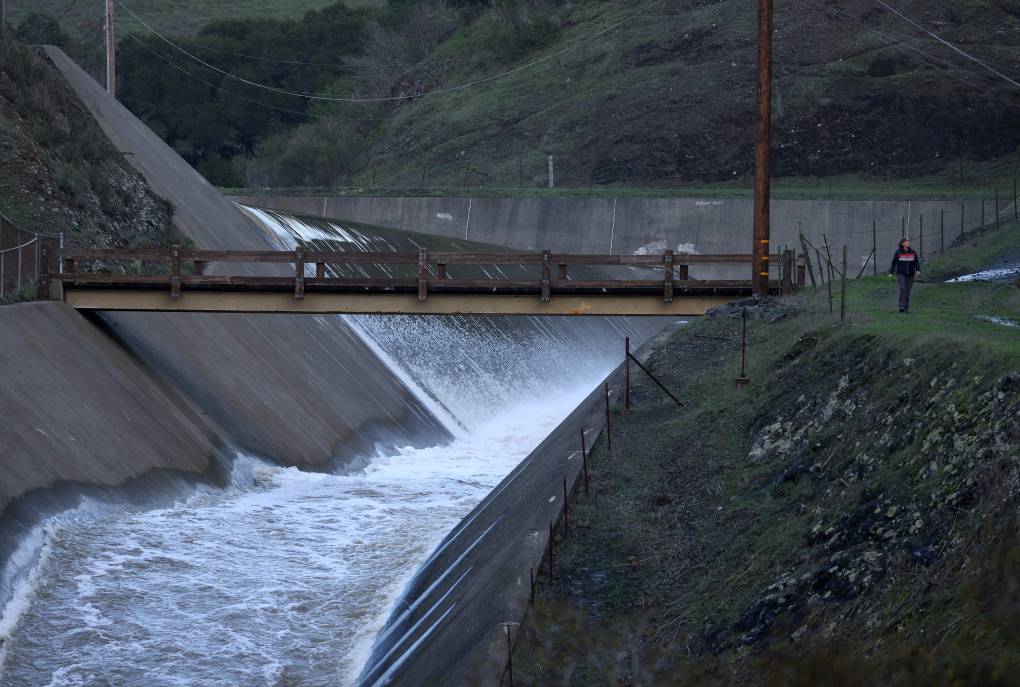
"caption": "Water flows down the spillway at the Nicasio Reservoir in Marin County after days of rain brought the reservoir to near capacity on Jan. 9. The Bay Area, and much of Northern California, continues to endure powerful atmospheric river events that have brought high winds, flooding rains and rising reservoirs.",
"description": null,
"title": "Multiple Storms Batter California With Flooding Rains",
"credit": "Justin Sullivan/Getty Images",
"status": "inherit",
"altTag": "Rushing white waters rapidly flow down the spillway at the Nicasio Reservoir in California as a person in a black hoodie and jeans walks along the levee to the right.",
"isLoading": false,
"fetchFailed": false
}
},
"audioPlayerReducer": {
"postId": "stream_live",
"isPaused": true,
"isPlaying": false,
"pfsActive": false,
"pledgeModalIsOpen": true,
"playerDrawerIsOpen": false,
"liveAudioPlayStartedAt": 0,
"liveAudioPlayContext": ""
},
"authorsReducer": {
"byline_news_11944460": {
"type": "authors",
"id": "byline_news_11944460",
"meta": {
"override": true
},
"slug": "byline_news_11944460",
"name": "\u003ca href=\"https://twitter.com/reporterdeepa\">Deepa Bharath\u003c/a>\u003cbr>The Associated Press",
"isLoading": false
},
"byline_news_11944180": {
"type": "authors",
"id": "byline_news_11944180",
"meta": {
"override": true
},
"slug": "byline_news_11944180",
"name": "\u003ca href=\"https://twitter.com/kat__stafford?lang=en\">Kat Stafford\u003c/a>, \u003ca href=\"https://twitter.com/c_thesavage?ref_src=twsrc%5Egoogle%7Ctwcamp%5Eserp%7Ctwgr%5Eauthor\">Claire Savage\u003c/a>\u003cbr>The Associated Press",
"isLoading": false
},
"byline_news_11943742": {
"type": "authors",
"id": "byline_news_11943742",
"meta": {
"override": true
},
"slug": "byline_news_11943742",
"name": "\u003ca href=\"https://www.kqed.org/author/dcronin\">Dana Cronin\u003c/a>",
"isLoading": false
},
"byline_news_11943845": {
"type": "authors",
"id": "byline_news_11943845",
"meta": {
"override": true
},
"slug": "byline_news_11943845",
"name": "\u003ca href=\"https://www.kazu.org/people/jerimiah-oetting\">Jerimiah Oetting\u003c/a>, \u003ca href=\"https://www.kazu.org/\">KAZU\u003c/a>",
"isLoading": false
},
"byline_news_11943590": {
"type": "authors",
"id": "byline_news_11943590",
"meta": {
"override": true
},
"slug": "byline_news_11943590",
"name": "\u003ca href=\"https://calmatters.org/author/laurenhepler/\">Lauren Hepler\u003c/a>, \u003ca href=\"https://calmatters.org/author/nicole-foy/\">Nicole Foy \u003c/a>, \u003ca href=\"https://calmatters.org/author/wendy-fry/\">Wendy Fry\u003c/a>",
"isLoading": false
},
"byline_news_11943212": {
"type": "authors",
"id": "byline_news_11943212",
"meta": {
"override": true
},
"slug": "byline_news_11943212",
"name": "\u003ca href=\"https://calmatters.org/author/alastair-bland/\">Alastair Bland\u003c/a>",
"isLoading": false
},
"scottshafer": {
"type": "authors",
"id": "255",
"meta": {
"index": "authors_1716337520",
"id": "255",
"found": true
},
"name": "Scott Shafer",
"firstName": "Scott",
"lastName": "Shafer",
"slug": "scottshafer",
"email": "sshafer@kqed.org",
"display_author_email": false,
"staff_mastheads": [
"news"
],
"title": "KQED Contributor",
"bio": "Scott Shafer is a senior editor with the KQED Politics and Government desk. He is co-host of Political Breakdown, the award-winning radio show and podcast with a personal take on the world of politics. Scott came to KQED in 1998 to host the statewide\u003cem> California Report\u003c/em>. Prior to that he had extended stints in politics and government\u003cem>.\u003c/em> He uses that inside experience at KQED in his, reporting, hosting and analysis for the politics desk. Scott collaborated \u003cem>Political Breakdown a\u003c/em>nd on \u003cem>The Political Mind of Jerry Brown, \u003c/em>an eight-part series about the life and extraordinary political career of the former governor. For fun, he plays water polo with the San Francisco Tsunami.",
"avatar": "https://secure.gravatar.com/avatar/a62ebae45b79d7aed1a39a0e3bf68104?s=600&d=blank&r=g",
"twitter": "scottshafer",
"bluesky": null,
"facebook": null,
"instagram": null,
"linkedin": null,
"sites": [
{
"site": "news",
"roles": [
"editor"
]
},
{
"site": "stateofhealth",
"roles": [
"author"
]
},
{
"site": "science",
"roles": [
"author"
]
},
{
"site": "forum",
"roles": [
"subscriber"
]
},
{
"site": "liveblog",
"roles": [
"author"
]
}
],
"headData": {
"title": "Scott Shafer | KQED",
"description": "KQED Contributor",
"ogImgSrc": "https://secure.gravatar.com/avatar/a62ebae45b79d7aed1a39a0e3bf68104?s=600&d=blank&r=g",
"twImgSrc": "https://secure.gravatar.com/avatar/a62ebae45b79d7aed1a39a0e3bf68104?s=600&d=blank&r=g"
},
"isLoading": false,
"link": "/author/scottshafer"
},
"mlagos": {
"type": "authors",
"id": "3239",
"meta": {
"index": "authors_1716337520",
"id": "3239",
"found": true
},
"name": "Marisa Lagos",
"firstName": "Marisa",
"lastName": "Lagos",
"slug": "mlagos",
"email": "mlagos@kqed.org",
"display_author_email": false,
"staff_mastheads": [
"news"
],
"title": "KQED Contributor",
"bio": "Marisa Lagos is a correspondent for KQED’s California Politics and Government Desk and co-hosts the award-winning show and podcast, Political Breakdown. At KQED, Lagos also conducts reporting, analysis and investigations into state, local and national politics for radio, TV, online and onstage. In 2022, she and co-host, Scott Shafer, moderated the only gubernatorial debate in California. In 2020, the \u003ci>Washington Post\u003c/i> named her one of the top political journalists in California; she was nominated for a Peabody and won several other awards for her work investigating the 2017 California wildfires. She has worked at the \u003ci>San Francisco Chronicle\u003c/i>, \u003ci>San Francisco Examiner\u003c/i> and \u003ci>Los Angeles Times\u003c/i>. A UC Santa Barbara graduate, she lives in San Francisco with her two sons and husband.",
"avatar": "https://secure.gravatar.com/avatar/a261a0d3696fc066871ef96b85b5e7d2?s=600&d=blank&r=g",
"twitter": "@mlagos",
"facebook": null,
"instagram": null,
"linkedin": null,
"sites": [
{
"site": "arts",
"roles": [
"author"
]
},
{
"site": "news",
"roles": [
"editor"
]
},
{
"site": "science",
"roles": [
"editor"
]
},
{
"site": "forum",
"roles": [
"author"
]
},
{
"site": "liveblog",
"roles": [
"author"
]
}
],
"headData": {
"title": "Marisa Lagos | KQED",
"description": "KQED Contributor",
"ogImgSrc": "https://secure.gravatar.com/avatar/a261a0d3696fc066871ef96b85b5e7d2?s=600&d=blank&r=g",
"twImgSrc": "https://secure.gravatar.com/avatar/a261a0d3696fc066871ef96b85b5e7d2?s=600&d=blank&r=g"
},
"isLoading": false,
"link": "/author/mlagos"
},
"lklivans": {
"type": "authors",
"id": "8648",
"meta": {
"index": "authors_1716337520",
"id": "8648",
"found": true
},
"name": "Laura Klivans",
"firstName": "Laura",
"lastName": "Klivans",
"slug": "lklivans",
"email": "lklivans@kqed.org",
"display_author_email": true,
"staff_mastheads": [
"news",
"science"
],
"title": "Reporter",
"bio": "Laura Klivans is an award-winning science reporter for KQED News, where she covers climate change with an eye on both groundbreaking progress and gaps in action. She is the former host of KQED's blockbuster video series about tiny, amazing animals, \u003cem>Deep Look\u003c/em>. Her work reaches national audiences through NPR, \u003cem>Here & Now, \u003c/em>PRI, and other major outlets. \r\n\r\nLaura’s won five Northern California Area Emmy Awards for Deep Look and First Place in the Greater Bay Area Journalism Awards for a podcast exploring how one Oakland neighborhood teamed up to reduce planet-heating pollution.\r\n\r\nBeyond her reporting, she hosts and moderates events. In the past, she taught audio storytelling at the UC Berkeley Graduate School of Journalism, led international education programs, worked with immigrants and refugees along the Thai-Burmese border, taught high schoolers sex ed, and was an actress. \r\n\r\nShe's a former UC Berkeley Human Rights Fellow, USC Center for Health Journalism's California Fellow and Coro Fellow in Public Affairs. Laura has a master’s in journalism from UC Berkeley, a master’s in education from Harvard, and an undergraduate degree from Northwestern University.\r\n\r\nShe loves trying to riddle the meaning out of vanity license plates.",
"avatar": "https://secure.gravatar.com/avatar/af8e757bb8ce7b7fee6160ba66e37327?s=600&d=blank&r=g",
"twitter": "lauraklivans",
"facebook": null,
"instagram": null,
"linkedin": null,
"sites": [
{
"site": "news",
"roles": [
"editor"
]
},
{
"site": "stateofhealth",
"roles": [
"contributor",
"editor"
]
},
{
"site": "science",
"roles": [
"editor"
]
},
{
"site": "forum",
"roles": [
"editor"
]
}
],
"headData": {
"title": "Laura Klivans | KQED",
"description": "Reporter",
"ogImgSrc": "https://secure.gravatar.com/avatar/af8e757bb8ce7b7fee6160ba66e37327?s=600&d=blank&r=g",
"twImgSrc": "https://secure.gravatar.com/avatar/af8e757bb8ce7b7fee6160ba66e37327?s=600&d=blank&r=g"
},
"isLoading": false,
"link": "/author/lklivans"
},
"lesleymcclurg": {
"type": "authors",
"id": "11229",
"meta": {
"index": "authors_1716337520",
"id": "11229",
"found": true
},
"name": "Lesley McClurg",
"firstName": "Lesley",
"lastName": "McClurg",
"slug": "lesleymcclurg",
"email": "lmcclurg@KQED.org",
"display_author_email": false,
"staff_mastheads": [
"news",
"science"
],
"title": "KQED Health Correspondent",
"bio": "Lesley McClurg is a health correspondent and fill-in host whose work is regularly rebroadcast on NPR and PBS programs. She’s earned multiple regional Emmy awards, a national and a regional Edward R. Murrow award, and was named Best Beat Reporter by the Association of Health Care Journalists. The Society of Professional Journalists has recognized her work several times, and the Society of Environmental Journalists spotlighted her coverage of California’s historic drought.\r\n\r\nBefore joining KQED in 2016, Lesley covered food and sustainability for Capital Public Radio, environmental issues for Colorado Public Radio, and reported for KUOW and KCTS 9 in Seattle. Away from the newsroom, she loves skiing with her daughter, mountain biking with her partner, and playing with Ollie, the family’s goldendoodle. On deadline, she runs almost entirely on chocolate chips.\r\n\r\n ",
"avatar": "https://secure.gravatar.com/avatar/bab49e972ea10c774fe0f5e29dba1722b158f7c0d58a360923d1389d380b2978?s=600&d=blank&r=g",
"twitter": "lesleywmcclurg",
"bluesky": null,
"facebook": null,
"instagram": null,
"linkedin": null,
"sites": [
{
"site": "arts",
"roles": [
"author"
]
},
{
"site": "news",
"roles": [
"editor"
]
},
{
"site": "futureofyou",
"roles": [
"editor"
]
},
{
"site": "stateofhealth",
"roles": [
"author"
]
},
{
"site": "science",
"roles": [
"editor"
]
},
{
"site": "quest",
"roles": [
"subscriber"
]
},
{
"site": "forum",
"roles": [
"administrator"
]
},
{
"site": "liveblog",
"roles": [
"author"
]
}
],
"headData": {
"title": "Lesley McClurg | KQED",
"description": "KQED Health Correspondent",
"ogImgSrc": "https://secure.gravatar.com/avatar/bab49e972ea10c774fe0f5e29dba1722b158f7c0d58a360923d1389d380b2978?s=600&d=blank&r=g",
"twImgSrc": "https://secure.gravatar.com/avatar/bab49e972ea10c774fe0f5e29dba1722b158f7c0d58a360923d1389d380b2978?s=600&d=blank&r=g"
},
"isLoading": false,
"link": "/author/lesleymcclurg"
},
"vrancano": {
"type": "authors",
"id": "11276",
"meta": {
"index": "authors_1716337520",
"id": "11276",
"found": true
},
"name": "Vanessa Rancaño",
"firstName": "Vanessa",
"lastName": "Rancaño",
"slug": "vrancano",
"email": "vrancano@kqed.org",
"display_author_email": false,
"staff_mastheads": [
"news"
],
"title": "Reporter",
"bio": "Vanessa Rancaño is a features reporter for KQED. She’s also covered homelessness and education for the station and reported from the Central Valley. Her work has aired across public radio, from flagship national news shows to longform narrative podcasts. Before taking up a mic, she worked as a freelance print journalist. She’s been recognized with a number of national and regional awards. Vanessa grew up in California's Central Valley. She's a former NPR Kroc Fellow, and a graduate of the UC Berkeley Graduate School of Journalism.",
"avatar": "https://secure.gravatar.com/avatar/b3a383dfb0e7ee1c17568f2cf067904ab654d6e3de9743fc661f3c788ade1bed?s=600&d=blank&r=g",
"twitter": "vanessarancano",
"bluesky": null,
"facebook": null,
"instagram": null,
"linkedin": null,
"sites": [
{
"site": "arts",
"roles": [
"editor"
]
},
{
"site": "news",
"roles": [
"editor"
]
},
{
"site": "liveblog",
"roles": [
"contributor"
]
}
],
"headData": {
"title": "Vanessa Rancaño | KQED",
"description": "Reporter",
"ogImgSrc": "https://secure.gravatar.com/avatar/b3a383dfb0e7ee1c17568f2cf067904ab654d6e3de9743fc661f3c788ade1bed?s=600&d=blank&r=g",
"twImgSrc": "https://secure.gravatar.com/avatar/b3a383dfb0e7ee1c17568f2cf067904ab654d6e3de9743fc661f3c788ade1bed?s=600&d=blank&r=g"
},
"isLoading": false,
"link": "/author/vrancano"
},
"dcronin": {
"type": "authors",
"id": "11362",
"meta": {
"index": "authors_1716337520",
"id": "11362",
"found": true
},
"name": "Dana Cronin",
"firstName": "Dana",
"lastName": "Cronin",
"slug": "dcronin",
"email": "dcronin@KQED.org",
"display_author_email": true,
"staff_mastheads": [],
"title": "KQED Contributor",
"bio": "Dana Cronin is a reporter for KQED News. She loves writing stories about climate change, environmental issues, food and agriculture. She's reported across the country, from Colorado to Washington D.C. to Illinois, and has won numerous awards for her coverage. Her work is regularly featured on national broadcasts, including NPR’s Morning Edition, All Things Considered, PBS Newshour and Science Friday. She lives in Oakland and has an avocado tree in her back yard.",
"avatar": "https://secure.gravatar.com/avatar/bcf89e3455ff7235f96ab6fa7258dd95?s=600&d=blank&r=g",
"twitter": "DanaHCronin",
"facebook": null,
"instagram": null,
"linkedin": null,
"sites": [
{
"site": "arts",
"roles": [
"author"
]
},
{
"site": "news",
"roles": [
"editor"
]
},
{
"site": "science",
"roles": [
"author"
]
},
{
"site": "liveblog",
"roles": [
"author"
]
}
],
"headData": {
"title": "Dana Cronin | KQED",
"description": "KQED Contributor",
"ogImgSrc": "https://secure.gravatar.com/avatar/bcf89e3455ff7235f96ab6fa7258dd95?s=600&d=blank&r=g",
"twImgSrc": "https://secure.gravatar.com/avatar/bcf89e3455ff7235f96ab6fa7258dd95?s=600&d=blank&r=g"
},
"isLoading": false,
"link": "/author/dcronin"
},
"ccabreralomeli": {
"type": "authors",
"id": "11708",
"meta": {
"index": "authors_1716337520",
"id": "11708",
"found": true
},
"name": "Carlos Cabrera-Lomelí",
"firstName": "Carlos",
"lastName": "Cabrera-Lomelí",
"slug": "ccabreralomeli",
"email": "ccabreralomeli@KQED.org",
"display_author_email": true,
"staff_mastheads": [
"news"
],
"title": "Community Reporter",
"bio": "Carlos Cabrera-Lomelí is a community reporter with KQED's digital engagement team. He also reports and co-produces for KQED's bilingual news hub KQED en Español. He grew up in San Francisco's Mission District and has previously worked with Univision, 48 Hills and REFORMA in Mexico City.",
"avatar": "https://secure.gravatar.com/avatar/c309be9665e484f887b818c89e273ecc673004f426f36b24d00a4d813a2e0518?s=600&d=blank&r=g",
"twitter": "@LomeliCabrera",
"bluesky": null,
"facebook": null,
"instagram": null,
"linkedin": null,
"sites": [
{
"site": "arts",
"roles": [
"editor"
]
},
{
"site": "news",
"roles": [
"editor"
]
},
{
"site": "about",
"roles": [
"editor"
]
},
{
"site": "science",
"roles": [
"editor"
]
},
{
"site": "perspectives",
"roles": [
"editor"
]
},
{
"site": "elections",
"roles": [
"editor"
]
},
{
"site": "liveblog",
"roles": [
"contributor"
]
}
],
"headData": {
"title": "Carlos Cabrera-Lomelí | KQED",
"description": "Community Reporter",
"ogImgSrc": "https://secure.gravatar.com/avatar/c309be9665e484f887b818c89e273ecc673004f426f36b24d00a4d813a2e0518?s=600&d=blank&r=g",
"twImgSrc": "https://secure.gravatar.com/avatar/c309be9665e484f887b818c89e273ecc673004f426f36b24d00a4d813a2e0518?s=600&d=blank&r=g"
},
"isLoading": false,
"link": "/author/ccabreralomeli"
},
"sjohnson": {
"type": "authors",
"id": "11840",
"meta": {
"index": "authors_1716337520",
"id": "11840",
"found": true
},
"name": "Sydney Johnson",
"firstName": "Sydney",
"lastName": "Johnson",
"slug": "sjohnson",
"email": "sjohnson@kqed.org",
"display_author_email": false,
"staff_mastheads": [
"news"
],
"title": "KQED Reporter",
"bio": "Sydney Johnson is a general assignment reporter at KQED. She previously reported on public health and city government at the San Francisco Examiner, and before that, she covered statewide education policy for EdSource. Her reporting has won multiple local, state and national awards. Sydney is a graduate of the University of California, Berkeley and lives in San Francisco.",
"avatar": "https://secure.gravatar.com/avatar/97855f2719b72ad6190b7c535fe642c8?s=600&d=blank&r=g",
"twitter": "sydneyfjohnson",
"facebook": null,
"instagram": null,
"linkedin": null,
"sites": [
{
"site": "news",
"roles": [
"editor"
]
}
],
"headData": {
"title": "Sydney Johnson | KQED",
"description": "KQED Reporter",
"ogImgSrc": "https://secure.gravatar.com/avatar/97855f2719b72ad6190b7c535fe642c8?s=600&d=blank&r=g",
"twImgSrc": "https://secure.gravatar.com/avatar/97855f2719b72ad6190b7c535fe642c8?s=600&d=blank&r=g"
},
"isLoading": false,
"link": "/author/sjohnson"
},
"srodriguez": {
"type": "authors",
"id": "11852",
"meta": {
"index": "authors_1716337520",
"id": "11852",
"found": true
},
"name": "Steph Rodriguez",
"firstName": "Steph",
"lastName": "Rodriguez",
"slug": "srodriguez",
"email": "srodriguez@KQED.org",
"display_author_email": true,
"staff_mastheads": [
"news"
],
"title": "KQED Contributor",
"bio": "Steph Rodriguez is an award-winning editor and journalist who specializes in writing stories about food and music, arts and culture. She’s currently a Digital Editor for KQED News in San Francisco. Her past professional experience includes Food Editor for SFGATE as well as Managing Editor and Dining Editor for the Sacramento News & Review. She has roots in Bakersfield and Sacramento California and currently lives in Oakland with her family.",
"avatar": "https://secure.gravatar.com/avatar/5220c101baf7d495ca871563de9b8653e5863afdbd5f55ea5db0dda0732db3a2?s=600&d=blank&r=g",
"twitter": "wordstospill",
"bluesky": null,
"facebook": null,
"instagram": null,
"linkedin": null,
"sites": [
{
"site": "arts",
"roles": [
"editor"
]
},
{
"site": "news",
"roles": [
"editor"
]
},
{
"site": "science",
"roles": [
"editor"
]
}
],
"headData": {
"title": "Steph Rodriguez | KQED",
"description": "KQED Contributor",
"ogImgSrc": "https://secure.gravatar.com/avatar/5220c101baf7d495ca871563de9b8653e5863afdbd5f55ea5db0dda0732db3a2?s=600&d=blank&r=g",
"twImgSrc": "https://secure.gravatar.com/avatar/5220c101baf7d495ca871563de9b8653e5863afdbd5f55ea5db0dda0732db3a2?s=600&d=blank&r=g"
},
"isLoading": false,
"link": "/author/srodriguez"
}
},
"pagesReducer": {
"news_tag_california": {
"type": "terms",
"id": "news_18538",
"meta": {
"index": "terms_1716263798",
"site": "news",
"id": "18538",
"score": 6.8457103
},
"featImg": null,
"name": "California",
"description": null,
"taxonomy": "tag",
"headData": {
"twImgId": null,
"twTitle": null,
"ogTitle": null,
"ogImgId": null,
"twDescription": null,
"description": null,
"title": "California Archives | KQED News",
"ogDescription": null
},
"ttid": 31,
"slug": "california",
"isLoading": false,
"title": "California",
"pageMeta": {
"site": "news",
"WpPageTemplate": "page-topic-editorial",
"currentPage": 159
},
"blocks": [
{
"blockName": "kqed/post-list",
"attrs": {
"layout": "cardArticle2",
"query": "posts/news?tag=california",
"seeMore": false,
"paginated": true,
"page": 159
}
},
{
"blockName": "kqed/ad"
}
]
}
},
"pfsSessionReducer": {},
"postsReducer": {
"stream_live": {
"type": "live",
"id": "stream_live",
"audioUrl": "https://streams.kqed.org/kqedradio",
"title": "Live Stream",
"excerpt": "Live Stream information currently unavailable.",
"link": "/radio",
"featImg": "",
"label": {
"name": "KQED Live",
"link": "/"
}
},
"stream_kqedNewscast": {
"type": "posts",
"id": "stream_kqedNewscast",
"audioUrl": "https://www.kqed.org/.stream/anon/radio/RDnews/newscast.mp3?_=1",
"title": "KQED Newscast",
"featImg": "",
"label": {
"name": "88.5 FM",
"link": "/"
}
},
"news_11944460": {
"type": "posts",
"id": "news_11944460",
"meta": {
"index": "posts_1716263798",
"site": "news",
"id": "11944460",
"score": null,
"sort": [
1679531812000
]
},
"parent": 0,
"labelTerm": {
"site": "news"
},
"blocks": [],
"publishDate": 1679531812,
"format": "standard",
"title": "California Would Become First State to Outlaw Caste Discrimination Under New Bill",
"headTitle": "KQED News",
"content": "\u003cp>California may become the first state in the nation to outlaw caste-based bias, a safeguard people of South Asian descent say is necessary to protect them from discrimination in housing, education and the tech sector, where they hold key roles.\u003c/p>\n\u003cp>State Sen. Aisha Wahab (D-Hayward), the first Muslim and Afghan American elected to the state Legislature, introduced the bill Wednesday. It adds caste — a division of people related to birth or descent — as a protected category in the state's anti-discrimination laws.\u003c/p>\n\u003cp>Those at the lowest stratum of the caste system, known as Dalits, have been increasingly calling for such legislation, saying they have faced this kind of discrimination in the United States. But such policies remain divisive.\u003c/p>\n\u003cp>[pullquote size=\"medium\" align=\"right\" citation=\"Aisha Wahab, state Senator, (D-Hayward)\"]'People came to this country so they can be free and can pursue their American dream without any disruption to their lives.'[/pullquote]\u003c/p>\n\u003cp>Wahab said caste discrimination is \"a social justice and civil rights issue.\"\u003c/p>\n\u003cp>\"People came to this country so they can be free and can pursue their American dream without any disruption to their lives,\" Wahab said, adding that she heard about this form of discrimination growing up in Fremont and living in the Bay Area.\u003c/p>\n\u003cp>But some groups such as the Hindu American Foundation and the Coalition of Hindus of North America oppose such policies. They argue these measures will hurt a community that already faces hate and discrimination, and will specifically target Hindus and Indian Americans who are commonly associated with the caste system. The legislation is being backed by other groups such as Hindus for Human Rights.[aside label='More on Civil Rights' tag= 'civil-rights']A United Nations report in 2016 said at least 250 million people worldwide still face caste discrimination in Asia, Africa, the Middle East and Pacific regions, as well as in various diaspora communities. Caste systems are found among Buddhists, Christians, Hindus, Jains, Muslims and Sikhs.\u003c/p>\n\u003cp>Wahab said she is \"deeply sensitive to how minority religions and groups are depicted.\"\u003c/p>\n\u003cp>\"Caste goes beyond religion and nationality,\" she said. \"This legislation primarily protects millions who live in silence and have never had such protection because there is little understanding of this issue. This bill is about protecting people who are vulnerable.\"\u003c/p>\n\u003cp>In February, Seattle became the first U.S. city and the first jurisdiction outside South Asia to add caste to its anti-discrimination laws. Several colleges and universities also have enacted similar policies barring caste discrimination on campuses, including UC Davis.\u003c/p>\n\u003cp>[ad fullwidth]\u003c/p>\n\u003cp>A 2020 survey of Indian Americans by the Carnegie Endowment for International Peace found caste discrimination was reported by 5% of survey respondents. While 53% of foreign-born Hindu Indian Americans said they affiliate with a caste group, only 34% of U.S.-born Hindu Indian Americans said they do the same.\u003c/p>\n\u003cp>However, a 2016 Equality Labs survey of 1,500 South Asians in the U.S. showed that 67% of Dalits who responded reported being treated unfairly because of their caste.\u003c/p>\n\u003cp>California \"has been ground zero for the caste equity movement,\" said Thenmozhi Soundararajan, founder and executive director of Equality Labs, a Dalit advocacy group based in Oakland.\u003c/p>\n\u003cp>\"This legislation is about clarifying existing protections and making them explicit,\" she said.\u003c/p>\n\u003cp>According to a 2021 report by the Silicon Valley Institute for Regional Studies, Asians, including South Asians, hold 37.8% of technical roles and 25.3% of leadership roles at Silicon Valley's largest tech companies.[pullquote size=\"medium\" align=\"right\" citation=\" Tanuja Gupta, former senior manager at Google\"]'People are afraid to speak up when they are discriminated against because they are afraid to rock the boat and they fear they may lose their job or employment visa.'[/pullquote]In 2020, California regulators sued Cisco Systems, saying a Dalit Indian engineer faced caste discrimination at the company's Silicon Valley headquarters. In another case, Tanuja Gupta quit her senior manager job at Google News last year after blowback over inviting Soundararajan to speak to employees during April, which is Dalit History Month. The talk was canceled and Gupta accused her former employer of retaliation, which Google has denied.\u003c/p>\n\u003cp>Gupta said she is backing the bill because those facing caste discrimination have no protection or legal recourse right now.\u003c/p>\n\u003cp>\"This is the form of accountability we need,\" she said. \"People are afraid to speak up when they are discriminated against because they are afraid to rock the boat and they fear they may lose their job or employment visa. It's a hard cycle to break and you can only do it when someone is willing to risk everything.\"\u003c/p>\n\u003cp>Caste is \"not a religious issue, but a civil rights issue,\" said Gupta.\u003c/p>\n\u003cp>Shakeel Syed, executive director of South Asian Network in Artesia, in Los Angeles County, said he sees caste discrimination among workers and has helped in cases where caste played a role in wage theft and housing discrimination.\u003c/p>\n\u003cp>\"When hard-working people are not respected or valued simply because of their caste, that is just blatantly wrong,\" he said.\u003c/p>\n\u003cp>\u003c/p>\n",
"stats": {
"hasVideo": false,
"hasChartOrMap": false,
"hasAudio": false,
"hasPolis": false,
"wordCount": 850,
"hasGoogleForm": false,
"hasGallery": false,
"hasHearkenModule": false,
"iframeSrcs": [],
"paragraphCount": 22
},
"modified": 1679592690,
"excerpt": "California would become the first state in the nation to outlaw caste-based bias — a safeguard that people of South Asian descent say is necessary to protect them from discrimination — under a bill introduced by state Sen. Aisha Wahab.",
"headData": {
"twImgId": "",
"twTitle": "",
"ogTitle": "",
"ogImgId": "",
"twDescription": "",
"description": "California would become the first state in the nation to outlaw caste-based bias — a safeguard that people of South Asian descent say is necessary to protect them from discrimination — under a bill introduced by state Sen. Aisha Wahab.",
"title": "California Would Become First State to Outlaw Caste Discrimination Under New Bill | KQED",
"ogDescription": "",
"schema": {
"@context": "https://schema.org",
"@type": "NewsArticle",
"headline": "California Would Become First State to Outlaw Caste Discrimination Under New Bill",
"datePublished": "2023-03-22T17:36:52-07:00",
"dateModified": "2023-03-23T10:31:30-07:00",
"image": "https://cdn.kqed.org/wp-content/uploads/2020/02/KQED-OG-Image@1x.png",
"isAccessibleForFree": "True",
"publisher": {
"@type": "NewsMediaOrganization",
"@id": "https://www.kqed.org/#organization",
"name": "KQED",
"logo": "https://cdn.kqed.org/wp-content/uploads/2020/02/KQED-OG-Image@1x.png",
"url": "https://www.kqed.org",
"sameAs": [
"https://www.facebook.com/KQED",
"https://twitter.com/KQED",
"https://www.instagram.com/kqed/",
"https://www.tiktok.com/@kqedofficial",
"https://www.linkedin.com/company/kqed",
"https://www.youtube.com/channel/UCeC0IOo7i1P_61zVUWbJ4nw"
]
}
}
},
"guestAuthors": [],
"slug": "california-would-become-first-state-to-outlaw-caste-discrimination-under-new-bill",
"status": "publish",
"nprByline": "\u003ca href=\"https://twitter.com/reporterdeepa\">Deepa Bharath\u003c/a>\u003cbr>The Associated Press",
"excludeFromSiteSearch": "Include",
"showOnAuthorArchivePages": "No",
"articleAge": "0",
"path": "/news/11944460/california-would-become-first-state-to-outlaw-caste-discrimination-under-new-bill",
"audioTrackLength": null,
"parsedContent": [
{
"type": "contentString",
"content": "\u003cdiv class=\"post-body\">\u003cp>\u003cp>California may become the first state in the nation to outlaw caste-based bias, a safeguard people of South Asian descent say is necessary to protect them from discrimination in housing, education and the tech sector, where they hold key roles.\u003c/p>\n\u003cp>State Sen. Aisha Wahab (D-Hayward), the first Muslim and Afghan American elected to the state Legislature, introduced the bill Wednesday. It adds caste — a division of people related to birth or descent — as a protected category in the state's anti-discrimination laws.\u003c/p>\n\u003cp>Those at the lowest stratum of the caste system, known as Dalits, have been increasingly calling for such legislation, saying they have faced this kind of discrimination in the United States. But such policies remain divisive.\u003c/p>\n\u003cp>\u003c/p>\u003c/div>",
"attributes": {
"named": {},
"numeric": []
}
},
{
"type": "component",
"content": "'People came to this country so they can be free and can pursue their American dream without any disruption to their lives.'",
"name": "pullquote",
"attributes": {
"named": {
"size": "medium",
"align": "right",
"citation": "Aisha Wahab, state Senator, (D-Hayward)",
"label": ""
},
"numeric": []
}
},
{
"type": "contentString",
"content": "\u003cdiv class=\"post-body\">\u003cp>\u003c/p>\n\u003cp>Wahab said caste discrimination is \"a social justice and civil rights issue.\"\u003c/p>\n\u003cp>\"People came to this country so they can be free and can pursue their American dream without any disruption to their lives,\" Wahab said, adding that she heard about this form of discrimination growing up in Fremont and living in the Bay Area.\u003c/p>\n\u003cp>But some groups such as the Hindu American Foundation and the Coalition of Hindus of North America oppose such policies. They argue these measures will hurt a community that already faces hate and discrimination, and will specifically target Hindus and Indian Americans who are commonly associated with the caste system. The legislation is being backed by other groups such as Hindus for Human Rights.\u003c/p>\u003c/div>",
"attributes": {
"named": {},
"numeric": []
}
},
{
"type": "component",
"content": "",
"name": "aside",
"attributes": {
"named": {
"label": "More on Civil Rights ",
"tag": "civil-rights"
},
"numeric": []
}
},
{
"type": "contentString",
"content": "\u003cdiv class=\"post-body\">\u003cp>A United Nations report in 2016 said at least 250 million people worldwide still face caste discrimination in Asia, Africa, the Middle East and Pacific regions, as well as in various diaspora communities. Caste systems are found among Buddhists, Christians, Hindus, Jains, Muslims and Sikhs.\u003c/p>\n\u003cp>Wahab said she is \"deeply sensitive to how minority religions and groups are depicted.\"\u003c/p>\n\u003cp>\"Caste goes beyond religion and nationality,\" she said. \"This legislation primarily protects millions who live in silence and have never had such protection because there is little understanding of this issue. This bill is about protecting people who are vulnerable.\"\u003c/p>\n\u003cp>In February, Seattle became the first U.S. city and the first jurisdiction outside South Asia to add caste to its anti-discrimination laws. Several colleges and universities also have enacted similar policies barring caste discrimination on campuses, including UC Davis.\u003c/p>\n\u003cp>\u003c/p>\u003c/div>",
"attributes": {
"named": {},
"numeric": []
}
},
{
"type": "component",
"content": "",
"name": "ad",
"attributes": {
"named": {
"label": "fullwidth"
},
"numeric": [
"fullwidth"
]
}
},
{
"type": "contentString",
"content": "\u003cdiv class=\"post-body\">\u003cp>\u003c/p>\n\u003cp>A 2020 survey of Indian Americans by the Carnegie Endowment for International Peace found caste discrimination was reported by 5% of survey respondents. While 53% of foreign-born Hindu Indian Americans said they affiliate with a caste group, only 34% of U.S.-born Hindu Indian Americans said they do the same.\u003c/p>\n\u003cp>However, a 2016 Equality Labs survey of 1,500 South Asians in the U.S. showed that 67% of Dalits who responded reported being treated unfairly because of their caste.\u003c/p>\n\u003cp>California \"has been ground zero for the caste equity movement,\" said Thenmozhi Soundararajan, founder and executive director of Equality Labs, a Dalit advocacy group based in Oakland.\u003c/p>\n\u003cp>\"This legislation is about clarifying existing protections and making them explicit,\" she said.\u003c/p>\n\u003cp>According to a 2021 report by the Silicon Valley Institute for Regional Studies, Asians, including South Asians, hold 37.8% of technical roles and 25.3% of leadership roles at Silicon Valley's largest tech companies.\u003c/p>\u003c/div>",
"attributes": {
"named": {},
"numeric": []
}
},
{
"type": "component",
"content": "'People are afraid to speak up when they are discriminated against because they are afraid to rock the boat and they fear they may lose their job or employment visa.'",
"name": "pullquote",
"attributes": {
"named": {
"size": "medium",
"align": "right",
"citation": " Tanuja Gupta, former senior manager at Google",
"label": ""
},
"numeric": []
}
},
{
"type": "contentString",
"content": "\u003cdiv class=\"post-body\">\u003cp>In 2020, California regulators sued Cisco Systems, saying a Dalit Indian engineer faced caste discrimination at the company's Silicon Valley headquarters. In another case, Tanuja Gupta quit her senior manager job at Google News last year after blowback over inviting Soundararajan to speak to employees during April, which is Dalit History Month. The talk was canceled and Gupta accused her former employer of retaliation, which Google has denied.\u003c/p>\n\u003cp>Gupta said she is backing the bill because those facing caste discrimination have no protection or legal recourse right now.\u003c/p>\n\u003cp>\"This is the form of accountability we need,\" she said. \"People are afraid to speak up when they are discriminated against because they are afraid to rock the boat and they fear they may lose their job or employment visa. It's a hard cycle to break and you can only do it when someone is willing to risk everything.\"\u003c/p>\n\u003cp>Caste is \"not a religious issue, but a civil rights issue,\" said Gupta.\u003c/p>\n\u003cp>Shakeel Syed, executive director of South Asian Network in Artesia, in Los Angeles County, said he sees caste discrimination among workers and has helped in cases where caste played a role in wage theft and housing discrimination.\u003c/p>\n\u003cp>\"When hard-working people are not respected or valued simply because of their caste, that is just blatantly wrong,\" he said.\u003c/p>\n\u003cp>\u003c/p>\n\u003c/div>\u003c/p>",
"attributes": {
"named": {},
"numeric": []
}
}
],
"link": "/news/11944460/california-would-become-first-state-to-outlaw-caste-discrimination-under-new-bill",
"authors": [
"byline_news_11944460"
],
"categories": [
"news_31795",
"news_6188",
"news_8",
"news_13"
],
"tags": [
"news_18538",
"news_4750",
"news_16988"
],
"featImg": "news_11944459",
"label": "news"
},
"news_11944180": {
"type": "posts",
"id": "news_11944180",
"meta": {
"index": "posts_1716263798",
"site": "news",
"id": "11944180",
"score": null,
"sort": [
1679403632000
]
},
"guestAuthors": [],
"slug": "silicon-valley-bank-failure-could-have-outsize-consequences-for-startups-led-by-people-of-color",
"title": "Silicon Valley Bank Failure Could Have Outsize Consequences for Start-Ups Led by People of Color",
"publishDate": 1679403632,
"format": "standard",
"headTitle": "Silicon Valley Bank Failure Could Have Outsize Consequences for Start-Ups Led by People of Color | KQED",
"labelTerm": {
"site": "news"
},
"content": "\u003cp>In the hours after some of Silicon Valley Bank’s biggest customers started pulling out their money, a WhatsApp group of start-up founders who are immigrants of color ballooned to more than 1,000 members.\u003c/p>\n\u003cp>Questions flowed as the bank’s financial status worsened. Some desperately sought advice: Could they open an account at a larger bank without a Social Security number? Others questioned whether they had to physically be at a bank to open an account, because they were visiting parents overseas.\u003c/p>\n\u003cp>[aside postID=news_11943901 hero='https://ww2.kqed.org/app/uploads/sites/10/2023/03/RS60216_004_KQED_Biotechnology_11172022-1020x680.jpg']\u003c/p>\n\u003cp>One clear theme emerged: a deep concern about the broader impact on start-ups led by people of color.\u003c/p>\n\u003cp>While Wall Street struggles to contain the banking crisis after the \u003ca href=\"https://apnews.com/article/svb-fed-bonds-rates-banks-inflation-a24b28b3caeede91c76cd120aa9b7966\">swift demise of SVB\u003c/a> — the nation’s 16th-largest bank and the biggest to fail since the 2008 financial meltdown — industry experts predict it could become even harder for people of color to secure funding or a financial home supporting their start-ups.\u003c/p>\n\u003cp>Silicon Valley Bank committed to spending \u003ca href=\"https://www.svb.com/news/company-news/svb-financial-group-announces-%24112.2-billion-community-benefits-plan\">$11 billion on things like affordable housing and small-business loans\u003c/a> in the Bay Area and Los Angeles, as part of a \u003ca href=\"https://www.svb.com/news/company-news/svb-financial-group-completes-acquisition-of-boston-private2\">merger two years ago\u003c/a>.\u003c/p>\n\u003cp>“I think it’s a fair assessment to say that the bank was doing a good job, and maybe a better job, than other banks in providing support to affordable housing, to communities of color, to low-income communities, both small-business support as well as housing support,” said Paulina Gonzalez-Brito, CEO of the California Reinvestment Coalition. “And I think that’s primarily because of this community benefits agreement that we negotiated.”\u003c/p>\n\u003cp>SVB had opened its doors to such entrepreneurs, offering opportunities to form crucial relationships in the technology and financial communities that had been out of reach within larger financial institutions. But smaller players have fewer means of surviving a collapse, reflecting the perilous journey minority entrepreneurs face while attempting to navigate industries historically rife with racism.\u003c/p>\n\u003cp>[ad fullwidth]\u003c/p>\n\u003cp>“All these folks that have very special circumstances based on their identity, it’s not something that they can just change about themselves, and that makes them unbankable by the top four [large banks],” said Asya Bradley, board member of numerous start-ups who has watched the WhatsApp group grapple with SVB’s demise.\u003c/p>\n\u003cp>Bradley said some investors have implored start-ups to switch to larger financial institutions to stymie future financial risks, but that’s not an easy transition.\u003c/p>\n\u003cp>“The reason why we’re going to regional and community banks is because these [large] banks don’t want our business,” Bradley said.\u003c/p>\n\u003cp>Banking expert Aaron Klein, senior fellow in economic studies at the Brookings Institution, said SVB’s collapse could exacerbate racial disparities.\u003c/p>\n\u003cp>“That’s going to be more challenging for people who don’t fit the traditional credit box, including minorities,” Klein said. “A financial system that prefers the existing holders of wealth will perpetuate the legacy of past discrimination.”\u003c/p>\n\u003cp>[pullquote size=\"medium\" align=\"right\" citation=\"Asya Bradley, board member of numerous start-ups\"]‘The reason why we’re going to regional and community banks is because these [large] banks don’t want our business.’[/pullquote]Tiffany Dufu was gutted when she couldn’t access her SVB account and, in turn, could not pay her employees.\u003c/p>\n\u003cp>Dufu raised $5 million as CEO of The Cru, a New York-based career coaching platform and community for women. It was a rare feat for businesses founded by Black women, which get less than 1% of the billions of dollars in venture capital funding doled out yearly to start-ups. She banked with SVB because it was known for its close ties to the tech community and investors.\u003c/p>\n\u003cp>“In order to have raised that money, I pitched nearly 200 investors over the past few years,” said Dufu, who has since regained access to her funds and moved to Bank of America. “It’s very hard to put yourself out there and time after time — you get told this isn’t a good fit. So, the money in the bank account was very precious.”\u003c/p>\n\u003cp>A February Crunchbase News analysis determined \u003ca href=\"https://news.crunchbase.com/diversity/venture-funding-black-startups-2022/\">funding for Black-founded start-ups slowed by more than 50% last year after they received a record $5.1 billion in venture capital in 2021\u003c/a>. Overall venture funding dropped from about $337 billion to roughly $214 billion, while Black founders were hit disproportionately hard, dropping to just $2.3 billion, or 1.1% of the total.\u003c/p>\n\u003cp>Entrepreneur Amy Hilliard, professor at the University of Chicago Booth School of Business, knows how difficult it is to secure financing. It took three years to secure a loan for her cake-manufacturing company, and she had to sell her home to get it started.\u003c/p>\n\u003cp>Banking is based on relationships, and when a bank like SVB goes under, “those relationships go away, too,” said Hilliard, who is African American.\u003c/p>\n\u003cp>Some conservative critics asserted SVB’s commitment to \u003ca href=\"https://apnews.com/article/silicon-valley-bank-fdic-svb-california-d84764deb458371667ac7f850f430f22\">diversity, equity and inclusion\u003c/a> were to blame, but banking experts say those claims were false. The bank slid into insolvency because its larger customers pulled deposits rather than borrow at higher interest rates and the bank’s balance sheets were overexposed, forcing it to sell bonds at a loss to cover the withdrawals.\u003c/p>\n\u003cp>“If we’re focused on climate or communities of color or racial equity, that has nothing to do with what happened with Silicon Valley Bank,” said Valerie Red-Horse Mohl, co-founder of Known Holdings, a Black, Indigenous, Asian American-founded investment banking platform focused on the sustainable growth of minority-managed funds.\u003c/p>\n\u003cp>Red-Horse Mohl — who has raised, structured and managed over $3 billion in capital for tribal nations — said most larger banks are led by white men and majority-white boards, and “even when they do DEI programs, it’s not a really deep sort of shifting of capital.”\u003c/p>\n\u003cp>Smaller financial institutions, however, have worked to build relationships with people of color. “We cannot lose our regional and community banks,” she said. “It would be a travesty.”\u003c/p>\n\u003cp>Historically, smaller and minority-owned banks have addressed funding gaps that larger banks ignored or even created, following exclusionary laws and policies as they turned away customers because of the color of their skin.\u003c/p>\n\u003cp>But the ripple effects from SVB’s collapse are being felt among these banks as well, said Nicole Elam, president and CEO of the National Bankers Association, a 96-year-old trade association representing more than 175 minority-owned banks.\u003c/p>\n\u003cp>Some have seen customers withdraw funds and move to larger banks out of fear, even though most minority-owned banks have a more traditional customer base, with secured loans and minimal risky investments, she said.\u003c/p>\n\u003cp>[pullquote size=\"medium\" align=\"right\" citation=\"Nicole Elam, president and CEO, National Bankers Association\"]‘In response to this national conversation around racial equity, people are really seeing minority banks are key to wealth creation and key to helping to close the wealth gap.’[/pullquote]“You’re seeing customer flight of folks that we’ve been serving for a long time,” Elam said. “How many people may not come to us for a mortgage or small-business loan or to do their banking business because they now have in their mind that they need to bank with a bank that is too big to fail? That’s the first impact of eroding public trust.”\u003c/p>\n\u003cp>Black-owned banks have been hit the hardest as the industry consolidates. Most don’t have as much capital to withstand economic downturns. At its peak, there were 134. Today, there are only 21.\u003c/p>\n\u003cp>But change is on the way. Within the last three years, the federal government, private sector and philanthropic community have invested heavily in minority-run depository institutions.\u003c/p>\n\u003cp>“In response to this national conversation around racial equity, people are really seeing minority banks are key to wealth creation and key to helping to close the wealth gap,” Elam said.\u003c/p>\n\u003cp>Bradley, the board member of many start-ups, also is an angel investor, providing seed money for multiple entrepreneurs, and is seeing new opportunities as people network in the WhatsApp group to help each other remain afloat and grow.\u003c/p>\n\u003cp>“I’m really so hopeful,” Bradley said. “Even in the downfall of SVB, it has managed to form this incredible community of folks that are trying to help each other to succeed. They’re saying, ‘SVB was here for us. Now we’re going to be here for each other.'”\u003c/p>\n\u003cp>\u003ci data-stringify-type=\"italic\">KQED’s Rachael Myrow contributed reporting to this story.\u003c/i>\u003c/p>\n\u003cp>[ad floatright]\u003c/p>\n",
"blocks": [],
"excerpt": "Silicon Valley Bank's public failure has industry experts predicting it could become even harder for people of color to secure funding or a financial home supporting their start-ups.",
"status": "publish",
"parent": 0,
"modified": 1740181948,
"stats": {
"hasAudio": false,
"hasVideo": false,
"hasChartOrMap": false,
"iframeSrcs": [],
"hasGoogleForm": false,
"hasGallery": false,
"hasHearkenModule": false,
"hasPolis": false,
"paragraphCount": 35,
"wordCount": 1502
},
"headData": {
"title": "Silicon Valley Bank Failure Could Have Outsize Consequences for Start-Ups Led by People of Color | KQED",
"description": "Silicon Valley Bank's public failure has industry experts predicting it could become even harder for people of color to secure funding or a financial home supporting their start-ups.",
"ogTitle": "",
"ogDescription": "",
"ogImgId": "",
"twTitle": "",
"twDescription": "",
"twImgId": "",
"schema": {
"@context": "https://schema.org",
"@type": "NewsArticle",
"headline": "Silicon Valley Bank Failure Could Have Outsize Consequences for Start-Ups Led by People of Color",
"datePublished": "2023-03-21T06:00:32-07:00",
"dateModified": "2025-02-21T15:52:28-08:00",
"image": "https://cdn.kqed.org/wp-content/uploads/2020/02/KQED-OG-Image@1x.png",
"isAccessibleForFree": "True",
"publisher": {
"@type": "NewsMediaOrganization",
"@id": "https://www.kqed.org/#organization",
"name": "KQED",
"logo": "https://cdn.kqed.org/wp-content/uploads/2020/02/KQED-OG-Image@1x.png",
"url": "https://www.kqed.org",
"sameAs": [
"https://www.facebook.com/KQED",
"https://twitter.com/KQED",
"https://www.instagram.com/kqed/",
"https://www.tiktok.com/@kqedofficial",
"https://www.linkedin.com/company/kqed",
"https://www.youtube.com/channel/UCeC0IOo7i1P_61zVUWbJ4nw"
]
}
}
},
"sticky": false,
"nprByline": "\u003ca href=\"https://twitter.com/kat__stafford?lang=en\">Kat Stafford\u003c/a>, \u003ca href=\"https://twitter.com/c_thesavage?ref_src=twsrc%5Egoogle%7Ctwcamp%5Eserp%7Ctwgr%5Eauthor\">Claire Savage\u003c/a>\u003cbr>The Associated Press",
"excludeFromSiteSearch": "Include",
"showOnAuthorArchivePages": "No",
"articleAge": "0",
"path": "/news/11944180/silicon-valley-bank-failure-could-have-outsize-consequences-for-startups-led-by-people-of-color",
"audioTrackLength": null,
"parsedContent": [
{
"type": "contentString",
"content": "\u003cdiv class=\"post-body\">\u003cp>\u003cp>In the hours after some of Silicon Valley Bank’s biggest customers started pulling out their money, a WhatsApp group of start-up founders who are immigrants of color ballooned to more than 1,000 members.\u003c/p>\n\u003cp>Questions flowed as the bank’s financial status worsened. Some desperately sought advice: Could they open an account at a larger bank without a Social Security number? Others questioned whether they had to physically be at a bank to open an account, because they were visiting parents overseas.\u003c/p>\n\u003cp>\u003c/p>\u003c/div>",
"attributes": {
"named": {},
"numeric": []
}
},
{
"type": "component",
"content": "",
"name": "aside",
"attributes": {
"named": {
"postid": "news_11943901",
"hero": "https://ww2.kqed.org/app/uploads/sites/10/2023/03/RS60216_004_KQED_Biotechnology_11172022-1020x680.jpg",
"label": ""
},
"numeric": []
}
},
{
"type": "contentString",
"content": "\u003cdiv class=\"post-body\">\u003cp>\u003c/p>\n\u003cp>One clear theme emerged: a deep concern about the broader impact on start-ups led by people of color.\u003c/p>\n\u003cp>While Wall Street struggles to contain the banking crisis after the \u003ca href=\"https://apnews.com/article/svb-fed-bonds-rates-banks-inflation-a24b28b3caeede91c76cd120aa9b7966\">swift demise of SVB\u003c/a> — the nation’s 16th-largest bank and the biggest to fail since the 2008 financial meltdown — industry experts predict it could become even harder for people of color to secure funding or a financial home supporting their start-ups.\u003c/p>\n\u003cp>Silicon Valley Bank committed to spending \u003ca href=\"https://www.svb.com/news/company-news/svb-financial-group-announces-%24112.2-billion-community-benefits-plan\">$11 billion on things like affordable housing and small-business loans\u003c/a> in the Bay Area and Los Angeles, as part of a \u003ca href=\"https://www.svb.com/news/company-news/svb-financial-group-completes-acquisition-of-boston-private2\">merger two years ago\u003c/a>.\u003c/p>\n\u003cp>“I think it’s a fair assessment to say that the bank was doing a good job, and maybe a better job, than other banks in providing support to affordable housing, to communities of color, to low-income communities, both small-business support as well as housing support,” said Paulina Gonzalez-Brito, CEO of the California Reinvestment Coalition. “And I think that’s primarily because of this community benefits agreement that we negotiated.”\u003c/p>\n\u003cp>SVB had opened its doors to such entrepreneurs, offering opportunities to form crucial relationships in the technology and financial communities that had been out of reach within larger financial institutions. But smaller players have fewer means of surviving a collapse, reflecting the perilous journey minority entrepreneurs face while attempting to navigate industries historically rife with racism.\u003c/p>\n\u003cp>\u003c/p>\u003c/div>",
"attributes": {
"named": {},
"numeric": []
}
},
{
"type": "component",
"content": "",
"name": "ad",
"attributes": {
"named": {
"label": "fullwidth"
},
"numeric": [
"fullwidth"
]
}
},
{
"type": "contentString",
"content": "\u003cdiv class=\"post-body\">\u003cp>\u003c/p>\n\u003cp>“All these folks that have very special circumstances based on their identity, it’s not something that they can just change about themselves, and that makes them unbankable by the top four [large banks],” said Asya Bradley, board member of numerous start-ups who has watched the WhatsApp group grapple with SVB’s demise.\u003c/p>\n\u003cp>Bradley said some investors have implored start-ups to switch to larger financial institutions to stymie future financial risks, but that’s not an easy transition.\u003c/p>\n\u003cp>“The reason why we’re going to regional and community banks is because these [large] banks don’t want our business,” Bradley said.\u003c/p>\n\u003cp>Banking expert Aaron Klein, senior fellow in economic studies at the Brookings Institution, said SVB’s collapse could exacerbate racial disparities.\u003c/p>\n\u003cp>“That’s going to be more challenging for people who don’t fit the traditional credit box, including minorities,” Klein said. “A financial system that prefers the existing holders of wealth will perpetuate the legacy of past discrimination.”\u003c/p>\n\u003cp>\u003c/p>\u003c/div>",
"attributes": {
"named": {},
"numeric": []
}
},
{
"type": "component",
"content": "‘The reason why we’re going to regional and community banks is because these [large] banks don’t want our business.’",
"name": "pullquote",
"attributes": {
"named": {
"size": "medium",
"align": "right",
"citation": "Asya Bradley, board member of numerous start-ups",
"label": ""
},
"numeric": []
}
},
{
"type": "contentString",
"content": "\u003cdiv class=\"post-body\">\u003cp>Tiffany Dufu was gutted when she couldn’t access her SVB account and, in turn, could not pay her employees.\u003c/p>\n\u003cp>Dufu raised $5 million as CEO of The Cru, a New York-based career coaching platform and community for women. It was a rare feat for businesses founded by Black women, which get less than 1% of the billions of dollars in venture capital funding doled out yearly to start-ups. She banked with SVB because it was known for its close ties to the tech community and investors.\u003c/p>\n\u003cp>“In order to have raised that money, I pitched nearly 200 investors over the past few years,” said Dufu, who has since regained access to her funds and moved to Bank of America. “It’s very hard to put yourself out there and time after time — you get told this isn’t a good fit. So, the money in the bank account was very precious.”\u003c/p>\n\u003cp>A February Crunchbase News analysis determined \u003ca href=\"https://news.crunchbase.com/diversity/venture-funding-black-startups-2022/\">funding for Black-founded start-ups slowed by more than 50% last year after they received a record $5.1 billion in venture capital in 2021\u003c/a>. Overall venture funding dropped from about $337 billion to roughly $214 billion, while Black founders were hit disproportionately hard, dropping to just $2.3 billion, or 1.1% of the total.\u003c/p>\n\u003cp>Entrepreneur Amy Hilliard, professor at the University of Chicago Booth School of Business, knows how difficult it is to secure financing. It took three years to secure a loan for her cake-manufacturing company, and she had to sell her home to get it started.\u003c/p>\n\u003cp>Banking is based on relationships, and when a bank like SVB goes under, “those relationships go away, too,” said Hilliard, who is African American.\u003c/p>\n\u003cp>Some conservative critics asserted SVB’s commitment to \u003ca href=\"https://apnews.com/article/silicon-valley-bank-fdic-svb-california-d84764deb458371667ac7f850f430f22\">diversity, equity and inclusion\u003c/a> were to blame, but banking experts say those claims were false. The bank slid into insolvency because its larger customers pulled deposits rather than borrow at higher interest rates and the bank’s balance sheets were overexposed, forcing it to sell bonds at a loss to cover the withdrawals.\u003c/p>\n\u003cp>“If we’re focused on climate or communities of color or racial equity, that has nothing to do with what happened with Silicon Valley Bank,” said Valerie Red-Horse Mohl, co-founder of Known Holdings, a Black, Indigenous, Asian American-founded investment banking platform focused on the sustainable growth of minority-managed funds.\u003c/p>\n\u003cp>Red-Horse Mohl — who has raised, structured and managed over $3 billion in capital for tribal nations — said most larger banks are led by white men and majority-white boards, and “even when they do DEI programs, it’s not a really deep sort of shifting of capital.”\u003c/p>\n\u003cp>Smaller financial institutions, however, have worked to build relationships with people of color. “We cannot lose our regional and community banks,” she said. “It would be a travesty.”\u003c/p>\n\u003cp>Historically, smaller and minority-owned banks have addressed funding gaps that larger banks ignored or even created, following exclusionary laws and policies as they turned away customers because of the color of their skin.\u003c/p>\n\u003cp>But the ripple effects from SVB’s collapse are being felt among these banks as well, said Nicole Elam, president and CEO of the National Bankers Association, a 96-year-old trade association representing more than 175 minority-owned banks.\u003c/p>\n\u003cp>Some have seen customers withdraw funds and move to larger banks out of fear, even though most minority-owned banks have a more traditional customer base, with secured loans and minimal risky investments, she said.\u003c/p>\n\u003cp>\u003c/p>\u003c/div>",
"attributes": {
"named": {},
"numeric": []
}
},
{
"type": "component",
"content": "‘In response to this national conversation around racial equity, people are really seeing minority banks are key to wealth creation and key to helping to close the wealth gap.’",
"name": "pullquote",
"attributes": {
"named": {
"size": "medium",
"align": "right",
"citation": "Nicole Elam, president and CEO, National Bankers Association",
"label": ""
},
"numeric": []
}
},
{
"type": "contentString",
"content": "\u003cdiv class=\"post-body\">\u003cp>“You’re seeing customer flight of folks that we’ve been serving for a long time,” Elam said. “How many people may not come to us for a mortgage or small-business loan or to do their banking business because they now have in their mind that they need to bank with a bank that is too big to fail? That’s the first impact of eroding public trust.”\u003c/p>\n\u003cp>Black-owned banks have been hit the hardest as the industry consolidates. Most don’t have as much capital to withstand economic downturns. At its peak, there were 134. Today, there are only 21.\u003c/p>\n\u003cp>But change is on the way. Within the last three years, the federal government, private sector and philanthropic community have invested heavily in minority-run depository institutions.\u003c/p>\n\u003cp>“In response to this national conversation around racial equity, people are really seeing minority banks are key to wealth creation and key to helping to close the wealth gap,” Elam said.\u003c/p>\n\u003cp>Bradley, the board member of many start-ups, also is an angel investor, providing seed money for multiple entrepreneurs, and is seeing new opportunities as people network in the WhatsApp group to help each other remain afloat and grow.\u003c/p>\n\u003cp>“I’m really so hopeful,” Bradley said. “Even in the downfall of SVB, it has managed to form this incredible community of folks that are trying to help each other to succeed. They’re saying, ‘SVB was here for us. Now we’re going to be here for each other.'”\u003c/p>\n\u003cp>\u003ci data-stringify-type=\"italic\">KQED’s Rachael Myrow contributed reporting to this story.\u003c/i>\u003c/p>\n\u003cp>\u003c/p>\u003c/div>",
"attributes": {
"named": {},
"numeric": []
}
},
{
"type": "component",
"content": "",
"name": "ad",
"attributes": {
"named": {
"label": "floatright"
},
"numeric": [
"floatright"
]
}
},
{
"type": "contentString",
"content": "\u003cdiv class=\"post-body\">\u003cp>\u003c/p>\n\u003c/div>\u003c/p>",
"attributes": {
"named": {},
"numeric": []
}
}
],
"link": "/news/11944180/silicon-valley-bank-failure-could-have-outsize-consequences-for-startups-led-by-people-of-color",
"authors": [
"byline_news_11944180"
],
"categories": [
"news_31795",
"news_1758",
"news_8"
],
"tags": [
"news_69",
"news_18538",
"news_3651",
"news_18545"
],
"featImg": "news_11943993",
"label": "news"
},
"news_11943901": {
"type": "posts",
"id": "news_11943901",
"meta": {
"index": "posts_1716263798",
"site": "news",
"id": "11943901",
"score": null,
"sort": [
1679144405000
]
},
"guestAuthors": [],
"slug": "it-was-like-a-hurricane-silicon-valley-bank-failure-sends-bio-climate-tech-industries-scrambling-for-new-funding",
"title": "'It Was Like a Hurricane': Silicon Valley Bank Failure Sends Biotech, Climate Tech Industries Scrambling for New Funding",
"publishDate": 1679144405,
"format": "standard",
"headTitle": "‘It Was Like a Hurricane’: Silicon Valley Bank Failure Sends Biotech, Climate Tech Industries Scrambling for New Funding | KQED",
"labelTerm": {
"site": "news"
},
"content": "\u003cp>Nkarta Therapeutics, among a throng of \u003ca href=\"https://www.kqed.org/news/11933882/beyond-vaccines-biotech-is-booming-in-the-bay-area-despite-a-cooling-economy\">biotech companies in South San Francisco\u003c/a>, had $350 million in deposits and assets in Silicon Valley Bank.\u003c/p>\n\u003cp>But last Friday, after the bank failed, it suddenly had no access to those funds, said Paul Hastings, the company’s CEO.\u003c/p>\n\u003cp>[aside label=\"More California Coverage\" tag=\"silicon-valley\"]\u003c/p>\n\u003cp>“Oh, my goodness. It was like a hurricane of thoughts about what’s going to happen here,” he said.\u003c/p>\n\u003cp>Hastings said another bank that works with SVB was able to wire him money on Monday, just in time for Nkarta to make payroll the next day.\u003c/p>\n\u003cp>Nearly half of the country’s biotech and climate-technology companies, many of them headquartered in the Bay Area, banked with Silicon Valley Bank. Last year, SVB committed to investing at least $5 billion in the clean-tech industry.\u003c/p>\n\u003cp>But even as the FDIC quickly stepped in to guarantee deposits following the bank’s collapse, many companies have been scrambling to find new banks, open accounts and reorganize payroll systems.\u003c/p>\n\u003cp>Although Rob Chess, chair of Nektar, was deeply relieved the government stepped in, he pointed to another big problem many former SVB clients will undoubtedly face.\u003c/p>\n\u003cp>[ad fullwidth]\u003c/p>\n\u003cp>“Who are we going to negotiate with? Silicon Valley was both the most sophisticated and, frankly, the easiest to deal with, and they were the leaders of the field. So it removes a capital source for many companies,” Chess said.\u003c/p>\n\u003cp>To his point, SVB was widely known for incubating ambitious climate and biotech start-ups, and was a valuable resource for new companies looking for a bank willing to invest in innovative and somewhat risky ventures.\u003c/p>\n\u003cp>[pullquote size=\"medium\" align=\"right\" citation=\"Rob Chess, chair, Nektar Therapeutics\"]‘Who are we going to negotiate with? Silicon Valley was both the most sophisticated and, frankly, the easiest to deal with, and they were the leaders of the field.’[/pullquote]\u003c/p>\n\u003cp>Peter Reinhardt, CEO of Charm Industrial, a carbon-removal company, said his company had millions of dollars in cash deposits at SVB, in addition to checking, savings and other accounts.\u003c/p>\n\u003cp>Reinhardt noted that although most SVB clients with remaining deposits in the bank were essentially “made whole by the FDIC,” it’s still unclear how SVB plans to address companies with large lines of debt offered by the bank in an effort to help start-ups build their assets.\u003c/p>\n\u003cp>“I think there’s some concern that it could have a ripple effect for any companies that are really reliant on these more complicated products than just deposits,” Reinhardt said. “I do think it’s probably more likely to affect hardware and climate-tech companies than software companies.”\u003c/p>\n\u003cp>He added that about 60% of community solar projects across the U.S. banked with SVB, and it remains unclear how those projects will be affected.\u003c/p>\n\u003cp>For Ryan Panchadsaram, an advisor at Kleiner Perkins, a major Silicon Valley venture capital fund that invests in climate-tech companies, SVB’s collapse means existing banks will have to fill the void when it comes to funding early stage companies that have unique ideas.\u003c/p>\n\u003cp>“Will [banks] help finance them? How do you give them a bit of venture debt to do the risky thing?” he said. “I think that’s what we’re all going to have to see together.”\u003c/p>\n\u003cp>\u003c/p>\n",
"blocks": [],
"excerpt": "After Silicon Valley Bank's public collapse, many biotech and climate-technology companies are rushing to open new bank accounts and source funding.",
"status": "publish",
"parent": 0,
"modified": 1740181950,
"stats": {
"hasAudio": false,
"hasVideo": false,
"hasChartOrMap": false,
"iframeSrcs": [],
"hasGoogleForm": false,
"hasGallery": false,
"hasHearkenModule": false,
"hasPolis": false,
"paragraphCount": 19,
"wordCount": 574
},
"headData": {
"title": "'It Was Like a Hurricane': Silicon Valley Bank Failure Sends Biotech, Climate Tech Industries Scrambling for New Funding | KQED",
"description": "Silicon Valley Bank's collapse leaves many Bay Area bio- and climate technology companies scrambling to open accounts, reorganize payroll systems.",
"ogTitle": "",
"ogDescription": "",
"ogImgId": "",
"twTitle": "",
"twDescription": "",
"twImgId": "",
"socialDescription": "Silicon Valley Bank's collapse leaves many Bay Area bio- and climate technology companies scrambling to open accounts, reorganize payroll systems.",
"schema": {
"@context": "https://schema.org",
"@type": "NewsArticle",
"headline": "'It Was Like a Hurricane': Silicon Valley Bank Failure Sends Biotech, Climate Tech Industries Scrambling for New Funding",
"datePublished": "2023-03-18T06:00:05-07:00",
"dateModified": "2025-02-21T15:52:30-08:00",
"image": "https://cdn.kqed.org/wp-content/uploads/2020/02/KQED-OG-Image@1x.png",
"isAccessibleForFree": "True",
"publisher": {
"@type": "NewsMediaOrganization",
"@id": "https://www.kqed.org/#organization",
"name": "KQED",
"logo": "https://cdn.kqed.org/wp-content/uploads/2020/02/KQED-OG-Image@1x.png",
"url": "https://www.kqed.org",
"sameAs": [
"https://www.facebook.com/KQED",
"https://twitter.com/KQED",
"https://www.instagram.com/kqed/",
"https://www.tiktok.com/@kqedofficial",
"https://www.linkedin.com/company/kqed",
"https://www.youtube.com/channel/UCeC0IOo7i1P_61zVUWbJ4nw"
]
}
}
},
"sticky": false,
"excludeFromSiteSearch": "Include",
"showOnAuthorArchivePages": "No",
"articleAge": "0",
"path": "/news/11943901/it-was-like-a-hurricane-silicon-valley-bank-failure-sends-bio-climate-tech-industries-scrambling-for-new-funding",
"audioTrackLength": null,
"parsedContent": [
{
"type": "contentString",
"content": "\u003cdiv class=\"post-body\">\u003cp>\u003cp>Nkarta Therapeutics, among a throng of \u003ca href=\"https://www.kqed.org/news/11933882/beyond-vaccines-biotech-is-booming-in-the-bay-area-despite-a-cooling-economy\">biotech companies in South San Francisco\u003c/a>, had $350 million in deposits and assets in Silicon Valley Bank.\u003c/p>\n\u003cp>But last Friday, after the bank failed, it suddenly had no access to those funds, said Paul Hastings, the company’s CEO.\u003c/p>\n\u003cp>\u003c/p>\u003c/div>",
"attributes": {
"named": {},
"numeric": []
}
},
{
"type": "component",
"content": "",
"name": "aside",
"attributes": {
"named": {
"label": "More California Coverage ",
"tag": "silicon-valley"
},
"numeric": []
}
},
{
"type": "contentString",
"content": "\u003cdiv class=\"post-body\">\u003cp>\u003c/p>\n\u003cp>“Oh, my goodness. It was like a hurricane of thoughts about what’s going to happen here,” he said.\u003c/p>\n\u003cp>Hastings said another bank that works with SVB was able to wire him money on Monday, just in time for Nkarta to make payroll the next day.\u003c/p>\n\u003cp>Nearly half of the country’s biotech and climate-technology companies, many of them headquartered in the Bay Area, banked with Silicon Valley Bank. Last year, SVB committed to investing at least $5 billion in the clean-tech industry.\u003c/p>\n\u003cp>But even as the FDIC quickly stepped in to guarantee deposits following the bank’s collapse, many companies have been scrambling to find new banks, open accounts and reorganize payroll systems.\u003c/p>\n\u003cp>Although Rob Chess, chair of Nektar, was deeply relieved the government stepped in, he pointed to another big problem many former SVB clients will undoubtedly face.\u003c/p>\n\u003cp>\u003c/p>\u003c/div>",
"attributes": {
"named": {},
"numeric": []
}
},
{
"type": "component",
"content": "",
"name": "ad",
"attributes": {
"named": {
"label": "fullwidth"
},
"numeric": [
"fullwidth"
]
}
},
{
"type": "contentString",
"content": "\u003cdiv class=\"post-body\">\u003cp>\u003c/p>\n\u003cp>“Who are we going to negotiate with? Silicon Valley was both the most sophisticated and, frankly, the easiest to deal with, and they were the leaders of the field. So it removes a capital source for many companies,” Chess said.\u003c/p>\n\u003cp>To his point, SVB was widely known for incubating ambitious climate and biotech start-ups, and was a valuable resource for new companies looking for a bank willing to invest in innovative and somewhat risky ventures.\u003c/p>\n\u003cp>\u003c/p>\u003c/div>",
"attributes": {
"named": {},
"numeric": []
}
},
{
"type": "component",
"content": "‘Who are we going to negotiate with? Silicon Valley was both the most sophisticated and, frankly, the easiest to deal with, and they were the leaders of the field.’",
"name": "pullquote",
"attributes": {
"named": {
"size": "medium",
"align": "right",
"citation": "Rob Chess, chair, Nektar Therapeutics",
"label": ""
},
"numeric": []
}
},
{
"type": "contentString",
"content": "\u003cdiv class=\"post-body\">\u003cp>\u003c/p>\n\u003cp>Peter Reinhardt, CEO of Charm Industrial, a carbon-removal company, said his company had millions of dollars in cash deposits at SVB, in addition to checking, savings and other accounts.\u003c/p>\n\u003cp>Reinhardt noted that although most SVB clients with remaining deposits in the bank were essentially “made whole by the FDIC,” it’s still unclear how SVB plans to address companies with large lines of debt offered by the bank in an effort to help start-ups build their assets.\u003c/p>\n\u003cp>“I think there’s some concern that it could have a ripple effect for any companies that are really reliant on these more complicated products than just deposits,” Reinhardt said. “I do think it’s probably more likely to affect hardware and climate-tech companies than software companies.”\u003c/p>\n\u003cp>He added that about 60% of community solar projects across the U.S. banked with SVB, and it remains unclear how those projects will be affected.\u003c/p>\n\u003cp>For Ryan Panchadsaram, an advisor at Kleiner Perkins, a major Silicon Valley venture capital fund that invests in climate-tech companies, SVB’s collapse means existing banks will have to fill the void when it comes to funding early stage companies that have unique ideas.\u003c/p>\n\u003cp>“Will [banks] help finance them? How do you give them a bit of venture debt to do the risky thing?” he said. “I think that’s what we’re all going to have to see together.”\u003c/p>\n\u003cp>\u003c/p>\n\u003c/div>\u003c/p>",
"attributes": {
"named": {},
"numeric": []
}
}
],
"link": "/news/11943901/it-was-like-a-hurricane-silicon-valley-bank-failure-sends-bio-climate-tech-industries-scrambling-for-new-funding",
"authors": [
"11229",
"8648",
"11852"
],
"categories": [
"news_31795",
"news_34165",
"news_1758",
"news_19906",
"news_8",
"news_356",
"news_248"
],
"tags": [
"news_69",
"news_18538",
"news_19204",
"news_18545",
"news_1631"
],
"featImg": "news_11933918",
"label": "news"
},
"news_11943742": {
"type": "posts",
"id": "news_11943742",
"meta": {
"index": "posts_1716263798",
"site": "news",
"id": "11943742",
"score": null,
"sort": [
1679058001000
]
},
"guestAuthors": [],
"slug": "its-not-just-tech-californias-wine-industry-is-frazzled-after-silicon-valley-bank-collapse",
"title": "It's Not Just Tech — California's Wine Industry Is Frazzled After Silicon Valley Bank Collapse",
"publishDate": 1679058001,
"format": "standard",
"headTitle": "It’s Not Just Tech — California’s Wine Industry Is Frazzled After Silicon Valley Bank Collapse | KQED",
"labelTerm": {},
"content": "\u003cp>In the aftermath of \u003ca href=\"https://www.kqed.org/news/11943215/us-seizes-silicon-valley-bank-as-stocks-tumble-depositors-scramble-to-withdraw-funds\">Silicon Valley Bank’s abrupt collapse\u003c/a> last week, California’s wine industry is in a state of uncertainty.\u003c/p>\n\u003cp>SVB was one of the primary banks for the industry and, since 1994, has loaned more than $4 billion for things like vineyard acquisitions and wine-making equipment. According to its most recent earnings report, \u003ca href=\"https://s201.q4cdn.com/589201576/files/doc_financials/2022/q4/4Q22-SIVB-Earnings-Release-Final.pdf\">SVB has approximately $1.2 billion in outstanding loans (PDF)\u003c/a> to the wine industry.\u003c/p>\n\u003cp>[pullquote size=\"medium\" align=\"right\" citation=\"Adam Lee, founder and winemaker, Clarice Wine Company\"]‘To me, Silicon Valley Bank was never on the list of banks that I was terribly concerned about. Perhaps I was naive.’[/pullquote]\u003c/p>\n\u003cp>Its collapse came as a shock to Bay Area vintners like Adam Lee.\u003c/p>\n\u003cp>“To me, Silicon Valley Bank was never on the list of banks that I was terribly concerned about,” he said. “Perhaps I was naive.”\u003c/p>\n\u003cp>Lee is the founder and winemaker at \u003ca href=\"https://claricewinecompany.com/\">Clarice Wine Company\u003c/a>, based in Santa Rosa. He’s been a customer with SVB since 1997, and in addition to his account, he has a line of credit open at the bank, on which he owes tens of thousands of dollars. Immediately after the bank’s closure last week, Lee was locked out of those accounts for nearly three days. His sole employee happened to receive her paycheck Friday morning — just a few hours before the bank’s collapse.\u003c/p>\n\u003cfigure id=\"attachment_11943773\" class=\"wp-caption aligncenter\" style=\"max-width: 2560px\">\u003cimg loading=\"lazy\" decoding=\"async\" class=\"size-full wp-image-11943773\" src=\"https://ww2.kqed.org/app/uploads/sites/10/2023/03/GettyImages-1248009084-scaled.jpg\" alt=\"The exterior signage of Silicon Valley Bank with white letters on a gray building.\" width=\"2560\" height=\"1707\" srcset=\"https://cdn.kqed.org/wp-content/uploads/sites/10/2023/03/GettyImages-1248009084-scaled.jpg 2560w, https://cdn.kqed.org/wp-content/uploads/sites/10/2023/03/GettyImages-1248009084-800x533.jpg 800w, https://cdn.kqed.org/wp-content/uploads/sites/10/2023/03/GettyImages-1248009084-1020x680.jpg 1020w, https://cdn.kqed.org/wp-content/uploads/sites/10/2023/03/GettyImages-1248009084-160x107.jpg 160w, https://cdn.kqed.org/wp-content/uploads/sites/10/2023/03/GettyImages-1248009084-1536x1024.jpg 1536w, https://cdn.kqed.org/wp-content/uploads/sites/10/2023/03/GettyImages-1248009084-2048x1365.jpg 2048w, https://cdn.kqed.org/wp-content/uploads/sites/10/2023/03/GettyImages-1248009084-1920x1280.jpg 1920w\" sizes=\"auto, (max-width: 2560px) 100vw, 2560px\">\u003cfigcaption class=\"wp-caption-text\">Silicon Valley Bank headquarters is seen in Santa Clara on March 10, 2023. US regulators have shut down SVB amid its sudden collapse, the Federal Deposit Insurance Corporation announced in a statement on Friday. \u003ccite>(Tayfun Coskun/Anadolu Agency via Getty Images)\u003c/cite>\u003c/figcaption>\u003c/figure>\n\u003cp>With less than $250,000 in his account, Lee was never concerned about financial loss, since the Federal Deposit Insurance Corporation (FDIC) immediately announced it would cover up to that amount (and has since \u003ca href=\"https://www.fdic.gov/news/press-releases/2023/pr23019.html\">agreed to cover all deposits\u003c/a>).\u003c/p>\n\u003cp>[ad fullwidth]\u003c/p>\n\u003cp>But others weren’t so calm.\u003c/p>\n\u003cp>“Some couldn’t make payroll, the apps didn’t work, loans couldn’t be made, some couldn’t get advances. It’s clearly frustrating, and I don’t blame them for being angry,” said Rob McMillan, founder and former executive vice president of SVB’s wine division.\u003c/p>\n\u003cp>McMillan added that he was also shocked at the sudden downfall of the bank, where he has worked for more than 30 years.[aside label=\"More California Coverage\" tag=\"silicon-valley\"]“The wine industry is not part of this. We had nothing to do with it. Our clients are in fine shape. The portfolios are in fine shape,” he said.\u003c/p>\n\u003cp>Still, his clients are in a state of uncertainty. “It’s fear of the unknown,” he said. The bank is currently operating under the auspices of the federal government, and McMillan said there are several buyers potentially interested in acquiring \u003ca href=\"https://www.svb.com/industry-solutions/premium-wine-banking\">SVB’s wine division\u003c/a>.\u003c/p>\n\u003cp>In the meantime, though, wineries are dealing with a financial disruption that likely rippled out to their most vulnerable workforce: farmworkers.\u003c/p>\n\u003cp>“If payday was during that period of time and they didn’t get their paycheck, they’re going to be hurting,” said Rosaura Segura, an immigration services provider and farmworker advocate in St. Helena.\u003c/p>\n\u003cp>She’s also worried about the long-term impacts of the bank’s collapse, considering its financial support of the vineyard workforce. SVB was a major sponsor of an \u003ca href=\"https://cincogolf.com/\">annual golf tournament\u003c/a> in Napa Valley that raises money for migrant farmworker housing and other basic needs.\u003c/p>\n\u003cfigure id=\"attachment_11943762\" class=\"wp-caption aligncenter\" style=\"max-width: 2560px\">\u003cimg loading=\"lazy\" decoding=\"async\" class=\"size-full wp-image-11943762\" src=\"https://ww2.kqed.org/app/uploads/sites/10/2023/03/RS29229_GettyImages-143709552-scaled.jpg\" alt=\"Dark purple grapes hang from a grapevine with sun-kissed leaves.\" width=\"2560\" height=\"1707\" srcset=\"https://cdn.kqed.org/wp-content/uploads/sites/10/2023/03/RS29229_GettyImages-143709552-scaled.jpg 2560w, https://cdn.kqed.org/wp-content/uploads/sites/10/2023/03/RS29229_GettyImages-143709552-800x533.jpg 800w, https://cdn.kqed.org/wp-content/uploads/sites/10/2023/03/RS29229_GettyImages-143709552-1020x680.jpg 1020w, https://cdn.kqed.org/wp-content/uploads/sites/10/2023/03/RS29229_GettyImages-143709552-160x107.jpg 160w, https://cdn.kqed.org/wp-content/uploads/sites/10/2023/03/RS29229_GettyImages-143709552-1536x1024.jpg 1536w, https://cdn.kqed.org/wp-content/uploads/sites/10/2023/03/RS29229_GettyImages-143709552-2048x1365.jpg 2048w, https://cdn.kqed.org/wp-content/uploads/sites/10/2023/03/RS29229_GettyImages-143709552-1920x1280.jpg 1920w\" sizes=\"auto, (max-width: 2560px) 100vw, 2560px\">\u003cfigcaption class=\"wp-caption-text\">Pinot noir grapes just before harvest at the Byron Vineyard and Winery in Santa Maria. \u003ccite>(Robyn Beck/AFP via Getty Images)\u003c/cite>\u003c/figcaption>\u003c/figure>\n\u003cp>“Those funds are for bedding, for kitchen supplies, for food. So, yeah, we’re going to feel their absence,” Segura said.\u003c/p>\n\u003cp>As will the wine industry as a whole. In addition to lending money, SVB’s McMillan compiled a \u003ca href=\"https://www.svb.com/trends-insights/reports/wine-report\">yearly benchmark report\u003c/a> for the wine industry, which provided a data-driven economic review and forecast for wineries and garnered worldwide readership. McMillan said he’s unsure he’ll be able to continue producing the report.\u003c/p>\n\u003cp>“Silicon Valley Bank has a truly unique understanding of the wine business,” said Clarice Wine Company’s Lee.\u003c/p>\n\u003cp>For now, Lee said, he’s sticking with SVB — or whatever becomes of it — especially now that he has the backing of the FDIC.\u003c/p>\n\u003cp>“In an ironic way, Silicon Valley Bank is the safest place right now to put your money,” he said.\u003c/p>\n\u003cp>\u003c/p>\n",
"blocks": [],
"excerpt": "Silicon Valley Bank’s (SVB) abrupt collapse last week impacts more than just big tech companies. California’s wine industry is also in a state of uncertainty.",
"status": "publish",
"parent": 0,
"modified": 1740181955,
"stats": {
"hasAudio": false,
"hasVideo": false,
"hasChartOrMap": false,
"iframeSrcs": [],
"hasGoogleForm": false,
"hasGallery": false,
"hasHearkenModule": false,
"hasPolis": false,
"paragraphCount": 21,
"wordCount": 776
},
"headData": {
"title": "It's Not Just Tech — California's Wine Industry Is Frazzled After Silicon Valley Bank Collapse | KQED",
"description": "Silicon Valley Bank’s (SVB) abrupt collapse last week impacts more than just big tech companies. California’s wine industry is also in a state of uncertainty.",
"ogTitle": "",
"ogDescription": "",
"ogImgId": "",
"twTitle": "",
"twDescription": "",
"twImgId": "",
"schema": {
"@context": "https://schema.org",
"@type": "NewsArticle",
"headline": "It's Not Just Tech — California's Wine Industry Is Frazzled After Silicon Valley Bank Collapse",
"datePublished": "2023-03-17T06:00:01-07:00",
"dateModified": "2025-02-21T15:52:35-08:00",
"image": "https://cdn.kqed.org/wp-content/uploads/2020/02/KQED-OG-Image@1x.png",
"isAccessibleForFree": "True",
"publisher": {
"@type": "NewsMediaOrganization",
"@id": "https://www.kqed.org/#organization",
"name": "KQED",
"logo": "https://cdn.kqed.org/wp-content/uploads/2020/02/KQED-OG-Image@1x.png",
"url": "https://www.kqed.org",
"sameAs": [
"https://www.facebook.com/KQED",
"https://twitter.com/KQED",
"https://www.instagram.com/kqed/",
"https://www.tiktok.com/@kqedofficial",
"https://www.linkedin.com/company/kqed",
"https://www.youtube.com/channel/UCeC0IOo7i1P_61zVUWbJ4nw"
]
}
}
},
"source": "Food",
"sourceUrl": "/food/",
"audioUrl": "https://traffic.omny.fm/d/clips/0af137ef-751e-4b19-a055-aaef00d2d578/ffca7e9f-6831-4[…]f-aaef00f5a073/44671585-3e14-4167-bd23-afc8011e388e/audio.mp3",
"sticky": false,
"nprByline": "\u003ca href=\"https://www.kqed.org/author/dcronin\">Dana Cronin\u003c/a>",
"excludeFromSiteSearch": "Include",
"showOnAuthorArchivePages": "No",
"articleAge": "0",
"path": "/news/11943742/its-not-just-tech-californias-wine-industry-is-frazzled-after-silicon-valley-bank-collapse",
"audioTrackLength": null,
"parsedContent": [
{
"type": "contentString",
"content": "\u003cdiv class=\"post-body\">\u003cp>\u003cp>In the aftermath of \u003ca href=\"https://www.kqed.org/news/11943215/us-seizes-silicon-valley-bank-as-stocks-tumble-depositors-scramble-to-withdraw-funds\">Silicon Valley Bank’s abrupt collapse\u003c/a> last week, California’s wine industry is in a state of uncertainty.\u003c/p>\n\u003cp>SVB was one of the primary banks for the industry and, since 1994, has loaned more than $4 billion for things like vineyard acquisitions and wine-making equipment. According to its most recent earnings report, \u003ca href=\"https://s201.q4cdn.com/589201576/files/doc_financials/2022/q4/4Q22-SIVB-Earnings-Release-Final.pdf\">SVB has approximately $1.2 billion in outstanding loans (PDF)\u003c/a> to the wine industry.\u003c/p>\n\u003cp>\u003c/p>\u003c/div>",
"attributes": {
"named": {},
"numeric": []
}
},
{
"type": "component",
"content": "‘To me, Silicon Valley Bank was never on the list of banks that I was terribly concerned about. Perhaps I was naive.’",
"name": "pullquote",
"attributes": {
"named": {
"size": "medium",
"align": "right",
"citation": "Adam Lee, founder and winemaker, Clarice Wine Company",
"label": ""
},
"numeric": []
}
},
{
"type": "contentString",
"content": "\u003cdiv class=\"post-body\">\u003cp>\u003c/p>\n\u003cp>Its collapse came as a shock to Bay Area vintners like Adam Lee.\u003c/p>\n\u003cp>“To me, Silicon Valley Bank was never on the list of banks that I was terribly concerned about,” he said. “Perhaps I was naive.”\u003c/p>\n\u003cp>Lee is the founder and winemaker at \u003ca href=\"https://claricewinecompany.com/\">Clarice Wine Company\u003c/a>, based in Santa Rosa. He’s been a customer with SVB since 1997, and in addition to his account, he has a line of credit open at the bank, on which he owes tens of thousands of dollars. Immediately after the bank’s closure last week, Lee was locked out of those accounts for nearly three days. His sole employee happened to receive her paycheck Friday morning — just a few hours before the bank’s collapse.\u003c/p>\n\u003cfigure id=\"attachment_11943773\" class=\"wp-caption aligncenter\" style=\"max-width: 2560px\">\u003cimg loading=\"lazy\" decoding=\"async\" class=\"size-full wp-image-11943773\" src=\"https://ww2.kqed.org/app/uploads/sites/10/2023/03/GettyImages-1248009084-scaled.jpg\" alt=\"The exterior signage of Silicon Valley Bank with white letters on a gray building.\" width=\"2560\" height=\"1707\" srcset=\"https://cdn.kqed.org/wp-content/uploads/sites/10/2023/03/GettyImages-1248009084-scaled.jpg 2560w, https://cdn.kqed.org/wp-content/uploads/sites/10/2023/03/GettyImages-1248009084-800x533.jpg 800w, https://cdn.kqed.org/wp-content/uploads/sites/10/2023/03/GettyImages-1248009084-1020x680.jpg 1020w, https://cdn.kqed.org/wp-content/uploads/sites/10/2023/03/GettyImages-1248009084-160x107.jpg 160w, https://cdn.kqed.org/wp-content/uploads/sites/10/2023/03/GettyImages-1248009084-1536x1024.jpg 1536w, https://cdn.kqed.org/wp-content/uploads/sites/10/2023/03/GettyImages-1248009084-2048x1365.jpg 2048w, https://cdn.kqed.org/wp-content/uploads/sites/10/2023/03/GettyImages-1248009084-1920x1280.jpg 1920w\" sizes=\"auto, (max-width: 2560px) 100vw, 2560px\">\u003cfigcaption class=\"wp-caption-text\">Silicon Valley Bank headquarters is seen in Santa Clara on March 10, 2023. US regulators have shut down SVB amid its sudden collapse, the Federal Deposit Insurance Corporation announced in a statement on Friday. \u003ccite>(Tayfun Coskun/Anadolu Agency via Getty Images)\u003c/cite>\u003c/figcaption>\u003c/figure>\n\u003cp>With less than $250,000 in his account, Lee was never concerned about financial loss, since the Federal Deposit Insurance Corporation (FDIC) immediately announced it would cover up to that amount (and has since \u003ca href=\"https://www.fdic.gov/news/press-releases/2023/pr23019.html\">agreed to cover all deposits\u003c/a>).\u003c/p>\n\u003cp>\u003c/p>\u003c/div>",
"attributes": {
"named": {},
"numeric": []
}
},
{
"type": "component",
"content": "",
"name": "ad",
"attributes": {
"named": {
"label": "fullwidth"
},
"numeric": [
"fullwidth"
]
}
},
{
"type": "contentString",
"content": "\u003cdiv class=\"post-body\">\u003cp>\u003c/p>\n\u003cp>But others weren’t so calm.\u003c/p>\n\u003cp>“Some couldn’t make payroll, the apps didn’t work, loans couldn’t be made, some couldn’t get advances. It’s clearly frustrating, and I don’t blame them for being angry,” said Rob McMillan, founder and former executive vice president of SVB’s wine division.\u003c/p>\n\u003cp>McMillan added that he was also shocked at the sudden downfall of the bank, where he has worked for more than 30 years.\u003c/p>\u003c/div>",
"attributes": {
"named": {},
"numeric": []
}
},
{
"type": "component",
"content": "",
"name": "aside",
"attributes": {
"named": {
"label": "More California Coverage ",
"tag": "silicon-valley"
},
"numeric": []
}
},
{
"type": "contentString",
"content": "\u003cdiv class=\"post-body\">\u003cp>“The wine industry is not part of this. We had nothing to do with it. Our clients are in fine shape. The portfolios are in fine shape,” he said.\u003c/p>\n\u003cp>Still, his clients are in a state of uncertainty. “It’s fear of the unknown,” he said. The bank is currently operating under the auspices of the federal government, and McMillan said there are several buyers potentially interested in acquiring \u003ca href=\"https://www.svb.com/industry-solutions/premium-wine-banking\">SVB’s wine division\u003c/a>.\u003c/p>\n\u003cp>In the meantime, though, wineries are dealing with a financial disruption that likely rippled out to their most vulnerable workforce: farmworkers.\u003c/p>\n\u003cp>“If payday was during that period of time and they didn’t get their paycheck, they’re going to be hurting,” said Rosaura Segura, an immigration services provider and farmworker advocate in St. Helena.\u003c/p>\n\u003cp>She’s also worried about the long-term impacts of the bank’s collapse, considering its financial support of the vineyard workforce. SVB was a major sponsor of an \u003ca href=\"https://cincogolf.com/\">annual golf tournament\u003c/a> in Napa Valley that raises money for migrant farmworker housing and other basic needs.\u003c/p>\n\u003cfigure id=\"attachment_11943762\" class=\"wp-caption aligncenter\" style=\"max-width: 2560px\">\u003cimg loading=\"lazy\" decoding=\"async\" class=\"size-full wp-image-11943762\" src=\"https://ww2.kqed.org/app/uploads/sites/10/2023/03/RS29229_GettyImages-143709552-scaled.jpg\" alt=\"Dark purple grapes hang from a grapevine with sun-kissed leaves.\" width=\"2560\" height=\"1707\" srcset=\"https://cdn.kqed.org/wp-content/uploads/sites/10/2023/03/RS29229_GettyImages-143709552-scaled.jpg 2560w, https://cdn.kqed.org/wp-content/uploads/sites/10/2023/03/RS29229_GettyImages-143709552-800x533.jpg 800w, https://cdn.kqed.org/wp-content/uploads/sites/10/2023/03/RS29229_GettyImages-143709552-1020x680.jpg 1020w, https://cdn.kqed.org/wp-content/uploads/sites/10/2023/03/RS29229_GettyImages-143709552-160x107.jpg 160w, https://cdn.kqed.org/wp-content/uploads/sites/10/2023/03/RS29229_GettyImages-143709552-1536x1024.jpg 1536w, https://cdn.kqed.org/wp-content/uploads/sites/10/2023/03/RS29229_GettyImages-143709552-2048x1365.jpg 2048w, https://cdn.kqed.org/wp-content/uploads/sites/10/2023/03/RS29229_GettyImages-143709552-1920x1280.jpg 1920w\" sizes=\"auto, (max-width: 2560px) 100vw, 2560px\">\u003cfigcaption class=\"wp-caption-text\">Pinot noir grapes just before harvest at the Byron Vineyard and Winery in Santa Maria. \u003ccite>(Robyn Beck/AFP via Getty Images)\u003c/cite>\u003c/figcaption>\u003c/figure>\n\u003cp>“Those funds are for bedding, for kitchen supplies, for food. So, yeah, we’re going to feel their absence,” Segura said.\u003c/p>\n\u003cp>As will the wine industry as a whole. In addition to lending money, SVB’s McMillan compiled a \u003ca href=\"https://www.svb.com/trends-insights/reports/wine-report\">yearly benchmark report\u003c/a> for the wine industry, which provided a data-driven economic review and forecast for wineries and garnered worldwide readership. McMillan said he’s unsure he’ll be able to continue producing the report.\u003c/p>\n\u003cp>“Silicon Valley Bank has a truly unique understanding of the wine business,” said Clarice Wine Company’s Lee.\u003c/p>\n\u003cp>For now, Lee said, he’s sticking with SVB — or whatever becomes of it — especially now that he has the backing of the FDIC.\u003c/p>\n\u003cp>“In an ironic way, Silicon Valley Bank is the safest place right now to put your money,” he said.\u003c/p>\n\u003cp>\u003c/p>\n\u003c/div>\u003c/p>",
"attributes": {
"named": {},
"numeric": []
}
}
],
"link": "/news/11943742/its-not-just-tech-californias-wine-industry-is-frazzled-after-silicon-valley-bank-collapse",
"authors": [
"byline_news_11943742"
],
"categories": [
"news_31795",
"news_1758",
"news_24114",
"news_8"
],
"tags": [
"news_69",
"news_18538",
"news_18545",
"news_18269",
"news_1631",
"news_3800",
"news_1275",
"news_21765",
"news_6926",
"news_21991"
],
"featImg": "news_11943763",
"label": "source_news_11943742"
},
"news_11943845": {
"type": "posts",
"id": "news_11943845",
"meta": {
"index": "posts_1716263798",
"site": "news",
"id": "11943845",
"score": null,
"sort": [
1679015463000
]
},
"guestAuthors": [],
"slug": "gov-newsom-touts-42-million-in-aid-for-flooded-farmworkers-turns-out-its-months-old-covid-funding",
"title": "Newsom's $42 Million in Aid for Flooded Farmworkers Is Actually Old COVID Funding",
"publishDate": 1679015463,
"format": "standard",
"headTitle": "Newsom’s $42 Million in Aid for Flooded Farmworkers Is Actually Old COVID Funding | KQED",
"labelTerm": {
"site": "news"
},
"content": "\u003cp>At a press conference in the flood-stricken Monterey County town of Pajaro on Wednesday, Gov. Gavin Newsom talked up a plan, paid for by the U.S. Department of Agriculture and managed by United Way, to provide financial aid to farmworkers affected by floods and recent winter storms.\u003c/p>\n\u003cp>“There’s not a state in America, not one state, no other state that does more for farmworkers than the state of California,” Newsom said. “I want folks to know … it’s important to reinforce today, March 15th, the United Way was able to get $42 million from USDA, and they’re starting to send out $600 checks for farmworkers, regardless of their immigration status.”\u003c/p>\n\u003cp>Newsom was not referring to a new program for farmworkers who are in financial straits due to recent flooding and severe weather. Rather, as KAZU, KQED and The California Newsroom have learned, Newsom was referring to a $42 million farmworker grant managed by United Way that was announced in October of 2022, and has nothing to do with economic hardships due to recent storms.\u003c/p>\n\u003cfigure id=\"attachment_11943858\" class=\"wp-caption alignright\" style=\"max-width: 800px\">\u003cimg loading=\"lazy\" decoding=\"async\" class=\"size-medium wp-image-11943858\" src=\"https://ww2.kqed.org/app/uploads/sites/10/2023/03/GettyImages-1248353374-800x534.jpg\" alt=\"A white middle-aged man stands in front of press microphones with various uniformed officials standing behind him and a river in the background, with the far banks of the river visible in the distance.\" width=\"800\" height=\"534\" srcset=\"https://cdn.kqed.org/wp-content/uploads/sites/10/2023/03/GettyImages-1248353374-800x534.jpg 800w, https://cdn.kqed.org/wp-content/uploads/sites/10/2023/03/GettyImages-1248353374-1020x680.jpg 1020w, https://cdn.kqed.org/wp-content/uploads/sites/10/2023/03/GettyImages-1248353374-160x107.jpg 160w, https://cdn.kqed.org/wp-content/uploads/sites/10/2023/03/GettyImages-1248353374.jpg 1024w\" sizes=\"(max-width: 800px) 100vw, 800px\">\u003cfigcaption class=\"wp-caption-text\">Gov. Gavin Newsom holds a press conference near Pajaro flooding after he toured damaged areas in Pajaro of Monterey County, on March 15, 2023, as atmospheric river storms hit California. \u003ccite>(Tayfun Coskun/Anadolu Agency via Getty Images)\u003c/cite>\u003c/figcaption>\u003c/figure>\n\u003cp>The existing $42 million grant was created to provide “a one-time direct relief payment of $600 … to qualifying frontline farm, grocery, and meatpacking workers for expenses incurred due to the COVID-19 pandemic,” according to the USDA’s website.\u003c/p>\n\u003cp>Newsom’s office confirmed the $42 million he referred to in the press conference was in fact from the Farm and Food Workers Relief Grant Program, which is funded under the \u003ca href=\"https://www.congress.gov/bill/116th-congress/house-bill/133/text\">Consolidated Appropriations Act of 2021\u003c/a>.\u003c/p>\n\u003cp>When asked whether waivers would be granted to flood-stricken farmworkers who do not meet the pandemic hardship requirements, USDA spokesperson Marissa Perry reiterated that the FFWR program was specific to those suffering COVID-related economic hardship.\u003c/p>\n\u003cp>At the press conference yesterday, Newsom also said money from the $42 million in aid would be available immediately. “Those dollars start going out today,” he said.\u003c/p>\n\u003cp>According to Katy Castagna, president of United Way Monterey County, the application is not yet open in Monterey. And, of the $42 million, $300,000 has been allocated to Monterey County, which would amount to 500 cash cards worth $600 each.[aside label=\"Related Stories\" postID=\"news_11943590,news_11943316,news_11943713\"]In a Zoom meeting on Thursday, Castagna addressed questions about Newsom’s reference to FFWR funds being available to storm victims. The $42 million grant, she confirmed, “completely predated the current winter storm situation.”\u003c/p>\n\u003cp>However, she acknowledged that there is likely significant overlap between flood-stricken farmworkers and those experiencing pandemic-related hardships. “The good news about this really is I think it’s a pretty broad qualification for COVID impact,” she said.\u003c/p>\n\u003cp>When asked for comment, a spokesperson for Newsom said, “The administration is also pursuing additional supports for individuals recovering from January storms who are ineligible for FEMA assistance due to immigration status.”\u003c/p>\n\u003cp>Monterey County Supervisor Luis Alejo described the community of Pajaro as “mostly Latino, low-income farmworkers and immigrants.”\u003c/p>\n\u003cp>Nearly a week after the county issued evacuation notices due to the failing Pajaro levee, residents are still unable to return home.\u003c/p>\n\u003cp>“We still have a packed shelter full of Pajaro evacuees,” Alejo said.[pullquote align=\"right\" size=\"medium\" citation=\"Katy Castagna, president, United Way Monterey County\"]‘The good news about this really is I think it’s a pretty broad qualification for COVID impact.’[/pullquote]The displaced residents weren’t just forced out of their homes — they may be out of work, too: Tens of thousands of acres of farmland have been flooded in the Salinas and Pajaro valleys. Alejo says the fields will need to remain fallow for at least 60 days due to potential contamination from floodwaters.\u003c/p>\n\u003cp>“It’s going to take months to regrow harvests on these fields,” Alejo said. “So we also need to get resources for those who don’t have any other means to pay the rent, put food on the table and provide for their families.”\u003c/p>\n\u003cp>The town of Pajaro has a population of under 3,000 and is mostly Hispanic, according to 2020 census figures.\u003c/p>\n\u003cp>Alejo described area residents as “people who are salt of the earth, but the people who have the most to lose here. They have so little but have lost so much,” he said.\u003c/p>\n\u003cp>\u003cem>This story includes additional reporting by KQED’s Farida Jhabvala Romero.\u003c/em>\u003c/p>\n\u003cp>[ad fullwidth]\u003c/p>\n\u003cp>\u003c/p>\n",
"blocks": [],
"excerpt": "Newsom's announcement raised questions as to whether — and how — farmworkers affected by recent storms and flooding would be eligible for the USDA funds that have been explicitly set aside for 'expenses incurred due to the COVID-19 pandemic.'",
"status": "publish",
"parent": 0,
"modified": 1721146369,
"stats": {
"hasAudio": false,
"hasVideo": false,
"hasChartOrMap": false,
"iframeSrcs": [],
"hasGoogleForm": false,
"hasGallery": false,
"hasHearkenModule": false,
"hasPolis": false,
"paragraphCount": 19,
"wordCount": 798
},
"headData": {
"title": "Newsom's $42 Million in Aid for Flooded Farmworkers Is Actually Old COVID Funding | KQED",
"description": "Newsom's announcement raised questions as to whether — and how — farmworkers affected by recent storms and flooding would be eligible for the USDA funds that have been explicitly set aside for 'expenses incurred due to the COVID-19 pandemic.'",
"ogTitle": "",
"ogDescription": "",
"ogImgId": "",
"twTitle": "",
"twDescription": "",
"twImgId": "",
"schema": {
"@context": "https://schema.org",
"@type": "NewsArticle",
"headline": "Newsom's $42 Million in Aid for Flooded Farmworkers Is Actually Old COVID Funding",
"datePublished": "2023-03-16T18:11:03-07:00",
"dateModified": "2024-07-16T09:12:49-07:00",
"image": "https://cdn.kqed.org/wp-content/uploads/2020/02/KQED-OG-Image@1x.png",
"isAccessibleForFree": "True",
"publisher": {
"@type": "NewsMediaOrganization",
"@id": "https://www.kqed.org/#organization",
"name": "KQED",
"logo": "https://cdn.kqed.org/wp-content/uploads/2020/02/KQED-OG-Image@1x.png",
"url": "https://www.kqed.org",
"sameAs": [
"https://www.facebook.com/KQED",
"https://twitter.com/KQED",
"https://www.instagram.com/kqed/",
"https://www.tiktok.com/@kqedofficial",
"https://www.linkedin.com/company/kqed",
"https://www.youtube.com/channel/UCeC0IOo7i1P_61zVUWbJ4nw"
]
}
}
},
"sticky": false,
"nprByline": "\u003ca href=\"https://www.kazu.org/people/jerimiah-oetting\">Jerimiah Oetting\u003c/a>, \u003ca href=\"https://www.kazu.org/\">KAZU\u003c/a>",
"excludeFromSiteSearch": "Include",
"showOnAuthorArchivePages": "No",
"articleAge": "0",
"path": "/news/11943845/gov-newsom-touts-42-million-in-aid-for-flooded-farmworkers-turns-out-its-months-old-covid-funding",
"audioTrackLength": null,
"parsedContent": [
{
"type": "contentString",
"content": "\u003cdiv class=\"post-body\">\u003cp>\u003cp>At a press conference in the flood-stricken Monterey County town of Pajaro on Wednesday, Gov. Gavin Newsom talked up a plan, paid for by the U.S. Department of Agriculture and managed by United Way, to provide financial aid to farmworkers affected by floods and recent winter storms.\u003c/p>\n\u003cp>“There’s not a state in America, not one state, no other state that does more for farmworkers than the state of California,” Newsom said. “I want folks to know … it’s important to reinforce today, March 15th, the United Way was able to get $42 million from USDA, and they’re starting to send out $600 checks for farmworkers, regardless of their immigration status.”\u003c/p>\n\u003cp>Newsom was not referring to a new program for farmworkers who are in financial straits due to recent flooding and severe weather. Rather, as KAZU, KQED and The California Newsroom have learned, Newsom was referring to a $42 million farmworker grant managed by United Way that was announced in October of 2022, and has nothing to do with economic hardships due to recent storms.\u003c/p>\n\u003cfigure id=\"attachment_11943858\" class=\"wp-caption alignright\" style=\"max-width: 800px\">\u003cimg loading=\"lazy\" decoding=\"async\" class=\"size-medium wp-image-11943858\" src=\"https://ww2.kqed.org/app/uploads/sites/10/2023/03/GettyImages-1248353374-800x534.jpg\" alt=\"A white middle-aged man stands in front of press microphones with various uniformed officials standing behind him and a river in the background, with the far banks of the river visible in the distance.\" width=\"800\" height=\"534\" srcset=\"https://cdn.kqed.org/wp-content/uploads/sites/10/2023/03/GettyImages-1248353374-800x534.jpg 800w, https://cdn.kqed.org/wp-content/uploads/sites/10/2023/03/GettyImages-1248353374-1020x680.jpg 1020w, https://cdn.kqed.org/wp-content/uploads/sites/10/2023/03/GettyImages-1248353374-160x107.jpg 160w, https://cdn.kqed.org/wp-content/uploads/sites/10/2023/03/GettyImages-1248353374.jpg 1024w\" sizes=\"(max-width: 800px) 100vw, 800px\">\u003cfigcaption class=\"wp-caption-text\">Gov. Gavin Newsom holds a press conference near Pajaro flooding after he toured damaged areas in Pajaro of Monterey County, on March 15, 2023, as atmospheric river storms hit California. \u003ccite>(Tayfun Coskun/Anadolu Agency via Getty Images)\u003c/cite>\u003c/figcaption>\u003c/figure>\n\u003cp>The existing $42 million grant was created to provide “a one-time direct relief payment of $600 … to qualifying frontline farm, grocery, and meatpacking workers for expenses incurred due to the COVID-19 pandemic,” according to the USDA’s website.\u003c/p>\n\u003cp>Newsom’s office confirmed the $42 million he referred to in the press conference was in fact from the Farm and Food Workers Relief Grant Program, which is funded under the \u003ca href=\"https://www.congress.gov/bill/116th-congress/house-bill/133/text\">Consolidated Appropriations Act of 2021\u003c/a>.\u003c/p>\n\u003cp>When asked whether waivers would be granted to flood-stricken farmworkers who do not meet the pandemic hardship requirements, USDA spokesperson Marissa Perry reiterated that the FFWR program was specific to those suffering COVID-related economic hardship.\u003c/p>\n\u003cp>At the press conference yesterday, Newsom also said money from the $42 million in aid would be available immediately. “Those dollars start going out today,” he said.\u003c/p>\n\u003cp>According to Katy Castagna, president of United Way Monterey County, the application is not yet open in Monterey. And, of the $42 million, $300,000 has been allocated to Monterey County, which would amount to 500 cash cards worth $600 each.\u003c/p>\u003c/div>",
"attributes": {
"named": {},
"numeric": []
}
},
{
"type": "component",
"content": "",
"name": "aside",
"attributes": {
"named": {
"label": "Related Stories ",
"postid": "news_11943590,news_11943316,news_11943713"
},
"numeric": []
}
},
{
"type": "contentString",
"content": "\u003cdiv class=\"post-body\">\u003cp>In a Zoom meeting on Thursday, Castagna addressed questions about Newsom’s reference to FFWR funds being available to storm victims. The $42 million grant, she confirmed, “completely predated the current winter storm situation.”\u003c/p>\n\u003cp>However, she acknowledged that there is likely significant overlap between flood-stricken farmworkers and those experiencing pandemic-related hardships. “The good news about this really is I think it’s a pretty broad qualification for COVID impact,” she said.\u003c/p>\n\u003cp>When asked for comment, a spokesperson for Newsom said, “The administration is also pursuing additional supports for individuals recovering from January storms who are ineligible for FEMA assistance due to immigration status.”\u003c/p>\n\u003cp>Monterey County Supervisor Luis Alejo described the community of Pajaro as “mostly Latino, low-income farmworkers and immigrants.”\u003c/p>\n\u003cp>Nearly a week after the county issued evacuation notices due to the failing Pajaro levee, residents are still unable to return home.\u003c/p>\n\u003cp>“We still have a packed shelter full of Pajaro evacuees,” Alejo said.\u003c/p>\u003c/div>",
"attributes": {
"named": {},
"numeric": []
}
},
{
"type": "component",
"content": "‘The good news about this really is I think it’s a pretty broad qualification for COVID impact.’",
"name": "pullquote",
"attributes": {
"named": {
"align": "right",
"size": "medium",
"citation": "Katy Castagna, president, United Way Monterey County",
"label": ""
},
"numeric": []
}
},
{
"type": "contentString",
"content": "\u003cdiv class=\"post-body\">\u003cp>The displaced residents weren’t just forced out of their homes — they may be out of work, too: Tens of thousands of acres of farmland have been flooded in the Salinas and Pajaro valleys. Alejo says the fields will need to remain fallow for at least 60 days due to potential contamination from floodwaters.\u003c/p>\n\u003cp>“It’s going to take months to regrow harvests on these fields,” Alejo said. “So we also need to get resources for those who don’t have any other means to pay the rent, put food on the table and provide for their families.”\u003c/p>\n\u003cp>The town of Pajaro has a population of under 3,000 and is mostly Hispanic, according to 2020 census figures.\u003c/p>\n\u003cp>Alejo described area residents as “people who are salt of the earth, but the people who have the most to lose here. They have so little but have lost so much,” he said.\u003c/p>\n\u003cp>\u003cem>This story includes additional reporting by KQED’s Farida Jhabvala Romero.\u003c/em>\u003c/p>\n\u003cp>\u003c/p>\u003c/div>",
"attributes": {
"named": {},
"numeric": []
}
},
{
"type": "component",
"content": "",
"name": "ad",
"attributes": {
"named": {
"label": "fullwidth"
},
"numeric": [
"fullwidth"
]
}
},
{
"type": "contentString",
"content": "\u003cdiv class=\"post-body\">\u003cp>\u003c/p>\n\u003cp>\u003c/p>\n\u003c/div>\u003c/p>",
"attributes": {
"named": {},
"numeric": []
}
}
],
"link": "/news/11943845/gov-newsom-touts-42-million-in-aid-for-flooded-farmworkers-turns-out-its-months-old-covid-funding",
"authors": [
"byline_news_11943845"
],
"categories": [
"news_31795",
"news_19906",
"news_1169",
"news_8",
"news_13"
],
"tags": [
"news_18538",
"news_27504",
"news_18269",
"news_333",
"news_16",
"news_4084",
"news_32519"
],
"featImg": "news_11943867",
"label": "news"
},
"news_11943855": {
"type": "posts",
"id": "news_11943855",
"meta": {
"index": "posts_1716263798",
"site": "news",
"id": "11943855",
"score": null,
"sort": [
1679014156000
]
},
"guestAuthors": [],
"slug": "were-turning-a-new-page-infamous-san-quentin-prison-to-be-transformed-into-rehabilitation-center",
"title": "'Turning a New Page': Infamous San Quentin Prison to Become Hub for Rehabilitation",
"publishDate": 1679014156,
"format": "standard",
"headTitle": "‘Turning a New Page’: Infamous San Quentin Prison to Become Hub for Rehabilitation | KQED",
"labelTerm": {
"site": "news"
},
"content": "\u003cp>\u003ci data-stringify-type=\"italic\">Updated 1:30 p.m., Friday\u003c/i>\u003c/p>\n\u003cp>San Quentin, California’s \u003ca href=\"https://www.cdcr.ca.gov/facility-locator/sq/\">oldest state prison\u003c/a>, and among its most notorious, will be transformed into a rehabilitative facility, where incarcerated people at lower risk of misconduct can receive education and training in preparation for their release, Gov. Gavin Newsom announced Friday.\u003c/p>\n\u003cp>Under the proposal, the Marin County lockup, which currently \u003ca href=\"https://www.cdcr.ca.gov/research/wp-content/uploads/sites/174/2023/03/Tpop1d230315.pdf\">incarcerates about 3,900 people\u003c/a>, including 546 on death row, will be transformed by 2025 into what Newsom hopes will be a world-class rehabilitation center based loosely on a Scandinavian model of incarceration.\u003c/p>\n\u003cp>“We want to be the preeminent restorative justice facility in the world — that’s the goal,” Newsom said Friday, \u003ca href=\"https://www.youtube.com/watch?v=Qo1caB_7Sok\">during a visit to the prison\u003c/a>, which he said will be renamed the San Quentin Rehabilitation Center.\u003c/p>\n\u003cp>Full details of the plan were not immediately clear, but Newsom said it would build on the innovative programs San Quentin is already known for, such as an accredited junior college and an \u003ca href=\"https://sanquentinnews.com/\">award-winning newspaper\u003c/a> and \u003ca href=\"https://www.earhustlesq.com/\">podcast\u003c/a>.\u003c/p>\n\u003cp>The new direction — which Newsom dubbed the “California Model” — will be aimed at ensuring people inside the prison receive the tools and resources they need — from therapy to education and job training — to succeed in the outside world and steer clear of additional criminal behavior, he said.\u003c/p>\n\u003cp>The transformation will be data-driven, Newsom said, and inspired by “wildly successful” approaches in places like Norway, which has one of the lowest recidivism rates in the world.\u003c/p>\n\u003cp>In \u003ca href=\"https://apnews.com/article/science-norway-europe-oslo-crime-bdd56073c42dc2066640095d7e62b048\">maximum-security Norwegian prisons\u003c/a>, cells often look more like dorm rooms with additional furniture such as chairs, desks and even TVs, and incarcerated people have access to kitchens and activities like basketball.\u003c/p>\n\u003cp>The announcement comes \u003ca href=\"https://www.kqed.org/news/11732471/gov-newsom-to-end-death-penalty-by-executive-order-political-fallout-likely\">four years after Newsom declared a moratorium on the death penalty in California\u003c/a>, with all remaining people on San Quentin’s death row \u003ca href=\"https://apnews.com/article/california-death-row-closed-prisons-gavin-newsom-d59ae606239abadb2dfa03be71e54649\">slated to eventually be transferred\u003c/a> to other prisons in the state.\u003c/p>\n\u003cp>“Sentences are not being changed, I want to make that crystal clear,” said Newsom, a staunch opponent of the death penalty. He noted that those currently on San Quentin’s death row will be assessed individually to determine risk of violent behavior, with the goal of integrating them all into the general prison population by the end of 2024.\u003c/p>\n\u003cp>California’s prison population has been falling for years, the result of criminal justice reforms instituted after the U.S. Supreme Court in 2011 \u003ca href=\"https://www.npr.org/2011/05/23/136579580/california-is-ordered-to-cut-its-prison-population\">ordered the state to slim down its overcrowded lockups\u003c/a>. Newsom already shut down one prison in 2021, with a second scheduled to shutter this summer and a third set to close by 2025.\u003c/p>\n\u003cp>[aside postID=news_11888753,news_11942302 \u003cspan style=\"font-weight: 400;\">align\u003c/span>\u003ci>\u003cspan style=\"font-weight: 400;\">='\u003c/span>\u003c/i>\u003cspan style=\"font-weight: 400;\">left' \u003c/span> label='More on the history of San Quentin']Just the first two closures will save the state about $300 million a year, officials estimate.\u003c/p>\n\u003cp>But Newsom’s attempted transformation of San Quentin — a facility located on a scenic point jutting into the San Francisco Bay, in one of the wealthiest areas of the state — will be his most visible prison reform to date.\u003c/p>\n\u003cp>The prison, which has the largest death row population in the country, is widely recognized for having housed a slew of high-profile people convicted of heinous offenses, including cult leader Charles Manson and Scott Peterson, and was the site of violent uprisings in the 1960s and ’70s. More recently, however, the facility has garnered attention for adopting some of the \u003ca href=\"https://www.neh.gov/about/awards/national-humanities-medals/prison-university-project#:~:text=The%20Prison%20University%20Project%20at,earn%20college%20credits%2C%20tuition%20free.\">most innovative prison education and training programs\u003c/a> in the nation.\u003c/p>\n\u003cp>“We’re making progress. But we’re not doing justice to the ‘R’ in ‘CDCR,’” Newsom said, referring to the California Department of Corrections and Rehabilitation, which oversees the state’s sprawling prison system. “We have to be in the homecoming business. It’s not just about rehabilitation, it’s about homecoming. You want folks coming back feeling better.”\u003c/p>\n\u003cp>Although California’s recidivism rate has declined in recent years, it remains stubbornly high: \u003ca href=\"https://www.bsa.ca.gov/pdfs/reports/2018-113.pdf\">On average nearly 50% of people who leave the prison system reoffend\u003c/a>, according to a 2019 state audit.\u003c/p>\n\u003cp>“Where’s the public safety in that?” said Newsom. He noted that 800 people are released from San Quentin every year, and the primary goal should be keeping them from committing another crime and ending back in the system.\u003c/p>\n\u003cp>Supporters of criminal justice reform cheered the announcement. Among them was Jay Jordan, CEO of the Alliance for Safety and Justice, a national network of crime survivors that advocates for less incarceration and more support for both criminal offenders and victims.\u003c/p>\n\u003cp>Jordan spent years in California prisons after being convicted of robbery at the age of 18. Behind bars, he was able to receive therapy for the first time in his life, and that alone helped change everything, he said.\u003c/p>\n\u003cp>Making San Quentin an institution entirely dedicated to providing that kind of support marks a huge shift in California’s approach to punishment and rehabilitation, Jordan added.\u003c/p>\n\u003cp>“It signifies that we’re turning a new page in California’s history. We’re not just going to warehouse people in prison and then they get out and they’re not successful,” he said. “We’re actually going to have solutions where people … are going to places to get what they need to stop the cycle of crime.”\u003c/p>\n\u003cp>Many of the details remain to be worked out, including specific timelines and how to physically transform a 171-year-old building full of concrete cells and outdated buildings into a rehabilitative space. Newsom included $20 million in his January budget proposal to aid in San Quentin’s transition, and he plans to name a group of experts to oversee the changes.\u003c/p>\n\u003cp>Dan Seeman, who advised both Newsom and his predecessor, Gov. Jerry Brown, on criminal justice policy, said the plan will not only save money but eventually make California safer.\u003c/p>\n\u003cp>“You close the prisons — but this is the next step to make sure it’s successful,” he said. “We have the ability, due to the lower population, to realize savings from prison closures, but that in and of itself can’t be the only approach. We have to pair it with efforts to reduce recidivism, and initiatives like this are ways to do that at relatively low cost to taxpayers.”\u003c/p>\n\u003cp>Seeman said the Norway model Newsom is so inspired by is based on a wholly different philosophy of incarceration.\u003c/p>\n\u003cp>“I think in other countries such as Norway, they view the loss of liberty as the punishment,” he said. “They’re more intentional about what is done during folks’ time in custody to make sure they come out better neighbors and productive members of society.”\u003c/p>\n\u003cp>That means using the time people spend behind bars to help them move past all the things that drove them to commit crimes in the first place, he said.\u003c/p>\n\u003cp>\u003cem>Correction (March 17): This story originally stated there were nearly 700 people on death row in San Quentin. In fact, there are currently a total of 668 people — including 21 women — on death row in all of California. Of those, 546 men are now on San Quentin’s death row. Since the \u003ca href=\"https://ballotpedia.org/California_Proposition_66,_Death_Penalty_Procedures_(2016)\">passage of Proposition 66\u003c/a> in 2016, 101 other people formerly on death row have been transferred to other institutions. \u003c/em>\u003c/p>\n\u003cp>\u003ci>This story includes reporting from KQED’s Matthew Green and The Associated Press.\u003c/i>\u003cbr>\n[ad fullwidth]\u003c/p>\n\u003cp>[ad floatright]\u003c/p>\n",
"blocks": [],
"excerpt": "Under a plan Gov. Gavin Newsom is expected to announce Friday, the state will attempt to transform the 171-year-old Marin County lockup into a world-class rehabilitation center based loosely on a Scandinavian criminal justice model.",
"status": "publish",
"parent": 0,
"modified": 1730494442,
"stats": {
"hasAudio": false,
"hasVideo": false,
"hasChartOrMap": false,
"iframeSrcs": [],
"hasGoogleForm": false,
"hasGallery": false,
"hasHearkenModule": false,
"hasPolis": false,
"paragraphCount": 30,
"wordCount": 1274
},
"headData": {
"title": "'Turning a New Page': Infamous San Quentin Prison to Become Hub for Rehabilitation | KQED",
"description": "Under a plan Gov. Gavin Newsom is expected to announce Friday, the state will attempt to transform the 171-year-old Marin County lockup into a world-class rehabilitation center based loosely on a Scandinavian criminal justice model.",
"ogTitle": "",
"ogDescription": "",
"ogImgId": "",
"twTitle": "",
"twDescription": "",
"twImgId": "",
"schema": {
"@context": "https://schema.org",
"@type": "NewsArticle",
"headline": "'Turning a New Page': Infamous San Quentin Prison to Become Hub for Rehabilitation",
"datePublished": "2023-03-16T17:49:16-07:00",
"dateModified": "2024-11-01T13:54:02-07:00",
"image": "https://cdn.kqed.org/wp-content/uploads/2020/02/KQED-OG-Image@1x.png",
"isAccessibleForFree": "True",
"publisher": {
"@type": "NewsMediaOrganization",
"@id": "https://www.kqed.org/#organization",
"name": "KQED",
"logo": "https://cdn.kqed.org/wp-content/uploads/2020/02/KQED-OG-Image@1x.png",
"url": "https://www.kqed.org",
"sameAs": [
"https://www.facebook.com/KQED",
"https://twitter.com/KQED",
"https://www.instagram.com/kqed/",
"https://www.tiktok.com/@kqedofficial",
"https://www.linkedin.com/company/kqed",
"https://www.youtube.com/channel/UCeC0IOo7i1P_61zVUWbJ4nw"
]
}
}
},
"sticky": false,
"excludeFromSiteSearch": "Include",
"articleAge": "0",
"path": "/news/11943855/were-turning-a-new-page-infamous-san-quentin-prison-to-be-transformed-into-rehabilitation-center",
"audioTrackLength": null,
"parsedContent": [
{
"type": "contentString",
"content": "\u003cdiv class=\"post-body\">\u003cp>\u003cp>\u003ci data-stringify-type=\"italic\">Updated 1:30 p.m., Friday\u003c/i>\u003c/p>\n\u003cp>San Quentin, California’s \u003ca href=\"https://www.cdcr.ca.gov/facility-locator/sq/\">oldest state prison\u003c/a>, and among its most notorious, will be transformed into a rehabilitative facility, where incarcerated people at lower risk of misconduct can receive education and training in preparation for their release, Gov. Gavin Newsom announced Friday.\u003c/p>\n\u003cp>Under the proposal, the Marin County lockup, which currently \u003ca href=\"https://www.cdcr.ca.gov/research/wp-content/uploads/sites/174/2023/03/Tpop1d230315.pdf\">incarcerates about 3,900 people\u003c/a>, including 546 on death row, will be transformed by 2025 into what Newsom hopes will be a world-class rehabilitation center based loosely on a Scandinavian model of incarceration.\u003c/p>\n\u003cp>“We want to be the preeminent restorative justice facility in the world — that’s the goal,” Newsom said Friday, \u003ca href=\"https://www.youtube.com/watch?v=Qo1caB_7Sok\">during a visit to the prison\u003c/a>, which he said will be renamed the San Quentin Rehabilitation Center.\u003c/p>\n\u003cp>Full details of the plan were not immediately clear, but Newsom said it would build on the innovative programs San Quentin is already known for, such as an accredited junior college and an \u003ca href=\"https://sanquentinnews.com/\">award-winning newspaper\u003c/a> and \u003ca href=\"https://www.earhustlesq.com/\">podcast\u003c/a>.\u003c/p>\n\u003cp>The new direction — which Newsom dubbed the “California Model” — will be aimed at ensuring people inside the prison receive the tools and resources they need — from therapy to education and job training — to succeed in the outside world and steer clear of additional criminal behavior, he said.\u003c/p>\n\u003cp>The transformation will be data-driven, Newsom said, and inspired by “wildly successful” approaches in places like Norway, which has one of the lowest recidivism rates in the world.\u003c/p>\n\u003cp>In \u003ca href=\"https://apnews.com/article/science-norway-europe-oslo-crime-bdd56073c42dc2066640095d7e62b048\">maximum-security Norwegian prisons\u003c/a>, cells often look more like dorm rooms with additional furniture such as chairs, desks and even TVs, and incarcerated people have access to kitchens and activities like basketball.\u003c/p>\n\u003cp>The announcement comes \u003ca href=\"https://www.kqed.org/news/11732471/gov-newsom-to-end-death-penalty-by-executive-order-political-fallout-likely\">four years after Newsom declared a moratorium on the death penalty in California\u003c/a>, with all remaining people on San Quentin’s death row \u003ca href=\"https://apnews.com/article/california-death-row-closed-prisons-gavin-newsom-d59ae606239abadb2dfa03be71e54649\">slated to eventually be transferred\u003c/a> to other prisons in the state.\u003c/p>\n\u003cp>“Sentences are not being changed, I want to make that crystal clear,” said Newsom, a staunch opponent of the death penalty. He noted that those currently on San Quentin’s death row will be assessed individually to determine risk of violent behavior, with the goal of integrating them all into the general prison population by the end of 2024.\u003c/p>\n\u003cp>California’s prison population has been falling for years, the result of criminal justice reforms instituted after the U.S. Supreme Court in 2011 \u003ca href=\"https://www.npr.org/2011/05/23/136579580/california-is-ordered-to-cut-its-prison-population\">ordered the state to slim down its overcrowded lockups\u003c/a>. Newsom already shut down one prison in 2021, with a second scheduled to shutter this summer and a third set to close by 2025.\u003c/p>\n\u003cp>\u003c/p>\u003c/div>",
"attributes": {
"named": {},
"numeric": []
}
},
{
"type": "component",
"content": "",
"name": "aside",
"attributes": {
"named": {
"postid": "news_11888753,news_11942302",
"label": "More on the history of San Quentin \u003cspan style=\"font-weight: 400;\">align\u003c/span>\u003ci>\u003cspan style=\"font-weight: 400;\">='\u003c/span>\u003c/i>\u003cspan style=\"font-weight: 400;\">left' \u003c/span>"
},
"numeric": [
"\u003cspan",
"style=\"font-weight:",
"400;\">align\u003c/span>\u003ci>\u003cspan",
"style=\"font-weight:",
"400;\">='\u003c/span>\u003c/i>\u003cspan",
"style=\"font-weight:",
"400;\">left'",
"\u003c/span>"
]
}
},
{
"type": "contentString",
"content": "\u003cdiv class=\"post-body\">\u003cp>Just the first two closures will save the state about $300 million a year, officials estimate.\u003c/p>\n\u003cp>But Newsom’s attempted transformation of San Quentin — a facility located on a scenic point jutting into the San Francisco Bay, in one of the wealthiest areas of the state — will be his most visible prison reform to date.\u003c/p>\n\u003cp>The prison, which has the largest death row population in the country, is widely recognized for having housed a slew of high-profile people convicted of heinous offenses, including cult leader Charles Manson and Scott Peterson, and was the site of violent uprisings in the 1960s and ’70s. More recently, however, the facility has garnered attention for adopting some of the \u003ca href=\"https://www.neh.gov/about/awards/national-humanities-medals/prison-university-project#:~:text=The%20Prison%20University%20Project%20at,earn%20college%20credits%2C%20tuition%20free.\">most innovative prison education and training programs\u003c/a> in the nation.\u003c/p>\n\u003cp>“We’re making progress. But we’re not doing justice to the ‘R’ in ‘CDCR,’” Newsom said, referring to the California Department of Corrections and Rehabilitation, which oversees the state’s sprawling prison system. “We have to be in the homecoming business. It’s not just about rehabilitation, it’s about homecoming. You want folks coming back feeling better.”\u003c/p>\n\u003cp>Although California’s recidivism rate has declined in recent years, it remains stubbornly high: \u003ca href=\"https://www.bsa.ca.gov/pdfs/reports/2018-113.pdf\">On average nearly 50% of people who leave the prison system reoffend\u003c/a>, according to a 2019 state audit.\u003c/p>\n\u003cp>“Where’s the public safety in that?” said Newsom. He noted that 800 people are released from San Quentin every year, and the primary goal should be keeping them from committing another crime and ending back in the system.\u003c/p>\n\u003cp>Supporters of criminal justice reform cheered the announcement. Among them was Jay Jordan, CEO of the Alliance for Safety and Justice, a national network of crime survivors that advocates for less incarceration and more support for both criminal offenders and victims.\u003c/p>\n\u003cp>Jordan spent years in California prisons after being convicted of robbery at the age of 18. Behind bars, he was able to receive therapy for the first time in his life, and that alone helped change everything, he said.\u003c/p>\n\u003cp>Making San Quentin an institution entirely dedicated to providing that kind of support marks a huge shift in California’s approach to punishment and rehabilitation, Jordan added.\u003c/p>\n\u003cp>“It signifies that we’re turning a new page in California’s history. We’re not just going to warehouse people in prison and then they get out and they’re not successful,” he said. “We’re actually going to have solutions where people … are going to places to get what they need to stop the cycle of crime.”\u003c/p>\n\u003cp>Many of the details remain to be worked out, including specific timelines and how to physically transform a 171-year-old building full of concrete cells and outdated buildings into a rehabilitative space. Newsom included $20 million in his January budget proposal to aid in San Quentin’s transition, and he plans to name a group of experts to oversee the changes.\u003c/p>\n\u003cp>Dan Seeman, who advised both Newsom and his predecessor, Gov. Jerry Brown, on criminal justice policy, said the plan will not only save money but eventually make California safer.\u003c/p>\n\u003cp>“You close the prisons — but this is the next step to make sure it’s successful,” he said. “We have the ability, due to the lower population, to realize savings from prison closures, but that in and of itself can’t be the only approach. We have to pair it with efforts to reduce recidivism, and initiatives like this are ways to do that at relatively low cost to taxpayers.”\u003c/p>\n\u003cp>Seeman said the Norway model Newsom is so inspired by is based on a wholly different philosophy of incarceration.\u003c/p>\n\u003cp>“I think in other countries such as Norway, they view the loss of liberty as the punishment,” he said. “They’re more intentional about what is done during folks’ time in custody to make sure they come out better neighbors and productive members of society.”\u003c/p>\n\u003cp>That means using the time people spend behind bars to help them move past all the things that drove them to commit crimes in the first place, he said.\u003c/p>\n\u003cp>\u003cem>Correction (March 17): This story originally stated there were nearly 700 people on death row in San Quentin. In fact, there are currently a total of 668 people — including 21 women — on death row in all of California. Of those, 546 men are now on San Quentin’s death row. Since the \u003ca href=\"https://ballotpedia.org/California_Proposition_66,_Death_Penalty_Procedures_(2016)\">passage of Proposition 66\u003c/a> in 2016, 101 other people formerly on death row have been transferred to other institutions. \u003c/em>\u003c/p>\n\u003cp>\u003ci>This story includes reporting from KQED’s Matthew Green and The Associated Press.\u003c/i>\u003cbr>\n\u003c/p>\u003c/div>",
"attributes": {
"named": {},
"numeric": []
}
},
{
"type": "component",
"content": "",
"name": "ad",
"attributes": {
"named": {
"label": "fullwidth"
},
"numeric": [
"fullwidth"
]
}
},
{
"type": "contentString",
"content": "\u003cdiv class=\"post-body\">\u003cp>\u003c/p>\n\u003cp>\u003c/p>\u003c/div>",
"attributes": {
"named": {},
"numeric": []
}
},
{
"type": "component",
"content": "",
"name": "ad",
"attributes": {
"named": {
"label": "floatright"
},
"numeric": [
"floatright"
]
}
},
{
"type": "contentString",
"content": "\u003cdiv class=\"post-body\">\u003cp>\u003c/p>\n\u003c/div>\u003c/p>",
"attributes": {
"named": {},
"numeric": []
}
}
],
"link": "/news/11943855/were-turning-a-new-page-infamous-san-quentin-prison-to-be-transformed-into-rehabilitation-center",
"authors": [
"3239"
],
"categories": [
"news_8",
"news_13"
],
"tags": [
"news_18538",
"news_616",
"news_17725",
"news_16",
"news_17968",
"news_486",
"news_23"
],
"featImg": "news_11892562",
"label": "news"
},
"news_11943746": {
"type": "posts",
"id": "news_11943746",
"meta": {
"index": "posts_1716263798",
"site": "news",
"id": "11943746",
"score": null,
"sort": [
1678996256000
]
},
"guestAuthors": [],
"slug": "newsom-will-mobilize-national-guard-to-deliver-1200-tiny-homes-to-address-homelessness-crisis",
"title": "Newsom Will Mobilize National Guard to Deliver 1,200 Tiny Homes to Address Homelessness Crisis",
"publishDate": 1678996256,
"format": "standard",
"headTitle": "Newsom Will Mobilize National Guard to Deliver 1,200 Tiny Homes to Address Homelessness Crisis | KQED",
"labelTerm": {
"site": "news"
},
"content": "\u003cp>Gov. Gavin Newsom is calling on the California National Guard to help deliver 1,200 small homes for people experiencing homelessness across the state. Newsom’s latest push to address the state’s sprawling homelessness crisis also will provide nearly $1 billion to California cities to help them address unsheltered homelessness and encampments.\u003c/p>\n\u003cp>As a candidate for governor, Newsom vowed to eliminate chronic homelessness if elected. But under his watch, \u003ca href=\"https://www.huduser.gov/portal/sites/default/files/pdf/2022-AHAR-Part-1.pdf\">the number of Californians living on the streets, in shelters or in cars has grown from around 130,000 in 2018 to more than 171,000 last year (PDF)\u003c/a>, according to data from the U.S. Department of Housing and Urban Development.\u003c/p>\n\u003cp>The announcement also comes with an updated goal to reduce homelessness by 15% statewide by 2025.\u003c/p>\n\u003cp>“In California, we are using every tool in our toolbox — including the largest-ever deployment of small homes in the state — to move people out of encampments and into housing,” Newsom said in a press release. “We are tackling this issue at the root of the problem by addressing the need to create more housing, faster in California.”\u003c/p>\n\u003cp>The California National Guard will assist with preparing and delivering the small homes, which were purchased by the state, to Los Angeles (500 units), San Diego (150), San José (200) and Sacramento (350).\u003c/p>\n\u003cp>[ad fullwidth]\u003c/p>\n\u003cp>The state is expected to begin installing the small homes by fall of this year. Once delivered, local governments will operate, maintain and direct the flow of unhoused people to the homes and services.\u003c/p>\n\u003cp>The new statewide target comes after the governor \u003ca href=\"https://www.gov.ca.gov/2022/11/03/governor-newsom-calls-for-more-aggressive-action-on-homelessness-pauses-latest-round-of-state-funding/\">briefly froze $1 billion in homelessness funding for cities and counties last November\u003c/a> after his administration deemed local plans to bring down homelessness by only 2% by 2024 unacceptable. Local leaders strongly criticized the decision, saying it was counterproductive and that they were given no warning or guidance about how to amend their plans to secure the funding.\u003c/p>\n\u003cp>“As a state, we are failing to meet the urgency of this moment,” Newsom said last November. “At this pace, it would take decades to significantly curb homelessness in California. This approach is simply unacceptable.”\u003c/p>\n\u003cp>Following a summit with over 100 mayors two weeks after the announcement to freeze funding, \u003ca href=\"https://www.kqed.org/news/11932895/newsom-relents-agrees-to-release-1-billion-in-homelessness-funding-despite-lackluster-local-plans\">the governor reversed course\u003c/a>, releasing the money with the condition that jurisdictions commit to more aggressive plans to reduce street homelessness in the future.\u003c/p>\n\u003cp>[pullquote size=\"medium\" align=\"right\" citation=\"Candice Elder, community advocate, executive director of East Oakland Collective\"]‘Tiny homes are one of the top strategies for getting people out of homelessness … I am astonished to learn that the governor did not designate any tiny homes in Oakland, Berkeley or San Francisco.’[/pullquote]Since 2019, the state has funneled more than $2 billion in flexible spending to local agencies to reduce homelessness through the Homeless Housing, Assistance and Prevention Program, known as HHAP. Last year was the first time cities and counties had to submit action plans to get funding through the program.\u003c/p>\n\u003cp>This year, local governments have collectively updated their homelessness plans to reduce homelessness by 15% statewide over the next two years. Newsom plans to release the $1 billion in funding to cities and counties with the updated goals as part of the fourth round of the HHAP program.\u003c/p>\n\u003cp>Small homes have grown popular in recent years as one tool to address homelessness.\u003c/p>\n\u003cp>“Tiny homes are one of the top strategies for getting people out of homelessness. We need to immediately get people off the streets,” said Candice Elder, a community advocate and executive director of the East Oakland Collective. “The reality is it takes — for the clients that we have worked with — it has taken about over seven years to get them into permanent housing — into real apartments, that is.”\u003c/p>\n\u003cp>San Francisco currently operates a 70-unit small home village at 33 Gough, a project that began during the pandemic. The project offers a dwelling for people who are seeking alternatives to tent encampments or congregate shelters.\u003c/p>\n\u003cp>Elder was shocked, however, that cities like Oakland — \u003ca href=\"https://www.sfchronicle.com/news/article/From-tent-to-shed-Change-is-overwhelming-for-a-12414554.php\">which opened its first tiny home village in 2017\u003c/a>, along with \u003ca href=\"https://www.kqed.org/news/11894774/new-tiny-home-village-in-oakland-opens-doors-to-unhoused-residents-amid-ongoing-homelessness-crisis\">another on city-owned land near Lake Merritt in 2021\u003c/a> — was not on the governor’s list of cities that would receive additional homes.\u003c/p>\n\u003cp>[aside label='Related Coverage' tag='tiny-homes']“I am astonished to learn that the governor did not designate any tiny homes in Oakland, Berkeley or San Francisco,” said Elder. “We know 1,200 homes spread across the state is not enough whatsoever, not even though they may scratch the surface.”\u003c/p>\n\u003cp>Carolyn Coleman, executive director of the League of California Cities, was similarly surprised by the short list of cities that will receive the homes. But, if the effort is successful in those places, she said, it could provide a template others could replicate.\u003c/p>\n\u003cp>“I would hope that the governor and his folks have a strategy that they’ll share with us about why they picked those places with those numbers,” Coleman told KQED. “Maybe at the end of the day, we can learn from those cities and examples to scale and use in communities more broadly.”\u003c/p>\n\u003cp>The mayors of Sacramento and San José, along with other pro-housing state leaders, applauded the governor’s investment on Thursday during a press conference where Newsom toured some of the tiny homes.\u003c/p>\n\u003cp>“Like most cities, San José is grappling with an immense homeless crisis. We all agree building more affordable housing is the long-term solution … but as we build up our housing stock and rebuild our mental health system, we have an obligation to address the enormous suffering we see on our streets every day,” said San José Mayor Matt Mahan.\u003c/p>\n\u003cp>He added that the city has a goal of making 1,000 new placements for unhoused residents this year. “The governor’s announcement will help us get there,” Mahan said.\u003c/p>\n\u003cp>But some, like Elder, expressed concerns over the involvement of the state’s National Guard for such a sensitive issue.\u003c/p>\n\u003cp>“We are talking about a highly, really traumatized, impacted population. Sending the National Guard in to deliver these homes seems kind of a bit much and actually a little bit scary,” Elder told KQED. “I’m assuming there’s regular people, even regular truckers that could just bring the tiny homes in. So what message are they trying to send?”\u003c/p>\n\u003cp>Homelessness experts say the small homes, which are typically smaller than 400 square feet, should be just one component of a multipronged approach to reducing homelessness.\u003c/p>\n\u003cp>[ad floatright]\u003c/p>\n\u003cp>“The crisis of homelessness will never be solved without first solving the crisis of housing — the two issues are inextricably linked,” Newsom said.\u003c/p>\n\n",
"blocks": [],
"excerpt": "The governor also plans to release $1 billion in funding to California cities after they updated their goals to reduce homelessness.",
"status": "publish",
"parent": 0,
"modified": 1721145756,
"stats": {
"hasAudio": false,
"hasVideo": false,
"hasChartOrMap": false,
"iframeSrcs": [],
"hasGoogleForm": false,
"hasGallery": false,
"hasHearkenModule": false,
"hasPolis": false,
"paragraphCount": 27,
"wordCount": 1161
},
"headData": {
"title": "Newsom Will Mobilize National Guard to Deliver 1,200 Tiny Homes to Address Homelessness Crisis | KQED",
"description": "The governor also plans to release $1 billion in funding to California cities after they updated their goals to reduce homelessness.",
"ogTitle": "",
"ogDescription": "",
"ogImgId": "",
"twTitle": "",
"twDescription": "",
"twImgId": "",
"schema": {
"@context": "https://schema.org",
"@type": "NewsArticle",
"headline": "Newsom Will Mobilize National Guard to Deliver 1,200 Tiny Homes to Address Homelessness Crisis",
"datePublished": "2023-03-16T12:50:56-07:00",
"dateModified": "2024-07-16T09:02:36-07:00",
"image": "https://cdn.kqed.org/wp-content/uploads/2020/02/KQED-OG-Image@1x.png",
"isAccessibleForFree": "True",
"publisher": {
"@type": "NewsMediaOrganization",
"@id": "https://www.kqed.org/#organization",
"name": "KQED",
"logo": "https://cdn.kqed.org/wp-content/uploads/2020/02/KQED-OG-Image@1x.png",
"url": "https://www.kqed.org",
"sameAs": [
"https://www.facebook.com/KQED",
"https://twitter.com/KQED",
"https://www.instagram.com/kqed/",
"https://www.tiktok.com/@kqedofficial",
"https://www.linkedin.com/company/kqed",
"https://www.youtube.com/channel/UCeC0IOo7i1P_61zVUWbJ4nw"
]
}
}
},
"sticky": false,
"excludeFromSiteSearch": "Include",
"articleAge": "0",
"path": "/news/11943746/newsom-will-mobilize-national-guard-to-deliver-1200-tiny-homes-to-address-homelessness-crisis",
"audioTrackLength": null,
"parsedContent": [
{
"type": "contentString",
"content": "\u003cdiv class=\"post-body\">\u003cp>\u003cp>Gov. Gavin Newsom is calling on the California National Guard to help deliver 1,200 small homes for people experiencing homelessness across the state. Newsom’s latest push to address the state’s sprawling homelessness crisis also will provide nearly $1 billion to California cities to help them address unsheltered homelessness and encampments.\u003c/p>\n\u003cp>As a candidate for governor, Newsom vowed to eliminate chronic homelessness if elected. But under his watch, \u003ca href=\"https://www.huduser.gov/portal/sites/default/files/pdf/2022-AHAR-Part-1.pdf\">the number of Californians living on the streets, in shelters or in cars has grown from around 130,000 in 2018 to more than 171,000 last year (PDF)\u003c/a>, according to data from the U.S. Department of Housing and Urban Development.\u003c/p>\n\u003cp>The announcement also comes with an updated goal to reduce homelessness by 15% statewide by 2025.\u003c/p>\n\u003cp>“In California, we are using every tool in our toolbox — including the largest-ever deployment of small homes in the state — to move people out of encampments and into housing,” Newsom said in a press release. “We are tackling this issue at the root of the problem by addressing the need to create more housing, faster in California.”\u003c/p>\n\u003cp>The California National Guard will assist with preparing and delivering the small homes, which were purchased by the state, to Los Angeles (500 units), San Diego (150), San José (200) and Sacramento (350).\u003c/p>\n\u003cp>\u003c/p>\u003c/div>",
"attributes": {
"named": {},
"numeric": []
}
},
{
"type": "component",
"content": "",
"name": "ad",
"attributes": {
"named": {
"label": "fullwidth"
},
"numeric": [
"fullwidth"
]
}
},
{
"type": "contentString",
"content": "\u003cdiv class=\"post-body\">\u003cp>\u003c/p>\n\u003cp>The state is expected to begin installing the small homes by fall of this year. Once delivered, local governments will operate, maintain and direct the flow of unhoused people to the homes and services.\u003c/p>\n\u003cp>The new statewide target comes after the governor \u003ca href=\"https://www.gov.ca.gov/2022/11/03/governor-newsom-calls-for-more-aggressive-action-on-homelessness-pauses-latest-round-of-state-funding/\">briefly froze $1 billion in homelessness funding for cities and counties last November\u003c/a> after his administration deemed local plans to bring down homelessness by only 2% by 2024 unacceptable. Local leaders strongly criticized the decision, saying it was counterproductive and that they were given no warning or guidance about how to amend their plans to secure the funding.\u003c/p>\n\u003cp>“As a state, we are failing to meet the urgency of this moment,” Newsom said last November. “At this pace, it would take decades to significantly curb homelessness in California. This approach is simply unacceptable.”\u003c/p>\n\u003cp>Following a summit with over 100 mayors two weeks after the announcement to freeze funding, \u003ca href=\"https://www.kqed.org/news/11932895/newsom-relents-agrees-to-release-1-billion-in-homelessness-funding-despite-lackluster-local-plans\">the governor reversed course\u003c/a>, releasing the money with the condition that jurisdictions commit to more aggressive plans to reduce street homelessness in the future.\u003c/p>\n\u003cp>\u003c/p>\u003c/div>",
"attributes": {
"named": {},
"numeric": []
}
},
{
"type": "component",
"content": "‘Tiny homes are one of the top strategies for getting people out of homelessness … I am astonished to learn that the governor did not designate any tiny homes in Oakland, Berkeley or San Francisco.’",
"name": "pullquote",
"attributes": {
"named": {
"size": "medium",
"align": "right",
"citation": "Candice Elder, community advocate, executive director of East Oakland Collective",
"label": ""
},
"numeric": []
}
},
{
"type": "contentString",
"content": "\u003cdiv class=\"post-body\">\u003cp>Since 2019, the state has funneled more than $2 billion in flexible spending to local agencies to reduce homelessness through the Homeless Housing, Assistance and Prevention Program, known as HHAP. Last year was the first time cities and counties had to submit action plans to get funding through the program.\u003c/p>\n\u003cp>This year, local governments have collectively updated their homelessness plans to reduce homelessness by 15% statewide over the next two years. Newsom plans to release the $1 billion in funding to cities and counties with the updated goals as part of the fourth round of the HHAP program.\u003c/p>\n\u003cp>Small homes have grown popular in recent years as one tool to address homelessness.\u003c/p>\n\u003cp>“Tiny homes are one of the top strategies for getting people out of homelessness. We need to immediately get people off the streets,” said Candice Elder, a community advocate and executive director of the East Oakland Collective. “The reality is it takes — for the clients that we have worked with — it has taken about over seven years to get them into permanent housing — into real apartments, that is.”\u003c/p>\n\u003cp>San Francisco currently operates a 70-unit small home village at 33 Gough, a project that began during the pandemic. The project offers a dwelling for people who are seeking alternatives to tent encampments or congregate shelters.\u003c/p>\n\u003cp>Elder was shocked, however, that cities like Oakland — \u003ca href=\"https://www.sfchronicle.com/news/article/From-tent-to-shed-Change-is-overwhelming-for-a-12414554.php\">which opened its first tiny home village in 2017\u003c/a>, along with \u003ca href=\"https://www.kqed.org/news/11894774/new-tiny-home-village-in-oakland-opens-doors-to-unhoused-residents-amid-ongoing-homelessness-crisis\">another on city-owned land near Lake Merritt in 2021\u003c/a> — was not on the governor’s list of cities that would receive additional homes.\u003c/p>\n\u003cp>\u003c/p>\u003c/div>",
"attributes": {
"named": {},
"numeric": []
}
},
{
"type": "component",
"content": "",
"name": "aside",
"attributes": {
"named": {
"label": "Related Coverage ",
"tag": "tiny-homes"
},
"numeric": []
}
},
{
"type": "contentString",
"content": "\u003cdiv class=\"post-body\">\u003cp>“I am astonished to learn that the governor did not designate any tiny homes in Oakland, Berkeley or San Francisco,” said Elder. “We know 1,200 homes spread across the state is not enough whatsoever, not even though they may scratch the surface.”\u003c/p>\n\u003cp>Carolyn Coleman, executive director of the League of California Cities, was similarly surprised by the short list of cities that will receive the homes. But, if the effort is successful in those places, she said, it could provide a template others could replicate.\u003c/p>\n\u003cp>“I would hope that the governor and his folks have a strategy that they’ll share with us about why they picked those places with those numbers,” Coleman told KQED. “Maybe at the end of the day, we can learn from those cities and examples to scale and use in communities more broadly.”\u003c/p>\n\u003cp>The mayors of Sacramento and San José, along with other pro-housing state leaders, applauded the governor’s investment on Thursday during a press conference where Newsom toured some of the tiny homes.\u003c/p>\n\u003cp>“Like most cities, San José is grappling with an immense homeless crisis. We all agree building more affordable housing is the long-term solution … but as we build up our housing stock and rebuild our mental health system, we have an obligation to address the enormous suffering we see on our streets every day,” said San José Mayor Matt Mahan.\u003c/p>\n\u003cp>He added that the city has a goal of making 1,000 new placements for unhoused residents this year. “The governor’s announcement will help us get there,” Mahan said.\u003c/p>\n\u003cp>But some, like Elder, expressed concerns over the involvement of the state’s National Guard for such a sensitive issue.\u003c/p>\n\u003cp>“We are talking about a highly, really traumatized, impacted population. Sending the National Guard in to deliver these homes seems kind of a bit much and actually a little bit scary,” Elder told KQED. “I’m assuming there’s regular people, even regular truckers that could just bring the tiny homes in. So what message are they trying to send?”\u003c/p>\n\u003cp>Homelessness experts say the small homes, which are typically smaller than 400 square feet, should be just one component of a multipronged approach to reducing homelessness.\u003c/p>\n\u003cp>\u003c/p>\u003c/div>",
"attributes": {
"named": {},
"numeric": []
}
},
{
"type": "component",
"content": "",
"name": "ad",
"attributes": {
"named": {
"label": "floatright"
},
"numeric": [
"floatright"
]
}
},
{
"type": "contentString",
"content": "\u003cdiv class=\"post-body\">\u003cp>\u003c/p>\n\u003cp>“The crisis of homelessness will never be solved without first solving the crisis of housing — the two issues are inextricably linked,” Newsom said.\u003c/p>\n\n\u003c/div>\u003c/p>",
"attributes": {
"named": {},
"numeric": []
}
}
],
"link": "/news/11943746/newsom-will-mobilize-national-guard-to-deliver-1200-tiny-homes-to-address-homelessness-crisis",
"authors": [
"11276",
"11840"
],
"categories": [
"news_6266",
"news_8",
"news_13"
],
"tags": [
"news_3921",
"news_24805",
"news_18538",
"news_16",
"news_4020",
"news_1775",
"news_17968",
"news_22864",
"news_19083"
],
"featImg": "news_11943771",
"label": "news"
},
"news_11943590": {
"type": "posts",
"id": "news_11943590",
"meta": {
"index": "posts_1716263798",
"site": "news",
"id": "11943590",
"score": null,
"sort": [
1678971642000
]
},
"guestAuthors": [],
"slug": "thousands-of-californians-arent-eligible-for-federal-aid-after-storms-heres-why",
"title": "Thousands of Californians Aren't Eligible for Federal Aid After Storms. Here's Why",
"publishDate": 1678971642,
"format": "standard",
"headTitle": "Thousands of Californians Aren’t Eligible for Federal Aid After Storms. Here’s Why | KQED",
"labelTerm": {
"term": 18481,
"site": "news"
},
"content": "\u003cp>It was late Friday morning when muddy, brown water started rushing onto Michelle Hackett’s Salinas Valley farms.\u003c/p>\n\u003cp>On one side of her family’s Riverview Farms cannabis business, a county-mandated retention pond overflowed. Next door, a farm abandoned by another grower — one of \u003ca href=\"https://calmatters.org/politics/2023/02/emerald-triangle-cannabis-communities/\">dozens of cannabis businesses to shut down in Monterey County\u003c/a> in recent years — spawned another small river headed straight for Hackett and her skeleton crew.\u003c/p>\n\u003cp>“The water completely stopped and backed up,” Hackett said. “I thought, ‘Holy s—, this is going to flood our greenhouses.’”\u003c/p>\n\u003cp>Cannabis businesses like Hackett’s — along with thousands of undocumented farmworkers and the area’s unhoused residents — fear they’ll be left to fend for themselves as yet another winter storm batters California’s Central Coast, local officials and advocates say.\u003c/p>\n\u003cp>[ad fullwidth]\u003c/p>\n\u003cp>Undocumented workers and cannabis businesses are, by law, ineligible for federally funded programs such as unemployment or aid from the Federal Emergency Management Agency.\u003c/p>\n\u003cp>Now — after days of wind and rain and a Pajaro River levee failure flooded the area, displacing hundreds of people in Monterey County alone — details are lacking about how state officials would respond to calls to direct state funds and other disaster relief to these communities in the region known as \u003ca href=\"https://asmith.ucdavis.edu/news/whither-salinas-valley#:~:text=Salinas%20Valley%20grows%20almost%20half,over%2080%25%20of%20its%20artichokes.\">America’s salad bowl\u003c/a>.\u003c/p>\n\u003cp>California has stepped into the breach before, offering some \u003ca href=\"https://www.gov.ca.gov/2020/04/15/governor-newsom-announces-new-initiatives-to-support-california-workers-impacted-by-covid-19/\">support to undocumented workers\u003c/a> during the height of the \u003ca href=\"https://calmatters.org/california-divide/2022/04/california-undocumented-immigrants/\">COVID-19 pandemic\u003c/a>, and to some cannabis farmers whose crops were \u003ca href=\"https://cannabis.ca.gov/resources/disaster-relief-programs/\">damaged in wildfires\u003c/a>.\u003c/p>\n\u003cp>It’s an issue complicated by competing political priorities and a projected \u003ca href=\"https://calmatters.org/california-divide/2022/12/california-budget-deficit-safety-net/\">$24 billion state budget deficit\u003c/a> for the coming year.\u003c/p>\n\u003cp>Gov. Gavin Newsom is scheduled to survey flood and storm damage in Monterey County on March 15, including the inundated farmworker town of Pajaro. He will be getting an update from local officials, a spokesperson said.\u003c/p>\n\u003cp>As Newsom planned his visit, many officials and advocates said they hope to hear how the state will help. A few lawmakers said they’re exploring legislative options.\u003c/p>\n\u003cfigure id=\"attachment_11943670\" class=\"wp-caption aligncenter\" style=\"max-width: 2560px\">\u003cimg loading=\"lazy\" decoding=\"async\" class=\"size-full wp-image-11943670\" src=\"https://ww2.kqed.org/app/uploads/sites/10/2023/03/GettyImages-1248040438-scaled.jpg\" alt=\"An aerial view shows many buildings, homes, streets and cars flooded with brown water.\" width=\"2560\" height=\"1430\" srcset=\"https://cdn.kqed.org/wp-content/uploads/sites/10/2023/03/GettyImages-1248040438-scaled.jpg 2560w, https://cdn.kqed.org/wp-content/uploads/sites/10/2023/03/GettyImages-1248040438-800x447.jpg 800w, https://cdn.kqed.org/wp-content/uploads/sites/10/2023/03/GettyImages-1248040438-1020x570.jpg 1020w, https://cdn.kqed.org/wp-content/uploads/sites/10/2023/03/GettyImages-1248040438-160x89.jpg 160w, https://cdn.kqed.org/wp-content/uploads/sites/10/2023/03/GettyImages-1248040438-1536x858.jpg 1536w, https://cdn.kqed.org/wp-content/uploads/sites/10/2023/03/GettyImages-1248040438-2048x1144.jpg 2048w, https://cdn.kqed.org/wp-content/uploads/sites/10/2023/03/GettyImages-1248040438-1920x1072.jpg 1920w\" sizes=\"auto, (max-width: 2560px) 100vw, 2560px\">\u003cfigcaption class=\"wp-caption-text\">An aerial view shows a flooded neighborhood in the unincorporated community of Pajaro in Watsonville, on March 11, 2023. Residents were forced to evacuate in the middle of the night after an atmospheric river storm surge broke the Pajaro levee and sent floodwaters flowing into the community. \u003ccite>(Josh Edelson/Getty Images)\u003c/cite>\u003c/figcaption>\u003c/figure>\n\u003cp>“I think we need to step up our efforts to help those who are undocumented and can’t earn a paycheck because of the current rains and floods,” said Assemblymember Miguel Santiago, a Democrat representing Los Angeles.\u003c/p>\n\u003cp>He is co-sponsoring \u003ca href=\"https://leginfo.legislature.ca.gov/faces/billTextClient.xhtml?bill_id=202320240SB227\">Senate Bill 227\u003c/a> to provide \u003ca href=\"https://calmatters.org/california-divide/2023/02/california-safety-net/\">unemployment benefits\u003c/a> to undocumented Californians. About \u003ca href=\"https://clc.ucmerced.edu/sites/clc.ucmerced.edu/files/page/documents/fwhs_report_2.2.2383.pdf?_gl=1*pc2ynm*_ga*MTQ2ODM4OTYwMC4xNjc1Mzg4NTc3*_ga_TSE2LSBDQZ*MTY3ODg0OTMxNC4zLjEuMTY3ODg0OTMyMS41My4wLjA.\">6 in 10 farmworkers are not eligible for unemployment benefits (PDF)\u003c/a>, according to studies.\u003c/p>\n\u003cp>Santiago said the current situation is frustrating because he has advocated for years for more safety-net programs that could have helped families hurt by the flooding. If such legislation were in place, he said, “we’d be able to have a place where we could go get people some financial relief.”\u003c/p>\n\u003cp>[pullquote size=\"medium\" align=\"right\" citation=\"Assemblymember Miguel Santiago (D-Los Angeles)\"]‘I think we need to step up our efforts to help those who are undocumented and can’t earn a paycheck because of the current rains and floods.’[/pullquote]\u003c/p>\n\u003cp>Assemblymember Robert Rivas of Salinas, chosen by his fellow Democrats to be the next Assembly Speaker, noted in a statement to CalMatters that undocumented workers typically don’t qualify for federal assistance funds for emergency housing, home repairs, personal property loss, funeral expenses and other aid.\u003c/p>\n\u003cp>“My office, in collaboration with other legislative offices, is exploring immediate legislative and budget action to provide relief for these vulnerable communities,” Rivas said, noting that the workers also had been ineligible for many COVID-19 relief programs.\u003c/p>\n\u003cp>The state began filling some of that gap during the pandemic. Undocumented workers were eligible for $1,700 in state funds: a $500 COVID-19 disaster relief prepaid card and $1,200 from the Golden State Stimulus Fund.\u003c/p>\n\u003cp>Tuesday afternoon, groups of people remained in tents along the flooded Pajaro River. Despite large federal and state housing budgets, many of those people don’t have homes.\u003c/p>\n\u003cp>Many farmworker families in the flooded region are undocumented, from Indigenous groups, and don’t speak either English or Spanish well, said Eloy Ortiz, board member for the Watsonville-based \u003ca href=\"https://farmworkerfamily.org/board-of-directors\">Center for Farmworker Families\u003c/a>.\u003c/p>\n\u003cp>That complicates attempts to apply for assistance on behalf of the legal residents in their household. Some were rejected when they applied for aid in January, Ortiz said.\u003c/p>\n\u003cp>“The folks who have been flooded out, if it were a normal year, they’d be starting to go back to the fields to work right now,” Ortiz said. “And now they will probably not be able to go back for months.”\u003c/p>\n\u003cp>[aside label='California Storm Coverage' tag='california-storm']\u003c/p>\n\u003cp>More than 20,000 acres of agricultural land in Monterey County will likely sit fallow because of stormwater contamination, noted Monterey County Supervisor Luis Alejo, a former Assembly member from Watsonville, in a tweet.\u003c/p>\n\u003cp>“These are low-income Latino families, and the start of the harvest season for strawberries, raspberries and other crops is in March. Now farmworkers will be out of work,” he wrote Tuesday.\u003c/p>\n\u003cp>“I urge our state leaders to provide aid in the state budget for undocumented flood victims who do not qualify for FEMA assistance & additional relief for farmworkers who will be out of work due to flooded ag fields and not qualifying for unemployment insurance,” he wrote.\u003c/p>\n\u003cp>“The financial pain they will face will be severe & prolonged!”\u003c/p>\n\u003cp>As many as 8,500 people were under flood evacuation warnings in Monterey County over the weekend. The California Governor’s Office of Emergency Services \u003ca href=\"https://news.caloes.ca.gov/shelters-available-for-residents-impacted-by-march-storms-03-14-23/\">reported that more than 300 people had stayed in five shelters across Santa Cruz and Monterey counties\u003c/a> Monday night, the vast majority taking shelter at the Santa Cruz County Fairgrounds.\u003c/p>\n\u003cp>https://twitter.com/SupervisorAlejo/status/1635917913394937857\u003c/p>\n\u003cp>In Salinas, Hackett, 32, said her choice was simple as the storm bore down: save herself, or say goodbye to a crop that has already weathered a steep drop in prices and other industry pressures. At least 56 cannabis businesses have closed in Monterey County in recent years, according to a recent estimate.\u003c/p>\n\u003cp>As the water rose Friday morning, Hackett and her team who normally would be busy trimming plants or readying retail products instead shut down early to reinforce storm ditches and forge cement slabs into an impromptu flood wall.\u003c/p>\n\u003cp>On Tuesday, as another storm knocked out power at her two adjacent 10-acre farms, Hackett said she is unaware of any aid available for cannabis businesses affected by flooding.\u003c/p>\n\u003cp>“Ideally if we were any other business, we would have immediately had help,” Hackett said. “Whether it be the county, whether it be the state — someone needs to be held accountable.”\u003c/p>\n\u003cp>Longer term, Hackett said she fears climate change and economic obstacles will point her industry toward the same downward trajectory that wiped out many of the flower growers who once thrived in the same Monterey County greenhouses.\u003c/p>\n\u003cfigure id=\"attachment_11943673\" class=\"wp-caption aligncenter\" style=\"max-width: 2560px\">\u003cimg loading=\"lazy\" decoding=\"async\" class=\"size-full wp-image-11943673\" src=\"https://ww2.kqed.org/app/uploads/sites/10/2023/03/RS21243_Grow-scaled.jpg\" alt=\"Rows of bright green cannabis plants inside a greenhouse during the daytime.\" width=\"2560\" height=\"1920\" srcset=\"https://cdn.kqed.org/wp-content/uploads/sites/10/2023/03/RS21243_Grow-scaled.jpg 2560w, https://cdn.kqed.org/wp-content/uploads/sites/10/2023/03/RS21243_Grow-800x600.jpg 800w, https://cdn.kqed.org/wp-content/uploads/sites/10/2023/03/RS21243_Grow-1020x765.jpg 1020w, https://cdn.kqed.org/wp-content/uploads/sites/10/2023/03/RS21243_Grow-160x120.jpg 160w, https://cdn.kqed.org/wp-content/uploads/sites/10/2023/03/RS21243_Grow-1536x1152.jpg 1536w, https://cdn.kqed.org/wp-content/uploads/sites/10/2023/03/RS21243_Grow-2048x1536.jpg 2048w, https://cdn.kqed.org/wp-content/uploads/sites/10/2023/03/RS21243_Grow-1920x1440.jpg 1920w\" sizes=\"auto, (max-width: 2560px) 100vw, 2560px\">\u003cfigcaption class=\"wp-caption-text\">The inside of a cannabis greenhouse. \u003ccite>(Sam Harnett/KQED)\u003c/cite>\u003c/figcaption>\u003c/figure>\n\u003cp>She isn’t alone in her frustrations.\u003c/p>\n\u003cp>Joey Espinoza, a Salinas-raised cannabis compliance consultant, said several of his clients were directly affected by floodwaters, including one grower who had to evacuate plants from a flooded greenhouse. Even while the ground was still muddy, he said, many cannabis farmers have turned their attention to other pressing challenges in the industry.\u003c/p>\n\u003cp>As cannabis remains illegal at the national level, Espinoza said, local growers shut out of federal financial aid are now confronting storm damage after a collapse in cannabis prices and while facing a tight deadline to apply for new state licenses by the end of the year.\u003c/p>\n\u003cp>Industry advocates say\u003ca href=\"https://calmatters.org/politics/2023/02/emerald-triangle-cannabis-communities/\"> the economic turmoil\u003c/a> stems from a mix of overproduction of legal and illegal cannabis, as well as ever-changing taxes and regulations.\u003c/p>\n\u003cp>“There’s layers of issues with all of this,” Espinoza said. “And the thing to remember is, there’s not gonna be a lot of relief for cannabis in terms of FEMA and things like that.”\u003c/p>\n\u003cp>It was unclear exactly what the state might do.\u003c/p>\n\u003cp>The California Department of Cannabis Control told CalMatters that, under current state law, \u003ca href=\"https://cannabis.ca.gov/resources/disaster-relief-programs/\">cannabis businesses affected by disasters may apply for temporary waivers of license requirements\u003c/a> if they become unable to meet regulatory requirements. State \u003ca href=\"https://cannabis.ca.gov/applicants/application-resources/\">licensing rules\u003c/a> govern everything from sometimes-costly infrastructure requirements to the way products are transported and secured.\u003c/p>\n\u003cp>“All requests are reviewed on a case-by-case basis and aim to provide regulatory relief to licensees for impacts related to issues including flooding,” said David Hafner, department spokesperson.\u003c/p>\n\u003cp>In the past the \u003ca href=\"https://cannabis.ca.gov/2021/09/disaster-relief-for-cannabis-businesses-affected-by-fires/\">department has offered support for cannabis growers\u003c/a> affected by wildfires.\u003c/p>\n\u003cp>Few lawmakers voiced ideas.\u003c/p>\n\u003cp>In the meantime, some residents took matters into their own hands.\u003c/p>\n\u003cp>Gabino Orozco Avila was getting ready to serve dinner to neighbors gathered on a walkway above the rushing Pajaro River late Tuesday afternoon, a stone’s throw from his daughter’s home in Pajaro. While his daughter remained evacuated, Avila, owner of a longtime food business, Tacos Los Jacona — a nod to his Michoacán hometown — had prepared carne asada, rice and beans for the community that had long supported him.\u003c/p>\n\u003cp>“Now that people need me,” he said in Spanish, “I’ll be here.”\u003c/p>\n\u003cp>[ad floatright]\u003c/p>\n",
"blocks": [],
"excerpt": "Many cannabis farms and undocumented farmworkers lost their homes and livelihoods, yet they won't qualify for federal help. Will legislators and Gov. Gavin Newsom, who's expected to visit flooded areas on March 15, commit state funds to remedy that?",
"status": "publish",
"parent": 0,
"modified": 1738793692,
"stats": {
"hasAudio": false,
"hasVideo": false,
"hasChartOrMap": false,
"iframeSrcs": [],
"hasGoogleForm": false,
"hasGallery": false,
"hasHearkenModule": false,
"hasPolis": false,
"paragraphCount": 47,
"wordCount": 1630
},
"headData": {
"title": "Thousands of Californians Aren't Eligible for Federal Aid After Storms. Here's Why | KQED",
"description": "Many cannabis farms and undocumented farmworkers lost their homes and livelihoods, yet they won't qualify for federal help. Will legislators and Gov. Gavin Newsom, who's expected to visit flooded areas on March 15, commit state funds to remedy that?",
"ogTitle": "",
"ogDescription": "",
"ogImgId": "",
"twTitle": "",
"twDescription": "",
"twImgId": "",
"schema": {
"@context": "https://schema.org",
"@type": "NewsArticle",
"headline": "Thousands of Californians Aren't Eligible for Federal Aid After Storms. Here's Why",
"datePublished": "2023-03-16T06:00:42-07:00",
"dateModified": "2025-02-05T14:14:52-08:00",
"image": "https://cdn.kqed.org/wp-content/uploads/2020/02/KQED-OG-Image@1x.png",
"isAccessibleForFree": "True",
"publisher": {
"@type": "NewsMediaOrganization",
"@id": "https://www.kqed.org/#organization",
"name": "KQED",
"logo": "https://cdn.kqed.org/wp-content/uploads/2020/02/KQED-OG-Image@1x.png",
"url": "https://www.kqed.org",
"sameAs": [
"https://www.facebook.com/KQED",
"https://twitter.com/KQED",
"https://www.instagram.com/kqed/",
"https://www.tiktok.com/@kqedofficial",
"https://www.linkedin.com/company/kqed",
"https://www.youtube.com/channel/UCeC0IOo7i1P_61zVUWbJ4nw"
]
}
}
},
"sticky": false,
"nprByline": "\u003ca href=\"https://calmatters.org/author/laurenhepler/\">Lauren Hepler\u003c/a>, \u003ca href=\"https://calmatters.org/author/nicole-foy/\">Nicole Foy \u003c/a>, \u003ca href=\"https://calmatters.org/author/wendy-fry/\">Wendy Fry\u003c/a>",
"excludeFromSiteSearch": "Include",
"showOnAuthorArchivePages": "No",
"articleAge": "0",
"path": "/news/11943590/thousands-of-californians-arent-eligible-for-federal-aid-after-storms-heres-why",
"audioTrackLength": null,
"parsedContent": [
{
"type": "contentString",
"content": "\u003cdiv class=\"post-body\">\u003cp>\u003cp>It was late Friday morning when muddy, brown water started rushing onto Michelle Hackett’s Salinas Valley farms.\u003c/p>\n\u003cp>On one side of her family’s Riverview Farms cannabis business, a county-mandated retention pond overflowed. Next door, a farm abandoned by another grower — one of \u003ca href=\"https://calmatters.org/politics/2023/02/emerald-triangle-cannabis-communities/\">dozens of cannabis businesses to shut down in Monterey County\u003c/a> in recent years — spawned another small river headed straight for Hackett and her skeleton crew.\u003c/p>\n\u003cp>“The water completely stopped and backed up,” Hackett said. “I thought, ‘Holy s—, this is going to flood our greenhouses.’”\u003c/p>\n\u003cp>Cannabis businesses like Hackett’s — along with thousands of undocumented farmworkers and the area’s unhoused residents — fear they’ll be left to fend for themselves as yet another winter storm batters California’s Central Coast, local officials and advocates say.\u003c/p>\n\u003cp>\u003c/p>\u003c/div>",
"attributes": {
"named": {},
"numeric": []
}
},
{
"type": "component",
"content": "",
"name": "ad",
"attributes": {
"named": {
"label": "fullwidth"
},
"numeric": [
"fullwidth"
]
}
},
{
"type": "contentString",
"content": "\u003cdiv class=\"post-body\">\u003cp>\u003c/p>\n\u003cp>Undocumented workers and cannabis businesses are, by law, ineligible for federally funded programs such as unemployment or aid from the Federal Emergency Management Agency.\u003c/p>\n\u003cp>Now — after days of wind and rain and a Pajaro River levee failure flooded the area, displacing hundreds of people in Monterey County alone — details are lacking about how state officials would respond to calls to direct state funds and other disaster relief to these communities in the region known as \u003ca href=\"https://asmith.ucdavis.edu/news/whither-salinas-valley#:~:text=Salinas%20Valley%20grows%20almost%20half,over%2080%25%20of%20its%20artichokes.\">America’s salad bowl\u003c/a>.\u003c/p>\n\u003cp>California has stepped into the breach before, offering some \u003ca href=\"https://www.gov.ca.gov/2020/04/15/governor-newsom-announces-new-initiatives-to-support-california-workers-impacted-by-covid-19/\">support to undocumented workers\u003c/a> during the height of the \u003ca href=\"https://calmatters.org/california-divide/2022/04/california-undocumented-immigrants/\">COVID-19 pandemic\u003c/a>, and to some cannabis farmers whose crops were \u003ca href=\"https://cannabis.ca.gov/resources/disaster-relief-programs/\">damaged in wildfires\u003c/a>.\u003c/p>\n\u003cp>It’s an issue complicated by competing political priorities and a projected \u003ca href=\"https://calmatters.org/california-divide/2022/12/california-budget-deficit-safety-net/\">$24 billion state budget deficit\u003c/a> for the coming year.\u003c/p>\n\u003cp>Gov. Gavin Newsom is scheduled to survey flood and storm damage in Monterey County on March 15, including the inundated farmworker town of Pajaro. He will be getting an update from local officials, a spokesperson said.\u003c/p>\n\u003cp>As Newsom planned his visit, many officials and advocates said they hope to hear how the state will help. A few lawmakers said they’re exploring legislative options.\u003c/p>\n\u003cfigure id=\"attachment_11943670\" class=\"wp-caption aligncenter\" style=\"max-width: 2560px\">\u003cimg loading=\"lazy\" decoding=\"async\" class=\"size-full wp-image-11943670\" src=\"https://ww2.kqed.org/app/uploads/sites/10/2023/03/GettyImages-1248040438-scaled.jpg\" alt=\"An aerial view shows many buildings, homes, streets and cars flooded with brown water.\" width=\"2560\" height=\"1430\" srcset=\"https://cdn.kqed.org/wp-content/uploads/sites/10/2023/03/GettyImages-1248040438-scaled.jpg 2560w, https://cdn.kqed.org/wp-content/uploads/sites/10/2023/03/GettyImages-1248040438-800x447.jpg 800w, https://cdn.kqed.org/wp-content/uploads/sites/10/2023/03/GettyImages-1248040438-1020x570.jpg 1020w, https://cdn.kqed.org/wp-content/uploads/sites/10/2023/03/GettyImages-1248040438-160x89.jpg 160w, https://cdn.kqed.org/wp-content/uploads/sites/10/2023/03/GettyImages-1248040438-1536x858.jpg 1536w, https://cdn.kqed.org/wp-content/uploads/sites/10/2023/03/GettyImages-1248040438-2048x1144.jpg 2048w, https://cdn.kqed.org/wp-content/uploads/sites/10/2023/03/GettyImages-1248040438-1920x1072.jpg 1920w\" sizes=\"auto, (max-width: 2560px) 100vw, 2560px\">\u003cfigcaption class=\"wp-caption-text\">An aerial view shows a flooded neighborhood in the unincorporated community of Pajaro in Watsonville, on March 11, 2023. Residents were forced to evacuate in the middle of the night after an atmospheric river storm surge broke the Pajaro levee and sent floodwaters flowing into the community. \u003ccite>(Josh Edelson/Getty Images)\u003c/cite>\u003c/figcaption>\u003c/figure>\n\u003cp>“I think we need to step up our efforts to help those who are undocumented and can’t earn a paycheck because of the current rains and floods,” said Assemblymember Miguel Santiago, a Democrat representing Los Angeles.\u003c/p>\n\u003cp>He is co-sponsoring \u003ca href=\"https://leginfo.legislature.ca.gov/faces/billTextClient.xhtml?bill_id=202320240SB227\">Senate Bill 227\u003c/a> to provide \u003ca href=\"https://calmatters.org/california-divide/2023/02/california-safety-net/\">unemployment benefits\u003c/a> to undocumented Californians. About \u003ca href=\"https://clc.ucmerced.edu/sites/clc.ucmerced.edu/files/page/documents/fwhs_report_2.2.2383.pdf?_gl=1*pc2ynm*_ga*MTQ2ODM4OTYwMC4xNjc1Mzg4NTc3*_ga_TSE2LSBDQZ*MTY3ODg0OTMxNC4zLjEuMTY3ODg0OTMyMS41My4wLjA.\">6 in 10 farmworkers are not eligible for unemployment benefits (PDF)\u003c/a>, according to studies.\u003c/p>\n\u003cp>Santiago said the current situation is frustrating because he has advocated for years for more safety-net programs that could have helped families hurt by the flooding. If such legislation were in place, he said, “we’d be able to have a place where we could go get people some financial relief.”\u003c/p>\n\u003cp>\u003c/p>\u003c/div>",
"attributes": {
"named": {},
"numeric": []
}
},
{
"type": "component",
"content": "‘I think we need to step up our efforts to help those who are undocumented and can’t earn a paycheck because of the current rains and floods.’",
"name": "pullquote",
"attributes": {
"named": {
"size": "medium",
"align": "right",
"citation": "Assemblymember Miguel Santiago (D-Los Angeles)",
"label": ""
},
"numeric": []
}
},
{
"type": "contentString",
"content": "\u003cdiv class=\"post-body\">\u003cp>\u003c/p>\n\u003cp>Assemblymember Robert Rivas of Salinas, chosen by his fellow Democrats to be the next Assembly Speaker, noted in a statement to CalMatters that undocumented workers typically don’t qualify for federal assistance funds for emergency housing, home repairs, personal property loss, funeral expenses and other aid.\u003c/p>\n\u003cp>“My office, in collaboration with other legislative offices, is exploring immediate legislative and budget action to provide relief for these vulnerable communities,” Rivas said, noting that the workers also had been ineligible for many COVID-19 relief programs.\u003c/p>\n\u003cp>The state began filling some of that gap during the pandemic. Undocumented workers were eligible for $1,700 in state funds: a $500 COVID-19 disaster relief prepaid card and $1,200 from the Golden State Stimulus Fund.\u003c/p>\n\u003cp>Tuesday afternoon, groups of people remained in tents along the flooded Pajaro River. Despite large federal and state housing budgets, many of those people don’t have homes.\u003c/p>\n\u003cp>Many farmworker families in the flooded region are undocumented, from Indigenous groups, and don’t speak either English or Spanish well, said Eloy Ortiz, board member for the Watsonville-based \u003ca href=\"https://farmworkerfamily.org/board-of-directors\">Center for Farmworker Families\u003c/a>.\u003c/p>\n\u003cp>That complicates attempts to apply for assistance on behalf of the legal residents in their household. Some were rejected when they applied for aid in January, Ortiz said.\u003c/p>\n\u003cp>“The folks who have been flooded out, if it were a normal year, they’d be starting to go back to the fields to work right now,” Ortiz said. “And now they will probably not be able to go back for months.”\u003c/p>\n\u003cp>\u003c/p>\u003c/div>",
"attributes": {
"named": {},
"numeric": []
}
},
{
"type": "component",
"content": "",
"name": "aside",
"attributes": {
"named": {
"label": "California Storm Coverage ",
"tag": "california-storm"
},
"numeric": []
}
},
{
"type": "contentString",
"content": "\u003cdiv class=\"post-body\">\u003cp>\u003c/p>\n\u003cp>More than 20,000 acres of agricultural land in Monterey County will likely sit fallow because of stormwater contamination, noted Monterey County Supervisor Luis Alejo, a former Assembly member from Watsonville, in a tweet.\u003c/p>\n\u003cp>“These are low-income Latino families, and the start of the harvest season for strawberries, raspberries and other crops is in March. Now farmworkers will be out of work,” he wrote Tuesday.\u003c/p>\n\u003cp>“I urge our state leaders to provide aid in the state budget for undocumented flood victims who do not qualify for FEMA assistance & additional relief for farmworkers who will be out of work due to flooded ag fields and not qualifying for unemployment insurance,” he wrote.\u003c/p>\n\u003cp>“The financial pain they will face will be severe & prolonged!”\u003c/p>\n\u003cp>As many as 8,500 people were under flood evacuation warnings in Monterey County over the weekend. The California Governor’s Office of Emergency Services \u003ca href=\"https://news.caloes.ca.gov/shelters-available-for-residents-impacted-by-march-storms-03-14-23/\">reported that more than 300 people had stayed in five shelters across Santa Cruz and Monterey counties\u003c/a> Monday night, the vast majority taking shelter at the Santa Cruz County Fairgrounds.\u003c/p>\u003c/p>\u003c/div>",
"attributes": {
"named": {},
"numeric": []
}
},
{
"type": "component",
"content": "",
"name": "singleTwitterStatus",
"attributes": {
"named": {
"id": "1635917913394937857"
},
"numeric": []
}
},
{
"type": "contentString",
"content": "\u003cdiv class=\"post-body\">\u003cp>\n\u003cp>In Salinas, Hackett, 32, said her choice was simple as the storm bore down: save herself, or say goodbye to a crop that has already weathered a steep drop in prices and other industry pressures. At least 56 cannabis businesses have closed in Monterey County in recent years, according to a recent estimate.\u003c/p>\n\u003cp>As the water rose Friday morning, Hackett and her team who normally would be busy trimming plants or readying retail products instead shut down early to reinforce storm ditches and forge cement slabs into an impromptu flood wall.\u003c/p>\n\u003cp>On Tuesday, as another storm knocked out power at her two adjacent 10-acre farms, Hackett said she is unaware of any aid available for cannabis businesses affected by flooding.\u003c/p>\n\u003cp>“Ideally if we were any other business, we would have immediately had help,” Hackett said. “Whether it be the county, whether it be the state — someone needs to be held accountable.”\u003c/p>\n\u003cp>Longer term, Hackett said she fears climate change and economic obstacles will point her industry toward the same downward trajectory that wiped out many of the flower growers who once thrived in the same Monterey County greenhouses.\u003c/p>\n\u003cfigure id=\"attachment_11943673\" class=\"wp-caption aligncenter\" style=\"max-width: 2560px\">\u003cimg loading=\"lazy\" decoding=\"async\" class=\"size-full wp-image-11943673\" src=\"https://ww2.kqed.org/app/uploads/sites/10/2023/03/RS21243_Grow-scaled.jpg\" alt=\"Rows of bright green cannabis plants inside a greenhouse during the daytime.\" width=\"2560\" height=\"1920\" srcset=\"https://cdn.kqed.org/wp-content/uploads/sites/10/2023/03/RS21243_Grow-scaled.jpg 2560w, https://cdn.kqed.org/wp-content/uploads/sites/10/2023/03/RS21243_Grow-800x600.jpg 800w, https://cdn.kqed.org/wp-content/uploads/sites/10/2023/03/RS21243_Grow-1020x765.jpg 1020w, https://cdn.kqed.org/wp-content/uploads/sites/10/2023/03/RS21243_Grow-160x120.jpg 160w, https://cdn.kqed.org/wp-content/uploads/sites/10/2023/03/RS21243_Grow-1536x1152.jpg 1536w, https://cdn.kqed.org/wp-content/uploads/sites/10/2023/03/RS21243_Grow-2048x1536.jpg 2048w, https://cdn.kqed.org/wp-content/uploads/sites/10/2023/03/RS21243_Grow-1920x1440.jpg 1920w\" sizes=\"auto, (max-width: 2560px) 100vw, 2560px\">\u003cfigcaption class=\"wp-caption-text\">The inside of a cannabis greenhouse. \u003ccite>(Sam Harnett/KQED)\u003c/cite>\u003c/figcaption>\u003c/figure>\n\u003cp>She isn’t alone in her frustrations.\u003c/p>\n\u003cp>Joey Espinoza, a Salinas-raised cannabis compliance consultant, said several of his clients were directly affected by floodwaters, including one grower who had to evacuate plants from a flooded greenhouse. Even while the ground was still muddy, he said, many cannabis farmers have turned their attention to other pressing challenges in the industry.\u003c/p>\n\u003cp>As cannabis remains illegal at the national level, Espinoza said, local growers shut out of federal financial aid are now confronting storm damage after a collapse in cannabis prices and while facing a tight deadline to apply for new state licenses by the end of the year.\u003c/p>\n\u003cp>Industry advocates say\u003ca href=\"https://calmatters.org/politics/2023/02/emerald-triangle-cannabis-communities/\"> the economic turmoil\u003c/a> stems from a mix of overproduction of legal and illegal cannabis, as well as ever-changing taxes and regulations.\u003c/p>\n\u003cp>“There’s layers of issues with all of this,” Espinoza said. “And the thing to remember is, there’s not gonna be a lot of relief for cannabis in terms of FEMA and things like that.”\u003c/p>\n\u003cp>It was unclear exactly what the state might do.\u003c/p>\n\u003cp>The California Department of Cannabis Control told CalMatters that, under current state law, \u003ca href=\"https://cannabis.ca.gov/resources/disaster-relief-programs/\">cannabis businesses affected by disasters may apply for temporary waivers of license requirements\u003c/a> if they become unable to meet regulatory requirements. State \u003ca href=\"https://cannabis.ca.gov/applicants/application-resources/\">licensing rules\u003c/a> govern everything from sometimes-costly infrastructure requirements to the way products are transported and secured.\u003c/p>\n\u003cp>“All requests are reviewed on a case-by-case basis and aim to provide regulatory relief to licensees for impacts related to issues including flooding,” said David Hafner, department spokesperson.\u003c/p>\n\u003cp>In the past the \u003ca href=\"https://cannabis.ca.gov/2021/09/disaster-relief-for-cannabis-businesses-affected-by-fires/\">department has offered support for cannabis growers\u003c/a> affected by wildfires.\u003c/p>\n\u003cp>Few lawmakers voiced ideas.\u003c/p>\n\u003cp>In the meantime, some residents took matters into their own hands.\u003c/p>\n\u003cp>Gabino Orozco Avila was getting ready to serve dinner to neighbors gathered on a walkway above the rushing Pajaro River late Tuesday afternoon, a stone’s throw from his daughter’s home in Pajaro. While his daughter remained evacuated, Avila, owner of a longtime food business, Tacos Los Jacona — a nod to his Michoacán hometown — had prepared carne asada, rice and beans for the community that had long supported him.\u003c/p>\n\u003cp>“Now that people need me,” he said in Spanish, “I’ll be here.”\u003c/p>\n\u003cp>\u003c/p>\u003c/div>",
"attributes": {
"named": {},
"numeric": []
}
},
{
"type": "component",
"content": "",
"name": "ad",
"attributes": {
"named": {
"label": "floatright"
},
"numeric": [
"floatright"
]
}
},
{
"type": "contentString",
"content": "\u003cdiv class=\"post-body\">\u003cp>\u003c/p>\n\u003c/div>\u003c/p>",
"attributes": {
"named": {},
"numeric": []
}
}
],
"link": "/news/11943590/thousands-of-californians-arent-eligible-for-federal-aid-after-storms-heres-why",
"authors": [
"byline_news_11943590"
],
"categories": [
"news_8"
],
"tags": [
"news_4092",
"news_20061",
"news_18538",
"news_31961",
"news_19963",
"news_18269",
"news_3431",
"news_16",
"news_102",
"news_32519",
"news_32380"
],
"affiliates": [
"news_18481"
],
"featImg": "news_11943666",
"label": "news_18481"
},
"news_11943634": {
"type": "posts",
"id": "news_11943634",
"meta": {
"index": "posts_1716263798",
"site": "news",
"id": "11943634",
"score": null,
"sort": [
1678960855000
]
},
"guestAuthors": [],
"slug": "bay-area-land-is-so-expensive-how-do-urban-farms-survive",
"title": "Bay Area Land Is So Expensive. How Do Urban Farms Survive?",
"publishDate": 1678960855,
"format": "standard",
"headTitle": "Bay Area Land Is So Expensive. How Do Urban Farms Survive? | KQED",
"labelTerm": {},
"content": "\u003cp>\u003ca href=\"http://bit.ly/3Ltoxfg\">\u003cem>Read a transcript of this episode here.\u003c/em>\u003c/a>\u003c/p>\n\u003cp>Carlos Urbina used to ride the San José light rail every day to work. As he looked out the train window, he’d pass by big buildings, busy intersections, offices and apartment complexes. But there was one part of his daily commute that always caught his attention. Amid all that urban infrastructure, the train would pass by a sprawling orange orchard.\u003c/p>\n\u003cp>[baycuriouspodcastinfo]\u003c/p>\n\u003cp>This orchard was striking. It took up a whole block with rows and rows of big, bushy orange trees. It looked like a green-and-orange haven amid the North San José suburban sprawl. People would often stop and take photos of the farm, wondering what it was doing in the middle of Silicon Valley. Carlos would spot tractors on the property and farmworkers tending to the trees.\u003c/p>\n\u003cp>“It was weird to me to see a farm in the middle of what seems like super-valuable real estate and, you know, like they’re just doing their farming stuff,” said Carlos. “I found it very curious.”\u003c/p>\n\u003cp>[ad fullwidth]\u003c/p>\n\u003cp>The orchard struck Carlos for another reason. It reminded him of his favorite place to visit as a child: his grandma’s house. Carlos grew up in Mexico City, and his grandma lived in a small agricultural community in a neighboring state called Tlaxcala. With its bountiful fruit trees and mountains in the distance, the orange orchard bore a striking resemblance to that place.\u003c/p>\n\u003cp>“I got a little nostalgic for that,” he said.\u003c/p>\n\u003cp>But Carlos also wondered how a scene like that could exist in the middle of Silicon Valley, with its notoriously high land prices.\u003c/p>\n\u003cp>“What I’d like to know is, who owns it? What kind of products do they grow there? And, finally, how come they are still the owners of that piece of farm?” he asked.\u003c/p>\n\u003ch2>The orchard\u003c/h2>\n\u003cp>The orange orchard is located in north San José, right across from the River Oaks light-rail station. It’s in a fairly suburban area, sitting amid a sea of tech company headquarters, school campuses and manufacturing facilities.\u003c/p>\n\u003cp>After some sleuthing, we tracked down one of the current owners of the property: Alice Moitozo.\u003c/p>\n\u003cp>Moitozo is 93 years old and co-owns the orchard with her sister-in-law. She’s lived in a house in the middle of the orchard for 72 years. Her father-in-law, a Portuguese immigrant, bought the property in 1915 and established a dairy operation on-site. Eventually, with the influx of canneries in the region, the Moitozos switched to growing fruit, specifically pears.\u003c/p>\n\u003cp>“This whole area here, north San José, was all pear orchards,” said Moitozo. The canneries eventually all moved away, many to the San Joaquin Valley. “So my husband and his brother planted the orange trees.”\u003c/p>\n\u003cp>That was around the 1960s. At a time when property values in Santa Clara Valley were skyrocketing — convincing many farmers to sell their land — the Moitozos stayed and planted the orange trees.\u003c/p>\n\u003cfigure id=\"attachment_11943645\" class=\"wp-caption aligncenter\" style=\"max-width: 1920px\">\u003cimg loading=\"lazy\" decoding=\"async\" class=\"size-full wp-image-11943645\" src=\"https://ww2.kqed.org/app/uploads/sites/10/2023/03/RS63268_029_KQED_ValleyVerdeFarmSJ_02282023-qut.jpg\" alt=\"An orange tree with dozens of large oranges on its branches that look ready to be picked. \" width=\"1920\" height=\"1280\" srcset=\"https://cdn.kqed.org/wp-content/uploads/sites/10/2023/03/RS63268_029_KQED_ValleyVerdeFarmSJ_02282023-qut.jpg 1920w, https://cdn.kqed.org/wp-content/uploads/sites/10/2023/03/RS63268_029_KQED_ValleyVerdeFarmSJ_02282023-qut-800x533.jpg 800w, https://cdn.kqed.org/wp-content/uploads/sites/10/2023/03/RS63268_029_KQED_ValleyVerdeFarmSJ_02282023-qut-1020x680.jpg 1020w, https://cdn.kqed.org/wp-content/uploads/sites/10/2023/03/RS63268_029_KQED_ValleyVerdeFarmSJ_02282023-qut-160x107.jpg 160w, https://cdn.kqed.org/wp-content/uploads/sites/10/2023/03/RS63268_029_KQED_ValleyVerdeFarmSJ_02282023-qut-1536x1024.jpg 1536w\" sizes=\"(max-width: 1920px) 100vw, 1920px\">\u003cfigcaption class=\"wp-caption-text\">When canning was a larger industry in San José, pears were grown on this land. In the 1960s, as canneries were moving away, the owners turned it into an orange orchard. \u003ccite>(Beth LaBerge/KQED)\u003c/cite>\u003c/figcaption>\u003c/figure>\n\u003cp>Moitozo’s husband has since passed away, but their son now manages the orchard, which remains fully operational. They used to sell the oranges, but now they \u003ca href=\"https://www.shfb.org/impact/blog/one-of-the-last-surviving-orchards-in-silicon-valley-donates-92843-pounds-of-oranges/\">donate them\u003c/a> to a local food bank. At this point, it’s essentially an extravagant garden.\u003c/p>\n\u003cp>Over the years, Moitozo said she’s had many buyers express interest in her approximately 15-acre property.\u003c/p>\n\u003cp>“I had a fellow come to my door one time … and he offered me a million dollars an acre,” she said. “I said, ‘No, I’m not selling. I’m going to die here.’”\u003c/p>\n\u003ch2>Urban farming today\u003c/h2>\n\u003cp>While Silicon Valley has largely converted from farmland to techland, there are still hundreds of urban farms all over the Bay Area. From small-scale vegetables to rooftop flowers, urban farmers are growing all different kinds of things.\u003c/p>\n\u003cp>What they all have in common is that it’s hard to make it work financially here.\u003c/p>\n\u003cp>“It’s incredibly difficult to be a commercially viable urban farm,” said Eli Zigas, food and agriculture policy director at the San Francisco Bay Area Planning and Urban Research Association (SPUR).\u003c/p>\n\u003cp>To understand how they survive, Zigas divides Bay Area urban farms into two general categories: commercial and noncommercial. Commercial farms are ones that make a living on what they grow.\u003cbr>\n“They are in it for the business of agriculture,” said Zigas. Perhaps they sell at a local farmers market or have an online shop.\u003c/p>\n\u003cp>Noncommercial farms, on the other hand, tend to focus more on education.[emailsignup newslettername=\"baycurious\" align=\"right\"]“Those projects are things like community gardens, school gardens and teaching farms,” Zigas said. “In the Bay Area and most of the country, those are the most common forms of urban farming.”\u003c/p>\n\u003cp>Nonprofit farms are incredibly important to urban communities, said Zigas, because they help people connect with the land and learn about ecology, seasons and how to grow their own food. Even the U.S. Department of Agriculture has an advisory committee and various grant opportunities targeted specifically at urban farms.\u003c/p>\n\u003cp>While not all urban farms fall squarely into these two categories, Zigas said it’s a helpful framework for understanding how they survive here.\u003c/p>\n\u003cp>To understand it even better, we visited some farms.\u003c/p>\n\u003ch2>‘A skill for life’\u003c/h2>\n\u003cp>At Valley Verde, a nonprofit farm in downtown San José, the mission is simple.\u003c/p>\n\u003cp>“We want people to learn how to grow their own food,” said Lovepreet Kaur, the farm’s executive director. “We want to teach them a skill for life. We don’t want to just provide a vegetable and say, ‘OK, here you go,’ and that’s it.”\u003c/p>\n\u003cp>Valley Verde was founded in 2012 and currently offers a handful of educational gardening programs specifically for lower-income community members in San José. For example, their Shared Garden program provides participants with the tools and know-how for gardening at home, including a class and materials such as raised beds, soil and seedlings.\u003c/p>\n\u003cfigure id=\"attachment_11943648\" class=\"wp-caption aligncenter\" style=\"max-width: 1920px\">\u003cimg loading=\"lazy\" decoding=\"async\" class=\"size-full wp-image-11943648\" src=\"https://ww2.kqed.org/app/uploads/sites/10/2023/03/RS63252_008_KQED_ValleyVerdeFarmSJ_02282023-qut.jpg\" alt=\"A raised garden bed with several small green plants growing. A small greenhouse is in the background.\" width=\"1920\" height=\"1280\" srcset=\"https://cdn.kqed.org/wp-content/uploads/sites/10/2023/03/RS63252_008_KQED_ValleyVerdeFarmSJ_02282023-qut.jpg 1920w, https://cdn.kqed.org/wp-content/uploads/sites/10/2023/03/RS63252_008_KQED_ValleyVerdeFarmSJ_02282023-qut-800x533.jpg 800w, https://cdn.kqed.org/wp-content/uploads/sites/10/2023/03/RS63252_008_KQED_ValleyVerdeFarmSJ_02282023-qut-1020x680.jpg 1020w, https://cdn.kqed.org/wp-content/uploads/sites/10/2023/03/RS63252_008_KQED_ValleyVerdeFarmSJ_02282023-qut-160x107.jpg 160w, https://cdn.kqed.org/wp-content/uploads/sites/10/2023/03/RS63252_008_KQED_ValleyVerdeFarmSJ_02282023-qut-1536x1024.jpg 1536w\" sizes=\"(max-width: 1920px) 100vw, 1920px\">\u003cfigcaption class=\"wp-caption-text\">Native pollinator plants grow at Valley Verde. \u003ccite>(Beth LaBerge/KQED)\u003c/cite>\u003c/figcaption>\u003c/figure>\n\u003cp>Those skills can help alleviate food insecurity — a significant issue in Silicon Valley.\u003c/p>\n\u003cp>The farm also grows food that is culturally relevant to its participants, including okra, bitter melon and Thai chili peppers. That’s important to Kaur, who immigrated to the U.S. from India when she was 11 years old.\u003c/p>\n\u003cp>“When I came here to the U.S., there were a lot of vegetables that I grew up eating that were no longer accessible to me,” she said. “I didn’t see them at any stores, or if you did, they were very, very expensive.”\u003c/p>\n\u003cfigure id=\"attachment_11943650\" class=\"wp-caption aligncenter\" style=\"max-width: 1920px\">\u003cimg loading=\"lazy\" decoding=\"async\" class=\"wp-image-11943650 size-full\" src=\"https://ww2.kqed.org/app/uploads/sites/10/2023/03/RS63248_010_KQED_ValleyVerdeFarmSJ_02282023-qut.jpg\" alt=\"A bespectacled Indian woman with her head completely covered in a black scarf knotted at the nape of her neck, bends over and holds the tip of a leaf of a purple and green plant, growing in a raised bed, between her first finger and thumb. \" width=\"1920\" height=\"1280\" srcset=\"https://cdn.kqed.org/wp-content/uploads/sites/10/2023/03/RS63248_010_KQED_ValleyVerdeFarmSJ_02282023-qut.jpg 1920w, https://cdn.kqed.org/wp-content/uploads/sites/10/2023/03/RS63248_010_KQED_ValleyVerdeFarmSJ_02282023-qut-800x533.jpg 800w, https://cdn.kqed.org/wp-content/uploads/sites/10/2023/03/RS63248_010_KQED_ValleyVerdeFarmSJ_02282023-qut-1020x680.jpg 1020w, https://cdn.kqed.org/wp-content/uploads/sites/10/2023/03/RS63248_010_KQED_ValleyVerdeFarmSJ_02282023-qut-160x107.jpg 160w, https://cdn.kqed.org/wp-content/uploads/sites/10/2023/03/RS63248_010_KQED_ValleyVerdeFarmSJ_02282023-qut-1536x1024.jpg 1536w\" sizes=\"(max-width: 1920px) 100vw, 1920px\">\u003cfigcaption class=\"wp-caption-text\">Lovepreet Kaur looks at a Japanese red mustard plant at Valley Verde. The farm is intentional about growing plants that are culturally relevant to community members and may be hard to find. \u003ccite>(Beth LaBerge/KQED)\u003c/cite>\u003c/figcaption>\u003c/figure>\n\u003cp>But running these programs for free isn’t easy. Like most nonprofits, Valley Verde survives on grants, including from the Health Trust and the Lucile Packard Foundation. But according to Kaur, the biggest challenge is accessing land.\u003c/p>\n\u003cp>“We want to stay either downtown or on the east side,” said Kaur. “Wherever we serve the community, we want to be in our community. We don’t want to be far away from them.”\u003c/p>\n\u003cp>There’s plenty of land available in more rural areas or in the hills surrounding Silicon Valley, but Kaur said they need to be accessible to their program participants to maintain their mission.\u003c/p>\n\u003cp>Valley Verde has moved multiple times over the last few years. Right now, they’re leasing their lot from Google, which is charging them only $1 per month. But with only two years left on that lease, Kaur’s already starting to think about what comes next. She hopes the next move will be permanent.\u003c/p>\n\u003cp>“It is extremely stressful to be moving from one place to another, especially when you have plants. There’s a high mortality every time we try to move the plants while they’re still in their growing stages,” she said.\u003c/p>\n\u003cfigure id=\"attachment_11943651\" class=\"wp-caption aligncenter\" style=\"max-width: 1920px\">\u003cimg loading=\"lazy\" decoding=\"async\" class=\"wp-image-11943651 size-full\" src=\"https://ww2.kqed.org/app/uploads/sites/10/2023/03/RS63243_004_KQED_ValleyVerdeFarmSJ_02282023-qut.jpg\" alt=\"A bespectacled Indian woman with her head completely covered in a black scarf knotted at the nape of her neck touches soil in a small container with a just-sprouted plant. \" width=\"1920\" height=\"1280\" srcset=\"https://cdn.kqed.org/wp-content/uploads/sites/10/2023/03/RS63243_004_KQED_ValleyVerdeFarmSJ_02282023-qut.jpg 1920w, https://cdn.kqed.org/wp-content/uploads/sites/10/2023/03/RS63243_004_KQED_ValleyVerdeFarmSJ_02282023-qut-800x533.jpg 800w, https://cdn.kqed.org/wp-content/uploads/sites/10/2023/03/RS63243_004_KQED_ValleyVerdeFarmSJ_02282023-qut-1020x680.jpg 1020w, https://cdn.kqed.org/wp-content/uploads/sites/10/2023/03/RS63243_004_KQED_ValleyVerdeFarmSJ_02282023-qut-160x107.jpg 160w, https://cdn.kqed.org/wp-content/uploads/sites/10/2023/03/RS63243_004_KQED_ValleyVerdeFarmSJ_02282023-qut-1536x1024.jpg 1536w\" sizes=\"(max-width: 1920px) 100vw, 1920px\">\u003cfigcaption class=\"wp-caption-text\">Kaur checks on seedlings in a greenhouse at Valley Verde. She says moving plants to a new location is a tricky process, and not all plants survive. \u003ccite>(Beth LaBerge/KQED)\u003c/cite>\u003c/figcaption>\u003c/figure>\n\u003ch2>Farming in the sky\u003c/h2>\n\u003cp>As opposed to nonprofit farms like Valley Verde, commercial operations in the Bay Area are harder to come by, which makes Bluma Farm, a commercial flower farm based in Berkeley, a rarity. In fact, founder and owner Joanna Letz doesn’t know anyone else in the Bay Area operating a for-profit farm in such an urban environment.\u003c/p>\n\u003cp>Bluma’s situation is unique; the farm is spread across 15 modular apartment rooftops near downtown Berkeley and boasts a spectacular 360-degree view stretching from the Berkeley hills to downtown San Francisco.\u003c/p>\n\u003cp>Letz started growing flowers here in 2019, just a couple years after the building was built. She grows all kinds of flowers: godetia, nigella, violas, larkspur. The farm looks like a mosaic of raised beds in the sky, punctuated with a rainbow of flowers.\u003c/p>\n\u003cfigure id=\"attachment_11943660\" class=\"wp-caption aligncenter\" style=\"max-width: 1980px\">\u003cimg loading=\"lazy\" decoding=\"async\" class=\"size-full wp-image-11943660\" src=\"https://ww2.kqed.org/app/uploads/sites/10/2023/03/nicola-parisi_kitchen-table-advisors_bluma-farm_1406.jpg\" alt=\"A woman walking through a rooftop garden, holding a gathering of flowers, with apartments and a mountain in the distance. \" width=\"1980\" height=\"1238\" srcset=\"https://cdn.kqed.org/wp-content/uploads/sites/10/2023/03/nicola-parisi_kitchen-table-advisors_bluma-farm_1406.jpg 1980w, https://cdn.kqed.org/wp-content/uploads/sites/10/2023/03/nicola-parisi_kitchen-table-advisors_bluma-farm_1406-800x500.jpg 800w, https://cdn.kqed.org/wp-content/uploads/sites/10/2023/03/nicola-parisi_kitchen-table-advisors_bluma-farm_1406-1020x638.jpg 1020w, https://cdn.kqed.org/wp-content/uploads/sites/10/2023/03/nicola-parisi_kitchen-table-advisors_bluma-farm_1406-160x100.jpg 160w, https://cdn.kqed.org/wp-content/uploads/sites/10/2023/03/nicola-parisi_kitchen-table-advisors_bluma-farm_1406-1536x960.jpg 1536w, https://cdn.kqed.org/wp-content/uploads/sites/10/2023/03/nicola-parisi_kitchen-table-advisors_bluma-farm_1406-1920x1200.jpg 1920w\" sizes=\"(max-width: 1980px) 100vw, 1980px\">\u003cfigcaption class=\"wp-caption-text\">Bluma Farm founder and owner Joanna Letz runs her business on 15 modular apartment rooftops. \u003ccite>(Courtesy of Nicola Parisi)\u003c/cite>\u003c/figcaption>\u003c/figure>\n\u003cp>At first, Letz said it was hard transitioning from farming on the ground to the roof. But now that she’s more used to it, she sees “all the really important benefits of farming on a roof and also just the ability to be growing in the city and showing other people what’s possible.”\u003c/p>\n\u003cp>As a for-profit business, Bluma has various revenue streams. About half their income comes from weddings, though that changed somewhat during the pandemic, said Letz. She sells some flowers wholesale and some retail, and she has a flower-subscription service.\u003c/p>\n\u003cp>“Cut flowers are higher profit per square foot than just about any other crop I can think of,” she said.\u003c/p>\n\u003cp>Still, it’s hard to make it work financially — especially in such a high-priced area.\u003c/p>\n\u003cp>“I try to keep my prices as high as I can because I want myself and my employees to be able to make enough money to live here,” she said. “And that’s still hard.”\u003c/p>\n\u003cfigure id=\"attachment_11943663\" class=\"wp-caption alignright\" style=\"max-width: 640px\">\u003cimg loading=\"lazy\" decoding=\"async\" class=\"wp-image-11943663 size-large\" src=\"https://ww2.kqed.org/app/uploads/sites/10/2023/03/nicola-parisi_kitchen-table-advisors_bluma-farm_1146-1020x1428.jpg\" alt=\"A smiling white woman with long brown hair in a bun, a white-and-gray striped sweater, a tool belt, and brown boots pulls back some opaque plastic to reveal seedlings underneath.\" width=\"640\" height=\"896\" srcset=\"https://cdn.kqed.org/wp-content/uploads/sites/10/2023/03/nicola-parisi_kitchen-table-advisors_bluma-farm_1146-1020x1428.jpg 1020w, https://cdn.kqed.org/wp-content/uploads/sites/10/2023/03/nicola-parisi_kitchen-table-advisors_bluma-farm_1146-800x1120.jpg 800w, https://cdn.kqed.org/wp-content/uploads/sites/10/2023/03/nicola-parisi_kitchen-table-advisors_bluma-farm_1146-160x224.jpg 160w, https://cdn.kqed.org/wp-content/uploads/sites/10/2023/03/nicola-parisi_kitchen-table-advisors_bluma-farm_1146-1097x1536.jpg 1097w, https://cdn.kqed.org/wp-content/uploads/sites/10/2023/03/nicola-parisi_kitchen-table-advisors_bluma-farm_1146.jpg 1414w\" sizes=\"(max-width: 640px) 100vw, 640px\">\u003cfigcaption class=\"wp-caption-text\">Letz says flowers earn a high return per square foot. \u003ccite>(Courtesy of Nicola Parisi)\u003c/cite>\u003c/figcaption>\u003c/figure>\n\u003cp>But it’s important to her to stay in the city, where she hopes more rooftop farms will start to emerge.\u003c/p>\n\u003cp>“There’s a lot of buildings that have gone up just in the time that I’ve been farming here,” she said, pointing to some buildings in the distance that don’t have rooftop farms. “What could we be doing with them that we’re not?”\u003c/p>\n\u003cp>Letz said she’s especially passionate about teaching youth about farming and the power of growing your own produce. She currently works with a handful of interns from local high schools.\u003c/p>\n\u003cp>“That makes me excited … that we can get people up here and experience this,” she said.\u003c/p>\n\u003cp>That’s why, despite the challenges, we should be fighting to keep urban farms here in the Bay Area, said SPUR’s Zigas.\u003c/p>\n\u003cp>[ad floatright]\u003c/p>\n\u003cp>“[It’s] not about the number of people we can feed, but the number of people we can reach or touch through education and awareness,” he said. “And for that reason we should try and have more spaces where people can learn about food and how it’s grown.”\u003c/p>\n\n",
"blocks": [],
"excerpt": "There are a handful of farms within our big cities. But with land at a premium, how can these small growers afford to grow food in an urban environment?",
"status": "publish",
"parent": 0,
"modified": 1729027562,
"stats": {
"hasAudio": false,
"hasVideo": false,
"hasChartOrMap": false,
"iframeSrcs": [],
"hasGoogleForm": false,
"hasGallery": false,
"hasHearkenModule": false,
"hasPolis": false,
"paragraphCount": 52,
"wordCount": 2035
},
"headData": {
"title": "Bay Area Land Is So Expensive. How Do Urban Farms Survive? | KQED",
"description": "There are a handful of farms within our big cities. But with land at a premium, how can these small growers afford to grow food in an urban environment?",
"ogTitle": "",
"ogDescription": "",
"ogImgId": "",
"twTitle": "",
"twDescription": "",
"twImgId": "",
"schema": {
"@context": "https://schema.org",
"@type": "NewsArticle",
"headline": "Bay Area Land Is So Expensive. How Do Urban Farms Survive?",
"datePublished": "2023-03-16T03:00:55-07:00",
"dateModified": "2024-10-15T14:26:02-07:00",
"image": "https://cdn.kqed.org/wp-content/uploads/2020/02/KQED-OG-Image@1x.png",
"isAccessibleForFree": "True",
"publisher": {
"@type": "NewsMediaOrganization",
"@id": "https://www.kqed.org/#organization",
"name": "KQED",
"logo": "https://cdn.kqed.org/wp-content/uploads/2020/02/KQED-OG-Image@1x.png",
"url": "https://www.kqed.org",
"sameAs": [
"https://www.facebook.com/KQED",
"https://twitter.com/KQED",
"https://www.instagram.com/kqed/",
"https://www.tiktok.com/@kqedofficial",
"https://www.linkedin.com/company/kqed",
"https://www.youtube.com/channel/UCeC0IOo7i1P_61zVUWbJ4nw"
]
}
}
},
"source": "Food",
"sourceUrl": "/food/",
"audioUrl": "https://www.podtrac.com/pts/redirect.mp3/chrt.fm/track/EBCBFA/traffic.megaphone.fm/KQINC4091490647.mp3?updated=1678935635",
"sticky": false,
"excludeFromSiteSearch": "Include",
"articleAge": "0",
"path": "/news/11943634/bay-area-land-is-so-expensive-how-do-urban-farms-survive",
"audioTrackLength": null,
"parsedContent": [
{
"type": "contentString",
"content": "\u003cdiv class=\"post-body\">\u003cp>\u003cp>\u003ca href=\"http://bit.ly/3Ltoxfg\">\u003cem>Read a transcript of this episode here.\u003c/em>\u003c/a>\u003c/p>\n\u003cp>Carlos Urbina used to ride the San José light rail every day to work. As he looked out the train window, he’d pass by big buildings, busy intersections, offices and apartment complexes. But there was one part of his daily commute that always caught his attention. Amid all that urban infrastructure, the train would pass by a sprawling orange orchard.\u003c/p>\n\u003cp>\u003c/p>\u003cp>\u003caside class=\"alignleft utils-parseShortcode-shortcodes-__bayCuriousPodcastShortcode__bayCurious\">\u003cimg src=https://cdn.kqed.org/wp-content/uploads/2023/02/bayCuriousLogo.png alt=\"Bay Curious Podcast\" loading=\"lazy\" />\n \u003ca href=\"/news/series/baycurious\">Bay Curious\u003c/a> is a podcast that answers your questions about the Bay Area.\n Subscribe on \u003ca href=\"https://itunes.apple.com/us/podcast/bay-curious/id1172473406\" target=\"_blank\" rel=\"noopener noreferrer\">Apple Podcasts\u003c/a>,\n \u003ca href=\"http://www.npr.org/podcasts/500557090/bay-curious\" target=\"_blank\" rel=\"noopener noreferrer\">NPR One\u003c/a> or your favorite podcast platform.\u003c/aside>\u003c/p>\u003cp>\u003c/p>\n\u003cp>This orchard was striking. It took up a whole block with rows and rows of big, bushy orange trees. It looked like a green-and-orange haven amid the North San José suburban sprawl. People would often stop and take photos of the farm, wondering what it was doing in the middle of Silicon Valley. Carlos would spot tractors on the property and farmworkers tending to the trees.\u003c/p>\n\u003cp>“It was weird to me to see a farm in the middle of what seems like super-valuable real estate and, you know, like they’re just doing their farming stuff,” said Carlos. “I found it very curious.”\u003c/p>\n\u003cp>\u003c/p>\u003c/div>",
"attributes": {
"named": {},
"numeric": []
}
},
{
"type": "component",
"content": "",
"name": "ad",
"attributes": {
"named": {
"label": "fullwidth"
},
"numeric": [
"fullwidth"
]
}
},
{
"type": "contentString",
"content": "\u003cdiv class=\"post-body\">\u003cp>\u003c/p>\n\u003cp>The orchard struck Carlos for another reason. It reminded him of his favorite place to visit as a child: his grandma’s house. Carlos grew up in Mexico City, and his grandma lived in a small agricultural community in a neighboring state called Tlaxcala. With its bountiful fruit trees and mountains in the distance, the orange orchard bore a striking resemblance to that place.\u003c/p>\n\u003cp>“I got a little nostalgic for that,” he said.\u003c/p>\n\u003cp>But Carlos also wondered how a scene like that could exist in the middle of Silicon Valley, with its notoriously high land prices.\u003c/p>\n\u003cp>“What I’d like to know is, who owns it? What kind of products do they grow there? And, finally, how come they are still the owners of that piece of farm?” he asked.\u003c/p>\n\u003ch2>The orchard\u003c/h2>\n\u003cp>The orange orchard is located in north San José, right across from the River Oaks light-rail station. It’s in a fairly suburban area, sitting amid a sea of tech company headquarters, school campuses and manufacturing facilities.\u003c/p>\n\u003cp>After some sleuthing, we tracked down one of the current owners of the property: Alice Moitozo.\u003c/p>\n\u003cp>Moitozo is 93 years old and co-owns the orchard with her sister-in-law. She’s lived in a house in the middle of the orchard for 72 years. Her father-in-law, a Portuguese immigrant, bought the property in 1915 and established a dairy operation on-site. Eventually, with the influx of canneries in the region, the Moitozos switched to growing fruit, specifically pears.\u003c/p>\n\u003cp>“This whole area here, north San José, was all pear orchards,” said Moitozo. The canneries eventually all moved away, many to the San Joaquin Valley. “So my husband and his brother planted the orange trees.”\u003c/p>\n\u003cp>That was around the 1960s. At a time when property values in Santa Clara Valley were skyrocketing — convincing many farmers to sell their land — the Moitozos stayed and planted the orange trees.\u003c/p>\n\u003cfigure id=\"attachment_11943645\" class=\"wp-caption aligncenter\" style=\"max-width: 1920px\">\u003cimg loading=\"lazy\" decoding=\"async\" class=\"size-full wp-image-11943645\" src=\"https://ww2.kqed.org/app/uploads/sites/10/2023/03/RS63268_029_KQED_ValleyVerdeFarmSJ_02282023-qut.jpg\" alt=\"An orange tree with dozens of large oranges on its branches that look ready to be picked. \" width=\"1920\" height=\"1280\" srcset=\"https://cdn.kqed.org/wp-content/uploads/sites/10/2023/03/RS63268_029_KQED_ValleyVerdeFarmSJ_02282023-qut.jpg 1920w, https://cdn.kqed.org/wp-content/uploads/sites/10/2023/03/RS63268_029_KQED_ValleyVerdeFarmSJ_02282023-qut-800x533.jpg 800w, https://cdn.kqed.org/wp-content/uploads/sites/10/2023/03/RS63268_029_KQED_ValleyVerdeFarmSJ_02282023-qut-1020x680.jpg 1020w, https://cdn.kqed.org/wp-content/uploads/sites/10/2023/03/RS63268_029_KQED_ValleyVerdeFarmSJ_02282023-qut-160x107.jpg 160w, https://cdn.kqed.org/wp-content/uploads/sites/10/2023/03/RS63268_029_KQED_ValleyVerdeFarmSJ_02282023-qut-1536x1024.jpg 1536w\" sizes=\"(max-width: 1920px) 100vw, 1920px\">\u003cfigcaption class=\"wp-caption-text\">When canning was a larger industry in San José, pears were grown on this land. In the 1960s, as canneries were moving away, the owners turned it into an orange orchard. \u003ccite>(Beth LaBerge/KQED)\u003c/cite>\u003c/figcaption>\u003c/figure>\n\u003cp>Moitozo’s husband has since passed away, but their son now manages the orchard, which remains fully operational. They used to sell the oranges, but now they \u003ca href=\"https://www.shfb.org/impact/blog/one-of-the-last-surviving-orchards-in-silicon-valley-donates-92843-pounds-of-oranges/\">donate them\u003c/a> to a local food bank. At this point, it’s essentially an extravagant garden.\u003c/p>\n\u003cp>Over the years, Moitozo said she’s had many buyers express interest in her approximately 15-acre property.\u003c/p>\n\u003cp>“I had a fellow come to my door one time … and he offered me a million dollars an acre,” she said. “I said, ‘No, I’m not selling. I’m going to die here.’”\u003c/p>\n\u003ch2>Urban farming today\u003c/h2>\n\u003cp>While Silicon Valley has largely converted from farmland to techland, there are still hundreds of urban farms all over the Bay Area. From small-scale vegetables to rooftop flowers, urban farmers are growing all different kinds of things.\u003c/p>\n\u003cp>What they all have in common is that it’s hard to make it work financially here.\u003c/p>\n\u003cp>“It’s incredibly difficult to be a commercially viable urban farm,” said Eli Zigas, food and agriculture policy director at the San Francisco Bay Area Planning and Urban Research Association (SPUR).\u003c/p>\n\u003cp>To understand how they survive, Zigas divides Bay Area urban farms into two general categories: commercial and noncommercial. Commercial farms are ones that make a living on what they grow.\u003cbr>\n“They are in it for the business of agriculture,” said Zigas. Perhaps they sell at a local farmers market or have an online shop.\u003c/p>\n\u003cp>Noncommercial farms, on the other hand, tend to focus more on education.\u003c/p>\u003c/div>",
"attributes": {
"named": {},
"numeric": []
}
},
{
"type": "component",
"content": "",
"name": "emailsignup",
"attributes": {
"named": {
"newslettername": "baycurious",
"align": "right",
"label": ""
},
"numeric": []
}
},
{
"type": "contentString",
"content": "\u003cdiv class=\"post-body\">\u003cp>“Those projects are things like community gardens, school gardens and teaching farms,” Zigas said. “In the Bay Area and most of the country, those are the most common forms of urban farming.”\u003c/p>\n\u003cp>Nonprofit farms are incredibly important to urban communities, said Zigas, because they help people connect with the land and learn about ecology, seasons and how to grow their own food. Even the U.S. Department of Agriculture has an advisory committee and various grant opportunities targeted specifically at urban farms.\u003c/p>\n\u003cp>While not all urban farms fall squarely into these two categories, Zigas said it’s a helpful framework for understanding how they survive here.\u003c/p>\n\u003cp>To understand it even better, we visited some farms.\u003c/p>\n\u003ch2>‘A skill for life’\u003c/h2>\n\u003cp>At Valley Verde, a nonprofit farm in downtown San José, the mission is simple.\u003c/p>\n\u003cp>“We want people to learn how to grow their own food,” said Lovepreet Kaur, the farm’s executive director. “We want to teach them a skill for life. We don’t want to just provide a vegetable and say, ‘OK, here you go,’ and that’s it.”\u003c/p>\n\u003cp>Valley Verde was founded in 2012 and currently offers a handful of educational gardening programs specifically for lower-income community members in San José. For example, their Shared Garden program provides participants with the tools and know-how for gardening at home, including a class and materials such as raised beds, soil and seedlings.\u003c/p>\n\u003cfigure id=\"attachment_11943648\" class=\"wp-caption aligncenter\" style=\"max-width: 1920px\">\u003cimg loading=\"lazy\" decoding=\"async\" class=\"size-full wp-image-11943648\" src=\"https://ww2.kqed.org/app/uploads/sites/10/2023/03/RS63252_008_KQED_ValleyVerdeFarmSJ_02282023-qut.jpg\" alt=\"A raised garden bed with several small green plants growing. A small greenhouse is in the background.\" width=\"1920\" height=\"1280\" srcset=\"https://cdn.kqed.org/wp-content/uploads/sites/10/2023/03/RS63252_008_KQED_ValleyVerdeFarmSJ_02282023-qut.jpg 1920w, https://cdn.kqed.org/wp-content/uploads/sites/10/2023/03/RS63252_008_KQED_ValleyVerdeFarmSJ_02282023-qut-800x533.jpg 800w, https://cdn.kqed.org/wp-content/uploads/sites/10/2023/03/RS63252_008_KQED_ValleyVerdeFarmSJ_02282023-qut-1020x680.jpg 1020w, https://cdn.kqed.org/wp-content/uploads/sites/10/2023/03/RS63252_008_KQED_ValleyVerdeFarmSJ_02282023-qut-160x107.jpg 160w, https://cdn.kqed.org/wp-content/uploads/sites/10/2023/03/RS63252_008_KQED_ValleyVerdeFarmSJ_02282023-qut-1536x1024.jpg 1536w\" sizes=\"(max-width: 1920px) 100vw, 1920px\">\u003cfigcaption class=\"wp-caption-text\">Native pollinator plants grow at Valley Verde. \u003ccite>(Beth LaBerge/KQED)\u003c/cite>\u003c/figcaption>\u003c/figure>\n\u003cp>Those skills can help alleviate food insecurity — a significant issue in Silicon Valley.\u003c/p>\n\u003cp>The farm also grows food that is culturally relevant to its participants, including okra, bitter melon and Thai chili peppers. That’s important to Kaur, who immigrated to the U.S. from India when she was 11 years old.\u003c/p>\n\u003cp>“When I came here to the U.S., there were a lot of vegetables that I grew up eating that were no longer accessible to me,” she said. “I didn’t see them at any stores, or if you did, they were very, very expensive.”\u003c/p>\n\u003cfigure id=\"attachment_11943650\" class=\"wp-caption aligncenter\" style=\"max-width: 1920px\">\u003cimg loading=\"lazy\" decoding=\"async\" class=\"wp-image-11943650 size-full\" src=\"https://ww2.kqed.org/app/uploads/sites/10/2023/03/RS63248_010_KQED_ValleyVerdeFarmSJ_02282023-qut.jpg\" alt=\"A bespectacled Indian woman with her head completely covered in a black scarf knotted at the nape of her neck, bends over and holds the tip of a leaf of a purple and green plant, growing in a raised bed, between her first finger and thumb. \" width=\"1920\" height=\"1280\" srcset=\"https://cdn.kqed.org/wp-content/uploads/sites/10/2023/03/RS63248_010_KQED_ValleyVerdeFarmSJ_02282023-qut.jpg 1920w, https://cdn.kqed.org/wp-content/uploads/sites/10/2023/03/RS63248_010_KQED_ValleyVerdeFarmSJ_02282023-qut-800x533.jpg 800w, https://cdn.kqed.org/wp-content/uploads/sites/10/2023/03/RS63248_010_KQED_ValleyVerdeFarmSJ_02282023-qut-1020x680.jpg 1020w, https://cdn.kqed.org/wp-content/uploads/sites/10/2023/03/RS63248_010_KQED_ValleyVerdeFarmSJ_02282023-qut-160x107.jpg 160w, https://cdn.kqed.org/wp-content/uploads/sites/10/2023/03/RS63248_010_KQED_ValleyVerdeFarmSJ_02282023-qut-1536x1024.jpg 1536w\" sizes=\"(max-width: 1920px) 100vw, 1920px\">\u003cfigcaption class=\"wp-caption-text\">Lovepreet Kaur looks at a Japanese red mustard plant at Valley Verde. The farm is intentional about growing plants that are culturally relevant to community members and may be hard to find. \u003ccite>(Beth LaBerge/KQED)\u003c/cite>\u003c/figcaption>\u003c/figure>\n\u003cp>But running these programs for free isn’t easy. Like most nonprofits, Valley Verde survives on grants, including from the Health Trust and the Lucile Packard Foundation. But according to Kaur, the biggest challenge is accessing land.\u003c/p>\n\u003cp>“We want to stay either downtown or on the east side,” said Kaur. “Wherever we serve the community, we want to be in our community. We don’t want to be far away from them.”\u003c/p>\n\u003cp>There’s plenty of land available in more rural areas or in the hills surrounding Silicon Valley, but Kaur said they need to be accessible to their program participants to maintain their mission.\u003c/p>\n\u003cp>Valley Verde has moved multiple times over the last few years. Right now, they’re leasing their lot from Google, which is charging them only $1 per month. But with only two years left on that lease, Kaur’s already starting to think about what comes next. She hopes the next move will be permanent.\u003c/p>\n\u003cp>“It is extremely stressful to be moving from one place to another, especially when you have plants. There’s a high mortality every time we try to move the plants while they’re still in their growing stages,” she said.\u003c/p>\n\u003cfigure id=\"attachment_11943651\" class=\"wp-caption aligncenter\" style=\"max-width: 1920px\">\u003cimg loading=\"lazy\" decoding=\"async\" class=\"wp-image-11943651 size-full\" src=\"https://ww2.kqed.org/app/uploads/sites/10/2023/03/RS63243_004_KQED_ValleyVerdeFarmSJ_02282023-qut.jpg\" alt=\"A bespectacled Indian woman with her head completely covered in a black scarf knotted at the nape of her neck touches soil in a small container with a just-sprouted plant. \" width=\"1920\" height=\"1280\" srcset=\"https://cdn.kqed.org/wp-content/uploads/sites/10/2023/03/RS63243_004_KQED_ValleyVerdeFarmSJ_02282023-qut.jpg 1920w, https://cdn.kqed.org/wp-content/uploads/sites/10/2023/03/RS63243_004_KQED_ValleyVerdeFarmSJ_02282023-qut-800x533.jpg 800w, https://cdn.kqed.org/wp-content/uploads/sites/10/2023/03/RS63243_004_KQED_ValleyVerdeFarmSJ_02282023-qut-1020x680.jpg 1020w, https://cdn.kqed.org/wp-content/uploads/sites/10/2023/03/RS63243_004_KQED_ValleyVerdeFarmSJ_02282023-qut-160x107.jpg 160w, https://cdn.kqed.org/wp-content/uploads/sites/10/2023/03/RS63243_004_KQED_ValleyVerdeFarmSJ_02282023-qut-1536x1024.jpg 1536w\" sizes=\"(max-width: 1920px) 100vw, 1920px\">\u003cfigcaption class=\"wp-caption-text\">Kaur checks on seedlings in a greenhouse at Valley Verde. She says moving plants to a new location is a tricky process, and not all plants survive. \u003ccite>(Beth LaBerge/KQED)\u003c/cite>\u003c/figcaption>\u003c/figure>\n\u003ch2>Farming in the sky\u003c/h2>\n\u003cp>As opposed to nonprofit farms like Valley Verde, commercial operations in the Bay Area are harder to come by, which makes Bluma Farm, a commercial flower farm based in Berkeley, a rarity. In fact, founder and owner Joanna Letz doesn’t know anyone else in the Bay Area operating a for-profit farm in such an urban environment.\u003c/p>\n\u003cp>Bluma’s situation is unique; the farm is spread across 15 modular apartment rooftops near downtown Berkeley and boasts a spectacular 360-degree view stretching from the Berkeley hills to downtown San Francisco.\u003c/p>\n\u003cp>Letz started growing flowers here in 2019, just a couple years after the building was built. She grows all kinds of flowers: godetia, nigella, violas, larkspur. The farm looks like a mosaic of raised beds in the sky, punctuated with a rainbow of flowers.\u003c/p>\n\u003cfigure id=\"attachment_11943660\" class=\"wp-caption aligncenter\" style=\"max-width: 1980px\">\u003cimg loading=\"lazy\" decoding=\"async\" class=\"size-full wp-image-11943660\" src=\"https://ww2.kqed.org/app/uploads/sites/10/2023/03/nicola-parisi_kitchen-table-advisors_bluma-farm_1406.jpg\" alt=\"A woman walking through a rooftop garden, holding a gathering of flowers, with apartments and a mountain in the distance. \" width=\"1980\" height=\"1238\" srcset=\"https://cdn.kqed.org/wp-content/uploads/sites/10/2023/03/nicola-parisi_kitchen-table-advisors_bluma-farm_1406.jpg 1980w, https://cdn.kqed.org/wp-content/uploads/sites/10/2023/03/nicola-parisi_kitchen-table-advisors_bluma-farm_1406-800x500.jpg 800w, https://cdn.kqed.org/wp-content/uploads/sites/10/2023/03/nicola-parisi_kitchen-table-advisors_bluma-farm_1406-1020x638.jpg 1020w, https://cdn.kqed.org/wp-content/uploads/sites/10/2023/03/nicola-parisi_kitchen-table-advisors_bluma-farm_1406-160x100.jpg 160w, https://cdn.kqed.org/wp-content/uploads/sites/10/2023/03/nicola-parisi_kitchen-table-advisors_bluma-farm_1406-1536x960.jpg 1536w, https://cdn.kqed.org/wp-content/uploads/sites/10/2023/03/nicola-parisi_kitchen-table-advisors_bluma-farm_1406-1920x1200.jpg 1920w\" sizes=\"(max-width: 1980px) 100vw, 1980px\">\u003cfigcaption class=\"wp-caption-text\">Bluma Farm founder and owner Joanna Letz runs her business on 15 modular apartment rooftops. \u003ccite>(Courtesy of Nicola Parisi)\u003c/cite>\u003c/figcaption>\u003c/figure>\n\u003cp>At first, Letz said it was hard transitioning from farming on the ground to the roof. But now that she’s more used to it, she sees “all the really important benefits of farming on a roof and also just the ability to be growing in the city and showing other people what’s possible.”\u003c/p>\n\u003cp>As a for-profit business, Bluma has various revenue streams. About half their income comes from weddings, though that changed somewhat during the pandemic, said Letz. She sells some flowers wholesale and some retail, and she has a flower-subscription service.\u003c/p>\n\u003cp>“Cut flowers are higher profit per square foot than just about any other crop I can think of,” she said.\u003c/p>\n\u003cp>Still, it’s hard to make it work financially — especially in such a high-priced area.\u003c/p>\n\u003cp>“I try to keep my prices as high as I can because I want myself and my employees to be able to make enough money to live here,” she said. “And that’s still hard.”\u003c/p>\n\u003cfigure id=\"attachment_11943663\" class=\"wp-caption alignright\" style=\"max-width: 640px\">\u003cimg loading=\"lazy\" decoding=\"async\" class=\"wp-image-11943663 size-large\" src=\"https://ww2.kqed.org/app/uploads/sites/10/2023/03/nicola-parisi_kitchen-table-advisors_bluma-farm_1146-1020x1428.jpg\" alt=\"A smiling white woman with long brown hair in a bun, a white-and-gray striped sweater, a tool belt, and brown boots pulls back some opaque plastic to reveal seedlings underneath.\" width=\"640\" height=\"896\" srcset=\"https://cdn.kqed.org/wp-content/uploads/sites/10/2023/03/nicola-parisi_kitchen-table-advisors_bluma-farm_1146-1020x1428.jpg 1020w, https://cdn.kqed.org/wp-content/uploads/sites/10/2023/03/nicola-parisi_kitchen-table-advisors_bluma-farm_1146-800x1120.jpg 800w, https://cdn.kqed.org/wp-content/uploads/sites/10/2023/03/nicola-parisi_kitchen-table-advisors_bluma-farm_1146-160x224.jpg 160w, https://cdn.kqed.org/wp-content/uploads/sites/10/2023/03/nicola-parisi_kitchen-table-advisors_bluma-farm_1146-1097x1536.jpg 1097w, https://cdn.kqed.org/wp-content/uploads/sites/10/2023/03/nicola-parisi_kitchen-table-advisors_bluma-farm_1146.jpg 1414w\" sizes=\"(max-width: 640px) 100vw, 640px\">\u003cfigcaption class=\"wp-caption-text\">Letz says flowers earn a high return per square foot. \u003ccite>(Courtesy of Nicola Parisi)\u003c/cite>\u003c/figcaption>\u003c/figure>\n\u003cp>But it’s important to her to stay in the city, where she hopes more rooftop farms will start to emerge.\u003c/p>\n\u003cp>“There’s a lot of buildings that have gone up just in the time that I’ve been farming here,” she said, pointing to some buildings in the distance that don’t have rooftop farms. “What could we be doing with them that we’re not?”\u003c/p>\n\u003cp>Letz said she’s especially passionate about teaching youth about farming and the power of growing your own produce. She currently works with a handful of interns from local high schools.\u003c/p>\n\u003cp>“That makes me excited … that we can get people up here and experience this,” she said.\u003c/p>\n\u003cp>That’s why, despite the challenges, we should be fighting to keep urban farms here in the Bay Area, said SPUR’s Zigas.\u003c/p>\n\u003cp>\u003c/p>\u003c/div>",
"attributes": {
"named": {},
"numeric": []
}
},
{
"type": "component",
"content": "",
"name": "ad",
"attributes": {
"named": {
"label": "floatright"
},
"numeric": [
"floatright"
]
}
},
{
"type": "contentString",
"content": "\u003cdiv class=\"post-body\">\u003cp>\u003c/p>\n\u003cp>“[It’s] not about the number of people we can feed, but the number of people we can reach or touch through education and awareness,” he said. “And for that reason we should try and have more spaces where people can learn about food and how it’s grown.”\u003c/p>\n\n\u003c/div>\u003c/p>",
"attributes": {
"named": {},
"numeric": []
}
}
],
"link": "/news/11943634/bay-area-land-is-so-expensive-how-do-urban-farms-survive",
"authors": [
"11362"
],
"programs": [
"news_28779",
"news_34552",
"news_33523"
],
"series": [
"news_17986"
],
"categories": [
"news_19906",
"news_24114",
"news_8",
"news_33520",
"news_248"
],
"tags": [
"news_4092",
"news_18538",
"news_27626",
"news_333",
"news_18541",
"news_1631"
],
"featImg": "news_11943644",
"label": "source_news_11943634"
},
"news_11943556": {
"type": "posts",
"id": "news_11943556",
"meta": {
"index": "posts_1716263798",
"site": "news",
"id": "11943556",
"score": null,
"sort": [
1678910819000
]
},
"guestAuthors": [],
"slug": "california-lawmakers-call-for-state-investigation-into-silicon-valley-bank-failure",
"title": "California Lawmakers Call for State Investigation Into Silicon Valley Bank Failure",
"publishDate": 1678910819,
"format": "standard",
"headTitle": "California Lawmakers Call for State Investigation Into Silicon Valley Bank Failure | KQED",
"labelTerm": {},
"content": "\u003cp>As federal officials scramble to figure out more details about the \u003ca href=\"https://www.pbs.org/newshour/economy/why-silicon-valley-bank-and-signature-bank-failed-so-fast\">sudden failure of Silicon Valley Bank (SVB)\u003c/a> last week, some lawmakers in Sacramento are calling for the state to launch its own investigation.\u003c/p>\n\u003cp>Assemblymember Timothy Grayson (D-Concord), who heads up his chamber’s Banking and Finance Committee, said that after the federal government releases its report on SVB on May 1, he wants the Legislature to start asking questions.\u003c/p>\n\u003cp>“We will gather the facts and wait for investigation, reports and analysis to come out. But there will be oversight hearings,” Grayson told KQED this week. He added that he wants to see whether California’s oversight of SVB, a state-chartered bank, fell short.\u003c/p>\n\u003cp>“There will be informational hearings, and we will dive deep into the information that is provided for us through investigations so that we can make sure that we do everything we can to identify those gaps and then fill them on a state level,” he said.\u003c/p>\n\u003cp>Grayson spent the weekend on the phone with fellow lawmakers, including fellow Assemblymember Rebecca Bauer-Kahan (D-San Ramon), who also serves on the banking committee.\u003c/p>\n\u003cp>[ad fullwidth]\u003c/p>\n\u003cp>“We need to ensure we’re doing everything we can to protect Californians and their livelihoods and their ability to pay rent and keep food on the table,” Bauer-Kahan said. “So we will be looking long and hard at what authority we have to protect Californians.”\u003c/p>\n\u003cp>In the immediate wake of SVB’s failure, many Democrats blamed Republicans in Congress and former President Donald Trump, who both worked to weaken the landmark \u003ca href=\"https://www.cftc.gov/LawRegulation/DoddFrankAct/index.htm\">Dodd-Frank Act\u003c/a>, which mandated stricter oversight of the banking industry after the 2008–09 global financial crisis.\u003c/p>\n\u003cp>SVB and \u003ca href=\"https://www.cnbc.com/2023/03/13/signature-bank-third-biggest-bank-failure-in-us-history.html\">Signature Bank, which also failed last week\u003c/a>, were among the banks that successfully lobbied to have the law changed to essentially exempt themselves from stricter federal requirements and annual Federal Reserve “stress tests.”\u003c/p>\n\u003cp>“Silicon Valley Bank would have fallen within that more stringent regulatory review. But because of the lobbying of Silicon Valley Bank itself and others, it was rolled back in 2018,” said California Attorney General Rob Bonta.\u003c/p>\n\u003cp>Bonta noted that while federal regulators have most of the authority to regulate banks, California also holds some oversight power through state agencies like the \u003ca href=\"https://dfpi.ca.gov/\">Department of Financial Protection and Innovation\u003c/a> (DFPI), which first announced the bank’s closure on Friday.\u003c/p>\n\u003cp>“I think we need to ask the question about … the role of all relevant players,” Bonta said. “[How can we] accomplish what we all want to do, which is to protect everyday people, to avoid situations like this in the future? And who should have what role?”[aside label=\"related coverage\" tag=\"silicon-valley-bank\"]After Republicans succeeded in weakening Dodd-Frank and Trump pushed to undermine the Consumer Financial Protection Bureau, an oversight agency created by his predecessor, California moved to bolster its own consumer banking protections.\u003c/p>\n\u003cp>In 2020, with a push from Gov. Gavin Newsom, the Legislature passed \u003ca href=\"https://leginfo.legislature.ca.gov/faces/billTextClient.xhtml?bill_id=201920200AB1864\">AB 1864\u003c/a>, which created the DFPI, with the goal to “improve accountability and transparency in the California financial system.”\u003c/p>\n\u003cp>The nascent agency’s powers included the ability to regulate financial institutions, especially state-chartered banks, as well as the authority to enforce consumer protection laws.\u003c/p>\n\u003cp>Kat Taylor, co-founder and board chair of Beneficial State Bank in Oakland, strongly supported the creation of the agency. She says its regulatory functions are critical because the financial sector is so influential.\u003c/p>\n\u003cp>“It’s a far bigger industry than any other industry, and it fuels all other industries,” Taylor said, noting that more state and federal oversight of the financial industry is needed. “So we don’t understand it at our peril. And it’s complicated.”\u003c/p>\n\u003cp>Despite repeated requests for interviews this week as the bank crisis continued unfolding, DFPI declined to grant an interview to KQED. Four days after the news broke, and 24 hours after they were first contacted, agency spokesperson Elizabeth Smith emailed a one-sentence statement: “We are actively investigating the situation and conducting a thorough review to ensure the Department is doing everything we can to protect Californians.”\u003c/p>\n\u003cp>State Sen. Monique Limón (D-Santa Barbara), who authored AB 1864 and now chairs the Senate Banking and Financial Institutions Committee, said she wasn’t faulting the DFPI for the bank’s collapse, but does have plenty of questions for the agency she helped create.\u003c/p>\n\u003cp>“It’s very fair for legislators to be asking a lot of questions about an agency and wanting to understand what happened,” she said.\u003c/p>\n\u003cp>“You know, I’ve started to write down some of the questions from other members who maybe don’t serve on banking and finance, who don’t have the same purview in terms of the subject-matter area, but who are impacted because they have constituents who are impacted.”\u003c/p>\n\u003cp>Limón promised transparency in the coming months as state lawmakers further investigate the bank’s failure.\u003c/p>\n\u003cp>“We also want to ensure that we are reviewing our own state laws [to determine] what laws allow for something like that to happen,” she added. “Sometimes the silence or absence of laws is what allows things to occur. And certainly we’re going to be looking at all of that.”\u003c/p>\n\u003cp>That sentiment was echoed by Assemblymember Grayson.\u003c/p>\n\u003cp>\u003c/p>\n\u003cp>“I think we have to face reality: There was a bank run, which means something didn’t go right,” Grayson said. “But we had a process to deal with that. And now we get to do a follow-up investigation and figure out how in the future do we prevent that kind of thing from happening again.”\u003c/p>\n\n",
"blocks": [],
"excerpt": "As federal officials scramble to figure out exactly what led to the bank's failure and who's to blame, some Sacramento lawmakers are calling for hearings to get more specific answers and figure out how to 'prevent that kind of thing from happening again.'",
"status": "publish",
"parent": 0,
"modified": 1740181960,
"stats": {
"hasAudio": false,
"hasVideo": false,
"hasChartOrMap": false,
"iframeSrcs": [],
"hasGoogleForm": false,
"hasGallery": false,
"hasHearkenModule": false,
"hasPolis": false,
"paragraphCount": 25,
"wordCount": 992
},
"headData": {
"title": "California Lawmakers Call for State Investigation Into Silicon Valley Bank Failure | KQED",
"description": "As federal officials scramble to figure out exactly what led to the bank's failure and who's to blame, some Sacramento lawmakers are calling for hearings to get more specific answers and figure out how to 'prevent that kind of thing from happening again.'",
"ogTitle": "",
"ogDescription": "",
"ogImgId": "",
"twTitle": "",
"twDescription": "",
"twImgId": "",
"schema": {
"@context": "https://schema.org",
"@type": "NewsArticle",
"headline": "California Lawmakers Call for State Investigation Into Silicon Valley Bank Failure",
"datePublished": "2023-03-15T13:06:59-07:00",
"dateModified": "2025-02-21T15:52:40-08:00",
"image": "https://cdn.kqed.org/wp-content/uploads/2020/02/KQED-OG-Image@1x.png",
"isAccessibleForFree": "True",
"publisher": {
"@type": "NewsMediaOrganization",
"@id": "https://www.kqed.org/#organization",
"name": "KQED",
"logo": "https://cdn.kqed.org/wp-content/uploads/2020/02/KQED-OG-Image@1x.png",
"url": "https://www.kqed.org",
"sameAs": [
"https://www.facebook.com/KQED",
"https://twitter.com/KQED",
"https://www.instagram.com/kqed/",
"https://www.tiktok.com/@kqedofficial",
"https://www.linkedin.com/company/kqed",
"https://www.youtube.com/channel/UCeC0IOo7i1P_61zVUWbJ4nw"
]
}
}
},
"source": "Food",
"sourceUrl": "https://www.kqed.org/food",
"audioUrl": "https://traffic.omny.fm/d/clips/0af137ef-751e-4b19-a055-aaef00d2d578/ffca7e9f-6831-41c5-bcaf-aaef00f5a073/a5e3bb69-e813-43fe-80be-afc600f0ea2b/audio.mp3",
"sticky": false,
"excludeFromSiteSearch": "Include",
"articleAge": "0",
"path": "/news/11943556/california-lawmakers-call-for-state-investigation-into-silicon-valley-bank-failure",
"audioTrackLength": null,
"parsedContent": [
{
"type": "contentString",
"content": "\u003cdiv class=\"post-body\">\u003cp>\u003cp>As federal officials scramble to figure out more details about the \u003ca href=\"https://www.pbs.org/newshour/economy/why-silicon-valley-bank-and-signature-bank-failed-so-fast\">sudden failure of Silicon Valley Bank (SVB)\u003c/a> last week, some lawmakers in Sacramento are calling for the state to launch its own investigation.\u003c/p>\n\u003cp>Assemblymember Timothy Grayson (D-Concord), who heads up his chamber’s Banking and Finance Committee, said that after the federal government releases its report on SVB on May 1, he wants the Legislature to start asking questions.\u003c/p>\n\u003cp>“We will gather the facts and wait for investigation, reports and analysis to come out. But there will be oversight hearings,” Grayson told KQED this week. He added that he wants to see whether California’s oversight of SVB, a state-chartered bank, fell short.\u003c/p>\n\u003cp>“There will be informational hearings, and we will dive deep into the information that is provided for us through investigations so that we can make sure that we do everything we can to identify those gaps and then fill them on a state level,” he said.\u003c/p>\n\u003cp>Grayson spent the weekend on the phone with fellow lawmakers, including fellow Assemblymember Rebecca Bauer-Kahan (D-San Ramon), who also serves on the banking committee.\u003c/p>\n\u003cp>\u003c/p>\u003c/div>",
"attributes": {
"named": {},
"numeric": []
}
},
{
"type": "component",
"content": "",
"name": "ad",
"attributes": {
"named": {
"label": "fullwidth"
},
"numeric": [
"fullwidth"
]
}
},
{
"type": "contentString",
"content": "\u003cdiv class=\"post-body\">\u003cp>\u003c/p>\n\u003cp>“We need to ensure we’re doing everything we can to protect Californians and their livelihoods and their ability to pay rent and keep food on the table,” Bauer-Kahan said. “So we will be looking long and hard at what authority we have to protect Californians.”\u003c/p>\n\u003cp>In the immediate wake of SVB’s failure, many Democrats blamed Republicans in Congress and former President Donald Trump, who both worked to weaken the landmark \u003ca href=\"https://www.cftc.gov/LawRegulation/DoddFrankAct/index.htm\">Dodd-Frank Act\u003c/a>, which mandated stricter oversight of the banking industry after the 2008–09 global financial crisis.\u003c/p>\n\u003cp>SVB and \u003ca href=\"https://www.cnbc.com/2023/03/13/signature-bank-third-biggest-bank-failure-in-us-history.html\">Signature Bank, which also failed last week\u003c/a>, were among the banks that successfully lobbied to have the law changed to essentially exempt themselves from stricter federal requirements and annual Federal Reserve “stress tests.”\u003c/p>\n\u003cp>“Silicon Valley Bank would have fallen within that more stringent regulatory review. But because of the lobbying of Silicon Valley Bank itself and others, it was rolled back in 2018,” said California Attorney General Rob Bonta.\u003c/p>\n\u003cp>Bonta noted that while federal regulators have most of the authority to regulate banks, California also holds some oversight power through state agencies like the \u003ca href=\"https://dfpi.ca.gov/\">Department of Financial Protection and Innovation\u003c/a> (DFPI), which first announced the bank’s closure on Friday.\u003c/p>\n\u003cp>“I think we need to ask the question about … the role of all relevant players,” Bonta said. “[How can we] accomplish what we all want to do, which is to protect everyday people, to avoid situations like this in the future? And who should have what role?”\u003c/p>\u003c/div>",
"attributes": {
"named": {},
"numeric": []
}
},
{
"type": "component",
"content": "",
"name": "aside",
"attributes": {
"named": {
"label": "related coverage ",
"tag": "silicon-valley-bank"
},
"numeric": []
}
},
{
"type": "contentString",
"content": "\u003cdiv class=\"post-body\">\u003cp>After Republicans succeeded in weakening Dodd-Frank and Trump pushed to undermine the Consumer Financial Protection Bureau, an oversight agency created by his predecessor, California moved to bolster its own consumer banking protections.\u003c/p>\n\u003cp>In 2020, with a push from Gov. Gavin Newsom, the Legislature passed \u003ca href=\"https://leginfo.legislature.ca.gov/faces/billTextClient.xhtml?bill_id=201920200AB1864\">AB 1864\u003c/a>, which created the DFPI, with the goal to “improve accountability and transparency in the California financial system.”\u003c/p>\n\u003cp>The nascent agency’s powers included the ability to regulate financial institutions, especially state-chartered banks, as well as the authority to enforce consumer protection laws.\u003c/p>\n\u003cp>Kat Taylor, co-founder and board chair of Beneficial State Bank in Oakland, strongly supported the creation of the agency. She says its regulatory functions are critical because the financial sector is so influential.\u003c/p>\n\u003cp>“It’s a far bigger industry than any other industry, and it fuels all other industries,” Taylor said, noting that more state and federal oversight of the financial industry is needed. “So we don’t understand it at our peril. And it’s complicated.”\u003c/p>\n\u003cp>Despite repeated requests for interviews this week as the bank crisis continued unfolding, DFPI declined to grant an interview to KQED. Four days after the news broke, and 24 hours after they were first contacted, agency spokesperson Elizabeth Smith emailed a one-sentence statement: “We are actively investigating the situation and conducting a thorough review to ensure the Department is doing everything we can to protect Californians.”\u003c/p>\n\u003cp>State Sen. Monique Limón (D-Santa Barbara), who authored AB 1864 and now chairs the Senate Banking and Financial Institutions Committee, said she wasn’t faulting the DFPI for the bank’s collapse, but does have plenty of questions for the agency she helped create.\u003c/p>\n\u003cp>“It’s very fair for legislators to be asking a lot of questions about an agency and wanting to understand what happened,” she said.\u003c/p>\n\u003cp>“You know, I’ve started to write down some of the questions from other members who maybe don’t serve on banking and finance, who don’t have the same purview in terms of the subject-matter area, but who are impacted because they have constituents who are impacted.”\u003c/p>\n\u003cp>Limón promised transparency in the coming months as state lawmakers further investigate the bank’s failure.\u003c/p>\n\u003cp>“We also want to ensure that we are reviewing our own state laws [to determine] what laws allow for something like that to happen,” she added. “Sometimes the silence or absence of laws is what allows things to occur. And certainly we’re going to be looking at all of that.”\u003c/p>\n\u003cp>That sentiment was echoed by Assemblymember Grayson.\u003c/p>\n\u003cp>\u003c/p>\n\u003cp>“I think we have to face reality: There was a bank run, which means something didn’t go right,” Grayson said. “But we had a process to deal with that. And now we get to do a follow-up investigation and figure out how in the future do we prevent that kind of thing from happening again.”\u003c/p>\n\n\u003c/div>\u003c/p>",
"attributes": {
"named": {},
"numeric": []
}
}
],
"link": "/news/11943556/california-lawmakers-call-for-state-investigation-into-silicon-valley-bank-failure",
"authors": [
"255"
],
"programs": [
"news_72"
],
"categories": [
"news_1758",
"news_8",
"news_33520",
"news_248"
],
"tags": [
"news_69",
"news_18538",
"news_2704",
"news_17968",
"news_1631"
],
"featImg": "news_11943250",
"label": "source_news_11943556"
},
"news_11943464": {
"type": "posts",
"id": "news_11943464",
"meta": {
"index": "posts_1716263798",
"site": "news",
"id": "11943464",
"score": null,
"sort": [
1678848202000
]
},
"guestAuthors": [],
"slug": "irs-child-tax-credits-how-much-changes",
"title": "With IRS Changes to Child Tax Credit, Your Refund Will Shrink. Here's What You Can Do",
"publishDate": 1678848202,
"format": "audio",
"headTitle": "With IRS Changes to Child Tax Credit, Your Refund Will Shrink. Here’s What You Can Do | KQED",
"labelTerm": {
"site": "news"
},
"content": "\u003cp>\u003cstrong>\u003ca href=\"https://www.kqed.org/news/11944055/impuestos-2023\">Leer en español\u003c/a>\u003c/strong>\u003c/p>\n\u003cp>\u003cem>Updated 4:15 p.m. Friday\u003c/em>\u003c/p>\n\u003cp>It’s been less than two months since tax season started. And Jaqueline Marcelos, who leads the free tax clinic at the Mission Economic Development Agency (MEDA) in San Francisco, has already heard the same concern from dozens of families: Why has my tax refund changed so much?\u003c/p>\n\u003cp>“Many clients are coming here thinking that this year they’re going to get the same refund as last year,” Marcelos said. One client, she says, qualified to receive thousands of dollars in her return when filing in 2022 — but this year she’ll actually end up owing money to Uncle Sam.\u003c/p>\n\u003cp>What changed? Among other things, the extended child tax credit from 2022 has ended, and many parents and caregivers are seeing a major drop in their tax refund.\u003c/p>\n\u003ch2>The change in the child tax credit, explained\u003c/h2>\n\u003cp>When the American Rescue Plan was approved by Congress in 2021, \u003ca href=\"https://home.treasury.gov/policy-issues/coronavirus/assistance-for-american-families-and-workers/child-tax-credit\">the child tax credit increased from $2,000 to $3,600 for qualifying children under 6\u003c/a>. For kids between ages 6 and 18, the child tax credit increased to $3,000.\u003c/p>\n\u003cul>\n\u003cli>\u003cstrong>\u003ca href=\"#tellus\">Tell us: What else do you need information about right now?\u003c/a>\u003c/strong>\u003c/li>\n\u003c/ul>\n\u003cp>But \u003ca href=\"https://www.npr.org/2021/12/30/1069143123/expanded-child-tax-credit-expires-friday-congress\">legislators failed to renew this extended credit at the end of 2021\u003c/a>. And now, families across the country are seeing thousands of dollars disappear from their returns — at the same time that \u003ca href=\"https://www.kqed.org/news/11941075/californias-covid-emergency-ends-feb-28-what-does-that-actually-mean-for-you#calfreshmedical\">other pandemic-related aid programs are drying up\u003c/a>.\u003c/p>\n\u003cp>Some parents who file at the MEDA clinic in San Francisco can’t even believe the difference, so Marcelos asks them to bring their returns from last year. “We put both taxes together and explain line by line why they’re getting a lower refund,” she said.[pullquote size='medium' align='right']Tax tip: The deadline to file both federal and state taxes has been extended to Oct. 16 for people living in all nine Bay Area counties.[/pullquote]Although this year’s filing deadline for most of the country falls on Tuesday, April 18, \u003ca href=\"https://www.irs.gov/newsroom/irs-announces-tax-relief-for-victims-of-severe-winter-storms-flooding-landslides-and-mudslides-in-california\">the IRS extended the filing deadline for residents living in 44 of California’s counties — including all nine Bay Area counties — to Oct. 16\u003c/a>, due to the widespread flooding and landslides caused by this year’s winter storms. California officials have confirmed that \u003ca href=\"https://www.gov.ca.gov/2023/03/02/more-time-to-file-state-taxes-for-californians-impacted-by-december-and-january-winter-storms/\">the filing deadline for state taxes has also been moved to Oct. 16\u003c/a>.\u003c/p>\n\u003cp>You also don’t have to \u003cem>do\u003c/em> anything to get the tax filing extension if you live in one of the nine Bay Area counties. “\u003ca href=\"https://www.irs.gov/newsroom/irs-may-15-tax-deadline-extended-to-oct-16-for-disaster-area-taxpayers-in-california-alabama-and-georgia\">The IRS automatically provides filing and penalty relief\u003c/a> to any taxpayer with an IRS address of record located in the disaster area,” the agency said in a February press release. “Therefore, taxpayers do not need to contact the agency to get this relief.”\u003c/p>\n\u003cp>With the worries of working-class families in mind, KQED spoke with the following experts about what parents and caregivers can expect when they file in 2023 — and how they can prepare for a potentially smaller return:\u003c/p>\n\u003cul>\n\u003cli>Jaqueline Marcelos, leader of the free tax clinic at MEDA\u003c/li>\n\u003cli>Amy Spivey, director of the UC Law Low-Income Taxpayer Clinic\u003c/li>\n\u003cli>Lindsay Rojas, tax specialist with United Way Bay Area\u003c/li>\n\u003c/ul>\n\u003ch2>Prepare for a smaller return — and find free filing help\u003c/h2>\n\u003cp>Tax filings are unique for every family, but the cuts on the child tax credit this year are universal. Parents will now receive a $2,000 credit for each child who is both their dependent \u003cem>and\u003c/em> age 16 or younger (17 is no longer the upper age limit for the credit).\u003c/p>\n\u003cp>This means that a parent with two 5-year-old kids could see their refund diminish by at least $3,200. And some parents, UC Law’s Amy Spivey said, “might not receive any refund — they actually may have to pay the IRS.”\u003c/p>\n\u003cp>This has been especially frustrating for lower-income families in the Bay Area who benefited from large refunds last year to help offset the high cost of living. “It was a lot of money that came in,” MEDA’s Marcelos said. “And now this year, boom, no money.”\u003c/p>\n\u003cul>\n\u003cli>\u003cstrong>\u003ca href=\"https://uwba.org/freetaxhelp/\">Find a free tax filing service near you\u003c/a>\u003c/strong>\u003c/li>\n\u003c/ul>\n\u003cp>Marcelos has even had conversations with clients who insist the smaller returns are a mistake, and that they’d rather file with a private tax filer, whom they believe could get them bigger returns. “So many clients say, ‘I am going to report that I donated $50, $60, or I want to put down this expense, and I am going to request an extra form in my taxes,” Marcelos said — adding that, yes, a private filing company can write off what a client asks for, “but that [still] might not increase the amount of money that you’re getting back.”[pullquote size='medium' align='right']Tax tip: Don’t assume a private tax filer will always be able to get you a bigger tax refund.[/pullquote]Marcelos highlighted that the MEDA clinic is part of the IRS-administered Volunteer Income Tax Assistance (VITA) program, and that the tax preparers on her team are trained to answer questions from filers with unique situations such as having multiple jobs, or using an individual taxpayer identification number (ITIN) to file. \u003ca href=\"https://uwba.org/freetaxhelp/\">Filing at a VITA site or another community clinic\u003c/a> is not just free, she stresses, but also provides access to the knowledge of a preparer who can connect you to financial education trainings — or public benefit programs you may qualify for.\u003c/p>\n\u003cp>Across the Bay Area, dozens of nonprofit organizations and VITA sites are offering free tax filing services, both in person and virtually. \u003ca href=\"https://uwba.org/freetaxhelp/\">Find the closest one to you using United Way Bay Area’s map.\u003c/a>\u003c/p>\n\u003ch2>If you’re affected by the change in the child tax credit, know more credits are out there\u003c/h2>\n\u003cp>The child tax credit may be back down to $2,000, but there are other federal tax credits that families should keep in mind when filing, says Rojas from United Way.\u003c/p>\n\u003cp>The biggest one is the \u003ca href=\"https://www.irs.gov/credits-deductions/individuals/earned-income-tax-credit-eitc\">earned income tax credit (EITC)\u003c/a>, which is available for both individual filers and married couples who make below a certain income limit. \u003ca href=\"https://www.irs.gov/credits-deductions/individuals/earned-income-tax-credit/earned-income-and-earned-income-tax-credit-eitc-tables\">What you get depends on factors like income and number of children.\u003c/a> A couple who files jointly, has two kids and has an income smaller than $55,529, for example, could potentially receive a maximum credit of $6,164.\u003c/p>\n\u003cp>[pullquote size='medium' align='right']Tax tip: You might be eligible for a lot more tax credits than you’re aware of.[/pullquote]\u003ca href=\"https://www.ftb.ca.gov/about-ftb/newsroom/caleitc/eligibility-and-credit-information.html\">California has its own version of this credit: the CalEITC.\u003c/a> “That’s another credit that filers can potentially qualify for, if they had earned income up to $30,000,” Rojas said, adding that filers with no kids could receive up to $275, and those with kids could be eligible for an amount ranging between $1,843 and $3,417, depending on the number of children they have. Folks who don’t have a Social Security number but have an ITIN also are eligible for this credit.\u003c/p>\n\u003cp>Once you qualify for the CalEITC, says Rojas, that opens the door for other, additional credits. “If [filers] have children who are under 6 years old, they would then qualify for \u003ca href=\"https://www.ftb.ca.gov/file/personal/credits/young-child-tax-credit.html\">California’s young child tax credit\u003c/a> and they can receive a credit of up to $1,083.” That $1,083 number stays the same, regardless of how many kids a filer has.\u003c/p>\n\u003cp>Additionally, San Francisco residents who qualify either for the federal EITC or the CalEITC can also receive \u003ca href=\"https://www.sfhsa.org/services/financial-assistance/free-tax-help/working-families-credit-wfc\">the city’s working families credit\u003c/a>, which grants filers with kids a maximum credit of $250, independent of the number of children. But to receive this credit, says Spivey from UC Law, you have to \u003ca href=\"https://www.sfhsa.org/services/financial-assistance/free-tax-help/working-families-credit-wfc/working-family-credit-wfc\">complete a separate working families credit application with the city’s Human Services Agency\u003c/a>. “This isn’t something that is claimed directly on your tax return,” she said.\u003c/p>\n\u003cp>Something else to keep in mind about San Francisco’s working families credit: The deadline has also been pushed back to Oct. 16.\u003c/p>\n\u003cp>California has a long list of additional credits, including \u003ca href=\"https://www.ftb.ca.gov/file/personal/credits/nonrefundable-renters-credit.html\">a renters credit (which ranges between $60 and $120, depending on how you file)\u003c/a> and a \u003ca href=\"https://www.ftb.ca.gov/file/personal/credits/foster-youth-tax-credit.html\">foster youth tax credit\u003c/a>, which is new this year and provides filers who were in the California foster care system when they were 13 or older — and who are now between 18 and 25 — with another credit that ranges between $1,083 and $2,166, depending on how they file.\u003c/p>\n\u003cp>\u003ca href=\"https://www.ftb.ca.gov/file/personal/credits/\">See a more extensive list of California’s tax credits.\u003c/a>\u003c/p>\n\u003cp>[ad fullwidth]\u003c/p>\n\u003ch2>Even with a smaller return, it’s still a good idea to file\u003c/h2>\n\u003cp>IRS data shows that in the 2012–19 tax years, \u003ca href=\"https://www.eitc.irs.gov/eitc-central/participation-rate-by-state/eitc-participation-rate-by-states#:~:text=Approximately%2C%2021%25%20of%20all%20eligible,Income%20Tax%20Credit%20(EITC).\">roughly a quarter of eligible California taxpayers did not claim the federal earned income tax credit (EITC)\u003c/a>.\u003c/p>\n\u003cp>That’s millions of people who missed out on what could have been a sizable credit going into their tax returns. UC Law’s Spivey explains that many people don’t claim the EITC because they choose not to file their taxes.[pullquote size='medium' align='right']Tax tip: If your child might apply for FAFSA one day, make sure your tax filings are always up to date.[/pullquote]“Many taxpayers who might be eligible for the EITC aren’t required to file because they make under the filing threshold,” she said. “But if they did file, they could likely receive a refund in the form of any taxes that they paid and also the EITC or the child tax credit, if they’re eligible for those.”\u003c/p>\n\u003cp>Spivey also points out that if you did not file your taxes last year, but you file for both 2021 and 2022 this year, you would be eligible for the 2021 extended child tax credit. “If you did not file in 2021, you can still file this year and receive that large credit, if you’re eligible,” she said.\u003c/p>\n\u003cp>And if your return this year isn’t as big as in previous years, making sure to file this year can still have long-term benefits for your kids, says Marcelos from MEDA.\u003c/p>\n\u003cp>Many of the people she sees at the tax clinic are parents who dream that their kids go to college one day. “But if we parents don’t have our taxes from past years available, our kids can’t complete the FAFSA form when they are applying for colleges,” she said, referring to the \u003ca href=\"https://studentaid.gov/h/apply-for-aid/fafsa\">Free Application for Federal Student Aid\u003c/a>, the federal form students must complete to receive financial aid from colleges, scholarships and grants.\u003c/p>\n\u003ch2>\u003ca id=\"tellus\">\u003c/a>Tell us: What else do you need information about?\u003c/h2>\n\u003cp>At KQED News, we know that it can sometimes be hard to track down the answers to navigate life in the Bay Area in 2023. We’ve published \u003ca href=\"https://www.kqed.org/news/tag/coronavirus-resources-and-explainers\">clear, helpful explainers and guides about issues like COVID\u003c/a>, \u003ca href=\"https://www.kqed.org/news/11936674/how-to-prepare-for-this-weeks-atmospheric-river-storm-sandbags-emergency-kits-and-more\">how to cope with intense winter weather\u003c/a> and \u003ca href=\"https://www.kqed.org/news/11821950/how-to-safely-attend-a-protest-in-the-bay-area\">how to exercise your right to protest safely\u003c/a>.\u003c/p>\n\u003cp>So tell us: What do you need to know more about? Tell us, and you could see your question answered online or on social media. What you submit will make our reporting stronger, and help us decide what to cover here on our site, and on KQED Public Radio, too.\u003c/p>\n\u003cp>[hearken id=\"10483\" src=\"https://modules.wearehearken.com/kqed/embed/10483.js\"]\u003c/p>\n\u003cp>[ad floatright]\u003c/p>\n",
"blocks": [],
"excerpt": "The 2023 California tax deadline has been extended, along with the federal tax deadline, for the Bay Area. But there are also big changes to the child tax credit for 2023. ",
"status": "publish",
"parent": 0,
"modified": 1721135477,
"stats": {
"hasAudio": false,
"hasVideo": false,
"hasChartOrMap": false,
"iframeSrcs": [],
"hasGoogleForm": false,
"hasGallery": false,
"hasHearkenModule": true,
"hasPolis": false,
"paragraphCount": 33,
"wordCount": 1959
},
"headData": {
"title": "With IRS Changes to Child Tax Credit, Your Refund Will Shrink. Here's What You Can Do | KQED",
"description": "The 2023 California tax deadline has been extended, along with the federal tax deadline, for the Bay Area. But there are also big changes to the child tax credit for 2023. ",
"ogTitle": "",
"ogDescription": "",
"ogImgId": "",
"twTitle": "",
"twDescription": "",
"twImgId": "",
"schema": {
"@context": "https://schema.org",
"@type": "NewsArticle",
"headline": "With IRS Changes to Child Tax Credit, Your Refund Will Shrink. Here's What You Can Do",
"datePublished": "2023-03-14T19:43:22-07:00",
"dateModified": "2024-07-16T06:11:17-07:00",
"image": "https://cdn.kqed.org/wp-content/uploads/2020/02/KQED-OG-Image@1x.png",
"isAccessibleForFree": "True",
"publisher": {
"@type": "NewsMediaOrganization",
"@id": "https://www.kqed.org/#organization",
"name": "KQED",
"logo": "https://cdn.kqed.org/wp-content/uploads/2020/02/KQED-OG-Image@1x.png",
"url": "https://www.kqed.org",
"sameAs": [
"https://www.facebook.com/KQED",
"https://twitter.com/KQED",
"https://www.instagram.com/kqed/",
"https://www.tiktok.com/@kqedofficial",
"https://www.linkedin.com/company/kqed",
"https://www.youtube.com/channel/UCeC0IOo7i1P_61zVUWbJ4nw"
]
}
}
},
"audioUrl": "https://traffic.omny.fm/d/clips/0af137ef-751e-4b19-a055-aaef00d2d578/ffca7e9f-6831-41c5-bcaf-aaef00f5a073/6b34061b-a439-4cb1-aac7-afce011a3cbe/audio.mp3",
"sticky": false,
"excludeFromSiteSearch": "Include",
"articleAge": "0",
"path": "/news/11943464/irs-child-tax-credits-how-much-changes",
"audioTrackLength": null,
"parsedContent": [
{
"type": "contentString",
"content": "\u003cdiv class=\"post-body\">\u003cp>\u003cp>\u003cstrong>\u003ca href=\"https://www.kqed.org/news/11944055/impuestos-2023\">Leer en español\u003c/a>\u003c/strong>\u003c/p>\n\u003cp>\u003cem>Updated 4:15 p.m. Friday\u003c/em>\u003c/p>\n\u003cp>It’s been less than two months since tax season started. And Jaqueline Marcelos, who leads the free tax clinic at the Mission Economic Development Agency (MEDA) in San Francisco, has already heard the same concern from dozens of families: Why has my tax refund changed so much?\u003c/p>\n\u003cp>“Many clients are coming here thinking that this year they’re going to get the same refund as last year,” Marcelos said. One client, she says, qualified to receive thousands of dollars in her return when filing in 2022 — but this year she’ll actually end up owing money to Uncle Sam.\u003c/p>\n\u003cp>What changed? Among other things, the extended child tax credit from 2022 has ended, and many parents and caregivers are seeing a major drop in their tax refund.\u003c/p>\n\u003ch2>The change in the child tax credit, explained\u003c/h2>\n\u003cp>When the American Rescue Plan was approved by Congress in 2021, \u003ca href=\"https://home.treasury.gov/policy-issues/coronavirus/assistance-for-american-families-and-workers/child-tax-credit\">the child tax credit increased from $2,000 to $3,600 for qualifying children under 6\u003c/a>. For kids between ages 6 and 18, the child tax credit increased to $3,000.\u003c/p>\n\u003cul>\n\u003cli>\u003cstrong>\u003ca href=\"#tellus\">Tell us: What else do you need information about right now?\u003c/a>\u003c/strong>\u003c/li>\n\u003c/ul>\n\u003cp>But \u003ca href=\"https://www.npr.org/2021/12/30/1069143123/expanded-child-tax-credit-expires-friday-congress\">legislators failed to renew this extended credit at the end of 2021\u003c/a>. And now, families across the country are seeing thousands of dollars disappear from their returns — at the same time that \u003ca href=\"https://www.kqed.org/news/11941075/californias-covid-emergency-ends-feb-28-what-does-that-actually-mean-for-you#calfreshmedical\">other pandemic-related aid programs are drying up\u003c/a>.\u003c/p>\n\u003cp>Some parents who file at the MEDA clinic in San Francisco can’t even believe the difference, so Marcelos asks them to bring their returns from last year. “We put both taxes together and explain line by line why they’re getting a lower refund,” she said.\u003c/p>\u003c/div>",
"attributes": {
"named": {},
"numeric": []
}
},
{
"type": "component",
"content": "Tax tip: The deadline to file both federal and state taxes has been extended to Oct. 16 for people living in all nine Bay Area counties.",
"name": "pullquote",
"attributes": {
"named": {
"size": "medium",
"align": "right",
"label": ""
},
"numeric": []
}
},
{
"type": "contentString",
"content": "\u003cdiv class=\"post-body\">\u003cp>Although this year’s filing deadline for most of the country falls on Tuesday, April 18, \u003ca href=\"https://www.irs.gov/newsroom/irs-announces-tax-relief-for-victims-of-severe-winter-storms-flooding-landslides-and-mudslides-in-california\">the IRS extended the filing deadline for residents living in 44 of California’s counties — including all nine Bay Area counties — to Oct. 16\u003c/a>, due to the widespread flooding and landslides caused by this year’s winter storms. California officials have confirmed that \u003ca href=\"https://www.gov.ca.gov/2023/03/02/more-time-to-file-state-taxes-for-californians-impacted-by-december-and-january-winter-storms/\">the filing deadline for state taxes has also been moved to Oct. 16\u003c/a>.\u003c/p>\n\u003cp>You also don’t have to \u003cem>do\u003c/em> anything to get the tax filing extension if you live in one of the nine Bay Area counties. “\u003ca href=\"https://www.irs.gov/newsroom/irs-may-15-tax-deadline-extended-to-oct-16-for-disaster-area-taxpayers-in-california-alabama-and-georgia\">The IRS automatically provides filing and penalty relief\u003c/a> to any taxpayer with an IRS address of record located in the disaster area,” the agency said in a February press release. “Therefore, taxpayers do not need to contact the agency to get this relief.”\u003c/p>\n\u003cp>With the worries of working-class families in mind, KQED spoke with the following experts about what parents and caregivers can expect when they file in 2023 — and how they can prepare for a potentially smaller return:\u003c/p>\n\u003cul>\n\u003cli>Jaqueline Marcelos, leader of the free tax clinic at MEDA\u003c/li>\n\u003cli>Amy Spivey, director of the UC Law Low-Income Taxpayer Clinic\u003c/li>\n\u003cli>Lindsay Rojas, tax specialist with United Way Bay Area\u003c/li>\n\u003c/ul>\n\u003ch2>Prepare for a smaller return — and find free filing help\u003c/h2>\n\u003cp>Tax filings are unique for every family, but the cuts on the child tax credit this year are universal. Parents will now receive a $2,000 credit for each child who is both their dependent \u003cem>and\u003c/em> age 16 or younger (17 is no longer the upper age limit for the credit).\u003c/p>\n\u003cp>This means that a parent with two 5-year-old kids could see their refund diminish by at least $3,200. And some parents, UC Law’s Amy Spivey said, “might not receive any refund — they actually may have to pay the IRS.”\u003c/p>\n\u003cp>This has been especially frustrating for lower-income families in the Bay Area who benefited from large refunds last year to help offset the high cost of living. “It was a lot of money that came in,” MEDA’s Marcelos said. “And now this year, boom, no money.”\u003c/p>\n\u003cul>\n\u003cli>\u003cstrong>\u003ca href=\"https://uwba.org/freetaxhelp/\">Find a free tax filing service near you\u003c/a>\u003c/strong>\u003c/li>\n\u003c/ul>\n\u003cp>Marcelos has even had conversations with clients who insist the smaller returns are a mistake, and that they’d rather file with a private tax filer, whom they believe could get them bigger returns. “So many clients say, ‘I am going to report that I donated $50, $60, or I want to put down this expense, and I am going to request an extra form in my taxes,” Marcelos said — adding that, yes, a private filing company can write off what a client asks for, “but that [still] might not increase the amount of money that you’re getting back.”\u003c/p>\u003c/div>",
"attributes": {
"named": {},
"numeric": []
}
},
{
"type": "component",
"content": "Tax tip: Don’t assume a private tax filer will always be able to get you a bigger tax refund.",
"name": "pullquote",
"attributes": {
"named": {
"size": "medium",
"align": "right",
"label": ""
},
"numeric": []
}
},
{
"type": "contentString",
"content": "\u003cdiv class=\"post-body\">\u003cp>Marcelos highlighted that the MEDA clinic is part of the IRS-administered Volunteer Income Tax Assistance (VITA) program, and that the tax preparers on her team are trained to answer questions from filers with unique situations such as having multiple jobs, or using an individual taxpayer identification number (ITIN) to file. \u003ca href=\"https://uwba.org/freetaxhelp/\">Filing at a VITA site or another community clinic\u003c/a> is not just free, she stresses, but also provides access to the knowledge of a preparer who can connect you to financial education trainings — or public benefit programs you may qualify for.\u003c/p>\n\u003cp>Across the Bay Area, dozens of nonprofit organizations and VITA sites are offering free tax filing services, both in person and virtually. \u003ca href=\"https://uwba.org/freetaxhelp/\">Find the closest one to you using United Way Bay Area’s map.\u003c/a>\u003c/p>\n\u003ch2>If you’re affected by the change in the child tax credit, know more credits are out there\u003c/h2>\n\u003cp>The child tax credit may be back down to $2,000, but there are other federal tax credits that families should keep in mind when filing, says Rojas from United Way.\u003c/p>\n\u003cp>The biggest one is the \u003ca href=\"https://www.irs.gov/credits-deductions/individuals/earned-income-tax-credit-eitc\">earned income tax credit (EITC)\u003c/a>, which is available for both individual filers and married couples who make below a certain income limit. \u003ca href=\"https://www.irs.gov/credits-deductions/individuals/earned-income-tax-credit/earned-income-and-earned-income-tax-credit-eitc-tables\">What you get depends on factors like income and number of children.\u003c/a> A couple who files jointly, has two kids and has an income smaller than $55,529, for example, could potentially receive a maximum credit of $6,164.\u003c/p>\n\u003cp>\u003c/p>\u003c/div>",
"attributes": {
"named": {},
"numeric": []
}
},
{
"type": "component",
"content": "Tax tip: You might be eligible for a lot more tax credits than you’re aware of.",
"name": "pullquote",
"attributes": {
"named": {
"size": "medium",
"align": "right",
"label": ""
},
"numeric": []
}
},
{
"type": "contentString",
"content": "\u003cdiv class=\"post-body\">\u003cp>\u003ca href=\"https://www.ftb.ca.gov/about-ftb/newsroom/caleitc/eligibility-and-credit-information.html\">California has its own version of this credit: the CalEITC.\u003c/a> “That’s another credit that filers can potentially qualify for, if they had earned income up to $30,000,” Rojas said, adding that filers with no kids could receive up to $275, and those with kids could be eligible for an amount ranging between $1,843 and $3,417, depending on the number of children they have. Folks who don’t have a Social Security number but have an ITIN also are eligible for this credit.\u003c/p>\n\u003cp>Once you qualify for the CalEITC, says Rojas, that opens the door for other, additional credits. “If [filers] have children who are under 6 years old, they would then qualify for \u003ca href=\"https://www.ftb.ca.gov/file/personal/credits/young-child-tax-credit.html\">California’s young child tax credit\u003c/a> and they can receive a credit of up to $1,083.” That $1,083 number stays the same, regardless of how many kids a filer has.\u003c/p>\n\u003cp>Additionally, San Francisco residents who qualify either for the federal EITC or the CalEITC can also receive \u003ca href=\"https://www.sfhsa.org/services/financial-assistance/free-tax-help/working-families-credit-wfc\">the city’s working families credit\u003c/a>, which grants filers with kids a maximum credit of $250, independent of the number of children. But to receive this credit, says Spivey from UC Law, you have to \u003ca href=\"https://www.sfhsa.org/services/financial-assistance/free-tax-help/working-families-credit-wfc/working-family-credit-wfc\">complete a separate working families credit application with the city’s Human Services Agency\u003c/a>. “This isn’t something that is claimed directly on your tax return,” she said.\u003c/p>\n\u003cp>Something else to keep in mind about San Francisco’s working families credit: The deadline has also been pushed back to Oct. 16.\u003c/p>\n\u003cp>California has a long list of additional credits, including \u003ca href=\"https://www.ftb.ca.gov/file/personal/credits/nonrefundable-renters-credit.html\">a renters credit (which ranges between $60 and $120, depending on how you file)\u003c/a> and a \u003ca href=\"https://www.ftb.ca.gov/file/personal/credits/foster-youth-tax-credit.html\">foster youth tax credit\u003c/a>, which is new this year and provides filers who were in the California foster care system when they were 13 or older — and who are now between 18 and 25 — with another credit that ranges between $1,083 and $2,166, depending on how they file.\u003c/p>\n\u003cp>\u003ca href=\"https://www.ftb.ca.gov/file/personal/credits/\">See a more extensive list of California’s tax credits.\u003c/a>\u003c/p>\n\u003cp>\u003c/p>\u003c/div>",
"attributes": {
"named": {},
"numeric": []
}
},
{
"type": "component",
"content": "",
"name": "ad",
"attributes": {
"named": {
"label": "fullwidth"
},
"numeric": [
"fullwidth"
]
}
},
{
"type": "contentString",
"content": "\u003cdiv class=\"post-body\">\u003cp>\u003c/p>\n\u003ch2>Even with a smaller return, it’s still a good idea to file\u003c/h2>\n\u003cp>IRS data shows that in the 2012–19 tax years, \u003ca href=\"https://www.eitc.irs.gov/eitc-central/participation-rate-by-state/eitc-participation-rate-by-states#:~:text=Approximately%2C%2021%25%20of%20all%20eligible,Income%20Tax%20Credit%20(EITC).\">roughly a quarter of eligible California taxpayers did not claim the federal earned income tax credit (EITC)\u003c/a>.\u003c/p>\n\u003cp>That’s millions of people who missed out on what could have been a sizable credit going into their tax returns. UC Law’s Spivey explains that many people don’t claim the EITC because they choose not to file their taxes.\u003c/p>\u003c/div>",
"attributes": {
"named": {},
"numeric": []
}
},
{
"type": "component",
"content": "Tax tip: If your child might apply for FAFSA one day, make sure your tax filings are always up to date.",
"name": "pullquote",
"attributes": {
"named": {
"size": "medium",
"align": "right",
"label": ""
},
"numeric": []
}
},
{
"type": "contentString",
"content": "\u003cdiv class=\"post-body\">\u003cp>“Many taxpayers who might be eligible for the EITC aren’t required to file because they make under the filing threshold,” she said. “But if they did file, they could likely receive a refund in the form of any taxes that they paid and also the EITC or the child tax credit, if they’re eligible for those.”\u003c/p>\n\u003cp>Spivey also points out that if you did not file your taxes last year, but you file for both 2021 and 2022 this year, you would be eligible for the 2021 extended child tax credit. “If you did not file in 2021, you can still file this year and receive that large credit, if you’re eligible,” she said.\u003c/p>\n\u003cp>And if your return this year isn’t as big as in previous years, making sure to file this year can still have long-term benefits for your kids, says Marcelos from MEDA.\u003c/p>\n\u003cp>Many of the people she sees at the tax clinic are parents who dream that their kids go to college one day. “But if we parents don’t have our taxes from past years available, our kids can’t complete the FAFSA form when they are applying for colleges,” she said, referring to the \u003ca href=\"https://studentaid.gov/h/apply-for-aid/fafsa\">Free Application for Federal Student Aid\u003c/a>, the federal form students must complete to receive financial aid from colleges, scholarships and grants.\u003c/p>\n\u003ch2>\u003ca id=\"tellus\">\u003c/a>Tell us: What else do you need information about?\u003c/h2>\n\u003cp>At KQED News, we know that it can sometimes be hard to track down the answers to navigate life in the Bay Area in 2023. We’ve published \u003ca href=\"https://www.kqed.org/news/tag/coronavirus-resources-and-explainers\">clear, helpful explainers and guides about issues like COVID\u003c/a>, \u003ca href=\"https://www.kqed.org/news/11936674/how-to-prepare-for-this-weeks-atmospheric-river-storm-sandbags-emergency-kits-and-more\">how to cope with intense winter weather\u003c/a> and \u003ca href=\"https://www.kqed.org/news/11821950/how-to-safely-attend-a-protest-in-the-bay-area\">how to exercise your right to protest safely\u003c/a>.\u003c/p>\n\u003cp>So tell us: What do you need to know more about? Tell us, and you could see your question answered online or on social media. What you submit will make our reporting stronger, and help us decide what to cover here on our site, and on KQED Public Radio, too.\u003c/p>\n\u003cp>\u003c/p>\u003c/div>",
"attributes": {
"named": {},
"numeric": []
}
},
{
"type": "component",
"content": "",
"name": "hearken",
"attributes": {
"named": {
"id": "10483",
"src": "https://modules.wearehearken.com/kqed/embed/10483.js",
"label": ""
},
"numeric": []
}
},
{
"type": "contentString",
"content": "\u003cdiv class=\"post-body\">\u003cp>\u003c/p>\n\u003cp>\u003c/p>\u003c/div>",
"attributes": {
"named": {},
"numeric": []
}
},
{
"type": "component",
"content": "",
"name": "ad",
"attributes": {
"named": {
"label": "floatright"
},
"numeric": [
"floatright"
]
}
},
{
"type": "contentString",
"content": "\u003cdiv class=\"post-body\">\u003cp>\u003c/p>\n\u003c/div>\u003c/p>",
"attributes": {
"named": {},
"numeric": []
}
}
],
"link": "/news/11943464/irs-child-tax-credits-how-much-changes",
"authors": [
"11708"
],
"categories": [
"news_8"
],
"tags": [
"news_32707",
"news_18538",
"news_29235",
"news_27626",
"news_423"
],
"featImg": "news_11943501",
"label": "news"
},
"news_11943212": {
"type": "posts",
"id": "news_11943212",
"meta": {
"index": "posts_1716263798",
"site": "news",
"id": "11943212",
"score": null,
"sort": [
1678492075000
]
},
"guestAuthors": [],
"slug": "californias-historic-storms-are-refilling-reservoirs-faster-than-they-can-handle",
"title": "California's Historic Storms Are Refilling Reservoirs Faster Than They Can Handle",
"publishDate": 1678492075,
"format": "standard",
"headTitle": "California’s Historic Storms Are Refilling Reservoirs Faster Than They Can Handle | KQED",
"labelTerm": {},
"content": "\u003cp>Two winters’ worth of snow has already fallen in the Sierra Nevada since Christmas, pulling California from the depths of \u003ca href=\"https://calmatters.org/environment/2023/01/california-drought-snow-rain/\">extreme drought\u003c/a> into one of its wettest winters in memory.\u003c/p>\n\u003cp>But as a series of tropical storms slams the state, that bounty has become a flood risk as warm rains fall on the state’s record snowpack, causing rapid melting and jeopardizing Central Valley towns still soggy from \u003ca href=\"https://calmatters.org/environment/2023/01/california-floods-sacramento-valley/\">January’s deluges\u003c/a>.\u003c/p>\n\u003cp>The expected surge of mountain runoff forced state officials on Wednesday to open the “floodgates” of Lake Oroville and other large reservoirs that store water for millions of Southern Californians and Central Valley farms. Releasing the water will make room for the storm’s water and melted snow, prevent the reservoirs from flooding local communities — and send more water downstream, into San Francisco Bay. The increased flows in the Sacramento-San Joaquin Delta could help \u003ca href=\"https://calmatters.org/environment/2023/02/water-board-waives-environmental-rules-delta-water/\">endangered salmon\u003c/a> migrate to the ocean.\u003c/p>\n\u003cp>So what’s the downside? These same storms are prematurely melting a deep and valuable snowpack that ideally would last later into the spring and summer, when farmers and cities need water the most.\u003c/p>\n\u003cp>[ad fullwidth]\u003c/p>\n\u003cp>The storms have created a tricky situation for officials who manage state and federal reservoirs in California, since they have to juggle the risk of flooding Central Valley communities with the risk of letting too much water go from reservoirs. They must strike a balance between holding enough water in storage, as long as they can, while maintaining room in reservoirs for more water later in the season.\u003c/p>\n\u003cp>“Water management in California is complicated, and it’s made even more complex during these challenging climate conditions where we see swings between very, very dry, very, very wet, back to dry. We’re now back into wet,” said Karla Nemeth, director of the Department of Water Resources.\u003c/p>\n\u003cp>[aside postID=news_11938251 hero='https://ww2.kqed.org/app/uploads/sites/10/2023/01/RS62026_GettyImages-1455813510-qut-800x533.jpg']\u003c/p>\n\u003cp>\u003ca href=\"https://water.weather.gov/ahps2/index.php?wfo=sto&fcst_timeframe=0¤t_color=all¤t_type=all&fcst_type=obs&conus_map=d_map¢er_point_lat=37.344684825174724¢er_point_lon=-121.66994459472116&default_zoom=8&marker=false\">Rivers in the San Joaquin Valley are forecast to flood today or Saturday.\u003c/a> Eleven locations are expected to reach flood stage, although no “danger stage” flooding is anticipated, according to Jeremy Arrich, deputy director of the Division of Flood Management with the Department of Water Resources.\u003c/p>\n\u003cp>To make room for more water, state and federal officials who manage California’s major dams and reservoirs are releasing water. Some will flow into the ocean — which aggravates many water managers, Central Valley legislators and growers, who often say freshwater that reaches the bay or ocean is wasted. However, efforts are underway to divert much of the released water into \u003ca href=\"https://calmatters.org/environment/water/2023/02/california-depleted-groundwater-storms/\">depleted groundwater storage basins\u003c/a>.\u003c/p>\n\u003cp>On Wednesday, the Department of Water Resources \u003ca href=\"https://water.ca.gov/News/Blog/2023/Mar-23/Update-on-Lake-Oroville-Operations\">increased outflow of water from Oroville\u003c/a> from about 1,000 cubic feet per second to 3,500 cubic feet per second. By Friday, total releases could be as high as 15,000 cubic feet per second, according to Ted Craddock, deputy director of the State Water Project.\u003c/p>\n\u003cp>Oroville is now more than 75% full, containing 2.7 million acre-feet of water — up from less than 1 million in the beginning of December. In spite of releases, the reservoir’s level will keep rising. Craddock said inflow in the next five days could hit 70,000 cubic feet per second. That’s about half a million gallons of water per second.\u003c/p>\n\u003cfigure id=\"attachment_11943221\" class=\"wp-caption aligncenter\" style=\"max-width: 1200px\">\u003cimg loading=\"lazy\" decoding=\"async\" class=\"wp-image-11943221 size-full\" src=\"https://ww2.kqed.org/app/uploads/sites/10/2023/03/CalMattersStormIngest01.jpg\" alt=\"Side-by-side satellite images of a green landscape, with green water in the middle. The lake is not round but rather L-shaped, with the largest area pooling at the fulcrum. Whereas the picture on the left shows an outline of brown shoreline, the picture on the right shows much more green water and a significantly smaller brown shoreline.\" width=\"1200\" height=\"800\" srcset=\"https://cdn.kqed.org/wp-content/uploads/sites/10/2023/03/CalMattersStormIngest01.jpg 1200w, https://cdn.kqed.org/wp-content/uploads/sites/10/2023/03/CalMattersStormIngest01-800x533.jpg 800w, https://cdn.kqed.org/wp-content/uploads/sites/10/2023/03/CalMattersStormIngest01-1020x680.jpg 1020w, https://cdn.kqed.org/wp-content/uploads/sites/10/2023/03/CalMattersStormIngest01-160x107.jpg 160w\" sizes=\"auto, (max-width: 1200px) 100vw, 1200px\">\u003cfigcaption class=\"wp-caption-text\">Satellite images show how January storms boosted water levels in parched Lake Oroville, one of the state’s largest reservoirs. State officials released water from the reservoir this week in anticipation of another major storm. \u003ccite>(NASA Earth Observatory)\u003c/cite>\u003c/figcaption>\u003c/figure>\n\u003cp>In 2017 Oroville’s levels reached so high that the \u003ca href=\"https://damfailures.org/case-study/oroville-dam-california-2017/\">overflow water damaged its spillway\u003c/a>. An emergency spillway had to be used, eroding a hillside and triggering evacuation of about 200,000 people in nearby communities.\u003c/p>\n\u003cp>The U.S. Bureau of Reclamation announced a similar operational move for Millerton Lake, the reservoir behind Friant Dam on the San Joaquin River, which supplies water to growers throughout the Central Valley.\u003c/p>\n\u003cp>The two-day rainfall totals will be “quite astounding” and “will lead to some really significant runoff,” said State Climatologist Michael Anderson. More storms are expected next week and later in March.\u003c/p>\n\u003cblockquote class=\"twitter-tweet\">\n\u003cp lang=\"en\" dir=\"ltr\">Ted Craddock, DWR Deputy Director for the State Water Project, being interviewed by \u003ca href=\"https://twitter.com/RobMarciano?ref_src=twsrc%5Etfw\">@RobMarciano\u003c/a> of \u003ca href=\"https://twitter.com/ABC?ref_src=twsrc%5Etfw\">@ABC\u003c/a> on releasing water from the main spillway at \u003ca href=\"https://twitter.com/hashtag/OrovilleDam?src=hash&ref_src=twsrc%5Etfw\">#OrovilleDam\u003c/a>. This is the second time the new spillway has been used – the first time was in April 2019. \u003ca href=\"https://t.co/iWNfYWPNkD\">pic.twitter.com/iWNfYWPNkD\u003c/a>\u003c/p>\n\u003cp>— CA – DWR (@CA_DWR) \u003ca href=\"https://twitter.com/CA_DWR/status/1634336843134291969?ref_src=twsrc%5Etfw\">March 10, 2023\u003c/a>\u003c/p>\u003c/blockquote>\n\u003ch2 id=\"h-rain-on-snow\">Rain on snow\u003c/h2>\n\u003cp>Today’s storm is creating what watershed scientists and weather watchers call a “rain on snow” event. Earlier this winter, freezing elevations hovered as low as 3,000 feet, meaning precipitation above that fell as snow.\u003c/p>\n\u003cp>That has changed, Anderson said. Freezing levels have risen to as high as 7,000 feet in the southern and central Sierra Nevada, where the bulk of the snowpack has accumulated. A \u003ca href=\"https://forecast.weather.gov/product.php?site=HNX&issuedby=HNX&product=AFD&format=CI&version=1&glossary=1\">National Weather Service forecast\u003c/a> shows freezing elevations even higher, at 9,000 feet, and warned that “snow will melt easily below 5,000 feet,” since it is already approaching the melting point of 32 degrees Fahrenheit.\u003c/p>\n\u003cp>State officials say the premature snowmelt from this storm likely won’t have much effect on supplies this spring and summer.\u003c/p>\n\u003cp>“This winter, there has been an accumulation of snow at lower to mid-level elevations, which will experience melt during this storm and will generate runoff into foothill and valley communities,” said David Rizzardo, manager of the state water agency’s hydrology section.\u003c/p>\n\u003cp>[pullquote size=\"medium\" align=\"right\" citation=\"John Abatzoglou, climatology professor, UC Merced\"]‘As you add liquid to the snowpack, it gets denser, it gets warm, and it gets more apt to melt when the next storm comes.’[/pullquote]\u003c/p>\n\u003cp>“However, at higher elevations, where the vast majority of the snowpack is, we will not experience significant melt. Even with higher snow levels above 8,000 feet in these storms, we still anticipate seeing additional snow accumulation at the higher elevations that will add to our snowpack totals, especially in the southern Sierra.”\u003c/p>\n\u003cp>\u003ca href=\"https://snri.ucmerced.edu/content/john-abatzoglou\">John Abatzoglou\u003c/a>, a UC Merced professor of climatology, said deep, soft snow has the physical capacity to absorb a great deal of rain. The snow may even freeze the rain, rather than vice versa, effectively increasing the snowpack volume, at least for a while.\u003c/p>\n\u003cp>“As you add liquid to the snowpack, it gets denser, it gets warm, and it gets more apt to melt when the next storm comes,” he said, noting that more atmospheric river events are coming next week.\u003c/p>\n\u003cp>\u003c!-- iframe plugin v.4.3 wordpress.org/plugins/iframe/ -->\u003cbr>\n\u003ciframe loading=\"lazy\" src=\"https://calmatters-water-dashboard.netlify.app/graphics/reservoir?initialWidth=780&childId=pym_water-dashboard__reservoirs&parentTitle=California%20storms%20create%20paradox%3A%20Too%20much%20water%20in%20reservoirs%2C%20too%20soon%20%E2%80%93%20CalMatters%20Network&parentUrl=https%3A%2F%2Fcalmatters.network%2F2023%2F03%2F10%2Fcalifornia-storms-create-paradox-too-much-water-in-reservoirs-too-soon%2F\" width=\"100%\" scrolling=\"no\" marginheight=\"0\" frameborder=\"0\" height=\"1815px\" class=\"iframe-class\">\u003c/iframe>\u003c/p>\n\u003ch2 id=\"h-diverting-underground\">Diverting underground\u003c/h2>\n\u003cp>While the latest storms flood river valleys, state regulators have taken action to capture as much stormwater as possible before it flows into the ocean and use it to recharge groundwater basins.\u003c/p>\n\u003cp>On Wednesday, the State Water Resources Control Board approved a petition from the Bureau of Reclamation to divert 600,000 acre-feet of San Joaquin Valley floodwater into wildlife refuges and groundwater recharge basins. Diversions can begin on March 15 and continue until July.\u003c/p>\n\u003cp>“Given the time it takes for water to reach the downstream point of diversion at Mendota Dam, the approval period will allow for floodwater capture following storms expected this weekend,” the water board explained in a news release.\u003c/p>\n\u003cp>The action is intended in part to help meet Gov. Gavin Newsom’s goal of increasing groundwater storage by over 500,000 acre-feet per year, spelled out in his \u003ca href=\"https://u7061146.ct.sendgrid.net/ls/click?upn=4tNED-2FM8iDZJQyQ53jATUeFsJD-2BoNEazZLyS0q-2BLWbLNOkUwYXgySahIh8SvNkxRwYMcuvIF8rKx36Gm8usE4cgDcBiShsumKP8Y7U3Re3FoWLcUkMt3qrZiwsUJ6E-2F3LU3cJs0m-2BKP-2FN0RkB5lXWw2gapBT1xcesTG0IPzxrUw-3DSvM9_vzgePtGfZsjUSCqY3X2eA3AGhj2Z3O8hftAJhWEG-2ByM0ahjx1CjKR23n2kejrgw6RrcdCWIviKIMxeUXC3Lp7sO-2BAURivYMUFU2R3JEGckshHNKgZ1PFbbLFMnLV0YUyU-2FTUzFUTIj-2B-2FlxNp6bKp-2BLFP1LXjVNCub7mPWvccLOGJB5G5LBSdew9YNmFZIzFfkKWWiM5hKPxml4ulyByj2TPq3hiMPYh8YGRsQaPv1L720RQlv9GsUk3fC6-2BVO5aVKmoO7wM6NXiu8-2FP9RUcNd5heyRonv8BUvwdWovWNE8Pk0Q-2FKqECvMRRKzSGlDOAZwqogl55U9Ry4AFkjb0Je7ZgfeBuf9bjP-2FTiA-2BCLfqTE-3D\">Water Supply Strategy (PDF)\u003c/a>\u003cstrong> \u003c/strong>released last summer.\u003c/p>\n\u003cp>But environmental groups protested the water board’s action.\u003c/p>\n\u003cp>Greg Reis, hydrologist with The Bay Institute, said it will allow the bureau to divert all of the San Joaquin River except for 300 cubic feet per second — what he calls “a very, very small” amount of water. Floodwaters, he said, are important for ecosystem function and survival of fish, including threatened spring-run Chinook salmon.\u003c/p>\n\u003cp>He compared floodwaters in a river to a person’s increased pulse when they exercise.\u003c/p>\n\u003cp>“If you don’t get your heart rate up when you exercise, you don’t get the health benefits,” he said. “Same thing for a river. You’ve got to get the flows up, and the 300 cubic feet per second is certainly not adequate for a river like the San Joaquin.”\u003c/p>\n\u003cp>[ad floatright]\u003c/p>\n",
"blocks": [],
"excerpt": "As storms melt snowpack, water managers have released supply to prevent reservoirs from overflowing and flooding Central Valley towns, which sends excess water into the ocean. The warm rains melt snow that ideally would last into spring and help with water deliveries.",
"status": "publish",
"parent": 0,
"modified": 1738793698,
"stats": {
"hasAudio": false,
"hasVideo": false,
"hasChartOrMap": true,
"iframeSrcs": [
"https://calmatters-water-dashboard.netlify.app/graphics/reservoir"
],
"hasGoogleForm": false,
"hasGallery": false,
"hasHearkenModule": false,
"hasPolis": false,
"paragraphCount": 34,
"wordCount": 1447
},
"headData": {
"title": "California's Historic Storms Are Refilling Reservoirs Faster Than They Can Handle | KQED",
"description": "As storms melt snowpack, water managers have released supply to prevent reservoirs from overflowing and flooding Central Valley towns, which sends excess water into the ocean. The warm rains melt snow that ideally would last into spring and help with water deliveries.",
"ogTitle": "",
"ogDescription": "",
"ogImgId": "",
"twTitle": "",
"twDescription": "",
"twImgId": "",
"schema": {
"@context": "https://schema.org",
"@type": "NewsArticle",
"headline": "California's Historic Storms Are Refilling Reservoirs Faster Than They Can Handle",
"datePublished": "2023-03-10T15:47:55-08:00",
"dateModified": "2025-02-05T14:14:58-08:00",
"image": "https://cdn.kqed.org/wp-content/uploads/2020/02/KQED-OG-Image@1x.png",
"isAccessibleForFree": "True",
"publisher": {
"@type": "NewsMediaOrganization",
"@id": "https://www.kqed.org/#organization",
"name": "KQED",
"logo": "https://cdn.kqed.org/wp-content/uploads/2020/02/KQED-OG-Image@1x.png",
"url": "https://www.kqed.org",
"sameAs": [
"https://www.facebook.com/KQED",
"https://twitter.com/KQED",
"https://www.instagram.com/kqed/",
"https://www.tiktok.com/@kqedofficial",
"https://www.linkedin.com/company/kqed",
"https://www.youtube.com/channel/UCeC0IOo7i1P_61zVUWbJ4nw"
]
}
}
},
"source": "CalMatters",
"sourceUrl": "https://calmatters.org/",
"sticky": false,
"nprByline": "\u003ca href=\"https://calmatters.org/author/alastair-bland/\">Alastair Bland\u003c/a>",
"excludeFromSiteSearch": "Include",
"showOnAuthorArchivePages": "No",
"articleAge": "0",
"path": "/news/11943212/californias-historic-storms-are-refilling-reservoirs-faster-than-they-can-handle",
"audioTrackLength": null,
"parsedContent": [
{
"type": "contentString",
"content": "\u003cdiv class=\"post-body\">\u003cp>\u003cp>Two winters’ worth of snow has already fallen in the Sierra Nevada since Christmas, pulling California from the depths of \u003ca href=\"https://calmatters.org/environment/2023/01/california-drought-snow-rain/\">extreme drought\u003c/a> into one of its wettest winters in memory.\u003c/p>\n\u003cp>But as a series of tropical storms slams the state, that bounty has become a flood risk as warm rains fall on the state’s record snowpack, causing rapid melting and jeopardizing Central Valley towns still soggy from \u003ca href=\"https://calmatters.org/environment/2023/01/california-floods-sacramento-valley/\">January’s deluges\u003c/a>.\u003c/p>\n\u003cp>The expected surge of mountain runoff forced state officials on Wednesday to open the “floodgates” of Lake Oroville and other large reservoirs that store water for millions of Southern Californians and Central Valley farms. Releasing the water will make room for the storm’s water and melted snow, prevent the reservoirs from flooding local communities — and send more water downstream, into San Francisco Bay. The increased flows in the Sacramento-San Joaquin Delta could help \u003ca href=\"https://calmatters.org/environment/2023/02/water-board-waives-environmental-rules-delta-water/\">endangered salmon\u003c/a> migrate to the ocean.\u003c/p>\n\u003cp>So what’s the downside? These same storms are prematurely melting a deep and valuable snowpack that ideally would last later into the spring and summer, when farmers and cities need water the most.\u003c/p>\n\u003cp>\u003c/p>\u003c/div>",
"attributes": {
"named": {},
"numeric": []
}
},
{
"type": "component",
"content": "",
"name": "ad",
"attributes": {
"named": {
"label": "fullwidth"
},
"numeric": [
"fullwidth"
]
}
},
{
"type": "contentString",
"content": "\u003cdiv class=\"post-body\">\u003cp>\u003c/p>\n\u003cp>The storms have created a tricky situation for officials who manage state and federal reservoirs in California, since they have to juggle the risk of flooding Central Valley communities with the risk of letting too much water go from reservoirs. They must strike a balance between holding enough water in storage, as long as they can, while maintaining room in reservoirs for more water later in the season.\u003c/p>\n\u003cp>“Water management in California is complicated, and it’s made even more complex during these challenging climate conditions where we see swings between very, very dry, very, very wet, back to dry. We’re now back into wet,” said Karla Nemeth, director of the Department of Water Resources.\u003c/p>\n\u003cp>\u003c/p>\u003c/div>",
"attributes": {
"named": {},
"numeric": []
}
},
{
"type": "component",
"content": "",
"name": "aside",
"attributes": {
"named": {
"postid": "news_11938251",
"hero": "https://ww2.kqed.org/app/uploads/sites/10/2023/01/RS62026_GettyImages-1455813510-qut-800x533.jpg",
"label": ""
},
"numeric": []
}
},
{
"type": "contentString",
"content": "\u003cdiv class=\"post-body\">\u003cp>\u003c/p>\n\u003cp>\u003ca href=\"https://water.weather.gov/ahps2/index.php?wfo=sto&fcst_timeframe=0¤t_color=all¤t_type=all&fcst_type=obs&conus_map=d_map¢er_point_lat=37.344684825174724¢er_point_lon=-121.66994459472116&default_zoom=8&marker=false\">Rivers in the San Joaquin Valley are forecast to flood today or Saturday.\u003c/a> Eleven locations are expected to reach flood stage, although no “danger stage” flooding is anticipated, according to Jeremy Arrich, deputy director of the Division of Flood Management with the Department of Water Resources.\u003c/p>\n\u003cp>To make room for more water, state and federal officials who manage California’s major dams and reservoirs are releasing water. Some will flow into the ocean — which aggravates many water managers, Central Valley legislators and growers, who often say freshwater that reaches the bay or ocean is wasted. However, efforts are underway to divert much of the released water into \u003ca href=\"https://calmatters.org/environment/water/2023/02/california-depleted-groundwater-storms/\">depleted groundwater storage basins\u003c/a>.\u003c/p>\n\u003cp>On Wednesday, the Department of Water Resources \u003ca href=\"https://water.ca.gov/News/Blog/2023/Mar-23/Update-on-Lake-Oroville-Operations\">increased outflow of water from Oroville\u003c/a> from about 1,000 cubic feet per second to 3,500 cubic feet per second. By Friday, total releases could be as high as 15,000 cubic feet per second, according to Ted Craddock, deputy director of the State Water Project.\u003c/p>\n\u003cp>Oroville is now more than 75% full, containing 2.7 million acre-feet of water — up from less than 1 million in the beginning of December. In spite of releases, the reservoir’s level will keep rising. Craddock said inflow in the next five days could hit 70,000 cubic feet per second. That’s about half a million gallons of water per second.\u003c/p>\n\u003cfigure id=\"attachment_11943221\" class=\"wp-caption aligncenter\" style=\"max-width: 1200px\">\u003cimg loading=\"lazy\" decoding=\"async\" class=\"wp-image-11943221 size-full\" src=\"https://ww2.kqed.org/app/uploads/sites/10/2023/03/CalMattersStormIngest01.jpg\" alt=\"Side-by-side satellite images of a green landscape, with green water in the middle. The lake is not round but rather L-shaped, with the largest area pooling at the fulcrum. Whereas the picture on the left shows an outline of brown shoreline, the picture on the right shows much more green water and a significantly smaller brown shoreline.\" width=\"1200\" height=\"800\" srcset=\"https://cdn.kqed.org/wp-content/uploads/sites/10/2023/03/CalMattersStormIngest01.jpg 1200w, https://cdn.kqed.org/wp-content/uploads/sites/10/2023/03/CalMattersStormIngest01-800x533.jpg 800w, https://cdn.kqed.org/wp-content/uploads/sites/10/2023/03/CalMattersStormIngest01-1020x680.jpg 1020w, https://cdn.kqed.org/wp-content/uploads/sites/10/2023/03/CalMattersStormIngest01-160x107.jpg 160w\" sizes=\"auto, (max-width: 1200px) 100vw, 1200px\">\u003cfigcaption class=\"wp-caption-text\">Satellite images show how January storms boosted water levels in parched Lake Oroville, one of the state’s largest reservoirs. State officials released water from the reservoir this week in anticipation of another major storm. \u003ccite>(NASA Earth Observatory)\u003c/cite>\u003c/figcaption>\u003c/figure>\n\u003cp>In 2017 Oroville’s levels reached so high that the \u003ca href=\"https://damfailures.org/case-study/oroville-dam-california-2017/\">overflow water damaged its spillway\u003c/a>. An emergency spillway had to be used, eroding a hillside and triggering evacuation of about 200,000 people in nearby communities.\u003c/p>\n\u003cp>The U.S. Bureau of Reclamation announced a similar operational move for Millerton Lake, the reservoir behind Friant Dam on the San Joaquin River, which supplies water to growers throughout the Central Valley.\u003c/p>\n\u003cp>The two-day rainfall totals will be “quite astounding” and “will lead to some really significant runoff,” said State Climatologist Michael Anderson. More storms are expected next week and later in March.\u003c/p>\n\u003cblockquote class=\"twitter-tweet\">\n\u003cp lang=\"en\" dir=\"ltr\">Ted Craddock, DWR Deputy Director for the State Water Project, being interviewed by \u003ca href=\"https://twitter.com/RobMarciano?ref_src=twsrc%5Etfw\">@RobMarciano\u003c/a> of \u003ca href=\"https://twitter.com/ABC?ref_src=twsrc%5Etfw\">@ABC\u003c/a> on releasing water from the main spillway at \u003ca href=\"https://twitter.com/hashtag/OrovilleDam?src=hash&ref_src=twsrc%5Etfw\">#OrovilleDam\u003c/a>. This is the second time the new spillway has been used – the first time was in April 2019. \u003ca href=\"https://t.co/iWNfYWPNkD\">pic.twitter.com/iWNfYWPNkD\u003c/a>\u003c/p>\n\u003cp>— CA – DWR (@CA_DWR) \u003ca href=\"https://twitter.com/CA_DWR/status/1634336843134291969?ref_src=twsrc%5Etfw\">March 10, 2023\u003c/a>\u003c/p>\u003c/blockquote>\n\u003ch2 id=\"h-rain-on-snow\">Rain on snow\u003c/h2>\n\u003cp>Today’s storm is creating what watershed scientists and weather watchers call a “rain on snow” event. Earlier this winter, freezing elevations hovered as low as 3,000 feet, meaning precipitation above that fell as snow.\u003c/p>\n\u003cp>That has changed, Anderson said. Freezing levels have risen to as high as 7,000 feet in the southern and central Sierra Nevada, where the bulk of the snowpack has accumulated. A \u003ca href=\"https://forecast.weather.gov/product.php?site=HNX&issuedby=HNX&product=AFD&format=CI&version=1&glossary=1\">National Weather Service forecast\u003c/a> shows freezing elevations even higher, at 9,000 feet, and warned that “snow will melt easily below 5,000 feet,” since it is already approaching the melting point of 32 degrees Fahrenheit.\u003c/p>\n\u003cp>State officials say the premature snowmelt from this storm likely won’t have much effect on supplies this spring and summer.\u003c/p>\n\u003cp>“This winter, there has been an accumulation of snow at lower to mid-level elevations, which will experience melt during this storm and will generate runoff into foothill and valley communities,” said David Rizzardo, manager of the state water agency’s hydrology section.\u003c/p>\n\u003cp>\u003c/p>\u003c/div>",
"attributes": {
"named": {},
"numeric": []
}
},
{
"type": "component",
"content": "‘As you add liquid to the snowpack, it gets denser, it gets warm, and it gets more apt to melt when the next storm comes.’",
"name": "pullquote",
"attributes": {
"named": {
"size": "medium",
"align": "right",
"citation": "John Abatzoglou, climatology professor, UC Merced",
"label": ""
},
"numeric": []
}
},
{
"type": "contentString",
"content": "\u003cdiv class=\"post-body\">\u003cp>\u003c/p>\n\u003cp>“However, at higher elevations, where the vast majority of the snowpack is, we will not experience significant melt. Even with higher snow levels above 8,000 feet in these storms, we still anticipate seeing additional snow accumulation at the higher elevations that will add to our snowpack totals, especially in the southern Sierra.”\u003c/p>\n\u003cp>\u003ca href=\"https://snri.ucmerced.edu/content/john-abatzoglou\">John Abatzoglou\u003c/a>, a UC Merced professor of climatology, said deep, soft snow has the physical capacity to absorb a great deal of rain. The snow may even freeze the rain, rather than vice versa, effectively increasing the snowpack volume, at least for a while.\u003c/p>\n\u003cp>“As you add liquid to the snowpack, it gets denser, it gets warm, and it gets more apt to melt when the next storm comes,” he said, noting that more atmospheric river events are coming next week.\u003c/p>\n\u003cp>\u003c!-- iframe plugin v.4.3 wordpress.org/plugins/iframe/ -->\u003cbr>\n\u003ciframe loading=\"lazy\" src=\"https://calmatters-water-dashboard.netlify.app/graphics/reservoir?initialWidth=780&childId=pym_water-dashboard__reservoirs&parentTitle=California%20storms%20create%20paradox%3A%20Too%20much%20water%20in%20reservoirs%2C%20too%20soon%20%E2%80%93%20CalMatters%20Network&parentUrl=https%3A%2F%2Fcalmatters.network%2F2023%2F03%2F10%2Fcalifornia-storms-create-paradox-too-much-water-in-reservoirs-too-soon%2F\" width=\"100%\" scrolling=\"no\" marginheight=\"0\" frameborder=\"0\" height=\"1815px\" class=\"iframe-class\">\u003c/iframe>\u003c/p>\n\u003ch2 id=\"h-diverting-underground\">Diverting underground\u003c/h2>\n\u003cp>While the latest storms flood river valleys, state regulators have taken action to capture as much stormwater as possible before it flows into the ocean and use it to recharge groundwater basins.\u003c/p>\n\u003cp>On Wednesday, the State Water Resources Control Board approved a petition from the Bureau of Reclamation to divert 600,000 acre-feet of San Joaquin Valley floodwater into wildlife refuges and groundwater recharge basins. Diversions can begin on March 15 and continue until July.\u003c/p>\n\u003cp>“Given the time it takes for water to reach the downstream point of diversion at Mendota Dam, the approval period will allow for floodwater capture following storms expected this weekend,” the water board explained in a news release.\u003c/p>\n\u003cp>The action is intended in part to help meet Gov. Gavin Newsom’s goal of increasing groundwater storage by over 500,000 acre-feet per year, spelled out in his \u003ca href=\"https://u7061146.ct.sendgrid.net/ls/click?upn=4tNED-2FM8iDZJQyQ53jATUeFsJD-2BoNEazZLyS0q-2BLWbLNOkUwYXgySahIh8SvNkxRwYMcuvIF8rKx36Gm8usE4cgDcBiShsumKP8Y7U3Re3FoWLcUkMt3qrZiwsUJ6E-2F3LU3cJs0m-2BKP-2FN0RkB5lXWw2gapBT1xcesTG0IPzxrUw-3DSvM9_vzgePtGfZsjUSCqY3X2eA3AGhj2Z3O8hftAJhWEG-2ByM0ahjx1CjKR23n2kejrgw6RrcdCWIviKIMxeUXC3Lp7sO-2BAURivYMUFU2R3JEGckshHNKgZ1PFbbLFMnLV0YUyU-2FTUzFUTIj-2B-2FlxNp6bKp-2BLFP1LXjVNCub7mPWvccLOGJB5G5LBSdew9YNmFZIzFfkKWWiM5hKPxml4ulyByj2TPq3hiMPYh8YGRsQaPv1L720RQlv9GsUk3fC6-2BVO5aVKmoO7wM6NXiu8-2FP9RUcNd5heyRonv8BUvwdWovWNE8Pk0Q-2FKqECvMRRKzSGlDOAZwqogl55U9Ry4AFkjb0Je7ZgfeBuf9bjP-2FTiA-2BCLfqTE-3D\">Water Supply Strategy (PDF)\u003c/a>\u003cstrong> \u003c/strong>released last summer.\u003c/p>\n\u003cp>But environmental groups protested the water board’s action.\u003c/p>\n\u003cp>Greg Reis, hydrologist with The Bay Institute, said it will allow the bureau to divert all of the San Joaquin River except for 300 cubic feet per second — what he calls “a very, very small” amount of water. Floodwaters, he said, are important for ecosystem function and survival of fish, including threatened spring-run Chinook salmon.\u003c/p>\n\u003cp>He compared floodwaters in a river to a person’s increased pulse when they exercise.\u003c/p>\n\u003cp>“If you don’t get your heart rate up when you exercise, you don’t get the health benefits,” he said. “Same thing for a river. You’ve got to get the flows up, and the 300 cubic feet per second is certainly not adequate for a river like the San Joaquin.”\u003c/p>\n\u003cp>\u003c/p>\u003c/div>",
"attributes": {
"named": {},
"numeric": []
}
},
{
"type": "component",
"content": "",
"name": "ad",
"attributes": {
"named": {
"label": "floatright"
},
"numeric": [
"floatright"
]
}
},
{
"type": "contentString",
"content": "\u003cdiv class=\"post-body\">\u003cp>\u003c/p>\n\u003c/div>\u003c/p>",
"attributes": {
"named": {},
"numeric": []
}
}
],
"link": "/news/11943212/californias-historic-storms-are-refilling-reservoirs-faster-than-they-can-handle",
"authors": [
"byline_news_11943212"
],
"categories": [
"news_31795",
"news_8",
"news_356"
],
"tags": [
"news_5725",
"news_18538",
"news_31961",
"news_311",
"news_3431",
"news_4175",
"news_20509",
"news_20559",
"news_30125",
"news_464",
"news_3187",
"news_4747",
"news_467",
"news_3"
],
"affiliates": [
"news_18481"
],
"featImg": "news_11943246",
"label": "source_news_11943212"
}
},
"podcastsReducer": {
"isFetching": false,
"fetchFailed": false,
"hasFetched": false,
"podcasts": {}
},
"radioProgramsReducer": {
"isFetching": false,
"fetchFailed": false,
"hasFetched": false,
"radioPrograms": {}
},
"programsReducer": {
"all-things-considered": {
"id": "all-things-considered",
"title": "All Things Considered",
"info": "Every weekday, \u003cem>All Things Considered\u003c/em> hosts Robert Siegel, Audie Cornish, Ari Shapiro, and Kelly McEvers present the program's trademark mix of news, interviews, commentaries, reviews, and offbeat features. Michel Martin hosts on the weekends.",
"airtime": "MON-FRI 1pm-2pm, 4:30pm-6:30pm\u003cbr />SAT-SUN 5pm-6pm",
"imageSrc": "https://cdn.kqed.org/wp-content/uploads/2024/04/All-Things-Considered-Podcast-Tile-360x360-1.jpg",
"officialWebsiteLink": "https://www.npr.org/programs/all-things-considered/",
"meta": {
"site": "news",
"source": "npr"
},
"link": "/radio/program/all-things-considered"
},
"american-suburb-podcast": {
"id": "american-suburb-podcast",
"title": "American Suburb: The Podcast",
"tagline": "The flip side of gentrification, told through one town",
"info": "Gentrification is changing cities across America, forcing people from neighborhoods they have long called home. Call them the displaced. Now those priced out of the Bay Area are looking for a better life in an unlikely place. American Suburb follows this migration to one California town along the Delta, 45 miles from San Francisco. But is this once sleepy suburb ready for them?",
"imageSrc": "https://cdn.kqed.org/wp-content/uploads/2024/04/American-Suburb-Podcast-Tile-703x703-1.jpg",
"officialWebsiteLink": "/news/series/american-suburb-podcast",
"meta": {
"site": "news",
"source": "kqed",
"order": 19
},
"link": "/news/series/american-suburb-podcast/",
"subscribe": {
"npr": "https://rpb3r.app.goo.gl/RBrW",
"apple": "https://itunes.apple.com/WebObjects/MZStore.woa/wa/viewPodcast?mt=2&id=1287748328",
"tuneIn": "https://tunein.com/radio/American-Suburb-p1086805/",
"rss": "https://ww2.kqed.org/news/series/american-suburb-podcast/feed/podcast",
"google": "https://podcasts.google.com/feed/aHR0cHM6Ly9mZWVkcy5tZWdhcGhvbmUuZm0vS1FJTkMzMDExODgxNjA5"
}
},
"baycurious": {
"id": "baycurious",
"title": "Bay Curious",
"tagline": "Exploring the Bay Area, one question at a time",
"info": "KQED’s new podcast, Bay Curious, gets to the bottom of the mysteries — both profound and peculiar — that give the Bay Area its unique identity. And we’ll do it with your help! You ask the questions. You decide what Bay Curious investigates. And you join us on the journey to find the answers.",
"imageSrc": "https://cdn.kqed.org/wp-content/uploads/2024/04/Bay-Curious-Podcast-Tile-703x703-1.jpg",
"imageAlt": "KQED Bay Curious",
"officialWebsiteLink": "/news/series/baycurious",
"meta": {
"site": "news",
"source": "kqed",
"order": 3
},
"link": "/podcasts/baycurious",
"subscribe": {
"apple": "https://podcasts.apple.com/us/podcast/bay-curious/id1172473406",
"npr": "https://www.npr.org/podcasts/500557090/bay-curious",
"rss": "https://ww2.kqed.org/news/category/bay-curious-podcast/feed/podcast",
"amazon": "https://music.amazon.com/podcasts/9a90d476-aa04-455d-9a4c-0871ed6216d4/bay-curious",
"stitcher": "https://www.stitcher.com/podcast/kqed/bay-curious",
"spotify": "https://open.spotify.com/show/6O76IdmhixfijmhTZLIJ8k"
}
},
"bbc-world-service": {
"id": "bbc-world-service",
"title": "BBC World Service",
"info": "The day's top stories from BBC News compiled twice daily in the week, once at weekends.",
"airtime": "MON-FRI 9pm-10pm, TUE-FRI 1am-2am",
"imageSrc": "https://cdn.kqed.org/wp-content/uploads/2024/04/BBC-World-Service-Podcast-Tile-360x360-1.jpg",
"officialWebsiteLink": "https://www.bbc.co.uk/sounds/play/live:bbc_world_service",
"meta": {
"site": "news",
"source": "BBC World Service"
},
"link": "/radio/program/bbc-world-service",
"subscribe": {
"apple": "https://itunes.apple.com/us/podcast/global-news-podcast/id135067274?mt=2",
"tuneIn": "https://tunein.com/radio/BBC-World-Service-p455581/",
"rss": "https://podcasts.files.bbci.co.uk/p02nq0gn.rss"
}
},
"californiareport": {
"id": "californiareport",
"title": "The California Report",
"tagline": "California, day by day",
"info": "KQED’s statewide radio news program providing daily coverage of issues, trends and public policy decisions.",
"imageSrc": "https://cdn.kqed.org/wp-content/uploads/2024/04/The-California-Report-Podcast-Tile-703x703-1.jpg",
"imageAlt": "KQED The California Report",
"officialWebsiteLink": "/californiareport",
"meta": {
"site": "news",
"source": "kqed",
"order": 8
},
"link": "/californiareport",
"subscribe": {
"apple": "https://podcasts.apple.com/us/podcast/kqeds-the-california-report/id79681292",
"amazon": "https://music.amazon.com/podcasts/26099305-72af-4542-9dde-ac1807fe36d5/kqed-s-the-california-report",
"npr": "https://www.npr.org/podcasts/432285393/the-california-report",
"stitcher": "https://www.stitcher.com/podcast/kqedfm-kqeds-the-california-report-podcast-8838",
"rss": "https://ww2.kqed.org/news/tag/tcram/feed/podcast"
}
},
"californiareportmagazine": {
"id": "californiareportmagazine",
"title": "The California Report Magazine",
"tagline": "Your state, your stories",
"info": "Every week, The California Report Magazine takes you on a road trip for the ears: to visit the places and meet the people who make California unique. The in-depth storytelling podcast from the California Report.",
"airtime": "FRI 4:30pm-5pm, 6:30pm-7pm, 11pm-11:30pm",
"imageSrc": "https://cdn.kqed.org/wp-content/uploads/2024/04/The-California-Report-Magazine-Podcast-Tile-703x703-1.jpg",
"imageAlt": "KQED The California Report Magazine",
"officialWebsiteLink": "/californiareportmagazine",
"meta": {
"site": "news",
"source": "kqed",
"order": 10
},
"link": "/californiareportmagazine",
"subscribe": {
"apple": "https://podcasts.apple.com/us/podcast/the-california-report-magazine/id1314750545",
"google": "https://podcasts.google.com/feed/aHR0cHM6Ly9mZWVkcy5tZWdhcGhvbmUuZm0vS1FJTkM3NjkwNjk1OTAz",
"npr": "https://www.npr.org/podcasts/564733126/the-california-report-magazine",
"stitcher": "https://www.stitcher.com/podcast/kqed/the-california-report-magazine",
"rss": "https://ww2.kqed.org/news/tag/tcrmag/feed/podcast"
}
},
"city-arts": {
"id": "city-arts",
"title": "City Arts & Lectures",
"info": "A one-hour radio program to hear celebrated writers, artists and thinkers address contemporary ideas and values, often discussing the creative process. Please note: tapes or transcripts are not available",
"imageSrc": "https://ww2.kqed.org/radio/wp-content/uploads/sites/50/2018/05/cityartsandlecture-300x300.jpg",
"officialWebsiteLink": "https://www.cityarts.net/",
"airtime": "SUN 1pm-2pm, TUE 10pm, WED 1am",
"meta": {
"site": "news",
"source": "City Arts & Lectures"
},
"link": "https://www.cityarts.net",
"subscribe": {
"tuneIn": "https://tunein.com/radio/City-Arts-and-Lectures-p692/",
"rss": "https://www.cityarts.net/feed/"
}
},
"closealltabs": {
"id": "closealltabs",
"title": "Close All Tabs",
"tagline": "Your irreverent guide to the trends redefining our world",
"info": "Close All Tabs breaks down how digital culture shapes our world through thoughtful insights and irreverent humor.",
"imageSrc": "https://cdn.kqed.org/wp-content/uploads/2025/02/CAT_2_Tile-scaled.jpg",
"imageAlt": "KQED Close All Tabs",
"officialWebsiteLink": "/podcasts/closealltabs",
"meta": {
"site": "news",
"source": "kqed",
"order": 1
},
"link": "/podcasts/closealltabs",
"subscribe": {
"apple": "https://podcasts.apple.com/us/podcast/close-all-tabs/id214663465",
"rss": "https://feeds.megaphone.fm/KQINC6993880386",
"amazon": "https://music.amazon.com/podcasts/92d9d4ac-67a3-4eed-b10a-fb45d45b1ef2/close-all-tabs",
"spotify": "https://open.spotify.com/show/6LAJFHnGK1pYXYzv6SIol6?si=deb0cae19813417c"
}
},
"code-switch-life-kit": {
"id": "code-switch-life-kit",
"title": "Code Switch / Life Kit",
"info": "\u003cem>Code Switch\u003c/em>, which listeners will hear in the first part of the hour, has fearless and much-needed conversations about race. Hosted by journalists of color, the show tackles the subject of race head-on, exploring how it impacts every part of society — from politics and pop culture to history, sports and more.\u003cbr />\u003cbr />\u003cem>Life Kit\u003c/em>, which will be in the second part of the hour, guides you through spaces and feelings no one prepares you for — from finances to mental health, from workplace microaggressions to imposter syndrome, from relationships to parenting. The show features experts with real world experience and shares their knowledge. Because everyone needs a little help being human.\u003cbr />\u003cbr />\u003ca href=\"https://www.npr.org/podcasts/510312/codeswitch\">\u003cem>Code Switch\u003c/em> offical site and podcast\u003c/a>\u003cbr />\u003ca href=\"https://www.npr.org/lifekit\">\u003cem>Life Kit\u003c/em> offical site and podcast\u003c/a>\u003cbr />",
"airtime": "SUN 9pm-10pm",
"imageSrc": "https://cdn.kqed.org/wp-content/uploads/2024/04/Code-Switch-Life-Kit-Podcast-Tile-360x360-1.jpg",
"meta": {
"site": "radio",
"source": "npr"
},
"link": "/radio/program/code-switch-life-kit",
"subscribe": {
"apple": "https://podcasts.apple.com/podcast/1112190608?mt=2&at=11l79Y&ct=nprdirectory",
"google": "https://podcasts.google.com/feed/aHR0cHM6Ly93d3cubnByLm9yZy9yc3MvcG9kY2FzdC5waHA_aWQ9NTEwMzEy",
"spotify": "https://open.spotify.com/show/3bExJ9JQpkwNhoHvaIIuyV",
"rss": "https://feeds.npr.org/510312/podcast.xml"
}
},
"commonwealth-club": {
"id": "commonwealth-club",
"title": "Commonwealth Club of California Podcast",
"info": "The Commonwealth Club of California is the nation's oldest and largest public affairs forum. As a non-partisan forum, The Club brings to the public airwaves diverse viewpoints on important topics. The Club's weekly radio broadcast - the oldest in the U.S., dating back to 1924 - is carried across the nation on public radio stations and is now podcasting. Our website archive features audio of our recent programs, as well as selected speeches from our long and distinguished history. This podcast feed is usually updated twice a week and is always un-edited.",
"airtime": "THU 10pm, FRI 1am",
"imageSrc": "https://cdn.kqed.org/wp-content/uploads/2024/04/Commonwealth-Club-Podcast-Tile-360x360-1.jpg",
"officialWebsiteLink": "https://www.commonwealthclub.org/podcasts",
"meta": {
"site": "news",
"source": "Commonwealth Club of California"
},
"link": "/radio/program/commonwealth-club",
"subscribe": {
"apple": "https://itunes.apple.com/us/podcast/commonwealth-club-of-california-podcast/id976334034?mt=2",
"google": "https://podcasts.google.com/feed/aHR0cDovL3d3dy5jb21tb253ZWFsdGhjbHViLm9yZy9hdWRpby9wb2RjYXN0L3dlZWtseS54bWw",
"tuneIn": "https://tunein.com/radio/Commonwealth-Club-of-California-p1060/"
}
},
"forum": {
"id": "forum",
"title": "Forum",
"tagline": "The conversation starts here",
"info": "KQED’s live call-in program discussing local, state, national and international issues, as well as in-depth interviews.",
"airtime": "MON-FRI 9am-11am, 10pm-11pm",
"imageSrc": "https://cdn.kqed.org/wp-content/uploads/2024/04/Forum-Podcast-Tile-703x703-1.jpg",
"imageAlt": "KQED Forum with Mina Kim and Alexis Madrigal",
"officialWebsiteLink": "/forum",
"meta": {
"site": "news",
"source": "kqed",
"order": 9
},
"link": "/forum",
"subscribe": {
"apple": "https://podcasts.apple.com/us/podcast/kqeds-forum/id73329719",
"google": "https://podcasts.google.com/feed/aHR0cHM6Ly9mZWVkcy5tZWdhcGhvbmUuZm0vS1FJTkM5NTU3MzgxNjMz",
"npr": "https://www.npr.org/podcasts/432307980/forum",
"stitcher": "https://www.stitcher.com/podcast/kqedfm-kqeds-forum-podcast",
"rss": "https://feeds.megaphone.fm/KQINC9557381633"
}
},
"freakonomics-radio": {
"id": "freakonomics-radio",
"title": "Freakonomics Radio",
"info": "Freakonomics Radio is a one-hour award-winning podcast and public-radio project hosted by Stephen Dubner, with co-author Steve Levitt as a regular guest. It is produced in partnership with WNYC.",
"imageSrc": "https://ww2.kqed.org/news/wp-content/uploads/sites/10/2018/05/freakonomicsRadio.png",
"officialWebsiteLink": "http://freakonomics.com/",
"airtime": "SUN 1am-2am, SAT 3pm-4pm",
"meta": {
"site": "radio",
"source": "WNYC"
},
"link": "/radio/program/freakonomics-radio",
"subscribe": {
"npr": "https://rpb3r.app.goo.gl/4s8b",
"apple": "https://itunes.apple.com/us/podcast/freakonomics-radio/id354668519",
"tuneIn": "https://tunein.com/podcasts/WNYC-Podcasts/Freakonomics-Radio-p272293/",
"rss": "https://feeds.feedburner.com/freakonomicsradio"
}
},
"fresh-air": {
"id": "fresh-air",
"title": "Fresh Air",
"info": "Hosted by Terry Gross, \u003cem>Fresh Air from WHYY\u003c/em> is the Peabody Award-winning weekday magazine of contemporary arts and issues. One of public radio's most popular programs, Fresh Air features intimate conversations with today's biggest luminaries.",
"airtime": "MON-FRI 7pm-8pm",
"imageSrc": "https://cdn.kqed.org/wp-content/uploads/2024/04/Fresh-Air-Podcast-Tile-360x360-1.jpg",
"officialWebsiteLink": "https://www.npr.org/programs/fresh-air/",
"meta": {
"site": "radio",
"source": "npr"
},
"link": "/radio/program/fresh-air",
"subscribe": {
"npr": "https://rpb3r.app.goo.gl/4s8b",
"apple": "https://itunes.apple.com/WebObjects/MZStore.woa/wa/viewPodcast?s=143441&mt=2&id=214089682&at=11l79Y&ct=nprdirectory",
"tuneIn": "https://tunein.com/radio/Fresh-Air-p17/",
"rss": "https://feeds.npr.org/381444908/podcast.xml"
}
},
"here-and-now": {
"id": "here-and-now",
"title": "Here & Now",
"info": "A live production of NPR and WBUR Boston, in collaboration with stations across the country, Here & Now reflects the fluid world of news as it's happening in the middle of the day, with timely, in-depth news, interviews and conversation. Hosted by Robin Young, Jeremy Hobson and Tonya Mosley.",
"airtime": "MON-THU 11am-12pm",
"imageSrc": "https://cdn.kqed.org/wp-content/uploads/2024/04/Here-And-Now-Podcast-Tile-360x360-1.jpg",
"officialWebsiteLink": "http://www.wbur.org/hereandnow",
"meta": {
"site": "news",
"source": "npr"
},
"link": "/radio/program/here-and-now",
"subsdcribe": {
"apple": "https://itunes.apple.com/WebObjects/MZStore.woa/wa/viewPodcast?mt=2&id=426698661",
"tuneIn": "https://tunein.com/radio/Here--Now-p211/",
"rss": "https://feeds.npr.org/510051/podcast.xml"
}
},
"hidden-brain": {
"id": "hidden-brain",
"title": "Hidden Brain",
"info": "Shankar Vedantam uses science and storytelling to reveal the unconscious patterns that drive human behavior, shape our choices and direct our relationships.",
"imageSrc": "https://ww2.kqed.org/radio/wp-content/uploads/sites/50/2018/05/hiddenbrain.jpg",
"officialWebsiteLink": "https://www.npr.org/series/423302056/hidden-brain",
"airtime": "SUN 7pm-8pm",
"meta": {
"site": "news",
"source": "NPR"
},
"link": "/radio/program/hidden-brain",
"subscribe": {
"apple": "https://itunes.apple.com/us/podcast/hidden-brain/id1028908750?mt=2",
"tuneIn": "https://tunein.com/podcasts/Science-Podcasts/Hidden-Brain-p787503/",
"rss": "https://feeds.npr.org/510308/podcast.xml"
}
},
"how-i-built-this": {
"id": "how-i-built-this",
"title": "How I Built This with Guy Raz",
"info": "Guy Raz dives into the stories behind some of the world's best known companies. How I Built This weaves a narrative journey about innovators, entrepreneurs and idealists—and the movements they built.",
"imageSrc": "https://ww2.kqed.org/news/wp-content/uploads/sites/10/2018/05/howIBuiltThis.png",
"officialWebsiteLink": "https://www.npr.org/podcasts/510313/how-i-built-this",
"airtime": "SUN 7:30pm-8pm",
"meta": {
"site": "news",
"source": "npr"
},
"link": "/radio/program/how-i-built-this",
"subscribe": {
"npr": "https://rpb3r.app.goo.gl/3zxy",
"apple": "https://itunes.apple.com/us/podcast/how-i-built-this-with-guy-raz/id1150510297?mt=2",
"tuneIn": "https://tunein.com/podcasts/Arts--Culture-Podcasts/How-I-Built-This-p910896/",
"rss": "https://feeds.npr.org/510313/podcast.xml"
}
},
"hyphenacion": {
"id": "hyphenacion",
"title": "Hyphenación",
"tagline": "Where conversation and cultura meet",
"info": "What kind of no sabo word is Hyphenación? For us, it’s about living within a hyphenation. Like being a third-gen Mexican-American from the Texas border now living that Bay Area Chicano life. Like Xorje! Each week we bring together a couple of hyphenated Latinos to talk all about personal life choices: family, careers, relationships, belonging … everything is on the table. ",
"imageSrc": "https://cdn.kqed.org/wp-content/uploads/2025/03/Hyphenacion_FinalAssets_PodcastTile.png",
"imageAlt": "KQED Hyphenación",
"officialWebsiteLink": "/podcasts/hyphenacion",
"meta": {
"site": "news",
"source": "kqed",
"order": 15
},
"link": "/podcasts/hyphenacion",
"subscribe": {
"apple": "https://podcasts.apple.com/us/podcast/hyphenaci%C3%B3n/id1191591838",
"spotify": "https://open.spotify.com/show/2p3Fifq96nw9BPcmFdIq0o?si=39209f7b25774f38",
"youtube": "https://www.youtube.com/c/kqedarts",
"amazon": "https://music.amazon.com/podcasts/6c3dd23c-93fb-4aab-97ba-1725fa6315f1/hyphenaci%C3%B3n",
"rss": "https://feeds.megaphone.fm/KQINC2275451163"
}
},
"jerrybrown": {
"id": "jerrybrown",
"title": "The Political Mind of Jerry Brown",
"tagline": "Lessons from a lifetime in politics",
"info": "The Political Mind of Jerry Brown brings listeners the wisdom of the former Governor, Mayor, and presidential candidate. Scott Shafer interviewed Brown for more than 40 hours, covering the former governor's life and half-century in the political game – and Brown has some lessons he'd like to share. ",
"imageSrc": "https://cdn.kqed.org/wp-content/uploads/2024/04/The-Political-Mind-of-Jerry-Brown-Podcast-Tile-703x703-1.jpg",
"imageAlt": "KQED The Political Mind of Jerry Brown",
"officialWebsiteLink": "/podcasts/jerrybrown",
"meta": {
"site": "news",
"source": "kqed",
"order": 18
},
"link": "/podcasts/jerrybrown",
"subscribe": {
"npr": "https://www.npr.org/podcasts/790253322/the-political-mind-of-jerry-brown",
"apple": "https://itunes.apple.com/us/podcast/id1492194549",
"rss": "https://ww2.kqed.org/news/series/jerrybrown/feed/podcast/",
"tuneIn": "http://tun.in/pjGcK",
"stitcher": "https://www.stitcher.com/podcast/kqed/the-political-mind-of-jerry-brown",
"spotify": "https://open.spotify.com/show/54C1dmuyFyKMFttY6X2j6r?si=K8SgRCoISNK6ZbjpXrX5-w",
"amazon": "https://music.amazon.com/podcasts/44420f75-3b0e-4301-ab3b-16da6b09e543/the-political-mind-of-jerry-brown"
}
},
"latino-usa": {
"id": "latino-usa",
"title": "Latino USA",
"airtime": "MON 1am-2am, SUN 6pm-7pm",
"info": "Latino USA, the radio journal of news and culture, is the only national, English-language radio program produced from a Latino perspective.",
"imageSrc": "https://ww2.kqed.org/radio/wp-content/uploads/sites/50/2018/04/latinoUsa.jpg",
"officialWebsiteLink": "http://latinousa.org/",
"meta": {
"site": "news",
"source": "npr"
},
"link": "/radio/program/latino-usa",
"subscribe": {
"npr": "https://rpb3r.app.goo.gl/xtTd",
"apple": "https://itunes.apple.com/WebObjects/MZStore.woa/wa/viewPodcast?s=143441&mt=2&id=79681317&at=11l79Y&ct=nprdirectory",
"tuneIn": "https://tunein.com/radio/Latino-USA-p621/",
"rss": "https://feeds.npr.org/510016/podcast.xml"
}
},
"marketplace": {
"id": "marketplace",
"title": "Marketplace",
"info": "Our flagship program, helmed by Kai Ryssdal, examines what the day in money delivered, through stories, conversations, newsworthy numbers and more. Updated Monday through Friday at about 3:30 p.m. PT.",
"airtime": "MON-FRI 4pm-4:30pm, MON-WED 6:30pm-7pm",
"imageSrc": "https://cdn.kqed.org/wp-content/uploads/2024/04/Marketplace-Podcast-Tile-360x360-1.jpg",
"officialWebsiteLink": "https://www.marketplace.org/",
"meta": {
"site": "news",
"source": "American Public Media"
},
"link": "/radio/program/marketplace",
"subscribe": {
"apple": "https://itunes.apple.com/WebObjects/MZStore.woa/wa/viewPodcast?s=143441&mt=2&id=201853034&at=11l79Y&ct=nprdirectory",
"tuneIn": "https://tunein.com/radio/APM-Marketplace-p88/",
"rss": "https://feeds.publicradio.org/public_feeds/marketplace-pm/rss/rss"
}
},
"masters-of-scale": {
"id": "masters-of-scale",
"title": "Masters of Scale",
"info": "Masters of Scale is an original podcast in which LinkedIn co-founder and Greylock Partner Reid Hoffman sets out to describe and prove theories that explain how great entrepreneurs take their companies from zero to a gazillion in ingenious fashion.",
"airtime": "Every other Wednesday June 12 through October 16 at 8pm (repeats Thursdays at 2am)",
"imageSrc": "https://cdn.kqed.org/wp-content/uploads/2024/04/Masters-of-Scale-Podcast-Tile-360x360-1.jpg",
"officialWebsiteLink": "https://mastersofscale.com/",
"meta": {
"site": "radio",
"source": "WaitWhat"
},
"link": "/radio/program/masters-of-scale",
"subscribe": {
"apple": "http://mastersofscale.app.link/",
"rss": "https://rss.art19.com/masters-of-scale"
}
},
"mindshift": {
"id": "mindshift",
"title": "MindShift",
"tagline": "A podcast about the future of learning and how we raise our kids",
"info": "The MindShift podcast explores the innovations in education that are shaping how kids learn. Hosts Ki Sung and Katrina Schwartz introduce listeners to educators, researchers, parents and students who are developing effective ways to improve how kids learn. We cover topics like how fed-up administrators are developing surprising tactics to deal with classroom disruptions; how listening to podcasts are helping kids develop reading skills; the consequences of overparenting; and why interdisciplinary learning can engage students on all ends of the traditional achievement spectrum. This podcast is part of the MindShift education site, a division of KQED News. KQED is an NPR/PBS member station based in San Francisco. You can also visit the MindShift website for episodes and supplemental blog posts or tweet us \u003ca href=\"https://twitter.com/MindShiftKQED\">@MindShiftKQED\u003c/a> or visit us at \u003ca href=\"/mindshift\">MindShift.KQED.org\u003c/a>",
"imageSrc": "https://cdn.kqed.org/wp-content/uploads/2024/04/Mindshift-Podcast-Tile-703x703-1.jpg",
"imageAlt": "KQED MindShift: How We Will Learn",
"officialWebsiteLink": "/mindshift/",
"meta": {
"site": "news",
"source": "kqed",
"order": 12
},
"link": "/podcasts/mindshift",
"subscribe": {
"apple": "https://podcasts.apple.com/us/podcast/mindshift-podcast/id1078765985",
"google": "https://podcasts.google.com/feed/aHR0cHM6Ly9mZWVkcy5tZWdhcGhvbmUuZm0vS1FJTkM1NzY0NjAwNDI5",
"npr": "https://www.npr.org/podcasts/464615685/mind-shift-podcast",
"stitcher": "https://www.stitcher.com/podcast/kqed/stories-teachers-share",
"spotify": "https://open.spotify.com/show/0MxSpNYZKNprFLCl7eEtyx"
}
},
"morning-edition": {
"id": "morning-edition",
"title": "Morning Edition",
"info": "\u003cem>Morning Edition\u003c/em> takes listeners around the country and the world with multi-faceted stories and commentaries every weekday. Hosts Steve Inskeep, David Greene and Rachel Martin bring you the latest breaking news and features to prepare you for the day.",
"airtime": "MON-FRI 3am-9am",
"imageSrc": "https://cdn.kqed.org/wp-content/uploads/2024/04/Morning-Edition-Podcast-Tile-360x360-1.jpg",
"officialWebsiteLink": "https://www.npr.org/programs/morning-edition/",
"meta": {
"site": "news",
"source": "npr"
},
"link": "/radio/program/morning-edition"
},
"onourwatch": {
"id": "onourwatch",
"title": "On Our Watch",
"tagline": "Deeply-reported investigative journalism",
"info": "For decades, the process for how police police themselves has been inconsistent – if not opaque. In some states, like California, these proceedings were completely hidden. After a new police transparency law unsealed scores of internal affairs files, our reporters set out to examine these cases and the shadow world of police discipline. On Our Watch brings listeners into the rooms where officers are questioned and witnesses are interrogated to find out who this system is really protecting. Is it the officers, or the public they've sworn to serve?",
"imageSrc": "https://cdn.kqed.org/wp-content/uploads/2024/04/On-Our-Watch-Podcast-Tile-703x703-1.jpg",
"imageAlt": "On Our Watch from NPR and KQED",
"officialWebsiteLink": "/podcasts/onourwatch",
"meta": {
"site": "news",
"source": "kqed",
"order": 11
},
"link": "/podcasts/onourwatch",
"subscribe": {
"apple": "https://podcasts.apple.com/podcast/id1567098962",
"google": "https://podcasts.google.com/feed/aHR0cHM6Ly9mZWVkcy5ucHIub3JnLzUxMDM2MC9wb2RjYXN0LnhtbD9zYz1nb29nbGVwb2RjYXN0cw",
"npr": "https://rpb3r.app.goo.gl/onourwatch",
"spotify": "https://open.spotify.com/show/0OLWoyizopu6tY1XiuX70x",
"tuneIn": "https://tunein.com/radio/On-Our-Watch-p1436229/",
"stitcher": "https://www.stitcher.com/show/on-our-watch",
"rss": "https://feeds.npr.org/510360/podcast.xml"
}
},
"on-the-media": {
"id": "on-the-media",
"title": "On The Media",
"info": "Our weekly podcast explores how the media 'sausage' is made, casts an incisive eye on fluctuations in the marketplace of ideas, and examines threats to the freedom of information and expression in America and abroad. For one hour a week, the show tries to lift the veil from the process of \"making media,\" especially news media, because it's through that lens that we see the world and the world sees us",
"airtime": "SUN 2pm-3pm, MON 12am-1am",
"imageSrc": "https://ww2.kqed.org/radio/wp-content/uploads/sites/50/2018/04/onTheMedia.png",
"officialWebsiteLink": "https://www.wnycstudios.org/shows/otm",
"meta": {
"site": "news",
"source": "wnyc"
},
"link": "/radio/program/on-the-media",
"subscribe": {
"apple": "https://itunes.apple.com/us/podcast/on-the-media/id73330715?mt=2",
"tuneIn": "https://tunein.com/radio/On-the-Media-p69/",
"rss": "http://feeds.wnyc.org/onthemedia"
}
},
"pbs-newshour": {
"id": "pbs-newshour",
"title": "PBS NewsHour",
"info": "Analysis, background reports and updates from the PBS NewsHour putting today's news in context.",
"airtime": "MON-FRI 3pm-4pm",
"imageSrc": "https://cdn.kqed.org/wp-content/uploads/2024/04/PBS-News-Hour-Podcast-Tile-360x360-1.jpg",
"officialWebsiteLink": "https://www.pbs.org/newshour/",
"meta": {
"site": "news",
"source": "pbs"
},
"link": "/radio/program/pbs-newshour",
"subscribe": {
"apple": "https://itunes.apple.com/us/podcast/pbs-newshour-full-show/id394432287?mt=2",
"tuneIn": "https://tunein.com/radio/PBS-NewsHour---Full-Show-p425698/",
"rss": "https://www.pbs.org/newshour/feeds/rss/podcasts/show"
}
},
"perspectives": {
"id": "perspectives",
"title": "Perspectives",
"tagline": "KQED's series of daily listener commentaries since 1991",
"info": "KQED's series of daily listener commentaries since 1991.",
"imageSrc": "https://cdn.kqed.org/wp-content/uploads/2025/01/Perspectives_Tile_Final.jpg",
"imageAlt": "KQED Perspectives",
"officialWebsiteLink": "/perspectives/",
"meta": {
"site": "radio",
"source": "kqed",
"order": 14
},
"link": "/perspectives",
"subscribe": {
"apple": "https://podcasts.apple.com/us/podcast/id73801135",
"npr": "https://www.npr.org/podcasts/432309616/perspectives",
"rss": "https://ww2.kqed.org/perspectives/category/perspectives/feed/",
"google": "https://podcasts.google.com/feed/aHR0cHM6Ly93dzIua3FlZC5vcmcvcGVyc3BlY3RpdmVzL2NhdGVnb3J5L3BlcnNwZWN0aXZlcy9mZWVkLw"
}
},
"planet-money": {
"id": "planet-money",
"title": "Planet Money",
"info": "The economy explained. Imagine you could call up a friend and say, Meet me at the bar and tell me what's going on with the economy. Now imagine that's actually a fun evening.",
"airtime": "SUN 3pm-4pm",
"imageSrc": "https://ww2.kqed.org/radio/wp-content/uploads/sites/50/2018/04/planetmoney.jpg",
"officialWebsiteLink": "https://www.npr.org/sections/money/",
"meta": {
"site": "news",
"source": "npr"
},
"link": "/radio/program/planet-money",
"subscribe": {
"npr": "https://rpb3r.app.goo.gl/M4f5",
"apple": "https://itunes.apple.com/us/podcast/planet-money/id290783428?mt=2",
"tuneIn": "https://tunein.com/podcasts/Business--Economics-Podcasts/Planet-Money-p164680/",
"rss": "https://feeds.npr.org/510289/podcast.xml"
}
},
"politicalbreakdown": {
"id": "politicalbreakdown",
"title": "Political Breakdown",
"tagline": "Politics from a personal perspective",
"info": "Political Breakdown is a new series that explores the political intersection of California and the nation. Each week hosts Scott Shafer and Marisa Lagos are joined with a new special guest to unpack politics -- with personality — and offer an insider’s glimpse at how politics happens.",
"airtime": "THU 6:30pm-7pm",
"imageSrc": "https://cdn.kqed.org/wp-content/uploads/2024/04/Political-Breakdown-2024-Podcast-Tile-703x703-1.jpg",
"imageAlt": "KQED Political Breakdown",
"officialWebsiteLink": "/podcasts/politicalbreakdown",
"meta": {
"site": "radio",
"source": "kqed",
"order": 5
},
"link": "/podcasts/politicalbreakdown",
"subscribe": {
"apple": "https://podcasts.apple.com/us/podcast/political-breakdown/id1327641087",
"amazon": "https://music.amazon.com/podcasts/e0c2d153-ad36-4c8d-901d-f1da6a724824/political-breakdown",
"npr": "https://www.npr.org/podcasts/572155894/political-breakdown",
"stitcher": "https://www.stitcher.com/podcast/kqed/political-breakdown",
"spotify": "https://open.spotify.com/show/07RVyIjIdk2WDuVehvBMoN",
"rss": "https://ww2.kqed.org/news/tag/political-breakdown/feed/podcast"
}
},
"possible": {
"id": "possible",
"title": "Possible",
"info": "Possible is hosted by entrepreneur Reid Hoffman and writer Aria Finger. Together in Possible, Hoffman and Finger lead enlightening discussions about building a brighter collective future. The show features interviews with visionary guests like Trevor Noah, Sam Altman and Janette Sadik-Khan. Possible paints an optimistic portrait of the world we can create through science, policy, business, art and our shared humanity. It asks: What if everything goes right for once? How can we get there? Each episode also includes a short fiction story generated by advanced AI GPT-4, serving as a thought-provoking springboard to speculate how humanity could leverage technology for good.",
"airtime": "SUN 2pm",
"imageSrc": "https://cdn.kqed.org/wp-content/uploads/2024/04/Possible-Podcast-Tile-360x360-1.jpg",
"officialWebsiteLink": "https://www.possible.fm/",
"meta": {
"site": "news",
"source": "Possible"
},
"link": "/radio/program/possible",
"subscribe": {
"apple": "https://podcasts.apple.com/us/podcast/possible/id1677184070",
"spotify": "https://open.spotify.com/show/730YpdUSNlMyPQwNnyjp4k"
}
},
"pri-the-world": {
"id": "pri-the-world",
"title": "PRI's The World: Latest Edition",
"info": "Each weekday, host Marco Werman and his team of producers bring you the world's most interesting stories in an hour of radio that reminds us just how small our planet really is.",
"airtime": "MON-FRI 2pm-3pm",
"imageSrc": "https://cdn.kqed.org/wp-content/uploads/2024/04/The-World-Podcast-Tile-360x360-1.jpg",
"officialWebsiteLink": "https://www.pri.org/programs/the-world",
"meta": {
"site": "news",
"source": "PRI"
},
"link": "/radio/program/pri-the-world",
"subscribe": {
"apple": "https://itunes.apple.com/us/podcast/pris-the-world-latest-edition/id278196007?mt=2",
"tuneIn": "https://tunein.com/podcasts/News--Politics-Podcasts/PRIs-The-World-p24/",
"rss": "http://feeds.feedburner.com/pri/theworld"
}
},
"radiolab": {
"id": "radiolab",
"title": "Radiolab",
"info": "A two-time Peabody Award-winner, Radiolab is an investigation told through sounds and stories, and centered around one big idea. In the Radiolab world, information sounds like music and science and culture collide. Hosted by Jad Abumrad and Robert Krulwich, the show is designed for listeners who demand skepticism, but appreciate wonder. WNYC Studios is the producer of other leading podcasts including Freakonomics Radio, Death, Sex & Money, On the Media and many more.",
"airtime": "SUN 12am-1am, SAT 2pm-3pm",
"imageSrc": "https://ww2.kqed.org/radio/wp-content/uploads/sites/50/2018/04/radiolab1400.png",
"officialWebsiteLink": "https://www.wnycstudios.org/shows/radiolab/",
"meta": {
"site": "science",
"source": "WNYC"
},
"link": "/radio/program/radiolab",
"subscribe": {
"apple": "https://itunes.apple.com/us/podcast/radiolab/id152249110?mt=2",
"tuneIn": "https://tunein.com/radio/RadioLab-p68032/",
"rss": "https://feeds.wnyc.org/radiolab"
}
},
"reveal": {
"id": "reveal",
"title": "Reveal",
"info": "Created by The Center for Investigative Reporting and PRX, Reveal is public radios first one-hour weekly radio show and podcast dedicated to investigative reporting. Credible, fact based and without a partisan agenda, Reveal combines the power and artistry of driveway moment storytelling with data-rich reporting on critically important issues. The result is stories that inform and inspire, arming our listeners with information to right injustices, hold the powerful accountable and improve lives.Reveal is hosted by Al Letson and showcases the award-winning work of CIR and newsrooms large and small across the nation. In a radio and podcast market crowded with choices, Reveal focuses on important and often surprising stories that illuminate the world for our listeners.",
"airtime": "SAT 4pm-5pm",
"imageSrc": "https://ww2.kqed.org/radio/wp-content/uploads/sites/50/2018/04/reveal300px.png",
"officialWebsiteLink": "https://www.revealnews.org/episodes/",
"meta": {
"site": "news",
"source": "npr"
},
"link": "/radio/program/reveal",
"subscribe": {
"apple": "https://itunes.apple.com/us/podcast/reveal/id886009669",
"tuneIn": "https://tunein.com/radio/Reveal-p679597/",
"rss": "http://feeds.revealradio.org/revealpodcast"
}
},
"rightnowish": {
"id": "rightnowish",
"title": "Rightnowish",
"tagline": "Art is where you find it",
"info": "Rightnowish digs into life in the Bay Area right now… ish. Journalist Pendarvis Harshaw takes us to galleries painted on the sides of liquor stores in West Oakland. We'll dance in warehouses in the Bayview, make smoothies with kids in South Berkeley, and listen to classical music in a 1984 Cutlass Supreme in Richmond. Every week, Pen talks to movers and shakers about how the Bay Area shapes what they create, and how they shape the place we call home.",
"imageSrc": "https://cdn.kqed.org/wp-content/uploads/2024/04/Rightnowish-Podcast-Tile-500x500-1.jpg",
"imageAlt": "KQED Rightnowish with Pendarvis Harshaw",
"officialWebsiteLink": "/podcasts/rightnowish",
"meta": {
"site": "arts",
"source": "kqed",
"order": 16
},
"link": "/podcasts/rightnowish",
"subscribe": {
"npr": "https://www.npr.org/podcasts/721590300/rightnowish",
"rss": "https://ww2.kqed.org/arts/programs/rightnowish/feed/podcast",
"apple": "https://podcasts.apple.com/us/podcast/rightnowish/id1482187648",
"stitcher": "https://www.stitcher.com/podcast/kqed/rightnowish",
"google": "https://podcasts.google.com/feed/aHR0cHM6Ly9mZWVkcy5tZWdhcGhvbmUuZm0vS1FJTkMxMjU5MTY3NDc4",
"spotify": "https://open.spotify.com/show/7kEJuafTzTVan7B78ttz1I"
}
},
"science-friday": {
"id": "science-friday",
"title": "Science Friday",
"info": "Science Friday is a weekly science talk show, broadcast live over public radio stations nationwide. Each week, the show focuses on science topics that are in the news and tries to bring an educated, balanced discussion to bear on the scientific issues at hand. Panels of expert guests join host Ira Flatow, a veteran science journalist, to discuss science and to take questions from listeners during the call-in portion of the program.",
"airtime": "FRI 11am-1pm",
"imageSrc": "https://cdn.kqed.org/wp-content/uploads/2024/04/Science-Friday-Podcast-Tile-360x360-1.jpg",
"officialWebsiteLink": "https://www.wnycstudios.org/shows/science-friday",
"meta": {
"site": "news",
"source": "npr"
},
"link": "/radio/program/science-friday",
"subscribe": {
"apple": "https://itunes.apple.com/WebObjects/MZStore.woa/wa/viewPodcast?s=143441&mt=2&id=73329284&at=11l79Y&ct=nprdirectory",
"tuneIn": "https://tunein.com/radio/Science-Friday-p394/",
"rss": "http://feeds.wnyc.org/science-friday"
}
},
"snap-judgment": {
"id": "snap-judgment",
"title": "Snap Judgment",
"tagline": "Real stories with killer beats",
"info": "The Snap Judgment radio show and podcast mixes real stories with killer beats to produce cinematic, dramatic radio. Snap's musical brand of storytelling dares listeners to see the world through the eyes of another. This is storytelling... with a BEAT!! Snap first aired on public radio stations nationwide in July 2010. Today, Snap Judgment airs on over 450 public radio stations and is brought to the airwaves by KQED & PRX.",
"airtime": "SAT 1pm-2pm, 9pm-10pm",
"imageSrc": "https://cdn.kqed.org/wp-content/uploads/2024/05/Snap-Judgment-Podcast-Tile-703x703-1.jpg",
"imageAlt": "KQED Snap Judgment",
"officialWebsiteLink": "https://snapjudgment.org",
"meta": {
"site": "arts",
"source": "kqed",
"order": 4
},
"link": "https://snapjudgment.org",
"subscribe": {
"apple": "https://podcasts.apple.com/us/podcast/snap-judgment/id283657561",
"npr": "https://www.npr.org/podcasts/449018144/snap-judgment",
"stitcher": "https://www.pandora.com/podcast/snap-judgment/PC:241?source=stitcher-sunset",
"spotify": "https://open.spotify.com/show/3Cct7ZWmxHNAtLgBTqjC5v",
"rss": "https://snap.feed.snapjudgment.org/"
}
},
"soldout": {
"id": "soldout",
"title": "SOLD OUT: Rethinking Housing in America",
"tagline": "A new future for housing",
"info": "Sold Out: Rethinking Housing in America",
"imageSrc": "https://cdn.kqed.org/wp-content/uploads/2024/04/Sold-Out-Podcast-Tile-703x703-1.jpg",
"imageAlt": "KQED Sold Out: Rethinking Housing in America",
"officialWebsiteLink": "/podcasts/soldout",
"meta": {
"site": "news",
"source": "kqed",
"order": 13
},
"link": "/podcasts/soldout",
"subscribe": {
"npr": "https://www.npr.org/podcasts/911586047/s-o-l-d-o-u-t-a-new-future-for-housing",
"apple": "https://podcasts.apple.com/us/podcast/introducing-sold-out-rethinking-housing-in-america/id1531354937",
"rss": "https://feeds.megaphone.fm/soldout",
"spotify": "https://open.spotify.com/show/38dTBSk2ISFoPiyYNoKn1X",
"stitcher": "https://www.stitcher.com/podcast/kqed/sold-out-rethinking-housing-in-america",
"tunein": "https://tunein.com/radio/SOLD-OUT-Rethinking-Housing-in-America-p1365871/"
}
},
"spooked": {
"id": "spooked",
"title": "Spooked",
"tagline": "True-life supernatural stories",
"info": "",
"imageSrc": "https://cdn.kqed.org/wp-content/uploads/2024/10/Spooked-Podcast-Tile-703x703-1.jpg",
"imageAlt": "KQED Spooked",
"officialWebsiteLink": "https://spookedpodcast.org/",
"meta": {
"site": "news",
"source": "kqed",
"order": 7
},
"link": "https://spookedpodcast.org/",
"subscribe": {
"apple": "https://podcasts.apple.com/us/podcast/spooked/id1279361017",
"npr": "https://www.npr.org/podcasts/549547848/snap-judgment-presents-spooked",
"spotify": "https://open.spotify.com/show/76571Rfl3m7PLJQZKQIGCT",
"rss": "https://feeds.simplecast.com/TBotaapn"
}
},
"tech-nation": {
"id": "tech-nation",
"title": "Tech Nation Radio Podcast",
"info": "Tech Nation is a weekly public radio program, hosted by Dr. Moira Gunn. Founded in 1993, it has grown from a simple interview show to a multi-faceted production, featuring conversations with noted technology and science leaders, and a weekly science and technology-related commentary.",
"airtime": "FRI 10pm",
"imageSrc": "https://cdn.kqed.org/wp-content/uploads/2024/04/Tech-Nation-Radio-Podcast-Tile-360x360-1.jpg",
"officialWebsiteLink": "http://technation.podomatic.com/",
"meta": {
"site": "science",
"source": "Tech Nation Media"
},
"link": "/radio/program/tech-nation",
"subscribe": {
"rss": "https://technation.podomatic.com/rss2.xml"
}
},
"ted-radio-hour": {
"id": "ted-radio-hour",
"title": "TED Radio Hour",
"info": "The TED Radio Hour is a journey through fascinating ideas, astonishing inventions, fresh approaches to old problems, and new ways to think and create.",
"airtime": "SUN 3pm-4pm, SAT 10pm-11pm",
"imageSrc": "https://ww2.kqed.org/radio/wp-content/uploads/sites/50/2018/04/tedRadioHour.jpg",
"officialWebsiteLink": "https://www.npr.org/programs/ted-radio-hour/?showDate=2018-06-22",
"meta": {
"site": "news",
"source": "npr"
},
"link": "/radio/program/ted-radio-hour",
"subscribe": {
"npr": "https://rpb3r.app.goo.gl/8vsS",
"apple": "https://itunes.apple.com/WebObjects/MZStore.woa/wa/viewPodcast?s=143441&mt=2&id=523121474&at=11l79Y&ct=nprdirectory",
"tuneIn": "https://tunein.com/radio/TED-Radio-Hour-p418021/",
"rss": "https://feeds.npr.org/510298/podcast.xml"
}
},
"thebay": {
"id": "thebay",
"title": "The Bay",
"tagline": "Local news to keep you rooted",
"info": "Host Devin Katayama walks you through the biggest story of the day with reporters and newsmakers.",
"imageSrc": "https://cdn.kqed.org/wp-content/uploads/2024/04/The-Bay-Podcast-Tile-703x703-1.jpg",
"imageAlt": "KQED The Bay",
"officialWebsiteLink": "/podcasts/thebay",
"meta": {
"site": "radio",
"source": "kqed",
"order": 2
},
"link": "/podcasts/thebay",
"subscribe": {
"apple": "https://podcasts.apple.com/us/podcast/the-bay/id1350043452",
"amazon": "https://music.amazon.com/podcasts/d800ea4c-7a2c-42f2-b861-edaf78a5db0b/the-bay",
"npr": "https://www.npr.org/podcasts/586725995/the-bay",
"stitcher": "https://www.stitcher.com/podcast/kqed/the-bay",
"spotify": "https://open.spotify.com/show/4BIKBKIujizLHlIlBNaAqQ",
"rss": "https://feeds.megaphone.fm/KQINC8259786327"
}
},
"thelatest": {
"id": "thelatest",
"title": "The Latest",
"tagline": "Trusted local news in real time",
"info": "",
"imageSrc": "https://cdn.kqed.org/wp-content/uploads/2025/05/The-Latest-2025-Podcast-Tile-703x703-1.jpg",
"imageAlt": "KQED The Latest",
"officialWebsiteLink": "/thelatest",
"meta": {
"site": "news",
"source": "kqed",
"order": 6
},
"link": "/thelatest",
"subscribe": {
"apple": "https://podcasts.apple.com/us/podcast/the-latest-from-kqed/id1197721799",
"npr": "https://www.npr.org/podcasts/1257949365/the-latest-from-k-q-e-d",
"spotify": "https://open.spotify.com/show/5KIIXMgM9GTi5AepwOYvIZ?si=bd3053fec7244dba",
"rss": "https://feeds.megaphone.fm/KQINC9137121918"
}
},
"theleap": {
"id": "theleap",
"title": "The Leap",
"tagline": "What if you closed your eyes, and jumped?",
"info": "Stories about people making dramatic, risky changes, told by award-winning public radio reporter Judy Campbell.",
"imageSrc": "https://cdn.kqed.org/wp-content/uploads/2024/04/The-Leap-Podcast-Tile-703x703-1.jpg",
"imageAlt": "KQED The Leap",
"officialWebsiteLink": "/podcasts/theleap",
"meta": {
"site": "news",
"source": "kqed",
"order": 17
},
"link": "/podcasts/theleap",
"subscribe": {
"apple": "https://podcasts.apple.com/us/podcast/the-leap/id1046668171",
"npr": "https://www.npr.org/podcasts/447248267/the-leap",
"stitcher": "https://www.stitcher.com/podcast/kqed/the-leap",
"spotify": "https://open.spotify.com/show/3sSlVHHzU0ytLwuGs1SD1U",
"rss": "https://ww2.kqed.org/news/programs/the-leap/feed/podcast"
}
},
"the-moth-radio-hour": {
"id": "the-moth-radio-hour",
"title": "The Moth Radio Hour",
"info": "Since its launch in 1997, The Moth has presented thousands of true stories, told live and without notes, to standing-room-only crowds worldwide. Moth storytellers stand alone, under a spotlight, with only a microphone and a roomful of strangers. The storyteller and the audience embark on a high-wire act of shared experience which is both terrifying and exhilarating. Since 2008, The Moth podcast has featured many of our favorite stories told live on Moth stages around the country. For information on all of our programs and live events, visit themoth.org.",
"airtime": "SAT 8pm-9pm and SUN 11am-12pm",
"imageSrc": "https://ww2.kqed.org/radio/wp-content/uploads/sites/50/2018/04/theMoth.jpg",
"officialWebsiteLink": "https://themoth.org/",
"meta": {
"site": "arts",
"source": "prx"
},
"link": "/radio/program/the-moth-radio-hour",
"subscribe": {
"apple": "https://itunes.apple.com/us/podcast/the-moth-podcast/id275699983?mt=2",
"tuneIn": "https://tunein.com/radio/The-Moth-p273888/",
"rss": "http://feeds.themoth.org/themothpodcast"
}
},
"the-new-yorker-radio-hour": {
"id": "the-new-yorker-radio-hour",
"title": "The New Yorker Radio Hour",
"info": "The New Yorker Radio Hour is a weekly program presented by the magazine's editor, David Remnick, and produced by WNYC Studios and The New Yorker. Each episode features a diverse mix of interviews, profiles, storytelling, and an occasional burst of humor inspired by the magazine, and shaped by its writers, artists, and editors. This isn't a radio version of a magazine, but something all its own, reflecting the rich possibilities of audio storytelling and conversation. Theme music for the show was composed and performed by Merrill Garbus of tUnE-YArDs.",
"airtime": "SAT 10am-11am",
"imageSrc": "https://cdn.kqed.org/wp-content/uploads/2024/04/The-New-Yorker-Podcast-Tile-360x360-1.jpg",
"officialWebsiteLink": "https://www.wnycstudios.org/shows/tnyradiohour",
"meta": {
"site": "arts",
"source": "WNYC"
},
"link": "/radio/program/the-new-yorker-radio-hour",
"subscribe": {
"apple": "https://itunes.apple.com/us/podcast/id1050430296",
"tuneIn": "https://tunein.com/podcasts/WNYC-Podcasts/New-Yorker-Radio-Hour-p803804/",
"rss": "https://feeds.feedburner.com/newyorkerradiohour"
}
},
"the-sam-sanders-show": {
"id": "the-sam-sanders-show",
"title": "The Sam Sanders Show",
"info": "One of public radio's most dynamic voices, Sam Sanders helped launch The NPR Politics Podcast and hosted NPR's hit show It's Been A Minute. Now, the award-winning host returns with something brand new, The Sam Sanders Show. Every week, Sam Sanders and friends dig into the culture that shapes our lives: what's driving the biggest trends, how artists really think, and even the memes you can't stop scrolling past. Sam is beloved for his way of unpacking the world and bringing you up close to fresh currents and engaging conversations. The Sam Sanders Show is smart, funny and always a good time.",
"airtime": "FRI 12-1pm AND SAT 11am-12pm",
"imageSrc": "https://cdn.kqed.org/wp-content/uploads/2025/11/The-Sam-Sanders-Show-Podcast-Tile-400x400-1.jpg",
"officialWebsiteLink": "https://www.kcrw.com/shows/the-sam-sanders-show/latest",
"meta": {
"site": "arts",
"source": "KCRW"
},
"link": "https://www.kcrw.com/shows/the-sam-sanders-show/latest",
"subscribe": {
"rss": "https://feed.cdnstream1.com/zjb/feed/download/ac/28/59/ac28594c-e1d0-4231-8728-61865cdc80e8.xml"
}
},
"the-splendid-table": {
"id": "the-splendid-table",
"title": "The Splendid Table",
"info": "\u003cem>The Splendid Table\u003c/em> hosts our nation's conversations about cooking, sustainability and food culture.",
"imageSrc": "https://cdn.kqed.org/wp-content/uploads/2024/04/The-Splendid-Table-Podcast-Tile-360x360-1.jpg",
"officialWebsiteLink": "https://www.splendidtable.org/",
"airtime": "SUN 10-11 pm",
"meta": {
"site": "radio",
"source": "npr"
},
"link": "/radio/program/the-splendid-table"
},
"this-american-life": {
"id": "this-american-life",
"title": "This American Life",
"info": "This American Life is a weekly public radio show, heard by 2.2 million people on more than 500 stations. Another 2.5 million people download the weekly podcast. It is hosted by Ira Glass, produced in collaboration with Chicago Public Media, delivered to stations by PRX The Public Radio Exchange, and has won all of the major broadcasting awards.",
"airtime": "SAT 12pm-1pm, 7pm-8pm",
"imageSrc": "https://ww2.kqed.org/radio/wp-content/uploads/sites/50/2018/04/thisAmericanLife.png",
"officialWebsiteLink": "https://www.thisamericanlife.org/",
"meta": {
"site": "news",
"source": "wbez"
},
"link": "/radio/program/this-american-life",
"subscribe": {
"apple": "https://itunes.apple.com/WebObjects/MZStore.woa/wa/viewPodcast?s=143441&mt=2&id=201671138&at=11l79Y&ct=nprdirectory",
"rss": "https://www.thisamericanlife.org/podcast/rss.xml"
}
},
"tinydeskradio": {
"id": "tinydeskradio",
"title": "Tiny Desk Radio",
"info": "We're bringing the best of Tiny Desk to the airwaves, only on public radio.",
"airtime": "SUN 8pm and SAT 9pm",
"imageSrc": "https://cdn.kqed.org/wp-content/uploads/2025/04/300x300-For-Member-Station-Logo-Tiny-Desk-Radio-@2x.png",
"officialWebsiteLink": "https://www.npr.org/series/g-s1-52030/tiny-desk-radio",
"meta": {
"site": "news",
"source": "npr"
},
"link": "/radio/program/tinydeskradio",
"subscribe": {
"rss": "https://feeds.npr.org/g-s1-52030/rss.xml"
}
},
"wait-wait-dont-tell-me": {
"id": "wait-wait-dont-tell-me",
"title": "Wait Wait... Don't Tell Me!",
"info": "Peter Sagal and Bill Kurtis host the weekly NPR News quiz show alongside some of the best and brightest news and entertainment personalities.",
"airtime": "SUN 10am-11am, SAT 11am-12pm, SAT 6pm-7pm",
"imageSrc": "https://cdn.kqed.org/wp-content/uploads/2024/04/Wait-Wait-Podcast-Tile-300x300-1.jpg",
"officialWebsiteLink": "https://www.npr.org/programs/wait-wait-dont-tell-me/",
"meta": {
"site": "news",
"source": "npr"
},
"link": "/radio/program/wait-wait-dont-tell-me",
"subscribe": {
"npr": "https://rpb3r.app.goo.gl/Xogv",
"apple": "https://itunes.apple.com/WebObjects/MZStore.woa/wa/viewPodcast?s=143441&mt=2&id=121493804&at=11l79Y&ct=nprdirectory",
"tuneIn": "https://tunein.com/radio/Wait-Wait-Dont-Tell-Me-p46/",
"rss": "https://feeds.npr.org/344098539/podcast.xml"
}
},
"weekend-edition-saturday": {
"id": "weekend-edition-saturday",
"title": "Weekend Edition Saturday",
"info": "Weekend Edition Saturday wraps up the week's news and offers a mix of analysis and features on a wide range of topics, including arts, sports, entertainment, and human interest stories. The two-hour program is hosted by NPR's Peabody Award-winning Scott Simon.",
"airtime": "SAT 5am-10am",
"imageSrc": "https://cdn.kqed.org/wp-content/uploads/2024/04/Weekend-Edition-Podcast-Tile-360x360-1.jpg",
"officialWebsiteLink": "https://www.npr.org/programs/weekend-edition-saturday/",
"meta": {
"site": "news",
"source": "npr"
},
"link": "/radio/program/weekend-edition-saturday"
},
"weekend-edition-sunday": {
"id": "weekend-edition-sunday",
"title": "Weekend Edition Sunday",
"info": "Weekend Edition Sunday features interviews with newsmakers, artists, scientists, politicians, musicians, writers, theologians and historians. The program has covered news events from Nelson Mandela's 1990 release from a South African prison to the capture of Saddam Hussein.",
"airtime": "SUN 5am-10am",
"imageSrc": "https://cdn.kqed.org/wp-content/uploads/2024/04/Weekend-Edition-Podcast-Tile-360x360-1.jpg",
"officialWebsiteLink": "https://www.npr.org/programs/weekend-edition-sunday/",
"meta": {
"site": "news",
"source": "npr"
},
"link": "/radio/program/weekend-edition-sunday"
}
},
"racesReducer": {},
"racesGenElectionReducer": {},
"racesGenElection2026Reducer": {},
"radioSchedulesReducer": {},
"listsReducer": {
"posts/news?tag=california": {
"isFetching": false,
"latestQuery": {
"from": 1896,
"size": 12
},
"vitalsOnly": false,
"totalRequested": 12,
"isLoading": false,
"isLoadingMore": true,
"total": {
"value": 2773,
"relation": "eq"
},
"items": [
"news_11944460",
"news_11944180",
"news_11943901",
"news_11943742",
"news_11943845",
"news_11943855",
"news_11943746",
"news_11943590",
"news_11943634",
"news_11943556",
"news_11943464",
"news_11943212"
],
"complete": true
}
},
"recallGuideReducer": {
"intros": {},
"policy": {},
"candidates": {}
},
"savedArticleReducer": {
"articles": [],
"status": {}
},
"newslettersReducer": {
"isFetching": false,
"fetchFailed": false,
"hasFetched": false,
"newsletters": {},
"isSubscribing": false,
"isUnsubscribing": false,
"subscribedNewsletters": {}
},
"termsReducer": {
"about": {
"name": "About",
"type": "terms",
"id": "about",
"slug": "about",
"link": "/about",
"taxonomy": "site"
},
"arts": {
"name": "Arts & Culture",
"grouping": [
"arts",
"pop",
"trulyca"
],
"description": "KQED Arts provides daily in-depth coverage of the Bay Area's music, art, film, performing arts, literature and arts news, as well as cultural commentary and criticism.",
"type": "terms",
"id": "arts",
"slug": "arts",
"link": "/arts",
"taxonomy": "site"
},
"artschool": {
"name": "Art School",
"parent": "arts",
"type": "terms",
"id": "artschool",
"slug": "artschool",
"link": "/artschool",
"taxonomy": "site"
},
"bayareabites": {
"name": "KQED food",
"grouping": [
"food",
"bayareabites",
"checkplease"
],
"parent": "food",
"type": "terms",
"id": "bayareabites",
"slug": "bayareabites",
"link": "/food",
"taxonomy": "site"
},
"bayareahiphop": {
"name": "Bay Area Hiphop",
"type": "terms",
"id": "bayareahiphop",
"slug": "bayareahiphop",
"link": "/bayareahiphop",
"taxonomy": "site"
},
"campaign21": {
"name": "Campaign 21",
"type": "terms",
"id": "campaign21",
"slug": "campaign21",
"link": "/campaign21",
"taxonomy": "site"
},
"careers": {
"name": "Careers",
"type": "terms",
"id": "careers",
"slug": "careers",
"link": "/careers",
"taxonomy": "site"
},
"checkplease": {
"name": "KQED food",
"grouping": [
"food",
"bayareabites",
"checkplease"
],
"parent": "food",
"type": "terms",
"id": "checkplease",
"slug": "checkplease",
"link": "/food",
"taxonomy": "site"
},
"education": {
"name": "Education",
"grouping": [
"education"
],
"type": "terms",
"id": "education",
"slug": "education",
"link": "/education",
"taxonomy": "site"
},
"elections": {
"name": "Elections",
"type": "terms",
"id": "elections",
"slug": "elections",
"link": "/elections",
"taxonomy": "site"
},
"events": {
"name": "Events",
"type": "terms",
"id": "events",
"slug": "events",
"link": "/events",
"taxonomy": "site"
},
"event": {
"name": "Event",
"alias": "events",
"type": "terms",
"id": "event",
"slug": "event",
"link": "/event",
"taxonomy": "site"
},
"filmschoolshorts": {
"name": "Film School Shorts",
"type": "terms",
"id": "filmschoolshorts",
"slug": "filmschoolshorts",
"link": "/filmschoolshorts",
"taxonomy": "site"
},
"food": {
"name": "KQED food",
"grouping": [
"food",
"bayareabites",
"checkplease"
],
"type": "terms",
"id": "food",
"slug": "food",
"link": "/food",
"taxonomy": "site"
},
"forum": {
"name": "Forum",
"relatedContentQuery": "posts/forum?",
"parent": "news",
"type": "terms",
"id": "forum",
"slug": "forum",
"link": "/forum",
"taxonomy": "site"
},
"futureofyou": {
"name": "Future of You",
"grouping": [
"science",
"futureofyou"
],
"parent": "science",
"type": "terms",
"id": "futureofyou",
"slug": "futureofyou",
"link": "/futureofyou",
"taxonomy": "site"
},
"jpepinheart": {
"name": "KQED food",
"relatedContentQuery": "posts/food,bayareabites,checkplease",
"parent": "food",
"type": "terms",
"id": "jpepinheart",
"slug": "jpepinheart",
"link": "/food",
"taxonomy": "site"
},
"liveblog": {
"name": "Live Blog",
"type": "terms",
"id": "liveblog",
"slug": "liveblog",
"link": "/liveblog",
"taxonomy": "site"
},
"livetv": {
"name": "Live TV",
"parent": "tv",
"type": "terms",
"id": "livetv",
"slug": "livetv",
"link": "/livetv",
"taxonomy": "site"
},
"lowdown": {
"name": "The Lowdown",
"relatedContentQuery": "posts/lowdown?",
"parent": "news",
"type": "terms",
"id": "lowdown",
"slug": "lowdown",
"link": "/lowdown",
"taxonomy": "site"
},
"mindshift": {
"name": "Mindshift",
"parent": "news",
"description": "MindShift explores the future of education by highlighting the innovative – and sometimes counterintuitive – ways educators and parents are helping all children succeed.",
"type": "terms",
"id": "mindshift",
"slug": "mindshift",
"link": "/mindshift",
"taxonomy": "site"
},
"news": {
"name": "News",
"grouping": [
"news",
"forum"
],
"type": "terms",
"id": "news",
"slug": "news",
"link": "/news",
"taxonomy": "site"
},
"newsletters": {
"name": "newsletters",
"type": "terms",
"id": "newsletters",
"slug": "newsletters",
"link": "/newsletters",
"taxonomy": "site"
},
"perspectives": {
"name": "Perspectives",
"parent": "radio",
"type": "terms",
"id": "perspectives",
"slug": "perspectives",
"link": "/perspectives",
"taxonomy": "site"
},
"podcasts": {
"name": "Podcasts",
"type": "terms",
"id": "podcasts",
"slug": "podcasts",
"link": "/podcasts",
"taxonomy": "site"
},
"pop": {
"name": "Pop",
"parent": "arts",
"type": "terms",
"id": "pop",
"slug": "pop",
"link": "/pop",
"taxonomy": "site"
},
"pressroom": {
"name": "Pressroom",
"type": "terms",
"id": "pressroom",
"slug": "pressroom",
"link": "/pressroom",
"taxonomy": "site"
},
"quest": {
"name": "Quest",
"parent": "science",
"type": "terms",
"id": "quest",
"slug": "quest",
"link": "/quest",
"taxonomy": "site"
},
"radio": {
"name": "Radio",
"grouping": [
"forum",
"perspectives"
],
"description": "Listen to KQED Public Radio – home of Forum and The California Report – on 88.5 FM in San Francisco, 89.3 FM in Sacramento, 88.3 FM in Santa Rosa and 88.1 FM in Martinez.",
"type": "terms",
"id": "radio",
"slug": "radio",
"link": "/radio",
"taxonomy": "site"
},
"root": {
"name": "KQED",
"image": "https://ww2.kqed.org/app/uploads/2020/02/KQED-OG-Image@1x.png",
"imageWidth": 1200,
"imageHeight": 630,
"headData": {
"title": "KQED | News, Radio, Podcasts, TV | Public Media for Northern California",
"description": "KQED provides public radio, television, and independent reporting on issues that matter to the Bay Area. We’re the NPR and PBS member station for Northern California."
},
"type": "terms",
"id": "root",
"slug": "root",
"link": "/root",
"taxonomy": "site"
},
"science": {
"name": "Science",
"grouping": [
"science",
"futureofyou"
],
"description": "KQED Science brings you award-winning science and environment coverage from the Bay Area and beyond.",
"type": "terms",
"id": "science",
"slug": "science",
"link": "/science",
"taxonomy": "site"
},
"stateofhealth": {
"name": "State of Health",
"parent": "science",
"type": "terms",
"id": "stateofhealth",
"slug": "stateofhealth",
"link": "/stateofhealth",
"taxonomy": "site"
},
"support": {
"name": "Support",
"type": "terms",
"id": "support",
"slug": "support",
"link": "/support",
"taxonomy": "site"
},
"thedolist": {
"name": "The Do List",
"parent": "arts",
"type": "terms",
"id": "thedolist",
"slug": "thedolist",
"link": "/thedolist",
"taxonomy": "site"
},
"trulyca": {
"name": "Truly CA",
"grouping": [
"arts",
"pop",
"trulyca"
],
"parent": "arts",
"type": "terms",
"id": "trulyca",
"slug": "trulyca",
"link": "/trulyca",
"taxonomy": "site"
},
"tv": {
"name": "TV",
"type": "terms",
"id": "tv",
"slug": "tv",
"link": "/tv",
"taxonomy": "site"
},
"voterguide": {
"name": "Voter Guide",
"parent": "elections",
"alias": "elections",
"type": "terms",
"id": "voterguide",
"slug": "voterguide",
"link": "/voterguide",
"taxonomy": "site"
},
"guiaelectoral": {
"name": "Guia Electoral",
"parent": "elections",
"alias": "elections",
"type": "terms",
"id": "guiaelectoral",
"slug": "guiaelectoral",
"link": "/guiaelectoral",
"taxonomy": "site"
},
"news_tag_california": {
"isLoading": true
},
"news_18538": {
"type": "terms",
"id": "news_18538",
"meta": {
"index": "terms_1716263798",
"site": "news",
"id": "18538",
"found": true
},
"relationships": {},
"featImg": null,
"name": "California",
"description": null,
"taxonomy": "tag",
"headData": {
"twImgId": null,
"twTitle": null,
"ogTitle": null,
"ogImgId": null,
"twDescription": null,
"description": null,
"title": "California Archives | KQED News",
"ogDescription": null
},
"ttid": 31,
"slug": "california",
"isLoading": false,
"link": "/news/tag/california"
},
"source_news_11943742": {
"type": "terms",
"id": "source_news_11943742",
"meta": {
"override": true
},
"name": "Food",
"link": "/food/",
"isLoading": false
},
"source_news_11943634": {
"type": "terms",
"id": "source_news_11943634",
"meta": {
"override": true
},
"name": "Food",
"link": "/food/",
"isLoading": false
},
"source_news_11943556": {
"type": "terms",
"id": "source_news_11943556",
"meta": {
"override": true
},
"name": "Food",
"link": "https://www.kqed.org/food",
"isLoading": false
},
"source_news_11943212": {
"type": "terms",
"id": "source_news_11943212",
"meta": {
"override": true
},
"name": "CalMatters",
"link": "https://calmatters.org/",
"isLoading": false
},
"news_31795": {
"type": "terms",
"id": "news_31795",
"meta": {
"index": "terms_1716263798",
"site": "news",
"id": "31795",
"found": true
},
"relationships": {},
"featImg": null,
"name": "California",
"description": null,
"taxonomy": "category",
"headData": {
"twImgId": null,
"twTitle": null,
"ogTitle": null,
"ogImgId": null,
"twDescription": null,
"description": null,
"title": "California Archives | KQED News",
"ogDescription": null
},
"ttid": 31812,
"slug": "california",
"isLoading": false,
"link": "/news/category/california"
},
"news_6188": {
"type": "terms",
"id": "news_6188",
"meta": {
"index": "terms_1716263798",
"site": "news",
"id": "6188",
"found": true
},
"relationships": {},
"featImg": null,
"name": "Law and Justice",
"description": null,
"taxonomy": "category",
"headData": {
"twImgId": null,
"twTitle": null,
"ogTitle": null,
"ogImgId": null,
"twDescription": null,
"description": null,
"title": "Law and Justice Archives | KQED News",
"ogDescription": null
},
"ttid": 6212,
"slug": "law-and-justice",
"isLoading": false,
"link": "/news/category/law-and-justice"
},
"news_8": {
"type": "terms",
"id": "news_8",
"meta": {
"index": "terms_1716263798",
"site": "news",
"id": "8",
"found": true
},
"relationships": {},
"featImg": null,
"name": "News",
"description": null,
"taxonomy": "category",
"headData": {
"twImgId": null,
"twTitle": null,
"ogTitle": null,
"ogImgId": null,
"twDescription": null,
"description": null,
"title": "News Archives | KQED News",
"ogDescription": null
},
"ttid": 8,
"slug": "news",
"isLoading": false,
"link": "/news/category/news"
},
"news_13": {
"type": "terms",
"id": "news_13",
"meta": {
"index": "terms_1716263798",
"site": "news",
"id": "13",
"found": true
},
"relationships": {},
"name": "Politics",
"slug": "politics",
"taxonomy": "category",
"description": null,
"featImg": null,
"headData": {
"title": "Politics | KQED News",
"description": null,
"ogTitle": null,
"ogDescription": null,
"ogImgId": null,
"twTitle": null,
"twDescription": null,
"twImgId": null
},
"ttid": 13,
"isLoading": false,
"link": "/news/category/politics"
},
"news_4750": {
"type": "terms",
"id": "news_4750",
"meta": {
"index": "terms_1716263798",
"site": "news",
"id": "4750",
"found": true
},
"relationships": {},
"featImg": null,
"name": "civil rights",
"description": null,
"taxonomy": "tag",
"headData": {
"twImgId": null,
"twTitle": null,
"ogTitle": null,
"ogImgId": null,
"twDescription": null,
"description": null,
"title": "civil rights Archives | KQED News",
"ogDescription": null
},
"ttid": 4769,
"slug": "civil-rights",
"isLoading": false,
"link": "/news/tag/civil-rights"
},
"news_16988": {
"type": "terms",
"id": "news_16988",
"meta": {
"index": "terms_1716263798",
"site": "news",
"id": "16988",
"found": true
},
"relationships": {},
"featImg": null,
"name": "social justice",
"description": null,
"taxonomy": "tag",
"headData": {
"twImgId": null,
"twTitle": null,
"ogTitle": null,
"ogImgId": null,
"twDescription": null,
"description": null,
"title": "social justice Archives | KQED News",
"ogDescription": null
},
"ttid": 17014,
"slug": "social-justice",
"isLoading": false,
"link": "/news/tag/social-justice"
},
"news_1758": {
"type": "terms",
"id": "news_1758",
"meta": {
"index": "terms_1716263798",
"site": "news",
"id": "1758",
"found": true
},
"relationships": {},
"featImg": null,
"name": "Economy",
"description": null,
"taxonomy": "category",
"headData": {
"twImgId": null,
"twTitle": null,
"ogTitle": null,
"ogImgId": null,
"twDescription": null,
"description": "Full coverage of the economy",
"title": "Economy Archives | KQED News",
"ogDescription": null
},
"ttid": 2648,
"slug": "economy",
"isLoading": false,
"link": "/news/category/economy"
},
"news_69": {
"type": "terms",
"id": "news_69",
"meta": {
"index": "terms_1716263798",
"site": "news",
"id": "69",
"found": true
},
"relationships": {},
"name": "Banks",
"slug": "banks",
"taxonomy": "tag",
"description": null,
"featImg": null,
"headData": {
"title": "Banks | KQED News",
"description": null,
"ogTitle": null,
"ogDescription": null,
"ogImgId": null,
"twTitle": null,
"twDescription": null,
"twImgId": null
},
"ttid": 70,
"isLoading": false,
"link": "/news/tag/banks"
},
"news_3651": {
"type": "terms",
"id": "news_3651",
"meta": {
"index": "terms_1716263798",
"site": "news",
"id": "3651",
"found": true
},
"relationships": {},
"featImg": null,
"name": "California economy",
"description": null,
"taxonomy": "tag",
"headData": {
"twImgId": null,
"twTitle": null,
"ogTitle": null,
"ogImgId": null,
"twDescription": null,
"description": null,
"title": "California economy Archives | KQED News",
"ogDescription": null
},
"ttid": 3669,
"slug": "california-economy",
"isLoading": false,
"link": "/news/tag/california-economy"
},
"news_18545": {
"type": "terms",
"id": "news_18545",
"meta": {
"index": "terms_1716263798",
"site": "news",
"id": "18545",
"found": true
},
"relationships": {},
"featImg": null,
"name": "Economy",
"description": null,
"taxonomy": "tag",
"headData": {
"twImgId": null,
"twTitle": null,
"ogTitle": null,
"ogImgId": null,
"twDescription": null,
"description": null,
"title": "Economy Archives | KQED News",
"ogDescription": null
},
"ttid": 1771,
"slug": "economy",
"isLoading": false,
"link": "/news/tag/economy"
},
"news_34165": {
"type": "terms",
"id": "news_34165",
"meta": {
"index": "terms_1716263798",
"site": "news",
"id": "34165",
"found": true
},
"relationships": {},
"name": "Climate",
"slug": "climate",
"taxonomy": "category",
"description": null,
"featImg": null,
"headData": {
"title": "Climate Archives | KQED News",
"description": null,
"ogTitle": null,
"ogDescription": null,
"ogImgId": null,
"twTitle": null,
"twDescription": null,
"twImgId": null
},
"ttid": 34182,
"isLoading": false,
"link": "/news/category/climate"
},
"news_19906": {
"type": "terms",
"id": "news_19906",
"meta": {
"index": "terms_1716263798",
"site": "news",
"id": "19906",
"found": true
},
"relationships": {},
"featImg": null,
"name": "Environment",
"description": null,
"taxonomy": "category",
"headData": {
"twImgId": null,
"twTitle": null,
"ogTitle": null,
"ogImgId": null,
"twDescription": null,
"description": null,
"title": "Environment Archives | KQED News",
"ogDescription": null
},
"ttid": 19923,
"slug": "environment",
"isLoading": false,
"link": "/news/category/environment"
},
"news_356": {
"type": "terms",
"id": "news_356",
"meta": {
"index": "terms_1716263798",
"site": "news",
"id": "356",
"found": true
},
"relationships": {},
"featImg": null,
"name": "Science",
"description": null,
"taxonomy": "category",
"headData": {
"twImgId": null,
"twTitle": null,
"ogTitle": null,
"ogImgId": null,
"twDescription": null,
"description": null,
"title": "Science Archives | KQED News",
"ogDescription": null
},
"ttid": 364,
"slug": "science",
"isLoading": false,
"link": "/news/category/science"
},
"news_248": {
"type": "terms",
"id": "news_248",
"meta": {
"index": "terms_1716263798",
"site": "news",
"id": "248",
"found": true
},
"relationships": {},
"featImg": null,
"name": "Technology",
"description": null,
"taxonomy": "category",
"headData": {
"twImgId": null,
"twTitle": null,
"ogTitle": null,
"ogImgId": null,
"twDescription": null,
"description": null,
"title": "Technology Archives | KQED News",
"ogDescription": null
},
"ttid": 256,
"slug": "technology",
"isLoading": false,
"link": "/news/category/technology"
},
"news_19204": {
"type": "terms",
"id": "news_19204",
"meta": {
"index": "terms_1716263798",
"site": "news",
"id": "19204",
"found": true
},
"relationships": {},
"featImg": null,
"name": "climate",
"description": null,
"taxonomy": "tag",
"headData": {
"twImgId": null,
"twTitle": null,
"ogTitle": null,
"ogImgId": null,
"twDescription": null,
"description": null,
"title": "climate Archives | KQED News",
"ogDescription": null
},
"ttid": 19221,
"slug": "climate",
"isLoading": false,
"link": "/news/tag/climate"
},
"news_1631": {
"type": "terms",
"id": "news_1631",
"meta": {
"index": "terms_1716263798",
"site": "news",
"id": "1631",
"found": true
},
"relationships": {},
"name": "Technology",
"slug": "technology",
"taxonomy": "tag",
"description": null,
"featImg": null,
"headData": {
"title": "Technology | KQED News",
"description": null,
"ogTitle": null,
"ogDescription": null,
"ogImgId": null,
"twTitle": null,
"twDescription": null,
"twImgId": null
},
"ttid": 1643,
"isLoading": false,
"link": "/news/tag/technology"
},
"news_24114": {
"type": "terms",
"id": "news_24114",
"meta": {
"index": "terms_1716263798",
"site": "news",
"id": "24114",
"found": true
},
"relationships": {},
"featImg": null,
"name": "Food",
"description": null,
"taxonomy": "category",
"headData": {
"twImgId": null,
"twTitle": null,
"ogTitle": null,
"ogImgId": null,
"twDescription": null,
"description": null,
"title": "Food Archives | KQED News",
"ogDescription": null
},
"ttid": 24131,
"slug": "food",
"isLoading": false,
"link": "/news/category/food"
},
"news_18269": {
"type": "terms",
"id": "news_18269",
"meta": {
"index": "terms_1716263798",
"site": "news",
"id": "18269",
"found": true
},
"relationships": {},
"featImg": null,
"name": "farmworkers",
"description": null,
"taxonomy": "tag",
"headData": {
"twImgId": null,
"twTitle": null,
"ogTitle": null,
"ogImgId": null,
"twDescription": null,
"description": null,
"title": "farmworkers Archives | KQED News",
"ogDescription": null
},
"ttid": 18303,
"slug": "farmworkers",
"isLoading": false,
"link": "/news/tag/farmworkers"
},
"news_3800": {
"type": "terms",
"id": "news_3800",
"meta": {
"index": "terms_1716263798",
"site": "news",
"id": "3800",
"found": true
},
"relationships": {},
"featImg": null,
"name": "vineyards",
"description": null,
"taxonomy": "tag",
"headData": {
"twImgId": null,
"twTitle": null,
"ogTitle": null,
"ogImgId": null,
"twDescription": null,
"description": null,
"title": "vineyards Archives | KQED News",
"ogDescription": null
},
"ttid": 3819,
"slug": "vineyards",
"isLoading": false,
"link": "/news/tag/vineyards"
},
"news_1275": {
"type": "terms",
"id": "news_1275",
"meta": {
"index": "terms_1716263798",
"site": "news",
"id": "1275",
"found": true
},
"relationships": {},
"featImg": null,
"name": "wine",
"description": null,
"taxonomy": "tag",
"headData": {
"twImgId": null,
"twTitle": null,
"ogTitle": null,
"ogImgId": null,
"twDescription": null,
"description": null,
"title": "wine Archives | KQED News",
"ogDescription": null
},
"ttid": 1287,
"slug": "wine",
"isLoading": false,
"link": "/news/tag/wine"
},
"news_21765": {
"type": "terms",
"id": "news_21765",
"meta": {
"index": "terms_1716263798",
"site": "news",
"id": "21765",
"found": true
},
"relationships": {},
"featImg": null,
"name": "wine country",
"description": null,
"taxonomy": "tag",
"headData": {
"twImgId": null,
"twTitle": null,
"ogTitle": null,
"ogImgId": null,
"twDescription": null,
"description": null,
"title": "wine country Archives | KQED News",
"ogDescription": null
},
"ttid": 21782,
"slug": "wine-country",
"isLoading": false,
"link": "/news/tag/wine-country"
},
"news_6926": {
"type": "terms",
"id": "news_6926",
"meta": {
"index": "terms_1716263798",
"site": "news",
"id": "6926",
"found": true
},
"relationships": {},
"featImg": null,
"name": "wine industry",
"description": null,
"taxonomy": "tag",
"headData": {
"twImgId": null,
"twTitle": null,
"ogTitle": null,
"ogImgId": null,
"twDescription": null,
"description": null,
"title": "wine industry Archives | KQED News",
"ogDescription": null
},
"ttid": 6950,
"slug": "wine-industry",
"isLoading": false,
"link": "/news/tag/wine-industry"
},
"news_21991": {
"type": "terms",
"id": "news_21991",
"meta": {
"index": "terms_1716263798",
"site": "news",
"id": "21991",
"found": true
},
"relationships": {},
"featImg": null,
"name": "wineries",
"description": null,
"taxonomy": "tag",
"headData": {
"twImgId": null,
"twTitle": null,
"ogTitle": null,
"ogImgId": null,
"twDescription": null,
"description": null,
"title": "wineries Archives | KQED News",
"ogDescription": null
},
"ttid": 22008,
"slug": "wineries",
"isLoading": false,
"link": "/news/tag/wineries"
},
"news_1169": {
"type": "terms",
"id": "news_1169",
"meta": {
"index": "terms_1716263798",
"site": "news",
"id": "1169",
"found": true
},
"relationships": {},
"featImg": null,
"name": "Immigration",
"description": null,
"taxonomy": "category",
"headData": {
"twImgId": null,
"twTitle": null,
"ogTitle": null,
"ogImgId": null,
"twDescription": null,
"description": null,
"title": "Immigration Archives | KQED News",
"ogDescription": null
},
"ttid": 1180,
"slug": "immigration",
"isLoading": false,
"link": "/news/category/immigration"
},
"news_27504": {
"type": "terms",
"id": "news_27504",
"meta": {
"index": "terms_1716263798",
"site": "news",
"id": "27504",
"found": true
},
"relationships": {},
"featImg": null,
"name": "covid-19",
"description": null,
"taxonomy": "tag",
"headData": {
"twImgId": null,
"twTitle": null,
"ogTitle": null,
"ogImgId": null,
"twDescription": null,
"description": null,
"title": "covid-19 Archives | KQED News",
"ogDescription": null
},
"ttid": 27521,
"slug": "covid-19",
"isLoading": false,
"link": "/news/tag/covid-19"
},
"news_333": {
"type": "terms",
"id": "news_333",
"meta": {
"index": "terms_1716263798",
"site": "news",
"id": "333",
"found": true
},
"relationships": {},
"featImg": null,
"name": "Food",
"description": null,
"taxonomy": "tag",
"headData": {
"twImgId": null,
"twTitle": null,
"ogTitle": null,
"ogImgId": null,
"twDescription": null,
"description": null,
"title": "Food Archives | KQED News",
"ogDescription": null
},
"ttid": 341,
"slug": "food",
"isLoading": false,
"link": "/news/tag/food"
},
"news_16": {
"type": "terms",
"id": "news_16",
"meta": {
"index": "terms_1716263798",
"site": "news",
"id": "16",
"found": true
},
"relationships": {},
"featImg": null,
"name": "Gavin Newsom",
"description": null,
"taxonomy": "tag",
"headData": {
"twImgId": null,
"twTitle": null,
"ogTitle": null,
"ogImgId": null,
"twDescription": null,
"description": null,
"title": "Gavin Newsom Archives | KQED News",
"ogDescription": null
},
"ttid": 16,
"slug": "gavin-newsom",
"isLoading": false,
"link": "/news/tag/gavin-newsom"
},
"news_4084": {
"type": "terms",
"id": "news_4084",
"meta": {
"index": "terms_1716263798",
"site": "news",
"id": "4084",
"found": true
},
"relationships": {},
"featImg": null,
"name": "Monterey County",
"description": null,
"taxonomy": "tag",
"headData": {
"twImgId": null,
"twTitle": null,
"ogTitle": null,
"ogImgId": null,
"twDescription": null,
"description": null,
"title": "Monterey County Archives | KQED News",
"ogDescription": null
},
"ttid": 4103,
"slug": "monterey-county",
"isLoading": false,
"link": "/news/tag/monterey-county"
},
"news_32519": {
"type": "terms",
"id": "news_32519",
"meta": {
"index": "terms_1716263798",
"site": "news",
"id": "32519",
"found": true
},
"relationships": {},
"featImg": null,
"name": "pajaro",
"description": null,
"taxonomy": "tag",
"headData": {
"twImgId": null,
"twTitle": null,
"ogTitle": null,
"ogImgId": null,
"twDescription": null,
"description": null,
"title": "pajaro Archives | KQED News",
"ogDescription": null
},
"ttid": 32536,
"slug": "pajaro",
"isLoading": false,
"link": "/news/tag/pajaro"
},
"news_616": {
"type": "terms",
"id": "news_616",
"meta": {
"index": "terms_1716263798",
"site": "news",
"id": "616",
"found": true
},
"relationships": {},
"featImg": null,
"name": "California prisons",
"description": null,
"taxonomy": "tag",
"headData": {
"twImgId": null,
"twTitle": null,
"ogTitle": null,
"ogImgId": null,
"twDescription": null,
"description": null,
"title": "California prisons Archives | KQED News",
"ogDescription": null
},
"ttid": 625,
"slug": "california-prisons",
"isLoading": false,
"link": "/news/tag/california-prisons"
},
"news_17725": {
"type": "terms",
"id": "news_17725",
"meta": {
"index": "terms_1716263798",
"site": "news",
"id": "17725",
"found": true
},
"relationships": {},
"featImg": null,
"name": "criminal justice",
"description": null,
"taxonomy": "tag",
"headData": {
"twImgId": null,
"twTitle": null,
"ogTitle": null,
"ogImgId": null,
"twDescription": null,
"description": null,
"title": "criminal justice Archives | KQED News",
"ogDescription": null
},
"ttid": 17759,
"slug": "criminal-justice",
"isLoading": false,
"link": "/news/tag/criminal-justice"
},
"news_17968": {
"type": "terms",
"id": "news_17968",
"meta": {
"index": "terms_1716263798",
"site": "news",
"id": "17968",
"found": true
},
"relationships": {},
"name": "Politics",
"slug": "politics",
"taxonomy": "tag",
"description": null,
"featImg": null,
"headData": {
"title": "Politics | KQED News",
"description": null,
"ogTitle": null,
"ogDescription": null,
"ogImgId": null,
"twTitle": null,
"twDescription": null,
"twImgId": null
},
"ttid": 18002,
"isLoading": false,
"link": "/news/tag/politics"
},
"news_486": {
"type": "terms",
"id": "news_486",
"meta": {
"index": "terms_1716263798",
"site": "news",
"id": "486",
"found": true
},
"relationships": {},
"featImg": null,
"name": "San Quentin",
"description": null,
"taxonomy": "tag",
"headData": {
"twImgId": null,
"twTitle": null,
"ogTitle": null,
"ogImgId": null,
"twDescription": null,
"description": null,
"title": "San Quentin Archives | KQED News",
"ogDescription": null
},
"ttid": 495,
"slug": "san-quentin",
"isLoading": false,
"link": "/news/tag/san-quentin"
},
"news_23": {
"type": "terms",
"id": "news_23",
"meta": {
"index": "terms_1716263798",
"site": "news",
"id": "23",
"found": true
},
"relationships": {},
"featImg": null,
"name": "San Quentin State Prison",
"description": null,
"taxonomy": "tag",
"headData": {
"twImgId": null,
"twTitle": null,
"ogTitle": null,
"ogImgId": null,
"twDescription": null,
"description": null,
"title": "San Quentin State Prison Archives | KQED News",
"ogDescription": null
},
"ttid": 23,
"slug": "san-quentin-state-prison",
"isLoading": false,
"link": "/news/tag/san-quentin-state-prison"
},
"news_6266": {
"type": "terms",
"id": "news_6266",
"meta": {
"index": "terms_1716263798",
"site": "news",
"id": "6266",
"found": true
},
"relationships": {},
"featImg": null,
"name": "Housing",
"description": null,
"taxonomy": "category",
"headData": {
"twImgId": null,
"twTitle": null,
"ogTitle": null,
"ogImgId": null,
"twDescription": null,
"description": null,
"title": "Housing Archives | KQED News",
"ogDescription": null
},
"ttid": 6290,
"slug": "housing",
"isLoading": false,
"link": "/news/category/housing"
},
"news_3921": {
"type": "terms",
"id": "news_3921",
"meta": {
"index": "terms_1716263798",
"site": "news",
"id": "3921",
"found": true
},
"relationships": {},
"featImg": null,
"name": "affordable housing",
"description": null,
"taxonomy": "tag",
"headData": {
"twImgId": null,
"twTitle": null,
"ogTitle": null,
"ogImgId": null,
"twDescription": null,
"description": null,
"title": "affordable housing Archives | KQED News",
"ogDescription": null
},
"ttid": 3940,
"slug": "affordable-housing",
"isLoading": false,
"link": "/news/tag/affordable-housing"
},
"news_24805": {
"type": "terms",
"id": "news_24805",
"meta": {
"index": "terms_1716263798",
"site": "news",
"id": "24805",
"found": true
},
"relationships": {},
"featImg": null,
"name": "affordable housing crisis",
"description": null,
"taxonomy": "tag",
"headData": {
"twImgId": null,
"twTitle": null,
"ogTitle": null,
"ogImgId": null,
"twDescription": null,
"description": null,
"title": "affordable housing crisis Archives | KQED News",
"ogDescription": null
},
"ttid": 24822,
"slug": "affordable-housing-crisis",
"isLoading": false,
"link": "/news/tag/affordable-housing-crisis"
},
"news_4020": {
"type": "terms",
"id": "news_4020",
"meta": {
"index": "terms_1716263798",
"site": "news",
"id": "4020",
"found": true
},
"relationships": {},
"name": "Homelessness",
"slug": "homelessness",
"taxonomy": "tag",
"description": null,
"featImg": null,
"headData": {
"title": "Homelessness | KQED News",
"description": null,
"ogTitle": null,
"ogDescription": null,
"ogImgId": null,
"twTitle": null,
"twDescription": null,
"twImgId": null,
"metaRobotsNoIndex": "index"
},
"ttid": 4039,
"isLoading": false,
"link": "/news/tag/homelessness"
},
"news_1775": {
"type": "terms",
"id": "news_1775",
"meta": {
"index": "terms_1716263798",
"site": "news",
"id": "1775",
"found": true
},
"relationships": {},
"featImg": null,
"name": "housing",
"description": null,
"taxonomy": "tag",
"headData": {
"twImgId": null,
"twTitle": null,
"ogTitle": null,
"ogImgId": null,
"twDescription": null,
"description": null,
"title": "housing Archives | KQED News",
"ogDescription": null
},
"ttid": 1790,
"slug": "housing",
"isLoading": false,
"link": "/news/tag/housing"
},
"news_22864": {
"type": "terms",
"id": "news_22864",
"meta": {
"index": "terms_1716263798",
"site": "news",
"id": "22864",
"found": true
},
"relationships": {},
"featImg": null,
"name": "Tiny Homes",
"description": null,
"taxonomy": "tag",
"headData": {
"twImgId": null,
"twTitle": null,
"ogTitle": null,
"ogImgId": null,
"twDescription": null,
"description": null,
"title": "Tiny Homes Archives | KQED News",
"ogDescription": null
},
"ttid": 22881,
"slug": "tiny-homes",
"isLoading": false,
"link": "/news/tag/tiny-homes"
},
"news_19083": {
"type": "terms",
"id": "news_19083",
"meta": {
"index": "terms_1716263798",
"site": "news",
"id": "19083",
"found": true
},
"relationships": {},
"featImg": null,
"name": "Tiny Houses",
"description": null,
"taxonomy": "tag",
"headData": {
"twImgId": null,
"twTitle": null,
"ogTitle": null,
"ogImgId": null,
"twDescription": null,
"description": null,
"title": "Tiny Houses Archives | KQED News",
"ogDescription": null
},
"ttid": 19100,
"slug": "tiny-houses",
"isLoading": false,
"link": "/news/tag/tiny-houses"
},
"news_4092": {
"type": "terms",
"id": "news_4092",
"meta": {
"index": "terms_1716263798",
"site": "news",
"id": "4092",
"found": true
},
"relationships": {},
"featImg": null,
"name": "agriculture",
"description": null,
"taxonomy": "tag",
"headData": {
"twImgId": null,
"twTitle": null,
"ogTitle": null,
"ogImgId": null,
"twDescription": null,
"description": null,
"title": "agriculture Archives | KQED News",
"ogDescription": null
},
"ttid": 4111,
"slug": "agriculture-2",
"isLoading": false,
"link": "/news/tag/agriculture-2"
},
"news_20061": {
"type": "terms",
"id": "news_20061",
"meta": {
"index": "terms_1716263798",
"site": "news",
"id": "20061",
"found": true
},
"relationships": {},
"featImg": null,
"name": "Atmospheric River",
"description": null,
"taxonomy": "tag",
"headData": {
"twImgId": null,
"twTitle": null,
"ogTitle": null,
"ogImgId": null,
"twDescription": null,
"description": null,
"title": "Atmospheric River Archives | KQED News",
"ogDescription": null
},
"ttid": 20078,
"slug": "atmospheric-river",
"isLoading": false,
"link": "/news/tag/atmospheric-river"
},
"news_31961": {
"type": "terms",
"id": "news_31961",
"meta": {
"index": "terms_1716263798",
"site": "news",
"id": "31961",
"found": true
},
"relationships": {},
"featImg": null,
"name": "California storm",
"description": null,
"taxonomy": "tag",
"headData": {
"twImgId": null,
"twTitle": null,
"ogTitle": null,
"ogImgId": null,
"twDescription": null,
"description": null,
"title": "California storm Archives | KQED News",
"ogDescription": null
},
"ttid": 31978,
"slug": "california-storm",
"isLoading": false,
"link": "/news/tag/california-storm"
},
"news_19963": {
"type": "terms",
"id": "news_19963",
"meta": {
"index": "terms_1716263798",
"site": "news",
"id": "19963",
"found": true
},
"relationships": {},
"featImg": null,
"name": "Cannabis",
"description": null,
"taxonomy": "tag",
"headData": {
"twImgId": null,
"twTitle": null,
"ogTitle": null,
"ogImgId": null,
"twDescription": null,
"description": null,
"title": "Cannabis Archives | KQED News",
"ogDescription": null
},
"ttid": 19980,
"slug": "cannabis",
"isLoading": false,
"link": "/news/tag/cannabis"
},
"news_3431": {
"type": "terms",
"id": "news_3431",
"meta": {
"index": "terms_1716263798",
"site": "news",
"id": "3431",
"found": true
},
"relationships": {},
"name": "Flooding",
"slug": "flooding",
"taxonomy": "tag",
"description": null,
"featImg": null,
"headData": {
"title": "Flooding | KQED News",
"description": null,
"ogTitle": null,
"ogDescription": null,
"ogImgId": null,
"twTitle": null,
"twDescription": null,
"twImgId": null
},
"ttid": 3449,
"isLoading": false,
"link": "/news/tag/flooding"
},
"news_102": {
"type": "terms",
"id": "news_102",
"meta": {
"index": "terms_1716263798",
"site": "news",
"id": "102",
"found": true
},
"relationships": {},
"featImg": null,
"name": "marijuana",
"description": null,
"taxonomy": "tag",
"headData": {
"twImgId": null,
"twTitle": null,
"ogTitle": null,
"ogImgId": null,
"twDescription": null,
"description": null,
"title": "marijuana Archives | KQED News",
"ogDescription": null
},
"ttid": 106,
"slug": "marijuana",
"isLoading": false,
"link": "/news/tag/marijuana"
},
"news_32380": {
"type": "terms",
"id": "news_32380",
"meta": {
"index": "terms_1716263798",
"site": "news",
"id": "32380",
"found": true
},
"relationships": {},
"featImg": null,
"name": "undocumented workers",
"description": null,
"taxonomy": "tag",
"headData": {
"twImgId": null,
"twTitle": null,
"ogTitle": null,
"ogImgId": null,
"twDescription": null,
"description": null,
"title": "undocumented workers Archives | KQED News",
"ogDescription": null
},
"ttid": 32397,
"slug": "undocumented-workers",
"isLoading": false,
"link": "/news/tag/undocumented-workers"
},
"news_18481": {
"type": "terms",
"id": "news_18481",
"meta": {
"index": "terms_1716263798",
"site": "news",
"id": "18481",
"found": true
},
"relationships": {},
"featImg": null,
"name": "CALmatters",
"description": null,
"taxonomy": "affiliate",
"headData": {
"twImgId": null,
"twTitle": null,
"ogTitle": null,
"ogImgId": null,
"twDescription": null,
"description": null,
"title": "CALmatters Archives | KQED Arts",
"ogDescription": null
},
"ttid": 18515,
"slug": "calmatters",
"isLoading": false,
"link": "/news/affiliate/calmatters"
},
"news_28779": {
"type": "terms",
"id": "news_28779",
"meta": {
"index": "terms_1716263798",
"site": "news",
"id": "28779",
"found": true
},
"relationships": {},
"featImg": null,
"name": "The Bay",
"description": null,
"taxonomy": "program",
"headData": {
"twImgId": null,
"twTitle": null,
"ogTitle": null,
"ogImgId": null,
"twDescription": null,
"description": "The Bay is a daily news and culture program from KQED that covers the latest headlines, trends, and stories that matter to the Bay Area.",
"title": "The Bay Area Archives | KQED",
"ogDescription": null
},
"ttid": 28796,
"slug": "the-bay",
"isLoading": false,
"link": "/news/program/the-bay"
},
"news_34552": {
"type": "terms",
"id": "news_34552",
"meta": {
"index": "terms_1716263798",
"site": "news",
"id": "34552",
"found": true
},
"relationships": {},
"name": "baycurious",
"slug": "baycurious",
"taxonomy": "program",
"description": null,
"featImg": null,
"headData": {
"title": "baycurious | KQED News",
"description": null,
"ogTitle": null,
"ogDescription": null,
"ogImgId": null,
"twTitle": null,
"twDescription": null,
"twImgId": null
},
"ttid": 34569,
"isLoading": false,
"link": "/news/program/baycurious"
},
"news_33523": {
"type": "terms",
"id": "news_33523",
"meta": {
"index": "terms_1716263798",
"site": "news",
"id": "33523",
"found": true
},
"relationships": {},
"featImg": null,
"name": "Bay Curious",
"description": null,
"taxonomy": "program",
"headData": {
"twImgId": null,
"twTitle": null,
"ogTitle": null,
"ogImgId": null,
"twDescription": null,
"description": null,
"title": "Bay Curious Archives | KQED News",
"ogDescription": null
},
"ttid": 33540,
"slug": "bay-curious",
"isLoading": false,
"link": "/news/program/bay-curious"
},
"news_17986": {
"type": "terms",
"id": "news_17986",
"meta": {
"index": "terms_1716263798",
"site": "news",
"id": "17986",
"found": true
},
"relationships": {},
"featImg": "https://ww2.kqed.org/app/uploads/sites/10/2016/11/BayCuriousLogoFinal01-e1493662037229.png",
"name": "Bay Curious",
"description": "\u003ch2>A podcast exploring the Bay Area one question at a time\u003c/h2>\r\n\r\n\u003caside>\r\n\u003cdiv style=\"width: 100%; padding-right: 20px;\">\r\n\r\nKQED’s \u003cstrong>Bay Curious\u003c/strong> gets to the bottom of the mysteries — both profound and peculiar — that give the Bay Area its unique identity. And we’ll do it with your help! You ask the questions. You decide what Bay Curious investigates. And you join us on the journey to find the answers.\r\n\u003cbr />\r\n\u003cspan class=\"alignleft\">\u003ca href=\"https://itunes.apple.com/us/podcast/id1172473406\">\u003cimg width=\"75px\" src=\"https://ww2.kqed.org/news/wp-content/uploads/sites/10/2016/11/DownloadOniTunes_100x100.png\">\u003c/a> \u003ca href=\"https://goo.gl/app/playmusic?ibi=com.google.PlayMusic&isi=691797987&ius=googleplaymusic&link=https://play.google.com/music/m/Ipi2mc5aqfen4nr2daayiziiyuy?t%3DBay_Curious\">\u003cimg width=\"75px\" src=\"https://ww2.kqed.org/news/wp-content/uploads/sites/10/2016/11/Google_Play_100x100.png\">\u003c/a>\u003c/span>\u003c/div>\r\n\u003c/aside> \r\n\u003ch2>What's your question?\u003c/h2>\r\n\u003cdiv id=\"huxq6\" class=\"curiosity-module\" data-pym-src=\"//modules.wearehearken.com/kqed/curiosity_modules/133\">\u003c/div>\r\n\u003cscript src=\"//assets.wearehearken.com/production/thirdparty/p.m.js\">\u003c/script>\r\n\u003ch2>Bay Curious monthly newsletter\u003c/h2>\r\nWe're launching it soon! \u003ca href=\"https://docs.google.com/forms/d/e/1FAIpQLSdEtzbyNbSQkRHCCAkKhoGiAl3Bd0zWxhk0ZseJ1KH_o_ZDjQ/viewform\" target=\"_blank\">Sign up\u003c/a> so you don't miss it when it drops.\r\n",
"taxonomy": "series",
"headData": {
"twImgId": null,
"twTitle": null,
"ogTitle": null,
"ogImgId": null,
"twDescription": null,
"description": "A podcast exploring the Bay Area one question at a time KQED’s Bay Curious gets to the bottom of the mysteries — both profound and peculiar — that give the Bay Area its unique identity. And we’ll do it with your help! You ask the questions. You decide what Bay Curious investigates. And you join us on the journey to find the answers. What's your question? Bay Curious monthly newsletter We're launching it soon! Sign up so you don't miss it when it drops.",
"title": "Bay Curious Archives | KQED News",
"ogDescription": null
},
"ttid": 18020,
"slug": "baycurious",
"isLoading": false,
"link": "/news/series/baycurious"
},
"news_33520": {
"type": "terms",
"id": "news_33520",
"meta": {
"index": "terms_1716263798",
"site": "news",
"id": "33520",
"found": true
},
"relationships": {},
"featImg": null,
"name": "Podcast",
"description": null,
"taxonomy": "category",
"headData": {
"twImgId": null,
"twTitle": null,
"ogTitle": null,
"ogImgId": null,
"twDescription": null,
"description": null,
"title": "Podcast Archives | KQED News",
"ogDescription": null
},
"ttid": 33537,
"slug": "podcast",
"isLoading": false,
"link": "/news/category/podcast"
},
"news_27626": {
"type": "terms",
"id": "news_27626",
"meta": {
"index": "terms_1716263798",
"site": "news",
"id": "27626",
"found": true
},
"relationships": {},
"featImg": null,
"name": "featured-news",
"description": null,
"taxonomy": "tag",
"headData": {
"twImgId": null,
"twTitle": null,
"ogTitle": null,
"ogImgId": null,
"twDescription": null,
"description": null,
"title": "featured-news Archives | KQED News",
"ogDescription": null
},
"ttid": 27643,
"slug": "featured-news",
"isLoading": false,
"link": "/news/tag/featured-news"
},
"news_18541": {
"type": "terms",
"id": "news_18541",
"meta": {
"index": "terms_1716263798",
"site": "news",
"id": "18541",
"found": true
},
"relationships": {},
"featImg": null,
"name": "San Jose",
"description": null,
"taxonomy": "tag",
"headData": {
"twImgId": null,
"twTitle": null,
"ogTitle": null,
"ogImgId": null,
"twDescription": null,
"description": null,
"title": "San Jose Archives | KQED News",
"ogDescription": null
},
"ttid": 91,
"slug": "san-jose",
"isLoading": false,
"link": "/news/tag/san-jose"
},
"news_72": {
"type": "terms",
"id": "news_72",
"meta": {
"index": "terms_1716263798",
"site": "news",
"id": "72",
"found": true
},
"relationships": {},
"featImg": "https://ww2.kqed.org/app/uploads/sites/10/2014/10/TCR-2-Logo-Web-Banners-03.png",
"name": "The California Report",
"description": null,
"taxonomy": "program",
"headData": {
"twImgId": null,
"twTitle": null,
"ogTitle": null,
"ogImgId": null,
"twDescription": null,
"description": null,
"title": "The California Report Archives | KQED News",
"ogDescription": null
},
"ttid": 6969,
"slug": "the-california-report",
"isLoading": false,
"link": "/news/program/the-california-report"
},
"news_2704": {
"type": "terms",
"id": "news_2704",
"meta": {
"index": "terms_1716263798",
"site": "news",
"id": "2704",
"found": true
},
"relationships": {},
"featImg": null,
"name": "California Legislature",
"description": null,
"taxonomy": "tag",
"headData": {
"twImgId": null,
"twTitle": null,
"ogTitle": null,
"ogImgId": null,
"twDescription": null,
"description": null,
"title": "California Legislature Archives | KQED News",
"ogDescription": null
},
"ttid": 2722,
"slug": "california-legislature",
"isLoading": false,
"link": "/news/tag/california-legislature"
},
"news_32707": {
"type": "terms",
"id": "news_32707",
"meta": {
"index": "terms_1716263798",
"site": "news",
"id": "32707",
"found": true
},
"relationships": {},
"featImg": null,
"name": "audience-news",
"description": null,
"taxonomy": "tag",
"headData": {
"twImgId": null,
"twTitle": null,
"ogTitle": null,
"ogImgId": null,
"twDescription": null,
"description": null,
"title": "audience-news Archives | KQED News",
"ogDescription": null
},
"ttid": 32724,
"slug": "audience-news",
"isLoading": false,
"link": "/news/tag/audience-news"
},
"news_29235": {
"type": "terms",
"id": "news_29235",
"meta": {
"index": "terms_1716263798",
"site": "news",
"id": "29235",
"found": true
},
"relationships": {},
"featImg": null,
"name": "child tax credit",
"description": null,
"taxonomy": "tag",
"headData": {
"twImgId": null,
"twTitle": null,
"ogTitle": null,
"ogImgId": null,
"twDescription": null,
"description": null,
"title": "child tax credit Archives | KQED News",
"ogDescription": null
},
"ttid": 29252,
"slug": "child-tax-credit",
"isLoading": false,
"link": "/news/tag/child-tax-credit"
},
"news_423": {
"type": "terms",
"id": "news_423",
"meta": {
"index": "terms_1716263798",
"site": "news",
"id": "423",
"found": true
},
"relationships": {},
"featImg": null,
"name": "taxes",
"description": null,
"taxonomy": "tag",
"headData": {
"twImgId": null,
"twTitle": null,
"ogTitle": null,
"ogImgId": null,
"twDescription": null,
"description": null,
"title": "taxes Archives | KQED News",
"ogDescription": null
},
"ttid": 432,
"slug": "taxes",
"isLoading": false,
"link": "/news/tag/taxes"
},
"news_5725": {
"type": "terms",
"id": "news_5725",
"meta": {
"index": "terms_1716263798",
"site": "news",
"id": "5725",
"found": true
},
"relationships": {},
"featImg": null,
"name": "American River",
"description": null,
"taxonomy": "tag",
"headData": {
"twImgId": null,
"twTitle": null,
"ogTitle": null,
"ogImgId": null,
"twDescription": null,
"description": null,
"title": "American River Archives | KQED News",
"ogDescription": null
},
"ttid": 5749,
"slug": "american-river",
"isLoading": false,
"link": "/news/tag/american-river"
},
"news_311": {
"type": "terms",
"id": "news_311",
"meta": {
"index": "terms_1716263798",
"site": "news",
"id": "311",
"found": true
},
"relationships": {},
"featImg": null,
"name": "Central Valley",
"description": null,
"taxonomy": "tag",
"headData": {
"twImgId": null,
"twTitle": null,
"ogTitle": null,
"ogImgId": null,
"twDescription": null,
"description": null,
"title": "Central Valley Archives | KQED News",
"ogDescription": null
},
"ttid": 319,
"slug": "central-valley",
"isLoading": false,
"link": "/news/tag/central-valley"
},
"news_4175": {
"type": "terms",
"id": "news_4175",
"meta": {
"index": "terms_1716263798",
"site": "news",
"id": "4175",
"found": true
},
"relationships": {},
"featImg": null,
"name": "Lake Oroville",
"description": null,
"taxonomy": "tag",
"headData": {
"twImgId": null,
"twTitle": null,
"ogTitle": null,
"ogImgId": null,
"twDescription": null,
"description": null,
"title": "Lake Oroville Archives | KQED News",
"ogDescription": null
},
"ttid": 4194,
"slug": "lake-oroville",
"isLoading": false,
"link": "/news/tag/lake-oroville"
},
"news_20509": {
"type": "terms",
"id": "news_20509",
"meta": {
"index": "terms_1716263798",
"site": "news",
"id": "20509",
"found": true
},
"relationships": {},
"featImg": null,
"name": "Oroville Dam",
"description": null,
"taxonomy": "tag",
"headData": {
"twImgId": null,
"twTitle": null,
"ogTitle": null,
"ogImgId": null,
"twDescription": null,
"description": null,
"title": "Oroville Dam Archives | KQED News",
"ogDescription": null
},
"ttid": 20526,
"slug": "oroville-dam",
"isLoading": false,
"link": "/news/tag/oroville-dam"
},
"news_20559": {
"type": "terms",
"id": "news_20559",
"meta": {
"index": "terms_1716263798",
"site": "news",
"id": "20559",
"found": true
},
"relationships": {},
"featImg": null,
"name": "Oroville spillway",
"description": null,
"taxonomy": "tag",
"headData": {
"twImgId": null,
"twTitle": null,
"ogTitle": null,
"ogImgId": null,
"twDescription": null,
"description": null,
"title": "Oroville spillway Archives | KQED News",
"ogDescription": null
},
"ttid": 20576,
"slug": "oroville-spillway",
"isLoading": false,
"link": "/news/tag/oroville-spillway"
},
"news_30125": {
"type": "terms",
"id": "news_30125",
"meta": {
"index": "terms_1716263798",
"site": "news",
"id": "30125",
"found": true
},
"relationships": {},
"featImg": null,
"name": "rain storm",
"description": null,
"taxonomy": "tag",
"headData": {
"twImgId": null,
"twTitle": null,
"ogTitle": null,
"ogImgId": null,
"twDescription": null,
"description": null,
"title": "rain storm Archives | KQED News",
"ogDescription": null
},
"ttid": 30142,
"slug": "rain-storm",
"isLoading": false,
"link": "/news/tag/rain-storm"
},
"news_464": {
"type": "terms",
"id": "news_464",
"meta": {
"index": "terms_1716263798",
"site": "news",
"id": "464",
"found": true
},
"relationships": {},
"featImg": null,
"name": "reservoirs",
"description": null,
"taxonomy": "tag",
"headData": {
"twImgId": null,
"twTitle": null,
"ogTitle": null,
"ogImgId": null,
"twDescription": null,
"description": null,
"title": "reservoirs Archives | KQED News",
"ogDescription": null
},
"ttid": 473,
"slug": "reservoirs",
"isLoading": false,
"link": "/news/tag/reservoirs"
},
"news_3187": {
"type": "terms",
"id": "news_3187",
"meta": {
"index": "terms_1716263798",
"site": "news",
"id": "3187",
"found": true
},
"relationships": {},
"featImg": null,
"name": "science",
"description": null,
"taxonomy": "tag",
"headData": {
"twImgId": null,
"twTitle": null,
"ogTitle": null,
"ogImgId": null,
"twDescription": null,
"description": null,
"title": "science Archives | KQED News",
"ogDescription": null
},
"ttid": 3205,
"slug": "science-2",
"isLoading": false,
"link": "/news/tag/science-2"
},
"news_4747": {
"type": "terms",
"id": "news_4747",
"meta": {
"index": "terms_1716263798",
"site": "news",
"id": "4747",
"found": true
},
"relationships": {},
"featImg": null,
"name": "Sierra Nevada",
"description": null,
"taxonomy": "tag",
"headData": {
"twImgId": null,
"twTitle": null,
"ogTitle": null,
"ogImgId": null,
"twDescription": null,
"description": null,
"title": "Sierra Nevada Archives | KQED News",
"ogDescription": null
},
"ttid": 4766,
"slug": "sierra-nevada",
"isLoading": false,
"link": "/news/tag/sierra-nevada"
},
"news_467": {
"type": "terms",
"id": "news_467",
"meta": {
"index": "terms_1716263798",
"site": "news",
"id": "467",
"found": true
},
"relationships": {},
"featImg": null,
"name": "snowpack",
"description": null,
"taxonomy": "tag",
"headData": {
"twImgId": null,
"twTitle": null,
"ogTitle": null,
"ogImgId": null,
"twDescription": null,
"description": null,
"title": "snowpack Archives | KQED News",
"ogDescription": null
},
"ttid": 476,
"slug": "snowpack",
"isLoading": false,
"link": "/news/tag/snowpack"
},
"news_3": {
"type": "terms",
"id": "news_3",
"meta": {
"index": "terms_1716263798",
"site": "news",
"id": "3",
"found": true
},
"relationships": {},
"featImg": null,
"name": "weather",
"description": null,
"taxonomy": "tag",
"headData": {
"twImgId": null,
"twTitle": null,
"ogTitle": null,
"ogImgId": null,
"twDescription": null,
"description": null,
"title": "weather Archives | KQED News",
"ogDescription": null
},
"ttid": 3,
"slug": "weather",
"isLoading": false,
"link": "/news/tag/weather"
}
},
"userPermissionsReducer": {
"wpLoggedIn": false
},
"eventsReducer": {},
"fssReducer": {},
"tvDailyScheduleReducer": {},
"tvWeeklyScheduleReducer": {},
"tvPrimetimeScheduleReducer": {},
"tvMonthlyScheduleReducer": {},
"userAccountReducer": {
"user": {
"email": null,
"emailStatus": "EMAIL_UNVALIDATED",
"loggedStatus": "LOGGED_OUT",
"loggingChecked": false,
"articles": [],
"firstName": null,
"lastName": null,
"phoneNumber": null,
"fetchingMembership": false,
"membershipError": false,
"memberships": [
{
"id": null,
"startDate": null,
"firstName": null,
"lastName": null,
"familyNumber": null,
"memberNumber": null,
"memberSince": null,
"expirationDate": null,
"pfsEligible": false,
"isSustaining": false,
"membershipLevel": "Prospect",
"membershipStatus": "Non Member",
"lastGiftDate": null,
"renewalDate": null,
"lastDonationAmount": null
}
]
},
"authModal": {
"isOpen": false,
"view": "LANDING_VIEW"
},
"error": null
},
"youthMediaReducer": {},
"checkPleaseReducer": {
"filterData": {
"region": {
"key": "Restaurant Region",
"filters": [
"Any Region"
]
},
"cuisine": {
"key": "Restaurant Cuisine",
"filters": [
"Any Cuisine"
]
}
},
"restaurantDataById": {},
"restaurantIdsSorted": [],
"error": null
},
"userAgentReducer": {
"userAgent": "Mozilla/5.0 AppleWebKit/537.36 (KHTML, like Gecko; compatible; ClaudeBot/1.0; +claudebot@anthropic.com)",
"isBot": true
}
}