window.__IS_SSR__=true
window.__INITIAL_STATE__={
"attachmentsReducer": {
"audio_0": {
"type": "attachments",
"id": "audio_0",
"imgSizes": {
"kqedFullSize": {
"file": "https://ww2.kqed.org/news/wp-content/themes/KQED-unified/img/audio_bgs/background0.jpg"
}
}
},
"audio_1": {
"type": "attachments",
"id": "audio_1",
"imgSizes": {
"kqedFullSize": {
"file": "https://ww2.kqed.org/news/wp-content/themes/KQED-unified/img/audio_bgs/background1.jpg"
}
}
},
"audio_2": {
"type": "attachments",
"id": "audio_2",
"imgSizes": {
"kqedFullSize": {
"file": "https://ww2.kqed.org/news/wp-content/themes/KQED-unified/img/audio_bgs/background2.jpg"
}
}
},
"audio_3": {
"type": "attachments",
"id": "audio_3",
"imgSizes": {
"kqedFullSize": {
"file": "https://ww2.kqed.org/news/wp-content/themes/KQED-unified/img/audio_bgs/background3.jpg"
}
}
},
"audio_4": {
"type": "attachments",
"id": "audio_4",
"imgSizes": {
"kqedFullSize": {
"file": "https://ww2.kqed.org/news/wp-content/themes/KQED-unified/img/audio_bgs/background4.jpg"
}
}
},
"placeholder": {
"type": "attachments",
"id": "placeholder",
"imgSizes": {
"thumbnail": {
"file": "https://cdn.kqed.org/wp-content/uploads/2024/12/KQED-Default-Image-816638274-2000x1333-1-160x107.jpg",
"width": 160,
"height": 107,
"mimeType": "image/jpeg"
},
"medium": {
"file": "https://cdn.kqed.org/wp-content/uploads/2024/12/KQED-Default-Image-816638274-2000x1333-1-800x533.jpg",
"width": 800,
"height": 533,
"mimeType": "image/jpeg"
},
"medium_large": {
"file": "https://cdn.kqed.org/wp-content/uploads/2024/12/KQED-Default-Image-816638274-2000x1333-1-768x512.jpg",
"width": 768,
"height": 512,
"mimeType": "image/jpeg"
},
"large": {
"file": "https://cdn.kqed.org/wp-content/uploads/2024/12/KQED-Default-Image-816638274-2000x1333-1-1020x680.jpg",
"width": 1020,
"height": 680,
"mimeType": "image/jpeg"
},
"1536x1536": {
"file": "https://cdn.kqed.org/wp-content/uploads/2024/12/KQED-Default-Image-816638274-2000x1333-1-1536x1024.jpg",
"width": 1536,
"height": 1024,
"mimeType": "image/jpeg"
},
"fd-lrg": {
"file": "https://cdn.kqed.org/wp-content/uploads/2024/12/KQED-Default-Image-816638274-2000x1333-1-1536x1024.jpg",
"width": 1536,
"height": 1024,
"mimeType": "image/jpeg"
},
"fd-med": {
"file": "https://cdn.kqed.org/wp-content/uploads/2024/12/KQED-Default-Image-816638274-2000x1333-1-1020x680.jpg",
"width": 1020,
"height": 680,
"mimeType": "image/jpeg"
},
"fd-sm": {
"file": "https://cdn.kqed.org/wp-content/uploads/2024/12/KQED-Default-Image-816638274-2000x1333-1-800x533.jpg",
"width": 800,
"height": 533,
"mimeType": "image/jpeg"
},
"post-thumbnail": {
"file": "https://cdn.kqed.org/wp-content/uploads/2024/12/KQED-Default-Image-816638274-2000x1333-1-672x372.jpg",
"width": 672,
"height": 372,
"mimeType": "image/jpeg"
},
"twentyfourteen-full-width": {
"file": "https://cdn.kqed.org/wp-content/uploads/2024/12/KQED-Default-Image-816638274-2000x1333-1-1038x576.jpg",
"width": 1038,
"height": 576,
"mimeType": "image/jpeg"
},
"xxsmall": {
"file": "https://cdn.kqed.org/wp-content/uploads/2024/12/KQED-Default-Image-816638274-2000x1333-1-160x107.jpg",
"width": 160,
"height": 107,
"mimeType": "image/jpeg"
},
"xsmall": {
"file": "https://cdn.kqed.org/wp-content/uploads/2024/12/KQED-Default-Image-816638274-2000x1333-1-672x372.jpg",
"width": 672,
"height": 372,
"mimeType": "image/jpeg"
},
"small": {
"file": "https://cdn.kqed.org/wp-content/uploads/2024/12/KQED-Default-Image-816638274-2000x1333-1-672x372.jpg",
"width": 672,
"height": 372,
"mimeType": "image/jpeg"
},
"xlarge": {
"file": "https://cdn.kqed.org/wp-content/uploads/2024/12/KQED-Default-Image-816638274-2000x1333-1-1020x680.jpg",
"width": 1020,
"height": 680,
"mimeType": "image/jpeg"
},
"full-width": {
"file": "https://cdn.kqed.org/wp-content/uploads/2024/12/KQED-Default-Image-816638274-2000x1333-1-1920x1280.jpg",
"width": 1920,
"height": 1280,
"mimeType": "image/jpeg"
},
"guest-author-32": {
"file": "https://cdn.kqed.org/wp-content/uploads/2025/01/KQED-Default-Image-816638274-1333x1333-1-160x160.jpg",
"width": 32,
"height": 32,
"mimeType": "image/jpeg"
},
"guest-author-50": {
"file": "https://cdn.kqed.org/wp-content/uploads/2025/01/KQED-Default-Image-816638274-1333x1333-1-160x160.jpg",
"width": 50,
"height": 50,
"mimeType": "image/jpeg"
},
"guest-author-64": {
"file": "https://cdn.kqed.org/wp-content/uploads/2025/01/KQED-Default-Image-816638274-1333x1333-1-160x160.jpg",
"width": 64,
"height": 64,
"mimeType": "image/jpeg"
},
"guest-author-96": {
"file": "https://cdn.kqed.org/wp-content/uploads/2025/01/KQED-Default-Image-816638274-1333x1333-1-160x160.jpg",
"width": 96,
"height": 96,
"mimeType": "image/jpeg"
},
"guest-author-128": {
"file": "https://cdn.kqed.org/wp-content/uploads/2025/01/KQED-Default-Image-816638274-1333x1333-1-160x160.jpg",
"width": 128,
"height": 128,
"mimeType": "image/jpeg"
},
"detail": {
"file": "https://cdn.kqed.org/wp-content/uploads/2025/01/KQED-Default-Image-816638274-1333x1333-1-160x160.jpg",
"width": 160,
"height": 160,
"mimeType": "image/jpeg"
},
"kqedFullSize": {
"file": "https://cdn.kqed.org/wp-content/uploads/2024/12/KQED-Default-Image-816638274-2000x1333-1.jpg",
"width": 2000,
"height": 1333
}
}
},
"news_11955062": {
"type": "attachments",
"id": "news_11955062",
"meta": {
"index": "attachments_1716263798",
"site": "news",
"id": "11955062",
"found": true
},
"parent": 0,
"imgSizes": {
"twentyfourteen-full-width": {
"file": "https://ww2.kqed.org/app/uploads/sites/10/2023/07/CalMattersCaste01-1038x576.jpg",
"width": 1038,
"mimeType": "image/jpeg",
"height": 576
},
"thumbnail": {
"file": "https://ww2.kqed.org/app/uploads/sites/10/2023/07/CalMattersCaste01-160x107.jpg",
"width": 160,
"mimeType": "image/jpeg",
"height": 107
},
"post-thumbnail": {
"file": "https://ww2.kqed.org/app/uploads/sites/10/2023/07/CalMattersCaste01-672x372.jpg",
"width": 672,
"mimeType": "image/jpeg",
"height": 372
},
"kqedFullSize": {
"file": "https://ww2.kqed.org/app/uploads/sites/10/2023/07/CalMattersCaste01.jpg",
"width": 1920,
"height": 1279
},
"large": {
"file": "https://ww2.kqed.org/app/uploads/sites/10/2023/07/CalMattersCaste01-1020x679.jpg",
"width": 1020,
"mimeType": "image/jpeg",
"height": 679
},
"1536x1536": {
"file": "https://ww2.kqed.org/app/uploads/sites/10/2023/07/CalMattersCaste01-1536x1023.jpg",
"width": 1536,
"mimeType": "image/jpeg",
"height": 1023
},
"medium": {
"file": "https://ww2.kqed.org/app/uploads/sites/10/2023/07/CalMattersCaste01-800x533.jpg",
"width": 800,
"mimeType": "image/jpeg",
"height": 533
}
},
"publishDate": 1688662913,
"modified": 1688663059,
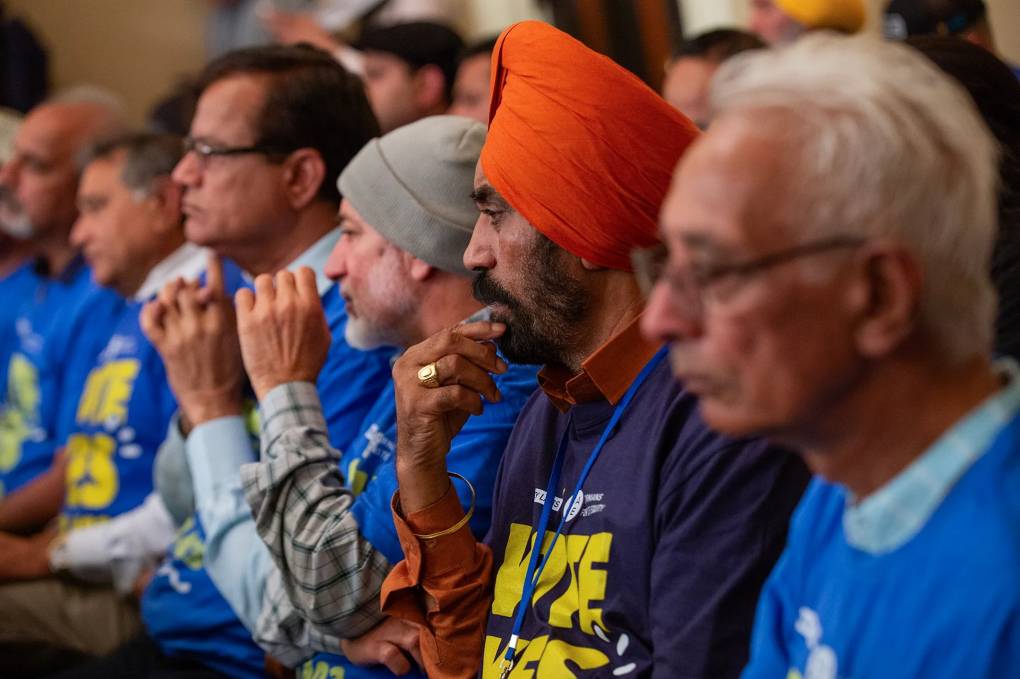
"caption": "People listen to testimony at the Assembly Judiciary Hearing for SB 403 at the state Capitol in Sacramento on July 5, 2023.",
"description": null,
"title": "CalMattersCaste01",
"credit": "Semantha Norris/CalMatters",
"status": "inherit",
"altTag": "A row of men with tan skin are all wearing blue T-shirts as they sit inside California's Assembly Judiciary Hearing. One man wears an orange headwrap, another a tan beanie. All are seated and looking forward as if listening to a speaker off camera.",
"isLoading": false,
"fetchFailed": false
},
"news_11954999": {
"type": "attachments",
"id": "news_11954999",
"meta": {
"index": "attachments_1716263798",
"site": "news",
"id": "11954999",
"found": true
},
"parent": 0,
"imgSizes": {
"twentyfourteen-full-width": {
"file": "https://ww2.kqed.org/app/uploads/sites/10/2023/07/01_RS66397_230607-salmon-closures-03-ksA-KQED-1038x576.jpg",
"width": 1038,
"mimeType": "image/jpeg",
"height": 576
},
"thumbnail": {
"file": "https://ww2.kqed.org/app/uploads/sites/10/2023/07/01_RS66397_230607-salmon-closures-03-ksA-KQED-160x106.jpg",
"width": 160,
"mimeType": "image/jpeg",
"height": 106
},
"post-thumbnail": {
"file": "https://ww2.kqed.org/app/uploads/sites/10/2023/07/01_RS66397_230607-salmon-closures-03-ksA-KQED-672x372.jpg",
"width": 672,
"mimeType": "image/jpeg",
"height": 372
},
"kqedFullSize": {
"file": "https://ww2.kqed.org/app/uploads/sites/10/2023/07/01_RS66397_230607-salmon-closures-03-ksA-KQED.jpg",
"width": 2000,
"height": 1330
},
"large": {
"file": "https://ww2.kqed.org/app/uploads/sites/10/2023/07/01_RS66397_230607-salmon-closures-03-ksA-KQED-1020x678.jpg",
"width": 1020,
"mimeType": "image/jpeg",
"height": 678
},
"1536x1536": {
"file": "https://ww2.kqed.org/app/uploads/sites/10/2023/07/01_RS66397_230607-salmon-closures-03-ksA-KQED-1536x1021.jpg",
"width": 1536,
"mimeType": "image/jpeg",
"height": 1021
},
"full-width": {
"file": "https://ww2.kqed.org/app/uploads/sites/10/2023/07/01_RS66397_230607-salmon-closures-03-ksA-KQED-1920x1277.jpg",
"width": 1920,
"mimeType": "image/jpeg",
"height": 1277
},
"medium": {
"file": "https://ww2.kqed.org/app/uploads/sites/10/2023/07/01_RS66397_230607-salmon-closures-03-ksA-KQED-800x532.jpg",
"width": 800,
"mimeType": "image/jpeg",
"height": 532
}
},
"publishDate": 1688578905,
"modified": 1688591051,
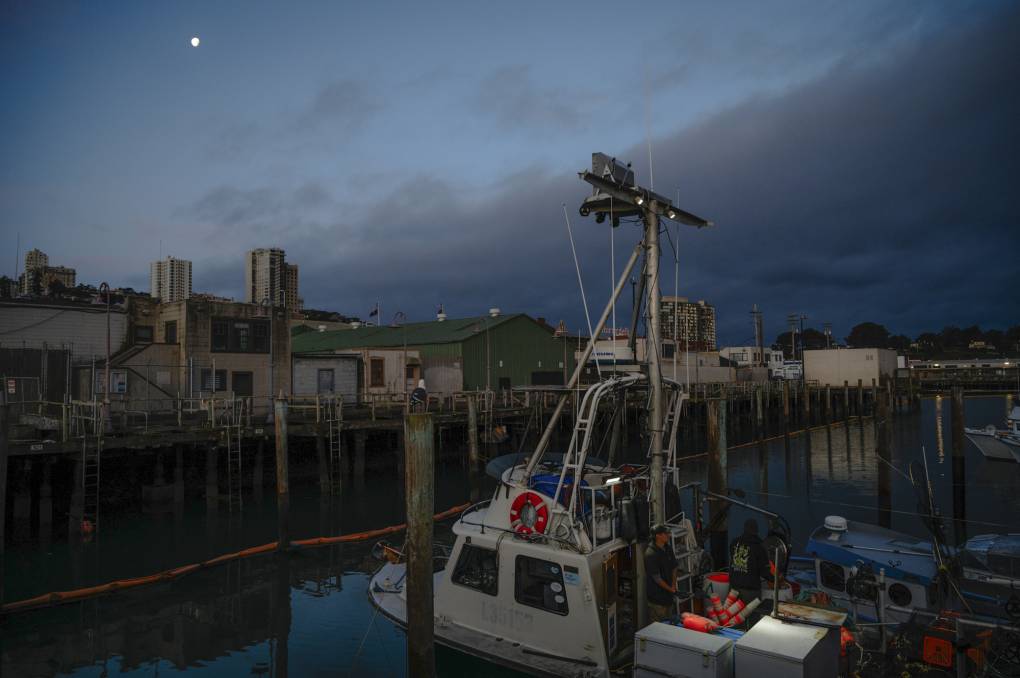
"caption": "The moon sets over Fisherman's Wharf in San Francisco as commercial salmon fisher Matt Juanes' boat, the FV Plumeria, sits docked on June 7, 2023. With California's salmon season shut down this year, Juanes is pivoting to try fishing for shrimp for the first time.",
"description": null,
"title": "01_RS66397_230607-salmon closures-03-ksA-KQED",
"credit": "Kori Suzuki/KQED",
"status": "inherit",
"altTag": "The moon sets as people work on a boat in a harbor in the early morning light.",
"isLoading": false,
"fetchFailed": false
},
"news_11955022": {
"type": "attachments",
"id": "news_11955022",
"meta": {
"index": "attachments_1716263798",
"site": "news",
"id": "11955022",
"found": true
},
"parent": 0,
"imgSizes": {
"twentyfourteen-full-width": {
"file": "https://ww2.kqed.org/app/uploads/sites/10/2023/07/SummerCamps01-1-1038x576.jpg",
"width": 1038,
"mimeType": "image/jpeg",
"height": 576
},
"thumbnail": {
"file": "https://ww2.kqed.org/app/uploads/sites/10/2023/07/SummerCamps01-1-160x106.jpg",
"width": 160,
"mimeType": "image/jpeg",
"height": 106
},
"post-thumbnail": {
"file": "https://ww2.kqed.org/app/uploads/sites/10/2023/07/SummerCamps01-1-672x372.jpg",
"width": 672,
"mimeType": "image/jpeg",
"height": 372
},
"kqedFullSize": {
"file": "https://ww2.kqed.org/app/uploads/sites/10/2023/07/SummerCamps01-1.jpg",
"width": 1920,
"height": 1268
},
"large": {
"file": "https://ww2.kqed.org/app/uploads/sites/10/2023/07/SummerCamps01-1-1020x674.jpg",
"width": 1020,
"mimeType": "image/jpeg",
"height": 674
},
"1536x1536": {
"file": "https://ww2.kqed.org/app/uploads/sites/10/2023/07/SummerCamps01-1-1536x1014.jpg",
"width": 1536,
"mimeType": "image/jpeg",
"height": 1014
},
"medium": {
"file": "https://ww2.kqed.org/app/uploads/sites/10/2023/07/SummerCamps01-1-800x528.jpg",
"width": 800,
"mimeType": "image/jpeg",
"height": 528
}
},
"publishDate": 1688585838,
"modified": 1688588048,
"caption": "A group of young students participate in a science experiment learning about gases at a UCSF summer camp on Tuesday, Aug. 16, 2011, in San Francisco.",
"description": null,
"title": "summer-camp-near-me",
"credit": "Michael Macor/The San Francisco Chronicle via Getty Images",
"status": "inherit",
"altTag": "A group of four elementary school-aged girls are wearing white lab coats, clear goggles as they participate in a science experiment with styrofoam cups, balloons and air. A box of Crayola crayons are scattered on the table. The little girls' lab papers are also on the table.",
"isLoading": false,
"fetchFailed": false
},
"news_11954914": {
"type": "attachments",
"id": "news_11954914",
"meta": {
"index": "attachments_1716263798",
"site": "news",
"id": "11954914",
"found": true
},
"parent": 0,
"imgSizes": {
"twentyfourteen-full-width": {
"file": "https://ww2.kqed.org/app/uploads/sites/10/2023/07/CalMattersUnhousedLA01-1038x576.jpg",
"width": 1038,
"mimeType": "image/jpeg",
"height": 576
},
"thumbnail": {
"file": "https://ww2.kqed.org/app/uploads/sites/10/2023/07/CalMattersUnhousedLA01-160x107.jpg",
"width": 160,
"mimeType": "image/jpeg",
"height": 107
},
"post-thumbnail": {
"file": "https://ww2.kqed.org/app/uploads/sites/10/2023/07/CalMattersUnhousedLA01-672x372.jpg",
"width": 672,
"mimeType": "image/jpeg",
"height": 372
},
"kqedFullSize": {
"file": "https://ww2.kqed.org/app/uploads/sites/10/2023/07/CalMattersUnhousedLA01.jpg",
"width": 1920,
"height": 1280
},
"large": {
"file": "https://ww2.kqed.org/app/uploads/sites/10/2023/07/CalMattersUnhousedLA01-1020x680.jpg",
"width": 1020,
"mimeType": "image/jpeg",
"height": 680
},
"1536x1536": {
"file": "https://ww2.kqed.org/app/uploads/sites/10/2023/07/CalMattersUnhousedLA01-1536x1024.jpg",
"width": 1536,
"mimeType": "image/jpeg",
"height": 1024
},
"medium": {
"file": "https://ww2.kqed.org/app/uploads/sites/10/2023/07/CalMattersUnhousedLA01-800x533.jpg",
"width": 800,
"mimeType": "image/jpeg",
"height": 533
}
},
"publishDate": 1688402998,
"modified": 1688411064,
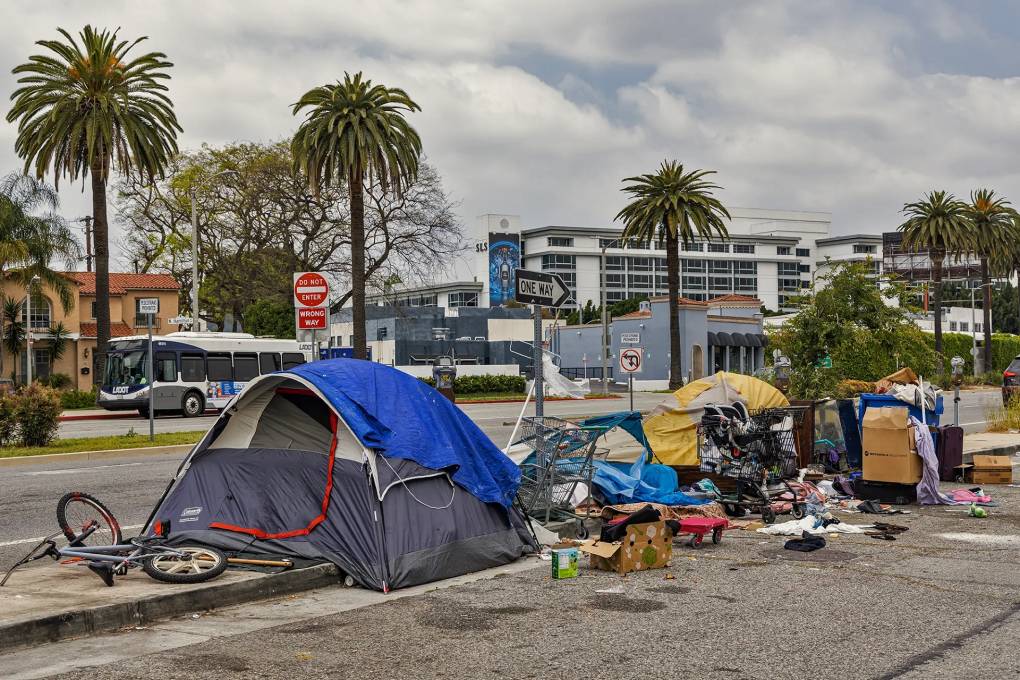
"caption": "The city of Los Angeles relocated a large homeless camp in the Beverly Grove area, next to Beverly Hills, on May 11, 2023.",
"description": null,
"title": "CalMattersUnhousedLA01",
"credit": "Ted Soqui/SIPA USA via Reuters",
"status": "inherit",
"altTag": "Tents line a paved road near a sidewalk. A bicycle is on its side in front of a gray and navy tent with a blue tarp covering its roof. Scattered belongings and cardboard boxes cover the spaces between each tent. A city bus is seen driving in the background.",
"isLoading": false,
"fetchFailed": false
},
"news_11954468": {
"type": "attachments",
"id": "news_11954468",
"meta": {
"index": "attachments_1716263798",
"site": "news",
"id": "11954468",
"found": true
},
"parent": 0,
"imgSizes": {
"twentyfourteen-full-width": {
"file": "https://ww2.kqed.org/app/uploads/sites/10/2023/06/CalMattersTexas02-1038x576.jpg",
"width": 1038,
"mimeType": "image/jpeg",
"height": 576
},
"thumbnail": {
"file": "https://ww2.kqed.org/app/uploads/sites/10/2023/06/CalMattersTexas02-160x107.jpg",
"width": 160,
"mimeType": "image/jpeg",
"height": 107
},
"post-thumbnail": {
"file": "https://ww2.kqed.org/app/uploads/sites/10/2023/06/CalMattersTexas02-672x372.jpg",
"width": 672,
"mimeType": "image/jpeg",
"height": 372
},
"kqedFullSize": {
"file": "https://ww2.kqed.org/app/uploads/sites/10/2023/06/CalMattersTexas02.jpg",
"width": 1920,
"height": 1279
},
"large": {
"file": "https://ww2.kqed.org/app/uploads/sites/10/2023/06/CalMattersTexas02-1020x679.jpg",
"width": 1020,
"mimeType": "image/jpeg",
"height": 679
},
"1536x1536": {
"file": "https://ww2.kqed.org/app/uploads/sites/10/2023/06/CalMattersTexas02-1536x1023.jpg",
"width": 1536,
"mimeType": "image/jpeg",
"height": 1023
},
"medium": {
"file": "https://ww2.kqed.org/app/uploads/sites/10/2023/06/CalMattersTexas02-800x533.jpg",
"width": 800,
"mimeType": "image/jpeg",
"height": 533
}
},
"publishDate": 1687996491,
"modified": 1687996652,
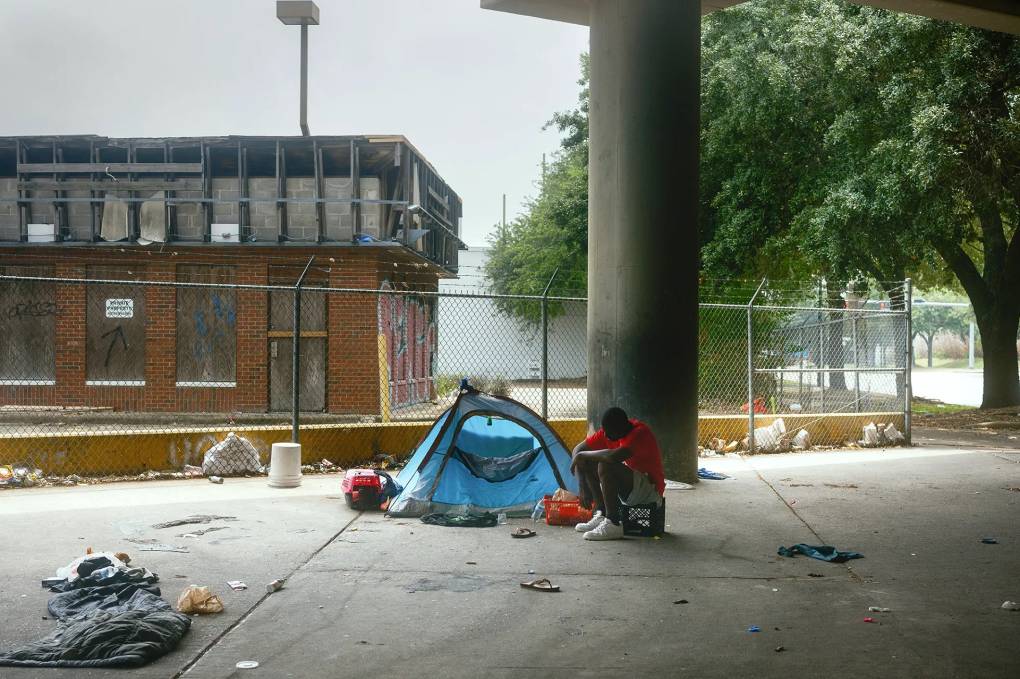
"caption": "A small homeless encampment in Houston, Texas on May 5, 2023.",
"description": null,
"title": "CalMattersTexas02",
"credit": "Jordan Vonderhaar/CalMatters",
"status": "inherit",
"altTag": "A man sits on a milk crate outside of his small, blue tent. A barbed-wire fence surrounds a building in the background. He appears to have set up a small camp under an overpass. A few trees are pictured in the background as well. The sky is gray. Trash is littered around his area.",
"isLoading": false,
"fetchFailed": false
},
"news_11954146": {
"type": "attachments",
"id": "news_11954146",
"meta": {
"index": "attachments_1716263798",
"site": "news",
"id": "11954146",
"found": true
},
"parent": 0,
"imgSizes": {
"twentyfourteen-full-width": {
"file": "https://ww2.kqed.org/app/uploads/sites/10/2023/06/062623-CALIFORNIA-ARMENIA-01-KQED-1038x576.jpg",
"width": 1038,
"mimeType": "image/jpeg",
"height": 576
},
"thumbnail": {
"file": "https://ww2.kqed.org/app/uploads/sites/10/2023/06/062623-CALIFORNIA-ARMENIA-01-KQED-160x107.jpg",
"width": 160,
"mimeType": "image/jpeg",
"height": 107
},
"post-thumbnail": {
"file": "https://ww2.kqed.org/app/uploads/sites/10/2023/06/062623-CALIFORNIA-ARMENIA-01-KQED-672x372.jpg",
"width": 672,
"mimeType": "image/jpeg",
"height": 372
},
"kqedFullSize": {
"file": "https://ww2.kqed.org/app/uploads/sites/10/2023/06/062623-CALIFORNIA-ARMENIA-01-KQED.jpg",
"width": 2000,
"height": 1333
},
"large": {
"file": "https://ww2.kqed.org/app/uploads/sites/10/2023/06/062623-CALIFORNIA-ARMENIA-01-KQED-1020x680.jpg",
"width": 1020,
"mimeType": "image/jpeg",
"height": 680
},
"1536x1536": {
"file": "https://ww2.kqed.org/app/uploads/sites/10/2023/06/062623-CALIFORNIA-ARMENIA-01-KQED-1536x1024.jpg",
"width": 1536,
"mimeType": "image/jpeg",
"height": 1024
},
"full-width": {
"file": "https://ww2.kqed.org/app/uploads/sites/10/2023/06/062623-CALIFORNIA-ARMENIA-01-KQED-1920x1280.jpg",
"width": 1920,
"mimeType": "image/jpeg",
"height": 1280
},
"medium": {
"file": "https://ww2.kqed.org/app/uploads/sites/10/2023/06/062623-CALIFORNIA-ARMENIA-01-KQED-800x533.jpg",
"width": 800,
"mimeType": "image/jpeg",
"height": 533
}
},
"publishDate": 1687821468,
"modified": 1687890736,
"caption": "The sun rises over Yerevan, Armenia, with Mount Ararat in the distance, on Feb. 14, 2023. The city has sent thousands of immigrants to LA for generations. But now some of their children are leaving California and moving to Armenia.",
"description": null,
"title": "062623-CALIFORNIA ARMENIA-01-KQED",
"credit": "Courtesy of Levi Bridges",
"status": "inherit",
"altTag": "A city scape with mountains rising in the background.",
"isLoading": false,
"fetchFailed": false
},
"news_11954230": {
"type": "attachments",
"id": "news_11954230",
"meta": {
"index": "attachments_1716263798",
"site": "news",
"id": "11954230",
"found": true
},
"title": "California Budget Fast Food Workers",
"publishDate": 1687894689,
"status": "inherit",
"parent": 0,
"modified": 1726618425,
"caption": "Fast food workers and their supporters march past the state Capitol in Sacramento, Tuesday, Aug. 16, 2022. Gov. Gavin Newsom and legislative leaders have agreed to restore funding to the Industrial Welfare Commission, which has the power to regulate wages, hours and working conditions in California. Business groups oppose restoring the commission. A law that would create a similar commission to regulate the fast food industry passed last year but has been put on hold pending the outcome of a 2024 referendum.",
"credit": "AP Photo/Rich Pedroncelli",
"altTag": "A large group of protesters wearing red T-shirts march around California's Capitol building in Sacramento. Many are carrying yellow signs with red writing. One sign reads, \"Which Side Are You On? Pass AB257.\"",
"description": null,
"imgSizes": {
"medium": {
"file": "https://cdn.kqed.org/wp-content/uploads/sites/10/2023/06/AP23177834356485-800x533.jpg",
"width": 800,
"height": 533,
"mimeType": "image/jpeg"
},
"large": {
"file": "https://cdn.kqed.org/wp-content/uploads/sites/10/2023/06/AP23177834356485-1020x680.jpg",
"width": 1020,
"height": 680,
"mimeType": "image/jpeg"
},
"thumbnail": {
"file": "https://cdn.kqed.org/wp-content/uploads/sites/10/2023/06/AP23177834356485-160x107.jpg",
"width": 160,
"height": 107,
"mimeType": "image/jpeg"
},
"1536x1536": {
"file": "https://cdn.kqed.org/wp-content/uploads/sites/10/2023/06/AP23177834356485-1536x1024.jpg",
"width": 1536,
"height": 1024,
"mimeType": "image/jpeg"
},
"2048x2048": {
"file": "https://cdn.kqed.org/wp-content/uploads/sites/10/2023/06/AP23177834356485-2048x1365.jpg",
"width": 2048,
"height": 1365,
"mimeType": "image/jpeg"
},
"post-thumbnail": {
"file": "https://cdn.kqed.org/wp-content/uploads/sites/10/2023/06/AP23177834356485-672x372.jpg",
"width": 672,
"height": 372,
"mimeType": "image/jpeg"
},
"twentyfourteen-full-width": {
"file": "https://cdn.kqed.org/wp-content/uploads/sites/10/2023/06/AP23177834356485-1038x576.jpg",
"width": 1038,
"height": 576,
"mimeType": "image/jpeg"
},
"full-width": {
"file": "https://cdn.kqed.org/wp-content/uploads/sites/10/2023/06/AP23177834356485-1920x1280.jpg",
"width": 1920,
"height": 1280,
"mimeType": "image/jpeg"
},
"kqedFullSize": {
"file": "https://cdn.kqed.org/wp-content/uploads/sites/10/2023/06/AP23177834356485-scaled.jpg",
"width": 2560,
"height": 1706
}
},
"isLoading": false,
"fetchFailed": false
},
"news_11954080": {
"type": "attachments",
"id": "news_11954080",
"meta": {
"index": "attachments_1716263798",
"site": "news",
"id": "11954080",
"found": true
},
"parent": 0,
"imgSizes": {
"twentyfourteen-full-width": {
"file": "https://ww2.kqed.org/app/uploads/sites/10/2023/06/230626-CALIFORNIA-PRISONERS-AP-RP-KQED-1038x576.jpg",
"width": 1038,
"mimeType": "image/jpeg",
"height": 576
},
"thumbnail": {
"file": "https://ww2.kqed.org/app/uploads/sites/10/2023/06/230626-CALIFORNIA-PRISONERS-AP-RP-KQED-160x115.jpg",
"width": 160,
"mimeType": "image/jpeg",
"height": 115
},
"post-thumbnail": {
"file": "https://ww2.kqed.org/app/uploads/sites/10/2023/06/230626-CALIFORNIA-PRISONERS-AP-RP-KQED-672x372.jpg",
"width": 672,
"mimeType": "image/jpeg",
"height": 372
},
"kqedFullSize": {
"file": "https://ww2.kqed.org/app/uploads/sites/10/2023/06/230626-CALIFORNIA-PRISONERS-AP-RP-KQED.jpg",
"width": 2000,
"height": 1442
},
"large": {
"file": "https://ww2.kqed.org/app/uploads/sites/10/2023/06/230626-CALIFORNIA-PRISONERS-AP-RP-KQED-1020x735.jpg",
"width": 1020,
"mimeType": "image/jpeg",
"height": 735
},
"1536x1536": {
"file": "https://ww2.kqed.org/app/uploads/sites/10/2023/06/230626-CALIFORNIA-PRISONERS-AP-RP-KQED-1536x1107.jpg",
"width": 1536,
"mimeType": "image/jpeg",
"height": 1107
},
"full-width": {
"file": "https://ww2.kqed.org/app/uploads/sites/10/2023/06/230626-CALIFORNIA-PRISONERS-AP-RP-KQED-1920x1384.jpg",
"width": 1920,
"mimeType": "image/jpeg",
"height": 1384
},
"medium": {
"file": "https://ww2.kqed.org/app/uploads/sites/10/2023/06/230626-CALIFORNIA-PRISONERS-AP-RP-KQED-800x577.jpg",
"width": 800,
"mimeType": "image/jpeg",
"height": 577
}
},
"publishDate": 1687803767,
"modified": 1687803893,
"caption": "Incarcerated individuals stand in a recreation yard at the Deuel Vocational Institution in Tracy on Jan. 12, 2012.",
"description": null,
"title": "New Laws California",
"credit": "Rich Pedroncelli/AP Photo",
"status": "inherit",
"altTag": "Men dressed in blue long-sleeved shirts and bright orange pants stand and walk in an open outdoor area surrounded by fencing and barbed wire.",
"isLoading": false,
"fetchFailed": false
},
"news_11953900": {
"type": "attachments",
"id": "news_11953900",
"meta": {
"index": "attachments_1716263798",
"site": "news",
"id": "11953900",
"found": true
},
"parent": 0,
"imgSizes": {
"twentyfourteen-full-width": {
"file": "https://ww2.kqed.org/app/uploads/sites/10/2023/06/ChildBridesCM01-1038x576.jpg",
"width": 1038,
"mimeType": "image/jpeg",
"height": 576
},
"thumbnail": {
"file": "https://ww2.kqed.org/app/uploads/sites/10/2023/06/ChildBridesCM01-160x107.jpg",
"width": 160,
"mimeType": "image/jpeg",
"height": 107
},
"post-thumbnail": {
"file": "https://ww2.kqed.org/app/uploads/sites/10/2023/06/ChildBridesCM01-672x372.jpg",
"width": 672,
"mimeType": "image/jpeg",
"height": 372
},
"kqedFullSize": {
"file": "https://ww2.kqed.org/app/uploads/sites/10/2023/06/ChildBridesCM01.jpg",
"width": 1920,
"height": 1279
},
"large": {
"file": "https://ww2.kqed.org/app/uploads/sites/10/2023/06/ChildBridesCM01-1020x679.jpg",
"width": 1020,
"mimeType": "image/jpeg",
"height": 679
},
"1536x1536": {
"file": "https://ww2.kqed.org/app/uploads/sites/10/2023/06/ChildBridesCM01-1536x1023.jpg",
"width": 1536,
"mimeType": "image/jpeg",
"height": 1023
},
"medium": {
"file": "https://ww2.kqed.org/app/uploads/sites/10/2023/06/ChildBridesCM01-800x533.jpg",
"width": 800,
"mimeType": "image/jpeg",
"height": 533
}
},
"publishDate": 1687548447,
"modified": 1687548697,
"caption": "Forced and child marriage survivors arrive at a protest, organized to support a ban on child marriage, at the state Capitol in Sacramento on June 22, 2023.",
"description": null,
"title": "ChildBridesCM01",
"credit": "Rahul Lal/CalMatters",
"status": "inherit",
"altTag": "Protestors in white wedding gowns and lacey veils walk toward California's Capitol Building. Some have black tape over their mouths in an X shape. Each individual also wears a red stop sign on their chest that reads, \"Stop Child Marriage in CA.\"",
"isLoading": false,
"fetchFailed": false
},
"news_11953253": {
"type": "attachments",
"id": "news_11953253",
"meta": {
"index": "attachments_1716263798",
"site": "news",
"id": "11953253",
"found": true
},
"parent": 0,
"imgSizes": {
"twentyfourteen-full-width": {
"file": "https://ww2.kqed.org/app/uploads/sites/10/2023/06/061623-UNHOUSED-LOS-ANGELES-AP-DD-KQED-1038x576.jpg",
"width": 1038,
"mimeType": "image/jpeg",
"height": 576
},
"thumbnail": {
"file": "https://ww2.kqed.org/app/uploads/sites/10/2023/06/061623-UNHOUSED-LOS-ANGELES-AP-DD-KQED-160x107.jpg",
"width": 160,
"mimeType": "image/jpeg",
"height": 107
},
"post-thumbnail": {
"file": "https://ww2.kqed.org/app/uploads/sites/10/2023/06/061623-UNHOUSED-LOS-ANGELES-AP-DD-KQED-672x372.jpg",
"width": 672,
"mimeType": "image/jpeg",
"height": 372
},
"kqedFullSize": {
"file": "https://ww2.kqed.org/app/uploads/sites/10/2023/06/061623-UNHOUSED-LOS-ANGELES-AP-DD-KQED.jpg",
"width": 2000,
"height": 1333
},
"large": {
"file": "https://ww2.kqed.org/app/uploads/sites/10/2023/06/061623-UNHOUSED-LOS-ANGELES-AP-DD-KQED-1020x680.jpg",
"width": 1020,
"mimeType": "image/jpeg",
"height": 680
},
"1536x1536": {
"file": "https://ww2.kqed.org/app/uploads/sites/10/2023/06/061623-UNHOUSED-LOS-ANGELES-AP-DD-KQED-1536x1024.jpg",
"width": 1536,
"mimeType": "image/jpeg",
"height": 1024
},
"full-width": {
"file": "https://ww2.kqed.org/app/uploads/sites/10/2023/06/061623-UNHOUSED-LOS-ANGELES-AP-DD-KQED-1920x1280.jpg",
"width": 1920,
"mimeType": "image/jpeg",
"height": 1280
},
"medium": {
"file": "https://ww2.kqed.org/app/uploads/sites/10/2023/06/061623-UNHOUSED-LOS-ANGELES-AP-DD-KQED-800x533.jpg",
"width": 800,
"mimeType": "image/jpeg",
"height": 533
}
},
"publishDate": 1686951237,
"modified": 1686958318,
"caption": "An unhoused person sits outside the entrance to the 7th Street/Metro Center subway station in downtown Los Angeles on March 19, 2023.",
"description": null,
"title": "Homeless Encampments",
"credit": "Damian Dovarganes/AP",
"status": "inherit",
"altTag": "An unhoused person sits wrapped up in a blanket in front of a large metro map as another person wearing a pink poncho passes in front of them.",
"isLoading": false,
"fetchFailed": false
},
"news_11953366": {
"type": "attachments",
"id": "news_11953366",
"meta": {
"index": "attachments_1716263798",
"site": "news",
"id": "11953366",
"found": true
},
"parent": 11953365,
"imgSizes": {
"twentyfourteen-full-width": {
"file": "https://ww2.kqed.org/app/uploads/sites/10/2023/06/GettyImages-1258830044-1024x576.jpg",
"width": 1024,
"mimeType": "image/jpeg",
"height": 576
},
"thumbnail": {
"file": "https://ww2.kqed.org/app/uploads/sites/10/2023/06/GettyImages-1258830044-160x107.jpg",
"width": 160,
"mimeType": "image/jpeg",
"height": 107
},
"post-thumbnail": {
"file": "https://ww2.kqed.org/app/uploads/sites/10/2023/06/GettyImages-1258830044-672x372.jpg",
"width": 672,
"mimeType": "image/jpeg",
"height": 372
},
"kqedFullSize": {
"file": "https://ww2.kqed.org/app/uploads/sites/10/2023/06/GettyImages-1258830044.jpg",
"width": 1024,
"height": 683
},
"large": {
"file": "https://ww2.kqed.org/app/uploads/sites/10/2023/06/GettyImages-1258830044-1020x680.jpg",
"width": 1020,
"mimeType": "image/jpeg",
"height": 680
},
"medium": {
"file": "https://ww2.kqed.org/app/uploads/sites/10/2023/06/GettyImages-1258830044-800x534.jpg",
"width": 800,
"mimeType": "image/jpeg",
"height": 534
}
},
"publishDate": 1687208212,
"modified": 1687221553,
"caption": "President Joe Biden is greeted by Gov. Gavin Newsom upon arrival at Moffett Federal airfield in Mountain View on June 19, 2023, for a three-day trip to California.",
"description": null,
"title": "US-POLITICS-BIDEN",
"credit": "Andrew Caballero-Reynolds/AFP via Getty Images",
"status": "inherit",
"altTag": "Two white men in blue suits greet and joke on an airfield with an airplane and a car in the backdrop.",
"isLoading": false,
"fetchFailed": false
},
"news_11952793": {
"type": "attachments",
"id": "news_11952793",
"meta": {
"index": "attachments_1716263798",
"site": "news",
"id": "11952793",
"found": true
},
"title": "California Reparations Task Force meets to hear public input on reparations at the California Science Center in Los Angeles on Sept. 22, 2022.",
"publishDate": 1686590644,
"status": "inherit",
"parent": 12046328,
"modified": 1751065072,
"caption": "Long-time Los Angeles resident Walter Foster, 80, holds up a sign as the Reparations Task Force listens to public input at the California Science Center in Los Angeles on Sept. 22, 2022.",
"credit": "Carolyn Cole/Los Angeles Times via Getty Images",
"altTag": "A man wearing a face mask holds a sign that reads \"World Leaders! Reparations for Slavery Now!\" in a crowd of people.",
"description": null,
"imgSizes": {
"medium": {
"file": "https://cdn.kqed.org/wp-content/uploads/sites/10/2023/06/230612-Reparations-Getty-1243475910-KQED-800x533.jpg",
"width": 800,
"height": 533,
"mimeType": "image/jpeg"
},
"large": {
"file": "https://cdn.kqed.org/wp-content/uploads/sites/10/2023/06/230612-Reparations-Getty-1243475910-KQED-1020x680.jpg",
"width": 1020,
"height": 680,
"mimeType": "image/jpeg"
},
"thumbnail": {
"file": "https://cdn.kqed.org/wp-content/uploads/sites/10/2023/06/230612-Reparations-Getty-1243475910-KQED-160x107.jpg",
"width": 160,
"height": 107,
"mimeType": "image/jpeg"
},
"1536x1536": {
"file": "https://cdn.kqed.org/wp-content/uploads/sites/10/2023/06/230612-Reparations-Getty-1243475910-KQED-1536x1024.jpg",
"width": 1536,
"height": 1024,
"mimeType": "image/jpeg"
},
"post-thumbnail": {
"file": "https://cdn.kqed.org/wp-content/uploads/sites/10/2023/06/230612-Reparations-Getty-1243475910-KQED-672x372.jpg",
"width": 672,
"height": 372,
"mimeType": "image/jpeg"
},
"twentyfourteen-full-width": {
"file": "https://cdn.kqed.org/wp-content/uploads/sites/10/2023/06/230612-Reparations-Getty-1243475910-KQED-1038x576.jpg",
"width": 1038,
"height": 576,
"mimeType": "image/jpeg"
},
"kqedFullSize": {
"file": "https://cdn.kqed.org/wp-content/uploads/sites/10/2023/06/230612-Reparations-Getty-1243475910-KQED.jpg",
"width": 1920,
"height": 1280
}
},
"isLoading": false,
"fetchFailed": false
}
},
"audioPlayerReducer": {
"postId": "stream_live",
"isPaused": true,
"isPlaying": false,
"pfsActive": false,
"pledgeModalIsOpen": true,
"playerDrawerIsOpen": false,
"liveAudioPlayStartedAt": 0,
"liveAudioPlayContext": ""
},
"authorsReducer": {
"byline_news_11955060": {
"type": "authors",
"id": "byline_news_11955060",
"meta": {
"override": true
},
"slug": "byline_news_11955060",
"name": "\u003ca href=\"https://calmatters.org/author/sameea-kamal//\">Sameea Kamal\u003c/a>",
"isLoading": false
},
"byline_news_11954645": {
"type": "authors",
"id": "byline_news_11954645",
"meta": {
"override": true
},
"slug": "byline_news_11954645",
"name": "\u003ca href=\"https://twitter.com/koritsuzuki\">Kori Suzuki\u003c/a>",
"isLoading": false
},
"byline_news_11954995": {
"type": "authors",
"id": "byline_news_11954995",
"meta": {
"override": true
},
"slug": "byline_news_11954995",
"name": "\u003ca href=\"https://www.kqed.org/author/nkhan\">Nisa Khan\u003c/a> and \u003ca href=\"https://www.kqed.org/author/gwon\">Grace Won\u003c/a>",
"isLoading": false
},
"byline_news_11954909": {
"type": "authors",
"id": "byline_news_11954909",
"meta": {
"override": true
},
"slug": "byline_news_11954909",
"name": "\u003ca href=\"https://calmatters.org/author/marisa-kendall/\">Marisa Kendall\u003c/a>",
"isLoading": false
},
"byline_news_11954379": {
"type": "authors",
"id": "byline_news_11954379",
"meta": {
"override": true
},
"slug": "byline_news_11954379",
"name": "\u003ca href=\"https://calmatters.org/author/marisa-kendall/\">Marisa Kendall\u003c/a>",
"isLoading": false
},
"byline_news_11954142": {
"type": "authors",
"id": "byline_news_11954142",
"meta": {
"override": true
},
"slug": "byline_news_11954142",
"name": "\u003ca href=\"https://www.levibridges.com/\">Levi Bridges\u003c/a>",
"isLoading": false
},
"byline_news_11954205": {
"type": "authors",
"id": "byline_news_11954205",
"meta": {
"override": true
},
"slug": "byline_news_11954205",
"name": "\u003ca href=\"https://twitter.com/adambeam\">Adam Beam\u003c/a>\u003cbr>The Associated Press",
"isLoading": false
},
"byline_news_11954055": {
"type": "authors",
"id": "byline_news_11954055",
"meta": {
"override": true
},
"slug": "byline_news_11954055",
"name": "\u003ca href=\"https://calmatters.org/author/anabelsosa/\">Anabel Sosa\u003c/a>",
"isLoading": false
},
"byline_news_11953897": {
"type": "authors",
"id": "byline_news_11953897",
"meta": {
"override": true
},
"slug": "byline_news_11953897",
"name": "\u003ca href=\"https://calmatters.org/author/ryajetha/\">Rya Jetha\u003c/a>",
"isLoading": false
},
"byline_news_11953365": {
"type": "authors",
"id": "byline_news_11953365",
"meta": {
"override": true
},
"slug": "byline_news_11953365",
"name": "Josh Boak and Zeke Miller\u003cbr>The Associated Press",
"isLoading": false
},
"afinney": {
"type": "authors",
"id": "11772",
"meta": {
"index": "authors_1716337520",
"id": "11772",
"found": true
},
"name": "Annelise Finney",
"firstName": "Annelise",
"lastName": "Finney",
"slug": "afinney",
"email": "afinney@kqed.org",
"display_author_email": true,
"staff_mastheads": [
"news"
],
"title": "Reporter",
"bio": "Annelise reports on reparations in California and East Bay politics. She co-produced the Sunday Music Drop, a limited-term radio series featuring Bay Area musicians that aired between Sept 2022 and Oct 2024. She joined KQED in 2021 as a general assignment reporter and is an alumna of KALW's Audio Academy. She was born and raised in the East Bay. She is currently away from KQED completing a year-long reporting project in Berlin, Germany as a Alexander Von Humboldt German Chancellor Fellow.",
"avatar": "https://secure.gravatar.com/avatar/5fded66cae47704cdfc5021cde0f3aa4?s=600&d=blank&r=g",
"twitter": null,
"facebook": null,
"instagram": null,
"linkedin": null,
"sites": [
{
"site": "news",
"roles": [
"editor"
]
},
{
"site": "liveblog",
"roles": [
"author"
]
}
],
"headData": {
"title": "Annelise Finney | KQED",
"description": "Reporter",
"ogImgSrc": "https://secure.gravatar.com/avatar/5fded66cae47704cdfc5021cde0f3aa4?s=600&d=blank&r=g",
"twImgSrc": "https://secure.gravatar.com/avatar/5fded66cae47704cdfc5021cde0f3aa4?s=600&d=blank&r=g"
},
"isLoading": false,
"link": "/author/afinney"
},
"sjohnson": {
"type": "authors",
"id": "11840",
"meta": {
"index": "authors_1716337520",
"id": "11840",
"found": true
},
"name": "Sydney Johnson",
"firstName": "Sydney",
"lastName": "Johnson",
"slug": "sjohnson",
"email": "sjohnson@kqed.org",
"display_author_email": false,
"staff_mastheads": [
"news"
],
"title": "KQED Reporter",
"bio": "Sydney Johnson is a general assignment reporter at KQED. She previously reported on public health and city government at the San Francisco Examiner, and before that, she covered statewide education policy for EdSource. Her reporting has won multiple local, state and national awards. Sydney is a graduate of the University of California, Berkeley and lives in San Francisco.",
"avatar": "https://secure.gravatar.com/avatar/97855f2719b72ad6190b7c535fe642c8?s=600&d=blank&r=g",
"twitter": "sydneyfjohnson",
"facebook": null,
"instagram": null,
"linkedin": null,
"sites": [
{
"site": "news",
"roles": [
"editor"
]
}
],
"headData": {
"title": "Sydney Johnson | KQED",
"description": "KQED Reporter",
"ogImgSrc": "https://secure.gravatar.com/avatar/97855f2719b72ad6190b7c535fe642c8?s=600&d=blank&r=g",
"twImgSrc": "https://secure.gravatar.com/avatar/97855f2719b72ad6190b7c535fe642c8?s=600&d=blank&r=g"
},
"isLoading": false,
"link": "/author/sjohnson"
}
},
"pagesReducer": {
"news_tag_california": {
"type": "terms",
"id": "news_18538",
"meta": {
"index": "terms_1716263798",
"site": "news",
"id": "18538",
"score": 6.8457103
},
"featImg": null,
"name": "California",
"description": null,
"taxonomy": "tag",
"headData": {
"twImgId": null,
"twTitle": null,
"ogTitle": null,
"ogImgId": null,
"twDescription": null,
"description": null,
"title": "California Archives | KQED News",
"ogDescription": null
},
"ttid": 31,
"slug": "california",
"isLoading": false,
"title": "California",
"pageMeta": {
"site": "news",
"WpPageTemplate": "page-topic-editorial",
"currentPage": 153
},
"blocks": [
{
"blockName": "kqed/post-list",
"attrs": {
"layout": "cardArticle2",
"query": "posts/news?tag=california",
"seeMore": false,
"paginated": true,
"page": 153
}
},
{
"blockName": "kqed/ad"
}
]
}
},
"pfsSessionReducer": {},
"postsReducer": {
"stream_live": {
"type": "live",
"id": "stream_live",
"audioUrl": "https://streams.kqed.org/kqedradio",
"title": "Live Stream",
"excerpt": "Live Stream information currently unavailable.",
"link": "/radio",
"featImg": "",
"label": {
"name": "KQED Live",
"link": "/"
}
},
"stream_kqedNewscast": {
"type": "posts",
"id": "stream_kqedNewscast",
"audioUrl": "https://www.kqed.org/.stream/anon/radio/RDnews/newscast.mp3?_=1",
"title": "KQED Newscast",
"featImg": "",
"label": {
"name": "88.5 FM",
"link": "/"
}
},
"news_11955060": {
"type": "posts",
"id": "news_11955060",
"meta": {
"index": "posts_1716263798",
"site": "news",
"id": "11955060",
"score": null,
"sort": [
1688671057000
]
},
"guestAuthors": [],
"slug": "california-caste-discrimination-bill-full-assembly-vote",
"title": "California's Caste Discrimination Bill Now Moves to Full Assembly Vote",
"publishDate": 1688671057,
"format": "standard",
"headTitle": "California’s Caste Discrimination Bill Now Moves to Full Assembly Vote | KQED",
"labelTerm": {},
"content": "\u003cp>An effort to ban \u003ca href=\"https://www.kqed.org/news/11952188/california-caste-discrimination\">caste discrimination in California\u003c/a> survived in committee Wednesday, July 5, despite months of opposition organized by groups that alleged the bill would unfairly target South Asians.\u003c/p>\n\u003cp>\u003ca href=\"https://leginfo.legislature.ca.gov/faces/billNavClient.xhtml?bill_id=202320240SB403\">Senate Bill 403\u003c/a>, authored by Fremont Democratic Sen. \u003ca href=\"https://calmatters.org/legislator-tracker/aisha-wahab-1987/\">Aisha Wahab\u003c/a>, would add caste — a centuries-old social hierarchy system that has historically determined what jobs or education people can attain — to the list of protected classes in the state’s civil rights, employment and housing laws, alongside race, gender and sexual orientation.\u003c/p>\n\u003cp>What would be the first law of its kind in the nation has been watered down somewhat, but was approved in a 9-0 vote by the Assembly Judiciary Committee and now goes to the full Assembly. The Senate approved a similar version by a 34-1 vote in May.\u003c/p>\n\u003cp>The bill that passed through the committee today includes amendments added over the weekend that categorize caste as a subset of ancestry — an already protected trait under state anti-discrimination laws. Wahab accepted that amendment, saying it represented a concept of the bill her office “discussed at length weeks ago.”\u003c/p>\n\u003cp>[ad fullwidth]\u003c/p>\n\u003cp>But the senator rejected earlier\u003cstrong> \u003c/strong>suggestions from Assembly Judiciary Chairperson \u003ca href=\"https://calmatters.org/legislator-tracker/brian-maienschein-1969/\">Brian Maienschein\u003c/a>, a San Diego Democrat, to \u003ca href=\"https://calmatters.org/newsletters/whatmatters/2023/06/robert-rivas-new-speaker/#wm-story-1\">remove the word “caste” from the bill\u003c/a> and replace it with “inherited social status.”\u003c/p>\n\u003cp>“SB 403 will end caste discrimination. The definition and protections included in this bill will protect millions,” Wahab said in a statement after the committee’s hearing, which drew around 200 people representing both sides.\u003c/p>\n\u003cp>[pullquote size=\"medium\" align=\"right\" citation=\"Fremont Democratic Sen. Aisha Wahab, the bill’s author\"]‘SB 403 will end caste discrimination. The definition and protections included in this bill will protect millions.’[/pullquote]\u003c/p>\n\u003cp>Supporters said current laws don’t go far enough to protect against caste-based discrimination because it’s difficult to make such claims against an employer or potential landlord who may share the same race or national origin.\u003c/p>\n\u003cp>“\u003ca href=\"https://twitter.com/hashtag/SB403?src=hashtag_click\">SB 403\u003c/a> is a critical bill to make California a just and equitable place for all,” said workplace lawyer Tarina Mand, one of the two witnesses who spoke in support of the bill.\u003c/p>\n\u003cp>After the vote, supporters marched out of the hearing room chanting “SB 403 zindabad,” which translates to “Long live SB 403.” They continued to celebrate outside the Capitol with more chanting, joyful embraces and even a little dancing.\u003c/p>\n\u003cp>Just feet away, opponents also regrouped, but in more somber tones — reflecting on their efforts, and a pledge by some to keep fighting.\u003c/p>\n\u003cp>Opponents — including groups who organized against a similar ordinance in Seattle — said the prevalence of caste in South Asian countries would lead to racial profiling. They oppose any mention of “caste” in the bill.\u003c/p>\n\u003cp>Samir Kalra, managing director of the \u003ca href=\"https://twitter.com/HinduAmerican/status/1676773377460039684?s=20\">Hindu American Foundation\u003c/a>, which organized some of the opposition, said he was disappointed, but that the group plans to continue to try to “educate lawmakers on the issue” before the full Assembly votes on the bill.\u003c/p>\n\u003cp>“We feel it was a step in the right direction but not far enough,” he told CalMatters after the hearing. “We’re disappointed that the committee didn’t remove ‘caste’ entirely from even the clarification of ancestry.”\u003c/p>\n\u003cp>In a concession to critics, Wahab \u003ca href=\"https://calmatters.org/newsletters/whatmatters/2023/06/gavin-newsom-pushback/#wm-story-1\">amended the bill on June 15 to strip out language\u003c/a> that references any South Asian origins of caste, but said that did not change the intent of the legislation.\u003c/p>\n\u003cfigure id=\"attachment_11955063\" class=\"wp-caption aligncenter\" style=\"max-width: 1200px\">\u003cimg loading=\"lazy\" decoding=\"async\" class=\"size-full wp-image-11955063\" src=\"https://ww2.kqed.org/app/uploads/sites/10/2023/07/CalMattersCaste02.jpg\" alt=\"Inside the Assembly Judiciary Committee chambers: There is a California state flag hanging in the background. There are various women in suits and business attire listening to one another. Seats with skinny, black microphones are also seen in the background.\" width=\"1200\" height=\"800\" srcset=\"https://cdn.kqed.org/wp-content/uploads/sites/10/2023/07/CalMattersCaste02.jpg 1200w, https://cdn.kqed.org/wp-content/uploads/sites/10/2023/07/CalMattersCaste02-800x533.jpg 800w, https://cdn.kqed.org/wp-content/uploads/sites/10/2023/07/CalMattersCaste02-1020x680.jpg 1020w, https://cdn.kqed.org/wp-content/uploads/sites/10/2023/07/CalMattersCaste02-160x107.jpg 160w\" sizes=\"(max-width: 1200px) 100vw, 1200px\">\u003cfigcaption class=\"wp-caption-text\">Supporters testify on a caste discrimination bill before the Assembly Judiciary Committee at the state Capitol in Sacramento on July 5, 2023. \u003ccite>(Semantha Norris/CalMatters)\u003c/cite>\u003c/figcaption>\u003c/figure>\n\u003cp>The bill is the \u003ca href=\"https://calmatters.org/politics/2023/06/caste-discrimination-california/\">latest example of international conflict coming to California\u003c/a>, a magnet for immigrants. Due to immigration laws that favor skilled workers, immigrants from India’s lower caste are more recent arrivals — and some are left to escape discrimination, only to confront it in the workplace and social settings here.\u003c/p>\n\u003cp>While caste systems exist in several countries, it’s commonly associated with India, where it was outlawed in 1950 but its legacy remains.\u003c/p>\n\u003cp>But trying to legislate such conflicts is difficult and controversial.\u003c/p>\n\u003cp>There are two South Asians in the Legislature. Democratic Assemblymember \u003ca href=\"https://calmatters.org/legislator-tracker/jasmeet-bains-1985/\">Jasmeet Bains\u003c/a> from Bakersfield signed on as a co-sponsor of the bill.[aside postID=news_11952543 hero='https://ww2.kqed.org/app/uploads/sites/10/2023/06/CalMatters01-1020x679.jpg']Democratic Assemblymember \u003ca href=\"https://calmatters.org/legislator-tracker/ash-kalra-1972/\">Ash Kalra\u003c/a> of San Jose, who is on the committee, hadn’t spoken on the bill — until today. In an emotional testimony at times, he spoke about the divisions he had witnessed and said he understood concerns from constituents, but concluded that the amendments address those.\u003c/p>\n\u003cp>“Ultimately, there are certain things we must do as a state to protect everyone in our state,” he said.\u003c/p>\n\u003cp>Wahab, the first Afghan American in the Legislature, isn’t South Asian, but represents many in her district. Since introducing the bill, she said she has been threatened and she’s now the target of a recall campaign.\u003c/p>\n\u003cp>Assemblymembers \u003ca href=\"https://calmatters.org/legislator-tracker/alex-lee-1995/\">Alex Lee\u003c/a> and \u003ca href=\"https://calmatters.org/legislator-tracker/evan-low-1983/\">Evan Low\u003c/a> represent parts of Silicon Valley, where many tech workers are South Asian and where allegations of caste bias have hit top companies, including Cisco and Google. In a June letter, they suggested pausing the bill for further study. While Low leads the California Asian American and Pacific Islander Legislative Caucus, the group declined to take a position on the matter.\u003c/p>\n\u003cp>\u003c/p>\n",
"blocks": [],
"excerpt": "'SB 403 will end caste discrimination. The definition and protections included in this bill will protect millions,' said Fremont Democratic Sen. Aisha Wahab.",
"status": "publish",
"parent": 0,
"modified": 1721159071,
"stats": {
"hasAudio": false,
"hasVideo": false,
"hasChartOrMap": false,
"iframeSrcs": [],
"hasGoogleForm": false,
"hasGallery": false,
"hasHearkenModule": false,
"hasPolis": false,
"paragraphCount": 24,
"wordCount": 947
},
"headData": {
"title": "California's Caste Discrimination Bill Now Moves to Full Assembly Vote | KQED",
"description": "'SB 403 will end caste discrimination. The definition and protections included in this bill will protect millions,' said Fremont Democratic Sen. Aisha Wahab.",
"ogTitle": "",
"ogDescription": "",
"ogImgId": "",
"twTitle": "",
"twDescription": "",
"twImgId": "",
"schema": {
"@context": "https://schema.org",
"@type": "NewsArticle",
"headline": "California's Caste Discrimination Bill Now Moves to Full Assembly Vote",
"datePublished": "2023-07-06T12:17:37-07:00",
"dateModified": "2024-07-16T12:44:31-07:00",
"image": "https://cdn.kqed.org/wp-content/uploads/2020/02/KQED-OG-Image@1x.png",
"isAccessibleForFree": "True",
"publisher": {
"@type": "NewsMediaOrganization",
"@id": "https://www.kqed.org/#organization",
"name": "KQED",
"logo": "https://cdn.kqed.org/wp-content/uploads/2020/02/KQED-OG-Image@1x.png",
"url": "https://www.kqed.org",
"sameAs": [
"https://www.facebook.com/KQED",
"https://twitter.com/KQED",
"https://www.instagram.com/kqed/",
"https://www.tiktok.com/@kqedofficial",
"https://www.linkedin.com/company/kqed",
"https://www.youtube.com/channel/UCeC0IOo7i1P_61zVUWbJ4nw"
]
}
}
},
"source": "CalMatters",
"sourceUrl": "https://calmatters.org/",
"sticky": false,
"nprByline": "\u003ca href=\"https://calmatters.org/author/sameea-kamal//\">Sameea Kamal\u003c/a>",
"excludeFromSiteSearch": "Include",
"showOnAuthorArchivePages": "No",
"articleAge": "0",
"path": "/news/11955060/california-caste-discrimination-bill-full-assembly-vote",
"audioTrackLength": null,
"parsedContent": [
{
"type": "contentString",
"content": "\u003cdiv class=\"post-body\">\u003cp>\u003cp>An effort to ban \u003ca href=\"https://www.kqed.org/news/11952188/california-caste-discrimination\">caste discrimination in California\u003c/a> survived in committee Wednesday, July 5, despite months of opposition organized by groups that alleged the bill would unfairly target South Asians.\u003c/p>\n\u003cp>\u003ca href=\"https://leginfo.legislature.ca.gov/faces/billNavClient.xhtml?bill_id=202320240SB403\">Senate Bill 403\u003c/a>, authored by Fremont Democratic Sen. \u003ca href=\"https://calmatters.org/legislator-tracker/aisha-wahab-1987/\">Aisha Wahab\u003c/a>, would add caste — a centuries-old social hierarchy system that has historically determined what jobs or education people can attain — to the list of protected classes in the state’s civil rights, employment and housing laws, alongside race, gender and sexual orientation.\u003c/p>\n\u003cp>What would be the first law of its kind in the nation has been watered down somewhat, but was approved in a 9-0 vote by the Assembly Judiciary Committee and now goes to the full Assembly. The Senate approved a similar version by a 34-1 vote in May.\u003c/p>\n\u003cp>The bill that passed through the committee today includes amendments added over the weekend that categorize caste as a subset of ancestry — an already protected trait under state anti-discrimination laws. Wahab accepted that amendment, saying it represented a concept of the bill her office “discussed at length weeks ago.”\u003c/p>\n\u003cp>\u003c/p>\u003c/div>",
"attributes": {
"named": {},
"numeric": []
}
},
{
"type": "component",
"content": "",
"name": "ad",
"attributes": {
"named": {
"label": "fullwidth"
},
"numeric": [
"fullwidth"
]
}
},
{
"type": "contentString",
"content": "\u003cdiv class=\"post-body\">\u003cp>\u003c/p>\n\u003cp>But the senator rejected earlier\u003cstrong> \u003c/strong>suggestions from Assembly Judiciary Chairperson \u003ca href=\"https://calmatters.org/legislator-tracker/brian-maienschein-1969/\">Brian Maienschein\u003c/a>, a San Diego Democrat, to \u003ca href=\"https://calmatters.org/newsletters/whatmatters/2023/06/robert-rivas-new-speaker/#wm-story-1\">remove the word “caste” from the bill\u003c/a> and replace it with “inherited social status.”\u003c/p>\n\u003cp>“SB 403 will end caste discrimination. The definition and protections included in this bill will protect millions,” Wahab said in a statement after the committee’s hearing, which drew around 200 people representing both sides.\u003c/p>\n\u003cp>\u003c/p>\u003c/div>",
"attributes": {
"named": {},
"numeric": []
}
},
{
"type": "component",
"content": "‘SB 403 will end caste discrimination. The definition and protections included in this bill will protect millions.’",
"name": "pullquote",
"attributes": {
"named": {
"size": "medium",
"align": "right",
"citation": "Fremont Democratic Sen. Aisha Wahab, the bill’s author",
"label": ""
},
"numeric": []
}
},
{
"type": "contentString",
"content": "\u003cdiv class=\"post-body\">\u003cp>\u003c/p>\n\u003cp>Supporters said current laws don’t go far enough to protect against caste-based discrimination because it’s difficult to make such claims against an employer or potential landlord who may share the same race or national origin.\u003c/p>\n\u003cp>“\u003ca href=\"https://twitter.com/hashtag/SB403?src=hashtag_click\">SB 403\u003c/a> is a critical bill to make California a just and equitable place for all,” said workplace lawyer Tarina Mand, one of the two witnesses who spoke in support of the bill.\u003c/p>\n\u003cp>After the vote, supporters marched out of the hearing room chanting “SB 403 zindabad,” which translates to “Long live SB 403.” They continued to celebrate outside the Capitol with more chanting, joyful embraces and even a little dancing.\u003c/p>\n\u003cp>Just feet away, opponents also regrouped, but in more somber tones — reflecting on their efforts, and a pledge by some to keep fighting.\u003c/p>\n\u003cp>Opponents — including groups who organized against a similar ordinance in Seattle — said the prevalence of caste in South Asian countries would lead to racial profiling. They oppose any mention of “caste” in the bill.\u003c/p>\n\u003cp>Samir Kalra, managing director of the \u003ca href=\"https://twitter.com/HinduAmerican/status/1676773377460039684?s=20\">Hindu American Foundation\u003c/a>, which organized some of the opposition, said he was disappointed, but that the group plans to continue to try to “educate lawmakers on the issue” before the full Assembly votes on the bill.\u003c/p>\n\u003cp>“We feel it was a step in the right direction but not far enough,” he told CalMatters after the hearing. “We’re disappointed that the committee didn’t remove ‘caste’ entirely from even the clarification of ancestry.”\u003c/p>\n\u003cp>In a concession to critics, Wahab \u003ca href=\"https://calmatters.org/newsletters/whatmatters/2023/06/gavin-newsom-pushback/#wm-story-1\">amended the bill on June 15 to strip out language\u003c/a> that references any South Asian origins of caste, but said that did not change the intent of the legislation.\u003c/p>\n\u003cfigure id=\"attachment_11955063\" class=\"wp-caption aligncenter\" style=\"max-width: 1200px\">\u003cimg loading=\"lazy\" decoding=\"async\" class=\"size-full wp-image-11955063\" src=\"https://ww2.kqed.org/app/uploads/sites/10/2023/07/CalMattersCaste02.jpg\" alt=\"Inside the Assembly Judiciary Committee chambers: There is a California state flag hanging in the background. There are various women in suits and business attire listening to one another. Seats with skinny, black microphones are also seen in the background.\" width=\"1200\" height=\"800\" srcset=\"https://cdn.kqed.org/wp-content/uploads/sites/10/2023/07/CalMattersCaste02.jpg 1200w, https://cdn.kqed.org/wp-content/uploads/sites/10/2023/07/CalMattersCaste02-800x533.jpg 800w, https://cdn.kqed.org/wp-content/uploads/sites/10/2023/07/CalMattersCaste02-1020x680.jpg 1020w, https://cdn.kqed.org/wp-content/uploads/sites/10/2023/07/CalMattersCaste02-160x107.jpg 160w\" sizes=\"(max-width: 1200px) 100vw, 1200px\">\u003cfigcaption class=\"wp-caption-text\">Supporters testify on a caste discrimination bill before the Assembly Judiciary Committee at the state Capitol in Sacramento on July 5, 2023. \u003ccite>(Semantha Norris/CalMatters)\u003c/cite>\u003c/figcaption>\u003c/figure>\n\u003cp>The bill is the \u003ca href=\"https://calmatters.org/politics/2023/06/caste-discrimination-california/\">latest example of international conflict coming to California\u003c/a>, a magnet for immigrants. Due to immigration laws that favor skilled workers, immigrants from India’s lower caste are more recent arrivals — and some are left to escape discrimination, only to confront it in the workplace and social settings here.\u003c/p>\n\u003cp>While caste systems exist in several countries, it’s commonly associated with India, where it was outlawed in 1950 but its legacy remains.\u003c/p>\n\u003cp>But trying to legislate such conflicts is difficult and controversial.\u003c/p>\n\u003cp>There are two South Asians in the Legislature. Democratic Assemblymember \u003ca href=\"https://calmatters.org/legislator-tracker/jasmeet-bains-1985/\">Jasmeet Bains\u003c/a> from Bakersfield signed on as a co-sponsor of the bill.\u003c/p>\u003c/div>",
"attributes": {
"named": {},
"numeric": []
}
},
{
"type": "component",
"content": "",
"name": "aside",
"attributes": {
"named": {
"postid": "news_11952543",
"hero": "https://ww2.kqed.org/app/uploads/sites/10/2023/06/CalMatters01-1020x679.jpg",
"label": ""
},
"numeric": []
}
},
{
"type": "contentString",
"content": "\u003cdiv class=\"post-body\">\u003cp>Democratic Assemblymember \u003ca href=\"https://calmatters.org/legislator-tracker/ash-kalra-1972/\">Ash Kalra\u003c/a> of San Jose, who is on the committee, hadn’t spoken on the bill — until today. In an emotional testimony at times, he spoke about the divisions he had witnessed and said he understood concerns from constituents, but concluded that the amendments address those.\u003c/p>\n\u003cp>“Ultimately, there are certain things we must do as a state to protect everyone in our state,” he said.\u003c/p>\n\u003cp>Wahab, the first Afghan American in the Legislature, isn’t South Asian, but represents many in her district. Since introducing the bill, she said she has been threatened and she’s now the target of a recall campaign.\u003c/p>\n\u003cp>Assemblymembers \u003ca href=\"https://calmatters.org/legislator-tracker/alex-lee-1995/\">Alex Lee\u003c/a> and \u003ca href=\"https://calmatters.org/legislator-tracker/evan-low-1983/\">Evan Low\u003c/a> represent parts of Silicon Valley, where many tech workers are South Asian and where allegations of caste bias have hit top companies, including Cisco and Google. In a June letter, they suggested pausing the bill for further study. While Low leads the California Asian American and Pacific Islander Legislative Caucus, the group declined to take a position on the matter.\u003c/p>\n\u003cp>\u003c/p>\n\u003c/div>\u003c/p>",
"attributes": {
"named": {},
"numeric": []
}
}
],
"link": "/news/11955060/california-caste-discrimination-bill-full-assembly-vote",
"authors": [
"byline_news_11955060"
],
"categories": [
"news_31795",
"news_1169",
"news_8"
],
"tags": [
"news_18538",
"news_30069",
"news_914",
"news_32790",
"news_20228",
"news_20202"
],
"affiliates": [
"news_18481"
],
"featImg": "news_11955062",
"label": "source_news_11955060"
},
"news_11954645": {
"type": "posts",
"id": "news_11954645",
"meta": {
"index": "posts_1716263798",
"site": "news",
"id": "11954645",
"score": null,
"sort": [
1688595838000
]
},
"guestAuthors": [],
"slug": "californias-salmon-fishers-are-facing-a-summer-without-salmon-will-they-get-federal-help",
"title": "California's Salmon Fishers Are Facing a Summer Without Salmon. Will They Get Federal Help?",
"publishDate": 1688595838,
"format": "standard",
"headTitle": "California’s Salmon Fishers Are Facing a Summer Without Salmon. Will They Get Federal Help? | KQED",
"labelTerm": {
"site": "news"
},
"content": "\u003cp>[dropcap]O[/dropcap]n another day, Matt Juanes would have set out on the water long before sunrise.\u003c/p>\n\u003cp>But this still June morning, Juanes was taking his time. As dawn flickered across the sky, the San Francisco-based commercial fisher and his deckhand carefully checked their ropes and bait jars and the dozens of fishing pots piled at the back of Juanes’ boat. Juanes was hoping to get ahead of any issues they might encounter out at sea. Still, he was almost certain something would go wrong.\u003c/p>\n\u003cp>Juanes, an experienced salmon and crab fisher who has worked out of Fisherman’s Wharf for over five years, is no stranger to the trade. Today, though, he would be chasing an unfamiliar catch for the first time: coonstripe shrimp.\u003c/p>\n\u003cp>“This is all new to me,” Juanes, 46, said. “This is going to be a learning experience.”\u003c/p>\n\u003cp>\u003cimg loading=\"lazy\" decoding=\"async\" class=\"alignnone wp-image-11954620 size-full\" src=\"https://ww2.kqed.org/app/uploads/sites/10/2023/06/02_RS66391_230607-salmon-closures-02-ksA.jpg\" alt=\"A person works with brightly colored buoys aboard a boat beside a pier.\" width=\"2500\" height=\"1662\" srcset=\"https://cdn.kqed.org/wp-content/uploads/sites/10/2023/06/02_RS66391_230607-salmon-closures-02-ksA.jpg 2500w, https://cdn.kqed.org/wp-content/uploads/sites/10/2023/06/02_RS66391_230607-salmon-closures-02-ksA-800x532.jpg 800w, https://cdn.kqed.org/wp-content/uploads/sites/10/2023/06/02_RS66391_230607-salmon-closures-02-ksA-1020x678.jpg 1020w, https://cdn.kqed.org/wp-content/uploads/sites/10/2023/06/02_RS66391_230607-salmon-closures-02-ksA-160x106.jpg 160w, https://cdn.kqed.org/wp-content/uploads/sites/10/2023/06/02_RS66391_230607-salmon-closures-02-ksA-1536x1021.jpg 1536w, https://cdn.kqed.org/wp-content/uploads/sites/10/2023/06/02_RS66391_230607-salmon-closures-02-ksA-2048x1362.jpg 2048w, https://cdn.kqed.org/wp-content/uploads/sites/10/2023/06/02_RS66391_230607-salmon-closures-02-ksA-1920x1276.jpg 1920w\" sizes=\"(max-width: 2500px) 100vw, 2500px\" />\u003c/p>\n\u003cfigure id=\"attachment_11954621\" class=\"wp-caption alignnone\" style=\"max-width: 2500px\">\u003cimg loading=\"lazy\" decoding=\"async\" class=\"size-full wp-image-11954621\" src=\"https://ww2.kqed.org/app/uploads/sites/10/2023/06/03_preparing-to-depart_horizontal-7A.jpg\" alt=\"Two photos side-by-side: on the left, the silhouette of a person is seen against an early morning sky; on the right, boats are seen in harbor early in the morning.\" width=\"2500\" height=\"892\" srcset=\"https://cdn.kqed.org/wp-content/uploads/sites/10/2023/06/03_preparing-to-depart_horizontal-7A.jpg 2500w, https://cdn.kqed.org/wp-content/uploads/sites/10/2023/06/03_preparing-to-depart_horizontal-7A-800x285.jpg 800w, https://cdn.kqed.org/wp-content/uploads/sites/10/2023/06/03_preparing-to-depart_horizontal-7A-1020x364.jpg 1020w, https://cdn.kqed.org/wp-content/uploads/sites/10/2023/06/03_preparing-to-depart_horizontal-7A-160x57.jpg 160w, https://cdn.kqed.org/wp-content/uploads/sites/10/2023/06/03_preparing-to-depart_horizontal-7A-1536x548.jpg 1536w, https://cdn.kqed.org/wp-content/uploads/sites/10/2023/06/03_preparing-to-depart_horizontal-7A-2048x731.jpg 2048w, https://cdn.kqed.org/wp-content/uploads/sites/10/2023/06/03_preparing-to-depart_horizontal-7A-1920x685.jpg 1920w\" sizes=\"(max-width: 2500px) 100vw, 2500px\" />\u003cfigcaption class=\"wp-caption-text\">Top: Dawn flickers across the sky as salmon fisher Matt Juanes checks his buoys at Pier 47 in San Francisco on June 7, 2023. With California’s salmon season shut down this year, Juanes is pivoting to try fishing for shrimp for the first time. Left: Deckhand Angelo Rovetta prepares jars of bait as he and Juanes set sail from Pier 47. Right: The sun rises over Fisherman’s Wharf. \u003ccite>(Kori Suzuki/KQED)\u003c/cite>\u003c/figcaption>\u003c/figure>\n\u003cp>Juanes is one of hundreds of commercial fishers who dock along the Golden State coast and who would normally be out hunting mighty chinook or “king” salmon — the mainstay of California’s commercial salmon fishing industry. The first months of summer are typically a premier time for both salmon and salmon fishers.\u003c/p>\n\u003cp>But this summer, California’s salmon fishing season is completely shut down for the first time in over a decade. Last year, only \u003ca href=\"https://nrm.dfg.ca.gov/FileHandler.ashx?DocumentID=210788&inline\">62,000 adult fall chinook salmon returned\u003c/a> to the rivers of the Sacramento Valley to spawn — the third-worst year on record, according to the state Department of Fish and Wildlife. In April, the Pacific Fishery Management Council issued its response: Salmon fishing all along the California coast \u003ca href=\"https://www.pcouncil.org/documents/2023/04/pacific-fishery-management-council-adopts-2023-west-coast-ocean-salmon-seasons.pdf/\">would be shut down (PDF)\u003c/a> this year.\u003c/p>\n\u003cp>The decision, which fishery managers hope will give salmon time to recover, has left California’s commercial fishers scrambling to find alternate sources of income.\u003c/p>\n\u003cp>“There’s a lot of fear and panic all up and down the coast,” said John McManus, senior policy director of the Golden State Salmon Association, at a press conference in April. “People are wondering how they’re gonna pay the bills this year.”\u003c/p>\n\u003cp>The Biden administration is considering whether to declare a \u003ca href=\"https://www.fisheries.noaa.gov/national/resources-fishing/frequent-questions-fishery-disaster-assistance\">federal resource disaster\u003c/a>, which would allow Congress to provide financial assistance to people affected by the closure. A disaster declaration came swiftly during the last salmon fishing closures in 2008 and 2009, and political leaders, including Gov. Gavin Newsom and U.S. Rep. Nancy Pelosi, have called on the federal government to act quickly again.\u003c/p>\n\u003cp>But as summer arrives, fishers are still waiting for news.\u003c/p>\n\u003cfigure id=\"attachment_11954622\" class=\"wp-caption alignnone\" style=\"max-width: 2500px\">\u003cimg loading=\"lazy\" decoding=\"async\" class=\"size-full wp-image-11954622\" src=\"https://ww2.kqed.org/app/uploads/sites/10/2023/06/04_RS66400_230607-salmon-closures-14-ksA.jpg\" alt=\"Two people, one inside a boat and leaning on a steering wheel and the other outside, talk.\" width=\"2500\" height=\"1662\" srcset=\"https://cdn.kqed.org/wp-content/uploads/sites/10/2023/06/04_RS66400_230607-salmon-closures-14-ksA.jpg 2500w, https://cdn.kqed.org/wp-content/uploads/sites/10/2023/06/04_RS66400_230607-salmon-closures-14-ksA-800x532.jpg 800w, https://cdn.kqed.org/wp-content/uploads/sites/10/2023/06/04_RS66400_230607-salmon-closures-14-ksA-1020x678.jpg 1020w, https://cdn.kqed.org/wp-content/uploads/sites/10/2023/06/04_RS66400_230607-salmon-closures-14-ksA-160x106.jpg 160w, https://cdn.kqed.org/wp-content/uploads/sites/10/2023/06/04_RS66400_230607-salmon-closures-14-ksA-1536x1021.jpg 1536w, https://cdn.kqed.org/wp-content/uploads/sites/10/2023/06/04_RS66400_230607-salmon-closures-14-ksA-2048x1362.jpg 2048w, https://cdn.kqed.org/wp-content/uploads/sites/10/2023/06/04_RS66400_230607-salmon-closures-14-ksA-1920x1276.jpg 1920w\" sizes=\"(max-width: 2500px) 100vw, 2500px\" />\u003cfigcaption class=\"wp-caption-text\">Juanes chats with Rovetta as he guides the Plumeria toward the mouth of San Francisco Bay. \u003ccite>(Kori Suzuki/KQED)\u003c/cite>\u003c/figcaption>\u003c/figure>\n\u003cp>Back at Fisherman’s Wharf on that early June morning, Juanes and his deckhand, Angelo Rovetta, were making the final preparations to Juanes’ boat, the FV Plumeria, to set out.\u003c/p>\n\u003cp>Salmon account for close to two-thirds of his income every year, Juanes says, meaning a federal relief check would make a big difference. Shrimping could bring in some cash, he said, but it wouldn’t be anywhere near enough to make up the loss.\u003c/p>\n\u003cp>“Nothing’s going to replace salmon,” he said. “It’s going to be a real tough struggle this year.”\u003c/p>\n\u003cp>He and Rovetta undid the moorings, and headed for the open ocean.\u003c/p>\n\u003cfigure id=\"attachment_11954623\" class=\"wp-caption alignnone\" style=\"max-width: 2500px\">\u003cimg loading=\"lazy\" decoding=\"async\" class=\"wp-image-11954623 size-full\" src=\"https://ww2.kqed.org/app/uploads/sites/10/2023/06/05_12152022_salmontrucking_nimbushatchery-1662A.jpg\" alt=\"A large fish jumps against a section of concrete splashing water.\" width=\"2500\" height=\"1662\" srcset=\"https://cdn.kqed.org/wp-content/uploads/sites/10/2023/06/05_12152022_salmontrucking_nimbushatchery-1662A.jpg 2500w, https://cdn.kqed.org/wp-content/uploads/sites/10/2023/06/05_12152022_salmontrucking_nimbushatchery-1662A-800x532.jpg 800w, https://cdn.kqed.org/wp-content/uploads/sites/10/2023/06/05_12152022_salmontrucking_nimbushatchery-1662A-1020x678.jpg 1020w, https://cdn.kqed.org/wp-content/uploads/sites/10/2023/06/05_12152022_salmontrucking_nimbushatchery-1662A-160x106.jpg 160w, https://cdn.kqed.org/wp-content/uploads/sites/10/2023/06/05_12152022_salmontrucking_nimbushatchery-1662A-1536x1021.jpg 1536w, https://cdn.kqed.org/wp-content/uploads/sites/10/2023/06/05_12152022_salmontrucking_nimbushatchery-1662A-2048x1362.jpg 2048w, https://cdn.kqed.org/wp-content/uploads/sites/10/2023/06/05_12152022_salmontrucking_nimbushatchery-1662A-1920x1276.jpg 1920w\" sizes=\"(max-width: 2500px) 100vw, 2500px\" />\u003cfigcaption class=\"wp-caption-text\">An adult chinook salmon hurls itself against a section of concrete near Nimbus Dam in Gold River on Dec. 15, 2022. \u003ccite>(Kori Suzuki/KQED)\u003c/cite>\u003c/figcaption>\u003c/figure>\n\u003ch2>The salmon, the fishers and the crash\u003c/h2>\n\u003cp>Biologists have estimated that before the Gold Rush, more than 1 million fall chinook would come back to the Central Valley to spawn — a stark contrast to the 62,000 that arrived last fall.\u003c/p>\n\u003cp>The decline is largely the result of nearly \u003ca href=\"https://onlinelibrary.wiley.com/doi/full/10.1111/gcb.16029\">two centuries of environmental degradation\u003c/a> the Central Valley’s rivers and tributaries have suffered since the Gold Rush, first through the effects of intensive gold mining, then thanks to generations of dam and levee building and massive water diversions to serve the state’s farms and cities. Introduction of non-native predators and fishing pressure have also played a part.\u003c/p>\n\u003cfigure id=\"attachment_11954624\" class=\"wp-caption alignnone\" style=\"max-width: 2500px\">\u003cimg loading=\"lazy\" decoding=\"async\" class=\"wp-image-11954624 size-full\" src=\"https://ww2.kqed.org/app/uploads/sites/10/2023/06/06_12152022_salmontrucking_nimbushatchery-1019A.jpg\" alt=\"A bird flies over river with dried grasses on its banks and a low bridge in the background.\" width=\"2500\" height=\"1662\" srcset=\"https://cdn.kqed.org/wp-content/uploads/sites/10/2023/06/06_12152022_salmontrucking_nimbushatchery-1019A.jpg 2500w, https://cdn.kqed.org/wp-content/uploads/sites/10/2023/06/06_12152022_salmontrucking_nimbushatchery-1019A-800x532.jpg 800w, https://cdn.kqed.org/wp-content/uploads/sites/10/2023/06/06_12152022_salmontrucking_nimbushatchery-1019A-1020x678.jpg 1020w, https://cdn.kqed.org/wp-content/uploads/sites/10/2023/06/06_12152022_salmontrucking_nimbushatchery-1019A-160x106.jpg 160w, https://cdn.kqed.org/wp-content/uploads/sites/10/2023/06/06_12152022_salmontrucking_nimbushatchery-1019A-1536x1021.jpg 1536w, https://cdn.kqed.org/wp-content/uploads/sites/10/2023/06/06_12152022_salmontrucking_nimbushatchery-1019A-2048x1362.jpg 2048w, https://cdn.kqed.org/wp-content/uploads/sites/10/2023/06/06_12152022_salmontrucking_nimbushatchery-1019A-1920x1276.jpg 1920w\" sizes=\"(max-width: 2500px) 100vw, 2500px\" />\u003cfigcaption class=\"wp-caption-text\">A bird soars over fall chinook salmon spawning grounds along the American River in Gold River on Dec. 15, 2022. \u003ccite>(Kori Suzuki/KQED)\u003c/cite>\u003c/figcaption>\u003c/figure>\n\u003cp>The dams cut off most chinook from their cold-water spawning grounds in the upper reaches of Central Valley tributaries and streams. To try to mitigate the damage, state and federal authorities built \u003ca href=\"https://www.fisheries.noaa.gov/west-coast/endangered-species-conservation/hatchery-programs-california\">hatcheries\u003c/a> up and down the valley. But now, the effects of climate change — limiting the supply of cold water during drought years and playing havoc with salmon’s food supply in the Pacific Ocean — appear to be accelerating the fish’s decline. The fall chinook population has plunged to record lows twice over the last two decades.\u003c/p>\n\u003cp>Although salmon numbers tend to rise and fall every few years, researchers say the fall chinook have become increasingly volatile.\u003c/p>\n\u003cp>“We are not in a great phase,” said Rachael Ryan, a doctoral candidate studying salmon life histories at UC Berkeley. “It’s just going to get worse — the unpredictability.”\u003c/p>\n\u003cfigure id=\"attachment_11954625\" class=\"wp-caption alignnone\" style=\"max-width: 2500px\">\u003cimg loading=\"lazy\" decoding=\"async\" class=\"wp-image-11954625 size-full\" src=\"https://ww2.kqed.org/app/uploads/sites/10/2023/06/07_04072023_ksuzuki_salmontrucking-178A.jpg\" alt=\"A group of people wearing jackets and sweatshirts with their hoods up and baseball caps all look in the same direction on a gray day.\" width=\"2500\" height=\"1662\" srcset=\"https://cdn.kqed.org/wp-content/uploads/sites/10/2023/06/07_04072023_ksuzuki_salmontrucking-178A.jpg 2500w, https://cdn.kqed.org/wp-content/uploads/sites/10/2023/06/07_04072023_ksuzuki_salmontrucking-178A-800x532.jpg 800w, https://cdn.kqed.org/wp-content/uploads/sites/10/2023/06/07_04072023_ksuzuki_salmontrucking-178A-1020x678.jpg 1020w, https://cdn.kqed.org/wp-content/uploads/sites/10/2023/06/07_04072023_ksuzuki_salmontrucking-178A-160x106.jpg 160w, https://cdn.kqed.org/wp-content/uploads/sites/10/2023/06/07_04072023_ksuzuki_salmontrucking-178A-1536x1021.jpg 1536w, https://cdn.kqed.org/wp-content/uploads/sites/10/2023/06/07_04072023_ksuzuki_salmontrucking-178A-2048x1362.jpg 2048w, https://cdn.kqed.org/wp-content/uploads/sites/10/2023/06/07_04072023_ksuzuki_salmontrucking-178A-1920x1276.jpg 1920w\" sizes=\"(max-width: 2500px) 100vw, 2500px\" />\u003cfigcaption class=\"wp-caption-text\">Matt Juanes (gray jacket with orange sleeves, looking down at phone) and other fishers listen as political leaders and fishers address the shutdown of the year’s salmon fishing season at Pier 47 in San Francisco on April 7, 2023. \u003ccite>(Kori Suzuki/KQED)\u003c/cite>\u003c/figcaption>\u003c/figure>\n\u003ch2>Fishery disaster declarations, explained\u003c/h2>\n\u003cp>When disaster hits one of the country’s regional fishing areas, or fisheries, the federal government can use \u003ca href=\"https://www.fisheries.noaa.gov/national/resources-fishing/frequent-questions-fishery-disaster-assistance\">a disaster declaration\u003c/a> to send aid checks directly to the fishing communities affected.\u003c/p>\n\u003cp>Last year, the Commerce Department did just that after several crab and salmon fisheries failed in Alaska and Washington state. The decision led to $220 million in aid for the fishers, businesses and communities those disasters affected.\u003c/p>\n\u003cp>The federal government also declared a disaster when critically low numbers of chinook salmon led fishery managers to shut down fishing off the California coast in 2008 and 2009.\u003c/p>\n\u003cp>\u003cb>How a declaration works\u003c/b>\u003c/p>\n\u003cp>The first step in the disaster declaration process is a request for aid, often from a state governor. Then, the \u003ca href=\"http://www.nmfs.noaa.gov/\">National Oceanic and Atmospheric Administration\u003c/a> (NOAA) looks at the situation and reviews that request.\u003c/p>\n\u003cp>Next, the secretary of commerce makes the final decision on whether to declare a disaster. The declaration moves to Congress, which decides how many federal dollars to set aside for relief aid. Finally, NOAA distributes the funds to fishers.\u003c/p>\n\u003cp>\u003cb>How quickly did it happen last time?\u003c/b>\u003c/p>\n\u003cp>When California’s last salmon closure happened, the disaster process moved fast. In March 2008, the governors of California, Oregon and Washington signed a letter asking for a federal disaster declaration. Secretary of Commerce Carlos Gutierrez issued the declaration May 1. In July, Congress approved \u003ca href=\"https://www.spokesman.com/stories/2008/nov/26/70-million-released-for-salmon-disaster-aid/\">$170 million\u003c/a> in relief. By September, payments had started making their way to salmon fishers along the West Coast.\u003c/p>\n\u003cfigure id=\"attachment_11954626\" class=\"wp-caption alignnone\" style=\"max-width: 2500px\">\u003cimg loading=\"lazy\" decoding=\"async\" class=\"size-full wp-image-11954626\" src=\"https://ww2.kqed.org/app/uploads/sites/10/2023/06/08_04072023_ksuzuki_salmontrucking-294-1A.jpg\" alt=\"A hunched over woman speaks into microphones while surrounded by people in front of a boat by a pier.\" width=\"2500\" height=\"1662\" srcset=\"https://cdn.kqed.org/wp-content/uploads/sites/10/2023/06/08_04072023_ksuzuki_salmontrucking-294-1A.jpg 2500w, https://cdn.kqed.org/wp-content/uploads/sites/10/2023/06/08_04072023_ksuzuki_salmontrucking-294-1A-800x532.jpg 800w, https://cdn.kqed.org/wp-content/uploads/sites/10/2023/06/08_04072023_ksuzuki_salmontrucking-294-1A-1020x678.jpg 1020w, https://cdn.kqed.org/wp-content/uploads/sites/10/2023/06/08_04072023_ksuzuki_salmontrucking-294-1A-160x106.jpg 160w, https://cdn.kqed.org/wp-content/uploads/sites/10/2023/06/08_04072023_ksuzuki_salmontrucking-294-1A-1536x1021.jpg 1536w, https://cdn.kqed.org/wp-content/uploads/sites/10/2023/06/08_04072023_ksuzuki_salmontrucking-294-1A-2048x1362.jpg 2048w, https://cdn.kqed.org/wp-content/uploads/sites/10/2023/06/08_04072023_ksuzuki_salmontrucking-294-1A-1920x1276.jpg 1920w\" sizes=\"(max-width: 2500px) 100vw, 2500px\" />\u003cfigcaption class=\"wp-caption-text\">Reporters speak to U.S. Rep. Nancy Pelosi at a press conference to address the shutdown of this year’s salmon fishing season, at Pier 47 in San Francisco on April 7, 2023. \u003ccite>(Kori Suzuki/KQED)\u003c/cite>\u003c/figcaption>\u003c/figure>\n\u003cp>\u003cb>Where are we right now?\u003c/b>\u003c/p>\n\u003cp>The process is moving more slowly this year. Newsom formally requested a disaster declaration on April 6, but it’s still unclear when or whether the Commerce Department will act. A NOAA spokesperson told KQED that the agency is still reviewing the situation.\u003c/p>\n\u003cp>“We are evaluating the current requests as promptly as we can,” NOAA Public Affairs Officer Michael Milstein wrote in an email. “But at this point we cannot predict a specific timeline” for referring the requests to Commerce Secretary Gina Raimondo.\u003c/p>\n\u003cp>Northern California’s Yurok Tribe and the governor of Oregon also have requested similar declarations for their salmon fisheries.\u003c/p>\n\u003cp>If Raimondo does declare a fishery disaster in California, some experts say Congress is likely to respond promptly. Lawmakers have already set aside $300 million for fishery disaster aid as part of the \u003ca href=\"https://huffman.house.gov/imo/media/doc/California%20Salmon%20Disaster%20Declaration%20Congressional%20Support%20Letter_4.11.2023.pdf\">2023 fiscal year appropriations bill\u003c/a>.\u003c/p>\n\u003cp>“This is exactly the kind of problem that Congress especially loves to respond to,” said UC Santa Barbara Professor Sarah Anderson, who studies how governments react to environmental disasters. “It’s likely to lead to some relief for those who are affected by the closure.”\u003c/p>\n\u003cp>“We are pretty good at thinking quickly in an emergency,” San Francisco-based commercial fisher Sarah Bates told reporters during a press conference in April. “Things happen at sea. But this one is bigger than that — we need help.”\u003c/p>\n\u003cfigure id=\"attachment_11954627\" class=\"wp-caption alignnone\" style=\"max-width: 2500px\">\u003cimg loading=\"lazy\" decoding=\"async\" class=\"wp-image-11954627 size-full\" src=\"https://ww2.kqed.org/app/uploads/sites/10/2023/06/09_20230607_salmon_mattjuanes-472A.jpg\" alt=\"A man wearing a life vest stands beside with red and black cages looking off into the distance.\" width=\"2500\" height=\"1662\" srcset=\"https://cdn.kqed.org/wp-content/uploads/sites/10/2023/06/09_20230607_salmon_mattjuanes-472A.jpg 2500w, https://cdn.kqed.org/wp-content/uploads/sites/10/2023/06/09_20230607_salmon_mattjuanes-472A-800x532.jpg 800w, https://cdn.kqed.org/wp-content/uploads/sites/10/2023/06/09_20230607_salmon_mattjuanes-472A-1020x678.jpg 1020w, https://cdn.kqed.org/wp-content/uploads/sites/10/2023/06/09_20230607_salmon_mattjuanes-472A-160x106.jpg 160w, https://cdn.kqed.org/wp-content/uploads/sites/10/2023/06/09_20230607_salmon_mattjuanes-472A-1536x1021.jpg 1536w, https://cdn.kqed.org/wp-content/uploads/sites/10/2023/06/09_20230607_salmon_mattjuanes-472A-2048x1362.jpg 2048w, https://cdn.kqed.org/wp-content/uploads/sites/10/2023/06/09_20230607_salmon_mattjuanes-472A-1920x1276.jpg 1920w\" sizes=\"(max-width: 2500px) 100vw, 2500px\" />\u003cfigcaption class=\"wp-caption-text\">Angelo Rovetta looks out over the water as he and Matt Juanes prepare to drop their shrimping gear off the Northern California coast. \u003ccite>(Kori Suzuki/KQED)\u003c/cite>\u003c/figcaption>\u003c/figure>\n\u003ch2>A long year ahead\u003c/h2>\n\u003cp>Whether aid comes or not, this year will be a long one for many salmon fishers. Some, like Juanes, are making sharp pivots to new kinds of catch that they have little experience with. Others are turning to land jobs.\u003c/p>\n\u003cp>All are once again confronting the murky future of California’s chinook salmon and the state’s commercial fishing sector — an industry that has shrunk \u003ca href=\"https://calmatters.org/environment/water/2023/03/california-salmon-fishery-shut-down/#:~:text=Salmon%20season%20usually%20runs%20from%20May%20through%20October.\">from thousands of boats in the 1980s to fewer than 500\u003c/a> today.\u003c/p>\n\u003cp>\u003cimg loading=\"lazy\" decoding=\"async\" class=\"size-full wp-image-11954628\" src=\"https://ww2.kqed.org/app/uploads/sites/10/2023/06/10_20230607_salmon_mattjuanes-834A.jpg\" alt=\"Two men work with red and black cages on a boat.\" width=\"2500\" height=\"1662\" srcset=\"https://cdn.kqed.org/wp-content/uploads/sites/10/2023/06/10_20230607_salmon_mattjuanes-834A.jpg 2500w, https://cdn.kqed.org/wp-content/uploads/sites/10/2023/06/10_20230607_salmon_mattjuanes-834A-800x532.jpg 800w, https://cdn.kqed.org/wp-content/uploads/sites/10/2023/06/10_20230607_salmon_mattjuanes-834A-1020x678.jpg 1020w, https://cdn.kqed.org/wp-content/uploads/sites/10/2023/06/10_20230607_salmon_mattjuanes-834A-160x106.jpg 160w, https://cdn.kqed.org/wp-content/uploads/sites/10/2023/06/10_20230607_salmon_mattjuanes-834A-1536x1021.jpg 1536w, https://cdn.kqed.org/wp-content/uploads/sites/10/2023/06/10_20230607_salmon_mattjuanes-834A-2048x1362.jpg 2048w, https://cdn.kqed.org/wp-content/uploads/sites/10/2023/06/10_20230607_salmon_mattjuanes-834A-1920x1276.jpg 1920w\" sizes=\"(max-width: 2500px) 100vw, 2500px\" />\u003c/p>\n\u003cfigure id=\"attachment_11954629\" class=\"wp-caption alignnone\" style=\"max-width: 2500px\">\u003cimg loading=\"lazy\" decoding=\"async\" class=\"size-full wp-image-11954629\" src=\"https://ww2.kqed.org/app/uploads/sites/10/2023/06/11_ocean_landscapeA.jpg\" alt=\"Two photos side-by-side: On the left, a view of the ocean seen through the cabin windows of a boat; on the right, small crests of water on the ocean.\" width=\"2500\" height=\"892\" srcset=\"https://cdn.kqed.org/wp-content/uploads/sites/10/2023/06/11_ocean_landscapeA.jpg 2500w, https://cdn.kqed.org/wp-content/uploads/sites/10/2023/06/11_ocean_landscapeA-800x285.jpg 800w, https://cdn.kqed.org/wp-content/uploads/sites/10/2023/06/11_ocean_landscapeA-1020x364.jpg 1020w, https://cdn.kqed.org/wp-content/uploads/sites/10/2023/06/11_ocean_landscapeA-160x57.jpg 160w, https://cdn.kqed.org/wp-content/uploads/sites/10/2023/06/11_ocean_landscapeA-1536x548.jpg 1536w, https://cdn.kqed.org/wp-content/uploads/sites/10/2023/06/11_ocean_landscapeA-2048x731.jpg 2048w, https://cdn.kqed.org/wp-content/uploads/sites/10/2023/06/11_ocean_landscapeA-1920x685.jpg 1920w\" sizes=\"(max-width: 2500px) 100vw, 2500px\" />\u003cfigcaption class=\"wp-caption-text\">Top: Rovetta (left) and Juanes haul stacks of extra shrimp pots from a storage area belowdecks. Left: Clouds darken the sky above the Pacific Ocean through the cabin windows of the Plumeria. Right: The water is calm as the Plumeria floats off coast; Juanes waited for mild weather to make his first attempt at shrimping. \u003ccite>(Kori Suzuki/KQED)\u003c/cite>\u003c/figcaption>\u003c/figure>\n\u003cp>Juanes suspects fishery managers will want to give salmon more time to recover and cancel next year’s fishing season, too.\u003c/p>\n\u003cp>As they turned out along the coastline toward his planned shrimping grounds, Juanes leaned on the helm and recalled his decision to start fishing full time.\u003c/p>\n\u003cp>Juanes himself was not a commercial fisher during the chaos of the last salmon closures in 2008 and 2009. He was at work repairing high-end ovens and stoves across Northern California. It was a stressful job, full of hours of traffic and frustrated clients.\u003c/p>\n\u003cp>“I drove all over the place and kind of burnt myself out,” he said. “I just never felt really happy.”\u003c/p>\n\u003cfigure id=\"attachment_11954630\" class=\"wp-caption alignnone\" style=\"max-width: 2500px\">\u003cimg loading=\"lazy\" decoding=\"async\" class=\"size-full wp-image-11954630\" src=\"https://ww2.kqed.org/app/uploads/sites/10/2023/06/12_RS66403_230607-salmon-closures-13-ksA.jpg\" alt=\"A man smiles holding a cup of coffee and leaning on the steering wheel of a boat. Through the window over his shoulder is the Golden Gate Bridge.\" width=\"2500\" height=\"1662\" srcset=\"https://cdn.kqed.org/wp-content/uploads/sites/10/2023/06/12_RS66403_230607-salmon-closures-13-ksA.jpg 2500w, https://cdn.kqed.org/wp-content/uploads/sites/10/2023/06/12_RS66403_230607-salmon-closures-13-ksA-800x532.jpg 800w, https://cdn.kqed.org/wp-content/uploads/sites/10/2023/06/12_RS66403_230607-salmon-closures-13-ksA-1020x678.jpg 1020w, https://cdn.kqed.org/wp-content/uploads/sites/10/2023/06/12_RS66403_230607-salmon-closures-13-ksA-160x106.jpg 160w, https://cdn.kqed.org/wp-content/uploads/sites/10/2023/06/12_RS66403_230607-salmon-closures-13-ksA-1536x1021.jpg 1536w, https://cdn.kqed.org/wp-content/uploads/sites/10/2023/06/12_RS66403_230607-salmon-closures-13-ksA-2048x1362.jpg 2048w, https://cdn.kqed.org/wp-content/uploads/sites/10/2023/06/12_RS66403_230607-salmon-closures-13-ksA-1920x1276.jpg 1920w\" sizes=\"(max-width: 2500px) 100vw, 2500px\" />\u003cfigcaption class=\"wp-caption-text\">Juanes smiles as he guides the Plumeria toward the mouth of the bay. \u003ccite>(Kori Suzuki/KQED)\u003c/cite>\u003c/figcaption>\u003c/figure>\n\u003cp>In his spare time, Juanes would drive to the coast from his home in Santa Clara, take a small boat with an outboard motor out on the water and go fishing for halibut and rockfish. He didn’t completely know what he was doing, but he knew that it felt a lot better than his appliance work. In 2017, Juanes made the decision to leave his job to start fishing commercially.\u003c/p>\n\u003cp>Looking back, Juanes wishes he had taken more time to learn about the industry before taking that leap. He wasn’t prepared for how demanding the work was and didn’t know that the industry was facing turbulent conditions. That year, the number of chinook salmon returning to the rivers \u003ca href=\"https://nrm.dfg.ca.gov/FileHandler.ashx?DocumentID=210788&inline\">had plunged again\u003c/a>.\u003c/p>\n\u003cp>But Juanes says he has no regrets. Immediately, he remembers, he felt some of the stress lift from his shoulders.\u003c/p>\n\u003cp>“I don’t say it was the smartest thing to do,” he said. “But it was something that I did.”\u003c/p>\n\u003cp>Out on the water, Juanes slowed the Plumeria to a crawl. The ocean was calm and still. In the distance, the towers of the Golden Gate Bridge rose against a gray sky.\u003c/p>\n\u003cfigure id=\"attachment_11954631\" class=\"wp-caption alignnone\" style=\"max-width: 2500px\">\u003cimg loading=\"lazy\" decoding=\"async\" class=\"wp-image-11954631 size-full\" src=\"https://ww2.kqed.org/app/uploads/sites/10/2023/06/13_RS66419_230607-salmon-closures-31-ksA.jpg\" alt=\"Two men work together with a cage and rope on a boat on the water.\" width=\"2500\" height=\"1662\" srcset=\"https://cdn.kqed.org/wp-content/uploads/sites/10/2023/06/13_RS66419_230607-salmon-closures-31-ksA.jpg 2500w, https://cdn.kqed.org/wp-content/uploads/sites/10/2023/06/13_RS66419_230607-salmon-closures-31-ksA-800x532.jpg 800w, https://cdn.kqed.org/wp-content/uploads/sites/10/2023/06/13_RS66419_230607-salmon-closures-31-ksA-1020x678.jpg 1020w, https://cdn.kqed.org/wp-content/uploads/sites/10/2023/06/13_RS66419_230607-salmon-closures-31-ksA-160x106.jpg 160w, https://cdn.kqed.org/wp-content/uploads/sites/10/2023/06/13_RS66419_230607-salmon-closures-31-ksA-1536x1021.jpg 1536w, https://cdn.kqed.org/wp-content/uploads/sites/10/2023/06/13_RS66419_230607-salmon-closures-31-ksA-2048x1362.jpg 2048w, https://cdn.kqed.org/wp-content/uploads/sites/10/2023/06/13_RS66419_230607-salmon-closures-31-ksA-1920x1276.jpg 1920w\" sizes=\"(max-width: 2500px) 100vw, 2500px\" />\u003cfigcaption class=\"wp-caption-text\">Juanes and Rovetta prepare to drop a line of shrimp pots. \u003ccite>(Kori Suzuki/KQED)\u003c/cite>\u003c/figcaption>\u003c/figure>\n\u003cp>Juanes and Rovetta hauled their shrimp gear up against the railing and readied a long length of rope and a set of buoys. Rovetta rearranged a stack of shrimp pots so they were ready to drop into the water.\u003c/p>\n\u003cp>“Kind of scary, setting all this up and then knowing you’re just throwing it out in the ocean,” Juanes said.\u003c/p>\n\u003cp>He laughed. “Hopefully it comes back to me,” he said.\u003c/p>\n\u003cp>\u003cimg loading=\"lazy\" decoding=\"async\" class=\"size-full wp-image-11954632\" src=\"https://ww2.kqed.org/app/uploads/sites/10/2023/06/14_back-to-the-doc_landscapeA.jpg\" alt=\"Two photos side-by-side: On the left, a view of San Francisco skyline seen through a window on a boat. On the right: two men work on a boat in a dock.\" width=\"2500\" height=\"892\" srcset=\"https://cdn.kqed.org/wp-content/uploads/sites/10/2023/06/14_back-to-the-doc_landscapeA.jpg 2500w, https://cdn.kqed.org/wp-content/uploads/sites/10/2023/06/14_back-to-the-doc_landscapeA-800x285.jpg 800w, https://cdn.kqed.org/wp-content/uploads/sites/10/2023/06/14_back-to-the-doc_landscapeA-1020x364.jpg 1020w, https://cdn.kqed.org/wp-content/uploads/sites/10/2023/06/14_back-to-the-doc_landscapeA-160x57.jpg 160w, https://cdn.kqed.org/wp-content/uploads/sites/10/2023/06/14_back-to-the-doc_landscapeA-1536x548.jpg 1536w, https://cdn.kqed.org/wp-content/uploads/sites/10/2023/06/14_back-to-the-doc_landscapeA-2048x731.jpg 2048w, https://cdn.kqed.org/wp-content/uploads/sites/10/2023/06/14_back-to-the-doc_landscapeA-1920x685.jpg 1920w\" sizes=\"(max-width: 2500px) 100vw, 2500px\" />\u003c/p>\n\u003cfigure id=\"attachment_11954633\" class=\"wp-caption alignnone\" style=\"max-width: 2500px\">\u003cimg loading=\"lazy\" decoding=\"async\" class=\"size-full wp-image-11954633\" src=\"https://ww2.kqed.org/app/uploads/sites/10/2023/06/15_RS66458_230607-salmon-closures-71-ksA.jpg\" alt=\"A close-up of hands holding a shrimp with red stripes.\" width=\"2500\" height=\"1662\" srcset=\"https://cdn.kqed.org/wp-content/uploads/sites/10/2023/06/15_RS66458_230607-salmon-closures-71-ksA.jpg 2500w, https://cdn.kqed.org/wp-content/uploads/sites/10/2023/06/15_RS66458_230607-salmon-closures-71-ksA-800x532.jpg 800w, https://cdn.kqed.org/wp-content/uploads/sites/10/2023/06/15_RS66458_230607-salmon-closures-71-ksA-1020x678.jpg 1020w, https://cdn.kqed.org/wp-content/uploads/sites/10/2023/06/15_RS66458_230607-salmon-closures-71-ksA-160x106.jpg 160w, https://cdn.kqed.org/wp-content/uploads/sites/10/2023/06/15_RS66458_230607-salmon-closures-71-ksA-1536x1021.jpg 1536w, https://cdn.kqed.org/wp-content/uploads/sites/10/2023/06/15_RS66458_230607-salmon-closures-71-ksA-2048x1362.jpg 2048w, https://cdn.kqed.org/wp-content/uploads/sites/10/2023/06/15_RS66458_230607-salmon-closures-71-ksA-1920x1276.jpg 1920w\" sizes=\"(max-width: 2500px) 100vw, 2500px\" />\u003cfigcaption class=\"wp-caption-text\">Top left: The San Francisco skyline is seen through a window from the cabin of the Plumeria. Top right: Juanes and Rovetta guide the Plumeria back into Hyde Street Pier in San Francisco. Bottom: Juanes proudly displays a freshly caught coonstripe shrimp at Fisherman’s Wharf in San Francisco, two days later on June 9, 2023. \u003ccite>(Kori Suzuki/KQED)\u003c/cite>\u003c/figcaption>\u003c/figure>\n",
"blocks": [],
"excerpt": "Commercial fishers are scrambling to find alternate sources of income with California's salmon season completely shut down for the first time in over a decade.",
"status": "publish",
"parent": 0,
"modified": 1718390692,
"stats": {
"hasAudio": false,
"hasVideo": false,
"hasChartOrMap": false,
"iframeSrcs": [],
"hasGoogleForm": false,
"hasGallery": false,
"hasHearkenModule": false,
"hasPolis": false,
"paragraphCount": 51,
"wordCount": 2115
},
"headData": {
"title": "California's Salmon Fishers Are Facing a Summer Without Salmon. Will They Get Federal Help? | KQED",
"description": "Commercial fishers are scrambling to find alternate sources of income with California's salmon season completely shut down for the first time in over a decade.",
"ogTitle": "",
"ogDescription": "",
"ogImgId": "",
"twTitle": "",
"twDescription": "",
"twImgId": "",
"schema": {
"@context": "https://schema.org",
"@type": "NewsArticle",
"headline": "California's Salmon Fishers Are Facing a Summer Without Salmon. Will They Get Federal Help?",
"datePublished": "2023-07-05T15:23:58-07:00",
"dateModified": "2024-06-14T11:44:52-07:00",
"image": "https://cdn.kqed.org/wp-content/uploads/2020/02/KQED-OG-Image@1x.png",
"isAccessibleForFree": "True",
"publisher": {
"@type": "NewsMediaOrganization",
"@id": "https://www.kqed.org/#organization",
"name": "KQED",
"logo": "https://cdn.kqed.org/wp-content/uploads/2020/02/KQED-OG-Image@1x.png",
"url": "https://www.kqed.org",
"sameAs": [
"https://www.facebook.com/KQED",
"https://twitter.com/KQED",
"https://www.instagram.com/kqed/",
"https://www.tiktok.com/@kqedofficial",
"https://www.linkedin.com/company/kqed",
"https://www.youtube.com/channel/UCeC0IOo7i1P_61zVUWbJ4nw"
]
}
}
},
"sticky": false,
"nprByline": "\u003ca href=\"https://twitter.com/koritsuzuki\">Kori Suzuki\u003c/a>",
"excludeFromSiteSearch": "Include",
"showOnAuthorArchivePages": "No",
"articleAge": "0",
"path": "/news/11954645/californias-salmon-fishers-are-facing-a-summer-without-salmon-will-they-get-federal-help",
"audioTrackLength": null,
"parsedContent": [
{
"type": "contentString",
"content": "\u003cdiv class=\"post-body\">\u003cp>\u003cp>\u003c/p>\u003cp>\u003cspan class=\"utils-parseShortcode-shortcodes-__dropcapShortcode__dropcap\">O\u003c/span>\u003c/p>\u003cp>n another day, Matt Juanes would have set out on the water long before sunrise.\u003c/p>\n\u003cp>But this still June morning, Juanes was taking his time. As dawn flickered across the sky, the San Francisco-based commercial fisher and his deckhand carefully checked their ropes and bait jars and the dozens of fishing pots piled at the back of Juanes’ boat. Juanes was hoping to get ahead of any issues they might encounter out at sea. Still, he was almost certain something would go wrong.\u003c/p>\n\u003cp>Juanes, an experienced salmon and crab fisher who has worked out of Fisherman’s Wharf for over five years, is no stranger to the trade. Today, though, he would be chasing an unfamiliar catch for the first time: coonstripe shrimp.\u003c/p>\n\u003cp>“This is all new to me,” Juanes, 46, said. “This is going to be a learning experience.”\u003c/p>\n\u003cp>\u003cimg loading=\"lazy\" decoding=\"async\" class=\"alignnone wp-image-11954620 size-full\" src=\"https://ww2.kqed.org/app/uploads/sites/10/2023/06/02_RS66391_230607-salmon-closures-02-ksA.jpg\" alt=\"A person works with brightly colored buoys aboard a boat beside a pier.\" width=\"2500\" height=\"1662\" srcset=\"https://cdn.kqed.org/wp-content/uploads/sites/10/2023/06/02_RS66391_230607-salmon-closures-02-ksA.jpg 2500w, https://cdn.kqed.org/wp-content/uploads/sites/10/2023/06/02_RS66391_230607-salmon-closures-02-ksA-800x532.jpg 800w, https://cdn.kqed.org/wp-content/uploads/sites/10/2023/06/02_RS66391_230607-salmon-closures-02-ksA-1020x678.jpg 1020w, https://cdn.kqed.org/wp-content/uploads/sites/10/2023/06/02_RS66391_230607-salmon-closures-02-ksA-160x106.jpg 160w, https://cdn.kqed.org/wp-content/uploads/sites/10/2023/06/02_RS66391_230607-salmon-closures-02-ksA-1536x1021.jpg 1536w, https://cdn.kqed.org/wp-content/uploads/sites/10/2023/06/02_RS66391_230607-salmon-closures-02-ksA-2048x1362.jpg 2048w, https://cdn.kqed.org/wp-content/uploads/sites/10/2023/06/02_RS66391_230607-salmon-closures-02-ksA-1920x1276.jpg 1920w\" sizes=\"(max-width: 2500px) 100vw, 2500px\" />\u003c/p>\n\u003cfigure id=\"attachment_11954621\" class=\"wp-caption alignnone\" style=\"max-width: 2500px\">\u003cimg loading=\"lazy\" decoding=\"async\" class=\"size-full wp-image-11954621\" src=\"https://ww2.kqed.org/app/uploads/sites/10/2023/06/03_preparing-to-depart_horizontal-7A.jpg\" alt=\"Two photos side-by-side: on the left, the silhouette of a person is seen against an early morning sky; on the right, boats are seen in harbor early in the morning.\" width=\"2500\" height=\"892\" srcset=\"https://cdn.kqed.org/wp-content/uploads/sites/10/2023/06/03_preparing-to-depart_horizontal-7A.jpg 2500w, https://cdn.kqed.org/wp-content/uploads/sites/10/2023/06/03_preparing-to-depart_horizontal-7A-800x285.jpg 800w, https://cdn.kqed.org/wp-content/uploads/sites/10/2023/06/03_preparing-to-depart_horizontal-7A-1020x364.jpg 1020w, https://cdn.kqed.org/wp-content/uploads/sites/10/2023/06/03_preparing-to-depart_horizontal-7A-160x57.jpg 160w, https://cdn.kqed.org/wp-content/uploads/sites/10/2023/06/03_preparing-to-depart_horizontal-7A-1536x548.jpg 1536w, https://cdn.kqed.org/wp-content/uploads/sites/10/2023/06/03_preparing-to-depart_horizontal-7A-2048x731.jpg 2048w, https://cdn.kqed.org/wp-content/uploads/sites/10/2023/06/03_preparing-to-depart_horizontal-7A-1920x685.jpg 1920w\" sizes=\"(max-width: 2500px) 100vw, 2500px\" />\u003cfigcaption class=\"wp-caption-text\">Top: Dawn flickers across the sky as salmon fisher Matt Juanes checks his buoys at Pier 47 in San Francisco on June 7, 2023. With California’s salmon season shut down this year, Juanes is pivoting to try fishing for shrimp for the first time. Left: Deckhand Angelo Rovetta prepares jars of bait as he and Juanes set sail from Pier 47. Right: The sun rises over Fisherman’s Wharf. \u003ccite>(Kori Suzuki/KQED)\u003c/cite>\u003c/figcaption>\u003c/figure>\n\u003cp>Juanes is one of hundreds of commercial fishers who dock along the Golden State coast and who would normally be out hunting mighty chinook or “king” salmon — the mainstay of California’s commercial salmon fishing industry. The first months of summer are typically a premier time for both salmon and salmon fishers.\u003c/p>\n\u003cp>But this summer, California’s salmon fishing season is completely shut down for the first time in over a decade. Last year, only \u003ca href=\"https://nrm.dfg.ca.gov/FileHandler.ashx?DocumentID=210788&inline\">62,000 adult fall chinook salmon returned\u003c/a> to the rivers of the Sacramento Valley to spawn — the third-worst year on record, according to the state Department of Fish and Wildlife. In April, the Pacific Fishery Management Council issued its response: Salmon fishing all along the California coast \u003ca href=\"https://www.pcouncil.org/documents/2023/04/pacific-fishery-management-council-adopts-2023-west-coast-ocean-salmon-seasons.pdf/\">would be shut down (PDF)\u003c/a> this year.\u003c/p>\n\u003cp>The decision, which fishery managers hope will give salmon time to recover, has left California’s commercial fishers scrambling to find alternate sources of income.\u003c/p>\n\u003cp>“There’s a lot of fear and panic all up and down the coast,” said John McManus, senior policy director of the Golden State Salmon Association, at a press conference in April. “People are wondering how they’re gonna pay the bills this year.”\u003c/p>\n\u003cp>The Biden administration is considering whether to declare a \u003ca href=\"https://www.fisheries.noaa.gov/national/resources-fishing/frequent-questions-fishery-disaster-assistance\">federal resource disaster\u003c/a>, which would allow Congress to provide financial assistance to people affected by the closure. A disaster declaration came swiftly during the last salmon fishing closures in 2008 and 2009, and political leaders, including Gov. Gavin Newsom and U.S. Rep. Nancy Pelosi, have called on the federal government to act quickly again.\u003c/p>\n\u003cp>But as summer arrives, fishers are still waiting for news.\u003c/p>\n\u003cfigure id=\"attachment_11954622\" class=\"wp-caption alignnone\" style=\"max-width: 2500px\">\u003cimg loading=\"lazy\" decoding=\"async\" class=\"size-full wp-image-11954622\" src=\"https://ww2.kqed.org/app/uploads/sites/10/2023/06/04_RS66400_230607-salmon-closures-14-ksA.jpg\" alt=\"Two people, one inside a boat and leaning on a steering wheel and the other outside, talk.\" width=\"2500\" height=\"1662\" srcset=\"https://cdn.kqed.org/wp-content/uploads/sites/10/2023/06/04_RS66400_230607-salmon-closures-14-ksA.jpg 2500w, https://cdn.kqed.org/wp-content/uploads/sites/10/2023/06/04_RS66400_230607-salmon-closures-14-ksA-800x532.jpg 800w, https://cdn.kqed.org/wp-content/uploads/sites/10/2023/06/04_RS66400_230607-salmon-closures-14-ksA-1020x678.jpg 1020w, https://cdn.kqed.org/wp-content/uploads/sites/10/2023/06/04_RS66400_230607-salmon-closures-14-ksA-160x106.jpg 160w, https://cdn.kqed.org/wp-content/uploads/sites/10/2023/06/04_RS66400_230607-salmon-closures-14-ksA-1536x1021.jpg 1536w, https://cdn.kqed.org/wp-content/uploads/sites/10/2023/06/04_RS66400_230607-salmon-closures-14-ksA-2048x1362.jpg 2048w, https://cdn.kqed.org/wp-content/uploads/sites/10/2023/06/04_RS66400_230607-salmon-closures-14-ksA-1920x1276.jpg 1920w\" sizes=\"(max-width: 2500px) 100vw, 2500px\" />\u003cfigcaption class=\"wp-caption-text\">Juanes chats with Rovetta as he guides the Plumeria toward the mouth of San Francisco Bay. \u003ccite>(Kori Suzuki/KQED)\u003c/cite>\u003c/figcaption>\u003c/figure>\n\u003cp>Back at Fisherman’s Wharf on that early June morning, Juanes and his deckhand, Angelo Rovetta, were making the final preparations to Juanes’ boat, the FV Plumeria, to set out.\u003c/p>\n\u003cp>Salmon account for close to two-thirds of his income every year, Juanes says, meaning a federal relief check would make a big difference. Shrimping could bring in some cash, he said, but it wouldn’t be anywhere near enough to make up the loss.\u003c/p>\n\u003cp>“Nothing’s going to replace salmon,” he said. “It’s going to be a real tough struggle this year.”\u003c/p>\n\u003cp>He and Rovetta undid the moorings, and headed for the open ocean.\u003c/p>\n\u003cfigure id=\"attachment_11954623\" class=\"wp-caption alignnone\" style=\"max-width: 2500px\">\u003cimg loading=\"lazy\" decoding=\"async\" class=\"wp-image-11954623 size-full\" src=\"https://ww2.kqed.org/app/uploads/sites/10/2023/06/05_12152022_salmontrucking_nimbushatchery-1662A.jpg\" alt=\"A large fish jumps against a section of concrete splashing water.\" width=\"2500\" height=\"1662\" srcset=\"https://cdn.kqed.org/wp-content/uploads/sites/10/2023/06/05_12152022_salmontrucking_nimbushatchery-1662A.jpg 2500w, https://cdn.kqed.org/wp-content/uploads/sites/10/2023/06/05_12152022_salmontrucking_nimbushatchery-1662A-800x532.jpg 800w, https://cdn.kqed.org/wp-content/uploads/sites/10/2023/06/05_12152022_salmontrucking_nimbushatchery-1662A-1020x678.jpg 1020w, https://cdn.kqed.org/wp-content/uploads/sites/10/2023/06/05_12152022_salmontrucking_nimbushatchery-1662A-160x106.jpg 160w, https://cdn.kqed.org/wp-content/uploads/sites/10/2023/06/05_12152022_salmontrucking_nimbushatchery-1662A-1536x1021.jpg 1536w, https://cdn.kqed.org/wp-content/uploads/sites/10/2023/06/05_12152022_salmontrucking_nimbushatchery-1662A-2048x1362.jpg 2048w, https://cdn.kqed.org/wp-content/uploads/sites/10/2023/06/05_12152022_salmontrucking_nimbushatchery-1662A-1920x1276.jpg 1920w\" sizes=\"(max-width: 2500px) 100vw, 2500px\" />\u003cfigcaption class=\"wp-caption-text\">An adult chinook salmon hurls itself against a section of concrete near Nimbus Dam in Gold River on Dec. 15, 2022. \u003ccite>(Kori Suzuki/KQED)\u003c/cite>\u003c/figcaption>\u003c/figure>\n\u003ch2>The salmon, the fishers and the crash\u003c/h2>\n\u003cp>Biologists have estimated that before the Gold Rush, more than 1 million fall chinook would come back to the Central Valley to spawn — a stark contrast to the 62,000 that arrived last fall.\u003c/p>\n\u003cp>The decline is largely the result of nearly \u003ca href=\"https://onlinelibrary.wiley.com/doi/full/10.1111/gcb.16029\">two centuries of environmental degradation\u003c/a> the Central Valley’s rivers and tributaries have suffered since the Gold Rush, first through the effects of intensive gold mining, then thanks to generations of dam and levee building and massive water diversions to serve the state’s farms and cities. Introduction of non-native predators and fishing pressure have also played a part.\u003c/p>\n\u003cfigure id=\"attachment_11954624\" class=\"wp-caption alignnone\" style=\"max-width: 2500px\">\u003cimg loading=\"lazy\" decoding=\"async\" class=\"wp-image-11954624 size-full\" src=\"https://ww2.kqed.org/app/uploads/sites/10/2023/06/06_12152022_salmontrucking_nimbushatchery-1019A.jpg\" alt=\"A bird flies over river with dried grasses on its banks and a low bridge in the background.\" width=\"2500\" height=\"1662\" srcset=\"https://cdn.kqed.org/wp-content/uploads/sites/10/2023/06/06_12152022_salmontrucking_nimbushatchery-1019A.jpg 2500w, https://cdn.kqed.org/wp-content/uploads/sites/10/2023/06/06_12152022_salmontrucking_nimbushatchery-1019A-800x532.jpg 800w, https://cdn.kqed.org/wp-content/uploads/sites/10/2023/06/06_12152022_salmontrucking_nimbushatchery-1019A-1020x678.jpg 1020w, https://cdn.kqed.org/wp-content/uploads/sites/10/2023/06/06_12152022_salmontrucking_nimbushatchery-1019A-160x106.jpg 160w, https://cdn.kqed.org/wp-content/uploads/sites/10/2023/06/06_12152022_salmontrucking_nimbushatchery-1019A-1536x1021.jpg 1536w, https://cdn.kqed.org/wp-content/uploads/sites/10/2023/06/06_12152022_salmontrucking_nimbushatchery-1019A-2048x1362.jpg 2048w, https://cdn.kqed.org/wp-content/uploads/sites/10/2023/06/06_12152022_salmontrucking_nimbushatchery-1019A-1920x1276.jpg 1920w\" sizes=\"(max-width: 2500px) 100vw, 2500px\" />\u003cfigcaption class=\"wp-caption-text\">A bird soars over fall chinook salmon spawning grounds along the American River in Gold River on Dec. 15, 2022. \u003ccite>(Kori Suzuki/KQED)\u003c/cite>\u003c/figcaption>\u003c/figure>\n\u003cp>The dams cut off most chinook from their cold-water spawning grounds in the upper reaches of Central Valley tributaries and streams. To try to mitigate the damage, state and federal authorities built \u003ca href=\"https://www.fisheries.noaa.gov/west-coast/endangered-species-conservation/hatchery-programs-california\">hatcheries\u003c/a> up and down the valley. But now, the effects of climate change — limiting the supply of cold water during drought years and playing havoc with salmon’s food supply in the Pacific Ocean — appear to be accelerating the fish’s decline. The fall chinook population has plunged to record lows twice over the last two decades.\u003c/p>\n\u003cp>Although salmon numbers tend to rise and fall every few years, researchers say the fall chinook have become increasingly volatile.\u003c/p>\n\u003cp>“We are not in a great phase,” said Rachael Ryan, a doctoral candidate studying salmon life histories at UC Berkeley. “It’s just going to get worse — the unpredictability.”\u003c/p>\n\u003cfigure id=\"attachment_11954625\" class=\"wp-caption alignnone\" style=\"max-width: 2500px\">\u003cimg loading=\"lazy\" decoding=\"async\" class=\"wp-image-11954625 size-full\" src=\"https://ww2.kqed.org/app/uploads/sites/10/2023/06/07_04072023_ksuzuki_salmontrucking-178A.jpg\" alt=\"A group of people wearing jackets and sweatshirts with their hoods up and baseball caps all look in the same direction on a gray day.\" width=\"2500\" height=\"1662\" srcset=\"https://cdn.kqed.org/wp-content/uploads/sites/10/2023/06/07_04072023_ksuzuki_salmontrucking-178A.jpg 2500w, https://cdn.kqed.org/wp-content/uploads/sites/10/2023/06/07_04072023_ksuzuki_salmontrucking-178A-800x532.jpg 800w, https://cdn.kqed.org/wp-content/uploads/sites/10/2023/06/07_04072023_ksuzuki_salmontrucking-178A-1020x678.jpg 1020w, https://cdn.kqed.org/wp-content/uploads/sites/10/2023/06/07_04072023_ksuzuki_salmontrucking-178A-160x106.jpg 160w, https://cdn.kqed.org/wp-content/uploads/sites/10/2023/06/07_04072023_ksuzuki_salmontrucking-178A-1536x1021.jpg 1536w, https://cdn.kqed.org/wp-content/uploads/sites/10/2023/06/07_04072023_ksuzuki_salmontrucking-178A-2048x1362.jpg 2048w, https://cdn.kqed.org/wp-content/uploads/sites/10/2023/06/07_04072023_ksuzuki_salmontrucking-178A-1920x1276.jpg 1920w\" sizes=\"(max-width: 2500px) 100vw, 2500px\" />\u003cfigcaption class=\"wp-caption-text\">Matt Juanes (gray jacket with orange sleeves, looking down at phone) and other fishers listen as political leaders and fishers address the shutdown of the year’s salmon fishing season at Pier 47 in San Francisco on April 7, 2023. \u003ccite>(Kori Suzuki/KQED)\u003c/cite>\u003c/figcaption>\u003c/figure>\n\u003ch2>Fishery disaster declarations, explained\u003c/h2>\n\u003cp>When disaster hits one of the country’s regional fishing areas, or fisheries, the federal government can use \u003ca href=\"https://www.fisheries.noaa.gov/national/resources-fishing/frequent-questions-fishery-disaster-assistance\">a disaster declaration\u003c/a> to send aid checks directly to the fishing communities affected.\u003c/p>\n\u003cp>Last year, the Commerce Department did just that after several crab and salmon fisheries failed in Alaska and Washington state. The decision led to $220 million in aid for the fishers, businesses and communities those disasters affected.\u003c/p>\n\u003cp>The federal government also declared a disaster when critically low numbers of chinook salmon led fishery managers to shut down fishing off the California coast in 2008 and 2009.\u003c/p>\n\u003cp>\u003cb>How a declaration works\u003c/b>\u003c/p>\n\u003cp>The first step in the disaster declaration process is a request for aid, often from a state governor. Then, the \u003ca href=\"http://www.nmfs.noaa.gov/\">National Oceanic and Atmospheric Administration\u003c/a> (NOAA) looks at the situation and reviews that request.\u003c/p>\n\u003cp>Next, the secretary of commerce makes the final decision on whether to declare a disaster. The declaration moves to Congress, which decides how many federal dollars to set aside for relief aid. Finally, NOAA distributes the funds to fishers.\u003c/p>\n\u003cp>\u003cb>How quickly did it happen last time?\u003c/b>\u003c/p>\n\u003cp>When California’s last salmon closure happened, the disaster process moved fast. In March 2008, the governors of California, Oregon and Washington signed a letter asking for a federal disaster declaration. Secretary of Commerce Carlos Gutierrez issued the declaration May 1. In July, Congress approved \u003ca href=\"https://www.spokesman.com/stories/2008/nov/26/70-million-released-for-salmon-disaster-aid/\">$170 million\u003c/a> in relief. By September, payments had started making their way to salmon fishers along the West Coast.\u003c/p>\n\u003cfigure id=\"attachment_11954626\" class=\"wp-caption alignnone\" style=\"max-width: 2500px\">\u003cimg loading=\"lazy\" decoding=\"async\" class=\"size-full wp-image-11954626\" src=\"https://ww2.kqed.org/app/uploads/sites/10/2023/06/08_04072023_ksuzuki_salmontrucking-294-1A.jpg\" alt=\"A hunched over woman speaks into microphones while surrounded by people in front of a boat by a pier.\" width=\"2500\" height=\"1662\" srcset=\"https://cdn.kqed.org/wp-content/uploads/sites/10/2023/06/08_04072023_ksuzuki_salmontrucking-294-1A.jpg 2500w, https://cdn.kqed.org/wp-content/uploads/sites/10/2023/06/08_04072023_ksuzuki_salmontrucking-294-1A-800x532.jpg 800w, https://cdn.kqed.org/wp-content/uploads/sites/10/2023/06/08_04072023_ksuzuki_salmontrucking-294-1A-1020x678.jpg 1020w, https://cdn.kqed.org/wp-content/uploads/sites/10/2023/06/08_04072023_ksuzuki_salmontrucking-294-1A-160x106.jpg 160w, https://cdn.kqed.org/wp-content/uploads/sites/10/2023/06/08_04072023_ksuzuki_salmontrucking-294-1A-1536x1021.jpg 1536w, https://cdn.kqed.org/wp-content/uploads/sites/10/2023/06/08_04072023_ksuzuki_salmontrucking-294-1A-2048x1362.jpg 2048w, https://cdn.kqed.org/wp-content/uploads/sites/10/2023/06/08_04072023_ksuzuki_salmontrucking-294-1A-1920x1276.jpg 1920w\" sizes=\"(max-width: 2500px) 100vw, 2500px\" />\u003cfigcaption class=\"wp-caption-text\">Reporters speak to U.S. Rep. Nancy Pelosi at a press conference to address the shutdown of this year’s salmon fishing season, at Pier 47 in San Francisco on April 7, 2023. \u003ccite>(Kori Suzuki/KQED)\u003c/cite>\u003c/figcaption>\u003c/figure>\n\u003cp>\u003cb>Where are we right now?\u003c/b>\u003c/p>\n\u003cp>The process is moving more slowly this year. Newsom formally requested a disaster declaration on April 6, but it’s still unclear when or whether the Commerce Department will act. A NOAA spokesperson told KQED that the agency is still reviewing the situation.\u003c/p>\n\u003cp>“We are evaluating the current requests as promptly as we can,” NOAA Public Affairs Officer Michael Milstein wrote in an email. “But at this point we cannot predict a specific timeline” for referring the requests to Commerce Secretary Gina Raimondo.\u003c/p>\n\u003cp>Northern California’s Yurok Tribe and the governor of Oregon also have requested similar declarations for their salmon fisheries.\u003c/p>\n\u003cp>If Raimondo does declare a fishery disaster in California, some experts say Congress is likely to respond promptly. Lawmakers have already set aside $300 million for fishery disaster aid as part of the \u003ca href=\"https://huffman.house.gov/imo/media/doc/California%20Salmon%20Disaster%20Declaration%20Congressional%20Support%20Letter_4.11.2023.pdf\">2023 fiscal year appropriations bill\u003c/a>.\u003c/p>\n\u003cp>“This is exactly the kind of problem that Congress especially loves to respond to,” said UC Santa Barbara Professor Sarah Anderson, who studies how governments react to environmental disasters. “It’s likely to lead to some relief for those who are affected by the closure.”\u003c/p>\n\u003cp>“We are pretty good at thinking quickly in an emergency,” San Francisco-based commercial fisher Sarah Bates told reporters during a press conference in April. “Things happen at sea. But this one is bigger than that — we need help.”\u003c/p>\n\u003cfigure id=\"attachment_11954627\" class=\"wp-caption alignnone\" style=\"max-width: 2500px\">\u003cimg loading=\"lazy\" decoding=\"async\" class=\"wp-image-11954627 size-full\" src=\"https://ww2.kqed.org/app/uploads/sites/10/2023/06/09_20230607_salmon_mattjuanes-472A.jpg\" alt=\"A man wearing a life vest stands beside with red and black cages looking off into the distance.\" width=\"2500\" height=\"1662\" srcset=\"https://cdn.kqed.org/wp-content/uploads/sites/10/2023/06/09_20230607_salmon_mattjuanes-472A.jpg 2500w, https://cdn.kqed.org/wp-content/uploads/sites/10/2023/06/09_20230607_salmon_mattjuanes-472A-800x532.jpg 800w, https://cdn.kqed.org/wp-content/uploads/sites/10/2023/06/09_20230607_salmon_mattjuanes-472A-1020x678.jpg 1020w, https://cdn.kqed.org/wp-content/uploads/sites/10/2023/06/09_20230607_salmon_mattjuanes-472A-160x106.jpg 160w, https://cdn.kqed.org/wp-content/uploads/sites/10/2023/06/09_20230607_salmon_mattjuanes-472A-1536x1021.jpg 1536w, https://cdn.kqed.org/wp-content/uploads/sites/10/2023/06/09_20230607_salmon_mattjuanes-472A-2048x1362.jpg 2048w, https://cdn.kqed.org/wp-content/uploads/sites/10/2023/06/09_20230607_salmon_mattjuanes-472A-1920x1276.jpg 1920w\" sizes=\"(max-width: 2500px) 100vw, 2500px\" />\u003cfigcaption class=\"wp-caption-text\">Angelo Rovetta looks out over the water as he and Matt Juanes prepare to drop their shrimping gear off the Northern California coast. \u003ccite>(Kori Suzuki/KQED)\u003c/cite>\u003c/figcaption>\u003c/figure>\n\u003ch2>A long year ahead\u003c/h2>\n\u003cp>Whether aid comes or not, this year will be a long one for many salmon fishers. Some, like Juanes, are making sharp pivots to new kinds of catch that they have little experience with. Others are turning to land jobs.\u003c/p>\n\u003cp>All are once again confronting the murky future of California’s chinook salmon and the state’s commercial fishing sector — an industry that has shrunk \u003ca href=\"https://calmatters.org/environment/water/2023/03/california-salmon-fishery-shut-down/#:~:text=Salmon%20season%20usually%20runs%20from%20May%20through%20October.\">from thousands of boats in the 1980s to fewer than 500\u003c/a> today.\u003c/p>\n\u003cp>\u003cimg loading=\"lazy\" decoding=\"async\" class=\"size-full wp-image-11954628\" src=\"https://ww2.kqed.org/app/uploads/sites/10/2023/06/10_20230607_salmon_mattjuanes-834A.jpg\" alt=\"Two men work with red and black cages on a boat.\" width=\"2500\" height=\"1662\" srcset=\"https://cdn.kqed.org/wp-content/uploads/sites/10/2023/06/10_20230607_salmon_mattjuanes-834A.jpg 2500w, https://cdn.kqed.org/wp-content/uploads/sites/10/2023/06/10_20230607_salmon_mattjuanes-834A-800x532.jpg 800w, https://cdn.kqed.org/wp-content/uploads/sites/10/2023/06/10_20230607_salmon_mattjuanes-834A-1020x678.jpg 1020w, https://cdn.kqed.org/wp-content/uploads/sites/10/2023/06/10_20230607_salmon_mattjuanes-834A-160x106.jpg 160w, https://cdn.kqed.org/wp-content/uploads/sites/10/2023/06/10_20230607_salmon_mattjuanes-834A-1536x1021.jpg 1536w, https://cdn.kqed.org/wp-content/uploads/sites/10/2023/06/10_20230607_salmon_mattjuanes-834A-2048x1362.jpg 2048w, https://cdn.kqed.org/wp-content/uploads/sites/10/2023/06/10_20230607_salmon_mattjuanes-834A-1920x1276.jpg 1920w\" sizes=\"(max-width: 2500px) 100vw, 2500px\" />\u003c/p>\n\u003cfigure id=\"attachment_11954629\" class=\"wp-caption alignnone\" style=\"max-width: 2500px\">\u003cimg loading=\"lazy\" decoding=\"async\" class=\"size-full wp-image-11954629\" src=\"https://ww2.kqed.org/app/uploads/sites/10/2023/06/11_ocean_landscapeA.jpg\" alt=\"Two photos side-by-side: On the left, a view of the ocean seen through the cabin windows of a boat; on the right, small crests of water on the ocean.\" width=\"2500\" height=\"892\" srcset=\"https://cdn.kqed.org/wp-content/uploads/sites/10/2023/06/11_ocean_landscapeA.jpg 2500w, https://cdn.kqed.org/wp-content/uploads/sites/10/2023/06/11_ocean_landscapeA-800x285.jpg 800w, https://cdn.kqed.org/wp-content/uploads/sites/10/2023/06/11_ocean_landscapeA-1020x364.jpg 1020w, https://cdn.kqed.org/wp-content/uploads/sites/10/2023/06/11_ocean_landscapeA-160x57.jpg 160w, https://cdn.kqed.org/wp-content/uploads/sites/10/2023/06/11_ocean_landscapeA-1536x548.jpg 1536w, https://cdn.kqed.org/wp-content/uploads/sites/10/2023/06/11_ocean_landscapeA-2048x731.jpg 2048w, https://cdn.kqed.org/wp-content/uploads/sites/10/2023/06/11_ocean_landscapeA-1920x685.jpg 1920w\" sizes=\"(max-width: 2500px) 100vw, 2500px\" />\u003cfigcaption class=\"wp-caption-text\">Top: Rovetta (left) and Juanes haul stacks of extra shrimp pots from a storage area belowdecks. Left: Clouds darken the sky above the Pacific Ocean through the cabin windows of the Plumeria. Right: The water is calm as the Plumeria floats off coast; Juanes waited for mild weather to make his first attempt at shrimping. \u003ccite>(Kori Suzuki/KQED)\u003c/cite>\u003c/figcaption>\u003c/figure>\n\u003cp>Juanes suspects fishery managers will want to give salmon more time to recover and cancel next year’s fishing season, too.\u003c/p>\n\u003cp>As they turned out along the coastline toward his planned shrimping grounds, Juanes leaned on the helm and recalled his decision to start fishing full time.\u003c/p>\n\u003cp>Juanes himself was not a commercial fisher during the chaos of the last salmon closures in 2008 and 2009. He was at work repairing high-end ovens and stoves across Northern California. It was a stressful job, full of hours of traffic and frustrated clients.\u003c/p>\n\u003cp>“I drove all over the place and kind of burnt myself out,” he said. “I just never felt really happy.”\u003c/p>\n\u003cfigure id=\"attachment_11954630\" class=\"wp-caption alignnone\" style=\"max-width: 2500px\">\u003cimg loading=\"lazy\" decoding=\"async\" class=\"size-full wp-image-11954630\" src=\"https://ww2.kqed.org/app/uploads/sites/10/2023/06/12_RS66403_230607-salmon-closures-13-ksA.jpg\" alt=\"A man smiles holding a cup of coffee and leaning on the steering wheel of a boat. Through the window over his shoulder is the Golden Gate Bridge.\" width=\"2500\" height=\"1662\" srcset=\"https://cdn.kqed.org/wp-content/uploads/sites/10/2023/06/12_RS66403_230607-salmon-closures-13-ksA.jpg 2500w, https://cdn.kqed.org/wp-content/uploads/sites/10/2023/06/12_RS66403_230607-salmon-closures-13-ksA-800x532.jpg 800w, https://cdn.kqed.org/wp-content/uploads/sites/10/2023/06/12_RS66403_230607-salmon-closures-13-ksA-1020x678.jpg 1020w, https://cdn.kqed.org/wp-content/uploads/sites/10/2023/06/12_RS66403_230607-salmon-closures-13-ksA-160x106.jpg 160w, https://cdn.kqed.org/wp-content/uploads/sites/10/2023/06/12_RS66403_230607-salmon-closures-13-ksA-1536x1021.jpg 1536w, https://cdn.kqed.org/wp-content/uploads/sites/10/2023/06/12_RS66403_230607-salmon-closures-13-ksA-2048x1362.jpg 2048w, https://cdn.kqed.org/wp-content/uploads/sites/10/2023/06/12_RS66403_230607-salmon-closures-13-ksA-1920x1276.jpg 1920w\" sizes=\"(max-width: 2500px) 100vw, 2500px\" />\u003cfigcaption class=\"wp-caption-text\">Juanes smiles as he guides the Plumeria toward the mouth of the bay. \u003ccite>(Kori Suzuki/KQED)\u003c/cite>\u003c/figcaption>\u003c/figure>\n\u003cp>In his spare time, Juanes would drive to the coast from his home in Santa Clara, take a small boat with an outboard motor out on the water and go fishing for halibut and rockfish. He didn’t completely know what he was doing, but he knew that it felt a lot better than his appliance work. In 2017, Juanes made the decision to leave his job to start fishing commercially.\u003c/p>\n\u003cp>Looking back, Juanes wishes he had taken more time to learn about the industry before taking that leap. He wasn’t prepared for how demanding the work was and didn’t know that the industry was facing turbulent conditions. That year, the number of chinook salmon returning to the rivers \u003ca href=\"https://nrm.dfg.ca.gov/FileHandler.ashx?DocumentID=210788&inline\">had plunged again\u003c/a>.\u003c/p>\n\u003cp>But Juanes says he has no regrets. Immediately, he remembers, he felt some of the stress lift from his shoulders.\u003c/p>\n\u003cp>“I don’t say it was the smartest thing to do,” he said. “But it was something that I did.”\u003c/p>\n\u003cp>Out on the water, Juanes slowed the Plumeria to a crawl. The ocean was calm and still. In the distance, the towers of the Golden Gate Bridge rose against a gray sky.\u003c/p>\n\u003cfigure id=\"attachment_11954631\" class=\"wp-caption alignnone\" style=\"max-width: 2500px\">\u003cimg loading=\"lazy\" decoding=\"async\" class=\"wp-image-11954631 size-full\" src=\"https://ww2.kqed.org/app/uploads/sites/10/2023/06/13_RS66419_230607-salmon-closures-31-ksA.jpg\" alt=\"Two men work together with a cage and rope on a boat on the water.\" width=\"2500\" height=\"1662\" srcset=\"https://cdn.kqed.org/wp-content/uploads/sites/10/2023/06/13_RS66419_230607-salmon-closures-31-ksA.jpg 2500w, https://cdn.kqed.org/wp-content/uploads/sites/10/2023/06/13_RS66419_230607-salmon-closures-31-ksA-800x532.jpg 800w, https://cdn.kqed.org/wp-content/uploads/sites/10/2023/06/13_RS66419_230607-salmon-closures-31-ksA-1020x678.jpg 1020w, https://cdn.kqed.org/wp-content/uploads/sites/10/2023/06/13_RS66419_230607-salmon-closures-31-ksA-160x106.jpg 160w, https://cdn.kqed.org/wp-content/uploads/sites/10/2023/06/13_RS66419_230607-salmon-closures-31-ksA-1536x1021.jpg 1536w, https://cdn.kqed.org/wp-content/uploads/sites/10/2023/06/13_RS66419_230607-salmon-closures-31-ksA-2048x1362.jpg 2048w, https://cdn.kqed.org/wp-content/uploads/sites/10/2023/06/13_RS66419_230607-salmon-closures-31-ksA-1920x1276.jpg 1920w\" sizes=\"(max-width: 2500px) 100vw, 2500px\" />\u003cfigcaption class=\"wp-caption-text\">Juanes and Rovetta prepare to drop a line of shrimp pots. \u003ccite>(Kori Suzuki/KQED)\u003c/cite>\u003c/figcaption>\u003c/figure>\n\u003cp>Juanes and Rovetta hauled their shrimp gear up against the railing and readied a long length of rope and a set of buoys. Rovetta rearranged a stack of shrimp pots so they were ready to drop into the water.\u003c/p>\n\u003cp>“Kind of scary, setting all this up and then knowing you’re just throwing it out in the ocean,” Juanes said.\u003c/p>\n\u003cp>He laughed. “Hopefully it comes back to me,” he said.\u003c/p>\n\u003cp>\u003cimg loading=\"lazy\" decoding=\"async\" class=\"size-full wp-image-11954632\" src=\"https://ww2.kqed.org/app/uploads/sites/10/2023/06/14_back-to-the-doc_landscapeA.jpg\" alt=\"Two photos side-by-side: On the left, a view of San Francisco skyline seen through a window on a boat. On the right: two men work on a boat in a dock.\" width=\"2500\" height=\"892\" srcset=\"https://cdn.kqed.org/wp-content/uploads/sites/10/2023/06/14_back-to-the-doc_landscapeA.jpg 2500w, https://cdn.kqed.org/wp-content/uploads/sites/10/2023/06/14_back-to-the-doc_landscapeA-800x285.jpg 800w, https://cdn.kqed.org/wp-content/uploads/sites/10/2023/06/14_back-to-the-doc_landscapeA-1020x364.jpg 1020w, https://cdn.kqed.org/wp-content/uploads/sites/10/2023/06/14_back-to-the-doc_landscapeA-160x57.jpg 160w, https://cdn.kqed.org/wp-content/uploads/sites/10/2023/06/14_back-to-the-doc_landscapeA-1536x548.jpg 1536w, https://cdn.kqed.org/wp-content/uploads/sites/10/2023/06/14_back-to-the-doc_landscapeA-2048x731.jpg 2048w, https://cdn.kqed.org/wp-content/uploads/sites/10/2023/06/14_back-to-the-doc_landscapeA-1920x685.jpg 1920w\" sizes=\"(max-width: 2500px) 100vw, 2500px\" />\u003c/p>\n\u003cfigure id=\"attachment_11954633\" class=\"wp-caption alignnone\" style=\"max-width: 2500px\">\u003cimg loading=\"lazy\" decoding=\"async\" class=\"size-full wp-image-11954633\" src=\"https://ww2.kqed.org/app/uploads/sites/10/2023/06/15_RS66458_230607-salmon-closures-71-ksA.jpg\" alt=\"A close-up of hands holding a shrimp with red stripes.\" width=\"2500\" height=\"1662\" srcset=\"https://cdn.kqed.org/wp-content/uploads/sites/10/2023/06/15_RS66458_230607-salmon-closures-71-ksA.jpg 2500w, https://cdn.kqed.org/wp-content/uploads/sites/10/2023/06/15_RS66458_230607-salmon-closures-71-ksA-800x532.jpg 800w, https://cdn.kqed.org/wp-content/uploads/sites/10/2023/06/15_RS66458_230607-salmon-closures-71-ksA-1020x678.jpg 1020w, https://cdn.kqed.org/wp-content/uploads/sites/10/2023/06/15_RS66458_230607-salmon-closures-71-ksA-160x106.jpg 160w, https://cdn.kqed.org/wp-content/uploads/sites/10/2023/06/15_RS66458_230607-salmon-closures-71-ksA-1536x1021.jpg 1536w, https://cdn.kqed.org/wp-content/uploads/sites/10/2023/06/15_RS66458_230607-salmon-closures-71-ksA-2048x1362.jpg 2048w, https://cdn.kqed.org/wp-content/uploads/sites/10/2023/06/15_RS66458_230607-salmon-closures-71-ksA-1920x1276.jpg 1920w\" sizes=\"(max-width: 2500px) 100vw, 2500px\" />\u003cfigcaption class=\"wp-caption-text\">Top left: The San Francisco skyline is seen through a window from the cabin of the Plumeria. Top right: Juanes and Rovetta guide the Plumeria back into Hyde Street Pier in San Francisco. Bottom: Juanes proudly displays a freshly caught coonstripe shrimp at Fisherman’s Wharf in San Francisco, two days later on June 9, 2023. \u003ccite>(Kori Suzuki/KQED)\u003c/cite>\u003c/figcaption>\u003c/figure>\n\u003c/div>\u003c/p>",
"attributes": {
"named": {},
"numeric": []
}
}
],
"link": "/news/11954645/californias-salmon-fishers-are-facing-a-summer-without-salmon-will-they-get-federal-help",
"authors": [
"byline_news_11954645"
],
"categories": [
"news_8",
"news_356"
],
"tags": [
"news_18538",
"news_20023",
"news_19904",
"news_2672",
"news_3531"
],
"featImg": "news_11954999",
"label": "news"
},
"news_11954995": {
"type": "posts",
"id": "news_11954995",
"meta": {
"index": "posts_1716263798",
"site": "news",
"id": "11954995",
"score": null,
"sort": [
1688595348000
]
},
"guestAuthors": [],
"slug": "how-summer-camp-for-kids-got-so-complicated-and-expensive",
"title": "The Rising Cost of Summer Camp: What Parents Need to Know",
"publishDate": 1688595348,
"format": "standard",
"headTitle": "The Rising Cost of Summer Camp: What Parents Need to Know | KQED",
"labelTerm": {
"site": "news"
},
"content": "\u003cp>What time is it? \u003ca href=\"https://www.youtube.com/watch?v=x42aPmtnVDg\">Summertime.\u003c/a>\u003c/p>\n\u003cp>Summer is the best few months of the year for most students everywhere. For some, it may conjure expectations of canoes, lakes and sleepaway experiences. This time of year can also mean day camps that are close to home — and they likely have specialized activities such as sports, art or science for an enriching vacation time.\u003c/p>\n\u003cp>But for parents and caregivers facing an annual, prohibitive expense, summertime can be a stressful period of hustling to find — and secure — a spot for their kids in the increasingly harried and pricey summer camp landscape. One KQED listener shared with KQED Forum \u003ca href=\"https://www.kqed.org/forum/2010101893505/why-summer-camp-is-a-hot-mess-for-parents\">during a recent show about summer camp\u003c/a> just how difficult it can be: “I found getting into camps harder than getting Bruce Springsteen tickets.”\u003c/p>\n\u003cp>So if getting a space in camp feels like a race against the clock and a tremendous strain on the wallet — especially if you didn’t secure one in January — you are not alone.\u003c/p>\n\u003cul>\n\u003cli>\u003cstrong>\u003ca href=\"#tellus\">Tell us: What else do you need information about right now?\u003c/a>\u003c/strong>\u003c/li>\n\u003c/ul>\n\u003cp>\u003ca href=\"https://www.kqed.org/forum/2010101893505/why-summer-camp-is-a-hot-mess-for-parents\">KQED Forum\u003c/a> spoke to three experts to learn how the United States developed such an expensive summer camp scene and \u003ca href=\"https://www.kqed.org/forum/2010101893505/why-summer-camp-is-a-hot-mess-for-parents\">how to provide the best summer camp experience for your kids at a more reasonable price\u003c/a>. (And if you’re one of the many parents who \u003cem>don’t \u003c/em>send your kids to camp, these experts can help provide a glimpse into the experience.)\u003c/p>\n\u003cul>\n\u003cli>\u003cstrong>Lydia Kiesling\u003c/strong>, journalist and author. Kiesling’s most recent piece for Bloomberg is “\u003ca href=\"https://www.bloomberg.com/news/features/2023-06-01/rising-2023-summer-camp-costs-show-waitlists-have-usurped-fun#xj4y7vzkg\">How Summer Camp Became Such a Hot Mess for Parents\u003c/a>.”\u003c/li>\n\u003cli>\u003cstrong>Eduardo Caballero\u003c/strong>, co-founder and executive director of \u003ca href=\"https://edmo.org/\">EDMO, a summer camp in the Bay Area\u003c/a>\u003c/li>\n\u003cli>\u003cstrong>Jessica Calarco\u003c/strong>, an expert on inequalities in education and family life, and associate professor of sociology at the University of Wisconsin-Madison\u003c/li>\n\u003c/ul>\n\u003ch2>You are seriously not alone — it \u003cem>is \u003c/em>wild out there\u003c/h2>\n\u003cp>Journalist Lydia Kiesling said she made a super spreadsheet to track down all the most attractive camps, nailing down prices, locations and more. And she learned she wasn’t the only one after posting questions on social media to learn from other parents.\u003c/p>\n\u003cp>[ad fullwidth]\u003c/p>\n\u003cp>“I was not expecting to hear the word ‘spreadsheet’ so many times,” she said. “I want to emphasize that if you are having a spreadsheet, you’re probably already in a position of relative privilege compared to many parents who are not in a position to start that scramble in January, and be doing that like a complex whiteboard — with all your maps and pins of figuring out how it’s going to work.”\u003c/p>\n\u003cp>[pullquote size=\"medium\" align=\"right\" citation=\"Lydia Kiesling, journalist and author\"]‘It is very complex. Parents are really finding that it takes just a massive amount of logistical arranging to figure out a whole summer of care.’[/pullquote]\u003c/p>\n\u003cp>With camps, however, having special weekly schedules — and with some parents trying to secure spots for multiple kids — it’s become a worryingly expensive dance.\u003c/p>\n\u003cp>“It is very complex. Parents are really finding that it takes just a massive amount of logistical arranging to figure out a whole summer of care,” Kiesling said.\u003c/p>\n\u003ch2>How did summer camps become a part of American life?\u003c/h2>\n\u003cp>In many ways, summer camps reveal a lot about child care and the social safety net in the United States.\u003c/p>\n\u003cp>Jessica Calarco, an associate professor from the University of Wisconsin-Madison, said workers in other countries like France get ample paid vacation time.\u003c/p>\n\u003cp>“That means that most families don’t have to worry about what to do with their kids during the summer because they have that time off to travel or to spend time with their kids at home,” Calarco said.\u003c/p>\n\u003cp>“In the U.S., we don’t provide those protections for families,” she added. “We don’t provide guaranteed paid time off for workers. And that means that most families can’t afford to just stay home with their kids while schools are closed.”\u003c/p>\n\u003cp>In the United States, said Calarco, this mismatch “disproportionately gets pushed onto moms to deal with, because we haven’t structured our society and our economy in ways that make it possible for families to try to fill these gaps.”\u003c/p>\n\u003cp>These aren’t new anxieties for American parents and caregivers. Kiesling, the journalist, used newspaper archives to look at the development of attitudes toward summer camps over the decades, dating as far back as the 1950s.\u003c/p>\n\u003cp>“There were these articles that were targeted to relatively affluent readers of \u003cem>The [New York] Times\u003c/em>, [that] were really kind of stoking that concern, like, ‘It’s January. What is your child going to do? What exciting and enriching experience are you going to give them? All these camps fill up very quickly. You’ve got to get ready.’”\u003c/p>\n\u003cp>“And that just sort of ramped up over the years,” said Kiesling.\u003c/p>\n\u003cp>As sleepaway camps shut down in the 1970s due to economic factors, day camps began to evolve, and computer camps became all the rage in the ’80s. Then, Kiesling said, “There would be a backlash article: ‘What are we doing to our kids? They’re so overscheduled.’”\u003c/p>\n\u003cp>“Which is exactly what people say today,” she noted.\u003c/p>\n\u003ch2>Before you say, ‘Back in my day … ’\u003c/h2>\n\u003cp>American life has changed a lot in the past few decades. Namely, more two-parent families have both parents working.\u003c/p>\n\u003cp>Many American adults may remember childhood feeling much looser when it came to supervision. And while Kiesling said she doesn’t want to “impugn anybody’s memory of their childhood,” she believes there’s “a little bit of selective memory on that front.”\u003c/p>\n\u003cp>“There are adults now of all ages who remember this kind of pastoral childhood where they could go out in the morning and come back in the evening. I think often that was possible because they perhaps had a parent at home who was likely a mom at home,” she said.\u003c/p>\n\u003cp>Kiesling emphasized that while women have always been working outside of the home, that number soared in the middle of the 20th century.\u003c/p>\n\u003cp>“There are some kids who had wonderful kind of latchkey experiences, but then there were others who did not — who were placed with family members, or neighbors or really just left to kind of rattle around … [in] possibly unsafe situations,” she said.\u003c/p>\n\u003cp>Kiesling stressed that she wants to “honor the experiences that people have had of kind of unstructured childhoods,” but said she can’t help but feel skeptical when she perceives people using their own childhoods “as a cudgel to sort of beat modern parents with.”\u003c/p>\n\u003cp>So while some people call it “helicopter” parenting, Kiesling points out that the lack of a social safety net has left parents and kids on their own for a long time in the United States.\u003c/p>\n\u003ch2>If you don’t send your kids to camp, you’re not alone\u003c/h2>\n\u003cp>Calarco said it’s important to remember that camp is not a universal experience. Not every kid will attend one, and of the ones who do, many may choose a less expensive option — such as those run by the Boys and Girls Clubs, which offer enriching activities.\u003c/p>\n\u003cp>“Only about a third of kids in the U.S. go to camp during the summer, and less than 10% of them go to overnight camp,” Calarco said. “And essentially, summer is one of the most segregated times of the year, in part because of the high cost of camps. And that those kids who are going to summer camp are disproportionately affluent white kids.”[pullquote size=\"medium\" align=\"right\" citation=\"Jessica Calarco, associate professor of sociology, University of Wisconsin-Madison\"]‘Only about a third of kids in the U.S. go to camp during the summer, and less than 10% of them go to overnight camp.’[/pullquote]“I think certainly we need a whole host of new programs for families that provide the kind of support they need, both logistically in terms of paid time off and also in terms of ample support for child care,” she said.\u003c/p>\n\u003cp>Also, most American families still tend to live near their extended families. But the state of the economy may make the option of leaving your kid with the grandparents even harder.\u003c/p>\n\u003cp>“People are retiring later because of the financial precarity that we’re in right now,” Calarco said. “And so, Grandma may not be \u003cem>available \u003c/em>during the summer, if she’s still around to provide that kind of care.”\u003c/p>\n\u003cp>“I think short of making child care a universal public system — which many countries have done in terms of providing year-round care for kids, making sure that parents are able to be in the workforce when they don’t have that paid time off — that the next steps that we can do are to provide kind of ample subsidies for families,” she said.\u003c/p>\n\u003cp>“At the same time, I think it’s hard to do that in a way that is equitable,” Calarco added. “Given the differences in the kinds of camps that families want and that families are able to pay for.”\u003c/p>\n\u003ch2>Here’s where you can find a summer camp\u003c/h2>\n\u003cp>According to Eduardo Caballero, director of the Bay Area-based, out-of-classroom educational program EDMO, preregistration for the summer camps he oversees starts as early as November.\u003c/p>\n\u003cp>At EDMO, 40% of the spots are filled by the end of February, he said. But that still leaves more than half available.[pullquote size=\"medium\" align=\"right\" citation=\"Eduardo Caballero, director, EDMO\"]‘I always recommend that families do a program for at least two weeks so that kids can build relationships with other kids and also the staff.’[/pullquote]“I imagine this year, [enrollment is] back to probably close to pre-pandemic levels,” he said.\u003c/p>\n\u003cp>“I always recommend that families do a program for at least two weeks so that kids can build relationships with other kids and also the staff,” Caballero recommended. “It takes time for that staff to get to know your child, takes time for your staff to get your child to understand the culture of that camp, that specific camp, and build those lasting relationships.”\u003c/p>\n\u003cp>Of course, a longer stay like this is not going to be possible for all families.\u003c/p>\n\u003cp>A \u003ca href=\"https://edmo.org/partner/summer-partners\">comprehensive directory of programs is available on EDMO’s website\u003c/a>; many of the camps are partnered with school districts. If you’re seeking financial assistance, \u003ca href=\"https://docs.google.com/forms/d/e/1FAIpQLSfoHOWNhIiRuX0yAXm04g4AnLbRHK5oeVXvTu_6fyKrK8xWSg/viewform\">fill out this form\u003c/a>.\u003c/p>\n\u003ch2>A few summer camp options around the Bay Area\u003c/h2>\n\u003cp>One of EDMO’s programs is the \u003ca href=\"https://edmo.org/partners/dcyf-teca-summer-2023\">Thomas Edison Charter Academy\u003c/a>, which has a three-week-long session that costs $30; it’s open to any child living in San Francisco who meets certain requirements, as well as those who identify as Black, Hispanic, Asian or Pacific Islander.\u003c/p>\n\u003cp>For kids closer to their teens, Caballero said, volunteering at camps is a great leadership opportunity. You can check out Berkeley options on \u003ca href=\"https://www.berkeleyside.org/summer-camp-guide\">Berkleyside’s East Bay Summer Camp Guide\u003c/a>, including \u003ca href=\"https://www.berkeleyside.org/listings/items/aim-high-2\">Aim High, a free camp for fifth to eighth graders\u003c/a>.\u003c/p>\n\u003cp>The Bay Area offers many affordable camps for kids and teens with disabilities. \u003ca href=\"https://campingunlimited.org/about/mission-history/\">Camping Unlimited\u003c/a> was cited by listeners who called into Forum as an organization that was accessible to children and adults with developmental disabilities. And \u003ca href=\"https://sharedadventures.org/about-shared-adventures/\">Shared Adventures in Santa Cruz\u003c/a> provides free recreational events for disabled people of any age. (\u003ca href=\"https://sharedadventures.org/accessibility-rentals/\">Check out accessibility rentals on their website.\u003c/a>)[aside label='More on Summertime Activities' tag='summer']\u003ca class=\"c-link\" href=\"https://www.abilityfirst.org/camp-paivika/programs/\" target=\"_blank\" rel=\"noopener noreferrer\" data-stringify-link=\"https://www.abilityfirst.org/camp-paivika/programs/\" data-sk=\"tooltip_parent\">Camp Paivika\u003c/a> has programs for “children, teens and adults with mild to severe physical and developmental disabilities,” while \u003ca class=\"c-link\" href=\"https://www.questcamps.com/\" target=\"_blank\" rel=\"noopener noreferrer\" data-stringify-link=\"https://www.questcamps.com/\" data-sk=\"tooltip_parent\">Quest Camp\u003c/a> has offerings for adolescents and young adults up to the age of 22 “who experience emotional and social issues.” \u003ca href=\"https://lighthouse-sf.org/enchanted-hills/about-enchanted-hills/\">Enchanted Hill Camp\u003c/a> from Lighthouse for the Blind and Visually Impaired is a program for children, teens and adults.\u003c/p>\n\u003cp>For children facing childhood cancer, there is \u003ca href=\"http://okizu.org/\">Okizu\u003c/a>; for kids with Crohn’s disease and ulcerative colitis, \u003ca href=\"https://www.crohnscolitisfoundation.org/get-involved/camp-oasis\">Camp Oasis\u003c/a>; and for children with Type 1 diabetes, there’s \u003ca href=\"https://dyf.org/dyf-programs-schedule/\">DYF\u003c/a>.\u003c/p>\n\u003cp>For more resources, Support for Families of Children With Disabilities has \u003ca href=\"https://www.supportforfamilies.org/wp-content/uploads/2021/11/RecreationalProgramsforKidswithExceptionalNeeds2020.pdf\">a list from 2021 of accessible recreation programs (PDF)\u003c/a>. (Note: Some websites have since closed, such as Edventure More and Galileo Learning. Camp Pacifica is no longer a children’s camp, and Camp Edmo is now EDMO.) \u003ca href=\"https://www.bgca.org/get-involved/find-a-club\">You can also find a Boys and Girls Club in your region.\u003c/a>\u003c/p>\n\u003ch2>\u003ca id=\"tellus\">\u003c/a>Tell us: What else do you need information about?\u003c/h2>\n\u003cp>At KQED News, we know that it can sometimes be hard to track down the answers to navigate life in the Bay Area in 2023. We’ve published \u003ca href=\"https://www.kqed.org/news/tag/coronavirus-resources-and-explainers\">clear, practical explainers and guides about COVID\u003c/a>, \u003ca href=\"https://www.kqed.org/news/11936674/how-to-prepare-for-this-weeks-atmospheric-river-storm-sandbags-emergency-kits-and-more\">how to cope with intense winter weather\u003c/a> and \u003ca href=\"https://www.kqed.org/news/11821950/how-to-safely-attend-a-protest-in-the-bay-area\">how to exercise your right to protest safely\u003c/a>.\u003c/p>\n\u003cp>So tell us: What do you need to know more about? Tell us, and you could see your question answered online or on social media. What you submit will make our reporting stronger, and help us decide what to cover here on our site, and on KQED Public Radio, too.\u003c/p>\n\u003cp>[ad floatright]\u003c/p>\n\u003cp>[hearken id=\"10483\" src=\"https://modules.wearehearken.com/kqed/embed/10483.js\"]\u003c/p>\n\n",
"blocks": [],
"excerpt": "Experts weigh in on why finding a summer camp for your kids is so hard and pricey. Plus, where to find more affordable options in the Bay Area.",
"status": "publish",
"parent": 0,
"modified": 1746617746,
"stats": {
"hasAudio": false,
"hasVideo": false,
"hasChartOrMap": false,
"iframeSrcs": [],
"hasGoogleForm": false,
"hasGallery": false,
"hasHearkenModule": true,
"hasPolis": false,
"paragraphCount": 48,
"wordCount": 2300
},
"headData": {
"title": "Summer Camp Costs: Why It's So Complicated & Pricey | KQED",
"description": "Find out why summer camp for kids has become so complicated and expensive. Explore the rising costs and challenges in finding affordable options.",
"ogTitle": "",
"ogDescription": "",
"ogImgId": "",
"twTitle": "",
"twDescription": "",
"twImgId": "",
"socialTitle": "Summer Camp Costs: Why It's So Complicated & Pricey | KQED",
"socialDescription": "Find out why summer camp for kids has become so complicated and expensive. Explore the rising costs and challenges in finding affordable options.",
"schema": {
"@context": "https://schema.org",
"@type": "NewsArticle",
"headline": "The Rising Cost of Summer Camp: What Parents Need to Know",
"datePublished": "2023-07-05T15:15:48-07:00",
"dateModified": "2025-05-07T04:35:46-07:00",
"image": "https://cdn.kqed.org/wp-content/uploads/2020/02/KQED-OG-Image@1x.png",
"isAccessibleForFree": "True",
"publisher": {
"@type": "NewsMediaOrganization",
"@id": "https://www.kqed.org/#organization",
"name": "KQED",
"logo": "https://cdn.kqed.org/wp-content/uploads/2020/02/KQED-OG-Image@1x.png",
"url": "https://www.kqed.org",
"sameAs": [
"https://www.facebook.com/KQED",
"https://twitter.com/KQED",
"https://www.instagram.com/kqed/",
"https://www.tiktok.com/@kqedofficial",
"https://www.linkedin.com/company/kqed",
"https://www.youtube.com/channel/UCeC0IOo7i1P_61zVUWbJ4nw"
]
}
}
},
"sticky": false,
"nprByline": "\u003ca href=\"https://www.kqed.org/author/nkhan\">Nisa Khan\u003c/a> and \u003ca href=\"https://www.kqed.org/author/gwon\">Grace Won\u003c/a>",
"templateType": "standard",
"featuredImageType": "standard",
"excludeFromSiteSearch": "Include",
"showOnAuthorArchivePages": "No",
"articleAge": "0",
"path": "/news/11954995/how-summer-camp-for-kids-got-so-complicated-and-expensive",
"audioTrackLength": null,
"parsedContent": [
{
"type": "contentString",
"content": "\u003cdiv class=\"post-body\">\u003cp>\u003cp>What time is it? \u003ca href=\"https://www.youtube.com/watch?v=x42aPmtnVDg\">Summertime.\u003c/a>\u003c/p>\n\u003cp>Summer is the best few months of the year for most students everywhere. For some, it may conjure expectations of canoes, lakes and sleepaway experiences. This time of year can also mean day camps that are close to home — and they likely have specialized activities such as sports, art or science for an enriching vacation time.\u003c/p>\n\u003cp>But for parents and caregivers facing an annual, prohibitive expense, summertime can be a stressful period of hustling to find — and secure — a spot for their kids in the increasingly harried and pricey summer camp landscape. One KQED listener shared with KQED Forum \u003ca href=\"https://www.kqed.org/forum/2010101893505/why-summer-camp-is-a-hot-mess-for-parents\">during a recent show about summer camp\u003c/a> just how difficult it can be: “I found getting into camps harder than getting Bruce Springsteen tickets.”\u003c/p>\n\u003cp>So if getting a space in camp feels like a race against the clock and a tremendous strain on the wallet — especially if you didn’t secure one in January — you are not alone.\u003c/p>\n\u003cul>\n\u003cli>\u003cstrong>\u003ca href=\"#tellus\">Tell us: What else do you need information about right now?\u003c/a>\u003c/strong>\u003c/li>\n\u003c/ul>\n\u003cp>\u003ca href=\"https://www.kqed.org/forum/2010101893505/why-summer-camp-is-a-hot-mess-for-parents\">KQED Forum\u003c/a> spoke to three experts to learn how the United States developed such an expensive summer camp scene and \u003ca href=\"https://www.kqed.org/forum/2010101893505/why-summer-camp-is-a-hot-mess-for-parents\">how to provide the best summer camp experience for your kids at a more reasonable price\u003c/a>. (And if you’re one of the many parents who \u003cem>don’t \u003c/em>send your kids to camp, these experts can help provide a glimpse into the experience.)\u003c/p>\n\u003cul>\n\u003cli>\u003cstrong>Lydia Kiesling\u003c/strong>, journalist and author. Kiesling’s most recent piece for Bloomberg is “\u003ca href=\"https://www.bloomberg.com/news/features/2023-06-01/rising-2023-summer-camp-costs-show-waitlists-have-usurped-fun#xj4y7vzkg\">How Summer Camp Became Such a Hot Mess for Parents\u003c/a>.”\u003c/li>\n\u003cli>\u003cstrong>Eduardo Caballero\u003c/strong>, co-founder and executive director of \u003ca href=\"https://edmo.org/\">EDMO, a summer camp in the Bay Area\u003c/a>\u003c/li>\n\u003cli>\u003cstrong>Jessica Calarco\u003c/strong>, an expert on inequalities in education and family life, and associate professor of sociology at the University of Wisconsin-Madison\u003c/li>\n\u003c/ul>\n\u003ch2>You are seriously not alone — it \u003cem>is \u003c/em>wild out there\u003c/h2>\n\u003cp>Journalist Lydia Kiesling said she made a super spreadsheet to track down all the most attractive camps, nailing down prices, locations and more. And she learned she wasn’t the only one after posting questions on social media to learn from other parents.\u003c/p>\n\u003cp>\u003c/p>\u003c/div>",
"attributes": {
"named": {},
"numeric": []
}
},
{
"type": "component",
"content": "",
"name": "ad",
"attributes": {
"named": {
"label": "fullwidth"
},
"numeric": [
"fullwidth"
]
}
},
{
"type": "contentString",
"content": "\u003cdiv class=\"post-body\">\u003cp>\u003c/p>\n\u003cp>“I was not expecting to hear the word ‘spreadsheet’ so many times,” she said. “I want to emphasize that if you are having a spreadsheet, you’re probably already in a position of relative privilege compared to many parents who are not in a position to start that scramble in January, and be doing that like a complex whiteboard — with all your maps and pins of figuring out how it’s going to work.”\u003c/p>\n\u003cp>\u003c/p>\u003c/div>",
"attributes": {
"named": {},
"numeric": []
}
},
{
"type": "component",
"content": "‘It is very complex. Parents are really finding that it takes just a massive amount of logistical arranging to figure out a whole summer of care.’",
"name": "pullquote",
"attributes": {
"named": {
"size": "medium",
"align": "right",
"citation": "Lydia Kiesling, journalist and author",
"label": ""
},
"numeric": []
}
},
{
"type": "contentString",
"content": "\u003cdiv class=\"post-body\">\u003cp>\u003c/p>\n\u003cp>With camps, however, having special weekly schedules — and with some parents trying to secure spots for multiple kids — it’s become a worryingly expensive dance.\u003c/p>\n\u003cp>“It is very complex. Parents are really finding that it takes just a massive amount of logistical arranging to figure out a whole summer of care,” Kiesling said.\u003c/p>\n\u003ch2>How did summer camps become a part of American life?\u003c/h2>\n\u003cp>In many ways, summer camps reveal a lot about child care and the social safety net in the United States.\u003c/p>\n\u003cp>Jessica Calarco, an associate professor from the University of Wisconsin-Madison, said workers in other countries like France get ample paid vacation time.\u003c/p>\n\u003cp>“That means that most families don’t have to worry about what to do with their kids during the summer because they have that time off to travel or to spend time with their kids at home,” Calarco said.\u003c/p>\n\u003cp>“In the U.S., we don’t provide those protections for families,” she added. “We don’t provide guaranteed paid time off for workers. And that means that most families can’t afford to just stay home with their kids while schools are closed.”\u003c/p>\n\u003cp>In the United States, said Calarco, this mismatch “disproportionately gets pushed onto moms to deal with, because we haven’t structured our society and our economy in ways that make it possible for families to try to fill these gaps.”\u003c/p>\n\u003cp>These aren’t new anxieties for American parents and caregivers. Kiesling, the journalist, used newspaper archives to look at the development of attitudes toward summer camps over the decades, dating as far back as the 1950s.\u003c/p>\n\u003cp>“There were these articles that were targeted to relatively affluent readers of \u003cem>The [New York] Times\u003c/em>, [that] were really kind of stoking that concern, like, ‘It’s January. What is your child going to do? What exciting and enriching experience are you going to give them? All these camps fill up very quickly. You’ve got to get ready.’”\u003c/p>\n\u003cp>“And that just sort of ramped up over the years,” said Kiesling.\u003c/p>\n\u003cp>As sleepaway camps shut down in the 1970s due to economic factors, day camps began to evolve, and computer camps became all the rage in the ’80s. Then, Kiesling said, “There would be a backlash article: ‘What are we doing to our kids? They’re so overscheduled.’”\u003c/p>\n\u003cp>“Which is exactly what people say today,” she noted.\u003c/p>\n\u003ch2>Before you say, ‘Back in my day … ’\u003c/h2>\n\u003cp>American life has changed a lot in the past few decades. Namely, more two-parent families have both parents working.\u003c/p>\n\u003cp>Many American adults may remember childhood feeling much looser when it came to supervision. And while Kiesling said she doesn’t want to “impugn anybody’s memory of their childhood,” she believes there’s “a little bit of selective memory on that front.”\u003c/p>\n\u003cp>“There are adults now of all ages who remember this kind of pastoral childhood where they could go out in the morning and come back in the evening. I think often that was possible because they perhaps had a parent at home who was likely a mom at home,” she said.\u003c/p>\n\u003cp>Kiesling emphasized that while women have always been working outside of the home, that number soared in the middle of the 20th century.\u003c/p>\n\u003cp>“There are some kids who had wonderful kind of latchkey experiences, but then there were others who did not — who were placed with family members, or neighbors or really just left to kind of rattle around … [in] possibly unsafe situations,” she said.\u003c/p>\n\u003cp>Kiesling stressed that she wants to “honor the experiences that people have had of kind of unstructured childhoods,” but said she can’t help but feel skeptical when she perceives people using their own childhoods “as a cudgel to sort of beat modern parents with.”\u003c/p>\n\u003cp>So while some people call it “helicopter” parenting, Kiesling points out that the lack of a social safety net has left parents and kids on their own for a long time in the United States.\u003c/p>\n\u003ch2>If you don’t send your kids to camp, you’re not alone\u003c/h2>\n\u003cp>Calarco said it’s important to remember that camp is not a universal experience. Not every kid will attend one, and of the ones who do, many may choose a less expensive option — such as those run by the Boys and Girls Clubs, which offer enriching activities.\u003c/p>\n\u003cp>“Only about a third of kids in the U.S. go to camp during the summer, and less than 10% of them go to overnight camp,” Calarco said. “And essentially, summer is one of the most segregated times of the year, in part because of the high cost of camps. And that those kids who are going to summer camp are disproportionately affluent white kids.”\u003c/p>\u003c/div>",
"attributes": {
"named": {},
"numeric": []
}
},
{
"type": "component",
"content": "‘Only about a third of kids in the U.S. go to camp during the summer, and less than 10% of them go to overnight camp.’",
"name": "pullquote",
"attributes": {
"named": {
"size": "medium",
"align": "right",
"citation": "Jessica Calarco, associate professor of sociology, University of Wisconsin-Madison",
"label": ""
},
"numeric": []
}
},
{
"type": "contentString",
"content": "\u003cdiv class=\"post-body\">\u003cp>“I think certainly we need a whole host of new programs for families that provide the kind of support they need, both logistically in terms of paid time off and also in terms of ample support for child care,” she said.\u003c/p>\n\u003cp>Also, most American families still tend to live near their extended families. But the state of the economy may make the option of leaving your kid with the grandparents even harder.\u003c/p>\n\u003cp>“People are retiring later because of the financial precarity that we’re in right now,” Calarco said. “And so, Grandma may not be \u003cem>available \u003c/em>during the summer, if she’s still around to provide that kind of care.”\u003c/p>\n\u003cp>“I think short of making child care a universal public system — which many countries have done in terms of providing year-round care for kids, making sure that parents are able to be in the workforce when they don’t have that paid time off — that the next steps that we can do are to provide kind of ample subsidies for families,” she said.\u003c/p>\n\u003cp>“At the same time, I think it’s hard to do that in a way that is equitable,” Calarco added. “Given the differences in the kinds of camps that families want and that families are able to pay for.”\u003c/p>\n\u003ch2>Here’s where you can find a summer camp\u003c/h2>\n\u003cp>According to Eduardo Caballero, director of the Bay Area-based, out-of-classroom educational program EDMO, preregistration for the summer camps he oversees starts as early as November.\u003c/p>\n\u003cp>At EDMO, 40% of the spots are filled by the end of February, he said. But that still leaves more than half available.\u003c/p>\u003c/div>",
"attributes": {
"named": {},
"numeric": []
}
},
{
"type": "component",
"content": "‘I always recommend that families do a program for at least two weeks so that kids can build relationships with other kids and also the staff.’",
"name": "pullquote",
"attributes": {
"named": {
"size": "medium",
"align": "right",
"citation": "Eduardo Caballero, director, EDMO",
"label": ""
},
"numeric": []
}
},
{
"type": "contentString",
"content": "\u003cdiv class=\"post-body\">\u003cp>“I imagine this year, [enrollment is] back to probably close to pre-pandemic levels,” he said.\u003c/p>\n\u003cp>“I always recommend that families do a program for at least two weeks so that kids can build relationships with other kids and also the staff,” Caballero recommended. “It takes time for that staff to get to know your child, takes time for your staff to get your child to understand the culture of that camp, that specific camp, and build those lasting relationships.”\u003c/p>\n\u003cp>Of course, a longer stay like this is not going to be possible for all families.\u003c/p>\n\u003cp>A \u003ca href=\"https://edmo.org/partner/summer-partners\">comprehensive directory of programs is available on EDMO’s website\u003c/a>; many of the camps are partnered with school districts. If you’re seeking financial assistance, \u003ca href=\"https://docs.google.com/forms/d/e/1FAIpQLSfoHOWNhIiRuX0yAXm04g4AnLbRHK5oeVXvTu_6fyKrK8xWSg/viewform\">fill out this form\u003c/a>.\u003c/p>\n\u003ch2>A few summer camp options around the Bay Area\u003c/h2>\n\u003cp>One of EDMO’s programs is the \u003ca href=\"https://edmo.org/partners/dcyf-teca-summer-2023\">Thomas Edison Charter Academy\u003c/a>, which has a three-week-long session that costs $30; it’s open to any child living in San Francisco who meets certain requirements, as well as those who identify as Black, Hispanic, Asian or Pacific Islander.\u003c/p>\n\u003cp>For kids closer to their teens, Caballero said, volunteering at camps is a great leadership opportunity. You can check out Berkeley options on \u003ca href=\"https://www.berkeleyside.org/summer-camp-guide\">Berkleyside’s East Bay Summer Camp Guide\u003c/a>, including \u003ca href=\"https://www.berkeleyside.org/listings/items/aim-high-2\">Aim High, a free camp for fifth to eighth graders\u003c/a>.\u003c/p>\n\u003cp>The Bay Area offers many affordable camps for kids and teens with disabilities. \u003ca href=\"https://campingunlimited.org/about/mission-history/\">Camping Unlimited\u003c/a> was cited by listeners who called into Forum as an organization that was accessible to children and adults with developmental disabilities. And \u003ca href=\"https://sharedadventures.org/about-shared-adventures/\">Shared Adventures in Santa Cruz\u003c/a> provides free recreational events for disabled people of any age. (\u003ca href=\"https://sharedadventures.org/accessibility-rentals/\">Check out accessibility rentals on their website.\u003c/a>)\u003c/p>\u003c/div>",
"attributes": {
"named": {},
"numeric": []
}
},
{
"type": "component",
"content": "",
"name": "aside",
"attributes": {
"named": {
"label": "More on Summertime Activities ",
"tag": "summer"
},
"numeric": []
}
},
{
"type": "contentString",
"content": "\u003cdiv class=\"post-body\">\u003cp>\u003ca class=\"c-link\" href=\"https://www.abilityfirst.org/camp-paivika/programs/\" target=\"_blank\" rel=\"noopener noreferrer\" data-stringify-link=\"https://www.abilityfirst.org/camp-paivika/programs/\" data-sk=\"tooltip_parent\">Camp Paivika\u003c/a> has programs for “children, teens and adults with mild to severe physical and developmental disabilities,” while \u003ca class=\"c-link\" href=\"https://www.questcamps.com/\" target=\"_blank\" rel=\"noopener noreferrer\" data-stringify-link=\"https://www.questcamps.com/\" data-sk=\"tooltip_parent\">Quest Camp\u003c/a> has offerings for adolescents and young adults up to the age of 22 “who experience emotional and social issues.” \u003ca href=\"https://lighthouse-sf.org/enchanted-hills/about-enchanted-hills/\">Enchanted Hill Camp\u003c/a> from Lighthouse for the Blind and Visually Impaired is a program for children, teens and adults.\u003c/p>\n\u003cp>For children facing childhood cancer, there is \u003ca href=\"http://okizu.org/\">Okizu\u003c/a>; for kids with Crohn’s disease and ulcerative colitis, \u003ca href=\"https://www.crohnscolitisfoundation.org/get-involved/camp-oasis\">Camp Oasis\u003c/a>; and for children with Type 1 diabetes, there’s \u003ca href=\"https://dyf.org/dyf-programs-schedule/\">DYF\u003c/a>.\u003c/p>\n\u003cp>For more resources, Support for Families of Children With Disabilities has \u003ca href=\"https://www.supportforfamilies.org/wp-content/uploads/2021/11/RecreationalProgramsforKidswithExceptionalNeeds2020.pdf\">a list from 2021 of accessible recreation programs (PDF)\u003c/a>. (Note: Some websites have since closed, such as Edventure More and Galileo Learning. Camp Pacifica is no longer a children’s camp, and Camp Edmo is now EDMO.) \u003ca href=\"https://www.bgca.org/get-involved/find-a-club\">You can also find a Boys and Girls Club in your region.\u003c/a>\u003c/p>\n\u003ch2>\u003ca id=\"tellus\">\u003c/a>Tell us: What else do you need information about?\u003c/h2>\n\u003cp>At KQED News, we know that it can sometimes be hard to track down the answers to navigate life in the Bay Area in 2023. We’ve published \u003ca href=\"https://www.kqed.org/news/tag/coronavirus-resources-and-explainers\">clear, practical explainers and guides about COVID\u003c/a>, \u003ca href=\"https://www.kqed.org/news/11936674/how-to-prepare-for-this-weeks-atmospheric-river-storm-sandbags-emergency-kits-and-more\">how to cope with intense winter weather\u003c/a> and \u003ca href=\"https://www.kqed.org/news/11821950/how-to-safely-attend-a-protest-in-the-bay-area\">how to exercise your right to protest safely\u003c/a>.\u003c/p>\n\u003cp>So tell us: What do you need to know more about? Tell us, and you could see your question answered online or on social media. What you submit will make our reporting stronger, and help us decide what to cover here on our site, and on KQED Public Radio, too.\u003c/p>\n\u003cp>\u003c/p>\u003c/div>",
"attributes": {
"named": {},
"numeric": []
}
},
{
"type": "component",
"content": "",
"name": "ad",
"attributes": {
"named": {
"label": "floatright"
},
"numeric": [
"floatright"
]
}
},
{
"type": "contentString",
"content": "\u003cdiv class=\"post-body\">\u003cp>\u003c/p>\n\u003cp>\u003c/p>\u003c/div>",
"attributes": {
"named": {},
"numeric": []
}
},
{
"type": "component",
"content": "",
"name": "hearken",
"attributes": {
"named": {
"id": "10483",
"src": "https://modules.wearehearken.com/kqed/embed/10483.js",
"label": ""
},
"numeric": []
}
},
{
"type": "contentString",
"content": "\u003cdiv class=\"post-body\">\u003cp>\u003c/p>\n\n\u003c/div>\u003c/p>",
"attributes": {
"named": {},
"numeric": []
}
}
],
"link": "/news/11954995/how-summer-camp-for-kids-got-so-complicated-and-expensive",
"authors": [
"byline_news_11954995"
],
"categories": [
"news_18540",
"news_8"
],
"tags": [
"news_32707",
"news_18538",
"news_20013",
"news_17762",
"news_28373",
"news_20385",
"news_28486"
],
"featImg": "news_11955022",
"label": "news"
},
"news_11954909": {
"type": "posts",
"id": "news_11954909",
"meta": {
"index": "posts_1716263798",
"site": "news",
"id": "11954909",
"score": null,
"sort": [
1688411182000
]
},
"guestAuthors": [],
"slug": "this-california-city-made-a-huge-impact-on-homelessness-then-money-ran-out",
"title": "This California City Made a Huge Impact on Homelessness. Then Money Ran Out",
"publishDate": 1688411182,
"format": "standard",
"headTitle": "This California City Made a Huge Impact on Homelessness. Then Money Ran Out | KQED",
"labelTerm": {},
"content": "\u003cp>A new homeless outreach program pairing a social worker with a police officer in Grass Valley, a small town in the Sierra Nevada foothills, seemed to be working.\u003c/p>\n\u003cp>The state-funded effort sent the team to homeless encampments, where they helped build trust among vulnerable people and persuaded them to accept help, according to the nonprofit Hospitality House, which ran the program.\u003c/p>\n\u003cp>It blew past its goal of engaging 90 people in three years, instead meeting with more than 200. It even helped move some people directly into housing, including an 80-year-old veteran.\u003c/p>\n\u003cp>But when the three-year grant paying for that outreach ended in June, there was no money to replace it. So the program came to a screeching halt, to the disappointment of all involved.\u003c/p>\n\u003cp>[ad fullwidth]\u003c/p>\n\u003cp>“It is a profound loss to not be able to do this,” said Nancy Baglietto, executive director of Hospitality House.\u003c/p>\n\u003cp>That loss embodies the worst fears of homeless service providers across California, as they struggle to piece together new funding sources after their state grants expire.\u003c/p>\n\u003cp>[pullquote size=\"medium\" align=\"right\" citation=\"Carolyn Coleman, executive director and CEO, League of California Cities\"]‘It really defies logic that the state budget once again fails to include funding to match the scale of the crisis we are experiencing.’[/pullquote]\u003c/p>\n\u003cp>Many had hoped that Gov. Gavin Newsom and legislative leaders would change that dynamic in the state budget deal they announced last week by committing ongoing funds for homelessness that nonprofits, cities and counties could rely on year after year.\u003c/p>\n\u003cp>It didn’t happen.\u003c/p>\n\u003cp>Instead, Newsom and lawmakers settled on another round of one-time funding.\u003c/p>\n\u003cp>“It really defies logic that the state budget once again fails to include funding to match the scale of the crisis we are experiencing,” said Carolyn Coleman, executive director and CEO of the League of California Cities, which \u003ca href=\"https://calmatters.org/newsletters/whatmatters/2023/04/california-homeless-cities/\">pressed Newsom’s administration for a guaranteed $3 billion a year in homelessness funding\u003c/a>.\u003c/p>\n\u003ch2>‘Unprecedented’ homelessness funding under Newsom\u003c/h2>\n\u003cp>As California grapples with how to provide for its massive population of more than 170,000 unhoused residents, Newsom has stepped up homelessness funding to unprecedented levels. He’s funneled nearly $21 billion into housing and homelessness since the 2018–19 fiscal year.\u003c/p>\n\u003cp>This year, for the third year in a row, the state budget allocates $1 billion to the Homeless Housing, Assistance and Prevention fund, which local officials can use for housing, outreach at encampments, emergency shelters and more.\u003c/p>\n\u003cp>But the vast majority of Newsom’s homelessness spending has been in one-time grants, which providers say makes it difficult to fund the kind of long-term programs that could make a noticeable dent in the crisis.\u003c/p>\n\u003cfigure id=\"attachment_11954915\" class=\"wp-caption aligncenter\" style=\"max-width: 1200px\">\u003cimg loading=\"lazy\" decoding=\"async\" class=\"wp-image-11954915 size-full\" src=\"https://ww2.kqed.org/app/uploads/sites/10/2023/07/CalMattersUnhousedLA02.jpg\" alt=\"There are tents, belongings scattered and stacked, RVs in the background, a random shopping cart, and more. Many blue tarps cover the tops of the encampment area.\" width=\"1200\" height=\"800\" srcset=\"https://cdn.kqed.org/wp-content/uploads/sites/10/2023/07/CalMattersUnhousedLA02.jpg 1200w, https://cdn.kqed.org/wp-content/uploads/sites/10/2023/07/CalMattersUnhousedLA02-800x533.jpg 800w, https://cdn.kqed.org/wp-content/uploads/sites/10/2023/07/CalMattersUnhousedLA02-1020x680.jpg 1020w, https://cdn.kqed.org/wp-content/uploads/sites/10/2023/07/CalMattersUnhousedLA02-160x107.jpg 160w\" sizes=\"auto, (max-width: 1200px) 100vw, 1200px\">\u003cfigcaption class=\"wp-caption-text\">An encampment in Los Angeles, on June 20, 2023. \u003ccite>(Julie A Hotz/CalMatters)\u003c/cite>\u003c/figcaption>\u003c/figure>\n\u003cp>California would need to spend \u003ca href=\"https://www.mercurynews.com/2022/12/20/what-will-it-cost-to-end-homelessness-in-california-8-billion-a-year-for-12-years/\">$8.1 billion a year for a dozen years\u003c/a> to eliminate homelessness in the state, according to \u003ca href=\"https://calneeds.csh.org/\">a report by the Corporation for Supportive Housing and the California Housing Partnership\u003c/a>, two nonprofit advocacy groups.\u003c/p>\n\u003cp>The governor’s office defended this approach to funding homelessness, pointing out that the state has provided an “unprecedented” $15.3 billion for the issue since he took office at the start of 2019.[aside postID=news_11949327 hero='https://ww2.kqed.org/app/uploads/sites/10/2023/05/RS58533_080_KQED_WoodStreetOaklandCalTrans_09082022-1020x680.jpg']The governor has also \u003ca href=\"https://www.gov.ca.gov/2023/03/19/governor-newsom-proposes-modernization-of-californias-behavioral-health-system-and-more-mental-health-housing/#:~:text=Amend%20the%20Mental%20Health%20Services,people%20with%20substance%20use%20disorders.\">proposed a 2024 ballot measure to amend the Mental Health Services Act\u003c/a> that would provide $1 billion a year for housing for people with mental illnesses and substance abuse disorders. That amendment would require voter approval to take effect.\u003c/p>\n\u003cp>“This budget provides not just funding to address homelessness — it builds in the accountability needed to ensure that tax dollars are being maximized to produce real results,” Daniel Lopez, Newsom’s deputy communications director, said in an emailed statement. “Ultimately, the challenge of homelessness and housing must be met not only with dollars, but it also requires strong accountability coupled with financial resources to make lasting progress for our state.”\u003c/p>\n\u003cp>To be eligible for homelessness funding under this budget, cities and counties must submit homeless action plans — in coordination with other jurisdictions in their region — that detail the progress they’ve made.\u003c/p>\n\u003ch2>Short-term homeless services\u003c/h2>\n\u003cp>There was some momentum this year to move away from one-time spending on homelessness. More than two dozen state legislators \u003ca href=\"https://www.calcities.org/docs/default-source/advocacy/ad-67-2023-24-budget-request-housing-and-homelessness.pdf?sfvrsn=4fbcd4a9_3/AD-67-2023-24-Budget-Request-Housing-and-Homel\">signed a letter in May supporting the League of California Cities’ demand (PDF)\u003c/a> for $3 billion a year. A coalition led by the California State Association of Counties also called for ongoing funds and drafted bill language it urged legislators to adopt.\u003c/p>\n\u003cp>But that proved to be a tough ask with Newsom’s office projecting a $30 billion-plus budget deficit.\u003c/p>\n\u003cp>For years, city and county leaders, legislators and homelessness nonprofits have been clamoring for a source of ongoing funding to tackle the homelessness crisis. \u003ca href=\"https://calmatters.org/legislator-tracker/luz-rivas-1974/\">Assemblymember Luz Rivas, a Democrat from Arleta\u003c/a>, pushed a \u003ca href=\"https://leginfo.legislature.ca.gov/faces/billTextClient.xhtml?bill_id=202120220AB71\">bill in 2021\u003c/a> that would have established ongoing homelessness funding by \u003ca href=\"https://www.mercurynews.com/2021/01/13/new-bill-would-fight-homelessness-by-raising-californias-corporate-tax-rates/\">raising taxes on large businesses\u003c/a>, but the bill died without making it out of the Assembly. Last year, California voters rejected a \u003ca href=\"https://www.mercurynews.com/2022/01/31/could-betting-on-sports-games-help-solve-californias-homelessness-crisis/\">ballot measure to legalize sports betting\u003c/a>, which would have directed fees and taxes from those wages into a fund for homelessness.\u003c/p>\n\u003cp>Baglietto, of Hospitality House, says that type of permanent funding could have helped save her organization’s Grass Valley outreach program.[pullquote size=\"medium\" align=\"right\" citation=\"Nancy Baglietto, executive director, Hospitality House\"]‘We don’t know each year where the funding is going to come from. It’s kind of a nail-biting scenario.’[/pullquote]Hospitality House and the Grass Valley Police Department received $575,000 in 2020 through a state violence intervention program. The city put the money toward homeless outreach as a way to prevent unhoused people from experiencing violence in encampments, and also to reduce confrontations between police and unhoused people. By the time the grant ran out this year, Grass Valley’s crime rate had improved and the city was no longer eligible for the money, Baglietto said.\u003c/p>\n\u003cp>It wasn’t the first time the nonprofit was forced to scramble because of unreliable state funding. Hospitality House’s 65-bed homeless shelter was once largely funded by state grants. Several years ago, the state changed how that money was allocated — focusing on permanent housing instead of shelter — and Hospitality House’s portion dried up. So the nonprofit cobbled together funding from a dozen different sources to fill the hole left by the state money, Baglietto said.\u003c/p>\n\u003cp>Now, Hospitality House keeps its shelter open through money from \u003ca href=\"https://calmatters.org/health/2022/02/california-medi-cal-reform/\">CalAIM, Newsom’s recent Medi-Cal expansion\u003c/a>. The nonprofit still has a “massive” gap, which it is temporarily filling with federal COVID funds designed to help businesses retain employees. That money runs out next year.\u003c/p>\n\u003cp>“We don’t know each year where the funding is going to come from,” Baglietto said. “It’s kind of a nail-biting scenario.”\u003c/p>\n\u003ch2>‘Havoc’ for California nonprofits\u003c/h2>\n\u003cp>Union Station Homeless Services, which coordinates programs throughout the San Gabriel Valley in Los Angeles County, faces the same issues, said CEO Anne Miskey. Every budget cycle, her team has to spend two or three months piecing together their financing as the funding they get from the state changes or ends. Sometimes, the parameters for a state grant shift and clients Union Station has been working with for years suddenly are no longer eligible.[aside label='More on California’s Unhoused Community' tag='homelessness']“This is just creating havoc in our sector,” Miskey said. “And this is why people are leaving. It’s not the clients. It’s not the work. It’s this piece.”\u003c/p>\n\u003cp>The new state budget has some new language around homelessness funding. It requires that anyone applying for a grant be part of a regional plan that lays out the specific roles and responsibilities of each participant.\u003c/p>\n\u003cp>That was something the \u003ca href=\"https://www.counties.org/sites/main/files/file-attachments/at_home_-_accountability_details_-_final_5-19-23.pdf?1684533540\">California State Association of Counties pushed for (PDF)\u003c/a>, arguing that currently cities, counties and other groups too often fight over who should be building shelters, offering mental health help or providing other homeless services.\u003c/p>\n\u003cp>The budget also promises that it is the Legislature’s “intent” to provide additional the same funding in the 2024-25 fiscal year.\u003c/p>\n\u003cp>That’s not enough, said Graham Knaus, CEO of the California State Association of Counties.\u003c/p>\n\u003cp>“Counties cannot budget based on legislative intent,” he said. “Nobody can. We certainly can’t make multi-year commitments based upon intent where there’s no clarity about what’s going to happen next year.”\u003c/p>\n\u003cp>[ad floatright]\u003c/p>\n",
"blocks": [],
"excerpt": "Gov. Gavin Newsom poured 'unprecedented' money into homelessness, but providers say one-time grants do not allow for long-term solutions to the state's biggest crisis.",
"status": "publish",
"parent": 0,
"modified": 1740517971,
"stats": {
"hasAudio": false,
"hasVideo": false,
"hasChartOrMap": false,
"iframeSrcs": [],
"hasGoogleForm": false,
"hasGallery": false,
"hasHearkenModule": false,
"hasPolis": false,
"paragraphCount": 33,
"wordCount": 1502
},
"headData": {
"title": "This California City Made a Huge Impact on Homelessness. Then Money Ran Out | KQED",
"description": "Gov. Gavin Newsom poured 'unprecedented' money into homelessness, but providers say one-time grants do not allow for long-term solutions to the state's biggest crisis.",
"ogTitle": "",
"ogDescription": "",
"ogImgId": "",
"twTitle": "",
"twDescription": "",
"twImgId": "",
"schema": {
"@context": "https://schema.org",
"@type": "NewsArticle",
"headline": "This California City Made a Huge Impact on Homelessness. Then Money Ran Out",
"datePublished": "2023-07-03T12:06:22-07:00",
"dateModified": "2025-02-25T13:12:51-08:00",
"image": "https://cdn.kqed.org/wp-content/uploads/2020/02/KQED-OG-Image@1x.png",
"isAccessibleForFree": "True",
"publisher": {
"@type": "NewsMediaOrganization",
"@id": "https://www.kqed.org/#organization",
"name": "KQED",
"logo": "https://cdn.kqed.org/wp-content/uploads/2020/02/KQED-OG-Image@1x.png",
"url": "https://www.kqed.org",
"sameAs": [
"https://www.facebook.com/KQED",
"https://twitter.com/KQED",
"https://www.instagram.com/kqed/",
"https://www.tiktok.com/@kqedofficial",
"https://www.linkedin.com/company/kqed",
"https://www.youtube.com/channel/UCeC0IOo7i1P_61zVUWbJ4nw"
]
}
}
},
"source": "CalMatters",
"sourceUrl": "https://calmatters.org/",
"sticky": false,
"nprByline": "\u003ca href=\"https://calmatters.org/author/marisa-kendall/\">Marisa Kendall\u003c/a>",
"excludeFromSiteSearch": "Include",
"showOnAuthorArchivePages": "No",
"articleAge": "0",
"path": "/news/11954909/this-california-city-made-a-huge-impact-on-homelessness-then-money-ran-out",
"audioTrackLength": null,
"parsedContent": [
{
"type": "contentString",
"content": "\u003cdiv class=\"post-body\">\u003cp>\u003cp>A new homeless outreach program pairing a social worker with a police officer in Grass Valley, a small town in the Sierra Nevada foothills, seemed to be working.\u003c/p>\n\u003cp>The state-funded effort sent the team to homeless encampments, where they helped build trust among vulnerable people and persuaded them to accept help, according to the nonprofit Hospitality House, which ran the program.\u003c/p>\n\u003cp>It blew past its goal of engaging 90 people in three years, instead meeting with more than 200. It even helped move some people directly into housing, including an 80-year-old veteran.\u003c/p>\n\u003cp>But when the three-year grant paying for that outreach ended in June, there was no money to replace it. So the program came to a screeching halt, to the disappointment of all involved.\u003c/p>\n\u003cp>\u003c/p>\u003c/div>",
"attributes": {
"named": {},
"numeric": []
}
},
{
"type": "component",
"content": "",
"name": "ad",
"attributes": {
"named": {
"label": "fullwidth"
},
"numeric": [
"fullwidth"
]
}
},
{
"type": "contentString",
"content": "\u003cdiv class=\"post-body\">\u003cp>\u003c/p>\n\u003cp>“It is a profound loss to not be able to do this,” said Nancy Baglietto, executive director of Hospitality House.\u003c/p>\n\u003cp>That loss embodies the worst fears of homeless service providers across California, as they struggle to piece together new funding sources after their state grants expire.\u003c/p>\n\u003cp>\u003c/p>\u003c/div>",
"attributes": {
"named": {},
"numeric": []
}
},
{
"type": "component",
"content": "‘It really defies logic that the state budget once again fails to include funding to match the scale of the crisis we are experiencing.’",
"name": "pullquote",
"attributes": {
"named": {
"size": "medium",
"align": "right",
"citation": "Carolyn Coleman, executive director and CEO, League of California Cities",
"label": ""
},
"numeric": []
}
},
{
"type": "contentString",
"content": "\u003cdiv class=\"post-body\">\u003cp>\u003c/p>\n\u003cp>Many had hoped that Gov. Gavin Newsom and legislative leaders would change that dynamic in the state budget deal they announced last week by committing ongoing funds for homelessness that nonprofits, cities and counties could rely on year after year.\u003c/p>\n\u003cp>It didn’t happen.\u003c/p>\n\u003cp>Instead, Newsom and lawmakers settled on another round of one-time funding.\u003c/p>\n\u003cp>“It really defies logic that the state budget once again fails to include funding to match the scale of the crisis we are experiencing,” said Carolyn Coleman, executive director and CEO of the League of California Cities, which \u003ca href=\"https://calmatters.org/newsletters/whatmatters/2023/04/california-homeless-cities/\">pressed Newsom’s administration for a guaranteed $3 billion a year in homelessness funding\u003c/a>.\u003c/p>\n\u003ch2>‘Unprecedented’ homelessness funding under Newsom\u003c/h2>\n\u003cp>As California grapples with how to provide for its massive population of more than 170,000 unhoused residents, Newsom has stepped up homelessness funding to unprecedented levels. He’s funneled nearly $21 billion into housing and homelessness since the 2018–19 fiscal year.\u003c/p>\n\u003cp>This year, for the third year in a row, the state budget allocates $1 billion to the Homeless Housing, Assistance and Prevention fund, which local officials can use for housing, outreach at encampments, emergency shelters and more.\u003c/p>\n\u003cp>But the vast majority of Newsom’s homelessness spending has been in one-time grants, which providers say makes it difficult to fund the kind of long-term programs that could make a noticeable dent in the crisis.\u003c/p>\n\u003cfigure id=\"attachment_11954915\" class=\"wp-caption aligncenter\" style=\"max-width: 1200px\">\u003cimg loading=\"lazy\" decoding=\"async\" class=\"wp-image-11954915 size-full\" src=\"https://ww2.kqed.org/app/uploads/sites/10/2023/07/CalMattersUnhousedLA02.jpg\" alt=\"There are tents, belongings scattered and stacked, RVs in the background, a random shopping cart, and more. Many blue tarps cover the tops of the encampment area.\" width=\"1200\" height=\"800\" srcset=\"https://cdn.kqed.org/wp-content/uploads/sites/10/2023/07/CalMattersUnhousedLA02.jpg 1200w, https://cdn.kqed.org/wp-content/uploads/sites/10/2023/07/CalMattersUnhousedLA02-800x533.jpg 800w, https://cdn.kqed.org/wp-content/uploads/sites/10/2023/07/CalMattersUnhousedLA02-1020x680.jpg 1020w, https://cdn.kqed.org/wp-content/uploads/sites/10/2023/07/CalMattersUnhousedLA02-160x107.jpg 160w\" sizes=\"auto, (max-width: 1200px) 100vw, 1200px\">\u003cfigcaption class=\"wp-caption-text\">An encampment in Los Angeles, on June 20, 2023. \u003ccite>(Julie A Hotz/CalMatters)\u003c/cite>\u003c/figcaption>\u003c/figure>\n\u003cp>California would need to spend \u003ca href=\"https://www.mercurynews.com/2022/12/20/what-will-it-cost-to-end-homelessness-in-california-8-billion-a-year-for-12-years/\">$8.1 billion a year for a dozen years\u003c/a> to eliminate homelessness in the state, according to \u003ca href=\"https://calneeds.csh.org/\">a report by the Corporation for Supportive Housing and the California Housing Partnership\u003c/a>, two nonprofit advocacy groups.\u003c/p>\n\u003cp>The governor’s office defended this approach to funding homelessness, pointing out that the state has provided an “unprecedented” $15.3 billion for the issue since he took office at the start of 2019.\u003c/p>\u003c/div>",
"attributes": {
"named": {},
"numeric": []
}
},
{
"type": "component",
"content": "",
"name": "aside",
"attributes": {
"named": {
"postid": "news_11949327",
"hero": "https://ww2.kqed.org/app/uploads/sites/10/2023/05/RS58533_080_KQED_WoodStreetOaklandCalTrans_09082022-1020x680.jpg",
"label": ""
},
"numeric": []
}
},
{
"type": "contentString",
"content": "\u003cdiv class=\"post-body\">\u003cp>The governor has also \u003ca href=\"https://www.gov.ca.gov/2023/03/19/governor-newsom-proposes-modernization-of-californias-behavioral-health-system-and-more-mental-health-housing/#:~:text=Amend%20the%20Mental%20Health%20Services,people%20with%20substance%20use%20disorders.\">proposed a 2024 ballot measure to amend the Mental Health Services Act\u003c/a> that would provide $1 billion a year for housing for people with mental illnesses and substance abuse disorders. That amendment would require voter approval to take effect.\u003c/p>\n\u003cp>“This budget provides not just funding to address homelessness — it builds in the accountability needed to ensure that tax dollars are being maximized to produce real results,” Daniel Lopez, Newsom’s deputy communications director, said in an emailed statement. “Ultimately, the challenge of homelessness and housing must be met not only with dollars, but it also requires strong accountability coupled with financial resources to make lasting progress for our state.”\u003c/p>\n\u003cp>To be eligible for homelessness funding under this budget, cities and counties must submit homeless action plans — in coordination with other jurisdictions in their region — that detail the progress they’ve made.\u003c/p>\n\u003ch2>Short-term homeless services\u003c/h2>\n\u003cp>There was some momentum this year to move away from one-time spending on homelessness. More than two dozen state legislators \u003ca href=\"https://www.calcities.org/docs/default-source/advocacy/ad-67-2023-24-budget-request-housing-and-homelessness.pdf?sfvrsn=4fbcd4a9_3/AD-67-2023-24-Budget-Request-Housing-and-Homel\">signed a letter in May supporting the League of California Cities’ demand (PDF)\u003c/a> for $3 billion a year. A coalition led by the California State Association of Counties also called for ongoing funds and drafted bill language it urged legislators to adopt.\u003c/p>\n\u003cp>But that proved to be a tough ask with Newsom’s office projecting a $30 billion-plus budget deficit.\u003c/p>\n\u003cp>For years, city and county leaders, legislators and homelessness nonprofits have been clamoring for a source of ongoing funding to tackle the homelessness crisis. \u003ca href=\"https://calmatters.org/legislator-tracker/luz-rivas-1974/\">Assemblymember Luz Rivas, a Democrat from Arleta\u003c/a>, pushed a \u003ca href=\"https://leginfo.legislature.ca.gov/faces/billTextClient.xhtml?bill_id=202120220AB71\">bill in 2021\u003c/a> that would have established ongoing homelessness funding by \u003ca href=\"https://www.mercurynews.com/2021/01/13/new-bill-would-fight-homelessness-by-raising-californias-corporate-tax-rates/\">raising taxes on large businesses\u003c/a>, but the bill died without making it out of the Assembly. Last year, California voters rejected a \u003ca href=\"https://www.mercurynews.com/2022/01/31/could-betting-on-sports-games-help-solve-californias-homelessness-crisis/\">ballot measure to legalize sports betting\u003c/a>, which would have directed fees and taxes from those wages into a fund for homelessness.\u003c/p>\n\u003cp>Baglietto, of Hospitality House, says that type of permanent funding could have helped save her organization’s Grass Valley outreach program.\u003c/p>\u003c/div>",
"attributes": {
"named": {},
"numeric": []
}
},
{
"type": "component",
"content": "‘We don’t know each year where the funding is going to come from. It’s kind of a nail-biting scenario.’",
"name": "pullquote",
"attributes": {
"named": {
"size": "medium",
"align": "right",
"citation": "Nancy Baglietto, executive director, Hospitality House",
"label": ""
},
"numeric": []
}
},
{
"type": "contentString",
"content": "\u003cdiv class=\"post-body\">\u003cp>Hospitality House and the Grass Valley Police Department received $575,000 in 2020 through a state violence intervention program. The city put the money toward homeless outreach as a way to prevent unhoused people from experiencing violence in encampments, and also to reduce confrontations between police and unhoused people. By the time the grant ran out this year, Grass Valley’s crime rate had improved and the city was no longer eligible for the money, Baglietto said.\u003c/p>\n\u003cp>It wasn’t the first time the nonprofit was forced to scramble because of unreliable state funding. Hospitality House’s 65-bed homeless shelter was once largely funded by state grants. Several years ago, the state changed how that money was allocated — focusing on permanent housing instead of shelter — and Hospitality House’s portion dried up. So the nonprofit cobbled together funding from a dozen different sources to fill the hole left by the state money, Baglietto said.\u003c/p>\n\u003cp>Now, Hospitality House keeps its shelter open through money from \u003ca href=\"https://calmatters.org/health/2022/02/california-medi-cal-reform/\">CalAIM, Newsom’s recent Medi-Cal expansion\u003c/a>. The nonprofit still has a “massive” gap, which it is temporarily filling with federal COVID funds designed to help businesses retain employees. That money runs out next year.\u003c/p>\n\u003cp>“We don’t know each year where the funding is going to come from,” Baglietto said. “It’s kind of a nail-biting scenario.”\u003c/p>\n\u003ch2>‘Havoc’ for California nonprofits\u003c/h2>\n\u003cp>Union Station Homeless Services, which coordinates programs throughout the San Gabriel Valley in Los Angeles County, faces the same issues, said CEO Anne Miskey. Every budget cycle, her team has to spend two or three months piecing together their financing as the funding they get from the state changes or ends. Sometimes, the parameters for a state grant shift and clients Union Station has been working with for years suddenly are no longer eligible.\u003c/p>\u003c/div>",
"attributes": {
"named": {},
"numeric": []
}
},
{
"type": "component",
"content": "",
"name": "aside",
"attributes": {
"named": {
"label": "More on Californias Unhoused Community ",
"tag": "homelessness"
},
"numeric": []
}
},
{
"type": "contentString",
"content": "\u003cdiv class=\"post-body\">\u003cp>“This is just creating havoc in our sector,” Miskey said. “And this is why people are leaving. It’s not the clients. It’s not the work. It’s this piece.”\u003c/p>\n\u003cp>The new state budget has some new language around homelessness funding. It requires that anyone applying for a grant be part of a regional plan that lays out the specific roles and responsibilities of each participant.\u003c/p>\n\u003cp>That was something the \u003ca href=\"https://www.counties.org/sites/main/files/file-attachments/at_home_-_accountability_details_-_final_5-19-23.pdf?1684533540\">California State Association of Counties pushed for (PDF)\u003c/a>, arguing that currently cities, counties and other groups too often fight over who should be building shelters, offering mental health help or providing other homeless services.\u003c/p>\n\u003cp>The budget also promises that it is the Legislature’s “intent” to provide additional the same funding in the 2024-25 fiscal year.\u003c/p>\n\u003cp>That’s not enough, said Graham Knaus, CEO of the California State Association of Counties.\u003c/p>\n\u003cp>“Counties cannot budget based on legislative intent,” he said. “Nobody can. We certainly can’t make multi-year commitments based upon intent where there’s no clarity about what’s going to happen next year.”\u003c/p>\n\u003cp>\u003c/p>\u003c/div>",
"attributes": {
"named": {},
"numeric": []
}
},
{
"type": "component",
"content": "",
"name": "ad",
"attributes": {
"named": {
"label": "floatright"
},
"numeric": [
"floatright"
]
}
},
{
"type": "contentString",
"content": "\u003cdiv class=\"post-body\">\u003cp>\u003c/p>\n\u003c/div>\u003c/p>",
"attributes": {
"named": {},
"numeric": []
}
}
],
"link": "/news/11954909/this-california-city-made-a-huge-impact-on-homelessness-then-money-ran-out",
"authors": [
"byline_news_11954909"
],
"categories": [
"news_31795",
"news_6266",
"news_8"
],
"tags": [
"news_3921",
"news_24805",
"news_18538",
"news_27626",
"news_16",
"news_4020",
"news_4",
"news_2109",
"news_17983",
"news_29607"
],
"affiliates": [
"news_18481"
],
"featImg": "news_11954914",
"label": "source_news_11954909"
},
"news_11954379": {
"type": "posts",
"id": "news_11954379",
"meta": {
"index": "posts_1716263798",
"site": "news",
"id": "11954379",
"score": null,
"sort": [
1688070698000
]
},
"guestAuthors": [],
"slug": "what-california-can-learn-from-texas-shrinking-unhoused-population",
"title": "What California Can Learn From Texas' Shrinking Unhoused Population",
"publishDate": 1688070698,
"format": "standard",
"headTitle": "What California Can Learn From Texas’ Shrinking Unhoused Population | KQED",
"labelTerm": {},
"content": "\u003cp>\u003cem>LaVoy Darden is looking for someone. \u003c/em>\u003c/p>\n\u003cp>\u003cem>Making the rounds through Houston’s homeless encampments as an outreach specialist for a local nonprofit group, he offers snacks, builds trust, and puts people on a waitlist for affordable housing. On good days he gets to tell them they’re moving into a home. \u003c/em>\u003c/p>\n\u003cp>\u003cem>But first, he has to find them. Today it’s a scorching 93 degrees, and there aren’t as many people out and about as usual. He spends hours combing the streets of Houston in his van — stopping along the way to update other clients on their housing searches — before he spots her.\u003c/em>\u003c/p>\n\u003cp>\u003cem>He leans out the driver’s-side window and yells. “Hey! You move in Monday!” \u003c/em>\u003c/p>\n\u003cp>[ad fullwidth]\u003c/p>\n\u003cp>Sending someone from the street into permanent housing is the ultimate goal for Darden and legions of other outreach workers like him all over America. But it seems to happen more often in Houston, where the unhoused population shrank by more than half over the past decade. Compare that to California’s major cities, where the population surged by double-digits, and in some cases triple-digits.\u003c/p>\n\u003cp>It’s not just Houston. Texas as a whole last year recorded a 28% drop in homelessness since 2012, while California’s unhoused population grew by 43% over the same period. In Texas, 81 people are unhoused for every 100,000 residents. In California, the rate is more than five times worse.\u003c/p>\n\u003cfigure id=\"attachment_11954467\" class=\"wp-caption aligncenter\" style=\"max-width: 1200px\">\u003cimg loading=\"lazy\" decoding=\"async\" class=\"size-full wp-image-11954467\" src=\"https://ww2.kqed.org/app/uploads/sites/10/2023/06/CalMattersTexas01.jpg\" alt=\"A man with long dreadlocks and a tan hat sits inside his vehicle as he writes on a piece of paper that's attached to a clipboard. A parking lot of cars is seen in the background, along with trees. The key is in the vehicle's ignition.\" width=\"1200\" height=\"800\" srcset=\"https://cdn.kqed.org/wp-content/uploads/sites/10/2023/06/CalMattersTexas01.jpg 1200w, https://cdn.kqed.org/wp-content/uploads/sites/10/2023/06/CalMattersTexas01-800x533.jpg 800w, https://cdn.kqed.org/wp-content/uploads/sites/10/2023/06/CalMattersTexas01-1020x680.jpg 1020w, https://cdn.kqed.org/wp-content/uploads/sites/10/2023/06/CalMattersTexas01-160x107.jpg 160w\" sizes=\"auto, (max-width: 1200px) 100vw, 1200px\">\u003cfigcaption class=\"wp-caption-text\">LaVoy Darden with Search Homeless Services drives through his service area looking for clients in Houston, Texas on May 5, 2023. \u003ccite>(Jordan Vonderhaar/CalMatters)\u003c/cite>\u003c/figcaption>\u003c/figure>\n\u003cp>And that’s despite the fact that Texas spends far fewer state dollars on homelessness. Last year, not counting federal money, Texas put $19.7 million into its three main homelessness programs — equal to about $806 per unhoused person. California, on the other hand, poured $1.85 billion into its three main programs — or $10,786 for every unhoused person.[aside postID=news_11949978 hero='https://ww2.kqed.org/app/uploads/sites/10/2023/05/001_KQED_WoodStreet_JessicaFountaine_01052023-1020x680.jpg']How do residents view homelessness in each state? The difference is stark: Homelessness is \u003ca href=\"https://poll.qu.edu/poll-release?releaseid=3868\">the No. 1 issue on California voters’ minds\u003c/a>, according to a recent Quinnipiac University poll. In a 2020 poll of Texas residents, \u003ca href=\"https://www.texaslyceum.org/assets/docs/Poll/2020/2020%20Lyceum%20Day%201%20Executive_Summary.pdf\">it didn’t even crack the top 10 (PDF)\u003c/a>.\u003c/p>\n\u003cp>Why is \u003ca href=\"https://calmatters.org/housing/2023/06/california-homeless-texas-comparison/\">Texas doing so much better\u003c/a> on homelessness? Right-leaning observers are quick to blame the discrepancy on California’s too-progressive policies. Liberals may distrust the statistics coming out of Texas. But the reality is more nuanced — as California leaders are realizing, while their cities and nonprofits send delegation after delegation to Texas.\u003c/p>\n\u003cp>With homelessness causing major tension in many California cities, and local and state efforts to get people off the streets continuing to fall short, Golden State leaders are desperate for new solutions. So desperate, that they’re going to a state whose deep-red policies California Democrats are better known for scorning than emulating.\u003c/p>\n\u003cp>\u003c!-- iframe plugin v.4.3 wordpress.org/plugins/iframe/ -->\u003cbr>\n\u003ciframe loading=\"lazy\" src=\"https://datawrapper.dwcdn.net/bRrVN/1/\" width=\"800\" height=\"800\" scrolling=\"yes\" class=\"iframe-class\" frameborder=\"0\">\u003c/iframe>\u003c/p>\n\u003cp>San José’s homelessness response team visited Houston earlier this year. City and county representatives from the Los Angeles area went last fall. They came away jealous of some of the advantages Houston has over California cities — such as the lower housing costs that make it easier for the Texas metropolis to find or build homes for people.\u003c/p>\n\u003cp>But the Californians also were impressed by the way the city coordinates with the county and other local organizations, prioritizes funding for permanent housing instead of temporary shelters and finds places for people before clearing encampments.\u003c/p>\n\u003cp>“What those folks are doing — really focusing on housing folks — is working,” said Alex Visotzky, senior California policy fellow for the National Alliance to End Homelessness.\u003c/p>\n\u003cp>In April, two city council members from the East Bay city of Richmond headed to \u003ca href=\"https://calmatters.org/housing/2023/06/austin-tiny-homes-california/\">Austin to tour a 51-acre tiny home community\u003c/a> that provides permanent housing for 350-and-counting unhoused residents. Elected officials from Sacramento trekked to \u003ca href=\"https://calmatters.org/housing/2023/06/texas-homeless-shelter/\">San Antonio to see a 1,600-person shelter\u003c/a> that offers everything from dental care to counseling — serving nearly the city’s entire unhoused population in one place.\u003c/p>\n\u003cfigure id=\"attachment_11954518\" class=\"wp-caption aligncenter\" style=\"max-width: 2560px\">\u003cimg loading=\"lazy\" decoding=\"async\" class=\"size-full wp-image-11954518\" src=\"https://ww2.kqed.org/app/uploads/sites/10/2023/06/230629-CM-TEXAS-COMBO-1-JV-KQED.jpg\" alt=\"Left: Tiny homes used as residences at Community First! Village in Austin, Texas on May 12, 2023. Right: An employee plants sunflowers at Community First! Village in Austin, Texas on May 12, 2023.\" width=\"2560\" height=\"847\" srcset=\"https://cdn.kqed.org/wp-content/uploads/sites/10/2023/06/230629-CM-TEXAS-COMBO-1-JV-KQED.jpg 2560w, https://cdn.kqed.org/wp-content/uploads/sites/10/2023/06/230629-CM-TEXAS-COMBO-1-JV-KQED-800x265.jpg 800w, https://cdn.kqed.org/wp-content/uploads/sites/10/2023/06/230629-CM-TEXAS-COMBO-1-JV-KQED-1020x337.jpg 1020w, https://cdn.kqed.org/wp-content/uploads/sites/10/2023/06/230629-CM-TEXAS-COMBO-1-JV-KQED-160x53.jpg 160w, https://cdn.kqed.org/wp-content/uploads/sites/10/2023/06/230629-CM-TEXAS-COMBO-1-JV-KQED-1536x508.jpg 1536w, https://cdn.kqed.org/wp-content/uploads/sites/10/2023/06/230629-CM-TEXAS-COMBO-1-JV-KQED-2048x678.jpg 2048w, https://cdn.kqed.org/wp-content/uploads/sites/10/2023/06/230629-CM-TEXAS-COMBO-1-JV-KQED-1920x635.jpg 1920w\" sizes=\"auto, (max-width: 2560px) 100vw, 2560px\">\u003cfigcaption class=\"wp-caption-text\">Left: Tiny homes used as residences at Community First! Village in Austin, Texas on May 12, 2023. Right: An employee plants sunflowers at Community First! Village in Austin, Texas on May 12, 2023. \u003ccite>(Jordan Vonderhaar/CalMatters)\u003c/cite>\u003c/figcaption>\u003c/figure>\n\u003cp>Many experts agree California can learn something from these homeless solutions. But unless the Golden State fixes its housing affordability crisis decades in the making, copying the Lone Star State will get us only so far, said Eric Tars, legal director of the National Homelessness Law Center.\u003c/p>\n\u003cp>“Elected officials in California are desperate for quick-fix solutions,” he said. “They want a silver bullet to be able to solve homelessness for them. And so when they see results like what’s happening in Houston … they say, ‘that’s great, we want that.’”\u003c/p>\n\u003ch2>California Democrats often at odds with Texas GOP\u003c/h2>\n\u003cp>Texas may seem like an unlikely place for California to find inspiration on anything — especially social services. After all, the Republican-led state is completely out of sync with California’s liberal majorities on everything from guns to abortion to LGBTQ rights — feeding an ongoing public feud between Gov. Gavin Newsom and his Texas counterpart, Gov. Greg Abbott.\u003c/p>\n\u003cp>Adding to the animosity, the California Legislature and some Golden State cities don’t even allow publicly funded travel to Texas. Some Californians who have made the trip have had to seek exemptions by arguing the travel is in their jurisdiction’s best interest.[pullquote size=\"medium\" align=\"right\" citation=\"California Gov. Gavin Newsom\"]‘I don’t want to see any more people die in the streets and call that compassion.’[/pullquote]“When best practices are happening somewhere, don’t worry about what state they’re in,” said state \u003ca href=\"https://calmatters.org/legislator-tracker/dave-cortese-1956/\">Sen. Dave Cortese\u003c/a>, a Silicon Valley Democrat. “I have no problem looking them right in the eye and saying, ‘I don’t like where you’re going in terms of reproductive rights. I don’t like where you’re going in terms of your stubbornness on mass shootings and gun safety. But I do like what you’re doing on the housing front and I’d like to replicate some of that.’”\u003c/p>\n\u003cp>Attitudes toward homelessness also differ widely between the two states. Earlier this year, \u003ca href=\"https://www.ppic.org/publication/ppic-statewide-survey-californians-and-their-government-february-2023/\">70% of Californians said homelessness is a “big problem”\u003c/a> in their part of the state, according to a Public Policy Institute of California poll. That’s \u003ca href=\"https://www.ppic.org/blog/californians-see-a-rise-in-homelessness-in-their-communities/\">up from 63% in 2019\u003c/a>. By contrast, just \u003ca href=\"https://www.texaslyceum.org/assets/docs/Poll/2020/2020%20Lyceum%20Day%201%20Executive_Summary.pdf\">3% of Texans polled in 2020 said homelessness was the most important issue facing their state (PDF)\u003c/a>, according to the nonprofit Texas Lyceum.[aside postID=news_11926519 hero='https://ww2.kqed.org/app/uploads/sites/10/2022/09/RS57341_027_KQED_WoodStreetEncampment_07192022-qut-1-1020x680.jpg']The three Texas cities getting the most attention from California — Houston, Austin and San Antonio — are blue islands in a red state. Houston, a bustling metropolis of 2.3 million people, is Texas’ largest city. Austin, the state’s capital and a mecca for artists, students and foodies, is famously quirky — and urges everyone to “keep Austin weird.” San Antonio lures tourists with the historic Alamo mission and picturesque, restaurant-lined river walk.\u003c/p>\n\u003cp>Cortese, who \u003ca href=\"https://calmatters.org/housing/homelessness/2023/04/california-homeless-spending-audit/\">recently called for an audit of California’s homelessness spending\u003c/a>, tried to bring a version of the Austin tiny home village to Santa Clara County while serving as a county supervisor several years ago, but the idea never got off the ground.\u003c/p>\n\u003cp>He and others in California argue what the Golden State is doing so far isn’t working, even though Newsom poured nearly $21 billion into housing and homelessness since he took office and vowed the issue is a top priority.\u003c/p>\n\u003cp>“I don’t want to see any more people die in the streets and call that compassion,” \u003ca href=\"https://calmatters.org/politics/2022/01/california-homelessness-camps-newsom/\">Newsom said last year\u003c/a>.\u003c/p>\n\u003cfigure id=\"attachment_11954471\" class=\"wp-caption aligncenter\" style=\"max-width: 1200px\">\u003cimg loading=\"lazy\" decoding=\"async\" class=\"size-full wp-image-11954471\" src=\"https://ww2.kqed.org/app/uploads/sites/10/2023/06/CalMattersTexas05.jpg\" alt=\"A man is seen outside of his makeshift tent, with a shopping cart full of his belongings, warming his hands by a small fire. It's nighttime. A "No Parking Anytime" sign in the background.\" width=\"1200\" height=\"800\" srcset=\"https://cdn.kqed.org/wp-content/uploads/sites/10/2023/06/CalMattersTexas05.jpg 1200w, https://cdn.kqed.org/wp-content/uploads/sites/10/2023/06/CalMattersTexas05-800x533.jpg 800w, https://cdn.kqed.org/wp-content/uploads/sites/10/2023/06/CalMattersTexas05-1020x680.jpg 1020w, https://cdn.kqed.org/wp-content/uploads/sites/10/2023/06/CalMattersTexas05-160x107.jpg 160w\" sizes=\"auto, (max-width: 1200px) 100vw, 1200px\">\u003cfigcaption class=\"wp-caption-text\">Muhammad, who declined to provide his last name, warms his hand at a fire near his tent in Sacramento. \u003ccite>(Miguel Gutierrez Jr./CalMatters)\u003c/cite>\u003c/figcaption>\u003c/figure>\n\u003cp>His administration is well aware of the buzz around the Texas programs. Hafsa Kaka, the governor’s new senior adviser on homelessness, said Newsom’s policies compare well against the Texas sites.[pullquote size=\"medium\" align=\"right\" citation=\"Hafsa Kaka, Gov. Gavin Newsom’s senior adviser on homelessness\"]‘California continues to make unprecedented investments into housing and homelessness which includes shelter and wrap-around supportive services, cleaning up encampments, and creating more housing.’[/pullquote]Houston, Austin and San Antonio employ the same “housing first” approach that California has used for years, she said.\u003c/p>\n\u003cp>“While Austin built 350 small homes, we are putting 1,200 across the state, including 500 in Los Angeles,” she said in an emailed statement sent on behalf of Newsom’s office. “California continues to make unprecedented investments into housing and homelessness which includes shelter and wrap-around supportive services, cleaning up encampments, and creating more housing. The state has invested more to increase housing supply than ever before in our history while holding local governments accountable.”\u003c/p>\n\u003cp>But the difference in outcomes in Texas versus California is unmistakable. The Houston area’s unhoused population dropped 57% between 2012 and last year, dipping to 3,124, according to the federally mandated point-in-time count. \u003ca href=\"https://www.nytimes.com/2022/06/14/headway/houston-homeless-people.html\">A New York Times article\u003c/a> published last year highlighted the “remarkable progress,” catapulting the city that was already known in wonky homeless policy circles into the national limelight — and catching California’s attention.\u003c/p>\n\u003cp>Los Angeles County’s unhoused population increased 106% over the same period. Sacramento County’s jumped a whopping 230%.\u003c/p>\n\u003cp>\u003c!-- iframe plugin v.4.3 wordpress.org/plugins/iframe/ -->\u003cbr>\n\u003ciframe loading=\"lazy\" src=\"https://datawrapper.dwcdn.net/2vIpF/10/\" width=\"800\" height=\"800\" scrolling=\"yes\" class=\"iframe-class\" frameborder=\"0\">\u003c/iframe>\u003c/p>\n\u003cp>Experts agree the point-in-time counts supplying those numbers — which generally rely on volunteers and outreach workers tallying every unhoused person they see over one night — miss portions of the unhoused community. But the counts can be a useful tool to measure the change in a city’s unhoused population.\u003c/p>\n\u003ch2>Cheaper rent, more housing\u003c/h2>\n\u003cp>One reason more people find housing in Texas: costs. The median rent for a one-bedroom home in the state was $1,233 in early June, according to Zillow. In California, it was $2,200 — making it harder for people to get and stay housed here.\u003c/p>\n\u003cp>Land and construction costs are cheaper in Texas, too, and the Lone Star State has fewer regulations that restrict construction. The city of Houston, for example, has no zoning — coupled with a strong mayor who can push projects through — making it easier to build and harder to block housing.\u003c/p>\n\u003cp>\u003ca href=\"https://ww2.kqed.org/app/uploads/sites/10/2023/06/Screenshot-2023-06-29-at-11.58.06-AM.png\">\u003cimg loading=\"lazy\" decoding=\"async\" class=\"aligncenter size-medium wp-image-11954580\" src=\"https://ww2.kqed.org/app/uploads/sites/10/2023/06/Screenshot-2023-06-29-at-11.58.06-AM-800x622.png\" alt=\"\" width=\"800\" height=\"622\" srcset=\"https://cdn.kqed.org/wp-content/uploads/sites/10/2023/06/Screenshot-2023-06-29-at-11.58.06-AM-800x622.png 800w, https://cdn.kqed.org/wp-content/uploads/sites/10/2023/06/Screenshot-2023-06-29-at-11.58.06-AM-1020x793.png 1020w, https://cdn.kqed.org/wp-content/uploads/sites/10/2023/06/Screenshot-2023-06-29-at-11.58.06-AM-160x124.png 160w, https://cdn.kqed.org/wp-content/uploads/sites/10/2023/06/Screenshot-2023-06-29-at-11.58.06-AM-1536x1194.png 1536w, https://cdn.kqed.org/wp-content/uploads/sites/10/2023/06/Screenshot-2023-06-29-at-11.58.06-AM.png 1610w\" sizes=\"auto, (max-width: 800px) 100vw, 800px\">\u003c/a>\u003c/p>\n\u003cp>Last year, \u003ca href=\"https://socds.huduser.gov/permits/output_annual.odb\">Texas permitted more than twice as many\u003c/a> new homes \u003ca href=\"https://socds.huduser.gov/permits/output_annual.odb\">as California\u003c/a>, even though California has about 9 million more residents.\u003c/p>\n\u003cp>That means even when a California city is doing everything right, it’s still not going to be as successful as its Texas counterpart in reducing homelessness, said Jennifer Loving, CEO of nonprofit Destination: Home in Santa Clara County, who visited Houston in March.\u003c/p>\n\u003cp>“We do all the same stuff,” she said. “And the major difference is how much housing they have, how quickly it’s getting built.”\u003c/p>\n\u003cp>\u003c!-- iframe plugin v.4.3 wordpress.org/plugins/iframe/ -->\u003cbr>\n\u003ciframe loading=\"lazy\" src=\"https://e.infogram.com/4cd4fb85-56dc-4fd9-bc53-a1a394daf2c8?parent_url=https%3A%2F%2Fcalmatters.org%2Fhousing%2F2023%2F06%2Fcalifornia-houston-homeless-solutions%2F&src=embed#async_embed\" width=\"800\" height=\"700\" scrolling=\"yes\" class=\"iframe-class\" frameborder=\"0\">\u003c/iframe>\u003c/p>\n\u003cp>But despite its lower housing costs and dramatic drop in homelessness, Houston hasn’t managed to get everyone off the street.\u003c/p>\n\u003cp>\u003cem>As Darden, the outreach worker, continues his rounds, he ends up under the Highway Spur 527 overpass, where seven tents are arranged on a dirt lot amid a few dining room chairs and other scattered furniture. \u003c/em>\u003c/p>\n\u003cp>\u003cem>Several of the people Darden speaks to at the camp already are housed or in the process of getting housing.\u003c/em>\u003c/p>\n\u003cfigure id=\"attachment_11954519\" class=\"wp-caption aligncenter\" style=\"max-width: 2560px\">\u003cimg loading=\"lazy\" decoding=\"async\" class=\"size-full wp-image-11954519\" src=\"https://ww2.kqed.org/app/uploads/sites/10/2023/06/230629-CM-TEXAS-COMBO-2-JV-KQED.jpg\" alt=\"Left: Allison Hillman, left, and LaVoy Darden, right, with Search Homeless Services speak with a client about potential future housing in Houston, Texas on May 5, 2023. Right: A homeless encampment under Interstate Highway 69 in downtown Houston on May 5, 2023.\" width=\"2560\" height=\"847\" srcset=\"https://cdn.kqed.org/wp-content/uploads/sites/10/2023/06/230629-CM-TEXAS-COMBO-2-JV-KQED.jpg 2560w, https://cdn.kqed.org/wp-content/uploads/sites/10/2023/06/230629-CM-TEXAS-COMBO-2-JV-KQED-800x265.jpg 800w, https://cdn.kqed.org/wp-content/uploads/sites/10/2023/06/230629-CM-TEXAS-COMBO-2-JV-KQED-1020x337.jpg 1020w, https://cdn.kqed.org/wp-content/uploads/sites/10/2023/06/230629-CM-TEXAS-COMBO-2-JV-KQED-160x53.jpg 160w, https://cdn.kqed.org/wp-content/uploads/sites/10/2023/06/230629-CM-TEXAS-COMBO-2-JV-KQED-1536x508.jpg 1536w, https://cdn.kqed.org/wp-content/uploads/sites/10/2023/06/230629-CM-TEXAS-COMBO-2-JV-KQED-2048x678.jpg 2048w, https://cdn.kqed.org/wp-content/uploads/sites/10/2023/06/230629-CM-TEXAS-COMBO-2-JV-KQED-1920x635.jpg 1920w\" sizes=\"auto, (max-width: 2560px) 100vw, 2560px\">\u003cfigcaption class=\"wp-caption-text\">Left: Allison Hillman, left, and LaVoy Darden, right, with Search Homeless Services speak with a client about potential future housing in Houston, Texas on May 5, 2023. Right: A homeless encampment under Interstate Highway 69 in downtown Houston on May 5, 2023. \u003ccite>(Jordan Vonderhaar/CalMatters)\u003c/cite>\u003c/figcaption>\u003c/figure>\n\u003cp>\u003cem>One of them is 71-year-old Albert Mack, who has been homeless in Houston off-and-on for 15 years, alternating time on the street with housing placements that didn’t pan out. He left his last apartment because the neighborhood was too dangerous, he said. Now, he’s once again on his way to living indoors — he’s just waiting for a copy of his birth certificate from his home state of Alabama. He’s excited. This time, Mack said, he’s going to stay housed.\u003c/em>\u003c/p>\n\u003cp>\u003cem>“I can take me a shower every day,” he said. “I can be inside. I don’t have to worry about nobody bothering me.”\u003c/em>\u003c/p>\n\u003ch2>More permanent housing, and collaboration\u003c/h2>\n\u003cp>When people like Mack get housed, it’s not only because rent is cheaper. Texas cities are doing other things differently than California, and Houston is a good example.\u003c/p>\n\u003cp>Texas’ largest city pours its homeless funding — including COVID emergency dollars — into long-term housing instead of shelters that offer a temporary fix. Most of that housing is in privately-owned apartments, where vouchers help formerly homeless people pay the rent.\u003c/p>\n\u003cp>California, on the other hand, divides its resources between temporary and permanent homeless solutions. The state funneled COVID funds into short-term hotels that as of last year had given 50,000 people — almost 30% of the state’s unhoused population — brief respites from the street. Newsom’s administration later used COVID and general funds to turn nearly 13,000 hotel rooms, apartments and other units into longer-term homeless housing.\u003c/p>\n\u003cp>\u003c!-- iframe plugin v.4.3 wordpress.org/plugins/iframe/ -->\u003cbr>\n\u003ciframe loading=\"lazy\" src=\"https://e.infogram.com/d528338b-0ce5-422e-b71e-2db4f5079124?parent_url=https%3A%2F%2Fcalmatters.org%2Fhousing%2F2023%2F06%2Fcalifornia-houston-homeless-solutions%2F&src=embed#async_embed\" width=\"800\" height=\"850\" scrolling=\"yes\" class=\"iframe-class\" frameborder=\"0\">\u003c/iframe>\u003c/p>\n\u003cp>And in Texas’ largest city, government agencies have a reputation for working together. Houston collaborates with Harris County and local nonprofits on a shared plan.\u003c/p>\n\u003cp>In Los Angeles County, by contrast, four different local government groups apply separately for limited homelessness funding from the state.\u003c/p>\n\u003cp>“I think that what we haven’t done is come together with a single plan,” said Cheri Todoroff, executive director of Los Angeles County’s Homeless Initiative, who went to Houston in September. “And that’s really what we were looking to learn from Houston.”\u003c/p>\n\u003cp>LA County is working on creating a collaborative leadership commission, mirroring Houston’s, that would include elected officials, businesses, nonprofits and other leaders.\u003c/p>\n\u003ch2>Strict homeless enforcement in Texas\u003c/h2>\n\u003cp>Other parts of Texas’ approach to homelessness are more punitive than practices favored by California cities and state officials.\u003c/p>\n\u003cp>The red state passed a law \u003ca href=\"https://www.texastribune.org/2021/05/20/texas-homeless-camps-ban-legislature/\">banning encampments throughout Texas\u003c/a> in 2021, obligating cities to clear camps and empowering law enforcement to cite and fine campers. California Republicans \u003ca href=\"https://calmatters.org/housing/2023/04/california-homeless-city-laws/\">proposed two similar bills this year\u003c/a>, but got no traction.\u003c/p>\n\u003cp>Individual cities in Texas also have their own local camping bans. In Austin, for example, police sometimes force unhoused residents to move out of encampments, even if they have nowhere else to go, and cite them if they don’t comply.\u003c/p>\n\u003cfigure id=\"attachment_11954474\" class=\"wp-caption aligncenter\" style=\"max-width: 1200px\">\u003cimg loading=\"lazy\" decoding=\"async\" class=\"size-full wp-image-11954474\" src=\"https://ww2.kqed.org/app/uploads/sites/10/2023/06/CalMattersTexas08.jpg\" alt=\"City workers in yellow and orange reflective vests work out in the hot Houston heat cleaning up an encampment. A man is pictured using a push-broom in the background.\" width=\"1200\" height=\"800\" srcset=\"https://cdn.kqed.org/wp-content/uploads/sites/10/2023/06/CalMattersTexas08.jpg 1200w, https://cdn.kqed.org/wp-content/uploads/sites/10/2023/06/CalMattersTexas08-800x533.jpg 800w, https://cdn.kqed.org/wp-content/uploads/sites/10/2023/06/CalMattersTexas08-1020x680.jpg 1020w, https://cdn.kqed.org/wp-content/uploads/sites/10/2023/06/CalMattersTexas08-160x107.jpg 160w\" sizes=\"auto, (max-width: 1200px) 100vw, 1200px\">\u003cfigcaption class=\"wp-caption-text\">Temporary Workers, contracted by the Texas Department of Transportation, remove trash and personal belongings from a homeless encampment under US Route 290 at Westgate Boulevard in Austin, Texas on Nov. 4, 2019. \u003ccite>(Jordan Vonderhaar/CalMatters)\u003c/cite>\u003c/figcaption>\u003c/figure>\n\u003cp>Texas Gov. Abbott cultivates a hard-line stance against homelessness — leading a charge to clear encampments on state property, publicly attacking Austin’s Democratic leaders for being too soft on homelessness and pushing for the state’s camping ban. “No one has a right to urinate & defecate wherever they want,” he tweeted before the camping ban passed.\u003c/p>\n\u003cp>Seeming to take a page out of Texas’ book, California cities also are growing increasingly punitive. For instance, San Diego recently \u003ca href=\"https://voiceofsandiego.org/2023/06/14/san-diego-city-council-approves-crack-down-on-homeless-camps/\">approved a controversial encampment ban\u003c/a>, and \u003ca href=\"https://calmatters.org/housing/2023/04/california-homeless-city-laws/\">other cities have taken similar steps\u003c/a>. But a major difference: Due to the \u003ca href=\"https://law.justia.com/cases/federal/appellate-courts/ca9/15-35845/15-35845-2018-09-04.html\">2018 federal court ruling Martin v. Boise\u003c/a>, California cities cannot clear camps or unilaterally ban encampments unless they have shelter beds to offer. Texas, in a different federal district, is not subject to that ruling.\u003c/p>\n\u003cp>Other aspects of Houston’s approach also might not translate well in California. Because Houston prioritizes long-term housing — the city and its county partners have moved more than 28,000 people into permanent housing since 2012 — it neglects the type of short-term shelters that quickly get someone off the street.\u003c/p>\n\u003cp>Five days a week, 60-year-old Rachel Gonzales goes to The Beacon day center to eat breakfast and lunch, shower and do her laundry. At night, when the center is closed, she heads across the street to sleep on the sidewalk — without even a tent to protect her from the elements.\u003c/p>\n\u003cp>Beacon staff are trained to connect clients to permanent housing, and last year, about two-thirds of those who signed up gained a place to live. But the process can take months.\u003c/p>\n\u003cp>Gonzales has been waiting since November.\u003c/p>\n\u003cp>“I don’t think it’s gonna be anytime soon,” she said. “You gotta think day by day. You can’t think about tomorrow, because if you think about tomorrow, think about a week from now, you’ll actually go crazy.”\u003c/p>\n\u003ch2>Encampments still visible in Houston\u003c/h2>\n\u003cp>Houston’s lack of shelter beds and long wait times for housing allowed homeless encampments to proliferate, frustrating local residents — as they have in California. In 2018, the city began a push to “decommission” homeless camps. Now, former homeless camps dot the landscape — grassy strips by the side of the road or patches of dirt under overpasses that used to hold dozens of tents, but now are empty and circled by chain-link fences.[pullquote size=\"medium\" align=\"right\" citation=\"Terry Hardison, Houston navigation center resident\"]‘They make you realize you somebody again.’[/pullquote]How homeless camps are removed is one of the most contentious issues of the homelessness debate in California. Though the Boise ruling prevents cities in the Golden State from clearing camps without offering the occupants shelter, activists say many people aren’t given options that work for them. Some people may not be willing to give up a beloved pet in exchange for a bed in an animal-free shelter, for example, while others may have mental health conditions that make it hard to sleep in a crowded room. As a result, they instead scatter throughout the streets, losing contact with their caseworkers.\u003c/p>\n\u003cp>In Houston, when it’s time to clear a camp, outreach workers spend a month or more getting to know the occupants and figuring out what they need. Anyone they can’t immediately house generally is offered a spot in the city’s 100-bed navigation center, which opened in January.\u003c/p>\n\u003cp>The navigation center is a big step up from traditional shelters where dozens of people sleep together, occupants have to leave early each morning, and residents often see no discernible path to long-term housing. At the navigation center, people sleep four to a room, can bring pets, and during the day can relax in a comfy living room with TVs, a pool table and snacks. Entire encampments move into the center at once, allowing people to maintain close friendships forged on the streets.\u003c/p>\n\u003cp>“They make you realize you somebody again,” said 51-year-old Terry Hardison, who has been unhoused off and on since 1999. He was living under a bridge before coming to the navigation center. On a recent Saturday afternoon, he sat on the couch in the center’s common room, watching “G.I. Joe” on the TV with friends.[aside label='More on California’s Unhoused Community' tag='wood-street']But with only 100 beds, the navigation center can’t come close to accommodating everyone. People Darden meets on the street constantly ask how they can get in. He has to tell them the hard truth: Most often, they can’t.\u003c/p>\n\u003cp>For those lucky enough to get a spot, there’s one big way the navigation center differs from a regular shelter: It gets people into permanent housing.\u003c/p>\n\u003cp>Of the 57 occupants who moved through the navigation center since it opened, as of early May, 91% went into permanent housing — and it generally takes just 30 days. Navigation center clients are bumped up to the top of Houston’s housing waitlist.\u003c/p>\n\u003cp>California also has navigation centers, but they haven’t been nearly as successful because there’s often no direct path from there into long-term housing. San Francisco’s largest center, for example, reported just 8% of the people who left its program ended up in permanent housing last year.\u003c/p>\n\u003cfigure id=\"attachment_11954475\" class=\"wp-caption aligncenter\" style=\"max-width: 1200px\">\u003cimg loading=\"lazy\" decoding=\"async\" class=\"size-full wp-image-11954475\" src=\"https://ww2.kqed.org/app/uploads/sites/10/2023/06/CalMattersTexas09.jpg\" alt='A man with calm expression and a friendly smile poses for a portrait. He has a T-shirt on that reads, \"Search.\"' width=\"1200\" height=\"800\" srcset=\"https://cdn.kqed.org/wp-content/uploads/sites/10/2023/06/CalMattersTexas09.jpg 1200w, https://cdn.kqed.org/wp-content/uploads/sites/10/2023/06/CalMattersTexas09-800x533.jpg 800w, https://cdn.kqed.org/wp-content/uploads/sites/10/2023/06/CalMattersTexas09-1020x680.jpg 1020w, https://cdn.kqed.org/wp-content/uploads/sites/10/2023/06/CalMattersTexas09-160x107.jpg 160w\" sizes=\"auto, (max-width: 1200px) 100vw, 1200px\">\u003cfigcaption class=\"wp-caption-text\">LaVoy Darden with Search Homeless Services in Houston, Texas on May 5, 2023. \u003ccite>(Jordan Vonderhaar/CalMatters)\u003c/cite>\u003c/figcaption>\u003c/figure>\n\u003cp>For other people, housing success stories play out outside the walls of the navigation center. Back in Darden’s outreach van, he’s making someone’s day.\u003c/p>\n\u003cp>\u003cem>The woman on the side of the road hears Darden yell, telling her she’s moving into her new apartment Monday. She’d been referred for a placement before and never followed through. But this time, after one of her friends recently died on the street, Darden believes she’s ready to end her homelessness.\u003c/em>\u003c/p>\n\u003cp>\u003cem>The woman stops what she’s doing and breaks into a happy dance. The dream of a permanent place to call home — something that seems so impossible for so many people living in tents and cars from Texas to California — is finally hers.\u003c/em>\u003c/p>\n\u003cp>\u003cem>Darden grins. “Whew, I feel a lot better now,” he says, steering the outreach van back toward his office.\u003c/em>\u003c/p>\n\u003cp>\u003cem>“It feels great. Just to see the look on their face.”\u003c/em>\u003c/p>\n\u003cp>[ad floatright]\u003c/p>\n",
"blocks": [],
"excerpt": "In Texas, 81 people are homeless for every 100,000 residents. In California, the rate is more than 5 times worse.",
"status": "publish",
"parent": 0,
"modified": 1740528345,
"stats": {
"hasAudio": false,
"hasVideo": false,
"hasChartOrMap": true,
"iframeSrcs": [
"https://datawrapper.dwcdn.net/bRrVN/1/",
"https://datawrapper.dwcdn.net/2vIpF/10/",
"https://e.infogram.com/4cd4fb85-56dc-4fd9-bc53-a1a394daf2c8",
"https://e.infogram.com/d528338b-0ce5-422e-b71e-2db4f5079124"
],
"hasGoogleForm": false,
"hasGallery": false,
"hasHearkenModule": false,
"hasPolis": false,
"paragraphCount": 72,
"wordCount": 3731
},
"headData": {
"title": "What California Can Learn From Texas' Shrinking Unhoused Population | KQED",
"description": "In Texas, 81 people are homeless for every 100,000 residents. In California, the rate is more than 5 times worse.",
"ogTitle": "",
"ogDescription": "",
"ogImgId": "",
"twTitle": "",
"twDescription": "",
"twImgId": "",
"schema": {
"@context": "https://schema.org",
"@type": "NewsArticle",
"headline": "What California Can Learn From Texas' Shrinking Unhoused Population",
"datePublished": "2023-06-29T13:31:38-07:00",
"dateModified": "2025-02-25T16:05:45-08:00",
"image": "https://cdn.kqed.org/wp-content/uploads/2020/02/KQED-OG-Image@1x.png",
"isAccessibleForFree": "True",
"publisher": {
"@type": "NewsMediaOrganization",
"@id": "https://www.kqed.org/#organization",
"name": "KQED",
"logo": "https://cdn.kqed.org/wp-content/uploads/2020/02/KQED-OG-Image@1x.png",
"url": "https://www.kqed.org",
"sameAs": [
"https://www.facebook.com/KQED",
"https://twitter.com/KQED",
"https://www.instagram.com/kqed/",
"https://www.tiktok.com/@kqedofficial",
"https://www.linkedin.com/company/kqed",
"https://www.youtube.com/channel/UCeC0IOo7i1P_61zVUWbJ4nw"
]
}
}
},
"source": "CalMatters",
"sourceUrl": "https://calmatters.org/",
"sticky": false,
"nprByline": "\u003ca href=\"https://calmatters.org/author/marisa-kendall/\">Marisa Kendall\u003c/a>",
"excludeFromSiteSearch": "Include",
"showOnAuthorArchivePages": "No",
"articleAge": "0",
"path": "/news/11954379/what-california-can-learn-from-texas-shrinking-unhoused-population",
"audioTrackLength": null,
"parsedContent": [
{
"type": "contentString",
"content": "\u003cdiv class=\"post-body\">\u003cp>\u003cp>\u003cem>LaVoy Darden is looking for someone. \u003c/em>\u003c/p>\n\u003cp>\u003cem>Making the rounds through Houston’s homeless encampments as an outreach specialist for a local nonprofit group, he offers snacks, builds trust, and puts people on a waitlist for affordable housing. On good days he gets to tell them they’re moving into a home. \u003c/em>\u003c/p>\n\u003cp>\u003cem>But first, he has to find them. Today it’s a scorching 93 degrees, and there aren’t as many people out and about as usual. He spends hours combing the streets of Houston in his van — stopping along the way to update other clients on their housing searches — before he spots her.\u003c/em>\u003c/p>\n\u003cp>\u003cem>He leans out the driver’s-side window and yells. “Hey! You move in Monday!” \u003c/em>\u003c/p>\n\u003cp>\u003c/p>\u003c/div>",
"attributes": {
"named": {},
"numeric": []
}
},
{
"type": "component",
"content": "",
"name": "ad",
"attributes": {
"named": {
"label": "fullwidth"
},
"numeric": [
"fullwidth"
]
}
},
{
"type": "contentString",
"content": "\u003cdiv class=\"post-body\">\u003cp>\u003c/p>\n\u003cp>Sending someone from the street into permanent housing is the ultimate goal for Darden and legions of other outreach workers like him all over America. But it seems to happen more often in Houston, where the unhoused population shrank by more than half over the past decade. Compare that to California’s major cities, where the population surged by double-digits, and in some cases triple-digits.\u003c/p>\n\u003cp>It’s not just Houston. Texas as a whole last year recorded a 28% drop in homelessness since 2012, while California’s unhoused population grew by 43% over the same period. In Texas, 81 people are unhoused for every 100,000 residents. In California, the rate is more than five times worse.\u003c/p>\n\u003cfigure id=\"attachment_11954467\" class=\"wp-caption aligncenter\" style=\"max-width: 1200px\">\u003cimg loading=\"lazy\" decoding=\"async\" class=\"size-full wp-image-11954467\" src=\"https://ww2.kqed.org/app/uploads/sites/10/2023/06/CalMattersTexas01.jpg\" alt=\"A man with long dreadlocks and a tan hat sits inside his vehicle as he writes on a piece of paper that's attached to a clipboard. A parking lot of cars is seen in the background, along with trees. The key is in the vehicle's ignition.\" width=\"1200\" height=\"800\" srcset=\"https://cdn.kqed.org/wp-content/uploads/sites/10/2023/06/CalMattersTexas01.jpg 1200w, https://cdn.kqed.org/wp-content/uploads/sites/10/2023/06/CalMattersTexas01-800x533.jpg 800w, https://cdn.kqed.org/wp-content/uploads/sites/10/2023/06/CalMattersTexas01-1020x680.jpg 1020w, https://cdn.kqed.org/wp-content/uploads/sites/10/2023/06/CalMattersTexas01-160x107.jpg 160w\" sizes=\"auto, (max-width: 1200px) 100vw, 1200px\">\u003cfigcaption class=\"wp-caption-text\">LaVoy Darden with Search Homeless Services drives through his service area looking for clients in Houston, Texas on May 5, 2023. \u003ccite>(Jordan Vonderhaar/CalMatters)\u003c/cite>\u003c/figcaption>\u003c/figure>\n\u003cp>And that’s despite the fact that Texas spends far fewer state dollars on homelessness. Last year, not counting federal money, Texas put $19.7 million into its three main homelessness programs — equal to about $806 per unhoused person. California, on the other hand, poured $1.85 billion into its three main programs — or $10,786 for every unhoused person.\u003c/p>\u003c/div>",
"attributes": {
"named": {},
"numeric": []
}
},
{
"type": "component",
"content": "",
"name": "aside",
"attributes": {
"named": {
"postid": "news_11949978",
"hero": "https://ww2.kqed.org/app/uploads/sites/10/2023/05/001_KQED_WoodStreet_JessicaFountaine_01052023-1020x680.jpg",
"label": ""
},
"numeric": []
}
},
{
"type": "contentString",
"content": "\u003cdiv class=\"post-body\">\u003cp>How do residents view homelessness in each state? The difference is stark: Homelessness is \u003ca href=\"https://poll.qu.edu/poll-release?releaseid=3868\">the No. 1 issue on California voters’ minds\u003c/a>, according to a recent Quinnipiac University poll. In a 2020 poll of Texas residents, \u003ca href=\"https://www.texaslyceum.org/assets/docs/Poll/2020/2020%20Lyceum%20Day%201%20Executive_Summary.pdf\">it didn’t even crack the top 10 (PDF)\u003c/a>.\u003c/p>\n\u003cp>Why is \u003ca href=\"https://calmatters.org/housing/2023/06/california-homeless-texas-comparison/\">Texas doing so much better\u003c/a> on homelessness? Right-leaning observers are quick to blame the discrepancy on California’s too-progressive policies. Liberals may distrust the statistics coming out of Texas. But the reality is more nuanced — as California leaders are realizing, while their cities and nonprofits send delegation after delegation to Texas.\u003c/p>\n\u003cp>With homelessness causing major tension in many California cities, and local and state efforts to get people off the streets continuing to fall short, Golden State leaders are desperate for new solutions. So desperate, that they’re going to a state whose deep-red policies California Democrats are better known for scorning than emulating.\u003c/p>\n\u003cp>\u003c!-- iframe plugin v.4.3 wordpress.org/plugins/iframe/ -->\u003cbr>\n\u003ciframe loading=\"lazy\" src=\"https://datawrapper.dwcdn.net/bRrVN/1/\" width=\"800\" height=\"800\" scrolling=\"yes\" class=\"iframe-class\" frameborder=\"0\">\u003c/iframe>\u003c/p>\n\u003cp>San José’s homelessness response team visited Houston earlier this year. City and county representatives from the Los Angeles area went last fall. They came away jealous of some of the advantages Houston has over California cities — such as the lower housing costs that make it easier for the Texas metropolis to find or build homes for people.\u003c/p>\n\u003cp>But the Californians also were impressed by the way the city coordinates with the county and other local organizations, prioritizes funding for permanent housing instead of temporary shelters and finds places for people before clearing encampments.\u003c/p>\n\u003cp>“What those folks are doing — really focusing on housing folks — is working,” said Alex Visotzky, senior California policy fellow for the National Alliance to End Homelessness.\u003c/p>\n\u003cp>In April, two city council members from the East Bay city of Richmond headed to \u003ca href=\"https://calmatters.org/housing/2023/06/austin-tiny-homes-california/\">Austin to tour a 51-acre tiny home community\u003c/a> that provides permanent housing for 350-and-counting unhoused residents. Elected officials from Sacramento trekked to \u003ca href=\"https://calmatters.org/housing/2023/06/texas-homeless-shelter/\">San Antonio to see a 1,600-person shelter\u003c/a> that offers everything from dental care to counseling — serving nearly the city’s entire unhoused population in one place.\u003c/p>\n\u003cfigure id=\"attachment_11954518\" class=\"wp-caption aligncenter\" style=\"max-width: 2560px\">\u003cimg loading=\"lazy\" decoding=\"async\" class=\"size-full wp-image-11954518\" src=\"https://ww2.kqed.org/app/uploads/sites/10/2023/06/230629-CM-TEXAS-COMBO-1-JV-KQED.jpg\" alt=\"Left: Tiny homes used as residences at Community First! Village in Austin, Texas on May 12, 2023. Right: An employee plants sunflowers at Community First! Village in Austin, Texas on May 12, 2023.\" width=\"2560\" height=\"847\" srcset=\"https://cdn.kqed.org/wp-content/uploads/sites/10/2023/06/230629-CM-TEXAS-COMBO-1-JV-KQED.jpg 2560w, https://cdn.kqed.org/wp-content/uploads/sites/10/2023/06/230629-CM-TEXAS-COMBO-1-JV-KQED-800x265.jpg 800w, https://cdn.kqed.org/wp-content/uploads/sites/10/2023/06/230629-CM-TEXAS-COMBO-1-JV-KQED-1020x337.jpg 1020w, https://cdn.kqed.org/wp-content/uploads/sites/10/2023/06/230629-CM-TEXAS-COMBO-1-JV-KQED-160x53.jpg 160w, https://cdn.kqed.org/wp-content/uploads/sites/10/2023/06/230629-CM-TEXAS-COMBO-1-JV-KQED-1536x508.jpg 1536w, https://cdn.kqed.org/wp-content/uploads/sites/10/2023/06/230629-CM-TEXAS-COMBO-1-JV-KQED-2048x678.jpg 2048w, https://cdn.kqed.org/wp-content/uploads/sites/10/2023/06/230629-CM-TEXAS-COMBO-1-JV-KQED-1920x635.jpg 1920w\" sizes=\"auto, (max-width: 2560px) 100vw, 2560px\">\u003cfigcaption class=\"wp-caption-text\">Left: Tiny homes used as residences at Community First! Village in Austin, Texas on May 12, 2023. Right: An employee plants sunflowers at Community First! Village in Austin, Texas on May 12, 2023. \u003ccite>(Jordan Vonderhaar/CalMatters)\u003c/cite>\u003c/figcaption>\u003c/figure>\n\u003cp>Many experts agree California can learn something from these homeless solutions. But unless the Golden State fixes its housing affordability crisis decades in the making, copying the Lone Star State will get us only so far, said Eric Tars, legal director of the National Homelessness Law Center.\u003c/p>\n\u003cp>“Elected officials in California are desperate for quick-fix solutions,” he said. “They want a silver bullet to be able to solve homelessness for them. And so when they see results like what’s happening in Houston … they say, ‘that’s great, we want that.’”\u003c/p>\n\u003ch2>California Democrats often at odds with Texas GOP\u003c/h2>\n\u003cp>Texas may seem like an unlikely place for California to find inspiration on anything — especially social services. After all, the Republican-led state is completely out of sync with California’s liberal majorities on everything from guns to abortion to LGBTQ rights — feeding an ongoing public feud between Gov. Gavin Newsom and his Texas counterpart, Gov. Greg Abbott.\u003c/p>\n\u003cp>Adding to the animosity, the California Legislature and some Golden State cities don’t even allow publicly funded travel to Texas. Some Californians who have made the trip have had to seek exemptions by arguing the travel is in their jurisdiction’s best interest.\u003c/p>\u003c/div>",
"attributes": {
"named": {},
"numeric": []
}
},
{
"type": "component",
"content": "‘I don’t want to see any more people die in the streets and call that compassion.’",
"name": "pullquote",
"attributes": {
"named": {
"size": "medium",
"align": "right",
"citation": "California Gov. Gavin Newsom",
"label": ""
},
"numeric": []
}
},
{
"type": "contentString",
"content": "\u003cdiv class=\"post-body\">\u003cp>“When best practices are happening somewhere, don’t worry about what state they’re in,” said state \u003ca href=\"https://calmatters.org/legislator-tracker/dave-cortese-1956/\">Sen. Dave Cortese\u003c/a>, a Silicon Valley Democrat. “I have no problem looking them right in the eye and saying, ‘I don’t like where you’re going in terms of reproductive rights. I don’t like where you’re going in terms of your stubbornness on mass shootings and gun safety. But I do like what you’re doing on the housing front and I’d like to replicate some of that.’”\u003c/p>\n\u003cp>Attitudes toward homelessness also differ widely between the two states. Earlier this year, \u003ca href=\"https://www.ppic.org/publication/ppic-statewide-survey-californians-and-their-government-february-2023/\">70% of Californians said homelessness is a “big problem”\u003c/a> in their part of the state, according to a Public Policy Institute of California poll. That’s \u003ca href=\"https://www.ppic.org/blog/californians-see-a-rise-in-homelessness-in-their-communities/\">up from 63% in 2019\u003c/a>. By contrast, just \u003ca href=\"https://www.texaslyceum.org/assets/docs/Poll/2020/2020%20Lyceum%20Day%201%20Executive_Summary.pdf\">3% of Texans polled in 2020 said homelessness was the most important issue facing their state (PDF)\u003c/a>, according to the nonprofit Texas Lyceum.\u003c/p>\u003c/div>",
"attributes": {
"named": {},
"numeric": []
}
},
{
"type": "component",
"content": "",
"name": "aside",
"attributes": {
"named": {
"postid": "news_11926519",
"hero": "https://ww2.kqed.org/app/uploads/sites/10/2022/09/RS57341_027_KQED_WoodStreetEncampment_07192022-qut-1-1020x680.jpg",
"label": ""
},
"numeric": []
}
},
{
"type": "contentString",
"content": "\u003cdiv class=\"post-body\">\u003cp>The three Texas cities getting the most attention from California — Houston, Austin and San Antonio — are blue islands in a red state. Houston, a bustling metropolis of 2.3 million people, is Texas’ largest city. Austin, the state’s capital and a mecca for artists, students and foodies, is famously quirky — and urges everyone to “keep Austin weird.” San Antonio lures tourists with the historic Alamo mission and picturesque, restaurant-lined river walk.\u003c/p>\n\u003cp>Cortese, who \u003ca href=\"https://calmatters.org/housing/homelessness/2023/04/california-homeless-spending-audit/\">recently called for an audit of California’s homelessness spending\u003c/a>, tried to bring a version of the Austin tiny home village to Santa Clara County while serving as a county supervisor several years ago, but the idea never got off the ground.\u003c/p>\n\u003cp>He and others in California argue what the Golden State is doing so far isn’t working, even though Newsom poured nearly $21 billion into housing and homelessness since he took office and vowed the issue is a top priority.\u003c/p>\n\u003cp>“I don’t want to see any more people die in the streets and call that compassion,” \u003ca href=\"https://calmatters.org/politics/2022/01/california-homelessness-camps-newsom/\">Newsom said last year\u003c/a>.\u003c/p>\n\u003cfigure id=\"attachment_11954471\" class=\"wp-caption aligncenter\" style=\"max-width: 1200px\">\u003cimg loading=\"lazy\" decoding=\"async\" class=\"size-full wp-image-11954471\" src=\"https://ww2.kqed.org/app/uploads/sites/10/2023/06/CalMattersTexas05.jpg\" alt=\"A man is seen outside of his makeshift tent, with a shopping cart full of his belongings, warming his hands by a small fire. It's nighttime. A "No Parking Anytime" sign in the background.\" width=\"1200\" height=\"800\" srcset=\"https://cdn.kqed.org/wp-content/uploads/sites/10/2023/06/CalMattersTexas05.jpg 1200w, https://cdn.kqed.org/wp-content/uploads/sites/10/2023/06/CalMattersTexas05-800x533.jpg 800w, https://cdn.kqed.org/wp-content/uploads/sites/10/2023/06/CalMattersTexas05-1020x680.jpg 1020w, https://cdn.kqed.org/wp-content/uploads/sites/10/2023/06/CalMattersTexas05-160x107.jpg 160w\" sizes=\"auto, (max-width: 1200px) 100vw, 1200px\">\u003cfigcaption class=\"wp-caption-text\">Muhammad, who declined to provide his last name, warms his hand at a fire near his tent in Sacramento. \u003ccite>(Miguel Gutierrez Jr./CalMatters)\u003c/cite>\u003c/figcaption>\u003c/figure>\n\u003cp>His administration is well aware of the buzz around the Texas programs. Hafsa Kaka, the governor’s new senior adviser on homelessness, said Newsom’s policies compare well against the Texas sites.\u003c/p>\u003c/div>",
"attributes": {
"named": {},
"numeric": []
}
},
{
"type": "component",
"content": "‘California continues to make unprecedented investments into housing and homelessness which includes shelter and wrap-around supportive services, cleaning up encampments, and creating more housing.’",
"name": "pullquote",
"attributes": {
"named": {
"size": "medium",
"align": "right",
"citation": "Hafsa Kaka, Gov. Gavin Newsom’s senior adviser on homelessness",
"label": ""
},
"numeric": []
}
},
{
"type": "contentString",
"content": "\u003cdiv class=\"post-body\">\u003cp>Houston, Austin and San Antonio employ the same “housing first” approach that California has used for years, she said.\u003c/p>\n\u003cp>“While Austin built 350 small homes, we are putting 1,200 across the state, including 500 in Los Angeles,” she said in an emailed statement sent on behalf of Newsom’s office. “California continues to make unprecedented investments into housing and homelessness which includes shelter and wrap-around supportive services, cleaning up encampments, and creating more housing. The state has invested more to increase housing supply than ever before in our history while holding local governments accountable.”\u003c/p>\n\u003cp>But the difference in outcomes in Texas versus California is unmistakable. The Houston area’s unhoused population dropped 57% between 2012 and last year, dipping to 3,124, according to the federally mandated point-in-time count. \u003ca href=\"https://www.nytimes.com/2022/06/14/headway/houston-homeless-people.html\">A New York Times article\u003c/a> published last year highlighted the “remarkable progress,” catapulting the city that was already known in wonky homeless policy circles into the national limelight — and catching California’s attention.\u003c/p>\n\u003cp>Los Angeles County’s unhoused population increased 106% over the same period. Sacramento County’s jumped a whopping 230%.\u003c/p>\n\u003cp>\u003c!-- iframe plugin v.4.3 wordpress.org/plugins/iframe/ -->\u003cbr>\n\u003ciframe loading=\"lazy\" src=\"https://datawrapper.dwcdn.net/2vIpF/10/\" width=\"800\" height=\"800\" scrolling=\"yes\" class=\"iframe-class\" frameborder=\"0\">\u003c/iframe>\u003c/p>\n\u003cp>Experts agree the point-in-time counts supplying those numbers — which generally rely on volunteers and outreach workers tallying every unhoused person they see over one night — miss portions of the unhoused community. But the counts can be a useful tool to measure the change in a city’s unhoused population.\u003c/p>\n\u003ch2>Cheaper rent, more housing\u003c/h2>\n\u003cp>One reason more people find housing in Texas: costs. The median rent for a one-bedroom home in the state was $1,233 in early June, according to Zillow. In California, it was $2,200 — making it harder for people to get and stay housed here.\u003c/p>\n\u003cp>Land and construction costs are cheaper in Texas, too, and the Lone Star State has fewer regulations that restrict construction. The city of Houston, for example, has no zoning — coupled with a strong mayor who can push projects through — making it easier to build and harder to block housing.\u003c/p>\n\u003cp>\u003ca href=\"https://ww2.kqed.org/app/uploads/sites/10/2023/06/Screenshot-2023-06-29-at-11.58.06-AM.png\">\u003cimg loading=\"lazy\" decoding=\"async\" class=\"aligncenter size-medium wp-image-11954580\" src=\"https://ww2.kqed.org/app/uploads/sites/10/2023/06/Screenshot-2023-06-29-at-11.58.06-AM-800x622.png\" alt=\"\" width=\"800\" height=\"622\" srcset=\"https://cdn.kqed.org/wp-content/uploads/sites/10/2023/06/Screenshot-2023-06-29-at-11.58.06-AM-800x622.png 800w, https://cdn.kqed.org/wp-content/uploads/sites/10/2023/06/Screenshot-2023-06-29-at-11.58.06-AM-1020x793.png 1020w, https://cdn.kqed.org/wp-content/uploads/sites/10/2023/06/Screenshot-2023-06-29-at-11.58.06-AM-160x124.png 160w, https://cdn.kqed.org/wp-content/uploads/sites/10/2023/06/Screenshot-2023-06-29-at-11.58.06-AM-1536x1194.png 1536w, https://cdn.kqed.org/wp-content/uploads/sites/10/2023/06/Screenshot-2023-06-29-at-11.58.06-AM.png 1610w\" sizes=\"auto, (max-width: 800px) 100vw, 800px\">\u003c/a>\u003c/p>\n\u003cp>Last year, \u003ca href=\"https://socds.huduser.gov/permits/output_annual.odb\">Texas permitted more than twice as many\u003c/a> new homes \u003ca href=\"https://socds.huduser.gov/permits/output_annual.odb\">as California\u003c/a>, even though California has about 9 million more residents.\u003c/p>\n\u003cp>That means even when a California city is doing everything right, it’s still not going to be as successful as its Texas counterpart in reducing homelessness, said Jennifer Loving, CEO of nonprofit Destination: Home in Santa Clara County, who visited Houston in March.\u003c/p>\n\u003cp>“We do all the same stuff,” she said. “And the major difference is how much housing they have, how quickly it’s getting built.”\u003c/p>\n\u003cp>\u003c!-- iframe plugin v.4.3 wordpress.org/plugins/iframe/ -->\u003cbr>\n\u003ciframe loading=\"lazy\" src=\"https://e.infogram.com/4cd4fb85-56dc-4fd9-bc53-a1a394daf2c8?parent_url=https%3A%2F%2Fcalmatters.org%2Fhousing%2F2023%2F06%2Fcalifornia-houston-homeless-solutions%2F&src=embed#async_embed\" width=\"800\" height=\"700\" scrolling=\"yes\" class=\"iframe-class\" frameborder=\"0\">\u003c/iframe>\u003c/p>\n\u003cp>But despite its lower housing costs and dramatic drop in homelessness, Houston hasn’t managed to get everyone off the street.\u003c/p>\n\u003cp>\u003cem>As Darden, the outreach worker, continues his rounds, he ends up under the Highway Spur 527 overpass, where seven tents are arranged on a dirt lot amid a few dining room chairs and other scattered furniture. \u003c/em>\u003c/p>\n\u003cp>\u003cem>Several of the people Darden speaks to at the camp already are housed or in the process of getting housing.\u003c/em>\u003c/p>\n\u003cfigure id=\"attachment_11954519\" class=\"wp-caption aligncenter\" style=\"max-width: 2560px\">\u003cimg loading=\"lazy\" decoding=\"async\" class=\"size-full wp-image-11954519\" src=\"https://ww2.kqed.org/app/uploads/sites/10/2023/06/230629-CM-TEXAS-COMBO-2-JV-KQED.jpg\" alt=\"Left: Allison Hillman, left, and LaVoy Darden, right, with Search Homeless Services speak with a client about potential future housing in Houston, Texas on May 5, 2023. Right: A homeless encampment under Interstate Highway 69 in downtown Houston on May 5, 2023.\" width=\"2560\" height=\"847\" srcset=\"https://cdn.kqed.org/wp-content/uploads/sites/10/2023/06/230629-CM-TEXAS-COMBO-2-JV-KQED.jpg 2560w, https://cdn.kqed.org/wp-content/uploads/sites/10/2023/06/230629-CM-TEXAS-COMBO-2-JV-KQED-800x265.jpg 800w, https://cdn.kqed.org/wp-content/uploads/sites/10/2023/06/230629-CM-TEXAS-COMBO-2-JV-KQED-1020x337.jpg 1020w, https://cdn.kqed.org/wp-content/uploads/sites/10/2023/06/230629-CM-TEXAS-COMBO-2-JV-KQED-160x53.jpg 160w, https://cdn.kqed.org/wp-content/uploads/sites/10/2023/06/230629-CM-TEXAS-COMBO-2-JV-KQED-1536x508.jpg 1536w, https://cdn.kqed.org/wp-content/uploads/sites/10/2023/06/230629-CM-TEXAS-COMBO-2-JV-KQED-2048x678.jpg 2048w, https://cdn.kqed.org/wp-content/uploads/sites/10/2023/06/230629-CM-TEXAS-COMBO-2-JV-KQED-1920x635.jpg 1920w\" sizes=\"auto, (max-width: 2560px) 100vw, 2560px\">\u003cfigcaption class=\"wp-caption-text\">Left: Allison Hillman, left, and LaVoy Darden, right, with Search Homeless Services speak with a client about potential future housing in Houston, Texas on May 5, 2023. Right: A homeless encampment under Interstate Highway 69 in downtown Houston on May 5, 2023. \u003ccite>(Jordan Vonderhaar/CalMatters)\u003c/cite>\u003c/figcaption>\u003c/figure>\n\u003cp>\u003cem>One of them is 71-year-old Albert Mack, who has been homeless in Houston off-and-on for 15 years, alternating time on the street with housing placements that didn’t pan out. He left his last apartment because the neighborhood was too dangerous, he said. Now, he’s once again on his way to living indoors — he’s just waiting for a copy of his birth certificate from his home state of Alabama. He’s excited. This time, Mack said, he’s going to stay housed.\u003c/em>\u003c/p>\n\u003cp>\u003cem>“I can take me a shower every day,” he said. “I can be inside. I don’t have to worry about nobody bothering me.”\u003c/em>\u003c/p>\n\u003ch2>More permanent housing, and collaboration\u003c/h2>\n\u003cp>When people like Mack get housed, it’s not only because rent is cheaper. Texas cities are doing other things differently than California, and Houston is a good example.\u003c/p>\n\u003cp>Texas’ largest city pours its homeless funding — including COVID emergency dollars — into long-term housing instead of shelters that offer a temporary fix. Most of that housing is in privately-owned apartments, where vouchers help formerly homeless people pay the rent.\u003c/p>\n\u003cp>California, on the other hand, divides its resources between temporary and permanent homeless solutions. The state funneled COVID funds into short-term hotels that as of last year had given 50,000 people — almost 30% of the state’s unhoused population — brief respites from the street. Newsom’s administration later used COVID and general funds to turn nearly 13,000 hotel rooms, apartments and other units into longer-term homeless housing.\u003c/p>\n\u003cp>\u003c!-- iframe plugin v.4.3 wordpress.org/plugins/iframe/ -->\u003cbr>\n\u003ciframe loading=\"lazy\" src=\"https://e.infogram.com/d528338b-0ce5-422e-b71e-2db4f5079124?parent_url=https%3A%2F%2Fcalmatters.org%2Fhousing%2F2023%2F06%2Fcalifornia-houston-homeless-solutions%2F&src=embed#async_embed\" width=\"800\" height=\"850\" scrolling=\"yes\" class=\"iframe-class\" frameborder=\"0\">\u003c/iframe>\u003c/p>\n\u003cp>And in Texas’ largest city, government agencies have a reputation for working together. Houston collaborates with Harris County and local nonprofits on a shared plan.\u003c/p>\n\u003cp>In Los Angeles County, by contrast, four different local government groups apply separately for limited homelessness funding from the state.\u003c/p>\n\u003cp>“I think that what we haven’t done is come together with a single plan,” said Cheri Todoroff, executive director of Los Angeles County’s Homeless Initiative, who went to Houston in September. “And that’s really what we were looking to learn from Houston.”\u003c/p>\n\u003cp>LA County is working on creating a collaborative leadership commission, mirroring Houston’s, that would include elected officials, businesses, nonprofits and other leaders.\u003c/p>\n\u003ch2>Strict homeless enforcement in Texas\u003c/h2>\n\u003cp>Other parts of Texas’ approach to homelessness are more punitive than practices favored by California cities and state officials.\u003c/p>\n\u003cp>The red state passed a law \u003ca href=\"https://www.texastribune.org/2021/05/20/texas-homeless-camps-ban-legislature/\">banning encampments throughout Texas\u003c/a> in 2021, obligating cities to clear camps and empowering law enforcement to cite and fine campers. California Republicans \u003ca href=\"https://calmatters.org/housing/2023/04/california-homeless-city-laws/\">proposed two similar bills this year\u003c/a>, but got no traction.\u003c/p>\n\u003cp>Individual cities in Texas also have their own local camping bans. In Austin, for example, police sometimes force unhoused residents to move out of encampments, even if they have nowhere else to go, and cite them if they don’t comply.\u003c/p>\n\u003cfigure id=\"attachment_11954474\" class=\"wp-caption aligncenter\" style=\"max-width: 1200px\">\u003cimg loading=\"lazy\" decoding=\"async\" class=\"size-full wp-image-11954474\" src=\"https://ww2.kqed.org/app/uploads/sites/10/2023/06/CalMattersTexas08.jpg\" alt=\"City workers in yellow and orange reflective vests work out in the hot Houston heat cleaning up an encampment. A man is pictured using a push-broom in the background.\" width=\"1200\" height=\"800\" srcset=\"https://cdn.kqed.org/wp-content/uploads/sites/10/2023/06/CalMattersTexas08.jpg 1200w, https://cdn.kqed.org/wp-content/uploads/sites/10/2023/06/CalMattersTexas08-800x533.jpg 800w, https://cdn.kqed.org/wp-content/uploads/sites/10/2023/06/CalMattersTexas08-1020x680.jpg 1020w, https://cdn.kqed.org/wp-content/uploads/sites/10/2023/06/CalMattersTexas08-160x107.jpg 160w\" sizes=\"auto, (max-width: 1200px) 100vw, 1200px\">\u003cfigcaption class=\"wp-caption-text\">Temporary Workers, contracted by the Texas Department of Transportation, remove trash and personal belongings from a homeless encampment under US Route 290 at Westgate Boulevard in Austin, Texas on Nov. 4, 2019. \u003ccite>(Jordan Vonderhaar/CalMatters)\u003c/cite>\u003c/figcaption>\u003c/figure>\n\u003cp>Texas Gov. Abbott cultivates a hard-line stance against homelessness — leading a charge to clear encampments on state property, publicly attacking Austin’s Democratic leaders for being too soft on homelessness and pushing for the state’s camping ban. “No one has a right to urinate & defecate wherever they want,” he tweeted before the camping ban passed.\u003c/p>\n\u003cp>Seeming to take a page out of Texas’ book, California cities also are growing increasingly punitive. For instance, San Diego recently \u003ca href=\"https://voiceofsandiego.org/2023/06/14/san-diego-city-council-approves-crack-down-on-homeless-camps/\">approved a controversial encampment ban\u003c/a>, and \u003ca href=\"https://calmatters.org/housing/2023/04/california-homeless-city-laws/\">other cities have taken similar steps\u003c/a>. But a major difference: Due to the \u003ca href=\"https://law.justia.com/cases/federal/appellate-courts/ca9/15-35845/15-35845-2018-09-04.html\">2018 federal court ruling Martin v. Boise\u003c/a>, California cities cannot clear camps or unilaterally ban encampments unless they have shelter beds to offer. Texas, in a different federal district, is not subject to that ruling.\u003c/p>\n\u003cp>Other aspects of Houston’s approach also might not translate well in California. Because Houston prioritizes long-term housing — the city and its county partners have moved more than 28,000 people into permanent housing since 2012 — it neglects the type of short-term shelters that quickly get someone off the street.\u003c/p>\n\u003cp>Five days a week, 60-year-old Rachel Gonzales goes to The Beacon day center to eat breakfast and lunch, shower and do her laundry. At night, when the center is closed, she heads across the street to sleep on the sidewalk — without even a tent to protect her from the elements.\u003c/p>\n\u003cp>Beacon staff are trained to connect clients to permanent housing, and last year, about two-thirds of those who signed up gained a place to live. But the process can take months.\u003c/p>\n\u003cp>Gonzales has been waiting since November.\u003c/p>\n\u003cp>“I don’t think it’s gonna be anytime soon,” she said. “You gotta think day by day. You can’t think about tomorrow, because if you think about tomorrow, think about a week from now, you’ll actually go crazy.”\u003c/p>\n\u003ch2>Encampments still visible in Houston\u003c/h2>\n\u003cp>Houston’s lack of shelter beds and long wait times for housing allowed homeless encampments to proliferate, frustrating local residents — as they have in California. In 2018, the city began a push to “decommission” homeless camps. Now, former homeless camps dot the landscape — grassy strips by the side of the road or patches of dirt under overpasses that used to hold dozens of tents, but now are empty and circled by chain-link fences.\u003c/p>\u003c/div>",
"attributes": {
"named": {},
"numeric": []
}
},
{
"type": "component",
"content": "‘They make you realize you somebody again.’",
"name": "pullquote",
"attributes": {
"named": {
"size": "medium",
"align": "right",
"citation": "Terry Hardison, Houston navigation center resident",
"label": ""
},
"numeric": []
}
},
{
"type": "contentString",
"content": "\u003cdiv class=\"post-body\">\u003cp>How homeless camps are removed is one of the most contentious issues of the homelessness debate in California. Though the Boise ruling prevents cities in the Golden State from clearing camps without offering the occupants shelter, activists say many people aren’t given options that work for them. Some people may not be willing to give up a beloved pet in exchange for a bed in an animal-free shelter, for example, while others may have mental health conditions that make it hard to sleep in a crowded room. As a result, they instead scatter throughout the streets, losing contact with their caseworkers.\u003c/p>\n\u003cp>In Houston, when it’s time to clear a camp, outreach workers spend a month or more getting to know the occupants and figuring out what they need. Anyone they can’t immediately house generally is offered a spot in the city’s 100-bed navigation center, which opened in January.\u003c/p>\n\u003cp>The navigation center is a big step up from traditional shelters where dozens of people sleep together, occupants have to leave early each morning, and residents often see no discernible path to long-term housing. At the navigation center, people sleep four to a room, can bring pets, and during the day can relax in a comfy living room with TVs, a pool table and snacks. Entire encampments move into the center at once, allowing people to maintain close friendships forged on the streets.\u003c/p>\n\u003cp>“They make you realize you somebody again,” said 51-year-old Terry Hardison, who has been unhoused off and on since 1999. He was living under a bridge before coming to the navigation center. On a recent Saturday afternoon, he sat on the couch in the center’s common room, watching “G.I. Joe” on the TV with friends.\u003c/p>\u003c/div>",
"attributes": {
"named": {},
"numeric": []
}
},
{
"type": "component",
"content": "",
"name": "aside",
"attributes": {
"named": {
"label": "More on Californias Unhoused Community ",
"tag": "wood-street"
},
"numeric": []
}
},
{
"type": "contentString",
"content": "\u003cdiv class=\"post-body\">\u003cp>But with only 100 beds, the navigation center can’t come close to accommodating everyone. People Darden meets on the street constantly ask how they can get in. He has to tell them the hard truth: Most often, they can’t.\u003c/p>\n\u003cp>For those lucky enough to get a spot, there’s one big way the navigation center differs from a regular shelter: It gets people into permanent housing.\u003c/p>\n\u003cp>Of the 57 occupants who moved through the navigation center since it opened, as of early May, 91% went into permanent housing — and it generally takes just 30 days. Navigation center clients are bumped up to the top of Houston’s housing waitlist.\u003c/p>\n\u003cp>California also has navigation centers, but they haven’t been nearly as successful because there’s often no direct path from there into long-term housing. San Francisco’s largest center, for example, reported just 8% of the people who left its program ended up in permanent housing last year.\u003c/p>\n\u003cfigure id=\"attachment_11954475\" class=\"wp-caption aligncenter\" style=\"max-width: 1200px\">\u003cimg loading=\"lazy\" decoding=\"async\" class=\"size-full wp-image-11954475\" src=\"https://ww2.kqed.org/app/uploads/sites/10/2023/06/CalMattersTexas09.jpg\" alt='A man with calm expression and a friendly smile poses for a portrait. He has a T-shirt on that reads, \"Search.\"' width=\"1200\" height=\"800\" srcset=\"https://cdn.kqed.org/wp-content/uploads/sites/10/2023/06/CalMattersTexas09.jpg 1200w, https://cdn.kqed.org/wp-content/uploads/sites/10/2023/06/CalMattersTexas09-800x533.jpg 800w, https://cdn.kqed.org/wp-content/uploads/sites/10/2023/06/CalMattersTexas09-1020x680.jpg 1020w, https://cdn.kqed.org/wp-content/uploads/sites/10/2023/06/CalMattersTexas09-160x107.jpg 160w\" sizes=\"auto, (max-width: 1200px) 100vw, 1200px\">\u003cfigcaption class=\"wp-caption-text\">LaVoy Darden with Search Homeless Services in Houston, Texas on May 5, 2023. \u003ccite>(Jordan Vonderhaar/CalMatters)\u003c/cite>\u003c/figcaption>\u003c/figure>\n\u003cp>For other people, housing success stories play out outside the walls of the navigation center. Back in Darden’s outreach van, he’s making someone’s day.\u003c/p>\n\u003cp>\u003cem>The woman on the side of the road hears Darden yell, telling her she’s moving into her new apartment Monday. She’d been referred for a placement before and never followed through. But this time, after one of her friends recently died on the street, Darden believes she’s ready to end her homelessness.\u003c/em>\u003c/p>\n\u003cp>\u003cem>The woman stops what she’s doing and breaks into a happy dance. The dream of a permanent place to call home — something that seems so impossible for so many people living in tents and cars from Texas to California — is finally hers.\u003c/em>\u003c/p>\n\u003cp>\u003cem>Darden grins. “Whew, I feel a lot better now,” he says, steering the outreach van back toward his office.\u003c/em>\u003c/p>\n\u003cp>\u003cem>“It feels great. Just to see the look on their face.”\u003c/em>\u003c/p>\n\u003cp>\u003c/p>\u003c/div>",
"attributes": {
"named": {},
"numeric": []
}
},
{
"type": "component",
"content": "",
"name": "ad",
"attributes": {
"named": {
"label": "floatright"
},
"numeric": [
"floatright"
]
}
},
{
"type": "contentString",
"content": "\u003cdiv class=\"post-body\">\u003cp>\u003c/p>\n\u003c/div>\u003c/p>",
"attributes": {
"named": {},
"numeric": []
}
}
],
"link": "/news/11954379/what-california-can-learn-from-texas-shrinking-unhoused-population",
"authors": [
"byline_news_11954379"
],
"categories": [
"news_6266",
"news_8"
],
"tags": [
"news_18538",
"news_16",
"news_21214",
"news_4020",
"news_1775",
"news_21540",
"news_29607"
],
"affiliates": [
"news_18481"
],
"featImg": "news_11954468",
"label": "source_news_11954379"
},
"news_11954142": {
"type": "posts",
"id": "news_11954142",
"meta": {
"index": "posts_1716263798",
"site": "news",
"id": "11954142",
"score": null,
"sort": [
1688043600000
]
},
"parent": 0,
"labelTerm": {
"site": "news",
"term": 26731
},
"blocks": [],
"publishDate": 1688043600,
"format": "standard",
"title": "More California Armenians Are Moving Back to Their Parents' Native Land",
"headTitle": "More California Armenians Are Moving Back to Their Parents’ Native Land | KQED",
"content": "\u003cp>Hovik Manucharyan got on a plane and flew to a country at war.\u003c/p>\n\u003cp>It was fall 2020 and he felt drawn back to his home country of Armenia to help.\u003c/p>\n\u003cp>He’s not alone. Many Armenians who’ve grown up outside the country — often in California — are moving back to their homeland in a kind of reverse migration. They’re seeking a closer connection to their culture, and community, and are using skills they gained in the U.S. to make a difference in a country that many know more from stories than from experience.\u003c/p>\n\u003cp>This reverse migration is making an impact. Californian transplants have started businesses and nonprofits. Some work in Armenia’s government. Others have helped expand Armenia’s tech sector or work to develop infrastructure in this small country that is still recovering from a \u003ca href=\"https://www.washingtonpost.com/world/europe/nagorno-karabkah-drones-azerbaijan-aremenia/2020/11/11/441bcbd2-193d-11eb-8bda-814ca56e138b_story.html\">44-day war\u003c/a> with Azerbaijan over the disputed territory of \u003ca href=\"https://www.bbc.com/news/world-europe-18270325\">Nagorno-Karabakh\u003c/a>, which is populated by ethnic Armenians.\u003c/p>\n\u003cp>[ad fullwidth]\u003c/p>\n\u003cp>Armenian immigrants in the United States, like Manucharyan, rallied to send aid to Armenia during the war when entire towns fell to Azerbaijan and thousands of Armenians were \u003ca href=\"https://www.unhcr.org/am/en/persons-in-refugee-like-situation\">displaced\u003c/a>. The conflict with Azerbaijan was one of many reasons that Manucharyan and his wife, Suzanna, decided to move their family to Armenia.\u003c/p>\n\u003cp>“It just sort of feels less stressful being here [in Armenia] than far away and hearing about your homeland and not being able to contribute,” Manucharyan said.[pullquote size=\"medium\" align=\"right\" citation=\"Mikael Matossian, Yerevan, Armenia resident\"]‘I just felt like I wasn’t doing enough in LA knowing that people my age, or younger, were being displaced or killed by the war here.’[/pullquote]Both Manucharyan and Suzanna moved to Los Angeles from Armenia when they were younger and spent most of their adult years in California. But they still feel strongly connected to their homeland.\u003c/p>\n\u003cp>For many Armenians, the 2020 war provided the impetus to leave California behind. The Manucharyans are part of a growing trend of Californians moving to Armenia full-time.\u003c/p>\n\u003cp>“I just felt like I wasn’t doing enough in L.A. knowing that people my age, or younger, were being displaced or killed by the war here,” said Mikael Matossian, 28, who relocated to Yerevan last year.\u003c/p>\n\u003ch2>Little Armenia\u003c/h2>\n\u003cp>There are actually more Armenians \u003ca href=\"https://www.migrationpolicy.org/article/development-through-diversity-engaging-armenia%E2%80%99s-new-and-old-diaspora\">living outside\u003c/a> the country than there are inside Armenia. Starting in 1915, hundreds of thousands of people fled the Armenian genocide, \u003ca href=\"https://gsp.yale.edu/case-studies/armenian-genocide\">committed\u003c/a> by the Ottoman Empire — which was succeeded by modern-day Turkey — and wound up all over the world. Another large wave of immigration from Armenia started in the ’90s after the Soviet Union collapsed and Armenia became an independent country.[aside label='More on Immigration' tag='immigration']Los Angeles County has the largest population of Armenians in the world outside Armenia, with the city of Glendale — sometimes called Little Armenia — considered the epicenter of Armenian language and culture in California. Armenian is widely spoken in Los Angeles, with Armenian restaurants and schools scattered around the city. For many, the Armenian diaspora in California provides a grounding community. But for some, it can sometimes feel suffocating.\u003c/p>\n\u003cp>“I wanted to get out [of the community] because I really needed space to be myself,” said Kyle Khandikian, who grew up in L.A. and went to an Armenian school in Encino.\u003c/p>\n\u003cp>Khandikian, who identifies as gay, said that when he was growing up, LGBTQ issues were a taboo subject in L.A.’s Armenian community.\u003c/p>\n\u003cp>“As a kid, I didn’t feel like I could be out and I wasn’t out,” Khandikian said.\u003c/p>\n\u003cfigure id=\"attachment_11954150\" class=\"wp-caption aligncenter\" style=\"max-width: 2000px\">\u003cimg decoding=\"async\" loading=\"lazy\" class=\"size-full wp-image-11954150\" src=\"https://ww2.kqed.org/app/uploads/sites/10/2023/06/062623-CALIFORNIA-ARMENIA-05-KQED.jpg\" alt=\"A person with short facial hair and glasses is photographed outdoors near a stream flowing through snowy terrain.\" width=\"2000\" height=\"1334\" srcset=\"https://ww2.kqed.org/app/uploads/sites/10/2023/06/062623-CALIFORNIA-ARMENIA-05-KQED.jpg 2000w, https://ww2.kqed.org/app/uploads/sites/10/2023/06/062623-CALIFORNIA-ARMENIA-05-KQED-800x534.jpg 800w, https://ww2.kqed.org/app/uploads/sites/10/2023/06/062623-CALIFORNIA-ARMENIA-05-KQED-1020x680.jpg 1020w, https://ww2.kqed.org/app/uploads/sites/10/2023/06/062623-CALIFORNIA-ARMENIA-05-KQED-160x107.jpg 160w, https://ww2.kqed.org/app/uploads/sites/10/2023/06/062623-CALIFORNIA-ARMENIA-05-KQED-1536x1025.jpg 1536w, https://ww2.kqed.org/app/uploads/sites/10/2023/06/062623-CALIFORNIA-ARMENIA-05-KQED-1920x1281.jpg 1920w\" sizes=\"(max-width: 2000px) 100vw, 2000px\">\u003cfigcaption class=\"wp-caption-text\">Kyle Khandikian hiking in Yeghegis, Armenia. Growing up, Khandikian wanted space from the Armenian community in L.A. that he grew up in, but as an adult he decided to move to Yerevan to immerse himself in his family’s culture. \u003ccite>(Courtesy of Kyle Khandikian)\u003c/cite>\u003c/figcaption>\u003c/figure>\n\u003cp>When he started college at UCLA, Khandikian tried stepping away from the Armenian community. But being Armenian continued to be an important part of his identity.\u003c/p>\n\u003cp>“I think that if you asked one of my friends from UCLA, ‘Who is Kyle?’ One of the first things they will say is, ‘Kyle is Armenian,’” Khandikian said.[pullquote size=\"medium\" align=\"right\" citation=\"Kyle Khandikian, Yerevan, Armenia resident\"]‘Maybe one of the reasons why I wanted to come here is to let go of some of the baggage that I was given just by way of being born into this place and this people.’[/pullquote]Once Khandikian got some distance from the Armenian community during college and became comfortable with his sexuality, he felt like his different identities — Armenian and queer — could coexist. That made him want to wholeheartedly embrace his Armenian side in a way he felt like he couldn’t before.\u003c/p>\n\u003cp>So he moved to Yerevan to immerse himself in Armenian culture.\u003c/p>\n\u003cp>“Maybe one of the reasons why I wanted to come here is to let go of some of the baggage that I was given just by way of being born into this place and this people,” Khandikian said.\u003c/p>\n\u003ch2>A reverse brain drain\u003c/h2>\n\u003cp>Many Californians got the bug to move here after volunteering in Armenia during college.[pullquote size=\"medium\" align=\"right\" citation=\"Nanor Balabanian, Yerevan, Armenia resident\"]‘We had a common purpose and passion for our people, and I think I realized the power of our unity.’[/pullquote]Nanor Balabanian, 33, visited the country one summer with students from UC Santa Barbara. They set up a computer lab in a remote Armenian village using equipment they bought after fundraising at home.\u003c/p>\n\u003cp>“We had a common purpose and passion for our people, and I think I realized the power of our unity,” Balabanian said.\u003c/p>\n\u003cp>Balabanian turned the work she started during that first summer into a full-fledged nonprofit called \u003ca href=\"https://www.hiddenroadinitiative.org\">The Hidden Road Initiative\u003c/a> that helps expand access to education and provides leadership opportunities in rural Armenian villages.\u003c/p>\n\u003cfigure id=\"attachment_11954149\" class=\"wp-caption aligncenter\" style=\"max-width: 2000px\">\u003cimg decoding=\"async\" loading=\"lazy\" class=\"size-full wp-image-11954149\" src=\"https://ww2.kqed.org/app/uploads/sites/10/2023/06/062623-CALIFORNIA-ARMENIA-04-KQED.jpg\" alt=\"Four people and one dog walk down a sidewalk in a city wearing winter clothing.\" width=\"2000\" height=\"1333\" srcset=\"https://ww2.kqed.org/app/uploads/sites/10/2023/06/062623-CALIFORNIA-ARMENIA-04-KQED.jpg 2000w, https://ww2.kqed.org/app/uploads/sites/10/2023/06/062623-CALIFORNIA-ARMENIA-04-KQED-800x533.jpg 800w, https://ww2.kqed.org/app/uploads/sites/10/2023/06/062623-CALIFORNIA-ARMENIA-04-KQED-1020x680.jpg 1020w, https://ww2.kqed.org/app/uploads/sites/10/2023/06/062623-CALIFORNIA-ARMENIA-04-KQED-160x107.jpg 160w, https://ww2.kqed.org/app/uploads/sites/10/2023/06/062623-CALIFORNIA-ARMENIA-04-KQED-1536x1024.jpg 1536w, https://ww2.kqed.org/app/uploads/sites/10/2023/06/062623-CALIFORNIA-ARMENIA-04-KQED-1920x1280.jpg 1920w\" sizes=\"(max-width: 2000px) 100vw, 2000px\">\u003cfigcaption class=\"wp-caption-text\">Nanor Balabanian, far left, walks through Yerevan, Armenia, with several young Armenian women she works with as part of her nonprofit, the Hidden Road Initiative, on February 9, 2023. Balabanian formerly worked as a teacher in California and now helps provide young Armenians with educational and leadership opportunities as part of her organization. \u003ccite>(Courtesy of Levi Bridges)\u003c/cite>\u003c/figcaption>\u003c/figure>\n\u003cp>Balabanian’s work is an example of a reverse brain drain happening in Armenia. Instead of educated, skilled workers moving away from their home countries for opportunities in the U.S., Armenians from Los Angeles, and elsewhere in the state, are bringing their skills back to Armenia.[pullquote size=\"medium\" align=\"right\" citation=\"Mikael Matossian, Yerevan, Armenia resident\"]‘I think there’s a really important role for diasporans to play here to support the ongoing development of the country.’[/pullquote]Mikael Matossian, a 28-year-old who grew up in the San Fernando Valley, used to work in the renewable energy industry in Los Angeles. Now, he helps Armenia make its energy system less dependent on Russian gas.\u003c/p>\n\u003cp>“I think there’s a really important role for diasporans to play here to support the ongoing development of the country,” Matossian said.\u003c/p>\n\u003ch2>\u003cstrong>A sense of community\u003c/strong>\u003c/h2>\n\u003cp>Even though Matossian had never lived in Armenia full-time before moving to Yerevan last year, he said the country immediately felt like home. Just hearing people talking in Armenian everywhere, the language he spoke with his parents and grandparents back in L.A., gave everything a sense of familiarity.\u003c/p>\n\u003cp>But moving to Armenia isn’t a seamless transition for many who grew up as part of the diaspora. Matossian — and many other Californians — use a dialect called Western Armenian commonly spoken by the descendants of those who fled parts of the country that were annexed to Turkey during the genocide a century ago.\u003c/p>\n\u003cfigure id=\"attachment_11954147\" class=\"wp-caption aligncenter\" style=\"max-width: 2000px\">\u003cimg decoding=\"async\" loading=\"lazy\" class=\"size-full wp-image-11954147\" src=\"https://ww2.kqed.org/app/uploads/sites/10/2023/06/062623-CALIFORNIA-ARMENIA-02-KQED.jpg\" alt=\"A person with a beard stands on a a sidewalk in a city.\" width=\"2000\" height=\"1333\" srcset=\"https://ww2.kqed.org/app/uploads/sites/10/2023/06/062623-CALIFORNIA-ARMENIA-02-KQED.jpg 2000w, https://ww2.kqed.org/app/uploads/sites/10/2023/06/062623-CALIFORNIA-ARMENIA-02-KQED-800x533.jpg 800w, https://ww2.kqed.org/app/uploads/sites/10/2023/06/062623-CALIFORNIA-ARMENIA-02-KQED-1020x680.jpg 1020w, https://ww2.kqed.org/app/uploads/sites/10/2023/06/062623-CALIFORNIA-ARMENIA-02-KQED-160x107.jpg 160w, https://ww2.kqed.org/app/uploads/sites/10/2023/06/062623-CALIFORNIA-ARMENIA-02-KQED-1536x1024.jpg 1536w, https://ww2.kqed.org/app/uploads/sites/10/2023/06/062623-CALIFORNIA-ARMENIA-02-KQED-1920x1280.jpg 1920w\" sizes=\"(max-width: 2000px) 100vw, 2000px\">\u003cfigcaption class=\"wp-caption-text\">Mikael Matossian, 28, stands in central Yerevan on February 12, 2023. Matossian moved to Yerevan last year and rents an apartment from an Armenian man who moved to L.A. ‘I feel like we traded places,’ Matossian said. \u003ccite>(Courtesy of Levi Bridges)\u003c/cite>\u003c/figcaption>\u003c/figure>\n\u003cp>Many Californians who move here have to master the local dialect, Eastern Armenian, spoken in the capital. Matossian said he felt self-conscious at times when he spoke after arriving in Yerevan.\u003c/p>\n\u003cp>“I wanted to fit in here, but I’ve since kind of abandoned that idea — I’m comfortable with my dialect,” Matossian said.\u003c/p>\n\u003cp>Older Californians like Hovik Manucharyan — who moved his family to Yerevan after volunteering during the 2020 war — say they want their children to grow up with a closer connection to Armenian language and culture.\u003c/p>\n\u003cp>The move was a big change for Manucharyan’s three kids, but they felt welcomed when they arrived at their new Armenian school.\u003c/p>\n\u003cfigure id=\"attachment_11954148\" class=\"wp-caption aligncenter\" style=\"max-width: 2000px\">\u003cimg decoding=\"async\" loading=\"lazy\" class=\"size-full wp-image-11954148\" src=\"https://ww2.kqed.org/app/uploads/sites/10/2023/06/062623-CALIFORNIA-ARMENIA-03-KQED.jpg\" alt=\"Five people, two adults, two teens and one younger child sit at a table laid out with food.\" width=\"2000\" height=\"1334\" srcset=\"https://ww2.kqed.org/app/uploads/sites/10/2023/06/062623-CALIFORNIA-ARMENIA-03-KQED.jpg 2000w, https://ww2.kqed.org/app/uploads/sites/10/2023/06/062623-CALIFORNIA-ARMENIA-03-KQED-800x534.jpg 800w, https://ww2.kqed.org/app/uploads/sites/10/2023/06/062623-CALIFORNIA-ARMENIA-03-KQED-1020x680.jpg 1020w, https://ww2.kqed.org/app/uploads/sites/10/2023/06/062623-CALIFORNIA-ARMENIA-03-KQED-160x107.jpg 160w, https://ww2.kqed.org/app/uploads/sites/10/2023/06/062623-CALIFORNIA-ARMENIA-03-KQED-1536x1025.jpg 1536w, https://ww2.kqed.org/app/uploads/sites/10/2023/06/062623-CALIFORNIA-ARMENIA-03-KQED-1920x1281.jpg 1920w\" sizes=\"(max-width: 2000px) 100vw, 2000px\">\u003cfigcaption class=\"wp-caption-text\">The Manucharyan family seated at their home in Yerevan, Armenia, on February 13, 2023. The family, who formerly lived in Glendale, moved to Yerevan, Armenia two years ago, to be closer to the country they love. \u003ccite>(Courtesy of Levi Bridges)\u003c/cite>\u003c/figcaption>\u003c/figure>\n\u003cp>Manurcharyan’s 17-year-old daughter, Vardine, said American students don’t really care when a new kid shows up in class. But in Armenia, students crowded around her on her first day at school introducing themselves and offering to show her around.\u003c/p>\n\u003cp>“Schools [in Armenia] are more like family,” she said.\u003c/p>\n\u003cp>Californians living in Yerevan described a closer connection to their ancestral homeland now that they live in Armenia. Their families survived a genocide that tried to extinguish Armenian culture.[aside postID=news_11841878 hero='https://ww2.kqed.org/app/uploads/sites/10/2020/10/1920_IMG_2213-copy-1020x574.jpg']But the survivors carried it with them when they fled as if their traditions and language were burning embers that they later rekindled, in places like Glendale, into big roaring bonfires.\u003c/p>\n\u003cp>Moving nearly halfway around the world makes Armenia more palpable, something you can touch without getting burnt, and carry with you when you go.\u003c/p>\n\u003cp>[ad floatright]\u003c/p>\n",
"stats": {
"hasVideo": false,
"hasChartOrMap": false,
"hasAudio": false,
"hasPolis": false,
"wordCount": 1702,
"hasGoogleForm": false,
"hasGallery": false,
"hasHearkenModule": false,
"iframeSrcs": [],
"paragraphCount": 33
},
"modified": 1688056990,
"excerpt": "Los Angeles County's Armenian population is thriving. Now, a younger generation heads back to Armenia to reconnect with their culture and revitalize the country.",
"headData": {
"twImgId": "",
"twTitle": "",
"ogTitle": "",
"ogImgId": "",
"twDescription": "",
"description": "Los Angeles County's Armenian population is thriving. Now, a younger generation heads back to Armenia to reconnect with their culture and revitalize the country.",
"title": "More California Armenians Are Moving Back to Their Parents' Native Land | KQED",
"ogDescription": "",
"schema": {
"@context": "https://schema.org",
"@type": "NewsArticle",
"headline": "More California Armenians Are Moving Back to Their Parents' Native Land",
"datePublished": "2023-06-29T06:00:00-07:00",
"dateModified": "2023-06-29T09:43:10-07:00",
"image": "https://cdn.kqed.org/wp-content/uploads/2020/02/KQED-OG-Image@1x.png",
"isAccessibleForFree": "True",
"publisher": {
"@type": "NewsMediaOrganization",
"@id": "https://www.kqed.org/#organization",
"name": "KQED",
"logo": "https://cdn.kqed.org/wp-content/uploads/2020/02/KQED-OG-Image@1x.png",
"url": "https://www.kqed.org",
"sameAs": [
"https://www.facebook.com/KQED",
"https://twitter.com/KQED",
"https://www.instagram.com/kqed/",
"https://www.tiktok.com/@kqedofficial",
"https://www.linkedin.com/company/kqed",
"https://www.youtube.com/channel/UCeC0IOo7i1P_61zVUWbJ4nw"
]
}
}
},
"guestAuthors": [],
"slug": "more-california-armenians-are-moving-back-to-their-parents-native-land",
"status": "publish",
"audioUrl": "https://traffic.omny.fm/d/clips/0af137ef-751e-4b19-a055-aaef00d2d578/ffca7e9f-6831-41c5-bcaf-aaef00f5a073/23b0ee3b-cc00-446e-af94-b02e015bda88/audio.mp3",
"nprByline": "\u003ca href=\"https://www.levibridges.com/\">Levi Bridges\u003c/a>",
"excludeFromSiteSearch": "Include",
"showOnAuthorArchivePages": "No",
"articleAge": "0",
"path": "/news/11954142/more-california-armenians-are-moving-back-to-their-parents-native-land",
"audioTrackLength": null,
"parsedContent": [
{
"type": "contentString",
"content": "\u003cdiv class=\"post-body\">\u003cp>\u003cp>Hovik Manucharyan got on a plane and flew to a country at war.\u003c/p>\n\u003cp>It was fall 2020 and he felt drawn back to his home country of Armenia to help.\u003c/p>\n\u003cp>He’s not alone. Many Armenians who’ve grown up outside the country — often in California — are moving back to their homeland in a kind of reverse migration. They’re seeking a closer connection to their culture, and community, and are using skills they gained in the U.S. to make a difference in a country that many know more from stories than from experience.\u003c/p>\n\u003cp>This reverse migration is making an impact. Californian transplants have started businesses and nonprofits. Some work in Armenia’s government. Others have helped expand Armenia’s tech sector or work to develop infrastructure in this small country that is still recovering from a \u003ca href=\"https://www.washingtonpost.com/world/europe/nagorno-karabkah-drones-azerbaijan-aremenia/2020/11/11/441bcbd2-193d-11eb-8bda-814ca56e138b_story.html\">44-day war\u003c/a> with Azerbaijan over the disputed territory of \u003ca href=\"https://www.bbc.com/news/world-europe-18270325\">Nagorno-Karabakh\u003c/a>, which is populated by ethnic Armenians.\u003c/p>\n\u003cp>\u003c/p>\u003c/div>",
"attributes": {
"named": {},
"numeric": []
}
},
{
"type": "component",
"content": "",
"name": "ad",
"attributes": {
"named": {
"label": "fullwidth"
},
"numeric": [
"fullwidth"
]
}
},
{
"type": "contentString",
"content": "\u003cdiv class=\"post-body\">\u003cp>\u003c/p>\n\u003cp>Armenian immigrants in the United States, like Manucharyan, rallied to send aid to Armenia during the war when entire towns fell to Azerbaijan and thousands of Armenians were \u003ca href=\"https://www.unhcr.org/am/en/persons-in-refugee-like-situation\">displaced\u003c/a>. The conflict with Azerbaijan was one of many reasons that Manucharyan and his wife, Suzanna, decided to move their family to Armenia.\u003c/p>\n\u003cp>“It just sort of feels less stressful being here [in Armenia] than far away and hearing about your homeland and not being able to contribute,” Manucharyan said.\u003c/p>\u003c/div>",
"attributes": {
"named": {},
"numeric": []
}
},
{
"type": "component",
"content": "‘I just felt like I wasn’t doing enough in LA knowing that people my age, or younger, were being displaced or killed by the war here.’",
"name": "pullquote",
"attributes": {
"named": {
"size": "medium",
"align": "right",
"citation": "Mikael Matossian, Yerevan, Armenia resident",
"label": ""
},
"numeric": []
}
},
{
"type": "contentString",
"content": "\u003cdiv class=\"post-body\">\u003cp>Both Manucharyan and Suzanna moved to Los Angeles from Armenia when they were younger and spent most of their adult years in California. But they still feel strongly connected to their homeland.\u003c/p>\n\u003cp>For many Armenians, the 2020 war provided the impetus to leave California behind. The Manucharyans are part of a growing trend of Californians moving to Armenia full-time.\u003c/p>\n\u003cp>“I just felt like I wasn’t doing enough in L.A. knowing that people my age, or younger, were being displaced or killed by the war here,” said Mikael Matossian, 28, who relocated to Yerevan last year.\u003c/p>\n\u003ch2>Little Armenia\u003c/h2>\n\u003cp>There are actually more Armenians \u003ca href=\"https://www.migrationpolicy.org/article/development-through-diversity-engaging-armenia%E2%80%99s-new-and-old-diaspora\">living outside\u003c/a> the country than there are inside Armenia. Starting in 1915, hundreds of thousands of people fled the Armenian genocide, \u003ca href=\"https://gsp.yale.edu/case-studies/armenian-genocide\">committed\u003c/a> by the Ottoman Empire — which was succeeded by modern-day Turkey — and wound up all over the world. Another large wave of immigration from Armenia started in the ’90s after the Soviet Union collapsed and Armenia became an independent country.\u003c/p>\u003c/div>",
"attributes": {
"named": {},
"numeric": []
}
},
{
"type": "component",
"content": "",
"name": "aside",
"attributes": {
"named": {
"label": "More on Immigration ",
"tag": "immigration"
},
"numeric": []
}
},
{
"type": "contentString",
"content": "\u003cdiv class=\"post-body\">\u003cp>Los Angeles County has the largest population of Armenians in the world outside Armenia, with the city of Glendale — sometimes called Little Armenia — considered the epicenter of Armenian language and culture in California. Armenian is widely spoken in Los Angeles, with Armenian restaurants and schools scattered around the city. For many, the Armenian diaspora in California provides a grounding community. But for some, it can sometimes feel suffocating.\u003c/p>\n\u003cp>“I wanted to get out [of the community] because I really needed space to be myself,” said Kyle Khandikian, who grew up in L.A. and went to an Armenian school in Encino.\u003c/p>\n\u003cp>Khandikian, who identifies as gay, said that when he was growing up, LGBTQ issues were a taboo subject in L.A.’s Armenian community.\u003c/p>\n\u003cp>“As a kid, I didn’t feel like I could be out and I wasn’t out,” Khandikian said.\u003c/p>\n\u003cfigure id=\"attachment_11954150\" class=\"wp-caption aligncenter\" style=\"max-width: 2000px\">\u003cimg decoding=\"async\" loading=\"lazy\" class=\"size-full wp-image-11954150\" src=\"https://ww2.kqed.org/app/uploads/sites/10/2023/06/062623-CALIFORNIA-ARMENIA-05-KQED.jpg\" alt=\"A person with short facial hair and glasses is photographed outdoors near a stream flowing through snowy terrain.\" width=\"2000\" height=\"1334\" srcset=\"https://ww2.kqed.org/app/uploads/sites/10/2023/06/062623-CALIFORNIA-ARMENIA-05-KQED.jpg 2000w, https://ww2.kqed.org/app/uploads/sites/10/2023/06/062623-CALIFORNIA-ARMENIA-05-KQED-800x534.jpg 800w, https://ww2.kqed.org/app/uploads/sites/10/2023/06/062623-CALIFORNIA-ARMENIA-05-KQED-1020x680.jpg 1020w, https://ww2.kqed.org/app/uploads/sites/10/2023/06/062623-CALIFORNIA-ARMENIA-05-KQED-160x107.jpg 160w, https://ww2.kqed.org/app/uploads/sites/10/2023/06/062623-CALIFORNIA-ARMENIA-05-KQED-1536x1025.jpg 1536w, https://ww2.kqed.org/app/uploads/sites/10/2023/06/062623-CALIFORNIA-ARMENIA-05-KQED-1920x1281.jpg 1920w\" sizes=\"(max-width: 2000px) 100vw, 2000px\">\u003cfigcaption class=\"wp-caption-text\">Kyle Khandikian hiking in Yeghegis, Armenia. Growing up, Khandikian wanted space from the Armenian community in L.A. that he grew up in, but as an adult he decided to move to Yerevan to immerse himself in his family’s culture. \u003ccite>(Courtesy of Kyle Khandikian)\u003c/cite>\u003c/figcaption>\u003c/figure>\n\u003cp>When he started college at UCLA, Khandikian tried stepping away from the Armenian community. But being Armenian continued to be an important part of his identity.\u003c/p>\n\u003cp>“I think that if you asked one of my friends from UCLA, ‘Who is Kyle?’ One of the first things they will say is, ‘Kyle is Armenian,’” Khandikian said.\u003c/p>\u003c/div>",
"attributes": {
"named": {},
"numeric": []
}
},
{
"type": "component",
"content": "‘Maybe one of the reasons why I wanted to come here is to let go of some of the baggage that I was given just by way of being born into this place and this people.’",
"name": "pullquote",
"attributes": {
"named": {
"size": "medium",
"align": "right",
"citation": "Kyle Khandikian, Yerevan, Armenia resident",
"label": ""
},
"numeric": []
}
},
{
"type": "contentString",
"content": "\u003cdiv class=\"post-body\">\u003cp>Once Khandikian got some distance from the Armenian community during college and became comfortable with his sexuality, he felt like his different identities — Armenian and queer — could coexist. That made him want to wholeheartedly embrace his Armenian side in a way he felt like he couldn’t before.\u003c/p>\n\u003cp>So he moved to Yerevan to immerse himself in Armenian culture.\u003c/p>\n\u003cp>“Maybe one of the reasons why I wanted to come here is to let go of some of the baggage that I was given just by way of being born into this place and this people,” Khandikian said.\u003c/p>\n\u003ch2>A reverse brain drain\u003c/h2>\n\u003cp>Many Californians got the bug to move here after volunteering in Armenia during college.\u003c/p>\u003c/div>",
"attributes": {
"named": {},
"numeric": []
}
},
{
"type": "component",
"content": "‘We had a common purpose and passion for our people, and I think I realized the power of our unity.’",
"name": "pullquote",
"attributes": {
"named": {
"size": "medium",
"align": "right",
"citation": "Nanor Balabanian, Yerevan, Armenia resident",
"label": ""
},
"numeric": []
}
},
{
"type": "contentString",
"content": "\u003cdiv class=\"post-body\">\u003cp>Nanor Balabanian, 33, visited the country one summer with students from UC Santa Barbara. They set up a computer lab in a remote Armenian village using equipment they bought after fundraising at home.\u003c/p>\n\u003cp>“We had a common purpose and passion for our people, and I think I realized the power of our unity,” Balabanian said.\u003c/p>\n\u003cp>Balabanian turned the work she started during that first summer into a full-fledged nonprofit called \u003ca href=\"https://www.hiddenroadinitiative.org\">The Hidden Road Initiative\u003c/a> that helps expand access to education and provides leadership opportunities in rural Armenian villages.\u003c/p>\n\u003cfigure id=\"attachment_11954149\" class=\"wp-caption aligncenter\" style=\"max-width: 2000px\">\u003cimg decoding=\"async\" loading=\"lazy\" class=\"size-full wp-image-11954149\" src=\"https://ww2.kqed.org/app/uploads/sites/10/2023/06/062623-CALIFORNIA-ARMENIA-04-KQED.jpg\" alt=\"Four people and one dog walk down a sidewalk in a city wearing winter clothing.\" width=\"2000\" height=\"1333\" srcset=\"https://ww2.kqed.org/app/uploads/sites/10/2023/06/062623-CALIFORNIA-ARMENIA-04-KQED.jpg 2000w, https://ww2.kqed.org/app/uploads/sites/10/2023/06/062623-CALIFORNIA-ARMENIA-04-KQED-800x533.jpg 800w, https://ww2.kqed.org/app/uploads/sites/10/2023/06/062623-CALIFORNIA-ARMENIA-04-KQED-1020x680.jpg 1020w, https://ww2.kqed.org/app/uploads/sites/10/2023/06/062623-CALIFORNIA-ARMENIA-04-KQED-160x107.jpg 160w, https://ww2.kqed.org/app/uploads/sites/10/2023/06/062623-CALIFORNIA-ARMENIA-04-KQED-1536x1024.jpg 1536w, https://ww2.kqed.org/app/uploads/sites/10/2023/06/062623-CALIFORNIA-ARMENIA-04-KQED-1920x1280.jpg 1920w\" sizes=\"(max-width: 2000px) 100vw, 2000px\">\u003cfigcaption class=\"wp-caption-text\">Nanor Balabanian, far left, walks through Yerevan, Armenia, with several young Armenian women she works with as part of her nonprofit, the Hidden Road Initiative, on February 9, 2023. Balabanian formerly worked as a teacher in California and now helps provide young Armenians with educational and leadership opportunities as part of her organization. \u003ccite>(Courtesy of Levi Bridges)\u003c/cite>\u003c/figcaption>\u003c/figure>\n\u003cp>Balabanian’s work is an example of a reverse brain drain happening in Armenia. Instead of educated, skilled workers moving away from their home countries for opportunities in the U.S., Armenians from Los Angeles, and elsewhere in the state, are bringing their skills back to Armenia.\u003c/p>\u003c/div>",
"attributes": {
"named": {},
"numeric": []
}
},
{
"type": "component",
"content": "‘I think there’s a really important role for diasporans to play here to support the ongoing development of the country.’",
"name": "pullquote",
"attributes": {
"named": {
"size": "medium",
"align": "right",
"citation": "Mikael Matossian, Yerevan, Armenia resident",
"label": ""
},
"numeric": []
}
},
{
"type": "contentString",
"content": "\u003cdiv class=\"post-body\">\u003cp>Mikael Matossian, a 28-year-old who grew up in the San Fernando Valley, used to work in the renewable energy industry in Los Angeles. Now, he helps Armenia make its energy system less dependent on Russian gas.\u003c/p>\n\u003cp>“I think there’s a really important role for diasporans to play here to support the ongoing development of the country,” Matossian said.\u003c/p>\n\u003ch2>\u003cstrong>A sense of community\u003c/strong>\u003c/h2>\n\u003cp>Even though Matossian had never lived in Armenia full-time before moving to Yerevan last year, he said the country immediately felt like home. Just hearing people talking in Armenian everywhere, the language he spoke with his parents and grandparents back in L.A., gave everything a sense of familiarity.\u003c/p>\n\u003cp>But moving to Armenia isn’t a seamless transition for many who grew up as part of the diaspora. Matossian — and many other Californians — use a dialect called Western Armenian commonly spoken by the descendants of those who fled parts of the country that were annexed to Turkey during the genocide a century ago.\u003c/p>\n\u003cfigure id=\"attachment_11954147\" class=\"wp-caption aligncenter\" style=\"max-width: 2000px\">\u003cimg decoding=\"async\" loading=\"lazy\" class=\"size-full wp-image-11954147\" src=\"https://ww2.kqed.org/app/uploads/sites/10/2023/06/062623-CALIFORNIA-ARMENIA-02-KQED.jpg\" alt=\"A person with a beard stands on a a sidewalk in a city.\" width=\"2000\" height=\"1333\" srcset=\"https://ww2.kqed.org/app/uploads/sites/10/2023/06/062623-CALIFORNIA-ARMENIA-02-KQED.jpg 2000w, https://ww2.kqed.org/app/uploads/sites/10/2023/06/062623-CALIFORNIA-ARMENIA-02-KQED-800x533.jpg 800w, https://ww2.kqed.org/app/uploads/sites/10/2023/06/062623-CALIFORNIA-ARMENIA-02-KQED-1020x680.jpg 1020w, https://ww2.kqed.org/app/uploads/sites/10/2023/06/062623-CALIFORNIA-ARMENIA-02-KQED-160x107.jpg 160w, https://ww2.kqed.org/app/uploads/sites/10/2023/06/062623-CALIFORNIA-ARMENIA-02-KQED-1536x1024.jpg 1536w, https://ww2.kqed.org/app/uploads/sites/10/2023/06/062623-CALIFORNIA-ARMENIA-02-KQED-1920x1280.jpg 1920w\" sizes=\"(max-width: 2000px) 100vw, 2000px\">\u003cfigcaption class=\"wp-caption-text\">Mikael Matossian, 28, stands in central Yerevan on February 12, 2023. Matossian moved to Yerevan last year and rents an apartment from an Armenian man who moved to L.A. ‘I feel like we traded places,’ Matossian said. \u003ccite>(Courtesy of Levi Bridges)\u003c/cite>\u003c/figcaption>\u003c/figure>\n\u003cp>Many Californians who move here have to master the local dialect, Eastern Armenian, spoken in the capital. Matossian said he felt self-conscious at times when he spoke after arriving in Yerevan.\u003c/p>\n\u003cp>“I wanted to fit in here, but I’ve since kind of abandoned that idea — I’m comfortable with my dialect,” Matossian said.\u003c/p>\n\u003cp>Older Californians like Hovik Manucharyan — who moved his family to Yerevan after volunteering during the 2020 war — say they want their children to grow up with a closer connection to Armenian language and culture.\u003c/p>\n\u003cp>The move was a big change for Manucharyan’s three kids, but they felt welcomed when they arrived at their new Armenian school.\u003c/p>\n\u003cfigure id=\"attachment_11954148\" class=\"wp-caption aligncenter\" style=\"max-width: 2000px\">\u003cimg decoding=\"async\" loading=\"lazy\" class=\"size-full wp-image-11954148\" src=\"https://ww2.kqed.org/app/uploads/sites/10/2023/06/062623-CALIFORNIA-ARMENIA-03-KQED.jpg\" alt=\"Five people, two adults, two teens and one younger child sit at a table laid out with food.\" width=\"2000\" height=\"1334\" srcset=\"https://ww2.kqed.org/app/uploads/sites/10/2023/06/062623-CALIFORNIA-ARMENIA-03-KQED.jpg 2000w, https://ww2.kqed.org/app/uploads/sites/10/2023/06/062623-CALIFORNIA-ARMENIA-03-KQED-800x534.jpg 800w, https://ww2.kqed.org/app/uploads/sites/10/2023/06/062623-CALIFORNIA-ARMENIA-03-KQED-1020x680.jpg 1020w, https://ww2.kqed.org/app/uploads/sites/10/2023/06/062623-CALIFORNIA-ARMENIA-03-KQED-160x107.jpg 160w, https://ww2.kqed.org/app/uploads/sites/10/2023/06/062623-CALIFORNIA-ARMENIA-03-KQED-1536x1025.jpg 1536w, https://ww2.kqed.org/app/uploads/sites/10/2023/06/062623-CALIFORNIA-ARMENIA-03-KQED-1920x1281.jpg 1920w\" sizes=\"(max-width: 2000px) 100vw, 2000px\">\u003cfigcaption class=\"wp-caption-text\">The Manucharyan family seated at their home in Yerevan, Armenia, on February 13, 2023. The family, who formerly lived in Glendale, moved to Yerevan, Armenia two years ago, to be closer to the country they love. \u003ccite>(Courtesy of Levi Bridges)\u003c/cite>\u003c/figcaption>\u003c/figure>\n\u003cp>Manurcharyan’s 17-year-old daughter, Vardine, said American students don’t really care when a new kid shows up in class. But in Armenia, students crowded around her on her first day at school introducing themselves and offering to show her around.\u003c/p>\n\u003cp>“Schools [in Armenia] are more like family,” she said.\u003c/p>\n\u003cp>Californians living in Yerevan described a closer connection to their ancestral homeland now that they live in Armenia. Their families survived a genocide that tried to extinguish Armenian culture.\u003c/p>\u003c/div>",
"attributes": {
"named": {},
"numeric": []
}
},
{
"type": "component",
"content": "",
"name": "aside",
"attributes": {
"named": {
"postid": "news_11841878",
"hero": "https://ww2.kqed.org/app/uploads/sites/10/2020/10/1920_IMG_2213-copy-1020x574.jpg",
"label": ""
},
"numeric": []
}
},
{
"type": "contentString",
"content": "\u003cdiv class=\"post-body\">\u003cp>But the survivors carried it with them when they fled as if their traditions and language were burning embers that they later rekindled, in places like Glendale, into big roaring bonfires.\u003c/p>\n\u003cp>Moving nearly halfway around the world makes Armenia more palpable, something you can touch without getting burnt, and carry with you when you go.\u003c/p>\n\u003cp>\u003c/p>\u003c/div>",
"attributes": {
"named": {},
"numeric": []
}
},
{
"type": "component",
"content": "",
"name": "ad",
"attributes": {
"named": {
"label": "floatright"
},
"numeric": [
"floatright"
]
}
},
{
"type": "contentString",
"content": "\u003cdiv class=\"post-body\">\u003cp>\u003c/p>\n\u003c/div>\u003c/p>",
"attributes": {
"named": {},
"numeric": []
}
}
],
"link": "/news/11954142/more-california-armenians-are-moving-back-to-their-parents-native-land",
"authors": [
"byline_news_11954142"
],
"programs": [
"news_72",
"news_26731"
],
"categories": [
"news_1169",
"news_8"
],
"tags": [
"news_28659",
"news_28945",
"news_18538",
"news_22973",
"news_17708",
"news_4",
"news_21238",
"news_30162"
],
"featImg": "news_11954146",
"label": "news_26731"
},
"news_11954205": {
"type": "posts",
"id": "news_11954205",
"meta": {
"index": "posts_1716263798",
"site": "news",
"id": "11954205",
"score": null,
"sort": [
1687903768000
]
},
"guestAuthors": [],
"slug": "this-state-commission-could-investigate-improve-california-workers-wages",
"title": "This State Commission Could Investigate, Improve California Workers' Wages",
"publishDate": 1687903768,
"format": "standard",
"headTitle": "This State Commission Could Investigate, Improve California Workers’ Wages | KQED",
"labelTerm": {},
"content": "\u003cp>A new \u003ca href=\"https://www.kqed.org/news/tag/california-law\">California law\u003c/a> aimed in part at boosting salaries for fast food workers has been delayed for nearly two years following industry resistance. Now, the Democrats who control the state Legislature might have figured out how to raise worker pay anyway.\u003c/p>\n\u003cp>Gov. Gavin Newsom signed the law last year. It created a 10-member council with the authority, among other things, to increase the state’s $15.50 minimum wage to a maximum of $22 per hour for some fast food workers. Some experts quickly \u003ca href=\"https://apnews.com/article/california-minimum-wage-government-and-politics-d05084d8a3ab978b02c8c8aef2d2b7ba\">hailed the law\u003c/a> as one of the “most significant pieces of employment legislation passed in a generation.”\u003c/p>\n\u003cp>But unlike in most states, California voters have the power to overturn some laws passed by the Legislature. Business groups who opposed the law gathered enough signatures to \u003ca href=\"https://apnews.com/article/california-sacramento-business-minimum-wage-0d475e405ca50e9d60c20a4663643b5e\">qualify for a referendum\u003c/a> in 2024. In the meantime, the law does not take effect.\u003c/p>\n\u003cp>\u003cspan style=\"font-weight: 400\">[ad fullwidth]\u003c/span>\u003c/p>\n\u003cp>Business groups were confident the law would ultimately be blocked at the ballot box. But tucked inside California’s more than $300-billion operating budget is a provision to resurrect a long-dormant regulatory commission that would have powers similar to that of the fast food council.\u003c/p>\n\u003cp>The Industrial Welfare Commission regulates wages, hours and working conditions in California. It has been dormant for most of this century. The Democratic-controlled Legislature stripped its funding in 2004 when Arnold Schwarzenegger was governor, making it more difficult for the Republican to influence the state’s wage regulations. The commission has not issued any orders since.\u003c/p>\n\u003cp>California’s budget, scheduled to be voted on this week, includes $3 million to bring that commission back to life. The commission has the power to investigate wages paid across various employment sectors. If it finds wages are “inadequate to supply the cost of proper living,” it can convene industry-specific wage boards to gather findings and make recommendations. The commission can then issue orders specific to wages, hours and working conditions.\u003c/p>\n\u003cp>The funding would come with conditions. It would require the commission to prioritize industries in which more than 10% of workers are at or below the federal poverty level, a definition that includes California’s fast food workers, according to the University of California-Berkeley Center for Labor Research and Education.[pullquote size=\"medium\" align=\"right\" citation=\"Matt Haller, president, International Franchise Association\"]‘We’re concerned about any attempt to create some Frankenstein version [of that law]. It speaks to [labor unions’] desire to create political control over our business model.’[/pullquote]It also ordered the commission to complete its work by the end of October 2024, days before voters are scheduled to vote on whether to uphold the fast food law. And because that funding is part of a budget bill, it could not be blocked by voters.\u003c/p>\n\u003cp>Matt Haller, president of the International Franchise Association, said he sees that as a clear attempt by the Legislature to bypass the industry’s efforts to block the law creating the fast-food council.\u003c/p>\n\u003cp>“We’re concerned about any attempt to create some Frankenstein version” of that law, Haller said, noting that more than a million California voters signed a petition to block it. “It speaks to [labor unions’] desire to create political control over our business model.”\u003c/p>\n\u003cp>State Sen. Maria Elena Durazo, a Democrat from Los Angeles and chair of the budget subcommittee responsible for labor issues, said lawmakers were not targeting the fast food industry by restoring the commission’s funding. She said lawmakers were seeking to improve conditions for all California workers. More than a third of California’s residents don’t make enough money to meet their basic needs, according to a report from the United Ways of California.\u003c/p>\n\u003cfigure id=\"attachment_11954233\" class=\"wp-caption aligncenter\" style=\"max-width: 1920px\">\u003cimg loading=\"lazy\" decoding=\"async\" class=\"size-full wp-image-11954233\" src=\"https://ww2.kqed.org/app/uploads/sites/10/2023/06/RS46642_KQED_Oakland_McDonaldsStrike_01152021-11-qut.jpg\" alt=\"A McDonald's drive-thru is pictured where several protestors are seen holding a large yellow banner with black and red writing that reads, "Fast Food Worker Power!" A maroon SUV is pulling out of the drive-thru.\" width=\"1920\" height=\"1282\" srcset=\"https://cdn.kqed.org/wp-content/uploads/sites/10/2023/06/RS46642_KQED_Oakland_McDonaldsStrike_01152021-11-qut.jpg 1920w, https://cdn.kqed.org/wp-content/uploads/sites/10/2023/06/RS46642_KQED_Oakland_McDonaldsStrike_01152021-11-qut-800x534.jpg 800w, https://cdn.kqed.org/wp-content/uploads/sites/10/2023/06/RS46642_KQED_Oakland_McDonaldsStrike_01152021-11-qut-1020x681.jpg 1020w, https://cdn.kqed.org/wp-content/uploads/sites/10/2023/06/RS46642_KQED_Oakland_McDonaldsStrike_01152021-11-qut-160x107.jpg 160w, https://cdn.kqed.org/wp-content/uploads/sites/10/2023/06/RS46642_KQED_Oakland_McDonaldsStrike_01152021-11-qut-1536x1026.jpg 1536w\" sizes=\"auto, (max-width: 1920px) 100vw, 1920px\">\u003cfigcaption class=\"wp-caption-text\">Oakland fast food workers convened for a car caravan strike at a McDonald’s restaurant in Oakland on Jan. 15, 2021, to demand better working conditions and higher minimum wage for fast food workers around the country. \u003ccite>(Anna Vignet/KQED)\u003c/cite>\u003c/figcaption>\u003c/figure>\n\u003cp>“The fast food industry is one of the industries with the problem, but it’s not the only industry,” Durazo said, adding that the commission “should always be looking at what the wages [are] of workers.”[pullquote size=\"medium\" align=\"right\" citation=\"State Sen. Maria Elena Durazo, D-Los Angeles\"]‘There comes a time when they should step up and do something about it and we’re just giving them the funding to address it because it’s a much bigger problem.’[/pullquote]“There comes a time when they should step up and do something about it and we’re just giving them the funding to address it because it’s a much bigger problem,” she said.\u003c/p>\n\u003cp>The Service Employees International Union, or SEIU, sponsored the fast food law last year. David Huerta, president of SEIU California and SEIU-United Service Workers West, did not comment on whether the union has pursued the funding as a way to accomplish the goals of the fast food law. But he said the funding is part of “workers in low-wage industries … rising up to demand the wages they need to provide for their families.”\u003c/p>\n\u003cp>“SEIU members thank Governor Newsom and legislators for listening to workers and taking the bold action needed to make progress against a growing tide of inequality and poverty experienced by low-wage workers and people of color,” Huerta said.\u003c/p>\n\u003cp>California’s new fiscal year begins Saturday. Newsom and legislative leaders reached an agreement late Monday on a new operating budget, which includes restoring funding for the Industrial Welfare Commission. Newsom’s office declined to comment Monday on restoring funding for the commission.[aside label='More on Workers’ Rights' tag='fast-food-workers']The Industrial Welfare Commission has continued to exist despite not having any money to operate. It has 17 wage orders that are still in effect, including setting a minimum wage and other factors for the manufacturing, agricultural and housekeeping sectors, according to a legislative analysis.\u003c/p>\n\u003cp>If signed into law, the Industrial Welfare Commission could have impacts beyond the fast food industry. Several business groups have come out against it, including the California Chamber of Commerce, the California Retailers’ Association, the California Manufacturers and Technology Association, the California Restaurant Association and the California Building Industry Association.\u003c/p>\n\u003cp>Those groups particularly don’t like that the Legislature would limit the Industrial Welfare Commission from issuing “any standards that are less protective than existing state law.”\u003c/p>\n\u003cp>“This limitation will only create unnecessary confusion,” the business groups said in a statement.\u003c/p>\n\u003cp>[ad floatright]\u003c/p>\n",
"blocks": [],
"excerpt": "If signed into law, the Industrial Welfare Commission could have impacts beyond the fast food industry. Several business groups have come out against it.",
"status": "publish",
"parent": 0,
"modified": 1740182245,
"stats": {
"hasAudio": false,
"hasVideo": false,
"hasChartOrMap": false,
"iframeSrcs": [],
"hasGoogleForm": false,
"hasGallery": false,
"hasHearkenModule": false,
"hasPolis": false,
"paragraphCount": 19,
"wordCount": 1133
},
"headData": {
"title": "This State Commission Could Investigate, Improve California Workers' Wages | KQED",
"description": "If signed into law, the Industrial Welfare Commission could have impacts beyond the fast food industry. Several business groups have come out against it.",
"ogTitle": "",
"ogDescription": "",
"ogImgId": "",
"twTitle": "",
"twDescription": "",
"twImgId": "",
"schema": {
"@context": "https://schema.org",
"@type": "NewsArticle",
"headline": "This State Commission Could Investigate, Improve California Workers' Wages",
"datePublished": "2023-06-27T15:09:28-07:00",
"dateModified": "2025-02-21T15:57:25-08:00",
"image": "https://cdn.kqed.org/wp-content/uploads/2020/02/KQED-OG-Image@1x.png",
"isAccessibleForFree": "True",
"publisher": {
"@type": "NewsMediaOrganization",
"@id": "https://www.kqed.org/#organization",
"name": "KQED",
"logo": "https://cdn.kqed.org/wp-content/uploads/2020/02/KQED-OG-Image@1x.png",
"url": "https://www.kqed.org",
"sameAs": [
"https://www.facebook.com/KQED",
"https://twitter.com/KQED",
"https://www.instagram.com/kqed/",
"https://www.tiktok.com/@kqedofficial",
"https://www.linkedin.com/company/kqed",
"https://www.youtube.com/channel/UCeC0IOo7i1P_61zVUWbJ4nw"
]
}
}
},
"source": "NEWS",
"sourceUrl": "https://www.kqed.org/",
"sticky": false,
"nprByline": "\u003ca href=\"https://twitter.com/adambeam\">Adam Beam\u003c/a>\u003cbr>The Associated Press",
"excludeFromSiteSearch": "Include",
"showOnAuthorArchivePages": "No",
"articleAge": "0",
"path": "/news/11954205/this-state-commission-could-investigate-improve-california-workers-wages",
"audioTrackLength": null,
"parsedContent": [
{
"type": "contentString",
"content": "\u003cdiv class=\"post-body\">\u003cp>\u003cp>A new \u003ca href=\"https://www.kqed.org/news/tag/california-law\">California law\u003c/a> aimed in part at boosting salaries for fast food workers has been delayed for nearly two years following industry resistance. Now, the Democrats who control the state Legislature might have figured out how to raise worker pay anyway.\u003c/p>\n\u003cp>Gov. Gavin Newsom signed the law last year. It created a 10-member council with the authority, among other things, to increase the state’s $15.50 minimum wage to a maximum of $22 per hour for some fast food workers. Some experts quickly \u003ca href=\"https://apnews.com/article/california-minimum-wage-government-and-politics-d05084d8a3ab978b02c8c8aef2d2b7ba\">hailed the law\u003c/a> as one of the “most significant pieces of employment legislation passed in a generation.”\u003c/p>\n\u003cp>But unlike in most states, California voters have the power to overturn some laws passed by the Legislature. Business groups who opposed the law gathered enough signatures to \u003ca href=\"https://apnews.com/article/california-sacramento-business-minimum-wage-0d475e405ca50e9d60c20a4663643b5e\">qualify for a referendum\u003c/a> in 2024. In the meantime, the law does not take effect.\u003c/p>\n\u003cp>\u003cspan style=\"font-weight: 400\">\u003c/p>\u003c/div>",
"attributes": {
"named": {},
"numeric": []
}
},
{
"type": "component",
"content": "",
"name": "ad",
"attributes": {
"named": {
"label": "fullwidth"
},
"numeric": [
"fullwidth"
]
}
},
{
"type": "contentString",
"content": "\u003cdiv class=\"post-body\">\u003cp>\u003c/span>\u003c/p>\n\u003cp>Business groups were confident the law would ultimately be blocked at the ballot box. But tucked inside California’s more than $300-billion operating budget is a provision to resurrect a long-dormant regulatory commission that would have powers similar to that of the fast food council.\u003c/p>\n\u003cp>The Industrial Welfare Commission regulates wages, hours and working conditions in California. It has been dormant for most of this century. The Democratic-controlled Legislature stripped its funding in 2004 when Arnold Schwarzenegger was governor, making it more difficult for the Republican to influence the state’s wage regulations. The commission has not issued any orders since.\u003c/p>\n\u003cp>California’s budget, scheduled to be voted on this week, includes $3 million to bring that commission back to life. The commission has the power to investigate wages paid across various employment sectors. If it finds wages are “inadequate to supply the cost of proper living,” it can convene industry-specific wage boards to gather findings and make recommendations. The commission can then issue orders specific to wages, hours and working conditions.\u003c/p>\n\u003cp>The funding would come with conditions. It would require the commission to prioritize industries in which more than 10% of workers are at or below the federal poverty level, a definition that includes California’s fast food workers, according to the University of California-Berkeley Center for Labor Research and Education.\u003c/p>\u003c/div>",
"attributes": {
"named": {},
"numeric": []
}
},
{
"type": "component",
"content": "‘We’re concerned about any attempt to create some Frankenstein version [of that law]. It speaks to [labor unions’] desire to create political control over our business model.’",
"name": "pullquote",
"attributes": {
"named": {
"size": "medium",
"align": "right",
"citation": "Matt Haller, president, International Franchise Association",
"label": ""
},
"numeric": []
}
},
{
"type": "contentString",
"content": "\u003cdiv class=\"post-body\">\u003cp>It also ordered the commission to complete its work by the end of October 2024, days before voters are scheduled to vote on whether to uphold the fast food law. And because that funding is part of a budget bill, it could not be blocked by voters.\u003c/p>\n\u003cp>Matt Haller, president of the International Franchise Association, said he sees that as a clear attempt by the Legislature to bypass the industry’s efforts to block the law creating the fast-food council.\u003c/p>\n\u003cp>“We’re concerned about any attempt to create some Frankenstein version” of that law, Haller said, noting that more than a million California voters signed a petition to block it. “It speaks to [labor unions’] desire to create political control over our business model.”\u003c/p>\n\u003cp>State Sen. Maria Elena Durazo, a Democrat from Los Angeles and chair of the budget subcommittee responsible for labor issues, said lawmakers were not targeting the fast food industry by restoring the commission’s funding. She said lawmakers were seeking to improve conditions for all California workers. More than a third of California’s residents don’t make enough money to meet their basic needs, according to a report from the United Ways of California.\u003c/p>\n\u003cfigure id=\"attachment_11954233\" class=\"wp-caption aligncenter\" style=\"max-width: 1920px\">\u003cimg loading=\"lazy\" decoding=\"async\" class=\"size-full wp-image-11954233\" src=\"https://ww2.kqed.org/app/uploads/sites/10/2023/06/RS46642_KQED_Oakland_McDonaldsStrike_01152021-11-qut.jpg\" alt=\"A McDonald's drive-thru is pictured where several protestors are seen holding a large yellow banner with black and red writing that reads, "Fast Food Worker Power!" A maroon SUV is pulling out of the drive-thru.\" width=\"1920\" height=\"1282\" srcset=\"https://cdn.kqed.org/wp-content/uploads/sites/10/2023/06/RS46642_KQED_Oakland_McDonaldsStrike_01152021-11-qut.jpg 1920w, https://cdn.kqed.org/wp-content/uploads/sites/10/2023/06/RS46642_KQED_Oakland_McDonaldsStrike_01152021-11-qut-800x534.jpg 800w, https://cdn.kqed.org/wp-content/uploads/sites/10/2023/06/RS46642_KQED_Oakland_McDonaldsStrike_01152021-11-qut-1020x681.jpg 1020w, https://cdn.kqed.org/wp-content/uploads/sites/10/2023/06/RS46642_KQED_Oakland_McDonaldsStrike_01152021-11-qut-160x107.jpg 160w, https://cdn.kqed.org/wp-content/uploads/sites/10/2023/06/RS46642_KQED_Oakland_McDonaldsStrike_01152021-11-qut-1536x1026.jpg 1536w\" sizes=\"auto, (max-width: 1920px) 100vw, 1920px\">\u003cfigcaption class=\"wp-caption-text\">Oakland fast food workers convened for a car caravan strike at a McDonald’s restaurant in Oakland on Jan. 15, 2021, to demand better working conditions and higher minimum wage for fast food workers around the country. \u003ccite>(Anna Vignet/KQED)\u003c/cite>\u003c/figcaption>\u003c/figure>\n\u003cp>“The fast food industry is one of the industries with the problem, but it’s not the only industry,” Durazo said, adding that the commission “should always be looking at what the wages [are] of workers.”\u003c/p>\u003c/div>",
"attributes": {
"named": {},
"numeric": []
}
},
{
"type": "component",
"content": "‘There comes a time when they should step up and do something about it and we’re just giving them the funding to address it because it’s a much bigger problem.’",
"name": "pullquote",
"attributes": {
"named": {
"size": "medium",
"align": "right",
"citation": "State Sen. Maria Elena Durazo, D-Los Angeles",
"label": ""
},
"numeric": []
}
},
{
"type": "contentString",
"content": "\u003cdiv class=\"post-body\">\u003cp>“There comes a time when they should step up and do something about it and we’re just giving them the funding to address it because it’s a much bigger problem,” she said.\u003c/p>\n\u003cp>The Service Employees International Union, or SEIU, sponsored the fast food law last year. David Huerta, president of SEIU California and SEIU-United Service Workers West, did not comment on whether the union has pursued the funding as a way to accomplish the goals of the fast food law. But he said the funding is part of “workers in low-wage industries … rising up to demand the wages they need to provide for their families.”\u003c/p>\n\u003cp>“SEIU members thank Governor Newsom and legislators for listening to workers and taking the bold action needed to make progress against a growing tide of inequality and poverty experienced by low-wage workers and people of color,” Huerta said.\u003c/p>\n\u003cp>California’s new fiscal year begins Saturday. Newsom and legislative leaders reached an agreement late Monday on a new operating budget, which includes restoring funding for the Industrial Welfare Commission. Newsom’s office declined to comment Monday on restoring funding for the commission.\u003c/p>\u003c/div>",
"attributes": {
"named": {},
"numeric": []
}
},
{
"type": "component",
"content": "",
"name": "aside",
"attributes": {
"named": {
"label": "More on Workers Rights ",
"tag": "fast-food-workers"
},
"numeric": []
}
},
{
"type": "contentString",
"content": "\u003cdiv class=\"post-body\">\u003cp>The Industrial Welfare Commission has continued to exist despite not having any money to operate. It has 17 wage orders that are still in effect, including setting a minimum wage and other factors for the manufacturing, agricultural and housekeeping sectors, according to a legislative analysis.\u003c/p>\n\u003cp>If signed into law, the Industrial Welfare Commission could have impacts beyond the fast food industry. Several business groups have come out against it, including the California Chamber of Commerce, the California Retailers’ Association, the California Manufacturers and Technology Association, the California Restaurant Association and the California Building Industry Association.\u003c/p>\n\u003cp>Those groups particularly don’t like that the Legislature would limit the Industrial Welfare Commission from issuing “any standards that are less protective than existing state law.”\u003c/p>\n\u003cp>“This limitation will only create unnecessary confusion,” the business groups said in a statement.\u003c/p>\n\u003cp>\u003c/p>\u003c/div>",
"attributes": {
"named": {},
"numeric": []
}
},
{
"type": "component",
"content": "",
"name": "ad",
"attributes": {
"named": {
"label": "floatright"
},
"numeric": [
"floatright"
]
}
},
{
"type": "contentString",
"content": "\u003cdiv class=\"post-body\">\u003cp>\u003c/p>\n\u003c/div>\u003c/p>",
"attributes": {
"named": {},
"numeric": []
}
}
],
"link": "/news/11954205/this-state-commission-could-investigate-improve-california-workers-wages",
"authors": [
"byline_news_11954205"
],
"categories": [
"news_31795",
"news_8"
],
"tags": [
"news_18538",
"news_30069",
"news_21405",
"news_31573",
"news_31475",
"news_32236",
"news_29044",
"news_16",
"news_19904",
"news_2141",
"news_17996",
"news_214"
],
"featImg": "news_11954230",
"label": "source_news_11954205"
},
"news_11954055": {
"type": "posts",
"id": "news_11954055",
"meta": {
"index": "posts_1716263798",
"site": "news",
"id": "11954055",
"score": null,
"sort": [
1687811873000
]
},
"guestAuthors": [],
"slug": "more-of-californias-imprisoned-are-applying-for-gender-affirming-health-care",
"title": "More of California's Imprisoned Are Applying for Gender-Affirming Health Care",
"publishDate": 1687811873,
"format": "standard",
"headTitle": "More of California’s Imprisoned Are Applying for Gender-Affirming Health Care | KQED",
"labelTerm": {},
"content": "\u003cp>\u003cem>Listen to this special episode of Ear Hustle in honor of Pride Month.\u003c/em>\u003c/p>\n\u003cp>[audio src=\"https://ww2.kqed.org/app/uploads/sites/10/2023/06/1109_PRIDE_FOR_PODCAST_FEED_SEG_A_16.mp3\" /]\u003c/p>\n\u003cp>The number of incarcerated Californians requesting gender-affirming health care more than doubled last year, and the state’s corrections agency expects the trend to continue even as the overall population of imprisoned people in California is projected to decline.\u003c/p>\n\u003cp>The estimate comes from budget documents detailing the agency’s responsibilities for two groundbreaking policies the state adopted over the last seven years.\u003c/p>\n\u003cp>One, in 2017, made California the first state to set standards that would grant gender-affirmation surgery to incarcerated people in state prison. It followed the state’s approval of surgery for a \u003ca href=\"https://apnews.com/article/prisons-california-us-news-ca-state-wire-7c3b2f14287849a18e2f9bb27362c05a\">transgender woman\u003c/a> serving a life sentence. She was later transferred to a women’s prison.\u003c/p>\n\u003cp>The other, a 2021 law signed by Gov. Gavin Newsom, requires that every person upon entering prison be asked \u003ca href=\"https://legiscan.com/CA/text/SB132/2019\">gender-specific questions\u003c/a> to determine whether they should be housed in a men’s or women’s facility.\u003c/p>\n\u003cp>[ad fullwidth]\u003c/p>\n\u003cp>Since the changes took effect, the California Department of Corrections and Rehabilitation found that the number of incarcerated transgender, intersex and nonbinary people consistently grew each year, rising to 1,617 last year. That’s a 234% increase over 2017, according to the documents.\u003c/p>\n\u003cp>“The vulnerable, transgender and transgender diverse population in CDCR has grown and continues to grow and there are enduring needs that need to be met,” Trisha Wallis, a department senior psychologist who specializes in gender health care, said during a budget committee hearing in March.[pullquote size=\"medium\" align=\"right\" citation=\"Trisha Wallis, department senior psychologist\"]‘The vulnerable, transgender and transgender diverse population in CDCR has grown and continues to grow and there are enduring needs that need to be met.’[/pullquote]The agency this year sought a slight boost in funding — $2.2 million — to provide the mandated care. The agency’s request was not controversial and moved through the Legislature without pushback this spring. Budget negotiations between Gov. Newsom and the Legislature are expected to conclude this week.\u003c/p>\n\u003cp>Wallis at the hearing said the program was originally meant to “address equitable access” to safe and optimal gender-affirming care, but she acknowledged that staff shortages led to treatment backlogs.\u003c/p>\n\u003ch2>Backlog grows for gender-affirming care\u003c/h2>\n\u003cp>As of December, 20 incarcerated people since 2017 had received gender-affirming surgery. Another 150 surgeries had been approved, but not completed, according to the budget documents.\u003c/p>\n\u003cp>In the 2021-22 California government budget year, 270 incarcerated people requested gender-affirming surgeries — up from 99 the previous year.\u003c/p>\n\u003cp>The state projects 348 incarcerated people will request gender-affirming treatment this year, and 462 next year. The corrections agency says its staff can evaluate no more than three requests each week.\u003c/p>\n\u003cp>The agency also has received over 364 housing transfer requests since 2021. Only 35 of those were approved and sent to the Central California Women’s Facility in Chowchilla.\u003c/p>\n\u003cp>Advocates for transgender and nonbinary incarcerated people have urged the state to move faster in providing the surgeries and evaluating other incarcerated people’s requests to transfer to facilities that better suit their needs.\u003c/p>\n\u003cp>Some of them criticized the agency’s budget request, arguing the state’s $15 billion-a-year prison system already had plenty of money to carry out the policies.\u003c/p>\n\u003cp>“It’s ridiculous. Two million dollars for stuff they should already be doing?” said Alex Binsfield, a policy analyst with TGI Justice Project, a San Francisco nonprofit that \u003ca href=\"https://tgijp.org/\">advocates for incarcerated transgender people\u003c/a>. “I don’t think pumping any more money into CDCR is going to fix health care there.”[aside label='More on Transgender Rights' tag='transgender-prisoners']Transgender advocates also are on guard for signs that the state is refusing transfers for incarcerated people who identify as transgender but who have not received gender-affirming medical care.\u003c/p>\n\u003cp>“Ultimately the housing question should not be a medical question,” said Jen Orthwein, a psychologist who previously provided treatment to transgender incarcerated people in prisons across California.\u003c/p>\n\u003cp>Terri Hardy, spokesperson for the California Department of Corrections and Rehabilitation, said those fears are unfounded.\u003c/p>\n\u003cp>“Incarcerated people are not required to have gender-affirming surgery in order to transfer to an institution consistent with their gender identity,” Hardy wrote in an email to CalMatters.\u003c/p>\n\u003ch2>Lawsuit challenges California prison transfers\u003c/h2>\n\u003cp>Outside of the Capitol, some conservative-leaning and feminist groups have opposed the prison agency’s gender-affirming policies.\u003c/p>\n\u003cp>The \u003ca href=\"https://womensliberationfront.org/chandler-v-cdcr\">Women’s Liberation Front\u003c/a>, a feminist advocacy group based in Washington, D.C., sued the state in 2021 to halt \u003ca href=\"https://www.scribd.com/document/540465542/Women-s-Liberation-Front-Lawsuit-against-the-California-Department-of-Corrections-and-Rehabilitation\">certain transfers to the state’s women’s prison\u003c/a> in Chowchilla. It argued the transfers put incarcerated females at greater risk of violence and sexual assault. The lawsuit is playing out in the U.S. Eastern District Court of California.\u003c/p>\n\u003cp>“The reality that men and women are factually, materially, immutably different, in ways that disadvantage women and necessitate attention to women’s unique needs, supports protection of incarcerated women by providing women-only correctional facilities,” the lawsuit reads.[pullquote size=\"medium\" align=\"right\" citation=\"Jen Orthwein, psychologist\"]‘There should be no difference to their treatment than that of cisgender people. They shouldn’t have to jump through a number of barriers and be poked and prodded for housing.’[/pullquote]The Transgender Law Center and the American Civil Liberties Union filed a brief challenging that suit. The two liberal organizations contend the 2021 law allowing prison transfers protects vulnerable incarcerated transgender people.\u003c/p>\n\u003cp>Several states have followed California in adopting gender-affirming policies for incarcerated people. Massachusetts and Connecticut allow incarcerated people to be transferred to facilities according to their chosen gender identity. New Jersey, New York City and Rhode Island also require that incarcerated people be housed at facilities appropriate to their gender.\u003c/p>\n\u003cp>Orthwein, the psychologist, urged the state to accommodate more care.\u003c/p>\n\u003cp>“There should be no difference to their treatment than that of cisgender people,” Orthwein said. “They shouldn’t have to jump through a number of barriers and be poked and prodded for housing.”\u003c/p>\n\u003cp>\u003c/p>\n",
"blocks": [],
"excerpt": "California's incarcerated transgender population surged by 234% in the years since it adopted a first-in-the-nation policy allowing gender-affirming health care.",
"status": "publish",
"parent": 0,
"modified": 1738782745,
"stats": {
"hasAudio": true,
"hasVideo": false,
"hasChartOrMap": false,
"iframeSrcs": [],
"hasGoogleForm": false,
"hasGallery": false,
"hasHearkenModule": false,
"hasPolis": false,
"paragraphCount": 26,
"wordCount": 1062
},
"headData": {
"title": "More of California's Imprisoned Are Applying for Gender-Affirming Health Care | KQED",
"description": "California's incarcerated transgender population surged by 234% in the years since it adopted a first-in-the-nation policy allowing gender-affirming health care.",
"ogTitle": "",
"ogDescription": "",
"ogImgId": "",
"twTitle": "",
"twDescription": "",
"twImgId": "",
"schema": {
"@context": "https://schema.org",
"@type": "NewsArticle",
"headline": "More of California's Imprisoned Are Applying for Gender-Affirming Health Care",
"datePublished": "2023-06-26T13:37:53-07:00",
"dateModified": "2025-02-05T11:12:25-08:00",
"image": "https://cdn.kqed.org/wp-content/uploads/2020/02/KQED-OG-Image@1x.png",
"isAccessibleForFree": "True",
"publisher": {
"@type": "NewsMediaOrganization",
"@id": "https://www.kqed.org/#organization",
"name": "KQED",
"logo": "https://cdn.kqed.org/wp-content/uploads/2020/02/KQED-OG-Image@1x.png",
"url": "https://www.kqed.org",
"sameAs": [
"https://www.facebook.com/KQED",
"https://twitter.com/KQED",
"https://www.instagram.com/kqed/",
"https://www.tiktok.com/@kqedofficial",
"https://www.linkedin.com/company/kqed",
"https://www.youtube.com/channel/UCeC0IOo7i1P_61zVUWbJ4nw"
]
}
}
},
"source": "CalMatters",
"sourceUrl": "https://calmatters.org/",
"sticky": false,
"nprByline": "\u003ca href=\"https://calmatters.org/author/anabelsosa/\">Anabel Sosa\u003c/a>",
"excludeFromSiteSearch": "Include",
"showOnAuthorArchivePages": "No",
"articleAge": "0",
"path": "/news/11954055/more-of-californias-imprisoned-are-applying-for-gender-affirming-health-care",
"audioUrl": "https://ww2.kqed.org/app/uploads/sites/10/2023/06/1109_PRIDE_FOR_PODCAST_FEED_SEG_A_16.mp3",
"audioDuration": null,
"audioTrackLength": null,
"parsedContent": [
{
"type": "contentString",
"content": "\u003cdiv class=\"post-body\">\u003cp>\u003cp>\u003cem>Listen to this special episode of Ear Hustle in honor of Pride Month.\u003c/em>\u003c/p>\n\u003cp>\u003c/p>\u003c/div>",
"attributes": {
"named": {},
"numeric": []
}
},
{
"type": "component",
"content": "",
"name": "audio",
"attributes": {
"named": {
"src": "https://ww2.kqed.org/app/uploads/sites/10/2023/06/1109_PRIDE_FOR_PODCAST_FEED_SEG_A_16.mp3",
"label": ""
},
"numeric": []
}
},
{
"type": "contentString",
"content": "\u003cdiv class=\"post-body\">\u003cp>\u003c/p>\n\u003cp>The number of incarcerated Californians requesting gender-affirming health care more than doubled last year, and the state’s corrections agency expects the trend to continue even as the overall population of imprisoned people in California is projected to decline.\u003c/p>\n\u003cp>The estimate comes from budget documents detailing the agency’s responsibilities for two groundbreaking policies the state adopted over the last seven years.\u003c/p>\n\u003cp>One, in 2017, made California the first state to set standards that would grant gender-affirmation surgery to incarcerated people in state prison. It followed the state’s approval of surgery for a \u003ca href=\"https://apnews.com/article/prisons-california-us-news-ca-state-wire-7c3b2f14287849a18e2f9bb27362c05a\">transgender woman\u003c/a> serving a life sentence. She was later transferred to a women’s prison.\u003c/p>\n\u003cp>The other, a 2021 law signed by Gov. Gavin Newsom, requires that every person upon entering prison be asked \u003ca href=\"https://legiscan.com/CA/text/SB132/2019\">gender-specific questions\u003c/a> to determine whether they should be housed in a men’s or women’s facility.\u003c/p>\n\u003cp>\u003c/p>\u003c/div>",
"attributes": {
"named": {},
"numeric": []
}
},
{
"type": "component",
"content": "",
"name": "ad",
"attributes": {
"named": {
"label": "fullwidth"
},
"numeric": [
"fullwidth"
]
}
},
{
"type": "contentString",
"content": "\u003cdiv class=\"post-body\">\u003cp>\u003c/p>\n\u003cp>Since the changes took effect, the California Department of Corrections and Rehabilitation found that the number of incarcerated transgender, intersex and nonbinary people consistently grew each year, rising to 1,617 last year. That’s a 234% increase over 2017, according to the documents.\u003c/p>\n\u003cp>“The vulnerable, transgender and transgender diverse population in CDCR has grown and continues to grow and there are enduring needs that need to be met,” Trisha Wallis, a department senior psychologist who specializes in gender health care, said during a budget committee hearing in March.\u003c/p>\u003c/div>",
"attributes": {
"named": {},
"numeric": []
}
},
{
"type": "component",
"content": "‘The vulnerable, transgender and transgender diverse population in CDCR has grown and continues to grow and there are enduring needs that need to be met.’",
"name": "pullquote",
"attributes": {
"named": {
"size": "medium",
"align": "right",
"citation": "Trisha Wallis, department senior psychologist",
"label": ""
},
"numeric": []
}
},
{
"type": "contentString",
"content": "\u003cdiv class=\"post-body\">\u003cp>The agency this year sought a slight boost in funding — $2.2 million — to provide the mandated care. The agency’s request was not controversial and moved through the Legislature without pushback this spring. Budget negotiations between Gov. Newsom and the Legislature are expected to conclude this week.\u003c/p>\n\u003cp>Wallis at the hearing said the program was originally meant to “address equitable access” to safe and optimal gender-affirming care, but she acknowledged that staff shortages led to treatment backlogs.\u003c/p>\n\u003ch2>Backlog grows for gender-affirming care\u003c/h2>\n\u003cp>As of December, 20 incarcerated people since 2017 had received gender-affirming surgery. Another 150 surgeries had been approved, but not completed, according to the budget documents.\u003c/p>\n\u003cp>In the 2021-22 California government budget year, 270 incarcerated people requested gender-affirming surgeries — up from 99 the previous year.\u003c/p>\n\u003cp>The state projects 348 incarcerated people will request gender-affirming treatment this year, and 462 next year. The corrections agency says its staff can evaluate no more than three requests each week.\u003c/p>\n\u003cp>The agency also has received over 364 housing transfer requests since 2021. Only 35 of those were approved and sent to the Central California Women’s Facility in Chowchilla.\u003c/p>\n\u003cp>Advocates for transgender and nonbinary incarcerated people have urged the state to move faster in providing the surgeries and evaluating other incarcerated people’s requests to transfer to facilities that better suit their needs.\u003c/p>\n\u003cp>Some of them criticized the agency’s budget request, arguing the state’s $15 billion-a-year prison system already had plenty of money to carry out the policies.\u003c/p>\n\u003cp>“It’s ridiculous. Two million dollars for stuff they should already be doing?” said Alex Binsfield, a policy analyst with TGI Justice Project, a San Francisco nonprofit that \u003ca href=\"https://tgijp.org/\">advocates for incarcerated transgender people\u003c/a>. “I don’t think pumping any more money into CDCR is going to fix health care there.”\u003c/p>\u003c/div>",
"attributes": {
"named": {},
"numeric": []
}
},
{
"type": "component",
"content": "",
"name": "aside",
"attributes": {
"named": {
"label": "More on Transgender Rights ",
"tag": "transgender-prisoners"
},
"numeric": []
}
},
{
"type": "contentString",
"content": "\u003cdiv class=\"post-body\">\u003cp>Transgender advocates also are on guard for signs that the state is refusing transfers for incarcerated people who identify as transgender but who have not received gender-affirming medical care.\u003c/p>\n\u003cp>“Ultimately the housing question should not be a medical question,” said Jen Orthwein, a psychologist who previously provided treatment to transgender incarcerated people in prisons across California.\u003c/p>\n\u003cp>Terri Hardy, spokesperson for the California Department of Corrections and Rehabilitation, said those fears are unfounded.\u003c/p>\n\u003cp>“Incarcerated people are not required to have gender-affirming surgery in order to transfer to an institution consistent with their gender identity,” Hardy wrote in an email to CalMatters.\u003c/p>\n\u003ch2>Lawsuit challenges California prison transfers\u003c/h2>\n\u003cp>Outside of the Capitol, some conservative-leaning and feminist groups have opposed the prison agency’s gender-affirming policies.\u003c/p>\n\u003cp>The \u003ca href=\"https://womensliberationfront.org/chandler-v-cdcr\">Women’s Liberation Front\u003c/a>, a feminist advocacy group based in Washington, D.C., sued the state in 2021 to halt \u003ca href=\"https://www.scribd.com/document/540465542/Women-s-Liberation-Front-Lawsuit-against-the-California-Department-of-Corrections-and-Rehabilitation\">certain transfers to the state’s women’s prison\u003c/a> in Chowchilla. It argued the transfers put incarcerated females at greater risk of violence and sexual assault. The lawsuit is playing out in the U.S. Eastern District Court of California.\u003c/p>\n\u003cp>“The reality that men and women are factually, materially, immutably different, in ways that disadvantage women and necessitate attention to women’s unique needs, supports protection of incarcerated women by providing women-only correctional facilities,” the lawsuit reads.\u003c/p>\u003c/div>",
"attributes": {
"named": {},
"numeric": []
}
},
{
"type": "component",
"content": "‘There should be no difference to their treatment than that of cisgender people. They shouldn’t have to jump through a number of barriers and be poked and prodded for housing.’",
"name": "pullquote",
"attributes": {
"named": {
"size": "medium",
"align": "right",
"citation": "Jen Orthwein, psychologist",
"label": ""
},
"numeric": []
}
},
{
"type": "contentString",
"content": "\u003cdiv class=\"post-body\">\u003cp>The Transgender Law Center and the American Civil Liberties Union filed a brief challenging that suit. The two liberal organizations contend the 2021 law allowing prison transfers protects vulnerable incarcerated transgender people.\u003c/p>\n\u003cp>Several states have followed California in adopting gender-affirming policies for incarcerated people. Massachusetts and Connecticut allow incarcerated people to be transferred to facilities according to their chosen gender identity. New Jersey, New York City and Rhode Island also require that incarcerated people be housed at facilities appropriate to their gender.\u003c/p>\n\u003cp>Orthwein, the psychologist, urged the state to accommodate more care.\u003c/p>\n\u003cp>“There should be no difference to their treatment than that of cisgender people,” Orthwein said. “They shouldn’t have to jump through a number of barriers and be poked and prodded for housing.”\u003c/p>\n\u003cp>\u003c/p>\n\u003c/div>\u003c/p>",
"attributes": {
"named": {},
"numeric": []
}
}
],
"link": "/news/11954055/more-of-californias-imprisoned-are-applying-for-gender-affirming-health-care",
"authors": [
"byline_news_11954055"
],
"categories": [
"news_31795",
"news_457",
"news_6188",
"news_8"
],
"tags": [
"news_18538",
"news_27626",
"news_18543",
"news_28654",
"news_2727",
"news_2997",
"news_1471",
"news_2486"
],
"affiliates": [
"news_18481"
],
"featImg": "news_11954080",
"label": "source_news_11954055"
},
"news_11953897": {
"type": "posts",
"id": "news_11953897",
"meta": {
"index": "posts_1716263798",
"site": "news",
"id": "11953897",
"score": null,
"sort": [
1687559103000
]
},
"guestAuthors": [],
"slug": "california-child-marriage-survivors-protest-controversial-law",
"title": "California Child Bride Survivors Protest to Outlaw Underage Marriage",
"publishDate": 1687559103,
"format": "standard",
"headTitle": "California Child Bride Survivors Protest to Outlaw Underage Marriage | KQED",
"labelTerm": {},
"content": "\u003cp>They stood on the steps of the state Capitol, in white bridal gowns and veils, their wrists chained together and their mouths taped shut.\u003c/p>\n\u003cp>They are survivors of forced and child marriages — and they want California to finally outlaw child brides.\u003c/p>\n\u003cp>“When I was 14 years old, my parents coerced me into marrying the 27-year-old pedophile who had been abusing me for two years because I became pregnant and it brought ‘shame’ to the family,” said Pat Abatemarco, who said she eventually escaped the marriage, with her daughter, with the help of a social worker.\u003c/p>\n\u003cp>Thursday, she and others shared their stories of enduring gender-based violence, being forced to abandon their education, and becoming estranged from their families during the “chain-in” protest organized by \u003ca href=\"https://www.unchainedatlast.org/\">Unchained At Last\u003c/a>, a national advocacy nonprofit, to launch a campaign for the law.\u003c/p>\n\u003cp>[ad fullwidth]\u003c/p>\n\u003cp>“We are here in gowns and chains to demand an end to a human rights abuse and nightmarish legal trap that gives get-out-of-jail-free cards to child rapists,” said Fraidy Reiss, a forced marriage survivor who founded Unchained At Last. “What better way to urge legislators to take action than to show them what life looks like for those who are forced into marriage?”\u003c/p>\n\u003cp>[pullquote size=\"medium\" align=\"right\" citation=\"Assemblymember Cottie Petrie-Norris (D-Irvine)\"]‘We like to think that here in California … we are ahead of the curve. But when it comes to child marriage, we aren’t leading, we aren’t even following. We are failing.’[/pullquote]\u003c/p>\n\u003cp>In California, you must be 18 to get a divorce. But there is no minimum age to get married, as long as a parent or guardian consent and a court gives permission. \u003ca href=\"https://www.unchainedatlast.org/child-marriage-progress/\">California is among just seven states, including New Mexico and Oklahoma, that does not have a minimum age for marriage.\u003c/a>\u003c/p>\n\u003cp>Assemblymember \u003ca href=\"https://calmatters.org/legislator-tracker/cottie-petrie-norris-1975/\">Cottie Petrie-Norris\u003c/a>, an Irvine Democrat, plans to introduce legislation next year to end child marriage.\u003c/p>\n\u003cp>“We like to think that here in California … we are ahead of the curve,” she said. “But when it comes to child marriage, we aren’t leading, we aren’t even following. We are failing.”\u003c/p>\n\u003ch2>A false start\u003c/h2>\n\u003cp>In 2017, California was on track to be the first state to pass an absolute ban on marriages for those younger than 18. However, due to opposition from the American Civil Liberties Union, the Children’s Law Center and Planned Parenthood, the bill proposed by then-Sen. Jerry Hill was watered down to add some safeguards\u003cstrong> \u003c/strong>for child marriage.\u003c/p>\n\u003cp>In an opposition letter, the ACLU said that the bill “unnecessarily and unduly intrudes on the fundamental rights of marriage without sufficient cause,” while the Children’s Law Center said that “ … for some minors, the decision to marry is based on positive, pro-social factors and the marriage furthers their personal, short and long-term goals.”\u003c/p>\n\u003cfigure id=\"attachment_11953901\" class=\"wp-caption aligncenter\" style=\"max-width: 1200px\">\u003cimg loading=\"lazy\" decoding=\"async\" class=\"size-full wp-image-11953901\" src=\"https://ww2.kqed.org/app/uploads/sites/10/2023/06/ChildBridesCM02.jpg\" alt=\"Many women wearing wedding dresses and veils are seen on the steps of California's Capitol Building. One older woman with gray hair and glasses, is speaking from a podium. All the individuals in the photo wear a red stop sign on their chest that reads, "Stop Child Marriage in CA."\" width=\"1200\" height=\"800\" srcset=\"https://cdn.kqed.org/wp-content/uploads/sites/10/2023/06/ChildBridesCM02.jpg 1200w, https://cdn.kqed.org/wp-content/uploads/sites/10/2023/06/ChildBridesCM02-800x533.jpg 800w, https://cdn.kqed.org/wp-content/uploads/sites/10/2023/06/ChildBridesCM02-1020x680.jpg 1020w, https://cdn.kqed.org/wp-content/uploads/sites/10/2023/06/ChildBridesCM02-160x107.jpg 160w\" sizes=\"(max-width: 1200px) 100vw, 1200px\">\u003cfigcaption class=\"wp-caption-text\">Pat Abatemarco, a child marriage survivor, speaks during a press conference at the state Capitol in Sacramento on June 22, 2023. \u003ccite>(Rahul Lal/CalMatters)\u003c/cite>\u003c/figcaption>\u003c/figure>\n\u003cp>Most research disputes the claims made by the Children’s Law Center. A review by the International Center for Research on Women found that \u003ca href=\"https://www.icrw.org/wp-content/uploads/2020/08/child-marriage-in-the-US-prevalence-impact_8-2020_ICRW.pdf\">married girls are more likely to drop out of school (PDF)\u003c/a> and less likely to complete college, more likely to live in poverty, and at greater risk of diabetes and cancer.\u003c/p>\n\u003cp>“It’s not at all about maturity,” Reiss said. “But what you wake up with on your 18th birthday, which is crucial, is the rights of adulthood,” she continued, including leaving home, renting an apartment, getting into a domestic violence shelter, or taking legal action.[pullquote size=\"medium\" align=\"right\" citation=\"Assemblymember Cottie Petrie-Norris (D-Irvine)\"]‘I am committed to ending this human rights abuse in California. One child forced into marriage is one too many.’[/pullquote]The U.S. State Department classifies forced marriage \u003ca href=\"https://travel.state.gov/content/travel/en/international-travel/emergencies/forced-marriage.html\">as a human rights abuse\u003c/a>, while the International Labor Organization has called it \u003ca href=\"https://www.ilo.org/wcmsp5/groups/public/---dgreports/---dcomm/documents/publication/wcms_575479.pdf\">a form of modern slavery (PDF)\u003c/a>.\u003c/p>\n\u003cp>“The federal government considers marriage under the age of 18 in foreign countries a human rights abuse, yet it still remains legal right here in our own backyards,” Petrie-Norris said at the protest. “I am committed to ending this human rights abuse in California. One child forced into marriage is one too many.”\u003c/p>\n\u003cp>Under California law, it’s statutory rape when an adult has sex with someone younger than 18 if they are not married. The crime is a misdemeanor or a felony, depending on the age difference.\u003c/p>\n\u003cp>\u003ca href=\"https://leginfo.legislature.ca.gov/faces/billTextClient.xhtml?bill_id=201720180SB273\">The law that eventually passed\u003c/a> in 2018 required a judge and Family Court Services to interview both parties to the marriage and a guardian to determine that coercion, child abuse and trafficking were not taking place.\u003c/p>\n\u003cp>\u003c!-- iframe plugin v.4.3 wordpress.org/plugins/iframe/ -->\u003cbr>\n\u003ciframe loading=\"lazy\" src=\"https://flo.uri.sh/visualisation/14225893/embed\" title=\"Interactive or visual content\" class=\"flourish-embed-iframe\" frameborder=\"0\" scrolling=\"no\" style=\"width:100%;height:600px;\" sandbox=\"allow-same-origin allow-forms allow-scripts allow-downloads allow-popups allow-popups-to-escape-sandbox allow-top-navigation-by-user-activation\" width=\"100%\" height=\"500\">\u003c/iframe>\u003c/p>\n\u003cp>The law also required local registrars to begin reporting the number of marriage certificates issued to minors. Since 2019, the state has reported fewer than 20 child marriages.\u003c/p>\n\u003cp>But in 2021, about 8,800 15- to 17-year-olds in California reported being married in the previous 12 months to the U.S. Census, according to an analysis by Unchained At Last. The vast majority, but not all, are girls.\u003c/p>\n\u003cp>The group says that the huge difference in the numbers is because many registrars are not keeping track of child marriages.\u003c/p>\n\u003ch2>What other states are doing\u003c/h2>\n\u003cp>Since the limited 2018 law took effect in California, nine states have made the marriage age 18 with no exceptions: Connecticut, Delaware, Massachusetts, Minnesota, New Jersey, New York, Pennsylvania, Rhode Island and Vermont. This week, Michigan’s Legislature \u003ca href=\"https://wwmt.com/news/local/michigan-child-marriage-ban-laws-legislation-house-senate-vote-approval-consent-18-age-minimum-license-bills-government-governor-gretchen-whitmer-policy-lansing-ingham-county\">voted to ban child marriage\u003c/a>.\u003c/p>\n\u003cp>Protestors and advocates hope that California will be the eleventh state to ban child marriage with no exceptions. But a bill to do that has already been \u003ca href=\"https://leginfo.legislature.ca.gov/faces/billVersionsCompareClient.xhtml?bill_id=202320240SB404&cversion=20230SB40499INT\">weakened in the current session\u003c/a>.\u003c/p>\n\u003cp>Instead of setting a minimum marriage age, the bill now addresses some underage marriages that are done through spiritual ceremonies that are not legally recognized.\u003c/p>\n\u003cp>“While some — myself included — have concerns with minors getting married under any circumstances, California does have some guardrails to protect children,” the bill’s author, Sen. \u003ca href=\"https://calmatters.org/legislator-tracker/aisha-wahab-1987/\">Aisha Wahab\u003c/a>, a Fremont Democrat, said in a statement to CalMatters. “However, current law does not account for instances in which a third party arranges or officiates an underground marriage between a minor and another person, and that is what we are targeting with this bill.”[aside label='More Stories on California Law' tag='california-law']In May, the state Senate unanimously passed the amended \u003ca href=\"https://leginfo.legislature.ca.gov/faces/billVotesClient.xhtml?bill_id=202320240SB404\">Senate Bill 404\u003c/a>, which would make it a misdemeanor for any person to knowingly sanction a religious union or unauthorized secular union between a minor and another person.\u003c/p>\n\u003cp>While supporters say this proposal would strengthen California’s ability to protect children, some backers of the original bill said the current version could further harm children by criminalizing their families and communities.\u003c/p>\n\u003cp>“The survivors of forced marriage that we serve often have complicated relationships with the parents or communities who pressure them to marry,” the Tahirih Justice Center says in the bill analysis. “In many cases, even after facing significant abuse, they still love and value these social bonds and hope for reconciliation.”\u003c/p>\n\u003cp>Unchained At Last also says the amended bill doesn’t address the real problem; it wants a minimum marriage age of 18. Thursday’s protest, similar to those held in other states, is the beginning of building a coalition in California, said Reiss. The group plans to sit down individually with legislators, to make the case for a law.\u003c/p>\n\u003cp>“There are some human rights abuses we all agree are terrible, but we might not be able to eliminate them in our lifetime,” Reiss said. “But child marriage in California, we can end it, not only in our lifetime … [but] this year.”\u003c/p>\n\u003cp>[ad floatright]\u003c/p>\n",
"blocks": [],
"excerpt": "Californians must be 18 to divorce, yet there's no minimum age for marriage. Child bride survivors protested in Sacramento, but the Legislature won't act until 2024.",
"status": "publish",
"parent": 0,
"modified": 1721122806,
"stats": {
"hasAudio": false,
"hasVideo": false,
"hasChartOrMap": true,
"iframeSrcs": [
"https://flo.uri.sh/visualisation/14225893/embed"
],
"hasGoogleForm": false,
"hasGallery": false,
"hasHearkenModule": false,
"hasPolis": false,
"paragraphCount": 30,
"wordCount": 1367
},
"headData": {
"title": "California Child Bride Survivors Protest to Outlaw Underage Marriage | KQED",
"description": "Californians must be 18 to divorce, yet there's no minimum age for marriage. Child bride survivors protested in Sacramento, but the Legislature won't act until 2024.",
"ogTitle": "",
"ogDescription": "",
"ogImgId": "",
"twTitle": "",
"twDescription": "",
"twImgId": "",
"schema": {
"@context": "https://schema.org",
"@type": "NewsArticle",
"headline": "California Child Bride Survivors Protest to Outlaw Underage Marriage",
"datePublished": "2023-06-23T15:25:03-07:00",
"dateModified": "2024-07-16T02:40:06-07:00",
"image": "https://cdn.kqed.org/wp-content/uploads/2020/02/KQED-OG-Image@1x.png",
"isAccessibleForFree": "True",
"publisher": {
"@type": "NewsMediaOrganization",
"@id": "https://www.kqed.org/#organization",
"name": "KQED",
"logo": "https://cdn.kqed.org/wp-content/uploads/2020/02/KQED-OG-Image@1x.png",
"url": "https://www.kqed.org",
"sameAs": [
"https://www.facebook.com/KQED",
"https://twitter.com/KQED",
"https://www.instagram.com/kqed/",
"https://www.tiktok.com/@kqedofficial",
"https://www.linkedin.com/company/kqed",
"https://www.youtube.com/channel/UCeC0IOo7i1P_61zVUWbJ4nw"
]
}
}
},
"source": "CalMatters",
"sourceUrl": "https://calmatters.org/",
"sticky": false,
"nprByline": "\u003ca href=\"https://calmatters.org/author/ryajetha/\">Rya Jetha\u003c/a>",
"excludeFromSiteSearch": "Include",
"showOnAuthorArchivePages": "No",
"articleAge": "0",
"path": "/news/11953897/california-child-marriage-survivors-protest-controversial-law",
"audioTrackLength": null,
"parsedContent": [
{
"type": "contentString",
"content": "\u003cdiv class=\"post-body\">\u003cp>\u003cp>They stood on the steps of the state Capitol, in white bridal gowns and veils, their wrists chained together and their mouths taped shut.\u003c/p>\n\u003cp>They are survivors of forced and child marriages — and they want California to finally outlaw child brides.\u003c/p>\n\u003cp>“When I was 14 years old, my parents coerced me into marrying the 27-year-old pedophile who had been abusing me for two years because I became pregnant and it brought ‘shame’ to the family,” said Pat Abatemarco, who said she eventually escaped the marriage, with her daughter, with the help of a social worker.\u003c/p>\n\u003cp>Thursday, she and others shared their stories of enduring gender-based violence, being forced to abandon their education, and becoming estranged from their families during the “chain-in” protest organized by \u003ca href=\"https://www.unchainedatlast.org/\">Unchained At Last\u003c/a>, a national advocacy nonprofit, to launch a campaign for the law.\u003c/p>\n\u003cp>\u003c/p>\u003c/div>",
"attributes": {
"named": {},
"numeric": []
}
},
{
"type": "component",
"content": "",
"name": "ad",
"attributes": {
"named": {
"label": "fullwidth"
},
"numeric": [
"fullwidth"
]
}
},
{
"type": "contentString",
"content": "\u003cdiv class=\"post-body\">\u003cp>\u003c/p>\n\u003cp>“We are here in gowns and chains to demand an end to a human rights abuse and nightmarish legal trap that gives get-out-of-jail-free cards to child rapists,” said Fraidy Reiss, a forced marriage survivor who founded Unchained At Last. “What better way to urge legislators to take action than to show them what life looks like for those who are forced into marriage?”\u003c/p>\n\u003cp>\u003c/p>\u003c/div>",
"attributes": {
"named": {},
"numeric": []
}
},
{
"type": "component",
"content": "‘We like to think that here in California … we are ahead of the curve. But when it comes to child marriage, we aren’t leading, we aren’t even following. We are failing.’",
"name": "pullquote",
"attributes": {
"named": {
"size": "medium",
"align": "right",
"citation": "Assemblymember Cottie Petrie-Norris (D-Irvine)",
"label": ""
},
"numeric": []
}
},
{
"type": "contentString",
"content": "\u003cdiv class=\"post-body\">\u003cp>\u003c/p>\n\u003cp>In California, you must be 18 to get a divorce. But there is no minimum age to get married, as long as a parent or guardian consent and a court gives permission. \u003ca href=\"https://www.unchainedatlast.org/child-marriage-progress/\">California is among just seven states, including New Mexico and Oklahoma, that does not have a minimum age for marriage.\u003c/a>\u003c/p>\n\u003cp>Assemblymember \u003ca href=\"https://calmatters.org/legislator-tracker/cottie-petrie-norris-1975/\">Cottie Petrie-Norris\u003c/a>, an Irvine Democrat, plans to introduce legislation next year to end child marriage.\u003c/p>\n\u003cp>“We like to think that here in California … we are ahead of the curve,” she said. “But when it comes to child marriage, we aren’t leading, we aren’t even following. We are failing.”\u003c/p>\n\u003ch2>A false start\u003c/h2>\n\u003cp>In 2017, California was on track to be the first state to pass an absolute ban on marriages for those younger than 18. However, due to opposition from the American Civil Liberties Union, the Children’s Law Center and Planned Parenthood, the bill proposed by then-Sen. Jerry Hill was watered down to add some safeguards\u003cstrong> \u003c/strong>for child marriage.\u003c/p>\n\u003cp>In an opposition letter, the ACLU said that the bill “unnecessarily and unduly intrudes on the fundamental rights of marriage without sufficient cause,” while the Children’s Law Center said that “ … for some minors, the decision to marry is based on positive, pro-social factors and the marriage furthers their personal, short and long-term goals.”\u003c/p>\n\u003cfigure id=\"attachment_11953901\" class=\"wp-caption aligncenter\" style=\"max-width: 1200px\">\u003cimg loading=\"lazy\" decoding=\"async\" class=\"size-full wp-image-11953901\" src=\"https://ww2.kqed.org/app/uploads/sites/10/2023/06/ChildBridesCM02.jpg\" alt=\"Many women wearing wedding dresses and veils are seen on the steps of California's Capitol Building. One older woman with gray hair and glasses, is speaking from a podium. All the individuals in the photo wear a red stop sign on their chest that reads, "Stop Child Marriage in CA."\" width=\"1200\" height=\"800\" srcset=\"https://cdn.kqed.org/wp-content/uploads/sites/10/2023/06/ChildBridesCM02.jpg 1200w, https://cdn.kqed.org/wp-content/uploads/sites/10/2023/06/ChildBridesCM02-800x533.jpg 800w, https://cdn.kqed.org/wp-content/uploads/sites/10/2023/06/ChildBridesCM02-1020x680.jpg 1020w, https://cdn.kqed.org/wp-content/uploads/sites/10/2023/06/ChildBridesCM02-160x107.jpg 160w\" sizes=\"(max-width: 1200px) 100vw, 1200px\">\u003cfigcaption class=\"wp-caption-text\">Pat Abatemarco, a child marriage survivor, speaks during a press conference at the state Capitol in Sacramento on June 22, 2023. \u003ccite>(Rahul Lal/CalMatters)\u003c/cite>\u003c/figcaption>\u003c/figure>\n\u003cp>Most research disputes the claims made by the Children’s Law Center. A review by the International Center for Research on Women found that \u003ca href=\"https://www.icrw.org/wp-content/uploads/2020/08/child-marriage-in-the-US-prevalence-impact_8-2020_ICRW.pdf\">married girls are more likely to drop out of school (PDF)\u003c/a> and less likely to complete college, more likely to live in poverty, and at greater risk of diabetes and cancer.\u003c/p>\n\u003cp>“It’s not at all about maturity,” Reiss said. “But what you wake up with on your 18th birthday, which is crucial, is the rights of adulthood,” she continued, including leaving home, renting an apartment, getting into a domestic violence shelter, or taking legal action.\u003c/p>\u003c/div>",
"attributes": {
"named": {},
"numeric": []
}
},
{
"type": "component",
"content": "‘I am committed to ending this human rights abuse in California. One child forced into marriage is one too many.’",
"name": "pullquote",
"attributes": {
"named": {
"size": "medium",
"align": "right",
"citation": "Assemblymember Cottie Petrie-Norris (D-Irvine)",
"label": ""
},
"numeric": []
}
},
{
"type": "contentString",
"content": "\u003cdiv class=\"post-body\">\u003cp>The U.S. State Department classifies forced marriage \u003ca href=\"https://travel.state.gov/content/travel/en/international-travel/emergencies/forced-marriage.html\">as a human rights abuse\u003c/a>, while the International Labor Organization has called it \u003ca href=\"https://www.ilo.org/wcmsp5/groups/public/---dgreports/---dcomm/documents/publication/wcms_575479.pdf\">a form of modern slavery (PDF)\u003c/a>.\u003c/p>\n\u003cp>“The federal government considers marriage under the age of 18 in foreign countries a human rights abuse, yet it still remains legal right here in our own backyards,” Petrie-Norris said at the protest. “I am committed to ending this human rights abuse in California. One child forced into marriage is one too many.”\u003c/p>\n\u003cp>Under California law, it’s statutory rape when an adult has sex with someone younger than 18 if they are not married. The crime is a misdemeanor or a felony, depending on the age difference.\u003c/p>\n\u003cp>\u003ca href=\"https://leginfo.legislature.ca.gov/faces/billTextClient.xhtml?bill_id=201720180SB273\">The law that eventually passed\u003c/a> in 2018 required a judge and Family Court Services to interview both parties to the marriage and a guardian to determine that coercion, child abuse and trafficking were not taking place.\u003c/p>\n\u003cp>\u003c!-- iframe plugin v.4.3 wordpress.org/plugins/iframe/ -->\u003cbr>\n\u003ciframe loading=\"lazy\" src=\"https://flo.uri.sh/visualisation/14225893/embed\" title=\"Interactive or visual content\" class=\"flourish-embed-iframe\" frameborder=\"0\" scrolling=\"no\" style=\"width:100%;height:600px;\" sandbox=\"allow-same-origin allow-forms allow-scripts allow-downloads allow-popups allow-popups-to-escape-sandbox allow-top-navigation-by-user-activation\" width=\"100%\" height=\"500\">\u003c/iframe>\u003c/p>\n\u003cp>The law also required local registrars to begin reporting the number of marriage certificates issued to minors. Since 2019, the state has reported fewer than 20 child marriages.\u003c/p>\n\u003cp>But in 2021, about 8,800 15- to 17-year-olds in California reported being married in the previous 12 months to the U.S. Census, according to an analysis by Unchained At Last. The vast majority, but not all, are girls.\u003c/p>\n\u003cp>The group says that the huge difference in the numbers is because many registrars are not keeping track of child marriages.\u003c/p>\n\u003ch2>What other states are doing\u003c/h2>\n\u003cp>Since the limited 2018 law took effect in California, nine states have made the marriage age 18 with no exceptions: Connecticut, Delaware, Massachusetts, Minnesota, New Jersey, New York, Pennsylvania, Rhode Island and Vermont. This week, Michigan’s Legislature \u003ca href=\"https://wwmt.com/news/local/michigan-child-marriage-ban-laws-legislation-house-senate-vote-approval-consent-18-age-minimum-license-bills-government-governor-gretchen-whitmer-policy-lansing-ingham-county\">voted to ban child marriage\u003c/a>.\u003c/p>\n\u003cp>Protestors and advocates hope that California will be the eleventh state to ban child marriage with no exceptions. But a bill to do that has already been \u003ca href=\"https://leginfo.legislature.ca.gov/faces/billVersionsCompareClient.xhtml?bill_id=202320240SB404&cversion=20230SB40499INT\">weakened in the current session\u003c/a>.\u003c/p>\n\u003cp>Instead of setting a minimum marriage age, the bill now addresses some underage marriages that are done through spiritual ceremonies that are not legally recognized.\u003c/p>\n\u003cp>“While some — myself included — have concerns with minors getting married under any circumstances, California does have some guardrails to protect children,” the bill’s author, Sen. \u003ca href=\"https://calmatters.org/legislator-tracker/aisha-wahab-1987/\">Aisha Wahab\u003c/a>, a Fremont Democrat, said in a statement to CalMatters. “However, current law does not account for instances in which a third party arranges or officiates an underground marriage between a minor and another person, and that is what we are targeting with this bill.”\u003c/p>\u003c/div>",
"attributes": {
"named": {},
"numeric": []
}
},
{
"type": "component",
"content": "",
"name": "aside",
"attributes": {
"named": {
"label": "More Stories on California Law ",
"tag": "california-law"
},
"numeric": []
}
},
{
"type": "contentString",
"content": "\u003cdiv class=\"post-body\">\u003cp>In May, the state Senate unanimously passed the amended \u003ca href=\"https://leginfo.legislature.ca.gov/faces/billVotesClient.xhtml?bill_id=202320240SB404\">Senate Bill 404\u003c/a>, which would make it a misdemeanor for any person to knowingly sanction a religious union or unauthorized secular union between a minor and another person.\u003c/p>\n\u003cp>While supporters say this proposal would strengthen California’s ability to protect children, some backers of the original bill said the current version could further harm children by criminalizing their families and communities.\u003c/p>\n\u003cp>“The survivors of forced marriage that we serve often have complicated relationships with the parents or communities who pressure them to marry,” the Tahirih Justice Center says in the bill analysis. “In many cases, even after facing significant abuse, they still love and value these social bonds and hope for reconciliation.”\u003c/p>\n\u003cp>Unchained At Last also says the amended bill doesn’t address the real problem; it wants a minimum marriage age of 18. Thursday’s protest, similar to those held in other states, is the beginning of building a coalition in California, said Reiss. The group plans to sit down individually with legislators, to make the case for a law.\u003c/p>\n\u003cp>“There are some human rights abuses we all agree are terrible, but we might not be able to eliminate them in our lifetime,” Reiss said. “But child marriage in California, we can end it, not only in our lifetime … [but] this year.”\u003c/p>\n\u003cp>\u003c/p>\u003c/div>",
"attributes": {
"named": {},
"numeric": []
}
},
{
"type": "component",
"content": "",
"name": "ad",
"attributes": {
"named": {
"label": "floatright"
},
"numeric": [
"floatright"
]
}
},
{
"type": "contentString",
"content": "\u003cdiv class=\"post-body\">\u003cp>\u003c/p>\n\u003c/div>\u003c/p>",
"attributes": {
"named": {},
"numeric": []
}
}
],
"link": "/news/11953897/california-child-marriage-survivors-protest-controversial-law",
"authors": [
"byline_news_11953897"
],
"categories": [
"news_6188",
"news_8"
],
"tags": [
"news_18538",
"news_30069",
"news_2947",
"news_95"
],
"affiliates": [
"news_18481"
],
"featImg": "news_11953900",
"label": "source_news_11953897"
},
"news_11953216": {
"type": "posts",
"id": "news_11953216",
"meta": {
"index": "posts_1716263798",
"site": "news",
"id": "11953216",
"score": null,
"sort": [
1687244475000
]
},
"parent": 0,
"labelTerm": {
"site": "news"
},
"blocks": [],
"publishDate": 1687244475,
"format": "standard",
"title": "Lack of Affordable Housing Is Driving Older Californians Into Homelessness",
"headTitle": "Lack of Affordable Housing Is Driving Older Californians Into Homelessness | KQED",
"content": "\u003cp>With modern home prices out of reach for many California residents on fixed incomes, older adults have become the fastest-growing segment of the unhoused population across the state, according to \u003ca href=\"https://homelessness.ucsf.edu/CASPEH\">new research released Tuesday from UCSF\u003c/a>.\u003c/p>\n\u003cp>California makes up 30% of the nation’s unhoused population and is home to half of all the country’s unsheltered population, according to the \u003ca href=\"https://homelessness.ucsf.edu/CASPEH\">landmark study\u003c/a>, which looks at how people in the Golden State become unhoused, experience homelessness, and exit homelessness. Nearly half of all unhoused adults in the study were age 50 or older, and Black and Native American residents were “dramatically overrepresented,” the study shows.\u003c/p>\n\u003cp>“The results of the study confirm that far too many Californians experience homelessness because they cannot afford housing,” said Dr. Margot Kushel, director of the UCSF Benioff Homelessness and Housing Initiative and principal investigator of the landmark study.\u003c/p>\n\u003cp>The year-long study included responses from a sample of nearly 3,200 unhoused participants who together are representative of all adults experiencing homelessness statewide.\u003c/p>\n\u003cp>[pullquote align=\"right\" size=\"medium\" citation=\"Dr. Margot Kushel, director, UCSF Benioff Homelessness and Housing Initiative\"]‘There aren’t as many unions, pensions, and housing costs have skyrocketed. The disconnect between what people make and what it costs to live is widening and widening.’[/pullquote]Contrary to beliefs that people migrate to California for homelessness services, the report found that the vast majority — 90% — of people who are unhoused in California are from California. And 75% of survey respondents were living in the same California county where they lost their housing.\u003c/p>\n\u003cp>Tomiquia Moss, founder and CEO of All Home, a regional homelessness policy organization, said those statistics mirror what she has encountered here in the Bay Area.\u003c/p>\n\u003cp>“We don’t see a lot of those migration patterns even across the region. Rising housing costs and stagnant incomes in places where that is exacerbated is where we see significant increases in homelessness,” Moss told KQED. “We saw this in Oakland between 2017 and 2019, when housing costs rose exponentially, incomes dropped or were flat for folks, and homelessness rose 41% during that time period.”\u003c/p>\n\u003cp>For most respondents, high housing prices were just unsustainable. About 21% of leaseholders cited loss of income as the main reason they lost their housing.\u003c/p>\n\u003cp>Many of those who held a lease just prior to becoming unhoused reported they were given just 10 days’ notice before they lost their housing, and non-leaseholders had often been given just one day’s notice.\u003c/p>\n\u003cp>“As structural factors get less forgiving, you need fewer individual factors to become homeless. And the structural factors have gotten worse,” Kushel said. “There aren’t as many unions, pensions, and housing costs have skyrocketed. The disconnect between what people make and what it costs to live is widening and widening.”\u003c/p>\n\u003cp>[aside label=\"Related Stories\" postID=\"news_11952984,news_11953006,news_11952870\"]Nearly all participants in the study expressed interest in obtaining housing. However, 89% of all respondents said they can’t afford housing.\u003c/p>\n\u003cp>The findings are familiar for Patricia Wall, executive director of the Homeless Action Center, an organization that helps people including those experiencing homelessness sign up for programs like supplemental security income.\u003c/p>\n\u003cp>“I have watched the population of homeless people age. Over the last 10 years particularly, we are seeing more and more clients over the age of 50,” Wall told KQED. “There isn’t the kind of safety net we like to imagine that there is.”\u003c/p>\n\u003cp>Wall, who has worked closely with the unhoused population for nearly three decades, said she sees over and over again older clients get priced out of their homes and become unhoused when they don’t have a strong enough safety net.\u003c/p>\n\u003cp>But even some of the options that do exist for people with low or fixed incomes, such as housing vouchers and units in subsidized buildings, have grown incredibly hard to access due to increasing demand and stagnant supply.\u003c/p>\n\u003cp>“What used to be a resource for seniors has become like winning the lottery,” said Wall. “It takes years to get housing. If you are on top of your game and apply immediately when you see the opening, then your name gets on a list and you’re on there for maybe five years. There just aren’t enough physical units and subsidies available to make the kind of progress we need to make to reduce the number of unsheltered homeless. ”\u003c/p>\n\u003cp>[ad fullwidth]\u003c/p>\n\u003cp>Many of Wall’s clients are on SSI benefits either because they are too old to work or have a disability that prevents them from working. But the state has not kept pace with population growth in terms of building new affordable housing units, or units that can be made affordable through housing vouchers, leaving many people who could qualify to become unhoused.\u003c/p>\n\u003cp>“There aren’t enough units for affordable housing,” Wall said.\u003c/p>\n\u003cp>In addition to highlighting barriers to exiting homelessness, the study also provides six recommendations for government and policymakers. They include increasing access to affordable units to extremely low-income households, either by building or expanding rental subsidies like housing vouchers and making it so more housing units can accept those vouchers.\u003c/p>\n\u003cp>Also recommended is targeted homelessness prevention, such as financial assistance and legal support, and increased street-level outreach to people who are unsheltered. It also advocates for more robust services for mental health and substance use challenges for people while they are experiencing homelessness and in supportive housing.\u003c/p>\n\u003cp>Opportunities to increase household income such as employment training and support signing up for benefits also were recommended. And researchers called for racial equity to guide these recommendations.\u003c/p>\n\u003cp>Several components of the study offer hope as well. At least 86% of respondents said that just $300–$500 could be enough to get them into housing, and 90% believed a housing voucher or a similar option could have prevented their homelessness.\u003c/p>\n\u003cp>“There’s no question that the current situation is untenable. The question is, how do you allocate scarce resources?” Kushel said. “It was very hard to find anyone who didn’t want housing. When we asked what gets in the way of that, they said, ‘I can’t afford it.’ Period.”\u003c/p>\n\u003cp>[ad floatright]\u003c/p>\n",
"stats": {
"hasVideo": false,
"hasChartOrMap": false,
"hasAudio": false,
"hasPolis": false,
"wordCount": 1078,
"hasGoogleForm": false,
"hasGallery": false,
"hasHearkenModule": false,
"iframeSrcs": [],
"paragraphCount": 25
},
"modified": 1687370795,
"excerpt": "'Far too many Californians experience homelessness because they cannot afford housing,' said Dr. Margot Kushel, director of the UCSF Benioff Homelessness and Housing Initiative.",
"headData": {
"twImgId": "",
"twTitle": "",
"ogTitle": "",
"ogImgId": "",
"twDescription": "",
"description": "'Far too many Californians experience homelessness because they cannot afford housing,' said Dr. Margot Kushel, director of the UCSF Benioff Homelessness and Housing Initiative.",
"title": "Lack of Affordable Housing Is Driving Older Californians Into Homelessness | KQED",
"ogDescription": "",
"schema": {
"@context": "https://schema.org",
"@type": "NewsArticle",
"headline": "Lack of Affordable Housing Is Driving Older Californians Into Homelessness",
"datePublished": "2023-06-20T00:01:15-07:00",
"dateModified": "2023-06-21T11:06:35-07:00",
"image": "https://cdn.kqed.org/wp-content/uploads/2020/02/KQED-OG-Image@1x.png",
"isAccessibleForFree": "True",
"publisher": {
"@type": "NewsMediaOrganization",
"@id": "https://www.kqed.org/#organization",
"name": "KQED",
"logo": "https://cdn.kqed.org/wp-content/uploads/2020/02/KQED-OG-Image@1x.png",
"url": "https://www.kqed.org",
"sameAs": [
"https://www.facebook.com/KQED",
"https://twitter.com/KQED",
"https://www.instagram.com/kqed/",
"https://www.tiktok.com/@kqedofficial",
"https://www.linkedin.com/company/kqed",
"https://www.youtube.com/channel/UCeC0IOo7i1P_61zVUWbJ4nw"
]
}
}
},
"guestAuthors": [],
"slug": "lack-of-affordable-housing-is-driving-older-californians-into-homelessness",
"status": "publish",
"audioUrl": "https://traffic.omny.fm/d/clips/0af137ef-751e-4b19-a055-aaef00d2d578/ffca7e9f-6831-41c5-bcaf-aaef00f5a073/530f4ced-d859-4c7c-b7ed-b02801140f8f/audio.mp3",
"excludeFromSiteSearch": "Include",
"articleAge": "0",
"path": "/news/11953216/lack-of-affordable-housing-is-driving-older-californians-into-homelessness",
"audioTrackLength": null,
"parsedContent": [
{
"type": "contentString",
"content": "\u003cdiv class=\"post-body\">\u003cp>\u003cp>With modern home prices out of reach for many California residents on fixed incomes, older adults have become the fastest-growing segment of the unhoused population across the state, according to \u003ca href=\"https://homelessness.ucsf.edu/CASPEH\">new research released Tuesday from UCSF\u003c/a>.\u003c/p>\n\u003cp>California makes up 30% of the nation’s unhoused population and is home to half of all the country’s unsheltered population, according to the \u003ca href=\"https://homelessness.ucsf.edu/CASPEH\">landmark study\u003c/a>, which looks at how people in the Golden State become unhoused, experience homelessness, and exit homelessness. Nearly half of all unhoused adults in the study were age 50 or older, and Black and Native American residents were “dramatically overrepresented,” the study shows.\u003c/p>\n\u003cp>“The results of the study confirm that far too many Californians experience homelessness because they cannot afford housing,” said Dr. Margot Kushel, director of the UCSF Benioff Homelessness and Housing Initiative and principal investigator of the landmark study.\u003c/p>\n\u003cp>The year-long study included responses from a sample of nearly 3,200 unhoused participants who together are representative of all adults experiencing homelessness statewide.\u003c/p>\n\u003cp>\u003c/p>\u003c/div>",
"attributes": {
"named": {},
"numeric": []
}
},
{
"type": "component",
"content": "‘There aren’t as many unions, pensions, and housing costs have skyrocketed. The disconnect between what people make and what it costs to live is widening and widening.’",
"name": "pullquote",
"attributes": {
"named": {
"align": "right",
"size": "medium",
"citation": "Dr. Margot Kushel, director, UCSF Benioff Homelessness and Housing Initiative",
"label": ""
},
"numeric": []
}
},
{
"type": "contentString",
"content": "\u003cdiv class=\"post-body\">\u003cp>Contrary to beliefs that people migrate to California for homelessness services, the report found that the vast majority — 90% — of people who are unhoused in California are from California. And 75% of survey respondents were living in the same California county where they lost their housing.\u003c/p>\n\u003cp>Tomiquia Moss, founder and CEO of All Home, a regional homelessness policy organization, said those statistics mirror what she has encountered here in the Bay Area.\u003c/p>\n\u003cp>“We don’t see a lot of those migration patterns even across the region. Rising housing costs and stagnant incomes in places where that is exacerbated is where we see significant increases in homelessness,” Moss told KQED. “We saw this in Oakland between 2017 and 2019, when housing costs rose exponentially, incomes dropped or were flat for folks, and homelessness rose 41% during that time period.”\u003c/p>\n\u003cp>For most respondents, high housing prices were just unsustainable. About 21% of leaseholders cited loss of income as the main reason they lost their housing.\u003c/p>\n\u003cp>Many of those who held a lease just prior to becoming unhoused reported they were given just 10 days’ notice before they lost their housing, and non-leaseholders had often been given just one day’s notice.\u003c/p>\n\u003cp>“As structural factors get less forgiving, you need fewer individual factors to become homeless. And the structural factors have gotten worse,” Kushel said. “There aren’t as many unions, pensions, and housing costs have skyrocketed. The disconnect between what people make and what it costs to live is widening and widening.”\u003c/p>\n\u003cp>\u003c/p>\u003c/div>",
"attributes": {
"named": {},
"numeric": []
}
},
{
"type": "component",
"content": "",
"name": "aside",
"attributes": {
"named": {
"label": "Related Stories ",
"postid": "news_11952984,news_11953006,news_11952870"
},
"numeric": []
}
},
{
"type": "contentString",
"content": "\u003cdiv class=\"post-body\">\u003cp>Nearly all participants in the study expressed interest in obtaining housing. However, 89% of all respondents said they can’t afford housing.\u003c/p>\n\u003cp>The findings are familiar for Patricia Wall, executive director of the Homeless Action Center, an organization that helps people including those experiencing homelessness sign up for programs like supplemental security income.\u003c/p>\n\u003cp>“I have watched the population of homeless people age. Over the last 10 years particularly, we are seeing more and more clients over the age of 50,” Wall told KQED. “There isn’t the kind of safety net we like to imagine that there is.”\u003c/p>\n\u003cp>Wall, who has worked closely with the unhoused population for nearly three decades, said she sees over and over again older clients get priced out of their homes and become unhoused when they don’t have a strong enough safety net.\u003c/p>\n\u003cp>But even some of the options that do exist for people with low or fixed incomes, such as housing vouchers and units in subsidized buildings, have grown incredibly hard to access due to increasing demand and stagnant supply.\u003c/p>\n\u003cp>“What used to be a resource for seniors has become like winning the lottery,” said Wall. “It takes years to get housing. If you are on top of your game and apply immediately when you see the opening, then your name gets on a list and you’re on there for maybe five years. There just aren’t enough physical units and subsidies available to make the kind of progress we need to make to reduce the number of unsheltered homeless. ”\u003c/p>\n\u003cp>\u003c/p>\u003c/div>",
"attributes": {
"named": {},
"numeric": []
}
},
{
"type": "component",
"content": "",
"name": "ad",
"attributes": {
"named": {
"label": "fullwidth"
},
"numeric": [
"fullwidth"
]
}
},
{
"type": "contentString",
"content": "\u003cdiv class=\"post-body\">\u003cp>\u003c/p>\n\u003cp>Many of Wall’s clients are on SSI benefits either because they are too old to work or have a disability that prevents them from working. But the state has not kept pace with population growth in terms of building new affordable housing units, or units that can be made affordable through housing vouchers, leaving many people who could qualify to become unhoused.\u003c/p>\n\u003cp>“There aren’t enough units for affordable housing,” Wall said.\u003c/p>\n\u003cp>In addition to highlighting barriers to exiting homelessness, the study also provides six recommendations for government and policymakers. They include increasing access to affordable units to extremely low-income households, either by building or expanding rental subsidies like housing vouchers and making it so more housing units can accept those vouchers.\u003c/p>\n\u003cp>Also recommended is targeted homelessness prevention, such as financial assistance and legal support, and increased street-level outreach to people who are unsheltered. It also advocates for more robust services for mental health and substance use challenges for people while they are experiencing homelessness and in supportive housing.\u003c/p>\n\u003cp>Opportunities to increase household income such as employment training and support signing up for benefits also were recommended. And researchers called for racial equity to guide these recommendations.\u003c/p>\n\u003cp>Several components of the study offer hope as well. At least 86% of respondents said that just $300–$500 could be enough to get them into housing, and 90% believed a housing voucher or a similar option could have prevented their homelessness.\u003c/p>\n\u003cp>“There’s no question that the current situation is untenable. The question is, how do you allocate scarce resources?” Kushel said. “It was very hard to find anyone who didn’t want housing. When we asked what gets in the way of that, they said, ‘I can’t afford it.’ Period.”\u003c/p>\n\u003cp>\u003c/p>\u003c/div>",
"attributes": {
"named": {},
"numeric": []
}
},
{
"type": "component",
"content": "",
"name": "ad",
"attributes": {
"named": {
"label": "floatright"
},
"numeric": [
"floatright"
]
}
},
{
"type": "contentString",
"content": "\u003cdiv class=\"post-body\">\u003cp>\u003c/p>\n\u003c/div>\u003c/p>",
"attributes": {
"named": {},
"numeric": []
}
}
],
"link": "/news/11953216/lack-of-affordable-housing-is-driving-older-californians-into-homelessness",
"authors": [
"11840"
],
"categories": [
"news_31795",
"news_6266",
"news_8"
],
"tags": [
"news_24805",
"news_18538",
"news_27626",
"news_4020",
"news_1775"
],
"featImg": "news_11953253",
"label": "news"
},
"news_11953365": {
"type": "posts",
"id": "news_11953365",
"meta": {
"index": "posts_1716263798",
"site": "news",
"id": "11953365",
"score": null,
"sort": [
1687210802000
]
},
"guestAuthors": [],
"slug": "president-biden-arrives-in-the-bay-area-for-fundraisers-as-2024-reelection-campaign-ramps-up",
"title": "President Biden Arrives in the Bay Area for Fundraisers as 2024 Reelection Campaign Ramps Up",
"publishDate": 1687210802,
"format": "standard",
"headTitle": "President Biden Arrives in the Bay Area for Fundraisers as 2024 Reelection Campaign Ramps Up | KQED",
"labelTerm": {
"site": "news"
},
"content": "\u003cp>\u003cem>Updated 4 p.m. Monday\u003c/em>\u003c/p>\n\u003cp>\u003ca href=\"https://apnews.com/hub/joe-biden\">President Joe Biden\u003c/a> ramps up his reelection effort this week with four fundraisers in the San Francisco area, as his campaign builds up its coffers and lays strategic foundations for 2024.\u003c/p>\n\u003cp>In the back half of June, Biden’s campaign will have more than 20 fundraisers involving him, Vice President Kamala Harris, first lady Jill Biden and second gentleman Douglas Emhoff, according to a person involved in Biden’s travel plans who insisted on anonymity to discuss the schedule.\u003c/p>\n\u003cp>More than half of the fundraisers are with the Democratic president, who arrived in California on Monday and was greeted by Gov. Gavin Newsom. Biden also will be traveling to New York, Maryland and Illinois. The president hit the themes of his campaign at a Friday fundraising event in \u003ca href=\"https://apnews.com/article/gun-control-biden-uvalde-mass-shooting-5da6f11b177e01d9e4883b5c2db700e4\">Connecticut\u003c/a>, saying his goal is to do more to tell voters about his legislative accomplishments with \u003ca href=\"https://apnews.com/article/joe-biden-congress-infrastructure-bill-signing-b5b8cca843133de060778f049861b144\">infrastructure\u003c/a>, \u003ca href=\"https://apnews.com/article/biden-science-technology-united-states-economy-2fa651c540c9869890dfe670bcdcb7ea\">computer chip production\u003c/a> and programs for responding to climate change, among other policies.\u003c/p>\n\u003cp>At the first of two Monday fundraisers, Biden said democracy itself was at stake in the 2024 election and that his administration had reinstilled “a sense of confidence in the Constitution.” The fundraiser at the home of Microsoft Chief Technology Officer Kevin Scott was co-hosted by Reid Hoffman, the billionaire co-founder of LinkedIn.[pullquote align=\"right\" size=\"medium\" citation=\"Julie C. Rodriguez, campaign manager\"]‘While MAGA Republicans burn cash in their primary, competing for whose agenda is the most extreme, the president’s campaign will be capitalizing on the opportunity to raise significant resources.’[/pullquote]Biden took aim at Alabama Republican Sen. Tommy Tuberville for holding up military promotions because of a policy that ensures members of the military still have access to abortions, which were restricted in many states after a Supreme Court ruling last year. “It’s bizarre. I don’t remember it happening before, and I’ve been around,” said Biden, 80, who added a joke about his age: “I know I don’t look like I’ve been around a long time.”\u003c/p>\n\u003cp>The fundraising blitz follows \u003ca href=\"https://apnews.com/article/president-joe-biden-unions-democrats-presidential-campaign-8242bafc4e61ed88f7f211c621132102\">Biden’s first campaign rally\u003c/a> on Saturday in Philadelphia, where he was endorsed by key unions — the event highlighting a pivotal constituency in the largest population center of a critical battleground state. It was meant as an early display of enthusiasm for Biden’s campaign, and a venue for him to interact directly with voters before he spends much of the rest of the month meeting with deep-pocketed benefactors.\u003c/p>\n\u003cp>The flurry of engagements comes before the end of the fundraising quarter at the end of the month — and Biden’s campaign finance report in July will provide the first test of Democratic donor enthusiasm for his reelection effort.\u003c/p>\n\u003cp>Biden, unlike former President Donald Trump and other 2024 GOP contenders, has not revealed any clues about his fundraising haul since \u003ca href=\"https://apnews.com/article/joe-biden-election-2024-president-democrats-trump-9c72115656855da89a41cac3f79aa65b\">declaring his candidacy\u003c/a> in April. And his campaign launch was timed to avoid having to file a campaign finance report for the first quarter, a historically rough fundraising period.\u003c/p>\n\u003cp>[ad fullwidth]\u003c/p>\n\u003cp>For the first time in U.S. elections, Biden has joint fundraising agreements with all 50 state Democratic parties and the branch in Washington, D.C., an arrangement that can help maximize donations while minimizing expenses in the early months of the campaign. It’s part of a broader effort to unite a \u003ca href=\"https://apnews.com/article/biden-president-election-2024-reelection-coalition-4d241b710defbece8ce7bcc3f5ab6233\">diverse Democratic coalition\u003c/a> behind Biden as the Republicans undergo what could be \u003ca href=\"https://apnews.com/article/2024-presidential-candidates-who-is-running-e89fbfee94e7e7980594a9ce3994fec7\">a large and divisive primary\u003c/a>.\u003c/p>\n\u003cp>“While MAGA Republicans burn cash in their primary, competing for whose agenda is the most extreme, the president’s campaign will be capitalizing on the opportunity to raise significant resources,” said Biden’s campaign manager, Julie C. Rodriguez, referring to Trump’s “Make America Great Again” slogan.\u003c/p>\n\u003cp>Separately, Rodriguez is traveling across the U.S. to meet with donors, local officials and community leaders to help align the coalition. Along with other campaign officials, the tour begins in Atlanta and will include Boston, Minneapolis, Philadelphia, Los Angeles and St. Louis.\u003c/p>\n\u003cfigure id=\"attachment_11953367\" class=\"wp-caption alignnone\" style=\"max-width: 1024px\">\u003cimg loading=\"lazy\" decoding=\"async\" class=\"size-full wp-image-11953367\" src=\"https://ww2.kqed.org/app/uploads/sites/10/2023/06/GettyImages-1258832263.jpg\" alt='An older white man with a hat on delivers a speech from behind a dais with a presidential emblem and two microphones, with a sign that reads \"Historic Climate Action\" behind him, outdoors with a beach and sea behind him.' width=\"1024\" height=\"683\" srcset=\"https://cdn.kqed.org/wp-content/uploads/sites/10/2023/06/GettyImages-1258832263.jpg 1024w, https://cdn.kqed.org/wp-content/uploads/sites/10/2023/06/GettyImages-1258832263-800x534.jpg 800w, https://cdn.kqed.org/wp-content/uploads/sites/10/2023/06/GettyImages-1258832263-1020x680.jpg 1020w, https://cdn.kqed.org/wp-content/uploads/sites/10/2023/06/GettyImages-1258832263-160x107.jpg 160w\" sizes=\"(max-width: 1024px) 100vw, 1024px\">\u003cfigcaption class=\"wp-caption-text\">President Biden delivers remarks on his administration’s environmental efforts at the Lucy Evans Baylands Nature Interpretive Center and Preserve in Palo Alto on June 19, 2023. \u003ccite>(Andrew Caballero-Reynolds/AFP via Getty Images)\u003c/cite>\u003c/figcaption>\u003c/figure>\n\u003cp>Not all of Biden’s time Monday and Tuesday in San Francisco is being devoted to the campaign. On Monday, he went with Newsom and other officials to the Lucy Evans Baylands Nature Interpretive Center and Preserve in Palo Alto. He toured the coastal wetland area and announced $600 million for projects to address climate change.\u003c/p>\n\u003cp>“These wetlands act as a critical buffer between the rising tides and the communities at risk,” said Biden, calling the preserve a “success story” in ongoing efforts to contain the damage from climate change.\u003c/p>\n\u003cp>\u003c/p>\n",
"blocks": [],
"excerpt": "On the first day of this week's visit for four fundraisers, President Biden toured a coastal wetland area and announced $600 million for projects to address climate change.",
"status": "publish",
"parent": 0,
"modified": 1726000674,
"stats": {
"hasAudio": false,
"hasVideo": false,
"hasChartOrMap": false,
"iframeSrcs": [],
"hasGoogleForm": false,
"hasGallery": false,
"hasHearkenModule": false,
"hasPolis": false,
"paragraphCount": 15,
"wordCount": 835
},
"headData": {
"title": "President Biden Arrives in the Bay Area for Fundraisers as 2024 Reelection Campaign Ramps Up | KQED",
"description": "On the first day of this week's visit for four fundraisers, President Biden toured a coastal wetland area and announced $600 million for projects to address climate change.",
"ogTitle": "",
"ogDescription": "",
"ogImgId": "",
"twTitle": "",
"twDescription": "",
"twImgId": "",
"schema": {
"@context": "https://schema.org",
"@type": "NewsArticle",
"headline": "President Biden Arrives in the Bay Area for Fundraisers as 2024 Reelection Campaign Ramps Up",
"datePublished": "2023-06-19T14:40:02-07:00",
"dateModified": "2024-09-10T13:37:54-07:00",
"image": "https://cdn.kqed.org/wp-content/uploads/2020/02/KQED-OG-Image@1x.png",
"isAccessibleForFree": "True",
"publisher": {
"@type": "NewsMediaOrganization",
"@id": "https://www.kqed.org/#organization",
"name": "KQED",
"logo": "https://cdn.kqed.org/wp-content/uploads/2020/02/KQED-OG-Image@1x.png",
"url": "https://www.kqed.org",
"sameAs": [
"https://www.facebook.com/KQED",
"https://twitter.com/KQED",
"https://www.instagram.com/kqed/",
"https://www.tiktok.com/@kqedofficial",
"https://www.linkedin.com/company/kqed",
"https://www.youtube.com/channel/UCeC0IOo7i1P_61zVUWbJ4nw"
]
}
}
},
"sticky": false,
"nprByline": "Josh Boak and Zeke Miller\u003cbr>The Associated Press",
"excludeFromSiteSearch": "Include",
"showOnAuthorArchivePages": "No",
"articleAge": "0",
"path": "/news/11953365/president-biden-arrives-in-the-bay-area-for-fundraisers-as-2024-reelection-campaign-ramps-up",
"audioTrackLength": null,
"parsedContent": [
{
"type": "contentString",
"content": "\u003cdiv class=\"post-body\">\u003cp>\u003cp>\u003cem>Updated 4 p.m. Monday\u003c/em>\u003c/p>\n\u003cp>\u003ca href=\"https://apnews.com/hub/joe-biden\">President Joe Biden\u003c/a> ramps up his reelection effort this week with four fundraisers in the San Francisco area, as his campaign builds up its coffers and lays strategic foundations for 2024.\u003c/p>\n\u003cp>In the back half of June, Biden’s campaign will have more than 20 fundraisers involving him, Vice President Kamala Harris, first lady Jill Biden and second gentleman Douglas Emhoff, according to a person involved in Biden’s travel plans who insisted on anonymity to discuss the schedule.\u003c/p>\n\u003cp>More than half of the fundraisers are with the Democratic president, who arrived in California on Monday and was greeted by Gov. Gavin Newsom. Biden also will be traveling to New York, Maryland and Illinois. The president hit the themes of his campaign at a Friday fundraising event in \u003ca href=\"https://apnews.com/article/gun-control-biden-uvalde-mass-shooting-5da6f11b177e01d9e4883b5c2db700e4\">Connecticut\u003c/a>, saying his goal is to do more to tell voters about his legislative accomplishments with \u003ca href=\"https://apnews.com/article/joe-biden-congress-infrastructure-bill-signing-b5b8cca843133de060778f049861b144\">infrastructure\u003c/a>, \u003ca href=\"https://apnews.com/article/biden-science-technology-united-states-economy-2fa651c540c9869890dfe670bcdcb7ea\">computer chip production\u003c/a> and programs for responding to climate change, among other policies.\u003c/p>\n\u003cp>At the first of two Monday fundraisers, Biden said democracy itself was at stake in the 2024 election and that his administration had reinstilled “a sense of confidence in the Constitution.” The fundraiser at the home of Microsoft Chief Technology Officer Kevin Scott was co-hosted by Reid Hoffman, the billionaire co-founder of LinkedIn.\u003c/p>\u003c/div>",
"attributes": {
"named": {},
"numeric": []
}
},
{
"type": "component",
"content": "‘While MAGA Republicans burn cash in their primary, competing for whose agenda is the most extreme, the president’s campaign will be capitalizing on the opportunity to raise significant resources.’",
"name": "pullquote",
"attributes": {
"named": {
"align": "right",
"size": "medium",
"citation": "Julie C. Rodriguez, campaign manager",
"label": ""
},
"numeric": []
}
},
{
"type": "contentString",
"content": "\u003cdiv class=\"post-body\">\u003cp>Biden took aim at Alabama Republican Sen. Tommy Tuberville for holding up military promotions because of a policy that ensures members of the military still have access to abortions, which were restricted in many states after a Supreme Court ruling last year. “It’s bizarre. I don’t remember it happening before, and I’ve been around,” said Biden, 80, who added a joke about his age: “I know I don’t look like I’ve been around a long time.”\u003c/p>\n\u003cp>The fundraising blitz follows \u003ca href=\"https://apnews.com/article/president-joe-biden-unions-democrats-presidential-campaign-8242bafc4e61ed88f7f211c621132102\">Biden’s first campaign rally\u003c/a> on Saturday in Philadelphia, where he was endorsed by key unions — the event highlighting a pivotal constituency in the largest population center of a critical battleground state. It was meant as an early display of enthusiasm for Biden’s campaign, and a venue for him to interact directly with voters before he spends much of the rest of the month meeting with deep-pocketed benefactors.\u003c/p>\n\u003cp>The flurry of engagements comes before the end of the fundraising quarter at the end of the month — and Biden’s campaign finance report in July will provide the first test of Democratic donor enthusiasm for his reelection effort.\u003c/p>\n\u003cp>Biden, unlike former President Donald Trump and other 2024 GOP contenders, has not revealed any clues about his fundraising haul since \u003ca href=\"https://apnews.com/article/joe-biden-election-2024-president-democrats-trump-9c72115656855da89a41cac3f79aa65b\">declaring his candidacy\u003c/a> in April. And his campaign launch was timed to avoid having to file a campaign finance report for the first quarter, a historically rough fundraising period.\u003c/p>\n\u003cp>\u003c/p>\u003c/div>",
"attributes": {
"named": {},
"numeric": []
}
},
{
"type": "component",
"content": "",
"name": "ad",
"attributes": {
"named": {
"label": "fullwidth"
},
"numeric": [
"fullwidth"
]
}
},
{
"type": "contentString",
"content": "\u003cdiv class=\"post-body\">\u003cp>\u003c/p>\n\u003cp>For the first time in U.S. elections, Biden has joint fundraising agreements with all 50 state Democratic parties and the branch in Washington, D.C., an arrangement that can help maximize donations while minimizing expenses in the early months of the campaign. It’s part of a broader effort to unite a \u003ca href=\"https://apnews.com/article/biden-president-election-2024-reelection-coalition-4d241b710defbece8ce7bcc3f5ab6233\">diverse Democratic coalition\u003c/a> behind Biden as the Republicans undergo what could be \u003ca href=\"https://apnews.com/article/2024-presidential-candidates-who-is-running-e89fbfee94e7e7980594a9ce3994fec7\">a large and divisive primary\u003c/a>.\u003c/p>\n\u003cp>“While MAGA Republicans burn cash in their primary, competing for whose agenda is the most extreme, the president’s campaign will be capitalizing on the opportunity to raise significant resources,” said Biden’s campaign manager, Julie C. Rodriguez, referring to Trump’s “Make America Great Again” slogan.\u003c/p>\n\u003cp>Separately, Rodriguez is traveling across the U.S. to meet with donors, local officials and community leaders to help align the coalition. Along with other campaign officials, the tour begins in Atlanta and will include Boston, Minneapolis, Philadelphia, Los Angeles and St. Louis.\u003c/p>\n\u003cfigure id=\"attachment_11953367\" class=\"wp-caption alignnone\" style=\"max-width: 1024px\">\u003cimg loading=\"lazy\" decoding=\"async\" class=\"size-full wp-image-11953367\" src=\"https://ww2.kqed.org/app/uploads/sites/10/2023/06/GettyImages-1258832263.jpg\" alt='An older white man with a hat on delivers a speech from behind a dais with a presidential emblem and two microphones, with a sign that reads \"Historic Climate Action\" behind him, outdoors with a beach and sea behind him.' width=\"1024\" height=\"683\" srcset=\"https://cdn.kqed.org/wp-content/uploads/sites/10/2023/06/GettyImages-1258832263.jpg 1024w, https://cdn.kqed.org/wp-content/uploads/sites/10/2023/06/GettyImages-1258832263-800x534.jpg 800w, https://cdn.kqed.org/wp-content/uploads/sites/10/2023/06/GettyImages-1258832263-1020x680.jpg 1020w, https://cdn.kqed.org/wp-content/uploads/sites/10/2023/06/GettyImages-1258832263-160x107.jpg 160w\" sizes=\"(max-width: 1024px) 100vw, 1024px\">\u003cfigcaption class=\"wp-caption-text\">President Biden delivers remarks on his administration’s environmental efforts at the Lucy Evans Baylands Nature Interpretive Center and Preserve in Palo Alto on June 19, 2023. \u003ccite>(Andrew Caballero-Reynolds/AFP via Getty Images)\u003c/cite>\u003c/figcaption>\u003c/figure>\n\u003cp>Not all of Biden’s time Monday and Tuesday in San Francisco is being devoted to the campaign. On Monday, he went with Newsom and other officials to the Lucy Evans Baylands Nature Interpretive Center and Preserve in Palo Alto. He toured the coastal wetland area and announced $600 million for projects to address climate change.\u003c/p>\n\u003cp>“These wetlands act as a critical buffer between the rising tides and the communities at risk,” said Biden, calling the preserve a “success story” in ongoing efforts to contain the damage from climate change.\u003c/p>\n\u003cp>\u003c/p>\n\u003c/div>\u003c/p>",
"attributes": {
"named": {},
"numeric": []
}
}
],
"link": "/news/11953365/president-biden-arrives-in-the-bay-area-for-fundraisers-as-2024-reelection-campaign-ramps-up",
"authors": [
"byline_news_11953365"
],
"categories": [
"news_34165",
"news_19906",
"news_8",
"news_13"
],
"tags": [
"news_18538",
"news_255",
"news_32839",
"news_717"
],
"featImg": "news_11953366",
"label": "news"
},
"news_11953107": {
"type": "posts",
"id": "news_11953107",
"meta": {
"index": "posts_1716263798",
"site": "news",
"id": "11953107",
"score": null,
"sort": [
1687006818000
]
},
"guestAuthors": [],
"slug": "a-matter-of-political-responsibility-political-scientist-weighs-in-on-the-role-of-reparations-in-democracies",
"title": "'A Matter of Political Responsibility': Political Scientist Weighs In on the Role of Reparations in Democracies",
"publishDate": 1687006818,
"format": "standard",
"headTitle": "‘A Matter of Political Responsibility’: Political Scientist Weighs In on the Role of Reparations in Democracies | KQED",
"labelTerm": {
"term": 34369,
"site": "news"
},
"content": "\u003cp>\u003cem>The statewide task force studying reparations for Black Californians will submit its final report to the Legislature on June 29. This conversation was produced as part of KQED’s Juneteenth reparations radio special that aired on June 17. For more on reparations in California, visit \u003c/em>\u003ca href=\"https://www.kqed.org/reparations\">\u003cem>kqed.org/reparations\u003c/em>\u003c/a>\u003cem>.\u003c/em>\u003c/p>\n\u003cp>Sacramento State professor Mark Brown cut a striking figure at the California Reparations Task Force meetings. The professor of political science is a tall, thin white man who could often be seen sitting quietly in the audience, taking notes for the classes he teaches on reparations and critical whiteness in Germany and the United States.[aside label=\"Reparations in California\" link1=\"https://www.kqed.org/reparations,Explore why California launched the first-in-the-nation task force to study reparations for Black people\" hero=\"https://ww2.kqed.org/app/uploads/2022/02/RiCLandingPageGraphic-1020x574.png\"]At the task force meetings over the last two years, non-Black audience members have been rare, but Brown argues that non-Black Californians should be paying attention. According to the 2020 census, Black residents make up less than 6% of the state’s population. If the task force’s expansive proposals are to become law after they arrive in the Legislature, they will require broad-based support from California residents across racial groups.\u003c/p>\n\u003cp>Brown says providing reparations to communities can restore some legitimacy to democratic governments in places where inequity has caused disillusionment and distrust. In doing so, he suggests, reparations can strengthen democracies, offering a potential benefit to all Californians.\u003c/p>\n\u003cp>As part of our Juneteenth reparations radio takeover, I spoke with Brown about the role of reparations in democracies.\u003c/p>\n\u003cp>\u003cem>This conversation has been edited for brevity and clarity.\u003c/em>\u003c/p>\n\u003cp>\u003cstrong>Annelise Finney: In \u003c/strong>\u003ca href=\"https://www.sacbee.com/opinion/op-ed/article275034421.html\">\u003cstrong>a recent op-ed in \u003cem>The Sacramento Bee\u003c/em>\u003c/strong>\u003c/a>\u003cstrong>, you wrote that paying reparations to the descendants of American slavery is a question of political responsibility. Can you explain what you mean by that?\u003c/strong>\u003c/p>\n\u003cp>\u003cstrong>Mark Brown:\u003c/strong> It’s a way of saying that reparations is not about individual guilt. You can only be guilty for things you have done yourself, and nobody alive today is personally guilty of enslaving anyone [as part of American chattel slavery]. So talking about reparations as a matter of political responsibility is a way of saying that it’s a shared, collective responsibility. And it’s a way of talking about taking responsibility for the wrongs committed by the government that represents us.\u003c/p>\n\u003cp>I think it’s useful to see reparations as part of democratic citizenship, similar to paying taxes or voting and so on. We get various benefits from being citizens — we have roads, bridges, the sewage system, schools, parks and so on — and so we need to also accept the shared burdens that come with those benefits. It would be unfair to only take the benefits and refuse the burdens.\u003c/p>\n\u003cp>\u003cstrong>How do you understand the role of paying reparations to harmed groups in democracies generally?\u003c/strong>\u003c/p>\n\u003cp>In a democracy, it’s important for governments to take account of public opinion, and that’s one of the biggest challenges for reparations at the moment. A survey last fall found that \u003ca href=\"https://www.pewresearch.org/short-reads/2022/11/28/black-and-white-americans-are-far-apart-in-their-views-of-reparations-for-slavery/\">public support for reparations is about 30% nationwide\u003c/a>, which is actually more than double what it was two decades ago. But it’s still far from a majority. A \u003ca href=\"https://www.ppic.org/blog/californians-racial-attitudes-and-the-reparations-task-force/\">more recent poll in California\u003c/a> finds that it’s somewhat higher, perhaps even a lot higher. But in any case, it’s important for, on the one hand, politicians to engage with the public and take seriously public concerns about reparations and public skepticism.\u003c/p>\n\u003cp>But also democracy does not mean that governments do exactly what the people want. It’s very common for political representatives to attempt to persuade their constituents and make attempts to change public opinion on issues that matter. A really good example of this is the history of reparations in Germany, when Germany paid reparations for the Holocaust to the state of Israel and to individual Jewish survivors. The majority of the public was actually opposed and it took a long time and a lot of work by political leaders and activists to change public opinion. Thirty years later, Germany was widely seen as a real model for developing a culture of memory and for really integrating efforts to remember the Holocaust and teach about it into German culture and German national identity.\u003c/p>\n\u003cp>[ad fullwidth]\u003c/p>\n\u003cp>\u003cstrong>The recommendations that the state task force has made don’t specify how they would be paid for, but presumably it includes some amount of taxpayer dollars, including the taxes paid by Black residents of California. How does that fit into your understanding of political responsibility and the state’s role here? \u003c/strong>\u003c/p>\n\u003cp>Yes, my understanding is that it’s not quite clear yet exactly how reparations will be funded. I do think funding that through taxpayer dollars is the most democratic, and that does mean that potentially recipients would also pay into the fund that pays for reparations. But that should really be seen as a form of inclusion and of citizenship. And we have a progressive tax system, and those who are more wealthy pay more taxes. And so I think that could be a way to increase public support for reparations, to make clear it’s not about white people being asked to give something to Black people. It’s about all of us, as democratic citizens, trying to take account of the wrongs committed by our government.\u003c/p>\n\u003cp>\u003cstrong>If the state does create reparations programs, how do you think that might impact political divisions in California and across the country? \u003c/strong>\u003c/p>\n\u003cp>People often say that reparations are going to be divisive. It certainly is a controversial topic and there are huge differences among different groups in public opinion. But our country is already strongly divided on a whole range of issues, and public opinion on questions of racial disparity and racial justice is one of the most significant areas of division. And I think there’s actually a good case to be made that reparations can help to reduce division and to provide a certain kind of reconciliation. That’s often been the role of reparations and in other countries as part of a peace process. Congresswoman Sheila Jackson Lee (D-Texas) was recently quoted as saying, “Reparations are ultimately about respect, reconciliation and healing.” And I think there’s at least the potential that it could play that role in helping to overcome some of our political divisions.\u003c/p>\n\u003cp>[ad floatright]\u003c/p>\n",
"blocks": [],
"excerpt": "Sacramento State professor Mark Brown talks to KQED about how reparations can strengthen democracies, offering a potential benefit to all Californians.",
"status": "publish",
"parent": 0,
"modified": 1725920301,
"stats": {
"hasAudio": false,
"hasVideo": false,
"hasChartOrMap": false,
"iframeSrcs": [],
"hasGoogleForm": false,
"hasGallery": false,
"hasHearkenModule": false,
"hasPolis": false,
"paragraphCount": 17,
"wordCount": 1107
},
"headData": {
"title": "'A Matter of Political Responsibility': Political Scientist Weighs In on the Role of Reparations in Democracies | KQED",
"description": "Sacramento State professor Mark Brown talks to KQED about how reparations can strengthen democracies, offering a potential benefit to all Californians.",
"ogTitle": "",
"ogDescription": "",
"ogImgId": "",
"twTitle": "",
"twDescription": "",
"twImgId": "",
"schema": {
"@context": "https://schema.org",
"@type": "NewsArticle",
"headline": "'A Matter of Political Responsibility': Political Scientist Weighs In on the Role of Reparations in Democracies",
"datePublished": "2023-06-17T06:00:18-07:00",
"dateModified": "2024-09-09T15:18:21-07:00",
"image": "https://cdn.kqed.org/wp-content/uploads/2020/02/KQED-OG-Image@1x.png",
"isAccessibleForFree": "True",
"publisher": {
"@type": "NewsMediaOrganization",
"@id": "https://www.kqed.org/#organization",
"name": "KQED",
"logo": "https://cdn.kqed.org/wp-content/uploads/2020/02/KQED-OG-Image@1x.png",
"url": "https://www.kqed.org",
"sameAs": [
"https://www.facebook.com/KQED",
"https://twitter.com/KQED",
"https://www.instagram.com/kqed/",
"https://www.tiktok.com/@kqedofficial",
"https://www.linkedin.com/company/kqed",
"https://www.youtube.com/channel/UCeC0IOo7i1P_61zVUWbJ4nw"
]
}
}
},
"audioUrl": "https://ww2.kqed.org/app/uploads/sites/10/2023/06/DIGITAL-Mark-Brown-2Way_Reparations-Takover.mp3",
"sticky": false,
"excludeFromSiteSearch": "Include",
"articleAge": "0",
"path": "/news/11953107/a-matter-of-political-responsibility-political-scientist-weighs-in-on-the-role-of-reparations-in-democracies",
"audioTrackLength": null,
"parsedContent": [
{
"type": "contentString",
"content": "\u003cdiv class=\"post-body\">\u003cp>\u003cp>\u003cem>The statewide task force studying reparations for Black Californians will submit its final report to the Legislature on June 29. This conversation was produced as part of KQED’s Juneteenth reparations radio special that aired on June 17. For more on reparations in California, visit \u003c/em>\u003ca href=\"https://www.kqed.org/reparations\">\u003cem>kqed.org/reparations\u003c/em>\u003c/a>\u003cem>.\u003c/em>\u003c/p>\n\u003cp>Sacramento State professor Mark Brown cut a striking figure at the California Reparations Task Force meetings. The professor of political science is a tall, thin white man who could often be seen sitting quietly in the audience, taking notes for the classes he teaches on reparations and critical whiteness in Germany and the United States.\u003c/p>\u003c/div>",
"attributes": {
"named": {},
"numeric": []
}
},
{
"type": "component",
"content": "",
"name": "aside",
"attributes": {
"named": {
"label": "Reparations in California ",
"link1": "https://www.kqed.org/reparations,Explore why California launched the first-in-the-nation task force to study reparations for Black people",
"hero": "https://ww2.kqed.org/app/uploads/2022/02/RiCLandingPageGraphic-1020x574.png"
},
"numeric": []
}
},
{
"type": "contentString",
"content": "\u003cdiv class=\"post-body\">\u003cp>At the task force meetings over the last two years, non-Black audience members have been rare, but Brown argues that non-Black Californians should be paying attention. According to the 2020 census, Black residents make up less than 6% of the state’s population. If the task force’s expansive proposals are to become law after they arrive in the Legislature, they will require broad-based support from California residents across racial groups.\u003c/p>\n\u003cp>Brown says providing reparations to communities can restore some legitimacy to democratic governments in places where inequity has caused disillusionment and distrust. In doing so, he suggests, reparations can strengthen democracies, offering a potential benefit to all Californians.\u003c/p>\n\u003cp>As part of our Juneteenth reparations radio takeover, I spoke with Brown about the role of reparations in democracies.\u003c/p>\n\u003cp>\u003cem>This conversation has been edited for brevity and clarity.\u003c/em>\u003c/p>\n\u003cp>\u003cstrong>Annelise Finney: In \u003c/strong>\u003ca href=\"https://www.sacbee.com/opinion/op-ed/article275034421.html\">\u003cstrong>a recent op-ed in \u003cem>The Sacramento Bee\u003c/em>\u003c/strong>\u003c/a>\u003cstrong>, you wrote that paying reparations to the descendants of American slavery is a question of political responsibility. Can you explain what you mean by that?\u003c/strong>\u003c/p>\n\u003cp>\u003cstrong>Mark Brown:\u003c/strong> It’s a way of saying that reparations is not about individual guilt. You can only be guilty for things you have done yourself, and nobody alive today is personally guilty of enslaving anyone [as part of American chattel slavery]. So talking about reparations as a matter of political responsibility is a way of saying that it’s a shared, collective responsibility. And it’s a way of talking about taking responsibility for the wrongs committed by the government that represents us.\u003c/p>\n\u003cp>I think it’s useful to see reparations as part of democratic citizenship, similar to paying taxes or voting and so on. We get various benefits from being citizens — we have roads, bridges, the sewage system, schools, parks and so on — and so we need to also accept the shared burdens that come with those benefits. It would be unfair to only take the benefits and refuse the burdens.\u003c/p>\n\u003cp>\u003cstrong>How do you understand the role of paying reparations to harmed groups in democracies generally?\u003c/strong>\u003c/p>\n\u003cp>In a democracy, it’s important for governments to take account of public opinion, and that’s one of the biggest challenges for reparations at the moment. A survey last fall found that \u003ca href=\"https://www.pewresearch.org/short-reads/2022/11/28/black-and-white-americans-are-far-apart-in-their-views-of-reparations-for-slavery/\">public support for reparations is about 30% nationwide\u003c/a>, which is actually more than double what it was two decades ago. But it’s still far from a majority. A \u003ca href=\"https://www.ppic.org/blog/californians-racial-attitudes-and-the-reparations-task-force/\">more recent poll in California\u003c/a> finds that it’s somewhat higher, perhaps even a lot higher. But in any case, it’s important for, on the one hand, politicians to engage with the public and take seriously public concerns about reparations and public skepticism.\u003c/p>\n\u003cp>But also democracy does not mean that governments do exactly what the people want. It’s very common for political representatives to attempt to persuade their constituents and make attempts to change public opinion on issues that matter. A really good example of this is the history of reparations in Germany, when Germany paid reparations for the Holocaust to the state of Israel and to individual Jewish survivors. The majority of the public was actually opposed and it took a long time and a lot of work by political leaders and activists to change public opinion. Thirty years later, Germany was widely seen as a real model for developing a culture of memory and for really integrating efforts to remember the Holocaust and teach about it into German culture and German national identity.\u003c/p>\n\u003cp>\u003c/p>\u003c/div>",
"attributes": {
"named": {},
"numeric": []
}
},
{
"type": "component",
"content": "",
"name": "ad",
"attributes": {
"named": {
"label": "fullwidth"
},
"numeric": [
"fullwidth"
]
}
},
{
"type": "contentString",
"content": "\u003cdiv class=\"post-body\">\u003cp>\u003c/p>\n\u003cp>\u003cstrong>The recommendations that the state task force has made don’t specify how they would be paid for, but presumably it includes some amount of taxpayer dollars, including the taxes paid by Black residents of California. How does that fit into your understanding of political responsibility and the state’s role here? \u003c/strong>\u003c/p>\n\u003cp>Yes, my understanding is that it’s not quite clear yet exactly how reparations will be funded. I do think funding that through taxpayer dollars is the most democratic, and that does mean that potentially recipients would also pay into the fund that pays for reparations. But that should really be seen as a form of inclusion and of citizenship. And we have a progressive tax system, and those who are more wealthy pay more taxes. And so I think that could be a way to increase public support for reparations, to make clear it’s not about white people being asked to give something to Black people. It’s about all of us, as democratic citizens, trying to take account of the wrongs committed by our government.\u003c/p>\n\u003cp>\u003cstrong>If the state does create reparations programs, how do you think that might impact political divisions in California and across the country? \u003c/strong>\u003c/p>\n\u003cp>People often say that reparations are going to be divisive. It certainly is a controversial topic and there are huge differences among different groups in public opinion. But our country is already strongly divided on a whole range of issues, and public opinion on questions of racial disparity and racial justice is one of the most significant areas of division. And I think there’s actually a good case to be made that reparations can help to reduce division and to provide a certain kind of reconciliation. That’s often been the role of reparations and in other countries as part of a peace process. Congresswoman Sheila Jackson Lee (D-Texas) was recently quoted as saying, “Reparations are ultimately about respect, reconciliation and healing.” And I think there’s at least the potential that it could play that role in helping to overcome some of our political divisions.\u003c/p>\n\u003cp>\u003c/p>\u003c/div>",
"attributes": {
"named": {},
"numeric": []
}
},
{
"type": "component",
"content": "",
"name": "ad",
"attributes": {
"named": {
"label": "floatright"
},
"numeric": [
"floatright"
]
}
},
{
"type": "contentString",
"content": "\u003cdiv class=\"post-body\">\u003cp>\u003c/p>\n\u003c/div>\u003c/p>",
"attributes": {
"named": {},
"numeric": []
}
}
],
"link": "/news/11953107/a-matter-of-political-responsibility-political-scientist-weighs-in-on-the-role-of-reparations-in-democracies",
"authors": [
"11772"
],
"series": [
"news_34369"
],
"categories": [
"news_31795",
"news_6188",
"news_8",
"news_13"
],
"tags": [
"news_6385",
"news_32487",
"news_18538",
"news_30345",
"news_30652",
"news_23528",
"news_2923"
],
"featImg": "news_11952793",
"label": "news_34369"
}
},
"podcastsReducer": {
"isFetching": false,
"fetchFailed": false,
"hasFetched": false,
"podcasts": {}
},
"radioProgramsReducer": {
"isFetching": false,
"fetchFailed": false,
"hasFetched": false,
"radioPrograms": {}
},
"programsReducer": {
"all-things-considered": {
"id": "all-things-considered",
"title": "All Things Considered",
"info": "Every weekday, \u003cem>All Things Considered\u003c/em> hosts Robert Siegel, Audie Cornish, Ari Shapiro, and Kelly McEvers present the program's trademark mix of news, interviews, commentaries, reviews, and offbeat features. Michel Martin hosts on the weekends.",
"airtime": "MON-FRI 1pm-2pm, 4:30pm-6:30pm\u003cbr />SAT-SUN 5pm-6pm",
"imageSrc": "https://cdn.kqed.org/wp-content/uploads/2024/04/All-Things-Considered-Podcast-Tile-360x360-1.jpg",
"officialWebsiteLink": "https://www.npr.org/programs/all-things-considered/",
"meta": {
"site": "news",
"source": "npr"
},
"link": "/radio/program/all-things-considered"
},
"american-suburb-podcast": {
"id": "american-suburb-podcast",
"title": "American Suburb: The Podcast",
"tagline": "The flip side of gentrification, told through one town",
"info": "Gentrification is changing cities across America, forcing people from neighborhoods they have long called home. Call them the displaced. Now those priced out of the Bay Area are looking for a better life in an unlikely place. American Suburb follows this migration to one California town along the Delta, 45 miles from San Francisco. But is this once sleepy suburb ready for them?",
"imageSrc": "https://cdn.kqed.org/wp-content/uploads/2024/04/American-Suburb-Podcast-Tile-703x703-1.jpg",
"officialWebsiteLink": "/news/series/american-suburb-podcast",
"meta": {
"site": "news",
"source": "kqed",
"order": 19
},
"link": "/news/series/american-suburb-podcast/",
"subscribe": {
"npr": "https://rpb3r.app.goo.gl/RBrW",
"apple": "https://itunes.apple.com/WebObjects/MZStore.woa/wa/viewPodcast?mt=2&id=1287748328",
"tuneIn": "https://tunein.com/radio/American-Suburb-p1086805/",
"rss": "https://ww2.kqed.org/news/series/american-suburb-podcast/feed/podcast",
"google": "https://podcasts.google.com/feed/aHR0cHM6Ly9mZWVkcy5tZWdhcGhvbmUuZm0vS1FJTkMzMDExODgxNjA5"
}
},
"baycurious": {
"id": "baycurious",
"title": "Bay Curious",
"tagline": "Exploring the Bay Area, one question at a time",
"info": "KQED’s new podcast, Bay Curious, gets to the bottom of the mysteries — both profound and peculiar — that give the Bay Area its unique identity. And we’ll do it with your help! You ask the questions. You decide what Bay Curious investigates. And you join us on the journey to find the answers.",
"imageSrc": "https://cdn.kqed.org/wp-content/uploads/2024/04/Bay-Curious-Podcast-Tile-703x703-1.jpg",
"imageAlt": "KQED Bay Curious",
"officialWebsiteLink": "/news/series/baycurious",
"meta": {
"site": "news",
"source": "kqed",
"order": 3
},
"link": "/podcasts/baycurious",
"subscribe": {
"apple": "https://podcasts.apple.com/us/podcast/bay-curious/id1172473406",
"npr": "https://www.npr.org/podcasts/500557090/bay-curious",
"rss": "https://ww2.kqed.org/news/category/bay-curious-podcast/feed/podcast",
"amazon": "https://music.amazon.com/podcasts/9a90d476-aa04-455d-9a4c-0871ed6216d4/bay-curious",
"stitcher": "https://www.stitcher.com/podcast/kqed/bay-curious",
"spotify": "https://open.spotify.com/show/6O76IdmhixfijmhTZLIJ8k"
}
},
"bbc-world-service": {
"id": "bbc-world-service",
"title": "BBC World Service",
"info": "The day's top stories from BBC News compiled twice daily in the week, once at weekends.",
"airtime": "MON-FRI 9pm-10pm, TUE-FRI 1am-2am",
"imageSrc": "https://cdn.kqed.org/wp-content/uploads/2024/04/BBC-World-Service-Podcast-Tile-360x360-1.jpg",
"officialWebsiteLink": "https://www.bbc.co.uk/sounds/play/live:bbc_world_service",
"meta": {
"site": "news",
"source": "BBC World Service"
},
"link": "/radio/program/bbc-world-service",
"subscribe": {
"apple": "https://itunes.apple.com/us/podcast/global-news-podcast/id135067274?mt=2",
"tuneIn": "https://tunein.com/radio/BBC-World-Service-p455581/",
"rss": "https://podcasts.files.bbci.co.uk/p02nq0gn.rss"
}
},
"californiareport": {
"id": "californiareport",
"title": "The California Report",
"tagline": "California, day by day",
"info": "KQED’s statewide radio news program providing daily coverage of issues, trends and public policy decisions.",
"imageSrc": "https://cdn.kqed.org/wp-content/uploads/2024/04/The-California-Report-Podcast-Tile-703x703-1.jpg",
"imageAlt": "KQED The California Report",
"officialWebsiteLink": "/californiareport",
"meta": {
"site": "news",
"source": "kqed",
"order": 8
},
"link": "/californiareport",
"subscribe": {
"apple": "https://podcasts.apple.com/us/podcast/kqeds-the-california-report/id79681292",
"amazon": "https://music.amazon.com/podcasts/26099305-72af-4542-9dde-ac1807fe36d5/kqed-s-the-california-report",
"npr": "https://www.npr.org/podcasts/432285393/the-california-report",
"stitcher": "https://www.stitcher.com/podcast/kqedfm-kqeds-the-california-report-podcast-8838",
"rss": "https://ww2.kqed.org/news/tag/tcram/feed/podcast"
}
},
"californiareportmagazine": {
"id": "californiareportmagazine",
"title": "The California Report Magazine",
"tagline": "Your state, your stories",
"info": "Every week, The California Report Magazine takes you on a road trip for the ears: to visit the places and meet the people who make California unique. The in-depth storytelling podcast from the California Report.",
"airtime": "FRI 4:30pm-5pm, 6:30pm-7pm, 11pm-11:30pm",
"imageSrc": "https://cdn.kqed.org/wp-content/uploads/2024/04/The-California-Report-Magazine-Podcast-Tile-703x703-1.jpg",
"imageAlt": "KQED The California Report Magazine",
"officialWebsiteLink": "/californiareportmagazine",
"meta": {
"site": "news",
"source": "kqed",
"order": 10
},
"link": "/californiareportmagazine",
"subscribe": {
"apple": "https://podcasts.apple.com/us/podcast/the-california-report-magazine/id1314750545",
"google": "https://podcasts.google.com/feed/aHR0cHM6Ly9mZWVkcy5tZWdhcGhvbmUuZm0vS1FJTkM3NjkwNjk1OTAz",
"npr": "https://www.npr.org/podcasts/564733126/the-california-report-magazine",
"stitcher": "https://www.stitcher.com/podcast/kqed/the-california-report-magazine",
"rss": "https://ww2.kqed.org/news/tag/tcrmag/feed/podcast"
}
},
"city-arts": {
"id": "city-arts",
"title": "City Arts & Lectures",
"info": "A one-hour radio program to hear celebrated writers, artists and thinkers address contemporary ideas and values, often discussing the creative process. Please note: tapes or transcripts are not available",
"imageSrc": "https://ww2.kqed.org/radio/wp-content/uploads/sites/50/2018/05/cityartsandlecture-300x300.jpg",
"officialWebsiteLink": "https://www.cityarts.net/",
"airtime": "SUN 1pm-2pm, TUE 10pm, WED 1am",
"meta": {
"site": "news",
"source": "City Arts & Lectures"
},
"link": "https://www.cityarts.net",
"subscribe": {
"tuneIn": "https://tunein.com/radio/City-Arts-and-Lectures-p692/",
"rss": "https://www.cityarts.net/feed/"
}
},
"closealltabs": {
"id": "closealltabs",
"title": "Close All Tabs",
"tagline": "Your irreverent guide to the trends redefining our world",
"info": "Close All Tabs breaks down how digital culture shapes our world through thoughtful insights and irreverent humor.",
"imageSrc": "https://cdn.kqed.org/wp-content/uploads/2025/02/CAT_2_Tile-scaled.jpg",
"imageAlt": "KQED Close All Tabs",
"officialWebsiteLink": "/podcasts/closealltabs",
"meta": {
"site": "news",
"source": "kqed",
"order": 1
},
"link": "/podcasts/closealltabs",
"subscribe": {
"apple": "https://podcasts.apple.com/us/podcast/close-all-tabs/id214663465",
"rss": "https://feeds.megaphone.fm/KQINC6993880386",
"amazon": "https://music.amazon.com/podcasts/92d9d4ac-67a3-4eed-b10a-fb45d45b1ef2/close-all-tabs",
"spotify": "https://open.spotify.com/show/6LAJFHnGK1pYXYzv6SIol6?si=deb0cae19813417c"
}
},
"code-switch-life-kit": {
"id": "code-switch-life-kit",
"title": "Code Switch / Life Kit",
"info": "\u003cem>Code Switch\u003c/em>, which listeners will hear in the first part of the hour, has fearless and much-needed conversations about race. Hosted by journalists of color, the show tackles the subject of race head-on, exploring how it impacts every part of society — from politics and pop culture to history, sports and more.\u003cbr />\u003cbr />\u003cem>Life Kit\u003c/em>, which will be in the second part of the hour, guides you through spaces and feelings no one prepares you for — from finances to mental health, from workplace microaggressions to imposter syndrome, from relationships to parenting. The show features experts with real world experience and shares their knowledge. Because everyone needs a little help being human.\u003cbr />\u003cbr />\u003ca href=\"https://www.npr.org/podcasts/510312/codeswitch\">\u003cem>Code Switch\u003c/em> offical site and podcast\u003c/a>\u003cbr />\u003ca href=\"https://www.npr.org/lifekit\">\u003cem>Life Kit\u003c/em> offical site and podcast\u003c/a>\u003cbr />",
"airtime": "SUN 9pm-10pm",
"imageSrc": "https://cdn.kqed.org/wp-content/uploads/2024/04/Code-Switch-Life-Kit-Podcast-Tile-360x360-1.jpg",
"meta": {
"site": "radio",
"source": "npr"
},
"link": "/radio/program/code-switch-life-kit",
"subscribe": {
"apple": "https://podcasts.apple.com/podcast/1112190608?mt=2&at=11l79Y&ct=nprdirectory",
"google": "https://podcasts.google.com/feed/aHR0cHM6Ly93d3cubnByLm9yZy9yc3MvcG9kY2FzdC5waHA_aWQ9NTEwMzEy",
"spotify": "https://open.spotify.com/show/3bExJ9JQpkwNhoHvaIIuyV",
"rss": "https://feeds.npr.org/510312/podcast.xml"
}
},
"commonwealth-club": {
"id": "commonwealth-club",
"title": "Commonwealth Club of California Podcast",
"info": "The Commonwealth Club of California is the nation's oldest and largest public affairs forum. As a non-partisan forum, The Club brings to the public airwaves diverse viewpoints on important topics. The Club's weekly radio broadcast - the oldest in the U.S., dating back to 1924 - is carried across the nation on public radio stations and is now podcasting. Our website archive features audio of our recent programs, as well as selected speeches from our long and distinguished history. This podcast feed is usually updated twice a week and is always un-edited.",
"airtime": "THU 10pm, FRI 1am",
"imageSrc": "https://cdn.kqed.org/wp-content/uploads/2024/04/Commonwealth-Club-Podcast-Tile-360x360-1.jpg",
"officialWebsiteLink": "https://www.commonwealthclub.org/podcasts",
"meta": {
"site": "news",
"source": "Commonwealth Club of California"
},
"link": "/radio/program/commonwealth-club",
"subscribe": {
"apple": "https://itunes.apple.com/us/podcast/commonwealth-club-of-california-podcast/id976334034?mt=2",
"google": "https://podcasts.google.com/feed/aHR0cDovL3d3dy5jb21tb253ZWFsdGhjbHViLm9yZy9hdWRpby9wb2RjYXN0L3dlZWtseS54bWw",
"tuneIn": "https://tunein.com/radio/Commonwealth-Club-of-California-p1060/"
}
},
"forum": {
"id": "forum",
"title": "Forum",
"tagline": "The conversation starts here",
"info": "KQED’s live call-in program discussing local, state, national and international issues, as well as in-depth interviews.",
"airtime": "MON-FRI 9am-11am, 10pm-11pm",
"imageSrc": "https://cdn.kqed.org/wp-content/uploads/2024/04/Forum-Podcast-Tile-703x703-1.jpg",
"imageAlt": "KQED Forum with Mina Kim and Alexis Madrigal",
"officialWebsiteLink": "/forum",
"meta": {
"site": "news",
"source": "kqed",
"order": 9
},
"link": "/forum",
"subscribe": {
"apple": "https://podcasts.apple.com/us/podcast/kqeds-forum/id73329719",
"google": "https://podcasts.google.com/feed/aHR0cHM6Ly9mZWVkcy5tZWdhcGhvbmUuZm0vS1FJTkM5NTU3MzgxNjMz",
"npr": "https://www.npr.org/podcasts/432307980/forum",
"stitcher": "https://www.stitcher.com/podcast/kqedfm-kqeds-forum-podcast",
"rss": "https://feeds.megaphone.fm/KQINC9557381633"
}
},
"freakonomics-radio": {
"id": "freakonomics-radio",
"title": "Freakonomics Radio",
"info": "Freakonomics Radio is a one-hour award-winning podcast and public-radio project hosted by Stephen Dubner, with co-author Steve Levitt as a regular guest. It is produced in partnership with WNYC.",
"imageSrc": "https://ww2.kqed.org/news/wp-content/uploads/sites/10/2018/05/freakonomicsRadio.png",
"officialWebsiteLink": "http://freakonomics.com/",
"airtime": "SUN 1am-2am, SAT 3pm-4pm",
"meta": {
"site": "radio",
"source": "WNYC"
},
"link": "/radio/program/freakonomics-radio",
"subscribe": {
"npr": "https://rpb3r.app.goo.gl/4s8b",
"apple": "https://itunes.apple.com/us/podcast/freakonomics-radio/id354668519",
"tuneIn": "https://tunein.com/podcasts/WNYC-Podcasts/Freakonomics-Radio-p272293/",
"rss": "https://feeds.feedburner.com/freakonomicsradio"
}
},
"fresh-air": {
"id": "fresh-air",
"title": "Fresh Air",
"info": "Hosted by Terry Gross, \u003cem>Fresh Air from WHYY\u003c/em> is the Peabody Award-winning weekday magazine of contemporary arts and issues. One of public radio's most popular programs, Fresh Air features intimate conversations with today's biggest luminaries.",
"airtime": "MON-FRI 7pm-8pm",
"imageSrc": "https://cdn.kqed.org/wp-content/uploads/2024/04/Fresh-Air-Podcast-Tile-360x360-1.jpg",
"officialWebsiteLink": "https://www.npr.org/programs/fresh-air/",
"meta": {
"site": "radio",
"source": "npr"
},
"link": "/radio/program/fresh-air",
"subscribe": {
"npr": "https://rpb3r.app.goo.gl/4s8b",
"apple": "https://itunes.apple.com/WebObjects/MZStore.woa/wa/viewPodcast?s=143441&mt=2&id=214089682&at=11l79Y&ct=nprdirectory",
"tuneIn": "https://tunein.com/radio/Fresh-Air-p17/",
"rss": "https://feeds.npr.org/381444908/podcast.xml"
}
},
"here-and-now": {
"id": "here-and-now",
"title": "Here & Now",
"info": "A live production of NPR and WBUR Boston, in collaboration with stations across the country, Here & Now reflects the fluid world of news as it's happening in the middle of the day, with timely, in-depth news, interviews and conversation. Hosted by Robin Young, Jeremy Hobson and Tonya Mosley.",
"airtime": "MON-THU 11am-12pm",
"imageSrc": "https://cdn.kqed.org/wp-content/uploads/2024/04/Here-And-Now-Podcast-Tile-360x360-1.jpg",
"officialWebsiteLink": "http://www.wbur.org/hereandnow",
"meta": {
"site": "news",
"source": "npr"
},
"link": "/radio/program/here-and-now",
"subsdcribe": {
"apple": "https://itunes.apple.com/WebObjects/MZStore.woa/wa/viewPodcast?mt=2&id=426698661",
"tuneIn": "https://tunein.com/radio/Here--Now-p211/",
"rss": "https://feeds.npr.org/510051/podcast.xml"
}
},
"hidden-brain": {
"id": "hidden-brain",
"title": "Hidden Brain",
"info": "Shankar Vedantam uses science and storytelling to reveal the unconscious patterns that drive human behavior, shape our choices and direct our relationships.",
"imageSrc": "https://ww2.kqed.org/radio/wp-content/uploads/sites/50/2018/05/hiddenbrain.jpg",
"officialWebsiteLink": "https://www.npr.org/series/423302056/hidden-brain",
"airtime": "SUN 7pm-8pm",
"meta": {
"site": "news",
"source": "NPR"
},
"link": "/radio/program/hidden-brain",
"subscribe": {
"apple": "https://itunes.apple.com/us/podcast/hidden-brain/id1028908750?mt=2",
"tuneIn": "https://tunein.com/podcasts/Science-Podcasts/Hidden-Brain-p787503/",
"rss": "https://feeds.npr.org/510308/podcast.xml"
}
},
"how-i-built-this": {
"id": "how-i-built-this",
"title": "How I Built This with Guy Raz",
"info": "Guy Raz dives into the stories behind some of the world's best known companies. How I Built This weaves a narrative journey about innovators, entrepreneurs and idealists—and the movements they built.",
"imageSrc": "https://ww2.kqed.org/news/wp-content/uploads/sites/10/2018/05/howIBuiltThis.png",
"officialWebsiteLink": "https://www.npr.org/podcasts/510313/how-i-built-this",
"airtime": "SUN 7:30pm-8pm",
"meta": {
"site": "news",
"source": "npr"
},
"link": "/radio/program/how-i-built-this",
"subscribe": {
"npr": "https://rpb3r.app.goo.gl/3zxy",
"apple": "https://itunes.apple.com/us/podcast/how-i-built-this-with-guy-raz/id1150510297?mt=2",
"tuneIn": "https://tunein.com/podcasts/Arts--Culture-Podcasts/How-I-Built-This-p910896/",
"rss": "https://feeds.npr.org/510313/podcast.xml"
}
},
"hyphenacion": {
"id": "hyphenacion",
"title": "Hyphenación",
"tagline": "Where conversation and cultura meet",
"info": "What kind of no sabo word is Hyphenación? For us, it’s about living within a hyphenation. Like being a third-gen Mexican-American from the Texas border now living that Bay Area Chicano life. Like Xorje! Each week we bring together a couple of hyphenated Latinos to talk all about personal life choices: family, careers, relationships, belonging … everything is on the table. ",
"imageSrc": "https://cdn.kqed.org/wp-content/uploads/2025/03/Hyphenacion_FinalAssets_PodcastTile.png",
"imageAlt": "KQED Hyphenación",
"officialWebsiteLink": "/podcasts/hyphenacion",
"meta": {
"site": "news",
"source": "kqed",
"order": 15
},
"link": "/podcasts/hyphenacion",
"subscribe": {
"apple": "https://podcasts.apple.com/us/podcast/hyphenaci%C3%B3n/id1191591838",
"spotify": "https://open.spotify.com/show/2p3Fifq96nw9BPcmFdIq0o?si=39209f7b25774f38",
"youtube": "https://www.youtube.com/c/kqedarts",
"amazon": "https://music.amazon.com/podcasts/6c3dd23c-93fb-4aab-97ba-1725fa6315f1/hyphenaci%C3%B3n",
"rss": "https://feeds.megaphone.fm/KQINC2275451163"
}
},
"jerrybrown": {
"id": "jerrybrown",
"title": "The Political Mind of Jerry Brown",
"tagline": "Lessons from a lifetime in politics",
"info": "The Political Mind of Jerry Brown brings listeners the wisdom of the former Governor, Mayor, and presidential candidate. Scott Shafer interviewed Brown for more than 40 hours, covering the former governor's life and half-century in the political game – and Brown has some lessons he'd like to share. ",
"imageSrc": "https://cdn.kqed.org/wp-content/uploads/2024/04/The-Political-Mind-of-Jerry-Brown-Podcast-Tile-703x703-1.jpg",
"imageAlt": "KQED The Political Mind of Jerry Brown",
"officialWebsiteLink": "/podcasts/jerrybrown",
"meta": {
"site": "news",
"source": "kqed",
"order": 18
},
"link": "/podcasts/jerrybrown",
"subscribe": {
"npr": "https://www.npr.org/podcasts/790253322/the-political-mind-of-jerry-brown",
"apple": "https://itunes.apple.com/us/podcast/id1492194549",
"rss": "https://ww2.kqed.org/news/series/jerrybrown/feed/podcast/",
"tuneIn": "http://tun.in/pjGcK",
"stitcher": "https://www.stitcher.com/podcast/kqed/the-political-mind-of-jerry-brown",
"spotify": "https://open.spotify.com/show/54C1dmuyFyKMFttY6X2j6r?si=K8SgRCoISNK6ZbjpXrX5-w",
"amazon": "https://music.amazon.com/podcasts/44420f75-3b0e-4301-ab3b-16da6b09e543/the-political-mind-of-jerry-brown"
}
},
"latino-usa": {
"id": "latino-usa",
"title": "Latino USA",
"airtime": "MON 1am-2am, SUN 6pm-7pm",
"info": "Latino USA, the radio journal of news and culture, is the only national, English-language radio program produced from a Latino perspective.",
"imageSrc": "https://ww2.kqed.org/radio/wp-content/uploads/sites/50/2018/04/latinoUsa.jpg",
"officialWebsiteLink": "http://latinousa.org/",
"meta": {
"site": "news",
"source": "npr"
},
"link": "/radio/program/latino-usa",
"subscribe": {
"npr": "https://rpb3r.app.goo.gl/xtTd",
"apple": "https://itunes.apple.com/WebObjects/MZStore.woa/wa/viewPodcast?s=143441&mt=2&id=79681317&at=11l79Y&ct=nprdirectory",
"tuneIn": "https://tunein.com/radio/Latino-USA-p621/",
"rss": "https://feeds.npr.org/510016/podcast.xml"
}
},
"marketplace": {
"id": "marketplace",
"title": "Marketplace",
"info": "Our flagship program, helmed by Kai Ryssdal, examines what the day in money delivered, through stories, conversations, newsworthy numbers and more. Updated Monday through Friday at about 3:30 p.m. PT.",
"airtime": "MON-FRI 4pm-4:30pm, MON-WED 6:30pm-7pm",
"imageSrc": "https://cdn.kqed.org/wp-content/uploads/2024/04/Marketplace-Podcast-Tile-360x360-1.jpg",
"officialWebsiteLink": "https://www.marketplace.org/",
"meta": {
"site": "news",
"source": "American Public Media"
},
"link": "/radio/program/marketplace",
"subscribe": {
"apple": "https://itunes.apple.com/WebObjects/MZStore.woa/wa/viewPodcast?s=143441&mt=2&id=201853034&at=11l79Y&ct=nprdirectory",
"tuneIn": "https://tunein.com/radio/APM-Marketplace-p88/",
"rss": "https://feeds.publicradio.org/public_feeds/marketplace-pm/rss/rss"
}
},
"masters-of-scale": {
"id": "masters-of-scale",
"title": "Masters of Scale",
"info": "Masters of Scale is an original podcast in which LinkedIn co-founder and Greylock Partner Reid Hoffman sets out to describe and prove theories that explain how great entrepreneurs take their companies from zero to a gazillion in ingenious fashion.",
"airtime": "Every other Wednesday June 12 through October 16 at 8pm (repeats Thursdays at 2am)",
"imageSrc": "https://cdn.kqed.org/wp-content/uploads/2024/04/Masters-of-Scale-Podcast-Tile-360x360-1.jpg",
"officialWebsiteLink": "https://mastersofscale.com/",
"meta": {
"site": "radio",
"source": "WaitWhat"
},
"link": "/radio/program/masters-of-scale",
"subscribe": {
"apple": "http://mastersofscale.app.link/",
"rss": "https://rss.art19.com/masters-of-scale"
}
},
"mindshift": {
"id": "mindshift",
"title": "MindShift",
"tagline": "A podcast about the future of learning and how we raise our kids",
"info": "The MindShift podcast explores the innovations in education that are shaping how kids learn. Hosts Ki Sung and Katrina Schwartz introduce listeners to educators, researchers, parents and students who are developing effective ways to improve how kids learn. We cover topics like how fed-up administrators are developing surprising tactics to deal with classroom disruptions; how listening to podcasts are helping kids develop reading skills; the consequences of overparenting; and why interdisciplinary learning can engage students on all ends of the traditional achievement spectrum. This podcast is part of the MindShift education site, a division of KQED News. KQED is an NPR/PBS member station based in San Francisco. You can also visit the MindShift website for episodes and supplemental blog posts or tweet us \u003ca href=\"https://twitter.com/MindShiftKQED\">@MindShiftKQED\u003c/a> or visit us at \u003ca href=\"/mindshift\">MindShift.KQED.org\u003c/a>",
"imageSrc": "https://cdn.kqed.org/wp-content/uploads/2024/04/Mindshift-Podcast-Tile-703x703-1.jpg",
"imageAlt": "KQED MindShift: How We Will Learn",
"officialWebsiteLink": "/mindshift/",
"meta": {
"site": "news",
"source": "kqed",
"order": 12
},
"link": "/podcasts/mindshift",
"subscribe": {
"apple": "https://podcasts.apple.com/us/podcast/mindshift-podcast/id1078765985",
"google": "https://podcasts.google.com/feed/aHR0cHM6Ly9mZWVkcy5tZWdhcGhvbmUuZm0vS1FJTkM1NzY0NjAwNDI5",
"npr": "https://www.npr.org/podcasts/464615685/mind-shift-podcast",
"stitcher": "https://www.stitcher.com/podcast/kqed/stories-teachers-share",
"spotify": "https://open.spotify.com/show/0MxSpNYZKNprFLCl7eEtyx"
}
},
"morning-edition": {
"id": "morning-edition",
"title": "Morning Edition",
"info": "\u003cem>Morning Edition\u003c/em> takes listeners around the country and the world with multi-faceted stories and commentaries every weekday. Hosts Steve Inskeep, David Greene and Rachel Martin bring you the latest breaking news and features to prepare you for the day.",
"airtime": "MON-FRI 3am-9am",
"imageSrc": "https://cdn.kqed.org/wp-content/uploads/2024/04/Morning-Edition-Podcast-Tile-360x360-1.jpg",
"officialWebsiteLink": "https://www.npr.org/programs/morning-edition/",
"meta": {
"site": "news",
"source": "npr"
},
"link": "/radio/program/morning-edition"
},
"onourwatch": {
"id": "onourwatch",
"title": "On Our Watch",
"tagline": "Deeply-reported investigative journalism",
"info": "For decades, the process for how police police themselves has been inconsistent – if not opaque. In some states, like California, these proceedings were completely hidden. After a new police transparency law unsealed scores of internal affairs files, our reporters set out to examine these cases and the shadow world of police discipline. On Our Watch brings listeners into the rooms where officers are questioned and witnesses are interrogated to find out who this system is really protecting. Is it the officers, or the public they've sworn to serve?",
"imageSrc": "https://cdn.kqed.org/wp-content/uploads/2024/04/On-Our-Watch-Podcast-Tile-703x703-1.jpg",
"imageAlt": "On Our Watch from NPR and KQED",
"officialWebsiteLink": "/podcasts/onourwatch",
"meta": {
"site": "news",
"source": "kqed",
"order": 11
},
"link": "/podcasts/onourwatch",
"subscribe": {
"apple": "https://podcasts.apple.com/podcast/id1567098962",
"google": "https://podcasts.google.com/feed/aHR0cHM6Ly9mZWVkcy5ucHIub3JnLzUxMDM2MC9wb2RjYXN0LnhtbD9zYz1nb29nbGVwb2RjYXN0cw",
"npr": "https://rpb3r.app.goo.gl/onourwatch",
"spotify": "https://open.spotify.com/show/0OLWoyizopu6tY1XiuX70x",
"tuneIn": "https://tunein.com/radio/On-Our-Watch-p1436229/",
"stitcher": "https://www.stitcher.com/show/on-our-watch",
"rss": "https://feeds.npr.org/510360/podcast.xml"
}
},
"on-the-media": {
"id": "on-the-media",
"title": "On The Media",
"info": "Our weekly podcast explores how the media 'sausage' is made, casts an incisive eye on fluctuations in the marketplace of ideas, and examines threats to the freedom of information and expression in America and abroad. For one hour a week, the show tries to lift the veil from the process of \"making media,\" especially news media, because it's through that lens that we see the world and the world sees us",
"airtime": "SUN 2pm-3pm, MON 12am-1am",
"imageSrc": "https://ww2.kqed.org/radio/wp-content/uploads/sites/50/2018/04/onTheMedia.png",
"officialWebsiteLink": "https://www.wnycstudios.org/shows/otm",
"meta": {
"site": "news",
"source": "wnyc"
},
"link": "/radio/program/on-the-media",
"subscribe": {
"apple": "https://itunes.apple.com/us/podcast/on-the-media/id73330715?mt=2",
"tuneIn": "https://tunein.com/radio/On-the-Media-p69/",
"rss": "http://feeds.wnyc.org/onthemedia"
}
},
"pbs-newshour": {
"id": "pbs-newshour",
"title": "PBS NewsHour",
"info": "Analysis, background reports and updates from the PBS NewsHour putting today's news in context.",
"airtime": "MON-FRI 3pm-4pm",
"imageSrc": "https://cdn.kqed.org/wp-content/uploads/2024/04/PBS-News-Hour-Podcast-Tile-360x360-1.jpg",
"officialWebsiteLink": "https://www.pbs.org/newshour/",
"meta": {
"site": "news",
"source": "pbs"
},
"link": "/radio/program/pbs-newshour",
"subscribe": {
"apple": "https://itunes.apple.com/us/podcast/pbs-newshour-full-show/id394432287?mt=2",
"tuneIn": "https://tunein.com/radio/PBS-NewsHour---Full-Show-p425698/",
"rss": "https://www.pbs.org/newshour/feeds/rss/podcasts/show"
}
},
"perspectives": {
"id": "perspectives",
"title": "Perspectives",
"tagline": "KQED's series of daily listener commentaries since 1991",
"info": "KQED's series of daily listener commentaries since 1991.",
"imageSrc": "https://cdn.kqed.org/wp-content/uploads/2025/01/Perspectives_Tile_Final.jpg",
"imageAlt": "KQED Perspectives",
"officialWebsiteLink": "/perspectives/",
"meta": {
"site": "radio",
"source": "kqed",
"order": 14
},
"link": "/perspectives",
"subscribe": {
"apple": "https://podcasts.apple.com/us/podcast/id73801135",
"npr": "https://www.npr.org/podcasts/432309616/perspectives",
"rss": "https://ww2.kqed.org/perspectives/category/perspectives/feed/",
"google": "https://podcasts.google.com/feed/aHR0cHM6Ly93dzIua3FlZC5vcmcvcGVyc3BlY3RpdmVzL2NhdGVnb3J5L3BlcnNwZWN0aXZlcy9mZWVkLw"
}
},
"planet-money": {
"id": "planet-money",
"title": "Planet Money",
"info": "The economy explained. Imagine you could call up a friend and say, Meet me at the bar and tell me what's going on with the economy. Now imagine that's actually a fun evening.",
"airtime": "SUN 3pm-4pm",
"imageSrc": "https://ww2.kqed.org/radio/wp-content/uploads/sites/50/2018/04/planetmoney.jpg",
"officialWebsiteLink": "https://www.npr.org/sections/money/",
"meta": {
"site": "news",
"source": "npr"
},
"link": "/radio/program/planet-money",
"subscribe": {
"npr": "https://rpb3r.app.goo.gl/M4f5",
"apple": "https://itunes.apple.com/us/podcast/planet-money/id290783428?mt=2",
"tuneIn": "https://tunein.com/podcasts/Business--Economics-Podcasts/Planet-Money-p164680/",
"rss": "https://feeds.npr.org/510289/podcast.xml"
}
},
"politicalbreakdown": {
"id": "politicalbreakdown",
"title": "Political Breakdown",
"tagline": "Politics from a personal perspective",
"info": "Political Breakdown is a new series that explores the political intersection of California and the nation. Each week hosts Scott Shafer and Marisa Lagos are joined with a new special guest to unpack politics -- with personality — and offer an insider’s glimpse at how politics happens.",
"airtime": "THU 6:30pm-7pm",
"imageSrc": "https://cdn.kqed.org/wp-content/uploads/2024/04/Political-Breakdown-2024-Podcast-Tile-703x703-1.jpg",
"imageAlt": "KQED Political Breakdown",
"officialWebsiteLink": "/podcasts/politicalbreakdown",
"meta": {
"site": "radio",
"source": "kqed",
"order": 5
},
"link": "/podcasts/politicalbreakdown",
"subscribe": {
"apple": "https://podcasts.apple.com/us/podcast/political-breakdown/id1327641087",
"amazon": "https://music.amazon.com/podcasts/e0c2d153-ad36-4c8d-901d-f1da6a724824/political-breakdown",
"npr": "https://www.npr.org/podcasts/572155894/political-breakdown",
"stitcher": "https://www.stitcher.com/podcast/kqed/political-breakdown",
"spotify": "https://open.spotify.com/show/07RVyIjIdk2WDuVehvBMoN",
"rss": "https://ww2.kqed.org/news/tag/political-breakdown/feed/podcast"
}
},
"possible": {
"id": "possible",
"title": "Possible",
"info": "Possible is hosted by entrepreneur Reid Hoffman and writer Aria Finger. Together in Possible, Hoffman and Finger lead enlightening discussions about building a brighter collective future. The show features interviews with visionary guests like Trevor Noah, Sam Altman and Janette Sadik-Khan. Possible paints an optimistic portrait of the world we can create through science, policy, business, art and our shared humanity. It asks: What if everything goes right for once? How can we get there? Each episode also includes a short fiction story generated by advanced AI GPT-4, serving as a thought-provoking springboard to speculate how humanity could leverage technology for good.",
"airtime": "SUN 2pm",
"imageSrc": "https://cdn.kqed.org/wp-content/uploads/2024/04/Possible-Podcast-Tile-360x360-1.jpg",
"officialWebsiteLink": "https://www.possible.fm/",
"meta": {
"site": "news",
"source": "Possible"
},
"link": "/radio/program/possible",
"subscribe": {
"apple": "https://podcasts.apple.com/us/podcast/possible/id1677184070",
"spotify": "https://open.spotify.com/show/730YpdUSNlMyPQwNnyjp4k"
}
},
"pri-the-world": {
"id": "pri-the-world",
"title": "PRI's The World: Latest Edition",
"info": "Each weekday, host Marco Werman and his team of producers bring you the world's most interesting stories in an hour of radio that reminds us just how small our planet really is.",
"airtime": "MON-FRI 2pm-3pm",
"imageSrc": "https://cdn.kqed.org/wp-content/uploads/2024/04/The-World-Podcast-Tile-360x360-1.jpg",
"officialWebsiteLink": "https://www.pri.org/programs/the-world",
"meta": {
"site": "news",
"source": "PRI"
},
"link": "/radio/program/pri-the-world",
"subscribe": {
"apple": "https://itunes.apple.com/us/podcast/pris-the-world-latest-edition/id278196007?mt=2",
"tuneIn": "https://tunein.com/podcasts/News--Politics-Podcasts/PRIs-The-World-p24/",
"rss": "http://feeds.feedburner.com/pri/theworld"
}
},
"radiolab": {
"id": "radiolab",
"title": "Radiolab",
"info": "A two-time Peabody Award-winner, Radiolab is an investigation told through sounds and stories, and centered around one big idea. In the Radiolab world, information sounds like music and science and culture collide. Hosted by Jad Abumrad and Robert Krulwich, the show is designed for listeners who demand skepticism, but appreciate wonder. WNYC Studios is the producer of other leading podcasts including Freakonomics Radio, Death, Sex & Money, On the Media and many more.",
"airtime": "SUN 12am-1am, SAT 2pm-3pm",
"imageSrc": "https://ww2.kqed.org/radio/wp-content/uploads/sites/50/2018/04/radiolab1400.png",
"officialWebsiteLink": "https://www.wnycstudios.org/shows/radiolab/",
"meta": {
"site": "science",
"source": "WNYC"
},
"link": "/radio/program/radiolab",
"subscribe": {
"apple": "https://itunes.apple.com/us/podcast/radiolab/id152249110?mt=2",
"tuneIn": "https://tunein.com/radio/RadioLab-p68032/",
"rss": "https://feeds.wnyc.org/radiolab"
}
},
"reveal": {
"id": "reveal",
"title": "Reveal",
"info": "Created by The Center for Investigative Reporting and PRX, Reveal is public radios first one-hour weekly radio show and podcast dedicated to investigative reporting. Credible, fact based and without a partisan agenda, Reveal combines the power and artistry of driveway moment storytelling with data-rich reporting on critically important issues. The result is stories that inform and inspire, arming our listeners with information to right injustices, hold the powerful accountable and improve lives.Reveal is hosted by Al Letson and showcases the award-winning work of CIR and newsrooms large and small across the nation. In a radio and podcast market crowded with choices, Reveal focuses on important and often surprising stories that illuminate the world for our listeners.",
"airtime": "SAT 4pm-5pm",
"imageSrc": "https://ww2.kqed.org/radio/wp-content/uploads/sites/50/2018/04/reveal300px.png",
"officialWebsiteLink": "https://www.revealnews.org/episodes/",
"meta": {
"site": "news",
"source": "npr"
},
"link": "/radio/program/reveal",
"subscribe": {
"apple": "https://itunes.apple.com/us/podcast/reveal/id886009669",
"tuneIn": "https://tunein.com/radio/Reveal-p679597/",
"rss": "http://feeds.revealradio.org/revealpodcast"
}
},
"rightnowish": {
"id": "rightnowish",
"title": "Rightnowish",
"tagline": "Art is where you find it",
"info": "Rightnowish digs into life in the Bay Area right now… ish. Journalist Pendarvis Harshaw takes us to galleries painted on the sides of liquor stores in West Oakland. We'll dance in warehouses in the Bayview, make smoothies with kids in South Berkeley, and listen to classical music in a 1984 Cutlass Supreme in Richmond. Every week, Pen talks to movers and shakers about how the Bay Area shapes what they create, and how they shape the place we call home.",
"imageSrc": "https://cdn.kqed.org/wp-content/uploads/2024/04/Rightnowish-Podcast-Tile-500x500-1.jpg",
"imageAlt": "KQED Rightnowish with Pendarvis Harshaw",
"officialWebsiteLink": "/podcasts/rightnowish",
"meta": {
"site": "arts",
"source": "kqed",
"order": 16
},
"link": "/podcasts/rightnowish",
"subscribe": {
"npr": "https://www.npr.org/podcasts/721590300/rightnowish",
"rss": "https://ww2.kqed.org/arts/programs/rightnowish/feed/podcast",
"apple": "https://podcasts.apple.com/us/podcast/rightnowish/id1482187648",
"stitcher": "https://www.stitcher.com/podcast/kqed/rightnowish",
"google": "https://podcasts.google.com/feed/aHR0cHM6Ly9mZWVkcy5tZWdhcGhvbmUuZm0vS1FJTkMxMjU5MTY3NDc4",
"spotify": "https://open.spotify.com/show/7kEJuafTzTVan7B78ttz1I"
}
},
"science-friday": {
"id": "science-friday",
"title": "Science Friday",
"info": "Science Friday is a weekly science talk show, broadcast live over public radio stations nationwide. Each week, the show focuses on science topics that are in the news and tries to bring an educated, balanced discussion to bear on the scientific issues at hand. Panels of expert guests join host Ira Flatow, a veteran science journalist, to discuss science and to take questions from listeners during the call-in portion of the program.",
"airtime": "FRI 11am-1pm",
"imageSrc": "https://cdn.kqed.org/wp-content/uploads/2024/04/Science-Friday-Podcast-Tile-360x360-1.jpg",
"officialWebsiteLink": "https://www.wnycstudios.org/shows/science-friday",
"meta": {
"site": "news",
"source": "npr"
},
"link": "/radio/program/science-friday",
"subscribe": {
"apple": "https://itunes.apple.com/WebObjects/MZStore.woa/wa/viewPodcast?s=143441&mt=2&id=73329284&at=11l79Y&ct=nprdirectory",
"tuneIn": "https://tunein.com/radio/Science-Friday-p394/",
"rss": "http://feeds.wnyc.org/science-friday"
}
},
"snap-judgment": {
"id": "snap-judgment",
"title": "Snap Judgment",
"tagline": "Real stories with killer beats",
"info": "The Snap Judgment radio show and podcast mixes real stories with killer beats to produce cinematic, dramatic radio. Snap's musical brand of storytelling dares listeners to see the world through the eyes of another. This is storytelling... with a BEAT!! Snap first aired on public radio stations nationwide in July 2010. Today, Snap Judgment airs on over 450 public radio stations and is brought to the airwaves by KQED & PRX.",
"airtime": "SAT 1pm-2pm, 9pm-10pm",
"imageSrc": "https://cdn.kqed.org/wp-content/uploads/2024/05/Snap-Judgment-Podcast-Tile-703x703-1.jpg",
"imageAlt": "KQED Snap Judgment",
"officialWebsiteLink": "https://snapjudgment.org",
"meta": {
"site": "arts",
"source": "kqed",
"order": 4
},
"link": "https://snapjudgment.org",
"subscribe": {
"apple": "https://podcasts.apple.com/us/podcast/snap-judgment/id283657561",
"npr": "https://www.npr.org/podcasts/449018144/snap-judgment",
"stitcher": "https://www.pandora.com/podcast/snap-judgment/PC:241?source=stitcher-sunset",
"spotify": "https://open.spotify.com/show/3Cct7ZWmxHNAtLgBTqjC5v",
"rss": "https://snap.feed.snapjudgment.org/"
}
},
"soldout": {
"id": "soldout",
"title": "SOLD OUT: Rethinking Housing in America",
"tagline": "A new future for housing",
"info": "Sold Out: Rethinking Housing in America",
"imageSrc": "https://cdn.kqed.org/wp-content/uploads/2024/04/Sold-Out-Podcast-Tile-703x703-1.jpg",
"imageAlt": "KQED Sold Out: Rethinking Housing in America",
"officialWebsiteLink": "/podcasts/soldout",
"meta": {
"site": "news",
"source": "kqed",
"order": 13
},
"link": "/podcasts/soldout",
"subscribe": {
"npr": "https://www.npr.org/podcasts/911586047/s-o-l-d-o-u-t-a-new-future-for-housing",
"apple": "https://podcasts.apple.com/us/podcast/introducing-sold-out-rethinking-housing-in-america/id1531354937",
"rss": "https://feeds.megaphone.fm/soldout",
"spotify": "https://open.spotify.com/show/38dTBSk2ISFoPiyYNoKn1X",
"stitcher": "https://www.stitcher.com/podcast/kqed/sold-out-rethinking-housing-in-america",
"tunein": "https://tunein.com/radio/SOLD-OUT-Rethinking-Housing-in-America-p1365871/"
}
},
"spooked": {
"id": "spooked",
"title": "Spooked",
"tagline": "True-life supernatural stories",
"info": "",
"imageSrc": "https://cdn.kqed.org/wp-content/uploads/2024/10/Spooked-Podcast-Tile-703x703-1.jpg",
"imageAlt": "KQED Spooked",
"officialWebsiteLink": "https://spookedpodcast.org/",
"meta": {
"site": "news",
"source": "kqed",
"order": 7
},
"link": "https://spookedpodcast.org/",
"subscribe": {
"apple": "https://podcasts.apple.com/us/podcast/spooked/id1279361017",
"npr": "https://www.npr.org/podcasts/549547848/snap-judgment-presents-spooked",
"spotify": "https://open.spotify.com/show/76571Rfl3m7PLJQZKQIGCT",
"rss": "https://feeds.simplecast.com/TBotaapn"
}
},
"tech-nation": {
"id": "tech-nation",
"title": "Tech Nation Radio Podcast",
"info": "Tech Nation is a weekly public radio program, hosted by Dr. Moira Gunn. Founded in 1993, it has grown from a simple interview show to a multi-faceted production, featuring conversations with noted technology and science leaders, and a weekly science and technology-related commentary.",
"airtime": "FRI 10pm",
"imageSrc": "https://cdn.kqed.org/wp-content/uploads/2024/04/Tech-Nation-Radio-Podcast-Tile-360x360-1.jpg",
"officialWebsiteLink": "http://technation.podomatic.com/",
"meta": {
"site": "science",
"source": "Tech Nation Media"
},
"link": "/radio/program/tech-nation",
"subscribe": {
"rss": "https://technation.podomatic.com/rss2.xml"
}
},
"ted-radio-hour": {
"id": "ted-radio-hour",
"title": "TED Radio Hour",
"info": "The TED Radio Hour is a journey through fascinating ideas, astonishing inventions, fresh approaches to old problems, and new ways to think and create.",
"airtime": "SUN 3pm-4pm, SAT 10pm-11pm",
"imageSrc": "https://ww2.kqed.org/radio/wp-content/uploads/sites/50/2018/04/tedRadioHour.jpg",
"officialWebsiteLink": "https://www.npr.org/programs/ted-radio-hour/?showDate=2018-06-22",
"meta": {
"site": "news",
"source": "npr"
},
"link": "/radio/program/ted-radio-hour",
"subscribe": {
"npr": "https://rpb3r.app.goo.gl/8vsS",
"apple": "https://itunes.apple.com/WebObjects/MZStore.woa/wa/viewPodcast?s=143441&mt=2&id=523121474&at=11l79Y&ct=nprdirectory",
"tuneIn": "https://tunein.com/radio/TED-Radio-Hour-p418021/",
"rss": "https://feeds.npr.org/510298/podcast.xml"
}
},
"thebay": {
"id": "thebay",
"title": "The Bay",
"tagline": "Local news to keep you rooted",
"info": "Host Devin Katayama walks you through the biggest story of the day with reporters and newsmakers.",
"imageSrc": "https://cdn.kqed.org/wp-content/uploads/2024/04/The-Bay-Podcast-Tile-703x703-1.jpg",
"imageAlt": "KQED The Bay",
"officialWebsiteLink": "/podcasts/thebay",
"meta": {
"site": "radio",
"source": "kqed",
"order": 2
},
"link": "/podcasts/thebay",
"subscribe": {
"apple": "https://podcasts.apple.com/us/podcast/the-bay/id1350043452",
"amazon": "https://music.amazon.com/podcasts/d800ea4c-7a2c-42f2-b861-edaf78a5db0b/the-bay",
"npr": "https://www.npr.org/podcasts/586725995/the-bay",
"stitcher": "https://www.stitcher.com/podcast/kqed/the-bay",
"spotify": "https://open.spotify.com/show/4BIKBKIujizLHlIlBNaAqQ",
"rss": "https://feeds.megaphone.fm/KQINC8259786327"
}
},
"thelatest": {
"id": "thelatest",
"title": "The Latest",
"tagline": "Trusted local news in real time",
"info": "",
"imageSrc": "https://cdn.kqed.org/wp-content/uploads/2025/05/The-Latest-2025-Podcast-Tile-703x703-1.jpg",
"imageAlt": "KQED The Latest",
"officialWebsiteLink": "/thelatest",
"meta": {
"site": "news",
"source": "kqed",
"order": 6
},
"link": "/thelatest",
"subscribe": {
"apple": "https://podcasts.apple.com/us/podcast/the-latest-from-kqed/id1197721799",
"npr": "https://www.npr.org/podcasts/1257949365/the-latest-from-k-q-e-d",
"spotify": "https://open.spotify.com/show/5KIIXMgM9GTi5AepwOYvIZ?si=bd3053fec7244dba",
"rss": "https://feeds.megaphone.fm/KQINC9137121918"
}
},
"theleap": {
"id": "theleap",
"title": "The Leap",
"tagline": "What if you closed your eyes, and jumped?",
"info": "Stories about people making dramatic, risky changes, told by award-winning public radio reporter Judy Campbell.",
"imageSrc": "https://cdn.kqed.org/wp-content/uploads/2024/04/The-Leap-Podcast-Tile-703x703-1.jpg",
"imageAlt": "KQED The Leap",
"officialWebsiteLink": "/podcasts/theleap",
"meta": {
"site": "news",
"source": "kqed",
"order": 17
},
"link": "/podcasts/theleap",
"subscribe": {
"apple": "https://podcasts.apple.com/us/podcast/the-leap/id1046668171",
"npr": "https://www.npr.org/podcasts/447248267/the-leap",
"stitcher": "https://www.stitcher.com/podcast/kqed/the-leap",
"spotify": "https://open.spotify.com/show/3sSlVHHzU0ytLwuGs1SD1U",
"rss": "https://ww2.kqed.org/news/programs/the-leap/feed/podcast"
}
},
"the-moth-radio-hour": {
"id": "the-moth-radio-hour",
"title": "The Moth Radio Hour",
"info": "Since its launch in 1997, The Moth has presented thousands of true stories, told live and without notes, to standing-room-only crowds worldwide. Moth storytellers stand alone, under a spotlight, with only a microphone and a roomful of strangers. The storyteller and the audience embark on a high-wire act of shared experience which is both terrifying and exhilarating. Since 2008, The Moth podcast has featured many of our favorite stories told live on Moth stages around the country. For information on all of our programs and live events, visit themoth.org.",
"airtime": "SAT 8pm-9pm and SUN 11am-12pm",
"imageSrc": "https://ww2.kqed.org/radio/wp-content/uploads/sites/50/2018/04/theMoth.jpg",
"officialWebsiteLink": "https://themoth.org/",
"meta": {
"site": "arts",
"source": "prx"
},
"link": "/radio/program/the-moth-radio-hour",
"subscribe": {
"apple": "https://itunes.apple.com/us/podcast/the-moth-podcast/id275699983?mt=2",
"tuneIn": "https://tunein.com/radio/The-Moth-p273888/",
"rss": "http://feeds.themoth.org/themothpodcast"
}
},
"the-new-yorker-radio-hour": {
"id": "the-new-yorker-radio-hour",
"title": "The New Yorker Radio Hour",
"info": "The New Yorker Radio Hour is a weekly program presented by the magazine's editor, David Remnick, and produced by WNYC Studios and The New Yorker. Each episode features a diverse mix of interviews, profiles, storytelling, and an occasional burst of humor inspired by the magazine, and shaped by its writers, artists, and editors. This isn't a radio version of a magazine, but something all its own, reflecting the rich possibilities of audio storytelling and conversation. Theme music for the show was composed and performed by Merrill Garbus of tUnE-YArDs.",
"airtime": "SAT 10am-11am",
"imageSrc": "https://cdn.kqed.org/wp-content/uploads/2024/04/The-New-Yorker-Podcast-Tile-360x360-1.jpg",
"officialWebsiteLink": "https://www.wnycstudios.org/shows/tnyradiohour",
"meta": {
"site": "arts",
"source": "WNYC"
},
"link": "/radio/program/the-new-yorker-radio-hour",
"subscribe": {
"apple": "https://itunes.apple.com/us/podcast/id1050430296",
"tuneIn": "https://tunein.com/podcasts/WNYC-Podcasts/New-Yorker-Radio-Hour-p803804/",
"rss": "https://feeds.feedburner.com/newyorkerradiohour"
}
},
"the-sam-sanders-show": {
"id": "the-sam-sanders-show",
"title": "The Sam Sanders Show",
"info": "One of public radio's most dynamic voices, Sam Sanders helped launch The NPR Politics Podcast and hosted NPR's hit show It's Been A Minute. Now, the award-winning host returns with something brand new, The Sam Sanders Show. Every week, Sam Sanders and friends dig into the culture that shapes our lives: what's driving the biggest trends, how artists really think, and even the memes you can't stop scrolling past. Sam is beloved for his way of unpacking the world and bringing you up close to fresh currents and engaging conversations. The Sam Sanders Show is smart, funny and always a good time.",
"airtime": "FRI 12-1pm AND SAT 11am-12pm",
"imageSrc": "https://cdn.kqed.org/wp-content/uploads/2025/11/The-Sam-Sanders-Show-Podcast-Tile-400x400-1.jpg",
"officialWebsiteLink": "https://www.kcrw.com/shows/the-sam-sanders-show/latest",
"meta": {
"site": "arts",
"source": "KCRW"
},
"link": "https://www.kcrw.com/shows/the-sam-sanders-show/latest",
"subscribe": {
"rss": "https://feed.cdnstream1.com/zjb/feed/download/ac/28/59/ac28594c-e1d0-4231-8728-61865cdc80e8.xml"
}
},
"the-splendid-table": {
"id": "the-splendid-table",
"title": "The Splendid Table",
"info": "\u003cem>The Splendid Table\u003c/em> hosts our nation's conversations about cooking, sustainability and food culture.",
"imageSrc": "https://cdn.kqed.org/wp-content/uploads/2024/04/The-Splendid-Table-Podcast-Tile-360x360-1.jpg",
"officialWebsiteLink": "https://www.splendidtable.org/",
"airtime": "SUN 10-11 pm",
"meta": {
"site": "radio",
"source": "npr"
},
"link": "/radio/program/the-splendid-table"
},
"this-american-life": {
"id": "this-american-life",
"title": "This American Life",
"info": "This American Life is a weekly public radio show, heard by 2.2 million people on more than 500 stations. Another 2.5 million people download the weekly podcast. It is hosted by Ira Glass, produced in collaboration with Chicago Public Media, delivered to stations by PRX The Public Radio Exchange, and has won all of the major broadcasting awards.",
"airtime": "SAT 12pm-1pm, 7pm-8pm",
"imageSrc": "https://ww2.kqed.org/radio/wp-content/uploads/sites/50/2018/04/thisAmericanLife.png",
"officialWebsiteLink": "https://www.thisamericanlife.org/",
"meta": {
"site": "news",
"source": "wbez"
},
"link": "/radio/program/this-american-life",
"subscribe": {
"apple": "https://itunes.apple.com/WebObjects/MZStore.woa/wa/viewPodcast?s=143441&mt=2&id=201671138&at=11l79Y&ct=nprdirectory",
"rss": "https://www.thisamericanlife.org/podcast/rss.xml"
}
},
"tinydeskradio": {
"id": "tinydeskradio",
"title": "Tiny Desk Radio",
"info": "We're bringing the best of Tiny Desk to the airwaves, only on public radio.",
"airtime": "SUN 8pm and SAT 9pm",
"imageSrc": "https://cdn.kqed.org/wp-content/uploads/2025/04/300x300-For-Member-Station-Logo-Tiny-Desk-Radio-@2x.png",
"officialWebsiteLink": "https://www.npr.org/series/g-s1-52030/tiny-desk-radio",
"meta": {
"site": "news",
"source": "npr"
},
"link": "/radio/program/tinydeskradio",
"subscribe": {
"rss": "https://feeds.npr.org/g-s1-52030/rss.xml"
}
},
"wait-wait-dont-tell-me": {
"id": "wait-wait-dont-tell-me",
"title": "Wait Wait... Don't Tell Me!",
"info": "Peter Sagal and Bill Kurtis host the weekly NPR News quiz show alongside some of the best and brightest news and entertainment personalities.",
"airtime": "SUN 10am-11am, SAT 11am-12pm, SAT 6pm-7pm",
"imageSrc": "https://cdn.kqed.org/wp-content/uploads/2024/04/Wait-Wait-Podcast-Tile-300x300-1.jpg",
"officialWebsiteLink": "https://www.npr.org/programs/wait-wait-dont-tell-me/",
"meta": {
"site": "news",
"source": "npr"
},
"link": "/radio/program/wait-wait-dont-tell-me",
"subscribe": {
"npr": "https://rpb3r.app.goo.gl/Xogv",
"apple": "https://itunes.apple.com/WebObjects/MZStore.woa/wa/viewPodcast?s=143441&mt=2&id=121493804&at=11l79Y&ct=nprdirectory",
"tuneIn": "https://tunein.com/radio/Wait-Wait-Dont-Tell-Me-p46/",
"rss": "https://feeds.npr.org/344098539/podcast.xml"
}
},
"weekend-edition-saturday": {
"id": "weekend-edition-saturday",
"title": "Weekend Edition Saturday",
"info": "Weekend Edition Saturday wraps up the week's news and offers a mix of analysis and features on a wide range of topics, including arts, sports, entertainment, and human interest stories. The two-hour program is hosted by NPR's Peabody Award-winning Scott Simon.",
"airtime": "SAT 5am-10am",
"imageSrc": "https://cdn.kqed.org/wp-content/uploads/2024/04/Weekend-Edition-Podcast-Tile-360x360-1.jpg",
"officialWebsiteLink": "https://www.npr.org/programs/weekend-edition-saturday/",
"meta": {
"site": "news",
"source": "npr"
},
"link": "/radio/program/weekend-edition-saturday"
},
"weekend-edition-sunday": {
"id": "weekend-edition-sunday",
"title": "Weekend Edition Sunday",
"info": "Weekend Edition Sunday features interviews with newsmakers, artists, scientists, politicians, musicians, writers, theologians and historians. The program has covered news events from Nelson Mandela's 1990 release from a South African prison to the capture of Saddam Hussein.",
"airtime": "SUN 5am-10am",
"imageSrc": "https://cdn.kqed.org/wp-content/uploads/2024/04/Weekend-Edition-Podcast-Tile-360x360-1.jpg",
"officialWebsiteLink": "https://www.npr.org/programs/weekend-edition-sunday/",
"meta": {
"site": "news",
"source": "npr"
},
"link": "/radio/program/weekend-edition-sunday"
}
},
"racesReducer": {},
"racesGenElectionReducer": {},
"racesGenElection2026Reducer": {},
"radioSchedulesReducer": {},
"listsReducer": {
"posts/news?tag=california": {
"isFetching": false,
"latestQuery": {
"from": 1824,
"size": 12
},
"vitalsOnly": false,
"totalRequested": 12,
"isLoading": false,
"isLoadingMore": true,
"total": {
"value": 2773,
"relation": "eq"
},
"items": [
"news_11955060",
"news_11954645",
"news_11954995",
"news_11954909",
"news_11954379",
"news_11954142",
"news_11954205",
"news_11954055",
"news_11953897",
"news_11953216",
"news_11953365",
"news_11953107"
],
"complete": true
}
},
"recallGuideReducer": {
"intros": {},
"policy": {},
"candidates": {}
},
"savedArticleReducer": {
"articles": [],
"status": {}
},
"newslettersReducer": {
"isFetching": false,
"fetchFailed": false,
"hasFetched": false,
"newsletters": {},
"isSubscribing": false,
"isUnsubscribing": false,
"subscribedNewsletters": {}
},
"termsReducer": {
"about": {
"name": "About",
"type": "terms",
"id": "about",
"slug": "about",
"link": "/about",
"taxonomy": "site"
},
"arts": {
"name": "Arts & Culture",
"grouping": [
"arts",
"pop",
"trulyca"
],
"description": "KQED Arts provides daily in-depth coverage of the Bay Area's music, art, film, performing arts, literature and arts news, as well as cultural commentary and criticism.",
"type": "terms",
"id": "arts",
"slug": "arts",
"link": "/arts",
"taxonomy": "site"
},
"artschool": {
"name": "Art School",
"parent": "arts",
"type": "terms",
"id": "artschool",
"slug": "artschool",
"link": "/artschool",
"taxonomy": "site"
},
"bayareabites": {
"name": "KQED food",
"grouping": [
"food",
"bayareabites",
"checkplease"
],
"parent": "food",
"type": "terms",
"id": "bayareabites",
"slug": "bayareabites",
"link": "/food",
"taxonomy": "site"
},
"bayareahiphop": {
"name": "Bay Area Hiphop",
"type": "terms",
"id": "bayareahiphop",
"slug": "bayareahiphop",
"link": "/bayareahiphop",
"taxonomy": "site"
},
"campaign21": {
"name": "Campaign 21",
"type": "terms",
"id": "campaign21",
"slug": "campaign21",
"link": "/campaign21",
"taxonomy": "site"
},
"careers": {
"name": "Careers",
"type": "terms",
"id": "careers",
"slug": "careers",
"link": "/careers",
"taxonomy": "site"
},
"checkplease": {
"name": "KQED food",
"grouping": [
"food",
"bayareabites",
"checkplease"
],
"parent": "food",
"type": "terms",
"id": "checkplease",
"slug": "checkplease",
"link": "/food",
"taxonomy": "site"
},
"education": {
"name": "Education",
"grouping": [
"education"
],
"type": "terms",
"id": "education",
"slug": "education",
"link": "/education",
"taxonomy": "site"
},
"elections": {
"name": "Elections",
"type": "terms",
"id": "elections",
"slug": "elections",
"link": "/elections",
"taxonomy": "site"
},
"events": {
"name": "Events",
"type": "terms",
"id": "events",
"slug": "events",
"link": "/events",
"taxonomy": "site"
},
"event": {
"name": "Event",
"alias": "events",
"type": "terms",
"id": "event",
"slug": "event",
"link": "/event",
"taxonomy": "site"
},
"filmschoolshorts": {
"name": "Film School Shorts",
"type": "terms",
"id": "filmschoolshorts",
"slug": "filmschoolshorts",
"link": "/filmschoolshorts",
"taxonomy": "site"
},
"food": {
"name": "KQED food",
"grouping": [
"food",
"bayareabites",
"checkplease"
],
"type": "terms",
"id": "food",
"slug": "food",
"link": "/food",
"taxonomy": "site"
},
"forum": {
"name": "Forum",
"relatedContentQuery": "posts/forum?",
"parent": "news",
"type": "terms",
"id": "forum",
"slug": "forum",
"link": "/forum",
"taxonomy": "site"
},
"futureofyou": {
"name": "Future of You",
"grouping": [
"science",
"futureofyou"
],
"parent": "science",
"type": "terms",
"id": "futureofyou",
"slug": "futureofyou",
"link": "/futureofyou",
"taxonomy": "site"
},
"jpepinheart": {
"name": "KQED food",
"relatedContentQuery": "posts/food,bayareabites,checkplease",
"parent": "food",
"type": "terms",
"id": "jpepinheart",
"slug": "jpepinheart",
"link": "/food",
"taxonomy": "site"
},
"liveblog": {
"name": "Live Blog",
"type": "terms",
"id": "liveblog",
"slug": "liveblog",
"link": "/liveblog",
"taxonomy": "site"
},
"livetv": {
"name": "Live TV",
"parent": "tv",
"type": "terms",
"id": "livetv",
"slug": "livetv",
"link": "/livetv",
"taxonomy": "site"
},
"lowdown": {
"name": "The Lowdown",
"relatedContentQuery": "posts/lowdown?",
"parent": "news",
"type": "terms",
"id": "lowdown",
"slug": "lowdown",
"link": "/lowdown",
"taxonomy": "site"
},
"mindshift": {
"name": "Mindshift",
"parent": "news",
"description": "MindShift explores the future of education by highlighting the innovative – and sometimes counterintuitive – ways educators and parents are helping all children succeed.",
"type": "terms",
"id": "mindshift",
"slug": "mindshift",
"link": "/mindshift",
"taxonomy": "site"
},
"news": {
"name": "News",
"grouping": [
"news",
"forum"
],
"type": "terms",
"id": "news",
"slug": "news",
"link": "/news",
"taxonomy": "site"
},
"newsletters": {
"name": "newsletters",
"type": "terms",
"id": "newsletters",
"slug": "newsletters",
"link": "/newsletters",
"taxonomy": "site"
},
"perspectives": {
"name": "Perspectives",
"parent": "radio",
"type": "terms",
"id": "perspectives",
"slug": "perspectives",
"link": "/perspectives",
"taxonomy": "site"
},
"podcasts": {
"name": "Podcasts",
"type": "terms",
"id": "podcasts",
"slug": "podcasts",
"link": "/podcasts",
"taxonomy": "site"
},
"pop": {
"name": "Pop",
"parent": "arts",
"type": "terms",
"id": "pop",
"slug": "pop",
"link": "/pop",
"taxonomy": "site"
},
"pressroom": {
"name": "Pressroom",
"type": "terms",
"id": "pressroom",
"slug": "pressroom",
"link": "/pressroom",
"taxonomy": "site"
},
"quest": {
"name": "Quest",
"parent": "science",
"type": "terms",
"id": "quest",
"slug": "quest",
"link": "/quest",
"taxonomy": "site"
},
"radio": {
"name": "Radio",
"grouping": [
"forum",
"perspectives"
],
"description": "Listen to KQED Public Radio – home of Forum and The California Report – on 88.5 FM in San Francisco, 89.3 FM in Sacramento, 88.3 FM in Santa Rosa and 88.1 FM in Martinez.",
"type": "terms",
"id": "radio",
"slug": "radio",
"link": "/radio",
"taxonomy": "site"
},
"root": {
"name": "KQED",
"image": "https://ww2.kqed.org/app/uploads/2020/02/KQED-OG-Image@1x.png",
"imageWidth": 1200,
"imageHeight": 630,
"headData": {
"title": "KQED | News, Radio, Podcasts, TV | Public Media for Northern California",
"description": "KQED provides public radio, television, and independent reporting on issues that matter to the Bay Area. We’re the NPR and PBS member station for Northern California."
},
"type": "terms",
"id": "root",
"slug": "root",
"link": "/root",
"taxonomy": "site"
},
"science": {
"name": "Science",
"grouping": [
"science",
"futureofyou"
],
"description": "KQED Science brings you award-winning science and environment coverage from the Bay Area and beyond.",
"type": "terms",
"id": "science",
"slug": "science",
"link": "/science",
"taxonomy": "site"
},
"stateofhealth": {
"name": "State of Health",
"parent": "science",
"type": "terms",
"id": "stateofhealth",
"slug": "stateofhealth",
"link": "/stateofhealth",
"taxonomy": "site"
},
"support": {
"name": "Support",
"type": "terms",
"id": "support",
"slug": "support",
"link": "/support",
"taxonomy": "site"
},
"thedolist": {
"name": "The Do List",
"parent": "arts",
"type": "terms",
"id": "thedolist",
"slug": "thedolist",
"link": "/thedolist",
"taxonomy": "site"
},
"trulyca": {
"name": "Truly CA",
"grouping": [
"arts",
"pop",
"trulyca"
],
"parent": "arts",
"type": "terms",
"id": "trulyca",
"slug": "trulyca",
"link": "/trulyca",
"taxonomy": "site"
},
"tv": {
"name": "TV",
"type": "terms",
"id": "tv",
"slug": "tv",
"link": "/tv",
"taxonomy": "site"
},
"voterguide": {
"name": "Voter Guide",
"parent": "elections",
"alias": "elections",
"type": "terms",
"id": "voterguide",
"slug": "voterguide",
"link": "/voterguide",
"taxonomy": "site"
},
"guiaelectoral": {
"name": "Guia Electoral",
"parent": "elections",
"alias": "elections",
"type": "terms",
"id": "guiaelectoral",
"slug": "guiaelectoral",
"link": "/guiaelectoral",
"taxonomy": "site"
},
"news_tag_california": {
"isLoading": true
},
"news_18538": {
"type": "terms",
"id": "news_18538",
"meta": {
"index": "terms_1716263798",
"site": "news",
"id": "18538",
"found": true
},
"relationships": {},
"featImg": null,
"name": "California",
"description": null,
"taxonomy": "tag",
"headData": {
"twImgId": null,
"twTitle": null,
"ogTitle": null,
"ogImgId": null,
"twDescription": null,
"description": null,
"title": "California Archives | KQED News",
"ogDescription": null
},
"ttid": 31,
"slug": "california",
"isLoading": false,
"link": "/news/tag/california"
},
"source_news_11955060": {
"type": "terms",
"id": "source_news_11955060",
"meta": {
"override": true
},
"name": "CalMatters",
"link": "https://calmatters.org/",
"isLoading": false
},
"source_news_11954909": {
"type": "terms",
"id": "source_news_11954909",
"meta": {
"override": true
},
"name": "CalMatters",
"link": "https://calmatters.org/",
"isLoading": false
},
"source_news_11954379": {
"type": "terms",
"id": "source_news_11954379",
"meta": {
"override": true
},
"name": "CalMatters",
"link": "https://calmatters.org/",
"isLoading": false
},
"source_news_11954205": {
"type": "terms",
"id": "source_news_11954205",
"meta": {
"override": true
},
"name": "NEWS",
"link": "https://www.kqed.org/",
"isLoading": false
},
"source_news_11954055": {
"type": "terms",
"id": "source_news_11954055",
"meta": {
"override": true
},
"name": "CalMatters",
"link": "https://calmatters.org/",
"isLoading": false
},
"source_news_11953897": {
"type": "terms",
"id": "source_news_11953897",
"meta": {
"override": true
},
"name": "CalMatters",
"link": "https://calmatters.org/",
"isLoading": false
},
"news_31795": {
"type": "terms",
"id": "news_31795",
"meta": {
"index": "terms_1716263798",
"site": "news",
"id": "31795",
"found": true
},
"relationships": {},
"featImg": null,
"name": "California",
"description": null,
"taxonomy": "category",
"headData": {
"twImgId": null,
"twTitle": null,
"ogTitle": null,
"ogImgId": null,
"twDescription": null,
"description": null,
"title": "California Archives | KQED News",
"ogDescription": null
},
"ttid": 31812,
"slug": "california",
"isLoading": false,
"link": "/news/category/california"
},
"news_1169": {
"type": "terms",
"id": "news_1169",
"meta": {
"index": "terms_1716263798",
"site": "news",
"id": "1169",
"found": true
},
"relationships": {},
"featImg": null,
"name": "Immigration",
"description": null,
"taxonomy": "category",
"headData": {
"twImgId": null,
"twTitle": null,
"ogTitle": null,
"ogImgId": null,
"twDescription": null,
"description": null,
"title": "Immigration Archives | KQED News",
"ogDescription": null
},
"ttid": 1180,
"slug": "immigration",
"isLoading": false,
"link": "/news/category/immigration"
},
"news_8": {
"type": "terms",
"id": "news_8",
"meta": {
"index": "terms_1716263798",
"site": "news",
"id": "8",
"found": true
},
"relationships": {},
"featImg": null,
"name": "News",
"description": null,
"taxonomy": "category",
"headData": {
"twImgId": null,
"twTitle": null,
"ogTitle": null,
"ogImgId": null,
"twDescription": null,
"description": null,
"title": "News Archives | KQED News",
"ogDescription": null
},
"ttid": 8,
"slug": "news",
"isLoading": false,
"link": "/news/category/news"
},
"news_30069": {
"type": "terms",
"id": "news_30069",
"meta": {
"index": "terms_1716263798",
"site": "news",
"id": "30069",
"found": true
},
"relationships": {},
"featImg": null,
"name": "california law",
"description": null,
"taxonomy": "tag",
"headData": {
"twImgId": null,
"twTitle": null,
"ogTitle": null,
"ogImgId": null,
"twDescription": null,
"description": null,
"title": "california law Archives | KQED News",
"ogDescription": null
},
"ttid": 30086,
"slug": "california-law",
"isLoading": false,
"link": "/news/tag/california-law"
},
"news_914": {
"type": "terms",
"id": "news_914",
"meta": {
"index": "terms_1716263798",
"site": "news",
"id": "914",
"found": true
},
"relationships": {},
"featImg": null,
"name": "California Senate",
"description": null,
"taxonomy": "tag",
"headData": {
"twImgId": null,
"twTitle": null,
"ogTitle": null,
"ogImgId": null,
"twDescription": null,
"description": null,
"title": "California Senate Archives | KQED News",
"ogDescription": null
},
"ttid": 924,
"slug": "california-senate",
"isLoading": false,
"link": "/news/tag/california-senate"
},
"news_32790": {
"type": "terms",
"id": "news_32790",
"meta": {
"index": "terms_1716263798",
"site": "news",
"id": "32790",
"found": true
},
"relationships": {},
"name": "Caste discrimination",
"slug": "caste-discrimination",
"taxonomy": "tag",
"description": null,
"featImg": null,
"headData": {
"title": "Caste discrimination | KQED News",
"description": null,
"ogTitle": null,
"ogDescription": null,
"ogImgId": null,
"twTitle": null,
"twDescription": null,
"twImgId": null,
"metaRobotsNoIndex": "noindex"
},
"ttid": 32807,
"isLoading": false,
"link": "/news/tag/caste-discrimination"
},
"news_20228": {
"type": "terms",
"id": "news_20228",
"meta": {
"index": "terms_1716263798",
"site": "news",
"id": "20228",
"found": true
},
"relationships": {},
"featImg": null,
"name": "discrimination",
"description": null,
"taxonomy": "tag",
"headData": {
"twImgId": null,
"twTitle": null,
"ogTitle": null,
"ogImgId": null,
"twDescription": null,
"description": null,
"title": "discrimination Archives | KQED News",
"ogDescription": null
},
"ttid": 20245,
"slug": "discrimination",
"isLoading": false,
"link": "/news/tag/discrimination"
},
"news_20202": {
"type": "terms",
"id": "news_20202",
"meta": {
"index": "terms_1716263798",
"site": "news",
"id": "20202",
"found": true
},
"relationships": {},
"featImg": null,
"name": "immigration",
"description": null,
"taxonomy": "tag",
"headData": {
"twImgId": null,
"twTitle": null,
"ogTitle": null,
"ogImgId": null,
"twDescription": null,
"description": null,
"title": "immigration Archives | KQED News",
"ogDescription": null
},
"ttid": 20219,
"slug": "immigration",
"isLoading": false,
"link": "/news/tag/immigration"
},
"news_18481": {
"type": "terms",
"id": "news_18481",
"meta": {
"index": "terms_1716263798",
"site": "news",
"id": "18481",
"found": true
},
"relationships": {},
"featImg": null,
"name": "CALmatters",
"description": null,
"taxonomy": "affiliate",
"headData": {
"twImgId": null,
"twTitle": null,
"ogTitle": null,
"ogImgId": null,
"twDescription": null,
"description": null,
"title": "CALmatters Archives | KQED Arts",
"ogDescription": null
},
"ttid": 18515,
"slug": "calmatters",
"isLoading": false,
"link": "/news/affiliate/calmatters"
},
"news_356": {
"type": "terms",
"id": "news_356",
"meta": {
"index": "terms_1716263798",
"site": "news",
"id": "356",
"found": true
},
"relationships": {},
"featImg": null,
"name": "Science",
"description": null,
"taxonomy": "category",
"headData": {
"twImgId": null,
"twTitle": null,
"ogTitle": null,
"ogImgId": null,
"twDescription": null,
"description": null,
"title": "Science Archives | KQED News",
"ogDescription": null
},
"ttid": 364,
"slug": "science",
"isLoading": false,
"link": "/news/category/science"
},
"news_20023": {
"type": "terms",
"id": "news_20023",
"meta": {
"index": "terms_1716263798",
"site": "news",
"id": "20023",
"found": true
},
"relationships": {},
"featImg": null,
"name": "environment",
"description": null,
"taxonomy": "tag",
"headData": {
"twImgId": null,
"twTitle": null,
"ogTitle": null,
"ogImgId": null,
"twDescription": null,
"description": null,
"title": "environment Archives | KQED News",
"ogDescription": null
},
"ttid": 20040,
"slug": "environment",
"isLoading": false,
"link": "/news/tag/environment"
},
"news_19904": {
"type": "terms",
"id": "news_19904",
"meta": {
"index": "terms_1716263798",
"site": "news",
"id": "19904",
"found": true
},
"relationships": {},
"name": "Labor",
"slug": "labor",
"taxonomy": "tag",
"description": null,
"featImg": null,
"headData": {
"title": "Labor | KQED News",
"description": null,
"ogTitle": null,
"ogDescription": null,
"ogImgId": null,
"twTitle": null,
"twDescription": null,
"twImgId": null
},
"ttid": 19921,
"isLoading": false,
"link": "/news/tag/labor"
},
"news_2672": {
"type": "terms",
"id": "news_2672",
"meta": {
"index": "terms_1716263798",
"site": "news",
"id": "2672",
"found": true
},
"relationships": {},
"featImg": null,
"name": "Photography",
"description": "Witness the Bay Area through captivating images and compelling narratives. Explore the latest visually-driven storytelling by KQED and immerse yourself in the heart of our community.",
"taxonomy": "tag",
"headData": {
"twImgId": null,
"twTitle": null,
"ogTitle": null,
"ogImgId": null,
"twDescription": null,
"description": "Witness the Bay Area through captivating images and compelling narratives. Explore the latest visually-driven storytelling by KQED and immerse yourself in the heart of our community.",
"title": "Photography Archives | KQED News",
"ogDescription": null
},
"ttid": 2689,
"slug": "photography",
"isLoading": false,
"link": "/news/tag/photography"
},
"news_3531": {
"type": "terms",
"id": "news_3531",
"meta": {
"index": "terms_1716263798",
"site": "news",
"id": "3531",
"found": true
},
"relationships": {},
"featImg": null,
"name": "salmon",
"description": null,
"taxonomy": "tag",
"headData": {
"twImgId": null,
"twTitle": null,
"ogTitle": null,
"ogImgId": null,
"twDescription": null,
"description": null,
"title": "salmon Archives | KQED News",
"ogDescription": null
},
"ttid": 3549,
"slug": "salmon",
"isLoading": false,
"link": "/news/tag/salmon"
},
"news_18540": {
"type": "terms",
"id": "news_18540",
"meta": {
"index": "terms_1716263798",
"site": "news",
"id": "18540",
"found": true
},
"relationships": {},
"featImg": null,
"name": "Education",
"description": null,
"taxonomy": "category",
"headData": {
"twImgId": null,
"twTitle": null,
"ogTitle": null,
"ogImgId": null,
"twDescription": null,
"description": null,
"title": "Education Archives | KQED News",
"ogDescription": null
},
"ttid": 2595,
"slug": "education",
"isLoading": false,
"link": "/news/category/education"
},
"news_32707": {
"type": "terms",
"id": "news_32707",
"meta": {
"index": "terms_1716263798",
"site": "news",
"id": "32707",
"found": true
},
"relationships": {},
"featImg": null,
"name": "audience-news",
"description": null,
"taxonomy": "tag",
"headData": {
"twImgId": null,
"twTitle": null,
"ogTitle": null,
"ogImgId": null,
"twDescription": null,
"description": null,
"title": "audience-news Archives | KQED News",
"ogDescription": null
},
"ttid": 32724,
"slug": "audience-news",
"isLoading": false,
"link": "/news/tag/audience-news"
},
"news_20013": {
"type": "terms",
"id": "news_20013",
"meta": {
"index": "terms_1716263798",
"site": "news",
"id": "20013",
"found": true
},
"relationships": {},
"featImg": null,
"name": "education",
"description": null,
"taxonomy": "tag",
"headData": {
"twImgId": null,
"twTitle": null,
"ogTitle": null,
"ogImgId": null,
"twDescription": null,
"description": null,
"title": "education Archives | KQED News",
"ogDescription": null
},
"ttid": 20030,
"slug": "education",
"isLoading": false,
"link": "/news/tag/education"
},
"news_17762": {
"type": "terms",
"id": "news_17762",
"meta": {
"index": "terms_1716263798",
"site": "news",
"id": "17762",
"found": true
},
"relationships": {},
"featImg": null,
"name": "kids",
"description": null,
"taxonomy": "tag",
"headData": {
"twImgId": null,
"twTitle": null,
"ogTitle": null,
"ogImgId": null,
"twDescription": null,
"description": null,
"title": "kids Archives | KQED News",
"ogDescription": null
},
"ttid": 17796,
"slug": "kids",
"isLoading": false,
"link": "/news/tag/kids"
},
"news_28373": {
"type": "terms",
"id": "news_28373",
"meta": {
"index": "terms_1716263798",
"site": "news",
"id": "28373",
"found": true
},
"relationships": {},
"featImg": null,
"name": "parents",
"description": null,
"taxonomy": "tag",
"headData": {
"twImgId": null,
"twTitle": null,
"ogTitle": null,
"ogImgId": null,
"twDescription": null,
"description": null,
"title": "parents Archives | KQED News",
"ogDescription": null
},
"ttid": 28390,
"slug": "parents",
"isLoading": false,
"link": "/news/tag/parents"
},
"news_20385": {
"type": "terms",
"id": "news_20385",
"meta": {
"index": "terms_1716263798",
"site": "news",
"id": "20385",
"found": true
},
"relationships": {},
"featImg": null,
"name": "teens",
"description": null,
"taxonomy": "tag",
"headData": {
"twImgId": null,
"twTitle": null,
"ogTitle": null,
"ogImgId": null,
"twDescription": null,
"description": null,
"title": "teens Archives | KQED News",
"ogDescription": null
},
"ttid": 20402,
"slug": "teens",
"isLoading": false,
"link": "/news/tag/teens"
},
"news_28486": {
"type": "terms",
"id": "news_28486",
"meta": {
"index": "terms_1716263798",
"site": "news",
"id": "28486",
"found": true
},
"relationships": {},
"featImg": null,
"name": "working mothers",
"description": null,
"taxonomy": "tag",
"headData": {
"twImgId": null,
"twTitle": null,
"ogTitle": null,
"ogImgId": null,
"twDescription": null,
"description": null,
"title": "working mothers Archives | KQED News",
"ogDescription": null
},
"ttid": 28503,
"slug": "working-mothers",
"isLoading": false,
"link": "/news/tag/working-mothers"
},
"news_6266": {
"type": "terms",
"id": "news_6266",
"meta": {
"index": "terms_1716263798",
"site": "news",
"id": "6266",
"found": true
},
"relationships": {},
"featImg": null,
"name": "Housing",
"description": null,
"taxonomy": "category",
"headData": {
"twImgId": null,
"twTitle": null,
"ogTitle": null,
"ogImgId": null,
"twDescription": null,
"description": null,
"title": "Housing Archives | KQED News",
"ogDescription": null
},
"ttid": 6290,
"slug": "housing",
"isLoading": false,
"link": "/news/category/housing"
},
"news_3921": {
"type": "terms",
"id": "news_3921",
"meta": {
"index": "terms_1716263798",
"site": "news",
"id": "3921",
"found": true
},
"relationships": {},
"featImg": null,
"name": "affordable housing",
"description": null,
"taxonomy": "tag",
"headData": {
"twImgId": null,
"twTitle": null,
"ogTitle": null,
"ogImgId": null,
"twDescription": null,
"description": null,
"title": "affordable housing Archives | KQED News",
"ogDescription": null
},
"ttid": 3940,
"slug": "affordable-housing",
"isLoading": false,
"link": "/news/tag/affordable-housing"
},
"news_24805": {
"type": "terms",
"id": "news_24805",
"meta": {
"index": "terms_1716263798",
"site": "news",
"id": "24805",
"found": true
},
"relationships": {},
"featImg": null,
"name": "affordable housing crisis",
"description": null,
"taxonomy": "tag",
"headData": {
"twImgId": null,
"twTitle": null,
"ogTitle": null,
"ogImgId": null,
"twDescription": null,
"description": null,
"title": "affordable housing crisis Archives | KQED News",
"ogDescription": null
},
"ttid": 24822,
"slug": "affordable-housing-crisis",
"isLoading": false,
"link": "/news/tag/affordable-housing-crisis"
},
"news_27626": {
"type": "terms",
"id": "news_27626",
"meta": {
"index": "terms_1716263798",
"site": "news",
"id": "27626",
"found": true
},
"relationships": {},
"featImg": null,
"name": "featured-news",
"description": null,
"taxonomy": "tag",
"headData": {
"twImgId": null,
"twTitle": null,
"ogTitle": null,
"ogImgId": null,
"twDescription": null,
"description": null,
"title": "featured-news Archives | KQED News",
"ogDescription": null
},
"ttid": 27643,
"slug": "featured-news",
"isLoading": false,
"link": "/news/tag/featured-news"
},
"news_16": {
"type": "terms",
"id": "news_16",
"meta": {
"index": "terms_1716263798",
"site": "news",
"id": "16",
"found": true
},
"relationships": {},
"featImg": null,
"name": "Gavin Newsom",
"description": null,
"taxonomy": "tag",
"headData": {
"twImgId": null,
"twTitle": null,
"ogTitle": null,
"ogImgId": null,
"twDescription": null,
"description": null,
"title": "Gavin Newsom Archives | KQED News",
"ogDescription": null
},
"ttid": 16,
"slug": "gavin-newsom",
"isLoading": false,
"link": "/news/tag/gavin-newsom"
},
"news_4020": {
"type": "terms",
"id": "news_4020",
"meta": {
"index": "terms_1716263798",
"site": "news",
"id": "4020",
"found": true
},
"relationships": {},
"name": "Homelessness",
"slug": "homelessness",
"taxonomy": "tag",
"description": null,
"featImg": null,
"headData": {
"title": "Homelessness | KQED News",
"description": null,
"ogTitle": null,
"ogDescription": null,
"ogImgId": null,
"twTitle": null,
"twDescription": null,
"twImgId": null,
"metaRobotsNoIndex": "index"
},
"ttid": 4039,
"isLoading": false,
"link": "/news/tag/homelessness"
},
"news_4": {
"type": "terms",
"id": "news_4",
"meta": {
"index": "terms_1716263798",
"site": "news",
"id": "4",
"found": true
},
"relationships": {},
"featImg": null,
"name": "los angeles",
"description": null,
"taxonomy": "tag",
"headData": {
"twImgId": null,
"twTitle": null,
"ogTitle": null,
"ogImgId": null,
"twDescription": null,
"description": null,
"title": "los angeles Archives | KQED News",
"ogDescription": null
},
"ttid": 4,
"slug": "los-angeles",
"isLoading": false,
"link": "/news/tag/los-angeles"
},
"news_2109": {
"type": "terms",
"id": "news_2109",
"meta": {
"index": "terms_1716263798",
"site": "news",
"id": "2109",
"found": true
},
"relationships": {},
"featImg": null,
"name": "mental health",
"description": null,
"taxonomy": "tag",
"headData": {
"twImgId": null,
"twTitle": null,
"ogTitle": null,
"ogImgId": null,
"twDescription": null,
"description": null,
"title": "mental health Archives | KQED News",
"ogDescription": null
},
"ttid": 2124,
"slug": "mental-health",
"isLoading": false,
"link": "/news/tag/mental-health"
},
"news_17983": {
"type": "terms",
"id": "news_17983",
"meta": {
"index": "terms_1716263798",
"site": "news",
"id": "17983",
"found": true
},
"relationships": {},
"featImg": null,
"name": "mental illness",
"description": null,
"taxonomy": "tag",
"headData": {
"twImgId": null,
"twTitle": null,
"ogTitle": null,
"ogImgId": null,
"twDescription": null,
"description": null,
"title": "mental illness Archives | KQED News",
"ogDescription": null
},
"ttid": 18017,
"slug": "mental-illness",
"isLoading": false,
"link": "/news/tag/mental-illness"
},
"news_29607": {
"type": "terms",
"id": "news_29607",
"meta": {
"index": "terms_1716263798",
"site": "news",
"id": "29607",
"found": true
},
"relationships": {},
"featImg": null,
"name": "unhoused",
"description": null,
"taxonomy": "tag",
"headData": {
"twImgId": null,
"twTitle": null,
"ogTitle": null,
"ogImgId": null,
"twDescription": null,
"description": null,
"title": "unhoused Archives | KQED News",
"ogDescription": null
},
"ttid": 29624,
"slug": "unhoused",
"isLoading": false,
"link": "/news/tag/unhoused"
},
"news_21214": {
"type": "terms",
"id": "news_21214",
"meta": {
"index": "terms_1716263798",
"site": "news",
"id": "21214",
"found": true
},
"relationships": {},
"featImg": null,
"name": "homeless encampments",
"description": null,
"taxonomy": "tag",
"headData": {
"twImgId": null,
"twTitle": null,
"ogTitle": null,
"ogImgId": null,
"twDescription": null,
"description": null,
"title": "homeless encampments Archives | KQED News",
"ogDescription": null
},
"ttid": 21231,
"slug": "homeless-encampments",
"isLoading": false,
"link": "/news/tag/homeless-encampments"
},
"news_1775": {
"type": "terms",
"id": "news_1775",
"meta": {
"index": "terms_1716263798",
"site": "news",
"id": "1775",
"found": true
},
"relationships": {},
"featImg": null,
"name": "housing",
"description": null,
"taxonomy": "tag",
"headData": {
"twImgId": null,
"twTitle": null,
"ogTitle": null,
"ogImgId": null,
"twDescription": null,
"description": null,
"title": "housing Archives | KQED News",
"ogDescription": null
},
"ttid": 1790,
"slug": "housing",
"isLoading": false,
"link": "/news/tag/housing"
},
"news_21540": {
"type": "terms",
"id": "news_21540",
"meta": {
"index": "terms_1716263798",
"site": "news",
"id": "21540",
"found": true
},
"relationships": {},
"featImg": null,
"name": "Texas",
"description": null,
"taxonomy": "tag",
"headData": {
"twImgId": null,
"twTitle": null,
"ogTitle": null,
"ogImgId": null,
"twDescription": null,
"description": null,
"title": "Texas Archives | KQED News",
"ogDescription": null
},
"ttid": 21557,
"slug": "texas",
"isLoading": false,
"link": "/news/tag/texas"
},
"news_72": {
"type": "terms",
"id": "news_72",
"meta": {
"index": "terms_1716263798",
"site": "news",
"id": "72",
"found": true
},
"relationships": {},
"featImg": "https://ww2.kqed.org/app/uploads/sites/10/2014/10/TCR-2-Logo-Web-Banners-03.png",
"name": "The California Report",
"description": null,
"taxonomy": "program",
"headData": {
"twImgId": null,
"twTitle": null,
"ogTitle": null,
"ogImgId": null,
"twDescription": null,
"description": null,
"title": "The California Report Archives | KQED News",
"ogDescription": null
},
"ttid": 6969,
"slug": "the-california-report",
"isLoading": false,
"link": "/news/program/the-california-report"
},
"news_26731": {
"type": "terms",
"id": "news_26731",
"meta": {
"index": "terms_1716263798",
"site": "news",
"id": "26731",
"found": true
},
"relationships": {},
"featImg": null,
"name": "The California Report Magazine",
"description": null,
"taxonomy": "program",
"headData": {
"twImgId": null,
"twTitle": null,
"ogTitle": null,
"ogImgId": null,
"twDescription": null,
"description": null,
"title": "The California Report Magazine Archives | KQED News",
"ogDescription": null
},
"ttid": 26748,
"slug": "the-california-report-magazine",
"isLoading": false,
"link": "/news/program/the-california-report-magazine"
},
"news_28659": {
"type": "terms",
"id": "news_28659",
"meta": {
"index": "terms_1716263798",
"site": "news",
"id": "28659",
"found": true
},
"relationships": {},
"name": "Armenia",
"slug": "armenia",
"taxonomy": "tag",
"description": null,
"featImg": null,
"headData": {
"title": "Armenia | KQED News",
"description": null,
"ogTitle": null,
"ogDescription": null,
"ogImgId": null,
"twTitle": null,
"twDescription": null,
"twImgId": null,
"metaRobotsNoIndex": "noindex"
},
"ttid": 28676,
"isLoading": false,
"link": "/news/tag/armenia"
},
"news_28945": {
"type": "terms",
"id": "news_28945",
"meta": {
"index": "terms_1716263798",
"site": "news",
"id": "28945",
"found": true
},
"relationships": {},
"name": "Armenian",
"slug": "armenian",
"taxonomy": "tag",
"description": null,
"featImg": null,
"headData": {
"title": "Armenian | KQED News",
"description": null,
"ogTitle": null,
"ogDescription": null,
"ogImgId": null,
"twTitle": null,
"twDescription": null,
"twImgId": null,
"metaRobotsNoIndex": "noindex"
},
"ttid": 28962,
"isLoading": false,
"link": "/news/tag/armenian"
},
"news_22973": {
"type": "terms",
"id": "news_22973",
"meta": {
"index": "terms_1716263798",
"site": "news",
"id": "22973",
"found": true
},
"relationships": {},
"featImg": null,
"name": "culture",
"description": null,
"taxonomy": "tag",
"headData": {
"twImgId": null,
"twTitle": null,
"ogTitle": null,
"ogImgId": null,
"twDescription": null,
"description": null,
"title": "culture Archives | KQED News",
"ogDescription": null
},
"ttid": 22990,
"slug": "culture",
"isLoading": false,
"link": "/news/tag/culture"
},
"news_17708": {
"type": "terms",
"id": "news_17708",
"meta": {
"index": "terms_1716263798",
"site": "news",
"id": "17708",
"found": true
},
"relationships": {},
"featImg": null,
"name": "immigrants",
"description": null,
"taxonomy": "tag",
"headData": {
"twImgId": null,
"twTitle": null,
"ogTitle": null,
"ogImgId": null,
"twDescription": null,
"description": null,
"title": "immigrants Archives | KQED News",
"ogDescription": null
},
"ttid": 17742,
"slug": "immigrants",
"isLoading": false,
"link": "/news/tag/immigrants"
},
"news_21238": {
"type": "terms",
"id": "news_21238",
"meta": {
"index": "terms_1716263798",
"site": "news",
"id": "21238",
"found": true
},
"relationships": {},
"featImg": null,
"name": "Los Angeles County",
"description": null,
"taxonomy": "tag",
"headData": {
"twImgId": null,
"twTitle": null,
"ogTitle": null,
"ogImgId": null,
"twDescription": null,
"description": null,
"title": "Los Angeles County Archives | KQED News",
"ogDescription": null
},
"ttid": 21255,
"slug": "los-angeles-county",
"isLoading": false,
"link": "/news/tag/los-angeles-county"
},
"news_30162": {
"type": "terms",
"id": "news_30162",
"meta": {
"index": "terms_1716263798",
"site": "news",
"id": "30162",
"found": true
},
"relationships": {},
"featImg": null,
"name": "The California Report Magazine",
"description": null,
"taxonomy": "tag",
"headData": {
"twImgId": null,
"twTitle": null,
"ogTitle": null,
"ogImgId": null,
"twDescription": null,
"description": null,
"title": "The California Report Magazine Archives | KQED News",
"ogDescription": null
},
"ttid": 30179,
"slug": "the-california-report-magazine",
"isLoading": false,
"link": "/news/tag/the-california-report-magazine"
},
"news_21405": {
"type": "terms",
"id": "news_21405",
"meta": {
"index": "terms_1716263798",
"site": "news",
"id": "21405",
"found": true
},
"relationships": {},
"featImg": null,
"name": "equity",
"description": null,
"taxonomy": "tag",
"headData": {
"twImgId": null,
"twTitle": null,
"ogTitle": null,
"ogImgId": null,
"twDescription": null,
"description": null,
"title": "equity Archives | KQED News",
"ogDescription": null
},
"ttid": 21422,
"slug": "equity",
"isLoading": false,
"link": "/news/tag/equity"
},
"news_31573": {
"type": "terms",
"id": "news_31573",
"meta": {
"index": "terms_1716263798",
"site": "news",
"id": "31573",
"found": true
},
"relationships": {},
"featImg": null,
"name": "fast food",
"description": null,
"taxonomy": "tag",
"headData": {
"twImgId": null,
"twTitle": null,
"ogTitle": null,
"ogImgId": null,
"twDescription": null,
"description": null,
"title": "fast food Archives | KQED News",
"ogDescription": null
},
"ttid": 31590,
"slug": "fast-food",
"isLoading": false,
"link": "/news/tag/fast-food"
},
"news_31475": {
"type": "terms",
"id": "news_31475",
"meta": {
"index": "terms_1716263798",
"site": "news",
"id": "31475",
"found": true
},
"relationships": {},
"name": "fast food corporations",
"slug": "fast-food-corporations",
"taxonomy": "tag",
"description": null,
"featImg": null,
"headData": {
"title": "fast food corporations | KQED News",
"description": null,
"ogTitle": null,
"ogDescription": null,
"ogImgId": null,
"twTitle": null,
"twDescription": null,
"twImgId": null,
"metaRobotsNoIndex": "noindex"
},
"ttid": 31492,
"isLoading": false,
"link": "/news/tag/fast-food-corporations"
},
"news_32236": {
"type": "terms",
"id": "news_32236",
"meta": {
"index": "terms_1716263798",
"site": "news",
"id": "32236",
"found": true
},
"relationships": {},
"featImg": null,
"name": "fast food wages",
"description": null,
"taxonomy": "tag",
"headData": {
"twImgId": null,
"twTitle": null,
"ogTitle": null,
"ogImgId": null,
"twDescription": null,
"description": null,
"title": "fast food wages Archives | KQED News",
"ogDescription": null
},
"ttid": 32253,
"slug": "fast-food-wages",
"isLoading": false,
"link": "/news/tag/fast-food-wages"
},
"news_29044": {
"type": "terms",
"id": "news_29044",
"meta": {
"index": "terms_1716263798",
"site": "news",
"id": "29044",
"found": true
},
"relationships": {},
"featImg": null,
"name": "fast food workers",
"description": null,
"taxonomy": "tag",
"headData": {
"twImgId": null,
"twTitle": null,
"ogTitle": null,
"ogImgId": null,
"twDescription": null,
"description": null,
"title": "fast food workers Archives | KQED News",
"ogDescription": null
},
"ttid": 29061,
"slug": "fast-food-workers",
"isLoading": false,
"link": "/news/tag/fast-food-workers"
},
"news_2141": {
"type": "terms",
"id": "news_2141",
"meta": {
"index": "terms_1716263798",
"site": "news",
"id": "2141",
"found": true
},
"relationships": {},
"featImg": null,
"name": "minimum wage",
"description": null,
"taxonomy": "tag",
"headData": {
"twImgId": null,
"twTitle": null,
"ogTitle": null,
"ogImgId": null,
"twDescription": null,
"description": null,
"title": "minimum wage Archives | KQED News",
"ogDescription": null
},
"ttid": 2156,
"slug": "minimum-wage",
"isLoading": false,
"link": "/news/tag/minimum-wage"
},
"news_17996": {
"type": "terms",
"id": "news_17996",
"meta": {
"index": "terms_1716263798",
"site": "news",
"id": "17996",
"found": true
},
"relationships": {},
"featImg": null,
"name": "News",
"description": null,
"taxonomy": "tag",
"headData": {
"twImgId": null,
"twTitle": null,
"ogTitle": null,
"ogImgId": null,
"twDescription": null,
"description": null,
"title": "News Archives | KQED News",
"ogDescription": null
},
"ttid": 18030,
"slug": "news",
"isLoading": false,
"link": "/news/tag/news"
},
"news_214": {
"type": "terms",
"id": "news_214",
"meta": {
"index": "terms_1716263798",
"site": "news",
"id": "214",
"found": true
},
"relationships": {},
"featImg": null,
"name": "SEIU",
"description": null,
"taxonomy": "tag",
"headData": {
"twImgId": null,
"twTitle": null,
"ogTitle": null,
"ogImgId": null,
"twDescription": null,
"description": null,
"title": "SEIU Archives | KQED News",
"ogDescription": null
},
"ttid": 222,
"slug": "seiu",
"isLoading": false,
"link": "/news/tag/seiu"
},
"news_457": {
"type": "terms",
"id": "news_457",
"meta": {
"index": "terms_1716263798",
"site": "news",
"id": "457",
"found": true
},
"relationships": {},
"featImg": null,
"name": "Health",
"description": null,
"taxonomy": "category",
"headData": {
"twImgId": null,
"twTitle": null,
"ogTitle": null,
"ogImgId": null,
"twDescription": null,
"description": null,
"title": "Health Archives | KQED News",
"ogDescription": null
},
"ttid": 16998,
"slug": "health",
"isLoading": false,
"link": "/news/category/health"
},
"news_6188": {
"type": "terms",
"id": "news_6188",
"meta": {
"index": "terms_1716263798",
"site": "news",
"id": "6188",
"found": true
},
"relationships": {},
"featImg": null,
"name": "Law and Justice",
"description": null,
"taxonomy": "category",
"headData": {
"twImgId": null,
"twTitle": null,
"ogTitle": null,
"ogImgId": null,
"twDescription": null,
"description": null,
"title": "Law and Justice Archives | KQED News",
"ogDescription": null
},
"ttid": 6212,
"slug": "law-and-justice",
"isLoading": false,
"link": "/news/category/law-and-justice"
},
"news_18543": {
"type": "terms",
"id": "news_18543",
"meta": {
"index": "terms_1716263798",
"site": "news",
"id": "18543",
"found": true
},
"relationships": {},
"featImg": null,
"name": "Health",
"description": null,
"taxonomy": "tag",
"headData": {
"twImgId": null,
"twTitle": null,
"ogTitle": null,
"ogImgId": null,
"twDescription": null,
"description": null,
"title": "Health Archives | KQED News",
"ogDescription": null
},
"ttid": 466,
"slug": "health",
"isLoading": false,
"link": "/news/tag/health"
},
"news_28654": {
"type": "terms",
"id": "news_28654",
"meta": {
"index": "terms_1716263798",
"site": "news",
"id": "28654",
"found": true
},
"relationships": {},
"featImg": null,
"name": "incarcerated",
"description": null,
"taxonomy": "tag",
"headData": {
"twImgId": null,
"twTitle": null,
"ogTitle": null,
"ogImgId": null,
"twDescription": null,
"description": null,
"title": "incarcerated Archives | KQED News",
"ogDescription": null
},
"ttid": 28671,
"slug": "incarcerated",
"isLoading": false,
"link": "/news/tag/incarcerated"
},
"news_2727": {
"type": "terms",
"id": "news_2727",
"meta": {
"index": "terms_1716263798",
"site": "news",
"id": "2727",
"found": true
},
"relationships": {},
"featImg": null,
"name": "inmates",
"description": null,
"taxonomy": "tag",
"headData": {
"twImgId": null,
"twTitle": null,
"ogTitle": null,
"ogImgId": null,
"twDescription": null,
"description": null,
"title": "inmates Archives | KQED News",
"ogDescription": null
},
"ttid": 2745,
"slug": "inmates",
"isLoading": false,
"link": "/news/tag/inmates"
},
"news_2997": {
"type": "terms",
"id": "news_2997",
"meta": {
"index": "terms_1716263798",
"site": "news",
"id": "2997",
"found": true
},
"relationships": {},
"featImg": null,
"name": "justice",
"description": null,
"taxonomy": "tag",
"headData": {
"twImgId": null,
"twTitle": null,
"ogTitle": null,
"ogImgId": null,
"twDescription": null,
"description": null,
"title": "justice Archives | KQED News",
"ogDescription": null
},
"ttid": 3015,
"slug": "justice",
"isLoading": false,
"link": "/news/tag/justice"
},
"news_1471": {
"type": "terms",
"id": "news_1471",
"meta": {
"index": "terms_1716263798",
"site": "news",
"id": "1471",
"found": true
},
"relationships": {},
"featImg": null,
"name": "prisons",
"description": null,
"taxonomy": "tag",
"headData": {
"twImgId": null,
"twTitle": null,
"ogTitle": null,
"ogImgId": null,
"twDescription": null,
"description": null,
"title": "prisons Archives | KQED News",
"ogDescription": null
},
"ttid": 1483,
"slug": "prisons",
"isLoading": false,
"link": "/news/tag/prisons"
},
"news_2486": {
"type": "terms",
"id": "news_2486",
"meta": {
"index": "terms_1716263798",
"site": "news",
"id": "2486",
"found": true
},
"relationships": {},
"featImg": null,
"name": "transgender",
"description": null,
"taxonomy": "tag",
"headData": {
"twImgId": null,
"twTitle": null,
"ogTitle": null,
"ogImgId": null,
"twDescription": null,
"description": null,
"title": "transgender Archives | KQED News",
"ogDescription": null
},
"ttid": 2501,
"slug": "transgender",
"isLoading": false,
"link": "/news/tag/transgender"
},
"news_2947": {
"type": "terms",
"id": "news_2947",
"meta": {
"index": "terms_1716263798",
"site": "news",
"id": "2947",
"found": true
},
"relationships": {},
"featImg": null,
"name": "marriage",
"description": null,
"taxonomy": "tag",
"headData": {
"twImgId": null,
"twTitle": null,
"ogTitle": null,
"ogImgId": null,
"twDescription": null,
"description": null,
"title": "marriage Archives | KQED News",
"ogDescription": null
},
"ttid": 2965,
"slug": "marriage",
"isLoading": false,
"link": "/news/tag/marriage"
},
"news_95": {
"type": "terms",
"id": "news_95",
"meta": {
"index": "terms_1716263798",
"site": "news",
"id": "95",
"found": true
},
"relationships": {},
"featImg": null,
"name": "Sacramento",
"description": null,
"taxonomy": "tag",
"headData": {
"twImgId": null,
"twTitle": null,
"ogTitle": null,
"ogImgId": null,
"twDescription": null,
"description": null,
"title": "Sacramento Archives | KQED News",
"ogDescription": null
},
"ttid": 411,
"slug": "sacramento",
"isLoading": false,
"link": "/news/tag/sacramento"
},
"news_34165": {
"type": "terms",
"id": "news_34165",
"meta": {
"index": "terms_1716263798",
"site": "news",
"id": "34165",
"found": true
},
"relationships": {},
"name": "Climate",
"slug": "climate",
"taxonomy": "category",
"description": null,
"featImg": null,
"headData": {
"title": "Climate Archives | KQED News",
"description": null,
"ogTitle": null,
"ogDescription": null,
"ogImgId": null,
"twTitle": null,
"twDescription": null,
"twImgId": null
},
"ttid": 34182,
"isLoading": false,
"link": "/news/category/climate"
},
"news_19906": {
"type": "terms",
"id": "news_19906",
"meta": {
"index": "terms_1716263798",
"site": "news",
"id": "19906",
"found": true
},
"relationships": {},
"featImg": null,
"name": "Environment",
"description": null,
"taxonomy": "category",
"headData": {
"twImgId": null,
"twTitle": null,
"ogTitle": null,
"ogImgId": null,
"twDescription": null,
"description": null,
"title": "Environment Archives | KQED News",
"ogDescription": null
},
"ttid": 19923,
"slug": "environment",
"isLoading": false,
"link": "/news/category/environment"
},
"news_13": {
"type": "terms",
"id": "news_13",
"meta": {
"index": "terms_1716263798",
"site": "news",
"id": "13",
"found": true
},
"relationships": {},
"name": "Politics",
"slug": "politics",
"taxonomy": "category",
"description": null,
"featImg": null,
"headData": {
"title": "Politics | KQED News",
"description": null,
"ogTitle": null,
"ogDescription": null,
"ogImgId": null,
"twTitle": null,
"twDescription": null,
"twImgId": null
},
"ttid": 13,
"isLoading": false,
"link": "/news/category/politics"
},
"news_255": {
"type": "terms",
"id": "news_255",
"meta": {
"index": "terms_1716263798",
"site": "news",
"id": "255",
"found": true
},
"relationships": {},
"featImg": null,
"name": "climate change",
"description": null,
"taxonomy": "tag",
"headData": {
"twImgId": null,
"twTitle": null,
"ogTitle": null,
"ogImgId": null,
"twDescription": null,
"description": null,
"title": "climate change Archives | KQED News",
"ogDescription": null
},
"ttid": 263,
"slug": "climate-change",
"isLoading": false,
"link": "/news/tag/climate-change"
},
"news_32839": {
"type": "terms",
"id": "news_32839",
"meta": {
"index": "terms_1716263798",
"site": "news",
"id": "32839",
"found": true
},
"relationships": {},
"featImg": null,
"name": "Election 2024",
"description": null,
"taxonomy": "tag",
"headData": {
"twImgId": null,
"twTitle": null,
"ogTitle": null,
"ogImgId": null,
"twDescription": null,
"description": null,
"title": "Election 2024 Archives | KQED News",
"ogDescription": null
},
"ttid": 32856,
"slug": "election-2024",
"isLoading": false,
"link": "/news/tag/election-2024"
},
"news_717": {
"type": "terms",
"id": "news_717",
"meta": {
"index": "terms_1716263798",
"site": "news",
"id": "717",
"found": true
},
"relationships": {},
"featImg": null,
"name": "Joe Biden",
"description": null,
"taxonomy": "tag",
"headData": {
"twImgId": null,
"twTitle": null,
"ogTitle": null,
"ogImgId": null,
"twDescription": null,
"description": null,
"title": "Joe Biden Archives | KQED News",
"ogDescription": null
},
"ttid": 726,
"slug": "joe-biden",
"isLoading": false,
"link": "/news/tag/joe-biden"
},
"news_34369": {
"type": "terms",
"id": "news_34369",
"meta": {
"index": "terms_1716263798",
"site": "news",
"id": "34369",
"found": true
},
"relationships": {},
"name": "Reparations",
"slug": "reparations",
"taxonomy": "series",
"description": null,
"featImg": null,
"headData": {
"title": "Reparations Archives | KQED News",
"description": null,
"ogTitle": null,
"ogDescription": null,
"ogImgId": null,
"twTitle": null,
"twDescription": null,
"twImgId": null
},
"ttid": 34386,
"isLoading": false,
"link": "/news/series/reparations"
},
"news_6385": {
"type": "terms",
"id": "news_6385",
"meta": {
"index": "terms_1716263798",
"site": "news",
"id": "6385",
"found": true
},
"relationships": {},
"featImg": null,
"name": "African Americans",
"description": null,
"taxonomy": "tag",
"headData": {
"twImgId": null,
"twTitle": null,
"ogTitle": null,
"ogImgId": null,
"twDescription": null,
"description": null,
"title": "African Americans Archives | KQED News",
"ogDescription": null
},
"ttid": 6409,
"slug": "african-americans",
"isLoading": false,
"link": "/news/tag/african-americans"
},
"news_32487": {
"type": "terms",
"id": "news_32487",
"meta": {
"index": "terms_1716263798",
"site": "news",
"id": "32487",
"found": true
},
"relationships": {},
"featImg": null,
"name": "Black reparations",
"description": null,
"taxonomy": "tag",
"headData": {
"twImgId": null,
"twTitle": null,
"ogTitle": null,
"ogImgId": null,
"twDescription": null,
"description": null,
"title": "Black reparations Archives | KQED News",
"ogDescription": null
},
"ttid": 32504,
"slug": "black-reparations",
"isLoading": false,
"link": "/news/tag/black-reparations"
},
"news_30345": {
"type": "terms",
"id": "news_30345",
"meta": {
"index": "terms_1716263798",
"site": "news",
"id": "30345",
"found": true
},
"relationships": {},
"featImg": null,
"name": "California reparations task force",
"description": null,
"taxonomy": "tag",
"headData": {
"twImgId": null,
"twTitle": null,
"ogTitle": null,
"ogImgId": null,
"twDescription": null,
"description": null,
"title": "California reparations task force Archives | KQED News",
"ogDescription": null
},
"ttid": 30362,
"slug": "california-reparations-task-force",
"isLoading": false,
"link": "/news/tag/california-reparations-task-force"
},
"news_30652": {
"type": "terms",
"id": "news_30652",
"meta": {
"index": "terms_1716263798",
"site": "news",
"id": "30652",
"found": true
},
"relationships": {},
"featImg": null,
"name": "california-reparations",
"description": null,
"taxonomy": "tag",
"headData": {
"twImgId": null,
"twTitle": null,
"ogTitle": null,
"ogImgId": null,
"twDescription": null,
"description": null,
"title": "california-reparations Archives | KQED News",
"ogDescription": null
},
"ttid": 30669,
"slug": "california-reparations",
"isLoading": false,
"link": "/news/tag/california-reparations"
},
"news_23528": {
"type": "terms",
"id": "news_23528",
"meta": {
"index": "terms_1716263798",
"site": "news",
"id": "23528",
"found": true
},
"relationships": {},
"featImg": null,
"name": "Juneteenth",
"description": null,
"taxonomy": "tag",
"headData": {
"twImgId": null,
"twTitle": null,
"ogTitle": null,
"ogImgId": null,
"twDescription": null,
"description": null,
"title": "Juneteenth Archives | KQED News",
"ogDescription": null
},
"ttid": 23545,
"slug": "juneteenth",
"isLoading": false,
"link": "/news/tag/juneteenth"
},
"news_2923": {
"type": "terms",
"id": "news_2923",
"meta": {
"index": "terms_1716263798",
"site": "news",
"id": "2923",
"found": true
},
"relationships": {},
"featImg": null,
"name": "reparations",
"description": null,
"taxonomy": "tag",
"headData": {
"twImgId": null,
"twTitle": null,
"ogTitle": null,
"ogImgId": null,
"twDescription": null,
"description": null,
"title": "reparations Archives | KQED News",
"ogDescription": null
},
"ttid": 2941,
"slug": "reparations",
"isLoading": false,
"link": "/news/tag/reparations"
}
},
"userPermissionsReducer": {
"wpLoggedIn": false
},
"eventsReducer": {},
"fssReducer": {},
"tvDailyScheduleReducer": {},
"tvWeeklyScheduleReducer": {},
"tvPrimetimeScheduleReducer": {},
"tvMonthlyScheduleReducer": {},
"userAccountReducer": {
"user": {
"email": null,
"emailStatus": "EMAIL_UNVALIDATED",
"loggedStatus": "LOGGED_OUT",
"loggingChecked": false,
"articles": [],
"firstName": null,
"lastName": null,
"phoneNumber": null,
"fetchingMembership": false,
"membershipError": false,
"memberships": [
{
"id": null,
"startDate": null,
"firstName": null,
"lastName": null,
"familyNumber": null,
"memberNumber": null,
"memberSince": null,
"expirationDate": null,
"pfsEligible": false,
"isSustaining": false,
"membershipLevel": "Prospect",
"membershipStatus": "Non Member",
"lastGiftDate": null,
"renewalDate": null,
"lastDonationAmount": null
}
]
},
"authModal": {
"isOpen": false,
"view": "LANDING_VIEW"
},
"error": null
},
"youthMediaReducer": {},
"checkPleaseReducer": {
"filterData": {
"region": {
"key": "Restaurant Region",
"filters": [
"Any Region"
]
},
"cuisine": {
"key": "Restaurant Cuisine",
"filters": [
"Any Cuisine"
]
}
},
"restaurantDataById": {},
"restaurantIdsSorted": [],
"error": null
},
"userAgentReducer": {
"userAgent": "Mozilla/5.0 AppleWebKit/537.36 (KHTML, like Gecko; compatible; ClaudeBot/1.0; +claudebot@anthropic.com)",
"isBot": true
}
}