window.__IS_SSR__=true
window.__INITIAL_STATE__={
"attachmentsReducer": {
"audio_0": {
"type": "attachments",
"id": "audio_0",
"imgSizes": {
"kqedFullSize": {
"file": "https://ww2.kqed.org/news/wp-content/themes/KQED-unified/img/audio_bgs/background0.jpg"
}
}
},
"audio_1": {
"type": "attachments",
"id": "audio_1",
"imgSizes": {
"kqedFullSize": {
"file": "https://ww2.kqed.org/news/wp-content/themes/KQED-unified/img/audio_bgs/background1.jpg"
}
}
},
"audio_2": {
"type": "attachments",
"id": "audio_2",
"imgSizes": {
"kqedFullSize": {
"file": "https://ww2.kqed.org/news/wp-content/themes/KQED-unified/img/audio_bgs/background2.jpg"
}
}
},
"audio_3": {
"type": "attachments",
"id": "audio_3",
"imgSizes": {
"kqedFullSize": {
"file": "https://ww2.kqed.org/news/wp-content/themes/KQED-unified/img/audio_bgs/background3.jpg"
}
}
},
"audio_4": {
"type": "attachments",
"id": "audio_4",
"imgSizes": {
"kqedFullSize": {
"file": "https://ww2.kqed.org/news/wp-content/themes/KQED-unified/img/audio_bgs/background4.jpg"
}
}
},
"placeholder": {
"type": "attachments",
"id": "placeholder",
"imgSizes": {
"thumbnail": {
"file": "https://cdn.kqed.org/wp-content/uploads/2024/12/KQED-Default-Image-816638274-2000x1333-1-160x107.jpg",
"width": 160,
"height": 107,
"mimeType": "image/jpeg"
},
"medium": {
"file": "https://cdn.kqed.org/wp-content/uploads/2024/12/KQED-Default-Image-816638274-2000x1333-1-800x533.jpg",
"width": 800,
"height": 533,
"mimeType": "image/jpeg"
},
"medium_large": {
"file": "https://cdn.kqed.org/wp-content/uploads/2024/12/KQED-Default-Image-816638274-2000x1333-1-768x512.jpg",
"width": 768,
"height": 512,
"mimeType": "image/jpeg"
},
"large": {
"file": "https://cdn.kqed.org/wp-content/uploads/2024/12/KQED-Default-Image-816638274-2000x1333-1-1020x680.jpg",
"width": 1020,
"height": 680,
"mimeType": "image/jpeg"
},
"1536x1536": {
"file": "https://cdn.kqed.org/wp-content/uploads/2024/12/KQED-Default-Image-816638274-2000x1333-1-1536x1024.jpg",
"width": 1536,
"height": 1024,
"mimeType": "image/jpeg"
},
"fd-lrg": {
"file": "https://cdn.kqed.org/wp-content/uploads/2024/12/KQED-Default-Image-816638274-2000x1333-1-1536x1024.jpg",
"width": 1536,
"height": 1024,
"mimeType": "image/jpeg"
},
"fd-med": {
"file": "https://cdn.kqed.org/wp-content/uploads/2024/12/KQED-Default-Image-816638274-2000x1333-1-1020x680.jpg",
"width": 1020,
"height": 680,
"mimeType": "image/jpeg"
},
"fd-sm": {
"file": "https://cdn.kqed.org/wp-content/uploads/2024/12/KQED-Default-Image-816638274-2000x1333-1-800x533.jpg",
"width": 800,
"height": 533,
"mimeType": "image/jpeg"
},
"post-thumbnail": {
"file": "https://cdn.kqed.org/wp-content/uploads/2024/12/KQED-Default-Image-816638274-2000x1333-1-672x372.jpg",
"width": 672,
"height": 372,
"mimeType": "image/jpeg"
},
"twentyfourteen-full-width": {
"file": "https://cdn.kqed.org/wp-content/uploads/2024/12/KQED-Default-Image-816638274-2000x1333-1-1038x576.jpg",
"width": 1038,
"height": 576,
"mimeType": "image/jpeg"
},
"xxsmall": {
"file": "https://cdn.kqed.org/wp-content/uploads/2024/12/KQED-Default-Image-816638274-2000x1333-1-160x107.jpg",
"width": 160,
"height": 107,
"mimeType": "image/jpeg"
},
"xsmall": {
"file": "https://cdn.kqed.org/wp-content/uploads/2024/12/KQED-Default-Image-816638274-2000x1333-1-672x372.jpg",
"width": 672,
"height": 372,
"mimeType": "image/jpeg"
},
"small": {
"file": "https://cdn.kqed.org/wp-content/uploads/2024/12/KQED-Default-Image-816638274-2000x1333-1-672x372.jpg",
"width": 672,
"height": 372,
"mimeType": "image/jpeg"
},
"xlarge": {
"file": "https://cdn.kqed.org/wp-content/uploads/2024/12/KQED-Default-Image-816638274-2000x1333-1-1020x680.jpg",
"width": 1020,
"height": 680,
"mimeType": "image/jpeg"
},
"full-width": {
"file": "https://cdn.kqed.org/wp-content/uploads/2024/12/KQED-Default-Image-816638274-2000x1333-1-1920x1280.jpg",
"width": 1920,
"height": 1280,
"mimeType": "image/jpeg"
},
"guest-author-32": {
"file": "https://cdn.kqed.org/wp-content/uploads/2025/01/KQED-Default-Image-816638274-1333x1333-1-160x160.jpg",
"width": 32,
"height": 32,
"mimeType": "image/jpeg"
},
"guest-author-50": {
"file": "https://cdn.kqed.org/wp-content/uploads/2025/01/KQED-Default-Image-816638274-1333x1333-1-160x160.jpg",
"width": 50,
"height": 50,
"mimeType": "image/jpeg"
},
"guest-author-64": {
"file": "https://cdn.kqed.org/wp-content/uploads/2025/01/KQED-Default-Image-816638274-1333x1333-1-160x160.jpg",
"width": 64,
"height": 64,
"mimeType": "image/jpeg"
},
"guest-author-96": {
"file": "https://cdn.kqed.org/wp-content/uploads/2025/01/KQED-Default-Image-816638274-1333x1333-1-160x160.jpg",
"width": 96,
"height": 96,
"mimeType": "image/jpeg"
},
"guest-author-128": {
"file": "https://cdn.kqed.org/wp-content/uploads/2025/01/KQED-Default-Image-816638274-1333x1333-1-160x160.jpg",
"width": 128,
"height": 128,
"mimeType": "image/jpeg"
},
"detail": {
"file": "https://cdn.kqed.org/wp-content/uploads/2025/01/KQED-Default-Image-816638274-1333x1333-1-160x160.jpg",
"width": 160,
"height": 160,
"mimeType": "image/jpeg"
},
"kqedFullSize": {
"file": "https://cdn.kqed.org/wp-content/uploads/2024/12/KQED-Default-Image-816638274-2000x1333-1.jpg",
"width": 2000,
"height": 1333
}
}
},
"news_11955918": {
"type": "attachments",
"id": "news_11955918",
"meta": {
"index": "attachments_1716263798",
"site": "news",
"id": "11955918",
"found": true
},
"parent": 0,
"imgSizes": {
"twentyfourteen-full-width": {
"file": "https://ww2.kqed.org/app/uploads/sites/10/2023/07/230718-CAR-WASH-WAGE-THEFT-Getty-GM-KQED-1038x576.jpg",
"width": 1038,
"mimeType": "image/jpeg",
"height": 576
},
"thumbnail": {
"file": "https://ww2.kqed.org/app/uploads/sites/10/2023/07/230718-CAR-WASH-WAGE-THEFT-Getty-GM-KQED-160x107.jpg",
"width": 160,
"mimeType": "image/jpeg",
"height": 107
},
"post-thumbnail": {
"file": "https://ww2.kqed.org/app/uploads/sites/10/2023/07/230718-CAR-WASH-WAGE-THEFT-Getty-GM-KQED-672x372.jpg",
"width": 672,
"mimeType": "image/jpeg",
"height": 372
},
"kqedFullSize": {
"file": "https://ww2.kqed.org/app/uploads/sites/10/2023/07/230718-CAR-WASH-WAGE-THEFT-Getty-GM-KQED.jpg",
"width": 2000,
"height": 1333
},
"large": {
"file": "https://ww2.kqed.org/app/uploads/sites/10/2023/07/230718-CAR-WASH-WAGE-THEFT-Getty-GM-KQED-1020x680.jpg",
"width": 1020,
"mimeType": "image/jpeg",
"height": 680
},
"1536x1536": {
"file": "https://ww2.kqed.org/app/uploads/sites/10/2023/07/230718-CAR-WASH-WAGE-THEFT-Getty-GM-KQED-1536x1024.jpg",
"width": 1536,
"mimeType": "image/jpeg",
"height": 1024
},
"full-width": {
"file": "https://ww2.kqed.org/app/uploads/sites/10/2023/07/230718-CAR-WASH-WAGE-THEFT-Getty-GM-KQED-1920x1280.jpg",
"width": 1920,
"mimeType": "image/jpeg",
"height": 1280
},
"medium": {
"file": "https://ww2.kqed.org/app/uploads/sites/10/2023/07/230718-CAR-WASH-WAGE-THEFT-Getty-GM-KQED-800x533.jpg",
"width": 800,
"mimeType": "image/jpeg",
"height": 533
}
},
"publishDate": 1689697200,
"modified": 1689718244,
"caption": "Protesters picket in front of the Shine N Brite Car Wash in Inglewood on July 11, 2023. Shine N Brite Car Wash was cited last November after state regulators found the carwash operator paid workers as low as $7 an hour.",
"description": null,
"title": "Hot weather photos",
"credit": "Genaro Molina/Los Angeles Times via Getty Images",
"status": "inherit",
"altTag": "A group of people holds signs and walks in a line in front of a car wash on a sunny day.",
"isLoading": false,
"fetchFailed": false
},
"news_11955160": {
"type": "attachments",
"id": "news_11955160",
"meta": {
"index": "attachments_1716263798",
"site": "news",
"id": "11955160",
"found": true
},
"title": "230707-ORANGE COUNTY CARE COURT-AD-02-KQED",
"publishDate": 1688751064,
"status": "inherit",
"parent": 0,
"modified": 1727735028,
"caption": "Orange County Superior Court will technically house the local CARE Court, though judges say they will more likely hold meetings with patients at a more neutral site, like a conference room at the county health office.",
"credit": "April Dembosky/KQED",
"altTag": "A large multi-story building and a driveway alongside it.",
"description": null,
"imgSizes": {
"medium": {
"file": "https://cdn.kqed.org/wp-content/uploads/sites/10/2023/07/230707-ORANGE-COUNTY-CARE-COURT-AD-02-KQED-800x533.jpg",
"width": 800,
"height": 533,
"mimeType": "image/jpeg"
},
"large": {
"file": "https://cdn.kqed.org/wp-content/uploads/sites/10/2023/07/230707-ORANGE-COUNTY-CARE-COURT-AD-02-KQED-1020x680.jpg",
"width": 1020,
"height": 680,
"mimeType": "image/jpeg"
},
"thumbnail": {
"file": "https://cdn.kqed.org/wp-content/uploads/sites/10/2023/07/230707-ORANGE-COUNTY-CARE-COURT-AD-02-KQED-160x107.jpg",
"width": 160,
"height": 107,
"mimeType": "image/jpeg"
},
"1536x1536": {
"file": "https://cdn.kqed.org/wp-content/uploads/sites/10/2023/07/230707-ORANGE-COUNTY-CARE-COURT-AD-02-KQED-1536x1024.jpg",
"width": 1536,
"height": 1024,
"mimeType": "image/jpeg"
},
"post-thumbnail": {
"file": "https://cdn.kqed.org/wp-content/uploads/sites/10/2023/07/230707-ORANGE-COUNTY-CARE-COURT-AD-02-KQED-672x372.jpg",
"width": 672,
"height": 372,
"mimeType": "image/jpeg"
},
"twentyfourteen-full-width": {
"file": "https://cdn.kqed.org/wp-content/uploads/sites/10/2023/07/230707-ORANGE-COUNTY-CARE-COURT-AD-02-KQED-1038x576.jpg",
"width": 1038,
"height": 576,
"mimeType": "image/jpeg"
},
"full-width": {
"file": "https://cdn.kqed.org/wp-content/uploads/sites/10/2023/07/230707-ORANGE-COUNTY-CARE-COURT-AD-02-KQED-1920x1280.jpg",
"width": 1920,
"height": 1280,
"mimeType": "image/jpeg"
},
"kqedFullSize": {
"file": "https://cdn.kqed.org/wp-content/uploads/sites/10/2023/07/230707-ORANGE-COUNTY-CARE-COURT-AD-02-KQED.jpg",
"width": 2000,
"height": 1333
}
},
"isLoading": false,
"fetchFailed": false
},
"news_11955872": {
"type": "attachments",
"id": "news_11955872",
"meta": {
"index": "attachments_1716263798",
"site": "news",
"id": "11955872",
"found": true
},
"parent": 0,
"imgSizes": {
"twentyfourteen-full-width": {
"file": "https://ww2.kqed.org/app/uploads/sites/10/2023/07/CalMattersNewsom-1038x576.jpg",
"width": 1038,
"mimeType": "image/jpeg",
"height": 576
},
"thumbnail": {
"file": "https://ww2.kqed.org/app/uploads/sites/10/2023/07/CalMattersNewsom-160x107.jpg",
"width": 160,
"mimeType": "image/jpeg",
"height": 107
},
"post-thumbnail": {
"file": "https://ww2.kqed.org/app/uploads/sites/10/2023/07/CalMattersNewsom-672x372.jpg",
"width": 672,
"mimeType": "image/jpeg",
"height": 372
},
"kqedFullSize": {
"file": "https://ww2.kqed.org/app/uploads/sites/10/2023/07/CalMattersNewsom.jpg",
"width": 2000,
"height": 1334
},
"large": {
"file": "https://ww2.kqed.org/app/uploads/sites/10/2023/07/CalMattersNewsom-1020x680.jpg",
"width": 1020,
"mimeType": "image/jpeg",
"height": 680
},
"1536x1536": {
"file": "https://ww2.kqed.org/app/uploads/sites/10/2023/07/CalMattersNewsom-1536x1025.jpg",
"width": 1536,
"mimeType": "image/jpeg",
"height": 1025
},
"full-width": {
"file": "https://ww2.kqed.org/app/uploads/sites/10/2023/07/CalMattersNewsom-1920x1281.jpg",
"width": 1920,
"mimeType": "image/jpeg",
"height": 1281
},
"medium": {
"file": "https://ww2.kqed.org/app/uploads/sites/10/2023/07/CalMattersNewsom-800x534.jpg",
"width": 800,
"mimeType": "image/jpeg",
"height": 534
}
},
"publishDate": 1689620343,
"modified": 1689620468,
"caption": "Gov. Gavin Newsom speaks at a news conference announcing a proposed a 2024 ballot initiative to improve mental health services across the state, at Alvarado Hospital in San Diego, on March 19, 2023.",
"description": null,
"title": "Califorina Governor",
"credit": "Adriana Heldiz/The San Diego Union-Tribune via AP, Pool",
"status": "inherit",
"altTag": "California Gov. Gavin Newsom in a navy blazer and white shirt speaks from behind a black podium with a sign on the front that reads, \"Better Mental Health Treatment.\" Eight men and women in business attire stand solemn-faced behind him.",
"isLoading": false,
"fetchFailed": false
},
"news_11955727": {
"type": "attachments",
"id": "news_11955727",
"meta": {
"index": "attachments_1716263798",
"site": "news",
"id": "11955727",
"found": true
},
"title": "Supreme Courts Rules On Major LGBTQ Case And Strikes Down Biden's Student Loan Forgiveness Plan",
"publishDate": 1689360216,
"status": "inherit",
"parent": 12065967,
"modified": 1765577210,
"caption": "D'Aungilique Jackson, of Fresno, California, holds a \"Cancel Student Debt\" sign outside of the Supreme Court of the United States after the nation's high court struck down President Biden's student debt relief program in Washington, D.C., on June 30, 2023.",
"credit": "Kent Nishimura/Los Angeles Times via Getty Images",
"altTag": "A person with long hair and a black T-shirt holds up a bright yellow sign reading \"Cancel Student Debt\" amidst others doing similar.",
"description": null,
"imgSizes": {
"medium": {
"file": "https://cdn.kqed.org/wp-content/uploads/sites/10/2023/07/230714-SUPREME-COURT-STUDENT-DEBT-Getty-KN-KQED-800x533.jpg",
"width": 800,
"height": 533,
"mimeType": "image/jpeg"
},
"large": {
"file": "https://cdn.kqed.org/wp-content/uploads/sites/10/2023/07/230714-SUPREME-COURT-STUDENT-DEBT-Getty-KN-KQED-1020x680.jpg",
"width": 1020,
"height": 680,
"mimeType": "image/jpeg"
},
"thumbnail": {
"file": "https://cdn.kqed.org/wp-content/uploads/sites/10/2023/07/230714-SUPREME-COURT-STUDENT-DEBT-Getty-KN-KQED-160x107.jpg",
"width": 160,
"height": 107,
"mimeType": "image/jpeg"
},
"1536x1536": {
"file": "https://cdn.kqed.org/wp-content/uploads/sites/10/2023/07/230714-SUPREME-COURT-STUDENT-DEBT-Getty-KN-KQED-1536x1024.jpg",
"width": 1536,
"height": 1024,
"mimeType": "image/jpeg"
},
"post-thumbnail": {
"file": "https://cdn.kqed.org/wp-content/uploads/sites/10/2023/07/230714-SUPREME-COURT-STUDENT-DEBT-Getty-KN-KQED-672x372.jpg",
"width": 672,
"height": 372,
"mimeType": "image/jpeg"
},
"twentyfourteen-full-width": {
"file": "https://cdn.kqed.org/wp-content/uploads/sites/10/2023/07/230714-SUPREME-COURT-STUDENT-DEBT-Getty-KN-KQED-1038x576.jpg",
"width": 1038,
"height": 576,
"mimeType": "image/jpeg"
},
"full-width": {
"file": "https://cdn.kqed.org/wp-content/uploads/sites/10/2023/07/230714-SUPREME-COURT-STUDENT-DEBT-Getty-KN-KQED-1920x1280.jpg",
"width": 1920,
"height": 1280,
"mimeType": "image/jpeg"
},
"kqedFullSize": {
"file": "https://cdn.kqed.org/wp-content/uploads/sites/10/2023/07/230714-SUPREME-COURT-STUDENT-DEBT-Getty-KN-KQED.jpg",
"width": 2000,
"height": 1333
}
},
"isLoading": false,
"fetchFailed": false
},
"news_11955724": {
"type": "attachments",
"id": "news_11955724",
"meta": {
"index": "attachments_1716263798",
"site": "news",
"id": "11955724",
"found": true
},
"parent": 0,
"imgSizes": {
"twentyfourteen-full-width": {
"file": "https://ww2.kqed.org/app/uploads/sites/10/2023/07/230714-LOS-ANGELES-NIGHT-MARKET-Getty-FO-KQED-1038x576.jpg",
"width": 1038,
"mimeType": "image/jpeg",
"height": 576
},
"thumbnail": {
"file": "https://ww2.kqed.org/app/uploads/sites/10/2023/07/230714-LOS-ANGELES-NIGHT-MARKET-Getty-FO-KQED-160x107.jpg",
"width": 160,
"mimeType": "image/jpeg",
"height": 107
},
"post-thumbnail": {
"file": "https://ww2.kqed.org/app/uploads/sites/10/2023/07/230714-LOS-ANGELES-NIGHT-MARKET-Getty-FO-KQED-672x372.jpg",
"width": 672,
"mimeType": "image/jpeg",
"height": 372
},
"kqedFullSize": {
"file": "https://ww2.kqed.org/app/uploads/sites/10/2023/07/230714-LOS-ANGELES-NIGHT-MARKET-Getty-FO-KQED.jpg",
"width": 2000,
"height": 1333
},
"large": {
"file": "https://ww2.kqed.org/app/uploads/sites/10/2023/07/230714-LOS-ANGELES-NIGHT-MARKET-Getty-FO-KQED-1020x680.jpg",
"width": 1020,
"mimeType": "image/jpeg",
"height": 680
},
"1536x1536": {
"file": "https://ww2.kqed.org/app/uploads/sites/10/2023/07/230714-LOS-ANGELES-NIGHT-MARKET-Getty-FO-KQED-1536x1024.jpg",
"width": 1536,
"mimeType": "image/jpeg",
"height": 1024
},
"full-width": {
"file": "https://ww2.kqed.org/app/uploads/sites/10/2023/07/230714-LOS-ANGELES-NIGHT-MARKET-Getty-FO-KQED-1920x1280.jpg",
"width": 1920,
"mimeType": "image/jpeg",
"height": 1280
},
"medium": {
"file": "https://ww2.kqed.org/app/uploads/sites/10/2023/07/230714-LOS-ANGELES-NIGHT-MARKET-Getty-FO-KQED-800x533.jpg",
"width": 800,
"mimeType": "image/jpeg",
"height": 533
}
},
"publishDate": 1689359688,
"modified": 1689378949,
"caption": "A vendor at the Avenue 26 night market in Los Angeles on May 14, 2021.",
"description": null,
"title": "Avenue 26 night market",
"credit": "Francine Orr/Los Angeles Times via Getty Images",
"status": "inherit",
"altTag": "A man holds transparent balloons near outdoor stalls after dark as people pass.",
"isLoading": false,
"fetchFailed": false
},
"news_11955155": {
"type": "attachments",
"id": "news_11955155",
"meta": {
"index": "attachments_1716263798",
"site": "news",
"id": "11955155",
"found": true
},
"parent": 0,
"imgSizes": {
"twentyfourteen-full-width": {
"file": "https://ww2.kqed.org/app/uploads/sites/10/2023/07/230705-SOLAR-CAR-MHN-01-KQED-1038x576.jpg",
"width": 1038,
"mimeType": "image/jpeg",
"height": 576
},
"thumbnail": {
"file": "https://ww2.kqed.org/app/uploads/sites/10/2023/07/230705-SOLAR-CAR-MHN-01-KQED-160x107.jpg",
"width": 160,
"mimeType": "image/jpeg",
"height": 107
},
"post-thumbnail": {
"file": "https://ww2.kqed.org/app/uploads/sites/10/2023/07/230705-SOLAR-CAR-MHN-01-KQED-672x372.jpg",
"width": 672,
"mimeType": "image/jpeg",
"height": 372
},
"kqedFullSize": {
"file": "https://ww2.kqed.org/app/uploads/sites/10/2023/07/230705-SOLAR-CAR-MHN-01-KQED.jpg",
"width": 2000,
"height": 1333
},
"large": {
"file": "https://ww2.kqed.org/app/uploads/sites/10/2023/07/230705-SOLAR-CAR-MHN-01-KQED-1020x680.jpg",
"width": 1020,
"mimeType": "image/jpeg",
"height": 680
},
"1536x1536": {
"file": "https://ww2.kqed.org/app/uploads/sites/10/2023/07/230705-SOLAR-CAR-MHN-01-KQED-1536x1024.jpg",
"width": 1536,
"mimeType": "image/jpeg",
"height": 1024
},
"full-width": {
"file": "https://ww2.kqed.org/app/uploads/sites/10/2023/07/230705-SOLAR-CAR-MHN-01-KQED-1920x1280.jpg",
"width": 1920,
"mimeType": "image/jpeg",
"height": 1280
},
"medium": {
"file": "https://ww2.kqed.org/app/uploads/sites/10/2023/07/230705-SOLAR-CAR-MHN-01-KQED-800x533.jpg",
"width": 800,
"mimeType": "image/jpeg",
"height": 533
}
},
"publishDate": 1688749906,
"modified": 1689378352,
"caption": "Raghav Ranga (left), Alaap Nair (center) and Daniel Alam, members of the Palo Alto High School team competing in the 30th Solar Car Challenge, stand beside the team’s solar-powered car in Palo Alto on July 6, 2023. Ranga, Nair and Alam are the team's drivers, and will drive from Fort Worth, Texas, to Palmdale, California, as part of the challenge.",
"description": null,
"title": "230705-SOLAR CAR-MHN-01-KQED",
"credit": "Martin do Nascimento/KQED",
"status": "inherit",
"altTag": "Three high school students lean against a large metallic structure in the driveway of a home.",
"isLoading": false,
"fetchFailed": false
},
"news_11955599": {
"type": "attachments",
"id": "news_11955599",
"meta": {
"index": "attachments_1716263798",
"site": "news",
"id": "11955599",
"found": true
},
"parent": 0,
"imgSizes": {
"twentyfourteen-full-width": {
"file": "https://ww2.kqed.org/app/uploads/sites/10/2023/07/CalMattersCaregiver01-1038x576.jpg",
"width": 1038,
"mimeType": "image/jpeg",
"height": 576
},
"thumbnail": {
"file": "https://ww2.kqed.org/app/uploads/sites/10/2023/07/CalMattersCaregiver01-160x107.jpg",
"width": 160,
"mimeType": "image/jpeg",
"height": 107
},
"post-thumbnail": {
"file": "https://ww2.kqed.org/app/uploads/sites/10/2023/07/CalMattersCaregiver01-672x372.jpg",
"width": 672,
"mimeType": "image/jpeg",
"height": 372
},
"kqedFullSize": {
"file": "https://ww2.kqed.org/app/uploads/sites/10/2023/07/CalMattersCaregiver01.jpg",
"width": 2000,
"height": 1333
},
"large": {
"file": "https://ww2.kqed.org/app/uploads/sites/10/2023/07/CalMattersCaregiver01-1020x680.jpg",
"width": 1020,
"mimeType": "image/jpeg",
"height": 680
},
"1536x1536": {
"file": "https://ww2.kqed.org/app/uploads/sites/10/2023/07/CalMattersCaregiver01-1536x1024.jpg",
"width": 1536,
"mimeType": "image/jpeg",
"height": 1024
},
"full-width": {
"file": "https://ww2.kqed.org/app/uploads/sites/10/2023/07/CalMattersCaregiver01-1920x1280.jpg",
"width": 1920,
"mimeType": "image/jpeg",
"height": 1280
},
"medium": {
"file": "https://ww2.kqed.org/app/uploads/sites/10/2023/07/CalMattersCaregiver01-800x533.jpg",
"width": 800,
"mimeType": "image/jpeg",
"height": 533
}
},
"publishDate": 1689268292,
"modified": 1689268453,
"caption": "Grace Diaz, a caregiver, at the home of her client in Orange County on June 7, 2023.",
"description": null,
"title": "CalMattersCaregiver01",
"credit": "Lauren Justice/CalMatters",
"status": "inherit",
"altTag": "A caregiver in scrubs is affectionately draping her arms over the shoulders of an older woman with gray hair who is sitting in a wheelchair. They're both inside the client's home. A cream-colored, floral-patterned couch is seen in the background.",
"isLoading": false,
"fetchFailed": false
},
"news_11955544": {
"type": "attachments",
"id": "news_11955544",
"meta": {
"index": "attachments_1716263798",
"site": "news",
"id": "11955544",
"found": true
},
"parent": 0,
"imgSizes": {
"twentyfourteen-full-width": {
"file": "https://ww2.kqed.org/app/uploads/sites/10/2023/07/062923-Jon-Heggie-CalFire-KC-CM-006-1038x576.jpg",
"width": 1038,
"mimeType": "image/jpeg",
"height": 576
},
"thumbnail": {
"file": "https://ww2.kqed.org/app/uploads/sites/10/2023/07/062923-Jon-Heggie-CalFire-KC-CM-006-160x107.jpg",
"width": 160,
"mimeType": "image/jpeg",
"height": 107
},
"post-thumbnail": {
"file": "https://ww2.kqed.org/app/uploads/sites/10/2023/07/062923-Jon-Heggie-CalFire-KC-CM-006-672x372.jpg",
"width": 672,
"mimeType": "image/jpeg",
"height": 372
},
"kqedFullSize": {
"file": "https://ww2.kqed.org/app/uploads/sites/10/2023/07/062923-Jon-Heggie-CalFire-KC-CM-006.jpg",
"width": 2000,
"height": 1333
},
"large": {
"file": "https://ww2.kqed.org/app/uploads/sites/10/2023/07/062923-Jon-Heggie-CalFire-KC-CM-006-1020x680.jpg",
"width": 1020,
"mimeType": "image/jpeg",
"height": 680
},
"1536x1536": {
"file": "https://ww2.kqed.org/app/uploads/sites/10/2023/07/062923-Jon-Heggie-CalFire-KC-CM-006-1536x1024.jpg",
"width": 1536,
"mimeType": "image/jpeg",
"height": 1024
},
"full-width": {
"file": "https://ww2.kqed.org/app/uploads/sites/10/2023/07/062923-Jon-Heggie-CalFire-KC-CM-006-1920x1280.jpg",
"width": 1920,
"mimeType": "image/jpeg",
"height": 1280
},
"medium": {
"file": "https://ww2.kqed.org/app/uploads/sites/10/2023/07/062923-Jon-Heggie-CalFire-KC-CM-006-800x533.jpg",
"width": 800,
"mimeType": "image/jpeg",
"height": 533
}
},
"publishDate": 1689200313,
"modified": 1689208096,
"caption": "Cal Fire Division Chief Jon Heggie next to his truck at San Diego County Fire Station 44 in Pine Valley on June 29, 2023.",
"description": null,
"title": "062923-Jon-Heggie-CalFire-KC-CM-006",
"credit": "Kristian Carreon/CalMatters",
"status": "inherit",
"altTag": "A fire chief in full black uniform stands next to his Cal Fire truck.",
"isLoading": false,
"fetchFailed": false
},
"news_11955435": {
"type": "attachments",
"id": "news_11955435",
"meta": {
"index": "attachments_1716263798",
"site": "news",
"id": "11955435",
"found": true
},
"parent": 11955433,
"imgSizes": {
"twentyfourteen-full-width": {
"file": "https://ww2.kqed.org/app/uploads/sites/10/2023/07/BART-SWEATER-1038x576.jpg",
"width": 1038,
"mimeType": "image/jpeg",
"height": 576
},
"thumbnail": {
"file": "https://ww2.kqed.org/app/uploads/sites/10/2023/07/BART-SWEATER-160x107.jpg",
"width": 160,
"mimeType": "image/jpeg",
"height": 107
},
"post-thumbnail": {
"file": "https://ww2.kqed.org/app/uploads/sites/10/2023/07/BART-SWEATER-672x372.jpg",
"width": 672,
"mimeType": "image/jpeg",
"height": 372
},
"kqedFullSize": {
"file": "https://ww2.kqed.org/app/uploads/sites/10/2023/07/BART-SWEATER.jpg",
"width": 2000,
"height": 1333
},
"large": {
"file": "https://ww2.kqed.org/app/uploads/sites/10/2023/07/BART-SWEATER-1020x680.jpg",
"width": 1020,
"mimeType": "image/jpeg",
"height": 680
},
"1536x1536": {
"file": "https://ww2.kqed.org/app/uploads/sites/10/2023/07/BART-SWEATER-1536x1024.jpg",
"width": 1536,
"mimeType": "image/jpeg",
"height": 1024
},
"full-width": {
"file": "https://ww2.kqed.org/app/uploads/sites/10/2023/07/BART-SWEATER-1920x1280.jpg",
"width": 1920,
"mimeType": "image/jpeg",
"height": 1280
},
"medium": {
"file": "https://ww2.kqed.org/app/uploads/sites/10/2023/07/BART-SWEATER-800x533.jpg",
"width": 800,
"mimeType": "image/jpeg",
"height": 533
}
},
"publishDate": 1689120340,
"modified": 1689182672,
"caption": "BART's popular ugly holiday sweater (center) is back, with 1,500 up for grabs. This year, public transit diehards can expect matching knits for their canine friends and a fuzzy beanie. Presale orders start today.",
"description": null,
"title": "BART SWEATER",
"credit": "Courtesy of BART/Graphic by Martin do Nascimento",
"status": "inherit",
"altTag": "A graphic image of three knit clothing items: one is an ugly holiday sweater for dogs; another is a knitted ugly holiday sweater for people; last is an ugly holiday pattern for a knit beanie. This is for BART's annual holiday sweater sales.",
"isLoading": false,
"fetchFailed": false
},
"news_11955363": {
"type": "attachments",
"id": "news_11955363",
"meta": {
"index": "attachments_1716263798",
"site": "news",
"id": "11955363",
"found": true
},
"parent": 0,
"imgSizes": {
"twentyfourteen-full-width": {
"file": "https://ww2.kqed.org/app/uploads/sites/10/2023/07/CalMattersFarmworkers01-1038x576.jpg",
"width": 1038,
"mimeType": "image/jpeg",
"height": 576
},
"thumbnail": {
"file": "https://ww2.kqed.org/app/uploads/sites/10/2023/07/CalMattersFarmworkers01-160x107.jpg",
"width": 160,
"mimeType": "image/jpeg",
"height": 107
},
"post-thumbnail": {
"file": "https://ww2.kqed.org/app/uploads/sites/10/2023/07/CalMattersFarmworkers01-672x372.jpg",
"width": 672,
"mimeType": "image/jpeg",
"height": 372
},
"kqedFullSize": {
"file": "https://ww2.kqed.org/app/uploads/sites/10/2023/07/CalMattersFarmworkers01.jpg",
"width": 1920,
"height": 1280
},
"large": {
"file": "https://ww2.kqed.org/app/uploads/sites/10/2023/07/CalMattersFarmworkers01-1020x680.jpg",
"width": 1020,
"mimeType": "image/jpeg",
"height": 680
},
"1536x1536": {
"file": "https://ww2.kqed.org/app/uploads/sites/10/2023/07/CalMattersFarmworkers01-1536x1024.jpg",
"width": 1536,
"mimeType": "image/jpeg",
"height": 1024
},
"medium": {
"file": "https://ww2.kqed.org/app/uploads/sites/10/2023/07/CalMattersFarmworkers01-800x533.jpg",
"width": 800,
"mimeType": "image/jpeg",
"height": 533
}
},
"publishDate": 1689096303,
"modified": 1689096440,
"caption": "Arturo Villanueva, 37, a tractor driver, in Oxnard on July 2, 2023.",
"description": null,
"title": "CalMattersFarmworkers01",
"credit": "Julie Leopo-Bermudez/CalMatters",
"status": "inherit",
"altTag": "A man in a blue T-shirt stands beside a large tractor's tire as he overlooks a blooming, green field of crops. His arm rests on the large, black and yellow tractor tire. His back is toward the camera.",
"isLoading": false,
"fetchFailed": false
},
"news_11955154": {
"type": "attachments",
"id": "news_11955154",
"meta": {
"index": "attachments_1716263798",
"site": "news",
"id": "11955154",
"found": true
},
"parent": 0,
"imgSizes": {
"twentyfourteen-full-width": {
"file": "https://ww2.kqed.org/app/uploads/sites/10/2023/07/230707-PGE-ATTACK-02-KQED-1038x576.jpg",
"width": 1038,
"mimeType": "image/jpeg",
"height": 576
},
"thumbnail": {
"file": "https://ww2.kqed.org/app/uploads/sites/10/2023/07/230707-PGE-ATTACK-02-KQED-160x107.jpg",
"width": 160,
"mimeType": "image/jpeg",
"height": 107
},
"post-thumbnail": {
"file": "https://ww2.kqed.org/app/uploads/sites/10/2023/07/230707-PGE-ATTACK-02-KQED-672x372.jpg",
"width": 672,
"mimeType": "image/jpeg",
"height": 372
},
"kqedFullSize": {
"file": "https://ww2.kqed.org/app/uploads/sites/10/2023/07/230707-PGE-ATTACK-02-KQED.jpg",
"width": 2000,
"height": 1333
},
"large": {
"file": "https://ww2.kqed.org/app/uploads/sites/10/2023/07/230707-PGE-ATTACK-02-KQED-1020x680.jpg",
"width": 1020,
"mimeType": "image/jpeg",
"height": 680
},
"1536x1536": {
"file": "https://ww2.kqed.org/app/uploads/sites/10/2023/07/230707-PGE-ATTACK-02-KQED-1536x1024.jpg",
"width": 1536,
"mimeType": "image/jpeg",
"height": 1024
},
"full-width": {
"file": "https://ww2.kqed.org/app/uploads/sites/10/2023/07/230707-PGE-ATTACK-02-KQED-1920x1280.jpg",
"width": 1920,
"mimeType": "image/jpeg",
"height": 1280
},
"medium": {
"file": "https://ww2.kqed.org/app/uploads/sites/10/2023/07/230707-PGE-ATTACK-02-KQED-800x533.jpg",
"width": 800,
"mimeType": "image/jpeg",
"height": 533
}
},
"publishDate": 1688749317,
"modified": 1689029163,
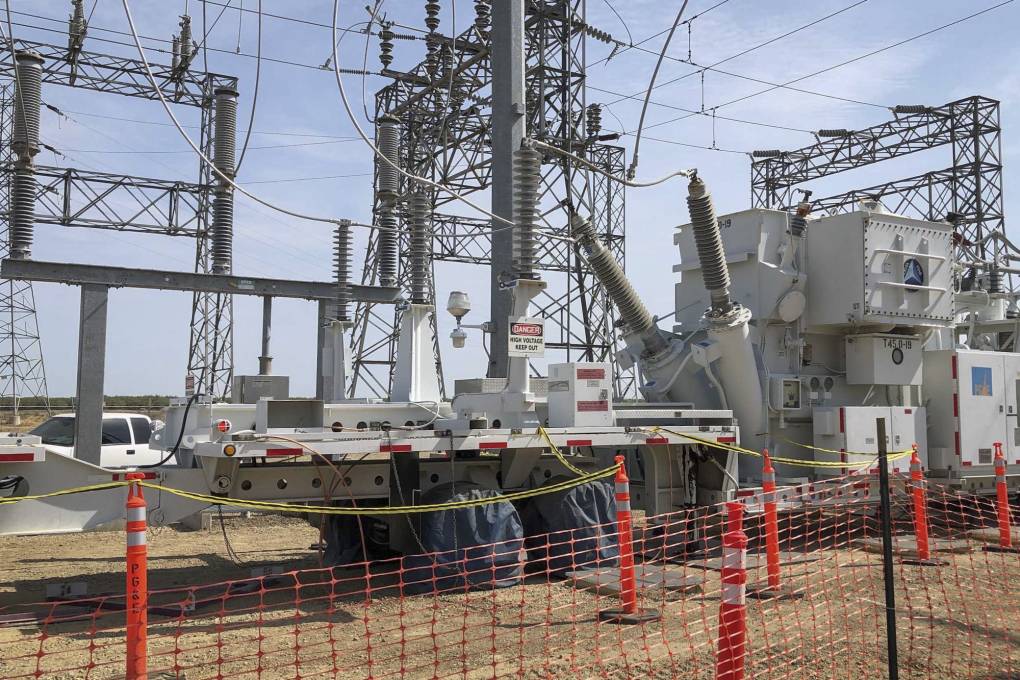
"caption": "Electrical equipment at PG&E's Goose Lake substation near Wasco, in Kern County, after it was attacked in July 2022.",
"description": null,
"title": "230707-PG&E ATTACK-02-KQED",
"credit": "Courtesy of the California Public Utilities Commission",
"status": "inherit",
"altTag": "Large metal equipment and power lines behind caution tape and orange cones.",
"isLoading": false,
"fetchFailed": false
},
"news_11913358": {
"type": "attachments",
"id": "news_11913358",
"meta": {
"index": "attachments_1716263798",
"site": "news",
"id": "11913358",
"found": true
},
"parent": 11913341,
"imgSizes": {
"twentyfourteen-full-width": {
"file": "https://ww2.kqed.org/app/uploads/sites/10/2022/05/image12-1038x576.jpg",
"width": 1038,
"mimeType": "image/jpeg",
"height": 576
},
"thumbnail": {
"file": "https://ww2.kqed.org/app/uploads/sites/10/2022/05/image12-160x106.jpg",
"width": 160,
"mimeType": "image/jpeg",
"height": 106
},
"post-thumbnail": {
"file": "https://ww2.kqed.org/app/uploads/sites/10/2022/05/image12-672x372.jpg",
"width": 672,
"mimeType": "image/jpeg",
"height": 372
},
"kqedFullSize": {
"file": "https://ww2.kqed.org/app/uploads/sites/10/2022/05/image12.jpg",
"width": 1999,
"height": 1330
},
"large": {
"file": "https://ww2.kqed.org/app/uploads/sites/10/2022/05/image12-1020x679.jpg",
"width": 1020,
"mimeType": "image/jpeg",
"height": 679
},
"1536x1536": {
"file": "https://ww2.kqed.org/app/uploads/sites/10/2022/05/image12-1536x1022.jpg",
"width": 1536,
"mimeType": "image/jpeg",
"height": 1022
},
"full-width": {
"file": "https://ww2.kqed.org/app/uploads/sites/10/2022/05/image12-1920x1277.jpg",
"width": 1920,
"mimeType": "image/jpeg",
"height": 1277
},
"medium": {
"file": "https://ww2.kqed.org/app/uploads/sites/10/2022/05/image12-800x532.jpg",
"width": 800,
"mimeType": "image/jpeg",
"height": 532
}
},
"publishDate": 1651790890,
"modified": 1651877426,
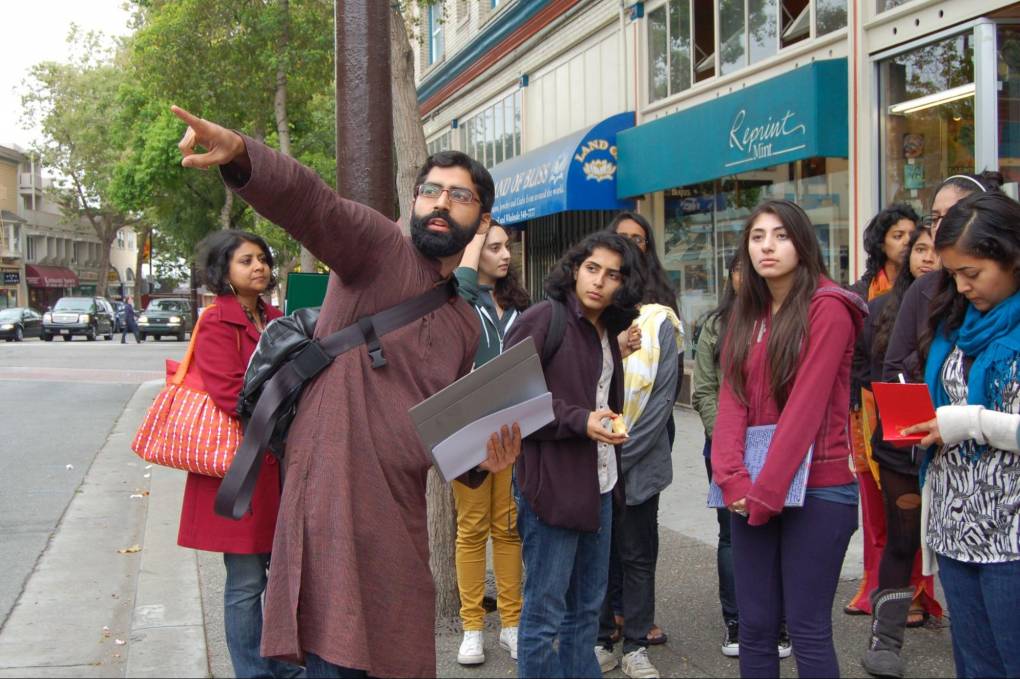
"caption": "Anirvan Chatterjee leads a tour group on Telegraph Avenue near campus in Berkeley.",
"description": null,
"title": "image12",
"credit": "Courtesy of Preeti Mangalashekhar",
"status": "inherit",
"altTag": "A tour guide points to something, as his tour group stands on the street.",
"isLoading": false,
"fetchFailed": false
}
},
"audioPlayerReducer": {
"postId": "stream_live",
"isPaused": true,
"isPlaying": false,
"pfsActive": false,
"pledgeModalIsOpen": true,
"playerDrawerIsOpen": false,
"liveAudioPlayStartedAt": 0,
"liveAudioPlayContext": ""
},
"authorsReducer": {
"byline_news_11955844": {
"type": "authors",
"id": "byline_news_11955844",
"meta": {
"override": true
},
"slug": "byline_news_11955844",
"name": "\u003ca href=\"https://calmatters.org/author/kristen-hwang/\">Kristen Hwang\u003c/a>",
"isLoading": false
},
"byline_news_11955594": {
"type": "authors",
"id": "byline_news_11955594",
"meta": {
"override": true
},
"slug": "byline_news_11955594",
"name": "\u003ca href=\"https://calmatters.org/author/alejandra-reyesvelarde/\">Alejandra Reyes-Velarde\u003c/a>",
"isLoading": false
},
"byline_news_11955457": {
"type": "authors",
"id": "byline_news_11955457",
"meta": {
"override": true
},
"slug": "byline_news_11955457",
"name": "\u003ca href=\"https://calmatters.org/author/julie-cart/\">Julie Cart\u003c/a>",
"isLoading": false
},
"byline_news_11955359": {
"type": "authors",
"id": "byline_news_11955359",
"meta": {
"override": true
},
"slug": "byline_news_11955359",
"name": "\u003ca href=\"https://calmatters.org/california-divide/2023/07/undocumented-immigrants-california/\">Jeanne Kuang, Nicole Foy\u003c/a>",
"isLoading": false
},
"sasha-khokha": {
"type": "authors",
"id": "254",
"meta": {
"index": "authors_1716337520",
"id": "254",
"found": true
},
"name": "Sasha Khokha",
"firstName": "Sasha",
"lastName": "Khokha",
"slug": "sasha-khokha",
"email": "skhokha@kqed.org",
"display_author_email": true,
"staff_mastheads": [
"news"
],
"title": "Host, The California Report Magazine",
"bio": "Sasha Khokha is the host of \u003cem>The California Report's \u003c/em> weekly magazine program, which takes listeners on sound-rich excursions to meet the people that make the Golden State unique -- through audio documentaries and long-form stories. As \u003cem>The California Report's\u003c/em> Central Valley Bureau Chief based in Fresno for nearly a dozen years, Sasha brought the lives and concerns of rural Californians to listeners around the state. Her reporting helped expose the hidden price immigrant women janitors and farmworkers may pay to keep their jobs: sexual assault at work. It inspired two new California laws to protect them from sexual harassment. She was a key member of the reporting team for the Frontline film \u003cem>Rape on the Night Shift, \u003c/em>which was nominated for two national Emmys. Sasha has also won a national Edward R. Murrow and a national PRNDI award for investigative reporting, as well as multiple prizes from the Society for Professional Journalists. Sasha is a proud alum of the UC Berkeley Graduate School of Journalism and Brown University and a member of the South Asian Journalists Association.",
"avatar": "https://secure.gravatar.com/avatar/e4b5e1541aaeea2aa356aa1fb2a68950?s=600&d=blank&r=g",
"twitter": "KQEDSashaKhokha",
"facebook": null,
"instagram": null,
"linkedin": null,
"sites": [
{
"site": "news",
"roles": [
"editor"
]
},
{
"site": "stateofhealth",
"roles": [
"author"
]
},
{
"site": "science",
"roles": [
"author"
]
},
{
"site": "quest",
"roles": [
"subscriber"
]
}
],
"headData": {
"title": "Sasha Khokha | KQED",
"description": "Host, The California Report Magazine",
"ogImgSrc": "https://secure.gravatar.com/avatar/e4b5e1541aaeea2aa356aa1fb2a68950?s=600&d=blank&r=g",
"twImgSrc": "https://secure.gravatar.com/avatar/e4b5e1541aaeea2aa356aa1fb2a68950?s=600&d=blank&r=g"
},
"isLoading": false,
"link": "/author/sasha-khokha"
},
"tgoldberg": {
"type": "authors",
"id": "258",
"meta": {
"index": "authors_1716337520",
"id": "258",
"found": true
},
"name": "Ted Goldberg",
"firstName": "Ted",
"lastName": "Goldberg",
"slug": "tgoldberg",
"email": "tgoldberg@kqed.org",
"display_author_email": true,
"staff_mastheads": [
"news"
],
"title": "KQED Managing Editor, News and Newscasts",
"bio": "Ted Goldberg is Managing Editor of News and Newscasts at KQED. His main reporting beat is the Bay Area's oil refining industry.\r\n\r\nPrior to joining KQED in 2014, Ted worked at CBS News and WCBS AM in New York and Bay City News and KCBS Radio in San Francisco. He graduated from Oberlin College in Ohio in 1998.",
"avatar": "https://secure.gravatar.com/avatar/30ce2e4fe89135e104f89be2394d16225b9d36c121b5b3cb7651ce642978b96f?s=600&d=blank&r=g",
"twitter": "TedrickG",
"bluesky": null,
"facebook": null,
"instagram": null,
"linkedin": null,
"sites": [
{
"site": "news",
"roles": [
"editor"
]
},
{
"site": "science",
"roles": [
"editor"
]
}
],
"headData": {
"title": "Ted Goldberg | KQED",
"description": "KQED Managing Editor, News and Newscasts",
"ogImgSrc": "https://secure.gravatar.com/avatar/30ce2e4fe89135e104f89be2394d16225b9d36c121b5b3cb7651ce642978b96f?s=600&d=blank&r=g",
"twImgSrc": "https://secure.gravatar.com/avatar/30ce2e4fe89135e104f89be2394d16225b9d36c121b5b3cb7651ce642978b96f?s=600&d=blank&r=g"
},
"isLoading": false,
"link": "/author/tgoldberg"
},
"adembosky": {
"type": "authors",
"id": "3205",
"meta": {
"index": "authors_1716337520",
"id": "3205",
"found": true
},
"name": "April Dembosky",
"firstName": "April",
"lastName": "Dembosky",
"slug": "adembosky",
"email": "adembosky@kqed.org",
"display_author_email": false,
"staff_mastheads": [
"news",
"science"
],
"title": "KQED Health Correspondent",
"bio": "April Dembosky is the health correspondent for KQED News and a regular contributor to NPR. She specializes in covering altered states of mind, from postpartum depression to methamphetamine-induced psychosis to the insanity defense. Her investigative series on insurance companies sidestepping mental health laws won multiple awards, including first place in beat reporting from the national Association of Health Care Journalists. She is the recipient of numerous other prizes and fellowships, including a national Edward R. Murrow award for investigative reporting, a Society of Professional Journalists award for long-form storytelling, and a Carter Center Fellowship for Mental Health Journalism.\r\n\r\nDembosky reported and produced \u003cem>Soundtrack of Silence\u003c/em>, an audio documentary about music and memory that is currently being made into a feature film by Paramount Pictures.\r\n\r\nBefore joining KQED in 2013, Dembosky covered technology and Silicon Valley for \u003cem>The Financial Times of London,\u003c/em> and contributed business and arts stories to \u003cem>Marketplace \u003c/em>and \u003cem>The New York Times.\u003c/em> She got her undergraduate degree in philosophy from Smith College and her master's in journalism from the University of California, Berkeley. She is a classically trained violinist and proud alum of the first symphony orchestra at Burning Man.",
"avatar": "https://secure.gravatar.com/avatar/ef92999be4ceb9ea60701e7dc276f813?s=600&d=blank&r=g",
"twitter": "adembosky",
"facebook": null,
"instagram": null,
"linkedin": null,
"sites": [
{
"site": "arts",
"roles": [
"author"
]
},
{
"site": "news",
"roles": [
"editor"
]
},
{
"site": "futureofyou",
"roles": [
"author"
]
},
{
"site": "stateofhealth",
"roles": [
"editor"
]
},
{
"site": "science",
"roles": [
"editor"
]
},
{
"site": "forum",
"roles": [
"editor"
]
}
],
"headData": {
"title": "April Dembosky | KQED",
"description": "KQED Health Correspondent",
"ogImgSrc": "https://secure.gravatar.com/avatar/ef92999be4ceb9ea60701e7dc276f813?s=600&d=blank&r=g",
"twImgSrc": "https://secure.gravatar.com/avatar/ef92999be4ceb9ea60701e7dc276f813?s=600&d=blank&r=g"
},
"isLoading": false,
"link": "/author/adembosky"
},
"mlagos": {
"type": "authors",
"id": "3239",
"meta": {
"index": "authors_1716337520",
"id": "3239",
"found": true
},
"name": "Marisa Lagos",
"firstName": "Marisa",
"lastName": "Lagos",
"slug": "mlagos",
"email": "mlagos@kqed.org",
"display_author_email": false,
"staff_mastheads": [
"news"
],
"title": "KQED Contributor",
"bio": "Marisa Lagos is a correspondent for KQED’s California Politics and Government Desk and co-hosts the award-winning show and podcast, Political Breakdown. At KQED, Lagos also conducts reporting, analysis and investigations into state, local and national politics for radio, TV, online and onstage. In 2022, she and co-host, Scott Shafer, moderated the only gubernatorial debate in California. In 2020, the \u003ci>Washington Post\u003c/i> named her one of the top political journalists in California; she was nominated for a Peabody and won several other awards for her work investigating the 2017 California wildfires. She has worked at the \u003ci>San Francisco Chronicle\u003c/i>, \u003ci>San Francisco Examiner\u003c/i> and \u003ci>Los Angeles Times\u003c/i>. A UC Santa Barbara graduate, she lives in San Francisco with her two sons and husband.",
"avatar": "https://secure.gravatar.com/avatar/a261a0d3696fc066871ef96b85b5e7d2?s=600&d=blank&r=g",
"twitter": "@mlagos",
"facebook": null,
"instagram": null,
"linkedin": null,
"sites": [
{
"site": "arts",
"roles": [
"author"
]
},
{
"site": "news",
"roles": [
"editor"
]
},
{
"site": "science",
"roles": [
"editor"
]
},
{
"site": "forum",
"roles": [
"author"
]
},
{
"site": "liveblog",
"roles": [
"author"
]
}
],
"headData": {
"title": "Marisa Lagos | KQED",
"description": "KQED Contributor",
"ogImgSrc": "https://secure.gravatar.com/avatar/a261a0d3696fc066871ef96b85b5e7d2?s=600&d=blank&r=g",
"twImgSrc": "https://secure.gravatar.com/avatar/a261a0d3696fc066871ef96b85b5e7d2?s=600&d=blank&r=g"
},
"isLoading": false,
"link": "/author/mlagos"
},
"carlysevern": {
"type": "authors",
"id": "3243",
"meta": {
"index": "authors_1716337520",
"id": "3243",
"found": true
},
"name": "Carly Severn",
"firstName": "Carly",
"lastName": "Severn",
"slug": "carlysevern",
"email": "csevern@kqed.org",
"display_author_email": false,
"staff_mastheads": [
"news"
],
"title": "Senior Editor, Audience News ",
"bio": "Carly is KQED's Senior Editor of Audience News on the Digital News team, and has reported for the California Report Magazine, Bay Curious and KQED Arts. She's formerly the host of \u003ca href=\"http://ww2.kqed.org/pop/category/the-cooler/\" rel=\"noopener noreferrer\">The Cooler\u003c/a> podcast.",
"avatar": "https://secure.gravatar.com/avatar/2d8d6765f186e64c798cf7f0c8088a41?s=600&d=blank&r=g",
"twitter": "teacupinthebay",
"facebook": null,
"instagram": null,
"linkedin": null,
"sites": [
{
"site": "",
"roles": [
"editor"
]
},
{
"site": "arts",
"roles": [
"editor"
]
},
{
"site": "news",
"roles": [
"administrator"
]
},
{
"site": "pop",
"roles": [
"editor"
]
},
{
"site": "futureofyou",
"roles": [
"editor"
]
},
{
"site": "about",
"roles": [
"administrator"
]
},
{
"site": "mindshift",
"roles": [
"editor"
]
},
{
"site": "bayareabites",
"roles": [
"editor"
]
},
{
"site": "stateofhealth",
"roles": [
"editor"
]
},
{
"site": "science",
"roles": [
"editor"
]
},
{
"site": "food",
"roles": [
"contributor"
]
},
{
"site": "forum",
"roles": [
"editor"
]
},
{
"site": "perspectives",
"roles": [
"administrator"
]
},
{
"site": "liveblog",
"roles": [
"editor"
]
}
],
"headData": {
"title": "Carly Severn | KQED",
"description": "Senior Editor, Audience News ",
"ogImgSrc": "https://secure.gravatar.com/avatar/2d8d6765f186e64c798cf7f0c8088a41?s=600&d=blank&r=g",
"twImgSrc": "https://secure.gravatar.com/avatar/2d8d6765f186e64c798cf7f0c8088a41?s=600&d=blank&r=g"
},
"isLoading": false,
"link": "/author/carlysevern"
},
"fjhabvala": {
"type": "authors",
"id": "8659",
"meta": {
"index": "authors_1716337520",
"id": "8659",
"found": true
},
"name": "Farida Jhabvala Romero",
"firstName": "Farida",
"lastName": "Jhabvala Romero",
"slug": "fjhabvala",
"email": "fjhabvala@kqed.org",
"display_author_email": true,
"staff_mastheads": [
"news"
],
"title": "KQED Contributor",
"bio": "Farida Jhabvala Romero is a Labor Correspondent for KQED. She previously covered immigration. Farida was \u003ca href=\"https://www.ccnma.org/2022-most-influential-latina-journalists\">named\u003c/a> one of the 10 Most Influential Latina Journalists in California in 2022 by the California Chicano News Media Association. Her work has won awards from the Society of Professional Journalists (Northern California), as well as a national and regional Edward M. Murrow Award for the collaborative reporting projects “Dangerous Air” and “Graying California.” Before joining KQED, Farida worked as a producer at Radio Bilingüe, a national public radio network. Farida earned her master’s degree in journalism from Stanford University.",
"avatar": "https://secure.gravatar.com/avatar/f9f022d4e2609741874222a1e9d41f48fea74011aa7c615eef91d9a50c944ebe?s=600&d=blank&r=g",
"twitter": "FaridaJhabvala",
"bluesky": null,
"facebook": null,
"instagram": null,
"linkedin": "https://www.linkedin.com/in/faridajhabvala/",
"sites": [
{
"site": "news",
"roles": [
"editor"
]
},
{
"site": "stateofhealth",
"roles": [
"author"
]
},
{
"site": "liveblog",
"roles": [
"author"
]
}
],
"headData": {
"title": "Farida Jhabvala Romero | KQED",
"description": "KQED Contributor",
"ogImgSrc": "https://secure.gravatar.com/avatar/f9f022d4e2609741874222a1e9d41f48fea74011aa7c615eef91d9a50c944ebe?s=600&d=blank&r=g",
"twImgSrc": "https://secure.gravatar.com/avatar/f9f022d4e2609741874222a1e9d41f48fea74011aa7c615eef91d9a50c944ebe?s=600&d=blank&r=g"
},
"isLoading": false,
"link": "/author/fjhabvala"
},
"jasminegarnett": {
"type": "authors",
"id": "11530",
"meta": {
"index": "authors_1716337520",
"id": "11530",
"found": true
},
"name": "Jasmine Garnett",
"firstName": "Jasmine",
"lastName": "Garnett",
"slug": "jasminegarnett",
"email": "JGarnett@KQED.org",
"display_author_email": false,
"staff_mastheads": [
"news"
],
"title": "Senior Engagement Platforms Producer",
"bio": "Jasmine is a Senior Engagement Platforms Producer on the KQED News team. She is also a freelance writer, with work appearing in KQED, Bitch Media, and Kotaku among others. Jasmine graduated from UC Berkeley with a degree in Media Studies, where she was also an Arts and Entertainment reporter at the Daily Californian.",
"avatar": "https://secure.gravatar.com/avatar/a6ea8b0641874311533b7401bee15c8e?s=600&d=blank&r=g",
"twitter": "JFLGarnett",
"facebook": null,
"instagram": null,
"linkedin": null,
"sites": [
{
"site": "arts",
"roles": [
"author"
]
},
{
"site": "news",
"roles": [
"editor"
]
},
{
"site": "about",
"roles": [
"editor"
]
},
{
"site": "science",
"roles": [
"editor"
]
},
{
"site": "forum",
"roles": [
"editor"
]
},
{
"site": "pressroom",
"roles": [
"editor"
]
}
],
"headData": {
"title": "Jasmine Garnett | KQED",
"description": "Senior Engagement Platforms Producer",
"ogImgSrc": "https://secure.gravatar.com/avatar/a6ea8b0641874311533b7401bee15c8e?s=600&d=blank&r=g",
"twImgSrc": "https://secure.gravatar.com/avatar/a6ea8b0641874311533b7401bee15c8e?s=600&d=blank&r=g"
},
"isLoading": false,
"link": "/author/jasminegarnett"
},
"sjohnson": {
"type": "authors",
"id": "11840",
"meta": {
"index": "authors_1716337520",
"id": "11840",
"found": true
},
"name": "Sydney Johnson",
"firstName": "Sydney",
"lastName": "Johnson",
"slug": "sjohnson",
"email": "sjohnson@kqed.org",
"display_author_email": false,
"staff_mastheads": [
"news"
],
"title": "KQED Reporter",
"bio": "Sydney Johnson is a general assignment reporter at KQED. She previously reported on public health and city government at the San Francisco Examiner, and before that, she covered statewide education policy for EdSource. Her reporting has won multiple local, state and national awards. Sydney is a graduate of the University of California, Berkeley and lives in San Francisco.",
"avatar": "https://secure.gravatar.com/avatar/97855f2719b72ad6190b7c535fe642c8?s=600&d=blank&r=g",
"twitter": "sydneyfjohnson",
"facebook": null,
"instagram": null,
"linkedin": null,
"sites": [
{
"site": "news",
"roles": [
"editor"
]
}
],
"headData": {
"title": "Sydney Johnson | KQED",
"description": "KQED Reporter",
"ogImgSrc": "https://secure.gravatar.com/avatar/97855f2719b72ad6190b7c535fe642c8?s=600&d=blank&r=g",
"twImgSrc": "https://secure.gravatar.com/avatar/97855f2719b72ad6190b7c535fe642c8?s=600&d=blank&r=g"
},
"isLoading": false,
"link": "/author/sjohnson"
},
"kmonahan": {
"type": "authors",
"id": "11842",
"meta": {
"index": "authors_1716337520",
"id": "11842",
"found": true
},
"name": "Katherine Monahan",
"firstName": "Katherine",
"lastName": "Monahan",
"slug": "kmonahan",
"email": "kmonahan@kqed.org",
"display_author_email": true,
"staff_mastheads": [],
"title": "Reporter / Sound Engineer",
"bio": "I cover state and local news. I’m also a sound engineer at the station, mixing stories and running live broadcasts. I link to source materials so that readers can draw their own conclusions, and seek comment from a range of perspectives, including from people directly affected by events. Awards received include from the Society of Professional Journalists, Northern California chapter and the Alaska Press Club. I speak multiple languages and have reported and engineered in the Bay Area, Alaska, West Africa and Latin America.",
"avatar": "https://secure.gravatar.com/avatar/ff257b3a5da88893781a3d3266904b2d2f91c7f0e1bbf728f61f5fb81b74a669?s=600&d=blank&r=g",
"twitter": null,
"bluesky": null,
"facebook": null,
"instagram": null,
"linkedin": null,
"sites": [
{
"site": "news",
"roles": [
"editor"
]
},
{
"site": "science",
"roles": [
"contributor"
]
}
],
"headData": {
"title": "Katherine Monahan | KQED",
"description": "Reporter / Sound Engineer",
"ogImgSrc": "https://secure.gravatar.com/avatar/ff257b3a5da88893781a3d3266904b2d2f91c7f0e1bbf728f61f5fb81b74a669?s=600&d=blank&r=g",
"twImgSrc": "https://secure.gravatar.com/avatar/ff257b3a5da88893781a3d3266904b2d2f91c7f0e1bbf728f61f5fb81b74a669?s=600&d=blank&r=g"
},
"isLoading": false,
"link": "/author/kmonahan"
}
},
"pagesReducer": {
"news_tag_california": {
"type": "terms",
"id": "news_18538",
"meta": {
"index": "terms_1716263798",
"site": "news",
"id": "18538",
"score": 6.8457103
},
"featImg": null,
"name": "California",
"description": null,
"taxonomy": "tag",
"headData": {
"twImgId": null,
"twTitle": null,
"ogTitle": null,
"ogImgId": null,
"twDescription": null,
"description": null,
"title": "California Archives | KQED News",
"ogDescription": null
},
"ttid": 31,
"slug": "california",
"isLoading": false,
"title": "California",
"pageMeta": {
"site": "news",
"WpPageTemplate": "page-topic-editorial",
"currentPage": 152
},
"blocks": [
{
"blockName": "kqed/post-list",
"attrs": {
"layout": "cardArticle2",
"query": "posts/news?tag=california",
"seeMore": false,
"paginated": true,
"page": 152
}
},
{
"blockName": "kqed/ad"
}
]
}
},
"pfsSessionReducer": {},
"postsReducer": {
"stream_live": {
"type": "live",
"id": "stream_live",
"audioUrl": "https://streams.kqed.org/kqedradio",
"title": "Live Stream",
"excerpt": "Live Stream information currently unavailable.",
"link": "/radio",
"featImg": "",
"label": {
"name": "KQED Live",
"link": "/"
}
},
"stream_kqedNewscast": {
"type": "posts",
"id": "stream_kqedNewscast",
"audioUrl": "https://www.kqed.org/.stream/anon/radio/RDnews/newscast.mp3?_=1",
"title": "KQED Newscast",
"featImg": "",
"label": {
"name": "88.5 FM",
"link": "/"
}
},
"news_11955920": {
"type": "posts",
"id": "news_11955920",
"meta": {
"index": "posts_1716263798",
"site": "news",
"id": "11955920",
"score": null,
"sort": [
1689718405000
]
},
"guestAuthors": [],
"slug": "california-wage-theft-investigators-staffing-crisis",
"title": "State Wage-Theft Investigators Say Staffing Crisis Is Hurting the Agency",
"publishDate": 1689718405,
"format": "standard",
"headTitle": "State Wage-Theft Investigators Say Staffing Crisis Is Hurting the Agency | KQED",
"labelTerm": {
"site": "news"
},
"content": "\u003cp>About 1 in 3 positions at the \u003ca href=\"https://www.kqed.org/news/11906889/california-workers-face-years-long-waits-for-justice-in-wage-theft-cases-state-data-shows\">California Labor Commissioner’s Office\u003c/a>, the agency tasked with investigating wage theft and other labor law violations, remain unfilled. The vacancy “crisis” is leading to burnout, low morale and the hemorrhaging of staffers, according to a letter by dozens of department employees obtained by KQED.\u003c/p>\n\u003cp>This comes as tens of thousands of Californians, who claim their employers shorted them on their paychecks, are forced to contend with \u003ca href=\"https://www.kqed.org/news/11913910/despite-record-budget-surplus-california-unlikely-to-fix-massive-wage-theft-claim-delays-anytime-soon\">massive delays\u003c/a> in seeing their cases resolved by the state.\u003c/p>\n\u003cp>In their letter, the nearly 80 rank-and-file employees of the Labor Commissioner’s Office implored lawmakers to address major barriers such as an “unreasonably slow” hiring process and low compensation, which they say prevent the agency from achieving a fully staffed department that can efficiently tackle the growing backlog of cases.\u003c/p>\n\u003cp>Staffing vacancies have reached 30% to 40% in various units of the agency, they added.\u003c/p>\n\u003cp>[ad fullwidth]\u003c/p>\n\u003cp>“We are failing in our mission if we cannot hire and retain the necessary staff,” they wrote. “The high vacancy rate naturally leads to higher caseloads, additional work responding to members of the public inquiring about the status of their claims, lower morale due to historic backlogs and increased stress.”\u003c/p>\n\u003cp>The July 9 message to the Joint Legislative Audit Committee offers a rare behind-the-scenes perspective of agency employees who are struggling to respond to an increasing volume of new wage-theft complaints exacerbated by hundreds of unfilled positions the state has budgeted for.[pullquote size=\"medium\" align=\"right\" citation=\"Joint statement, California Labor Commissioner’s Office employees\"]‘The high vacancy rate naturally leads to higher caseloads, additional work responding to members of the public inquiring about the status of their claims, lower morale due to historic backlogs and increased stress.’[/pullquote]The Labor Commissioner employees requested an audit focusing on how to make salaries at their agency more competitive — and how to fix a “crippling inability” to hire and retain staff by the California Human Resources Department (CalHR) and human resources at the Department of Industrial Relations, which oversees the agency.\u003c/p>\n\u003cp>State government tends to offer lower wages when compared to the private sector, while hiring tends to be slower as well, according to experts. But salaries at the Labor Commissioner’s Office lag by nearly 30% compared to public-sector peers, said the employees, and the hiring process is so slow and inefficient that qualified candidates end up taking jobs elsewhere.\u003c/p>\n\u003cp>Those inefficiencies include making candidates apply multiple times for the same job after CalHR or the Department of Industrial Relations decides a new job posting is required, said the staffers, who include hearing officers, attorneys and investigators throughout the state.\u003c/p>\n\u003cp>All those hoops constitute extra work for Labor Commissioner employees, too. They worried that sometimes the HR departments decide “ … after our staff [spends] countless hours interviewing and vetting candidates, that the candidates … from the list HR itself provided, do not meet minimum qualifications for the positions,” the letter stated.\u003c/p>\n\u003ch2>Over 200 vacant positions\u003c/h2>\n\u003cp>Nearly 240 positions were vacant at the Labor Commissioner’s Office in May 2022, according to public testimony by agency officials. Even in years when Gov. Gavin \u003ca href=\"https://www.kqed.org/news/11913910/despite-record-budget-surplus-california-unlikely-to-fix-massive-wage-theft-claim-delays-anytime-soon\">Newsom proposed expanding the agency’s budget\u003c/a> to hire more employees, the agency remained severely understaffed.\u003c/p>\n\u003cp>The Department of Industrial Relations did not respond to requests for comment. A spokesperson for CalHR said the department is trying to improve the hiring process.\u003c/p>\n\u003cp>“CalHR is working on a number of strategies to help eliminate barriers to hiring and retaining employees,” said Camille Travis, deputy director of communications at CalHR, in a statement.\u003c/p>\n\u003cp>“They include the Work for California recruitment campaign which kicked off in February, increasing the number of hiring events with our department partners (virtual and in-person), and improvements to CalCareers that will make it easier for candidates to navigate the state hiring process,” Travis wrote.[aside postID=news_11944515 hero='https://ww2.kqed.org/app/uploads/sites/10/2023/03/CMWorkers01-1020x680.jpg']The Labor Commissioner’s wage claim process was created as a faster and free alternative for workers who lack the resources to hire an attorney and pursue their claim in court. Many of the workers who seek help from the state agency are living paycheck to paycheck.\u003c/p>\n\u003cp>Workers rights advocates and labor officials agree that the longer a wage claim languishes without resolution, the harder it tends to be for workers who win their cases to ultimately recover any money. That’s in part because many businesses close, go bankrupt or move assets to avoid paying.\u003c/p>\n\u003cp>But workers are often forced to wait years before receiving a hearing and a final decision from the state on their wage-theft cases.\u003c/p>\n\u003cp>As of May 2022, about half of the 36,000 pending claims for unpaid wages at the agency had taken longer than a year to resolve, according to Labor Commissioner figures obtained and analyzed by KQED. Nearly 4,000 of those cases had languished for three years or more.\u003c/p>\n\u003ch2>‘I feel betrayed’\u003c/h2>\n\u003cp>Landscaper Juan Carlos Alas has yet to receive a final decision on the complaint he began with the Labor Commissioner’s Office in September 2020, after his employer filed for bankruptcy and failed to pay him and co-workers the last of their wages. The father of two said he fell behind on rent payments and bills.\u003c/p>\n\u003cp>“It was hard because we needed the money they stole from us,” said Alas, 36, who lives in Redwood City. “If we work, we have the right to get paid for that work.”\u003c/p>\n\u003cp>But collecting any of the $22,000 in unpaid wages, overtime and penalties Alas claims may now be “difficult if not impossible,” said Jennifer Smith, Alas’ attorney at the nonprofit Community Legal Services in East Palo Alto. The defendant has since moved away and can’t be located, she said.[pullquote size=\"medium\" align=\"right\" citation=\"Juan Carlos Alas, landscaper\"]‘I feel betrayed. We trusted California’s laws, and up to now, we haven’t seen any results.’[/pullquote]The nearly three-year wait has frustrated Alas, who argues the agency is supposed to help workers like him gain some justice.\u003c/p>\n\u003cp>“I feel betrayed,” said Alas, who is originally from El Salvador. “We trusted California’s laws, and up to now, we haven’t seen any results.”\u003c/p>\n\u003cp>The chair of the Joint Legislative Audit Committee, Assemblymember David Alvarez, told KQED the Labor Commissioner employee letter was “alarming” and that staffers’ concerns would inform a \u003ca href=\"https://legaudit.assembly.ca.gov/sites/legaudit.assembly.ca.gov/files/2023-104%20%20California%20Labor%20Commissioner%E2%80%99s%20Office%E2%80%94Backlog%20of%20Wage%20Theft%20Cases%20%28Sen.%20Glazer%29.pdf\">proposed audit (PDF)\u003c/a> into the backlog of wage-theft cases that is expected to begin in September.\u003c/p>\n\u003cp>Alvarez, a Democrat who represents parts of San Diego County, said he would communicate with the State Auditor’s Office to ensure they take into account the staffers’ concerns. The state needs to take a close look at how the hiring process and employee compensation can be improved, he said, so that vulnerable workers get timely decisions on their wage-theft claims.\u003c/p>\n\u003cp>“We don’t believe anyone should be waiting anywhere in the magnitude of years. That is not acceptable,” said Alvarez. “That is why we approved the audit … because everybody is concerned that workers are not getting their due pay.”\u003c/p>\n\u003cp>[ad floatright]\u003c/p>\n",
"blocks": [],
"excerpt": "Job vacancies of more than 30% at the Labor Commissioner's Office are exacerbating years-long waits for thousands of Californians to see their cases resolved.",
"status": "publish",
"parent": 0,
"modified": 1740182239,
"stats": {
"hasAudio": false,
"hasVideo": false,
"hasChartOrMap": false,
"iframeSrcs": [],
"hasGoogleForm": false,
"hasGallery": false,
"hasHearkenModule": false,
"hasPolis": false,
"paragraphCount": 25,
"wordCount": 1259
},
"headData": {
"title": "State Wage-Theft Investigators Say Staffing Crisis Is Hurting the Agency | KQED",
"description": "Job vacancies of more than 30% at the Labor Commissioner's Office are exacerbating years-long waits for thousands of Californians to see their cases resolved.",
"ogTitle": "",
"ogDescription": "",
"ogImgId": "",
"twTitle": "",
"twDescription": "",
"twImgId": "",
"schema": {
"@context": "https://schema.org",
"@type": "NewsArticle",
"headline": "State Wage-Theft Investigators Say Staffing Crisis Is Hurting the Agency",
"datePublished": "2023-07-18T15:13:25-07:00",
"dateModified": "2025-02-21T15:57:19-08:00",
"image": "https://cdn.kqed.org/wp-content/uploads/2020/02/KQED-OG-Image@1x.png",
"isAccessibleForFree": "True",
"publisher": {
"@type": "NewsMediaOrganization",
"@id": "https://www.kqed.org/#organization",
"name": "KQED",
"logo": "https://cdn.kqed.org/wp-content/uploads/2020/02/KQED-OG-Image@1x.png",
"url": "https://www.kqed.org",
"sameAs": [
"https://www.facebook.com/KQED",
"https://twitter.com/KQED",
"https://www.instagram.com/kqed/",
"https://www.tiktok.com/@kqedofficial",
"https://www.linkedin.com/company/kqed",
"https://www.youtube.com/channel/UCeC0IOo7i1P_61zVUWbJ4nw"
]
}
}
},
"audioUrl": "https://traffic.omny.fm/d/clips/0af137ef-751e-4b19-a055-aaef00d2d578/ffca7e9f-6831-4[…]f-aaef00f5a073/f593301a-eb8a-4ad9-a9df-b03f018a5271/audio.mp3",
"sticky": false,
"excludeFromSiteSearch": "Include",
"articleAge": "0",
"path": "/news/11955920/california-wage-theft-investigators-staffing-crisis",
"audioTrackLength": null,
"parsedContent": [
{
"type": "contentString",
"content": "\u003cdiv class=\"post-body\">\u003cp>\u003cp>About 1 in 3 positions at the \u003ca href=\"https://www.kqed.org/news/11906889/california-workers-face-years-long-waits-for-justice-in-wage-theft-cases-state-data-shows\">California Labor Commissioner’s Office\u003c/a>, the agency tasked with investigating wage theft and other labor law violations, remain unfilled. The vacancy “crisis” is leading to burnout, low morale and the hemorrhaging of staffers, according to a letter by dozens of department employees obtained by KQED.\u003c/p>\n\u003cp>This comes as tens of thousands of Californians, who claim their employers shorted them on their paychecks, are forced to contend with \u003ca href=\"https://www.kqed.org/news/11913910/despite-record-budget-surplus-california-unlikely-to-fix-massive-wage-theft-claim-delays-anytime-soon\">massive delays\u003c/a> in seeing their cases resolved by the state.\u003c/p>\n\u003cp>In their letter, the nearly 80 rank-and-file employees of the Labor Commissioner’s Office implored lawmakers to address major barriers such as an “unreasonably slow” hiring process and low compensation, which they say prevent the agency from achieving a fully staffed department that can efficiently tackle the growing backlog of cases.\u003c/p>\n\u003cp>Staffing vacancies have reached 30% to 40% in various units of the agency, they added.\u003c/p>\n\u003cp>\u003c/p>\u003c/div>",
"attributes": {
"named": {},
"numeric": []
}
},
{
"type": "component",
"content": "",
"name": "ad",
"attributes": {
"named": {
"label": "fullwidth"
},
"numeric": [
"fullwidth"
]
}
},
{
"type": "contentString",
"content": "\u003cdiv class=\"post-body\">\u003cp>\u003c/p>\n\u003cp>“We are failing in our mission if we cannot hire and retain the necessary staff,” they wrote. “The high vacancy rate naturally leads to higher caseloads, additional work responding to members of the public inquiring about the status of their claims, lower morale due to historic backlogs and increased stress.”\u003c/p>\n\u003cp>The July 9 message to the Joint Legislative Audit Committee offers a rare behind-the-scenes perspective of agency employees who are struggling to respond to an increasing volume of new wage-theft complaints exacerbated by hundreds of unfilled positions the state has budgeted for.\u003c/p>\u003c/div>",
"attributes": {
"named": {},
"numeric": []
}
},
{
"type": "component",
"content": "‘The high vacancy rate naturally leads to higher caseloads, additional work responding to members of the public inquiring about the status of their claims, lower morale due to historic backlogs and increased stress.’",
"name": "pullquote",
"attributes": {
"named": {
"size": "medium",
"align": "right",
"citation": "Joint statement, California Labor Commissioner’s Office employees",
"label": ""
},
"numeric": []
}
},
{
"type": "contentString",
"content": "\u003cdiv class=\"post-body\">\u003cp>The Labor Commissioner employees requested an audit focusing on how to make salaries at their agency more competitive — and how to fix a “crippling inability” to hire and retain staff by the California Human Resources Department (CalHR) and human resources at the Department of Industrial Relations, which oversees the agency.\u003c/p>\n\u003cp>State government tends to offer lower wages when compared to the private sector, while hiring tends to be slower as well, according to experts. But salaries at the Labor Commissioner’s Office lag by nearly 30% compared to public-sector peers, said the employees, and the hiring process is so slow and inefficient that qualified candidates end up taking jobs elsewhere.\u003c/p>\n\u003cp>Those inefficiencies include making candidates apply multiple times for the same job after CalHR or the Department of Industrial Relations decides a new job posting is required, said the staffers, who include hearing officers, attorneys and investigators throughout the state.\u003c/p>\n\u003cp>All those hoops constitute extra work for Labor Commissioner employees, too. They worried that sometimes the HR departments decide “ … after our staff [spends] countless hours interviewing and vetting candidates, that the candidates … from the list HR itself provided, do not meet minimum qualifications for the positions,” the letter stated.\u003c/p>\n\u003ch2>Over 200 vacant positions\u003c/h2>\n\u003cp>Nearly 240 positions were vacant at the Labor Commissioner’s Office in May 2022, according to public testimony by agency officials. Even in years when Gov. Gavin \u003ca href=\"https://www.kqed.org/news/11913910/despite-record-budget-surplus-california-unlikely-to-fix-massive-wage-theft-claim-delays-anytime-soon\">Newsom proposed expanding the agency’s budget\u003c/a> to hire more employees, the agency remained severely understaffed.\u003c/p>\n\u003cp>The Department of Industrial Relations did not respond to requests for comment. A spokesperson for CalHR said the department is trying to improve the hiring process.\u003c/p>\n\u003cp>“CalHR is working on a number of strategies to help eliminate barriers to hiring and retaining employees,” said Camille Travis, deputy director of communications at CalHR, in a statement.\u003c/p>\n\u003cp>“They include the Work for California recruitment campaign which kicked off in February, increasing the number of hiring events with our department partners (virtual and in-person), and improvements to CalCareers that will make it easier for candidates to navigate the state hiring process,” Travis wrote.\u003c/p>\u003c/div>",
"attributes": {
"named": {},
"numeric": []
}
},
{
"type": "component",
"content": "",
"name": "aside",
"attributes": {
"named": {
"postid": "news_11944515",
"hero": "https://ww2.kqed.org/app/uploads/sites/10/2023/03/CMWorkers01-1020x680.jpg",
"label": ""
},
"numeric": []
}
},
{
"type": "contentString",
"content": "\u003cdiv class=\"post-body\">\u003cp>The Labor Commissioner’s wage claim process was created as a faster and free alternative for workers who lack the resources to hire an attorney and pursue their claim in court. Many of the workers who seek help from the state agency are living paycheck to paycheck.\u003c/p>\n\u003cp>Workers rights advocates and labor officials agree that the longer a wage claim languishes without resolution, the harder it tends to be for workers who win their cases to ultimately recover any money. That’s in part because many businesses close, go bankrupt or move assets to avoid paying.\u003c/p>\n\u003cp>But workers are often forced to wait years before receiving a hearing and a final decision from the state on their wage-theft cases.\u003c/p>\n\u003cp>As of May 2022, about half of the 36,000 pending claims for unpaid wages at the agency had taken longer than a year to resolve, according to Labor Commissioner figures obtained and analyzed by KQED. Nearly 4,000 of those cases had languished for three years or more.\u003c/p>\n\u003ch2>‘I feel betrayed’\u003c/h2>\n\u003cp>Landscaper Juan Carlos Alas has yet to receive a final decision on the complaint he began with the Labor Commissioner’s Office in September 2020, after his employer filed for bankruptcy and failed to pay him and co-workers the last of their wages. The father of two said he fell behind on rent payments and bills.\u003c/p>\n\u003cp>“It was hard because we needed the money they stole from us,” said Alas, 36, who lives in Redwood City. “If we work, we have the right to get paid for that work.”\u003c/p>\n\u003cp>But collecting any of the $22,000 in unpaid wages, overtime and penalties Alas claims may now be “difficult if not impossible,” said Jennifer Smith, Alas’ attorney at the nonprofit Community Legal Services in East Palo Alto. The defendant has since moved away and can’t be located, she said.\u003c/p>\u003c/div>",
"attributes": {
"named": {},
"numeric": []
}
},
{
"type": "component",
"content": "‘I feel betrayed. We trusted California’s laws, and up to now, we haven’t seen any results.’",
"name": "pullquote",
"attributes": {
"named": {
"size": "medium",
"align": "right",
"citation": "Juan Carlos Alas, landscaper",
"label": ""
},
"numeric": []
}
},
{
"type": "contentString",
"content": "\u003cdiv class=\"post-body\">\u003cp>The nearly three-year wait has frustrated Alas, who argues the agency is supposed to help workers like him gain some justice.\u003c/p>\n\u003cp>“I feel betrayed,” said Alas, who is originally from El Salvador. “We trusted California’s laws, and up to now, we haven’t seen any results.”\u003c/p>\n\u003cp>The chair of the Joint Legislative Audit Committee, Assemblymember David Alvarez, told KQED the Labor Commissioner employee letter was “alarming” and that staffers’ concerns would inform a \u003ca href=\"https://legaudit.assembly.ca.gov/sites/legaudit.assembly.ca.gov/files/2023-104%20%20California%20Labor%20Commissioner%E2%80%99s%20Office%E2%80%94Backlog%20of%20Wage%20Theft%20Cases%20%28Sen.%20Glazer%29.pdf\">proposed audit (PDF)\u003c/a> into the backlog of wage-theft cases that is expected to begin in September.\u003c/p>\n\u003cp>Alvarez, a Democrat who represents parts of San Diego County, said he would communicate with the State Auditor’s Office to ensure they take into account the staffers’ concerns. The state needs to take a close look at how the hiring process and employee compensation can be improved, he said, so that vulnerable workers get timely decisions on their wage-theft claims.\u003c/p>\n\u003cp>“We don’t believe anyone should be waiting anywhere in the magnitude of years. That is not acceptable,” said Alvarez. “That is why we approved the audit … because everybody is concerned that workers are not getting their due pay.”\u003c/p>\n\u003cp>\u003c/p>\u003c/div>",
"attributes": {
"named": {},
"numeric": []
}
},
{
"type": "component",
"content": "",
"name": "ad",
"attributes": {
"named": {
"label": "floatright"
},
"numeric": [
"floatright"
]
}
},
{
"type": "contentString",
"content": "\u003cdiv class=\"post-body\">\u003cp>\u003c/p>\n\u003c/div>\u003c/p>",
"attributes": {
"named": {},
"numeric": []
}
}
],
"link": "/news/11955920/california-wage-theft-investigators-staffing-crisis",
"authors": [
"8659"
],
"categories": [
"news_31795",
"news_8"
],
"tags": [
"news_18538",
"news_30731",
"news_27626",
"news_19904",
"news_21308",
"news_17968",
"news_794",
"news_18208"
],
"featImg": "news_11955918",
"label": "news"
},
"news_11955211": {
"type": "posts",
"id": "news_11955211",
"meta": {
"index": "posts_1716263798",
"site": "news",
"id": "11955211",
"score": null,
"sort": [
1689681640000
]
},
"guestAuthors": [],
"slug": "californias-new-care-courts-prompt-orange-county-to-weigh-best-practices",
"title": "California's New CARE Courts Prompt Orange County to Weigh Best Practices",
"publishDate": 1689681640,
"format": "standard",
"headTitle": "California’s New CARE Courts Prompt Orange County to Weigh Best Practices | KQED",
"labelTerm": {
"term": 72,
"site": "news"
},
"content": "\u003cp>\u003cstrong>\u003cem>Editor’s note:\u003c/em>\u003c/strong>\u003cem> This story is part of an occasional series examining the rollout of CARE Courts across the state. \u003c/em>\u003ca href=\"https://www.kqed.org/news/11952228/san-francisco-to-implement-newsoms-care-court-plan-to-treat-severe-mental-illness\">\u003cem>Read or listen to KQED’s reporting on San Francisco County here.\u003c/em>\u003c/a>\u003c/p>\n\u003cp>When Heidi Sweeney first began hallucinating, the voices in her head told her Orange County’s Huntington Beach was where she would be safe. There, behind the bikini-clad crowds playing volleyball and riding beach cruisers, she slept in homeless encampments, then beside a bush outside a liquor store, drinking vodka to drown out the din only she could hear.\u003c/p>\n\u003cp>For years, she refused help, insisting to all who offered, “I’m not sick,” until police arrested her for petty theft and public drunkenness. A judge gave her an ultimatum: jail, or treatment. She chose treatment.\u003c/p>\n\u003cp>“I’m so thankful that they did that,” said Sweeney, now 52. “I needed that. I think there’s others out there that need it, too.”\u003c/p>\n\u003cp>If she hadn’t been compelled to get care, Sweeney said she wouldn’t be alive today, back at work and reunited with her husband. It’s why she supports California’s new civil CARE Courts, which will launch this fall in eight counties, including \u003ca href=\"https://www.kqed.org/news/11952228/san-francisco-to-implement-newsoms-care-court-plan-to-treat-severe-mental-illness\">San Francisco\u003c/a>, \u003ca href=\"https://www.kcrw.com/news/shows/greater-la/psych-treatment/care-court\">Los Angeles\u003c/a> and Orange, followed by the rest of the state in 2024.\u003c/p>\n\u003cp>[ad fullwidth]\u003c/p>\n\u003cp>Under the new system, family members and first responders can ask county judges to order people with psychotic illness into treatment, even if they are not unhoused or haven’t committed a crime.\u003c/p>\n\u003cp>The bill creating the program sailed through the state Legislature with near unanimous support last year amid growing frustration from voters over the state’s increasing population of unhoused residents, even as it drew vehement opposition from disability rights groups, who argued CARE Courts’ hallmark — compelling people who have done nothing wrong into mental health care — is a violation of civil rights.\u003c/p>\n\u003cp>[pullquote size=\"medium\" align=\"right\" citation=\"Maria Hernandez, presiding judge, Orange County Superior Court\"]‘We don’t want to punish people. We want them to maintain their dignity.’[/pullquote]\u003c/p>\n\u003cp>In Orange County, that tension — between those who advocate for voluntary treatment and those who say the status quo allows people to die in the streets “\u003ca href=\"https://www.kqed.org/news/11944448/a-war-of-compassion-debate-over-forced-treatment-of-mental-illness-splits-california-liberals\">with their rights on\u003c/a>” — is playing out in the implementation of the program.\u003c/p>\n\u003cp>Its officials are threading a delicate needle: particularly, how to convince people to accept care without coercion, when their illness causes them to believe they are not ill.\u003c/p>\n\u003cp>“We don’t want to punish people,” said Maria Hernandez, the presiding judge for Orange County Superior Court. “We want them to maintain their dignity.”\u003c/p>\n\u003cfigure id=\"attachment_11955163\" class=\"wp-caption aligncenter\" style=\"max-width: 2000px\">\u003cimg loading=\"lazy\" decoding=\"async\" class=\"wp-image-11955163 size-full\" src=\"https://ww2.kqed.org/app/uploads/sites/10/2023/07/230707-ORANGE-COUNTY-CARE-COURT-AD-05-KQED.jpg\" alt=\"A light-skinned middle-aged woman with long brown hair and wearing black judge's robes smiles at the camera from behind a desk.\" width=\"2000\" height=\"1333\" srcset=\"https://cdn.kqed.org/wp-content/uploads/sites/10/2023/07/230707-ORANGE-COUNTY-CARE-COURT-AD-05-KQED.jpg 2000w, https://cdn.kqed.org/wp-content/uploads/sites/10/2023/07/230707-ORANGE-COUNTY-CARE-COURT-AD-05-KQED-800x533.jpg 800w, https://cdn.kqed.org/wp-content/uploads/sites/10/2023/07/230707-ORANGE-COUNTY-CARE-COURT-AD-05-KQED-1020x680.jpg 1020w, https://cdn.kqed.org/wp-content/uploads/sites/10/2023/07/230707-ORANGE-COUNTY-CARE-COURT-AD-05-KQED-160x107.jpg 160w, https://cdn.kqed.org/wp-content/uploads/sites/10/2023/07/230707-ORANGE-COUNTY-CARE-COURT-AD-05-KQED-1536x1024.jpg 1536w, https://cdn.kqed.org/wp-content/uploads/sites/10/2023/07/230707-ORANGE-COUNTY-CARE-COURT-AD-05-KQED-1920x1280.jpg 1920w\" sizes=\"auto, (max-width: 2000px) 100vw, 2000px\">\u003cfigcaption class=\"wp-caption-text\">Orange County Superior Court Presiding Judge Maria Hernandez says CARE Court will resemble the county’s other collaborative courts, like her young adult diversion court, where compassion and science drive her decisions. \u003ccite>(April Dembosky/KQED)\u003c/cite>\u003c/figcaption>\u003c/figure>\n\u003cp>Orange County is expecting that between 900 and 1,500 residents will be eligible for CARE Court in any given year, according to the county public defender’s office. Local lawyers, judges and health officials all have aligned in designing their program with a distinct patient focus, endeavoring to make the process as benign and nonthreatening as possible.\u003c/p>\n\u003cp>[aside label='More Stories on CARE Court' tag='care-court']\u003c/p>\n\u003cp>Hernandez said that means modeling the new civil court after the county’s other collaborative courts, where judges often lose the black robe and come down off the bench to work \u003cem>with \u003c/em>people, eye to eye.\u003c/p>\n\u003cp>One prototype, she said, is her \u003ca href=\"https://www.occourts.org/directory/collaborative-courts/YAC_Pamphlet.pdf\">Young Adult Court (PDF)\u003c/a>, where, on a day in June, the mood was downright jovial. Defendants and their family members were chatting and laughing, munching on snacks laid out on a table in the back as three young men “graduated” from the diversion program.\u003c/p>\n\u003cp>“Judge Hernandez is so awesome,” said Abraham, 25, a former graduate, who asked to be identified only by his first name because he was charged with a felony that has since been expunged from his record. “I don’t even look at her as the judge. She’s just like a mom figure. She’s only trying to push you to be the better you.”\u003c/p>\n\u003cp>A minute later, Hernandez walked through the aisle of the courtroom and gave Abraham a hug.\u003c/p>\n\u003ch2>‘Disaster preparedness’\u003c/h2>\n\u003cp>Even if CARE Court is ruled by the likes of Mary Poppins, Orlando Vera, who lives with bipolar disorder, said helping a vulnerable person heal from mental illness shouldn’t involve dragging them into a courtroom.\u003c/p>\n\u003cfigure id=\"attachment_11955161\" class=\"wp-caption aligncenter\" style=\"max-width: 2000px\">\u003cimg loading=\"lazy\" decoding=\"async\" class=\"wp-image-11955161 size-full\" src=\"https://ww2.kqed.org/app/uploads/sites/10/2023/07/230707-ORANGE-COUNTY-CARE-COURT-AD-03-KQED.jpg\" alt=\"A very fair-skinned bald man wearing glasses sits in an office setting, smiling and wearing a short-sleeved blue collared polo shirt.\" width=\"2000\" height=\"1333\" srcset=\"https://cdn.kqed.org/wp-content/uploads/sites/10/2023/07/230707-ORANGE-COUNTY-CARE-COURT-AD-03-KQED.jpg 2000w, https://cdn.kqed.org/wp-content/uploads/sites/10/2023/07/230707-ORANGE-COUNTY-CARE-COURT-AD-03-KQED-800x533.jpg 800w, https://cdn.kqed.org/wp-content/uploads/sites/10/2023/07/230707-ORANGE-COUNTY-CARE-COURT-AD-03-KQED-1020x680.jpg 1020w, https://cdn.kqed.org/wp-content/uploads/sites/10/2023/07/230707-ORANGE-COUNTY-CARE-COURT-AD-03-KQED-160x107.jpg 160w, https://cdn.kqed.org/wp-content/uploads/sites/10/2023/07/230707-ORANGE-COUNTY-CARE-COURT-AD-03-KQED-1536x1024.jpg 1536w, https://cdn.kqed.org/wp-content/uploads/sites/10/2023/07/230707-ORANGE-COUNTY-CARE-COURT-AD-03-KQED-1920x1280.jpg 1920w\" sizes=\"auto, (max-width: 2000px) 100vw, 2000px\">\u003cfigcaption class=\"wp-caption-text\">Orlando Vera, co-founder of Peer Voices of Orange County, says he and other people with lived experience of mental illness will attend CARE Court proceedings on behalf of patients. \u003ccite>(April Dembosky/KQED)\u003c/cite>\u003c/figcaption>\u003c/figure>\n\u003cp>“It’s not a place [where] you resolve your emotions. It is a very business-oriented environment. So I do feel that this is not the place for it,” Vera said, adding, “Can we stop it? I would say we can’t.”\u003c/p>\n\u003cp>[pullquote size=\"medium\" align=\"right\" citation=\"Orlando Vera, founder, Peer Voices of Orange County\"]‘Our focus is how do we support those that are going through the system. We need to be their voice.’[/pullquote]\u003c/p>\n\u003cp>After advocates \u003ca href=\"https://www.sacbee.com/news/politics-government/capitol-alert/article274547296.html\">failed to convince the state Supreme Court\u003c/a> to block the program on constitutional grounds, some started referring to the rollout of CARE Court as “disaster preparedness.”\u003c/p>\n\u003cp>\u003ca href=\"https://peervoices.org/\">Peer Voices of Orange County\u003c/a>, a group Vera co-founded and runs, plans to install patient advocates at the courthouse to attend any and all CARE Court hearings.\u003c/p>\n\u003cp>“Our focus is how do we support those that are going through the system,” he said. “We need to be their voice.”\u003c/p>\n\u003ch2>‘CARE’ without coercion\u003c/h2>\n\u003cp>Orange County behavioral health director Veronica Kelley is sympathetic to advocates’ concerns. She said CARE Court is not the program she would have created to improve the state’s mental health system. But she serves at the will of the governor and other elected officials who control her budget.\u003c/p>\n\u003cp>“So we end up building the Winchester Mystery House,” she said. “It is a structure that was OK, but then it just started adding hallways to nowhere and basements that are on top of the building. That’s what our system looks like.”\u003c/p>\n\u003cfigure id=\"attachment_11955162\" class=\"wp-caption aligncenter\" style=\"max-width: 2000px\">\u003cimg loading=\"lazy\" decoding=\"async\" class=\"wp-image-11955162 size-full\" src=\"https://ww2.kqed.org/app/uploads/sites/10/2023/07/230707-ORANGE-COUNTY-CARE-COURT-AD-04-KQED.jpg\" alt=\"A white woman with long blond hair and long earrings sits in front of a bookshelf filled with books. She is unsmiling.\" width=\"2000\" height=\"1333\" srcset=\"https://cdn.kqed.org/wp-content/uploads/sites/10/2023/07/230707-ORANGE-COUNTY-CARE-COURT-AD-04-KQED.jpg 2000w, https://cdn.kqed.org/wp-content/uploads/sites/10/2023/07/230707-ORANGE-COUNTY-CARE-COURT-AD-04-KQED-800x533.jpg 800w, https://cdn.kqed.org/wp-content/uploads/sites/10/2023/07/230707-ORANGE-COUNTY-CARE-COURT-AD-04-KQED-1020x680.jpg 1020w, https://cdn.kqed.org/wp-content/uploads/sites/10/2023/07/230707-ORANGE-COUNTY-CARE-COURT-AD-04-KQED-160x107.jpg 160w, https://cdn.kqed.org/wp-content/uploads/sites/10/2023/07/230707-ORANGE-COUNTY-CARE-COURT-AD-04-KQED-1536x1024.jpg 1536w, https://cdn.kqed.org/wp-content/uploads/sites/10/2023/07/230707-ORANGE-COUNTY-CARE-COURT-AD-04-KQED-1920x1280.jpg 1920w\" sizes=\"auto, (max-width: 2000px) 100vw, 2000px\">\u003cfigcaption class=\"wp-caption-text\">Veronica Kelley, behavioral health director for Orange County, will oversee mental health outreach and care provided through the local CARE Court, launching Oct. 1. \u003ccite>(April Dembosky/KQED)\u003c/cite>\u003c/figcaption>\u003c/figure>\n\u003cp>But Kelley is committed to making sure CARE Court is not a hallway to nowhere.\u003c/p>\n\u003cp>“It is a hallway that I’m going to, at the end, construct a door that opens out to a bunch of different options,” she said.\u003c/p>\n\u003cp>Kelley is shaping the new court process into something its critics can accept. This is why she wanted Orange County to go first.\u003c/p>\n\u003cp>“So we can help craft it into something that’s not another colossal waste of time and funds, and that we don’t destroy the people we’re trying to serve at the same time,” she told a roomful of patient advocates during a meeting of the state \u003ca href=\"https://www.dhcs.ca.gov/services/MH/Pages/PatientsRights.aspx#:~:text=California%20Office%20of%20Patients'%20Rights,training%20and%20technical%20assistance%20to\">Patient Rights’ Committee\u003c/a>, held in Santa Ana.\u003c/p>\n\u003cp>This means social workers from her \u003ca href=\"https://www.ochealthinfo.com/services-programs/mental-health-crisis-recovery/mental-health\">behavioral health department\u003c/a> or the \u003ca href=\"https://www.pubdef.ocgov.com/\">public defender’s office\u003c/a> might visit people 20, 30 or 40 times to build trust, listen and set goals.\u003c/p>\n\u003cp>[pullquote size=\"medium\" align=\"right\" citation=\"Veronica Kelley, behavioral health director, Orange County\"]‘If someone agrees to do something of their own accord, it is far more probable that there will be long-term success and long-term commitment to the services being provided.’[/pullquote]\u003c/p>\n\u003cp>“If they can’t be convinced, CARE Court isn’t for them. But we’re not going to give up on folks because they say no the first time,” said Martin Schwarz, Orange County’s public defender, who plans to devote eight full-time staff to represent the interests of patients referred into the program.\u003c/p>\n\u003cp>Under the CARE legislation, the court is allowed to fine behavioral health agencies $1,000 per day if they can’t find a patient and enroll them in treatment by certain deadlines.\u003c/p>\n\u003cp>Kelley said her county’s judges have agreed to give her staff the time and extensions they need to do their jobs right. She also vowed that no one who declines services in her county would be institutionalized, as the legislation allows.\u003c/p>\n\u003cp>“If someone agrees to do something of their own accord, it is far more probable that there will be long-term success and long-term commitment to the services being provided,” she said.\u003c/p>\n\u003cp>Kelley and Schwarz pointed to their success with another civil court process established by Laura’s Law in 2002, where for each individual involved in court-ordered outpatient care, there were another 20 who accepted treatment willingly.\u003c/p>\n\u003cp>They say they have the same goal for CARE Court, where the focus will be on finding a treatment plan people accept voluntarily — before a judge has to order it.\u003c/p>\n\u003cp>“Success is measured by who we keep out of the court system,” Schwarz said.\u003c/p>\n\u003cp>[ad floatright]\u003c/p>\n",
"blocks": [],
"excerpt": "In Orange County, officials weigh how to convince people with psychosis to accept care without coercion as the state's new CARE Courts roll out in October.",
"status": "publish",
"parent": 0,
"modified": 1738186348,
"stats": {
"hasAudio": false,
"hasVideo": false,
"hasChartOrMap": false,
"iframeSrcs": [],
"hasGoogleForm": false,
"hasGallery": false,
"hasHearkenModule": false,
"hasPolis": false,
"paragraphCount": 40,
"wordCount": 1589
},
"headData": {
"title": "California's New CARE Courts Prompt Orange County to Weigh Best Practices | KQED",
"description": "In Orange County, officials weigh how to convince people with psychosis to accept care without coercion as the state's new CARE Courts roll out in October.",
"ogTitle": "",
"ogDescription": "",
"ogImgId": "",
"twTitle": "",
"twDescription": "",
"twImgId": "",
"schema": {
"@context": "https://schema.org",
"@type": "NewsArticle",
"headline": "California's New CARE Courts Prompt Orange County to Weigh Best Practices",
"datePublished": "2023-07-18T05:00:40-07:00",
"dateModified": "2025-01-29T13:32:28-08:00",
"image": "https://cdn.kqed.org/wp-content/uploads/2020/02/KQED-OG-Image@1x.png",
"isAccessibleForFree": "True",
"publisher": {
"@type": "NewsMediaOrganization",
"@id": "https://www.kqed.org/#organization",
"name": "KQED",
"logo": "https://cdn.kqed.org/wp-content/uploads/2020/02/KQED-OG-Image@1x.png",
"url": "https://www.kqed.org",
"sameAs": [
"https://www.facebook.com/KQED",
"https://twitter.com/KQED",
"https://www.instagram.com/kqed/",
"https://www.tiktok.com/@kqedofficial",
"https://www.linkedin.com/company/kqed",
"https://www.youtube.com/channel/UCeC0IOo7i1P_61zVUWbJ4nw"
]
}
}
},
"audioUrl": "https://traffic.omny.fm/d/clips/0af137ef-751e-4b19-a055-aaef00d2d578/ffca7e9f-6831-41c5-bcaf-aaef00f5a073/b7860621-8fe9-4172-bbcb-b0430100ba58/audio.mp3",
"sticky": false,
"excludeFromSiteSearch": "Include",
"articleAge": "0",
"path": "/news/11955211/californias-new-care-courts-prompt-orange-county-to-weigh-best-practices",
"audioTrackLength": null,
"parsedContent": [
{
"type": "contentString",
"content": "\u003cdiv class=\"post-body\">\u003cp>\u003cp>\u003cstrong>\u003cem>Editor’s note:\u003c/em>\u003c/strong>\u003cem> This story is part of an occasional series examining the rollout of CARE Courts across the state. \u003c/em>\u003ca href=\"https://www.kqed.org/news/11952228/san-francisco-to-implement-newsoms-care-court-plan-to-treat-severe-mental-illness\">\u003cem>Read or listen to KQED’s reporting on San Francisco County here.\u003c/em>\u003c/a>\u003c/p>\n\u003cp>When Heidi Sweeney first began hallucinating, the voices in her head told her Orange County’s Huntington Beach was where she would be safe. There, behind the bikini-clad crowds playing volleyball and riding beach cruisers, she slept in homeless encampments, then beside a bush outside a liquor store, drinking vodka to drown out the din only she could hear.\u003c/p>\n\u003cp>For years, she refused help, insisting to all who offered, “I’m not sick,” until police arrested her for petty theft and public drunkenness. A judge gave her an ultimatum: jail, or treatment. She chose treatment.\u003c/p>\n\u003cp>“I’m so thankful that they did that,” said Sweeney, now 52. “I needed that. I think there’s others out there that need it, too.”\u003c/p>\n\u003cp>If she hadn’t been compelled to get care, Sweeney said she wouldn’t be alive today, back at work and reunited with her husband. It’s why she supports California’s new civil CARE Courts, which will launch this fall in eight counties, including \u003ca href=\"https://www.kqed.org/news/11952228/san-francisco-to-implement-newsoms-care-court-plan-to-treat-severe-mental-illness\">San Francisco\u003c/a>, \u003ca href=\"https://www.kcrw.com/news/shows/greater-la/psych-treatment/care-court\">Los Angeles\u003c/a> and Orange, followed by the rest of the state in 2024.\u003c/p>\n\u003cp>\u003c/p>\u003c/div>",
"attributes": {
"named": {},
"numeric": []
}
},
{
"type": "component",
"content": "",
"name": "ad",
"attributes": {
"named": {
"label": "fullwidth"
},
"numeric": [
"fullwidth"
]
}
},
{
"type": "contentString",
"content": "\u003cdiv class=\"post-body\">\u003cp>\u003c/p>\n\u003cp>Under the new system, family members and first responders can ask county judges to order people with psychotic illness into treatment, even if they are not unhoused or haven’t committed a crime.\u003c/p>\n\u003cp>The bill creating the program sailed through the state Legislature with near unanimous support last year amid growing frustration from voters over the state’s increasing population of unhoused residents, even as it drew vehement opposition from disability rights groups, who argued CARE Courts’ hallmark — compelling people who have done nothing wrong into mental health care — is a violation of civil rights.\u003c/p>\n\u003cp>\u003c/p>\u003c/div>",
"attributes": {
"named": {},
"numeric": []
}
},
{
"type": "component",
"content": "‘We don’t want to punish people. We want them to maintain their dignity.’",
"name": "pullquote",
"attributes": {
"named": {
"size": "medium",
"align": "right",
"citation": "Maria Hernandez, presiding judge, Orange County Superior Court",
"label": ""
},
"numeric": []
}
},
{
"type": "contentString",
"content": "\u003cdiv class=\"post-body\">\u003cp>\u003c/p>\n\u003cp>In Orange County, that tension — between those who advocate for voluntary treatment and those who say the status quo allows people to die in the streets “\u003ca href=\"https://www.kqed.org/news/11944448/a-war-of-compassion-debate-over-forced-treatment-of-mental-illness-splits-california-liberals\">with their rights on\u003c/a>” — is playing out in the implementation of the program.\u003c/p>\n\u003cp>Its officials are threading a delicate needle: particularly, how to convince people to accept care without coercion, when their illness causes them to believe they are not ill.\u003c/p>\n\u003cp>“We don’t want to punish people,” said Maria Hernandez, the presiding judge for Orange County Superior Court. “We want them to maintain their dignity.”\u003c/p>\n\u003cfigure id=\"attachment_11955163\" class=\"wp-caption aligncenter\" style=\"max-width: 2000px\">\u003cimg loading=\"lazy\" decoding=\"async\" class=\"wp-image-11955163 size-full\" src=\"https://ww2.kqed.org/app/uploads/sites/10/2023/07/230707-ORANGE-COUNTY-CARE-COURT-AD-05-KQED.jpg\" alt=\"A light-skinned middle-aged woman with long brown hair and wearing black judge's robes smiles at the camera from behind a desk.\" width=\"2000\" height=\"1333\" srcset=\"https://cdn.kqed.org/wp-content/uploads/sites/10/2023/07/230707-ORANGE-COUNTY-CARE-COURT-AD-05-KQED.jpg 2000w, https://cdn.kqed.org/wp-content/uploads/sites/10/2023/07/230707-ORANGE-COUNTY-CARE-COURT-AD-05-KQED-800x533.jpg 800w, https://cdn.kqed.org/wp-content/uploads/sites/10/2023/07/230707-ORANGE-COUNTY-CARE-COURT-AD-05-KQED-1020x680.jpg 1020w, https://cdn.kqed.org/wp-content/uploads/sites/10/2023/07/230707-ORANGE-COUNTY-CARE-COURT-AD-05-KQED-160x107.jpg 160w, https://cdn.kqed.org/wp-content/uploads/sites/10/2023/07/230707-ORANGE-COUNTY-CARE-COURT-AD-05-KQED-1536x1024.jpg 1536w, https://cdn.kqed.org/wp-content/uploads/sites/10/2023/07/230707-ORANGE-COUNTY-CARE-COURT-AD-05-KQED-1920x1280.jpg 1920w\" sizes=\"auto, (max-width: 2000px) 100vw, 2000px\">\u003cfigcaption class=\"wp-caption-text\">Orange County Superior Court Presiding Judge Maria Hernandez says CARE Court will resemble the county’s other collaborative courts, like her young adult diversion court, where compassion and science drive her decisions. \u003ccite>(April Dembosky/KQED)\u003c/cite>\u003c/figcaption>\u003c/figure>\n\u003cp>Orange County is expecting that between 900 and 1,500 residents will be eligible for CARE Court in any given year, according to the county public defender’s office. Local lawyers, judges and health officials all have aligned in designing their program with a distinct patient focus, endeavoring to make the process as benign and nonthreatening as possible.\u003c/p>\n\u003cp>\u003c/p>\u003c/div>",
"attributes": {
"named": {},
"numeric": []
}
},
{
"type": "component",
"content": "",
"name": "aside",
"attributes": {
"named": {
"label": "More Stories on CARE Court ",
"tag": "care-court"
},
"numeric": []
}
},
{
"type": "contentString",
"content": "\u003cdiv class=\"post-body\">\u003cp>\u003c/p>\n\u003cp>Hernandez said that means modeling the new civil court after the county’s other collaborative courts, where judges often lose the black robe and come down off the bench to work \u003cem>with \u003c/em>people, eye to eye.\u003c/p>\n\u003cp>One prototype, she said, is her \u003ca href=\"https://www.occourts.org/directory/collaborative-courts/YAC_Pamphlet.pdf\">Young Adult Court (PDF)\u003c/a>, where, on a day in June, the mood was downright jovial. Defendants and their family members were chatting and laughing, munching on snacks laid out on a table in the back as three young men “graduated” from the diversion program.\u003c/p>\n\u003cp>“Judge Hernandez is so awesome,” said Abraham, 25, a former graduate, who asked to be identified only by his first name because he was charged with a felony that has since been expunged from his record. “I don’t even look at her as the judge. She’s just like a mom figure. She’s only trying to push you to be the better you.”\u003c/p>\n\u003cp>A minute later, Hernandez walked through the aisle of the courtroom and gave Abraham a hug.\u003c/p>\n\u003ch2>‘Disaster preparedness’\u003c/h2>\n\u003cp>Even if CARE Court is ruled by the likes of Mary Poppins, Orlando Vera, who lives with bipolar disorder, said helping a vulnerable person heal from mental illness shouldn’t involve dragging them into a courtroom.\u003c/p>\n\u003cfigure id=\"attachment_11955161\" class=\"wp-caption aligncenter\" style=\"max-width: 2000px\">\u003cimg loading=\"lazy\" decoding=\"async\" class=\"wp-image-11955161 size-full\" src=\"https://ww2.kqed.org/app/uploads/sites/10/2023/07/230707-ORANGE-COUNTY-CARE-COURT-AD-03-KQED.jpg\" alt=\"A very fair-skinned bald man wearing glasses sits in an office setting, smiling and wearing a short-sleeved blue collared polo shirt.\" width=\"2000\" height=\"1333\" srcset=\"https://cdn.kqed.org/wp-content/uploads/sites/10/2023/07/230707-ORANGE-COUNTY-CARE-COURT-AD-03-KQED.jpg 2000w, https://cdn.kqed.org/wp-content/uploads/sites/10/2023/07/230707-ORANGE-COUNTY-CARE-COURT-AD-03-KQED-800x533.jpg 800w, https://cdn.kqed.org/wp-content/uploads/sites/10/2023/07/230707-ORANGE-COUNTY-CARE-COURT-AD-03-KQED-1020x680.jpg 1020w, https://cdn.kqed.org/wp-content/uploads/sites/10/2023/07/230707-ORANGE-COUNTY-CARE-COURT-AD-03-KQED-160x107.jpg 160w, https://cdn.kqed.org/wp-content/uploads/sites/10/2023/07/230707-ORANGE-COUNTY-CARE-COURT-AD-03-KQED-1536x1024.jpg 1536w, https://cdn.kqed.org/wp-content/uploads/sites/10/2023/07/230707-ORANGE-COUNTY-CARE-COURT-AD-03-KQED-1920x1280.jpg 1920w\" sizes=\"auto, (max-width: 2000px) 100vw, 2000px\">\u003cfigcaption class=\"wp-caption-text\">Orlando Vera, co-founder of Peer Voices of Orange County, says he and other people with lived experience of mental illness will attend CARE Court proceedings on behalf of patients. \u003ccite>(April Dembosky/KQED)\u003c/cite>\u003c/figcaption>\u003c/figure>\n\u003cp>“It’s not a place [where] you resolve your emotions. It is a very business-oriented environment. So I do feel that this is not the place for it,” Vera said, adding, “Can we stop it? I would say we can’t.”\u003c/p>\n\u003cp>\u003c/p>\u003c/div>",
"attributes": {
"named": {},
"numeric": []
}
},
{
"type": "component",
"content": "‘Our focus is how do we support those that are going through the system. We need to be their voice.’",
"name": "pullquote",
"attributes": {
"named": {
"size": "medium",
"align": "right",
"citation": "Orlando Vera, founder, Peer Voices of Orange County",
"label": ""
},
"numeric": []
}
},
{
"type": "contentString",
"content": "\u003cdiv class=\"post-body\">\u003cp>\u003c/p>\n\u003cp>After advocates \u003ca href=\"https://www.sacbee.com/news/politics-government/capitol-alert/article274547296.html\">failed to convince the state Supreme Court\u003c/a> to block the program on constitutional grounds, some started referring to the rollout of CARE Court as “disaster preparedness.”\u003c/p>\n\u003cp>\u003ca href=\"https://peervoices.org/\">Peer Voices of Orange County\u003c/a>, a group Vera co-founded and runs, plans to install patient advocates at the courthouse to attend any and all CARE Court hearings.\u003c/p>\n\u003cp>“Our focus is how do we support those that are going through the system,” he said. “We need to be their voice.”\u003c/p>\n\u003ch2>‘CARE’ without coercion\u003c/h2>\n\u003cp>Orange County behavioral health director Veronica Kelley is sympathetic to advocates’ concerns. She said CARE Court is not the program she would have created to improve the state’s mental health system. But she serves at the will of the governor and other elected officials who control her budget.\u003c/p>\n\u003cp>“So we end up building the Winchester Mystery House,” she said. “It is a structure that was OK, but then it just started adding hallways to nowhere and basements that are on top of the building. That’s what our system looks like.”\u003c/p>\n\u003cfigure id=\"attachment_11955162\" class=\"wp-caption aligncenter\" style=\"max-width: 2000px\">\u003cimg loading=\"lazy\" decoding=\"async\" class=\"wp-image-11955162 size-full\" src=\"https://ww2.kqed.org/app/uploads/sites/10/2023/07/230707-ORANGE-COUNTY-CARE-COURT-AD-04-KQED.jpg\" alt=\"A white woman with long blond hair and long earrings sits in front of a bookshelf filled with books. She is unsmiling.\" width=\"2000\" height=\"1333\" srcset=\"https://cdn.kqed.org/wp-content/uploads/sites/10/2023/07/230707-ORANGE-COUNTY-CARE-COURT-AD-04-KQED.jpg 2000w, https://cdn.kqed.org/wp-content/uploads/sites/10/2023/07/230707-ORANGE-COUNTY-CARE-COURT-AD-04-KQED-800x533.jpg 800w, https://cdn.kqed.org/wp-content/uploads/sites/10/2023/07/230707-ORANGE-COUNTY-CARE-COURT-AD-04-KQED-1020x680.jpg 1020w, https://cdn.kqed.org/wp-content/uploads/sites/10/2023/07/230707-ORANGE-COUNTY-CARE-COURT-AD-04-KQED-160x107.jpg 160w, https://cdn.kqed.org/wp-content/uploads/sites/10/2023/07/230707-ORANGE-COUNTY-CARE-COURT-AD-04-KQED-1536x1024.jpg 1536w, https://cdn.kqed.org/wp-content/uploads/sites/10/2023/07/230707-ORANGE-COUNTY-CARE-COURT-AD-04-KQED-1920x1280.jpg 1920w\" sizes=\"auto, (max-width: 2000px) 100vw, 2000px\">\u003cfigcaption class=\"wp-caption-text\">Veronica Kelley, behavioral health director for Orange County, will oversee mental health outreach and care provided through the local CARE Court, launching Oct. 1. \u003ccite>(April Dembosky/KQED)\u003c/cite>\u003c/figcaption>\u003c/figure>\n\u003cp>But Kelley is committed to making sure CARE Court is not a hallway to nowhere.\u003c/p>\n\u003cp>“It is a hallway that I’m going to, at the end, construct a door that opens out to a bunch of different options,” she said.\u003c/p>\n\u003cp>Kelley is shaping the new court process into something its critics can accept. This is why she wanted Orange County to go first.\u003c/p>\n\u003cp>“So we can help craft it into something that’s not another colossal waste of time and funds, and that we don’t destroy the people we’re trying to serve at the same time,” she told a roomful of patient advocates during a meeting of the state \u003ca href=\"https://www.dhcs.ca.gov/services/MH/Pages/PatientsRights.aspx#:~:text=California%20Office%20of%20Patients'%20Rights,training%20and%20technical%20assistance%20to\">Patient Rights’ Committee\u003c/a>, held in Santa Ana.\u003c/p>\n\u003cp>This means social workers from her \u003ca href=\"https://www.ochealthinfo.com/services-programs/mental-health-crisis-recovery/mental-health\">behavioral health department\u003c/a> or the \u003ca href=\"https://www.pubdef.ocgov.com/\">public defender’s office\u003c/a> might visit people 20, 30 or 40 times to build trust, listen and set goals.\u003c/p>\n\u003cp>\u003c/p>\u003c/div>",
"attributes": {
"named": {},
"numeric": []
}
},
{
"type": "component",
"content": "‘If someone agrees to do something of their own accord, it is far more probable that there will be long-term success and long-term commitment to the services being provided.’",
"name": "pullquote",
"attributes": {
"named": {
"size": "medium",
"align": "right",
"citation": "Veronica Kelley, behavioral health director, Orange County",
"label": ""
},
"numeric": []
}
},
{
"type": "contentString",
"content": "\u003cdiv class=\"post-body\">\u003cp>\u003c/p>\n\u003cp>“If they can’t be convinced, CARE Court isn’t for them. But we’re not going to give up on folks because they say no the first time,” said Martin Schwarz, Orange County’s public defender, who plans to devote eight full-time staff to represent the interests of patients referred into the program.\u003c/p>\n\u003cp>Under the CARE legislation, the court is allowed to fine behavioral health agencies $1,000 per day if they can’t find a patient and enroll them in treatment by certain deadlines.\u003c/p>\n\u003cp>Kelley said her county’s judges have agreed to give her staff the time and extensions they need to do their jobs right. She also vowed that no one who declines services in her county would be institutionalized, as the legislation allows.\u003c/p>\n\u003cp>“If someone agrees to do something of their own accord, it is far more probable that there will be long-term success and long-term commitment to the services being provided,” she said.\u003c/p>\n\u003cp>Kelley and Schwarz pointed to their success with another civil court process established by Laura’s Law in 2002, where for each individual involved in court-ordered outpatient care, there were another 20 who accepted treatment willingly.\u003c/p>\n\u003cp>They say they have the same goal for CARE Court, where the focus will be on finding a treatment plan people accept voluntarily — before a judge has to order it.\u003c/p>\n\u003cp>“Success is measured by who we keep out of the court system,” Schwarz said.\u003c/p>\n\u003cp>\u003c/p>\u003c/div>",
"attributes": {
"named": {},
"numeric": []
}
},
{
"type": "component",
"content": "",
"name": "ad",
"attributes": {
"named": {
"label": "floatright"
},
"numeric": [
"floatright"
]
}
},
{
"type": "contentString",
"content": "\u003cdiv class=\"post-body\">\u003cp>\u003c/p>\n\u003c/div>\u003c/p>",
"attributes": {
"named": {},
"numeric": []
}
}
],
"link": "/news/11955211/californias-new-care-courts-prompt-orange-county-to-weigh-best-practices",
"authors": [
"3205"
],
"programs": [
"news_72"
],
"categories": [
"news_457",
"news_8",
"news_33520"
],
"tags": [
"news_18538",
"news_31336",
"news_4750",
"news_18543",
"news_24221",
"news_4",
"news_18371",
"news_38"
],
"featImg": "news_11955160",
"label": "news_72"
},
"news_11955844": {
"type": "posts",
"id": "news_11955844",
"meta": {
"index": "posts_1716263798",
"site": "news",
"id": "11955844",
"score": null,
"sort": [
1689628193000
]
},
"guestAuthors": [],
"slug": "newsom-mental-health-plan-strips-700-million-in-services",
"title": "Newsom’s Mental Health Plan Could Strip Over $700 Million in Services",
"publishDate": 1689628193,
"format": "standard",
"headTitle": "Newsom’s Mental Health Plan Could Strip Over $700 Million in Services | KQED",
"labelTerm": {},
"content": "\u003cp>A \u003ca href=\"https://www.kqed.org/news/11954314/3-big-takeaways-from-californias-311-billion-budget-deal\">major proposal from Gov. Gavin Newsom\u003c/a> to overhaul the state’s behavioral and mental health system is likely to take nearly $720 million away from services provided by county governments annually, according to a \u003ca href=\"https://lao.ca.gov/Publications/Report/4782\">new analysis\u003c/a> from the Legislative Analyst’s Office.\u003c/p>\n\u003cp>Although that money would be reallocated within the system, in part to \u003ca href=\"https://calmatters.org/health/mental-health/2023/06/mental-health-funding-2/\">house homeless individuals with severe mental illness\u003c/a> and addiction disorders, the report authors note that Newsom and key legislators supporting the proposal have neither provided a complete justification for the changes nor have they published an analysis on how the changes may “negatively impact current services.”\u003c/p>\n\u003cp>“Consequently, as the Legislature considers the proposal, we recommend asking the administration certain questions to assess whether the proposal is warranted,” the report states.\u003c/p>\n\u003cp>Newsom wants the Legislature to put his proposal before voters next year in tandem with a $4.68 billion bond measure to add psychiatric treatment beds. It would change how the state allocates money under the Mental Health Services Act, which levies a 1% tax on income above $1 million to fund behavioral health services.\u003c/p>\n\u003cp>[ad fullwidth]\u003c/p>\n\u003cp>Homelessness has become one of the most \u003ca href=\"https://calmatters.org/housing/homelessness/2023/04/california-homeless-spending-audit/\">high-profile challenges plaguing California\u003c/a>, increasing 32% in the past four years. Newsom, who promised to reduce homelessness, announced his intent during his \u003ca href=\"https://calmatters.org/politics/2023/03/gavin-newsom-legacy-tour/\">State of the State tour\u003c/a> to divert nearly one-third of the state’s Mental Health Services Act money to help address homelessness.\u003c/p>\n\u003cp>Since that time, \u003ca href=\"https://calmatters.org/health/2023/04/mental-health-funding/\">local behavioral health providers and county officials\u003c/a> have criticized the proposal because of its potential to cut services and pit mental health programs against homeless services. The state has spent more than $20 billion on \u003ca href=\"https://calmatters.org/housing/homelessness/2023/04/california-homeless-spending-audit/\">housing and homelessness since 2018\u003c/a>.\u003c/p>\n\u003cp>Supporters, meanwhile, say reprioritizing how the money is spent is long overdue in light of the growing needs of the state’s homeless population as well as the addition of new funding sources for mental health programs.\u003c/p>\n\u003cp>In a statement, Newsom’s Deputy Communications Director Brandon Richards said “upsetting the status quo” was necessary in light of California’s changing health care needs.\u003c/p>\n\u003ch2>Mental health needs among California homeless\u003c/h2>\n\u003cp>A recent study from UC San Francisco found that two-thirds of \u003ca href=\"https://calmatters.org/housing/2023/06/california-homeless-growth-report/\">homeless individuals experience mental health conditions\u003c/a>, although income loss is the driving force behind the state’s homelessness crisis.\u003c/p>\n\u003cp>“What’s more upsetting is watching people continue to suffer on the streets with ineffective interventions and inability to access much-needed treatment,” Richards said. “A California behavioral health system of care that is more focused, more transparent, and more accountable for results is what all Californians deserve and what this historic reform aims to achieve.”\u003c/p>\n\u003cp>Roughly one-third of the county mental health infrastructure in the state is supported by the Mental Health Services Act, which was approved by voters in 2004 as a ballot initiative. Substantial changes to the act, like the ones Newsom proposed, require voter approval. Last year the tax generated about $3.8 billion.\u003c/p>\n\u003cp>[pullquote size=\"medium\" align=\"right\" citation=\"Brandon Richards, deputy communications director, Gov. Gavin Newsom\"]‘What’s more upsetting, is watching people continue to suffer on the streets with ineffective interventions and inability to access much-needed treatment.’[/pullquote]\u003c/p>\n\u003cp>Critics of Newsom’s proposal say the new analysis bolsters their argument that the changes will result in significant cuts to current programs, particularly those that \u003ca href=\"https://calmatters.org/health/mental-health/2023/06/mental-health-funding-2/\">support children\u003c/a>.\u003c/p>\n\u003cp>Newsom’s office has so far “danced around” how much money would be cut, said Adrienne Shilton, a lobbyist for the California Alliance of Children and Family Services, which represents behavioral health providers in every county. The report is the first to quantify how the proposal would impact programs statewide.\u003c/p>\n\u003cp>“We’re seeing in real dollars what the impact would be,” Shilton said.\u003c/p>\n\u003cp>The analysis estimates spending on current programs would be reduced from $1.34 billion to $621 million under the plan.\u003c/p>\n\u003ch2>Housing money in Gavin Newsom’s plan\u003c/h2>\n\u003cp>The report identified several key changes and unanswered questions for the Legislature to consider in \u003ca href=\"https://lao.ca.gov/Publications/Series/3\">Newsom’s plan\u003c/a>:\u003c/p>\n\u003cul>\n\u003cli>\u003cstrong>Reduced flexibility: \u003c/strong>Counties would have less flexibility to determine how money is spent. Based on current expenditures, counties would be required to increase spending on housing by $493 million and on “full-service partnerships” by $121 million. “Full-service partnerships” include intensive wraparound services like case management, housing and employment support as well as clinical care.\u003c/li>\n\u003cli>\u003cstrong>Program cuts likely: \u003c/strong>To meet spending targets and caps, counties would likely need to reduce spending on current programs including “outpatient services, crisis response, prevention services, and outreach.”\u003c/li>\n\u003cli>\u003cstrong>Less independent oversight: \u003c/strong>The proposed restructuring moves much of the program implementation and oversight authority to the Department of Health Care Services. The change “significantly limits” the independent oversight of the current Mental Health Services Oversight and Accountability Commission.[aside label='More on Mental Health Care' tag='mental-health']Sacramento Mayor Darrell Steinberg, who helped author the original law and has been a key supporter of the changes, said the law was always meant to prioritize “the plight of people living with serious mental illness on our streets.”\u003c/li>\n\u003c/ul>\n\u003cp>“It’s appropriate, in fact, it’s necessary to set priority status,” Steinberg said.\u003c/p>\n\u003cp>Steinberg and Newsom’s office also contend that the state has invested heavily in the mental health safety net in other ways, including changes to the Medi-Cal system and a $4.4 billion one-time infusion into the \u003ca href=\"https://calmatters.org/health/2022/03/california-children-mental-health-crisis/\">Children and Youth Behavioral Health Initiative\u003c/a>.\u003c/p>\n\u003cp>“It’s no longer a funding source that stands alone,” Steinberg said. “[Now], the opportunity is to weave all these pieces together so that everyone has access to care, and nobody is left out or left behind.”\u003c/p>\n\u003cp>Still, advocates say it is premature to assume those investments have had a positive impact and that many have not yet been implemented. In an opposition letter, Lishaun Francis, senior director for behavioral health at Children Now said the state “has yet to demonstrate that it has delivered” on its promises and that the proposal deprioritizes children and youth.[pullquote size=\"medium\" align=\"right\" citation=\"Sacramento Mayor Darrell Steinberg\"]‘The opportunity is to weave all these pieces together so that everyone has access to care — and nobody is left out or left behind.’[/pullquote]Advocates also say those funding sources, particularly Medi-Cal, won’t reimburse for the non-clinical programs like classroom interventions and family resource centers that have historically been supported by the Mental Health Services Act. Medi-Cal is the state’s health insurance program for extremely low-income Californians.\u003c/p>\n\u003cp>“Families need flexibility,” said Christine Stoner-Mertz, chief executive officer of the California Alliance of Child and Family Services. “We need community-designed practices, and we haven’t been successful in doing that with just Medi-Cal.”\u003c/p>\n\u003cp>[ad floatright]\u003c/p>\n",
"blocks": [],
"excerpt": "Gov. Gavin Newsom wants to direct more funds from California's millionaire’s tax toward housing. Some county-run mental health programs could lose out.",
"status": "publish",
"parent": 0,
"modified": 1726004910,
"stats": {
"hasAudio": false,
"hasVideo": false,
"hasChartOrMap": false,
"iframeSrcs": [],
"hasGoogleForm": false,
"hasGallery": false,
"hasHearkenModule": false,
"hasPolis": false,
"paragraphCount": 24,
"wordCount": 1188
},
"headData": {
"title": "Newsom’s Mental Health Plan Could Strip Over $700 Million in Services | KQED",
"description": "Gov. Gavin Newsom wants to direct more funds from California's millionaire’s tax toward housing. Some county-run mental health programs could lose out.",
"ogTitle": "",
"ogDescription": "",
"ogImgId": "",
"twTitle": "",
"twDescription": "",
"twImgId": "",
"schema": {
"@context": "https://schema.org",
"@type": "NewsArticle",
"headline": "Newsom’s Mental Health Plan Could Strip Over $700 Million in Services",
"datePublished": "2023-07-17T14:09:53-07:00",
"dateModified": "2024-09-10T14:48:30-07:00",
"image": "https://cdn.kqed.org/wp-content/uploads/2020/02/KQED-OG-Image@1x.png",
"isAccessibleForFree": "True",
"publisher": {
"@type": "NewsMediaOrganization",
"@id": "https://www.kqed.org/#organization",
"name": "KQED",
"logo": "https://cdn.kqed.org/wp-content/uploads/2020/02/KQED-OG-Image@1x.png",
"url": "https://www.kqed.org",
"sameAs": [
"https://www.facebook.com/KQED",
"https://twitter.com/KQED",
"https://www.instagram.com/kqed/",
"https://www.tiktok.com/@kqedofficial",
"https://www.linkedin.com/company/kqed",
"https://www.youtube.com/channel/UCeC0IOo7i1P_61zVUWbJ4nw"
]
}
}
},
"source": "CalMatters",
"sourceUrl": "https://calmatters.org/",
"sticky": false,
"nprByline": "\u003ca href=\"https://calmatters.org/author/kristen-hwang/\">Kristen Hwang\u003c/a>",
"excludeFromSiteSearch": "Include",
"showOnAuthorArchivePages": "No",
"articleAge": "0",
"path": "/news/11955844/newsom-mental-health-plan-strips-700-million-in-services",
"audioTrackLength": null,
"parsedContent": [
{
"type": "contentString",
"content": "\u003cdiv class=\"post-body\">\u003cp>\u003cp>A \u003ca href=\"https://www.kqed.org/news/11954314/3-big-takeaways-from-californias-311-billion-budget-deal\">major proposal from Gov. Gavin Newsom\u003c/a> to overhaul the state’s behavioral and mental health system is likely to take nearly $720 million away from services provided by county governments annually, according to a \u003ca href=\"https://lao.ca.gov/Publications/Report/4782\">new analysis\u003c/a> from the Legislative Analyst’s Office.\u003c/p>\n\u003cp>Although that money would be reallocated within the system, in part to \u003ca href=\"https://calmatters.org/health/mental-health/2023/06/mental-health-funding-2/\">house homeless individuals with severe mental illness\u003c/a> and addiction disorders, the report authors note that Newsom and key legislators supporting the proposal have neither provided a complete justification for the changes nor have they published an analysis on how the changes may “negatively impact current services.”\u003c/p>\n\u003cp>“Consequently, as the Legislature considers the proposal, we recommend asking the administration certain questions to assess whether the proposal is warranted,” the report states.\u003c/p>\n\u003cp>Newsom wants the Legislature to put his proposal before voters next year in tandem with a $4.68 billion bond measure to add psychiatric treatment beds. It would change how the state allocates money under the Mental Health Services Act, which levies a 1% tax on income above $1 million to fund behavioral health services.\u003c/p>\n\u003cp>\u003c/p>\u003c/div>",
"attributes": {
"named": {},
"numeric": []
}
},
{
"type": "component",
"content": "",
"name": "ad",
"attributes": {
"named": {
"label": "fullwidth"
},
"numeric": [
"fullwidth"
]
}
},
{
"type": "contentString",
"content": "\u003cdiv class=\"post-body\">\u003cp>\u003c/p>\n\u003cp>Homelessness has become one of the most \u003ca href=\"https://calmatters.org/housing/homelessness/2023/04/california-homeless-spending-audit/\">high-profile challenges plaguing California\u003c/a>, increasing 32% in the past four years. Newsom, who promised to reduce homelessness, announced his intent during his \u003ca href=\"https://calmatters.org/politics/2023/03/gavin-newsom-legacy-tour/\">State of the State tour\u003c/a> to divert nearly one-third of the state’s Mental Health Services Act money to help address homelessness.\u003c/p>\n\u003cp>Since that time, \u003ca href=\"https://calmatters.org/health/2023/04/mental-health-funding/\">local behavioral health providers and county officials\u003c/a> have criticized the proposal because of its potential to cut services and pit mental health programs against homeless services. The state has spent more than $20 billion on \u003ca href=\"https://calmatters.org/housing/homelessness/2023/04/california-homeless-spending-audit/\">housing and homelessness since 2018\u003c/a>.\u003c/p>\n\u003cp>Supporters, meanwhile, say reprioritizing how the money is spent is long overdue in light of the growing needs of the state’s homeless population as well as the addition of new funding sources for mental health programs.\u003c/p>\n\u003cp>In a statement, Newsom’s Deputy Communications Director Brandon Richards said “upsetting the status quo” was necessary in light of California’s changing health care needs.\u003c/p>\n\u003ch2>Mental health needs among California homeless\u003c/h2>\n\u003cp>A recent study from UC San Francisco found that two-thirds of \u003ca href=\"https://calmatters.org/housing/2023/06/california-homeless-growth-report/\">homeless individuals experience mental health conditions\u003c/a>, although income loss is the driving force behind the state’s homelessness crisis.\u003c/p>\n\u003cp>“What’s more upsetting is watching people continue to suffer on the streets with ineffective interventions and inability to access much-needed treatment,” Richards said. “A California behavioral health system of care that is more focused, more transparent, and more accountable for results is what all Californians deserve and what this historic reform aims to achieve.”\u003c/p>\n\u003cp>Roughly one-third of the county mental health infrastructure in the state is supported by the Mental Health Services Act, which was approved by voters in 2004 as a ballot initiative. Substantial changes to the act, like the ones Newsom proposed, require voter approval. Last year the tax generated about $3.8 billion.\u003c/p>\n\u003cp>\u003c/p>\u003c/div>",
"attributes": {
"named": {},
"numeric": []
}
},
{
"type": "component",
"content": "‘What’s more upsetting, is watching people continue to suffer on the streets with ineffective interventions and inability to access much-needed treatment.’",
"name": "pullquote",
"attributes": {
"named": {
"size": "medium",
"align": "right",
"citation": "Brandon Richards, deputy communications director, Gov. Gavin Newsom",
"label": ""
},
"numeric": []
}
},
{
"type": "contentString",
"content": "\u003cdiv class=\"post-body\">\u003cp>\u003c/p>\n\u003cp>Critics of Newsom’s proposal say the new analysis bolsters their argument that the changes will result in significant cuts to current programs, particularly those that \u003ca href=\"https://calmatters.org/health/mental-health/2023/06/mental-health-funding-2/\">support children\u003c/a>.\u003c/p>\n\u003cp>Newsom’s office has so far “danced around” how much money would be cut, said Adrienne Shilton, a lobbyist for the California Alliance of Children and Family Services, which represents behavioral health providers in every county. The report is the first to quantify how the proposal would impact programs statewide.\u003c/p>\n\u003cp>“We’re seeing in real dollars what the impact would be,” Shilton said.\u003c/p>\n\u003cp>The analysis estimates spending on current programs would be reduced from $1.34 billion to $621 million under the plan.\u003c/p>\n\u003ch2>Housing money in Gavin Newsom’s plan\u003c/h2>\n\u003cp>The report identified several key changes and unanswered questions for the Legislature to consider in \u003ca href=\"https://lao.ca.gov/Publications/Series/3\">Newsom’s plan\u003c/a>:\u003c/p>\n\u003cul>\n\u003cli>\u003cstrong>Reduced flexibility: \u003c/strong>Counties would have less flexibility to determine how money is spent. Based on current expenditures, counties would be required to increase spending on housing by $493 million and on “full-service partnerships” by $121 million. “Full-service partnerships” include intensive wraparound services like case management, housing and employment support as well as clinical care.\u003c/li>\n\u003cli>\u003cstrong>Program cuts likely: \u003c/strong>To meet spending targets and caps, counties would likely need to reduce spending on current programs including “outpatient services, crisis response, prevention services, and outreach.”\u003c/li>\n\u003cli>\u003cstrong>Less independent oversight: \u003c/strong>The proposed restructuring moves much of the program implementation and oversight authority to the Department of Health Care Services. The change “significantly limits” the independent oversight of the current Mental Health Services Oversight and Accountability Commission.\u003c/p>\u003c/div>",
"attributes": {
"named": {},
"numeric": []
}
},
{
"type": "component",
"content": "",
"name": "aside",
"attributes": {
"named": {
"label": "More on Mental Health Care ",
"tag": "mental-health"
},
"numeric": []
}
},
{
"type": "contentString",
"content": "\u003cdiv class=\"post-body\">\u003cp>Sacramento Mayor Darrell Steinberg, who helped author the original law and has been a key supporter of the changes, said the law was always meant to prioritize “the plight of people living with serious mental illness on our streets.”\u003c/li>\n\u003c/ul>\n\u003cp>“It’s appropriate, in fact, it’s necessary to set priority status,” Steinberg said.\u003c/p>\n\u003cp>Steinberg and Newsom’s office also contend that the state has invested heavily in the mental health safety net in other ways, including changes to the Medi-Cal system and a $4.4 billion one-time infusion into the \u003ca href=\"https://calmatters.org/health/2022/03/california-children-mental-health-crisis/\">Children and Youth Behavioral Health Initiative\u003c/a>.\u003c/p>\n\u003cp>“It’s no longer a funding source that stands alone,” Steinberg said. “[Now], the opportunity is to weave all these pieces together so that everyone has access to care, and nobody is left out or left behind.”\u003c/p>\n\u003cp>Still, advocates say it is premature to assume those investments have had a positive impact and that many have not yet been implemented. In an opposition letter, Lishaun Francis, senior director for behavioral health at Children Now said the state “has yet to demonstrate that it has delivered” on its promises and that the proposal deprioritizes children and youth.\u003c/p>\u003c/div>",
"attributes": {
"named": {},
"numeric": []
}
},
{
"type": "component",
"content": "‘The opportunity is to weave all these pieces together so that everyone has access to care — and nobody is left out or left behind.’",
"name": "pullquote",
"attributes": {
"named": {
"size": "medium",
"align": "right",
"citation": "Sacramento Mayor Darrell Steinberg",
"label": ""
},
"numeric": []
}
},
{
"type": "contentString",
"content": "\u003cdiv class=\"post-body\">\u003cp>Advocates also say those funding sources, particularly Medi-Cal, won’t reimburse for the non-clinical programs like classroom interventions and family resource centers that have historically been supported by the Mental Health Services Act. Medi-Cal is the state’s health insurance program for extremely low-income Californians.\u003c/p>\n\u003cp>“Families need flexibility,” said Christine Stoner-Mertz, chief executive officer of the California Alliance of Child and Family Services. “We need community-designed practices, and we haven’t been successful in doing that with just Medi-Cal.”\u003c/p>\n\u003cp>\u003c/p>\u003c/div>",
"attributes": {
"named": {},
"numeric": []
}
},
{
"type": "component",
"content": "",
"name": "ad",
"attributes": {
"named": {
"label": "floatright"
},
"numeric": [
"floatright"
]
}
},
{
"type": "contentString",
"content": "\u003cdiv class=\"post-body\">\u003cp>\u003c/p>\n\u003c/div>\u003c/p>",
"attributes": {
"named": {},
"numeric": []
}
}
],
"link": "/news/11955844/newsom-mental-health-plan-strips-700-million-in-services",
"authors": [
"byline_news_11955844"
],
"categories": [
"news_457",
"news_6266",
"news_8"
],
"tags": [
"news_18538",
"news_596",
"news_16",
"news_18543",
"news_4020",
"news_1775",
"news_2109",
"news_17983"
],
"affiliates": [
"news_18481"
],
"featImg": "news_11955872",
"label": "source_news_11955844"
},
"news_11955675": {
"type": "posts",
"id": "news_11955675",
"meta": {
"index": "posts_1716263798",
"site": "news",
"id": "11955675",
"score": null,
"sort": [
1689615214000
]
},
"guestAuthors": [],
"slug": "how-to-navigate-student-loans-affirmative-action-scotus",
"title": "How to Navigate Student Loans & Affirmative Action: What You Need to Know",
"publishDate": 1689615214,
"format": "standard",
"headTitle": "How to Navigate Student Loans & Affirmative Action: What You Need to Know | KQED",
"labelTerm": {
"site": "news"
},
"content": "\u003cp>\u003cem>Read Part One of this story about \u003ca href=\"https://www.kqed.org/news/11955680/explaining-303-creative-decision\">the Supreme Court’s recent ruling on LGBTQ+ discrimination\u003c/a>.\u003c/em>\u003c/p>\n\u003cp>In the last days of June, the Supreme Court struck down affirmative action, opened the door to LGBTQ+ discrimination and outlawed the Biden administration’s plan to forgive student loans. These are monumental rulings that directly affect people of color, queer folks, prospective students and the 43 million Americans who would have had some relief from their student debt — leaving many devastated and fearful for the future.[aside label='More Supreme Court Explainers' tag='explaining-the-supreme-court']\u003c/p>\n\u003cp>In \u003ca href=\"https://www.kqed.org/news/tag/explaining-the-supreme-court\">our series on the ramifications of these Supreme Court decisions\u003c/a>, we’re unpacking how they’ll affect you — and what can be done about it. In this explainer, we hear from experts about the Supreme Court’s two decisions that affect students: namely, the court’s rulings against affirmative action, and student loan forgiveness.\u003c/p>\n\u003cp>What do you need to know if you’re a current or prospective student? How will these decisions impact social mobility and diversity — not only in higher education but in the workforce and society more broadly? And how can you empower yourself in the face of these rulings that have proven devastating news for many?\u003c/p>\n\u003cp>Speaking in front of an assembled crowd at Manny’s, a San Francisco community space, was the panel:\u003c/p>\n\u003cul>\n\u003cli>\u003cstrong>Courtney Liss\u003c/strong>, associate at San Francisco law firm Keker, Van Nest and Peters\u003c/li>\n\u003cli>\u003cstrong>Cody Harri\u003c/strong>s, partner at Keker, Van Nest and Peters\u003c/li>\n\u003cli>\u003cstrong>Matthew Coles\u003c/strong>, professor of practice at UC Law SF (formerly UC Hastings)\u003c/li>\n\u003c/ul>\n\u003ch2>June 29: The Supreme Court strikes down affirmative action in college admissions\u003c/h2>\n\u003cp>In the case \u003ca href=\"https://www.supremecourt.gov/opinions/22pdf/20-1199_hgdj.pdf\">Students for Fair Admissions, Inc. v. President and Fellows of Harvard College\u003c/a>, the Supreme Court declared that race cannot be a factor in admissions. Colleges and admissions can no longer consider an applicant’s race as one of many factors in deciding who to admit.[aside label='More Stories on Affirmative Action' tag='affirmative-action']\u003c/p>\n\u003cp>The court’s conservative majority effectively overturned cases reaching back 45 years in invalidating admissions plans at Harvard and the University of North Carolina, the nation’s oldest private and public colleges, respectively.\u003c/p>\n\u003cp>In the decision for the court majority, Chief Justice John Roberts said that the nation’s colleges and universities must use colorblind criteria in admissions. Justice Ketanji Brown Jackson, the first-ever Black female justice on the Supreme Court, wrote in her dissent that “with let-them-eat-cake obliviousness,” the court’s majority “pulls the ripcord and announces ‘colorblindness for all’ by legal fiat. But deeming race irrelevant in law does not make it so in life.” \u003ca href=\"https://www.npr.org/2023/06/29/1181138066/affirmative-action-supreme-court-decision\">Read more on the affirmative action ruling from NPR.\u003c/a>\u003c/p>\n\u003cp>\u003cstrong>What prospective students need to know about these changes\u003c/strong>\u003c/p>\n\u003cp>“You can technically still, in your main essay, write about diversity,” said San Francisco lawyer Courtney Liss, “as long as you are discussing how it individually strengthens \u003cem>your \u003c/em>application.”\u003c/p>\n\u003cp>Giving the example of her own background, Liss said that she herself could write in her application essay about how “growing up with a mom who’s a refugee, who didn’t know how to navigate social systems, made me want to go to law school.” But then, Liss added, college admissions officers now have to consider, “Did my race impact me personally in being braver?”\u003c/p>\n\u003cp>“They can’t say, ‘Yeah, it’s automatically hard to have parents who don’t speak English.’ Even though it is often very hard,” Liss said.\u003c/p>\n\u003cp>\u003cstrong>Who’s behind this case?\u003c/strong>\u003c/p>\n\u003cp>The affirmative action cases were brought by conservative activist Edward Blum, the founder of Students for Fair Admissions — the group that filed the lawsuits against both schools in 2014. The group’s argument was that the Constitution forbids the use of race in college admissions and called for overturning earlier Supreme Court decisions that said otherwise.\u003c/p>\n\u003cp>[pullquote size=\"medium\" align=\"right\" citation=\"Courtney Liss, lawyer, Keker, Van Nest and Peters\"]‘You can technically still, in your main essay, write about diversity,” said San Francisco lawyer Courtney Liss, “as long as you are discussing how it individually strengthens your application.’[/pullquote]\u003c/p>\n\u003cp>Students for Fair Admissions’ suit claimed that the schools particularly discriminated against Asian American students. Liss noted that as an Asian American who was the first in her family to go to college, she found this case “really tragic” in how she saw the Asian American community being “pitted against or used against, like as a wedge, in the broader community of color in which we are — and should be considered — part.”\u003c/p>\n\u003cp>She also noted the plurality of experiences among Asian Americans, saying, “So many of which are so far removed from this lawsuit” — and how the perception that “Asians are harmed by affirmative action practices” is based on this notion of the community as a monolith.\u003c/p>\n\u003cp>\u003cstrong>How this ruling could impact students and society now\u003c/strong>\u003c/p>\n\u003cp>In June, NPR reported on places where affirmative action has already been eliminated and found that \u003ca href=\"https://www.npr.org/2023/06/29/1181138066/affirmative-action-supreme-court-decision\">there was a severe drop in admissions of people of color\u003c/a> — particularly among Black students.\u003c/p>\n\u003cfigure id=\"attachment_11955729\" class=\"wp-caption aligncenter\" style=\"max-width: 2000px\">\u003cimg loading=\"lazy\" decoding=\"async\" class=\"size-full wp-image-11955729\" src=\"https://ww2.kqed.org/app/uploads/sites/10/2023/07/230714-AFFIRMATIVE-ACTION-GETTY-IMAGES-KN-KQED.jpg\" alt=\"Dozens of people protest holding signs and yelling in each other's faces.\" width=\"2000\" height=\"1333\" srcset=\"https://cdn.kqed.org/wp-content/uploads/sites/10/2023/07/230714-AFFIRMATIVE-ACTION-GETTY-IMAGES-KN-KQED.jpg 2000w, https://cdn.kqed.org/wp-content/uploads/sites/10/2023/07/230714-AFFIRMATIVE-ACTION-GETTY-IMAGES-KN-KQED-800x533.jpg 800w, https://cdn.kqed.org/wp-content/uploads/sites/10/2023/07/230714-AFFIRMATIVE-ACTION-GETTY-IMAGES-KN-KQED-1020x680.jpg 1020w, https://cdn.kqed.org/wp-content/uploads/sites/10/2023/07/230714-AFFIRMATIVE-ACTION-GETTY-IMAGES-KN-KQED-160x107.jpg 160w, https://cdn.kqed.org/wp-content/uploads/sites/10/2023/07/230714-AFFIRMATIVE-ACTION-GETTY-IMAGES-KN-KQED-1536x1024.jpg 1536w, https://cdn.kqed.org/wp-content/uploads/sites/10/2023/07/230714-AFFIRMATIVE-ACTION-GETTY-IMAGES-KN-KQED-1920x1280.jpg 1920w\" sizes=\"auto, (max-width: 2000px) 100vw, 2000px\">\u003cfigcaption class=\"wp-caption-text\">Pro-affirmative action supporters and counterprotesters shout at each outside the Supreme Court in Washington, DC, on June 29, 2023. \u003ccite>(Kent Nishimura / Los Angeles Times via Getty Images)\u003c/cite>\u003c/figcaption>\u003c/figure>\n\u003cp>These places include the University of California, which \u003ca href=\"https://edsource.org/2023/university-of-california-looks-to-share-expertise-after-decades-without-affirmative-action/693374\">in 1996, was prohibited from considering race as a factor in admissions\u003c/a> after the state’s voters passed a ballot measure against affirmative action.\u003c/p>\n\u003cp>After the Supreme Court’s decision on June 29, UC President Michael Drake wrote that without being able to consider race in the admissions process, institutions would now have to “work much harder to identify and address the root causes of societal inequities that hinder diverse students in pursuing and achieving a higher education.”\u003c/p>\n\u003cp>[pullquote size=\"medium\" align=\"right\" citation=\"Courtney Liss, lawyer, Keker, Van Nest and Peters\"]‘We live in a country where there are so few CEOs of color, and this only strengthens that — and it only strengthens the pipeline for white students, against the interests of students of color.’[/pullquote]\u003c/p>\n\u003cp>Striking down affirmative action, Liss said, will not only hold back individuals, but society more broadly.\u003c/p>\n\u003cp>“When you have fewer students of color in college, you have fewer students of color in med school and fewer students of color who become doctors … already, we live in a country with some of the highest maternal mortality rates, especially for Black mothers,” Liss said.\u003c/p>\n\u003cp>“We live in a country where there are so few CEOs of color, and this only strengthens that — and it only strengthens the pipeline for white students, against the interests of students of color,” she said.\u003c/p>\n\u003ch2>June 30: The Supreme Court strikes down Biden’s student loan forgiveness program\u003c/h2>\n\u003cp>By ruling against the Biden administration in the case \u003ca href=\"https://www.supremecourt.gov/opinions/22pdf/22-506_nmip.pdf\">Biden v. Nebraska\u003c/a>, the Supreme Court effectively \u003ca href=\"https://www.kqed.org/news/11954741/supreme-court-student-loan-decision-how-affects-you\">killed the White House’s $400 billion plan\u003c/a> to cancel or reduce federal student loan debts for millions of Americans.\u003c/p>\n\u003cp>The 6-3 decision, with conservative justices in the majority, said the Biden administration overstepped its authority with the plan, and it left borrowers on the hook for \u003ca href=\"https://www.kqed.org/news/11954741/supreme-court-student-loan-decision-how-affects-you\">repayments that are expected to resume in the fall\u003c/a>.\u003c/p>\n\u003cp>Biden’s loan forgiveness plan would have canceled up to $20,000 in federal student loans for 43 million people. Of those, 20 million would have had their remaining student debt erased completely.\u003c/p>\n\u003cp>\u003cstrong>How the student loans case will impact prospective students\u003c/strong>\u003c/p>\n\u003cp>Addressing the practical impact of this decision on student loans, Liss said: “A lot of students like me, and like a lot of other people, won’t go [to college] … or they won’t be able to afford to go.” It was a decision, she said, that would undoubtedly “disproportionately affect people of color and people from other underrepresented backgrounds.”\u003c/p>\n\u003cp>For those students who would still take on massive student loans to be able to go to college, Liss expressed deep concern about how the decision could change “the shape of their lives” on account of the sheer amount of debt they’d undertake.\u003c/p>\n\u003cp>When thinking about the professions that many graduates now wouldn’t feel able to embark upon — “students who might be future doctors or lawyers or legislators” — because they couldn’t afford to, Liss said it was “really f—— sad.”\u003c/p>\n\u003cp>“My education has been not just like a door for me, but a door for my whole family,” Liss said. “And it’s like, just slamming that door shut in people’s faces.”\u003c/p>\n\u003cp>\u003cstrong>What’s the future of student loan forgiveness after this ruling?\u003c/strong>\u003c/p>\n\u003cp>In response to the Supreme Court’s decision, Biden vowed to push ahead with a new plan to provide student loan relief for millions of borrowers, while blaming Republican “hypocrisy” for triggering the decision that wiped out his original plan.\u003c/p>\n\u003cp>If you have student loans,\u003ca href=\"https://www.kqed.org/news/11954741/supreme-court-student-loan-decision-how-affects-you\"> payment requirements for student loans will resume in October\u003c/a>. But Biden said that in the coming weeks, he’ll work under the authority of the Higher Education Act to begin a new program designed to \u003ca href=\"https://apnews.com/article/student-loan-new-proposal-biden-b74e9dd2b535c97a7ce0f43b600fa28b\">ease borrowers’ threat of default\u003c/a> if they fall behind over the next year. \u003ca href=\"https://apnews.com/article/student-loan-new-proposal-biden-b74e9dd2b535c97a7ce0f43b600fa28b\">Read more about the White House’s plans for student debt forgiveness after the Supreme Court ruling\u003c/a>.\u003c/p>\n\u003cp>Biden’s SAVE Plan, framed as “a student loan safety net,” would also allow millions of Americans with student loans to enroll in a new repayment plan that offers some of the most lenient terms ever.\u003c/p>\n\u003cp>Interest won’t pile up as long as borrowers make regular payments. Millions of people will have monthly payments reduced to $0. And in as little as 10 years, any remaining debt will be canceled. The Education Department says the SAVE Plan will be available to all borrowers in the Direct Loan Program who are in good standing on their loans, and that borrowers will be notified when the new application process launches this summer. \u003ca href=\"https://apnews.com/article/student-loans-debt-college-cancellation-forgiveness-34152bb5000128a413efd2287887a37a\">Read more about the SAVE Plan.\u003c/a>\u003c/p>\n\u003cp>In addition, more than 800,000 federal student loan borrowers will still have their student loan debts automatically erased, independent of the Supreme Court’s recent decision — as part of a one-time “account adjustment” for those borrowers specifically impacted by \u003ca href=\"https://www.npr.org/2022/04/19/1093310151/student-loans-income-based-repayment\">the White House’s controversial income-driven repayment (IDR) plans\u003c/a>.\u003c/p>\n\u003cp>This targeted student loan forgiveness is the result of the Biden administration’s 2022 pledge to help these borrowers after multiple complaints, lawsuits and \u003ca href=\"https://www.npr.org/2022/04/01/1089750113/student-loan-debt-investigation\">an NPR investigation into IDR plans\u003c/a> into mismanagement by the department and loan servicers. \u003ca href=\"https://www.npr.org/2023/07/14/1187660793/student-loan-forgiveness-income-driven-repayment\">Read more about student loan forgiveness for these borrowers around IDR plans.\u003c/a>\u003c/p>\n\u003cp>[ad fullwidth]\u003c/p>\n\u003ch2>Answering more questions about the Supreme Court\u003c/h2>\n\u003cp>\u003cstrong>Why it’s important to engage with Supreme Court rulings — even when the content is painful\u003c/strong>\u003c/p>\n\u003cp>Harris issued a general urge for audiences to read and educate themselves about Supreme Court cases by finding and downloading them online.\u003c/p>\n\u003cul>\n\u003cli>\u003cstrong>\u003ca href=\"#tellus\">Tell us: What else do you need information about right now?\u003c/a>\u003c/strong>\u003c/li>\n\u003c/ul>\n\u003cp>“They’re daunting at first,” he acknowledged. “But you get used to them as you read them” — adding that people shouldn’t worry if they want to “skip the boring parts and kind of get to the guts.” Eventually, Harris said, their Supreme Court-reading “muscle” will develop and they’ll “get the feel for what these things are like.”\u003c/p>\n\u003cp>Why \u003cem>should \u003c/em>you read Supreme Court cases for yourself?\u003c/p>\n\u003cp>“If we just leave these issues to people like us — lawyers, professors — that’s you sort of giving away your birthright,” Harris warned. “This is part of the country. This is part of our charter of government. These people — these nine people, these lawyers in robes — are making a lot of decisions that affect all of us very personally — and our country and how it operates.”\u003c/p>\n\u003cp>“It’s incumbent upon all of us as Americans,” Harris urged, “to engage with it — as difficult as it is.”\u003c/p>\n\u003cp>\u003cstrong>Could the Supreme Court be changed?\u003c/strong>\u003c/p>\n\u003cp>With these recent rulings on affirmative action, student loan forgiveness, discrimination against LGBTQ+ people and the constitutional right to an abortion, the Supreme Court’s conservative supermajority has led many to question what’s even possible in terms of reforming the Court.\u003c/p>\n\u003cp>Could there, hypothetically, be another court \u003cem>above \u003c/em>the Supreme Court?\u003c/p>\n\u003cp>“The answer is no,” Harris confirmed. “The Constitution only provides for one court, which is the Supreme Court. It doesn’t say how many justices have to be in it, but it’s just one.”\u003c/p>\n\u003cp>[pullquote size=\"medium\" align=\"right\" citation=\"Cody Harris, lawyer, Keker, Van Nest and Peters\"]‘This hasn’t been a steady march towards equality. It’s like a sine wave. It’s gone up and down — and up and down.’[/pullquote]\u003c/p>\n\u003cp>But Harris was nonetheless keen to provide context and perspective for how the Supreme Court’s rulings have, historically, “changed over time” depending on the composition of its justices.\u003c/p>\n\u003cp>“This hasn’t been a steady march towards equality,” he said. “It’s like a sine wave. It’s gone up and down — and up and down.”\u003c/p>\n\u003cp>A key focus of reform advocates has been the term limits of Supreme Court justices. On June 30, California Representative Ro Khanna (D-Fremont) reintroduced the \u003ca href=\"https://khanna.house.gov/media/press-releases/khanna-and-beyer-reintroduce-scotus-term-limits-bill-following-court-blocking\">Supreme Court Term Limits and Regular Appointments Act\u003c/a>, specifically prompted by the Supreme Court’s decision that blocked the Biden administration’s plan to forgive student loan debt. Khanna’s bill aims to enact 18-year term limits for the justices and to “stop extreme partisanship” in a court he described as “regressive.”\u003c/p>\n\u003cp>\u003ca href=\"https://www.kqed.org/news/11955326/supreme-court-reform-would-ro-khannas-term-limit-proposal-work\">Read more about how Khanna’s bill would work, and its potential chances of success.\u003c/a>\u003c/p>\n\u003cfigure id=\"attachment_11955722\" class=\"wp-caption aligncenter\" style=\"max-width: 2000px\">\u003cimg loading=\"lazy\" decoding=\"async\" class=\"size-full wp-image-11955722\" src=\"https://ww2.kqed.org/app/uploads/sites/10/2023/07/230714-SUPREME-COURT-STUDENT-DEBT-Getty-KD-KQED.jpg\" alt='People hold signs reading \"Cancel Student Debt Now!\" in front of the columned facade of the supreme court.' width=\"2000\" height=\"1302\" srcset=\"https://cdn.kqed.org/wp-content/uploads/sites/10/2023/07/230714-SUPREME-COURT-STUDENT-DEBT-Getty-KD-KQED.jpg 2000w, https://cdn.kqed.org/wp-content/uploads/sites/10/2023/07/230714-SUPREME-COURT-STUDENT-DEBT-Getty-KD-KQED-800x521.jpg 800w, https://cdn.kqed.org/wp-content/uploads/sites/10/2023/07/230714-SUPREME-COURT-STUDENT-DEBT-Getty-KD-KQED-1020x664.jpg 1020w, https://cdn.kqed.org/wp-content/uploads/sites/10/2023/07/230714-SUPREME-COURT-STUDENT-DEBT-Getty-KD-KQED-160x104.jpg 160w, https://cdn.kqed.org/wp-content/uploads/sites/10/2023/07/230714-SUPREME-COURT-STUDENT-DEBT-Getty-KD-KQED-1536x1000.jpg 1536w, https://cdn.kqed.org/wp-content/uploads/sites/10/2023/07/230714-SUPREME-COURT-STUDENT-DEBT-Getty-KD-KQED-1920x1250.jpg 1920w\" sizes=\"auto, (max-width: 2000px) 100vw, 2000px\">\u003cfigcaption class=\"wp-caption-text\">Student debt relief activists participate in a rally at the US Supreme Court on June 30, 2023, in Washington, DC. \u003ccite>(Kevin Dietsch/Getty Images)\u003c/cite>\u003c/figcaption>\u003c/figure>\n\u003cp>\u003cstrong>Does the Supreme Court care about public opinion?\u003c/strong>\u003c/p>\n\u003cp>From Dobbs in 2022 to affirmative action last month, the Court’s recent rulings have drawn sharp criticism and spurred many public protests. Does this dissent have an impact on the justices?\u003c/p>\n\u003cp>Perhaps, Harris said — who noted that throughout its history, the Supreme Court has been “very mindful of its legitimacy — and its jealously guards it because it’s all it has.”\u003c/p>\n\u003cp>Unlike \u003ca href=\"https://www.whitehouse.gov/about-the-white-house/our-government/the-executive-branch/\">the executive branch\u003c/a> of the United States government, which includes the military, the Supreme Court “doesn’t have an army to enforce its rules and its rulings,” Harris stressed. So amid the absence of that ability to enforce its rules, “what they have is legitimacy — that when they speak, everyone up to and including the President of the United States and the military [says] ‘OK, the court has spoken.’”\u003c/p>\n\u003cp>If that accord was to ever go away, Harris said, “That’s how you get what’s called a constitutional crisis.”\u003c/p>\n\u003cp>“I think they’re beginning to get sensitive to the notion that there’s wide, ever-growing public belief that some of what they’re doing is not legitimate,” said Matthew Coles of the conservative justices.\u003c/p>\n\u003cp>“It’s really important if you think what they’re doing is not legitimate, to keep voicing that.”\u003c/p>\n\u003cp>\u003cem>This story contains reporting from The Associated Press.\u003c/em>\u003c/p>\n\u003ch2>\u003ca id=\"tellus\">\u003c/a>Tell us: What else do you need information about?\u003c/h2>\n\u003cp>At KQED News, we know that it can sometimes be hard to track down the answers to navigate life in the Bay Area in 2023. We’ve published \u003ca href=\"https://www.kqed.org/news/tag/coronavirus-resources-and-explainers\">clear, practical explainers and guides about COVID\u003c/a>, \u003ca href=\"https://www.kqed.org/news/11936674/how-to-prepare-for-this-weeks-atmospheric-river-storm-sandbags-emergency-kits-and-more\">how to cope with intense winter weather\u003c/a> and \u003ca href=\"https://www.kqed.org/news/11821950/how-to-safely-attend-a-protest-in-the-bay-area\">how to exercise your right to protest safely\u003c/a>.\u003c/p>\n\u003cp>So tell us: What do you need to know more about? Tell us, and you could see your question answered online or on social media. What you submit will make our reporting stronger, and help us decide what to cover here on our site, and on KQED Public Radio, too.\u003c/p>\n\u003cp>[hearken id=\"10483\" src=\"https://modules.wearehearken.com/kqed/embed/10483.js\"]\u003c/p>\n\u003cp>[ad floatright]\u003c/p>\n",
"blocks": [],
"excerpt": "SCOTUS' monumental rulings directly affect people of color, queer folks, prospective students and 43 million Americans who stood to gain student debt relief.",
"status": "publish",
"parent": 0,
"modified": 1746618470,
"stats": {
"hasAudio": false,
"hasVideo": false,
"hasChartOrMap": false,
"iframeSrcs": [],
"hasGoogleForm": false,
"hasGallery": false,
"hasHearkenModule": true,
"hasPolis": false,
"paragraphCount": 68,
"wordCount": 2823
},
"headData": {
"title": "Understand Student Loans & Affirmative Action Changes | KQED",
"description": "Manage student loans after the Supreme Court rulings on affirmative action. Get guidance on repayment options and understand the changes.",
"ogTitle": "",
"ogDescription": "",
"ogImgId": "",
"twTitle": "",
"twDescription": "",
"twImgId": "",
"socialTitle": "Understand Student Loans & Affirmative Action Changes | KQED",
"socialDescription": "Manage student loans after the Supreme Court rulings on affirmative action. Get guidance on repayment options and understand the changes.",
"schema": {
"@context": "https://schema.org",
"@type": "NewsArticle",
"headline": "How to Navigate Student Loans & Affirmative Action: What You Need to Know",
"datePublished": "2023-07-17T10:33:34-07:00",
"dateModified": "2025-05-07T04:47:50-07:00",
"image": "https://cdn.kqed.org/wp-content/uploads/2020/02/KQED-OG-Image@1x.png",
"isAccessibleForFree": "True",
"publisher": {
"@type": "NewsMediaOrganization",
"@id": "https://www.kqed.org/#organization",
"name": "KQED",
"logo": "https://cdn.kqed.org/wp-content/uploads/2020/02/KQED-OG-Image@1x.png",
"url": "https://www.kqed.org",
"sameAs": [
"https://www.facebook.com/KQED",
"https://twitter.com/KQED",
"https://www.instagram.com/kqed/",
"https://www.tiktok.com/@kqedofficial",
"https://www.linkedin.com/company/kqed",
"https://www.youtube.com/channel/UCeC0IOo7i1P_61zVUWbJ4nw"
]
}
}
},
"sticky": false,
"templateType": "standard",
"featuredImageType": "standard",
"excludeFromSiteSearch": "Include",
"articleAge": "0",
"path": "/news/11955675/how-to-navigate-student-loans-affirmative-action-scotus",
"audioTrackLength": null,
"parsedContent": [
{
"type": "contentString",
"content": "\u003cdiv class=\"post-body\">\u003cp>\u003cp>\u003cem>Read Part One of this story about \u003ca href=\"https://www.kqed.org/news/11955680/explaining-303-creative-decision\">the Supreme Court’s recent ruling on LGBTQ+ discrimination\u003c/a>.\u003c/em>\u003c/p>\n\u003cp>In the last days of June, the Supreme Court struck down affirmative action, opened the door to LGBTQ+ discrimination and outlawed the Biden administration’s plan to forgive student loans. These are monumental rulings that directly affect people of color, queer folks, prospective students and the 43 million Americans who would have had some relief from their student debt — leaving many devastated and fearful for the future.\u003c/p>\u003c/div>",
"attributes": {
"named": {},
"numeric": []
}
},
{
"type": "component",
"content": "",
"name": "aside",
"attributes": {
"named": {
"label": "More Supreme Court Explainers ",
"tag": "explaining-the-supreme-court"
},
"numeric": []
}
},
{
"type": "contentString",
"content": "\u003cdiv class=\"post-body\">\u003cp>\u003c/p>\n\u003cp>In \u003ca href=\"https://www.kqed.org/news/tag/explaining-the-supreme-court\">our series on the ramifications of these Supreme Court decisions\u003c/a>, we’re unpacking how they’ll affect you — and what can be done about it. In this explainer, we hear from experts about the Supreme Court’s two decisions that affect students: namely, the court’s rulings against affirmative action, and student loan forgiveness.\u003c/p>\n\u003cp>What do you need to know if you’re a current or prospective student? How will these decisions impact social mobility and diversity — not only in higher education but in the workforce and society more broadly? And how can you empower yourself in the face of these rulings that have proven devastating news for many?\u003c/p>\n\u003cp>Speaking in front of an assembled crowd at Manny’s, a San Francisco community space, was the panel:\u003c/p>\n\u003cul>\n\u003cli>\u003cstrong>Courtney Liss\u003c/strong>, associate at San Francisco law firm Keker, Van Nest and Peters\u003c/li>\n\u003cli>\u003cstrong>Cody Harri\u003c/strong>s, partner at Keker, Van Nest and Peters\u003c/li>\n\u003cli>\u003cstrong>Matthew Coles\u003c/strong>, professor of practice at UC Law SF (formerly UC Hastings)\u003c/li>\n\u003c/ul>\n\u003ch2>June 29: The Supreme Court strikes down affirmative action in college admissions\u003c/h2>\n\u003cp>In the case \u003ca href=\"https://www.supremecourt.gov/opinions/22pdf/20-1199_hgdj.pdf\">Students for Fair Admissions, Inc. v. President and Fellows of Harvard College\u003c/a>, the Supreme Court declared that race cannot be a factor in admissions. Colleges and admissions can no longer consider an applicant’s race as one of many factors in deciding who to admit.\u003c/p>\u003c/div>",
"attributes": {
"named": {},
"numeric": []
}
},
{
"type": "component",
"content": "",
"name": "aside",
"attributes": {
"named": {
"label": "More Stories on Affirmative Action ",
"tag": "affirmative-action"
},
"numeric": []
}
},
{
"type": "contentString",
"content": "\u003cdiv class=\"post-body\">\u003cp>\u003c/p>\n\u003cp>The court’s conservative majority effectively overturned cases reaching back 45 years in invalidating admissions plans at Harvard and the University of North Carolina, the nation’s oldest private and public colleges, respectively.\u003c/p>\n\u003cp>In the decision for the court majority, Chief Justice John Roberts said that the nation’s colleges and universities must use colorblind criteria in admissions. Justice Ketanji Brown Jackson, the first-ever Black female justice on the Supreme Court, wrote in her dissent that “with let-them-eat-cake obliviousness,” the court’s majority “pulls the ripcord and announces ‘colorblindness for all’ by legal fiat. But deeming race irrelevant in law does not make it so in life.” \u003ca href=\"https://www.npr.org/2023/06/29/1181138066/affirmative-action-supreme-court-decision\">Read more on the affirmative action ruling from NPR.\u003c/a>\u003c/p>\n\u003cp>\u003cstrong>What prospective students need to know about these changes\u003c/strong>\u003c/p>\n\u003cp>“You can technically still, in your main essay, write about diversity,” said San Francisco lawyer Courtney Liss, “as long as you are discussing how it individually strengthens \u003cem>your \u003c/em>application.”\u003c/p>\n\u003cp>Giving the example of her own background, Liss said that she herself could write in her application essay about how “growing up with a mom who’s a refugee, who didn’t know how to navigate social systems, made me want to go to law school.” But then, Liss added, college admissions officers now have to consider, “Did my race impact me personally in being braver?”\u003c/p>\n\u003cp>“They can’t say, ‘Yeah, it’s automatically hard to have parents who don’t speak English.’ Even though it is often very hard,” Liss said.\u003c/p>\n\u003cp>\u003cstrong>Who’s behind this case?\u003c/strong>\u003c/p>\n\u003cp>The affirmative action cases were brought by conservative activist Edward Blum, the founder of Students for Fair Admissions — the group that filed the lawsuits against both schools in 2014. The group’s argument was that the Constitution forbids the use of race in college admissions and called for overturning earlier Supreme Court decisions that said otherwise.\u003c/p>\n\u003cp>\u003c/p>\u003c/div>",
"attributes": {
"named": {},
"numeric": []
}
},
{
"type": "component",
"content": "‘You can technically still, in your main essay, write about diversity,” said San Francisco lawyer Courtney Liss, “as long as you are discussing how it individually strengthens your application.’",
"name": "pullquote",
"attributes": {
"named": {
"size": "medium",
"align": "right",
"citation": "Courtney Liss, lawyer, Keker, Van Nest and Peters",
"label": ""
},
"numeric": []
}
},
{
"type": "contentString",
"content": "\u003cdiv class=\"post-body\">\u003cp>\u003c/p>\n\u003cp>Students for Fair Admissions’ suit claimed that the schools particularly discriminated against Asian American students. Liss noted that as an Asian American who was the first in her family to go to college, she found this case “really tragic” in how she saw the Asian American community being “pitted against or used against, like as a wedge, in the broader community of color in which we are — and should be considered — part.”\u003c/p>\n\u003cp>She also noted the plurality of experiences among Asian Americans, saying, “So many of which are so far removed from this lawsuit” — and how the perception that “Asians are harmed by affirmative action practices” is based on this notion of the community as a monolith.\u003c/p>\n\u003cp>\u003cstrong>How this ruling could impact students and society now\u003c/strong>\u003c/p>\n\u003cp>In June, NPR reported on places where affirmative action has already been eliminated and found that \u003ca href=\"https://www.npr.org/2023/06/29/1181138066/affirmative-action-supreme-court-decision\">there was a severe drop in admissions of people of color\u003c/a> — particularly among Black students.\u003c/p>\n\u003cfigure id=\"attachment_11955729\" class=\"wp-caption aligncenter\" style=\"max-width: 2000px\">\u003cimg loading=\"lazy\" decoding=\"async\" class=\"size-full wp-image-11955729\" src=\"https://ww2.kqed.org/app/uploads/sites/10/2023/07/230714-AFFIRMATIVE-ACTION-GETTY-IMAGES-KN-KQED.jpg\" alt=\"Dozens of people protest holding signs and yelling in each other's faces.\" width=\"2000\" height=\"1333\" srcset=\"https://cdn.kqed.org/wp-content/uploads/sites/10/2023/07/230714-AFFIRMATIVE-ACTION-GETTY-IMAGES-KN-KQED.jpg 2000w, https://cdn.kqed.org/wp-content/uploads/sites/10/2023/07/230714-AFFIRMATIVE-ACTION-GETTY-IMAGES-KN-KQED-800x533.jpg 800w, https://cdn.kqed.org/wp-content/uploads/sites/10/2023/07/230714-AFFIRMATIVE-ACTION-GETTY-IMAGES-KN-KQED-1020x680.jpg 1020w, https://cdn.kqed.org/wp-content/uploads/sites/10/2023/07/230714-AFFIRMATIVE-ACTION-GETTY-IMAGES-KN-KQED-160x107.jpg 160w, https://cdn.kqed.org/wp-content/uploads/sites/10/2023/07/230714-AFFIRMATIVE-ACTION-GETTY-IMAGES-KN-KQED-1536x1024.jpg 1536w, https://cdn.kqed.org/wp-content/uploads/sites/10/2023/07/230714-AFFIRMATIVE-ACTION-GETTY-IMAGES-KN-KQED-1920x1280.jpg 1920w\" sizes=\"auto, (max-width: 2000px) 100vw, 2000px\">\u003cfigcaption class=\"wp-caption-text\">Pro-affirmative action supporters and counterprotesters shout at each outside the Supreme Court in Washington, DC, on June 29, 2023. \u003ccite>(Kent Nishimura / Los Angeles Times via Getty Images)\u003c/cite>\u003c/figcaption>\u003c/figure>\n\u003cp>These places include the University of California, which \u003ca href=\"https://edsource.org/2023/university-of-california-looks-to-share-expertise-after-decades-without-affirmative-action/693374\">in 1996, was prohibited from considering race as a factor in admissions\u003c/a> after the state’s voters passed a ballot measure against affirmative action.\u003c/p>\n\u003cp>After the Supreme Court’s decision on June 29, UC President Michael Drake wrote that without being able to consider race in the admissions process, institutions would now have to “work much harder to identify and address the root causes of societal inequities that hinder diverse students in pursuing and achieving a higher education.”\u003c/p>\n\u003cp>\u003c/p>\u003c/div>",
"attributes": {
"named": {},
"numeric": []
}
},
{
"type": "component",
"content": "‘We live in a country where there are so few CEOs of color, and this only strengthens that — and it only strengthens the pipeline for white students, against the interests of students of color.’",
"name": "pullquote",
"attributes": {
"named": {
"size": "medium",
"align": "right",
"citation": "Courtney Liss, lawyer, Keker, Van Nest and Peters",
"label": ""
},
"numeric": []
}
},
{
"type": "contentString",
"content": "\u003cdiv class=\"post-body\">\u003cp>\u003c/p>\n\u003cp>Striking down affirmative action, Liss said, will not only hold back individuals, but society more broadly.\u003c/p>\n\u003cp>“When you have fewer students of color in college, you have fewer students of color in med school and fewer students of color who become doctors … already, we live in a country with some of the highest maternal mortality rates, especially for Black mothers,” Liss said.\u003c/p>\n\u003cp>“We live in a country where there are so few CEOs of color, and this only strengthens that — and it only strengthens the pipeline for white students, against the interests of students of color,” she said.\u003c/p>\n\u003ch2>June 30: The Supreme Court strikes down Biden’s student loan forgiveness program\u003c/h2>\n\u003cp>By ruling against the Biden administration in the case \u003ca href=\"https://www.supremecourt.gov/opinions/22pdf/22-506_nmip.pdf\">Biden v. Nebraska\u003c/a>, the Supreme Court effectively \u003ca href=\"https://www.kqed.org/news/11954741/supreme-court-student-loan-decision-how-affects-you\">killed the White House’s $400 billion plan\u003c/a> to cancel or reduce federal student loan debts for millions of Americans.\u003c/p>\n\u003cp>The 6-3 decision, with conservative justices in the majority, said the Biden administration overstepped its authority with the plan, and it left borrowers on the hook for \u003ca href=\"https://www.kqed.org/news/11954741/supreme-court-student-loan-decision-how-affects-you\">repayments that are expected to resume in the fall\u003c/a>.\u003c/p>\n\u003cp>Biden’s loan forgiveness plan would have canceled up to $20,000 in federal student loans for 43 million people. Of those, 20 million would have had their remaining student debt erased completely.\u003c/p>\n\u003cp>\u003cstrong>How the student loans case will impact prospective students\u003c/strong>\u003c/p>\n\u003cp>Addressing the practical impact of this decision on student loans, Liss said: “A lot of students like me, and like a lot of other people, won’t go [to college] … or they won’t be able to afford to go.” It was a decision, she said, that would undoubtedly “disproportionately affect people of color and people from other underrepresented backgrounds.”\u003c/p>\n\u003cp>For those students who would still take on massive student loans to be able to go to college, Liss expressed deep concern about how the decision could change “the shape of their lives” on account of the sheer amount of debt they’d undertake.\u003c/p>\n\u003cp>When thinking about the professions that many graduates now wouldn’t feel able to embark upon — “students who might be future doctors or lawyers or legislators” — because they couldn’t afford to, Liss said it was “really f—— sad.”\u003c/p>\n\u003cp>“My education has been not just like a door for me, but a door for my whole family,” Liss said. “And it’s like, just slamming that door shut in people’s faces.”\u003c/p>\n\u003cp>\u003cstrong>What’s the future of student loan forgiveness after this ruling?\u003c/strong>\u003c/p>\n\u003cp>In response to the Supreme Court’s decision, Biden vowed to push ahead with a new plan to provide student loan relief for millions of borrowers, while blaming Republican “hypocrisy” for triggering the decision that wiped out his original plan.\u003c/p>\n\u003cp>If you have student loans,\u003ca href=\"https://www.kqed.org/news/11954741/supreme-court-student-loan-decision-how-affects-you\"> payment requirements for student loans will resume in October\u003c/a>. But Biden said that in the coming weeks, he’ll work under the authority of the Higher Education Act to begin a new program designed to \u003ca href=\"https://apnews.com/article/student-loan-new-proposal-biden-b74e9dd2b535c97a7ce0f43b600fa28b\">ease borrowers’ threat of default\u003c/a> if they fall behind over the next year. \u003ca href=\"https://apnews.com/article/student-loan-new-proposal-biden-b74e9dd2b535c97a7ce0f43b600fa28b\">Read more about the White House’s plans for student debt forgiveness after the Supreme Court ruling\u003c/a>.\u003c/p>\n\u003cp>Biden’s SAVE Plan, framed as “a student loan safety net,” would also allow millions of Americans with student loans to enroll in a new repayment plan that offers some of the most lenient terms ever.\u003c/p>\n\u003cp>Interest won’t pile up as long as borrowers make regular payments. Millions of people will have monthly payments reduced to $0. And in as little as 10 years, any remaining debt will be canceled. The Education Department says the SAVE Plan will be available to all borrowers in the Direct Loan Program who are in good standing on their loans, and that borrowers will be notified when the new application process launches this summer. \u003ca href=\"https://apnews.com/article/student-loans-debt-college-cancellation-forgiveness-34152bb5000128a413efd2287887a37a\">Read more about the SAVE Plan.\u003c/a>\u003c/p>\n\u003cp>In addition, more than 800,000 federal student loan borrowers will still have their student loan debts automatically erased, independent of the Supreme Court’s recent decision — as part of a one-time “account adjustment” for those borrowers specifically impacted by \u003ca href=\"https://www.npr.org/2022/04/19/1093310151/student-loans-income-based-repayment\">the White House’s controversial income-driven repayment (IDR) plans\u003c/a>.\u003c/p>\n\u003cp>This targeted student loan forgiveness is the result of the Biden administration’s 2022 pledge to help these borrowers after multiple complaints, lawsuits and \u003ca href=\"https://www.npr.org/2022/04/01/1089750113/student-loan-debt-investigation\">an NPR investigation into IDR plans\u003c/a> into mismanagement by the department and loan servicers. \u003ca href=\"https://www.npr.org/2023/07/14/1187660793/student-loan-forgiveness-income-driven-repayment\">Read more about student loan forgiveness for these borrowers around IDR plans.\u003c/a>\u003c/p>\n\u003cp>\u003c/p>\u003c/div>",
"attributes": {
"named": {},
"numeric": []
}
},
{
"type": "component",
"content": "",
"name": "ad",
"attributes": {
"named": {
"label": "fullwidth"
},
"numeric": [
"fullwidth"
]
}
},
{
"type": "contentString",
"content": "\u003cdiv class=\"post-body\">\u003cp>\u003c/p>\n\u003ch2>Answering more questions about the Supreme Court\u003c/h2>\n\u003cp>\u003cstrong>Why it’s important to engage with Supreme Court rulings — even when the content is painful\u003c/strong>\u003c/p>\n\u003cp>Harris issued a general urge for audiences to read and educate themselves about Supreme Court cases by finding and downloading them online.\u003c/p>\n\u003cul>\n\u003cli>\u003cstrong>\u003ca href=\"#tellus\">Tell us: What else do you need information about right now?\u003c/a>\u003c/strong>\u003c/li>\n\u003c/ul>\n\u003cp>“They’re daunting at first,” he acknowledged. “But you get used to them as you read them” — adding that people shouldn’t worry if they want to “skip the boring parts and kind of get to the guts.” Eventually, Harris said, their Supreme Court-reading “muscle” will develop and they’ll “get the feel for what these things are like.”\u003c/p>\n\u003cp>Why \u003cem>should \u003c/em>you read Supreme Court cases for yourself?\u003c/p>\n\u003cp>“If we just leave these issues to people like us — lawyers, professors — that’s you sort of giving away your birthright,” Harris warned. “This is part of the country. This is part of our charter of government. These people — these nine people, these lawyers in robes — are making a lot of decisions that affect all of us very personally — and our country and how it operates.”\u003c/p>\n\u003cp>“It’s incumbent upon all of us as Americans,” Harris urged, “to engage with it — as difficult as it is.”\u003c/p>\n\u003cp>\u003cstrong>Could the Supreme Court be changed?\u003c/strong>\u003c/p>\n\u003cp>With these recent rulings on affirmative action, student loan forgiveness, discrimination against LGBTQ+ people and the constitutional right to an abortion, the Supreme Court’s conservative supermajority has led many to question what’s even possible in terms of reforming the Court.\u003c/p>\n\u003cp>Could there, hypothetically, be another court \u003cem>above \u003c/em>the Supreme Court?\u003c/p>\n\u003cp>“The answer is no,” Harris confirmed. “The Constitution only provides for one court, which is the Supreme Court. It doesn’t say how many justices have to be in it, but it’s just one.”\u003c/p>\n\u003cp>\u003c/p>\u003c/div>",
"attributes": {
"named": {},
"numeric": []
}
},
{
"type": "component",
"content": "‘This hasn’t been a steady march towards equality. It’s like a sine wave. It’s gone up and down — and up and down.’",
"name": "pullquote",
"attributes": {
"named": {
"size": "medium",
"align": "right",
"citation": "Cody Harris, lawyer, Keker, Van Nest and Peters",
"label": ""
},
"numeric": []
}
},
{
"type": "contentString",
"content": "\u003cdiv class=\"post-body\">\u003cp>\u003c/p>\n\u003cp>But Harris was nonetheless keen to provide context and perspective for how the Supreme Court’s rulings have, historically, “changed over time” depending on the composition of its justices.\u003c/p>\n\u003cp>“This hasn’t been a steady march towards equality,” he said. “It’s like a sine wave. It’s gone up and down — and up and down.”\u003c/p>\n\u003cp>A key focus of reform advocates has been the term limits of Supreme Court justices. On June 30, California Representative Ro Khanna (D-Fremont) reintroduced the \u003ca href=\"https://khanna.house.gov/media/press-releases/khanna-and-beyer-reintroduce-scotus-term-limits-bill-following-court-blocking\">Supreme Court Term Limits and Regular Appointments Act\u003c/a>, specifically prompted by the Supreme Court’s decision that blocked the Biden administration’s plan to forgive student loan debt. Khanna’s bill aims to enact 18-year term limits for the justices and to “stop extreme partisanship” in a court he described as “regressive.”\u003c/p>\n\u003cp>\u003ca href=\"https://www.kqed.org/news/11955326/supreme-court-reform-would-ro-khannas-term-limit-proposal-work\">Read more about how Khanna’s bill would work, and its potential chances of success.\u003c/a>\u003c/p>\n\u003cfigure id=\"attachment_11955722\" class=\"wp-caption aligncenter\" style=\"max-width: 2000px\">\u003cimg loading=\"lazy\" decoding=\"async\" class=\"size-full wp-image-11955722\" src=\"https://ww2.kqed.org/app/uploads/sites/10/2023/07/230714-SUPREME-COURT-STUDENT-DEBT-Getty-KD-KQED.jpg\" alt='People hold signs reading \"Cancel Student Debt Now!\" in front of the columned facade of the supreme court.' width=\"2000\" height=\"1302\" srcset=\"https://cdn.kqed.org/wp-content/uploads/sites/10/2023/07/230714-SUPREME-COURT-STUDENT-DEBT-Getty-KD-KQED.jpg 2000w, https://cdn.kqed.org/wp-content/uploads/sites/10/2023/07/230714-SUPREME-COURT-STUDENT-DEBT-Getty-KD-KQED-800x521.jpg 800w, https://cdn.kqed.org/wp-content/uploads/sites/10/2023/07/230714-SUPREME-COURT-STUDENT-DEBT-Getty-KD-KQED-1020x664.jpg 1020w, https://cdn.kqed.org/wp-content/uploads/sites/10/2023/07/230714-SUPREME-COURT-STUDENT-DEBT-Getty-KD-KQED-160x104.jpg 160w, https://cdn.kqed.org/wp-content/uploads/sites/10/2023/07/230714-SUPREME-COURT-STUDENT-DEBT-Getty-KD-KQED-1536x1000.jpg 1536w, https://cdn.kqed.org/wp-content/uploads/sites/10/2023/07/230714-SUPREME-COURT-STUDENT-DEBT-Getty-KD-KQED-1920x1250.jpg 1920w\" sizes=\"auto, (max-width: 2000px) 100vw, 2000px\">\u003cfigcaption class=\"wp-caption-text\">Student debt relief activists participate in a rally at the US Supreme Court on June 30, 2023, in Washington, DC. \u003ccite>(Kevin Dietsch/Getty Images)\u003c/cite>\u003c/figcaption>\u003c/figure>\n\u003cp>\u003cstrong>Does the Supreme Court care about public opinion?\u003c/strong>\u003c/p>\n\u003cp>From Dobbs in 2022 to affirmative action last month, the Court’s recent rulings have drawn sharp criticism and spurred many public protests. Does this dissent have an impact on the justices?\u003c/p>\n\u003cp>Perhaps, Harris said — who noted that throughout its history, the Supreme Court has been “very mindful of its legitimacy — and its jealously guards it because it’s all it has.”\u003c/p>\n\u003cp>Unlike \u003ca href=\"https://www.whitehouse.gov/about-the-white-house/our-government/the-executive-branch/\">the executive branch\u003c/a> of the United States government, which includes the military, the Supreme Court “doesn’t have an army to enforce its rules and its rulings,” Harris stressed. So amid the absence of that ability to enforce its rules, “what they have is legitimacy — that when they speak, everyone up to and including the President of the United States and the military [says] ‘OK, the court has spoken.’”\u003c/p>\n\u003cp>If that accord was to ever go away, Harris said, “That’s how you get what’s called a constitutional crisis.”\u003c/p>\n\u003cp>“I think they’re beginning to get sensitive to the notion that there’s wide, ever-growing public belief that some of what they’re doing is not legitimate,” said Matthew Coles of the conservative justices.\u003c/p>\n\u003cp>“It’s really important if you think what they’re doing is not legitimate, to keep voicing that.”\u003c/p>\n\u003cp>\u003cem>This story contains reporting from The Associated Press.\u003c/em>\u003c/p>\n\u003ch2>\u003ca id=\"tellus\">\u003c/a>Tell us: What else do you need information about?\u003c/h2>\n\u003cp>At KQED News, we know that it can sometimes be hard to track down the answers to navigate life in the Bay Area in 2023. We’ve published \u003ca href=\"https://www.kqed.org/news/tag/coronavirus-resources-and-explainers\">clear, practical explainers and guides about COVID\u003c/a>, \u003ca href=\"https://www.kqed.org/news/11936674/how-to-prepare-for-this-weeks-atmospheric-river-storm-sandbags-emergency-kits-and-more\">how to cope with intense winter weather\u003c/a> and \u003ca href=\"https://www.kqed.org/news/11821950/how-to-safely-attend-a-protest-in-the-bay-area\">how to exercise your right to protest safely\u003c/a>.\u003c/p>\n\u003cp>So tell us: What do you need to know more about? Tell us, and you could see your question answered online or on social media. What you submit will make our reporting stronger, and help us decide what to cover here on our site, and on KQED Public Radio, too.\u003c/p>\n\u003cp>\u003c/p>\u003c/div>",
"attributes": {
"named": {},
"numeric": []
}
},
{
"type": "component",
"content": "",
"name": "hearken",
"attributes": {
"named": {
"id": "10483",
"src": "https://modules.wearehearken.com/kqed/embed/10483.js",
"label": ""
},
"numeric": []
}
},
{
"type": "contentString",
"content": "\u003cdiv class=\"post-body\">\u003cp>\u003c/p>\n\u003cp>\u003c/p>\u003c/div>",
"attributes": {
"named": {},
"numeric": []
}
},
{
"type": "component",
"content": "",
"name": "ad",
"attributes": {
"named": {
"label": "floatright"
},
"numeric": [
"floatright"
]
}
},
{
"type": "contentString",
"content": "\u003cdiv class=\"post-body\">\u003cp>\u003c/p>\n\u003c/div>\u003c/p>",
"attributes": {
"named": {},
"numeric": []
}
}
],
"link": "/news/11955675/how-to-navigate-student-loans-affirmative-action-scotus",
"authors": [
"3243"
],
"categories": [
"news_18540",
"news_8",
"news_13"
],
"tags": [
"news_1895",
"news_32707",
"news_18538",
"news_22809",
"news_20228",
"news_20013",
"news_32909",
"news_27626",
"news_20004",
"news_38",
"news_201",
"news_25523",
"news_18037",
"news_32743"
],
"featImg": "news_11955727",
"label": "news"
},
"news_11955737": {
"type": "posts",
"id": "news_11955737",
"meta": {
"index": "posts_1716263798",
"site": "news",
"id": "11955737",
"score": null,
"sort": [
1689591649000
]
},
"guestAuthors": [],
"slug": "bay-area-night-markets-new-california-bill",
"title": "Vibrant Night Markets Could Get Easier to Launch Under New California Bill",
"publishDate": 1689591649,
"format": "standard",
"headTitle": "Vibrant Night Markets Could Get Easier to Launch Under New California Bill | KQED",
"labelTerm": {},
"content": "\u003cp>Vibrant night markets studded with food halls are a staple in major global cities like Taipei, Hong Kong and Los Angeles. Now, a newly proposed state bill, AB 441, would make it even easier for food destinations like San Francisco to start and run bustling night markets.\u003c/p>\n\u003cp>By eating away at some of the red tape involved with opening a night market, proponents of the bill hope these events can help turn the tide on the city’s slow economic recovery from the pandemic.\u003c/p>\n\u003cp>“Like everywhere in San Francisco, the businesses in the Sunset are having a tough time in this post-pandemic economy. There’s a lot of focus on revitalizing downtown, but we can’t forget about our neighborhood businesses here on the west side,” said San Francisco Supervisor Joel Engardio, who has made it his mission since stepping into office earlier this year to bring night markets to the city’s Sunset District.\u003c/p>\n\u003cp>[ad fullwidth]\u003c/p>\n\u003cp>Engardio said he felt inspired to make the night market happen after visiting Taipei with his husband and reveling in the tastes, sights and sounds of the bustling food and merchant stalls.\u003c/p>\n\u003cp>“I see the night market as a way to help address all those issues,” he said. “We are helping our merchant corridors, but also bringing people out in the community in the evening and taking back the street. That’s good for public safety.”\u003c/p>\n\u003cp>https://twitter.com/JoelEngardio/status/1608872844183900160?lang=en\u003c/p>\n\u003cp>The bill, proposed Monday by Assemblymember Matt Haney (D-San Francisco) would streamline the permitting process to make it easier to have multiple night markets per year.\u003c/p>\n\u003cp>Currently, no specific permit exists for farmers markets or night markets in the state, so operators typically have to apply for an events permit multiple times a year.\u003c/p>\n\u003cp>That can cost thousands of dollars per year to apply over and over again — and Haney said it is a deterrent to opening lively, pop-up merchant corridors that have the potential to bring people out and together.\u003c/p>\n\u003cp>[pullquote size=\"medium\" align=\"right\" citation=\"San Francisco Supervisor Joel Engardio\"]‘We are helping our merchant corridors, but also bringing people out in the community in the evening and taking back the streets. That’s good for public safety.’[/pullquote]\u003c/p>\n\u003cp>His bill would create a specific statewide permit for night markets and farmers markets that organizers would need to apply for once a year.\u003c/p>\n\u003cp>“There are few things people love more than their farmers markets. It’s a source of joy, they pick up their produce, meet friends. And unfortunately, the state makes it hard to open a farmers market,” Haney told KQED. “We want people selling food and bringing people together in community, including in the evenings.”\u003c/p>\n\u003cp>San Francisco is on track to open a pilot night market in the Sunset on Sept. 15, 2023, on Irving Street from 5:00–10:00 p.m. The initial event is funded through a $50,000 grant from the San Francisco nonprofit \u003ca href=\"https://www.avenuegreenlightsf.org/\">Avenue Greenlight\u003c/a>. Other groups such as the San Francisco Parks Alliance and \u003ca href=\"https://www.cutfruitcollective.org/\">Cut Fruit Collective\u003c/a>, an AAPI arts nonprofit rooted in the Bay Area, also signed on to kick-start the Sunset night market.\u003c/p>\n\u003cp>Engardio envisions there will be a “combination of all the things that makes the Sunset so amazing” including all different types of food, music and games.\u003c/p>\n\u003cp>Celebrity chef and San Francisco icon Martin Yan will also be at the first night market, doing cooking demonstrations, signing cookbooks and greeting visitors.\u003c/p>\n\u003cp>“The beauty of the night market is that it’s for everyone,” Engardio said. “It starts at 5 p.m., so if you have a young family, you can come on out for an early dinner. At 9 p.m., teenagers can come out and get boba.”\u003c/p>\n\u003cp>Angie Petitt-Taylor, director and founder of \u003ca href=\"https://sunsetmercantilesf.com/osfmm/\">Sunset Mercantile\u003c/a>, is steering the effort to get the neighborhood’s night market up and running by the fall. She hopes to make it a monthly event after the pilot in September, and advocates say Haney’s bill could help make that goal easier to reach.\u003c/p>\n\u003cp>Petitt-Taylor wants to craft a fun experience for kids and adults, but hopes it will spur growth for different kinds of businesses as well. It can be another opportunity for home-based small businesses, for example, to pop up as vendors and meet new customers, she said.[aside label='More on Bay Area Food' tag='bay-area-food']She added that a night market would also increase foot traffic to an area and could support brick-and-mortar restaurants that were hit hard during the pandemic.\u003c/p>\n\u003cp>Some of the pop-up vendors that are eager to be a part of the event are restaurants that previously had storefronts, but were forced to close during the pandemic. Since then, these businesses have turned to creative ways to keep their business afloat, she said.\u003c/p>\n\u003cp>The night market in the Sunset would add to the city’s existing farmers markets and food truck events like \u003ca href=\"https://offthegrid.com/\">Off the Grid\u003c/a> and \u003ca href=\"https://www.undiscoveredsf.com/\">Undiscovered Block Party\u003c/a>, a recurring night market celebrating Filipino culture in the SoMa neighborhood.\u003c/p>\n\u003cp>Above all, Petitt-Taylor wants to see people in her neighborhood on the city’s west side come together.\u003c/p>\n\u003cp>“This is inspired by the night markets of Asia. Here in the Sunset, we have a large Chinese community and we are excited about a night market that can celebrate our Chinese culture,” Petitt-Taylor said. “I’m excited as a mom in the Sunset to give our youth a fun and safe place to hopefully want to come and hang out on a Friday night.”\u003c/p>\n\u003cp>\u003cem>KQED reporter Billy Cruz also contributed to this report.\u003c/em>\u003c/p>\n\u003cp>\u003c/p>\n",
"blocks": [],
"excerpt": "San Francisco will host a pilot night market celebrating community, food and culture on Irving Street in the Sunset District on Sept. 15.",
"status": "publish",
"parent": 0,
"modified": 1721129394,
"stats": {
"hasAudio": false,
"hasVideo": false,
"hasChartOrMap": false,
"iframeSrcs": [],
"hasGoogleForm": false,
"hasGallery": false,
"hasHearkenModule": false,
"hasPolis": false,
"paragraphCount": 24,
"wordCount": 982
},
"headData": {
"title": "Vibrant Night Markets Could Get Easier to Launch Under New California Bill | KQED",
"description": "San Francisco will host a pilot night market celebrating community, food and culture on Irving Street in the Sunset District on Sept. 15.",
"ogTitle": "",
"ogDescription": "",
"ogImgId": "",
"twTitle": "",
"twDescription": "",
"twImgId": "",
"schema": {
"@context": "https://schema.org",
"@type": "NewsArticle",
"headline": "Vibrant Night Markets Could Get Easier to Launch Under New California Bill",
"datePublished": "2023-07-17T04:00:49-07:00",
"dateModified": "2024-07-16T04:29:54-07:00",
"image": "https://cdn.kqed.org/wp-content/uploads/2020/02/KQED-OG-Image@1x.png",
"isAccessibleForFree": "True",
"publisher": {
"@type": "NewsMediaOrganization",
"@id": "https://www.kqed.org/#organization",
"name": "KQED",
"logo": "https://cdn.kqed.org/wp-content/uploads/2020/02/KQED-OG-Image@1x.png",
"url": "https://www.kqed.org",
"sameAs": [
"https://www.facebook.com/KQED",
"https://twitter.com/KQED",
"https://www.instagram.com/kqed/",
"https://www.tiktok.com/@kqedofficial",
"https://www.linkedin.com/company/kqed",
"https://www.youtube.com/channel/UCeC0IOo7i1P_61zVUWbJ4nw"
]
}
}
},
"source": "Food",
"sourceUrl": "/food/",
"sticky": false,
"excludeFromSiteSearch": "Include",
"articleAge": "0",
"path": "/news/11955737/bay-area-night-markets-new-california-bill",
"audioTrackLength": null,
"parsedContent": [
{
"type": "contentString",
"content": "\u003cdiv class=\"post-body\">\u003cp>\u003cp>Vibrant night markets studded with food halls are a staple in major global cities like Taipei, Hong Kong and Los Angeles. Now, a newly proposed state bill, AB 441, would make it even easier for food destinations like San Francisco to start and run bustling night markets.\u003c/p>\n\u003cp>By eating away at some of the red tape involved with opening a night market, proponents of the bill hope these events can help turn the tide on the city’s slow economic recovery from the pandemic.\u003c/p>\n\u003cp>“Like everywhere in San Francisco, the businesses in the Sunset are having a tough time in this post-pandemic economy. There’s a lot of focus on revitalizing downtown, but we can’t forget about our neighborhood businesses here on the west side,” said San Francisco Supervisor Joel Engardio, who has made it his mission since stepping into office earlier this year to bring night markets to the city’s Sunset District.\u003c/p>\n\u003cp>\u003c/p>\u003c/div>",
"attributes": {
"named": {},
"numeric": []
}
},
{
"type": "component",
"content": "",
"name": "ad",
"attributes": {
"named": {
"label": "fullwidth"
},
"numeric": [
"fullwidth"
]
}
},
{
"type": "contentString",
"content": "\u003cdiv class=\"post-body\">\u003cp>\u003c/p>\n\u003cp>Engardio said he felt inspired to make the night market happen after visiting Taipei with his husband and reveling in the tastes, sights and sounds of the bustling food and merchant stalls.\u003c/p>\n\u003cp>“I see the night market as a way to help address all those issues,” he said. “We are helping our merchant corridors, but also bringing people out in the community in the evening and taking back the street. That’s good for public safety.”\u003c/p>\u003c/p>\u003c/div>",
"attributes": {
"named": {},
"numeric": []
}
},
{
"type": "component",
"content": "",
"name": "singleTwitterStatus",
"attributes": {
"named": {
"id": "1608872844183900160"
},
"numeric": []
}
},
{
"type": "contentString",
"content": "\u003cdiv class=\"post-body\">\u003cp>\n\u003cp>The bill, proposed Monday by Assemblymember Matt Haney (D-San Francisco) would streamline the permitting process to make it easier to have multiple night markets per year.\u003c/p>\n\u003cp>Currently, no specific permit exists for farmers markets or night markets in the state, so operators typically have to apply for an events permit multiple times a year.\u003c/p>\n\u003cp>That can cost thousands of dollars per year to apply over and over again — and Haney said it is a deterrent to opening lively, pop-up merchant corridors that have the potential to bring people out and together.\u003c/p>\n\u003cp>\u003c/p>\u003c/div>",
"attributes": {
"named": {},
"numeric": []
}
},
{
"type": "component",
"content": "‘We are helping our merchant corridors, but also bringing people out in the community in the evening and taking back the streets. That’s good for public safety.’",
"name": "pullquote",
"attributes": {
"named": {
"size": "medium",
"align": "right",
"citation": "San Francisco Supervisor Joel Engardio",
"label": ""
},
"numeric": []
}
},
{
"type": "contentString",
"content": "\u003cdiv class=\"post-body\">\u003cp>\u003c/p>\n\u003cp>His bill would create a specific statewide permit for night markets and farmers markets that organizers would need to apply for once a year.\u003c/p>\n\u003cp>“There are few things people love more than their farmers markets. It’s a source of joy, they pick up their produce, meet friends. And unfortunately, the state makes it hard to open a farmers market,” Haney told KQED. “We want people selling food and bringing people together in community, including in the evenings.”\u003c/p>\n\u003cp>San Francisco is on track to open a pilot night market in the Sunset on Sept. 15, 2023, on Irving Street from 5:00–10:00 p.m. The initial event is funded through a $50,000 grant from the San Francisco nonprofit \u003ca href=\"https://www.avenuegreenlightsf.org/\">Avenue Greenlight\u003c/a>. Other groups such as the San Francisco Parks Alliance and \u003ca href=\"https://www.cutfruitcollective.org/\">Cut Fruit Collective\u003c/a>, an AAPI arts nonprofit rooted in the Bay Area, also signed on to kick-start the Sunset night market.\u003c/p>\n\u003cp>Engardio envisions there will be a “combination of all the things that makes the Sunset so amazing” including all different types of food, music and games.\u003c/p>\n\u003cp>Celebrity chef and San Francisco icon Martin Yan will also be at the first night market, doing cooking demonstrations, signing cookbooks and greeting visitors.\u003c/p>\n\u003cp>“The beauty of the night market is that it’s for everyone,” Engardio said. “It starts at 5 p.m., so if you have a young family, you can come on out for an early dinner. At 9 p.m., teenagers can come out and get boba.”\u003c/p>\n\u003cp>Angie Petitt-Taylor, director and founder of \u003ca href=\"https://sunsetmercantilesf.com/osfmm/\">Sunset Mercantile\u003c/a>, is steering the effort to get the neighborhood’s night market up and running by the fall. She hopes to make it a monthly event after the pilot in September, and advocates say Haney’s bill could help make that goal easier to reach.\u003c/p>\n\u003cp>Petitt-Taylor wants to craft a fun experience for kids and adults, but hopes it will spur growth for different kinds of businesses as well. It can be another opportunity for home-based small businesses, for example, to pop up as vendors and meet new customers, she said.\u003c/p>\u003c/div>",
"attributes": {
"named": {},
"numeric": []
}
},
{
"type": "component",
"content": "",
"name": "aside",
"attributes": {
"named": {
"label": "More on Bay Area Food ",
"tag": "bay-area-food"
},
"numeric": []
}
},
{
"type": "contentString",
"content": "\u003cdiv class=\"post-body\">\u003cp>She added that a night market would also increase foot traffic to an area and could support brick-and-mortar restaurants that were hit hard during the pandemic.\u003c/p>\n\u003cp>Some of the pop-up vendors that are eager to be a part of the event are restaurants that previously had storefronts, but were forced to close during the pandemic. Since then, these businesses have turned to creative ways to keep their business afloat, she said.\u003c/p>\n\u003cp>The night market in the Sunset would add to the city’s existing farmers markets and food truck events like \u003ca href=\"https://offthegrid.com/\">Off the Grid\u003c/a> and \u003ca href=\"https://www.undiscoveredsf.com/\">Undiscovered Block Party\u003c/a>, a recurring night market celebrating Filipino culture in the SoMa neighborhood.\u003c/p>\n\u003cp>Above all, Petitt-Taylor wants to see people in her neighborhood on the city’s west side come together.\u003c/p>\n\u003cp>“This is inspired by the night markets of Asia. Here in the Sunset, we have a large Chinese community and we are excited about a night market that can celebrate our Chinese culture,” Petitt-Taylor said. “I’m excited as a mom in the Sunset to give our youth a fun and safe place to hopefully want to come and hang out on a Friday night.”\u003c/p>\n\u003cp>\u003cem>KQED reporter Billy Cruz also contributed to this report.\u003c/em>\u003c/p>\n\u003cp>\u003c/p>\n\u003c/div>\u003c/p>",
"attributes": {
"named": {},
"numeric": []
}
}
],
"link": "/news/11955737/bay-area-night-markets-new-california-bill",
"authors": [
"11840"
],
"categories": [
"news_31795",
"news_24114",
"news_8"
],
"tags": [
"news_24312",
"news_18538",
"news_27626",
"news_333",
"news_31578",
"news_19904",
"news_32915",
"news_38",
"news_27734",
"news_31584"
],
"featImg": "news_11955724",
"label": "source_news_11955737"
},
"news_11955745": {
"type": "posts",
"id": "news_11955745",
"meta": {
"index": "posts_1716263798",
"site": "news",
"id": "11955745",
"score": null,
"sort": [
1689505366000
]
},
"guestAuthors": [],
"slug": "bay-area-students-enter-1400-mile-solar-car-challenge-across-country",
"title": "Bay Area Students Enter 1,400-Mile Solar Car Challenge Across the Country",
"publishDate": 1689505366,
"format": "standard",
"headTitle": "Bay Area Students Enter 1,400-Mile Solar Car Challenge Across the Country | KQED",
"labelTerm": {
"site": "news"
},
"content": "\u003cp>\u003cem>Editor’s Note: A day after the publication of this story, KQED learned that the Palo Alto High School team decided not to compete in the Solar Car Challenge. The team had been preparing for the event for nearly a week in the Texas heat at triple-digit temperatures. Program director Rupa Chaturvedi said she thought driving six hours a day in those conditions would be too dangerous for the kids. “We’re super happy that we were able to produce a roadworthy car, but pushing the limits, based on the weather conditions didn’t make any sense,” she said.\u003c/em>\u003c/p>\n\u003cp>As of Sunday, Palo Alto High School and 19 other student-led teams have embarked on an eight-day, 1,400-mile trip for the \u003ca href=\"https://www.solarcarchallenge.org/challenge/teams2023.shtml\">30th annual Solar Car Challenge\u003c/a>. \u003ca href=\"https://www.kqed.org/news/tag/students\">Students\u003c/a> from across the country built roadworthy solar cars and are driving them on freeways from the starting point in Fort Worth, Texas, to Palmdale, California.\u003c/p>\n\u003cp>The Palo Alto team, made up of 13 sophomores and juniors, spent six months building their car, which they’ve named “The Beast.” At the end of each school day, students would meet at an off-campus workshop to design, weld and tinker. The work typically involved late nights to problem-solve.\u003c/p>\n\u003cp>“I never thought we’d actually make a whole car,” said Alice Jambon, 16, the project’s build lead. “And when we saw it finally run perfectly, it was mind-blowing, honestly.”\u003c/p>\n\u003cp>[ad fullwidth]\u003c/p>\n\u003cp>The Beast has three wheels on an ATV suspension system that the students welded to an open metal frame. Its flat roof is completely covered with solar panels.\u003c/p>\n\u003cp>The car’s electric motor can go up to 50 mph, but the team is driving it at about 20 to 30 mph. The Solar Car Challenge is not a race. The winning team is the one that shows the most strategy and efficiency by covering \u003ca href=\"https://www.solarcarchallenge.org/challenge/docs/NatureOfCompetition.pdf\">the most total miles (PDF)\u003c/a>.\u003c/p>\n\u003cp>“The world sort of caught up to us,” said Lehman Marks, founder of the Solar Car Challenge.\u003c/p>\n\u003cp>[pullquote size=\"medium\" align=\"right\" citation=\"Alice Jambon, 16, Palo Alto High School student\"]‘When we saw it finally run perfectly, it was mind-blowing, honestly.’[/pullquote]\u003c/p>\n\u003cp>Marks, a retired physics teacher, started the challenge in 1993 to motivate students in science and engineering. At that time, electric cars were rare. But they have since become more efficient and affordable. With help from \u003ca href=\"https://www.whitehouse.gov/briefing-room/statements-releases/2023/02/15/fact-sheet-biden-harris-administration-announces-new-standards-and-major-progress-for-a-made-in-america-national-network-of-electric-vehicle-chargers/\">government green energy initiatives\u003c/a>, electric vehicles are even projected to outsell gasoline-powered cars \u003ca href=\"https://www.nytimes.com/interactive/2021/03/10/climate/electric-vehicle-fleet-turnover.html\">by 2050\u003c/a>.\u003c/p>\n\u003cp>Marks’ program has grown as well. The Solar Car Challenge now includes 261 teams in 39 states, in addition to Canada, Mexico, Costa Rica, Puerto Rico, the Bahamas, Spain and Singapore. “We’re spinning dreams for these kids,” he said.\u003c/p>\n\u003cp>This year, he expects 200,000 people will come out to watch the high schoolers drive their solar vehicles across the southwestern U.S. — despite projected triple-digit temperatures.\u003c/p>\n\u003cfigure id=\"attachment_11955259\" class=\"wp-caption aligncenter\" style=\"max-width: 2000px\">\u003cimg loading=\"lazy\" decoding=\"async\" class=\"wp-image-11955259 size-full\" src=\"https://ww2.kqed.org/app/uploads/sites/10/2023/07/230705-SOLAR-CAR-MHN-05-KQED-1.jpg\" alt=\"An East Indian high school student sits in the middle of a metallic frame as other students work around him.\" width=\"2000\" height=\"1333\" srcset=\"https://cdn.kqed.org/wp-content/uploads/sites/10/2023/07/230705-SOLAR-CAR-MHN-05-KQED-1.jpg 2000w, https://cdn.kqed.org/wp-content/uploads/sites/10/2023/07/230705-SOLAR-CAR-MHN-05-KQED-1-800x533.jpg 800w, https://cdn.kqed.org/wp-content/uploads/sites/10/2023/07/230705-SOLAR-CAR-MHN-05-KQED-1-1020x680.jpg 1020w, https://cdn.kqed.org/wp-content/uploads/sites/10/2023/07/230705-SOLAR-CAR-MHN-05-KQED-1-160x107.jpg 160w, https://cdn.kqed.org/wp-content/uploads/sites/10/2023/07/230705-SOLAR-CAR-MHN-05-KQED-1-1536x1024.jpg 1536w, https://cdn.kqed.org/wp-content/uploads/sites/10/2023/07/230705-SOLAR-CAR-MHN-05-KQED-1-1920x1280.jpg 1920w\" sizes=\"auto, (max-width: 2000px) 100vw, 2000px\">\u003cfigcaption class=\"wp-caption-text\">Raghav Ranga (center), a member of the Palo Alto High School team competing in the 30th Solar Car Challenge, tests out the placement of the steering wheel in the solar car in Palo Alto on July 6, 2023. \u003ccite>(Martin do Nascimento/KQED)\u003c/cite>\u003c/figcaption>\u003c/figure>\n\u003cp>“It’s a very serious project,” said Rupa Chaturvedi, the Palo Alto team’s program director. “It’s putting a human being in the car and, most likely, a 16-year-old on the freeway, right?”[aside label='More Stories on Electric Cars' tag='electric-cars']Each car is flanked by a three-vehicle convoy, which maintains radio communication with the driver and shields the solar car from passing traffic. EMT teams and a registered nurse accompany the competitors.\u003c/p>\n\u003cp>Alaap Nair, a 17-year-old driver for the Palo Alto team, just got his driver’s license.\u003c/p>\n\u003cp>“All the adrenaline that will go through my body is definitely going to keep me, like, completely focused,” he said. “Completely focused and really immersed in what I’m really driving.”\u003c/p>\n\u003cp>California teams have been part of the Solar Car Challenge since it began, but this is the first time a Bay Area team is competing. While there are no cash prizes, awards are given for elements like distance and engineering. The Palo Alto High School team is already plotting a new design to enter in next year’s challenge.\u003c/p>\n\u003cp>“We’re in Silicon Valley, and that’s where things get started,” Nair said. “Being able to be part of a group that starts something that can have a huge impact on the world — just being one of those pioneers means a lot to the whole team.”\u003c/p>\n\u003cp>\u003c/p>\n",
"blocks": [],
"excerpt": "Palo Alto High School enters the 30th annual Solar Car Challenge for the first time ever with 19 other student-led teams testing solar-powered cars they built.",
"status": "publish",
"parent": 0,
"modified": 1740613335,
"stats": {
"hasAudio": false,
"hasVideo": false,
"hasChartOrMap": false,
"iframeSrcs": [],
"hasGoogleForm": false,
"hasGallery": false,
"hasHearkenModule": false,
"hasPolis": false,
"paragraphCount": 18,
"wordCount": 807
},
"headData": {
"title": "Bay Area Students Enter 1,400-Mile Solar Car Challenge Across the Country | KQED",
"description": "Palo Alto High School enters the 30th annual Solar Car Challenge for the first time ever with 19 other student-led teams testing solar-powered cars they built.",
"ogTitle": "",
"ogDescription": "",
"ogImgId": "",
"twTitle": "",
"twDescription": "",
"twImgId": "",
"schema": {
"@context": "https://schema.org",
"@type": "NewsArticle",
"headline": "Bay Area Students Enter 1,400-Mile Solar Car Challenge Across the Country",
"datePublished": "2023-07-16T04:02:46-07:00",
"dateModified": "2025-02-26T15:42:15-08:00",
"image": "https://cdn.kqed.org/wp-content/uploads/2020/02/KQED-OG-Image@1x.png",
"isAccessibleForFree": "True",
"publisher": {
"@type": "NewsMediaOrganization",
"@id": "https://www.kqed.org/#organization",
"name": "KQED",
"logo": "https://cdn.kqed.org/wp-content/uploads/2020/02/KQED-OG-Image@1x.png",
"url": "https://www.kqed.org",
"sameAs": [
"https://www.facebook.com/KQED",
"https://twitter.com/KQED",
"https://www.instagram.com/kqed/",
"https://www.tiktok.com/@kqedofficial",
"https://www.linkedin.com/company/kqed",
"https://www.youtube.com/channel/UCeC0IOo7i1P_61zVUWbJ4nw"
]
}
}
},
"audioUrl": "https://traffic.omny.fm/d/clips/0af137ef-751e-4b19-a055-aaef00d2d578/ffca7e9f-6831-41c5-bcaf-aaef00f5a073/32001124-274b-4b82-8a66-b04201251db2/audio.mp3",
"sticky": false,
"excludeFromSiteSearch": "Include",
"showOnAuthorArchivePages": "No",
"articleAge": "0",
"path": "/news/11955745/bay-area-students-enter-1400-mile-solar-car-challenge-across-country",
"audioTrackLength": null,
"parsedContent": [
{
"type": "contentString",
"content": "\u003cdiv class=\"post-body\">\u003cp>\u003cp>\u003cem>Editor’s Note: A day after the publication of this story, KQED learned that the Palo Alto High School team decided not to compete in the Solar Car Challenge. The team had been preparing for the event for nearly a week in the Texas heat at triple-digit temperatures. Program director Rupa Chaturvedi said she thought driving six hours a day in those conditions would be too dangerous for the kids. “We’re super happy that we were able to produce a roadworthy car, but pushing the limits, based on the weather conditions didn’t make any sense,” she said.\u003c/em>\u003c/p>\n\u003cp>As of Sunday, Palo Alto High School and 19 other student-led teams have embarked on an eight-day, 1,400-mile trip for the \u003ca href=\"https://www.solarcarchallenge.org/challenge/teams2023.shtml\">30th annual Solar Car Challenge\u003c/a>. \u003ca href=\"https://www.kqed.org/news/tag/students\">Students\u003c/a> from across the country built roadworthy solar cars and are driving them on freeways from the starting point in Fort Worth, Texas, to Palmdale, California.\u003c/p>\n\u003cp>The Palo Alto team, made up of 13 sophomores and juniors, spent six months building their car, which they’ve named “The Beast.” At the end of each school day, students would meet at an off-campus workshop to design, weld and tinker. The work typically involved late nights to problem-solve.\u003c/p>\n\u003cp>“I never thought we’d actually make a whole car,” said Alice Jambon, 16, the project’s build lead. “And when we saw it finally run perfectly, it was mind-blowing, honestly.”\u003c/p>\n\u003cp>\u003c/p>\u003c/div>",
"attributes": {
"named": {},
"numeric": []
}
},
{
"type": "component",
"content": "",
"name": "ad",
"attributes": {
"named": {
"label": "fullwidth"
},
"numeric": [
"fullwidth"
]
}
},
{
"type": "contentString",
"content": "\u003cdiv class=\"post-body\">\u003cp>\u003c/p>\n\u003cp>The Beast has three wheels on an ATV suspension system that the students welded to an open metal frame. Its flat roof is completely covered with solar panels.\u003c/p>\n\u003cp>The car’s electric motor can go up to 50 mph, but the team is driving it at about 20 to 30 mph. The Solar Car Challenge is not a race. The winning team is the one that shows the most strategy and efficiency by covering \u003ca href=\"https://www.solarcarchallenge.org/challenge/docs/NatureOfCompetition.pdf\">the most total miles (PDF)\u003c/a>.\u003c/p>\n\u003cp>“The world sort of caught up to us,” said Lehman Marks, founder of the Solar Car Challenge.\u003c/p>\n\u003cp>\u003c/p>\u003c/div>",
"attributes": {
"named": {},
"numeric": []
}
},
{
"type": "component",
"content": "‘When we saw it finally run perfectly, it was mind-blowing, honestly.’",
"name": "pullquote",
"attributes": {
"named": {
"size": "medium",
"align": "right",
"citation": "Alice Jambon, 16, Palo Alto High School student",
"label": ""
},
"numeric": []
}
},
{
"type": "contentString",
"content": "\u003cdiv class=\"post-body\">\u003cp>\u003c/p>\n\u003cp>Marks, a retired physics teacher, started the challenge in 1993 to motivate students in science and engineering. At that time, electric cars were rare. But they have since become more efficient and affordable. With help from \u003ca href=\"https://www.whitehouse.gov/briefing-room/statements-releases/2023/02/15/fact-sheet-biden-harris-administration-announces-new-standards-and-major-progress-for-a-made-in-america-national-network-of-electric-vehicle-chargers/\">government green energy initiatives\u003c/a>, electric vehicles are even projected to outsell gasoline-powered cars \u003ca href=\"https://www.nytimes.com/interactive/2021/03/10/climate/electric-vehicle-fleet-turnover.html\">by 2050\u003c/a>.\u003c/p>\n\u003cp>Marks’ program has grown as well. The Solar Car Challenge now includes 261 teams in 39 states, in addition to Canada, Mexico, Costa Rica, Puerto Rico, the Bahamas, Spain and Singapore. “We’re spinning dreams for these kids,” he said.\u003c/p>\n\u003cp>This year, he expects 200,000 people will come out to watch the high schoolers drive their solar vehicles across the southwestern U.S. — despite projected triple-digit temperatures.\u003c/p>\n\u003cfigure id=\"attachment_11955259\" class=\"wp-caption aligncenter\" style=\"max-width: 2000px\">\u003cimg loading=\"lazy\" decoding=\"async\" class=\"wp-image-11955259 size-full\" src=\"https://ww2.kqed.org/app/uploads/sites/10/2023/07/230705-SOLAR-CAR-MHN-05-KQED-1.jpg\" alt=\"An East Indian high school student sits in the middle of a metallic frame as other students work around him.\" width=\"2000\" height=\"1333\" srcset=\"https://cdn.kqed.org/wp-content/uploads/sites/10/2023/07/230705-SOLAR-CAR-MHN-05-KQED-1.jpg 2000w, https://cdn.kqed.org/wp-content/uploads/sites/10/2023/07/230705-SOLAR-CAR-MHN-05-KQED-1-800x533.jpg 800w, https://cdn.kqed.org/wp-content/uploads/sites/10/2023/07/230705-SOLAR-CAR-MHN-05-KQED-1-1020x680.jpg 1020w, https://cdn.kqed.org/wp-content/uploads/sites/10/2023/07/230705-SOLAR-CAR-MHN-05-KQED-1-160x107.jpg 160w, https://cdn.kqed.org/wp-content/uploads/sites/10/2023/07/230705-SOLAR-CAR-MHN-05-KQED-1-1536x1024.jpg 1536w, https://cdn.kqed.org/wp-content/uploads/sites/10/2023/07/230705-SOLAR-CAR-MHN-05-KQED-1-1920x1280.jpg 1920w\" sizes=\"auto, (max-width: 2000px) 100vw, 2000px\">\u003cfigcaption class=\"wp-caption-text\">Raghav Ranga (center), a member of the Palo Alto High School team competing in the 30th Solar Car Challenge, tests out the placement of the steering wheel in the solar car in Palo Alto on July 6, 2023. \u003ccite>(Martin do Nascimento/KQED)\u003c/cite>\u003c/figcaption>\u003c/figure>\n\u003cp>“It’s a very serious project,” said Rupa Chaturvedi, the Palo Alto team’s program director. “It’s putting a human being in the car and, most likely, a 16-year-old on the freeway, right?”\u003c/p>\u003c/div>",
"attributes": {
"named": {},
"numeric": []
}
},
{
"type": "component",
"content": "",
"name": "aside",
"attributes": {
"named": {
"label": "More Stories on Electric Cars ",
"tag": "electric-cars"
},
"numeric": []
}
},
{
"type": "contentString",
"content": "\u003cdiv class=\"post-body\">\u003cp>Each car is flanked by a three-vehicle convoy, which maintains radio communication with the driver and shields the solar car from passing traffic. EMT teams and a registered nurse accompany the competitors.\u003c/p>\n\u003cp>Alaap Nair, a 17-year-old driver for the Palo Alto team, just got his driver’s license.\u003c/p>\n\u003cp>“All the adrenaline that will go through my body is definitely going to keep me, like, completely focused,” he said. “Completely focused and really immersed in what I’m really driving.”\u003c/p>\n\u003cp>California teams have been part of the Solar Car Challenge since it began, but this is the first time a Bay Area team is competing. While there are no cash prizes, awards are given for elements like distance and engineering. The Palo Alto High School team is already plotting a new design to enter in next year’s challenge.\u003c/p>\n\u003cp>“We’re in Silicon Valley, and that’s where things get started,” Nair said. “Being able to be part of a group that starts something that can have a huge impact on the world — just being one of those pioneers means a lot to the whole team.”\u003c/p>\n\u003cp>\u003c/p>\n\u003c/div>\u003c/p>",
"attributes": {
"named": {},
"numeric": []
}
}
],
"link": "/news/11955745/bay-area-students-enter-1400-mile-solar-car-challenge-across-country",
"authors": [
"11842"
],
"categories": [
"news_18540",
"news_8",
"news_356"
],
"tags": [
"news_18538",
"news_20013",
"news_27626",
"news_28113",
"news_803",
"news_3187",
"news_4695",
"news_394",
"news_6793",
"news_3457",
"news_21540",
"news_20517"
],
"featImg": "news_11955155",
"label": "news"
},
"news_11955594": {
"type": "posts",
"id": "news_11955594",
"meta": {
"index": "posts_1716263798",
"site": "news",
"id": "11955594",
"score": null,
"sort": [
1689283042000
]
},
"guestAuthors": [],
"slug": "demand-for-california-caregivers-is-rising-but-their-pay-isnt",
"title": "Demand for California Caregivers Is Rising, but Their Pay Isn't",
"publishDate": 1689283042,
"format": "standard",
"headTitle": "Demand for California Caregivers Is Rising, but Their Pay Isn’t | KQED",
"labelTerm": {},
"content": "\u003cp>The hardest parts of Grace Diaz’s caregiving job are the sleepless nights and aches and pains. And the time away from her family.\u003c/p>\n\u003cp>Even when Diaz’s client, an older Alzheimer’s patient, gets a good night’s sleep, Diaz wakes up at her slightest rustle or groan. Diaz’s shoulder bothers her because she often lifts her client from bed to wheelchair.\u003c/p>\n\u003cp>She lives with her client in Westminster, a city in Orange County, seven days a week, making $15.50 an hour and sending some to her children back home in the Philippines, from which she emigrated 20 years ago.\u003c/p>\n\u003cp>Diaz, who is 56, worries that when she needs care, she won’t be able to afford it.\u003c/p>\n\u003cp>[ad fullwidth]\u003c/p>\n\u003cp>“We take care of the elderly, but I’m not even sure that, if I stay here, I’m going to have the same care that I’m giving right now — if I’ll be able to afford it,” said Diaz.\u003c/p>\n\u003cp>Like many of California’s caregivers, Diaz says she needs a living wage, safer working conditions and benefits.\u003c/p>\n\u003cp>[pullquote size=\"medium\" align=\"right\" citation=\"Grace Diaz, caregiver\"]‘We take care of the elderly, but I’m not even sure that, if I stay here, I’m going to have the same care that I’m giving right now — if I’ll be able to afford it.’[/pullquote]\u003c/p>\n\u003cp>That’s important not just for in-home workers, advocates say, but for California’s Baby Boomers, who will need to hire them.\u003c/p>\n\u003cp>California’s caregiver workforce is already too small, experts say, and many are aging immigrants like Diaz, earning near-minimum wages. A few state lawmakers have introduced bills to protect workers and encourage growth in the workforce.\u003c/p>\n\u003cp>“The need for care is going to more than double in the next 12 years here in California, and it’s happening across the country,” said Arnulfo De La Cruz, president of the Service Employees International Union (SEIU) Local 2015, which represents long-term care workers throughout California. “We’re a country that’s aging, and how do we want to care for people when they age?”\u003c/p>\n\u003ch2>California caregivers undervalued, underpaid\u003c/h2>\n\u003cp>By 2030, \u003ca href=\"https://calmatters.org/health/2019/05/wave-of-seniors-will-strain-california-caregiver-network-even-more/\">nearly 1 in 5 Californians\u003c/a> will be age 65 or older, according to the nonprofit Public Policy Institute of California. The state will be facing a shortage of as many as \u003ca href=\"https://mpa.aging.ca.gov/Goals/4\">3.2 million care workers\u003c/a>\u003ca href=\"https://www.chcf.org/wp-content/uploads/2022/12/CaliforniaDirectCareWorkforce.pdf\"> by then\u003c/a>, said Susan DeMarois, director of the California Department of Aging.\u003c/p>\n\u003cp>Caregiving has been an undervalued field, largely because its workers are predominantly immigrant women, said Fernando Torres-Gil, director of the UCLA Center for Policy Research on Aging.\u003c/p>\n\u003cp>“We don’t, as a society, value or honor persons that do caregiving,” Torres-Gil said.\u003c/p>\n\u003cp>In California 80% of care workers are women, 74% are people of color and 47% are immigrants, \u003ca href=\"https://www.phinational.org/policy-research/workforce-data-center/#states=06&var=Citizenship\">according to PHI\u003c/a>, a New York-based research and elder policy nonprofit.\u003c/p>\n\u003cp>\u003c!-- iframe plugin v.4.3 wordpress.org/plugins/iframe/ -->\u003cbr>\n\u003ciframe loading=\"lazy\" title=\"Californiau2019s caregiver workforce is mostly women and people of color\" aria-label=\"Split Bars\" id=\"datawrapper-chart-LBBzY\" src=\"https://datawrapper.dwcdn.net/LBBzY/2/\" scrolling=\"no\" frameborder=\"0\" style=\"width: 0; min-width: 100% !important; border: none;\" height=\"366\" data-external=\"1\" width=\"100%\" class=\"iframe-class\">\u003c/iframe>\u003c/p>\n\u003cp>Caregivers who work in homes or nursing centers often earn minimum, or close to minimum, wages, Torres-Gil said, and they lack benefits and safety protections typical of 9-to-5 jobs.\u003c/p>\n\u003cp>That makes careers in long-term care a hard sell for young people, he said.\u003c/p>\n\u003cp>The solution is two-pronged, said Aquilina Soriano Versoza, executive director of the Pilipino Workers Center of Southern California. Long-term care workers should receive living wages and benefits good enough to attract and retain them, she said, and government systems should help Californians pay for the care they’ll need as they age.\u003c/p>\n\u003cp>“It’s a shortage of \u003cem>good\u003c/em> jobs,” she said of caregiving. “People are not going into care work, even though it’s one of the fastest growing jobs, because of the conditions and what it’s paid.”\u003c/p>\n\u003ch2>Caregivers’ pay\u003c/h2>\n\u003cp>The state and counties help set that pay. The state’s In-Home Supportive Services Program serves 700,000 Californians, paying for in-home care for low-income residents age 65 and older and others who are disabled.\u003c/p>\n\u003cp>It’s funded with a mix of government money. A state audit in \u003ca href=\"https://www.auditor.ca.gov/pdfs/reports/2020-109.pdf\">2020\u003c/a> showed California contributing $4.5 billion, counties $1.6 billion and the federal government $7.2 billion.\u003c/p>\n\u003cp>The in-home program pays caregivers, who help people stay in their homes. Caregivers’ pay rates are negotiated by the counties where they work and the unions that represent them.\u003c/p>\n\u003cp>Workers often complain about slow negotiations stymied by regional politics.\u003c/p>\n\u003cp>\u003c!-- iframe plugin v.4.3 wordpress.org/plugins/iframe/ -->\u003cbr>\n\u003ciframe loading=\"lazy\" title=\"Contracts for the stateu2019s In-Home Supportive Services Program are negotiated with each county. What does your county pay providers?\" aria-label=\"Table\" id=\"datawrapper-chart-TuUnA\" src=\"https://datawrapper.dwcdn.net/TuUnA/2/\" scrolling=\"no\" frameborder=\"0\" style=\"width: 0; min-width: 100% !important; border: none;\" height=\"406\" data-external=\"1\" width=\"100%\" class=\"iframe-class\">\u003c/iframe>\u003c/p>\n\u003cp>In Kern County, for instance, six years of bargaining for a new contract yielded a recent county offer of 50 cents an hour more on the $15.50 base pay. Sandy Moreno, who left a career in labor to care for her grandmother, said showing up at county supervisors’ meetings didn’t change things.\u003c/p>\n\u003cp>“It just feels like they don’t really care about IHSS providers,” she said. “No matter how many times we go to their sessions to talk about our work, to let them know we need to invest in this program, it just feels like we’re at the end of their list.”\u003c/p>\n\u003cp>The Fresno County Public Authority and SEIU Local 2015 also are in active negotiations for caregiver contracts. Sal Quintero, the only Latino Fresno County supervisor, said he supports organized labor and caregivers — his brother was a caregiver — but “we have to be careful with our county budget and see what’s affordable for us as well.”\u003c/p>\n\u003ch2>Statewide bargaining?\u003c/h2>\n\u003cp>A few state lawmakers introduced bills designed to improve pay and working conditions for caregivers.[aside label='More Stories on Caregivers' tag='caregivers']Assemblymember Matt Haney, a Democrat from San Francisco, \u003ca href=\"https://leginfo.legislature.ca.gov/faces/billNavClient.xhtml?bill_id=202320240AB1672\">authored a bill\u003c/a> earlier this year to shift collective bargaining for publicly funded caregiver contracts from counties to the state. Labor supporters said that would make contracts fairer across the state and allow care workers to move across county lines.\u003c/p>\n\u003cp>“Who would you want caring for someone you love,” asked De La Cruz, “someone who’s making poverty wages, no retirement and little benefits? Or someone who has a living wage and is able to have benefits to care for their own families?”\u003c/p>\n\u003cp>The bill passed the Assembly, but Haney said he pulled it before a Senate vote after agreeing, in discussions with Gov. Gavin Newsom’s administration, that the state needs time to flesh out logistics and finances for statewide bargaining for caregivers.\u003c/p>\n\u003cp>\u003c!-- iframe plugin v.4.3 wordpress.org/plugins/iframe/ -->\u003cbr>\n\u003ciframe loading=\"lazy\" src=\"https://flo.uri.sh/visualisation/14307615/embed?auto=1\" width=\"800\" height=\"1100\" scrolling=\"yes\" class=\"iframe-class\" frameborder=\"0\">\u003c/iframe>\u003c/p>\n\u003cp>\u003ca href=\"https://leginfo.legislature.ca.gov/faces/billTextClient.xhtml?bill_id=202320240AB102\">Newsom’s budget includes $1.5 million\u003c/a> for a working group on the issue. Haney said he expects its findings in 2025. Newsom also agreed to increase state fines for counties that fail to promptly reach contract agreements with caregivers.\u003c/p>\n\u003cp>The United Domestic Workers said in a statement, “This is a vital first step towards bringing equity and a true living wage” to in-home caregivers.\u003c/p>\n\u003cp>Opponents of Haney’s proposal said counties have varying needs and costs of living that statewide rates likely won’t address. Assemblymember Bill Essayli, a Riverside Republican, said in a statement he voted against the bill because it would impose a one-size-fits-all approach.\u003c/p>\n\u003cp>“The way we can actually support these workers is by focusing on policies in Sacramento that address our affordability crisis,” he said. “For example, stopping the upcoming gas tax increase July 1 would greatly benefit IHSS workers, who drive more than other workers.”\u003c/p>\n\u003ch2>In-home worker safety\u003c/h2>\n\u003cp>Senator María Elena Durazo, a Democrat from Los Angeles, \u003ca href=\"https://leginfo.legislature.ca.gov/faces/billNavClient.xhtml?bill_id=202320240SB686\">introduced a proposal this year\u003c/a> to include home caregivers in the state’s oversight of workplace safety. Her bill, which targets a variety of domestic workers, passed the Senate and is in the Assembly Appropriations Committee.\u003c/p>\n\u003cp>Currently, California’s safety work rules don’t apply to domestic workers, including caregivers in private homes. If approved, Durazo’s bill would \u003ca href=\"https://calmatters.org/california-divide/2023/03/domestic-worker-safety/\">change that\u003c/a>. It’s her third bill to improve domestic worker safety.\u003c/p>\n\u003cp>In 2020 she proposed extending the Division of Occupational Safety and Health (Cal/OSHA) protections to domestic workers, \u003ca href=\"https://calmatters.org/california-divide/2020/10/governor-vetoes-bill-domestic-workers/\">but Newsom vetoed it\u003c/a>.\u003c/p>\n\u003cfigure id=\"attachment_11955600\" class=\"wp-caption aligncenter\" style=\"max-width: 2000px\">\u003cimg loading=\"lazy\" decoding=\"async\" class=\"size-full wp-image-11955600\" src=\"https://ww2.kqed.org/app/uploads/sites/10/2023/07/CalMattersCaregiver02.jpg\" alt=\"A woman's hand is seen on the shoulder of another older woman's shoulder. The older woman is in a wheelchair and is looking up at her caregiver in blue scrubs.\" width=\"2000\" height=\"1333\" srcset=\"https://cdn.kqed.org/wp-content/uploads/sites/10/2023/07/CalMattersCaregiver02.jpg 2000w, https://cdn.kqed.org/wp-content/uploads/sites/10/2023/07/CalMattersCaregiver02-800x533.jpg 800w, https://cdn.kqed.org/wp-content/uploads/sites/10/2023/07/CalMattersCaregiver02-1020x680.jpg 1020w, https://cdn.kqed.org/wp-content/uploads/sites/10/2023/07/CalMattersCaregiver02-160x107.jpg 160w, https://cdn.kqed.org/wp-content/uploads/sites/10/2023/07/CalMattersCaregiver02-1536x1024.jpg 1536w, https://cdn.kqed.org/wp-content/uploads/sites/10/2023/07/CalMattersCaregiver02-1920x1280.jpg 1920w\" sizes=\"(max-width: 2000px) 100vw, 2000px\">\u003cfigcaption class=\"wp-caption-text\">Grace Diaz, a caregiver, at the home of her client in Orange County on June 7, 2023. \u003ccite>(Lauren Justice/CalMatters)\u003c/cite>\u003c/figcaption>\u003c/figure>\n\u003cp>In 2021, taking feedback from Newsom, she proposed creating an advisory committee on domestic workers for Cal/OSHA. That led to California’s first \u003ca href=\"https://www.dir.ca.gov/dosh/documents/Voluntary-Industry-Guidelines-SB-321.pdf\">voluntary occupational health and safety guidelines\u003c/a> for domestic workers.[pullquote size=\"medium\" align=\"right\" citation=\"Senator María Elena Durazo (D-Los Angeles)\"]‘It’s a very isolating job, to be one caregiver in a person’s home. They’re vulnerable to exploitation. So we want to make sure … they would have the same rights as other workers.’[/pullquote]If Durazo’s latest bill becomes law, Cal/OSHA would have the authority to develop and enforce its health and safety guidance for employers, making in-home work safer and more desirable, she said.\u003c/p>\n\u003cp>“It’s a very isolating job, to be one caregiver in a person’s home,” Durazo said. “They’re vulnerable to exploitation. So we want to make sure … they would have the same rights as other workers.”\u003c/p>\n\u003cp>That sounds like a good idea to Diaz, who said it would help caregivers in difficult employment situations. Caregiving is not for the faint of heart, she said. It requires physical and emotional strength.\u003c/p>\n\u003cp>Sometimes her client yells at her out of the blue, she said. On better days, they do arm exercises in the garden or listen to soothing music in the living room.\u003c/p>\n\u003cp>Diaz likes her work. With her own family thousands of miles away, Diaz said her client has become like family.\u003c/p>\n\u003cp>“She’s like a mother to me,” Diaz said.\u003c/p>\n\u003cp>[ad floatright]\u003c/p>\n",
"blocks": [],
"excerpt": "Many California caregivers are aging immigrants making near-minimum wage. Two bills to improve pay and safety could benefit older residents facing a caregiver shortage.",
"status": "publish",
"parent": 0,
"modified": 1721150356,
"stats": {
"hasAudio": false,
"hasVideo": false,
"hasChartOrMap": true,
"iframeSrcs": [
"https://datawrapper.dwcdn.net/LBBzY/2/",
"https://datawrapper.dwcdn.net/TuUnA/2/",
"https://flo.uri.sh/visualisation/14307615/embed"
],
"hasGoogleForm": false,
"hasGallery": false,
"hasHearkenModule": false,
"hasPolis": false,
"paragraphCount": 46,
"wordCount": 1704
},
"headData": {
"title": "Demand for California Caregivers Is Rising, but Their Pay Isn't | KQED",
"description": "Many California caregivers are aging immigrants making near-minimum wage. Two bills to improve pay and safety could benefit older residents facing a caregiver shortage.",
"ogTitle": "",
"ogDescription": "",
"ogImgId": "",
"twTitle": "",
"twDescription": "",
"twImgId": "",
"schema": {
"@context": "https://schema.org",
"@type": "NewsArticle",
"headline": "Demand for California Caregivers Is Rising, but Their Pay Isn't",
"datePublished": "2023-07-13T14:17:22-07:00",
"dateModified": "2024-07-16T10:19:16-07:00",
"image": "https://cdn.kqed.org/wp-content/uploads/2020/02/KQED-OG-Image@1x.png",
"isAccessibleForFree": "True",
"publisher": {
"@type": "NewsMediaOrganization",
"@id": "https://www.kqed.org/#organization",
"name": "KQED",
"logo": "https://cdn.kqed.org/wp-content/uploads/2020/02/KQED-OG-Image@1x.png",
"url": "https://www.kqed.org",
"sameAs": [
"https://www.facebook.com/KQED",
"https://twitter.com/KQED",
"https://www.instagram.com/kqed/",
"https://www.tiktok.com/@kqedofficial",
"https://www.linkedin.com/company/kqed",
"https://www.youtube.com/channel/UCeC0IOo7i1P_61zVUWbJ4nw"
]
}
}
},
"source": "CalMatters",
"sourceUrl": "https://calmatters.org/",
"sticky": false,
"nprByline": "\u003ca href=\"https://calmatters.org/author/alejandra-reyesvelarde/\">Alejandra Reyes-Velarde\u003c/a>",
"excludeFromSiteSearch": "Include",
"showOnAuthorArchivePages": "No",
"articleAge": "0",
"path": "/news/11955594/demand-for-california-caregivers-is-rising-but-their-pay-isnt",
"audioTrackLength": null,
"parsedContent": [
{
"type": "contentString",
"content": "\u003cdiv class=\"post-body\">\u003cp>\u003cp>The hardest parts of Grace Diaz’s caregiving job are the sleepless nights and aches and pains. And the time away from her family.\u003c/p>\n\u003cp>Even when Diaz’s client, an older Alzheimer’s patient, gets a good night’s sleep, Diaz wakes up at her slightest rustle or groan. Diaz’s shoulder bothers her because she often lifts her client from bed to wheelchair.\u003c/p>\n\u003cp>She lives with her client in Westminster, a city in Orange County, seven days a week, making $15.50 an hour and sending some to her children back home in the Philippines, from which she emigrated 20 years ago.\u003c/p>\n\u003cp>Diaz, who is 56, worries that when she needs care, she won’t be able to afford it.\u003c/p>\n\u003cp>\u003c/p>\u003c/div>",
"attributes": {
"named": {},
"numeric": []
}
},
{
"type": "component",
"content": "",
"name": "ad",
"attributes": {
"named": {
"label": "fullwidth"
},
"numeric": [
"fullwidth"
]
}
},
{
"type": "contentString",
"content": "\u003cdiv class=\"post-body\">\u003cp>\u003c/p>\n\u003cp>“We take care of the elderly, but I’m not even sure that, if I stay here, I’m going to have the same care that I’m giving right now — if I’ll be able to afford it,” said Diaz.\u003c/p>\n\u003cp>Like many of California’s caregivers, Diaz says she needs a living wage, safer working conditions and benefits.\u003c/p>\n\u003cp>\u003c/p>\u003c/div>",
"attributes": {
"named": {},
"numeric": []
}
},
{
"type": "component",
"content": "‘We take care of the elderly, but I’m not even sure that, if I stay here, I’m going to have the same care that I’m giving right now — if I’ll be able to afford it.’",
"name": "pullquote",
"attributes": {
"named": {
"size": "medium",
"align": "right",
"citation": "Grace Diaz, caregiver",
"label": ""
},
"numeric": []
}
},
{
"type": "contentString",
"content": "\u003cdiv class=\"post-body\">\u003cp>\u003c/p>\n\u003cp>That’s important not just for in-home workers, advocates say, but for California’s Baby Boomers, who will need to hire them.\u003c/p>\n\u003cp>California’s caregiver workforce is already too small, experts say, and many are aging immigrants like Diaz, earning near-minimum wages. A few state lawmakers have introduced bills to protect workers and encourage growth in the workforce.\u003c/p>\n\u003cp>“The need for care is going to more than double in the next 12 years here in California, and it’s happening across the country,” said Arnulfo De La Cruz, president of the Service Employees International Union (SEIU) Local 2015, which represents long-term care workers throughout California. “We’re a country that’s aging, and how do we want to care for people when they age?”\u003c/p>\n\u003ch2>California caregivers undervalued, underpaid\u003c/h2>\n\u003cp>By 2030, \u003ca href=\"https://calmatters.org/health/2019/05/wave-of-seniors-will-strain-california-caregiver-network-even-more/\">nearly 1 in 5 Californians\u003c/a> will be age 65 or older, according to the nonprofit Public Policy Institute of California. The state will be facing a shortage of as many as \u003ca href=\"https://mpa.aging.ca.gov/Goals/4\">3.2 million care workers\u003c/a>\u003ca href=\"https://www.chcf.org/wp-content/uploads/2022/12/CaliforniaDirectCareWorkforce.pdf\"> by then\u003c/a>, said Susan DeMarois, director of the California Department of Aging.\u003c/p>\n\u003cp>Caregiving has been an undervalued field, largely because its workers are predominantly immigrant women, said Fernando Torres-Gil, director of the UCLA Center for Policy Research on Aging.\u003c/p>\n\u003cp>“We don’t, as a society, value or honor persons that do caregiving,” Torres-Gil said.\u003c/p>\n\u003cp>In California 80% of care workers are women, 74% are people of color and 47% are immigrants, \u003ca href=\"https://www.phinational.org/policy-research/workforce-data-center/#states=06&var=Citizenship\">according to PHI\u003c/a>, a New York-based research and elder policy nonprofit.\u003c/p>\n\u003cp>\u003c!-- iframe plugin v.4.3 wordpress.org/plugins/iframe/ -->\u003cbr>\n\u003ciframe loading=\"lazy\" title=\"Californiau2019s caregiver workforce is mostly women and people of color\" aria-label=\"Split Bars\" id=\"datawrapper-chart-LBBzY\" src=\"https://datawrapper.dwcdn.net/LBBzY/2/\" scrolling=\"no\" frameborder=\"0\" style=\"width: 0; min-width: 100% !important; border: none;\" height=\"366\" data-external=\"1\" width=\"100%\" class=\"iframe-class\">\u003c/iframe>\u003c/p>\n\u003cp>Caregivers who work in homes or nursing centers often earn minimum, or close to minimum, wages, Torres-Gil said, and they lack benefits and safety protections typical of 9-to-5 jobs.\u003c/p>\n\u003cp>That makes careers in long-term care a hard sell for young people, he said.\u003c/p>\n\u003cp>The solution is two-pronged, said Aquilina Soriano Versoza, executive director of the Pilipino Workers Center of Southern California. Long-term care workers should receive living wages and benefits good enough to attract and retain them, she said, and government systems should help Californians pay for the care they’ll need as they age.\u003c/p>\n\u003cp>“It’s a shortage of \u003cem>good\u003c/em> jobs,” she said of caregiving. “People are not going into care work, even though it’s one of the fastest growing jobs, because of the conditions and what it’s paid.”\u003c/p>\n\u003ch2>Caregivers’ pay\u003c/h2>\n\u003cp>The state and counties help set that pay. The state’s In-Home Supportive Services Program serves 700,000 Californians, paying for in-home care for low-income residents age 65 and older and others who are disabled.\u003c/p>\n\u003cp>It’s funded with a mix of government money. A state audit in \u003ca href=\"https://www.auditor.ca.gov/pdfs/reports/2020-109.pdf\">2020\u003c/a> showed California contributing $4.5 billion, counties $1.6 billion and the federal government $7.2 billion.\u003c/p>\n\u003cp>The in-home program pays caregivers, who help people stay in their homes. Caregivers’ pay rates are negotiated by the counties where they work and the unions that represent them.\u003c/p>\n\u003cp>Workers often complain about slow negotiations stymied by regional politics.\u003c/p>\n\u003cp>\u003c!-- iframe plugin v.4.3 wordpress.org/plugins/iframe/ -->\u003cbr>\n\u003ciframe loading=\"lazy\" title=\"Contracts for the stateu2019s In-Home Supportive Services Program are negotiated with each county. What does your county pay providers?\" aria-label=\"Table\" id=\"datawrapper-chart-TuUnA\" src=\"https://datawrapper.dwcdn.net/TuUnA/2/\" scrolling=\"no\" frameborder=\"0\" style=\"width: 0; min-width: 100% !important; border: none;\" height=\"406\" data-external=\"1\" width=\"100%\" class=\"iframe-class\">\u003c/iframe>\u003c/p>\n\u003cp>In Kern County, for instance, six years of bargaining for a new contract yielded a recent county offer of 50 cents an hour more on the $15.50 base pay. Sandy Moreno, who left a career in labor to care for her grandmother, said showing up at county supervisors’ meetings didn’t change things.\u003c/p>\n\u003cp>“It just feels like they don’t really care about IHSS providers,” she said. “No matter how many times we go to their sessions to talk about our work, to let them know we need to invest in this program, it just feels like we’re at the end of their list.”\u003c/p>\n\u003cp>The Fresno County Public Authority and SEIU Local 2015 also are in active negotiations for caregiver contracts. Sal Quintero, the only Latino Fresno County supervisor, said he supports organized labor and caregivers — his brother was a caregiver — but “we have to be careful with our county budget and see what’s affordable for us as well.”\u003c/p>\n\u003ch2>Statewide bargaining?\u003c/h2>\n\u003cp>A few state lawmakers introduced bills designed to improve pay and working conditions for caregivers.\u003c/p>\u003c/div>",
"attributes": {
"named": {},
"numeric": []
}
},
{
"type": "component",
"content": "",
"name": "aside",
"attributes": {
"named": {
"label": "More Stories on Caregivers ",
"tag": "caregivers"
},
"numeric": []
}
},
{
"type": "contentString",
"content": "\u003cdiv class=\"post-body\">\u003cp>Assemblymember Matt Haney, a Democrat from San Francisco, \u003ca href=\"https://leginfo.legislature.ca.gov/faces/billNavClient.xhtml?bill_id=202320240AB1672\">authored a bill\u003c/a> earlier this year to shift collective bargaining for publicly funded caregiver contracts from counties to the state. Labor supporters said that would make contracts fairer across the state and allow care workers to move across county lines.\u003c/p>\n\u003cp>“Who would you want caring for someone you love,” asked De La Cruz, “someone who’s making poverty wages, no retirement and little benefits? Or someone who has a living wage and is able to have benefits to care for their own families?”\u003c/p>\n\u003cp>The bill passed the Assembly, but Haney said he pulled it before a Senate vote after agreeing, in discussions with Gov. Gavin Newsom’s administration, that the state needs time to flesh out logistics and finances for statewide bargaining for caregivers.\u003c/p>\n\u003cp>\u003c!-- iframe plugin v.4.3 wordpress.org/plugins/iframe/ -->\u003cbr>\n\u003ciframe loading=\"lazy\" src=\"https://flo.uri.sh/visualisation/14307615/embed?auto=1\" width=\"800\" height=\"1100\" scrolling=\"yes\" class=\"iframe-class\" frameborder=\"0\">\u003c/iframe>\u003c/p>\n\u003cp>\u003ca href=\"https://leginfo.legislature.ca.gov/faces/billTextClient.xhtml?bill_id=202320240AB102\">Newsom’s budget includes $1.5 million\u003c/a> for a working group on the issue. Haney said he expects its findings in 2025. Newsom also agreed to increase state fines for counties that fail to promptly reach contract agreements with caregivers.\u003c/p>\n\u003cp>The United Domestic Workers said in a statement, “This is a vital first step towards bringing equity and a true living wage” to in-home caregivers.\u003c/p>\n\u003cp>Opponents of Haney’s proposal said counties have varying needs and costs of living that statewide rates likely won’t address. Assemblymember Bill Essayli, a Riverside Republican, said in a statement he voted against the bill because it would impose a one-size-fits-all approach.\u003c/p>\n\u003cp>“The way we can actually support these workers is by focusing on policies in Sacramento that address our affordability crisis,” he said. “For example, stopping the upcoming gas tax increase July 1 would greatly benefit IHSS workers, who drive more than other workers.”\u003c/p>\n\u003ch2>In-home worker safety\u003c/h2>\n\u003cp>Senator María Elena Durazo, a Democrat from Los Angeles, \u003ca href=\"https://leginfo.legislature.ca.gov/faces/billNavClient.xhtml?bill_id=202320240SB686\">introduced a proposal this year\u003c/a> to include home caregivers in the state’s oversight of workplace safety. Her bill, which targets a variety of domestic workers, passed the Senate and is in the Assembly Appropriations Committee.\u003c/p>\n\u003cp>Currently, California’s safety work rules don’t apply to domestic workers, including caregivers in private homes. If approved, Durazo’s bill would \u003ca href=\"https://calmatters.org/california-divide/2023/03/domestic-worker-safety/\">change that\u003c/a>. It’s her third bill to improve domestic worker safety.\u003c/p>\n\u003cp>In 2020 she proposed extending the Division of Occupational Safety and Health (Cal/OSHA) protections to domestic workers, \u003ca href=\"https://calmatters.org/california-divide/2020/10/governor-vetoes-bill-domestic-workers/\">but Newsom vetoed it\u003c/a>.\u003c/p>\n\u003cfigure id=\"attachment_11955600\" class=\"wp-caption aligncenter\" style=\"max-width: 2000px\">\u003cimg loading=\"lazy\" decoding=\"async\" class=\"size-full wp-image-11955600\" src=\"https://ww2.kqed.org/app/uploads/sites/10/2023/07/CalMattersCaregiver02.jpg\" alt=\"A woman's hand is seen on the shoulder of another older woman's shoulder. The older woman is in a wheelchair and is looking up at her caregiver in blue scrubs.\" width=\"2000\" height=\"1333\" srcset=\"https://cdn.kqed.org/wp-content/uploads/sites/10/2023/07/CalMattersCaregiver02.jpg 2000w, https://cdn.kqed.org/wp-content/uploads/sites/10/2023/07/CalMattersCaregiver02-800x533.jpg 800w, https://cdn.kqed.org/wp-content/uploads/sites/10/2023/07/CalMattersCaregiver02-1020x680.jpg 1020w, https://cdn.kqed.org/wp-content/uploads/sites/10/2023/07/CalMattersCaregiver02-160x107.jpg 160w, https://cdn.kqed.org/wp-content/uploads/sites/10/2023/07/CalMattersCaregiver02-1536x1024.jpg 1536w, https://cdn.kqed.org/wp-content/uploads/sites/10/2023/07/CalMattersCaregiver02-1920x1280.jpg 1920w\" sizes=\"(max-width: 2000px) 100vw, 2000px\">\u003cfigcaption class=\"wp-caption-text\">Grace Diaz, a caregiver, at the home of her client in Orange County on June 7, 2023. \u003ccite>(Lauren Justice/CalMatters)\u003c/cite>\u003c/figcaption>\u003c/figure>\n\u003cp>In 2021, taking feedback from Newsom, she proposed creating an advisory committee on domestic workers for Cal/OSHA. That led to California’s first \u003ca href=\"https://www.dir.ca.gov/dosh/documents/Voluntary-Industry-Guidelines-SB-321.pdf\">voluntary occupational health and safety guidelines\u003c/a> for domestic workers.\u003c/p>\u003c/div>",
"attributes": {
"named": {},
"numeric": []
}
},
{
"type": "component",
"content": "‘It’s a very isolating job, to be one caregiver in a person’s home. They’re vulnerable to exploitation. So we want to make sure … they would have the same rights as other workers.’",
"name": "pullquote",
"attributes": {
"named": {
"size": "medium",
"align": "right",
"citation": "Senator María Elena Durazo (D-Los Angeles)",
"label": ""
},
"numeric": []
}
},
{
"type": "contentString",
"content": "\u003cdiv class=\"post-body\">\u003cp>If Durazo’s latest bill becomes law, Cal/OSHA would have the authority to develop and enforce its health and safety guidance for employers, making in-home work safer and more desirable, she said.\u003c/p>\n\u003cp>“It’s a very isolating job, to be one caregiver in a person’s home,” Durazo said. “They’re vulnerable to exploitation. So we want to make sure … they would have the same rights as other workers.”\u003c/p>\n\u003cp>That sounds like a good idea to Diaz, who said it would help caregivers in difficult employment situations. Caregiving is not for the faint of heart, she said. It requires physical and emotional strength.\u003c/p>\n\u003cp>Sometimes her client yells at her out of the blue, she said. On better days, they do arm exercises in the garden or listen to soothing music in the living room.\u003c/p>\n\u003cp>Diaz likes her work. With her own family thousands of miles away, Diaz said her client has become like family.\u003c/p>\n\u003cp>“She’s like a mother to me,” Diaz said.\u003c/p>\n\u003cp>\u003c/p>\u003c/div>",
"attributes": {
"named": {},
"numeric": []
}
},
{
"type": "component",
"content": "",
"name": "ad",
"attributes": {
"named": {
"label": "floatright"
},
"numeric": [
"floatright"
]
}
},
{
"type": "contentString",
"content": "\u003cdiv class=\"post-body\">\u003cp>\u003c/p>\n\u003c/div>\u003c/p>",
"attributes": {
"named": {},
"numeric": []
}
}
],
"link": "/news/11955594/demand-for-california-caregivers-is-rising-but-their-pay-isnt",
"authors": [
"byline_news_11955594"
],
"categories": [
"news_31795",
"news_8"
],
"tags": [
"news_18538",
"news_16"
],
"affiliates": [
"news_18481"
],
"featImg": "news_11955599",
"label": "source_news_11955594"
},
"news_11955457": {
"type": "posts",
"id": "news_11955457",
"meta": {
"index": "posts_1716263798",
"site": "news",
"id": "11955457",
"score": null,
"sort": [
1689208263000
]
},
"guestAuthors": [],
"slug": "californias-fight-against-wildfires-turns-to-ai-drones-and-satellites",
"title": "California's Fight Against Wildfires Turns to AI, Drones and Satellites",
"publishDate": 1689208263,
"format": "standard",
"headTitle": "California’s Fight Against Wildfires Turns to AI, Drones and Satellites | KQED",
"labelTerm": {},
"content": "\u003cp>\u003ca href=\"https://www.kqed.org/news/11954879/how-californias-firefighter-union-could-get-guaranteed-raises-forever\">Cal Fire\u003c/a> Battalion Chief Jon Heggie wasn’t expecting much to worry about when a late summer fire erupted north of Santa Cruz, home to California’s moist and cool “asbestos forests.” This place doesn’t burn, he thought, with just three notable fires there in 70 years.\u003c/p>\n\u003cp>Heggie’s job was to predict for the crews where the \u003ca href=\"https://www.kqed.org/wildfires\">wildfire\u003c/a> might go and when, working through calculations based on topography, weather and fuels — the “immutable” basics. For fire behavior analysts like Heggie, predictable and familiar are manageable, while weird and unexpected are synonyms for danger.\u003c/p>\n\u003cp>But that 2020 fire was anything but predictable.\u003c/p>\n\u003cp>Around 3 a.m. on Aug. 16, ominous thunder cells formed over the region. Tens of thousands of lightning strikes rained down, creating a convulsion of fire that became the \u003ca href=\"https://www.fire.ca.gov/incidents/2020/8/16/czu-lightning-complex-including-warnella-fire/\">CZU Lightning Complex\u003c/a>.\u003c/p>\n\u003cp>[ad fullwidth]\u003c/p>\n\u003cp>By noon there were nearly two dozen fires burning, and not nearly enough people to handle them. Flames were roaring throughout the Coast Range in deep-shaded forests and waist-high ferns in sight of the Pacific Ocean.\u003c/p>\n\u003cp>No one had ever seen anything like it.\u003cem> \u003c/em>The blaze defied predictions and ran unchecked for a month. The fire spread to San Mateo County, burned through 86,000 acres, destroyed almost 1,500 structures and \u003ca href=\"https://www.cbsnews.com/sanfrancisco/news/czu-lighting-complex-fire-victim-died-trying-to-flee-flames-6-rescued-while-trying-to-return-to-evacuated-homes/\">killed a fleeing resident\u003c/a>.\u003c/p>\n\u003cp>“It was astonishing to see that behavior and consumption of heavy fuels,” Heggie said. “Seeing the devastation was mind-boggling. Things were burning outside the norm. I hadn’t seen anything burn that intensely in my 30 years.”\u003c/p>\n\u003cp>Almost as troubling was what this fire \u003cem>didn’t\u003c/em> do — it didn’t back off at night.\u003c/p>\n\u003cp>“We would have burning periods increase in the afternoon, and we saw continuous high-intensity burns in the night,” Heggie said. “That’s when we are supposed to make up ground. That didn’t happen.”\u003c/p>\n\u003cp>[pullquote size=\"medium\" align=\"right\" citation=\"Jon Heggie, battalion chief, Cal Fire\"]‘Seeing the devastation was mind-boggling. Things were burning outside the norm. I hadn’t seen anything burn that intensely in my 30 years.’[/pullquote]\u003c/p>\n\u003cp>That 2020 summer of fires, \u003ca href=\"https://calmatters.org/environment/2021/07/california-fires-2020/\">the worst in California history\u003c/a>, recalibrated what veteran firefighters understand about fire behavior: Nothing \u003cem>is\u003c/em> as it \u003cem>was.\u003c/em>\u003c/p>\n\u003cp>Intensified by climate change, especially warmer nights and longer droughts, \u003ca href=\"https://calmatters.org/explainers/california-wildfires-explained/\">California’s fires often morph into megafires\u003c/a>, and even gigafires covering more than a million acres. U.S. wildfires have been \u003ca href=\"https://cires.colorado.edu/news/us-fires-four-times-larger-three-times-more-frequent-2000\">four times larger and three times more frequent\u003c/a> since 2000, according to University of Colorado researchers. And other scientists recently predicted that \u003ca href=\"https://www.pnas.org/doi/10.1073/pnas.2213815120\">up to 52% more California forest acreage\u003c/a> will burn in summertime over the next two decades because of the changing climate.\u003c/p>\n\u003cp>As California now heads into its peak time for wildfires, even with last year’s \u003ca href=\"https://calmatters.org/environment/california-wildfires/2022/12/california-wildfires-2022/\">quiet season\u003c/a> and the end of its three-year drought, the specter of megafires hasn’t receded. Last winter’s record winter rains, rather than tamping down fire threats, have promoted lush growth, which provides more fuel for summer fires.\u003c/p>\n\u003cp>Cal Fire officials warn that this year’s conditions are similar to the summer and fall of 2017 — when a rainy winter was followed by \u003ca href=\"https://www.fire.ca.gov/incidents/2017\">one of the state’s most destructive fire seasons\u003c/a>, killing 47 people and destroying almost 11,000 structures.\u003c/p>\n\u003cfigure id=\"attachment_11955548\" class=\"wp-caption alignnone\" style=\"max-width: 2000px\">\u003cimg loading=\"lazy\" decoding=\"async\" class=\"wp-image-11955548 size-full\" src=\"https://ww2.kqed.org/app/uploads/sites/10/2023/07/111822-USFS-Drone-Program-CM-01.jpg\" alt=\"Pictured in a dark room with two, large LCD screens illuminated with maps displayed on them. Two people are observing the screens with one man pointing up toward the screen on the left.\" width=\"2000\" height=\"1333\" srcset=\"https://cdn.kqed.org/wp-content/uploads/sites/10/2023/07/111822-USFS-Drone-Program-CM-01.jpg 2000w, https://cdn.kqed.org/wp-content/uploads/sites/10/2023/07/111822-USFS-Drone-Program-CM-01-800x533.jpg 800w, https://cdn.kqed.org/wp-content/uploads/sites/10/2023/07/111822-USFS-Drone-Program-CM-01-1020x680.jpg 1020w, https://cdn.kqed.org/wp-content/uploads/sites/10/2023/07/111822-USFS-Drone-Program-CM-01-160x107.jpg 160w, https://cdn.kqed.org/wp-content/uploads/sites/10/2023/07/111822-USFS-Drone-Program-CM-01-1536x1024.jpg 1536w, https://cdn.kqed.org/wp-content/uploads/sites/10/2023/07/111822-USFS-Drone-Program-CM-01-1920x1280.jpg 1920w\" sizes=\"(max-width: 2000px) 100vw, 2000px\">\u003cfigcaption class=\"wp-caption-text\">US Forest Service teams deploy drones to capture photographs and infrared images, which are used to map fires to find areas where flames are still active and where they might spread. \u003ccite>(Andrew Avitt/US Forest Service)\u003c/cite>\u003c/figcaption>\u003c/figure>\n\u003cp>It’s not just the size and power of modern wildfires, but their capricious behavior that has confounded fire veterans — the feints and shifts that bedevil efforts to predict what a fire might do and then devise strategies to stop it. It’s a dangerous calculation: In the literal heat of a fire, choices are consequential. People’s lives and livelihoods are at stake.\u003c/p>\n\u003cp>Cal Fire crews now often find themselves outflanked. Responding to larger and more erratic and intense fires requires more personnel and equipment. And staging crews and engines where flames are expected to go have been thrown off-kilter.[pullquote size=\"medium\" align=\"right\" citation=\"Gov. Gavin Newsom\"]‘We live in this new reality. … We’re enlisting cutting-edge technology in our efforts to fight wildfires, exploring how innovations like artificial intelligence can help us identify threats quicker and deploy resources smarter.’[/pullquote]“We live in this new reality,” Gov. Gavin Newsom said at a recent Cal Fire event, “where we can’t necessarily attach ourselves to some of the more predictive models of the past because of a world that is getting a lot hotter, a lot drier and a lot more uncertain because of climate change.”\u003c/p>\n\u003cp>CalFire has responded by tapping into all the new technology — such as drones, military satellites, infrared images and AI-assisted maps — that can be brought to bear during a fire. Commanders now must consider a broader range of possibilities so they can pivot when the firefront shifts in an unexpected way. The agency also has beefed up its ability to fight nighttime fires with a \u003ca href=\"https://www.fire.ca.gov/what-we-do/fire-protection/aviation-program\">new fleet of Fire Hawk helicopters\u003c/a> equipped to fly in darkness.\u003c/p>\n\u003cp>The state has thrown every possible data point at the problem with its year-old \u003ca href=\"https://fireforecast.caloes.ca.gov/\">Wildfire Threat and Intelligence Integration Center\u003c/a>, which pulls information from dozens of federal, state and private sources to create a minute-by-minute picture of conditions conducive to sparking or spreading fires.\u003c/p>\n\u003cp>“We’re enlisting cutting-edge technology in our efforts to fight wildfires,” Newsom said, “exploring how innovations like artificial intelligence can help us identify threats quicker and deploy resources smarter.”\u003c/p>\n\u003ch2>An unforeseen assault on a coastal town\u003c/h2>\n\u003cp>The \u003ca href=\"https://www.fire.ca.gov/incidents/2017/12/4/thomas-fire/\">2017 Thomas Fire\u003c/a> stands as an example of what happens when a massive fire, ignited after a rainy winter, veers and shifts in unexpected ways.\u003c/p>\n\u003cp>The blaze in coastal Ventura and Santa Barbara counties struck in December when fire season normally quieted down. Fire veterans knew fall and winter fires were tamed by a blanket of moist air and fog.\u003c/p>\n\u003cp>But that didn’t happen.[pullquote size=\"medium\" align=\"right\" citation=\"Tim Chavez, assistant chief, Cal Fire\"]‘I looked at the maps and we both came to the conclusion that Carpinteria would be fine, don’t worry. Sure enough, that night it burned into Carpinteria and they had to evacuate the town.’[/pullquote]“We were on day five or six, and the incident commander comes to me and asks, ‘Are we going to have to evacuate Carpinteria tonight?’,” said Cal Fire Assistant Chief Tim Chavez, who was the fire behavior analyst for the Thomas Fire.\u003cstrong> \u003c/strong>“I looked at the maps and we both came to the conclusion that Carpinteria would be fine, don’t worry. Sure enough, that night it burned into Carpinteria and they had to evacuate the town.”\u003c/p>\n\u003cp>Based on fire and weather data and informed hunches, no one expected the fire to continue advancing overnight. And, as the winds calmed, no one predicted the blaze would move toward the small seaside community of 13,000 south of Santa Barbara. But high temperatures, low humidity and a steep, dry landscape that hadn’t felt flames in more than 30 years drew the Thomas Fire to the coast.\u003c/p>\n\u003cp>The sudden shift put the town in peril. Some 300 residents were evacuated in the middle of the night as the blaze moved into the eastern edge of Carpinteria.\u003c/p>\n\u003cp>In all, the fire, which was sparked by power lines downed by high winds, \u003ca href=\"https://vcfd.org/news/vcfd-determines-cause-of-the-thomas-fire/\">burned for nearly 40 days\u003c/a>, spread across 281,000 acres, destroyed more than 1,000 homes and other buildings and killed two people, including a firefighter. At the time, it was the \u003ca href=\"https://www.cnn.com/2017/12/23/us/thomas-fire-california/index.html\">largest wildfire\u003c/a> in California’s modern history; now, just six years later, it ranks at number eight.\u003c/p>\n\u003cfigure id=\"attachment_11955543\" class=\"wp-caption alignnone\" style=\"max-width: 2000px\">\u003cimg loading=\"lazy\" decoding=\"async\" class=\"wp-image-11955543 size-full\" src=\"https://ww2.kqed.org/app/uploads/sites/10/2023/07/040723-THOMAS-FIRE-AP-JCH-CM.jpg\" alt=\"A wildfire rushes toward a mansion in Southern California with two palm trees seen in the home's backyard. The sky is black and the fire glows an ominous, bright orange and red.\" width=\"2000\" height=\"1333\" srcset=\"https://cdn.kqed.org/wp-content/uploads/sites/10/2023/07/040723-THOMAS-FIRE-AP-JCH-CM.jpg 2000w, https://cdn.kqed.org/wp-content/uploads/sites/10/2023/07/040723-THOMAS-FIRE-AP-JCH-CM-800x533.jpg 800w, https://cdn.kqed.org/wp-content/uploads/sites/10/2023/07/040723-THOMAS-FIRE-AP-JCH-CM-1020x680.jpg 1020w, https://cdn.kqed.org/wp-content/uploads/sites/10/2023/07/040723-THOMAS-FIRE-AP-JCH-CM-160x107.jpg 160w, https://cdn.kqed.org/wp-content/uploads/sites/10/2023/07/040723-THOMAS-FIRE-AP-JCH-CM-1536x1024.jpg 1536w, https://cdn.kqed.org/wp-content/uploads/sites/10/2023/07/040723-THOMAS-FIRE-AP-JCH-CM-1920x1280.jpg 1920w\" sizes=\"(max-width: 2000px) 100vw, 2000px\">\u003cfigcaption class=\"wp-caption-text\">The Thomas Fire threatened homes near the 101 freeway in Ventura on Dec. 5, 2017. \u003ccite>(Jae C. Hong/AP Photo)\u003c/cite>\u003c/figcaption>\u003c/figure>\n\u003cp>The unforeseen assault on Carpenteria was an I-told-you-so from nature, the sort of humbling slap-down that fire behavior analysts in California are experiencing more and more.\u003c/p>\n\u003cp>“I’ve learned more from being wrong than from being right,” Chavez said. “You cannot do this job and not be surprised by something you see. Even the small fires will surprise you sometimes.”\u003c/p>\n\u003ch2>Warmer nights, drought and lack of fog alter fire behavior\u003c/h2>\n\u003cp>Scientists say the past 20 years have brought a profound — and perhaps irreversible — \u003ca href=\"https://santamariatimes.com/photos-welcome-to-the-age-of-fire-california-wildfires-explained/collection_539ecbd3-827e-5387-aa14-518705d05980.html#1\">shift in the norms of wildfire behavior\u003c/a> and intensity. Fires burn along the coast even when there are no desert winds to drive them, fires refuse to lay down at night and fires pierced the so-called Redwood Curtain, \u003ca href=\"https://calmatters.org/environment/2021/04/big-basin-park-heals-wildfires/\">burning 97% of California’s oldest state park\u003c/a>, Big Basin Redwoods.\u003c/p>\n\u003cp>The changes in wildfires are driven by an array of factors: a megadrought from the \u003ca href=\"https://www.nature.com/articles/s41558-022-01290-z\">driest period recorded\u003c/a> in the Western U.S.\u003cem> \u003c/em>in the past 1,200 years, the loss of fog along the California coast, and stubborn nighttime temperatures that propel flames well into the night.\u003c/p>\n\u003cp>\u003c!-- iframe plugin v.4.3 wordpress.org/plugins/iframe/ -->\u003cbr>\n\u003ciframe loading=\"lazy\" title=\"California's nighttime fire conditions have worsened\" aria-label=\"Map\" id=\"datawrapper-chart-jyRUo\" src=\"https://datawrapper.dwcdn.net/jyRUo/5/\" scrolling=\"no\" frameborder=\"0\" style=\"width: 0; min-width: 100% !important; border: none;\" height=\"662\" data-external=\"1\" width=\"100%\" class=\"iframe-class\">\u003c/iframe>\u003c/p>\n\u003cp>Higher temperatures and longer dry periods are linked to worsening fires in Western forests, with an eightfold increase from 1985 to 2017 in severely burned acreage, according to a \u003ca href=\"https://agupubs.onlinelibrary.wiley.com/doi/full/10.1029/2020GL089858\">2020 study\u003c/a>. “Warmer and drier fire seasons corresponded with higher severity fire,” the researchers wrote, suggesting that “climate change will contribute to increased fire severity in future decades.”\u003c/p>\n\u003cp>“What we are seeing is a dramatic increase in extreme fire behavior,” Heggie said. “When you have a drought lasting 10 years, devastating the landscape, you have dead fuel loading and available fuel for when these fires start. That’s the catalyst for megafire. That’s been the driving force for change in fire behavior.”\u003c/p>\n\u003cp>\u003cimg loading=\"lazy\" decoding=\"async\" class=\"alignleft wp-image-11955555\" src=\"https://ww2.kqed.org/app/uploads/sites/10/2023/07/Fire-Tornado_6.9.22-SIZED.jpg\" alt=\"\" width=\"500\" height=\"1000\" srcset=\"https://cdn.kqed.org/wp-content/uploads/sites/10/2023/07/Fire-Tornado_6.9.22-SIZED.jpg 800w, https://cdn.kqed.org/wp-content/uploads/sites/10/2023/07/Fire-Tornado_6.9.22-SIZED-160x320.jpg 160w, https://cdn.kqed.org/wp-content/uploads/sites/10/2023/07/Fire-Tornado_6.9.22-SIZED-768x1536.jpg 768w\" sizes=\"(max-width: 500px) 100vw, 500px\">\u003c/p>\n\u003cp>About 33% of coastal summer fog has vanished since the turn of the century, according to \u003ca href=\"https://www.pnas.org/doi/full/10.1073/pnas.0915062107\">researchers at UC Berkeley\u003c/a>. That blanket of cool, moist air that kept major fires out of coastal areas can no longer be relied upon to safeguard California’s redwood forests.\u003c/p>\n\u003cp>Firefighters are losing another ally, too, with the significant increase in overnight temperatures. \u003ca href=\"https://cires.colorado.edu/news/hotter-drier-nights-mean-more-runaway-fires\">Nighttime fires\u003c/a> were about 28% more intense in 2020 than in 2003. And there are more of them — 11 more “flammable nights” every year than 40 years ago, an increase of more than 40%.\u003c/p>\n\u003cp>The upshot is that fires are increasingly less likely to “lie down” at night when fire crews could work to get ahead of the flames. The loss of those hours to perform critical suppression work — and the additional nighttime spread — gives California crews less time to catch up with fast-moving blazes.\u003c/p>\n\u003cp>Also, fire whirls and so-called \u003ca href=\"https://www.theguardian.com/us-news/video/2022/aug/11/firenado-sparked-by-hot-winds-and-wildfires-burns-in-california-video\">firenados\u003c/a> are more common as a feature of erratic fire behavior. The twisting vortex of flames, heat and wind can rise in columns hundreds of feet high and are spun by high winds.\u003c/p>\n\u003cp>Firenados are more than frightening to behold: They spread embers and strew debris for miles and make already dangerous fires all the more risky. One was spotted \u003ca href=\"https://www.desertsun.com/story/news/2022/08/11/brush-fire-sparks-firenado-southern-california/10303678002/\">north of Los Angeles\u003c/a> last summer.\u003c/p>\n\u003cp>Fires are “really changing, and it’s a combination of all kinds of different changes,” said Jennifer Balch, director of the Environmental Data Science Innovation and Inclusion Lab at the University of Colorado Boulder and a longtime fire researcher who tracks trends that drive wildfires.\u003c/p>\n\u003cp>“We’re losing fog. We’re seeing drier conditions longer and later into the season. And so what that means for California right now is, under these record heat waves, we’re also now butting up against the Santa Ana wind conditions,” she said. “I think we’re loading the dice in a certain direction.”\u003c/p>\n\u003ch2>A fire behaviorist’s routine\u003c/h2>\n\u003cp>Among the many specialists at work are fire behavior analysts, who are responsible for predicting a fire’s daily movements for the incident commander. As a fire rages, Cal Fire analysts get their information in an avalanche of highly technical data, including wind force and direction, temperature and humidity, the shape and height of slopes, the area’s burn history, which fuels are on the ground and, in some cases, how likely they are to burn.\u003c/p>\n\u003cp>Gleaned from satellites, drones, planes, remote sensors and computer mapping, the information is spat out in real-time and triaged by the fire behavior analyst, who often uses a computer program to prepare models to predict what the fire is likely to do.\u003c/p>\n\u003cp>That information is synthesized and relayed — quickly — to fire bosses. Laptops and hand-held computers are ubiquitous on modern firelines, replacing the time-honored practice of spreading a dog-eared map on the hood of a truck.\u003c/p>\n\u003cp>“On a typical day I would get up at 4:30 or 5,” said Chavez, who has served as a fire behavior analyst for much of his career. “We get an infrared fire map from overnight aircraft, and that tells us where the fire is active. Other planes fly in a grid pattern and we look at those still images.\u003cstrong> \u003c/strong>I might look at computer models, fire spread models, and the weather forecast. There’s other data that tells you what fuels are in the area. You plug all that in to see where the fire will be 24 hours from now.”\u003c/p>\n\u003cp>At the fire camp’s 8 a.m. briefing, “You get two minutes to tell people what to watch out for,” he said. Throughout the day, Chavez says he monitors available data and hitches a helicopter ride to view the fire from the air. At another meeting at 5 p.m., he and other officers prepare the next day’s incident action plan. Then he’s back to collating more weather and fire data. The aim is to get to bed before midnight.\u003c/p>\n\u003cfigure id=\"attachment_11955545\" class=\"wp-caption alignnone\" style=\"max-width: 2000px\">\u003cimg loading=\"lazy\" decoding=\"async\" class=\"wp-image-11955545 size-full\" src=\"https://ww2.kqed.org/app/uploads/sites/10/2023/07/090822-COLORADO-WILDFIRE-BEHAVIOR-AO-03-CM.jpg\" alt=\"A woman with blond hair and glasses stands in front of a white board that's covered in handwritten graphs and figures. It appears she's inside a classroom or lab.\" width=\"2000\" height=\"1334\" srcset=\"https://cdn.kqed.org/wp-content/uploads/sites/10/2023/07/090822-COLORADO-WILDFIRE-BEHAVIOR-AO-03-CM.jpg 2000w, https://cdn.kqed.org/wp-content/uploads/sites/10/2023/07/090822-COLORADO-WILDFIRE-BEHAVIOR-AO-03-CM-800x534.jpg 800w, https://cdn.kqed.org/wp-content/uploads/sites/10/2023/07/090822-COLORADO-WILDFIRE-BEHAVIOR-AO-03-CM-1020x680.jpg 1020w, https://cdn.kqed.org/wp-content/uploads/sites/10/2023/07/090822-COLORADO-WILDFIRE-BEHAVIOR-AO-03-CM-160x107.jpg 160w, https://cdn.kqed.org/wp-content/uploads/sites/10/2023/07/090822-COLORADO-WILDFIRE-BEHAVIOR-AO-03-CM-1536x1025.jpg 1536w, https://cdn.kqed.org/wp-content/uploads/sites/10/2023/07/090822-COLORADO-WILDFIRE-BEHAVIOR-AO-03-CM-1920x1281.jpg 1920w\" sizes=\"(max-width: 2000px) 100vw, 2000px\">\u003cfigcaption class=\"wp-caption-text\">‘We’re losing fog. We’re seeing drier conditions longer and later into the season … I think we’re loading the dice in a certain direction,’ said Jennifer Balch, director of the Environmental Data Science Innovation and Inclusion Lab at the University of Colorado Boulder. \u003ccite>(Aaron Ontivaeroz/CalMatters)\u003c/cite>\u003c/figcaption>\u003c/figure>\n\u003cp>The importance of the fire behavior analyst’s job is reflected by the sophistication of the tools available: real-time NOAA satellite data, weather information from military flights, radar, computer-generated maps showing a 100-year history of previous burns in the area as well as the current fuel load and its combustibility, airplane and drone surveillance and AI-enabled models of future fire movements. Aircraft flying over fires provide more detail, faster, about what’s inside fire plumes, critical information to fire bosses.\u003c/p>\n\u003cp>In California, the National Guard is entering the fourth year of an agreement to share non-classified information pulled from military satellites that scan for heat signatures from the boost phase of ballistic missiles. When those heat images are associated with wildfires, the agency’s \u003ca href=\"https://www.nationalguard.mil/News/Article/3223104/fireguard-program-enhances-national-guard-wildfire-fighting/\">FireGuard system\u003c/a> can transmit detailed information to Cal Fire every 15 minutes.\u003c/p>\n\u003cp>Meteorologist Craig Clements, director of the Fire Weather Research Laboratory at San Jose State University, has chased fires for a decade.\u003c/p>\n\u003cp>“We can pull up on a fire, and the radar starts spinning and you’re peering into a plume within four minutes,” Clements said. “It gives us information about the particles inside, the structure of it.”\u003c/p>\n\u003cfigure id=\"attachment_11955546\" class=\"wp-caption alignnone\" style=\"max-width: 2000px\">\u003cimg loading=\"lazy\" decoding=\"async\" class=\"wp-image-11955546 size-full\" src=\"https://ww2.kqed.org/app/uploads/sites/10/2023/07/090822-COLORADO-WILDFIRE-BEHAVIOR-AO-04-CM.jpg\" alt=\"A screenshot of a map of California and then a pop-up screen on top of the map shows coding in various colors.\" width=\"2000\" height=\"1333\" srcset=\"https://cdn.kqed.org/wp-content/uploads/sites/10/2023/07/090822-COLORADO-WILDFIRE-BEHAVIOR-AO-04-CM.jpg 2000w, https://cdn.kqed.org/wp-content/uploads/sites/10/2023/07/090822-COLORADO-WILDFIRE-BEHAVIOR-AO-04-CM-800x533.jpg 800w, https://cdn.kqed.org/wp-content/uploads/sites/10/2023/07/090822-COLORADO-WILDFIRE-BEHAVIOR-AO-04-CM-1020x680.jpg 1020w, https://cdn.kqed.org/wp-content/uploads/sites/10/2023/07/090822-COLORADO-WILDFIRE-BEHAVIOR-AO-04-CM-160x107.jpg 160w, https://cdn.kqed.org/wp-content/uploads/sites/10/2023/07/090822-COLORADO-WILDFIRE-BEHAVIOR-AO-04-CM-1536x1024.jpg 1536w, https://cdn.kqed.org/wp-content/uploads/sites/10/2023/07/090822-COLORADO-WILDFIRE-BEHAVIOR-AO-04-CM-1920x1280.jpg 1920w\" sizes=\"(max-width: 2000px) 100vw, 2000px\">\u003cfigcaption class=\"wp-caption-text\">This map was produced by supercomputers at a lab at University of Colorado Boulder that is using metadata to better understand large wildfires and their increasingly erratic behavior. \u003ccite>(Aaron Ontivaeroz/CalMatters)\u003c/cite>\u003c/figcaption>\u003c/figure>\n\u003cp>Fire behavior decisions are not totally reliant on outside data inputs. Seasoned fire commanders remain firmly committed to a reliable indicator: the hair on the back of their necks.\u003c/p>\n\u003cp>Fireline experience and hard-earned knowledge still count when formulating tactics. But it’s a measure of how norms have shifted that even institutional knowledge can fail.\u003c/p>\n\u003ch2>Future of firefighting: AI crunches billions of data points\u003c/h2>\n\u003cp>Perhaps the biggest leap is applying artificial intelligence to understand fire behavior. Neil Sahota, an AI adviser to the United Nations and a lecturer at UC Irvine, is developing systems to train a computer to review reams of data and come to a predictive conclusion.\u003c/p>\n\u003cp>The idea is not to replace fire behavior analysts and jettison their decades of fireline experience, Sahota said, but to augment their work — and, mostly, to move much faster.\u003c/p>\n\u003cp>“We can crunch billions of different data points in near real-time, in seconds,” he said. “The challenge is, what’s the right data? We may think there are seven variables that go into a wildfire, for example. AI may come back saying there are thousands.”[aside label='More Stories on California Wildfires' tag='wildfires']In order for their information to be useful, computers have to be taught: What’s the difference between a Boy Scout campfire and a wildfire? How to distinguish between an arsonist starting a fire and a firefighter setting a backfire with a drip torch?\u003c/p>\n\u003cp>Despite the dizzying speed at which devices have been employed on the modern fireline, most fire behavior computer models are still based on algorithms devised by Mark Finney, a revered figure in the field of fire science.\u003c/p>\n\u003cp>Working from the \u003ca href=\"https://www.firelab.org/\">Missoula Fire Sciences Laboratory\u003c/a> in Montana, Finney has studied fire behavior through observation and, especially, by starting all manner of fires in combustion chambers and in the field. In another lab in Missoula, scientists bake all types of wood in special ovens to determine how fuels burn at different moisture levels.\u003c/p>\n\u003cp>Still, Finney is unimpressed by much of the sophisticated technology brought to bear on wildfires as they burn. He said it provides only an illusion of control.\u003c/p>\n\u003cp>“Once you are in a position to have to fight these extreme fires, you’ve already lost,” he said. “Don’t let anybody kid you, we do not suppress these fires, we don’t control them. We wait for the weather.”[pullquote size=\"medium\" align=\"right\" citation=\"Mark Finney, research forester, US Forest Service\"]‘Once you are in a position to have to fight these extreme fires, you’ve already lost. Don’t let anybody kid you, we do not suppress these fires, we don’t control them. We wait for the weather.’[/pullquote]The Missoula research group developed the \u003ca href=\"https://www.firelab.org/project/national-fire-danger-rating-system\">National Fire Danger Rating System\u003c/a> in 1972, which is still in place today. Among the fire behavior tools Finney designed is the \u003ca href=\"https://www.fs.usda.gov/rmrs/tools/farsite\">FARSITE system\u003c/a>, a simulation of fire growth invaluable to frontline fire bosses.\u003c/p>\n\u003cp>Finney and colleagues are working on a next-generation version of the behavior prediction system, which is now undergoing real-world tests.\u003c/p>\n\u003cp>“This equation has an awful lot of assumptions in it,” he said. “We’re getting there. Nature is a lot more complicated. There are still a number of mysteries on fire behavior. We don’t have a road map to follow that tells us that this is good enough.”\u003c/p>\n\u003cp>By far the best use of the predictive tools that he and others have developed is to learn how to \u003cem>avoid \u003c/em>firestarts, he said, by thinning and clearing forests to reduce the threat.\u003c/p>\n\u003cp>“I would love to tell you that the key to solving these problems is more research. But if we just stopped doing research and just use what we know, we’d be a lot better off.”\u003c/p>\n\u003cp>Still, research about fire behavior races on, driven by the belief that you can’t fight an enemy you don’t understand.\u003c/p>\n\u003cfigure id=\"attachment_11955547\" class=\"wp-caption alignnone\" style=\"max-width: 2000px\">\u003cimg loading=\"lazy\" decoding=\"async\" class=\"wp-image-11955547 size-full\" src=\"https://ww2.kqed.org/app/uploads/sites/10/2023/07/090822-COLORADO-WILDFIRE-BEHAVIOR-AO-CM-79.jpg\" alt=\"A man with a black and white checkered, button-up shirt, stands amid mountain and trees in Colorado.\" width=\"2000\" height=\"1333\" srcset=\"https://cdn.kqed.org/wp-content/uploads/sites/10/2023/07/090822-COLORADO-WILDFIRE-BEHAVIOR-AO-CM-79.jpg 2000w, https://cdn.kqed.org/wp-content/uploads/sites/10/2023/07/090822-COLORADO-WILDFIRE-BEHAVIOR-AO-CM-79-800x533.jpg 800w, https://cdn.kqed.org/wp-content/uploads/sites/10/2023/07/090822-COLORADO-WILDFIRE-BEHAVIOR-AO-CM-79-1020x680.jpg 1020w, https://cdn.kqed.org/wp-content/uploads/sites/10/2023/07/090822-COLORADO-WILDFIRE-BEHAVIOR-AO-CM-79-160x107.jpg 160w, https://cdn.kqed.org/wp-content/uploads/sites/10/2023/07/090822-COLORADO-WILDFIRE-BEHAVIOR-AO-CM-79-1536x1024.jpg 1536w, https://cdn.kqed.org/wp-content/uploads/sites/10/2023/07/090822-COLORADO-WILDFIRE-BEHAVIOR-AO-CM-79-1920x1280.jpg 1920w\" sizes=\"(max-width: 2000px) 100vw, 2000px\">\u003cfigcaption class=\"wp-caption-text\">Mike Koontz is a postdoc researcher at University of Colorado Boulder who leads a project focusing on better understanding of California’s megafires to provide fire bosses the best information to fight fires. \u003ccite>(Aaron Ontivaeroz/CalMatters)\u003c/cite>\u003c/figcaption>\u003c/figure>\n\u003cp>\u003ca href=\"https://earthlab.colorado.edu/our-team/michael-koontz\">Mike Koontz\u003c/a> is on the front lines of that battle, tucked into a semicircle of supercomputers. Koontz leads a team of researchers in Boulder, Colo., studying a new, volatile and compelling topic: California megafires.\u003c/p>\n\u003cp>“We began to see a clear uptick in extreme fire behavior in California since the 2000s,” said Koontz, a postdoctoral researcher with the Earth Lab at University of Colorado Boulder. “We keyed in on fires that moved quickly and blew up over a short period of time.” California is a trove of extreme fires, he said.\u003c/p>\n\u003cp>Koontz is using supercomputers to scrape databases, maps and satellite images and apply the data to an analytical framework of his devising. The team tracks significant fires that grow unexpectedly, and layers in weather conditions, topography, fire spread rates and other factors.\u003c/p>\n\u003cp>What comes out is a rough sketch of the elements driving California’s fires to grow so large. The next hurdle is to get the information quickly into the hands of fire commanders, Koontz said.\u003c/p>\n\u003cp>The goal: if not a new bible for fighting fires, at least an updated playbook.\u003c/p>\n\u003cp>[ad floatright]\u003c/p>\n",
"blocks": [],
"excerpt": "California is working with analysts and new technology to attack wildfires. From military satellites to infrared mapping, real-time data is triaged by fire behavior experts.",
"status": "publish",
"parent": 0,
"modified": 1722638099,
"stats": {
"hasAudio": false,
"hasVideo": false,
"hasChartOrMap": true,
"iframeSrcs": [
"https://datawrapper.dwcdn.net/jyRUo/5/"
],
"hasGoogleForm": false,
"hasGallery": false,
"hasHearkenModule": false,
"hasPolis": false,
"paragraphCount": 70,
"wordCount": 3637
},
"headData": {
"title": "California's Fight Against Wildfires Turns to AI, Drones and Satellites | KQED",
"description": "California is working with analysts and new technology to attack wildfires. From military satellites to infrared mapping, real-time data is triaged by fire behavior experts.",
"ogTitle": "",
"ogDescription": "",
"ogImgId": "",
"twTitle": "",
"twDescription": "",
"twImgId": "",
"schema": {
"@context": "https://schema.org",
"@type": "NewsArticle",
"headline": "California's Fight Against Wildfires Turns to AI, Drones and Satellites",
"datePublished": "2023-07-12T17:31:03-07:00",
"dateModified": "2024-08-02T15:34:59-07:00",
"image": "https://cdn.kqed.org/wp-content/uploads/2020/02/KQED-OG-Image@1x.png",
"isAccessibleForFree": "True",
"publisher": {
"@type": "NewsMediaOrganization",
"@id": "https://www.kqed.org/#organization",
"name": "KQED",
"logo": "https://cdn.kqed.org/wp-content/uploads/2020/02/KQED-OG-Image@1x.png",
"url": "https://www.kqed.org",
"sameAs": [
"https://www.facebook.com/KQED",
"https://twitter.com/KQED",
"https://www.instagram.com/kqed/",
"https://www.tiktok.com/@kqedofficial",
"https://www.linkedin.com/company/kqed",
"https://www.youtube.com/channel/UCeC0IOo7i1P_61zVUWbJ4nw"
]
}
}
},
"source": "CalMatters",
"sourceUrl": "https://calmatters.org/",
"sticky": false,
"nprByline": "\u003ca href=\"https://calmatters.org/author/julie-cart/\">Julie Cart\u003c/a>",
"excludeFromSiteSearch": "Include",
"showOnAuthorArchivePages": "No",
"articleAge": "0",
"path": "/news/11955457/californias-fight-against-wildfires-turns-to-ai-drones-and-satellites",
"audioTrackLength": null,
"parsedContent": [
{
"type": "contentString",
"content": "\u003cdiv class=\"post-body\">\u003cp>\u003cp>\u003ca href=\"https://www.kqed.org/news/11954879/how-californias-firefighter-union-could-get-guaranteed-raises-forever\">Cal Fire\u003c/a> Battalion Chief Jon Heggie wasn’t expecting much to worry about when a late summer fire erupted north of Santa Cruz, home to California’s moist and cool “asbestos forests.” This place doesn’t burn, he thought, with just three notable fires there in 70 years.\u003c/p>\n\u003cp>Heggie’s job was to predict for the crews where the \u003ca href=\"https://www.kqed.org/wildfires\">wildfire\u003c/a> might go and when, working through calculations based on topography, weather and fuels — the “immutable” basics. For fire behavior analysts like Heggie, predictable and familiar are manageable, while weird and unexpected are synonyms for danger.\u003c/p>\n\u003cp>But that 2020 fire was anything but predictable.\u003c/p>\n\u003cp>Around 3 a.m. on Aug. 16, ominous thunder cells formed over the region. Tens of thousands of lightning strikes rained down, creating a convulsion of fire that became the \u003ca href=\"https://www.fire.ca.gov/incidents/2020/8/16/czu-lightning-complex-including-warnella-fire/\">CZU Lightning Complex\u003c/a>.\u003c/p>\n\u003cp>\u003c/p>\u003c/div>",
"attributes": {
"named": {},
"numeric": []
}
},
{
"type": "component",
"content": "",
"name": "ad",
"attributes": {
"named": {
"label": "fullwidth"
},
"numeric": [
"fullwidth"
]
}
},
{
"type": "contentString",
"content": "\u003cdiv class=\"post-body\">\u003cp>\u003c/p>\n\u003cp>By noon there were nearly two dozen fires burning, and not nearly enough people to handle them. Flames were roaring throughout the Coast Range in deep-shaded forests and waist-high ferns in sight of the Pacific Ocean.\u003c/p>\n\u003cp>No one had ever seen anything like it.\u003cem> \u003c/em>The blaze defied predictions and ran unchecked for a month. The fire spread to San Mateo County, burned through 86,000 acres, destroyed almost 1,500 structures and \u003ca href=\"https://www.cbsnews.com/sanfrancisco/news/czu-lighting-complex-fire-victim-died-trying-to-flee-flames-6-rescued-while-trying-to-return-to-evacuated-homes/\">killed a fleeing resident\u003c/a>.\u003c/p>\n\u003cp>“It was astonishing to see that behavior and consumption of heavy fuels,” Heggie said. “Seeing the devastation was mind-boggling. Things were burning outside the norm. I hadn’t seen anything burn that intensely in my 30 years.”\u003c/p>\n\u003cp>Almost as troubling was what this fire \u003cem>didn’t\u003c/em> do — it didn’t back off at night.\u003c/p>\n\u003cp>“We would have burning periods increase in the afternoon, and we saw continuous high-intensity burns in the night,” Heggie said. “That’s when we are supposed to make up ground. That didn’t happen.”\u003c/p>\n\u003cp>\u003c/p>\u003c/div>",
"attributes": {
"named": {},
"numeric": []
}
},
{
"type": "component",
"content": "‘Seeing the devastation was mind-boggling. Things were burning outside the norm. I hadn’t seen anything burn that intensely in my 30 years.’",
"name": "pullquote",
"attributes": {
"named": {
"size": "medium",
"align": "right",
"citation": "Jon Heggie, battalion chief, Cal Fire",
"label": ""
},
"numeric": []
}
},
{
"type": "contentString",
"content": "\u003cdiv class=\"post-body\">\u003cp>\u003c/p>\n\u003cp>That 2020 summer of fires, \u003ca href=\"https://calmatters.org/environment/2021/07/california-fires-2020/\">the worst in California history\u003c/a>, recalibrated what veteran firefighters understand about fire behavior: Nothing \u003cem>is\u003c/em> as it \u003cem>was.\u003c/em>\u003c/p>\n\u003cp>Intensified by climate change, especially warmer nights and longer droughts, \u003ca href=\"https://calmatters.org/explainers/california-wildfires-explained/\">California’s fires often morph into megafires\u003c/a>, and even gigafires covering more than a million acres. U.S. wildfires have been \u003ca href=\"https://cires.colorado.edu/news/us-fires-four-times-larger-three-times-more-frequent-2000\">four times larger and three times more frequent\u003c/a> since 2000, according to University of Colorado researchers. And other scientists recently predicted that \u003ca href=\"https://www.pnas.org/doi/10.1073/pnas.2213815120\">up to 52% more California forest acreage\u003c/a> will burn in summertime over the next two decades because of the changing climate.\u003c/p>\n\u003cp>As California now heads into its peak time for wildfires, even with last year’s \u003ca href=\"https://calmatters.org/environment/california-wildfires/2022/12/california-wildfires-2022/\">quiet season\u003c/a> and the end of its three-year drought, the specter of megafires hasn’t receded. Last winter’s record winter rains, rather than tamping down fire threats, have promoted lush growth, which provides more fuel for summer fires.\u003c/p>\n\u003cp>Cal Fire officials warn that this year’s conditions are similar to the summer and fall of 2017 — when a rainy winter was followed by \u003ca href=\"https://www.fire.ca.gov/incidents/2017\">one of the state’s most destructive fire seasons\u003c/a>, killing 47 people and destroying almost 11,000 structures.\u003c/p>\n\u003cfigure id=\"attachment_11955548\" class=\"wp-caption alignnone\" style=\"max-width: 2000px\">\u003cimg loading=\"lazy\" decoding=\"async\" class=\"wp-image-11955548 size-full\" src=\"https://ww2.kqed.org/app/uploads/sites/10/2023/07/111822-USFS-Drone-Program-CM-01.jpg\" alt=\"Pictured in a dark room with two, large LCD screens illuminated with maps displayed on them. Two people are observing the screens with one man pointing up toward the screen on the left.\" width=\"2000\" height=\"1333\" srcset=\"https://cdn.kqed.org/wp-content/uploads/sites/10/2023/07/111822-USFS-Drone-Program-CM-01.jpg 2000w, https://cdn.kqed.org/wp-content/uploads/sites/10/2023/07/111822-USFS-Drone-Program-CM-01-800x533.jpg 800w, https://cdn.kqed.org/wp-content/uploads/sites/10/2023/07/111822-USFS-Drone-Program-CM-01-1020x680.jpg 1020w, https://cdn.kqed.org/wp-content/uploads/sites/10/2023/07/111822-USFS-Drone-Program-CM-01-160x107.jpg 160w, https://cdn.kqed.org/wp-content/uploads/sites/10/2023/07/111822-USFS-Drone-Program-CM-01-1536x1024.jpg 1536w, https://cdn.kqed.org/wp-content/uploads/sites/10/2023/07/111822-USFS-Drone-Program-CM-01-1920x1280.jpg 1920w\" sizes=\"(max-width: 2000px) 100vw, 2000px\">\u003cfigcaption class=\"wp-caption-text\">US Forest Service teams deploy drones to capture photographs and infrared images, which are used to map fires to find areas where flames are still active and where they might spread. \u003ccite>(Andrew Avitt/US Forest Service)\u003c/cite>\u003c/figcaption>\u003c/figure>\n\u003cp>It’s not just the size and power of modern wildfires, but their capricious behavior that has confounded fire veterans — the feints and shifts that bedevil efforts to predict what a fire might do and then devise strategies to stop it. It’s a dangerous calculation: In the literal heat of a fire, choices are consequential. People’s lives and livelihoods are at stake.\u003c/p>\n\u003cp>Cal Fire crews now often find themselves outflanked. Responding to larger and more erratic and intense fires requires more personnel and equipment. And staging crews and engines where flames are expected to go have been thrown off-kilter.\u003c/p>\u003c/div>",
"attributes": {
"named": {},
"numeric": []
}
},
{
"type": "component",
"content": "‘We live in this new reality. … We’re enlisting cutting-edge technology in our efforts to fight wildfires, exploring how innovations like artificial intelligence can help us identify threats quicker and deploy resources smarter.’",
"name": "pullquote",
"attributes": {
"named": {
"size": "medium",
"align": "right",
"citation": "Gov. Gavin Newsom",
"label": ""
},
"numeric": []
}
},
{
"type": "contentString",
"content": "\u003cdiv class=\"post-body\">\u003cp>“We live in this new reality,” Gov. Gavin Newsom said at a recent Cal Fire event, “where we can’t necessarily attach ourselves to some of the more predictive models of the past because of a world that is getting a lot hotter, a lot drier and a lot more uncertain because of climate change.”\u003c/p>\n\u003cp>CalFire has responded by tapping into all the new technology — such as drones, military satellites, infrared images and AI-assisted maps — that can be brought to bear during a fire. Commanders now must consider a broader range of possibilities so they can pivot when the firefront shifts in an unexpected way. The agency also has beefed up its ability to fight nighttime fires with a \u003ca href=\"https://www.fire.ca.gov/what-we-do/fire-protection/aviation-program\">new fleet of Fire Hawk helicopters\u003c/a> equipped to fly in darkness.\u003c/p>\n\u003cp>The state has thrown every possible data point at the problem with its year-old \u003ca href=\"https://fireforecast.caloes.ca.gov/\">Wildfire Threat and Intelligence Integration Center\u003c/a>, which pulls information from dozens of federal, state and private sources to create a minute-by-minute picture of conditions conducive to sparking or spreading fires.\u003c/p>\n\u003cp>“We’re enlisting cutting-edge technology in our efforts to fight wildfires,” Newsom said, “exploring how innovations like artificial intelligence can help us identify threats quicker and deploy resources smarter.”\u003c/p>\n\u003ch2>An unforeseen assault on a coastal town\u003c/h2>\n\u003cp>The \u003ca href=\"https://www.fire.ca.gov/incidents/2017/12/4/thomas-fire/\">2017 Thomas Fire\u003c/a> stands as an example of what happens when a massive fire, ignited after a rainy winter, veers and shifts in unexpected ways.\u003c/p>\n\u003cp>The blaze in coastal Ventura and Santa Barbara counties struck in December when fire season normally quieted down. Fire veterans knew fall and winter fires were tamed by a blanket of moist air and fog.\u003c/p>\n\u003cp>But that didn’t happen.\u003c/p>\u003c/div>",
"attributes": {
"named": {},
"numeric": []
}
},
{
"type": "component",
"content": "‘I looked at the maps and we both came to the conclusion that Carpinteria would be fine, don’t worry. Sure enough, that night it burned into Carpinteria and they had to evacuate the town.’",
"name": "pullquote",
"attributes": {
"named": {
"size": "medium",
"align": "right",
"citation": "Tim Chavez, assistant chief, Cal Fire",
"label": ""
},
"numeric": []
}
},
{
"type": "contentString",
"content": "\u003cdiv class=\"post-body\">\u003cp>“We were on day five or six, and the incident commander comes to me and asks, ‘Are we going to have to evacuate Carpinteria tonight?’,” said Cal Fire Assistant Chief Tim Chavez, who was the fire behavior analyst for the Thomas Fire.\u003cstrong> \u003c/strong>“I looked at the maps and we both came to the conclusion that Carpinteria would be fine, don’t worry. Sure enough, that night it burned into Carpinteria and they had to evacuate the town.”\u003c/p>\n\u003cp>Based on fire and weather data and informed hunches, no one expected the fire to continue advancing overnight. And, as the winds calmed, no one predicted the blaze would move toward the small seaside community of 13,000 south of Santa Barbara. But high temperatures, low humidity and a steep, dry landscape that hadn’t felt flames in more than 30 years drew the Thomas Fire to the coast.\u003c/p>\n\u003cp>The sudden shift put the town in peril. Some 300 residents were evacuated in the middle of the night as the blaze moved into the eastern edge of Carpinteria.\u003c/p>\n\u003cp>In all, the fire, which was sparked by power lines downed by high winds, \u003ca href=\"https://vcfd.org/news/vcfd-determines-cause-of-the-thomas-fire/\">burned for nearly 40 days\u003c/a>, spread across 281,000 acres, destroyed more than 1,000 homes and other buildings and killed two people, including a firefighter. At the time, it was the \u003ca href=\"https://www.cnn.com/2017/12/23/us/thomas-fire-california/index.html\">largest wildfire\u003c/a> in California’s modern history; now, just six years later, it ranks at number eight.\u003c/p>\n\u003cfigure id=\"attachment_11955543\" class=\"wp-caption alignnone\" style=\"max-width: 2000px\">\u003cimg loading=\"lazy\" decoding=\"async\" class=\"wp-image-11955543 size-full\" src=\"https://ww2.kqed.org/app/uploads/sites/10/2023/07/040723-THOMAS-FIRE-AP-JCH-CM.jpg\" alt=\"A wildfire rushes toward a mansion in Southern California with two palm trees seen in the home's backyard. The sky is black and the fire glows an ominous, bright orange and red.\" width=\"2000\" height=\"1333\" srcset=\"https://cdn.kqed.org/wp-content/uploads/sites/10/2023/07/040723-THOMAS-FIRE-AP-JCH-CM.jpg 2000w, https://cdn.kqed.org/wp-content/uploads/sites/10/2023/07/040723-THOMAS-FIRE-AP-JCH-CM-800x533.jpg 800w, https://cdn.kqed.org/wp-content/uploads/sites/10/2023/07/040723-THOMAS-FIRE-AP-JCH-CM-1020x680.jpg 1020w, https://cdn.kqed.org/wp-content/uploads/sites/10/2023/07/040723-THOMAS-FIRE-AP-JCH-CM-160x107.jpg 160w, https://cdn.kqed.org/wp-content/uploads/sites/10/2023/07/040723-THOMAS-FIRE-AP-JCH-CM-1536x1024.jpg 1536w, https://cdn.kqed.org/wp-content/uploads/sites/10/2023/07/040723-THOMAS-FIRE-AP-JCH-CM-1920x1280.jpg 1920w\" sizes=\"(max-width: 2000px) 100vw, 2000px\">\u003cfigcaption class=\"wp-caption-text\">The Thomas Fire threatened homes near the 101 freeway in Ventura on Dec. 5, 2017. \u003ccite>(Jae C. Hong/AP Photo)\u003c/cite>\u003c/figcaption>\u003c/figure>\n\u003cp>The unforeseen assault on Carpenteria was an I-told-you-so from nature, the sort of humbling slap-down that fire behavior analysts in California are experiencing more and more.\u003c/p>\n\u003cp>“I’ve learned more from being wrong than from being right,” Chavez said. “You cannot do this job and not be surprised by something you see. Even the small fires will surprise you sometimes.”\u003c/p>\n\u003ch2>Warmer nights, drought and lack of fog alter fire behavior\u003c/h2>\n\u003cp>Scientists say the past 20 years have brought a profound — and perhaps irreversible — \u003ca href=\"https://santamariatimes.com/photos-welcome-to-the-age-of-fire-california-wildfires-explained/collection_539ecbd3-827e-5387-aa14-518705d05980.html#1\">shift in the norms of wildfire behavior\u003c/a> and intensity. Fires burn along the coast even when there are no desert winds to drive them, fires refuse to lay down at night and fires pierced the so-called Redwood Curtain, \u003ca href=\"https://calmatters.org/environment/2021/04/big-basin-park-heals-wildfires/\">burning 97% of California’s oldest state park\u003c/a>, Big Basin Redwoods.\u003c/p>\n\u003cp>The changes in wildfires are driven by an array of factors: a megadrought from the \u003ca href=\"https://www.nature.com/articles/s41558-022-01290-z\">driest period recorded\u003c/a> in the Western U.S.\u003cem> \u003c/em>in the past 1,200 years, the loss of fog along the California coast, and stubborn nighttime temperatures that propel flames well into the night.\u003c/p>\n\u003cp>\u003c!-- iframe plugin v.4.3 wordpress.org/plugins/iframe/ -->\u003cbr>\n\u003ciframe loading=\"lazy\" title=\"California's nighttime fire conditions have worsened\" aria-label=\"Map\" id=\"datawrapper-chart-jyRUo\" src=\"https://datawrapper.dwcdn.net/jyRUo/5/\" scrolling=\"no\" frameborder=\"0\" style=\"width: 0; min-width: 100% !important; border: none;\" height=\"662\" data-external=\"1\" width=\"100%\" class=\"iframe-class\">\u003c/iframe>\u003c/p>\n\u003cp>Higher temperatures and longer dry periods are linked to worsening fires in Western forests, with an eightfold increase from 1985 to 2017 in severely burned acreage, according to a \u003ca href=\"https://agupubs.onlinelibrary.wiley.com/doi/full/10.1029/2020GL089858\">2020 study\u003c/a>. “Warmer and drier fire seasons corresponded with higher severity fire,” the researchers wrote, suggesting that “climate change will contribute to increased fire severity in future decades.”\u003c/p>\n\u003cp>“What we are seeing is a dramatic increase in extreme fire behavior,” Heggie said. “When you have a drought lasting 10 years, devastating the landscape, you have dead fuel loading and available fuel for when these fires start. That’s the catalyst for megafire. That’s been the driving force for change in fire behavior.”\u003c/p>\n\u003cp>\u003cimg loading=\"lazy\" decoding=\"async\" class=\"alignleft wp-image-11955555\" src=\"https://ww2.kqed.org/app/uploads/sites/10/2023/07/Fire-Tornado_6.9.22-SIZED.jpg\" alt=\"\" width=\"500\" height=\"1000\" srcset=\"https://cdn.kqed.org/wp-content/uploads/sites/10/2023/07/Fire-Tornado_6.9.22-SIZED.jpg 800w, https://cdn.kqed.org/wp-content/uploads/sites/10/2023/07/Fire-Tornado_6.9.22-SIZED-160x320.jpg 160w, https://cdn.kqed.org/wp-content/uploads/sites/10/2023/07/Fire-Tornado_6.9.22-SIZED-768x1536.jpg 768w\" sizes=\"(max-width: 500px) 100vw, 500px\">\u003c/p>\n\u003cp>About 33% of coastal summer fog has vanished since the turn of the century, according to \u003ca href=\"https://www.pnas.org/doi/full/10.1073/pnas.0915062107\">researchers at UC Berkeley\u003c/a>. That blanket of cool, moist air that kept major fires out of coastal areas can no longer be relied upon to safeguard California’s redwood forests.\u003c/p>\n\u003cp>Firefighters are losing another ally, too, with the significant increase in overnight temperatures. \u003ca href=\"https://cires.colorado.edu/news/hotter-drier-nights-mean-more-runaway-fires\">Nighttime fires\u003c/a> were about 28% more intense in 2020 than in 2003. And there are more of them — 11 more “flammable nights” every year than 40 years ago, an increase of more than 40%.\u003c/p>\n\u003cp>The upshot is that fires are increasingly less likely to “lie down” at night when fire crews could work to get ahead of the flames. The loss of those hours to perform critical suppression work — and the additional nighttime spread — gives California crews less time to catch up with fast-moving blazes.\u003c/p>\n\u003cp>Also, fire whirls and so-called \u003ca href=\"https://www.theguardian.com/us-news/video/2022/aug/11/firenado-sparked-by-hot-winds-and-wildfires-burns-in-california-video\">firenados\u003c/a> are more common as a feature of erratic fire behavior. The twisting vortex of flames, heat and wind can rise in columns hundreds of feet high and are spun by high winds.\u003c/p>\n\u003cp>Firenados are more than frightening to behold: They spread embers and strew debris for miles and make already dangerous fires all the more risky. One was spotted \u003ca href=\"https://www.desertsun.com/story/news/2022/08/11/brush-fire-sparks-firenado-southern-california/10303678002/\">north of Los Angeles\u003c/a> last summer.\u003c/p>\n\u003cp>Fires are “really changing, and it’s a combination of all kinds of different changes,” said Jennifer Balch, director of the Environmental Data Science Innovation and Inclusion Lab at the University of Colorado Boulder and a longtime fire researcher who tracks trends that drive wildfires.\u003c/p>\n\u003cp>“We’re losing fog. We’re seeing drier conditions longer and later into the season. And so what that means for California right now is, under these record heat waves, we’re also now butting up against the Santa Ana wind conditions,” she said. “I think we’re loading the dice in a certain direction.”\u003c/p>\n\u003ch2>A fire behaviorist’s routine\u003c/h2>\n\u003cp>Among the many specialists at work are fire behavior analysts, who are responsible for predicting a fire’s daily movements for the incident commander. As a fire rages, Cal Fire analysts get their information in an avalanche of highly technical data, including wind force and direction, temperature and humidity, the shape and height of slopes, the area’s burn history, which fuels are on the ground and, in some cases, how likely they are to burn.\u003c/p>\n\u003cp>Gleaned from satellites, drones, planes, remote sensors and computer mapping, the information is spat out in real-time and triaged by the fire behavior analyst, who often uses a computer program to prepare models to predict what the fire is likely to do.\u003c/p>\n\u003cp>That information is synthesized and relayed — quickly — to fire bosses. Laptops and hand-held computers are ubiquitous on modern firelines, replacing the time-honored practice of spreading a dog-eared map on the hood of a truck.\u003c/p>\n\u003cp>“On a typical day I would get up at 4:30 or 5,” said Chavez, who has served as a fire behavior analyst for much of his career. “We get an infrared fire map from overnight aircraft, and that tells us where the fire is active. Other planes fly in a grid pattern and we look at those still images.\u003cstrong> \u003c/strong>I might look at computer models, fire spread models, and the weather forecast. There’s other data that tells you what fuels are in the area. You plug all that in to see where the fire will be 24 hours from now.”\u003c/p>\n\u003cp>At the fire camp’s 8 a.m. briefing, “You get two minutes to tell people what to watch out for,” he said. Throughout the day, Chavez says he monitors available data and hitches a helicopter ride to view the fire from the air. At another meeting at 5 p.m., he and other officers prepare the next day’s incident action plan. Then he’s back to collating more weather and fire data. The aim is to get to bed before midnight.\u003c/p>\n\u003cfigure id=\"attachment_11955545\" class=\"wp-caption alignnone\" style=\"max-width: 2000px\">\u003cimg loading=\"lazy\" decoding=\"async\" class=\"wp-image-11955545 size-full\" src=\"https://ww2.kqed.org/app/uploads/sites/10/2023/07/090822-COLORADO-WILDFIRE-BEHAVIOR-AO-03-CM.jpg\" alt=\"A woman with blond hair and glasses stands in front of a white board that's covered in handwritten graphs and figures. It appears she's inside a classroom or lab.\" width=\"2000\" height=\"1334\" srcset=\"https://cdn.kqed.org/wp-content/uploads/sites/10/2023/07/090822-COLORADO-WILDFIRE-BEHAVIOR-AO-03-CM.jpg 2000w, https://cdn.kqed.org/wp-content/uploads/sites/10/2023/07/090822-COLORADO-WILDFIRE-BEHAVIOR-AO-03-CM-800x534.jpg 800w, https://cdn.kqed.org/wp-content/uploads/sites/10/2023/07/090822-COLORADO-WILDFIRE-BEHAVIOR-AO-03-CM-1020x680.jpg 1020w, https://cdn.kqed.org/wp-content/uploads/sites/10/2023/07/090822-COLORADO-WILDFIRE-BEHAVIOR-AO-03-CM-160x107.jpg 160w, https://cdn.kqed.org/wp-content/uploads/sites/10/2023/07/090822-COLORADO-WILDFIRE-BEHAVIOR-AO-03-CM-1536x1025.jpg 1536w, https://cdn.kqed.org/wp-content/uploads/sites/10/2023/07/090822-COLORADO-WILDFIRE-BEHAVIOR-AO-03-CM-1920x1281.jpg 1920w\" sizes=\"(max-width: 2000px) 100vw, 2000px\">\u003cfigcaption class=\"wp-caption-text\">‘We’re losing fog. We’re seeing drier conditions longer and later into the season … I think we’re loading the dice in a certain direction,’ said Jennifer Balch, director of the Environmental Data Science Innovation and Inclusion Lab at the University of Colorado Boulder. \u003ccite>(Aaron Ontivaeroz/CalMatters)\u003c/cite>\u003c/figcaption>\u003c/figure>\n\u003cp>The importance of the fire behavior analyst’s job is reflected by the sophistication of the tools available: real-time NOAA satellite data, weather information from military flights, radar, computer-generated maps showing a 100-year history of previous burns in the area as well as the current fuel load and its combustibility, airplane and drone surveillance and AI-enabled models of future fire movements. Aircraft flying over fires provide more detail, faster, about what’s inside fire plumes, critical information to fire bosses.\u003c/p>\n\u003cp>In California, the National Guard is entering the fourth year of an agreement to share non-classified information pulled from military satellites that scan for heat signatures from the boost phase of ballistic missiles. When those heat images are associated with wildfires, the agency’s \u003ca href=\"https://www.nationalguard.mil/News/Article/3223104/fireguard-program-enhances-national-guard-wildfire-fighting/\">FireGuard system\u003c/a> can transmit detailed information to Cal Fire every 15 minutes.\u003c/p>\n\u003cp>Meteorologist Craig Clements, director of the Fire Weather Research Laboratory at San Jose State University, has chased fires for a decade.\u003c/p>\n\u003cp>“We can pull up on a fire, and the radar starts spinning and you’re peering into a plume within four minutes,” Clements said. “It gives us information about the particles inside, the structure of it.”\u003c/p>\n\u003cfigure id=\"attachment_11955546\" class=\"wp-caption alignnone\" style=\"max-width: 2000px\">\u003cimg loading=\"lazy\" decoding=\"async\" class=\"wp-image-11955546 size-full\" src=\"https://ww2.kqed.org/app/uploads/sites/10/2023/07/090822-COLORADO-WILDFIRE-BEHAVIOR-AO-04-CM.jpg\" alt=\"A screenshot of a map of California and then a pop-up screen on top of the map shows coding in various colors.\" width=\"2000\" height=\"1333\" srcset=\"https://cdn.kqed.org/wp-content/uploads/sites/10/2023/07/090822-COLORADO-WILDFIRE-BEHAVIOR-AO-04-CM.jpg 2000w, https://cdn.kqed.org/wp-content/uploads/sites/10/2023/07/090822-COLORADO-WILDFIRE-BEHAVIOR-AO-04-CM-800x533.jpg 800w, https://cdn.kqed.org/wp-content/uploads/sites/10/2023/07/090822-COLORADO-WILDFIRE-BEHAVIOR-AO-04-CM-1020x680.jpg 1020w, https://cdn.kqed.org/wp-content/uploads/sites/10/2023/07/090822-COLORADO-WILDFIRE-BEHAVIOR-AO-04-CM-160x107.jpg 160w, https://cdn.kqed.org/wp-content/uploads/sites/10/2023/07/090822-COLORADO-WILDFIRE-BEHAVIOR-AO-04-CM-1536x1024.jpg 1536w, https://cdn.kqed.org/wp-content/uploads/sites/10/2023/07/090822-COLORADO-WILDFIRE-BEHAVIOR-AO-04-CM-1920x1280.jpg 1920w\" sizes=\"(max-width: 2000px) 100vw, 2000px\">\u003cfigcaption class=\"wp-caption-text\">This map was produced by supercomputers at a lab at University of Colorado Boulder that is using metadata to better understand large wildfires and their increasingly erratic behavior. \u003ccite>(Aaron Ontivaeroz/CalMatters)\u003c/cite>\u003c/figcaption>\u003c/figure>\n\u003cp>Fire behavior decisions are not totally reliant on outside data inputs. Seasoned fire commanders remain firmly committed to a reliable indicator: the hair on the back of their necks.\u003c/p>\n\u003cp>Fireline experience and hard-earned knowledge still count when formulating tactics. But it’s a measure of how norms have shifted that even institutional knowledge can fail.\u003c/p>\n\u003ch2>Future of firefighting: AI crunches billions of data points\u003c/h2>\n\u003cp>Perhaps the biggest leap is applying artificial intelligence to understand fire behavior. Neil Sahota, an AI adviser to the United Nations and a lecturer at UC Irvine, is developing systems to train a computer to review reams of data and come to a predictive conclusion.\u003c/p>\n\u003cp>The idea is not to replace fire behavior analysts and jettison their decades of fireline experience, Sahota said, but to augment their work — and, mostly, to move much faster.\u003c/p>\n\u003cp>“We can crunch billions of different data points in near real-time, in seconds,” he said. “The challenge is, what’s the right data? We may think there are seven variables that go into a wildfire, for example. AI may come back saying there are thousands.”\u003c/p>\u003c/div>",
"attributes": {
"named": {},
"numeric": []
}
},
{
"type": "component",
"content": "",
"name": "aside",
"attributes": {
"named": {
"label": "More Stories on California Wildfires ",
"tag": "wildfires"
},
"numeric": []
}
},
{
"type": "contentString",
"content": "\u003cdiv class=\"post-body\">\u003cp>In order for their information to be useful, computers have to be taught: What’s the difference between a Boy Scout campfire and a wildfire? How to distinguish between an arsonist starting a fire and a firefighter setting a backfire with a drip torch?\u003c/p>\n\u003cp>Despite the dizzying speed at which devices have been employed on the modern fireline, most fire behavior computer models are still based on algorithms devised by Mark Finney, a revered figure in the field of fire science.\u003c/p>\n\u003cp>Working from the \u003ca href=\"https://www.firelab.org/\">Missoula Fire Sciences Laboratory\u003c/a> in Montana, Finney has studied fire behavior through observation and, especially, by starting all manner of fires in combustion chambers and in the field. In another lab in Missoula, scientists bake all types of wood in special ovens to determine how fuels burn at different moisture levels.\u003c/p>\n\u003cp>Still, Finney is unimpressed by much of the sophisticated technology brought to bear on wildfires as they burn. He said it provides only an illusion of control.\u003c/p>\n\u003cp>“Once you are in a position to have to fight these extreme fires, you’ve already lost,” he said. “Don’t let anybody kid you, we do not suppress these fires, we don’t control them. We wait for the weather.”\u003c/p>\u003c/div>",
"attributes": {
"named": {},
"numeric": []
}
},
{
"type": "component",
"content": "‘Once you are in a position to have to fight these extreme fires, you’ve already lost. Don’t let anybody kid you, we do not suppress these fires, we don’t control them. We wait for the weather.’",
"name": "pullquote",
"attributes": {
"named": {
"size": "medium",
"align": "right",
"citation": "Mark Finney, research forester, US Forest Service",
"label": ""
},
"numeric": []
}
},
{
"type": "contentString",
"content": "\u003cdiv class=\"post-body\">\u003cp>The Missoula research group developed the \u003ca href=\"https://www.firelab.org/project/national-fire-danger-rating-system\">National Fire Danger Rating System\u003c/a> in 1972, which is still in place today. Among the fire behavior tools Finney designed is the \u003ca href=\"https://www.fs.usda.gov/rmrs/tools/farsite\">FARSITE system\u003c/a>, a simulation of fire growth invaluable to frontline fire bosses.\u003c/p>\n\u003cp>Finney and colleagues are working on a next-generation version of the behavior prediction system, which is now undergoing real-world tests.\u003c/p>\n\u003cp>“This equation has an awful lot of assumptions in it,” he said. “We’re getting there. Nature is a lot more complicated. There are still a number of mysteries on fire behavior. We don’t have a road map to follow that tells us that this is good enough.”\u003c/p>\n\u003cp>By far the best use of the predictive tools that he and others have developed is to learn how to \u003cem>avoid \u003c/em>firestarts, he said, by thinning and clearing forests to reduce the threat.\u003c/p>\n\u003cp>“I would love to tell you that the key to solving these problems is more research. But if we just stopped doing research and just use what we know, we’d be a lot better off.”\u003c/p>\n\u003cp>Still, research about fire behavior races on, driven by the belief that you can’t fight an enemy you don’t understand.\u003c/p>\n\u003cfigure id=\"attachment_11955547\" class=\"wp-caption alignnone\" style=\"max-width: 2000px\">\u003cimg loading=\"lazy\" decoding=\"async\" class=\"wp-image-11955547 size-full\" src=\"https://ww2.kqed.org/app/uploads/sites/10/2023/07/090822-COLORADO-WILDFIRE-BEHAVIOR-AO-CM-79.jpg\" alt=\"A man with a black and white checkered, button-up shirt, stands amid mountain and trees in Colorado.\" width=\"2000\" height=\"1333\" srcset=\"https://cdn.kqed.org/wp-content/uploads/sites/10/2023/07/090822-COLORADO-WILDFIRE-BEHAVIOR-AO-CM-79.jpg 2000w, https://cdn.kqed.org/wp-content/uploads/sites/10/2023/07/090822-COLORADO-WILDFIRE-BEHAVIOR-AO-CM-79-800x533.jpg 800w, https://cdn.kqed.org/wp-content/uploads/sites/10/2023/07/090822-COLORADO-WILDFIRE-BEHAVIOR-AO-CM-79-1020x680.jpg 1020w, https://cdn.kqed.org/wp-content/uploads/sites/10/2023/07/090822-COLORADO-WILDFIRE-BEHAVIOR-AO-CM-79-160x107.jpg 160w, https://cdn.kqed.org/wp-content/uploads/sites/10/2023/07/090822-COLORADO-WILDFIRE-BEHAVIOR-AO-CM-79-1536x1024.jpg 1536w, https://cdn.kqed.org/wp-content/uploads/sites/10/2023/07/090822-COLORADO-WILDFIRE-BEHAVIOR-AO-CM-79-1920x1280.jpg 1920w\" sizes=\"(max-width: 2000px) 100vw, 2000px\">\u003cfigcaption class=\"wp-caption-text\">Mike Koontz is a postdoc researcher at University of Colorado Boulder who leads a project focusing on better understanding of California’s megafires to provide fire bosses the best information to fight fires. \u003ccite>(Aaron Ontivaeroz/CalMatters)\u003c/cite>\u003c/figcaption>\u003c/figure>\n\u003cp>\u003ca href=\"https://earthlab.colorado.edu/our-team/michael-koontz\">Mike Koontz\u003c/a> is on the front lines of that battle, tucked into a semicircle of supercomputers. Koontz leads a team of researchers in Boulder, Colo., studying a new, volatile and compelling topic: California megafires.\u003c/p>\n\u003cp>“We began to see a clear uptick in extreme fire behavior in California since the 2000s,” said Koontz, a postdoctoral researcher with the Earth Lab at University of Colorado Boulder. “We keyed in on fires that moved quickly and blew up over a short period of time.” California is a trove of extreme fires, he said.\u003c/p>\n\u003cp>Koontz is using supercomputers to scrape databases, maps and satellite images and apply the data to an analytical framework of his devising. The team tracks significant fires that grow unexpectedly, and layers in weather conditions, topography, fire spread rates and other factors.\u003c/p>\n\u003cp>What comes out is a rough sketch of the elements driving California’s fires to grow so large. The next hurdle is to get the information quickly into the hands of fire commanders, Koontz said.\u003c/p>\n\u003cp>The goal: if not a new bible for fighting fires, at least an updated playbook.\u003c/p>\n\u003cp>\u003c/p>\u003c/div>",
"attributes": {
"named": {},
"numeric": []
}
},
{
"type": "component",
"content": "",
"name": "ad",
"attributes": {
"named": {
"label": "floatright"
},
"numeric": [
"floatright"
]
}
},
{
"type": "contentString",
"content": "\u003cdiv class=\"post-body\">\u003cp>\u003c/p>\n\u003c/div>\u003c/p>",
"attributes": {
"named": {},
"numeric": []
}
}
],
"link": "/news/11955457/californias-fight-against-wildfires-turns-to-ai-drones-and-satellites",
"authors": [
"byline_news_11955457"
],
"categories": [
"news_31795",
"news_8"
],
"tags": [
"news_25184",
"news_18538",
"news_17959",
"news_30099",
"news_1631",
"news_4463"
],
"affiliates": [
"news_18481"
],
"featImg": "news_11955544",
"label": "source_news_11955457"
},
"news_11955433": {
"type": "posts",
"id": "news_11955433",
"meta": {
"index": "posts_1716263798",
"site": "news",
"id": "11955433",
"score": null,
"sort": [
1689182752000
]
},
"guestAuthors": [],
"slug": "bart-ugly-holiday-sweater-available-presale-now",
"title": "BART's Most Elaborate 'Ugly' Sweater Is Available for Presale Now",
"publishDate": 1689182752,
"format": "standard",
"headTitle": "BART’s Most Elaborate ‘Ugly’ Sweater Is Available for Presale Now | KQED",
"labelTerm": {
"site": "news"
},
"content": "\u003cp>The race is on to secure one of the Bay Area’s hottest drops of the season: \u003ca href=\"https://www.kqed.org/news/tag/bart\">BART\u003c/a>’s famous ugly sweater is available for presale today.\u003c/p>\n\u003cp>According to \u003ca href=\"https://www.kqed.org/news/11942359/bart-is-staring-down-a-fiscal-cliff\">BART\u003c/a> communications officer Anna Duckworth, this year’s sweater is the most elaborate to date.\u003c/p>\n\u003cp>It features a light-up, moving BART map and a working train horn — perfect for transit enthusiasts hoping to make a bold fashion statement and loud noise.\u003c/p>\n\u003cp>[ad fullwidth]\u003c/p>\n\u003cp>The 2023 design is based on feedback BART received on past designs, when the sweaters were decorated with more traditional holiday images such as snowflakes.\u003c/p>\n\u003cp>According to Duckworth, reception of previous sweater releases has been overwhelmingly positive — they all sold out. One year, a particular design sold out in under an hour.\u003c/p>\n\u003cp>https://twitter.com/SFBART/status/1465495540544655360\u003c/p>\n\u003cp>In 2021, BART ordered only 150 sweaters and sold out within 40 minutes, according to a past Twitter post. In 2022, Bay Area public transit enthusiasts quickly bought 800 fuzzy sweaters. This year, 1,500 are up for grabs.\u003c/p>\n\u003cp>[aside postID=news_11954314 hero='https://ww2.kqed.org/app/uploads/sites/10/2023/06/GettyImages-1246054727-1020x680.jpg']\u003c/p>\n\u003cp>The sweaters are priced at $60 and are available in adult sizes S–4XL. It’s the third year in a row the transit agency has released a holiday sweater, and just like the last two years, they’re expected to sell out.\u003c/p>\n\u003cp>Unlike previous years, though, you’ll be able to match with your canine friends: For the first time ever, BART is releasing matching holiday dog sweaters for $25 and holiday beanies for $15. All the products can be \u003ca href=\"https://www.railgoods.com/bart/2023-holiday/\">preordered online\u003c/a> starting today or at the Lake Merritt BART station.\u003c/p>\n\u003cp>\u003c/p>\n",
"blocks": [],
"excerpt": "One of the Bay Area's hottest clothing drops of the season is predicted to sell out once again — and there are only 1,500 available.",
"status": "publish",
"parent": 0,
"modified": 1721155343,
"stats": {
"hasAudio": false,
"hasVideo": false,
"hasChartOrMap": false,
"iframeSrcs": [],
"hasGoogleForm": false,
"hasGallery": false,
"hasHearkenModule": false,
"hasPolis": false,
"paragraphCount": 11,
"wordCount": 289
},
"headData": {
"title": "This Bay Area ‘Ugly’ Sweater Once Sold Out in 40 Minutes | KQED",
"description": "One of the Bay Area’s hottest clothing drops of the season is predicted to sell out once again — and there are only 1,500 available.",
"ogTitle": "",
"ogDescription": "",
"ogImgId": "",
"twTitle": "",
"twDescription": "",
"twImgId": "",
"socialTitle": "This Bay Area ‘Ugly’ Sweater Once Sold Out in 40 Minutes %%page%% %%sep%% KQED",
"socialDescription": "One of the Bay Area’s hottest clothing drops of the season is predicted to sell out once again — and there are only 1,500 available.",
"schema": {
"@context": "https://schema.org",
"@type": "NewsArticle",
"headline": "BART's Most Elaborate 'Ugly' Sweater Is Available for Presale Now",
"datePublished": "2023-07-12T10:25:52-07:00",
"dateModified": "2024-07-16T11:42:23-07:00",
"image": "https://cdn.kqed.org/wp-content/uploads/2020/02/KQED-OG-Image@1x.png",
"isAccessibleForFree": "True",
"publisher": {
"@type": "NewsMediaOrganization",
"@id": "https://www.kqed.org/#organization",
"name": "KQED",
"logo": "https://cdn.kqed.org/wp-content/uploads/2020/02/KQED-OG-Image@1x.png",
"url": "https://www.kqed.org",
"sameAs": [
"https://www.facebook.com/KQED",
"https://twitter.com/KQED",
"https://www.instagram.com/kqed/",
"https://www.tiktok.com/@kqedofficial",
"https://www.linkedin.com/company/kqed",
"https://www.youtube.com/channel/UCeC0IOo7i1P_61zVUWbJ4nw"
]
}
}
},
"sticky": false,
"excludeFromSiteSearch": "Include",
"articleAge": "0",
"path": "/news/11955433/bart-ugly-holiday-sweater-available-presale-now",
"audioTrackLength": null,
"parsedContent": [
{
"type": "contentString",
"content": "\u003cdiv class=\"post-body\">\u003cp>\u003cp>The race is on to secure one of the Bay Area’s hottest drops of the season: \u003ca href=\"https://www.kqed.org/news/tag/bart\">BART\u003c/a>’s famous ugly sweater is available for presale today.\u003c/p>\n\u003cp>According to \u003ca href=\"https://www.kqed.org/news/11942359/bart-is-staring-down-a-fiscal-cliff\">BART\u003c/a> communications officer Anna Duckworth, this year’s sweater is the most elaborate to date.\u003c/p>\n\u003cp>It features a light-up, moving BART map and a working train horn — perfect for transit enthusiasts hoping to make a bold fashion statement and loud noise.\u003c/p>\n\u003cp>\u003c/p>\u003c/div>",
"attributes": {
"named": {},
"numeric": []
}
},
{
"type": "component",
"content": "",
"name": "ad",
"attributes": {
"named": {
"label": "fullwidth"
},
"numeric": [
"fullwidth"
]
}
},
{
"type": "contentString",
"content": "\u003cdiv class=\"post-body\">\u003cp>\u003c/p>\n\u003cp>The 2023 design is based on feedback BART received on past designs, when the sweaters were decorated with more traditional holiday images such as snowflakes.\u003c/p>\n\u003cp>According to Duckworth, reception of previous sweater releases has been overwhelmingly positive — they all sold out. One year, a particular design sold out in under an hour.\u003c/p>\u003c/p>\u003c/div>",
"attributes": {
"named": {},
"numeric": []
}
},
{
"type": "component",
"content": "",
"name": "singleTwitterStatus",
"attributes": {
"named": {
"id": "1465495540544655360"
},
"numeric": []
}
},
{
"type": "contentString",
"content": "\u003cdiv class=\"post-body\">\u003cp>\n\u003cp>In 2021, BART ordered only 150 sweaters and sold out within 40 minutes, according to a past Twitter post. In 2022, Bay Area public transit enthusiasts quickly bought 800 fuzzy sweaters. This year, 1,500 are up for grabs.\u003c/p>\n\u003cp>\u003c/p>\u003c/div>",
"attributes": {
"named": {},
"numeric": []
}
},
{
"type": "component",
"content": "",
"name": "aside",
"attributes": {
"named": {
"postid": "news_11954314",
"hero": "https://ww2.kqed.org/app/uploads/sites/10/2023/06/GettyImages-1246054727-1020x680.jpg",
"label": ""
},
"numeric": []
}
},
{
"type": "contentString",
"content": "\u003cdiv class=\"post-body\">\u003cp>\u003c/p>\n\u003cp>The sweaters are priced at $60 and are available in adult sizes S–4XL. It’s the third year in a row the transit agency has released a holiday sweater, and just like the last two years, they’re expected to sell out.\u003c/p>\n\u003cp>Unlike previous years, though, you’ll be able to match with your canine friends: For the first time ever, BART is releasing matching holiday dog sweaters for $25 and holiday beanies for $15. All the products can be \u003ca href=\"https://www.railgoods.com/bart/2023-holiday/\">preordered online\u003c/a> starting today or at the Lake Merritt BART station.\u003c/p>\n\u003cp>\u003c/p>\n\u003c/div>\u003c/p>",
"attributes": {
"named": {},
"numeric": []
}
}
],
"link": "/news/11955433/bart-ugly-holiday-sweater-available-presale-now",
"authors": [
"11530"
],
"categories": [
"news_8",
"news_1397"
],
"tags": [
"news_269",
"news_18538",
"news_20138",
"news_1604",
"news_1533",
"news_38"
],
"featImg": "news_11955435",
"label": "news"
},
"news_11955359": {
"type": "posts",
"id": "news_11955359",
"meta": {
"index": "posts_1716263798",
"site": "news",
"id": "11955359",
"score": null,
"sort": [
1689104510000
]
},
"guestAuthors": [],
"slug": "california-immigrant-status-bars-many-undocumented-workers-from-benefits",
"title": "In California, Immigrant Status Bars Many Undocumented Workers From Benefits",
"publishDate": 1689104510,
"format": "standard",
"headTitle": "In California, Immigrant Status Bars Many Undocumented Workers From Benefits | KQED",
"labelTerm": {},
"content": "\u003cp>Driving a tractor for his job in the Oxnard lettuce fields doesn’t make Arturo Villanueva rich, but it’s usually been enough to make rent and support his family.\u003c/p>\n\u003cp>Farm labor is the only thing the 37-year-old father of five says he knows how to do well. When months of rain flooded the fields and made most of his usual work in February and March impossible, he struggled to earn enough to cover rent and allow his family “to live well.”\u003c/p>\n\u003cp>His family cut back on the amount and type of food they purchased. They rarely left the house, to save money on gas. They tried to buy only what they absolutely needed.\u003c/p>\n\u003cp>Months later, Villanueva still isn’t working his usual hours because rainy weather delayed planting some crops by at least two months. California set aside \u003ca href=\"https://www.cdss.ca.gov/inforesources/cdss-programs/immigration-services/immigrant-storm-services\">$95 million\u003c/a> in \u003ca href=\"https://www.cdss.ca.gov/inforesources/cdss-programs/immigration-services/immigrant-storm-services\">state funds\u003c/a> to help people like him \u003ca href=\"https://calmatters.org/california-divide/2023/05/california-flooding-fund/\">who lost work\u003c/a> or experienced hardships due to storms and floods, but Villanueva told CalMatters in June he didn’t know how to access it.\u003c/p>\n\u003cp>[ad fullwidth]\u003c/p>\n\u003cp>“So many of us who work in the fields are undocumented,” he said in Spanish. “We who are the most affected receive the least. I would like there to be support for the undocumented workers — and not just those working in the fields.”\u003c/p>\n\u003cp>Villanueva can’t receive unemployment insurance because he’s undocumented — one of about \u003ca href=\"https://www.ppic.org/publication/immigrants-in-california/\">2.3 million Californians\u003c/a> whose immigration status bars them from receiving a variety of social safety net benefits.\u003c/p>\n\u003cp>His predicament illustrates the gaps that remain in California’s safety net for undocumented immigrants despite a two-decade-long expansion of social and health services.\u003c/p>\n\u003cp>[pullquote size=\"medium\" align=\"right\" citation=\"Arturo Villanueva, Oxnard farmworker\"]‘So many of us who work in the fields are undocumented. We who are the most affected receive the least. I would like there to be support for the undocumented workers.’[/pullquote]\u003c/p>\n\u003cp>In a major reversal since the 1990s, California has opened up government programs to undocumented residents more than any other state — issuing driver’s licenses, college scholarships, low-income tax credits, direct cash aid during the pandemic and now Medi-Cal health coverage. In 2025 California will be the first state to issue food stamps to undocumented immigrants, allowing those 55 and older to qualify.\u003c/p>\n\u003cp>But budget realities are putting the brakes on other expansions that advocates want like a $330 million proposal to offer unemployment benefits to undocumented workers.\u003c/p>\n\u003cp>Lucas Zucker, co-executive director of the \u003ca href=\"https://causenow.org/\">Central Coast nonprofit CAUSE\u003c/a>, which advocates for working class and immigrant workers\u003cstrong>,\u003c/strong> said it can be a difficult hurdle to extend benefits because some Americans view immigrants primarily as a source of labor.\u003c/p>\n\u003cp>“Providing someone a social safety net when they’re not able to work is almost counterintuitive to this racist and kind of exploitative way that we’ve been viewing immigrants in this country,” Zucker said.\u003c/p>\n\u003cfigure id=\"attachment_11955364\" class=\"wp-caption aligncenter\" style=\"max-width: 1200px\">\u003cimg loading=\"lazy\" decoding=\"async\" class=\"size-full wp-image-11955364\" src=\"https://ww2.kqed.org/app/uploads/sites/10/2023/07/CalMattersFarmworkers02.jpg\" alt=\"A man in a blue T-shirt walks through rows of lettuce crops in a field in Oxnard, California. The sky is gray above and farm equipment is seen in the background.\" width=\"1200\" height=\"800\" srcset=\"https://cdn.kqed.org/wp-content/uploads/sites/10/2023/07/CalMattersFarmworkers02.jpg 1200w, https://cdn.kqed.org/wp-content/uploads/sites/10/2023/07/CalMattersFarmworkers02-800x533.jpg 800w, https://cdn.kqed.org/wp-content/uploads/sites/10/2023/07/CalMattersFarmworkers02-1020x680.jpg 1020w, https://cdn.kqed.org/wp-content/uploads/sites/10/2023/07/CalMattersFarmworkers02-160x107.jpg 160w\" sizes=\"auto, (max-width: 1200px) 100vw, 1200px\">\u003cfigcaption class=\"wp-caption-text\">Arturo Villanueva, 37, a tractor driver, walks through a lettuce field in Oxnard on July 2, 2023. \u003ccite>(Julie Leopo-Bermudez/CalMatters)\u003c/cite>\u003c/figcaption>\u003c/figure>\n\u003cp>California has worked around limits in federal law that bar many immigrants — those with and without legal status — from social programs. That has meant building its own, state-funded programs during years of flush budget surpluses.\u003c/p>\n\u003cp>But this year, lawmakers and Gov. Gavin Newsom had to plug a $31.5 billion deficit.\u003c/p>\n\u003cp>Newsom has backed several program expansions including public health coverage for immigrants, which will total $2.6 billion annually. But he has said he wants to avoid cutting services in deficit years, so he \u003ca href=\"https://calmatters.org/california-divide/2022/12/california-budget-deficit-safety-net/\">won’t commit\u003c/a> to further expanding programs unless the state has funds to sustain them long-term.\u003c/p>\n\u003cp>The proposal for an unemployment program for workers like Villanueva failed to gain funding in the state budget for the second year in a row. \u003ca href=\"https://leginfo.legislature.ca.gov/faces/billNavClient.xhtml?bill_id=202320240SB227\">A bill\u003c/a> to create the program at a cost of $330 million a year — not counting implementation costs — has passed the Senate and awaits a hearing in the Assembly Appropriations Committee. Newsom vetoed a similar measure last year.\u003c/p>\n\u003cp>“The Governor will weigh the merits of any bill that eventually reaches his desk,” Daniel Lopez, a spokesperson for Newsom, said in an email. “The state will continue to be a leader and uphold the dignity and respect of everyone who calls California home.”\u003c/p>\n\u003cp>Critics argue further expanding services to undocumented immigrants is financially unsustainable for the state.\u003cstrong> \u003c/strong>\u003c/p>\n\u003cp>Assemblymember Bill Essayli, a Riverside Republican, opposes the unemployment proposal, saying the state should instead spend its funds paying off the existing unemployment system’s $20 billion loan from the federal government, to avoid raising payroll taxes on businesses.\u003c/p>\n\u003cp>“We have to prioritize,” he said. “If you really care about getting people out of poverty, you’d help ease the burden on businesses so they can hire people and pay them living wages.”[aside postID=news_11946661 hero='https://ww2.kqed.org/app/uploads/sites/10/2023/04/SB_277_SafetyNet-1020x680.jpg']Still, to advocates, some proposals are popular enough with the Democratic supermajority to seem inevitable. Nourish California, a food policy advocacy group, is pushing the state to open its food stamps program to all low-income undocumented immigrants, regardless of age, said Betzabel Estudillo, director of engagement at Nourish California.\u003c/p>\n\u003cp>“The Legislature has been very supportive and so has the governor,” she said. “The question is about when.”\u003c/p>\n\u003cp>California’s 1.1 million undocumented workers \u003ca href=\"https://clc.ucmerced.edu/sites/clc.ucmerced.edu/files/page/documents/essential_fairness.pdf\">make up 6%\u003c/a> of its labor force, according to UC Merced’s Community and Labor Center.\u003c/p>\n\u003cp>In 2019, undocumented immigrants paid an estimated $3.7 billion in state and local taxes, \u003ca href=\"https://immigrantdataca.org/about\">according to\u003c/a> USC’s California Immigrant Data Portal.\u003c/p>\n\u003cp>And, like the rest of the population, immigrant workers are aging, so they’ll increasingly need retirement support and health care.\u003c/p>\n\u003cp>In a report this year UC Merced estimated 165,000 of \u003ca href=\"https://clc.ucmerced.edu/sites/clc.ucmerced.edu/files/page/documents/a_golden_age.pdf\">California’s undocumented workers\u003c/a> were older than 55 in 2019, the highest “since Mexican mass migration began in the 1970s.” Undocumented immigrants also make up \u003ca href=\"https://www.sciencedirect.com/science/article/pii/S1876285921003752#:~:text=Children%20in%20immigrant%20families%20are%20becoming%20a%20larger%20share%20of,of%20all%20children%20in%20poverty.&text=The%20vast%20majority%20of%20children,91%25)%20are%20US%20citizens.\">the largest share\u003c/a> of Californians without health insurance.\u003c/p>\n\u003cp>Leisy Abrego, chair of Chicana/o Studies at UCLA, said California has shown it can do more to help immigrants\u003cstrong> \u003c/strong>in the absence of federal immigration policy reform.\u003c/p>\n\u003cp>“There’s an economic need for immigrant labor, and California, they realize that that need is being met,” Abrego said. “And advocates are wanting to treat those people meeting those needs as human beings who also need health care, who also need educational opportunities.”\u003c/p>\n\u003ch2>California’s road to inclusion\u003c/h2>\n\u003cp>Before she qualified for full Medi-Cal coverage in 2022, Oliva Huerta had learned to live with little or sporadic medical care for a host of illnesses, including anxiety and pain linked to diabetes, high blood pressure and a cancer battle in the 1990s. Medi-Cal was paying for emergency care only.\u003c/p>\n\u003cp>At 61, she’s unable to do much besides care for her four grandkids while their parents work in Los Angeles.\u003c/p>\n\u003cp>But when staff at \u003ca href=\"https://locator.lacounty.gov/dcfs/Location/3173568/maternal-and-child-health-access\">Maternal and Child Health Access\u003c/a>, a health nonprofit in Los Angeles, helped Huerta switch her emergency coverage to full coverage, she noticed an immediate difference.\u003c/p>\n\u003cp>She was able to select a primary care doctor at the clinic where she usually went for specialist care. She could see a doctor for non-emergency care much quicker. Recently she scheduled a mammogram and consulted with a urologist in a virtual appointment.\u003cstrong> \u003c/strong>\u003c/p>\n\u003cp>“It can be hard for undocumented people,” Huerta said in Spanish. “I imagine a lot of other people are benefitting like we are.”\u003c/p>\n\u003cp>Medi-Cal began covering undocumented children in 2018 and adults up to age 26 in 2020. Last May, older undocumented immigrants like Huerta became eligible. She is \u003ca href=\"https://data.chhs.ca.gov/dataset/eligible-older-adult-expansion-individuals-enrolled-in-medi-cal/resource/7271b885-7340-49e2-ba56-5435b698a972\">one of nearly 350,000\u003c/a>\u003cstrong> \u003c/strong>who have signed up for full, state-funded coverage.\u003c/p>\n\u003cfigure id=\"attachment_11955365\" class=\"wp-caption aligncenter\" style=\"max-width: 1200px\">\u003cimg loading=\"lazy\" decoding=\"async\" class=\"size-full wp-image-11955365\" src=\"https://ww2.kqed.org/app/uploads/sites/10/2023/07/CalMattersFarmworkers03.jpg\" alt=\"A woman with a relaxed expression poses with her hands clasped in front of her beside some large plants.\" width=\"1200\" height=\"800\" srcset=\"https://cdn.kqed.org/wp-content/uploads/sites/10/2023/07/CalMattersFarmworkers03.jpg 1200w, https://cdn.kqed.org/wp-content/uploads/sites/10/2023/07/CalMattersFarmworkers03-800x533.jpg 800w, https://cdn.kqed.org/wp-content/uploads/sites/10/2023/07/CalMattersFarmworkers03-1020x680.jpg 1020w, https://cdn.kqed.org/wp-content/uploads/sites/10/2023/07/CalMattersFarmworkers03-160x107.jpg 160w\" sizes=\"auto, (max-width: 1200px) 100vw, 1200px\">\u003cfigcaption class=\"wp-caption-text\">Oliva Huerta, outside the Maternal and Child Health Access office in Los Angeles on July 5, 2023. \u003ccite>(Julie A Hotz/CalMatters)\u003c/cite>\u003c/figcaption>\u003c/figure>\n\u003cp>Next January coverage will open to low-income immigrants of all ages; an estimated 700,000 will be eligible. The full-fledged expansion will cost $2.6 billion a year.\u003c/p>\n\u003cp>It marks a significant turnaround from the policy debates of 1994 when California voters passed a measure barring immigrants without legal status from public services such as non-emergency health care, elementary and secondary schools and public colleges.\u003c/p>\n\u003cp>The measure drew mass protests, but passed with 59% of the vote. A federal judge ultimately blocked it from taking effect on constitutional grounds. But activists saw xenophobic sentiments that galvanized them to rally around immigrants’ rights. Abrego said many Latino advocates and politicians today \u003ca href=\"https://calmatters.org/newsletters/whatmatters/2019/11/looking-back-on-proposition-187-the-initiative-that-transformed-california-politics/\">remain fueled\u003c/a> by opposition to the policies of the 1990s.\u003c/p>\n\u003cp>In 2001, California became one of the first states to make undocumented students eligible for in-state tuition at public colleges, if they’d graduated from high school in-state. Ten years later, it allowed undocumented students to get state financial aid.\u003c/p>\n\u003cp>In 2013, California allowed undocumented residents to get driver’s licenses. \u003ca href=\"https://calmatters.org/california-divide/2023/01/drivers-licenses-undocumented-immigrants/\">More than 1 million\u003c/a> have received them since 2015.\u003c/p>\n\u003cp>In 2020, the state \u003ca href=\"https://www.gov.ca.gov/2020/09/18/governor-newsom-signs-bill-putting-money-back-into-the-pockets-of-more-california-workers-and-their-families/#:~:text=SACRAMENTO%20%E2%80%93%20Governor%20Gavin%20Newsom%20today,Child%20Tax%20Credit%20(YCTC).\">allowed\u003c/a> undocumented tax filers to receive the state’s earned income tax credit, returning thousands of dollars to low-income families each year. That year Californians \u003ca href=\"https://www.ftb.ca.gov/about-ftb/data-reports-plans/California-Earned-Income-Tax-Credit-and-Young-Child-Tax-credit-Report.pdf\">claimed $120 million more\u003c/a> in tax credits than the year before, according to the Franchise Tax Board.\u003c/p>\n\u003cp>Policymakers continue to make new proposals for immigrants living without legal status.\u003c/p>\n\u003cp>A bill \u003ca href=\"https://leginfo.legislature.ca.gov/faces/billNavClient.xhtml?bill_id=202320240AB1536\">introduced this year\u003c/a> would give undocumented residents access to the Cash Assistance Program for Immigrants, a state-funded\u003cstrong> \u003c/strong>benefit created for elderly and disabled residents who don’t qualify for Social Security because federal law bars most noncitizens.\u003c/p>\n\u003cp>\u003ca href=\"https://leginfo.legislature.ca.gov/faces/billTextClient.xhtml?bill_id=202320240AB4\">Another bill\u003c/a> aims to let undocumented residents who earn too much to qualify for Medi-Cal get subsidized health insurance in the Covered California marketplace\u003cstrong>. \u003c/strong>That move would require federal approval.\u003c/p>\n\u003ch2>Immigrant poverty\u003c/h2>\n\u003cp>Poverty plunged in California from 16.4% in 2019 to nearly 12% in 2021, \u003ca href=\"https://calmatters.org/california-divide/2022/11/child-tax-credit/\">thanks to such pandemic aid programs\u003c/a> as expanded child tax credits and food and cash assistance, \u003ca href=\"https://www.ppic.org/publication/poverty-in-california/\">according to\u003c/a> the Public Policy Institute of California.\u003c/p>\n\u003cp>But undocumented immigrants were much harder hit. While 16% of immigrant Californians lived in poverty in 2021, 25% of undocumented immigrants did.\u003c/p>\n\u003cp>The \u003ca href=\"https://www.sciencedirect.com/science/article/pii/S1876285921003752#:~:text=Children%20in%20immigrant%20families%20are%20becoming%20a%20larger%20share%20of,of%20all%20children%20in%20poverty.&text=The%20vast%20majority%20of%20children,91%25)%20are%20US%20citizens.\">disparities extend\u003c/a> to immigrants’ children — many of whom are U.S.-born. Thirteen percent of children in immigrant families live in poverty in California, which is double the rate for children of parents who are U.S. citizens, according to Patricia Malagon, a Public Policy Institute researcher.\u003c/p>\n\u003cp>A March analysis by the Public Policy Institute predicts that fully expanding Medi-Cal next year could \u003ca href=\"https://www.ppic.org/publication/the-impact-of-health-insurance-on-poverty-in-california/\">lower poverty\u003c/a> among non-citizen Californians by up to 3%.\u003c/p>\n\u003cp>The programs that reduce poverty the most are tax credits and CalFresh — the state’s food stamps program, said Paulette Cha, a Public Policy Institute researcher.[pullquote size=\"medium\" align=\"right\" citation=\"Lucas Zucker, co-executive director, CAUSE\"]‘Providing someone a social safety net when they’re not able to work is almost counterintuitive to this racist and kind of exploitative way that we’ve been viewing immigrants.’[/pullquote]California already uses its own funds to \u003ca href=\"https://calmatters.org/california-divide/2022/06/california-food-assistance/\">pay for food assistance\u003c/a> for about 35,000 legally present immigrants — primarily recent green card holders — who are barred from the traditional food stamps program by federal law.\u003c/p>\n\u003cp>Undocumented immigrants who are 55 and older \u003ca href=\"https://calmatters.org/california-divide/2022/06/california-food-assistance/\">will qualify\u003c/a> in October 2025; administration officials said they \u003ca href=\"https://calmatters.org/politics/2023/05/california-budget-deficit-newsom/\">need time\u003c/a> to make computer system upgrades before enrolling new recipients. At its peak, the state estimates 75,000 older immigrants will get food assistance at a cost of $113 million annually.\u003c/p>\n\u003ch2>Unemployment benefits battle\u003c/h2>\n\u003cp>Advocates want California officials to commit to food stamps for undocumented immigrants of all ages. And they’re disappointed at the lack of action on unemployment benefits. Colorado and New York have started programs to pay jobless benefits to undocumented workers.\u003c/p>\n\u003cp>California lawmakers passed a bill last year to start a pilot program that would pay unemployment benefits to workers who are ineligible because of immigration status, but \u003ca href=\"https://www.gov.ca.gov/wp-content/uploads/2022/09/AB-2847-VETO.pdf?emrc=87cd0d\">Newsom vetoed\u003c/a> it, citing costs amid signs of a deficit. This spring hundreds of activists and workers marched on the Capitol to demand the benefits, pointing to those who lost work in both the pandemic and this year’s floods.\u003c/p>\n\u003cp>A bill this year would give undocumented workers who lose work $300 in weekly benefits for up to 20 weeks, the maximum time allowed in the traditional unemployment program. Aside from the cost of benefits, the Economic Development Department estimates it would need at least $271 million to implement the program.[pullquote size=\"medium\" align=\"right\" citation=\"Assemblymember Bill Essayli (R-Bakersfield)\"]‘We have to prioritize. If you really care about getting people out of poverty, you’d help ease the burden on businesses so they can hire people and pay them living wages.’[/pullquote]In May, after Newsom presented a bigger deficit than previously predicted, advocates pared down their proposal to instead seek a working group to study the issue. Still, that failed to make it into the budget.\u003c/p>\n\u003cp>Advocates with the Safety Net For All Coalition said they hoped lawmakers could still reach a deal to fund the working group during this\u003cstrong> \u003c/strong>legislative session.\u003c/p>\n\u003cp>That leaves relief still unavailable for California farmworkers — over half of whom are undocumented — still recovering from the winter floods, and the pandemic before them.\u003c/p>\n\u003cp>Jorge Ruiz, a Santa Maria area farmworker, is one of them. Usually, he works year-round, rotating between labor-intensive crops like lettuce, broccoli, grapes and other vegetables. Beginning in December, months of heavy rain cost him $3,000 to $4,000 in lost wages, he said. Plus his family is still recovering from the pandemic.\u003c/p>\n\u003cp>“Simply put, the government has tossed us aside,” Ruiz said in Spanish. “Even though we use all of our strength to get those products to the store, the government leaves us behind and doesn’t help us. So we are left without money.”\u003c/p>\n\u003cp>[ad floatright]\u003c/p>\n",
"blocks": [],
"excerpt": "As California gives immigrants access to more public programs, its poverty rate declines, some say. But budget and recession worries slow that progress.",
"status": "publish",
"parent": 0,
"modified": 1738715551,
"stats": {
"hasAudio": false,
"hasVideo": false,
"hasChartOrMap": false,
"iframeSrcs": [],
"hasGoogleForm": false,
"hasGallery": false,
"hasHearkenModule": false,
"hasPolis": false,
"paragraphCount": 57,
"wordCount": 2444
},
"headData": {
"title": "In California, Immigrant Status Bars Many Undocumented Workers From Benefits | KQED",
"description": "As California gives immigrants access to more public programs, its poverty rate declines, some say. But budget and recession worries slow that progress.",
"ogTitle": "In California, Immigrant Status Bars Many Undocumented Workers From Benefits",
"ogDescription": "",
"ogImgId": "",
"twTitle": "In California, Immigrant Status Bars Many Undocumented Workers From Benefits",
"twDescription": "",
"twImgId": "",
"schema": {
"@context": "https://schema.org",
"@type": "NewsArticle",
"headline": "In California, Immigrant Status Bars Many Undocumented Workers From Benefits",
"datePublished": "2023-07-11T12:41:50-07:00",
"dateModified": "2025-02-04T16:32:31-08:00",
"image": "https://cdn.kqed.org/wp-content/uploads/2020/02/KQED-OG-Image@1x.png",
"isAccessibleForFree": "True",
"publisher": {
"@type": "NewsMediaOrganization",
"@id": "https://www.kqed.org/#organization",
"name": "KQED",
"logo": "https://cdn.kqed.org/wp-content/uploads/2020/02/KQED-OG-Image@1x.png",
"url": "https://www.kqed.org",
"sameAs": [
"https://www.facebook.com/KQED",
"https://twitter.com/KQED",
"https://www.instagram.com/kqed/",
"https://www.tiktok.com/@kqedofficial",
"https://www.linkedin.com/company/kqed",
"https://www.youtube.com/channel/UCeC0IOo7i1P_61zVUWbJ4nw"
]
}
}
},
"source": "CalMatters",
"sourceUrl": "https://calmatters.org/",
"sticky": false,
"nprByline": "\u003ca href=\"https://calmatters.org/california-divide/2023/07/undocumented-immigrants-california/\">Jeanne Kuang, Nicole Foy\u003c/a>",
"excludeFromSiteSearch": "Include",
"showOnAuthorArchivePages": "No",
"articleAge": "0",
"path": "/news/11955359/california-immigrant-status-bars-many-undocumented-workers-from-benefits",
"audioTrackLength": null,
"parsedContent": [
{
"type": "contentString",
"content": "\u003cdiv class=\"post-body\">\u003cp>\u003cp>Driving a tractor for his job in the Oxnard lettuce fields doesn’t make Arturo Villanueva rich, but it’s usually been enough to make rent and support his family.\u003c/p>\n\u003cp>Farm labor is the only thing the 37-year-old father of five says he knows how to do well. When months of rain flooded the fields and made most of his usual work in February and March impossible, he struggled to earn enough to cover rent and allow his family “to live well.”\u003c/p>\n\u003cp>His family cut back on the amount and type of food they purchased. They rarely left the house, to save money on gas. They tried to buy only what they absolutely needed.\u003c/p>\n\u003cp>Months later, Villanueva still isn’t working his usual hours because rainy weather delayed planting some crops by at least two months. California set aside \u003ca href=\"https://www.cdss.ca.gov/inforesources/cdss-programs/immigration-services/immigrant-storm-services\">$95 million\u003c/a> in \u003ca href=\"https://www.cdss.ca.gov/inforesources/cdss-programs/immigration-services/immigrant-storm-services\">state funds\u003c/a> to help people like him \u003ca href=\"https://calmatters.org/california-divide/2023/05/california-flooding-fund/\">who lost work\u003c/a> or experienced hardships due to storms and floods, but Villanueva told CalMatters in June he didn’t know how to access it.\u003c/p>\n\u003cp>\u003c/p>\u003c/div>",
"attributes": {
"named": {},
"numeric": []
}
},
{
"type": "component",
"content": "",
"name": "ad",
"attributes": {
"named": {
"label": "fullwidth"
},
"numeric": [
"fullwidth"
]
}
},
{
"type": "contentString",
"content": "\u003cdiv class=\"post-body\">\u003cp>\u003c/p>\n\u003cp>“So many of us who work in the fields are undocumented,” he said in Spanish. “We who are the most affected receive the least. I would like there to be support for the undocumented workers — and not just those working in the fields.”\u003c/p>\n\u003cp>Villanueva can’t receive unemployment insurance because he’s undocumented — one of about \u003ca href=\"https://www.ppic.org/publication/immigrants-in-california/\">2.3 million Californians\u003c/a> whose immigration status bars them from receiving a variety of social safety net benefits.\u003c/p>\n\u003cp>His predicament illustrates the gaps that remain in California’s safety net for undocumented immigrants despite a two-decade-long expansion of social and health services.\u003c/p>\n\u003cp>\u003c/p>\u003c/div>",
"attributes": {
"named": {},
"numeric": []
}
},
{
"type": "component",
"content": "‘So many of us who work in the fields are undocumented. We who are the most affected receive the least. I would like there to be support for the undocumented workers.’",
"name": "pullquote",
"attributes": {
"named": {
"size": "medium",
"align": "right",
"citation": "Arturo Villanueva, Oxnard farmworker",
"label": ""
},
"numeric": []
}
},
{
"type": "contentString",
"content": "\u003cdiv class=\"post-body\">\u003cp>\u003c/p>\n\u003cp>In a major reversal since the 1990s, California has opened up government programs to undocumented residents more than any other state — issuing driver’s licenses, college scholarships, low-income tax credits, direct cash aid during the pandemic and now Medi-Cal health coverage. In 2025 California will be the first state to issue food stamps to undocumented immigrants, allowing those 55 and older to qualify.\u003c/p>\n\u003cp>But budget realities are putting the brakes on other expansions that advocates want like a $330 million proposal to offer unemployment benefits to undocumented workers.\u003c/p>\n\u003cp>Lucas Zucker, co-executive director of the \u003ca href=\"https://causenow.org/\">Central Coast nonprofit CAUSE\u003c/a>, which advocates for working class and immigrant workers\u003cstrong>,\u003c/strong> said it can be a difficult hurdle to extend benefits because some Americans view immigrants primarily as a source of labor.\u003c/p>\n\u003cp>“Providing someone a social safety net when they’re not able to work is almost counterintuitive to this racist and kind of exploitative way that we’ve been viewing immigrants in this country,” Zucker said.\u003c/p>\n\u003cfigure id=\"attachment_11955364\" class=\"wp-caption aligncenter\" style=\"max-width: 1200px\">\u003cimg loading=\"lazy\" decoding=\"async\" class=\"size-full wp-image-11955364\" src=\"https://ww2.kqed.org/app/uploads/sites/10/2023/07/CalMattersFarmworkers02.jpg\" alt=\"A man in a blue T-shirt walks through rows of lettuce crops in a field in Oxnard, California. The sky is gray above and farm equipment is seen in the background.\" width=\"1200\" height=\"800\" srcset=\"https://cdn.kqed.org/wp-content/uploads/sites/10/2023/07/CalMattersFarmworkers02.jpg 1200w, https://cdn.kqed.org/wp-content/uploads/sites/10/2023/07/CalMattersFarmworkers02-800x533.jpg 800w, https://cdn.kqed.org/wp-content/uploads/sites/10/2023/07/CalMattersFarmworkers02-1020x680.jpg 1020w, https://cdn.kqed.org/wp-content/uploads/sites/10/2023/07/CalMattersFarmworkers02-160x107.jpg 160w\" sizes=\"auto, (max-width: 1200px) 100vw, 1200px\">\u003cfigcaption class=\"wp-caption-text\">Arturo Villanueva, 37, a tractor driver, walks through a lettuce field in Oxnard on July 2, 2023. \u003ccite>(Julie Leopo-Bermudez/CalMatters)\u003c/cite>\u003c/figcaption>\u003c/figure>\n\u003cp>California has worked around limits in federal law that bar many immigrants — those with and without legal status — from social programs. That has meant building its own, state-funded programs during years of flush budget surpluses.\u003c/p>\n\u003cp>But this year, lawmakers and Gov. Gavin Newsom had to plug a $31.5 billion deficit.\u003c/p>\n\u003cp>Newsom has backed several program expansions including public health coverage for immigrants, which will total $2.6 billion annually. But he has said he wants to avoid cutting services in deficit years, so he \u003ca href=\"https://calmatters.org/california-divide/2022/12/california-budget-deficit-safety-net/\">won’t commit\u003c/a> to further expanding programs unless the state has funds to sustain them long-term.\u003c/p>\n\u003cp>The proposal for an unemployment program for workers like Villanueva failed to gain funding in the state budget for the second year in a row. \u003ca href=\"https://leginfo.legislature.ca.gov/faces/billNavClient.xhtml?bill_id=202320240SB227\">A bill\u003c/a> to create the program at a cost of $330 million a year — not counting implementation costs — has passed the Senate and awaits a hearing in the Assembly Appropriations Committee. Newsom vetoed a similar measure last year.\u003c/p>\n\u003cp>“The Governor will weigh the merits of any bill that eventually reaches his desk,” Daniel Lopez, a spokesperson for Newsom, said in an email. “The state will continue to be a leader and uphold the dignity and respect of everyone who calls California home.”\u003c/p>\n\u003cp>Critics argue further expanding services to undocumented immigrants is financially unsustainable for the state.\u003cstrong> \u003c/strong>\u003c/p>\n\u003cp>Assemblymember Bill Essayli, a Riverside Republican, opposes the unemployment proposal, saying the state should instead spend its funds paying off the existing unemployment system’s $20 billion loan from the federal government, to avoid raising payroll taxes on businesses.\u003c/p>\n\u003cp>“We have to prioritize,” he said. “If you really care about getting people out of poverty, you’d help ease the burden on businesses so they can hire people and pay them living wages.”\u003c/p>\u003c/div>",
"attributes": {
"named": {},
"numeric": []
}
},
{
"type": "component",
"content": "",
"name": "aside",
"attributes": {
"named": {
"postid": "news_11946661",
"hero": "https://ww2.kqed.org/app/uploads/sites/10/2023/04/SB_277_SafetyNet-1020x680.jpg",
"label": ""
},
"numeric": []
}
},
{
"type": "contentString",
"content": "\u003cdiv class=\"post-body\">\u003cp>Still, to advocates, some proposals are popular enough with the Democratic supermajority to seem inevitable. Nourish California, a food policy advocacy group, is pushing the state to open its food stamps program to all low-income undocumented immigrants, regardless of age, said Betzabel Estudillo, director of engagement at Nourish California.\u003c/p>\n\u003cp>“The Legislature has been very supportive and so has the governor,” she said. “The question is about when.”\u003c/p>\n\u003cp>California’s 1.1 million undocumented workers \u003ca href=\"https://clc.ucmerced.edu/sites/clc.ucmerced.edu/files/page/documents/essential_fairness.pdf\">make up 6%\u003c/a> of its labor force, according to UC Merced’s Community and Labor Center.\u003c/p>\n\u003cp>In 2019, undocumented immigrants paid an estimated $3.7 billion in state and local taxes, \u003ca href=\"https://immigrantdataca.org/about\">according to\u003c/a> USC’s California Immigrant Data Portal.\u003c/p>\n\u003cp>And, like the rest of the population, immigrant workers are aging, so they’ll increasingly need retirement support and health care.\u003c/p>\n\u003cp>In a report this year UC Merced estimated 165,000 of \u003ca href=\"https://clc.ucmerced.edu/sites/clc.ucmerced.edu/files/page/documents/a_golden_age.pdf\">California’s undocumented workers\u003c/a> were older than 55 in 2019, the highest “since Mexican mass migration began in the 1970s.” Undocumented immigrants also make up \u003ca href=\"https://www.sciencedirect.com/science/article/pii/S1876285921003752#:~:text=Children%20in%20immigrant%20families%20are%20becoming%20a%20larger%20share%20of,of%20all%20children%20in%20poverty.&text=The%20vast%20majority%20of%20children,91%25)%20are%20US%20citizens.\">the largest share\u003c/a> of Californians without health insurance.\u003c/p>\n\u003cp>Leisy Abrego, chair of Chicana/o Studies at UCLA, said California has shown it can do more to help immigrants\u003cstrong> \u003c/strong>in the absence of federal immigration policy reform.\u003c/p>\n\u003cp>“There’s an economic need for immigrant labor, and California, they realize that that need is being met,” Abrego said. “And advocates are wanting to treat those people meeting those needs as human beings who also need health care, who also need educational opportunities.”\u003c/p>\n\u003ch2>California’s road to inclusion\u003c/h2>\n\u003cp>Before she qualified for full Medi-Cal coverage in 2022, Oliva Huerta had learned to live with little or sporadic medical care for a host of illnesses, including anxiety and pain linked to diabetes, high blood pressure and a cancer battle in the 1990s. Medi-Cal was paying for emergency care only.\u003c/p>\n\u003cp>At 61, she’s unable to do much besides care for her four grandkids while their parents work in Los Angeles.\u003c/p>\n\u003cp>But when staff at \u003ca href=\"https://locator.lacounty.gov/dcfs/Location/3173568/maternal-and-child-health-access\">Maternal and Child Health Access\u003c/a>, a health nonprofit in Los Angeles, helped Huerta switch her emergency coverage to full coverage, she noticed an immediate difference.\u003c/p>\n\u003cp>She was able to select a primary care doctor at the clinic where she usually went for specialist care. She could see a doctor for non-emergency care much quicker. Recently she scheduled a mammogram and consulted with a urologist in a virtual appointment.\u003cstrong> \u003c/strong>\u003c/p>\n\u003cp>“It can be hard for undocumented people,” Huerta said in Spanish. “I imagine a lot of other people are benefitting like we are.”\u003c/p>\n\u003cp>Medi-Cal began covering undocumented children in 2018 and adults up to age 26 in 2020. Last May, older undocumented immigrants like Huerta became eligible. She is \u003ca href=\"https://data.chhs.ca.gov/dataset/eligible-older-adult-expansion-individuals-enrolled-in-medi-cal/resource/7271b885-7340-49e2-ba56-5435b698a972\">one of nearly 350,000\u003c/a>\u003cstrong> \u003c/strong>who have signed up for full, state-funded coverage.\u003c/p>\n\u003cfigure id=\"attachment_11955365\" class=\"wp-caption aligncenter\" style=\"max-width: 1200px\">\u003cimg loading=\"lazy\" decoding=\"async\" class=\"size-full wp-image-11955365\" src=\"https://ww2.kqed.org/app/uploads/sites/10/2023/07/CalMattersFarmworkers03.jpg\" alt=\"A woman with a relaxed expression poses with her hands clasped in front of her beside some large plants.\" width=\"1200\" height=\"800\" srcset=\"https://cdn.kqed.org/wp-content/uploads/sites/10/2023/07/CalMattersFarmworkers03.jpg 1200w, https://cdn.kqed.org/wp-content/uploads/sites/10/2023/07/CalMattersFarmworkers03-800x533.jpg 800w, https://cdn.kqed.org/wp-content/uploads/sites/10/2023/07/CalMattersFarmworkers03-1020x680.jpg 1020w, https://cdn.kqed.org/wp-content/uploads/sites/10/2023/07/CalMattersFarmworkers03-160x107.jpg 160w\" sizes=\"auto, (max-width: 1200px) 100vw, 1200px\">\u003cfigcaption class=\"wp-caption-text\">Oliva Huerta, outside the Maternal and Child Health Access office in Los Angeles on July 5, 2023. \u003ccite>(Julie A Hotz/CalMatters)\u003c/cite>\u003c/figcaption>\u003c/figure>\n\u003cp>Next January coverage will open to low-income immigrants of all ages; an estimated 700,000 will be eligible. The full-fledged expansion will cost $2.6 billion a year.\u003c/p>\n\u003cp>It marks a significant turnaround from the policy debates of 1994 when California voters passed a measure barring immigrants without legal status from public services such as non-emergency health care, elementary and secondary schools and public colleges.\u003c/p>\n\u003cp>The measure drew mass protests, but passed with 59% of the vote. A federal judge ultimately blocked it from taking effect on constitutional grounds. But activists saw xenophobic sentiments that galvanized them to rally around immigrants’ rights. Abrego said many Latino advocates and politicians today \u003ca href=\"https://calmatters.org/newsletters/whatmatters/2019/11/looking-back-on-proposition-187-the-initiative-that-transformed-california-politics/\">remain fueled\u003c/a> by opposition to the policies of the 1990s.\u003c/p>\n\u003cp>In 2001, California became one of the first states to make undocumented students eligible for in-state tuition at public colleges, if they’d graduated from high school in-state. Ten years later, it allowed undocumented students to get state financial aid.\u003c/p>\n\u003cp>In 2013, California allowed undocumented residents to get driver’s licenses. \u003ca href=\"https://calmatters.org/california-divide/2023/01/drivers-licenses-undocumented-immigrants/\">More than 1 million\u003c/a> have received them since 2015.\u003c/p>\n\u003cp>In 2020, the state \u003ca href=\"https://www.gov.ca.gov/2020/09/18/governor-newsom-signs-bill-putting-money-back-into-the-pockets-of-more-california-workers-and-their-families/#:~:text=SACRAMENTO%20%E2%80%93%20Governor%20Gavin%20Newsom%20today,Child%20Tax%20Credit%20(YCTC).\">allowed\u003c/a> undocumented tax filers to receive the state’s earned income tax credit, returning thousands of dollars to low-income families each year. That year Californians \u003ca href=\"https://www.ftb.ca.gov/about-ftb/data-reports-plans/California-Earned-Income-Tax-Credit-and-Young-Child-Tax-credit-Report.pdf\">claimed $120 million more\u003c/a> in tax credits than the year before, according to the Franchise Tax Board.\u003c/p>\n\u003cp>Policymakers continue to make new proposals for immigrants living without legal status.\u003c/p>\n\u003cp>A bill \u003ca href=\"https://leginfo.legislature.ca.gov/faces/billNavClient.xhtml?bill_id=202320240AB1536\">introduced this year\u003c/a> would give undocumented residents access to the Cash Assistance Program for Immigrants, a state-funded\u003cstrong> \u003c/strong>benefit created for elderly and disabled residents who don’t qualify for Social Security because federal law bars most noncitizens.\u003c/p>\n\u003cp>\u003ca href=\"https://leginfo.legislature.ca.gov/faces/billTextClient.xhtml?bill_id=202320240AB4\">Another bill\u003c/a> aims to let undocumented residents who earn too much to qualify for Medi-Cal get subsidized health insurance in the Covered California marketplace\u003cstrong>. \u003c/strong>That move would require federal approval.\u003c/p>\n\u003ch2>Immigrant poverty\u003c/h2>\n\u003cp>Poverty plunged in California from 16.4% in 2019 to nearly 12% in 2021, \u003ca href=\"https://calmatters.org/california-divide/2022/11/child-tax-credit/\">thanks to such pandemic aid programs\u003c/a> as expanded child tax credits and food and cash assistance, \u003ca href=\"https://www.ppic.org/publication/poverty-in-california/\">according to\u003c/a> the Public Policy Institute of California.\u003c/p>\n\u003cp>But undocumented immigrants were much harder hit. While 16% of immigrant Californians lived in poverty in 2021, 25% of undocumented immigrants did.\u003c/p>\n\u003cp>The \u003ca href=\"https://www.sciencedirect.com/science/article/pii/S1876285921003752#:~:text=Children%20in%20immigrant%20families%20are%20becoming%20a%20larger%20share%20of,of%20all%20children%20in%20poverty.&text=The%20vast%20majority%20of%20children,91%25)%20are%20US%20citizens.\">disparities extend\u003c/a> to immigrants’ children — many of whom are U.S.-born. Thirteen percent of children in immigrant families live in poverty in California, which is double the rate for children of parents who are U.S. citizens, according to Patricia Malagon, a Public Policy Institute researcher.\u003c/p>\n\u003cp>A March analysis by the Public Policy Institute predicts that fully expanding Medi-Cal next year could \u003ca href=\"https://www.ppic.org/publication/the-impact-of-health-insurance-on-poverty-in-california/\">lower poverty\u003c/a> among non-citizen Californians by up to 3%.\u003c/p>\n\u003cp>The programs that reduce poverty the most are tax credits and CalFresh — the state’s food stamps program, said Paulette Cha, a Public Policy Institute researcher.\u003c/p>\u003c/div>",
"attributes": {
"named": {},
"numeric": []
}
},
{
"type": "component",
"content": "‘Providing someone a social safety net when they’re not able to work is almost counterintuitive to this racist and kind of exploitative way that we’ve been viewing immigrants.’",
"name": "pullquote",
"attributes": {
"named": {
"size": "medium",
"align": "right",
"citation": "Lucas Zucker, co-executive director, CAUSE",
"label": ""
},
"numeric": []
}
},
{
"type": "contentString",
"content": "\u003cdiv class=\"post-body\">\u003cp>California already uses its own funds to \u003ca href=\"https://calmatters.org/california-divide/2022/06/california-food-assistance/\">pay for food assistance\u003c/a> for about 35,000 legally present immigrants — primarily recent green card holders — who are barred from the traditional food stamps program by federal law.\u003c/p>\n\u003cp>Undocumented immigrants who are 55 and older \u003ca href=\"https://calmatters.org/california-divide/2022/06/california-food-assistance/\">will qualify\u003c/a> in October 2025; administration officials said they \u003ca href=\"https://calmatters.org/politics/2023/05/california-budget-deficit-newsom/\">need time\u003c/a> to make computer system upgrades before enrolling new recipients. At its peak, the state estimates 75,000 older immigrants will get food assistance at a cost of $113 million annually.\u003c/p>\n\u003ch2>Unemployment benefits battle\u003c/h2>\n\u003cp>Advocates want California officials to commit to food stamps for undocumented immigrants of all ages. And they’re disappointed at the lack of action on unemployment benefits. Colorado and New York have started programs to pay jobless benefits to undocumented workers.\u003c/p>\n\u003cp>California lawmakers passed a bill last year to start a pilot program that would pay unemployment benefits to workers who are ineligible because of immigration status, but \u003ca href=\"https://www.gov.ca.gov/wp-content/uploads/2022/09/AB-2847-VETO.pdf?emrc=87cd0d\">Newsom vetoed\u003c/a> it, citing costs amid signs of a deficit. This spring hundreds of activists and workers marched on the Capitol to demand the benefits, pointing to those who lost work in both the pandemic and this year’s floods.\u003c/p>\n\u003cp>A bill this year would give undocumented workers who lose work $300 in weekly benefits for up to 20 weeks, the maximum time allowed in the traditional unemployment program. Aside from the cost of benefits, the Economic Development Department estimates it would need at least $271 million to implement the program.\u003c/p>\u003c/div>",
"attributes": {
"named": {},
"numeric": []
}
},
{
"type": "component",
"content": "‘We have to prioritize. If you really care about getting people out of poverty, you’d help ease the burden on businesses so they can hire people and pay them living wages.’",
"name": "pullquote",
"attributes": {
"named": {
"size": "medium",
"align": "right",
"citation": "Assemblymember Bill Essayli (R-Bakersfield)",
"label": ""
},
"numeric": []
}
},
{
"type": "contentString",
"content": "\u003cdiv class=\"post-body\">\u003cp>In May, after Newsom presented a bigger deficit than previously predicted, advocates pared down their proposal to instead seek a working group to study the issue. Still, that failed to make it into the budget.\u003c/p>\n\u003cp>Advocates with the Safety Net For All Coalition said they hoped lawmakers could still reach a deal to fund the working group during this\u003cstrong> \u003c/strong>legislative session.\u003c/p>\n\u003cp>That leaves relief still unavailable for California farmworkers — over half of whom are undocumented — still recovering from the winter floods, and the pandemic before them.\u003c/p>\n\u003cp>Jorge Ruiz, a Santa Maria area farmworker, is one of them. Usually, he works year-round, rotating between labor-intensive crops like lettuce, broccoli, grapes and other vegetables. Beginning in December, months of heavy rain cost him $3,000 to $4,000 in lost wages, he said. Plus his family is still recovering from the pandemic.\u003c/p>\n\u003cp>“Simply put, the government has tossed us aside,” Ruiz said in Spanish. “Even though we use all of our strength to get those products to the store, the government leaves us behind and doesn’t help us. So we are left without money.”\u003c/p>\n\u003cp>\u003c/p>\u003c/div>",
"attributes": {
"named": {},
"numeric": []
}
},
{
"type": "component",
"content": "",
"name": "ad",
"attributes": {
"named": {
"label": "floatright"
},
"numeric": [
"floatright"
]
}
},
{
"type": "contentString",
"content": "\u003cdiv class=\"post-body\">\u003cp>\u003c/p>\n\u003c/div>\u003c/p>",
"attributes": {
"named": {},
"numeric": []
}
}
],
"link": "/news/11955359/california-immigrant-status-bars-many-undocumented-workers-from-benefits",
"authors": [
"byline_news_11955359"
],
"categories": [
"news_31795",
"news_1169",
"news_8"
],
"tags": [
"news_18538",
"news_21027",
"news_20202",
"news_24303",
"news_244",
"news_32380"
],
"affiliates": [
"news_18481"
],
"featImg": "news_11955363",
"label": "source_news_11955359"
},
"news_11955299": {
"type": "posts",
"id": "news_11955299",
"meta": {
"index": "posts_1716263798",
"site": "news",
"id": "11955299",
"score": null,
"sort": [
1689019720000
]
},
"parent": 0,
"labelTerm": {
"site": "news"
},
"blocks": [],
"publishDate": 1689019720,
"format": "standard",
"title": "Probe Into 2022 Attack on Kern County PG&E Facility Hits Dead End",
"headTitle": "Probe Into 2022 Attack on Kern County PG&E Facility Hits Dead End | KQED",
"content": "\u003cp>Investigators have hit a dead end in their investigation of a July 2022 incident in which gunfire caused nearly $6 million in damage to a \u003ca href=\"https://www.kqed.org/pge\">PG&E\u003c/a> substation near Bakersfield. It’s one of a string of unsolved acts of vandalism targeting the utility’s equipment in the past year.\u003c/p>\n\u003cp>Documents KQED obtained under the California Public Records Act outline a probe by the Kern County Sheriff’s Office into the shooting at the Goose Lake substation, near the town of Wasco. The attack caused an outage that affected 1,100 customers, including gas stations and restaurants, at the busy interchange where State Route 46 crosses Interstate 5.\u003c/p>\n\u003cp>According to the sheriff’s investigation, those responsible for the incident cut a 4-inch hole in a chain-link fence surrounding the substation. Then, they fired 10 rounds from a shotgun and large-caliber handgun into two banks of transformers, puncturing a radiator and a tank filled with mineral oil used to insulate and cool the electrical equipment. The damaged tanks leaked about 5,000 gallons of oil onto the ground.\u003c/p>\n\u003cp>[ad fullwidth]\u003c/p>\n\u003cp>“The hole in the fence lines up with the angles of the bullet holes in the equipment within the facility,” a sheriff’s deputy wrote in a department report. That discovery prompted the deputy to contact a colleague who works as the sheriff’s liaison with the FBI.\u003c/p>\n\u003cp>Details of the shooting investigation are recounted in records released by the California Public Utilities Commission. In addition to a 29-page sheriff’s report, they include documents from the CPUC’s Safety and Enforcement Division and PG&E.\u003c/p>\n\u003cp>Kern County investigators could not identify suspects in the case or determine a motive for the attack. But their report notes that deputies and a PG&E worker, who arrived at the substation shortly after problems at the substation were reported, noticed a car abandoned about a quarter-mile away on Highway 46.\u003c/p>\n\u003cfigure id=\"attachment_11955153\" class=\"wp-caption aligncenter\" style=\"max-width: 2000px\">\u003cimg decoding=\"async\" loading=\"lazy\" class=\"size-full wp-image-11955153\" src=\"https://ww2.kqed.org/app/uploads/sites/10/2023/07/230707-PGE-ATTACK-01-KQED.jpg\" alt=\"Hanging electrical equipment connected to power lines.\" width=\"2000\" height=\"1333\" srcset=\"https://ww2.kqed.org/app/uploads/sites/10/2023/07/230707-PGE-ATTACK-01-KQED.jpg 2000w, https://ww2.kqed.org/app/uploads/sites/10/2023/07/230707-PGE-ATTACK-01-KQED-800x533.jpg 800w, https://ww2.kqed.org/app/uploads/sites/10/2023/07/230707-PGE-ATTACK-01-KQED-1020x680.jpg 1020w, https://ww2.kqed.org/app/uploads/sites/10/2023/07/230707-PGE-ATTACK-01-KQED-160x107.jpg 160w, https://ww2.kqed.org/app/uploads/sites/10/2023/07/230707-PGE-ATTACK-01-KQED-1536x1024.jpg 1536w, https://ww2.kqed.org/app/uploads/sites/10/2023/07/230707-PGE-ATTACK-01-KQED-1920x1280.jpg 1920w\" sizes=\"(max-width: 2000px) 100vw, 2000px\">\u003cfigcaption class=\"wp-caption-text\">PG&E’s Goose Lake substation, near Wasco in Kern County, was attacked last July. A spokesperson for PG&E said the company has spent $2 million so far on ongoing repairs. \u003ccite>(Courtesy California Public Utilities Commission)\u003c/cite>\u003c/figcaption>\u003c/figure>\n\u003cp>A deputy who inspected the car, which had been stolen the day before the attack in the Kern County town of Shafter, found footprints that headed in the direction of the substation. But the tracks vanished after a short distance. Sheriff’s investigators were unable to connect either the car or the tracks to the shooting.\u003c/p>\n\u003cp>In response to questions about the case, a sheriff’s spokesperson said in an email late last month that the investigation “has been inactivated pending further leads.”\u003c/p>\n\u003cp>[pullquote size=\"medium\" align=\"right\" citation=\"Matt Nauman, spokesperson, PG&E\"]‘We have security measures in place, and we are constantly evaluating the security of all of our facilities. Our forecast is that the total cost will be approximately $5.9 million.’[/pullquote]\u003c/p>\n\u003cp>PG&E emphasized in reply to KQED’s question that it takes its responsibility seriously to ensure safety around its electrical facilities.\u003c/p>\n\u003cp>“We have security measures in place, and we are constantly evaluating the security of all of our facilities,” said company spokesperson Matt Nauman in an email.\u003c/p>\n\u003cp>Nauman added that so far PG&E has spent $2 million on ongoing repairs.\u003c/p>\n\u003cp>“Our forecast is that the total cost will be approximately $5.9 million,” he said.\u003c/p>\n\u003cp>The incident is one of several that have targeted \u003ca href=\"https://www.kqed.org/forum/2010101891276/how-can-pge-navigate-rising-costs-extreme-weather-and-modernizing-the-grid\">PG&E’s electricity infrastructure\u003c/a> in the last year and comes amid an \u003ca href=\"https://www.kqed.org/forum/2010101891525/how-vulnerable-is-our-power-grid-2\">increase in attacks on power sites\u003c/a> throughout California and the nation.\u003c/p>\n\u003cp>According to data from the U.S. Department of Energy, California utilities reported a total of 31 incidents of vandalism to their property from Jan. 1, 2022, through March 31 of this year. Another 14 incidents were classified as actual physical attacks on facilities or “suspicious activity” meant to degrade power operations. That compares with just three such incidents reported statewide in 2017.\u003c/p>\n\u003cp>The federal data indicates that only a handful of the reported incidents, like the one in Kern County, have resulted in power outages.[aside postID=news_11943157 hero='https://ww2.kqed.org/app/uploads/sites/10/2023/03/Untitled_Artwork-1020x765.jpg']Two months after the Kern County incident, someone shot and damaged nine PG&E transformers in rural Butte County, south of Chico. In late February, PG&E told the Sutter County Sheriff’s Office that it had recently discovered a transformer damaged by gunfire near the Sutter Bypass, southwest of Yuba City. FBI officials have said the agency is aware of all three incidents.\u003c/p>\n\u003cp>The most widely publicized recent attack on power facilities in Northern California came to light in March when San José police arrested a man they say set off bombs that damaged a pair of PG&E substations in the city.\u003c/p>\n\u003cp>These incidents came nearly a decade after a sniper attack on a major PG&E transmission complex in South San José that caused serious damage. The April 2013 incident caused an estimated $15 million in damage, attracted national attention and prompted state legislation aimed at improving security for electricity infrastructure.\u003c/p>\n\u003cp>\u003c/p>\n",
"stats": {
"hasVideo": false,
"hasChartOrMap": false,
"hasAudio": false,
"hasPolis": false,
"wordCount": 893,
"hasGoogleForm": false,
"hasGallery": false,
"hasHearkenModule": false,
"iframeSrcs": [],
"paragraphCount": 20
},
"modified": 1689019720,
"excerpt": "No suspects have been identified after gunfire caused $6 million in damage to a rural PG&E substation northwest of Bakersfield.",
"headData": {
"twImgId": "",
"twTitle": "",
"ogTitle": "",
"ogImgId": "",
"twDescription": "",
"description": "No suspects have been identified after gunfire caused $6 million in damage to a rural PG&E substation northwest of Bakersfield.",
"title": "Probe Into 2022 Attack on Kern County PG&E Facility Hits Dead End | KQED",
"ogDescription": "",
"schema": {
"@context": "https://schema.org",
"@type": "NewsArticle",
"headline": "Probe Into 2022 Attack on Kern County PG&E Facility Hits Dead End",
"datePublished": "2023-07-10T13:08:40-07:00",
"dateModified": "2023-07-10T13:08:40-07:00",
"image": "https://cdn.kqed.org/wp-content/uploads/2020/02/KQED-OG-Image@1x.png",
"isAccessibleForFree": "True",
"publisher": {
"@type": "NewsMediaOrganization",
"@id": "https://www.kqed.org/#organization",
"name": "KQED",
"logo": "https://cdn.kqed.org/wp-content/uploads/2020/02/KQED-OG-Image@1x.png",
"url": "https://www.kqed.org",
"sameAs": [
"https://www.facebook.com/KQED",
"https://twitter.com/KQED",
"https://www.instagram.com/kqed/",
"https://www.tiktok.com/@kqedofficial",
"https://www.linkedin.com/company/kqed",
"https://www.youtube.com/channel/UCeC0IOo7i1P_61zVUWbJ4nw"
]
}
}
},
"guestAuthors": [],
"slug": "probe-into-2022-attack-on-kern-county-pge-facility-hits-dead-end",
"status": "publish",
"excludeFromSiteSearch": "Include",
"articleAge": "0",
"path": "/news/11955299/probe-into-2022-attack-on-kern-county-pge-facility-hits-dead-end",
"audioTrackLength": null,
"parsedContent": [
{
"type": "contentString",
"content": "\u003cdiv class=\"post-body\">\u003cp>\u003cp>Investigators have hit a dead end in their investigation of a July 2022 incident in which gunfire caused nearly $6 million in damage to a \u003ca href=\"https://www.kqed.org/pge\">PG&E\u003c/a> substation near Bakersfield. It’s one of a string of unsolved acts of vandalism targeting the utility’s equipment in the past year.\u003c/p>\n\u003cp>Documents KQED obtained under the California Public Records Act outline a probe by the Kern County Sheriff’s Office into the shooting at the Goose Lake substation, near the town of Wasco. The attack caused an outage that affected 1,100 customers, including gas stations and restaurants, at the busy interchange where State Route 46 crosses Interstate 5.\u003c/p>\n\u003cp>According to the sheriff’s investigation, those responsible for the incident cut a 4-inch hole in a chain-link fence surrounding the substation. Then, they fired 10 rounds from a shotgun and large-caliber handgun into two banks of transformers, puncturing a radiator and a tank filled with mineral oil used to insulate and cool the electrical equipment. The damaged tanks leaked about 5,000 gallons of oil onto the ground.\u003c/p>\n\u003cp>\u003c/p>\u003c/div>",
"attributes": {
"named": {},
"numeric": []
}
},
{
"type": "component",
"content": "",
"name": "ad",
"attributes": {
"named": {
"label": "fullwidth"
},
"numeric": [
"fullwidth"
]
}
},
{
"type": "contentString",
"content": "\u003cdiv class=\"post-body\">\u003cp>\u003c/p>\n\u003cp>“The hole in the fence lines up with the angles of the bullet holes in the equipment within the facility,” a sheriff’s deputy wrote in a department report. That discovery prompted the deputy to contact a colleague who works as the sheriff’s liaison with the FBI.\u003c/p>\n\u003cp>Details of the shooting investigation are recounted in records released by the California Public Utilities Commission. In addition to a 29-page sheriff’s report, they include documents from the CPUC’s Safety and Enforcement Division and PG&E.\u003c/p>\n\u003cp>Kern County investigators could not identify suspects in the case or determine a motive for the attack. But their report notes that deputies and a PG&E worker, who arrived at the substation shortly after problems at the substation were reported, noticed a car abandoned about a quarter-mile away on Highway 46.\u003c/p>\n\u003cfigure id=\"attachment_11955153\" class=\"wp-caption aligncenter\" style=\"max-width: 2000px\">\u003cimg decoding=\"async\" loading=\"lazy\" class=\"size-full wp-image-11955153\" src=\"https://ww2.kqed.org/app/uploads/sites/10/2023/07/230707-PGE-ATTACK-01-KQED.jpg\" alt=\"Hanging electrical equipment connected to power lines.\" width=\"2000\" height=\"1333\" srcset=\"https://ww2.kqed.org/app/uploads/sites/10/2023/07/230707-PGE-ATTACK-01-KQED.jpg 2000w, https://ww2.kqed.org/app/uploads/sites/10/2023/07/230707-PGE-ATTACK-01-KQED-800x533.jpg 800w, https://ww2.kqed.org/app/uploads/sites/10/2023/07/230707-PGE-ATTACK-01-KQED-1020x680.jpg 1020w, https://ww2.kqed.org/app/uploads/sites/10/2023/07/230707-PGE-ATTACK-01-KQED-160x107.jpg 160w, https://ww2.kqed.org/app/uploads/sites/10/2023/07/230707-PGE-ATTACK-01-KQED-1536x1024.jpg 1536w, https://ww2.kqed.org/app/uploads/sites/10/2023/07/230707-PGE-ATTACK-01-KQED-1920x1280.jpg 1920w\" sizes=\"(max-width: 2000px) 100vw, 2000px\">\u003cfigcaption class=\"wp-caption-text\">PG&E’s Goose Lake substation, near Wasco in Kern County, was attacked last July. A spokesperson for PG&E said the company has spent $2 million so far on ongoing repairs. \u003ccite>(Courtesy California Public Utilities Commission)\u003c/cite>\u003c/figcaption>\u003c/figure>\n\u003cp>A deputy who inspected the car, which had been stolen the day before the attack in the Kern County town of Shafter, found footprints that headed in the direction of the substation. But the tracks vanished after a short distance. Sheriff’s investigators were unable to connect either the car or the tracks to the shooting.\u003c/p>\n\u003cp>In response to questions about the case, a sheriff’s spokesperson said in an email late last month that the investigation “has been inactivated pending further leads.”\u003c/p>\n\u003cp>\u003c/p>\u003c/div>",
"attributes": {
"named": {},
"numeric": []
}
},
{
"type": "component",
"content": "‘We have security measures in place, and we are constantly evaluating the security of all of our facilities. Our forecast is that the total cost will be approximately $5.9 million.’",
"name": "pullquote",
"attributes": {
"named": {
"size": "medium",
"align": "right",
"citation": "Matt Nauman, spokesperson, PG&E",
"label": ""
},
"numeric": []
}
},
{
"type": "contentString",
"content": "\u003cdiv class=\"post-body\">\u003cp>\u003c/p>\n\u003cp>PG&E emphasized in reply to KQED’s question that it takes its responsibility seriously to ensure safety around its electrical facilities.\u003c/p>\n\u003cp>“We have security measures in place, and we are constantly evaluating the security of all of our facilities,” said company spokesperson Matt Nauman in an email.\u003c/p>\n\u003cp>Nauman added that so far PG&E has spent $2 million on ongoing repairs.\u003c/p>\n\u003cp>“Our forecast is that the total cost will be approximately $5.9 million,” he said.\u003c/p>\n\u003cp>The incident is one of several that have targeted \u003ca href=\"https://www.kqed.org/forum/2010101891276/how-can-pge-navigate-rising-costs-extreme-weather-and-modernizing-the-grid\">PG&E’s electricity infrastructure\u003c/a> in the last year and comes amid an \u003ca href=\"https://www.kqed.org/forum/2010101891525/how-vulnerable-is-our-power-grid-2\">increase in attacks on power sites\u003c/a> throughout California and the nation.\u003c/p>\n\u003cp>According to data from the U.S. Department of Energy, California utilities reported a total of 31 incidents of vandalism to their property from Jan. 1, 2022, through March 31 of this year. Another 14 incidents were classified as actual physical attacks on facilities or “suspicious activity” meant to degrade power operations. That compares with just three such incidents reported statewide in 2017.\u003c/p>\n\u003cp>The federal data indicates that only a handful of the reported incidents, like the one in Kern County, have resulted in power outages.\u003c/p>\u003c/div>",
"attributes": {
"named": {},
"numeric": []
}
},
{
"type": "component",
"content": "",
"name": "aside",
"attributes": {
"named": {
"postid": "news_11943157",
"hero": "https://ww2.kqed.org/app/uploads/sites/10/2023/03/Untitled_Artwork-1020x765.jpg",
"label": ""
},
"numeric": []
}
},
{
"type": "contentString",
"content": "\u003cdiv class=\"post-body\">\u003cp>Two months after the Kern County incident, someone shot and damaged nine PG&E transformers in rural Butte County, south of Chico. In late February, PG&E told the Sutter County Sheriff’s Office that it had recently discovered a transformer damaged by gunfire near the Sutter Bypass, southwest of Yuba City. FBI officials have said the agency is aware of all three incidents.\u003c/p>\n\u003cp>The most widely publicized recent attack on power facilities in Northern California came to light in March when San José police arrested a man they say set off bombs that damaged a pair of PG&E substations in the city.\u003c/p>\n\u003cp>These incidents came nearly a decade after a sniper attack on a major PG&E transmission complex in South San José that caused serious damage. The April 2013 incident caused an estimated $15 million in damage, attracted national attention and prompted state legislation aimed at improving security for electricity infrastructure.\u003c/p>\n\u003cp>\u003c/p>\n\u003c/div>\u003c/p>",
"attributes": {
"named": {},
"numeric": []
}
}
],
"link": "/news/11955299/probe-into-2022-attack-on-kern-county-pge-facility-hits-dead-end",
"authors": [
"258"
],
"categories": [
"news_31795",
"news_8"
],
"tags": [
"news_5563",
"news_18538",
"news_1066",
"news_20023",
"news_425",
"news_27626",
"news_20320",
"news_140",
"news_18541",
"news_32901",
"news_32902"
],
"featImg": "news_11955154",
"label": "news"
},
"news_11913378": {
"type": "posts",
"id": "news_11913378",
"meta": {
"index": "posts_1716263798",
"site": "news",
"id": "11913378",
"score": null,
"sort": [
1688758256000
]
},
"guestAuthors": [],
"slug": "mapping-a-radical-legacy-of-south-asian-activism-in-the-bay-area",
"title": "Mapping a Radical Legacy of South Asian Activism in the Bay Area",
"publishDate": 1688758256,
"format": "audio",
"headTitle": "Mapping a Radical Legacy of South Asian Activism in the Bay Area | KQED",
"labelTerm": {},
"content": "\u003cp>\u003cem>An earlier version of this story was originally published on May 6, 2022.\u003c/em>\u003c/p>\n\u003cp>You’ve probably heard of Bobby Seale and The Black Panthers, and Mario Savio and The Free Speech Movement. But California and the Bay Area also were a hotbed of radical South Asian activism that began more than 100 years ago.\u003c/p>\n\u003cp>Throughout the 20th century, immigrants from India, Pakistan, Bangladesh and other countries in the region — along with their children — laid the groundwork for social movements that still resonate in California today. And while this Desi legacy has largely been overlooked, two community historians in Berkeley have spent the last decade bringing these stories to life.\u003c/p>\n\u003cp>Barnali Ghosh and Anirvan Chatterjee run the \u003ca href=\"https://www.berkeleysouthasian.org/\">Berkeley South Asian Radical History Walking Tour\u003c/a>. The three-hour tour visits sites where there are often no plaques or markers. But the pair make the history come alive through photographs and props. The two even act out historical quotes and scenes.\u003c/p>\n\u003cp>They share tales of South Asians from California you probably know, like Vice President Kamala Harris, as well as those you may never have heard of, like freedom fighter Kartar Singh Sarabha. Below, we hit a handful of the stops on the in-depth tour and give you a taste of this little-known history. You also can listen to the full audio episode (above) for a deeper dive into the story.\u003c/p>\n\u003cp>[ad fullwidth]\u003c/p>\n\u003cp>[View a \u003ca href=\"https://uploads.knightlab.com/storymapjs/d62a4059f59eab8dbc86920af1aa79e4/the-berkeley-south-asian-radical-history-walking-tour/draft.html\">full-screen version of the interactive here\u003c/a>.]\u003c/p>\n\u003cdiv style=\"width: 100%\">\n\u003c!-- iframe plugin v.4.3 wordpress.org/plugins/iframe/ -->\u003cbr>\n\u003ciframe loading=\"lazy\" src=\"https://uploads.knightlab.com/storymapjs/d62a4059f59eab8dbc86920af1aa79e4/the-berkeley-south-asian-radical-history-walking-tour/draft.html\" frameborder=\"0\" width=\"1400\" height=\"800\" scrolling=\"yes\" class=\"iframe-class\">\u003c/iframe>\n\u003c/div>\n\u003cp>\u003c/p>\n\u003cp> \u003c/p>\n\n",
"blocks": [],
"excerpt": "California and the Bay Area were a hotbed of radical South Asian activism that began more than 100 years ago. Two community historians in Berkeley bring those stories to life.",
"status": "publish",
"parent": 0,
"modified": 1721158655,
"stats": {
"hasAudio": false,
"hasVideo": false,
"hasChartOrMap": true,
"iframeSrcs": [
"https://uploads.knightlab.com/storymapjs/d62a4059f59eab8dbc86920af1aa79e4/the-berkeley-south-asian-radical-history-walking-tour/draft.html"
],
"hasGoogleForm": false,
"hasGallery": false,
"hasHearkenModule": false,
"hasPolis": false,
"paragraphCount": 8,
"wordCount": 245
},
"headData": {
"title": "Mapping a Radical Legacy of South Asian Activism in the Bay Area | KQED",
"description": "California and the Bay Area were a hotbed of radical South Asian activism that began more than 100 years ago. Two community historians in Berkeley bring those stories to life.",
"ogTitle": "",
"ogDescription": "",
"ogImgId": "",
"twTitle": "",
"twDescription": "",
"twImgId": "",
"schema": {
"@context": "https://schema.org",
"@type": "NewsArticle",
"headline": "Mapping a Radical Legacy of South Asian Activism in the Bay Area",
"datePublished": "2023-07-07T12:30:56-07:00",
"dateModified": "2024-07-16T12:37:35-07:00",
"image": "https://cdn.kqed.org/wp-content/uploads/2020/02/KQED-OG-Image@1x.png",
"isAccessibleForFree": "True",
"publisher": {
"@type": "NewsMediaOrganization",
"@id": "https://www.kqed.org/#organization",
"name": "KQED",
"logo": "https://cdn.kqed.org/wp-content/uploads/2020/02/KQED-OG-Image@1x.png",
"url": "https://www.kqed.org",
"sameAs": [
"https://www.facebook.com/KQED",
"https://twitter.com/KQED",
"https://www.instagram.com/kqed/",
"https://www.tiktok.com/@kqedofficial",
"https://www.linkedin.com/company/kqed",
"https://www.youtube.com/channel/UCeC0IOo7i1P_61zVUWbJ4nw"
]
}
}
},
"source": "The California Report Magazine",
"sourceUrl": "https://www.kqed.org/californiareportmagazine",
"audioUrl": "https://www.podtrac.com/pts/redirect.mp3/chrt.fm/track/G6C7C3/traffic.megaphone.fm/KQINC4695403814.mp3?updated=1688659511",
"sticky": false,
"excludeFromSiteSearch": "Include",
"articleAge": "0",
"path": "/news/11913378/mapping-a-radical-legacy-of-south-asian-activism-in-the-bay-area",
"audioTrackLength": null,
"parsedContent": [
{
"type": "contentString",
"content": "\u003cdiv class=\"post-body\">\u003cp>\u003cp>\u003cem>An earlier version of this story was originally published on May 6, 2022.\u003c/em>\u003c/p>\n\u003cp>You’ve probably heard of Bobby Seale and The Black Panthers, and Mario Savio and The Free Speech Movement. But California and the Bay Area also were a hotbed of radical South Asian activism that began more than 100 years ago.\u003c/p>\n\u003cp>Throughout the 20th century, immigrants from India, Pakistan, Bangladesh and other countries in the region — along with their children — laid the groundwork for social movements that still resonate in California today. And while this Desi legacy has largely been overlooked, two community historians in Berkeley have spent the last decade bringing these stories to life.\u003c/p>\n\u003cp>Barnali Ghosh and Anirvan Chatterjee run the \u003ca href=\"https://www.berkeleysouthasian.org/\">Berkeley South Asian Radical History Walking Tour\u003c/a>. The three-hour tour visits sites where there are often no plaques or markers. But the pair make the history come alive through photographs and props. The two even act out historical quotes and scenes.\u003c/p>\n\u003cp>They share tales of South Asians from California you probably know, like Vice President Kamala Harris, as well as those you may never have heard of, like freedom fighter Kartar Singh Sarabha. Below, we hit a handful of the stops on the in-depth tour and give you a taste of this little-known history. You also can listen to the full audio episode (above) for a deeper dive into the story.\u003c/p>\n\u003cp>\u003c/p>\u003c/div>",
"attributes": {
"named": {},
"numeric": []
}
},
{
"type": "component",
"content": "",
"name": "ad",
"attributes": {
"named": {
"label": "fullwidth"
},
"numeric": [
"fullwidth"
]
}
},
{
"type": "contentString",
"content": "\u003cdiv class=\"post-body\">\u003cp>\u003c/p>\n\u003cp>[View a \u003ca href=\"https://uploads.knightlab.com/storymapjs/d62a4059f59eab8dbc86920af1aa79e4/the-berkeley-south-asian-radical-history-walking-tour/draft.html\">full-screen version of the interactive here\u003c/a>.]\u003c/p>\n\u003cdiv style=\"width: 100%\">\n\u003c!-- iframe plugin v.4.3 wordpress.org/plugins/iframe/ -->\u003cbr>\n\u003ciframe loading=\"lazy\" src=\"https://uploads.knightlab.com/storymapjs/d62a4059f59eab8dbc86920af1aa79e4/the-berkeley-south-asian-radical-history-walking-tour/draft.html\" frameborder=\"0\" width=\"1400\" height=\"800\" scrolling=\"yes\" class=\"iframe-class\">\u003c/iframe>\n\u003c/div>\n\u003cp>\u003c/p>\n\u003cp> \u003c/p>\n\n\u003c/div>\u003c/p>",
"attributes": {
"named": {},
"numeric": []
}
}
],
"link": "/news/11913378/mapping-a-radical-legacy-of-south-asian-activism-in-the-bay-area",
"authors": [
"254",
"3239"
],
"programs": [
"news_26731",
"news_72"
],
"categories": [
"news_223",
"news_8"
],
"tags": [
"news_21077",
"news_129",
"news_18538",
"news_20397",
"news_28528",
"news_17597"
],
"featImg": "news_11913358",
"label": "source_news_11913378"
}
},
"podcastsReducer": {
"isFetching": false,
"fetchFailed": false,
"hasFetched": false,
"podcasts": {}
},
"radioProgramsReducer": {
"isFetching": false,
"fetchFailed": false,
"hasFetched": false,
"radioPrograms": {}
},
"programsReducer": {
"all-things-considered": {
"id": "all-things-considered",
"title": "All Things Considered",
"info": "Every weekday, \u003cem>All Things Considered\u003c/em> hosts Robert Siegel, Audie Cornish, Ari Shapiro, and Kelly McEvers present the program's trademark mix of news, interviews, commentaries, reviews, and offbeat features. Michel Martin hosts on the weekends.",
"airtime": "MON-FRI 1pm-2pm, 4:30pm-6:30pm\u003cbr />SAT-SUN 5pm-6pm",
"imageSrc": "https://cdn.kqed.org/wp-content/uploads/2024/04/All-Things-Considered-Podcast-Tile-360x360-1.jpg",
"officialWebsiteLink": "https://www.npr.org/programs/all-things-considered/",
"meta": {
"site": "news",
"source": "npr"
},
"link": "/radio/program/all-things-considered"
},
"american-suburb-podcast": {
"id": "american-suburb-podcast",
"title": "American Suburb: The Podcast",
"tagline": "The flip side of gentrification, told through one town",
"info": "Gentrification is changing cities across America, forcing people from neighborhoods they have long called home. Call them the displaced. Now those priced out of the Bay Area are looking for a better life in an unlikely place. American Suburb follows this migration to one California town along the Delta, 45 miles from San Francisco. But is this once sleepy suburb ready for them?",
"imageSrc": "https://cdn.kqed.org/wp-content/uploads/2024/04/American-Suburb-Podcast-Tile-703x703-1.jpg",
"officialWebsiteLink": "/news/series/american-suburb-podcast",
"meta": {
"site": "news",
"source": "kqed",
"order": 19
},
"link": "/news/series/american-suburb-podcast/",
"subscribe": {
"npr": "https://rpb3r.app.goo.gl/RBrW",
"apple": "https://itunes.apple.com/WebObjects/MZStore.woa/wa/viewPodcast?mt=2&id=1287748328",
"tuneIn": "https://tunein.com/radio/American-Suburb-p1086805/",
"rss": "https://ww2.kqed.org/news/series/american-suburb-podcast/feed/podcast",
"google": "https://podcasts.google.com/feed/aHR0cHM6Ly9mZWVkcy5tZWdhcGhvbmUuZm0vS1FJTkMzMDExODgxNjA5"
}
},
"baycurious": {
"id": "baycurious",
"title": "Bay Curious",
"tagline": "Exploring the Bay Area, one question at a time",
"info": "KQED’s new podcast, Bay Curious, gets to the bottom of the mysteries — both profound and peculiar — that give the Bay Area its unique identity. And we’ll do it with your help! You ask the questions. You decide what Bay Curious investigates. And you join us on the journey to find the answers.",
"imageSrc": "https://cdn.kqed.org/wp-content/uploads/2024/04/Bay-Curious-Podcast-Tile-703x703-1.jpg",
"imageAlt": "KQED Bay Curious",
"officialWebsiteLink": "/news/series/baycurious",
"meta": {
"site": "news",
"source": "kqed",
"order": 3
},
"link": "/podcasts/baycurious",
"subscribe": {
"apple": "https://podcasts.apple.com/us/podcast/bay-curious/id1172473406",
"npr": "https://www.npr.org/podcasts/500557090/bay-curious",
"rss": "https://ww2.kqed.org/news/category/bay-curious-podcast/feed/podcast",
"amazon": "https://music.amazon.com/podcasts/9a90d476-aa04-455d-9a4c-0871ed6216d4/bay-curious",
"stitcher": "https://www.stitcher.com/podcast/kqed/bay-curious",
"spotify": "https://open.spotify.com/show/6O76IdmhixfijmhTZLIJ8k"
}
},
"bbc-world-service": {
"id": "bbc-world-service",
"title": "BBC World Service",
"info": "The day's top stories from BBC News compiled twice daily in the week, once at weekends.",
"airtime": "MON-FRI 9pm-10pm, TUE-FRI 1am-2am",
"imageSrc": "https://cdn.kqed.org/wp-content/uploads/2024/04/BBC-World-Service-Podcast-Tile-360x360-1.jpg",
"officialWebsiteLink": "https://www.bbc.co.uk/sounds/play/live:bbc_world_service",
"meta": {
"site": "news",
"source": "BBC World Service"
},
"link": "/radio/program/bbc-world-service",
"subscribe": {
"apple": "https://itunes.apple.com/us/podcast/global-news-podcast/id135067274?mt=2",
"tuneIn": "https://tunein.com/radio/BBC-World-Service-p455581/",
"rss": "https://podcasts.files.bbci.co.uk/p02nq0gn.rss"
}
},
"californiareport": {
"id": "californiareport",
"title": "The California Report",
"tagline": "California, day by day",
"info": "KQED’s statewide radio news program providing daily coverage of issues, trends and public policy decisions.",
"imageSrc": "https://cdn.kqed.org/wp-content/uploads/2024/04/The-California-Report-Podcast-Tile-703x703-1.jpg",
"imageAlt": "KQED The California Report",
"officialWebsiteLink": "/californiareport",
"meta": {
"site": "news",
"source": "kqed",
"order": 8
},
"link": "/californiareport",
"subscribe": {
"apple": "https://podcasts.apple.com/us/podcast/kqeds-the-california-report/id79681292",
"amazon": "https://music.amazon.com/podcasts/26099305-72af-4542-9dde-ac1807fe36d5/kqed-s-the-california-report",
"npr": "https://www.npr.org/podcasts/432285393/the-california-report",
"stitcher": "https://www.stitcher.com/podcast/kqedfm-kqeds-the-california-report-podcast-8838",
"rss": "https://ww2.kqed.org/news/tag/tcram/feed/podcast"
}
},
"californiareportmagazine": {
"id": "californiareportmagazine",
"title": "The California Report Magazine",
"tagline": "Your state, your stories",
"info": "Every week, The California Report Magazine takes you on a road trip for the ears: to visit the places and meet the people who make California unique. The in-depth storytelling podcast from the California Report.",
"airtime": "FRI 4:30pm-5pm, 6:30pm-7pm, 11pm-11:30pm",
"imageSrc": "https://cdn.kqed.org/wp-content/uploads/2024/04/The-California-Report-Magazine-Podcast-Tile-703x703-1.jpg",
"imageAlt": "KQED The California Report Magazine",
"officialWebsiteLink": "/californiareportmagazine",
"meta": {
"site": "news",
"source": "kqed",
"order": 10
},
"link": "/californiareportmagazine",
"subscribe": {
"apple": "https://podcasts.apple.com/us/podcast/the-california-report-magazine/id1314750545",
"google": "https://podcasts.google.com/feed/aHR0cHM6Ly9mZWVkcy5tZWdhcGhvbmUuZm0vS1FJTkM3NjkwNjk1OTAz",
"npr": "https://www.npr.org/podcasts/564733126/the-california-report-magazine",
"stitcher": "https://www.stitcher.com/podcast/kqed/the-california-report-magazine",
"rss": "https://ww2.kqed.org/news/tag/tcrmag/feed/podcast"
}
},
"city-arts": {
"id": "city-arts",
"title": "City Arts & Lectures",
"info": "A one-hour radio program to hear celebrated writers, artists and thinkers address contemporary ideas and values, often discussing the creative process. Please note: tapes or transcripts are not available",
"imageSrc": "https://ww2.kqed.org/radio/wp-content/uploads/sites/50/2018/05/cityartsandlecture-300x300.jpg",
"officialWebsiteLink": "https://www.cityarts.net/",
"airtime": "SUN 1pm-2pm, TUE 10pm, WED 1am",
"meta": {
"site": "news",
"source": "City Arts & Lectures"
},
"link": "https://www.cityarts.net",
"subscribe": {
"tuneIn": "https://tunein.com/radio/City-Arts-and-Lectures-p692/",
"rss": "https://www.cityarts.net/feed/"
}
},
"closealltabs": {
"id": "closealltabs",
"title": "Close All Tabs",
"tagline": "Your irreverent guide to the trends redefining our world",
"info": "Close All Tabs breaks down how digital culture shapes our world through thoughtful insights and irreverent humor.",
"imageSrc": "https://cdn.kqed.org/wp-content/uploads/2025/02/CAT_2_Tile-scaled.jpg",
"imageAlt": "KQED Close All Tabs",
"officialWebsiteLink": "/podcasts/closealltabs",
"meta": {
"site": "news",
"source": "kqed",
"order": 1
},
"link": "/podcasts/closealltabs",
"subscribe": {
"apple": "https://podcasts.apple.com/us/podcast/close-all-tabs/id214663465",
"rss": "https://feeds.megaphone.fm/KQINC6993880386",
"amazon": "https://music.amazon.com/podcasts/92d9d4ac-67a3-4eed-b10a-fb45d45b1ef2/close-all-tabs",
"spotify": "https://open.spotify.com/show/6LAJFHnGK1pYXYzv6SIol6?si=deb0cae19813417c"
}
},
"code-switch-life-kit": {
"id": "code-switch-life-kit",
"title": "Code Switch / Life Kit",
"info": "\u003cem>Code Switch\u003c/em>, which listeners will hear in the first part of the hour, has fearless and much-needed conversations about race. Hosted by journalists of color, the show tackles the subject of race head-on, exploring how it impacts every part of society — from politics and pop culture to history, sports and more.\u003cbr />\u003cbr />\u003cem>Life Kit\u003c/em>, which will be in the second part of the hour, guides you through spaces and feelings no one prepares you for — from finances to mental health, from workplace microaggressions to imposter syndrome, from relationships to parenting. The show features experts with real world experience and shares their knowledge. Because everyone needs a little help being human.\u003cbr />\u003cbr />\u003ca href=\"https://www.npr.org/podcasts/510312/codeswitch\">\u003cem>Code Switch\u003c/em> offical site and podcast\u003c/a>\u003cbr />\u003ca href=\"https://www.npr.org/lifekit\">\u003cem>Life Kit\u003c/em> offical site and podcast\u003c/a>\u003cbr />",
"airtime": "SUN 9pm-10pm",
"imageSrc": "https://cdn.kqed.org/wp-content/uploads/2024/04/Code-Switch-Life-Kit-Podcast-Tile-360x360-1.jpg",
"meta": {
"site": "radio",
"source": "npr"
},
"link": "/radio/program/code-switch-life-kit",
"subscribe": {
"apple": "https://podcasts.apple.com/podcast/1112190608?mt=2&at=11l79Y&ct=nprdirectory",
"google": "https://podcasts.google.com/feed/aHR0cHM6Ly93d3cubnByLm9yZy9yc3MvcG9kY2FzdC5waHA_aWQ9NTEwMzEy",
"spotify": "https://open.spotify.com/show/3bExJ9JQpkwNhoHvaIIuyV",
"rss": "https://feeds.npr.org/510312/podcast.xml"
}
},
"commonwealth-club": {
"id": "commonwealth-club",
"title": "Commonwealth Club of California Podcast",
"info": "The Commonwealth Club of California is the nation's oldest and largest public affairs forum. As a non-partisan forum, The Club brings to the public airwaves diverse viewpoints on important topics. The Club's weekly radio broadcast - the oldest in the U.S., dating back to 1924 - is carried across the nation on public radio stations and is now podcasting. Our website archive features audio of our recent programs, as well as selected speeches from our long and distinguished history. This podcast feed is usually updated twice a week and is always un-edited.",
"airtime": "THU 10pm, FRI 1am",
"imageSrc": "https://cdn.kqed.org/wp-content/uploads/2024/04/Commonwealth-Club-Podcast-Tile-360x360-1.jpg",
"officialWebsiteLink": "https://www.commonwealthclub.org/podcasts",
"meta": {
"site": "news",
"source": "Commonwealth Club of California"
},
"link": "/radio/program/commonwealth-club",
"subscribe": {
"apple": "https://itunes.apple.com/us/podcast/commonwealth-club-of-california-podcast/id976334034?mt=2",
"google": "https://podcasts.google.com/feed/aHR0cDovL3d3dy5jb21tb253ZWFsdGhjbHViLm9yZy9hdWRpby9wb2RjYXN0L3dlZWtseS54bWw",
"tuneIn": "https://tunein.com/radio/Commonwealth-Club-of-California-p1060/"
}
},
"forum": {
"id": "forum",
"title": "Forum",
"tagline": "The conversation starts here",
"info": "KQED’s live call-in program discussing local, state, national and international issues, as well as in-depth interviews.",
"airtime": "MON-FRI 9am-11am, 10pm-11pm",
"imageSrc": "https://cdn.kqed.org/wp-content/uploads/2024/04/Forum-Podcast-Tile-703x703-1.jpg",
"imageAlt": "KQED Forum with Mina Kim and Alexis Madrigal",
"officialWebsiteLink": "/forum",
"meta": {
"site": "news",
"source": "kqed",
"order": 9
},
"link": "/forum",
"subscribe": {
"apple": "https://podcasts.apple.com/us/podcast/kqeds-forum/id73329719",
"google": "https://podcasts.google.com/feed/aHR0cHM6Ly9mZWVkcy5tZWdhcGhvbmUuZm0vS1FJTkM5NTU3MzgxNjMz",
"npr": "https://www.npr.org/podcasts/432307980/forum",
"stitcher": "https://www.stitcher.com/podcast/kqedfm-kqeds-forum-podcast",
"rss": "https://feeds.megaphone.fm/KQINC9557381633"
}
},
"freakonomics-radio": {
"id": "freakonomics-radio",
"title": "Freakonomics Radio",
"info": "Freakonomics Radio is a one-hour award-winning podcast and public-radio project hosted by Stephen Dubner, with co-author Steve Levitt as a regular guest. It is produced in partnership with WNYC.",
"imageSrc": "https://ww2.kqed.org/news/wp-content/uploads/sites/10/2018/05/freakonomicsRadio.png",
"officialWebsiteLink": "http://freakonomics.com/",
"airtime": "SUN 1am-2am, SAT 3pm-4pm",
"meta": {
"site": "radio",
"source": "WNYC"
},
"link": "/radio/program/freakonomics-radio",
"subscribe": {
"npr": "https://rpb3r.app.goo.gl/4s8b",
"apple": "https://itunes.apple.com/us/podcast/freakonomics-radio/id354668519",
"tuneIn": "https://tunein.com/podcasts/WNYC-Podcasts/Freakonomics-Radio-p272293/",
"rss": "https://feeds.feedburner.com/freakonomicsradio"
}
},
"fresh-air": {
"id": "fresh-air",
"title": "Fresh Air",
"info": "Hosted by Terry Gross, \u003cem>Fresh Air from WHYY\u003c/em> is the Peabody Award-winning weekday magazine of contemporary arts and issues. One of public radio's most popular programs, Fresh Air features intimate conversations with today's biggest luminaries.",
"airtime": "MON-FRI 7pm-8pm",
"imageSrc": "https://cdn.kqed.org/wp-content/uploads/2024/04/Fresh-Air-Podcast-Tile-360x360-1.jpg",
"officialWebsiteLink": "https://www.npr.org/programs/fresh-air/",
"meta": {
"site": "radio",
"source": "npr"
},
"link": "/radio/program/fresh-air",
"subscribe": {
"npr": "https://rpb3r.app.goo.gl/4s8b",
"apple": "https://itunes.apple.com/WebObjects/MZStore.woa/wa/viewPodcast?s=143441&mt=2&id=214089682&at=11l79Y&ct=nprdirectory",
"tuneIn": "https://tunein.com/radio/Fresh-Air-p17/",
"rss": "https://feeds.npr.org/381444908/podcast.xml"
}
},
"here-and-now": {
"id": "here-and-now",
"title": "Here & Now",
"info": "A live production of NPR and WBUR Boston, in collaboration with stations across the country, Here & Now reflects the fluid world of news as it's happening in the middle of the day, with timely, in-depth news, interviews and conversation. Hosted by Robin Young, Jeremy Hobson and Tonya Mosley.",
"airtime": "MON-THU 11am-12pm",
"imageSrc": "https://cdn.kqed.org/wp-content/uploads/2024/04/Here-And-Now-Podcast-Tile-360x360-1.jpg",
"officialWebsiteLink": "http://www.wbur.org/hereandnow",
"meta": {
"site": "news",
"source": "npr"
},
"link": "/radio/program/here-and-now",
"subsdcribe": {
"apple": "https://itunes.apple.com/WebObjects/MZStore.woa/wa/viewPodcast?mt=2&id=426698661",
"tuneIn": "https://tunein.com/radio/Here--Now-p211/",
"rss": "https://feeds.npr.org/510051/podcast.xml"
}
},
"hidden-brain": {
"id": "hidden-brain",
"title": "Hidden Brain",
"info": "Shankar Vedantam uses science and storytelling to reveal the unconscious patterns that drive human behavior, shape our choices and direct our relationships.",
"imageSrc": "https://ww2.kqed.org/radio/wp-content/uploads/sites/50/2018/05/hiddenbrain.jpg",
"officialWebsiteLink": "https://www.npr.org/series/423302056/hidden-brain",
"airtime": "SUN 7pm-8pm",
"meta": {
"site": "news",
"source": "NPR"
},
"link": "/radio/program/hidden-brain",
"subscribe": {
"apple": "https://itunes.apple.com/us/podcast/hidden-brain/id1028908750?mt=2",
"tuneIn": "https://tunein.com/podcasts/Science-Podcasts/Hidden-Brain-p787503/",
"rss": "https://feeds.npr.org/510308/podcast.xml"
}
},
"how-i-built-this": {
"id": "how-i-built-this",
"title": "How I Built This with Guy Raz",
"info": "Guy Raz dives into the stories behind some of the world's best known companies. How I Built This weaves a narrative journey about innovators, entrepreneurs and idealists—and the movements they built.",
"imageSrc": "https://ww2.kqed.org/news/wp-content/uploads/sites/10/2018/05/howIBuiltThis.png",
"officialWebsiteLink": "https://www.npr.org/podcasts/510313/how-i-built-this",
"airtime": "SUN 7:30pm-8pm",
"meta": {
"site": "news",
"source": "npr"
},
"link": "/radio/program/how-i-built-this",
"subscribe": {
"npr": "https://rpb3r.app.goo.gl/3zxy",
"apple": "https://itunes.apple.com/us/podcast/how-i-built-this-with-guy-raz/id1150510297?mt=2",
"tuneIn": "https://tunein.com/podcasts/Arts--Culture-Podcasts/How-I-Built-This-p910896/",
"rss": "https://feeds.npr.org/510313/podcast.xml"
}
},
"hyphenacion": {
"id": "hyphenacion",
"title": "Hyphenación",
"tagline": "Where conversation and cultura meet",
"info": "What kind of no sabo word is Hyphenación? For us, it’s about living within a hyphenation. Like being a third-gen Mexican-American from the Texas border now living that Bay Area Chicano life. Like Xorje! Each week we bring together a couple of hyphenated Latinos to talk all about personal life choices: family, careers, relationships, belonging … everything is on the table. ",
"imageSrc": "https://cdn.kqed.org/wp-content/uploads/2025/03/Hyphenacion_FinalAssets_PodcastTile.png",
"imageAlt": "KQED Hyphenación",
"officialWebsiteLink": "/podcasts/hyphenacion",
"meta": {
"site": "news",
"source": "kqed",
"order": 15
},
"link": "/podcasts/hyphenacion",
"subscribe": {
"apple": "https://podcasts.apple.com/us/podcast/hyphenaci%C3%B3n/id1191591838",
"spotify": "https://open.spotify.com/show/2p3Fifq96nw9BPcmFdIq0o?si=39209f7b25774f38",
"youtube": "https://www.youtube.com/c/kqedarts",
"amazon": "https://music.amazon.com/podcasts/6c3dd23c-93fb-4aab-97ba-1725fa6315f1/hyphenaci%C3%B3n",
"rss": "https://feeds.megaphone.fm/KQINC2275451163"
}
},
"jerrybrown": {
"id": "jerrybrown",
"title": "The Political Mind of Jerry Brown",
"tagline": "Lessons from a lifetime in politics",
"info": "The Political Mind of Jerry Brown brings listeners the wisdom of the former Governor, Mayor, and presidential candidate. Scott Shafer interviewed Brown for more than 40 hours, covering the former governor's life and half-century in the political game – and Brown has some lessons he'd like to share. ",
"imageSrc": "https://cdn.kqed.org/wp-content/uploads/2024/04/The-Political-Mind-of-Jerry-Brown-Podcast-Tile-703x703-1.jpg",
"imageAlt": "KQED The Political Mind of Jerry Brown",
"officialWebsiteLink": "/podcasts/jerrybrown",
"meta": {
"site": "news",
"source": "kqed",
"order": 18
},
"link": "/podcasts/jerrybrown",
"subscribe": {
"npr": "https://www.npr.org/podcasts/790253322/the-political-mind-of-jerry-brown",
"apple": "https://itunes.apple.com/us/podcast/id1492194549",
"rss": "https://ww2.kqed.org/news/series/jerrybrown/feed/podcast/",
"tuneIn": "http://tun.in/pjGcK",
"stitcher": "https://www.stitcher.com/podcast/kqed/the-political-mind-of-jerry-brown",
"spotify": "https://open.spotify.com/show/54C1dmuyFyKMFttY6X2j6r?si=K8SgRCoISNK6ZbjpXrX5-w",
"amazon": "https://music.amazon.com/podcasts/44420f75-3b0e-4301-ab3b-16da6b09e543/the-political-mind-of-jerry-brown"
}
},
"latino-usa": {
"id": "latino-usa",
"title": "Latino USA",
"airtime": "MON 1am-2am, SUN 6pm-7pm",
"info": "Latino USA, the radio journal of news and culture, is the only national, English-language radio program produced from a Latino perspective.",
"imageSrc": "https://ww2.kqed.org/radio/wp-content/uploads/sites/50/2018/04/latinoUsa.jpg",
"officialWebsiteLink": "http://latinousa.org/",
"meta": {
"site": "news",
"source": "npr"
},
"link": "/radio/program/latino-usa",
"subscribe": {
"npr": "https://rpb3r.app.goo.gl/xtTd",
"apple": "https://itunes.apple.com/WebObjects/MZStore.woa/wa/viewPodcast?s=143441&mt=2&id=79681317&at=11l79Y&ct=nprdirectory",
"tuneIn": "https://tunein.com/radio/Latino-USA-p621/",
"rss": "https://feeds.npr.org/510016/podcast.xml"
}
},
"marketplace": {
"id": "marketplace",
"title": "Marketplace",
"info": "Our flagship program, helmed by Kai Ryssdal, examines what the day in money delivered, through stories, conversations, newsworthy numbers and more. Updated Monday through Friday at about 3:30 p.m. PT.",
"airtime": "MON-FRI 4pm-4:30pm, MON-WED 6:30pm-7pm",
"imageSrc": "https://cdn.kqed.org/wp-content/uploads/2024/04/Marketplace-Podcast-Tile-360x360-1.jpg",
"officialWebsiteLink": "https://www.marketplace.org/",
"meta": {
"site": "news",
"source": "American Public Media"
},
"link": "/radio/program/marketplace",
"subscribe": {
"apple": "https://itunes.apple.com/WebObjects/MZStore.woa/wa/viewPodcast?s=143441&mt=2&id=201853034&at=11l79Y&ct=nprdirectory",
"tuneIn": "https://tunein.com/radio/APM-Marketplace-p88/",
"rss": "https://feeds.publicradio.org/public_feeds/marketplace-pm/rss/rss"
}
},
"masters-of-scale": {
"id": "masters-of-scale",
"title": "Masters of Scale",
"info": "Masters of Scale is an original podcast in which LinkedIn co-founder and Greylock Partner Reid Hoffman sets out to describe and prove theories that explain how great entrepreneurs take their companies from zero to a gazillion in ingenious fashion.",
"airtime": "Every other Wednesday June 12 through October 16 at 8pm (repeats Thursdays at 2am)",
"imageSrc": "https://cdn.kqed.org/wp-content/uploads/2024/04/Masters-of-Scale-Podcast-Tile-360x360-1.jpg",
"officialWebsiteLink": "https://mastersofscale.com/",
"meta": {
"site": "radio",
"source": "WaitWhat"
},
"link": "/radio/program/masters-of-scale",
"subscribe": {
"apple": "http://mastersofscale.app.link/",
"rss": "https://rss.art19.com/masters-of-scale"
}
},
"mindshift": {
"id": "mindshift",
"title": "MindShift",
"tagline": "A podcast about the future of learning and how we raise our kids",
"info": "The MindShift podcast explores the innovations in education that are shaping how kids learn. Hosts Ki Sung and Katrina Schwartz introduce listeners to educators, researchers, parents and students who are developing effective ways to improve how kids learn. We cover topics like how fed-up administrators are developing surprising tactics to deal with classroom disruptions; how listening to podcasts are helping kids develop reading skills; the consequences of overparenting; and why interdisciplinary learning can engage students on all ends of the traditional achievement spectrum. This podcast is part of the MindShift education site, a division of KQED News. KQED is an NPR/PBS member station based in San Francisco. You can also visit the MindShift website for episodes and supplemental blog posts or tweet us \u003ca href=\"https://twitter.com/MindShiftKQED\">@MindShiftKQED\u003c/a> or visit us at \u003ca href=\"/mindshift\">MindShift.KQED.org\u003c/a>",
"imageSrc": "https://cdn.kqed.org/wp-content/uploads/2024/04/Mindshift-Podcast-Tile-703x703-1.jpg",
"imageAlt": "KQED MindShift: How We Will Learn",
"officialWebsiteLink": "/mindshift/",
"meta": {
"site": "news",
"source": "kqed",
"order": 12
},
"link": "/podcasts/mindshift",
"subscribe": {
"apple": "https://podcasts.apple.com/us/podcast/mindshift-podcast/id1078765985",
"google": "https://podcasts.google.com/feed/aHR0cHM6Ly9mZWVkcy5tZWdhcGhvbmUuZm0vS1FJTkM1NzY0NjAwNDI5",
"npr": "https://www.npr.org/podcasts/464615685/mind-shift-podcast",
"stitcher": "https://www.stitcher.com/podcast/kqed/stories-teachers-share",
"spotify": "https://open.spotify.com/show/0MxSpNYZKNprFLCl7eEtyx"
}
},
"morning-edition": {
"id": "morning-edition",
"title": "Morning Edition",
"info": "\u003cem>Morning Edition\u003c/em> takes listeners around the country and the world with multi-faceted stories and commentaries every weekday. Hosts Steve Inskeep, David Greene and Rachel Martin bring you the latest breaking news and features to prepare you for the day.",
"airtime": "MON-FRI 3am-9am",
"imageSrc": "https://cdn.kqed.org/wp-content/uploads/2024/04/Morning-Edition-Podcast-Tile-360x360-1.jpg",
"officialWebsiteLink": "https://www.npr.org/programs/morning-edition/",
"meta": {
"site": "news",
"source": "npr"
},
"link": "/radio/program/morning-edition"
},
"onourwatch": {
"id": "onourwatch",
"title": "On Our Watch",
"tagline": "Deeply-reported investigative journalism",
"info": "For decades, the process for how police police themselves has been inconsistent – if not opaque. In some states, like California, these proceedings were completely hidden. After a new police transparency law unsealed scores of internal affairs files, our reporters set out to examine these cases and the shadow world of police discipline. On Our Watch brings listeners into the rooms where officers are questioned and witnesses are interrogated to find out who this system is really protecting. Is it the officers, or the public they've sworn to serve?",
"imageSrc": "https://cdn.kqed.org/wp-content/uploads/2024/04/On-Our-Watch-Podcast-Tile-703x703-1.jpg",
"imageAlt": "On Our Watch from NPR and KQED",
"officialWebsiteLink": "/podcasts/onourwatch",
"meta": {
"site": "news",
"source": "kqed",
"order": 11
},
"link": "/podcasts/onourwatch",
"subscribe": {
"apple": "https://podcasts.apple.com/podcast/id1567098962",
"google": "https://podcasts.google.com/feed/aHR0cHM6Ly9mZWVkcy5ucHIub3JnLzUxMDM2MC9wb2RjYXN0LnhtbD9zYz1nb29nbGVwb2RjYXN0cw",
"npr": "https://rpb3r.app.goo.gl/onourwatch",
"spotify": "https://open.spotify.com/show/0OLWoyizopu6tY1XiuX70x",
"tuneIn": "https://tunein.com/radio/On-Our-Watch-p1436229/",
"stitcher": "https://www.stitcher.com/show/on-our-watch",
"rss": "https://feeds.npr.org/510360/podcast.xml"
}
},
"on-the-media": {
"id": "on-the-media",
"title": "On The Media",
"info": "Our weekly podcast explores how the media 'sausage' is made, casts an incisive eye on fluctuations in the marketplace of ideas, and examines threats to the freedom of information and expression in America and abroad. For one hour a week, the show tries to lift the veil from the process of \"making media,\" especially news media, because it's through that lens that we see the world and the world sees us",
"airtime": "SUN 2pm-3pm, MON 12am-1am",
"imageSrc": "https://ww2.kqed.org/radio/wp-content/uploads/sites/50/2018/04/onTheMedia.png",
"officialWebsiteLink": "https://www.wnycstudios.org/shows/otm",
"meta": {
"site": "news",
"source": "wnyc"
},
"link": "/radio/program/on-the-media",
"subscribe": {
"apple": "https://itunes.apple.com/us/podcast/on-the-media/id73330715?mt=2",
"tuneIn": "https://tunein.com/radio/On-the-Media-p69/",
"rss": "http://feeds.wnyc.org/onthemedia"
}
},
"pbs-newshour": {
"id": "pbs-newshour",
"title": "PBS NewsHour",
"info": "Analysis, background reports and updates from the PBS NewsHour putting today's news in context.",
"airtime": "MON-FRI 3pm-4pm",
"imageSrc": "https://cdn.kqed.org/wp-content/uploads/2024/04/PBS-News-Hour-Podcast-Tile-360x360-1.jpg",
"officialWebsiteLink": "https://www.pbs.org/newshour/",
"meta": {
"site": "news",
"source": "pbs"
},
"link": "/radio/program/pbs-newshour",
"subscribe": {
"apple": "https://itunes.apple.com/us/podcast/pbs-newshour-full-show/id394432287?mt=2",
"tuneIn": "https://tunein.com/radio/PBS-NewsHour---Full-Show-p425698/",
"rss": "https://www.pbs.org/newshour/feeds/rss/podcasts/show"
}
},
"perspectives": {
"id": "perspectives",
"title": "Perspectives",
"tagline": "KQED's series of daily listener commentaries since 1991",
"info": "KQED's series of daily listener commentaries since 1991.",
"imageSrc": "https://cdn.kqed.org/wp-content/uploads/2025/01/Perspectives_Tile_Final.jpg",
"imageAlt": "KQED Perspectives",
"officialWebsiteLink": "/perspectives/",
"meta": {
"site": "radio",
"source": "kqed",
"order": 14
},
"link": "/perspectives",
"subscribe": {
"apple": "https://podcasts.apple.com/us/podcast/id73801135",
"npr": "https://www.npr.org/podcasts/432309616/perspectives",
"rss": "https://ww2.kqed.org/perspectives/category/perspectives/feed/",
"google": "https://podcasts.google.com/feed/aHR0cHM6Ly93dzIua3FlZC5vcmcvcGVyc3BlY3RpdmVzL2NhdGVnb3J5L3BlcnNwZWN0aXZlcy9mZWVkLw"
}
},
"planet-money": {
"id": "planet-money",
"title": "Planet Money",
"info": "The economy explained. Imagine you could call up a friend and say, Meet me at the bar and tell me what's going on with the economy. Now imagine that's actually a fun evening.",
"airtime": "SUN 3pm-4pm",
"imageSrc": "https://ww2.kqed.org/radio/wp-content/uploads/sites/50/2018/04/planetmoney.jpg",
"officialWebsiteLink": "https://www.npr.org/sections/money/",
"meta": {
"site": "news",
"source": "npr"
},
"link": "/radio/program/planet-money",
"subscribe": {
"npr": "https://rpb3r.app.goo.gl/M4f5",
"apple": "https://itunes.apple.com/us/podcast/planet-money/id290783428?mt=2",
"tuneIn": "https://tunein.com/podcasts/Business--Economics-Podcasts/Planet-Money-p164680/",
"rss": "https://feeds.npr.org/510289/podcast.xml"
}
},
"politicalbreakdown": {
"id": "politicalbreakdown",
"title": "Political Breakdown",
"tagline": "Politics from a personal perspective",
"info": "Political Breakdown is a new series that explores the political intersection of California and the nation. Each week hosts Scott Shafer and Marisa Lagos are joined with a new special guest to unpack politics -- with personality — and offer an insider’s glimpse at how politics happens.",
"airtime": "THU 6:30pm-7pm",
"imageSrc": "https://cdn.kqed.org/wp-content/uploads/2024/04/Political-Breakdown-2024-Podcast-Tile-703x703-1.jpg",
"imageAlt": "KQED Political Breakdown",
"officialWebsiteLink": "/podcasts/politicalbreakdown",
"meta": {
"site": "radio",
"source": "kqed",
"order": 5
},
"link": "/podcasts/politicalbreakdown",
"subscribe": {
"apple": "https://podcasts.apple.com/us/podcast/political-breakdown/id1327641087",
"amazon": "https://music.amazon.com/podcasts/e0c2d153-ad36-4c8d-901d-f1da6a724824/political-breakdown",
"npr": "https://www.npr.org/podcasts/572155894/political-breakdown",
"stitcher": "https://www.stitcher.com/podcast/kqed/political-breakdown",
"spotify": "https://open.spotify.com/show/07RVyIjIdk2WDuVehvBMoN",
"rss": "https://ww2.kqed.org/news/tag/political-breakdown/feed/podcast"
}
},
"possible": {
"id": "possible",
"title": "Possible",
"info": "Possible is hosted by entrepreneur Reid Hoffman and writer Aria Finger. Together in Possible, Hoffman and Finger lead enlightening discussions about building a brighter collective future. The show features interviews with visionary guests like Trevor Noah, Sam Altman and Janette Sadik-Khan. Possible paints an optimistic portrait of the world we can create through science, policy, business, art and our shared humanity. It asks: What if everything goes right for once? How can we get there? Each episode also includes a short fiction story generated by advanced AI GPT-4, serving as a thought-provoking springboard to speculate how humanity could leverage technology for good.",
"airtime": "SUN 2pm",
"imageSrc": "https://cdn.kqed.org/wp-content/uploads/2024/04/Possible-Podcast-Tile-360x360-1.jpg",
"officialWebsiteLink": "https://www.possible.fm/",
"meta": {
"site": "news",
"source": "Possible"
},
"link": "/radio/program/possible",
"subscribe": {
"apple": "https://podcasts.apple.com/us/podcast/possible/id1677184070",
"spotify": "https://open.spotify.com/show/730YpdUSNlMyPQwNnyjp4k"
}
},
"pri-the-world": {
"id": "pri-the-world",
"title": "PRI's The World: Latest Edition",
"info": "Each weekday, host Marco Werman and his team of producers bring you the world's most interesting stories in an hour of radio that reminds us just how small our planet really is.",
"airtime": "MON-FRI 2pm-3pm",
"imageSrc": "https://cdn.kqed.org/wp-content/uploads/2024/04/The-World-Podcast-Tile-360x360-1.jpg",
"officialWebsiteLink": "https://www.pri.org/programs/the-world",
"meta": {
"site": "news",
"source": "PRI"
},
"link": "/radio/program/pri-the-world",
"subscribe": {
"apple": "https://itunes.apple.com/us/podcast/pris-the-world-latest-edition/id278196007?mt=2",
"tuneIn": "https://tunein.com/podcasts/News--Politics-Podcasts/PRIs-The-World-p24/",
"rss": "http://feeds.feedburner.com/pri/theworld"
}
},
"radiolab": {
"id": "radiolab",
"title": "Radiolab",
"info": "A two-time Peabody Award-winner, Radiolab is an investigation told through sounds and stories, and centered around one big idea. In the Radiolab world, information sounds like music and science and culture collide. Hosted by Jad Abumrad and Robert Krulwich, the show is designed for listeners who demand skepticism, but appreciate wonder. WNYC Studios is the producer of other leading podcasts including Freakonomics Radio, Death, Sex & Money, On the Media and many more.",
"airtime": "SUN 12am-1am, SAT 2pm-3pm",
"imageSrc": "https://ww2.kqed.org/radio/wp-content/uploads/sites/50/2018/04/radiolab1400.png",
"officialWebsiteLink": "https://www.wnycstudios.org/shows/radiolab/",
"meta": {
"site": "science",
"source": "WNYC"
},
"link": "/radio/program/radiolab",
"subscribe": {
"apple": "https://itunes.apple.com/us/podcast/radiolab/id152249110?mt=2",
"tuneIn": "https://tunein.com/radio/RadioLab-p68032/",
"rss": "https://feeds.wnyc.org/radiolab"
}
},
"reveal": {
"id": "reveal",
"title": "Reveal",
"info": "Created by The Center for Investigative Reporting and PRX, Reveal is public radios first one-hour weekly radio show and podcast dedicated to investigative reporting. Credible, fact based and without a partisan agenda, Reveal combines the power and artistry of driveway moment storytelling with data-rich reporting on critically important issues. The result is stories that inform and inspire, arming our listeners with information to right injustices, hold the powerful accountable and improve lives.Reveal is hosted by Al Letson and showcases the award-winning work of CIR and newsrooms large and small across the nation. In a radio and podcast market crowded with choices, Reveal focuses on important and often surprising stories that illuminate the world for our listeners.",
"airtime": "SAT 4pm-5pm",
"imageSrc": "https://ww2.kqed.org/radio/wp-content/uploads/sites/50/2018/04/reveal300px.png",
"officialWebsiteLink": "https://www.revealnews.org/episodes/",
"meta": {
"site": "news",
"source": "npr"
},
"link": "/radio/program/reveal",
"subscribe": {
"apple": "https://itunes.apple.com/us/podcast/reveal/id886009669",
"tuneIn": "https://tunein.com/radio/Reveal-p679597/",
"rss": "http://feeds.revealradio.org/revealpodcast"
}
},
"rightnowish": {
"id": "rightnowish",
"title": "Rightnowish",
"tagline": "Art is where you find it",
"info": "Rightnowish digs into life in the Bay Area right now… ish. Journalist Pendarvis Harshaw takes us to galleries painted on the sides of liquor stores in West Oakland. We'll dance in warehouses in the Bayview, make smoothies with kids in South Berkeley, and listen to classical music in a 1984 Cutlass Supreme in Richmond. Every week, Pen talks to movers and shakers about how the Bay Area shapes what they create, and how they shape the place we call home.",
"imageSrc": "https://cdn.kqed.org/wp-content/uploads/2024/04/Rightnowish-Podcast-Tile-500x500-1.jpg",
"imageAlt": "KQED Rightnowish with Pendarvis Harshaw",
"officialWebsiteLink": "/podcasts/rightnowish",
"meta": {
"site": "arts",
"source": "kqed",
"order": 16
},
"link": "/podcasts/rightnowish",
"subscribe": {
"npr": "https://www.npr.org/podcasts/721590300/rightnowish",
"rss": "https://ww2.kqed.org/arts/programs/rightnowish/feed/podcast",
"apple": "https://podcasts.apple.com/us/podcast/rightnowish/id1482187648",
"stitcher": "https://www.stitcher.com/podcast/kqed/rightnowish",
"google": "https://podcasts.google.com/feed/aHR0cHM6Ly9mZWVkcy5tZWdhcGhvbmUuZm0vS1FJTkMxMjU5MTY3NDc4",
"spotify": "https://open.spotify.com/show/7kEJuafTzTVan7B78ttz1I"
}
},
"science-friday": {
"id": "science-friday",
"title": "Science Friday",
"info": "Science Friday is a weekly science talk show, broadcast live over public radio stations nationwide. Each week, the show focuses on science topics that are in the news and tries to bring an educated, balanced discussion to bear on the scientific issues at hand. Panels of expert guests join host Ira Flatow, a veteran science journalist, to discuss science and to take questions from listeners during the call-in portion of the program.",
"airtime": "FRI 11am-1pm",
"imageSrc": "https://cdn.kqed.org/wp-content/uploads/2024/04/Science-Friday-Podcast-Tile-360x360-1.jpg",
"officialWebsiteLink": "https://www.wnycstudios.org/shows/science-friday",
"meta": {
"site": "news",
"source": "npr"
},
"link": "/radio/program/science-friday",
"subscribe": {
"apple": "https://itunes.apple.com/WebObjects/MZStore.woa/wa/viewPodcast?s=143441&mt=2&id=73329284&at=11l79Y&ct=nprdirectory",
"tuneIn": "https://tunein.com/radio/Science-Friday-p394/",
"rss": "http://feeds.wnyc.org/science-friday"
}
},
"snap-judgment": {
"id": "snap-judgment",
"title": "Snap Judgment",
"tagline": "Real stories with killer beats",
"info": "The Snap Judgment radio show and podcast mixes real stories with killer beats to produce cinematic, dramatic radio. Snap's musical brand of storytelling dares listeners to see the world through the eyes of another. This is storytelling... with a BEAT!! Snap first aired on public radio stations nationwide in July 2010. Today, Snap Judgment airs on over 450 public radio stations and is brought to the airwaves by KQED & PRX.",
"airtime": "SAT 1pm-2pm, 9pm-10pm",
"imageSrc": "https://cdn.kqed.org/wp-content/uploads/2024/05/Snap-Judgment-Podcast-Tile-703x703-1.jpg",
"imageAlt": "KQED Snap Judgment",
"officialWebsiteLink": "https://snapjudgment.org",
"meta": {
"site": "arts",
"source": "kqed",
"order": 4
},
"link": "https://snapjudgment.org",
"subscribe": {
"apple": "https://podcasts.apple.com/us/podcast/snap-judgment/id283657561",
"npr": "https://www.npr.org/podcasts/449018144/snap-judgment",
"stitcher": "https://www.pandora.com/podcast/snap-judgment/PC:241?source=stitcher-sunset",
"spotify": "https://open.spotify.com/show/3Cct7ZWmxHNAtLgBTqjC5v",
"rss": "https://snap.feed.snapjudgment.org/"
}
},
"soldout": {
"id": "soldout",
"title": "SOLD OUT: Rethinking Housing in America",
"tagline": "A new future for housing",
"info": "Sold Out: Rethinking Housing in America",
"imageSrc": "https://cdn.kqed.org/wp-content/uploads/2024/04/Sold-Out-Podcast-Tile-703x703-1.jpg",
"imageAlt": "KQED Sold Out: Rethinking Housing in America",
"officialWebsiteLink": "/podcasts/soldout",
"meta": {
"site": "news",
"source": "kqed",
"order": 13
},
"link": "/podcasts/soldout",
"subscribe": {
"npr": "https://www.npr.org/podcasts/911586047/s-o-l-d-o-u-t-a-new-future-for-housing",
"apple": "https://podcasts.apple.com/us/podcast/introducing-sold-out-rethinking-housing-in-america/id1531354937",
"rss": "https://feeds.megaphone.fm/soldout",
"spotify": "https://open.spotify.com/show/38dTBSk2ISFoPiyYNoKn1X",
"stitcher": "https://www.stitcher.com/podcast/kqed/sold-out-rethinking-housing-in-america",
"tunein": "https://tunein.com/radio/SOLD-OUT-Rethinking-Housing-in-America-p1365871/"
}
},
"spooked": {
"id": "spooked",
"title": "Spooked",
"tagline": "True-life supernatural stories",
"info": "",
"imageSrc": "https://cdn.kqed.org/wp-content/uploads/2024/10/Spooked-Podcast-Tile-703x703-1.jpg",
"imageAlt": "KQED Spooked",
"officialWebsiteLink": "https://spookedpodcast.org/",
"meta": {
"site": "news",
"source": "kqed",
"order": 7
},
"link": "https://spookedpodcast.org/",
"subscribe": {
"apple": "https://podcasts.apple.com/us/podcast/spooked/id1279361017",
"npr": "https://www.npr.org/podcasts/549547848/snap-judgment-presents-spooked",
"spotify": "https://open.spotify.com/show/76571Rfl3m7PLJQZKQIGCT",
"rss": "https://feeds.simplecast.com/TBotaapn"
}
},
"tech-nation": {
"id": "tech-nation",
"title": "Tech Nation Radio Podcast",
"info": "Tech Nation is a weekly public radio program, hosted by Dr. Moira Gunn. Founded in 1993, it has grown from a simple interview show to a multi-faceted production, featuring conversations with noted technology and science leaders, and a weekly science and technology-related commentary.",
"airtime": "FRI 10pm",
"imageSrc": "https://cdn.kqed.org/wp-content/uploads/2024/04/Tech-Nation-Radio-Podcast-Tile-360x360-1.jpg",
"officialWebsiteLink": "http://technation.podomatic.com/",
"meta": {
"site": "science",
"source": "Tech Nation Media"
},
"link": "/radio/program/tech-nation",
"subscribe": {
"rss": "https://technation.podomatic.com/rss2.xml"
}
},
"ted-radio-hour": {
"id": "ted-radio-hour",
"title": "TED Radio Hour",
"info": "The TED Radio Hour is a journey through fascinating ideas, astonishing inventions, fresh approaches to old problems, and new ways to think and create.",
"airtime": "SUN 3pm-4pm, SAT 10pm-11pm",
"imageSrc": "https://ww2.kqed.org/radio/wp-content/uploads/sites/50/2018/04/tedRadioHour.jpg",
"officialWebsiteLink": "https://www.npr.org/programs/ted-radio-hour/?showDate=2018-06-22",
"meta": {
"site": "news",
"source": "npr"
},
"link": "/radio/program/ted-radio-hour",
"subscribe": {
"npr": "https://rpb3r.app.goo.gl/8vsS",
"apple": "https://itunes.apple.com/WebObjects/MZStore.woa/wa/viewPodcast?s=143441&mt=2&id=523121474&at=11l79Y&ct=nprdirectory",
"tuneIn": "https://tunein.com/radio/TED-Radio-Hour-p418021/",
"rss": "https://feeds.npr.org/510298/podcast.xml"
}
},
"thebay": {
"id": "thebay",
"title": "The Bay",
"tagline": "Local news to keep you rooted",
"info": "Host Devin Katayama walks you through the biggest story of the day with reporters and newsmakers.",
"imageSrc": "https://cdn.kqed.org/wp-content/uploads/2024/04/The-Bay-Podcast-Tile-703x703-1.jpg",
"imageAlt": "KQED The Bay",
"officialWebsiteLink": "/podcasts/thebay",
"meta": {
"site": "radio",
"source": "kqed",
"order": 2
},
"link": "/podcasts/thebay",
"subscribe": {
"apple": "https://podcasts.apple.com/us/podcast/the-bay/id1350043452",
"amazon": "https://music.amazon.com/podcasts/d800ea4c-7a2c-42f2-b861-edaf78a5db0b/the-bay",
"npr": "https://www.npr.org/podcasts/586725995/the-bay",
"stitcher": "https://www.stitcher.com/podcast/kqed/the-bay",
"spotify": "https://open.spotify.com/show/4BIKBKIujizLHlIlBNaAqQ",
"rss": "https://feeds.megaphone.fm/KQINC8259786327"
}
},
"thelatest": {
"id": "thelatest",
"title": "The Latest",
"tagline": "Trusted local news in real time",
"info": "",
"imageSrc": "https://cdn.kqed.org/wp-content/uploads/2025/05/The-Latest-2025-Podcast-Tile-703x703-1.jpg",
"imageAlt": "KQED The Latest",
"officialWebsiteLink": "/thelatest",
"meta": {
"site": "news",
"source": "kqed",
"order": 6
},
"link": "/thelatest",
"subscribe": {
"apple": "https://podcasts.apple.com/us/podcast/the-latest-from-kqed/id1197721799",
"npr": "https://www.npr.org/podcasts/1257949365/the-latest-from-k-q-e-d",
"spotify": "https://open.spotify.com/show/5KIIXMgM9GTi5AepwOYvIZ?si=bd3053fec7244dba",
"rss": "https://feeds.megaphone.fm/KQINC9137121918"
}
},
"theleap": {
"id": "theleap",
"title": "The Leap",
"tagline": "What if you closed your eyes, and jumped?",
"info": "Stories about people making dramatic, risky changes, told by award-winning public radio reporter Judy Campbell.",
"imageSrc": "https://cdn.kqed.org/wp-content/uploads/2024/04/The-Leap-Podcast-Tile-703x703-1.jpg",
"imageAlt": "KQED The Leap",
"officialWebsiteLink": "/podcasts/theleap",
"meta": {
"site": "news",
"source": "kqed",
"order": 17
},
"link": "/podcasts/theleap",
"subscribe": {
"apple": "https://podcasts.apple.com/us/podcast/the-leap/id1046668171",
"npr": "https://www.npr.org/podcasts/447248267/the-leap",
"stitcher": "https://www.stitcher.com/podcast/kqed/the-leap",
"spotify": "https://open.spotify.com/show/3sSlVHHzU0ytLwuGs1SD1U",
"rss": "https://ww2.kqed.org/news/programs/the-leap/feed/podcast"
}
},
"the-moth-radio-hour": {
"id": "the-moth-radio-hour",
"title": "The Moth Radio Hour",
"info": "Since its launch in 1997, The Moth has presented thousands of true stories, told live and without notes, to standing-room-only crowds worldwide. Moth storytellers stand alone, under a spotlight, with only a microphone and a roomful of strangers. The storyteller and the audience embark on a high-wire act of shared experience which is both terrifying and exhilarating. Since 2008, The Moth podcast has featured many of our favorite stories told live on Moth stages around the country. For information on all of our programs and live events, visit themoth.org.",
"airtime": "SAT 8pm-9pm and SUN 11am-12pm",
"imageSrc": "https://ww2.kqed.org/radio/wp-content/uploads/sites/50/2018/04/theMoth.jpg",
"officialWebsiteLink": "https://themoth.org/",
"meta": {
"site": "arts",
"source": "prx"
},
"link": "/radio/program/the-moth-radio-hour",
"subscribe": {
"apple": "https://itunes.apple.com/us/podcast/the-moth-podcast/id275699983?mt=2",
"tuneIn": "https://tunein.com/radio/The-Moth-p273888/",
"rss": "http://feeds.themoth.org/themothpodcast"
}
},
"the-new-yorker-radio-hour": {
"id": "the-new-yorker-radio-hour",
"title": "The New Yorker Radio Hour",
"info": "The New Yorker Radio Hour is a weekly program presented by the magazine's editor, David Remnick, and produced by WNYC Studios and The New Yorker. Each episode features a diverse mix of interviews, profiles, storytelling, and an occasional burst of humor inspired by the magazine, and shaped by its writers, artists, and editors. This isn't a radio version of a magazine, but something all its own, reflecting the rich possibilities of audio storytelling and conversation. Theme music for the show was composed and performed by Merrill Garbus of tUnE-YArDs.",
"airtime": "SAT 10am-11am",
"imageSrc": "https://cdn.kqed.org/wp-content/uploads/2024/04/The-New-Yorker-Podcast-Tile-360x360-1.jpg",
"officialWebsiteLink": "https://www.wnycstudios.org/shows/tnyradiohour",
"meta": {
"site": "arts",
"source": "WNYC"
},
"link": "/radio/program/the-new-yorker-radio-hour",
"subscribe": {
"apple": "https://itunes.apple.com/us/podcast/id1050430296",
"tuneIn": "https://tunein.com/podcasts/WNYC-Podcasts/New-Yorker-Radio-Hour-p803804/",
"rss": "https://feeds.feedburner.com/newyorkerradiohour"
}
},
"the-sam-sanders-show": {
"id": "the-sam-sanders-show",
"title": "The Sam Sanders Show",
"info": "One of public radio's most dynamic voices, Sam Sanders helped launch The NPR Politics Podcast and hosted NPR's hit show It's Been A Minute. Now, the award-winning host returns with something brand new, The Sam Sanders Show. Every week, Sam Sanders and friends dig into the culture that shapes our lives: what's driving the biggest trends, how artists really think, and even the memes you can't stop scrolling past. Sam is beloved for his way of unpacking the world and bringing you up close to fresh currents and engaging conversations. The Sam Sanders Show is smart, funny and always a good time.",
"airtime": "FRI 12-1pm AND SAT 11am-12pm",
"imageSrc": "https://cdn.kqed.org/wp-content/uploads/2025/11/The-Sam-Sanders-Show-Podcast-Tile-400x400-1.jpg",
"officialWebsiteLink": "https://www.kcrw.com/shows/the-sam-sanders-show/latest",
"meta": {
"site": "arts",
"source": "KCRW"
},
"link": "https://www.kcrw.com/shows/the-sam-sanders-show/latest",
"subscribe": {
"rss": "https://feed.cdnstream1.com/zjb/feed/download/ac/28/59/ac28594c-e1d0-4231-8728-61865cdc80e8.xml"
}
},
"the-splendid-table": {
"id": "the-splendid-table",
"title": "The Splendid Table",
"info": "\u003cem>The Splendid Table\u003c/em> hosts our nation's conversations about cooking, sustainability and food culture.",
"imageSrc": "https://cdn.kqed.org/wp-content/uploads/2024/04/The-Splendid-Table-Podcast-Tile-360x360-1.jpg",
"officialWebsiteLink": "https://www.splendidtable.org/",
"airtime": "SUN 10-11 pm",
"meta": {
"site": "radio",
"source": "npr"
},
"link": "/radio/program/the-splendid-table"
},
"this-american-life": {
"id": "this-american-life",
"title": "This American Life",
"info": "This American Life is a weekly public radio show, heard by 2.2 million people on more than 500 stations. Another 2.5 million people download the weekly podcast. It is hosted by Ira Glass, produced in collaboration with Chicago Public Media, delivered to stations by PRX The Public Radio Exchange, and has won all of the major broadcasting awards.",
"airtime": "SAT 12pm-1pm, 7pm-8pm",
"imageSrc": "https://ww2.kqed.org/radio/wp-content/uploads/sites/50/2018/04/thisAmericanLife.png",
"officialWebsiteLink": "https://www.thisamericanlife.org/",
"meta": {
"site": "news",
"source": "wbez"
},
"link": "/radio/program/this-american-life",
"subscribe": {
"apple": "https://itunes.apple.com/WebObjects/MZStore.woa/wa/viewPodcast?s=143441&mt=2&id=201671138&at=11l79Y&ct=nprdirectory",
"rss": "https://www.thisamericanlife.org/podcast/rss.xml"
}
},
"tinydeskradio": {
"id": "tinydeskradio",
"title": "Tiny Desk Radio",
"info": "We're bringing the best of Tiny Desk to the airwaves, only on public radio.",
"airtime": "SUN 8pm and SAT 9pm",
"imageSrc": "https://cdn.kqed.org/wp-content/uploads/2025/04/300x300-For-Member-Station-Logo-Tiny-Desk-Radio-@2x.png",
"officialWebsiteLink": "https://www.npr.org/series/g-s1-52030/tiny-desk-radio",
"meta": {
"site": "news",
"source": "npr"
},
"link": "/radio/program/tinydeskradio",
"subscribe": {
"rss": "https://feeds.npr.org/g-s1-52030/rss.xml"
}
},
"wait-wait-dont-tell-me": {
"id": "wait-wait-dont-tell-me",
"title": "Wait Wait... Don't Tell Me!",
"info": "Peter Sagal and Bill Kurtis host the weekly NPR News quiz show alongside some of the best and brightest news and entertainment personalities.",
"airtime": "SUN 10am-11am, SAT 11am-12pm, SAT 6pm-7pm",
"imageSrc": "https://cdn.kqed.org/wp-content/uploads/2024/04/Wait-Wait-Podcast-Tile-300x300-1.jpg",
"officialWebsiteLink": "https://www.npr.org/programs/wait-wait-dont-tell-me/",
"meta": {
"site": "news",
"source": "npr"
},
"link": "/radio/program/wait-wait-dont-tell-me",
"subscribe": {
"npr": "https://rpb3r.app.goo.gl/Xogv",
"apple": "https://itunes.apple.com/WebObjects/MZStore.woa/wa/viewPodcast?s=143441&mt=2&id=121493804&at=11l79Y&ct=nprdirectory",
"tuneIn": "https://tunein.com/radio/Wait-Wait-Dont-Tell-Me-p46/",
"rss": "https://feeds.npr.org/344098539/podcast.xml"
}
},
"weekend-edition-saturday": {
"id": "weekend-edition-saturday",
"title": "Weekend Edition Saturday",
"info": "Weekend Edition Saturday wraps up the week's news and offers a mix of analysis and features on a wide range of topics, including arts, sports, entertainment, and human interest stories. The two-hour program is hosted by NPR's Peabody Award-winning Scott Simon.",
"airtime": "SAT 5am-10am",
"imageSrc": "https://cdn.kqed.org/wp-content/uploads/2024/04/Weekend-Edition-Podcast-Tile-360x360-1.jpg",
"officialWebsiteLink": "https://www.npr.org/programs/weekend-edition-saturday/",
"meta": {
"site": "news",
"source": "npr"
},
"link": "/radio/program/weekend-edition-saturday"
},
"weekend-edition-sunday": {
"id": "weekend-edition-sunday",
"title": "Weekend Edition Sunday",
"info": "Weekend Edition Sunday features interviews with newsmakers, artists, scientists, politicians, musicians, writers, theologians and historians. The program has covered news events from Nelson Mandela's 1990 release from a South African prison to the capture of Saddam Hussein.",
"airtime": "SUN 5am-10am",
"imageSrc": "https://cdn.kqed.org/wp-content/uploads/2024/04/Weekend-Edition-Podcast-Tile-360x360-1.jpg",
"officialWebsiteLink": "https://www.npr.org/programs/weekend-edition-sunday/",
"meta": {
"site": "news",
"source": "npr"
},
"link": "/radio/program/weekend-edition-sunday"
}
},
"racesReducer": {},
"racesGenElectionReducer": {},
"racesGenElection2026Reducer": {},
"radioSchedulesReducer": {},
"listsReducer": {
"posts/news?tag=california": {
"isFetching": false,
"latestQuery": {
"from": 1812,
"size": 12
},
"vitalsOnly": false,
"totalRequested": 12,
"isLoading": false,
"isLoadingMore": true,
"total": {
"value": 2773,
"relation": "eq"
},
"items": [
"news_11955920",
"news_11955211",
"news_11955844",
"news_11955675",
"news_11955737",
"news_11955745",
"news_11955594",
"news_11955457",
"news_11955433",
"news_11955359",
"news_11955299",
"news_11913378"
],
"complete": true
}
},
"recallGuideReducer": {
"intros": {},
"policy": {},
"candidates": {}
},
"savedArticleReducer": {
"articles": [],
"status": {}
},
"newslettersReducer": {
"isFetching": false,
"fetchFailed": false,
"hasFetched": false,
"newsletters": {},
"isSubscribing": false,
"isUnsubscribing": false,
"subscribedNewsletters": {}
},
"termsReducer": {
"about": {
"name": "About",
"type": "terms",
"id": "about",
"slug": "about",
"link": "/about",
"taxonomy": "site"
},
"arts": {
"name": "Arts & Culture",
"grouping": [
"arts",
"pop",
"trulyca"
],
"description": "KQED Arts provides daily in-depth coverage of the Bay Area's music, art, film, performing arts, literature and arts news, as well as cultural commentary and criticism.",
"type": "terms",
"id": "arts",
"slug": "arts",
"link": "/arts",
"taxonomy": "site"
},
"artschool": {
"name": "Art School",
"parent": "arts",
"type": "terms",
"id": "artschool",
"slug": "artschool",
"link": "/artschool",
"taxonomy": "site"
},
"bayareabites": {
"name": "KQED food",
"grouping": [
"food",
"bayareabites",
"checkplease"
],
"parent": "food",
"type": "terms",
"id": "bayareabites",
"slug": "bayareabites",
"link": "/food",
"taxonomy": "site"
},
"bayareahiphop": {
"name": "Bay Area Hiphop",
"type": "terms",
"id": "bayareahiphop",
"slug": "bayareahiphop",
"link": "/bayareahiphop",
"taxonomy": "site"
},
"campaign21": {
"name": "Campaign 21",
"type": "terms",
"id": "campaign21",
"slug": "campaign21",
"link": "/campaign21",
"taxonomy": "site"
},
"careers": {
"name": "Careers",
"type": "terms",
"id": "careers",
"slug": "careers",
"link": "/careers",
"taxonomy": "site"
},
"checkplease": {
"name": "KQED food",
"grouping": [
"food",
"bayareabites",
"checkplease"
],
"parent": "food",
"type": "terms",
"id": "checkplease",
"slug": "checkplease",
"link": "/food",
"taxonomy": "site"
},
"education": {
"name": "Education",
"grouping": [
"education"
],
"type": "terms",
"id": "education",
"slug": "education",
"link": "/education",
"taxonomy": "site"
},
"elections": {
"name": "Elections",
"type": "terms",
"id": "elections",
"slug": "elections",
"link": "/elections",
"taxonomy": "site"
},
"events": {
"name": "Events",
"type": "terms",
"id": "events",
"slug": "events",
"link": "/events",
"taxonomy": "site"
},
"event": {
"name": "Event",
"alias": "events",
"type": "terms",
"id": "event",
"slug": "event",
"link": "/event",
"taxonomy": "site"
},
"filmschoolshorts": {
"name": "Film School Shorts",
"type": "terms",
"id": "filmschoolshorts",
"slug": "filmschoolshorts",
"link": "/filmschoolshorts",
"taxonomy": "site"
},
"food": {
"name": "KQED food",
"grouping": [
"food",
"bayareabites",
"checkplease"
],
"type": "terms",
"id": "food",
"slug": "food",
"link": "/food",
"taxonomy": "site"
},
"forum": {
"name": "Forum",
"relatedContentQuery": "posts/forum?",
"parent": "news",
"type": "terms",
"id": "forum",
"slug": "forum",
"link": "/forum",
"taxonomy": "site"
},
"futureofyou": {
"name": "Future of You",
"grouping": [
"science",
"futureofyou"
],
"parent": "science",
"type": "terms",
"id": "futureofyou",
"slug": "futureofyou",
"link": "/futureofyou",
"taxonomy": "site"
},
"jpepinheart": {
"name": "KQED food",
"relatedContentQuery": "posts/food,bayareabites,checkplease",
"parent": "food",
"type": "terms",
"id": "jpepinheart",
"slug": "jpepinheart",
"link": "/food",
"taxonomy": "site"
},
"liveblog": {
"name": "Live Blog",
"type": "terms",
"id": "liveblog",
"slug": "liveblog",
"link": "/liveblog",
"taxonomy": "site"
},
"livetv": {
"name": "Live TV",
"parent": "tv",
"type": "terms",
"id": "livetv",
"slug": "livetv",
"link": "/livetv",
"taxonomy": "site"
},
"lowdown": {
"name": "The Lowdown",
"relatedContentQuery": "posts/lowdown?",
"parent": "news",
"type": "terms",
"id": "lowdown",
"slug": "lowdown",
"link": "/lowdown",
"taxonomy": "site"
},
"mindshift": {
"name": "Mindshift",
"parent": "news",
"description": "MindShift explores the future of education by highlighting the innovative – and sometimes counterintuitive – ways educators and parents are helping all children succeed.",
"type": "terms",
"id": "mindshift",
"slug": "mindshift",
"link": "/mindshift",
"taxonomy": "site"
},
"news": {
"name": "News",
"grouping": [
"news",
"forum"
],
"type": "terms",
"id": "news",
"slug": "news",
"link": "/news",
"taxonomy": "site"
},
"newsletters": {
"name": "newsletters",
"type": "terms",
"id": "newsletters",
"slug": "newsletters",
"link": "/newsletters",
"taxonomy": "site"
},
"perspectives": {
"name": "Perspectives",
"parent": "radio",
"type": "terms",
"id": "perspectives",
"slug": "perspectives",
"link": "/perspectives",
"taxonomy": "site"
},
"podcasts": {
"name": "Podcasts",
"type": "terms",
"id": "podcasts",
"slug": "podcasts",
"link": "/podcasts",
"taxonomy": "site"
},
"pop": {
"name": "Pop",
"parent": "arts",
"type": "terms",
"id": "pop",
"slug": "pop",
"link": "/pop",
"taxonomy": "site"
},
"pressroom": {
"name": "Pressroom",
"type": "terms",
"id": "pressroom",
"slug": "pressroom",
"link": "/pressroom",
"taxonomy": "site"
},
"quest": {
"name": "Quest",
"parent": "science",
"type": "terms",
"id": "quest",
"slug": "quest",
"link": "/quest",
"taxonomy": "site"
},
"radio": {
"name": "Radio",
"grouping": [
"forum",
"perspectives"
],
"description": "Listen to KQED Public Radio – home of Forum and The California Report – on 88.5 FM in San Francisco, 89.3 FM in Sacramento, 88.3 FM in Santa Rosa and 88.1 FM in Martinez.",
"type": "terms",
"id": "radio",
"slug": "radio",
"link": "/radio",
"taxonomy": "site"
},
"root": {
"name": "KQED",
"image": "https://ww2.kqed.org/app/uploads/2020/02/KQED-OG-Image@1x.png",
"imageWidth": 1200,
"imageHeight": 630,
"headData": {
"title": "KQED | News, Radio, Podcasts, TV | Public Media for Northern California",
"description": "KQED provides public radio, television, and independent reporting on issues that matter to the Bay Area. We’re the NPR and PBS member station for Northern California."
},
"type": "terms",
"id": "root",
"slug": "root",
"link": "/root",
"taxonomy": "site"
},
"science": {
"name": "Science",
"grouping": [
"science",
"futureofyou"
],
"description": "KQED Science brings you award-winning science and environment coverage from the Bay Area and beyond.",
"type": "terms",
"id": "science",
"slug": "science",
"link": "/science",
"taxonomy": "site"
},
"stateofhealth": {
"name": "State of Health",
"parent": "science",
"type": "terms",
"id": "stateofhealth",
"slug": "stateofhealth",
"link": "/stateofhealth",
"taxonomy": "site"
},
"support": {
"name": "Support",
"type": "terms",
"id": "support",
"slug": "support",
"link": "/support",
"taxonomy": "site"
},
"thedolist": {
"name": "The Do List",
"parent": "arts",
"type": "terms",
"id": "thedolist",
"slug": "thedolist",
"link": "/thedolist",
"taxonomy": "site"
},
"trulyca": {
"name": "Truly CA",
"grouping": [
"arts",
"pop",
"trulyca"
],
"parent": "arts",
"type": "terms",
"id": "trulyca",
"slug": "trulyca",
"link": "/trulyca",
"taxonomy": "site"
},
"tv": {
"name": "TV",
"type": "terms",
"id": "tv",
"slug": "tv",
"link": "/tv",
"taxonomy": "site"
},
"voterguide": {
"name": "Voter Guide",
"parent": "elections",
"alias": "elections",
"type": "terms",
"id": "voterguide",
"slug": "voterguide",
"link": "/voterguide",
"taxonomy": "site"
},
"guiaelectoral": {
"name": "Guia Electoral",
"parent": "elections",
"alias": "elections",
"type": "terms",
"id": "guiaelectoral",
"slug": "guiaelectoral",
"link": "/guiaelectoral",
"taxonomy": "site"
},
"news_tag_california": {
"isLoading": true
},
"news_18538": {
"type": "terms",
"id": "news_18538",
"meta": {
"index": "terms_1716263798",
"site": "news",
"id": "18538",
"found": true
},
"relationships": {},
"featImg": null,
"name": "California",
"description": null,
"taxonomy": "tag",
"headData": {
"twImgId": null,
"twTitle": null,
"ogTitle": null,
"ogImgId": null,
"twDescription": null,
"description": null,
"title": "California Archives | KQED News",
"ogDescription": null
},
"ttid": 31,
"slug": "california",
"isLoading": false,
"link": "/news/tag/california"
},
"source_news_11955844": {
"type": "terms",
"id": "source_news_11955844",
"meta": {
"override": true
},
"name": "CalMatters",
"link": "https://calmatters.org/",
"isLoading": false
},
"source_news_11955737": {
"type": "terms",
"id": "source_news_11955737",
"meta": {
"override": true
},
"name": "Food",
"link": "/food/",
"isLoading": false
},
"source_news_11955594": {
"type": "terms",
"id": "source_news_11955594",
"meta": {
"override": true
},
"name": "CalMatters",
"link": "https://calmatters.org/",
"isLoading": false
},
"source_news_11955457": {
"type": "terms",
"id": "source_news_11955457",
"meta": {
"override": true
},
"name": "CalMatters",
"link": "https://calmatters.org/",
"isLoading": false
},
"source_news_11955359": {
"type": "terms",
"id": "source_news_11955359",
"meta": {
"override": true
},
"name": "CalMatters",
"link": "https://calmatters.org/",
"isLoading": false
},
"source_news_11913378": {
"type": "terms",
"id": "source_news_11913378",
"meta": {
"override": true
},
"name": "The California Report Magazine",
"link": "https://www.kqed.org/californiareportmagazine",
"isLoading": false
},
"news_31795": {
"type": "terms",
"id": "news_31795",
"meta": {
"index": "terms_1716263798",
"site": "news",
"id": "31795",
"found": true
},
"relationships": {},
"featImg": null,
"name": "California",
"description": null,
"taxonomy": "category",
"headData": {
"twImgId": null,
"twTitle": null,
"ogTitle": null,
"ogImgId": null,
"twDescription": null,
"description": null,
"title": "California Archives | KQED News",
"ogDescription": null
},
"ttid": 31812,
"slug": "california",
"isLoading": false,
"link": "/news/category/california"
},
"news_8": {
"type": "terms",
"id": "news_8",
"meta": {
"index": "terms_1716263798",
"site": "news",
"id": "8",
"found": true
},
"relationships": {},
"featImg": null,
"name": "News",
"description": null,
"taxonomy": "category",
"headData": {
"twImgId": null,
"twTitle": null,
"ogTitle": null,
"ogImgId": null,
"twDescription": null,
"description": null,
"title": "News Archives | KQED News",
"ogDescription": null
},
"ttid": 8,
"slug": "news",
"isLoading": false,
"link": "/news/category/news"
},
"news_30731": {
"type": "terms",
"id": "news_30731",
"meta": {
"index": "terms_1716263798",
"site": "news",
"id": "30731",
"found": true
},
"relationships": {},
"featImg": null,
"name": "California Labor Commissioner’s Office",
"description": null,
"taxonomy": "tag",
"headData": {
"twImgId": null,
"twTitle": null,
"ogTitle": null,
"ogImgId": null,
"twDescription": null,
"description": null,
"title": "California Labor Commissioner’s Office Archives | KQED News",
"ogDescription": null
},
"ttid": 30748,
"slug": "california-labor-commissioners-office",
"isLoading": false,
"link": "/news/tag/california-labor-commissioners-office"
},
"news_27626": {
"type": "terms",
"id": "news_27626",
"meta": {
"index": "terms_1716263798",
"site": "news",
"id": "27626",
"found": true
},
"relationships": {},
"featImg": null,
"name": "featured-news",
"description": null,
"taxonomy": "tag",
"headData": {
"twImgId": null,
"twTitle": null,
"ogTitle": null,
"ogImgId": null,
"twDescription": null,
"description": null,
"title": "featured-news Archives | KQED News",
"ogDescription": null
},
"ttid": 27643,
"slug": "featured-news",
"isLoading": false,
"link": "/news/tag/featured-news"
},
"news_19904": {
"type": "terms",
"id": "news_19904",
"meta": {
"index": "terms_1716263798",
"site": "news",
"id": "19904",
"found": true
},
"relationships": {},
"name": "Labor",
"slug": "labor",
"taxonomy": "tag",
"description": null,
"featImg": null,
"headData": {
"title": "Labor | KQED News",
"description": null,
"ogTitle": null,
"ogDescription": null,
"ogImgId": null,
"twTitle": null,
"twDescription": null,
"twImgId": null
},
"ttid": 19921,
"isLoading": false,
"link": "/news/tag/labor"
},
"news_21308": {
"type": "terms",
"id": "news_21308",
"meta": {
"index": "terms_1716263798",
"site": "news",
"id": "21308",
"found": true
},
"relationships": {},
"featImg": null,
"name": "low-income",
"description": null,
"taxonomy": "tag",
"headData": {
"twImgId": null,
"twTitle": null,
"ogTitle": null,
"ogImgId": null,
"twDescription": null,
"description": null,
"title": "low-income Archives | KQED News",
"ogDescription": null
},
"ttid": 21325,
"slug": "low-income",
"isLoading": false,
"link": "/news/tag/low-income"
},
"news_17968": {
"type": "terms",
"id": "news_17968",
"meta": {
"index": "terms_1716263798",
"site": "news",
"id": "17968",
"found": true
},
"relationships": {},
"name": "Politics",
"slug": "politics",
"taxonomy": "tag",
"description": null,
"featImg": null,
"headData": {
"title": "Politics | KQED News",
"description": null,
"ogTitle": null,
"ogDescription": null,
"ogImgId": null,
"twTitle": null,
"twDescription": null,
"twImgId": null
},
"ttid": 18002,
"isLoading": false,
"link": "/news/tag/politics"
},
"news_794": {
"type": "terms",
"id": "news_794",
"meta": {
"index": "terms_1716263798",
"site": "news",
"id": "794",
"found": true
},
"relationships": {},
"name": "Unions",
"slug": "unions",
"taxonomy": "tag",
"description": null,
"featImg": null,
"headData": {
"title": "Unions | KQED News",
"description": null,
"ogTitle": null,
"ogDescription": null,
"ogImgId": null,
"twTitle": null,
"twDescription": null,
"twImgId": null
},
"ttid": 804,
"isLoading": false,
"link": "/news/tag/unions"
},
"news_18208": {
"type": "terms",
"id": "news_18208",
"meta": {
"index": "terms_1716263798",
"site": "news",
"id": "18208",
"found": true
},
"relationships": {},
"featImg": null,
"name": "wage theft",
"description": null,
"taxonomy": "tag",
"headData": {
"twImgId": null,
"twTitle": null,
"ogTitle": null,
"ogImgId": null,
"twDescription": null,
"description": null,
"title": "wage theft Archives | KQED News",
"ogDescription": null
},
"ttid": 18242,
"slug": "wage-theft",
"isLoading": false,
"link": "/news/tag/wage-theft"
},
"news_72": {
"type": "terms",
"id": "news_72",
"meta": {
"index": "terms_1716263798",
"site": "news",
"id": "72",
"found": true
},
"relationships": {},
"featImg": "https://ww2.kqed.org/app/uploads/sites/10/2014/10/TCR-2-Logo-Web-Banners-03.png",
"name": "The California Report",
"description": null,
"taxonomy": "program",
"headData": {
"twImgId": null,
"twTitle": null,
"ogTitle": null,
"ogImgId": null,
"twDescription": null,
"description": null,
"title": "The California Report Archives | KQED News",
"ogDescription": null
},
"ttid": 6969,
"slug": "the-california-report",
"isLoading": false,
"link": "/news/program/the-california-report"
},
"news_457": {
"type": "terms",
"id": "news_457",
"meta": {
"index": "terms_1716263798",
"site": "news",
"id": "457",
"found": true
},
"relationships": {},
"featImg": null,
"name": "Health",
"description": null,
"taxonomy": "category",
"headData": {
"twImgId": null,
"twTitle": null,
"ogTitle": null,
"ogImgId": null,
"twDescription": null,
"description": null,
"title": "Health Archives | KQED News",
"ogDescription": null
},
"ttid": 16998,
"slug": "health",
"isLoading": false,
"link": "/news/category/health"
},
"news_33520": {
"type": "terms",
"id": "news_33520",
"meta": {
"index": "terms_1716263798",
"site": "news",
"id": "33520",
"found": true
},
"relationships": {},
"featImg": null,
"name": "Podcast",
"description": null,
"taxonomy": "category",
"headData": {
"twImgId": null,
"twTitle": null,
"ogTitle": null,
"ogImgId": null,
"twDescription": null,
"description": null,
"title": "Podcast Archives | KQED News",
"ogDescription": null
},
"ttid": 33537,
"slug": "podcast",
"isLoading": false,
"link": "/news/category/podcast"
},
"news_31336": {
"type": "terms",
"id": "news_31336",
"meta": {
"index": "terms_1716263798",
"site": "news",
"id": "31336",
"found": true
},
"relationships": {},
"featImg": null,
"name": "CARE court",
"description": null,
"taxonomy": "tag",
"headData": {
"twImgId": null,
"twTitle": null,
"ogTitle": null,
"ogImgId": null,
"twDescription": null,
"description": null,
"title": "CARE court Archives | KQED News",
"ogDescription": null
},
"ttid": 31353,
"slug": "care-court",
"isLoading": false,
"link": "/news/tag/care-court"
},
"news_4750": {
"type": "terms",
"id": "news_4750",
"meta": {
"index": "terms_1716263798",
"site": "news",
"id": "4750",
"found": true
},
"relationships": {},
"featImg": null,
"name": "civil rights",
"description": null,
"taxonomy": "tag",
"headData": {
"twImgId": null,
"twTitle": null,
"ogTitle": null,
"ogImgId": null,
"twDescription": null,
"description": null,
"title": "civil rights Archives | KQED News",
"ogDescription": null
},
"ttid": 4769,
"slug": "civil-rights",
"isLoading": false,
"link": "/news/tag/civil-rights"
},
"news_18543": {
"type": "terms",
"id": "news_18543",
"meta": {
"index": "terms_1716263798",
"site": "news",
"id": "18543",
"found": true
},
"relationships": {},
"featImg": null,
"name": "Health",
"description": null,
"taxonomy": "tag",
"headData": {
"twImgId": null,
"twTitle": null,
"ogTitle": null,
"ogImgId": null,
"twDescription": null,
"description": null,
"title": "Health Archives | KQED News",
"ogDescription": null
},
"ttid": 466,
"slug": "health",
"isLoading": false,
"link": "/news/tag/health"
},
"news_24221": {
"type": "terms",
"id": "news_24221",
"meta": {
"index": "terms_1716263798",
"site": "news",
"id": "24221",
"found": true
},
"relationships": {},
"featImg": null,
"name": "huntington beach",
"description": null,
"taxonomy": "tag",
"headData": {
"twImgId": null,
"twTitle": null,
"ogTitle": null,
"ogImgId": null,
"twDescription": null,
"description": null,
"title": "huntington beach Archives | KQED News",
"ogDescription": null
},
"ttid": 24238,
"slug": "huntington-beach",
"isLoading": false,
"link": "/news/tag/huntington-beach"
},
"news_4": {
"type": "terms",
"id": "news_4",
"meta": {
"index": "terms_1716263798",
"site": "news",
"id": "4",
"found": true
},
"relationships": {},
"featImg": null,
"name": "los angeles",
"description": null,
"taxonomy": "tag",
"headData": {
"twImgId": null,
"twTitle": null,
"ogTitle": null,
"ogImgId": null,
"twDescription": null,
"description": null,
"title": "los angeles Archives | KQED News",
"ogDescription": null
},
"ttid": 4,
"slug": "los-angeles",
"isLoading": false,
"link": "/news/tag/los-angeles"
},
"news_18371": {
"type": "terms",
"id": "news_18371",
"meta": {
"index": "terms_1716263798",
"site": "news",
"id": "18371",
"found": true
},
"relationships": {},
"featImg": null,
"name": "orange county",
"description": null,
"taxonomy": "tag",
"headData": {
"twImgId": null,
"twTitle": null,
"ogTitle": null,
"ogImgId": null,
"twDescription": null,
"description": null,
"title": "orange county Archives | KQED News",
"ogDescription": null
},
"ttid": 18405,
"slug": "orange-county",
"isLoading": false,
"link": "/news/tag/orange-county"
},
"news_38": {
"type": "terms",
"id": "news_38",
"meta": {
"index": "terms_1716263798",
"site": "news",
"id": "38",
"found": true
},
"relationships": {},
"featImg": null,
"name": "San Francisco",
"description": null,
"taxonomy": "tag",
"headData": {
"twImgId": null,
"twTitle": null,
"ogTitle": null,
"ogImgId": null,
"twDescription": null,
"description": null,
"title": "San Francisco Archives | KQED News",
"ogDescription": null
},
"ttid": 58,
"slug": "san-francisco",
"isLoading": false,
"link": "/news/tag/san-francisco"
},
"news_6266": {
"type": "terms",
"id": "news_6266",
"meta": {
"index": "terms_1716263798",
"site": "news",
"id": "6266",
"found": true
},
"relationships": {},
"featImg": null,
"name": "Housing",
"description": null,
"taxonomy": "category",
"headData": {
"twImgId": null,
"twTitle": null,
"ogTitle": null,
"ogImgId": null,
"twDescription": null,
"description": null,
"title": "Housing Archives | KQED News",
"ogDescription": null
},
"ttid": 6290,
"slug": "housing",
"isLoading": false,
"link": "/news/category/housing"
},
"news_596": {
"type": "terms",
"id": "news_596",
"meta": {
"index": "terms_1716263798",
"site": "news",
"id": "596",
"found": true
},
"relationships": {},
"featImg": null,
"name": "Darrell Steinberg",
"description": null,
"taxonomy": "tag",
"headData": {
"twImgId": null,
"twTitle": null,
"ogTitle": null,
"ogImgId": null,
"twDescription": null,
"description": null,
"title": "Darrell Steinberg Archives | KQED News",
"ogDescription": null
},
"ttid": 605,
"slug": "darrell-steinberg",
"isLoading": false,
"link": "/news/tag/darrell-steinberg"
},
"news_16": {
"type": "terms",
"id": "news_16",
"meta": {
"index": "terms_1716263798",
"site": "news",
"id": "16",
"found": true
},
"relationships": {},
"featImg": null,
"name": "Gavin Newsom",
"description": null,
"taxonomy": "tag",
"headData": {
"twImgId": null,
"twTitle": null,
"ogTitle": null,
"ogImgId": null,
"twDescription": null,
"description": null,
"title": "Gavin Newsom Archives | KQED News",
"ogDescription": null
},
"ttid": 16,
"slug": "gavin-newsom",
"isLoading": false,
"link": "/news/tag/gavin-newsom"
},
"news_4020": {
"type": "terms",
"id": "news_4020",
"meta": {
"index": "terms_1716263798",
"site": "news",
"id": "4020",
"found": true
},
"relationships": {},
"name": "Homelessness",
"slug": "homelessness",
"taxonomy": "tag",
"description": null,
"featImg": null,
"headData": {
"title": "Homelessness | KQED News",
"description": null,
"ogTitle": null,
"ogDescription": null,
"ogImgId": null,
"twTitle": null,
"twDescription": null,
"twImgId": null,
"metaRobotsNoIndex": "index"
},
"ttid": 4039,
"isLoading": false,
"link": "/news/tag/homelessness"
},
"news_1775": {
"type": "terms",
"id": "news_1775",
"meta": {
"index": "terms_1716263798",
"site": "news",
"id": "1775",
"found": true
},
"relationships": {},
"featImg": null,
"name": "housing",
"description": null,
"taxonomy": "tag",
"headData": {
"twImgId": null,
"twTitle": null,
"ogTitle": null,
"ogImgId": null,
"twDescription": null,
"description": null,
"title": "housing Archives | KQED News",
"ogDescription": null
},
"ttid": 1790,
"slug": "housing",
"isLoading": false,
"link": "/news/tag/housing"
},
"news_2109": {
"type": "terms",
"id": "news_2109",
"meta": {
"index": "terms_1716263798",
"site": "news",
"id": "2109",
"found": true
},
"relationships": {},
"featImg": null,
"name": "mental health",
"description": null,
"taxonomy": "tag",
"headData": {
"twImgId": null,
"twTitle": null,
"ogTitle": null,
"ogImgId": null,
"twDescription": null,
"description": null,
"title": "mental health Archives | KQED News",
"ogDescription": null
},
"ttid": 2124,
"slug": "mental-health",
"isLoading": false,
"link": "/news/tag/mental-health"
},
"news_17983": {
"type": "terms",
"id": "news_17983",
"meta": {
"index": "terms_1716263798",
"site": "news",
"id": "17983",
"found": true
},
"relationships": {},
"featImg": null,
"name": "mental illness",
"description": null,
"taxonomy": "tag",
"headData": {
"twImgId": null,
"twTitle": null,
"ogTitle": null,
"ogImgId": null,
"twDescription": null,
"description": null,
"title": "mental illness Archives | KQED News",
"ogDescription": null
},
"ttid": 18017,
"slug": "mental-illness",
"isLoading": false,
"link": "/news/tag/mental-illness"
},
"news_18481": {
"type": "terms",
"id": "news_18481",
"meta": {
"index": "terms_1716263798",
"site": "news",
"id": "18481",
"found": true
},
"relationships": {},
"featImg": null,
"name": "CALmatters",
"description": null,
"taxonomy": "affiliate",
"headData": {
"twImgId": null,
"twTitle": null,
"ogTitle": null,
"ogImgId": null,
"twDescription": null,
"description": null,
"title": "CALmatters Archives | KQED Arts",
"ogDescription": null
},
"ttid": 18515,
"slug": "calmatters",
"isLoading": false,
"link": "/news/affiliate/calmatters"
},
"news_18540": {
"type": "terms",
"id": "news_18540",
"meta": {
"index": "terms_1716263798",
"site": "news",
"id": "18540",
"found": true
},
"relationships": {},
"featImg": null,
"name": "Education",
"description": null,
"taxonomy": "category",
"headData": {
"twImgId": null,
"twTitle": null,
"ogTitle": null,
"ogImgId": null,
"twDescription": null,
"description": null,
"title": "Education Archives | KQED News",
"ogDescription": null
},
"ttid": 2595,
"slug": "education",
"isLoading": false,
"link": "/news/category/education"
},
"news_13": {
"type": "terms",
"id": "news_13",
"meta": {
"index": "terms_1716263798",
"site": "news",
"id": "13",
"found": true
},
"relationships": {},
"name": "Politics",
"slug": "politics",
"taxonomy": "category",
"description": null,
"featImg": null,
"headData": {
"title": "Politics | KQED News",
"description": null,
"ogTitle": null,
"ogDescription": null,
"ogImgId": null,
"twTitle": null,
"twDescription": null,
"twImgId": null
},
"ttid": 13,
"isLoading": false,
"link": "/news/category/politics"
},
"news_1895": {
"type": "terms",
"id": "news_1895",
"meta": {
"index": "terms_1716263798",
"site": "news",
"id": "1895",
"found": true
},
"relationships": {},
"featImg": null,
"name": "affirmative action",
"description": null,
"taxonomy": "tag",
"headData": {
"twImgId": null,
"twTitle": null,
"ogTitle": null,
"ogImgId": null,
"twDescription": null,
"description": null,
"title": "affirmative action Archives | KQED News",
"ogDescription": null
},
"ttid": 1910,
"slug": "affirmative-action",
"isLoading": false,
"link": "/news/tag/affirmative-action"
},
"news_32707": {
"type": "terms",
"id": "news_32707",
"meta": {
"index": "terms_1716263798",
"site": "news",
"id": "32707",
"found": true
},
"relationships": {},
"featImg": null,
"name": "audience-news",
"description": null,
"taxonomy": "tag",
"headData": {
"twImgId": null,
"twTitle": null,
"ogTitle": null,
"ogImgId": null,
"twDescription": null,
"description": null,
"title": "audience-news Archives | KQED News",
"ogDescription": null
},
"ttid": 32724,
"slug": "audience-news",
"isLoading": false,
"link": "/news/tag/audience-news"
},
"news_22809": {
"type": "terms",
"id": "news_22809",
"meta": {
"index": "terms_1716263798",
"site": "news",
"id": "22809",
"found": true
},
"relationships": {},
"featImg": null,
"name": "college admissions",
"description": null,
"taxonomy": "tag",
"headData": {
"twImgId": null,
"twTitle": null,
"ogTitle": null,
"ogImgId": null,
"twDescription": null,
"description": null,
"title": "college admissions Archives | KQED News",
"ogDescription": null
},
"ttid": 22826,
"slug": "college-admissions",
"isLoading": false,
"link": "/news/tag/college-admissions"
},
"news_20228": {
"type": "terms",
"id": "news_20228",
"meta": {
"index": "terms_1716263798",
"site": "news",
"id": "20228",
"found": true
},
"relationships": {},
"featImg": null,
"name": "discrimination",
"description": null,
"taxonomy": "tag",
"headData": {
"twImgId": null,
"twTitle": null,
"ogTitle": null,
"ogImgId": null,
"twDescription": null,
"description": null,
"title": "discrimination Archives | KQED News",
"ogDescription": null
},
"ttid": 20245,
"slug": "discrimination",
"isLoading": false,
"link": "/news/tag/discrimination"
},
"news_20013": {
"type": "terms",
"id": "news_20013",
"meta": {
"index": "terms_1716263798",
"site": "news",
"id": "20013",
"found": true
},
"relationships": {},
"featImg": null,
"name": "education",
"description": null,
"taxonomy": "tag",
"headData": {
"twImgId": null,
"twTitle": null,
"ogTitle": null,
"ogImgId": null,
"twDescription": null,
"description": null,
"title": "education Archives | KQED News",
"ogDescription": null
},
"ttid": 20030,
"slug": "education",
"isLoading": false,
"link": "/news/tag/education"
},
"news_32909": {
"type": "terms",
"id": "news_32909",
"meta": {
"index": "terms_1716263798",
"site": "news",
"id": "32909",
"found": true
},
"relationships": {},
"name": "Explaining the Supreme Court",
"slug": "explaining-the-supreme-court",
"taxonomy": "tag",
"description": null,
"featImg": null,
"headData": {
"title": "Explaining the Supreme Court | KQED News",
"description": null,
"ogTitle": null,
"ogDescription": null,
"ogImgId": null,
"twTitle": null,
"twDescription": null,
"twImgId": null,
"metaRobotsNoIndex": "noindex"
},
"ttid": 32926,
"isLoading": false,
"link": "/news/tag/explaining-the-supreme-court"
},
"news_20004": {
"type": "terms",
"id": "news_20004",
"meta": {
"index": "terms_1716263798",
"site": "news",
"id": "20004",
"found": true
},
"relationships": {},
"featImg": null,
"name": "LGBTQ",
"description": null,
"taxonomy": "tag",
"headData": {
"twImgId": null,
"twTitle": null,
"ogTitle": null,
"ogImgId": null,
"twDescription": null,
"description": null,
"title": "LGBTQ Archives | KQED News",
"ogDescription": null
},
"ttid": 20021,
"slug": "lgbtq",
"isLoading": false,
"link": "/news/tag/lgbtq"
},
"news_201": {
"type": "terms",
"id": "news_201",
"meta": {
"index": "terms_1716263798",
"site": "news",
"id": "201",
"found": true
},
"relationships": {},
"featImg": null,
"name": "SCOTUS",
"description": null,
"taxonomy": "tag",
"headData": {
"twImgId": null,
"twTitle": null,
"ogTitle": null,
"ogImgId": null,
"twDescription": null,
"description": null,
"title": "SCOTUS Archives | KQED News",
"ogDescription": null
},
"ttid": 209,
"slug": "scotus",
"isLoading": false,
"link": "/news/tag/scotus"
},
"news_25523": {
"type": "terms",
"id": "news_25523",
"meta": {
"index": "terms_1716263798",
"site": "news",
"id": "25523",
"found": true
},
"relationships": {},
"featImg": null,
"name": "student loans",
"description": null,
"taxonomy": "tag",
"headData": {
"twImgId": null,
"twTitle": null,
"ogTitle": null,
"ogImgId": null,
"twDescription": null,
"description": null,
"title": "student loans Archives | KQED News",
"ogDescription": null
},
"ttid": 25540,
"slug": "student-loans",
"isLoading": false,
"link": "/news/tag/student-loans"
},
"news_18037": {
"type": "terms",
"id": "news_18037",
"meta": {
"index": "terms_1716263798",
"site": "news",
"id": "18037",
"found": true
},
"relationships": {},
"featImg": null,
"name": "Supreme Court of the United States",
"description": null,
"taxonomy": "tag",
"headData": {
"twImgId": null,
"twTitle": null,
"ogTitle": null,
"ogImgId": null,
"twDescription": null,
"description": null,
"title": "Supreme Court of the United States Archives | KQED News",
"ogDescription": null
},
"ttid": 18071,
"slug": "supreme-court-of-the-united-states",
"isLoading": false,
"link": "/news/tag/supreme-court-of-the-united-states"
},
"news_32743": {
"type": "terms",
"id": "news_32743",
"meta": {
"index": "terms_1716263798",
"site": "news",
"id": "32743",
"found": true
},
"relationships": {},
"featImg": null,
"name": "UC Law SF",
"description": null,
"taxonomy": "tag",
"headData": {
"twImgId": null,
"twTitle": null,
"ogTitle": null,
"ogImgId": null,
"twDescription": null,
"description": null,
"title": "UC Law SF Archives | KQED News",
"ogDescription": null
},
"ttid": 32760,
"slug": "uc-law-sf",
"isLoading": false,
"link": "/news/tag/uc-law-sf"
},
"news_24114": {
"type": "terms",
"id": "news_24114",
"meta": {
"index": "terms_1716263798",
"site": "news",
"id": "24114",
"found": true
},
"relationships": {},
"featImg": null,
"name": "Food",
"description": null,
"taxonomy": "category",
"headData": {
"twImgId": null,
"twTitle": null,
"ogTitle": null,
"ogImgId": null,
"twDescription": null,
"description": null,
"title": "Food Archives | KQED News",
"ogDescription": null
},
"ttid": 24131,
"slug": "food",
"isLoading": false,
"link": "/news/category/food"
},
"news_24312": {
"type": "terms",
"id": "news_24312",
"meta": {
"index": "terms_1716263798",
"site": "news",
"id": "24312",
"found": true
},
"relationships": {},
"featImg": null,
"name": "Bay Area Food",
"description": null,
"taxonomy": "tag",
"headData": {
"twImgId": null,
"twTitle": null,
"ogTitle": null,
"ogImgId": null,
"twDescription": null,
"description": null,
"title": "Bay Area Food Archives | KQED News",
"ogDescription": null
},
"ttid": 24329,
"slug": "bay-area-food",
"isLoading": false,
"link": "/news/tag/bay-area-food"
},
"news_333": {
"type": "terms",
"id": "news_333",
"meta": {
"index": "terms_1716263798",
"site": "news",
"id": "333",
"found": true
},
"relationships": {},
"featImg": null,
"name": "Food",
"description": null,
"taxonomy": "tag",
"headData": {
"twImgId": null,
"twTitle": null,
"ogTitle": null,
"ogImgId": null,
"twDescription": null,
"description": null,
"title": "Food Archives | KQED News",
"ogDescription": null
},
"ttid": 341,
"slug": "food",
"isLoading": false,
"link": "/news/tag/food"
},
"news_31578": {
"type": "terms",
"id": "news_31578",
"meta": {
"index": "terms_1716263798",
"site": "news",
"id": "31578",
"found": true
},
"relationships": {},
"featImg": null,
"name": "Joel Engardio",
"description": null,
"taxonomy": "tag",
"headData": {
"twImgId": null,
"twTitle": null,
"ogTitle": null,
"ogImgId": null,
"twDescription": null,
"description": null,
"title": "Joel Engardio Archives | KQED News",
"ogDescription": null
},
"ttid": 31595,
"slug": "joel-engardio",
"isLoading": false,
"link": "/news/tag/joel-engardio"
},
"news_32915": {
"type": "terms",
"id": "news_32915",
"meta": {
"index": "terms_1716263798",
"site": "news",
"id": "32915",
"found": true
},
"relationships": {},
"featImg": null,
"name": "night market",
"description": null,
"taxonomy": "tag",
"headData": {
"twImgId": null,
"twTitle": null,
"ogTitle": null,
"ogImgId": null,
"twDescription": null,
"description": null,
"title": "night market Archives | KQED News",
"ogDescription": null
},
"ttid": 32932,
"slug": "night-market",
"isLoading": false,
"link": "/news/tag/night-market"
},
"news_27734": {
"type": "terms",
"id": "news_27734",
"meta": {
"index": "terms_1716263798",
"site": "news",
"id": "27734",
"found": true
},
"relationships": {},
"featImg": null,
"name": "small businesses",
"description": null,
"taxonomy": "tag",
"headData": {
"twImgId": null,
"twTitle": null,
"ogTitle": null,
"ogImgId": null,
"twDescription": null,
"description": null,
"title": "small businesses Archives | KQED News",
"ogDescription": null
},
"ttid": 27751,
"slug": "small-businesses",
"isLoading": false,
"link": "/news/tag/small-businesses"
},
"news_31584": {
"type": "terms",
"id": "news_31584",
"meta": {
"index": "terms_1716263798",
"site": "news",
"id": "31584",
"found": true
},
"relationships": {},
"featImg": null,
"name": "sunset district",
"description": null,
"taxonomy": "tag",
"headData": {
"twImgId": null,
"twTitle": null,
"ogTitle": null,
"ogImgId": null,
"twDescription": null,
"description": null,
"title": "sunset district Archives | KQED News",
"ogDescription": null
},
"ttid": 31601,
"slug": "sunset-district",
"isLoading": false,
"link": "/news/tag/sunset-district"
},
"news_356": {
"type": "terms",
"id": "news_356",
"meta": {
"index": "terms_1716263798",
"site": "news",
"id": "356",
"found": true
},
"relationships": {},
"featImg": null,
"name": "Science",
"description": null,
"taxonomy": "category",
"headData": {
"twImgId": null,
"twTitle": null,
"ogTitle": null,
"ogImgId": null,
"twDescription": null,
"description": null,
"title": "Science Archives | KQED News",
"ogDescription": null
},
"ttid": 364,
"slug": "science",
"isLoading": false,
"link": "/news/category/science"
},
"news_28113": {
"type": "terms",
"id": "news_28113",
"meta": {
"index": "terms_1716263798",
"site": "news",
"id": "28113",
"found": true
},
"relationships": {},
"name": "Palmdale",
"slug": "palmdale",
"taxonomy": "tag",
"description": null,
"featImg": null,
"headData": {
"title": "Palmdale | KQED News",
"description": null,
"ogTitle": null,
"ogDescription": null,
"ogImgId": null,
"twTitle": null,
"twDescription": null,
"twImgId": null,
"metaRobotsNoIndex": "noindex"
},
"ttid": 28130,
"isLoading": false,
"link": "/news/tag/palmdale"
},
"news_803": {
"type": "terms",
"id": "news_803",
"meta": {
"index": "terms_1716263798",
"site": "news",
"id": "803",
"found": true
},
"relationships": {},
"featImg": null,
"name": "Palo Alto",
"description": null,
"taxonomy": "tag",
"headData": {
"twImgId": null,
"twTitle": null,
"ogTitle": null,
"ogImgId": null,
"twDescription": null,
"description": null,
"title": "Palo Alto Archives | KQED News",
"ogDescription": null
},
"ttid": 813,
"slug": "palo-alto",
"isLoading": false,
"link": "/news/tag/palo-alto"
},
"news_3187": {
"type": "terms",
"id": "news_3187",
"meta": {
"index": "terms_1716263798",
"site": "news",
"id": "3187",
"found": true
},
"relationships": {},
"featImg": null,
"name": "science",
"description": null,
"taxonomy": "tag",
"headData": {
"twImgId": null,
"twTitle": null,
"ogTitle": null,
"ogImgId": null,
"twDescription": null,
"description": null,
"title": "science Archives | KQED News",
"ogDescription": null
},
"ttid": 3205,
"slug": "science-2",
"isLoading": false,
"link": "/news/tag/science-2"
},
"news_4695": {
"type": "terms",
"id": "news_4695",
"meta": {
"index": "terms_1716263798",
"site": "news",
"id": "4695",
"found": true
},
"relationships": {},
"featImg": null,
"name": "solar energy",
"description": null,
"taxonomy": "tag",
"headData": {
"twImgId": null,
"twTitle": null,
"ogTitle": null,
"ogImgId": null,
"twDescription": null,
"description": null,
"title": "solar energy Archives | KQED News",
"ogDescription": null
},
"ttid": 4714,
"slug": "solar-energy",
"isLoading": false,
"link": "/news/tag/solar-energy"
},
"news_394": {
"type": "terms",
"id": "news_394",
"meta": {
"index": "terms_1716263798",
"site": "news",
"id": "394",
"found": true
},
"relationships": {},
"featImg": null,
"name": "solar power",
"description": null,
"taxonomy": "tag",
"headData": {
"twImgId": null,
"twTitle": null,
"ogTitle": null,
"ogImgId": null,
"twDescription": null,
"description": null,
"title": "solar power Archives | KQED News",
"ogDescription": null
},
"ttid": 402,
"slug": "solar-power",
"isLoading": false,
"link": "/news/tag/solar-power"
},
"news_6793": {
"type": "terms",
"id": "news_6793",
"meta": {
"index": "terms_1716263798",
"site": "news",
"id": "6793",
"found": true
},
"relationships": {},
"featImg": null,
"name": "STEM",
"description": null,
"taxonomy": "tag",
"headData": {
"twImgId": null,
"twTitle": null,
"ogTitle": null,
"ogImgId": null,
"twDescription": null,
"description": null,
"title": "STEM Archives | KQED News",
"ogDescription": null
},
"ttid": 6817,
"slug": "stem",
"isLoading": false,
"link": "/news/tag/stem"
},
"news_3457": {
"type": "terms",
"id": "news_3457",
"meta": {
"index": "terms_1716263798",
"site": "news",
"id": "3457",
"found": true
},
"relationships": {},
"name": "Students",
"slug": "students",
"taxonomy": "tag",
"description": null,
"featImg": null,
"headData": {
"title": "Students | KQED News",
"description": null,
"ogTitle": null,
"ogDescription": null,
"ogImgId": null,
"twTitle": null,
"twDescription": null,
"twImgId": null
},
"ttid": 3475,
"isLoading": false,
"link": "/news/tag/students"
},
"news_21540": {
"type": "terms",
"id": "news_21540",
"meta": {
"index": "terms_1716263798",
"site": "news",
"id": "21540",
"found": true
},
"relationships": {},
"featImg": null,
"name": "Texas",
"description": null,
"taxonomy": "tag",
"headData": {
"twImgId": null,
"twTitle": null,
"ogTitle": null,
"ogImgId": null,
"twDescription": null,
"description": null,
"title": "Texas Archives | KQED News",
"ogDescription": null
},
"ttid": 21557,
"slug": "texas",
"isLoading": false,
"link": "/news/tag/texas"
},
"news_20517": {
"type": "terms",
"id": "news_20517",
"meta": {
"index": "terms_1716263798",
"site": "news",
"id": "20517",
"found": true
},
"relationships": {},
"featImg": null,
"name": "transportation",
"description": null,
"taxonomy": "tag",
"headData": {
"twImgId": null,
"twTitle": null,
"ogTitle": null,
"ogImgId": null,
"twDescription": null,
"description": null,
"title": "transportation Archives | KQED News",
"ogDescription": null
},
"ttid": 20534,
"slug": "transportation",
"isLoading": false,
"link": "/news/tag/transportation"
},
"news_25184": {
"type": "terms",
"id": "news_25184",
"meta": {
"index": "terms_1716263798",
"site": "news",
"id": "25184",
"found": true
},
"relationships": {},
"featImg": null,
"name": "AI",
"description": null,
"taxonomy": "tag",
"headData": {
"twImgId": null,
"twTitle": null,
"ogTitle": null,
"ogImgId": null,
"twDescription": null,
"description": null,
"title": "AI Archives | KQED News",
"ogDescription": null
},
"ttid": 25201,
"slug": "ai",
"isLoading": false,
"link": "/news/tag/ai"
},
"news_17959": {
"type": "terms",
"id": "news_17959",
"meta": {
"index": "terms_1716263798",
"site": "news",
"id": "17959",
"found": true
},
"relationships": {},
"featImg": null,
"name": "drones",
"description": null,
"taxonomy": "tag",
"headData": {
"twImgId": null,
"twTitle": null,
"ogTitle": null,
"ogImgId": null,
"twDescription": null,
"description": null,
"title": "drones Archives | KQED News",
"ogDescription": null
},
"ttid": 17993,
"slug": "drones",
"isLoading": false,
"link": "/news/tag/drones"
},
"news_30099": {
"type": "terms",
"id": "news_30099",
"meta": {
"index": "terms_1716263798",
"site": "news",
"id": "30099",
"found": true
},
"relationships": {},
"name": "satellite tracking",
"slug": "satellite-tracking",
"taxonomy": "tag",
"description": null,
"featImg": null,
"headData": {
"title": "satellite tracking | KQED News",
"description": null,
"ogTitle": null,
"ogDescription": null,
"ogImgId": null,
"twTitle": null,
"twDescription": null,
"twImgId": null,
"metaRobotsNoIndex": "noindex"
},
"ttid": 30116,
"isLoading": false,
"link": "/news/tag/satellite-tracking"
},
"news_1631": {
"type": "terms",
"id": "news_1631",
"meta": {
"index": "terms_1716263798",
"site": "news",
"id": "1631",
"found": true
},
"relationships": {},
"name": "Technology",
"slug": "technology",
"taxonomy": "tag",
"description": null,
"featImg": null,
"headData": {
"title": "Technology | KQED News",
"description": null,
"ogTitle": null,
"ogDescription": null,
"ogImgId": null,
"twTitle": null,
"twDescription": null,
"twImgId": null
},
"ttid": 1643,
"isLoading": false,
"link": "/news/tag/technology"
},
"news_4463": {
"type": "terms",
"id": "news_4463",
"meta": {
"index": "terms_1716263798",
"site": "news",
"id": "4463",
"found": true
},
"relationships": {},
"featImg": null,
"name": "wildfires",
"description": null,
"taxonomy": "tag",
"headData": {
"twImgId": null,
"twTitle": null,
"ogTitle": null,
"ogImgId": null,
"twDescription": null,
"description": null,
"title": "wildfires Archives | KQED News",
"ogDescription": null
},
"ttid": 4482,
"slug": "wildfires",
"isLoading": false,
"link": "/news/tag/wildfires"
},
"news_1397": {
"type": "terms",
"id": "news_1397",
"meta": {
"index": "terms_1716263798",
"site": "news",
"id": "1397",
"found": true
},
"relationships": {},
"featImg": null,
"name": "Transportation",
"description": null,
"taxonomy": "category",
"headData": {
"twImgId": null,
"twTitle": null,
"ogTitle": null,
"ogImgId": null,
"twDescription": null,
"description": null,
"title": "Transportation Archives | KQED News",
"ogDescription": null
},
"ttid": 1409,
"slug": "transportation",
"isLoading": false,
"link": "/news/category/transportation"
},
"news_269": {
"type": "terms",
"id": "news_269",
"meta": {
"index": "terms_1716263798",
"site": "news",
"id": "269",
"found": true
},
"relationships": {},
"featImg": null,
"name": "BART",
"description": null,
"taxonomy": "tag",
"headData": {
"twImgId": null,
"twTitle": null,
"ogTitle": null,
"ogImgId": null,
"twDescription": null,
"description": null,
"title": "BART Archives | KQED News",
"ogDescription": null
},
"ttid": 277,
"slug": "bart",
"isLoading": false,
"link": "/news/tag/bart"
},
"news_20138": {
"type": "terms",
"id": "news_20138",
"meta": {
"index": "terms_1716263798",
"site": "news",
"id": "20138",
"found": true
},
"relationships": {},
"featImg": null,
"name": "holidays",
"description": null,
"taxonomy": "tag",
"headData": {
"twImgId": null,
"twTitle": null,
"ogTitle": null,
"ogImgId": null,
"twDescription": null,
"description": null,
"title": "holidays Archives | KQED News",
"ogDescription": null
},
"ttid": 20155,
"slug": "holidays",
"isLoading": false,
"link": "/news/tag/holidays"
},
"news_1604": {
"type": "terms",
"id": "news_1604",
"meta": {
"index": "terms_1716263798",
"site": "news",
"id": "1604",
"found": true
},
"relationships": {},
"featImg": null,
"name": "Lake Merritt",
"description": null,
"taxonomy": "tag",
"headData": {
"twImgId": null,
"twTitle": null,
"ogTitle": null,
"ogImgId": null,
"twDescription": null,
"description": null,
"title": "Lake Merritt Archives | KQED News",
"ogDescription": null
},
"ttid": 1616,
"slug": "lake-merritt",
"isLoading": false,
"link": "/news/tag/lake-merritt"
},
"news_1533": {
"type": "terms",
"id": "news_1533",
"meta": {
"index": "terms_1716263798",
"site": "news",
"id": "1533",
"found": true
},
"relationships": {},
"featImg": null,
"name": "public transportation",
"description": null,
"taxonomy": "tag",
"headData": {
"twImgId": null,
"twTitle": null,
"ogTitle": null,
"ogImgId": null,
"twDescription": null,
"description": null,
"title": "public transportation Archives | KQED News",
"ogDescription": null
},
"ttid": 1545,
"slug": "public-transportation",
"isLoading": false,
"link": "/news/tag/public-transportation"
},
"news_1169": {
"type": "terms",
"id": "news_1169",
"meta": {
"index": "terms_1716263798",
"site": "news",
"id": "1169",
"found": true
},
"relationships": {},
"featImg": null,
"name": "Immigration",
"description": null,
"taxonomy": "category",
"headData": {
"twImgId": null,
"twTitle": null,
"ogTitle": null,
"ogImgId": null,
"twDescription": null,
"description": null,
"title": "Immigration Archives | KQED News",
"ogDescription": null
},
"ttid": 1180,
"slug": "immigration",
"isLoading": false,
"link": "/news/category/immigration"
},
"news_21027": {
"type": "terms",
"id": "news_21027",
"meta": {
"index": "terms_1716263798",
"site": "news",
"id": "21027",
"found": true
},
"relationships": {},
"featImg": null,
"name": "ICE",
"description": null,
"taxonomy": "tag",
"headData": {
"twImgId": null,
"twTitle": null,
"ogTitle": null,
"ogImgId": null,
"twDescription": null,
"description": null,
"title": "ICE Archives | KQED News",
"ogDescription": null
},
"ttid": 21044,
"slug": "ice",
"isLoading": false,
"link": "/news/tag/ice"
},
"news_20202": {
"type": "terms",
"id": "news_20202",
"meta": {
"index": "terms_1716263798",
"site": "news",
"id": "20202",
"found": true
},
"relationships": {},
"featImg": null,
"name": "immigration",
"description": null,
"taxonomy": "tag",
"headData": {
"twImgId": null,
"twTitle": null,
"ogTitle": null,
"ogImgId": null,
"twDescription": null,
"description": null,
"title": "immigration Archives | KQED News",
"ogDescription": null
},
"ttid": 20219,
"slug": "immigration",
"isLoading": false,
"link": "/news/tag/immigration"
},
"news_24303": {
"type": "terms",
"id": "news_24303",
"meta": {
"index": "terms_1716263798",
"site": "news",
"id": "24303",
"found": true
},
"relationships": {},
"featImg": null,
"name": "immigration policy",
"description": null,
"taxonomy": "tag",
"headData": {
"twImgId": null,
"twTitle": null,
"ogTitle": null,
"ogImgId": null,
"twDescription": null,
"description": null,
"title": "immigration policy Archives | KQED News",
"ogDescription": null
},
"ttid": 24320,
"slug": "immigration-policy",
"isLoading": false,
"link": "/news/tag/immigration-policy"
},
"news_244": {
"type": "terms",
"id": "news_244",
"meta": {
"index": "terms_1716263798",
"site": "news",
"id": "244",
"found": true
},
"relationships": {},
"featImg": null,
"name": "undocumented immigrants",
"description": null,
"taxonomy": "tag",
"headData": {
"twImgId": null,
"twTitle": null,
"ogTitle": null,
"ogImgId": null,
"twDescription": null,
"description": null,
"title": "undocumented immigrants Archives | KQED News",
"ogDescription": null
},
"ttid": 252,
"slug": "undocumented-immigrants",
"isLoading": false,
"link": "/news/tag/undocumented-immigrants"
},
"news_32380": {
"type": "terms",
"id": "news_32380",
"meta": {
"index": "terms_1716263798",
"site": "news",
"id": "32380",
"found": true
},
"relationships": {},
"featImg": null,
"name": "undocumented workers",
"description": null,
"taxonomy": "tag",
"headData": {
"twImgId": null,
"twTitle": null,
"ogTitle": null,
"ogImgId": null,
"twDescription": null,
"description": null,
"title": "undocumented workers Archives | KQED News",
"ogDescription": null
},
"ttid": 32397,
"slug": "undocumented-workers",
"isLoading": false,
"link": "/news/tag/undocumented-workers"
},
"news_5563": {
"type": "terms",
"id": "news_5563",
"meta": {
"index": "terms_1716263798",
"site": "news",
"id": "5563",
"found": true
},
"relationships": {},
"featImg": null,
"name": "Bakersfield",
"description": null,
"taxonomy": "tag",
"headData": {
"twImgId": null,
"twTitle": null,
"ogTitle": null,
"ogImgId": null,
"twDescription": null,
"description": null,
"title": "Bakersfield Archives | KQED News",
"ogDescription": null
},
"ttid": 5587,
"slug": "bakersfield",
"isLoading": false,
"link": "/news/tag/bakersfield"
},
"news_1066": {
"type": "terms",
"id": "news_1066",
"meta": {
"index": "terms_1716263798",
"site": "news",
"id": "1066",
"found": true
},
"relationships": {},
"featImg": null,
"name": "California Public Utilities Commission",
"description": null,
"taxonomy": "tag",
"headData": {
"twImgId": null,
"twTitle": null,
"ogTitle": null,
"ogImgId": null,
"twDescription": null,
"description": null,
"title": "California Public Utilities Commission Archives | KQED News",
"ogDescription": null
},
"ttid": 1077,
"slug": "california-public-utilities-commission",
"isLoading": false,
"link": "/news/tag/california-public-utilities-commission"
},
"news_20023": {
"type": "terms",
"id": "news_20023",
"meta": {
"index": "terms_1716263798",
"site": "news",
"id": "20023",
"found": true
},
"relationships": {},
"featImg": null,
"name": "environment",
"description": null,
"taxonomy": "tag",
"headData": {
"twImgId": null,
"twTitle": null,
"ogTitle": null,
"ogImgId": null,
"twDescription": null,
"description": null,
"title": "environment Archives | KQED News",
"ogDescription": null
},
"ttid": 20040,
"slug": "environment",
"isLoading": false,
"link": "/news/tag/environment"
},
"news_425": {
"type": "terms",
"id": "news_425",
"meta": {
"index": "terms_1716263798",
"site": "news",
"id": "425",
"found": true
},
"relationships": {},
"featImg": null,
"name": "FBI",
"description": null,
"taxonomy": "tag",
"headData": {
"twImgId": null,
"twTitle": null,
"ogTitle": null,
"ogImgId": null,
"twDescription": null,
"description": null,
"title": "FBI Archives | KQED News",
"ogDescription": null
},
"ttid": 434,
"slug": "fbi",
"isLoading": false,
"link": "/news/tag/fbi"
},
"news_20320": {
"type": "terms",
"id": "news_20320",
"meta": {
"index": "terms_1716263798",
"site": "news",
"id": "20320",
"found": true
},
"relationships": {},
"featImg": null,
"name": "kern county",
"description": null,
"taxonomy": "tag",
"headData": {
"twImgId": null,
"twTitle": null,
"ogTitle": null,
"ogImgId": null,
"twDescription": null,
"description": null,
"title": "kern county Archives | KQED News",
"ogDescription": null
},
"ttid": 20337,
"slug": "kern-county",
"isLoading": false,
"link": "/news/tag/kern-county"
},
"news_140": {
"type": "terms",
"id": "news_140",
"meta": {
"index": "terms_1716263798",
"site": "news",
"id": "140",
"found": true
},
"relationships": {},
"featImg": null,
"name": "PG&E",
"description": null,
"taxonomy": "tag",
"headData": {
"twImgId": null,
"twTitle": null,
"ogTitle": null,
"ogImgId": null,
"twDescription": null,
"description": null,
"title": "PG&E Archives | KQED News",
"ogDescription": null
},
"ttid": 144,
"slug": "pge",
"isLoading": false,
"link": "/news/tag/pge"
},
"news_18541": {
"type": "terms",
"id": "news_18541",
"meta": {
"index": "terms_1716263798",
"site": "news",
"id": "18541",
"found": true
},
"relationships": {},
"featImg": null,
"name": "San Jose",
"description": null,
"taxonomy": "tag",
"headData": {
"twImgId": null,
"twTitle": null,
"ogTitle": null,
"ogImgId": null,
"twDescription": null,
"description": null,
"title": "San Jose Archives | KQED News",
"ogDescription": null
},
"ttid": 91,
"slug": "san-jose",
"isLoading": false,
"link": "/news/tag/san-jose"
},
"news_26731": {
"type": "terms",
"id": "news_26731",
"meta": {
"index": "terms_1716263798",
"site": "news",
"id": "26731",
"found": true
},
"relationships": {},
"featImg": null,
"name": "The California Report Magazine",
"description": null,
"taxonomy": "program",
"headData": {
"twImgId": null,
"twTitle": null,
"ogTitle": null,
"ogImgId": null,
"twDescription": null,
"description": null,
"title": "The California Report Magazine Archives | KQED News",
"ogDescription": null
},
"ttid": 26748,
"slug": "the-california-report-magazine",
"isLoading": false,
"link": "/news/program/the-california-report-magazine"
},
"news_223": {
"type": "terms",
"id": "news_223",
"meta": {
"index": "terms_1716263798",
"site": "news",
"id": "223",
"found": true
},
"relationships": {},
"featImg": null,
"name": "Arts and Culture",
"description": null,
"taxonomy": "category",
"headData": {
"twImgId": null,
"twTitle": null,
"ogTitle": null,
"ogImgId": null,
"twDescription": null,
"description": null,
"title": "Arts and Culture Archives | KQED News",
"ogDescription": null
},
"ttid": 231,
"slug": "arts-and-culture",
"isLoading": false,
"link": "/news/category/arts-and-culture"
},
"news_21077": {
"type": "terms",
"id": "news_21077",
"meta": {
"index": "terms_1716263798",
"site": "news",
"id": "21077",
"found": true
},
"relationships": {},
"featImg": null,
"name": "activism",
"description": null,
"taxonomy": "tag",
"headData": {
"twImgId": null,
"twTitle": null,
"ogTitle": null,
"ogImgId": null,
"twDescription": null,
"description": null,
"title": "activism Archives | KQED News",
"ogDescription": null
},
"ttid": 21094,
"slug": "activism",
"isLoading": false,
"link": "/news/tag/activism"
},
"news_129": {
"type": "terms",
"id": "news_129",
"meta": {
"index": "terms_1716263798",
"site": "news",
"id": "129",
"found": true
},
"relationships": {},
"featImg": null,
"name": "Berkeley",
"description": null,
"taxonomy": "tag",
"headData": {
"twImgId": null,
"twTitle": null,
"ogTitle": null,
"ogImgId": null,
"twDescription": null,
"description": null,
"title": "Berkeley Archives | KQED News",
"ogDescription": null
},
"ttid": 133,
"slug": "berkeley",
"isLoading": false,
"link": "/news/tag/berkeley"
},
"news_20397": {
"type": "terms",
"id": "news_20397",
"meta": {
"index": "terms_1716263798",
"site": "news",
"id": "20397",
"found": true
},
"relationships": {},
"featImg": null,
"name": "California history",
"description": null,
"taxonomy": "tag",
"headData": {
"twImgId": null,
"twTitle": null,
"ogTitle": null,
"ogImgId": null,
"twDescription": null,
"description": null,
"title": "California history Archives | KQED News",
"ogDescription": null
},
"ttid": 20414,
"slug": "california-history",
"isLoading": false,
"link": "/news/tag/california-history"
},
"news_28528": {
"type": "terms",
"id": "news_28528",
"meta": {
"index": "terms_1716263798",
"site": "news",
"id": "28528",
"found": true
},
"relationships": {},
"featImg": null,
"name": "south asian",
"description": null,
"taxonomy": "tag",
"headData": {
"twImgId": null,
"twTitle": null,
"ogTitle": null,
"ogImgId": null,
"twDescription": null,
"description": null,
"title": "south asian Archives | KQED News",
"ogDescription": null
},
"ttid": 28545,
"slug": "south-asian",
"isLoading": false,
"link": "/news/tag/south-asian"
},
"news_17597": {
"type": "terms",
"id": "news_17597",
"meta": {
"index": "terms_1716263798",
"site": "news",
"id": "17597",
"found": true
},
"relationships": {},
"featImg": null,
"name": "UC Berkeley",
"description": null,
"taxonomy": "tag",
"headData": {
"twImgId": null,
"twTitle": null,
"ogTitle": null,
"ogImgId": null,
"twDescription": null,
"description": null,
"title": "UC Berkeley Archives | KQED News",
"ogDescription": null
},
"ttid": 17631,
"slug": "uc-berkeley",
"isLoading": false,
"link": "/news/tag/uc-berkeley"
}
},
"userPermissionsReducer": {
"wpLoggedIn": false
},
"eventsReducer": {},
"fssReducer": {},
"tvDailyScheduleReducer": {},
"tvWeeklyScheduleReducer": {},
"tvPrimetimeScheduleReducer": {},
"tvMonthlyScheduleReducer": {},
"userAccountReducer": {
"user": {
"email": null,
"emailStatus": "EMAIL_UNVALIDATED",
"loggedStatus": "LOGGED_OUT",
"loggingChecked": false,
"articles": [],
"firstName": null,
"lastName": null,
"phoneNumber": null,
"fetchingMembership": false,
"membershipError": false,
"memberships": [
{
"id": null,
"startDate": null,
"firstName": null,
"lastName": null,
"familyNumber": null,
"memberNumber": null,
"memberSince": null,
"expirationDate": null,
"pfsEligible": false,
"isSustaining": false,
"membershipLevel": "Prospect",
"membershipStatus": "Non Member",
"lastGiftDate": null,
"renewalDate": null,
"lastDonationAmount": null
}
]
},
"authModal": {
"isOpen": false,
"view": "LANDING_VIEW"
},
"error": null
},
"youthMediaReducer": {},
"checkPleaseReducer": {
"filterData": {
"region": {
"key": "Restaurant Region",
"filters": [
"Any Region"
]
},
"cuisine": {
"key": "Restaurant Cuisine",
"filters": [
"Any Cuisine"
]
}
},
"restaurantDataById": {},
"restaurantIdsSorted": [],
"error": null
},
"userAgentReducer": {
"userAgent": "Mozilla/5.0 AppleWebKit/537.36 (KHTML, like Gecko; compatible; ClaudeBot/1.0; +claudebot@anthropic.com)",
"isBot": true
}
}