window.__IS_SSR__=true
window.__INITIAL_STATE__={
"attachmentsReducer": {
"audio_0": {
"type": "attachments",
"id": "audio_0",
"imgSizes": {
"kqedFullSize": {
"file": "https://ww2.kqed.org/news/wp-content/themes/KQED-unified/img/audio_bgs/background0.jpg"
}
}
},
"audio_1": {
"type": "attachments",
"id": "audio_1",
"imgSizes": {
"kqedFullSize": {
"file": "https://ww2.kqed.org/news/wp-content/themes/KQED-unified/img/audio_bgs/background1.jpg"
}
}
},
"audio_2": {
"type": "attachments",
"id": "audio_2",
"imgSizes": {
"kqedFullSize": {
"file": "https://ww2.kqed.org/news/wp-content/themes/KQED-unified/img/audio_bgs/background2.jpg"
}
}
},
"audio_3": {
"type": "attachments",
"id": "audio_3",
"imgSizes": {
"kqedFullSize": {
"file": "https://ww2.kqed.org/news/wp-content/themes/KQED-unified/img/audio_bgs/background3.jpg"
}
}
},
"audio_4": {
"type": "attachments",
"id": "audio_4",
"imgSizes": {
"kqedFullSize": {
"file": "https://ww2.kqed.org/news/wp-content/themes/KQED-unified/img/audio_bgs/background4.jpg"
}
}
},
"placeholder": {
"type": "attachments",
"id": "placeholder",
"imgSizes": {
"thumbnail": {
"file": "https://cdn.kqed.org/wp-content/uploads/2024/12/KQED-Default-Image-816638274-2000x1333-1-160x107.jpg",
"width": 160,
"height": 107,
"mimeType": "image/jpeg"
},
"medium": {
"file": "https://cdn.kqed.org/wp-content/uploads/2024/12/KQED-Default-Image-816638274-2000x1333-1-800x533.jpg",
"width": 800,
"height": 533,
"mimeType": "image/jpeg"
},
"medium_large": {
"file": "https://cdn.kqed.org/wp-content/uploads/2024/12/KQED-Default-Image-816638274-2000x1333-1-768x512.jpg",
"width": 768,
"height": 512,
"mimeType": "image/jpeg"
},
"large": {
"file": "https://cdn.kqed.org/wp-content/uploads/2024/12/KQED-Default-Image-816638274-2000x1333-1-1020x680.jpg",
"width": 1020,
"height": 680,
"mimeType": "image/jpeg"
},
"1536x1536": {
"file": "https://cdn.kqed.org/wp-content/uploads/2024/12/KQED-Default-Image-816638274-2000x1333-1-1536x1024.jpg",
"width": 1536,
"height": 1024,
"mimeType": "image/jpeg"
},
"fd-lrg": {
"file": "https://cdn.kqed.org/wp-content/uploads/2024/12/KQED-Default-Image-816638274-2000x1333-1-1536x1024.jpg",
"width": 1536,
"height": 1024,
"mimeType": "image/jpeg"
},
"fd-med": {
"file": "https://cdn.kqed.org/wp-content/uploads/2024/12/KQED-Default-Image-816638274-2000x1333-1-1020x680.jpg",
"width": 1020,
"height": 680,
"mimeType": "image/jpeg"
},
"fd-sm": {
"file": "https://cdn.kqed.org/wp-content/uploads/2024/12/KQED-Default-Image-816638274-2000x1333-1-800x533.jpg",
"width": 800,
"height": 533,
"mimeType": "image/jpeg"
},
"post-thumbnail": {
"file": "https://cdn.kqed.org/wp-content/uploads/2024/12/KQED-Default-Image-816638274-2000x1333-1-672x372.jpg",
"width": 672,
"height": 372,
"mimeType": "image/jpeg"
},
"twentyfourteen-full-width": {
"file": "https://cdn.kqed.org/wp-content/uploads/2024/12/KQED-Default-Image-816638274-2000x1333-1-1038x576.jpg",
"width": 1038,
"height": 576,
"mimeType": "image/jpeg"
},
"xxsmall": {
"file": "https://cdn.kqed.org/wp-content/uploads/2024/12/KQED-Default-Image-816638274-2000x1333-1-160x107.jpg",
"width": 160,
"height": 107,
"mimeType": "image/jpeg"
},
"xsmall": {
"file": "https://cdn.kqed.org/wp-content/uploads/2024/12/KQED-Default-Image-816638274-2000x1333-1-672x372.jpg",
"width": 672,
"height": 372,
"mimeType": "image/jpeg"
},
"small": {
"file": "https://cdn.kqed.org/wp-content/uploads/2024/12/KQED-Default-Image-816638274-2000x1333-1-672x372.jpg",
"width": 672,
"height": 372,
"mimeType": "image/jpeg"
},
"xlarge": {
"file": "https://cdn.kqed.org/wp-content/uploads/2024/12/KQED-Default-Image-816638274-2000x1333-1-1020x680.jpg",
"width": 1020,
"height": 680,
"mimeType": "image/jpeg"
},
"full-width": {
"file": "https://cdn.kqed.org/wp-content/uploads/2024/12/KQED-Default-Image-816638274-2000x1333-1-1920x1280.jpg",
"width": 1920,
"height": 1280,
"mimeType": "image/jpeg"
},
"guest-author-32": {
"file": "https://cdn.kqed.org/wp-content/uploads/2025/01/KQED-Default-Image-816638274-1333x1333-1-160x160.jpg",
"width": 32,
"height": 32,
"mimeType": "image/jpeg"
},
"guest-author-50": {
"file": "https://cdn.kqed.org/wp-content/uploads/2025/01/KQED-Default-Image-816638274-1333x1333-1-160x160.jpg",
"width": 50,
"height": 50,
"mimeType": "image/jpeg"
},
"guest-author-64": {
"file": "https://cdn.kqed.org/wp-content/uploads/2025/01/KQED-Default-Image-816638274-1333x1333-1-160x160.jpg",
"width": 64,
"height": 64,
"mimeType": "image/jpeg"
},
"guest-author-96": {
"file": "https://cdn.kqed.org/wp-content/uploads/2025/01/KQED-Default-Image-816638274-1333x1333-1-160x160.jpg",
"width": 96,
"height": 96,
"mimeType": "image/jpeg"
},
"guest-author-128": {
"file": "https://cdn.kqed.org/wp-content/uploads/2025/01/KQED-Default-Image-816638274-1333x1333-1-160x160.jpg",
"width": 128,
"height": 128,
"mimeType": "image/jpeg"
},
"detail": {
"file": "https://cdn.kqed.org/wp-content/uploads/2025/01/KQED-Default-Image-816638274-1333x1333-1-160x160.jpg",
"width": 160,
"height": 160,
"mimeType": "image/jpeg"
},
"kqedFullSize": {
"file": "https://cdn.kqed.org/wp-content/uploads/2024/12/KQED-Default-Image-816638274-2000x1333-1.jpg",
"width": 2000,
"height": 1333
}
}
},
"news_12025691": {
"type": "attachments",
"id": "news_12025691",
"meta": {
"index": "attachments_1716263798",
"site": "news",
"id": "12025691",
"found": true
},
"title": "250204-RainStorm-03-BL",
"publishDate": 1738711533,
"status": "inherit",
"parent": 0,
"modified": 1738711588,
"caption": "Pedestrians carry umbrellas while walking on Mission Street during a storm in San Francisco on Feb. 4, 2025. The week’s first storm will likely drop showers across the Bay Area on Tuesday night, before a second, much stronger atmospheric river hits late Wednesday through Friday.",
"credit": "Beth LaBerge/KQED",
"altTag": null,
"description": null,
"imgSizes": {
"medium": {
"file": "https://cdn.kqed.org/wp-content/uploads/sites/10/2025/02/250204-RainStorm-03-BL-800x533.jpg",
"width": 800,
"height": 533,
"mimeType": "image/jpeg"
},
"large": {
"file": "https://cdn.kqed.org/wp-content/uploads/sites/10/2025/02/250204-RainStorm-03-BL-1020x680.jpg",
"width": 1020,
"height": 680,
"mimeType": "image/jpeg"
},
"thumbnail": {
"file": "https://cdn.kqed.org/wp-content/uploads/sites/10/2025/02/250204-RainStorm-03-BL-160x107.jpg",
"width": 160,
"height": 107,
"mimeType": "image/jpeg"
},
"1536x1536": {
"file": "https://cdn.kqed.org/wp-content/uploads/sites/10/2025/02/250204-RainStorm-03-BL-1536x1024.jpg",
"width": 1536,
"height": 1024,
"mimeType": "image/jpeg"
},
"2048x2048": {
"file": "https://cdn.kqed.org/wp-content/uploads/sites/10/2025/02/250204-RainStorm-03-BL-2048x1365.jpg",
"width": 2048,
"height": 1365,
"mimeType": "image/jpeg"
},
"post-thumbnail": {
"file": "https://cdn.kqed.org/wp-content/uploads/sites/10/2025/02/250204-RainStorm-03-BL-672x372.jpg",
"width": 672,
"height": 372,
"mimeType": "image/jpeg"
},
"twentyfourteen-full-width": {
"file": "https://cdn.kqed.org/wp-content/uploads/sites/10/2025/02/250204-RainStorm-03-BL-1038x576.jpg",
"width": 1038,
"height": 576,
"mimeType": "image/jpeg"
},
"full-width": {
"file": "https://cdn.kqed.org/wp-content/uploads/sites/10/2025/02/250204-RainStorm-03-BL-1920x1280.jpg",
"width": 1920,
"height": 1280,
"mimeType": "image/jpeg"
},
"kqedFullSize": {
"file": "https://cdn.kqed.org/wp-content/uploads/sites/10/2025/02/250204-RainStorm-03-BL-scaled-e1738861911353.jpg",
"width": 2000,
"height": 1334
}
},
"isLoading": false,
"fetchFailed": false
},
"news_12026400": {
"type": "attachments",
"id": "news_12026400",
"meta": {
"index": "attachments_1716263798",
"site": "news",
"id": "12026400",
"found": true
},
"title": "20250208_Barbara-Lee_DMB_00457",
"publishDate": 1739068199,
"status": "inherit",
"parent": 0,
"modified": 1739223965,
"caption": "Former Rep. Barbara Lee gestures to the crowd at the grand opening of her campaign headquarters on Broadway in downtown Oakland, California, on Saturday, Feb. 8, 2025.",
"credit": "David M. Barreda/KQED",
"altTag": null,
"description": null,
"imgSizes": {
"medium": {
"file": "https://cdn.kqed.org/wp-content/uploads/sites/10/2025/02/20250208_Barbara-Lee_DMB_00457-800x533.jpg",
"width": 800,
"height": 533,
"mimeType": "image/jpeg"
},
"large": {
"file": "https://cdn.kqed.org/wp-content/uploads/sites/10/2025/02/20250208_Barbara-Lee_DMB_00457-1020x680.jpg",
"width": 1020,
"height": 680,
"mimeType": "image/jpeg"
},
"thumbnail": {
"file": "https://cdn.kqed.org/wp-content/uploads/sites/10/2025/02/20250208_Barbara-Lee_DMB_00457-160x107.jpg",
"width": 160,
"height": 107,
"mimeType": "image/jpeg"
},
"1536x1536": {
"file": "https://cdn.kqed.org/wp-content/uploads/sites/10/2025/02/20250208_Barbara-Lee_DMB_00457-1536x1024.jpg",
"width": 1536,
"height": 1024,
"mimeType": "image/jpeg"
},
"post-thumbnail": {
"file": "https://cdn.kqed.org/wp-content/uploads/sites/10/2025/02/20250208_Barbara-Lee_DMB_00457-672x372.jpg",
"width": 672,
"height": 372,
"mimeType": "image/jpeg"
},
"twentyfourteen-full-width": {
"file": "https://cdn.kqed.org/wp-content/uploads/sites/10/2025/02/20250208_Barbara-Lee_DMB_00457-1038x576.jpg",
"width": 1038,
"height": 576,
"mimeType": "image/jpeg"
},
"full-width": {
"file": "https://cdn.kqed.org/wp-content/uploads/sites/10/2025/02/20250208_Barbara-Lee_DMB_00457-1920x1280.jpg",
"width": 1920,
"height": 1280,
"mimeType": "image/jpeg"
},
"kqedFullSize": {
"file": "https://cdn.kqed.org/wp-content/uploads/sites/10/2025/02/20250208_Barbara-Lee_DMB_00457.jpg",
"width": 2000,
"height": 1333
}
},
"isLoading": false,
"fetchFailed": false
},
"news_12025967": {
"type": "attachments",
"id": "news_12025967",
"meta": {
"index": "attachments_1716263798",
"site": "news",
"id": "12025967",
"found": true
},
"title": "476376313_1040974078062352_1809273546543627556_n",
"publishDate": 1738865125,
"status": "inherit",
"parent": 0,
"modified": 1738868172,
"caption": "A photo of Hall Road, Santa Rosa, California, posted to the Sonoma County Sheriff's Facebook page on Feb. 6, 2025.",
"credit": "Courtesy of Sonoma County Sherif",
"altTag": null,
"description": null,
"imgSizes": {
"medium": {
"file": "https://cdn.kqed.org/wp-content/uploads/sites/10/2025/02/476376313_1040974078062352_1809273546543627556_n-800x429.jpg",
"width": 800,
"height": 429,
"mimeType": "image/jpeg"
},
"large": {
"file": "https://cdn.kqed.org/wp-content/uploads/sites/10/2025/02/476376313_1040974078062352_1809273546543627556_n-1020x547.jpg",
"width": 1020,
"height": 547,
"mimeType": "image/jpeg"
},
"thumbnail": {
"file": "https://cdn.kqed.org/wp-content/uploads/sites/10/2025/02/476376313_1040974078062352_1809273546543627556_n-160x86.jpg",
"width": 160,
"height": 86,
"mimeType": "image/jpeg"
},
"1536x1536": {
"file": "https://cdn.kqed.org/wp-content/uploads/sites/10/2025/02/476376313_1040974078062352_1809273546543627556_n-1536x824.jpg",
"width": 1536,
"height": 824,
"mimeType": "image/jpeg"
},
"post-thumbnail": {
"file": "https://cdn.kqed.org/wp-content/uploads/sites/10/2025/02/476376313_1040974078062352_1809273546543627556_n-672x372.jpg",
"width": 672,
"height": 372,
"mimeType": "image/jpeg"
},
"twentyfourteen-full-width": {
"file": "https://cdn.kqed.org/wp-content/uploads/sites/10/2025/02/476376313_1040974078062352_1809273546543627556_n-1038x576.jpg",
"width": 1038,
"height": 576,
"mimeType": "image/jpeg"
},
"full-width": {
"file": "https://cdn.kqed.org/wp-content/uploads/sites/10/2025/02/476376313_1040974078062352_1809273546543627556_n-1920x1030.jpg",
"width": 1920,
"height": 1030,
"mimeType": "image/jpeg"
},
"kqedFullSize": {
"file": "https://cdn.kqed.org/wp-content/uploads/sites/10/2025/02/476376313_1040974078062352_1809273546543627556_n.jpg",
"width": 2000,
"height": 1073
}
},
"isLoading": false,
"fetchFailed": false
},
"news_12025871": {
"type": "attachments",
"id": "news_12025871",
"meta": {
"index": "attachments_1716263798",
"site": "news",
"id": "12025871",
"found": true
},
"title": "dennis-richmond (1)",
"publishDate": 1738792938,
"status": "inherit",
"parent": 0,
"modified": 1738794691,
"caption": "Fond remembrances poured in Wednesday for Dennis Richmond, the storied KTVU journalist who was one of the nation’s first Black major-market news anchors and worked at the station for four decades.",
"credit": "Courtesy of KTVU",
"altTag": null,
"description": null,
"imgSizes": {
"medium": {
"file": "https://cdn.kqed.org/wp-content/uploads/sites/10/2025/02/dennis-richmond-1-800x573.jpg",
"width": 800,
"height": 573,
"mimeType": "image/jpeg"
},
"large": {
"file": "https://cdn.kqed.org/wp-content/uploads/sites/10/2025/02/dennis-richmond-1-1020x730.jpg",
"width": 1020,
"height": 730,
"mimeType": "image/jpeg"
},
"thumbnail": {
"file": "https://cdn.kqed.org/wp-content/uploads/sites/10/2025/02/dennis-richmond-1-160x115.jpg",
"width": 160,
"height": 115,
"mimeType": "image/jpeg"
},
"1536x1536": {
"file": "https://cdn.kqed.org/wp-content/uploads/sites/10/2025/02/dennis-richmond-1-1536x1100.jpg",
"width": 1536,
"height": 1100,
"mimeType": "image/jpeg"
},
"post-thumbnail": {
"file": "https://cdn.kqed.org/wp-content/uploads/sites/10/2025/02/dennis-richmond-1-672x372.jpg",
"width": 672,
"height": 372,
"mimeType": "image/jpeg"
},
"twentyfourteen-full-width": {
"file": "https://cdn.kqed.org/wp-content/uploads/sites/10/2025/02/dennis-richmond-1-1038x576.jpg",
"width": 1038,
"height": 576,
"mimeType": "image/jpeg"
},
"full-width": {
"file": "https://cdn.kqed.org/wp-content/uploads/sites/10/2025/02/dennis-richmond-1-1920x1375.jpg",
"width": 1920,
"height": 1375,
"mimeType": "image/jpeg"
},
"kqedFullSize": {
"file": "https://cdn.kqed.org/wp-content/uploads/sites/10/2025/02/dennis-richmond-1.jpg?ver=1738794063",
"width": 2000,
"height": 1432
}
},
"isLoading": false,
"fetchFailed": false
},
"news_12025688": {
"type": "attachments",
"id": "news_12025688",
"meta": {
"index": "attachments_1716263798",
"site": "news",
"id": "12025688",
"found": true
},
"title": "250204-RainStorm-01-BL",
"publishDate": 1738711489,
"status": "inherit",
"parent": 0,
"modified": 1738711597,
"caption": "Rain gathers on the windshield of a trolley car during a storm in San Francisco on Feb. 4, 2025.",
"credit": "Beth LaBerge/KQED",
"altTag": null,
"description": null,
"imgSizes": {
"medium": {
"file": "https://cdn.kqed.org/wp-content/uploads/sites/10/2025/02/250204-RainStorm-01-BL-800x533.jpg",
"width": 800,
"height": 533,
"mimeType": "image/jpeg"
},
"large": {
"file": "https://cdn.kqed.org/wp-content/uploads/sites/10/2025/02/250204-RainStorm-01-BL-1020x680.jpg",
"width": 1020,
"height": 680,
"mimeType": "image/jpeg"
},
"thumbnail": {
"file": "https://cdn.kqed.org/wp-content/uploads/sites/10/2025/02/250204-RainStorm-01-BL-160x107.jpg",
"width": 160,
"height": 107,
"mimeType": "image/jpeg"
},
"1536x1536": {
"file": "https://cdn.kqed.org/wp-content/uploads/sites/10/2025/02/250204-RainStorm-01-BL-1536x1024.jpg",
"width": 1536,
"height": 1024,
"mimeType": "image/jpeg"
},
"2048x2048": {
"file": "https://cdn.kqed.org/wp-content/uploads/sites/10/2025/02/250204-RainStorm-01-BL-2048x1365.jpg",
"width": 2048,
"height": 1365,
"mimeType": "image/jpeg"
},
"post-thumbnail": {
"file": "https://cdn.kqed.org/wp-content/uploads/sites/10/2025/02/250204-RainStorm-01-BL-672x372.jpg",
"width": 672,
"height": 372,
"mimeType": "image/jpeg"
},
"twentyfourteen-full-width": {
"file": "https://cdn.kqed.org/wp-content/uploads/sites/10/2025/02/250204-RainStorm-01-BL-1038x576.jpg",
"width": 1038,
"height": 576,
"mimeType": "image/jpeg"
},
"full-width": {
"file": "https://cdn.kqed.org/wp-content/uploads/sites/10/2025/02/250204-RainStorm-01-BL-1920x1280.jpg",
"width": 1920,
"height": 1280,
"mimeType": "image/jpeg"
},
"kqedFullSize": {
"file": "https://cdn.kqed.org/wp-content/uploads/sites/10/2025/02/250204-RainStorm-01-BL-scaled-e1738779197636.jpg",
"width": 2000,
"height": 1334
}
},
"isLoading": false,
"fetchFailed": false
},
"news_12025783": {
"type": "attachments",
"id": "news_12025783",
"meta": {
"index": "attachments_1716263798",
"site": "news",
"id": "12025783",
"found": true
},
"title": "Muni",
"publishDate": 1738781091,
"status": "inherit",
"parent": 12025781,
"modified": 1738781131,
"caption": "The K Line arrives at West Portal Station in San Francisco on Tuesday, Nov. 28, 2023.",
"credit": "Juliana Yamada/KQED",
"altTag": null,
"description": null,
"imgSizes": {
"medium": {
"file": "https://cdn.kqed.org/wp-content/uploads/sites/10/2025/02/20231128-Muni-023-JY_qed-800x533.jpg",
"width": 800,
"height": 533,
"mimeType": "image/jpeg"
},
"large": {
"file": "https://cdn.kqed.org/wp-content/uploads/sites/10/2025/02/20231128-Muni-023-JY_qed-1020x680.jpg",
"width": 1020,
"height": 680,
"mimeType": "image/jpeg"
},
"thumbnail": {
"file": "https://cdn.kqed.org/wp-content/uploads/sites/10/2025/02/20231128-Muni-023-JY_qed-160x107.jpg",
"width": 160,
"height": 107,
"mimeType": "image/jpeg"
},
"1536x1536": {
"file": "https://cdn.kqed.org/wp-content/uploads/sites/10/2025/02/20231128-Muni-023-JY_qed-1536x1024.jpg",
"width": 1536,
"height": 1024,
"mimeType": "image/jpeg"
},
"post-thumbnail": {
"file": "https://cdn.kqed.org/wp-content/uploads/sites/10/2025/02/20231128-Muni-023-JY_qed-672x372.jpg",
"width": 672,
"height": 372,
"mimeType": "image/jpeg"
},
"twentyfourteen-full-width": {
"file": "https://cdn.kqed.org/wp-content/uploads/sites/10/2025/02/20231128-Muni-023-JY_qed-1038x576.jpg",
"width": 1038,
"height": 576,
"mimeType": "image/jpeg"
},
"full-width": {
"file": "https://cdn.kqed.org/wp-content/uploads/sites/10/2025/02/20231128-Muni-023-JY_qed-1920x1280.jpg",
"width": 1920,
"height": 1280,
"mimeType": "image/jpeg"
},
"kqedFullSize": {
"file": "https://cdn.kqed.org/wp-content/uploads/sites/10/2025/02/20231128-Muni-023-JY_qed.jpg",
"width": 2000,
"height": 1333
}
},
"isLoading": false,
"fetchFailed": false
},
"news_12025578": {
"type": "attachments",
"id": "news_12025578",
"meta": {
"index": "attachments_1716263798",
"site": "news",
"id": "12025578",
"found": true
},
"title": "Russian River flooding-15_qed",
"publishDate": 1738691741,
"status": "inherit",
"parent": 12025572,
"modified": 1767836141,
"caption": "A man looks out at the flooding Russian River in Healdsburg on Feb. 27, 2019. An atmospheric river previously expected only to cause minor flooding this week has prompted flood advisories across the Bay Area. The massive system could bring thunderstorms and even a weak tornado.",
"credit": "Adam Grossberg/KQED",
"altTag": null,
"description": null,
"imgSizes": {
"medium": {
"file": "https://cdn.kqed.org/wp-content/uploads/sites/10/2025/02/Russian-River-flooding-15_qed-800x533.jpg",
"width": 800,
"height": 533,
"mimeType": "image/jpeg"
},
"large": {
"file": "https://cdn.kqed.org/wp-content/uploads/sites/10/2025/02/Russian-River-flooding-15_qed-1020x680.jpg",
"width": 1020,
"height": 680,
"mimeType": "image/jpeg"
},
"thumbnail": {
"file": "https://cdn.kqed.org/wp-content/uploads/sites/10/2025/02/Russian-River-flooding-15_qed-160x107.jpg",
"width": 160,
"height": 107,
"mimeType": "image/jpeg"
},
"1536x1536": {
"file": "https://cdn.kqed.org/wp-content/uploads/sites/10/2025/02/Russian-River-flooding-15_qed-1536x1024.jpg",
"width": 1536,
"height": 1024,
"mimeType": "image/jpeg"
},
"post-thumbnail": {
"file": "https://cdn.kqed.org/wp-content/uploads/sites/10/2025/02/Russian-River-flooding-15_qed-672x372.jpg",
"width": 672,
"height": 372,
"mimeType": "image/jpeg"
},
"twentyfourteen-full-width": {
"file": "https://cdn.kqed.org/wp-content/uploads/sites/10/2025/02/Russian-River-flooding-15_qed-1038x576.jpg",
"width": 1038,
"height": 576,
"mimeType": "image/jpeg"
},
"full-width": {
"file": "https://cdn.kqed.org/wp-content/uploads/sites/10/2025/02/Russian-River-flooding-15_qed-1920x1280.jpg",
"width": 1920,
"height": 1280,
"mimeType": "image/jpeg"
},
"kqedFullSize": {
"file": "https://cdn.kqed.org/wp-content/uploads/sites/10/2025/02/Russian-River-flooding-15_qed.jpg",
"width": 2000,
"height": 1333
}
},
"isLoading": false,
"fetchFailed": false
},
"news_12025468": {
"type": "attachments",
"id": "news_12025468",
"meta": {
"index": "attachments_1716263798",
"site": "news",
"id": "12025468",
"found": true
},
"title": "250203-DayWithoutAnImmigrant-04-BL",
"publishDate": 1738619150,
"status": "inherit",
"parent": 0,
"modified": 1738624102,
"caption": "Amaris, 17, (center), and Christian, 14, march during a rally for immigrants’ rights in the Fruitvale district of Oakland on Monday, Feb. 3, 2025. By Any Means Necessary, a youth-led immigrants' rights organization, organized the rally.",
"credit": "Beth LaBerge/KQED",
"altTag": null,
"description": null,
"imgSizes": {
"medium": {
"file": "https://cdn.kqed.org/wp-content/uploads/sites/10/2025/02/250203-DayWithoutAnImmigrant-04-BL-800x533.jpg",
"width": 800,
"height": 533,
"mimeType": "image/jpeg"
},
"large": {
"file": "https://cdn.kqed.org/wp-content/uploads/sites/10/2025/02/250203-DayWithoutAnImmigrant-04-BL-1020x680.jpg",
"width": 1020,
"height": 680,
"mimeType": "image/jpeg"
},
"thumbnail": {
"file": "https://cdn.kqed.org/wp-content/uploads/sites/10/2025/02/250203-DayWithoutAnImmigrant-04-BL-160x107.jpg",
"width": 160,
"height": 107,
"mimeType": "image/jpeg"
},
"1536x1536": {
"file": "https://cdn.kqed.org/wp-content/uploads/sites/10/2025/02/250203-DayWithoutAnImmigrant-04-BL-1536x1024.jpg",
"width": 1536,
"height": 1024,
"mimeType": "image/jpeg"
},
"post-thumbnail": {
"file": "https://cdn.kqed.org/wp-content/uploads/sites/10/2025/02/250203-DayWithoutAnImmigrant-04-BL-672x372.jpg",
"width": 672,
"height": 372,
"mimeType": "image/jpeg"
},
"twentyfourteen-full-width": {
"file": "https://cdn.kqed.org/wp-content/uploads/sites/10/2025/02/250203-DayWithoutAnImmigrant-04-BL-1038x576.jpg",
"width": 1038,
"height": 576,
"mimeType": "image/jpeg"
},
"full-width": {
"file": "https://cdn.kqed.org/wp-content/uploads/sites/10/2025/02/250203-DayWithoutAnImmigrant-04-BL-1920x1280.jpg",
"width": 1920,
"height": 1280,
"mimeType": "image/jpeg"
},
"kqedFullSize": {
"file": "https://cdn.kqed.org/wp-content/uploads/sites/10/2025/02/250203-DayWithoutAnImmigrant-04-BL.jpg",
"width": 2000,
"height": 1333
}
},
"isLoading": false,
"fetchFailed": false
},
"news_12015604": {
"type": "attachments",
"id": "news_12015604",
"meta": {
"index": "attachments_1716263798",
"site": "news",
"id": "12015604",
"found": true
},
"title": "241122-StormHitsBayArea-06-BL",
"publishDate": 1732310299,
"status": "inherit",
"parent": 0,
"modified": 1738615970,
"caption": "A sign says, \"Possible Flooding\" in Marin City on Nov. 22, 2024, during a storm bringing heavy rain and strong winds to the Bay Area.",
"credit": "Beth LaBerge/KQED",
"altTag": null,
"description": null,
"imgSizes": {
"medium": {
"file": "https://cdn.kqed.org/wp-content/uploads/sites/10/2024/11/241122-StormHitsBayArea-06-BL-800x533.jpg",
"width": 800,
"height": 533,
"mimeType": "image/jpeg"
},
"large": {
"file": "https://cdn.kqed.org/wp-content/uploads/sites/10/2024/11/241122-StormHitsBayArea-06-BL-1020x680.jpg",
"width": 1020,
"height": 680,
"mimeType": "image/jpeg"
},
"thumbnail": {
"file": "https://cdn.kqed.org/wp-content/uploads/sites/10/2024/11/241122-StormHitsBayArea-06-BL-160x107.jpg",
"width": 160,
"height": 107,
"mimeType": "image/jpeg"
},
"1536x1536": {
"file": "https://cdn.kqed.org/wp-content/uploads/sites/10/2024/11/241122-StormHitsBayArea-06-BL-1536x1024.jpg",
"width": 1536,
"height": 1024,
"mimeType": "image/jpeg"
},
"post-thumbnail": {
"file": "https://cdn.kqed.org/wp-content/uploads/sites/10/2024/11/241122-StormHitsBayArea-06-BL-672x372.jpg",
"width": 672,
"height": 372,
"mimeType": "image/jpeg"
},
"twentyfourteen-full-width": {
"file": "https://cdn.kqed.org/wp-content/uploads/sites/10/2024/11/241122-StormHitsBayArea-06-BL-1038x576.jpg",
"width": 1038,
"height": 576,
"mimeType": "image/jpeg"
},
"full-width": {
"file": "https://cdn.kqed.org/wp-content/uploads/sites/10/2024/11/241122-StormHitsBayArea-06-BL-1920x1280.jpg",
"width": 1920,
"height": 1280,
"mimeType": "image/jpeg"
},
"kqedFullSize": {
"file": "https://cdn.kqed.org/wp-content/uploads/sites/10/2024/11/241122-StormHitsBayArea-06-BL.jpg",
"width": 2000,
"height": 1333
}
},
"isLoading": false,
"fetchFailed": false
},
"news_12015403": {
"type": "attachments",
"id": "news_12015403",
"meta": {
"index": "attachments_1716263798",
"site": "news",
"id": "12015403",
"found": true
},
"title": "U.S. Capitol",
"publishDate": 1732229773,
"status": "inherit",
"parent": 12015395,
"modified": 1776125035,
"caption": "The U.S. Capitol, including the House of Representatives, left, are seen on Nov. 14, 2024, in Washington. ",
"credit": "AP Photo/Mariam Zuhaib",
"altTag": null,
"description": null,
"imgSizes": {
"medium": {
"file": "https://cdn.kqed.org/wp-content/uploads/sites/10/2024/11/AP24319624163000-800x533.jpg",
"width": 800,
"height": 533,
"mimeType": "image/jpeg"
},
"large": {
"file": "https://cdn.kqed.org/wp-content/uploads/sites/10/2024/11/AP24319624163000-1020x680.jpg",
"width": 1020,
"height": 680,
"mimeType": "image/jpeg"
},
"thumbnail": {
"file": "https://cdn.kqed.org/wp-content/uploads/sites/10/2024/11/AP24319624163000-160x107.jpg",
"width": 160,
"height": 107,
"mimeType": "image/jpeg"
},
"1536x1536": {
"file": "https://cdn.kqed.org/wp-content/uploads/sites/10/2024/11/AP24319624163000-1536x1024.jpg",
"width": 1536,
"height": 1024,
"mimeType": "image/jpeg"
},
"2048x2048": {
"file": "https://cdn.kqed.org/wp-content/uploads/sites/10/2024/11/AP24319624163000-2048x1365.jpg",
"width": 2048,
"height": 1365,
"mimeType": "image/jpeg"
},
"post-thumbnail": {
"file": "https://cdn.kqed.org/wp-content/uploads/sites/10/2024/11/AP24319624163000-672x372.jpg",
"width": 672,
"height": 372,
"mimeType": "image/jpeg"
},
"twentyfourteen-full-width": {
"file": "https://cdn.kqed.org/wp-content/uploads/sites/10/2024/11/AP24319624163000-1038x576.jpg",
"width": 1038,
"height": 576,
"mimeType": "image/jpeg"
},
"full-width": {
"file": "https://cdn.kqed.org/wp-content/uploads/sites/10/2024/11/AP24319624163000-1920x1280.jpg",
"width": 1920,
"height": 1280,
"mimeType": "image/jpeg"
},
"kqedFullSize": {
"file": "https://cdn.kqed.org/wp-content/uploads/sites/10/2024/11/AP24319624163000-scaled-e1738263690738.jpg",
"width": 2000,
"height": 1333
}
},
"isLoading": false,
"fetchFailed": false
},
"news_12015605": {
"type": "attachments",
"id": "news_12015605",
"meta": {
"index": "attachments_1716263798",
"site": "news",
"id": "12015605",
"found": true
},
"title": "241122-StormHitsBayArea-10-BL",
"publishDate": 1732310310,
"status": "inherit",
"parent": 0,
"modified": 1738258421,
"caption": "(From left) Matthew Macale, Jasmin Macaraeg and Keizha Macale take photos at the Vista Point overlook near Golden Gate Bridge north of San Francisco on Nov. 22, 2024.",
"credit": "Beth LaBerge/KQED",
"altTag": null,
"description": null,
"imgSizes": {
"medium": {
"file": "https://cdn.kqed.org/wp-content/uploads/sites/10/2024/11/241122-StormHitsBayArea-10-BL-800x533.jpg",
"width": 800,
"height": 533,
"mimeType": "image/jpeg"
},
"large": {
"file": "https://cdn.kqed.org/wp-content/uploads/sites/10/2024/11/241122-StormHitsBayArea-10-BL-1020x680.jpg",
"width": 1020,
"height": 680,
"mimeType": "image/jpeg"
},
"thumbnail": {
"file": "https://cdn.kqed.org/wp-content/uploads/sites/10/2024/11/241122-StormHitsBayArea-10-BL-160x107.jpg",
"width": 160,
"height": 107,
"mimeType": "image/jpeg"
},
"1536x1536": {
"file": "https://cdn.kqed.org/wp-content/uploads/sites/10/2024/11/241122-StormHitsBayArea-10-BL-1536x1024.jpg",
"width": 1536,
"height": 1024,
"mimeType": "image/jpeg"
},
"post-thumbnail": {
"file": "https://cdn.kqed.org/wp-content/uploads/sites/10/2024/11/241122-StormHitsBayArea-10-BL-672x372.jpg",
"width": 672,
"height": 372,
"mimeType": "image/jpeg"
},
"twentyfourteen-full-width": {
"file": "https://cdn.kqed.org/wp-content/uploads/sites/10/2024/11/241122-StormHitsBayArea-10-BL-1038x576.jpg",
"width": 1038,
"height": 576,
"mimeType": "image/jpeg"
},
"full-width": {
"file": "https://cdn.kqed.org/wp-content/uploads/sites/10/2024/11/241122-StormHitsBayArea-10-BL-1920x1280.jpg",
"width": 1920,
"height": 1280,
"mimeType": "image/jpeg"
},
"kqedFullSize": {
"file": "https://cdn.kqed.org/wp-content/uploads/sites/10/2024/11/241122-StormHitsBayArea-10-BL.jpg",
"width": 2000,
"height": 1333
}
},
"isLoading": false,
"fetchFailed": false
},
"news_12001838": {
"type": "attachments",
"id": "news_12001838",
"meta": {
"index": "attachments_1716263798",
"site": "news",
"id": "12001838",
"found": true
},
"title": "240823-VALENCIATELEGRAPHBIKELANES-36-BL-KQED",
"publishDate": 1724690611,
"status": "inherit",
"parent": 0,
"modified": 1731974562,
"caption": "A bicyclist and a scooter ride on the Valencia Street center running bike lane in San Francisco's Mission District on Aug. 23, 2024.",
"credit": "Beth LaBerge/KQED",
"altTag": null,
"description": null,
"imgSizes": {
"medium": {
"file": "https://cdn.kqed.org/wp-content/uploads/sites/10/2024/08/240823-VALENCIATELEGRAPHBIKELANES-36-BL-KQED-800x533.jpg",
"width": 800,
"height": 533,
"mimeType": "image/jpeg"
},
"large": {
"file": "https://cdn.kqed.org/wp-content/uploads/sites/10/2024/08/240823-VALENCIATELEGRAPHBIKELANES-36-BL-KQED-1020x680.jpg",
"width": 1020,
"height": 680,
"mimeType": "image/jpeg"
},
"thumbnail": {
"file": "https://cdn.kqed.org/wp-content/uploads/sites/10/2024/08/240823-VALENCIATELEGRAPHBIKELANES-36-BL-KQED-160x107.jpg",
"width": 160,
"height": 107,
"mimeType": "image/jpeg"
},
"1536x1536": {
"file": "https://cdn.kqed.org/wp-content/uploads/sites/10/2024/08/240823-VALENCIATELEGRAPHBIKELANES-36-BL-KQED-1536x1024.jpg",
"width": 1536,
"height": 1024,
"mimeType": "image/jpeg"
},
"post-thumbnail": {
"file": "https://cdn.kqed.org/wp-content/uploads/sites/10/2024/08/240823-VALENCIATELEGRAPHBIKELANES-36-BL-KQED-672x372.jpg",
"width": 672,
"height": 372,
"mimeType": "image/jpeg"
},
"twentyfourteen-full-width": {
"file": "https://cdn.kqed.org/wp-content/uploads/sites/10/2024/08/240823-VALENCIATELEGRAPHBIKELANES-36-BL-KQED-1038x576.jpg",
"width": 1038,
"height": 576,
"mimeType": "image/jpeg"
},
"full-width": {
"file": "https://cdn.kqed.org/wp-content/uploads/sites/10/2024/08/240823-VALENCIATELEGRAPHBIKELANES-36-BL-KQED-1920x1280.jpg",
"width": 1920,
"height": 1280,
"mimeType": "image/jpeg"
},
"kqedFullSize": {
"file": "https://cdn.kqed.org/wp-content/uploads/sites/10/2024/08/240823-VALENCIATELEGRAPHBIKELANES-36-BL-KQED.jpg",
"width": 2000,
"height": 1333
}
},
"isLoading": false,
"fetchFailed": false
}
},
"audioPlayerReducer": {
"postId": "stream_live",
"isPaused": true,
"isPlaying": false,
"pfsActive": false,
"pledgeModalIsOpen": true,
"playerDrawerIsOpen": false,
"liveAudioPlayStartedAt": 0,
"liveAudioPlayContext": ""
},
"authorsReducer": {
"byline_news_12026524": {
"type": "authors",
"id": "byline_news_12026524",
"meta": {
"override": true
},
"slug": "byline_news_12026524",
"name": "Anna FitzGerald Guth",
"isLoading": false
},
"danbrekke": {
"type": "authors",
"id": "222",
"meta": {
"index": "authors_1716337520",
"id": "222",
"found": true
},
"name": "Dan Brekke",
"firstName": "Dan",
"lastName": "Brekke",
"slug": "danbrekke",
"email": "dbrekke@kqed.org",
"display_author_email": true,
"staff_mastheads": [
"news",
"science"
],
"title": "KQED Editor and Reporter",
"bio": "Dan Brekke is a reporter and editor for KQED News, responsible for coverage of topics ranging from California water issues to the Bay Area's transportation challenges. In a newsroom career that began in Chicago in 1972, Dan has worked for \u003cem>The San Francisco Examiner,\u003c/em> Wired and TechTV and has been published in The New York Times, The New York Times Magazine, Business 2.0, Salon and elsewhere.\r\n\r\nSince joining KQED in 2007, Dan has reported, edited and produced both radio and online features and breaking news pieces. He has shared as both editor and reporter in four Society of Professional Journalists Norcal Excellence in Journalism awards and one Edward R. Murrow regional award. He was chosen for a spring 2017 residency at the Mesa Refuge to advance his research on California salmon.\r\n\r\nEmail Dan at: \u003ca href=\"mailto:dbrekke@kqed.org\">dbrekke@kqed.org\u003c/a>\r\n\r\n\u003cstrong>Twitter:\u003c/strong> \u003ca href=\"https://twitter.com/danbrekke\" rel=\"noopener noreferrer\">twitter.com/danbrekke\u003c/a>\r\n\u003cstrong>Facebook:\u003c/strong> \u003ca href=\"https://www.facebook.com/danbrekke\" rel=\"noopener noreferrer\">www.facebook.com/danbrekke\u003c/a>\r\n\u003cstrong>LinkedIn:\u003c/strong> \u003ca href=\"https://www.linkedin.com/in/danbrekke\" rel=\"noopener noreferrer\">www.linkedin.com/in/danbrekke\u003c/a>",
"avatar": "https://secure.gravatar.com/avatar/c8126230345efca3f7aa89b1a402be45?s=600&d=mm&r=g",
"twitter": "danbrekke",
"facebook": null,
"instagram": "https://www.instagram.com/dan.brekke/",
"linkedin": "https://www.linkedin.com/in/danbrekke/",
"sites": [
{
"site": "news",
"roles": [
"administrator",
"create_posts"
]
},
{
"site": "stateofhealth",
"roles": [
"editor"
]
},
{
"site": "science",
"roles": [
"editor"
]
},
{
"site": "quest",
"roles": [
"contributor"
]
},
{
"site": "food",
"roles": [
"contributor"
]
},
{
"site": "forum",
"roles": [
"contributor"
]
},
{
"site": "liveblog",
"roles": [
"editor"
]
}
],
"headData": {
"title": "Dan Brekke | KQED",
"description": "KQED Editor and Reporter",
"ogImgSrc": "https://secure.gravatar.com/avatar/c8126230345efca3f7aa89b1a402be45?s=600&d=mm&r=g",
"twImgSrc": "https://secure.gravatar.com/avatar/c8126230345efca3f7aa89b1a402be45?s=600&d=mm&r=g"
},
"isLoading": false,
"link": "/author/danbrekke"
},
"fjhabvala": {
"type": "authors",
"id": "8659",
"meta": {
"index": "authors_1716337520",
"id": "8659",
"found": true
},
"name": "Farida Jhabvala Romero",
"firstName": "Farida",
"lastName": "Jhabvala Romero",
"slug": "fjhabvala",
"email": "fjhabvala@kqed.org",
"display_author_email": true,
"staff_mastheads": [
"news"
],
"title": "KQED Contributor",
"bio": "Farida Jhabvala Romero is a Labor Correspondent for KQED. She previously covered immigration. Farida was \u003ca href=\"https://www.ccnma.org/2022-most-influential-latina-journalists\">named\u003c/a> one of the 10 Most Influential Latina Journalists in California in 2022 by the California Chicano News Media Association. Her work has won awards from the Society of Professional Journalists (Northern California), as well as a national and regional Edward M. Murrow Award for the collaborative reporting projects “Dangerous Air” and “Graying California.” Before joining KQED, Farida worked as a producer at Radio Bilingüe, a national public radio network. Farida earned her master’s degree in journalism from Stanford University.",
"avatar": "https://secure.gravatar.com/avatar/f9f022d4e2609741874222a1e9d41f48fea74011aa7c615eef91d9a50c944ebe?s=600&d=blank&r=g",
"twitter": "FaridaJhabvala",
"bluesky": null,
"facebook": null,
"instagram": null,
"linkedin": "https://www.linkedin.com/in/faridajhabvala/",
"sites": [
{
"site": "news",
"roles": [
"editor"
]
},
{
"site": "stateofhealth",
"roles": [
"author"
]
},
{
"site": "liveblog",
"roles": [
"author"
]
}
],
"headData": {
"title": "Farida Jhabvala Romero | KQED",
"description": "KQED Contributor",
"ogImgSrc": "https://secure.gravatar.com/avatar/f9f022d4e2609741874222a1e9d41f48fea74011aa7c615eef91d9a50c944ebe?s=600&d=blank&r=g",
"twImgSrc": "https://secure.gravatar.com/avatar/f9f022d4e2609741874222a1e9d41f48fea74011aa7c615eef91d9a50c944ebe?s=600&d=blank&r=g"
},
"isLoading": false,
"link": "/author/fjhabvala"
},
"ahall": {
"type": "authors",
"id": "11490",
"meta": {
"index": "authors_1716337520",
"id": "11490",
"found": true
},
"name": "Alex Hall",
"firstName": "Alex",
"lastName": "Hall",
"slug": "ahall",
"email": "ahall@kqed.org",
"display_author_email": false,
"staff_mastheads": [
"news"
],
"title": "KQED Enterprise & Accountability Reporter",
"bio": "Alex Hall is KQED's Enterprise and Accountability Reporter. She previously covered the Central Valley for five years from KQED's bureau in Fresno. Before joining KQED, Alex was an investigative reporting fellow at Wisconsin Public Radio and the Wisconsin Center for Investigative Journalism. She has also worked as a bilingual producer for NPR's investigative unit and freelance video producer for Reuters TV on the Latin America desk. She got her start in journalism in South America, where she worked as a radio producer and Spanish-English translator for CNN Chile. Her documentary and investigation into the series of deadly COVID-19 outbreaks at Foster Farms won a national Edward R. Murrow award and was named an Investigative Reporters & Editors award finalist. Alex's reporting for Reveal on the Wisconsin dairy industry's reliance on undocumented immigrant labor was made into a film, Los Lecheros, which won a regional Edward R. Murrow award for best news documentary.",
"avatar": "https://secure.gravatar.com/avatar/defcbeb88b0bf591ff9af41f22644051?s=600&d=blank&r=g",
"twitter": "@chalexhall",
"facebook": null,
"instagram": null,
"linkedin": null,
"sites": [
{
"site": "news",
"roles": [
"editor"
]
},
{
"site": "liveblog",
"roles": [
"author"
]
}
],
"headData": {
"title": "Alex Hall | KQED",
"description": "KQED Enterprise & Accountability Reporter",
"ogImgSrc": "https://secure.gravatar.com/avatar/defcbeb88b0bf591ff9af41f22644051?s=600&d=blank&r=g",
"twImgSrc": "https://secure.gravatar.com/avatar/defcbeb88b0bf591ff9af41f22644051?s=600&d=blank&r=g"
},
"isLoading": false,
"link": "/author/ahall"
},
"eromero": {
"type": "authors",
"id": "11746",
"meta": {
"index": "authors_1716337520",
"id": "11746",
"found": true
},
"name": "Ezra David Romero",
"firstName": "Ezra David",
"lastName": "Romero",
"slug": "eromero",
"email": "eromero@kqed.org",
"display_author_email": true,
"staff_mastheads": [
"news",
"science"
],
"title": "Climate Reporter",
"bio": "Ezra David Romero is a climate reporter for KQED News. He covers the absence and excess of water in the Bay Area — think sea level rise, flooding and drought. For nearly a decade he’s covered how warming temperatures are altering the lives of Californians. He’s reported on farmers worried their pistachio trees aren’t getting enough sleep, families desperate for water, scientists studying dying giant sequoias, and alongside firefighters containing wildfires. His work has appeared on local stations across California and nationally on public radio shows like Morning Edition, Here and Now, All Things Considered and Science Friday. ",
"avatar": "https://secure.gravatar.com/avatar/c76404d287c10ed40224227551ac36e24352c7306f106632caf6fead76f8801f?s=600&d=blank&r=g",
"twitter": "ezraromero",
"bluesky": null,
"facebook": null,
"instagram": null,
"linkedin": null,
"sites": [
{
"site": "arts",
"roles": [
"editor"
]
},
{
"site": "news",
"roles": [
"editor"
]
},
{
"site": "science",
"roles": [
"editor"
]
},
{
"site": "liveblog",
"roles": [
"author"
]
}
],
"headData": {
"title": "Ezra David Romero | KQED",
"description": "Climate Reporter",
"ogImgSrc": "https://secure.gravatar.com/avatar/c76404d287c10ed40224227551ac36e24352c7306f106632caf6fead76f8801f?s=600&d=blank&r=g",
"twImgSrc": "https://secure.gravatar.com/avatar/c76404d287c10ed40224227551ac36e24352c7306f106632caf6fead76f8801f?s=600&d=blank&r=g"
},
"isLoading": false,
"link": "/author/eromero"
},
"adahlstromeckman": {
"type": "authors",
"id": "11785",
"meta": {
"index": "authors_1716337520",
"id": "11785",
"found": true
},
"name": "Azul Dahlstrom-Eckman",
"firstName": "Azul",
"lastName": "Dahlstrom-Eckman",
"slug": "adahlstromeckman",
"email": "adahlstrom-eckman@kqed.org",
"display_author_email": true,
"staff_mastheads": [],
"title": "Reporter",
"bio": "Azul is a reporter for KQED focusing on transportation and features. He joined KQED in 2021 as an alumna of KALW's Audio Academy radio journalism training program.",
"avatar": "https://secure.gravatar.com/avatar/9cb750298435add7815a777f55bf1f46845c1386bb8452555c60a7b820b5aba3?s=600&d=blank&r=g",
"twitter": "@zuliemann",
"bluesky": "@azul415.bsky.social",
"facebook": null,
"instagram": null,
"linkedin": null,
"sites": [
{
"site": "arts",
"roles": [
"editor"
]
},
{
"site": "news",
"roles": [
"editor"
]
},
{
"site": "science",
"roles": [
"editor"
]
},
{
"site": "liveblog",
"roles": [
"author"
]
}
],
"headData": {
"title": "Azul Dahlstrom-Eckman | KQED",
"description": "Reporter",
"ogImgSrc": "https://secure.gravatar.com/avatar/9cb750298435add7815a777f55bf1f46845c1386bb8452555c60a7b820b5aba3?s=600&d=blank&r=g",
"twImgSrc": "https://secure.gravatar.com/avatar/9cb750298435add7815a777f55bf1f46845c1386bb8452555c60a7b820b5aba3?s=600&d=blank&r=g"
},
"isLoading": false,
"link": "/author/adahlstromeckman"
},
"jservantez": {
"type": "authors",
"id": "11909",
"meta": {
"index": "authors_1716337520",
"id": "11909",
"found": true
},
"name": "Jared Servantez",
"firstName": "Jared",
"lastName": "Servantez",
"slug": "jservantez",
"email": "jservantez@kqed.org",
"display_author_email": true,
"staff_mastheads": [
"news"
],
"title": "KQED Contributor",
"bio": "Jared Servantez is the editor of KQED's Express Desk, leading the newsroom's online breaking news operation. He most recently worked for the Los Angeles Times, where he served as a breaking news editor, the Metro Desk's night editor, and a copy editor. Jared is a graduate of the USC Annenberg School for Communication and Journalism.",
"avatar": "https://secure.gravatar.com/avatar/f0e317c67bb498c3f077f033d1cc79e62f3bc1303fa20a14e8880d31fbe7e01e?s=600&d=blank&r=g",
"twitter": "jservantez",
"bluesky": null,
"facebook": null,
"instagram": null,
"linkedin": null,
"sites": [
{
"site": "news",
"roles": [
"editor"
]
},
{
"site": "science",
"roles": [
"editor",
"author"
]
},
{
"site": "liveblog",
"roles": [
"editor"
]
}
],
"headData": {
"title": "Jared Servantez | KQED",
"description": "KQED Contributor",
"ogImgSrc": "https://secure.gravatar.com/avatar/f0e317c67bb498c3f077f033d1cc79e62f3bc1303fa20a14e8880d31fbe7e01e?s=600&d=blank&r=g",
"twImgSrc": "https://secure.gravatar.com/avatar/f0e317c67bb498c3f077f033d1cc79e62f3bc1303fa20a14e8880d31fbe7e01e?s=600&d=blank&r=g"
},
"isLoading": false,
"link": "/author/jservantez"
},
"kdebenedetti": {
"type": "authors",
"id": "11913",
"meta": {
"index": "authors_1716337520",
"id": "11913",
"found": true
},
"name": "Katie DeBenedetti",
"firstName": "Katie",
"lastName": "DeBenedetti",
"slug": "kdebenedetti",
"email": "kdebenedetti@kqed.org",
"display_author_email": false,
"staff_mastheads": [
"news",
"science"
],
"title": "KQED Contributor",
"bio": "Katie DeBenedetti is a digital reporter covering daily news for the Express Desk. Prior to joining KQED as a culture reporting intern in January 2024, she covered education and city government for the Napa Valley Register.",
"avatar": "https://secure.gravatar.com/avatar/6e31073cb8f7e4214ab03f42771d0f45?s=600&d=blank&r=g",
"twitter": null,
"facebook": null,
"instagram": null,
"linkedin": null,
"sites": [
{
"site": "news",
"roles": [
"author"
]
},
{
"site": "science",
"roles": [
"author"
]
},
{
"site": "liveblog",
"roles": [
"author"
]
}
],
"headData": {
"title": "Katie DeBenedetti | KQED",
"description": "KQED Contributor",
"ogImgSrc": "https://secure.gravatar.com/avatar/6e31073cb8f7e4214ab03f42771d0f45?s=600&d=blank&r=g",
"twImgSrc": "https://secure.gravatar.com/avatar/6e31073cb8f7e4214ab03f42771d0f45?s=600&d=blank&r=g"
},
"isLoading": false,
"link": "/author/kdebenedetti"
},
"slim": {
"type": "authors",
"id": "11920",
"meta": {
"index": "authors_1716337520",
"id": "11920",
"found": true
},
"name": "Samantha Lim",
"firstName": "Samantha",
"lastName": "Lim",
"slug": "slim",
"email": "slim@KQED.org",
"display_author_email": false,
"staff_mastheads": [],
"title": "KQED Contributor",
"bio": null,
"avatar": "https://secure.gravatar.com/avatar/82e592e6c15fe1a04d385e8ad0fb0b4e?s=600&d=blank&r=g",
"twitter": null,
"facebook": null,
"instagram": null,
"linkedin": null,
"sites": [
{
"site": "news",
"roles": []
}
],
"headData": {
"title": "Samantha Lim | KQED",
"description": "KQED Contributor",
"ogImgSrc": "https://secure.gravatar.com/avatar/82e592e6c15fe1a04d385e8ad0fb0b4e?s=600&d=blank&r=g",
"twImgSrc": "https://secure.gravatar.com/avatar/82e592e6c15fe1a04d385e8ad0fb0b4e?s=600&d=blank&r=g"
},
"isLoading": false,
"link": "/author/slim"
}
},
"pagesReducer": {
"news_tag_bay-area": {
"type": "terms",
"id": "news_1386",
"meta": {
"index": "terms_1716263798",
"site": "news",
"id": "1386",
"score": 7.788433
},
"featImg": null,
"name": "Bay Area",
"description": null,
"taxonomy": "tag",
"headData": {
"twImgId": null,
"twTitle": null,
"ogTitle": null,
"ogImgId": null,
"twDescription": null,
"description": null,
"title": "Bay Area Archives | KQED News",
"ogDescription": null
},
"ttid": 1398,
"slug": "bay-area",
"isLoading": false,
"title": "Bay Area",
"pageMeta": {
"site": "news",
"WpPageTemplate": "page-topic-editorial",
"currentPage": 79
},
"blocks": [
{
"blockName": "kqed/post-list",
"attrs": {
"layout": "cardArticle2",
"query": "posts/news?tag=bay-area",
"seeMore": false,
"paginated": true,
"page": 79
}
},
{
"blockName": "kqed/ad"
}
]
}
},
"pfsSessionReducer": {},
"postsReducer": {
"stream_live": {
"type": "live",
"id": "stream_live",
"audioUrl": "https://streams.kqed.org/kqedradio",
"title": "Live Stream",
"excerpt": "Live Stream information currently unavailable.",
"link": "/radio",
"featImg": "",
"label": {
"name": "KQED Live",
"link": "/"
}
},
"stream_kqedNewscast": {
"type": "posts",
"id": "stream_kqedNewscast",
"audioUrl": "https://www.kqed.org/.stream/anon/radio/RDnews/newscast.mp3?_=1",
"title": "KQED Newscast",
"featImg": "",
"label": {
"name": "88.5 FM",
"link": "/"
}
},
"news_12026524": {
"type": "posts",
"id": "news_12026524",
"meta": {
"index": "posts_1716263798",
"site": "news",
"id": "12026524",
"score": null,
"sort": [
1739275215000
]
},
"guestAuthors": [],
"slug": "california-rain-return-with-one-of-years-strongest-storms-on-the-way",
"title": "California Rain to Return With 1 of Year’s Strongest Storms on the Way",
"publishDate": 1739275215,
"format": "standard",
"headTitle": "California Rain to Return With 1 of Year’s Strongest Storms on the Way | KQED",
"labelTerm": {
"site": "news"
},
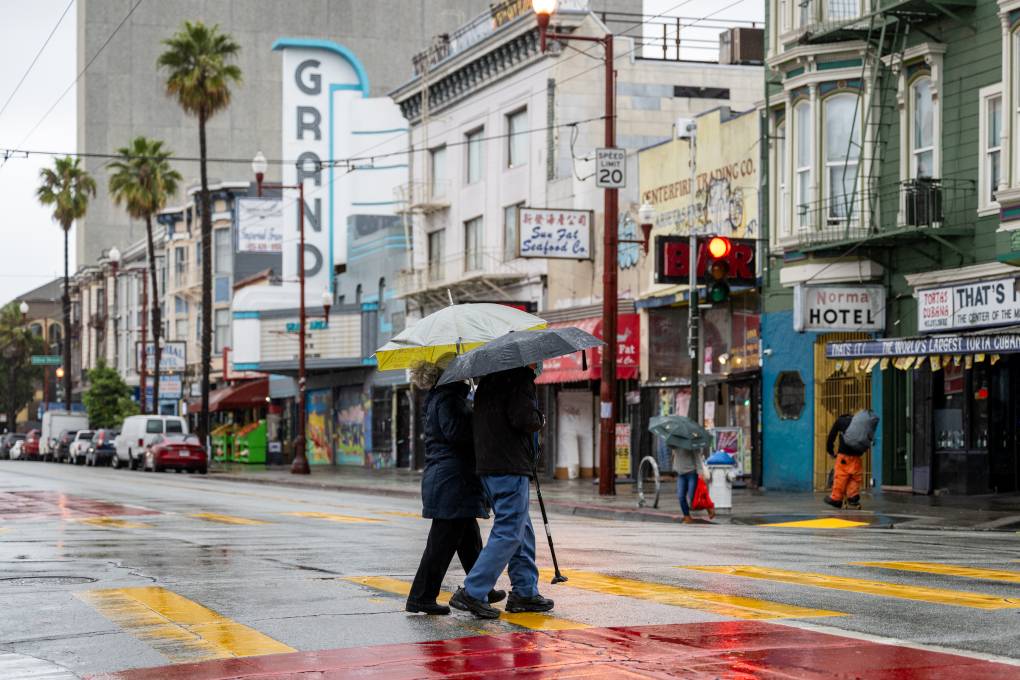
"content": "\u003cp>After some days of sunshine, the \u003ca href=\"https://www.kqed.org/news/12025965/storm-linked-2-sonoma-county-deaths-another-round-rain-hits-bay-area\">rains could return\u003c/a> Tuesday night. The week’s first storm will likely drop showers across the Bay Area before a second, much stronger atmospheric river hits late Wednesday through Friday.\u003c/p>\n\u003cp>The \u003ca href=\"https://www.kqed.org/science/1935067/rivers-in-the-sky-what-you-need-to-know-about-atmospheric-river-storms\">atmospheric river\u003c/a> is forecast to peak on Thursday, bringing high wind speeds and at least a couple of inches of rain to most areas. While heavy storms this winter have been concentrated in the North Bay, this one will also stretch farther south and reach most of the state.\u003c/p>\n\u003cp>“This is going to be probably one of the strongest events that we’ve seen outside of the North Bay so far this year,” said Dalton Behringer, a meteorologist for the National Weather Service. “Heavy rain and gusty wind is the main story here.”\u003c/p>\n\u003cp>[ad fullwidth]\u003c/p>\n\u003cp>The first, lighter storm this week will dampen soils — which are already saturated in many regions — and increase the flooding potential of the incoming atmospheric river.\u003c/p>\n\u003cp>The National Weather Service in San Francisco expects some shallow landslides as well as flooding in urban areas and small streams across the region. There’s also a chance that the rains could cause flash flooding and overtop the banks of large rivers. Wind gusts from the southwest could reach 30 mph on Thursday and up to double that in the mountains, threatening tree damage and power outages.\u003c/p>\n\u003cp>[aside postID=news_12026172 hero='https://cdn.kqed.org/wp-content/uploads/sites/10/2025/01/MossLandingFire1-1020x680.jpg']\u003c/p>\n\u003cp>The Santa Cruz and Santa Lucia mountains could see as much as 8 inches of rain before the end of the week. The Tahoe area has a projected 12 to 15 inches of snow, with even more expected on the highest peaks.\u003c/p>\n\u003cp>Southern Californians are also bracing for the greatest impacts of this same storm on Thursday. There, the projected rainfall threatens to cause landslides around areas with fresh wildfire burn scars.\u003c/p>\n\u003cp>Behringer warns residents not to be fooled by any break between storm systems this week.\u003c/p>\n\u003cp>“A lot of people are going to see the rain stop on Wednesday,” Behringer said. “But just keep in mind, the [storm] on Thursday is coming on [its] heels.”\u003c/p>\n\u003cp>The National Weather Service forecaster who wrote this week’s report for San Francisco added a personal note. The forecaster, a local high school track coach on the side, plans for the team to run through most of the rain but to certainly cancel practice on Thursday.\u003c/p>\n\u003cp>Saturday looks dry, but the rain could return as soon as Sunday.\u003c/p>\n\u003cp>\u003c/p>\n",
"blocks": [],
"excerpt": "The week’s first storm will likely drop showers across the Bay Area on Tuesday night before a second, much stronger atmospheric river hits late Wednesday through Friday.",
"status": "publish",
"parent": 0,
"modified": 1739233106,
"stats": {
"hasAudio": false,
"hasVideo": false,
"hasChartOrMap": false,
"iframeSrcs": [],
"hasGoogleForm": false,
"hasGallery": false,
"hasHearkenModule": false,
"hasPolis": false,
"paragraphCount": 14,
"wordCount": 433
},
"headData": {
"title": "California Rain to Return With 1 of Year’s Strongest Storms on the Way | KQED",
"description": "The week’s first storm will likely drop showers across the Bay Area on Tuesday night before a second, much stronger atmospheric river hits late Wednesday through Friday.",
"ogTitle": "",
"ogDescription": "",
"ogImgId": "",
"twTitle": "",
"twDescription": "",
"twImgId": "",
"schema": {
"@context": "https://schema.org",
"@type": "NewsArticle",
"headline": "California Rain to Return With 1 of Year’s Strongest Storms on the Way",
"datePublished": "2025-02-11T04:00:15-08:00",
"dateModified": "2025-02-10T16:18:26-08:00",
"image": "https://cdn.kqed.org/wp-content/uploads/2020/02/KQED-OG-Image@1x.png",
"isAccessibleForFree": "True",
"publisher": {
"@type": "NewsMediaOrganization",
"@id": "https://www.kqed.org/#organization",
"name": "KQED",
"logo": "https://cdn.kqed.org/wp-content/uploads/2020/02/KQED-OG-Image@1x.png",
"url": "https://www.kqed.org",
"sameAs": [
"https://www.facebook.com/KQED",
"https://twitter.com/KQED",
"https://www.instagram.com/kqed/",
"https://www.tiktok.com/@kqedofficial",
"https://www.linkedin.com/company/kqed",
"https://www.youtube.com/channel/UCeC0IOo7i1P_61zVUWbJ4nw"
]
}
}
},
"sticky": false,
"nprByline": "Anna FitzGerald Guth",
"excludeFromSiteSearch": "Include",
"showOnAuthorArchivePages": "No",
"articleAge": "0",
"path": "/news/12026524/california-rain-return-with-one-of-years-strongest-storms-on-the-way",
"audioTrackLength": null,
"parsedContent": [
{
"type": "contentString",
"content": "\u003cdiv class=\"post-body\">\u003cp>\u003cp>After some days of sunshine, the \u003ca href=\"https://www.kqed.org/news/12025965/storm-linked-2-sonoma-county-deaths-another-round-rain-hits-bay-area\">rains could return\u003c/a> Tuesday night. The week’s first storm will likely drop showers across the Bay Area before a second, much stronger atmospheric river hits late Wednesday through Friday.\u003c/p>\n\u003cp>The \u003ca href=\"https://www.kqed.org/science/1935067/rivers-in-the-sky-what-you-need-to-know-about-atmospheric-river-storms\">atmospheric river\u003c/a> is forecast to peak on Thursday, bringing high wind speeds and at least a couple of inches of rain to most areas. While heavy storms this winter have been concentrated in the North Bay, this one will also stretch farther south and reach most of the state.\u003c/p>\n\u003cp>“This is going to be probably one of the strongest events that we’ve seen outside of the North Bay so far this year,” said Dalton Behringer, a meteorologist for the National Weather Service. “Heavy rain and gusty wind is the main story here.”\u003c/p>\n\u003cp>\u003c/p>\u003c/div>",
"attributes": {
"named": {},
"numeric": []
}
},
{
"type": "component",
"content": "",
"name": "ad",
"attributes": {
"named": {
"label": "fullwidth"
},
"numeric": [
"fullwidth"
]
}
},
{
"type": "contentString",
"content": "\u003cdiv class=\"post-body\">\u003cp>\u003c/p>\n\u003cp>The first, lighter storm this week will dampen soils — which are already saturated in many regions — and increase the flooding potential of the incoming atmospheric river.\u003c/p>\n\u003cp>The National Weather Service in San Francisco expects some shallow landslides as well as flooding in urban areas and small streams across the region. There’s also a chance that the rains could cause flash flooding and overtop the banks of large rivers. Wind gusts from the southwest could reach 30 mph on Thursday and up to double that in the mountains, threatening tree damage and power outages.\u003c/p>\n\u003cp>\u003c/p>\u003c/div>",
"attributes": {
"named": {},
"numeric": []
}
},
{
"type": "component",
"content": "",
"name": "aside",
"attributes": {
"named": {
"postid": "news_12026172",
"hero": "https://cdn.kqed.org/wp-content/uploads/sites/10/2025/01/MossLandingFire1-1020x680.jpg",
"label": ""
},
"numeric": []
}
},
{
"type": "contentString",
"content": "\u003cdiv class=\"post-body\">\u003cp>\u003c/p>\n\u003cp>The Santa Cruz and Santa Lucia mountains could see as much as 8 inches of rain before the end of the week. The Tahoe area has a projected 12 to 15 inches of snow, with even more expected on the highest peaks.\u003c/p>\n\u003cp>Southern Californians are also bracing for the greatest impacts of this same storm on Thursday. There, the projected rainfall threatens to cause landslides around areas with fresh wildfire burn scars.\u003c/p>\n\u003cp>Behringer warns residents not to be fooled by any break between storm systems this week.\u003c/p>\n\u003cp>“A lot of people are going to see the rain stop on Wednesday,” Behringer said. “But just keep in mind, the [storm] on Thursday is coming on [its] heels.”\u003c/p>\n\u003cp>The National Weather Service forecaster who wrote this week’s report for San Francisco added a personal note. The forecaster, a local high school track coach on the side, plans for the team to run through most of the rain but to certainly cancel practice on Thursday.\u003c/p>\n\u003cp>Saturday looks dry, but the rain could return as soon as Sunday.\u003c/p>\n\u003cp>\u003c/p>\n\u003c/div>\u003c/p>",
"attributes": {
"named": {},
"numeric": []
}
}
],
"link": "/news/12026524/california-rain-return-with-one-of-years-strongest-storms-on-the-way",
"authors": [
"byline_news_12026524"
],
"categories": [
"news_8"
],
"tags": [
"news_20061",
"news_1386",
"news_19204",
"news_255",
"news_28199",
"news_30125",
"news_38",
"news_3"
],
"featImg": "news_12025691",
"label": "news"
},
"news_12025747": {
"type": "posts",
"id": "news_12025747",
"meta": {
"index": "posts_1716263798",
"site": "news",
"id": "12025747",
"score": null,
"sort": [
1739223397000
]
},
"guestAuthors": [],
"slug": "barbara-lee-return-5000-donations-from-family-linked-oakland-bribery-scandal",
"title": "Barbara Lee to Return $5,000 in Donations From Family Linked to Oakland Bribery Scandal",
"publishDate": 1739223397,
"format": "standard",
"headTitle": "Barbara Lee to Return $5,000 in Donations From Family Linked to Oakland Bribery Scandal | KQED",
"labelTerm": {
"site": "news"
},
"content": "\u003cp>Campaign finance records show former East Bay Rep. and Oakland mayoral candidate \u003ca href=\"https://www.kqed.org/news/tag/barbara-lee\">Barbara Lee\u003c/a> received tens of thousands of dollars in campaign donations during her years in Congress from a family whose members stand accused in a \u003ca href=\"https://www.kqed.org/news/12022612/ex-oakland-mayor-sheng-thao-3-others-charged-with-bribery-sprawling-corruption-probe\">federal indictment of bribing Oakland’s former mayor\u003c/a>.\u003c/p>\n\u003cp>David Duong and his son, Andy Duong, were charged on Jan. 9 in \u003ca href=\"https://www.justice.gov/usao-ndca/media/1385311/dl?inline\">an eight-count indictment\u003c/a> with bribery, conspiracy and honest services mail and wire fraud in an alleged pay-to-play scheme between the Duongs, former \u003ca href=\"https://www.kqed.org/news/tag/sheng-thao\">Mayor Sheng Thao\u003c/a>, who was recalled in last year’s election, and her boyfriend, Andre Jones.\u003c/p>\n\u003cp>David Duong is the CEO of California Waste Solutions, Oakland’s curbside recycling provider. The company has a contract with the city of Oakland through 2035.\u003c/p>\n\u003cp>[ad fullwidth]\u003c/p>\n\u003cp>Lee, who is running to be mayor of Oakland in an April 15 special election, served in Congress for more than 25 years before retiring and announcing her candidacy last month. A spokesperson for Lee, who opened her campaign headquarters in downtown Oakland on Saturday, said she planned to donate the most recent contributions from David Duong to Meals on Wheels.\u003c/p>\n\u003cp>“Barbara Lee has zero tolerance for any pay to play or special interest influence, has denounced these disturbing allegations, and has never been involved in any City vendor selection or contract issuance — and she fully supports strengthening City ethics practices,” Bilen Mesfin, a spokesperson for Lee’s mayoral campaign, told KQED Feb. 6. “As her final congressional term has reached its natural conclusion, her previous congressional accounts are now closed.”\u003c/p>\n\u003cfigure id=\"attachment_12026401\" class=\"wp-caption aligncenter\" style=\"max-width: 2000px\">\u003cimg loading=\"lazy\" decoding=\"async\" class=\"wp-image-12026401 size-full\" src=\"https://cdn.kqed.org/wp-content/uploads/sites/10/2025/02/20250208_Barbara-Lee_DMB_00494.jpg\" alt=\"\" width=\"2000\" height=\"1333\" srcset=\"https://cdn.kqed.org/wp-content/uploads/sites/10/2025/02/20250208_Barbara-Lee_DMB_00494.jpg 2000w, https://cdn.kqed.org/wp-content/uploads/sites/10/2025/02/20250208_Barbara-Lee_DMB_00494-800x533.jpg 800w, https://cdn.kqed.org/wp-content/uploads/sites/10/2025/02/20250208_Barbara-Lee_DMB_00494-1020x680.jpg 1020w, https://cdn.kqed.org/wp-content/uploads/sites/10/2025/02/20250208_Barbara-Lee_DMB_00494-160x107.jpg 160w, https://cdn.kqed.org/wp-content/uploads/sites/10/2025/02/20250208_Barbara-Lee_DMB_00494-1536x1024.jpg 1536w, https://cdn.kqed.org/wp-content/uploads/sites/10/2025/02/20250208_Barbara-Lee_DMB_00494-1920x1280.jpg 1920w\" sizes=\"auto, (max-width: 2000px) 100vw, 2000px\">\u003cfigcaption class=\"wp-caption-text\">Former Repr. Barbara Lee speaks to the crowd as Councilmember Janani Ramachandran, right, addresses the room at the grand opening of her campaign headquarters on Broadway in downtown Oakland, California, on Saturday, Feb. 8, 2025. \u003ccite>(David M. Barreda/KQED)\u003c/cite>\u003c/figcaption>\u003c/figure>\n\u003cp>Over the past two decades, the Duongs have been prolific donors to political campaigns and elected officials at the local, state and federal levels. Some politicians have returned those donations as an FBI investigation involving the Duongs has come into focus.\u003c/p>\n\u003cp>Federal campaign finance data show that since 1998, David Duong, Andy Duong and other members of the Duong family have contributed at least $66,250 to Lee. Most recently, David Duong contributed $5,000 to Lee’s unsuccessful run for Senate.\u003c/p>\n\u003cp>“As for the $5000 donated to her senate campaign in 2023, Barbara Lee is donating that to Meals on Wheels,” Mesfin said in a follow-up email on Feb. 7, hours before Lee’s campaign launch in downtown Oakland.\u003c/p>\n\u003cp>In a room full of supporters at her new campaign headquarters on Saturday, Lee spoke of regaining public trust.\u003c/p>\n\u003cp>“We’ve got to make sure that all of the issues around ethics and transparency, the gaps are closed in this city. Because we have to restore trust and confidence with our residents,” Lee said.\u003c/p>\n\u003cfigure id=\"attachment_11991432\" class=\"wp-caption aligncenter\" style=\"max-width: 2000px\">\u003cimg loading=\"lazy\" decoding=\"async\" class=\"size-full wp-image-11991432\" src=\"https://cdn.kqed.org/wp-content/uploads/sites/10/2024/06/GETTYIMAGES-2158502017-KQED.jpg\" alt=\"\" width=\"2000\" height=\"1334\" srcset=\"https://cdn.kqed.org/wp-content/uploads/sites/10/2024/06/GETTYIMAGES-2158502017-KQED.jpg 2000w, https://cdn.kqed.org/wp-content/uploads/sites/10/2024/06/GETTYIMAGES-2158502017-KQED-800x534.jpg 800w, https://cdn.kqed.org/wp-content/uploads/sites/10/2024/06/GETTYIMAGES-2158502017-KQED-1020x680.jpg 1020w, https://cdn.kqed.org/wp-content/uploads/sites/10/2024/06/GETTYIMAGES-2158502017-KQED-160x107.jpg 160w, https://cdn.kqed.org/wp-content/uploads/sites/10/2024/06/GETTYIMAGES-2158502017-KQED-1536x1025.jpg 1536w, https://cdn.kqed.org/wp-content/uploads/sites/10/2024/06/GETTYIMAGES-2158502017-KQED-1920x1281.jpg 1920w\" sizes=\"auto, (max-width: 2000px) 100vw, 2000px\">\u003cfigcaption class=\"wp-caption-text\">U.S. postal inspectors check documents at a home tied to David Duong, one of the multiple properties searched by law enforcement that included residences to members of a politically connected family who run the citys contracted recycling company, California Waste Solutions, in Oakland on June 20, 2024. \u003ccite>(Ray Chavez/MediaNews Group/The Mercury News via Getty Images)\u003c/cite>\u003c/figcaption>\u003c/figure>\n\u003cp>Campaign finance records released so far do not show Lee has received donations from the Duongs during her run for mayor, and the past donations themselves are not an indication of wrongdoing.\u003c/p>\n\u003cp>“I would say that the Duongs are long-standing donors to Lee, often giving at the maximum allowed,” said Brendan Glavin, director of insights at OpenSecrets, which tracks money in politics.\u003c/p>\n\u003cp>Glavin reviewed campaign finance data for Barbara Lee’s political campaigns since 1998 at KQED’s request.\u003c/p>\n\u003cp>Federal election finance documents show that Lee’s congressional campaign committee was \u003ca href=\"https://docquery.fec.gov/pdf/389/202411050300227389/202411050300227389.pdf\">terminated as of November\u003c/a>. However, a committee for Lee’s Senate run, which remains open, had $48,791.98 cash on hand and $91,035.13 in debts as of Dec. 31, according to the most recent data available.\u003c/p>\n\u003cp>Federal prosecutors allege that David and Andy Duong financed negative political mailers targeting Thao’s opponents in the 2022 mayoral election and that following the election, the Duongs and a person identified as “co-conspirator 1” paid $95,000 to Jones for a no-show job. The unnamed co-conspirator appears to be local businessman and political operative Mario Juarez.\u003c/p>\n\u003cfigure id=\"attachment_12022840\" class=\"wp-caption aligncenter\" style=\"max-width: 2000px\">\u003cimg loading=\"lazy\" decoding=\"async\" class=\"size-full wp-image-12022840\" src=\"https://cdn.kqed.org/wp-content/uploads/sites/10/2025/01/20250117_Thao-Recall_BL_00009.jpg\" alt=\"\" width=\"2000\" height=\"1334\" srcset=\"https://cdn.kqed.org/wp-content/uploads/sites/10/2025/01/20250117_Thao-Recall_BL_00009.jpg 2000w, https://cdn.kqed.org/wp-content/uploads/sites/10/2025/01/20250117_Thao-Recall_BL_00009-800x534.jpg 800w, https://cdn.kqed.org/wp-content/uploads/sites/10/2025/01/20250117_Thao-Recall_BL_00009-1020x680.jpg 1020w, https://cdn.kqed.org/wp-content/uploads/sites/10/2025/01/20250117_Thao-Recall_BL_00009-160x107.jpg 160w, https://cdn.kqed.org/wp-content/uploads/sites/10/2025/01/20250117_Thao-Recall_BL_00009-1536x1025.jpg 1536w, https://cdn.kqed.org/wp-content/uploads/sites/10/2025/01/20250117_Thao-Recall_BL_00009-1920x1281.jpg 1920w\" sizes=\"auto, (max-width: 2000px) 100vw, 2000px\">\u003cfigcaption class=\"wp-caption-text\">Andre Jones, longtime partner of former Oakland Mayor Sheng Thao, leaves the Ronald V. Dellums Federal Building and U.S. Courthouse in Oakland, Friday, Jan. 17, 2025. \u003ccite>(Beth LaBerge/KQED)\u003c/cite>\u003c/figcaption>\u003c/figure>\n\u003cp>In exchange, Thao allegedly promised to extend the Duongs’ recycling company’s contract with the city, give the Duongs and the co-conspirator influence over city appointments and use public money to purchase housing units from another company owned by the Duongs and the co-conspirator, according to the indictment.\u003c/p>\n\u003cp>In a \u003ca href=\"https://x.com/lorenmtaylor/status/1887565988570513462\">post on social media platform X on Thursday\u003c/a>, former Oakland City Councilmember Loren Taylor, one of Lee’s opponents in the mayor’s race, said the scandal had caused the public to lose trust in Oakland city government and pressed Lee to return the donations.\u003c/p>\n\u003cp>“I’m calling on all East Bay officials — including my opponent in the upcoming special election, Former Congresswoman Barbara Lee — who have received money from the Duong family to donate those funds to charity,” Taylor said. “We must demonstrate to residents that we have learned from these events and that the public can trust us to lead Oakland during the difficult time that lies ahead.”\u003c/p>\n\u003cp>According to campaign finance records, the Duongs have donated to politicians at almost every level of government for years.\u003c/p>\n\u003cp>State campaign finance data show members of the family have contributed often to big-name Democrats like Rob and Mia Bonta, Jerry Brown and Kamala Harris, while David Duong has donated to both Democrats and Republicans at the federal level, including $250,000 to a committee called Trump Victory in 2020.\u003c/p>\n\u003cfigure id=\"attachment_12026374\" class=\"wp-caption aligncenter\" style=\"max-width: 2000px\">\u003cimg loading=\"lazy\" decoding=\"async\" class=\"size-full wp-image-12026374\" src=\"https://cdn.kqed.org/wp-content/uploads/sites/10/2025/02/20250208_Barbara-Lee_DMB_00434.jpg\" alt=\"\" width=\"2000\" height=\"1333\" srcset=\"https://cdn.kqed.org/wp-content/uploads/sites/10/2025/02/20250208_Barbara-Lee_DMB_00434.jpg 2000w, https://cdn.kqed.org/wp-content/uploads/sites/10/2025/02/20250208_Barbara-Lee_DMB_00434-800x533.jpg 800w, https://cdn.kqed.org/wp-content/uploads/sites/10/2025/02/20250208_Barbara-Lee_DMB_00434-1020x680.jpg 1020w, https://cdn.kqed.org/wp-content/uploads/sites/10/2025/02/20250208_Barbara-Lee_DMB_00434-160x107.jpg 160w, https://cdn.kqed.org/wp-content/uploads/sites/10/2025/02/20250208_Barbara-Lee_DMB_00434-1536x1024.jpg 1536w, https://cdn.kqed.org/wp-content/uploads/sites/10/2025/02/20250208_Barbara-Lee_DMB_00434-1920x1280.jpg 1920w\" sizes=\"auto, (max-width: 2000px) 100vw, 2000px\">\u003cfigcaption class=\"wp-caption-text\">Former Rep. Barbara Lee, center right, receives a welcome hug from Oakland District 4 Councilmember Janani Ramachandran at the grand opening of the Barbara Lee Campaign Headquarters on Broadway in downtown Oakland, California, on Saturday, Feb. 8, 2025. \u003ccite>(David M. Barreda/KQED)\u003c/cite>\u003c/figcaption>\u003c/figure>\n\u003cp>In 2021, California’s Fair Political Practices Commission produced a report in support of a finding of probable cause alleging that Andy Duong, between at least 2016 and 2018, \u003ca href=\"https://www.kqed.org/news/11991426/oakland-fbi-raids-also-targeted-this-powerful-family-heres-what-we-know\">orchestrated an elaborate campaign contribution laundering scheme\u003c/a> for the benefit of California Waste Solutions.\u003c/p>\n\u003cp>The report describes how Duong allegedly sought out people to write campaign contribution checks and then reimbursed them with cash to bypass campaign donation limits while CWS had ongoing business with Oakland.\u003c/p>\n\u003cp>According to the report, Duong allegedly provided committees and candidates with checks at campaign fundraisers.\u003c/p>\n\u003cp>“While Duong and CWS concealed the true source of the contributions, Duong ensured the targeted candidates were aware of his commitment to raise money for their campaign by attending candidate fundraisers, bringing individuals to campaign fundraisers, and at times hosting campaign fundraisers,” the report reads.\u003c/p>\n\u003cp>The case is still open and under investigation, a spokesperson for FPPC said.\u003c/p>\n\u003cfigure id=\"attachment_12026396\" class=\"wp-caption aligncenter\" style=\"max-width: 2000px\">\u003cimg loading=\"lazy\" decoding=\"async\" class=\"size-full wp-image-12026396\" src=\"https://cdn.kqed.org/wp-content/uploads/sites/10/2025/02/20250208_Barbara-Lee_DMB_00076.jpg\" alt=\"\" width=\"2000\" height=\"1333\" srcset=\"https://cdn.kqed.org/wp-content/uploads/sites/10/2025/02/20250208_Barbara-Lee_DMB_00076.jpg 2000w, https://cdn.kqed.org/wp-content/uploads/sites/10/2025/02/20250208_Barbara-Lee_DMB_00076-800x533.jpg 800w, https://cdn.kqed.org/wp-content/uploads/sites/10/2025/02/20250208_Barbara-Lee_DMB_00076-1020x680.jpg 1020w, https://cdn.kqed.org/wp-content/uploads/sites/10/2025/02/20250208_Barbara-Lee_DMB_00076-160x107.jpg 160w, https://cdn.kqed.org/wp-content/uploads/sites/10/2025/02/20250208_Barbara-Lee_DMB_00076-1536x1024.jpg 1536w, https://cdn.kqed.org/wp-content/uploads/sites/10/2025/02/20250208_Barbara-Lee_DMB_00076-1920x1280.jpg 1920w\" sizes=\"auto, (max-width: 2000px) 100vw, 2000px\">\u003cfigcaption class=\"wp-caption-text\">Campaign door hangers are on display at the grand opening of the headquarters for the Barbara Lee campaign headquarters on Broadway in downtown Oakland, California, on Saturday, Feb. 8, 2025. \u003ccite>(David M. Barreda/KQED)\u003c/cite>\u003c/figcaption>\u003c/figure>\n\u003cp>It was opened as a joint investigation with the Oakland Public Ethics Commission, which the FBI credited at a January press conference for the initial information that led to the agency’s multiyear investigation of Thao, Jones and the Duongs.\u003c/p>\n\u003cp>Last year, after the FBI raided Thao’s home and three addresses associated with the Duongs and their business, several elected officials returned donations they received from the Duongs, including California Attorney General Rob Bonta.\u003c/p>\n\u003cp>Bonta returned $155,100 “out of an abundance of caution,” according to then-spokesperson Nathan Click.\u003c/p>\n\u003cp>South Bay Congressman Ro Khanna donated $5,800 in contributions from the Duongs to Second Harvest of Silicon Valley, Silicon Valley Youth Climate Action, Maitri and Community Seva, a spokesperson for the congressman said.\u003c/p>\n\u003cp>[aside postID=news_12022900 hero='https://cdn.kqed.org/wp-content/uploads/sites/10/2025/01/20250117_Thao-Recall_BL_00001-1020x681.jpg']\u003c/p>\n\u003cp>A spokesperson for then-Senate candidate Adam Schiff’s campaign \u003ca href=\"https://sanjosespotlight.com/silicon-valley-san-jose-politicians-give-back-donations-following-fbi-raids-david-duong-california-waste-solutions/\">told the \u003cem>San José Spotlight\u003c/em>\u003c/a> last year that “following public news reports, the campaign will be giving $26,000 — the total contributions received from Mr. Duong and his family — to a local nonprofit helping address housing and homelessness.”\u003c/p>\n\u003cp>KQED’s review of campaign finance records at the city, state and federal level did not uncover documentation of other candidates in the current Oakland mayors’ race receiving donations from the Duongs in the past.\u003c/p>\n\u003cp>“I would say that almost anyone else in local politics who wants to reassure their constituents that they are clean and above board should consider doing the same thing,” said Dan Schnur, professor of political communication at USC and UC Berkeley and the former chair of California’s Fair Political Practices Commission. “It sounds like the Lee campaign decided that avoiding unnecessary bad publicity is more valuable than the $5,000. That is a wise decision.”\u003c/p>\n\u003cp>Numerous photos posted to Andy Duong’s Instagram account show him posing with major Democratic politicians at the state and federal level, including Hillary Clinton, Rob Bonta, Harris and Gov. Gavin Newsom.\u003c/p>\n\u003cp>Both Taylor and Lee also appear in photos posted to the account. In a \u003ca href=\"https://www.instagram.com/p/BsXKPmcAvGN/?img_index=3\">Jan. 7, 2019 post\u003c/a>, Thao, Taylor and former Oakland City Councilmember Nikki Fortunato Bas, now an Alameda County supervisor, appear in selfies with Andy Duong.\u003c/p>\n\u003cp>“That was when the three of us — Nikki Bas, myself and Sheng Thao — were inaugurated. That was when we were first sworn into office as new council members,” Taylor said. “So there was a lot of photos being taken with a lot of people that I didn’t know.”\u003c/p>\n\u003cp>Taylor said that after Bonta returned donations from the Duongs, his staff reviewed their campaign financial records.\u003c/p>\n\u003cp>“As far as I know, I have never received any financial contributions from the Duong family,” Taylor said.\u003c/p>\n\u003cp>A spokesperson for Lee’s campaign did not respond to questions about the extent and nature of her relationship with members of the Duong family.\u003c/p>\n\u003cp>In a \u003ca href=\"https://www.instagram.com/p/BVvmt3Zgf3f/?hl=en\">June 24, 2017\u003c/a> photo, Andy Duong appears next to Lee at her home.\u003c/p>\n\u003cp>Six days later, campaign finance records show, he contributed $2,700 to Lee’s reelection campaign.\u003c/p>\n\u003cp>[ad floatright]\u003c/p>\n",
"blocks": [],
"excerpt": "Lee, who represented the East Bay in Congress for 25 years, opened her mayoral campaign headquarters in downtown Oakland on Saturday. ",
"status": "publish",
"parent": 0,
"modified": 1739227849,
"stats": {
"hasAudio": false,
"hasVideo": false,
"hasChartOrMap": false,
"iframeSrcs": [],
"hasGoogleForm": false,
"hasGallery": false,
"hasHearkenModule": false,
"hasPolis": false,
"paragraphCount": 43,
"wordCount": 1791
},
"headData": {
"title": "Barbara Lee to Return $5,000 in Donations From Family Linked to Oakland Bribery Scandal | KQED",
"description": "Lee, who represented the East Bay in Congress for 25 years, opened her mayoral campaign headquarters in downtown Oakland on Saturday. ",
"ogTitle": "",
"ogDescription": "",
"ogImgId": "",
"twTitle": "",
"twDescription": "",
"twImgId": "",
"schema": {
"@context": "https://schema.org",
"@type": "NewsArticle",
"headline": "Barbara Lee to Return $5,000 in Donations From Family Linked to Oakland Bribery Scandal",
"datePublished": "2025-02-10T13:36:37-08:00",
"dateModified": "2025-02-10T14:50:49-08:00",
"image": "https://cdn.kqed.org/wp-content/uploads/2020/02/KQED-OG-Image@1x.png",
"isAccessibleForFree": "True",
"publisher": {
"@type": "NewsMediaOrganization",
"@id": "https://www.kqed.org/#organization",
"name": "KQED",
"logo": "https://cdn.kqed.org/wp-content/uploads/2020/02/KQED-OG-Image@1x.png",
"url": "https://www.kqed.org",
"sameAs": [
"https://www.facebook.com/KQED",
"https://twitter.com/KQED",
"https://www.instagram.com/kqed/",
"https://www.tiktok.com/@kqedofficial",
"https://www.linkedin.com/company/kqed",
"https://www.youtube.com/channel/UCeC0IOo7i1P_61zVUWbJ4nw"
]
}
}
},
"sticky": false,
"nprStoryId": "kqed-12025747",
"excludeFromSiteSearch": "Include",
"articleAge": "0",
"path": "/news/12025747/barbara-lee-return-5000-donations-from-family-linked-oakland-bribery-scandal",
"audioTrackLength": null,
"parsedContent": [
{
"type": "contentString",
"content": "\u003cdiv class=\"post-body\">\u003cp>\u003cp>Campaign finance records show former East Bay Rep. and Oakland mayoral candidate \u003ca href=\"https://www.kqed.org/news/tag/barbara-lee\">Barbara Lee\u003c/a> received tens of thousands of dollars in campaign donations during her years in Congress from a family whose members stand accused in a \u003ca href=\"https://www.kqed.org/news/12022612/ex-oakland-mayor-sheng-thao-3-others-charged-with-bribery-sprawling-corruption-probe\">federal indictment of bribing Oakland’s former mayor\u003c/a>.\u003c/p>\n\u003cp>David Duong and his son, Andy Duong, were charged on Jan. 9 in \u003ca href=\"https://www.justice.gov/usao-ndca/media/1385311/dl?inline\">an eight-count indictment\u003c/a> with bribery, conspiracy and honest services mail and wire fraud in an alleged pay-to-play scheme between the Duongs, former \u003ca href=\"https://www.kqed.org/news/tag/sheng-thao\">Mayor Sheng Thao\u003c/a>, who was recalled in last year’s election, and her boyfriend, Andre Jones.\u003c/p>\n\u003cp>David Duong is the CEO of California Waste Solutions, Oakland’s curbside recycling provider. The company has a contract with the city of Oakland through 2035.\u003c/p>\n\u003cp>\u003c/p>\u003c/div>",
"attributes": {
"named": {},
"numeric": []
}
},
{
"type": "component",
"content": "",
"name": "ad",
"attributes": {
"named": {
"label": "fullwidth"
},
"numeric": [
"fullwidth"
]
}
},
{
"type": "contentString",
"content": "\u003cdiv class=\"post-body\">\u003cp>\u003c/p>\n\u003cp>Lee, who is running to be mayor of Oakland in an April 15 special election, served in Congress for more than 25 years before retiring and announcing her candidacy last month. A spokesperson for Lee, who opened her campaign headquarters in downtown Oakland on Saturday, said she planned to donate the most recent contributions from David Duong to Meals on Wheels.\u003c/p>\n\u003cp>“Barbara Lee has zero tolerance for any pay to play or special interest influence, has denounced these disturbing allegations, and has never been involved in any City vendor selection or contract issuance — and she fully supports strengthening City ethics practices,” Bilen Mesfin, a spokesperson for Lee’s mayoral campaign, told KQED Feb. 6. “As her final congressional term has reached its natural conclusion, her previous congressional accounts are now closed.”\u003c/p>\n\u003cfigure id=\"attachment_12026401\" class=\"wp-caption aligncenter\" style=\"max-width: 2000px\">\u003cimg loading=\"lazy\" decoding=\"async\" class=\"wp-image-12026401 size-full\" src=\"https://cdn.kqed.org/wp-content/uploads/sites/10/2025/02/20250208_Barbara-Lee_DMB_00494.jpg\" alt=\"\" width=\"2000\" height=\"1333\" srcset=\"https://cdn.kqed.org/wp-content/uploads/sites/10/2025/02/20250208_Barbara-Lee_DMB_00494.jpg 2000w, https://cdn.kqed.org/wp-content/uploads/sites/10/2025/02/20250208_Barbara-Lee_DMB_00494-800x533.jpg 800w, https://cdn.kqed.org/wp-content/uploads/sites/10/2025/02/20250208_Barbara-Lee_DMB_00494-1020x680.jpg 1020w, https://cdn.kqed.org/wp-content/uploads/sites/10/2025/02/20250208_Barbara-Lee_DMB_00494-160x107.jpg 160w, https://cdn.kqed.org/wp-content/uploads/sites/10/2025/02/20250208_Barbara-Lee_DMB_00494-1536x1024.jpg 1536w, https://cdn.kqed.org/wp-content/uploads/sites/10/2025/02/20250208_Barbara-Lee_DMB_00494-1920x1280.jpg 1920w\" sizes=\"auto, (max-width: 2000px) 100vw, 2000px\">\u003cfigcaption class=\"wp-caption-text\">Former Repr. Barbara Lee speaks to the crowd as Councilmember Janani Ramachandran, right, addresses the room at the grand opening of her campaign headquarters on Broadway in downtown Oakland, California, on Saturday, Feb. 8, 2025. \u003ccite>(David M. Barreda/KQED)\u003c/cite>\u003c/figcaption>\u003c/figure>\n\u003cp>Over the past two decades, the Duongs have been prolific donors to political campaigns and elected officials at the local, state and federal levels. Some politicians have returned those donations as an FBI investigation involving the Duongs has come into focus.\u003c/p>\n\u003cp>Federal campaign finance data show that since 1998, David Duong, Andy Duong and other members of the Duong family have contributed at least $66,250 to Lee. Most recently, David Duong contributed $5,000 to Lee’s unsuccessful run for Senate.\u003c/p>\n\u003cp>“As for the $5000 donated to her senate campaign in 2023, Barbara Lee is donating that to Meals on Wheels,” Mesfin said in a follow-up email on Feb. 7, hours before Lee’s campaign launch in downtown Oakland.\u003c/p>\n\u003cp>In a room full of supporters at her new campaign headquarters on Saturday, Lee spoke of regaining public trust.\u003c/p>\n\u003cp>“We’ve got to make sure that all of the issues around ethics and transparency, the gaps are closed in this city. Because we have to restore trust and confidence with our residents,” Lee said.\u003c/p>\n\u003cfigure id=\"attachment_11991432\" class=\"wp-caption aligncenter\" style=\"max-width: 2000px\">\u003cimg loading=\"lazy\" decoding=\"async\" class=\"size-full wp-image-11991432\" src=\"https://cdn.kqed.org/wp-content/uploads/sites/10/2024/06/GETTYIMAGES-2158502017-KQED.jpg\" alt=\"\" width=\"2000\" height=\"1334\" srcset=\"https://cdn.kqed.org/wp-content/uploads/sites/10/2024/06/GETTYIMAGES-2158502017-KQED.jpg 2000w, https://cdn.kqed.org/wp-content/uploads/sites/10/2024/06/GETTYIMAGES-2158502017-KQED-800x534.jpg 800w, https://cdn.kqed.org/wp-content/uploads/sites/10/2024/06/GETTYIMAGES-2158502017-KQED-1020x680.jpg 1020w, https://cdn.kqed.org/wp-content/uploads/sites/10/2024/06/GETTYIMAGES-2158502017-KQED-160x107.jpg 160w, https://cdn.kqed.org/wp-content/uploads/sites/10/2024/06/GETTYIMAGES-2158502017-KQED-1536x1025.jpg 1536w, https://cdn.kqed.org/wp-content/uploads/sites/10/2024/06/GETTYIMAGES-2158502017-KQED-1920x1281.jpg 1920w\" sizes=\"auto, (max-width: 2000px) 100vw, 2000px\">\u003cfigcaption class=\"wp-caption-text\">U.S. postal inspectors check documents at a home tied to David Duong, one of the multiple properties searched by law enforcement that included residences to members of a politically connected family who run the citys contracted recycling company, California Waste Solutions, in Oakland on June 20, 2024. \u003ccite>(Ray Chavez/MediaNews Group/The Mercury News via Getty Images)\u003c/cite>\u003c/figcaption>\u003c/figure>\n\u003cp>Campaign finance records released so far do not show Lee has received donations from the Duongs during her run for mayor, and the past donations themselves are not an indication of wrongdoing.\u003c/p>\n\u003cp>“I would say that the Duongs are long-standing donors to Lee, often giving at the maximum allowed,” said Brendan Glavin, director of insights at OpenSecrets, which tracks money in politics.\u003c/p>\n\u003cp>Glavin reviewed campaign finance data for Barbara Lee’s political campaigns since 1998 at KQED’s request.\u003c/p>\n\u003cp>Federal election finance documents show that Lee’s congressional campaign committee was \u003ca href=\"https://docquery.fec.gov/pdf/389/202411050300227389/202411050300227389.pdf\">terminated as of November\u003c/a>. However, a committee for Lee’s Senate run, which remains open, had $48,791.98 cash on hand and $91,035.13 in debts as of Dec. 31, according to the most recent data available.\u003c/p>\n\u003cp>Federal prosecutors allege that David and Andy Duong financed negative political mailers targeting Thao’s opponents in the 2022 mayoral election and that following the election, the Duongs and a person identified as “co-conspirator 1” paid $95,000 to Jones for a no-show job. The unnamed co-conspirator appears to be local businessman and political operative Mario Juarez.\u003c/p>\n\u003cfigure id=\"attachment_12022840\" class=\"wp-caption aligncenter\" style=\"max-width: 2000px\">\u003cimg loading=\"lazy\" decoding=\"async\" class=\"size-full wp-image-12022840\" src=\"https://cdn.kqed.org/wp-content/uploads/sites/10/2025/01/20250117_Thao-Recall_BL_00009.jpg\" alt=\"\" width=\"2000\" height=\"1334\" srcset=\"https://cdn.kqed.org/wp-content/uploads/sites/10/2025/01/20250117_Thao-Recall_BL_00009.jpg 2000w, https://cdn.kqed.org/wp-content/uploads/sites/10/2025/01/20250117_Thao-Recall_BL_00009-800x534.jpg 800w, https://cdn.kqed.org/wp-content/uploads/sites/10/2025/01/20250117_Thao-Recall_BL_00009-1020x680.jpg 1020w, https://cdn.kqed.org/wp-content/uploads/sites/10/2025/01/20250117_Thao-Recall_BL_00009-160x107.jpg 160w, https://cdn.kqed.org/wp-content/uploads/sites/10/2025/01/20250117_Thao-Recall_BL_00009-1536x1025.jpg 1536w, https://cdn.kqed.org/wp-content/uploads/sites/10/2025/01/20250117_Thao-Recall_BL_00009-1920x1281.jpg 1920w\" sizes=\"auto, (max-width: 2000px) 100vw, 2000px\">\u003cfigcaption class=\"wp-caption-text\">Andre Jones, longtime partner of former Oakland Mayor Sheng Thao, leaves the Ronald V. Dellums Federal Building and U.S. Courthouse in Oakland, Friday, Jan. 17, 2025. \u003ccite>(Beth LaBerge/KQED)\u003c/cite>\u003c/figcaption>\u003c/figure>\n\u003cp>In exchange, Thao allegedly promised to extend the Duongs’ recycling company’s contract with the city, give the Duongs and the co-conspirator influence over city appointments and use public money to purchase housing units from another company owned by the Duongs and the co-conspirator, according to the indictment.\u003c/p>\n\u003cp>In a \u003ca href=\"https://x.com/lorenmtaylor/status/1887565988570513462\">post on social media platform X on Thursday\u003c/a>, former Oakland City Councilmember Loren Taylor, one of Lee’s opponents in the mayor’s race, said the scandal had caused the public to lose trust in Oakland city government and pressed Lee to return the donations.\u003c/p>\n\u003cp>“I’m calling on all East Bay officials — including my opponent in the upcoming special election, Former Congresswoman Barbara Lee — who have received money from the Duong family to donate those funds to charity,” Taylor said. “We must demonstrate to residents that we have learned from these events and that the public can trust us to lead Oakland during the difficult time that lies ahead.”\u003c/p>\n\u003cp>According to campaign finance records, the Duongs have donated to politicians at almost every level of government for years.\u003c/p>\n\u003cp>State campaign finance data show members of the family have contributed often to big-name Democrats like Rob and Mia Bonta, Jerry Brown and Kamala Harris, while David Duong has donated to both Democrats and Republicans at the federal level, including $250,000 to a committee called Trump Victory in 2020.\u003c/p>\n\u003cfigure id=\"attachment_12026374\" class=\"wp-caption aligncenter\" style=\"max-width: 2000px\">\u003cimg loading=\"lazy\" decoding=\"async\" class=\"size-full wp-image-12026374\" src=\"https://cdn.kqed.org/wp-content/uploads/sites/10/2025/02/20250208_Barbara-Lee_DMB_00434.jpg\" alt=\"\" width=\"2000\" height=\"1333\" srcset=\"https://cdn.kqed.org/wp-content/uploads/sites/10/2025/02/20250208_Barbara-Lee_DMB_00434.jpg 2000w, https://cdn.kqed.org/wp-content/uploads/sites/10/2025/02/20250208_Barbara-Lee_DMB_00434-800x533.jpg 800w, https://cdn.kqed.org/wp-content/uploads/sites/10/2025/02/20250208_Barbara-Lee_DMB_00434-1020x680.jpg 1020w, https://cdn.kqed.org/wp-content/uploads/sites/10/2025/02/20250208_Barbara-Lee_DMB_00434-160x107.jpg 160w, https://cdn.kqed.org/wp-content/uploads/sites/10/2025/02/20250208_Barbara-Lee_DMB_00434-1536x1024.jpg 1536w, https://cdn.kqed.org/wp-content/uploads/sites/10/2025/02/20250208_Barbara-Lee_DMB_00434-1920x1280.jpg 1920w\" sizes=\"auto, (max-width: 2000px) 100vw, 2000px\">\u003cfigcaption class=\"wp-caption-text\">Former Rep. Barbara Lee, center right, receives a welcome hug from Oakland District 4 Councilmember Janani Ramachandran at the grand opening of the Barbara Lee Campaign Headquarters on Broadway in downtown Oakland, California, on Saturday, Feb. 8, 2025. \u003ccite>(David M. Barreda/KQED)\u003c/cite>\u003c/figcaption>\u003c/figure>\n\u003cp>In 2021, California’s Fair Political Practices Commission produced a report in support of a finding of probable cause alleging that Andy Duong, between at least 2016 and 2018, \u003ca href=\"https://www.kqed.org/news/11991426/oakland-fbi-raids-also-targeted-this-powerful-family-heres-what-we-know\">orchestrated an elaborate campaign contribution laundering scheme\u003c/a> for the benefit of California Waste Solutions.\u003c/p>\n\u003cp>The report describes how Duong allegedly sought out people to write campaign contribution checks and then reimbursed them with cash to bypass campaign donation limits while CWS had ongoing business with Oakland.\u003c/p>\n\u003cp>According to the report, Duong allegedly provided committees and candidates with checks at campaign fundraisers.\u003c/p>\n\u003cp>“While Duong and CWS concealed the true source of the contributions, Duong ensured the targeted candidates were aware of his commitment to raise money for their campaign by attending candidate fundraisers, bringing individuals to campaign fundraisers, and at times hosting campaign fundraisers,” the report reads.\u003c/p>\n\u003cp>The case is still open and under investigation, a spokesperson for FPPC said.\u003c/p>\n\u003cfigure id=\"attachment_12026396\" class=\"wp-caption aligncenter\" style=\"max-width: 2000px\">\u003cimg loading=\"lazy\" decoding=\"async\" class=\"size-full wp-image-12026396\" src=\"https://cdn.kqed.org/wp-content/uploads/sites/10/2025/02/20250208_Barbara-Lee_DMB_00076.jpg\" alt=\"\" width=\"2000\" height=\"1333\" srcset=\"https://cdn.kqed.org/wp-content/uploads/sites/10/2025/02/20250208_Barbara-Lee_DMB_00076.jpg 2000w, https://cdn.kqed.org/wp-content/uploads/sites/10/2025/02/20250208_Barbara-Lee_DMB_00076-800x533.jpg 800w, https://cdn.kqed.org/wp-content/uploads/sites/10/2025/02/20250208_Barbara-Lee_DMB_00076-1020x680.jpg 1020w, https://cdn.kqed.org/wp-content/uploads/sites/10/2025/02/20250208_Barbara-Lee_DMB_00076-160x107.jpg 160w, https://cdn.kqed.org/wp-content/uploads/sites/10/2025/02/20250208_Barbara-Lee_DMB_00076-1536x1024.jpg 1536w, https://cdn.kqed.org/wp-content/uploads/sites/10/2025/02/20250208_Barbara-Lee_DMB_00076-1920x1280.jpg 1920w\" sizes=\"auto, (max-width: 2000px) 100vw, 2000px\">\u003cfigcaption class=\"wp-caption-text\">Campaign door hangers are on display at the grand opening of the headquarters for the Barbara Lee campaign headquarters on Broadway in downtown Oakland, California, on Saturday, Feb. 8, 2025. \u003ccite>(David M. Barreda/KQED)\u003c/cite>\u003c/figcaption>\u003c/figure>\n\u003cp>It was opened as a joint investigation with the Oakland Public Ethics Commission, which the FBI credited at a January press conference for the initial information that led to the agency’s multiyear investigation of Thao, Jones and the Duongs.\u003c/p>\n\u003cp>Last year, after the FBI raided Thao’s home and three addresses associated with the Duongs and their business, several elected officials returned donations they received from the Duongs, including California Attorney General Rob Bonta.\u003c/p>\n\u003cp>Bonta returned $155,100 “out of an abundance of caution,” according to then-spokesperson Nathan Click.\u003c/p>\n\u003cp>South Bay Congressman Ro Khanna donated $5,800 in contributions from the Duongs to Second Harvest of Silicon Valley, Silicon Valley Youth Climate Action, Maitri and Community Seva, a spokesperson for the congressman said.\u003c/p>\n\u003cp>\u003c/p>\u003c/div>",
"attributes": {
"named": {},
"numeric": []
}
},
{
"type": "component",
"content": "",
"name": "aside",
"attributes": {
"named": {
"postid": "news_12022900",
"hero": "https://cdn.kqed.org/wp-content/uploads/sites/10/2025/01/20250117_Thao-Recall_BL_00001-1020x681.jpg",
"label": ""
},
"numeric": []
}
},
{
"type": "contentString",
"content": "\u003cdiv class=\"post-body\">\u003cp>\u003c/p>\n\u003cp>A spokesperson for then-Senate candidate Adam Schiff’s campaign \u003ca href=\"https://sanjosespotlight.com/silicon-valley-san-jose-politicians-give-back-donations-following-fbi-raids-david-duong-california-waste-solutions/\">told the \u003cem>San José Spotlight\u003c/em>\u003c/a> last year that “following public news reports, the campaign will be giving $26,000 — the total contributions received from Mr. Duong and his family — to a local nonprofit helping address housing and homelessness.”\u003c/p>\n\u003cp>KQED’s review of campaign finance records at the city, state and federal level did not uncover documentation of other candidates in the current Oakland mayors’ race receiving donations from the Duongs in the past.\u003c/p>\n\u003cp>“I would say that almost anyone else in local politics who wants to reassure their constituents that they are clean and above board should consider doing the same thing,” said Dan Schnur, professor of political communication at USC and UC Berkeley and the former chair of California’s Fair Political Practices Commission. “It sounds like the Lee campaign decided that avoiding unnecessary bad publicity is more valuable than the $5,000. That is a wise decision.”\u003c/p>\n\u003cp>Numerous photos posted to Andy Duong’s Instagram account show him posing with major Democratic politicians at the state and federal level, including Hillary Clinton, Rob Bonta, Harris and Gov. Gavin Newsom.\u003c/p>\n\u003cp>Both Taylor and Lee also appear in photos posted to the account. In a \u003ca href=\"https://www.instagram.com/p/BsXKPmcAvGN/?img_index=3\">Jan. 7, 2019 post\u003c/a>, Thao, Taylor and former Oakland City Councilmember Nikki Fortunato Bas, now an Alameda County supervisor, appear in selfies with Andy Duong.\u003c/p>\n\u003cp>“That was when the three of us — Nikki Bas, myself and Sheng Thao — were inaugurated. That was when we were first sworn into office as new council members,” Taylor said. “So there was a lot of photos being taken with a lot of people that I didn’t know.”\u003c/p>\n\u003cp>Taylor said that after Bonta returned donations from the Duongs, his staff reviewed their campaign financial records.\u003c/p>\n\u003cp>“As far as I know, I have never received any financial contributions from the Duong family,” Taylor said.\u003c/p>\n\u003cp>A spokesperson for Lee’s campaign did not respond to questions about the extent and nature of her relationship with members of the Duong family.\u003c/p>\n\u003cp>In a \u003ca href=\"https://www.instagram.com/p/BVvmt3Zgf3f/?hl=en\">June 24, 2017\u003c/a> photo, Andy Duong appears next to Lee at her home.\u003c/p>\n\u003cp>Six days later, campaign finance records show, he contributed $2,700 to Lee’s reelection campaign.\u003c/p>\n\u003cp>\u003c/p>\u003c/div>",
"attributes": {
"named": {},
"numeric": []
}
},
{
"type": "component",
"content": "",
"name": "ad",
"attributes": {
"named": {
"label": "floatright"
},
"numeric": [
"floatright"
]
}
},
{
"type": "contentString",
"content": "\u003cdiv class=\"post-body\">\u003cp>\u003c/p>\n\u003c/div>\u003c/p>",
"attributes": {
"named": {},
"numeric": []
}
}
],
"link": "/news/12025747/barbara-lee-return-5000-donations-from-family-linked-oakland-bribery-scandal",
"authors": [
"11490"
],
"categories": [
"news_31795",
"news_8",
"news_13"
],
"tags": [
"news_22185",
"news_1386",
"news_20118",
"news_19905",
"news_18352",
"news_34377",
"news_34054",
"news_34661",
"news_17968",
"news_21509"
],
"featImg": "news_12026400",
"label": "news"
},
"news_12025965": {
"type": "posts",
"id": "news_12025965",
"meta": {
"index": "posts_1716263798",
"site": "news",
"id": "12025965",
"score": null,
"sort": [
1738867124000
]
},
"guestAuthors": [],
"slug": "storm-linked-2-sonoma-county-deaths-another-round-rain-hits-bay-area",
"title": "Storm Linked to 2 Sonoma County Deaths as Another Round of Rain Hits Bay Area",
"publishDate": 1738867124,
"format": "standard",
"headTitle": "Storm Linked to 2 Sonoma County Deaths as Another Round of Rain Hits Bay Area | KQED",
"labelTerm": {
"site": "news"
},
"content": "\u003cp>Two storm-related deaths were reported in Sonoma County in the last 24 hours \u003ca href=\"https://www.kqed.org/news/12025777/north-bay-rivers-flood-after-storm-little-time-prepare-next-round-rain\">as rivers swelled\u003c/a> and another round of rain moved in, authorities said Thursday morning.\u003c/p>\n\u003cp>Around 4:40 p.m. Wednesday, deputies and firefighters responded to a report of a person dead in a culvert on the 7700 block of Franz Valley Road in Santa Rosa, the Sonoma County Sheriff’s Office \u003ca href=\"https://www.facebook.com/sonomasheriff/posts/pfbid0351U5AezHNj91ZMQU55zmPQBHKN4Jjp1Tk7w41iqeG73JZ6YooS51FS3mW7G9mCcal\">said in a social media post\u003c/a>. Fire personnel from the Northern Sonoma County Fire District removed his body.\u003c/p>\n\u003cp>Around 7 a.m. Thursday, deputies working with firefighters and the California National Guard recovered another body from the 5800 block of Hall Road in Santa Rosa.\u003c/p>\n\u003cp>[ad fullwidth]\u003c/p>\n\u003cp>Neither man’s identity was released pending notification of family.\u003c/p>\n\u003cp>The deaths were reported as another round of showers began to soak the Bay Area on Thursday, raising the risk of further flooding and landslides, particularly in the North Bay, where all schools in the Guerneville School District remained closed, and some homes in Santa Rosa and nearby areas were evacuated Wednesday.\u003c/p>\n\u003cp>After the Russian River and a few central Sonoma County creeks reached moderate flood levels on Wednesday morning, the Russian River at Guerneville had receded to the lower end of the minor flood zone when the rain began around 7 a.m. Thursday, according to the National Oceanic and Atmospheric Administration.\u003c/p>\n\u003cfigure id=\"attachment_11723283\" class=\"wp-caption aligncenter\" style=\"max-width: 1920px\">\u003cimg loading=\"lazy\" decoding=\"async\" class=\"size-full wp-image-11723283\" src=\"https://cdn.kqed.org/wp-content/uploads/sites/10/2019/02/GettyImages-631415386-e1549313950719.jpg\" alt=\"\" width=\"1920\" height=\"1280\">\u003cfigcaption class=\"wp-caption-text\">Cars drive on a flooded road in Guerneville in January 2017. The Russian River town is just downstream from Venado, a site in the northern Sonoma County hills that is one of the rainiest locations in California. On Tuesday, at least one school in Guerneville closed because of the storm, and Sonoma County alerted residents in multiple RV parks along the Russian River and creeks that flow into the waterway that flooding may occur. \u003ccite>(Justin Sullivan/Getty Images)\u003c/cite>\u003c/figcaption>\u003c/figure>\n\u003cp>Water levels are expected to continue to decrease throughout the day since the North Bay — which was hit hardest by the previous two storms — is expected to get just about an inch of rain while the East Bay and San Francisco pick up about a half-inch.\u003c/p>\n\u003cp>The storm won’t rival those \u003ca href=\"https://www.kqed.org/news/12025572/storm-stalls-over-bay-area-raising-risk-flooding-potential-tornado-warning\">earlier in the week\u003c/a>, but it could bring another inch or a few of rainfall and gusty winds up to 55 miles per hour as it sweeps over Northern California throughout the day.\u003c/p>\n\u003cp>[aside postID=news_12025777 hero='https://cdn.kqed.org/wp-content/uploads/sites/10/2025/02/250204-RainStorm-01-BL-1020x680.jpg']\u003c/p>\n\u003cp>The \u003ca href=\"https://www.kqed.org/news/tag/national-weather-service\">National Weather Service\u003c/a> is forecasting consistent precipitation throughout the day, trailing off late Thursday night. While showers should be moderate, meteorologist Roger Gass said there’s a slight thunderstorm risk in the afternoon.\u003c/p>\n\u003cp>“I would say there’s anywhere from 10%–15% [chance], so not very significant, but I wouldn’t rule out a rumble of thunder here and there,” he told KQED.\u003c/p>\n\u003cp>The South Bay could see the highest rainfall totals from Thursday’s storm.\u003c/p>\n\u003cp>“The biggest winners are going to be in the Santa Cruz Mountains and the Santa Lucia range, where we could see up to about 4 to 4 ½ inches,” Gass said. “In the Santa Cruz mountains, anywhere from 2 to 3 [inches].”\u003c/p>\n\u003cp>Winds could reach up to 50 mph at lower elevations, picking up in the afternoon and evening, and stronger gusts could hit higher elevation areas.\u003c/p>\n\u003cp>The weekend forecast looks clear, and there’s a 90%–100% chance of fresh snow in the Sierra for the ski-bound.\u003c/p>\n\u003cp>Next week, the National Weather Service expects a return of rain and unsettled conditions, which could last through most of the work week.\u003c/p>\n\u003cp>\u003c/p>\n",
"blocks": [],
"excerpt": "Two storm-related deaths were reported around Santa Rosa in the last 24 hours as rivers swelled and another round of rain moved in, authorities said Thursday morning.",
"status": "publish",
"parent": 0,
"modified": 1738868660,
"stats": {
"hasAudio": false,
"hasVideo": false,
"hasChartOrMap": false,
"iframeSrcs": [],
"hasGoogleForm": false,
"hasGallery": false,
"hasHearkenModule": false,
"hasPolis": false,
"paragraphCount": 18,
"wordCount": 617
},
"headData": {
"title": "Storm Linked to 2 Sonoma County Deaths as Another Round of Rain Hits Bay Area | KQED",
"description": "Two storm-related deaths were reported around Santa Rosa in the last 24 hours as rivers swelled and another round of rain moved in, authorities said Thursday morning.",
"ogTitle": "",
"ogDescription": "",
"ogImgId": "",
"twTitle": "",
"twDescription": "",
"twImgId": "",
"schema": {
"@context": "https://schema.org",
"@type": "NewsArticle",
"headline": "Storm Linked to 2 Sonoma County Deaths as Another Round of Rain Hits Bay Area",
"datePublished": "2025-02-06T10:38:44-08:00",
"dateModified": "2025-02-06T11:04:20-08:00",
"image": "https://cdn.kqed.org/wp-content/uploads/2020/02/KQED-OG-Image@1x.png",
"isAccessibleForFree": "True",
"publisher": {
"@type": "NewsMediaOrganization",
"@id": "https://www.kqed.org/#organization",
"name": "KQED",
"logo": "https://cdn.kqed.org/wp-content/uploads/2020/02/KQED-OG-Image@1x.png",
"url": "https://www.kqed.org",
"sameAs": [
"https://www.facebook.com/KQED",
"https://twitter.com/KQED",
"https://www.instagram.com/kqed/",
"https://www.tiktok.com/@kqedofficial",
"https://www.linkedin.com/company/kqed",
"https://www.youtube.com/channel/UCeC0IOo7i1P_61zVUWbJ4nw"
]
}
}
},
"sticky": false,
"nprStoryId": "kqed-12025965",
"excludeFromSiteSearch": "Include",
"articleAge": "0",
"path": "/news/12025965/storm-linked-2-sonoma-county-deaths-another-round-rain-hits-bay-area",
"audioTrackLength": null,
"parsedContent": [
{
"type": "contentString",
"content": "\u003cdiv class=\"post-body\">\u003cp>\u003cp>Two storm-related deaths were reported in Sonoma County in the last 24 hours \u003ca href=\"https://www.kqed.org/news/12025777/north-bay-rivers-flood-after-storm-little-time-prepare-next-round-rain\">as rivers swelled\u003c/a> and another round of rain moved in, authorities said Thursday morning.\u003c/p>\n\u003cp>Around 4:40 p.m. Wednesday, deputies and firefighters responded to a report of a person dead in a culvert on the 7700 block of Franz Valley Road in Santa Rosa, the Sonoma County Sheriff’s Office \u003ca href=\"https://www.facebook.com/sonomasheriff/posts/pfbid0351U5AezHNj91ZMQU55zmPQBHKN4Jjp1Tk7w41iqeG73JZ6YooS51FS3mW7G9mCcal\">said in a social media post\u003c/a>. Fire personnel from the Northern Sonoma County Fire District removed his body.\u003c/p>\n\u003cp>Around 7 a.m. Thursday, deputies working with firefighters and the California National Guard recovered another body from the 5800 block of Hall Road in Santa Rosa.\u003c/p>\n\u003cp>\u003c/p>\u003c/div>",
"attributes": {
"named": {},
"numeric": []
}
},
{
"type": "component",
"content": "",
"name": "ad",
"attributes": {
"named": {
"label": "fullwidth"
},
"numeric": [
"fullwidth"
]
}
},
{
"type": "contentString",
"content": "\u003cdiv class=\"post-body\">\u003cp>\u003c/p>\n\u003cp>Neither man’s identity was released pending notification of family.\u003c/p>\n\u003cp>The deaths were reported as another round of showers began to soak the Bay Area on Thursday, raising the risk of further flooding and landslides, particularly in the North Bay, where all schools in the Guerneville School District remained closed, and some homes in Santa Rosa and nearby areas were evacuated Wednesday.\u003c/p>\n\u003cp>After the Russian River and a few central Sonoma County creeks reached moderate flood levels on Wednesday morning, the Russian River at Guerneville had receded to the lower end of the minor flood zone when the rain began around 7 a.m. Thursday, according to the National Oceanic and Atmospheric Administration.\u003c/p>\n\u003cfigure id=\"attachment_11723283\" class=\"wp-caption aligncenter\" style=\"max-width: 1920px\">\u003cimg loading=\"lazy\" decoding=\"async\" class=\"size-full wp-image-11723283\" src=\"https://cdn.kqed.org/wp-content/uploads/sites/10/2019/02/GettyImages-631415386-e1549313950719.jpg\" alt=\"\" width=\"1920\" height=\"1280\">\u003cfigcaption class=\"wp-caption-text\">Cars drive on a flooded road in Guerneville in January 2017. The Russian River town is just downstream from Venado, a site in the northern Sonoma County hills that is one of the rainiest locations in California. On Tuesday, at least one school in Guerneville closed because of the storm, and Sonoma County alerted residents in multiple RV parks along the Russian River and creeks that flow into the waterway that flooding may occur. \u003ccite>(Justin Sullivan/Getty Images)\u003c/cite>\u003c/figcaption>\u003c/figure>\n\u003cp>Water levels are expected to continue to decrease throughout the day since the North Bay — which was hit hardest by the previous two storms — is expected to get just about an inch of rain while the East Bay and San Francisco pick up about a half-inch.\u003c/p>\n\u003cp>The storm won’t rival those \u003ca href=\"https://www.kqed.org/news/12025572/storm-stalls-over-bay-area-raising-risk-flooding-potential-tornado-warning\">earlier in the week\u003c/a>, but it could bring another inch or a few of rainfall and gusty winds up to 55 miles per hour as it sweeps over Northern California throughout the day.\u003c/p>\n\u003cp>\u003c/p>\u003c/div>",
"attributes": {
"named": {},
"numeric": []
}
},
{
"type": "component",
"content": "",
"name": "aside",
"attributes": {
"named": {
"postid": "news_12025777",
"hero": "https://cdn.kqed.org/wp-content/uploads/sites/10/2025/02/250204-RainStorm-01-BL-1020x680.jpg",
"label": ""
},
"numeric": []
}
},
{
"type": "contentString",
"content": "\u003cdiv class=\"post-body\">\u003cp>\u003c/p>\n\u003cp>The \u003ca href=\"https://www.kqed.org/news/tag/national-weather-service\">National Weather Service\u003c/a> is forecasting consistent precipitation throughout the day, trailing off late Thursday night. While showers should be moderate, meteorologist Roger Gass said there’s a slight thunderstorm risk in the afternoon.\u003c/p>\n\u003cp>“I would say there’s anywhere from 10%–15% [chance], so not very significant, but I wouldn’t rule out a rumble of thunder here and there,” he told KQED.\u003c/p>\n\u003cp>The South Bay could see the highest rainfall totals from Thursday’s storm.\u003c/p>\n\u003cp>“The biggest winners are going to be in the Santa Cruz Mountains and the Santa Lucia range, where we could see up to about 4 to 4 ½ inches,” Gass said. “In the Santa Cruz mountains, anywhere from 2 to 3 [inches].”\u003c/p>\n\u003cp>Winds could reach up to 50 mph at lower elevations, picking up in the afternoon and evening, and stronger gusts could hit higher elevation areas.\u003c/p>\n\u003cp>The weekend forecast looks clear, and there’s a 90%–100% chance of fresh snow in the Sierra for the ski-bound.\u003c/p>\n\u003cp>Next week, the National Weather Service expects a return of rain and unsettled conditions, which could last through most of the work week.\u003c/p>\n\u003cp>\u003c/p>\n\u003c/div>\u003c/p>",
"attributes": {
"named": {},
"numeric": []
}
}
],
"link": "/news/12025965/storm-linked-2-sonoma-county-deaths-another-round-rain-hits-bay-area",
"authors": [
"11913",
"11909"
],
"categories": [
"news_31795",
"news_34165",
"news_8"
],
"tags": [
"news_20061",
"news_1386",
"news_34945",
"news_18538",
"news_19204",
"news_255",
"news_27626",
"news_3431",
"news_3729",
"news_30125",
"news_4981"
],
"featImg": "news_12025967",
"label": "news"
},
"news_12025865": {
"type": "posts",
"id": "news_12025865",
"meta": {
"index": "posts_1716263798",
"site": "news",
"id": "12025865",
"score": null,
"sort": [
1738795426000
]
},
"guestAuthors": [],
"slug": "dennis-richmond-beloved-former-bay-area-news-anchor-dies-at-81",
"title": "Dennis Richmond, Beloved Former Bay Area News Anchor, Dies at 81",
"publishDate": 1738795426,
"format": "standard",
"headTitle": "Dennis Richmond, Beloved Former Bay Area News Anchor, Dies at 81 | KQED",
"labelTerm": {
"site": "news"
},
"content": "\u003cp>Dennis Richmond, the storied journalist who anchored KTVU’s 10 o’clock news for over 30 years with his trademark thick dark mustache and no-nonsense news delivery, died Wednesday, \u003ca href=\"https://www.ktvu.com/news/legendary-ktvu-anchor-dennis-richmond-dies\">according to the station\u003c/a>. He was 81.\u003c/p>\n\u003cp>If you grew up in the \u003ca href=\"https://www.kqed.org/news/tag/bay-area\">Bay Area\u003c/a> or have lived here for a while, then you probably know Richmond. Watching him was a nightly ritual for many — this reporter included.\u003c/p>\n\u003cp>“ Like many of our viewers, I grew up watching Dennis. My whole family watched Dennis. So when I was brought into work here, it was an incredible honor,” KTVU reporter Amber Lee said.\u003c/p>\n\u003cp>[ad fullwidth]\u003c/p>\n\u003cp>After serving in the Army, Richmond started his career at KTVU as a part-time clerk and typist in 1968, eventually becoming one of the nation’s first Black anchors of a major market TV newscast in 1976 — a position he would hold until he retired in 2008.\u003c/p>\n\u003cp>“To the Black community, he was hope; they could turn on the TV, and there was someone who identified with us,” retired KTVU photographer Bill Moore said.\u003c/p>\n\u003cp>Richmond’s steady news delivery was one of his trademarks.\u003c/p>\n\u003cfigure id=\"attachment_12025872\" class=\"wp-caption alignleft\" style=\"max-width: 800px\">\u003cimg loading=\"lazy\" decoding=\"async\" class=\"size-medium wp-image-12025872\" src=\"https://cdn.kqed.org/wp-content/uploads/sites/10/2025/02/dennis-richmond-3-1-800x526.jpg\" alt=\"\" width=\"800\" height=\"526\" srcset=\"https://cdn.kqed.org/wp-content/uploads/sites/10/2025/02/dennis-richmond-3-1-800x526.jpg 800w, https://cdn.kqed.org/wp-content/uploads/sites/10/2025/02/dennis-richmond-3-1-160x105.jpg 160w, https://cdn.kqed.org/wp-content/uploads/sites/10/2025/02/dennis-richmond-3-1.jpg 871w\" sizes=\"auto, (max-width: 800px) 100vw, 800px\">\u003cfigcaption class=\"wp-caption-text\">Legendary KTVU anchor Dennis Richmond, the face of Bay Area journalism for four decades, remained synonymous with Channel 2 long after his retirement. \u003ccite>(Courtesy of KTVU)\u003c/cite>\u003c/figcaption>\u003c/figure>\n\u003cp>“ I initially searched for an anchor voice, and I quickly decided that the best direction was just to be me,” Richmond said in a 2008 interview with KQED. “ When I started, that was during an era where everyone was doing ‘happy talks,’ and I thought it was the goofiest thing in the world. I’m just telling you what’s going on. My opinion is not involved. You won’t see me raising an eyebrow or making any kind of ‘tsk tsk’ noise or anything.”\u003c/p>\n\u003cp>Richmond was the face and voice many Bay Area residents turned to during the region’s most pressing times, including the assassination of San Francisco Mayor George Moscone and Supervisor Harvey Milk in 1978, the Jonestown Massacre that followed later that year, and the Oakland Hills firestorm of 1991.\u003c/p>\n\u003cp>Former colleagues praised his commitment to the highest standards of journalism.\u003c/p>\n\u003cp>“He was a tough bird, man,” said CNN anchor Sara Sidner, who worked with Richmond at KTVU earlier in her career. “ He was a stickler for really sticking with the facts and telling the best story that you possibly could with emotion, with honesty, with integrity. He made me a better journalist.”\u003c/p>\n\u003cp>After San Francisco Supervisor Dan White shot and killed Moscone and Milk, Richmond pulled no punches when interviewing White’s attorney.\u003c/p>\n\u003cfigure id=\"attachment_12025873\" class=\"wp-caption alignright\" style=\"max-width: 800px\">\u003cimg loading=\"lazy\" decoding=\"async\" class=\"size-medium wp-image-12025873\" src=\"https://cdn.kqed.org/wp-content/uploads/sites/10/2025/02/dennis-richmond-10-800x556.jpg\" alt=\"\" width=\"800\" height=\"556\" srcset=\"https://cdn.kqed.org/wp-content/uploads/sites/10/2025/02/dennis-richmond-10-800x556.jpg 800w, https://cdn.kqed.org/wp-content/uploads/sites/10/2025/02/dennis-richmond-10-160x111.jpg 160w, https://cdn.kqed.org/wp-content/uploads/sites/10/2025/02/dennis-richmond-10.jpg 870w\" sizes=\"auto, (max-width: 800px) 100vw, 800px\">\u003cfigcaption class=\"wp-caption-text\">Dennis Richmond, a steadfast presence at KTVU for four decades, was known for his no-nonsense approach and commitment to journalistic integrity. \u003ccite>(Courtesy of KTVU)\u003c/cite>\u003c/figcaption>\u003c/figure>\n\u003cp>“Other supervisors and perhaps other City Hall personnel do carry firearms presently and have carried them in the past,” White’s attorney, Doug Schmidt, said in defense of his client.\u003c/p>\n\u003cp>“Do you know if the other people who carry weapons also carry 10 extra rounds in their pockets?” \u003ca href=\"https://www.youtube.com/watch?v=QB78JMdPK_c&t=138s\">Richmond quipped back without hesitation. \u003c/a>\u003c/p>\n\u003cp>Richmond said retiring from KTVU was one of the most difficult decisions he ever made. At the time, he \u003ca href=\"https://www.youtube.com/watch?v=W7yDF0V__RU\">told longtime co-anchor Julie Haener\u003c/a> he had a message for his fans.\u003c/p>\n\u003cp>“I appreciate every moment that they have spent with us, and I will cherish those moments,” Richmond said.\u003c/p>\n\u003cp>After retirement, he moved to the Sierra foothills town of Grass Valley, California, where he enjoyed playing golf and tennis and occasionally dropped by the KTVU studio for a visit.\u003c/p>\n\u003cp>Richmond suffered a heart attack and fall in December. KTVU reports that he died in Grass Valley with his wife, Deborah, at his side.\u003c/p>\n\u003cp>He leaves behind his wife, daughter, stepson and generations of adoring Bay Area fans who remember his calm, strong presence, which they welcomed into their homes for years.\u003c/p>\n\u003cp>\u003cem>KQED’s \u003c/em>\u003ca href=\"https://www.kqed.org/author/ninathorsen\">\u003cem>Nina Thorsen\u003c/em>\u003c/a>\u003cem> contributed to this report.\u003c/em>\u003c/p>\n\u003cp>\u003c/p>\n",
"blocks": [],
"excerpt": "Fond remembrances poured in Wednesday for the storied KTVU journalist, who was one of the nation’s first Black major-market news anchors and worked at the station for four decades.",
"status": "publish",
"parent": 0,
"modified": 1738797321,
"stats": {
"hasAudio": false,
"hasVideo": false,
"hasChartOrMap": false,
"iframeSrcs": [],
"hasGoogleForm": false,
"hasGallery": false,
"hasHearkenModule": false,
"hasPolis": false,
"paragraphCount": 21,
"wordCount": 691
},
"headData": {
"title": "Dennis Richmond, Beloved Former Bay Area News Anchor, Dies at 81 | KQED",
"description": "Fond remembrances poured in Wednesday for the storied KTVU journalist, who was one of the nation’s first Black major-market news anchors and worked at the station for four decades.",
"ogTitle": "",
"ogDescription": "",
"ogImgId": "",
"twTitle": "",
"twDescription": "",
"twImgId": "",
"schema": {
"@context": "https://schema.org",
"@type": "NewsArticle",
"headline": "Dennis Richmond, Beloved Former Bay Area News Anchor, Dies at 81",
"datePublished": "2025-02-05T14:43:46-08:00",
"dateModified": "2025-02-05T15:15:21-08:00",
"image": "https://cdn.kqed.org/wp-content/uploads/2020/02/KQED-OG-Image@1x.png",
"isAccessibleForFree": "True",
"publisher": {
"@type": "NewsMediaOrganization",
"@id": "https://www.kqed.org/#organization",
"name": "KQED",
"logo": "https://cdn.kqed.org/wp-content/uploads/2020/02/KQED-OG-Image@1x.png",
"url": "https://www.kqed.org",
"sameAs": [
"https://www.facebook.com/KQED",
"https://twitter.com/KQED",
"https://www.instagram.com/kqed/",
"https://www.tiktok.com/@kqedofficial",
"https://www.linkedin.com/company/kqed",
"https://www.youtube.com/channel/UCeC0IOo7i1P_61zVUWbJ4nw"
]
}
}
},
"sticky": false,
"nprStoryId": "kqed-12025865",
"excludeFromSiteSearch": "Include",
"articleAge": "0",
"path": "/news/12025865/dennis-richmond-beloved-former-bay-area-news-anchor-dies-at-81",
"audioTrackLength": null,
"parsedContent": [
{
"type": "contentString",
"content": "\u003cdiv class=\"post-body\">\u003cp>\u003cp>Dennis Richmond, the storied journalist who anchored KTVU’s 10 o’clock news for over 30 years with his trademark thick dark mustache and no-nonsense news delivery, died Wednesday, \u003ca href=\"https://www.ktvu.com/news/legendary-ktvu-anchor-dennis-richmond-dies\">according to the station\u003c/a>. He was 81.\u003c/p>\n\u003cp>If you grew up in the \u003ca href=\"https://www.kqed.org/news/tag/bay-area\">Bay Area\u003c/a> or have lived here for a while, then you probably know Richmond. Watching him was a nightly ritual for many — this reporter included.\u003c/p>\n\u003cp>“ Like many of our viewers, I grew up watching Dennis. My whole family watched Dennis. So when I was brought into work here, it was an incredible honor,” KTVU reporter Amber Lee said.\u003c/p>\n\u003cp>\u003c/p>\u003c/div>",
"attributes": {
"named": {},
"numeric": []
}
},
{
"type": "component",
"content": "",
"name": "ad",
"attributes": {
"named": {
"label": "fullwidth"
},
"numeric": [
"fullwidth"
]
}
},
{
"type": "contentString",
"content": "\u003cdiv class=\"post-body\">\u003cp>\u003c/p>\n\u003cp>After serving in the Army, Richmond started his career at KTVU as a part-time clerk and typist in 1968, eventually becoming one of the nation’s first Black anchors of a major market TV newscast in 1976 — a position he would hold until he retired in 2008.\u003c/p>\n\u003cp>“To the Black community, he was hope; they could turn on the TV, and there was someone who identified with us,” retired KTVU photographer Bill Moore said.\u003c/p>\n\u003cp>Richmond’s steady news delivery was one of his trademarks.\u003c/p>\n\u003cfigure id=\"attachment_12025872\" class=\"wp-caption alignleft\" style=\"max-width: 800px\">\u003cimg loading=\"lazy\" decoding=\"async\" class=\"size-medium wp-image-12025872\" src=\"https://cdn.kqed.org/wp-content/uploads/sites/10/2025/02/dennis-richmond-3-1-800x526.jpg\" alt=\"\" width=\"800\" height=\"526\" srcset=\"https://cdn.kqed.org/wp-content/uploads/sites/10/2025/02/dennis-richmond-3-1-800x526.jpg 800w, https://cdn.kqed.org/wp-content/uploads/sites/10/2025/02/dennis-richmond-3-1-160x105.jpg 160w, https://cdn.kqed.org/wp-content/uploads/sites/10/2025/02/dennis-richmond-3-1.jpg 871w\" sizes=\"auto, (max-width: 800px) 100vw, 800px\">\u003cfigcaption class=\"wp-caption-text\">Legendary KTVU anchor Dennis Richmond, the face of Bay Area journalism for four decades, remained synonymous with Channel 2 long after his retirement. \u003ccite>(Courtesy of KTVU)\u003c/cite>\u003c/figcaption>\u003c/figure>\n\u003cp>“ I initially searched for an anchor voice, and I quickly decided that the best direction was just to be me,” Richmond said in a 2008 interview with KQED. “ When I started, that was during an era where everyone was doing ‘happy talks,’ and I thought it was the goofiest thing in the world. I’m just telling you what’s going on. My opinion is not involved. You won’t see me raising an eyebrow or making any kind of ‘tsk tsk’ noise or anything.”\u003c/p>\n\u003cp>Richmond was the face and voice many Bay Area residents turned to during the region’s most pressing times, including the assassination of San Francisco Mayor George Moscone and Supervisor Harvey Milk in 1978, the Jonestown Massacre that followed later that year, and the Oakland Hills firestorm of 1991.\u003c/p>\n\u003cp>Former colleagues praised his commitment to the highest standards of journalism.\u003c/p>\n\u003cp>“He was a tough bird, man,” said CNN anchor Sara Sidner, who worked with Richmond at KTVU earlier in her career. “ He was a stickler for really sticking with the facts and telling the best story that you possibly could with emotion, with honesty, with integrity. He made me a better journalist.”\u003c/p>\n\u003cp>After San Francisco Supervisor Dan White shot and killed Moscone and Milk, Richmond pulled no punches when interviewing White’s attorney.\u003c/p>\n\u003cfigure id=\"attachment_12025873\" class=\"wp-caption alignright\" style=\"max-width: 800px\">\u003cimg loading=\"lazy\" decoding=\"async\" class=\"size-medium wp-image-12025873\" src=\"https://cdn.kqed.org/wp-content/uploads/sites/10/2025/02/dennis-richmond-10-800x556.jpg\" alt=\"\" width=\"800\" height=\"556\" srcset=\"https://cdn.kqed.org/wp-content/uploads/sites/10/2025/02/dennis-richmond-10-800x556.jpg 800w, https://cdn.kqed.org/wp-content/uploads/sites/10/2025/02/dennis-richmond-10-160x111.jpg 160w, https://cdn.kqed.org/wp-content/uploads/sites/10/2025/02/dennis-richmond-10.jpg 870w\" sizes=\"auto, (max-width: 800px) 100vw, 800px\">\u003cfigcaption class=\"wp-caption-text\">Dennis Richmond, a steadfast presence at KTVU for four decades, was known for his no-nonsense approach and commitment to journalistic integrity. \u003ccite>(Courtesy of KTVU)\u003c/cite>\u003c/figcaption>\u003c/figure>\n\u003cp>“Other supervisors and perhaps other City Hall personnel do carry firearms presently and have carried them in the past,” White’s attorney, Doug Schmidt, said in defense of his client.\u003c/p>\n\u003cp>“Do you know if the other people who carry weapons also carry 10 extra rounds in their pockets?” \u003ca href=\"https://www.youtube.com/watch?v=QB78JMdPK_c&t=138s\">Richmond quipped back without hesitation. \u003c/a>\u003c/p>\n\u003cp>Richmond said retiring from KTVU was one of the most difficult decisions he ever made. At the time, he \u003ca href=\"https://www.youtube.com/watch?v=W7yDF0V__RU\">told longtime co-anchor Julie Haener\u003c/a> he had a message for his fans.\u003c/p>\n\u003cp>“I appreciate every moment that they have spent with us, and I will cherish those moments,” Richmond said.\u003c/p>\n\u003cp>After retirement, he moved to the Sierra foothills town of Grass Valley, California, where he enjoyed playing golf and tennis and occasionally dropped by the KTVU studio for a visit.\u003c/p>\n\u003cp>Richmond suffered a heart attack and fall in December. KTVU reports that he died in Grass Valley with his wife, Deborah, at his side.\u003c/p>\n\u003cp>He leaves behind his wife, daughter, stepson and generations of adoring Bay Area fans who remember his calm, strong presence, which they welcomed into their homes for years.\u003c/p>\n\u003cp>\u003cem>KQED’s \u003c/em>\u003ca href=\"https://www.kqed.org/author/ninathorsen\">\u003cem>Nina Thorsen\u003c/em>\u003c/a>\u003cem> contributed to this report.\u003c/em>\u003c/p>\n\u003cp>\u003c/p>\n\u003c/div>\u003c/p>",
"attributes": {
"named": {},
"numeric": []
}
}
],
"link": "/news/12025865/dennis-richmond-beloved-former-bay-area-news-anchor-dies-at-81",
"authors": [
"11785"
],
"categories": [
"news_31795",
"news_28250",
"news_8"
],
"tags": [
"news_1386",
"news_2670",
"news_779",
"news_22012",
"news_1773"
],
"featImg": "news_12025871",
"label": "news"
},
"news_12025777": {
"type": "posts",
"id": "news_12025777",
"meta": {
"index": "posts_1716263798",
"site": "news",
"id": "12025777",
"score": null,
"sort": [
1738790178000
]
},
"guestAuthors": [],
"slug": "north-bay-rivers-flood-after-storm-little-time-prepare-next-round-rain",
"title": "After Storm Floods Parts of North Bay, There’s Little Time to Prepare for More Rain",
"publishDate": 1738790178,
"format": "standard",
"headTitle": "After Storm Floods Parts of North Bay, There’s Little Time to Prepare for More Rain | KQED",
"labelTerm": {
"site": "news"
},
"content": "\u003cp>\u003cem>Updated 1:16 p.m. Wednesday\u003c/em>\u003c/p>\n\u003cp>The Russian River and other North Bay waterways have reached flood stages after \u003ca href=\"https://www.kqed.org/news/12025572/storm-stalls-over-bay-area-raising-risk-flooding-potential-tornado-warning\">Tuesday’s atmospheric river-fueled storm\u003c/a>, prompting evacuation orders and threatening many low-lying areas of Sonoma County.\u003c/p>\n\u003cp>Although Wednesday will bring a break from the rain, the rivers have been swollen after hours of downpour. According to the \u003ca href=\"https://www.kqed.org/news/tag/national-weather-service\">National Weather Service\u003c/a>, another wave of showers on Thursday could worsen the flooding and mudslide risk as days of wet weather wear on.\u003c/p>\n\u003cp>“Today is a lull or a break in the rainfall,” said Crystal Oudit, a meteorologist with the weather service’s Bay Area office. “The concern is that Thursday going into Friday, we’re going to get another push for rain, and because the soil’s already saturated, that can increase the risk of floods again.”\u003c/p>\n\u003cp>[ad fullwidth]\u003c/p>\n\u003cp>As of Wednesday morning, the Russian River at Guerneville had reached moderate flood levels, cresting at just over 36 feet around 8 a.m. It is expected to recede out of flood stage by the evening, but Oudit said a flood warning will remain in effect until Thursday morning.\u003c/p>\n\u003cp>Flood risk spurred evacuations of many trailer park communities along the banks of the lower Russian River near Guerneville and Healdsburg on Tuesday night. Sonoma County Supervisor Lynda Hopkins said the trailer parks and some apartments on both sides of the river around the unincorporated community can flood when the river hits 32 to 34 feet and was caught somewhat off guard by the evacuation order.\u003c/p>\n\u003cfigure id=\"attachment_11723283\" class=\"wp-caption aligncenter\" style=\"max-width: 1920px\">\u003cimg loading=\"lazy\" decoding=\"async\" class=\"size-full wp-image-11723283\" src=\"https://cdn.kqed.org/wp-content/uploads/sites/10/2019/02/GettyImages-631415386-e1549313950719.jpg\" alt=\"\" width=\"1920\" height=\"1280\">\u003cfigcaption class=\"wp-caption-text\">Cars drive on a flooded road in Guerneville in January 2017. The Russian River town is just downstream from Venado, a site in the northern Sonoma County hills that is one of the rainiest locations in California. On Tuesday, at least one school in Guerneville closed because of the storm, and Sonoma County alerted residents in multiple RV parks along the Russian River and creeks that flow into the waterway that flooding may occur. \u003ccite>(Justin Sullivan/Getty Images)\u003c/cite>\u003c/figcaption>\u003c/figure>\n\u003cp>She said historically, the National Oceanic and Atmospheric Administration overestimates flood risk and then reduces down, but has done the opposite before Sonoma’s last few major storms.\u003c/p>\n\u003cp>“That was, unfortunately, what happened yesterday was what [was expected to be] barely a flood actually wound up being a moderate flood stage for us in the lower Russian River,” she told KQED.\u003c/p>\n\u003cp>Steve Osborne, who lives off of residential Drake Road in Guerneville, said that even though houses in his area aren’t taking on water, they have been trapped by floodwaters since late Tuesday afternoon.\u003c/p>\n\u003cp>He said that when there’s a storm, it’s not uncommon for everyone who lives along the dead-end residential street, which has about a dozen offshoots, to get stuck because of an especially low spot as the road hits the on-ramp to the bridge that crosses the Russian River. It was sitting in about four feet of water midday Wednesday.\u003c/p>\n\u003cp>[aside postID=news_12025572 hero='https://cdn.kqed.org/wp-content/uploads/sites/10/2025/02/Russian-River-flooding-15_qed-1020x680.jpg']\u003c/p>\n\u003cp>“This is the only road out from all of the homes out here,” Osborne told KQED. He said that there isn’t much he thinks can be done to alleviate the issue, since it would require a lot of real estate and expensive renovation to lift the low-lying part of the road enough to avoid flood risk.\u003c/p>\n\u003cp>“Even when Guerneville itself isn’t impacted, this road will close because [it’s] at such a low point,” he said.\u003c/p>\n\u003cp>Osborne expects the flooding to go down enough to cross the road by Wednesday night, but if there are any showers in the afternoon, it could mean at least another day of being flooded in.\u003c/p>\n\u003cp>Creeks throughout central Sonoma County also reached moderate flood levels early Wednesday. Green Valley Creek at Martinelli Road and Colgan Creek near Sebastopol are both expected to follow a similar receding trend as the Russian River, but the risk remains high at Mark West Creek near Mirabel Heights, which is projected to crest above major flood levels. It had reached 65 feet as of 7:45 a.m., according to NWS observations.\u003c/p>\n\u003cp>In Napa, flood risk downtown at the Napa River was downgraded Wednesday morning after an earlier forecast projected major flooding risk. It hovered around 23.5 feet.\u003c/p>\n\u003cp>The flood gates on McKinstry Street near downtown’s Oxbow Market were closed by the Napa County Flood District and the city on Tuesday.\u003c/p>\n\u003cp>County spokesperson Linda Weinreich said that street teams were assessing mudslides that began overnight near Moore Creek Park in St. Helena and on Redwood Road near Oak Knoll and were trying to clear downed trees while there’s a break in the rain.\u003c/p>\n\u003cp>Since the forecast “shows that the rains are returning tomorrow — things, of course, could change — but it’s a good time to get sandbags,” she said. “And we want people also to sign up for emergency notifications.”\u003c/p>\n\u003cp>The return of rain on Thursday could bring downtown 1.5 inches more rainfall to Sonoma and Napa counties, according to Oudit. Gusty winds could knock down more trees and power lines, and more showers could exacerbate current road flooding and ponding near buildings.\u003c/p>\n\u003cp>“The challenge is that there’s not enough time to actually do anything,” Hopkins said. “I think that we’re all going to be waiting on pins and needles to see if that damage spreads.”\u003c/p>\n\u003cp>Resources for Sonoma County evacuees and people who experienced flooding will be available at the West County Services Center, known to locals as the Bank of America building in downtown Guerneville, in the coming days.\u003c/p>\n\u003cp>After the storm clears later this week, Hopkins said the county will look at how to better prepare for future storms. Her office has been working on safety and evacuation procedures with parks, trying to secure contracts with towing companies ahead of time, and looking for ways to give people longer warning windows.\u003c/p>\n\u003cp>The Forestville Youth Park, where many evacuees fled Tuesday, quickly reached capacity, so the county also opened its Guerneville park-and-ride for trailers. Hopkins said during greater floods, though, that location would be underwater.\u003c/p>\n\u003cp>“We also have to be careful if suddenly flood estimates are jumping up by a number of feet, then we run the risk of putting people in a place that could actually flood as well,” she said.\u003c/p>\n\u003cp>Mudslides, like a large one that damaged roads and carried an unoccupied home into the river in Forestville on Tuesday afternoon, are more challenging to prepare for.\u003c/p>\n\u003cp>“The reality is that we have a lot of homes that were built along old logging roads on extraordinarily steep slopes right next to the Russian River, which is one of the most powerful, sort of flashiest rivers,” Hopkins said. “When all of that water starts coming down, it can rise very, very quickly and have a tremendous amount of force. There’s not a whole lot that we can do.”\u003c/p>\n\u003cp>Hopkins said efforts will also shift to assessing damage and beginning eexpensive repairs — like to a road that fell into the Russian River during Tuesday’s mudslide — that need to be done before fire season in the spring.\u003c/p>\n\u003cp>“Those are critical evacuation routes during fire season and those kinds of projects — that kind of permitting — takes a really long time to actually get through,” she told KQED. “One of our biggest challenges is how can we deal with the flood damage in time to prepare for a wildfire season?”\u003c/p>\n\u003cp>[ad floatright]\u003c/p>\n",
"blocks": [],
"excerpt": "The Russian River and other waterways in Sonoma and Napa counties have been swollen by the atmospheric river-fueled storm, prompting evacuation orders and threatening low-lying areas.",
"status": "publish",
"parent": 0,
"modified": 1738790192,
"stats": {
"hasAudio": false,
"hasVideo": false,
"hasChartOrMap": false,
"iframeSrcs": [],
"hasGoogleForm": false,
"hasGallery": false,
"hasHearkenModule": false,
"hasPolis": false,
"paragraphCount": 31,
"wordCount": 1307
},
"headData": {
"title": "After Storm Floods Parts of North Bay, There’s Little Time to Prepare for More Rain | KQED",
"description": "The Russian River and other waterways in Sonoma and Napa counties have been swollen by the atmospheric river-fueled storm, prompting evacuation orders and threatening low-lying areas.",
"ogTitle": "",
"ogDescription": "",
"ogImgId": "",
"twTitle": "",
"twDescription": "",
"twImgId": "",
"schema": {
"@context": "https://schema.org",
"@type": "NewsArticle",
"headline": "After Storm Floods Parts of North Bay, There’s Little Time to Prepare for More Rain",
"datePublished": "2025-02-05T13:16:18-08:00",
"dateModified": "2025-02-05T13:16:32-08:00",
"image": "https://cdn.kqed.org/wp-content/uploads/2020/02/KQED-OG-Image@1x.png",
"isAccessibleForFree": "True",
"publisher": {
"@type": "NewsMediaOrganization",
"@id": "https://www.kqed.org/#organization",
"name": "KQED",
"logo": "https://cdn.kqed.org/wp-content/uploads/2020/02/KQED-OG-Image@1x.png",
"url": "https://www.kqed.org",
"sameAs": [
"https://www.facebook.com/KQED",
"https://twitter.com/KQED",
"https://www.instagram.com/kqed/",
"https://www.tiktok.com/@kqedofficial",
"https://www.linkedin.com/company/kqed",
"https://www.youtube.com/channel/UCeC0IOo7i1P_61zVUWbJ4nw"
]
}
}
},
"sticky": false,
"nprStoryId": "kqed-12025777",
"excludeFromSiteSearch": "Include",
"articleAge": "0",
"path": "/news/12025777/north-bay-rivers-flood-after-storm-little-time-prepare-next-round-rain",
"audioTrackLength": null,
"parsedContent": [
{
"type": "contentString",
"content": "\u003cdiv class=\"post-body\">\u003cp>\u003cp>\u003cem>Updated 1:16 p.m. Wednesday\u003c/em>\u003c/p>\n\u003cp>The Russian River and other North Bay waterways have reached flood stages after \u003ca href=\"https://www.kqed.org/news/12025572/storm-stalls-over-bay-area-raising-risk-flooding-potential-tornado-warning\">Tuesday’s atmospheric river-fueled storm\u003c/a>, prompting evacuation orders and threatening many low-lying areas of Sonoma County.\u003c/p>\n\u003cp>Although Wednesday will bring a break from the rain, the rivers have been swollen after hours of downpour. According to the \u003ca href=\"https://www.kqed.org/news/tag/national-weather-service\">National Weather Service\u003c/a>, another wave of showers on Thursday could worsen the flooding and mudslide risk as days of wet weather wear on.\u003c/p>\n\u003cp>“Today is a lull or a break in the rainfall,” said Crystal Oudit, a meteorologist with the weather service’s Bay Area office. “The concern is that Thursday going into Friday, we’re going to get another push for rain, and because the soil’s already saturated, that can increase the risk of floods again.”\u003c/p>\n\u003cp>\u003c/p>\u003c/div>",
"attributes": {
"named": {},
"numeric": []
}
},
{
"type": "component",
"content": "",
"name": "ad",
"attributes": {
"named": {
"label": "fullwidth"
},
"numeric": [
"fullwidth"
]
}
},
{
"type": "contentString",
"content": "\u003cdiv class=\"post-body\">\u003cp>\u003c/p>\n\u003cp>As of Wednesday morning, the Russian River at Guerneville had reached moderate flood levels, cresting at just over 36 feet around 8 a.m. It is expected to recede out of flood stage by the evening, but Oudit said a flood warning will remain in effect until Thursday morning.\u003c/p>\n\u003cp>Flood risk spurred evacuations of many trailer park communities along the banks of the lower Russian River near Guerneville and Healdsburg on Tuesday night. Sonoma County Supervisor Lynda Hopkins said the trailer parks and some apartments on both sides of the river around the unincorporated community can flood when the river hits 32 to 34 feet and was caught somewhat off guard by the evacuation order.\u003c/p>\n\u003cfigure id=\"attachment_11723283\" class=\"wp-caption aligncenter\" style=\"max-width: 1920px\">\u003cimg loading=\"lazy\" decoding=\"async\" class=\"size-full wp-image-11723283\" src=\"https://cdn.kqed.org/wp-content/uploads/sites/10/2019/02/GettyImages-631415386-e1549313950719.jpg\" alt=\"\" width=\"1920\" height=\"1280\">\u003cfigcaption class=\"wp-caption-text\">Cars drive on a flooded road in Guerneville in January 2017. The Russian River town is just downstream from Venado, a site in the northern Sonoma County hills that is one of the rainiest locations in California. On Tuesday, at least one school in Guerneville closed because of the storm, and Sonoma County alerted residents in multiple RV parks along the Russian River and creeks that flow into the waterway that flooding may occur. \u003ccite>(Justin Sullivan/Getty Images)\u003c/cite>\u003c/figcaption>\u003c/figure>\n\u003cp>She said historically, the National Oceanic and Atmospheric Administration overestimates flood risk and then reduces down, but has done the opposite before Sonoma’s last few major storms.\u003c/p>\n\u003cp>“That was, unfortunately, what happened yesterday was what [was expected to be] barely a flood actually wound up being a moderate flood stage for us in the lower Russian River,” she told KQED.\u003c/p>\n\u003cp>Steve Osborne, who lives off of residential Drake Road in Guerneville, said that even though houses in his area aren’t taking on water, they have been trapped by floodwaters since late Tuesday afternoon.\u003c/p>\n\u003cp>He said that when there’s a storm, it’s not uncommon for everyone who lives along the dead-end residential street, which has about a dozen offshoots, to get stuck because of an especially low spot as the road hits the on-ramp to the bridge that crosses the Russian River. It was sitting in about four feet of water midday Wednesday.\u003c/p>\n\u003cp>\u003c/p>\u003c/div>",
"attributes": {
"named": {},
"numeric": []
}
},
{
"type": "component",
"content": "",
"name": "aside",
"attributes": {
"named": {
"postid": "news_12025572",
"hero": "https://cdn.kqed.org/wp-content/uploads/sites/10/2025/02/Russian-River-flooding-15_qed-1020x680.jpg",
"label": ""
},
"numeric": []
}
},
{
"type": "contentString",
"content": "\u003cdiv class=\"post-body\">\u003cp>\u003c/p>\n\u003cp>“This is the only road out from all of the homes out here,” Osborne told KQED. He said that there isn’t much he thinks can be done to alleviate the issue, since it would require a lot of real estate and expensive renovation to lift the low-lying part of the road enough to avoid flood risk.\u003c/p>\n\u003cp>“Even when Guerneville itself isn’t impacted, this road will close because [it’s] at such a low point,” he said.\u003c/p>\n\u003cp>Osborne expects the flooding to go down enough to cross the road by Wednesday night, but if there are any showers in the afternoon, it could mean at least another day of being flooded in.\u003c/p>\n\u003cp>Creeks throughout central Sonoma County also reached moderate flood levels early Wednesday. Green Valley Creek at Martinelli Road and Colgan Creek near Sebastopol are both expected to follow a similar receding trend as the Russian River, but the risk remains high at Mark West Creek near Mirabel Heights, which is projected to crest above major flood levels. It had reached 65 feet as of 7:45 a.m., according to NWS observations.\u003c/p>\n\u003cp>In Napa, flood risk downtown at the Napa River was downgraded Wednesday morning after an earlier forecast projected major flooding risk. It hovered around 23.5 feet.\u003c/p>\n\u003cp>The flood gates on McKinstry Street near downtown’s Oxbow Market were closed by the Napa County Flood District and the city on Tuesday.\u003c/p>\n\u003cp>County spokesperson Linda Weinreich said that street teams were assessing mudslides that began overnight near Moore Creek Park in St. Helena and on Redwood Road near Oak Knoll and were trying to clear downed trees while there’s a break in the rain.\u003c/p>\n\u003cp>Since the forecast “shows that the rains are returning tomorrow — things, of course, could change — but it’s a good time to get sandbags,” she said. “And we want people also to sign up for emergency notifications.”\u003c/p>\n\u003cp>The return of rain on Thursday could bring downtown 1.5 inches more rainfall to Sonoma and Napa counties, according to Oudit. Gusty winds could knock down more trees and power lines, and more showers could exacerbate current road flooding and ponding near buildings.\u003c/p>\n\u003cp>“The challenge is that there’s not enough time to actually do anything,” Hopkins said. “I think that we’re all going to be waiting on pins and needles to see if that damage spreads.”\u003c/p>\n\u003cp>Resources for Sonoma County evacuees and people who experienced flooding will be available at the West County Services Center, known to locals as the Bank of America building in downtown Guerneville, in the coming days.\u003c/p>\n\u003cp>After the storm clears later this week, Hopkins said the county will look at how to better prepare for future storms. Her office has been working on safety and evacuation procedures with parks, trying to secure contracts with towing companies ahead of time, and looking for ways to give people longer warning windows.\u003c/p>\n\u003cp>The Forestville Youth Park, where many evacuees fled Tuesday, quickly reached capacity, so the county also opened its Guerneville park-and-ride for trailers. Hopkins said during greater floods, though, that location would be underwater.\u003c/p>\n\u003cp>“We also have to be careful if suddenly flood estimates are jumping up by a number of feet, then we run the risk of putting people in a place that could actually flood as well,” she said.\u003c/p>\n\u003cp>Mudslides, like a large one that damaged roads and carried an unoccupied home into the river in Forestville on Tuesday afternoon, are more challenging to prepare for.\u003c/p>\n\u003cp>“The reality is that we have a lot of homes that were built along old logging roads on extraordinarily steep slopes right next to the Russian River, which is one of the most powerful, sort of flashiest rivers,” Hopkins said. “When all of that water starts coming down, it can rise very, very quickly and have a tremendous amount of force. There’s not a whole lot that we can do.”\u003c/p>\n\u003cp>Hopkins said efforts will also shift to assessing damage and beginning eexpensive repairs — like to a road that fell into the Russian River during Tuesday’s mudslide — that need to be done before fire season in the spring.\u003c/p>\n\u003cp>“Those are critical evacuation routes during fire season and those kinds of projects — that kind of permitting — takes a really long time to actually get through,” she told KQED. “One of our biggest challenges is how can we deal with the flood damage in time to prepare for a wildfire season?”\u003c/p>\n\u003cp>\u003c/p>\u003c/div>",
"attributes": {
"named": {},
"numeric": []
}
},
{
"type": "component",
"content": "",
"name": "ad",
"attributes": {
"named": {
"label": "floatright"
},
"numeric": [
"floatright"
]
}
},
{
"type": "contentString",
"content": "\u003cdiv class=\"post-body\">\u003cp>\u003c/p>\n\u003c/div>\u003c/p>",
"attributes": {
"named": {},
"numeric": []
}
}
],
"link": "/news/12025777/north-bay-rivers-flood-after-storm-little-time-prepare-next-round-rain",
"authors": [
"11913"
],
"categories": [
"news_31795",
"news_34165",
"news_8"
],
"tags": [
"news_20061",
"news_1386",
"news_34945",
"news_19204",
"news_255",
"news_18352",
"news_3729",
"news_6615",
"news_30125",
"news_25105",
"news_38",
"news_4981",
"news_21285"
],
"featImg": "news_12025688",
"label": "news"
},
"news_12025781": {
"type": "posts",
"id": "news_12025781",
"meta": {
"index": "posts_1716263798",
"site": "news",
"id": "12025781",
"score": null,
"sort": [
1738789546000
]
},
"guestAuthors": [],
"slug": "sf-muni-board-says-not-so-fast-proposed-service-cuts",
"title": "SF Muni Board Says Not So Fast to Proposed Service Cuts",
"publishDate": 1738789546,
"format": "standard",
"headTitle": "SF Muni Board Says Not So Fast to Proposed Service Cuts | KQED",
"labelTerm": {
"site": "news"
},
"content": "\u003cp>The board that oversees San Francisco’s Muni transit system said it wants the agency to find ways other than \u003ca href=\"https://www.kqed.org/news/12021178/sf-muni-reducing-bus-light-rail-service-amid-fiscal-crisis-more-cuts-loom\">cutting bus and train service\u003c/a> to reduce the $50 million shortfall it faces in the coming fiscal year.\u003c/p>\n\u003cp>\u003ca href=\"https://www.kqed.org/news/tag/sfmta\">Municipal Transportation Agency\u003c/a> staff came to Tuesday’s board of directors meeting expecting a discussion of the proposed cuts. Instead, board members told them cuts would be a mistake that would harm riders in the short term, undermine the city’s effort to revitalize downtown and make it tougher to persuade voters to support planned ballot measures next year that would raise taxes to support transit.\u003c/p>\n\u003cp>Transit planners presented three scenarios for service reductions this summer that would trim the fiscal 2025–26 deficit by $15 million.\u003c/p>\n\u003cp>[ad fullwidth]\u003c/p>\n\u003cp>The options included suspending some of Muni’s lower ridership routes, reducing the frequency and operating hours of bus and train lines, or a hybrid scenario of line suspensions and frequency reductions coupled with increased service on the lines used most by transit-dependent riders.\u003c/p>\n\u003cp>Director Steve Heminger said that even though the proposals had been presented as choices, “the choices are ‘cut transit service, cut transit service and cut transit service.’ I think we need a couple of options that don’t involve cutting transit service.”\u003c/p>\n\u003cfigure id=\"attachment_12014596\" class=\"wp-caption aligncenter\" style=\"max-width: 2000px\">\u003cimg loading=\"lazy\" decoding=\"async\" class=\"size-full wp-image-12014596\" src=\"https://cdn.kqed.org/wp-content/uploads/sites/10/2024/11/MUNISF.jpg\" alt=\"\" width=\"2000\" height=\"1391\" srcset=\"https://cdn.kqed.org/wp-content/uploads/sites/10/2024/11/MUNISF.jpg 2000w, https://cdn.kqed.org/wp-content/uploads/sites/10/2024/11/MUNISF-800x556.jpg 800w, https://cdn.kqed.org/wp-content/uploads/sites/10/2024/11/MUNISF-1020x709.jpg 1020w, https://cdn.kqed.org/wp-content/uploads/sites/10/2024/11/MUNISF-160x111.jpg 160w, https://cdn.kqed.org/wp-content/uploads/sites/10/2024/11/MUNISF-1536x1068.jpg 1536w, https://cdn.kqed.org/wp-content/uploads/sites/10/2024/11/MUNISF-1920x1335.jpg 1920w\" sizes=\"auto, (max-width: 2000px) 100vw, 2000px\">\u003cfigcaption class=\"wp-caption-text\">Passengers board a San Francisco MUNI bus on March 7, 2007. \u003ccite>(Justin Sullivan/Getty Images)\u003c/cite>\u003c/figcaption>\u003c/figure>\n\u003cp>Heminger said the SFMTA should consider dipping into its $140 million reserve fund for the $15 million the agency would otherwise save through service cuts.\u003c/p>\n\u003cp>He also suggested the SFMTA look at other parts of the agency, which regulates parking and street-safety projects, among other activities, to find the other $35 million it needs to balance its budget next year.\u003c/p>\n\u003cp>The SFMTA has said its budget trouble is partly due to a continuing decline in parking revenue. The agency has already considered raising hourly parking rates, extending meter hours and charging more for residential parking permits — politically unpopular moves that have \u003ca href=\"https://www.kqed.org/liveblog/bay-area-transportation-news#s-f-just-ditched-a-plan-for-longer-parking-meter-hours-or-did-it\">drawn opposition\u003c/a> from members of the Board of Supervisors.\u003c/p>\n\u003cp>[aside postID=news_12024819 hero='https://cdn.kqed.org/wp-content/uploads/sites/10/2025/01/015_KQED_16thStreetStationOakland_02162022_qed-1-1020x680.jpg']\u003c/p>\n\u003cp>But Heminger said transit service cuts could be politically costly, too, as Muni joins with other Bay Area transit operators and officials to craft at least one ballot measure next year that would raise taxes to help pay for transit operating expenses and improve service regionwide.\u003c/p>\n\u003cp>“We’re going to need partners at the ballot box in the not-too-distant future,” Heminger said. “That’s for Muni as well as Caltrain and BART and everybody and their brother. … I would be very leery of reducing service in the face of that and perhaps provoking a reaction from the public that is not going to help us pass those measures.”\u003c/p>\n\u003cp>Julie Kirschbaum, the SFMTA’s interim executive director, promised to come back to the board with alternatives to the Muni service cuts. She said that with future annual deficits \u003ca href=\"https://www.kqed.org/news/12014573/sf-muni-dire-need-funding-without-cuts-could-be-devastating\">forecast to soar above $300 million\u003c/a>, virtually every aspect of the agency’s budget is already under scrutiny.\u003c/p>\n\u003cp>“We’re looking at every contract, we’re looking at all of our positions, we are looking at any capital projects that could potentially be deferred or redefined to bring you choices,” Kirschbaum said.\u003c/p>\n\u003cp>An initiative to collect more bus and train revenue by stepping up fare inspections has been successful and enabled Muni to meet this year’s budget targets, Kirschbaum said. She added that the SFMTA is bringing on 28 new parking control officers, already included in the current budget, and considering a range of new pricing and enforcement strategies to increase revenue.\u003c/p>\n\u003cp>“So we’re stretching everything to try to meet this challenge,” Kirschbaum said.\u003c/p>\n\u003cp>The SFMTA board will get its next look at budget proposals on Feb. 18. The transportation agency hopes to settle on a plan for budget reductions by the end of next month.\u003c/p>\n\u003cp>\u003c/p>\n",
"blocks": [],
"excerpt": "San Francisco transit agency staff presented various reductions in bus and train schedules to trim a $50 million deficit, but the board is asking for alternatives. ",
"status": "publish",
"parent": 0,
"modified": 1738794030,
"stats": {
"hasAudio": false,
"hasVideo": false,
"hasChartOrMap": false,
"iframeSrcs": [],
"hasGoogleForm": false,
"hasGallery": false,
"hasHearkenModule": false,
"hasPolis": false,
"paragraphCount": 18,
"wordCount": 684
},
"headData": {
"title": "SF Muni Board Says Not So Fast to Proposed Service Cuts | KQED",
"description": "San Francisco transit agency staff presented various reductions in bus and train schedules to trim a $50 million deficit, but the board is asking for alternatives. ",
"ogTitle": "",
"ogDescription": "",
"ogImgId": "",
"twTitle": "",
"twDescription": "",
"twImgId": "",
"schema": {
"@context": "https://schema.org",
"@type": "NewsArticle",
"headline": "SF Muni Board Says Not So Fast to Proposed Service Cuts",
"datePublished": "2025-02-05T13:05:46-08:00",
"dateModified": "2025-02-05T14:20:30-08:00",
"image": "https://cdn.kqed.org/wp-content/uploads/2020/02/KQED-OG-Image@1x.png",
"isAccessibleForFree": "True",
"publisher": {
"@type": "NewsMediaOrganization",
"@id": "https://www.kqed.org/#organization",
"name": "KQED",
"logo": "https://cdn.kqed.org/wp-content/uploads/2020/02/KQED-OG-Image@1x.png",
"url": "https://www.kqed.org",
"sameAs": [
"https://www.facebook.com/KQED",
"https://twitter.com/KQED",
"https://www.instagram.com/kqed/",
"https://www.tiktok.com/@kqedofficial",
"https://www.linkedin.com/company/kqed",
"https://www.youtube.com/channel/UCeC0IOo7i1P_61zVUWbJ4nw"
]
}
}
},
"sticky": false,
"nprStoryId": "kqed-12025781",
"excludeFromSiteSearch": "Include",
"articleAge": "0",
"path": "/news/12025781/sf-muni-board-says-not-so-fast-proposed-service-cuts",
"audioTrackLength": null,
"parsedContent": [
{
"type": "contentString",
"content": "\u003cdiv class=\"post-body\">\u003cp>\u003cp>The board that oversees San Francisco’s Muni transit system said it wants the agency to find ways other than \u003ca href=\"https://www.kqed.org/news/12021178/sf-muni-reducing-bus-light-rail-service-amid-fiscal-crisis-more-cuts-loom\">cutting bus and train service\u003c/a> to reduce the $50 million shortfall it faces in the coming fiscal year.\u003c/p>\n\u003cp>\u003ca href=\"https://www.kqed.org/news/tag/sfmta\">Municipal Transportation Agency\u003c/a> staff came to Tuesday’s board of directors meeting expecting a discussion of the proposed cuts. Instead, board members told them cuts would be a mistake that would harm riders in the short term, undermine the city’s effort to revitalize downtown and make it tougher to persuade voters to support planned ballot measures next year that would raise taxes to support transit.\u003c/p>\n\u003cp>Transit planners presented three scenarios for service reductions this summer that would trim the fiscal 2025–26 deficit by $15 million.\u003c/p>\n\u003cp>\u003c/p>\u003c/div>",
"attributes": {
"named": {},
"numeric": []
}
},
{
"type": "component",
"content": "",
"name": "ad",
"attributes": {
"named": {
"label": "fullwidth"
},
"numeric": [
"fullwidth"
]
}
},
{
"type": "contentString",
"content": "\u003cdiv class=\"post-body\">\u003cp>\u003c/p>\n\u003cp>The options included suspending some of Muni’s lower ridership routes, reducing the frequency and operating hours of bus and train lines, or a hybrid scenario of line suspensions and frequency reductions coupled with increased service on the lines used most by transit-dependent riders.\u003c/p>\n\u003cp>Director Steve Heminger said that even though the proposals had been presented as choices, “the choices are ‘cut transit service, cut transit service and cut transit service.’ I think we need a couple of options that don’t involve cutting transit service.”\u003c/p>\n\u003cfigure id=\"attachment_12014596\" class=\"wp-caption aligncenter\" style=\"max-width: 2000px\">\u003cimg loading=\"lazy\" decoding=\"async\" class=\"size-full wp-image-12014596\" src=\"https://cdn.kqed.org/wp-content/uploads/sites/10/2024/11/MUNISF.jpg\" alt=\"\" width=\"2000\" height=\"1391\" srcset=\"https://cdn.kqed.org/wp-content/uploads/sites/10/2024/11/MUNISF.jpg 2000w, https://cdn.kqed.org/wp-content/uploads/sites/10/2024/11/MUNISF-800x556.jpg 800w, https://cdn.kqed.org/wp-content/uploads/sites/10/2024/11/MUNISF-1020x709.jpg 1020w, https://cdn.kqed.org/wp-content/uploads/sites/10/2024/11/MUNISF-160x111.jpg 160w, https://cdn.kqed.org/wp-content/uploads/sites/10/2024/11/MUNISF-1536x1068.jpg 1536w, https://cdn.kqed.org/wp-content/uploads/sites/10/2024/11/MUNISF-1920x1335.jpg 1920w\" sizes=\"auto, (max-width: 2000px) 100vw, 2000px\">\u003cfigcaption class=\"wp-caption-text\">Passengers board a San Francisco MUNI bus on March 7, 2007. \u003ccite>(Justin Sullivan/Getty Images)\u003c/cite>\u003c/figcaption>\u003c/figure>\n\u003cp>Heminger said the SFMTA should consider dipping into its $140 million reserve fund for the $15 million the agency would otherwise save through service cuts.\u003c/p>\n\u003cp>He also suggested the SFMTA look at other parts of the agency, which regulates parking and street-safety projects, among other activities, to find the other $35 million it needs to balance its budget next year.\u003c/p>\n\u003cp>The SFMTA has said its budget trouble is partly due to a continuing decline in parking revenue. The agency has already considered raising hourly parking rates, extending meter hours and charging more for residential parking permits — politically unpopular moves that have \u003ca href=\"https://www.kqed.org/liveblog/bay-area-transportation-news#s-f-just-ditched-a-plan-for-longer-parking-meter-hours-or-did-it\">drawn opposition\u003c/a> from members of the Board of Supervisors.\u003c/p>\n\u003cp>\u003c/p>\u003c/div>",
"attributes": {
"named": {},
"numeric": []
}
},
{
"type": "component",
"content": "",
"name": "aside",
"attributes": {
"named": {
"postid": "news_12024819",
"hero": "https://cdn.kqed.org/wp-content/uploads/sites/10/2025/01/015_KQED_16thStreetStationOakland_02162022_qed-1-1020x680.jpg",
"label": ""
},
"numeric": []
}
},
{
"type": "contentString",
"content": "\u003cdiv class=\"post-body\">\u003cp>\u003c/p>\n\u003cp>But Heminger said transit service cuts could be politically costly, too, as Muni joins with other Bay Area transit operators and officials to craft at least one ballot measure next year that would raise taxes to help pay for transit operating expenses and improve service regionwide.\u003c/p>\n\u003cp>“We’re going to need partners at the ballot box in the not-too-distant future,” Heminger said. “That’s for Muni as well as Caltrain and BART and everybody and their brother. … I would be very leery of reducing service in the face of that and perhaps provoking a reaction from the public that is not going to help us pass those measures.”\u003c/p>\n\u003cp>Julie Kirschbaum, the SFMTA’s interim executive director, promised to come back to the board with alternatives to the Muni service cuts. She said that with future annual deficits \u003ca href=\"https://www.kqed.org/news/12014573/sf-muni-dire-need-funding-without-cuts-could-be-devastating\">forecast to soar above $300 million\u003c/a>, virtually every aspect of the agency’s budget is already under scrutiny.\u003c/p>\n\u003cp>“We’re looking at every contract, we’re looking at all of our positions, we are looking at any capital projects that could potentially be deferred or redefined to bring you choices,” Kirschbaum said.\u003c/p>\n\u003cp>An initiative to collect more bus and train revenue by stepping up fare inspections has been successful and enabled Muni to meet this year’s budget targets, Kirschbaum said. She added that the SFMTA is bringing on 28 new parking control officers, already included in the current budget, and considering a range of new pricing and enforcement strategies to increase revenue.\u003c/p>\n\u003cp>“So we’re stretching everything to try to meet this challenge,” Kirschbaum said.\u003c/p>\n\u003cp>The SFMTA board will get its next look at budget proposals on Feb. 18. The transportation agency hopes to settle on a plan for budget reductions by the end of next month.\u003c/p>\n\u003cp>\u003c/p>\n\u003c/div>\u003c/p>",
"attributes": {
"named": {},
"numeric": []
}
}
],
"link": "/news/12025781/sf-muni-board-says-not-so-fast-proposed-service-cuts",
"authors": [
"222"
],
"categories": [
"news_31795",
"news_8",
"news_1397"
],
"tags": [
"news_1386",
"news_34186",
"news_32983",
"news_27626",
"news_320",
"news_1764",
"news_1533",
"news_38",
"news_1334",
"news_20517"
],
"featImg": "news_12025783",
"label": "news"
},
"news_12025572": {
"type": "posts",
"id": "news_12025572",
"meta": {
"index": "posts_1716263798",
"site": "news",
"id": "12025572",
"score": null,
"sort": [
1738714903000
]
},
"guestAuthors": [],
"slug": "storm-stalls-over-bay-area-raising-risk-flooding-potential-tornado-warning",
"title": "Heavy Rain Picks Up as Storm Stalls Over Bay Area, Causing Flooding and Mudslides",
"publishDate": 1738714903,
"format": "standard",
"headTitle": "Heavy Rain Picks Up as Storm Stalls Over Bay Area, Causing Flooding and Mudslides | KQED",
"labelTerm": {
"site": "news"
},
"content": "\u003cp>\u003cstrong>Update, 4:20 p.m. Tuesday: \u003c/strong>A second \u003ca href=\"https://www.kqed.org/news/tag/atmospheric-river\">atmospheric river\u003c/a> is drenching the already-soaked Bay Area, compounding last weekend’s heavy rainfall. Relief is expected by tonight.\u003c/p>\n\u003cp>“We are going to see the Bay Area really clear out just after sunset, and it will be out of our region by around midnight,” said Brayden Murdock, a meteorologist at the weather service’s Bay Area office.\u003c/p>\n\u003cp>San Francisco and San Mateo counties are under a \u003ca href=\"https://forecast.weather.gov/showsigwx.php?warnzone=CAZ006&warncounty=CAC075&firewxzone=CAZ006&local_place1=San%20Francisco%20CA&product1=Flood+Advisory&lat=37.775&lon=-122.418\">flood advisory\u003c/a> until 5:15 p.m. for minor flooding in low-lying areas.\u003c/p>\n\u003cp>[ad fullwidth]\u003c/p>\n\u003cp>Over the past 24 hours, up to 2 inches of rain has fallen on the San Francisco region, and up to 1.5 inches are expected this afternoon. The weather service expects flooding in San Francisco, Daly City, San Mateo, Redwood City, Palo Alto, South San Francisco, San Bruno, Pacifica, Menlo Park, Foster City, Burlingame, San Carlos, East Palo Alto, Belmont, Millbrae, Half Moon Bay, Hillsborough, Atherton, Woodside and Highlands-Baywood Park.\u003c/p>\n\u003cp>Several roads in Marin County are closed due to flooding or landslides, including Shoreline Highway from Keyes Creek to Tomales, Levee Road from Shoreline Highway to Bear Valley Road, Platform Bridge-Sir Francis Drake Boulevard to Point Reyes and Petaluma Road, Shoreline Highway from Point Reyes to Olema Road.\u003c/p>\n\u003cp>In the past four days, Mount Tamalpais has soaked up over 16 inches of rain. Occidental saw nearly 15 inches, Santa Rosa as much as 6.5 inches and San Francisco and Oakland recorded about 3 inches, while San José received less than half an inch so far.\u003c/p>\n\u003cp>https://twitter.com/NWSBayArea/status/1886901056518676856\u003c/p>\n\u003cp>“Mount Tam has been kind of our big winner so far,” Murdock said.\u003c/p>\n\u003cp>A third system will sweep through the region on Thursday, but Murdock said it won’t bring rainfall as intense as previous storms.\u003c/p>\n\u003cp>“Out of what we’ve seen so far, this is going to be the lesser of these three surges in terms of rainfall,” Murdock said. “On Thursday, rain is not looking to be as heavy as what we’re currently seeing.”\u003c/p>\n\u003cp>Thursday’s storm will be colder, but flooding remains a concern after days of heavy rain. Coastal mountains could see .25 to 1 inch of rainfall before drier weather returns this weekend.\u003c/p>\n\u003cp>“It’s going to cool down, and we might see a little bit of snow up in the mountains, but it’s going to be a lot of rain on top of already saturated soils,” said Brian Garcia, warning coordination meteorologist with weather service’s Bay Area office.\u003c/p>\n\u003cp>\u003cstrong>Update, 2:49 p.m.:\u003c/strong> Tuesday’s heaviest rain is hitting Sonoma and Marin counties as the Bay Area’s second atmospheric river in a week intensifies with thunderstorms, and extreme precipitation is expected to cause flooding across the North Bay.\u003c/p>\n\u003cp>A \u003ca href=\"https://forecast.weather.gov/showsigwx.php?warnzone=CAZ506&warncounty=CAC097&firewxzone=CAZ506&local_place1=Sonoma%20CA&product1=Flood+Advisory&lat=38.2919&lon=-122.457\">flood advisory is in effect until 4:45 p.m.\u003c/a> due to excessive rainfall in parts of Sonoma and Marin counties, according to the National Weather Service.\u003c/p>\n\u003cp>The agency predicts rapid river and stream rises will cause minor flooding in the region, partly due to a “\u003ca href=\"https://forecast.weather.gov/wwamap/wwatxtget.php?cwa=MTR&wwa=severe%20thunderstorm%20warning\">line of thunderstorms\u003c/a> from 7 miles south of Dillon Beach to 34 miles southwest of Point Reyes Station, including Tomales Bay and Stinson Beach,” forecasters wrote in a severe weather statement that was extended to 3 p.m.\u003c/p>\n\u003cp>The Sonoma County Sheriff’s Office said \u003ca href=\"https://www.facebook.com/sonomasheriff/posts/pfbid028iwS3GhaoKeCVaFyBA9zRAWMbFGnsPfZ7sguU5gDUezNRLr1Q3LMe95W7zKsFMsJl\">authorities responded to a mudslide\u003c/a> in Forestville that carried an unoccupied home into the Russian River around 12:30 p.m. Deputies and firefighters evacuated homes in the area.\u003c/p>\n\u003cp>Forecasters note that up to 5 inches of rain have already fallen over the past day, and the atmospheric river will drop up to 1.5 more inches of precipitation, resulting in flooding at Point Reyes Station, San Geronimo, Tomales, Dillon Beach, Stinson Beach, Muir Beach, Tamalpais-Homestead Valley, Inverness, Lagunitas-Forest Knolls, Woodacre and Bolinas. Residents can expect water on roadways and overflowing drainages.\u003c/p>\n\u003cp>https://twitter.com/NWSBayArea/status/1886901642957885911\u003c/p>\n\u003cp>Meteorologists expect wind gusts of up to 70 mph will create “considerable tree damage” as well as damage to “homes, roofs and outbuildings.” Other places impacted include San Rafael, Novato, Mill Valley, San Anselmo, Larkspur, Corte Madera, Tiburon, Fairfax, Sausalito, San Geronimo, Lucas, Valley-Marinwood, Stinson Beach, Kentfield, Strawberry, Ross and Belvedere.\u003c/p>\n\u003cp>“Anyone outdoors should move to shelter inside a well-built structure and stay away from windows,” forecasters wrote. “Torrential rainfall is also occurring with these storms and may lead to flash flooding. Do not drive your vehicle through flooded roadways.”\u003c/p>\n\u003cp>\u003cstrong>Update, 12:31 p.m.:\u003c/strong> The National Weather Service issued \u003ca href=\"https://alerts.weather.gov/id/urn:oid:2.49.0.1.840.0.faeab45e8c181b1b234a7cd515e1624d9d1b50cc.001.1\">a flood advisory due to excessive rainfall\u003c/a> in southeast Marin County until 4 p.m. Tuesday.\u003c/p>\n\u003cp>“Overflowing poor drainage areas have already caused minor flooding in the advisory area. Between 2 and 6 inches of rain have fallen,” forecasters wrote in the advisory.\u003c/p>\n\u003cp>As a result, the agency expects minor flooding in low-lying and poor drainage areas, as well as water over roadways. Bolinas Road is \u003ca href=\"https://publicworks.marincounty.gov/\">closed\u003c/a> from Azalea Hill to Highway 1 in West Marin due to debris on the roadway. Platform Bridge Road is closed to Sir Francis Drake Boulevard in West Marin due to localized flooding.\u003c/p>\n\u003cp>Parts of Marin County have received up to 5 inches of rain over the last 24 hours, and forecasters are still expecting a few inches more in the next three to six hours, said Brian Garcia, warning coordination meteorologist with the weather service’s Bay Area office.\u003c/p>\n\u003cp>The weather service wrote locations that “will experience flooding” include San Rafael to Novato, Mill Valley, San Anselmo, Larkspur, Corte Madera, Tiburon, Fairfax, Sausalito, Kentfield, Lucas Valley-Marinwood, Strawberry, Tamalpais-Homestead, Tamalpais-Homestead Valley, Ross, Belvedere and Santa Venetia.\u003c/p>\n\u003cp>Garcia said wind and rain will reach their peak in the North Bay on Tuesday afternoon and “then drag down south across the Bay Area.”\u003c/p>\n\u003cp>“The highest impacts are along the coast and the coastal ranges down across the Bay Area, probably through commute time,” he said.\u003c/p>\n\u003cfigure id=\"attachment_11893623\" class=\"wp-caption aligncenter\" style=\"max-width: 1920px\">\u003cimg loading=\"lazy\" decoding=\"async\" class=\"size-full wp-image-11893623\" src=\"https://cdn.kqed.org/wp-content/uploads/sites/10/2021/10/GettyImages-1348762271-scaled-e1635193290513.jpg\" alt='The \"Road Closed\" sign floats on a sea of brown water. A man holding a plastic bag wades through ankle-deep water beyond it.' width=\"1920\" height=\"1278\">\u003cfigcaption class=\"wp-caption-text\">A “road closed” sign floats on a flooded street in San Rafael, California, on Oct. 24, 2021. \u003ccite>(Justin Sullivan/Getty Images)\u003c/cite>\u003c/figcaption>\u003c/figure>\n\u003cp>\u003cstrong>Original story, 10:15 a.m.: \u003c/strong>Tuesday morning’s \u003ca href=\"https://www.kqed.org/news/12025352/atmospheric-rivers-deliver-strong-bay-area-rain-sierra-snow\">atmospheric river\u003c/a> storm has stalled over the Bay Area and could be stronger than was initially forecast, prompting flood advisories and bringing a chance of thunderstorms, strong winds and potentially a tornado warning.\u003c/p>\n\u003cp>The storm was previously expected only to cause minor flooding. Now, flood-inducing rain is forecast to affect the entire region for the rest of Tuesday, with the North Bay receiving the most. Waterways, including the Russian River, are expected to reach flood stage, according to the \u003ca href=\"https://www.kqed.org/news/tag/national-weather-service\">National Weather Service\u003c/a>. A flood watch remains for the entire Bay Area through Wednesday at 4 a.m., and a wind advisory is in effect for much of the region.\u003c/p>\n\u003cp>“It’s kind of quasistalling wobbling between Mendocino and Marin,” said Brian Garcia, warning coordination meteorologist for the weather service’s Bay Area office, of the storm. “Stay informed today, especially if you are driving. It’s going to be dangerous.”\u003c/p>\n\u003cp>The potential for a “landfalling waterspout or weak tornado can not be ruled out,” according to the weather service’s morning memo.\u003c/p>\n\u003cp>“It’s definitely a non-zero chance that we could get a spin up in the North Bay and down through the peninsula,” Garcia said.\u003c/p>\n\u003cp>Garcia said San Francisco could also experience severe thunderstorm warnings, potential flash flood warnings and an “outsized” chance of a small tornado warning.\u003c/p>\n\u003cfigure id=\"attachment_11970045\" class=\"wp-caption aligncenter\" style=\"max-width: 1920px\">\u003cimg loading=\"lazy\" decoding=\"async\" class=\"size-full wp-image-11970045\" src=\"https://cdn.kqed.org/wp-content/uploads/sites/10/2023/12/022_KQED_StormSanFrancisco_01102023-qut.jpg\" alt=\"Two people stand in deep water working with long tools in an urban setting.\" width=\"1920\" height=\"1280\" srcset=\"https://cdn.kqed.org/wp-content/uploads/sites/10/2023/12/022_KQED_StormSanFrancisco_01102023-qut.jpg 1920w, https://cdn.kqed.org/wp-content/uploads/sites/10/2023/12/022_KQED_StormSanFrancisco_01102023-qut-800x533.jpg 800w, https://cdn.kqed.org/wp-content/uploads/sites/10/2023/12/022_KQED_StormSanFrancisco_01102023-qut-1020x680.jpg 1020w, https://cdn.kqed.org/wp-content/uploads/sites/10/2023/12/022_KQED_StormSanFrancisco_01102023-qut-160x107.jpg 160w, https://cdn.kqed.org/wp-content/uploads/sites/10/2023/12/022_KQED_StormSanFrancisco_01102023-qut-1536x1024.jpg 1536w\" sizes=\"auto, (max-width: 1920px) 100vw, 1920px\">\u003cfigcaption class=\"wp-caption-text\">Two Mission District residents work to open a clogged drain on Mission and 21st streets in San Francisco on Jan. 10, 2023. \u003ccite>(Beth LaBerge/KQED)\u003c/cite>\u003c/figcaption>\u003c/figure>\n\u003cp>“This is one of those times where the people in the city really need to pay attention to what’s going on outside before venturing out because they could be putting themselves in harm’s way,” he said.\u003c/p>\n\u003cp>Jan Null, a certified consulting meteorologist at Golden Gate Weather Services, said the stormy weather somewhat mirrors November’s record-breaking storm, “where Interstate 80 seems to be a real sharp dividing line with the heavier activity.”\u003c/p>\n\u003cp>“It’s in those areas, especially the coastal mountains, where we could see some isolated thunderstorms,” he added.\u003c/p>\n\u003cp>[aside postID=news_12025352 hero='https://cdn.kqed.org/wp-content/uploads/sites/10/2024/11/241122-StormHitsBayArea-06-BL-1020x680.jpg']\u003c/p>\n\u003cp>Null said the storm has brought 60 mph winds to places like Mount Tamalpais and could bring equally strong winds again on Tuesday.\u003c/p>\n\u003cp>“We’re seeing one of those surges of energy now, and we’re going to see another one later on this afternoon with a bit of a lull sort of in the midday period,” he said.\u003c/p>\n\u003cp>San Francisco could see a little over 3 inches of rain, and parts of the North Bay have already received double-digit totals, Null said.\u003c/p>\n\u003cp>Green Valley Creek at Martinelli Road in Sonoma County has reached a moderate flood stage, and a flood warning is in effect for central Sonoma County. The Russian River at Guerneville and the Napa River at St. Helena could reach a minor flood stage either late Tuesday or early Wednesday. The weather service issued a flood warning for the Russian River for late Tuesday evening until further notice.\u003c/p>\n\u003cp>At least \u003ca href=\"https://www.guernevilleschool.org/\">one school in Guerneville\u003c/a> is closed because of the storm, and Sonoma County has alerted residents in multiple RV parks along the Russian River and creeks that flow into the waterway that flooding may occur, said Sam Wallis, deputy director of emergency management for Sonoma County.\u003c/p>\n\u003cfigure id=\"attachment_11723283\" class=\"wp-caption aligncenter\" style=\"max-width: 1920px\">\u003cimg loading=\"lazy\" decoding=\"async\" class=\"size-full wp-image-11723283\" src=\"https://cdn.kqed.org/wp-content/uploads/sites/10/2019/02/GettyImages-631415386-e1549313950719.jpg\" alt=\"\" width=\"1920\" height=\"1280\">\u003cfigcaption class=\"wp-caption-text\">Cars drive on a flooded road in Guerneville in January 2017. The Russian River town is just downstream from Venado, a site in the northern Sonoma County hills that is one of the rainiest locations in California. On Tuesday, at least one school in Guerneville closed because of the storm, and Sonoma County has alerted residents in multiple RV parks along the Russian River and creeks that flow into the waterway that flooding may occur. \u003ccite>(Justin Sullivan/Getty Images)\u003c/cite>\u003c/figcaption>\u003c/figure>\n\u003cp>“We’re in the process of alerting them and letting them know that they’ve got an issue and should move to higher ground,” Wallis said. “Because we’ve had a relatively wet winter, we are beginning to see downed trees and some landslides.”\u003c/p>\n\u003cp>Wallis said portions of at least two roads in Sonoma County — Cavedale Road and Porter Creek Road — are \u003ca href=\"https://roadclosures-sonomacounty.hub.arcgis.com/\">closed due to flooding and minor landslides\u003c/a>.\u003c/p>\n\u003cp>After the November storm that \u003ca href=\"https://www.kqed.org/news/12016676/intense-california-storm-caused-2-6-million-damage-sonoma-county\">wreaked havoc on Sonoma County\u003c/a>, killing at least two people, Wallis said the county is paying close attention to how the two atmospheric rivers develop this week.\u003c/p>\n\u003cp>“One of the things we learned in November is that the situation can change drastically and quickly,” he said. “We are watching this very carefully. We’ve already seen a change, but it’s not in the same category as the November floods.”\u003c/p>\n\u003cp>Meteorologists expect Tuesday’s storm to lose momentum overnight before a short reprieve on Wednesday. On Thursday, another atmospheric storm, although smaller, will pummel the region.\u003c/p>\n\u003cp>“Anything that falls on Thursday is just going to be pure runoff,” Garcia said. “So we could go into flood much easier.”\u003c/p>\n\u003cp>[ad floatright]\u003c/p>\n",
"blocks": [],
"excerpt": "An atmospheric river previously expected to cause only minor flooding pounded the Bay Area on Tuesday with heavy rain, thunderstorms and strong winds.",
"status": "publish",
"parent": 0,
"modified": 1738716024,
"stats": {
"hasAudio": false,
"hasVideo": false,
"hasChartOrMap": false,
"iframeSrcs": [],
"hasGoogleForm": false,
"hasGallery": false,
"hasHearkenModule": false,
"hasPolis": false,
"paragraphCount": 48,
"wordCount": 1949
},
"headData": {
"title": "Heavy Rain Picks Up as Storm Stalls Over Bay Area, Causing Flooding and Mudslides | KQED",
"description": "An atmospheric river previously expected to cause only minor flooding pounded the Bay Area on Tuesday with heavy rain, thunderstorms and strong winds.",
"ogTitle": "",
"ogDescription": "",
"ogImgId": "",
"twTitle": "",
"twDescription": "",
"twImgId": "",
"schema": {
"@context": "https://schema.org",
"@type": "NewsArticle",
"headline": "Heavy Rain Picks Up as Storm Stalls Over Bay Area, Causing Flooding and Mudslides",
"datePublished": "2025-02-04T16:21:43-08:00",
"dateModified": "2025-02-04T16:40:24-08:00",
"image": "https://cdn.kqed.org/wp-content/uploads/2020/02/KQED-OG-Image@1x.png",
"isAccessibleForFree": "True",
"publisher": {
"@type": "NewsMediaOrganization",
"@id": "https://www.kqed.org/#organization",
"name": "KQED",
"logo": "https://cdn.kqed.org/wp-content/uploads/2020/02/KQED-OG-Image@1x.png",
"url": "https://www.kqed.org",
"sameAs": [
"https://www.facebook.com/KQED",
"https://twitter.com/KQED",
"https://www.instagram.com/kqed/",
"https://www.tiktok.com/@kqedofficial",
"https://www.linkedin.com/company/kqed",
"https://www.youtube.com/channel/UCeC0IOo7i1P_61zVUWbJ4nw"
]
}
}
},
"audioUrl": "https://traffic.omny.fm/d/clips/0af137ef-751e-4b19-a055-aaef00d2d578/ffca7e9f-6831-41c5-bcaf-aaef00f5a073/83acda0b-6f99-4e1e-b462-b27a01126b0e/audio.mp3",
"sticky": false,
"nprStoryId": "kqed-12025572",
"excludeFromSiteSearch": "Include",
"articleAge": "0",
"path": "/news/12025572/storm-stalls-over-bay-area-raising-risk-flooding-potential-tornado-warning",
"audioTrackLength": null,
"parsedContent": [
{
"type": "contentString",
"content": "\u003cdiv class=\"post-body\">\u003cp>\u003cp>\u003cstrong>Update, 4:20 p.m. Tuesday: \u003c/strong>A second \u003ca href=\"https://www.kqed.org/news/tag/atmospheric-river\">atmospheric river\u003c/a> is drenching the already-soaked Bay Area, compounding last weekend’s heavy rainfall. Relief is expected by tonight.\u003c/p>\n\u003cp>“We are going to see the Bay Area really clear out just after sunset, and it will be out of our region by around midnight,” said Brayden Murdock, a meteorologist at the weather service’s Bay Area office.\u003c/p>\n\u003cp>San Francisco and San Mateo counties are under a \u003ca href=\"https://forecast.weather.gov/showsigwx.php?warnzone=CAZ006&warncounty=CAC075&firewxzone=CAZ006&local_place1=San%20Francisco%20CA&product1=Flood+Advisory&lat=37.775&lon=-122.418\">flood advisory\u003c/a> until 5:15 p.m. for minor flooding in low-lying areas.\u003c/p>\n\u003cp>\u003c/p>\u003c/div>",
"attributes": {
"named": {},
"numeric": []
}
},
{
"type": "component",
"content": "",
"name": "ad",
"attributes": {
"named": {
"label": "fullwidth"
},
"numeric": [
"fullwidth"
]
}
},
{
"type": "contentString",
"content": "\u003cdiv class=\"post-body\">\u003cp>\u003c/p>\n\u003cp>Over the past 24 hours, up to 2 inches of rain has fallen on the San Francisco region, and up to 1.5 inches are expected this afternoon. The weather service expects flooding in San Francisco, Daly City, San Mateo, Redwood City, Palo Alto, South San Francisco, San Bruno, Pacifica, Menlo Park, Foster City, Burlingame, San Carlos, East Palo Alto, Belmont, Millbrae, Half Moon Bay, Hillsborough, Atherton, Woodside and Highlands-Baywood Park.\u003c/p>\n\u003cp>Several roads in Marin County are closed due to flooding or landslides, including Shoreline Highway from Keyes Creek to Tomales, Levee Road from Shoreline Highway to Bear Valley Road, Platform Bridge-Sir Francis Drake Boulevard to Point Reyes and Petaluma Road, Shoreline Highway from Point Reyes to Olema Road.\u003c/p>\n\u003cp>In the past four days, Mount Tamalpais has soaked up over 16 inches of rain. Occidental saw nearly 15 inches, Santa Rosa as much as 6.5 inches and San Francisco and Oakland recorded about 3 inches, while San José received less than half an inch so far.\u003c/p>\u003c/p>\u003c/div>",
"attributes": {
"named": {},
"numeric": []
}
},
{
"type": "component",
"content": "",
"name": "singleTwitterStatus",
"attributes": {
"named": {
"id": "1886901056518676856"
},
"numeric": []
}
},
{
"type": "contentString",
"content": "\u003cdiv class=\"post-body\">\u003cp>\n\u003cp>“Mount Tam has been kind of our big winner so far,” Murdock said.\u003c/p>\n\u003cp>A third system will sweep through the region on Thursday, but Murdock said it won’t bring rainfall as intense as previous storms.\u003c/p>\n\u003cp>“Out of what we’ve seen so far, this is going to be the lesser of these three surges in terms of rainfall,” Murdock said. “On Thursday, rain is not looking to be as heavy as what we’re currently seeing.”\u003c/p>\n\u003cp>Thursday’s storm will be colder, but flooding remains a concern after days of heavy rain. Coastal mountains could see .25 to 1 inch of rainfall before drier weather returns this weekend.\u003c/p>\n\u003cp>“It’s going to cool down, and we might see a little bit of snow up in the mountains, but it’s going to be a lot of rain on top of already saturated soils,” said Brian Garcia, warning coordination meteorologist with weather service’s Bay Area office.\u003c/p>\n\u003cp>\u003cstrong>Update, 2:49 p.m.:\u003c/strong> Tuesday’s heaviest rain is hitting Sonoma and Marin counties as the Bay Area’s second atmospheric river in a week intensifies with thunderstorms, and extreme precipitation is expected to cause flooding across the North Bay.\u003c/p>\n\u003cp>A \u003ca href=\"https://forecast.weather.gov/showsigwx.php?warnzone=CAZ506&warncounty=CAC097&firewxzone=CAZ506&local_place1=Sonoma%20CA&product1=Flood+Advisory&lat=38.2919&lon=-122.457\">flood advisory is in effect until 4:45 p.m.\u003c/a> due to excessive rainfall in parts of Sonoma and Marin counties, according to the National Weather Service.\u003c/p>\n\u003cp>The agency predicts rapid river and stream rises will cause minor flooding in the region, partly due to a “\u003ca href=\"https://forecast.weather.gov/wwamap/wwatxtget.php?cwa=MTR&wwa=severe%20thunderstorm%20warning\">line of thunderstorms\u003c/a> from 7 miles south of Dillon Beach to 34 miles southwest of Point Reyes Station, including Tomales Bay and Stinson Beach,” forecasters wrote in a severe weather statement that was extended to 3 p.m.\u003c/p>\n\u003cp>The Sonoma County Sheriff’s Office said \u003ca href=\"https://www.facebook.com/sonomasheriff/posts/pfbid028iwS3GhaoKeCVaFyBA9zRAWMbFGnsPfZ7sguU5gDUezNRLr1Q3LMe95W7zKsFMsJl\">authorities responded to a mudslide\u003c/a> in Forestville that carried an unoccupied home into the Russian River around 12:30 p.m. Deputies and firefighters evacuated homes in the area.\u003c/p>\n\u003cp>Forecasters note that up to 5 inches of rain have already fallen over the past day, and the atmospheric river will drop up to 1.5 more inches of precipitation, resulting in flooding at Point Reyes Station, San Geronimo, Tomales, Dillon Beach, Stinson Beach, Muir Beach, Tamalpais-Homestead Valley, Inverness, Lagunitas-Forest Knolls, Woodacre and Bolinas. Residents can expect water on roadways and overflowing drainages.\u003c/p>\u003c/p>\u003c/div>",
"attributes": {
"named": {},
"numeric": []
}
},
{
"type": "component",
"content": "",
"name": "singleTwitterStatus",
"attributes": {
"named": {
"id": "1886901642957885911"
},
"numeric": []
}
},
{
"type": "contentString",
"content": "\u003cdiv class=\"post-body\">\u003cp>\n\u003cp>Meteorologists expect wind gusts of up to 70 mph will create “considerable tree damage” as well as damage to “homes, roofs and outbuildings.” Other places impacted include San Rafael, Novato, Mill Valley, San Anselmo, Larkspur, Corte Madera, Tiburon, Fairfax, Sausalito, San Geronimo, Lucas, Valley-Marinwood, Stinson Beach, Kentfield, Strawberry, Ross and Belvedere.\u003c/p>\n\u003cp>“Anyone outdoors should move to shelter inside a well-built structure and stay away from windows,” forecasters wrote. “Torrential rainfall is also occurring with these storms and may lead to flash flooding. Do not drive your vehicle through flooded roadways.”\u003c/p>\n\u003cp>\u003cstrong>Update, 12:31 p.m.:\u003c/strong> The National Weather Service issued \u003ca href=\"https://alerts.weather.gov/id/urn:oid:2.49.0.1.840.0.faeab45e8c181b1b234a7cd515e1624d9d1b50cc.001.1\">a flood advisory due to excessive rainfall\u003c/a> in southeast Marin County until 4 p.m. Tuesday.\u003c/p>\n\u003cp>“Overflowing poor drainage areas have already caused minor flooding in the advisory area. Between 2 and 6 inches of rain have fallen,” forecasters wrote in the advisory.\u003c/p>\n\u003cp>As a result, the agency expects minor flooding in low-lying and poor drainage areas, as well as water over roadways. Bolinas Road is \u003ca href=\"https://publicworks.marincounty.gov/\">closed\u003c/a> from Azalea Hill to Highway 1 in West Marin due to debris on the roadway. Platform Bridge Road is closed to Sir Francis Drake Boulevard in West Marin due to localized flooding.\u003c/p>\n\u003cp>Parts of Marin County have received up to 5 inches of rain over the last 24 hours, and forecasters are still expecting a few inches more in the next three to six hours, said Brian Garcia, warning coordination meteorologist with the weather service’s Bay Area office.\u003c/p>\n\u003cp>The weather service wrote locations that “will experience flooding” include San Rafael to Novato, Mill Valley, San Anselmo, Larkspur, Corte Madera, Tiburon, Fairfax, Sausalito, Kentfield, Lucas Valley-Marinwood, Strawberry, Tamalpais-Homestead, Tamalpais-Homestead Valley, Ross, Belvedere and Santa Venetia.\u003c/p>\n\u003cp>Garcia said wind and rain will reach their peak in the North Bay on Tuesday afternoon and “then drag down south across the Bay Area.”\u003c/p>\n\u003cp>“The highest impacts are along the coast and the coastal ranges down across the Bay Area, probably through commute time,” he said.\u003c/p>\n\u003cfigure id=\"attachment_11893623\" class=\"wp-caption aligncenter\" style=\"max-width: 1920px\">\u003cimg loading=\"lazy\" decoding=\"async\" class=\"size-full wp-image-11893623\" src=\"https://cdn.kqed.org/wp-content/uploads/sites/10/2021/10/GettyImages-1348762271-scaled-e1635193290513.jpg\" alt='The \"Road Closed\" sign floats on a sea of brown water. A man holding a plastic bag wades through ankle-deep water beyond it.' width=\"1920\" height=\"1278\">\u003cfigcaption class=\"wp-caption-text\">A “road closed” sign floats on a flooded street in San Rafael, California, on Oct. 24, 2021. \u003ccite>(Justin Sullivan/Getty Images)\u003c/cite>\u003c/figcaption>\u003c/figure>\n\u003cp>\u003cstrong>Original story, 10:15 a.m.: \u003c/strong>Tuesday morning’s \u003ca href=\"https://www.kqed.org/news/12025352/atmospheric-rivers-deliver-strong-bay-area-rain-sierra-snow\">atmospheric river\u003c/a> storm has stalled over the Bay Area and could be stronger than was initially forecast, prompting flood advisories and bringing a chance of thunderstorms, strong winds and potentially a tornado warning.\u003c/p>\n\u003cp>The storm was previously expected only to cause minor flooding. Now, flood-inducing rain is forecast to affect the entire region for the rest of Tuesday, with the North Bay receiving the most. Waterways, including the Russian River, are expected to reach flood stage, according to the \u003ca href=\"https://www.kqed.org/news/tag/national-weather-service\">National Weather Service\u003c/a>. A flood watch remains for the entire Bay Area through Wednesday at 4 a.m., and a wind advisory is in effect for much of the region.\u003c/p>\n\u003cp>“It’s kind of quasistalling wobbling between Mendocino and Marin,” said Brian Garcia, warning coordination meteorologist for the weather service’s Bay Area office, of the storm. “Stay informed today, especially if you are driving. It’s going to be dangerous.”\u003c/p>\n\u003cp>The potential for a “landfalling waterspout or weak tornado can not be ruled out,” according to the weather service’s morning memo.\u003c/p>\n\u003cp>“It’s definitely a non-zero chance that we could get a spin up in the North Bay and down through the peninsula,” Garcia said.\u003c/p>\n\u003cp>Garcia said San Francisco could also experience severe thunderstorm warnings, potential flash flood warnings and an “outsized” chance of a small tornado warning.\u003c/p>\n\u003cfigure id=\"attachment_11970045\" class=\"wp-caption aligncenter\" style=\"max-width: 1920px\">\u003cimg loading=\"lazy\" decoding=\"async\" class=\"size-full wp-image-11970045\" src=\"https://cdn.kqed.org/wp-content/uploads/sites/10/2023/12/022_KQED_StormSanFrancisco_01102023-qut.jpg\" alt=\"Two people stand in deep water working with long tools in an urban setting.\" width=\"1920\" height=\"1280\" srcset=\"https://cdn.kqed.org/wp-content/uploads/sites/10/2023/12/022_KQED_StormSanFrancisco_01102023-qut.jpg 1920w, https://cdn.kqed.org/wp-content/uploads/sites/10/2023/12/022_KQED_StormSanFrancisco_01102023-qut-800x533.jpg 800w, https://cdn.kqed.org/wp-content/uploads/sites/10/2023/12/022_KQED_StormSanFrancisco_01102023-qut-1020x680.jpg 1020w, https://cdn.kqed.org/wp-content/uploads/sites/10/2023/12/022_KQED_StormSanFrancisco_01102023-qut-160x107.jpg 160w, https://cdn.kqed.org/wp-content/uploads/sites/10/2023/12/022_KQED_StormSanFrancisco_01102023-qut-1536x1024.jpg 1536w\" sizes=\"auto, (max-width: 1920px) 100vw, 1920px\">\u003cfigcaption class=\"wp-caption-text\">Two Mission District residents work to open a clogged drain on Mission and 21st streets in San Francisco on Jan. 10, 2023. \u003ccite>(Beth LaBerge/KQED)\u003c/cite>\u003c/figcaption>\u003c/figure>\n\u003cp>“This is one of those times where the people in the city really need to pay attention to what’s going on outside before venturing out because they could be putting themselves in harm’s way,” he said.\u003c/p>\n\u003cp>Jan Null, a certified consulting meteorologist at Golden Gate Weather Services, said the stormy weather somewhat mirrors November’s record-breaking storm, “where Interstate 80 seems to be a real sharp dividing line with the heavier activity.”\u003c/p>\n\u003cp>“It’s in those areas, especially the coastal mountains, where we could see some isolated thunderstorms,” he added.\u003c/p>\n\u003cp>\u003c/p>\u003c/div>",
"attributes": {
"named": {},
"numeric": []
}
},
{
"type": "component",
"content": "",
"name": "aside",
"attributes": {
"named": {
"postid": "news_12025352",
"hero": "https://cdn.kqed.org/wp-content/uploads/sites/10/2024/11/241122-StormHitsBayArea-06-BL-1020x680.jpg",
"label": ""
},
"numeric": []
}
},
{
"type": "contentString",
"content": "\u003cdiv class=\"post-body\">\u003cp>\u003c/p>\n\u003cp>Null said the storm has brought 60 mph winds to places like Mount Tamalpais and could bring equally strong winds again on Tuesday.\u003c/p>\n\u003cp>“We’re seeing one of those surges of energy now, and we’re going to see another one later on this afternoon with a bit of a lull sort of in the midday period,” he said.\u003c/p>\n\u003cp>San Francisco could see a little over 3 inches of rain, and parts of the North Bay have already received double-digit totals, Null said.\u003c/p>\n\u003cp>Green Valley Creek at Martinelli Road in Sonoma County has reached a moderate flood stage, and a flood warning is in effect for central Sonoma County. The Russian River at Guerneville and the Napa River at St. Helena could reach a minor flood stage either late Tuesday or early Wednesday. The weather service issued a flood warning for the Russian River for late Tuesday evening until further notice.\u003c/p>\n\u003cp>At least \u003ca href=\"https://www.guernevilleschool.org/\">one school in Guerneville\u003c/a> is closed because of the storm, and Sonoma County has alerted residents in multiple RV parks along the Russian River and creeks that flow into the waterway that flooding may occur, said Sam Wallis, deputy director of emergency management for Sonoma County.\u003c/p>\n\u003cfigure id=\"attachment_11723283\" class=\"wp-caption aligncenter\" style=\"max-width: 1920px\">\u003cimg loading=\"lazy\" decoding=\"async\" class=\"size-full wp-image-11723283\" src=\"https://cdn.kqed.org/wp-content/uploads/sites/10/2019/02/GettyImages-631415386-e1549313950719.jpg\" alt=\"\" width=\"1920\" height=\"1280\">\u003cfigcaption class=\"wp-caption-text\">Cars drive on a flooded road in Guerneville in January 2017. The Russian River town is just downstream from Venado, a site in the northern Sonoma County hills that is one of the rainiest locations in California. On Tuesday, at least one school in Guerneville closed because of the storm, and Sonoma County has alerted residents in multiple RV parks along the Russian River and creeks that flow into the waterway that flooding may occur. \u003ccite>(Justin Sullivan/Getty Images)\u003c/cite>\u003c/figcaption>\u003c/figure>\n\u003cp>“We’re in the process of alerting them and letting them know that they’ve got an issue and should move to higher ground,” Wallis said. “Because we’ve had a relatively wet winter, we are beginning to see downed trees and some landslides.”\u003c/p>\n\u003cp>Wallis said portions of at least two roads in Sonoma County — Cavedale Road and Porter Creek Road — are \u003ca href=\"https://roadclosures-sonomacounty.hub.arcgis.com/\">closed due to flooding and minor landslides\u003c/a>.\u003c/p>\n\u003cp>After the November storm that \u003ca href=\"https://www.kqed.org/news/12016676/intense-california-storm-caused-2-6-million-damage-sonoma-county\">wreaked havoc on Sonoma County\u003c/a>, killing at least two people, Wallis said the county is paying close attention to how the two atmospheric rivers develop this week.\u003c/p>\n\u003cp>“One of the things we learned in November is that the situation can change drastically and quickly,” he said. “We are watching this very carefully. We’ve already seen a change, but it’s not in the same category as the November floods.”\u003c/p>\n\u003cp>Meteorologists expect Tuesday’s storm to lose momentum overnight before a short reprieve on Wednesday. On Thursday, another atmospheric storm, although smaller, will pummel the region.\u003c/p>\n\u003cp>“Anything that falls on Thursday is just going to be pure runoff,” Garcia said. “So we could go into flood much easier.”\u003c/p>\n\u003cp>\u003c/p>\u003c/div>",
"attributes": {
"named": {},
"numeric": []
}
},
{
"type": "component",
"content": "",
"name": "ad",
"attributes": {
"named": {
"label": "floatright"
},
"numeric": [
"floatright"
]
}
},
{
"type": "contentString",
"content": "\u003cdiv class=\"post-body\">\u003cp>\u003c/p>\n\u003c/div>\u003c/p>",
"attributes": {
"named": {},
"numeric": []
}
}
],
"link": "/news/12025572/storm-stalls-over-bay-area-raising-risk-flooding-potential-tornado-warning",
"authors": [
"11746"
],
"categories": [
"news_31795",
"news_34165",
"news_8"
],
"tags": [
"news_20061",
"news_1386",
"news_34945",
"news_18538",
"news_19204",
"news_255",
"news_18352",
"news_27626",
"news_28199",
"news_6615",
"news_30125",
"news_38",
"news_21285",
"news_3"
],
"featImg": "news_12025578",
"label": "news"
},
"news_12025395": {
"type": "posts",
"id": "news_12025395",
"meta": {
"index": "posts_1716263798",
"site": "news",
"id": "12025395",
"score": null,
"sort": [
1738670415000
]
},
"guestAuthors": [],
"slug": "across-bay-area-day-without-immigrants-meets-trump-crackdown-protests",
"title": "Across Bay Area, ‘A Day Without Immigrants’ Meets Trump Crackdown With Protests",
"publishDate": 1738670415,
"format": "standard",
"headTitle": "Across Bay Area, ‘A Day Without Immigrants’ Meets Trump Crackdown With Protests | KQED",
"labelTerm": {
"site": "news"
},
"content": "\u003cp>Across the Bay Area, immigrant rights advocates and allies participated in a national day of action on Monday, refusing to work or attend school in solidarity amid \u003ca href=\"https://www.kqed.org/news/12024325/sf-leaders-reaffirm-sanctuary-city-status-amid-trumps-immigration-crackdown\">President Trump’s crackdown\u003c/a>.\u003c/p>\n\u003cp>Organizers also called on the public to abstain from shopping and for businesses to close their doors to mark what was called A Day Without Immigrants. Ronald Cruz, an attorney at the civil rights group By Any Means Necessary, or BAMN, said he hoped the demonstrations would show the economic benefits that immigrants and undocumented workers bring to the United States.\u003c/p>\n\u003cp>“We are going to resist Trump’s deportations and defend our friends, coworkers, families, neighbors and classmates,” Cruz told KQED.\u003c/p>\n\u003cp>[ad fullwidth]\u003c/p>\n\u003cp>At Oakland’s Fruitvale BART station, around 100 people gathered Monday morning with signs that read “Immigrants Built This Country” and “No One is Illegal” and marched through the streets. Organizers encouraged residents to intervene on behalf of immigrant or undocumented neighbors if they saw Immigration and Customs Enforcement in their communities.\u003c/p>\n\u003cp>“We want to encourage people to build community defense guards,” said Jose Lagos, a community organizer with BAMN. “There’s a high chance we can stop those deportations if we’re prepared to act collectively.”\u003c/p>\n\u003cfigure id=\"attachment_12025470\" class=\"wp-caption aligncenter\" style=\"max-width: 2000px\">\u003cimg loading=\"lazy\" decoding=\"async\" class=\"size-full wp-image-12025470\" src=\"https://cdn.kqed.org/wp-content/uploads/sites/10/2025/02/250203-DayWithoutAnImmigrant-03-BL.jpg\" alt=\"\" width=\"2000\" height=\"1333\" srcset=\"https://cdn.kqed.org/wp-content/uploads/sites/10/2025/02/250203-DayWithoutAnImmigrant-03-BL.jpg 2000w, https://cdn.kqed.org/wp-content/uploads/sites/10/2025/02/250203-DayWithoutAnImmigrant-03-BL-800x533.jpg 800w, https://cdn.kqed.org/wp-content/uploads/sites/10/2025/02/250203-DayWithoutAnImmigrant-03-BL-1020x680.jpg 1020w, https://cdn.kqed.org/wp-content/uploads/sites/10/2025/02/250203-DayWithoutAnImmigrant-03-BL-160x107.jpg 160w, https://cdn.kqed.org/wp-content/uploads/sites/10/2025/02/250203-DayWithoutAnImmigrant-03-BL-1536x1024.jpg 1536w, https://cdn.kqed.org/wp-content/uploads/sites/10/2025/02/250203-DayWithoutAnImmigrant-03-BL-1920x1280.jpg 1920w\" sizes=\"auto, (max-width: 2000px) 100vw, 2000px\">\u003cfigcaption class=\"wp-caption-text\">Jovanna Diaz (right) and her niece, Lluvia, 15, march during a rally for immigrants’ rights in the Fruitvale district of Oakland on Monday, Feb. 3, 2025. \u003ccite>(Beth LaBerge/KQED)\u003c/cite>\u003c/figcaption>\u003c/figure>\n\u003cp>The national day of action is traditionally held in May but was moved forward this year in light of the Trump administration’s threats of mass deportations. Since the start of his second term, Trump has signed several executive orders on immigration, several of which have received backlash from community organizers and officials in sanctuary cities such as San Francisco and Oakland.\u003c/p>\n\u003cp>Many Bay Area residents and leaders are concerned about what Trump’s aggressive stance could mean for undocumented people in the region. There were reports of \u003ca href=\"https://www.kqed.org/news/12024442/ice-agents-tried-to-enter-downtown-sf-office-buildings-janitors-union-says\">immigration enforcement raids in San Francisco\u003c/a> and San Jose last week, and nonprofit groups working in immigrant communities are concerned about the fear and anxiety being caused by Trump’s threats and directives.\u003c/p>\n\u003cp>“I want to use my voice to help empower those who are afraid,” said Rubi Cortes, whose parents immigrated from Mexico. “Trump is creating divisions and hatred, and that’s not a good leader.”\u003c/p>\n\u003cfigure id=\"attachment_12025466\" class=\"wp-caption aligncenter\" style=\"max-width: 2000px\">\u003cimg loading=\"lazy\" decoding=\"async\" class=\"size-full wp-image-12025466\" src=\"https://cdn.kqed.org/wp-content/uploads/sites/10/2025/02/250203-DayWithoutAnImmigrant-01-BL.jpg\" alt=\"\" width=\"2000\" height=\"1333\" srcset=\"https://cdn.kqed.org/wp-content/uploads/sites/10/2025/02/250203-DayWithoutAnImmigrant-01-BL.jpg 2000w, https://cdn.kqed.org/wp-content/uploads/sites/10/2025/02/250203-DayWithoutAnImmigrant-01-BL-800x533.jpg 800w, https://cdn.kqed.org/wp-content/uploads/sites/10/2025/02/250203-DayWithoutAnImmigrant-01-BL-1020x680.jpg 1020w, https://cdn.kqed.org/wp-content/uploads/sites/10/2025/02/250203-DayWithoutAnImmigrant-01-BL-160x107.jpg 160w, https://cdn.kqed.org/wp-content/uploads/sites/10/2025/02/250203-DayWithoutAnImmigrant-01-BL-1536x1024.jpg 1536w, https://cdn.kqed.org/wp-content/uploads/sites/10/2025/02/250203-DayWithoutAnImmigrant-01-BL-1920x1280.jpg 1920w\" sizes=\"auto, (max-width: 2000px) 100vw, 2000px\">\u003cfigcaption class=\"wp-caption-text\">Demonstrators gather at Fruitvale Plaza in Oakland on Monday, Feb. 3, 2025, to rally for immigrants’ rights. \u003ccite>(Beth LaBerge/KQED)\u003c/cite>\u003c/figcaption>\u003c/figure>\n\u003cp>BAMN attorney Cruz said policies like the \u003ca href=\"https://www.kqed.org/news/12024776/laken-riley-act-raises-alarms-from-bay-area-civil-rights-attorneys\">Laken Riley Act\u003c/a>, a law signed by Trump that directs federal immigration officers to detain undocumented persons who have been accused but not convicted of certain crimes, criminalize immigrant communities and encourage racist rhetoric.\u003c/p>\n\u003cp>He added that communities need to band together to protect their most vulnerable.\u003c/p>\n\u003cp>[aside postID=news_12024325 hero='https://cdn.kqed.org/wp-content/uploads/sites/10/2025/01/250128-SFImmigration-30-BL-1020x680.jpg']\u003c/p>\n\u003cp>Over 300 high school students from throughout Sonoma County also participated in Monday’s day of action. The county has a significant Latinx population, and several students and their families are undocumented, said Isabel Lopez, executive director of the nonprofit Raizes Collective.\u003c/p>\n\u003cp>“Their hope is for the administration of all school districts to declare their schools sanctuaries and to stand up against ICE raids,” Lopez said. “By uniting and showing the Sonoma County leadership that we do have power in numbers, they will be able to push not just for sanctuary districts and schools but to implement a sanctuary law countywide.”\u003c/p>\n\u003cp>Across California, other groups have also organized against Trump’s directives. Hundreds of students at UC Berkeley \u003ca href=\"https://www.kqed.org/news/12024593/uc-berkeley-students-march-for-undocumented-classmates-say-school-isnt-doing-enough\">marched through the university’s campus\u003c/a> last week in an act of solidarity with their undocumented classmates. In Los Angeles, thousands of people rallied in the city’s downtown area on Sunday, blocking off highways and pouring into the streets.\u003c/p>\n\u003cp>\u003cem>KQED’s \u003c/em>\u003ca href=\"https://www.kqed.org/author/vrancano\">\u003cem>Vanessa Rancaño\u003c/em>\u003c/a>\u003cem> contributed to this report. \u003c/em>\u003c/p>\n\u003cp>\u003c/p>\n",
"blocks": [],
"excerpt": "Immigrant rights advocates and allies took part in a national day of action — traditionally held in May but moved up in light of the Trump administration’s threats of mass deportations.",
"status": "publish",
"parent": 0,
"modified": 1738633120,
"stats": {
"hasAudio": false,
"hasVideo": false,
"hasChartOrMap": false,
"iframeSrcs": [],
"hasGoogleForm": false,
"hasGallery": false,
"hasHearkenModule": false,
"hasPolis": false,
"paragraphCount": 17,
"wordCount": 683
},
"headData": {
"title": "Across Bay Area, ‘A Day Without Immigrants’ Meets Trump Crackdown With Protests | KQED",
"description": "Immigrant rights advocates and allies took part in a national day of action — traditionally held in May but moved up in light of the Trump administration’s threats of mass deportations.",
"ogTitle": "",
"ogDescription": "",
"ogImgId": "",
"twTitle": "",
"twDescription": "",
"twImgId": "",
"schema": {
"@context": "https://schema.org",
"@type": "NewsArticle",
"headline": "Across Bay Area, ‘A Day Without Immigrants’ Meets Trump Crackdown With Protests",
"datePublished": "2025-02-04T04:00:15-08:00",
"dateModified": "2025-02-03T17:38:40-08:00",
"image": "https://cdn.kqed.org/wp-content/uploads/2020/02/KQED-OG-Image@1x.png",
"isAccessibleForFree": "True",
"publisher": {
"@type": "NewsMediaOrganization",
"@id": "https://www.kqed.org/#organization",
"name": "KQED",
"logo": "https://cdn.kqed.org/wp-content/uploads/2020/02/KQED-OG-Image@1x.png",
"url": "https://www.kqed.org",
"sameAs": [
"https://www.facebook.com/KQED",
"https://twitter.com/KQED",
"https://www.instagram.com/kqed/",
"https://www.tiktok.com/@kqedofficial",
"https://www.linkedin.com/company/kqed",
"https://www.youtube.com/channel/UCeC0IOo7i1P_61zVUWbJ4nw"
]
}
}
},
"sticky": false,
"excludeFromSiteSearch": "Include",
"articleAge": "0",
"path": "/news/12025395/across-bay-area-day-without-immigrants-meets-trump-crackdown-protests",
"audioTrackLength": null,
"parsedContent": [
{
"type": "contentString",
"content": "\u003cdiv class=\"post-body\">\u003cp>\u003cp>Across the Bay Area, immigrant rights advocates and allies participated in a national day of action on Monday, refusing to work or attend school in solidarity amid \u003ca href=\"https://www.kqed.org/news/12024325/sf-leaders-reaffirm-sanctuary-city-status-amid-trumps-immigration-crackdown\">President Trump’s crackdown\u003c/a>.\u003c/p>\n\u003cp>Organizers also called on the public to abstain from shopping and for businesses to close their doors to mark what was called A Day Without Immigrants. Ronald Cruz, an attorney at the civil rights group By Any Means Necessary, or BAMN, said he hoped the demonstrations would show the economic benefits that immigrants and undocumented workers bring to the United States.\u003c/p>\n\u003cp>“We are going to resist Trump’s deportations and defend our friends, coworkers, families, neighbors and classmates,” Cruz told KQED.\u003c/p>\n\u003cp>\u003c/p>\u003c/div>",
"attributes": {
"named": {},
"numeric": []
}
},
{
"type": "component",
"content": "",
"name": "ad",
"attributes": {
"named": {
"label": "fullwidth"
},
"numeric": [
"fullwidth"
]
}
},
{
"type": "contentString",
"content": "\u003cdiv class=\"post-body\">\u003cp>\u003c/p>\n\u003cp>At Oakland’s Fruitvale BART station, around 100 people gathered Monday morning with signs that read “Immigrants Built This Country” and “No One is Illegal” and marched through the streets. Organizers encouraged residents to intervene on behalf of immigrant or undocumented neighbors if they saw Immigration and Customs Enforcement in their communities.\u003c/p>\n\u003cp>“We want to encourage people to build community defense guards,” said Jose Lagos, a community organizer with BAMN. “There’s a high chance we can stop those deportations if we’re prepared to act collectively.”\u003c/p>\n\u003cfigure id=\"attachment_12025470\" class=\"wp-caption aligncenter\" style=\"max-width: 2000px\">\u003cimg loading=\"lazy\" decoding=\"async\" class=\"size-full wp-image-12025470\" src=\"https://cdn.kqed.org/wp-content/uploads/sites/10/2025/02/250203-DayWithoutAnImmigrant-03-BL.jpg\" alt=\"\" width=\"2000\" height=\"1333\" srcset=\"https://cdn.kqed.org/wp-content/uploads/sites/10/2025/02/250203-DayWithoutAnImmigrant-03-BL.jpg 2000w, https://cdn.kqed.org/wp-content/uploads/sites/10/2025/02/250203-DayWithoutAnImmigrant-03-BL-800x533.jpg 800w, https://cdn.kqed.org/wp-content/uploads/sites/10/2025/02/250203-DayWithoutAnImmigrant-03-BL-1020x680.jpg 1020w, https://cdn.kqed.org/wp-content/uploads/sites/10/2025/02/250203-DayWithoutAnImmigrant-03-BL-160x107.jpg 160w, https://cdn.kqed.org/wp-content/uploads/sites/10/2025/02/250203-DayWithoutAnImmigrant-03-BL-1536x1024.jpg 1536w, https://cdn.kqed.org/wp-content/uploads/sites/10/2025/02/250203-DayWithoutAnImmigrant-03-BL-1920x1280.jpg 1920w\" sizes=\"auto, (max-width: 2000px) 100vw, 2000px\">\u003cfigcaption class=\"wp-caption-text\">Jovanna Diaz (right) and her niece, Lluvia, 15, march during a rally for immigrants’ rights in the Fruitvale district of Oakland on Monday, Feb. 3, 2025. \u003ccite>(Beth LaBerge/KQED)\u003c/cite>\u003c/figcaption>\u003c/figure>\n\u003cp>The national day of action is traditionally held in May but was moved forward this year in light of the Trump administration’s threats of mass deportations. Since the start of his second term, Trump has signed several executive orders on immigration, several of which have received backlash from community organizers and officials in sanctuary cities such as San Francisco and Oakland.\u003c/p>\n\u003cp>Many Bay Area residents and leaders are concerned about what Trump’s aggressive stance could mean for undocumented people in the region. There were reports of \u003ca href=\"https://www.kqed.org/news/12024442/ice-agents-tried-to-enter-downtown-sf-office-buildings-janitors-union-says\">immigration enforcement raids in San Francisco\u003c/a> and San Jose last week, and nonprofit groups working in immigrant communities are concerned about the fear and anxiety being caused by Trump’s threats and directives.\u003c/p>\n\u003cp>“I want to use my voice to help empower those who are afraid,” said Rubi Cortes, whose parents immigrated from Mexico. “Trump is creating divisions and hatred, and that’s not a good leader.”\u003c/p>\n\u003cfigure id=\"attachment_12025466\" class=\"wp-caption aligncenter\" style=\"max-width: 2000px\">\u003cimg loading=\"lazy\" decoding=\"async\" class=\"size-full wp-image-12025466\" src=\"https://cdn.kqed.org/wp-content/uploads/sites/10/2025/02/250203-DayWithoutAnImmigrant-01-BL.jpg\" alt=\"\" width=\"2000\" height=\"1333\" srcset=\"https://cdn.kqed.org/wp-content/uploads/sites/10/2025/02/250203-DayWithoutAnImmigrant-01-BL.jpg 2000w, https://cdn.kqed.org/wp-content/uploads/sites/10/2025/02/250203-DayWithoutAnImmigrant-01-BL-800x533.jpg 800w, https://cdn.kqed.org/wp-content/uploads/sites/10/2025/02/250203-DayWithoutAnImmigrant-01-BL-1020x680.jpg 1020w, https://cdn.kqed.org/wp-content/uploads/sites/10/2025/02/250203-DayWithoutAnImmigrant-01-BL-160x107.jpg 160w, https://cdn.kqed.org/wp-content/uploads/sites/10/2025/02/250203-DayWithoutAnImmigrant-01-BL-1536x1024.jpg 1536w, https://cdn.kqed.org/wp-content/uploads/sites/10/2025/02/250203-DayWithoutAnImmigrant-01-BL-1920x1280.jpg 1920w\" sizes=\"auto, (max-width: 2000px) 100vw, 2000px\">\u003cfigcaption class=\"wp-caption-text\">Demonstrators gather at Fruitvale Plaza in Oakland on Monday, Feb. 3, 2025, to rally for immigrants’ rights. \u003ccite>(Beth LaBerge/KQED)\u003c/cite>\u003c/figcaption>\u003c/figure>\n\u003cp>BAMN attorney Cruz said policies like the \u003ca href=\"https://www.kqed.org/news/12024776/laken-riley-act-raises-alarms-from-bay-area-civil-rights-attorneys\">Laken Riley Act\u003c/a>, a law signed by Trump that directs federal immigration officers to detain undocumented persons who have been accused but not convicted of certain crimes, criminalize immigrant communities and encourage racist rhetoric.\u003c/p>\n\u003cp>He added that communities need to band together to protect their most vulnerable.\u003c/p>\n\u003cp>\u003c/p>\u003c/div>",
"attributes": {
"named": {},
"numeric": []
}
},
{
"type": "component",
"content": "",
"name": "aside",
"attributes": {
"named": {
"postid": "news_12024325",
"hero": "https://cdn.kqed.org/wp-content/uploads/sites/10/2025/01/250128-SFImmigration-30-BL-1020x680.jpg",
"label": ""
},
"numeric": []
}
},
{
"type": "contentString",
"content": "\u003cdiv class=\"post-body\">\u003cp>\u003c/p>\n\u003cp>Over 300 high school students from throughout Sonoma County also participated in Monday’s day of action. The county has a significant Latinx population, and several students and their families are undocumented, said Isabel Lopez, executive director of the nonprofit Raizes Collective.\u003c/p>\n\u003cp>“Their hope is for the administration of all school districts to declare their schools sanctuaries and to stand up against ICE raids,” Lopez said. “By uniting and showing the Sonoma County leadership that we do have power in numbers, they will be able to push not just for sanctuary districts and schools but to implement a sanctuary law countywide.”\u003c/p>\n\u003cp>Across California, other groups have also organized against Trump’s directives. Hundreds of students at UC Berkeley \u003ca href=\"https://www.kqed.org/news/12024593/uc-berkeley-students-march-for-undocumented-classmates-say-school-isnt-doing-enough\">marched through the university’s campus\u003c/a> last week in an act of solidarity with their undocumented classmates. In Los Angeles, thousands of people rallied in the city’s downtown area on Sunday, blocking off highways and pouring into the streets.\u003c/p>\n\u003cp>\u003cem>KQED’s \u003c/em>\u003ca href=\"https://www.kqed.org/author/vrancano\">\u003cem>Vanessa Rancaño\u003c/em>\u003c/a>\u003cem> contributed to this report. \u003c/em>\u003c/p>\n\u003cp>\u003c/p>\n\u003c/div>\u003c/p>",
"attributes": {
"named": {},
"numeric": []
}
}
],
"link": "/news/12025395/across-bay-area-day-without-immigrants-meets-trump-crackdown-protests",
"authors": [
"11920"
],
"categories": [
"news_31795",
"news_1169",
"news_34551",
"news_8"
],
"tags": [
"news_1386",
"news_18538",
"news_4750",
"news_20226",
"news_1323",
"news_27626",
"news_34377",
"news_20579",
"news_17708",
"news_20202",
"news_19904",
"news_17968",
"news_244"
],
"featImg": "news_12025468",
"label": "news"
},
"news_12025352": {
"type": "posts",
"id": "news_12025352",
"meta": {
"index": "posts_1716263798",
"site": "news",
"id": "12025352",
"score": null,
"sort": [
1738616481000
]
},
"guestAuthors": [],
"slug": "atmospheric-rivers-deliver-strong-bay-area-rain-sierra-snow",
"title": "Atmospheric Rivers to Deliver ‘One-Two Punch’ of Strong Bay Area Rain, Sierra Snow",
"publishDate": 1738616481,
"format": "standard",
"headTitle": "Atmospheric Rivers to Deliver ‘One-Two Punch’ of Strong Bay Area Rain, Sierra Snow | KQED",
"labelTerm": {
"site": "news"
},
"content": "\u003cp>\u003cem>Updated 1:25 p.m. Monday\u003c/em>\u003c/p>\n\u003cp>After days of wet weather, two more \u003ca href=\"https://www.kqed.org/news/12025049/bay-area-flood-watch-as-atmospheric-rivers-bring-heavy-rain-and-rising-river-levels\">atmospheric rivers\u003c/a> are forecast to drop heavy rain on Northern California this week, increasing flood potential in the Bay Area starting Monday and blanketing the Sierra Nevada with several feet of snow.\u003c/p>\n\u003cp>Meteorologists expect the first storm to deliver two rounds of rain starting Monday afternoon and potentially stalling over the Bay Area on Tuesday morning. The \u003ca href=\"https://www.kqed.org/news/tag/national-weather-service\">National Weather Service\u003c/a> has issued a flood watch from 4 p.m. Monday to 4 a.m. Wednesday and a flood advisory is also in effect until 8:45 p.m. Monday for the area west of Santa Rosa.\u003c/p>\n\u003cp>There’s a 15% chance that excessive rainfall could cause flash flooding in the North Bay and a 5% chance for the rest of the Bay Area.\u003c/p>\n\u003cp>[ad fullwidth]\u003c/p>\n\u003cp>“Now that the soils are saturated from this weekend’s rain event, we will probably get some flooding on roadway systems,” said Ryan Walbrun, a meteorologist with the weather service’s Bay Area office.\u003c/p>\n\u003cp>The storm could bring gusts up to 50 mph at higher elevations and along the coast, especially around Marin and the San Francisco peninsula. The weather service’s morning memo suggests the winds will “be more isolated in nature” and “short-lived.”\u003c/p>\n\u003cfigure id=\"attachment_12016881\" class=\"wp-caption aligncenter\" style=\"max-width: 2000px\">\u003cimg loading=\"lazy\" decoding=\"async\" class=\"size-full wp-image-12016881\" src=\"https://cdn.kqed.org/wp-content/uploads/sites/10/2024/12/20241205-Tsunami-JY-001.jpg\" alt=\"People look out over the ocean.\" width=\"2000\" height=\"1332\" srcset=\"https://cdn.kqed.org/wp-content/uploads/sites/10/2024/12/20241205-Tsunami-JY-001.jpg 2000w, https://cdn.kqed.org/wp-content/uploads/sites/10/2024/12/20241205-Tsunami-JY-001-800x533.jpg 800w, https://cdn.kqed.org/wp-content/uploads/sites/10/2024/12/20241205-Tsunami-JY-001-1020x679.jpg 1020w, https://cdn.kqed.org/wp-content/uploads/sites/10/2024/12/20241205-Tsunami-JY-001-160x107.jpg 160w, https://cdn.kqed.org/wp-content/uploads/sites/10/2024/12/20241205-Tsunami-JY-001-1536x1023.jpg 1536w, https://cdn.kqed.org/wp-content/uploads/sites/10/2024/12/20241205-Tsunami-JY-001-1920x1279.jpg 1920w\" sizes=\"auto, (max-width: 2000px) 100vw, 2000px\">\u003cfigcaption class=\"wp-caption-text\">People watch for a tsunami at Ocean Beach in San Francisco on Thursday, Dec. 5, 2024. \u003ccite>(Juliana Yamada/KQED)\u003c/cite>\u003c/figcaption>\u003c/figure>\n\u003cp>“It looks like the winds are going to be strongest in [locations like] Ocean Beach in San Francisco along the Great Highway all the way down south through Santa Cruz and Monterey,” Walbrun said. “Those places would be most prone to power outages.”\u003c/p>\n\u003cp>The next atmospheric river is expected to bring a weaker storm by Thursday and Friday before drier conditions return this weekend.\u003c/p>\n\u003cp>Forecasters said the North Bay could receive as much as 6 inches of rain by the end of the week, and the rest of the Bay Area could expect up to 4 inches. The highest elevations in Sonoma County and Santa Cruz mountain areas could see up to 10 inches of rain in locations like Venado north of Guerneville.\u003c/p>\n\u003cp>[aside postID=news_12023983 hero='https://cdn.kqed.org/wp-content/uploads/sites/10/2025/01/250120-YouthClimateProtest-09-BL_qed-1020x680.jpg']\u003c/p>\n\u003cp>“The biggest risk right now would probably be in the North Bay in places that are typically pretty flood-prone,” Walbrun said. “The atmospheric river will spend more time over the North Bay, but the system is not nearly as wet or strong as the November event,” which caused record-breaking flooding in parts of Sonoma County.\u003c/p>\n\u003cp>Will Powers, fire inspector for the city of Santa Rosa, said the city is prepared with sandbags for residents in low-lying areas, but the larger concern is downed trees.\u003c/p>\n\u003cp>“With the soil saturation that we’ve had, the big worry is with the wind coming in and downed trees,” Powers said. “As of right now, we’re not worried about major flooding, but more nuisance flooding and stuff like that.”\u003c/p>\n\u003cp>Anyone who lives in a flood-prone area should prepare to take action in case flooding occurs, Walbrun said. The weather service is monitoring several waterways that could reach flood thresholds this week: the Russian River, the Napa River, the San Lorenzo River, the Laguna de Santa Rosa, and Mark West Creek.\u003c/p>\n\u003cp>“Right now, they aren’t forecast to go into flood stages because I don’t think the rain rates are there,” Walbrun said.\u003c/p>\n\u003ch2>‘A one-two punch of winter weather’\u003c/h2>\n\u003cp>Forecasters say the cold systems will also bring rain and moderate to heavy snow across the Sierra Nevada.\u003c/p>\n\u003cp>“We’re expecting a one-two punch of winter weather,” said Matthew Chyba, a meteorologist with the weather service’s Reno office. “If you’re \u003ca href=\"https://www.kqed.org/news/11937204/lake-tahoe-weather-forecast-road-conditions-snow-chains\">traveling to the Tahoe area\u003c/a>, Wednesday might be your best bet, or wait until the weekend.”\u003c/p>\n\u003cfigure id=\"attachment_12018143\" class=\"wp-caption aligncenter\" style=\"max-width: 2000px\">\u003cimg loading=\"lazy\" decoding=\"async\" class=\"size-full wp-image-12018143\" src=\"https://cdn.kqed.org/wp-content/uploads/sites/10/2024/12/SouthLakeTahoeHeavenlySkiGetty.jpg\" alt=\"\" width=\"2000\" height=\"1333\" srcset=\"https://cdn.kqed.org/wp-content/uploads/sites/10/2024/12/SouthLakeTahoeHeavenlySkiGetty.jpg 2000w, https://cdn.kqed.org/wp-content/uploads/sites/10/2024/12/SouthLakeTahoeHeavenlySkiGetty-800x533.jpg 800w, https://cdn.kqed.org/wp-content/uploads/sites/10/2024/12/SouthLakeTahoeHeavenlySkiGetty-1020x680.jpg 1020w, https://cdn.kqed.org/wp-content/uploads/sites/10/2024/12/SouthLakeTahoeHeavenlySkiGetty-160x107.jpg 160w, https://cdn.kqed.org/wp-content/uploads/sites/10/2024/12/SouthLakeTahoeHeavenlySkiGetty-1536x1024.jpg 1536w, https://cdn.kqed.org/wp-content/uploads/sites/10/2024/12/SouthLakeTahoeHeavenlySkiGetty-1920x1280.jpg 1920w\" sizes=\"auto, (max-width: 2000px) 100vw, 2000px\">\u003cfigcaption class=\"wp-caption-text\">A view of Heavenly gondola of Heavenly ski resort in South Lake Tahoe, California, on Jan. 14, 2024. \u003ccite>(Tayfun Coskun/Anadolu via Getty Images)\u003c/cite>\u003c/figcaption>\u003c/figure>\n\u003cp>The highest peaks in the Sierra Nevada could see up to 5 feet of snow by the end of the week. The National Weather Service has issued winter storm warnings for the Sierra Nevada from Shasta County to Tahoe. The warnings vary slightly, but most start Monday at 10 a.m. and last through Wednesday at 10 p.m.\u003c/p>\n\u003cp>“We are expecting near whiteout conditions, and we are highly discouraging travel during the time of the warning,” said Sara Purdue, a meteorologist at the weather service’s Sacramento office.\u003c/p>\n\u003cp>After around a month without snow, ski resorts like Palisades Tahoe are ecstatic about the back-to-back storms. Maddy Condon, senior communications specialist at Palisades Tahoe, said nearly 4 feet of snow could fall on the resort west of Lake Tahoe.\u003c/p>\n\u003cp>“It was a bit like Groundhog Day here in January,” Condon said. “It’s a playground out there. So when fresh snow comes, all the features and everything you can usually ride changes, creating a different experience every time. That’s why it’s always so fun to have dynamic weather come in.”\u003c/p>\n\u003cp>Forecasters expect a drying-out period this weekend but said there are signals that the second half of February could return to wet weather.\u003c/p>\n\u003cp>“Towards the end of the month, we could get more storms, which is what we expect in February, especially \u003ca href=\"https://www.kqed.org/news/12024774/bay-areas-dry-january-ending-with-pair-atmospheric-river-storms\">after a very dry January\u003c/a>,” Walbrun said. “We’re at the point where we want to get a little bit of rain here, too.”\u003c/p>\n\u003cp>\u003c/p>\n",
"blocks": [],
"excerpt": "After days of wet weather, two more atmospheric rivers are forecast to drop heavy rain on Northern California this week, increasing flood potential and bringing snow to the mountains.",
"status": "publish",
"parent": 0,
"modified": 1738618065,
"stats": {
"hasAudio": false,
"hasVideo": false,
"hasChartOrMap": false,
"iframeSrcs": [],
"hasGoogleForm": false,
"hasGallery": false,
"hasHearkenModule": false,
"hasPolis": false,
"paragraphCount": 25,
"wordCount": 973
},
"headData": {
"title": "Atmospheric Rivers to Deliver ‘One-Two Punch’ of Strong Bay Area Rain, Sierra Snow | KQED",
"description": "After days of wet weather, two more atmospheric rivers are forecast to drop heavy rain on Northern California this week, increasing flood potential and bringing snow to the mountains.",
"ogTitle": "",
"ogDescription": "",
"ogImgId": "",
"twTitle": "",
"twDescription": "",
"twImgId": "",
"schema": {
"@context": "https://schema.org",
"@type": "NewsArticle",
"headline": "Atmospheric Rivers to Deliver ‘One-Two Punch’ of Strong Bay Area Rain, Sierra Snow",
"datePublished": "2025-02-03T13:01:21-08:00",
"dateModified": "2025-02-03T13:27:45-08:00",
"image": "https://cdn.kqed.org/wp-content/uploads/2020/02/KQED-OG-Image@1x.png",
"isAccessibleForFree": "True",
"publisher": {
"@type": "NewsMediaOrganization",
"@id": "https://www.kqed.org/#organization",
"name": "KQED",
"logo": "https://cdn.kqed.org/wp-content/uploads/2020/02/KQED-OG-Image@1x.png",
"url": "https://www.kqed.org",
"sameAs": [
"https://www.facebook.com/KQED",
"https://twitter.com/KQED",
"https://www.instagram.com/kqed/",
"https://www.tiktok.com/@kqedofficial",
"https://www.linkedin.com/company/kqed",
"https://www.youtube.com/channel/UCeC0IOo7i1P_61zVUWbJ4nw"
]
}
}
},
"sticky": false,
"nprStoryId": "kqed-12025352",
"excludeFromSiteSearch": "Include",
"articleAge": "0",
"path": "/news/12025352/atmospheric-rivers-deliver-strong-bay-area-rain-sierra-snow",
"audioTrackLength": null,
"parsedContent": [
{
"type": "contentString",
"content": "\u003cdiv class=\"post-body\">\u003cp>\u003cp>\u003cem>Updated 1:25 p.m. Monday\u003c/em>\u003c/p>\n\u003cp>After days of wet weather, two more \u003ca href=\"https://www.kqed.org/news/12025049/bay-area-flood-watch-as-atmospheric-rivers-bring-heavy-rain-and-rising-river-levels\">atmospheric rivers\u003c/a> are forecast to drop heavy rain on Northern California this week, increasing flood potential in the Bay Area starting Monday and blanketing the Sierra Nevada with several feet of snow.\u003c/p>\n\u003cp>Meteorologists expect the first storm to deliver two rounds of rain starting Monday afternoon and potentially stalling over the Bay Area on Tuesday morning. The \u003ca href=\"https://www.kqed.org/news/tag/national-weather-service\">National Weather Service\u003c/a> has issued a flood watch from 4 p.m. Monday to 4 a.m. Wednesday and a flood advisory is also in effect until 8:45 p.m. Monday for the area west of Santa Rosa.\u003c/p>\n\u003cp>There’s a 15% chance that excessive rainfall could cause flash flooding in the North Bay and a 5% chance for the rest of the Bay Area.\u003c/p>\n\u003cp>\u003c/p>\u003c/div>",
"attributes": {
"named": {},
"numeric": []
}
},
{
"type": "component",
"content": "",
"name": "ad",
"attributes": {
"named": {
"label": "fullwidth"
},
"numeric": [
"fullwidth"
]
}
},
{
"type": "contentString",
"content": "\u003cdiv class=\"post-body\">\u003cp>\u003c/p>\n\u003cp>“Now that the soils are saturated from this weekend’s rain event, we will probably get some flooding on roadway systems,” said Ryan Walbrun, a meteorologist with the weather service’s Bay Area office.\u003c/p>\n\u003cp>The storm could bring gusts up to 50 mph at higher elevations and along the coast, especially around Marin and the San Francisco peninsula. The weather service’s morning memo suggests the winds will “be more isolated in nature” and “short-lived.”\u003c/p>\n\u003cfigure id=\"attachment_12016881\" class=\"wp-caption aligncenter\" style=\"max-width: 2000px\">\u003cimg loading=\"lazy\" decoding=\"async\" class=\"size-full wp-image-12016881\" src=\"https://cdn.kqed.org/wp-content/uploads/sites/10/2024/12/20241205-Tsunami-JY-001.jpg\" alt=\"People look out over the ocean.\" width=\"2000\" height=\"1332\" srcset=\"https://cdn.kqed.org/wp-content/uploads/sites/10/2024/12/20241205-Tsunami-JY-001.jpg 2000w, https://cdn.kqed.org/wp-content/uploads/sites/10/2024/12/20241205-Tsunami-JY-001-800x533.jpg 800w, https://cdn.kqed.org/wp-content/uploads/sites/10/2024/12/20241205-Tsunami-JY-001-1020x679.jpg 1020w, https://cdn.kqed.org/wp-content/uploads/sites/10/2024/12/20241205-Tsunami-JY-001-160x107.jpg 160w, https://cdn.kqed.org/wp-content/uploads/sites/10/2024/12/20241205-Tsunami-JY-001-1536x1023.jpg 1536w, https://cdn.kqed.org/wp-content/uploads/sites/10/2024/12/20241205-Tsunami-JY-001-1920x1279.jpg 1920w\" sizes=\"auto, (max-width: 2000px) 100vw, 2000px\">\u003cfigcaption class=\"wp-caption-text\">People watch for a tsunami at Ocean Beach in San Francisco on Thursday, Dec. 5, 2024. \u003ccite>(Juliana Yamada/KQED)\u003c/cite>\u003c/figcaption>\u003c/figure>\n\u003cp>“It looks like the winds are going to be strongest in [locations like] Ocean Beach in San Francisco along the Great Highway all the way down south through Santa Cruz and Monterey,” Walbrun said. “Those places would be most prone to power outages.”\u003c/p>\n\u003cp>The next atmospheric river is expected to bring a weaker storm by Thursday and Friday before drier conditions return this weekend.\u003c/p>\n\u003cp>Forecasters said the North Bay could receive as much as 6 inches of rain by the end of the week, and the rest of the Bay Area could expect up to 4 inches. The highest elevations in Sonoma County and Santa Cruz mountain areas could see up to 10 inches of rain in locations like Venado north of Guerneville.\u003c/p>\n\u003cp>\u003c/p>\u003c/div>",
"attributes": {
"named": {},
"numeric": []
}
},
{
"type": "component",
"content": "",
"name": "aside",
"attributes": {
"named": {
"postid": "news_12023983",
"hero": "https://cdn.kqed.org/wp-content/uploads/sites/10/2025/01/250120-YouthClimateProtest-09-BL_qed-1020x680.jpg",
"label": ""
},
"numeric": []
}
},
{
"type": "contentString",
"content": "\u003cdiv class=\"post-body\">\u003cp>\u003c/p>\n\u003cp>“The biggest risk right now would probably be in the North Bay in places that are typically pretty flood-prone,” Walbrun said. “The atmospheric river will spend more time over the North Bay, but the system is not nearly as wet or strong as the November event,” which caused record-breaking flooding in parts of Sonoma County.\u003c/p>\n\u003cp>Will Powers, fire inspector for the city of Santa Rosa, said the city is prepared with sandbags for residents in low-lying areas, but the larger concern is downed trees.\u003c/p>\n\u003cp>“With the soil saturation that we’ve had, the big worry is with the wind coming in and downed trees,” Powers said. “As of right now, we’re not worried about major flooding, but more nuisance flooding and stuff like that.”\u003c/p>\n\u003cp>Anyone who lives in a flood-prone area should prepare to take action in case flooding occurs, Walbrun said. The weather service is monitoring several waterways that could reach flood thresholds this week: the Russian River, the Napa River, the San Lorenzo River, the Laguna de Santa Rosa, and Mark West Creek.\u003c/p>\n\u003cp>“Right now, they aren’t forecast to go into flood stages because I don’t think the rain rates are there,” Walbrun said.\u003c/p>\n\u003ch2>‘A one-two punch of winter weather’\u003c/h2>\n\u003cp>Forecasters say the cold systems will also bring rain and moderate to heavy snow across the Sierra Nevada.\u003c/p>\n\u003cp>“We’re expecting a one-two punch of winter weather,” said Matthew Chyba, a meteorologist with the weather service’s Reno office. “If you’re \u003ca href=\"https://www.kqed.org/news/11937204/lake-tahoe-weather-forecast-road-conditions-snow-chains\">traveling to the Tahoe area\u003c/a>, Wednesday might be your best bet, or wait until the weekend.”\u003c/p>\n\u003cfigure id=\"attachment_12018143\" class=\"wp-caption aligncenter\" style=\"max-width: 2000px\">\u003cimg loading=\"lazy\" decoding=\"async\" class=\"size-full wp-image-12018143\" src=\"https://cdn.kqed.org/wp-content/uploads/sites/10/2024/12/SouthLakeTahoeHeavenlySkiGetty.jpg\" alt=\"\" width=\"2000\" height=\"1333\" srcset=\"https://cdn.kqed.org/wp-content/uploads/sites/10/2024/12/SouthLakeTahoeHeavenlySkiGetty.jpg 2000w, https://cdn.kqed.org/wp-content/uploads/sites/10/2024/12/SouthLakeTahoeHeavenlySkiGetty-800x533.jpg 800w, https://cdn.kqed.org/wp-content/uploads/sites/10/2024/12/SouthLakeTahoeHeavenlySkiGetty-1020x680.jpg 1020w, https://cdn.kqed.org/wp-content/uploads/sites/10/2024/12/SouthLakeTahoeHeavenlySkiGetty-160x107.jpg 160w, https://cdn.kqed.org/wp-content/uploads/sites/10/2024/12/SouthLakeTahoeHeavenlySkiGetty-1536x1024.jpg 1536w, https://cdn.kqed.org/wp-content/uploads/sites/10/2024/12/SouthLakeTahoeHeavenlySkiGetty-1920x1280.jpg 1920w\" sizes=\"auto, (max-width: 2000px) 100vw, 2000px\">\u003cfigcaption class=\"wp-caption-text\">A view of Heavenly gondola of Heavenly ski resort in South Lake Tahoe, California, on Jan. 14, 2024. \u003ccite>(Tayfun Coskun/Anadolu via Getty Images)\u003c/cite>\u003c/figcaption>\u003c/figure>\n\u003cp>The highest peaks in the Sierra Nevada could see up to 5 feet of snow by the end of the week. The National Weather Service has issued winter storm warnings for the Sierra Nevada from Shasta County to Tahoe. The warnings vary slightly, but most start Monday at 10 a.m. and last through Wednesday at 10 p.m.\u003c/p>\n\u003cp>“We are expecting near whiteout conditions, and we are highly discouraging travel during the time of the warning,” said Sara Purdue, a meteorologist at the weather service’s Sacramento office.\u003c/p>\n\u003cp>After around a month without snow, ski resorts like Palisades Tahoe are ecstatic about the back-to-back storms. Maddy Condon, senior communications specialist at Palisades Tahoe, said nearly 4 feet of snow could fall on the resort west of Lake Tahoe.\u003c/p>\n\u003cp>“It was a bit like Groundhog Day here in January,” Condon said. “It’s a playground out there. So when fresh snow comes, all the features and everything you can usually ride changes, creating a different experience every time. That’s why it’s always so fun to have dynamic weather come in.”\u003c/p>\n\u003cp>Forecasters expect a drying-out period this weekend but said there are signals that the second half of February could return to wet weather.\u003c/p>\n\u003cp>“Towards the end of the month, we could get more storms, which is what we expect in February, especially \u003ca href=\"https://www.kqed.org/news/12024774/bay-areas-dry-january-ending-with-pair-atmospheric-river-storms\">after a very dry January\u003c/a>,” Walbrun said. “We’re at the point where we want to get a little bit of rain here, too.”\u003c/p>\n\u003cp>\u003c/p>\n\u003c/div>\u003c/p>",
"attributes": {
"named": {},
"numeric": []
}
}
],
"link": "/news/12025352/atmospheric-rivers-deliver-strong-bay-area-rain-sierra-snow",
"authors": [
"11746"
],
"categories": [
"news_31795",
"news_34165",
"news_8",
"news_356"
],
"tags": [
"news_20061",
"news_1386",
"news_34945",
"news_18538",
"news_19204",
"news_255",
"news_27626",
"news_28199",
"news_3431",
"news_30125",
"news_3"
],
"featImg": "news_12015604",
"label": "news"
},
"news_12024788": {
"type": "posts",
"id": "news_12024788",
"meta": {
"index": "posts_1716263798",
"site": "news",
"id": "12024788",
"score": null,
"sort": [
1738332002000
]
},
"guestAuthors": [],
"slug": "suspicion-anger-grow-among-california-federal-employees-over-trumps-resignation-proposal",
"title": "Suspicion, Anger Grow Among California Federal Employees Over Trump’s Resignation Proposal",
"publishDate": 1738332002,
"format": "standard",
"headTitle": "Suspicion, Anger Grow Among California Federal Employees Over Trump’s Resignation Proposal | KQED",
"labelTerm": {
"site": "news"
},
"content": "\u003cp>Workers at several federal agencies in \u003ca href=\"https://www.kqed.org/news/tag/california\">California\u003c/a> expressed deep suspicion, trepidation and concern about a Trump administration offer to resign from civil service in exchange for months of current pay and benefits and not having to work in person.\u003c/p>\n\u003cp>As \u003ca href=\"https://www.kqed.org/news/tag/donald-trump\">President Donald Trump\u003c/a> and billionaire adviser Elon Musk seek to quickly downsize the federal workforce, emotions among civil servants have ranged from defiance to frustration and anger, and Democrats and labor leaders have urged caution.\u003c/p>\n\u003cp>Three California-based employees at the U.S. Department of the Interior, Department of Labor and the Environmental Protection Agency — who spoke with KQED on condition of anonymity because they fear being fired — said they and co-workers were not accepting the so-called deferred resignation offer. The deadline to opt in is Feb. 6.\u003c/p>\n\u003cp>“Nobody is taking the bait,” said a Department of Labor employee during a lunch break. “I enjoy being able to protect workers, and I’m not going to — for a few months of paid work — give up a job that I love.”\u003c/p>\n\u003cp>[ad fullwidth]\u003c/p>\n\u003cp>The U.S. Office of Personnel Management \u003ca href=\"https://www.opm.gov/fork\">email\u003c/a>, sent to roughly 2 million civil servants starting Tuesday, warned most federal agencies are likely to be downsized, including through workforce cuts. The missive promised those who replied with the word “Resign” would keep all pay and benefits through Sept. 30, 2025, or an earlier resignation date they choose.\u003c/p>\n\u003cp>A longtime EPA employee said the ominous message was suspicious and upsetting to her and co-workers.\u003c/p>\n\u003cp>“This is not a typical buyout. All of the ‘Oh, we are going to be reducing, consolidating, who knows what’s going to happen to your agency, so you better resign,’ that’s sort of a threat,” said the staffer. “But if you do take this offer, are we even guaranteed what you are offering?”\u003c/p>\n\u003cp>The American Federation of Government Employees, which represents more than 800,000 nurses, park rangers, social security professionals and other workers at most federal agencies, encouraged its members on Wednesday not to quit or respond to the email until further clarification. Democrats, including Sen. \u003ca href=\"https://www.yahoo.com/news/sen-kaine-claims-trump-stiff-175344217.html?guce_referrer=aHR0cHM6Ly93d3cuZ29vZ2xlLmNvbS8&guce_referrer_sig=AQAAAKVsy24uQqbKbLjrpDSEHshM6MXXOJ4muCLi7fop---oeI4m6OWBdJJ43VoVe-Y5GT0kh2dZoILgzA3gk7SjWrDMmSTciA0cHbCsfx6zosweVVI7Je-SMhib2v-sbyLoUQ-_zXVHUVG_dpgZuM9dZAkowiy-857igKxcnQR2IgcW\">Tim Kaine\u003c/a> and former Labor Secretary \u003ca href=\"https://robertreich.substack.com/p/some-free-advice-to-federal-workers\">Robert Reich,\u003c/a> have also urged civil servants to refuse the offer.\u003c/p>\n\u003cp>“There is not yet any evidence the administration can or will uphold its end of the bargain, that Congress will go along with this unilateral massive restructuring, or that appropriated funds can be used this way, among other issues that have been raised,” said the \u003ca href=\"http://www.afge1647.org/index.cfm?zone=/unionactive/view_article.cfm&homeID=933891\">AFGE letter\u003c/a>.\u003c/p>\n\u003cp>U.S. military personnel, postal service workers, and those in jobs related to immigration enforcement and national security are not targeted by the deferred resignation request.[aside postID=news_12024454 hero='https://cdn.kqed.org/wp-content/uploads/sites/10/2025/01/05162019_Trump_qed.jpg']\u003c/p>\n\u003cp>This comes as Trump ordered changes to make it easier to terminate tens of thousands of federal workers who make or advocate for policy, a move that experts said is meant to strengthen his control over the executive branch. This week, some probationary employees with one or two years of service in some federal agencies also received an \u003ca href=\"https://prospect.org/labor/2025-01-29-probationary-employees-targeted-for-mass-purge/\">email\u003c/a> reminding them they can be immediately fired because they have weaker job protections than co-workers.\u003c/p>\n\u003cp>About \u003ca href=\"https://www.opm.gov/policy-data-oversight/data-analysis-documentation/federal-employment-reports/reports-publications/federal-civilian-employment/\">152,000\u003c/a> civil service employees are based in California. Among non-postal civil agencies, the Department of Veterans Affairs employs the most people — nearly \u003ca href=\"https://www.pewresearch.org/short-reads/2025/01/07/what-the-data-says-about-federal-workers/\">500,000\u003c/a>, according to the Pew Research Center.\u003c/p>\n\u003cp>OPM said employees who agree to deferred resignation won’t be expected to work except in rare cases, according to a frequently asked questions \u003ca href=\"https://www.opm.gov/fork/faq\">webpage\u003c/a>. But the program’s language varies in different documents, and it remains unclear whether staffers would continue to work, be assigned to other jobs, or keep getting a paycheck, said Bethany Dreyfus, president of AFGE Local 1236, which represents EPA employees based in San Francisco and Las Vegas.\u003c/p>\n\u003cp>“Employees at EPA and at other federal agencies, they’re in these jobs because they’re committed to serving the American people and the mission of their agencies,” said Dreyfus, adding that EPA workers are engaged in vital tasks such as helping to clean up hazardous materials from the Los Angeles fires and training first responders on how to react to potential radiation emergencies.\u003c/p>\n\u003cp>“This idea that they would just take a deferred retirement, whatever that might mean, is distressing and a bit offensive to what they’ve committed their careers to,” she added.\u003c/p>\n\u003cp>An employee at the Department of the Interior in the Bay Area worried about the greater impact on critical government functions for the public if the administration massively slashes the workforce. He wondered what would happen to the research and other positions needed to alert the public about a dangerous earthquake, hurricane or volcano eruption coming.\u003c/p>\n\u003cp>“There doesn’t even seem to be recognition for the fact that we are all doing jobs that have civic value and are not things that the private sector does or would ever do because there’s no financial incentive,” he said. “We are doing this because we want to work on science for the public good. That makes the political overtones of this that much more painful.”\u003c/p>\n\u003cp>\u003c/p>\n",
"blocks": [],
"excerpt": "Democrats and labor leaders have urged caution around President Donald Trump’s attempt to downsize the federal workforce. ",
"status": "publish",
"parent": 0,
"modified": 1740182145,
"stats": {
"hasAudio": false,
"hasVideo": false,
"hasChartOrMap": false,
"iframeSrcs": [],
"hasGoogleForm": false,
"hasGallery": false,
"hasHearkenModule": false,
"hasPolis": false,
"paragraphCount": 19,
"wordCount": 890
},
"headData": {
"title": "Suspicion, Anger Grow Among California Federal Employees Over Trump’s Resignation Proposal | KQED",
"description": "Democrats and labor leaders have urged caution around President Donald Trump’s attempt to downsize the federal workforce. ",
"ogTitle": "",
"ogDescription": "",
"ogImgId": "",
"twTitle": "",
"twDescription": "",
"twImgId": "",
"schema": {
"@context": "https://schema.org",
"@type": "NewsArticle",
"headline": "Suspicion, Anger Grow Among California Federal Employees Over Trump’s Resignation Proposal",
"datePublished": "2025-01-31T06:00:02-08:00",
"dateModified": "2025-02-21T15:55:45-08:00",
"image": "https://cdn.kqed.org/wp-content/uploads/2020/02/KQED-OG-Image@1x.png",
"isAccessibleForFree": "True",
"publisher": {
"@type": "NewsMediaOrganization",
"@id": "https://www.kqed.org/#organization",
"name": "KQED",
"logo": "https://cdn.kqed.org/wp-content/uploads/2020/02/KQED-OG-Image@1x.png",
"url": "https://www.kqed.org",
"sameAs": [
"https://www.facebook.com/KQED",
"https://twitter.com/KQED",
"https://www.instagram.com/kqed/",
"https://www.tiktok.com/@kqedofficial",
"https://www.linkedin.com/company/kqed",
"https://www.youtube.com/channel/UCeC0IOo7i1P_61zVUWbJ4nw"
]
}
}
},
"audioUrl": "https://traffic.omny.fm/d/clips/0af137ef-751e-4b19-a055-aaef00d2d578/ffca7e9f-6831-41c5-bcaf-aaef00f5a073/32e00e05-6674-478d-b02c-b279011759ae/audio.mp3",
"sticky": false,
"nprStoryId": "kqed-12024788",
"excludeFromSiteSearch": "Include",
"articleAge": "0",
"path": "/news/12024788/suspicion-anger-grow-among-california-federal-employees-over-trumps-resignation-proposal",
"audioTrackLength": null,
"parsedContent": [
{
"type": "contentString",
"content": "\u003cdiv class=\"post-body\">\u003cp>\u003cp>Workers at several federal agencies in \u003ca href=\"https://www.kqed.org/news/tag/california\">California\u003c/a> expressed deep suspicion, trepidation and concern about a Trump administration offer to resign from civil service in exchange for months of current pay and benefits and not having to work in person.\u003c/p>\n\u003cp>As \u003ca href=\"https://www.kqed.org/news/tag/donald-trump\">President Donald Trump\u003c/a> and billionaire adviser Elon Musk seek to quickly downsize the federal workforce, emotions among civil servants have ranged from defiance to frustration and anger, and Democrats and labor leaders have urged caution.\u003c/p>\n\u003cp>Three California-based employees at the U.S. Department of the Interior, Department of Labor and the Environmental Protection Agency — who spoke with KQED on condition of anonymity because they fear being fired — said they and co-workers were not accepting the so-called deferred resignation offer. The deadline to opt in is Feb. 6.\u003c/p>\n\u003cp>“Nobody is taking the bait,” said a Department of Labor employee during a lunch break. “I enjoy being able to protect workers, and I’m not going to — for a few months of paid work — give up a job that I love.”\u003c/p>\n\u003cp>\u003c/p>\u003c/div>",
"attributes": {
"named": {},
"numeric": []
}
},
{
"type": "component",
"content": "",
"name": "ad",
"attributes": {
"named": {
"label": "fullwidth"
},
"numeric": [
"fullwidth"
]
}
},
{
"type": "contentString",
"content": "\u003cdiv class=\"post-body\">\u003cp>\u003c/p>\n\u003cp>The U.S. Office of Personnel Management \u003ca href=\"https://www.opm.gov/fork\">email\u003c/a>, sent to roughly 2 million civil servants starting Tuesday, warned most federal agencies are likely to be downsized, including through workforce cuts. The missive promised those who replied with the word “Resign” would keep all pay and benefits through Sept. 30, 2025, or an earlier resignation date they choose.\u003c/p>\n\u003cp>A longtime EPA employee said the ominous message was suspicious and upsetting to her and co-workers.\u003c/p>\n\u003cp>“This is not a typical buyout. All of the ‘Oh, we are going to be reducing, consolidating, who knows what’s going to happen to your agency, so you better resign,’ that’s sort of a threat,” said the staffer. “But if you do take this offer, are we even guaranteed what you are offering?”\u003c/p>\n\u003cp>The American Federation of Government Employees, which represents more than 800,000 nurses, park rangers, social security professionals and other workers at most federal agencies, encouraged its members on Wednesday not to quit or respond to the email until further clarification. Democrats, including Sen. \u003ca href=\"https://www.yahoo.com/news/sen-kaine-claims-trump-stiff-175344217.html?guce_referrer=aHR0cHM6Ly93d3cuZ29vZ2xlLmNvbS8&guce_referrer_sig=AQAAAKVsy24uQqbKbLjrpDSEHshM6MXXOJ4muCLi7fop---oeI4m6OWBdJJ43VoVe-Y5GT0kh2dZoILgzA3gk7SjWrDMmSTciA0cHbCsfx6zosweVVI7Je-SMhib2v-sbyLoUQ-_zXVHUVG_dpgZuM9dZAkowiy-857igKxcnQR2IgcW\">Tim Kaine\u003c/a> and former Labor Secretary \u003ca href=\"https://robertreich.substack.com/p/some-free-advice-to-federal-workers\">Robert Reich,\u003c/a> have also urged civil servants to refuse the offer.\u003c/p>\n\u003cp>“There is not yet any evidence the administration can or will uphold its end of the bargain, that Congress will go along with this unilateral massive restructuring, or that appropriated funds can be used this way, among other issues that have been raised,” said the \u003ca href=\"http://www.afge1647.org/index.cfm?zone=/unionactive/view_article.cfm&homeID=933891\">AFGE letter\u003c/a>.\u003c/p>\n\u003cp>U.S. military personnel, postal service workers, and those in jobs related to immigration enforcement and national security are not targeted by the deferred resignation request.\u003c/p>\u003c/div>",
"attributes": {
"named": {},
"numeric": []
}
},
{
"type": "component",
"content": "",
"name": "aside",
"attributes": {
"named": {
"postid": "news_12024454",
"hero": "https://cdn.kqed.org/wp-content/uploads/sites/10/2025/01/05162019_Trump_qed.jpg",
"label": ""
},
"numeric": []
}
},
{
"type": "contentString",
"content": "\u003cdiv class=\"post-body\">\u003cp>\u003c/p>\n\u003cp>This comes as Trump ordered changes to make it easier to terminate tens of thousands of federal workers who make or advocate for policy, a move that experts said is meant to strengthen his control over the executive branch. This week, some probationary employees with one or two years of service in some federal agencies also received an \u003ca href=\"https://prospect.org/labor/2025-01-29-probationary-employees-targeted-for-mass-purge/\">email\u003c/a> reminding them they can be immediately fired because they have weaker job protections than co-workers.\u003c/p>\n\u003cp>About \u003ca href=\"https://www.opm.gov/policy-data-oversight/data-analysis-documentation/federal-employment-reports/reports-publications/federal-civilian-employment/\">152,000\u003c/a> civil service employees are based in California. Among non-postal civil agencies, the Department of Veterans Affairs employs the most people — nearly \u003ca href=\"https://www.pewresearch.org/short-reads/2025/01/07/what-the-data-says-about-federal-workers/\">500,000\u003c/a>, according to the Pew Research Center.\u003c/p>\n\u003cp>OPM said employees who agree to deferred resignation won’t be expected to work except in rare cases, according to a frequently asked questions \u003ca href=\"https://www.opm.gov/fork/faq\">webpage\u003c/a>. But the program’s language varies in different documents, and it remains unclear whether staffers would continue to work, be assigned to other jobs, or keep getting a paycheck, said Bethany Dreyfus, president of AFGE Local 1236, which represents EPA employees based in San Francisco and Las Vegas.\u003c/p>\n\u003cp>“Employees at EPA and at other federal agencies, they’re in these jobs because they’re committed to serving the American people and the mission of their agencies,” said Dreyfus, adding that EPA workers are engaged in vital tasks such as helping to clean up hazardous materials from the Los Angeles fires and training first responders on how to react to potential radiation emergencies.\u003c/p>\n\u003cp>“This idea that they would just take a deferred retirement, whatever that might mean, is distressing and a bit offensive to what they’ve committed their careers to,” she added.\u003c/p>\n\u003cp>An employee at the Department of the Interior in the Bay Area worried about the greater impact on critical government functions for the public if the administration massively slashes the workforce. He wondered what would happen to the research and other positions needed to alert the public about a dangerous earthquake, hurricane or volcano eruption coming.\u003c/p>\n\u003cp>“There doesn’t even seem to be recognition for the fact that we are all doing jobs that have civic value and are not things that the private sector does or would ever do because there’s no financial incentive,” he said. “We are doing this because we want to work on science for the public good. That makes the political overtones of this that much more painful.”\u003c/p>\n\u003cp>\u003c/p>\n\u003c/div>\u003c/p>",
"attributes": {
"named": {},
"numeric": []
}
}
],
"link": "/news/12024788/suspicion-anger-grow-among-california-federal-employees-over-trumps-resignation-proposal",
"authors": [
"8659"
],
"categories": [
"news_31795",
"news_34551",
"news_8",
"news_13"
],
"tags": [
"news_1386",
"news_18538",
"news_1323",
"news_27626",
"news_34377",
"news_34927",
"news_2582",
"news_153",
"news_19904"
],
"featImg": "news_12015403",
"label": "news"
},
"news_12024774": {
"type": "posts",
"id": "news_12024774",
"meta": {
"index": "posts_1716263798",
"site": "news",
"id": "12024774",
"score": null,
"sort": [
1738262912000
]
},
"guestAuthors": [],
"slug": "bay-areas-dry-january-ending-with-pair-atmospheric-river-storms",
"title": "Bay Area’s Dry January Is Ending With a Pair of Atmospheric River Storms",
"publishDate": 1738262912,
"format": "standard",
"headTitle": "Bay Area’s Dry January Is Ending With a Pair of Atmospheric River Storms | KQED",
"labelTerm": {
"site": "news"
},
"content": "\u003cp>The Bay Area’s dry spell is coming to an end as soon as Thursday night, with \u003ca href=\"https://www.kqed.org/news/12024274/bay-area-weather-rain-likely-to-return-friday-along-with-sierra-snow\">days of wet weather\u003c/a> expected through the weekend and into next week.\u003c/p>\n\u003cp>According to the \u003ca href=\"https://www.kqed.org/news/tag/national-weather-service\">National Weather Service\u003c/a>, two atmospheric river-fueled storms are set to pass through the region over the next six days, first bringing moderate to heavy rain to the North Bay and San Francisco areas by Friday morning, then extending farther south into Santa Cruz and Monterey next week.\u003c/p>\n\u003cp>“We’re just seeing an overall pattern change from the persistent ridging over the West Coast that kept us dry for so long,” said Joe Merchant, a weather service meteorologist. “We’re seeing a shift in that pattern back to a much more unsettled pattern across our area. As a result, we’re seeing storms, instead of being steered around our area to the north, they’re able to move inland farther south across our area.”\u003c/p>\n\u003cp>[ad fullwidth]\u003c/p>\n\u003cp>The first of the disturbances is set to hit the Bay Area on Thursday night or early Friday morning, coming from the Pacific Northwest. The North Bay, San Francisco and East Bay will be hit by spurts of moderate to heavy rainfall through the weekend, totaling about 4 to 6 inches in the north and between 2 and 3 elsewhere. San José could see 1 to 3 inches as well.\u003c/p>\n\u003cp>After a short reprieve late in the weekend, a second atmospheric river bringing more rain to the whole Bay Area will hit Monday through at least mid-week.\u003c/p>\n\u003cfigure id=\"attachment_12018588\" class=\"wp-caption aligncenter\" style=\"max-width: 2000px\">\u003cimg loading=\"lazy\" decoding=\"async\" class=\"wp-image-12018588 size-full\" src=\"https://cdn.kqed.org/wp-content/uploads/sites/10/2024/12/20241216_SFStormCleanup_GC-42.jpg\" alt=\"\" width=\"2000\" height=\"1333\" srcset=\"https://cdn.kqed.org/wp-content/uploads/sites/10/2024/12/20241216_SFStormCleanup_GC-42.jpg 2000w, https://cdn.kqed.org/wp-content/uploads/sites/10/2024/12/20241216_SFStormCleanup_GC-42-800x533.jpg 800w, https://cdn.kqed.org/wp-content/uploads/sites/10/2024/12/20241216_SFStormCleanup_GC-42-1020x680.jpg 1020w, https://cdn.kqed.org/wp-content/uploads/sites/10/2024/12/20241216_SFStormCleanup_GC-42-160x107.jpg 160w, https://cdn.kqed.org/wp-content/uploads/sites/10/2024/12/20241216_SFStormCleanup_GC-42-1536x1024.jpg 1536w, https://cdn.kqed.org/wp-content/uploads/sites/10/2024/12/20241216_SFStormCleanup_GC-42-1920x1280.jpg 1920w\" sizes=\"auto, (max-width: 2000px) 100vw, 2000px\">\u003cfigcaption class=\"wp-caption-text\">Dean Levy and his 1-year-old son, Owen, look at fallen Eucalyptus trees caused by last weekend’s storm, which brought heavy rain and wind, in the Outer Richmond neighborhood of Golden Gate Park, in San Francisco on Dec. 16, 2024. \u003ccite>(Gina Castro/KQED)\u003c/cite>\u003c/figcaption>\u003c/figure>\n\u003cp>Sunday will be less rainy, Merchant said, though there could still be spotty showers before heavy rain resumes with the workweek. So far, high winds don’t appear to be a concern throughout the storms, but as the days go on, he said the risk of local flooding will increase.\u003c/p>\n\u003cp>“The first round may not bring enough moderate to heavy rain for flooding concerns, but once we start piling up day after day of half-inch rain over a six-hour time period, flooding is going to ultimately be a concern,” Merchant said. “By the end of the week and into the beginning of next week, we’re not sure exactly where that will occur yet, but especially in the North Bay, we are expecting to see some issues with swollen rivers and streams.”\u003c/p>\n\u003cp>https://twitter.com/NWSBayArea/status/1885015839214391390\u003c/p>\n\u003cp>The timing of rainfall in the Bay Area this weekend is still coming into focus, Merchant said, adding that people should check local forecasts for updates in the next few days, especially in flood-prone areas.\u003c/p>\n\u003cp>It isn’t clear whether the wet week will usher in a rainy February, but he said the weather pattern in the Bay Area is certainly shifting that direction.\u003c/p>\n\u003cp>[aside postID=news_12023983 hero='https://cdn.kqed.org/wp-content/uploads/sites/10/2025/01/250120-YouthClimateProtest-09-BL_qed-1020x680.jpg']\u003c/p>\n\u003cp>“We’re pretty confident that our entire region, through the [end of the] extended forecast, is going to get some meaningful rainfall,” he told KQED. “Right now, we’re still not exactly sure on the timing of when those periods of moderate to heavy rain will occur.”\u003c/p>\n\u003cp>The series of storms is good news for skiers and snowboarders, as snowfall totals in the Sierra could hit double digits by Wednesday.\u003c/p>\n\u003cp>The National Weather Service is predicting up to a 70% chance of more than 4 inches of snow in Donner Pass before Saturday night, and at the top peaks of the Tahoe-area mountains, there is at least an 80% chance of 12 to 24 inches of snow during the second storm early next week.\u003c/p>\n\u003cp>Southern California could also see some much-needed rain during the second atmospheric river as it continues to recover from the deadly Palisades and Eaton fires.\u003c/p>\n\u003cp>\u003c/p>\n",
"blocks": [],
"excerpt": "Rain is coming to Northern California starting as early as Thursday night, with days of wet weather expected through the weekend and into next week.",
"status": "publish",
"parent": 0,
"modified": 1738265850,
"stats": {
"hasAudio": false,
"hasVideo": false,
"hasChartOrMap": false,
"iframeSrcs": [],
"hasGoogleForm": false,
"hasGallery": false,
"hasHearkenModule": false,
"hasPolis": false,
"paragraphCount": 16,
"wordCount": 702
},
"headData": {
"title": "Bay Area’s Dry January Is Ending With a Pair of Atmospheric River Storms | KQED",
"description": "Rain is coming to Northern California starting as early as Thursday night, with days of wet weather expected through the weekend and into next week.",
"ogTitle": "",
"ogDescription": "",
"ogImgId": "",
"twTitle": "",
"twDescription": "",
"twImgId": "",
"schema": {
"@context": "https://schema.org",
"@type": "NewsArticle",
"headline": "Bay Area’s Dry January Is Ending With a Pair of Atmospheric River Storms",
"datePublished": "2025-01-30T10:48:32-08:00",
"dateModified": "2025-01-30T11:37:30-08:00",
"image": "https://cdn.kqed.org/wp-content/uploads/2020/02/KQED-OG-Image@1x.png",
"isAccessibleForFree": "True",
"publisher": {
"@type": "NewsMediaOrganization",
"@id": "https://www.kqed.org/#organization",
"name": "KQED",
"logo": "https://cdn.kqed.org/wp-content/uploads/2020/02/KQED-OG-Image@1x.png",
"url": "https://www.kqed.org",
"sameAs": [
"https://www.facebook.com/KQED",
"https://twitter.com/KQED",
"https://www.instagram.com/kqed/",
"https://www.tiktok.com/@kqedofficial",
"https://www.linkedin.com/company/kqed",
"https://www.youtube.com/channel/UCeC0IOo7i1P_61zVUWbJ4nw"
]
}
}
},
"sticky": false,
"nprStoryId": "kqed-12024774",
"excludeFromSiteSearch": "Include",
"articleAge": "0",
"path": "/news/12024774/bay-areas-dry-january-ending-with-pair-atmospheric-river-storms",
"audioTrackLength": null,
"parsedContent": [
{
"type": "contentString",
"content": "\u003cdiv class=\"post-body\">\u003cp>\u003cp>The Bay Area’s dry spell is coming to an end as soon as Thursday night, with \u003ca href=\"https://www.kqed.org/news/12024274/bay-area-weather-rain-likely-to-return-friday-along-with-sierra-snow\">days of wet weather\u003c/a> expected through the weekend and into next week.\u003c/p>\n\u003cp>According to the \u003ca href=\"https://www.kqed.org/news/tag/national-weather-service\">National Weather Service\u003c/a>, two atmospheric river-fueled storms are set to pass through the region over the next six days, first bringing moderate to heavy rain to the North Bay and San Francisco areas by Friday morning, then extending farther south into Santa Cruz and Monterey next week.\u003c/p>\n\u003cp>“We’re just seeing an overall pattern change from the persistent ridging over the West Coast that kept us dry for so long,” said Joe Merchant, a weather service meteorologist. “We’re seeing a shift in that pattern back to a much more unsettled pattern across our area. As a result, we’re seeing storms, instead of being steered around our area to the north, they’re able to move inland farther south across our area.”\u003c/p>\n\u003cp>\u003c/p>\u003c/div>",
"attributes": {
"named": {},
"numeric": []
}
},
{
"type": "component",
"content": "",
"name": "ad",
"attributes": {
"named": {
"label": "fullwidth"
},
"numeric": [
"fullwidth"
]
}
},
{
"type": "contentString",
"content": "\u003cdiv class=\"post-body\">\u003cp>\u003c/p>\n\u003cp>The first of the disturbances is set to hit the Bay Area on Thursday night or early Friday morning, coming from the Pacific Northwest. The North Bay, San Francisco and East Bay will be hit by spurts of moderate to heavy rainfall through the weekend, totaling about 4 to 6 inches in the north and between 2 and 3 elsewhere. San José could see 1 to 3 inches as well.\u003c/p>\n\u003cp>After a short reprieve late in the weekend, a second atmospheric river bringing more rain to the whole Bay Area will hit Monday through at least mid-week.\u003c/p>\n\u003cfigure id=\"attachment_12018588\" class=\"wp-caption aligncenter\" style=\"max-width: 2000px\">\u003cimg loading=\"lazy\" decoding=\"async\" class=\"wp-image-12018588 size-full\" src=\"https://cdn.kqed.org/wp-content/uploads/sites/10/2024/12/20241216_SFStormCleanup_GC-42.jpg\" alt=\"\" width=\"2000\" height=\"1333\" srcset=\"https://cdn.kqed.org/wp-content/uploads/sites/10/2024/12/20241216_SFStormCleanup_GC-42.jpg 2000w, https://cdn.kqed.org/wp-content/uploads/sites/10/2024/12/20241216_SFStormCleanup_GC-42-800x533.jpg 800w, https://cdn.kqed.org/wp-content/uploads/sites/10/2024/12/20241216_SFStormCleanup_GC-42-1020x680.jpg 1020w, https://cdn.kqed.org/wp-content/uploads/sites/10/2024/12/20241216_SFStormCleanup_GC-42-160x107.jpg 160w, https://cdn.kqed.org/wp-content/uploads/sites/10/2024/12/20241216_SFStormCleanup_GC-42-1536x1024.jpg 1536w, https://cdn.kqed.org/wp-content/uploads/sites/10/2024/12/20241216_SFStormCleanup_GC-42-1920x1280.jpg 1920w\" sizes=\"auto, (max-width: 2000px) 100vw, 2000px\">\u003cfigcaption class=\"wp-caption-text\">Dean Levy and his 1-year-old son, Owen, look at fallen Eucalyptus trees caused by last weekend’s storm, which brought heavy rain and wind, in the Outer Richmond neighborhood of Golden Gate Park, in San Francisco on Dec. 16, 2024. \u003ccite>(Gina Castro/KQED)\u003c/cite>\u003c/figcaption>\u003c/figure>\n\u003cp>Sunday will be less rainy, Merchant said, though there could still be spotty showers before heavy rain resumes with the workweek. So far, high winds don’t appear to be a concern throughout the storms, but as the days go on, he said the risk of local flooding will increase.\u003c/p>\n\u003cp>“The first round may not bring enough moderate to heavy rain for flooding concerns, but once we start piling up day after day of half-inch rain over a six-hour time period, flooding is going to ultimately be a concern,” Merchant said. “By the end of the week and into the beginning of next week, we’re not sure exactly where that will occur yet, but especially in the North Bay, we are expecting to see some issues with swollen rivers and streams.”\u003c/p>\u003c/p>\u003c/div>",
"attributes": {
"named": {},
"numeric": []
}
},
{
"type": "component",
"content": "",
"name": "singleTwitterStatus",
"attributes": {
"named": {
"id": "1885015839214391390"
},
"numeric": []
}
},
{
"type": "contentString",
"content": "\u003cdiv class=\"post-body\">\u003cp>\n\u003cp>The timing of rainfall in the Bay Area this weekend is still coming into focus, Merchant said, adding that people should check local forecasts for updates in the next few days, especially in flood-prone areas.\u003c/p>\n\u003cp>It isn’t clear whether the wet week will usher in a rainy February, but he said the weather pattern in the Bay Area is certainly shifting that direction.\u003c/p>\n\u003cp>\u003c/p>\u003c/div>",
"attributes": {
"named": {},
"numeric": []
}
},
{
"type": "component",
"content": "",
"name": "aside",
"attributes": {
"named": {
"postid": "news_12023983",
"hero": "https://cdn.kqed.org/wp-content/uploads/sites/10/2025/01/250120-YouthClimateProtest-09-BL_qed-1020x680.jpg",
"label": ""
},
"numeric": []
}
},
{
"type": "contentString",
"content": "\u003cdiv class=\"post-body\">\u003cp>\u003c/p>\n\u003cp>“We’re pretty confident that our entire region, through the [end of the] extended forecast, is going to get some meaningful rainfall,” he told KQED. “Right now, we’re still not exactly sure on the timing of when those periods of moderate to heavy rain will occur.”\u003c/p>\n\u003cp>The series of storms is good news for skiers and snowboarders, as snowfall totals in the Sierra could hit double digits by Wednesday.\u003c/p>\n\u003cp>The National Weather Service is predicting up to a 70% chance of more than 4 inches of snow in Donner Pass before Saturday night, and at the top peaks of the Tahoe-area mountains, there is at least an 80% chance of 12 to 24 inches of snow during the second storm early next week.\u003c/p>\n\u003cp>Southern California could also see some much-needed rain during the second atmospheric river as it continues to recover from the deadly Palisades and Eaton fires.\u003c/p>\n\u003cp>\u003c/p>\n\u003c/div>\u003c/p>",
"attributes": {
"named": {},
"numeric": []
}
}
],
"link": "/news/12024774/bay-areas-dry-january-ending-with-pair-atmospheric-river-storms",
"authors": [
"11913"
],
"categories": [
"news_31795",
"news_34165",
"news_8"
],
"tags": [
"news_20061",
"news_1386",
"news_129",
"news_23064",
"news_19204",
"news_255",
"news_27626",
"news_28199",
"news_34054",
"news_30125",
"news_38",
"news_18541",
"news_3"
],
"featImg": "news_12015605",
"label": "news"
},
"news_12024586": {
"type": "posts",
"id": "news_12024586",
"meta": {
"index": "posts_1716263798",
"site": "news",
"id": "12024586",
"score": null,
"sort": [
1738199173000
]
},
"guestAuthors": [],
"slug": "sfs-valencia-bike-lane-remodel-set-to-begin-february-after-appeal-rejected",
"title": "SF's Valencia Bike Lane Remodel Set to Begin February After Appeal Rejected",
"publishDate": 1738199173,
"format": "standard",
"headTitle": "SF’s Valencia Bike Lane Remodel Set to Begin February After Appeal Rejected | KQED",
"labelTerm": {
"site": "news"
},
"content": "\u003cp>After more than a year of unrest over a controversial bike lane project on a section of \u003ca href=\"https://www.kqed.org/news/12005173/the-future-of-san-franciscos-valencia-street-and-what-oaklands-telegraph-ave-tells-us-about-it\">Valencia Street\u003c/a> in San Francisco’s Mission District, the city’s Municipal Transportation Agency is once again making changes in an attempt to improve safety, boost business and ease travel.\u003c/p>\n\u003cp>Work to relocate Valencia Street’s bike lane from the center to the curb will begin on Feb. 10 after the city’s Board of Supervisors unanimously rejected a community group’s appeal for a more thorough environmental review. The vote cleared the final obstacle for the MTA to move forward with the Mid-Valencia Curbside Protected Bikeway Project, a reversal planned since last summer.\u003c/p>\n\u003cp>VAMANOS, a collective of Valencia Street merchants, \u003ca href=\"https://sfgov.legistar.com/View.ashx?M=F&ID=13615680&GUID=BB1C3C7B-11DE-4C1B-8CF7-B3448DD3D8F3\">appealed the project’s approval\u003c/a>, arguing that the San Francisco Planning Department wrongly granted it a statutory exemption under the California Environmental Quality Act (CEQA). The group demanded a full Environmental Impact Report.\u003c/p>\n\u003cp>[ad fullwidth]\u003c/p>\n\u003cp>“There’s no discussion of what the implications of the project will entail to the commercial corridor and its historic value,” said Julio Ramos, an attorney for VAMANOS.\u003c/p>\n\u003cp>The appeal claimed that the project overlooked its impact on the neighborhood’s historic character and failed to address how reducing parking could worsen air pollution, among other concerns.\u003c/p>\n\u003cfigure id=\"attachment_12014768\" class=\"wp-caption aligncenter\" style=\"max-width: 2000px\">\u003cimg loading=\"lazy\" decoding=\"async\" class=\"size-full wp-image-12014768\" src=\"https://cdn.kqed.org/wp-content/uploads/sites/10/2024/11/230922-ValenciaBikeway-003-BL_qed.jpg\" alt=\"\" width=\"2000\" height=\"1333\" srcset=\"https://cdn.kqed.org/wp-content/uploads/sites/10/2024/11/230922-ValenciaBikeway-003-BL_qed.jpg 2000w, https://cdn.kqed.org/wp-content/uploads/sites/10/2024/11/230922-ValenciaBikeway-003-BL_qed-800x533.jpg 800w, https://cdn.kqed.org/wp-content/uploads/sites/10/2024/11/230922-ValenciaBikeway-003-BL_qed-1020x680.jpg 1020w, https://cdn.kqed.org/wp-content/uploads/sites/10/2024/11/230922-ValenciaBikeway-003-BL_qed-160x107.jpg 160w, https://cdn.kqed.org/wp-content/uploads/sites/10/2024/11/230922-ValenciaBikeway-003-BL_qed-1536x1024.jpg 1536w, https://cdn.kqed.org/wp-content/uploads/sites/10/2024/11/230922-ValenciaBikeway-003-BL_qed-1920x1280.jpg 1920w\" sizes=\"auto, (max-width: 2000px) 100vw, 2000px\">\u003cfigcaption class=\"wp-caption-text\">A bicyclist rides on the Valencia Street bike lane in San Francisco’s Mission District on Sept. 22, 2023. \u003ccite>(Beth LaBerge/KQED)\u003c/cite>\u003c/figcaption>\u003c/figure>\n\u003cp>San Francisco Planning Department officials defended their decision, citing the law’s exemption for projects that “implement pedestrian and bicycle facilities that improve safety, access, or mobility.”\u003c/p>\n\u003cp>“This statutory exemption was created to streamline environmental review under CEQA for public transportation and bike and pedestrian infrastructure projects that reduce car dependency,” said Jennifer McKellar, an environmental planner with the SF Planning Department.\u003c/p>\n\u003cp>The Board of Supervisors’ decision to move forward with the project ushers in another era of dramatic change for the corridor. In \u003ca href=\"https://www.kqed.org/news/11962992/cyclists-and-businesses-reflect-on-2-months-with-the-valencia-street-bikeway\">August 2023\u003c/a>, the SFMTA began a one-year pilot of a center-running bike lane on Valencia between 15th and 23rd streets, designed to improve traffic safety, business access and the local economy.\u003c/p>\n\u003cp>[aside postID=news_12021178 hero='https://cdn.kqed.org/wp-content/uploads/sites/10/2025/01/20231128-Muni-013-JY_qed-1020x680.jpg']\u003c/p>\n\u003cp>The project faced strong opposition from some cyclists and local businesses, who claimed the design was unsafe, confusing, and discouraged customers. In response, the SFMTA is moving forward with a curbside protected bikeway featuring a novel design with both floating and non-floating parklets outside restaurants \u003ca href=\"https://www.kqed.org/news/12005173/the-future-of-san-franciscos-valencia-street-and-what-oaklands-telegraph-ave-tells-us-about-it\">and a bike lane weaving between them.\u003c/a>\u003c/p>\n\u003cp>Despite progress, the project remains highly divisive. Many merchants continue to bemoan the parking loss caused by the curbside-protected bikeway design.\u003c/p>\n\u003cp>“I think that turning Valencia Street into a wonderful place for bikers really serves a tiny demographic of our city,” said Betsy Barron, the owner of Love and Luxe, a jewelry store on Valencia Street. “I hope that we can create a corridor that’s family-friendly and friendly to people with disabilities because they are being overlooked.”\u003c/p>\n\u003cp>Others remain optimistic about the next phase of the redesigned Valencia Street.\u003c/p>\n\u003cp>“The curbside protected bike lanes will allow people biking and scooting to easily stop and park at businesses along the street,” said Matt Bigger, a father who lives in the Castro District, “So I really believe this is a move to bring our local businesses, biking, and walking together in a very vibrant way.”\u003c/p>\n\u003cp>The transition to a curbside-protected bikeway is expected to take two to three months, weather permitting.\u003c/p>\n\u003cp>\u003c/p>\n",
"blocks": [],
"excerpt": "Work to move the bike lane from the center to the side of the road is set to begin after the Board of Supervisors rejected an appeal claiming the project needed more environmental review. ",
"status": "publish",
"parent": 0,
"modified": 1738259366,
"stats": {
"hasAudio": false,
"hasVideo": false,
"hasChartOrMap": false,
"iframeSrcs": [],
"hasGoogleForm": false,
"hasGallery": false,
"hasHearkenModule": false,
"hasPolis": false,
"paragraphCount": 17,
"wordCount": 613
},
"headData": {
"title": "SF's Valencia Bike Lane Remodel Set to Begin February After Appeal Rejected | KQED",
"description": "Work to move the bike lane from the center to the side of the road is set to begin after the Board of Supervisors rejected an appeal claiming the project needed more environmental review. ",
"ogTitle": "",
"ogDescription": "",
"ogImgId": "",
"twTitle": "",
"twDescription": "",
"twImgId": "",
"schema": {
"@context": "https://schema.org",
"@type": "NewsArticle",
"headline": "SF's Valencia Bike Lane Remodel Set to Begin February After Appeal Rejected",
"datePublished": "2025-01-29T17:06:13-08:00",
"dateModified": "2025-01-30T09:49:26-08:00",
"image": "https://cdn.kqed.org/wp-content/uploads/2020/02/KQED-OG-Image@1x.png",
"isAccessibleForFree": "True",
"publisher": {
"@type": "NewsMediaOrganization",
"@id": "https://www.kqed.org/#organization",
"name": "KQED",
"logo": "https://cdn.kqed.org/wp-content/uploads/2020/02/KQED-OG-Image@1x.png",
"url": "https://www.kqed.org",
"sameAs": [
"https://www.facebook.com/KQED",
"https://twitter.com/KQED",
"https://www.instagram.com/kqed/",
"https://www.tiktok.com/@kqedofficial",
"https://www.linkedin.com/company/kqed",
"https://www.youtube.com/channel/UCeC0IOo7i1P_61zVUWbJ4nw"
]
}
}
},
"sticky": false,
"nprStoryId": "kqed-12024586",
"excludeFromSiteSearch": "Include",
"articleAge": "0",
"path": "/news/12024586/sfs-valencia-bike-lane-remodel-set-to-begin-february-after-appeal-rejected",
"audioTrackLength": null,
"parsedContent": [
{
"type": "contentString",
"content": "\u003cdiv class=\"post-body\">\u003cp>\u003cp>After more than a year of unrest over a controversial bike lane project on a section of \u003ca href=\"https://www.kqed.org/news/12005173/the-future-of-san-franciscos-valencia-street-and-what-oaklands-telegraph-ave-tells-us-about-it\">Valencia Street\u003c/a> in San Francisco’s Mission District, the city’s Municipal Transportation Agency is once again making changes in an attempt to improve safety, boost business and ease travel.\u003c/p>\n\u003cp>Work to relocate Valencia Street’s bike lane from the center to the curb will begin on Feb. 10 after the city’s Board of Supervisors unanimously rejected a community group’s appeal for a more thorough environmental review. The vote cleared the final obstacle for the MTA to move forward with the Mid-Valencia Curbside Protected Bikeway Project, a reversal planned since last summer.\u003c/p>\n\u003cp>VAMANOS, a collective of Valencia Street merchants, \u003ca href=\"https://sfgov.legistar.com/View.ashx?M=F&ID=13615680&GUID=BB1C3C7B-11DE-4C1B-8CF7-B3448DD3D8F3\">appealed the project’s approval\u003c/a>, arguing that the San Francisco Planning Department wrongly granted it a statutory exemption under the California Environmental Quality Act (CEQA). The group demanded a full Environmental Impact Report.\u003c/p>\n\u003cp>\u003c/p>\u003c/div>",
"attributes": {
"named": {},
"numeric": []
}
},
{
"type": "component",
"content": "",
"name": "ad",
"attributes": {
"named": {
"label": "fullwidth"
},
"numeric": [
"fullwidth"
]
}
},
{
"type": "contentString",
"content": "\u003cdiv class=\"post-body\">\u003cp>\u003c/p>\n\u003cp>“There’s no discussion of what the implications of the project will entail to the commercial corridor and its historic value,” said Julio Ramos, an attorney for VAMANOS.\u003c/p>\n\u003cp>The appeal claimed that the project overlooked its impact on the neighborhood’s historic character and failed to address how reducing parking could worsen air pollution, among other concerns.\u003c/p>\n\u003cfigure id=\"attachment_12014768\" class=\"wp-caption aligncenter\" style=\"max-width: 2000px\">\u003cimg loading=\"lazy\" decoding=\"async\" class=\"size-full wp-image-12014768\" src=\"https://cdn.kqed.org/wp-content/uploads/sites/10/2024/11/230922-ValenciaBikeway-003-BL_qed.jpg\" alt=\"\" width=\"2000\" height=\"1333\" srcset=\"https://cdn.kqed.org/wp-content/uploads/sites/10/2024/11/230922-ValenciaBikeway-003-BL_qed.jpg 2000w, https://cdn.kqed.org/wp-content/uploads/sites/10/2024/11/230922-ValenciaBikeway-003-BL_qed-800x533.jpg 800w, https://cdn.kqed.org/wp-content/uploads/sites/10/2024/11/230922-ValenciaBikeway-003-BL_qed-1020x680.jpg 1020w, https://cdn.kqed.org/wp-content/uploads/sites/10/2024/11/230922-ValenciaBikeway-003-BL_qed-160x107.jpg 160w, https://cdn.kqed.org/wp-content/uploads/sites/10/2024/11/230922-ValenciaBikeway-003-BL_qed-1536x1024.jpg 1536w, https://cdn.kqed.org/wp-content/uploads/sites/10/2024/11/230922-ValenciaBikeway-003-BL_qed-1920x1280.jpg 1920w\" sizes=\"auto, (max-width: 2000px) 100vw, 2000px\">\u003cfigcaption class=\"wp-caption-text\">A bicyclist rides on the Valencia Street bike lane in San Francisco’s Mission District on Sept. 22, 2023. \u003ccite>(Beth LaBerge/KQED)\u003c/cite>\u003c/figcaption>\u003c/figure>\n\u003cp>San Francisco Planning Department officials defended their decision, citing the law’s exemption for projects that “implement pedestrian and bicycle facilities that improve safety, access, or mobility.”\u003c/p>\n\u003cp>“This statutory exemption was created to streamline environmental review under CEQA for public transportation and bike and pedestrian infrastructure projects that reduce car dependency,” said Jennifer McKellar, an environmental planner with the SF Planning Department.\u003c/p>\n\u003cp>The Board of Supervisors’ decision to move forward with the project ushers in another era of dramatic change for the corridor. In \u003ca href=\"https://www.kqed.org/news/11962992/cyclists-and-businesses-reflect-on-2-months-with-the-valencia-street-bikeway\">August 2023\u003c/a>, the SFMTA began a one-year pilot of a center-running bike lane on Valencia between 15th and 23rd streets, designed to improve traffic safety, business access and the local economy.\u003c/p>\n\u003cp>\u003c/p>\u003c/div>",
"attributes": {
"named": {},
"numeric": []
}
},
{
"type": "component",
"content": "",
"name": "aside",
"attributes": {
"named": {
"postid": "news_12021178",
"hero": "https://cdn.kqed.org/wp-content/uploads/sites/10/2025/01/20231128-Muni-013-JY_qed-1020x680.jpg",
"label": ""
},
"numeric": []
}
},
{
"type": "contentString",
"content": "\u003cdiv class=\"post-body\">\u003cp>\u003c/p>\n\u003cp>The project faced strong opposition from some cyclists and local businesses, who claimed the design was unsafe, confusing, and discouraged customers. In response, the SFMTA is moving forward with a curbside protected bikeway featuring a novel design with both floating and non-floating parklets outside restaurants \u003ca href=\"https://www.kqed.org/news/12005173/the-future-of-san-franciscos-valencia-street-and-what-oaklands-telegraph-ave-tells-us-about-it\">and a bike lane weaving between them.\u003c/a>\u003c/p>\n\u003cp>Despite progress, the project remains highly divisive. Many merchants continue to bemoan the parking loss caused by the curbside-protected bikeway design.\u003c/p>\n\u003cp>“I think that turning Valencia Street into a wonderful place for bikers really serves a tiny demographic of our city,” said Betsy Barron, the owner of Love and Luxe, a jewelry store on Valencia Street. “I hope that we can create a corridor that’s family-friendly and friendly to people with disabilities because they are being overlooked.”\u003c/p>\n\u003cp>Others remain optimistic about the next phase of the redesigned Valencia Street.\u003c/p>\n\u003cp>“The curbside protected bike lanes will allow people biking and scooting to easily stop and park at businesses along the street,” said Matt Bigger, a father who lives in the Castro District, “So I really believe this is a move to bring our local businesses, biking, and walking together in a very vibrant way.”\u003c/p>\n\u003cp>The transition to a curbside-protected bikeway is expected to take two to three months, weather permitting.\u003c/p>\n\u003cp>\u003c/p>\n\u003c/div>\u003c/p>",
"attributes": {
"named": {},
"numeric": []
}
}
],
"link": "/news/12024586/sfs-valencia-bike-lane-remodel-set-to-begin-february-after-appeal-rejected",
"authors": [
"11785"
],
"categories": [
"news_31795",
"news_8",
"news_1397"
],
"tags": [
"news_1386",
"news_3234",
"news_18538",
"news_17768",
"news_18555",
"news_27626",
"news_22456",
"news_38",
"news_20517",
"news_33269"
],
"featImg": "news_12001838",
"label": "news"
}
},
"podcastsReducer": {
"isFetching": false,
"fetchFailed": false,
"hasFetched": false,
"podcasts": {}
},
"radioProgramsReducer": {
"isFetching": false,
"fetchFailed": false,
"hasFetched": false,
"radioPrograms": {}
},
"radioSearchSegmentsReducer": {},
"programsReducer": {
"all-things-considered": {
"id": "all-things-considered",
"title": "All Things Considered",
"info": "Every weekday, \u003cem>All Things Considered\u003c/em> hosts Robert Siegel, Audie Cornish, Ari Shapiro, and Kelly McEvers present the program's trademark mix of news, interviews, commentaries, reviews, and offbeat features. Michel Martin hosts on the weekends.",
"airtime": "MON-FRI 1pm-2pm, 4:30pm-6:30pm\u003cbr />SAT-SUN 5pm-6pm",
"imageSrc": "https://cdn.kqed.org/wp-content/uploads/2024/04/All-Things-Considered-Podcast-Tile-360x360-1.jpg",
"officialWebsiteLink": "https://www.npr.org/programs/all-things-considered/",
"meta": {
"site": "news",
"source": "npr"
},
"link": "/radio/program/all-things-considered"
},
"american-suburb-podcast": {
"id": "american-suburb-podcast",
"title": "American Suburb: The Podcast",
"tagline": "The flip side of gentrification, told through one town",
"info": "Gentrification is changing cities across America, forcing people from neighborhoods they have long called home. Call them the displaced. Now those priced out of the Bay Area are looking for a better life in an unlikely place. American Suburb follows this migration to one California town along the Delta, 45 miles from San Francisco. But is this once sleepy suburb ready for them?",
"imageSrc": "https://cdn.kqed.org/wp-content/uploads/2024/04/American-Suburb-Podcast-Tile-703x703-1.jpg",
"officialWebsiteLink": "/news/series/american-suburb-podcast",
"meta": {
"site": "news",
"source": "kqed",
"order": 19
},
"link": "/news/series/american-suburb-podcast/",
"subscribe": {
"npr": "https://rpb3r.app.goo.gl/RBrW",
"apple": "https://itunes.apple.com/WebObjects/MZStore.woa/wa/viewPodcast?mt=2&id=1287748328",
"tuneIn": "https://tunein.com/radio/American-Suburb-p1086805/",
"rss": "https://ww2.kqed.org/news/series/american-suburb-podcast/feed/podcast",
"google": "https://podcasts.google.com/feed/aHR0cHM6Ly9mZWVkcy5tZWdhcGhvbmUuZm0vS1FJTkMzMDExODgxNjA5"
}
},
"baycurious": {
"id": "baycurious",
"title": "Bay Curious",
"tagline": "Exploring the Bay Area, one question at a time",
"info": "KQED’s new podcast, Bay Curious, gets to the bottom of the mysteries — both profound and peculiar — that give the Bay Area its unique identity. And we’ll do it with your help! You ask the questions. You decide what Bay Curious investigates. And you join us on the journey to find the answers.",
"imageSrc": "https://cdn.kqed.org/wp-content/uploads/2024/04/Bay-Curious-Podcast-Tile-703x703-1.jpg",
"imageAlt": "KQED Bay Curious",
"officialWebsiteLink": "/news/series/baycurious",
"meta": {
"site": "news",
"source": "kqed",
"order": 3
},
"link": "/podcasts/baycurious",
"subscribe": {
"apple": "https://podcasts.apple.com/us/podcast/bay-curious/id1172473406",
"npr": "https://www.npr.org/podcasts/500557090/bay-curious",
"rss": "https://ww2.kqed.org/news/category/bay-curious-podcast/feed/podcast",
"amazon": "https://music.amazon.com/podcasts/9a90d476-aa04-455d-9a4c-0871ed6216d4/bay-curious",
"stitcher": "https://www.stitcher.com/podcast/kqed/bay-curious",
"spotify": "https://open.spotify.com/show/6O76IdmhixfijmhTZLIJ8k"
}
},
"bbc-world-service": {
"id": "bbc-world-service",
"title": "BBC World Service",
"info": "The day's top stories from BBC News compiled twice daily in the week, once at weekends.",
"airtime": "MON-FRI 9pm-10pm, TUE-FRI 1am-2am",
"imageSrc": "https://cdn.kqed.org/wp-content/uploads/2024/04/BBC-World-Service-Podcast-Tile-360x360-1.jpg",
"officialWebsiteLink": "https://www.bbc.co.uk/sounds/play/live:bbc_world_service",
"meta": {
"site": "news",
"source": "BBC World Service"
},
"link": "/radio/program/bbc-world-service",
"subscribe": {
"apple": "https://itunes.apple.com/us/podcast/global-news-podcast/id135067274?mt=2",
"tuneIn": "https://tunein.com/radio/BBC-World-Service-p455581/",
"rss": "https://podcasts.files.bbci.co.uk/p02nq0gn.rss"
}
},
"californiareport": {
"id": "californiareport",
"title": "The California Report",
"tagline": "California, day by day",
"info": "KQED’s statewide radio news program providing daily coverage of issues, trends and public policy decisions.",
"imageSrc": "https://cdn.kqed.org/wp-content/uploads/2024/04/The-California-Report-Podcast-Tile-703x703-1.jpg",
"imageAlt": "KQED The California Report",
"officialWebsiteLink": "/californiareport",
"meta": {
"site": "news",
"source": "kqed",
"order": 8
},
"link": "/californiareport",
"subscribe": {
"apple": "https://podcasts.apple.com/us/podcast/kqeds-the-california-report/id79681292",
"amazon": "https://music.amazon.com/podcasts/26099305-72af-4542-9dde-ac1807fe36d5/kqed-s-the-california-report",
"npr": "https://www.npr.org/podcasts/432285393/the-california-report",
"stitcher": "https://www.stitcher.com/podcast/kqedfm-kqeds-the-california-report-podcast-8838",
"rss": "https://ww2.kqed.org/news/tag/tcram/feed/podcast"
}
},
"californiareportmagazine": {
"id": "californiareportmagazine",
"title": "The California Report Magazine",
"tagline": "Your state, your stories",
"info": "Every week, The California Report Magazine takes you on a road trip for the ears: to visit the places and meet the people who make California unique. The in-depth storytelling podcast from the California Report.",
"airtime": "FRI 4:30pm-5pm, 6:30pm-7pm, 11pm-11:30pm",
"imageSrc": "https://cdn.kqed.org/wp-content/uploads/2024/04/The-California-Report-Magazine-Podcast-Tile-703x703-1.jpg",
"imageAlt": "KQED The California Report Magazine",
"officialWebsiteLink": "/californiareportmagazine",
"meta": {
"site": "news",
"source": "kqed",
"order": 10
},
"link": "/californiareportmagazine",
"subscribe": {
"apple": "https://podcasts.apple.com/us/podcast/the-california-report-magazine/id1314750545",
"google": "https://podcasts.google.com/feed/aHR0cHM6Ly9mZWVkcy5tZWdhcGhvbmUuZm0vS1FJTkM3NjkwNjk1OTAz",
"npr": "https://www.npr.org/podcasts/564733126/the-california-report-magazine",
"stitcher": "https://www.stitcher.com/podcast/kqed/the-california-report-magazine",
"rss": "https://ww2.kqed.org/news/tag/tcrmag/feed/podcast"
}
},
"city-arts": {
"id": "city-arts",
"title": "City Arts & Lectures",
"info": "A one-hour radio program to hear celebrated writers, artists and thinkers address contemporary ideas and values, often discussing the creative process. Please note: tapes or transcripts are not available",
"imageSrc": "https://ww2.kqed.org/radio/wp-content/uploads/sites/50/2018/05/cityartsandlecture-300x300.jpg",
"officialWebsiteLink": "https://www.cityarts.net/",
"airtime": "SUN 1pm-2pm, TUE 10pm, WED 1am",
"meta": {
"site": "news",
"source": "City Arts & Lectures"
},
"link": "https://www.cityarts.net",
"subscribe": {
"tuneIn": "https://tunein.com/radio/City-Arts-and-Lectures-p692/",
"rss": "https://www.cityarts.net/feed/"
}
},
"closealltabs": {
"id": "closealltabs",
"title": "Close All Tabs",
"tagline": "Your irreverent guide to the trends redefining our world",
"info": "Close All Tabs breaks down how digital culture shapes our world through thoughtful insights and irreverent humor.",
"imageSrc": "https://cdn.kqed.org/wp-content/uploads/2025/02/CAT_2_Tile-scaled.jpg",
"imageAlt": "KQED Close All Tabs",
"officialWebsiteLink": "/podcasts/closealltabs",
"meta": {
"site": "news",
"source": "kqed",
"order": 1
},
"link": "/podcasts/closealltabs",
"subscribe": {
"apple": "https://podcasts.apple.com/us/podcast/close-all-tabs/id214663465",
"rss": "https://feeds.megaphone.fm/KQINC6993880386",
"amazon": "https://music.amazon.com/podcasts/92d9d4ac-67a3-4eed-b10a-fb45d45b1ef2/close-all-tabs",
"spotify": "https://open.spotify.com/show/6LAJFHnGK1pYXYzv6SIol6?si=deb0cae19813417c"
}
},
"code-switch-life-kit": {
"id": "code-switch-life-kit",
"title": "Code Switch / Life Kit",
"info": "\u003cem>Code Switch\u003c/em>, which listeners will hear in the first part of the hour, has fearless and much-needed conversations about race. Hosted by journalists of color, the show tackles the subject of race head-on, exploring how it impacts every part of society — from politics and pop culture to history, sports and more.\u003cbr />\u003cbr />\u003cem>Life Kit\u003c/em>, which will be in the second part of the hour, guides you through spaces and feelings no one prepares you for — from finances to mental health, from workplace microaggressions to imposter syndrome, from relationships to parenting. The show features experts with real world experience and shares their knowledge. Because everyone needs a little help being human.\u003cbr />\u003cbr />\u003ca href=\"https://www.npr.org/podcasts/510312/codeswitch\">\u003cem>Code Switch\u003c/em> offical site and podcast\u003c/a>\u003cbr />\u003ca href=\"https://www.npr.org/lifekit\">\u003cem>Life Kit\u003c/em> offical site and podcast\u003c/a>\u003cbr />",
"airtime": "SUN 9pm-10pm",
"imageSrc": "https://cdn.kqed.org/wp-content/uploads/2024/04/Code-Switch-Life-Kit-Podcast-Tile-360x360-1.jpg",
"meta": {
"site": "radio",
"source": "npr"
},
"link": "/radio/program/code-switch-life-kit",
"subscribe": {
"apple": "https://podcasts.apple.com/podcast/1112190608?mt=2&at=11l79Y&ct=nprdirectory",
"google": "https://podcasts.google.com/feed/aHR0cHM6Ly93d3cubnByLm9yZy9yc3MvcG9kY2FzdC5waHA_aWQ9NTEwMzEy",
"spotify": "https://open.spotify.com/show/3bExJ9JQpkwNhoHvaIIuyV",
"rss": "https://feeds.npr.org/510312/podcast.xml"
}
},
"commonwealth-club": {
"id": "commonwealth-club",
"title": "Commonwealth Club of California Podcast",
"info": "The Commonwealth Club of California is the nation's oldest and largest public affairs forum. As a non-partisan forum, The Club brings to the public airwaves diverse viewpoints on important topics. The Club's weekly radio broadcast - the oldest in the U.S., dating back to 1924 - is carried across the nation on public radio stations and is now podcasting. Our website archive features audio of our recent programs, as well as selected speeches from our long and distinguished history. This podcast feed is usually updated twice a week and is always un-edited.",
"airtime": "THU 10pm, FRI 1am",
"imageSrc": "https://cdn.kqed.org/wp-content/uploads/2024/04/Commonwealth-Club-Podcast-Tile-360x360-1.jpg",
"officialWebsiteLink": "https://www.commonwealthclub.org/podcasts",
"meta": {
"site": "news",
"source": "Commonwealth Club of California"
},
"link": "/radio/program/commonwealth-club",
"subscribe": {
"apple": "https://itunes.apple.com/us/podcast/commonwealth-club-of-california-podcast/id976334034?mt=2",
"google": "https://podcasts.google.com/feed/aHR0cDovL3d3dy5jb21tb253ZWFsdGhjbHViLm9yZy9hdWRpby9wb2RjYXN0L3dlZWtseS54bWw",
"tuneIn": "https://tunein.com/radio/Commonwealth-Club-of-California-p1060/"
}
},
"forum": {
"id": "forum",
"title": "Forum",
"tagline": "The conversation starts here",
"info": "KQED’s live call-in program discussing local, state, national and international issues, as well as in-depth interviews.",
"airtime": "MON-FRI 9am-11am, 10pm-11pm",
"imageSrc": "https://cdn.kqed.org/wp-content/uploads/2024/04/Forum-Podcast-Tile-703x703-1.jpg",
"imageAlt": "KQED Forum with Mina Kim and Alexis Madrigal",
"officialWebsiteLink": "/forum",
"meta": {
"site": "news",
"source": "kqed",
"order": 9
},
"link": "/forum",
"subscribe": {
"apple": "https://podcasts.apple.com/us/podcast/kqeds-forum/id73329719",
"google": "https://podcasts.google.com/feed/aHR0cHM6Ly9mZWVkcy5tZWdhcGhvbmUuZm0vS1FJTkM5NTU3MzgxNjMz",
"npr": "https://www.npr.org/podcasts/432307980/forum",
"stitcher": "https://www.stitcher.com/podcast/kqedfm-kqeds-forum-podcast",
"rss": "https://feeds.megaphone.fm/KQINC9557381633"
}
},
"freakonomics-radio": {
"id": "freakonomics-radio",
"title": "Freakonomics Radio",
"info": "Freakonomics Radio is a one-hour award-winning podcast and public-radio project hosted by Stephen Dubner, with co-author Steve Levitt as a regular guest. It is produced in partnership with WNYC.",
"imageSrc": "https://ww2.kqed.org/news/wp-content/uploads/sites/10/2018/05/freakonomicsRadio.png",
"officialWebsiteLink": "http://freakonomics.com/",
"airtime": "SUN 1am-2am, SAT 3pm-4pm",
"meta": {
"site": "radio",
"source": "WNYC"
},
"link": "/radio/program/freakonomics-radio",
"subscribe": {
"npr": "https://rpb3r.app.goo.gl/4s8b",
"apple": "https://itunes.apple.com/us/podcast/freakonomics-radio/id354668519",
"tuneIn": "https://tunein.com/podcasts/WNYC-Podcasts/Freakonomics-Radio-p272293/",
"rss": "https://feeds.feedburner.com/freakonomicsradio"
}
},
"fresh-air": {
"id": "fresh-air",
"title": "Fresh Air",
"info": "Hosted by Terry Gross, \u003cem>Fresh Air from WHYY\u003c/em> is the Peabody Award-winning weekday magazine of contemporary arts and issues. One of public radio's most popular programs, Fresh Air features intimate conversations with today's biggest luminaries.",
"airtime": "MON-FRI 7pm-8pm",
"imageSrc": "https://cdn.kqed.org/wp-content/uploads/2024/04/Fresh-Air-Podcast-Tile-360x360-1.jpg",
"officialWebsiteLink": "https://www.npr.org/programs/fresh-air/",
"meta": {
"site": "radio",
"source": "npr"
},
"link": "/radio/program/fresh-air",
"subscribe": {
"npr": "https://rpb3r.app.goo.gl/4s8b",
"apple": "https://itunes.apple.com/WebObjects/MZStore.woa/wa/viewPodcast?s=143441&mt=2&id=214089682&at=11l79Y&ct=nprdirectory",
"tuneIn": "https://tunein.com/radio/Fresh-Air-p17/",
"rss": "https://feeds.npr.org/381444908/podcast.xml"
}
},
"here-and-now": {
"id": "here-and-now",
"title": "Here & Now",
"info": "A live production of NPR and WBUR Boston, in collaboration with stations across the country, Here & Now reflects the fluid world of news as it's happening in the middle of the day, with timely, in-depth news, interviews and conversation. Hosted by Robin Young, Jeremy Hobson and Tonya Mosley.",
"airtime": "MON-THU 11am-12pm",
"imageSrc": "https://cdn.kqed.org/wp-content/uploads/2024/04/Here-And-Now-Podcast-Tile-360x360-1.jpg",
"officialWebsiteLink": "http://www.wbur.org/hereandnow",
"meta": {
"site": "news",
"source": "npr"
},
"link": "/radio/program/here-and-now",
"subsdcribe": {
"apple": "https://itunes.apple.com/WebObjects/MZStore.woa/wa/viewPodcast?mt=2&id=426698661",
"tuneIn": "https://tunein.com/radio/Here--Now-p211/",
"rss": "https://feeds.npr.org/510051/podcast.xml"
}
},
"hidden-brain": {
"id": "hidden-brain",
"title": "Hidden Brain",
"info": "Shankar Vedantam uses science and storytelling to reveal the unconscious patterns that drive human behavior, shape our choices and direct our relationships.",
"imageSrc": "https://ww2.kqed.org/radio/wp-content/uploads/sites/50/2018/05/hiddenbrain.jpg",
"officialWebsiteLink": "https://www.npr.org/series/423302056/hidden-brain",
"airtime": "SUN 7pm-8pm",
"meta": {
"site": "news",
"source": "NPR"
},
"link": "/radio/program/hidden-brain",
"subscribe": {
"apple": "https://itunes.apple.com/us/podcast/hidden-brain/id1028908750?mt=2",
"tuneIn": "https://tunein.com/podcasts/Science-Podcasts/Hidden-Brain-p787503/",
"rss": "https://feeds.npr.org/510308/podcast.xml"
}
},
"how-i-built-this": {
"id": "how-i-built-this",
"title": "How I Built This with Guy Raz",
"info": "Guy Raz dives into the stories behind some of the world's best known companies. How I Built This weaves a narrative journey about innovators, entrepreneurs and idealists—and the movements they built.",
"imageSrc": "https://ww2.kqed.org/news/wp-content/uploads/sites/10/2018/05/howIBuiltThis.png",
"officialWebsiteLink": "https://www.npr.org/podcasts/510313/how-i-built-this",
"airtime": "SUN 7:30pm-8pm",
"meta": {
"site": "news",
"source": "npr"
},
"link": "/radio/program/how-i-built-this",
"subscribe": {
"npr": "https://rpb3r.app.goo.gl/3zxy",
"apple": "https://itunes.apple.com/us/podcast/how-i-built-this-with-guy-raz/id1150510297?mt=2",
"tuneIn": "https://tunein.com/podcasts/Arts--Culture-Podcasts/How-I-Built-This-p910896/",
"rss": "https://feeds.npr.org/510313/podcast.xml"
}
},
"hyphenacion": {
"id": "hyphenacion",
"title": "Hyphenación",
"tagline": "Where conversation and cultura meet",
"info": "What kind of no sabo word is Hyphenación? For us, it’s about living within a hyphenation. Like being a third-gen Mexican-American from the Texas border now living that Bay Area Chicano life. Like Xorje! Each week we bring together a couple of hyphenated Latinos to talk all about personal life choices: family, careers, relationships, belonging … everything is on the table. ",
"imageSrc": "https://cdn.kqed.org/wp-content/uploads/2025/03/Hyphenacion_FinalAssets_PodcastTile.png",
"imageAlt": "KQED Hyphenación",
"officialWebsiteLink": "/podcasts/hyphenacion",
"meta": {
"site": "news",
"source": "kqed",
"order": 15
},
"link": "/podcasts/hyphenacion",
"subscribe": {
"apple": "https://podcasts.apple.com/us/podcast/hyphenaci%C3%B3n/id1191591838",
"spotify": "https://open.spotify.com/show/2p3Fifq96nw9BPcmFdIq0o?si=39209f7b25774f38",
"youtube": "https://www.youtube.com/c/kqedarts",
"amazon": "https://music.amazon.com/podcasts/6c3dd23c-93fb-4aab-97ba-1725fa6315f1/hyphenaci%C3%B3n",
"rss": "https://feeds.megaphone.fm/KQINC2275451163"
}
},
"jerrybrown": {
"id": "jerrybrown",
"title": "The Political Mind of Jerry Brown",
"tagline": "Lessons from a lifetime in politics",
"info": "The Political Mind of Jerry Brown brings listeners the wisdom of the former Governor, Mayor, and presidential candidate. Scott Shafer interviewed Brown for more than 40 hours, covering the former governor's life and half-century in the political game – and Brown has some lessons he'd like to share. ",
"imageSrc": "https://cdn.kqed.org/wp-content/uploads/2024/04/The-Political-Mind-of-Jerry-Brown-Podcast-Tile-703x703-1.jpg",
"imageAlt": "KQED The Political Mind of Jerry Brown",
"officialWebsiteLink": "/podcasts/jerrybrown",
"meta": {
"site": "news",
"source": "kqed",
"order": 18
},
"link": "/podcasts/jerrybrown",
"subscribe": {
"npr": "https://www.npr.org/podcasts/790253322/the-political-mind-of-jerry-brown",
"apple": "https://itunes.apple.com/us/podcast/id1492194549",
"rss": "https://ww2.kqed.org/news/series/jerrybrown/feed/podcast/",
"tuneIn": "http://tun.in/pjGcK",
"stitcher": "https://www.stitcher.com/podcast/kqed/the-political-mind-of-jerry-brown",
"spotify": "https://open.spotify.com/show/54C1dmuyFyKMFttY6X2j6r?si=K8SgRCoISNK6ZbjpXrX5-w",
"amazon": "https://music.amazon.com/podcasts/44420f75-3b0e-4301-ab3b-16da6b09e543/the-political-mind-of-jerry-brown"
}
},
"latino-usa": {
"id": "latino-usa",
"title": "Latino USA",
"airtime": "MON 1am-2am, SUN 6pm-7pm",
"info": "Latino USA, the radio journal of news and culture, is the only national, English-language radio program produced from a Latino perspective.",
"imageSrc": "https://ww2.kqed.org/radio/wp-content/uploads/sites/50/2018/04/latinoUsa.jpg",
"officialWebsiteLink": "http://latinousa.org/",
"meta": {
"site": "news",
"source": "npr"
},
"link": "/radio/program/latino-usa",
"subscribe": {
"npr": "https://rpb3r.app.goo.gl/xtTd",
"apple": "https://itunes.apple.com/WebObjects/MZStore.woa/wa/viewPodcast?s=143441&mt=2&id=79681317&at=11l79Y&ct=nprdirectory",
"tuneIn": "https://tunein.com/radio/Latino-USA-p621/",
"rss": "https://feeds.npr.org/510016/podcast.xml"
}
},
"marketplace": {
"id": "marketplace",
"title": "Marketplace",
"info": "Our flagship program, helmed by Kai Ryssdal, examines what the day in money delivered, through stories, conversations, newsworthy numbers and more. Updated Monday through Friday at about 3:30 p.m. PT.",
"airtime": "MON-FRI 4pm-4:30pm, MON-WED 6:30pm-7pm",
"imageSrc": "https://cdn.kqed.org/wp-content/uploads/2024/04/Marketplace-Podcast-Tile-360x360-1.jpg",
"officialWebsiteLink": "https://www.marketplace.org/",
"meta": {
"site": "news",
"source": "American Public Media"
},
"link": "/radio/program/marketplace",
"subscribe": {
"apple": "https://itunes.apple.com/WebObjects/MZStore.woa/wa/viewPodcast?s=143441&mt=2&id=201853034&at=11l79Y&ct=nprdirectory",
"tuneIn": "https://tunein.com/radio/APM-Marketplace-p88/",
"rss": "https://feeds.publicradio.org/public_feeds/marketplace-pm/rss/rss"
}
},
"masters-of-scale": {
"id": "masters-of-scale",
"title": "Masters of Scale",
"info": "Masters of Scale is an original podcast in which LinkedIn co-founder and Greylock Partner Reid Hoffman sets out to describe and prove theories that explain how great entrepreneurs take their companies from zero to a gazillion in ingenious fashion.",
"airtime": "Every other Wednesday June 12 through October 16 at 8pm (repeats Thursdays at 2am)",
"imageSrc": "https://cdn.kqed.org/wp-content/uploads/2024/04/Masters-of-Scale-Podcast-Tile-360x360-1.jpg",
"officialWebsiteLink": "https://mastersofscale.com/",
"meta": {
"site": "radio",
"source": "WaitWhat"
},
"link": "/radio/program/masters-of-scale",
"subscribe": {
"apple": "http://mastersofscale.app.link/",
"rss": "https://rss.art19.com/masters-of-scale"
}
},
"mindshift": {
"id": "mindshift",
"title": "MindShift",
"tagline": "A podcast about the future of learning and how we raise our kids",
"info": "The MindShift podcast explores the innovations in education that are shaping how kids learn. Hosts Ki Sung and Katrina Schwartz introduce listeners to educators, researchers, parents and students who are developing effective ways to improve how kids learn. We cover topics like how fed-up administrators are developing surprising tactics to deal with classroom disruptions; how listening to podcasts are helping kids develop reading skills; the consequences of overparenting; and why interdisciplinary learning can engage students on all ends of the traditional achievement spectrum. This podcast is part of the MindShift education site, a division of KQED News. KQED is an NPR/PBS member station based in San Francisco. You can also visit the MindShift website for episodes and supplemental blog posts or tweet us \u003ca href=\"https://twitter.com/MindShiftKQED\">@MindShiftKQED\u003c/a> or visit us at \u003ca href=\"/mindshift\">MindShift.KQED.org\u003c/a>",
"imageSrc": "https://cdn.kqed.org/wp-content/uploads/2024/04/Mindshift-Podcast-Tile-703x703-1.jpg",
"imageAlt": "KQED MindShift: How We Will Learn",
"officialWebsiteLink": "/mindshift/",
"meta": {
"site": "news",
"source": "kqed",
"order": 12
},
"link": "/podcasts/mindshift",
"subscribe": {
"apple": "https://podcasts.apple.com/us/podcast/mindshift-podcast/id1078765985",
"google": "https://podcasts.google.com/feed/aHR0cHM6Ly9mZWVkcy5tZWdhcGhvbmUuZm0vS1FJTkM1NzY0NjAwNDI5",
"npr": "https://www.npr.org/podcasts/464615685/mind-shift-podcast",
"stitcher": "https://www.stitcher.com/podcast/kqed/stories-teachers-share",
"spotify": "https://open.spotify.com/show/0MxSpNYZKNprFLCl7eEtyx"
}
},
"morning-edition": {
"id": "morning-edition",
"title": "Morning Edition",
"info": "\u003cem>Morning Edition\u003c/em> takes listeners around the country and the world with multi-faceted stories and commentaries every weekday. Hosts Steve Inskeep, David Greene and Rachel Martin bring you the latest breaking news and features to prepare you for the day.",
"airtime": "MON-FRI 3am-9am",
"imageSrc": "https://cdn.kqed.org/wp-content/uploads/2024/04/Morning-Edition-Podcast-Tile-360x360-1.jpg",
"officialWebsiteLink": "https://www.npr.org/programs/morning-edition/",
"meta": {
"site": "news",
"source": "npr"
},
"link": "/radio/program/morning-edition"
},
"onourwatch": {
"id": "onourwatch",
"title": "On Our Watch",
"tagline": "Deeply-reported investigative journalism",
"info": "For decades, the process for how police police themselves has been inconsistent – if not opaque. In some states, like California, these proceedings were completely hidden. After a new police transparency law unsealed scores of internal affairs files, our reporters set out to examine these cases and the shadow world of police discipline. On Our Watch brings listeners into the rooms where officers are questioned and witnesses are interrogated to find out who this system is really protecting. Is it the officers, or the public they've sworn to serve?",
"imageSrc": "https://cdn.kqed.org/wp-content/uploads/2024/04/On-Our-Watch-Podcast-Tile-703x703-1.jpg",
"imageAlt": "On Our Watch from NPR and KQED",
"officialWebsiteLink": "/podcasts/onourwatch",
"meta": {
"site": "news",
"source": "kqed",
"order": 11
},
"link": "/podcasts/onourwatch",
"subscribe": {
"apple": "https://podcasts.apple.com/podcast/id1567098962",
"google": "https://podcasts.google.com/feed/aHR0cHM6Ly9mZWVkcy5ucHIub3JnLzUxMDM2MC9wb2RjYXN0LnhtbD9zYz1nb29nbGVwb2RjYXN0cw",
"npr": "https://rpb3r.app.goo.gl/onourwatch",
"spotify": "https://open.spotify.com/show/0OLWoyizopu6tY1XiuX70x",
"tuneIn": "https://tunein.com/radio/On-Our-Watch-p1436229/",
"stitcher": "https://www.stitcher.com/show/on-our-watch",
"rss": "https://feeds.npr.org/510360/podcast.xml"
}
},
"on-the-media": {
"id": "on-the-media",
"title": "On The Media",
"info": "Our weekly podcast explores how the media 'sausage' is made, casts an incisive eye on fluctuations in the marketplace of ideas, and examines threats to the freedom of information and expression in America and abroad. For one hour a week, the show tries to lift the veil from the process of \"making media,\" especially news media, because it's through that lens that we see the world and the world sees us",
"airtime": "SUN 2pm-3pm, MON 12am-1am",
"imageSrc": "https://ww2.kqed.org/radio/wp-content/uploads/sites/50/2018/04/onTheMedia.png",
"officialWebsiteLink": "https://www.wnycstudios.org/shows/otm",
"meta": {
"site": "news",
"source": "wnyc"
},
"link": "/radio/program/on-the-media",
"subscribe": {
"apple": "https://itunes.apple.com/us/podcast/on-the-media/id73330715?mt=2",
"tuneIn": "https://tunein.com/radio/On-the-Media-p69/",
"rss": "http://feeds.wnyc.org/onthemedia"
}
},
"pbs-newshour": {
"id": "pbs-newshour",
"title": "PBS NewsHour",
"info": "Analysis, background reports and updates from the PBS NewsHour putting today's news in context.",
"airtime": "MON-FRI 3pm-4pm",
"imageSrc": "https://cdn.kqed.org/wp-content/uploads/2024/04/PBS-News-Hour-Podcast-Tile-360x360-1.jpg",
"officialWebsiteLink": "https://www.pbs.org/newshour/",
"meta": {
"site": "news",
"source": "pbs"
},
"link": "/radio/program/pbs-newshour",
"subscribe": {
"apple": "https://itunes.apple.com/us/podcast/pbs-newshour-full-show/id394432287?mt=2",
"tuneIn": "https://tunein.com/radio/PBS-NewsHour---Full-Show-p425698/",
"rss": "https://www.pbs.org/newshour/feeds/rss/podcasts/show"
}
},
"perspectives": {
"id": "perspectives",
"title": "Perspectives",
"tagline": "KQED's series of daily listener commentaries since 1991",
"info": "KQED's series of daily listener commentaries since 1991.",
"imageSrc": "https://cdn.kqed.org/wp-content/uploads/2025/01/Perspectives_Tile_Final.jpg",
"imageAlt": "KQED Perspectives",
"officialWebsiteLink": "/perspectives/",
"meta": {
"site": "radio",
"source": "kqed",
"order": 14
},
"link": "/perspectives",
"subscribe": {
"apple": "https://podcasts.apple.com/us/podcast/id73801135",
"npr": "https://www.npr.org/podcasts/432309616/perspectives",
"rss": "https://ww2.kqed.org/perspectives/category/perspectives/feed/",
"google": "https://podcasts.google.com/feed/aHR0cHM6Ly93dzIua3FlZC5vcmcvcGVyc3BlY3RpdmVzL2NhdGVnb3J5L3BlcnNwZWN0aXZlcy9mZWVkLw"
}
},
"planet-money": {
"id": "planet-money",
"title": "Planet Money",
"info": "The economy explained. Imagine you could call up a friend and say, Meet me at the bar and tell me what's going on with the economy. Now imagine that's actually a fun evening.",
"airtime": "SUN 3pm-4pm",
"imageSrc": "https://ww2.kqed.org/radio/wp-content/uploads/sites/50/2018/04/planetmoney.jpg",
"officialWebsiteLink": "https://www.npr.org/sections/money/",
"meta": {
"site": "news",
"source": "npr"
},
"link": "/radio/program/planet-money",
"subscribe": {
"npr": "https://rpb3r.app.goo.gl/M4f5",
"apple": "https://itunes.apple.com/us/podcast/planet-money/id290783428?mt=2",
"tuneIn": "https://tunein.com/podcasts/Business--Economics-Podcasts/Planet-Money-p164680/",
"rss": "https://feeds.npr.org/510289/podcast.xml"
}
},
"politicalbreakdown": {
"id": "politicalbreakdown",
"title": "Political Breakdown",
"tagline": "Politics from a personal perspective",
"info": "Political Breakdown is a new series that explores the political intersection of California and the nation. Each week hosts Scott Shafer and Marisa Lagos are joined with a new special guest to unpack politics -- with personality — and offer an insider’s glimpse at how politics happens.",
"airtime": "THU 6:30pm-7pm",
"imageSrc": "https://cdn.kqed.org/wp-content/uploads/2024/04/Political-Breakdown-2024-Podcast-Tile-703x703-1.jpg",
"imageAlt": "KQED Political Breakdown",
"officialWebsiteLink": "/podcasts/politicalbreakdown",
"meta": {
"site": "radio",
"source": "kqed",
"order": 5
},
"link": "/podcasts/politicalbreakdown",
"subscribe": {
"apple": "https://podcasts.apple.com/us/podcast/political-breakdown/id1327641087",
"amazon": "https://music.amazon.com/podcasts/e0c2d153-ad36-4c8d-901d-f1da6a724824/political-breakdown",
"npr": "https://www.npr.org/podcasts/572155894/political-breakdown",
"stitcher": "https://www.stitcher.com/podcast/kqed/political-breakdown",
"spotify": "https://open.spotify.com/show/07RVyIjIdk2WDuVehvBMoN",
"rss": "https://ww2.kqed.org/news/tag/political-breakdown/feed/podcast"
}
},
"possible": {
"id": "possible",
"title": "Possible",
"info": "Possible is hosted by entrepreneur Reid Hoffman and writer Aria Finger. Together in Possible, Hoffman and Finger lead enlightening discussions about building a brighter collective future. The show features interviews with visionary guests like Trevor Noah, Sam Altman and Janette Sadik-Khan. Possible paints an optimistic portrait of the world we can create through science, policy, business, art and our shared humanity. It asks: What if everything goes right for once? How can we get there? Each episode also includes a short fiction story generated by advanced AI GPT-4, serving as a thought-provoking springboard to speculate how humanity could leverage technology for good.",
"airtime": "SUN 2pm",
"imageSrc": "https://cdn.kqed.org/wp-content/uploads/2024/04/Possible-Podcast-Tile-360x360-1.jpg",
"officialWebsiteLink": "https://www.possible.fm/",
"meta": {
"site": "news",
"source": "Possible"
},
"link": "/radio/program/possible",
"subscribe": {
"apple": "https://podcasts.apple.com/us/podcast/possible/id1677184070",
"spotify": "https://open.spotify.com/show/730YpdUSNlMyPQwNnyjp4k"
}
},
"pri-the-world": {
"id": "pri-the-world",
"title": "PRI's The World: Latest Edition",
"info": "Each weekday, host Marco Werman and his team of producers bring you the world's most interesting stories in an hour of radio that reminds us just how small our planet really is.",
"airtime": "MON-FRI 2pm-3pm",
"imageSrc": "https://cdn.kqed.org/wp-content/uploads/2024/04/The-World-Podcast-Tile-360x360-1.jpg",
"officialWebsiteLink": "https://www.pri.org/programs/the-world",
"meta": {
"site": "news",
"source": "PRI"
},
"link": "/radio/program/pri-the-world",
"subscribe": {
"apple": "https://itunes.apple.com/us/podcast/pris-the-world-latest-edition/id278196007?mt=2",
"tuneIn": "https://tunein.com/podcasts/News--Politics-Podcasts/PRIs-The-World-p24/",
"rss": "http://feeds.feedburner.com/pri/theworld"
}
},
"radiolab": {
"id": "radiolab",
"title": "Radiolab",
"info": "A two-time Peabody Award-winner, Radiolab is an investigation told through sounds and stories, and centered around one big idea. In the Radiolab world, information sounds like music and science and culture collide. Hosted by Jad Abumrad and Robert Krulwich, the show is designed for listeners who demand skepticism, but appreciate wonder. WNYC Studios is the producer of other leading podcasts including Freakonomics Radio, Death, Sex & Money, On the Media and many more.",
"airtime": "SUN 12am-1am, SAT 2pm-3pm",
"imageSrc": "https://ww2.kqed.org/radio/wp-content/uploads/sites/50/2018/04/radiolab1400.png",
"officialWebsiteLink": "https://www.wnycstudios.org/shows/radiolab/",
"meta": {
"site": "science",
"source": "WNYC"
},
"link": "/radio/program/radiolab",
"subscribe": {
"apple": "https://itunes.apple.com/us/podcast/radiolab/id152249110?mt=2",
"tuneIn": "https://tunein.com/radio/RadioLab-p68032/",
"rss": "https://feeds.wnyc.org/radiolab"
}
},
"reveal": {
"id": "reveal",
"title": "Reveal",
"info": "Created by The Center for Investigative Reporting and PRX, Reveal is public radios first one-hour weekly radio show and podcast dedicated to investigative reporting. Credible, fact based and without a partisan agenda, Reveal combines the power and artistry of driveway moment storytelling with data-rich reporting on critically important issues. The result is stories that inform and inspire, arming our listeners with information to right injustices, hold the powerful accountable and improve lives.Reveal is hosted by Al Letson and showcases the award-winning work of CIR and newsrooms large and small across the nation. In a radio and podcast market crowded with choices, Reveal focuses on important and often surprising stories that illuminate the world for our listeners.",
"airtime": "SAT 4pm-5pm",
"imageSrc": "https://ww2.kqed.org/radio/wp-content/uploads/sites/50/2018/04/reveal300px.png",
"officialWebsiteLink": "https://www.revealnews.org/episodes/",
"meta": {
"site": "news",
"source": "npr"
},
"link": "/radio/program/reveal",
"subscribe": {
"apple": "https://itunes.apple.com/us/podcast/reveal/id886009669",
"tuneIn": "https://tunein.com/radio/Reveal-p679597/",
"rss": "http://feeds.revealradio.org/revealpodcast"
}
},
"rightnowish": {
"id": "rightnowish",
"title": "Rightnowish",
"tagline": "Art is where you find it",
"info": "Rightnowish digs into life in the Bay Area right now… ish. Journalist Pendarvis Harshaw takes us to galleries painted on the sides of liquor stores in West Oakland. We'll dance in warehouses in the Bayview, make smoothies with kids in South Berkeley, and listen to classical music in a 1984 Cutlass Supreme in Richmond. Every week, Pen talks to movers and shakers about how the Bay Area shapes what they create, and how they shape the place we call home.",
"imageSrc": "https://cdn.kqed.org/wp-content/uploads/2024/04/Rightnowish-Podcast-Tile-500x500-1.jpg",
"imageAlt": "KQED Rightnowish with Pendarvis Harshaw",
"officialWebsiteLink": "/podcasts/rightnowish",
"meta": {
"site": "arts",
"source": "kqed",
"order": 16
},
"link": "/podcasts/rightnowish",
"subscribe": {
"npr": "https://www.npr.org/podcasts/721590300/rightnowish",
"rss": "https://ww2.kqed.org/arts/programs/rightnowish/feed/podcast",
"apple": "https://podcasts.apple.com/us/podcast/rightnowish/id1482187648",
"stitcher": "https://www.stitcher.com/podcast/kqed/rightnowish",
"google": "https://podcasts.google.com/feed/aHR0cHM6Ly9mZWVkcy5tZWdhcGhvbmUuZm0vS1FJTkMxMjU5MTY3NDc4",
"spotify": "https://open.spotify.com/show/7kEJuafTzTVan7B78ttz1I"
}
},
"science-friday": {
"id": "science-friday",
"title": "Science Friday",
"info": "Science Friday is a weekly science talk show, broadcast live over public radio stations nationwide. Each week, the show focuses on science topics that are in the news and tries to bring an educated, balanced discussion to bear on the scientific issues at hand. Panels of expert guests join host Ira Flatow, a veteran science journalist, to discuss science and to take questions from listeners during the call-in portion of the program.",
"airtime": "FRI 11am-1pm",
"imageSrc": "https://cdn.kqed.org/wp-content/uploads/2024/04/Science-Friday-Podcast-Tile-360x360-1.jpg",
"officialWebsiteLink": "https://www.wnycstudios.org/shows/science-friday",
"meta": {
"site": "news",
"source": "npr"
},
"link": "/radio/program/science-friday",
"subscribe": {
"apple": "https://itunes.apple.com/WebObjects/MZStore.woa/wa/viewPodcast?s=143441&mt=2&id=73329284&at=11l79Y&ct=nprdirectory",
"tuneIn": "https://tunein.com/radio/Science-Friday-p394/",
"rss": "http://feeds.wnyc.org/science-friday"
}
},
"snap-judgment": {
"id": "snap-judgment",
"title": "Snap Judgment",
"tagline": "Real stories with killer beats",
"info": "The Snap Judgment radio show and podcast mixes real stories with killer beats to produce cinematic, dramatic radio. Snap's musical brand of storytelling dares listeners to see the world through the eyes of another. This is storytelling... with a BEAT!! Snap first aired on public radio stations nationwide in July 2010. Today, Snap Judgment airs on over 450 public radio stations and is brought to the airwaves by KQED & PRX.",
"airtime": "SAT 1pm-2pm, 9pm-10pm",
"imageSrc": "https://cdn.kqed.org/wp-content/uploads/2024/05/Snap-Judgment-Podcast-Tile-703x703-1.jpg",
"imageAlt": "KQED Snap Judgment",
"officialWebsiteLink": "https://snapjudgment.org",
"meta": {
"site": "arts",
"source": "kqed",
"order": 4
},
"link": "https://snapjudgment.org",
"subscribe": {
"apple": "https://podcasts.apple.com/us/podcast/snap-judgment/id283657561",
"npr": "https://www.npr.org/podcasts/449018144/snap-judgment",
"stitcher": "https://www.pandora.com/podcast/snap-judgment/PC:241?source=stitcher-sunset",
"spotify": "https://open.spotify.com/show/3Cct7ZWmxHNAtLgBTqjC5v",
"rss": "https://snap.feed.snapjudgment.org/"
}
},
"soldout": {
"id": "soldout",
"title": "SOLD OUT: Rethinking Housing in America",
"tagline": "A new future for housing",
"info": "Sold Out: Rethinking Housing in America",
"imageSrc": "https://cdn.kqed.org/wp-content/uploads/2024/04/Sold-Out-Podcast-Tile-703x703-1.jpg",
"imageAlt": "KQED Sold Out: Rethinking Housing in America",
"officialWebsiteLink": "/podcasts/soldout",
"meta": {
"site": "news",
"source": "kqed",
"order": 13
},
"link": "/podcasts/soldout",
"subscribe": {
"npr": "https://www.npr.org/podcasts/911586047/s-o-l-d-o-u-t-a-new-future-for-housing",
"apple": "https://podcasts.apple.com/us/podcast/introducing-sold-out-rethinking-housing-in-america/id1531354937",
"rss": "https://feeds.megaphone.fm/soldout",
"spotify": "https://open.spotify.com/show/38dTBSk2ISFoPiyYNoKn1X",
"stitcher": "https://www.stitcher.com/podcast/kqed/sold-out-rethinking-housing-in-america",
"tunein": "https://tunein.com/radio/SOLD-OUT-Rethinking-Housing-in-America-p1365871/"
}
},
"spooked": {
"id": "spooked",
"title": "Spooked",
"tagline": "True-life supernatural stories",
"info": "",
"imageSrc": "https://cdn.kqed.org/wp-content/uploads/2024/10/Spooked-Podcast-Tile-703x703-1.jpg",
"imageAlt": "KQED Spooked",
"officialWebsiteLink": "https://spookedpodcast.org/",
"meta": {
"site": "news",
"source": "kqed",
"order": 7
},
"link": "https://spookedpodcast.org/",
"subscribe": {
"apple": "https://podcasts.apple.com/us/podcast/spooked/id1279361017",
"npr": "https://www.npr.org/podcasts/549547848/snap-judgment-presents-spooked",
"spotify": "https://open.spotify.com/show/76571Rfl3m7PLJQZKQIGCT",
"rss": "https://feeds.simplecast.com/TBotaapn"
}
},
"tech-nation": {
"id": "tech-nation",
"title": "Tech Nation Radio Podcast",
"info": "Tech Nation is a weekly public radio program, hosted by Dr. Moira Gunn. Founded in 1993, it has grown from a simple interview show to a multi-faceted production, featuring conversations with noted technology and science leaders, and a weekly science and technology-related commentary.",
"airtime": "FRI 10pm",
"imageSrc": "https://cdn.kqed.org/wp-content/uploads/2024/04/Tech-Nation-Radio-Podcast-Tile-360x360-1.jpg",
"officialWebsiteLink": "http://technation.podomatic.com/",
"meta": {
"site": "science",
"source": "Tech Nation Media"
},
"link": "/radio/program/tech-nation",
"subscribe": {
"rss": "https://technation.podomatic.com/rss2.xml"
}
},
"ted-radio-hour": {
"id": "ted-radio-hour",
"title": "TED Radio Hour",
"info": "The TED Radio Hour is a journey through fascinating ideas, astonishing inventions, fresh approaches to old problems, and new ways to think and create.",
"airtime": "SUN 3pm-4pm, SAT 10pm-11pm",
"imageSrc": "https://ww2.kqed.org/radio/wp-content/uploads/sites/50/2018/04/tedRadioHour.jpg",
"officialWebsiteLink": "https://www.npr.org/programs/ted-radio-hour/?showDate=2018-06-22",
"meta": {
"site": "news",
"source": "npr"
},
"link": "/radio/program/ted-radio-hour",
"subscribe": {
"npr": "https://rpb3r.app.goo.gl/8vsS",
"apple": "https://itunes.apple.com/WebObjects/MZStore.woa/wa/viewPodcast?s=143441&mt=2&id=523121474&at=11l79Y&ct=nprdirectory",
"tuneIn": "https://tunein.com/radio/TED-Radio-Hour-p418021/",
"rss": "https://feeds.npr.org/510298/podcast.xml"
}
},
"thebay": {
"id": "thebay",
"title": "The Bay",
"tagline": "Local news to keep you rooted",
"info": "Host Devin Katayama walks you through the biggest story of the day with reporters and newsmakers.",
"imageSrc": "https://cdn.kqed.org/wp-content/uploads/2024/04/The-Bay-Podcast-Tile-703x703-1.jpg",
"imageAlt": "KQED The Bay",
"officialWebsiteLink": "/podcasts/thebay",
"meta": {
"site": "radio",
"source": "kqed",
"order": 2
},
"link": "/podcasts/thebay",
"subscribe": {
"apple": "https://podcasts.apple.com/us/podcast/the-bay/id1350043452",
"amazon": "https://music.amazon.com/podcasts/d800ea4c-7a2c-42f2-b861-edaf78a5db0b/the-bay",
"npr": "https://www.npr.org/podcasts/586725995/the-bay",
"stitcher": "https://www.stitcher.com/podcast/kqed/the-bay",
"spotify": "https://open.spotify.com/show/4BIKBKIujizLHlIlBNaAqQ",
"rss": "https://feeds.megaphone.fm/KQINC8259786327"
}
},
"thelatest": {
"id": "thelatest",
"title": "The Latest",
"tagline": "Trusted local news in real time",
"info": "",
"imageSrc": "https://cdn.kqed.org/wp-content/uploads/2025/05/The-Latest-2025-Podcast-Tile-703x703-1.jpg",
"imageAlt": "KQED The Latest",
"officialWebsiteLink": "/thelatest",
"meta": {
"site": "news",
"source": "kqed",
"order": 6
},
"link": "/thelatest",
"subscribe": {
"apple": "https://podcasts.apple.com/us/podcast/the-latest-from-kqed/id1197721799",
"npr": "https://www.npr.org/podcasts/1257949365/the-latest-from-k-q-e-d",
"spotify": "https://open.spotify.com/show/5KIIXMgM9GTi5AepwOYvIZ?si=bd3053fec7244dba",
"rss": "https://feeds.megaphone.fm/KQINC9137121918"
}
},
"theleap": {
"id": "theleap",
"title": "The Leap",
"tagline": "What if you closed your eyes, and jumped?",
"info": "Stories about people making dramatic, risky changes, told by award-winning public radio reporter Judy Campbell.",
"imageSrc": "https://cdn.kqed.org/wp-content/uploads/2024/04/The-Leap-Podcast-Tile-703x703-1.jpg",
"imageAlt": "KQED The Leap",
"officialWebsiteLink": "/podcasts/theleap",
"meta": {
"site": "news",
"source": "kqed",
"order": 17
},
"link": "/podcasts/theleap",
"subscribe": {
"apple": "https://podcasts.apple.com/us/podcast/the-leap/id1046668171",
"npr": "https://www.npr.org/podcasts/447248267/the-leap",
"stitcher": "https://www.stitcher.com/podcast/kqed/the-leap",
"spotify": "https://open.spotify.com/show/3sSlVHHzU0ytLwuGs1SD1U",
"rss": "https://ww2.kqed.org/news/programs/the-leap/feed/podcast"
}
},
"the-moth-radio-hour": {
"id": "the-moth-radio-hour",
"title": "The Moth Radio Hour",
"info": "Since its launch in 1997, The Moth has presented thousands of true stories, told live and without notes, to standing-room-only crowds worldwide. Moth storytellers stand alone, under a spotlight, with only a microphone and a roomful of strangers. The storyteller and the audience embark on a high-wire act of shared experience which is both terrifying and exhilarating. Since 2008, The Moth podcast has featured many of our favorite stories told live on Moth stages around the country. For information on all of our programs and live events, visit themoth.org.",
"airtime": "SAT 8pm-9pm and SUN 11am-12pm",
"imageSrc": "https://ww2.kqed.org/radio/wp-content/uploads/sites/50/2018/04/theMoth.jpg",
"officialWebsiteLink": "https://themoth.org/",
"meta": {
"site": "arts",
"source": "prx"
},
"link": "/radio/program/the-moth-radio-hour",
"subscribe": {
"apple": "https://itunes.apple.com/us/podcast/the-moth-podcast/id275699983?mt=2",
"tuneIn": "https://tunein.com/radio/The-Moth-p273888/",
"rss": "http://feeds.themoth.org/themothpodcast"
}
},
"the-new-yorker-radio-hour": {
"id": "the-new-yorker-radio-hour",
"title": "The New Yorker Radio Hour",
"info": "The New Yorker Radio Hour is a weekly program presented by the magazine's editor, David Remnick, and produced by WNYC Studios and The New Yorker. Each episode features a diverse mix of interviews, profiles, storytelling, and an occasional burst of humor inspired by the magazine, and shaped by its writers, artists, and editors. This isn't a radio version of a magazine, but something all its own, reflecting the rich possibilities of audio storytelling and conversation. Theme music for the show was composed and performed by Merrill Garbus of tUnE-YArDs.",
"airtime": "SAT 10am-11am",
"imageSrc": "https://cdn.kqed.org/wp-content/uploads/2024/04/The-New-Yorker-Podcast-Tile-360x360-1.jpg",
"officialWebsiteLink": "https://www.wnycstudios.org/shows/tnyradiohour",
"meta": {
"site": "arts",
"source": "WNYC"
},
"link": "/radio/program/the-new-yorker-radio-hour",
"subscribe": {
"apple": "https://itunes.apple.com/us/podcast/id1050430296",
"tuneIn": "https://tunein.com/podcasts/WNYC-Podcasts/New-Yorker-Radio-Hour-p803804/",
"rss": "https://feeds.feedburner.com/newyorkerradiohour"
}
},
"the-sam-sanders-show": {
"id": "the-sam-sanders-show",
"title": "The Sam Sanders Show",
"info": "One of public radio's most dynamic voices, Sam Sanders helped launch The NPR Politics Podcast and hosted NPR's hit show It's Been A Minute. Now, the award-winning host returns with something brand new, The Sam Sanders Show. Every week, Sam Sanders and friends dig into the culture that shapes our lives: what's driving the biggest trends, how artists really think, and even the memes you can't stop scrolling past. Sam is beloved for his way of unpacking the world and bringing you up close to fresh currents and engaging conversations. The Sam Sanders Show is smart, funny and always a good time.",
"airtime": "FRI 12-1pm AND SAT 11am-12pm",
"imageSrc": "https://cdn.kqed.org/wp-content/uploads/2025/11/The-Sam-Sanders-Show-Podcast-Tile-400x400-1.jpg",
"officialWebsiteLink": "https://www.kcrw.com/shows/the-sam-sanders-show/latest",
"meta": {
"site": "arts",
"source": "KCRW"
},
"link": "https://www.kcrw.com/shows/the-sam-sanders-show/latest",
"subscribe": {
"rss": "https://feed.cdnstream1.com/zjb/feed/download/ac/28/59/ac28594c-e1d0-4231-8728-61865cdc80e8.xml"
}
},
"the-splendid-table": {
"id": "the-splendid-table",
"title": "The Splendid Table",
"info": "\u003cem>The Splendid Table\u003c/em> hosts our nation's conversations about cooking, sustainability and food culture.",
"imageSrc": "https://cdn.kqed.org/wp-content/uploads/2024/04/The-Splendid-Table-Podcast-Tile-360x360-1.jpg",
"officialWebsiteLink": "https://www.splendidtable.org/",
"airtime": "SUN 10-11 pm",
"meta": {
"site": "radio",
"source": "npr"
},
"link": "/radio/program/the-splendid-table"
},
"this-american-life": {
"id": "this-american-life",
"title": "This American Life",
"info": "This American Life is a weekly public radio show, heard by 2.2 million people on more than 500 stations. Another 2.5 million people download the weekly podcast. It is hosted by Ira Glass, produced in collaboration with Chicago Public Media, delivered to stations by PRX The Public Radio Exchange, and has won all of the major broadcasting awards.",
"airtime": "SAT 12pm-1pm, 7pm-8pm",
"imageSrc": "https://ww2.kqed.org/radio/wp-content/uploads/sites/50/2018/04/thisAmericanLife.png",
"officialWebsiteLink": "https://www.thisamericanlife.org/",
"meta": {
"site": "news",
"source": "wbez"
},
"link": "/radio/program/this-american-life",
"subscribe": {
"apple": "https://itunes.apple.com/WebObjects/MZStore.woa/wa/viewPodcast?s=143441&mt=2&id=201671138&at=11l79Y&ct=nprdirectory",
"rss": "https://www.thisamericanlife.org/podcast/rss.xml"
}
},
"tinydeskradio": {
"id": "tinydeskradio",
"title": "Tiny Desk Radio",
"info": "We're bringing the best of Tiny Desk to the airwaves, only on public radio.",
"airtime": "SUN 8pm and SAT 9pm",
"imageSrc": "https://cdn.kqed.org/wp-content/uploads/2025/04/300x300-For-Member-Station-Logo-Tiny-Desk-Radio-@2x.png",
"officialWebsiteLink": "https://www.npr.org/series/g-s1-52030/tiny-desk-radio",
"meta": {
"site": "news",
"source": "npr"
},
"link": "/radio/program/tinydeskradio",
"subscribe": {
"rss": "https://feeds.npr.org/g-s1-52030/rss.xml"
}
},
"wait-wait-dont-tell-me": {
"id": "wait-wait-dont-tell-me",
"title": "Wait Wait... Don't Tell Me!",
"info": "Peter Sagal and Bill Kurtis host the weekly NPR News quiz show alongside some of the best and brightest news and entertainment personalities.",
"airtime": "SUN 10am-11am, SAT 11am-12pm, SAT 6pm-7pm",
"imageSrc": "https://cdn.kqed.org/wp-content/uploads/2024/04/Wait-Wait-Podcast-Tile-300x300-1.jpg",
"officialWebsiteLink": "https://www.npr.org/programs/wait-wait-dont-tell-me/",
"meta": {
"site": "news",
"source": "npr"
},
"link": "/radio/program/wait-wait-dont-tell-me",
"subscribe": {
"npr": "https://rpb3r.app.goo.gl/Xogv",
"apple": "https://itunes.apple.com/WebObjects/MZStore.woa/wa/viewPodcast?s=143441&mt=2&id=121493804&at=11l79Y&ct=nprdirectory",
"tuneIn": "https://tunein.com/radio/Wait-Wait-Dont-Tell-Me-p46/",
"rss": "https://feeds.npr.org/344098539/podcast.xml"
}
},
"weekend-edition-saturday": {
"id": "weekend-edition-saturday",
"title": "Weekend Edition Saturday",
"info": "Weekend Edition Saturday wraps up the week's news and offers a mix of analysis and features on a wide range of topics, including arts, sports, entertainment, and human interest stories. The two-hour program is hosted by NPR's Peabody Award-winning Scott Simon.",
"airtime": "SAT 5am-10am",
"imageSrc": "https://cdn.kqed.org/wp-content/uploads/2024/04/Weekend-Edition-Podcast-Tile-360x360-1.jpg",
"officialWebsiteLink": "https://www.npr.org/programs/weekend-edition-saturday/",
"meta": {
"site": "news",
"source": "npr"
},
"link": "/radio/program/weekend-edition-saturday"
},
"weekend-edition-sunday": {
"id": "weekend-edition-sunday",
"title": "Weekend Edition Sunday",
"info": "Weekend Edition Sunday features interviews with newsmakers, artists, scientists, politicians, musicians, writers, theologians and historians. The program has covered news events from Nelson Mandela's 1990 release from a South African prison to the capture of Saddam Hussein.",
"airtime": "SUN 5am-10am",
"imageSrc": "https://cdn.kqed.org/wp-content/uploads/2024/04/Weekend-Edition-Podcast-Tile-360x360-1.jpg",
"officialWebsiteLink": "https://www.npr.org/programs/weekend-edition-sunday/",
"meta": {
"site": "news",
"source": "npr"
},
"link": "/radio/program/weekend-edition-sunday"
}
},
"racesReducer": {},
"racesGenElectionReducer": {},
"racesGenElection2026Reducer": {},
"radioSchedulesReducer": {},
"listsReducer": {
"posts/news?tag=bay-area": {
"isFetching": false,
"latestQuery": {
"from": 936,
"size": 12
},
"vitalsOnly": false,
"totalRequested": 12,
"isLoading": false,
"isLoadingMore": true,
"total": {
"value": 1216,
"relation": "eq"
},
"items": [
"news_12026524",
"news_12025747",
"news_12025965",
"news_12025865",
"news_12025777",
"news_12025781",
"news_12025572",
"news_12025395",
"news_12025352",
"news_12024788",
"news_12024774",
"news_12024586"
],
"complete": true
}
},
"recallGuideReducer": {
"intros": {},
"policy": {},
"candidates": {}
},
"savedArticleReducer": {
"articles": [],
"status": {}
},
"newslettersReducer": {
"isFetching": false,
"fetchFailed": false,
"hasFetched": false,
"newsletters": {},
"isSubscribing": false,
"isUnsubscribing": false,
"subscribedNewsletters": {}
},
"termsReducer": {
"about": {
"name": "About",
"type": "terms",
"id": "about",
"slug": "about",
"link": "/about",
"taxonomy": "site"
},
"arts": {
"name": "Arts & Culture",
"grouping": [
"arts",
"pop",
"trulyca"
],
"description": "KQED Arts provides daily in-depth coverage of the Bay Area's music, art, film, performing arts, literature and arts news, as well as cultural commentary and criticism.",
"type": "terms",
"id": "arts",
"slug": "arts",
"link": "/arts",
"taxonomy": "site"
},
"artschool": {
"name": "Art School",
"parent": "arts",
"type": "terms",
"id": "artschool",
"slug": "artschool",
"link": "/artschool",
"taxonomy": "site"
},
"bayareabites": {
"name": "KQED food",
"grouping": [
"food",
"bayareabites",
"checkplease"
],
"parent": "food",
"type": "terms",
"id": "bayareabites",
"slug": "bayareabites",
"link": "/food",
"taxonomy": "site"
},
"bayareahiphop": {
"name": "Bay Area Hiphop",
"type": "terms",
"id": "bayareahiphop",
"slug": "bayareahiphop",
"link": "/bayareahiphop",
"taxonomy": "site"
},
"campaign21": {
"name": "Campaign 21",
"type": "terms",
"id": "campaign21",
"slug": "campaign21",
"link": "/campaign21",
"taxonomy": "site"
},
"careers": {
"name": "Careers",
"type": "terms",
"id": "careers",
"slug": "careers",
"link": "/careers",
"taxonomy": "site"
},
"checkplease": {
"name": "KQED food",
"grouping": [
"food",
"bayareabites",
"checkplease"
],
"parent": "food",
"type": "terms",
"id": "checkplease",
"slug": "checkplease",
"link": "/food",
"taxonomy": "site"
},
"education": {
"name": "Education",
"grouping": [
"education"
],
"type": "terms",
"id": "education",
"slug": "education",
"link": "/education",
"taxonomy": "site"
},
"elections": {
"name": "Elections",
"type": "terms",
"id": "elections",
"slug": "elections",
"link": "/elections",
"taxonomy": "site"
},
"events": {
"name": "Events",
"type": "terms",
"id": "events",
"slug": "events",
"link": "/events",
"taxonomy": "site"
},
"event": {
"name": "Event",
"alias": "events",
"type": "terms",
"id": "event",
"slug": "event",
"link": "/event",
"taxonomy": "site"
},
"filmschoolshorts": {
"name": "Film School Shorts",
"type": "terms",
"id": "filmschoolshorts",
"slug": "filmschoolshorts",
"link": "/filmschoolshorts",
"taxonomy": "site"
},
"food": {
"name": "KQED food",
"grouping": [
"food",
"bayareabites",
"checkplease"
],
"type": "terms",
"id": "food",
"slug": "food",
"link": "/food",
"taxonomy": "site"
},
"forum": {
"name": "Forum",
"relatedContentQuery": "posts/forum?",
"parent": "news",
"type": "terms",
"id": "forum",
"slug": "forum",
"link": "/forum",
"taxonomy": "site"
},
"futureofyou": {
"name": "Future of You",
"grouping": [
"science",
"futureofyou"
],
"parent": "science",
"type": "terms",
"id": "futureofyou",
"slug": "futureofyou",
"link": "/futureofyou",
"taxonomy": "site"
},
"jpepinheart": {
"name": "KQED food",
"relatedContentQuery": "posts/food,bayareabites,checkplease",
"parent": "food",
"type": "terms",
"id": "jpepinheart",
"slug": "jpepinheart",
"link": "/food",
"taxonomy": "site"
},
"liveblog": {
"name": "Live Blog",
"type": "terms",
"id": "liveblog",
"slug": "liveblog",
"link": "/liveblog",
"taxonomy": "site"
},
"livetv": {
"name": "Live TV",
"parent": "tv",
"type": "terms",
"id": "livetv",
"slug": "livetv",
"link": "/livetv",
"taxonomy": "site"
},
"lowdown": {
"name": "The Lowdown",
"relatedContentQuery": "posts/lowdown?",
"parent": "news",
"type": "terms",
"id": "lowdown",
"slug": "lowdown",
"link": "/lowdown",
"taxonomy": "site"
},
"mindshift": {
"name": "Mindshift",
"parent": "news",
"description": "MindShift explores the future of education by highlighting the innovative – and sometimes counterintuitive – ways educators and parents are helping all children succeed.",
"type": "terms",
"id": "mindshift",
"slug": "mindshift",
"link": "/mindshift",
"taxonomy": "site"
},
"news": {
"name": "News",
"grouping": [
"news",
"forum"
],
"type": "terms",
"id": "news",
"slug": "news",
"link": "/news",
"taxonomy": "site"
},
"newsletters": {
"name": "newsletters",
"type": "terms",
"id": "newsletters",
"slug": "newsletters",
"link": "/newsletters",
"taxonomy": "site"
},
"perspectives": {
"name": "Perspectives",
"parent": "radio",
"type": "terms",
"id": "perspectives",
"slug": "perspectives",
"link": "/perspectives",
"taxonomy": "site"
},
"podcasts": {
"name": "Podcasts",
"type": "terms",
"id": "podcasts",
"slug": "podcasts",
"link": "/podcasts",
"taxonomy": "site"
},
"pop": {
"name": "Pop",
"parent": "arts",
"type": "terms",
"id": "pop",
"slug": "pop",
"link": "/pop",
"taxonomy": "site"
},
"pressroom": {
"name": "Pressroom",
"type": "terms",
"id": "pressroom",
"slug": "pressroom",
"link": "/pressroom",
"taxonomy": "site"
},
"quest": {
"name": "Quest",
"parent": "science",
"type": "terms",
"id": "quest",
"slug": "quest",
"link": "/quest",
"taxonomy": "site"
},
"radio": {
"name": "Radio",
"grouping": [
"forum",
"perspectives"
],
"description": "Listen to KQED Public Radio – home of Forum and The California Report – on 88.5 FM in San Francisco, 89.3 FM in Sacramento, 88.3 FM in Santa Rosa and 88.1 FM in Martinez.",
"type": "terms",
"id": "radio",
"slug": "radio",
"link": "/radio",
"taxonomy": "site"
},
"root": {
"name": "KQED",
"image": "https://ww2.kqed.org/app/uploads/2020/02/KQED-OG-Image@1x.png",
"imageWidth": 1200,
"imageHeight": 630,
"headData": {
"title": "KQED | News, Radio, Podcasts, TV | Public Media for Northern California",
"description": "KQED provides public radio, television, and independent reporting on issues that matter to the Bay Area. We’re the NPR and PBS member station for Northern California."
},
"type": "terms",
"id": "root",
"slug": "root",
"link": "/root",
"taxonomy": "site"
},
"science": {
"name": "Science",
"grouping": [
"science",
"futureofyou"
],
"description": "KQED Science brings you award-winning science and environment coverage from the Bay Area and beyond.",
"type": "terms",
"id": "science",
"slug": "science",
"link": "/science",
"taxonomy": "site"
},
"stateofhealth": {
"name": "State of Health",
"parent": "science",
"type": "terms",
"id": "stateofhealth",
"slug": "stateofhealth",
"link": "/stateofhealth",
"taxonomy": "site"
},
"support": {
"name": "Support",
"type": "terms",
"id": "support",
"slug": "support",
"link": "/support",
"taxonomy": "site"
},
"thedolist": {
"name": "The Do List",
"parent": "arts",
"type": "terms",
"id": "thedolist",
"slug": "thedolist",
"link": "/thedolist",
"taxonomy": "site"
},
"trulyca": {
"name": "Truly CA",
"grouping": [
"arts",
"pop",
"trulyca"
],
"parent": "arts",
"type": "terms",
"id": "trulyca",
"slug": "trulyca",
"link": "/trulyca",
"taxonomy": "site"
},
"tv": {
"name": "TV",
"type": "terms",
"id": "tv",
"slug": "tv",
"link": "/tv",
"taxonomy": "site"
},
"voterguide": {
"name": "Voter Guide",
"parent": "elections",
"alias": "elections",
"type": "terms",
"id": "voterguide",
"slug": "voterguide",
"link": "/voterguide",
"taxonomy": "site"
},
"guiaelectoral": {
"name": "Guia Electoral",
"parent": "elections",
"alias": "elections",
"type": "terms",
"id": "guiaelectoral",
"slug": "guiaelectoral",
"link": "/guiaelectoral",
"taxonomy": "site"
},
"news_tag_bay-area": {
"isLoading": true
},
"news_1386": {
"type": "terms",
"id": "news_1386",
"meta": {
"index": "terms_1716263798",
"site": "news",
"id": "1386",
"found": true
},
"relationships": {},
"featImg": null,
"name": "Bay Area",
"description": null,
"taxonomy": "tag",
"headData": {
"twImgId": null,
"twTitle": null,
"ogTitle": null,
"ogImgId": null,
"twDescription": null,
"description": null,
"title": "Bay Area Archives | KQED News",
"ogDescription": null
},
"ttid": 1398,
"slug": "bay-area",
"isLoading": false,
"link": "/news/tag/bay-area"
},
"news_8": {
"type": "terms",
"id": "news_8",
"meta": {
"index": "terms_1716263798",
"site": "news",
"id": "8",
"found": true
},
"relationships": {},
"featImg": null,
"name": "News",
"description": null,
"taxonomy": "category",
"headData": {
"twImgId": null,
"twTitle": null,
"ogTitle": null,
"ogImgId": null,
"twDescription": null,
"description": null,
"title": "News Archives | KQED News",
"ogDescription": null
},
"ttid": 8,
"slug": "news",
"isLoading": false,
"link": "/news/category/news"
},
"news_20061": {
"type": "terms",
"id": "news_20061",
"meta": {
"index": "terms_1716263798",
"site": "news",
"id": "20061",
"found": true
},
"relationships": {},
"featImg": null,
"name": "Atmospheric River",
"description": null,
"taxonomy": "tag",
"headData": {
"twImgId": null,
"twTitle": null,
"ogTitle": null,
"ogImgId": null,
"twDescription": null,
"description": null,
"title": "Atmospheric River Archives | KQED News",
"ogDescription": null
},
"ttid": 20078,
"slug": "atmospheric-river",
"isLoading": false,
"link": "/news/tag/atmospheric-river"
},
"news_19204": {
"type": "terms",
"id": "news_19204",
"meta": {
"index": "terms_1716263798",
"site": "news",
"id": "19204",
"found": true
},
"relationships": {},
"featImg": null,
"name": "climate",
"description": null,
"taxonomy": "tag",
"headData": {
"twImgId": null,
"twTitle": null,
"ogTitle": null,
"ogImgId": null,
"twDescription": null,
"description": null,
"title": "climate Archives | KQED News",
"ogDescription": null
},
"ttid": 19221,
"slug": "climate",
"isLoading": false,
"link": "/news/tag/climate"
},
"news_255": {
"type": "terms",
"id": "news_255",
"meta": {
"index": "terms_1716263798",
"site": "news",
"id": "255",
"found": true
},
"relationships": {},
"featImg": null,
"name": "climate change",
"description": null,
"taxonomy": "tag",
"headData": {
"twImgId": null,
"twTitle": null,
"ogTitle": null,
"ogImgId": null,
"twDescription": null,
"description": null,
"title": "climate change Archives | KQED News",
"ogDescription": null
},
"ttid": 263,
"slug": "climate-change",
"isLoading": false,
"link": "/news/tag/climate-change"
},
"news_28199": {
"type": "terms",
"id": "news_28199",
"meta": {
"index": "terms_1716263798",
"site": "news",
"id": "28199",
"found": true
},
"relationships": {},
"featImg": null,
"name": "featured-science",
"description": null,
"taxonomy": "tag",
"headData": {
"twImgId": null,
"twTitle": null,
"ogTitle": null,
"ogImgId": null,
"twDescription": null,
"description": null,
"title": "featured-science Archives | KQED News",
"ogDescription": null
},
"ttid": 28216,
"slug": "featured-science",
"isLoading": false,
"link": "/news/tag/featured-science"
},
"news_30125": {
"type": "terms",
"id": "news_30125",
"meta": {
"index": "terms_1716263798",
"site": "news",
"id": "30125",
"found": true
},
"relationships": {},
"featImg": null,
"name": "rain storm",
"description": null,
"taxonomy": "tag",
"headData": {
"twImgId": null,
"twTitle": null,
"ogTitle": null,
"ogImgId": null,
"twDescription": null,
"description": null,
"title": "rain storm Archives | KQED News",
"ogDescription": null
},
"ttid": 30142,
"slug": "rain-storm",
"isLoading": false,
"link": "/news/tag/rain-storm"
},
"news_38": {
"type": "terms",
"id": "news_38",
"meta": {
"index": "terms_1716263798",
"site": "news",
"id": "38",
"found": true
},
"relationships": {},
"featImg": null,
"name": "San Francisco",
"description": null,
"taxonomy": "tag",
"headData": {
"twImgId": null,
"twTitle": null,
"ogTitle": null,
"ogImgId": null,
"twDescription": null,
"description": null,
"title": "San Francisco Archives | KQED News",
"ogDescription": null
},
"ttid": 58,
"slug": "san-francisco",
"isLoading": false,
"link": "/news/tag/san-francisco"
},
"news_3": {
"type": "terms",
"id": "news_3",
"meta": {
"index": "terms_1716263798",
"site": "news",
"id": "3",
"found": true
},
"relationships": {},
"featImg": null,
"name": "weather",
"description": null,
"taxonomy": "tag",
"headData": {
"twImgId": null,
"twTitle": null,
"ogTitle": null,
"ogImgId": null,
"twDescription": null,
"description": null,
"title": "weather Archives | KQED News",
"ogDescription": null
},
"ttid": 3,
"slug": "weather",
"isLoading": false,
"link": "/news/tag/weather"
},
"news_31795": {
"type": "terms",
"id": "news_31795",
"meta": {
"index": "terms_1716263798",
"site": "news",
"id": "31795",
"found": true
},
"relationships": {},
"featImg": null,
"name": "California",
"description": null,
"taxonomy": "category",
"headData": {
"twImgId": null,
"twTitle": null,
"ogTitle": null,
"ogImgId": null,
"twDescription": null,
"description": null,
"title": "California Archives | KQED News",
"ogDescription": null
},
"ttid": 31812,
"slug": "california",
"isLoading": false,
"link": "/news/category/california"
},
"news_13": {
"type": "terms",
"id": "news_13",
"meta": {
"index": "terms_1716263798",
"site": "news",
"id": "13",
"found": true
},
"relationships": {},
"name": "Politics",
"slug": "politics",
"taxonomy": "category",
"description": null,
"featImg": null,
"headData": {
"title": "Politics | KQED News",
"description": null,
"ogTitle": null,
"ogDescription": null,
"ogImgId": null,
"twTitle": null,
"twDescription": null,
"twImgId": null
},
"ttid": 13,
"isLoading": false,
"link": "/news/category/politics"
},
"news_22185": {
"type": "terms",
"id": "news_22185",
"meta": {
"index": "terms_1716263798",
"site": "news",
"id": "22185",
"found": true
},
"relationships": {},
"featImg": null,
"name": "Barbara Lee",
"description": null,
"taxonomy": "tag",
"headData": {
"twImgId": null,
"twTitle": null,
"ogTitle": null,
"ogImgId": null,
"twDescription": null,
"description": null,
"title": "Barbara Lee Archives | KQED News",
"ogDescription": null
},
"ttid": 22202,
"slug": "barbara-lee",
"isLoading": false,
"link": "/news/tag/barbara-lee"
},
"news_20118": {
"type": "terms",
"id": "news_20118",
"meta": {
"index": "terms_1716263798",
"site": "news",
"id": "20118",
"found": true
},
"relationships": {},
"featImg": null,
"name": "campaign contributions",
"description": null,
"taxonomy": "tag",
"headData": {
"twImgId": null,
"twTitle": null,
"ogTitle": null,
"ogImgId": null,
"twDescription": null,
"description": null,
"title": "campaign contributions Archives | KQED News",
"ogDescription": null
},
"ttid": 20135,
"slug": "campaign-contributions",
"isLoading": false,
"link": "/news/tag/campaign-contributions"
},
"news_19905": {
"type": "terms",
"id": "news_19905",
"meta": {
"index": "terms_1716263798",
"site": "news",
"id": "19905",
"found": true
},
"relationships": {},
"featImg": null,
"name": "campaign finance",
"description": null,
"taxonomy": "tag",
"headData": {
"twImgId": null,
"twTitle": null,
"ogTitle": null,
"ogImgId": null,
"twDescription": null,
"description": null,
"title": "campaign finance Archives | KQED News",
"ogDescription": null
},
"ttid": 19922,
"slug": "campaign-finance",
"isLoading": false,
"link": "/news/tag/campaign-finance"
},
"news_18352": {
"type": "terms",
"id": "news_18352",
"meta": {
"index": "terms_1716263798",
"site": "news",
"id": "18352",
"found": true
},
"relationships": {},
"featImg": null,
"name": "East Bay",
"description": null,
"taxonomy": "tag",
"headData": {
"twImgId": null,
"twTitle": null,
"ogTitle": null,
"ogImgId": null,
"twDescription": null,
"description": null,
"title": "East Bay Archives | KQED News",
"ogDescription": null
},
"ttid": 18386,
"slug": "east-bay",
"isLoading": false,
"link": "/news/tag/east-bay"
},
"news_34377": {
"type": "terms",
"id": "news_34377",
"meta": {
"index": "terms_1716263798",
"site": "news",
"id": "34377",
"found": true
},
"relationships": {},
"name": "featured-politics",
"slug": "featured-politics",
"taxonomy": "tag",
"description": null,
"featImg": null,
"headData": {
"title": "featured-politics Archives | KQED News",
"description": null,
"ogTitle": null,
"ogDescription": null,
"ogImgId": null,
"twTitle": null,
"twDescription": null,
"twImgId": null
},
"ttid": 34394,
"isLoading": false,
"link": "/news/tag/featured-politics"
},
"news_34054": {
"type": "terms",
"id": "news_34054",
"meta": {
"index": "terms_1716263798",
"site": "news",
"id": "34054",
"found": true
},
"relationships": {},
"featImg": null,
"name": "oakland",
"description": null,
"taxonomy": "tag",
"headData": {
"twImgId": null,
"twTitle": null,
"ogTitle": null,
"ogImgId": null,
"twDescription": null,
"description": null,
"title": "oakland Archives | KQED News",
"ogDescription": null
},
"ttid": 34071,
"slug": "oakland",
"isLoading": false,
"link": "/news/tag/oakland"
},
"news_34661": {
"type": "terms",
"id": "news_34661",
"meta": {
"index": "terms_1716263798",
"site": "news",
"id": "34661",
"found": true
},
"relationships": {},
"name": "Oakland Mayor",
"slug": "oakland-mayor",
"taxonomy": "tag",
"description": null,
"featImg": null,
"headData": {
"title": "Oakland Mayor | KQED News",
"description": null,
"ogTitle": null,
"ogDescription": null,
"ogImgId": null,
"twTitle": null,
"twDescription": null,
"twImgId": null
},
"ttid": 34678,
"isLoading": false,
"link": "/news/tag/oakland-mayor"
},
"news_17968": {
"type": "terms",
"id": "news_17968",
"meta": {
"index": "terms_1716263798",
"site": "news",
"id": "17968",
"found": true
},
"relationships": {},
"name": "Politics",
"slug": "politics",
"taxonomy": "tag",
"description": null,
"featImg": null,
"headData": {
"title": "Politics | KQED News",
"description": null,
"ogTitle": null,
"ogDescription": null,
"ogImgId": null,
"twTitle": null,
"twDescription": null,
"twImgId": null
},
"ttid": 18002,
"isLoading": false,
"link": "/news/tag/politics"
},
"news_21509": {
"type": "terms",
"id": "news_21509",
"meta": {
"index": "terms_1716263798",
"site": "news",
"id": "21509",
"found": true
},
"relationships": {},
"featImg": null,
"name": "recall",
"description": null,
"taxonomy": "tag",
"headData": {
"twImgId": null,
"twTitle": null,
"ogTitle": null,
"ogImgId": null,
"twDescription": null,
"description": null,
"title": "recall Archives | KQED News",
"ogDescription": null
},
"ttid": 21526,
"slug": "recall",
"isLoading": false,
"link": "/news/tag/recall"
},
"news_33734": {
"type": "terms",
"id": "news_33734",
"meta": {
"index": "terms_1716263798",
"site": "news",
"id": "33734",
"found": true
},
"relationships": {},
"featImg": null,
"name": "Local Politics",
"description": null,
"taxonomy": "interest",
"headData": {
"twImgId": null,
"twTitle": null,
"ogTitle": null,
"ogImgId": null,
"twDescription": null,
"description": null,
"title": "Local Politics Archives | KQED News",
"ogDescription": null
},
"ttid": 33751,
"slug": "local-politics",
"isLoading": false,
"link": "/news/interest/local-politics"
},
"news_33733": {
"type": "terms",
"id": "news_33733",
"meta": {
"index": "terms_1716263798",
"site": "news",
"id": "33733",
"found": true
},
"relationships": {},
"featImg": null,
"name": "News",
"description": null,
"taxonomy": "interest",
"headData": {
"twImgId": null,
"twTitle": null,
"ogTitle": null,
"ogImgId": null,
"twDescription": null,
"description": null,
"title": "News Archives | KQED News",
"ogDescription": null
},
"ttid": 33750,
"slug": "news",
"isLoading": false,
"link": "/news/interest/news"
},
"news_33730": {
"type": "terms",
"id": "news_33730",
"meta": {
"index": "terms_1716263798",
"site": "news",
"id": "33730",
"found": true
},
"relationships": {},
"featImg": null,
"name": "Oakland",
"description": null,
"taxonomy": "interest",
"headData": {
"twImgId": null,
"twTitle": null,
"ogTitle": null,
"ogImgId": null,
"twDescription": null,
"description": null,
"title": "Oakland Archives | KQED News",
"ogDescription": null
},
"ttid": 33747,
"slug": "oakland",
"isLoading": false,
"link": "/news/interest/oakland"
},
"news_34165": {
"type": "terms",
"id": "news_34165",
"meta": {
"index": "terms_1716263798",
"site": "news",
"id": "34165",
"found": true
},
"relationships": {},
"name": "Climate",
"slug": "climate",
"taxonomy": "category",
"description": null,
"featImg": null,
"headData": {
"title": "Climate Archives | KQED News",
"description": null,
"ogTitle": null,
"ogDescription": null,
"ogImgId": null,
"twTitle": null,
"twDescription": null,
"twImgId": null
},
"ttid": 34182,
"isLoading": false,
"link": "/news/category/climate"
},
"news_34945": {
"type": "terms",
"id": "news_34945",
"meta": {
"index": "terms_1716263798",
"site": "news",
"id": "34945",
"found": true
},
"relationships": {},
"name": "bay area weather",
"slug": "bay-area-weather",
"taxonomy": "tag",
"description": null,
"featImg": null,
"headData": {
"title": "bay area weather | KQED News",
"description": null,
"ogTitle": null,
"ogDescription": null,
"ogImgId": null,
"twTitle": null,
"twDescription": null,
"twImgId": null
},
"ttid": 34962,
"isLoading": false,
"link": "/news/tag/bay-area-weather"
},
"news_18538": {
"type": "terms",
"id": "news_18538",
"meta": {
"index": "terms_1716263798",
"site": "news",
"id": "18538",
"found": true
},
"relationships": {},
"featImg": null,
"name": "California",
"description": null,
"taxonomy": "tag",
"headData": {
"twImgId": null,
"twTitle": null,
"ogTitle": null,
"ogImgId": null,
"twDescription": null,
"description": null,
"title": "California Archives | KQED News",
"ogDescription": null
},
"ttid": 31,
"slug": "california",
"isLoading": false,
"link": "/news/tag/california"
},
"news_27626": {
"type": "terms",
"id": "news_27626",
"meta": {
"index": "terms_1716263798",
"site": "news",
"id": "27626",
"found": true
},
"relationships": {},
"featImg": null,
"name": "featured-news",
"description": null,
"taxonomy": "tag",
"headData": {
"twImgId": null,
"twTitle": null,
"ogTitle": null,
"ogImgId": null,
"twDescription": null,
"description": null,
"title": "featured-news Archives | KQED News",
"ogDescription": null
},
"ttid": 27643,
"slug": "featured-news",
"isLoading": false,
"link": "/news/tag/featured-news"
},
"news_3431": {
"type": "terms",
"id": "news_3431",
"meta": {
"index": "terms_1716263798",
"site": "news",
"id": "3431",
"found": true
},
"relationships": {},
"name": "Flooding",
"slug": "flooding",
"taxonomy": "tag",
"description": null,
"featImg": null,
"headData": {
"title": "Flooding | KQED News",
"description": null,
"ogTitle": null,
"ogDescription": null,
"ogImgId": null,
"twTitle": null,
"twDescription": null,
"twImgId": null
},
"ttid": 3449,
"isLoading": false,
"link": "/news/tag/flooding"
},
"news_3729": {
"type": "terms",
"id": "news_3729",
"meta": {
"index": "terms_1716263798",
"site": "news",
"id": "3729",
"found": true
},
"relationships": {},
"featImg": null,
"name": "Marin County",
"description": null,
"taxonomy": "tag",
"headData": {
"twImgId": null,
"twTitle": null,
"ogTitle": null,
"ogImgId": null,
"twDescription": null,
"description": null,
"title": "Marin County Archives | KQED News",
"ogDescription": null
},
"ttid": 3747,
"slug": "marin-county",
"isLoading": false,
"link": "/news/tag/marin-county"
},
"news_4981": {
"type": "terms",
"id": "news_4981",
"meta": {
"index": "terms_1716263798",
"site": "news",
"id": "4981",
"found": true
},
"relationships": {},
"featImg": null,
"name": "Sonoma County",
"description": null,
"taxonomy": "tag",
"headData": {
"twImgId": null,
"twTitle": null,
"ogTitle": null,
"ogImgId": null,
"twDescription": null,
"description": null,
"title": "Sonoma County Archives | KQED News",
"ogDescription": null
},
"ttid": 5000,
"slug": "sonoma-county",
"isLoading": false,
"link": "/news/tag/sonoma-county"
},
"news_33738": {
"type": "terms",
"id": "news_33738",
"meta": {
"index": "terms_1716263798",
"site": "news",
"id": "33738",
"found": true
},
"relationships": {},
"featImg": null,
"name": "California",
"description": null,
"taxonomy": "interest",
"headData": {
"twImgId": null,
"twTitle": null,
"ogTitle": null,
"ogImgId": null,
"twDescription": null,
"description": null,
"title": "California Archives | KQED News",
"ogDescription": null
},
"ttid": 33755,
"slug": "california",
"isLoading": false,
"link": "/news/interest/california"
},
"news_33750": {
"type": "terms",
"id": "news_33750",
"meta": {
"index": "terms_1716263798",
"site": "news",
"id": "33750",
"found": true
},
"relationships": {},
"featImg": null,
"name": "Climate",
"description": null,
"taxonomy": "interest",
"headData": {
"twImgId": null,
"twTitle": null,
"ogTitle": null,
"ogImgId": null,
"twDescription": null,
"description": null,
"title": "Climate Archives | KQED News",
"ogDescription": null
},
"ttid": 33767,
"slug": "climate",
"isLoading": false,
"link": "/news/interest/climate"
},
"news_28250": {
"type": "terms",
"id": "news_28250",
"meta": {
"index": "terms_1716263798",
"site": "news",
"id": "28250",
"found": true
},
"relationships": {},
"featImg": null,
"name": "Local",
"description": null,
"taxonomy": "category",
"headData": {
"twImgId": null,
"twTitle": null,
"ogTitle": null,
"ogImgId": null,
"twDescription": null,
"description": null,
"title": "Local Archives | KQED News",
"ogDescription": null
},
"ttid": 28267,
"slug": "local",
"isLoading": false,
"link": "/news/category/local"
},
"news_2670": {
"type": "terms",
"id": "news_2670",
"meta": {
"index": "terms_1716263798",
"site": "news",
"id": "2670",
"found": true
},
"relationships": {},
"featImg": null,
"name": "journalism",
"description": null,
"taxonomy": "tag",
"headData": {
"twImgId": null,
"twTitle": null,
"ogTitle": null,
"ogImgId": null,
"twDescription": null,
"description": null,
"title": "journalism Archives | KQED News",
"ogDescription": null
},
"ttid": 2687,
"slug": "journalism",
"isLoading": false,
"link": "/news/tag/journalism"
},
"news_779": {
"type": "terms",
"id": "news_779",
"meta": {
"index": "terms_1716263798",
"site": "news",
"id": "779",
"found": true
},
"relationships": {},
"featImg": null,
"name": "KTVU",
"description": null,
"taxonomy": "tag",
"headData": {
"twImgId": null,
"twTitle": null,
"ogTitle": null,
"ogImgId": null,
"twDescription": null,
"description": null,
"title": "KTVU Archives | KQED News",
"ogDescription": null
},
"ttid": 788,
"slug": "ktvu",
"isLoading": false,
"link": "/news/tag/ktvu"
},
"news_22012": {
"type": "terms",
"id": "news_22012",
"meta": {
"index": "terms_1716263798",
"site": "news",
"id": "22012",
"found": true
},
"relationships": {},
"featImg": null,
"name": "obituaries",
"description": null,
"taxonomy": "tag",
"headData": {
"twImgId": null,
"twTitle": null,
"ogTitle": null,
"ogImgId": null,
"twDescription": null,
"description": null,
"title": "obituaries Archives | KQED News",
"ogDescription": null
},
"ttid": 22029,
"slug": "obituaries",
"isLoading": false,
"link": "/news/tag/obituaries"
},
"news_1773": {
"type": "terms",
"id": "news_1773",
"meta": {
"index": "terms_1716263798",
"site": "news",
"id": "1773",
"found": true
},
"relationships": {},
"featImg": null,
"name": "obituary",
"description": null,
"taxonomy": "tag",
"headData": {
"twImgId": null,
"twTitle": null,
"ogTitle": null,
"ogImgId": null,
"twDescription": null,
"description": null,
"title": "obituary Archives | KQED News",
"ogDescription": null
},
"ttid": 1788,
"slug": "obituary",
"isLoading": false,
"link": "/news/tag/obituary"
},
"news_33729": {
"type": "terms",
"id": "news_33729",
"meta": {
"index": "terms_1716263798",
"site": "news",
"id": "33729",
"found": true
},
"relationships": {},
"featImg": null,
"name": "San Francisco",
"description": null,
"taxonomy": "interest",
"headData": {
"twImgId": null,
"twTitle": null,
"ogTitle": null,
"ogImgId": null,
"twDescription": null,
"description": null,
"title": "San Francisco Archives | KQED News",
"ogDescription": null
},
"ttid": 33746,
"slug": "san-francisco",
"isLoading": false,
"link": "/news/interest/san-francisco"
},
"news_6615": {
"type": "terms",
"id": "news_6615",
"meta": {
"index": "terms_1716263798",
"site": "news",
"id": "6615",
"found": true
},
"relationships": {},
"featImg": null,
"name": "North Bay",
"description": null,
"taxonomy": "tag",
"headData": {
"twImgId": null,
"twTitle": null,
"ogTitle": null,
"ogImgId": null,
"twDescription": null,
"description": null,
"title": "North Bay Archives | KQED News",
"ogDescription": null
},
"ttid": 6639,
"slug": "north-bay",
"isLoading": false,
"link": "/news/tag/north-bay"
},
"news_25105": {
"type": "terms",
"id": "news_25105",
"meta": {
"index": "terms_1716263798",
"site": "news",
"id": "25105",
"found": true
},
"relationships": {},
"featImg": null,
"name": "Russian River",
"description": null,
"taxonomy": "tag",
"headData": {
"twImgId": null,
"twTitle": null,
"ogTitle": null,
"ogImgId": null,
"twDescription": null,
"description": null,
"title": "Russian River Archives | KQED News",
"ogDescription": null
},
"ttid": 25122,
"slug": "russian-river",
"isLoading": false,
"link": "/news/tag/russian-river"
},
"news_21285": {
"type": "terms",
"id": "news_21285",
"meta": {
"index": "terms_1716263798",
"site": "news",
"id": "21285",
"found": true
},
"relationships": {},
"featImg": null,
"name": "South Bay",
"description": null,
"taxonomy": "tag",
"headData": {
"twImgId": null,
"twTitle": null,
"ogTitle": null,
"ogImgId": null,
"twDescription": null,
"description": null,
"title": "South Bay Archives | KQED News",
"ogDescription": null
},
"ttid": 21302,
"slug": "south-bay",
"isLoading": false,
"link": "/news/tag/south-bay"
},
"news_1397": {
"type": "terms",
"id": "news_1397",
"meta": {
"index": "terms_1716263798",
"site": "news",
"id": "1397",
"found": true
},
"relationships": {},
"featImg": null,
"name": "Transportation",
"description": null,
"taxonomy": "category",
"headData": {
"twImgId": null,
"twTitle": null,
"ogTitle": null,
"ogImgId": null,
"twDescription": null,
"description": null,
"title": "Transportation Archives | KQED News",
"ogDescription": null
},
"ttid": 1409,
"slug": "transportation",
"isLoading": false,
"link": "/news/category/transportation"
},
"news_34186": {
"type": "terms",
"id": "news_34186",
"meta": {
"index": "terms_1716263798",
"site": "news",
"id": "34186",
"found": true
},
"relationships": {},
"name": "budget deficit",
"slug": "budget-deficit",
"taxonomy": "tag",
"description": null,
"featImg": null,
"headData": {
"title": "budget deficit Archives | KQED News",
"description": null,
"ogTitle": null,
"ogDescription": null,
"ogImgId": null,
"twTitle": null,
"twDescription": null,
"twImgId": null
},
"ttid": 34203,
"isLoading": false,
"link": "/news/tag/budget-deficit"
},
"news_32983": {
"type": "terms",
"id": "news_32983",
"meta": {
"index": "terms_1716263798",
"site": "news",
"id": "32983",
"found": true
},
"relationships": {},
"featImg": null,
"name": "city budgets",
"description": null,
"taxonomy": "tag",
"headData": {
"twImgId": null,
"twTitle": null,
"ogTitle": null,
"ogImgId": null,
"twDescription": null,
"description": null,
"title": "city budgets Archives | KQED News",
"ogDescription": null
},
"ttid": 33000,
"slug": "city-budgets",
"isLoading": false,
"link": "/news/tag/city-budgets"
},
"news_320": {
"type": "terms",
"id": "news_320",
"meta": {
"index": "terms_1716263798",
"site": "news",
"id": "320",
"found": true
},
"relationships": {},
"featImg": null,
"name": "Muni",
"description": null,
"taxonomy": "tag",
"headData": {
"twImgId": null,
"twTitle": null,
"ogTitle": null,
"ogImgId": null,
"twDescription": null,
"description": null,
"title": "Muni Archives | KQED News",
"ogDescription": null
},
"ttid": 328,
"slug": "muni",
"isLoading": false,
"link": "/news/tag/muni"
},
"news_1764": {
"type": "terms",
"id": "news_1764",
"meta": {
"index": "terms_1716263798",
"site": "news",
"id": "1764",
"found": true
},
"relationships": {},
"featImg": null,
"name": "public transit",
"description": null,
"taxonomy": "tag",
"headData": {
"twImgId": null,
"twTitle": null,
"ogTitle": null,
"ogImgId": null,
"twDescription": null,
"description": null,
"title": "public transit Archives | KQED News",
"ogDescription": null
},
"ttid": 1777,
"slug": "public-transit",
"isLoading": false,
"link": "/news/tag/public-transit"
},
"news_1533": {
"type": "terms",
"id": "news_1533",
"meta": {
"index": "terms_1716263798",
"site": "news",
"id": "1533",
"found": true
},
"relationships": {},
"featImg": null,
"name": "public transportation",
"description": null,
"taxonomy": "tag",
"headData": {
"twImgId": null,
"twTitle": null,
"ogTitle": null,
"ogImgId": null,
"twDescription": null,
"description": null,
"title": "public transportation Archives | KQED News",
"ogDescription": null
},
"ttid": 1545,
"slug": "public-transportation",
"isLoading": false,
"link": "/news/tag/public-transportation"
},
"news_1334": {
"type": "terms",
"id": "news_1334",
"meta": {
"index": "terms_1716263798",
"site": "news",
"id": "1334",
"found": true
},
"relationships": {},
"featImg": null,
"name": "SFMTA",
"description": null,
"taxonomy": "tag",
"headData": {
"twImgId": null,
"twTitle": null,
"ogTitle": null,
"ogImgId": null,
"twDescription": null,
"description": null,
"title": "SFMTA Archives | KQED News",
"ogDescription": null
},
"ttid": 1346,
"slug": "sfmta",
"isLoading": false,
"link": "/news/tag/sfmta"
},
"news_20517": {
"type": "terms",
"id": "news_20517",
"meta": {
"index": "terms_1716263798",
"site": "news",
"id": "20517",
"found": true
},
"relationships": {},
"featImg": null,
"name": "transportation",
"description": null,
"taxonomy": "tag",
"headData": {
"twImgId": null,
"twTitle": null,
"ogTitle": null,
"ogImgId": null,
"twDescription": null,
"description": null,
"title": "transportation Archives | KQED News",
"ogDescription": null
},
"ttid": 20534,
"slug": "transportation",
"isLoading": false,
"link": "/news/tag/transportation"
},
"news_1169": {
"type": "terms",
"id": "news_1169",
"meta": {
"index": "terms_1716263798",
"site": "news",
"id": "1169",
"found": true
},
"relationships": {},
"featImg": null,
"name": "Immigration",
"description": null,
"taxonomy": "category",
"headData": {
"twImgId": null,
"twTitle": null,
"ogTitle": null,
"ogImgId": null,
"twDescription": null,
"description": null,
"title": "Immigration Archives | KQED News",
"ogDescription": null
},
"ttid": 1180,
"slug": "immigration",
"isLoading": false,
"link": "/news/category/immigration"
},
"news_34551": {
"type": "terms",
"id": "news_34551",
"meta": {
"index": "terms_1716263798",
"site": "news",
"id": "34551",
"found": true
},
"relationships": {},
"name": "Labor",
"slug": "labor",
"taxonomy": "category",
"description": "We examine worker safety, workplace regulation, employment trends and union organizing.",
"featImg": null,
"headData": {
"title": "Labor | KQED News",
"description": "We examine worker safety, workplace regulation, employment trends and union organizing.",
"ogTitle": null,
"ogDescription": null,
"ogImgId": null,
"twTitle": null,
"twDescription": null,
"twImgId": null
},
"ttid": 34568,
"isLoading": false,
"link": "/news/category/labor"
},
"news_4750": {
"type": "terms",
"id": "news_4750",
"meta": {
"index": "terms_1716263798",
"site": "news",
"id": "4750",
"found": true
},
"relationships": {},
"featImg": null,
"name": "civil rights",
"description": null,
"taxonomy": "tag",
"headData": {
"twImgId": null,
"twTitle": null,
"ogTitle": null,
"ogImgId": null,
"twDescription": null,
"description": null,
"title": "civil rights Archives | KQED News",
"ogDescription": null
},
"ttid": 4769,
"slug": "civil-rights",
"isLoading": false,
"link": "/news/tag/civil-rights"
},
"news_20226": {
"type": "terms",
"id": "news_20226",
"meta": {
"index": "terms_1716263798",
"site": "news",
"id": "20226",
"found": true
},
"relationships": {},
"featImg": null,
"name": "DACA",
"description": null,
"taxonomy": "tag",
"headData": {
"twImgId": null,
"twTitle": null,
"ogTitle": null,
"ogImgId": null,
"twDescription": null,
"description": null,
"title": "DACA Archives | KQED News",
"ogDescription": null
},
"ttid": 20243,
"slug": "daca",
"isLoading": false,
"link": "/news/tag/daca"
},
"news_1323": {
"type": "terms",
"id": "news_1323",
"meta": {
"index": "terms_1716263798",
"site": "news",
"id": "1323",
"found": true
},
"relationships": {},
"featImg": null,
"name": "Donald Trump",
"description": null,
"taxonomy": "tag",
"headData": {
"twImgId": null,
"twTitle": null,
"ogTitle": null,
"ogImgId": null,
"twDescription": null,
"description": null,
"title": "Donald Trump Archives | KQED News",
"ogDescription": null
},
"ttid": 1335,
"slug": "donald-trump",
"isLoading": false,
"link": "/news/tag/donald-trump"
},
"news_20579": {
"type": "terms",
"id": "news_20579",
"meta": {
"index": "terms_1716263798",
"site": "news",
"id": "20579",
"found": true
},
"relationships": {},
"featImg": null,
"name": "immigrant rights",
"description": null,
"taxonomy": "tag",
"headData": {
"twImgId": null,
"twTitle": null,
"ogTitle": null,
"ogImgId": null,
"twDescription": null,
"description": null,
"title": "immigrant rights Archives | KQED News",
"ogDescription": null
},
"ttid": 20596,
"slug": "immigrant-rights",
"isLoading": false,
"link": "/news/tag/immigrant-rights"
},
"news_17708": {
"type": "terms",
"id": "news_17708",
"meta": {
"index": "terms_1716263798",
"site": "news",
"id": "17708",
"found": true
},
"relationships": {},
"featImg": null,
"name": "immigrants",
"description": null,
"taxonomy": "tag",
"headData": {
"twImgId": null,
"twTitle": null,
"ogTitle": null,
"ogImgId": null,
"twDescription": null,
"description": null,
"title": "immigrants Archives | KQED News",
"ogDescription": null
},
"ttid": 17742,
"slug": "immigrants",
"isLoading": false,
"link": "/news/tag/immigrants"
},
"news_20202": {
"type": "terms",
"id": "news_20202",
"meta": {
"index": "terms_1716263798",
"site": "news",
"id": "20202",
"found": true
},
"relationships": {},
"featImg": null,
"name": "immigration",
"description": null,
"taxonomy": "tag",
"headData": {
"twImgId": null,
"twTitle": null,
"ogTitle": null,
"ogImgId": null,
"twDescription": null,
"description": null,
"title": "immigration Archives | KQED News",
"ogDescription": null
},
"ttid": 20219,
"slug": "immigration",
"isLoading": false,
"link": "/news/tag/immigration"
},
"news_19904": {
"type": "terms",
"id": "news_19904",
"meta": {
"index": "terms_1716263798",
"site": "news",
"id": "19904",
"found": true
},
"relationships": {},
"name": "Labor",
"slug": "labor",
"taxonomy": "tag",
"description": null,
"featImg": null,
"headData": {
"title": "Labor | KQED News",
"description": null,
"ogTitle": null,
"ogDescription": null,
"ogImgId": null,
"twTitle": null,
"twDescription": null,
"twImgId": null
},
"ttid": 19921,
"isLoading": false,
"link": "/news/tag/labor"
},
"news_244": {
"type": "terms",
"id": "news_244",
"meta": {
"index": "terms_1716263798",
"site": "news",
"id": "244",
"found": true
},
"relationships": {},
"featImg": null,
"name": "undocumented immigrants",
"description": null,
"taxonomy": "tag",
"headData": {
"twImgId": null,
"twTitle": null,
"ogTitle": null,
"ogImgId": null,
"twDescription": null,
"description": null,
"title": "undocumented immigrants Archives | KQED News",
"ogDescription": null
},
"ttid": 252,
"slug": "undocumented-immigrants",
"isLoading": false,
"link": "/news/tag/undocumented-immigrants"
},
"news_33748": {
"type": "terms",
"id": "news_33748",
"meta": {
"index": "terms_1716263798",
"site": "news",
"id": "33748",
"found": true
},
"relationships": {},
"featImg": null,
"name": "Immigration",
"description": null,
"taxonomy": "interest",
"headData": {
"twImgId": null,
"twTitle": null,
"ogTitle": null,
"ogImgId": null,
"twDescription": null,
"description": null,
"title": "Immigration Archives | KQED News",
"ogDescription": null
},
"ttid": 33765,
"slug": "immigration",
"isLoading": false,
"link": "/news/interest/immigration"
},
"news_356": {
"type": "terms",
"id": "news_356",
"meta": {
"index": "terms_1716263798",
"site": "news",
"id": "356",
"found": true
},
"relationships": {},
"featImg": null,
"name": "Science",
"description": null,
"taxonomy": "category",
"headData": {
"twImgId": null,
"twTitle": null,
"ogTitle": null,
"ogImgId": null,
"twDescription": null,
"description": null,
"title": "Science Archives | KQED News",
"ogDescription": null
},
"ttid": 364,
"slug": "science",
"isLoading": false,
"link": "/news/category/science"
},
"news_34927": {
"type": "terms",
"id": "news_34927",
"meta": {
"index": "terms_1716263798",
"site": "news",
"id": "34927",
"found": true
},
"relationships": {},
"name": "federal funds",
"slug": "federal-funds",
"taxonomy": "tag",
"description": null,
"featImg": null,
"headData": {
"title": "federal funds | KQED News",
"description": null,
"ogTitle": null,
"ogDescription": null,
"ogImgId": null,
"twTitle": null,
"twDescription": null,
"twImgId": null
},
"ttid": 34944,
"isLoading": false,
"link": "/news/tag/federal-funds"
},
"news_2582": {
"type": "terms",
"id": "news_2582",
"meta": {
"index": "terms_1716263798",
"site": "news",
"id": "2582",
"found": true
},
"relationships": {},
"featImg": null,
"name": "government",
"description": null,
"taxonomy": "tag",
"headData": {
"twImgId": null,
"twTitle": null,
"ogTitle": null,
"ogImgId": null,
"twDescription": null,
"description": null,
"title": "government Archives | KQED News",
"ogDescription": null
},
"ttid": 2598,
"slug": "government-2",
"isLoading": false,
"link": "/news/tag/government-2"
},
"news_153": {
"type": "terms",
"id": "news_153",
"meta": {
"index": "terms_1716263798",
"site": "news",
"id": "153",
"found": true
},
"relationships": {},
"featImg": null,
"name": "government workers",
"description": null,
"taxonomy": "tag",
"headData": {
"twImgId": null,
"twTitle": null,
"ogTitle": null,
"ogImgId": null,
"twDescription": null,
"description": null,
"title": "government workers Archives | KQED News",
"ogDescription": null
},
"ttid": 160,
"slug": "government-workers",
"isLoading": false,
"link": "/news/tag/government-workers"
},
"news_129": {
"type": "terms",
"id": "news_129",
"meta": {
"index": "terms_1716263798",
"site": "news",
"id": "129",
"found": true
},
"relationships": {},
"featImg": null,
"name": "Berkeley",
"description": null,
"taxonomy": "tag",
"headData": {
"twImgId": null,
"twTitle": null,
"ogTitle": null,
"ogImgId": null,
"twDescription": null,
"description": null,
"title": "Berkeley Archives | KQED News",
"ogDescription": null
},
"ttid": 133,
"slug": "berkeley",
"isLoading": false,
"link": "/news/tag/berkeley"
},
"news_23064": {
"type": "terms",
"id": "news_23064",
"meta": {
"index": "terms_1716263798",
"site": "news",
"id": "23064",
"found": true
},
"relationships": {},
"featImg": null,
"name": "California weather",
"description": null,
"taxonomy": "tag",
"headData": {
"twImgId": null,
"twTitle": null,
"ogTitle": null,
"ogImgId": null,
"twDescription": null,
"description": null,
"title": "California weather Archives | KQED News",
"ogDescription": null
},
"ttid": 23081,
"slug": "california-weather",
"isLoading": false,
"link": "/news/tag/california-weather"
},
"news_18541": {
"type": "terms",
"id": "news_18541",
"meta": {
"index": "terms_1716263798",
"site": "news",
"id": "18541",
"found": true
},
"relationships": {},
"featImg": null,
"name": "San Jose",
"description": null,
"taxonomy": "tag",
"headData": {
"twImgId": null,
"twTitle": null,
"ogTitle": null,
"ogImgId": null,
"twDescription": null,
"description": null,
"title": "San Jose Archives | KQED News",
"ogDescription": null
},
"ttid": 91,
"slug": "san-jose",
"isLoading": false,
"link": "/news/tag/san-jose"
},
"news_3234": {
"type": "terms",
"id": "news_3234",
"meta": {
"index": "terms_1716263798",
"site": "news",
"id": "3234",
"found": true
},
"relationships": {},
"featImg": null,
"name": "bicyclists",
"description": null,
"taxonomy": "tag",
"headData": {
"twImgId": null,
"twTitle": null,
"ogTitle": null,
"ogImgId": null,
"twDescription": null,
"description": null,
"title": "bicyclists Archives | KQED News",
"ogDescription": null
},
"ttid": 3252,
"slug": "bicyclists",
"isLoading": false,
"link": "/news/tag/bicyclists"
},
"news_17768": {
"type": "terms",
"id": "news_17768",
"meta": {
"index": "terms_1716263798",
"site": "news",
"id": "17768",
"found": true
},
"relationships": {},
"featImg": null,
"name": "commuting",
"description": null,
"taxonomy": "tag",
"headData": {
"twImgId": null,
"twTitle": null,
"ogTitle": null,
"ogImgId": null,
"twDescription": null,
"description": null,
"title": "commuting Archives | KQED News",
"ogDescription": null
},
"ttid": 17802,
"slug": "commuting",
"isLoading": false,
"link": "/news/tag/commuting"
},
"news_18555": {
"type": "terms",
"id": "news_18555",
"meta": {
"index": "terms_1716263798",
"site": "news",
"id": "18555",
"found": true
},
"relationships": {},
"featImg": null,
"name": "cycling",
"description": null,
"taxonomy": "tag",
"headData": {
"twImgId": null,
"twTitle": null,
"ogTitle": null,
"ogImgId": null,
"twDescription": null,
"description": null,
"title": "cycling Archives | KQED News",
"ogDescription": null
},
"ttid": 18572,
"slug": "cycling",
"isLoading": false,
"link": "/news/tag/cycling"
},
"news_22456": {
"type": "terms",
"id": "news_22456",
"meta": {
"index": "terms_1716263798",
"site": "news",
"id": "22456",
"found": true
},
"relationships": {},
"featImg": null,
"name": "public safety",
"description": null,
"taxonomy": "tag",
"headData": {
"twImgId": null,
"twTitle": null,
"ogTitle": null,
"ogImgId": null,
"twDescription": null,
"description": null,
"title": "public safety Archives | KQED News",
"ogDescription": null
},
"ttid": 22473,
"slug": "public-safety",
"isLoading": false,
"link": "/news/tag/public-safety"
},
"news_33269": {
"type": "terms",
"id": "news_33269",
"meta": {
"index": "terms_1716263798",
"site": "news",
"id": "33269",
"found": true
},
"relationships": {},
"featImg": null,
"name": "Valencia Street",
"description": null,
"taxonomy": "tag",
"headData": {
"twImgId": null,
"twTitle": null,
"ogTitle": null,
"ogImgId": null,
"twDescription": null,
"description": null,
"title": "Valencia Street Archives | KQED News",
"ogDescription": null
},
"ttid": 33286,
"slug": "valencia-street",
"isLoading": false,
"link": "/news/tag/valencia-street"
}
},
"userPermissionsReducer": {
"wpLoggedIn": false
},
"eventsReducer": {},
"fssReducer": {},
"tvDailyScheduleReducer": {},
"tvWeeklyScheduleReducer": {},
"tvPrimetimeScheduleReducer": {},
"tvMonthlyScheduleReducer": {},
"userAccountReducer": {
"user": {
"email": null,
"emailStatus": "EMAIL_UNVALIDATED",
"loggedStatus": "LOGGED_OUT",
"loggingChecked": false,
"articles": [],
"firstName": null,
"lastName": null,
"phoneNumber": null,
"fetchingMembership": false,
"membershipError": false,
"memberships": [
{
"id": null,
"startDate": null,
"firstName": null,
"lastName": null,
"familyNumber": null,
"memberNumber": null,
"memberSince": null,
"expirationDate": null,
"pfsEligible": false,
"isSustaining": false,
"membershipLevel": "Prospect",
"membershipStatus": "Non Member",
"lastGiftDate": null,
"renewalDate": null,
"lastDonationAmount": null
}
]
},
"authModal": {
"isOpen": false,
"view": "LANDING_VIEW"
},
"error": null
},
"youthMediaReducer": {},
"checkPleaseReducer": {
"filterData": {
"region": {
"key": "Restaurant Region",
"filters": [
"Any Region"
]
},
"cuisine": {
"key": "Restaurant Cuisine",
"filters": [
"Any Cuisine"
]
}
},
"restaurantDataById": {},
"restaurantIdsSorted": [],
"error": null
},
"userAgentReducer": {
"userAgent": "Mozilla/5.0 AppleWebKit/537.36 (KHTML, like Gecko; compatible; ClaudeBot/1.0; +claudebot@anthropic.com)",
"isBot": true
},
"requestOutcomesReducer": {
"notFound": []
}
}