window.__IS_SSR__=true
window.__INITIAL_STATE__={
"attachmentsReducer": {
"audio_0": {
"type": "attachments",
"id": "audio_0",
"imgSizes": {
"kqedFullSize": {
"file": "https://ww2.kqed.org/news/wp-content/themes/KQED-unified/img/audio_bgs/background0.jpg"
}
}
},
"audio_1": {
"type": "attachments",
"id": "audio_1",
"imgSizes": {
"kqedFullSize": {
"file": "https://ww2.kqed.org/news/wp-content/themes/KQED-unified/img/audio_bgs/background1.jpg"
}
}
},
"audio_2": {
"type": "attachments",
"id": "audio_2",
"imgSizes": {
"kqedFullSize": {
"file": "https://ww2.kqed.org/news/wp-content/themes/KQED-unified/img/audio_bgs/background2.jpg"
}
}
},
"audio_3": {
"type": "attachments",
"id": "audio_3",
"imgSizes": {
"kqedFullSize": {
"file": "https://ww2.kqed.org/news/wp-content/themes/KQED-unified/img/audio_bgs/background3.jpg"
}
}
},
"audio_4": {
"type": "attachments",
"id": "audio_4",
"imgSizes": {
"kqedFullSize": {
"file": "https://ww2.kqed.org/news/wp-content/themes/KQED-unified/img/audio_bgs/background4.jpg"
}
}
},
"placeholder": {
"type": "attachments",
"id": "placeholder",
"imgSizes": {
"thumbnail": {
"file": "https://cdn.kqed.org/wp-content/uploads/2024/12/KQED-Default-Image-816638274-2000x1333-1-160x107.jpg",
"width": 160,
"height": 107,
"mimeType": "image/jpeg"
},
"medium": {
"file": "https://cdn.kqed.org/wp-content/uploads/2024/12/KQED-Default-Image-816638274-2000x1333-1-800x533.jpg",
"width": 800,
"height": 533,
"mimeType": "image/jpeg"
},
"medium_large": {
"file": "https://cdn.kqed.org/wp-content/uploads/2024/12/KQED-Default-Image-816638274-2000x1333-1-768x512.jpg",
"width": 768,
"height": 512,
"mimeType": "image/jpeg"
},
"large": {
"file": "https://cdn.kqed.org/wp-content/uploads/2024/12/KQED-Default-Image-816638274-2000x1333-1-1020x680.jpg",
"width": 1020,
"height": 680,
"mimeType": "image/jpeg"
},
"1536x1536": {
"file": "https://cdn.kqed.org/wp-content/uploads/2024/12/KQED-Default-Image-816638274-2000x1333-1-1536x1024.jpg",
"width": 1536,
"height": 1024,
"mimeType": "image/jpeg"
},
"fd-lrg": {
"file": "https://cdn.kqed.org/wp-content/uploads/2024/12/KQED-Default-Image-816638274-2000x1333-1-1536x1024.jpg",
"width": 1536,
"height": 1024,
"mimeType": "image/jpeg"
},
"fd-med": {
"file": "https://cdn.kqed.org/wp-content/uploads/2024/12/KQED-Default-Image-816638274-2000x1333-1-1020x680.jpg",
"width": 1020,
"height": 680,
"mimeType": "image/jpeg"
},
"fd-sm": {
"file": "https://cdn.kqed.org/wp-content/uploads/2024/12/KQED-Default-Image-816638274-2000x1333-1-800x533.jpg",
"width": 800,
"height": 533,
"mimeType": "image/jpeg"
},
"post-thumbnail": {
"file": "https://cdn.kqed.org/wp-content/uploads/2024/12/KQED-Default-Image-816638274-2000x1333-1-672x372.jpg",
"width": 672,
"height": 372,
"mimeType": "image/jpeg"
},
"twentyfourteen-full-width": {
"file": "https://cdn.kqed.org/wp-content/uploads/2024/12/KQED-Default-Image-816638274-2000x1333-1-1038x576.jpg",
"width": 1038,
"height": 576,
"mimeType": "image/jpeg"
},
"xxsmall": {
"file": "https://cdn.kqed.org/wp-content/uploads/2024/12/KQED-Default-Image-816638274-2000x1333-1-160x107.jpg",
"width": 160,
"height": 107,
"mimeType": "image/jpeg"
},
"xsmall": {
"file": "https://cdn.kqed.org/wp-content/uploads/2024/12/KQED-Default-Image-816638274-2000x1333-1-672x372.jpg",
"width": 672,
"height": 372,
"mimeType": "image/jpeg"
},
"small": {
"file": "https://cdn.kqed.org/wp-content/uploads/2024/12/KQED-Default-Image-816638274-2000x1333-1-672x372.jpg",
"width": 672,
"height": 372,
"mimeType": "image/jpeg"
},
"xlarge": {
"file": "https://cdn.kqed.org/wp-content/uploads/2024/12/KQED-Default-Image-816638274-2000x1333-1-1020x680.jpg",
"width": 1020,
"height": 680,
"mimeType": "image/jpeg"
},
"full-width": {
"file": "https://cdn.kqed.org/wp-content/uploads/2024/12/KQED-Default-Image-816638274-2000x1333-1-1920x1280.jpg",
"width": 1920,
"height": 1280,
"mimeType": "image/jpeg"
},
"guest-author-32": {
"file": "https://cdn.kqed.org/wp-content/uploads/2025/01/KQED-Default-Image-816638274-1333x1333-1-160x160.jpg",
"width": 32,
"height": 32,
"mimeType": "image/jpeg"
},
"guest-author-50": {
"file": "https://cdn.kqed.org/wp-content/uploads/2025/01/KQED-Default-Image-816638274-1333x1333-1-160x160.jpg",
"width": 50,
"height": 50,
"mimeType": "image/jpeg"
},
"guest-author-64": {
"file": "https://cdn.kqed.org/wp-content/uploads/2025/01/KQED-Default-Image-816638274-1333x1333-1-160x160.jpg",
"width": 64,
"height": 64,
"mimeType": "image/jpeg"
},
"guest-author-96": {
"file": "https://cdn.kqed.org/wp-content/uploads/2025/01/KQED-Default-Image-816638274-1333x1333-1-160x160.jpg",
"width": 96,
"height": 96,
"mimeType": "image/jpeg"
},
"guest-author-128": {
"file": "https://cdn.kqed.org/wp-content/uploads/2025/01/KQED-Default-Image-816638274-1333x1333-1-160x160.jpg",
"width": 128,
"height": 128,
"mimeType": "image/jpeg"
},
"detail": {
"file": "https://cdn.kqed.org/wp-content/uploads/2025/01/KQED-Default-Image-816638274-1333x1333-1-160x160.jpg",
"width": 160,
"height": 160,
"mimeType": "image/jpeg"
},
"kqedFullSize": {
"file": "https://cdn.kqed.org/wp-content/uploads/2024/12/KQED-Default-Image-816638274-2000x1333-1.jpg",
"width": 2000,
"height": 1333
}
}
},
"news_11991386": {
"type": "attachments",
"id": "news_11991386",
"meta": {
"index": "attachments_1716263798",
"site": "news",
"id": "11991386",
"found": true
},
"title": "IMG_6841",
"publishDate": 1718926888,
"status": "inherit",
"parent": 11991372,
"modified": 1718927055,
"caption": "Rebecca Gish, an employee at Hila Gelato Caffè on the western edge of the Mission District, scoops Sicilian-style gelato on June 20, 2024. ",
"credit": "Ezra David Romero/KQED",
"altTag": "An employee scoops gelato in an ice cream shop.",
"description": null,
"imgSizes": {
"medium": {
"file": "https://cdn.kqed.org/wp-content/uploads/sites/10/2024/06/IMG_6841-800x600.jpg",
"width": 800,
"height": 600,
"mimeType": "image/jpeg"
},
"large": {
"file": "https://cdn.kqed.org/wp-content/uploads/sites/10/2024/06/IMG_6841-1020x765.jpg",
"width": 1020,
"height": 765,
"mimeType": "image/jpeg"
},
"thumbnail": {
"file": "https://cdn.kqed.org/wp-content/uploads/sites/10/2024/06/IMG_6841-160x120.jpg",
"width": 160,
"height": 120,
"mimeType": "image/jpeg"
},
"1536x1536": {
"file": "https://cdn.kqed.org/wp-content/uploads/sites/10/2024/06/IMG_6841-1536x1152.jpg",
"width": 1536,
"height": 1152,
"mimeType": "image/jpeg"
},
"2048x2048": {
"file": "https://cdn.kqed.org/wp-content/uploads/sites/10/2024/06/IMG_6841-2048x1536.jpg",
"width": 2048,
"height": 1536,
"mimeType": "image/jpeg"
},
"post-thumbnail": {
"file": "https://cdn.kqed.org/wp-content/uploads/sites/10/2024/06/IMG_6841-672x372.jpg",
"width": 672,
"height": 372,
"mimeType": "image/jpeg"
},
"twentyfourteen-full-width": {
"file": "https://cdn.kqed.org/wp-content/uploads/sites/10/2024/06/IMG_6841-1038x576.jpg",
"width": 1038,
"height": 576,
"mimeType": "image/jpeg"
},
"full-width": {
"file": "https://cdn.kqed.org/wp-content/uploads/sites/10/2024/06/IMG_6841-1920x1440.jpg",
"width": 1920,
"height": 1440,
"mimeType": "image/jpeg"
},
"kqedFullSize": {
"file": "https://cdn.kqed.org/wp-content/uploads/sites/10/2024/06/IMG_6841-scaled.jpg",
"width": 2560,
"height": 1920
}
},
"isLoading": false,
"fetchFailed": false
},
"news_11985533": {
"type": "attachments",
"id": "news_11985533",
"meta": {
"index": "attachments_1716263798",
"site": "news",
"id": "11985533",
"found": true
},
"parent": 11985524,
"imgSizes": {
"twentyfourteen-full-width": {
"file": "https://cdn.kqed.org/wp-content/uploads/sites/10/2024/05/GettyImages-2151617617-1-1024x576.jpg",
"width": 1024,
"mimeType": "image/jpeg",
"height": 576
},
"thumbnail": {
"file": "https://cdn.kqed.org/wp-content/uploads/sites/10/2024/05/GettyImages-2151617617-1-160x107.jpg",
"width": 160,
"mimeType": "image/jpeg",
"height": 107
},
"post-thumbnail": {
"file": "https://cdn.kqed.org/wp-content/uploads/sites/10/2024/05/GettyImages-2151617617-1-672x372.jpg",
"width": 672,
"mimeType": "image/jpeg",
"height": 372
},
"kqedFullSize": {
"file": "https://cdn.kqed.org/wp-content/uploads/sites/10/2024/05/GettyImages-2151617617-1.jpg",
"width": 1024,
"height": 682
},
"large": {
"file": "https://cdn.kqed.org/wp-content/uploads/sites/10/2024/05/GettyImages-2151617617-1-1020x679.jpg",
"width": 1020,
"mimeType": "image/jpeg",
"height": 679
},
"medium": {
"file": "https://cdn.kqed.org/wp-content/uploads/sites/10/2024/05/GettyImages-2151617617-1-800x533.jpg",
"width": 800,
"mimeType": "image/jpeg",
"height": 533
}
},
"publishDate": 1715281709,
"modified": 1715282740,
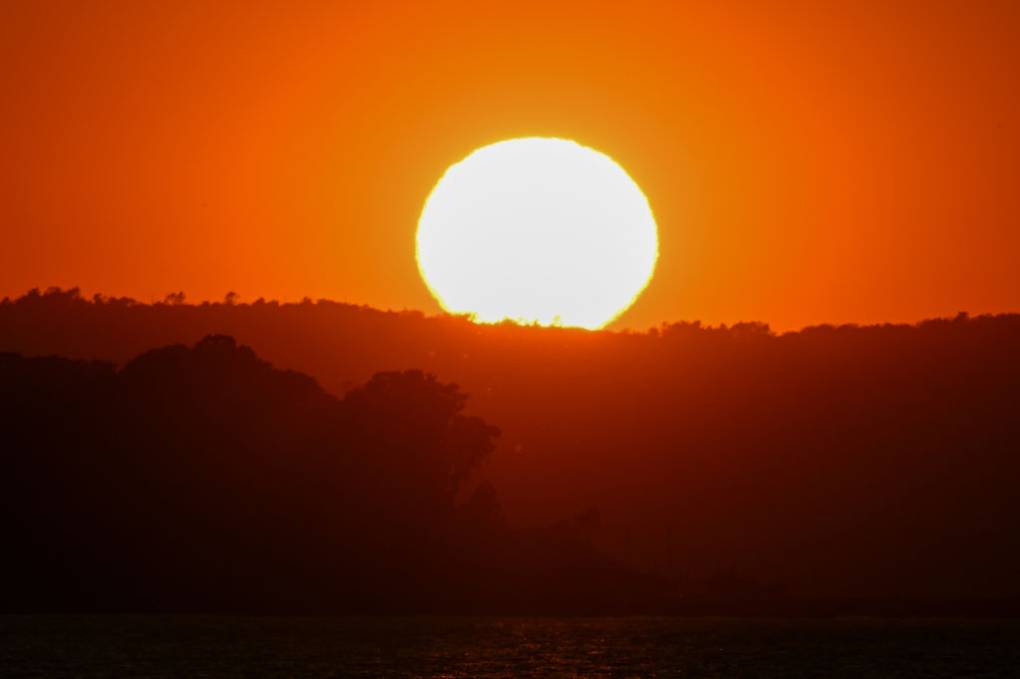
"caption": "The sun sets over San Francisco International Airport on May 8, 2024, ahead of a two-day heat wave in the Bay Area.",
"description": null,
"title": "San Francisco Bay Area to get warmest temps of the year",
"credit": "Tayfun Coskun/Anadolu via Getty Images",
"status": "inherit",
"altTag": null,
"isLoading": false,
"fetchFailed": false
},
"news_11981921": {
"type": "attachments",
"id": "news_11981921",
"meta": {
"index": "attachments_1716263798",
"site": "news",
"id": "11981921",
"found": true
},
"parent": 11981915,
"imgSizes": {
"twentyfourteen-full-width": {
"file": "https://cdn.kqed.org/wp-content/uploads/sites/10/2024/04/AP24092624425133-2-1038x576.jpg",
"width": 1038,
"mimeType": "image/jpeg",
"height": 576
},
"thumbnail": {
"file": "https://cdn.kqed.org/wp-content/uploads/sites/10/2024/04/AP24092624425133-2-160x107.jpg",
"width": 160,
"mimeType": "image/jpeg",
"height": 107
},
"post-thumbnail": {
"file": "https://cdn.kqed.org/wp-content/uploads/sites/10/2024/04/AP24092624425133-2-672x372.jpg",
"width": 672,
"mimeType": "image/jpeg",
"height": 372
},
"kqedFullSize": {
"file": "https://cdn.kqed.org/wp-content/uploads/sites/10/2024/04/AP24092624425133-2-scaled.jpg",
"width": 2560,
"height": 1706
},
"2048x2048": {
"file": "https://cdn.kqed.org/wp-content/uploads/sites/10/2024/04/AP24092624425133-2-2048x1365.jpg",
"width": 2048,
"mimeType": "image/jpeg",
"height": 1365
},
"large": {
"file": "https://cdn.kqed.org/wp-content/uploads/sites/10/2024/04/AP24092624425133-2-1020x680.jpg",
"width": 1020,
"mimeType": "image/jpeg",
"height": 680
},
"1536x1536": {
"file": "https://cdn.kqed.org/wp-content/uploads/sites/10/2024/04/AP24092624425133-2-1536x1024.jpg",
"width": 1536,
"mimeType": "image/jpeg",
"height": 1024
},
"full-width": {
"file": "https://cdn.kqed.org/wp-content/uploads/sites/10/2024/04/AP24092624425133-2-1920x1280.jpg",
"width": 1920,
"mimeType": "image/jpeg",
"height": 1280
},
"medium": {
"file": "https://cdn.kqed.org/wp-content/uploads/sites/10/2024/04/AP24092624425133-2-800x533.jpg",
"width": 800,
"mimeType": "image/jpeg",
"height": 533
}
},
"publishDate": 1712254236,
"modified": 1712254299,
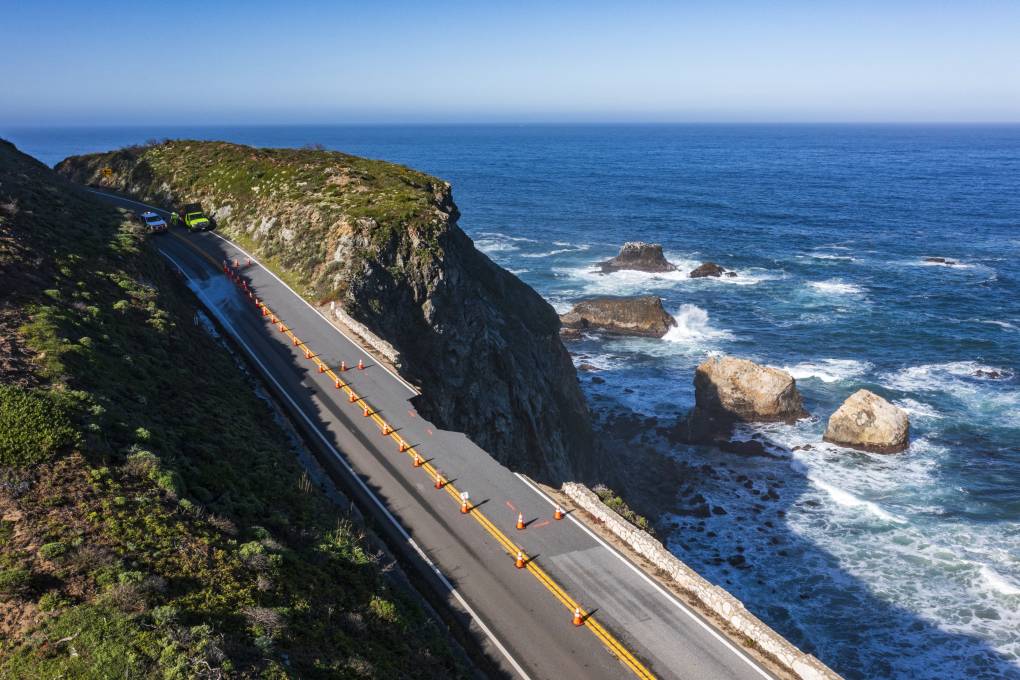
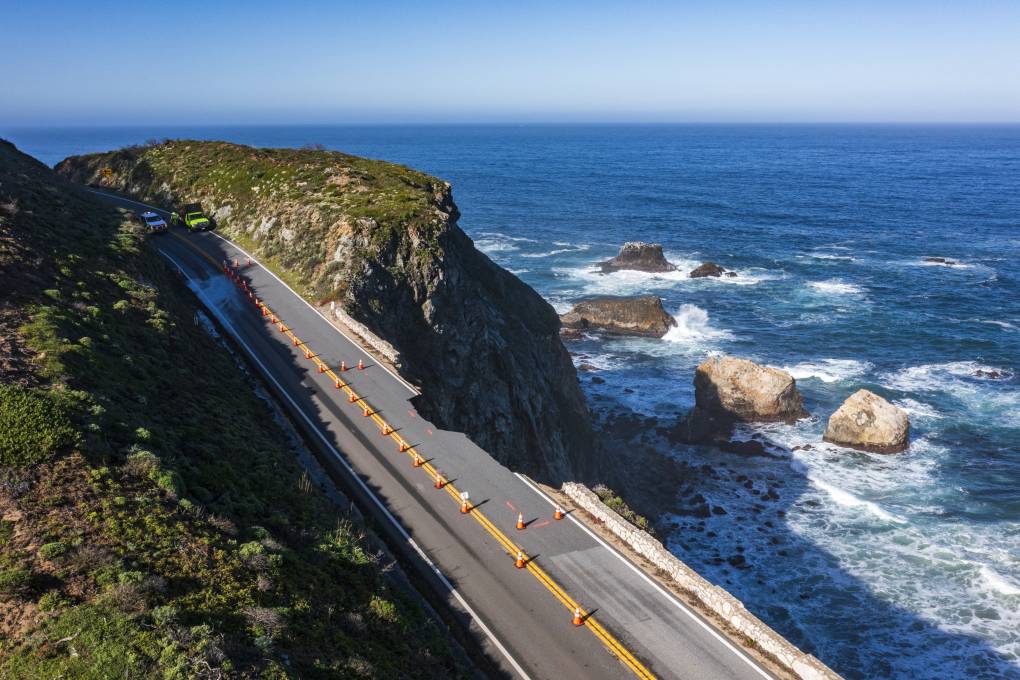
"caption": "A break in the southbound lane of Highway 1 at Rocky Creek Bridge in Big Sur, Monday, April 1, 2024. ",
"description": null,
"title": "APTOPIX California Highway Collapse",
"credit": "Nic Coury/The Associated Press",
"status": "inherit",
"altTag": "An aerial view of a damaged road with safety cones in the middle lane.",
"isLoading": false,
"fetchFailed": false
},
"news_11981522": {
"type": "attachments",
"id": "news_11981522",
"meta": {
"index": "attachments_1716263798",
"site": "news",
"id": "11981522",
"found": true
},
"parent": 11981496,
"imgSizes": {
"twentyfourteen-full-width": {
"file": "https://cdn.kqed.org/wp-content/uploads/sites/10/2024/04/AP24092624425133-1038x576.jpg",
"width": 1038,
"mimeType": "image/jpeg",
"height": 576
},
"thumbnail": {
"file": "https://cdn.kqed.org/wp-content/uploads/sites/10/2024/04/AP24092624425133-160x107.jpg",
"width": 160,
"mimeType": "image/jpeg",
"height": 107
},
"post-thumbnail": {
"file": "https://cdn.kqed.org/wp-content/uploads/sites/10/2024/04/AP24092624425133-672x372.jpg",
"width": 672,
"mimeType": "image/jpeg",
"height": 372
},
"kqedFullSize": {
"file": "https://cdn.kqed.org/wp-content/uploads/sites/10/2024/04/AP24092624425133-scaled.jpg",
"width": 2560,
"height": 1706
},
"2048x2048": {
"file": "https://cdn.kqed.org/wp-content/uploads/sites/10/2024/04/AP24092624425133-2048x1365.jpg",
"width": 2048,
"mimeType": "image/jpeg",
"height": 1365
},
"large": {
"file": "https://cdn.kqed.org/wp-content/uploads/sites/10/2024/04/AP24092624425133-1020x680.jpg",
"width": 1020,
"mimeType": "image/jpeg",
"height": 680
},
"1536x1536": {
"file": "https://cdn.kqed.org/wp-content/uploads/sites/10/2024/04/AP24092624425133-1536x1024.jpg",
"width": 1536,
"mimeType": "image/jpeg",
"height": 1024
},
"full-width": {
"file": "https://cdn.kqed.org/wp-content/uploads/sites/10/2024/04/AP24092624425133-1920x1280.jpg",
"width": 1920,
"mimeType": "image/jpeg",
"height": 1280
},
"medium": {
"file": "https://cdn.kqed.org/wp-content/uploads/sites/10/2024/04/AP24092624425133-800x533.jpg",
"width": 800,
"mimeType": "image/jpeg",
"height": 533
}
},
"publishDate": 1712001440,
"modified": 1712001531,
"caption": "A break in the southbound lane of Highway 1 at Rocky Creek Bridge in Big Sur, Monday, April 1, 2024.",
"description": null,
"title": "California Highway Collapse",
"credit": "Nic Coury/The Associated Press",
"status": "inherit",
"altTag": "An aerial view of a strip of road with part of it damaged near the coast.",
"isLoading": false,
"fetchFailed": false
},
"news_11977949": {
"type": "attachments",
"id": "news_11977949",
"meta": {
"index": "attachments_1716263798",
"site": "news",
"id": "11977949",
"found": true
},
"parent": 11977944,
"imgSizes": {
"twentyfourteen-full-width": {
"file": "https://cdn.kqed.org/wp-content/uploads/sites/10/2024/03/AP24063687179664-1038x576.jpg",
"width": 1038,
"mimeType": "image/jpeg",
"height": 576
},
"thumbnail": {
"file": "https://cdn.kqed.org/wp-content/uploads/sites/10/2024/03/AP24063687179664-160x107.jpg",
"width": 160,
"mimeType": "image/jpeg",
"height": 107
},
"post-thumbnail": {
"file": "https://cdn.kqed.org/wp-content/uploads/sites/10/2024/03/AP24063687179664-672x372.jpg",
"width": 672,
"mimeType": "image/jpeg",
"height": 372
},
"kqedFullSize": {
"file": "https://cdn.kqed.org/wp-content/uploads/sites/10/2024/03/AP24063687179664-scaled.jpg",
"width": 2560,
"height": 1707
},
"2048x2048": {
"file": "https://cdn.kqed.org/wp-content/uploads/sites/10/2024/03/AP24063687179664-2048x1365.jpg",
"width": 2048,
"mimeType": "image/jpeg",
"height": 1365
},
"large": {
"file": "https://cdn.kqed.org/wp-content/uploads/sites/10/2024/03/AP24063687179664-1020x680.jpg",
"width": 1020,
"mimeType": "image/jpeg",
"height": 680
},
"1536x1536": {
"file": "https://cdn.kqed.org/wp-content/uploads/sites/10/2024/03/AP24063687179664-1536x1024.jpg",
"width": 1536,
"mimeType": "image/jpeg",
"height": 1024
},
"full-width": {
"file": "https://cdn.kqed.org/wp-content/uploads/sites/10/2024/03/AP24063687179664-1920x1280.jpg",
"width": 1920,
"mimeType": "image/jpeg",
"height": 1280
},
"medium": {
"file": "https://cdn.kqed.org/wp-content/uploads/sites/10/2024/03/AP24063687179664-800x533.jpg",
"width": 800,
"mimeType": "image/jpeg",
"height": 533
}
},
"publishDate": 1709576546,
"modified": 1709580321,
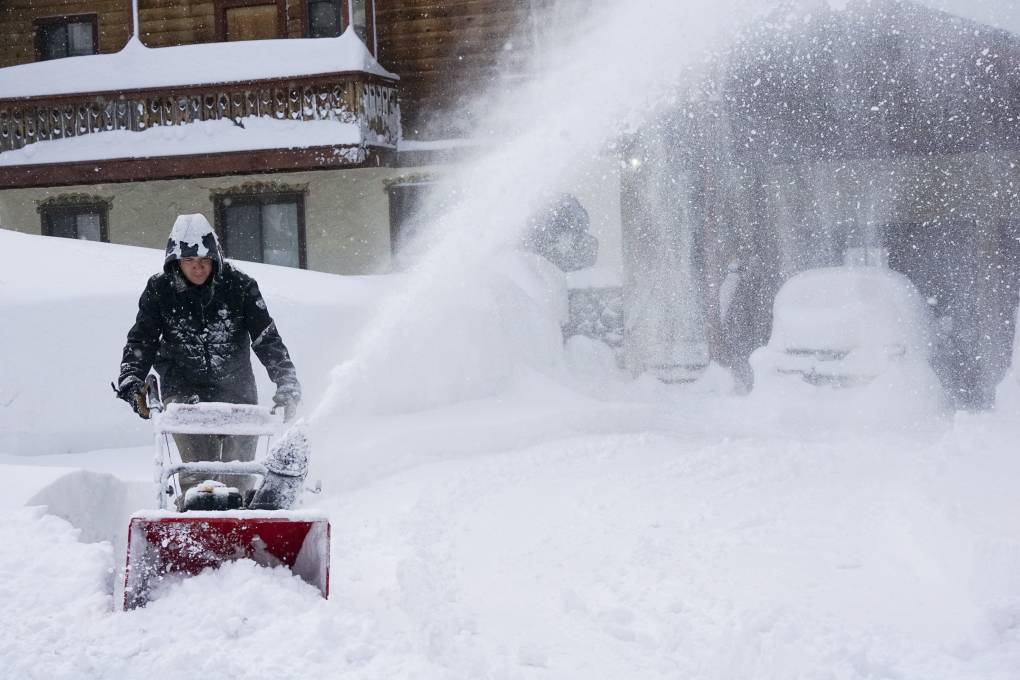
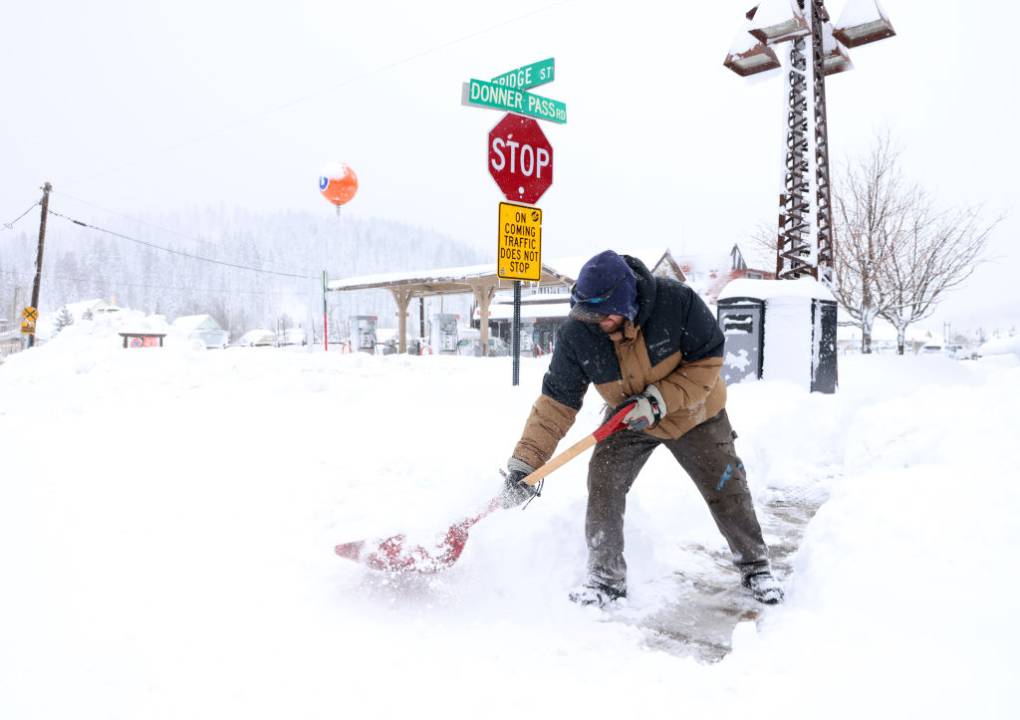
"caption": "Snow is cleared from a sidewalk during a storm on Sunday, March 3, 2024, in Truckee.",
"description": null,
"title": "California Blizzard",
"credit": "Brooke Hess-Homeier/The Associated Press",
"status": "inherit",
"altTag": "A man wearing a snow jacket uses a snow blower to clear snow outside of a house.",
"isLoading": false,
"fetchFailed": false
},
"news_11977918": {
"type": "attachments",
"id": "news_11977918",
"meta": {
"index": "attachments_1716263798",
"site": "news",
"id": "11977918",
"found": true
},
"title": "Blizzard Conditions, And Snow Of Up To 12 Feet Expected In California's Sierra Nevada",
"publishDate": 1709500493,
"status": "inherit",
"parent": 11977909,
"modified": 1771364659,
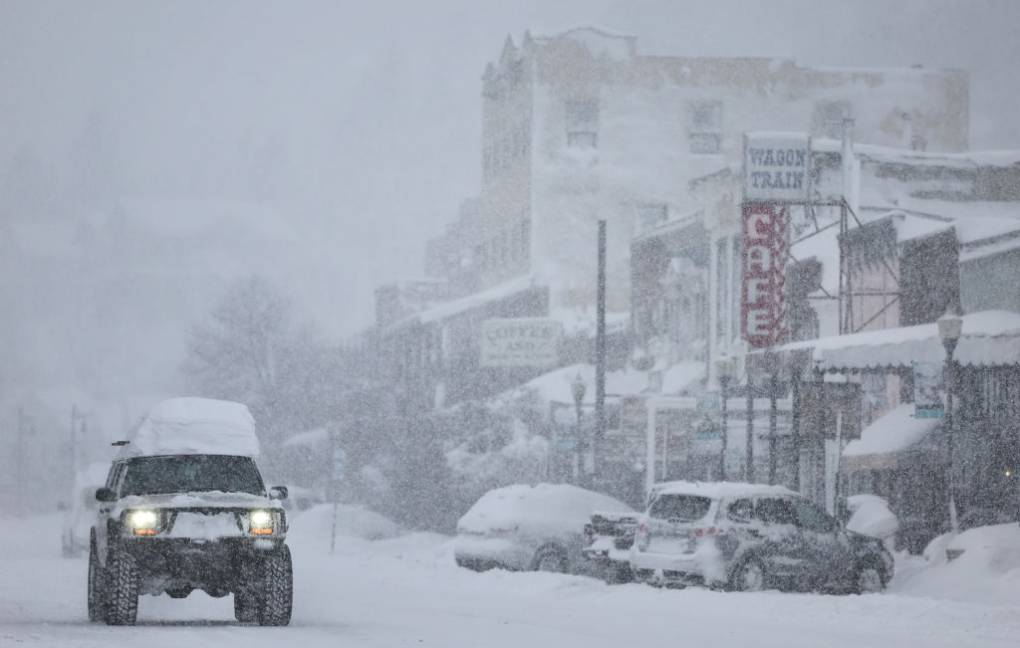
"caption": "Snow falls downtown, north of Lake Tahoe, during a powerful multiple day winter storm in the Sierra Nevada mountains on March 2, 2024, in Truckee. Blizzard warnings were issued with snowfall of up to 12 feet and wind gusts over 100 mph expected in some higher elevation locations. Yosemite National Park is closed and a 50-mile stretch of Interstate 80 was shut down yesterday due to the storm. ",
"credit": "Mario Tama/Getty Images",
"altTag": "Snowfall covering a street, buildings and cars.",
"description": null,
"imgSizes": {
"medium": {
"file": "https://cdn.kqed.org/wp-content/uploads/sites/10/2024/03/GettyImages-2054469025-800x509.jpg",
"width": 800,
"height": 509,
"mimeType": "image/jpeg"
},
"large": {
"file": "https://cdn.kqed.org/wp-content/uploads/sites/10/2024/03/GettyImages-2054469025-1020x648.jpg",
"width": 1020,
"height": 648,
"mimeType": "image/jpeg"
},
"thumbnail": {
"file": "https://cdn.kqed.org/wp-content/uploads/sites/10/2024/03/GettyImages-2054469025-160x102.jpg",
"width": 160,
"height": 102,
"mimeType": "image/jpeg"
},
"post-thumbnail": {
"file": "https://cdn.kqed.org/wp-content/uploads/sites/10/2024/03/GettyImages-2054469025-672x372.jpg",
"width": 672,
"height": 372,
"mimeType": "image/jpeg"
},
"twentyfourteen-full-width": {
"file": "https://cdn.kqed.org/wp-content/uploads/sites/10/2024/03/GettyImages-2054469025-1024x576.jpg",
"width": 1024,
"height": 576,
"mimeType": "image/jpeg"
},
"kqedFullSize": {
"file": "https://cdn.kqed.org/wp-content/uploads/sites/10/2024/03/GettyImages-2054469025.jpg",
"width": 1024,
"height": 651
}
},
"isLoading": false,
"fetchFailed": false
},
"news_11977888": {
"type": "attachments",
"id": "news_11977888",
"meta": {
"index": "attachments_1716263798",
"site": "news",
"id": "11977888",
"found": true
},
"parent": 11977887,
"imgSizes": {
"twentyfourteen-full-width": {
"file": "https://cdn.kqed.org/wp-content/uploads/sites/10/2024/03/GettyImages-2053478673-1024x576.jpg",
"width": 1024,
"mimeType": "image/jpeg",
"height": 576
},
"thumbnail": {
"file": "https://cdn.kqed.org/wp-content/uploads/sites/10/2024/03/GettyImages-2053478673-160x113.jpg",
"width": 160,
"mimeType": "image/jpeg",
"height": 113
},
"post-thumbnail": {
"file": "https://cdn.kqed.org/wp-content/uploads/sites/10/2024/03/GettyImages-2053478673-672x372.jpg",
"width": 672,
"mimeType": "image/jpeg",
"height": 372
},
"kqedFullSize": {
"file": "https://cdn.kqed.org/wp-content/uploads/sites/10/2024/03/GettyImages-2053478673.jpg",
"width": 1024,
"height": 723
},
"large": {
"file": "https://cdn.kqed.org/wp-content/uploads/sites/10/2024/03/GettyImages-2053478673-1020x720.jpg",
"width": 1020,
"mimeType": "image/jpeg",
"height": 720
},
"medium": {
"file": "https://cdn.kqed.org/wp-content/uploads/sites/10/2024/03/GettyImages-2053478673-800x565.jpg",
"width": 800,
"mimeType": "image/jpeg",
"height": 565
}
},
"publishDate": 1709411627,
"modified": 1709411675,
"caption": "Employee Juan Manuel clears snow from in front of Bar of America in downtown Truckee, Nevada County, on Saturday, March 2, 2024.",
"description": null,
"title": "Sierra Nevada Blizzard",
"credit": "Jane Tyska/Digital First Media/East Bay Times via Getty Images",
"status": "inherit",
"altTag": null,
"isLoading": false,
"fetchFailed": false
},
"news_11977820": {
"type": "attachments",
"id": "news_11977820",
"meta": {
"index": "attachments_1716263798",
"site": "news",
"id": "11977820",
"found": true
},
"parent": 11977803,
"imgSizes": {
"twentyfourteen-full-width": {
"file": "https://cdn.kqed.org/wp-content/uploads/sites/10/2024/03/GettyImages-2051335481-1024x576.jpg",
"width": 1024,
"mimeType": "image/jpeg",
"height": 576
},
"thumbnail": {
"file": "https://cdn.kqed.org/wp-content/uploads/sites/10/2024/03/GettyImages-2051335481-160x101.jpg",
"width": 160,
"mimeType": "image/jpeg",
"height": 101
},
"post-thumbnail": {
"file": "https://cdn.kqed.org/wp-content/uploads/sites/10/2024/03/GettyImages-2051335481-672x372.jpg",
"width": 672,
"mimeType": "image/jpeg",
"height": 372
},
"kqedFullSize": {
"file": "https://cdn.kqed.org/wp-content/uploads/sites/10/2024/03/GettyImages-2051335481.jpg",
"width": 1024,
"height": 646
},
"large": {
"file": "https://cdn.kqed.org/wp-content/uploads/sites/10/2024/03/GettyImages-2051335481-1020x643.jpg",
"width": 1020,
"mimeType": "image/jpeg",
"height": 643
},
"medium": {
"file": "https://cdn.kqed.org/wp-content/uploads/sites/10/2024/03/GettyImages-2051335481-800x505.jpg",
"width": 800,
"mimeType": "image/jpeg",
"height": 505
}
},
"publishDate": 1709334530,
"modified": 1709337435,
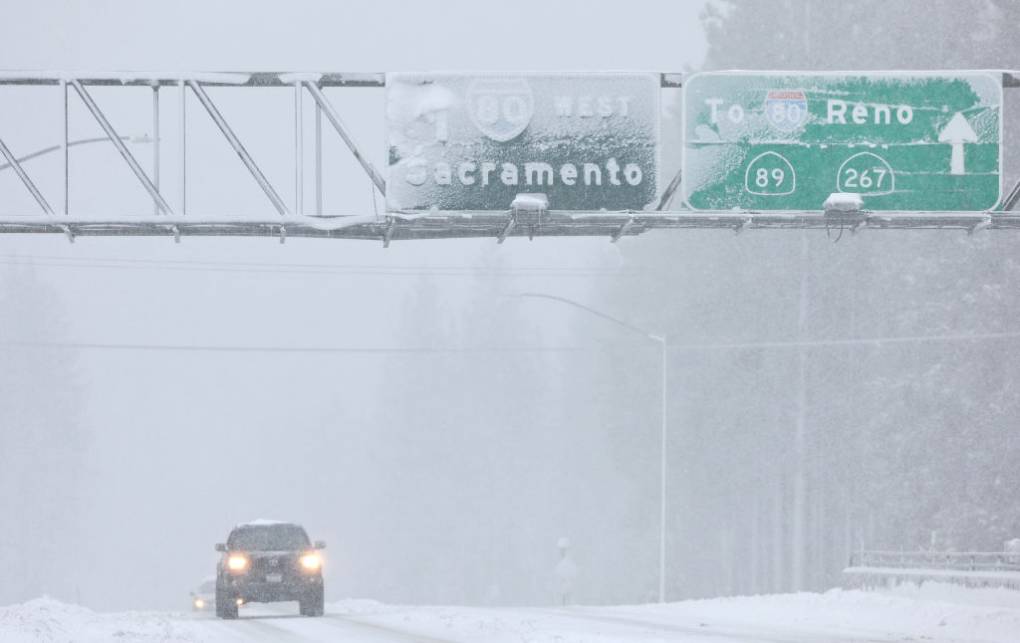
"caption": "Vehicles drive as snow falls north of Lake Tahoe in the Sierra Nevada mountains during a powerful winter storm on March 1, 2024, in Truckee, Nevada County. Blizzard warnings have been issued with snowfall of up to 12 feet, and wind gusts over 100 mph expected in some higher elevation locations.",
"description": null,
"title": "Blizzard Conditions, And Snow Of Up To 12 Feet Expected In California's Sierra Nevada",
"credit": "Mario Tama/Getty Images",
"status": "inherit",
"altTag": "A car with headlights on through a snowstorm and roads covered in snow, with a traffic sign above that reads Sacramento and Reno.",
"isLoading": false,
"fetchFailed": false
},
"news_11968507": {
"type": "attachments",
"id": "news_11968507",
"meta": {
"index": "attachments_1716263798",
"site": "news",
"id": "11968507",
"found": true
},
"parent": 11968495,
"imgSizes": {
"twentyfourteen-full-width": {
"file": "https://ww2.kqed.org/app/uploads/sites/10/2023/11/Coastal-Fog-1038x576.jpg",
"width": 1038,
"mimeType": "image/jpeg",
"height": 576
},
"thumbnail": {
"file": "https://ww2.kqed.org/app/uploads/sites/10/2023/11/Coastal-Fog-160x107.jpg",
"width": 160,
"mimeType": "image/jpeg",
"height": 107
},
"post-thumbnail": {
"file": "https://ww2.kqed.org/app/uploads/sites/10/2023/11/Coastal-Fog-672x372.jpg",
"width": 672,
"mimeType": "image/jpeg",
"height": 372
},
"kqedFullSize": {
"file": "https://ww2.kqed.org/app/uploads/sites/10/2023/11/Coastal-Fog.jpg",
"width": 1920,
"height": 1280
},
"large": {
"file": "https://ww2.kqed.org/app/uploads/sites/10/2023/11/Coastal-Fog-1020x680.jpg",
"width": 1020,
"mimeType": "image/jpeg",
"height": 680
},
"1536x1536": {
"file": "https://ww2.kqed.org/app/uploads/sites/10/2023/11/Coastal-Fog-1536x1024.jpg",
"width": 1536,
"mimeType": "image/jpeg",
"height": 1024
},
"medium": {
"file": "https://ww2.kqed.org/app/uploads/sites/10/2023/11/Coastal-Fog-800x533.jpg",
"width": 800,
"mimeType": "image/jpeg",
"height": 533
}
},
"publishDate": 1701214047,
"modified": 1701214179,
"caption": null,
"description": null,
"title": "Coastal Fog",
"credit": "Carly Severn/KQED",
"status": "inherit",
"altTag": "Aerial view of the California coast. On the left side of the image, the ocean laps against the shore, on the right side, plant covered sand dunes rise from the beach. Fog rolls in.",
"isLoading": false,
"fetchFailed": false
},
"news_11961831": {
"type": "attachments",
"id": "news_11961831",
"meta": {
"index": "attachments_1716263798",
"site": "news",
"id": "11961831",
"found": true
},
"parent": 0,
"imgSizes": {
"twentyfourteen-full-width": {
"file": "https://ww2.kqed.org/app/uploads/sites/10/2023/09/230919-SAN-FRANCISCO-AIR-QUALITY-Getty-JS-KQED-1038x576.jpg",
"width": 1038,
"mimeType": "image/jpeg",
"height": 576
},
"thumbnail": {
"file": "https://ww2.kqed.org/app/uploads/sites/10/2023/09/230919-SAN-FRANCISCO-AIR-QUALITY-Getty-JS-KQED-160x104.jpg",
"width": 160,
"mimeType": "image/jpeg",
"height": 104
},
"post-thumbnail": {
"file": "https://ww2.kqed.org/app/uploads/sites/10/2023/09/230919-SAN-FRANCISCO-AIR-QUALITY-Getty-JS-KQED-672x372.jpg",
"width": 672,
"mimeType": "image/jpeg",
"height": 372
},
"kqedFullSize": {
"file": "https://ww2.kqed.org/app/uploads/sites/10/2023/09/230919-SAN-FRANCISCO-AIR-QUALITY-Getty-JS-KQED.jpg",
"width": 2000,
"height": 1306
},
"large": {
"file": "https://ww2.kqed.org/app/uploads/sites/10/2023/09/230919-SAN-FRANCISCO-AIR-QUALITY-Getty-JS-KQED-1020x666.jpg",
"width": 1020,
"mimeType": "image/jpeg",
"height": 666
},
"1536x1536": {
"file": "https://ww2.kqed.org/app/uploads/sites/10/2023/09/230919-SAN-FRANCISCO-AIR-QUALITY-Getty-JS-KQED-1536x1003.jpg",
"width": 1536,
"mimeType": "image/jpeg",
"height": 1003
},
"full-width": {
"file": "https://ww2.kqed.org/app/uploads/sites/10/2023/09/230919-SAN-FRANCISCO-AIR-QUALITY-Getty-JS-KQED-1920x1254.jpg",
"width": 1920,
"mimeType": "image/jpeg",
"height": 1254
},
"medium": {
"file": "https://ww2.kqed.org/app/uploads/sites/10/2023/09/230919-SAN-FRANCISCO-AIR-QUALITY-Getty-JS-KQED-800x522.jpg",
"width": 800,
"mimeType": "image/jpeg",
"height": 522
}
},
"publishDate": 1695168415,
"modified": 1695171475,
"caption": "The San Francisco skyline seen through hazy and smoky conditions in September 2020.",
"description": null,
"title": "Lingering Wildfires Cause Unhealthy Air Quality In Bay Area",
"credit": "Photo by Justin Sullivan/Getty Images",
"status": "inherit",
"altTag": "A city skyline blends into a gray haze as a bird flies by.",
"isLoading": false,
"fetchFailed": false
},
"news_11958323": {
"type": "attachments",
"id": "news_11958323",
"meta": {
"index": "attachments_1716263798",
"site": "news",
"id": "11958323",
"found": true
},
"parent": 11958312,
"imgSizes": {
"twentyfourteen-full-width": {
"file": "https://ww2.kqed.org/app/uploads/sites/10/2023/08/RS67981_AP23228583464745-qut-1038x576.jpg",
"width": 1038,
"mimeType": "image/jpeg",
"height": 576
},
"thumbnail": {
"file": "https://ww2.kqed.org/app/uploads/sites/10/2023/08/RS67981_AP23228583464745-qut-160x114.jpg",
"width": 160,
"mimeType": "image/jpeg",
"height": 114
},
"post-thumbnail": {
"file": "https://ww2.kqed.org/app/uploads/sites/10/2023/08/RS67981_AP23228583464745-qut-672x372.jpg",
"width": 672,
"mimeType": "image/jpeg",
"height": 372
},
"kqedFullSize": {
"file": "https://ww2.kqed.org/app/uploads/sites/10/2023/08/RS67981_AP23228583464745-qut.jpg",
"width": 1920,
"height": 1372
},
"large": {
"file": "https://ww2.kqed.org/app/uploads/sites/10/2023/08/RS67981_AP23228583464745-qut-1020x729.jpg",
"width": 1020,
"mimeType": "image/jpeg",
"height": 729
},
"1536x1536": {
"file": "https://ww2.kqed.org/app/uploads/sites/10/2023/08/RS67981_AP23228583464745-qut-1536x1098.jpg",
"width": 1536,
"mimeType": "image/jpeg",
"height": 1098
},
"medium": {
"file": "https://ww2.kqed.org/app/uploads/sites/10/2023/08/RS67981_AP23228583464745-qut-800x572.jpg",
"width": 800,
"mimeType": "image/jpeg",
"height": 572
}
},
"publishDate": 1692207966,
"modified": 1692209486,
"caption": "In this photo provided by Caltrans, smoke rises from the Head Fire in Klamath National Forest, Siskiyou County, on Tuesday Aug. 15, 2023. A wildfire pushed by gusty winds from a thunderstorm raced through national forest land near California's border with Oregon, prompting evacuations in the rural area. The blaze was one of at least 19 fires that erupted in the Klamath National Forest as thunderstorms rolling through the area brought lightning and downdrafts that drove the flames through timber and rural lands. ",
"description": "In this photo provided by Caltrans, smoke rises from the Head Fire in Klamath National Forest, Calif., on Tuesday Aug. 15, 2023. A wildfire pushed by gusty winds from a thunderstorm raced through national forest land near California's border with Oregon, prompting evacuations in the rural area. The blaze in Siskiyou County was one of at least 19 fires that erupted in the Klamath National Forest as thunderstorms rolling through the area brought lightning and downdrafts that drove the flames through timber and rural lands. ",
"title": "California Wildfires",
"credit": "Roger Matthews/Caltrans via AP",
"status": "inherit",
"altTag": "Flames can be seen on a hill. There are buildings at the foot of the hill.",
"isLoading": false,
"fetchFailed": false
},
"news_11958712": {
"type": "attachments",
"id": "news_11958712",
"meta": {
"index": "attachments_1716263798",
"site": "news",
"id": "11958712",
"found": true
},
"parent": 11958698,
"imgSizes": {
"twentyfourteen-full-width": {
"file": "https://ww2.kqed.org/app/uploads/sites/10/2023/08/GettyImages-1614120563-1038x576.jpg",
"width": 1038,
"mimeType": "image/jpeg",
"height": 576
},
"thumbnail": {
"file": "https://ww2.kqed.org/app/uploads/sites/10/2023/08/GettyImages-1614120563-160x107.jpg",
"width": 160,
"mimeType": "image/jpeg",
"height": 107
},
"post-thumbnail": {
"file": "https://ww2.kqed.org/app/uploads/sites/10/2023/08/GettyImages-1614120563-672x372.jpg",
"width": 672,
"mimeType": "image/jpeg",
"height": 372
},
"kqedFullSize": {
"file": "https://ww2.kqed.org/app/uploads/sites/10/2023/08/GettyImages-1614120563-scaled.jpg",
"width": 2560,
"height": 1708
},
"2048x2048": {
"file": "https://ww2.kqed.org/app/uploads/sites/10/2023/08/GettyImages-1614120563-2048x1366.jpg",
"width": 2048,
"mimeType": "image/jpeg",
"height": 1366
},
"large": {
"file": "https://ww2.kqed.org/app/uploads/sites/10/2023/08/GettyImages-1614120563-1020x680.jpg",
"width": 1020,
"mimeType": "image/jpeg",
"height": 680
},
"1536x1536": {
"file": "https://ww2.kqed.org/app/uploads/sites/10/2023/08/GettyImages-1614120563-1536x1025.jpg",
"width": 1536,
"mimeType": "image/jpeg",
"height": 1025
},
"full-width": {
"file": "https://ww2.kqed.org/app/uploads/sites/10/2023/08/GettyImages-1614120563-1920x1281.jpg",
"width": 1920,
"mimeType": "image/jpeg",
"height": 1281
},
"medium": {
"file": "https://ww2.kqed.org/app/uploads/sites/10/2023/08/GettyImages-1614120563-800x534.jpg",
"width": 800,
"mimeType": "image/jpeg",
"height": 534
}
},
"publishDate": 1692643463,
"modified": 1692650564,
"caption": "A Coachella Valley Water District worker surveys a debris flow following heavy rains from Tropical Storm Hilary, at Thunderbird Country Club in Rancho Mirage, California, on Aug. 21, 2023.",
"description": "A worker from the Coachella Valley Water Department surveys the debris flow following heavy rains from Tropical Storm Hilary, at Thurderbird Country Club in Rancho Mirage, California, on August 21, 2023. ",
"title": "US-MEXICO-WEATHER",
"credit": "David Swanson/AFP via Getty Images",
"status": "inherit",
"altTag": "A man walks next to a large highway that has been completely blockaded by debris.",
"isLoading": false,
"fetchFailed": false
}
},
"audioPlayerReducer": {
"postId": "stream_live",
"isPaused": true,
"isPlaying": false,
"pfsActive": false,
"pledgeModalIsOpen": true,
"playerDrawerIsOpen": false,
"liveAudioPlayStartedAt": 0,
"liveAudioPlayContext": ""
},
"authorsReducer": {
"byline_news_11977944": {
"type": "authors",
"id": "byline_news_11977944",
"meta": {
"override": true
},
"slug": "byline_news_11977944",
"name": "Brooke Hess and Christopher Weber\u003cbr>Associated Press\u003c/br>",
"isLoading": false
},
"byline_news_11977909": {
"type": "authors",
"id": "byline_news_11977909",
"meta": {
"override": true
},
"slug": "byline_news_11977909",
"name": "Brooke Hess, Ken Ritter\u003cbr>The Associated Press",
"isLoading": false
},
"byline_news_11959572": {
"type": "authors",
"id": "byline_news_11959572",
"meta": {
"override": true
},
"slug": "byline_news_11959572",
"name": "Olga R. Rodriguez and John Antczak\u003cbr>The Associated Press",
"isLoading": false
},
"byline_news_11958698": {
"type": "authors",
"id": "byline_news_11958698",
"meta": {
"override": true
},
"slug": "byline_news_11958698",
"name": "Christopher Weber, Damian Dovarganes\u003cbr>The Associated Press",
"isLoading": false
},
"dmarks": {
"type": "authors",
"id": "182",
"meta": {
"index": "authors_1716337520",
"id": "182",
"found": true
},
"name": "David Marks",
"firstName": "David",
"lastName": "Marks",
"slug": "dmarks",
"email": "dmarks@kqed.org",
"display_author_email": false,
"staff_mastheads": [],
"title": "KQED Editor",
"bio": "David Marks is a senior digital editor for KQED News. \u003c/a>Reach him at dmarks@kqed.org.",
"avatar": "https://secure.gravatar.com/avatar/b88bd6227ce6cb96ae33fefaf42b2a29?s=600&d=mm&r=g",
"twitter": "divadskram",
"facebook": null,
"instagram": null,
"linkedin": null,
"sites": [
{
"site": "news",
"roles": []
},
{
"site": "science",
"roles": []
},
{
"site": "perspectives",
"roles": []
},
{
"site": "liveblog",
"roles": []
}
],
"headData": {
"title": "David Marks | KQED",
"description": "KQED Editor",
"ogImgSrc": "https://secure.gravatar.com/avatar/b88bd6227ce6cb96ae33fefaf42b2a29?s=600&d=mm&r=g",
"twImgSrc": "https://secure.gravatar.com/avatar/b88bd6227ce6cb96ae33fefaf42b2a29?s=600&d=mm&r=g"
},
"isLoading": false,
"link": "/author/dmarks"
},
"kqed": {
"type": "authors",
"id": "236",
"meta": {
"index": "authors_1716337520",
"id": "236",
"found": true
},
"name": "KQED News Staff",
"firstName": "KQED News Staff",
"lastName": null,
"slug": "kqed",
"email": "faq@kqed.org",
"display_author_email": false,
"staff_mastheads": [],
"title": null,
"bio": null,
"avatar": "https://secure.gravatar.com/avatar/ef0e801a68c4c54afa9180db14084167?s=600&d=blank&r=g",
"twitter": null,
"facebook": null,
"instagram": null,
"linkedin": null,
"sites": [
{
"site": "arts",
"roles": [
"contributor"
]
},
{
"site": "news",
"roles": [
"editor"
]
},
{
"site": "futureofyou",
"roles": [
"author"
]
}
],
"headData": {
"title": "KQED News Staff | KQED",
"description": null,
"ogImgSrc": "https://secure.gravatar.com/avatar/ef0e801a68c4c54afa9180db14084167?s=600&d=blank&r=g",
"twImgSrc": "https://secure.gravatar.com/avatar/ef0e801a68c4c54afa9180db14084167?s=600&d=blank&r=g"
},
"isLoading": false,
"link": "/author/kqed"
},
"kqednewsstaffandwires": {
"type": "authors",
"id": "237",
"meta": {
"index": "authors_1716337520",
"id": "237",
"found": true
},
"name": "KQED News Staff and Wires",
"firstName": "KQED News Staff and Wires",
"lastName": null,
"slug": "kqednewsstaffandwires",
"email": "onlinenewsstaff@kqed.org",
"display_author_email": false,
"staff_mastheads": [],
"title": null,
"bio": null,
"avatar": "https://secure.gravatar.com/avatar/72295af8ebbfbd19a4948f5271285664?s=600&d=blank&r=g",
"twitter": null,
"facebook": null,
"instagram": null,
"linkedin": null,
"sites": [
{
"site": "arts",
"roles": [
"contributor"
]
},
{
"site": "news",
"roles": [
"contributor"
]
},
{
"site": "lowdown",
"roles": [
"author"
]
},
{
"site": "stateofhealth",
"roles": [
"contributor"
]
},
{
"site": "food",
"roles": [
"author"
]
}
],
"headData": {
"title": "KQED News Staff and Wires | KQED",
"description": null,
"ogImgSrc": "https://secure.gravatar.com/avatar/72295af8ebbfbd19a4948f5271285664?s=600&d=blank&r=g",
"twImgSrc": "https://secure.gravatar.com/avatar/72295af8ebbfbd19a4948f5271285664?s=600&d=blank&r=g"
},
"isLoading": false,
"link": "/author/kqednewsstaffandwires"
},
"dcronin": {
"type": "authors",
"id": "11362",
"meta": {
"index": "authors_1716337520",
"id": "11362",
"found": true
},
"name": "Dana Cronin",
"firstName": "Dana",
"lastName": "Cronin",
"slug": "dcronin",
"email": "dcronin@KQED.org",
"display_author_email": true,
"staff_mastheads": [],
"title": "KQED Contributor",
"bio": "Dana Cronin is a reporter for KQED News. She loves writing stories about climate change, environmental issues, food and agriculture. She's reported across the country, from Colorado to Washington D.C. to Illinois, and has won numerous awards for her coverage. Her work is regularly featured on national broadcasts, including NPR’s Morning Edition, All Things Considered, PBS Newshour and Science Friday. She lives in Oakland and has an avocado tree in her back yard.",
"avatar": "https://secure.gravatar.com/avatar/bcf89e3455ff7235f96ab6fa7258dd95?s=600&d=blank&r=g",
"twitter": "DanaHCronin",
"facebook": null,
"instagram": null,
"linkedin": null,
"sites": [
{
"site": "arts",
"roles": [
"author"
]
},
{
"site": "news",
"roles": [
"editor"
]
},
{
"site": "science",
"roles": [
"author"
]
},
{
"site": "liveblog",
"roles": [
"author"
]
}
],
"headData": {
"title": "Dana Cronin | KQED",
"description": "KQED Contributor",
"ogImgSrc": "https://secure.gravatar.com/avatar/bcf89e3455ff7235f96ab6fa7258dd95?s=600&d=blank&r=g",
"twImgSrc": "https://secure.gravatar.com/avatar/bcf89e3455ff7235f96ab6fa7258dd95?s=600&d=blank&r=g"
},
"isLoading": false,
"link": "/author/dcronin"
},
"eromero": {
"type": "authors",
"id": "11746",
"meta": {
"index": "authors_1716337520",
"id": "11746",
"found": true
},
"name": "Ezra David Romero",
"firstName": "Ezra David",
"lastName": "Romero",
"slug": "eromero",
"email": "eromero@kqed.org",
"display_author_email": true,
"staff_mastheads": [
"news",
"science"
],
"title": "Climate Reporter",
"bio": "Ezra David Romero is a climate reporter for KQED News. He covers the absence and excess of water in the Bay Area — think sea level rise, flooding and drought. For nearly a decade he’s covered how warming temperatures are altering the lives of Californians. He’s reported on farmers worried their pistachio trees aren’t getting enough sleep, families desperate for water, scientists studying dying giant sequoias, and alongside firefighters containing wildfires. His work has appeared on local stations across California and nationally on public radio shows like Morning Edition, Here and Now, All Things Considered and Science Friday. ",
"avatar": "https://secure.gravatar.com/avatar/c76404d287c10ed40224227551ac36e24352c7306f106632caf6fead76f8801f?s=600&d=blank&r=g",
"twitter": "ezraromero",
"bluesky": null,
"facebook": null,
"instagram": null,
"linkedin": null,
"sites": [
{
"site": "arts",
"roles": [
"editor"
]
},
{
"site": "news",
"roles": [
"editor"
]
},
{
"site": "science",
"roles": [
"editor"
]
},
{
"site": "liveblog",
"roles": [
"author"
]
}
],
"headData": {
"title": "Ezra David Romero | KQED",
"description": "Climate Reporter",
"ogImgSrc": "https://secure.gravatar.com/avatar/c76404d287c10ed40224227551ac36e24352c7306f106632caf6fead76f8801f?s=600&d=blank&r=g",
"twImgSrc": "https://secure.gravatar.com/avatar/c76404d287c10ed40224227551ac36e24352c7306f106632caf6fead76f8801f?s=600&d=blank&r=g"
},
"isLoading": false,
"link": "/author/eromero"
},
"jlara": {
"type": "authors",
"id": "11761",
"meta": {
"index": "authors_1716337520",
"id": "11761",
"found": true
},
"name": "Juan Carlos Lara",
"firstName": "Juan Carlos",
"lastName": "Lara",
"slug": "jlara",
"email": "jlara@kqed.org",
"display_author_email": false,
"staff_mastheads": [],
"title": "KQED Contributor",
"bio": null,
"avatar": "https://secure.gravatar.com/avatar/19e2052b9b05657c5ff2af2121846e9c?s=600&d=blank&r=g",
"twitter": null,
"facebook": null,
"instagram": null,
"linkedin": null,
"sites": [
{
"site": "arts",
"roles": [
"editor"
]
},
{
"site": "news",
"roles": [
"editor"
]
},
{
"site": "forum",
"roles": [
"editor"
]
},
{
"site": "liveblog",
"roles": [
"contributor"
]
}
],
"headData": {
"title": "Juan Carlos Lara | KQED",
"description": "KQED Contributor",
"ogImgSrc": "https://secure.gravatar.com/avatar/19e2052b9b05657c5ff2af2121846e9c?s=600&d=blank&r=g",
"twImgSrc": "https://secure.gravatar.com/avatar/19e2052b9b05657c5ff2af2121846e9c?s=600&d=blank&r=g"
},
"isLoading": false,
"link": "/author/jlara"
},
"jservantez": {
"type": "authors",
"id": "11909",
"meta": {
"index": "authors_1716337520",
"id": "11909",
"found": true
},
"name": "Jared Servantez",
"firstName": "Jared",
"lastName": "Servantez",
"slug": "jservantez",
"email": "jservantez@kqed.org",
"display_author_email": true,
"staff_mastheads": [
"news"
],
"title": "KQED Contributor",
"bio": "Jared Servantez is the editor of KQED's Express Desk, leading the newsroom's online breaking news operation. He most recently worked for the Los Angeles Times, where he served as a breaking news editor, the Metro Desk's night editor, and a copy editor. Jared is a graduate of the USC Annenberg School for Communication and Journalism.",
"avatar": "https://secure.gravatar.com/avatar/f0e317c67bb498c3f077f033d1cc79e62f3bc1303fa20a14e8880d31fbe7e01e?s=600&d=blank&r=g",
"twitter": "jservantez",
"bluesky": null,
"facebook": null,
"instagram": null,
"linkedin": null,
"sites": [
{
"site": "news",
"roles": [
"editor"
]
},
{
"site": "science",
"roles": [
"editor",
"author"
]
},
{
"site": "liveblog",
"roles": [
"editor"
]
}
],
"headData": {
"title": "Jared Servantez | KQED",
"description": "KQED Contributor",
"ogImgSrc": "https://secure.gravatar.com/avatar/f0e317c67bb498c3f077f033d1cc79e62f3bc1303fa20a14e8880d31fbe7e01e?s=600&d=blank&r=g",
"twImgSrc": "https://secure.gravatar.com/avatar/f0e317c67bb498c3f077f033d1cc79e62f3bc1303fa20a14e8880d31fbe7e01e?s=600&d=blank&r=g"
},
"isLoading": false,
"link": "/author/jservantez"
}
},
"pagesReducer": {
"news_tag_weather": {
"type": "terms",
"id": "news_3",
"meta": {
"index": "terms_1716263798",
"site": "news",
"id": "3",
"score": 9.104131
},
"featImg": null,
"name": "weather",
"description": null,
"taxonomy": "tag",
"headData": {
"twImgId": null,
"twTitle": null,
"ogTitle": null,
"ogImgId": null,
"twDescription": null,
"description": null,
"title": "weather Archives | KQED News",
"ogDescription": null
},
"ttid": 3,
"slug": "weather",
"isLoading": false,
"title": "weather",
"pageMeta": {
"site": "news",
"WpPageTemplate": "page-topic-editorial",
"currentPage": 8
},
"blocks": [
{
"blockName": "kqed/post-list",
"attrs": {
"layout": "cardArticle2",
"query": "posts/news?tag=weather",
"seeMore": false,
"paginated": true,
"page": 8
}
},
{
"blockName": "kqed/ad"
}
]
}
},
"pfsSessionReducer": {},
"postsReducer": {
"stream_live": {
"type": "live",
"id": "stream_live",
"audioUrl": "https://streams.kqed.org/kqedradio",
"title": "Live Stream",
"excerpt": "Live Stream information currently unavailable.",
"link": "/radio",
"featImg": "",
"label": {
"name": "KQED Live",
"link": "/"
}
},
"stream_kqedNewscast": {
"type": "posts",
"id": "stream_kqedNewscast",
"audioUrl": "https://www.kqed.org/.stream/anon/radio/RDnews/newscast.mp3?_=1",
"title": "KQED Newscast",
"featImg": "",
"label": {
"name": "88.5 FM",
"link": "/"
}
},
"news_11991372": {
"type": "posts",
"id": "news_11991372",
"meta": {
"index": "posts_1716263798",
"site": "news",
"id": "11991372",
"score": null,
"sort": [
1718980244000
]
},
"guestAuthors": [],
"slug": "bay-area-ice-cream-shops-gear-up-for-summer-heat-wave",
"title": "Bay Area Ice Cream Shops Gear Up for Summer Heat Wave",
"publishDate": 1718980244,
"format": "standard",
"headTitle": "Bay Area Ice Cream Shops Gear Up for Summer Heat Wave | KQED",
"labelTerm": {
"site": "news"
},
"content": "\u003cp>Lilly Pheng loves serving fudge splits piled high with sliced bananas, vanilla ice cream and thick chocolate fudge, especially \u003ca href=\"https://www.kqed.org/news/11878134/bay-area-heat-wave-how-to-stay-safe-during-dangerously-hot-weather\">when a heat wave hits\u003c/a>.\u003c/p>\n\u003cp>Temperatures are expected to soar again this weekend. Pheng, the shop’s owner for more than two decades, is looking forward to it because just a couple of hot days boosts traffic to Loard’s Ice Cream in Livermore by around 30%, she said.\u003c/p>\n\u003cp>“Heat waves bring in customers from toddlers to 100-year-olds,” Pheng said. “A lick of ice cream soothes the soul. It just cools them down.”\u003c/p>\n\u003cp>[ad fullwidth]\u003c/p>\n\u003cp>The National Weather Service forecasts triple-digit temperatures for the Livermore area during the second heat wave of the year and the first of summer. Meteorologists expect the heat wave to peak on Saturday with temperatures above 100 degrees in northern Napa and Sonoma counties and inland areas in Alameda and Contra Costa counties. Oakland could reach the mid-80s, San José could reach the low 90s and San Francisco could reach the high 70s.\u003c/p>\n\u003cp>With the heat wave approaching, Pheng is preparing for the crowds. She’s already arranging additional staff, including her daughter, who recently graduated from university, to cater to the expected customer surge.\u003c/p>\n\u003cfigure id=\"attachment_11991387\" class=\"wp-caption aligncenter\" style=\"max-width: 2560px\">\u003cimg loading=\"lazy\" decoding=\"async\" class=\"size-full wp-image-11991387\" src=\"https://cdn.kqed.org/wp-content/uploads/sites/10/2024/06/IMG_6846-scaled.jpg\" alt=\"\" width=\"2560\" height=\"1920\" srcset=\"https://cdn.kqed.org/wp-content/uploads/sites/10/2024/06/IMG_6846-scaled.jpg 2560w, https://cdn.kqed.org/wp-content/uploads/sites/10/2024/06/IMG_6846-800x600.jpg 800w, https://cdn.kqed.org/wp-content/uploads/sites/10/2024/06/IMG_6846-1020x765.jpg 1020w, https://cdn.kqed.org/wp-content/uploads/sites/10/2024/06/IMG_6846-160x120.jpg 160w, https://cdn.kqed.org/wp-content/uploads/sites/10/2024/06/IMG_6846-1536x1152.jpg 1536w, https://cdn.kqed.org/wp-content/uploads/sites/10/2024/06/IMG_6846-2048x1536.jpg 2048w, https://cdn.kqed.org/wp-content/uploads/sites/10/2024/06/IMG_6846-1920x1440.jpg 1920w\" sizes=\"(max-width: 2560px) 100vw, 2560px\">\u003cfigcaption class=\"wp-caption-text\">Bay Area ice cream and gelato shops are preparing for long lines of customers during the summer’s first heat wave. \u003ccite>(Ezra David Romero/KQED)\u003c/cite>\u003c/figcaption>\u003c/figure>\n\u003cp>She expects a line of people trailing out of the pink and white old-timey shop for scoops of ice cream, old-fashioned sodas, boba and sundaes.\u003c/p>\n\u003cp>“We serve our sundaes in glasses, which brings customers memories of the past,” she said. “I love working here. Every day I go into the ice cream shop, it’s not called work.”\u003c/p>\n\u003cp>Even though forecasters don’t expect temperatures to be as high in San Francisco as in Livermore, ice cream shops there are preparing for a barrage of customers this weekend at temperatures near 80 degrees.\u003c/p>\n\u003cfigure id=\"attachment_11991388\" class=\"wp-caption aligncenter\" style=\"max-width: 2560px\">\u003cimg loading=\"lazy\" decoding=\"async\" class=\"size-full wp-image-11991388\" src=\"https://cdn.kqed.org/wp-content/uploads/sites/10/2024/06/IMG_6818-scaled.jpg\" alt=\"\" width=\"2560\" height=\"1920\" srcset=\"https://cdn.kqed.org/wp-content/uploads/sites/10/2024/06/IMG_6818-scaled.jpg 2560w, https://cdn.kqed.org/wp-content/uploads/sites/10/2024/06/IMG_6818-800x600.jpg 800w, https://cdn.kqed.org/wp-content/uploads/sites/10/2024/06/IMG_6818-1020x765.jpg 1020w, https://cdn.kqed.org/wp-content/uploads/sites/10/2024/06/IMG_6818-160x120.jpg 160w, https://cdn.kqed.org/wp-content/uploads/sites/10/2024/06/IMG_6818-1536x1152.jpg 1536w, https://cdn.kqed.org/wp-content/uploads/sites/10/2024/06/IMG_6818-2048x1536.jpg 2048w, https://cdn.kqed.org/wp-content/uploads/sites/10/2024/06/IMG_6818-1920x1440.jpg 1920w\" sizes=\"(max-width: 2560px) 100vw, 2560px\">\u003cfigcaption class=\"wp-caption-text\">Hila Gelato Caffè in San Francisco’s Mission District makes many flavors, including pistachio, almond and stracciatella, all nestled in individual domed gelato machines. \u003ccite>(Ezra David Romero/KQED)\u003c/cite>\u003c/figcaption>\u003c/figure>\n\u003cp>For Ilary Biondo, who owns \u003ca href=\"https://www.hilagelato.com/\">Hila Gelato Caffè\u003c/a> on the western edge of the Mission District, the heat wave is great economically for her Sicilian-style gelato shop, which she opened just over a year ago.\u003c/p>\n\u003cp>But as the afternoon sun shines through big glass windows, the business heats up. During a heat wave, she said her freezers and refrigerators suffer and could potentially break.\u003c/p>\n\u003cp>“It’s funny that in our field, we complain that they always break at the wrong time when it’s hot with a line of people,” she said in an email.\u003c/p>\n\u003cp>That’s why Biondo recently changed machines to a style that can withstand equipment failures. She makes every flavor — pistachio, almond, stracciatella, etc. — in a domed individual gelato machine, each with its own compressor, so if one breaks, all the other flavors will still be available.\u003c/p>\n\u003cp>\u003c/p>\n",
"blocks": [],
"excerpt": "Bay Area ice cream shops are bracing for the summer's first heat wave this weekend, with triple digits in some inland areas.",
"status": "publish",
"parent": 0,
"modified": 1727905195,
"stats": {
"hasAudio": false,
"hasVideo": false,
"hasChartOrMap": false,
"iframeSrcs": [],
"hasGoogleForm": false,
"hasGallery": false,
"hasHearkenModule": false,
"hasPolis": false,
"paragraphCount": 14,
"wordCount": 518
},
"headData": {
"title": "Bay Area Ice Cream Shops Gear Up for Summer Heat Wave | KQED",
"description": "Bay Area ice cream shops are bracing for the summer's first heat wave this weekend, with triple digits in some inland areas.",
"ogTitle": "",
"ogDescription": "",
"ogImgId": "",
"twTitle": "",
"twDescription": "",
"twImgId": "",
"schema": {
"@context": "https://schema.org",
"@type": "NewsArticle",
"headline": "Bay Area Ice Cream Shops Gear Up for Summer Heat Wave",
"datePublished": "2024-06-21T07:30:44-07:00",
"dateModified": "2024-10-02T14:39:55-07:00",
"image": "https://cdn.kqed.org/wp-content/uploads/2020/02/KQED-OG-Image@1x.png",
"isAccessibleForFree": "True",
"publisher": {
"@type": "NewsMediaOrganization",
"@id": "https://www.kqed.org/#organization",
"name": "KQED",
"logo": "https://cdn.kqed.org/wp-content/uploads/2020/02/KQED-OG-Image@1x.png",
"url": "https://www.kqed.org",
"sameAs": [
"https://www.facebook.com/KQED",
"https://twitter.com/KQED",
"https://www.instagram.com/kqed/",
"https://www.tiktok.com/@kqedofficial",
"https://www.linkedin.com/company/kqed",
"https://www.youtube.com/channel/UCeC0IOo7i1P_61zVUWbJ4nw"
]
}
}
},
"sticky": false,
"nprStoryId": "kqed-11991372",
"excludeFromSiteSearch": "Include",
"articleAge": "0",
"path": "/news/11991372/bay-area-ice-cream-shops-gear-up-for-summer-heat-wave",
"audioTrackLength": null,
"parsedContent": [
{
"type": "contentString",
"content": "\u003cdiv class=\"post-body\">\u003cp>\u003cp>Lilly Pheng loves serving fudge splits piled high with sliced bananas, vanilla ice cream and thick chocolate fudge, especially \u003ca href=\"https://www.kqed.org/news/11878134/bay-area-heat-wave-how-to-stay-safe-during-dangerously-hot-weather\">when a heat wave hits\u003c/a>.\u003c/p>\n\u003cp>Temperatures are expected to soar again this weekend. Pheng, the shop’s owner for more than two decades, is looking forward to it because just a couple of hot days boosts traffic to Loard’s Ice Cream in Livermore by around 30%, she said.\u003c/p>\n\u003cp>“Heat waves bring in customers from toddlers to 100-year-olds,” Pheng said. “A lick of ice cream soothes the soul. It just cools them down.”\u003c/p>\n\u003cp>\u003c/p>\u003c/div>",
"attributes": {
"named": {},
"numeric": []
}
},
{
"type": "component",
"content": "",
"name": "ad",
"attributes": {
"named": {
"label": "fullwidth"
},
"numeric": [
"fullwidth"
]
}
},
{
"type": "contentString",
"content": "\u003cdiv class=\"post-body\">\u003cp>\u003c/p>\n\u003cp>The National Weather Service forecasts triple-digit temperatures for the Livermore area during the second heat wave of the year and the first of summer. Meteorologists expect the heat wave to peak on Saturday with temperatures above 100 degrees in northern Napa and Sonoma counties and inland areas in Alameda and Contra Costa counties. Oakland could reach the mid-80s, San José could reach the low 90s and San Francisco could reach the high 70s.\u003c/p>\n\u003cp>With the heat wave approaching, Pheng is preparing for the crowds. She’s already arranging additional staff, including her daughter, who recently graduated from university, to cater to the expected customer surge.\u003c/p>\n\u003cfigure id=\"attachment_11991387\" class=\"wp-caption aligncenter\" style=\"max-width: 2560px\">\u003cimg loading=\"lazy\" decoding=\"async\" class=\"size-full wp-image-11991387\" src=\"https://cdn.kqed.org/wp-content/uploads/sites/10/2024/06/IMG_6846-scaled.jpg\" alt=\"\" width=\"2560\" height=\"1920\" srcset=\"https://cdn.kqed.org/wp-content/uploads/sites/10/2024/06/IMG_6846-scaled.jpg 2560w, https://cdn.kqed.org/wp-content/uploads/sites/10/2024/06/IMG_6846-800x600.jpg 800w, https://cdn.kqed.org/wp-content/uploads/sites/10/2024/06/IMG_6846-1020x765.jpg 1020w, https://cdn.kqed.org/wp-content/uploads/sites/10/2024/06/IMG_6846-160x120.jpg 160w, https://cdn.kqed.org/wp-content/uploads/sites/10/2024/06/IMG_6846-1536x1152.jpg 1536w, https://cdn.kqed.org/wp-content/uploads/sites/10/2024/06/IMG_6846-2048x1536.jpg 2048w, https://cdn.kqed.org/wp-content/uploads/sites/10/2024/06/IMG_6846-1920x1440.jpg 1920w\" sizes=\"(max-width: 2560px) 100vw, 2560px\">\u003cfigcaption class=\"wp-caption-text\">Bay Area ice cream and gelato shops are preparing for long lines of customers during the summer’s first heat wave. \u003ccite>(Ezra David Romero/KQED)\u003c/cite>\u003c/figcaption>\u003c/figure>\n\u003cp>She expects a line of people trailing out of the pink and white old-timey shop for scoops of ice cream, old-fashioned sodas, boba and sundaes.\u003c/p>\n\u003cp>“We serve our sundaes in glasses, which brings customers memories of the past,” she said. “I love working here. Every day I go into the ice cream shop, it’s not called work.”\u003c/p>\n\u003cp>Even though forecasters don’t expect temperatures to be as high in San Francisco as in Livermore, ice cream shops there are preparing for a barrage of customers this weekend at temperatures near 80 degrees.\u003c/p>\n\u003cfigure id=\"attachment_11991388\" class=\"wp-caption aligncenter\" style=\"max-width: 2560px\">\u003cimg loading=\"lazy\" decoding=\"async\" class=\"size-full wp-image-11991388\" src=\"https://cdn.kqed.org/wp-content/uploads/sites/10/2024/06/IMG_6818-scaled.jpg\" alt=\"\" width=\"2560\" height=\"1920\" srcset=\"https://cdn.kqed.org/wp-content/uploads/sites/10/2024/06/IMG_6818-scaled.jpg 2560w, https://cdn.kqed.org/wp-content/uploads/sites/10/2024/06/IMG_6818-800x600.jpg 800w, https://cdn.kqed.org/wp-content/uploads/sites/10/2024/06/IMG_6818-1020x765.jpg 1020w, https://cdn.kqed.org/wp-content/uploads/sites/10/2024/06/IMG_6818-160x120.jpg 160w, https://cdn.kqed.org/wp-content/uploads/sites/10/2024/06/IMG_6818-1536x1152.jpg 1536w, https://cdn.kqed.org/wp-content/uploads/sites/10/2024/06/IMG_6818-2048x1536.jpg 2048w, https://cdn.kqed.org/wp-content/uploads/sites/10/2024/06/IMG_6818-1920x1440.jpg 1920w\" sizes=\"(max-width: 2560px) 100vw, 2560px\">\u003cfigcaption class=\"wp-caption-text\">Hila Gelato Caffè in San Francisco’s Mission District makes many flavors, including pistachio, almond and stracciatella, all nestled in individual domed gelato machines. \u003ccite>(Ezra David Romero/KQED)\u003c/cite>\u003c/figcaption>\u003c/figure>\n\u003cp>For Ilary Biondo, who owns \u003ca href=\"https://www.hilagelato.com/\">Hila Gelato Caffè\u003c/a> on the western edge of the Mission District, the heat wave is great economically for her Sicilian-style gelato shop, which she opened just over a year ago.\u003c/p>\n\u003cp>But as the afternoon sun shines through big glass windows, the business heats up. During a heat wave, she said her freezers and refrigerators suffer and could potentially break.\u003c/p>\n\u003cp>“It’s funny that in our field, we complain that they always break at the wrong time when it’s hot with a line of people,” she said in an email.\u003c/p>\n\u003cp>That’s why Biondo recently changed machines to a style that can withstand equipment failures. She makes every flavor — pistachio, almond, stracciatella, etc. — in a domed individual gelato machine, each with its own compressor, so if one breaks, all the other flavors will still be available.\u003c/p>\n\u003cp>\u003c/p>\n\u003c/div>\u003c/p>",
"attributes": {
"named": {},
"numeric": []
}
}
],
"link": "/news/11991372/bay-area-ice-cream-shops-gear-up-for-summer-heat-wave",
"authors": [
"11746"
],
"categories": [
"news_34165",
"news_8"
],
"tags": [
"news_1386",
"news_19204",
"news_333",
"news_18578",
"news_3187",
"news_3"
],
"featImg": "news_11991386",
"label": "news"
},
"news_11985524": {
"type": "posts",
"id": "news_11985524",
"meta": {
"index": "posts_1716263798",
"site": "news",
"id": "11985524",
"score": null,
"sort": [
1715282081000
]
},
"parent": 0,
"labelTerm": {
"site": "news"
},
"blocks": [],
"publishDate": 1715282081,
"format": "standard",
"title": "Early Bay Area Heat Wave Brings Hottest Temperatures of the Year So Far",
"headTitle": "Early Bay Area Heat Wave Brings Hottest Temperatures of the Year So Far | KQED",
"content": "\u003cp>Crowds in San Francisco enjoyed a taste of summertime weather on Thursday as the Bay Area saw its hottest day since last fall amid a regionwide warming trend, \u003ca href=\"https://www.kqed.org/science/1992597/from-storms-to-sunscreen-bay-area-weather-turnaround-is-here\">days after an unusually strong spring storm\u003c/a>.\u003c/p>\n\u003cp>By 2 p.m., temperatures reached 78 degrees in downtown San Francisco, 82 in Oakland, 82 in San José and 84 in Santa Rosa, according to the National Weather Service. However, forecasters said areas throughout the Bay Area could continue to warm up 3 to 5 degrees throughout the afternoon.\u003c/p>\n\u003cp>On Thursday morning, some North Bay weather stations were showing temperatures at least 20 degrees higher than they were the previous morning, the NWS Bay Area office \u003ca href=\"https://twitter.com/NWSBayArea/status/1788603934648696913\">posted on X\u003c/a>.\u003c/p>\n\u003cp>https://twitter.com/NWSBayArea/status/1788603934648696913\u003c/p>\n\u003cp>“It’s definitely above seasonal averages,” said Matt Mehle, a meteorologist with the NWS Bay Area office in Monterey. “Normal temperature this time of year [for the North Bay] is low 70s, and we’re forecasting a high of 89 today.”\u003c/p>\n\u003cp>Even throughout San Francisco and other cities in the heart of the Bay Area, Mehle said, temperatures were expected to be in the ballpark of 10 to 15 degrees above normal.\u003c/p>\n\u003cp>That warm weather drove people out to San Francisco’s Dolores Park en masse. All of the park’s tennis courts were full, laughter radiated from the children’s play area and sunbathers in various states of undress lined the park’s northern hill.\u003c/p>\n\u003cfigure id=\"attachment_11985577\" class=\"wp-caption alignnone\" style=\"max-width: 1598px\">\u003ca href=\"https://cdn.kqed.org/wp-content/uploads/sites/10/2024/05/O3Knd-forecast-high-temperatures-for-thursday-may-9-1.png\">\u003cimg loading=\"lazy\" decoding=\"async\" class=\"wp-image-11985577 size-full\" src=\"https://cdn.kqed.org/wp-content/uploads/sites/10/2024/05/O3Knd-forecast-high-temperatures-for-thursday-may-9-1.png\" alt=\"A map showing high temperatures in different Bay Area cities\" width=\"1598\" height=\"1112\" srcset=\"https://cdn.kqed.org/wp-content/uploads/sites/10/2024/05/O3Knd-forecast-high-temperatures-for-thursday-may-9-1.png 1598w, https://cdn.kqed.org/wp-content/uploads/sites/10/2024/05/O3Knd-forecast-high-temperatures-for-thursday-may-9-1-800x557.png 800w, https://cdn.kqed.org/wp-content/uploads/sites/10/2024/05/O3Knd-forecast-high-temperatures-for-thursday-may-9-1-1020x710.png 1020w, https://cdn.kqed.org/wp-content/uploads/sites/10/2024/05/O3Knd-forecast-high-temperatures-for-thursday-may-9-1-160x111.png 160w, https://cdn.kqed.org/wp-content/uploads/sites/10/2024/05/O3Knd-forecast-high-temperatures-for-thursday-may-9-1-1536x1069.png 1536w\" sizes=\"(max-width: 1598px) 100vw, 1598px\">\u003c/a>\u003cfigcaption class=\"wp-caption-text\">Source: \u003ca href=\"https://twitter.com/NWSBayArea/status/1788302018379227588/photo/1\">National Weather Service\u003c/a> \u003ccite>(Matthew Green/KQED)\u003c/cite>\u003c/figcaption>\u003c/figure>\n\u003cp>Jettiene Legault was flying a kite while chatting with friends.\u003c/p>\n\u003cp>“I feel very good about the weather today,” Legault said. “It’s nice to get out and enjoy the sun. I’m here with my friends. We’re having a picnic, and then we’re going to go to the beach later.”\u003c/p>\n\u003cp>Others at the park had no greater ambition for the day than to bask in the sun’s warmth.\u003c/p>\n\u003cp>Terrence Lee, who was out with a few coworkers, explained his plans simply.\u003c/p>\n\u003cp>“We’re primarily lying flat, and we’re gossiping… I think that’s all on the agenda,” Lee said.\u003c/p>\n\u003cp>Naame Kelet said she had been lying in the sun for hours when she spoke to KQED near noon.\u003c/p>\n\u003cp>[ad fullwidth]\u003c/p>\n\u003cp>“I woke up super early. I had a bunch of things planned, but I really wanted to save part of my day just to come out here and enjoy the sun,” Kelet said.\u003c/p>\n\u003cp>Kelet, a lifelong Bay Area resident, was thrilled about the sunny day but also wary of San Francisco’s reputation for having a few warm spring days that give way to falling temperatures and fog.\u003c/p>\n\u003cp>“I’m just hoping it stays consistently warm, but I’m not putting all of my eggs in that basket,” she said.\u003c/p>\n\u003cp>[aside label=\"more weather coverage\" tag=\"weather\"]The significant warming trend is being driven by high pressure and offshore flow, which is a weather feature normally seen in the fall, with warm, dry wind coming from the north and northeast, said Mehle, the NWS meteorologist.\u003c/p>\n\u003cp>That offshore flow led to some wind advisories early Thursday, with morning gusts of 45 to 55 mph expected in the Mayacamas Mountains, north of Santa Rosa. Although no advisory was issued for the East Bay Hills, Mount Diablo was also expected to see gusts of 40 to 50 mph on Thursday morning.\u003c/p>\n\u003cp>The heat and wind are not expected to significantly increase fire danger, though, thanks in large part to recent precipitation, including last weekend’s rainstorm, Mehle said.\u003c/p>\n\u003cp>“We’re actually in pretty good shape from that standpoint. We are seeing wetter than normal fuels around the Bay Area due to our wet spring,” he said. “These late-season rain events that we’re getting are helping to mitigate fire concerns.”\u003c/p>\n\u003cp>The NWS did not issue a red-flag warning, and state and local fire officials said they were not on high alert.\u003c/p>\n\u003cp>Conditions in the Bay Area will continue to heat up on Friday, which is expected to be the warmest day of the week, particularly in inland areas. Some parts of the North Bay and East Bay could approach 90 degrees.\u003c/p>\n\u003cp>Temperatures will start to dip on Saturday with increased onshore flow, according to \u003ca href=\"https://www.weather.gov/wrh/TextProduct?product=afdmtr\">the NWS forecast\u003c/a>. However, another ridge of high pressure approaching the West Coast should keep the mercury above seasonal averages, with interior areas remaining 5 to 15 degrees above average into early next week.\u003c/p>\n\u003cp>That ridge will drive higher temperatures by next Tuesday or Wednesday, Mehle said, but “not as warm as what we’re seeing today or tomorrow.”\u003c/p>\n\u003cp>\u003c/p>\n",
"stats": {
"hasVideo": false,
"hasChartOrMap": false,
"hasAudio": false,
"hasPolis": false,
"wordCount": 803,
"hasGoogleForm": false,
"hasGallery": false,
"hasHearkenModule": false,
"iframeSrcs": [],
"paragraphCount": 25
},
"modified": 1715291949,
"excerpt": "The region is gearing up for its hottest day since last fall, with temperatures expected to top 80 degrees in parts of San Francisco and Oakland and inch close to 90 in Santa Rosa, San José and Livermore.",
"headData": {
"twImgId": "",
"twTitle": "",
"ogTitle": "",
"ogImgId": "",
"twDescription": "",
"description": "The region is gearing up for its hottest day since last fall, with temperatures expected to top 80 degrees in parts of San Francisco and Oakland and inch close to 90 in Santa Rosa, San José and Livermore.",
"title": "Early Bay Area Heat Wave Brings Hottest Temperatures of the Year So Far | KQED",
"ogDescription": "",
"schema": {
"@context": "https://schema.org",
"@type": "NewsArticle",
"headline": "Early Bay Area Heat Wave Brings Hottest Temperatures of the Year So Far",
"datePublished": "2024-05-09T12:14:41-07:00",
"dateModified": "2024-05-09T14:59:09-07:00",
"image": "https://cdn.kqed.org/wp-content/uploads/2020/02/KQED-OG-Image@1x.png",
"isAccessibleForFree": "True",
"publisher": {
"@type": "NewsMediaOrganization",
"@id": "https://www.kqed.org/#organization",
"name": "KQED",
"logo": "https://cdn.kqed.org/wp-content/uploads/2020/02/KQED-OG-Image@1x.png",
"url": "https://www.kqed.org",
"sameAs": [
"https://www.facebook.com/KQED",
"https://twitter.com/KQED",
"https://www.instagram.com/kqed/",
"https://www.tiktok.com/@kqedofficial",
"https://www.linkedin.com/company/kqed",
"https://www.youtube.com/channel/UCeC0IOo7i1P_61zVUWbJ4nw"
]
}
}
},
"guestAuthors": [],
"slug": "early-bay-area-heat-wave-brings-hottest-temperatures-of-the-year-so-far",
"status": "publish",
"lastUpdated": 1715291100,
"excludeFromSiteSearch": "Include",
"sticky": false,
"articleAge": "0",
"nprStoryId": "kqed-11985524",
"path": "/news/11985524/early-bay-area-heat-wave-brings-hottest-temperatures-of-the-year-so-far",
"audioTrackLength": null,
"parsedContent": [
{
"type": "contentString",
"content": "\u003cdiv class=\"post-body\">\u003cp>\u003cp>Crowds in San Francisco enjoyed a taste of summertime weather on Thursday as the Bay Area saw its hottest day since last fall amid a regionwide warming trend, \u003ca href=\"https://www.kqed.org/science/1992597/from-storms-to-sunscreen-bay-area-weather-turnaround-is-here\">days after an unusually strong spring storm\u003c/a>.\u003c/p>\n\u003cp>By 2 p.m., temperatures reached 78 degrees in downtown San Francisco, 82 in Oakland, 82 in San José and 84 in Santa Rosa, according to the National Weather Service. However, forecasters said areas throughout the Bay Area could continue to warm up 3 to 5 degrees throughout the afternoon.\u003c/p>\n\u003cp>On Thursday morning, some North Bay weather stations were showing temperatures at least 20 degrees higher than they were the previous morning, the NWS Bay Area office \u003ca href=\"https://twitter.com/NWSBayArea/status/1788603934648696913\">posted on X\u003c/a>.\u003c/p>\u003c/p>\u003c/div>",
"attributes": {
"named": {},
"numeric": []
}
},
{
"type": "component",
"content": "",
"name": "singleTwitterStatus",
"attributes": {
"named": {
"id": "1788603934648696913"
},
"numeric": []
}
},
{
"type": "contentString",
"content": "\u003cdiv class=\"post-body\">\u003cp>\n\u003cp>“It’s definitely above seasonal averages,” said Matt Mehle, a meteorologist with the NWS Bay Area office in Monterey. “Normal temperature this time of year [for the North Bay] is low 70s, and we’re forecasting a high of 89 today.”\u003c/p>\n\u003cp>Even throughout San Francisco and other cities in the heart of the Bay Area, Mehle said, temperatures were expected to be in the ballpark of 10 to 15 degrees above normal.\u003c/p>\n\u003cp>That warm weather drove people out to San Francisco’s Dolores Park en masse. All of the park’s tennis courts were full, laughter radiated from the children’s play area and sunbathers in various states of undress lined the park’s northern hill.\u003c/p>\n\u003cfigure id=\"attachment_11985577\" class=\"wp-caption alignnone\" style=\"max-width: 1598px\">\u003ca href=\"https://cdn.kqed.org/wp-content/uploads/sites/10/2024/05/O3Knd-forecast-high-temperatures-for-thursday-may-9-1.png\">\u003cimg loading=\"lazy\" decoding=\"async\" class=\"wp-image-11985577 size-full\" src=\"https://cdn.kqed.org/wp-content/uploads/sites/10/2024/05/O3Knd-forecast-high-temperatures-for-thursday-may-9-1.png\" alt=\"A map showing high temperatures in different Bay Area cities\" width=\"1598\" height=\"1112\" srcset=\"https://cdn.kqed.org/wp-content/uploads/sites/10/2024/05/O3Knd-forecast-high-temperatures-for-thursday-may-9-1.png 1598w, https://cdn.kqed.org/wp-content/uploads/sites/10/2024/05/O3Knd-forecast-high-temperatures-for-thursday-may-9-1-800x557.png 800w, https://cdn.kqed.org/wp-content/uploads/sites/10/2024/05/O3Knd-forecast-high-temperatures-for-thursday-may-9-1-1020x710.png 1020w, https://cdn.kqed.org/wp-content/uploads/sites/10/2024/05/O3Knd-forecast-high-temperatures-for-thursday-may-9-1-160x111.png 160w, https://cdn.kqed.org/wp-content/uploads/sites/10/2024/05/O3Knd-forecast-high-temperatures-for-thursday-may-9-1-1536x1069.png 1536w\" sizes=\"(max-width: 1598px) 100vw, 1598px\">\u003c/a>\u003cfigcaption class=\"wp-caption-text\">Source: \u003ca href=\"https://twitter.com/NWSBayArea/status/1788302018379227588/photo/1\">National Weather Service\u003c/a> \u003ccite>(Matthew Green/KQED)\u003c/cite>\u003c/figcaption>\u003c/figure>\n\u003cp>Jettiene Legault was flying a kite while chatting with friends.\u003c/p>\n\u003cp>“I feel very good about the weather today,” Legault said. “It’s nice to get out and enjoy the sun. I’m here with my friends. We’re having a picnic, and then we’re going to go to the beach later.”\u003c/p>\n\u003cp>Others at the park had no greater ambition for the day than to bask in the sun’s warmth.\u003c/p>\n\u003cp>Terrence Lee, who was out with a few coworkers, explained his plans simply.\u003c/p>\n\u003cp>“We’re primarily lying flat, and we’re gossiping… I think that’s all on the agenda,” Lee said.\u003c/p>\n\u003cp>Naame Kelet said she had been lying in the sun for hours when she spoke to KQED near noon.\u003c/p>\n\u003cp>\u003c/p>\u003c/div>",
"attributes": {
"named": {},
"numeric": []
}
},
{
"type": "component",
"content": "",
"name": "ad",
"attributes": {
"named": {
"label": "fullwidth"
},
"numeric": [
"fullwidth"
]
}
},
{
"type": "contentString",
"content": "\u003cdiv class=\"post-body\">\u003cp>\u003c/p>\n\u003cp>“I woke up super early. I had a bunch of things planned, but I really wanted to save part of my day just to come out here and enjoy the sun,” Kelet said.\u003c/p>\n\u003cp>Kelet, a lifelong Bay Area resident, was thrilled about the sunny day but also wary of San Francisco’s reputation for having a few warm spring days that give way to falling temperatures and fog.\u003c/p>\n\u003cp>“I’m just hoping it stays consistently warm, but I’m not putting all of my eggs in that basket,” she said.\u003c/p>\n\u003cp>\u003c/p>\u003c/div>",
"attributes": {
"named": {},
"numeric": []
}
},
{
"type": "component",
"content": "",
"name": "aside",
"attributes": {
"named": {
"label": "more weather coverage ",
"tag": "weather"
},
"numeric": []
}
},
{
"type": "contentString",
"content": "\u003cdiv class=\"post-body\">\u003cp>The significant warming trend is being driven by high pressure and offshore flow, which is a weather feature normally seen in the fall, with warm, dry wind coming from the north and northeast, said Mehle, the NWS meteorologist.\u003c/p>\n\u003cp>That offshore flow led to some wind advisories early Thursday, with morning gusts of 45 to 55 mph expected in the Mayacamas Mountains, north of Santa Rosa. Although no advisory was issued for the East Bay Hills, Mount Diablo was also expected to see gusts of 40 to 50 mph on Thursday morning.\u003c/p>\n\u003cp>The heat and wind are not expected to significantly increase fire danger, though, thanks in large part to recent precipitation, including last weekend’s rainstorm, Mehle said.\u003c/p>\n\u003cp>“We’re actually in pretty good shape from that standpoint. We are seeing wetter than normal fuels around the Bay Area due to our wet spring,” he said. “These late-season rain events that we’re getting are helping to mitigate fire concerns.”\u003c/p>\n\u003cp>The NWS did not issue a red-flag warning, and state and local fire officials said they were not on high alert.\u003c/p>\n\u003cp>Conditions in the Bay Area will continue to heat up on Friday, which is expected to be the warmest day of the week, particularly in inland areas. Some parts of the North Bay and East Bay could approach 90 degrees.\u003c/p>\n\u003cp>Temperatures will start to dip on Saturday with increased onshore flow, according to \u003ca href=\"https://www.weather.gov/wrh/TextProduct?product=afdmtr\">the NWS forecast\u003c/a>. However, another ridge of high pressure approaching the West Coast should keep the mercury above seasonal averages, with interior areas remaining 5 to 15 degrees above average into early next week.\u003c/p>\n\u003cp>That ridge will drive higher temperatures by next Tuesday or Wednesday, Mehle said, but “not as warm as what we’re seeing today or tomorrow.”\u003c/p>\n\u003cp>\u003c/p>\n\u003c/div>\u003c/p>",
"attributes": {
"named": {},
"numeric": []
}
}
],
"link": "/news/11985524/early-bay-area-heat-wave-brings-hottest-temperatures-of-the-year-so-far",
"authors": [
"11909",
"11761"
],
"categories": [
"news_8"
],
"tags": [
"news_1386",
"news_27626",
"news_18578",
"news_3"
],
"featImg": "news_11985533",
"label": "news"
},
"news_11981915": {
"type": "posts",
"id": "news_11981915",
"meta": {
"index": "posts_1716263798",
"site": "news",
"id": "11981915",
"score": null,
"sort": [
1712257220000
]
},
"guestAuthors": [],
"slug": "approaching-storms-cause-highway-1-to-close-again",
"title": "Approaching Storms Cause Highway 1 to Close Again",
"publishDate": 1712257220,
"format": "standard",
"headTitle": "Approaching Storms Cause Highway 1 to Close Again | KQED",
"labelTerm": {
"site": "news"
},
"content": "\u003cp>As more storms approach California, officials have closed a scenic stretch of iconic Highway 1 where a giant section collapsed into the ocean following \u003ca href=\"https://apnews.com/article/california-weather-storm-easter-ef4df18045285f2b34c5aa41a678282f\">heavy weekend rains\u003c/a>.\u003c/p>\n\u003cp>[aside postID=\"news_11981496\" label=\"Related Story\"]The Monterey County Sheriff’s Office had warned residents of parts of the coastal community of Big Sur to evacuate Wednesday before the road closed later that day. The road was expected to be closed for several days until the weather event passes, the office said. The Carmel Unified School District said the evacuation warning led to the closure of an elementary school and preschool on Thursday and Friday, news outlets reported.\u003c/p>\n\u003cp>Convoy passage for vehicles through the area being repaired, planned for Thursday and Friday, has been canceled because of the forecasted rain, but was set to resume Saturday, the California Department of Transportation posted on social media. Crews will remain to check for any changes in conditions, officials said.\u003c/p>\n\u003cp>The collapse occurred Saturday near Rocky Creek Bridge, about 17 miles south of Monterey, temporarily stranding as many as 1,600 people in Big Sur. Most of the people trapped there were able to leave when a single lane was reopened Sunday, Caltrans spokesperson Kevin Drabinski said earlier this week.\u003c/p>\n\u003cp>The famous route has seen frequent closures because of collapses, mudflows and rockslides during severe weather.\u003c/p>\n\u003cp>\u003cem>This story contains reporting by The Associated Press.\u003c/em>\u003c/p>\n\u003cp>[ad fullwidth]\u003c/p>\n\u003cp>\u003c/p>\n",
"blocks": [],
"excerpt": "As more storms approach California, officials have closed a scenic stretch of iconic Highway 1 where a giant section collapsed into the ocean. The closure is expected to last for several days until the weather event passes.",
"status": "publish",
"parent": 0,
"modified": 1721145697,
"stats": {
"hasAudio": false,
"hasVideo": false,
"hasChartOrMap": false,
"iframeSrcs": [],
"hasGoogleForm": false,
"hasGallery": false,
"hasHearkenModule": false,
"hasPolis": false,
"paragraphCount": 8,
"wordCount": 231
},
"headData": {
"title": "Approaching Storms Cause Highway 1 to Close Again | KQED",
"description": "As more storms approach California, officials have closed a scenic stretch of iconic Highway 1 where a giant section collapsed into the ocean. The closure is expected to last for several days until the weather event passes.",
"ogTitle": "",
"ogDescription": "",
"ogImgId": "",
"twTitle": "",
"twDescription": "",
"twImgId": "",
"schema": {
"@context": "https://schema.org",
"@type": "NewsArticle",
"headline": "Approaching Storms Cause Highway 1 to Close Again",
"datePublished": "2024-04-04T12:00:20-07:00",
"dateModified": "2024-07-16T09:01:37-07:00",
"image": "https://cdn.kqed.org/wp-content/uploads/2020/02/KQED-OG-Image@1x.png",
"isAccessibleForFree": "True",
"publisher": {
"@type": "NewsMediaOrganization",
"@id": "https://www.kqed.org/#organization",
"name": "KQED",
"logo": "https://cdn.kqed.org/wp-content/uploads/2020/02/KQED-OG-Image@1x.png",
"url": "https://www.kqed.org",
"sameAs": [
"https://www.facebook.com/KQED",
"https://twitter.com/KQED",
"https://www.instagram.com/kqed/",
"https://www.tiktok.com/@kqedofficial",
"https://www.linkedin.com/company/kqed",
"https://www.youtube.com/channel/UCeC0IOo7i1P_61zVUWbJ4nw"
]
}
}
},
"sticky": false,
"excludeFromSiteSearch": "Include",
"articleAge": "0",
"path": "/news/11981915/approaching-storms-cause-highway-1-to-close-again",
"audioTrackLength": null,
"parsedContent": [
{
"type": "contentString",
"content": "\u003cdiv class=\"post-body\">\u003cp>\u003cp>As more storms approach California, officials have closed a scenic stretch of iconic Highway 1 where a giant section collapsed into the ocean following \u003ca href=\"https://apnews.com/article/california-weather-storm-easter-ef4df18045285f2b34c5aa41a678282f\">heavy weekend rains\u003c/a>.\u003c/p>\n\u003cp>\u003c/p>\u003c/div>",
"attributes": {
"named": {},
"numeric": []
}
},
{
"type": "component",
"content": "",
"name": "aside",
"attributes": {
"named": {
"postid": "news_11981496",
"label": "Related Story "
},
"numeric": []
}
},
{
"type": "contentString",
"content": "\u003cdiv class=\"post-body\">\u003cp>The Monterey County Sheriff’s Office had warned residents of parts of the coastal community of Big Sur to evacuate Wednesday before the road closed later that day. The road was expected to be closed for several days until the weather event passes, the office said. The Carmel Unified School District said the evacuation warning led to the closure of an elementary school and preschool on Thursday and Friday, news outlets reported.\u003c/p>\n\u003cp>Convoy passage for vehicles through the area being repaired, planned for Thursday and Friday, has been canceled because of the forecasted rain, but was set to resume Saturday, the California Department of Transportation posted on social media. Crews will remain to check for any changes in conditions, officials said.\u003c/p>\n\u003cp>The collapse occurred Saturday near Rocky Creek Bridge, about 17 miles south of Monterey, temporarily stranding as many as 1,600 people in Big Sur. Most of the people trapped there were able to leave when a single lane was reopened Sunday, Caltrans spokesperson Kevin Drabinski said earlier this week.\u003c/p>\n\u003cp>The famous route has seen frequent closures because of collapses, mudflows and rockslides during severe weather.\u003c/p>\n\u003cp>\u003cem>This story contains reporting by The Associated Press.\u003c/em>\u003c/p>\n\u003cp>\u003c/p>\u003c/div>",
"attributes": {
"named": {},
"numeric": []
}
},
{
"type": "component",
"content": "",
"name": "ad",
"attributes": {
"named": {
"label": "fullwidth"
},
"numeric": [
"fullwidth"
]
}
},
{
"type": "contentString",
"content": "\u003cdiv class=\"post-body\">\u003cp>\u003c/p>\n\u003cp>\u003c/p>\n\u003c/div>\u003c/p>",
"attributes": {
"named": {},
"numeric": []
}
}
],
"link": "/news/11981915/approaching-storms-cause-highway-1-to-close-again",
"authors": [
"237"
],
"categories": [
"news_8"
],
"tags": [
"news_20116",
"news_31012",
"news_3"
],
"featImg": "news_11981921",
"label": "news"
},
"news_11981496": {
"type": "posts",
"id": "news_11981496",
"meta": {
"index": "posts_1716263798",
"site": "news",
"id": "11981496",
"score": null,
"sort": [
1711993006000
]
},
"guestAuthors": [],
"slug": "crews-escort-cars-around-collapsed-section-of-highway-1-near-big-sur",
"title": "Crews Escort Cars Around Collapsed Section of Highway 1 Near Big Sur",
"publishDate": 1711993006,
"format": "standard",
"headTitle": "Crews Escort Cars Around Collapsed Section of Highway 1 Near Big Sur | KQED",
"labelTerm": {},
"content": "\u003cp>Motorists crept along one lane of a scenic stretch of California’s iconic Highway 1 on Monday after a giant chunk of it collapsed into the ocean following \u003ca href=\"https://apnews.com/article/california-weather-storm-easter-ef4df18045285f2b34c5aa41a678282f\">heavy weekend rains\u003c/a>, stranding as many as 1,600 people in the coastal community of Big Sur.\u003c/p>\n\u003cp>[pullquote size=\"medium\" align=\"right\" citation=\"Linda Molinari, motorist\"]‘It’s amazing to get home, but still bittersweet. You missed a holiday from just trying to go to lunch on a random day.’[/pullquote]Convoys of vehicles resumed at 8 a.m. Monday for one lane of the highway, although most of the people trapped in Big Sur were allowed to leave when a single lane was reopened Sunday after being closed overnight, said Kevin Drabinski, a spokesperson for the California Department of Transportation, or CalTrans.\u003c/p>\n\u003cp>“During the time the convoys are passing, we physically have observers on sight to put eyes on the condition of the roadway to make sure it’s still safe to travel,” Drabinski said.\u003c/p>\n\u003cp>The collapse occurred Saturday near Rocky Creek Bridge about 17 miles (27 kilometers) south of Monterey, and traffic backed up for miles in both directions.\u003c/p>\n\u003cp>Kirk Gafill, the manager of Nepenthe restaurant in Big Sur, said about a dozen of his employees who were working that day were trapped in town and had to find friends or family members to spend the night with.\u003c/p>\n\u003cp>[ad fullwidth]\u003c/p>\n\u003cp>“That’s probably true for every business in Big Sur,” he said.\u003c/p>\n\u003cp>The Big Sur Lodge opened its conference room to offer some trapped motorists a place to stay, while others spent the night in their vehicles.\u003c/p>\n\u003cp>Linda Molinari of Hollister, California, \u003ca href=\"https://abc30.com/public-asked-to-avoid-big-sur-area-after-coastal-parts-of-road-fall-off-causing-hazardous-conditions-officials/14600037/\">told Fresno’s KFSN-TV\u003c/a> that she and her boyfriend ended up sleeping in his van after they went to lunch in Big Sur on Saturday.\u003c/p>\n\u003cp>“It was really hard when the firefighters said, ‘Oh, you get to sleep here tonight,’” Molinari told the station on Easter Sunday after they returned home. “It’s amazing to get home, but still bittersweet. You missed a holiday from just trying to go to lunch on a random day.”\u003c/p>\n\u003cp>Another convoy of vehicles was scheduled for 4 p.m. Monday, but motorists were urged to avoid the area. Drabinski said engineers will focus on stabilizing the edge of the roadway, but it’s not immediately clear when the road will be ready to reopen.\u003c/p>\n\u003cp>The famous route has seen frequent closures because of collapses, mudflows and rockslides during severe weather.\u003c/p>\n\u003cp>\u003c/p>\n\u003cp>Road workers are expected to get a break from the heavy rains that fell over the weekend, with dry conditions expected for the next several days and just a chance for light rain on Thursday, said Dalton Behringer, a meteorologist with the National Weather Service in the Bay Area.\u003c/p>\n\n",
"blocks": [],
"excerpt": "Motorists crept along one lane of a scenic stretch of California's iconic Highway 1 after a giant chunk of the highway collapsed into the ocean following heavy weekend rains.",
"status": "publish",
"parent": 0,
"modified": 1721145702,
"stats": {
"hasAudio": false,
"hasVideo": false,
"hasChartOrMap": false,
"iframeSrcs": [],
"hasGoogleForm": false,
"hasGallery": false,
"hasHearkenModule": false,
"hasPolis": false,
"paragraphCount": 14,
"wordCount": 477
},
"headData": {
"title": "Crews Escort Cars Around Collapsed Section of Highway 1 Near Big Sur | KQED",
"description": "Motorists crept along one lane of a scenic stretch of California's iconic Highway 1 after a giant chunk of the highway collapsed into the ocean following heavy weekend rains.",
"ogTitle": "",
"ogDescription": "",
"ogImgId": "",
"twTitle": "",
"twDescription": "",
"twImgId": "",
"schema": {
"@context": "https://schema.org",
"@type": "NewsArticle",
"headline": "Crews Escort Cars Around Collapsed Section of Highway 1 Near Big Sur",
"datePublished": "2024-04-01T10:36:46-07:00",
"dateModified": "2024-07-16T09:01:42-07:00",
"image": "https://cdn.kqed.org/wp-content/uploads/2020/02/KQED-OG-Image@1x.png",
"isAccessibleForFree": "True",
"publisher": {
"@type": "NewsMediaOrganization",
"@id": "https://www.kqed.org/#organization",
"name": "KQED",
"logo": "https://cdn.kqed.org/wp-content/uploads/2020/02/KQED-OG-Image@1x.png",
"url": "https://www.kqed.org",
"sameAs": [
"https://www.facebook.com/KQED",
"https://twitter.com/KQED",
"https://www.instagram.com/kqed/",
"https://www.tiktok.com/@kqedofficial",
"https://www.linkedin.com/company/kqed",
"https://www.youtube.com/channel/UCeC0IOo7i1P_61zVUWbJ4nw"
]
}
}
},
"source": "The Associated Press",
"sourceUrl": "https://apnews.com",
"sticky": false,
"excludeFromSiteSearch": "Include",
"articleAge": "0",
"path": "/news/11981496/crews-escort-cars-around-collapsed-section-of-highway-1-near-big-sur",
"audioTrackLength": null,
"parsedContent": [
{
"type": "contentString",
"content": "\u003cdiv class=\"post-body\">\u003cp>\u003cp>Motorists crept along one lane of a scenic stretch of California’s iconic Highway 1 on Monday after a giant chunk of it collapsed into the ocean following \u003ca href=\"https://apnews.com/article/california-weather-storm-easter-ef4df18045285f2b34c5aa41a678282f\">heavy weekend rains\u003c/a>, stranding as many as 1,600 people in the coastal community of Big Sur.\u003c/p>\n\u003cp>\u003c/p>\u003c/div>",
"attributes": {
"named": {},
"numeric": []
}
},
{
"type": "component",
"content": "‘It’s amazing to get home, but still bittersweet. You missed a holiday from just trying to go to lunch on a random day.’",
"name": "pullquote",
"attributes": {
"named": {
"size": "medium",
"align": "right",
"citation": "Linda Molinari, motorist",
"label": ""
},
"numeric": []
}
},
{
"type": "contentString",
"content": "\u003cdiv class=\"post-body\">\u003cp>Convoys of vehicles resumed at 8 a.m. Monday for one lane of the highway, although most of the people trapped in Big Sur were allowed to leave when a single lane was reopened Sunday after being closed overnight, said Kevin Drabinski, a spokesperson for the California Department of Transportation, or CalTrans.\u003c/p>\n\u003cp>“During the time the convoys are passing, we physically have observers on sight to put eyes on the condition of the roadway to make sure it’s still safe to travel,” Drabinski said.\u003c/p>\n\u003cp>The collapse occurred Saturday near Rocky Creek Bridge about 17 miles (27 kilometers) south of Monterey, and traffic backed up for miles in both directions.\u003c/p>\n\u003cp>Kirk Gafill, the manager of Nepenthe restaurant in Big Sur, said about a dozen of his employees who were working that day were trapped in town and had to find friends or family members to spend the night with.\u003c/p>\n\u003cp>\u003c/p>\u003c/div>",
"attributes": {
"named": {},
"numeric": []
}
},
{
"type": "component",
"content": "",
"name": "ad",
"attributes": {
"named": {
"label": "fullwidth"
},
"numeric": [
"fullwidth"
]
}
},
{
"type": "contentString",
"content": "\u003cdiv class=\"post-body\">\u003cp>\u003c/p>\n\u003cp>“That’s probably true for every business in Big Sur,” he said.\u003c/p>\n\u003cp>The Big Sur Lodge opened its conference room to offer some trapped motorists a place to stay, while others spent the night in their vehicles.\u003c/p>\n\u003cp>Linda Molinari of Hollister, California, \u003ca href=\"https://abc30.com/public-asked-to-avoid-big-sur-area-after-coastal-parts-of-road-fall-off-causing-hazardous-conditions-officials/14600037/\">told Fresno’s KFSN-TV\u003c/a> that she and her boyfriend ended up sleeping in his van after they went to lunch in Big Sur on Saturday.\u003c/p>\n\u003cp>“It was really hard when the firefighters said, ‘Oh, you get to sleep here tonight,’” Molinari told the station on Easter Sunday after they returned home. “It’s amazing to get home, but still bittersweet. You missed a holiday from just trying to go to lunch on a random day.”\u003c/p>\n\u003cp>Another convoy of vehicles was scheduled for 4 p.m. Monday, but motorists were urged to avoid the area. Drabinski said engineers will focus on stabilizing the edge of the roadway, but it’s not immediately clear when the road will be ready to reopen.\u003c/p>\n\u003cp>The famous route has seen frequent closures because of collapses, mudflows and rockslides during severe weather.\u003c/p>\n\u003cp>\u003c/p>\n\u003cp>Road workers are expected to get a break from the heavy rains that fell over the weekend, with dry conditions expected for the next several days and just a chance for light rain on Thursday, said Dalton Behringer, a meteorologist with the National Weather Service in the Bay Area.\u003c/p>\n\n\u003c/div>\u003c/p>",
"attributes": {
"named": {},
"numeric": []
}
}
],
"link": "/news/11981496/crews-escort-cars-around-collapsed-section-of-highway-1-near-big-sur",
"authors": [
"237"
],
"categories": [
"news_8"
],
"tags": [
"news_20116",
"news_31012",
"news_3"
],
"featImg": "news_11981522",
"label": "source_news_11981496"
},
"news_11977944": {
"type": "posts",
"id": "news_11977944",
"meta": {
"index": "posts_1716263798",
"site": "news",
"id": "11977944",
"score": null,
"sort": [
1709577012000
]
},
"guestAuthors": [],
"slug": "nterstate-80-reopens-in-sierra-as-tahoe-braces-for-more-snow",
"title": "Interstate 80 Reopens in Sierra as Tahoe Braces for More Snow",
"publishDate": 1709577012,
"format": "standard",
"headTitle": "Interstate 80 Reopens in Sierra as Tahoe Braces for More Snow | KQED",
"labelTerm": {
"site": "news"
},
"content": "\u003cp>A \u003ca href=\"https://apnews.com/article/california-nevada-pacific-blizzard-0d16bbf1fde08e77659d61325a469c1c\">powerful blizzard\u003c/a> that closed highways and ski resorts had moved through the Sierra Nevada by early Monday, but forecasters warned that more snow was on the way for the Northern California mountains.\u003c/p>\n\u003cp>A long stretch of Interstate 80 from west of Lake Tahoe over Donner Summit to the Nevada state line finally reopened to all but big rigs late Monday morning, but chains or snow tires were required, the California Highway Patrol’s Truckee office said. Closures or chain requirements also affected other highways.\u003c/p>\n\u003cp>https://twitter.com/CaltransDist3/status/1764700275129094616?ref_src=twsrc%5Egoogle%7Ctwcamp%5Eserp%7Ctwgr%5Etweet\u003c/p>\n\u003cp>More than 7 feet of snow fell in some locations, and fierce winds lashed the Sierra over the weekend.\u003c/p>\n\u003cp>[pullquote size=\"medium\" align=\"right\" citation=\"Jenelle Potvin, Truckee resident\"]‘It was definitely a blizzard. And we woke up to a lot of snow yesterday, and it never let up.’[/pullquote]The last blizzard warnings expired before dawn Monday, leaving a few light Sierra showers, but winter storm warnings were issued for a new, less powerful system due to arrive later in the day and last into Tuesday night, the National Weather Service said.\u003c/p>\n\u003cp>[ad fullwidth]\u003c/p>\n\u003cp>The new system was expected to bring periods of moderate mountain snow.\u003c/p>\n\u003cp>The weekend blizzard \u003ca href=\"https://apnews.com/article/california-nevada-pacific-storm-blizzard-warning-7f8892b9f253848b47fa15b8a135b569\">caused traffic backups and closures\u003c/a> on I-80 and many other roadways, \u003ca href=\"https://apnews.com/article/california-nevada-pacific-storm-blizzard-warning-d3da8b2ecfca73e2f885d88a83138ac7\">shut down ski resorts\u003c/a> for two days, and left thousands of homes and businesses without power.\u003c/p>\n\u003cp>By Sunday night, Pacific Gas & Electric had restored electricity to all but about 4,400 Northern California customers, while NV Energy had reduced its outages to roughly 1,000 homes and businesses across the state line in Nevada.\u003c/p>\n\u003cp>[aside postID=\"news_11977909,news_11977887,science_1991634\" label=\"Related Stories\"]Palisades Tahoe, the largest resort on the north end of Lake Tahoe, was among several ski mountains that closed most or all chairlifts for a second straight day Sunday because of snow, wind and low visibility. Palisades reported a three-day snow total of 6 feet, with more falling.\u003c/p>\n\u003cp>The resort planned to at least partially reopen Monday but warned that delays were possible, noting on its website that “Mother Nature often has her own plans.”\u003c/p>\n\u003cp>Kevin Dupui, who lives in Truckee, just northwest of Lake Tahoe, said his snow blower broke, but it doesn’t really matter because there’s nowhere to put all the snow anyway. “We just move it around,” he said Sunday.\u003c/p>\n\u003cp>Dupui said residents and tourists seem to be mostly heeding warnings to stay home. “The roads haven’t been that safe, so we don’t really want people driving around,” he said.\u003c/p>\n\u003cp>Another Truckee resident, Jenelle Potvin, said at first, some cynical locals thought “there was a little too much hype” made about the approaching storm. But then the unrelenting snow began Friday night.\u003c/p>\n\u003cp>“It was definitely a blizzard. And we woke up to a lot of snow yesterday, and it never let up,” Potvin said Sunday. Her neighbors were snowmobiling and cross-country skiing in the streets.\u003c/p>\n\u003cp>At Sugar Bowl, going to the office has been no small feat for Jon Slaughter’s marketing team, who had to dig down several feet and then tunnel through to the front door after a powerful blizzard dumped more than 10 feet of snow on the Northern California ski resort.\u003c/p>\n\u003cp>It was even more dramatic when they went upstairs and opened another door to the outside on the second level of the office building and were confronted by a solid wall of snow from floor to well above the door frame. His team posted a video of the door opening on X and wrote: “We’ve got some digging to do.”\u003c/p>\n\u003cp>https://twitter.com/sugarbowlresort/status/1763978405094297957\u003c/p>\n\u003cp>“They’ve been chipping away at it since Friday, and had to tunnel down to the downstairs door to get in,” Slaughter said. “It definitely keeps you on your toes.”\u003c/p>\n\u003cp>The ski resort nestled 7,000 feet up among mountain peaks 46 miles (74 km) west of Reno recorded the highest amounts of snow from the storm that began barreling into the region Thursday and was finally dissipating on Monday as it moved through the Sierra Nevada, according to the National Weather Service in Sacramento.\u003c/p>\n\u003cp>In the eastern Sierra, the Mammoth Mountain Ski Area was closed Sunday as winds of up to 70 mph made it too difficult for ski patrol to complete avalanche mitigation, the resort said. More than 3 feet of snow fell over three days, and more was on the way.\u003c/p>\n\u003cp>Weather service meteorologist William Churchill on Saturday called the storm an “extreme blizzard” for the Sierra Nevada but said he didn’t expect records to be broken.\u003c/p>\n\u003cp>The storm began barreling into the region Thursday. A widespread blizzard warning covered a 300-mile stretch of the mountains.\u003c/p>\n\u003cp>California authorities on Friday shut down 100 miles of I-80, the main route between Reno and Sacramento, because of “spin outs, high winds, and low visibility.”\u003c/p>\n\u003cp>Rudy Islas spent about 40 minutes shoveling his car out before heading to work at a coffee shop in Truckee on Sunday morning. The snow fazed neither him nor his customers, he said.\u003c/p>\n\u003cp>“To be honest, if you’re a local, it’s not a big deal,” he said. “I think a lot of people are used to the snow, and they prepare for it.”\u003c/p>\n\u003cp>\u003c/p>\n\u003cp>\u003cem>This story includes reporting from the Associated Press’ Julie Watson, Scott Sonner and John Antczak.\u003c/em>\u003c/p>\n\n",
"blocks": [],
"excerpt": "A powerful blizzard that closed highways and ski resorts has moved through the Sierra Nevada, but forecasters warn that more snow is on the way for Northern California mountains. ",
"status": "publish",
"parent": 0,
"modified": 1721145578,
"stats": {
"hasAudio": false,
"hasVideo": false,
"hasChartOrMap": false,
"iframeSrcs": [],
"hasGoogleForm": false,
"hasGallery": false,
"hasHearkenModule": false,
"hasPolis": false,
"paragraphCount": 26,
"wordCount": 940
},
"headData": {
"title": "Interstate 80 Reopens in Sierra as Tahoe Braces for More Snow | KQED",
"description": "A powerful blizzard that closed highways and ski resorts has moved through the Sierra Nevada, but forecasters warn that more snow is on the way for Northern California mountains. ",
"ogTitle": "",
"ogDescription": "",
"ogImgId": "",
"twTitle": "",
"twDescription": "",
"twImgId": "",
"schema": {
"@context": "https://schema.org",
"@type": "NewsArticle",
"headline": "Interstate 80 Reopens in Sierra as Tahoe Braces for More Snow",
"datePublished": "2024-03-04T10:30:12-08:00",
"dateModified": "2024-07-16T08:59:38-07:00",
"image": "https://cdn.kqed.org/wp-content/uploads/2020/02/KQED-OG-Image@1x.png",
"isAccessibleForFree": "True",
"publisher": {
"@type": "NewsMediaOrganization",
"@id": "https://www.kqed.org/#organization",
"name": "KQED",
"logo": "https://cdn.kqed.org/wp-content/uploads/2020/02/KQED-OG-Image@1x.png",
"url": "https://www.kqed.org",
"sameAs": [
"https://www.facebook.com/KQED",
"https://twitter.com/KQED",
"https://www.instagram.com/kqed/",
"https://www.tiktok.com/@kqedofficial",
"https://www.linkedin.com/company/kqed",
"https://www.youtube.com/channel/UCeC0IOo7i1P_61zVUWbJ4nw"
]
}
}
},
"sticky": false,
"WpOldSlug": "interstate-80-reopens-as-northern-california-braces-for-more-snow",
"nprByline": "Brooke Hess and Christopher Weber\u003cbr>Associated Press\u003c/br>",
"excludeFromSiteSearch": "Include",
"showOnAuthorArchivePages": "No",
"articleAge": "0",
"path": "/news/11977944/nterstate-80-reopens-in-sierra-as-tahoe-braces-for-more-snow",
"audioTrackLength": null,
"parsedContent": [
{
"type": "contentString",
"content": "\u003cdiv class=\"post-body\">\u003cp>\u003cp>A \u003ca href=\"https://apnews.com/article/california-nevada-pacific-blizzard-0d16bbf1fde08e77659d61325a469c1c\">powerful blizzard\u003c/a> that closed highways and ski resorts had moved through the Sierra Nevada by early Monday, but forecasters warned that more snow was on the way for the Northern California mountains.\u003c/p>\n\u003cp>A long stretch of Interstate 80 from west of Lake Tahoe over Donner Summit to the Nevada state line finally reopened to all but big rigs late Monday morning, but chains or snow tires were required, the California Highway Patrol’s Truckee office said. Closures or chain requirements also affected other highways.\u003c/p>\u003c/p>\u003c/div>",
"attributes": {
"named": {},
"numeric": []
}
},
{
"type": "component",
"content": "",
"name": "singleTwitterStatus",
"attributes": {
"named": {
"id": "1764700275129094616"
},
"numeric": []
}
},
{
"type": "contentString",
"content": "\u003cdiv class=\"post-body\">\u003cp>\n\u003cp>More than 7 feet of snow fell in some locations, and fierce winds lashed the Sierra over the weekend.\u003c/p>\n\u003cp>\u003c/p>\u003c/div>",
"attributes": {
"named": {},
"numeric": []
}
},
{
"type": "component",
"content": "‘It was definitely a blizzard. And we woke up to a lot of snow yesterday, and it never let up.’",
"name": "pullquote",
"attributes": {
"named": {
"size": "medium",
"align": "right",
"citation": "Jenelle Potvin, Truckee resident",
"label": ""
},
"numeric": []
}
},
{
"type": "contentString",
"content": "\u003cdiv class=\"post-body\">\u003cp>The last blizzard warnings expired before dawn Monday, leaving a few light Sierra showers, but winter storm warnings were issued for a new, less powerful system due to arrive later in the day and last into Tuesday night, the National Weather Service said.\u003c/p>\n\u003cp>\u003c/p>\u003c/div>",
"attributes": {
"named": {},
"numeric": []
}
},
{
"type": "component",
"content": "",
"name": "ad",
"attributes": {
"named": {
"label": "fullwidth"
},
"numeric": [
"fullwidth"
]
}
},
{
"type": "contentString",
"content": "\u003cdiv class=\"post-body\">\u003cp>\u003c/p>\n\u003cp>The new system was expected to bring periods of moderate mountain snow.\u003c/p>\n\u003cp>The weekend blizzard \u003ca href=\"https://apnews.com/article/california-nevada-pacific-storm-blizzard-warning-7f8892b9f253848b47fa15b8a135b569\">caused traffic backups and closures\u003c/a> on I-80 and many other roadways, \u003ca href=\"https://apnews.com/article/california-nevada-pacific-storm-blizzard-warning-d3da8b2ecfca73e2f885d88a83138ac7\">shut down ski resorts\u003c/a> for two days, and left thousands of homes and businesses without power.\u003c/p>\n\u003cp>By Sunday night, Pacific Gas & Electric had restored electricity to all but about 4,400 Northern California customers, while NV Energy had reduced its outages to roughly 1,000 homes and businesses across the state line in Nevada.\u003c/p>\n\u003cp>\u003c/p>\u003c/div>",
"attributes": {
"named": {},
"numeric": []
}
},
{
"type": "component",
"content": "",
"name": "aside",
"attributes": {
"named": {
"postid": "news_11977909,news_11977887,science_1991634",
"label": "Related Stories "
},
"numeric": []
}
},
{
"type": "contentString",
"content": "\u003cdiv class=\"post-body\">\u003cp>Palisades Tahoe, the largest resort on the north end of Lake Tahoe, was among several ski mountains that closed most or all chairlifts for a second straight day Sunday because of snow, wind and low visibility. Palisades reported a three-day snow total of 6 feet, with more falling.\u003c/p>\n\u003cp>The resort planned to at least partially reopen Monday but warned that delays were possible, noting on its website that “Mother Nature often has her own plans.”\u003c/p>\n\u003cp>Kevin Dupui, who lives in Truckee, just northwest of Lake Tahoe, said his snow blower broke, but it doesn’t really matter because there’s nowhere to put all the snow anyway. “We just move it around,” he said Sunday.\u003c/p>\n\u003cp>Dupui said residents and tourists seem to be mostly heeding warnings to stay home. “The roads haven’t been that safe, so we don’t really want people driving around,” he said.\u003c/p>\n\u003cp>Another Truckee resident, Jenelle Potvin, said at first, some cynical locals thought “there was a little too much hype” made about the approaching storm. But then the unrelenting snow began Friday night.\u003c/p>\n\u003cp>“It was definitely a blizzard. And we woke up to a lot of snow yesterday, and it never let up,” Potvin said Sunday. Her neighbors were snowmobiling and cross-country skiing in the streets.\u003c/p>\n\u003cp>At Sugar Bowl, going to the office has been no small feat for Jon Slaughter’s marketing team, who had to dig down several feet and then tunnel through to the front door after a powerful blizzard dumped more than 10 feet of snow on the Northern California ski resort.\u003c/p>\n\u003cp>It was even more dramatic when they went upstairs and opened another door to the outside on the second level of the office building and were confronted by a solid wall of snow from floor to well above the door frame. His team posted a video of the door opening on X and wrote: “We’ve got some digging to do.”\u003c/p>\u003c/p>\u003c/div>",
"attributes": {
"named": {},
"numeric": []
}
},
{
"type": "component",
"content": "",
"name": "singleTwitterStatus",
"attributes": {
"named": {
"id": "1763978405094297957"
},
"numeric": []
}
},
{
"type": "contentString",
"content": "\u003cdiv class=\"post-body\">\u003cp>\n\u003cp>“They’ve been chipping away at it since Friday, and had to tunnel down to the downstairs door to get in,” Slaughter said. “It definitely keeps you on your toes.”\u003c/p>\n\u003cp>The ski resort nestled 7,000 feet up among mountain peaks 46 miles (74 km) west of Reno recorded the highest amounts of snow from the storm that began barreling into the region Thursday and was finally dissipating on Monday as it moved through the Sierra Nevada, according to the National Weather Service in Sacramento.\u003c/p>\n\u003cp>In the eastern Sierra, the Mammoth Mountain Ski Area was closed Sunday as winds of up to 70 mph made it too difficult for ski patrol to complete avalanche mitigation, the resort said. More than 3 feet of snow fell over three days, and more was on the way.\u003c/p>\n\u003cp>Weather service meteorologist William Churchill on Saturday called the storm an “extreme blizzard” for the Sierra Nevada but said he didn’t expect records to be broken.\u003c/p>\n\u003cp>The storm began barreling into the region Thursday. A widespread blizzard warning covered a 300-mile stretch of the mountains.\u003c/p>\n\u003cp>California authorities on Friday shut down 100 miles of I-80, the main route between Reno and Sacramento, because of “spin outs, high winds, and low visibility.”\u003c/p>\n\u003cp>Rudy Islas spent about 40 minutes shoveling his car out before heading to work at a coffee shop in Truckee on Sunday morning. The snow fazed neither him nor his customers, he said.\u003c/p>\n\u003cp>“To be honest, if you’re a local, it’s not a big deal,” he said. “I think a lot of people are used to the snow, and they prepare for it.”\u003c/p>\n\u003cp>\u003c/p>\n\u003cp>\u003cem>This story includes reporting from the Associated Press’ Julie Watson, Scott Sonner and John Antczak.\u003c/em>\u003c/p>\n\n\u003c/div>\u003c/p>",
"attributes": {
"named": {},
"numeric": []
}
}
],
"link": "/news/11977944/nterstate-80-reopens-in-sierra-as-tahoe-braces-for-more-snow",
"authors": [
"byline_news_11977944"
],
"categories": [
"news_8",
"news_356"
],
"tags": [
"news_4747",
"news_34078",
"news_20517",
"news_3"
],
"featImg": "news_11977949",
"label": "news"
},
"news_11977909": {
"type": "posts",
"id": "news_11977909",
"meta": {
"index": "posts_1716263798",
"site": "news",
"id": "11977909",
"score": null,
"sort": [
1709500777000
]
},
"guestAuthors": [],
"slug": "sierra-nevada-braces-for-more-snow-after-blizzard-shuts-interstate-closes-ski-resorts",
"title": "Sierra Nevada Braces for More Snow After Blizzard Shuts Interstate, Closes Ski Resorts",
"publishDate": 1709500777,
"format": "standard",
"headTitle": "Sierra Nevada Braces for More Snow After Blizzard Shuts Interstate, Closes Ski Resorts | KQED",
"labelTerm": {
"site": "news"
},
"content": "\u003cp>\u003cem>Updated 3 p.m. Sunday\u003cbr>\n\u003c/em>\u003cbr>\nKeep the shovels handy: A powerful blizzard in the Sierra Nevada was expected to wane Sunday, but more heavy snow is on the way.\u003c/p>\n\u003cp>The National Weather Service said conditions would improve as winds weakened Sunday, but precipitation would quickly return, with heavy snow in some areas and rainfall in others.\u003c/p>\n\u003cp>[pullquote size=\"medium\" align=\"right\" citation=\"William Churchill, meteorologist, National Weather Service\"]‘It’s certainly just about as bad as it gets in terms of the snow totals and the winds.’[/pullquote]“We still have some showers ongoing, especially up in the Sierra, and that will kind of continue throughout this afternoon, and then finally taper off overnight tonight,” said Justin Collins, a meteorologist with the National Weather Service in Reno. “That’s kind of the wrap-up of the storm if you will, and we’re going to have a few more waves come through early this week.”\u003c/p>\n\u003cp>According to the National Weather Service, Sugar Bowl received 7.25 feet of snow over 72 hours, while the UC Berkeley Central Sierra Snow Lab received 5.3 feet over the same time period.\u003c/p>\n\u003cp>https://twitter.com/NWSSacramento/status/1764380226778222722\u003c/p>\n\u003cp>[ad fullwidth]\u003c/p>\n\u003cp>That wasn’t much of a break after a multiday storm that one meteorologist called “as bad as it gets” closed a key east-west freeway in northern California, shut down ski resorts, and left thousands of homes and businesses without power.\u003c/p>\n\u003cp>By Sunday morning, Pacific Gas & Electric had restored power to all but about 7,000 California customers, while NV Energy had reduced its number to roughly 1,000 homes and businesses. And some ski areas were planning to reopen, albeit with delayed start times and limited operations.\u003c/p>\n\u003cp>“We aren’t outta the woods just yet,” officials at Sierra at Tahoe posted on the resort’s website.\u003c/p>\n\u003cp>Palisades Tahoe, the largest resort on the north end of Lake Tahoe and site of the 1960 Winter Olympics, closed all chairlifts Saturday because of snow, wind and low visibility. It planned to reopen late Sunday morning after getting an estimated 5 feet of snow on the upper mountain as of Saturday night.\u003c/p>\n\u003cp>[aside postID=\"science_1991634,news_11977887\" label=\"Related Stories\"]“We will be digging out for the foreseeable future,” officials said on the resort’s blog.\u003c/p>\n\u003cp>According to Brittney McClain, store manager of South Lake Tahoe Ace Hardware, after last year’s major snowstorm, they had several people come into the store to pick up supplies like snow blowers, shovels, and ice melt. While they haven’t had as much of a rush as they’d initially thought for over the weekend, she believes it’s mostly due to “people hunkering down and waiting things through.”\u003c/p>\n\u003cp>“But as the sun comes out and before the next storms roll in, what’s going to happen is a lot of that snow is going to become compacted, meaning that we’re going to get a lot more ice and that type of stuff,” McClain said. “So we’re going to probably see an uptick in folks picking up ice melt, more shovels, and I would say probably the ice picks, that type of stuff to try to help remove that ice and get back down the asphalt as soon as possible.”\u003c/p>\n\u003cp>Collins, the meteorologist, said some ski areas reported getting nearly 7 feet of snow. More than 10 feet of snow was expected at higher elevations, National Weather Service meteorologist William Churchill said Saturday, creating a “life-threatening concern” for residents near Lake Tahoe and blocking travel on the east-west freeway. He called the storm an “extreme blizzard” for the Sierra Nevada but said he didn’t expect records to be broken.\u003c/p>\n\u003cp>“It’s certainly just about as bad as it gets in terms of the snow totals and the winds,” Churchill said. “It doesn’t get much worse than that.”\u003c/p>\n\u003cp>The storm began barreling into the region Thursday. A blizzard warning through Sunday morning covered a 300-mile stretch of the mountains. A second, weaker storm was forecast to bring an additional 1 to 2 feet of snow in the region between Monday and Wednesday next week, according to the National Weather Service office in Sacramento.\u003c/p>\n\u003cp>Susie Kocher, a forestry advisor for the University of California Cooperative Extension, lives in the community of Meyers in South Lake Tahoe and said it snowed nonstop since Thursday. She measured the snowpack at 4.5 feet today and said the region is still forecasted to receive between 2–3 more feet by Monday. While she hasn’t seen many people walking or driving down her street, everyone around her still has power. She said the snow has been easier to manage compared to last year.\u003c/p>\n\u003cp>“The thing that’s different about this snowstorm compared to last year [is that] last year was a really harsh year,” Kocher said. “We had somewhere around 45 feet of snow at my house. It lasted all winter long; there were just constant snowstorms, and it was a lot of work to dig out. And it didn’t stop very often. So this isn’t quite as bad as that yet.”\u003c/p>\n\u003cp>Colin McCarthy, an Atmospheric Science student at UC Davis who runs a \u003ca href=\"https://twitter.com/US_Stormwatch\">storm watch account\u003c/a> on X, formerly known as Twitter, said it has been snowing in Truckee for 72 hours straight, and “the sun has not come out once.”\u003c/p>\n\u003cp>“Many Truckee locals say this is the most impressive blizzard they have ever seen in town,” McCarthy said. “We have seen extreme blizzard conditions covering the storm the last three days where, at times, you can’t see even 5 feet in front of you. A small avalanche just occurred on Highway 50, meaning there is no west options out of Tahoe now. This is a storm many won’t forget for a while.”\u003c/p>\n\u003cp>Near Lake Tahoe, the Alibi Ale Works brewpub and restaurant was one of the few businesses open on Saturday. Bartender Thomas Petkanas said about 3 feet of snow had fallen by midday, and patrons were shaking off snow as they arrived.\u003c/p>\n\u003cp>“It’s snowing pretty hard out there, really windy, and power is out to about half the town,” Petkanas said by telephone.\u003c/p>\n\u003cp>California authorities on Friday shut down 100 miles of I-80, the main route between Reno and Sacramento, because of “spin outs, high winds, and low visibility.” There was no estimate when the freeway would reopen from the California-Nevada border west of Reno to near Emigrant Gap, California.\u003c/p>\n\u003cp>Rudy Islas spent about 40 minutes shoveling his car out before heading to work at a coffee shop in Truckee, California, on Sunday morning. The snow fazed neither him nor his customers, he said.\u003c/p>\n\u003cp>“To be honest, if you’re a local, it’s not a big deal,” he said. “I think a lot of people are used to the snow, and they prepare for it.”\u003c/p>\n\u003cp>[ad floatright]\u003c/p>\n\u003cp>\u003cem>KQED’s Azul Dahlstrom-Eckman, Christopher Alam, Attila Pelit and Spencer Whitney contributed reporting to this story.\u003c/em>\u003c/p>\n\n",
"blocks": [],
"excerpt": "The National Weather Service says conditions will improve Sunday as the wind weakens. Still, the precipitation will quickly return, with heavy snow on Monday in some areas and rain in others. ",
"status": "publish",
"parent": 0,
"modified": 1721131789,
"stats": {
"hasAudio": false,
"hasVideo": false,
"hasChartOrMap": false,
"iframeSrcs": [],
"hasGoogleForm": false,
"hasGallery": false,
"hasHearkenModule": false,
"hasPolis": false,
"paragraphCount": 26,
"wordCount": 1242
},
"headData": {
"title": "Sierra Nevada Braces for More Snow After Blizzard Shuts Interstate, Closes Ski Resorts | KQED",
"description": "The National Weather Service says conditions will improve Sunday as the wind weakens. Still, the precipitation will quickly return, with heavy snow on Monday in some areas and rain in others. ",
"ogTitle": "",
"ogDescription": "",
"ogImgId": "",
"twTitle": "",
"twDescription": "",
"twImgId": "",
"schema": {
"@context": "https://schema.org",
"@type": "NewsArticle",
"headline": "Sierra Nevada Braces for More Snow After Blizzard Shuts Interstate, Closes Ski Resorts",
"datePublished": "2024-03-03T13:19:37-08:00",
"dateModified": "2024-07-16T05:09:49-07:00",
"image": "https://cdn.kqed.org/wp-content/uploads/2020/02/KQED-OG-Image@1x.png",
"isAccessibleForFree": "True",
"publisher": {
"@type": "NewsMediaOrganization",
"@id": "https://www.kqed.org/#organization",
"name": "KQED",
"logo": "https://cdn.kqed.org/wp-content/uploads/2020/02/KQED-OG-Image@1x.png",
"url": "https://www.kqed.org",
"sameAs": [
"https://www.facebook.com/KQED",
"https://twitter.com/KQED",
"https://www.instagram.com/kqed/",
"https://www.tiktok.com/@kqedofficial",
"https://www.linkedin.com/company/kqed",
"https://www.youtube.com/channel/UCeC0IOo7i1P_61zVUWbJ4nw"
]
}
}
},
"sticky": false,
"nprByline": "Brooke Hess, Ken Ritter\u003cbr>The Associated Press",
"excludeFromSiteSearch": "Include",
"showOnAuthorArchivePages": "No",
"articleAge": "0",
"path": "/news/11977909/sierra-nevada-braces-for-more-snow-after-blizzard-shuts-interstate-closes-ski-resorts",
"audioTrackLength": null,
"parsedContent": [
{
"type": "contentString",
"content": "\u003cdiv class=\"post-body\">\u003cp>\u003cp>\u003cem>Updated 3 p.m. Sunday\u003cbr>\n\u003c/em>\u003cbr>\nKeep the shovels handy: A powerful blizzard in the Sierra Nevada was expected to wane Sunday, but more heavy snow is on the way.\u003c/p>\n\u003cp>The National Weather Service said conditions would improve as winds weakened Sunday, but precipitation would quickly return, with heavy snow in some areas and rainfall in others.\u003c/p>\n\u003cp>\u003c/p>\u003c/div>",
"attributes": {
"named": {},
"numeric": []
}
},
{
"type": "component",
"content": "‘It’s certainly just about as bad as it gets in terms of the snow totals and the winds.’",
"name": "pullquote",
"attributes": {
"named": {
"size": "medium",
"align": "right",
"citation": "William Churchill, meteorologist, National Weather Service",
"label": ""
},
"numeric": []
}
},
{
"type": "contentString",
"content": "\u003cdiv class=\"post-body\">\u003cp>“We still have some showers ongoing, especially up in the Sierra, and that will kind of continue throughout this afternoon, and then finally taper off overnight tonight,” said Justin Collins, a meteorologist with the National Weather Service in Reno. “That’s kind of the wrap-up of the storm if you will, and we’re going to have a few more waves come through early this week.”\u003c/p>\n\u003cp>According to the National Weather Service, Sugar Bowl received 7.25 feet of snow over 72 hours, while the UC Berkeley Central Sierra Snow Lab received 5.3 feet over the same time period.\u003c/p>\u003c/p>\u003c/div>",
"attributes": {
"named": {},
"numeric": []
}
},
{
"type": "component",
"content": "",
"name": "singleTwitterStatus",
"attributes": {
"named": {
"id": "1764380226778222722"
},
"numeric": []
}
},
{
"type": "contentString",
"content": "\u003cdiv class=\"post-body\">\u003cp>\n\u003cp>\u003c/p>\u003c/div>",
"attributes": {
"named": {},
"numeric": []
}
},
{
"type": "component",
"content": "",
"name": "ad",
"attributes": {
"named": {
"label": "fullwidth"
},
"numeric": [
"fullwidth"
]
}
},
{
"type": "contentString",
"content": "\u003cdiv class=\"post-body\">\u003cp>\u003c/p>\n\u003cp>That wasn’t much of a break after a multiday storm that one meteorologist called “as bad as it gets” closed a key east-west freeway in northern California, shut down ski resorts, and left thousands of homes and businesses without power.\u003c/p>\n\u003cp>By Sunday morning, Pacific Gas & Electric had restored power to all but about 7,000 California customers, while NV Energy had reduced its number to roughly 1,000 homes and businesses. And some ski areas were planning to reopen, albeit with delayed start times and limited operations.\u003c/p>\n\u003cp>“We aren’t outta the woods just yet,” officials at Sierra at Tahoe posted on the resort’s website.\u003c/p>\n\u003cp>Palisades Tahoe, the largest resort on the north end of Lake Tahoe and site of the 1960 Winter Olympics, closed all chairlifts Saturday because of snow, wind and low visibility. It planned to reopen late Sunday morning after getting an estimated 5 feet of snow on the upper mountain as of Saturday night.\u003c/p>\n\u003cp>\u003c/p>\u003c/div>",
"attributes": {
"named": {},
"numeric": []
}
},
{
"type": "component",
"content": "",
"name": "aside",
"attributes": {
"named": {
"postid": "science_1991634,news_11977887",
"label": "Related Stories "
},
"numeric": []
}
},
{
"type": "contentString",
"content": "\u003cdiv class=\"post-body\">\u003cp>“We will be digging out for the foreseeable future,” officials said on the resort’s blog.\u003c/p>\n\u003cp>According to Brittney McClain, store manager of South Lake Tahoe Ace Hardware, after last year’s major snowstorm, they had several people come into the store to pick up supplies like snow blowers, shovels, and ice melt. While they haven’t had as much of a rush as they’d initially thought for over the weekend, she believes it’s mostly due to “people hunkering down and waiting things through.”\u003c/p>\n\u003cp>“But as the sun comes out and before the next storms roll in, what’s going to happen is a lot of that snow is going to become compacted, meaning that we’re going to get a lot more ice and that type of stuff,” McClain said. “So we’re going to probably see an uptick in folks picking up ice melt, more shovels, and I would say probably the ice picks, that type of stuff to try to help remove that ice and get back down the asphalt as soon as possible.”\u003c/p>\n\u003cp>Collins, the meteorologist, said some ski areas reported getting nearly 7 feet of snow. More than 10 feet of snow was expected at higher elevations, National Weather Service meteorologist William Churchill said Saturday, creating a “life-threatening concern” for residents near Lake Tahoe and blocking travel on the east-west freeway. He called the storm an “extreme blizzard” for the Sierra Nevada but said he didn’t expect records to be broken.\u003c/p>\n\u003cp>“It’s certainly just about as bad as it gets in terms of the snow totals and the winds,” Churchill said. “It doesn’t get much worse than that.”\u003c/p>\n\u003cp>The storm began barreling into the region Thursday. A blizzard warning through Sunday morning covered a 300-mile stretch of the mountains. A second, weaker storm was forecast to bring an additional 1 to 2 feet of snow in the region between Monday and Wednesday next week, according to the National Weather Service office in Sacramento.\u003c/p>\n\u003cp>Susie Kocher, a forestry advisor for the University of California Cooperative Extension, lives in the community of Meyers in South Lake Tahoe and said it snowed nonstop since Thursday. She measured the snowpack at 4.5 feet today and said the region is still forecasted to receive between 2–3 more feet by Monday. While she hasn’t seen many people walking or driving down her street, everyone around her still has power. She said the snow has been easier to manage compared to last year.\u003c/p>\n\u003cp>“The thing that’s different about this snowstorm compared to last year [is that] last year was a really harsh year,” Kocher said. “We had somewhere around 45 feet of snow at my house. It lasted all winter long; there were just constant snowstorms, and it was a lot of work to dig out. And it didn’t stop very often. So this isn’t quite as bad as that yet.”\u003c/p>\n\u003cp>Colin McCarthy, an Atmospheric Science student at UC Davis who runs a \u003ca href=\"https://twitter.com/US_Stormwatch\">storm watch account\u003c/a> on X, formerly known as Twitter, said it has been snowing in Truckee for 72 hours straight, and “the sun has not come out once.”\u003c/p>\n\u003cp>“Many Truckee locals say this is the most impressive blizzard they have ever seen in town,” McCarthy said. “We have seen extreme blizzard conditions covering the storm the last three days where, at times, you can’t see even 5 feet in front of you. A small avalanche just occurred on Highway 50, meaning there is no west options out of Tahoe now. This is a storm many won’t forget for a while.”\u003c/p>\n\u003cp>Near Lake Tahoe, the Alibi Ale Works brewpub and restaurant was one of the few businesses open on Saturday. Bartender Thomas Petkanas said about 3 feet of snow had fallen by midday, and patrons were shaking off snow as they arrived.\u003c/p>\n\u003cp>“It’s snowing pretty hard out there, really windy, and power is out to about half the town,” Petkanas said by telephone.\u003c/p>\n\u003cp>California authorities on Friday shut down 100 miles of I-80, the main route between Reno and Sacramento, because of “spin outs, high winds, and low visibility.” There was no estimate when the freeway would reopen from the California-Nevada border west of Reno to near Emigrant Gap, California.\u003c/p>\n\u003cp>Rudy Islas spent about 40 minutes shoveling his car out before heading to work at a coffee shop in Truckee, California, on Sunday morning. The snow fazed neither him nor his customers, he said.\u003c/p>\n\u003cp>“To be honest, if you’re a local, it’s not a big deal,” he said. “I think a lot of people are used to the snow, and they prepare for it.”\u003c/p>\n\u003cp>\u003c/p>\u003c/div>",
"attributes": {
"named": {},
"numeric": []
}
},
{
"type": "component",
"content": "",
"name": "ad",
"attributes": {
"named": {
"label": "floatright"
},
"numeric": [
"floatright"
]
}
},
{
"type": "contentString",
"content": "\u003cdiv class=\"post-body\">\u003cp>\u003c/p>\n\u003cp>\u003cem>KQED’s Azul Dahlstrom-Eckman, Christopher Alam, Attila Pelit and Spencer Whitney contributed reporting to this story.\u003c/em>\u003c/p>\n\n\u003c/div>\u003c/p>",
"attributes": {
"named": {},
"numeric": []
}
}
],
"link": "/news/11977909/sierra-nevada-braces-for-more-snow-after-blizzard-shuts-interstate-closes-ski-resorts",
"authors": [
"byline_news_11977909"
],
"categories": [
"news_8"
],
"tags": [
"news_27626",
"news_1430",
"news_4747",
"news_3"
],
"featImg": "news_11977918",
"label": "news"
},
"news_11977887": {
"type": "posts",
"id": "news_11977887",
"meta": {
"index": "posts_1716263798",
"site": "news",
"id": "11977887",
"score": null,
"sort": [
1709413245000
]
},
"parent": 0,
"labelTerm": {
"site": "news"
},
"blocks": [],
"publishDate": 1709413245,
"format": "standard",
"title": "Severe Bay Area Storm Brings Road Closures and Blizzard Conditions to the Sierra Nevada",
"headTitle": "Severe Bay Area Storm Brings Road Closures and Blizzard Conditions to the Sierra Nevada | KQED",
"content": "\u003cp>\u003cem>Updated 5 p.m. Saturday\u003c/em>\u003c/p>\n\u003cp>A major storm ripping through the Sierra Nevada mountains has shut down Interstate 80 in both directions and closed ski resorts for the day in the Lake Tahoe area. PG&E is reporting power outages affecting thousands of customers.\u003c/p>\n\u003cp>Interstate 80 has been partially closed since 5 p.m. Friday and remained closed late Saturday between Colfax, Placer County, and the Nevada state line “due to spinouts.” The California Highway Patrol is advising travelers to completely avoid mountain travel.\u003c/p>\n\u003cp>https://twitter.com/NWSSacramento/status/1763953581223256430\u003c/p>\n\u003cp>The National Weather Service’s Sacramento office said they project snowfall totals of over 12 feet at higher elevations from the storm, which is expected to last through Sunday morning. Wind gusts of 60 to 80 miles per hour are also expected over the mountains. This, combined with rapidly falling snow, means there will be near-zero visibility for travelers in the area today.\u003c/p>\n\u003cp>NWS Sacramento meteorologist Sarah Purdue said on Saturday mountain travel is “extremely dangerous right now,” and highly discouraged any travel until the blizzard warning expires Sunday morning.\u003c/p>\n\u003cfigure id=\"attachment_11977893\" class=\"wp-caption alignnone\" style=\"max-width: 1024px\">\u003cimg loading=\"lazy\" decoding=\"async\" class=\"size-full wp-image-11977893\" src=\"https://cdn.kqed.org/wp-content/uploads/sites/10/2024/03/GettyImages-2053478681.jpg\" alt=\"\" width=\"1024\" height=\"688\" srcset=\"https://cdn.kqed.org/wp-content/uploads/sites/10/2024/03/GettyImages-2053478681.jpg 1024w, https://cdn.kqed.org/wp-content/uploads/sites/10/2024/03/GettyImages-2053478681-800x538.jpg 800w, https://cdn.kqed.org/wp-content/uploads/sites/10/2024/03/GettyImages-2053478681-1020x685.jpg 1020w, https://cdn.kqed.org/wp-content/uploads/sites/10/2024/03/GettyImages-2053478681-160x108.jpg 160w\" sizes=\"(max-width: 1024px) 100vw, 1024px\">\u003cfigcaption class=\"wp-caption-text\">People walk along Donner Pass Road as snow continues to fall in downtown Truckee on Saturday, March 2, 2024. \u003ccite>(Jane Tyska/Digital First Media/East Bay Times via Getty Images)\u003c/cite>\u003c/figcaption>\u003c/figure>\n\u003cp>But Purdue said there’s a second storm on the way, primarily affecting the Sierra.\u003c/p>\n\u003cp>“It’ll be less impactful than this current system,” said Purdue. “But between the limited recovery time between this system and the next — and expecting 1 to 2 feet of snow, potentially at elevations above 5000 feet — it could just put a hamper on recovery efforts and clean up.”\u003c/p>\n\u003cfigure id=\"attachment_11977894\" class=\"wp-caption alignnone\" style=\"max-width: 1024px\">\u003cimg loading=\"lazy\" decoding=\"async\" class=\"size-full wp-image-11977894\" src=\"https://cdn.kqed.org/wp-content/uploads/sites/10/2024/03/GettyImages-2046558140.jpg\" alt=\"\" width=\"1024\" height=\"683\" srcset=\"https://cdn.kqed.org/wp-content/uploads/sites/10/2024/03/GettyImages-2046558140.jpg 1024w, https://cdn.kqed.org/wp-content/uploads/sites/10/2024/03/GettyImages-2046558140-800x534.jpg 800w, https://cdn.kqed.org/wp-content/uploads/sites/10/2024/03/GettyImages-2046558140-1020x680.jpg 1020w, https://cdn.kqed.org/wp-content/uploads/sites/10/2024/03/GettyImages-2046558140-160x107.jpg 160w\" sizes=\"(max-width: 1024px) 100vw, 1024px\">\u003cfigcaption class=\"wp-caption-text\">A group waits at a bus stop for an ‘out of service’ bus pull up as a blizzard hits Mammoth Lakes in the Eastern Sierra Nevadas on March 2, 2024. \u003ccite>(DAVID SWANSON/AFP via Getty Images)\u003c/cite>\u003c/figcaption>\u003c/figure>\n\u003cp>Several ski resorts in the Tahoe area decided to close Saturday, including Sugar Bowl, Boreal, Sierra and Kirkwood, although Heavenly had \u003ca href=\"https://www.skiheavenly.com/the-mountain/mountain-conditions/terrain-and-lift-status.aspx\">a few lifts open\u003c/a>. Yosemite National Park also \u003ca href=\"https://www.nps.gov/yose/index.htm\">remained closed\u003c/a> through at least noon Sunday.\u003c/p>\n\u003cp>Patrick Lacey, PR manager for Palisades Tahoe told KQED the ski resort made the decision to close for the day after it received 2 to 4 feet of snow overnight, with at least another foot expected. Lacey also said 190 mile-per-hour wind gusts were recorded last night at the summit.\u003c/p>\n\u003cp>https://twitter.com/UCB_CSSL/status/1763971737639932075\u003c/p>\n\u003cp>PG&E said it has mobilized more than \u003ca href=\"https://www.pgecurrents.com/articles/3931-pg-e-responding-significant-winter-storm\">6,500 personnel and over 450 crews\u003c/a> and reports that as of Saturday evening there were \u003ca href=\"https://pgealerts.alerts.pge.com/?_gl=1*t6422z*_gcl_au*ODEyMDgyNjY1LjE3MDk0MDcxODg.\">230 outages affecting 11,299 customers\u003c/a> throughout \u003ca href=\"https://pgealerts.alerts.pge.com/outage-tools/outage-map/\">Northern California and the Sierras\u003c/a>.\u003c/p>\n\u003cp>In the Bay Area, more rain showers and strong westerly winds were expected, with a \u003ca href=\"https://www.weather.gov/mtr/\">high surf advisory\u003c/a> in effect through 4 p.m. Saturday, and also a frost advisory issued for late Saturday through Sunday morning in the North Bay, including overnight lows in the 40s. Caltrans had a high wind advisory in effect for the San Francisco-Oakland Bay Bridge on Saturday afternoon.\u003c/p>\n\u003cp>https://twitter.com/NWSBayArea/status/1763963379872678352\u003c/p>\n\u003cp> \u003c/p>\n\u003cp>On Friday evening, \u003ca href=\"https://twitter.com/Sarah_Stierch/status/1763752483019759739\">\u003cem>The Mendocino Voice\u003c/em> reported\u003c/a> that a U.S. Postal Service office in Leggett, Mendocino County, was struck by lightning, causing the building to burn down. No injuries have been reported.\u003c/p>\n\u003cp>\u003cem>KQED’s Lakshmi Sarah, Azul Dahlstrom-Eckman, Natalia Navarro and Attila Pelit contributed to this story.\u003c/em>\u003c/p>\n\u003cp>[ad fullwidth]\u003c/p>\n\u003cp>\u003c/p>\n",
"stats": {
"hasVideo": false,
"hasChartOrMap": false,
"hasAudio": false,
"hasPolis": false,
"wordCount": 582,
"hasGoogleForm": false,
"hasGallery": false,
"hasHearkenModule": false,
"iframeSrcs": [],
"paragraphCount": 15
},
"modified": 1709428050,
"excerpt": "Wind, rain, snow, thunderstorms and frost combine for cold weekend weather in the region. Interstate 80 shut both ways for a 50-mile stretch, and many Tahoe resorts also remained closed late Saturday. ",
"headData": {
"twImgId": "",
"twTitle": "",
"ogTitle": "",
"ogImgId": "",
"twDescription": "",
"description": "Wind, rain, snow, thunderstorms and frost combine for cold weekend weather in the region. Interstate 80 shut both ways for a 50-mile stretch, and many Tahoe resorts also remained closed late Saturday. ",
"title": "Severe Bay Area Storm Brings Road Closures and Blizzard Conditions to the Sierra Nevada | KQED",
"ogDescription": "",
"schema": {
"@context": "https://schema.org",
"@type": "NewsArticle",
"headline": "Severe Bay Area Storm Brings Road Closures and Blizzard Conditions to the Sierra Nevada",
"datePublished": "2024-03-02T13:00:45-08:00",
"dateModified": "2024-03-02T17:07:30-08:00",
"image": "https://cdn.kqed.org/wp-content/uploads/2020/02/KQED-OG-Image@1x.png",
"isAccessibleForFree": "True",
"publisher": {
"@type": "NewsMediaOrganization",
"@id": "https://www.kqed.org/#organization",
"name": "KQED",
"logo": "https://cdn.kqed.org/wp-content/uploads/2020/02/KQED-OG-Image@1x.png",
"url": "https://www.kqed.org",
"sameAs": [
"https://www.facebook.com/KQED",
"https://twitter.com/KQED",
"https://www.instagram.com/kqed/",
"https://www.tiktok.com/@kqedofficial",
"https://www.linkedin.com/company/kqed",
"https://www.youtube.com/channel/UCeC0IOo7i1P_61zVUWbJ4nw"
]
}
}
},
"guestAuthors": [],
"slug": "severe-bay-area-storm-brings-road-closures-and-blizzard-conditions-to-the-sierra-nevada",
"status": "publish",
"excludeFromSiteSearch": "Include",
"sticky": false,
"articleAge": "0",
"path": "/news/11977887/severe-bay-area-storm-brings-road-closures-and-blizzard-conditions-to-the-sierra-nevada",
"audioTrackLength": null,
"parsedContent": [
{
"type": "contentString",
"content": "\u003cdiv class=\"post-body\">\u003cp>\u003cp>\u003cem>Updated 5 p.m. Saturday\u003c/em>\u003c/p>\n\u003cp>A major storm ripping through the Sierra Nevada mountains has shut down Interstate 80 in both directions and closed ski resorts for the day in the Lake Tahoe area. PG&E is reporting power outages affecting thousands of customers.\u003c/p>\n\u003cp>Interstate 80 has been partially closed since 5 p.m. Friday and remained closed late Saturday between Colfax, Placer County, and the Nevada state line “due to spinouts.” The California Highway Patrol is advising travelers to completely avoid mountain travel.\u003c/p>\u003c/p>\u003c/div>",
"attributes": {
"named": {},
"numeric": []
}
},
{
"type": "component",
"content": "",
"name": "singleTwitterStatus",
"attributes": {
"named": {
"id": "1763953581223256430"
},
"numeric": []
}
},
{
"type": "contentString",
"content": "\u003cdiv class=\"post-body\">\u003cp>\n\u003cp>The National Weather Service’s Sacramento office said they project snowfall totals of over 12 feet at higher elevations from the storm, which is expected to last through Sunday morning. Wind gusts of 60 to 80 miles per hour are also expected over the mountains. This, combined with rapidly falling snow, means there will be near-zero visibility for travelers in the area today.\u003c/p>\n\u003cp>NWS Sacramento meteorologist Sarah Purdue said on Saturday mountain travel is “extremely dangerous right now,” and highly discouraged any travel until the blizzard warning expires Sunday morning.\u003c/p>\n\u003cfigure id=\"attachment_11977893\" class=\"wp-caption alignnone\" style=\"max-width: 1024px\">\u003cimg loading=\"lazy\" decoding=\"async\" class=\"size-full wp-image-11977893\" src=\"https://cdn.kqed.org/wp-content/uploads/sites/10/2024/03/GettyImages-2053478681.jpg\" alt=\"\" width=\"1024\" height=\"688\" srcset=\"https://cdn.kqed.org/wp-content/uploads/sites/10/2024/03/GettyImages-2053478681.jpg 1024w, https://cdn.kqed.org/wp-content/uploads/sites/10/2024/03/GettyImages-2053478681-800x538.jpg 800w, https://cdn.kqed.org/wp-content/uploads/sites/10/2024/03/GettyImages-2053478681-1020x685.jpg 1020w, https://cdn.kqed.org/wp-content/uploads/sites/10/2024/03/GettyImages-2053478681-160x108.jpg 160w\" sizes=\"(max-width: 1024px) 100vw, 1024px\">\u003cfigcaption class=\"wp-caption-text\">People walk along Donner Pass Road as snow continues to fall in downtown Truckee on Saturday, March 2, 2024. \u003ccite>(Jane Tyska/Digital First Media/East Bay Times via Getty Images)\u003c/cite>\u003c/figcaption>\u003c/figure>\n\u003cp>But Purdue said there’s a second storm on the way, primarily affecting the Sierra.\u003c/p>\n\u003cp>“It’ll be less impactful than this current system,” said Purdue. “But between the limited recovery time between this system and the next — and expecting 1 to 2 feet of snow, potentially at elevations above 5000 feet — it could just put a hamper on recovery efforts and clean up.”\u003c/p>\n\u003cfigure id=\"attachment_11977894\" class=\"wp-caption alignnone\" style=\"max-width: 1024px\">\u003cimg loading=\"lazy\" decoding=\"async\" class=\"size-full wp-image-11977894\" src=\"https://cdn.kqed.org/wp-content/uploads/sites/10/2024/03/GettyImages-2046558140.jpg\" alt=\"\" width=\"1024\" height=\"683\" srcset=\"https://cdn.kqed.org/wp-content/uploads/sites/10/2024/03/GettyImages-2046558140.jpg 1024w, https://cdn.kqed.org/wp-content/uploads/sites/10/2024/03/GettyImages-2046558140-800x534.jpg 800w, https://cdn.kqed.org/wp-content/uploads/sites/10/2024/03/GettyImages-2046558140-1020x680.jpg 1020w, https://cdn.kqed.org/wp-content/uploads/sites/10/2024/03/GettyImages-2046558140-160x107.jpg 160w\" sizes=\"(max-width: 1024px) 100vw, 1024px\">\u003cfigcaption class=\"wp-caption-text\">A group waits at a bus stop for an ‘out of service’ bus pull up as a blizzard hits Mammoth Lakes in the Eastern Sierra Nevadas on March 2, 2024. \u003ccite>(DAVID SWANSON/AFP via Getty Images)\u003c/cite>\u003c/figcaption>\u003c/figure>\n\u003cp>Several ski resorts in the Tahoe area decided to close Saturday, including Sugar Bowl, Boreal, Sierra and Kirkwood, although Heavenly had \u003ca href=\"https://www.skiheavenly.com/the-mountain/mountain-conditions/terrain-and-lift-status.aspx\">a few lifts open\u003c/a>. Yosemite National Park also \u003ca href=\"https://www.nps.gov/yose/index.htm\">remained closed\u003c/a> through at least noon Sunday.\u003c/p>\n\u003cp>Patrick Lacey, PR manager for Palisades Tahoe told KQED the ski resort made the decision to close for the day after it received 2 to 4 feet of snow overnight, with at least another foot expected. Lacey also said 190 mile-per-hour wind gusts were recorded last night at the summit.\u003c/p>\u003c/p>\u003c/div>",
"attributes": {
"named": {},
"numeric": []
}
},
{
"type": "component",
"content": "",
"name": "singleTwitterStatus",
"attributes": {
"named": {
"id": "1763971737639932075"
},
"numeric": []
}
},
{
"type": "contentString",
"content": "\u003cdiv class=\"post-body\">\u003cp>\n\u003cp>PG&E said it has mobilized more than \u003ca href=\"https://www.pgecurrents.com/articles/3931-pg-e-responding-significant-winter-storm\">6,500 personnel and over 450 crews\u003c/a> and reports that as of Saturday evening there were \u003ca href=\"https://pgealerts.alerts.pge.com/?_gl=1*t6422z*_gcl_au*ODEyMDgyNjY1LjE3MDk0MDcxODg.\">230 outages affecting 11,299 customers\u003c/a> throughout \u003ca href=\"https://pgealerts.alerts.pge.com/outage-tools/outage-map/\">Northern California and the Sierras\u003c/a>.\u003c/p>\n\u003cp>In the Bay Area, more rain showers and strong westerly winds were expected, with a \u003ca href=\"https://www.weather.gov/mtr/\">high surf advisory\u003c/a> in effect through 4 p.m. Saturday, and also a frost advisory issued for late Saturday through Sunday morning in the North Bay, including overnight lows in the 40s. Caltrans had a high wind advisory in effect for the San Francisco-Oakland Bay Bridge on Saturday afternoon.\u003c/p>\u003c/p>\u003c/div>",
"attributes": {
"named": {},
"numeric": []
}
},
{
"type": "component",
"content": "",
"name": "singleTwitterStatus",
"attributes": {
"named": {
"id": "1763963379872678352"
},
"numeric": []
}
},
{
"type": "contentString",
"content": "\u003cdiv class=\"post-body\">\u003cp>\n\u003cp> \u003c/p>\n\u003cp>On Friday evening, \u003ca href=\"https://twitter.com/Sarah_Stierch/status/1763752483019759739\">\u003cem>The Mendocino Voice\u003c/em> reported\u003c/a> that a U.S. Postal Service office in Leggett, Mendocino County, was struck by lightning, causing the building to burn down. No injuries have been reported.\u003c/p>\n\u003cp>\u003cem>KQED’s Lakshmi Sarah, Azul Dahlstrom-Eckman, Natalia Navarro and Attila Pelit contributed to this story.\u003c/em>\u003c/p>\n\u003cp>\u003c/p>\u003c/div>",
"attributes": {
"named": {},
"numeric": []
}
},
{
"type": "component",
"content": "",
"name": "ad",
"attributes": {
"named": {
"label": "fullwidth"
},
"numeric": [
"fullwidth"
]
}
},
{
"type": "contentString",
"content": "\u003cdiv class=\"post-body\">\u003cp>\u003c/p>\n\u003cp>\u003c/p>\n\u003c/div>\u003c/p>",
"attributes": {
"named": {},
"numeric": []
}
}
],
"link": "/news/11977887/severe-bay-area-storm-brings-road-closures-and-blizzard-conditions-to-the-sierra-nevada",
"authors": [
"236"
],
"categories": [
"news_8"
],
"tags": [
"news_1386",
"news_27626",
"news_33871",
"news_466",
"news_467",
"news_1083",
"news_29871",
"news_3"
],
"featImg": "news_11977888",
"label": "news"
},
"news_11977803": {
"type": "posts",
"id": "news_11977803",
"meta": {
"index": "posts_1716263798",
"site": "news",
"id": "11977803",
"score": null,
"sort": [
1709335378000
]
},
"parent": 0,
"labelTerm": {
"site": "news"
},
"blocks": [],
"publishDate": 1709335378,
"format": "standard",
"title": "Storm Barrels Down on Sierra as Blizzard Conditions Close Tahoe Resorts",
"headTitle": "Storm Barrels Down on Sierra as Blizzard Conditions Close Tahoe Resorts | KQED",
"content": "\u003cp>A major snowstorm continues to barrel down on the Sierra Nevada, which the National Weather Service forecasts will produce more than 12 feet of snow at the highest peaks. Since the storm began on Thursday, nearly 2 feet of snow has fallen at the highest elevations.\u003c/p>\n\u003cp>The National Weather Service advises against traveling in the Sierra until the storm is over. “Dangerous to impossible travel will continue, especially later today into Saturday, with very heavy snow and gusty winds,” said Courtney Carpenter, NWS Sacramento warning coordination meteorologist. “This brings about the potential for prolonged power outages due to snow and the winds that will continue, and we will see gusty winds pick up.”\u003c/p>\n\u003cp>https://twitter.com/CaltransDist3/status/1763752043079209270\u003c/p>\n\u003cp>Carpenter said a few ski resorts clocked wind speeds at more than 100 miles per hour in the Tahoe Area.\u003c/p>\n\u003cp>“If we take a look at our timing, things begin to pick up again today, especially this afternoon and evening, with heavy snow continuing over the mountains into Saturday,” she said.\u003c/p>\n\u003cp>Resorts like Palisades Tahoe, Sierra-at-Tahoe, Kirkwood Mountain Resort and \u003ca href=\"https://twitter.com/sugarbowlresort/status/1763630478563623418?s=20\">Sugar Bowl Resort \u003c/a>announced they would close for at least Friday.\u003c/p>\n\u003cfigure id=\"attachment_11977822\" class=\"wp-caption alignnone\" style=\"max-width: 1024px\">\u003cimg loading=\"lazy\" decoding=\"async\" class=\"size-full wp-image-11977822\" src=\"https://cdn.kqed.org/wp-content/uploads/sites/10/2024/03/GettyImages-2051157446.jpg\" alt=\"A person behind their SUV on the side of a snow-covered road ion a snow covered town and street.\" width=\"1024\" height=\"663\" srcset=\"https://cdn.kqed.org/wp-content/uploads/sites/10/2024/03/GettyImages-2051157446.jpg 1024w, https://cdn.kqed.org/wp-content/uploads/sites/10/2024/03/GettyImages-2051157446-800x518.jpg 800w, https://cdn.kqed.org/wp-content/uploads/sites/10/2024/03/GettyImages-2051157446-1020x660.jpg 1020w, https://cdn.kqed.org/wp-content/uploads/sites/10/2024/03/GettyImages-2051157446-160x104.jpg 160w\" sizes=\"(max-width: 1024px) 100vw, 1024px\">\u003cfigcaption class=\"wp-caption-text\">A person clears off their car as snow falls north of Lake Tahoe in the Sierra Nevada mountains during a powerful winter storm on March 1, 2024, in Truckee, Nevada County. \u003ccite>(Mario Tama/Getty Images)\u003c/cite>\u003c/figcaption>\u003c/figure>\n\u003cp>Other resorts are partially closed. Yosemite National Park would also be \u003ca href=\"https://www.nps.gov/yose/planyourvisit/conditions.htm\">closed through Sunday\u003c/a> and possibly later.\u003c/p>\n\u003cp>Last night, 17 inches of snow fell at Palisades Tahoe ski resort, which expects more than 6 feet to fall through Sunday, said Patrick Lacey, public relations manager for the resort.\u003c/p>\n\u003cp>“You can’t see more than 40 feet in front of you; it is pretty crazy out there,” he said. “This new snow is potentially going to extend our dates. But right now, we are on track to stay open all the way up until Memorial Day. I know many folks have that powder fever and want to ride right now. At the same time, we still have three more months of skiing.”\u003c/p>\n\u003cp>Storm chaser Michael Steinberg is following the blizzard conditions and was parked near Donner Ski Ranch on Friday afternoon.\u003c/p>\n\u003cp>“Caltrans and county crews are trying to keep roads clear by plowing them regularly, but snow rates are so high they’re immediately being covered again,” he said. “I’ve seen numerous semi trucks get stranded and buried in deep snow along I-80.”\u003c/p>\n\u003cp>https://twitter.com/MichaelWX18/status/1763669171060326859?s=20\u003c/p>\n\u003cp>Susie Kocher lives in South Lake Tahoe in the unincorporated Meyers neighborhood, where the storm has dropped a foot of snow in the past 24 hours. As a forestry adviser for the University of California Cooperative Extension, she works from home. She said as much as 8 feet of snow could fall on her area through Sunday.\u003c/p>\n\u003cp>“This lines up with the idea of a miracle March, where you haven’t had a whole lot of snow, but then all of a sudden, you get a dump, and now you have plenty of snow and water for the rest of California to use,” she said.\u003c/p>\n\u003cp>Compared to last year, where storm after storm piled snow on the region, Kocher said snowstorms this year have been much more manageable. They’ve sometimes produced less snow than what meteorologists forecast. This storm, which the National Weather Service has said will be the most extreme in several years, could be different. When she went to the store Thursday night, much of the groceries and other necessities were all but gone.\u003c/p>\n\u003cp>“There was hardly any bread,” she said. “I can tell all my colleagues and my neighbors have been busy stocking up for staying home and hunkering down.”\u003c/p>\n\u003cp>https://twitter.com/UCsierraforest/status/1763649816272478478?s=20\u003c/p>\n\u003cp>If she runs out of food, Kocher said she has the option of cross-country skiing to a nearby store.\u003c/p>\n\u003cp>“I’ve done that in previous winters when I just didn’t want to brave the road,” she said. “It’s not the end of the world. But that’s if the store stays open. If there’s 8 feet of snow in the store parking lot, the employees probably won’t be able to get there either.”\u003c/p>\n\u003cp>Barton Memorial Hospital in South Lake Tahoe remains open and fully operational, said Mindi Befu, spokesperson for the hospital.\u003c/p>\n\u003cp>“Currently, Barton is not seeing an increase in emergency medical needs throughout the community; however, we are prepared to provide care to patients throughout the storm and thereafter,” she said.\u003c/p>\n\u003cfigure id=\"attachment_11977823\" class=\"wp-caption alignnone\" style=\"max-width: 1024px\">\u003cimg loading=\"lazy\" decoding=\"async\" class=\"size-full wp-image-11977823\" src=\"https://cdn.kqed.org/wp-content/uploads/sites/10/2024/03/GettyImages-2051128708.jpg\" alt=\"A snowplow clears snow as a car approaches on a snow covered highway.\" width=\"1024\" height=\"655\" srcset=\"https://cdn.kqed.org/wp-content/uploads/sites/10/2024/03/GettyImages-2051128708.jpg 1024w, https://cdn.kqed.org/wp-content/uploads/sites/10/2024/03/GettyImages-2051128708-800x512.jpg 800w, https://cdn.kqed.org/wp-content/uploads/sites/10/2024/03/GettyImages-2051128708-1020x652.jpg 1020w, https://cdn.kqed.org/wp-content/uploads/sites/10/2024/03/GettyImages-2051128708-160x102.jpg 160w\" sizes=\"(max-width: 1024px) 100vw, 1024px\">\u003cfigcaption class=\"wp-caption-text\">A snowplow operates as snow falls north of Lake Tahoe in the Sierra Nevada mountains during a powerful winter storm on March 1, 2024, in Truckee, Nevada County. \u003ccite>(Mario Tama/Getty Images)\u003c/cite>\u003c/figcaption>\u003c/figure>\n\u003cp>Meteorologists expected the storm to dissipate by the end of Saturday but now are forecasting blizzard conditions through Sunday and a smaller storm early next week, further complicating travel conditions in the Sierra.\u003c/p>\n\u003cp>“It’s not going to bring as much snow, but it may hamper blizzard recovery efforts depending on what happens this weekend,” she said.\u003c/p>\n\u003cp>Carpenter said weather models predict a fairly active pattern with the potential for more storms continuing throughout the week, which could help improve the snowpack.\u003c/p>\n\u003cp>[ad fullwidth]\u003c/p>\n\u003cp>\u003c/p>\n",
"stats": {
"hasVideo": false,
"hasChartOrMap": false,
"hasAudio": false,
"hasPolis": false,
"wordCount": 914,
"hasGoogleForm": false,
"hasGallery": false,
"hasHearkenModule": false,
"iframeSrcs": [],
"paragraphCount": 23
},
"modified": 1709352684,
"excerpt": "Ski resorts closed Friday and possibly into weekend as intense winds and as much as 12 feet of snow are expected through Sunday with 'dangerous to impossible' travel conditions and possible 'prolonged' power outages.",
"headData": {
"twImgId": "",
"twTitle": "",
"ogTitle": "",
"ogImgId": "",
"twDescription": "",
"description": "Ski resorts closed Friday and possibly into weekend as intense winds and as much as 12 feet of snow are expected through Sunday with 'dangerous to impossible' travel conditions and possible 'prolonged' power outages.",
"title": "Storm Barrels Down on Sierra as Blizzard Conditions Close Tahoe Resorts | KQED",
"ogDescription": "",
"schema": {
"@context": "https://schema.org",
"@type": "NewsArticle",
"headline": "Storm Barrels Down on Sierra as Blizzard Conditions Close Tahoe Resorts",
"datePublished": "2024-03-01T15:22:58-08:00",
"dateModified": "2024-03-01T20:11:24-08:00",
"image": "https://cdn.kqed.org/wp-content/uploads/2020/02/KQED-OG-Image@1x.png",
"isAccessibleForFree": "True",
"publisher": {
"@type": "NewsMediaOrganization",
"@id": "https://www.kqed.org/#organization",
"name": "KQED",
"logo": "https://cdn.kqed.org/wp-content/uploads/2020/02/KQED-OG-Image@1x.png",
"url": "https://www.kqed.org",
"sameAs": [
"https://www.facebook.com/KQED",
"https://twitter.com/KQED",
"https://www.instagram.com/kqed/",
"https://www.tiktok.com/@kqedofficial",
"https://www.linkedin.com/company/kqed",
"https://www.youtube.com/channel/UCeC0IOo7i1P_61zVUWbJ4nw"
]
}
}
},
"guestAuthors": [],
"slug": "storm-barrels-down-on-sierra-as-blizzard-conditions-close-tahoe-resorts",
"status": "publish",
"excludeFromSiteSearch": "Include",
"sticky": false,
"articleAge": "0",
"path": "/news/11977803/storm-barrels-down-on-sierra-as-blizzard-conditions-close-tahoe-resorts",
"audioTrackLength": null,
"parsedContent": [
{
"type": "contentString",
"content": "\u003cdiv class=\"post-body\">\u003cp>\u003cp>A major snowstorm continues to barrel down on the Sierra Nevada, which the National Weather Service forecasts will produce more than 12 feet of snow at the highest peaks. Since the storm began on Thursday, nearly 2 feet of snow has fallen at the highest elevations.\u003c/p>\n\u003cp>The National Weather Service advises against traveling in the Sierra until the storm is over. “Dangerous to impossible travel will continue, especially later today into Saturday, with very heavy snow and gusty winds,” said Courtney Carpenter, NWS Sacramento warning coordination meteorologist. “This brings about the potential for prolonged power outages due to snow and the winds that will continue, and we will see gusty winds pick up.”\u003c/p>\u003c/p>\u003c/div>",
"attributes": {
"named": {},
"numeric": []
}
},
{
"type": "component",
"content": "",
"name": "singleTwitterStatus",
"attributes": {
"named": {
"id": "1763752043079209270"
},
"numeric": []
}
},
{
"type": "contentString",
"content": "\u003cdiv class=\"post-body\">\u003cp>\n\u003cp>Carpenter said a few ski resorts clocked wind speeds at more than 100 miles per hour in the Tahoe Area.\u003c/p>\n\u003cp>“If we take a look at our timing, things begin to pick up again today, especially this afternoon and evening, with heavy snow continuing over the mountains into Saturday,” she said.\u003c/p>\n\u003cp>Resorts like Palisades Tahoe, Sierra-at-Tahoe, Kirkwood Mountain Resort and \u003ca href=\"https://twitter.com/sugarbowlresort/status/1763630478563623418?s=20\">Sugar Bowl Resort \u003c/a>announced they would close for at least Friday.\u003c/p>\n\u003cfigure id=\"attachment_11977822\" class=\"wp-caption alignnone\" style=\"max-width: 1024px\">\u003cimg loading=\"lazy\" decoding=\"async\" class=\"size-full wp-image-11977822\" src=\"https://cdn.kqed.org/wp-content/uploads/sites/10/2024/03/GettyImages-2051157446.jpg\" alt=\"A person behind their SUV on the side of a snow-covered road ion a snow covered town and street.\" width=\"1024\" height=\"663\" srcset=\"https://cdn.kqed.org/wp-content/uploads/sites/10/2024/03/GettyImages-2051157446.jpg 1024w, https://cdn.kqed.org/wp-content/uploads/sites/10/2024/03/GettyImages-2051157446-800x518.jpg 800w, https://cdn.kqed.org/wp-content/uploads/sites/10/2024/03/GettyImages-2051157446-1020x660.jpg 1020w, https://cdn.kqed.org/wp-content/uploads/sites/10/2024/03/GettyImages-2051157446-160x104.jpg 160w\" sizes=\"(max-width: 1024px) 100vw, 1024px\">\u003cfigcaption class=\"wp-caption-text\">A person clears off their car as snow falls north of Lake Tahoe in the Sierra Nevada mountains during a powerful winter storm on March 1, 2024, in Truckee, Nevada County. \u003ccite>(Mario Tama/Getty Images)\u003c/cite>\u003c/figcaption>\u003c/figure>\n\u003cp>Other resorts are partially closed. Yosemite National Park would also be \u003ca href=\"https://www.nps.gov/yose/planyourvisit/conditions.htm\">closed through Sunday\u003c/a> and possibly later.\u003c/p>\n\u003cp>Last night, 17 inches of snow fell at Palisades Tahoe ski resort, which expects more than 6 feet to fall through Sunday, said Patrick Lacey, public relations manager for the resort.\u003c/p>\n\u003cp>“You can’t see more than 40 feet in front of you; it is pretty crazy out there,” he said. “This new snow is potentially going to extend our dates. But right now, we are on track to stay open all the way up until Memorial Day. I know many folks have that powder fever and want to ride right now. At the same time, we still have three more months of skiing.”\u003c/p>\n\u003cp>Storm chaser Michael Steinberg is following the blizzard conditions and was parked near Donner Ski Ranch on Friday afternoon.\u003c/p>\n\u003cp>“Caltrans and county crews are trying to keep roads clear by plowing them regularly, but snow rates are so high they’re immediately being covered again,” he said. “I’ve seen numerous semi trucks get stranded and buried in deep snow along I-80.”\u003c/p>\u003c/p>\u003c/div>",
"attributes": {
"named": {},
"numeric": []
}
},
{
"type": "component",
"content": "",
"name": "singleTwitterStatus",
"attributes": {
"named": {
"id": "1763669171060326859"
},
"numeric": []
}
},
{
"type": "contentString",
"content": "\u003cdiv class=\"post-body\">\u003cp>\n\u003cp>Susie Kocher lives in South Lake Tahoe in the unincorporated Meyers neighborhood, where the storm has dropped a foot of snow in the past 24 hours. As a forestry adviser for the University of California Cooperative Extension, she works from home. She said as much as 8 feet of snow could fall on her area through Sunday.\u003c/p>\n\u003cp>“This lines up with the idea of a miracle March, where you haven’t had a whole lot of snow, but then all of a sudden, you get a dump, and now you have plenty of snow and water for the rest of California to use,” she said.\u003c/p>\n\u003cp>Compared to last year, where storm after storm piled snow on the region, Kocher said snowstorms this year have been much more manageable. They’ve sometimes produced less snow than what meteorologists forecast. This storm, which the National Weather Service has said will be the most extreme in several years, could be different. When she went to the store Thursday night, much of the groceries and other necessities were all but gone.\u003c/p>\n\u003cp>“There was hardly any bread,” she said. “I can tell all my colleagues and my neighbors have been busy stocking up for staying home and hunkering down.”\u003c/p>\u003c/p>\u003c/div>",
"attributes": {
"named": {},
"numeric": []
}
},
{
"type": "component",
"content": "",
"name": "singleTwitterStatus",
"attributes": {
"named": {
"id": "1763649816272478478"
},
"numeric": []
}
},
{
"type": "contentString",
"content": "\u003cdiv class=\"post-body\">\u003cp>\n\u003cp>If she runs out of food, Kocher said she has the option of cross-country skiing to a nearby store.\u003c/p>\n\u003cp>“I’ve done that in previous winters when I just didn’t want to brave the road,” she said. “It’s not the end of the world. But that’s if the store stays open. If there’s 8 feet of snow in the store parking lot, the employees probably won’t be able to get there either.”\u003c/p>\n\u003cp>Barton Memorial Hospital in South Lake Tahoe remains open and fully operational, said Mindi Befu, spokesperson for the hospital.\u003c/p>\n\u003cp>“Currently, Barton is not seeing an increase in emergency medical needs throughout the community; however, we are prepared to provide care to patients throughout the storm and thereafter,” she said.\u003c/p>\n\u003cfigure id=\"attachment_11977823\" class=\"wp-caption alignnone\" style=\"max-width: 1024px\">\u003cimg loading=\"lazy\" decoding=\"async\" class=\"size-full wp-image-11977823\" src=\"https://cdn.kqed.org/wp-content/uploads/sites/10/2024/03/GettyImages-2051128708.jpg\" alt=\"A snowplow clears snow as a car approaches on a snow covered highway.\" width=\"1024\" height=\"655\" srcset=\"https://cdn.kqed.org/wp-content/uploads/sites/10/2024/03/GettyImages-2051128708.jpg 1024w, https://cdn.kqed.org/wp-content/uploads/sites/10/2024/03/GettyImages-2051128708-800x512.jpg 800w, https://cdn.kqed.org/wp-content/uploads/sites/10/2024/03/GettyImages-2051128708-1020x652.jpg 1020w, https://cdn.kqed.org/wp-content/uploads/sites/10/2024/03/GettyImages-2051128708-160x102.jpg 160w\" sizes=\"(max-width: 1024px) 100vw, 1024px\">\u003cfigcaption class=\"wp-caption-text\">A snowplow operates as snow falls north of Lake Tahoe in the Sierra Nevada mountains during a powerful winter storm on March 1, 2024, in Truckee, Nevada County. \u003ccite>(Mario Tama/Getty Images)\u003c/cite>\u003c/figcaption>\u003c/figure>\n\u003cp>Meteorologists expected the storm to dissipate by the end of Saturday but now are forecasting blizzard conditions through Sunday and a smaller storm early next week, further complicating travel conditions in the Sierra.\u003c/p>\n\u003cp>“It’s not going to bring as much snow, but it may hamper blizzard recovery efforts depending on what happens this weekend,” she said.\u003c/p>\n\u003cp>Carpenter said weather models predict a fairly active pattern with the potential for more storms continuing throughout the week, which could help improve the snowpack.\u003c/p>\n\u003cp>\u003c/p>\u003c/div>",
"attributes": {
"named": {},
"numeric": []
}
},
{
"type": "component",
"content": "",
"name": "ad",
"attributes": {
"named": {
"label": "fullwidth"
},
"numeric": [
"fullwidth"
]
}
},
{
"type": "contentString",
"content": "\u003cdiv class=\"post-body\">\u003cp>\u003c/p>\n\u003cp>\u003c/p>\n\u003c/div>\u003c/p>",
"attributes": {
"named": {},
"numeric": []
}
}
],
"link": "/news/11977803/storm-barrels-down-on-sierra-as-blizzard-conditions-close-tahoe-resorts",
"authors": [
"11746"
],
"categories": [
"news_8",
"news_356"
],
"tags": [
"news_27626",
"news_28199",
"news_3187",
"news_4747",
"news_466",
"news_467",
"news_1083",
"news_3"
],
"featImg": "news_11977820",
"label": "news"
},
"news_11968495": {
"type": "posts",
"id": "news_11968495",
"meta": {
"index": "posts_1716263798",
"site": "news",
"id": "11968495",
"score": null,
"sort": [
1701342016000
]
},
"guestAuthors": [],
"slug": "with-climate-change-what-will-happen-to-the-bay-areas-fog",
"title": "With Climate Change, What Will Happen to the Bay Area’s Fog?",
"publishDate": 1701342016,
"format": "audio",
"headTitle": "With Climate Change, What Will Happen to the Bay Area’s Fog? | KQED",
"labelTerm": {},
"content": "\u003cp>\u003ca href=\"#episode-transcript\">\u003cem>Read a transcript of this episode.\u003c/em>\u003c/a>\u003c/p>\n\u003cp>Any San Franciscan knows the complex relationship between the city and its pervasive companion — fog.\u003c/p>\n\u003cp>“I both love and get frustrated by the fog,” said long-time resident and Bay Curious listener Lily Drexler. “I appreciate how it freshens the air and changes things up. But when there is fog for weeks on end with no break, that does get frustrating.” [baycuriousbug]\u003c/p>\n\u003cp>Drexler is getting ready to put down roots in San Francisco and is starting to look at real estate options in different neighborhoods around the city. But before she does so, she has one big question: what’s going to happen to fog in the future?\u003c/p>\n\u003cp>“Is it going to get more foggy as the sun bakes the ocean and creates the moisture, if that’s how fog works? Or is the heat and the warming of the planet going to decrease the fog?”\u003c/p>\n\u003cp>[ad fullwidth]\u003c/p>\n\u003cp>Where should a fog-averse city dweller choose to settle down? And, more broadly, what would a future look like with less fog? How do we rely on fog now in the Bay Area and how might its absence change us?\u003c/p>\n\u003cp>As it turns out, the answer to Drexler’s question is not simple or straightforward. There’s a shroud of mystery surrounding fog — much like the phenomenon itself — that has scientists unsure of what the future may hold.\u003c/p>\n\u003cp>\u003c!-- iframe plugin v.4.3 wordpress.org/plugins/iframe/ -->\u003cbr>\n\u003ciframe loading=\"lazy\" frameborder=\"0\" height=\"200\" scrolling=\"no\" src=\"https://playlist.megaphone.fm/?e=KQINC1678544124\" width=\"100%\" class=\"iframe-class\">\u003c/iframe>\u003c/p>\n\u003ch2>‘A Special Thing to Study’\u003c/h2>\n\u003cp>Even the basic definition of fog is not widely agreed upon.\u003c/p>\n\u003cp>“There’s a few ways to define fog and they’re somewhat overlapping, which kind of illustrates the complication when trying to define something like fog,” said \u003ca href=\"https://csumb.edu/fernandezlab/\">Daniel Fernandez\u003c/a>, an environmental studies professor at CSU Monterey Bay.\u003c/p>\n\u003cp>According to Fernandez, in order to be considered “fog,” this weather phenomenon must have three things:\u003c/p>\n\u003cul>\n\u003cli>Air must consist of tiny water droplets between one and 50 microns — thinner than a piece of hair.\u003c/li>\n\u003cli>There must be enough of those tiny droplets that it impede our ability to see beyond a kilometer.\u003c/li>\n\u003cli>Fog is a cloud that is in contact with the ground.\u003c/li>\n\u003c/ul>\n\u003cp>In order for that cocktail of ingredients to come together, there must be a temperature gradient over a given area. The cool ocean air and hot Central Valley, for example, is conducive to fog formation. (Bay Curious explained this phenomenon in detail in our episode: \u003ca href=\"https://www.kqed.org/news/11682511/why-san-francisco-gets-so-windy-and-foggy-in-the-summer\">Why San Francisco Gets So Windy and Foggy in the Summer\u003c/a>)\u003c/p>\n\u003cp>“I find fog mysterious, fascinating, scary and exciting,” Fernandez said. “I think that’s part of what makes it such a special thing to study.”\u003c/p>\n\u003cp>Fernandez has been studying fog for over a decade. It started with him wondering whether he could catch fog — as in, pull it out of the air and collect it as a liquid. It turns out you can. He now has dozens of fog collectors deployed all over the state.\u003c/p>\n\u003cfigure id=\"attachment_11968539\" class=\"wp-caption aligncenter\" style=\"max-width: 800px\">\u003ca href=\"https://ww2.kqed.org/app/uploads/sites/10/2023/11/IMG_6607-scaled-e1701215304411.jpg\">\u003cimg loading=\"lazy\" decoding=\"async\" class=\"size-medium wp-image-11968539\" src=\"https://ww2.kqed.org/app/uploads/sites/10/2023/11/IMG_6607-scaled-e1701215304411-800x600.jpg\" alt=\"A man stands in a field examining a tall black mesh screen that has been mounted onto a frame . \" width=\"800\" height=\"600\" srcset=\"https://cdn.kqed.org/wp-content/uploads/sites/10/2023/11/IMG_6607-scaled-e1701215304411-800x600.jpg 800w, https://cdn.kqed.org/wp-content/uploads/sites/10/2023/11/IMG_6607-scaled-e1701215304411-1020x765.jpg 1020w, https://cdn.kqed.org/wp-content/uploads/sites/10/2023/11/IMG_6607-scaled-e1701215304411-160x120.jpg 160w, https://cdn.kqed.org/wp-content/uploads/sites/10/2023/11/IMG_6607-scaled-e1701215304411-1536x1152.jpg 1536w, https://cdn.kqed.org/wp-content/uploads/sites/10/2023/11/IMG_6607-scaled-e1701215304411.jpg 1920w\" sizes=\"(max-width: 800px) 100vw, 800px\">\u003c/a>\u003cfigcaption class=\"wp-caption-text\">Professor Daniel Fernandez examines one of his ‘fog collecting’ screens. On a very foggy day, one of these screens can trap up to 9 gallons of water vapor. \u003ccite>(Dana Cronin/KQED)\u003c/cite>\u003c/figcaption>\u003c/figure>\n\u003cp>They’re essentially big, 4-by-10-foot pieces of mesh reaching into the sky with troughs underneath. The water vapor collects on the mesh and trickles down. The trough feeds into a bucket that contains a data logger, so Fernandez can keep track of how much water each one has collected — as much as nine gallons of water in one day, he said.\u003c/p>\n\u003cp>While that’s not nearly enough to offset California’s water shortage during drought years, that water could help farmers with irrigation or assist with state reforestation efforts, Fernandez said.\u003c/p>\n\u003cp>The fog collectors haven’t been established long enough for Fernandez to determine whether there’s been an increase or decrease in fog over time. And given the complex set of conditions surrounding it, fog is a difficult thing to predict. It can’t be forecasted in the same way that rain can be. And that’s why there’s some disagreement in the fog science community over how climate change is impacting fog.\u003c/p>\n\u003cp>But, Fernandez said, there is a small cadre of scientists who believe that fog is on the decline.\u003c/p>\n\u003cp>“On the whole, I think that we’re going to probably be seeing less fog, in general, and that we are currently seeing less than we may have seen a generation ago,” he said.\u003c/p>\n\u003cp>Some \u003ca href=\"https://www.pnas.org/doi/full/10.1073/pnas.0915062107\">studies have shown\u003c/a> that, since the 1950s, fog has declined about 30% during the summertime.\u003c/p>\n\u003cp>Fernandez emphasized there’s still a lot of uncertainty in the fog science community. For example, that 30% decline could come from the fact that a lot of cities have cleaned up their air since the 1950s, so these tiny droplets of water vapor have fewer particulates to cling to. In other words, perhaps there’s less of it not because of climate change but because of improving air quality standards.\u003c/p>\n\u003cp>Other studies completely contradict that. At least one used observational notes from ships off the coast of California to suggest fog is getting heavier.\u003c/p>\n\u003cp>But, according to Dan, there’s some level of consensus that fog is on the decline. And, if true, there would be consequences here in northern California.\u003c/p>\n\u003ch2>What Less Fog Would Mean for Northern California\u003c/h2>\n\u003cp>We rely on fog in all kinds of ways, both big and small. One big way is to help us grow food.\u003c/p>\n\u003cp>A half mile from the ocean in Watsonville, Rod Koda grows strawberries on 15 acres of land. His farm, \u003ca href=\"https://www.skberries.com/\">Shinta Kawahara Company\u003c/a>, thrives on fog.\u003c/p>\n\u003cp>“Here along the coast with the fog, the temperatures are cooler, so the berries ripen slower and get more sugar content,” he said on a recent foggy day.\u003c/p>\n\u003cp>In warmer parts of California where strawberries are grown, like Salinas and Gilroy, strawberries ripen more quickly. One heat wave and the berries have to be picked immediately. Whereas, thanks to the fog, Koda has more flexibility.\u003c/p>\n\u003cp>Fog even helps with simple tasks, like laying down plastic in preparation for planting strawberries, which Koda’s crew is working on the day I visit.\u003c/p>\n\u003cp>“It comes out really nice because the dirt is a little softer,” Koda said.\u003c/p>\n\u003cfigure id=\"attachment_11968541\" class=\"wp-caption aligncenter\" style=\"max-width: 800px\">\u003ca href=\"https://ww2.kqed.org/app/uploads/sites/10/2023/11/IMG_6582-scaled-e1701215326711.jpg\">\u003cimg loading=\"lazy\" decoding=\"async\" class=\"size-medium wp-image-11968541\" src=\"https://ww2.kqed.org/app/uploads/sites/10/2023/11/IMG_6582-scaled-e1701215326711-800x600.jpg\" alt=\"A man wearing a denim shirt and dusty jeans smiles warmly at the camera while standing in a plowed dirt agricultural field. A green tractor can be seen in the background.\" width=\"800\" height=\"600\" srcset=\"https://cdn.kqed.org/wp-content/uploads/sites/10/2023/11/IMG_6582-scaled-e1701215326711-800x600.jpg 800w, https://cdn.kqed.org/wp-content/uploads/sites/10/2023/11/IMG_6582-scaled-e1701215326711-1020x765.jpg 1020w, https://cdn.kqed.org/wp-content/uploads/sites/10/2023/11/IMG_6582-scaled-e1701215326711-160x120.jpg 160w, https://cdn.kqed.org/wp-content/uploads/sites/10/2023/11/IMG_6582-scaled-e1701215326711-1536x1152.jpg 1536w, https://cdn.kqed.org/wp-content/uploads/sites/10/2023/11/IMG_6582-scaled-e1701215326711.jpg 1920w\" sizes=\"(max-width: 800px) 100vw, 800px\">\u003c/a>\u003cfigcaption class=\"wp-caption-text\">Rod Koda, owner of the Shinta Kawahara Company, grows strawberries in Watsonville, CA. He says fog helps his berries grow slower and sweeter. \u003ccite>(Dana Cronin/KQED)\u003c/cite>\u003c/figcaption>\u003c/figure>\n\u003cp>In addition to temperature, strawberries also rely on the moisture from fog.\u003c/p>\n\u003cp>“Strawberry crops have greater water use efficiency during fog events compared to non-foggy periods,” said \u003ca href=\"https://environment.sfsu.edu/person/sara-baguskas\">Sara Baguskas\u003c/a>, an environmental professor at San Francisco State University.\u003c/p>\n\u003cp>Baguskas \u003ca href=\"https://environment.sfsu.edu/sites/default/files/2022-05/Baguskas-etal-Coastal-low-cloudiness-and-fog-increase-WUE-of-crops-AFM-2018.pdf\">conducted research in Salinas Valley\u003c/a> to find out how strawberry plants interact with fog. Ultimately, she found that strawberries don’t need as much water when it’s foggy and that they use sunlight more efficiently on foggy days.\u003c/p>\n\u003cp>“Even though the total amount of light that’s used by plants is lower like it’s dimmer, the photons are scattered, and so more of the leaves are engaged in photosynthesis in the plant,” Baguskas said.\u003c/p>\n\u003cp>Koda has noticed that on his farm.\u003c/p>\n\u003cp>“We typically have fog in July and August, and usually our volume is up during those times,” he said.\u003c/p>\n\u003cp>He hasn’t really noticed any major changes in the fog patterns in the decades he’s been farming. Every year feels different, he said.\u003c/p>\n\u003cp>But in a future without fog, farmers like Koda would have to compensate. In the future, growing strawberries could require more water, and some farmers might not have the same flexibility they have now when it comes to harvesting. And, for us consumers, the berries might be less tasty and more expensive.\u003c/p>\n\u003cp>And there are other ways the disappearance of fog would fundamentally change the Bay Area.\u003c/p>\n\u003cp>\u003ca href=\"https://www.kqed.org/news/11953504/the-bay-areas-famous-redwood-trees-are-struggling\">Redwood trees\u003c/a>, for example, are natural fog catchers. They essentially drink it in, relying on it for survival. It’s why they’re unique here to Northern California.\u003c/p>\n\u003cp>Many other species rely on fog, too, including manzanita trees and even certain types of lizards. That can have a ripple effect throughout an ecosystem.\u003c/p>\n\u003cp>“Because when one element of an ecosystem is impacted, how does that affect others?” said fog scientist Dan Fernandez.\u003c/p>\n\u003cp>Fog may even protect us from wildfires to some extent. The moisture it provides acts as a fire retardant and without it, Fernandez said many more areas would be susceptible to megafires.\u003c/p>\n\u003cp>Without fog, life in the Bay Area will change.\u003c/p>\n\u003cp>\u003ca href=\"https://ww2.kqed.org/app/uploads/sites/10/2023/11/BRIDGE_006-qut-scaled-e1701217012617.jpg\">\u003cimg loading=\"lazy\" decoding=\"async\" class=\"aligncenter size-medium wp-image-11968559\" src=\"https://ww2.kqed.org/app/uploads/sites/10/2023/11/BRIDGE_006-qut-scaled-e1701217012617-800x842.jpg\" alt=\"Two people stand silhouetted on a cement walkway while the Golden Gate Bridge is just barely visible through thick fog in the background.\" width=\"800\" height=\"842\" srcset=\"https://cdn.kqed.org/wp-content/uploads/sites/10/2023/11/BRIDGE_006-qut-scaled-e1701217012617-800x842.jpg 800w, https://cdn.kqed.org/wp-content/uploads/sites/10/2023/11/BRIDGE_006-qut-scaled-e1701217012617-1020x1074.jpg 1020w, https://cdn.kqed.org/wp-content/uploads/sites/10/2023/11/BRIDGE_006-qut-scaled-e1701217012617-160x168.jpg 160w, https://cdn.kqed.org/wp-content/uploads/sites/10/2023/11/BRIDGE_006-qut-scaled-e1701217012617-1459x1536.jpg 1459w, https://cdn.kqed.org/wp-content/uploads/sites/10/2023/11/BRIDGE_006-qut-scaled-e1701217012617.jpg 1702w\" sizes=\"(max-width: 800px) 100vw, 800px\">\u003c/a>\u003c/p>\n\u003ch2>The Real Estate of it All\u003c/h2>\n\u003cp>In short, there’s no straightforward answer to Bay Curious listener Lily Drexler’s question about fog and climate change.\u003c/p>\n\u003cp>But here’s some straightforward advice about what to look for in real estate: buy in a neighborhood that you can see yourself living in now.\u003c/p>\n\u003cp>“If it’s of concern to people, I would literally counsel them and say this house is going to be in the fog. If it’s a problem, then we probably need to look elsewhere,” said Alexander Clark, owner of \u003ca href=\"https://thefrontsteps.com/\">Front Steps Real Estate\u003c/a> in San Francisco, who has written about this topic before.\u003c/p>\n\u003cp>Clark said while he’s no fog scientist and doesn’t know what will happen in the future, his advice for a fog-averse house hunter is to focus your search on sunny neighborhoods. Though, he warns, those tend to be pricier.\u003c/p>\n\u003cp>Whether or not you want to live in the fog is a critical consideration, he said. “It’s a pretty important thing for people to know because it definitely affects people.”\u003c/p>\n\u003cp>[baycuriousquestion]\u003c/p>\n\u003ch2 id=\"episode-transcript\">Episode Transcript\u003c/h2>\n\u003cp>\u003ci>This is a computer-generated transcript. While our team has reviewed it, there may be errors.\u003c/i>\u003c/p>\n\u003cp>\u003cb>Olivia Allen-Price: \u003c/b>\u003cspan style=\"font-weight: 400;\">Lily Drexler grew up in San Francisco. And as anyone who lives in San Francisco can relate to… she has a complicated relationship with fog.\u003c/span>\u003c/p>\n\u003cp>\u003cb>Lily Drexler:\u003c/b>\u003cspan style=\"font-weight: 400;\"> I both love and get frustrated by the fog. \u003c/span>\u003c/p>\n\u003cp>\u003cb>Olivia Allen-Price: \u003c/b>\u003cspan style=\"font-weight: 400;\">On the one hand…\u003c/span>\u003c/p>\n\u003cp>\u003cb>Lily Drexler:\u003c/b>\u003cspan style=\"font-weight: 400;\"> I appreciate how it freshens the air. I appreciate how it changes things up. \u003c/span>\u003c/p>\n\u003cp>\u003cb>Olivia Allen-Price: \u003c/b>\u003cspan style=\"font-weight: 400;\">But, it can get old.\u003c/span>\u003c/p>\n\u003cp>\u003cb>Lily Drexler:\u003c/b>\u003cspan style=\"font-weight: 400;\"> When there is fog for, you know, a week, weeks on end with no break, that does get frustrating.\u003c/span>\u003c/p>\n\u003cp>\u003cb>Olivia Allen-Price: \u003c/b>\u003cspan style=\"font-weight: 400;\">I feel you, Lily. Lily rents in the Richmond district right now… and she’s thinking of settling down in San Francisco more permanently, maybe even investing in some real estate. But before she does that, she has some questions about fog. \u003c/span>\u003c/p>\n\u003cp>\u003cb>Lily Drexler:\u003c/b>\u003cspan style=\"font-weight: 400;\"> Is it going to get more foggy as the sun bakes the ocean and creates the moisture, if that’s how fog works? Or is it going to get less? Is the heat and the warming of the planet going to decrease the fog?\u003c/span>\u003c/p>\n\u003cp>\u003cb>Olivia Allen-Price: \u003c/b>\u003cspan style=\"font-weight: 400;\">As climate change alters everything in our region … where does that leave fog? \u003c/span>\u003c/p>\n\u003cp>\u003cspan style=\"font-weight: 400;\">Where should a fog-averse city dweller settle down? We’re going to answer that question … but we’re also going to zoom out and look at fog’s future in the Bay Area at large. How do we rely on fog now…and how might its absence change us? I’m Olivia Allen Price and you’re listening to Bay Curious.\u003c/span>\u003c/p>\n\u003cp>\u003ci>\u003cspan style=\"font-weight: 400;\">Sponsor message from Sierra Nevada Brewing Company\u003c/span>\u003c/i>\u003c/p>\n\u003cp>\u003cb>Olivia Allen-Price: \u003c/b>\u003cspan style=\"font-weight: 400;\">What does the future of the Bay Area’s fog look like, Lily Drexler asked Bay Curious… We sent reporter Dana Cronin out to get some insight…\u003c/span>\u003c/p>\n\u003cp>\u003ci>\u003cspan style=\"font-weight: 400;\">Curious music\u003c/span>\u003c/i>\u003c/p>\n\u003cp>\u003cb>Dana Cronin: \u003c/b>\u003cspan style=\"font-weight: 400;\">It’s a foggy day in Monterey. At least, I thought it was.\u003c/span>\u003c/p>\n\u003cp>\u003cb>Dan Fernandez: \u003c/b>\u003cspan style=\"font-weight: 400;\">The fog literally has to be at ground level. So I would call this low cloud, which might become fog. \u003c/span>\u003c/p>\n\u003cp>\u003cb>Dana Cronin: \u003c/b>\u003cspan style=\"font-weight: 400;\">This is fog expert Dan Fernandez. He’s a professor at CSU Monterey Bay. As you can tell… I have a lot to learn about fog before I try to answer Lily’s questions. And Dan’s gonna help me. \u003c/span>\u003c/p>\n\u003cp>\u003cb>Dana Cronin: \u003c/b>\u003cspan style=\"font-weight: 400;\">He’s been studying fog for more than a decade. Before he studied it, he was an electrical engineer and worked on measuring ocean surface currents. He thought about fog from time to time. But his real fascination with it came to him during a meditation retreat. He says he was sitting there meditating. It was a hot day. And he was thirsty. \u003c/span>\u003c/p>\n\u003cp>\u003cb>Dan Fernandez: \u003c/b>\u003cspan style=\"font-weight: 400;\">And of course when you’re meditating, minds go all sorts of places and this is where my mind went, went into water and then fog.\u003c/span>\u003ci>\u003cspan style=\"font-weight: 400;\"> \u003c/span>\u003c/i>\u003c/p>\n\u003cp>\u003cb>Dana Cronin: \u003c/b>\u003cspan style=\"font-weight: 400;\">More specifically, he wondered whether he could catch fog… as in pull it out of the air and collect it as a liquid. Turns out… you can.\u003c/span>\u003c/p>\n\u003cp>\u003cb>Dan Fernandez: \u003c/b>\u003cspan style=\"font-weight: 400;\">So this is one of ten of the larger fog collectors that I and a class of mine deployed here back in spring 2018.\u003c/span>\u003ci>\u003cspan style=\"font-weight: 400;\"> \u003c/span>\u003c/i>\u003c/p>\n\u003cp>\u003cb>Dana Cronin: \u003c/b>\u003cspan style=\"font-weight: 400;\">We’re standing next to a fog collector. It’s basically a big, 4-by-10 piece of mesh reaching into the sky with a trough underneath. \u003c/span>\u003c/p>\n\u003cp>\u003cb>Dan Fernandez: \u003c/b>\u003cspan style=\"font-weight: 400;\">So fog hits here on all of them, drips down, runs down this trough. And you can see birds visited, too. Even though I have bird spikes there, the water runs into the rain gauge. It goes through the rain gauge. It’s recorded here. And I have a data logger in there that records all the volume of water going through\u003c/span>\u003ci>\u003cspan style=\"font-weight: 400;\">.\u003c/span>\u003c/i>\u003c/p>\n\u003cp>\u003cb>Dana Cronin: \u003c/b>\u003cspan style=\"font-weight: 400;\">Because it’s apparently not a foggy day today… there’s no water in the buckets. But when it’s SUPER foggy, Dan says he’s collected as much as nine gallons in one day. \u003c/span>\u003c/p>\n\u003cp>\u003cb>Dana Cronin: \u003c/b>\u003cspan style=\"font-weight: 400;\">You might wonder what the point is of catching this fog. Could it be enough to help offset California’s water shortage during drought years, for example?\u003c/span>\u003c/p>\n\u003cp>\u003cb>Dan Fernandez: \u003c/b>\u003cspan style=\"font-weight: 400;\">There’s certainly not enough for us to consume the amount of water we consume\u003c/span>\u003ci>\u003cspan style=\"font-weight: 400;\">.\u003c/span>\u003c/i>\u003c/p>\n\u003cp>\u003cb>Dana Cronin: \u003c/b>\u003cspan style=\"font-weight: 400;\">So, no. But, Dan says, it could help farmers with irrigation. Or provide water for reforestation… which Dan’s fog collectors are working on now. He hasn’t had them set up for long enough to figure out whether there’s been more or less fog over time. And he says that question… how climate change is impacting fog… isn’t that simple. \u003c/span>\u003c/p>\n\u003cp>\u003cb>Dana Cronin: \u003c/b>\u003cspan style=\"font-weight: 400;\">There’s no general consensus in the science community about what will happen to fog in the future. In fact, they can hardly agree on how to define it. \u003c/span>\u003c/p>\n\u003cp>\u003cb>Dan Fernandez: \u003c/b>\u003cspan style=\"font-weight: 400;\">There’s a few ways to define fog and there’s somewhat overlapping, which kind of illustrates the sort of the complication when trying to define something like fog.\u003c/span>\u003c/p>\n\u003cp>\u003cb>Dana Cronin: \u003c/b>\u003cspan style=\"font-weight: 400;\">According to Dan, for something to be considered “fog,” it needs to have three things. One:\u003c/span>\u003c/p>\n\u003cp>\u003cb>Dan Fernandez: \u003c/b>\u003cspan style=\"font-weight: 400;\">So fog consists of water, tiny little droplets that vary in size between one-micron diameter spheres and 50-micron diameter spheres. \u003c/span>\u003c/p>\n\u003cp>\u003cb>Dana Cronin: \u003c/b>\u003cspan style=\"font-weight: 400;\">Your hair is about 100 microns. So these water droplets are thinner than that… so thin that they float in the air. \u003c/span>\u003c/p>\n\u003cp>\u003cb>Dan Fernandez: \u003c/b>\u003cspan style=\"font-weight: 400;\">But there have to be enough of these droplets to impede our visibility to be less than one kilometer. Then it’s defined as fog. \u003c/span>\u003c/p>\n\u003cp>\u003cb>Dana Cronin: \u003c/b>\u003cspan style=\"font-weight: 400;\">If you can see beyond one kilometer, then it’s considered mist — NOT fog. And thirdly…\u003c/span>\u003c/p>\n\u003cp>\u003cb>Dan Fernandez: \u003c/b>\u003cspan style=\"font-weight: 400;\">Fog is a cloud that’s in contact with the ground. \u003c/span>\u003c/p>\n\u003cp>\u003cb>Dana Cronin: \u003c/b>\u003cspan style=\"font-weight: 400;\">So, fog has to hover near the ground, it has to limit our visibility to one kilometer… and it consists of droplets between one and 50 microns. Simple, right?\u003c/span>\u003c/p>\n\u003cp>\u003cb>Dana Cronin: \u003c/b>\u003cspan style=\"font-weight: 400;\">And for that cocktail of ingredients to come together and form fog… we need a temperature gradient, as in something warm and something cool, like the cool ocean and the hot Central Valley, for example. As cool ocean air reaches land and warms up, it condenses and forms fog. It’s a complex phenomenon! But that’s why Dan likes it.\u003c/span>\u003c/p>\n\u003cp>\u003cb>Dan Fernandez: \u003c/b>\u003cspan style=\"font-weight: 400;\">I find fog mysterious, fascinating, it can be scary and exciting. It’s all of those. I think that’s part of what makes it such a special thing to study.\u003c/span>\u003c/p>\n\u003cp>\u003cb>Dana Cronin: \u003c/b>\u003cspan style=\"font-weight: 400;\">But it also makes it a difficult thing to study… and to predict. You can’t forecast it the same way you can forecast rain and thunderstorms. And that’s why scientists don’t know exactly how climate change is impacting fog. But Dan says they have an idea… \u003c/span>\u003c/p>\n\u003cp>\u003cb>Dan Fernandez: \u003c/b>\u003cspan style=\"font-weight: 400;\">You know, on the whole, I think that we’re going to probably be seeing less fog in general and that we have that we are currently seeing less than we may have seen a generation ago.\u003c/span>\u003c/p>\n\u003cp>\u003cb>Dana Cronin: \u003c/b>\u003cspan style=\"font-weight: 400;\">Some studies have shown that since the 1950’s fog has declined about 30% during the summertime. But Dan says there’s still a lot of uncertainty in the fog science community. For example… that decline could come from the fact that a lot of cities have cleaned up their air since the 50s… so fog has fewer particulates to cling to. Meaning, perhaps there’s less of it not because of climate change — but because of changing air quality standards. \u003c/span>\u003c/p>\n\u003cp>\u003cb>Dana Cronin: \u003c/b>\u003cspan style=\"font-weight: 400;\">And some studies completely contradict that… at least one used observational notes from ships off the coast of California to suggest fog is getting heavier. \u003c/span>\u003c/p>\n\u003cp>\u003cb>Dana Cronin: \u003c/b>\u003cspan style=\"font-weight: 400;\">But, according to Dan, there’s some level of consensus that fog is on the decline. And if that’s true… there would be consequences here in northern California. Because, as it turns out, we rely on fog in all kinds of ways — both big and small. I’m gonna walk you through a few of them. Starting with something we’re known for. Our food. \u003c/span>\u003c/p>\n\u003cp>\u003cb>Dana Cronin (in tape): \u003c/b>\u003cspan style=\"font-weight: 400;\">It is a very foggy day on the farm here. Wow. \u003c/span>\u003c/p>\n\u003cp>\u003cb>Dana Cronin: \u003c/b>\u003cspan style=\"font-weight: 400;\">No, for real this time. I’m at Shinta Kawahara Company farm in Watsonville, about a half mile from the ocean. I’m meeting up with farm owner Rod Koda.\u003c/span>\u003c/p>\n\u003cp>\u003cb>Dana Cronin (in tape):\u003c/b>\u003cspan style=\"font-weight: 400;\"> Can you usually see the ocean from here? \u003c/span>\u003c/p>\n\u003cp>\u003cb>Rod Koda: \u003c/b>\u003cspan style=\"font-weight: 400;\">Yes. We’re in the Monterey Bay. Um, on a nice day, I could see Pacific Grove and all the way to Santa Cruz. But not today. We got fog. It’s nice. Perfect. \u003c/span>\u003c/p>\n\u003cp>\u003cb>Dana Cronin: \u003c/b>\u003cspan style=\"font-weight: 400;\">Rod grows strawberries. Today his crew is preparing for planting… using a tractor to lay down plastic to protect the strawberries. \u003c/span>\u003c/p>\n\u003cp>\u003ci>\u003cspan style=\"font-weight: 400;\">Tractor sounds\u003c/span>\u003c/i>\u003c/p>\n\u003cp>\u003cb>Dana Cronin: \u003c/b>\u003cspan style=\"font-weight: 400;\">Rod says the fog is actually helping this process.\u003c/span>\u003c/p>\n\u003cp>\u003cb>Rod Koda: \u003c/b>\u003cspan style=\"font-weight: 400;\">It comes out really nice because it’s last that the dirt is a little softer. \u003c/span>\u003c/p>\n\u003cp>\u003cb>Dana Cronin: \u003c/b>\u003cspan style=\"font-weight: 400;\">And it helps in other ways too. Rod says in other parts of California where strawberries are grown… like Salinas and Gilroy… it’s warmer, and the berries ripen more quickly. One heat wave and the berries have to be picked immediately. Whereas, thanks to the fog, Rod has more flexibility.\u003c/span>\u003c/p>\n\u003cp>\u003cb>Rod Koda: \u003c/b>\u003cspan style=\"font-weight: 400;\">Here along the coast with the fog. The temperatures are cooler, which the berries ripen slower and get more sugar content.\u003c/span>\u003c/p>\n\u003cp>\u003cb>Dana Cronin (in tape): \u003c/b>\u003cspan style=\"font-weight: 400;\">So you’re saying they’re better strawberries along the coast with the fog influence or, well, tastier. \u003c/span>\u003c/p>\n\u003cp>\u003cb>Rod Koda: \u003c/b>\u003cspan style=\"font-weight: 400;\">Exactly\u003c/span>\u003c/p>\n\u003cp>\u003cb>Dana Cronin: \u003c/b>\u003cspan style=\"font-weight: 400;\">In addition to temperature… strawberries also rely on the moisture from fog… says environmental professor Sara Baguskas.\u003c/span>\u003c/p>\n\u003cp>\u003cb>Sara Baguskas: \u003c/b>\u003cspan style=\"font-weight: 400;\">We learned that strawberry crops have greater water use efficiency during fog events compared to non-foggy periods.\u003c/span>\u003c/p>\n\u003cp>\u003cb>Dana Cronin: \u003c/b>\u003cspan style=\"font-weight: 400;\">That basically means that strawberries don’t need as much water when it’s foggy. Sara’s team also found that the strawberry plants use sunlight more efficiently when it’s foggy. \u003c/span>\u003c/p>\n\u003cp>\u003cb>Sara Baguskas: \u003c/b>\u003cspan style=\"font-weight: 400;\">Even though the total amount of light that’s used by plants is lower, it’s like dimmer, but the photons are scattered and so more of the leaves are engaged in photosynthesis in the plant. \u003c/span>\u003c/p>\n\u003cp>\u003cb>Dana Cronin: \u003c/b>\u003cspan style=\"font-weight: 400;\">So basically, when it’s foggy, strawberry plants are more productive and need less water. Rod has noticed that on his farm. \u003c/span>\u003c/p>\n\u003cp>\u003cb>Rod Koda: \u003c/b>\u003cspan style=\"font-weight: 400;\">We typically have fog in July and August. And usually our volume is up during those times.\u003c/span>\u003c/p>\n\u003cp>\u003cb>Dana Cronin: \u003c/b>\u003cspan style=\"font-weight: 400;\">He says he hasn’t really noticed any major changes in the fog patterns in the decades he’s been farming. Every year feels different, he says. But if what fog scientist Dan Fernandez said is true, and there won’t be as much of it in the future, farmers like Rod might have to compensate. In the future, growing strawberries could require more water… and farmers might not have as much flexibility around when they harvest as they do now. And for us consumers… the berries might be less tasty and more expensive. \u003c/span>\u003c/p>\n\u003cp>\u003ci>\u003cspan style=\"font-weight: 400;\">Music\u003c/span>\u003c/i>\u003c/p>\n\u003cp>\u003cb>Dana Cronin: \u003c/b>\u003cspan style=\"font-weight: 400;\">Besides strawberries… there are many other ways the disappearance of fog could impact the Bay Area. So many of our ecosystems here rely on it —todd both for moisture and for the cooler temperatures. Redwood trees, for example, are natural fog catchers… they basically drink it and need it to survive. It’s why they’re unique here to Northern California.\u003c/span>\u003c/p>\n\u003cp>\u003cb>Dana Cronin: \u003c/b>\u003cspan style=\"font-weight: 400;\">Fog scientist Dan Fernandez says there are many other species that rely on it, too… including manzanita trees and even some types of lizards. \u003c/span>\u003c/p>\n\u003cp>\u003cb>Dan Fernandez: \u003c/b>\u003cspan style=\"font-weight: 400;\">And so when one element of an ecosystem is impacted, how does that affect others?\u003c/span>\u003c/p>\n\u003cp>\u003cb>Dana Cronin: \u003c/b>\u003cspan style=\"font-weight: 400;\">Fog may even protect us to some extent from wildfires. The moisture it provides acts as a fire retardant… and without it, Dan says many more areas would be susceptible to megafires. Overall… the loss of fog would fundamentally change the Bay Area. \u003c/span>\u003c/p>\n\u003cp>\u003ci>\u003cspan style=\"font-weight: 400;\">Music ends\u003c/span>\u003c/i>\u003c/p>\n\u003cp>\u003cb>Olivia Allen-Price: \u003c/b>\u003cspan style=\"font-weight: 400;\">OK Dana, but there’s one part of Lily’s question that’s still missing… where should she invest in property?\u003c/span>\u003c/p>\n\u003cp>\u003cb>Dana Cronin: \u003c/b>\u003cspan style=\"font-weight: 400;\">Well… like I said in the story, fog is really hard to predict. There isn’t a neighborhood-by-neighborhood projection of what its future looks like in San Francisco. But… I did reach out to a real estate agent to get their take on the situation. \u003c/span>\u003c/p>\n\u003cp>\u003cb>Alex Clark:\u003c/b>\u003cspan style=\"font-weight: 400;\"> A lot of my clients ask me like, So what’s the fog like with what are you going to do? And luckily, I know a lot about like the weather and just all the patterns and wind and which side of the street’s better…\u003c/span>\u003c/p>\n\u003cp>\u003cb>Dana Cronin: \u003c/b>\u003cspan style=\"font-weight: 400;\">This is Alex Clark, owner of Front Steps Real Estate in San Francisco. He told me fog is a really important thing to factor in when buying property. And while he’s no fog scientist… and doesn’t know what will happen in the future… he says the most important thing is to buy in a neighborhood that you can see yourself living in \u003c/span>\u003ci>\u003cspan style=\"font-weight: 400;\">now. \u003c/span>\u003c/i>\u003c/p>\n\u003cp>\u003cb>Alex Clark:\u003c/b>\u003cspan style=\"font-weight: 400;\"> If it’s of concern to people, I would literally counsel them and say this house is going to be in the fog. If it’s a problem, then we probably need to look elsewhere.\u003c/span>\u003c/p>\n\u003cp>\u003cb>Olivia Allen-Price: \u003c/b>\u003cspan style=\"font-weight: 400;\">Well, that’s something! Good luck in your search, Lily.\u003c/span>\u003c/p>\n\u003cp>\u003ci>\u003cspan style=\"font-weight: 400;\">Music\u003c/span>\u003c/i>\u003c/p>\n\u003cp>\u003cb>Olivia Allen-Price: \u003c/b>\u003cspan style=\"font-weight: 400;\">That story was reported by KQED’s Dana Cronin. \u003c/span>\u003c/p>\n\u003cp>\u003cb>Olivia Allen-Price: \u003c/b>\u003cspan style=\"font-weight: 400;\">Next week, our December Bay Curious newsletter goes out. We ventured to a Christmas Tree Farm in Petaluma to learn about the year-round work that goes into growing the \u003c/span>\u003ci>\u003cspan style=\"font-weight: 400;\">perfect\u003c/span>\u003c/i>\u003cspan style=\"font-weight: 400;\"> tree. It’s part of our unusual jobs series in the newsletter. Be sure you’re subscribed at baycurious.org/newsletter.\u003c/span>\u003c/p>\n\u003cp>[ad floatright]\u003c/p>\n\u003cp>\u003cb>Olivia Allen-Price: \u003c/b>\u003cspan style=\"font-weight: 400;\">Bay Curious is made in San Francisco at member-supported KQED. Our show is produced \u003c/span>\u003cspan style=\"font-weight: 400;\">by Amanda Font, Christopher Beale, and myself. Additional support from Jen Chien, Katie Sprenger, Cesar Saldana, Maha Sanad, Holly Kernan and the whole KQED Family. I’m Olivia Allen-Price. Have a wonderful week.\u003c/span>\u003c/p>\n\n",
"blocks": [],
"excerpt": "Climate change could be causing a decrease in our coastal fog. That's welcome news to some, but fog is more important that you might think. ",
"status": "publish",
"parent": 0,
"modified": 1726000620,
"stats": {
"hasAudio": true,
"hasVideo": false,
"hasChartOrMap": false,
"iframeSrcs": [],
"hasGoogleForm": false,
"hasGallery": false,
"hasHearkenModule": true,
"hasPolis": false,
"paragraphCount": 130,
"wordCount": 4208
},
"headData": {
"title": "With Climate Change, What Will Happen to the Bay Area’s Fog? | KQED",
"description": "Climate change could be causing a decrease in our coastal fog. That's welcome news to some, but fog is more important that you might think. ",
"ogTitle": "",
"ogDescription": "",
"ogImgId": "",
"twTitle": "",
"twDescription": "",
"twImgId": "",
"schema": {
"@context": "https://schema.org",
"@type": "NewsArticle",
"headline": "With Climate Change, What Will Happen to the Bay Area’s Fog?",
"datePublished": "2023-11-30T03:00:16-08:00",
"dateModified": "2024-09-10T13:37:00-07:00",
"image": "https://cdn.kqed.org/wp-content/uploads/2020/02/KQED-OG-Image@1x.png",
"isAccessibleForFree": "True",
"publisher": {
"@type": "NewsMediaOrganization",
"@id": "https://www.kqed.org/#organization",
"name": "KQED",
"logo": "https://cdn.kqed.org/wp-content/uploads/2020/02/KQED-OG-Image@1x.png",
"url": "https://www.kqed.org",
"sameAs": [
"https://www.facebook.com/KQED",
"https://twitter.com/KQED",
"https://www.instagram.com/kqed/",
"https://www.tiktok.com/@kqedofficial",
"https://www.linkedin.com/company/kqed",
"https://www.youtube.com/channel/UCeC0IOo7i1P_61zVUWbJ4nw"
]
}
}
},
"source": "Bay Curious",
"sourceUrl": "https://baycurious.org/",
"audioUrl": "https://www.podtrac.com/pts/redirect.mp3/pdst.fm/e/chrt.fm/track/G6C7C3/traffic.megaphone.fm/KQINC1678544124.mp3?updated=1701283981",
"sticky": false,
"excludeFromSiteSearch": "Include",
"articleAge": "0",
"path": "/news/11968495/with-climate-change-what-will-happen-to-the-bay-areas-fog",
"audioTrackLength": null,
"parsedContent": [
{
"type": "contentString",
"content": "\u003cdiv class=\"post-body\">\u003cp>\u003cp>\u003ca href=\"#episode-transcript\">\u003cem>Read a transcript of this episode.\u003c/em>\u003c/a>\u003c/p>\n\u003cp>Any San Franciscan knows the complex relationship between the city and its pervasive companion — fog.\u003c/p>\n\u003cp>“I both love and get frustrated by the fog,” said long-time resident and Bay Curious listener Lily Drexler. “I appreciate how it freshens the air and changes things up. But when there is fog for weeks on end with no break, that does get frustrating.” \u003c/p>\u003cp>\u003caside class=\"alignleft utils-parseShortcode-shortcodes-__bayCuriousPodcastShortcode__bayCurious\">\u003cimg src=https://cdn.kqed.org/wp-content/uploads/2023/02/bayCuriousLogo.png alt=\"Bay Curious Podcast\" loading=\"lazy\" />\n What do you wonder about the Bay Area, its culture or people that you want KQED to investigate?\n \u003ca href=\"/news/series/baycurious\">Ask Bay Curious.\u003c/a>\u003c/aside>\u003c/p>\u003cp>\u003c/p>\n\u003cp>Drexler is getting ready to put down roots in San Francisco and is starting to look at real estate options in different neighborhoods around the city. But before she does so, she has one big question: what’s going to happen to fog in the future?\u003c/p>\n\u003cp>“Is it going to get more foggy as the sun bakes the ocean and creates the moisture, if that’s how fog works? Or is the heat and the warming of the planet going to decrease the fog?”\u003c/p>\n\u003cp>\u003c/p>\u003c/div>",
"attributes": {
"named": {},
"numeric": []
}
},
{
"type": "component",
"content": "",
"name": "ad",
"attributes": {
"named": {
"label": "fullwidth"
},
"numeric": [
"fullwidth"
]
}
},
{
"type": "contentString",
"content": "\u003cdiv class=\"post-body\">\u003cp>\u003c/p>\n\u003cp>Where should a fog-averse city dweller choose to settle down? And, more broadly, what would a future look like with less fog? How do we rely on fog now in the Bay Area and how might its absence change us?\u003c/p>\n\u003cp>As it turns out, the answer to Drexler’s question is not simple or straightforward. There’s a shroud of mystery surrounding fog — much like the phenomenon itself — that has scientists unsure of what the future may hold.\u003c/p>\n\u003cp>\u003c!-- iframe plugin v.4.3 wordpress.org/plugins/iframe/ -->\u003cbr>\n\u003ciframe loading=\"lazy\" frameborder=\"0\" height=\"200\" scrolling=\"no\" src=\"https://playlist.megaphone.fm/?e=KQINC1678544124\" width=\"100%\" class=\"iframe-class\">\u003c/iframe>\u003c/p>\n\u003ch2>‘A Special Thing to Study’\u003c/h2>\n\u003cp>Even the basic definition of fog is not widely agreed upon.\u003c/p>\n\u003cp>“There’s a few ways to define fog and they’re somewhat overlapping, which kind of illustrates the complication when trying to define something like fog,” said \u003ca href=\"https://csumb.edu/fernandezlab/\">Daniel Fernandez\u003c/a>, an environmental studies professor at CSU Monterey Bay.\u003c/p>\n\u003cp>According to Fernandez, in order to be considered “fog,” this weather phenomenon must have three things:\u003c/p>\n\u003cul>\n\u003cli>Air must consist of tiny water droplets between one and 50 microns — thinner than a piece of hair.\u003c/li>\n\u003cli>There must be enough of those tiny droplets that it impede our ability to see beyond a kilometer.\u003c/li>\n\u003cli>Fog is a cloud that is in contact with the ground.\u003c/li>\n\u003c/ul>\n\u003cp>In order for that cocktail of ingredients to come together, there must be a temperature gradient over a given area. The cool ocean air and hot Central Valley, for example, is conducive to fog formation. (Bay Curious explained this phenomenon in detail in our episode: \u003ca href=\"https://www.kqed.org/news/11682511/why-san-francisco-gets-so-windy-and-foggy-in-the-summer\">Why San Francisco Gets So Windy and Foggy in the Summer\u003c/a>)\u003c/p>\n\u003cp>“I find fog mysterious, fascinating, scary and exciting,” Fernandez said. “I think that’s part of what makes it such a special thing to study.”\u003c/p>\n\u003cp>Fernandez has been studying fog for over a decade. It started with him wondering whether he could catch fog — as in, pull it out of the air and collect it as a liquid. It turns out you can. He now has dozens of fog collectors deployed all over the state.\u003c/p>\n\u003cfigure id=\"attachment_11968539\" class=\"wp-caption aligncenter\" style=\"max-width: 800px\">\u003ca href=\"https://ww2.kqed.org/app/uploads/sites/10/2023/11/IMG_6607-scaled-e1701215304411.jpg\">\u003cimg loading=\"lazy\" decoding=\"async\" class=\"size-medium wp-image-11968539\" src=\"https://ww2.kqed.org/app/uploads/sites/10/2023/11/IMG_6607-scaled-e1701215304411-800x600.jpg\" alt=\"A man stands in a field examining a tall black mesh screen that has been mounted onto a frame . \" width=\"800\" height=\"600\" srcset=\"https://cdn.kqed.org/wp-content/uploads/sites/10/2023/11/IMG_6607-scaled-e1701215304411-800x600.jpg 800w, https://cdn.kqed.org/wp-content/uploads/sites/10/2023/11/IMG_6607-scaled-e1701215304411-1020x765.jpg 1020w, https://cdn.kqed.org/wp-content/uploads/sites/10/2023/11/IMG_6607-scaled-e1701215304411-160x120.jpg 160w, https://cdn.kqed.org/wp-content/uploads/sites/10/2023/11/IMG_6607-scaled-e1701215304411-1536x1152.jpg 1536w, https://cdn.kqed.org/wp-content/uploads/sites/10/2023/11/IMG_6607-scaled-e1701215304411.jpg 1920w\" sizes=\"(max-width: 800px) 100vw, 800px\">\u003c/a>\u003cfigcaption class=\"wp-caption-text\">Professor Daniel Fernandez examines one of his ‘fog collecting’ screens. On a very foggy day, one of these screens can trap up to 9 gallons of water vapor. \u003ccite>(Dana Cronin/KQED)\u003c/cite>\u003c/figcaption>\u003c/figure>\n\u003cp>They’re essentially big, 4-by-10-foot pieces of mesh reaching into the sky with troughs underneath. The water vapor collects on the mesh and trickles down. The trough feeds into a bucket that contains a data logger, so Fernandez can keep track of how much water each one has collected — as much as nine gallons of water in one day, he said.\u003c/p>\n\u003cp>While that’s not nearly enough to offset California’s water shortage during drought years, that water could help farmers with irrigation or assist with state reforestation efforts, Fernandez said.\u003c/p>\n\u003cp>The fog collectors haven’t been established long enough for Fernandez to determine whether there’s been an increase or decrease in fog over time. And given the complex set of conditions surrounding it, fog is a difficult thing to predict. It can’t be forecasted in the same way that rain can be. And that’s why there’s some disagreement in the fog science community over how climate change is impacting fog.\u003c/p>\n\u003cp>But, Fernandez said, there is a small cadre of scientists who believe that fog is on the decline.\u003c/p>\n\u003cp>“On the whole, I think that we’re going to probably be seeing less fog, in general, and that we are currently seeing less than we may have seen a generation ago,” he said.\u003c/p>\n\u003cp>Some \u003ca href=\"https://www.pnas.org/doi/full/10.1073/pnas.0915062107\">studies have shown\u003c/a> that, since the 1950s, fog has declined about 30% during the summertime.\u003c/p>\n\u003cp>Fernandez emphasized there’s still a lot of uncertainty in the fog science community. For example, that 30% decline could come from the fact that a lot of cities have cleaned up their air since the 1950s, so these tiny droplets of water vapor have fewer particulates to cling to. In other words, perhaps there’s less of it not because of climate change but because of improving air quality standards.\u003c/p>\n\u003cp>Other studies completely contradict that. At least one used observational notes from ships off the coast of California to suggest fog is getting heavier.\u003c/p>\n\u003cp>But, according to Dan, there’s some level of consensus that fog is on the decline. And, if true, there would be consequences here in northern California.\u003c/p>\n\u003ch2>What Less Fog Would Mean for Northern California\u003c/h2>\n\u003cp>We rely on fog in all kinds of ways, both big and small. One big way is to help us grow food.\u003c/p>\n\u003cp>A half mile from the ocean in Watsonville, Rod Koda grows strawberries on 15 acres of land. His farm, \u003ca href=\"https://www.skberries.com/\">Shinta Kawahara Company\u003c/a>, thrives on fog.\u003c/p>\n\u003cp>“Here along the coast with the fog, the temperatures are cooler, so the berries ripen slower and get more sugar content,” he said on a recent foggy day.\u003c/p>\n\u003cp>In warmer parts of California where strawberries are grown, like Salinas and Gilroy, strawberries ripen more quickly. One heat wave and the berries have to be picked immediately. Whereas, thanks to the fog, Koda has more flexibility.\u003c/p>\n\u003cp>Fog even helps with simple tasks, like laying down plastic in preparation for planting strawberries, which Koda’s crew is working on the day I visit.\u003c/p>\n\u003cp>“It comes out really nice because the dirt is a little softer,” Koda said.\u003c/p>\n\u003cfigure id=\"attachment_11968541\" class=\"wp-caption aligncenter\" style=\"max-width: 800px\">\u003ca href=\"https://ww2.kqed.org/app/uploads/sites/10/2023/11/IMG_6582-scaled-e1701215326711.jpg\">\u003cimg loading=\"lazy\" decoding=\"async\" class=\"size-medium wp-image-11968541\" src=\"https://ww2.kqed.org/app/uploads/sites/10/2023/11/IMG_6582-scaled-e1701215326711-800x600.jpg\" alt=\"A man wearing a denim shirt and dusty jeans smiles warmly at the camera while standing in a plowed dirt agricultural field. A green tractor can be seen in the background.\" width=\"800\" height=\"600\" srcset=\"https://cdn.kqed.org/wp-content/uploads/sites/10/2023/11/IMG_6582-scaled-e1701215326711-800x600.jpg 800w, https://cdn.kqed.org/wp-content/uploads/sites/10/2023/11/IMG_6582-scaled-e1701215326711-1020x765.jpg 1020w, https://cdn.kqed.org/wp-content/uploads/sites/10/2023/11/IMG_6582-scaled-e1701215326711-160x120.jpg 160w, https://cdn.kqed.org/wp-content/uploads/sites/10/2023/11/IMG_6582-scaled-e1701215326711-1536x1152.jpg 1536w, https://cdn.kqed.org/wp-content/uploads/sites/10/2023/11/IMG_6582-scaled-e1701215326711.jpg 1920w\" sizes=\"(max-width: 800px) 100vw, 800px\">\u003c/a>\u003cfigcaption class=\"wp-caption-text\">Rod Koda, owner of the Shinta Kawahara Company, grows strawberries in Watsonville, CA. He says fog helps his berries grow slower and sweeter. \u003ccite>(Dana Cronin/KQED)\u003c/cite>\u003c/figcaption>\u003c/figure>\n\u003cp>In addition to temperature, strawberries also rely on the moisture from fog.\u003c/p>\n\u003cp>“Strawberry crops have greater water use efficiency during fog events compared to non-foggy periods,” said \u003ca href=\"https://environment.sfsu.edu/person/sara-baguskas\">Sara Baguskas\u003c/a>, an environmental professor at San Francisco State University.\u003c/p>\n\u003cp>Baguskas \u003ca href=\"https://environment.sfsu.edu/sites/default/files/2022-05/Baguskas-etal-Coastal-low-cloudiness-and-fog-increase-WUE-of-crops-AFM-2018.pdf\">conducted research in Salinas Valley\u003c/a> to find out how strawberry plants interact with fog. Ultimately, she found that strawberries don’t need as much water when it’s foggy and that they use sunlight more efficiently on foggy days.\u003c/p>\n\u003cp>“Even though the total amount of light that’s used by plants is lower like it’s dimmer, the photons are scattered, and so more of the leaves are engaged in photosynthesis in the plant,” Baguskas said.\u003c/p>\n\u003cp>Koda has noticed that on his farm.\u003c/p>\n\u003cp>“We typically have fog in July and August, and usually our volume is up during those times,” he said.\u003c/p>\n\u003cp>He hasn’t really noticed any major changes in the fog patterns in the decades he’s been farming. Every year feels different, he said.\u003c/p>\n\u003cp>But in a future without fog, farmers like Koda would have to compensate. In the future, growing strawberries could require more water, and some farmers might not have the same flexibility they have now when it comes to harvesting. And, for us consumers, the berries might be less tasty and more expensive.\u003c/p>\n\u003cp>And there are other ways the disappearance of fog would fundamentally change the Bay Area.\u003c/p>\n\u003cp>\u003ca href=\"https://www.kqed.org/news/11953504/the-bay-areas-famous-redwood-trees-are-struggling\">Redwood trees\u003c/a>, for example, are natural fog catchers. They essentially drink it in, relying on it for survival. It’s why they’re unique here to Northern California.\u003c/p>\n\u003cp>Many other species rely on fog, too, including manzanita trees and even certain types of lizards. That can have a ripple effect throughout an ecosystem.\u003c/p>\n\u003cp>“Because when one element of an ecosystem is impacted, how does that affect others?” said fog scientist Dan Fernandez.\u003c/p>\n\u003cp>Fog may even protect us from wildfires to some extent. The moisture it provides acts as a fire retardant and without it, Fernandez said many more areas would be susceptible to megafires.\u003c/p>\n\u003cp>Without fog, life in the Bay Area will change.\u003c/p>\n\u003cp>\u003ca href=\"https://ww2.kqed.org/app/uploads/sites/10/2023/11/BRIDGE_006-qut-scaled-e1701217012617.jpg\">\u003cimg loading=\"lazy\" decoding=\"async\" class=\"aligncenter size-medium wp-image-11968559\" src=\"https://ww2.kqed.org/app/uploads/sites/10/2023/11/BRIDGE_006-qut-scaled-e1701217012617-800x842.jpg\" alt=\"Two people stand silhouetted on a cement walkway while the Golden Gate Bridge is just barely visible through thick fog in the background.\" width=\"800\" height=\"842\" srcset=\"https://cdn.kqed.org/wp-content/uploads/sites/10/2023/11/BRIDGE_006-qut-scaled-e1701217012617-800x842.jpg 800w, https://cdn.kqed.org/wp-content/uploads/sites/10/2023/11/BRIDGE_006-qut-scaled-e1701217012617-1020x1074.jpg 1020w, https://cdn.kqed.org/wp-content/uploads/sites/10/2023/11/BRIDGE_006-qut-scaled-e1701217012617-160x168.jpg 160w, https://cdn.kqed.org/wp-content/uploads/sites/10/2023/11/BRIDGE_006-qut-scaled-e1701217012617-1459x1536.jpg 1459w, https://cdn.kqed.org/wp-content/uploads/sites/10/2023/11/BRIDGE_006-qut-scaled-e1701217012617.jpg 1702w\" sizes=\"(max-width: 800px) 100vw, 800px\">\u003c/a>\u003c/p>\n\u003ch2>The Real Estate of it All\u003c/h2>\n\u003cp>In short, there’s no straightforward answer to Bay Curious listener Lily Drexler’s question about fog and climate change.\u003c/p>\n\u003cp>But here’s some straightforward advice about what to look for in real estate: buy in a neighborhood that you can see yourself living in now.\u003c/p>\n\u003cp>“If it’s of concern to people, I would literally counsel them and say this house is going to be in the fog. If it’s a problem, then we probably need to look elsewhere,” said Alexander Clark, owner of \u003ca href=\"https://thefrontsteps.com/\">Front Steps Real Estate\u003c/a> in San Francisco, who has written about this topic before.\u003c/p>\n\u003cp>Clark said while he’s no fog scientist and doesn’t know what will happen in the future, his advice for a fog-averse house hunter is to focus your search on sunny neighborhoods. Though, he warns, those tend to be pricier.\u003c/p>\n\u003cp>Whether or not you want to live in the fog is a critical consideration, he said. “It’s a pretty important thing for people to know because it definitely affects people.”\u003c/p>\n\u003cp>\u003c/p>\u003c/div>",
"attributes": {
"named": {},
"numeric": []
}
},
{
"type": "component",
"content": "",
"name": "baycuriousquestion",
"attributes": {
"named": {
"label": ""
},
"numeric": []
}
},
{
"type": "contentString",
"content": "\u003cdiv class=\"post-body\">\u003c/div>",
"attributes": {
"named": {},
"numeric": []
}
},
{
"type": "contentString",
"content": "\u003cdiv class=\"post-content post-body\">\u003ch2 id=\"episode-transcript\">Episode Transcript\u003c/h2>\n\u003cp>\u003ci>This is a computer-generated transcript. While our team has reviewed it, there may be errors.\u003c/i>\u003c/p>\n\u003cp>\u003cb>Olivia Allen-Price: \u003c/b>\u003cspan style=\"font-weight: 400;\">Lily Drexler grew up in San Francisco. And as anyone who lives in San Francisco can relate to… she has a complicated relationship with fog.\u003c/span>\u003c/p>\n\u003cp>\u003cb>Lily Drexler:\u003c/b>\u003cspan style=\"font-weight: 400;\"> I both love and get frustrated by the fog. \u003c/span>\u003c/p>\n\u003cp>\u003cb>Olivia Allen-Price: \u003c/b>\u003cspan style=\"font-weight: 400;\">On the one hand…\u003c/span>\u003c/p>\n\u003cp>\u003cb>Lily Drexler:\u003c/b>\u003cspan style=\"font-weight: 400;\"> I appreciate how it freshens the air. I appreciate how it changes things up. \u003c/span>\u003c/p>\n\u003cp>\u003cb>Olivia Allen-Price: \u003c/b>\u003cspan style=\"font-weight: 400;\">But, it can get old.\u003c/span>\u003c/p>\n\u003cp>\u003cb>Lily Drexler:\u003c/b>\u003cspan style=\"font-weight: 400;\"> When there is fog for, you know, a week, weeks on end with no break, that does get frustrating.\u003c/span>\u003c/p>\n\u003cp>\u003cb>Olivia Allen-Price: \u003c/b>\u003cspan style=\"font-weight: 400;\">I feel you, Lily. Lily rents in the Richmond district right now… and she’s thinking of settling down in San Francisco more permanently, maybe even investing in some real estate. But before she does that, she has some questions about fog. \u003c/span>\u003c/p>\n\u003cp>\u003cb>Lily Drexler:\u003c/b>\u003cspan style=\"font-weight: 400;\"> Is it going to get more foggy as the sun bakes the ocean and creates the moisture, if that’s how fog works? Or is it going to get less? Is the heat and the warming of the planet going to decrease the fog?\u003c/span>\u003c/p>\n\u003cp>\u003cb>Olivia Allen-Price: \u003c/b>\u003cspan style=\"font-weight: 400;\">As climate change alters everything in our region … where does that leave fog? \u003c/span>\u003c/p>\n\u003cp>\u003cspan style=\"font-weight: 400;\">Where should a fog-averse city dweller settle down? We’re going to answer that question … but we’re also going to zoom out and look at fog’s future in the Bay Area at large. How do we rely on fog now…and how might its absence change us? I’m Olivia Allen Price and you’re listening to Bay Curious.\u003c/span>\u003c/p>\n\u003cp>\u003ci>\u003cspan style=\"font-weight: 400;\">Sponsor message from Sierra Nevada Brewing Company\u003c/span>\u003c/i>\u003c/p>\n\u003cp>\u003cb>Olivia Allen-Price: \u003c/b>\u003cspan style=\"font-weight: 400;\">What does the future of the Bay Area’s fog look like, Lily Drexler asked Bay Curious… We sent reporter Dana Cronin out to get some insight…\u003c/span>\u003c/p>\n\u003cp>\u003ci>\u003cspan style=\"font-weight: 400;\">Curious music\u003c/span>\u003c/i>\u003c/p>\n\u003cp>\u003cb>Dana Cronin: \u003c/b>\u003cspan style=\"font-weight: 400;\">It’s a foggy day in Monterey. At least, I thought it was.\u003c/span>\u003c/p>\n\u003cp>\u003cb>Dan Fernandez: \u003c/b>\u003cspan style=\"font-weight: 400;\">The fog literally has to be at ground level. So I would call this low cloud, which might become fog. \u003c/span>\u003c/p>\n\u003cp>\u003cb>Dana Cronin: \u003c/b>\u003cspan style=\"font-weight: 400;\">This is fog expert Dan Fernandez. He’s a professor at CSU Monterey Bay. As you can tell… I have a lot to learn about fog before I try to answer Lily’s questions. And Dan’s gonna help me. \u003c/span>\u003c/p>\n\u003cp>\u003cb>Dana Cronin: \u003c/b>\u003cspan style=\"font-weight: 400;\">He’s been studying fog for more than a decade. Before he studied it, he was an electrical engineer and worked on measuring ocean surface currents. He thought about fog from time to time. But his real fascination with it came to him during a meditation retreat. He says he was sitting there meditating. It was a hot day. And he was thirsty. \u003c/span>\u003c/p>\n\u003cp>\u003cb>Dan Fernandez: \u003c/b>\u003cspan style=\"font-weight: 400;\">And of course when you’re meditating, minds go all sorts of places and this is where my mind went, went into water and then fog.\u003c/span>\u003ci>\u003cspan style=\"font-weight: 400;\"> \u003c/span>\u003c/i>\u003c/p>\n\u003cp>\u003cb>Dana Cronin: \u003c/b>\u003cspan style=\"font-weight: 400;\">More specifically, he wondered whether he could catch fog… as in pull it out of the air and collect it as a liquid. Turns out… you can.\u003c/span>\u003c/p>\n\u003cp>\u003cb>Dan Fernandez: \u003c/b>\u003cspan style=\"font-weight: 400;\">So this is one of ten of the larger fog collectors that I and a class of mine deployed here back in spring 2018.\u003c/span>\u003ci>\u003cspan style=\"font-weight: 400;\"> \u003c/span>\u003c/i>\u003c/p>\n\u003cp>\u003cb>Dana Cronin: \u003c/b>\u003cspan style=\"font-weight: 400;\">We’re standing next to a fog collector. It’s basically a big, 4-by-10 piece of mesh reaching into the sky with a trough underneath. \u003c/span>\u003c/p>\n\u003cp>\u003cb>Dan Fernandez: \u003c/b>\u003cspan style=\"font-weight: 400;\">So fog hits here on all of them, drips down, runs down this trough. And you can see birds visited, too. Even though I have bird spikes there, the water runs into the rain gauge. It goes through the rain gauge. It’s recorded here. And I have a data logger in there that records all the volume of water going through\u003c/span>\u003ci>\u003cspan style=\"font-weight: 400;\">.\u003c/span>\u003c/i>\u003c/p>\n\u003cp>\u003cb>Dana Cronin: \u003c/b>\u003cspan style=\"font-weight: 400;\">Because it’s apparently not a foggy day today… there’s no water in the buckets. But when it’s SUPER foggy, Dan says he’s collected as much as nine gallons in one day. \u003c/span>\u003c/p>\n\u003cp>\u003cb>Dana Cronin: \u003c/b>\u003cspan style=\"font-weight: 400;\">You might wonder what the point is of catching this fog. Could it be enough to help offset California’s water shortage during drought years, for example?\u003c/span>\u003c/p>\n\u003cp>\u003cb>Dan Fernandez: \u003c/b>\u003cspan style=\"font-weight: 400;\">There’s certainly not enough for us to consume the amount of water we consume\u003c/span>\u003ci>\u003cspan style=\"font-weight: 400;\">.\u003c/span>\u003c/i>\u003c/p>\n\u003cp>\u003cb>Dana Cronin: \u003c/b>\u003cspan style=\"font-weight: 400;\">So, no. But, Dan says, it could help farmers with irrigation. Or provide water for reforestation… which Dan’s fog collectors are working on now. He hasn’t had them set up for long enough to figure out whether there’s been more or less fog over time. And he says that question… how climate change is impacting fog… isn’t that simple. \u003c/span>\u003c/p>\n\u003cp>\u003cb>Dana Cronin: \u003c/b>\u003cspan style=\"font-weight: 400;\">There’s no general consensus in the science community about what will happen to fog in the future. In fact, they can hardly agree on how to define it. \u003c/span>\u003c/p>\n\u003cp>\u003cb>Dan Fernandez: \u003c/b>\u003cspan style=\"font-weight: 400;\">There’s a few ways to define fog and there’s somewhat overlapping, which kind of illustrates the sort of the complication when trying to define something like fog.\u003c/span>\u003c/p>\n\u003cp>\u003cb>Dana Cronin: \u003c/b>\u003cspan style=\"font-weight: 400;\">According to Dan, for something to be considered “fog,” it needs to have three things. One:\u003c/span>\u003c/p>\n\u003cp>\u003cb>Dan Fernandez: \u003c/b>\u003cspan style=\"font-weight: 400;\">So fog consists of water, tiny little droplets that vary in size between one-micron diameter spheres and 50-micron diameter spheres. \u003c/span>\u003c/p>\n\u003cp>\u003cb>Dana Cronin: \u003c/b>\u003cspan style=\"font-weight: 400;\">Your hair is about 100 microns. So these water droplets are thinner than that… so thin that they float in the air. \u003c/span>\u003c/p>\n\u003cp>\u003cb>Dan Fernandez: \u003c/b>\u003cspan style=\"font-weight: 400;\">But there have to be enough of these droplets to impede our visibility to be less than one kilometer. Then it’s defined as fog. \u003c/span>\u003c/p>\n\u003cp>\u003cb>Dana Cronin: \u003c/b>\u003cspan style=\"font-weight: 400;\">If you can see beyond one kilometer, then it’s considered mist — NOT fog. And thirdly…\u003c/span>\u003c/p>\n\u003cp>\u003cb>Dan Fernandez: \u003c/b>\u003cspan style=\"font-weight: 400;\">Fog is a cloud that’s in contact with the ground. \u003c/span>\u003c/p>\n\u003cp>\u003cb>Dana Cronin: \u003c/b>\u003cspan style=\"font-weight: 400;\">So, fog has to hover near the ground, it has to limit our visibility to one kilometer… and it consists of droplets between one and 50 microns. Simple, right?\u003c/span>\u003c/p>\n\u003cp>\u003cb>Dana Cronin: \u003c/b>\u003cspan style=\"font-weight: 400;\">And for that cocktail of ingredients to come together and form fog… we need a temperature gradient, as in something warm and something cool, like the cool ocean and the hot Central Valley, for example. As cool ocean air reaches land and warms up, it condenses and forms fog. It’s a complex phenomenon! But that’s why Dan likes it.\u003c/span>\u003c/p>\n\u003cp>\u003cb>Dan Fernandez: \u003c/b>\u003cspan style=\"font-weight: 400;\">I find fog mysterious, fascinating, it can be scary and exciting. It’s all of those. I think that’s part of what makes it such a special thing to study.\u003c/span>\u003c/p>\n\u003cp>\u003cb>Dana Cronin: \u003c/b>\u003cspan style=\"font-weight: 400;\">But it also makes it a difficult thing to study… and to predict. You can’t forecast it the same way you can forecast rain and thunderstorms. And that’s why scientists don’t know exactly how climate change is impacting fog. But Dan says they have an idea… \u003c/span>\u003c/p>\n\u003cp>\u003cb>Dan Fernandez: \u003c/b>\u003cspan style=\"font-weight: 400;\">You know, on the whole, I think that we’re going to probably be seeing less fog in general and that we have that we are currently seeing less than we may have seen a generation ago.\u003c/span>\u003c/p>\n\u003cp>\u003cb>Dana Cronin: \u003c/b>\u003cspan style=\"font-weight: 400;\">Some studies have shown that since the 1950’s fog has declined about 30% during the summertime. But Dan says there’s still a lot of uncertainty in the fog science community. For example… that decline could come from the fact that a lot of cities have cleaned up their air since the 50s… so fog has fewer particulates to cling to. Meaning, perhaps there’s less of it not because of climate change — but because of changing air quality standards. \u003c/span>\u003c/p>\n\u003cp>\u003cb>Dana Cronin: \u003c/b>\u003cspan style=\"font-weight: 400;\">And some studies completely contradict that… at least one used observational notes from ships off the coast of California to suggest fog is getting heavier. \u003c/span>\u003c/p>\n\u003cp>\u003cb>Dana Cronin: \u003c/b>\u003cspan style=\"font-weight: 400;\">But, according to Dan, there’s some level of consensus that fog is on the decline. And if that’s true… there would be consequences here in northern California. Because, as it turns out, we rely on fog in all kinds of ways — both big and small. I’m gonna walk you through a few of them. Starting with something we’re known for. Our food. \u003c/span>\u003c/p>\n\u003cp>\u003cb>Dana Cronin (in tape): \u003c/b>\u003cspan style=\"font-weight: 400;\">It is a very foggy day on the farm here. Wow. \u003c/span>\u003c/p>\n\u003cp>\u003cb>Dana Cronin: \u003c/b>\u003cspan style=\"font-weight: 400;\">No, for real this time. I’m at Shinta Kawahara Company farm in Watsonville, about a half mile from the ocean. I’m meeting up with farm owner Rod Koda.\u003c/span>\u003c/p>\n\u003cp>\u003cb>Dana Cronin (in tape):\u003c/b>\u003cspan style=\"font-weight: 400;\"> Can you usually see the ocean from here? \u003c/span>\u003c/p>\n\u003cp>\u003cb>Rod Koda: \u003c/b>\u003cspan style=\"font-weight: 400;\">Yes. We’re in the Monterey Bay. Um, on a nice day, I could see Pacific Grove and all the way to Santa Cruz. But not today. We got fog. It’s nice. Perfect. \u003c/span>\u003c/p>\n\u003cp>\u003cb>Dana Cronin: \u003c/b>\u003cspan style=\"font-weight: 400;\">Rod grows strawberries. Today his crew is preparing for planting… using a tractor to lay down plastic to protect the strawberries. \u003c/span>\u003c/p>\n\u003cp>\u003ci>\u003cspan style=\"font-weight: 400;\">Tractor sounds\u003c/span>\u003c/i>\u003c/p>\n\u003cp>\u003cb>Dana Cronin: \u003c/b>\u003cspan style=\"font-weight: 400;\">Rod says the fog is actually helping this process.\u003c/span>\u003c/p>\n\u003cp>\u003cb>Rod Koda: \u003c/b>\u003cspan style=\"font-weight: 400;\">It comes out really nice because it’s last that the dirt is a little softer. \u003c/span>\u003c/p>\n\u003cp>\u003cb>Dana Cronin: \u003c/b>\u003cspan style=\"font-weight: 400;\">And it helps in other ways too. Rod says in other parts of California where strawberries are grown… like Salinas and Gilroy… it’s warmer, and the berries ripen more quickly. One heat wave and the berries have to be picked immediately. Whereas, thanks to the fog, Rod has more flexibility.\u003c/span>\u003c/p>\n\u003cp>\u003cb>Rod Koda: \u003c/b>\u003cspan style=\"font-weight: 400;\">Here along the coast with the fog. The temperatures are cooler, which the berries ripen slower and get more sugar content.\u003c/span>\u003c/p>\n\u003cp>\u003cb>Dana Cronin (in tape): \u003c/b>\u003cspan style=\"font-weight: 400;\">So you’re saying they’re better strawberries along the coast with the fog influence or, well, tastier. \u003c/span>\u003c/p>\n\u003cp>\u003cb>Rod Koda: \u003c/b>\u003cspan style=\"font-weight: 400;\">Exactly\u003c/span>\u003c/p>\n\u003cp>\u003cb>Dana Cronin: \u003c/b>\u003cspan style=\"font-weight: 400;\">In addition to temperature… strawberries also rely on the moisture from fog… says environmental professor Sara Baguskas.\u003c/span>\u003c/p>\n\u003cp>\u003cb>Sara Baguskas: \u003c/b>\u003cspan style=\"font-weight: 400;\">We learned that strawberry crops have greater water use efficiency during fog events compared to non-foggy periods.\u003c/span>\u003c/p>\n\u003cp>\u003cb>Dana Cronin: \u003c/b>\u003cspan style=\"font-weight: 400;\">That basically means that strawberries don’t need as much water when it’s foggy. Sara’s team also found that the strawberry plants use sunlight more efficiently when it’s foggy. \u003c/span>\u003c/p>\n\u003cp>\u003cb>Sara Baguskas: \u003c/b>\u003cspan style=\"font-weight: 400;\">Even though the total amount of light that’s used by plants is lower, it’s like dimmer, but the photons are scattered and so more of the leaves are engaged in photosynthesis in the plant. \u003c/span>\u003c/p>\n\u003cp>\u003cb>Dana Cronin: \u003c/b>\u003cspan style=\"font-weight: 400;\">So basically, when it’s foggy, strawberry plants are more productive and need less water. Rod has noticed that on his farm. \u003c/span>\u003c/p>\n\u003cp>\u003cb>Rod Koda: \u003c/b>\u003cspan style=\"font-weight: 400;\">We typically have fog in July and August. And usually our volume is up during those times.\u003c/span>\u003c/p>\n\u003cp>\u003cb>Dana Cronin: \u003c/b>\u003cspan style=\"font-weight: 400;\">He says he hasn’t really noticed any major changes in the fog patterns in the decades he’s been farming. Every year feels different, he says. But if what fog scientist Dan Fernandez said is true, and there won’t be as much of it in the future, farmers like Rod might have to compensate. In the future, growing strawberries could require more water… and farmers might not have as much flexibility around when they harvest as they do now. And for us consumers… the berries might be less tasty and more expensive. \u003c/span>\u003c/p>\n\u003cp>\u003ci>\u003cspan style=\"font-weight: 400;\">Music\u003c/span>\u003c/i>\u003c/p>\n\u003cp>\u003cb>Dana Cronin: \u003c/b>\u003cspan style=\"font-weight: 400;\">Besides strawberries… there are many other ways the disappearance of fog could impact the Bay Area. So many of our ecosystems here rely on it —todd both for moisture and for the cooler temperatures. Redwood trees, for example, are natural fog catchers… they basically drink it and need it to survive. It’s why they’re unique here to Northern California.\u003c/span>\u003c/p>\n\u003cp>\u003cb>Dana Cronin: \u003c/b>\u003cspan style=\"font-weight: 400;\">Fog scientist Dan Fernandez says there are many other species that rely on it, too… including manzanita trees and even some types of lizards. \u003c/span>\u003c/p>\n\u003cp>\u003cb>Dan Fernandez: \u003c/b>\u003cspan style=\"font-weight: 400;\">And so when one element of an ecosystem is impacted, how does that affect others?\u003c/span>\u003c/p>\n\u003cp>\u003cb>Dana Cronin: \u003c/b>\u003cspan style=\"font-weight: 400;\">Fog may even protect us to some extent from wildfires. The moisture it provides acts as a fire retardant… and without it, Dan says many more areas would be susceptible to megafires. Overall… the loss of fog would fundamentally change the Bay Area. \u003c/span>\u003c/p>\n\u003cp>\u003ci>\u003cspan style=\"font-weight: 400;\">Music ends\u003c/span>\u003c/i>\u003c/p>\n\u003cp>\u003cb>Olivia Allen-Price: \u003c/b>\u003cspan style=\"font-weight: 400;\">OK Dana, but there’s one part of Lily’s question that’s still missing… where should she invest in property?\u003c/span>\u003c/p>\n\u003cp>\u003cb>Dana Cronin: \u003c/b>\u003cspan style=\"font-weight: 400;\">Well… like I said in the story, fog is really hard to predict. There isn’t a neighborhood-by-neighborhood projection of what its future looks like in San Francisco. But… I did reach out to a real estate agent to get their take on the situation. \u003c/span>\u003c/p>\n\u003cp>\u003cb>Alex Clark:\u003c/b>\u003cspan style=\"font-weight: 400;\"> A lot of my clients ask me like, So what’s the fog like with what are you going to do? And luckily, I know a lot about like the weather and just all the patterns and wind and which side of the street’s better…\u003c/span>\u003c/p>\n\u003cp>\u003cb>Dana Cronin: \u003c/b>\u003cspan style=\"font-weight: 400;\">This is Alex Clark, owner of Front Steps Real Estate in San Francisco. He told me fog is a really important thing to factor in when buying property. And while he’s no fog scientist… and doesn’t know what will happen in the future… he says the most important thing is to buy in a neighborhood that you can see yourself living in \u003c/span>\u003ci>\u003cspan style=\"font-weight: 400;\">now. \u003c/span>\u003c/i>\u003c/p>\n\u003cp>\u003cb>Alex Clark:\u003c/b>\u003cspan style=\"font-weight: 400;\"> If it’s of concern to people, I would literally counsel them and say this house is going to be in the fog. If it’s a problem, then we probably need to look elsewhere.\u003c/span>\u003c/p>\n\u003cp>\u003cb>Olivia Allen-Price: \u003c/b>\u003cspan style=\"font-weight: 400;\">Well, that’s something! Good luck in your search, Lily.\u003c/span>\u003c/p>\n\u003cp>\u003ci>\u003cspan style=\"font-weight: 400;\">Music\u003c/span>\u003c/i>\u003c/p>\n\u003cp>\u003cb>Olivia Allen-Price: \u003c/b>\u003cspan style=\"font-weight: 400;\">That story was reported by KQED’s Dana Cronin. \u003c/span>\u003c/p>\n\u003cp>\u003cb>Olivia Allen-Price: \u003c/b>\u003cspan style=\"font-weight: 400;\">Next week, our December Bay Curious newsletter goes out. We ventured to a Christmas Tree Farm in Petaluma to learn about the year-round work that goes into growing the \u003c/span>\u003ci>\u003cspan style=\"font-weight: 400;\">perfect\u003c/span>\u003c/i>\u003cspan style=\"font-weight: 400;\"> tree. It’s part of our unusual jobs series in the newsletter. Be sure you’re subscribed at baycurious.org/newsletter.\u003c/span>\u003c/p>\n\u003cp>\u003c/p>\n\u003cp>\u003cb>Olivia Allen-Price: \u003c/b>\u003cspan style=\"font-weight: 400;\">Bay Curious is made in San Francisco at member-supported KQED. Our show is produced \u003c/span>\u003cspan style=\"font-weight: 400;\">by Amanda Font, Christopher Beale, and myself. Additional support from Jen Chien, Katie Sprenger, Cesar Saldana, Maha Sanad, Holly Kernan and the whole KQED Family. I’m Olivia Allen-Price. Have a wonderful week.\u003c/span>\u003c/p>\n\n\u003c/div>"
}
],
"link": "/news/11968495/with-climate-change-what-will-happen-to-the-bay-areas-fog",
"authors": [
"11362"
],
"programs": [
"news_33523"
],
"series": [
"news_17986"
],
"categories": [
"news_34165",
"news_8"
],
"tags": [
"news_255",
"news_2192",
"news_3187",
"news_3"
],
"featImg": "news_11968507",
"label": "source_news_11968495"
},
"news_11961815": {
"type": "posts",
"id": "news_11961815",
"meta": {
"index": "posts_1716263798",
"site": "news",
"id": "11961815",
"score": null,
"sort": [
1695172265000
]
},
"parent": 0,
"labelTerm": {
"site": "news"
},
"blocks": [],
"publishDate": 1695172265,
"format": "standard",
"title": "As Smoke Returns, Bay Area Air Quality Expected to Worsen Over Next Few Days",
"headTitle": "As Smoke Returns, Bay Area Air Quality Expected to Worsen Over Next Few Days | KQED",
"content": "\u003cp>\u003cstrong>Update, 9:30 a.m. Wednesday: \u003c/strong>\u003cbr>\nThe Bay Area Air Quality Management District upgraded its air quality advisory Wednesday morning to a Spare the Air Alert, which is in effect through Thursday due to continued impacts from wildfire smoke blowing into the region.\u003c/p>\n\u003cp>The alert bans the burning of wood or any solid fuel, both indoors and outdoors. Air quality across much of the Bay Area has degraded to mostly ‘unhealthy for sensitive groups’ and ‘unhealthy’ Air Quality Index (AQI) levels, \u003ca href=\"https://www.baaqmd.gov/~/media/files/communications-and-outreach/publications/news-releases/2023/2023_039_aqadvisoryupgrade_091923-pdf.pdf?la=en&rev=f8ccae09226d449992be1be9110cfcb0\">the air district said\u003c/a>, urging residents — especially children and people with respiratory conditions — to limit outdoor exposure.\u003c/p>\n\u003cp>\u003ca href=\"https://www.kqed.org/science/1930023/map-heres-your-daily-air-quality-report-for-the-bay-area\">\u003cem>Explore an updated Bay Area air quality map\u003c/em>.\u003c/a>\u003c/p>\n\u003cp>\u003cstrong>Original story, 6 p.m. Tuesday:\u003c/strong>\u003cbr>\nAir quality across most of the Bay Area took a nosedive Tuesday afternoon as smoke from wildfires burning in the far northwestern quadrant of the state crept into the region.\u003c/p>\n\u003cp>Early Tuesday, the Bay Area Air Quality Management District \u003ca href=\"https://www.baaqmd.gov/news-and-events/page-resources/2023-news/091923-aq-advisory\">issued an air quality advisory through Wednesday\u003c/a> due to the smoke, and urged residents to remain cautious and limit their outdoor exposure.\u003c/p>\n\u003cp>[aside postID=science_1926793,science_1930023]“Wildfire smoke can be unpredictable,” Juan Romero, an air district spokesperson, told KQED. “So we tell people to take the precautions necessary to avoid exposure. If you smell the smoke, stay indoors with your windows and doors closed if you can.”\u003c/p>\n\u003cp>Romero also recommended setting air conditioners to recirculate air, and said people with respiratory diseases like asthma should take extra care.\u003c/p>\n\u003cp>By late Tuesday afternoon, as the smoke thickened, San Francisco’s Department of Emergency Management said air quality had reached the “unhealthy for sensitive groups” threshold and \u003ca href=\"https://x.com/SF_emergency/status/1704285443720986688?s=20\">encouraged residents to wear face coverings when going outside\u003c/a>.\u003c/p>\n\u003cp>By 5 p.m., readings at official air monitoring sites in San Francisco and West Oakland had reached the red, “unhealthy” category, with PM2.5 indexes of 161 and 154, respectively.\u003c/p>\n\u003cp>A low-pressure system is expected to continue drawing smoke from the far-northern wildfires, with northerly and northeasterly winds carrying it down the coast as far south as Central California over the next few days, according to the National Weather Service.\u003c/p>\n\u003cp>https://twitter.com/NWSBayArea/status/1704242174064525672\u003c/p>\n\u003cp>Numerous lightning strikes touched off the fires in mid-August, and have produced heavy smoke for weeks, creating occasionally unhealthy-to-hazardous air quality in northwestern California.\u003c/p>\n\u003cp>The biggest of those blazes is the \u003ca href=\"https://www.fire.ca.gov/incidents/2023/8/15/smith-river-complex/\">Smith River Complex\u003c/a>, which began in Del Norte County and has since crossed into southern Oregon, burning a total of more than 140 square miles. Smoke from the \u003ca href=\"https://www.fire.ca.gov/incidents/2023/8/16/happy-camp-complex\">Happy Camp Complex\u003c/a> in Siskiyou County, and the \u003ca href=\"https://www.fire.ca.gov/incidents/2022/8/5/six-rivers-srf-lightning-complex\">Six Rivers Complex\u003c/a> in Trinity and Humboldt counties — and from other fires in southern Oregon — is also being funneled down the coast and contributing to the current poor air quality in the Bay Area.\u003c/p>\n\u003cp>\u003cem>KQED’s Natalia Navarro and Dan Brekke contributed to this story. \u003c/em>\u003c/p>\n\u003cp>[ad fullwidth]\u003c/p>\n\u003cp>\u003c/p>\n",
"stats": {
"hasVideo": false,
"hasChartOrMap": false,
"hasAudio": false,
"hasPolis": false,
"wordCount": 489,
"hasGoogleForm": false,
"hasGallery": false,
"hasHearkenModule": false,
"iframeSrcs": [],
"paragraphCount": 15
},
"modified": 1695230019,
"excerpt": "The Bay Area Air Quality Management District issued a Spare the Air Alert Wednesday morning as smoke from fires in far northern California continues to blow into the region.",
"headData": {
"twImgId": "",
"twTitle": "",
"ogTitle": "",
"ogImgId": "",
"twDescription": "",
"description": "The Bay Area Air Quality Management District issued a Spare the Air Alert Wednesday morning as smoke from fires in far northern California continues to blow into the region.",
"title": "As Smoke Returns, Bay Area Air Quality Expected to Worsen Over Next Few Days | KQED",
"ogDescription": "",
"schema": {
"@context": "https://schema.org",
"@type": "NewsArticle",
"headline": "As Smoke Returns, Bay Area Air Quality Expected to Worsen Over Next Few Days",
"datePublished": "2023-09-19T18:11:05-07:00",
"dateModified": "2023-09-20T10:13:39-07:00",
"image": "https://cdn.kqed.org/wp-content/uploads/2020/02/KQED-OG-Image@1x.png",
"isAccessibleForFree": "True",
"publisher": {
"@type": "NewsMediaOrganization",
"@id": "https://www.kqed.org/#organization",
"name": "KQED",
"logo": "https://cdn.kqed.org/wp-content/uploads/2020/02/KQED-OG-Image@1x.png",
"url": "https://www.kqed.org",
"sameAs": [
"https://www.facebook.com/KQED",
"https://twitter.com/KQED",
"https://www.instagram.com/kqed/",
"https://www.tiktok.com/@kqedofficial",
"https://www.linkedin.com/company/kqed",
"https://www.youtube.com/channel/UCeC0IOo7i1P_61zVUWbJ4nw"
]
}
}
},
"guestAuthors": [],
"slug": "as-smoke-returns-bay-area-air-quality-expected-to-worsen-over-next-few-days",
"status": "publish",
"excludeFromSiteSearch": "Include",
"articleAge": "0",
"path": "/news/11961815/as-smoke-returns-bay-area-air-quality-expected-to-worsen-over-next-few-days",
"audioTrackLength": null,
"parsedContent": [
{
"type": "contentString",
"content": "\u003cdiv class=\"post-body\">\u003cp>\u003cp>\u003cstrong>Update, 9:30 a.m. Wednesday: \u003c/strong>\u003cbr>\nThe Bay Area Air Quality Management District upgraded its air quality advisory Wednesday morning to a Spare the Air Alert, which is in effect through Thursday due to continued impacts from wildfire smoke blowing into the region.\u003c/p>\n\u003cp>The alert bans the burning of wood or any solid fuel, both indoors and outdoors. Air quality across much of the Bay Area has degraded to mostly ‘unhealthy for sensitive groups’ and ‘unhealthy’ Air Quality Index (AQI) levels, \u003ca href=\"https://www.baaqmd.gov/~/media/files/communications-and-outreach/publications/news-releases/2023/2023_039_aqadvisoryupgrade_091923-pdf.pdf?la=en&rev=f8ccae09226d449992be1be9110cfcb0\">the air district said\u003c/a>, urging residents — especially children and people with respiratory conditions — to limit outdoor exposure.\u003c/p>\n\u003cp>\u003ca href=\"https://www.kqed.org/science/1930023/map-heres-your-daily-air-quality-report-for-the-bay-area\">\u003cem>Explore an updated Bay Area air quality map\u003c/em>.\u003c/a>\u003c/p>\n\u003cp>\u003cstrong>Original story, 6 p.m. Tuesday:\u003c/strong>\u003cbr>\nAir quality across most of the Bay Area took a nosedive Tuesday afternoon as smoke from wildfires burning in the far northwestern quadrant of the state crept into the region.\u003c/p>\n\u003cp>Early Tuesday, the Bay Area Air Quality Management District \u003ca href=\"https://www.baaqmd.gov/news-and-events/page-resources/2023-news/091923-aq-advisory\">issued an air quality advisory through Wednesday\u003c/a> due to the smoke, and urged residents to remain cautious and limit their outdoor exposure.\u003c/p>\n\u003cp>\u003c/p>\u003c/div>",
"attributes": {
"named": {},
"numeric": []
}
},
{
"type": "component",
"content": "",
"name": "aside",
"attributes": {
"named": {
"postid": "science_1926793,science_1930023",
"label": ""
},
"numeric": []
}
},
{
"type": "contentString",
"content": "\u003cdiv class=\"post-body\">\u003cp>“Wildfire smoke can be unpredictable,” Juan Romero, an air district spokesperson, told KQED. “So we tell people to take the precautions necessary to avoid exposure. If you smell the smoke, stay indoors with your windows and doors closed if you can.”\u003c/p>\n\u003cp>Romero also recommended setting air conditioners to recirculate air, and said people with respiratory diseases like asthma should take extra care.\u003c/p>\n\u003cp>By late Tuesday afternoon, as the smoke thickened, San Francisco’s Department of Emergency Management said air quality had reached the “unhealthy for sensitive groups” threshold and \u003ca href=\"https://x.com/SF_emergency/status/1704285443720986688?s=20\">encouraged residents to wear face coverings when going outside\u003c/a>.\u003c/p>\n\u003cp>By 5 p.m., readings at official air monitoring sites in San Francisco and West Oakland had reached the red, “unhealthy” category, with PM2.5 indexes of 161 and 154, respectively.\u003c/p>\n\u003cp>A low-pressure system is expected to continue drawing smoke from the far-northern wildfires, with northerly and northeasterly winds carrying it down the coast as far south as Central California over the next few days, according to the National Weather Service.\u003c/p>\u003c/p>\u003c/div>",
"attributes": {
"named": {},
"numeric": []
}
},
{
"type": "component",
"content": "",
"name": "singleTwitterStatus",
"attributes": {
"named": {
"id": "1704242174064525672"
},
"numeric": []
}
},
{
"type": "contentString",
"content": "\u003cdiv class=\"post-body\">\u003cp>\n\u003cp>Numerous lightning strikes touched off the fires in mid-August, and have produced heavy smoke for weeks, creating occasionally unhealthy-to-hazardous air quality in northwestern California.\u003c/p>\n\u003cp>The biggest of those blazes is the \u003ca href=\"https://www.fire.ca.gov/incidents/2023/8/15/smith-river-complex/\">Smith River Complex\u003c/a>, which began in Del Norte County and has since crossed into southern Oregon, burning a total of more than 140 square miles. Smoke from the \u003ca href=\"https://www.fire.ca.gov/incidents/2023/8/16/happy-camp-complex\">Happy Camp Complex\u003c/a> in Siskiyou County, and the \u003ca href=\"https://www.fire.ca.gov/incidents/2022/8/5/six-rivers-srf-lightning-complex\">Six Rivers Complex\u003c/a> in Trinity and Humboldt counties — and from other fires in southern Oregon — is also being funneled down the coast and contributing to the current poor air quality in the Bay Area.\u003c/p>\n\u003cp>\u003cem>KQED’s Natalia Navarro and Dan Brekke contributed to this story. \u003c/em>\u003c/p>\n\u003cp>\u003c/p>\u003c/div>",
"attributes": {
"named": {},
"numeric": []
}
},
{
"type": "component",
"content": "",
"name": "ad",
"attributes": {
"named": {
"label": "fullwidth"
},
"numeric": [
"fullwidth"
]
}
},
{
"type": "contentString",
"content": "\u003cdiv class=\"post-body\">\u003cp>\u003c/p>\n\u003cp>\u003c/p>\n\u003c/div>\u003c/p>",
"attributes": {
"named": {},
"numeric": []
}
}
],
"link": "/news/11961815/as-smoke-returns-bay-area-air-quality-expected-to-worsen-over-next-few-days",
"authors": [
"182"
],
"categories": [
"news_19906",
"news_457",
"news_8"
],
"tags": [
"news_2928",
"news_20628",
"news_20120",
"news_27626",
"news_2936",
"news_3",
"news_29851",
"news_4463"
],
"featImg": "news_11961831",
"label": "news"
},
"news_11959572": {
"type": "posts",
"id": "news_11959572",
"meta": {
"index": "posts_1716263798",
"site": "news",
"id": "11959572",
"score": null,
"sort": [
1693420969000
]
},
"guestAuthors": [],
"slug": "critical-fire-weather-arrives-in-northern-california-pge-cuts-power-to-8400-customers",
"title": "Critical Fire Weather Arrives in Northern California; PG&E Cuts Power to 8,400 Customers",
"publishDate": 1693420969,
"format": "standard",
"headTitle": "Critical Fire Weather Arrives in Northern California; PG&E Cuts Power to 8,400 Customers | KQED",
"labelTerm": {
"site": "news"
},
"content": "\u003cp>\u003cem>Updated 6 p.m. Wednesday\u003c/em>\u003c/p>\n\u003cp>Gusty winds and low humidity brought high risk of wildfires to the interior of Northern California on Wednesday and Pacific Gas & Electric proactively cut electricity to approximately 8,400 customers to prevent potential ignitions in the blustery conditions.\u003c/p>\n\u003cp>Red flag warnings for critical fire danger were to remain in effect until 8 p.m. in much of the Sacramento Valley and adjacent areas to the west, the National Weather Service said.\u003c/p>\n\u003cp>Pacific Gas & Electric said that shortly before 2 a.m., it began public safety power shutoffs in “targeted high-fire-threat areas” of eight counties. Winds calmed throughout the afternoon, and by 5 p.m. the utility issued a weather “all-clear,” saying it would begin the process of restoring electricity.\u003c/p>\n\u003cp>Smoke from the wildfires is impacting the Bay Area today, according to Bay Area Air Quality Management District spokesperson Kristina Chu. Chu noted the \u003ca href=\"https://fire.airnow.gov/\">Fire and Smoke map\u003c/a> from AirNow shows that there are more smoke impacts that can be seen around the Bay Area compared to earlier this week.\u003c/p>\n\u003cp>“The wildfires will continue to emit substantial amount of smoke and is expected to continue impacting the Bay Area for the foreseeable future,” she said in an email to KQED. “We do have a Spare The Air alert in place today and are evaluating conditions for tomorrow/coming week.”[aside postID=\"news_11834132,news_11959515,science_1983983\" label=\"Related Stories\"]PG&E said that shortly before 2 a.m., it began public safety power shutoffs in small portions of eight counties.\u003c/p>\n\u003cp>Customers in the “targeted high-fire-threat areas” were notified in advance Tuesday, the utility said in a statement.\u003c/p>\n\u003cp>The gusty northerly winds were generated in the wake of a trough of low pressure that moved through Northern California on Tuesday, the weather service said.\u003c/p>\n\u003cp>Public safety power shutoffs are intended to prevent fires from starting when power lines are downed by winds or struck by falling trees or windblown debris. Such fires have caused \u003ca href=\"https://apnews.com/article/wildfires-business-environment-and-nature-gavin-newsom-paradise-dbae2ef725b32d91ff4c612de38f01e2\">extensive destruction and deaths\u003c/a> in California.\u003c/p>\n\u003cp>The issue of power shutoffs surfaced in Hawaii after the deadly fire that destroyed the Maui community of Lahaina. Maui County claims Hawaiian Electric Company \u003ca href=\"https://apnews.com/article/maui-hawaii-wildfires-electric-utility-c3513c2f8e451df6dab2e59a6c2f670d\">negligently failed to cut power\u003c/a> despite high winds and dry conditions. The utility acknowledges its lines started the fire but \u003ca href=\"https://apnews.com/article/hawaii-wildfires-maui-electricity-power-utilities-1741e22bbf955b62103db6b60f5c4853\">faults county firefighters\u003c/a> for declaring the blaze contained and leaving the scene.\u003c/p>\n\u003cp>[ad fullwidth]\u003c/p>\n\u003cp>Wednesday’s power cuts were PG&E’s first since 2021. PG&E first implemented the shutoffs in 2019, leaving nearly 2 million people in the San Francisco Bay Area and elsewhere in Northern California without power and drawing fierce criticism.\u003c/p>\n\u003cp>The utility has since been able to reduce the impact by adding more circuit switches to its grid, allowing it to more precisely determine which customers will lose power, said Paul Moreno, a PG&E spokesperson.\u003c/p>\n\u003cp>PG&E also added hundreds of weather stations in areas prone to wildfires and now it has nearly 1,500 units that provide information on when fire conditions are present and when those conditions have passed, he said.\u003c/p>\n\u003cp>California has so far avoided widespread wildfires this year following an \u003ca href=\"https://apnews.com/article/california-snowpack-flooding-threat-65919716df94054d3ff7c849bf60f142\">extraordinarily wet winter\u003c/a> and cool spring that melted the mountain snowpack slowly. Downpours from recent \u003ca href=\"https://apnews.com/article/hilary-tropical-storm-flooding-california-mexico-f89aeddeb62d55c935699ac81ca85f1d\">Tropical Storm Hilary\u003c/a> further dampened much of the southern half of the state.\u003c/p>\n\u003cp>Major fires have been limited to the southeastern desert and the lightly populated far northwest corner of the state where lightning ignited many blazes this month.\u003c/p>\n\u003cp>\u003cem>John Antczak reported from Los Angeles.\u003c/em>\u003c/p>\n\u003cp>\u003c/p>\n",
"blocks": [],
"excerpt": "Gusty winds and low humidity have brought a high risk of wildfires to Northern California. Pacific Gas & Electric proactively cut electricity to approximately 8,400 customers in 8 counties.",
"status": "publish",
"parent": 0,
"modified": 1722635628,
"stats": {
"hasAudio": false,
"hasVideo": false,
"hasChartOrMap": false,
"iframeSrcs": [],
"hasGoogleForm": false,
"hasGallery": false,
"hasHearkenModule": false,
"hasPolis": false,
"paragraphCount": 18,
"wordCount": 600
},
"headData": {
"title": "Critical Fire Weather Arrives in Northern California; PG&E Cuts Power to 8,400 Customers | KQED",
"description": "Gusty winds and low humidity have brought a high risk of wildfires to Northern California. Pacific Gas & Electric proactively cut electricity to approximately 8,400 customers in 8 counties.",
"ogTitle": "",
"ogDescription": "",
"ogImgId": "",
"twTitle": "",
"twDescription": "",
"twImgId": "",
"schema": {
"@context": "https://schema.org",
"@type": "NewsArticle",
"headline": "Critical Fire Weather Arrives in Northern California; PG&E Cuts Power to 8,400 Customers",
"datePublished": "2023-08-30T11:42:49-07:00",
"dateModified": "2024-08-02T14:53:48-07:00",
"image": "https://cdn.kqed.org/wp-content/uploads/2020/02/KQED-OG-Image@1x.png",
"isAccessibleForFree": "True",
"publisher": {
"@type": "NewsMediaOrganization",
"@id": "https://www.kqed.org/#organization",
"name": "KQED",
"logo": "https://cdn.kqed.org/wp-content/uploads/2020/02/KQED-OG-Image@1x.png",
"url": "https://www.kqed.org",
"sameAs": [
"https://www.facebook.com/KQED",
"https://twitter.com/KQED",
"https://www.instagram.com/kqed/",
"https://www.tiktok.com/@kqedofficial",
"https://www.linkedin.com/company/kqed",
"https://www.youtube.com/channel/UCeC0IOo7i1P_61zVUWbJ4nw"
]
}
}
},
"sticky": false,
"nprByline": "Olga R. Rodriguez and John Antczak\u003cbr>The Associated Press",
"excludeFromSiteSearch": "Include",
"showOnAuthorArchivePages": "No",
"articleAge": "0",
"path": "/news/11959572/critical-fire-weather-arrives-in-northern-california-pge-cuts-power-to-8400-customers",
"audioTrackLength": null,
"parsedContent": [
{
"type": "contentString",
"content": "\u003cdiv class=\"post-body\">\u003cp>\u003cp>\u003cem>Updated 6 p.m. Wednesday\u003c/em>\u003c/p>\n\u003cp>Gusty winds and low humidity brought high risk of wildfires to the interior of Northern California on Wednesday and Pacific Gas & Electric proactively cut electricity to approximately 8,400 customers to prevent potential ignitions in the blustery conditions.\u003c/p>\n\u003cp>Red flag warnings for critical fire danger were to remain in effect until 8 p.m. in much of the Sacramento Valley and adjacent areas to the west, the National Weather Service said.\u003c/p>\n\u003cp>Pacific Gas & Electric said that shortly before 2 a.m., it began public safety power shutoffs in “targeted high-fire-threat areas” of eight counties. Winds calmed throughout the afternoon, and by 5 p.m. the utility issued a weather “all-clear,” saying it would begin the process of restoring electricity.\u003c/p>\n\u003cp>Smoke from the wildfires is impacting the Bay Area today, according to Bay Area Air Quality Management District spokesperson Kristina Chu. Chu noted the \u003ca href=\"https://fire.airnow.gov/\">Fire and Smoke map\u003c/a> from AirNow shows that there are more smoke impacts that can be seen around the Bay Area compared to earlier this week.\u003c/p>\n\u003cp>“The wildfires will continue to emit substantial amount of smoke and is expected to continue impacting the Bay Area for the foreseeable future,” she said in an email to KQED. “We do have a Spare The Air alert in place today and are evaluating conditions for tomorrow/coming week.”\u003c/p>\u003c/div>",
"attributes": {
"named": {},
"numeric": []
}
},
{
"type": "component",
"content": "",
"name": "aside",
"attributes": {
"named": {
"postid": "news_11834132,news_11959515,science_1983983",
"label": "Related Stories "
},
"numeric": []
}
},
{
"type": "contentString",
"content": "\u003cdiv class=\"post-body\">\u003cp>PG&E said that shortly before 2 a.m., it began public safety power shutoffs in small portions of eight counties.\u003c/p>\n\u003cp>Customers in the “targeted high-fire-threat areas” were notified in advance Tuesday, the utility said in a statement.\u003c/p>\n\u003cp>The gusty northerly winds were generated in the wake of a trough of low pressure that moved through Northern California on Tuesday, the weather service said.\u003c/p>\n\u003cp>Public safety power shutoffs are intended to prevent fires from starting when power lines are downed by winds or struck by falling trees or windblown debris. Such fires have caused \u003ca href=\"https://apnews.com/article/wildfires-business-environment-and-nature-gavin-newsom-paradise-dbae2ef725b32d91ff4c612de38f01e2\">extensive destruction and deaths\u003c/a> in California.\u003c/p>\n\u003cp>The issue of power shutoffs surfaced in Hawaii after the deadly fire that destroyed the Maui community of Lahaina. Maui County claims Hawaiian Electric Company \u003ca href=\"https://apnews.com/article/maui-hawaii-wildfires-electric-utility-c3513c2f8e451df6dab2e59a6c2f670d\">negligently failed to cut power\u003c/a> despite high winds and dry conditions. The utility acknowledges its lines started the fire but \u003ca href=\"https://apnews.com/article/hawaii-wildfires-maui-electricity-power-utilities-1741e22bbf955b62103db6b60f5c4853\">faults county firefighters\u003c/a> for declaring the blaze contained and leaving the scene.\u003c/p>\n\u003cp>\u003c/p>\u003c/div>",
"attributes": {
"named": {},
"numeric": []
}
},
{
"type": "component",
"content": "",
"name": "ad",
"attributes": {
"named": {
"label": "fullwidth"
},
"numeric": [
"fullwidth"
]
}
},
{
"type": "contentString",
"content": "\u003cdiv class=\"post-body\">\u003cp>\u003c/p>\n\u003cp>Wednesday’s power cuts were PG&E’s first since 2021. PG&E first implemented the shutoffs in 2019, leaving nearly 2 million people in the San Francisco Bay Area and elsewhere in Northern California without power and drawing fierce criticism.\u003c/p>\n\u003cp>The utility has since been able to reduce the impact by adding more circuit switches to its grid, allowing it to more precisely determine which customers will lose power, said Paul Moreno, a PG&E spokesperson.\u003c/p>\n\u003cp>PG&E also added hundreds of weather stations in areas prone to wildfires and now it has nearly 1,500 units that provide information on when fire conditions are present and when those conditions have passed, he said.\u003c/p>\n\u003cp>California has so far avoided widespread wildfires this year following an \u003ca href=\"https://apnews.com/article/california-snowpack-flooding-threat-65919716df94054d3ff7c849bf60f142\">extraordinarily wet winter\u003c/a> and cool spring that melted the mountain snowpack slowly. Downpours from recent \u003ca href=\"https://apnews.com/article/hilary-tropical-storm-flooding-california-mexico-f89aeddeb62d55c935699ac81ca85f1d\">Tropical Storm Hilary\u003c/a> further dampened much of the southern half of the state.\u003c/p>\n\u003cp>Major fires have been limited to the southeastern desert and the lightly populated far northwest corner of the state where lightning ignited many blazes this month.\u003c/p>\n\u003cp>\u003cem>John Antczak reported from Los Angeles.\u003c/em>\u003c/p>\n\u003cp>\u003c/p>\n\u003c/div>\u003c/p>",
"attributes": {
"named": {},
"numeric": []
}
}
],
"link": "/news/11959572/critical-fire-weather-arrives-in-northern-california-pge-cuts-power-to-8400-customers",
"authors": [
"byline_news_11959572"
],
"categories": [
"news_8"
],
"tags": [
"news_18512",
"news_140",
"news_3",
"news_4463"
],
"featImg": "news_11958323",
"label": "news"
},
"news_11958698": {
"type": "posts",
"id": "news_11958698",
"meta": {
"index": "posts_1716263798",
"site": "news",
"id": "11958698",
"score": null,
"sort": [
1692645608000
]
},
"guestAuthors": [],
"slug": "hurricane-hilary-leaves-socal-drenched",
"title": "Hurricane Hilary, Now Post-Tropical Storm, Leaves Southern California Drenched",
"publishDate": 1692645608,
"format": "standard",
"headTitle": "Hurricane Hilary, Now Post-Tropical Storm, Leaves Southern California Drenched | KQED",
"labelTerm": {
"site": "news"
},
"content": "\u003cp>Tropical Storm Hilary \u003ca href=\"https://www.kqed.org/news/11958562/hurricane-hilary-hits-what-california-and-the-bay-area-can-expect\">drenched Southern California on Sunday from the coast to the desert resort city of Palm Springs\u003c/a>, forcing rescuers to pull several people from swollen rivers, before heading east and flooding a county about 40 miles outside of Las Vegas.\u003c/p>\n\u003cp>The National Hurricane Center in Miami downgraded Hilary to a post-tropical storm Monday morning, but warned that “continued life-threatening and locally catastrophic flooding” was expected over portions of the southwestern United States, along with “record breaking” rainfall and potential flooding as far north as Oregon and Idaho.\u003c/p>\n\u003cp>Remnants of the storm that first brought soaking rains to Mexico’s arid Baja California peninsula and the border city of Tijuana were expected to linger at least through Tuesday morning.\u003c/p>\n\u003cfigure id=\"attachment_11958713\" class=\"wp-caption aligncenter\" style=\"max-width: 2560px\">\u003cimg loading=\"lazy\" decoding=\"async\" class=\"size-full wp-image-11958713\" src=\"https://ww2.kqed.org/app/uploads/sites/10/2023/08/GettyImages-1614147590-scaled.jpg\" alt=\"A large freeway cuts through the desert landscape. However, parts of this road are completely blocked off by large quantities of water that remain after heavy rains.\" width=\"2560\" height=\"1708\" srcset=\"https://cdn.kqed.org/wp-content/uploads/sites/10/2023/08/GettyImages-1614147590-scaled.jpg 2560w, https://cdn.kqed.org/wp-content/uploads/sites/10/2023/08/GettyImages-1614147590-800x534.jpg 800w, https://cdn.kqed.org/wp-content/uploads/sites/10/2023/08/GettyImages-1614147590-1020x680.jpg 1020w, https://cdn.kqed.org/wp-content/uploads/sites/10/2023/08/GettyImages-1614147590-160x107.jpg 160w, https://cdn.kqed.org/wp-content/uploads/sites/10/2023/08/GettyImages-1614147590-1536x1025.jpg 1536w, https://cdn.kqed.org/wp-content/uploads/sites/10/2023/08/GettyImages-1614147590-2048x1366.jpg 2048w, https://cdn.kqed.org/wp-content/uploads/sites/10/2023/08/GettyImages-1614147590-1920x1281.jpg 1920w\" sizes=\"auto, (max-width: 2560px) 100vw, 2560px\">\u003cfigcaption class=\"wp-caption-text\">An aerial image shows no traffic on Interstate 10 due to flooding and mud crossing the highway following heavy rains from Tropical Storm Hilary, in Rancho Mirage, California, on Aug. 21, 2023. \u003ccite>(David Swanson/AFP via Getty Images)\u003c/cite>\u003c/figcaption>\u003c/figure>\n\u003cp>Gov. Gavin Newsom \u003ca href=\"https://www.gov.ca.gov/2023/08/19/governor-newsom-proclaims-state-of-emergency-as-hurricane-hilary-approaches-california/\">declared a state of emergency on Saturday for much of Southern California\u003c/a>, a typically dry area, but where residents on Sunday had to battle flooded roads, mudslides and downed trees. Winding roads in the San Bernardino Mountains east of Los Angeles were blocked by mud and debris flows. A stretch of the Interstate 10 freeway near Palm Springs was also shut to traffic due to pooling water from the storm.\u003c/p>\n\u003cp>Along the coast, a stretch of the Pacific Coast Highway in surf-friendly Huntington Beach was also flooded.\u003c/p>\n\u003cp>“Thank God my family is OK,” Maura Taura said after a three-story-tall tree crashed down on her daughter’s two cars but missed the family’s house in the Sun Valley area of Los Angeles.\u003c/p>\n\u003cfigure id=\"attachment_11958711\" class=\"wp-caption aligncenter\" style=\"max-width: 2560px\">\u003cimg loading=\"lazy\" decoding=\"async\" class=\"size-full wp-image-11958711\" src=\"https://ww2.kqed.org/app/uploads/sites/10/2023/08/GettyImages-1629829257-scaled.jpg\" alt='Several large trees have fallen over in a residential area. One tree has yellow tape that reads \"Caution\" wrapped around it.' width=\"2560\" height=\"1699\" srcset=\"https://cdn.kqed.org/wp-content/uploads/sites/10/2023/08/GettyImages-1629829257-scaled.jpg 2560w, https://cdn.kqed.org/wp-content/uploads/sites/10/2023/08/GettyImages-1629829257-800x531.jpg 800w, https://cdn.kqed.org/wp-content/uploads/sites/10/2023/08/GettyImages-1629829257-1020x677.jpg 1020w, https://cdn.kqed.org/wp-content/uploads/sites/10/2023/08/GettyImages-1629829257-160x106.jpg 160w, https://cdn.kqed.org/wp-content/uploads/sites/10/2023/08/GettyImages-1629829257-1536x1019.jpg 1536w, https://cdn.kqed.org/wp-content/uploads/sites/10/2023/08/GettyImages-1629829257-2048x1359.jpg 2048w, https://cdn.kqed.org/wp-content/uploads/sites/10/2023/08/GettyImages-1629829257-1920x1274.jpg 1920w\" sizes=\"auto, (max-width: 2560px) 100vw, 2560px\">\u003cfigcaption class=\"wp-caption-text\">A view of a tree that fell onto a house on Aug. 21, 2023 in Sierra Madre, California. \u003ccite>(Justin Sullivan/Getty Images)\u003c/cite>\u003c/figcaption>\u003c/figure>\n\u003cp>Hilary is just the latest major weather or climate disaster to wreak havoc across the U.S., Canada and Mexico. Hawaii’s island of Maui is still reeling from a blaze that killed more than 100 people and ravaged the historic town of Lahaina, making it the deadliest U.S. wildfire in more than a century. Firefighters in Canada are battling that nation’s worst fire season on record.\u003c/p>\n\u003cp>The first tropical storm to hit Southern California in 84 years, Hilary first made landfall in Baja California on Sunday in a sparsely populated area about 150 miles south of Ensenada. One person drowned. It then moved through mudslide-prone Tijuana, threatening the improvised homes that cling to hillsides just south of the U.S. border.\u003c/p>\n\u003cp>[ad fullwidth]\u003c/p>\n\u003cp>Hilary dropped more than half an average year’s worth of rain on some areas, including Palm Springs, which saw more than 3 inches of rain by Sunday evening.\u003c/p>\n\u003cp>Forecasters warned of dangerous flash floods across Los Angeles and Ventura counties, and fire officials rescued 13 people from knee-deep water in a homeless encampment along the rising San Diego River. Meanwhile, rain and debris washed out some roadways and people left their cars stranded in standing water. Crews pumped floodwaters out of the emergency room at Eisenhower Medical Center in Rancho Mirage.\u003c/p>\n\u003cp>https://twitter.com/NWSSanDiego/status/1693562308709261731\u003c/p>\n\u003cp>Sunday was the wettest day on record in San Diego, with 1.82 inches, the NWS said in a post on X, the social media site formerly known as Twitter. The previous record was on Aug. 17, 1977, when 1.8 inches of rain fell in the area following Hurricane Doreen.\u003c/p>\n\u003cp>“We basically blew all of our previous rainfall records out of the water,” Elizabeth Adams, a National Weather Service meteorologist in San Diego, told The Associated Press. In Palm Springs, the inundation on Sunday — of 3.18 inches — shattered the daily record of 0.21 inches set in 2003.\u003c/p>\n\u003cp>The center of Hilary passed over downtown Los Angeles at 7 p.m. Sunday, according to the regional weather office, which called it “a day for the ages” in Southern California.[aside label='Stay Prepared With KQED Guides' tag='audience-news']Despite the deluge, Los Angeles Fire Chief Kristin Crowley said no significant injuries or damages were reported.\u003c/p>\n\u003cp>Los Angeles City Council President Paul Krekorian told a news conference that the city “was tested but we came through it, and we came through it with minimal impacts considering what we endured.”\u003c/p>\n\u003cp>The Los Angeles Unified School District, the nation’s second largest school system, said all campuses were closed Monday. San Diego schools postponed the first day of classes of the school year from Monday to Tuesday. For LAUSD students, grab-and-go sites were set up to provide meals.\u003c/p>\n\u003cp>The Palm Springs Police Department said in a statement Sunday that 911 lines were down and that in the event of an emergency, residents should text 911 or reach out to the nearest police or fire station.\u003c/p>\n\u003cp>A tropical storm last roared into California in September 1939, ripping apart train tracks, tearing houses from their foundations and capsizing many boats. Nearly 100 people were killed on land and at sea.[pullquote align=\"right\" size=\"medium\" citation=\"LA City Council President Paul Krekorian\"]‘Los Angeles was tested but we came through it, and we came through it with minimal impacts considering what we endured.’[/pullquote]As skies were clearing Monday in the state, the National Weather Service warned of flooding underway in the Mount Charleston area of Clark County, Nevada, about 40 miles west of Las Vegas. Forecasters said the threat for flooding in states farther north on Monday was highest across much of southeastern Oregon into the west-central mountains of Idaho.\u003c/p>\n\u003cp>In the Caribbean, meanwhile, Tropical Storm Franklin churned on Monday near Haiti and the Dominican Republic, where authorities warned residents to prepare for floods and landslides.\u003c/p>\n\u003cp>Forecasters at the National Hurricane Center are also watching weather developments in the Gulf of Mexico that now has an 80% chance of developing into a tropical disturbance or tropical storm before reaching the western Gulf coastline on Tuesday. Forecasters urged people along the coast in northern Mexico and Texas to monitor the system, adding that tropical storm watches or warnings may be issued later Monday.\u003c/p>\n\u003cp>[ad fullwidth]\u003c/p>\n\u003cp>\u003c/p>\n",
"blocks": [],
"excerpt": "Experts warn that strong rains from Tropical Storm Hilary will continue across the southwestern U.S., including Nevada, with potential flooding as far north as Oregon and Idaho.",
"status": "publish",
"parent": 0,
"modified": 1738793662,
"stats": {
"hasAudio": false,
"hasVideo": false,
"hasChartOrMap": false,
"iframeSrcs": [],
"hasGoogleForm": false,
"hasGallery": false,
"hasHearkenModule": false,
"hasPolis": false,
"paragraphCount": 22,
"wordCount": 1054
},
"headData": {
"title": "Hurricane Hilary, Now Post-Tropical Storm, Leaves Southern California Drenched | KQED",
"description": "Experts warn that strong rains from Tropical Storm Hilary will continue across the southwestern U.S., including Nevada, with potential flooding as far north as Oregon and Idaho.",
"ogTitle": "",
"ogDescription": "",
"ogImgId": "",
"twTitle": "",
"twDescription": "",
"twImgId": "",
"schema": {
"@context": "https://schema.org",
"@type": "NewsArticle",
"headline": "Hurricane Hilary, Now Post-Tropical Storm, Leaves Southern California Drenched",
"datePublished": "2023-08-21T12:20:08-07:00",
"dateModified": "2025-02-05T14:14:22-08:00",
"image": "https://cdn.kqed.org/wp-content/uploads/2020/02/KQED-OG-Image@1x.png",
"isAccessibleForFree": "True",
"publisher": {
"@type": "NewsMediaOrganization",
"@id": "https://www.kqed.org/#organization",
"name": "KQED",
"logo": "https://cdn.kqed.org/wp-content/uploads/2020/02/KQED-OG-Image@1x.png",
"url": "https://www.kqed.org",
"sameAs": [
"https://www.facebook.com/KQED",
"https://twitter.com/KQED",
"https://www.instagram.com/kqed/",
"https://www.tiktok.com/@kqedofficial",
"https://www.linkedin.com/company/kqed",
"https://www.youtube.com/channel/UCeC0IOo7i1P_61zVUWbJ4nw"
]
}
}
},
"sticky": false,
"nprByline": "Christopher Weber, Damian Dovarganes\u003cbr>The Associated Press",
"excludeFromSiteSearch": "Include",
"showOnAuthorArchivePages": "No",
"articleAge": "0",
"path": "/news/11958698/hurricane-hilary-leaves-socal-drenched",
"audioTrackLength": null,
"parsedContent": [
{
"type": "contentString",
"content": "\u003cdiv class=\"post-body\">\u003cp>\u003cp>Tropical Storm Hilary \u003ca href=\"https://www.kqed.org/news/11958562/hurricane-hilary-hits-what-california-and-the-bay-area-can-expect\">drenched Southern California on Sunday from the coast to the desert resort city of Palm Springs\u003c/a>, forcing rescuers to pull several people from swollen rivers, before heading east and flooding a county about 40 miles outside of Las Vegas.\u003c/p>\n\u003cp>The National Hurricane Center in Miami downgraded Hilary to a post-tropical storm Monday morning, but warned that “continued life-threatening and locally catastrophic flooding” was expected over portions of the southwestern United States, along with “record breaking” rainfall and potential flooding as far north as Oregon and Idaho.\u003c/p>\n\u003cp>Remnants of the storm that first brought soaking rains to Mexico’s arid Baja California peninsula and the border city of Tijuana were expected to linger at least through Tuesday morning.\u003c/p>\n\u003cfigure id=\"attachment_11958713\" class=\"wp-caption aligncenter\" style=\"max-width: 2560px\">\u003cimg loading=\"lazy\" decoding=\"async\" class=\"size-full wp-image-11958713\" src=\"https://ww2.kqed.org/app/uploads/sites/10/2023/08/GettyImages-1614147590-scaled.jpg\" alt=\"A large freeway cuts through the desert landscape. However, parts of this road are completely blocked off by large quantities of water that remain after heavy rains.\" width=\"2560\" height=\"1708\" srcset=\"https://cdn.kqed.org/wp-content/uploads/sites/10/2023/08/GettyImages-1614147590-scaled.jpg 2560w, https://cdn.kqed.org/wp-content/uploads/sites/10/2023/08/GettyImages-1614147590-800x534.jpg 800w, https://cdn.kqed.org/wp-content/uploads/sites/10/2023/08/GettyImages-1614147590-1020x680.jpg 1020w, https://cdn.kqed.org/wp-content/uploads/sites/10/2023/08/GettyImages-1614147590-160x107.jpg 160w, https://cdn.kqed.org/wp-content/uploads/sites/10/2023/08/GettyImages-1614147590-1536x1025.jpg 1536w, https://cdn.kqed.org/wp-content/uploads/sites/10/2023/08/GettyImages-1614147590-2048x1366.jpg 2048w, https://cdn.kqed.org/wp-content/uploads/sites/10/2023/08/GettyImages-1614147590-1920x1281.jpg 1920w\" sizes=\"auto, (max-width: 2560px) 100vw, 2560px\">\u003cfigcaption class=\"wp-caption-text\">An aerial image shows no traffic on Interstate 10 due to flooding and mud crossing the highway following heavy rains from Tropical Storm Hilary, in Rancho Mirage, California, on Aug. 21, 2023. \u003ccite>(David Swanson/AFP via Getty Images)\u003c/cite>\u003c/figcaption>\u003c/figure>\n\u003cp>Gov. Gavin Newsom \u003ca href=\"https://www.gov.ca.gov/2023/08/19/governor-newsom-proclaims-state-of-emergency-as-hurricane-hilary-approaches-california/\">declared a state of emergency on Saturday for much of Southern California\u003c/a>, a typically dry area, but where residents on Sunday had to battle flooded roads, mudslides and downed trees. Winding roads in the San Bernardino Mountains east of Los Angeles were blocked by mud and debris flows. A stretch of the Interstate 10 freeway near Palm Springs was also shut to traffic due to pooling water from the storm.\u003c/p>\n\u003cp>Along the coast, a stretch of the Pacific Coast Highway in surf-friendly Huntington Beach was also flooded.\u003c/p>\n\u003cp>“Thank God my family is OK,” Maura Taura said after a three-story-tall tree crashed down on her daughter’s two cars but missed the family’s house in the Sun Valley area of Los Angeles.\u003c/p>\n\u003cfigure id=\"attachment_11958711\" class=\"wp-caption aligncenter\" style=\"max-width: 2560px\">\u003cimg loading=\"lazy\" decoding=\"async\" class=\"size-full wp-image-11958711\" src=\"https://ww2.kqed.org/app/uploads/sites/10/2023/08/GettyImages-1629829257-scaled.jpg\" alt='Several large trees have fallen over in a residential area. One tree has yellow tape that reads \"Caution\" wrapped around it.' width=\"2560\" height=\"1699\" srcset=\"https://cdn.kqed.org/wp-content/uploads/sites/10/2023/08/GettyImages-1629829257-scaled.jpg 2560w, https://cdn.kqed.org/wp-content/uploads/sites/10/2023/08/GettyImages-1629829257-800x531.jpg 800w, https://cdn.kqed.org/wp-content/uploads/sites/10/2023/08/GettyImages-1629829257-1020x677.jpg 1020w, https://cdn.kqed.org/wp-content/uploads/sites/10/2023/08/GettyImages-1629829257-160x106.jpg 160w, https://cdn.kqed.org/wp-content/uploads/sites/10/2023/08/GettyImages-1629829257-1536x1019.jpg 1536w, https://cdn.kqed.org/wp-content/uploads/sites/10/2023/08/GettyImages-1629829257-2048x1359.jpg 2048w, https://cdn.kqed.org/wp-content/uploads/sites/10/2023/08/GettyImages-1629829257-1920x1274.jpg 1920w\" sizes=\"auto, (max-width: 2560px) 100vw, 2560px\">\u003cfigcaption class=\"wp-caption-text\">A view of a tree that fell onto a house on Aug. 21, 2023 in Sierra Madre, California. \u003ccite>(Justin Sullivan/Getty Images)\u003c/cite>\u003c/figcaption>\u003c/figure>\n\u003cp>Hilary is just the latest major weather or climate disaster to wreak havoc across the U.S., Canada and Mexico. Hawaii’s island of Maui is still reeling from a blaze that killed more than 100 people and ravaged the historic town of Lahaina, making it the deadliest U.S. wildfire in more than a century. Firefighters in Canada are battling that nation’s worst fire season on record.\u003c/p>\n\u003cp>The first tropical storm to hit Southern California in 84 years, Hilary first made landfall in Baja California on Sunday in a sparsely populated area about 150 miles south of Ensenada. One person drowned. It then moved through mudslide-prone Tijuana, threatening the improvised homes that cling to hillsides just south of the U.S. border.\u003c/p>\n\u003cp>\u003c/p>\u003c/div>",
"attributes": {
"named": {},
"numeric": []
}
},
{
"type": "component",
"content": "",
"name": "ad",
"attributes": {
"named": {
"label": "fullwidth"
},
"numeric": [
"fullwidth"
]
}
},
{
"type": "contentString",
"content": "\u003cdiv class=\"post-body\">\u003cp>\u003c/p>\n\u003cp>Hilary dropped more than half an average year’s worth of rain on some areas, including Palm Springs, which saw more than 3 inches of rain by Sunday evening.\u003c/p>\n\u003cp>Forecasters warned of dangerous flash floods across Los Angeles and Ventura counties, and fire officials rescued 13 people from knee-deep water in a homeless encampment along the rising San Diego River. Meanwhile, rain and debris washed out some roadways and people left their cars stranded in standing water. Crews pumped floodwaters out of the emergency room at Eisenhower Medical Center in Rancho Mirage.\u003c/p>\u003c/p>\u003c/div>",
"attributes": {
"named": {},
"numeric": []
}
},
{
"type": "component",
"content": "",
"name": "singleTwitterStatus",
"attributes": {
"named": {
"id": "1693562308709261731"
},
"numeric": []
}
},
{
"type": "contentString",
"content": "\u003cdiv class=\"post-body\">\u003cp>\n\u003cp>Sunday was the wettest day on record in San Diego, with 1.82 inches, the NWS said in a post on X, the social media site formerly known as Twitter. The previous record was on Aug. 17, 1977, when 1.8 inches of rain fell in the area following Hurricane Doreen.\u003c/p>\n\u003cp>“We basically blew all of our previous rainfall records out of the water,” Elizabeth Adams, a National Weather Service meteorologist in San Diego, told The Associated Press. In Palm Springs, the inundation on Sunday — of 3.18 inches — shattered the daily record of 0.21 inches set in 2003.\u003c/p>\n\u003cp>The center of Hilary passed over downtown Los Angeles at 7 p.m. Sunday, according to the regional weather office, which called it “a day for the ages” in Southern California.\u003c/p>\u003c/div>",
"attributes": {
"named": {},
"numeric": []
}
},
{
"type": "component",
"content": "",
"name": "aside",
"attributes": {
"named": {
"label": "Stay Prepared With KQED Guides ",
"tag": "audience-news"
},
"numeric": []
}
},
{
"type": "contentString",
"content": "\u003cdiv class=\"post-body\">\u003cp>Despite the deluge, Los Angeles Fire Chief Kristin Crowley said no significant injuries or damages were reported.\u003c/p>\n\u003cp>Los Angeles City Council President Paul Krekorian told a news conference that the city “was tested but we came through it, and we came through it with minimal impacts considering what we endured.”\u003c/p>\n\u003cp>The Los Angeles Unified School District, the nation’s second largest school system, said all campuses were closed Monday. San Diego schools postponed the first day of classes of the school year from Monday to Tuesday. For LAUSD students, grab-and-go sites were set up to provide meals.\u003c/p>\n\u003cp>The Palm Springs Police Department said in a statement Sunday that 911 lines were down and that in the event of an emergency, residents should text 911 or reach out to the nearest police or fire station.\u003c/p>\n\u003cp>A tropical storm last roared into California in September 1939, ripping apart train tracks, tearing houses from their foundations and capsizing many boats. Nearly 100 people were killed on land and at sea.\u003c/p>\u003c/div>",
"attributes": {
"named": {},
"numeric": []
}
},
{
"type": "component",
"content": "‘Los Angeles was tested but we came through it, and we came through it with minimal impacts considering what we endured.’",
"name": "pullquote",
"attributes": {
"named": {
"align": "right",
"size": "medium",
"citation": "LA City Council President Paul Krekorian",
"label": ""
},
"numeric": []
}
},
{
"type": "contentString",
"content": "\u003cdiv class=\"post-body\">\u003cp>As skies were clearing Monday in the state, the National Weather Service warned of flooding underway in the Mount Charleston area of Clark County, Nevada, about 40 miles west of Las Vegas. Forecasters said the threat for flooding in states farther north on Monday was highest across much of southeastern Oregon into the west-central mountains of Idaho.\u003c/p>\n\u003cp>In the Caribbean, meanwhile, Tropical Storm Franklin churned on Monday near Haiti and the Dominican Republic, where authorities warned residents to prepare for floods and landslides.\u003c/p>\n\u003cp>Forecasters at the National Hurricane Center are also watching weather developments in the Gulf of Mexico that now has an 80% chance of developing into a tropical disturbance or tropical storm before reaching the western Gulf coastline on Tuesday. Forecasters urged people along the coast in northern Mexico and Texas to monitor the system, adding that tropical storm watches or warnings may be issued later Monday.\u003c/p>\n\u003cp>\u003c/p>\u003c/div>",
"attributes": {
"named": {},
"numeric": []
}
},
{
"type": "component",
"content": "",
"name": "ad",
"attributes": {
"named": {
"label": "fullwidth"
},
"numeric": [
"fullwidth"
]
}
},
{
"type": "contentString",
"content": "\u003cdiv class=\"post-body\">\u003cp>\u003c/p>\n\u003cp>\u003c/p>\n\u003c/div>\u003c/p>",
"attributes": {
"named": {},
"numeric": []
}
}
],
"link": "/news/11958698/hurricane-hilary-leaves-socal-drenched",
"authors": [
"byline_news_11958698"
],
"categories": [
"news_31795",
"news_34165",
"news_19906",
"news_8"
],
"tags": [
"news_255",
"news_20023",
"news_3431",
"news_33047",
"news_4",
"news_461",
"news_20086",
"news_4486",
"news_18355",
"news_33048",
"news_3"
],
"featImg": "news_11958712",
"label": "news"
}
},
"podcastsReducer": {
"isFetching": false,
"fetchFailed": false,
"hasFetched": false,
"podcasts": {}
},
"radioProgramsReducer": {
"isFetching": false,
"fetchFailed": false,
"hasFetched": false,
"radioPrograms": {}
},
"radioSearchSegmentsReducer": {},
"programsReducer": {
"all-things-considered": {
"id": "all-things-considered",
"title": "All Things Considered",
"info": "Every weekday, \u003cem>All Things Considered\u003c/em> hosts Robert Siegel, Audie Cornish, Ari Shapiro, and Kelly McEvers present the program's trademark mix of news, interviews, commentaries, reviews, and offbeat features. Michel Martin hosts on the weekends.",
"airtime": "MON-FRI 1pm-2pm, 4:30pm-6:30pm\u003cbr />SAT-SUN 5pm-6pm",
"imageSrc": "https://cdn.kqed.org/wp-content/uploads/2024/04/All-Things-Considered-Podcast-Tile-360x360-1.jpg",
"officialWebsiteLink": "https://www.npr.org/programs/all-things-considered/",
"meta": {
"site": "news",
"source": "npr"
},
"link": "/radio/program/all-things-considered"
},
"american-suburb-podcast": {
"id": "american-suburb-podcast",
"title": "American Suburb: The Podcast",
"tagline": "The flip side of gentrification, told through one town",
"info": "Gentrification is changing cities across America, forcing people from neighborhoods they have long called home. Call them the displaced. Now those priced out of the Bay Area are looking for a better life in an unlikely place. American Suburb follows this migration to one California town along the Delta, 45 miles from San Francisco. But is this once sleepy suburb ready for them?",
"imageSrc": "https://cdn.kqed.org/wp-content/uploads/2024/04/American-Suburb-Podcast-Tile-703x703-1.jpg",
"officialWebsiteLink": "/news/series/american-suburb-podcast",
"meta": {
"site": "news",
"source": "kqed",
"order": 19
},
"link": "/news/series/american-suburb-podcast/",
"subscribe": {
"npr": "https://rpb3r.app.goo.gl/RBrW",
"apple": "https://itunes.apple.com/WebObjects/MZStore.woa/wa/viewPodcast?mt=2&id=1287748328",
"tuneIn": "https://tunein.com/radio/American-Suburb-p1086805/",
"rss": "https://ww2.kqed.org/news/series/american-suburb-podcast/feed/podcast",
"google": "https://podcasts.google.com/feed/aHR0cHM6Ly9mZWVkcy5tZWdhcGhvbmUuZm0vS1FJTkMzMDExODgxNjA5"
}
},
"baycurious": {
"id": "baycurious",
"title": "Bay Curious",
"tagline": "Exploring the Bay Area, one question at a time",
"info": "KQED’s new podcast, Bay Curious, gets to the bottom of the mysteries — both profound and peculiar — that give the Bay Area its unique identity. And we’ll do it with your help! You ask the questions. You decide what Bay Curious investigates. And you join us on the journey to find the answers.",
"imageSrc": "https://cdn.kqed.org/wp-content/uploads/2024/04/Bay-Curious-Podcast-Tile-703x703-1.jpg",
"imageAlt": "KQED Bay Curious",
"officialWebsiteLink": "/news/series/baycurious",
"meta": {
"site": "news",
"source": "kqed",
"order": 3
},
"link": "/podcasts/baycurious",
"subscribe": {
"apple": "https://podcasts.apple.com/us/podcast/bay-curious/id1172473406",
"npr": "https://www.npr.org/podcasts/500557090/bay-curious",
"rss": "https://ww2.kqed.org/news/category/bay-curious-podcast/feed/podcast",
"amazon": "https://music.amazon.com/podcasts/9a90d476-aa04-455d-9a4c-0871ed6216d4/bay-curious",
"stitcher": "https://www.stitcher.com/podcast/kqed/bay-curious",
"spotify": "https://open.spotify.com/show/6O76IdmhixfijmhTZLIJ8k"
}
},
"bbc-world-service": {
"id": "bbc-world-service",
"title": "BBC World Service",
"info": "The day's top stories from BBC News compiled twice daily in the week, once at weekends.",
"airtime": "MON-FRI 9pm-10pm, TUE-FRI 1am-2am",
"imageSrc": "https://cdn.kqed.org/wp-content/uploads/2024/04/BBC-World-Service-Podcast-Tile-360x360-1.jpg",
"officialWebsiteLink": "https://www.bbc.co.uk/sounds/play/live:bbc_world_service",
"meta": {
"site": "news",
"source": "BBC World Service"
},
"link": "/radio/program/bbc-world-service",
"subscribe": {
"apple": "https://itunes.apple.com/us/podcast/global-news-podcast/id135067274?mt=2",
"tuneIn": "https://tunein.com/radio/BBC-World-Service-p455581/",
"rss": "https://podcasts.files.bbci.co.uk/p02nq0gn.rss"
}
},
"californiareport": {
"id": "californiareport",
"title": "The California Report",
"tagline": "California, day by day",
"info": "KQED’s statewide radio news program providing daily coverage of issues, trends and public policy decisions.",
"imageSrc": "https://cdn.kqed.org/wp-content/uploads/2024/04/The-California-Report-Podcast-Tile-703x703-1.jpg",
"imageAlt": "KQED The California Report",
"officialWebsiteLink": "/californiareport",
"meta": {
"site": "news",
"source": "kqed",
"order": 8
},
"link": "/californiareport",
"subscribe": {
"apple": "https://podcasts.apple.com/us/podcast/kqeds-the-california-report/id79681292",
"amazon": "https://music.amazon.com/podcasts/26099305-72af-4542-9dde-ac1807fe36d5/kqed-s-the-california-report",
"npr": "https://www.npr.org/podcasts/432285393/the-california-report",
"stitcher": "https://www.stitcher.com/podcast/kqedfm-kqeds-the-california-report-podcast-8838",
"rss": "https://ww2.kqed.org/news/tag/tcram/feed/podcast"
}
},
"californiareportmagazine": {
"id": "californiareportmagazine",
"title": "The California Report Magazine",
"tagline": "Your state, your stories",
"info": "Every week, The California Report Magazine takes you on a road trip for the ears: to visit the places and meet the people who make California unique. The in-depth storytelling podcast from the California Report.",
"airtime": "FRI 4:30pm-5pm, 6:30pm-7pm, 11pm-11:30pm",
"imageSrc": "https://cdn.kqed.org/wp-content/uploads/2024/04/The-California-Report-Magazine-Podcast-Tile-703x703-1.jpg",
"imageAlt": "KQED The California Report Magazine",
"officialWebsiteLink": "/californiareportmagazine",
"meta": {
"site": "news",
"source": "kqed",
"order": 10
},
"link": "/californiareportmagazine",
"subscribe": {
"apple": "https://podcasts.apple.com/us/podcast/the-california-report-magazine/id1314750545",
"google": "https://podcasts.google.com/feed/aHR0cHM6Ly9mZWVkcy5tZWdhcGhvbmUuZm0vS1FJTkM3NjkwNjk1OTAz",
"npr": "https://www.npr.org/podcasts/564733126/the-california-report-magazine",
"stitcher": "https://www.stitcher.com/podcast/kqed/the-california-report-magazine",
"rss": "https://ww2.kqed.org/news/tag/tcrmag/feed/podcast"
}
},
"city-arts": {
"id": "city-arts",
"title": "City Arts & Lectures",
"info": "A one-hour radio program to hear celebrated writers, artists and thinkers address contemporary ideas and values, often discussing the creative process. Please note: tapes or transcripts are not available",
"imageSrc": "https://ww2.kqed.org/radio/wp-content/uploads/sites/50/2018/05/cityartsandlecture-300x300.jpg",
"officialWebsiteLink": "https://www.cityarts.net/",
"airtime": "SUN 1pm-2pm, TUE 10pm, WED 1am",
"meta": {
"site": "news",
"source": "City Arts & Lectures"
},
"link": "https://www.cityarts.net",
"subscribe": {
"tuneIn": "https://tunein.com/radio/City-Arts-and-Lectures-p692/",
"rss": "https://www.cityarts.net/feed/"
}
},
"closealltabs": {
"id": "closealltabs",
"title": "Close All Tabs",
"tagline": "Your irreverent guide to the trends redefining our world",
"info": "Close All Tabs breaks down how digital culture shapes our world through thoughtful insights and irreverent humor.",
"imageSrc": "https://cdn.kqed.org/wp-content/uploads/2025/02/CAT_2_Tile-scaled.jpg",
"imageAlt": "KQED Close All Tabs",
"officialWebsiteLink": "/podcasts/closealltabs",
"meta": {
"site": "news",
"source": "kqed",
"order": 1
},
"link": "/podcasts/closealltabs",
"subscribe": {
"apple": "https://podcasts.apple.com/us/podcast/close-all-tabs/id214663465",
"rss": "https://feeds.megaphone.fm/KQINC6993880386",
"amazon": "https://music.amazon.com/podcasts/92d9d4ac-67a3-4eed-b10a-fb45d45b1ef2/close-all-tabs",
"spotify": "https://open.spotify.com/show/6LAJFHnGK1pYXYzv6SIol6?si=deb0cae19813417c"
}
},
"code-switch-life-kit": {
"id": "code-switch-life-kit",
"title": "Code Switch / Life Kit",
"info": "\u003cem>Code Switch\u003c/em>, which listeners will hear in the first part of the hour, has fearless and much-needed conversations about race. Hosted by journalists of color, the show tackles the subject of race head-on, exploring how it impacts every part of society — from politics and pop culture to history, sports and more.\u003cbr />\u003cbr />\u003cem>Life Kit\u003c/em>, which will be in the second part of the hour, guides you through spaces and feelings no one prepares you for — from finances to mental health, from workplace microaggressions to imposter syndrome, from relationships to parenting. The show features experts with real world experience and shares their knowledge. Because everyone needs a little help being human.\u003cbr />\u003cbr />\u003ca href=\"https://www.npr.org/podcasts/510312/codeswitch\">\u003cem>Code Switch\u003c/em> offical site and podcast\u003c/a>\u003cbr />\u003ca href=\"https://www.npr.org/lifekit\">\u003cem>Life Kit\u003c/em> offical site and podcast\u003c/a>\u003cbr />",
"airtime": "SUN 9pm-10pm",
"imageSrc": "https://cdn.kqed.org/wp-content/uploads/2024/04/Code-Switch-Life-Kit-Podcast-Tile-360x360-1.jpg",
"meta": {
"site": "radio",
"source": "npr"
},
"link": "/radio/program/code-switch-life-kit",
"subscribe": {
"apple": "https://podcasts.apple.com/podcast/1112190608?mt=2&at=11l79Y&ct=nprdirectory",
"google": "https://podcasts.google.com/feed/aHR0cHM6Ly93d3cubnByLm9yZy9yc3MvcG9kY2FzdC5waHA_aWQ9NTEwMzEy",
"spotify": "https://open.spotify.com/show/3bExJ9JQpkwNhoHvaIIuyV",
"rss": "https://feeds.npr.org/510312/podcast.xml"
}
},
"commonwealth-club": {
"id": "commonwealth-club",
"title": "Commonwealth Club of California Podcast",
"info": "The Commonwealth Club of California is the nation's oldest and largest public affairs forum. As a non-partisan forum, The Club brings to the public airwaves diverse viewpoints on important topics. The Club's weekly radio broadcast - the oldest in the U.S., dating back to 1924 - is carried across the nation on public radio stations and is now podcasting. Our website archive features audio of our recent programs, as well as selected speeches from our long and distinguished history. This podcast feed is usually updated twice a week and is always un-edited.",
"airtime": "THU 10pm, FRI 1am",
"imageSrc": "https://cdn.kqed.org/wp-content/uploads/2024/04/Commonwealth-Club-Podcast-Tile-360x360-1.jpg",
"officialWebsiteLink": "https://www.commonwealthclub.org/podcasts",
"meta": {
"site": "news",
"source": "Commonwealth Club of California"
},
"link": "/radio/program/commonwealth-club",
"subscribe": {
"apple": "https://itunes.apple.com/us/podcast/commonwealth-club-of-california-podcast/id976334034?mt=2",
"google": "https://podcasts.google.com/feed/aHR0cDovL3d3dy5jb21tb253ZWFsdGhjbHViLm9yZy9hdWRpby9wb2RjYXN0L3dlZWtseS54bWw",
"tuneIn": "https://tunein.com/radio/Commonwealth-Club-of-California-p1060/"
}
},
"forum": {
"id": "forum",
"title": "Forum",
"tagline": "The conversation starts here",
"info": "KQED’s live call-in program discussing local, state, national and international issues, as well as in-depth interviews.",
"airtime": "MON-FRI 9am-11am, 10pm-11pm",
"imageSrc": "https://cdn.kqed.org/wp-content/uploads/2024/04/Forum-Podcast-Tile-703x703-1.jpg",
"imageAlt": "KQED Forum with Mina Kim and Alexis Madrigal",
"officialWebsiteLink": "/forum",
"meta": {
"site": "news",
"source": "kqed",
"order": 9
},
"link": "/forum",
"subscribe": {
"apple": "https://podcasts.apple.com/us/podcast/kqeds-forum/id73329719",
"google": "https://podcasts.google.com/feed/aHR0cHM6Ly9mZWVkcy5tZWdhcGhvbmUuZm0vS1FJTkM5NTU3MzgxNjMz",
"npr": "https://www.npr.org/podcasts/432307980/forum",
"stitcher": "https://www.stitcher.com/podcast/kqedfm-kqeds-forum-podcast",
"rss": "https://feeds.megaphone.fm/KQINC9557381633"
}
},
"freakonomics-radio": {
"id": "freakonomics-radio",
"title": "Freakonomics Radio",
"info": "Freakonomics Radio is a one-hour award-winning podcast and public-radio project hosted by Stephen Dubner, with co-author Steve Levitt as a regular guest. It is produced in partnership with WNYC.",
"imageSrc": "https://ww2.kqed.org/news/wp-content/uploads/sites/10/2018/05/freakonomicsRadio.png",
"officialWebsiteLink": "http://freakonomics.com/",
"airtime": "SUN 1am-2am, SAT 3pm-4pm",
"meta": {
"site": "radio",
"source": "WNYC"
},
"link": "/radio/program/freakonomics-radio",
"subscribe": {
"npr": "https://rpb3r.app.goo.gl/4s8b",
"apple": "https://itunes.apple.com/us/podcast/freakonomics-radio/id354668519",
"tuneIn": "https://tunein.com/podcasts/WNYC-Podcasts/Freakonomics-Radio-p272293/",
"rss": "https://feeds.feedburner.com/freakonomicsradio"
}
},
"fresh-air": {
"id": "fresh-air",
"title": "Fresh Air",
"info": "Hosted by Terry Gross, \u003cem>Fresh Air from WHYY\u003c/em> is the Peabody Award-winning weekday magazine of contemporary arts and issues. One of public radio's most popular programs, Fresh Air features intimate conversations with today's biggest luminaries.",
"airtime": "MON-FRI 7pm-8pm",
"imageSrc": "https://cdn.kqed.org/wp-content/uploads/2024/04/Fresh-Air-Podcast-Tile-360x360-1.jpg",
"officialWebsiteLink": "https://www.npr.org/programs/fresh-air/",
"meta": {
"site": "radio",
"source": "npr"
},
"link": "/radio/program/fresh-air",
"subscribe": {
"npr": "https://rpb3r.app.goo.gl/4s8b",
"apple": "https://itunes.apple.com/WebObjects/MZStore.woa/wa/viewPodcast?s=143441&mt=2&id=214089682&at=11l79Y&ct=nprdirectory",
"tuneIn": "https://tunein.com/radio/Fresh-Air-p17/",
"rss": "https://feeds.npr.org/381444908/podcast.xml"
}
},
"here-and-now": {
"id": "here-and-now",
"title": "Here & Now",
"info": "A live production of NPR and WBUR Boston, in collaboration with stations across the country, Here & Now reflects the fluid world of news as it's happening in the middle of the day, with timely, in-depth news, interviews and conversation. Hosted by Robin Young, Jeremy Hobson and Tonya Mosley.",
"airtime": "MON-THU 11am-12pm",
"imageSrc": "https://cdn.kqed.org/wp-content/uploads/2024/04/Here-And-Now-Podcast-Tile-360x360-1.jpg",
"officialWebsiteLink": "http://www.wbur.org/hereandnow",
"meta": {
"site": "news",
"source": "npr"
},
"link": "/radio/program/here-and-now",
"subsdcribe": {
"apple": "https://itunes.apple.com/WebObjects/MZStore.woa/wa/viewPodcast?mt=2&id=426698661",
"tuneIn": "https://tunein.com/radio/Here--Now-p211/",
"rss": "https://feeds.npr.org/510051/podcast.xml"
}
},
"hidden-brain": {
"id": "hidden-brain",
"title": "Hidden Brain",
"info": "Shankar Vedantam uses science and storytelling to reveal the unconscious patterns that drive human behavior, shape our choices and direct our relationships.",
"imageSrc": "https://ww2.kqed.org/radio/wp-content/uploads/sites/50/2018/05/hiddenbrain.jpg",
"officialWebsiteLink": "https://www.npr.org/series/423302056/hidden-brain",
"airtime": "SUN 7pm-8pm",
"meta": {
"site": "news",
"source": "NPR"
},
"link": "/radio/program/hidden-brain",
"subscribe": {
"apple": "https://itunes.apple.com/us/podcast/hidden-brain/id1028908750?mt=2",
"tuneIn": "https://tunein.com/podcasts/Science-Podcasts/Hidden-Brain-p787503/",
"rss": "https://feeds.npr.org/510308/podcast.xml"
}
},
"how-i-built-this": {
"id": "how-i-built-this",
"title": "How I Built This with Guy Raz",
"info": "Guy Raz dives into the stories behind some of the world's best known companies. How I Built This weaves a narrative journey about innovators, entrepreneurs and idealists—and the movements they built.",
"imageSrc": "https://ww2.kqed.org/news/wp-content/uploads/sites/10/2018/05/howIBuiltThis.png",
"officialWebsiteLink": "https://www.npr.org/podcasts/510313/how-i-built-this",
"airtime": "SUN 7:30pm-8pm",
"meta": {
"site": "news",
"source": "npr"
},
"link": "/radio/program/how-i-built-this",
"subscribe": {
"npr": "https://rpb3r.app.goo.gl/3zxy",
"apple": "https://itunes.apple.com/us/podcast/how-i-built-this-with-guy-raz/id1150510297?mt=2",
"tuneIn": "https://tunein.com/podcasts/Arts--Culture-Podcasts/How-I-Built-This-p910896/",
"rss": "https://feeds.npr.org/510313/podcast.xml"
}
},
"hyphenacion": {
"id": "hyphenacion",
"title": "Hyphenación",
"tagline": "Where conversation and cultura meet",
"info": "What kind of no sabo word is Hyphenación? For us, it’s about living within a hyphenation. Like being a third-gen Mexican-American from the Texas border now living that Bay Area Chicano life. Like Xorje! Each week we bring together a couple of hyphenated Latinos to talk all about personal life choices: family, careers, relationships, belonging … everything is on the table. ",
"imageSrc": "https://cdn.kqed.org/wp-content/uploads/2025/03/Hyphenacion_FinalAssets_PodcastTile.png",
"imageAlt": "KQED Hyphenación",
"officialWebsiteLink": "/podcasts/hyphenacion",
"meta": {
"site": "news",
"source": "kqed",
"order": 15
},
"link": "/podcasts/hyphenacion",
"subscribe": {
"apple": "https://podcasts.apple.com/us/podcast/hyphenaci%C3%B3n/id1191591838",
"spotify": "https://open.spotify.com/show/2p3Fifq96nw9BPcmFdIq0o?si=39209f7b25774f38",
"youtube": "https://www.youtube.com/c/kqedarts",
"amazon": "https://music.amazon.com/podcasts/6c3dd23c-93fb-4aab-97ba-1725fa6315f1/hyphenaci%C3%B3n",
"rss": "https://feeds.megaphone.fm/KQINC2275451163"
}
},
"jerrybrown": {
"id": "jerrybrown",
"title": "The Political Mind of Jerry Brown",
"tagline": "Lessons from a lifetime in politics",
"info": "The Political Mind of Jerry Brown brings listeners the wisdom of the former Governor, Mayor, and presidential candidate. Scott Shafer interviewed Brown for more than 40 hours, covering the former governor's life and half-century in the political game – and Brown has some lessons he'd like to share. ",
"imageSrc": "https://cdn.kqed.org/wp-content/uploads/2024/04/The-Political-Mind-of-Jerry-Brown-Podcast-Tile-703x703-1.jpg",
"imageAlt": "KQED The Political Mind of Jerry Brown",
"officialWebsiteLink": "/podcasts/jerrybrown",
"meta": {
"site": "news",
"source": "kqed",
"order": 18
},
"link": "/podcasts/jerrybrown",
"subscribe": {
"npr": "https://www.npr.org/podcasts/790253322/the-political-mind-of-jerry-brown",
"apple": "https://itunes.apple.com/us/podcast/id1492194549",
"rss": "https://ww2.kqed.org/news/series/jerrybrown/feed/podcast/",
"tuneIn": "http://tun.in/pjGcK",
"stitcher": "https://www.stitcher.com/podcast/kqed/the-political-mind-of-jerry-brown",
"spotify": "https://open.spotify.com/show/54C1dmuyFyKMFttY6X2j6r?si=K8SgRCoISNK6ZbjpXrX5-w",
"amazon": "https://music.amazon.com/podcasts/44420f75-3b0e-4301-ab3b-16da6b09e543/the-political-mind-of-jerry-brown"
}
},
"latino-usa": {
"id": "latino-usa",
"title": "Latino USA",
"airtime": "MON 1am-2am, SUN 6pm-7pm",
"info": "Latino USA, the radio journal of news and culture, is the only national, English-language radio program produced from a Latino perspective.",
"imageSrc": "https://ww2.kqed.org/radio/wp-content/uploads/sites/50/2018/04/latinoUsa.jpg",
"officialWebsiteLink": "http://latinousa.org/",
"meta": {
"site": "news",
"source": "npr"
},
"link": "/radio/program/latino-usa",
"subscribe": {
"npr": "https://rpb3r.app.goo.gl/xtTd",
"apple": "https://itunes.apple.com/WebObjects/MZStore.woa/wa/viewPodcast?s=143441&mt=2&id=79681317&at=11l79Y&ct=nprdirectory",
"tuneIn": "https://tunein.com/radio/Latino-USA-p621/",
"rss": "https://feeds.npr.org/510016/podcast.xml"
}
},
"marketplace": {
"id": "marketplace",
"title": "Marketplace",
"info": "Our flagship program, helmed by Kai Ryssdal, examines what the day in money delivered, through stories, conversations, newsworthy numbers and more. Updated Monday through Friday at about 3:30 p.m. PT.",
"airtime": "MON-FRI 4pm-4:30pm, MON-WED 6:30pm-7pm",
"imageSrc": "https://cdn.kqed.org/wp-content/uploads/2024/04/Marketplace-Podcast-Tile-360x360-1.jpg",
"officialWebsiteLink": "https://www.marketplace.org/",
"meta": {
"site": "news",
"source": "American Public Media"
},
"link": "/radio/program/marketplace",
"subscribe": {
"apple": "https://itunes.apple.com/WebObjects/MZStore.woa/wa/viewPodcast?s=143441&mt=2&id=201853034&at=11l79Y&ct=nprdirectory",
"tuneIn": "https://tunein.com/radio/APM-Marketplace-p88/",
"rss": "https://feeds.publicradio.org/public_feeds/marketplace-pm/rss/rss"
}
},
"masters-of-scale": {
"id": "masters-of-scale",
"title": "Masters of Scale",
"info": "Masters of Scale is an original podcast in which LinkedIn co-founder and Greylock Partner Reid Hoffman sets out to describe and prove theories that explain how great entrepreneurs take their companies from zero to a gazillion in ingenious fashion.",
"airtime": "Every other Wednesday June 12 through October 16 at 8pm (repeats Thursdays at 2am)",
"imageSrc": "https://cdn.kqed.org/wp-content/uploads/2024/04/Masters-of-Scale-Podcast-Tile-360x360-1.jpg",
"officialWebsiteLink": "https://mastersofscale.com/",
"meta": {
"site": "radio",
"source": "WaitWhat"
},
"link": "/radio/program/masters-of-scale",
"subscribe": {
"apple": "http://mastersofscale.app.link/",
"rss": "https://rss.art19.com/masters-of-scale"
}
},
"mindshift": {
"id": "mindshift",
"title": "MindShift",
"tagline": "A podcast about the future of learning and how we raise our kids",
"info": "The MindShift podcast explores the innovations in education that are shaping how kids learn. Hosts Ki Sung and Katrina Schwartz introduce listeners to educators, researchers, parents and students who are developing effective ways to improve how kids learn. We cover topics like how fed-up administrators are developing surprising tactics to deal with classroom disruptions; how listening to podcasts are helping kids develop reading skills; the consequences of overparenting; and why interdisciplinary learning can engage students on all ends of the traditional achievement spectrum. This podcast is part of the MindShift education site, a division of KQED News. KQED is an NPR/PBS member station based in San Francisco. You can also visit the MindShift website for episodes and supplemental blog posts or tweet us \u003ca href=\"https://twitter.com/MindShiftKQED\">@MindShiftKQED\u003c/a> or visit us at \u003ca href=\"/mindshift\">MindShift.KQED.org\u003c/a>",
"imageSrc": "https://cdn.kqed.org/wp-content/uploads/2024/04/Mindshift-Podcast-Tile-703x703-1.jpg",
"imageAlt": "KQED MindShift: How We Will Learn",
"officialWebsiteLink": "/mindshift/",
"meta": {
"site": "news",
"source": "kqed",
"order": 12
},
"link": "/podcasts/mindshift",
"subscribe": {
"apple": "https://podcasts.apple.com/us/podcast/mindshift-podcast/id1078765985",
"google": "https://podcasts.google.com/feed/aHR0cHM6Ly9mZWVkcy5tZWdhcGhvbmUuZm0vS1FJTkM1NzY0NjAwNDI5",
"npr": "https://www.npr.org/podcasts/464615685/mind-shift-podcast",
"stitcher": "https://www.stitcher.com/podcast/kqed/stories-teachers-share",
"spotify": "https://open.spotify.com/show/0MxSpNYZKNprFLCl7eEtyx"
}
},
"morning-edition": {
"id": "morning-edition",
"title": "Morning Edition",
"info": "\u003cem>Morning Edition\u003c/em> takes listeners around the country and the world with multi-faceted stories and commentaries every weekday. Hosts Steve Inskeep, David Greene and Rachel Martin bring you the latest breaking news and features to prepare you for the day.",
"airtime": "MON-FRI 3am-9am",
"imageSrc": "https://cdn.kqed.org/wp-content/uploads/2024/04/Morning-Edition-Podcast-Tile-360x360-1.jpg",
"officialWebsiteLink": "https://www.npr.org/programs/morning-edition/",
"meta": {
"site": "news",
"source": "npr"
},
"link": "/radio/program/morning-edition"
},
"onourwatch": {
"id": "onourwatch",
"title": "On Our Watch",
"tagline": "Deeply-reported investigative journalism",
"info": "For decades, the process for how police police themselves has been inconsistent – if not opaque. In some states, like California, these proceedings were completely hidden. After a new police transparency law unsealed scores of internal affairs files, our reporters set out to examine these cases and the shadow world of police discipline. On Our Watch brings listeners into the rooms where officers are questioned and witnesses are interrogated to find out who this system is really protecting. Is it the officers, or the public they've sworn to serve?",
"imageSrc": "https://cdn.kqed.org/wp-content/uploads/2024/04/On-Our-Watch-Podcast-Tile-703x703-1.jpg",
"imageAlt": "On Our Watch from NPR and KQED",
"officialWebsiteLink": "/podcasts/onourwatch",
"meta": {
"site": "news",
"source": "kqed",
"order": 11
},
"link": "/podcasts/onourwatch",
"subscribe": {
"apple": "https://podcasts.apple.com/podcast/id1567098962",
"google": "https://podcasts.google.com/feed/aHR0cHM6Ly9mZWVkcy5ucHIub3JnLzUxMDM2MC9wb2RjYXN0LnhtbD9zYz1nb29nbGVwb2RjYXN0cw",
"npr": "https://rpb3r.app.goo.gl/onourwatch",
"spotify": "https://open.spotify.com/show/0OLWoyizopu6tY1XiuX70x",
"tuneIn": "https://tunein.com/radio/On-Our-Watch-p1436229/",
"stitcher": "https://www.stitcher.com/show/on-our-watch",
"rss": "https://feeds.npr.org/510360/podcast.xml"
}
},
"on-the-media": {
"id": "on-the-media",
"title": "On The Media",
"info": "Our weekly podcast explores how the media 'sausage' is made, casts an incisive eye on fluctuations in the marketplace of ideas, and examines threats to the freedom of information and expression in America and abroad. For one hour a week, the show tries to lift the veil from the process of \"making media,\" especially news media, because it's through that lens that we see the world and the world sees us",
"airtime": "SUN 2pm-3pm, MON 12am-1am",
"imageSrc": "https://ww2.kqed.org/radio/wp-content/uploads/sites/50/2018/04/onTheMedia.png",
"officialWebsiteLink": "https://www.wnycstudios.org/shows/otm",
"meta": {
"site": "news",
"source": "wnyc"
},
"link": "/radio/program/on-the-media",
"subscribe": {
"apple": "https://itunes.apple.com/us/podcast/on-the-media/id73330715?mt=2",
"tuneIn": "https://tunein.com/radio/On-the-Media-p69/",
"rss": "http://feeds.wnyc.org/onthemedia"
}
},
"pbs-newshour": {
"id": "pbs-newshour",
"title": "PBS NewsHour",
"info": "Analysis, background reports and updates from the PBS NewsHour putting today's news in context.",
"airtime": "MON-FRI 3pm-4pm",
"imageSrc": "https://cdn.kqed.org/wp-content/uploads/2024/04/PBS-News-Hour-Podcast-Tile-360x360-1.jpg",
"officialWebsiteLink": "https://www.pbs.org/newshour/",
"meta": {
"site": "news",
"source": "pbs"
},
"link": "/radio/program/pbs-newshour",
"subscribe": {
"apple": "https://itunes.apple.com/us/podcast/pbs-newshour-full-show/id394432287?mt=2",
"tuneIn": "https://tunein.com/radio/PBS-NewsHour---Full-Show-p425698/",
"rss": "https://www.pbs.org/newshour/feeds/rss/podcasts/show"
}
},
"perspectives": {
"id": "perspectives",
"title": "Perspectives",
"tagline": "KQED's series of daily listener commentaries since 1991",
"info": "KQED's series of daily listener commentaries since 1991.",
"imageSrc": "https://cdn.kqed.org/wp-content/uploads/2025/01/Perspectives_Tile_Final.jpg",
"imageAlt": "KQED Perspectives",
"officialWebsiteLink": "/perspectives/",
"meta": {
"site": "radio",
"source": "kqed",
"order": 14
},
"link": "/perspectives",
"subscribe": {
"apple": "https://podcasts.apple.com/us/podcast/id73801135",
"npr": "https://www.npr.org/podcasts/432309616/perspectives",
"rss": "https://ww2.kqed.org/perspectives/category/perspectives/feed/",
"google": "https://podcasts.google.com/feed/aHR0cHM6Ly93dzIua3FlZC5vcmcvcGVyc3BlY3RpdmVzL2NhdGVnb3J5L3BlcnNwZWN0aXZlcy9mZWVkLw"
}
},
"planet-money": {
"id": "planet-money",
"title": "Planet Money",
"info": "The economy explained. Imagine you could call up a friend and say, Meet me at the bar and tell me what's going on with the economy. Now imagine that's actually a fun evening.",
"airtime": "SUN 3pm-4pm",
"imageSrc": "https://ww2.kqed.org/radio/wp-content/uploads/sites/50/2018/04/planetmoney.jpg",
"officialWebsiteLink": "https://www.npr.org/sections/money/",
"meta": {
"site": "news",
"source": "npr"
},
"link": "/radio/program/planet-money",
"subscribe": {
"npr": "https://rpb3r.app.goo.gl/M4f5",
"apple": "https://itunes.apple.com/us/podcast/planet-money/id290783428?mt=2",
"tuneIn": "https://tunein.com/podcasts/Business--Economics-Podcasts/Planet-Money-p164680/",
"rss": "https://feeds.npr.org/510289/podcast.xml"
}
},
"politicalbreakdown": {
"id": "politicalbreakdown",
"title": "Political Breakdown",
"tagline": "Politics from a personal perspective",
"info": "Political Breakdown is a new series that explores the political intersection of California and the nation. Each week hosts Scott Shafer and Marisa Lagos are joined with a new special guest to unpack politics -- with personality — and offer an insider’s glimpse at how politics happens.",
"airtime": "THU 6:30pm-7pm",
"imageSrc": "https://cdn.kqed.org/wp-content/uploads/2024/04/Political-Breakdown-2024-Podcast-Tile-703x703-1.jpg",
"imageAlt": "KQED Political Breakdown",
"officialWebsiteLink": "/podcasts/politicalbreakdown",
"meta": {
"site": "radio",
"source": "kqed",
"order": 5
},
"link": "/podcasts/politicalbreakdown",
"subscribe": {
"apple": "https://podcasts.apple.com/us/podcast/political-breakdown/id1327641087",
"amazon": "https://music.amazon.com/podcasts/e0c2d153-ad36-4c8d-901d-f1da6a724824/political-breakdown",
"npr": "https://www.npr.org/podcasts/572155894/political-breakdown",
"stitcher": "https://www.stitcher.com/podcast/kqed/political-breakdown",
"spotify": "https://open.spotify.com/show/07RVyIjIdk2WDuVehvBMoN",
"rss": "https://ww2.kqed.org/news/tag/political-breakdown/feed/podcast"
}
},
"possible": {
"id": "possible",
"title": "Possible",
"info": "Possible is hosted by entrepreneur Reid Hoffman and writer Aria Finger. Together in Possible, Hoffman and Finger lead enlightening discussions about building a brighter collective future. The show features interviews with visionary guests like Trevor Noah, Sam Altman and Janette Sadik-Khan. Possible paints an optimistic portrait of the world we can create through science, policy, business, art and our shared humanity. It asks: What if everything goes right for once? How can we get there? Each episode also includes a short fiction story generated by advanced AI GPT-4, serving as a thought-provoking springboard to speculate how humanity could leverage technology for good.",
"airtime": "SUN 2pm",
"imageSrc": "https://cdn.kqed.org/wp-content/uploads/2024/04/Possible-Podcast-Tile-360x360-1.jpg",
"officialWebsiteLink": "https://www.possible.fm/",
"meta": {
"site": "news",
"source": "Possible"
},
"link": "/radio/program/possible",
"subscribe": {
"apple": "https://podcasts.apple.com/us/podcast/possible/id1677184070",
"spotify": "https://open.spotify.com/show/730YpdUSNlMyPQwNnyjp4k"
}
},
"pri-the-world": {
"id": "pri-the-world",
"title": "PRI's The World: Latest Edition",
"info": "Each weekday, host Marco Werman and his team of producers bring you the world's most interesting stories in an hour of radio that reminds us just how small our planet really is.",
"airtime": "MON-FRI 2pm-3pm",
"imageSrc": "https://cdn.kqed.org/wp-content/uploads/2024/04/The-World-Podcast-Tile-360x360-1.jpg",
"officialWebsiteLink": "https://www.pri.org/programs/the-world",
"meta": {
"site": "news",
"source": "PRI"
},
"link": "/radio/program/pri-the-world",
"subscribe": {
"apple": "https://itunes.apple.com/us/podcast/pris-the-world-latest-edition/id278196007?mt=2",
"tuneIn": "https://tunein.com/podcasts/News--Politics-Podcasts/PRIs-The-World-p24/",
"rss": "http://feeds.feedburner.com/pri/theworld"
}
},
"radiolab": {
"id": "radiolab",
"title": "Radiolab",
"info": "A two-time Peabody Award-winner, Radiolab is an investigation told through sounds and stories, and centered around one big idea. In the Radiolab world, information sounds like music and science and culture collide. Hosted by Jad Abumrad and Robert Krulwich, the show is designed for listeners who demand skepticism, but appreciate wonder. WNYC Studios is the producer of other leading podcasts including Freakonomics Radio, Death, Sex & Money, On the Media and many more.",
"airtime": "SUN 12am-1am, SAT 2pm-3pm",
"imageSrc": "https://ww2.kqed.org/radio/wp-content/uploads/sites/50/2018/04/radiolab1400.png",
"officialWebsiteLink": "https://www.wnycstudios.org/shows/radiolab/",
"meta": {
"site": "science",
"source": "WNYC"
},
"link": "/radio/program/radiolab",
"subscribe": {
"apple": "https://itunes.apple.com/us/podcast/radiolab/id152249110?mt=2",
"tuneIn": "https://tunein.com/radio/RadioLab-p68032/",
"rss": "https://feeds.wnyc.org/radiolab"
}
},
"reveal": {
"id": "reveal",
"title": "Reveal",
"info": "Created by The Center for Investigative Reporting and PRX, Reveal is public radios first one-hour weekly radio show and podcast dedicated to investigative reporting. Credible, fact based and without a partisan agenda, Reveal combines the power and artistry of driveway moment storytelling with data-rich reporting on critically important issues. The result is stories that inform and inspire, arming our listeners with information to right injustices, hold the powerful accountable and improve lives.Reveal is hosted by Al Letson and showcases the award-winning work of CIR and newsrooms large and small across the nation. In a radio and podcast market crowded with choices, Reveal focuses on important and often surprising stories that illuminate the world for our listeners.",
"airtime": "SAT 4pm-5pm",
"imageSrc": "https://ww2.kqed.org/radio/wp-content/uploads/sites/50/2018/04/reveal300px.png",
"officialWebsiteLink": "https://www.revealnews.org/episodes/",
"meta": {
"site": "news",
"source": "npr"
},
"link": "/radio/program/reveal",
"subscribe": {
"apple": "https://itunes.apple.com/us/podcast/reveal/id886009669",
"tuneIn": "https://tunein.com/radio/Reveal-p679597/",
"rss": "http://feeds.revealradio.org/revealpodcast"
}
},
"rightnowish": {
"id": "rightnowish",
"title": "Rightnowish",
"tagline": "Art is where you find it",
"info": "Rightnowish digs into life in the Bay Area right now… ish. Journalist Pendarvis Harshaw takes us to galleries painted on the sides of liquor stores in West Oakland. We'll dance in warehouses in the Bayview, make smoothies with kids in South Berkeley, and listen to classical music in a 1984 Cutlass Supreme in Richmond. Every week, Pen talks to movers and shakers about how the Bay Area shapes what they create, and how they shape the place we call home.",
"imageSrc": "https://cdn.kqed.org/wp-content/uploads/2024/04/Rightnowish-Podcast-Tile-500x500-1.jpg",
"imageAlt": "KQED Rightnowish with Pendarvis Harshaw",
"officialWebsiteLink": "/podcasts/rightnowish",
"meta": {
"site": "arts",
"source": "kqed",
"order": 16
},
"link": "/podcasts/rightnowish",
"subscribe": {
"npr": "https://www.npr.org/podcasts/721590300/rightnowish",
"rss": "https://ww2.kqed.org/arts/programs/rightnowish/feed/podcast",
"apple": "https://podcasts.apple.com/us/podcast/rightnowish/id1482187648",
"stitcher": "https://www.stitcher.com/podcast/kqed/rightnowish",
"google": "https://podcasts.google.com/feed/aHR0cHM6Ly9mZWVkcy5tZWdhcGhvbmUuZm0vS1FJTkMxMjU5MTY3NDc4",
"spotify": "https://open.spotify.com/show/7kEJuafTzTVan7B78ttz1I"
}
},
"science-friday": {
"id": "science-friday",
"title": "Science Friday",
"info": "Science Friday is a weekly science talk show, broadcast live over public radio stations nationwide. Each week, the show focuses on science topics that are in the news and tries to bring an educated, balanced discussion to bear on the scientific issues at hand. Panels of expert guests join host Ira Flatow, a veteran science journalist, to discuss science and to take questions from listeners during the call-in portion of the program.",
"airtime": "FRI 11am-1pm",
"imageSrc": "https://cdn.kqed.org/wp-content/uploads/2024/04/Science-Friday-Podcast-Tile-360x360-1.jpg",
"officialWebsiteLink": "https://www.wnycstudios.org/shows/science-friday",
"meta": {
"site": "news",
"source": "npr"
},
"link": "/radio/program/science-friday",
"subscribe": {
"apple": "https://itunes.apple.com/WebObjects/MZStore.woa/wa/viewPodcast?s=143441&mt=2&id=73329284&at=11l79Y&ct=nprdirectory",
"tuneIn": "https://tunein.com/radio/Science-Friday-p394/",
"rss": "http://feeds.wnyc.org/science-friday"
}
},
"snap-judgment": {
"id": "snap-judgment",
"title": "Snap Judgment",
"tagline": "Real stories with killer beats",
"info": "The Snap Judgment radio show and podcast mixes real stories with killer beats to produce cinematic, dramatic radio. Snap's musical brand of storytelling dares listeners to see the world through the eyes of another. This is storytelling... with a BEAT!! Snap first aired on public radio stations nationwide in July 2010. Today, Snap Judgment airs on over 450 public radio stations and is brought to the airwaves by KQED & PRX.",
"airtime": "SAT 1pm-2pm, 9pm-10pm",
"imageSrc": "https://cdn.kqed.org/wp-content/uploads/2024/05/Snap-Judgment-Podcast-Tile-703x703-1.jpg",
"imageAlt": "KQED Snap Judgment",
"officialWebsiteLink": "https://snapjudgment.org",
"meta": {
"site": "arts",
"source": "kqed",
"order": 4
},
"link": "https://snapjudgment.org",
"subscribe": {
"apple": "https://podcasts.apple.com/us/podcast/snap-judgment/id283657561",
"npr": "https://www.npr.org/podcasts/449018144/snap-judgment",
"stitcher": "https://www.pandora.com/podcast/snap-judgment/PC:241?source=stitcher-sunset",
"spotify": "https://open.spotify.com/show/3Cct7ZWmxHNAtLgBTqjC5v",
"rss": "https://snap.feed.snapjudgment.org/"
}
},
"soldout": {
"id": "soldout",
"title": "SOLD OUT: Rethinking Housing in America",
"tagline": "A new future for housing",
"info": "Sold Out: Rethinking Housing in America",
"imageSrc": "https://cdn.kqed.org/wp-content/uploads/2024/04/Sold-Out-Podcast-Tile-703x703-1.jpg",
"imageAlt": "KQED Sold Out: Rethinking Housing in America",
"officialWebsiteLink": "/podcasts/soldout",
"meta": {
"site": "news",
"source": "kqed",
"order": 13
},
"link": "/podcasts/soldout",
"subscribe": {
"npr": "https://www.npr.org/podcasts/911586047/s-o-l-d-o-u-t-a-new-future-for-housing",
"apple": "https://podcasts.apple.com/us/podcast/introducing-sold-out-rethinking-housing-in-america/id1531354937",
"rss": "https://feeds.megaphone.fm/soldout",
"spotify": "https://open.spotify.com/show/38dTBSk2ISFoPiyYNoKn1X",
"stitcher": "https://www.stitcher.com/podcast/kqed/sold-out-rethinking-housing-in-america",
"tunein": "https://tunein.com/radio/SOLD-OUT-Rethinking-Housing-in-America-p1365871/"
}
},
"spooked": {
"id": "spooked",
"title": "Spooked",
"tagline": "True-life supernatural stories",
"info": "",
"imageSrc": "https://cdn.kqed.org/wp-content/uploads/2024/10/Spooked-Podcast-Tile-703x703-1.jpg",
"imageAlt": "KQED Spooked",
"officialWebsiteLink": "https://spookedpodcast.org/",
"meta": {
"site": "news",
"source": "kqed",
"order": 7
},
"link": "https://spookedpodcast.org/",
"subscribe": {
"apple": "https://podcasts.apple.com/us/podcast/spooked/id1279361017",
"npr": "https://www.npr.org/podcasts/549547848/snap-judgment-presents-spooked",
"spotify": "https://open.spotify.com/show/76571Rfl3m7PLJQZKQIGCT",
"rss": "https://feeds.simplecast.com/TBotaapn"
}
},
"tech-nation": {
"id": "tech-nation",
"title": "Tech Nation Radio Podcast",
"info": "Tech Nation is a weekly public radio program, hosted by Dr. Moira Gunn. Founded in 1993, it has grown from a simple interview show to a multi-faceted production, featuring conversations with noted technology and science leaders, and a weekly science and technology-related commentary.",
"airtime": "FRI 10pm",
"imageSrc": "https://cdn.kqed.org/wp-content/uploads/2024/04/Tech-Nation-Radio-Podcast-Tile-360x360-1.jpg",
"officialWebsiteLink": "http://technation.podomatic.com/",
"meta": {
"site": "science",
"source": "Tech Nation Media"
},
"link": "/radio/program/tech-nation",
"subscribe": {
"rss": "https://technation.podomatic.com/rss2.xml"
}
},
"ted-radio-hour": {
"id": "ted-radio-hour",
"title": "TED Radio Hour",
"info": "The TED Radio Hour is a journey through fascinating ideas, astonishing inventions, fresh approaches to old problems, and new ways to think and create.",
"airtime": "SUN 3pm-4pm, SAT 10pm-11pm",
"imageSrc": "https://ww2.kqed.org/radio/wp-content/uploads/sites/50/2018/04/tedRadioHour.jpg",
"officialWebsiteLink": "https://www.npr.org/programs/ted-radio-hour/?showDate=2018-06-22",
"meta": {
"site": "news",
"source": "npr"
},
"link": "/radio/program/ted-radio-hour",
"subscribe": {
"npr": "https://rpb3r.app.goo.gl/8vsS",
"apple": "https://itunes.apple.com/WebObjects/MZStore.woa/wa/viewPodcast?s=143441&mt=2&id=523121474&at=11l79Y&ct=nprdirectory",
"tuneIn": "https://tunein.com/radio/TED-Radio-Hour-p418021/",
"rss": "https://feeds.npr.org/510298/podcast.xml"
}
},
"thebay": {
"id": "thebay",
"title": "The Bay",
"tagline": "Local news to keep you rooted",
"info": "Host Devin Katayama walks you through the biggest story of the day with reporters and newsmakers.",
"imageSrc": "https://cdn.kqed.org/wp-content/uploads/2024/04/The-Bay-Podcast-Tile-703x703-1.jpg",
"imageAlt": "KQED The Bay",
"officialWebsiteLink": "/podcasts/thebay",
"meta": {
"site": "radio",
"source": "kqed",
"order": 2
},
"link": "/podcasts/thebay",
"subscribe": {
"apple": "https://podcasts.apple.com/us/podcast/the-bay/id1350043452",
"amazon": "https://music.amazon.com/podcasts/d800ea4c-7a2c-42f2-b861-edaf78a5db0b/the-bay",
"npr": "https://www.npr.org/podcasts/586725995/the-bay",
"stitcher": "https://www.stitcher.com/podcast/kqed/the-bay",
"spotify": "https://open.spotify.com/show/4BIKBKIujizLHlIlBNaAqQ",
"rss": "https://feeds.megaphone.fm/KQINC8259786327"
}
},
"thelatest": {
"id": "thelatest",
"title": "The Latest",
"tagline": "Trusted local news in real time",
"info": "",
"imageSrc": "https://cdn.kqed.org/wp-content/uploads/2025/05/The-Latest-2025-Podcast-Tile-703x703-1.jpg",
"imageAlt": "KQED The Latest",
"officialWebsiteLink": "/thelatest",
"meta": {
"site": "news",
"source": "kqed",
"order": 6
},
"link": "/thelatest",
"subscribe": {
"apple": "https://podcasts.apple.com/us/podcast/the-latest-from-kqed/id1197721799",
"npr": "https://www.npr.org/podcasts/1257949365/the-latest-from-k-q-e-d",
"spotify": "https://open.spotify.com/show/5KIIXMgM9GTi5AepwOYvIZ?si=bd3053fec7244dba",
"rss": "https://feeds.megaphone.fm/KQINC9137121918"
}
},
"theleap": {
"id": "theleap",
"title": "The Leap",
"tagline": "What if you closed your eyes, and jumped?",
"info": "Stories about people making dramatic, risky changes, told by award-winning public radio reporter Judy Campbell.",
"imageSrc": "https://cdn.kqed.org/wp-content/uploads/2024/04/The-Leap-Podcast-Tile-703x703-1.jpg",
"imageAlt": "KQED The Leap",
"officialWebsiteLink": "/podcasts/theleap",
"meta": {
"site": "news",
"source": "kqed",
"order": 17
},
"link": "/podcasts/theleap",
"subscribe": {
"apple": "https://podcasts.apple.com/us/podcast/the-leap/id1046668171",
"npr": "https://www.npr.org/podcasts/447248267/the-leap",
"stitcher": "https://www.stitcher.com/podcast/kqed/the-leap",
"spotify": "https://open.spotify.com/show/3sSlVHHzU0ytLwuGs1SD1U",
"rss": "https://ww2.kqed.org/news/programs/the-leap/feed/podcast"
}
},
"the-moth-radio-hour": {
"id": "the-moth-radio-hour",
"title": "The Moth Radio Hour",
"info": "Since its launch in 1997, The Moth has presented thousands of true stories, told live and without notes, to standing-room-only crowds worldwide. Moth storytellers stand alone, under a spotlight, with only a microphone and a roomful of strangers. The storyteller and the audience embark on a high-wire act of shared experience which is both terrifying and exhilarating. Since 2008, The Moth podcast has featured many of our favorite stories told live on Moth stages around the country. For information on all of our programs and live events, visit themoth.org.",
"airtime": "SAT 8pm-9pm and SUN 11am-12pm",
"imageSrc": "https://ww2.kqed.org/radio/wp-content/uploads/sites/50/2018/04/theMoth.jpg",
"officialWebsiteLink": "https://themoth.org/",
"meta": {
"site": "arts",
"source": "prx"
},
"link": "/radio/program/the-moth-radio-hour",
"subscribe": {
"apple": "https://itunes.apple.com/us/podcast/the-moth-podcast/id275699983?mt=2",
"tuneIn": "https://tunein.com/radio/The-Moth-p273888/",
"rss": "http://feeds.themoth.org/themothpodcast"
}
},
"the-new-yorker-radio-hour": {
"id": "the-new-yorker-radio-hour",
"title": "The New Yorker Radio Hour",
"info": "The New Yorker Radio Hour is a weekly program presented by the magazine's editor, David Remnick, and produced by WNYC Studios and The New Yorker. Each episode features a diverse mix of interviews, profiles, storytelling, and an occasional burst of humor inspired by the magazine, and shaped by its writers, artists, and editors. This isn't a radio version of a magazine, but something all its own, reflecting the rich possibilities of audio storytelling and conversation. Theme music for the show was composed and performed by Merrill Garbus of tUnE-YArDs.",
"airtime": "SAT 10am-11am",
"imageSrc": "https://cdn.kqed.org/wp-content/uploads/2024/04/The-New-Yorker-Podcast-Tile-360x360-1.jpg",
"officialWebsiteLink": "https://www.wnycstudios.org/shows/tnyradiohour",
"meta": {
"site": "arts",
"source": "WNYC"
},
"link": "/radio/program/the-new-yorker-radio-hour",
"subscribe": {
"apple": "https://itunes.apple.com/us/podcast/id1050430296",
"tuneIn": "https://tunein.com/podcasts/WNYC-Podcasts/New-Yorker-Radio-Hour-p803804/",
"rss": "https://feeds.feedburner.com/newyorkerradiohour"
}
},
"the-sam-sanders-show": {
"id": "the-sam-sanders-show",
"title": "The Sam Sanders Show",
"info": "One of public radio's most dynamic voices, Sam Sanders helped launch The NPR Politics Podcast and hosted NPR's hit show It's Been A Minute. Now, the award-winning host returns with something brand new, The Sam Sanders Show. Every week, Sam Sanders and friends dig into the culture that shapes our lives: what's driving the biggest trends, how artists really think, and even the memes you can't stop scrolling past. Sam is beloved for his way of unpacking the world and bringing you up close to fresh currents and engaging conversations. The Sam Sanders Show is smart, funny and always a good time.",
"airtime": "FRI 12-1pm AND SAT 11am-12pm",
"imageSrc": "https://cdn.kqed.org/wp-content/uploads/2025/11/The-Sam-Sanders-Show-Podcast-Tile-400x400-1.jpg",
"officialWebsiteLink": "https://www.kcrw.com/shows/the-sam-sanders-show/latest",
"meta": {
"site": "arts",
"source": "KCRW"
},
"link": "https://www.kcrw.com/shows/the-sam-sanders-show/latest",
"subscribe": {
"rss": "https://feed.cdnstream1.com/zjb/feed/download/ac/28/59/ac28594c-e1d0-4231-8728-61865cdc80e8.xml"
}
},
"the-splendid-table": {
"id": "the-splendid-table",
"title": "The Splendid Table",
"info": "\u003cem>The Splendid Table\u003c/em> hosts our nation's conversations about cooking, sustainability and food culture.",
"imageSrc": "https://cdn.kqed.org/wp-content/uploads/2024/04/The-Splendid-Table-Podcast-Tile-360x360-1.jpg",
"officialWebsiteLink": "https://www.splendidtable.org/",
"airtime": "SUN 10-11 pm",
"meta": {
"site": "radio",
"source": "npr"
},
"link": "/radio/program/the-splendid-table"
},
"this-american-life": {
"id": "this-american-life",
"title": "This American Life",
"info": "This American Life is a weekly public radio show, heard by 2.2 million people on more than 500 stations. Another 2.5 million people download the weekly podcast. It is hosted by Ira Glass, produced in collaboration with Chicago Public Media, delivered to stations by PRX The Public Radio Exchange, and has won all of the major broadcasting awards.",
"airtime": "SAT 12pm-1pm, 7pm-8pm",
"imageSrc": "https://ww2.kqed.org/radio/wp-content/uploads/sites/50/2018/04/thisAmericanLife.png",
"officialWebsiteLink": "https://www.thisamericanlife.org/",
"meta": {
"site": "news",
"source": "wbez"
},
"link": "/radio/program/this-american-life",
"subscribe": {
"apple": "https://itunes.apple.com/WebObjects/MZStore.woa/wa/viewPodcast?s=143441&mt=2&id=201671138&at=11l79Y&ct=nprdirectory",
"rss": "https://www.thisamericanlife.org/podcast/rss.xml"
}
},
"tinydeskradio": {
"id": "tinydeskradio",
"title": "Tiny Desk Radio",
"info": "We're bringing the best of Tiny Desk to the airwaves, only on public radio.",
"airtime": "SUN 8pm and SAT 9pm",
"imageSrc": "https://cdn.kqed.org/wp-content/uploads/2025/04/300x300-For-Member-Station-Logo-Tiny-Desk-Radio-@2x.png",
"officialWebsiteLink": "https://www.npr.org/series/g-s1-52030/tiny-desk-radio",
"meta": {
"site": "news",
"source": "npr"
},
"link": "/radio/program/tinydeskradio",
"subscribe": {
"rss": "https://feeds.npr.org/g-s1-52030/rss.xml"
}
},
"wait-wait-dont-tell-me": {
"id": "wait-wait-dont-tell-me",
"title": "Wait Wait... Don't Tell Me!",
"info": "Peter Sagal and Bill Kurtis host the weekly NPR News quiz show alongside some of the best and brightest news and entertainment personalities.",
"airtime": "SUN 10am-11am, SAT 11am-12pm, SAT 6pm-7pm",
"imageSrc": "https://cdn.kqed.org/wp-content/uploads/2024/04/Wait-Wait-Podcast-Tile-300x300-1.jpg",
"officialWebsiteLink": "https://www.npr.org/programs/wait-wait-dont-tell-me/",
"meta": {
"site": "news",
"source": "npr"
},
"link": "/radio/program/wait-wait-dont-tell-me",
"subscribe": {
"npr": "https://rpb3r.app.goo.gl/Xogv",
"apple": "https://itunes.apple.com/WebObjects/MZStore.woa/wa/viewPodcast?s=143441&mt=2&id=121493804&at=11l79Y&ct=nprdirectory",
"tuneIn": "https://tunein.com/radio/Wait-Wait-Dont-Tell-Me-p46/",
"rss": "https://feeds.npr.org/344098539/podcast.xml"
}
},
"weekend-edition-saturday": {
"id": "weekend-edition-saturday",
"title": "Weekend Edition Saturday",
"info": "Weekend Edition Saturday wraps up the week's news and offers a mix of analysis and features on a wide range of topics, including arts, sports, entertainment, and human interest stories. The two-hour program is hosted by NPR's Peabody Award-winning Scott Simon.",
"airtime": "SAT 5am-10am",
"imageSrc": "https://cdn.kqed.org/wp-content/uploads/2024/04/Weekend-Edition-Podcast-Tile-360x360-1.jpg",
"officialWebsiteLink": "https://www.npr.org/programs/weekend-edition-saturday/",
"meta": {
"site": "news",
"source": "npr"
},
"link": "/radio/program/weekend-edition-saturday"
},
"weekend-edition-sunday": {
"id": "weekend-edition-sunday",
"title": "Weekend Edition Sunday",
"info": "Weekend Edition Sunday features interviews with newsmakers, artists, scientists, politicians, musicians, writers, theologians and historians. The program has covered news events from Nelson Mandela's 1990 release from a South African prison to the capture of Saddam Hussein.",
"airtime": "SUN 5am-10am",
"imageSrc": "https://cdn.kqed.org/wp-content/uploads/2024/04/Weekend-Edition-Podcast-Tile-360x360-1.jpg",
"officialWebsiteLink": "https://www.npr.org/programs/weekend-edition-sunday/",
"meta": {
"site": "news",
"source": "npr"
},
"link": "/radio/program/weekend-edition-sunday"
}
},
"racesReducer": {},
"racesGenElectionReducer": {},
"racesGenElection2026Reducer": {},
"radioSchedulesReducer": {},
"listsReducer": {
"posts/news?tag=weather": {
"isFetching": false,
"latestQuery": {
"from": 84,
"size": 12
},
"vitalsOnly": false,
"totalRequested": 12,
"isLoading": false,
"isLoadingMore": true,
"total": {
"value": 268,
"relation": "eq"
},
"items": [
"news_11991372",
"news_11985524",
"news_11981915",
"news_11981496",
"news_11977944",
"news_11977909",
"news_11977887",
"news_11977803",
"news_11968495",
"news_11961815",
"news_11959572",
"news_11958698"
],
"complete": true
}
},
"recallGuideReducer": {
"intros": {},
"policy": {},
"candidates": {}
},
"savedArticleReducer": {
"articles": [],
"status": {}
},
"newslettersReducer": {
"isFetching": false,
"fetchFailed": false,
"hasFetched": false,
"newsletters": {},
"isSubscribing": false,
"isUnsubscribing": false,
"subscribedNewsletters": {}
},
"termsReducer": {
"about": {
"name": "About",
"type": "terms",
"id": "about",
"slug": "about",
"link": "/about",
"taxonomy": "site"
},
"arts": {
"name": "Arts & Culture",
"grouping": [
"arts",
"pop",
"trulyca"
],
"description": "KQED Arts provides daily in-depth coverage of the Bay Area's music, art, film, performing arts, literature and arts news, as well as cultural commentary and criticism.",
"type": "terms",
"id": "arts",
"slug": "arts",
"link": "/arts",
"taxonomy": "site"
},
"artschool": {
"name": "Art School",
"parent": "arts",
"type": "terms",
"id": "artschool",
"slug": "artschool",
"link": "/artschool",
"taxonomy": "site"
},
"bayareabites": {
"name": "KQED food",
"grouping": [
"food",
"bayareabites",
"checkplease"
],
"parent": "food",
"type": "terms",
"id": "bayareabites",
"slug": "bayareabites",
"link": "/food",
"taxonomy": "site"
},
"bayareahiphop": {
"name": "Bay Area Hiphop",
"type": "terms",
"id": "bayareahiphop",
"slug": "bayareahiphop",
"link": "/bayareahiphop",
"taxonomy": "site"
},
"campaign21": {
"name": "Campaign 21",
"type": "terms",
"id": "campaign21",
"slug": "campaign21",
"link": "/campaign21",
"taxonomy": "site"
},
"careers": {
"name": "Careers",
"type": "terms",
"id": "careers",
"slug": "careers",
"link": "/careers",
"taxonomy": "site"
},
"checkplease": {
"name": "KQED food",
"grouping": [
"food",
"bayareabites",
"checkplease"
],
"parent": "food",
"type": "terms",
"id": "checkplease",
"slug": "checkplease",
"link": "/food",
"taxonomy": "site"
},
"education": {
"name": "Education",
"grouping": [
"education"
],
"type": "terms",
"id": "education",
"slug": "education",
"link": "/education",
"taxonomy": "site"
},
"elections": {
"name": "Elections",
"type": "terms",
"id": "elections",
"slug": "elections",
"link": "/elections",
"taxonomy": "site"
},
"events": {
"name": "Events",
"type": "terms",
"id": "events",
"slug": "events",
"link": "/events",
"taxonomy": "site"
},
"event": {
"name": "Event",
"alias": "events",
"type": "terms",
"id": "event",
"slug": "event",
"link": "/event",
"taxonomy": "site"
},
"filmschoolshorts": {
"name": "Film School Shorts",
"type": "terms",
"id": "filmschoolshorts",
"slug": "filmschoolshorts",
"link": "/filmschoolshorts",
"taxonomy": "site"
},
"food": {
"name": "KQED food",
"grouping": [
"food",
"bayareabites",
"checkplease"
],
"type": "terms",
"id": "food",
"slug": "food",
"link": "/food",
"taxonomy": "site"
},
"forum": {
"name": "Forum",
"relatedContentQuery": "posts/forum?",
"parent": "news",
"type": "terms",
"id": "forum",
"slug": "forum",
"link": "/forum",
"taxonomy": "site"
},
"futureofyou": {
"name": "Future of You",
"grouping": [
"science",
"futureofyou"
],
"parent": "science",
"type": "terms",
"id": "futureofyou",
"slug": "futureofyou",
"link": "/futureofyou",
"taxonomy": "site"
},
"jpepinheart": {
"name": "KQED food",
"relatedContentQuery": "posts/food,bayareabites,checkplease",
"parent": "food",
"type": "terms",
"id": "jpepinheart",
"slug": "jpepinheart",
"link": "/food",
"taxonomy": "site"
},
"liveblog": {
"name": "Live Blog",
"type": "terms",
"id": "liveblog",
"slug": "liveblog",
"link": "/liveblog",
"taxonomy": "site"
},
"livetv": {
"name": "Live TV",
"parent": "tv",
"type": "terms",
"id": "livetv",
"slug": "livetv",
"link": "/livetv",
"taxonomy": "site"
},
"lowdown": {
"name": "The Lowdown",
"relatedContentQuery": "posts/lowdown?",
"parent": "news",
"type": "terms",
"id": "lowdown",
"slug": "lowdown",
"link": "/lowdown",
"taxonomy": "site"
},
"mindshift": {
"name": "Mindshift",
"parent": "news",
"description": "MindShift explores the future of education by highlighting the innovative – and sometimes counterintuitive – ways educators and parents are helping all children succeed.",
"type": "terms",
"id": "mindshift",
"slug": "mindshift",
"link": "/mindshift",
"taxonomy": "site"
},
"news": {
"name": "News",
"grouping": [
"news",
"forum"
],
"type": "terms",
"id": "news",
"slug": "news",
"link": "/news",
"taxonomy": "site"
},
"newsletters": {
"name": "newsletters",
"type": "terms",
"id": "newsletters",
"slug": "newsletters",
"link": "/newsletters",
"taxonomy": "site"
},
"perspectives": {
"name": "Perspectives",
"parent": "radio",
"type": "terms",
"id": "perspectives",
"slug": "perspectives",
"link": "/perspectives",
"taxonomy": "site"
},
"podcasts": {
"name": "Podcasts",
"type": "terms",
"id": "podcasts",
"slug": "podcasts",
"link": "/podcasts",
"taxonomy": "site"
},
"pop": {
"name": "Pop",
"parent": "arts",
"type": "terms",
"id": "pop",
"slug": "pop",
"link": "/pop",
"taxonomy": "site"
},
"pressroom": {
"name": "Pressroom",
"type": "terms",
"id": "pressroom",
"slug": "pressroom",
"link": "/pressroom",
"taxonomy": "site"
},
"quest": {
"name": "Quest",
"parent": "science",
"type": "terms",
"id": "quest",
"slug": "quest",
"link": "/quest",
"taxonomy": "site"
},
"radio": {
"name": "Radio",
"grouping": [
"forum",
"perspectives"
],
"description": "Listen to KQED Public Radio – home of Forum and The California Report – on 88.5 FM in San Francisco, 89.3 FM in Sacramento, 88.3 FM in Santa Rosa and 88.1 FM in Martinez.",
"type": "terms",
"id": "radio",
"slug": "radio",
"link": "/radio",
"taxonomy": "site"
},
"root": {
"name": "KQED",
"image": "https://ww2.kqed.org/app/uploads/2020/02/KQED-OG-Image@1x.png",
"imageWidth": 1200,
"imageHeight": 630,
"headData": {
"title": "KQED | News, Radio, Podcasts, TV | Public Media for Northern California",
"description": "KQED provides public radio, television, and independent reporting on issues that matter to the Bay Area. We’re the NPR and PBS member station for Northern California."
},
"type": "terms",
"id": "root",
"slug": "root",
"link": "/root",
"taxonomy": "site"
},
"science": {
"name": "Science",
"grouping": [
"science",
"futureofyou"
],
"description": "KQED Science brings you award-winning science and environment coverage from the Bay Area and beyond.",
"type": "terms",
"id": "science",
"slug": "science",
"link": "/science",
"taxonomy": "site"
},
"stateofhealth": {
"name": "State of Health",
"parent": "science",
"type": "terms",
"id": "stateofhealth",
"slug": "stateofhealth",
"link": "/stateofhealth",
"taxonomy": "site"
},
"support": {
"name": "Support",
"type": "terms",
"id": "support",
"slug": "support",
"link": "/support",
"taxonomy": "site"
},
"thedolist": {
"name": "The Do List",
"parent": "arts",
"type": "terms",
"id": "thedolist",
"slug": "thedolist",
"link": "/thedolist",
"taxonomy": "site"
},
"trulyca": {
"name": "Truly CA",
"grouping": [
"arts",
"pop",
"trulyca"
],
"parent": "arts",
"type": "terms",
"id": "trulyca",
"slug": "trulyca",
"link": "/trulyca",
"taxonomy": "site"
},
"tv": {
"name": "TV",
"type": "terms",
"id": "tv",
"slug": "tv",
"link": "/tv",
"taxonomy": "site"
},
"voterguide": {
"name": "Voter Guide",
"parent": "elections",
"alias": "elections",
"type": "terms",
"id": "voterguide",
"slug": "voterguide",
"link": "/voterguide",
"taxonomy": "site"
},
"guiaelectoral": {
"name": "Guia Electoral",
"parent": "elections",
"alias": "elections",
"type": "terms",
"id": "guiaelectoral",
"slug": "guiaelectoral",
"link": "/guiaelectoral",
"taxonomy": "site"
},
"news_tag_weather": {
"isLoading": true
},
"news_3": {
"type": "terms",
"id": "news_3",
"meta": {
"index": "terms_1716263798",
"site": "news",
"id": "3",
"found": true
},
"relationships": {},
"featImg": null,
"name": "weather",
"description": null,
"taxonomy": "tag",
"headData": {
"twImgId": null,
"twTitle": null,
"ogTitle": null,
"ogImgId": null,
"twDescription": null,
"description": null,
"title": "weather Archives | KQED News",
"ogDescription": null
},
"ttid": 3,
"slug": "weather",
"isLoading": false,
"link": "/news/tag/weather"
},
"source_news_11981496": {
"type": "terms",
"id": "source_news_11981496",
"meta": {
"override": true
},
"name": "The Associated Press",
"link": "https://apnews.com",
"isLoading": false
},
"source_news_11968495": {
"type": "terms",
"id": "source_news_11968495",
"meta": {
"override": true
},
"name": "Bay Curious",
"link": "https://baycurious.org/",
"isLoading": false
},
"news_34165": {
"type": "terms",
"id": "news_34165",
"meta": {
"index": "terms_1716263798",
"site": "news",
"id": "34165",
"found": true
},
"relationships": {},
"name": "Climate",
"slug": "climate",
"taxonomy": "category",
"description": null,
"featImg": null,
"headData": {
"title": "Climate Archives | KQED News",
"description": null,
"ogTitle": null,
"ogDescription": null,
"ogImgId": null,
"twTitle": null,
"twDescription": null,
"twImgId": null
},
"ttid": 34182,
"isLoading": false,
"link": "/news/category/climate"
},
"news_8": {
"type": "terms",
"id": "news_8",
"meta": {
"index": "terms_1716263798",
"site": "news",
"id": "8",
"found": true
},
"relationships": {},
"featImg": null,
"name": "News",
"description": null,
"taxonomy": "category",
"headData": {
"twImgId": null,
"twTitle": null,
"ogTitle": null,
"ogImgId": null,
"twDescription": null,
"description": null,
"title": "News Archives | KQED News",
"ogDescription": null
},
"ttid": 8,
"slug": "news",
"isLoading": false,
"link": "/news/category/news"
},
"news_1386": {
"type": "terms",
"id": "news_1386",
"meta": {
"index": "terms_1716263798",
"site": "news",
"id": "1386",
"found": true
},
"relationships": {},
"featImg": null,
"name": "Bay Area",
"description": null,
"taxonomy": "tag",
"headData": {
"twImgId": null,
"twTitle": null,
"ogTitle": null,
"ogImgId": null,
"twDescription": null,
"description": null,
"title": "Bay Area Archives | KQED News",
"ogDescription": null
},
"ttid": 1398,
"slug": "bay-area",
"isLoading": false,
"link": "/news/tag/bay-area"
},
"news_19204": {
"type": "terms",
"id": "news_19204",
"meta": {
"index": "terms_1716263798",
"site": "news",
"id": "19204",
"found": true
},
"relationships": {},
"featImg": null,
"name": "climate",
"description": null,
"taxonomy": "tag",
"headData": {
"twImgId": null,
"twTitle": null,
"ogTitle": null,
"ogImgId": null,
"twDescription": null,
"description": null,
"title": "climate Archives | KQED News",
"ogDescription": null
},
"ttid": 19221,
"slug": "climate",
"isLoading": false,
"link": "/news/tag/climate"
},
"news_333": {
"type": "terms",
"id": "news_333",
"meta": {
"index": "terms_1716263798",
"site": "news",
"id": "333",
"found": true
},
"relationships": {},
"featImg": null,
"name": "Food",
"description": null,
"taxonomy": "tag",
"headData": {
"twImgId": null,
"twTitle": null,
"ogTitle": null,
"ogImgId": null,
"twDescription": null,
"description": null,
"title": "Food Archives | KQED News",
"ogDescription": null
},
"ttid": 341,
"slug": "food",
"isLoading": false,
"link": "/news/tag/food"
},
"news_18578": {
"type": "terms",
"id": "news_18578",
"meta": {
"index": "terms_1716263798",
"site": "news",
"id": "18578",
"found": true
},
"relationships": {},
"featImg": null,
"name": "heat wave",
"description": null,
"taxonomy": "tag",
"headData": {
"twImgId": null,
"twTitle": null,
"ogTitle": null,
"ogImgId": null,
"twDescription": null,
"description": null,
"title": "heat wave Archives | KQED News",
"ogDescription": null
},
"ttid": 18595,
"slug": "heat-wave",
"isLoading": false,
"link": "/news/tag/heat-wave"
},
"news_3187": {
"type": "terms",
"id": "news_3187",
"meta": {
"index": "terms_1716263798",
"site": "news",
"id": "3187",
"found": true
},
"relationships": {},
"featImg": null,
"name": "science",
"description": null,
"taxonomy": "tag",
"headData": {
"twImgId": null,
"twTitle": null,
"ogTitle": null,
"ogImgId": null,
"twDescription": null,
"description": null,
"title": "science Archives | KQED News",
"ogDescription": null
},
"ttid": 3205,
"slug": "science-2",
"isLoading": false,
"link": "/news/tag/science-2"
},
"news_33735": {
"type": "terms",
"id": "news_33735",
"meta": {
"index": "terms_1716263798",
"site": "news",
"id": "33735",
"found": true
},
"relationships": {},
"featImg": null,
"name": "Food and Drink",
"description": null,
"taxonomy": "interest",
"headData": {
"twImgId": null,
"twTitle": null,
"ogTitle": null,
"ogImgId": null,
"twDescription": null,
"description": null,
"title": "Food and Drink Archives | KQED News",
"ogDescription": null
},
"ttid": 33752,
"slug": "food-and-drink",
"isLoading": false,
"link": "/news/interest/food-and-drink"
},
"news_33733": {
"type": "terms",
"id": "news_33733",
"meta": {
"index": "terms_1716263798",
"site": "news",
"id": "33733",
"found": true
},
"relationships": {},
"featImg": null,
"name": "News",
"description": null,
"taxonomy": "interest",
"headData": {
"twImgId": null,
"twTitle": null,
"ogTitle": null,
"ogImgId": null,
"twDescription": null,
"description": null,
"title": "News Archives | KQED News",
"ogDescription": null
},
"ttid": 33750,
"slug": "news",
"isLoading": false,
"link": "/news/interest/news"
},
"news_27626": {
"type": "terms",
"id": "news_27626",
"meta": {
"index": "terms_1716263798",
"site": "news",
"id": "27626",
"found": true
},
"relationships": {},
"featImg": null,
"name": "featured-news",
"description": null,
"taxonomy": "tag",
"headData": {
"twImgId": null,
"twTitle": null,
"ogTitle": null,
"ogImgId": null,
"twDescription": null,
"description": null,
"title": "featured-news Archives | KQED News",
"ogDescription": null
},
"ttid": 27643,
"slug": "featured-news",
"isLoading": false,
"link": "/news/tag/featured-news"
},
"news_33750": {
"type": "terms",
"id": "news_33750",
"meta": {
"index": "terms_1716263798",
"site": "news",
"id": "33750",
"found": true
},
"relationships": {},
"featImg": null,
"name": "Climate",
"description": null,
"taxonomy": "interest",
"headData": {
"twImgId": null,
"twTitle": null,
"ogTitle": null,
"ogImgId": null,
"twDescription": null,
"description": null,
"title": "Climate Archives | KQED News",
"ogDescription": null
},
"ttid": 33767,
"slug": "climate",
"isLoading": false,
"link": "/news/interest/climate"
},
"news_33741": {
"type": "terms",
"id": "news_33741",
"meta": {
"index": "terms_1716263798",
"site": "news",
"id": "33741",
"found": true
},
"relationships": {},
"featImg": null,
"name": "East Bay",
"description": null,
"taxonomy": "interest",
"headData": {
"twImgId": null,
"twTitle": null,
"ogTitle": null,
"ogImgId": null,
"twDescription": null,
"description": null,
"title": "East Bay Archives | KQED News",
"ogDescription": null
},
"ttid": 33758,
"slug": "east-bay",
"isLoading": false,
"link": "/news/interest/east-bay"
},
"news_33743": {
"type": "terms",
"id": "news_33743",
"meta": {
"index": "terms_1716263798",
"site": "news",
"id": "33743",
"found": true
},
"relationships": {},
"featImg": null,
"name": "North Bay",
"description": null,
"taxonomy": "interest",
"headData": {
"twImgId": null,
"twTitle": null,
"ogTitle": null,
"ogImgId": null,
"twDescription": null,
"description": null,
"title": "North Bay Archives | KQED News",
"ogDescription": null
},
"ttid": 33760,
"slug": "north-bay",
"isLoading": false,
"link": "/news/interest/north-bay"
},
"news_33729": {
"type": "terms",
"id": "news_33729",
"meta": {
"index": "terms_1716263798",
"site": "news",
"id": "33729",
"found": true
},
"relationships": {},
"featImg": null,
"name": "San Francisco",
"description": null,
"taxonomy": "interest",
"headData": {
"twImgId": null,
"twTitle": null,
"ogTitle": null,
"ogImgId": null,
"twDescription": null,
"description": null,
"title": "San Francisco Archives | KQED News",
"ogDescription": null
},
"ttid": 33746,
"slug": "san-francisco",
"isLoading": false,
"link": "/news/interest/san-francisco"
},
"news_20116": {
"type": "terms",
"id": "news_20116",
"meta": {
"index": "terms_1716263798",
"site": "news",
"id": "20116",
"found": true
},
"relationships": {},
"featImg": null,
"name": "Highway 1",
"description": null,
"taxonomy": "tag",
"headData": {
"twImgId": null,
"twTitle": null,
"ogTitle": null,
"ogImgId": null,
"twDescription": null,
"description": null,
"title": "Highway 1 Archives | KQED News",
"ogDescription": null
},
"ttid": 20133,
"slug": "highway-1",
"isLoading": false,
"link": "/news/tag/highway-1"
},
"news_31012": {
"type": "terms",
"id": "news_31012",
"meta": {
"index": "terms_1716263798",
"site": "news",
"id": "31012",
"found": true
},
"relationships": {},
"name": "road closure",
"slug": "road-closure",
"taxonomy": "tag",
"description": null,
"featImg": null,
"headData": {
"title": "road closure | KQED News",
"description": null,
"ogTitle": null,
"ogDescription": null,
"ogImgId": null,
"twTitle": null,
"twDescription": null,
"twImgId": null,
"metaRobotsNoIndex": "noindex"
},
"ttid": 31029,
"isLoading": false,
"link": "/news/tag/road-closure"
},
"news_356": {
"type": "terms",
"id": "news_356",
"meta": {
"index": "terms_1716263798",
"site": "news",
"id": "356",
"found": true
},
"relationships": {},
"featImg": null,
"name": "Science",
"description": null,
"taxonomy": "category",
"headData": {
"twImgId": null,
"twTitle": null,
"ogTitle": null,
"ogImgId": null,
"twDescription": null,
"description": null,
"title": "Science Archives | KQED News",
"ogDescription": null
},
"ttid": 364,
"slug": "science",
"isLoading": false,
"link": "/news/category/science"
},
"news_4747": {
"type": "terms",
"id": "news_4747",
"meta": {
"index": "terms_1716263798",
"site": "news",
"id": "4747",
"found": true
},
"relationships": {},
"featImg": null,
"name": "Sierra Nevada",
"description": null,
"taxonomy": "tag",
"headData": {
"twImgId": null,
"twTitle": null,
"ogTitle": null,
"ogImgId": null,
"twDescription": null,
"description": null,
"title": "Sierra Nevada Archives | KQED News",
"ogDescription": null
},
"ttid": 4766,
"slug": "sierra-nevada",
"isLoading": false,
"link": "/news/tag/sierra-nevada"
},
"news_34078": {
"type": "terms",
"id": "news_34078",
"meta": {
"index": "terms_1716263798",
"site": "news",
"id": "34078",
"found": true
},
"relationships": {},
"featImg": null,
"name": "sports",
"description": null,
"taxonomy": "tag",
"headData": {
"twImgId": null,
"twTitle": null,
"ogTitle": null,
"ogImgId": null,
"twDescription": null,
"description": null,
"title": "sports Archives | KQED News",
"ogDescription": null
},
"ttid": 34095,
"slug": "sports",
"isLoading": false,
"link": "/news/tag/sports"
},
"news_20517": {
"type": "terms",
"id": "news_20517",
"meta": {
"index": "terms_1716263798",
"site": "news",
"id": "20517",
"found": true
},
"relationships": {},
"featImg": null,
"name": "transportation",
"description": null,
"taxonomy": "tag",
"headData": {
"twImgId": null,
"twTitle": null,
"ogTitle": null,
"ogImgId": null,
"twDescription": null,
"description": null,
"title": "transportation Archives | KQED News",
"ogDescription": null
},
"ttid": 20534,
"slug": "transportation",
"isLoading": false,
"link": "/news/tag/transportation"
},
"news_33738": {
"type": "terms",
"id": "news_33738",
"meta": {
"index": "terms_1716263798",
"site": "news",
"id": "33738",
"found": true
},
"relationships": {},
"featImg": null,
"name": "California",
"description": null,
"taxonomy": "interest",
"headData": {
"twImgId": null,
"twTitle": null,
"ogTitle": null,
"ogImgId": null,
"twDescription": null,
"description": null,
"title": "California Archives | KQED News",
"ogDescription": null
},
"ttid": 33755,
"slug": "california",
"isLoading": false,
"link": "/news/interest/california"
},
"news_1430": {
"type": "terms",
"id": "news_1430",
"meta": {
"index": "terms_1716263798",
"site": "news",
"id": "1430",
"found": true
},
"relationships": {},
"featImg": null,
"name": "Lake Tahoe",
"description": null,
"taxonomy": "tag",
"headData": {
"twImgId": null,
"twTitle": null,
"ogTitle": null,
"ogImgId": null,
"twDescription": null,
"description": null,
"title": "Lake Tahoe Archives | KQED News",
"ogDescription": null
},
"ttid": 1442,
"slug": "lake-tahoe",
"isLoading": false,
"link": "/news/tag/lake-tahoe"
},
"news_466": {
"type": "terms",
"id": "news_466",
"meta": {
"index": "terms_1716263798",
"site": "news",
"id": "466",
"found": true
},
"relationships": {},
"featImg": null,
"name": "snow",
"description": null,
"taxonomy": "tag",
"headData": {
"twImgId": null,
"twTitle": null,
"ogTitle": null,
"ogImgId": null,
"twDescription": null,
"description": null,
"title": "snow Archives | KQED News",
"ogDescription": null
},
"ttid": 475,
"slug": "snow",
"isLoading": false,
"link": "/news/tag/snow"
},
"news_467": {
"type": "terms",
"id": "news_467",
"meta": {
"index": "terms_1716263798",
"site": "news",
"id": "467",
"found": true
},
"relationships": {},
"featImg": null,
"name": "snowpack",
"description": null,
"taxonomy": "tag",
"headData": {
"twImgId": null,
"twTitle": null,
"ogTitle": null,
"ogImgId": null,
"twDescription": null,
"description": null,
"title": "snowpack Archives | KQED News",
"ogDescription": null
},
"ttid": 476,
"slug": "snowpack",
"isLoading": false,
"link": "/news/tag/snowpack"
},
"news_1083": {
"type": "terms",
"id": "news_1083",
"meta": {
"index": "terms_1716263798",
"site": "news",
"id": "1083",
"found": true
},
"relationships": {},
"featImg": null,
"name": "storm",
"description": null,
"taxonomy": "tag",
"headData": {
"twImgId": null,
"twTitle": null,
"ogTitle": null,
"ogImgId": null,
"twDescription": null,
"description": null,
"title": "storm Archives | KQED News",
"ogDescription": null
},
"ttid": 1094,
"slug": "storm",
"isLoading": false,
"link": "/news/tag/storm"
},
"news_29871": {
"type": "terms",
"id": "news_29871",
"meta": {
"index": "terms_1716263798",
"site": "news",
"id": "29871",
"found": true
},
"relationships": {},
"featImg": null,
"name": "tahoe",
"description": null,
"taxonomy": "tag",
"headData": {
"twImgId": null,
"twTitle": null,
"ogTitle": null,
"ogImgId": null,
"twDescription": null,
"description": null,
"title": "tahoe Archives | KQED News",
"ogDescription": null
},
"ttid": 29888,
"slug": "tahoe",
"isLoading": false,
"link": "/news/tag/tahoe"
},
"news_28199": {
"type": "terms",
"id": "news_28199",
"meta": {
"index": "terms_1716263798",
"site": "news",
"id": "28199",
"found": true
},
"relationships": {},
"featImg": null,
"name": "featured-science",
"description": null,
"taxonomy": "tag",
"headData": {
"twImgId": null,
"twTitle": null,
"ogTitle": null,
"ogImgId": null,
"twDescription": null,
"description": null,
"title": "featured-science Archives | KQED News",
"ogDescription": null
},
"ttid": 28216,
"slug": "featured-science",
"isLoading": false,
"link": "/news/tag/featured-science"
},
"news_33523": {
"type": "terms",
"id": "news_33523",
"meta": {
"index": "terms_1716263798",
"site": "news",
"id": "33523",
"found": true
},
"relationships": {},
"featImg": null,
"name": "Bay Curious",
"description": null,
"taxonomy": "program",
"headData": {
"twImgId": null,
"twTitle": null,
"ogTitle": null,
"ogImgId": null,
"twDescription": null,
"description": null,
"title": "Bay Curious Archives | KQED News",
"ogDescription": null
},
"ttid": 33540,
"slug": "bay-curious",
"isLoading": false,
"link": "/news/program/bay-curious"
},
"news_17986": {
"type": "terms",
"id": "news_17986",
"meta": {
"index": "terms_1716263798",
"site": "news",
"id": "17986",
"found": true
},
"relationships": {},
"featImg": "https://ww2.kqed.org/app/uploads/sites/10/2016/11/BayCuriousLogoFinal01-e1493662037229.png",
"name": "Bay Curious",
"description": "\u003ch2>A podcast exploring the Bay Area one question at a time\u003c/h2>\r\n\r\n\u003caside>\r\n\u003cdiv style=\"width: 100%; padding-right: 20px;\">\r\n\r\nKQED’s \u003cstrong>Bay Curious\u003c/strong> gets to the bottom of the mysteries — both profound and peculiar — that give the Bay Area its unique identity. And we’ll do it with your help! You ask the questions. You decide what Bay Curious investigates. And you join us on the journey to find the answers.\r\n\u003cbr />\r\n\u003cspan class=\"alignleft\">\u003ca href=\"https://itunes.apple.com/us/podcast/id1172473406\">\u003cimg width=\"75px\" src=\"https://ww2.kqed.org/news/wp-content/uploads/sites/10/2016/11/DownloadOniTunes_100x100.png\">\u003c/a> \u003ca href=\"https://goo.gl/app/playmusic?ibi=com.google.PlayMusic&isi=691797987&ius=googleplaymusic&link=https://play.google.com/music/m/Ipi2mc5aqfen4nr2daayiziiyuy?t%3DBay_Curious\">\u003cimg width=\"75px\" src=\"https://ww2.kqed.org/news/wp-content/uploads/sites/10/2016/11/Google_Play_100x100.png\">\u003c/a>\u003c/span>\u003c/div>\r\n\u003c/aside> \r\n\u003ch2>What's your question?\u003c/h2>\r\n\u003cdiv id=\"huxq6\" class=\"curiosity-module\" data-pym-src=\"//modules.wearehearken.com/kqed/curiosity_modules/133\">\u003c/div>\r\n\u003cscript src=\"//assets.wearehearken.com/production/thirdparty/p.m.js\">\u003c/script>\r\n\u003ch2>Bay Curious monthly newsletter\u003c/h2>\r\nWe're launching it soon! \u003ca href=\"https://docs.google.com/forms/d/e/1FAIpQLSdEtzbyNbSQkRHCCAkKhoGiAl3Bd0zWxhk0ZseJ1KH_o_ZDjQ/viewform\" target=\"_blank\">Sign up\u003c/a> so you don't miss it when it drops.\r\n",
"taxonomy": "series",
"headData": {
"twImgId": null,
"twTitle": null,
"ogTitle": null,
"ogImgId": null,
"twDescription": null,
"description": "A podcast exploring the Bay Area one question at a time KQED’s Bay Curious gets to the bottom of the mysteries — both profound and peculiar — that give the Bay Area its unique identity. And we’ll do it with your help! You ask the questions. You decide what Bay Curious investigates. And you join us on the journey to find the answers. What's your question? Bay Curious monthly newsletter We're launching it soon! Sign up so you don't miss it when it drops.",
"title": "Bay Curious Archives | KQED News",
"ogDescription": null
},
"ttid": 18020,
"slug": "baycurious",
"isLoading": false,
"link": "/news/series/baycurious"
},
"news_255": {
"type": "terms",
"id": "news_255",
"meta": {
"index": "terms_1716263798",
"site": "news",
"id": "255",
"found": true
},
"relationships": {},
"featImg": null,
"name": "climate change",
"description": null,
"taxonomy": "tag",
"headData": {
"twImgId": null,
"twTitle": null,
"ogTitle": null,
"ogImgId": null,
"twDescription": null,
"description": null,
"title": "climate change Archives | KQED News",
"ogDescription": null
},
"ttid": 263,
"slug": "climate-change",
"isLoading": false,
"link": "/news/tag/climate-change"
},
"news_2192": {
"type": "terms",
"id": "news_2192",
"meta": {
"index": "terms_1716263798",
"site": "news",
"id": "2192",
"found": true
},
"relationships": {},
"featImg": null,
"name": "fog",
"description": null,
"taxonomy": "tag",
"headData": {
"twImgId": null,
"twTitle": null,
"ogTitle": null,
"ogImgId": null,
"twDescription": null,
"description": null,
"title": "fog Archives | KQED News",
"ogDescription": null
},
"ttid": 2207,
"slug": "fog",
"isLoading": false,
"link": "/news/tag/fog"
},
"news_19906": {
"type": "terms",
"id": "news_19906",
"meta": {
"index": "terms_1716263798",
"site": "news",
"id": "19906",
"found": true
},
"relationships": {},
"featImg": null,
"name": "Environment",
"description": null,
"taxonomy": "category",
"headData": {
"twImgId": null,
"twTitle": null,
"ogTitle": null,
"ogImgId": null,
"twDescription": null,
"description": null,
"title": "Environment Archives | KQED News",
"ogDescription": null
},
"ttid": 19923,
"slug": "environment",
"isLoading": false,
"link": "/news/category/environment"
},
"news_457": {
"type": "terms",
"id": "news_457",
"meta": {
"index": "terms_1716263798",
"site": "news",
"id": "457",
"found": true
},
"relationships": {},
"featImg": null,
"name": "Health",
"description": null,
"taxonomy": "category",
"headData": {
"twImgId": null,
"twTitle": null,
"ogTitle": null,
"ogImgId": null,
"twDescription": null,
"description": null,
"title": "Health Archives | KQED News",
"ogDescription": null
},
"ttid": 16998,
"slug": "health",
"isLoading": false,
"link": "/news/category/health"
},
"news_2928": {
"type": "terms",
"id": "news_2928",
"meta": {
"index": "terms_1716263798",
"site": "news",
"id": "2928",
"found": true
},
"relationships": {},
"featImg": null,
"name": "air quality",
"description": null,
"taxonomy": "tag",
"headData": {
"twImgId": null,
"twTitle": null,
"ogTitle": null,
"ogImgId": null,
"twDescription": null,
"description": null,
"title": "air quality Archives | KQED News",
"ogDescription": null
},
"ttid": 2946,
"slug": "air-quality",
"isLoading": false,
"link": "/news/tag/air-quality"
},
"news_20628": {
"type": "terms",
"id": "news_20628",
"meta": {
"index": "terms_1716263798",
"site": "news",
"id": "20628",
"found": true
},
"relationships": {},
"featImg": null,
"name": "Bay Area Air Quality Management District",
"description": null,
"taxonomy": "tag",
"headData": {
"twImgId": null,
"twTitle": null,
"ogTitle": null,
"ogImgId": null,
"twDescription": null,
"description": null,
"title": "Bay Area Air Quality Management District Archives | KQED News",
"ogDescription": null
},
"ttid": 20645,
"slug": "bay-area-air-quality-management-district",
"isLoading": false,
"link": "/news/tag/bay-area-air-quality-management-district"
},
"news_2936": {
"type": "terms",
"id": "news_2936",
"meta": {
"index": "terms_1716263798",
"site": "news",
"id": "2936",
"found": true
},
"relationships": {},
"featImg": null,
"name": "smoke",
"description": null,
"taxonomy": "tag",
"headData": {
"twImgId": null,
"twTitle": null,
"ogTitle": null,
"ogImgId": null,
"twDescription": null,
"description": null,
"title": "smoke Archives | KQED News",
"ogDescription": null
},
"ttid": 2954,
"slug": "smoke",
"isLoading": false,
"link": "/news/tag/smoke"
},
"news_29851": {
"type": "terms",
"id": "news_29851",
"meta": {
"index": "terms_1716263798",
"site": "news",
"id": "29851",
"found": true
},
"relationships": {},
"featImg": null,
"name": "wildfire smoke",
"description": null,
"taxonomy": "tag",
"headData": {
"twImgId": null,
"twTitle": null,
"ogTitle": null,
"ogImgId": null,
"twDescription": null,
"description": null,
"title": "wildfire smoke Archives | KQED News",
"ogDescription": null
},
"ttid": 29868,
"slug": "wildfire-smoke",
"isLoading": false,
"link": "/news/tag/wildfire-smoke"
},
"news_4463": {
"type": "terms",
"id": "news_4463",
"meta": {
"index": "terms_1716263798",
"site": "news",
"id": "4463",
"found": true
},
"relationships": {},
"featImg": null,
"name": "wildfires",
"description": null,
"taxonomy": "tag",
"headData": {
"twImgId": null,
"twTitle": null,
"ogTitle": null,
"ogImgId": null,
"twDescription": null,
"description": null,
"title": "wildfires Archives | KQED News",
"ogDescription": null
},
"ttid": 4482,
"slug": "wildfires",
"isLoading": false,
"link": "/news/tag/wildfires"
},
"news_18512": {
"type": "terms",
"id": "news_18512",
"meta": {
"index": "terms_1716263798",
"site": "news",
"id": "18512",
"found": true
},
"relationships": {},
"featImg": null,
"name": "firefighters",
"description": null,
"taxonomy": "tag",
"headData": {
"twImgId": null,
"twTitle": null,
"ogTitle": null,
"ogImgId": null,
"twDescription": null,
"description": null,
"title": "firefighters Archives | KQED News",
"ogDescription": null
},
"ttid": 18546,
"slug": "firefighters",
"isLoading": false,
"link": "/news/tag/firefighters"
},
"news_140": {
"type": "terms",
"id": "news_140",
"meta": {
"index": "terms_1716263798",
"site": "news",
"id": "140",
"found": true
},
"relationships": {},
"featImg": null,
"name": "PG&E",
"description": null,
"taxonomy": "tag",
"headData": {
"twImgId": null,
"twTitle": null,
"ogTitle": null,
"ogImgId": null,
"twDescription": null,
"description": null,
"title": "PG&E Archives | KQED News",
"ogDescription": null
},
"ttid": 144,
"slug": "pge",
"isLoading": false,
"link": "/news/tag/pge"
},
"news_31795": {
"type": "terms",
"id": "news_31795",
"meta": {
"index": "terms_1716263798",
"site": "news",
"id": "31795",
"found": true
},
"relationships": {},
"featImg": null,
"name": "California",
"description": null,
"taxonomy": "category",
"headData": {
"twImgId": null,
"twTitle": null,
"ogTitle": null,
"ogImgId": null,
"twDescription": null,
"description": null,
"title": "California Archives | KQED News",
"ogDescription": null
},
"ttid": 31812,
"slug": "california",
"isLoading": false,
"link": "/news/category/california"
},
"news_20023": {
"type": "terms",
"id": "news_20023",
"meta": {
"index": "terms_1716263798",
"site": "news",
"id": "20023",
"found": true
},
"relationships": {},
"featImg": null,
"name": "environment",
"description": null,
"taxonomy": "tag",
"headData": {
"twImgId": null,
"twTitle": null,
"ogTitle": null,
"ogImgId": null,
"twDescription": null,
"description": null,
"title": "environment Archives | KQED News",
"ogDescription": null
},
"ttid": 20040,
"slug": "environment",
"isLoading": false,
"link": "/news/tag/environment"
},
"news_3431": {
"type": "terms",
"id": "news_3431",
"meta": {
"index": "terms_1716263798",
"site": "news",
"id": "3431",
"found": true
},
"relationships": {},
"name": "Flooding",
"slug": "flooding",
"taxonomy": "tag",
"description": null,
"featImg": null,
"headData": {
"title": "Flooding | KQED News",
"description": null,
"ogTitle": null,
"ogDescription": null,
"ogImgId": null,
"twTitle": null,
"twDescription": null,
"twImgId": null
},
"ttid": 3449,
"isLoading": false,
"link": "/news/tag/flooding"
},
"news_33047": {
"type": "terms",
"id": "news_33047",
"meta": {
"index": "terms_1716263798",
"site": "news",
"id": "33047",
"found": true
},
"relationships": {},
"name": "Hurricane Hilary",
"slug": "hurricane-hilary",
"taxonomy": "tag",
"description": null,
"featImg": null,
"headData": {
"title": "Hurricane Hilary | KQED News",
"description": null,
"ogTitle": null,
"ogDescription": null,
"ogImgId": null,
"twTitle": null,
"twDescription": null,
"twImgId": null,
"metaRobotsNoIndex": "noindex"
},
"ttid": 33064,
"isLoading": false,
"link": "/news/tag/hurricane-hilary"
},
"news_4": {
"type": "terms",
"id": "news_4",
"meta": {
"index": "terms_1716263798",
"site": "news",
"id": "4",
"found": true
},
"relationships": {},
"featImg": null,
"name": "los angeles",
"description": null,
"taxonomy": "tag",
"headData": {
"twImgId": null,
"twTitle": null,
"ogTitle": null,
"ogImgId": null,
"twDescription": null,
"description": null,
"title": "los angeles Archives | KQED News",
"ogDescription": null
},
"ttid": 4,
"slug": "los-angeles",
"isLoading": false,
"link": "/news/tag/los-angeles"
},
"news_461": {
"type": "terms",
"id": "news_461",
"meta": {
"index": "terms_1716263798",
"site": "news",
"id": "461",
"found": true
},
"relationships": {},
"featImg": null,
"name": "National Weather Service",
"description": null,
"taxonomy": "tag",
"headData": {
"twImgId": null,
"twTitle": null,
"ogTitle": null,
"ogImgId": null,
"twDescription": null,
"description": null,
"title": "National Weather Service Archives | KQED News",
"ogDescription": null
},
"ttid": 470,
"slug": "national-weather-service",
"isLoading": false,
"link": "/news/tag/national-weather-service"
},
"news_20086": {
"type": "terms",
"id": "news_20086",
"meta": {
"index": "terms_1716263798",
"site": "news",
"id": "20086",
"found": true
},
"relationships": {},
"featImg": null,
"name": "Palm Springs",
"description": null,
"taxonomy": "tag",
"headData": {
"twImgId": null,
"twTitle": null,
"ogTitle": null,
"ogImgId": null,
"twDescription": null,
"description": null,
"title": "Palm Springs Archives | KQED News",
"ogDescription": null
},
"ttid": 20103,
"slug": "palm-springs",
"isLoading": false,
"link": "/news/tag/palm-springs"
},
"news_4486": {
"type": "terms",
"id": "news_4486",
"meta": {
"index": "terms_1716263798",
"site": "news",
"id": "4486",
"found": true
},
"relationships": {},
"featImg": null,
"name": "San Diego",
"description": null,
"taxonomy": "tag",
"headData": {
"twImgId": null,
"twTitle": null,
"ogTitle": null,
"ogImgId": null,
"twDescription": null,
"description": null,
"title": "San Diego Archives | KQED News",
"ogDescription": null
},
"ttid": 4505,
"slug": "san-diego",
"isLoading": false,
"link": "/news/tag/san-diego"
},
"news_18355": {
"type": "terms",
"id": "news_18355",
"meta": {
"index": "terms_1716263798",
"site": "news",
"id": "18355",
"found": true
},
"relationships": {},
"featImg": null,
"name": "Southern California",
"description": null,
"taxonomy": "tag",
"headData": {
"twImgId": null,
"twTitle": null,
"ogTitle": null,
"ogImgId": null,
"twDescription": null,
"description": null,
"title": "Southern California Archives | KQED News",
"ogDescription": null
},
"ttid": 18389,
"slug": "southern-california",
"isLoading": false,
"link": "/news/tag/southern-california"
},
"news_33048": {
"type": "terms",
"id": "news_33048",
"meta": {
"index": "terms_1716263798",
"site": "news",
"id": "33048",
"found": true
},
"relationships": {},
"name": "Tropical Storm Hilary",
"slug": "tropical-storm-hilary",
"taxonomy": "tag",
"description": null,
"featImg": null,
"headData": {
"title": "Tropical Storm Hilary | KQED News",
"description": null,
"ogTitle": null,
"ogDescription": null,
"ogImgId": null,
"twTitle": null,
"twDescription": null,
"twImgId": null,
"metaRobotsNoIndex": "noindex"
},
"ttid": 33065,
"isLoading": false,
"link": "/news/tag/tropical-storm-hilary"
}
},
"userPermissionsReducer": {
"wpLoggedIn": false
},
"eventsReducer": {},
"fssReducer": {},
"tvDailyScheduleReducer": {},
"tvWeeklyScheduleReducer": {},
"tvPrimetimeScheduleReducer": {},
"tvMonthlyScheduleReducer": {},
"userAccountReducer": {
"user": {
"email": null,
"emailStatus": "EMAIL_UNVALIDATED",
"loggedStatus": "LOGGED_OUT",
"loggingChecked": false,
"articles": [],
"firstName": null,
"lastName": null,
"phoneNumber": null,
"fetchingMembership": false,
"membershipError": false,
"memberships": [
{
"id": null,
"startDate": null,
"firstName": null,
"lastName": null,
"familyNumber": null,
"memberNumber": null,
"memberSince": null,
"expirationDate": null,
"pfsEligible": false,
"isSustaining": false,
"membershipLevel": "Prospect",
"membershipStatus": "Non Member",
"lastGiftDate": null,
"renewalDate": null,
"lastDonationAmount": null
}
]
},
"authModal": {
"isOpen": false,
"view": "LANDING_VIEW"
},
"error": null
},
"youthMediaReducer": {},
"checkPleaseReducer": {
"filterData": {
"region": {
"key": "Restaurant Region",
"filters": [
"Any Region"
]
},
"cuisine": {
"key": "Restaurant Cuisine",
"filters": [
"Any Cuisine"
]
}
},
"restaurantDataById": {},
"restaurantIdsSorted": [],
"error": null
},
"userAgentReducer": {
"userAgent": "Mozilla/5.0 AppleWebKit/537.36 (KHTML, like Gecko; compatible; ClaudeBot/1.0; +claudebot@anthropic.com)",
"isBot": true
},
"requestOutcomesReducer": {
"notFound": []
}
}