window.__IS_SSR__=true
window.__INITIAL_STATE__={
"attachmentsReducer": {
"audio_0": {
"type": "attachments",
"id": "audio_0",
"imgSizes": {
"kqedFullSize": {
"file": "https://ww2.kqed.org/news/wp-content/themes/KQED-unified/img/audio_bgs/background0.jpg"
}
}
},
"audio_1": {
"type": "attachments",
"id": "audio_1",
"imgSizes": {
"kqedFullSize": {
"file": "https://ww2.kqed.org/news/wp-content/themes/KQED-unified/img/audio_bgs/background1.jpg"
}
}
},
"audio_2": {
"type": "attachments",
"id": "audio_2",
"imgSizes": {
"kqedFullSize": {
"file": "https://ww2.kqed.org/news/wp-content/themes/KQED-unified/img/audio_bgs/background2.jpg"
}
}
},
"audio_3": {
"type": "attachments",
"id": "audio_3",
"imgSizes": {
"kqedFullSize": {
"file": "https://ww2.kqed.org/news/wp-content/themes/KQED-unified/img/audio_bgs/background3.jpg"
}
}
},
"audio_4": {
"type": "attachments",
"id": "audio_4",
"imgSizes": {
"kqedFullSize": {
"file": "https://ww2.kqed.org/news/wp-content/themes/KQED-unified/img/audio_bgs/background4.jpg"
}
}
},
"placeholder": {
"type": "attachments",
"id": "placeholder",
"imgSizes": {
"thumbnail": {
"file": "https://cdn.kqed.org/wp-content/uploads/2024/12/KQED-Default-Image-816638274-2000x1333-1-160x107.jpg",
"width": 160,
"height": 107,
"mimeType": "image/jpeg"
},
"medium": {
"file": "https://cdn.kqed.org/wp-content/uploads/2024/12/KQED-Default-Image-816638274-2000x1333-1-800x533.jpg",
"width": 800,
"height": 533,
"mimeType": "image/jpeg"
},
"medium_large": {
"file": "https://cdn.kqed.org/wp-content/uploads/2024/12/KQED-Default-Image-816638274-2000x1333-1-768x512.jpg",
"width": 768,
"height": 512,
"mimeType": "image/jpeg"
},
"large": {
"file": "https://cdn.kqed.org/wp-content/uploads/2024/12/KQED-Default-Image-816638274-2000x1333-1-1020x680.jpg",
"width": 1020,
"height": 680,
"mimeType": "image/jpeg"
},
"1536x1536": {
"file": "https://cdn.kqed.org/wp-content/uploads/2024/12/KQED-Default-Image-816638274-2000x1333-1-1536x1024.jpg",
"width": 1536,
"height": 1024,
"mimeType": "image/jpeg"
},
"fd-lrg": {
"file": "https://cdn.kqed.org/wp-content/uploads/2024/12/KQED-Default-Image-816638274-2000x1333-1-1536x1024.jpg",
"width": 1536,
"height": 1024,
"mimeType": "image/jpeg"
},
"fd-med": {
"file": "https://cdn.kqed.org/wp-content/uploads/2024/12/KQED-Default-Image-816638274-2000x1333-1-1020x680.jpg",
"width": 1020,
"height": 680,
"mimeType": "image/jpeg"
},
"fd-sm": {
"file": "https://cdn.kqed.org/wp-content/uploads/2024/12/KQED-Default-Image-816638274-2000x1333-1-800x533.jpg",
"width": 800,
"height": 533,
"mimeType": "image/jpeg"
},
"post-thumbnail": {
"file": "https://cdn.kqed.org/wp-content/uploads/2024/12/KQED-Default-Image-816638274-2000x1333-1-672x372.jpg",
"width": 672,
"height": 372,
"mimeType": "image/jpeg"
},
"twentyfourteen-full-width": {
"file": "https://cdn.kqed.org/wp-content/uploads/2024/12/KQED-Default-Image-816638274-2000x1333-1-1038x576.jpg",
"width": 1038,
"height": 576,
"mimeType": "image/jpeg"
},
"xxsmall": {
"file": "https://cdn.kqed.org/wp-content/uploads/2024/12/KQED-Default-Image-816638274-2000x1333-1-160x107.jpg",
"width": 160,
"height": 107,
"mimeType": "image/jpeg"
},
"xsmall": {
"file": "https://cdn.kqed.org/wp-content/uploads/2024/12/KQED-Default-Image-816638274-2000x1333-1-672x372.jpg",
"width": 672,
"height": 372,
"mimeType": "image/jpeg"
},
"small": {
"file": "https://cdn.kqed.org/wp-content/uploads/2024/12/KQED-Default-Image-816638274-2000x1333-1-672x372.jpg",
"width": 672,
"height": 372,
"mimeType": "image/jpeg"
},
"xlarge": {
"file": "https://cdn.kqed.org/wp-content/uploads/2024/12/KQED-Default-Image-816638274-2000x1333-1-1020x680.jpg",
"width": 1020,
"height": 680,
"mimeType": "image/jpeg"
},
"full-width": {
"file": "https://cdn.kqed.org/wp-content/uploads/2024/12/KQED-Default-Image-816638274-2000x1333-1-1920x1280.jpg",
"width": 1920,
"height": 1280,
"mimeType": "image/jpeg"
},
"guest-author-32": {
"file": "https://cdn.kqed.org/wp-content/uploads/2025/01/KQED-Default-Image-816638274-1333x1333-1-160x160.jpg",
"width": 32,
"height": 32,
"mimeType": "image/jpeg"
},
"guest-author-50": {
"file": "https://cdn.kqed.org/wp-content/uploads/2025/01/KQED-Default-Image-816638274-1333x1333-1-160x160.jpg",
"width": 50,
"height": 50,
"mimeType": "image/jpeg"
},
"guest-author-64": {
"file": "https://cdn.kqed.org/wp-content/uploads/2025/01/KQED-Default-Image-816638274-1333x1333-1-160x160.jpg",
"width": 64,
"height": 64,
"mimeType": "image/jpeg"
},
"guest-author-96": {
"file": "https://cdn.kqed.org/wp-content/uploads/2025/01/KQED-Default-Image-816638274-1333x1333-1-160x160.jpg",
"width": 96,
"height": 96,
"mimeType": "image/jpeg"
},
"guest-author-128": {
"file": "https://cdn.kqed.org/wp-content/uploads/2025/01/KQED-Default-Image-816638274-1333x1333-1-160x160.jpg",
"width": 128,
"height": 128,
"mimeType": "image/jpeg"
},
"detail": {
"file": "https://cdn.kqed.org/wp-content/uploads/2025/01/KQED-Default-Image-816638274-1333x1333-1-160x160.jpg",
"width": 160,
"height": 160,
"mimeType": "image/jpeg"
},
"kqedFullSize": {
"file": "https://cdn.kqed.org/wp-content/uploads/2024/12/KQED-Default-Image-816638274-2000x1333-1.jpg",
"width": 2000,
"height": 1333
}
}
},
"news_11964882": {
"type": "attachments",
"id": "news_11964882",
"meta": {
"index": "attachments_1716263798",
"site": "news",
"id": "11964882",
"found": true
},
"parent": 0,
"imgSizes": {
"twentyfourteen-full-width": {
"file": "https://ww2.kqed.org/app/uploads/sites/10/2023/10/005_Sharon_230929_076-KQED-1038x576.jpg",
"width": 1038,
"mimeType": "image/jpeg",
"height": 576
},
"thumbnail": {
"file": "https://ww2.kqed.org/app/uploads/sites/10/2023/10/005_Sharon_230929_076-KQED-160x107.jpg",
"width": 160,
"mimeType": "image/jpeg",
"height": 107
},
"post-thumbnail": {
"file": "https://ww2.kqed.org/app/uploads/sites/10/2023/10/005_Sharon_230929_076-KQED-672x372.jpg",
"width": 672,
"mimeType": "image/jpeg",
"height": 372
},
"kqedFullSize": {
"file": "https://ww2.kqed.org/app/uploads/sites/10/2023/10/005_Sharon_230929_076-KQED.jpg",
"width": 2000,
"height": 1334
},
"large": {
"file": "https://ww2.kqed.org/app/uploads/sites/10/2023/10/005_Sharon_230929_076-KQED-1020x680.jpg",
"width": 1020,
"mimeType": "image/jpeg",
"height": 680
},
"1536x1536": {
"file": "https://ww2.kqed.org/app/uploads/sites/10/2023/10/005_Sharon_230929_076-KQED-1536x1025.jpg",
"width": 1536,
"mimeType": "image/jpeg",
"height": 1025
},
"full-width": {
"file": "https://ww2.kqed.org/app/uploads/sites/10/2023/10/005_Sharon_230929_076-KQED-1920x1281.jpg",
"width": 1920,
"mimeType": "image/jpeg",
"height": 1281
},
"medium": {
"file": "https://ww2.kqed.org/app/uploads/sites/10/2023/10/005_Sharon_230929_076-KQED-800x534.jpg",
"width": 800,
"mimeType": "image/jpeg",
"height": 534
}
},
"publishDate": 1697647374,
"modified": 1698781596,
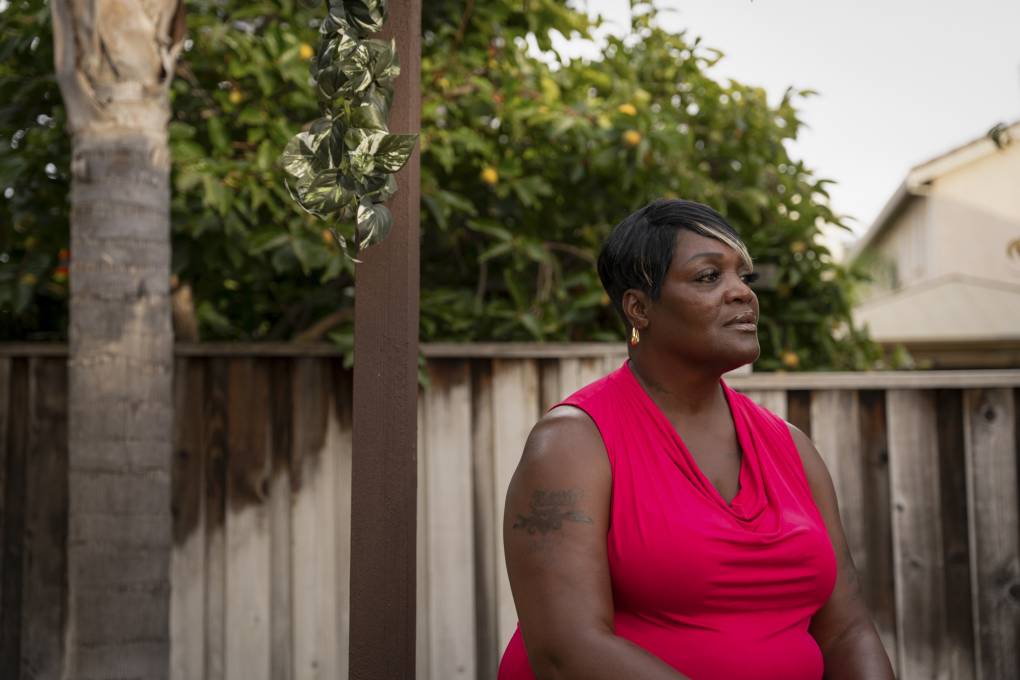
"caption": "Sharon Fennix at her home in Antioch on Sept. 29, 2023. While incarcerated in 2006, a doctor performed a procedure on Fennix called an endometrial ablation. The doctor did not inform Fennix that the procedure would damage her uterine lining, making pregnancy unlikely. ",
"description": null,
"title": "005_Sharon_230929_076-KQED",
"credit": "Courtesy of Florence Middleton",
"status": "inherit",
"altTag": "A person in a pink blouse sits outdoors.",
"isLoading": false,
"fetchFailed": false
},
"news_11965719": {
"type": "attachments",
"id": "news_11965719",
"meta": {
"index": "attachments_1716263798",
"site": "news",
"id": "11965719",
"found": true
},
"parent": 0,
"imgSizes": {
"twentyfourteen-full-width": {
"file": "https://ww2.kqed.org/app/uploads/sites/10/2023/10/IMG_0468-1038x576.jpg",
"width": 1038,
"mimeType": "image/jpeg",
"height": 576
},
"thumbnail": {
"file": "https://ww2.kqed.org/app/uploads/sites/10/2023/10/IMG_0468-160x103.jpg",
"width": 160,
"mimeType": "image/jpeg",
"height": 103
},
"post-thumbnail": {
"file": "https://ww2.kqed.org/app/uploads/sites/10/2023/10/IMG_0468-672x372.jpg",
"width": 672,
"mimeType": "image/jpeg",
"height": 372
},
"kqedFullSize": {
"file": "https://ww2.kqed.org/app/uploads/sites/10/2023/10/IMG_0468.jpg",
"width": 1920,
"height": 1240
},
"large": {
"file": "https://ww2.kqed.org/app/uploads/sites/10/2023/10/IMG_0468-1020x659.jpg",
"width": 1020,
"mimeType": "image/jpeg",
"height": 659
},
"1536x1536": {
"file": "https://ww2.kqed.org/app/uploads/sites/10/2023/10/IMG_0468-1536x992.jpg",
"width": 1536,
"mimeType": "image/jpeg",
"height": 992
},
"medium": {
"file": "https://ww2.kqed.org/app/uploads/sites/10/2023/10/IMG_0468-800x517.jpg",
"width": 800,
"mimeType": "image/jpeg",
"height": 517
}
},
"publishDate": 1698358651,
"modified": 1698360929,
"caption": "The clock is ticking for those forcibly sterilized in California prisons to apply for reparations. An estimated 20,000 incarcerated people endured non-consensual sterilizations from 1909 to 1979, with an additional 100 in the early 2000s. While $4.5 million awaits survivors, applications remain scarce. The closing date is Dec. 31.",
"description": null,
"title": "IMG_0468",
"credit": "Anna Vignet/KQED",
"status": "inherit",
"altTag": "A graphic illustration of a clock ticking while someone's hand is seen holding a carnation.",
"isLoading": false,
"fetchFailed": false
},
"news_11960995": {
"type": "attachments",
"id": "news_11960995",
"meta": {
"index": "attachments_1716263798",
"site": "news",
"id": "11960995",
"found": true
},
"parent": 11960994,
"imgSizes": {
"twentyfourteen-full-width": {
"file": "https://ww2.kqed.org/app/uploads/sites/10/2023/09/Rep-Episode-5_Thumb-B-5-1038x576.png",
"width": 1038,
"mimeType": "image/png",
"height": 576
},
"thumbnail": {
"file": "https://ww2.kqed.org/app/uploads/sites/10/2023/09/Rep-Episode-5_Thumb-B-5-160x90.png",
"width": 160,
"mimeType": "image/png",
"height": 90
},
"post-thumbnail": {
"file": "https://ww2.kqed.org/app/uploads/sites/10/2023/09/Rep-Episode-5_Thumb-B-5-672x372.png",
"width": 672,
"mimeType": "image/png",
"height": 372
},
"kqedFullSize": {
"file": "https://ww2.kqed.org/app/uploads/sites/10/2023/09/Rep-Episode-5_Thumb-B-5.png",
"width": 1920,
"height": 1080
},
"large": {
"file": "https://ww2.kqed.org/app/uploads/sites/10/2023/09/Rep-Episode-5_Thumb-B-5-1020x574.png",
"width": 1020,
"mimeType": "image/png",
"height": 574
},
"1536x1536": {
"file": "https://ww2.kqed.org/app/uploads/sites/10/2023/09/Rep-Episode-5_Thumb-B-5-1536x864.png",
"width": 1536,
"mimeType": "image/png",
"height": 864
},
"medium": {
"file": "https://ww2.kqed.org/app/uploads/sites/10/2023/09/Rep-Episode-5_Thumb-B-5-800x450.png",
"width": 800,
"mimeType": "image/png",
"height": 450
}
},
"publishDate": 1694632355,
"modified": 1694635549,
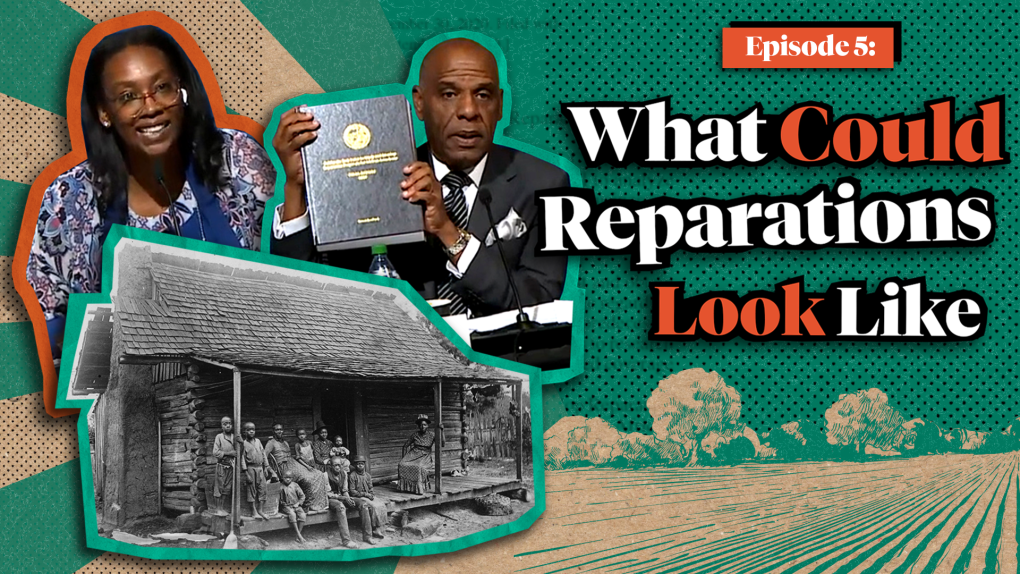
"caption": "Chair of California's Reparations Task Force Kamilah Moore (left) and task force member and state Senator Steven Bradford (right).",
"description": null,
"title": "Rep Episode 5_Thumb B 5",
"credit": "Graphic by Sabrina Ilumin/KQED",
"status": "inherit",
"altTag": "A collage with two people, and text saying: \"What Could Reparations Look Like\"",
"isLoading": false,
"fetchFailed": false
},
"news_11960421": {
"type": "attachments",
"id": "news_11960421",
"meta": {
"index": "attachments_1716263798",
"site": "news",
"id": "11960421",
"found": true
},
"parent": 11960420,
"imgSizes": {
"twentyfourteen-full-width": {
"file": "https://ww2.kqed.org/app/uploads/sites/10/2023/09/RS68800_IMG_5293-qut-1038x576.jpg",
"width": 1038,
"mimeType": "image/jpeg",
"height": 576
},
"thumbnail": {
"file": "https://ww2.kqed.org/app/uploads/sites/10/2023/09/RS68800_IMG_5293-qut-160x104.jpg",
"width": 160,
"mimeType": "image/jpeg",
"height": 104
},
"post-thumbnail": {
"file": "https://ww2.kqed.org/app/uploads/sites/10/2023/09/RS68800_IMG_5293-qut-672x372.jpg",
"width": 672,
"mimeType": "image/jpeg",
"height": 372
},
"kqedFullSize": {
"file": "https://ww2.kqed.org/app/uploads/sites/10/2023/09/RS68800_IMG_5293-qut.jpg",
"width": 1920,
"height": 1250
},
"large": {
"file": "https://ww2.kqed.org/app/uploads/sites/10/2023/09/RS68800_IMG_5293-qut-1020x664.jpg",
"width": 1020,
"mimeType": "image/jpeg",
"height": 664
},
"1536x1536": {
"file": "https://ww2.kqed.org/app/uploads/sites/10/2023/09/RS68800_IMG_5293-qut-1536x1000.jpg",
"width": 1536,
"mimeType": "image/jpeg",
"height": 1000
},
"medium": {
"file": "https://ww2.kqed.org/app/uploads/sites/10/2023/09/RS68800_IMG_5293-qut-800x521.jpg",
"width": 800,
"mimeType": "image/jpeg",
"height": 521
}
},
"publishDate": 1694136763,
"modified": 1694136780,
"caption": "Assemblymember Reggie Jones-Sawyer, D-Los Angeles, on Political Breakdown on September 7, 2023 in Sacramento.",
"description": null,
"title": "RS68800_IMG_5293-qut",
"credit": "Guy Marzorati/KQED",
"status": "inherit",
"altTag": null,
"isLoading": false,
"fetchFailed": false
},
"news_11954143": {
"type": "attachments",
"id": "news_11954143",
"meta": {
"index": "attachments_1716263798",
"site": "news",
"id": "11954143",
"found": true
},
"parent": 0,
"imgSizes": {
"twentyfourteen-full-width": {
"file": "https://ww2.kqed.org/app/uploads/sites/10/2023/06/RS55251_003_KQED_CAReparationsTaskForce_04132022-KQED-1038x576.jpg",
"width": 1038,
"mimeType": "image/jpeg",
"height": 576
},
"thumbnail": {
"file": "https://ww2.kqed.org/app/uploads/sites/10/2023/06/RS55251_003_KQED_CAReparationsTaskForce_04132022-KQED-160x106.jpg",
"width": 160,
"mimeType": "image/jpeg",
"height": 106
},
"post-thumbnail": {
"file": "https://ww2.kqed.org/app/uploads/sites/10/2023/06/RS55251_003_KQED_CAReparationsTaskForce_04132022-KQED-672x372.jpg",
"width": 672,
"mimeType": "image/jpeg",
"height": 372
},
"kqedFullSize": {
"file": "https://ww2.kqed.org/app/uploads/sites/10/2023/06/RS55251_003_KQED_CAReparationsTaskForce_04132022-KQED.jpg",
"width": 2000,
"height": 1331
},
"large": {
"file": "https://ww2.kqed.org/app/uploads/sites/10/2023/06/RS55251_003_KQED_CAReparationsTaskForce_04132022-KQED-1020x679.jpg",
"width": 1020,
"mimeType": "image/jpeg",
"height": 679
},
"1536x1536": {
"file": "https://ww2.kqed.org/app/uploads/sites/10/2023/06/RS55251_003_KQED_CAReparationsTaskForce_04132022-KQED-1536x1022.jpg",
"width": 1536,
"mimeType": "image/jpeg",
"height": 1022
},
"full-width": {
"file": "https://ww2.kqed.org/app/uploads/sites/10/2023/06/RS55251_003_KQED_CAReparationsTaskForce_04132022-KQED-1920x1278.jpg",
"width": 1920,
"mimeType": "image/jpeg",
"height": 1278
},
"medium": {
"file": "https://ww2.kqed.org/app/uploads/sites/10/2023/06/RS55251_003_KQED_CAReparationsTaskForce_04132022-KQED-800x532.jpg",
"width": 800,
"mimeType": "image/jpeg",
"height": 532
}
},
"publishDate": 1687820767,
"modified": 1687985197,
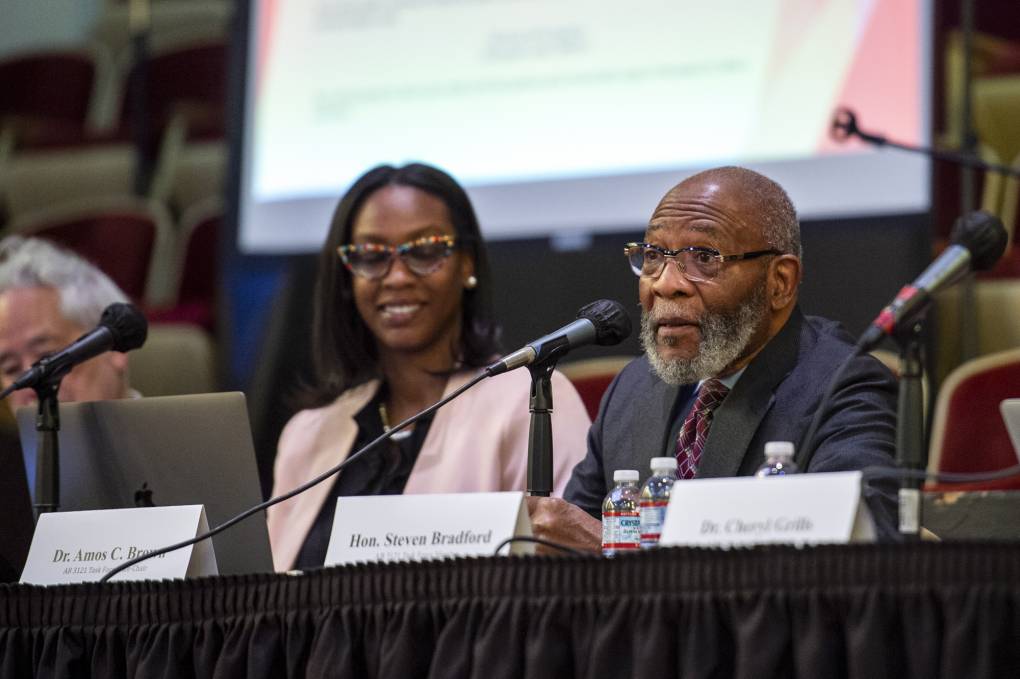
"caption": "Vice-Chair Dr. Amos C. Brown welcomes attendees to the first in-person meeting of the California Reparations Task Force at the Third Baptist Church in San Francisco's Fillmore District on April 14, 2022.",
"description": null,
"title": "RS55251_003_KQED_CAReparationsTaskForce_04132022-KQED",
"credit": "Beth LaBerge/KQED",
"status": "inherit",
"altTag": "A man in glasses speaks at a microphone from a long table with several people sitting beside him.",
"isLoading": false,
"fetchFailed": false
},
"news_11954693": {
"type": "attachments",
"id": "news_11954693",
"meta": {
"index": "attachments_1716263798",
"site": "news",
"id": "11954693",
"found": true
},
"parent": 11954691,
"imgSizes": {
"twentyfourteen-full-width": {
"file": "https://ww2.kqed.org/app/uploads/sites/10/2023/06/RS55262_015_KQED_CAReparationsTaskForce_04132022-qut-1038x576.jpg",
"width": 1038,
"mimeType": "image/jpeg",
"height": 576
},
"thumbnail": {
"file": "https://ww2.kqed.org/app/uploads/sites/10/2023/06/RS55262_015_KQED_CAReparationsTaskForce_04132022-qut-160x107.jpg",
"width": 160,
"mimeType": "image/jpeg",
"height": 107
},
"post-thumbnail": {
"file": "https://ww2.kqed.org/app/uploads/sites/10/2023/06/RS55262_015_KQED_CAReparationsTaskForce_04132022-qut-672x372.jpg",
"width": 672,
"mimeType": "image/jpeg",
"height": 372
},
"kqedFullSize": {
"file": "https://ww2.kqed.org/app/uploads/sites/10/2023/06/RS55262_015_KQED_CAReparationsTaskForce_04132022-qut.jpg",
"width": 1920,
"height": 1278
},
"large": {
"file": "https://ww2.kqed.org/app/uploads/sites/10/2023/06/RS55262_015_KQED_CAReparationsTaskForce_04132022-qut-1020x679.jpg",
"width": 1020,
"mimeType": "image/jpeg",
"height": 679
},
"1536x1536": {
"file": "https://ww2.kqed.org/app/uploads/sites/10/2023/06/RS55262_015_KQED_CAReparationsTaskForce_04132022-qut-1536x1022.jpg",
"width": 1536,
"mimeType": "image/jpeg",
"height": 1022
},
"medium": {
"file": "https://ww2.kqed.org/app/uploads/sites/10/2023/06/RS55262_015_KQED_CAReparationsTaskForce_04132022-qut-800x533.jpg",
"width": 800,
"mimeType": "image/jpeg",
"height": 533
}
},
"publishDate": 1688087334,
"modified": 1688087354,
"caption": "Chair Kamilah Moore welcomes attendees to the first in-person meeting of the California Reparations Task Force at the Third Baptist Church in San Francisco's Fillmore District on April 14, 2022.",
"description": null,
"title": "RS55262_015_KQED_CAReparationsTaskForce_04132022-qut",
"credit": "Beth LaBerge/KQED",
"status": "inherit",
"altTag": null,
"isLoading": false,
"fetchFailed": false
},
"news_11953315": {
"type": "attachments",
"id": "news_11953315",
"meta": {
"index": "attachments_1716263798",
"site": "news",
"id": "11953315",
"found": true
},
"title": "RS66366_20230617_Juneteenth_KQED-35-KQED",
"publishDate": 1687062947,
"status": "inherit",
"parent": 0,
"modified": 1718742416,
"caption": "People dance at Lake Merritt as part of the 14th annual Fam Bam Afrocentric Juneteenth festival in Oakland on June 17, 2023.",
"credit": "Amaya Edwards/KQED",
"altTag": "A group of people dance together on a sunny day.",
"description": null,
"imgSizes": {
"medium": {
"file": "https://cdn.kqed.org/wp-content/uploads/sites/10/2023/06/RS66366_20230617_Juneteenth_KQED-35-KQED-800x533.jpg",
"width": 800,
"height": 533,
"mimeType": "image/jpeg"
},
"large": {
"file": "https://cdn.kqed.org/wp-content/uploads/sites/10/2023/06/RS66366_20230617_Juneteenth_KQED-35-KQED-1020x680.jpg",
"width": 1020,
"height": 680,
"mimeType": "image/jpeg"
},
"thumbnail": {
"file": "https://cdn.kqed.org/wp-content/uploads/sites/10/2023/06/RS66366_20230617_Juneteenth_KQED-35-KQED-160x107.jpg",
"width": 160,
"height": 107,
"mimeType": "image/jpeg"
},
"1536x1536": {
"file": "https://cdn.kqed.org/wp-content/uploads/sites/10/2023/06/RS66366_20230617_Juneteenth_KQED-35-KQED-1536x1024.jpg",
"width": 1536,
"height": 1024,
"mimeType": "image/jpeg"
},
"post-thumbnail": {
"file": "https://cdn.kqed.org/wp-content/uploads/sites/10/2023/06/RS66366_20230617_Juneteenth_KQED-35-KQED-672x372.jpg",
"width": 672,
"height": 372,
"mimeType": "image/jpeg"
},
"twentyfourteen-full-width": {
"file": "https://cdn.kqed.org/wp-content/uploads/sites/10/2023/06/RS66366_20230617_Juneteenth_KQED-35-KQED-1038x576.jpg",
"width": 1038,
"height": 576,
"mimeType": "image/jpeg"
},
"full-width": {
"file": "https://cdn.kqed.org/wp-content/uploads/sites/10/2023/06/RS66366_20230617_Juneteenth_KQED-35-KQED-1920x1280.jpg",
"width": 1920,
"height": 1280,
"mimeType": "image/jpeg"
},
"kqedFullSize": {
"file": "https://cdn.kqed.org/wp-content/uploads/sites/10/2023/06/RS66366_20230617_Juneteenth_KQED-35-KQED.jpg",
"width": 2000,
"height": 1333
}
},
"isLoading": false,
"fetchFailed": false
},
"news_11942341": {
"type": "attachments",
"id": "news_11942341",
"meta": {
"index": "attachments_1716263798",
"site": "news",
"id": "11942341",
"found": true
},
"parent": 11942302,
"imgSizes": {
"twentyfourteen-full-width": {
"file": "https://ww2.kqed.org/app/uploads/sites/10/2024/03/IMG_4305-1038x576.jpg",
"width": 1038,
"mimeType": "image/jpeg",
"height": 576
},
"thumbnail": {
"file": "https://ww2.kqed.org/app/uploads/sites/10/2024/03/IMG_4305-160x114.jpg",
"width": 160,
"mimeType": "image/jpeg",
"height": 114
},
"post-thumbnail": {
"file": "https://ww2.kqed.org/app/uploads/sites/10/2024/03/IMG_4305-672x372.jpg",
"width": 672,
"mimeType": "image/jpeg",
"height": 372
},
"kqedFullSize": {
"file": "https://ww2.kqed.org/app/uploads/sites/10/2024/03/IMG_4305.jpg",
"width": 1920,
"height": 1371
},
"large": {
"file": "https://ww2.kqed.org/app/uploads/sites/10/2024/03/IMG_4305-1020x728.jpg",
"width": 1020,
"mimeType": "image/jpeg",
"height": 728
},
"1536x1536": {
"file": "https://ww2.kqed.org/app/uploads/sites/10/2024/03/IMG_4305-1536x1097.jpg",
"width": 1536,
"mimeType": "image/jpeg",
"height": 1097
},
"medium": {
"file": "https://ww2.kqed.org/app/uploads/sites/10/2024/03/IMG_4305-800x571.jpg",
"width": 800,
"mimeType": "image/jpeg",
"height": 571
}
},
"publishDate": 1677793821,
"modified": 1686932212,
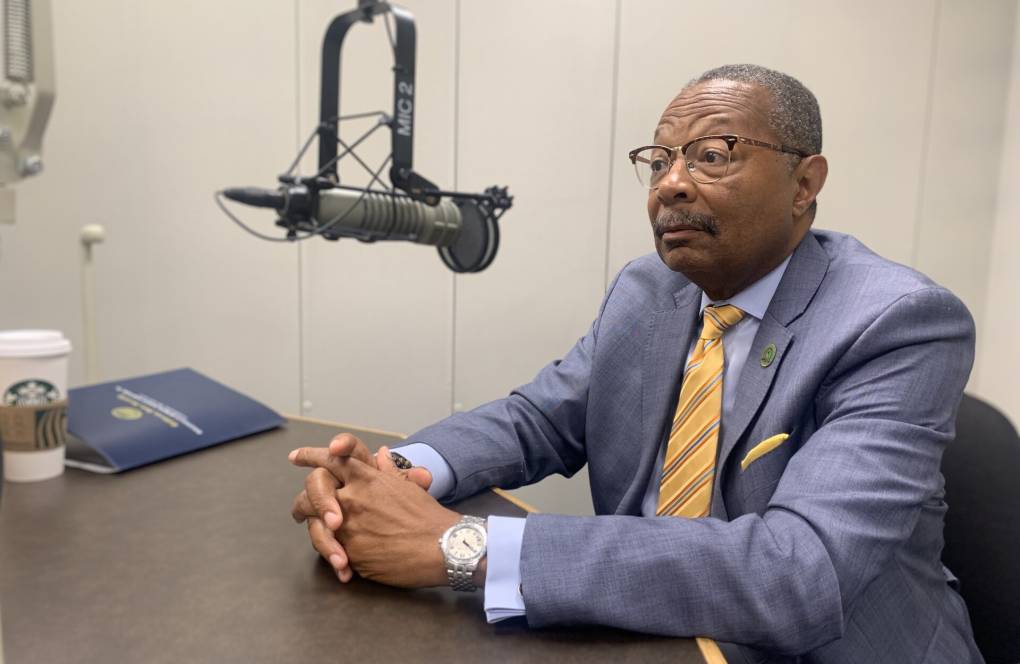
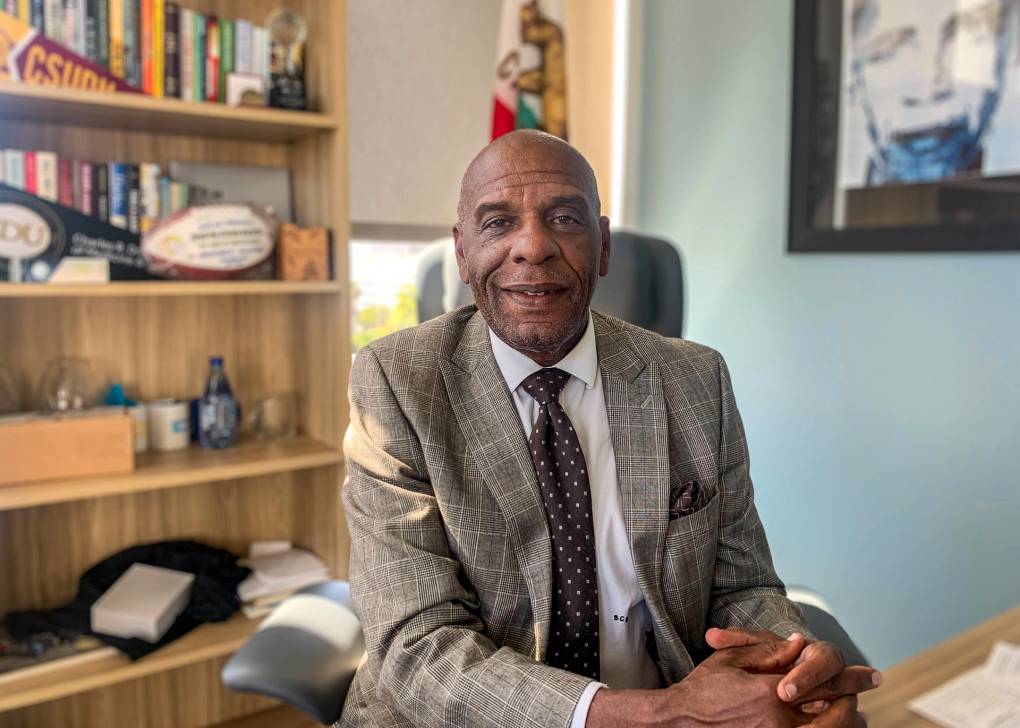
"caption": "California state Sen. Steven Bradford (D-Gardena), a member of California's reparations task force, in his office in Sacramento on Aug. 10, 2022.",
"description": null,
"title": "IMG_4305",
"credit": "Guy Marzorati/KQED",
"status": "inherit",
"altTag": "A Black man wearing a jacket and tie, sitting at a desk.",
"isLoading": false,
"fetchFailed": false
},
"news_11952793": {
"type": "attachments",
"id": "news_11952793",
"meta": {
"index": "attachments_1716263798",
"site": "news",
"id": "11952793",
"found": true
},
"title": "California Reparations Task Force meets to hear public input on reparations at the California Science Center in Los Angeles on Sept. 22, 2022.",
"publishDate": 1686590644,
"status": "inherit",
"parent": 12046328,
"modified": 1751065072,
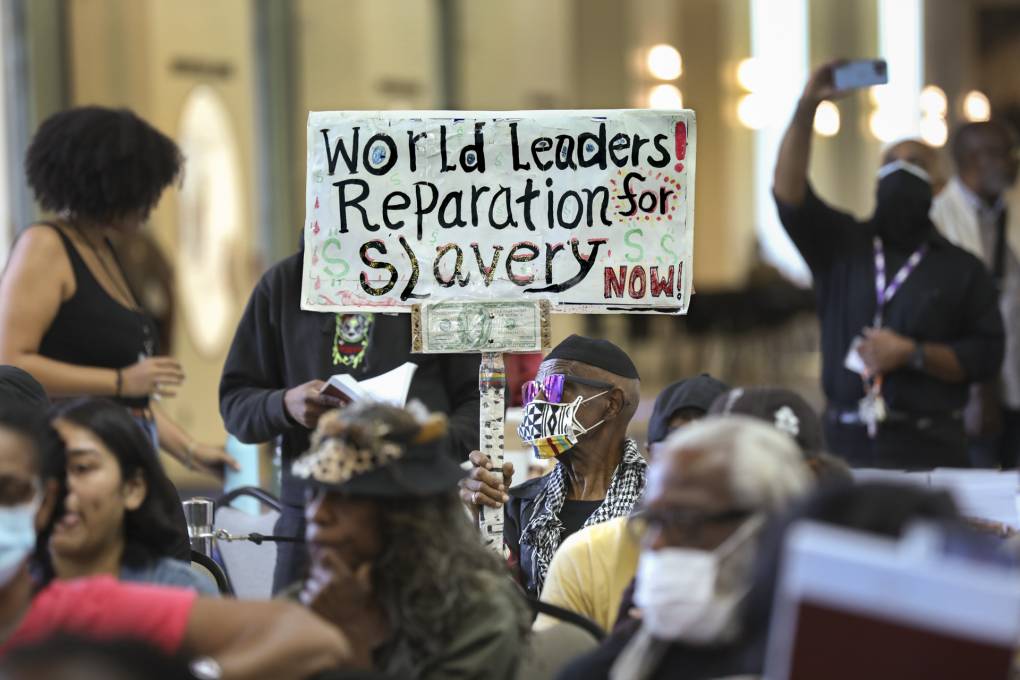
"caption": "Long-time Los Angeles resident Walter Foster, 80, holds up a sign as the Reparations Task Force listens to public input at the California Science Center in Los Angeles on Sept. 22, 2022.",
"credit": "Carolyn Cole/Los Angeles Times via Getty Images",
"altTag": "A man wearing a face mask holds a sign that reads \"World Leaders! Reparations for Slavery Now!\" in a crowd of people.",
"description": null,
"imgSizes": {
"medium": {
"file": "https://cdn.kqed.org/wp-content/uploads/sites/10/2023/06/230612-Reparations-Getty-1243475910-KQED-800x533.jpg",
"width": 800,
"height": 533,
"mimeType": "image/jpeg"
},
"large": {
"file": "https://cdn.kqed.org/wp-content/uploads/sites/10/2023/06/230612-Reparations-Getty-1243475910-KQED-1020x680.jpg",
"width": 1020,
"height": 680,
"mimeType": "image/jpeg"
},
"thumbnail": {
"file": "https://cdn.kqed.org/wp-content/uploads/sites/10/2023/06/230612-Reparations-Getty-1243475910-KQED-160x107.jpg",
"width": 160,
"height": 107,
"mimeType": "image/jpeg"
},
"1536x1536": {
"file": "https://cdn.kqed.org/wp-content/uploads/sites/10/2023/06/230612-Reparations-Getty-1243475910-KQED-1536x1024.jpg",
"width": 1536,
"height": 1024,
"mimeType": "image/jpeg"
},
"post-thumbnail": {
"file": "https://cdn.kqed.org/wp-content/uploads/sites/10/2023/06/230612-Reparations-Getty-1243475910-KQED-672x372.jpg",
"width": 672,
"height": 372,
"mimeType": "image/jpeg"
},
"twentyfourteen-full-width": {
"file": "https://cdn.kqed.org/wp-content/uploads/sites/10/2023/06/230612-Reparations-Getty-1243475910-KQED-1038x576.jpg",
"width": 1038,
"height": 576,
"mimeType": "image/jpeg"
},
"kqedFullSize": {
"file": "https://cdn.kqed.org/wp-content/uploads/sites/10/2023/06/230612-Reparations-Getty-1243475910-KQED.jpg",
"width": 1920,
"height": 1280
}
},
"isLoading": false,
"fetchFailed": false
},
"news_11952788": {
"type": "attachments",
"id": "news_11952788",
"meta": {
"index": "attachments_1716263798",
"site": "news",
"id": "11952788",
"found": true
},
"parent": 0,
"imgSizes": {
"twentyfourteen-full-width": {
"file": "https://ww2.kqed.org/app/uploads/sites/10/2023/06/RS61995_040_KQED_FayeCrosleyRichmondEviction_01112023-KQED-1038x576.jpg",
"width": 1038,
"mimeType": "image/jpeg",
"height": 576
},
"thumbnail": {
"file": "https://ww2.kqed.org/app/uploads/sites/10/2023/06/RS61995_040_KQED_FayeCrosleyRichmondEviction_01112023-KQED-160x107.jpg",
"width": 160,
"mimeType": "image/jpeg",
"height": 107
},
"post-thumbnail": {
"file": "https://ww2.kqed.org/app/uploads/sites/10/2023/06/RS61995_040_KQED_FayeCrosleyRichmondEviction_01112023-KQED-672x372.jpg",
"width": 672,
"mimeType": "image/jpeg",
"height": 372
},
"kqedFullSize": {
"file": "https://ww2.kqed.org/app/uploads/sites/10/2023/06/RS61995_040_KQED_FayeCrosleyRichmondEviction_01112023-KQED.jpg",
"width": 1920,
"height": 1280
},
"large": {
"file": "https://ww2.kqed.org/app/uploads/sites/10/2023/06/RS61995_040_KQED_FayeCrosleyRichmondEviction_01112023-KQED-1020x680.jpg",
"width": 1020,
"mimeType": "image/jpeg",
"height": 680
},
"1536x1536": {
"file": "https://ww2.kqed.org/app/uploads/sites/10/2023/06/RS61995_040_KQED_FayeCrosleyRichmondEviction_01112023-KQED-1536x1024.jpg",
"width": 1536,
"mimeType": "image/jpeg",
"height": 1024
},
"medium": {
"file": "https://ww2.kqed.org/app/uploads/sites/10/2023/06/RS61995_040_KQED_FayeCrosleyRichmondEviction_01112023-KQED-800x533.jpg",
"width": 800,
"mimeType": "image/jpeg",
"height": 533
}
},
"publishDate": 1686588677,
"modified": 1686852810,
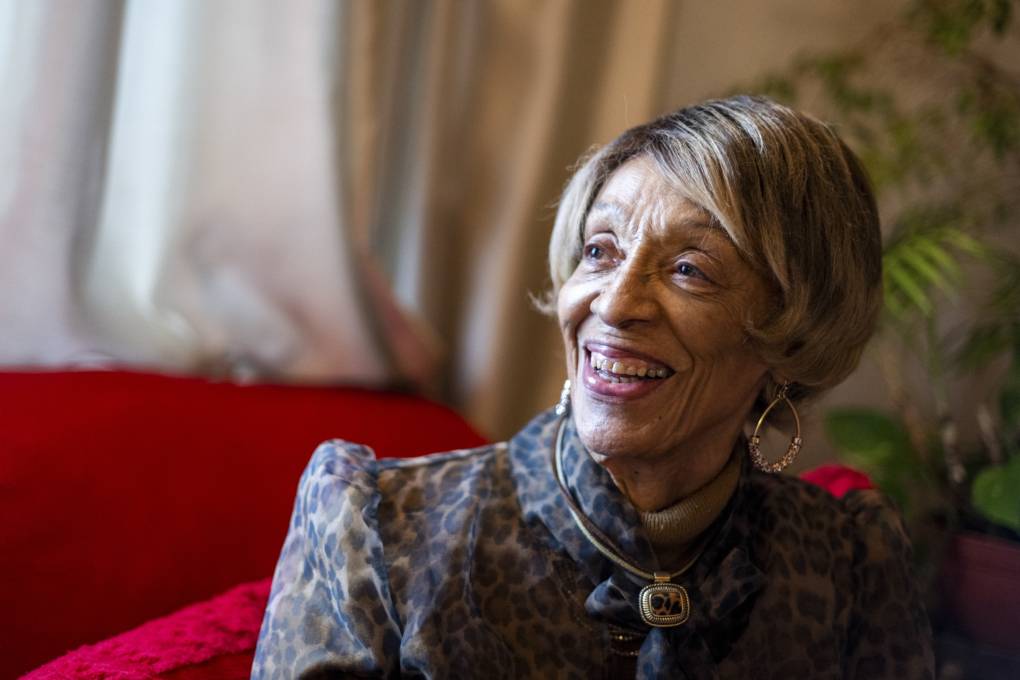
"caption": "Faye Crosley, 80, sits in the living room of her family's Richmond home on Jan. 11, 2023, the day of their scheduled eviction.",
"description": null,
"title": "RS61995_040_KQED_FayeCrosleyRichmondEviction_01112023-KQED",
"credit": "Beth LaBerge/KQED",
"status": "inherit",
"altTag": "A woman wearing a leopard print top and necklace and earrings smiles while sitting on a red sofa.",
"isLoading": false,
"fetchFailed": false
},
"news_11950335": {
"type": "attachments",
"id": "news_11950335",
"meta": {
"index": "attachments_1716263798",
"site": "news",
"id": "11950335",
"found": true
},
"parent": 0,
"imgSizes": {
"twentyfourteen-full-width": {
"file": "https://ww2.kqed.org/app/uploads/sites/10/2023/05/RS63332_023_KQED_CAReparationsTaskForceSac_03032023-qut-1038x576.jpg",
"width": 1038,
"mimeType": "image/jpeg",
"height": 576
},
"thumbnail": {
"file": "https://ww2.kqed.org/app/uploads/sites/10/2023/05/RS63332_023_KQED_CAReparationsTaskForceSac_03032023-qut-160x107.jpg",
"width": 160,
"mimeType": "image/jpeg",
"height": 107
},
"post-thumbnail": {
"file": "https://ww2.kqed.org/app/uploads/sites/10/2023/05/RS63332_023_KQED_CAReparationsTaskForceSac_03032023-qut-672x372.jpg",
"width": 672,
"mimeType": "image/jpeg",
"height": 372
},
"kqedFullSize": {
"file": "https://ww2.kqed.org/app/uploads/sites/10/2023/05/RS63332_023_KQED_CAReparationsTaskForceSac_03032023-qut.jpg",
"width": 1920,
"height": 1280
},
"large": {
"file": "https://ww2.kqed.org/app/uploads/sites/10/2023/05/RS63332_023_KQED_CAReparationsTaskForceSac_03032023-qut-1020x680.jpg",
"width": 1020,
"mimeType": "image/jpeg",
"height": 680
},
"1536x1536": {
"file": "https://ww2.kqed.org/app/uploads/sites/10/2023/05/RS63332_023_KQED_CAReparationsTaskForceSac_03032023-qut-1536x1024.jpg",
"width": 1536,
"mimeType": "image/jpeg",
"height": 1024
},
"medium": {
"file": "https://ww2.kqed.org/app/uploads/sites/10/2023/05/RS63332_023_KQED_CAReparationsTaskForceSac_03032023-qut-800x533.jpg",
"width": 800,
"mimeType": "image/jpeg",
"height": 533
}
},
"publishDate": 1684780944,
"modified": 1684795368,
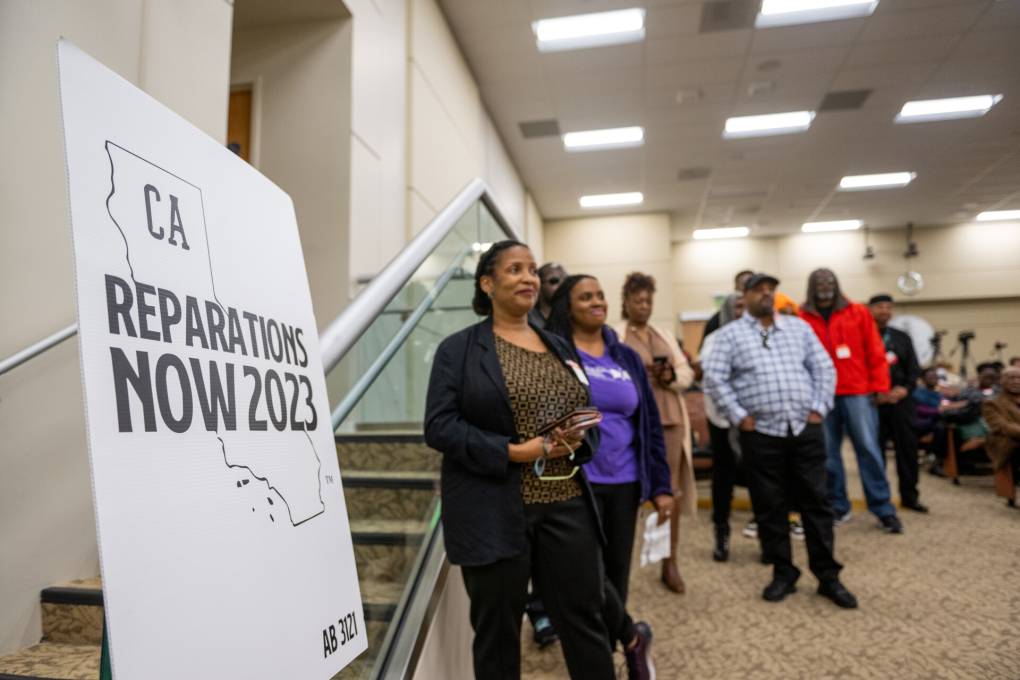
"caption": "People line up to speak during public comment at a California Reparations Task Force meeting in Sacramento on March 3, 2023.",
"description": null,
"title": "RS63332_023_KQED_CAReparationsTaskForceSac_03032023-qut",
"credit": "Beth LaBerge/KQED",
"status": "inherit",
"altTag": "A black and white sign reads, \"Reparations Now 2023\" and a line of people are to the right of it in business-casual clothing.",
"isLoading": false,
"fetchFailed": false
}
},
"audioPlayerReducer": {
"postId": "stream_live",
"isPaused": true,
"isPlaying": false,
"pfsActive": false,
"pledgeModalIsOpen": true,
"playerDrawerIsOpen": false,
"liveAudioPlayStartedAt": 0,
"liveAudioPlayContext": ""
},
"authorsReducer": {
"byline_news_11965926": {
"type": "authors",
"id": "byline_news_11965926",
"meta": {
"override": true
},
"slug": "byline_news_11965926",
"name": "\u003ca href=\"https://caylamihalovich.com/\">Cayla Mihalovich\u003c/a>",
"isLoading": false
},
"byline_news_11960994": {
"type": "authors",
"id": "byline_news_11960994",
"meta": {
"override": true
},
"slug": "byline_news_11960994",
"name": "\u003ca href=\"https://www.kqed.org/author/otaylor\">Otis R. Taylor Jr.\u003c/i>",
"isLoading": false
},
"gmarzorati": {
"type": "authors",
"id": "227",
"meta": {
"index": "authors_1716337520",
"id": "227",
"found": true
},
"name": "Guy Marzorati",
"firstName": "Guy",
"lastName": "Marzorati",
"slug": "gmarzorati",
"email": "gmarzorati@KQED.org",
"display_author_email": true,
"staff_mastheads": [
"news"
],
"title": "Correspondent",
"bio": "Guy Marzorati is a correspondent on KQED's California Politics and Government Desk, based in San Jose. A graduate of Santa Clara University, Guy joined KQED in 2013. He reports on state and local politics and produces KQED's digital voter guide.",
"avatar": "https://secure.gravatar.com/avatar/e7038b8dbfd55b104369b76b1cd0b9de?s=600&d=blank&r=g",
"twitter": "guymarzorati",
"facebook": null,
"instagram": null,
"linkedin": null,
"sites": [
{
"site": "",
"roles": [
"editor"
]
},
{
"site": "news",
"roles": [
"editor"
]
},
{
"site": "science",
"roles": [
"editor"
]
},
{
"site": "forum",
"roles": [
"editor"
]
},
{
"site": "elections",
"roles": [
"editor"
]
},
{
"site": "liveblog",
"roles": [
"editor"
]
}
],
"headData": {
"title": "Guy Marzorati | KQED",
"description": "Correspondent",
"ogImgSrc": "https://secure.gravatar.com/avatar/e7038b8dbfd55b104369b76b1cd0b9de?s=600&d=blank&r=g",
"twImgSrc": "https://secure.gravatar.com/avatar/e7038b8dbfd55b104369b76b1cd0b9de?s=600&d=blank&r=g"
},
"isLoading": false,
"link": "/author/gmarzorati"
},
"kqed": {
"type": "authors",
"id": "236",
"meta": {
"index": "authors_1716337520",
"id": "236",
"found": true
},
"name": "KQED News Staff",
"firstName": "KQED News Staff",
"lastName": null,
"slug": "kqed",
"email": "faq@kqed.org",
"display_author_email": false,
"staff_mastheads": [],
"title": null,
"bio": null,
"avatar": "https://secure.gravatar.com/avatar/ef0e801a68c4c54afa9180db14084167?s=600&d=blank&r=g",
"twitter": null,
"facebook": null,
"instagram": null,
"linkedin": null,
"sites": [
{
"site": "arts",
"roles": [
"contributor"
]
},
{
"site": "news",
"roles": [
"editor"
]
},
{
"site": "futureofyou",
"roles": [
"author"
]
}
],
"headData": {
"title": "KQED News Staff | KQED",
"description": null,
"ogImgSrc": "https://secure.gravatar.com/avatar/ef0e801a68c4c54afa9180db14084167?s=600&d=blank&r=g",
"twImgSrc": "https://secure.gravatar.com/avatar/ef0e801a68c4c54afa9180db14084167?s=600&d=blank&r=g"
},
"isLoading": false,
"link": "/author/kqed"
},
"mlagos": {
"type": "authors",
"id": "3239",
"meta": {
"index": "authors_1716337520",
"id": "3239",
"found": true
},
"name": "Marisa Lagos",
"firstName": "Marisa",
"lastName": "Lagos",
"slug": "mlagos",
"email": "mlagos@kqed.org",
"display_author_email": false,
"staff_mastheads": [
"news"
],
"title": "KQED Contributor",
"bio": "Marisa Lagos is a correspondent for KQED’s California Politics and Government Desk and co-hosts the award-winning show and podcast, Political Breakdown. At KQED, Lagos also conducts reporting, analysis and investigations into state, local and national politics for radio, TV, online and onstage. In 2022, she and co-host, Scott Shafer, moderated the only gubernatorial debate in California. In 2020, the \u003ci>Washington Post\u003c/i> named her one of the top political journalists in California; she was nominated for a Peabody and won several other awards for her work investigating the 2017 California wildfires. She has worked at the \u003ci>San Francisco Chronicle\u003c/i>, \u003ci>San Francisco Examiner\u003c/i> and \u003ci>Los Angeles Times\u003c/i>. A UC Santa Barbara graduate, she lives in San Francisco with her two sons and husband.",
"avatar": "https://secure.gravatar.com/avatar/a261a0d3696fc066871ef96b85b5e7d2?s=600&d=blank&r=g",
"twitter": "@mlagos",
"facebook": null,
"instagram": null,
"linkedin": null,
"sites": [
{
"site": "arts",
"roles": [
"author"
]
},
{
"site": "news",
"roles": [
"editor"
]
},
{
"site": "science",
"roles": [
"editor"
]
},
{
"site": "forum",
"roles": [
"author"
]
},
{
"site": "liveblog",
"roles": [
"author"
]
}
],
"headData": {
"title": "Marisa Lagos | KQED",
"description": "KQED Contributor",
"ogImgSrc": "https://secure.gravatar.com/avatar/a261a0d3696fc066871ef96b85b5e7d2?s=600&d=blank&r=g",
"twImgSrc": "https://secure.gravatar.com/avatar/a261a0d3696fc066871ef96b85b5e7d2?s=600&d=blank&r=g"
},
"isLoading": false,
"link": "/author/mlagos"
},
"ecruzguevarra": {
"type": "authors",
"id": "8654",
"meta": {
"index": "authors_1716337520",
"id": "8654",
"found": true
},
"name": "Ericka Cruz Guevarra",
"firstName": "Ericka",
"lastName": "Cruz Guevarra",
"slug": "ecruzguevarra",
"email": "ecruzguevarra@kqed.org",
"display_author_email": true,
"staff_mastheads": [
"news"
],
"title": "Producer, The Bay Podcast",
"bio": "Ericka Cruz Guevarra is host of \u003ca href=\"https://www.kqed.org/podcasts/thebay\">\u003cem>The Bay\u003c/em>\u003c/a> podcast at KQED. Before host, she was the show’s producer. Her work in that capacity includes a three-part reported series on policing in Vallejo, which won a 2020 excellence in journalism award from the Society of Professional Journalists. Ericka has worked as a breaking news reporter at Oregon Public Broadcasting, helped produce the Code Switch podcast, and was KQED’s inaugural Raul Ramirez Diversity Fund intern. She’s also an alumna of NPR’s Next Generation Radio program. Send her an email if you have strong feelings about whether Fairfield and Suisun City are the Bay. Ericka is represented by SAG-AFTRA.",
"avatar": "https://secure.gravatar.com/avatar/25e5ab8d3d53fad2dcc7bb2b5c506b1a?s=600&d=blank&r=g",
"twitter": "NotoriousECG",
"facebook": null,
"instagram": null,
"linkedin": null,
"sites": [
{
"site": "arts",
"roles": [
"subscriber"
]
},
{
"site": "news",
"roles": [
"editor",
"manage_categories"
]
},
{
"site": "futureofyou",
"roles": [
"subscriber"
]
},
{
"site": "stateofhealth",
"roles": [
"subscriber"
]
},
{
"site": "science",
"roles": [
"editor"
]
},
{
"site": "forum",
"roles": [
"subscriber"
]
}
],
"headData": {
"title": "Ericka Cruz Guevarra | KQED",
"description": "Producer, The Bay Podcast",
"ogImgSrc": "https://secure.gravatar.com/avatar/25e5ab8d3d53fad2dcc7bb2b5c506b1a?s=600&d=blank&r=g",
"twImgSrc": "https://secure.gravatar.com/avatar/25e5ab8d3d53fad2dcc7bb2b5c506b1a?s=600&d=blank&r=g"
},
"isLoading": false,
"link": "/author/ecruzguevarra"
},
"lsarah": {
"type": "authors",
"id": "11626",
"meta": {
"index": "authors_1716337520",
"id": "11626",
"found": true
},
"name": "Lakshmi Sarah",
"firstName": "Lakshmi",
"lastName": "Sarah",
"slug": "lsarah",
"email": "lsarah@kqed.org",
"display_author_email": false,
"staff_mastheads": [],
"title": "Digital Producer",
"bio": "Lakshmi Sarah is an educator, author and journalist with a focus on innovative storytelling. She has worked with newspapers, radio and magazines from Ahmedabad, India to Los Angeles, California. She has written and produced for Die Zeit, Global Voices, AJ+, KQED, Fusion Media Group and the New York Times.",
"avatar": "https://secure.gravatar.com/avatar/652dcaecd8b28826fc17a8b2d6bb4e93?s=600&d=blank&r=g",
"twitter": "lakitalki",
"facebook": null,
"instagram": "https://www.instagram.com/laki.talki/",
"linkedin": "https://www.linkedin.com/in/lakisarah/",
"sites": [
{
"site": "arts",
"roles": []
},
{
"site": "news",
"roles": []
},
{
"site": "bayareabites",
"roles": []
},
{
"site": "science",
"roles": []
}
],
"headData": {
"title": "Lakshmi Sarah | KQED",
"description": "Digital Producer",
"ogImgSrc": "https://secure.gravatar.com/avatar/652dcaecd8b28826fc17a8b2d6bb4e93?s=600&d=blank&r=g",
"twImgSrc": "https://secure.gravatar.com/avatar/652dcaecd8b28826fc17a8b2d6bb4e93?s=600&d=blank&r=g"
},
"isLoading": false,
"link": "/author/lsarah"
},
"amontecillo": {
"type": "authors",
"id": "11649",
"meta": {
"index": "authors_1716337520",
"id": "11649",
"found": true
},
"name": "Alan Montecillo",
"firstName": "Alan",
"lastName": "Montecillo",
"slug": "amontecillo",
"email": "amontecillo@kqed.org",
"display_author_email": false,
"staff_mastheads": [
"news"
],
"title": "KQED Contributor",
"bio": "Alan Montecillo is the senior editor of \u003cem>\u003ca href=\"http://kqed.org/thebay\">The Bay\u003c/a>, \u003c/em> KQED's local news podcast. Before moving to the Bay Area, he worked as a senior talk show producer for WILL in Champaign-Urbana, Illinois and at Oregon Public Broadcasting in Portland, Oregon. He has won journalism awards from the Society of Professional Journalists Northern California, the Public Media Journalists Association, The Signal Awards, and has also received a regional Edward R. Murrow award. Alan is a Filipino American from Hong Kong and a graduate of Reed College.",
"avatar": "https://secure.gravatar.com/avatar/d5e4e7a76481969ccba76f4e2b5ccabc?s=600&d=blank&r=g",
"twitter": "alanmontecillo",
"facebook": null,
"instagram": null,
"linkedin": null,
"sites": [
{
"site": "",
"roles": [
"editor"
]
},
{
"site": "news",
"roles": [
"editor",
"manage_categories"
]
}
],
"headData": {
"title": "Alan Montecillo | KQED",
"description": "KQED Contributor",
"ogImgSrc": "https://secure.gravatar.com/avatar/d5e4e7a76481969ccba76f4e2b5ccabc?s=600&d=blank&r=g",
"twImgSrc": "https://secure.gravatar.com/avatar/d5e4e7a76481969ccba76f4e2b5ccabc?s=600&d=blank&r=g"
},
"isLoading": false,
"link": "/author/amontecillo"
},
"otaylor": {
"type": "authors",
"id": "11770",
"meta": {
"index": "authors_1716337520",
"id": "11770",
"found": true
},
"name": "Otis R. Taylor Jr.",
"firstName": "Otis R.",
"lastName": "Taylor Jr.",
"slug": "otaylor",
"email": "otaylor@kqed.org",
"display_author_email": false,
"staff_mastheads": [
"news"
],
"title": "KQED Editor",
"bio": null,
"avatar": "https://secure.gravatar.com/avatar/fe73e14d4842ac8e1c03d57def2530f57f1c5b0ca7d4a987ccc5bd90956cb7c6?s=600&d=mm&r=g",
"twitter": "otisrtaylorjr",
"bluesky": null,
"facebook": null,
"instagram": null,
"linkedin": null,
"sites": [
{
"site": "arts",
"roles": [
"editor"
]
},
{
"site": "news",
"roles": [
"subscriber"
]
},
{
"site": "science",
"roles": [
"subscriber"
]
},
{
"site": "liveblog",
"roles": [
"subscriber"
]
}
],
"headData": {
"title": "Otis R. Taylor Jr. | KQED",
"description": "KQED Editor",
"ogImgSrc": "https://secure.gravatar.com/avatar/fe73e14d4842ac8e1c03d57def2530f57f1c5b0ca7d4a987ccc5bd90956cb7c6?s=600&d=mm&r=g",
"twImgSrc": "https://secure.gravatar.com/avatar/fe73e14d4842ac8e1c03d57def2530f57f1c5b0ca7d4a987ccc5bd90956cb7c6?s=600&d=mm&r=g"
},
"isLoading": false,
"link": "/author/otaylor"
},
"afinney": {
"type": "authors",
"id": "11772",
"meta": {
"index": "authors_1716337520",
"id": "11772",
"found": true
},
"name": "Annelise Finney",
"firstName": "Annelise",
"lastName": "Finney",
"slug": "afinney",
"email": "afinney@kqed.org",
"display_author_email": true,
"staff_mastheads": [
"news"
],
"title": "Reporter",
"bio": "Annelise reports on reparations in California and East Bay politics. She co-produced the Sunday Music Drop, a limited-term radio series featuring Bay Area musicians that aired between Sept 2022 and Oct 2024. She joined KQED in 2021 as a general assignment reporter and is an alumna of KALW's Audio Academy. She was born and raised in the East Bay. She is currently away from KQED completing a year-long reporting project in Berlin, Germany as a Alexander Von Humboldt German Chancellor Fellow.",
"avatar": "https://secure.gravatar.com/avatar/5fded66cae47704cdfc5021cde0f3aa4?s=600&d=blank&r=g",
"twitter": null,
"facebook": null,
"instagram": null,
"linkedin": null,
"sites": [
{
"site": "news",
"roles": [
"editor"
]
},
{
"site": "liveblog",
"roles": [
"author"
]
}
],
"headData": {
"title": "Annelise Finney | KQED",
"description": "Reporter",
"ogImgSrc": "https://secure.gravatar.com/avatar/5fded66cae47704cdfc5021cde0f3aa4?s=600&d=blank&r=g",
"twImgSrc": "https://secure.gravatar.com/avatar/5fded66cae47704cdfc5021cde0f3aa4?s=600&d=blank&r=g"
},
"isLoading": false,
"link": "/author/afinney"
},
"mesquinca": {
"type": "authors",
"id": "11802",
"meta": {
"index": "authors_1716337520",
"id": "11802",
"found": true
},
"name": "Maria Esquinca",
"firstName": "Maria",
"lastName": "Esquinca",
"slug": "mesquinca",
"email": "mesquinca@kqed.org",
"display_author_email": false,
"staff_mastheads": [],
"title": "Producer, The Bay",
"bio": "María Esquinca is a producer of The Bay. Before that, she was a New York Women’s Foundation IGNITE Fellow at Latino USA. She worked at Radio Bilingue where she covered the San Joaquin Valley. Maria has interned at WLRN, News 21, The New York Times Student Journalism Institute and at Crain’s Detroit Business as a Dow Jones News Fund Business Reporting Intern. She is an MFA graduate from the University of Miami. In 2017, she graduated from the Walter Cronkite School of Journalism and Mass Communication with a Master of Mass Communication. A fronteriza, she was born in Ciudad Juárez, Chihuahua, Mexico and grew up in El Paso, Texas.",
"avatar": "https://secure.gravatar.com/avatar/77cedba18aae91da775038ba06dcd8d0?s=600&d=blank&r=g",
"twitter": "@m_esquinca",
"facebook": null,
"instagram": null,
"linkedin": null,
"sites": [
{
"site": "news",
"roles": []
}
],
"headData": {
"title": "Maria Esquinca | KQED",
"description": "Producer, The Bay",
"ogImgSrc": "https://secure.gravatar.com/avatar/77cedba18aae91da775038ba06dcd8d0?s=600&d=blank&r=g",
"twImgSrc": "https://secure.gravatar.com/avatar/77cedba18aae91da775038ba06dcd8d0?s=600&d=blank&r=g"
},
"isLoading": false,
"link": "/author/mesquinca"
},
"sjohnson": {
"type": "authors",
"id": "11840",
"meta": {
"index": "authors_1716337520",
"id": "11840",
"found": true
},
"name": "Sydney Johnson",
"firstName": "Sydney",
"lastName": "Johnson",
"slug": "sjohnson",
"email": "sjohnson@kqed.org",
"display_author_email": false,
"staff_mastheads": [
"news"
],
"title": "KQED Reporter",
"bio": "Sydney Johnson is a general assignment reporter at KQED. She previously reported on public health and city government at the San Francisco Examiner, and before that, she covered statewide education policy for EdSource. Her reporting has won multiple local, state and national awards. Sydney is a graduate of the University of California, Berkeley and lives in San Francisco.",
"avatar": "https://secure.gravatar.com/avatar/97855f2719b72ad6190b7c535fe642c8?s=600&d=blank&r=g",
"twitter": "sydneyfjohnson",
"facebook": null,
"instagram": null,
"linkedin": null,
"sites": [
{
"site": "news",
"roles": [
"editor"
]
}
],
"headData": {
"title": "Sydney Johnson | KQED",
"description": "KQED Reporter",
"ogImgSrc": "https://secure.gravatar.com/avatar/97855f2719b72ad6190b7c535fe642c8?s=600&d=blank&r=g",
"twImgSrc": "https://secure.gravatar.com/avatar/97855f2719b72ad6190b7c535fe642c8?s=600&d=blank&r=g"
},
"isLoading": false,
"link": "/author/sjohnson"
},
"jherdman": {
"type": "authors",
"id": "11844",
"meta": {
"index": "authors_1716337520",
"id": "11844",
"found": true
},
"name": "Jehlen Herdman",
"firstName": "Jehlen",
"lastName": "Herdman",
"slug": "jherdman",
"email": "jherdman@kqed.org",
"display_author_email": false,
"staff_mastheads": [],
"title": "KQED Contributor",
"bio": null,
"avatar": "https://secure.gravatar.com/avatar/ecf8a8048cad2aa4bfa7eec2a24b7015?s=600&d=blank&r=g",
"twitter": null,
"facebook": null,
"instagram": null,
"linkedin": null,
"sites": [
{
"site": "news",
"roles": [
"editor"
]
}
],
"headData": {
"title": "Jehlen Herdman | KQED",
"description": "KQED Contributor",
"ogImgSrc": "https://secure.gravatar.com/avatar/ecf8a8048cad2aa4bfa7eec2a24b7015?s=600&d=blank&r=g",
"twImgSrc": "https://secure.gravatar.com/avatar/ecf8a8048cad2aa4bfa7eec2a24b7015?s=600&d=blank&r=g"
},
"isLoading": false,
"link": "/author/jherdman"
}
},
"pagesReducer": {
"news_tag_reparations": {
"type": "terms",
"id": "news_2923",
"meta": {
"index": "terms_1716263798",
"site": "news",
"id": "2923",
"score": 8.93464
},
"featImg": null,
"name": "reparations",
"description": null,
"taxonomy": "tag",
"headData": {
"twImgId": null,
"twTitle": null,
"ogTitle": null,
"ogImgId": null,
"twDescription": null,
"description": null,
"title": "reparations Archives | KQED News",
"ogDescription": null
},
"ttid": 2941,
"slug": "reparations",
"isLoading": false,
"title": "reparations",
"pageMeta": {
"site": "news",
"WpPageTemplate": "page-topic-editorial",
"currentPage": 5
},
"blocks": [
{
"blockName": "kqed/post-list",
"attrs": {
"layout": "cardArticle2",
"query": "posts/news?tag=reparations",
"seeMore": false,
"paginated": true,
"page": 5
}
},
{
"blockName": "kqed/ad"
}
]
}
},
"pfsSessionReducer": {},
"postsReducer": {
"stream_live": {
"type": "live",
"id": "stream_live",
"audioUrl": "https://streams.kqed.org/kqedradio",
"title": "Live Stream",
"excerpt": "Live Stream information currently unavailable.",
"link": "/radio",
"featImg": "",
"label": {
"name": "KQED Live",
"link": "/"
}
},
"stream_kqedNewscast": {
"type": "posts",
"id": "stream_kqedNewscast",
"audioUrl": "https://www.kqed.org/.stream/anon/radio/RDnews/newscast.mp3?_=1",
"title": "KQED Newscast",
"featImg": "",
"label": {
"name": "88.5 FM",
"link": "/"
}
},
"news_11965926": {
"type": "posts",
"id": "news_11965926",
"meta": {
"index": "posts_1716263798",
"site": "news",
"id": "11965926",
"score": null,
"sort": [
1698861630000
]
},
"guestAuthors": [],
"slug": "survivors-of-californias-forced-sterilization-denied-reparations",
"title": "Survivors from California’s Period of Forced Sterilization Denied Reparations",
"publishDate": 1698861630,
"format": "standard",
"headTitle": "Survivors from California’s Period of Forced Sterilization Denied Reparations | KQED",
"labelTerm": {
"term": 26731,
"site": "news"
},
"content": "\u003cp>In March 2006, Sharon Fennix, then incarcerated at Valley State Prison in California’s Central Valley, was transported to Madera Community Hospital for surgery.\u003c/p>\n\u003cp>A prison doctor had recommended that she have non-cancerous growths removed from her uterus and, according to Fennix, she was told that the procedure wouldn’t have lasting impacts and recovery would be quick. She was given a dose of anesthesia, and the last thing she remembers was counting backward while two correctional officers wheeled her gurney down a hallway.[pullquote size=\"medium\" align=\"right\" citation=\"Sharon Fennix, a survivor who applied for reparations\"]‘My hope and my dream was always to have a child and be free. To give my son a sister or brother.’[/pullquote]When she woke up from the operation, she said her entire hospital gown was soaked with sweat. She remembers turning to the correctional officer in the room and saying, “I feel like something’s wrong.”\u003c/p>\n\u003cp>Approximately two weeks later, the follow-up visit with the prison doctor who ordered the surgery, Dr. James Heinrich, also left her deeply unsettled. The conversation is carved into her mind.\u003c/p>\n\u003cp>“There was sweating, bleeding and pain,” Fennix recently told KQED. “It plunged me into menopause.”\u003c/p>\n\u003cp>[ad fullwidth]\u003c/p>\n\u003cp>She asked Heinrich how long her side effects would last. Fennix said she was told what she was experiencing was normal and the growths on her uterus might return. Puzzled and upset, she wondered why surgery was necessary if the growths could come back.\u003c/p>\n\u003cp>According to Fennix, she demanded to know what happened to her body during surgery. But the more she probed, the more Heinrich tried to rush her out of his office. Finally, he explained that a surgeon had put a boiling solution in her uterus. Toward the end of the appointment, Fennix said he looked at her file and remarked on the fact that she was serving a life sentence.\u003c/p>\n\u003cp>She would never get out, she recalled Heinrich saying, so she didn’t need children.\u003c/p>\n\u003cp>“He was very cunning the way he said that to me,” Fennix said.\u003c/p>\n\u003cp>It would take nearly a decade for Fennix to fully understand what had happened to her. Before she was released from prison, another doctor explained that she had undergone an endometrial ablation, a procedure that damages the uterine lining.\u003c/p>\n\u003cp>“My hope and my dream was always to have a child and be free,” Fennix said. “To give my son a sister or brother.”\u003c/p>\n\u003cp>But pregnancy would be unlikely.\u003c/p>\n\u003cp>According to the American College of Obstetricians and Gynecologists, if a pregnancy occurs after the procedure, “the risks of miscarriage and other problems are greatly increased.”\u003c/p>\n\u003cfigure id=\"attachment_11964883\" class=\"wp-caption aligncenter\" style=\"max-width: 2000px\">\u003cimg loading=\"lazy\" decoding=\"async\" class=\"size-full wp-image-11964883\" src=\"https://ww2.kqed.org/app/uploads/sites/10/2023/10/009_Sharon_230929_125-KQED.jpg\" alt=\"A person hold a photo of a family in an ornate frame.\" width=\"2000\" height=\"1334\" srcset=\"https://cdn.kqed.org/wp-content/uploads/sites/10/2023/10/009_Sharon_230929_125-KQED.jpg 2000w, https://cdn.kqed.org/wp-content/uploads/sites/10/2023/10/009_Sharon_230929_125-KQED-800x534.jpg 800w, https://cdn.kqed.org/wp-content/uploads/sites/10/2023/10/009_Sharon_230929_125-KQED-1020x680.jpg 1020w, https://cdn.kqed.org/wp-content/uploads/sites/10/2023/10/009_Sharon_230929_125-KQED-160x107.jpg 160w, https://cdn.kqed.org/wp-content/uploads/sites/10/2023/10/009_Sharon_230929_125-KQED-1536x1025.jpg 1536w, https://cdn.kqed.org/wp-content/uploads/sites/10/2023/10/009_Sharon_230929_125-KQED-1920x1281.jpg 1920w\" sizes=\"auto, (max-width: 2000px) 100vw, 2000px\">\u003cfigcaption class=\"wp-caption-text\">Sharon Fennix holds a photo of her son, Dontay Pickettay, center, his wife and their four children. Pickettay hoped for siblings, she said. “My hope and my dream was always to have a child and be free. To give my son a sister or brother,” Fennix said. \u003ccite>(Courtesy of Florence Middleton)\u003c/cite>\u003c/figcaption>\u003c/figure>\n\u003cp>“I would make sure that [a person is] 110% sure that they do not want children before we discuss an ablation,” said Kavita Shah Arora, division director of General Obstetrics, Gynecology and Midwifery at the University of North Carolina at Chapel Hill, and former chair of the ACOG’s national ethics committee. “I think it really boils down to, what informed consent was given? Were patients aware of the impact on future fertility?”\u003c/p>\n\u003cp>Fennix said she never provided informed consent.\u003c/p>\n\u003cp>When the state passed historic legislation in 2021 that provided financial reparations to people who were forcibly or involuntarily sterilized, an advocate from the California Coalition for Women Prisoners thought Fennix had a clear-cut case and persuaded her to apply. Fennix submitted her first application on Jan. 3, 2022, two days after applications opened. Seven months later, she received a denial letter from the state’s Victim Compensation Board, which administers the program.[pullquote size=\"medium\" align=\"right\" citation=\"Kavita Shah Arora, division director, General Obstetrics, Gynecology and Midwifery at the University of North Carolina at Chapel Hill\"]‘I think it really boils down to, what informed consent was given? Were patients aware of the impact on future fertility?’[/pullquote]Fennix, who was 43 when she had the surgery, said she felt insulted by the rejection.\u003c/p>\n\u003cp>“You dehumanized me,” she said. “You took my body. How dare you later on tell me that I don’t deserve to be one of the ones that gets reparations for it?”\u003c/p>\n\u003cp>As the application period for the reparations program \u003ca href=\"https://www.kqed.org/news/11965672/forced-sterilization-survivors-of-california-prisons-face-reparations-deadline\">winds to a close in December\u003c/a>, Fennix and those who received endometrial ablations are at the heart of a dispute over who should be recognized as a survivor of a shameful chapter in California’s history.\u003c/p>\n\u003cp>A year-long investigation by UC Berkeley’s Investigative Reporting Program and KQED found that the compensation board has denied a majority of applicants and repeatedly rejected ablations as a procedure worthy of recognition. The investigation included 30 public records requests, the review of more than 3,000 pages of documents — and interviews with survivors, advocates, medical experts and lawmakers.\u003c/p>\n\u003cp>Among the applicants who volunteered their demographic information, the majority self-identified as Black or African American. Approximately 47% self-identified as male, 40% female and 4% transgender. While reporting this story, KQED spoke with six ablation survivors who were denied reparations.\u003c/p>\n\u003cp>“It feels so clear — based on the spirit of the law, based on the idea of who is perpetuating the harm — that if someone says, ‘I’m not able to have children’ and it’s documented that they had a procedure that limits your ability to have children, that feels like it should be sufficient,” said Jennifer James, an associate professor of sociology at UCSF and member of the California Coalition for Women Prisoners, or CCWP, who has assisted survivors with their applications.\u003c/p>\n\u003cp>Additionally, since 2014, California’s prison health care services have categorized ablations and dozens of other treatments as potentially sterilizing, according to a memo circulated among prison health care leadership.\u003c/p>\n\u003cp>The board declined to respond to specific questions but said in a statement that it has worked “to meet the requirements established in the law.”\u003c/p>\n\u003cp>Fennix appealed her case. That, too, was rejected. She went through the application and appeals process a second time. She was denied at every stage.\u003c/p>\n\u003cp>In rejecting Fennix’s first appeal, the board said that ablations don’t qualify as sterilizations under the law and cited the Mayo Clinic website, writing that pregnancy “can and does occur after an endometrial ablation.” The board left out what followed on the website: “The pregnancy is higher risk to you and the baby.”\u003c/p>\n\u003cp>Next week, Fennix and another formerly incarcerated woman who received an ablation will file a petition in state courts aimed at testing the state’s implementation of the reparations law.\u003c/p>\n\u003cp>Her case, Fennix said, reflects a hole in the state’s efforts to compensate survivors of state-sponsored sterilization.\u003c/p>\n\u003cp>“I’m not able to reproduce,” she said. “And so, how am I not sterilized?”\u003cspan style=\"text-decoration: line-through\"> \u003c/span>\u003c/p>\n\u003ch2>‘It’s another betrayal’\u003c/h2>\n\u003cp>When legislators passed the reparations law, California became the first and only state in the country to publicly recognize its role in prison sterilizations. Through monetary compensation and memorialization efforts, the state aimed to “raise public awareness about the discriminatory harms” survivors of forced sterilization had faced.\u003c/p>\n\u003cp>The state allocated $7.5 million to the two-year program, with $4.5 million earmarked for compensation, $1 million for memorialization and $2 million for program administration and outreach. Each individual whose application is approved receives $15,000. A second and final payment of $20,000, \u003ca href=\"https://leginfo.legislature.ca.gov/faces/billNavClient.xhtml?bill_id=202320240SB143\">signed\u003c/a> into law by Gov. Gavin Newsom in September, will be processed by October 2024. Up to $1 million of any remaining compensation funds could be extended for survivors if legislation is passed in the next few years.\u003c/p>\n\u003cp>As of Oct. 25, 108 out of 510 applications had been approved.[aside postID=news_11965672 hero='https://ww2.kqed.org/app/uploads/sites/10/2023/10/IMG_0468-1020x659.jpg']Those who championed the legislation estimated that there were roughly 600 living survivors of forced or involuntary sterilization. The actual number of survivors, however, may never be known due to various limitations, such as medical records retention policies. A \u003ca href=\"https://www.auditor.ca.gov/pdfs/reports/2013-120.pdf\">2014 state audit\u003c/a> found that at least 794 people in state prisons underwent various procedures that “could have resulted in sterilization” between 2005 and 2013.\u003c/p>\n\u003cp>People who had been forcibly or involuntarily sterilized while incarcerated in state prisons after 1979 or at state-run hospitals, homes and institutions during the eugenics era between 1909 and 1979 could qualify for reparations. But advocates, like CCWP, say that the board is looking for a level of proof that’s unreasonably difficult to meet. For example, they say medical records are more heavily weighted than a personal statement from the survivor, even though the board is required by law to accept multiple forms of documentation to prove that sterilization was more likely than not forcible.\u003c/p>\n\u003cp>“It isn’t gray to us because the stories are so convincing about how people were just pressured into signing the consent and didn’t understand what they were signing,” said Diana Block, a legal advocate at CCWP. “But those are all things that are so difficult and challenging to prove.”\u003c/p>\n\u003cp>A significant hurdle has been the lack of consistency and clarity around the compensation board’s definition of sterilization. According to its own guidelines, which KQED obtained through a public records request, the board describes the condition as “the removal of one’s ability to have biological children through medical procedures.”\u003c/p>\n\u003cp>But the only method medical experts use for sterilization — or what is now called permanent contraception due to the coercive history of sterilization — is a vasectomy or tubal procedure, which cuts, burns, occludes or removes the fallopian tubes.[pullquote size=\"medium\" align=\"right\" citation=\"Carolyn Sufrin, associate professor and OBGYN, Johns Hopkins University\"]‘I believe that people who had this procedure should receive reparations because this is a procedure that, after it, all medical recommendations say, ‘Do not get pregnant after this.’[/pullquote]Medical experts such as Carolyn Sufrin, an associate professor and OBGYN at Johns Hopkins University, also agree that various treatments can profoundly affect fertility.\u003c/p>\n\u003cp>Endometrial ablations, for example, are typically offered when a person is experiencing abnormal uterine bleeding, such as heavy or irregular periods that are not caused by cancer. While experts say an ablation is not clinically defined as sterilization, they contend the procedure should not be done for people who have any desire for future childbearing.\u003c/p>\n\u003cp>“Chances of a pregnancy at all or healthy pregnancy are vastly reduced,” Sufrin said. “I believe that people who had this procedure should receive reparations because this is a procedure that, after it, all medical recommendations say, ‘Do not get pregnant after this.’”\u003c/p>\n\u003cp>Sufrin referenced a patient brochure for NovaSure, one of the most common mechanisms used to perform an endometrial ablation, which states, “A pregnancy after an ablation is very dangerous for both the mother and the fetus since the uterine lining would not be able to properly support fetal development.” Contraception is recommended after ablation because of the dangers associated with a possible pregnancy.\u003c/p>\n\u003cp>According to the denial of Fennix’s second appeal, the compensation board rejected her application because the legislation did not define “sterilization,” so it relied on the “ordinary plain meaning, which is the permanent inability to produce offspring.” The board cited Black’s Law Dictionary.\u003c/p>\n\u003cp>The board also cited a 2014 criminal law that banned procedures that “render an individual permanently incapable of reproducing” except for in a life-or-death situation or when medically necessary. Based on the language of that law, the board said it believed ablations don’t meet the criteria for reparations because legislators “intended sterilization to mean a permanent form of birth control.”\u003c/p>\n\u003cp>Former state Sen. Hannah-Beth Jackson, who authored the 2014 law in response to the state audit on coercive sterilizations, said she suspected the board was narrowly interpreting the reparations law.\u003c/p>\n\u003cp>“If a procedure is so overwhelmingly likely to lead to sterilization, in my opinion, that should entitle someone to reparations,” she said. “But if it means that you have to go back in and identify all of the procedures that could lead to sterilization, then so be it.”\u003c/p>\n\u003cp>Emails obtained through a public records request show the compensation board staff has also questioned how it determines who should receive compensation: “We went round and round about ablations, and we are not doctors. We always felt there should be more medical evidence to support our decision.”[aside postID=news_11964027 hero='https://ww2.kqed.org/app/uploads/sites/10/2023/10/IMG_0434-1020x659.jpg']Cynthia Chandler, the policy chief for Alameda County District Attorney Pamela Price and a lawyer who helped draft the reparations law, first heard about ablations in the early 2000s when her legal organization was contacted by a cluster of people who described a “grotesque” procedure that was sometimes performed without anesthesia.\u003c/p>\n\u003cp>According to Chandler, people reported “the most painful, terrifying experience of their life … and even if some of them were medically necessary, people had no information about what was happening to them.”\u003c/p>\n\u003cp>To Chandler, ablations were an example of the many procedures used to limit incarcerated people’s fertility by a group of unethical physicians. When a coalition of reparation advocates asked her to help draft the bill, she said that she and her colleagues consciously decided not to define sterilization nor list specific qualifying medical procedures because they knew they would not be able to capture them all.\u003c/p>\n\u003cp>Instead, Chandler and her colleagues listed a number of criteria to qualify for compensation. Among the requirements, applicants needed to show that they had been sterilized while incarcerated and that the procedure wasn’t a medical response to a life-or-death situation.\u003c/p>\n\u003cp>Chandler said that if she had known that the board would define sterilization in a way that wasn’t based on “medical realities,” she would have written the legislation differently.\u003cstrong> \u003c/strong>\u003c/p>\n\u003cp>“This is the state’s one and only opportunity to make amends, and this is how they’re behaving with it,” said Chandler, who also drafted the 2014 law that the compensation board referenced in Fennix’s appeal denial. “I’m horrified at how language that I actually wrote could be so weaponized to remove it so far from its actual meaning.”\u003c/p>\n\u003cp>Though the compensation board has declined to view ablations as a form of sterilization for the purposes of reparations, state officials have been aware of its sterilizing potential for at least a decade.\u003c/p>\n\u003cp>On March 19, 2014, three months before the state concluded its audit on forced sterilization in California prisons, Dr. Ricki Barnett, then the deputy medical executive at the California Correctional Health Care Services, sent a memo to top prison health care officials.[pullquote size=\"medium\" align=\"right\" citation=\"Cynthia Chandler, a lawyer who helped draft the reparations law\"]‘This is the state’s one and only opportunity to make amends, and this is how they’re behaving with it. I’m horrified at how language that I actually wrote could be so weaponized to remove it so far from its actual meaning.’[/pullquote]In 2006, the California Department of Corrections division of health care services was put under federal oversight for the state’s 33 institutions after a class-action lawsuit, Plata v. Schwarzenegger. The case brought to light the dire environment of prison medical care in California, which the court ruled was a violation of the Eighth Amendment’s ban on cruel and unusual punishment. Twelve of the state’s institutions remain under federal oversight.\u003c/p>\n\u003cp>The subject line of Barnett’s 2014 memo read, “Prospective Review for Procedures that have Sterilization Risks.” What followed was an urgent message: Effective immediately, all of the procedures that [the health care services] deemed to have “the potential for sterilization or diminished capacity for future conception” must go through a heightened level of review. Ablations were included in this list, along with nearly 50 other procedures.\u003c/p>\n\u003cp>CCHCS and CDCR declined to respond to questions about the memo but said in a statement that when they became aware that “non-medically necessary procedures resulting in sterilization were being performed on patients, the procedures were stopped.”\u003c/p>\n\u003cp>Before the memo was issued, the doctor who ordered Fennix’s ablation, Heinrich, signed off on tubal ligations, hysterectomies, the removal of ovaries and endometrial ablations between 2006 and 2012, \u003ca href=\"https://revealnews.org/article/calif-prison-doctor-linked-to-sterilizations-no-stranger-to-controversy-2/\">according to The Center for Investigative Reporting\u003c/a>, which first reported the illegal sterilizations. According to state prison medical records obtained by KQED, he ordered at least 80 ablations during that time, as the one performed on Fennix.\u003c/p>\n\u003cp>Heinrich told The Center for Investigative Reporting that the state wasn’t paying doctors a significant amount of money for the sterilizations “compared to what you save in welfare paying for these unwanted children — as they procreated more.”\u003c/p>\n\u003cp>Heinrich did not respond to repeated attempts for comment. When a reporter recently knocked on the door of his Castro Valley home, a woman who answered slammed it in the reporter’s face.\u003c/p>\n\u003cp>Clairreatha Brown, who is incarcerated at Central California Women’s Facility in Chowchilla, said Heinrich pressured her into an ablation in 2008 when she was 30. He never mentioned that the procedure would impact her fertility, she said, though his secretary told her she would not have children because of the procedure. But Brown said she was made to feel that there were no other options.\u003c/p>\n\u003cp>Brown’s application for reparations was also denied, catching her off guard.\u003c/p>\n\u003cp>“It’s another betrayal,” Brown said.\u003c/p>\n\u003ch2>‘I’m going to need a second opinion’\u003c/h2>\n\u003cp>Despite Heinrich’s expectations, Fennix was released from prison in 2017. Four years later, she completed her parole.\u003c/p>\n\u003cp>“I am just so ecstatic with this world and not being in that box,” she said.[pullquote size=\"medium\" align=\"right\" citation=\"Sharon Fennix, a survivor who applied for reparations\"]‘These are the times I can cry for the little girl who spent 38 years in prison.’[/pullquote]Fennix, now 60, is the director at a community wellness center and a coordinator at a health care organization for formerly incarcerated people in Northern California. She begins her day at 3 a.m. The morning is the most gratifying time of day because she said she can sit on her porch and watch the sunrise.\u003c/p>\n\u003cp>“These are the times I can cry for the little girl who spent 38 years in prison,” she said.\u003c/p>\n\u003cp>While Fennix was incarcerated, she met Chandler, the attorney who helped write the reparations law, when she had come to the prison to meet with her clients. After Fennix’s first reparations application and appeal were both denied, Chandler introduced her to WookSun Hong, an attorney at the Bay Area Legal Incubator, an organization that supports attorneys who serve underrepresented communities. Hong helped her file a second application.\u003c/p>\n\u003cfigure id=\"attachment_11964881\" class=\"wp-caption aligncenter\" style=\"max-width: 1334px\">\u003cimg loading=\"lazy\" decoding=\"async\" class=\"size-full wp-image-11964881\" src=\"https://ww2.kqed.org/app/uploads/sites/10/2023/10/003_Sharon_230929_056-KQED.jpg\" alt=\"A person in a pink blouse looks out of a window.\" width=\"1334\" height=\"2000\" srcset=\"https://cdn.kqed.org/wp-content/uploads/sites/10/2023/10/003_Sharon_230929_056-KQED.jpg 1334w, https://cdn.kqed.org/wp-content/uploads/sites/10/2023/10/003_Sharon_230929_056-KQED-800x1199.jpg 800w, https://cdn.kqed.org/wp-content/uploads/sites/10/2023/10/003_Sharon_230929_056-KQED-1020x1529.jpg 1020w, https://cdn.kqed.org/wp-content/uploads/sites/10/2023/10/003_Sharon_230929_056-KQED-160x240.jpg 160w, https://cdn.kqed.org/wp-content/uploads/sites/10/2023/10/003_Sharon_230929_056-KQED-1025x1536.jpg 1025w\" sizes=\"auto, (max-width: 1334px) 100vw, 1334px\">\u003cfigcaption class=\"wp-caption-text\">Sharon Fennix, now 60, is the director of a community wellness center and a coordinator at a health care organization for formerly incarcerated people in Northern California. \u003ccite>(Courtesy of Florence Middleton)\u003c/cite>\u003c/figcaption>\u003c/figure>\n\u003cp>This time, the application included a declaration from Amy Huibonhoa, a board-certified OBGYN who noted the serious risks associated with pregnancy after ablation. Huibonhoa stated that it is “imperative” for informed consent to cover those risks, along with its negative impact on fertility. Fennix was still denied.\u003c/p>\n\u003cp>Hong suggested they petition the state court, arguing that the government isn’t adhering to the law. It is slated to be filed next week. According to Hong, the petition is important because he believes the compensation board’s grounds for denials are arbitrary and not based on the law or science.\u003c/p>\n\u003cp>“The whole purpose of the Victim Compensation Board is to compensate the victims,” Hong said. “But it’s almost like they’re acting like insurance adjusters. They are trying to find the excuse to deny the claim.”[pullquote size=\"medium\" align=\"right\" citation=\"WookSun Hong, attorney, Bay Area Legal Incubator\"]‘The whole purpose of the Victim Compensation Board is to compensate the victims. But it’s almost like they’re acting like insurance adjusters. They are trying to find the excuse to deny the claim.’[/pullquote]Continuing to push is Fennix’s way of demanding that the board begin to fully comprehend the extent of the damage that was done to people like her.\u003c/p>\n\u003cp>“I’m hoping [the compensation board] realizes that they sterilized a lot of us and that they should give people options, not just do what they want to do with our bodies,” she said. “It’s not about the money more than it is about the fact that these people don’t want to take accountability, and they don’t want to say that they actually ruined my body based on a procedure that didn’t have to happen.”\u003c/p>\n\u003cp>Fennix said her body continues to feel off-kilter, and the symptoms she experienced after having an ablation have largely remained the same. Now, anytime she needs to have a procedure done, she takes extra time and caution.\u003c/p>\n\u003cp>“I’m going to ask a thousand questions,” she said. “I’m going to need a second opinion.”\u003c/p>\n\u003cp>\u003cem>Cayla Mihalovich is a reporter with the Investigative Reporting Program at the UC Berkeley Graduate School of Journalism.\u003c/em>\u003c/p>\n\u003cp>\u003cem>More information on how to apply for compensation for involuntary sterilization can be found at the California Victim Compensation Board \u003c/em>\u003ca href=\"https://victims.ca.gov/for-victims/fiscp/#How_to_apply\">\u003cem>website\u003c/em>\u003c/a>\u003cem>. Applications are available in English and Spanish. \u003c/em>\u003c/p>\n\u003cp>\u003cem>Anyone needing assistance with the application can call the compensation board’s toll-free helpline at 1-800-777-9229 from 8 a.m.–5 p.m. Monday-Friday.\u003c/em>\u003c/p>\n\u003cp>[ad floatright]\u003c/p>\n",
"blocks": [],
"excerpt": "As of Oct. 25, 70% of applicants were denied reparations. Who qualifies as a survivor in this dark chapter of California's history?",
"status": "publish",
"parent": 0,
"modified": 1738778133,
"stats": {
"hasAudio": false,
"hasVideo": false,
"hasChartOrMap": false,
"iframeSrcs": [],
"hasGoogleForm": false,
"hasGallery": false,
"hasHearkenModule": false,
"hasPolis": false,
"paragraphCount": 72,
"wordCount": 3810
},
"headData": {
"title": "Survivors from California’s Period of Forced Sterilization Denied Reparations | KQED",
"description": "As of Oct. 25, 70% of applicants were denied reparations. Who qualifies as a survivor in this dark chapter of California's history?",
"ogTitle": "",
"ogDescription": "",
"ogImgId": "",
"twTitle": "",
"twDescription": "",
"twImgId": "",
"schema": {
"@context": "https://schema.org",
"@type": "NewsArticle",
"headline": "Survivors from California’s Period of Forced Sterilization Denied Reparations",
"datePublished": "2023-11-01T11:00:30-07:00",
"dateModified": "2025-02-05T09:55:33-08:00",
"image": "https://cdn.kqed.org/wp-content/uploads/2020/02/KQED-OG-Image@1x.png",
"isAccessibleForFree": "True",
"publisher": {
"@type": "NewsMediaOrganization",
"@id": "https://www.kqed.org/#organization",
"name": "KQED",
"logo": "https://cdn.kqed.org/wp-content/uploads/2020/02/KQED-OG-Image@1x.png",
"url": "https://www.kqed.org",
"sameAs": [
"https://www.facebook.com/KQED",
"https://twitter.com/KQED",
"https://www.instagram.com/kqed/",
"https://www.tiktok.com/@kqedofficial",
"https://www.linkedin.com/company/kqed",
"https://www.youtube.com/channel/UCeC0IOo7i1P_61zVUWbJ4nw"
]
}
}
},
"sticky": false,
"nprByline": "\u003ca href=\"https://caylamihalovich.com/\">Cayla Mihalovich\u003c/a>",
"excludeFromSiteSearch": "Include",
"showOnAuthorArchivePages": "No",
"articleAge": "0",
"path": "/news/11965926/survivors-of-californias-forced-sterilization-denied-reparations",
"audioTrackLength": null,
"parsedContent": [
{
"type": "contentString",
"content": "\u003cdiv class=\"post-body\">\u003cp>\u003cp>In March 2006, Sharon Fennix, then incarcerated at Valley State Prison in California’s Central Valley, was transported to Madera Community Hospital for surgery.\u003c/p>\n\u003cp>A prison doctor had recommended that she have non-cancerous growths removed from her uterus and, according to Fennix, she was told that the procedure wouldn’t have lasting impacts and recovery would be quick. She was given a dose of anesthesia, and the last thing she remembers was counting backward while two correctional officers wheeled her gurney down a hallway.\u003c/p>\u003c/div>",
"attributes": {
"named": {},
"numeric": []
}
},
{
"type": "component",
"content": "‘My hope and my dream was always to have a child and be free. To give my son a sister or brother.’",
"name": "pullquote",
"attributes": {
"named": {
"size": "medium",
"align": "right",
"citation": "Sharon Fennix, a survivor who applied for reparations",
"label": ""
},
"numeric": []
}
},
{
"type": "contentString",
"content": "\u003cdiv class=\"post-body\">\u003cp>When she woke up from the operation, she said her entire hospital gown was soaked with sweat. She remembers turning to the correctional officer in the room and saying, “I feel like something’s wrong.”\u003c/p>\n\u003cp>Approximately two weeks later, the follow-up visit with the prison doctor who ordered the surgery, Dr. James Heinrich, also left her deeply unsettled. The conversation is carved into her mind.\u003c/p>\n\u003cp>“There was sweating, bleeding and pain,” Fennix recently told KQED. “It plunged me into menopause.”\u003c/p>\n\u003cp>\u003c/p>\u003c/div>",
"attributes": {
"named": {},
"numeric": []
}
},
{
"type": "component",
"content": "",
"name": "ad",
"attributes": {
"named": {
"label": "fullwidth"
},
"numeric": [
"fullwidth"
]
}
},
{
"type": "contentString",
"content": "\u003cdiv class=\"post-body\">\u003cp>\u003c/p>\n\u003cp>She asked Heinrich how long her side effects would last. Fennix said she was told what she was experiencing was normal and the growths on her uterus might return. Puzzled and upset, she wondered why surgery was necessary if the growths could come back.\u003c/p>\n\u003cp>According to Fennix, she demanded to know what happened to her body during surgery. But the more she probed, the more Heinrich tried to rush her out of his office. Finally, he explained that a surgeon had put a boiling solution in her uterus. Toward the end of the appointment, Fennix said he looked at her file and remarked on the fact that she was serving a life sentence.\u003c/p>\n\u003cp>She would never get out, she recalled Heinrich saying, so she didn’t need children.\u003c/p>\n\u003cp>“He was very cunning the way he said that to me,” Fennix said.\u003c/p>\n\u003cp>It would take nearly a decade for Fennix to fully understand what had happened to her. Before she was released from prison, another doctor explained that she had undergone an endometrial ablation, a procedure that damages the uterine lining.\u003c/p>\n\u003cp>“My hope and my dream was always to have a child and be free,” Fennix said. “To give my son a sister or brother.”\u003c/p>\n\u003cp>But pregnancy would be unlikely.\u003c/p>\n\u003cp>According to the American College of Obstetricians and Gynecologists, if a pregnancy occurs after the procedure, “the risks of miscarriage and other problems are greatly increased.”\u003c/p>\n\u003cfigure id=\"attachment_11964883\" class=\"wp-caption aligncenter\" style=\"max-width: 2000px\">\u003cimg loading=\"lazy\" decoding=\"async\" class=\"size-full wp-image-11964883\" src=\"https://ww2.kqed.org/app/uploads/sites/10/2023/10/009_Sharon_230929_125-KQED.jpg\" alt=\"A person hold a photo of a family in an ornate frame.\" width=\"2000\" height=\"1334\" srcset=\"https://cdn.kqed.org/wp-content/uploads/sites/10/2023/10/009_Sharon_230929_125-KQED.jpg 2000w, https://cdn.kqed.org/wp-content/uploads/sites/10/2023/10/009_Sharon_230929_125-KQED-800x534.jpg 800w, https://cdn.kqed.org/wp-content/uploads/sites/10/2023/10/009_Sharon_230929_125-KQED-1020x680.jpg 1020w, https://cdn.kqed.org/wp-content/uploads/sites/10/2023/10/009_Sharon_230929_125-KQED-160x107.jpg 160w, https://cdn.kqed.org/wp-content/uploads/sites/10/2023/10/009_Sharon_230929_125-KQED-1536x1025.jpg 1536w, https://cdn.kqed.org/wp-content/uploads/sites/10/2023/10/009_Sharon_230929_125-KQED-1920x1281.jpg 1920w\" sizes=\"auto, (max-width: 2000px) 100vw, 2000px\">\u003cfigcaption class=\"wp-caption-text\">Sharon Fennix holds a photo of her son, Dontay Pickettay, center, his wife and their four children. Pickettay hoped for siblings, she said. “My hope and my dream was always to have a child and be free. To give my son a sister or brother,” Fennix said. \u003ccite>(Courtesy of Florence Middleton)\u003c/cite>\u003c/figcaption>\u003c/figure>\n\u003cp>“I would make sure that [a person is] 110% sure that they do not want children before we discuss an ablation,” said Kavita Shah Arora, division director of General Obstetrics, Gynecology and Midwifery at the University of North Carolina at Chapel Hill, and former chair of the ACOG’s national ethics committee. “I think it really boils down to, what informed consent was given? Were patients aware of the impact on future fertility?”\u003c/p>\n\u003cp>Fennix said she never provided informed consent.\u003c/p>\n\u003cp>When the state passed historic legislation in 2021 that provided financial reparations to people who were forcibly or involuntarily sterilized, an advocate from the California Coalition for Women Prisoners thought Fennix had a clear-cut case and persuaded her to apply. Fennix submitted her first application on Jan. 3, 2022, two days after applications opened. Seven months later, she received a denial letter from the state’s Victim Compensation Board, which administers the program.\u003c/p>\u003c/div>",
"attributes": {
"named": {},
"numeric": []
}
},
{
"type": "component",
"content": "‘I think it really boils down to, what informed consent was given? Were patients aware of the impact on future fertility?’",
"name": "pullquote",
"attributes": {
"named": {
"size": "medium",
"align": "right",
"citation": "Kavita Shah Arora, division director, General Obstetrics, Gynecology and Midwifery at the University of North Carolina at Chapel Hill",
"label": ""
},
"numeric": []
}
},
{
"type": "contentString",
"content": "\u003cdiv class=\"post-body\">\u003cp>Fennix, who was 43 when she had the surgery, said she felt insulted by the rejection.\u003c/p>\n\u003cp>“You dehumanized me,” she said. “You took my body. How dare you later on tell me that I don’t deserve to be one of the ones that gets reparations for it?”\u003c/p>\n\u003cp>As the application period for the reparations program \u003ca href=\"https://www.kqed.org/news/11965672/forced-sterilization-survivors-of-california-prisons-face-reparations-deadline\">winds to a close in December\u003c/a>, Fennix and those who received endometrial ablations are at the heart of a dispute over who should be recognized as a survivor of a shameful chapter in California’s history.\u003c/p>\n\u003cp>A year-long investigation by UC Berkeley’s Investigative Reporting Program and KQED found that the compensation board has denied a majority of applicants and repeatedly rejected ablations as a procedure worthy of recognition. The investigation included 30 public records requests, the review of more than 3,000 pages of documents — and interviews with survivors, advocates, medical experts and lawmakers.\u003c/p>\n\u003cp>Among the applicants who volunteered their demographic information, the majority self-identified as Black or African American. Approximately 47% self-identified as male, 40% female and 4% transgender. While reporting this story, KQED spoke with six ablation survivors who were denied reparations.\u003c/p>\n\u003cp>“It feels so clear — based on the spirit of the law, based on the idea of who is perpetuating the harm — that if someone says, ‘I’m not able to have children’ and it’s documented that they had a procedure that limits your ability to have children, that feels like it should be sufficient,” said Jennifer James, an associate professor of sociology at UCSF and member of the California Coalition for Women Prisoners, or CCWP, who has assisted survivors with their applications.\u003c/p>\n\u003cp>Additionally, since 2014, California’s prison health care services have categorized ablations and dozens of other treatments as potentially sterilizing, according to a memo circulated among prison health care leadership.\u003c/p>\n\u003cp>The board declined to respond to specific questions but said in a statement that it has worked “to meet the requirements established in the law.”\u003c/p>\n\u003cp>Fennix appealed her case. That, too, was rejected. She went through the application and appeals process a second time. She was denied at every stage.\u003c/p>\n\u003cp>In rejecting Fennix’s first appeal, the board said that ablations don’t qualify as sterilizations under the law and cited the Mayo Clinic website, writing that pregnancy “can and does occur after an endometrial ablation.” The board left out what followed on the website: “The pregnancy is higher risk to you and the baby.”\u003c/p>\n\u003cp>Next week, Fennix and another formerly incarcerated woman who received an ablation will file a petition in state courts aimed at testing the state’s implementation of the reparations law.\u003c/p>\n\u003cp>Her case, Fennix said, reflects a hole in the state’s efforts to compensate survivors of state-sponsored sterilization.\u003c/p>\n\u003cp>“I’m not able to reproduce,” she said. “And so, how am I not sterilized?”\u003cspan style=\"text-decoration: line-through\"> \u003c/span>\u003c/p>\n\u003ch2>‘It’s another betrayal’\u003c/h2>\n\u003cp>When legislators passed the reparations law, California became the first and only state in the country to publicly recognize its role in prison sterilizations. Through monetary compensation and memorialization efforts, the state aimed to “raise public awareness about the discriminatory harms” survivors of forced sterilization had faced.\u003c/p>\n\u003cp>The state allocated $7.5 million to the two-year program, with $4.5 million earmarked for compensation, $1 million for memorialization and $2 million for program administration and outreach. Each individual whose application is approved receives $15,000. A second and final payment of $20,000, \u003ca href=\"https://leginfo.legislature.ca.gov/faces/billNavClient.xhtml?bill_id=202320240SB143\">signed\u003c/a> into law by Gov. Gavin Newsom in September, will be processed by October 2024. Up to $1 million of any remaining compensation funds could be extended for survivors if legislation is passed in the next few years.\u003c/p>\n\u003cp>As of Oct. 25, 108 out of 510 applications had been approved.\u003c/p>\u003c/div>",
"attributes": {
"named": {},
"numeric": []
}
},
{
"type": "component",
"content": "",
"name": "aside",
"attributes": {
"named": {
"postid": "news_11965672",
"hero": "https://ww2.kqed.org/app/uploads/sites/10/2023/10/IMG_0468-1020x659.jpg",
"label": ""
},
"numeric": []
}
},
{
"type": "contentString",
"content": "\u003cdiv class=\"post-body\">\u003cp>Those who championed the legislation estimated that there were roughly 600 living survivors of forced or involuntary sterilization. The actual number of survivors, however, may never be known due to various limitations, such as medical records retention policies. A \u003ca href=\"https://www.auditor.ca.gov/pdfs/reports/2013-120.pdf\">2014 state audit\u003c/a> found that at least 794 people in state prisons underwent various procedures that “could have resulted in sterilization” between 2005 and 2013.\u003c/p>\n\u003cp>People who had been forcibly or involuntarily sterilized while incarcerated in state prisons after 1979 or at state-run hospitals, homes and institutions during the eugenics era between 1909 and 1979 could qualify for reparations. But advocates, like CCWP, say that the board is looking for a level of proof that’s unreasonably difficult to meet. For example, they say medical records are more heavily weighted than a personal statement from the survivor, even though the board is required by law to accept multiple forms of documentation to prove that sterilization was more likely than not forcible.\u003c/p>\n\u003cp>“It isn’t gray to us because the stories are so convincing about how people were just pressured into signing the consent and didn’t understand what they were signing,” said Diana Block, a legal advocate at CCWP. “But those are all things that are so difficult and challenging to prove.”\u003c/p>\n\u003cp>A significant hurdle has been the lack of consistency and clarity around the compensation board’s definition of sterilization. According to its own guidelines, which KQED obtained through a public records request, the board describes the condition as “the removal of one’s ability to have biological children through medical procedures.”\u003c/p>\n\u003cp>But the only method medical experts use for sterilization — or what is now called permanent contraception due to the coercive history of sterilization — is a vasectomy or tubal procedure, which cuts, burns, occludes or removes the fallopian tubes.\u003c/p>\u003c/div>",
"attributes": {
"named": {},
"numeric": []
}
},
{
"type": "component",
"content": "‘I believe that people who had this procedure should receive reparations because this is a procedure that, after it, all medical recommendations say, ‘Do not get pregnant after this.’",
"name": "pullquote",
"attributes": {
"named": {
"size": "medium",
"align": "right",
"citation": "Carolyn Sufrin, associate professor and OBGYN, Johns Hopkins University",
"label": ""
},
"numeric": []
}
},
{
"type": "contentString",
"content": "\u003cdiv class=\"post-body\">\u003cp>Medical experts such as Carolyn Sufrin, an associate professor and OBGYN at Johns Hopkins University, also agree that various treatments can profoundly affect fertility.\u003c/p>\n\u003cp>Endometrial ablations, for example, are typically offered when a person is experiencing abnormal uterine bleeding, such as heavy or irregular periods that are not caused by cancer. While experts say an ablation is not clinically defined as sterilization, they contend the procedure should not be done for people who have any desire for future childbearing.\u003c/p>\n\u003cp>“Chances of a pregnancy at all or healthy pregnancy are vastly reduced,” Sufrin said. “I believe that people who had this procedure should receive reparations because this is a procedure that, after it, all medical recommendations say, ‘Do not get pregnant after this.’”\u003c/p>\n\u003cp>Sufrin referenced a patient brochure for NovaSure, one of the most common mechanisms used to perform an endometrial ablation, which states, “A pregnancy after an ablation is very dangerous for both the mother and the fetus since the uterine lining would not be able to properly support fetal development.” Contraception is recommended after ablation because of the dangers associated with a possible pregnancy.\u003c/p>\n\u003cp>According to the denial of Fennix’s second appeal, the compensation board rejected her application because the legislation did not define “sterilization,” so it relied on the “ordinary plain meaning, which is the permanent inability to produce offspring.” The board cited Black’s Law Dictionary.\u003c/p>\n\u003cp>The board also cited a 2014 criminal law that banned procedures that “render an individual permanently incapable of reproducing” except for in a life-or-death situation or when medically necessary. Based on the language of that law, the board said it believed ablations don’t meet the criteria for reparations because legislators “intended sterilization to mean a permanent form of birth control.”\u003c/p>\n\u003cp>Former state Sen. Hannah-Beth Jackson, who authored the 2014 law in response to the state audit on coercive sterilizations, said she suspected the board was narrowly interpreting the reparations law.\u003c/p>\n\u003cp>“If a procedure is so overwhelmingly likely to lead to sterilization, in my opinion, that should entitle someone to reparations,” she said. “But if it means that you have to go back in and identify all of the procedures that could lead to sterilization, then so be it.”\u003c/p>\n\u003cp>Emails obtained through a public records request show the compensation board staff has also questioned how it determines who should receive compensation: “We went round and round about ablations, and we are not doctors. We always felt there should be more medical evidence to support our decision.”\u003c/p>\u003c/div>",
"attributes": {
"named": {},
"numeric": []
}
},
{
"type": "component",
"content": "",
"name": "aside",
"attributes": {
"named": {
"postid": "news_11964027",
"hero": "https://ww2.kqed.org/app/uploads/sites/10/2023/10/IMG_0434-1020x659.jpg",
"label": ""
},
"numeric": []
}
},
{
"type": "contentString",
"content": "\u003cdiv class=\"post-body\">\u003cp>Cynthia Chandler, the policy chief for Alameda County District Attorney Pamela Price and a lawyer who helped draft the reparations law, first heard about ablations in the early 2000s when her legal organization was contacted by a cluster of people who described a “grotesque” procedure that was sometimes performed without anesthesia.\u003c/p>\n\u003cp>According to Chandler, people reported “the most painful, terrifying experience of their life … and even if some of them were medically necessary, people had no information about what was happening to them.”\u003c/p>\n\u003cp>To Chandler, ablations were an example of the many procedures used to limit incarcerated people’s fertility by a group of unethical physicians. When a coalition of reparation advocates asked her to help draft the bill, she said that she and her colleagues consciously decided not to define sterilization nor list specific qualifying medical procedures because they knew they would not be able to capture them all.\u003c/p>\n\u003cp>Instead, Chandler and her colleagues listed a number of criteria to qualify for compensation. Among the requirements, applicants needed to show that they had been sterilized while incarcerated and that the procedure wasn’t a medical response to a life-or-death situation.\u003c/p>\n\u003cp>Chandler said that if she had known that the board would define sterilization in a way that wasn’t based on “medical realities,” she would have written the legislation differently.\u003cstrong> \u003c/strong>\u003c/p>\n\u003cp>“This is the state’s one and only opportunity to make amends, and this is how they’re behaving with it,” said Chandler, who also drafted the 2014 law that the compensation board referenced in Fennix’s appeal denial. “I’m horrified at how language that I actually wrote could be so weaponized to remove it so far from its actual meaning.”\u003c/p>\n\u003cp>Though the compensation board has declined to view ablations as a form of sterilization for the purposes of reparations, state officials have been aware of its sterilizing potential for at least a decade.\u003c/p>\n\u003cp>On March 19, 2014, three months before the state concluded its audit on forced sterilization in California prisons, Dr. Ricki Barnett, then the deputy medical executive at the California Correctional Health Care Services, sent a memo to top prison health care officials.\u003c/p>\u003c/div>",
"attributes": {
"named": {},
"numeric": []
}
},
{
"type": "component",
"content": "‘This is the state’s one and only opportunity to make amends, and this is how they’re behaving with it. I’m horrified at how language that I actually wrote could be so weaponized to remove it so far from its actual meaning.’",
"name": "pullquote",
"attributes": {
"named": {
"size": "medium",
"align": "right",
"citation": "Cynthia Chandler, a lawyer who helped draft the reparations law",
"label": ""
},
"numeric": []
}
},
{
"type": "contentString",
"content": "\u003cdiv class=\"post-body\">\u003cp>In 2006, the California Department of Corrections division of health care services was put under federal oversight for the state’s 33 institutions after a class-action lawsuit, Plata v. Schwarzenegger. The case brought to light the dire environment of prison medical care in California, which the court ruled was a violation of the Eighth Amendment’s ban on cruel and unusual punishment. Twelve of the state’s institutions remain under federal oversight.\u003c/p>\n\u003cp>The subject line of Barnett’s 2014 memo read, “Prospective Review for Procedures that have Sterilization Risks.” What followed was an urgent message: Effective immediately, all of the procedures that [the health care services] deemed to have “the potential for sterilization or diminished capacity for future conception” must go through a heightened level of review. Ablations were included in this list, along with nearly 50 other procedures.\u003c/p>\n\u003cp>CCHCS and CDCR declined to respond to questions about the memo but said in a statement that when they became aware that “non-medically necessary procedures resulting in sterilization were being performed on patients, the procedures were stopped.”\u003c/p>\n\u003cp>Before the memo was issued, the doctor who ordered Fennix’s ablation, Heinrich, signed off on tubal ligations, hysterectomies, the removal of ovaries and endometrial ablations between 2006 and 2012, \u003ca href=\"https://revealnews.org/article/calif-prison-doctor-linked-to-sterilizations-no-stranger-to-controversy-2/\">according to The Center for Investigative Reporting\u003c/a>, which first reported the illegal sterilizations. According to state prison medical records obtained by KQED, he ordered at least 80 ablations during that time, as the one performed on Fennix.\u003c/p>\n\u003cp>Heinrich told The Center for Investigative Reporting that the state wasn’t paying doctors a significant amount of money for the sterilizations “compared to what you save in welfare paying for these unwanted children — as they procreated more.”\u003c/p>\n\u003cp>Heinrich did not respond to repeated attempts for comment. When a reporter recently knocked on the door of his Castro Valley home, a woman who answered slammed it in the reporter’s face.\u003c/p>\n\u003cp>Clairreatha Brown, who is incarcerated at Central California Women’s Facility in Chowchilla, said Heinrich pressured her into an ablation in 2008 when she was 30. He never mentioned that the procedure would impact her fertility, she said, though his secretary told her she would not have children because of the procedure. But Brown said she was made to feel that there were no other options.\u003c/p>\n\u003cp>Brown’s application for reparations was also denied, catching her off guard.\u003c/p>\n\u003cp>“It’s another betrayal,” Brown said.\u003c/p>\n\u003ch2>‘I’m going to need a second opinion’\u003c/h2>\n\u003cp>Despite Heinrich’s expectations, Fennix was released from prison in 2017. Four years later, she completed her parole.\u003c/p>\n\u003cp>“I am just so ecstatic with this world and not being in that box,” she said.\u003c/p>\u003c/div>",
"attributes": {
"named": {},
"numeric": []
}
},
{
"type": "component",
"content": "‘These are the times I can cry for the little girl who spent 38 years in prison.’",
"name": "pullquote",
"attributes": {
"named": {
"size": "medium",
"align": "right",
"citation": "Sharon Fennix, a survivor who applied for reparations",
"label": ""
},
"numeric": []
}
},
{
"type": "contentString",
"content": "\u003cdiv class=\"post-body\">\u003cp>Fennix, now 60, is the director at a community wellness center and a coordinator at a health care organization for formerly incarcerated people in Northern California. She begins her day at 3 a.m. The morning is the most gratifying time of day because she said she can sit on her porch and watch the sunrise.\u003c/p>\n\u003cp>“These are the times I can cry for the little girl who spent 38 years in prison,” she said.\u003c/p>\n\u003cp>While Fennix was incarcerated, she met Chandler, the attorney who helped write the reparations law, when she had come to the prison to meet with her clients. After Fennix’s first reparations application and appeal were both denied, Chandler introduced her to WookSun Hong, an attorney at the Bay Area Legal Incubator, an organization that supports attorneys who serve underrepresented communities. Hong helped her file a second application.\u003c/p>\n\u003cfigure id=\"attachment_11964881\" class=\"wp-caption aligncenter\" style=\"max-width: 1334px\">\u003cimg loading=\"lazy\" decoding=\"async\" class=\"size-full wp-image-11964881\" src=\"https://ww2.kqed.org/app/uploads/sites/10/2023/10/003_Sharon_230929_056-KQED.jpg\" alt=\"A person in a pink blouse looks out of a window.\" width=\"1334\" height=\"2000\" srcset=\"https://cdn.kqed.org/wp-content/uploads/sites/10/2023/10/003_Sharon_230929_056-KQED.jpg 1334w, https://cdn.kqed.org/wp-content/uploads/sites/10/2023/10/003_Sharon_230929_056-KQED-800x1199.jpg 800w, https://cdn.kqed.org/wp-content/uploads/sites/10/2023/10/003_Sharon_230929_056-KQED-1020x1529.jpg 1020w, https://cdn.kqed.org/wp-content/uploads/sites/10/2023/10/003_Sharon_230929_056-KQED-160x240.jpg 160w, https://cdn.kqed.org/wp-content/uploads/sites/10/2023/10/003_Sharon_230929_056-KQED-1025x1536.jpg 1025w\" sizes=\"auto, (max-width: 1334px) 100vw, 1334px\">\u003cfigcaption class=\"wp-caption-text\">Sharon Fennix, now 60, is the director of a community wellness center and a coordinator at a health care organization for formerly incarcerated people in Northern California. \u003ccite>(Courtesy of Florence Middleton)\u003c/cite>\u003c/figcaption>\u003c/figure>\n\u003cp>This time, the application included a declaration from Amy Huibonhoa, a board-certified OBGYN who noted the serious risks associated with pregnancy after ablation. Huibonhoa stated that it is “imperative” for informed consent to cover those risks, along with its negative impact on fertility. Fennix was still denied.\u003c/p>\n\u003cp>Hong suggested they petition the state court, arguing that the government isn’t adhering to the law. It is slated to be filed next week. According to Hong, the petition is important because he believes the compensation board’s grounds for denials are arbitrary and not based on the law or science.\u003c/p>\n\u003cp>“The whole purpose of the Victim Compensation Board is to compensate the victims,” Hong said. “But it’s almost like they’re acting like insurance adjusters. They are trying to find the excuse to deny the claim.”\u003c/p>\u003c/div>",
"attributes": {
"named": {},
"numeric": []
}
},
{
"type": "component",
"content": "‘The whole purpose of the Victim Compensation Board is to compensate the victims. But it’s almost like they’re acting like insurance adjusters. They are trying to find the excuse to deny the claim.’",
"name": "pullquote",
"attributes": {
"named": {
"size": "medium",
"align": "right",
"citation": "WookSun Hong, attorney, Bay Area Legal Incubator",
"label": ""
},
"numeric": []
}
},
{
"type": "contentString",
"content": "\u003cdiv class=\"post-body\">\u003cp>Continuing to push is Fennix’s way of demanding that the board begin to fully comprehend the extent of the damage that was done to people like her.\u003c/p>\n\u003cp>“I’m hoping [the compensation board] realizes that they sterilized a lot of us and that they should give people options, not just do what they want to do with our bodies,” she said. “It’s not about the money more than it is about the fact that these people don’t want to take accountability, and they don’t want to say that they actually ruined my body based on a procedure that didn’t have to happen.”\u003c/p>\n\u003cp>Fennix said her body continues to feel off-kilter, and the symptoms she experienced after having an ablation have largely remained the same. Now, anytime she needs to have a procedure done, she takes extra time and caution.\u003c/p>\n\u003cp>“I’m going to ask a thousand questions,” she said. “I’m going to need a second opinion.”\u003c/p>\n\u003cp>\u003cem>Cayla Mihalovich is a reporter with the Investigative Reporting Program at the UC Berkeley Graduate School of Journalism.\u003c/em>\u003c/p>\n\u003cp>\u003cem>More information on how to apply for compensation for involuntary sterilization can be found at the California Victim Compensation Board \u003c/em>\u003ca href=\"https://victims.ca.gov/for-victims/fiscp/#How_to_apply\">\u003cem>website\u003c/em>\u003c/a>\u003cem>. Applications are available in English and Spanish. \u003c/em>\u003c/p>\n\u003cp>\u003cem>Anyone needing assistance with the application can call the compensation board’s toll-free helpline at 1-800-777-9229 from 8 a.m.–5 p.m. Monday-Friday.\u003c/em>\u003c/p>\n\u003cp>\u003c/p>\u003c/div>",
"attributes": {
"named": {},
"numeric": []
}
},
{
"type": "component",
"content": "",
"name": "ad",
"attributes": {
"named": {
"label": "floatright"
},
"numeric": [
"floatright"
]
}
},
{
"type": "contentString",
"content": "\u003cdiv class=\"post-body\">\u003cp>\u003c/p>\n\u003c/div>\u003c/p>",
"attributes": {
"named": {},
"numeric": []
}
}
],
"link": "/news/11965926/survivors-of-californias-forced-sterilization-denied-reparations",
"authors": [
"byline_news_11965926"
],
"programs": [
"news_26731"
],
"series": [
"news_34369"
],
"categories": [
"news_457",
"news_6188",
"news_8"
],
"tags": [
"news_18538",
"news_30652",
"news_1471",
"news_2923"
],
"featImg": "news_11964882",
"label": "news_26731"
},
"news_11965672": {
"type": "posts",
"id": "news_11965672",
"meta": {
"index": "posts_1716263798",
"site": "news",
"id": "11965672",
"score": null,
"sort": [
1698663650000
]
},
"guestAuthors": [],
"slug": "forced-sterilization-survivors-of-california-prisons-face-reparations-deadline",
"title": "Forced Sterilization Survivors of California Prisons Face Reparations Deadline",
"publishDate": 1698663650,
"format": "standard",
"headTitle": "Forced Sterilization Survivors of California Prisons Face Reparations Deadline | KQED",
"labelTerm": {
"term": 34369,
"site": "news"
},
"content": "\u003cp>Leesha Gooseberry experienced many ups and downs before being incarcerated at the Central California Women’s Facility in Chowchilla, a city 40 miles northwest of Fresno. It was in prison that a routine gynecological check-up wound up changing her life irreparably. [pullquote size=\"medium\" align=\"right\" citation=\"Leesha Gooseberry, survivor of forced sterilization\"]‘They took everything out of my stomach. I was hurt and depressed, and I just didn’t know what to do with myself. I just felt incomplete.’[/pullquote] She was 38 when a doctor at the facility told her that she would need a partial hysterectomy to remove fibroid tumors.\u003c/p>\n\u003cp>But it wasn’t until the year after she was released from prison — almost seven years after the procedure — that her primary care doctor informed her that she had been given a full hysterectomy, meaning her uterus and cervix were completely removed without her informed consent.\u003c/p>\n\u003cp>“They took everything out of my stomach. I was hurt, depressed, and I just didn’t know what to do with myself,” Gooseberry, who is now 55 and lives in her home state of Louisiana, told KQED. “I just felt incomplete.”\u003c/p>\n\u003cp>[ad fullwidth]\u003c/p>\n\u003cp>State-run hospitals and institutions sterilized people — mostly Black, Latino and Native American women — from 1909–1979 as part of state eugenics policies. At least 100 women were sterilized in the early 2000s, well beyond when the state banned the practice in 1979.\u003c/p>\n\u003cp>In some cases, women were told they had cysts or cancerous growths that needed to be removed, only to wake up or learn several years later that doctors had performed other procedures such as tubal ligations, hysterectomies or ovary removals.\u003c/p>\n\u003cp>Following a state law passed in 2021, people sterilized without consent while incarcerated in California’s women’s prisons are eligible for at least $15,000. The Dec. 31 deadline for survivors to apply for funding is quickly approaching. Out of tens of thousands of people who were forcibly sterilized, less than 500 survivors or their descendants have applied to the reparations program, according to state data.\u003c/p>\n\u003cp>Far fewer people have actually received their compensation. [pullquote size=\"medium\" align=\"right\" citation=\"Dr. Jennifer James, associate professor, UCSF\"]‘Finding people, getting them to come forward and reaching people is challenging. … Records weren’t always kept, or weren’t kept well, and the whereabouts of those records are unclear.’[/pullquote] Now, time is running out for survivors of a state-run eugenics effort to receive reparations.\u003c/p>\n\u003cp>“Finding people, getting them to come forward and reaching people is challenging,” said Dr. Jennifer James, an associate professor at UCSF who has studied involuntary sterilization. “Systems and medical records were not quite what they are today as they were in 1920. Records weren’t always kept or weren’t kept well, and the whereabouts of those records are unclear.”\u003c/p>\n\u003cp>The California \u003ca href=\"https://victims.ca.gov/for-victims/fiscp/#How_to_apply\">Victim Compensation Board\u003c/a> received 510 applications as of Oct. 25, according to data provided by the state. A total of 108 people were approved for the compensation.\u003c/p>\n\u003cp>That’s compared to the 600 survivors estimated to be living when California set aside $4.5 million for survivors or their descendants two years ago. That’s a small fraction of the more than \u003ca href=\"https://www.ncbi.nlm.nih.gov/pmc/articles/PMC5308144/\">20,000 people\u003c/a>, state records show, who were forced to undergo hysterectomies and other sterilization procedures in California since the early 1900s.\u003c/p>\n\u003cp>To apply, survivors or their descendants must fill out an application online or by mail detailing their experience. Survivors must have been alive at the start of the compensation program for their descendants to benefit.\u003c/p>\n\u003cp>Only three survivors from 1909–1979 have applied and been approved, according to James.\u003c/p>\n\u003cp>“That’s really devastating,” she said. “There were tens of thousands of people affected. A lot of those people are no longer alive and aren’t eligible, but we’re really trying to spread the word.”\u003c/p>\n\u003cp>Survivors who can prove they were wrongfully sterilized will receive $15,000. A second and final payment of $20,000 will be sent to survivors whose applications were approved by October 2024. Any remaining money will revert to the general fund, according to the compensation board.\u003c/p>\n\u003cp>Gooseberry, who was surprised to learn other women were sterilized without consent, received the first portion of her compensation last year. Now, she is encouraging others to come forward and apply.\u003c/p>\n\u003cp>“I thought it was just me,” said Gooseberry, who now advocates for incarcerated women and the reparations program. “I’ve been trying to reach as many people as I can.”\u003c/p>\n\u003cp>Describing a traumatic life event in detail can be extremely difficult, so it was particularly painful for Carmen Worthy to learn her application was rejected.\u003c/p>\n\u003cp>Worthy, who is currently incarcerated at California Central Women’s Facility, said a prison doctor recommended removing her uterus to stop some heavy bleeding she was experiencing due to uterine fibroids. She took his advice and went through with the procedure.\u003c/p>\n\u003cp>“I’m not a medical doctor. So, all my yeses were from him telling me what needs to be done. I would have never done it on my own,” Worthy said in a phone interview. “You know what I mean?” [pullquote size=\"medium\" align=\"right\" citation=\"Dr. Jennifer James, associate professor, UCSF\"]‘… Continuing to spread the word to survivors is just so critical so as many people can get compensated as possible before the end of the year.’[/pullquote] She’s not alone in getting rejected by the compensation board. So far, over 400 applications, the vast majority of those submitted, have been denied.\u003c/p>\n\u003cp>Ray Aspuria, a spokesperson for the compensation board, said that many victims of the state’s sterilization practices have passed away or don’t have direct descendants who could apply for the funds.\u003c/p>\n\u003cp>“It is an aging population, and survivors may not have direct descendants,” he said.\u003c/p>\n\u003cp>Applications will not be accepted beyond Dec. 31, but the state’s latest budget includes language to add up to $1 million for the compensation program through legislation in the next few years.\u003c/p>\n\u003cp>Securing that extra funding will depend on the outcome of a forthcoming report on the extent to which forced sterilizations took place at Los Angeles County General Hospital, according to Aspuria.\u003c/p>\n\u003cp>“A lot of people don’t want to talk about being in these facilities that were really troubling and a really horrific time in their lives,” said James, a vocal advocate for sterilization survivors. “But continuing to spread the word to survivors is just so critical so as many people can get compensated as possible before the end of the year.” [aside label='More on California Reparations' tag='reparations'] Despite the uncertainty of coming forward for many applicants, James stressed that anyone who thinks they may qualify should apply, even those who may have unknowingly consented to the procedure.\u003c/p>\n\u003cp>“The medical record is the word of the person perpetuating the harm,” she said. “Many people have been approved who \u003cem>did\u003c/em> sign a consent form because they stated that they didn’t know what they were consenting to, no one reviewed it with them, and they thought they were having a different procedure.”\u003c/p>\n\u003cp>\u003cem>More information on how to apply for compensation for involuntary sterilization can be found at the California Victim Compensation Board \u003c/em>\u003ca href=\"https://victims.ca.gov/for-victims/fiscp/#How_to_apply\">\u003cem>website\u003c/em>\u003c/a>\u003cem>. \u003c/em>\u003cem>Applications are available in English and Spanish. \u003c/em>\u003c/p>\n\u003cp>\u003cem>Anyone needing assistance with the application can call the compensation board’s toll-free helpline at 1-800-777-9229 from 8 a.m.\u003cspan style=\"font-weight: 400\">–\u003c/span>5 p.m.\u003c/em> \u003cem>Monday\u003cspan style=\"font-weight: 400\">–\u003c/span>Friday.\u003c/em>\u003c/p>\n\u003cp>[ad floatright]\u003c/p>\n",
"blocks": [],
"excerpt": "The deadline for compensation for survivors of involuntary sterilization while incarcerated within California prisons is Dec. 31.",
"status": "publish",
"parent": 0,
"modified": 1738778140,
"stats": {
"hasAudio": false,
"hasVideo": false,
"hasChartOrMap": false,
"iframeSrcs": [],
"hasGoogleForm": false,
"hasGallery": false,
"hasHearkenModule": false,
"hasPolis": false,
"paragraphCount": 29,
"wordCount": 1312
},
"headData": {
"title": "Forced Sterilization Survivors of California Prisons Face Reparations Deadline | KQED",
"description": "The deadline for compensation for survivors of involuntary sterilization while incarcerated within California prisons is Dec. 31.",
"ogTitle": "",
"ogDescription": "",
"ogImgId": "",
"twTitle": "",
"twDescription": "",
"twImgId": "",
"schema": {
"@context": "https://schema.org",
"@type": "NewsArticle",
"headline": "Forced Sterilization Survivors of California Prisons Face Reparations Deadline",
"datePublished": "2023-10-30T04:00:50-07:00",
"dateModified": "2025-02-05T09:55:40-08:00",
"image": "https://cdn.kqed.org/wp-content/uploads/2020/02/KQED-OG-Image@1x.png",
"isAccessibleForFree": "True",
"publisher": {
"@type": "NewsMediaOrganization",
"@id": "https://www.kqed.org/#organization",
"name": "KQED",
"logo": "https://cdn.kqed.org/wp-content/uploads/2020/02/KQED-OG-Image@1x.png",
"url": "https://www.kqed.org",
"sameAs": [
"https://www.facebook.com/KQED",
"https://twitter.com/KQED",
"https://www.instagram.com/kqed/",
"https://www.tiktok.com/@kqedofficial",
"https://www.linkedin.com/company/kqed",
"https://www.youtube.com/channel/UCeC0IOo7i1P_61zVUWbJ4nw"
]
}
}
},
"sticky": false,
"excludeFromSiteSearch": "Include",
"articleAge": "0",
"path": "/news/11965672/forced-sterilization-survivors-of-california-prisons-face-reparations-deadline",
"audioTrackLength": null,
"parsedContent": [
{
"type": "contentString",
"content": "\u003cdiv class=\"post-body\">\u003cp>\u003cp>Leesha Gooseberry experienced many ups and downs before being incarcerated at the Central California Women’s Facility in Chowchilla, a city 40 miles northwest of Fresno. It was in prison that a routine gynecological check-up wound up changing her life irreparably. \u003c/p>\u003c/div>",
"attributes": {
"named": {},
"numeric": []
}
},
{
"type": "component",
"content": "‘They took everything out of my stomach. I was hurt and depressed, and I just didn’t know what to do with myself. I just felt incomplete.’",
"name": "pullquote",
"attributes": {
"named": {
"size": "medium",
"align": "right",
"citation": "Leesha Gooseberry, survivor of forced sterilization",
"label": ""
},
"numeric": []
}
},
{
"type": "contentString",
"content": "\u003cdiv class=\"post-body\">\u003cp> She was 38 when a doctor at the facility told her that she would need a partial hysterectomy to remove fibroid tumors.\u003c/p>\n\u003cp>But it wasn’t until the year after she was released from prison — almost seven years after the procedure — that her primary care doctor informed her that she had been given a full hysterectomy, meaning her uterus and cervix were completely removed without her informed consent.\u003c/p>\n\u003cp>“They took everything out of my stomach. I was hurt, depressed, and I just didn’t know what to do with myself,” Gooseberry, who is now 55 and lives in her home state of Louisiana, told KQED. “I just felt incomplete.”\u003c/p>\n\u003cp>\u003c/p>\u003c/div>",
"attributes": {
"named": {},
"numeric": []
}
},
{
"type": "component",
"content": "",
"name": "ad",
"attributes": {
"named": {
"label": "fullwidth"
},
"numeric": [
"fullwidth"
]
}
},
{
"type": "contentString",
"content": "\u003cdiv class=\"post-body\">\u003cp>\u003c/p>\n\u003cp>State-run hospitals and institutions sterilized people — mostly Black, Latino and Native American women — from 1909–1979 as part of state eugenics policies. At least 100 women were sterilized in the early 2000s, well beyond when the state banned the practice in 1979.\u003c/p>\n\u003cp>In some cases, women were told they had cysts or cancerous growths that needed to be removed, only to wake up or learn several years later that doctors had performed other procedures such as tubal ligations, hysterectomies or ovary removals.\u003c/p>\n\u003cp>Following a state law passed in 2021, people sterilized without consent while incarcerated in California’s women’s prisons are eligible for at least $15,000. The Dec. 31 deadline for survivors to apply for funding is quickly approaching. Out of tens of thousands of people who were forcibly sterilized, less than 500 survivors or their descendants have applied to the reparations program, according to state data.\u003c/p>\n\u003cp>Far fewer people have actually received their compensation. \u003c/p>\u003c/div>",
"attributes": {
"named": {},
"numeric": []
}
},
{
"type": "component",
"content": "‘Finding people, getting them to come forward and reaching people is challenging. … Records weren’t always kept, or weren’t kept well, and the whereabouts of those records are unclear.’",
"name": "pullquote",
"attributes": {
"named": {
"size": "medium",
"align": "right",
"citation": "Dr. Jennifer James, associate professor, UCSF",
"label": ""
},
"numeric": []
}
},
{
"type": "contentString",
"content": "\u003cdiv class=\"post-body\">\u003cp> Now, time is running out for survivors of a state-run eugenics effort to receive reparations.\u003c/p>\n\u003cp>“Finding people, getting them to come forward and reaching people is challenging,” said Dr. Jennifer James, an associate professor at UCSF who has studied involuntary sterilization. “Systems and medical records were not quite what they are today as they were in 1920. Records weren’t always kept or weren’t kept well, and the whereabouts of those records are unclear.”\u003c/p>\n\u003cp>The California \u003ca href=\"https://victims.ca.gov/for-victims/fiscp/#How_to_apply\">Victim Compensation Board\u003c/a> received 510 applications as of Oct. 25, according to data provided by the state. A total of 108 people were approved for the compensation.\u003c/p>\n\u003cp>That’s compared to the 600 survivors estimated to be living when California set aside $4.5 million for survivors or their descendants two years ago. That’s a small fraction of the more than \u003ca href=\"https://www.ncbi.nlm.nih.gov/pmc/articles/PMC5308144/\">20,000 people\u003c/a>, state records show, who were forced to undergo hysterectomies and other sterilization procedures in California since the early 1900s.\u003c/p>\n\u003cp>To apply, survivors or their descendants must fill out an application online or by mail detailing their experience. Survivors must have been alive at the start of the compensation program for their descendants to benefit.\u003c/p>\n\u003cp>Only three survivors from 1909–1979 have applied and been approved, according to James.\u003c/p>\n\u003cp>“That’s really devastating,” she said. “There were tens of thousands of people affected. A lot of those people are no longer alive and aren’t eligible, but we’re really trying to spread the word.”\u003c/p>\n\u003cp>Survivors who can prove they were wrongfully sterilized will receive $15,000. A second and final payment of $20,000 will be sent to survivors whose applications were approved by October 2024. Any remaining money will revert to the general fund, according to the compensation board.\u003c/p>\n\u003cp>Gooseberry, who was surprised to learn other women were sterilized without consent, received the first portion of her compensation last year. Now, she is encouraging others to come forward and apply.\u003c/p>\n\u003cp>“I thought it was just me,” said Gooseberry, who now advocates for incarcerated women and the reparations program. “I’ve been trying to reach as many people as I can.”\u003c/p>\n\u003cp>Describing a traumatic life event in detail can be extremely difficult, so it was particularly painful for Carmen Worthy to learn her application was rejected.\u003c/p>\n\u003cp>Worthy, who is currently incarcerated at California Central Women’s Facility, said a prison doctor recommended removing her uterus to stop some heavy bleeding she was experiencing due to uterine fibroids. She took his advice and went through with the procedure.\u003c/p>\n\u003cp>“I’m not a medical doctor. So, all my yeses were from him telling me what needs to be done. I would have never done it on my own,” Worthy said in a phone interview. “You know what I mean?” \u003c/p>\u003c/div>",
"attributes": {
"named": {},
"numeric": []
}
},
{
"type": "component",
"content": "‘… Continuing to spread the word to survivors is just so critical so as many people can get compensated as possible before the end of the year.’",
"name": "pullquote",
"attributes": {
"named": {
"size": "medium",
"align": "right",
"citation": "Dr. Jennifer James, associate professor, UCSF",
"label": ""
},
"numeric": []
}
},
{
"type": "contentString",
"content": "\u003cdiv class=\"post-body\">\u003cp> She’s not alone in getting rejected by the compensation board. So far, over 400 applications, the vast majority of those submitted, have been denied.\u003c/p>\n\u003cp>Ray Aspuria, a spokesperson for the compensation board, said that many victims of the state’s sterilization practices have passed away or don’t have direct descendants who could apply for the funds.\u003c/p>\n\u003cp>“It is an aging population, and survivors may not have direct descendants,” he said.\u003c/p>\n\u003cp>Applications will not be accepted beyond Dec. 31, but the state’s latest budget includes language to add up to $1 million for the compensation program through legislation in the next few years.\u003c/p>\n\u003cp>Securing that extra funding will depend on the outcome of a forthcoming report on the extent to which forced sterilizations took place at Los Angeles County General Hospital, according to Aspuria.\u003c/p>\n\u003cp>“A lot of people don’t want to talk about being in these facilities that were really troubling and a really horrific time in their lives,” said James, a vocal advocate for sterilization survivors. “But continuing to spread the word to survivors is just so critical so as many people can get compensated as possible before the end of the year.” \u003c/p>\u003c/div>",
"attributes": {
"named": {},
"numeric": []
}
},
{
"type": "component",
"content": "",
"name": "aside",
"attributes": {
"named": {
"label": "More on California Reparations ",
"tag": "reparations"
},
"numeric": []
}
},
{
"type": "contentString",
"content": "\u003cdiv class=\"post-body\">\u003cp> Despite the uncertainty of coming forward for many applicants, James stressed that anyone who thinks they may qualify should apply, even those who may have unknowingly consented to the procedure.\u003c/p>\n\u003cp>“The medical record is the word of the person perpetuating the harm,” she said. “Many people have been approved who \u003cem>did\u003c/em> sign a consent form because they stated that they didn’t know what they were consenting to, no one reviewed it with them, and they thought they were having a different procedure.”\u003c/p>\n\u003cp>\u003cem>More information on how to apply for compensation for involuntary sterilization can be found at the California Victim Compensation Board \u003c/em>\u003ca href=\"https://victims.ca.gov/for-victims/fiscp/#How_to_apply\">\u003cem>website\u003c/em>\u003c/a>\u003cem>. \u003c/em>\u003cem>Applications are available in English and Spanish. \u003c/em>\u003c/p>\n\u003cp>\u003cem>Anyone needing assistance with the application can call the compensation board’s toll-free helpline at 1-800-777-9229 from 8 a.m.\u003cspan style=\"font-weight: 400\">–\u003c/span>5 p.m.\u003c/em> \u003cem>Monday\u003cspan style=\"font-weight: 400\">–\u003c/span>Friday.\u003c/em>\u003c/p>\n\u003cp>\u003c/p>\u003c/div>",
"attributes": {
"named": {},
"numeric": []
}
},
{
"type": "component",
"content": "",
"name": "ad",
"attributes": {
"named": {
"label": "floatright"
},
"numeric": [
"floatright"
]
}
},
{
"type": "contentString",
"content": "\u003cdiv class=\"post-body\">\u003cp>\u003c/p>\n\u003c/div>\u003c/p>",
"attributes": {
"named": {},
"numeric": []
}
}
],
"link": "/news/11965672/forced-sterilization-survivors-of-california-prisons-face-reparations-deadline",
"authors": [
"11840"
],
"series": [
"news_34369"
],
"categories": [
"news_8"
],
"tags": [
"news_30345",
"news_30652",
"news_19522",
"news_4738",
"news_32261",
"news_1471",
"news_2923",
"news_4585"
],
"featImg": "news_11965719",
"label": "news_34369"
},
"news_11960994": {
"type": "posts",
"id": "news_11960994",
"meta": {
"index": "posts_1716263798",
"site": "news",
"id": "11960994",
"score": null,
"sort": [
1694635641000
]
},
"guestAuthors": [],
"slug": "mini-documentary-what-could-reparations-look-like",
"title": "Mini-Documentary: What Could Reparations Look Like?",
"publishDate": 1694635641,
"format": "standard",
"headTitle": "Mini-Documentary: What Could Reparations Look Like? | KQED",
"labelTerm": {},
"content": "\u003cp>After 246 years of enslavement, what could reparations look like?\u003c/p>\n\u003cp>The debate around reparations has intensified in the state since the California Reparations Task Force delivered its landmark report in June. In the final episode of our series on reparations, we learn how citizens in other states have held organizations and communities accountable for past wrongs. We also hear from Black Californians who shared their perspective on what should be done to address systemic racism in the state.\u003c/p>\n\u003cp>The video is a look at what’s possible for reparations.\u003c/p>\n\u003cp>https://youtu.be/r5BgubzcPl8\u003c/p>\n\u003cp> \u003c/p>\n\u003cp>The California Reparations Task Force’s 1,100-page report had 115 recommendations for reparative measures. The report included recommendations for direct payments to eligible descendants of enslaved people. The task force \u003ca href=\"https://oag.ca.gov/system/files/media/ab3121-agenda10-ch17-draft-05062023.pdf\">released formulas and calculations for remuneration (PDF)\u003c/a>, including up to $115,260 — or $2,352 for each year of residency between 1971 and 2020 — as compensation for mass incarceration and discriminatory policing and sentencing.[aside label=\"Reparations in California\" link1=\"https://www.kqed.org/reparations,Explore why California launched the first-in-the-nation task force to study reparations for Black people\" hero=\"https://ww2.kqed.org/app/uploads/2022/02/RiCLandingPageGraphic-1020x574.png\"]Cash payments for Black Californians, though, isn’t popular with Californians. According to a \u003ca href=\"https://escholarship.org/uc/item/5ks5g9f6?\">UC Berkeley Institute of Governmental Studies poll\u003c/a> released Sunday, 59% of voters oppose cash payments, including 51% of white voters. And just 27% of the 6,000 registered voters polled feel the legacy of slavery has impacted Black people a great deal.\u003c/p>\n\u003cp>“They can be uncomfortable with the history, but you cannot deny the truth,” task force member state Sen. Steven Bradford (D-Gardena) said at the final meeting. “Now is the time to face it, folks. To own up to the debt that is owed, to right historic wrongs here in California and across this nation. And we can do this. We can do this if we’re committed to it.”\u003c/p>\n\u003cp>It will be up to the state Legislature — as well as pressure from community organizers \u003cem>and\u003c/em> the education of voters — to keep the momentum moving toward restitution.\u003c/p>\n\u003cp>[ad fullwidth]\u003c/p>\n\u003cp>\u003c/p>\n",
"blocks": [],
"excerpt": "The final episode of KQED’s series on reparations looks at how citizens in other states have held organizations and communities accountable for past wrongs. It will be up to the state Legislature — and pressure from community organizers — to keep the momentum moving toward restitution.",
"status": "publish",
"parent": 0,
"modified": 1727395224,
"stats": {
"hasAudio": false,
"hasVideo": false,
"hasChartOrMap": false,
"iframeSrcs": [],
"hasGoogleForm": false,
"hasGallery": false,
"hasHearkenModule": false,
"hasPolis": false,
"paragraphCount": 8,
"wordCount": 367
},
"headData": {
"title": "Mini-Documentary: What Could Reparations Look Like? | KQED",
"description": "The final episode of KQED’s series on reparations looks at how citizens in other states have held organizations and communities accountable for past wrongs. It will be up to the state Legislature — and pressure from community organizers — to keep the momentum moving toward restitution.",
"ogTitle": "",
"ogDescription": "",
"ogImgId": "",
"twTitle": "",
"twDescription": "",
"twImgId": "",
"schema": {
"@context": "https://schema.org",
"@type": "NewsArticle",
"headline": "Mini-Documentary: What Could Reparations Look Like?",
"datePublished": "2023-09-13T13:07:21-07:00",
"dateModified": "2024-09-26T17:00:24-07:00",
"image": "https://cdn.kqed.org/wp-content/uploads/2020/02/KQED-OG-Image@1x.png",
"isAccessibleForFree": "True",
"publisher": {
"@type": "NewsMediaOrganization",
"@id": "https://www.kqed.org/#organization",
"name": "KQED",
"logo": "https://cdn.kqed.org/wp-content/uploads/2020/02/KQED-OG-Image@1x.png",
"url": "https://www.kqed.org",
"sameAs": [
"https://www.facebook.com/KQED",
"https://twitter.com/KQED",
"https://www.instagram.com/kqed/",
"https://www.tiktok.com/@kqedofficial",
"https://www.linkedin.com/company/kqed",
"https://www.youtube.com/channel/UCeC0IOo7i1P_61zVUWbJ4nw"
]
}
}
},
"source": "Commentary ",
"sticky": false,
"nprByline": "\u003ca href=\"https://www.kqed.org/author/otaylor\">Otis R. Taylor Jr.\u003c/i>",
"templateType": "standard",
"featuredImageType": "standard",
"excludeFromSiteSearch": "Include",
"showOnAuthorArchivePages": "Yes",
"articleAge": "0",
"path": "/news/11960994/mini-documentary-what-could-reparations-look-like",
"audioTrackLength": null,
"parsedContent": [
{
"type": "contentString",
"content": "\u003cdiv class=\"post-body\">\u003cp>\u003cp>After 246 years of enslavement, what could reparations look like?\u003c/p>\n\u003cp>The debate around reparations has intensified in the state since the California Reparations Task Force delivered its landmark report in June. In the final episode of our series on reparations, we learn how citizens in other states have held organizations and communities accountable for past wrongs. We also hear from Black Californians who shared their perspective on what should be done to address systemic racism in the state.\u003c/p>\n\u003cp>The video is a look at what’s possible for reparations.\u003c/p>\u003c/p>\u003cp>\u003cspan class='utils-parseShortcode-shortcodes-__youtubeShortcode__embedYoutube'>\n \u003cspan class='utils-parseShortcode-shortcodes-__youtubeShortcode__embedYoutubeInside'>\n \u003ciframe\n loading='lazy'\n class='utils-parseShortcode-shortcodes-__youtubeShortcode__youtubePlayer'\n type='text/html'\n src='//www.youtube.com/embed/r5BgubzcPl8'\n title='//www.youtube.com/embed/r5BgubzcPl8'\n allowfullscreen='true'\n style='border:0;'>\u003c/iframe>\n \u003c/span>\n \u003c/span>\u003c/p>\u003cp>\u003cp> \u003c/p>\n\u003cp>The California Reparations Task Force’s 1,100-page report had 115 recommendations for reparative measures. The report included recommendations for direct payments to eligible descendants of enslaved people. The task force \u003ca href=\"https://oag.ca.gov/system/files/media/ab3121-agenda10-ch17-draft-05062023.pdf\">released formulas and calculations for remuneration (PDF)\u003c/a>, including up to $115,260 — or $2,352 for each year of residency between 1971 and 2020 — as compensation for mass incarceration and discriminatory policing and sentencing.\u003c/p>\u003c/div>",
"attributes": {
"named": {},
"numeric": []
}
},
{
"type": "component",
"content": "",
"name": "aside",
"attributes": {
"named": {
"label": "Reparations in California ",
"link1": "https://www.kqed.org/reparations,Explore why California launched the first-in-the-nation task force to study reparations for Black people",
"hero": "https://ww2.kqed.org/app/uploads/2022/02/RiCLandingPageGraphic-1020x574.png"
},
"numeric": []
}
},
{
"type": "contentString",
"content": "\u003cdiv class=\"post-body\">\u003cp>Cash payments for Black Californians, though, isn’t popular with Californians. According to a \u003ca href=\"https://escholarship.org/uc/item/5ks5g9f6?\">UC Berkeley Institute of Governmental Studies poll\u003c/a> released Sunday, 59% of voters oppose cash payments, including 51% of white voters. And just 27% of the 6,000 registered voters polled feel the legacy of slavery has impacted Black people a great deal.\u003c/p>\n\u003cp>“They can be uncomfortable with the history, but you cannot deny the truth,” task force member state Sen. Steven Bradford (D-Gardena) said at the final meeting. “Now is the time to face it, folks. To own up to the debt that is owed, to right historic wrongs here in California and across this nation. And we can do this. We can do this if we’re committed to it.”\u003c/p>\n\u003cp>It will be up to the state Legislature — as well as pressure from community organizers \u003cem>and\u003c/em> the education of voters — to keep the momentum moving toward restitution.\u003c/p>\n\u003cp>\u003c/p>\u003c/div>",
"attributes": {
"named": {},
"numeric": []
}
},
{
"type": "component",
"content": "",
"name": "ad",
"attributes": {
"named": {
"label": "fullwidth"
},
"numeric": [
"fullwidth"
]
}
},
{
"type": "contentString",
"content": "\u003cdiv class=\"post-body\">\u003cp>\u003c/p>\n\u003cp>\u003c/p>\n\u003c/div>\u003c/p>",
"attributes": {
"named": {},
"numeric": []
}
}
],
"link": "/news/11960994/mini-documentary-what-could-reparations-look-like",
"authors": [
"byline_news_11960994"
],
"series": [
"news_34369"
],
"categories": [
"news_8"
],
"tags": [
"news_30652",
"news_31116",
"news_2923"
],
"featImg": "news_11960995",
"label": "source_news_11960994"
},
"news_11960420": {
"type": "posts",
"id": "news_11960420",
"meta": {
"index": "posts_1716263798",
"site": "news",
"id": "11960420",
"score": null,
"sort": [
1694137819000
]
},
"parent": 0,
"labelTerm": {},
"blocks": [],
"publishDate": 1694137819,
"format": "audio",
"title": "Reggie Jones-Sawyer on the Fentanyl Crisis, Retail Theft and His 'New Journey'",
"headTitle": "Reggie Jones-Sawyer on the Fentanyl Crisis, Retail Theft and His ‘New Journey’ | KQED",
"content": "\u003cp>\u003ca href=\"#episode-transcript\">\u003ci>\u003cspan style=\"font-weight: 400\">View the full episode transcript.\u003c/span>\u003c/i>\u003c/a>\u003c/p>\n\u003cp>Assemblymember Reggie Jones-Sawyer, D-Los Angeles, talks to Marisa and Guy Marzorati about his uncle Jefferson Thomas and the Little Rock Nine, Proposition 47 and retail theft, his response to the fentanyl crisis, reparations for Black Californians, how he learned self-forgiveness and his “new journey” after a near-death experience.\u003c/p>\n\u003ch2 id=\"episode-transcript\">Episode Transcript\u003c/h2>\n\u003cp> \u003c/p>\n\u003cp>\u003cstrong>Marisa Lagos:\u003c/strong> Hey everyone, from KQED Public Radio, this is Political Breakdown, I’m Marisa Lagos.\u003c/p>\n\u003cp>\u003cstrong>Guy Marzorati:\u003c/strong> And I’m Guy Marzorati in for Scott Shafer, and today on the Breakdown, lawmakers are entering their final week of the legislative session. We’re in Sacramento to sit down with one of the committee chairs who has arguably received the most attention and scrutiny this year.\u003c/p>\n\u003cp>[ad fullwidth]\u003c/p>\n\u003cp>\u003cstrong>Marisa Lagos:\u003c/strong> Los Angeles Assemblyman Reggie Jones-Sawyer is here with us in studio. His district includes South Central L.A. and he’s chair of the Assembly Public Safety Committee, where much of the hotly debated criminal justice and fentanyl-related legislation met its fate this year. We’re going to talk with him about how his life has informed his leadership here in Sacramento. Assemblymember, welcome to the Breakdown.\u003c/p>\n\u003cp>\u003cstrong>Reggie Jones-Sawyer:\u003c/strong> Great to be here this morning, thank you.\u003c/p>\n\u003cp>\u003cstrong>Marisa Lagos:\u003c/strong> Yeah, thanks for being here. You know, we would like to talk a little bit about your life before we get into your policymaking, because I think it’s really informed how you have governed. I know you were born in Little Rock, Arkansas, where your family had a pretty deep history. Tell us a little bit about your family there and their kind of involvement in the civil rights movement, really.\u003c/p>\n\u003cp>\u003cstrong>Reggie Jones-Sawyer:\u003c/strong> So I usually tell the story of when I finally got to college, I was having a really, really good time. I’m talking about a really good time. I’m talking academic probation, good time and about to get kicked out of USC. And I had to go sit at the foot of my grandmother, and my grandmother would have a ladle in her hand. If it was in her left hand she wanted to talk, if it was in her right hand that meant the beatings were going to start. And I started telling her because she didn’t graduate from elementary school. And I try to tell her, you know, she’s talking about her national champions. I’m going to this fancy school. I’m you know, I’m in a fraternity and everything. So the ladle went from the left hand to the right hand. That meant “shut up.”\u003c/p>\n\u003cp>And so she told me the story and she said, Look, when you were a baby, I was born in 1957, the same time my uncle was entering Little Rock Central High School with the Little Rock Nine, who were trained in nonviolence with Martin Luther King and Reverend Lawson. And she said she got a phone call one day while she was cooking and a voice was from the Klan. And the Ku Klux Klan told her to get her son out of school or your grandson will never make it to school. She said “That grandson was you. You have absolutely no right to give up this education. And in fact, you had to leave Arkansas because we knew something was better for you away from here.”\u003c/p>\n\u003cp>\u003cstrong>Marisa Lagos:\u003c/strong> Wow\u003c/p>\n\u003cp>\u003cstrong>Reggie Jones-Sawyer:\u003c/strong> Ever since then, I was on the dean’s list, and I never look back. And so I attribute that to them telling me those stories about being able to change history. And if you talk to any one of the Little Rock Nine during that time, they just wanted to go to school.\u003c/p>\n\u003cp>\u003cstrong>Marisa Lagos:\u003c/strong> They were kids.\u003c/p>\n\u003cp>\u003cstrong>Reggie Jones-Sawyer:\u003c/strong> They were kids. Think about it, they were 15, 16 years old. They had to send the 101st Airborne down to protect them, to go to school every day. They were kicked. They were beaten. They were called the N-word almost every day. And they had to endure it for a year. And there’s a picture of my uncle standing next to a fence post where they forgot to pick him up one day, and the group of kids surrounded him and started, you know, needling him and giving me a hard time. And there’s a famous picture of him standing by this lamp post. And across the street, you can see all the racists yelling at him. And he’s not moving. He’s not moving at all. And my when they finally got to him, they realized he was in shock because they surrounded him. When I asked him, how did you survive it? And he said, “I never gave them any hate back. I never let them give me any fear.” And he said there was a kid there that came over and said, “Leave him alone.” And everybody dispersed. The next day, he said, “Hey, why did you why did you come help me? Must be really Christian person. It was really great.” And the guy said, “Well, my family is atheist. I just did it because it was the right thing to do.” And ever since then, I realize no matter what the controversy is, just do the right thing and things will work out.\u003c/p>\n\u003cp>\u003cstrong>Guy Marzorati:\u003c/strong> I mean, I can imagine not just the toll him but on his family, siblings.\u003c/p>\n\u003cp>\u003cstrong>Reggie Jones-Sawyer:\u003c/strong> Yeah, my mother. Another story I’ll tell you real quick. My mother, I remember, I asked her what she’d do during that time because they’re eight kids and everybody had a job. And she said, “I washed your uncle’s shirt every night.” And I made, you know, you know, 15, 14 years old. “That means you didn’t do anything.” And my uncle heard me grab it by the scruff of my neck. And he said, “Let me tell you something. Every day I went to school, somebody either picked something on me, urinated on me, took a marker on this white shirt. Every night your mother stayed up all night to make sure that shirt was white as it could be. She bleached it, she did everything she could. So when I went back every day, they saw me in the same white shirt, clean as a whistle. And that was my flag to say, you’re never going to stop me no matter what you do. You can’t stop me. Your mother did that. That was her job. Your mother probably had a more important thing to do in this struggle than anybody else.”\u003c/p>\n\u003cp>\u003cstrong>Marisa Lagos:\u003c/strong> Well, you mentioned that you did end up at USC, but I know before that, even after moving to L.A., you had a tough childhood. You’ve talked about that your mother was abused by your father. Can you just tell us a little bit about, you know, your experiences as a kid and kind of what you what you carried with you from those?\u003c/p>\n\u003cp>\u003cstrong>Reggie Jones-Sawyer:\u003c/strong> I’ve learned that a lot of things that happen to young people when you’re traumatized. And that’s why I do a lot of work of getting money for people with childhood trauma so they can get beyond it. Many don’t. And they end up in the criminal justice system because of early childhood trauma. And so living in the projects, you see some things that no young kid should ever see. And whether or not a domestic violence that my mother experienced, that our family experienced, you know, I was molested as a kid with a babysitter. My uncle was stabbed seven times in front of his family members and killed in front of my aunt. And I have an uncle, not an uncle, but a cousin who was transgender and which we didn’t know what that was back then. So Julius became Jules and was going through the procedure. And one day somebody killed Jules and violated that body that they had. And I mean all of that.\u003c/p>\n\u003cp>\u003cstrong>Marisa Lagos:\u003c/strong> How did you kind of make it out of that?\u003c/p>\n\u003cp>\u003cstrong>Reggie Jones-Sawyer:\u003c/strong> So one of the things that I think really helped is I for some reason I got involved with a mental health professional who, as we went through a lot of the pain and the hurt and talked through it, one, I realized none of it was my fault. And I took a lot of blame onto myself, that to know that that, you know, there are some things I heard as far as the domestic violence that I did. I was so, you know, you’re six or five years old. I wanted to go help my mother, but I was in shock and I didn’t do anything. And so I always carried that guilt. There were things that happened with my uncles that I wanted to do something, but I couldn’t do anything. Again, I had that guilt and I wanted to lash out and that anger was in me. They taught me to not only release it, but to talk about it.\u003c/p>\n\u003cp>But I still never really talked about it in public, I think for a lot of African-Americans, especially African-Americans in my community, especially African-American males, we don’t talk about the pain and hurt that we experience. And I’m noticing that even with in my work with public safety, there are a lot of people, firefighters, police officers, prison guards and others that experience some of the most horrendous types of scenes that you could possibly deal with and they’re not releasing or feeling a place that they can get released at. Some of us use substance, substance abuse. And that’s why you see so much out there on the street, substance abuse because we’re not able to heal ourselves. You know, when you have a mental crisis, it’s not like having a cold. Then you go get some cough medicine or somebody give you a shot to help you cure yourself. This is something that you can’t see but you but it just as damaging anything else. Stress is a killer like you wouldn’t believe. Yeah, and I don’t think people understand that.\u003c/p>\n\u003cp>\u003cstrong>Guy Marzorati:\u003c/strong> Do you see at all your path in public service that you ended up pursuing as a way to take action, a way to take back kind of empowerment and a way to kind of take forward the experiences that you went through as a child?\u003c/p>\n\u003cp>\u003cstrong>Reggie Jones-Sawyer:\u003c/strong> So I don’t know how I got here. I kind of do, but I really don’t know. On December 22nd, 2022, I had a minor operation and I died. I literally died and I was brought back to life by the nurses who took quick action. During that time I saw a lot of things. I was out for about 4 hours and when I finally came to, I saw my family around me and I asked them, you know, only takes — it was a one day operation and it only takes one of you to drive the car. Why is everybody around me? And that’s when they told me I had passed away. One of the things I tell people is I was able to see my five-year-old grandson graduate from college. And one of the things that I saw, I saw a lot of things and it made it clear why I am here right now, that there’s some things that I need to do. There were some challenges that I’m meeting now that I actually saw during that time, that if I had said something, I think people thought I would think I was a little nuts.\u003c/p>\n\u003cp>I mean, there’s we have a history of people who experience life and death situations and they come back and tell you what they saw and people kind of look at you funny. Well as somebody that’s been through that, I believe that sometimes God has a way of saying, “I need to talk to you for a little bit.” Because when I went back to my hospital and said, Why did I die? Why did I have a cardiac arrest? I had a cardiac arrest on the 22nd? What caused it? And to this day, nobody knows how it cause it. But when I went to went to my church and they pointed up to the sky and said, I know, they said “God just needed to talk to you for a little bit.” And right after that, I’m starting this new journey of why I need to to do more, to not only help my people, but to make sure that everyone has a society that works best for them. And for the first time, I realize I’m in a position to really kind of help people, especially disadvantaged people, especially homeless people, especially people who don’t have a voice. That’s why I’m here.\u003c/p>\n\u003cp>\u003cstrong>Marisa Lagos:\u003c/strong> Alright, hold it there. We’re going to take a very short break and when we come back we’ll continue talking to L.A. Assemblyman Reggie Jones-Sawyer. You’re listening to Political Breakdown from KQED Public Radio.\u003c/p>\n\u003cp>\u003cstrong>Marisa Lagos:\u003c/strong> Welcome back to Political Breakdown, I’m Marisa Lagos here this week with Guy Marzorati. We are talking with Los Angeles Assemblyman Reggie Jones-Sawyer. So we mentioned you had a pretty traumatic childhood. You ended up at USC. I know you spent time working in college at the morgue during the crack epidemic, and then you go on to work in L.A. city government for decades. And I kind of want to jump forward because we only have so much time. You were elected to the Assembly in 2012, and this was really right after the Supreme Court had ordered the state to lower its prison population. Lawmakers and the governor were really grappling with how to do that, how to do that while ensuring public safety. And you end up getting tapped to work on the Public Safety Committee pretty soon after to lead it. How did that kind of come to be and was that something that you welcomed or thought you might be doing when you got up here? I know you ran on more of the kind of economic job creation platform.\u003c/p>\n\u003cp>\u003cstrong>Reggie Jones-Sawyer:\u003c/strong> Yes. And as I worked for the city for 25 years, I did real estate. I ended up Director of Real Estate when I retired from the city. And so when I first got here, I wanted to change the criminal justice system from the courts. And so I decided that since they were during the time when we didn’t have any money, we had kind of. It’s about $1,000,000,000 that the court system was in the hole. And so I made a concerted effort to restore that money. But I wanted to restore that money so that they would have diversion programs and they would have drug courts and juvenile courts and homeless courts and courts that it would help people divert from the prison population. And when I first started, the judges told me that I couldn’t do that. That one, I wasn’t a lawyer. I didn’t know what I was talking about. And I said, Well, that’s fine. But right now I’m in charge of the purse strings.\u003c/p>\n\u003cp>\u003cstrong>Guy Marzorati:\u003c/strong> Do you want to get out of this deficit or not?\u003c/p>\n\u003cp>\u003cstrong>Reggie Jones-Sawyer:\u003c/strong> \u003cem>[laughs]\u003c/em> And so I worked really hard over two or the next five years, one to restore that billion dollars so they could run efficiently. So people would have access to justice from the criminal justice system. But at that time, we had three strikes. We had sentences that were predetermined no matter what happened. Judges could only do that. And so we started to move the courts to where judges were able to actually look at the holistic individual and figure out a way what is best for, say, public safety. And then they make the decision.\u003c/p>\n\u003cp>\u003cstrong>Guy Marzorati:\u003c/strong> You’ve had a decade now in the legislature, I think seven years chairing this public safety committee. Where would you point to as kind of, maybe your greatest mark on public safety, on the criminal legal system in California?\u003c/p>\n\u003cp>\u003cstrong>Reggie Jones-Sawyer:\u003c/strong> So when we looked at ways we can ensure that people didn’t recidivate and lowering the number of people who recidivate back into prison, we made a conscious effort to make sure that they were trained, they had jobs, better educated, got off of drugs, and if they had mental health problems when we started to focus like a laser on those things, there are fewer and fewer people coming back into prison, because it was like a revolving door. And so the prison population obviously ballooned to about 160,000, now it’s about 96,000 people who are incarcerated. That means we have an opportunity to close prisons. And this year, I asked that two of the savings, or two of the prisons that the governor is closing will result in $230 million of annual savings that I want to plow it back into programs that help people with mental health in the communities that better education Boys and Girls Clubs on Saturday night basketball, things that keep kids out of out of problem areas so that we don’t refill the prisons again and that we have productive citizens.\u003c/p>\n\u003cp>\u003cstrong>Marisa Lagos:\u003c/strong> Well, and I think if you look at the data, I’m looking at recent numbers from the money that’s been saved from Prop 47, one of the reforms, the recidivism rates are just so low if people actually complete these programs. But as you know, there was a lot of reforms that happened. Realignment, Prop 47, three strikes reform, Prop 57. And there’s been some backlash. And I just wonder, is there any argument we went too far too fast? When you talk to people who are worried about public safety these days, do you ever feel like, okay, maybe we, you know, should have been a little bit slower on some of these changes?\u003c/p>\n\u003cp>\u003cstrong>Reggie Jones-Sawyer:\u003c/strong> So we went too far too fast when we did three strikes and other things and then we’re trying to adjust.\u003c/p>\n\u003cp>\u003cstrong>Marisa Lagos:\u003c/strong> You mean the tough-on-crime era?\u003c/p>\n\u003cp>\u003cstrong>Reggie Jones-Sawyer:\u003c/strong> The tough-on-crime era and when you do an adjustment because there is no law that is perfect. And like I usually tell people, and I’m an elected official, so I can say this. It’s never legislation. It’s always implementation. And so if we had implemented it to its fullest, if we had people totally involved in making sure it got corrected, we would not be in the situation where — the example I will give you, I did AB 1065 organized retail theft, that was done 2018. That little small unit of CHP and DOJ have resulted in $30 million brought back over 1800 convictions or places where they’ve actually arrested people. Been unbelievably successful. We did that with Jerry Brown.\u003c/p>\n\u003cp>Then when Governor Gavin Newsom looked at the statistics, he gave it another $200 million to expand it because it was so successful. And now when you actually look at the number of people who are being arrested now on a smash and grab, it’s based on the organized retail theft law that I instituted. And what it does is, it charges people with felonies so that they not only get several years in jail, but Attorney General Bonta is also charging them with federal crimes which could get up to 20 years in jail. So that way you go after the organizers of it and get them off the street. But you still have an opportunity to deal with people who you can give some services to. That’s the kind of combination we needed to do, and we needed to spread it and expand it to make Prop 47 better. That’s where we’re at. We got to make Prop 47 better and not eliminate it. That’s the struggle right now. It’s either ying or yang.\u003c/p>\n\u003cp>\u003cstrong>Guy Marzorati:\u003c/strong> Because there is this sense, and I think, in large part driven by viral videos, that sense of lawlessness or that you could get away with shoplifting. How do you respond to those kind of criticisms?\u003c/p>\n\u003cp>\u003cstrong>Reggie Jones-Sawyer:\u003c/strong> It’s difficult. One of my early political mentors once told me “perception is reality.” The chief of police of LAPD, Los Angeles police department can tell you every day that violent crime is down. He can tell you that crime is down. But if you see those videos on TV, you feel—\u003c/p>\n\u003cp>\u003cstrong>Marisa Lagos:\u003c/strong> What do you feel?\u003c/p>\n\u003cp>\u003cstrong>Reggie Jones-Sawyer:\u003c/strong> Yeah. And then the other thing that which I think is also distressing that we have to come to grips with, that there’s a racial aspect to it. So when you see homeless people out on the street and, you know, you see African-American homeless people out in the street, there are people who are not African-Americans who then are fearful of black people anyway, clutching their purses when they get on the elevator. And then that’s exacerbated when you walk out every day and you see a homeless person out there. And so that just that subconsciously is giving the impression that everything is worse. How many times do you hear that because of the homeless situation, “This looks like a third world country,” and statements like that. And so we’ve really got to come to grips with our own, what we feel and just try to focus like a laser on how to resolve that, because that that’s part of it. Because perception is really reality for a lot of people.\u003c/p>\n\u003cp>\u003cstrong>Marisa Lagos:\u003c/strong> I want to ask you really quickly before we talk about fentanyl, the other law that got passed to kind of tweak 47 was to allow folks to aggregate charges, DAs to aggregate charges, right? So that if you are a repeat, you know, shoplifter, even if you’re not part of a big ring, you can get charged with a felony, even if the dollar amount, you know, doesn’t get to that felony threshold. I’ve been doing some research. I have not been able to find any examples of this law being used. One DA says he’s never had police present that sort of case. Others have told me they think it’s just difficult for law enforcement to build these cases. What’s your response to that kind of, you know, reaction? Because we hear a lot of kind of hating on 47 from law enforcement.\u003c/p>\n\u003cp>\u003cstrong>Reggie Jones-Sawyer:\u003c/strong> Right. And that’s been, that’s been a real problem. And that’s why I talk about, for example, on fentanyl I said we need to unite the fight on fentanyl. We need to unite the fight against criminals, to unite to fight to protect citizens, because we can’t pull it all together. Collaboration is the only way we’re going to ultimately be able to get this done. If law enforcement is not doing a job because they think Prop 47 is preventing them, when in fact we do have laws on the books that they can, think about it: If the attorney general and the CHP can aggregate and do it, that means other law enforcement officers can do that.\u003c/p>\n\u003cp>We need to put down all the rhetoric and then come together to get this done. No one, no one Republican, Democrat, moderate, progressive, no one wants to get let criminals get away with anything. And that is a fallacy whatsoever. And so there are laws on the books that you can actually prosecute. When I hear from a business owner that says, “I see someone in my store, I call the police. Three hours later, they show up and said they don’t really come to these because of Prop 47.” Well, that’s not true. If you catch somebody in your store burglarizing it, you can prosecute them and you can prosecute to the fullest. So somehow we’ve got to have a collaborative conversation to where we’re all working together to do what we need to do to to give people a perception that criminals are being prosecuted.\u003c/p>\n\u003cp>\u003cstrong>Guy Marzorati:\u003c/strong> I want to ask about fentanyl. There’s been a number of bills that moved through the Public Safety Committee this year dealing with increasing sentencing for dealing fentanyl that were voted down, some of them even brought by Democrats. And I wonder, you know, in Sacramento, you often get bills that get kind of a courtesy ‘aye’ vote in committee. Members might not completely support the idea, but they want to see the bill move forward. They want to see negotiations or kind of compromise continue. Why did you feel, I guess, that those bills were legislatively irredeemable? They couldn’t move past your committee.\u003c/p>\n\u003cp>\u003cstrong>Reggie Jones-Sawyer:\u003c/strong> So when those bills come up, the committee as a whole try to figure out a way so that they can pass. It is usually up to the author whether or not they accept amendments. Probably 90% of the time, maybe close to 100% of the time, the reason they don’t get out is because they refuse any kind of amendments. They want it to go through purely as the way it is. There is no legislation that doesn’t have some kind of change so that we can move forward with it. And so even when we don’t vote on something, meaning if some of the legislation that goes through where the committee does a no vote, they just don’t vote at all. That means they want to do more research and look at it and then hopefully it’ll get passed in January. Well, that was looked upon as a no vote. It’s not a no vote. It’s look, let’s get back past the rhetoric, let’s get past the politics in the press and let’s get into the policy of what we really need to do. Because once you get to the root of what you’re trying to solve, because that’s what we —\u003c/p>\n\u003cp>\u003cstrong>Marisa Lagos:\u003c/strong> Well, what do you think we need to do around fentanyl? I mean, it is a crisis. It’s horrific what’s happening.\u003c/p>\n\u003cp>\u003cstrong>Reggie Jones-Sawyer:\u003c/strong> Well we have a $5 billion bond.\u003c/p>\n\u003cp>\u003cstrong>Marisa Lagos:\u003c/strong> Yeah, tell us about that. That we, the Democrats, put together a group of law enforcement, medical professionals, psychiatrists, drug abuse specialists. They all came together and we had a hearing. And whether it was a judge, a DA, law enforcement, each of them said we needed a public health solution to fentanyl and that tough-on-crime measures did not work. So I believe we could stop the opioid epidemic if we had better education, we went to the schools. Also making sure we had Narcan. That’s what my bond does, make sure we had Narcan in every school or in places so we can stop the overdose, especially in Skid Row, where my district is that we can stop it.\u003c/p>\n\u003cp>\u003cstrong>Guy Marzorati:\u003c/strong> And so this bond, November 2024, that’s what you’re pushing for, is that right?\u003c/p>\n\u003cp>\u003cstrong>Reggie Jones-Sawyer:\u003c/strong> Yes. We were trying to get it on, obviously wanted to get it on the March.\u003c/p>\n\u003cp>\u003cstrong>Guy Marzorati:\u003c/strong> But the governor has other things going on\u003c/p>\n\u003cp>\u003cstrong>Reggie Jones-Sawyer:\u003c/strong> There was a bigger name\u003cem> [laughs]\u003c/em>\u003c/p>\n\u003cp>\u003cstrong>Guy Marzorati:\u003c/strong> We’re running short on time. The last thing we want to ask you about is reparations. You were involved on the task force multiyear process, came out with the final report this summer. It sounds like most of the legislative action is probably going to happen starting next year.\u003c/p>\n\u003cp>\u003cstrong>Reggie Jones-Sawyer:\u003c/strong> Correct.\u003c/p>\n\u003cp>\u003cstrong>Guy Marzorati:\u003c/strong> Bills getting introduced that came ideas from the report. If we’re sitting here in a year, what does success look like to you on reparations over the course of the next year?\u003c/p>\n\u003cp>\u003cstrong>Reggie Jones-Sawyer:\u003c/strong> And so the main the two main people who are going to be involved in it is Senator Steven Bradford and myself, we ill be pushing both legislative and budgetary recommendations moving forward through both houses and to the Governor. For us, with this being our last year, obviously we would like to get everything done, but we’re going to try to get as much done as possible, knowing the reality may be a multiyear process.\u003c/p>\n\u003cp>\u003cstrong>Guy Marzorati:\u003c/strong> Of course, yeah.\u003c/p>\n\u003cp>\u003cstrong>Reggie Jones-Sawyer\u003c/strong>: But we’ve got to at least set up the initial parameters, especially the easy things, like an apology letter should not be something that’s ultimately controversial. Looking at ways we can ensure that that African-Americans, especially young kids, can get into higher education. The law school at UCLA, the numbers are abysmal. If we just worked real hard to figure out a way we can get more and more of our kids there, and then we’re really seriously looking at innovative ways to be able to close the wealth gap. And it’s even harder now with the housing crisis and the housing being so expensive. But that is, if you look at what is the wealth gap between white and African Americans it is the home. And if we can start to own land, then we can go to the next step. Owning a business or stocks and bonds. But it’s a gradual thing. But the first thing we got to start is financial literacy and being able to get people to start to own and buy homes and remove those barriers from us being able to access property.\u003c/p>\n\u003cp>\u003cstrong>Marisa Lagos\u003c/strong>: All right. We’re going to have to leave it there. Assemblyman Reggie Jones-Sawyer, thanks for coming in.\u003c/p>\n\u003cp>\u003cstrong>Guy Marzorati:\u003c/strong> Appreciate your time.\u003c/p>\n\u003cp>\u003cstrong>Reggie Jones-Sawyer\u003c/strong>: All right, thank you. Thank you both, this was great.\u003c/p>\n\u003cp>\u003cstrong>Marisa Lagos\u003c/strong>: That’s going to do it for this edition of Political Breakdown, we’re a production of KQED Public Radio.\u003c/p>\n\u003cp>\u003cstrong>Guy Marzorati\u003c/strong>: Our engineers today are Brendan Willard and Christopher Beale, I’m Guy Marzorati.\u003c/p>\n\u003cp>[ad floatright]\u003c/p>\n\u003cp>\u003cstrong>Marisa Lagos\u003c/strong>: And I’m Marisa Lagos. We’ll see you next week.\u003c/p>\n\n",
"stats": {
"hasVideo": false,
"hasChartOrMap": false,
"hasAudio": false,
"hasPolis": false,
"wordCount": 5341,
"hasGoogleForm": false,
"hasGallery": false,
"hasHearkenModule": false,
"iframeSrcs": [],
"paragraphCount": 65
},
"modified": 1700874520,
"excerpt": "The Los Angeles Assemblymember also previews the path ahead for reparations for Black Californians.",
"headData": {
"twImgId": "",
"twTitle": "",
"ogTitle": "",
"ogImgId": "",
"twDescription": "",
"description": "The Los Angeles Assemblymember also previews the path ahead for reparations for Black Californians.",
"title": "Reggie Jones-Sawyer on the Fentanyl Crisis, Retail Theft and His 'New Journey' | KQED",
"ogDescription": "",
"schema": {
"@context": "https://schema.org",
"@type": "NewsArticle",
"headline": "Reggie Jones-Sawyer on the Fentanyl Crisis, Retail Theft and His 'New Journey'",
"datePublished": "2023-09-07T18:50:19-07:00",
"dateModified": "2023-11-24T17:08:40-08:00",
"image": "https://cdn.kqed.org/wp-content/uploads/2020/02/KQED-OG-Image@1x.png",
"isAccessibleForFree": "True",
"publisher": {
"@type": "NewsMediaOrganization",
"@id": "https://www.kqed.org/#organization",
"name": "KQED",
"logo": "https://cdn.kqed.org/wp-content/uploads/2020/02/KQED-OG-Image@1x.png",
"url": "https://www.kqed.org",
"sameAs": [
"https://www.facebook.com/KQED",
"https://twitter.com/KQED",
"https://www.instagram.com/kqed/",
"https://www.tiktok.com/@kqedofficial",
"https://www.linkedin.com/company/kqed",
"https://www.youtube.com/channel/UCeC0IOo7i1P_61zVUWbJ4nw"
]
}
}
},
"guestAuthors": [],
"slug": "reggie-jones-sawyer-on-the-fentanyl-crisis-retail-theft-and-his-new-journey",
"status": "publish",
"audioUrl": "https://www.podtrac.com/pts/redirect.mp3/chrt.fm/track/G6C7C3/traffic.megaphone.fm/KQINC7227380741.mp3",
"excludeFromSiteSearch": "Include",
"source": "Political Breakdown",
"articleAge": "0",
"path": "/news/11960420/reggie-jones-sawyer-on-the-fentanyl-crisis-retail-theft-and-his-new-journey",
"audioDuration": 1784000,
"audioTrackLength": null,
"parsedContent": [
{
"type": "contentString",
"content": "\u003cdiv class=\"post-body\">\u003cp>\u003cp>\u003ca href=\"#episode-transcript\">\u003ci>\u003cspan style=\"font-weight: 400\">View the full episode transcript.\u003c/span>\u003c/i>\u003c/a>\u003c/p>\n\u003cp>Assemblymember Reggie Jones-Sawyer, D-Los Angeles, talks to Marisa and Guy Marzorati about his uncle Jefferson Thomas and the Little Rock Nine, Proposition 47 and retail theft, his response to the fentanyl crisis, reparations for Black Californians, how he learned self-forgiveness and his “new journey” after a near-death experience.\u003c/div>",
"attributes": {
"named": {},
"numeric": []
}
},
{
"type": "contentString",
"content": "\u003cdiv class=\"post-content post-body\">\u003ch2 id=\"episode-transcript\">Episode Transcript\u003c/h2>\n\u003cp> \u003c/p>\n\u003cp>\u003cstrong>Marisa Lagos:\u003c/strong> Hey everyone, from KQED Public Radio, this is Political Breakdown, I’m Marisa Lagos.\u003c/p>\n\u003cp>\u003cstrong>Guy Marzorati:\u003c/strong> And I’m Guy Marzorati in for Scott Shafer, and today on the Breakdown, lawmakers are entering their final week of the legislative session. We’re in Sacramento to sit down with one of the committee chairs who has arguably received the most attention and scrutiny this year.\u003c/p>\n\u003cp>\u003c/p>\n\u003cp>\u003cstrong>Marisa Lagos:\u003c/strong> Los Angeles Assemblyman Reggie Jones-Sawyer is here with us in studio. His district includes South Central L.A. and he’s chair of the Assembly Public Safety Committee, where much of the hotly debated criminal justice and fentanyl-related legislation met its fate this year. We’re going to talk with him about how his life has informed his leadership here in Sacramento. Assemblymember, welcome to the Breakdown.\u003c/p>\n\u003cp>\u003cstrong>Reggie Jones-Sawyer:\u003c/strong> Great to be here this morning, thank you.\u003c/p>\n\u003cp>\u003cstrong>Marisa Lagos:\u003c/strong> Yeah, thanks for being here. You know, we would like to talk a little bit about your life before we get into your policymaking, because I think it’s really informed how you have governed. I know you were born in Little Rock, Arkansas, where your family had a pretty deep history. Tell us a little bit about your family there and their kind of involvement in the civil rights movement, really.\u003c/p>\n\u003cp>\u003cstrong>Reggie Jones-Sawyer:\u003c/strong> So I usually tell the story of when I finally got to college, I was having a really, really good time. I’m talking about a really good time. I’m talking academic probation, good time and about to get kicked out of USC. And I had to go sit at the foot of my grandmother, and my grandmother would have a ladle in her hand. If it was in her left hand she wanted to talk, if it was in her right hand that meant the beatings were going to start. And I started telling her because she didn’t graduate from elementary school. And I try to tell her, you know, she’s talking about her national champions. I’m going to this fancy school. I’m you know, I’m in a fraternity and everything. So the ladle went from the left hand to the right hand. That meant “shut up.”\u003c/p>\n\u003cp>And so she told me the story and she said, Look, when you were a baby, I was born in 1957, the same time my uncle was entering Little Rock Central High School with the Little Rock Nine, who were trained in nonviolence with Martin Luther King and Reverend Lawson. And she said she got a phone call one day while she was cooking and a voice was from the Klan. And the Ku Klux Klan told her to get her son out of school or your grandson will never make it to school. She said “That grandson was you. You have absolutely no right to give up this education. And in fact, you had to leave Arkansas because we knew something was better for you away from here.”\u003c/p>\n\u003cp>\u003cstrong>Marisa Lagos:\u003c/strong> Wow\u003c/p>\n\u003cp>\u003cstrong>Reggie Jones-Sawyer:\u003c/strong> Ever since then, I was on the dean’s list, and I never look back. And so I attribute that to them telling me those stories about being able to change history. And if you talk to any one of the Little Rock Nine during that time, they just wanted to go to school.\u003c/p>\n\u003cp>\u003cstrong>Marisa Lagos:\u003c/strong> They were kids.\u003c/p>\n\u003cp>\u003cstrong>Reggie Jones-Sawyer:\u003c/strong> They were kids. Think about it, they were 15, 16 years old. They had to send the 101st Airborne down to protect them, to go to school every day. They were kicked. They were beaten. They were called the N-word almost every day. And they had to endure it for a year. And there’s a picture of my uncle standing next to a fence post where they forgot to pick him up one day, and the group of kids surrounded him and started, you know, needling him and giving me a hard time. And there’s a famous picture of him standing by this lamp post. And across the street, you can see all the racists yelling at him. And he’s not moving. He’s not moving at all. And my when they finally got to him, they realized he was in shock because they surrounded him. When I asked him, how did you survive it? And he said, “I never gave them any hate back. I never let them give me any fear.” And he said there was a kid there that came over and said, “Leave him alone.” And everybody dispersed. The next day, he said, “Hey, why did you why did you come help me? Must be really Christian person. It was really great.” And the guy said, “Well, my family is atheist. I just did it because it was the right thing to do.” And ever since then, I realize no matter what the controversy is, just do the right thing and things will work out.\u003c/p>\n\u003cp>\u003cstrong>Guy Marzorati:\u003c/strong> I mean, I can imagine not just the toll him but on his family, siblings.\u003c/p>\n\u003cp>\u003cstrong>Reggie Jones-Sawyer:\u003c/strong> Yeah, my mother. Another story I’ll tell you real quick. My mother, I remember, I asked her what she’d do during that time because they’re eight kids and everybody had a job. And she said, “I washed your uncle’s shirt every night.” And I made, you know, you know, 15, 14 years old. “That means you didn’t do anything.” And my uncle heard me grab it by the scruff of my neck. And he said, “Let me tell you something. Every day I went to school, somebody either picked something on me, urinated on me, took a marker on this white shirt. Every night your mother stayed up all night to make sure that shirt was white as it could be. She bleached it, she did everything she could. So when I went back every day, they saw me in the same white shirt, clean as a whistle. And that was my flag to say, you’re never going to stop me no matter what you do. You can’t stop me. Your mother did that. That was her job. Your mother probably had a more important thing to do in this struggle than anybody else.”\u003c/p>\n\u003cp>\u003cstrong>Marisa Lagos:\u003c/strong> Well, you mentioned that you did end up at USC, but I know before that, even after moving to L.A., you had a tough childhood. You’ve talked about that your mother was abused by your father. Can you just tell us a little bit about, you know, your experiences as a kid and kind of what you what you carried with you from those?\u003c/p>\n\u003cp>\u003cstrong>Reggie Jones-Sawyer:\u003c/strong> I’ve learned that a lot of things that happen to young people when you’re traumatized. And that’s why I do a lot of work of getting money for people with childhood trauma so they can get beyond it. Many don’t. And they end up in the criminal justice system because of early childhood trauma. And so living in the projects, you see some things that no young kid should ever see. And whether or not a domestic violence that my mother experienced, that our family experienced, you know, I was molested as a kid with a babysitter. My uncle was stabbed seven times in front of his family members and killed in front of my aunt. And I have an uncle, not an uncle, but a cousin who was transgender and which we didn’t know what that was back then. So Julius became Jules and was going through the procedure. And one day somebody killed Jules and violated that body that they had. And I mean all of that.\u003c/p>\n\u003cp>\u003cstrong>Marisa Lagos:\u003c/strong> How did you kind of make it out of that?\u003c/p>\n\u003cp>\u003cstrong>Reggie Jones-Sawyer:\u003c/strong> So one of the things that I think really helped is I for some reason I got involved with a mental health professional who, as we went through a lot of the pain and the hurt and talked through it, one, I realized none of it was my fault. And I took a lot of blame onto myself, that to know that that, you know, there are some things I heard as far as the domestic violence that I did. I was so, you know, you’re six or five years old. I wanted to go help my mother, but I was in shock and I didn’t do anything. And so I always carried that guilt. There were things that happened with my uncles that I wanted to do something, but I couldn’t do anything. Again, I had that guilt and I wanted to lash out and that anger was in me. They taught me to not only release it, but to talk about it.\u003c/p>\n\u003cp>But I still never really talked about it in public, I think for a lot of African-Americans, especially African-Americans in my community, especially African-American males, we don’t talk about the pain and hurt that we experience. And I’m noticing that even with in my work with public safety, there are a lot of people, firefighters, police officers, prison guards and others that experience some of the most horrendous types of scenes that you could possibly deal with and they’re not releasing or feeling a place that they can get released at. Some of us use substance, substance abuse. And that’s why you see so much out there on the street, substance abuse because we’re not able to heal ourselves. You know, when you have a mental crisis, it’s not like having a cold. Then you go get some cough medicine or somebody give you a shot to help you cure yourself. This is something that you can’t see but you but it just as damaging anything else. Stress is a killer like you wouldn’t believe. Yeah, and I don’t think people understand that.\u003c/p>\n\u003cp>\u003cstrong>Guy Marzorati:\u003c/strong> Do you see at all your path in public service that you ended up pursuing as a way to take action, a way to take back kind of empowerment and a way to kind of take forward the experiences that you went through as a child?\u003c/p>\n\u003cp>\u003cstrong>Reggie Jones-Sawyer:\u003c/strong> So I don’t know how I got here. I kind of do, but I really don’t know. On December 22nd, 2022, I had a minor operation and I died. I literally died and I was brought back to life by the nurses who took quick action. During that time I saw a lot of things. I was out for about 4 hours and when I finally came to, I saw my family around me and I asked them, you know, only takes — it was a one day operation and it only takes one of you to drive the car. Why is everybody around me? And that’s when they told me I had passed away. One of the things I tell people is I was able to see my five-year-old grandson graduate from college. And one of the things that I saw, I saw a lot of things and it made it clear why I am here right now, that there’s some things that I need to do. There were some challenges that I’m meeting now that I actually saw during that time, that if I had said something, I think people thought I would think I was a little nuts.\u003c/p>\n\u003cp>I mean, there’s we have a history of people who experience life and death situations and they come back and tell you what they saw and people kind of look at you funny. Well as somebody that’s been through that, I believe that sometimes God has a way of saying, “I need to talk to you for a little bit.” Because when I went back to my hospital and said, Why did I die? Why did I have a cardiac arrest? I had a cardiac arrest on the 22nd? What caused it? And to this day, nobody knows how it cause it. But when I went to went to my church and they pointed up to the sky and said, I know, they said “God just needed to talk to you for a little bit.” And right after that, I’m starting this new journey of why I need to to do more, to not only help my people, but to make sure that everyone has a society that works best for them. And for the first time, I realize I’m in a position to really kind of help people, especially disadvantaged people, especially homeless people, especially people who don’t have a voice. That’s why I’m here.\u003c/p>\n\u003cp>\u003cstrong>Marisa Lagos:\u003c/strong> Alright, hold it there. We’re going to take a very short break and when we come back we’ll continue talking to L.A. Assemblyman Reggie Jones-Sawyer. You’re listening to Political Breakdown from KQED Public Radio.\u003c/p>\n\u003cp>\u003cstrong>Marisa Lagos:\u003c/strong> Welcome back to Political Breakdown, I’m Marisa Lagos here this week with Guy Marzorati. We are talking with Los Angeles Assemblyman Reggie Jones-Sawyer. So we mentioned you had a pretty traumatic childhood. You ended up at USC. I know you spent time working in college at the morgue during the crack epidemic, and then you go on to work in L.A. city government for decades. And I kind of want to jump forward because we only have so much time. You were elected to the Assembly in 2012, and this was really right after the Supreme Court had ordered the state to lower its prison population. Lawmakers and the governor were really grappling with how to do that, how to do that while ensuring public safety. And you end up getting tapped to work on the Public Safety Committee pretty soon after to lead it. How did that kind of come to be and was that something that you welcomed or thought you might be doing when you got up here? I know you ran on more of the kind of economic job creation platform.\u003c/p>\n\u003cp>\u003cstrong>Reggie Jones-Sawyer:\u003c/strong> Yes. And as I worked for the city for 25 years, I did real estate. I ended up Director of Real Estate when I retired from the city. And so when I first got here, I wanted to change the criminal justice system from the courts. And so I decided that since they were during the time when we didn’t have any money, we had kind of. It’s about $1,000,000,000 that the court system was in the hole. And so I made a concerted effort to restore that money. But I wanted to restore that money so that they would have diversion programs and they would have drug courts and juvenile courts and homeless courts and courts that it would help people divert from the prison population. And when I first started, the judges told me that I couldn’t do that. That one, I wasn’t a lawyer. I didn’t know what I was talking about. And I said, Well, that’s fine. But right now I’m in charge of the purse strings.\u003c/p>\n\u003cp>\u003cstrong>Guy Marzorati:\u003c/strong> Do you want to get out of this deficit or not?\u003c/p>\n\u003cp>\u003cstrong>Reggie Jones-Sawyer:\u003c/strong> \u003cem>[laughs]\u003c/em> And so I worked really hard over two or the next five years, one to restore that billion dollars so they could run efficiently. So people would have access to justice from the criminal justice system. But at that time, we had three strikes. We had sentences that were predetermined no matter what happened. Judges could only do that. And so we started to move the courts to where judges were able to actually look at the holistic individual and figure out a way what is best for, say, public safety. And then they make the decision.\u003c/p>\n\u003cp>\u003cstrong>Guy Marzorati:\u003c/strong> You’ve had a decade now in the legislature, I think seven years chairing this public safety committee. Where would you point to as kind of, maybe your greatest mark on public safety, on the criminal legal system in California?\u003c/p>\n\u003cp>\u003cstrong>Reggie Jones-Sawyer:\u003c/strong> So when we looked at ways we can ensure that people didn’t recidivate and lowering the number of people who recidivate back into prison, we made a conscious effort to make sure that they were trained, they had jobs, better educated, got off of drugs, and if they had mental health problems when we started to focus like a laser on those things, there are fewer and fewer people coming back into prison, because it was like a revolving door. And so the prison population obviously ballooned to about 160,000, now it’s about 96,000 people who are incarcerated. That means we have an opportunity to close prisons. And this year, I asked that two of the savings, or two of the prisons that the governor is closing will result in $230 million of annual savings that I want to plow it back into programs that help people with mental health in the communities that better education Boys and Girls Clubs on Saturday night basketball, things that keep kids out of out of problem areas so that we don’t refill the prisons again and that we have productive citizens.\u003c/p>\n\u003cp>\u003cstrong>Marisa Lagos:\u003c/strong> Well, and I think if you look at the data, I’m looking at recent numbers from the money that’s been saved from Prop 47, one of the reforms, the recidivism rates are just so low if people actually complete these programs. But as you know, there was a lot of reforms that happened. Realignment, Prop 47, three strikes reform, Prop 57. And there’s been some backlash. And I just wonder, is there any argument we went too far too fast? When you talk to people who are worried about public safety these days, do you ever feel like, okay, maybe we, you know, should have been a little bit slower on some of these changes?\u003c/p>\n\u003cp>\u003cstrong>Reggie Jones-Sawyer:\u003c/strong> So we went too far too fast when we did three strikes and other things and then we’re trying to adjust.\u003c/p>\n\u003cp>\u003cstrong>Marisa Lagos:\u003c/strong> You mean the tough-on-crime era?\u003c/p>\n\u003cp>\u003cstrong>Reggie Jones-Sawyer:\u003c/strong> The tough-on-crime era and when you do an adjustment because there is no law that is perfect. And like I usually tell people, and I’m an elected official, so I can say this. It’s never legislation. It’s always implementation. And so if we had implemented it to its fullest, if we had people totally involved in making sure it got corrected, we would not be in the situation where — the example I will give you, I did AB 1065 organized retail theft, that was done 2018. That little small unit of CHP and DOJ have resulted in $30 million brought back over 1800 convictions or places where they’ve actually arrested people. Been unbelievably successful. We did that with Jerry Brown.\u003c/p>\n\u003cp>Then when Governor Gavin Newsom looked at the statistics, he gave it another $200 million to expand it because it was so successful. And now when you actually look at the number of people who are being arrested now on a smash and grab, it’s based on the organized retail theft law that I instituted. And what it does is, it charges people with felonies so that they not only get several years in jail, but Attorney General Bonta is also charging them with federal crimes which could get up to 20 years in jail. So that way you go after the organizers of it and get them off the street. But you still have an opportunity to deal with people who you can give some services to. That’s the kind of combination we needed to do, and we needed to spread it and expand it to make Prop 47 better. That’s where we’re at. We got to make Prop 47 better and not eliminate it. That’s the struggle right now. It’s either ying or yang.\u003c/p>\n\u003cp>\u003cstrong>Guy Marzorati:\u003c/strong> Because there is this sense, and I think, in large part driven by viral videos, that sense of lawlessness or that you could get away with shoplifting. How do you respond to those kind of criticisms?\u003c/p>\n\u003cp>\u003cstrong>Reggie Jones-Sawyer:\u003c/strong> It’s difficult. One of my early political mentors once told me “perception is reality.” The chief of police of LAPD, Los Angeles police department can tell you every day that violent crime is down. He can tell you that crime is down. But if you see those videos on TV, you feel—\u003c/p>\n\u003cp>\u003cstrong>Marisa Lagos:\u003c/strong> What do you feel?\u003c/p>\n\u003cp>\u003cstrong>Reggie Jones-Sawyer:\u003c/strong> Yeah. And then the other thing that which I think is also distressing that we have to come to grips with, that there’s a racial aspect to it. So when you see homeless people out on the street and, you know, you see African-American homeless people out in the street, there are people who are not African-Americans who then are fearful of black people anyway, clutching their purses when they get on the elevator. And then that’s exacerbated when you walk out every day and you see a homeless person out there. And so that just that subconsciously is giving the impression that everything is worse. How many times do you hear that because of the homeless situation, “This looks like a third world country,” and statements like that. And so we’ve really got to come to grips with our own, what we feel and just try to focus like a laser on how to resolve that, because that that’s part of it. Because perception is really reality for a lot of people.\u003c/p>\n\u003cp>\u003cstrong>Marisa Lagos:\u003c/strong> I want to ask you really quickly before we talk about fentanyl, the other law that got passed to kind of tweak 47 was to allow folks to aggregate charges, DAs to aggregate charges, right? So that if you are a repeat, you know, shoplifter, even if you’re not part of a big ring, you can get charged with a felony, even if the dollar amount, you know, doesn’t get to that felony threshold. I’ve been doing some research. I have not been able to find any examples of this law being used. One DA says he’s never had police present that sort of case. Others have told me they think it’s just difficult for law enforcement to build these cases. What’s your response to that kind of, you know, reaction? Because we hear a lot of kind of hating on 47 from law enforcement.\u003c/p>\n\u003cp>\u003cstrong>Reggie Jones-Sawyer:\u003c/strong> Right. And that’s been, that’s been a real problem. And that’s why I talk about, for example, on fentanyl I said we need to unite the fight on fentanyl. We need to unite the fight against criminals, to unite to fight to protect citizens, because we can’t pull it all together. Collaboration is the only way we’re going to ultimately be able to get this done. If law enforcement is not doing a job because they think Prop 47 is preventing them, when in fact we do have laws on the books that they can, think about it: If the attorney general and the CHP can aggregate and do it, that means other law enforcement officers can do that.\u003c/p>\n\u003cp>We need to put down all the rhetoric and then come together to get this done. No one, no one Republican, Democrat, moderate, progressive, no one wants to get let criminals get away with anything. And that is a fallacy whatsoever. And so there are laws on the books that you can actually prosecute. When I hear from a business owner that says, “I see someone in my store, I call the police. Three hours later, they show up and said they don’t really come to these because of Prop 47.” Well, that’s not true. If you catch somebody in your store burglarizing it, you can prosecute them and you can prosecute to the fullest. So somehow we’ve got to have a collaborative conversation to where we’re all working together to do what we need to do to to give people a perception that criminals are being prosecuted.\u003c/p>\n\u003cp>\u003cstrong>Guy Marzorati:\u003c/strong> I want to ask about fentanyl. There’s been a number of bills that moved through the Public Safety Committee this year dealing with increasing sentencing for dealing fentanyl that were voted down, some of them even brought by Democrats. And I wonder, you know, in Sacramento, you often get bills that get kind of a courtesy ‘aye’ vote in committee. Members might not completely support the idea, but they want to see the bill move forward. They want to see negotiations or kind of compromise continue. Why did you feel, I guess, that those bills were legislatively irredeemable? They couldn’t move past your committee.\u003c/p>\n\u003cp>\u003cstrong>Reggie Jones-Sawyer:\u003c/strong> So when those bills come up, the committee as a whole try to figure out a way so that they can pass. It is usually up to the author whether or not they accept amendments. Probably 90% of the time, maybe close to 100% of the time, the reason they don’t get out is because they refuse any kind of amendments. They want it to go through purely as the way it is. There is no legislation that doesn’t have some kind of change so that we can move forward with it. And so even when we don’t vote on something, meaning if some of the legislation that goes through where the committee does a no vote, they just don’t vote at all. That means they want to do more research and look at it and then hopefully it’ll get passed in January. Well, that was looked upon as a no vote. It’s not a no vote. It’s look, let’s get back past the rhetoric, let’s get past the politics in the press and let’s get into the policy of what we really need to do. Because once you get to the root of what you’re trying to solve, because that’s what we —\u003c/p>\n\u003cp>\u003cstrong>Marisa Lagos:\u003c/strong> Well, what do you think we need to do around fentanyl? I mean, it is a crisis. It’s horrific what’s happening.\u003c/p>\n\u003cp>\u003cstrong>Reggie Jones-Sawyer:\u003c/strong> Well we have a $5 billion bond.\u003c/p>\n\u003cp>\u003cstrong>Marisa Lagos:\u003c/strong> Yeah, tell us about that. That we, the Democrats, put together a group of law enforcement, medical professionals, psychiatrists, drug abuse specialists. They all came together and we had a hearing. And whether it was a judge, a DA, law enforcement, each of them said we needed a public health solution to fentanyl and that tough-on-crime measures did not work. So I believe we could stop the opioid epidemic if we had better education, we went to the schools. Also making sure we had Narcan. That’s what my bond does, make sure we had Narcan in every school or in places so we can stop the overdose, especially in Skid Row, where my district is that we can stop it.\u003c/p>\n\u003cp>\u003cstrong>Guy Marzorati:\u003c/strong> And so this bond, November 2024, that’s what you’re pushing for, is that right?\u003c/p>\n\u003cp>\u003cstrong>Reggie Jones-Sawyer:\u003c/strong> Yes. We were trying to get it on, obviously wanted to get it on the March.\u003c/p>\n\u003cp>\u003cstrong>Guy Marzorati:\u003c/strong> But the governor has other things going on\u003c/p>\n\u003cp>\u003cstrong>Reggie Jones-Sawyer:\u003c/strong> There was a bigger name\u003cem> [laughs]\u003c/em>\u003c/p>\n\u003cp>\u003cstrong>Guy Marzorati:\u003c/strong> We’re running short on time. The last thing we want to ask you about is reparations. You were involved on the task force multiyear process, came out with the final report this summer. It sounds like most of the legislative action is probably going to happen starting next year.\u003c/p>\n\u003cp>\u003cstrong>Reggie Jones-Sawyer:\u003c/strong> Correct.\u003c/p>\n\u003cp>\u003cstrong>Guy Marzorati:\u003c/strong> Bills getting introduced that came ideas from the report. If we’re sitting here in a year, what does success look like to you on reparations over the course of the next year?\u003c/p>\n\u003cp>\u003cstrong>Reggie Jones-Sawyer:\u003c/strong> And so the main the two main people who are going to be involved in it is Senator Steven Bradford and myself, we ill be pushing both legislative and budgetary recommendations moving forward through both houses and to the Governor. For us, with this being our last year, obviously we would like to get everything done, but we’re going to try to get as much done as possible, knowing the reality may be a multiyear process.\u003c/p>\n\u003cp>\u003cstrong>Guy Marzorati:\u003c/strong> Of course, yeah.\u003c/p>\n\u003cp>\u003cstrong>Reggie Jones-Sawyer\u003c/strong>: But we’ve got to at least set up the initial parameters, especially the easy things, like an apology letter should not be something that’s ultimately controversial. Looking at ways we can ensure that that African-Americans, especially young kids, can get into higher education. The law school at UCLA, the numbers are abysmal. If we just worked real hard to figure out a way we can get more and more of our kids there, and then we’re really seriously looking at innovative ways to be able to close the wealth gap. And it’s even harder now with the housing crisis and the housing being so expensive. But that is, if you look at what is the wealth gap between white and African Americans it is the home. And if we can start to own land, then we can go to the next step. Owning a business or stocks and bonds. But it’s a gradual thing. But the first thing we got to start is financial literacy and being able to get people to start to own and buy homes and remove those barriers from us being able to access property.\u003c/p>\n\u003cp>\u003cstrong>Marisa Lagos\u003c/strong>: All right. We’re going to have to leave it there. Assemblyman Reggie Jones-Sawyer, thanks for coming in.\u003c/p>\n\u003cp>\u003cstrong>Guy Marzorati:\u003c/strong> Appreciate your time.\u003c/p>\n\u003cp>\u003cstrong>Reggie Jones-Sawyer\u003c/strong>: All right, thank you. Thank you both, this was great.\u003c/p>\n\u003cp>\u003cstrong>Marisa Lagos\u003c/strong>: That’s going to do it for this edition of Political Breakdown, we’re a production of KQED Public Radio.\u003c/p>\n\u003cp>\u003cstrong>Guy Marzorati\u003c/strong>: Our engineers today are Brendan Willard and Christopher Beale, I’m Guy Marzorati.\u003c/p>\n\u003cp>\u003c/p>\n\u003cp>\u003cstrong>Marisa Lagos\u003c/strong>: And I’m Marisa Lagos. We’ll see you next week.\u003c/p>\n\n\u003c/div>"
}
],
"link": "/news/11960420/reggie-jones-sawyer-on-the-fentanyl-crisis-retail-theft-and-his-new-journey",
"authors": [
"3239",
"227"
],
"programs": [
"news_33544"
],
"categories": [
"news_8",
"news_33520"
],
"tags": [
"news_22235",
"news_18502",
"news_28549",
"news_2923"
],
"featImg": "news_11960421",
"label": "source_news_11960420"
},
"news_11954521": {
"type": "posts",
"id": "news_11954521",
"meta": {
"index": "posts_1716263798",
"site": "news",
"id": "11954521",
"score": null,
"sort": [
1688119219000
]
},
"parent": 0,
"labelTerm": {},
"blocks": [],
"publishDate": 1688119219,
"format": "audio",
"title": "California Now Has a Reparations Proposal",
"headTitle": "California Now Has a Reparations Proposal | KQED",
"content": "\u003cp>\u003cspan style=\"font-weight: 400\">California’s Reparations Task Force, the first of its kind in the nation, wrapped up 2 years of work studying reparations for Black Californians on Thursday. The task force, made up of scholars, community members and politicians, held days-long meetings studying what reparations could look like. \u003c/span>\u003c/p>\n\u003cp>\u003cspan style=\"font-weight: 400\">\u003ca href=\"https://oag.ca.gov/system/files/media/full-ca-reparations.pdf\">The proposal\u003c/a> is now in the hands of state legislators, who will decide whether to turn their recommendations into actual policy. So what’s in the plan? \u003c/span>\u003c/p>\n\u003cp>\u003ca href=\"https://bit.ly/3rPihH5\">\u003cem>Episode transcript \u003c/em>\u003c/a>\u003c/p>\n\u003cp>\u003cb>Guest: \u003c/b>\u003cspan style=\"font-weight: 400\">Annelise Finney, KQED reporter\u003c/span>\u003c/p>\n\u003cp>\u003cstrong>Links:\u003c/strong>\u003c/p>\n\u003cul>\n\u003cli>\u003ca href=\"https://www.kqed.org/news/11954129/how-californias-reparations-task-force-reached-its-final-proposal\">How California’s Reparations Task Force Reached Its Final Proposal \u003c/a>\u003c/li>\n\u003cli>\u003ca href=\"http://kqed.org/thebaysurvey\">The Bay Survey\u003c/a>\u003c/li>\n\u003c/ul>\n\u003cdiv class=\"card card--enclosed grey\">\n\u003cp id=\"embed-code\" class=\"inconsolata\">\n\u003c!-- iframe plugin v.4.3 wordpress.org/plugins/iframe/ -->\u003cbr>\n\u003ciframe loading=\"lazy\" frameborder=\"0\" height=\"200\" scrolling=\"no\" src=\"https://playlist.megaphone.fm/?e=KQINC3622588994&light=true\" width=\"100%\" class=\"iframe-class\">\u003c/iframe>\n\u003c/p>\n\u003c/div>\n\u003cp>[ad fullwidth]\u003c/p>\u003cp>\u003c/p>\n",
"stats": {
"hasVideo": false,
"hasChartOrMap": false,
"hasAudio": true,
"hasPolis": false,
"wordCount": 103,
"hasGoogleForm": false,
"hasGallery": false,
"hasHearkenModule": false,
"iframeSrcs": [],
"paragraphCount": 7
},
"modified": 1700689242,
"excerpt": "California's Reparations Task Force wrapped up 2 years of work on Thursday and has submitted recommendations to the legislature.",
"headData": {
"twImgId": "",
"twTitle": "",
"ogTitle": "",
"ogImgId": "",
"twDescription": "",
"description": "California's Reparations Task Force wrapped up 2 years of work on Thursday and has submitted recommendations to the legislature.",
"title": "California Now Has a Reparations Proposal | KQED",
"ogDescription": "",
"schema": {
"@context": "https://schema.org",
"@type": "NewsArticle",
"headline": "California Now Has a Reparations Proposal",
"datePublished": "2023-06-30T03:00:19-07:00",
"dateModified": "2023-11-22T13:40:42-08:00",
"image": "https://cdn.kqed.org/wp-content/uploads/2020/02/KQED-OG-Image@1x.png",
"isAccessibleForFree": "True",
"publisher": {
"@type": "NewsMediaOrganization",
"@id": "https://www.kqed.org/#organization",
"name": "KQED",
"logo": "https://cdn.kqed.org/wp-content/uploads/2020/02/KQED-OG-Image@1x.png",
"url": "https://www.kqed.org",
"sameAs": [
"https://www.facebook.com/KQED",
"https://twitter.com/KQED",
"https://www.instagram.com/kqed/",
"https://www.tiktok.com/@kqedofficial",
"https://www.linkedin.com/company/kqed",
"https://www.youtube.com/channel/UCeC0IOo7i1P_61zVUWbJ4nw"
]
}
}
},
"guestAuthors": [],
"slug": "california-now-has-a-proposal-for-reparations",
"status": "publish",
"sourceUrl": "https://www.kqed.org/podcasts/thebay",
"audioUrl": "https://www.podtrac.com/pts/redirect.mp3/chrt.fm/track/G6C7C3/traffic.megaphone.fm/KQINC3622588994.mp3?updated=1688060541",
"excludeFromSiteSearch": "Include",
"source": "The Bay",
"articleAge": "0",
"path": "/news/11954521/california-now-has-a-proposal-for-reparations",
"audioTrackLength": null,
"parsedContent": [
{
"type": "contentString",
"content": "\u003cdiv class=\"post-body\">\u003cp>\u003cp>\u003cspan style=\"font-weight: 400\">California’s Reparations Task Force, the first of its kind in the nation, wrapped up 2 years of work studying reparations for Black Californians on Thursday. The task force, made up of scholars, community members and politicians, held days-long meetings studying what reparations could look like. \u003c/span>\u003c/p>\n\u003cp>\u003cspan style=\"font-weight: 400\">\u003ca href=\"https://oag.ca.gov/system/files/media/full-ca-reparations.pdf\">The proposal\u003c/a> is now in the hands of state legislators, who will decide whether to turn their recommendations into actual policy. So what’s in the plan? \u003c/span>\u003c/p>\n\u003cp>\u003ca href=\"https://bit.ly/3rPihH5\">\u003cem>Episode transcript \u003c/em>\u003c/a>\u003c/p>\n\u003cp>\u003cb>Guest: \u003c/b>\u003cspan style=\"font-weight: 400\">Annelise Finney, KQED reporter\u003c/span>\u003c/p>\n\u003cp>\u003cstrong>Links:\u003c/strong>\u003c/p>\n\u003cul>\n\u003cli>\u003ca href=\"https://www.kqed.org/news/11954129/how-californias-reparations-task-force-reached-its-final-proposal\">How California’s Reparations Task Force Reached Its Final Proposal \u003c/a>\u003c/li>\n\u003cli>\u003ca href=\"http://kqed.org/thebaysurvey\">The Bay Survey\u003c/a>\u003c/li>\n\u003c/ul>\n\u003cdiv class=\"card card--enclosed grey\">\n\u003cp id=\"embed-code\" class=\"inconsolata\">\n\u003c!-- iframe plugin v.4.3 wordpress.org/plugins/iframe/ -->\u003cbr>\n\u003ciframe loading=\"lazy\" frameborder=\"0\" height=\"200\" scrolling=\"no\" src=\"https://playlist.megaphone.fm/?e=KQINC3622588994&light=true\" width=\"100%\" class=\"iframe-class\">\u003c/iframe>\n\u003c/p>\n\u003c/div>\n\u003cp>\u003c/p>\u003c/div>",
"attributes": {
"named": {},
"numeric": []
}
},
{
"type": "component",
"content": "",
"name": "ad",
"attributes": {
"named": {
"label": "fullwidth"
},
"numeric": [
"fullwidth"
]
}
},
{
"type": "contentString",
"content": "\u003cdiv class=\"post-body\">\u003cp>\u003c/p>\u003cp>\u003c/p>\n\u003c/div>\u003c/p>",
"attributes": {
"named": {},
"numeric": []
}
}
],
"link": "/news/11954521/california-now-has-a-proposal-for-reparations",
"authors": [
"8654",
"11772",
"11649",
"11802",
"11844"
],
"programs": [
"news_28779"
],
"categories": [
"news_8",
"news_33520"
],
"tags": [
"news_2923",
"news_22598"
],
"featImg": "news_11954143",
"label": "source_news_11954521"
},
"news_11954691": {
"type": "posts",
"id": "news_11954691",
"meta": {
"index": "posts_1716263798",
"site": "news",
"id": "11954691",
"score": null,
"sort": [
1688089566000
]
},
"guestAuthors": [],
"slug": "a-split-screen-moment-for-racial-politics",
"title": "A Split-Screen Moment for Racial Politics",
"publishDate": 1688089566,
"format": "audio",
"headTitle": "A Split-Screen Moment for Racial Politics | KQED",
"labelTerm": {},
"content": "\u003cp>The Supreme Court strikes down affirmative action in college admissions. Hours later, a California task force studying reparations for African-Americans delivers a groundbreaking final report. Marisa and Guy Marzorati discuss the political crosscurrents at play with Stephen Menendian, the Assistant Director and Director of Research at the Othering & Belonging Institute at UC Berkeley. Plus, Alexei Koseff, State Capitol Reporter at CalMatters joins to discuss the final state budget deal.\u003c/p>\n\u003cp>[ad fullwidth]\u003c/p>\u003cp>\u003c/p>\n",
"blocks": [],
"excerpt": "Plus, analyzing what's in the final budget deal between Gov. Gavin Newsom and legislative leaders.",
"status": "publish",
"parent": 0,
"modified": 1725920285,
"stats": {
"hasAudio": false,
"hasVideo": false,
"hasChartOrMap": false,
"iframeSrcs": [],
"hasGoogleForm": false,
"hasGallery": false,
"hasHearkenModule": false,
"hasPolis": false,
"paragraphCount": 3,
"wordCount": 73
},
"headData": {
"title": "A Split-Screen Moment for Racial Politics | KQED",
"description": "Plus, analyzing what's in the final budget deal between Gov. Gavin Newsom and legislative leaders.",
"ogTitle": "",
"ogDescription": "",
"ogImgId": "",
"twTitle": "",
"twDescription": "",
"twImgId": "",
"schema": {
"@context": "https://schema.org",
"@type": "NewsArticle",
"headline": "A Split-Screen Moment for Racial Politics",
"datePublished": "2023-06-29T18:46:06-07:00",
"dateModified": "2024-09-09T15:18:05-07:00",
"image": "https://cdn.kqed.org/wp-content/uploads/2020/02/KQED-OG-Image@1x.png",
"isAccessibleForFree": "True",
"publisher": {
"@type": "NewsMediaOrganization",
"@id": "https://www.kqed.org/#organization",
"name": "KQED",
"logo": "https://cdn.kqed.org/wp-content/uploads/2020/02/KQED-OG-Image@1x.png",
"url": "https://www.kqed.org",
"sameAs": [
"https://www.facebook.com/KQED",
"https://twitter.com/KQED",
"https://www.instagram.com/kqed/",
"https://www.tiktok.com/@kqedofficial",
"https://www.linkedin.com/company/kqed",
"https://www.youtube.com/channel/UCeC0IOo7i1P_61zVUWbJ4nw"
]
}
}
},
"source": "Political Breakdown",
"audioUrl": "https://www.podtrac.com/pts/redirect.mp3/chrt.fm/track/G6C7C3/traffic.megaphone.fm/KQINC3610596077.mp3",
"sticky": false,
"excludeFromSiteSearch": "Include",
"articleAge": "0",
"path": "/news/11954691/a-split-screen-moment-for-racial-politics",
"audioDuration": 1724000,
"audioTrackLength": null,
"parsedContent": [
{
"type": "contentString",
"content": "\u003cdiv class=\"post-body\">\u003cp>\u003cp>The Supreme Court strikes down affirmative action in college admissions. Hours later, a California task force studying reparations for African-Americans delivers a groundbreaking final report. Marisa and Guy Marzorati discuss the political crosscurrents at play with Stephen Menendian, the Assistant Director and Director of Research at the Othering & Belonging Institute at UC Berkeley. Plus, Alexei Koseff, State Capitol Reporter at CalMatters joins to discuss the final state budget deal.\u003c/p>\n\u003cp>\u003c/p>\u003c/div>",
"attributes": {
"named": {},
"numeric": []
}
},
{
"type": "component",
"content": "",
"name": "ad",
"attributes": {
"named": {
"label": "fullwidth"
},
"numeric": [
"fullwidth"
]
}
},
{
"type": "contentString",
"content": "\u003cdiv class=\"post-body\">\u003cp>\u003c/p>\u003cp>\u003c/p>\n\u003c/div>\u003c/p>",
"attributes": {
"named": {},
"numeric": []
}
}
],
"link": "/news/11954691/a-split-screen-moment-for-racial-politics",
"authors": [
"3239",
"227"
],
"programs": [
"news_33544"
],
"series": [
"news_34369"
],
"categories": [
"news_8",
"news_33520"
],
"tags": [
"news_30652",
"news_22235",
"news_2923"
],
"featImg": "news_11954693",
"label": "source_news_11954691"
},
"news_11954129": {
"type": "posts",
"id": "news_11954129",
"meta": {
"index": "posts_1716263798",
"site": "news",
"id": "11954129",
"score": null,
"sort": [
1688036458000
]
},
"guestAuthors": [],
"slug": "how-californias-reparations-task-force-reached-its-final-proposal",
"title": "How California's Reparations Task Force Reached Its Final Proposal",
"publishDate": 1688036458,
"format": "standard",
"headTitle": "How California’s Reparations Task Force Reached Its Final Proposal | KQED",
"labelTerm": {
"term": 34369,
"site": "news"
},
"content": "\u003cp>In June 2022, I took an early-morning Amtrak train for a five-hour trip to \u003ca href=\"https://www.kqed.org/news/tag/allensworth\">Allensworth\u003c/a>, a town located 30 minutes off Interstate 5 near Bakersfield. It was founded in 1908 and envisioned as a Black utopia.\u003c/p>\n\u003cp>To escape racist violence after the Civil War, Black people built settlements known as freedmen’s towns in a number of states across the country.\u003c/p>\n\u003cp>Allensworth, founded by Lt. Col. Allen Allensworth, who was enslaved in Kentucky before fleeing and becoming a Union soldier, was the first of its kind in California, and it was governed entirely by Black people.\u003c/p>\n\u003cfigure id=\"attachment_11949153\" class=\"wp-caption aligncenter\" style=\"max-width: 1920px\">\u003cimg loading=\"lazy\" decoding=\"async\" class=\"size-full wp-image-11949153\" src=\"https://ww2.kqed.org/app/uploads/sites/10/2023/05/011_KQED_Allensworth_05042023.jpg\" alt='A gray building with a sign out front that reads, \"Allensworth Community Center.\" A white SUV is parked in the driveway and gray clouds hover above. The road surrounding the property is visibly wet from flooding.' width=\"1920\" height=\"1280\" srcset=\"https://cdn.kqed.org/wp-content/uploads/sites/10/2023/05/011_KQED_Allensworth_05042023.jpg 1920w, https://cdn.kqed.org/wp-content/uploads/sites/10/2023/05/011_KQED_Allensworth_05042023-800x533.jpg 800w, https://cdn.kqed.org/wp-content/uploads/sites/10/2023/05/011_KQED_Allensworth_05042023-1020x680.jpg 1020w, https://cdn.kqed.org/wp-content/uploads/sites/10/2023/05/011_KQED_Allensworth_05042023-160x107.jpg 160w, https://cdn.kqed.org/wp-content/uploads/sites/10/2023/05/011_KQED_Allensworth_05042023-1536x1024.jpg 1536w\" sizes=\"(max-width: 1920px) 100vw, 1920px\">\u003cfigcaption class=\"wp-caption-text\">The Allensworth Community Center in Allensworth, Tulare County, on May 4, 2023. \u003ccite>(Beth LaBerge/KQED)\u003c/cite>\u003c/figcaption>\u003c/figure>\n\u003cp>Before boarding, I noticed a Black, elderly woman with a walker and a colorful knit bag. She allowed me to carry her walker as we boarded the train. We found seats across from each other and shared food, stories and songs during the ride.\u003c/p>\n\u003cp>She leaned in when she spoke, her eyes scanning the passing scenery. Our conversation was lively. Her enthusiasm and soprano voice — she sang with the Oakland Symphony Chorus, and wasn’t shy about singing on the train — featured prominently in the story KQED published a few months later \u003ca href=\"https://www.kqed.org/news/11925020/promised-land-a-historically-black-california-town-honors-its-proud-painful-past-and-fights-for-its-future\">about the history of Allensworth and the state park in town\u003c/a>.\u003c/p>\n\u003cp>[aside postID=news_11905371 hero='https://ww2.kqed.org/app/uploads/sites/10/2022/02/CA-capitol-building-1020x574.jpg']\u003c/p>\n\u003cp>Maxine Butler died about a month after the story was published. She was 70. She died from COVID-19 and pancreatic cancer, according to her obituary. A fiercely religious woman, she told me God would take her when it was time. Yet, I couldn’t help but think of her death as part of a larger tragedy.\u003c/p>\n\u003cp>In 2021, the life expectancy for Black people was 70.8 years compared to 76.4 years for white people, \u003ca href=\"https://www.kff.org/racial-equity-and-health-policy/report/key-data-on-health-and-health-care-by-race-and-ethnicity/#:~:text=Provisional%20data%20from%202021%20show,77.7%20years%20for%20Hispanic%20people.\">according to the Kaiser Family Foundation\u003c/a>. If the U.S. had a more equitable health care system, would Butler have had a few more years to live?\u003c/p>\n\u003cp>There are over 30 pages of recommendations to address mental and physical harm in the California Reparations Task Force’s final report. The nine-member body examined California’s history over the last two years and submitted its final recommendations to the state Legislature on Thursday, June 29.\u003c/p>\n\u003cp>\u003cspan style=\"font-weight: 400\">[ad fullwidth]\u003c/span>\u003c/p>\n\u003cp>I attended nearly all of the meetings. I even canceled plans to be present because what we pay attention to is an expression of our values — as a society and as a media organization. Attending these meetings has been exciting, boring, confusing and heartwarming.\u003c/p>\n\u003cp>There were moments when I felt like I was at a live concert with songs, dance and verbal affirmations from the audience. At other times, it was like watching friends fight. There were family reunion vibes and also tedious moments when I started to think about my next meal. Through it all, I spent more time with this task force than I have with some of my close family members.\u003c/p>\n\u003cfigure id=\"attachment_11954291\" class=\"wp-caption aligncenter\" style=\"max-width: 1920px\">\u003cimg loading=\"lazy\" decoding=\"async\" class=\"size-full wp-image-11954291\" src=\"https://ww2.kqed.org/app/uploads/sites/10/2023/06/RS55329_038_KQED_CAReparationsTaskForce_04142022-qut.jpg\" alt=\"A man with calm expression stands with his hands folded in front of him as he speaks to a woman with her back toward the camera. They both stand inside a church located in San Francisco. Pews surround them.\" width=\"1920\" height=\"1280\" srcset=\"https://cdn.kqed.org/wp-content/uploads/sites/10/2023/06/RS55329_038_KQED_CAReparationsTaskForce_04142022-qut.jpg 1920w, https://cdn.kqed.org/wp-content/uploads/sites/10/2023/06/RS55329_038_KQED_CAReparationsTaskForce_04142022-qut-800x533.jpg 800w, https://cdn.kqed.org/wp-content/uploads/sites/10/2023/06/RS55329_038_KQED_CAReparationsTaskForce_04142022-qut-1020x680.jpg 1020w, https://cdn.kqed.org/wp-content/uploads/sites/10/2023/06/RS55329_038_KQED_CAReparationsTaskForce_04142022-qut-160x107.jpg 160w, https://cdn.kqed.org/wp-content/uploads/sites/10/2023/06/RS55329_038_KQED_CAReparationsTaskForce_04142022-qut-1536x1024.jpg 1536w\" sizes=\"(max-width: 1920px) 100vw, 1920px\">\u003cfigcaption class=\"wp-caption-text\">Task force member Dr. Jovan Scott Lewis speaks with an attendee during the second day of an in-person meeting of the California Reparations Task Force at the Third Baptist Church in San Francisco on April 14, 2022. \u003ccite>(Beth LaBerge/KQED)\u003c/cite>\u003c/figcaption>\u003c/figure>\n\u003cp>I know the cadence of their voices. I know to expect mini-sermons from Rev. Amos C. Brown. When needed, Dr. Jovan Scott Lewis, chair of UC Berkeley’s geography department, would calmly get members back on track by summarizing points while also posing questions. A colleague once described the skill as wizardry.\u003c/p>\n\u003cp>Lewis also reminded the audience to do their reading. I read and I researched. I live-tweeted the meetings. I talked to people. And then, I distilled the information into stories. Racism and systemic inequality are so deeply ingrained in society that I wondered if all the task force’s efforts will have any impact.\u003c/p>\n\u003cp>[aside postID=news_11892312 hero='https://ww2.kqed.org/app/uploads/sites/10/2021/10/RS47078_004_SanFrancisco_LowellBSURally_02052021-qut-1020x679.jpg']\u003c/p>\n\u003cp>Allensworth blossomed into a thriving town before racism squeezed it into submission. Once a destination where Black people from around the country moved for safety and an opportunity to flourish, Allensworth is now a dusty Central Valley outpost. Still, it was on Butler’s bucket list.\u003c/p>\n\u003cp>I can still hear her singing lyrics from a 1930s gospel hit by Sister Rosetta Tharpe that was later popularized by the folk singer Woody Guthrie. “This train is bound for glory,” she sang. “This train.”\u003c/p>\n\u003cp>The task force’s report could be bound for glory — or obscurity. Whether or not the recommendations are adopted will, in part, be determined by public pressure. Here’s a timeline of the first-in-the-nation statewide body to study reparations for Black people.\u003c/p>\n\u003cfigure id=\"attachment_11954302\" class=\"wp-caption aligncenter\" style=\"max-width: 1920px\">\u003cimg loading=\"lazy\" decoding=\"async\" class=\"size-full wp-image-11954302\" src=\"https://ww2.kqed.org/app/uploads/sites/10/2023/06/RS63563_008_KQED_DrShirleyWeber_03082023-qut.jpg\" alt=\"A woman with short, curly brown hair, dangly earrings and a red, blue and cream-patterned blouse sits as she poses for a portrait. A calm look on her face. She wears a simple gold pendant necklace.\" width=\"1920\" height=\"1280\" srcset=\"https://cdn.kqed.org/wp-content/uploads/sites/10/2023/06/RS63563_008_KQED_DrShirleyWeber_03082023-qut.jpg 1920w, https://cdn.kqed.org/wp-content/uploads/sites/10/2023/06/RS63563_008_KQED_DrShirleyWeber_03082023-qut-800x533.jpg 800w, https://cdn.kqed.org/wp-content/uploads/sites/10/2023/06/RS63563_008_KQED_DrShirleyWeber_03082023-qut-1020x680.jpg 1020w, https://cdn.kqed.org/wp-content/uploads/sites/10/2023/06/RS63563_008_KQED_DrShirleyWeber_03082023-qut-160x107.jpg 160w, https://cdn.kqed.org/wp-content/uploads/sites/10/2023/06/RS63563_008_KQED_DrShirleyWeber_03082023-qut-1536x1024.jpg 1536w\" sizes=\"(max-width: 1920px) 100vw, 1920px\">\u003cfigcaption class=\"wp-caption-text\">Assemblymember Dr. Shirley Weber poses for a portrait at the Commonwealth Club in San Francisco on March 8, 2023. \u003ccite>(Beth LaBerge/KQED)\u003c/cite>\u003c/figcaption>\u003c/figure>\n\u003cp>\u003cstrong>Feb. 21, 2020:\u003c/strong> Dr. Shirley Weber, then an Assembly member, introduces \u003ca href=\"https://leginfo.legislature.ca.gov/faces/billHistoryClient.xhtml?bill_id=201920200AB3121\">AB 3121\u003c/a>, the legislation that created the task force.\u003c/p>\n\u003cp>\u003cstrong>Aug. 29, 2020\u003c/strong>: The legislation passes the Assembly 33-3. The Assembly floor analysis states that the bill comes at an “opportune time” when there is an “increased willingness to undertake a thoughtful and informed discussion of the issue of reparations.” It also notes that the bill “gives California the opportunity to take the lead in fostering a critically important and long overdue official discussion.”\u003c/p>\n\u003cp>\u003cstrong>Aug. 30, 2020\u003c/strong>: AB 3121 passes the Senate 58-12. The final version of the bill changes the composition of the task force members from eight to nine and adds a “special consideration” clause: “Task Force to Study and Develop Reparation Proposals for African Americans” with “Special Consideration for African Americans Who are Descendants of Persons Enslaved in the United States.”\u003c/p>\n\u003cp>\u003cstrong>Sept. 30, 2020\u003c/strong>: Gov. Gavin Newsom signs AB 3121.\u003c/p>\n\u003cp>https://twitter.com/gavinnewsom/status/1311432334743273472?lang=en\u003c/p>\n\u003cp>\u003cstrong>Feb. 1, 2021:\u003c/strong> Senate President Pro Tempore Toni G. Atkins (D-San Diego) appoints Sen. Steven Bradford (D-Gardena) and San Diego City Council member Monica Montgomery Steppe to the task force. Atkins highlights Bradford’s work as chair of the California Legislative Black Caucus and the Committee on Public Safety.\u003c/p>\n\u003cp>\u003cstrong>May 7, 2021: \u003c/strong>Gov. Newsom announces his appointments to the task force: Dr. Cheryl Grills, Lisa Holder, Donald K. Tamaki, Rev. Amos C. Brown and Dr. Jovan Scott Lewis. “California is leading the nation, in a bipartisan way, on the issue of reparations and racial justice, which is a discussion that is long overdue and deserves our utmost attention,” Newsom said in a \u003ca href=\"https://www.gov.ca.gov/2021/05/07/governor-newsom-announces-appointments-to-first-in-the-nation-task-force-to-study-reparations-for-african-americans/\">press release\u003c/a>. Assembly Speaker Anthony Rendon (D-Lakewood) appoints Kamilah Moore and Assemblymember Reginald Jones-Sawyer (D-Los Angeles).\u003c/p>\n\u003cp>https://www.youtube.com/watch?v=TT_KXUR-zls\u003c/p>\n\u003cp>\u003cstrong>June 1, 2021: \u003c/strong>The task force meets for the first time. “Your task is to determine the depth of the harm and the ways in which we are to repair that harm,” Sec. of State Weber \u003ca href=\"https://www.kqed.org/news/11876194/first-in-the-us-californias-task-force-on-reparations-looks-at-harms-of-slavery\">told task force members\u003c/a>.\u003c/p>\n\u003cp>\u003cstrong>July 9, 2021: \u003c/strong>At the second task force meeting, members discussed the importance of community engagement and communications strategy. Both Holder and Grills propose plans, and the members adopt a joint plan to serve as a guide for the process.\u003c/p>\n\u003cp>\u003cstrong>Sept. 23-24, 2021: \u003c/strong>The task force has its first substantive meeting as the body hears from experts on national and international reparations efforts, slavery, political disenfranchisement, and the Great Migration when millions of Black Southerners left the rural South. Many settled in California.\u003c/p>\n\u003cp>[aside postID=news_11906054 hero='https://ww2.kqed.org/app/uploads/sites/10/2022/02/RS53887_GettyImages-1248797994-qut-800x505.jpg']\u003c/p>\n\u003cp>\u003cstrong>Sept. 24, 2021:\u003c/strong> William A. Darity Jr., the co-author of \u003cem>From Here to Equality, Reparations for Black Americans in the Twenty-First Century\u003c/em>, published an \u003ca href=\"https://www.nytimes.com/2021/09/24/business/reparations-wealth-gap.html\">article\u003c/a> in \u003cem>The New York Times\u003c/em> on the racial wealth gap. Darity is one of the task force’s economic consultants.\u003c/p>\n\u003cp>\u003cstrong>Oct. 12-13, 2021: \u003c/strong>The \u003ca href=\"https://www.kqed.org/forum/2010101886031/california-reparations-task-force-holds-latest-hearings-on-discrimination-in-housing-education-and-more\">task force heard from experts on housing\u003c/a>, education, environmental racism, banking and the racial wealth gap. The task force members began discussing eligibility. Dr. William Spriggs, a professor at Howard University, and Dr. Thomas Craemer, an associate professor in the Department of Public Policy at the University of Connecticut, provided testimony.\u003c/p>\n\u003cp>Craemer testified about the wealth gap and lost wages due to slavery, and Spriggs’ testimony focused on labor. Spriggs and Craemer were part of a team of economic experts working with the task force. Spriggs, 68, died earlier this month.\u003c/p>\n\u003cp>[aside postID=news_11897977 hero='https://ww2.kqed.org/app/uploads/sites/10/2018/08/College-Avenue-Apartment-complex.jpg']\u003c/p>\n\u003cp>\u003cstrong>Dec. 7-8, 2021: \u003c/strong>The task force heard from a series of experts on infrastructure, economics, homelessness and entertainment. Members also discussed the racist and xenophobic remarks posted in the online chat. A collaboration with UCLA’s Ralph J. Bunche Center for African American Studies to create reparations listening sessions throughout the state was approved.\u003c/p>\n\u003cp>\u003cstrong>Jan. 27-28, 2022: \u003c/strong>The task force listened to witnesses on \u003ca href=\"https://www.kqed.org/news/11903718/from-credit-scores-to-job-applications-californias-reparations-task-force-looks-to-algorithms\">discrimination in technology\u003c/a>, public health, mental health and physical health. The members had a robust discussion on eligibility. Weber provided expert testimony.\u003c/p>\n\u003cp>https://www.youtube.com/watch?v=ttDyjWSBTTk&t=3s\u003c/p>\n\u003cp>\u003cstrong>Feb. 23-24, 2022: \u003c/strong>The task force discussed past and current reparations efforts. Erwin Chemerinsky, the dean of the UC Berkeley School of Law, testified on the legal implications of Proposition 209, which prohibits the use of race, ethnicity or sex as criteria in public employment, public contracting and public education.\u003c/p>\n\u003cp>Dr. Kaycea Campbell, professor of economics at Pierce College, along with Craemer, Darity and Spriggs, were unanimously approved as economic consultants by task force members.\u003c/p>\n\u003cp>February marked the 80th year since people of Japanese descent, many of them Americans, were incarcerated during World War II. KQED’s Annelise Finney wrote about the incarceration of Tamaki’s parents and how the Civil Rights Movement inspired organizing for \u003ca href=\"https://www.kqed.org/news/11906015/how-japanese-americans-in-the-bay-area-are-carrying-forward-the-legacy-of-reparations\">Japanese reparations\u003c/a>.\u003c/p>\n\u003cp>https://www.youtube.com/watch?v=-0YLFtziiPk&t=597s\u003c/p>\n\u003cp>\u003cstrong>March 29-30, 2022: \u003c/strong>The task force discussed the criminal legal system, anti-Black hate crimes, the history of policing and the war on drugs. It also heard from a panel on genealogy and eligibility. The body voted in favor of a \u003ca href=\"https://www.kqed.org/news/11909471/unpacking-reparations-eligibility-in-california\">lineage-based\u003c/a> reparations model.\u003c/p>\n\u003cp>[aside postID=news_11944986 hero='https://ww2.kqed.org/app/uploads/sites/10/2023/03/RS63478_005_KQED_AlisonFordBerkeley_03022023-qut-1020x680.jpg']\u003c/p>\n\u003cp>\u003cstrong>April 13-14, 2022: \u003c/strong>The task force held the first in-person meeting at the Third Street Baptist Church in San Francisco, where Brown is the senior pastor. The meeting focused on educational institutions as well as updates on community engagement and strategic communications.\u003c/p>\n\u003cp>\u003cstrong>June 1, 2022:\u003c/strong> The task force published an \u003ca href=\"https://oag.ca.gov/ab3121/reports\">interim report\u003c/a>, which examined “the compounding harms experienced by African Americans as a result of slavery and \u003ca href=\"https://www.kqed.org/news/11942302/californias-legislature-has-roots-in-slavery-are-lawmakers-ready-to-confront-that\">its lingering effects on American society today\u003c/a>.”\u003c/p>\n\u003cp>\u003cstrong>Sept. 23-24, 2022: \u003c/strong>The task force meeting in Los Angeles focused on examples of domestic and international reparations models and the principles for effective reparations based on human rights law.\u003c/p>\n\u003cp>\u003cstrong>Dec. 14-15, 2022: \u003c/strong>The task force met in Oakland to go over a draft of the final recommendations. It heard from local reparations efforts in different cities and counties across California and also re-examined the scope of work for the communications firm.\u003c/p>\n\u003cp>[aside postID=news_11943263 hero='https://ww2.kqed.org/app/uploads/sites/10/2023/03/GettyImages-1317879072-1020x665.jpg']\u003c/p>\n\u003cp>\u003cstrong>Jan. 27-28, 2023: \u003c/strong>The task force met in San Diego. The members heard from experts on tax law, as well as local reparations efforts in San Francisco, Berkeley and Sacramento. Discussions on recommendations for changing laws and what an apology from the state might look like continued.\u003c/p>\n\u003cp>\u003cstrong>Feb. 21, 2023:\u003c/strong> “The Reasons for Reparations,” the first episode of KQED’s five-part YouTube series on reparations, is published.\u003c/p>\n\u003cp>https://www.youtube.com/watch?v=vnwBMVDCx_M\u003c/p>\n\u003cp>\u003cstrong>March 3-4, 2023: \u003c/strong>Much of the \u003ca href=\"https://www.kqed.org/news/11945690/californias-reparations-task-force-oks-method-to-calculate-lost-wealth-whats-next\">task force\u003c/a> meeting in Sacramento served as an update from advisory committees on communications and formal apologies. The members listened to a panel on implementation plans and approved the concept for a California Freedmen’s Affairs office.\u003c/p>\n\u003cp>\u003cstrong>March 29-30, 2023: \u003c/strong>The task force met in Sacramento again. Brown attended the meeting from Ghana as part of Vice President Kamala Harris’ delegation. The members received the final calculations from the economic experts.\u003c/p>\n\u003cp>https://twitter.com/lakitalki/status/1508832379971915785\u003c/p>\n\u003cp>\u003cstrong>May 6, 2023: \u003c/strong>The \u003ca href=\"https://www.kqed.org/news/11948385/californias-making-a-plan-for-reparations-but-will-anyone-hear-about-it\">task force held its last substantive meeting\u003c/a> in Oakland. Though more procedural in content, the audience interaction was contentious and two people were escorted out for disturbing the meeting. The draft of the final report and recommendations were approved.\u003c/p>\n\u003cp>\u003cstrong>June 29, 2023: \u003c/strong>The final task force meeting will be held in Sacramento.\u003c/p>\n\u003cp>[ad floatright]\u003c/p>\n",
"blocks": [],
"excerpt": "The 9-member body examined the state's history for 2 years. Follow this timeline of key moments as final recommendations are submitted to the Legislature.",
"status": "publish",
"parent": 0,
"modified": 1725920288,
"stats": {
"hasAudio": false,
"hasVideo": true,
"hasChartOrMap": false,
"iframeSrcs": [],
"hasGoogleForm": false,
"hasGallery": false,
"hasHearkenModule": false,
"hasPolis": false,
"paragraphCount": 51,
"wordCount": 2155
},
"headData": {
"title": "How California's Reparations Task Force Reached Its Final Proposal | KQED",
"description": "The 9-member body examined the state's history for 2 years. Follow this timeline of key moments as final recommendations are submitted to the Legislature.",
"ogTitle": "",
"ogDescription": "",
"ogImgId": "",
"twTitle": "",
"twDescription": "",
"twImgId": "",
"schema": {
"@context": "https://schema.org",
"@type": "NewsArticle",
"headline": "How California's Reparations Task Force Reached Its Final Proposal",
"datePublished": "2023-06-29T04:00:58-07:00",
"dateModified": "2024-09-09T15:18:08-07:00",
"image": "https://cdn.kqed.org/wp-content/uploads/2020/02/KQED-OG-Image@1x.png",
"isAccessibleForFree": "True",
"publisher": {
"@type": "NewsMediaOrganization",
"@id": "https://www.kqed.org/#organization",
"name": "KQED",
"logo": "https://cdn.kqed.org/wp-content/uploads/2020/02/KQED-OG-Image@1x.png",
"url": "https://www.kqed.org",
"sameAs": [
"https://www.facebook.com/KQED",
"https://twitter.com/KQED",
"https://www.instagram.com/kqed/",
"https://www.tiktok.com/@kqedofficial",
"https://www.linkedin.com/company/kqed",
"https://www.youtube.com/channel/UCeC0IOo7i1P_61zVUWbJ4nw"
]
}
}
},
"audioUrl": "https://ww2.kqed.org/app/uploads/sites/10/2023/06/Forum-2022-01-14b.mp3",
"sticky": false,
"excludeFromSiteSearch": "Include",
"articleAge": "0",
"path": "/news/11954129/how-californias-reparations-task-force-reached-its-final-proposal",
"audioTrackLength": null,
"parsedContent": [
{
"type": "contentString",
"content": "\u003cdiv class=\"post-body\">\u003cp>\u003cp>In June 2022, I took an early-morning Amtrak train for a five-hour trip to \u003ca href=\"https://www.kqed.org/news/tag/allensworth\">Allensworth\u003c/a>, a town located 30 minutes off Interstate 5 near Bakersfield. It was founded in 1908 and envisioned as a Black utopia.\u003c/p>\n\u003cp>To escape racist violence after the Civil War, Black people built settlements known as freedmen’s towns in a number of states across the country.\u003c/p>\n\u003cp>Allensworth, founded by Lt. Col. Allen Allensworth, who was enslaved in Kentucky before fleeing and becoming a Union soldier, was the first of its kind in California, and it was governed entirely by Black people.\u003c/p>\n\u003cfigure id=\"attachment_11949153\" class=\"wp-caption aligncenter\" style=\"max-width: 1920px\">\u003cimg loading=\"lazy\" decoding=\"async\" class=\"size-full wp-image-11949153\" src=\"https://ww2.kqed.org/app/uploads/sites/10/2023/05/011_KQED_Allensworth_05042023.jpg\" alt='A gray building with a sign out front that reads, \"Allensworth Community Center.\" A white SUV is parked in the driveway and gray clouds hover above. The road surrounding the property is visibly wet from flooding.' width=\"1920\" height=\"1280\" srcset=\"https://cdn.kqed.org/wp-content/uploads/sites/10/2023/05/011_KQED_Allensworth_05042023.jpg 1920w, https://cdn.kqed.org/wp-content/uploads/sites/10/2023/05/011_KQED_Allensworth_05042023-800x533.jpg 800w, https://cdn.kqed.org/wp-content/uploads/sites/10/2023/05/011_KQED_Allensworth_05042023-1020x680.jpg 1020w, https://cdn.kqed.org/wp-content/uploads/sites/10/2023/05/011_KQED_Allensworth_05042023-160x107.jpg 160w, https://cdn.kqed.org/wp-content/uploads/sites/10/2023/05/011_KQED_Allensworth_05042023-1536x1024.jpg 1536w\" sizes=\"(max-width: 1920px) 100vw, 1920px\">\u003cfigcaption class=\"wp-caption-text\">The Allensworth Community Center in Allensworth, Tulare County, on May 4, 2023. \u003ccite>(Beth LaBerge/KQED)\u003c/cite>\u003c/figcaption>\u003c/figure>\n\u003cp>Before boarding, I noticed a Black, elderly woman with a walker and a colorful knit bag. She allowed me to carry her walker as we boarded the train. We found seats across from each other and shared food, stories and songs during the ride.\u003c/p>\n\u003cp>She leaned in when she spoke, her eyes scanning the passing scenery. Our conversation was lively. Her enthusiasm and soprano voice — she sang with the Oakland Symphony Chorus, and wasn’t shy about singing on the train — featured prominently in the story KQED published a few months later \u003ca href=\"https://www.kqed.org/news/11925020/promised-land-a-historically-black-california-town-honors-its-proud-painful-past-and-fights-for-its-future\">about the history of Allensworth and the state park in town\u003c/a>.\u003c/p>\n\u003cp>\u003c/p>\u003c/div>",
"attributes": {
"named": {},
"numeric": []
}
},
{
"type": "component",
"content": "",
"name": "aside",
"attributes": {
"named": {
"postid": "news_11905371",
"hero": "https://ww2.kqed.org/app/uploads/sites/10/2022/02/CA-capitol-building-1020x574.jpg",
"label": ""
},
"numeric": []
}
},
{
"type": "contentString",
"content": "\u003cdiv class=\"post-body\">\u003cp>\u003c/p>\n\u003cp>Maxine Butler died about a month after the story was published. She was 70. She died from COVID-19 and pancreatic cancer, according to her obituary. A fiercely religious woman, she told me God would take her when it was time. Yet, I couldn’t help but think of her death as part of a larger tragedy.\u003c/p>\n\u003cp>In 2021, the life expectancy for Black people was 70.8 years compared to 76.4 years for white people, \u003ca href=\"https://www.kff.org/racial-equity-and-health-policy/report/key-data-on-health-and-health-care-by-race-and-ethnicity/#:~:text=Provisional%20data%20from%202021%20show,77.7%20years%20for%20Hispanic%20people.\">according to the Kaiser Family Foundation\u003c/a>. If the U.S. had a more equitable health care system, would Butler have had a few more years to live?\u003c/p>\n\u003cp>There are over 30 pages of recommendations to address mental and physical harm in the California Reparations Task Force’s final report. The nine-member body examined California’s history over the last two years and submitted its final recommendations to the state Legislature on Thursday, June 29.\u003c/p>\n\u003cp>\u003cspan style=\"font-weight: 400\">\u003c/p>\u003c/div>",
"attributes": {
"named": {},
"numeric": []
}
},
{
"type": "component",
"content": "",
"name": "ad",
"attributes": {
"named": {
"label": "fullwidth"
},
"numeric": [
"fullwidth"
]
}
},
{
"type": "contentString",
"content": "\u003cdiv class=\"post-body\">\u003cp>\u003c/span>\u003c/p>\n\u003cp>I attended nearly all of the meetings. I even canceled plans to be present because what we pay attention to is an expression of our values — as a society and as a media organization. Attending these meetings has been exciting, boring, confusing and heartwarming.\u003c/p>\n\u003cp>There were moments when I felt like I was at a live concert with songs, dance and verbal affirmations from the audience. At other times, it was like watching friends fight. There were family reunion vibes and also tedious moments when I started to think about my next meal. Through it all, I spent more time with this task force than I have with some of my close family members.\u003c/p>\n\u003cfigure id=\"attachment_11954291\" class=\"wp-caption aligncenter\" style=\"max-width: 1920px\">\u003cimg loading=\"lazy\" decoding=\"async\" class=\"size-full wp-image-11954291\" src=\"https://ww2.kqed.org/app/uploads/sites/10/2023/06/RS55329_038_KQED_CAReparationsTaskForce_04142022-qut.jpg\" alt=\"A man with calm expression stands with his hands folded in front of him as he speaks to a woman with her back toward the camera. They both stand inside a church located in San Francisco. Pews surround them.\" width=\"1920\" height=\"1280\" srcset=\"https://cdn.kqed.org/wp-content/uploads/sites/10/2023/06/RS55329_038_KQED_CAReparationsTaskForce_04142022-qut.jpg 1920w, https://cdn.kqed.org/wp-content/uploads/sites/10/2023/06/RS55329_038_KQED_CAReparationsTaskForce_04142022-qut-800x533.jpg 800w, https://cdn.kqed.org/wp-content/uploads/sites/10/2023/06/RS55329_038_KQED_CAReparationsTaskForce_04142022-qut-1020x680.jpg 1020w, https://cdn.kqed.org/wp-content/uploads/sites/10/2023/06/RS55329_038_KQED_CAReparationsTaskForce_04142022-qut-160x107.jpg 160w, https://cdn.kqed.org/wp-content/uploads/sites/10/2023/06/RS55329_038_KQED_CAReparationsTaskForce_04142022-qut-1536x1024.jpg 1536w\" sizes=\"(max-width: 1920px) 100vw, 1920px\">\u003cfigcaption class=\"wp-caption-text\">Task force member Dr. Jovan Scott Lewis speaks with an attendee during the second day of an in-person meeting of the California Reparations Task Force at the Third Baptist Church in San Francisco on April 14, 2022. \u003ccite>(Beth LaBerge/KQED)\u003c/cite>\u003c/figcaption>\u003c/figure>\n\u003cp>I know the cadence of their voices. I know to expect mini-sermons from Rev. Amos C. Brown. When needed, Dr. Jovan Scott Lewis, chair of UC Berkeley’s geography department, would calmly get members back on track by summarizing points while also posing questions. A colleague once described the skill as wizardry.\u003c/p>\n\u003cp>Lewis also reminded the audience to do their reading. I read and I researched. I live-tweeted the meetings. I talked to people. And then, I distilled the information into stories. Racism and systemic inequality are so deeply ingrained in society that I wondered if all the task force’s efforts will have any impact.\u003c/p>\n\u003cp>\u003c/p>\u003c/div>",
"attributes": {
"named": {},
"numeric": []
}
},
{
"type": "component",
"content": "",
"name": "aside",
"attributes": {
"named": {
"postid": "news_11892312",
"hero": "https://ww2.kqed.org/app/uploads/sites/10/2021/10/RS47078_004_SanFrancisco_LowellBSURally_02052021-qut-1020x679.jpg",
"label": ""
},
"numeric": []
}
},
{
"type": "contentString",
"content": "\u003cdiv class=\"post-body\">\u003cp>\u003c/p>\n\u003cp>Allensworth blossomed into a thriving town before racism squeezed it into submission. Once a destination where Black people from around the country moved for safety and an opportunity to flourish, Allensworth is now a dusty Central Valley outpost. Still, it was on Butler’s bucket list.\u003c/p>\n\u003cp>I can still hear her singing lyrics from a 1930s gospel hit by Sister Rosetta Tharpe that was later popularized by the folk singer Woody Guthrie. “This train is bound for glory,” she sang. “This train.”\u003c/p>\n\u003cp>The task force’s report could be bound for glory — or obscurity. Whether or not the recommendations are adopted will, in part, be determined by public pressure. Here’s a timeline of the first-in-the-nation statewide body to study reparations for Black people.\u003c/p>\n\u003cfigure id=\"attachment_11954302\" class=\"wp-caption aligncenter\" style=\"max-width: 1920px\">\u003cimg loading=\"lazy\" decoding=\"async\" class=\"size-full wp-image-11954302\" src=\"https://ww2.kqed.org/app/uploads/sites/10/2023/06/RS63563_008_KQED_DrShirleyWeber_03082023-qut.jpg\" alt=\"A woman with short, curly brown hair, dangly earrings and a red, blue and cream-patterned blouse sits as she poses for a portrait. A calm look on her face. She wears a simple gold pendant necklace.\" width=\"1920\" height=\"1280\" srcset=\"https://cdn.kqed.org/wp-content/uploads/sites/10/2023/06/RS63563_008_KQED_DrShirleyWeber_03082023-qut.jpg 1920w, https://cdn.kqed.org/wp-content/uploads/sites/10/2023/06/RS63563_008_KQED_DrShirleyWeber_03082023-qut-800x533.jpg 800w, https://cdn.kqed.org/wp-content/uploads/sites/10/2023/06/RS63563_008_KQED_DrShirleyWeber_03082023-qut-1020x680.jpg 1020w, https://cdn.kqed.org/wp-content/uploads/sites/10/2023/06/RS63563_008_KQED_DrShirleyWeber_03082023-qut-160x107.jpg 160w, https://cdn.kqed.org/wp-content/uploads/sites/10/2023/06/RS63563_008_KQED_DrShirleyWeber_03082023-qut-1536x1024.jpg 1536w\" sizes=\"(max-width: 1920px) 100vw, 1920px\">\u003cfigcaption class=\"wp-caption-text\">Assemblymember Dr. Shirley Weber poses for a portrait at the Commonwealth Club in San Francisco on March 8, 2023. \u003ccite>(Beth LaBerge/KQED)\u003c/cite>\u003c/figcaption>\u003c/figure>\n\u003cp>\u003cstrong>Feb. 21, 2020:\u003c/strong> Dr. Shirley Weber, then an Assembly member, introduces \u003ca href=\"https://leginfo.legislature.ca.gov/faces/billHistoryClient.xhtml?bill_id=201920200AB3121\">AB 3121\u003c/a>, the legislation that created the task force.\u003c/p>\n\u003cp>\u003cstrong>Aug. 29, 2020\u003c/strong>: The legislation passes the Assembly 33-3. The Assembly floor analysis states that the bill comes at an “opportune time” when there is an “increased willingness to undertake a thoughtful and informed discussion of the issue of reparations.” It also notes that the bill “gives California the opportunity to take the lead in fostering a critically important and long overdue official discussion.”\u003c/p>\n\u003cp>\u003cstrong>Aug. 30, 2020\u003c/strong>: AB 3121 passes the Senate 58-12. The final version of the bill changes the composition of the task force members from eight to nine and adds a “special consideration” clause: “Task Force to Study and Develop Reparation Proposals for African Americans” with “Special Consideration for African Americans Who are Descendants of Persons Enslaved in the United States.”\u003c/p>\n\u003cp>\u003cstrong>Sept. 30, 2020\u003c/strong>: Gov. Gavin Newsom signs AB 3121.\u003c/p>\u003c/p>\u003c/div>",
"attributes": {
"named": {},
"numeric": []
}
},
{
"type": "component",
"content": "",
"name": "singleTwitterStatus",
"attributes": {
"named": {
"id": "1311432334743273472"
},
"numeric": []
}
},
{
"type": "contentString",
"content": "\u003cdiv class=\"post-body\">\u003cp>\n\u003cp>\u003cstrong>Feb. 1, 2021:\u003c/strong> Senate President Pro Tempore Toni G. Atkins (D-San Diego) appoints Sen. Steven Bradford (D-Gardena) and San Diego City Council member Monica Montgomery Steppe to the task force. Atkins highlights Bradford’s work as chair of the California Legislative Black Caucus and the Committee on Public Safety.\u003c/p>\n\u003cp>\u003cstrong>May 7, 2021: \u003c/strong>Gov. Newsom announces his appointments to the task force: Dr. Cheryl Grills, Lisa Holder, Donald K. Tamaki, Rev. Amos C. Brown and Dr. Jovan Scott Lewis. “California is leading the nation, in a bipartisan way, on the issue of reparations and racial justice, which is a discussion that is long overdue and deserves our utmost attention,” Newsom said in a \u003ca href=\"https://www.gov.ca.gov/2021/05/07/governor-newsom-announces-appointments-to-first-in-the-nation-task-force-to-study-reparations-for-african-americans/\">press release\u003c/a>. Assembly Speaker Anthony Rendon (D-Lakewood) appoints Kamilah Moore and Assemblymember Reginald Jones-Sawyer (D-Los Angeles).\u003c/p>\u003c/p>\u003cp>\u003cspan class='utils-parseShortcode-shortcodes-__youtubeShortcode__embedYoutube'>\n \u003cspan class='utils-parseShortcode-shortcodes-__youtubeShortcode__embedYoutubeInside'>\n \u003ciframe\n loading='lazy'\n class='utils-parseShortcode-shortcodes-__youtubeShortcode__youtubePlayer'\n type='text/html'\n src='//www.youtube.com/embed/TT_KXUR-zls'\n title='//www.youtube.com/embed/TT_KXUR-zls'\n allowfullscreen='true'\n style='border:0;'>\u003c/iframe>\n \u003c/span>\n \u003c/span>\u003c/p>\u003cp>\u003cp>\u003cstrong>June 1, 2021: \u003c/strong>The task force meets for the first time. “Your task is to determine the depth of the harm and the ways in which we are to repair that harm,” Sec. of State Weber \u003ca href=\"https://www.kqed.org/news/11876194/first-in-the-us-californias-task-force-on-reparations-looks-at-harms-of-slavery\">told task force members\u003c/a>.\u003c/p>\n\u003cp>\u003cstrong>July 9, 2021: \u003c/strong>At the second task force meeting, members discussed the importance of community engagement and communications strategy. Both Holder and Grills propose plans, and the members adopt a joint plan to serve as a guide for the process.\u003c/p>\n\u003cp>\u003cstrong>Sept. 23-24, 2021: \u003c/strong>The task force has its first substantive meeting as the body hears from experts on national and international reparations efforts, slavery, political disenfranchisement, and the Great Migration when millions of Black Southerners left the rural South. Many settled in California.\u003c/p>\n\u003cp>\u003c/p>\u003c/div>",
"attributes": {
"named": {},
"numeric": []
}
},
{
"type": "component",
"content": "",
"name": "aside",
"attributes": {
"named": {
"postid": "news_11906054",
"hero": "https://ww2.kqed.org/app/uploads/sites/10/2022/02/RS53887_GettyImages-1248797994-qut-800x505.jpg",
"label": ""
},
"numeric": []
}
},
{
"type": "contentString",
"content": "\u003cdiv class=\"post-body\">\u003cp>\u003c/p>\n\u003cp>\u003cstrong>Sept. 24, 2021:\u003c/strong> William A. Darity Jr., the co-author of \u003cem>From Here to Equality, Reparations for Black Americans in the Twenty-First Century\u003c/em>, published an \u003ca href=\"https://www.nytimes.com/2021/09/24/business/reparations-wealth-gap.html\">article\u003c/a> in \u003cem>The New York Times\u003c/em> on the racial wealth gap. Darity is one of the task force’s economic consultants.\u003c/p>\n\u003cp>\u003cstrong>Oct. 12-13, 2021: \u003c/strong>The \u003ca href=\"https://www.kqed.org/forum/2010101886031/california-reparations-task-force-holds-latest-hearings-on-discrimination-in-housing-education-and-more\">task force heard from experts on housing\u003c/a>, education, environmental racism, banking and the racial wealth gap. The task force members began discussing eligibility. Dr. William Spriggs, a professor at Howard University, and Dr. Thomas Craemer, an associate professor in the Department of Public Policy at the University of Connecticut, provided testimony.\u003c/p>\n\u003cp>Craemer testified about the wealth gap and lost wages due to slavery, and Spriggs’ testimony focused on labor. Spriggs and Craemer were part of a team of economic experts working with the task force. Spriggs, 68, died earlier this month.\u003c/p>\n\u003cp>\u003c/p>\u003c/div>",
"attributes": {
"named": {},
"numeric": []
}
},
{
"type": "component",
"content": "",
"name": "aside",
"attributes": {
"named": {
"postid": "news_11897977",
"hero": "https://ww2.kqed.org/app/uploads/sites/10/2018/08/College-Avenue-Apartment-complex.jpg",
"label": ""
},
"numeric": []
}
},
{
"type": "contentString",
"content": "\u003cdiv class=\"post-body\">\u003cp>\u003c/p>\n\u003cp>\u003cstrong>Dec. 7-8, 2021: \u003c/strong>The task force heard from a series of experts on infrastructure, economics, homelessness and entertainment. Members also discussed the racist and xenophobic remarks posted in the online chat. A collaboration with UCLA’s Ralph J. Bunche Center for African American Studies to create reparations listening sessions throughout the state was approved.\u003c/p>\n\u003cp>\u003cstrong>Jan. 27-28, 2022: \u003c/strong>The task force listened to witnesses on \u003ca href=\"https://www.kqed.org/news/11903718/from-credit-scores-to-job-applications-californias-reparations-task-force-looks-to-algorithms\">discrimination in technology\u003c/a>, public health, mental health and physical health. The members had a robust discussion on eligibility. Weber provided expert testimony.\u003c/p>\u003c/p>\u003cp>\u003cspan class='utils-parseShortcode-shortcodes-__youtubeShortcode__embedYoutube'>\n \u003cspan class='utils-parseShortcode-shortcodes-__youtubeShortcode__embedYoutubeInside'>\n \u003ciframe\n loading='lazy'\n class='utils-parseShortcode-shortcodes-__youtubeShortcode__youtubePlayer'\n type='text/html'\n src='//www.youtube.com/embed/ttDyjWSBTTk'\n title='//www.youtube.com/embed/ttDyjWSBTTk'\n allowfullscreen='true'\n style='border:0;'>\u003c/iframe>\n \u003c/span>\n \u003c/span>\u003c/p>\u003cp>\u003cp>\u003cstrong>Feb. 23-24, 2022: \u003c/strong>The task force discussed past and current reparations efforts. Erwin Chemerinsky, the dean of the UC Berkeley School of Law, testified on the legal implications of Proposition 209, which prohibits the use of race, ethnicity or sex as criteria in public employment, public contracting and public education.\u003c/p>\n\u003cp>Dr. Kaycea Campbell, professor of economics at Pierce College, along with Craemer, Darity and Spriggs, were unanimously approved as economic consultants by task force members.\u003c/p>\n\u003cp>February marked the 80th year since people of Japanese descent, many of them Americans, were incarcerated during World War II. KQED’s Annelise Finney wrote about the incarceration of Tamaki’s parents and how the Civil Rights Movement inspired organizing for \u003ca href=\"https://www.kqed.org/news/11906015/how-japanese-americans-in-the-bay-area-are-carrying-forward-the-legacy-of-reparations\">Japanese reparations\u003c/a>.\u003c/p>\u003c/p>\u003cp>\u003cspan class='utils-parseShortcode-shortcodes-__youtubeShortcode__embedYoutube'>\n \u003cspan class='utils-parseShortcode-shortcodes-__youtubeShortcode__embedYoutubeInside'>\n \u003ciframe\n loading='lazy'\n class='utils-parseShortcode-shortcodes-__youtubeShortcode__youtubePlayer'\n type='text/html'\n src='//www.youtube.com/embed/-0YLFtziiPk'\n title='//www.youtube.com/embed/-0YLFtziiPk'\n allowfullscreen='true'\n style='border:0;'>\u003c/iframe>\n \u003c/span>\n \u003c/span>\u003c/p>\u003cp>\u003cp>\u003cstrong>March 29-30, 2022: \u003c/strong>The task force discussed the criminal legal system, anti-Black hate crimes, the history of policing and the war on drugs. It also heard from a panel on genealogy and eligibility. The body voted in favor of a \u003ca href=\"https://www.kqed.org/news/11909471/unpacking-reparations-eligibility-in-california\">lineage-based\u003c/a> reparations model.\u003c/p>\n\u003cp>\u003c/p>\u003c/div>",
"attributes": {
"named": {},
"numeric": []
}
},
{
"type": "component",
"content": "",
"name": "aside",
"attributes": {
"named": {
"postid": "news_11944986",
"hero": "https://ww2.kqed.org/app/uploads/sites/10/2023/03/RS63478_005_KQED_AlisonFordBerkeley_03022023-qut-1020x680.jpg",
"label": ""
},
"numeric": []
}
},
{
"type": "contentString",
"content": "\u003cdiv class=\"post-body\">\u003cp>\u003c/p>\n\u003cp>\u003cstrong>April 13-14, 2022: \u003c/strong>The task force held the first in-person meeting at the Third Street Baptist Church in San Francisco, where Brown is the senior pastor. The meeting focused on educational institutions as well as updates on community engagement and strategic communications.\u003c/p>\n\u003cp>\u003cstrong>June 1, 2022:\u003c/strong> The task force published an \u003ca href=\"https://oag.ca.gov/ab3121/reports\">interim report\u003c/a>, which examined “the compounding harms experienced by African Americans as a result of slavery and \u003ca href=\"https://www.kqed.org/news/11942302/californias-legislature-has-roots-in-slavery-are-lawmakers-ready-to-confront-that\">its lingering effects on American society today\u003c/a>.”\u003c/p>\n\u003cp>\u003cstrong>Sept. 23-24, 2022: \u003c/strong>The task force meeting in Los Angeles focused on examples of domestic and international reparations models and the principles for effective reparations based on human rights law.\u003c/p>\n\u003cp>\u003cstrong>Dec. 14-15, 2022: \u003c/strong>The task force met in Oakland to go over a draft of the final recommendations. It heard from local reparations efforts in different cities and counties across California and also re-examined the scope of work for the communications firm.\u003c/p>\n\u003cp>\u003c/p>\u003c/div>",
"attributes": {
"named": {},
"numeric": []
}
},
{
"type": "component",
"content": "",
"name": "aside",
"attributes": {
"named": {
"postid": "news_11943263",
"hero": "https://ww2.kqed.org/app/uploads/sites/10/2023/03/GettyImages-1317879072-1020x665.jpg",
"label": ""
},
"numeric": []
}
},
{
"type": "contentString",
"content": "\u003cdiv class=\"post-body\">\u003cp>\u003c/p>\n\u003cp>\u003cstrong>Jan. 27-28, 2023: \u003c/strong>The task force met in San Diego. The members heard from experts on tax law, as well as local reparations efforts in San Francisco, Berkeley and Sacramento. Discussions on recommendations for changing laws and what an apology from the state might look like continued.\u003c/p>\n\u003cp>\u003cstrong>Feb. 21, 2023:\u003c/strong> “The Reasons for Reparations,” the first episode of KQED’s five-part YouTube series on reparations, is published.\u003c/p>\u003c/p>\u003cp>\u003cspan class='utils-parseShortcode-shortcodes-__youtubeShortcode__embedYoutube'>\n \u003cspan class='utils-parseShortcode-shortcodes-__youtubeShortcode__embedYoutubeInside'>\n \u003ciframe\n loading='lazy'\n class='utils-parseShortcode-shortcodes-__youtubeShortcode__youtubePlayer'\n type='text/html'\n src='//www.youtube.com/embed/vnwBMVDCx_M'\n title='//www.youtube.com/embed/vnwBMVDCx_M'\n allowfullscreen='true'\n style='border:0;'>\u003c/iframe>\n \u003c/span>\n \u003c/span>\u003c/p>\u003cp>\u003cp>\u003cstrong>March 3-4, 2023: \u003c/strong>Much of the \u003ca href=\"https://www.kqed.org/news/11945690/californias-reparations-task-force-oks-method-to-calculate-lost-wealth-whats-next\">task force\u003c/a> meeting in Sacramento served as an update from advisory committees on communications and formal apologies. The members listened to a panel on implementation plans and approved the concept for a California Freedmen’s Affairs office.\u003c/p>\n\u003cp>\u003cstrong>March 29-30, 2023: \u003c/strong>The task force met in Sacramento again. Brown attended the meeting from Ghana as part of Vice President Kamala Harris’ delegation. The members received the final calculations from the economic experts.\u003c/p>\u003c/p>\u003c/div>",
"attributes": {
"named": {},
"numeric": []
}
},
{
"type": "component",
"content": "",
"name": "singleTwitterStatus",
"attributes": {
"named": {
"id": "1508832379971915785"
},
"numeric": []
}
},
{
"type": "contentString",
"content": "\u003cdiv class=\"post-body\">\u003cp>\n\u003cp>\u003cstrong>May 6, 2023: \u003c/strong>The \u003ca href=\"https://www.kqed.org/news/11948385/californias-making-a-plan-for-reparations-but-will-anyone-hear-about-it\">task force held its last substantive meeting\u003c/a> in Oakland. Though more procedural in content, the audience interaction was contentious and two people were escorted out for disturbing the meeting. The draft of the final report and recommendations were approved.\u003c/p>\n\u003cp>\u003cstrong>June 29, 2023: \u003c/strong>The final task force meeting will be held in Sacramento.\u003c/p>\n\u003cp>\u003c/p>\u003c/div>",
"attributes": {
"named": {},
"numeric": []
}
},
{
"type": "component",
"content": "",
"name": "ad",
"attributes": {
"named": {
"label": "floatright"
},
"numeric": [
"floatright"
]
}
},
{
"type": "contentString",
"content": "\u003cdiv class=\"post-body\">\u003cp>\u003c/p>\n\u003c/div>\u003c/p>",
"attributes": {
"named": {},
"numeric": []
}
}
],
"link": "/news/11954129/how-californias-reparations-task-force-reached-its-final-proposal",
"authors": [
"11626"
],
"series": [
"news_34369"
],
"categories": [
"news_31795",
"news_8"
],
"tags": [
"news_30345",
"news_26650",
"news_30652",
"news_4750",
"news_27626",
"news_16",
"news_686",
"news_6431",
"news_2267",
"news_2997",
"news_61",
"news_2923"
],
"featImg": "news_11954143",
"label": "news_34369"
},
"news_11953298": {
"type": "posts",
"id": "news_11953298",
"meta": {
"index": "posts_1716263798",
"site": "news",
"id": "11953298",
"score": null,
"sort": [
1687114185000
]
},
"guestAuthors": [],
"slug": "juneteenth-across-the-bay-a-celebration-of-heritage-and-reflections-on-injustice-past-and-present",
"title": "Juneteenth Across the Bay: A Celebration of Heritage and Reflections on Injustice Past and Present",
"publishDate": 1687114185,
"format": "standard",
"headTitle": "Juneteenth Across the Bay: A Celebration of Heritage and Reflections on Injustice Past and Present | KQED",
"labelTerm": {
"site": "news"
},
"content": "\u003cp>On June 19, 1865, two months after Confederate General Robert E. Lee surrendered to end the Civil War, a Union general trotted into Galveston, Texas, to notify still-enslaved Black people that they were free. [aside label=\"Reparations in California\" link1=\"https://www.kqed.org/reparations,Explore why California launched the first-in-the-nation task force to study reparations for Black people\" hero=\"https://ww2.kqed.org/app/uploads/2022/02/RiCLandingPageGraphic-1020x574.png\"]\u003c/p>\n\u003cp>That was the beginning of Juneteenth — Black Independence Day, if you will. Juneteenth has been celebrated by Black people, many of whom are ancestors of enslaved Africans and Americans, for more than 150 years. And in 2021, President Biden made Juneteenth — June 19 — a federal holiday in the wake of nationwide protests over police killings of Black Americans. Federal observance of a day commemorating the emancipation of enslaved people should be a reminder that the United States continues to avert a true reckoning over the treatment of Black people. And instead of intentional policies to repair the harm caused by slavery and the systemic racism and discrimination that continues to emanate from more than two centuries of forced labor, most Americans get an extra day off of work.\u003c/p>\n\u003cp>But let’s not rain on a day when Black joy shines.\u003c/p>\n\u003cfigure id=\"attachment_11953313\" class=\"wp-caption alignnone\" style=\"max-width: 800px\">\u003cimg loading=\"lazy\" decoding=\"async\" class=\"wp-image-11953313 size-medium\" src=\"https://ww2.kqed.org/app/uploads/sites/10/2023/06/RS66364_20230617_Juneteenth_KQED_0028-KQED-800x533.jpg\" alt=\"Two Black women, one in Bantu knots and another in a bright yellow head wrap, both in long, flowing, colorful clothing, dance alongside a drum circle on an outdoor stage.\" width=\"800\" height=\"533\" srcset=\"https://cdn.kqed.org/wp-content/uploads/sites/10/2023/06/RS66364_20230617_Juneteenth_KQED_0028-KQED-800x533.jpg 800w, https://cdn.kqed.org/wp-content/uploads/sites/10/2023/06/RS66364_20230617_Juneteenth_KQED_0028-KQED-1020x680.jpg 1020w, https://cdn.kqed.org/wp-content/uploads/sites/10/2023/06/RS66364_20230617_Juneteenth_KQED_0028-KQED-160x107.jpg 160w, https://cdn.kqed.org/wp-content/uploads/sites/10/2023/06/RS66364_20230617_Juneteenth_KQED_0028-KQED-1536x1024.jpg 1536w, https://cdn.kqed.org/wp-content/uploads/sites/10/2023/06/RS66364_20230617_Juneteenth_KQED_0028-KQED-1920x1280.jpg 1920w, https://cdn.kqed.org/wp-content/uploads/sites/10/2023/06/RS66364_20230617_Juneteenth_KQED_0028-KQED.jpg 2000w\" sizes=\"(max-width: 800px) 100vw, 800px\">\u003cfigcaption class=\"wp-caption-text\">Women dance alongside a drum circle during the Juneteenth celebration in Oakland on Saturday. \u003ccite>(Amaya Edwards/KQED)\u003c/cite>\u003c/figcaption>\u003c/figure>\n\u003cp>Juneteenth in Oakland, which held its 14th annual Juneteenth festival Saturday, is a family affair. Known as \u003ca href=\"https://www.eventbrite.com/e/fam-bam-oaklands-14th-annual-juneteenth-festival-registration-596989340187\">Fam Bam\u003c/a>, the party honoring Black culture and held at Lake Merritt Amphitheater, was actually the kickoff of a weekend-long celebration.\u003c/p>\n\u003cp>As people celebrate freedoms granted in the past, some are thinking about California’s ongoing reparations efforts.\u003c/p>\n\u003cfigure id=\"attachment_11953318\" class=\"wp-caption alignnone\" style=\"max-width: 800px\">\u003cimg loading=\"lazy\" decoding=\"async\" class=\"wp-image-11953318 size-medium\" src=\"https://ww2.kqed.org/app/uploads/sites/10/2023/06/RS66373_20230617_Juneteenth_KQED_0022-KQED-800x533.jpg\" alt=\"Rows of people, mostly Black, sit outside on a green and brown lawn, with pitched white tents in rows behind them.\" width=\"800\" height=\"533\" srcset=\"https://cdn.kqed.org/wp-content/uploads/sites/10/2023/06/RS66373_20230617_Juneteenth_KQED_0022-KQED-800x533.jpg 800w, https://cdn.kqed.org/wp-content/uploads/sites/10/2023/06/RS66373_20230617_Juneteenth_KQED_0022-KQED-1020x680.jpg 1020w, https://cdn.kqed.org/wp-content/uploads/sites/10/2023/06/RS66373_20230617_Juneteenth_KQED_0022-KQED-160x107.jpg 160w, https://cdn.kqed.org/wp-content/uploads/sites/10/2023/06/RS66373_20230617_Juneteenth_KQED_0022-KQED-1536x1024.jpg 1536w, https://cdn.kqed.org/wp-content/uploads/sites/10/2023/06/RS66373_20230617_Juneteenth_KQED_0022-KQED-1920x1280.jpg 1920w, https://cdn.kqed.org/wp-content/uploads/sites/10/2023/06/RS66373_20230617_Juneteenth_KQED_0022-KQED.jpg 2000w\" sizes=\"(max-width: 800px) 100vw, 800px\">\u003cfigcaption class=\"wp-caption-text\">People sit facing Lake Merritt during Saturday’s Juneteenth festival. \u003ccite>(Amaya Edwards/KQED)\u003c/cite>\u003c/figcaption>\u003c/figure>\n\u003cp>For Oakland resident Michael Spender, reparations mean “more channels to economic wealth, more channels to health care, more channels to security, the things that we need to have a better life … There’s a lot of money that is passed down, but it never seems to get where it’s supposed to go.”\u003c/p>\n\u003cfigure id=\"attachment_11953321\" class=\"wp-caption alignnone\" style=\"max-width: 800px\">\u003cimg loading=\"lazy\" decoding=\"async\" class=\"wp-image-11953321 size-medium\" src=\"https://ww2.kqed.org/app/uploads/sites/10/2023/06/RS66377_20230617_Juneteenth_KQED_0019-KQED-800x533.jpg\" alt=\"Amid white and red vendor tents, two Black men in checkered shirts, jeans, and baseball caps sit atop horses on the asphalt, both stopped to talk to people below them dressed casually and carrying drinks.\" width=\"800\" height=\"533\" srcset=\"https://cdn.kqed.org/wp-content/uploads/sites/10/2023/06/RS66377_20230617_Juneteenth_KQED_0019-KQED-800x533.jpg 800w, https://cdn.kqed.org/wp-content/uploads/sites/10/2023/06/RS66377_20230617_Juneteenth_KQED_0019-KQED-1020x680.jpg 1020w, https://cdn.kqed.org/wp-content/uploads/sites/10/2023/06/RS66377_20230617_Juneteenth_KQED_0019-KQED-160x107.jpg 160w, https://cdn.kqed.org/wp-content/uploads/sites/10/2023/06/RS66377_20230617_Juneteenth_KQED_0019-KQED-1536x1024.jpg 1536w, https://cdn.kqed.org/wp-content/uploads/sites/10/2023/06/RS66377_20230617_Juneteenth_KQED_0019-KQED-1920x1280.jpg 1920w, https://cdn.kqed.org/wp-content/uploads/sites/10/2023/06/RS66377_20230617_Juneteenth_KQED_0019-KQED.jpg 2000w\" sizes=\"(max-width: 800px) 100vw, 800px\">\u003cfigcaption class=\"wp-caption-text\">People look on as Black cowboys ride past festivalgoers. \u003ccite>(Amaya Edwards/KQED)\u003c/cite>\u003c/figcaption>\u003c/figure>\n\u003cp>The California Reparations Task Force will submit final recommendations to the Legislature at the end of this month.\u003c/p>\n\u003cp>Proposals will include how Black residents should be compensated for enduring oppression, and will suggest measures to repair decades of discriminatory policies in housing, education, health care, criminal justice and other areas.\u003c/p>\n\u003cfigure id=\"attachment_11953317\" class=\"wp-caption alignnone\" style=\"max-width: 800px\">\u003cimg loading=\"lazy\" decoding=\"async\" class=\"wp-image-11953317 size-medium\" src=\"https://ww2.kqed.org/app/uploads/sites/10/2023/06/RS66368_20230617_Juneteenth_KQED-33-KQED-800x533.jpg\" alt=\"A Black man with a wide grin and salt and pepper in his beard and mustache smiles into the sun beneath a woven cowboy hat.\" width=\"800\" height=\"533\" srcset=\"https://cdn.kqed.org/wp-content/uploads/sites/10/2023/06/RS66368_20230617_Juneteenth_KQED-33-KQED-800x533.jpg 800w, https://cdn.kqed.org/wp-content/uploads/sites/10/2023/06/RS66368_20230617_Juneteenth_KQED-33-KQED-1020x680.jpg 1020w, https://cdn.kqed.org/wp-content/uploads/sites/10/2023/06/RS66368_20230617_Juneteenth_KQED-33-KQED-160x107.jpg 160w, https://cdn.kqed.org/wp-content/uploads/sites/10/2023/06/RS66368_20230617_Juneteenth_KQED-33-KQED-1536x1024.jpg 1536w, https://cdn.kqed.org/wp-content/uploads/sites/10/2023/06/RS66368_20230617_Juneteenth_KQED-33-KQED-1920x1280.jpg 1920w, https://cdn.kqed.org/wp-content/uploads/sites/10/2023/06/RS66368_20230617_Juneteenth_KQED-33-KQED.jpg 2000w\" sizes=\"(max-width: 800px) 100vw, 800px\">\u003cfigcaption class=\"wp-caption-text\">Rapper Larussel poses for a portrait during Juneteenth in Oakland. \u003ccite>(Amaya Edwards/KQED)\u003c/cite>\u003c/figcaption>\u003c/figure>\n\u003cp>“It’s more than just monetary,” said Fam Bam attendee Tonda Jackson from Oakland. “[It’s] education, housing, jobs.”\u003c/p>\n\u003cp>People gathered in cities across the Bay Area, including at Grace Bible Fellowship of Antioch for a Juneteenth celebration hosted by \u003ca href=\"https://www.gracearmsofantioch.org/\">Grace Arms of Antioch\u003c/a>, where there were bouncy houses, music and poetry performances, and wellness stations offering first aid and prayers.\u003c/p>\n\u003cp>Writer, poet and Antioch resident Ari Why said Juneteenth was open to everybody who’s ever been impoverished and “brought down by the system.”\u003c/p>\n\u003cfigure id=\"attachment_11953312\" class=\"wp-caption alignnone\" style=\"max-width: 800px\">\u003cimg loading=\"lazy\" decoding=\"async\" class=\"wp-image-11953312 size-medium\" src=\"https://ww2.kqed.org/app/uploads/sites/10/2023/06/RS66362_20230617_Juneteenth_KQED_0027-KQED-800x533.jpg\" alt=\"A wooden bookshelf with three rows of children's books, covers facing out, and a chalk sign at the top saying, "Oakland Public Library."\" width=\"800\" height=\"533\" srcset=\"https://cdn.kqed.org/wp-content/uploads/sites/10/2023/06/RS66362_20230617_Juneteenth_KQED_0027-KQED-800x533.jpg 800w, https://cdn.kqed.org/wp-content/uploads/sites/10/2023/06/RS66362_20230617_Juneteenth_KQED_0027-KQED-1020x680.jpg 1020w, https://cdn.kqed.org/wp-content/uploads/sites/10/2023/06/RS66362_20230617_Juneteenth_KQED_0027-KQED-160x107.jpg 160w, https://cdn.kqed.org/wp-content/uploads/sites/10/2023/06/RS66362_20230617_Juneteenth_KQED_0027-KQED-1536x1024.jpg 1536w, https://cdn.kqed.org/wp-content/uploads/sites/10/2023/06/RS66362_20230617_Juneteenth_KQED_0027-KQED-1920x1280.jpg 1920w, https://cdn.kqed.org/wp-content/uploads/sites/10/2023/06/RS66362_20230617_Juneteenth_KQED_0027-KQED.jpg 2000w\" sizes=\"(max-width: 800px) 100vw, 800px\">\u003cfigcaption class=\"wp-caption-text\">The Oakland Public Library booth at Saturday’s Juneteenth festival. \u003ccite>(Amaya Edwards/KQED)\u003c/cite>\u003c/figcaption>\u003c/figure>\n\u003cp>“\u003cb>\u003c/b>If you look into the history, African Americans are the only ones that haven’t received reparations for what they went through,” said Why, who also shared a poem on stage. “Every other nationality actually \u003cem>was\u003c/em> paid off. Even white Americans were paid off … Slave owners that lost slaves got reparations.”\u003c/p>\n\u003cfigure id=\"attachment_11953320\" class=\"wp-caption alignnone\" style=\"max-width: 800px\">\u003cimg loading=\"lazy\" decoding=\"async\" class=\"wp-image-11953320 size-medium\" src=\"https://ww2.kqed.org/app/uploads/sites/10/2023/06/RS66376_20230617_Juneteenth_KQED_0009-KQED-800x533.jpg\" alt='A young Black man with trim hair and goatee and tattoo sleeves, wearing a black T-shirt that says \"Retired Slave / In Honor & Memory and My Ancestors,\" raises his right fist and smiles slightly as he looks at the camera.' width=\"800\" height=\"533\" srcset=\"https://cdn.kqed.org/wp-content/uploads/sites/10/2023/06/RS66376_20230617_Juneteenth_KQED_0009-KQED-800x533.jpg 800w, https://cdn.kqed.org/wp-content/uploads/sites/10/2023/06/RS66376_20230617_Juneteenth_KQED_0009-KQED-1020x680.jpg 1020w, https://cdn.kqed.org/wp-content/uploads/sites/10/2023/06/RS66376_20230617_Juneteenth_KQED_0009-KQED-160x107.jpg 160w, https://cdn.kqed.org/wp-content/uploads/sites/10/2023/06/RS66376_20230617_Juneteenth_KQED_0009-KQED-1536x1024.jpg 1536w, https://cdn.kqed.org/wp-content/uploads/sites/10/2023/06/RS66376_20230617_Juneteenth_KQED_0009-KQED-1920x1280.jpg 1920w, https://cdn.kqed.org/wp-content/uploads/sites/10/2023/06/RS66376_20230617_Juneteenth_KQED_0009-KQED.jpg 2000w\" sizes=\"(max-width: 800px) 100vw, 800px\">\u003cfigcaption class=\"wp-caption-text\">John Cannon, outreach coordinator with Legal Services for Prisoners With Children, poses for a portrait. \u003ccite>(Amaya Edwards/KQED)\u003c/cite>\u003c/figcaption>\u003c/figure>\n\u003cp>“Our country seems to be in denial about slavery. They don’t want to talk about things,” said Carrie Frazier, executive director for \u003ca href=\"https://www.villagekeeper.com/\">Village Keepers\u003c/a>, a nonprofit that supports Black families affected by poverty and systemic racism in East and Central Contra Costa County. “So for us to be able to know that our history is valid, it happened, and there was legislation to make it be freedom is important for us to know, because if we wait for the schools to teach it, we may never hear anything.”\u003c/p>\n\u003cfigure id=\"attachment_11953319\" class=\"wp-caption alignnone\" style=\"max-width: 800px\">\u003cimg loading=\"lazy\" decoding=\"async\" class=\"wp-image-11953319 size-medium\" src=\"https://ww2.kqed.org/app/uploads/sites/10/2023/06/RS66375_20230617_Juneteenth_KQED_0002-KQED-800x533.jpg\" alt=\"Three Black children tumble and smile in an open jumpy house that is bright yellow, with neighborhood scenes on it, as a Black woman with long black hair and sunglasses rests her right arm on the side and watches them.\" width=\"800\" height=\"533\" srcset=\"https://cdn.kqed.org/wp-content/uploads/sites/10/2023/06/RS66375_20230617_Juneteenth_KQED_0002-KQED-800x533.jpg 800w, https://cdn.kqed.org/wp-content/uploads/sites/10/2023/06/RS66375_20230617_Juneteenth_KQED_0002-KQED-1020x680.jpg 1020w, https://cdn.kqed.org/wp-content/uploads/sites/10/2023/06/RS66375_20230617_Juneteenth_KQED_0002-KQED-160x107.jpg 160w, https://cdn.kqed.org/wp-content/uploads/sites/10/2023/06/RS66375_20230617_Juneteenth_KQED_0002-KQED-1536x1024.jpg 1536w, https://cdn.kqed.org/wp-content/uploads/sites/10/2023/06/RS66375_20230617_Juneteenth_KQED_0002-KQED-1920x1280.jpg 1920w, https://cdn.kqed.org/wp-content/uploads/sites/10/2023/06/RS66375_20230617_Juneteenth_KQED_0002-KQED.jpg 2000w\" sizes=\"(max-width: 800px) 100vw, 800px\">\u003cfigcaption class=\"wp-caption-text\">Lameir Moncrese, 6, Paris Moncrese, 5, and Legend Moncrese, 3, play. \u003ccite>(Amaya Edwards/KQED)\u003c/cite>\u003c/figcaption>\u003c/figure>\n\u003cfigure id=\"attachment_11953325\" class=\"wp-caption alignnone\" style=\"max-width: 800px\">\u003cimg loading=\"lazy\" decoding=\"async\" class=\"wp-image-11953325 size-medium\" src=\"https://ww2.kqed.org/app/uploads/sites/10/2023/06/RS66384_20230617_Juneteenth_KQED_0030-KQED-800x533.jpg\" alt=\"A young Black girl turns her face, smiling, to the camera, red dots decorating the right side of her face, as a Black woman in an orange and green dress and sunglasses paints the left side of her face. They sit knee to knee on folding chairs.\" width=\"800\" height=\"533\" srcset=\"https://cdn.kqed.org/wp-content/uploads/sites/10/2023/06/RS66384_20230617_Juneteenth_KQED_0030-KQED-800x533.jpg 800w, https://cdn.kqed.org/wp-content/uploads/sites/10/2023/06/RS66384_20230617_Juneteenth_KQED_0030-KQED-1020x680.jpg 1020w, https://cdn.kqed.org/wp-content/uploads/sites/10/2023/06/RS66384_20230617_Juneteenth_KQED_0030-KQED-160x107.jpg 160w, https://cdn.kqed.org/wp-content/uploads/sites/10/2023/06/RS66384_20230617_Juneteenth_KQED_0030-KQED-1536x1024.jpg 1536w, https://cdn.kqed.org/wp-content/uploads/sites/10/2023/06/RS66384_20230617_Juneteenth_KQED_0030-KQED-1920x1280.jpg 1920w, https://cdn.kqed.org/wp-content/uploads/sites/10/2023/06/RS66384_20230617_Juneteenth_KQED_0030-KQED.jpg 2000w\" sizes=\"(max-width: 800px) 100vw, 800px\">\u003cfigcaption class=\"wp-caption-text\">Keena Romano (right) paints Leairah Lockett, 10. \u003ccite>(Amaya Edwards/KQED)\u003c/cite>\u003c/figcaption>\u003c/figure>\n\u003cfigure id=\"attachment_11953324\" class=\"wp-caption alignnone\" style=\"max-width: 800px\">\u003cimg loading=\"lazy\" decoding=\"async\" class=\"wp-image-11953324 size-medium\" src=\"https://ww2.kqed.org/app/uploads/sites/10/2023/06/RS66382_20230617_Juneteenth_KQED_0029-KQED-800x533.jpg\" alt=\"A young Black girl, maybe 9, with yellow painted dots on her face sits smiling beside an older Black woman, wearing a colorful embroidered tunic with her head wrapped beneath matching white cotton with yellow dots painted across her forehead and nose, standing beside a Black man in sunglasses, a wide-brimmed hat, and a Tupac Shakur T-shirt, also smiling and holding two bubble hands in his left hand.\" width=\"800\" height=\"533\" srcset=\"https://cdn.kqed.org/wp-content/uploads/sites/10/2023/06/RS66382_20230617_Juneteenth_KQED_0029-KQED-800x533.jpg 800w, https://cdn.kqed.org/wp-content/uploads/sites/10/2023/06/RS66382_20230617_Juneteenth_KQED_0029-KQED-1020x680.jpg 1020w, https://cdn.kqed.org/wp-content/uploads/sites/10/2023/06/RS66382_20230617_Juneteenth_KQED_0029-KQED-160x107.jpg 160w, https://cdn.kqed.org/wp-content/uploads/sites/10/2023/06/RS66382_20230617_Juneteenth_KQED_0029-KQED-1536x1024.jpg 1536w, https://cdn.kqed.org/wp-content/uploads/sites/10/2023/06/RS66382_20230617_Juneteenth_KQED_0029-KQED-1920x1280.jpg 1920w, https://cdn.kqed.org/wp-content/uploads/sites/10/2023/06/RS66382_20230617_Juneteenth_KQED_0029-KQED.jpg 2000w\" sizes=\"(max-width: 800px) 100vw, 800px\">\u003cfigcaption class=\"wp-caption-text\">From left, Saniyah Johnson, Bush Mama Africa and Rick Johnson pose for a portrait. \u003ccite>(Amaya Edwards/KQED)\u003c/cite>\u003c/figcaption>\u003c/figure>\n\u003cfigure id=\"attachment_11953322\" class=\"wp-caption alignnone\" style=\"max-width: 800px\">\u003cimg loading=\"lazy\" decoding=\"async\" class=\"wp-image-11953322 size-medium\" src=\"https://ww2.kqed.org/app/uploads/sites/10/2023/06/RS66378_20230617_Juneteenth_KQED_0007-KQED-800x533.jpg\" alt=\"A young Black women with elaborate makeup -- pink and orange eye shadow, lined lips, '80s-style gold bamboo hoops, and a nose ring -- with long reflective blue-gray nails, holding a red parasol and wearing a black beanie with brooches on it, looks beyond the camera.\" width=\"800\" height=\"533\" srcset=\"https://cdn.kqed.org/wp-content/uploads/sites/10/2023/06/RS66378_20230617_Juneteenth_KQED_0007-KQED-800x533.jpg 800w, https://cdn.kqed.org/wp-content/uploads/sites/10/2023/06/RS66378_20230617_Juneteenth_KQED_0007-KQED-1020x680.jpg 1020w, https://cdn.kqed.org/wp-content/uploads/sites/10/2023/06/RS66378_20230617_Juneteenth_KQED_0007-KQED-160x107.jpg 160w, https://cdn.kqed.org/wp-content/uploads/sites/10/2023/06/RS66378_20230617_Juneteenth_KQED_0007-KQED-1536x1024.jpg 1536w, https://cdn.kqed.org/wp-content/uploads/sites/10/2023/06/RS66378_20230617_Juneteenth_KQED_0007-KQED-1920x1280.jpg 1920w, https://cdn.kqed.org/wp-content/uploads/sites/10/2023/06/RS66378_20230617_Juneteenth_KQED_0007-KQED.jpg 2000w\" sizes=\"(max-width: 800px) 100vw, 800px\">\u003cfigcaption class=\"wp-caption-text\">Keiyana Kemp poses for a portrait. \u003ccite>(Amaya Edwards/KQED)\u003c/cite>\u003c/figcaption>\u003c/figure>\n\u003cfigure id=\"attachment_11953323\" class=\"wp-caption alignnone\" style=\"max-width: 800px\">\u003cimg loading=\"lazy\" decoding=\"async\" class=\"wp-image-11953323 size-medium\" src=\"https://ww2.kqed.org/app/uploads/sites/10/2023/06/RS66379_20230617_Juneteenth_KQED_0006-KQED-800x533.jpg\" alt=\"A close-up of a Black woman holding up her '80s-style bamboo earring, with the word "Oakland" across it. Her hand has long, dark gray-painted nails.\" width=\"800\" height=\"533\" srcset=\"https://cdn.kqed.org/wp-content/uploads/sites/10/2023/06/RS66379_20230617_Juneteenth_KQED_0006-KQED-800x533.jpg 800w, https://cdn.kqed.org/wp-content/uploads/sites/10/2023/06/RS66379_20230617_Juneteenth_KQED_0006-KQED-1020x680.jpg 1020w, https://cdn.kqed.org/wp-content/uploads/sites/10/2023/06/RS66379_20230617_Juneteenth_KQED_0006-KQED-160x107.jpg 160w, https://cdn.kqed.org/wp-content/uploads/sites/10/2023/06/RS66379_20230617_Juneteenth_KQED_0006-KQED-1536x1024.jpg 1536w, https://cdn.kqed.org/wp-content/uploads/sites/10/2023/06/RS66379_20230617_Juneteenth_KQED_0006-KQED-1920x1280.jpg 1920w, https://cdn.kqed.org/wp-content/uploads/sites/10/2023/06/RS66379_20230617_Juneteenth_KQED_0006-KQED.jpg 2000w\" sizes=\"(max-width: 800px) 100vw, 800px\">\u003cfigcaption class=\"wp-caption-text\">Keiyana Kemp shows her earrings. \u003ccite>(Amaya Edwards/KQED)\u003c/cite>\u003c/figcaption>\u003c/figure>\n\u003cfigure id=\"attachment_11953326\" class=\"wp-caption alignnone\" style=\"max-width: 800px\">\u003cimg loading=\"lazy\" decoding=\"async\" class=\"wp-image-11953326 size-medium\" src=\"https://ww2.kqed.org/app/uploads/sites/10/2023/06/RS66386_20230617_Juneteenth_KQED_0011-KQED-800x533.jpg\" alt=\"Two Black woman pose, smiling at the camera. The woman on the left looks over her right shoulder, showing the graphic on the back of her T-shirt and holding her friend's shoulder with her right arm. Both have long braids; the woman on the right has red, green, and yellow braids, and wears a red crop top, also a graphic T with an image of a Black woman.\" width=\"800\" height=\"533\" srcset=\"https://cdn.kqed.org/wp-content/uploads/sites/10/2023/06/RS66386_20230617_Juneteenth_KQED_0011-KQED-800x533.jpg 800w, https://cdn.kqed.org/wp-content/uploads/sites/10/2023/06/RS66386_20230617_Juneteenth_KQED_0011-KQED-1020x680.jpg 1020w, https://cdn.kqed.org/wp-content/uploads/sites/10/2023/06/RS66386_20230617_Juneteenth_KQED_0011-KQED-160x107.jpg 160w, https://cdn.kqed.org/wp-content/uploads/sites/10/2023/06/RS66386_20230617_Juneteenth_KQED_0011-KQED-1536x1024.jpg 1536w, https://cdn.kqed.org/wp-content/uploads/sites/10/2023/06/RS66386_20230617_Juneteenth_KQED_0011-KQED-1920x1280.jpg 1920w, https://cdn.kqed.org/wp-content/uploads/sites/10/2023/06/RS66386_20230617_Juneteenth_KQED_0011-KQED.jpg 2000w\" sizes=\"(max-width: 800px) 100vw, 800px\">\u003cfigcaption class=\"wp-caption-text\">Fanna Jackson-Hill (left) and Sarah Morgan pose for a portrait . \u003ccite>(Amaya Edwards/KQED)\u003c/cite>\u003c/figcaption>\u003c/figure>\n\u003cp>\u003cem>KQED’s Otis R. Taylor Jr., María Fernanda Bernal, Billy Cruz, Amaya Edwards, Lakshmi Sarah and Attila Pelit contributed to this story.\u003c/em>\u003c/p>\n\u003cp>[ad fullwidth]\u003c/p>\n\u003cp>\u003c/p>\n",
"blocks": [],
"excerpt": "In 2021, President Biden made Juneteenth — June 19 — a federal holiday in the wake of nationwide protests over police killings of Black Americans. Here's how some people are celebrating in the Bay Area.",
"status": "publish",
"parent": 0,
"modified": 1718391014,
"stats": {
"hasAudio": false,
"hasVideo": false,
"hasChartOrMap": false,
"iframeSrcs": [],
"hasGoogleForm": false,
"hasGallery": false,
"hasHearkenModule": false,
"hasPolis": false,
"paragraphCount": 16,
"wordCount": 817
},
"headData": {
"title": "Juneteenth Across the Bay: A Celebration of Heritage and Reflections on Injustice Past and Present | KQED",
"description": "In 2021, President Biden made Juneteenth — June 19 — a federal holiday in the wake of nationwide protests over police killings of Black Americans. Here's how some people are celebrating in the Bay Area.",
"ogTitle": "",
"ogDescription": "",
"ogImgId": "",
"twTitle": "",
"twDescription": "",
"twImgId": "",
"schema": {
"@context": "https://schema.org",
"@type": "NewsArticle",
"headline": "Juneteenth Across the Bay: A Celebration of Heritage and Reflections on Injustice Past and Present",
"datePublished": "2023-06-18T11:49:45-07:00",
"dateModified": "2024-06-14T11:50:14-07:00",
"image": "https://cdn.kqed.org/wp-content/uploads/2020/02/KQED-OG-Image@1x.png",
"isAccessibleForFree": "True",
"publisher": {
"@type": "NewsMediaOrganization",
"@id": "https://www.kqed.org/#organization",
"name": "KQED",
"logo": "https://cdn.kqed.org/wp-content/uploads/2020/02/KQED-OG-Image@1x.png",
"url": "https://www.kqed.org",
"sameAs": [
"https://www.facebook.com/KQED",
"https://twitter.com/KQED",
"https://www.instagram.com/kqed/",
"https://www.tiktok.com/@kqedofficial",
"https://www.linkedin.com/company/kqed",
"https://www.youtube.com/channel/UCeC0IOo7i1P_61zVUWbJ4nw"
]
}
}
},
"sticky": false,
"excludeFromSiteSearch": "Include",
"articleAge": "0",
"path": "/news/11953298/juneteenth-across-the-bay-a-celebration-of-heritage-and-reflections-on-injustice-past-and-present",
"audioTrackLength": null,
"parsedContent": [
{
"type": "contentString",
"content": "\u003cdiv class=\"post-body\">\u003cp>\u003cp>On June 19, 1865, two months after Confederate General Robert E. Lee surrendered to end the Civil War, a Union general trotted into Galveston, Texas, to notify still-enslaved Black people that they were free. \u003c/p>\u003c/div>",
"attributes": {
"named": {},
"numeric": []
}
},
{
"type": "component",
"content": "",
"name": "aside",
"attributes": {
"named": {
"label": "Reparations in California ",
"link1": "https://www.kqed.org/reparations,Explore why California launched the first-in-the-nation task force to study reparations for Black people",
"hero": "https://ww2.kqed.org/app/uploads/2022/02/RiCLandingPageGraphic-1020x574.png"
},
"numeric": []
}
},
{
"type": "contentString",
"content": "\u003cdiv class=\"post-body\">\u003cp>\u003c/p>\n\u003cp>That was the beginning of Juneteenth — Black Independence Day, if you will. Juneteenth has been celebrated by Black people, many of whom are ancestors of enslaved Africans and Americans, for more than 150 years. And in 2021, President Biden made Juneteenth — June 19 — a federal holiday in the wake of nationwide protests over police killings of Black Americans. Federal observance of a day commemorating the emancipation of enslaved people should be a reminder that the United States continues to avert a true reckoning over the treatment of Black people. And instead of intentional policies to repair the harm caused by slavery and the systemic racism and discrimination that continues to emanate from more than two centuries of forced labor, most Americans get an extra day off of work.\u003c/p>\n\u003cp>But let’s not rain on a day when Black joy shines.\u003c/p>\n\u003cfigure id=\"attachment_11953313\" class=\"wp-caption alignnone\" style=\"max-width: 800px\">\u003cimg loading=\"lazy\" decoding=\"async\" class=\"wp-image-11953313 size-medium\" src=\"https://ww2.kqed.org/app/uploads/sites/10/2023/06/RS66364_20230617_Juneteenth_KQED_0028-KQED-800x533.jpg\" alt=\"Two Black women, one in Bantu knots and another in a bright yellow head wrap, both in long, flowing, colorful clothing, dance alongside a drum circle on an outdoor stage.\" width=\"800\" height=\"533\" srcset=\"https://cdn.kqed.org/wp-content/uploads/sites/10/2023/06/RS66364_20230617_Juneteenth_KQED_0028-KQED-800x533.jpg 800w, https://cdn.kqed.org/wp-content/uploads/sites/10/2023/06/RS66364_20230617_Juneteenth_KQED_0028-KQED-1020x680.jpg 1020w, https://cdn.kqed.org/wp-content/uploads/sites/10/2023/06/RS66364_20230617_Juneteenth_KQED_0028-KQED-160x107.jpg 160w, https://cdn.kqed.org/wp-content/uploads/sites/10/2023/06/RS66364_20230617_Juneteenth_KQED_0028-KQED-1536x1024.jpg 1536w, https://cdn.kqed.org/wp-content/uploads/sites/10/2023/06/RS66364_20230617_Juneteenth_KQED_0028-KQED-1920x1280.jpg 1920w, https://cdn.kqed.org/wp-content/uploads/sites/10/2023/06/RS66364_20230617_Juneteenth_KQED_0028-KQED.jpg 2000w\" sizes=\"(max-width: 800px) 100vw, 800px\">\u003cfigcaption class=\"wp-caption-text\">Women dance alongside a drum circle during the Juneteenth celebration in Oakland on Saturday. \u003ccite>(Amaya Edwards/KQED)\u003c/cite>\u003c/figcaption>\u003c/figure>\n\u003cp>Juneteenth in Oakland, which held its 14th annual Juneteenth festival Saturday, is a family affair. Known as \u003ca href=\"https://www.eventbrite.com/e/fam-bam-oaklands-14th-annual-juneteenth-festival-registration-596989340187\">Fam Bam\u003c/a>, the party honoring Black culture and held at Lake Merritt Amphitheater, was actually the kickoff of a weekend-long celebration.\u003c/p>\n\u003cp>As people celebrate freedoms granted in the past, some are thinking about California’s ongoing reparations efforts.\u003c/p>\n\u003cfigure id=\"attachment_11953318\" class=\"wp-caption alignnone\" style=\"max-width: 800px\">\u003cimg loading=\"lazy\" decoding=\"async\" class=\"wp-image-11953318 size-medium\" src=\"https://ww2.kqed.org/app/uploads/sites/10/2023/06/RS66373_20230617_Juneteenth_KQED_0022-KQED-800x533.jpg\" alt=\"Rows of people, mostly Black, sit outside on a green and brown lawn, with pitched white tents in rows behind them.\" width=\"800\" height=\"533\" srcset=\"https://cdn.kqed.org/wp-content/uploads/sites/10/2023/06/RS66373_20230617_Juneteenth_KQED_0022-KQED-800x533.jpg 800w, https://cdn.kqed.org/wp-content/uploads/sites/10/2023/06/RS66373_20230617_Juneteenth_KQED_0022-KQED-1020x680.jpg 1020w, https://cdn.kqed.org/wp-content/uploads/sites/10/2023/06/RS66373_20230617_Juneteenth_KQED_0022-KQED-160x107.jpg 160w, https://cdn.kqed.org/wp-content/uploads/sites/10/2023/06/RS66373_20230617_Juneteenth_KQED_0022-KQED-1536x1024.jpg 1536w, https://cdn.kqed.org/wp-content/uploads/sites/10/2023/06/RS66373_20230617_Juneteenth_KQED_0022-KQED-1920x1280.jpg 1920w, https://cdn.kqed.org/wp-content/uploads/sites/10/2023/06/RS66373_20230617_Juneteenth_KQED_0022-KQED.jpg 2000w\" sizes=\"(max-width: 800px) 100vw, 800px\">\u003cfigcaption class=\"wp-caption-text\">People sit facing Lake Merritt during Saturday’s Juneteenth festival. \u003ccite>(Amaya Edwards/KQED)\u003c/cite>\u003c/figcaption>\u003c/figure>\n\u003cp>For Oakland resident Michael Spender, reparations mean “more channels to economic wealth, more channels to health care, more channels to security, the things that we need to have a better life … There’s a lot of money that is passed down, but it never seems to get where it’s supposed to go.”\u003c/p>\n\u003cfigure id=\"attachment_11953321\" class=\"wp-caption alignnone\" style=\"max-width: 800px\">\u003cimg loading=\"lazy\" decoding=\"async\" class=\"wp-image-11953321 size-medium\" src=\"https://ww2.kqed.org/app/uploads/sites/10/2023/06/RS66377_20230617_Juneteenth_KQED_0019-KQED-800x533.jpg\" alt=\"Amid white and red vendor tents, two Black men in checkered shirts, jeans, and baseball caps sit atop horses on the asphalt, both stopped to talk to people below them dressed casually and carrying drinks.\" width=\"800\" height=\"533\" srcset=\"https://cdn.kqed.org/wp-content/uploads/sites/10/2023/06/RS66377_20230617_Juneteenth_KQED_0019-KQED-800x533.jpg 800w, https://cdn.kqed.org/wp-content/uploads/sites/10/2023/06/RS66377_20230617_Juneteenth_KQED_0019-KQED-1020x680.jpg 1020w, https://cdn.kqed.org/wp-content/uploads/sites/10/2023/06/RS66377_20230617_Juneteenth_KQED_0019-KQED-160x107.jpg 160w, https://cdn.kqed.org/wp-content/uploads/sites/10/2023/06/RS66377_20230617_Juneteenth_KQED_0019-KQED-1536x1024.jpg 1536w, https://cdn.kqed.org/wp-content/uploads/sites/10/2023/06/RS66377_20230617_Juneteenth_KQED_0019-KQED-1920x1280.jpg 1920w, https://cdn.kqed.org/wp-content/uploads/sites/10/2023/06/RS66377_20230617_Juneteenth_KQED_0019-KQED.jpg 2000w\" sizes=\"(max-width: 800px) 100vw, 800px\">\u003cfigcaption class=\"wp-caption-text\">People look on as Black cowboys ride past festivalgoers. \u003ccite>(Amaya Edwards/KQED)\u003c/cite>\u003c/figcaption>\u003c/figure>\n\u003cp>The California Reparations Task Force will submit final recommendations to the Legislature at the end of this month.\u003c/p>\n\u003cp>Proposals will include how Black residents should be compensated for enduring oppression, and will suggest measures to repair decades of discriminatory policies in housing, education, health care, criminal justice and other areas.\u003c/p>\n\u003cfigure id=\"attachment_11953317\" class=\"wp-caption alignnone\" style=\"max-width: 800px\">\u003cimg loading=\"lazy\" decoding=\"async\" class=\"wp-image-11953317 size-medium\" src=\"https://ww2.kqed.org/app/uploads/sites/10/2023/06/RS66368_20230617_Juneteenth_KQED-33-KQED-800x533.jpg\" alt=\"A Black man with a wide grin and salt and pepper in his beard and mustache smiles into the sun beneath a woven cowboy hat.\" width=\"800\" height=\"533\" srcset=\"https://cdn.kqed.org/wp-content/uploads/sites/10/2023/06/RS66368_20230617_Juneteenth_KQED-33-KQED-800x533.jpg 800w, https://cdn.kqed.org/wp-content/uploads/sites/10/2023/06/RS66368_20230617_Juneteenth_KQED-33-KQED-1020x680.jpg 1020w, https://cdn.kqed.org/wp-content/uploads/sites/10/2023/06/RS66368_20230617_Juneteenth_KQED-33-KQED-160x107.jpg 160w, https://cdn.kqed.org/wp-content/uploads/sites/10/2023/06/RS66368_20230617_Juneteenth_KQED-33-KQED-1536x1024.jpg 1536w, https://cdn.kqed.org/wp-content/uploads/sites/10/2023/06/RS66368_20230617_Juneteenth_KQED-33-KQED-1920x1280.jpg 1920w, https://cdn.kqed.org/wp-content/uploads/sites/10/2023/06/RS66368_20230617_Juneteenth_KQED-33-KQED.jpg 2000w\" sizes=\"(max-width: 800px) 100vw, 800px\">\u003cfigcaption class=\"wp-caption-text\">Rapper Larussel poses for a portrait during Juneteenth in Oakland. \u003ccite>(Amaya Edwards/KQED)\u003c/cite>\u003c/figcaption>\u003c/figure>\n\u003cp>“It’s more than just monetary,” said Fam Bam attendee Tonda Jackson from Oakland. “[It’s] education, housing, jobs.”\u003c/p>\n\u003cp>People gathered in cities across the Bay Area, including at Grace Bible Fellowship of Antioch for a Juneteenth celebration hosted by \u003ca href=\"https://www.gracearmsofantioch.org/\">Grace Arms of Antioch\u003c/a>, where there were bouncy houses, music and poetry performances, and wellness stations offering first aid and prayers.\u003c/p>\n\u003cp>Writer, poet and Antioch resident Ari Why said Juneteenth was open to everybody who’s ever been impoverished and “brought down by the system.”\u003c/p>\n\u003cfigure id=\"attachment_11953312\" class=\"wp-caption alignnone\" style=\"max-width: 800px\">\u003cimg loading=\"lazy\" decoding=\"async\" class=\"wp-image-11953312 size-medium\" src=\"https://ww2.kqed.org/app/uploads/sites/10/2023/06/RS66362_20230617_Juneteenth_KQED_0027-KQED-800x533.jpg\" alt=\"A wooden bookshelf with three rows of children's books, covers facing out, and a chalk sign at the top saying, "Oakland Public Library."\" width=\"800\" height=\"533\" srcset=\"https://cdn.kqed.org/wp-content/uploads/sites/10/2023/06/RS66362_20230617_Juneteenth_KQED_0027-KQED-800x533.jpg 800w, https://cdn.kqed.org/wp-content/uploads/sites/10/2023/06/RS66362_20230617_Juneteenth_KQED_0027-KQED-1020x680.jpg 1020w, https://cdn.kqed.org/wp-content/uploads/sites/10/2023/06/RS66362_20230617_Juneteenth_KQED_0027-KQED-160x107.jpg 160w, https://cdn.kqed.org/wp-content/uploads/sites/10/2023/06/RS66362_20230617_Juneteenth_KQED_0027-KQED-1536x1024.jpg 1536w, https://cdn.kqed.org/wp-content/uploads/sites/10/2023/06/RS66362_20230617_Juneteenth_KQED_0027-KQED-1920x1280.jpg 1920w, https://cdn.kqed.org/wp-content/uploads/sites/10/2023/06/RS66362_20230617_Juneteenth_KQED_0027-KQED.jpg 2000w\" sizes=\"(max-width: 800px) 100vw, 800px\">\u003cfigcaption class=\"wp-caption-text\">The Oakland Public Library booth at Saturday’s Juneteenth festival. \u003ccite>(Amaya Edwards/KQED)\u003c/cite>\u003c/figcaption>\u003c/figure>\n\u003cp>“\u003cb>\u003c/b>If you look into the history, African Americans are the only ones that haven’t received reparations for what they went through,” said Why, who also shared a poem on stage. “Every other nationality actually \u003cem>was\u003c/em> paid off. Even white Americans were paid off … Slave owners that lost slaves got reparations.”\u003c/p>\n\u003cfigure id=\"attachment_11953320\" class=\"wp-caption alignnone\" style=\"max-width: 800px\">\u003cimg loading=\"lazy\" decoding=\"async\" class=\"wp-image-11953320 size-medium\" src=\"https://ww2.kqed.org/app/uploads/sites/10/2023/06/RS66376_20230617_Juneteenth_KQED_0009-KQED-800x533.jpg\" alt='A young Black man with trim hair and goatee and tattoo sleeves, wearing a black T-shirt that says \"Retired Slave / In Honor & Memory and My Ancestors,\" raises his right fist and smiles slightly as he looks at the camera.' width=\"800\" height=\"533\" srcset=\"https://cdn.kqed.org/wp-content/uploads/sites/10/2023/06/RS66376_20230617_Juneteenth_KQED_0009-KQED-800x533.jpg 800w, https://cdn.kqed.org/wp-content/uploads/sites/10/2023/06/RS66376_20230617_Juneteenth_KQED_0009-KQED-1020x680.jpg 1020w, https://cdn.kqed.org/wp-content/uploads/sites/10/2023/06/RS66376_20230617_Juneteenth_KQED_0009-KQED-160x107.jpg 160w, https://cdn.kqed.org/wp-content/uploads/sites/10/2023/06/RS66376_20230617_Juneteenth_KQED_0009-KQED-1536x1024.jpg 1536w, https://cdn.kqed.org/wp-content/uploads/sites/10/2023/06/RS66376_20230617_Juneteenth_KQED_0009-KQED-1920x1280.jpg 1920w, https://cdn.kqed.org/wp-content/uploads/sites/10/2023/06/RS66376_20230617_Juneteenth_KQED_0009-KQED.jpg 2000w\" sizes=\"(max-width: 800px) 100vw, 800px\">\u003cfigcaption class=\"wp-caption-text\">John Cannon, outreach coordinator with Legal Services for Prisoners With Children, poses for a portrait. \u003ccite>(Amaya Edwards/KQED)\u003c/cite>\u003c/figcaption>\u003c/figure>\n\u003cp>“Our country seems to be in denial about slavery. They don’t want to talk about things,” said Carrie Frazier, executive director for \u003ca href=\"https://www.villagekeeper.com/\">Village Keepers\u003c/a>, a nonprofit that supports Black families affected by poverty and systemic racism in East and Central Contra Costa County. “So for us to be able to know that our history is valid, it happened, and there was legislation to make it be freedom is important for us to know, because if we wait for the schools to teach it, we may never hear anything.”\u003c/p>\n\u003cfigure id=\"attachment_11953319\" class=\"wp-caption alignnone\" style=\"max-width: 800px\">\u003cimg loading=\"lazy\" decoding=\"async\" class=\"wp-image-11953319 size-medium\" src=\"https://ww2.kqed.org/app/uploads/sites/10/2023/06/RS66375_20230617_Juneteenth_KQED_0002-KQED-800x533.jpg\" alt=\"Three Black children tumble and smile in an open jumpy house that is bright yellow, with neighborhood scenes on it, as a Black woman with long black hair and sunglasses rests her right arm on the side and watches them.\" width=\"800\" height=\"533\" srcset=\"https://cdn.kqed.org/wp-content/uploads/sites/10/2023/06/RS66375_20230617_Juneteenth_KQED_0002-KQED-800x533.jpg 800w, https://cdn.kqed.org/wp-content/uploads/sites/10/2023/06/RS66375_20230617_Juneteenth_KQED_0002-KQED-1020x680.jpg 1020w, https://cdn.kqed.org/wp-content/uploads/sites/10/2023/06/RS66375_20230617_Juneteenth_KQED_0002-KQED-160x107.jpg 160w, https://cdn.kqed.org/wp-content/uploads/sites/10/2023/06/RS66375_20230617_Juneteenth_KQED_0002-KQED-1536x1024.jpg 1536w, https://cdn.kqed.org/wp-content/uploads/sites/10/2023/06/RS66375_20230617_Juneteenth_KQED_0002-KQED-1920x1280.jpg 1920w, https://cdn.kqed.org/wp-content/uploads/sites/10/2023/06/RS66375_20230617_Juneteenth_KQED_0002-KQED.jpg 2000w\" sizes=\"(max-width: 800px) 100vw, 800px\">\u003cfigcaption class=\"wp-caption-text\">Lameir Moncrese, 6, Paris Moncrese, 5, and Legend Moncrese, 3, play. \u003ccite>(Amaya Edwards/KQED)\u003c/cite>\u003c/figcaption>\u003c/figure>\n\u003cfigure id=\"attachment_11953325\" class=\"wp-caption alignnone\" style=\"max-width: 800px\">\u003cimg loading=\"lazy\" decoding=\"async\" class=\"wp-image-11953325 size-medium\" src=\"https://ww2.kqed.org/app/uploads/sites/10/2023/06/RS66384_20230617_Juneteenth_KQED_0030-KQED-800x533.jpg\" alt=\"A young Black girl turns her face, smiling, to the camera, red dots decorating the right side of her face, as a Black woman in an orange and green dress and sunglasses paints the left side of her face. They sit knee to knee on folding chairs.\" width=\"800\" height=\"533\" srcset=\"https://cdn.kqed.org/wp-content/uploads/sites/10/2023/06/RS66384_20230617_Juneteenth_KQED_0030-KQED-800x533.jpg 800w, https://cdn.kqed.org/wp-content/uploads/sites/10/2023/06/RS66384_20230617_Juneteenth_KQED_0030-KQED-1020x680.jpg 1020w, https://cdn.kqed.org/wp-content/uploads/sites/10/2023/06/RS66384_20230617_Juneteenth_KQED_0030-KQED-160x107.jpg 160w, https://cdn.kqed.org/wp-content/uploads/sites/10/2023/06/RS66384_20230617_Juneteenth_KQED_0030-KQED-1536x1024.jpg 1536w, https://cdn.kqed.org/wp-content/uploads/sites/10/2023/06/RS66384_20230617_Juneteenth_KQED_0030-KQED-1920x1280.jpg 1920w, https://cdn.kqed.org/wp-content/uploads/sites/10/2023/06/RS66384_20230617_Juneteenth_KQED_0030-KQED.jpg 2000w\" sizes=\"(max-width: 800px) 100vw, 800px\">\u003cfigcaption class=\"wp-caption-text\">Keena Romano (right) paints Leairah Lockett, 10. \u003ccite>(Amaya Edwards/KQED)\u003c/cite>\u003c/figcaption>\u003c/figure>\n\u003cfigure id=\"attachment_11953324\" class=\"wp-caption alignnone\" style=\"max-width: 800px\">\u003cimg loading=\"lazy\" decoding=\"async\" class=\"wp-image-11953324 size-medium\" src=\"https://ww2.kqed.org/app/uploads/sites/10/2023/06/RS66382_20230617_Juneteenth_KQED_0029-KQED-800x533.jpg\" alt=\"A young Black girl, maybe 9, with yellow painted dots on her face sits smiling beside an older Black woman, wearing a colorful embroidered tunic with her head wrapped beneath matching white cotton with yellow dots painted across her forehead and nose, standing beside a Black man in sunglasses, a wide-brimmed hat, and a Tupac Shakur T-shirt, also smiling and holding two bubble hands in his left hand.\" width=\"800\" height=\"533\" srcset=\"https://cdn.kqed.org/wp-content/uploads/sites/10/2023/06/RS66382_20230617_Juneteenth_KQED_0029-KQED-800x533.jpg 800w, https://cdn.kqed.org/wp-content/uploads/sites/10/2023/06/RS66382_20230617_Juneteenth_KQED_0029-KQED-1020x680.jpg 1020w, https://cdn.kqed.org/wp-content/uploads/sites/10/2023/06/RS66382_20230617_Juneteenth_KQED_0029-KQED-160x107.jpg 160w, https://cdn.kqed.org/wp-content/uploads/sites/10/2023/06/RS66382_20230617_Juneteenth_KQED_0029-KQED-1536x1024.jpg 1536w, https://cdn.kqed.org/wp-content/uploads/sites/10/2023/06/RS66382_20230617_Juneteenth_KQED_0029-KQED-1920x1280.jpg 1920w, https://cdn.kqed.org/wp-content/uploads/sites/10/2023/06/RS66382_20230617_Juneteenth_KQED_0029-KQED.jpg 2000w\" sizes=\"(max-width: 800px) 100vw, 800px\">\u003cfigcaption class=\"wp-caption-text\">From left, Saniyah Johnson, Bush Mama Africa and Rick Johnson pose for a portrait. \u003ccite>(Amaya Edwards/KQED)\u003c/cite>\u003c/figcaption>\u003c/figure>\n\u003cfigure id=\"attachment_11953322\" class=\"wp-caption alignnone\" style=\"max-width: 800px\">\u003cimg loading=\"lazy\" decoding=\"async\" class=\"wp-image-11953322 size-medium\" src=\"https://ww2.kqed.org/app/uploads/sites/10/2023/06/RS66378_20230617_Juneteenth_KQED_0007-KQED-800x533.jpg\" alt=\"A young Black women with elaborate makeup -- pink and orange eye shadow, lined lips, '80s-style gold bamboo hoops, and a nose ring -- with long reflective blue-gray nails, holding a red parasol and wearing a black beanie with brooches on it, looks beyond the camera.\" width=\"800\" height=\"533\" srcset=\"https://cdn.kqed.org/wp-content/uploads/sites/10/2023/06/RS66378_20230617_Juneteenth_KQED_0007-KQED-800x533.jpg 800w, https://cdn.kqed.org/wp-content/uploads/sites/10/2023/06/RS66378_20230617_Juneteenth_KQED_0007-KQED-1020x680.jpg 1020w, https://cdn.kqed.org/wp-content/uploads/sites/10/2023/06/RS66378_20230617_Juneteenth_KQED_0007-KQED-160x107.jpg 160w, https://cdn.kqed.org/wp-content/uploads/sites/10/2023/06/RS66378_20230617_Juneteenth_KQED_0007-KQED-1536x1024.jpg 1536w, https://cdn.kqed.org/wp-content/uploads/sites/10/2023/06/RS66378_20230617_Juneteenth_KQED_0007-KQED-1920x1280.jpg 1920w, https://cdn.kqed.org/wp-content/uploads/sites/10/2023/06/RS66378_20230617_Juneteenth_KQED_0007-KQED.jpg 2000w\" sizes=\"(max-width: 800px) 100vw, 800px\">\u003cfigcaption class=\"wp-caption-text\">Keiyana Kemp poses for a portrait. \u003ccite>(Amaya Edwards/KQED)\u003c/cite>\u003c/figcaption>\u003c/figure>\n\u003cfigure id=\"attachment_11953323\" class=\"wp-caption alignnone\" style=\"max-width: 800px\">\u003cimg loading=\"lazy\" decoding=\"async\" class=\"wp-image-11953323 size-medium\" src=\"https://ww2.kqed.org/app/uploads/sites/10/2023/06/RS66379_20230617_Juneteenth_KQED_0006-KQED-800x533.jpg\" alt=\"A close-up of a Black woman holding up her '80s-style bamboo earring, with the word "Oakland" across it. Her hand has long, dark gray-painted nails.\" width=\"800\" height=\"533\" srcset=\"https://cdn.kqed.org/wp-content/uploads/sites/10/2023/06/RS66379_20230617_Juneteenth_KQED_0006-KQED-800x533.jpg 800w, https://cdn.kqed.org/wp-content/uploads/sites/10/2023/06/RS66379_20230617_Juneteenth_KQED_0006-KQED-1020x680.jpg 1020w, https://cdn.kqed.org/wp-content/uploads/sites/10/2023/06/RS66379_20230617_Juneteenth_KQED_0006-KQED-160x107.jpg 160w, https://cdn.kqed.org/wp-content/uploads/sites/10/2023/06/RS66379_20230617_Juneteenth_KQED_0006-KQED-1536x1024.jpg 1536w, https://cdn.kqed.org/wp-content/uploads/sites/10/2023/06/RS66379_20230617_Juneteenth_KQED_0006-KQED-1920x1280.jpg 1920w, https://cdn.kqed.org/wp-content/uploads/sites/10/2023/06/RS66379_20230617_Juneteenth_KQED_0006-KQED.jpg 2000w\" sizes=\"(max-width: 800px) 100vw, 800px\">\u003cfigcaption class=\"wp-caption-text\">Keiyana Kemp shows her earrings. \u003ccite>(Amaya Edwards/KQED)\u003c/cite>\u003c/figcaption>\u003c/figure>\n\u003cfigure id=\"attachment_11953326\" class=\"wp-caption alignnone\" style=\"max-width: 800px\">\u003cimg loading=\"lazy\" decoding=\"async\" class=\"wp-image-11953326 size-medium\" src=\"https://ww2.kqed.org/app/uploads/sites/10/2023/06/RS66386_20230617_Juneteenth_KQED_0011-KQED-800x533.jpg\" alt=\"Two Black woman pose, smiling at the camera. The woman on the left looks over her right shoulder, showing the graphic on the back of her T-shirt and holding her friend's shoulder with her right arm. Both have long braids; the woman on the right has red, green, and yellow braids, and wears a red crop top, also a graphic T with an image of a Black woman.\" width=\"800\" height=\"533\" srcset=\"https://cdn.kqed.org/wp-content/uploads/sites/10/2023/06/RS66386_20230617_Juneteenth_KQED_0011-KQED-800x533.jpg 800w, https://cdn.kqed.org/wp-content/uploads/sites/10/2023/06/RS66386_20230617_Juneteenth_KQED_0011-KQED-1020x680.jpg 1020w, https://cdn.kqed.org/wp-content/uploads/sites/10/2023/06/RS66386_20230617_Juneteenth_KQED_0011-KQED-160x107.jpg 160w, https://cdn.kqed.org/wp-content/uploads/sites/10/2023/06/RS66386_20230617_Juneteenth_KQED_0011-KQED-1536x1024.jpg 1536w, https://cdn.kqed.org/wp-content/uploads/sites/10/2023/06/RS66386_20230617_Juneteenth_KQED_0011-KQED-1920x1280.jpg 1920w, https://cdn.kqed.org/wp-content/uploads/sites/10/2023/06/RS66386_20230617_Juneteenth_KQED_0011-KQED.jpg 2000w\" sizes=\"(max-width: 800px) 100vw, 800px\">\u003cfigcaption class=\"wp-caption-text\">Fanna Jackson-Hill (left) and Sarah Morgan pose for a portrait . \u003ccite>(Amaya Edwards/KQED)\u003c/cite>\u003c/figcaption>\u003c/figure>\n\u003cp>\u003cem>KQED’s Otis R. Taylor Jr., María Fernanda Bernal, Billy Cruz, Amaya Edwards, Lakshmi Sarah and Attila Pelit contributed to this story.\u003c/em>\u003c/p>\n\u003cp>\u003c/p>\u003c/div>",
"attributes": {
"named": {},
"numeric": []
}
},
{
"type": "component",
"content": "",
"name": "ad",
"attributes": {
"named": {
"label": "fullwidth"
},
"numeric": [
"fullwidth"
]
}
},
{
"type": "contentString",
"content": "\u003cdiv class=\"post-body\">\u003cp>\u003c/p>\n\u003cp>\u003c/p>\n\u003c/div>\u003c/p>",
"attributes": {
"named": {},
"numeric": []
}
}
],
"link": "/news/11953298/juneteenth-across-the-bay-a-celebration-of-heritage-and-reflections-on-injustice-past-and-present",
"authors": [
"236"
],
"categories": [
"news_223",
"news_8"
],
"tags": [
"news_30656",
"news_6385",
"news_32487",
"news_23528",
"news_2672",
"news_2923",
"news_22493"
],
"featImg": "news_11953315",
"label": "news"
},
"news_11953089": {
"type": "posts",
"id": "news_11953089",
"meta": {
"index": "posts_1716263798",
"site": "news",
"id": "11953089",
"score": null,
"sort": [
1687006838000
]
},
"guestAuthors": [],
"slug": "we-still-are-lacking-true-allies-california-senator-steven-bradford-on-the-challenges-reparations-face-in-legislature",
"title": "'We Still Are Lacking True Allies': California Sen. Steven Bradford on the Challenges Reparations Face in the Legislature",
"publishDate": 1687006838,
"format": "standard",
"headTitle": "‘We Still Are Lacking True Allies’: California Sen. Steven Bradford on the Challenges Reparations Face in the Legislature | KQED",
"labelTerm": {
"term": 34369,
"site": "news"
},
"content": "\u003cp>\u003cem>The statewide task force studying reparations for Black Californians will submit its final report to the Legislature on June 29. This conversation was produced as part of KQED’s Juneteenth reparations radio special on June 17. For more on reparations in California, visit \u003c/em>\u003ca href=\"https://www.kqed.org/reparations\">\u003cem>kqed.org/reparations\u003c/em>\u003c/a>\u003cem>.\u003c/em>\u003c/p>\n\u003cp>As one of nine people appointed to design the nation’s first statewide reparations plan for Black people, state Sen. Steven Bradford’s work is visionary. But he’ll be the first to tell you he is a realist. The task force studying reparations for Black residents with enslaved ancestors will submit its final report to the Legislature at the end of this month. Early drafts detail a comprehensive plan to compensate Black residents for discriminatory state policies and to prevent discrimination moving forward.[aside label=\"Reparations in California\" link1=\"https://www.kqed.org/reparations,Explore why California launched the first-in-the-nation task force to study reparations for Black people\" hero=\"https://ww2.kqed.org/app/uploads/2022/02/RiCLandingPageGraphic-1020x574.png\"]The Los Angeles Democrat and 14-year veteran of the Legislature says the plan is overdue, but emphasizes that it doesn’t mean the changes the report proposes — a formal apology, dozens of policies, direct payments to descendants and a new state agency to manage those payments — will become a reality overnight. To make it happen, he wants to see more lawmakers take the initiative to educate themselves about the state’s history. He urges lawmakers who say they support racial justice to walk the walk for reparations.\u003c/p>\n\u003cp>As part of our Juneteenth reparations radio takeover, I sat down with Bradford to talk about what awaits the reparations proposal when it reaches the Capitol.\u003c/p>\n\u003cp>\u003cem>This interview has been edited for brevity and clarity.\u003c/em>\u003c/p>\n\u003cp>\u003cstrong>Annelise Finney: The state decided to study reparations back in 2020 in the aftermath of the murder of George Floyd and at a moment when there was a lot of energy behind calls for racial justice. It’s now three years later. How would you characterize the appetite for reparations in the Legislature today? \u003c/strong>\u003c/p>\n\u003cp>\u003cstrong>Sen. Steven Bradford: \u003c/strong>I would say it’s the same that it was a couple of years ago. I don’t think there was ever a strong appetite for reparations here in California or anywhere else in this nation. But the climate was right to move it forward. I’m a realist and I believe that we still have major hurdles. We still are lacking true allies on this issue. I mean, it’s easy to take a knee, as we did three years ago, almost 80 members at the west steps of the Capitol in solidarity for George Floyd and police reform. But that same year, we couldn’t get a police decertification bill out of the Legislature. So it’s one thing to have optics and [another to have] a real movement. Only time will tell how far we can move with this package of bills.\u003c/p>\n\u003cp>\u003cstrong>You mentioned the need for allies in this fight. What would allyship in the Legislature look like?\u003c/strong>\u003c/p>\n\u003cp>Folks standing up and embracing and having a clear understanding that reparations is not charity, it’s not a handout, it’s not a gift. It’s something that is owed and due to those descendants of slavery here in this country. We had over 250 years of free labor. What built this nation was agriculture and the cotton industry. That’s what made America the wealthy country that it is today, and that was done on the backs of African descendants. People need to understand that. But it’s a lot of folks here in California that still have their head in the sand as to the reality of what slavery meant to this country.\u003c/p>\n\u003cp>\u003cstrong>Can legislators like yourself pick and choose parts of the report, or do they have to adopt the entire thing? \u003c/strong>\u003c/p>\n\u003cp>It’s probably going to be a selection of things. I think it’s going to be far too detailed for us to do everything in this report. I’m just being realistic here. There’s a lot of detail. And my first challenge is hoping that the Legislature will read the report — first the interim report and then the final report that gives a clear validation and road map as to why these recommendations are being made and why they should be implemented into law.\u003c/p>\n\u003cp>[ad fullwidth]\u003c/p>\n\u003cp>\u003cstrong>How do you get more legislators to read the report? \u003c/strong>\u003c/p>\n\u003cp>If I could answer that, I’d be a rich man. I would hope they want to educate themselves and understand how we got here as a state and how we got here as a nation and the impact that slavery has had and continues to have on this county.\u003c/p>\n\u003cp>\u003cstrong>What’s the legislative timeline here? How long might this all take and what’s the earliest we might see legislation from the report put into practice? \u003c/strong>\u003c/p>\n\u003cp>The earliest you’re going to probably see legislation is December of this year.\u003c/p>\n\u003cp>\u003cstrong>What do you expect to be part of what’s introduced this December? \u003c/strong>\u003c/p>\n\u003cp>I can’t speak to that. It’s going to be a working group of the Legislative Black Caucus. We will dissect and determine what we can move forward in a comprehensive manner. So I can’t speak to that until we see the final report and we all come together and collaborate and decide how we move forward.\u003c/p>\n\u003cp>\u003cstrong>The two legislators that helped develop the state’s reparations plan — you and Assemblymember Reginald Jones-Sawyer — both term out of the Legislature next year. Do you think your departure will impact the push for reparations in California? \u003c/strong>\u003c/p>\n\u003cp>I hope not, because if we’re succeeded by more African Americans, it will be at least 12 members of the Legislature who are part of the Black Caucus who have the same commitment and passion for bringing reparations forward.\u003c/p>\n\u003cp>\u003cstrong>And is the Legislative Black Caucus united in its support of the reparations report? \u003c/strong>\u003c/p>\n\u003cp>Without a doubt. Many that were there when [Secretary of State] Dr. [Shirley] Weber passed the legislation [to create the reparations task force] are still here. So, yes, we’re in full support of moving a package of bills based on what that final report recommends.\u003c/p>\n\u003cp>\u003cstrong>Got it. And when you and Assemblymember Jones-Sawyer leave the Legislature, is there anybody in particular you expect to take up the mantle in leading this push?\u003c/strong>\u003c/p>\n\u003cp>I would hope all the members who are left behind would take up the mantle. It’s not up to one or two individuals to fight for reparations. I would hope our non-African American allies will pick up the mantle, too, and be vocal and courageous in fighting to make sure that we have a substantive reparations package here in California.\u003c/p>\n\u003cp>\u003cstrong>A lot of work has gone into the process of creating this reparations plan. How are you feeling right now about the possibility of enacting these ideas into law? \u003c/strong>\u003c/p>\n\u003cp>I’m hopeful that, at the end of the day, if California is the progressive leading state that we claim to be, then we should want to take the mantle, lead and show the rest of the nation what reparations looks like.\u003c/p>\n\u003cp>[ad floatright]\u003c/p>\n",
"blocks": [],
"excerpt": "California reparations task force member state Sen. Steven Bradford talks to KQED about the challenges of getting reparations legislation passed, and about why it's important for all Californians.",
"status": "publish",
"parent": 0,
"modified": 1725920291,
"stats": {
"hasAudio": false,
"hasVideo": false,
"hasChartOrMap": false,
"iframeSrcs": [],
"hasGoogleForm": false,
"hasGallery": false,
"hasHearkenModule": false,
"hasPolis": false,
"paragraphCount": 26,
"wordCount": 1258
},
"headData": {
"title": "'We Still Are Lacking True Allies': California Sen. Steven Bradford on the Challenges Reparations Face in the Legislature | KQED",
"description": "California reparations task force member state Sen. Steven Bradford talks to KQED about the challenges of getting reparations legislation passed, and about why it's important for all Californians.",
"ogTitle": "",
"ogDescription": "",
"ogImgId": "",
"twTitle": "",
"twDescription": "",
"twImgId": "",
"schema": {
"@context": "https://schema.org",
"@type": "NewsArticle",
"headline": "'We Still Are Lacking True Allies': California Sen. Steven Bradford on the Challenges Reparations Face in the Legislature",
"datePublished": "2023-06-17T06:00:38-07:00",
"dateModified": "2024-09-09T15:18:11-07:00",
"image": "https://cdn.kqed.org/wp-content/uploads/2020/02/KQED-OG-Image@1x.png",
"isAccessibleForFree": "True",
"publisher": {
"@type": "NewsMediaOrganization",
"@id": "https://www.kqed.org/#organization",
"name": "KQED",
"logo": "https://cdn.kqed.org/wp-content/uploads/2020/02/KQED-OG-Image@1x.png",
"url": "https://www.kqed.org",
"sameAs": [
"https://www.facebook.com/KQED",
"https://twitter.com/KQED",
"https://www.instagram.com/kqed/",
"https://www.tiktok.com/@kqedofficial",
"https://www.linkedin.com/company/kqed",
"https://www.youtube.com/channel/UCeC0IOo7i1P_61zVUWbJ4nw"
]
}
}
},
"audioUrl": "https://ww2.kqed.org/app/uploads/sites/10/2023/06/DIGITAL-Bradford-2Way_Reparations-Takeover.mp3",
"sticky": false,
"excludeFromSiteSearch": "Include",
"articleAge": "0",
"path": "/news/11953089/we-still-are-lacking-true-allies-california-senator-steven-bradford-on-the-challenges-reparations-face-in-legislature",
"audioTrackLength": null,
"parsedContent": [
{
"type": "contentString",
"content": "\u003cdiv class=\"post-body\">\u003cp>\u003cp>\u003cem>The statewide task force studying reparations for Black Californians will submit its final report to the Legislature on June 29. This conversation was produced as part of KQED’s Juneteenth reparations radio special on June 17. For more on reparations in California, visit \u003c/em>\u003ca href=\"https://www.kqed.org/reparations\">\u003cem>kqed.org/reparations\u003c/em>\u003c/a>\u003cem>.\u003c/em>\u003c/p>\n\u003cp>As one of nine people appointed to design the nation’s first statewide reparations plan for Black people, state Sen. Steven Bradford’s work is visionary. But he’ll be the first to tell you he is a realist. The task force studying reparations for Black residents with enslaved ancestors will submit its final report to the Legislature at the end of this month. Early drafts detail a comprehensive plan to compensate Black residents for discriminatory state policies and to prevent discrimination moving forward.\u003c/p>\u003c/div>",
"attributes": {
"named": {},
"numeric": []
}
},
{
"type": "component",
"content": "",
"name": "aside",
"attributes": {
"named": {
"label": "Reparations in California ",
"link1": "https://www.kqed.org/reparations,Explore why California launched the first-in-the-nation task force to study reparations for Black people",
"hero": "https://ww2.kqed.org/app/uploads/2022/02/RiCLandingPageGraphic-1020x574.png"
},
"numeric": []
}
},
{
"type": "contentString",
"content": "\u003cdiv class=\"post-body\">\u003cp>The Los Angeles Democrat and 14-year veteran of the Legislature says the plan is overdue, but emphasizes that it doesn’t mean the changes the report proposes — a formal apology, dozens of policies, direct payments to descendants and a new state agency to manage those payments — will become a reality overnight. To make it happen, he wants to see more lawmakers take the initiative to educate themselves about the state’s history. He urges lawmakers who say they support racial justice to walk the walk for reparations.\u003c/p>\n\u003cp>As part of our Juneteenth reparations radio takeover, I sat down with Bradford to talk about what awaits the reparations proposal when it reaches the Capitol.\u003c/p>\n\u003cp>\u003cem>This interview has been edited for brevity and clarity.\u003c/em>\u003c/p>\n\u003cp>\u003cstrong>Annelise Finney: The state decided to study reparations back in 2020 in the aftermath of the murder of George Floyd and at a moment when there was a lot of energy behind calls for racial justice. It’s now three years later. How would you characterize the appetite for reparations in the Legislature today? \u003c/strong>\u003c/p>\n\u003cp>\u003cstrong>Sen. Steven Bradford: \u003c/strong>I would say it’s the same that it was a couple of years ago. I don’t think there was ever a strong appetite for reparations here in California or anywhere else in this nation. But the climate was right to move it forward. I’m a realist and I believe that we still have major hurdles. We still are lacking true allies on this issue. I mean, it’s easy to take a knee, as we did three years ago, almost 80 members at the west steps of the Capitol in solidarity for George Floyd and police reform. But that same year, we couldn’t get a police decertification bill out of the Legislature. So it’s one thing to have optics and [another to have] a real movement. Only time will tell how far we can move with this package of bills.\u003c/p>\n\u003cp>\u003cstrong>You mentioned the need for allies in this fight. What would allyship in the Legislature look like?\u003c/strong>\u003c/p>\n\u003cp>Folks standing up and embracing and having a clear understanding that reparations is not charity, it’s not a handout, it’s not a gift. It’s something that is owed and due to those descendants of slavery here in this country. We had over 250 years of free labor. What built this nation was agriculture and the cotton industry. That’s what made America the wealthy country that it is today, and that was done on the backs of African descendants. People need to understand that. But it’s a lot of folks here in California that still have their head in the sand as to the reality of what slavery meant to this country.\u003c/p>\n\u003cp>\u003cstrong>Can legislators like yourself pick and choose parts of the report, or do they have to adopt the entire thing? \u003c/strong>\u003c/p>\n\u003cp>It’s probably going to be a selection of things. I think it’s going to be far too detailed for us to do everything in this report. I’m just being realistic here. There’s a lot of detail. And my first challenge is hoping that the Legislature will read the report — first the interim report and then the final report that gives a clear validation and road map as to why these recommendations are being made and why they should be implemented into law.\u003c/p>\n\u003cp>\u003c/p>\u003c/div>",
"attributes": {
"named": {},
"numeric": []
}
},
{
"type": "component",
"content": "",
"name": "ad",
"attributes": {
"named": {
"label": "fullwidth"
},
"numeric": [
"fullwidth"
]
}
},
{
"type": "contentString",
"content": "\u003cdiv class=\"post-body\">\u003cp>\u003c/p>\n\u003cp>\u003cstrong>How do you get more legislators to read the report? \u003c/strong>\u003c/p>\n\u003cp>If I could answer that, I’d be a rich man. I would hope they want to educate themselves and understand how we got here as a state and how we got here as a nation and the impact that slavery has had and continues to have on this county.\u003c/p>\n\u003cp>\u003cstrong>What’s the legislative timeline here? How long might this all take and what’s the earliest we might see legislation from the report put into practice? \u003c/strong>\u003c/p>\n\u003cp>The earliest you’re going to probably see legislation is December of this year.\u003c/p>\n\u003cp>\u003cstrong>What do you expect to be part of what’s introduced this December? \u003c/strong>\u003c/p>\n\u003cp>I can’t speak to that. It’s going to be a working group of the Legislative Black Caucus. We will dissect and determine what we can move forward in a comprehensive manner. So I can’t speak to that until we see the final report and we all come together and collaborate and decide how we move forward.\u003c/p>\n\u003cp>\u003cstrong>The two legislators that helped develop the state’s reparations plan — you and Assemblymember Reginald Jones-Sawyer — both term out of the Legislature next year. Do you think your departure will impact the push for reparations in California? \u003c/strong>\u003c/p>\n\u003cp>I hope not, because if we’re succeeded by more African Americans, it will be at least 12 members of the Legislature who are part of the Black Caucus who have the same commitment and passion for bringing reparations forward.\u003c/p>\n\u003cp>\u003cstrong>And is the Legislative Black Caucus united in its support of the reparations report? \u003c/strong>\u003c/p>\n\u003cp>Without a doubt. Many that were there when [Secretary of State] Dr. [Shirley] Weber passed the legislation [to create the reparations task force] are still here. So, yes, we’re in full support of moving a package of bills based on what that final report recommends.\u003c/p>\n\u003cp>\u003cstrong>Got it. And when you and Assemblymember Jones-Sawyer leave the Legislature, is there anybody in particular you expect to take up the mantle in leading this push?\u003c/strong>\u003c/p>\n\u003cp>I would hope all the members who are left behind would take up the mantle. It’s not up to one or two individuals to fight for reparations. I would hope our non-African American allies will pick up the mantle, too, and be vocal and courageous in fighting to make sure that we have a substantive reparations package here in California.\u003c/p>\n\u003cp>\u003cstrong>A lot of work has gone into the process of creating this reparations plan. How are you feeling right now about the possibility of enacting these ideas into law? \u003c/strong>\u003c/p>\n\u003cp>I’m hopeful that, at the end of the day, if California is the progressive leading state that we claim to be, then we should want to take the mantle, lead and show the rest of the nation what reparations looks like.\u003c/p>\n\u003cp>\u003c/p>\u003c/div>",
"attributes": {
"named": {},
"numeric": []
}
},
{
"type": "component",
"content": "",
"name": "ad",
"attributes": {
"named": {
"label": "floatright"
},
"numeric": [
"floatright"
]
}
},
{
"type": "contentString",
"content": "\u003cdiv class=\"post-body\">\u003cp>\u003c/p>\n\u003c/div>\u003c/p>",
"attributes": {
"named": {},
"numeric": []
}
}
],
"link": "/news/11953089/we-still-are-lacking-true-allies-california-senator-steven-bradford-on-the-challenges-reparations-face-in-legislature",
"authors": [
"11772"
],
"series": [
"news_34369"
],
"categories": [
"news_31795",
"news_6188",
"news_8",
"news_13"
],
"tags": [
"news_6385",
"news_32487",
"news_30345",
"news_30652",
"news_23528",
"news_2923"
],
"featImg": "news_11942341",
"label": "news_34369"
},
"news_11953107": {
"type": "posts",
"id": "news_11953107",
"meta": {
"index": "posts_1716263798",
"site": "news",
"id": "11953107",
"score": null,
"sort": [
1687006818000
]
},
"guestAuthors": [],
"slug": "a-matter-of-political-responsibility-political-scientist-weighs-in-on-the-role-of-reparations-in-democracies",
"title": "'A Matter of Political Responsibility': Political Scientist Weighs In on the Role of Reparations in Democracies",
"publishDate": 1687006818,
"format": "standard",
"headTitle": "‘A Matter of Political Responsibility’: Political Scientist Weighs In on the Role of Reparations in Democracies | KQED",
"labelTerm": {
"term": 34369,
"site": "news"
},
"content": "\u003cp>\u003cem>The statewide task force studying reparations for Black Californians will submit its final report to the Legislature on June 29. This conversation was produced as part of KQED’s Juneteenth reparations radio special that aired on June 17. For more on reparations in California, visit \u003c/em>\u003ca href=\"https://www.kqed.org/reparations\">\u003cem>kqed.org/reparations\u003c/em>\u003c/a>\u003cem>.\u003c/em>\u003c/p>\n\u003cp>Sacramento State professor Mark Brown cut a striking figure at the California Reparations Task Force meetings. The professor of political science is a tall, thin white man who could often be seen sitting quietly in the audience, taking notes for the classes he teaches on reparations and critical whiteness in Germany and the United States.[aside label=\"Reparations in California\" link1=\"https://www.kqed.org/reparations,Explore why California launched the first-in-the-nation task force to study reparations for Black people\" hero=\"https://ww2.kqed.org/app/uploads/2022/02/RiCLandingPageGraphic-1020x574.png\"]At the task force meetings over the last two years, non-Black audience members have been rare, but Brown argues that non-Black Californians should be paying attention. According to the 2020 census, Black residents make up less than 6% of the state’s population. If the task force’s expansive proposals are to become law after they arrive in the Legislature, they will require broad-based support from California residents across racial groups.\u003c/p>\n\u003cp>Brown says providing reparations to communities can restore some legitimacy to democratic governments in places where inequity has caused disillusionment and distrust. In doing so, he suggests, reparations can strengthen democracies, offering a potential benefit to all Californians.\u003c/p>\n\u003cp>As part of our Juneteenth reparations radio takeover, I spoke with Brown about the role of reparations in democracies.\u003c/p>\n\u003cp>\u003cem>This conversation has been edited for brevity and clarity.\u003c/em>\u003c/p>\n\u003cp>\u003cstrong>Annelise Finney: In \u003c/strong>\u003ca href=\"https://www.sacbee.com/opinion/op-ed/article275034421.html\">\u003cstrong>a recent op-ed in \u003cem>The Sacramento Bee\u003c/em>\u003c/strong>\u003c/a>\u003cstrong>, you wrote that paying reparations to the descendants of American slavery is a question of political responsibility. Can you explain what you mean by that?\u003c/strong>\u003c/p>\n\u003cp>\u003cstrong>Mark Brown:\u003c/strong> It’s a way of saying that reparations is not about individual guilt. You can only be guilty for things you have done yourself, and nobody alive today is personally guilty of enslaving anyone [as part of American chattel slavery]. So talking about reparations as a matter of political responsibility is a way of saying that it’s a shared, collective responsibility. And it’s a way of talking about taking responsibility for the wrongs committed by the government that represents us.\u003c/p>\n\u003cp>I think it’s useful to see reparations as part of democratic citizenship, similar to paying taxes or voting and so on. We get various benefits from being citizens — we have roads, bridges, the sewage system, schools, parks and so on — and so we need to also accept the shared burdens that come with those benefits. It would be unfair to only take the benefits and refuse the burdens.\u003c/p>\n\u003cp>\u003cstrong>How do you understand the role of paying reparations to harmed groups in democracies generally?\u003c/strong>\u003c/p>\n\u003cp>In a democracy, it’s important for governments to take account of public opinion, and that’s one of the biggest challenges for reparations at the moment. A survey last fall found that \u003ca href=\"https://www.pewresearch.org/short-reads/2022/11/28/black-and-white-americans-are-far-apart-in-their-views-of-reparations-for-slavery/\">public support for reparations is about 30% nationwide\u003c/a>, which is actually more than double what it was two decades ago. But it’s still far from a majority. A \u003ca href=\"https://www.ppic.org/blog/californians-racial-attitudes-and-the-reparations-task-force/\">more recent poll in California\u003c/a> finds that it’s somewhat higher, perhaps even a lot higher. But in any case, it’s important for, on the one hand, politicians to engage with the public and take seriously public concerns about reparations and public skepticism.\u003c/p>\n\u003cp>But also democracy does not mean that governments do exactly what the people want. It’s very common for political representatives to attempt to persuade their constituents and make attempts to change public opinion on issues that matter. A really good example of this is the history of reparations in Germany, when Germany paid reparations for the Holocaust to the state of Israel and to individual Jewish survivors. The majority of the public was actually opposed and it took a long time and a lot of work by political leaders and activists to change public opinion. Thirty years later, Germany was widely seen as a real model for developing a culture of memory and for really integrating efforts to remember the Holocaust and teach about it into German culture and German national identity.\u003c/p>\n\u003cp>[ad fullwidth]\u003c/p>\n\u003cp>\u003cstrong>The recommendations that the state task force has made don’t specify how they would be paid for, but presumably it includes some amount of taxpayer dollars, including the taxes paid by Black residents of California. How does that fit into your understanding of political responsibility and the state’s role here? \u003c/strong>\u003c/p>\n\u003cp>Yes, my understanding is that it’s not quite clear yet exactly how reparations will be funded. I do think funding that through taxpayer dollars is the most democratic, and that does mean that potentially recipients would also pay into the fund that pays for reparations. But that should really be seen as a form of inclusion and of citizenship. And we have a progressive tax system, and those who are more wealthy pay more taxes. And so I think that could be a way to increase public support for reparations, to make clear it’s not about white people being asked to give something to Black people. It’s about all of us, as democratic citizens, trying to take account of the wrongs committed by our government.\u003c/p>\n\u003cp>\u003cstrong>If the state does create reparations programs, how do you think that might impact political divisions in California and across the country? \u003c/strong>\u003c/p>\n\u003cp>People often say that reparations are going to be divisive. It certainly is a controversial topic and there are huge differences among different groups in public opinion. But our country is already strongly divided on a whole range of issues, and public opinion on questions of racial disparity and racial justice is one of the most significant areas of division. And I think there’s actually a good case to be made that reparations can help to reduce division and to provide a certain kind of reconciliation. That’s often been the role of reparations and in other countries as part of a peace process. Congresswoman Sheila Jackson Lee (D-Texas) was recently quoted as saying, “Reparations are ultimately about respect, reconciliation and healing.” And I think there’s at least the potential that it could play that role in helping to overcome some of our political divisions.\u003c/p>\n\u003cp>[ad floatright]\u003c/p>\n",
"blocks": [],
"excerpt": "Sacramento State professor Mark Brown talks to KQED about how reparations can strengthen democracies, offering a potential benefit to all Californians.",
"status": "publish",
"parent": 0,
"modified": 1725920301,
"stats": {
"hasAudio": false,
"hasVideo": false,
"hasChartOrMap": false,
"iframeSrcs": [],
"hasGoogleForm": false,
"hasGallery": false,
"hasHearkenModule": false,
"hasPolis": false,
"paragraphCount": 17,
"wordCount": 1107
},
"headData": {
"title": "'A Matter of Political Responsibility': Political Scientist Weighs In on the Role of Reparations in Democracies | KQED",
"description": "Sacramento State professor Mark Brown talks to KQED about how reparations can strengthen democracies, offering a potential benefit to all Californians.",
"ogTitle": "",
"ogDescription": "",
"ogImgId": "",
"twTitle": "",
"twDescription": "",
"twImgId": "",
"schema": {
"@context": "https://schema.org",
"@type": "NewsArticle",
"headline": "'A Matter of Political Responsibility': Political Scientist Weighs In on the Role of Reparations in Democracies",
"datePublished": "2023-06-17T06:00:18-07:00",
"dateModified": "2024-09-09T15:18:21-07:00",
"image": "https://cdn.kqed.org/wp-content/uploads/2020/02/KQED-OG-Image@1x.png",
"isAccessibleForFree": "True",
"publisher": {
"@type": "NewsMediaOrganization",
"@id": "https://www.kqed.org/#organization",
"name": "KQED",
"logo": "https://cdn.kqed.org/wp-content/uploads/2020/02/KQED-OG-Image@1x.png",
"url": "https://www.kqed.org",
"sameAs": [
"https://www.facebook.com/KQED",
"https://twitter.com/KQED",
"https://www.instagram.com/kqed/",
"https://www.tiktok.com/@kqedofficial",
"https://www.linkedin.com/company/kqed",
"https://www.youtube.com/channel/UCeC0IOo7i1P_61zVUWbJ4nw"
]
}
}
},
"audioUrl": "https://ww2.kqed.org/app/uploads/sites/10/2023/06/DIGITAL-Mark-Brown-2Way_Reparations-Takover.mp3",
"sticky": false,
"excludeFromSiteSearch": "Include",
"articleAge": "0",
"path": "/news/11953107/a-matter-of-political-responsibility-political-scientist-weighs-in-on-the-role-of-reparations-in-democracies",
"audioTrackLength": null,
"parsedContent": [
{
"type": "contentString",
"content": "\u003cdiv class=\"post-body\">\u003cp>\u003cp>\u003cem>The statewide task force studying reparations for Black Californians will submit its final report to the Legislature on June 29. This conversation was produced as part of KQED’s Juneteenth reparations radio special that aired on June 17. For more on reparations in California, visit \u003c/em>\u003ca href=\"https://www.kqed.org/reparations\">\u003cem>kqed.org/reparations\u003c/em>\u003c/a>\u003cem>.\u003c/em>\u003c/p>\n\u003cp>Sacramento State professor Mark Brown cut a striking figure at the California Reparations Task Force meetings. The professor of political science is a tall, thin white man who could often be seen sitting quietly in the audience, taking notes for the classes he teaches on reparations and critical whiteness in Germany and the United States.\u003c/p>\u003c/div>",
"attributes": {
"named": {},
"numeric": []
}
},
{
"type": "component",
"content": "",
"name": "aside",
"attributes": {
"named": {
"label": "Reparations in California ",
"link1": "https://www.kqed.org/reparations,Explore why California launched the first-in-the-nation task force to study reparations for Black people",
"hero": "https://ww2.kqed.org/app/uploads/2022/02/RiCLandingPageGraphic-1020x574.png"
},
"numeric": []
}
},
{
"type": "contentString",
"content": "\u003cdiv class=\"post-body\">\u003cp>At the task force meetings over the last two years, non-Black audience members have been rare, but Brown argues that non-Black Californians should be paying attention. According to the 2020 census, Black residents make up less than 6% of the state’s population. If the task force’s expansive proposals are to become law after they arrive in the Legislature, they will require broad-based support from California residents across racial groups.\u003c/p>\n\u003cp>Brown says providing reparations to communities can restore some legitimacy to democratic governments in places where inequity has caused disillusionment and distrust. In doing so, he suggests, reparations can strengthen democracies, offering a potential benefit to all Californians.\u003c/p>\n\u003cp>As part of our Juneteenth reparations radio takeover, I spoke with Brown about the role of reparations in democracies.\u003c/p>\n\u003cp>\u003cem>This conversation has been edited for brevity and clarity.\u003c/em>\u003c/p>\n\u003cp>\u003cstrong>Annelise Finney: In \u003c/strong>\u003ca href=\"https://www.sacbee.com/opinion/op-ed/article275034421.html\">\u003cstrong>a recent op-ed in \u003cem>The Sacramento Bee\u003c/em>\u003c/strong>\u003c/a>\u003cstrong>, you wrote that paying reparations to the descendants of American slavery is a question of political responsibility. Can you explain what you mean by that?\u003c/strong>\u003c/p>\n\u003cp>\u003cstrong>Mark Brown:\u003c/strong> It’s a way of saying that reparations is not about individual guilt. You can only be guilty for things you have done yourself, and nobody alive today is personally guilty of enslaving anyone [as part of American chattel slavery]. So talking about reparations as a matter of political responsibility is a way of saying that it’s a shared, collective responsibility. And it’s a way of talking about taking responsibility for the wrongs committed by the government that represents us.\u003c/p>\n\u003cp>I think it’s useful to see reparations as part of democratic citizenship, similar to paying taxes or voting and so on. We get various benefits from being citizens — we have roads, bridges, the sewage system, schools, parks and so on — and so we need to also accept the shared burdens that come with those benefits. It would be unfair to only take the benefits and refuse the burdens.\u003c/p>\n\u003cp>\u003cstrong>How do you understand the role of paying reparations to harmed groups in democracies generally?\u003c/strong>\u003c/p>\n\u003cp>In a democracy, it’s important for governments to take account of public opinion, and that’s one of the biggest challenges for reparations at the moment. A survey last fall found that \u003ca href=\"https://www.pewresearch.org/short-reads/2022/11/28/black-and-white-americans-are-far-apart-in-their-views-of-reparations-for-slavery/\">public support for reparations is about 30% nationwide\u003c/a>, which is actually more than double what it was two decades ago. But it’s still far from a majority. A \u003ca href=\"https://www.ppic.org/blog/californians-racial-attitudes-and-the-reparations-task-force/\">more recent poll in California\u003c/a> finds that it’s somewhat higher, perhaps even a lot higher. But in any case, it’s important for, on the one hand, politicians to engage with the public and take seriously public concerns about reparations and public skepticism.\u003c/p>\n\u003cp>But also democracy does not mean that governments do exactly what the people want. It’s very common for political representatives to attempt to persuade their constituents and make attempts to change public opinion on issues that matter. A really good example of this is the history of reparations in Germany, when Germany paid reparations for the Holocaust to the state of Israel and to individual Jewish survivors. The majority of the public was actually opposed and it took a long time and a lot of work by political leaders and activists to change public opinion. Thirty years later, Germany was widely seen as a real model for developing a culture of memory and for really integrating efforts to remember the Holocaust and teach about it into German culture and German national identity.\u003c/p>\n\u003cp>\u003c/p>\u003c/div>",
"attributes": {
"named": {},
"numeric": []
}
},
{
"type": "component",
"content": "",
"name": "ad",
"attributes": {
"named": {
"label": "fullwidth"
},
"numeric": [
"fullwidth"
]
}
},
{
"type": "contentString",
"content": "\u003cdiv class=\"post-body\">\u003cp>\u003c/p>\n\u003cp>\u003cstrong>The recommendations that the state task force has made don’t specify how they would be paid for, but presumably it includes some amount of taxpayer dollars, including the taxes paid by Black residents of California. How does that fit into your understanding of political responsibility and the state’s role here? \u003c/strong>\u003c/p>\n\u003cp>Yes, my understanding is that it’s not quite clear yet exactly how reparations will be funded. I do think funding that through taxpayer dollars is the most democratic, and that does mean that potentially recipients would also pay into the fund that pays for reparations. But that should really be seen as a form of inclusion and of citizenship. And we have a progressive tax system, and those who are more wealthy pay more taxes. And so I think that could be a way to increase public support for reparations, to make clear it’s not about white people being asked to give something to Black people. It’s about all of us, as democratic citizens, trying to take account of the wrongs committed by our government.\u003c/p>\n\u003cp>\u003cstrong>If the state does create reparations programs, how do you think that might impact political divisions in California and across the country? \u003c/strong>\u003c/p>\n\u003cp>People often say that reparations are going to be divisive. It certainly is a controversial topic and there are huge differences among different groups in public opinion. But our country is already strongly divided on a whole range of issues, and public opinion on questions of racial disparity and racial justice is one of the most significant areas of division. And I think there’s actually a good case to be made that reparations can help to reduce division and to provide a certain kind of reconciliation. That’s often been the role of reparations and in other countries as part of a peace process. Congresswoman Sheila Jackson Lee (D-Texas) was recently quoted as saying, “Reparations are ultimately about respect, reconciliation and healing.” And I think there’s at least the potential that it could play that role in helping to overcome some of our political divisions.\u003c/p>\n\u003cp>\u003c/p>\u003c/div>",
"attributes": {
"named": {},
"numeric": []
}
},
{
"type": "component",
"content": "",
"name": "ad",
"attributes": {
"named": {
"label": "floatright"
},
"numeric": [
"floatright"
]
}
},
{
"type": "contentString",
"content": "\u003cdiv class=\"post-body\">\u003cp>\u003c/p>\n\u003c/div>\u003c/p>",
"attributes": {
"named": {},
"numeric": []
}
}
],
"link": "/news/11953107/a-matter-of-political-responsibility-political-scientist-weighs-in-on-the-role-of-reparations-in-democracies",
"authors": [
"11772"
],
"series": [
"news_34369"
],
"categories": [
"news_31795",
"news_6188",
"news_8",
"news_13"
],
"tags": [
"news_6385",
"news_32487",
"news_18538",
"news_30345",
"news_30652",
"news_23528",
"news_2923"
],
"featImg": "news_11952793",
"label": "news_34369"
},
"news_11952984": {
"type": "posts",
"id": "news_11952984",
"meta": {
"index": "posts_1716263798",
"site": "news",
"id": "11952984",
"score": null,
"sort": [
1686913255000
]
},
"guestAuthors": [],
"slug": "reparations-commentary",
"title": "Racist Housing Policies Decimated Black Homeownership. Is Change Coming?",
"publishDate": 1686913255,
"format": "standard",
"headTitle": "Racist Housing Policies Decimated Black Homeownership. Is Change Coming? | KQED",
"labelTerm": {},
"content": "\u003cp>\u003cem>On Saturday, KQED’s weekend team will present a radio special featuring in-depth audio stories, conversations with experts and reporting from Bay Area Juneteenth events. For more, visit \u003ca href=\"https://www.kqed.org/reparations\">kqed.org/reparations\u003c/a>.\u003c/em>\u003c/p>\n\u003cp>Wearing gold sequin slippers, Faye Myrette Crosley shuffled into the living room where a bespectacled, Black Santa mannequin stood next to a Christmas tree, one of two in the room.\u003c/p>\n\u003cp>It was Jan. 6 when Crosley and her grandson, Kevin Hayes, sat on plastic-wrapped furniture for a conversation with KQED that neither really wanted to have: They were facing eviction. Five days later, on a stormy morning, Contra Costa County sheriff’s deputies escorted them out of the home as neighbors and supporters, who were served bagels by Crosley, protested.\u003c/p>\n\u003cp>Crosley, an 80-year-old Black woman, had lived in the seven-bedroom house in unincorporated Richmond for three decades. Hayes was raised in the house. His mother, who needs special assistance, lived in the home, too. From time to time, so did many of their relatives. The house was the family’s anchor.\u003c/p>\n\u003cfigure id=\"attachment_11952791\" class=\"wp-caption aligncenter\" style=\"max-width: 800px\">\u003ca href=\"https://ww2.kqed.org/app/uploads/sites/10/2023/06/RS62952_02122023_fayecrosleyeviction-002-KQED.jpg\">\u003cimg loading=\"lazy\" decoding=\"async\" class=\"wp-image-11952791 size-medium\" src=\"https://ww2.kqed.org/app/uploads/sites/10/2023/06/RS62952_02122023_fayecrosleyeviction-002-KQED-800x532.jpg\" alt=\"A front entrance to a home seen from outside the chainlink fence surrounding it. The front lawn has chairs and other belongings on it.\" width=\"800\" height=\"532\" srcset=\"https://cdn.kqed.org/wp-content/uploads/sites/10/2023/06/RS62952_02122023_fayecrosleyeviction-002-KQED-800x532.jpg 800w, https://cdn.kqed.org/wp-content/uploads/sites/10/2023/06/RS62952_02122023_fayecrosleyeviction-002-KQED-1020x678.jpg 1020w, https://cdn.kqed.org/wp-content/uploads/sites/10/2023/06/RS62952_02122023_fayecrosleyeviction-002-KQED-160x106.jpg 160w, https://cdn.kqed.org/wp-content/uploads/sites/10/2023/06/RS62952_02122023_fayecrosleyeviction-002-KQED-1536x1022.jpg 1536w, https://cdn.kqed.org/wp-content/uploads/sites/10/2023/06/RS62952_02122023_fayecrosleyeviction-002-KQED.jpg 1920w\" sizes=\"(max-width: 800px) 100vw, 800px\">\u003c/a>\u003cfigcaption class=\"wp-caption-text\">Furniture and other objects rest outside Faye Crosley’s home of several decades in Richmond, on Feb. 12, 2023. Crosley and her family were evicted in January. \u003ccite>(Kori Suzuki/KQED)\u003c/cite>\u003c/figcaption>\u003c/figure>\n\u003cp>As I listened to Crosley and Hayes talk about suspicious mortgage lending practices, I began wondering whether the recommendations from the California Reparations Task Force, the first statewide body to examine the historic harms of slavery and anti-Black racism, could provide relief for struggling homeowners like Crosley.\u003c/p>\n\u003cp>[ad fullwidth]\u003c/p>\n\u003cp>The task force will deliver policy recommendations to the Legislature at the end of the month. The legacy of housing segregation and discrimination, including the confiscation of property by eminent domain, is featured prominently in the task force’s report.\u003c/p>\n\u003cp>[pullquote size=\"medium\" align=\"right\" citation=\"Donald K. Tamaki, member, California Reparations Task Force\"]‘Dealing with the aftermath of racial zoning and redlining, these proposals that are being submitted [are] simply the beginning of asking the Legislature to do something about the harm that’s been caused.’[/pullquote]“This is a book of truth that frames the contributions that African Americans have provided to this country, and also is honest and truthful about the incredibly vast experience of discrimination and racial terror,” Lisa Holder, a task force member, told my colleague for an interview that will air during KQED’s Juneteenth reparations radio special on Saturday. “Until people can understand the origin and the depths of anti-Blackness in this country and the narrative around anti-Blackness that has been a dominant narrative for hundreds of years, they cannot understand the purpose of reparations.”\u003c/p>\n\u003cp>For more than four decades, beginning in the 1920s and 1930s, redlining made it legal to deny affordable mortgages in Black neighborhoods. Decades later, those same neighborhoods were targeted by subprime lenders. The day before Gov. Gavin Newsom signed the bill that established the task force, he signed a bill that requires counties to identify and purge unlawfully restrictive covenants from property records. The covenants prohibited people of non-white racial and ethnic backgrounds from owning homes in white areas, ensuring racial segregation.\u003c/p>\n\u003cfigure id=\"attachment_11952987\" class=\"wp-caption aligncenter\" style=\"max-width: 800px\">\u003ca href=\"https://ww2.kqed.org/app/uploads/sites/10/2023/06/RS61985_026_KQED_FayeCrosleyRichmondEviction_01112023-KQED.jpg\">\u003cimg loading=\"lazy\" decoding=\"async\" class=\"wp-image-11952987 size-medium\" src=\"https://ww2.kqed.org/app/uploads/sites/10/2023/06/RS61985_026_KQED_FayeCrosleyRichmondEviction_01112023-KQED-800x533.jpg\" alt=\"An older Black woman wearing a leopard print shirt goes through papers alongside a man doing the same. Behind the woman dishes are displayed on shelves and next to a nutcracker and other Christmas decorations.\" width=\"800\" height=\"533\" srcset=\"https://cdn.kqed.org/wp-content/uploads/sites/10/2023/06/RS61985_026_KQED_FayeCrosleyRichmondEviction_01112023-KQED-800x533.jpg 800w, https://cdn.kqed.org/wp-content/uploads/sites/10/2023/06/RS61985_026_KQED_FayeCrosleyRichmondEviction_01112023-KQED-1020x680.jpg 1020w, https://cdn.kqed.org/wp-content/uploads/sites/10/2023/06/RS61985_026_KQED_FayeCrosleyRichmondEviction_01112023-KQED-160x107.jpg 160w, https://cdn.kqed.org/wp-content/uploads/sites/10/2023/06/RS61985_026_KQED_FayeCrosleyRichmondEviction_01112023-KQED-1536x1024.jpg 1536w, https://cdn.kqed.org/wp-content/uploads/sites/10/2023/06/RS61985_026_KQED_FayeCrosleyRichmondEviction_01112023-KQED-1920x1280.jpg 1920w, https://cdn.kqed.org/wp-content/uploads/sites/10/2023/06/RS61985_026_KQED_FayeCrosleyRichmondEviction_01112023-KQED.jpg 2000w\" sizes=\"(max-width: 800px) 100vw, 800px\">\u003c/a>\u003cfigcaption class=\"wp-caption-text\">Faye Crosley, 80, and her grandson Kevin Hayes go through legal paperwork at their Richmond home on Jan. 11, 2023, the day of their scheduled eviction. \u003ccite>(Beth LaBerge/KQED)\u003c/cite>\u003c/figcaption>\u003c/figure>\n\u003cp>In 2004, the Black homeownership rate in California peaked at 51%. If you are moderately familiar with American history, unlike the front-runners for the Republican presidential nomination, you know that Black prosperity in America has always been hijacked.\u003c/p>\n\u003cp>[aside label=\"Reparations in California\" link1=\"https://www.kqed.org/reparations,Explore why California launched the first-in-the-nation task force to study reparations for Black people\" hero=\"https://ww2.kqed.org/app/uploads/2022/02/RiCLandingPageGraphic-1020x574.png\"]In the interest of time, we’ll skip over the generational wealth that was created from the unpaid labor of enslaved people and the racial terror their ancestors endured after the federal government abandoned Reconstruction-era policies, and jump to the Black Wall Street massacre in 1921. Three decades later, the targeted destruction of Black communities was deployed to create paths from the suburbs to city centers for white commuters.\u003c/p>\n\u003cp>As the country marched toward abolishing racial segregation, the Federal-Aid Highway Act of 1956 paved the way for \u003ca href=\"https://www.kqed.org/news/11943263/americas-highway-system-is-a-monument-to-environmental-racism-and-a-history-of-inequity\">transportation projects to plow through areas where Black people flourished\u003c/a>. Private property was seized. Homes and businesses in hundreds of neighborhoods across the country were demolished. More than 1 million people were displaced, according to U.S. Department of Transportation estimates.\u003c/p>\n\u003cp>A half-century after the infrastructure project began, a cyclonic financial crisis engulfed the nation. Guess who paid the price? Crosley was like many Black homeowners in the early 2000s who were targeted with subprime loans and adjustable-rate mortgages. People who refinance their homes with loans that include rising rates and payments are more likely to enter foreclosure. Lured by the initially low interest rates, buyers were unable to keep up payments when the rates escalated.\u003c/p>\n\u003cp>A 2014 report by the Pew Research Center found that the \u003ca href=\"https://www.pewresearch.org/fact-tank/2014/12/12/racial-wealth-gaps-great-recession/\">median net worth of Black households dropped 43% during the recession\u003c/a> that followed the 2008 financial crisis. It is estimated that 240,000 Black people lost the homes they owned.\u003c/p>\n\u003cfigure id=\"attachment_11952790\" class=\"wp-caption aligncenter\" style=\"max-width: 800px\">\u003ca href=\"https://ww2.kqed.org/app/uploads/sites/10/2023/06/RS62083_026_KQED_RichmondEviction_01142023-KQED.jpg\">\u003cimg loading=\"lazy\" decoding=\"async\" class=\"size-medium wp-image-11952790\" src=\"https://ww2.kqed.org/app/uploads/sites/10/2023/06/RS62083_026_KQED_RichmondEviction_01142023-KQED-800x533.jpg\" alt='Three papers are taped to a white front door to a home. One reads \"No Trespassing\" in bold. hanging from the door is an ornament of a green frog and a \"Welcome\" sign.' width=\"800\" height=\"533\" srcset=\"https://cdn.kqed.org/wp-content/uploads/sites/10/2023/06/RS62083_026_KQED_RichmondEviction_01142023-KQED-800x533.jpg 800w, https://cdn.kqed.org/wp-content/uploads/sites/10/2023/06/RS62083_026_KQED_RichmondEviction_01142023-KQED-1020x680.jpg 1020w, https://cdn.kqed.org/wp-content/uploads/sites/10/2023/06/RS62083_026_KQED_RichmondEviction_01142023-KQED-160x107.jpg 160w, https://cdn.kqed.org/wp-content/uploads/sites/10/2023/06/RS62083_026_KQED_RichmondEviction_01142023-KQED-1536x1024.jpg 1536w, https://cdn.kqed.org/wp-content/uploads/sites/10/2023/06/RS62083_026_KQED_RichmondEviction_01142023-KQED.jpg 1920w\" sizes=\"(max-width: 800px) 100vw, 800px\">\u003c/a>\u003cfigcaption class=\"wp-caption-text\">A ‘No Trespassing’ sign hangs on Faye Crosley’s door in Richmond on Jan. 14, 2023. \u003ccite>(Beth LaBerge/KQED)\u003c/cite>\u003c/figcaption>\u003c/figure>\n\u003cp>The struggle to save Crosley’s home began in January 2009 when she defaulted on her loan for the first time, according to public records. In an effort to stay afloat, public records show she refinanced five times through four different lenders from 2001 to 2007. Her loan amount ballooned to double the home’s value. She was underwater.\u003c/p>\n\u003cp>“This is really when the mortgage crisis really started to get attention, and it started to heat up, and consumers were unable to make their mortgage payments likely because there was an adjustable rate mortgage on the property,” said Verleana Green, an attorney with a specialty in elder law and estate planning.\u003c/p>\n\u003cp>Green reviewed public records obtained by KQED that show there were 30 deed transfers on Crosley’s home in three decades. Green told us she’d never seen a situation where a loan had been reassigned so many times. She said that when banks assign loans to other banks, it grows into a web of confusion for consumers.\u003c/p>\n\u003cp>“So by the time this person says, ‘Hey, listen, I want to refinance, I need a loan modification because I can’t make payments,’ she probably didn’t know who to make payments to,” Green said.\u003c/p>\n\u003cp>In the fall of 2012, long after big banks were bailed out, the lender stopped cashing Crosley’s checks.\u003c/p>\n\u003cp>“My daughter, she knows all about the computers and stuff, so she knew how to send that money into the computer,” Crosley said. “We could send it to the post office. We’d send it in different ways and they blocked it. They wouldn’t accept no payment.”\u003c/p>\n\u003cp>Crosley told KQED that the lender offered her a deal — increasing the mortgage from $1,715 to $3,900 — that the retired real estate agent couldn’t afford on the $2,900 per month she receives from the government to take care of her daughter and alimony.\u003c/p>\n\u003cp>According to U.S. Census Bureau data, Black homeownership has declined 15% in the state since 2004. In 2021, \u003ca href=\"https://www.calhfa.ca.gov/community/index.htm\">California’s Black homeownership rate was 36%\u003c/a>, almost 30 points lower than white residents. To put the gulf into perspective, the \u003ca href=\"https://www.calhfa.ca.gov/community/buildingblackwealth.htm\">Black homeownership rate was 42% in the 1960s\u003c/a> when it was legal to discriminate against Black homebuyers. The Fair Housing Act of 1968 outlawed redlining, but the effects of the discriminatory practice still reverberate.\u003c/p>\n\u003cp>“Everybody else has been able to sort of move up the ladder, but Black people have not been,” Donald K. Tamaki, a task force member, told my colleague Maria Fernanda Bernal. “They did gain ground in the 2000s. They lost it during the mortgage crisis.”\u003c/p>\n\u003cp>So will the task force’s proposals keep Black homeowners like Crosley in their homes?\u003c/p>\n\u003cp>No.\u003c/p>\n\u003cp>“It does cover things like making loans available, providing more affordable housing,” Tamaki told Bernal. “Dealing with the aftermath of racial zoning and redlining, these proposals that are being submitted [are] simply the beginning of asking the Legislature to do something about the harm that’s been caused.”\u003c/p>\n\u003cp>The task force is recommending direct financial assistance to increase Black homeownership in the state. In a draft of the final report, the members also recommend collecting data on housing discrimination, providing anti-racism training to workers in the housing field and providing restitution for homes confiscated by eminent domain, among other proposals.\u003c/p>\n\u003cfigure id=\"attachment_11952789\" class=\"wp-caption aligncenter\" style=\"max-width: 800px\">\u003ca href=\"https://ww2.kqed.org/app/uploads/sites/10/2023/06/RS62066_011_KQED_RichmondEviction_01142023-KQED.jpg\">\u003cimg loading=\"lazy\" decoding=\"async\" class=\"size-medium wp-image-11952789\" src=\"https://ww2.kqed.org/app/uploads/sites/10/2023/06/RS62066_011_KQED_RichmondEviction_01142023-KQED-800x533.jpg\" alt=\"An array of family photos in a picture frame show children wearing halloween costumes, brushing their teeth, dressed in cap and gown and many more -- 14 photos in all.\" width=\"800\" height=\"533\" srcset=\"https://cdn.kqed.org/wp-content/uploads/sites/10/2023/06/RS62066_011_KQED_RichmondEviction_01142023-KQED-800x533.jpg 800w, https://cdn.kqed.org/wp-content/uploads/sites/10/2023/06/RS62066_011_KQED_RichmondEviction_01142023-KQED-1020x680.jpg 1020w, https://cdn.kqed.org/wp-content/uploads/sites/10/2023/06/RS62066_011_KQED_RichmondEviction_01142023-KQED-160x107.jpg 160w, https://cdn.kqed.org/wp-content/uploads/sites/10/2023/06/RS62066_011_KQED_RichmondEviction_01142023-KQED-1536x1024.jpg 1536w, https://cdn.kqed.org/wp-content/uploads/sites/10/2023/06/RS62066_011_KQED_RichmondEviction_01142023-KQED.jpg 1920w\" sizes=\"(max-width: 800px) 100vw, 800px\">\u003c/a>\u003cfigcaption class=\"wp-caption-text\">Photos show several generations of Faye Crosley’s family, at their home in Richmond on Jan. 14, 2023. \u003ccite>(Beth LaBerge/KQED)\u003c/cite>\u003c/figcaption>\u003c/figure>\n\u003cp>The Golden Gate Bridge and the Bay Bridge were visible from the picture windows in Crosley’s living room. Decades of family photos were the first things I noticed after walking through the front door in January.\u003c/p>\n\u003cp>The polka-dot dress Crosley wore was baggy on her slight frame. She told me that a third of her stomach had been removed when she had stomach cancer. In May 2021, she said, she broke four ribs and punctured a lung in a fall that landed her in the hospital for almost two weeks.\u003c/p>\n\u003cp>Documents were strewn on a table. Former neighbors, lawyers and paralegals, including one who is known as Tiger Bob, have provided legal advice to Crosley, but all of her attempts to keep the home have repeatedly been dismissed by judges.\u003c/p>\n\u003cfigure id=\"attachment_11952792\" class=\"wp-caption aligncenter\" style=\"max-width: 800px\">\u003ca href=\"https://ww2.kqed.org/app/uploads/sites/10/2023/06/RS62975_02122023_fayecrosleyeviction-516-KQED.jpg\">\u003cimg loading=\"lazy\" decoding=\"async\" class=\"size-medium wp-image-11952792\" src=\"https://ww2.kqed.org/app/uploads/sites/10/2023/06/RS62975_02122023_fayecrosleyeviction-516-KQED-800x532.jpg\" alt='A group of people march down a street holding signs and chanting. A visible sign reads \"Housing is a human right.\"' width=\"800\" height=\"532\" srcset=\"https://cdn.kqed.org/wp-content/uploads/sites/10/2023/06/RS62975_02122023_fayecrosleyeviction-516-KQED-800x532.jpg 800w, https://cdn.kqed.org/wp-content/uploads/sites/10/2023/06/RS62975_02122023_fayecrosleyeviction-516-KQED-1020x678.jpg 1020w, https://cdn.kqed.org/wp-content/uploads/sites/10/2023/06/RS62975_02122023_fayecrosleyeviction-516-KQED-160x106.jpg 160w, https://cdn.kqed.org/wp-content/uploads/sites/10/2023/06/RS62975_02122023_fayecrosleyeviction-516-KQED-1536x1022.jpg 1536w, https://cdn.kqed.org/wp-content/uploads/sites/10/2023/06/RS62975_02122023_fayecrosleyeviction-516-KQED.jpg 1920w\" sizes=\"(max-width: 800px) 100vw, 800px\">\u003c/a>\u003cfigcaption class=\"wp-caption-text\">Faye Crosley (center left, in leopard print) walks down Highland Ave. in Richmond with a group of friends, neighbors and family members, including grandson Kevin Hayes (right foreground), to protest her recent eviction from her home of several decades just down the street, on Feb. 12, 2023. \u003ccite>(Kori Suzuki/KQED)\u003c/cite>\u003c/figcaption>\u003c/figure>\n\u003cp>Hayes, who posted Crosley’s story on Instagram, raised more than $23,000 on GoFundMe. The money was used to pay for legal fees and a storage space and to rent a two-bedroom apartment near the Richmond marina with her daughter. The rent is $2,500 and storage $600.\u003c/p>\n\u003cp>When Bernal and I visited Crosley in April, she offered us cookies and juice. We noticed that there was space for only a fraction of the pictures and knickknacks that once decorated her home. Her dog is living with Hayes’ sister.\u003c/p>\n\u003cp>“I didn’t believe that they were going to put me out,” Crosley said.\u003c/p>\n\u003cp>Hayes said Crosley’s health has declined since being evicted. The home that Crosley purchased for $235,000 in 1992 is now for sale for almost $1 million. Decades of memories are gone, and the equity that could have been passed to her heirs has been erased.\u003c/p>\n\u003cp>After months of housing instability, Hayes, 31, now lives in a communal space in Oakland.\u003c/p>\n\u003cp>“I just want her to be happy and I think that the only way that would happen is if she just gets to be back in her house,” he told Bernal. “I think that’s what, like, really breaks me, too. It just hurts so much to know that that pain is there, and that’s what the last section of her life was like.”\u003c/p>\n\u003cp>[ad floatright]\u003c/p>\n\u003cp>\u003cem>KQED’s Maria Fernanda Bernal contributed reporting.\u003c/em>\u003c/p>\n\n",
"blocks": [],
"excerpt": "The legacy of these policies and predatory loans has led to a sharp decline in Black homeownership. California's reparations task force addresses the discrimination in its final report. But will lawmakers do anything?",
"status": "publish",
"parent": 0,
"modified": 1725920303,
"stats": {
"hasAudio": false,
"hasVideo": false,
"hasChartOrMap": false,
"iframeSrcs": [],
"hasGoogleForm": false,
"hasGallery": false,
"hasHearkenModule": false,
"hasPolis": false,
"paragraphCount": 38,
"wordCount": 1965
},
"headData": {
"title": "Racist Housing Policies Decimated Black Homeownership. Is Change Coming? | KQED",
"description": "The legacy of these policies and predatory loans has led to a sharp decline in Black homeownership. California's reparations task force addresses the discrimination in its final report. But will lawmakers do anything?",
"ogTitle": "",
"ogDescription": "",
"ogImgId": "",
"twTitle": "",
"twDescription": "",
"twImgId": "",
"schema": {
"@context": "https://schema.org",
"@type": "NewsArticle",
"headline": "Racist Housing Policies Decimated Black Homeownership. Is Change Coming?",
"datePublished": "2023-06-16T04:00:55-07:00",
"dateModified": "2024-09-09T15:18:23-07:00",
"image": "https://cdn.kqed.org/wp-content/uploads/2020/02/KQED-OG-Image@1x.png",
"isAccessibleForFree": "True",
"publisher": {
"@type": "NewsMediaOrganization",
"@id": "https://www.kqed.org/#organization",
"name": "KQED",
"logo": "https://cdn.kqed.org/wp-content/uploads/2020/02/KQED-OG-Image@1x.png",
"url": "https://www.kqed.org",
"sameAs": [
"https://www.facebook.com/KQED",
"https://twitter.com/KQED",
"https://www.instagram.com/kqed/",
"https://www.tiktok.com/@kqedofficial",
"https://www.linkedin.com/company/kqed",
"https://www.youtube.com/channel/UCeC0IOo7i1P_61zVUWbJ4nw"
]
}
}
},
"source": "Commentary",
"sticky": false,
"excludeFromSiteSearch": "Include",
"articleAge": "0",
"path": "/news/11952984/reparations-commentary",
"audioTrackLength": null,
"parsedContent": [
{
"type": "contentString",
"content": "\u003cdiv class=\"post-body\">\u003cp>\u003cp>\u003cem>On Saturday, KQED’s weekend team will present a radio special featuring in-depth audio stories, conversations with experts and reporting from Bay Area Juneteenth events. For more, visit \u003ca href=\"https://www.kqed.org/reparations\">kqed.org/reparations\u003c/a>.\u003c/em>\u003c/p>\n\u003cp>Wearing gold sequin slippers, Faye Myrette Crosley shuffled into the living room where a bespectacled, Black Santa mannequin stood next to a Christmas tree, one of two in the room.\u003c/p>\n\u003cp>It was Jan. 6 when Crosley and her grandson, Kevin Hayes, sat on plastic-wrapped furniture for a conversation with KQED that neither really wanted to have: They were facing eviction. Five days later, on a stormy morning, Contra Costa County sheriff’s deputies escorted them out of the home as neighbors and supporters, who were served bagels by Crosley, protested.\u003c/p>\n\u003cp>Crosley, an 80-year-old Black woman, had lived in the seven-bedroom house in unincorporated Richmond for three decades. Hayes was raised in the house. His mother, who needs special assistance, lived in the home, too. From time to time, so did many of their relatives. The house was the family’s anchor.\u003c/p>\n\u003cfigure id=\"attachment_11952791\" class=\"wp-caption aligncenter\" style=\"max-width: 800px\">\u003ca href=\"https://ww2.kqed.org/app/uploads/sites/10/2023/06/RS62952_02122023_fayecrosleyeviction-002-KQED.jpg\">\u003cimg loading=\"lazy\" decoding=\"async\" class=\"wp-image-11952791 size-medium\" src=\"https://ww2.kqed.org/app/uploads/sites/10/2023/06/RS62952_02122023_fayecrosleyeviction-002-KQED-800x532.jpg\" alt=\"A front entrance to a home seen from outside the chainlink fence surrounding it. The front lawn has chairs and other belongings on it.\" width=\"800\" height=\"532\" srcset=\"https://cdn.kqed.org/wp-content/uploads/sites/10/2023/06/RS62952_02122023_fayecrosleyeviction-002-KQED-800x532.jpg 800w, https://cdn.kqed.org/wp-content/uploads/sites/10/2023/06/RS62952_02122023_fayecrosleyeviction-002-KQED-1020x678.jpg 1020w, https://cdn.kqed.org/wp-content/uploads/sites/10/2023/06/RS62952_02122023_fayecrosleyeviction-002-KQED-160x106.jpg 160w, https://cdn.kqed.org/wp-content/uploads/sites/10/2023/06/RS62952_02122023_fayecrosleyeviction-002-KQED-1536x1022.jpg 1536w, https://cdn.kqed.org/wp-content/uploads/sites/10/2023/06/RS62952_02122023_fayecrosleyeviction-002-KQED.jpg 1920w\" sizes=\"(max-width: 800px) 100vw, 800px\">\u003c/a>\u003cfigcaption class=\"wp-caption-text\">Furniture and other objects rest outside Faye Crosley’s home of several decades in Richmond, on Feb. 12, 2023. Crosley and her family were evicted in January. \u003ccite>(Kori Suzuki/KQED)\u003c/cite>\u003c/figcaption>\u003c/figure>\n\u003cp>As I listened to Crosley and Hayes talk about suspicious mortgage lending practices, I began wondering whether the recommendations from the California Reparations Task Force, the first statewide body to examine the historic harms of slavery and anti-Black racism, could provide relief for struggling homeowners like Crosley.\u003c/p>\n\u003cp>\u003c/p>\u003c/div>",
"attributes": {
"named": {},
"numeric": []
}
},
{
"type": "component",
"content": "",
"name": "ad",
"attributes": {
"named": {
"label": "fullwidth"
},
"numeric": [
"fullwidth"
]
}
},
{
"type": "contentString",
"content": "\u003cdiv class=\"post-body\">\u003cp>\u003c/p>\n\u003cp>The task force will deliver policy recommendations to the Legislature at the end of the month. The legacy of housing segregation and discrimination, including the confiscation of property by eminent domain, is featured prominently in the task force’s report.\u003c/p>\n\u003cp>\u003c/p>\u003c/div>",
"attributes": {
"named": {},
"numeric": []
}
},
{
"type": "component",
"content": "‘Dealing with the aftermath of racial zoning and redlining, these proposals that are being submitted [are] simply the beginning of asking the Legislature to do something about the harm that’s been caused.’",
"name": "pullquote",
"attributes": {
"named": {
"size": "medium",
"align": "right",
"citation": "Donald K. Tamaki, member, California Reparations Task Force",
"label": ""
},
"numeric": []
}
},
{
"type": "contentString",
"content": "\u003cdiv class=\"post-body\">\u003cp>“This is a book of truth that frames the contributions that African Americans have provided to this country, and also is honest and truthful about the incredibly vast experience of discrimination and racial terror,” Lisa Holder, a task force member, told my colleague for an interview that will air during KQED’s Juneteenth reparations radio special on Saturday. “Until people can understand the origin and the depths of anti-Blackness in this country and the narrative around anti-Blackness that has been a dominant narrative for hundreds of years, they cannot understand the purpose of reparations.”\u003c/p>\n\u003cp>For more than four decades, beginning in the 1920s and 1930s, redlining made it legal to deny affordable mortgages in Black neighborhoods. Decades later, those same neighborhoods were targeted by subprime lenders. The day before Gov. Gavin Newsom signed the bill that established the task force, he signed a bill that requires counties to identify and purge unlawfully restrictive covenants from property records. The covenants prohibited people of non-white racial and ethnic backgrounds from owning homes in white areas, ensuring racial segregation.\u003c/p>\n\u003cfigure id=\"attachment_11952987\" class=\"wp-caption aligncenter\" style=\"max-width: 800px\">\u003ca href=\"https://ww2.kqed.org/app/uploads/sites/10/2023/06/RS61985_026_KQED_FayeCrosleyRichmondEviction_01112023-KQED.jpg\">\u003cimg loading=\"lazy\" decoding=\"async\" class=\"wp-image-11952987 size-medium\" src=\"https://ww2.kqed.org/app/uploads/sites/10/2023/06/RS61985_026_KQED_FayeCrosleyRichmondEviction_01112023-KQED-800x533.jpg\" alt=\"An older Black woman wearing a leopard print shirt goes through papers alongside a man doing the same. Behind the woman dishes are displayed on shelves and next to a nutcracker and other Christmas decorations.\" width=\"800\" height=\"533\" srcset=\"https://cdn.kqed.org/wp-content/uploads/sites/10/2023/06/RS61985_026_KQED_FayeCrosleyRichmondEviction_01112023-KQED-800x533.jpg 800w, https://cdn.kqed.org/wp-content/uploads/sites/10/2023/06/RS61985_026_KQED_FayeCrosleyRichmondEviction_01112023-KQED-1020x680.jpg 1020w, https://cdn.kqed.org/wp-content/uploads/sites/10/2023/06/RS61985_026_KQED_FayeCrosleyRichmondEviction_01112023-KQED-160x107.jpg 160w, https://cdn.kqed.org/wp-content/uploads/sites/10/2023/06/RS61985_026_KQED_FayeCrosleyRichmondEviction_01112023-KQED-1536x1024.jpg 1536w, https://cdn.kqed.org/wp-content/uploads/sites/10/2023/06/RS61985_026_KQED_FayeCrosleyRichmondEviction_01112023-KQED-1920x1280.jpg 1920w, https://cdn.kqed.org/wp-content/uploads/sites/10/2023/06/RS61985_026_KQED_FayeCrosleyRichmondEviction_01112023-KQED.jpg 2000w\" sizes=\"(max-width: 800px) 100vw, 800px\">\u003c/a>\u003cfigcaption class=\"wp-caption-text\">Faye Crosley, 80, and her grandson Kevin Hayes go through legal paperwork at their Richmond home on Jan. 11, 2023, the day of their scheduled eviction. \u003ccite>(Beth LaBerge/KQED)\u003c/cite>\u003c/figcaption>\u003c/figure>\n\u003cp>In 2004, the Black homeownership rate in California peaked at 51%. If you are moderately familiar with American history, unlike the front-runners for the Republican presidential nomination, you know that Black prosperity in America has always been hijacked.\u003c/p>\n\u003cp>\u003c/p>\u003c/div>",
"attributes": {
"named": {},
"numeric": []
}
},
{
"type": "component",
"content": "",
"name": "aside",
"attributes": {
"named": {
"label": "Reparations in California ",
"link1": "https://www.kqed.org/reparations,Explore why California launched the first-in-the-nation task force to study reparations for Black people",
"hero": "https://ww2.kqed.org/app/uploads/2022/02/RiCLandingPageGraphic-1020x574.png"
},
"numeric": []
}
},
{
"type": "contentString",
"content": "\u003cdiv class=\"post-body\">\u003cp>In the interest of time, we’ll skip over the generational wealth that was created from the unpaid labor of enslaved people and the racial terror their ancestors endured after the federal government abandoned Reconstruction-era policies, and jump to the Black Wall Street massacre in 1921. Three decades later, the targeted destruction of Black communities was deployed to create paths from the suburbs to city centers for white commuters.\u003c/p>\n\u003cp>As the country marched toward abolishing racial segregation, the Federal-Aid Highway Act of 1956 paved the way for \u003ca href=\"https://www.kqed.org/news/11943263/americas-highway-system-is-a-monument-to-environmental-racism-and-a-history-of-inequity\">transportation projects to plow through areas where Black people flourished\u003c/a>. Private property was seized. Homes and businesses in hundreds of neighborhoods across the country were demolished. More than 1 million people were displaced, according to U.S. Department of Transportation estimates.\u003c/p>\n\u003cp>A half-century after the infrastructure project began, a cyclonic financial crisis engulfed the nation. Guess who paid the price? Crosley was like many Black homeowners in the early 2000s who were targeted with subprime loans and adjustable-rate mortgages. People who refinance their homes with loans that include rising rates and payments are more likely to enter foreclosure. Lured by the initially low interest rates, buyers were unable to keep up payments when the rates escalated.\u003c/p>\n\u003cp>A 2014 report by the Pew Research Center found that the \u003ca href=\"https://www.pewresearch.org/fact-tank/2014/12/12/racial-wealth-gaps-great-recession/\">median net worth of Black households dropped 43% during the recession\u003c/a> that followed the 2008 financial crisis. It is estimated that 240,000 Black people lost the homes they owned.\u003c/p>\n\u003cfigure id=\"attachment_11952790\" class=\"wp-caption aligncenter\" style=\"max-width: 800px\">\u003ca href=\"https://ww2.kqed.org/app/uploads/sites/10/2023/06/RS62083_026_KQED_RichmondEviction_01142023-KQED.jpg\">\u003cimg loading=\"lazy\" decoding=\"async\" class=\"size-medium wp-image-11952790\" src=\"https://ww2.kqed.org/app/uploads/sites/10/2023/06/RS62083_026_KQED_RichmondEviction_01142023-KQED-800x533.jpg\" alt='Three papers are taped to a white front door to a home. One reads \"No Trespassing\" in bold. hanging from the door is an ornament of a green frog and a \"Welcome\" sign.' width=\"800\" height=\"533\" srcset=\"https://cdn.kqed.org/wp-content/uploads/sites/10/2023/06/RS62083_026_KQED_RichmondEviction_01142023-KQED-800x533.jpg 800w, https://cdn.kqed.org/wp-content/uploads/sites/10/2023/06/RS62083_026_KQED_RichmondEviction_01142023-KQED-1020x680.jpg 1020w, https://cdn.kqed.org/wp-content/uploads/sites/10/2023/06/RS62083_026_KQED_RichmondEviction_01142023-KQED-160x107.jpg 160w, https://cdn.kqed.org/wp-content/uploads/sites/10/2023/06/RS62083_026_KQED_RichmondEviction_01142023-KQED-1536x1024.jpg 1536w, https://cdn.kqed.org/wp-content/uploads/sites/10/2023/06/RS62083_026_KQED_RichmondEviction_01142023-KQED.jpg 1920w\" sizes=\"(max-width: 800px) 100vw, 800px\">\u003c/a>\u003cfigcaption class=\"wp-caption-text\">A ‘No Trespassing’ sign hangs on Faye Crosley’s door in Richmond on Jan. 14, 2023. \u003ccite>(Beth LaBerge/KQED)\u003c/cite>\u003c/figcaption>\u003c/figure>\n\u003cp>The struggle to save Crosley’s home began in January 2009 when she defaulted on her loan for the first time, according to public records. In an effort to stay afloat, public records show she refinanced five times through four different lenders from 2001 to 2007. Her loan amount ballooned to double the home’s value. She was underwater.\u003c/p>\n\u003cp>“This is really when the mortgage crisis really started to get attention, and it started to heat up, and consumers were unable to make their mortgage payments likely because there was an adjustable rate mortgage on the property,” said Verleana Green, an attorney with a specialty in elder law and estate planning.\u003c/p>\n\u003cp>Green reviewed public records obtained by KQED that show there were 30 deed transfers on Crosley’s home in three decades. Green told us she’d never seen a situation where a loan had been reassigned so many times. She said that when banks assign loans to other banks, it grows into a web of confusion for consumers.\u003c/p>\n\u003cp>“So by the time this person says, ‘Hey, listen, I want to refinance, I need a loan modification because I can’t make payments,’ she probably didn’t know who to make payments to,” Green said.\u003c/p>\n\u003cp>In the fall of 2012, long after big banks were bailed out, the lender stopped cashing Crosley’s checks.\u003c/p>\n\u003cp>“My daughter, she knows all about the computers and stuff, so she knew how to send that money into the computer,” Crosley said. “We could send it to the post office. We’d send it in different ways and they blocked it. They wouldn’t accept no payment.”\u003c/p>\n\u003cp>Crosley told KQED that the lender offered her a deal — increasing the mortgage from $1,715 to $3,900 — that the retired real estate agent couldn’t afford on the $2,900 per month she receives from the government to take care of her daughter and alimony.\u003c/p>\n\u003cp>According to U.S. Census Bureau data, Black homeownership has declined 15% in the state since 2004. In 2021, \u003ca href=\"https://www.calhfa.ca.gov/community/index.htm\">California’s Black homeownership rate was 36%\u003c/a>, almost 30 points lower than white residents. To put the gulf into perspective, the \u003ca href=\"https://www.calhfa.ca.gov/community/buildingblackwealth.htm\">Black homeownership rate was 42% in the 1960s\u003c/a> when it was legal to discriminate against Black homebuyers. The Fair Housing Act of 1968 outlawed redlining, but the effects of the discriminatory practice still reverberate.\u003c/p>\n\u003cp>“Everybody else has been able to sort of move up the ladder, but Black people have not been,” Donald K. Tamaki, a task force member, told my colleague Maria Fernanda Bernal. “They did gain ground in the 2000s. They lost it during the mortgage crisis.”\u003c/p>\n\u003cp>So will the task force’s proposals keep Black homeowners like Crosley in their homes?\u003c/p>\n\u003cp>No.\u003c/p>\n\u003cp>“It does cover things like making loans available, providing more affordable housing,” Tamaki told Bernal. “Dealing with the aftermath of racial zoning and redlining, these proposals that are being submitted [are] simply the beginning of asking the Legislature to do something about the harm that’s been caused.”\u003c/p>\n\u003cp>The task force is recommending direct financial assistance to increase Black homeownership in the state. In a draft of the final report, the members also recommend collecting data on housing discrimination, providing anti-racism training to workers in the housing field and providing restitution for homes confiscated by eminent domain, among other proposals.\u003c/p>\n\u003cfigure id=\"attachment_11952789\" class=\"wp-caption aligncenter\" style=\"max-width: 800px\">\u003ca href=\"https://ww2.kqed.org/app/uploads/sites/10/2023/06/RS62066_011_KQED_RichmondEviction_01142023-KQED.jpg\">\u003cimg loading=\"lazy\" decoding=\"async\" class=\"size-medium wp-image-11952789\" src=\"https://ww2.kqed.org/app/uploads/sites/10/2023/06/RS62066_011_KQED_RichmondEviction_01142023-KQED-800x533.jpg\" alt=\"An array of family photos in a picture frame show children wearing halloween costumes, brushing their teeth, dressed in cap and gown and many more -- 14 photos in all.\" width=\"800\" height=\"533\" srcset=\"https://cdn.kqed.org/wp-content/uploads/sites/10/2023/06/RS62066_011_KQED_RichmondEviction_01142023-KQED-800x533.jpg 800w, https://cdn.kqed.org/wp-content/uploads/sites/10/2023/06/RS62066_011_KQED_RichmondEviction_01142023-KQED-1020x680.jpg 1020w, https://cdn.kqed.org/wp-content/uploads/sites/10/2023/06/RS62066_011_KQED_RichmondEviction_01142023-KQED-160x107.jpg 160w, https://cdn.kqed.org/wp-content/uploads/sites/10/2023/06/RS62066_011_KQED_RichmondEviction_01142023-KQED-1536x1024.jpg 1536w, https://cdn.kqed.org/wp-content/uploads/sites/10/2023/06/RS62066_011_KQED_RichmondEviction_01142023-KQED.jpg 1920w\" sizes=\"(max-width: 800px) 100vw, 800px\">\u003c/a>\u003cfigcaption class=\"wp-caption-text\">Photos show several generations of Faye Crosley’s family, at their home in Richmond on Jan. 14, 2023. \u003ccite>(Beth LaBerge/KQED)\u003c/cite>\u003c/figcaption>\u003c/figure>\n\u003cp>The Golden Gate Bridge and the Bay Bridge were visible from the picture windows in Crosley’s living room. Decades of family photos were the first things I noticed after walking through the front door in January.\u003c/p>\n\u003cp>The polka-dot dress Crosley wore was baggy on her slight frame. She told me that a third of her stomach had been removed when she had stomach cancer. In May 2021, she said, she broke four ribs and punctured a lung in a fall that landed her in the hospital for almost two weeks.\u003c/p>\n\u003cp>Documents were strewn on a table. Former neighbors, lawyers and paralegals, including one who is known as Tiger Bob, have provided legal advice to Crosley, but all of her attempts to keep the home have repeatedly been dismissed by judges.\u003c/p>\n\u003cfigure id=\"attachment_11952792\" class=\"wp-caption aligncenter\" style=\"max-width: 800px\">\u003ca href=\"https://ww2.kqed.org/app/uploads/sites/10/2023/06/RS62975_02122023_fayecrosleyeviction-516-KQED.jpg\">\u003cimg loading=\"lazy\" decoding=\"async\" class=\"size-medium wp-image-11952792\" src=\"https://ww2.kqed.org/app/uploads/sites/10/2023/06/RS62975_02122023_fayecrosleyeviction-516-KQED-800x532.jpg\" alt='A group of people march down a street holding signs and chanting. A visible sign reads \"Housing is a human right.\"' width=\"800\" height=\"532\" srcset=\"https://cdn.kqed.org/wp-content/uploads/sites/10/2023/06/RS62975_02122023_fayecrosleyeviction-516-KQED-800x532.jpg 800w, https://cdn.kqed.org/wp-content/uploads/sites/10/2023/06/RS62975_02122023_fayecrosleyeviction-516-KQED-1020x678.jpg 1020w, https://cdn.kqed.org/wp-content/uploads/sites/10/2023/06/RS62975_02122023_fayecrosleyeviction-516-KQED-160x106.jpg 160w, https://cdn.kqed.org/wp-content/uploads/sites/10/2023/06/RS62975_02122023_fayecrosleyeviction-516-KQED-1536x1022.jpg 1536w, https://cdn.kqed.org/wp-content/uploads/sites/10/2023/06/RS62975_02122023_fayecrosleyeviction-516-KQED.jpg 1920w\" sizes=\"(max-width: 800px) 100vw, 800px\">\u003c/a>\u003cfigcaption class=\"wp-caption-text\">Faye Crosley (center left, in leopard print) walks down Highland Ave. in Richmond with a group of friends, neighbors and family members, including grandson Kevin Hayes (right foreground), to protest her recent eviction from her home of several decades just down the street, on Feb. 12, 2023. \u003ccite>(Kori Suzuki/KQED)\u003c/cite>\u003c/figcaption>\u003c/figure>\n\u003cp>Hayes, who posted Crosley’s story on Instagram, raised more than $23,000 on GoFundMe. The money was used to pay for legal fees and a storage space and to rent a two-bedroom apartment near the Richmond marina with her daughter. The rent is $2,500 and storage $600.\u003c/p>\n\u003cp>When Bernal and I visited Crosley in April, she offered us cookies and juice. We noticed that there was space for only a fraction of the pictures and knickknacks that once decorated her home. Her dog is living with Hayes’ sister.\u003c/p>\n\u003cp>“I didn’t believe that they were going to put me out,” Crosley said.\u003c/p>\n\u003cp>Hayes said Crosley’s health has declined since being evicted. The home that Crosley purchased for $235,000 in 1992 is now for sale for almost $1 million. Decades of memories are gone, and the equity that could have been passed to her heirs has been erased.\u003c/p>\n\u003cp>After months of housing instability, Hayes, 31, now lives in a communal space in Oakland.\u003c/p>\n\u003cp>“I just want her to be happy and I think that the only way that would happen is if she just gets to be back in her house,” he told Bernal. “I think that’s what, like, really breaks me, too. It just hurts so much to know that that pain is there, and that’s what the last section of her life was like.”\u003c/p>\n\u003cp>\u003c/p>\u003c/div>",
"attributes": {
"named": {},
"numeric": []
}
},
{
"type": "component",
"content": "",
"name": "ad",
"attributes": {
"named": {
"label": "floatright"
},
"numeric": [
"floatright"
]
}
},
{
"type": "contentString",
"content": "\u003cdiv class=\"post-body\">\u003cp>\u003c/p>\n\u003cp>\u003cem>KQED’s Maria Fernanda Bernal contributed reporting.\u003c/em>\u003c/p>\n\n\u003c/div>\u003c/p>",
"attributes": {
"named": {},
"numeric": []
}
}
],
"link": "/news/11952984/reparations-commentary",
"authors": [
"11770"
],
"series": [
"news_34369"
],
"categories": [
"news_8"
],
"tags": [
"news_30656",
"news_30652",
"news_31116",
"news_27626",
"news_21028",
"news_2923"
],
"featImg": "news_11952788",
"label": "source_news_11952984"
},
"news_11950318": {
"type": "posts",
"id": "news_11950318",
"meta": {
"index": "posts_1716263798",
"site": "news",
"id": "11950318",
"score": null,
"sort": [
1684839641000
]
},
"guestAuthors": [],
"slug": "do-california-lawmakers-have-an-appetite-for-reparations-heres-an-early-test",
"title": "Do California Lawmakers Have an Appetite for Reparations? Here's an Early Test",
"publishDate": 1684839641,
"format": "standard",
"headTitle": "Do California Lawmakers Have an Appetite for Reparations? Here’s an Early Test | KQED",
"labelTerm": {
"term": 34369,
"site": "news"
},
"content": "\u003cp>\u003ci>\u003ca href=\"https://www.youtube.com/watch?v=TT_KXUR-zls\">Watch KQED’s short film\u003c/a> about what led the nine members of California’s Reparations Task Force to examine the historic harms of slavery and anti-Black racism in California.\u003c/i>\u003c/p>\n\u003cp>California lawmakers are set to vote on key proposals that reflect ideas supported by the state’s \u003ca href=\"https://www.kqed.org/reparations\">Reparations Task Force\u003c/a>, the historic panel that will soon present the Legislature with recommendations on how to address the effects of slavery and years of racist policies in the state.\u003c/p>\n\u003cp>On their own, the bills offer potentially transformative changes, particularly for the state’s criminal legal system. The legislation will provide an early test of lawmakers’ appetites for supporting specific policies identified by the panel as redress for harms endured by Black Californians.\u003c/p>\n\u003cp>Much of the debate about the task force’s work has centered on the idea of providing \u003ca href=\"https://www.kqed.org/news/11948784/reparations-task-force-recommends-potential-millions-for-eligible-black-californians\">Black residents direct financial compensation\u003c/a>. But supporters of the pending legislation say the proposals open the door to a debate about reparations that goes beyond cash payments to descendants of enslaved people.\u003c/p>\n\u003cp>[ad fullwidth]\u003c/p>\n\u003cp>“I think [the bills] show that reparations is not just about slavery,” said James Woodson, executive director of the California Black Power Network, a coalition of grassroots organizations advocating for policies to improve the living conditions of Black Californians. “These measures show that the harms are continuing today.”\u003c/p>\n\u003cp>The reparations committee was created through a bipartisan vote of the Legislature in 2020, a move celebrated at the time as a historic step toward racial justice in the state. After almost two years of research and public hearings, the task force approved recommendations earlier this month in Oakland.\u003c/p>\n\u003cp>The nine-member panel voted to endorse a litany of policy ideas to benefit the descendants of those held in chattel slavery, along with estimates of financial damages to Black Californians due to health disparities, housing discrimination and unjust policing and sentencing.\u003c/p>\n\u003cp>[aside label=\"Reparations in California\" link1=\"https://www.kqed.org/reparations,Explore why California launched the first-in-the-nation task force to study reparations for Black people\" hero=\"https://ww2.kqed.org/app/uploads/2022/02/RiCLandingPageGraphic-1020x574.png\"]\u003c/p>\n\u003cp>Included in the calculation of harms: $2,352 for each year of residency between 1971 and 2020 to compensate for the effects of over-policing and mass incarceration, and $13,619 for each year lived in the state as recompense for health differences between Black and white Californians.\u003c/p>\n\u003cp>The state bills that correspond with task force ideas don’t come with such neat price tags. Instead, Woodson said, the proposals reflect long-standing priorities for Black residents that predate the current discussion about remuneration. Two constitutional amendments that could go before voters in a future election focus on the rights of incarcerated people. According to research by the Public Policy Institute of California, \u003ca href=\"https://www.ppic.org/publication/californias-prison-population/\">Black Californians are overrepresented in the state’s prisons and have the highest incarceration rate of any racial group\u003c/a>.\u003c/p>\n\u003cp>One amendment would restore voting rights to Californians serving felony sentences, while the other would remove involuntary servitude from the state constitution. Starting this week, those two bills will be eligible for a vote by the full state Assembly. The legislation needs to pass with the support of a two-thirds supermajority to advance to the Senate.\u003c/p>\n\u003cfigure id=\"attachment_11950331\" class=\"wp-caption aligncenter\" style=\"max-width: 1920px\">\u003cimg loading=\"lazy\" decoding=\"async\" class=\"size-full wp-image-11950331\" src=\"https://ww2.kqed.org/app/uploads/sites/10/2023/05/RS63313_005_KQED_CAReparationsTaskForceSac_03032023-qut.jpg\" alt=\"Rows of people sit listening to someone speak. Their attention is toward the front. A row of cameras are on tripods behind them along the back wall.\" width=\"1920\" height=\"1280\" srcset=\"https://cdn.kqed.org/wp-content/uploads/sites/10/2023/05/RS63313_005_KQED_CAReparationsTaskForceSac_03032023-qut.jpg 1920w, https://cdn.kqed.org/wp-content/uploads/sites/10/2023/05/RS63313_005_KQED_CAReparationsTaskForceSac_03032023-qut-800x533.jpg 800w, https://cdn.kqed.org/wp-content/uploads/sites/10/2023/05/RS63313_005_KQED_CAReparationsTaskForceSac_03032023-qut-1020x680.jpg 1020w, https://cdn.kqed.org/wp-content/uploads/sites/10/2023/05/RS63313_005_KQED_CAReparationsTaskForceSac_03032023-qut-160x107.jpg 160w, https://cdn.kqed.org/wp-content/uploads/sites/10/2023/05/RS63313_005_KQED_CAReparationsTaskForceSac_03032023-qut-1536x1024.jpg 1536w\" sizes=\"(max-width: 1920px) 100vw, 1920px\">\u003cfigcaption class=\"wp-caption-text\">A crowd listens during opening remarks at a California Reparations Task Force meeting in Sacramento on March 3, 2023. \u003ccite>(Beth LaBerge/KQED)\u003c/cite>\u003c/figcaption>\u003c/figure>\n\u003cp>“I think there’s a lot of attention that comes around dollar amounts when we’re talking about reparations, but I think these two pieces of legislation show the repair of harm and restoration of rights really have nothing to do with giving people a check,” Woodson said.\u003c/p>\n\u003cp>Assembly Constitutional Amendment 4 would place a measure on the 2024 ballot to extend voting rights to Californians serving felony sentences in state prison or county jail. Currently, only Maine and Vermont allow voting in prison.\u003c/p>\n\u003cp>“Voting is good for feeling connected to the community,” said Assemblymember Isaac Bryan (D-Los Angeles), the bill’s author. “So being able to participate in democracy while incarcerated helps with that transition that’s needed for successful reentry and reintegration.”\u003c/p>\n\u003cp>\u003ca href=\"https://www.kqed.org/news/11845049/proposition-17-passes-restoring-voting-rights-to-parolees-in-california\">Voters approved Proposition 17\u003c/a>, which \u003ca href=\"https://www.kqed.org/news/11841345/proposition-17-and-the-history-of-voting-rights-for-formerly-incarcerated-californians\">restored the right to vote for Californians on parole\u003c/a>, in 2020.[pullquote size=\"medium\" align=\"right\" citation=\"James Woodson, executive director, California Black Power Network\"]‘I think there’s a lot of attention that comes around dollar amounts when we’re talking about reparations, but I think these two pieces of legislation show the repair of harm and restoration of rights really have nothing to do with giving people a check.’[/pullquote]“The Task Force calls on the Legislature to take the re-enfranchisement movement further, and restore voting rights to all incarcerated persons, including those serving state or federal prison terms,” the task force report reads.\u003c/p>\n\u003cp>ACA 4 is likely to face opposition from lawmakers who argue that Californians in prison should first complete their sentences to demonstrate a commitment to society.\u003c/p>\n\u003cp>“If you are still in debt to society and you’re not yet reformed, why should you have your ability to vote given back to you?” said Assemblymember Bill Essayli (R-Riverside), during a hearing on the bill last month in the Assembly Elections Committee. “I’m just worried that we’re going down this path of taking consequences away for committing crimes.”\u003c/p>\n\u003cp>Two South Bay Democrats on the committee, Evan Low and Gail Pellerin, said they shared concerns about the idea, but ultimately voted to advance the bill. Bryan said that the measure’s benefits should ensure a large, multiracial coalition of supporters.\u003c/p>\n\u003cp>“Reparations, pro-democracy, pro-public safety, pro-justice — those are all frames that belong in this conversation,” Bryan told KQED. “While it will enfranchise, disproportionately, a large number of Black folks, it will also re-enfranchise at least 7,000 veterans. It’ll re-enfranchise the parents of over 200,000 children in this state. It’ll re-enfranchise more Latinos than anybody else in terms of total number of people who are incarcerated.”\u003c/p>\n\u003cfigure id=\"attachment_11950326\" class=\"wp-caption aligncenter\" style=\"max-width: 1920px\">\u003cimg loading=\"lazy\" decoding=\"async\" class=\"wp-image-11950326 size-full\" src=\"https://ww2.kqed.org/app/uploads/sites/10/2023/05/RS58685_DSC01673-qut.jpg\" alt=\"A close-up shot of a man's dark brown hands gently clasped as he sits.\" width=\"1920\" height=\"1280\" srcset=\"https://cdn.kqed.org/wp-content/uploads/sites/10/2023/05/RS58685_DSC01673-qut.jpg 1920w, https://cdn.kqed.org/wp-content/uploads/sites/10/2023/05/RS58685_DSC01673-qut-800x533.jpg 800w, https://cdn.kqed.org/wp-content/uploads/sites/10/2023/05/RS58685_DSC01673-qut-1020x680.jpg 1020w, https://cdn.kqed.org/wp-content/uploads/sites/10/2023/05/RS58685_DSC01673-qut-160x107.jpg 160w, https://cdn.kqed.org/wp-content/uploads/sites/10/2023/05/RS58685_DSC01673-qut-1536x1024.jpg 1536w\" sizes=\"(max-width: 1920px) 100vw, 1920px\">\u003cfigcaption class=\"wp-caption-text\">A crowd member’s hands gently clasp during an emotional speech at the reparations teach-in at Congregation Sherith Israel in San Francisco on Sept. 18, 2022. \u003ccite>(Aryk Copley/KQED)\u003c/cite>\u003c/figcaption>\u003c/figure>\n\u003cp>While Black residents make up 5% of California’s population, \u003ca href=\"https://www.ppic.org/publication/californias-prison-population/#:~:text=African%20Americans%20remain%20overrepresented%20in,the%20state's%20adult%20male%20residents.\">28% of the state’s prison population is Black\u003c/a>, according to the Public Policy Institute of California. Assembly Constitutional Amendment 8 would remove an exception to involuntary servitude that has lingered in the state constitution, allowing such forced labor “as punishment to a crime.”\u003c/p>\n\u003cp>Assemblymember Lori Wilson (D-Suisun City) said the effects of the law are felt most acutely by people who can be assigned to work without choice in the type of job or the schedule. Incarcerated people can face punishment for not completing work.\u003c/p>\n\u003cp>The task force report admonished the state for continuing “to sanction, impose, and profit from involuntary servitude.” Currently, people incarcerated in state prisons can be paid as little as $0.08 an hour for their work, according to analysis of a proposal that failed last year.\u003c/p>\n\u003cp>“That is where you see it currently, with people being forced to work no matter what and to work without any sense of compensation,” Wilson said.\u003c/p>\n\u003cfigure id=\"attachment_11950330\" class=\"wp-caption aligncenter\" style=\"max-width: 1920px\">\u003cimg loading=\"lazy\" decoding=\"async\" class=\"wp-image-11950330 size-full\" src=\"https://ww2.kqed.org/app/uploads/sites/10/2023/05/RS55315_025_KQED_CAReparationsTaskForce_04142022-qut.jpg\" alt=\"An older Black bald man is leaning over a podium as he is speaking to a younger black woman with long braids. They both wear business attire and have a projection screen behind them.\" width=\"1920\" height=\"1280\" srcset=\"https://cdn.kqed.org/wp-content/uploads/sites/10/2023/05/RS55315_025_KQED_CAReparationsTaskForce_04142022-qut.jpg 1920w, https://cdn.kqed.org/wp-content/uploads/sites/10/2023/05/RS55315_025_KQED_CAReparationsTaskForce_04142022-qut-800x533.jpg 800w, https://cdn.kqed.org/wp-content/uploads/sites/10/2023/05/RS55315_025_KQED_CAReparationsTaskForce_04142022-qut-1020x680.jpg 1020w, https://cdn.kqed.org/wp-content/uploads/sites/10/2023/05/RS55315_025_KQED_CAReparationsTaskForce_04142022-qut-160x107.jpg 160w, https://cdn.kqed.org/wp-content/uploads/sites/10/2023/05/RS55315_025_KQED_CAReparationsTaskForce_04142022-qut-1536x1024.jpg 1536w\" sizes=\"(max-width: 1920px) 100vw, 1920px\">\u003cfigcaption class=\"wp-caption-text\">Sen. Steven Bradford and task force member Lisa Holder speak during the second day of an in-person meeting of the California Reparations Task Force at Third Baptist Church in San Francisco on April 14, 2022. \u003ccite>(Beth LaBerge/KQED)\u003c/cite>\u003c/figcaption>\u003c/figure>\n\u003cp>By asking voters to amend the state constitution, California would join a handful of states that stripped “involuntary servitude” language from their constitutions last year.\u003c/p>\n\u003cp>Wilson said her proposal will have to overcome two lines of opposition: first, concerns that the change will lead to higher wages for prison labor — a point of objection raised by the Newsom administration in opposition to a \u003ca href=\"https://apnews.com/article/prisons-california-gavin-newsom-minimum-wage-slavery-a0aed840fc6dc54c7eb0da98d0f6bb05\">similar bill that was voted down in the state Senate\u003c/a> last year. Other lawmakers expressed worry that the removal of the involuntary servitude clause could open the door for people in state prisons to refuse shared duties such as cleaning up common areas.\u003c/p>\n\u003cp>Additional bills in the Legislature reflect ideas identified by the task force as ways to reduce the over-policing of Black Californians. Senate Bill 50 would ban traffic stops for low-level infractions. It was written by Sen. Steven Bradford (D-Gardena), who serves on the task force. Assembly Bill 93, also from Bryan, would prohibit law enforcement officers from asking for consent to search a person or their car without a warrant.\u003c/p>\n\u003cfigure id=\"attachment_11950342\" class=\"wp-caption aligncenter\" style=\"max-width: 1920px\">\u003cimg loading=\"lazy\" decoding=\"async\" class=\"wp-image-11950342 size-full\" src=\"https://ww2.kqed.org/app/uploads/sites/10/2023/05/GettyImages-1229455625.jpg\" alt='A Black man with gray hair and glasses and a gray suit speaks from behind a lectern that reads, \"Los Angeles County Democratic Party.\"' width=\"1920\" height=\"1237\" srcset=\"https://cdn.kqed.org/wp-content/uploads/sites/10/2023/05/GettyImages-1229455625.jpg 1920w, https://cdn.kqed.org/wp-content/uploads/sites/10/2023/05/GettyImages-1229455625-800x515.jpg 800w, https://cdn.kqed.org/wp-content/uploads/sites/10/2023/05/GettyImages-1229455625-1020x657.jpg 1020w, https://cdn.kqed.org/wp-content/uploads/sites/10/2023/05/GettyImages-1229455625-160x103.jpg 160w, https://cdn.kqed.org/wp-content/uploads/sites/10/2023/05/GettyImages-1229455625-1536x990.jpg 1536w\" sizes=\"(max-width: 1920px) 100vw, 1920px\">\u003cfigcaption class=\"wp-caption-text\">Assemblymember Reggie Jones-Sawyer of California’s 59th Assembly District on Nov. 3, 2020. \u003ccite>(Myung J. Chun/Los Angeles Times via Getty Images)\u003c/cite>\u003c/figcaption>\u003c/figure>\n\u003cp>Assemblymember Reggie Jones-Sawyer (D-Los Angeles), who also serves on the task force, said a larger push to pass reparations proposals will take place next year. He hopes to pursue something akin to a reparations omnibus bill, a single piece of legislation that would include many of the panel’s recommendations.\u003c/p>\n\u003cp>“Hopefully, we’re able to explain to people who have just concentrated on the financial aspect to know that the other recommendations are just as important,” Jones-Sawyer said. “In their totality, they’re more important when you add them all together.”\u003c/p>\n\u003cp>[ad floatright]\u003c/p>\n",
"blocks": [],
"excerpt": "California lawmakers are set to vote on key proposals that reflect ideas supported by the state's Reparations Task Force, the historic panel that will soon present the Legislature with recommendations to address the effects of slavery and years of racist policies in the state.",
"status": "publish",
"parent": 0,
"modified": 1725920309,
"stats": {
"hasAudio": false,
"hasVideo": false,
"hasChartOrMap": false,
"iframeSrcs": [],
"hasGoogleForm": false,
"hasGallery": false,
"hasHearkenModule": false,
"hasPolis": false,
"paragraphCount": 30,
"wordCount": 1600
},
"headData": {
"title": "Do California Lawmakers Have an Appetite for Reparations? Here's an Early Test | KQED",
"description": "California lawmakers are set to vote on key proposals that reflect ideas supported by the state's Reparations Task Force, the historic panel that will soon present the Legislature with recommendations to address the effects of slavery and years of racist policies in the state.",
"ogTitle": "",
"ogDescription": "",
"ogImgId": "",
"twTitle": "",
"twDescription": "",
"twImgId": "",
"schema": {
"@context": "https://schema.org",
"@type": "NewsArticle",
"headline": "Do California Lawmakers Have an Appetite for Reparations? Here's an Early Test",
"datePublished": "2023-05-23T04:00:41-07:00",
"dateModified": "2024-09-09T15:18:29-07:00",
"image": "https://cdn.kqed.org/wp-content/uploads/2020/02/KQED-OG-Image@1x.png",
"isAccessibleForFree": "True",
"publisher": {
"@type": "NewsMediaOrganization",
"@id": "https://www.kqed.org/#organization",
"name": "KQED",
"logo": "https://cdn.kqed.org/wp-content/uploads/2020/02/KQED-OG-Image@1x.png",
"url": "https://www.kqed.org",
"sameAs": [
"https://www.facebook.com/KQED",
"https://twitter.com/KQED",
"https://www.instagram.com/kqed/",
"https://www.tiktok.com/@kqedofficial",
"https://www.linkedin.com/company/kqed",
"https://www.youtube.com/channel/UCeC0IOo7i1P_61zVUWbJ4nw"
]
}
}
},
"audioUrl": "https://ww2.kqed.org/app/uploads/sites/10/2023/06/DIGITAL-Marzorati-2Way-Reparations-Takeover.mp3",
"sticky": false,
"excludeFromSiteSearch": "Include",
"articleAge": "0",
"path": "/news/11950318/do-california-lawmakers-have-an-appetite-for-reparations-heres-an-early-test",
"audioTrackLength": null,
"parsedContent": [
{
"type": "contentString",
"content": "\u003cdiv class=\"post-body\">\u003cp>\u003cp>\u003ci>\u003ca href=\"https://www.youtube.com/watch?v=TT_KXUR-zls\">Watch KQED’s short film\u003c/a> about what led the nine members of California’s Reparations Task Force to examine the historic harms of slavery and anti-Black racism in California.\u003c/i>\u003c/p>\n\u003cp>California lawmakers are set to vote on key proposals that reflect ideas supported by the state’s \u003ca href=\"https://www.kqed.org/reparations\">Reparations Task Force\u003c/a>, the historic panel that will soon present the Legislature with recommendations on how to address the effects of slavery and years of racist policies in the state.\u003c/p>\n\u003cp>On their own, the bills offer potentially transformative changes, particularly for the state’s criminal legal system. The legislation will provide an early test of lawmakers’ appetites for supporting specific policies identified by the panel as redress for harms endured by Black Californians.\u003c/p>\n\u003cp>Much of the debate about the task force’s work has centered on the idea of providing \u003ca href=\"https://www.kqed.org/news/11948784/reparations-task-force-recommends-potential-millions-for-eligible-black-californians\">Black residents direct financial compensation\u003c/a>. But supporters of the pending legislation say the proposals open the door to a debate about reparations that goes beyond cash payments to descendants of enslaved people.\u003c/p>\n\u003cp>\u003c/p>\u003c/div>",
"attributes": {
"named": {},
"numeric": []
}
},
{
"type": "component",
"content": "",
"name": "ad",
"attributes": {
"named": {
"label": "fullwidth"
},
"numeric": [
"fullwidth"
]
}
},
{
"type": "contentString",
"content": "\u003cdiv class=\"post-body\">\u003cp>\u003c/p>\n\u003cp>“I think [the bills] show that reparations is not just about slavery,” said James Woodson, executive director of the California Black Power Network, a coalition of grassroots organizations advocating for policies to improve the living conditions of Black Californians. “These measures show that the harms are continuing today.”\u003c/p>\n\u003cp>The reparations committee was created through a bipartisan vote of the Legislature in 2020, a move celebrated at the time as a historic step toward racial justice in the state. After almost two years of research and public hearings, the task force approved recommendations earlier this month in Oakland.\u003c/p>\n\u003cp>The nine-member panel voted to endorse a litany of policy ideas to benefit the descendants of those held in chattel slavery, along with estimates of financial damages to Black Californians due to health disparities, housing discrimination and unjust policing and sentencing.\u003c/p>\n\u003cp>\u003c/p>\u003c/div>",
"attributes": {
"named": {},
"numeric": []
}
},
{
"type": "component",
"content": "",
"name": "aside",
"attributes": {
"named": {
"label": "Reparations in California ",
"link1": "https://www.kqed.org/reparations,Explore why California launched the first-in-the-nation task force to study reparations for Black people",
"hero": "https://ww2.kqed.org/app/uploads/2022/02/RiCLandingPageGraphic-1020x574.png"
},
"numeric": []
}
},
{
"type": "contentString",
"content": "\u003cdiv class=\"post-body\">\u003cp>\u003c/p>\n\u003cp>Included in the calculation of harms: $2,352 for each year of residency between 1971 and 2020 to compensate for the effects of over-policing and mass incarceration, and $13,619 for each year lived in the state as recompense for health differences between Black and white Californians.\u003c/p>\n\u003cp>The state bills that correspond with task force ideas don’t come with such neat price tags. Instead, Woodson said, the proposals reflect long-standing priorities for Black residents that predate the current discussion about remuneration. Two constitutional amendments that could go before voters in a future election focus on the rights of incarcerated people. According to research by the Public Policy Institute of California, \u003ca href=\"https://www.ppic.org/publication/californias-prison-population/\">Black Californians are overrepresented in the state’s prisons and have the highest incarceration rate of any racial group\u003c/a>.\u003c/p>\n\u003cp>One amendment would restore voting rights to Californians serving felony sentences, while the other would remove involuntary servitude from the state constitution. Starting this week, those two bills will be eligible for a vote by the full state Assembly. The legislation needs to pass with the support of a two-thirds supermajority to advance to the Senate.\u003c/p>\n\u003cfigure id=\"attachment_11950331\" class=\"wp-caption aligncenter\" style=\"max-width: 1920px\">\u003cimg loading=\"lazy\" decoding=\"async\" class=\"size-full wp-image-11950331\" src=\"https://ww2.kqed.org/app/uploads/sites/10/2023/05/RS63313_005_KQED_CAReparationsTaskForceSac_03032023-qut.jpg\" alt=\"Rows of people sit listening to someone speak. Their attention is toward the front. A row of cameras are on tripods behind them along the back wall.\" width=\"1920\" height=\"1280\" srcset=\"https://cdn.kqed.org/wp-content/uploads/sites/10/2023/05/RS63313_005_KQED_CAReparationsTaskForceSac_03032023-qut.jpg 1920w, https://cdn.kqed.org/wp-content/uploads/sites/10/2023/05/RS63313_005_KQED_CAReparationsTaskForceSac_03032023-qut-800x533.jpg 800w, https://cdn.kqed.org/wp-content/uploads/sites/10/2023/05/RS63313_005_KQED_CAReparationsTaskForceSac_03032023-qut-1020x680.jpg 1020w, https://cdn.kqed.org/wp-content/uploads/sites/10/2023/05/RS63313_005_KQED_CAReparationsTaskForceSac_03032023-qut-160x107.jpg 160w, https://cdn.kqed.org/wp-content/uploads/sites/10/2023/05/RS63313_005_KQED_CAReparationsTaskForceSac_03032023-qut-1536x1024.jpg 1536w\" sizes=\"(max-width: 1920px) 100vw, 1920px\">\u003cfigcaption class=\"wp-caption-text\">A crowd listens during opening remarks at a California Reparations Task Force meeting in Sacramento on March 3, 2023. \u003ccite>(Beth LaBerge/KQED)\u003c/cite>\u003c/figcaption>\u003c/figure>\n\u003cp>“I think there’s a lot of attention that comes around dollar amounts when we’re talking about reparations, but I think these two pieces of legislation show the repair of harm and restoration of rights really have nothing to do with giving people a check,” Woodson said.\u003c/p>\n\u003cp>Assembly Constitutional Amendment 4 would place a measure on the 2024 ballot to extend voting rights to Californians serving felony sentences in state prison or county jail. Currently, only Maine and Vermont allow voting in prison.\u003c/p>\n\u003cp>“Voting is good for feeling connected to the community,” said Assemblymember Isaac Bryan (D-Los Angeles), the bill’s author. “So being able to participate in democracy while incarcerated helps with that transition that’s needed for successful reentry and reintegration.”\u003c/p>\n\u003cp>\u003ca href=\"https://www.kqed.org/news/11845049/proposition-17-passes-restoring-voting-rights-to-parolees-in-california\">Voters approved Proposition 17\u003c/a>, which \u003ca href=\"https://www.kqed.org/news/11841345/proposition-17-and-the-history-of-voting-rights-for-formerly-incarcerated-californians\">restored the right to vote for Californians on parole\u003c/a>, in 2020.\u003c/p>\u003c/div>",
"attributes": {
"named": {},
"numeric": []
}
},
{
"type": "component",
"content": "‘I think there’s a lot of attention that comes around dollar amounts when we’re talking about reparations, but I think these two pieces of legislation show the repair of harm and restoration of rights really have nothing to do with giving people a check.’",
"name": "pullquote",
"attributes": {
"named": {
"size": "medium",
"align": "right",
"citation": "James Woodson, executive director, California Black Power Network",
"label": ""
},
"numeric": []
}
},
{
"type": "contentString",
"content": "\u003cdiv class=\"post-body\">\u003cp>“The Task Force calls on the Legislature to take the re-enfranchisement movement further, and restore voting rights to all incarcerated persons, including those serving state or federal prison terms,” the task force report reads.\u003c/p>\n\u003cp>ACA 4 is likely to face opposition from lawmakers who argue that Californians in prison should first complete their sentences to demonstrate a commitment to society.\u003c/p>\n\u003cp>“If you are still in debt to society and you’re not yet reformed, why should you have your ability to vote given back to you?” said Assemblymember Bill Essayli (R-Riverside), during a hearing on the bill last month in the Assembly Elections Committee. “I’m just worried that we’re going down this path of taking consequences away for committing crimes.”\u003c/p>\n\u003cp>Two South Bay Democrats on the committee, Evan Low and Gail Pellerin, said they shared concerns about the idea, but ultimately voted to advance the bill. Bryan said that the measure’s benefits should ensure a large, multiracial coalition of supporters.\u003c/p>\n\u003cp>“Reparations, pro-democracy, pro-public safety, pro-justice — those are all frames that belong in this conversation,” Bryan told KQED. “While it will enfranchise, disproportionately, a large number of Black folks, it will also re-enfranchise at least 7,000 veterans. It’ll re-enfranchise the parents of over 200,000 children in this state. It’ll re-enfranchise more Latinos than anybody else in terms of total number of people who are incarcerated.”\u003c/p>\n\u003cfigure id=\"attachment_11950326\" class=\"wp-caption aligncenter\" style=\"max-width: 1920px\">\u003cimg loading=\"lazy\" decoding=\"async\" class=\"wp-image-11950326 size-full\" src=\"https://ww2.kqed.org/app/uploads/sites/10/2023/05/RS58685_DSC01673-qut.jpg\" alt=\"A close-up shot of a man's dark brown hands gently clasped as he sits.\" width=\"1920\" height=\"1280\" srcset=\"https://cdn.kqed.org/wp-content/uploads/sites/10/2023/05/RS58685_DSC01673-qut.jpg 1920w, https://cdn.kqed.org/wp-content/uploads/sites/10/2023/05/RS58685_DSC01673-qut-800x533.jpg 800w, https://cdn.kqed.org/wp-content/uploads/sites/10/2023/05/RS58685_DSC01673-qut-1020x680.jpg 1020w, https://cdn.kqed.org/wp-content/uploads/sites/10/2023/05/RS58685_DSC01673-qut-160x107.jpg 160w, https://cdn.kqed.org/wp-content/uploads/sites/10/2023/05/RS58685_DSC01673-qut-1536x1024.jpg 1536w\" sizes=\"(max-width: 1920px) 100vw, 1920px\">\u003cfigcaption class=\"wp-caption-text\">A crowd member’s hands gently clasp during an emotional speech at the reparations teach-in at Congregation Sherith Israel in San Francisco on Sept. 18, 2022. \u003ccite>(Aryk Copley/KQED)\u003c/cite>\u003c/figcaption>\u003c/figure>\n\u003cp>While Black residents make up 5% of California’s population, \u003ca href=\"https://www.ppic.org/publication/californias-prison-population/#:~:text=African%20Americans%20remain%20overrepresented%20in,the%20state's%20adult%20male%20residents.\">28% of the state’s prison population is Black\u003c/a>, according to the Public Policy Institute of California. Assembly Constitutional Amendment 8 would remove an exception to involuntary servitude that has lingered in the state constitution, allowing such forced labor “as punishment to a crime.”\u003c/p>\n\u003cp>Assemblymember Lori Wilson (D-Suisun City) said the effects of the law are felt most acutely by people who can be assigned to work without choice in the type of job or the schedule. Incarcerated people can face punishment for not completing work.\u003c/p>\n\u003cp>The task force report admonished the state for continuing “to sanction, impose, and profit from involuntary servitude.” Currently, people incarcerated in state prisons can be paid as little as $0.08 an hour for their work, according to analysis of a proposal that failed last year.\u003c/p>\n\u003cp>“That is where you see it currently, with people being forced to work no matter what and to work without any sense of compensation,” Wilson said.\u003c/p>\n\u003cfigure id=\"attachment_11950330\" class=\"wp-caption aligncenter\" style=\"max-width: 1920px\">\u003cimg loading=\"lazy\" decoding=\"async\" class=\"wp-image-11950330 size-full\" src=\"https://ww2.kqed.org/app/uploads/sites/10/2023/05/RS55315_025_KQED_CAReparationsTaskForce_04142022-qut.jpg\" alt=\"An older Black bald man is leaning over a podium as he is speaking to a younger black woman with long braids. They both wear business attire and have a projection screen behind them.\" width=\"1920\" height=\"1280\" srcset=\"https://cdn.kqed.org/wp-content/uploads/sites/10/2023/05/RS55315_025_KQED_CAReparationsTaskForce_04142022-qut.jpg 1920w, https://cdn.kqed.org/wp-content/uploads/sites/10/2023/05/RS55315_025_KQED_CAReparationsTaskForce_04142022-qut-800x533.jpg 800w, https://cdn.kqed.org/wp-content/uploads/sites/10/2023/05/RS55315_025_KQED_CAReparationsTaskForce_04142022-qut-1020x680.jpg 1020w, https://cdn.kqed.org/wp-content/uploads/sites/10/2023/05/RS55315_025_KQED_CAReparationsTaskForce_04142022-qut-160x107.jpg 160w, https://cdn.kqed.org/wp-content/uploads/sites/10/2023/05/RS55315_025_KQED_CAReparationsTaskForce_04142022-qut-1536x1024.jpg 1536w\" sizes=\"(max-width: 1920px) 100vw, 1920px\">\u003cfigcaption class=\"wp-caption-text\">Sen. Steven Bradford and task force member Lisa Holder speak during the second day of an in-person meeting of the California Reparations Task Force at Third Baptist Church in San Francisco on April 14, 2022. \u003ccite>(Beth LaBerge/KQED)\u003c/cite>\u003c/figcaption>\u003c/figure>\n\u003cp>By asking voters to amend the state constitution, California would join a handful of states that stripped “involuntary servitude” language from their constitutions last year.\u003c/p>\n\u003cp>Wilson said her proposal will have to overcome two lines of opposition: first, concerns that the change will lead to higher wages for prison labor — a point of objection raised by the Newsom administration in opposition to a \u003ca href=\"https://apnews.com/article/prisons-california-gavin-newsom-minimum-wage-slavery-a0aed840fc6dc54c7eb0da98d0f6bb05\">similar bill that was voted down in the state Senate\u003c/a> last year. Other lawmakers expressed worry that the removal of the involuntary servitude clause could open the door for people in state prisons to refuse shared duties such as cleaning up common areas.\u003c/p>\n\u003cp>Additional bills in the Legislature reflect ideas identified by the task force as ways to reduce the over-policing of Black Californians. Senate Bill 50 would ban traffic stops for low-level infractions. It was written by Sen. Steven Bradford (D-Gardena), who serves on the task force. Assembly Bill 93, also from Bryan, would prohibit law enforcement officers from asking for consent to search a person or their car without a warrant.\u003c/p>\n\u003cfigure id=\"attachment_11950342\" class=\"wp-caption aligncenter\" style=\"max-width: 1920px\">\u003cimg loading=\"lazy\" decoding=\"async\" class=\"wp-image-11950342 size-full\" src=\"https://ww2.kqed.org/app/uploads/sites/10/2023/05/GettyImages-1229455625.jpg\" alt='A Black man with gray hair and glasses and a gray suit speaks from behind a lectern that reads, \"Los Angeles County Democratic Party.\"' width=\"1920\" height=\"1237\" srcset=\"https://cdn.kqed.org/wp-content/uploads/sites/10/2023/05/GettyImages-1229455625.jpg 1920w, https://cdn.kqed.org/wp-content/uploads/sites/10/2023/05/GettyImages-1229455625-800x515.jpg 800w, https://cdn.kqed.org/wp-content/uploads/sites/10/2023/05/GettyImages-1229455625-1020x657.jpg 1020w, https://cdn.kqed.org/wp-content/uploads/sites/10/2023/05/GettyImages-1229455625-160x103.jpg 160w, https://cdn.kqed.org/wp-content/uploads/sites/10/2023/05/GettyImages-1229455625-1536x990.jpg 1536w\" sizes=\"(max-width: 1920px) 100vw, 1920px\">\u003cfigcaption class=\"wp-caption-text\">Assemblymember Reggie Jones-Sawyer of California’s 59th Assembly District on Nov. 3, 2020. \u003ccite>(Myung J. Chun/Los Angeles Times via Getty Images)\u003c/cite>\u003c/figcaption>\u003c/figure>\n\u003cp>Assemblymember Reggie Jones-Sawyer (D-Los Angeles), who also serves on the task force, said a larger push to pass reparations proposals will take place next year. He hopes to pursue something akin to a reparations omnibus bill, a single piece of legislation that would include many of the panel’s recommendations.\u003c/p>\n\u003cp>“Hopefully, we’re able to explain to people who have just concentrated on the financial aspect to know that the other recommendations are just as important,” Jones-Sawyer said. “In their totality, they’re more important when you add them all together.”\u003c/p>\n\u003cp>\u003c/p>\u003c/div>",
"attributes": {
"named": {},
"numeric": []
}
},
{
"type": "component",
"content": "",
"name": "ad",
"attributes": {
"named": {
"label": "floatright"
},
"numeric": [
"floatright"
]
}
},
{
"type": "contentString",
"content": "\u003cdiv class=\"post-body\">\u003cp>\u003c/p>\n\u003c/div>\u003c/p>",
"attributes": {
"named": {},
"numeric": []
}
}
],
"link": "/news/11950318/do-california-lawmakers-have-an-appetite-for-reparations-heres-an-early-test",
"authors": [
"227"
],
"series": [
"news_34369"
],
"categories": [
"news_8"
],
"tags": [
"news_18538",
"news_30345",
"news_30652",
"news_27626",
"news_2923",
"news_30343"
],
"featImg": "news_11950335",
"label": "news_34369"
}
},
"podcastsReducer": {
"isFetching": false,
"fetchFailed": false,
"hasFetched": false,
"podcasts": {}
},
"radioProgramsReducer": {
"isFetching": false,
"fetchFailed": false,
"hasFetched": false,
"radioPrograms": {}
},
"programsReducer": {
"all-things-considered": {
"id": "all-things-considered",
"title": "All Things Considered",
"info": "Every weekday, \u003cem>All Things Considered\u003c/em> hosts Robert Siegel, Audie Cornish, Ari Shapiro, and Kelly McEvers present the program's trademark mix of news, interviews, commentaries, reviews, and offbeat features. Michel Martin hosts on the weekends.",
"airtime": "MON-FRI 1pm-2pm, 4:30pm-6:30pm\u003cbr />SAT-SUN 5pm-6pm",
"imageSrc": "https://cdn.kqed.org/wp-content/uploads/2024/04/All-Things-Considered-Podcast-Tile-360x360-1.jpg",
"officialWebsiteLink": "https://www.npr.org/programs/all-things-considered/",
"meta": {
"site": "news",
"source": "npr"
},
"link": "/radio/program/all-things-considered"
},
"american-suburb-podcast": {
"id": "american-suburb-podcast",
"title": "American Suburb: The Podcast",
"tagline": "The flip side of gentrification, told through one town",
"info": "Gentrification is changing cities across America, forcing people from neighborhoods they have long called home. Call them the displaced. Now those priced out of the Bay Area are looking for a better life in an unlikely place. American Suburb follows this migration to one California town along the Delta, 45 miles from San Francisco. But is this once sleepy suburb ready for them?",
"imageSrc": "https://cdn.kqed.org/wp-content/uploads/2024/04/American-Suburb-Podcast-Tile-703x703-1.jpg",
"officialWebsiteLink": "/news/series/american-suburb-podcast",
"meta": {
"site": "news",
"source": "kqed",
"order": 19
},
"link": "/news/series/american-suburb-podcast/",
"subscribe": {
"npr": "https://rpb3r.app.goo.gl/RBrW",
"apple": "https://itunes.apple.com/WebObjects/MZStore.woa/wa/viewPodcast?mt=2&id=1287748328",
"tuneIn": "https://tunein.com/radio/American-Suburb-p1086805/",
"rss": "https://ww2.kqed.org/news/series/american-suburb-podcast/feed/podcast",
"google": "https://podcasts.google.com/feed/aHR0cHM6Ly9mZWVkcy5tZWdhcGhvbmUuZm0vS1FJTkMzMDExODgxNjA5"
}
},
"baycurious": {
"id": "baycurious",
"title": "Bay Curious",
"tagline": "Exploring the Bay Area, one question at a time",
"info": "KQED’s new podcast, Bay Curious, gets to the bottom of the mysteries — both profound and peculiar — that give the Bay Area its unique identity. And we’ll do it with your help! You ask the questions. You decide what Bay Curious investigates. And you join us on the journey to find the answers.",
"imageSrc": "https://cdn.kqed.org/wp-content/uploads/2024/04/Bay-Curious-Podcast-Tile-703x703-1.jpg",
"imageAlt": "KQED Bay Curious",
"officialWebsiteLink": "/news/series/baycurious",
"meta": {
"site": "news",
"source": "kqed",
"order": 3
},
"link": "/podcasts/baycurious",
"subscribe": {
"apple": "https://podcasts.apple.com/us/podcast/bay-curious/id1172473406",
"npr": "https://www.npr.org/podcasts/500557090/bay-curious",
"rss": "https://ww2.kqed.org/news/category/bay-curious-podcast/feed/podcast",
"amazon": "https://music.amazon.com/podcasts/9a90d476-aa04-455d-9a4c-0871ed6216d4/bay-curious",
"stitcher": "https://www.stitcher.com/podcast/kqed/bay-curious",
"spotify": "https://open.spotify.com/show/6O76IdmhixfijmhTZLIJ8k"
}
},
"bbc-world-service": {
"id": "bbc-world-service",
"title": "BBC World Service",
"info": "The day's top stories from BBC News compiled twice daily in the week, once at weekends.",
"airtime": "MON-FRI 9pm-10pm, TUE-FRI 1am-2am",
"imageSrc": "https://cdn.kqed.org/wp-content/uploads/2024/04/BBC-World-Service-Podcast-Tile-360x360-1.jpg",
"officialWebsiteLink": "https://www.bbc.co.uk/sounds/play/live:bbc_world_service",
"meta": {
"site": "news",
"source": "BBC World Service"
},
"link": "/radio/program/bbc-world-service",
"subscribe": {
"apple": "https://itunes.apple.com/us/podcast/global-news-podcast/id135067274?mt=2",
"tuneIn": "https://tunein.com/radio/BBC-World-Service-p455581/",
"rss": "https://podcasts.files.bbci.co.uk/p02nq0gn.rss"
}
},
"californiareport": {
"id": "californiareport",
"title": "The California Report",
"tagline": "California, day by day",
"info": "KQED’s statewide radio news program providing daily coverage of issues, trends and public policy decisions.",
"imageSrc": "https://cdn.kqed.org/wp-content/uploads/2024/04/The-California-Report-Podcast-Tile-703x703-1.jpg",
"imageAlt": "KQED The California Report",
"officialWebsiteLink": "/californiareport",
"meta": {
"site": "news",
"source": "kqed",
"order": 8
},
"link": "/californiareport",
"subscribe": {
"apple": "https://podcasts.apple.com/us/podcast/kqeds-the-california-report/id79681292",
"amazon": "https://music.amazon.com/podcasts/26099305-72af-4542-9dde-ac1807fe36d5/kqed-s-the-california-report",
"npr": "https://www.npr.org/podcasts/432285393/the-california-report",
"stitcher": "https://www.stitcher.com/podcast/kqedfm-kqeds-the-california-report-podcast-8838",
"rss": "https://ww2.kqed.org/news/tag/tcram/feed/podcast"
}
},
"californiareportmagazine": {
"id": "californiareportmagazine",
"title": "The California Report Magazine",
"tagline": "Your state, your stories",
"info": "Every week, The California Report Magazine takes you on a road trip for the ears: to visit the places and meet the people who make California unique. The in-depth storytelling podcast from the California Report.",
"airtime": "FRI 4:30pm-5pm, 6:30pm-7pm, 11pm-11:30pm",
"imageSrc": "https://cdn.kqed.org/wp-content/uploads/2024/04/The-California-Report-Magazine-Podcast-Tile-703x703-1.jpg",
"imageAlt": "KQED The California Report Magazine",
"officialWebsiteLink": "/californiareportmagazine",
"meta": {
"site": "news",
"source": "kqed",
"order": 10
},
"link": "/californiareportmagazine",
"subscribe": {
"apple": "https://podcasts.apple.com/us/podcast/the-california-report-magazine/id1314750545",
"google": "https://podcasts.google.com/feed/aHR0cHM6Ly9mZWVkcy5tZWdhcGhvbmUuZm0vS1FJTkM3NjkwNjk1OTAz",
"npr": "https://www.npr.org/podcasts/564733126/the-california-report-magazine",
"stitcher": "https://www.stitcher.com/podcast/kqed/the-california-report-magazine",
"rss": "https://ww2.kqed.org/news/tag/tcrmag/feed/podcast"
}
},
"city-arts": {
"id": "city-arts",
"title": "City Arts & Lectures",
"info": "A one-hour radio program to hear celebrated writers, artists and thinkers address contemporary ideas and values, often discussing the creative process. Please note: tapes or transcripts are not available",
"imageSrc": "https://ww2.kqed.org/radio/wp-content/uploads/sites/50/2018/05/cityartsandlecture-300x300.jpg",
"officialWebsiteLink": "https://www.cityarts.net/",
"airtime": "SUN 1pm-2pm, TUE 10pm, WED 1am",
"meta": {
"site": "news",
"source": "City Arts & Lectures"
},
"link": "https://www.cityarts.net",
"subscribe": {
"tuneIn": "https://tunein.com/radio/City-Arts-and-Lectures-p692/",
"rss": "https://www.cityarts.net/feed/"
}
},
"closealltabs": {
"id": "closealltabs",
"title": "Close All Tabs",
"tagline": "Your irreverent guide to the trends redefining our world",
"info": "Close All Tabs breaks down how digital culture shapes our world through thoughtful insights and irreverent humor.",
"imageSrc": "https://cdn.kqed.org/wp-content/uploads/2025/02/CAT_2_Tile-scaled.jpg",
"imageAlt": "KQED Close All Tabs",
"officialWebsiteLink": "/podcasts/closealltabs",
"meta": {
"site": "news",
"source": "kqed",
"order": 1
},
"link": "/podcasts/closealltabs",
"subscribe": {
"apple": "https://podcasts.apple.com/us/podcast/close-all-tabs/id214663465",
"rss": "https://feeds.megaphone.fm/KQINC6993880386",
"amazon": "https://music.amazon.com/podcasts/92d9d4ac-67a3-4eed-b10a-fb45d45b1ef2/close-all-tabs",
"spotify": "https://open.spotify.com/show/6LAJFHnGK1pYXYzv6SIol6?si=deb0cae19813417c"
}
},
"code-switch-life-kit": {
"id": "code-switch-life-kit",
"title": "Code Switch / Life Kit",
"info": "\u003cem>Code Switch\u003c/em>, which listeners will hear in the first part of the hour, has fearless and much-needed conversations about race. Hosted by journalists of color, the show tackles the subject of race head-on, exploring how it impacts every part of society — from politics and pop culture to history, sports and more.\u003cbr />\u003cbr />\u003cem>Life Kit\u003c/em>, which will be in the second part of the hour, guides you through spaces and feelings no one prepares you for — from finances to mental health, from workplace microaggressions to imposter syndrome, from relationships to parenting. The show features experts with real world experience and shares their knowledge. Because everyone needs a little help being human.\u003cbr />\u003cbr />\u003ca href=\"https://www.npr.org/podcasts/510312/codeswitch\">\u003cem>Code Switch\u003c/em> offical site and podcast\u003c/a>\u003cbr />\u003ca href=\"https://www.npr.org/lifekit\">\u003cem>Life Kit\u003c/em> offical site and podcast\u003c/a>\u003cbr />",
"airtime": "SUN 9pm-10pm",
"imageSrc": "https://cdn.kqed.org/wp-content/uploads/2024/04/Code-Switch-Life-Kit-Podcast-Tile-360x360-1.jpg",
"meta": {
"site": "radio",
"source": "npr"
},
"link": "/radio/program/code-switch-life-kit",
"subscribe": {
"apple": "https://podcasts.apple.com/podcast/1112190608?mt=2&at=11l79Y&ct=nprdirectory",
"google": "https://podcasts.google.com/feed/aHR0cHM6Ly93d3cubnByLm9yZy9yc3MvcG9kY2FzdC5waHA_aWQ9NTEwMzEy",
"spotify": "https://open.spotify.com/show/3bExJ9JQpkwNhoHvaIIuyV",
"rss": "https://feeds.npr.org/510312/podcast.xml"
}
},
"commonwealth-club": {
"id": "commonwealth-club",
"title": "Commonwealth Club of California Podcast",
"info": "The Commonwealth Club of California is the nation's oldest and largest public affairs forum. As a non-partisan forum, The Club brings to the public airwaves diverse viewpoints on important topics. The Club's weekly radio broadcast - the oldest in the U.S., dating back to 1924 - is carried across the nation on public radio stations and is now podcasting. Our website archive features audio of our recent programs, as well as selected speeches from our long and distinguished history. This podcast feed is usually updated twice a week and is always un-edited.",
"airtime": "THU 10pm, FRI 1am",
"imageSrc": "https://cdn.kqed.org/wp-content/uploads/2024/04/Commonwealth-Club-Podcast-Tile-360x360-1.jpg",
"officialWebsiteLink": "https://www.commonwealthclub.org/podcasts",
"meta": {
"site": "news",
"source": "Commonwealth Club of California"
},
"link": "/radio/program/commonwealth-club",
"subscribe": {
"apple": "https://itunes.apple.com/us/podcast/commonwealth-club-of-california-podcast/id976334034?mt=2",
"google": "https://podcasts.google.com/feed/aHR0cDovL3d3dy5jb21tb253ZWFsdGhjbHViLm9yZy9hdWRpby9wb2RjYXN0L3dlZWtseS54bWw",
"tuneIn": "https://tunein.com/radio/Commonwealth-Club-of-California-p1060/"
}
},
"forum": {
"id": "forum",
"title": "Forum",
"tagline": "The conversation starts here",
"info": "KQED’s live call-in program discussing local, state, national and international issues, as well as in-depth interviews.",
"airtime": "MON-FRI 9am-11am, 10pm-11pm",
"imageSrc": "https://cdn.kqed.org/wp-content/uploads/2024/04/Forum-Podcast-Tile-703x703-1.jpg",
"imageAlt": "KQED Forum with Mina Kim and Alexis Madrigal",
"officialWebsiteLink": "/forum",
"meta": {
"site": "news",
"source": "kqed",
"order": 9
},
"link": "/forum",
"subscribe": {
"apple": "https://podcasts.apple.com/us/podcast/kqeds-forum/id73329719",
"google": "https://podcasts.google.com/feed/aHR0cHM6Ly9mZWVkcy5tZWdhcGhvbmUuZm0vS1FJTkM5NTU3MzgxNjMz",
"npr": "https://www.npr.org/podcasts/432307980/forum",
"stitcher": "https://www.stitcher.com/podcast/kqedfm-kqeds-forum-podcast",
"rss": "https://feeds.megaphone.fm/KQINC9557381633"
}
},
"freakonomics-radio": {
"id": "freakonomics-radio",
"title": "Freakonomics Radio",
"info": "Freakonomics Radio is a one-hour award-winning podcast and public-radio project hosted by Stephen Dubner, with co-author Steve Levitt as a regular guest. It is produced in partnership with WNYC.",
"imageSrc": "https://ww2.kqed.org/news/wp-content/uploads/sites/10/2018/05/freakonomicsRadio.png",
"officialWebsiteLink": "http://freakonomics.com/",
"airtime": "SUN 1am-2am, SAT 3pm-4pm",
"meta": {
"site": "radio",
"source": "WNYC"
},
"link": "/radio/program/freakonomics-radio",
"subscribe": {
"npr": "https://rpb3r.app.goo.gl/4s8b",
"apple": "https://itunes.apple.com/us/podcast/freakonomics-radio/id354668519",
"tuneIn": "https://tunein.com/podcasts/WNYC-Podcasts/Freakonomics-Radio-p272293/",
"rss": "https://feeds.feedburner.com/freakonomicsradio"
}
},
"fresh-air": {
"id": "fresh-air",
"title": "Fresh Air",
"info": "Hosted by Terry Gross, \u003cem>Fresh Air from WHYY\u003c/em> is the Peabody Award-winning weekday magazine of contemporary arts and issues. One of public radio's most popular programs, Fresh Air features intimate conversations with today's biggest luminaries.",
"airtime": "MON-FRI 7pm-8pm",
"imageSrc": "https://cdn.kqed.org/wp-content/uploads/2024/04/Fresh-Air-Podcast-Tile-360x360-1.jpg",
"officialWebsiteLink": "https://www.npr.org/programs/fresh-air/",
"meta": {
"site": "radio",
"source": "npr"
},
"link": "/radio/program/fresh-air",
"subscribe": {
"npr": "https://rpb3r.app.goo.gl/4s8b",
"apple": "https://itunes.apple.com/WebObjects/MZStore.woa/wa/viewPodcast?s=143441&mt=2&id=214089682&at=11l79Y&ct=nprdirectory",
"tuneIn": "https://tunein.com/radio/Fresh-Air-p17/",
"rss": "https://feeds.npr.org/381444908/podcast.xml"
}
},
"here-and-now": {
"id": "here-and-now",
"title": "Here & Now",
"info": "A live production of NPR and WBUR Boston, in collaboration with stations across the country, Here & Now reflects the fluid world of news as it's happening in the middle of the day, with timely, in-depth news, interviews and conversation. Hosted by Robin Young, Jeremy Hobson and Tonya Mosley.",
"airtime": "MON-THU 11am-12pm",
"imageSrc": "https://cdn.kqed.org/wp-content/uploads/2024/04/Here-And-Now-Podcast-Tile-360x360-1.jpg",
"officialWebsiteLink": "http://www.wbur.org/hereandnow",
"meta": {
"site": "news",
"source": "npr"
},
"link": "/radio/program/here-and-now",
"subsdcribe": {
"apple": "https://itunes.apple.com/WebObjects/MZStore.woa/wa/viewPodcast?mt=2&id=426698661",
"tuneIn": "https://tunein.com/radio/Here--Now-p211/",
"rss": "https://feeds.npr.org/510051/podcast.xml"
}
},
"hidden-brain": {
"id": "hidden-brain",
"title": "Hidden Brain",
"info": "Shankar Vedantam uses science and storytelling to reveal the unconscious patterns that drive human behavior, shape our choices and direct our relationships.",
"imageSrc": "https://ww2.kqed.org/radio/wp-content/uploads/sites/50/2018/05/hiddenbrain.jpg",
"officialWebsiteLink": "https://www.npr.org/series/423302056/hidden-brain",
"airtime": "SUN 7pm-8pm",
"meta": {
"site": "news",
"source": "NPR"
},
"link": "/radio/program/hidden-brain",
"subscribe": {
"apple": "https://itunes.apple.com/us/podcast/hidden-brain/id1028908750?mt=2",
"tuneIn": "https://tunein.com/podcasts/Science-Podcasts/Hidden-Brain-p787503/",
"rss": "https://feeds.npr.org/510308/podcast.xml"
}
},
"how-i-built-this": {
"id": "how-i-built-this",
"title": "How I Built This with Guy Raz",
"info": "Guy Raz dives into the stories behind some of the world's best known companies. How I Built This weaves a narrative journey about innovators, entrepreneurs and idealists—and the movements they built.",
"imageSrc": "https://ww2.kqed.org/news/wp-content/uploads/sites/10/2018/05/howIBuiltThis.png",
"officialWebsiteLink": "https://www.npr.org/podcasts/510313/how-i-built-this",
"airtime": "SUN 7:30pm-8pm",
"meta": {
"site": "news",
"source": "npr"
},
"link": "/radio/program/how-i-built-this",
"subscribe": {
"npr": "https://rpb3r.app.goo.gl/3zxy",
"apple": "https://itunes.apple.com/us/podcast/how-i-built-this-with-guy-raz/id1150510297?mt=2",
"tuneIn": "https://tunein.com/podcasts/Arts--Culture-Podcasts/How-I-Built-This-p910896/",
"rss": "https://feeds.npr.org/510313/podcast.xml"
}
},
"hyphenacion": {
"id": "hyphenacion",
"title": "Hyphenación",
"tagline": "Where conversation and cultura meet",
"info": "What kind of no sabo word is Hyphenación? For us, it’s about living within a hyphenation. Like being a third-gen Mexican-American from the Texas border now living that Bay Area Chicano life. Like Xorje! Each week we bring together a couple of hyphenated Latinos to talk all about personal life choices: family, careers, relationships, belonging … everything is on the table. ",
"imageSrc": "https://cdn.kqed.org/wp-content/uploads/2025/03/Hyphenacion_FinalAssets_PodcastTile.png",
"imageAlt": "KQED Hyphenación",
"officialWebsiteLink": "/podcasts/hyphenacion",
"meta": {
"site": "news",
"source": "kqed",
"order": 15
},
"link": "/podcasts/hyphenacion",
"subscribe": {
"apple": "https://podcasts.apple.com/us/podcast/hyphenaci%C3%B3n/id1191591838",
"spotify": "https://open.spotify.com/show/2p3Fifq96nw9BPcmFdIq0o?si=39209f7b25774f38",
"youtube": "https://www.youtube.com/c/kqedarts",
"amazon": "https://music.amazon.com/podcasts/6c3dd23c-93fb-4aab-97ba-1725fa6315f1/hyphenaci%C3%B3n",
"rss": "https://feeds.megaphone.fm/KQINC2275451163"
}
},
"jerrybrown": {
"id": "jerrybrown",
"title": "The Political Mind of Jerry Brown",
"tagline": "Lessons from a lifetime in politics",
"info": "The Political Mind of Jerry Brown brings listeners the wisdom of the former Governor, Mayor, and presidential candidate. Scott Shafer interviewed Brown for more than 40 hours, covering the former governor's life and half-century in the political game – and Brown has some lessons he'd like to share. ",
"imageSrc": "https://cdn.kqed.org/wp-content/uploads/2024/04/The-Political-Mind-of-Jerry-Brown-Podcast-Tile-703x703-1.jpg",
"imageAlt": "KQED The Political Mind of Jerry Brown",
"officialWebsiteLink": "/podcasts/jerrybrown",
"meta": {
"site": "news",
"source": "kqed",
"order": 18
},
"link": "/podcasts/jerrybrown",
"subscribe": {
"npr": "https://www.npr.org/podcasts/790253322/the-political-mind-of-jerry-brown",
"apple": "https://itunes.apple.com/us/podcast/id1492194549",
"rss": "https://ww2.kqed.org/news/series/jerrybrown/feed/podcast/",
"tuneIn": "http://tun.in/pjGcK",
"stitcher": "https://www.stitcher.com/podcast/kqed/the-political-mind-of-jerry-brown",
"spotify": "https://open.spotify.com/show/54C1dmuyFyKMFttY6X2j6r?si=K8SgRCoISNK6ZbjpXrX5-w",
"amazon": "https://music.amazon.com/podcasts/44420f75-3b0e-4301-ab3b-16da6b09e543/the-political-mind-of-jerry-brown"
}
},
"latino-usa": {
"id": "latino-usa",
"title": "Latino USA",
"airtime": "MON 1am-2am, SUN 6pm-7pm",
"info": "Latino USA, the radio journal of news and culture, is the only national, English-language radio program produced from a Latino perspective.",
"imageSrc": "https://ww2.kqed.org/radio/wp-content/uploads/sites/50/2018/04/latinoUsa.jpg",
"officialWebsiteLink": "http://latinousa.org/",
"meta": {
"site": "news",
"source": "npr"
},
"link": "/radio/program/latino-usa",
"subscribe": {
"npr": "https://rpb3r.app.goo.gl/xtTd",
"apple": "https://itunes.apple.com/WebObjects/MZStore.woa/wa/viewPodcast?s=143441&mt=2&id=79681317&at=11l79Y&ct=nprdirectory",
"tuneIn": "https://tunein.com/radio/Latino-USA-p621/",
"rss": "https://feeds.npr.org/510016/podcast.xml"
}
},
"marketplace": {
"id": "marketplace",
"title": "Marketplace",
"info": "Our flagship program, helmed by Kai Ryssdal, examines what the day in money delivered, through stories, conversations, newsworthy numbers and more. Updated Monday through Friday at about 3:30 p.m. PT.",
"airtime": "MON-FRI 4pm-4:30pm, MON-WED 6:30pm-7pm",
"imageSrc": "https://cdn.kqed.org/wp-content/uploads/2024/04/Marketplace-Podcast-Tile-360x360-1.jpg",
"officialWebsiteLink": "https://www.marketplace.org/",
"meta": {
"site": "news",
"source": "American Public Media"
},
"link": "/radio/program/marketplace",
"subscribe": {
"apple": "https://itunes.apple.com/WebObjects/MZStore.woa/wa/viewPodcast?s=143441&mt=2&id=201853034&at=11l79Y&ct=nprdirectory",
"tuneIn": "https://tunein.com/radio/APM-Marketplace-p88/",
"rss": "https://feeds.publicradio.org/public_feeds/marketplace-pm/rss/rss"
}
},
"masters-of-scale": {
"id": "masters-of-scale",
"title": "Masters of Scale",
"info": "Masters of Scale is an original podcast in which LinkedIn co-founder and Greylock Partner Reid Hoffman sets out to describe and prove theories that explain how great entrepreneurs take their companies from zero to a gazillion in ingenious fashion.",
"airtime": "Every other Wednesday June 12 through October 16 at 8pm (repeats Thursdays at 2am)",
"imageSrc": "https://cdn.kqed.org/wp-content/uploads/2024/04/Masters-of-Scale-Podcast-Tile-360x360-1.jpg",
"officialWebsiteLink": "https://mastersofscale.com/",
"meta": {
"site": "radio",
"source": "WaitWhat"
},
"link": "/radio/program/masters-of-scale",
"subscribe": {
"apple": "http://mastersofscale.app.link/",
"rss": "https://rss.art19.com/masters-of-scale"
}
},
"mindshift": {
"id": "mindshift",
"title": "MindShift",
"tagline": "A podcast about the future of learning and how we raise our kids",
"info": "The MindShift podcast explores the innovations in education that are shaping how kids learn. Hosts Ki Sung and Katrina Schwartz introduce listeners to educators, researchers, parents and students who are developing effective ways to improve how kids learn. We cover topics like how fed-up administrators are developing surprising tactics to deal with classroom disruptions; how listening to podcasts are helping kids develop reading skills; the consequences of overparenting; and why interdisciplinary learning can engage students on all ends of the traditional achievement spectrum. This podcast is part of the MindShift education site, a division of KQED News. KQED is an NPR/PBS member station based in San Francisco. You can also visit the MindShift website for episodes and supplemental blog posts or tweet us \u003ca href=\"https://twitter.com/MindShiftKQED\">@MindShiftKQED\u003c/a> or visit us at \u003ca href=\"/mindshift\">MindShift.KQED.org\u003c/a>",
"imageSrc": "https://cdn.kqed.org/wp-content/uploads/2024/04/Mindshift-Podcast-Tile-703x703-1.jpg",
"imageAlt": "KQED MindShift: How We Will Learn",
"officialWebsiteLink": "/mindshift/",
"meta": {
"site": "news",
"source": "kqed",
"order": 12
},
"link": "/podcasts/mindshift",
"subscribe": {
"apple": "https://podcasts.apple.com/us/podcast/mindshift-podcast/id1078765985",
"google": "https://podcasts.google.com/feed/aHR0cHM6Ly9mZWVkcy5tZWdhcGhvbmUuZm0vS1FJTkM1NzY0NjAwNDI5",
"npr": "https://www.npr.org/podcasts/464615685/mind-shift-podcast",
"stitcher": "https://www.stitcher.com/podcast/kqed/stories-teachers-share",
"spotify": "https://open.spotify.com/show/0MxSpNYZKNprFLCl7eEtyx"
}
},
"morning-edition": {
"id": "morning-edition",
"title": "Morning Edition",
"info": "\u003cem>Morning Edition\u003c/em> takes listeners around the country and the world with multi-faceted stories and commentaries every weekday. Hosts Steve Inskeep, David Greene and Rachel Martin bring you the latest breaking news and features to prepare you for the day.",
"airtime": "MON-FRI 3am-9am",
"imageSrc": "https://cdn.kqed.org/wp-content/uploads/2024/04/Morning-Edition-Podcast-Tile-360x360-1.jpg",
"officialWebsiteLink": "https://www.npr.org/programs/morning-edition/",
"meta": {
"site": "news",
"source": "npr"
},
"link": "/radio/program/morning-edition"
},
"onourwatch": {
"id": "onourwatch",
"title": "On Our Watch",
"tagline": "Deeply-reported investigative journalism",
"info": "For decades, the process for how police police themselves has been inconsistent – if not opaque. In some states, like California, these proceedings were completely hidden. After a new police transparency law unsealed scores of internal affairs files, our reporters set out to examine these cases and the shadow world of police discipline. On Our Watch brings listeners into the rooms where officers are questioned and witnesses are interrogated to find out who this system is really protecting. Is it the officers, or the public they've sworn to serve?",
"imageSrc": "https://cdn.kqed.org/wp-content/uploads/2024/04/On-Our-Watch-Podcast-Tile-703x703-1.jpg",
"imageAlt": "On Our Watch from NPR and KQED",
"officialWebsiteLink": "/podcasts/onourwatch",
"meta": {
"site": "news",
"source": "kqed",
"order": 11
},
"link": "/podcasts/onourwatch",
"subscribe": {
"apple": "https://podcasts.apple.com/podcast/id1567098962",
"google": "https://podcasts.google.com/feed/aHR0cHM6Ly9mZWVkcy5ucHIub3JnLzUxMDM2MC9wb2RjYXN0LnhtbD9zYz1nb29nbGVwb2RjYXN0cw",
"npr": "https://rpb3r.app.goo.gl/onourwatch",
"spotify": "https://open.spotify.com/show/0OLWoyizopu6tY1XiuX70x",
"tuneIn": "https://tunein.com/radio/On-Our-Watch-p1436229/",
"stitcher": "https://www.stitcher.com/show/on-our-watch",
"rss": "https://feeds.npr.org/510360/podcast.xml"
}
},
"on-the-media": {
"id": "on-the-media",
"title": "On The Media",
"info": "Our weekly podcast explores how the media 'sausage' is made, casts an incisive eye on fluctuations in the marketplace of ideas, and examines threats to the freedom of information and expression in America and abroad. For one hour a week, the show tries to lift the veil from the process of \"making media,\" especially news media, because it's through that lens that we see the world and the world sees us",
"airtime": "SUN 2pm-3pm, MON 12am-1am",
"imageSrc": "https://ww2.kqed.org/radio/wp-content/uploads/sites/50/2018/04/onTheMedia.png",
"officialWebsiteLink": "https://www.wnycstudios.org/shows/otm",
"meta": {
"site": "news",
"source": "wnyc"
},
"link": "/radio/program/on-the-media",
"subscribe": {
"apple": "https://itunes.apple.com/us/podcast/on-the-media/id73330715?mt=2",
"tuneIn": "https://tunein.com/radio/On-the-Media-p69/",
"rss": "http://feeds.wnyc.org/onthemedia"
}
},
"pbs-newshour": {
"id": "pbs-newshour",
"title": "PBS NewsHour",
"info": "Analysis, background reports and updates from the PBS NewsHour putting today's news in context.",
"airtime": "MON-FRI 3pm-4pm",
"imageSrc": "https://cdn.kqed.org/wp-content/uploads/2024/04/PBS-News-Hour-Podcast-Tile-360x360-1.jpg",
"officialWebsiteLink": "https://www.pbs.org/newshour/",
"meta": {
"site": "news",
"source": "pbs"
},
"link": "/radio/program/pbs-newshour",
"subscribe": {
"apple": "https://itunes.apple.com/us/podcast/pbs-newshour-full-show/id394432287?mt=2",
"tuneIn": "https://tunein.com/radio/PBS-NewsHour---Full-Show-p425698/",
"rss": "https://www.pbs.org/newshour/feeds/rss/podcasts/show"
}
},
"perspectives": {
"id": "perspectives",
"title": "Perspectives",
"tagline": "KQED's series of daily listener commentaries since 1991",
"info": "KQED's series of daily listener commentaries since 1991.",
"imageSrc": "https://cdn.kqed.org/wp-content/uploads/2025/01/Perspectives_Tile_Final.jpg",
"imageAlt": "KQED Perspectives",
"officialWebsiteLink": "/perspectives/",
"meta": {
"site": "radio",
"source": "kqed",
"order": 14
},
"link": "/perspectives",
"subscribe": {
"apple": "https://podcasts.apple.com/us/podcast/id73801135",
"npr": "https://www.npr.org/podcasts/432309616/perspectives",
"rss": "https://ww2.kqed.org/perspectives/category/perspectives/feed/",
"google": "https://podcasts.google.com/feed/aHR0cHM6Ly93dzIua3FlZC5vcmcvcGVyc3BlY3RpdmVzL2NhdGVnb3J5L3BlcnNwZWN0aXZlcy9mZWVkLw"
}
},
"planet-money": {
"id": "planet-money",
"title": "Planet Money",
"info": "The economy explained. Imagine you could call up a friend and say, Meet me at the bar and tell me what's going on with the economy. Now imagine that's actually a fun evening.",
"airtime": "SUN 3pm-4pm",
"imageSrc": "https://ww2.kqed.org/radio/wp-content/uploads/sites/50/2018/04/planetmoney.jpg",
"officialWebsiteLink": "https://www.npr.org/sections/money/",
"meta": {
"site": "news",
"source": "npr"
},
"link": "/radio/program/planet-money",
"subscribe": {
"npr": "https://rpb3r.app.goo.gl/M4f5",
"apple": "https://itunes.apple.com/us/podcast/planet-money/id290783428?mt=2",
"tuneIn": "https://tunein.com/podcasts/Business--Economics-Podcasts/Planet-Money-p164680/",
"rss": "https://feeds.npr.org/510289/podcast.xml"
}
},
"politicalbreakdown": {
"id": "politicalbreakdown",
"title": "Political Breakdown",
"tagline": "Politics from a personal perspective",
"info": "Political Breakdown is a new series that explores the political intersection of California and the nation. Each week hosts Scott Shafer and Marisa Lagos are joined with a new special guest to unpack politics -- with personality — and offer an insider’s glimpse at how politics happens.",
"airtime": "THU 6:30pm-7pm",
"imageSrc": "https://cdn.kqed.org/wp-content/uploads/2024/04/Political-Breakdown-2024-Podcast-Tile-703x703-1.jpg",
"imageAlt": "KQED Political Breakdown",
"officialWebsiteLink": "/podcasts/politicalbreakdown",
"meta": {
"site": "radio",
"source": "kqed",
"order": 5
},
"link": "/podcasts/politicalbreakdown",
"subscribe": {
"apple": "https://podcasts.apple.com/us/podcast/political-breakdown/id1327641087",
"amazon": "https://music.amazon.com/podcasts/e0c2d153-ad36-4c8d-901d-f1da6a724824/political-breakdown",
"npr": "https://www.npr.org/podcasts/572155894/political-breakdown",
"stitcher": "https://www.stitcher.com/podcast/kqed/political-breakdown",
"spotify": "https://open.spotify.com/show/07RVyIjIdk2WDuVehvBMoN",
"rss": "https://ww2.kqed.org/news/tag/political-breakdown/feed/podcast"
}
},
"possible": {
"id": "possible",
"title": "Possible",
"info": "Possible is hosted by entrepreneur Reid Hoffman and writer Aria Finger. Together in Possible, Hoffman and Finger lead enlightening discussions about building a brighter collective future. The show features interviews with visionary guests like Trevor Noah, Sam Altman and Janette Sadik-Khan. Possible paints an optimistic portrait of the world we can create through science, policy, business, art and our shared humanity. It asks: What if everything goes right for once? How can we get there? Each episode also includes a short fiction story generated by advanced AI GPT-4, serving as a thought-provoking springboard to speculate how humanity could leverage technology for good.",
"airtime": "SUN 2pm",
"imageSrc": "https://cdn.kqed.org/wp-content/uploads/2024/04/Possible-Podcast-Tile-360x360-1.jpg",
"officialWebsiteLink": "https://www.possible.fm/",
"meta": {
"site": "news",
"source": "Possible"
},
"link": "/radio/program/possible",
"subscribe": {
"apple": "https://podcasts.apple.com/us/podcast/possible/id1677184070",
"spotify": "https://open.spotify.com/show/730YpdUSNlMyPQwNnyjp4k"
}
},
"pri-the-world": {
"id": "pri-the-world",
"title": "PRI's The World: Latest Edition",
"info": "Each weekday, host Marco Werman and his team of producers bring you the world's most interesting stories in an hour of radio that reminds us just how small our planet really is.",
"airtime": "MON-FRI 2pm-3pm",
"imageSrc": "https://cdn.kqed.org/wp-content/uploads/2024/04/The-World-Podcast-Tile-360x360-1.jpg",
"officialWebsiteLink": "https://www.pri.org/programs/the-world",
"meta": {
"site": "news",
"source": "PRI"
},
"link": "/radio/program/pri-the-world",
"subscribe": {
"apple": "https://itunes.apple.com/us/podcast/pris-the-world-latest-edition/id278196007?mt=2",
"tuneIn": "https://tunein.com/podcasts/News--Politics-Podcasts/PRIs-The-World-p24/",
"rss": "http://feeds.feedburner.com/pri/theworld"
}
},
"radiolab": {
"id": "radiolab",
"title": "Radiolab",
"info": "A two-time Peabody Award-winner, Radiolab is an investigation told through sounds and stories, and centered around one big idea. In the Radiolab world, information sounds like music and science and culture collide. Hosted by Jad Abumrad and Robert Krulwich, the show is designed for listeners who demand skepticism, but appreciate wonder. WNYC Studios is the producer of other leading podcasts including Freakonomics Radio, Death, Sex & Money, On the Media and many more.",
"airtime": "SUN 12am-1am, SAT 2pm-3pm",
"imageSrc": "https://ww2.kqed.org/radio/wp-content/uploads/sites/50/2018/04/radiolab1400.png",
"officialWebsiteLink": "https://www.wnycstudios.org/shows/radiolab/",
"meta": {
"site": "science",
"source": "WNYC"
},
"link": "/radio/program/radiolab",
"subscribe": {
"apple": "https://itunes.apple.com/us/podcast/radiolab/id152249110?mt=2",
"tuneIn": "https://tunein.com/radio/RadioLab-p68032/",
"rss": "https://feeds.wnyc.org/radiolab"
}
},
"reveal": {
"id": "reveal",
"title": "Reveal",
"info": "Created by The Center for Investigative Reporting and PRX, Reveal is public radios first one-hour weekly radio show and podcast dedicated to investigative reporting. Credible, fact based and without a partisan agenda, Reveal combines the power and artistry of driveway moment storytelling with data-rich reporting on critically important issues. The result is stories that inform and inspire, arming our listeners with information to right injustices, hold the powerful accountable and improve lives.Reveal is hosted by Al Letson and showcases the award-winning work of CIR and newsrooms large and small across the nation. In a radio and podcast market crowded with choices, Reveal focuses on important and often surprising stories that illuminate the world for our listeners.",
"airtime": "SAT 4pm-5pm",
"imageSrc": "https://ww2.kqed.org/radio/wp-content/uploads/sites/50/2018/04/reveal300px.png",
"officialWebsiteLink": "https://www.revealnews.org/episodes/",
"meta": {
"site": "news",
"source": "npr"
},
"link": "/radio/program/reveal",
"subscribe": {
"apple": "https://itunes.apple.com/us/podcast/reveal/id886009669",
"tuneIn": "https://tunein.com/radio/Reveal-p679597/",
"rss": "http://feeds.revealradio.org/revealpodcast"
}
},
"rightnowish": {
"id": "rightnowish",
"title": "Rightnowish",
"tagline": "Art is where you find it",
"info": "Rightnowish digs into life in the Bay Area right now… ish. Journalist Pendarvis Harshaw takes us to galleries painted on the sides of liquor stores in West Oakland. We'll dance in warehouses in the Bayview, make smoothies with kids in South Berkeley, and listen to classical music in a 1984 Cutlass Supreme in Richmond. Every week, Pen talks to movers and shakers about how the Bay Area shapes what they create, and how they shape the place we call home.",
"imageSrc": "https://cdn.kqed.org/wp-content/uploads/2024/04/Rightnowish-Podcast-Tile-500x500-1.jpg",
"imageAlt": "KQED Rightnowish with Pendarvis Harshaw",
"officialWebsiteLink": "/podcasts/rightnowish",
"meta": {
"site": "arts",
"source": "kqed",
"order": 16
},
"link": "/podcasts/rightnowish",
"subscribe": {
"npr": "https://www.npr.org/podcasts/721590300/rightnowish",
"rss": "https://ww2.kqed.org/arts/programs/rightnowish/feed/podcast",
"apple": "https://podcasts.apple.com/us/podcast/rightnowish/id1482187648",
"stitcher": "https://www.stitcher.com/podcast/kqed/rightnowish",
"google": "https://podcasts.google.com/feed/aHR0cHM6Ly9mZWVkcy5tZWdhcGhvbmUuZm0vS1FJTkMxMjU5MTY3NDc4",
"spotify": "https://open.spotify.com/show/7kEJuafTzTVan7B78ttz1I"
}
},
"science-friday": {
"id": "science-friday",
"title": "Science Friday",
"info": "Science Friday is a weekly science talk show, broadcast live over public radio stations nationwide. Each week, the show focuses on science topics that are in the news and tries to bring an educated, balanced discussion to bear on the scientific issues at hand. Panels of expert guests join host Ira Flatow, a veteran science journalist, to discuss science and to take questions from listeners during the call-in portion of the program.",
"airtime": "FRI 11am-1pm",
"imageSrc": "https://cdn.kqed.org/wp-content/uploads/2024/04/Science-Friday-Podcast-Tile-360x360-1.jpg",
"officialWebsiteLink": "https://www.wnycstudios.org/shows/science-friday",
"meta": {
"site": "news",
"source": "npr"
},
"link": "/radio/program/science-friday",
"subscribe": {
"apple": "https://itunes.apple.com/WebObjects/MZStore.woa/wa/viewPodcast?s=143441&mt=2&id=73329284&at=11l79Y&ct=nprdirectory",
"tuneIn": "https://tunein.com/radio/Science-Friday-p394/",
"rss": "http://feeds.wnyc.org/science-friday"
}
},
"snap-judgment": {
"id": "snap-judgment",
"title": "Snap Judgment",
"tagline": "Real stories with killer beats",
"info": "The Snap Judgment radio show and podcast mixes real stories with killer beats to produce cinematic, dramatic radio. Snap's musical brand of storytelling dares listeners to see the world through the eyes of another. This is storytelling... with a BEAT!! Snap first aired on public radio stations nationwide in July 2010. Today, Snap Judgment airs on over 450 public radio stations and is brought to the airwaves by KQED & PRX.",
"airtime": "SAT 1pm-2pm, 9pm-10pm",
"imageSrc": "https://cdn.kqed.org/wp-content/uploads/2024/05/Snap-Judgment-Podcast-Tile-703x703-1.jpg",
"imageAlt": "KQED Snap Judgment",
"officialWebsiteLink": "https://snapjudgment.org",
"meta": {
"site": "arts",
"source": "kqed",
"order": 4
},
"link": "https://snapjudgment.org",
"subscribe": {
"apple": "https://podcasts.apple.com/us/podcast/snap-judgment/id283657561",
"npr": "https://www.npr.org/podcasts/449018144/snap-judgment",
"stitcher": "https://www.pandora.com/podcast/snap-judgment/PC:241?source=stitcher-sunset",
"spotify": "https://open.spotify.com/show/3Cct7ZWmxHNAtLgBTqjC5v",
"rss": "https://snap.feed.snapjudgment.org/"
}
},
"soldout": {
"id": "soldout",
"title": "SOLD OUT: Rethinking Housing in America",
"tagline": "A new future for housing",
"info": "Sold Out: Rethinking Housing in America",
"imageSrc": "https://cdn.kqed.org/wp-content/uploads/2024/04/Sold-Out-Podcast-Tile-703x703-1.jpg",
"imageAlt": "KQED Sold Out: Rethinking Housing in America",
"officialWebsiteLink": "/podcasts/soldout",
"meta": {
"site": "news",
"source": "kqed",
"order": 13
},
"link": "/podcasts/soldout",
"subscribe": {
"npr": "https://www.npr.org/podcasts/911586047/s-o-l-d-o-u-t-a-new-future-for-housing",
"apple": "https://podcasts.apple.com/us/podcast/introducing-sold-out-rethinking-housing-in-america/id1531354937",
"rss": "https://feeds.megaphone.fm/soldout",
"spotify": "https://open.spotify.com/show/38dTBSk2ISFoPiyYNoKn1X",
"stitcher": "https://www.stitcher.com/podcast/kqed/sold-out-rethinking-housing-in-america",
"tunein": "https://tunein.com/radio/SOLD-OUT-Rethinking-Housing-in-America-p1365871/"
}
},
"spooked": {
"id": "spooked",
"title": "Spooked",
"tagline": "True-life supernatural stories",
"info": "",
"imageSrc": "https://cdn.kqed.org/wp-content/uploads/2024/10/Spooked-Podcast-Tile-703x703-1.jpg",
"imageAlt": "KQED Spooked",
"officialWebsiteLink": "https://spookedpodcast.org/",
"meta": {
"site": "news",
"source": "kqed",
"order": 7
},
"link": "https://spookedpodcast.org/",
"subscribe": {
"apple": "https://podcasts.apple.com/us/podcast/spooked/id1279361017",
"npr": "https://www.npr.org/podcasts/549547848/snap-judgment-presents-spooked",
"spotify": "https://open.spotify.com/show/76571Rfl3m7PLJQZKQIGCT",
"rss": "https://feeds.simplecast.com/TBotaapn"
}
},
"tech-nation": {
"id": "tech-nation",
"title": "Tech Nation Radio Podcast",
"info": "Tech Nation is a weekly public radio program, hosted by Dr. Moira Gunn. Founded in 1993, it has grown from a simple interview show to a multi-faceted production, featuring conversations with noted technology and science leaders, and a weekly science and technology-related commentary.",
"airtime": "FRI 10pm",
"imageSrc": "https://cdn.kqed.org/wp-content/uploads/2024/04/Tech-Nation-Radio-Podcast-Tile-360x360-1.jpg",
"officialWebsiteLink": "http://technation.podomatic.com/",
"meta": {
"site": "science",
"source": "Tech Nation Media"
},
"link": "/radio/program/tech-nation",
"subscribe": {
"rss": "https://technation.podomatic.com/rss2.xml"
}
},
"ted-radio-hour": {
"id": "ted-radio-hour",
"title": "TED Radio Hour",
"info": "The TED Radio Hour is a journey through fascinating ideas, astonishing inventions, fresh approaches to old problems, and new ways to think and create.",
"airtime": "SUN 3pm-4pm, SAT 10pm-11pm",
"imageSrc": "https://ww2.kqed.org/radio/wp-content/uploads/sites/50/2018/04/tedRadioHour.jpg",
"officialWebsiteLink": "https://www.npr.org/programs/ted-radio-hour/?showDate=2018-06-22",
"meta": {
"site": "news",
"source": "npr"
},
"link": "/radio/program/ted-radio-hour",
"subscribe": {
"npr": "https://rpb3r.app.goo.gl/8vsS",
"apple": "https://itunes.apple.com/WebObjects/MZStore.woa/wa/viewPodcast?s=143441&mt=2&id=523121474&at=11l79Y&ct=nprdirectory",
"tuneIn": "https://tunein.com/radio/TED-Radio-Hour-p418021/",
"rss": "https://feeds.npr.org/510298/podcast.xml"
}
},
"thebay": {
"id": "thebay",
"title": "The Bay",
"tagline": "Local news to keep you rooted",
"info": "Host Devin Katayama walks you through the biggest story of the day with reporters and newsmakers.",
"imageSrc": "https://cdn.kqed.org/wp-content/uploads/2024/04/The-Bay-Podcast-Tile-703x703-1.jpg",
"imageAlt": "KQED The Bay",
"officialWebsiteLink": "/podcasts/thebay",
"meta": {
"site": "radio",
"source": "kqed",
"order": 2
},
"link": "/podcasts/thebay",
"subscribe": {
"apple": "https://podcasts.apple.com/us/podcast/the-bay/id1350043452",
"amazon": "https://music.amazon.com/podcasts/d800ea4c-7a2c-42f2-b861-edaf78a5db0b/the-bay",
"npr": "https://www.npr.org/podcasts/586725995/the-bay",
"stitcher": "https://www.stitcher.com/podcast/kqed/the-bay",
"spotify": "https://open.spotify.com/show/4BIKBKIujizLHlIlBNaAqQ",
"rss": "https://feeds.megaphone.fm/KQINC8259786327"
}
},
"thelatest": {
"id": "thelatest",
"title": "The Latest",
"tagline": "Trusted local news in real time",
"info": "",
"imageSrc": "https://cdn.kqed.org/wp-content/uploads/2025/05/The-Latest-2025-Podcast-Tile-703x703-1.jpg",
"imageAlt": "KQED The Latest",
"officialWebsiteLink": "/thelatest",
"meta": {
"site": "news",
"source": "kqed",
"order": 6
},
"link": "/thelatest",
"subscribe": {
"apple": "https://podcasts.apple.com/us/podcast/the-latest-from-kqed/id1197721799",
"npr": "https://www.npr.org/podcasts/1257949365/the-latest-from-k-q-e-d",
"spotify": "https://open.spotify.com/show/5KIIXMgM9GTi5AepwOYvIZ?si=bd3053fec7244dba",
"rss": "https://feeds.megaphone.fm/KQINC9137121918"
}
},
"theleap": {
"id": "theleap",
"title": "The Leap",
"tagline": "What if you closed your eyes, and jumped?",
"info": "Stories about people making dramatic, risky changes, told by award-winning public radio reporter Judy Campbell.",
"imageSrc": "https://cdn.kqed.org/wp-content/uploads/2024/04/The-Leap-Podcast-Tile-703x703-1.jpg",
"imageAlt": "KQED The Leap",
"officialWebsiteLink": "/podcasts/theleap",
"meta": {
"site": "news",
"source": "kqed",
"order": 17
},
"link": "/podcasts/theleap",
"subscribe": {
"apple": "https://podcasts.apple.com/us/podcast/the-leap/id1046668171",
"npr": "https://www.npr.org/podcasts/447248267/the-leap",
"stitcher": "https://www.stitcher.com/podcast/kqed/the-leap",
"spotify": "https://open.spotify.com/show/3sSlVHHzU0ytLwuGs1SD1U",
"rss": "https://ww2.kqed.org/news/programs/the-leap/feed/podcast"
}
},
"the-moth-radio-hour": {
"id": "the-moth-radio-hour",
"title": "The Moth Radio Hour",
"info": "Since its launch in 1997, The Moth has presented thousands of true stories, told live and without notes, to standing-room-only crowds worldwide. Moth storytellers stand alone, under a spotlight, with only a microphone and a roomful of strangers. The storyteller and the audience embark on a high-wire act of shared experience which is both terrifying and exhilarating. Since 2008, The Moth podcast has featured many of our favorite stories told live on Moth stages around the country. For information on all of our programs and live events, visit themoth.org.",
"airtime": "SAT 8pm-9pm and SUN 11am-12pm",
"imageSrc": "https://ww2.kqed.org/radio/wp-content/uploads/sites/50/2018/04/theMoth.jpg",
"officialWebsiteLink": "https://themoth.org/",
"meta": {
"site": "arts",
"source": "prx"
},
"link": "/radio/program/the-moth-radio-hour",
"subscribe": {
"apple": "https://itunes.apple.com/us/podcast/the-moth-podcast/id275699983?mt=2",
"tuneIn": "https://tunein.com/radio/The-Moth-p273888/",
"rss": "http://feeds.themoth.org/themothpodcast"
}
},
"the-new-yorker-radio-hour": {
"id": "the-new-yorker-radio-hour",
"title": "The New Yorker Radio Hour",
"info": "The New Yorker Radio Hour is a weekly program presented by the magazine's editor, David Remnick, and produced by WNYC Studios and The New Yorker. Each episode features a diverse mix of interviews, profiles, storytelling, and an occasional burst of humor inspired by the magazine, and shaped by its writers, artists, and editors. This isn't a radio version of a magazine, but something all its own, reflecting the rich possibilities of audio storytelling and conversation. Theme music for the show was composed and performed by Merrill Garbus of tUnE-YArDs.",
"airtime": "SAT 10am-11am",
"imageSrc": "https://cdn.kqed.org/wp-content/uploads/2024/04/The-New-Yorker-Podcast-Tile-360x360-1.jpg",
"officialWebsiteLink": "https://www.wnycstudios.org/shows/tnyradiohour",
"meta": {
"site": "arts",
"source": "WNYC"
},
"link": "/radio/program/the-new-yorker-radio-hour",
"subscribe": {
"apple": "https://itunes.apple.com/us/podcast/id1050430296",
"tuneIn": "https://tunein.com/podcasts/WNYC-Podcasts/New-Yorker-Radio-Hour-p803804/",
"rss": "https://feeds.feedburner.com/newyorkerradiohour"
}
},
"the-sam-sanders-show": {
"id": "the-sam-sanders-show",
"title": "The Sam Sanders Show",
"info": "One of public radio's most dynamic voices, Sam Sanders helped launch The NPR Politics Podcast and hosted NPR's hit show It's Been A Minute. Now, the award-winning host returns with something brand new, The Sam Sanders Show. Every week, Sam Sanders and friends dig into the culture that shapes our lives: what's driving the biggest trends, how artists really think, and even the memes you can't stop scrolling past. Sam is beloved for his way of unpacking the world and bringing you up close to fresh currents and engaging conversations. The Sam Sanders Show is smart, funny and always a good time.",
"airtime": "FRI 12-1pm AND SAT 11am-12pm",
"imageSrc": "https://cdn.kqed.org/wp-content/uploads/2025/11/The-Sam-Sanders-Show-Podcast-Tile-400x400-1.jpg",
"officialWebsiteLink": "https://www.kcrw.com/shows/the-sam-sanders-show/latest",
"meta": {
"site": "arts",
"source": "KCRW"
},
"link": "https://www.kcrw.com/shows/the-sam-sanders-show/latest",
"subscribe": {
"rss": "https://feed.cdnstream1.com/zjb/feed/download/ac/28/59/ac28594c-e1d0-4231-8728-61865cdc80e8.xml"
}
},
"the-splendid-table": {
"id": "the-splendid-table",
"title": "The Splendid Table",
"info": "\u003cem>The Splendid Table\u003c/em> hosts our nation's conversations about cooking, sustainability and food culture.",
"imageSrc": "https://cdn.kqed.org/wp-content/uploads/2024/04/The-Splendid-Table-Podcast-Tile-360x360-1.jpg",
"officialWebsiteLink": "https://www.splendidtable.org/",
"airtime": "SUN 10-11 pm",
"meta": {
"site": "radio",
"source": "npr"
},
"link": "/radio/program/the-splendid-table"
},
"this-american-life": {
"id": "this-american-life",
"title": "This American Life",
"info": "This American Life is a weekly public radio show, heard by 2.2 million people on more than 500 stations. Another 2.5 million people download the weekly podcast. It is hosted by Ira Glass, produced in collaboration with Chicago Public Media, delivered to stations by PRX The Public Radio Exchange, and has won all of the major broadcasting awards.",
"airtime": "SAT 12pm-1pm, 7pm-8pm",
"imageSrc": "https://ww2.kqed.org/radio/wp-content/uploads/sites/50/2018/04/thisAmericanLife.png",
"officialWebsiteLink": "https://www.thisamericanlife.org/",
"meta": {
"site": "news",
"source": "wbez"
},
"link": "/radio/program/this-american-life",
"subscribe": {
"apple": "https://itunes.apple.com/WebObjects/MZStore.woa/wa/viewPodcast?s=143441&mt=2&id=201671138&at=11l79Y&ct=nprdirectory",
"rss": "https://www.thisamericanlife.org/podcast/rss.xml"
}
},
"tinydeskradio": {
"id": "tinydeskradio",
"title": "Tiny Desk Radio",
"info": "We're bringing the best of Tiny Desk to the airwaves, only on public radio.",
"airtime": "SUN 8pm and SAT 9pm",
"imageSrc": "https://cdn.kqed.org/wp-content/uploads/2025/04/300x300-For-Member-Station-Logo-Tiny-Desk-Radio-@2x.png",
"officialWebsiteLink": "https://www.npr.org/series/g-s1-52030/tiny-desk-radio",
"meta": {
"site": "news",
"source": "npr"
},
"link": "/radio/program/tinydeskradio",
"subscribe": {
"rss": "https://feeds.npr.org/g-s1-52030/rss.xml"
}
},
"wait-wait-dont-tell-me": {
"id": "wait-wait-dont-tell-me",
"title": "Wait Wait... Don't Tell Me!",
"info": "Peter Sagal and Bill Kurtis host the weekly NPR News quiz show alongside some of the best and brightest news and entertainment personalities.",
"airtime": "SUN 10am-11am, SAT 11am-12pm, SAT 6pm-7pm",
"imageSrc": "https://cdn.kqed.org/wp-content/uploads/2024/04/Wait-Wait-Podcast-Tile-300x300-1.jpg",
"officialWebsiteLink": "https://www.npr.org/programs/wait-wait-dont-tell-me/",
"meta": {
"site": "news",
"source": "npr"
},
"link": "/radio/program/wait-wait-dont-tell-me",
"subscribe": {
"npr": "https://rpb3r.app.goo.gl/Xogv",
"apple": "https://itunes.apple.com/WebObjects/MZStore.woa/wa/viewPodcast?s=143441&mt=2&id=121493804&at=11l79Y&ct=nprdirectory",
"tuneIn": "https://tunein.com/radio/Wait-Wait-Dont-Tell-Me-p46/",
"rss": "https://feeds.npr.org/344098539/podcast.xml"
}
},
"weekend-edition-saturday": {
"id": "weekend-edition-saturday",
"title": "Weekend Edition Saturday",
"info": "Weekend Edition Saturday wraps up the week's news and offers a mix of analysis and features on a wide range of topics, including arts, sports, entertainment, and human interest stories. The two-hour program is hosted by NPR's Peabody Award-winning Scott Simon.",
"airtime": "SAT 5am-10am",
"imageSrc": "https://cdn.kqed.org/wp-content/uploads/2024/04/Weekend-Edition-Podcast-Tile-360x360-1.jpg",
"officialWebsiteLink": "https://www.npr.org/programs/weekend-edition-saturday/",
"meta": {
"site": "news",
"source": "npr"
},
"link": "/radio/program/weekend-edition-saturday"
},
"weekend-edition-sunday": {
"id": "weekend-edition-sunday",
"title": "Weekend Edition Sunday",
"info": "Weekend Edition Sunday features interviews with newsmakers, artists, scientists, politicians, musicians, writers, theologians and historians. The program has covered news events from Nelson Mandela's 1990 release from a South African prison to the capture of Saddam Hussein.",
"airtime": "SUN 5am-10am",
"imageSrc": "https://cdn.kqed.org/wp-content/uploads/2024/04/Weekend-Edition-Podcast-Tile-360x360-1.jpg",
"officialWebsiteLink": "https://www.npr.org/programs/weekend-edition-sunday/",
"meta": {
"site": "news",
"source": "npr"
},
"link": "/radio/program/weekend-edition-sunday"
}
},
"racesReducer": {},
"racesGenElectionReducer": {},
"racesGenElection2026Reducer": {},
"radioSchedulesReducer": {},
"listsReducer": {
"posts/news?tag=reparations": {
"isFetching": false,
"latestQuery": {
"from": 48,
"size": 12
},
"vitalsOnly": false,
"totalRequested": 12,
"isLoading": false,
"isLoadingMore": true,
"total": {
"value": 103,
"relation": "eq"
},
"items": [
"news_11965926",
"news_11965672",
"news_11960994",
"news_11960420",
"news_11954521",
"news_11954691",
"news_11954129",
"news_11953298",
"news_11953089",
"news_11953107",
"news_11952984",
"news_11950318"
],
"complete": true
}
},
"recallGuideReducer": {
"intros": {},
"policy": {},
"candidates": {}
},
"savedArticleReducer": {
"articles": [],
"status": {}
},
"newslettersReducer": {
"isFetching": false,
"fetchFailed": false,
"hasFetched": false,
"newsletters": {},
"isSubscribing": false,
"isUnsubscribing": false,
"subscribedNewsletters": {}
},
"termsReducer": {
"about": {
"name": "About",
"type": "terms",
"id": "about",
"slug": "about",
"link": "/about",
"taxonomy": "site"
},
"arts": {
"name": "Arts & Culture",
"grouping": [
"arts",
"pop",
"trulyca"
],
"description": "KQED Arts provides daily in-depth coverage of the Bay Area's music, art, film, performing arts, literature and arts news, as well as cultural commentary and criticism.",
"type": "terms",
"id": "arts",
"slug": "arts",
"link": "/arts",
"taxonomy": "site"
},
"artschool": {
"name": "Art School",
"parent": "arts",
"type": "terms",
"id": "artschool",
"slug": "artschool",
"link": "/artschool",
"taxonomy": "site"
},
"bayareabites": {
"name": "KQED food",
"grouping": [
"food",
"bayareabites",
"checkplease"
],
"parent": "food",
"type": "terms",
"id": "bayareabites",
"slug": "bayareabites",
"link": "/food",
"taxonomy": "site"
},
"bayareahiphop": {
"name": "Bay Area Hiphop",
"type": "terms",
"id": "bayareahiphop",
"slug": "bayareahiphop",
"link": "/bayareahiphop",
"taxonomy": "site"
},
"campaign21": {
"name": "Campaign 21",
"type": "terms",
"id": "campaign21",
"slug": "campaign21",
"link": "/campaign21",
"taxonomy": "site"
},
"careers": {
"name": "Careers",
"type": "terms",
"id": "careers",
"slug": "careers",
"link": "/careers",
"taxonomy": "site"
},
"checkplease": {
"name": "KQED food",
"grouping": [
"food",
"bayareabites",
"checkplease"
],
"parent": "food",
"type": "terms",
"id": "checkplease",
"slug": "checkplease",
"link": "/food",
"taxonomy": "site"
},
"education": {
"name": "Education",
"grouping": [
"education"
],
"type": "terms",
"id": "education",
"slug": "education",
"link": "/education",
"taxonomy": "site"
},
"elections": {
"name": "Elections",
"type": "terms",
"id": "elections",
"slug": "elections",
"link": "/elections",
"taxonomy": "site"
},
"events": {
"name": "Events",
"type": "terms",
"id": "events",
"slug": "events",
"link": "/events",
"taxonomy": "site"
},
"event": {
"name": "Event",
"alias": "events",
"type": "terms",
"id": "event",
"slug": "event",
"link": "/event",
"taxonomy": "site"
},
"filmschoolshorts": {
"name": "Film School Shorts",
"type": "terms",
"id": "filmschoolshorts",
"slug": "filmschoolshorts",
"link": "/filmschoolshorts",
"taxonomy": "site"
},
"food": {
"name": "KQED food",
"grouping": [
"food",
"bayareabites",
"checkplease"
],
"type": "terms",
"id": "food",
"slug": "food",
"link": "/food",
"taxonomy": "site"
},
"forum": {
"name": "Forum",
"relatedContentQuery": "posts/forum?",
"parent": "news",
"type": "terms",
"id": "forum",
"slug": "forum",
"link": "/forum",
"taxonomy": "site"
},
"futureofyou": {
"name": "Future of You",
"grouping": [
"science",
"futureofyou"
],
"parent": "science",
"type": "terms",
"id": "futureofyou",
"slug": "futureofyou",
"link": "/futureofyou",
"taxonomy": "site"
},
"jpepinheart": {
"name": "KQED food",
"relatedContentQuery": "posts/food,bayareabites,checkplease",
"parent": "food",
"type": "terms",
"id": "jpepinheart",
"slug": "jpepinheart",
"link": "/food",
"taxonomy": "site"
},
"liveblog": {
"name": "Live Blog",
"type": "terms",
"id": "liveblog",
"slug": "liveblog",
"link": "/liveblog",
"taxonomy": "site"
},
"livetv": {
"name": "Live TV",
"parent": "tv",
"type": "terms",
"id": "livetv",
"slug": "livetv",
"link": "/livetv",
"taxonomy": "site"
},
"lowdown": {
"name": "The Lowdown",
"relatedContentQuery": "posts/lowdown?",
"parent": "news",
"type": "terms",
"id": "lowdown",
"slug": "lowdown",
"link": "/lowdown",
"taxonomy": "site"
},
"mindshift": {
"name": "Mindshift",
"parent": "news",
"description": "MindShift explores the future of education by highlighting the innovative – and sometimes counterintuitive – ways educators and parents are helping all children succeed.",
"type": "terms",
"id": "mindshift",
"slug": "mindshift",
"link": "/mindshift",
"taxonomy": "site"
},
"news": {
"name": "News",
"grouping": [
"news",
"forum"
],
"type": "terms",
"id": "news",
"slug": "news",
"link": "/news",
"taxonomy": "site"
},
"newsletters": {
"name": "newsletters",
"type": "terms",
"id": "newsletters",
"slug": "newsletters",
"link": "/newsletters",
"taxonomy": "site"
},
"perspectives": {
"name": "Perspectives",
"parent": "radio",
"type": "terms",
"id": "perspectives",
"slug": "perspectives",
"link": "/perspectives",
"taxonomy": "site"
},
"podcasts": {
"name": "Podcasts",
"type": "terms",
"id": "podcasts",
"slug": "podcasts",
"link": "/podcasts",
"taxonomy": "site"
},
"pop": {
"name": "Pop",
"parent": "arts",
"type": "terms",
"id": "pop",
"slug": "pop",
"link": "/pop",
"taxonomy": "site"
},
"pressroom": {
"name": "Pressroom",
"type": "terms",
"id": "pressroom",
"slug": "pressroom",
"link": "/pressroom",
"taxonomy": "site"
},
"quest": {
"name": "Quest",
"parent": "science",
"type": "terms",
"id": "quest",
"slug": "quest",
"link": "/quest",
"taxonomy": "site"
},
"radio": {
"name": "Radio",
"grouping": [
"forum",
"perspectives"
],
"description": "Listen to KQED Public Radio – home of Forum and The California Report – on 88.5 FM in San Francisco, 89.3 FM in Sacramento, 88.3 FM in Santa Rosa and 88.1 FM in Martinez.",
"type": "terms",
"id": "radio",
"slug": "radio",
"link": "/radio",
"taxonomy": "site"
},
"root": {
"name": "KQED",
"image": "https://ww2.kqed.org/app/uploads/2020/02/KQED-OG-Image@1x.png",
"imageWidth": 1200,
"imageHeight": 630,
"headData": {
"title": "KQED | News, Radio, Podcasts, TV | Public Media for Northern California",
"description": "KQED provides public radio, television, and independent reporting on issues that matter to the Bay Area. We’re the NPR and PBS member station for Northern California."
},
"type": "terms",
"id": "root",
"slug": "root",
"link": "/root",
"taxonomy": "site"
},
"science": {
"name": "Science",
"grouping": [
"science",
"futureofyou"
],
"description": "KQED Science brings you award-winning science and environment coverage from the Bay Area and beyond.",
"type": "terms",
"id": "science",
"slug": "science",
"link": "/science",
"taxonomy": "site"
},
"stateofhealth": {
"name": "State of Health",
"parent": "science",
"type": "terms",
"id": "stateofhealth",
"slug": "stateofhealth",
"link": "/stateofhealth",
"taxonomy": "site"
},
"support": {
"name": "Support",
"type": "terms",
"id": "support",
"slug": "support",
"link": "/support",
"taxonomy": "site"
},
"thedolist": {
"name": "The Do List",
"parent": "arts",
"type": "terms",
"id": "thedolist",
"slug": "thedolist",
"link": "/thedolist",
"taxonomy": "site"
},
"trulyca": {
"name": "Truly CA",
"grouping": [
"arts",
"pop",
"trulyca"
],
"parent": "arts",
"type": "terms",
"id": "trulyca",
"slug": "trulyca",
"link": "/trulyca",
"taxonomy": "site"
},
"tv": {
"name": "TV",
"type": "terms",
"id": "tv",
"slug": "tv",
"link": "/tv",
"taxonomy": "site"
},
"voterguide": {
"name": "Voter Guide",
"parent": "elections",
"alias": "elections",
"type": "terms",
"id": "voterguide",
"slug": "voterguide",
"link": "/voterguide",
"taxonomy": "site"
},
"guiaelectoral": {
"name": "Guia Electoral",
"parent": "elections",
"alias": "elections",
"type": "terms",
"id": "guiaelectoral",
"slug": "guiaelectoral",
"link": "/guiaelectoral",
"taxonomy": "site"
},
"news_tag_reparations": {
"isLoading": true
},
"news_2923": {
"type": "terms",
"id": "news_2923",
"meta": {
"index": "terms_1716263798",
"site": "news",
"id": "2923",
"found": true
},
"relationships": {},
"featImg": null,
"name": "reparations",
"description": null,
"taxonomy": "tag",
"headData": {
"twImgId": null,
"twTitle": null,
"ogTitle": null,
"ogImgId": null,
"twDescription": null,
"description": null,
"title": "reparations Archives | KQED News",
"ogDescription": null
},
"ttid": 2941,
"slug": "reparations",
"isLoading": false,
"link": "/news/tag/reparations"
},
"source_news_11960994": {
"type": "terms",
"id": "source_news_11960994",
"meta": {
"override": true
},
"name": "Commentary ",
"isLoading": false
},
"source_news_11960420": {
"type": "terms",
"id": "source_news_11960420",
"meta": {
"override": true
},
"name": "Political Breakdown",
"isLoading": false
},
"source_news_11954521": {
"type": "terms",
"id": "source_news_11954521",
"meta": {
"override": true
},
"name": "The Bay",
"link": "https://www.kqed.org/podcasts/thebay",
"isLoading": false
},
"source_news_11954691": {
"type": "terms",
"id": "source_news_11954691",
"meta": {
"override": true
},
"name": "Political Breakdown",
"isLoading": false
},
"source_news_11952984": {
"type": "terms",
"id": "source_news_11952984",
"meta": {
"override": true
},
"name": "Commentary",
"isLoading": false
},
"news_26731": {
"type": "terms",
"id": "news_26731",
"meta": {
"index": "terms_1716263798",
"site": "news",
"id": "26731",
"found": true
},
"relationships": {},
"featImg": null,
"name": "The California Report Magazine",
"description": null,
"taxonomy": "program",
"headData": {
"twImgId": null,
"twTitle": null,
"ogTitle": null,
"ogImgId": null,
"twDescription": null,
"description": null,
"title": "The California Report Magazine Archives | KQED News",
"ogDescription": null
},
"ttid": 26748,
"slug": "the-california-report-magazine",
"isLoading": false,
"link": "/news/program/the-california-report-magazine"
},
"news_34369": {
"type": "terms",
"id": "news_34369",
"meta": {
"index": "terms_1716263798",
"site": "news",
"id": "34369",
"found": true
},
"relationships": {},
"name": "Reparations",
"slug": "reparations",
"taxonomy": "series",
"description": null,
"featImg": null,
"headData": {
"title": "Reparations Archives | KQED News",
"description": null,
"ogTitle": null,
"ogDescription": null,
"ogImgId": null,
"twTitle": null,
"twDescription": null,
"twImgId": null
},
"ttid": 34386,
"isLoading": false,
"link": "/news/series/reparations"
},
"news_457": {
"type": "terms",
"id": "news_457",
"meta": {
"index": "terms_1716263798",
"site": "news",
"id": "457",
"found": true
},
"relationships": {},
"featImg": null,
"name": "Health",
"description": null,
"taxonomy": "category",
"headData": {
"twImgId": null,
"twTitle": null,
"ogTitle": null,
"ogImgId": null,
"twDescription": null,
"description": null,
"title": "Health Archives | KQED News",
"ogDescription": null
},
"ttid": 16998,
"slug": "health",
"isLoading": false,
"link": "/news/category/health"
},
"news_6188": {
"type": "terms",
"id": "news_6188",
"meta": {
"index": "terms_1716263798",
"site": "news",
"id": "6188",
"found": true
},
"relationships": {},
"featImg": null,
"name": "Law and Justice",
"description": null,
"taxonomy": "category",
"headData": {
"twImgId": null,
"twTitle": null,
"ogTitle": null,
"ogImgId": null,
"twDescription": null,
"description": null,
"title": "Law and Justice Archives | KQED News",
"ogDescription": null
},
"ttid": 6212,
"slug": "law-and-justice",
"isLoading": false,
"link": "/news/category/law-and-justice"
},
"news_8": {
"type": "terms",
"id": "news_8",
"meta": {
"index": "terms_1716263798",
"site": "news",
"id": "8",
"found": true
},
"relationships": {},
"featImg": null,
"name": "News",
"description": null,
"taxonomy": "category",
"headData": {
"twImgId": null,
"twTitle": null,
"ogTitle": null,
"ogImgId": null,
"twDescription": null,
"description": null,
"title": "News Archives | KQED News",
"ogDescription": null
},
"ttid": 8,
"slug": "news",
"isLoading": false,
"link": "/news/category/news"
},
"news_18538": {
"type": "terms",
"id": "news_18538",
"meta": {
"index": "terms_1716263798",
"site": "news",
"id": "18538",
"found": true
},
"relationships": {},
"featImg": null,
"name": "California",
"description": null,
"taxonomy": "tag",
"headData": {
"twImgId": null,
"twTitle": null,
"ogTitle": null,
"ogImgId": null,
"twDescription": null,
"description": null,
"title": "California Archives | KQED News",
"ogDescription": null
},
"ttid": 31,
"slug": "california",
"isLoading": false,
"link": "/news/tag/california"
},
"news_30652": {
"type": "terms",
"id": "news_30652",
"meta": {
"index": "terms_1716263798",
"site": "news",
"id": "30652",
"found": true
},
"relationships": {},
"featImg": null,
"name": "california-reparations",
"description": null,
"taxonomy": "tag",
"headData": {
"twImgId": null,
"twTitle": null,
"ogTitle": null,
"ogImgId": null,
"twDescription": null,
"description": null,
"title": "california-reparations Archives | KQED News",
"ogDescription": null
},
"ttid": 30669,
"slug": "california-reparations",
"isLoading": false,
"link": "/news/tag/california-reparations"
},
"news_1471": {
"type": "terms",
"id": "news_1471",
"meta": {
"index": "terms_1716263798",
"site": "news",
"id": "1471",
"found": true
},
"relationships": {},
"featImg": null,
"name": "prisons",
"description": null,
"taxonomy": "tag",
"headData": {
"twImgId": null,
"twTitle": null,
"ogTitle": null,
"ogImgId": null,
"twDescription": null,
"description": null,
"title": "prisons Archives | KQED News",
"ogDescription": null
},
"ttid": 1483,
"slug": "prisons",
"isLoading": false,
"link": "/news/tag/prisons"
},
"news_33738": {
"type": "terms",
"id": "news_33738",
"meta": {
"index": "terms_1716263798",
"site": "news",
"id": "33738",
"found": true
},
"relationships": {},
"featImg": null,
"name": "California",
"description": null,
"taxonomy": "interest",
"headData": {
"twImgId": null,
"twTitle": null,
"ogTitle": null,
"ogImgId": null,
"twDescription": null,
"description": null,
"title": "California Archives | KQED News",
"ogDescription": null
},
"ttid": 33755,
"slug": "california",
"isLoading": false,
"link": "/news/interest/california"
},
"news_33745": {
"type": "terms",
"id": "news_33745",
"meta": {
"index": "terms_1716263798",
"site": "news",
"id": "33745",
"found": true
},
"relationships": {},
"featImg": null,
"name": "Criminal Justice",
"description": null,
"taxonomy": "interest",
"headData": {
"twImgId": null,
"twTitle": null,
"ogTitle": null,
"ogImgId": null,
"twDescription": null,
"description": null,
"title": "Criminal Justice Archives | KQED News",
"ogDescription": null
},
"ttid": 33762,
"slug": "criminal-justice",
"isLoading": false,
"link": "/news/interest/criminal-justice"
},
"news_33747": {
"type": "terms",
"id": "news_33747",
"meta": {
"index": "terms_1716263798",
"site": "news",
"id": "33747",
"found": true
},
"relationships": {},
"featImg": null,
"name": "Health",
"description": null,
"taxonomy": "interest",
"headData": {
"twImgId": null,
"twTitle": null,
"ogTitle": null,
"ogImgId": null,
"twDescription": null,
"description": null,
"title": "Health Archives | KQED News",
"ogDescription": null
},
"ttid": 33764,
"slug": "health",
"isLoading": false,
"link": "/news/interest/health"
},
"news_30345": {
"type": "terms",
"id": "news_30345",
"meta": {
"index": "terms_1716263798",
"site": "news",
"id": "30345",
"found": true
},
"relationships": {},
"featImg": null,
"name": "California reparations task force",
"description": null,
"taxonomy": "tag",
"headData": {
"twImgId": null,
"twTitle": null,
"ogTitle": null,
"ogImgId": null,
"twDescription": null,
"description": null,
"title": "California reparations task force Archives | KQED News",
"ogDescription": null
},
"ttid": 30362,
"slug": "california-reparations-task-force",
"isLoading": false,
"link": "/news/tag/california-reparations-task-force"
},
"news_19522": {
"type": "terms",
"id": "news_19522",
"meta": {
"index": "terms_1716263798",
"site": "news",
"id": "19522",
"found": true
},
"relationships": {},
"featImg": null,
"name": "corruption",
"description": null,
"taxonomy": "tag",
"headData": {
"twImgId": null,
"twTitle": null,
"ogTitle": null,
"ogImgId": null,
"twDescription": null,
"description": null,
"title": "corruption Archives | KQED News",
"ogDescription": null
},
"ttid": 19539,
"slug": "corruption",
"isLoading": false,
"link": "/news/tag/corruption"
},
"news_4738": {
"type": "terms",
"id": "news_4738",
"meta": {
"index": "terms_1716263798",
"site": "news",
"id": "4738",
"found": true
},
"relationships": {},
"name": "female sterilization",
"slug": "female-sterilization",
"taxonomy": "tag",
"description": null,
"featImg": null,
"headData": {
"title": "female sterilization | KQED News",
"description": null,
"ogTitle": null,
"ogDescription": null,
"ogImgId": null,
"twTitle": null,
"twDescription": null,
"twImgId": null,
"metaRobotsNoIndex": "noindex"
},
"ttid": 4757,
"isLoading": false,
"link": "/news/tag/female-sterilization"
},
"news_32261": {
"type": "terms",
"id": "news_32261",
"meta": {
"index": "terms_1716263798",
"site": "news",
"id": "32261",
"found": true
},
"relationships": {},
"name": "forced sterilizations",
"slug": "forced-sterilizations",
"taxonomy": "tag",
"description": null,
"featImg": null,
"headData": {
"title": "forced sterilizations | KQED News",
"description": null,
"ogTitle": null,
"ogDescription": null,
"ogImgId": null,
"twTitle": null,
"twDescription": null,
"twImgId": null,
"metaRobotsNoIndex": "noindex"
},
"ttid": 32278,
"isLoading": false,
"link": "/news/tag/forced-sterilizations"
},
"news_4585": {
"type": "terms",
"id": "news_4585",
"meta": {
"index": "terms_1716263798",
"site": "news",
"id": "4585",
"found": true
},
"relationships": {},
"name": "sterilization",
"slug": "sterilization",
"taxonomy": "tag",
"description": null,
"featImg": null,
"headData": {
"title": "sterilization | KQED News",
"description": null,
"ogTitle": null,
"ogDescription": null,
"ogImgId": null,
"twTitle": null,
"twDescription": null,
"twImgId": null,
"metaRobotsNoIndex": "noindex"
},
"ttid": 4604,
"isLoading": false,
"link": "/news/tag/sterilization"
},
"news_31116": {
"type": "terms",
"id": "news_31116",
"meta": {
"index": "terms_1716263798",
"site": "news",
"id": "31116",
"found": true
},
"relationships": {},
"featImg": null,
"name": "commentary",
"description": null,
"taxonomy": "tag",
"headData": {
"twImgId": null,
"twTitle": null,
"ogTitle": null,
"ogImgId": null,
"twDescription": null,
"description": null,
"title": "commentary Archives | KQED News",
"ogDescription": null
},
"ttid": 31133,
"slug": "commentary",
"isLoading": false,
"link": "/news/tag/commentary"
},
"news_33544": {
"type": "terms",
"id": "news_33544",
"meta": {
"index": "terms_1716263798",
"site": "news",
"id": "33544",
"found": true
},
"relationships": {},
"featImg": null,
"name": "Political Breakdown",
"description": null,
"taxonomy": "program",
"headData": {
"twImgId": null,
"twTitle": null,
"ogTitle": null,
"ogImgId": null,
"twDescription": null,
"description": null,
"title": "Political Breakdown Archives | KQED News",
"ogDescription": null
},
"ttid": 33561,
"slug": "political-breakdown",
"isLoading": false,
"link": "/news/program/political-breakdown"
},
"news_33520": {
"type": "terms",
"id": "news_33520",
"meta": {
"index": "terms_1716263798",
"site": "news",
"id": "33520",
"found": true
},
"relationships": {},
"featImg": null,
"name": "Podcast",
"description": null,
"taxonomy": "category",
"headData": {
"twImgId": null,
"twTitle": null,
"ogTitle": null,
"ogImgId": null,
"twDescription": null,
"description": null,
"title": "Podcast Archives | KQED News",
"ogDescription": null
},
"ttid": 33537,
"slug": "podcast",
"isLoading": false,
"link": "/news/category/podcast"
},
"news_22235": {
"type": "terms",
"id": "news_22235",
"meta": {
"index": "terms_1716263798",
"site": "news",
"id": "22235",
"found": true
},
"relationships": {},
"featImg": null,
"name": "Political Breakdown",
"description": "\u003cimg class=\"alignnone size-medium wp-image-11638190\" src=\"https://ww2.kqed.org/news/wp-content/uploads/sites/10/2018/01/PB-for-FB-links.png\" alt=\"\" />\r\n\r\nJoin hosts\u003cstrong> Scott Shafer\u003c/strong> and \u003cstrong>Marisa Lagos\u003c/strong> as they unpack the week in politics with a California perspective. Featuring interviews with reporters and other insiders involved in the craft of politics—including elected officials, candidates, pollsters, campaign managers, fundraisers, and other political players—\u003ci>Political Breakdown \u003c/i>pulls back the curtain to offer an insider’s glimpse at how politics works today.\r\n\r\n\u003ca href=\"https://itunes.apple.com/us/podcast/political-breakdown/id1327641087?mt=2\">\u003cimg src=\"https://ww2.kqed.org/news/wp-content/uploads/sites/10/2018/01/Listen_on_Apple_Podcasts_sRGB_US-e1515635079510.png\" />\u003c/a>",
"taxonomy": "tag",
"headData": {
"twImgId": null,
"twTitle": null,
"ogTitle": null,
"ogImgId": null,
"twDescription": null,
"description": "Join hosts Scott Shafer and Marisa Lagos as they unpack the week in politics with a California perspective. Featuring interviews with reporters and other insiders involved in the craft of politics—including elected officials, candidates, pollsters, campaign managers, fundraisers, and other political players—Political Breakdown pulls back the curtain to offer an insider’s glimpse at how politics works today.",
"title": "Political Breakdown Archives | KQED News",
"ogDescription": null
},
"ttid": 22252,
"slug": "political-breakdown",
"isLoading": false,
"link": "/news/tag/political-breakdown"
},
"news_18502": {
"type": "terms",
"id": "news_18502",
"meta": {
"index": "terms_1716263798",
"site": "news",
"id": "18502",
"found": true
},
"relationships": {},
"featImg": null,
"name": "Proposition 47",
"description": null,
"taxonomy": "tag",
"headData": {
"twImgId": null,
"twTitle": null,
"ogTitle": null,
"ogImgId": null,
"twDescription": null,
"description": null,
"title": "Proposition 47 Archives | KQED News",
"ogDescription": null
},
"ttid": 18536,
"slug": "proposition-47",
"isLoading": false,
"link": "/news/tag/proposition-47"
},
"news_28549": {
"type": "terms",
"id": "news_28549",
"meta": {
"index": "terms_1716263798",
"site": "news",
"id": "28549",
"found": true
},
"relationships": {},
"name": "Reggie Jones-Sawyer",
"slug": "reggie-jones-sawyer",
"taxonomy": "tag",
"description": null,
"featImg": null,
"headData": {
"title": "Reggie Jones-Sawyer | KQED News",
"description": null,
"ogTitle": null,
"ogDescription": null,
"ogImgId": null,
"twTitle": null,
"twDescription": null,
"twImgId": null,
"metaRobotsNoIndex": "noindex"
},
"ttid": 28566,
"isLoading": false,
"link": "/news/tag/reggie-jones-sawyer"
},
"news_28779": {
"type": "terms",
"id": "news_28779",
"meta": {
"index": "terms_1716263798",
"site": "news",
"id": "28779",
"found": true
},
"relationships": {},
"featImg": null,
"name": "The Bay",
"description": null,
"taxonomy": "program",
"headData": {
"twImgId": null,
"twTitle": null,
"ogTitle": null,
"ogImgId": null,
"twDescription": null,
"description": "The Bay is a daily news and culture program from KQED that covers the latest headlines, trends, and stories that matter to the Bay Area.",
"title": "The Bay Area Archives | KQED",
"ogDescription": null
},
"ttid": 28796,
"slug": "the-bay",
"isLoading": false,
"link": "/news/program/the-bay"
},
"news_22598": {
"type": "terms",
"id": "news_22598",
"meta": {
"index": "terms_1716263798",
"site": "news",
"id": "22598",
"found": true
},
"relationships": {},
"featImg": null,
"name": "The Bay",
"description": "\u003cimg class=\"alignnone size-medium wp-image-11638190\" src=\"https://ww2.kqed.org/news/wp-content/uploads/sites/10/2018/02/TheBay_1200x6301.png\" alt=\"\" />\r\n\u003cbr/>\r\n\r\nEvery good story starts local. So that’s where we start. \u003ci>The Bay\u003c/i> is storytelling for daily news. KQED host Devin Katayama talks with reporters to help us make sense of what’s happening in the Bay Area. One story. One conversation. One idea.\r\n\r\n\u003cstrong>Subscribe to The Bay:\u003c/strong>\r\n\r\n\u003ca href=\"https://itunes.apple.com/us/podcast/the-bay/id1350043452?mt=2\">\u003cimg src=\"https://ww2.kqed.org/news/wp-content/uploads/sites/10/2018/01/Listen_on_Apple_Podcasts_sRGB_US-e1515635079510.png\" />\u003c/a>",
"taxonomy": "tag",
"headData": {
"twImgId": null,
"twTitle": null,
"ogTitle": null,
"ogImgId": null,
"twDescription": null,
"description": "Every good story starts local. So that’s where we start. The Bay is storytelling for daily news. KQED host Devin Katayama talks with reporters to help us make sense of what’s happening in the Bay Area. One story. One conversation. One idea. Subscribe to The Bay:",
"title": "The Bay Archives | KQED News",
"ogDescription": null
},
"ttid": 22615,
"slug": "the-bay",
"isLoading": false,
"link": "/news/tag/the-bay"
},
"news_31795": {
"type": "terms",
"id": "news_31795",
"meta": {
"index": "terms_1716263798",
"site": "news",
"id": "31795",
"found": true
},
"relationships": {},
"featImg": null,
"name": "California",
"description": null,
"taxonomy": "category",
"headData": {
"twImgId": null,
"twTitle": null,
"ogTitle": null,
"ogImgId": null,
"twDescription": null,
"description": null,
"title": "California Archives | KQED News",
"ogDescription": null
},
"ttid": 31812,
"slug": "california",
"isLoading": false,
"link": "/news/category/california"
},
"news_26650": {
"type": "terms",
"id": "news_26650",
"meta": {
"index": "terms_1716263798",
"site": "news",
"id": "26650",
"found": true
},
"relationships": {},
"featImg": null,
"name": "California State Legislature",
"description": null,
"taxonomy": "tag",
"headData": {
"twImgId": null,
"twTitle": null,
"ogTitle": null,
"ogImgId": null,
"twDescription": null,
"description": null,
"title": "California State Legislature Archives | KQED News",
"ogDescription": null
},
"ttid": 26667,
"slug": "california-state-legislature",
"isLoading": false,
"link": "/news/tag/california-state-legislature"
},
"news_4750": {
"type": "terms",
"id": "news_4750",
"meta": {
"index": "terms_1716263798",
"site": "news",
"id": "4750",
"found": true
},
"relationships": {},
"featImg": null,
"name": "civil rights",
"description": null,
"taxonomy": "tag",
"headData": {
"twImgId": null,
"twTitle": null,
"ogTitle": null,
"ogImgId": null,
"twDescription": null,
"description": null,
"title": "civil rights Archives | KQED News",
"ogDescription": null
},
"ttid": 4769,
"slug": "civil-rights",
"isLoading": false,
"link": "/news/tag/civil-rights"
},
"news_27626": {
"type": "terms",
"id": "news_27626",
"meta": {
"index": "terms_1716263798",
"site": "news",
"id": "27626",
"found": true
},
"relationships": {},
"featImg": null,
"name": "featured-news",
"description": null,
"taxonomy": "tag",
"headData": {
"twImgId": null,
"twTitle": null,
"ogTitle": null,
"ogImgId": null,
"twDescription": null,
"description": null,
"title": "featured-news Archives | KQED News",
"ogDescription": null
},
"ttid": 27643,
"slug": "featured-news",
"isLoading": false,
"link": "/news/tag/featured-news"
},
"news_16": {
"type": "terms",
"id": "news_16",
"meta": {
"index": "terms_1716263798",
"site": "news",
"id": "16",
"found": true
},
"relationships": {},
"featImg": null,
"name": "Gavin Newsom",
"description": null,
"taxonomy": "tag",
"headData": {
"twImgId": null,
"twTitle": null,
"ogTitle": null,
"ogImgId": null,
"twDescription": null,
"description": null,
"title": "Gavin Newsom Archives | KQED News",
"ogDescription": null
},
"ttid": 16,
"slug": "gavin-newsom",
"isLoading": false,
"link": "/news/tag/gavin-newsom"
},
"news_686": {
"type": "terms",
"id": "news_686",
"meta": {
"index": "terms_1716263798",
"site": "news",
"id": "686",
"found": true
},
"relationships": {},
"featImg": null,
"name": "Human Rights",
"description": null,
"taxonomy": "tag",
"headData": {
"twImgId": null,
"twTitle": null,
"ogTitle": null,
"ogImgId": null,
"twDescription": null,
"description": null,
"title": "Human Rights Archives | KQED News",
"ogDescription": null
},
"ttid": 695,
"slug": "human-rights",
"isLoading": false,
"link": "/news/tag/human-rights"
},
"news_6431": {
"type": "terms",
"id": "news_6431",
"meta": {
"index": "terms_1716263798",
"site": "news",
"id": "6431",
"found": true
},
"relationships": {},
"featImg": null,
"name": "Japanese American internment",
"description": null,
"taxonomy": "tag",
"headData": {
"twImgId": null,
"twTitle": null,
"ogTitle": null,
"ogImgId": null,
"twDescription": null,
"description": null,
"title": "Japanese American internment Archives | KQED News",
"ogDescription": null
},
"ttid": 6455,
"slug": "japanese-american-internment",
"isLoading": false,
"link": "/news/tag/japanese-american-internment"
},
"news_2267": {
"type": "terms",
"id": "news_2267",
"meta": {
"index": "terms_1716263798",
"site": "news",
"id": "2267",
"found": true
},
"relationships": {},
"featImg": null,
"name": "Japanese internment",
"description": null,
"taxonomy": "tag",
"headData": {
"twImgId": null,
"twTitle": null,
"ogTitle": null,
"ogImgId": null,
"twDescription": null,
"description": null,
"title": "Japanese internment Archives | KQED News",
"ogDescription": null
},
"ttid": 2282,
"slug": "japanese-internment",
"isLoading": false,
"link": "/news/tag/japanese-internment"
},
"news_2997": {
"type": "terms",
"id": "news_2997",
"meta": {
"index": "terms_1716263798",
"site": "news",
"id": "2997",
"found": true
},
"relationships": {},
"featImg": null,
"name": "justice",
"description": null,
"taxonomy": "tag",
"headData": {
"twImgId": null,
"twTitle": null,
"ogTitle": null,
"ogImgId": null,
"twDescription": null,
"description": null,
"title": "justice Archives | KQED News",
"ogDescription": null
},
"ttid": 3015,
"slug": "justice",
"isLoading": false,
"link": "/news/tag/justice"
},
"news_61": {
"type": "terms",
"id": "news_61",
"meta": {
"index": "terms_1716263798",
"site": "news",
"id": "61",
"found": true
},
"relationships": {},
"name": "Kamala Harris",
"slug": "kamala-harris",
"taxonomy": "tag",
"description": "Browse all our stories on Vice President Kamala Harris, including archive coverage of her accomplishments — and controversies — during her time in Bay Area and California politics before 2020.\r\n\r\nThe Oakland-born, Berkeley-raised Harris was San Francisco district attorney from 2004–10, California attorney general from 2011–17 and United States senator for California from 2017–21. In 2020, she became the first woman, the first Black woman and the first South Asian woman to be elected to vice president.",
"featImg": null,
"headData": {
"title": "Kamala Harris Archives | KQED News",
"description": "Browse all our stories on Vice President Kamala Harris, including archive coverage of her accomplishments — and controversies — during her time in Bay Area and California politics before 2020. The Oakland-born, Berkeley-raised Harris was San Francisco district attorney from 2004–10, California attorney general from 2011–17 and United States senator for California from 2017–21. In 2020, she became the first woman, the first Black woman and the first South Asian woman to be elected to vice president.",
"ogTitle": null,
"ogDescription": null,
"ogImgId": null,
"twTitle": null,
"twDescription": null,
"twImgId": null
},
"ttid": 62,
"isLoading": false,
"link": "/news/tag/kamala-harris"
},
"news_223": {
"type": "terms",
"id": "news_223",
"meta": {
"index": "terms_1716263798",
"site": "news",
"id": "223",
"found": true
},
"relationships": {},
"featImg": null,
"name": "Arts and Culture",
"description": null,
"taxonomy": "category",
"headData": {
"twImgId": null,
"twTitle": null,
"ogTitle": null,
"ogImgId": null,
"twDescription": null,
"description": null,
"title": "Arts and Culture Archives | KQED News",
"ogDescription": null
},
"ttid": 231,
"slug": "arts-and-culture",
"isLoading": false,
"link": "/news/category/arts-and-culture"
},
"news_30656": {
"type": "terms",
"id": "news_30656",
"meta": {
"index": "terms_1716263798",
"site": "news",
"id": "30656",
"found": true
},
"relationships": {},
"featImg": null,
"name": "African American reparations",
"description": null,
"taxonomy": "tag",
"headData": {
"twImgId": null,
"twTitle": null,
"ogTitle": null,
"ogImgId": null,
"twDescription": null,
"description": null,
"title": "African American reparations Archives | KQED News",
"ogDescription": null
},
"ttid": 30673,
"slug": "african-american-reparations",
"isLoading": false,
"link": "/news/tag/african-american-reparations"
},
"news_6385": {
"type": "terms",
"id": "news_6385",
"meta": {
"index": "terms_1716263798",
"site": "news",
"id": "6385",
"found": true
},
"relationships": {},
"featImg": null,
"name": "African Americans",
"description": null,
"taxonomy": "tag",
"headData": {
"twImgId": null,
"twTitle": null,
"ogTitle": null,
"ogImgId": null,
"twDescription": null,
"description": null,
"title": "African Americans Archives | KQED News",
"ogDescription": null
},
"ttid": 6409,
"slug": "african-americans",
"isLoading": false,
"link": "/news/tag/african-americans"
},
"news_32487": {
"type": "terms",
"id": "news_32487",
"meta": {
"index": "terms_1716263798",
"site": "news",
"id": "32487",
"found": true
},
"relationships": {},
"featImg": null,
"name": "Black reparations",
"description": null,
"taxonomy": "tag",
"headData": {
"twImgId": null,
"twTitle": null,
"ogTitle": null,
"ogImgId": null,
"twDescription": null,
"description": null,
"title": "Black reparations Archives | KQED News",
"ogDescription": null
},
"ttid": 32504,
"slug": "black-reparations",
"isLoading": false,
"link": "/news/tag/black-reparations"
},
"news_23528": {
"type": "terms",
"id": "news_23528",
"meta": {
"index": "terms_1716263798",
"site": "news",
"id": "23528",
"found": true
},
"relationships": {},
"featImg": null,
"name": "Juneteenth",
"description": null,
"taxonomy": "tag",
"headData": {
"twImgId": null,
"twTitle": null,
"ogTitle": null,
"ogImgId": null,
"twDescription": null,
"description": null,
"title": "Juneteenth Archives | KQED News",
"ogDescription": null
},
"ttid": 23545,
"slug": "juneteenth",
"isLoading": false,
"link": "/news/tag/juneteenth"
},
"news_2672": {
"type": "terms",
"id": "news_2672",
"meta": {
"index": "terms_1716263798",
"site": "news",
"id": "2672",
"found": true
},
"relationships": {},
"featImg": null,
"name": "Photography",
"description": "Witness the Bay Area through captivating images and compelling narratives. Explore the latest visually-driven storytelling by KQED and immerse yourself in the heart of our community.",
"taxonomy": "tag",
"headData": {
"twImgId": null,
"twTitle": null,
"ogTitle": null,
"ogImgId": null,
"twDescription": null,
"description": "Witness the Bay Area through captivating images and compelling narratives. Explore the latest visually-driven storytelling by KQED and immerse yourself in the heart of our community.",
"title": "Photography Archives | KQED News",
"ogDescription": null
},
"ttid": 2689,
"slug": "photography",
"isLoading": false,
"link": "/news/tag/photography"
},
"news_22493": {
"type": "terms",
"id": "news_22493",
"meta": {
"index": "terms_1716263798",
"site": "news",
"id": "22493",
"found": true
},
"relationships": {},
"featImg": null,
"name": "Slavery",
"description": null,
"taxonomy": "tag",
"headData": {
"twImgId": null,
"twTitle": null,
"ogTitle": null,
"ogImgId": null,
"twDescription": null,
"description": null,
"title": "Slavery Archives | KQED News",
"ogDescription": null
},
"ttid": 22510,
"slug": "slavery",
"isLoading": false,
"link": "/news/tag/slavery"
},
"news_13": {
"type": "terms",
"id": "news_13",
"meta": {
"index": "terms_1716263798",
"site": "news",
"id": "13",
"found": true
},
"relationships": {},
"name": "Politics",
"slug": "politics",
"taxonomy": "category",
"description": null,
"featImg": null,
"headData": {
"title": "Politics | KQED News",
"description": null,
"ogTitle": null,
"ogDescription": null,
"ogImgId": null,
"twTitle": null,
"twDescription": null,
"twImgId": null
},
"ttid": 13,
"isLoading": false,
"link": "/news/category/politics"
},
"news_21028": {
"type": "terms",
"id": "news_21028",
"meta": {
"index": "terms_1716263798",
"site": "news",
"id": "21028",
"found": true
},
"relationships": {},
"featImg": null,
"name": "redlining",
"description": null,
"taxonomy": "tag",
"headData": {
"twImgId": null,
"twTitle": null,
"ogTitle": null,
"ogImgId": null,
"twDescription": null,
"description": null,
"title": "redlining Archives | KQED News",
"ogDescription": null
},
"ttid": 21045,
"slug": "redlining",
"isLoading": false,
"link": "/news/tag/redlining"
},
"news_30343": {
"type": "terms",
"id": "news_30343",
"meta": {
"index": "terms_1716263798",
"site": "news",
"id": "30343",
"found": true
},
"relationships": {},
"featImg": null,
"name": "reparations task force",
"description": null,
"taxonomy": "tag",
"headData": {
"twImgId": null,
"twTitle": null,
"ogTitle": null,
"ogImgId": null,
"twDescription": null,
"description": null,
"title": "reparations task force Archives | KQED News",
"ogDescription": null
},
"ttid": 30360,
"slug": "reparations-task-force",
"isLoading": false,
"link": "/news/tag/reparations-task-force"
}
},
"userPermissionsReducer": {
"wpLoggedIn": false
},
"eventsReducer": {},
"fssReducer": {},
"tvDailyScheduleReducer": {},
"tvWeeklyScheduleReducer": {},
"tvPrimetimeScheduleReducer": {},
"tvMonthlyScheduleReducer": {},
"userAccountReducer": {
"user": {
"email": null,
"emailStatus": "EMAIL_UNVALIDATED",
"loggedStatus": "LOGGED_OUT",
"loggingChecked": false,
"articles": [],
"firstName": null,
"lastName": null,
"phoneNumber": null,
"fetchingMembership": false,
"membershipError": false,
"memberships": [
{
"id": null,
"startDate": null,
"firstName": null,
"lastName": null,
"familyNumber": null,
"memberNumber": null,
"memberSince": null,
"expirationDate": null,
"pfsEligible": false,
"isSustaining": false,
"membershipLevel": "Prospect",
"membershipStatus": "Non Member",
"lastGiftDate": null,
"renewalDate": null,
"lastDonationAmount": null
}
]
},
"authModal": {
"isOpen": false,
"view": "LANDING_VIEW"
},
"error": null
},
"youthMediaReducer": {},
"checkPleaseReducer": {
"filterData": {
"region": {
"key": "Restaurant Region",
"filters": [
"Any Region"
]
},
"cuisine": {
"key": "Restaurant Cuisine",
"filters": [
"Any Cuisine"
]
}
},
"restaurantDataById": {},
"restaurantIdsSorted": [],
"error": null
},
"userAgentReducer": {
"userAgent": "Mozilla/5.0 AppleWebKit/537.36 (KHTML, like Gecko; compatible; ClaudeBot/1.0; +claudebot@anthropic.com)",
"isBot": true
}
}