window.__IS_SSR__=true
window.__INITIAL_STATE__={
"attachmentsReducer": {
"audio_0": {
"type": "attachments",
"id": "audio_0",
"imgSizes": {
"kqedFullSize": {
"file": "https://ww2.kqed.org/news/wp-content/themes/KQED-unified/img/audio_bgs/background0.jpg"
}
}
},
"audio_1": {
"type": "attachments",
"id": "audio_1",
"imgSizes": {
"kqedFullSize": {
"file": "https://ww2.kqed.org/news/wp-content/themes/KQED-unified/img/audio_bgs/background1.jpg"
}
}
},
"audio_2": {
"type": "attachments",
"id": "audio_2",
"imgSizes": {
"kqedFullSize": {
"file": "https://ww2.kqed.org/news/wp-content/themes/KQED-unified/img/audio_bgs/background2.jpg"
}
}
},
"audio_3": {
"type": "attachments",
"id": "audio_3",
"imgSizes": {
"kqedFullSize": {
"file": "https://ww2.kqed.org/news/wp-content/themes/KQED-unified/img/audio_bgs/background3.jpg"
}
}
},
"audio_4": {
"type": "attachments",
"id": "audio_4",
"imgSizes": {
"kqedFullSize": {
"file": "https://ww2.kqed.org/news/wp-content/themes/KQED-unified/img/audio_bgs/background4.jpg"
}
}
},
"placeholder": {
"type": "attachments",
"id": "placeholder",
"imgSizes": {
"thumbnail": {
"file": "https://cdn.kqed.org/wp-content/uploads/2024/12/KQED-Default-Image-816638274-2000x1333-1-160x107.jpg",
"width": 160,
"height": 107,
"mimeType": "image/jpeg"
},
"medium": {
"file": "https://cdn.kqed.org/wp-content/uploads/2024/12/KQED-Default-Image-816638274-2000x1333-1-800x533.jpg",
"width": 800,
"height": 533,
"mimeType": "image/jpeg"
},
"medium_large": {
"file": "https://cdn.kqed.org/wp-content/uploads/2024/12/KQED-Default-Image-816638274-2000x1333-1-768x512.jpg",
"width": 768,
"height": 512,
"mimeType": "image/jpeg"
},
"large": {
"file": "https://cdn.kqed.org/wp-content/uploads/2024/12/KQED-Default-Image-816638274-2000x1333-1-1020x680.jpg",
"width": 1020,
"height": 680,
"mimeType": "image/jpeg"
},
"1536x1536": {
"file": "https://cdn.kqed.org/wp-content/uploads/2024/12/KQED-Default-Image-816638274-2000x1333-1-1536x1024.jpg",
"width": 1536,
"height": 1024,
"mimeType": "image/jpeg"
},
"fd-lrg": {
"file": "https://cdn.kqed.org/wp-content/uploads/2024/12/KQED-Default-Image-816638274-2000x1333-1-1536x1024.jpg",
"width": 1536,
"height": 1024,
"mimeType": "image/jpeg"
},
"fd-med": {
"file": "https://cdn.kqed.org/wp-content/uploads/2024/12/KQED-Default-Image-816638274-2000x1333-1-1020x680.jpg",
"width": 1020,
"height": 680,
"mimeType": "image/jpeg"
},
"fd-sm": {
"file": "https://cdn.kqed.org/wp-content/uploads/2024/12/KQED-Default-Image-816638274-2000x1333-1-800x533.jpg",
"width": 800,
"height": 533,
"mimeType": "image/jpeg"
},
"post-thumbnail": {
"file": "https://cdn.kqed.org/wp-content/uploads/2024/12/KQED-Default-Image-816638274-2000x1333-1-672x372.jpg",
"width": 672,
"height": 372,
"mimeType": "image/jpeg"
},
"twentyfourteen-full-width": {
"file": "https://cdn.kqed.org/wp-content/uploads/2024/12/KQED-Default-Image-816638274-2000x1333-1-1038x576.jpg",
"width": 1038,
"height": 576,
"mimeType": "image/jpeg"
},
"xxsmall": {
"file": "https://cdn.kqed.org/wp-content/uploads/2024/12/KQED-Default-Image-816638274-2000x1333-1-160x107.jpg",
"width": 160,
"height": 107,
"mimeType": "image/jpeg"
},
"xsmall": {
"file": "https://cdn.kqed.org/wp-content/uploads/2024/12/KQED-Default-Image-816638274-2000x1333-1-672x372.jpg",
"width": 672,
"height": 372,
"mimeType": "image/jpeg"
},
"small": {
"file": "https://cdn.kqed.org/wp-content/uploads/2024/12/KQED-Default-Image-816638274-2000x1333-1-672x372.jpg",
"width": 672,
"height": 372,
"mimeType": "image/jpeg"
},
"xlarge": {
"file": "https://cdn.kqed.org/wp-content/uploads/2024/12/KQED-Default-Image-816638274-2000x1333-1-1020x680.jpg",
"width": 1020,
"height": 680,
"mimeType": "image/jpeg"
},
"full-width": {
"file": "https://cdn.kqed.org/wp-content/uploads/2024/12/KQED-Default-Image-816638274-2000x1333-1-1920x1280.jpg",
"width": 1920,
"height": 1280,
"mimeType": "image/jpeg"
},
"guest-author-32": {
"file": "https://cdn.kqed.org/wp-content/uploads/2025/01/KQED-Default-Image-816638274-1333x1333-1-160x160.jpg",
"width": 32,
"height": 32,
"mimeType": "image/jpeg"
},
"guest-author-50": {
"file": "https://cdn.kqed.org/wp-content/uploads/2025/01/KQED-Default-Image-816638274-1333x1333-1-160x160.jpg",
"width": 50,
"height": 50,
"mimeType": "image/jpeg"
},
"guest-author-64": {
"file": "https://cdn.kqed.org/wp-content/uploads/2025/01/KQED-Default-Image-816638274-1333x1333-1-160x160.jpg",
"width": 64,
"height": 64,
"mimeType": "image/jpeg"
},
"guest-author-96": {
"file": "https://cdn.kqed.org/wp-content/uploads/2025/01/KQED-Default-Image-816638274-1333x1333-1-160x160.jpg",
"width": 96,
"height": 96,
"mimeType": "image/jpeg"
},
"guest-author-128": {
"file": "https://cdn.kqed.org/wp-content/uploads/2025/01/KQED-Default-Image-816638274-1333x1333-1-160x160.jpg",
"width": 128,
"height": 128,
"mimeType": "image/jpeg"
},
"detail": {
"file": "https://cdn.kqed.org/wp-content/uploads/2025/01/KQED-Default-Image-816638274-1333x1333-1-160x160.jpg",
"width": 160,
"height": 160,
"mimeType": "image/jpeg"
},
"kqedFullSize": {
"file": "https://cdn.kqed.org/wp-content/uploads/2024/12/KQED-Default-Image-816638274-2000x1333-1.jpg",
"width": 2000,
"height": 1333
}
}
},
"news_11874869": {
"type": "attachments",
"id": "news_11874869",
"meta": {
"index": "attachments_1716263798",
"site": "news",
"id": "11874869",
"found": true
},
"parent": 11874704,
"imgSizes": {
"twentyfourteen-full-width": {
"file": "https://ww2.kqed.org/app/uploads/sites/10/2021/05/Juanita-Portrait-1038x576.jpg",
"width": 1038,
"mimeType": "image/jpeg",
"height": 576
},
"thumbnail": {
"file": "https://ww2.kqed.org/app/uploads/sites/10/2021/05/Juanita-Portrait-160x189.jpg",
"width": 160,
"mimeType": "image/jpeg",
"height": 189
},
"post-thumbnail": {
"file": "https://ww2.kqed.org/app/uploads/sites/10/2021/05/Juanita-Portrait-672x372.jpg",
"width": 672,
"mimeType": "image/jpeg",
"height": 372
},
"kqedFullSize": {
"file": "https://ww2.kqed.org/app/uploads/sites/10/2021/05/Juanita-Portrait.jpg",
"width": 1920,
"height": 2272
},
"2048x2048": {
"file": "https://ww2.kqed.org/app/uploads/sites/10/2021/05/Juanita-Portrait-1731x2048.jpg",
"width": 1731,
"mimeType": "image/jpeg",
"height": 2048
},
"large": {
"file": "https://ww2.kqed.org/app/uploads/sites/10/2021/05/Juanita-Portrait-1020x1207.jpg",
"width": 1020,
"mimeType": "image/jpeg",
"height": 1207
},
"1536x1536": {
"file": "https://ww2.kqed.org/app/uploads/sites/10/2021/05/Juanita-Portrait-1298x1536.jpg",
"width": 1298,
"mimeType": "image/jpeg",
"height": 1536
},
"medium": {
"file": "https://ww2.kqed.org/app/uploads/sites/10/2021/05/Juanita-Portrait-800x947.jpg",
"width": 800,
"mimeType": "image/jpeg",
"height": 947
}
},
"publishDate": 1621642014,
"modified": 1621642044,
"caption": "Portrait of Juanita Moore",
"description": null,
"title": "Juanita Portrait",
"credit": "Courtesy of Arnett Moore",
"status": "inherit",
"altTag": null,
"isLoading": false,
"fetchFailed": false
},
"news_11874583": {
"type": "attachments",
"id": "news_11874583",
"meta": {
"index": "attachments_1716263798",
"site": "news",
"id": "11874583",
"found": true
},
"parent": 11874549,
"imgSizes": {
"twentyfourteen-full-width": {
"file": "https://ww2.kqed.org/app/uploads/sites/10/2021/05/MusiKaravan-1-large-1038x576.jpeg",
"width": 1038,
"mimeType": "image/jpeg",
"height": 576
},
"thumbnail": {
"file": "https://ww2.kqed.org/app/uploads/sites/10/2021/05/MusiKaravan-1-large-160x120.jpeg",
"width": 160,
"mimeType": "image/jpeg",
"height": 120
},
"post-thumbnail": {
"file": "https://ww2.kqed.org/app/uploads/sites/10/2021/05/MusiKaravan-1-large-672x372.jpeg",
"width": 672,
"mimeType": "image/jpeg",
"height": 372
},
"kqedFullSize": {
"file": "https://ww2.kqed.org/app/uploads/sites/10/2021/05/MusiKaravan-1-large-scaled.jpeg",
"width": 2560,
"height": 1920
},
"2048x2048": {
"file": "https://ww2.kqed.org/app/uploads/sites/10/2021/05/MusiKaravan-1-large-2048x1536.jpeg",
"width": 2048,
"mimeType": "image/jpeg",
"height": 1536
},
"large": {
"file": "https://ww2.kqed.org/app/uploads/sites/10/2021/05/MusiKaravan-1-large-1020x765.jpeg",
"width": 1020,
"mimeType": "image/jpeg",
"height": 765
},
"1536x1536": {
"file": "https://ww2.kqed.org/app/uploads/sites/10/2021/05/MusiKaravan-1-large-1536x1152.jpeg",
"width": 1536,
"mimeType": "image/jpeg",
"height": 1152
},
"full-width": {
"file": "https://ww2.kqed.org/app/uploads/sites/10/2021/05/MusiKaravan-1-large-1920x1440.jpeg",
"width": 1920,
"mimeType": "image/jpeg",
"height": 1440
},
"medium": {
"file": "https://ww2.kqed.org/app/uploads/sites/10/2021/05/MusiKaravan-1-large-800x600.jpeg",
"width": 800,
"mimeType": "image/jpeg",
"height": 600
}
},
"publishDate": 1621550989,
"modified": 1621620608,
"caption": "MusiKaravan violinists Etienne Gara and YuEun Kim in Paso Robles with their bright red 1971 VW bus named Boris.",
"description": "MusiKaravan violinists Etienne Gara and YuEun Kim in Paso Robles with their bright red 1971 VW bus named Boris.",
"title": "MusiKaravan 1 large",
"credit": "Courtesy Lathan J.",
"status": "inherit",
"altTag": null,
"isLoading": false,
"fetchFailed": false
},
"news_11873249": {
"type": "attachments",
"id": "news_11873249",
"meta": {
"index": "attachments_1716263798",
"site": "news",
"id": "11873249",
"found": true
},
"parent": 11873038,
"imgSizes": {
"twentyfourteen-full-width": {
"file": "https://ww2.kqed.org/app/uploads/sites/10/2021/05/RS48979_IMG_1077-qut-1038x576.jpg",
"width": 1038,
"mimeType": "image/jpeg",
"height": 576
},
"thumbnail": {
"file": "https://ww2.kqed.org/app/uploads/sites/10/2021/05/RS48979_IMG_1077-qut-160x92.jpg",
"width": 160,
"mimeType": "image/jpeg",
"height": 92
},
"post-thumbnail": {
"file": "https://ww2.kqed.org/app/uploads/sites/10/2021/05/RS48979_IMG_1077-qut-672x372.jpg",
"width": 672,
"mimeType": "image/jpeg",
"height": 372
},
"kqedFullSize": {
"file": "https://ww2.kqed.org/app/uploads/sites/10/2021/05/RS48979_IMG_1077-qut.jpg",
"width": 1920,
"height": 1107
},
"large": {
"file": "https://ww2.kqed.org/app/uploads/sites/10/2021/05/RS48979_IMG_1077-qut-1020x588.jpg",
"width": 1020,
"mimeType": "image/jpeg",
"height": 588
},
"1536x1536": {
"file": "https://ww2.kqed.org/app/uploads/sites/10/2021/05/RS48979_IMG_1077-qut-1536x886.jpg",
"width": 1536,
"mimeType": "image/jpeg",
"height": 886
},
"medium": {
"file": "https://ww2.kqed.org/app/uploads/sites/10/2021/05/RS48979_IMG_1077-qut-800x461.jpg",
"width": 800,
"mimeType": "image/jpeg",
"height": 461
}
},
"publishDate": 1620780205,
"modified": 1621016746,
"caption": "Karaoke fan Alyse Whitney (seen here holding dog and mic) belts out a song in her Los Angeles apartment with her neighbors during the COVID-19 pandemic. ",
"description": "Karaoke fan Alyse Whitney (seen here holding dog and mic) belts out a song in her Los Angeles apartment with her neighbors during the COVID-19 pandemic. ",
"title": "RS48979_IMG_1077-qut",
"credit": "Photo courtesy of Alyse Whitney",
"status": "inherit",
"altTag": null,
"isLoading": false,
"fetchFailed": false
},
"news_11866138": {
"type": "attachments",
"id": "news_11866138",
"meta": {
"index": "attachments_1716263798",
"site": "news",
"id": "11866138",
"found": true
},
"parent": 11863423,
"imgSizes": {
"twentyfourteen-full-width": {
"file": "https://ww2.kqed.org/app/uploads/sites/10/2021/03/04-2-1038x576.jpg",
"width": 1038,
"mimeType": "image/jpeg",
"height": 576
},
"thumbnail": {
"file": "https://ww2.kqed.org/app/uploads/sites/10/2021/03/04-2-160x107.jpg",
"width": 160,
"mimeType": "image/jpeg",
"height": 107
},
"post-thumbnail": {
"file": "https://ww2.kqed.org/app/uploads/sites/10/2021/03/04-2-672x372.jpg",
"width": 672,
"mimeType": "image/jpeg",
"height": 372
},
"kqedFullSize": {
"file": "https://ww2.kqed.org/app/uploads/sites/10/2021/03/04-2-scaled.jpg",
"width": 2560,
"height": 1718
},
"2048x2048": {
"file": "https://ww2.kqed.org/app/uploads/sites/10/2021/03/04-2-2048x1374.jpg",
"width": 2048,
"mimeType": "image/jpeg",
"height": 1374
},
"large": {
"file": "https://ww2.kqed.org/app/uploads/sites/10/2021/03/04-2-1020x685.jpg",
"width": 1020,
"mimeType": "image/jpeg",
"height": 685
},
"1536x1536": {
"file": "https://ww2.kqed.org/app/uploads/sites/10/2021/03/04-2-1536x1031.jpg",
"width": 1536,
"mimeType": "image/jpeg",
"height": 1031
},
"full-width": {
"file": "https://ww2.kqed.org/app/uploads/sites/10/2021/03/04-2-1920x1289.jpg",
"width": 1920,
"mimeType": "image/jpeg",
"height": 1289
},
"medium": {
"file": "https://ww2.kqed.org/app/uploads/sites/10/2021/03/04-2-800x537.jpg",
"width": 800,
"mimeType": "image/jpeg",
"height": 537
}
},
"publishDate": 1616543285,
"modified": 1616798682,
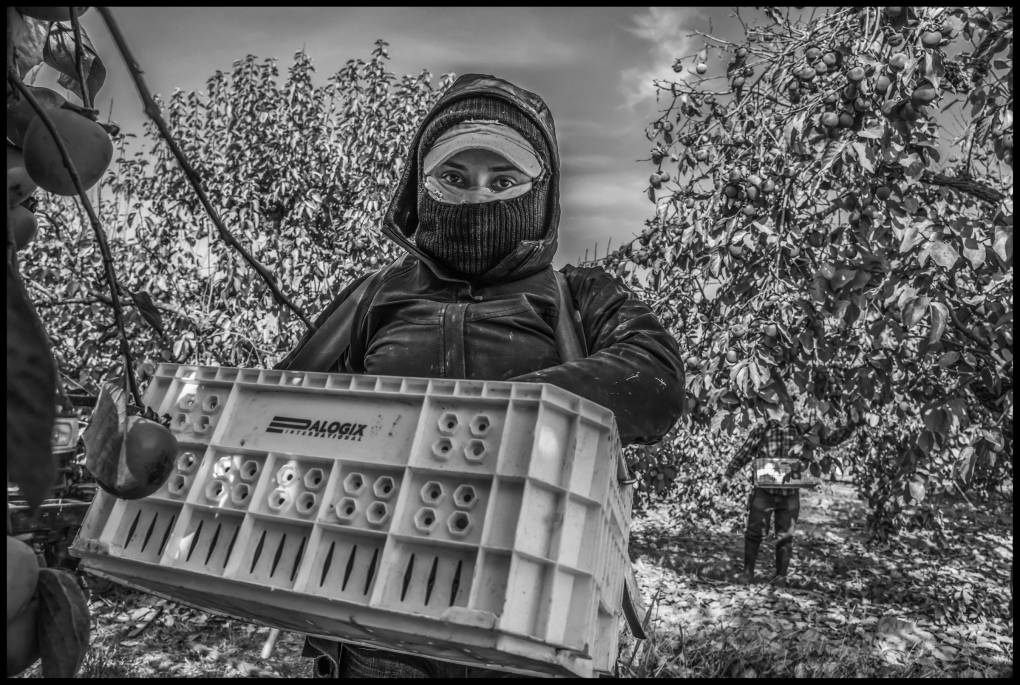
"caption": "Maria Madrigal picks persimmons in a field near Poplar in the San Joaquin Valley, in a crew of Mexican immigrants. Many workers wear face masks or bandanas as a protection against spreading the coronavirus.",
"description": "Maria Madrigal picks persimmons in a field near Poplar, in the San Joaquin Valley, in a crew of Mexican immigrants. Many workers wear facemasks or bandannas as a protection against spreading the coronavirus.",
"title": "Farmworkers pick persimmons in a San Joaquin Valley grove",
"credit": "David Bacon",
"status": "inherit",
"altTag": null,
"isLoading": false,
"fetchFailed": false
},
"news_11860188": {
"type": "attachments",
"id": "news_11860188",
"meta": {
"index": "attachments_1716263798",
"site": "news",
"id": "11860188",
"found": true
},
"parent": 11859998,
"imgSizes": {
"apple_news_ca_landscape_5_5": {
"file": "https://ww2.kqed.org/app/uploads/sites/10/2021/02/Ocho-Ojos-1044x750.png",
"width": 1044,
"mimeType": "image/png",
"height": 750
},
"apple_news_ca_square_4_0": {
"file": "https://ww2.kqed.org/app/uploads/sites/10/2021/02/Ocho-Ojos-470x470.png",
"width": 470,
"mimeType": "image/png",
"height": 470
},
"twentyfourteen-full-width": {
"file": "https://ww2.kqed.org/app/uploads/sites/10/2021/02/Ocho-Ojos-1038x576.png",
"width": 1038,
"mimeType": "image/png",
"height": 576
},
"thumbnail": {
"file": "https://ww2.kqed.org/app/uploads/sites/10/2021/02/Ocho-Ojos-160x90.png",
"width": 160,
"mimeType": "image/png",
"height": 90
},
"post-thumbnail": {
"file": "https://ww2.kqed.org/app/uploads/sites/10/2021/02/Ocho-Ojos-672x372.png",
"width": 672,
"mimeType": "image/png",
"height": 372
},
"kqedFullSize": {
"file": "https://ww2.kqed.org/app/uploads/sites/10/2021/02/Ocho-Ojos.png",
"width": 1334,
"height": 750
},
"apple_news_ca_landscape_4_7": {
"file": "https://ww2.kqed.org/app/uploads/sites/10/2021/02/Ocho-Ojos-632x474.png",
"width": 632,
"mimeType": "image/png",
"height": 474
},
"large": {
"file": "https://ww2.kqed.org/app/uploads/sites/10/2021/02/Ocho-Ojos-1020x573.png",
"width": 1020,
"mimeType": "image/png",
"height": 573
},
"apple_news_ca_landscape_4_0": {
"file": "https://ww2.kqed.org/app/uploads/sites/10/2021/02/Ocho-Ojos-536x402.png",
"width": 536,
"mimeType": "image/png",
"height": 402
},
"apple_news_ca_portrait_12_9": {
"file": "https://ww2.kqed.org/app/uploads/sites/10/2021/02/Ocho-Ojos-1122x750.png",
"width": 1122,
"mimeType": "image/png",
"height": 750
},
"medium": {
"file": "https://ww2.kqed.org/app/uploads/sites/10/2021/02/Ocho-Ojos-800x450.png",
"width": 800,
"mimeType": "image/png",
"height": 450
},
"apple_news_ca_portrait_4_0": {
"file": "https://ww2.kqed.org/app/uploads/sites/10/2021/02/Ocho-Ojos-354x472.png",
"width": 354,
"mimeType": "image/png",
"height": 472
},
"apple_news_ca_portrait_9_7": {
"file": "https://ww2.kqed.org/app/uploads/sites/10/2021/02/Ocho-Ojos-840x750.png",
"width": 840,
"mimeType": "image/png",
"height": 750
},
"apple_news_ca_square_9_7": {
"file": "https://ww2.kqed.org/app/uploads/sites/10/2021/02/Ocho-Ojos-1104x750.png",
"width": 1104,
"mimeType": "image/png",
"height": 750
},
"apple_news_ca_portrait_4_7": {
"file": "https://ww2.kqed.org/app/uploads/sites/10/2021/02/Ocho-Ojos-414x552.png",
"width": 414,
"mimeType": "image/png",
"height": 552
},
"apple_news_ca_portrait_5_5": {
"file": "https://ww2.kqed.org/app/uploads/sites/10/2021/02/Ocho-Ojos-687x750.png",
"width": 687,
"mimeType": "image/png",
"height": 750
},
"apple_news_ca_square_4_7": {
"file": "https://ww2.kqed.org/app/uploads/sites/10/2021/02/Ocho-Ojos-550x550.png",
"width": 550,
"mimeType": "image/png",
"height": 550
},
"apple_news_ca_square_5_5": {
"file": "https://ww2.kqed.org/app/uploads/sites/10/2021/02/Ocho-Ojos-912x750.png",
"width": 912,
"mimeType": "image/png",
"height": 750
}
},
"publishDate": 1613152435,
"modified": 1613152495,
"caption": "Ocho Ojos’s hybrid sound sets them apart from their peers in Coachella’s alternative music scene - where indie rock, desert rock and punk thrive. ",
"description": null,
"title": "Ocho Ojos",
"credit": "(Melinda Vida)",
"status": "inherit",
"altTag": null,
"isLoading": false,
"fetchFailed": false
},
"news_11856145": {
"type": "attachments",
"id": "news_11856145",
"meta": {
"index": "attachments_1716263798",
"site": "news",
"id": "11856145",
"found": true
},
"parent": 11856141,
"imgSizes": {
"apple_news_ca_landscape_5_5": {
"file": "https://ww2.kqed.org/app/uploads/sites/10/2021/01/gettyimages-1297436108_wide-b474f0d28ef186a09103e0c64323d8053aa7765e-1044x783.jpg",
"width": 1044,
"mimeType": "image/jpeg",
"height": 783
},
"apple_news_ca_square_4_0": {
"file": "https://ww2.kqed.org/app/uploads/sites/10/2021/01/gettyimages-1297436108_wide-b474f0d28ef186a09103e0c64323d8053aa7765e-470x470.jpg",
"width": 470,
"mimeType": "image/jpeg",
"height": 470
},
"twentyfourteen-full-width": {
"file": "https://ww2.kqed.org/app/uploads/sites/10/2021/01/gettyimages-1297436108_wide-b474f0d28ef186a09103e0c64323d8053aa7765e-1038x576.jpg",
"width": 1038,
"mimeType": "image/jpeg",
"height": 576
},
"thumbnail": {
"file": "https://ww2.kqed.org/app/uploads/sites/10/2021/01/gettyimages-1297436108_wide-b474f0d28ef186a09103e0c64323d8053aa7765e-160x90.jpg",
"width": 160,
"mimeType": "image/jpeg",
"height": 90
},
"post-thumbnail": {
"file": "https://ww2.kqed.org/app/uploads/sites/10/2021/01/gettyimages-1297436108_wide-b474f0d28ef186a09103e0c64323d8053aa7765e-672x372.jpg",
"width": 672,
"mimeType": "image/jpeg",
"height": 372
},
"kqedFullSize": {
"file": "https://ww2.kqed.org/app/uploads/sites/10/2021/01/gettyimages-1297436108_wide-b474f0d28ef186a09103e0c64323d8053aa7765e-scaled.jpg",
"width": 2560,
"height": 1440
},
"2048x2048": {
"file": "https://ww2.kqed.org/app/uploads/sites/10/2021/01/gettyimages-1297436108_wide-b474f0d28ef186a09103e0c64323d8053aa7765e-2048x1152.jpg",
"width": 2048,
"mimeType": "image/jpeg",
"height": 1152
},
"apple_news_ca_landscape_4_7": {
"file": "https://ww2.kqed.org/app/uploads/sites/10/2021/01/gettyimages-1297436108_wide-b474f0d28ef186a09103e0c64323d8053aa7765e-632x474.jpg",
"width": 632,
"mimeType": "image/jpeg",
"height": 474
},
"large": {
"file": "https://ww2.kqed.org/app/uploads/sites/10/2021/01/gettyimages-1297436108_wide-b474f0d28ef186a09103e0c64323d8053aa7765e-1020x574.jpg",
"width": 1020,
"mimeType": "image/jpeg",
"height": 574
},
"apple_news_ca_landscape_4_0": {
"file": "https://ww2.kqed.org/app/uploads/sites/10/2021/01/gettyimages-1297436108_wide-b474f0d28ef186a09103e0c64323d8053aa7765e-536x402.jpg",
"width": 536,
"mimeType": "image/jpeg",
"height": 402
},
"apple_news_ca_portrait_12_9": {
"file": "https://ww2.kqed.org/app/uploads/sites/10/2021/01/gettyimages-1297436108_wide-b474f0d28ef186a09103e0c64323d8053aa7765e-1122x1496.jpg",
"width": 1122,
"mimeType": "image/jpeg",
"height": 1496
},
"medium": {
"file": "https://ww2.kqed.org/app/uploads/sites/10/2021/01/gettyimages-1297436108_wide-b474f0d28ef186a09103e0c64323d8053aa7765e-800x450.jpg",
"width": 800,
"mimeType": "image/jpeg",
"height": 450
},
"apple_news_ca_portrait_4_0": {
"file": "https://ww2.kqed.org/app/uploads/sites/10/2021/01/gettyimages-1297436108_wide-b474f0d28ef186a09103e0c64323d8053aa7765e-354x472.jpg",
"width": 354,
"mimeType": "image/jpeg",
"height": 472
},
"apple_news_ca_portrait_9_7": {
"file": "https://ww2.kqed.org/app/uploads/sites/10/2021/01/gettyimages-1297436108_wide-b474f0d28ef186a09103e0c64323d8053aa7765e-840x1120.jpg",
"width": 840,
"mimeType": "image/jpeg",
"height": 1120
},
"apple_news_ca_landscape_12_9": {
"file": "https://ww2.kqed.org/app/uploads/sites/10/2021/01/gettyimages-1297436108_wide-b474f0d28ef186a09103e0c64323d8053aa7765e-1832x1374.jpg",
"width": 1832,
"mimeType": "image/jpeg",
"height": 1374
},
"apple_news_ca_square_9_7": {
"file": "https://ww2.kqed.org/app/uploads/sites/10/2021/01/gettyimages-1297436108_wide-b474f0d28ef186a09103e0c64323d8053aa7765e-1104x1104.jpg",
"width": 1104,
"mimeType": "image/jpeg",
"height": 1104
},
"1536x1536": {
"file": "https://ww2.kqed.org/app/uploads/sites/10/2021/01/gettyimages-1297436108_wide-b474f0d28ef186a09103e0c64323d8053aa7765e-1536x864.jpg",
"width": 1536,
"mimeType": "image/jpeg",
"height": 864
},
"apple_news_ca_portrait_4_7": {
"file": "https://ww2.kqed.org/app/uploads/sites/10/2021/01/gettyimages-1297436108_wide-b474f0d28ef186a09103e0c64323d8053aa7765e-414x552.jpg",
"width": 414,
"mimeType": "image/jpeg",
"height": 552
},
"apple_news_ca_square_12_9": {
"file": "https://ww2.kqed.org/app/uploads/sites/10/2021/01/gettyimages-1297436108_wide-b474f0d28ef186a09103e0c64323d8053aa7765e-1472x1472.jpg",
"width": 1472,
"mimeType": "image/jpeg",
"height": 1472
},
"apple_news_ca_portrait_5_5": {
"file": "https://ww2.kqed.org/app/uploads/sites/10/2021/01/gettyimages-1297436108_wide-b474f0d28ef186a09103e0c64323d8053aa7765e-687x916.jpg",
"width": 687,
"mimeType": "image/jpeg",
"height": 916
},
"full-width": {
"file": "https://ww2.kqed.org/app/uploads/sites/10/2021/01/gettyimages-1297436108_wide-b474f0d28ef186a09103e0c64323d8053aa7765e-1920x1080.jpg",
"width": 1920,
"mimeType": "image/jpeg",
"height": 1080
},
"apple_news_ca_square_4_7": {
"file": "https://ww2.kqed.org/app/uploads/sites/10/2021/01/gettyimages-1297436108_wide-b474f0d28ef186a09103e0c64323d8053aa7765e-550x550.jpg",
"width": 550,
"mimeType": "image/jpeg",
"height": 550
},
"apple_news_ca_landscape_9_7": {
"file": "https://ww2.kqed.org/app/uploads/sites/10/2021/01/gettyimages-1297436108_wide-b474f0d28ef186a09103e0c64323d8053aa7765e-1376x1032.jpg",
"width": 1376,
"mimeType": "image/jpeg",
"height": 1032
},
"apple_news_ca_square_5_5": {
"file": "https://ww2.kqed.org/app/uploads/sites/10/2021/01/gettyimages-1297436108_wide-b474f0d28ef186a09103e0c64323d8053aa7765e-912x912.jpg",
"width": 912,
"mimeType": "image/jpeg",
"height": 912
}
},
"publishDate": 1611161953,
"modified": 1611162241,
"caption": "Doug Emhoff, U.S. Vice President Kamala Harris, Jill Biden and President Joe Biden wave as they arrive on the East Front of the U.S. Capitol for the inauguration on January 20, 2021 in Washington, DC. ",
"description": "Doug Emhoff, U.S. Vice President Kamala Harris, Jill Biden and President Joe Biden wave as they arrive on the East Front of the U.S. Capitol for the inauguration on January 20, 2021 in Washington, DC. ",
"title": "Doug Emhoff, Vice President-elect Kamala Harris, Jill Biden and President-elect Joe Biden arrive on the East Front of the U.S. Capitol for the inauguration on Wednesday.",
"credit": "Joe Raedle/Getty Images",
"status": "inherit",
"altTag": null,
"isLoading": false,
"fetchFailed": false
},
"news_11846952": {
"type": "attachments",
"id": "news_11846952",
"meta": {
"index": "attachments_1716263798",
"site": "news",
"id": "11846952",
"found": true
},
"parent": 11846937,
"imgSizes": {
"apple_news_ca_landscape_5_5": {
"file": "https://ww2.kqed.org/app/uploads/sites/10/2020/11/thanksgiving2020_111020_finalwide-1044x783.png",
"width": 1044,
"mimeType": "image/png",
"height": 783
},
"apple_news_ca_square_4_0": {
"file": "https://ww2.kqed.org/app/uploads/sites/10/2020/11/thanksgiving2020_111020_finalwide-470x470.png",
"width": 470,
"mimeType": "image/png",
"height": 470
},
"twentyfourteen-full-width": {
"file": "https://ww2.kqed.org/app/uploads/sites/10/2020/11/thanksgiving2020_111020_finalwide-1038x576.png",
"width": 1038,
"mimeType": "image/png",
"height": 576
},
"thumbnail": {
"file": "https://ww2.kqed.org/app/uploads/sites/10/2020/11/thanksgiving2020_111020_finalwide-160x102.png",
"width": 160,
"mimeType": "image/png",
"height": 102
},
"post-thumbnail": {
"file": "https://ww2.kqed.org/app/uploads/sites/10/2020/11/thanksgiving2020_111020_finalwide-672x372.png",
"width": 672,
"mimeType": "image/png",
"height": 372
},
"kqedFullSize": {
"file": "https://ww2.kqed.org/app/uploads/sites/10/2020/11/thanksgiving2020_111020_finalwide.png",
"width": 1920,
"height": 1229
},
"apple_news_ca_landscape_4_7": {
"file": "https://ww2.kqed.org/app/uploads/sites/10/2020/11/thanksgiving2020_111020_finalwide-632x474.png",
"width": 632,
"mimeType": "image/png",
"height": 474
},
"large": {
"file": "https://ww2.kqed.org/app/uploads/sites/10/2020/11/thanksgiving2020_111020_finalwide-1020x653.png",
"width": 1020,
"mimeType": "image/png",
"height": 653
},
"apple_news_ca_landscape_4_0": {
"file": "https://ww2.kqed.org/app/uploads/sites/10/2020/11/thanksgiving2020_111020_finalwide-536x402.png",
"width": 536,
"mimeType": "image/png",
"height": 402
},
"apple_news_ca_portrait_12_9": {
"file": "https://ww2.kqed.org/app/uploads/sites/10/2020/11/thanksgiving2020_111020_finalwide-1122x1229.png",
"width": 1122,
"mimeType": "image/png",
"height": 1229
},
"medium": {
"file": "https://ww2.kqed.org/app/uploads/sites/10/2020/11/thanksgiving2020_111020_finalwide-800x512.png",
"width": 800,
"mimeType": "image/png",
"height": 512
},
"apple_news_ca_portrait_4_0": {
"file": "https://ww2.kqed.org/app/uploads/sites/10/2020/11/thanksgiving2020_111020_finalwide-354x472.png",
"width": 354,
"mimeType": "image/png",
"height": 472
},
"apple_news_ca_portrait_9_7": {
"file": "https://ww2.kqed.org/app/uploads/sites/10/2020/11/thanksgiving2020_111020_finalwide-840x1120.png",
"width": 840,
"mimeType": "image/png",
"height": 1120
},
"apple_news_ca_landscape_12_9": {
"file": "https://ww2.kqed.org/app/uploads/sites/10/2020/11/thanksgiving2020_111020_finalwide-1832x1229.png",
"width": 1832,
"mimeType": "image/png",
"height": 1229
},
"apple_news_ca_square_9_7": {
"file": "https://ww2.kqed.org/app/uploads/sites/10/2020/11/thanksgiving2020_111020_finalwide-1104x1104.png",
"width": 1104,
"mimeType": "image/png",
"height": 1104
},
"1536x1536": {
"file": "https://ww2.kqed.org/app/uploads/sites/10/2020/11/thanksgiving2020_111020_finalwide-1536x983.png",
"width": 1536,
"mimeType": "image/png",
"height": 983
},
"apple_news_ca_portrait_4_7": {
"file": "https://ww2.kqed.org/app/uploads/sites/10/2020/11/thanksgiving2020_111020_finalwide-414x552.png",
"width": 414,
"mimeType": "image/png",
"height": 552
},
"apple_news_ca_square_12_9": {
"file": "https://ww2.kqed.org/app/uploads/sites/10/2020/11/thanksgiving2020_111020_finalwide-1472x1229.png",
"width": 1472,
"mimeType": "image/png",
"height": 1229
},
"apple_news_ca_portrait_5_5": {
"file": "https://ww2.kqed.org/app/uploads/sites/10/2020/11/thanksgiving2020_111020_finalwide-687x916.png",
"width": 687,
"mimeType": "image/png",
"height": 916
},
"apple_news_ca_square_4_7": {
"file": "https://ww2.kqed.org/app/uploads/sites/10/2020/11/thanksgiving2020_111020_finalwide-550x550.png",
"width": 550,
"mimeType": "image/png",
"height": 550
},
"apple_news_ca_landscape_9_7": {
"file": "https://ww2.kqed.org/app/uploads/sites/10/2020/11/thanksgiving2020_111020_finalwide-1376x1032.png",
"width": 1376,
"mimeType": "image/png",
"height": 1032
},
"apple_news_ca_square_5_5": {
"file": "https://ww2.kqed.org/app/uploads/sites/10/2020/11/thanksgiving2020_111020_finalwide-912x912.png",
"width": 912,
"mimeType": "image/png",
"height": 912
}
},
"publishDate": 1605051932,
"modified": 1606256895,
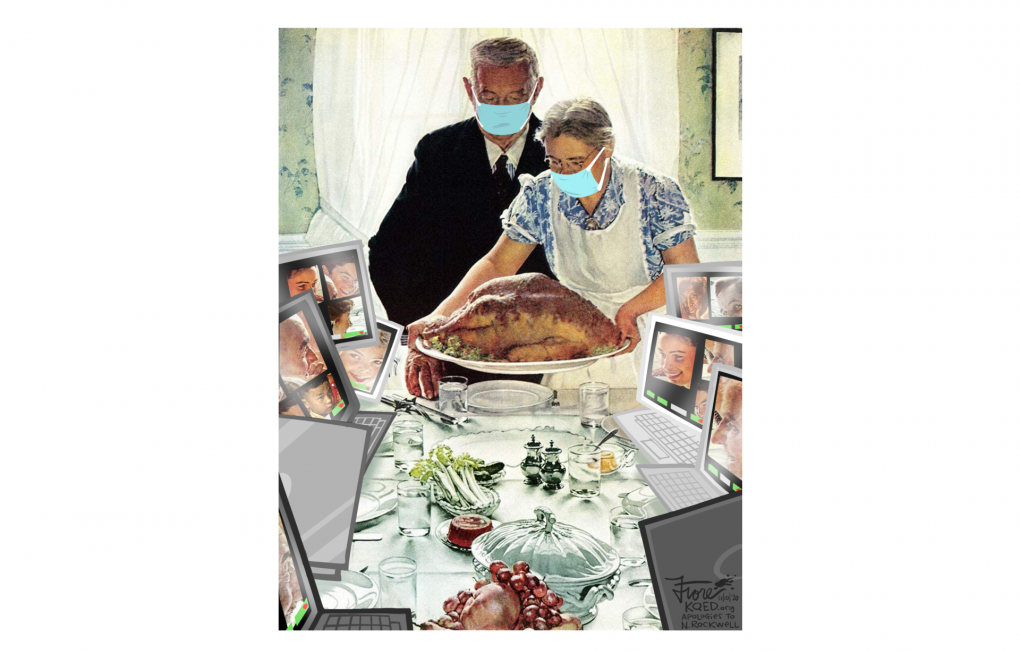
"caption": "To keep you and your loved ones safe, this is shaping up to be the Thanksgiving to stay home, forgo travel and skip those large family gatherings.",
"description": null,
"title": "thanksgiving2020_111020_finalwide",
"credit": "Mark Fiore/KQED",
"status": "inherit",
"isLoading": false,
"fetchFailed": false
},
"news_11848275": {
"type": "attachments",
"id": "news_11848275",
"meta": {
"index": "attachments_1716263798",
"site": "news",
"id": "11848275",
"found": true
},
"parent": 11848066,
"imgSizes": {
"apple_news_ca_landscape_5_5": {
"file": "https://ww2.kqed.org/app/uploads/sites/10/2020/11/GettyImages-460793982-1044x783.jpg",
"width": 1044,
"mimeType": "image/jpeg",
"height": 783
},
"apple_news_ca_square_4_0": {
"file": "https://ww2.kqed.org/app/uploads/sites/10/2020/11/GettyImages-460793982-470x470.jpg",
"width": 470,
"mimeType": "image/jpeg",
"height": 470
},
"twentyfourteen-full-width": {
"file": "https://ww2.kqed.org/app/uploads/sites/10/2020/11/GettyImages-460793982-1038x576.jpg",
"width": 1038,
"mimeType": "image/jpeg",
"height": 576
},
"thumbnail": {
"file": "https://ww2.kqed.org/app/uploads/sites/10/2020/11/GettyImages-460793982-160x120.jpg",
"width": 160,
"mimeType": "image/jpeg",
"height": 120
},
"post-thumbnail": {
"file": "https://ww2.kqed.org/app/uploads/sites/10/2020/11/GettyImages-460793982-672x372.jpg",
"width": 672,
"mimeType": "image/jpeg",
"height": 372
},
"kqedFullSize": {
"file": "https://ww2.kqed.org/app/uploads/sites/10/2020/11/GettyImages-460793982-scaled-e1605902137163.jpg",
"width": 1920,
"height": 1440
},
"2048x2048": {
"file": "https://ww2.kqed.org/app/uploads/sites/10/2020/11/GettyImages-460793982-2048x1536.jpg",
"width": 2048,
"mimeType": "image/jpeg",
"height": 1536
},
"apple_news_ca_landscape_4_7": {
"file": "https://ww2.kqed.org/app/uploads/sites/10/2020/11/GettyImages-460793982-632x474.jpg",
"width": 632,
"mimeType": "image/jpeg",
"height": 474
},
"large": {
"file": "https://ww2.kqed.org/app/uploads/sites/10/2020/11/GettyImages-460793982-1020x765.jpg",
"width": 1020,
"mimeType": "image/jpeg",
"height": 765
},
"apple_news_ca_landscape_4_0": {
"file": "https://ww2.kqed.org/app/uploads/sites/10/2020/11/GettyImages-460793982-536x402.jpg",
"width": 536,
"mimeType": "image/jpeg",
"height": 402
},
"apple_news_ca_portrait_12_9": {
"file": "https://ww2.kqed.org/app/uploads/sites/10/2020/11/GettyImages-460793982-1122x1496.jpg",
"width": 1122,
"mimeType": "image/jpeg",
"height": 1496
},
"medium": {
"file": "https://ww2.kqed.org/app/uploads/sites/10/2020/11/GettyImages-460793982-800x600.jpg",
"width": 800,
"mimeType": "image/jpeg",
"height": 600
},
"apple_news_ca_portrait_4_0": {
"file": "https://ww2.kqed.org/app/uploads/sites/10/2020/11/GettyImages-460793982-354x472.jpg",
"width": 354,
"mimeType": "image/jpeg",
"height": 472
},
"apple_news_ca_portrait_9_7": {
"file": "https://ww2.kqed.org/app/uploads/sites/10/2020/11/GettyImages-460793982-840x1120.jpg",
"width": 840,
"mimeType": "image/jpeg",
"height": 1120
},
"apple_news_ca_landscape_12_9": {
"file": "https://ww2.kqed.org/app/uploads/sites/10/2020/11/GettyImages-460793982-1832x1374.jpg",
"width": 1832,
"mimeType": "image/jpeg",
"height": 1374
},
"apple_news_ca_square_9_7": {
"file": "https://ww2.kqed.org/app/uploads/sites/10/2020/11/GettyImages-460793982-1104x1104.jpg",
"width": 1104,
"mimeType": "image/jpeg",
"height": 1104
},
"1536x1536": {
"file": "https://ww2.kqed.org/app/uploads/sites/10/2020/11/GettyImages-460793982-1536x1152.jpg",
"width": 1536,
"mimeType": "image/jpeg",
"height": 1152
},
"apple_news_ca_portrait_4_7": {
"file": "https://ww2.kqed.org/app/uploads/sites/10/2020/11/GettyImages-460793982-414x552.jpg",
"width": 414,
"mimeType": "image/jpeg",
"height": 552
},
"apple_news_ca_square_12_9": {
"file": "https://ww2.kqed.org/app/uploads/sites/10/2020/11/GettyImages-460793982-1472x1472.jpg",
"width": 1472,
"mimeType": "image/jpeg",
"height": 1472
},
"apple_news_ca_portrait_5_5": {
"file": "https://ww2.kqed.org/app/uploads/sites/10/2020/11/GettyImages-460793982-687x916.jpg",
"width": 687,
"mimeType": "image/jpeg",
"height": 916
},
"full-width": {
"file": "https://ww2.kqed.org/app/uploads/sites/10/2020/11/GettyImages-460793982-1920x1440.jpg",
"width": 1920,
"mimeType": "image/jpeg",
"height": 1440
},
"apple_news_ca_square_4_7": {
"file": "https://ww2.kqed.org/app/uploads/sites/10/2020/11/GettyImages-460793982-550x550.jpg",
"width": 550,
"mimeType": "image/jpeg",
"height": 550
},
"apple_news_ca_landscape_9_7": {
"file": "https://ww2.kqed.org/app/uploads/sites/10/2020/11/GettyImages-460793982-1376x1032.jpg",
"width": 1376,
"mimeType": "image/jpeg",
"height": 1032
},
"apple_news_ca_square_5_5": {
"file": "https://ww2.kqed.org/app/uploads/sites/10/2020/11/GettyImages-460793982-912x912.jpg",
"width": 912,
"mimeType": "image/jpeg",
"height": 912
}
},
"publishDate": 1605902092,
"modified": 1605918933,
"caption": "Musicians stand in Mariachi Plaza in Boyle Heights. One song in a new collection celebrating the neighborhood's music takes its cue from the plaza, where mariachi from across LA have gathered since the 1930s.",
"description": "Musicians stand in Mariachi Plaza in Boyle Heights. One song in a new collection celebrating the neighborhood's music takes its cue from the plaza, where mariachi musicians from across LA have gathered since the 1930s.",
"title": "US-MEXICO-MUSIC-TRADITION-REAL ESTATE",
"credit": "ROBYN BECK/AFP via Getty Images",
"status": "inherit",
"isLoading": false,
"fetchFailed": false
},
"news_11839265": {
"type": "attachments",
"id": "news_11839265",
"meta": {
"index": "attachments_1716263798",
"site": "news",
"id": "11839265",
"found": true
},
"parent": 11839059,
"imgSizes": {
"apple_news_ca_landscape_5_5": {
"file": "https://ww2.kqed.org/app/uploads/sites/10/2020/09/RS44997_groupshot-qut-1044x783.jpg",
"width": 1044,
"mimeType": "image/jpeg",
"height": 783
},
"apple_news_ca_square_4_0": {
"file": "https://ww2.kqed.org/app/uploads/sites/10/2020/09/RS44997_groupshot-qut-470x470.jpg",
"width": 470,
"mimeType": "image/jpeg",
"height": 470
},
"twentyfourteen-full-width": {
"file": "https://ww2.kqed.org/app/uploads/sites/10/2020/09/RS44997_groupshot-qut-1038x576.jpg",
"width": 1038,
"mimeType": "image/jpeg",
"height": 576
},
"thumbnail": {
"file": "https://ww2.kqed.org/app/uploads/sites/10/2020/09/RS44997_groupshot-qut-160x107.jpg",
"width": 160,
"mimeType": "image/jpeg",
"height": 107
},
"post-thumbnail": {
"file": "https://ww2.kqed.org/app/uploads/sites/10/2020/09/RS44997_groupshot-qut-672x372.jpg",
"width": 672,
"mimeType": "image/jpeg",
"height": 372
},
"kqedFullSize": {
"file": "https://ww2.kqed.org/app/uploads/sites/10/2020/09/RS44997_groupshot-qut.jpg",
"width": 1920,
"height": 1280
},
"apple_news_ca_landscape_4_7": {
"file": "https://ww2.kqed.org/app/uploads/sites/10/2020/09/RS44997_groupshot-qut-632x474.jpg",
"width": 632,
"mimeType": "image/jpeg",
"height": 474
},
"large": {
"file": "https://ww2.kqed.org/app/uploads/sites/10/2020/09/RS44997_groupshot-qut-1020x680.jpg",
"width": 1020,
"mimeType": "image/jpeg",
"height": 680
},
"apple_news_ca_landscape_4_0": {
"file": "https://ww2.kqed.org/app/uploads/sites/10/2020/09/RS44997_groupshot-qut-536x402.jpg",
"width": 536,
"mimeType": "image/jpeg",
"height": 402
},
"apple_news_ca_portrait_12_9": {
"file": "https://ww2.kqed.org/app/uploads/sites/10/2020/09/RS44997_groupshot-qut-1122x1280.jpg",
"width": 1122,
"mimeType": "image/jpeg",
"height": 1280
},
"medium": {
"file": "https://ww2.kqed.org/app/uploads/sites/10/2020/09/RS44997_groupshot-qut-800x533.jpg",
"width": 800,
"mimeType": "image/jpeg",
"height": 533
},
"apple_news_ca_portrait_4_0": {
"file": "https://ww2.kqed.org/app/uploads/sites/10/2020/09/RS44997_groupshot-qut-354x472.jpg",
"width": 354,
"mimeType": "image/jpeg",
"height": 472
},
"apple_news_ca_portrait_9_7": {
"file": "https://ww2.kqed.org/app/uploads/sites/10/2020/09/RS44997_groupshot-qut-840x1120.jpg",
"width": 840,
"mimeType": "image/jpeg",
"height": 1120
},
"apple_news_ca_landscape_12_9": {
"file": "https://ww2.kqed.org/app/uploads/sites/10/2020/09/RS44997_groupshot-qut-1832x1280.jpg",
"width": 1832,
"mimeType": "image/jpeg",
"height": 1280
},
"apple_news_ca_square_9_7": {
"file": "https://ww2.kqed.org/app/uploads/sites/10/2020/09/RS44997_groupshot-qut-1104x1104.jpg",
"width": 1104,
"mimeType": "image/jpeg",
"height": 1104
},
"1536x1536": {
"file": "https://ww2.kqed.org/app/uploads/sites/10/2020/09/RS44997_groupshot-qut-1536x1024.jpg",
"width": 1536,
"mimeType": "image/jpeg",
"height": 1024
},
"apple_news_ca_portrait_4_7": {
"file": "https://ww2.kqed.org/app/uploads/sites/10/2020/09/RS44997_groupshot-qut-414x552.jpg",
"width": 414,
"mimeType": "image/jpeg",
"height": 552
},
"apple_news_ca_square_12_9": {
"file": "https://ww2.kqed.org/app/uploads/sites/10/2020/09/RS44997_groupshot-qut-1472x1280.jpg",
"width": 1472,
"mimeType": "image/jpeg",
"height": 1280
},
"apple_news_ca_portrait_5_5": {
"file": "https://ww2.kqed.org/app/uploads/sites/10/2020/09/RS44997_groupshot-qut-687x916.jpg",
"width": 687,
"mimeType": "image/jpeg",
"height": 916
},
"apple_news_ca_square_4_7": {
"file": "https://ww2.kqed.org/app/uploads/sites/10/2020/09/RS44997_groupshot-qut-550x550.jpg",
"width": 550,
"mimeType": "image/jpeg",
"height": 550
},
"apple_news_ca_landscape_9_7": {
"file": "https://ww2.kqed.org/app/uploads/sites/10/2020/09/RS44997_groupshot-qut-1376x1032.jpg",
"width": 1376,
"mimeType": "image/jpeg",
"height": 1032
},
"apple_news_ca_square_5_5": {
"file": "https://ww2.kqed.org/app/uploads/sites/10/2020/09/RS44997_groupshot-qut-912x912.jpg",
"width": 912,
"mimeType": "image/jpeg",
"height": 912
}
},
"publishDate": 1600881377,
"modified": 1601066797,
"caption": "The Sheltered Workshop Singers, including Ian Brennan's sister Jane Brennan (standing far left) get ready to be recorded. ",
"description": "The Sheltered Workshop Singers, including Ian Brennan's sister Jane Brennan (standing far left) get ready to be recorded. ",
"title": "RS44997_groupshot-qut",
"credit": "Marilena Umuhoza Delli",
"status": "inherit",
"isLoading": false,
"fetchFailed": false
},
"news_11828152": {
"type": "attachments",
"id": "news_11828152",
"meta": {
"index": "attachments_1716263798",
"site": "news",
"id": "11828152",
"found": true
},
"parent": 11827750,
"imgSizes": {
"apple_news_ca_square_4_0": {
"file": "https://ww2.kqed.org/app/uploads/sites/10/2020/07/lumpen_stage-470x363.jpg",
"width": 470,
"mimeType": "image/jpeg",
"height": 363
},
"thumbnail": {
"file": "https://ww2.kqed.org/app/uploads/sites/10/2020/07/lumpen_stage-160x105.jpg",
"width": 160,
"mimeType": "image/jpeg",
"height": 105
},
"kqedFullSize": {
"file": "https://ww2.kqed.org/app/uploads/sites/10/2020/07/lumpen_stage.jpg",
"width": 555,
"height": 363
},
"apple_news_ca_portrait_4_7": {
"file": "https://ww2.kqed.org/app/uploads/sites/10/2020/07/lumpen_stage-414x363.jpg",
"width": 414,
"mimeType": "image/jpeg",
"height": 363
},
"apple_news_ca_square_4_7": {
"file": "https://ww2.kqed.org/app/uploads/sites/10/2020/07/lumpen_stage-550x363.jpg",
"width": 550,
"mimeType": "image/jpeg",
"height": 363
},
"apple_news_ca_landscape_4_0": {
"file": "https://ww2.kqed.org/app/uploads/sites/10/2020/07/lumpen_stage-536x363.jpg",
"width": 536,
"mimeType": "image/jpeg",
"height": 363
},
"apple_news_ca_portrait_4_0": {
"file": "https://ww2.kqed.org/app/uploads/sites/10/2020/07/lumpen_stage-354x363.jpg",
"width": 354,
"mimeType": "image/jpeg",
"height": 363
}
},
"publishDate": 1594322289,
"modified": 1594424112,
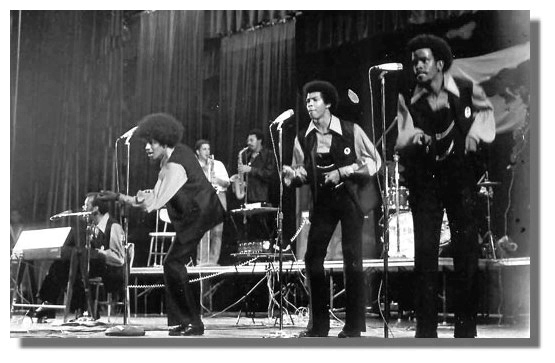
"caption": "In 1970, an unlikely R&B group evolved out of the Oakland chapter of the Black Panther Party.",
"description": "In 1970, an unlikely R&B group evolved out of the Oakland chapter of the Black Panther Party.",
"title": "lumpen_stage",
"credit": "Courtesy of It's About Time Black Panther Party Legacy & Alumni",
"status": "inherit",
"isLoading": false,
"fetchFailed": false
},
"news_11814854": {
"type": "attachments",
"id": "news_11814854",
"meta": {
"index": "attachments_1716263798",
"site": "news",
"id": "11814854",
"found": true
},
"parent": 11814761,
"imgSizes": {
"apple_news_ca_landscape_5_5": {
"file": "https://ww2.kqed.org/app/uploads/sites/10/2020/04/RS42964_online-class-being-taught-qut-1044x783.jpg",
"width": 1044,
"mimeType": "image/jpeg",
"height": 783
},
"apple_news_ca_square_4_0": {
"file": "https://ww2.kqed.org/app/uploads/sites/10/2020/04/RS42964_online-class-being-taught-qut-470x470.jpg",
"width": 470,
"mimeType": "image/jpeg",
"height": 470
},
"twentyfourteen-full-width": {
"file": "https://ww2.kqed.org/app/uploads/sites/10/2020/04/RS42964_online-class-being-taught-qut-1038x576.jpg",
"width": 1038,
"mimeType": "image/jpeg",
"height": 576
},
"thumbnail": {
"file": "https://ww2.kqed.org/app/uploads/sites/10/2020/04/RS42964_online-class-being-taught-qut-160x107.jpg",
"width": 160,
"mimeType": "image/jpeg",
"height": 107
},
"post-thumbnail": {
"file": "https://ww2.kqed.org/app/uploads/sites/10/2020/04/RS42964_online-class-being-taught-qut-672x372.jpg",
"width": 672,
"mimeType": "image/jpeg",
"height": 372
},
"kqedFullSize": {
"file": "https://ww2.kqed.org/app/uploads/sites/10/2020/04/RS42964_online-class-being-taught-qut.jpg",
"width": 1280,
"height": 853
},
"apple_news_ca_landscape_4_7": {
"file": "https://ww2.kqed.org/app/uploads/sites/10/2020/04/RS42964_online-class-being-taught-qut-632x474.jpg",
"width": 632,
"mimeType": "image/jpeg",
"height": 474
},
"large": {
"file": "https://ww2.kqed.org/app/uploads/sites/10/2020/04/RS42964_online-class-being-taught-qut-1020x680.jpg",
"width": 1020,
"mimeType": "image/jpeg",
"height": 680
},
"apple_news_ca_landscape_4_0": {
"file": "https://ww2.kqed.org/app/uploads/sites/10/2020/04/RS42964_online-class-being-taught-qut-536x402.jpg",
"width": 536,
"mimeType": "image/jpeg",
"height": 402
},
"apple_news_ca_portrait_12_9": {
"file": "https://ww2.kqed.org/app/uploads/sites/10/2020/04/RS42964_online-class-being-taught-qut-1122x853.jpg",
"width": 1122,
"mimeType": "image/jpeg",
"height": 853
},
"medium": {
"file": "https://ww2.kqed.org/app/uploads/sites/10/2020/04/RS42964_online-class-being-taught-qut-800x533.jpg",
"width": 800,
"mimeType": "image/jpeg",
"height": 533
},
"apple_news_ca_portrait_4_0": {
"file": "https://ww2.kqed.org/app/uploads/sites/10/2020/04/RS42964_online-class-being-taught-qut-354x472.jpg",
"width": 354,
"mimeType": "image/jpeg",
"height": 472
},
"apple_news_ca_portrait_9_7": {
"file": "https://ww2.kqed.org/app/uploads/sites/10/2020/04/RS42964_online-class-being-taught-qut-840x853.jpg",
"width": 840,
"mimeType": "image/jpeg",
"height": 853
},
"apple_news_ca_square_9_7": {
"file": "https://ww2.kqed.org/app/uploads/sites/10/2020/04/RS42964_online-class-being-taught-qut-1104x853.jpg",
"width": 1104,
"mimeType": "image/jpeg",
"height": 853
},
"apple_news_ca_portrait_4_7": {
"file": "https://ww2.kqed.org/app/uploads/sites/10/2020/04/RS42964_online-class-being-taught-qut-414x552.jpg",
"width": 414,
"mimeType": "image/jpeg",
"height": 552
},
"apple_news_ca_portrait_5_5": {
"file": "https://ww2.kqed.org/app/uploads/sites/10/2020/04/RS42964_online-class-being-taught-qut-687x853.jpg",
"width": 687,
"mimeType": "image/jpeg",
"height": 853
},
"apple_news_ca_square_4_7": {
"file": "https://ww2.kqed.org/app/uploads/sites/10/2020/04/RS42964_online-class-being-taught-qut-550x550.jpg",
"width": 550,
"mimeType": "image/jpeg",
"height": 550
},
"apple_news_ca_square_5_5": {
"file": "https://ww2.kqed.org/app/uploads/sites/10/2020/04/RS42964_online-class-being-taught-qut-912x853.jpg",
"width": 912,
"mimeType": "image/jpeg",
"height": 853
}
},
"publishDate": 1588117970,
"modified": 1588199204,
"caption": "A California teen teaches music virtually through QuaranTunes, a new online music education service that offers free, or by donation, private lessons to children. Proceeds all go to coronavirus relief efforts. ",
"description": "A California teen teaches music virtually through QuaranTunes, a new online music education service that offers free or by-donation private lessons to children. Proceeds all go to coronavirus relief efforts. ",
"title": "RS42964_online class being taught-qut",
"credit": "Courtesy of QuaranTunes",
"status": "inherit",
"isLoading": false,
"fetchFailed": false
},
"news_11814535": {
"type": "attachments",
"id": "news_11814535",
"meta": {
"index": "attachments_1716263798",
"site": "news",
"id": "11814535",
"found": true
},
"parent": 11814457,
"imgSizes": {
"apple_news_ca_landscape_5_5": {
"file": "https://ww2.kqed.org/app/uploads/sites/10/2020/04/RS42924_DSC05615-qut-1044x783.jpg",
"width": 1044,
"mimeType": "image/jpeg",
"height": 783
},
"apple_news_ca_square_4_0": {
"file": "https://ww2.kqed.org/app/uploads/sites/10/2020/04/RS42924_DSC05615-qut-470x470.jpg",
"width": 470,
"mimeType": "image/jpeg",
"height": 470
},
"twentyfourteen-full-width": {
"file": "https://ww2.kqed.org/app/uploads/sites/10/2020/04/RS42924_DSC05615-qut-1038x576.jpg",
"width": 1038,
"mimeType": "image/jpeg",
"height": 576
},
"thumbnail": {
"file": "https://ww2.kqed.org/app/uploads/sites/10/2020/04/RS42924_DSC05615-qut-160x107.jpg",
"width": 160,
"mimeType": "image/jpeg",
"height": 107
},
"post-thumbnail": {
"file": "https://ww2.kqed.org/app/uploads/sites/10/2020/04/RS42924_DSC05615-qut-672x372.jpg",
"width": 672,
"mimeType": "image/jpeg",
"height": 372
},
"kqedFullSize": {
"file": "https://ww2.kqed.org/app/uploads/sites/10/2020/04/RS42924_DSC05615-qut.jpg",
"width": 1920,
"height": 1280
},
"apple_news_ca_landscape_4_7": {
"file": "https://ww2.kqed.org/app/uploads/sites/10/2020/04/RS42924_DSC05615-qut-632x474.jpg",
"width": 632,
"mimeType": "image/jpeg",
"height": 474
},
"large": {
"file": "https://ww2.kqed.org/app/uploads/sites/10/2020/04/RS42924_DSC05615-qut-1020x680.jpg",
"width": 1020,
"mimeType": "image/jpeg",
"height": 680
},
"apple_news_ca_landscape_4_0": {
"file": "https://ww2.kqed.org/app/uploads/sites/10/2020/04/RS42924_DSC05615-qut-536x402.jpg",
"width": 536,
"mimeType": "image/jpeg",
"height": 402
},
"apple_news_ca_portrait_12_9": {
"file": "https://ww2.kqed.org/app/uploads/sites/10/2020/04/RS42924_DSC05615-qut-1122x1280.jpg",
"width": 1122,
"mimeType": "image/jpeg",
"height": 1280
},
"medium": {
"file": "https://ww2.kqed.org/app/uploads/sites/10/2020/04/RS42924_DSC05615-qut-800x533.jpg",
"width": 800,
"mimeType": "image/jpeg",
"height": 533
},
"apple_news_ca_portrait_4_0": {
"file": "https://ww2.kqed.org/app/uploads/sites/10/2020/04/RS42924_DSC05615-qut-354x472.jpg",
"width": 354,
"mimeType": "image/jpeg",
"height": 472
},
"apple_news_ca_portrait_9_7": {
"file": "https://ww2.kqed.org/app/uploads/sites/10/2020/04/RS42924_DSC05615-qut-840x1120.jpg",
"width": 840,
"mimeType": "image/jpeg",
"height": 1120
},
"apple_news_ca_landscape_12_9": {
"file": "https://ww2.kqed.org/app/uploads/sites/10/2020/04/RS42924_DSC05615-qut-1832x1280.jpg",
"width": 1832,
"mimeType": "image/jpeg",
"height": 1280
},
"apple_news_ca_square_9_7": {
"file": "https://ww2.kqed.org/app/uploads/sites/10/2020/04/RS42924_DSC05615-qut-1104x1104.jpg",
"width": 1104,
"mimeType": "image/jpeg",
"height": 1104
},
"apple_news_ca_portrait_4_7": {
"file": "https://ww2.kqed.org/app/uploads/sites/10/2020/04/RS42924_DSC05615-qut-414x552.jpg",
"width": 414,
"mimeType": "image/jpeg",
"height": 552
},
"apple_news_ca_square_12_9": {
"file": "https://ww2.kqed.org/app/uploads/sites/10/2020/04/RS42924_DSC05615-qut-1472x1280.jpg",
"width": 1472,
"mimeType": "image/jpeg",
"height": 1280
},
"apple_news_ca_portrait_5_5": {
"file": "https://ww2.kqed.org/app/uploads/sites/10/2020/04/RS42924_DSC05615-qut-687x916.jpg",
"width": 687,
"mimeType": "image/jpeg",
"height": 916
},
"full-width": {
"file": "https://ww2.kqed.org/app/uploads/sites/10/2020/04/RS42924_DSC05615-qut-1920x1280.jpg",
"width": 1920,
"mimeType": "image/jpeg",
"height": 1280
},
"apple_news_ca_square_4_7": {
"file": "https://ww2.kqed.org/app/uploads/sites/10/2020/04/RS42924_DSC05615-qut-550x550.jpg",
"width": 550,
"mimeType": "image/jpeg",
"height": 550
},
"apple_news_ca_landscape_9_7": {
"file": "https://ww2.kqed.org/app/uploads/sites/10/2020/04/RS42924_DSC05615-qut-1376x1032.jpg",
"width": 1376,
"mimeType": "image/jpeg",
"height": 1032
},
"apple_news_ca_square_5_5": {
"file": "https://ww2.kqed.org/app/uploads/sites/10/2020/04/RS42924_DSC05615-qut-912x912.jpg",
"width": 912,
"mimeType": "image/jpeg",
"height": 912
}
},
"publishDate": 1588018251,
"modified": 1588018660,
"caption": "Mxmtoon is a 19-year-old singer-songwriter from Oakland who built her career on social media from her parent’s house.",
"description": null,
"title": "RS42924_DSC05615-qut",
"credit": "Courtesy of Clarence Ting",
"status": "inherit",
"isLoading": false,
"fetchFailed": false
}
},
"audioPlayerReducer": {
"postId": "stream_live",
"isPaused": true,
"isPlaying": false,
"pfsActive": false,
"pledgeModalIsOpen": true,
"playerDrawerIsOpen": false,
"liveAudioPlayStartedAt": 0,
"liveAudioPlayContext": ""
},
"authorsReducer": {
"byline_news_11874549": {
"type": "authors",
"id": "byline_news_11874549",
"meta": {
"override": true
},
"slug": "byline_news_11874549",
"name": "Polina Cherezova",
"isLoading": false
},
"byline_news_11848660": {
"type": "authors",
"id": "byline_news_11848660",
"meta": {
"override": true
},
"slug": "byline_news_11848660",
"name": "KQED News Staff",
"isLoading": false
},
"byline_news_11814457": {
"type": "authors",
"id": "byline_news_11814457",
"meta": {
"override": true
},
"slug": "byline_news_11814457",
"name": "Clarence Ting",
"isLoading": false
},
"kqed": {
"type": "authors",
"id": "236",
"meta": {
"index": "authors_1716337520",
"id": "236",
"found": true
},
"name": "KQED News Staff",
"firstName": "KQED News Staff",
"lastName": null,
"slug": "kqed",
"email": "faq@kqed.org",
"display_author_email": false,
"staff_mastheads": [],
"title": null,
"bio": null,
"avatar": "https://secure.gravatar.com/avatar/ef0e801a68c4c54afa9180db14084167?s=600&d=blank&r=g",
"twitter": null,
"facebook": null,
"instagram": null,
"linkedin": null,
"sites": [
{
"site": "arts",
"roles": [
"contributor"
]
},
{
"site": "news",
"roles": [
"editor"
]
},
{
"site": "futureofyou",
"roles": [
"author"
]
}
],
"headData": {
"title": "KQED News Staff | KQED",
"description": null,
"ogImgSrc": "https://secure.gravatar.com/avatar/ef0e801a68c4c54afa9180db14084167?s=600&d=blank&r=g",
"twImgSrc": "https://secure.gravatar.com/avatar/ef0e801a68c4c54afa9180db14084167?s=600&d=blank&r=g"
},
"isLoading": false,
"link": "/author/kqed"
},
"cveltman": {
"type": "authors",
"id": "8608",
"meta": {
"index": "authors_1716337520",
"id": "8608",
"found": true
},
"name": "Chloe Veltman",
"firstName": "Chloe",
"lastName": "Veltman",
"slug": "cveltman",
"email": "cveltman@kqed.org",
"display_author_email": true,
"staff_mastheads": [],
"title": "Arts and Culture Reporter",
"bio": "Chloe Veltman is a former arts and culture reporter for KQED. Prior to joining the organization, she launched and led the arts bureau at Colorado Public Radio, served as the Bay Area's culture columnist for the New York Times, and was the founder, host and executive producer of VoiceBox, a national award-winning weekly podcast/radio show and live events series all about the human voice. Chloe is the recipient of numerous prizes, grants and fellowships including a Webby Award for her work on interactive storytelling, both the John S Knight Journalism Fellowship and Humanities Center Fellowship at Stanford University, the Sundance Arts Writing Fellowship and a Library of Congress Research Fellowship. She is the author of the book \"On Acting\" and has appeared as a guest lecturer at Yale University and the San Francisco Conservatory of Music among other institutions. She holds a BA in english literature from King's College, Cambridge, and a Masters in Dramaturgy from the Central School of Speech and Drama/Harvard Institute for Advanced Theater Training.\r\n\u003ca href=\"https://www.chloeveltman.com\">www.chloeveltman.com\u003c/a>",
"avatar": "https://secure.gravatar.com/avatar/55403394b00a1ddab683952c2eb2cf85?s=600&d=blank&r=g",
"twitter": "chloeveltman",
"facebook": null,
"instagram": null,
"linkedin": null,
"sites": [
{
"site": "arts",
"roles": []
},
{
"site": "news",
"roles": [
"author"
]
},
{
"site": "pop",
"roles": [
"editor"
]
},
{
"site": "science",
"roles": []
}
],
"headData": {
"title": "Chloe Veltman | KQED",
"description": "Arts and Culture Reporter",
"ogImgSrc": "https://secure.gravatar.com/avatar/55403394b00a1ddab683952c2eb2cf85?s=600&d=blank&r=g",
"twImgSrc": "https://secure.gravatar.com/avatar/55403394b00a1ddab683952c2eb2cf85?s=600&d=blank&r=g"
},
"isLoading": false,
"link": "/author/cveltman"
},
"afont": {
"type": "authors",
"id": "8637",
"meta": {
"index": "authors_1716337520",
"id": "8637",
"found": true
},
"name": "Amanda Font",
"firstName": "Amanda",
"lastName": "Font",
"slug": "afont",
"email": "afont@kqed.org",
"display_author_email": false,
"staff_mastheads": [],
"title": "KQED Contributor",
"bio": "Amanda Font is a producer on \u003cem>The Latest\u003c/em> podcast, and the host and co-producer of the series \u003cem>Audible Cosmos\u003c/em>. She has previously worked as a producer and reporter on the \u003cem>Bay Curious\u003c/em> podcast, and director of \u003cem>The California Report Magazine\u003c/em>. She grew up in the deserts of Southern California and moved north for the trees. Amanda earned a B.A. from the BECA program at San Francisco State, where she worked in the university's radio station. Amanda Font is represented by SAG-AFTRA.",
"avatar": "https://secure.gravatar.com/avatar/d9e81cf0117d5849b9cfb7ab4b1422f1?s=600&d=blank&r=g",
"twitter": null,
"facebook": null,
"instagram": null,
"linkedin": null,
"sites": [
{
"site": "news",
"roles": [
"add_users",
"create_users"
]
},
{
"site": "science",
"roles": []
},
{
"site": "forum",
"roles": [
"administrator"
]
},
{
"site": "perspectives",
"roles": [
"administrator"
]
},
{
"site": "radio",
"roles": [
"administrator"
]
}
],
"headData": {
"title": "Amanda Font | KQED",
"description": "KQED Contributor",
"ogImgSrc": "https://secure.gravatar.com/avatar/d9e81cf0117d5849b9cfb7ab4b1422f1?s=600&d=blank&r=g",
"twImgSrc": "https://secure.gravatar.com/avatar/d9e81cf0117d5849b9cfb7ab4b1422f1?s=600&d=blank&r=g"
},
"isLoading": false,
"link": "/author/afont"
},
"pgilstrap": {
"type": "authors",
"id": "11275",
"meta": {
"index": "authors_1716337520",
"id": "11275",
"found": true
},
"name": "Peter Gilstrap",
"firstName": "Peter",
"lastName": "Gilstrap",
"slug": "pgilstrap",
"email": "pgilstrap@sbcglobal.net",
"display_author_email": false,
"staff_mastheads": [],
"title": null,
"bio": null,
"avatar": "https://secure.gravatar.com/avatar/2bf93e4a8c1e35493845045175273916?s=600&d=blank&r=g",
"twitter": null,
"facebook": null,
"instagram": null,
"linkedin": null,
"sites": [
{
"site": "news",
"roles": [
"author"
]
}
],
"headData": {
"title": "Peter Gilstrap | KQED",
"description": null,
"ogImgSrc": "https://secure.gravatar.com/avatar/2bf93e4a8c1e35493845045175273916?s=600&d=blank&r=g",
"twImgSrc": "https://secure.gravatar.com/avatar/2bf93e4a8c1e35493845045175273916?s=600&d=blank&r=g"
},
"isLoading": false,
"link": "/author/pgilstrap"
},
"aehsanipour": {
"type": "authors",
"id": "11580",
"meta": {
"index": "authors_1716337520",
"id": "11580",
"found": true
},
"name": "Asal Ehsanipour",
"firstName": "Asal",
"lastName": "Ehsanipour",
"slug": "aehsanipour",
"email": "aehsanipour@kqed.org",
"display_author_email": false,
"staff_mastheads": [],
"title": "Reporter and Producer",
"bio": "Asal Ehsanipour is a producer and reporter for Rightnowish, Bay Curious and The California Report Magazine. She is also a producer for \u003ca href=\"https://www.thedoubleshift.com/\">The Double Shift\u003c/a>, a podcast about a new generation of working mothers. In 2018, Asal was named an Emerging Journalist Fellow by the Journalism and Women’s Symposium. Her work has appeared on KQED, KALW, PRI’s The World, and in several food and travel publications.",
"avatar": "https://secure.gravatar.com/avatar/c0e210438f5dca1b76921ff9f0eada52?s=600&d=blank&r=g",
"twitter": null,
"facebook": null,
"instagram": null,
"linkedin": null,
"sites": [
{
"site": "arts",
"roles": []
},
{
"site": "news",
"roles": [
"author",
"edit_others_posts"
]
}
],
"headData": {
"title": "Asal Ehsanipour | KQED",
"description": "Reporter and Producer",
"ogImgSrc": "https://secure.gravatar.com/avatar/c0e210438f5dca1b76921ff9f0eada52?s=600&d=blank&r=g",
"twImgSrc": "https://secure.gravatar.com/avatar/c0e210438f5dca1b76921ff9f0eada52?s=600&d=blank&r=g"
},
"isLoading": false,
"link": "/author/aehsanipour"
},
"amarkowitz": {
"type": "authors",
"id": "11660",
"meta": {
"index": "authors_1716337520",
"id": "11660",
"found": true
},
"name": "Ariella Markowitz",
"firstName": "Ariella",
"lastName": "Markowitz",
"slug": "amarkowitz",
"email": "amarkowitz@kqed.org",
"display_author_email": false,
"staff_mastheads": [],
"title": "KQED Contributor",
"bio": "Ariella is a former intern for the California Report Magazine. Before that, she helped mobilize freelance journalists with Association of Independents in Radio (AIR) and made radio features for KALW. Ariella loves investigative reporting, personal stories that interrogate power, and spicy vegan cooking.",
"avatar": "https://secure.gravatar.com/avatar/7076c77064fecef602a2c779f2b9e1d33cb6f9b5fa13542bd1a6e2846a7c85a9?s=600&d=blank&r=g",
"twitter": "ariellaudio",
"bluesky": null,
"facebook": null,
"instagram": null,
"linkedin": null,
"sites": [
{
"site": "news",
"roles": [
"author"
]
},
{
"site": "forum",
"roles": [
"editor"
]
},
{
"site": "perspectives",
"roles": [
"administrator"
]
}
],
"headData": {
"title": "Ariella Markowitz | KQED",
"description": "KQED Contributor",
"ogImgSrc": "https://secure.gravatar.com/avatar/7076c77064fecef602a2c779f2b9e1d33cb6f9b5fa13542bd1a6e2846a7c85a9?s=600&d=blank&r=g",
"twImgSrc": "https://secure.gravatar.com/avatar/7076c77064fecef602a2c779f2b9e1d33cb6f9b5fa13542bd1a6e2846a7c85a9?s=600&d=blank&r=g"
},
"isLoading": false,
"link": "/author/amarkowitz"
},
"harzate": {
"type": "authors",
"id": "11727",
"meta": {
"index": "authors_1716337520",
"id": "11727",
"found": true
},
"name": "Héctor Alejandro Arzate",
"firstName": "Héctor Alejandro",
"lastName": "Arzate",
"slug": "harzate",
"email": "harzate@kqed.org",
"display_author_email": false,
"staff_mastheads": [],
"title": "KQED Contributor",
"bio": null,
"avatar": "https://secure.gravatar.com/avatar/23c72c3afa19f2c6801c5db997a908d8?s=600&d=blank&r=g",
"twitter": null,
"facebook": null,
"instagram": null,
"linkedin": null,
"sites": [
{
"site": "news",
"roles": [
"author"
]
}
],
"headData": {
"title": "Héctor Alejandro Arzate | KQED",
"description": "KQED Contributor",
"ogImgSrc": "https://secure.gravatar.com/avatar/23c72c3afa19f2c6801c5db997a908d8?s=600&d=blank&r=g",
"twImgSrc": "https://secure.gravatar.com/avatar/23c72c3afa19f2c6801c5db997a908d8?s=600&d=blank&r=g"
},
"isLoading": false,
"link": "/author/harzate"
}
},
"pagesReducer": {
"news_tag_music": {
"type": "terms",
"id": "news_1425",
"meta": {
"index": "terms_1716263798",
"site": "news",
"id": "1425",
"score": 6.847819
},
"featImg": null,
"name": "music",
"description": null,
"taxonomy": "tag",
"headData": {
"twImgId": null,
"twTitle": null,
"ogTitle": null,
"ogImgId": null,
"twDescription": null,
"description": null,
"title": "music Archives | KQED News",
"ogDescription": null
},
"ttid": 1437,
"slug": "music",
"isLoading": false,
"title": "music",
"pageMeta": {
"site": "news",
"WpPageTemplate": "page-topic-editorial",
"currentPage": 11
},
"blocks": [
{
"blockName": "kqed/post-list",
"attrs": {
"layout": "cardArticle2",
"query": "posts/news?tag=music",
"seeMore": false,
"paginated": true,
"page": 11
}
},
{
"blockName": "kqed/ad"
}
]
}
},
"pfsSessionReducer": {},
"postsReducer": {
"stream_live": {
"type": "live",
"id": "stream_live",
"audioUrl": "https://streams.kqed.org/kqedradio",
"title": "Live Stream",
"excerpt": "Live Stream information currently unavailable.",
"link": "/radio",
"featImg": "",
"label": {
"name": "KQED Live",
"link": "/"
}
},
"stream_kqedNewscast": {
"type": "posts",
"id": "stream_kqedNewscast",
"audioUrl": "https://www.kqed.org/.stream/anon/radio/RDnews/newscast.mp3?_=1",
"title": "KQED Newscast",
"featImg": "",
"label": {
"name": "88.5 FM",
"link": "/"
}
},
"news_11874876": {
"type": "posts",
"id": "news_11874876",
"meta": {
"index": "posts_1716263798",
"site": "news",
"id": "11874876",
"score": null,
"sort": [
1621643815000
]
},
"parent": 0,
"labelTerm": {
"site": "news",
"term": 26731
},
"blocks": [],
"publishDate": 1621643815,
"format": "audio",
"disqusTitle": "Quest for a Hollywood Star, Traveling Violinists Bring Joy, & California's 'Top Chef'",
"title": "Quest for a Hollywood Star, Traveling Violinists Bring Joy, & California's 'Top Chef'",
"headTitle": "The California Report Magazine | KQED News",
"content": "\u003cp>\u003cem>\u003ca href=\"http://itunes.apple.com/us/podcast/the-california-report-magazine/id1314750545?mt=2\" target=\"_blank\" rel=\"noopener noreferrer\">Listen to this and more in-depth storytelling by subscribing to The California Report Magazine podcast.\u003c/a>\u003c/em>\u003c/p>\n\u003ch2>‘She’s a Star Without a Star:’ One Man’s Mission to Get his Aunt on the Hollywood Walk of Fame\u003c/h2>\n\u003cp>Arnett Moore is launching a one-man campaign: to get his aunt a posthumous star on the Hollywood Walk of Fame. In her seven-decade career, Juanita Moore performed in more than 80 films and TV shows. But she was largely uncredited for many of her roles. Moore got her big break in 1959, when she was cast in the film “Imitation of Life.” Her performance earned her an Academy Award nomination for Best Supporting Actress, and Moore became the fifth Black actor to be nominated for an Oscar. Moore was a trailblazer for other Black actors over the course of her career. The Hollywood chamber only picks one posthumous candidate each year to get a star. Applications are due next week.\u003c/p>\n\u003ch2>MusiKaravan: Bringing Tunes and Human Bonding to California’s Countryside\u003c/h2>\n\u003cp>Imagine a little red 1971 Volkswagen bus pulling up to your driveway. Two violinists pop out. They’ve been on the road for hours. They’re exhausted, and they need a shower and place to park overnight. They ask if they can play for you. Reporter Polina Cherezova brings us the story of MusiKaravan, two LA violinists – Etienne Gara and YuEun Kim – who hit the road during the pandemic, driving through politically divided states, and bringing music to farmers, winemakers, and anyone else they meet along the way.\u003c/p>\n\u003ch2>California’s Only ‘Top Chef’ contestant Taps His Afro-Latino Roots\u003c/h2>\n\u003cp>Host Sasha Khokha heads into the kitchen to watch Nelson German at work. German owns two restaurants in Oakland where he showcases his culinary roots, making the kinds of dishes he grew up eating as the child of Dominican immigrants. German is the only California contestant on this season of the reality cooking competition series \"Top Chef.\" His newest venture, an Afro-Caribbean cocktail bar, opened just nine days before it was shuttered due to shelter-in-place orders last March.\u003c/p>\n\u003cp>[ad fullwidth]\u003c/p>\u003cp>\u003c/p>\n",
"disqusIdentifier": "11874876 https://ww2.kqed.org/news/?p=11874876",
"disqusUrl": "https://ww2.kqed.org/news/2021/05/21/quest-for-a-hollywood-star-traveling-violinists-bring-joy-californias-top-chef/",
"stats": {
"hasVideo": false,
"hasChartOrMap": false,
"hasAudio": false,
"hasPolis": false,
"wordCount": 365,
"hasGoogleForm": false,
"hasGallery": false,
"hasHearkenModule": false,
"iframeSrcs": [],
"paragraphCount": 6
},
"modified": 1621643815,
"excerpt": null,
"headData": {
"twImgId": "",
"twTitle": "",
"ogTitle": "",
"ogImgId": "",
"twDescription": "",
"description": "Listen to this and more in-depth storytelling by subscribing to The California Report Magazine podcast. ‘She’s a Star Without a Star:’ One Man’s Mission to Get his Aunt on the Hollywood Walk of Fame Arnett Moore is launching a one-man campaign: to get his aunt a posthumous star on the Hollywood Walk of Fame. In",
"title": "Quest for a Hollywood Star, Traveling Violinists Bring Joy, & California's 'Top Chef' | KQED",
"ogDescription": "",
"schema": {
"@context": "https://schema.org",
"@type": "NewsArticle",
"headline": "Quest for a Hollywood Star, Traveling Violinists Bring Joy, & California's 'Top Chef'",
"datePublished": "2021-05-21T17:36:55-07:00",
"dateModified": "2021-05-21T17:36:55-07:00",
"image": "https://cdn.kqed.org/wp-content/uploads/2020/02/KQED-OG-Image@1x.png",
"isAccessibleForFree": "True",
"publisher": {
"@type": "NewsMediaOrganization",
"@id": "https://www.kqed.org/#organization",
"name": "KQED",
"logo": "https://cdn.kqed.org/wp-content/uploads/2020/02/KQED-OG-Image@1x.png",
"url": "https://www.kqed.org",
"sameAs": [
"https://www.facebook.com/KQED",
"https://twitter.com/KQED",
"https://www.instagram.com/kqed/",
"https://www.tiktok.com/@kqedofficial",
"https://www.linkedin.com/company/kqed",
"https://www.youtube.com/channel/UCeC0IOo7i1P_61zVUWbJ4nw"
]
}
}
},
"guestAuthors": [],
"slug": "quest-for-a-hollywood-star-traveling-violinists-bring-joy-californias-top-chef",
"status": "publish",
"audioUrl": "https://www.podtrac.com/pts/redirect.mp3/traffic.megaphone.fm/KQINC3577848247.mp3",
"path": "/news/11874876/quest-for-a-hollywood-star-traveling-violinists-bring-joy-californias-top-chef",
"audioTrackLength": null,
"parsedContent": [
{
"type": "contentString",
"content": "\u003cdiv class=\"post-body\">\u003cp>\u003cp>\u003cem>\u003ca href=\"http://itunes.apple.com/us/podcast/the-california-report-magazine/id1314750545?mt=2\" target=\"_blank\" rel=\"noopener noreferrer\">Listen to this and more in-depth storytelling by subscribing to The California Report Magazine podcast.\u003c/a>\u003c/em>\u003c/p>\n\u003ch2>‘She’s a Star Without a Star:’ One Man’s Mission to Get his Aunt on the Hollywood Walk of Fame\u003c/h2>\n\u003cp>Arnett Moore is launching a one-man campaign: to get his aunt a posthumous star on the Hollywood Walk of Fame. In her seven-decade career, Juanita Moore performed in more than 80 films and TV shows. But she was largely uncredited for many of her roles. Moore got her big break in 1959, when she was cast in the film “Imitation of Life.” Her performance earned her an Academy Award nomination for Best Supporting Actress, and Moore became the fifth Black actor to be nominated for an Oscar. Moore was a trailblazer for other Black actors over the course of her career. The Hollywood chamber only picks one posthumous candidate each year to get a star. Applications are due next week.\u003c/p>\n\u003ch2>MusiKaravan: Bringing Tunes and Human Bonding to California’s Countryside\u003c/h2>\n\u003cp>Imagine a little red 1971 Volkswagen bus pulling up to your driveway. Two violinists pop out. They’ve been on the road for hours. They’re exhausted, and they need a shower and place to park overnight. They ask if they can play for you. Reporter Polina Cherezova brings us the story of MusiKaravan, two LA violinists – Etienne Gara and YuEun Kim – who hit the road during the pandemic, driving through politically divided states, and bringing music to farmers, winemakers, and anyone else they meet along the way.\u003c/p>\n\u003ch2>California’s Only ‘Top Chef’ contestant Taps His Afro-Latino Roots\u003c/h2>\n\u003cp>Host Sasha Khokha heads into the kitchen to watch Nelson German at work. German owns two restaurants in Oakland where he showcases his culinary roots, making the kinds of dishes he grew up eating as the child of Dominican immigrants. German is the only California contestant on this season of the reality cooking competition series \"Top Chef.\" His newest venture, an Afro-Caribbean cocktail bar, opened just nine days before it was shuttered due to shelter-in-place orders last March.\u003c/p>\n\u003cp>\u003c/p>\u003c/div>",
"attributes": {
"named": {},
"numeric": []
}
},
{
"type": "component",
"content": "",
"name": "ad",
"attributes": {
"named": {
"label": "fullwidth"
},
"numeric": [
"fullwidth"
]
}
},
{
"type": "contentString",
"content": "\u003cdiv class=\"post-body\">\u003cp>\u003c/p>\u003cp>\u003c/p>\n\u003c/div>\u003c/p>",
"attributes": {
"named": {},
"numeric": []
}
}
],
"link": "/news/11874876/quest-for-a-hollywood-star-traveling-violinists-bring-joy-californias-top-chef",
"authors": [
"236"
],
"programs": [
"news_72",
"news_26731"
],
"categories": [
"news_21291"
],
"tags": [
"news_19133",
"news_29496",
"news_1425",
"news_18"
],
"featImg": "news_11874869",
"label": "news_26731"
},
"news_11874549": {
"type": "posts",
"id": "news_11874549",
"meta": {
"index": "posts_1716263798",
"site": "news",
"id": "11874549",
"score": null,
"sort": [
1621638844000
]
},
"parent": 0,
"labelTerm": {
"site": "news",
"term": 26731
},
"blocks": [],
"publishDate": 1621638844,
"format": "image",
"disqusTitle": "MusiKaravan: Bringing Tunes and Human Bonding to California’s Countryside",
"title": "MusiKaravan: Bringing Tunes and Human Bonding to California’s Countryside",
"headTitle": "The California Report Magazine | KQED News",
"content": "\u003cp>A little red 1971 Volkswagen bus pulls up to the driveway of a farm in the countryside of California. Two violinists pop out. They’re exhausted from being on the road for hours, they need a shower, as well as a place to park overnight, but their eyes are sparkling with excitement.\u003c/p>\n\u003cp>[pullquote size=\"medium\" align=\"right\" citation=\"Etienne Gara, MusiKaravan violinist\"]'It’s about breaking that wall that we have, bond together, and create stories.'[/pullquote]Concert violinists Etienne Gara and YuEun Kim hit the road during the height of the pandemic, driving through our divided states, bringing music to farmers, winemakers and anyone they would meet along the way, including turkeys and even ostriches.\u003c/p>\n\u003cp>\u003ca href=\"http://deliriummusicum.com/projects-without-borders/musikaravan/\" target=\"_blank\" rel=\"noopener noreferrer\">MusiKaravan\u003c/a> emerged as a side project of \u003ca href=\"https://deliriummusicum.com/\" target=\"_blank\" rel=\"noopener noreferrer\">Delirium Musicum\u003c/a>, a Los Angeles-based string chamber orchestra. Gara is a French Hungarian violinist, artistic director and founder of Delirium Musicum. He recorded his \"French Recital\" CD on a 1714 Leonora Jackson Stradivarius, appeared on Leonard Cohen’s last album and was recently named artist in residence at \u003ca href=\"https://www.thesoraya.org/\" target=\"_blank\" rel=\"noopener noreferrer\">The Soraya\u003c/a>, a 1,700 seat state-of-the-art venue in Los Angeles. Kim is a Korean violinist, part of Delirium Musicum and an international competition winner with over 6 million views on YouTube.\u003c/p>\n\u003cp>Their mission is simple: to bring joy and human bonding through music. And in a time when our states are more divided than ever, they believe music can bring us a little closer.\u003c/p>\n\u003cp>“Music is going to save the world,” Gara said. “We all have the same dreams, we all have the same worries, we all have the same everything in life, no matter what political, social, religious background you have. And it’s about breaking that wall that we have, bond together and create stories.”\u003c/p>\n\u003cp>https://www.youtube.com/watch?v=Q-XGS6_4clo\u003c/p>\n\u003cp>Becoming traveling musicians on the road was far from what the two violinists had envisioned back in March 2020. Delirium Musicum was in full swing. They were getting ready for tours, preparing for a recording session with a major record label and they were just about to play a concert at the Wallis Annenberg Center for the Performing Arts in Beverly Hills.\u003c/p>\n\u003cp>“We were really looking forward to it,” Gara said.\u003c/p>\n\u003cp>https://www.youtube.com/watch?v=2bmFgGOfOEs\u003c/p>\n\u003cp>Then the pandemic hit, and everything stopped. Concert halls suddenly went silent. Like other performers and musicians this past year, Gara and Kim found themselves without any opportunities for live performances. But they couldn’t just stop making music.\u003c/p>\n\u003cp>“You cannot stop life,” Gara said. “It’s like, I still need to create, otherwise I cannot live.”\u003c/p>\n\u003cp>From this isolation, and necessity to create, an idea was born: What if they could continue performing, but outdoors and socially distanced?\u003c/p>\n\u003cp>As part of Delirium Musicum, they created a courtyard concert series in April, where they would play in the center of their apartment building in East Hollywood every Sunday. The music brought people out of their homes. From the elderly to parents with children, all kinds of listeners stepped out onto their balconies to experience live music.\u003c/p>\n\u003cp>“We realized it was so important for the people,” Gara said. “It was like a medical cure for them emotionally and physically.”\u003c/p>\n\u003cp>https://www.youtube.com/watch?v=fDpebnb4Bpg\u003c/p>\n\u003cp>Gara and Kim said they felt a sense of purpose in bringing music as a way to connect to people who were now spending their days isolated in their apartments. They started to think about how they could bring music to people all over America, not just Los Angeles.\u003c/p>\n\u003cp>That’s when Gara came up with the crazy idea to hit the road. Ever since he was a child, he said he always dreamed of traveling, and not being tied to a single place. Though Kim was hesitant at first, it didn’t take long before she was on board, too.\u003c/p>\n\u003cp>“I never imagined that I’m going to be living in a bus,” Kim said. “When he talked about this idea, of course, I thought, ‘It’s crazy!’ ”\u003c/p>\n\u003cp>Without a schedule full of concerts and tours, Kim agreed that they should take the opportunity to experience something different.\u003c/p>\n\u003cp>In June 2020, Gara and Kim started hunting for a vehicle. They scrolled through hundreds of buses and vans on Craigslist, stumbling upon some rustier than others, until they found the one: a little 1971 VW bus — a vehicle with personality, the third character to their story.\u003c/p>\n\u003cfigure id=\"attachment_11874563\" class=\"wp-caption alignnone\" style=\"max-width: 800px\">\u003cimg class=\"size-medium wp-image-11874563\" src=\"https://ww2.kqed.org/app/uploads/sites/10/2021/05/MusiKaravan-2-800x600.jpg\" alt=\"\" width=\"800\" height=\"600\" srcset=\"https://ww2.kqed.org/app/uploads/sites/10/2021/05/MusiKaravan-2-800x600.jpg 800w, https://ww2.kqed.org/app/uploads/sites/10/2021/05/MusiKaravan-2-1020x765.jpg 1020w, https://ww2.kqed.org/app/uploads/sites/10/2021/05/MusiKaravan-2-160x120.jpg 160w, https://ww2.kqed.org/app/uploads/sites/10/2021/05/MusiKaravan-2-1536x1152.jpg 1536w, https://ww2.kqed.org/app/uploads/sites/10/2021/05/MusiKaravan-2.jpg 1920w\" sizes=\"(max-width: 800px) 100vw, 800px\">\u003cfigcaption class=\"wp-caption-text\">MusiKaravan violinists Etienne Gara and YuEun Kim after they bought their 1971 VW bus in Los Angeles. \u003ccite>(Courtesy of MusiKaravan)\u003c/cite>\u003c/figcaption>\u003c/figure>\n\u003cp>They spent about a month and a half working on the bus to bring it into shape. The metal plates of the chassis were rusted, there were bumps and scratches and the paint was faded, but after some mechanical repairs, a new set of curtains and a coat of bright red paint, the bus was ready.\u003c/p>\n\u003cp>“It’s extremely cute,” Gara said. “It triggers imagination, it triggers stories because most people have a story about a VW bus about 50 years ago, and nobody can throw you out when they see this cute candy on wheels.”\u003c/p>\n\u003cp>They named him Boris. And finally, in August, they hit the road.\u003c/p>\n\u003cfigure id=\"attachment_11874565\" class=\"wp-caption alignnone\" style=\"max-width: 800px\">\u003cimg class=\"size-medium wp-image-11874565\" src=\"https://ww2.kqed.org/app/uploads/sites/10/2021/05/MusiKaravan-3-800x1067.jpeg\" alt=\"\" width=\"800\" height=\"1067\" srcset=\"https://ww2.kqed.org/app/uploads/sites/10/2021/05/MusiKaravan-3-800x1067.jpeg 800w, https://ww2.kqed.org/app/uploads/sites/10/2021/05/MusiKaravan-3-1020x1360.jpeg 1020w, https://ww2.kqed.org/app/uploads/sites/10/2021/05/MusiKaravan-3-160x213.jpeg 160w, https://ww2.kqed.org/app/uploads/sites/10/2021/05/MusiKaravan-3-1152x1536.jpeg 1152w, https://ww2.kqed.org/app/uploads/sites/10/2021/05/MusiKaravan-3.jpeg 1440w\" sizes=\"(max-width: 800px) 100vw, 800px\">\u003cfigcaption class=\"wp-caption-text\">MusiKaravan violinists Etienne Gara and YuEun Kim in Paso Robles. \u003ccite>(Lathan J.)\u003c/cite>\u003c/figcaption>\u003c/figure>\n\u003cp>It was the start of their own great American road trip — two violinists from foreign countries, traveling across the states from one place to the next, trying to bring people together.\u003c/p>\n\u003cp>“I like being on the road, I feel good,” Gara said. “I never thought about it as me being French or not from here. I always felt that I’m coming to people — they don’t know my background, I don’t know their background, but I see them just as people.”\u003c/p>\n\u003cp>Meeting people along the way gave them a sense of place in America, as they carried on this American tradition that is rooted in history. Their journey is reminiscent of the 1960s, the hippie era, when young people hit Route 66 searching for independence and their sense of identity.\u003c/p>\n\u003cp>“Where do I belong? Am I French? Am I Hungarian? American? European?” Gara pondered. “Where do I really come from? Where do I go? It became normal to be a foreigner, to be on the road.”\u003c/p>\n\u003cp>For Kim, being on the road helped her cope with grief. Her father passed away last year just as they had left Los Angeles and to start touring.\u003c/p>\n\u003cp>“Because of what happened to my father, the beginning was really hard,” Kim said.\u003c/p>\n\u003cp>After receiving the call about Kim’s father, Kim and Gara immediately returned to Los Angeles. Kim boarded a flight to South Korea to visit her family and attend her father’s funeral, which ended up delaying their MusiKaravan plans for a month.\u003c/p>\n\u003cp>[ad fullwidth]\u003c/p>\n\u003cp>When she returned, still mourning, she said, “But it was more helpful for me to travel and meet new people and [to experience] this crazy time on the road.”\u003c/p>\n\u003cp>There’s a kind of freedom in not knowing where the road would take them next. As Gara and Kim drove through cinematic landscapes, across deserts and forests, they experienced tall redwood trees in Northern California, the glistening of the sun rising in the mornings and snow-capped mountain tops. The scenery helped them see life from a different perspective.\u003c/p>\n\u003cp>“This is so beautiful and stunning, and at the same time, I’m so small,” Kim said. “Compared to this Earth, I’m nothing. I really like that feeling.”\u003c/p>\n\u003cp>Living in a tiny and cramped bus is not easy. Gara and Kim said they can only afford to keep only the essentials inside of their bus, like their violins, filming equipment, a small sink, a water tank, propane and a small ice box where they store their food. Their driveway hosts also generously gifted them meat from their farms, as well as fresh organic fruits and vegetables, and bottles of wine, they said. They even butchered an old rooster one time, which they turned into coq au vin.\u003c/p>\n\u003cp>“It’s like a Michelin star restaurant just in the bus!” Gara exclaimed.\u003c/p>\n\u003cfigure id=\"attachment_11874566\" class=\"wp-caption alignnone\" style=\"max-width: 800px\">\u003cimg class=\"size-medium wp-image-11874566\" src=\"https://ww2.kqed.org/app/uploads/sites/10/2021/05/MusiKaravan-4-800x450.jpg\" alt=\"\" width=\"800\" height=\"450\" srcset=\"https://ww2.kqed.org/app/uploads/sites/10/2021/05/MusiKaravan-4-800x450.jpg 800w, https://ww2.kqed.org/app/uploads/sites/10/2021/05/MusiKaravan-4-1020x574.jpg 1020w, https://ww2.kqed.org/app/uploads/sites/10/2021/05/MusiKaravan-4-160x90.jpg 160w, https://ww2.kqed.org/app/uploads/sites/10/2021/05/MusiKaravan-4-1536x864.jpg 1536w, https://ww2.kqed.org/app/uploads/sites/10/2021/05/MusiKaravan-4.jpg 1920w\" sizes=\"(max-width: 800px) 100vw, 800px\">\u003cfigcaption class=\"wp-caption-text\">MusiKaravan violinists Etienne Gara and YuEun Kim in Oceanside, California. \u003ccite>(Courtesy of MusiKaravan)\u003c/cite>\u003c/figcaption>\u003c/figure>\n\u003cp>The bus has taken Gara and Kim to farms, groves, vineyards and even an Orthodox Christian monastery. Along the road, they’ve met all kinds of people. From Trump supporters to liberals to war veterans and hippies who traveled in VW buses years ago, people from all political, religious and social backgrounds have welcomed Gara and Kim into their homes.\u003c/p>\n\u003cp>“They open their door no matter what,” Kim said. “They hear our story, what we’re doing at this time, and they immediately feel that, ‘Oh, I need to do something good, too.’”\u003c/p>\n\u003cp>[aside postID=news_11873038 hero='https://ww2.kqed.org/app/uploads/sites/10/2021/05/RS48979_IMG_1077-qut-1020x588.jpg']In Napa, Gara and Kim said they experienced a special moment of bonding between neighboring households. Their driveway hosts were pro-Trump, and they invited neighbors from a block away who were old hippies to listen to their garden concert.\u003c/p>\n\u003cp>“They were both surprised to find themselves in the same place, but it was courteous, it was nice,” Gara said. “They all enjoyed each other, and I think they saw that, you know, we’re human beings before everything.”\u003c/p>\n\u003cp>Another memorable moment was during the first month of their trip in Southern California. From Oceanside they drove north, through Ventura County heading toward the farms outside of Ojai, 80 miles north of Los Angeles. They parked Boris between vast groves of citrus, walnut and olive trees, near the farm of the Ojai Olive Oil Company.\u003c/p>\n\u003cp>They met with Alice Asquith, owner of the company. After 14 years working for the Los Angeles Philharmonic and LA Opera, Asquith moved to Ojai where she eventually got involved with the family business.\u003c/p>\n\u003cp>When Gara and Kim arrived at the grove, Asquith gave them a tour, shared her knowledge of olive trees and offered them a variety of olive oils to try. In exchange, they gave her live music. Behind the foothills, in a little canyon by a pond, Gara and Kim set up their music stands. They performed a concert for a little audience of five. Their program included their arrangement of Chopin’s \"Nocturne Op.9 No.2\" for two violins.\u003c/p>\n\u003cfigure id=\"attachment_11874567\" class=\"wp-caption alignnone\" style=\"max-width: 800px\">\u003cimg class=\"size-medium wp-image-11874567\" src=\"https://ww2.kqed.org/app/uploads/sites/10/2021/05/MusiKaravan-5-800x450.jpg\" alt=\"\" width=\"800\" height=\"450\" srcset=\"https://ww2.kqed.org/app/uploads/sites/10/2021/05/MusiKaravan-5-800x450.jpg 800w, https://ww2.kqed.org/app/uploads/sites/10/2021/05/MusiKaravan-5-1020x574.jpg 1020w, https://ww2.kqed.org/app/uploads/sites/10/2021/05/MusiKaravan-5-160x90.jpg 160w, https://ww2.kqed.org/app/uploads/sites/10/2021/05/MusiKaravan-5-1536x864.jpg 1536w, https://ww2.kqed.org/app/uploads/sites/10/2021/05/MusiKaravan-5.jpg 1920w\" sizes=\"(max-width: 800px) 100vw, 800px\">\u003cfigcaption class=\"wp-caption-text\">MusiKaravan violinists Etienne Gara and YuEun Kim performing in a canyon for Alice Asquith and friends at the Ojai Olive Oil Company. \u003ccite>(Courtesy of MusiKaravan)\u003c/cite>\u003c/figcaption>\u003c/figure>\n\u003cp>“It’s like somebody took them from some magical place and plonked them down there, there they were,” Asquith said. “And they could have been anywhere, you know? It was about the music, that’s all it was, it was about music.”\u003c/p>\n\u003cp>And down at the grove, the workers could hear the music, too.\u003c/p>\n\u003cp>“Everybody stopped and listened,” Asquith said. “And they all said the same thing — it was like time stopped.”\u003c/p>\n\u003cp>Whether Gara and Kim’s audience is a full concert hall or just several people, they say their goal is the same: to have a direct, intimate connection with the audience.\u003c/p>\n\u003cp>“If we play with our heart, then they will love it, whatever we play,” Kim said.\u003c/p>\n\u003cp>“So, it gives [us] faith in humanity,” Gara said. “People are compassionate, people are respectful, people have dreams and when you put all this together it’s pretty amazing to be alive.”\u003c/p>\n\u003cp>[pullquote size=\"medium\" align=\"right\" citation=\"YuEun Kim, MusiKaravan violinist\"]'If we play with our heart, then they will love it, whatever we play.'[/pullquote]Although MusiKaravan began as a response to a deadly pandemic, Gara and Kim said they’re just getting started. Without the barriers of the pandemic, Gara believes MusiKaravan can go further, with more buses, bringing other musicians from Delirium Musicum, and possibly inviting dozens of listeners into their driveway host’s backyard concerts instead of three people.\u003c/p>\n\u003cp>“It feels like it’s in the continuity of what was meant to do,” Gara said. “I think it will be part of the Delirium experience”\u003c/p>\n\u003cp>The little red bus has taken Gara and Kim from Southern California all the way to the Canadian border this past year. But there’s one thing that remains constant — the music and the power it has in bringing people together.\u003c/p>\n\u003cp>Gara and Kim will post updates on their journey to Instagram \u003ca href=\"https://www.instagram.com/musikaravan/\" target=\"_blank\" rel=\"noopener noreferrer\">@MusiKaravan\u003c/a> and their \u003ca href=\"https://www.youtube.com/channel/UCbD3bfbQdhaO6UbZeOmJxGA\" target=\"_blank\" rel=\"noopener noreferrer\">YouTube channel\u003c/a> throughout the summer.\u003c/p>\n\u003cp>\u003cem>This story is part of a collaboration between The California Report and students of the \u003ca href=\"https://annenberg.usc.edu/\">Annenberg School at USC.\u003c/a>\u003c/em>\u003c/p>\n\u003cp>[ad floatright]\u003c/p>\n",
"disqusIdentifier": "11874549 https://ww2.kqed.org/news/?p=11874549",
"disqusUrl": "https://ww2.kqed.org/news/2021/05/21/musikaravan-bringing-tunes-and-human-bonding-to-californias-countryside/",
"stats": {
"hasVideo": true,
"hasChartOrMap": false,
"hasAudio": false,
"hasPolis": false,
"wordCount": 2201,
"hasGoogleForm": false,
"hasGallery": false,
"hasHearkenModule": false,
"iframeSrcs": [],
"paragraphCount": 52
},
"modified": 1621896879,
"excerpt": "Concert violinists Etienne Gara and YuEun Kim hit the road with their bright red 1971 Volkswagen bus during the height of the pandemic. Their mission? Bringing joy and human bonding through music to farmers, winemakers and anyone else along the way.",
"headData": {
"twImgId": "",
"twTitle": "",
"ogTitle": "",
"ogImgId": "",
"twDescription": "",
"description": "Concert violinists Etienne Gara and YuEun Kim hit the road with their bright red 1971 Volkswagen bus during the height of the pandemic. Their mission? Bringing joy and human bonding through music to farmers, winemakers and anyone else along the way.",
"title": "MusiKaravan: Bringing Tunes and Human Bonding to California’s Countryside | KQED",
"ogDescription": "",
"schema": {
"@context": "https://schema.org",
"@type": "NewsArticle",
"headline": "MusiKaravan: Bringing Tunes and Human Bonding to California’s Countryside",
"datePublished": "2021-05-21T16:14:04-07:00",
"dateModified": "2021-05-24T15:54:39-07:00",
"image": "https://cdn.kqed.org/wp-content/uploads/2020/02/KQED-OG-Image@1x.png",
"isAccessibleForFree": "True",
"publisher": {
"@type": "NewsMediaOrganization",
"@id": "https://www.kqed.org/#organization",
"name": "KQED",
"logo": "https://cdn.kqed.org/wp-content/uploads/2020/02/KQED-OG-Image@1x.png",
"url": "https://www.kqed.org",
"sameAs": [
"https://www.facebook.com/KQED",
"https://twitter.com/KQED",
"https://www.instagram.com/kqed/",
"https://www.tiktok.com/@kqedofficial",
"https://www.linkedin.com/company/kqed",
"https://www.youtube.com/channel/UCeC0IOo7i1P_61zVUWbJ4nw"
]
}
}
},
"guestAuthors": [],
"slug": "musikaravan-bringing-tunes-and-human-bonding-to-californias-countryside",
"status": "publish",
"audioUrl": "https://traffic.omny.fm/d/clips/0af137ef-751e-4b19-a055-aaef00d2d578/ffca7e9f-6831-4[…]f-aaef00f5a073/384d8dbd-25ba-4a15-a450-ad2f017ca4c0/audio.mp3",
"nprByline": "Polina Cherezova",
"path": "/news/11874549/musikaravan-bringing-tunes-and-human-bonding-to-californias-countryside",
"audioTrackLength": null,
"parsedContent": [
{
"type": "contentString",
"content": "\u003cdiv class=\"post-body\">\u003cp>\u003cp>A little red 1971 Volkswagen bus pulls up to the driveway of a farm in the countryside of California. Two violinists pop out. They’re exhausted from being on the road for hours, they need a shower, as well as a place to park overnight, but their eyes are sparkling with excitement.\u003c/p>\n\u003cp>\u003c/p>\u003c/div>",
"attributes": {
"named": {},
"numeric": []
}
},
{
"type": "component",
"content": "'It’s about breaking that wall that we have, bond together, and create stories.'",
"name": "pullquote",
"attributes": {
"named": {
"size": "medium",
"align": "right",
"citation": "Etienne Gara, MusiKaravan violinist",
"label": ""
},
"numeric": []
}
},
{
"type": "contentString",
"content": "\u003cdiv class=\"post-body\">\u003cp>Concert violinists Etienne Gara and YuEun Kim hit the road during the height of the pandemic, driving through our divided states, bringing music to farmers, winemakers and anyone they would meet along the way, including turkeys and even ostriches.\u003c/p>\n\u003cp>\u003ca href=\"http://deliriummusicum.com/projects-without-borders/musikaravan/\" target=\"_blank\" rel=\"noopener noreferrer\">MusiKaravan\u003c/a> emerged as a side project of \u003ca href=\"https://deliriummusicum.com/\" target=\"_blank\" rel=\"noopener noreferrer\">Delirium Musicum\u003c/a>, a Los Angeles-based string chamber orchestra. Gara is a French Hungarian violinist, artistic director and founder of Delirium Musicum. He recorded his \"French Recital\" CD on a 1714 Leonora Jackson Stradivarius, appeared on Leonard Cohen’s last album and was recently named artist in residence at \u003ca href=\"https://www.thesoraya.org/\" target=\"_blank\" rel=\"noopener noreferrer\">The Soraya\u003c/a>, a 1,700 seat state-of-the-art venue in Los Angeles. Kim is a Korean violinist, part of Delirium Musicum and an international competition winner with over 6 million views on YouTube.\u003c/p>\n\u003cp>Their mission is simple: to bring joy and human bonding through music. And in a time when our states are more divided than ever, they believe music can bring us a little closer.\u003c/p>\n\u003cp>“Music is going to save the world,” Gara said. “We all have the same dreams, we all have the same worries, we all have the same everything in life, no matter what political, social, religious background you have. And it’s about breaking that wall that we have, bond together and create stories.”\u003c/p>\u003c/p>\u003cp>\u003cspan class='utils-parseShortcode-shortcodes-__youtubeShortcode__embedYoutube'>\n \u003cspan class='utils-parseShortcode-shortcodes-__youtubeShortcode__embedYoutubeInside'>\n \u003ciframe\n loading='lazy'\n class='utils-parseShortcode-shortcodes-__youtubeShortcode__youtubePlayer'\n type='text/html'\n src='//www.youtube.com/embed/Q-XGS6_4clo'\n title='//www.youtube.com/embed/Q-XGS6_4clo'\n allowfullscreen='true'\n style='border:0;'>\u003c/iframe>\n \u003c/span>\n \u003c/span>\u003c/p>\u003cp>\u003cp>Becoming traveling musicians on the road was far from what the two violinists had envisioned back in March 2020. Delirium Musicum was in full swing. They were getting ready for tours, preparing for a recording session with a major record label and they were just about to play a concert at the Wallis Annenberg Center for the Performing Arts in Beverly Hills.\u003c/p>\n\u003cp>“We were really looking forward to it,” Gara said.\u003c/p>\u003c/p>\u003cp>\u003cspan class='utils-parseShortcode-shortcodes-__youtubeShortcode__embedYoutube'>\n \u003cspan class='utils-parseShortcode-shortcodes-__youtubeShortcode__embedYoutubeInside'>\n \u003ciframe\n loading='lazy'\n class='utils-parseShortcode-shortcodes-__youtubeShortcode__youtubePlayer'\n type='text/html'\n src='//www.youtube.com/embed/2bmFgGOfOEs'\n title='//www.youtube.com/embed/2bmFgGOfOEs'\n allowfullscreen='true'\n style='border:0;'>\u003c/iframe>\n \u003c/span>\n \u003c/span>\u003c/p>\u003cp>\u003cp>Then the pandemic hit, and everything stopped. Concert halls suddenly went silent. Like other performers and musicians this past year, Gara and Kim found themselves without any opportunities for live performances. But they couldn’t just stop making music.\u003c/p>\n\u003cp>“You cannot stop life,” Gara said. “It’s like, I still need to create, otherwise I cannot live.”\u003c/p>\n\u003cp>From this isolation, and necessity to create, an idea was born: What if they could continue performing, but outdoors and socially distanced?\u003c/p>\n\u003cp>As part of Delirium Musicum, they created a courtyard concert series in April, where they would play in the center of their apartment building in East Hollywood every Sunday. The music brought people out of their homes. From the elderly to parents with children, all kinds of listeners stepped out onto their balconies to experience live music.\u003c/p>\n\u003cp>“We realized it was so important for the people,” Gara said. “It was like a medical cure for them emotionally and physically.”\u003c/p>\u003c/p>\u003cp>\u003cspan class='utils-parseShortcode-shortcodes-__youtubeShortcode__embedYoutube'>\n \u003cspan class='utils-parseShortcode-shortcodes-__youtubeShortcode__embedYoutubeInside'>\n \u003ciframe\n loading='lazy'\n class='utils-parseShortcode-shortcodes-__youtubeShortcode__youtubePlayer'\n type='text/html'\n src='//www.youtube.com/embed/fDpebnb4Bpg'\n title='//www.youtube.com/embed/fDpebnb4Bpg'\n allowfullscreen='true'\n style='border:0;'>\u003c/iframe>\n \u003c/span>\n \u003c/span>\u003c/p>\u003cp>\u003cp>Gara and Kim said they felt a sense of purpose in bringing music as a way to connect to people who were now spending their days isolated in their apartments. They started to think about how they could bring music to people all over America, not just Los Angeles.\u003c/p>\n\u003cp>That’s when Gara came up with the crazy idea to hit the road. Ever since he was a child, he said he always dreamed of traveling, and not being tied to a single place. Though Kim was hesitant at first, it didn’t take long before she was on board, too.\u003c/p>\n\u003cp>“I never imagined that I’m going to be living in a bus,” Kim said. “When he talked about this idea, of course, I thought, ‘It’s crazy!’ ”\u003c/p>\n\u003cp>Without a schedule full of concerts and tours, Kim agreed that they should take the opportunity to experience something different.\u003c/p>\n\u003cp>In June 2020, Gara and Kim started hunting for a vehicle. They scrolled through hundreds of buses and vans on Craigslist, stumbling upon some rustier than others, until they found the one: a little 1971 VW bus — a vehicle with personality, the third character to their story.\u003c/p>\n\u003cfigure id=\"attachment_11874563\" class=\"wp-caption alignnone\" style=\"max-width: 800px\">\u003cimg class=\"size-medium wp-image-11874563\" src=\"https://ww2.kqed.org/app/uploads/sites/10/2021/05/MusiKaravan-2-800x600.jpg\" alt=\"\" width=\"800\" height=\"600\" srcset=\"https://ww2.kqed.org/app/uploads/sites/10/2021/05/MusiKaravan-2-800x600.jpg 800w, https://ww2.kqed.org/app/uploads/sites/10/2021/05/MusiKaravan-2-1020x765.jpg 1020w, https://ww2.kqed.org/app/uploads/sites/10/2021/05/MusiKaravan-2-160x120.jpg 160w, https://ww2.kqed.org/app/uploads/sites/10/2021/05/MusiKaravan-2-1536x1152.jpg 1536w, https://ww2.kqed.org/app/uploads/sites/10/2021/05/MusiKaravan-2.jpg 1920w\" sizes=\"(max-width: 800px) 100vw, 800px\">\u003cfigcaption class=\"wp-caption-text\">MusiKaravan violinists Etienne Gara and YuEun Kim after they bought their 1971 VW bus in Los Angeles. \u003ccite>(Courtesy of MusiKaravan)\u003c/cite>\u003c/figcaption>\u003c/figure>\n\u003cp>They spent about a month and a half working on the bus to bring it into shape. The metal plates of the chassis were rusted, there were bumps and scratches and the paint was faded, but after some mechanical repairs, a new set of curtains and a coat of bright red paint, the bus was ready.\u003c/p>\n\u003cp>“It’s extremely cute,” Gara said. “It triggers imagination, it triggers stories because most people have a story about a VW bus about 50 years ago, and nobody can throw you out when they see this cute candy on wheels.”\u003c/p>\n\u003cp>They named him Boris. And finally, in August, they hit the road.\u003c/p>\n\u003cfigure id=\"attachment_11874565\" class=\"wp-caption alignnone\" style=\"max-width: 800px\">\u003cimg class=\"size-medium wp-image-11874565\" src=\"https://ww2.kqed.org/app/uploads/sites/10/2021/05/MusiKaravan-3-800x1067.jpeg\" alt=\"\" width=\"800\" height=\"1067\" srcset=\"https://ww2.kqed.org/app/uploads/sites/10/2021/05/MusiKaravan-3-800x1067.jpeg 800w, https://ww2.kqed.org/app/uploads/sites/10/2021/05/MusiKaravan-3-1020x1360.jpeg 1020w, https://ww2.kqed.org/app/uploads/sites/10/2021/05/MusiKaravan-3-160x213.jpeg 160w, https://ww2.kqed.org/app/uploads/sites/10/2021/05/MusiKaravan-3-1152x1536.jpeg 1152w, https://ww2.kqed.org/app/uploads/sites/10/2021/05/MusiKaravan-3.jpeg 1440w\" sizes=\"(max-width: 800px) 100vw, 800px\">\u003cfigcaption class=\"wp-caption-text\">MusiKaravan violinists Etienne Gara and YuEun Kim in Paso Robles. \u003ccite>(Lathan J.)\u003c/cite>\u003c/figcaption>\u003c/figure>\n\u003cp>It was the start of their own great American road trip — two violinists from foreign countries, traveling across the states from one place to the next, trying to bring people together.\u003c/p>\n\u003cp>“I like being on the road, I feel good,” Gara said. “I never thought about it as me being French or not from here. I always felt that I’m coming to people — they don’t know my background, I don’t know their background, but I see them just as people.”\u003c/p>\n\u003cp>Meeting people along the way gave them a sense of place in America, as they carried on this American tradition that is rooted in history. Their journey is reminiscent of the 1960s, the hippie era, when young people hit Route 66 searching for independence and their sense of identity.\u003c/p>\n\u003cp>“Where do I belong? Am I French? Am I Hungarian? American? European?” Gara pondered. “Where do I really come from? Where do I go? It became normal to be a foreigner, to be on the road.”\u003c/p>\n\u003cp>For Kim, being on the road helped her cope with grief. Her father passed away last year just as they had left Los Angeles and to start touring.\u003c/p>\n\u003cp>“Because of what happened to my father, the beginning was really hard,” Kim said.\u003c/p>\n\u003cp>After receiving the call about Kim’s father, Kim and Gara immediately returned to Los Angeles. Kim boarded a flight to South Korea to visit her family and attend her father’s funeral, which ended up delaying their MusiKaravan plans for a month.\u003c/p>\n\u003cp>\u003c/p>\u003c/div>",
"attributes": {
"named": {},
"numeric": []
}
},
{
"type": "component",
"content": "",
"name": "ad",
"attributes": {
"named": {
"label": "fullwidth"
},
"numeric": [
"fullwidth"
]
}
},
{
"type": "contentString",
"content": "\u003cdiv class=\"post-body\">\u003cp>\u003c/p>\n\u003cp>When she returned, still mourning, she said, “But it was more helpful for me to travel and meet new people and [to experience] this crazy time on the road.”\u003c/p>\n\u003cp>There’s a kind of freedom in not knowing where the road would take them next. As Gara and Kim drove through cinematic landscapes, across deserts and forests, they experienced tall redwood trees in Northern California, the glistening of the sun rising in the mornings and snow-capped mountain tops. The scenery helped them see life from a different perspective.\u003c/p>\n\u003cp>“This is so beautiful and stunning, and at the same time, I’m so small,” Kim said. “Compared to this Earth, I’m nothing. I really like that feeling.”\u003c/p>\n\u003cp>Living in a tiny and cramped bus is not easy. Gara and Kim said they can only afford to keep only the essentials inside of their bus, like their violins, filming equipment, a small sink, a water tank, propane and a small ice box where they store their food. Their driveway hosts also generously gifted them meat from their farms, as well as fresh organic fruits and vegetables, and bottles of wine, they said. They even butchered an old rooster one time, which they turned into coq au vin.\u003c/p>\n\u003cp>“It’s like a Michelin star restaurant just in the bus!” Gara exclaimed.\u003c/p>\n\u003cfigure id=\"attachment_11874566\" class=\"wp-caption alignnone\" style=\"max-width: 800px\">\u003cimg class=\"size-medium wp-image-11874566\" src=\"https://ww2.kqed.org/app/uploads/sites/10/2021/05/MusiKaravan-4-800x450.jpg\" alt=\"\" width=\"800\" height=\"450\" srcset=\"https://ww2.kqed.org/app/uploads/sites/10/2021/05/MusiKaravan-4-800x450.jpg 800w, https://ww2.kqed.org/app/uploads/sites/10/2021/05/MusiKaravan-4-1020x574.jpg 1020w, https://ww2.kqed.org/app/uploads/sites/10/2021/05/MusiKaravan-4-160x90.jpg 160w, https://ww2.kqed.org/app/uploads/sites/10/2021/05/MusiKaravan-4-1536x864.jpg 1536w, https://ww2.kqed.org/app/uploads/sites/10/2021/05/MusiKaravan-4.jpg 1920w\" sizes=\"(max-width: 800px) 100vw, 800px\">\u003cfigcaption class=\"wp-caption-text\">MusiKaravan violinists Etienne Gara and YuEun Kim in Oceanside, California. \u003ccite>(Courtesy of MusiKaravan)\u003c/cite>\u003c/figcaption>\u003c/figure>\n\u003cp>The bus has taken Gara and Kim to farms, groves, vineyards and even an Orthodox Christian monastery. Along the road, they’ve met all kinds of people. From Trump supporters to liberals to war veterans and hippies who traveled in VW buses years ago, people from all political, religious and social backgrounds have welcomed Gara and Kim into their homes.\u003c/p>\n\u003cp>“They open their door no matter what,” Kim said. “They hear our story, what we’re doing at this time, and they immediately feel that, ‘Oh, I need to do something good, too.’”\u003c/p>\n\u003cp>\u003c/p>\u003c/div>",
"attributes": {
"named": {},
"numeric": []
}
},
{
"type": "component",
"content": "",
"name": "aside",
"attributes": {
"named": {
"postid": "news_11873038",
"hero": "https://ww2.kqed.org/app/uploads/sites/10/2021/05/RS48979_IMG_1077-qut-1020x588.jpg",
"label": ""
},
"numeric": []
}
},
{
"type": "contentString",
"content": "\u003cdiv class=\"post-body\">\u003cp>In Napa, Gara and Kim said they experienced a special moment of bonding between neighboring households. Their driveway hosts were pro-Trump, and they invited neighbors from a block away who were old hippies to listen to their garden concert.\u003c/p>\n\u003cp>“They were both surprised to find themselves in the same place, but it was courteous, it was nice,” Gara said. “They all enjoyed each other, and I think they saw that, you know, we’re human beings before everything.”\u003c/p>\n\u003cp>Another memorable moment was during the first month of their trip in Southern California. From Oceanside they drove north, through Ventura County heading toward the farms outside of Ojai, 80 miles north of Los Angeles. They parked Boris between vast groves of citrus, walnut and olive trees, near the farm of the Ojai Olive Oil Company.\u003c/p>\n\u003cp>They met with Alice Asquith, owner of the company. After 14 years working for the Los Angeles Philharmonic and LA Opera, Asquith moved to Ojai where she eventually got involved with the family business.\u003c/p>\n\u003cp>When Gara and Kim arrived at the grove, Asquith gave them a tour, shared her knowledge of olive trees and offered them a variety of olive oils to try. In exchange, they gave her live music. Behind the foothills, in a little canyon by a pond, Gara and Kim set up their music stands. They performed a concert for a little audience of five. Their program included their arrangement of Chopin’s \"Nocturne Op.9 No.2\" for two violins.\u003c/p>\n\u003cfigure id=\"attachment_11874567\" class=\"wp-caption alignnone\" style=\"max-width: 800px\">\u003cimg class=\"size-medium wp-image-11874567\" src=\"https://ww2.kqed.org/app/uploads/sites/10/2021/05/MusiKaravan-5-800x450.jpg\" alt=\"\" width=\"800\" height=\"450\" srcset=\"https://ww2.kqed.org/app/uploads/sites/10/2021/05/MusiKaravan-5-800x450.jpg 800w, https://ww2.kqed.org/app/uploads/sites/10/2021/05/MusiKaravan-5-1020x574.jpg 1020w, https://ww2.kqed.org/app/uploads/sites/10/2021/05/MusiKaravan-5-160x90.jpg 160w, https://ww2.kqed.org/app/uploads/sites/10/2021/05/MusiKaravan-5-1536x864.jpg 1536w, https://ww2.kqed.org/app/uploads/sites/10/2021/05/MusiKaravan-5.jpg 1920w\" sizes=\"(max-width: 800px) 100vw, 800px\">\u003cfigcaption class=\"wp-caption-text\">MusiKaravan violinists Etienne Gara and YuEun Kim performing in a canyon for Alice Asquith and friends at the Ojai Olive Oil Company. \u003ccite>(Courtesy of MusiKaravan)\u003c/cite>\u003c/figcaption>\u003c/figure>\n\u003cp>“It’s like somebody took them from some magical place and plonked them down there, there they were,” Asquith said. “And they could have been anywhere, you know? It was about the music, that’s all it was, it was about music.”\u003c/p>\n\u003cp>And down at the grove, the workers could hear the music, too.\u003c/p>\n\u003cp>“Everybody stopped and listened,” Asquith said. “And they all said the same thing — it was like time stopped.”\u003c/p>\n\u003cp>Whether Gara and Kim’s audience is a full concert hall or just several people, they say their goal is the same: to have a direct, intimate connection with the audience.\u003c/p>\n\u003cp>“If we play with our heart, then they will love it, whatever we play,” Kim said.\u003c/p>\n\u003cp>“So, it gives [us] faith in humanity,” Gara said. “People are compassionate, people are respectful, people have dreams and when you put all this together it’s pretty amazing to be alive.”\u003c/p>\n\u003cp>\u003c/p>\u003c/div>",
"attributes": {
"named": {},
"numeric": []
}
},
{
"type": "component",
"content": "'If we play with our heart, then they will love it, whatever we play.'",
"name": "pullquote",
"attributes": {
"named": {
"size": "medium",
"align": "right",
"citation": "YuEun Kim, MusiKaravan violinist",
"label": ""
},
"numeric": []
}
},
{
"type": "contentString",
"content": "\u003cdiv class=\"post-body\">\u003cp>Although MusiKaravan began as a response to a deadly pandemic, Gara and Kim said they’re just getting started. Without the barriers of the pandemic, Gara believes MusiKaravan can go further, with more buses, bringing other musicians from Delirium Musicum, and possibly inviting dozens of listeners into their driveway host’s backyard concerts instead of three people.\u003c/p>\n\u003cp>“It feels like it’s in the continuity of what was meant to do,” Gara said. “I think it will be part of the Delirium experience”\u003c/p>\n\u003cp>The little red bus has taken Gara and Kim from Southern California all the way to the Canadian border this past year. But there’s one thing that remains constant — the music and the power it has in bringing people together.\u003c/p>\n\u003cp>Gara and Kim will post updates on their journey to Instagram \u003ca href=\"https://www.instagram.com/musikaravan/\" target=\"_blank\" rel=\"noopener noreferrer\">@MusiKaravan\u003c/a> and their \u003ca href=\"https://www.youtube.com/channel/UCbD3bfbQdhaO6UbZeOmJxGA\" target=\"_blank\" rel=\"noopener noreferrer\">YouTube channel\u003c/a> throughout the summer.\u003c/p>\n\u003cp>\u003cem>This story is part of a collaboration between The California Report and students of the \u003ca href=\"https://annenberg.usc.edu/\">Annenberg School at USC.\u003c/a>\u003c/em>\u003c/p>\n\u003cp>\u003c/p>\u003c/div>",
"attributes": {
"named": {},
"numeric": []
}
},
{
"type": "component",
"content": "",
"name": "ad",
"attributes": {
"named": {
"label": "floatright"
},
"numeric": [
"floatright"
]
}
},
{
"type": "contentString",
"content": "\u003cdiv class=\"post-body\">\u003cp>\u003c/p>\n\u003c/div>\u003c/p>",
"attributes": {
"named": {},
"numeric": []
}
}
],
"link": "/news/11874549/musikaravan-bringing-tunes-and-human-bonding-to-californias-countryside",
"authors": [
"byline_news_11874549"
],
"programs": [
"news_26731"
],
"categories": [
"news_223",
"news_8"
],
"tags": [
"news_19133",
"news_18538",
"news_4",
"news_1425"
],
"featImg": "news_11874583",
"label": "news_26731"
},
"news_11873038": {
"type": "posts",
"id": "news_11873038",
"meta": {
"index": "posts_1716263798",
"site": "news",
"id": "11873038",
"score": null,
"sort": [
1621033706000
]
},
"guestAuthors": [],
"slug": "the-year-when-singing-became-dangerous",
"title": "The Year When Singing Became Dangerous",
"publishDate": 1621033706,
"format": "standard",
"headTitle": "The Year When Singing Became Dangerous | KQED",
"labelTerm": {
"term": 26731,
"site": "news"
},
"content": "\u003cp>There’s nothing Alyse Whitney likes to do more than hit a karaoke bar with her friends, have a few drinks and sing her heart out.\u003c/p>\n\u003cp>“Feeling the presence of being kind of a rock star for the night is really fun and makes me realize that, hey, I’m good at something. This is my thing,” the Los Angeles resident told KQED in a recent video interview.\u003c/p>\n\u003cp>The last time Whitney went out karaokeing was right before the pandemic shut down all the bars. She and her friend were the only customers in the place.\u003c/p>\n\u003cp>“We sang almost all of Celine’s [Dion] catalog. We changed the words to Enrique Iglesias’ ‘Escape’ to say, ‘You can run, you can hide, but you can’t escape COVID!’ ” recalled Whitney. “And we didn’t realize it was going to be such a big deal and how impactful that night would have been as a last hurrah.”\u003c/p>\n\u003cfigure id=\"attachment_11873303\" class=\"wp-caption aligncenter\" style=\"max-width: 800px\">\u003cimg loading=\"lazy\" decoding=\"async\" class=\"wp-image-11873303 size-medium\" src=\"https://ww2.kqed.org/app/uploads/sites/10/2021/05/RS48981_IMG_7026-qut-800x1067.jpg\" alt=\"\" width=\"800\" height=\"1067\" srcset=\"https://cdn.kqed.org/wp-content/uploads/sites/10/2021/05/RS48981_IMG_7026-qut-800x1067.jpg 800w, https://cdn.kqed.org/wp-content/uploads/sites/10/2021/05/RS48981_IMG_7026-qut-1020x1360.jpg 1020w, https://cdn.kqed.org/wp-content/uploads/sites/10/2021/05/RS48981_IMG_7026-qut-160x213.jpg 160w, https://cdn.kqed.org/wp-content/uploads/sites/10/2021/05/RS48981_IMG_7026-qut-1152x1536.jpg 1152w, https://cdn.kqed.org/wp-content/uploads/sites/10/2021/05/RS48981_IMG_7026-qut-1536x2048.jpg 1536w, https://cdn.kqed.org/wp-content/uploads/sites/10/2021/05/RS48981_IMG_7026-qut.jpg 1920w\" sizes=\"(max-width: 800px) 100vw, 800px\">\u003cfigcaption class=\"wp-caption-text\">Alyse Whitney enjoying a night out at a karaoke bar. \u003ccite>(Courtesy Alyse Whitney)\u003c/cite>\u003c/figcaption>\u003c/figure>\n\u003cp>Whitney and her friend staggered out of there at four in the morning. They closed the place down — literally, as it turned out.\u003c/p>\n\u003cp>[ad fullwidth]\u003c/p>\n\u003cp>“This was March 6, 2020,” Whitney said. “And my karaoke drought started March 7.”\u003c/p>\n\u003cp>The drought Whitney is talking about didn’t just affect people who like sing in karaoke bars. COVID-19 impacted vocalists across the state — both amateur and professional — in community centers, schools, churches, recording studios, theaters, clubs and concert halls.\u003c/p>\n\u003cp>“Last year was going to be a pretty big year in terms of my singing engagements,” said vocalist, singing teacher and actress \u003ca href=\"https://cjsings.com/\" target=\"_blank\" rel=\"noopener noreferrer\">Candace Johnson\u003c/a>. “So I was really looking forward to the [concert] calendar. And then — BOOM — it was all gone.”\u003c/p>\n\u003cfigure id=\"attachment_11873304\" class=\"wp-caption aligncenter\" style=\"max-width: 800px\">\u003cimg loading=\"lazy\" decoding=\"async\" class=\"wp-image-11873304 size-medium\" src=\"https://ww2.kqed.org/app/uploads/sites/10/2021/05/RS48985_candace-qut-800x441.jpg\" alt=\"\" width=\"800\" height=\"441\" srcset=\"https://cdn.kqed.org/wp-content/uploads/sites/10/2021/05/RS48985_candace-qut-800x441.jpg 800w, https://cdn.kqed.org/wp-content/uploads/sites/10/2021/05/RS48985_candace-qut-1020x563.jpg 1020w, https://cdn.kqed.org/wp-content/uploads/sites/10/2021/05/RS48985_candace-qut-160x88.jpg 160w, https://cdn.kqed.org/wp-content/uploads/sites/10/2021/05/RS48985_candace-qut-1536x847.jpg 1536w, https://cdn.kqed.org/wp-content/uploads/sites/10/2021/05/RS48985_candace-qut.jpg 1914w\" sizes=\"(max-width: 800px) 100vw, 800px\">\u003cfigcaption class=\"wp-caption-text\">Singer and teacher Candace Johnson leading a class on Zoom during the pandemic. \u003ccite>(Zoom screenshot)\u003c/cite>\u003c/figcaption>\u003c/figure>\n\u003cp>The blow to singers across the state wasn’t just financial as their gigs dried up. They also mourned the loss of connection and community. And on top of that, they were forced to confront a devastating truth: This beloved, healthy, everyday activity had become a killer.\u003c/p>\n\u003cp>“We know that COVID-19 is caused by a transmission of the virus primarily through aerosol particles, and about three times as many aerosols are emitted during singing compared to talking,” said \u003cspan style=\"font-weight: 400\">UC Davis \u003c/span>\u003cspan style=\"font-weight: 400\">civil and environmental engineering professor \u003c/span>\u003cspan style=\"font-weight: 400\">\u003ca href=\"https://faculty.engineering.ucdavis.edu/cappa/\" target=\"_blank\" rel=\"noopener noreferrer\">Chris Cappa\u003c/a>, who’s been studying how COVID-19 is spread. “\u003c/span>This means that singing is inherently a riskier activity.”\u003c/p>\n\u003cp>Most singing in public stopped. But it didn’t go away entirely.\u003c/p>\n\u003cp>Throughout this pandemic, KQED has been chronicling the journeys of individuals and singing groups across California. Read on to find out how singing transformed over the past year, and went from almost disappearing entirely, to helping many across the state maintain solidarity, social purpose and a sense of humor through these dark, dark times.\u003c/p>\n\u003ch3>\u003cstrong>March 2020\u003c/strong>\u003c/h3>\n\u003cp>On the morning of March 11, 2020, Americans awoke to the latest in a deluge of coffee-spilling headlines: Despite practicing social distancing, \u003ca href=\"https://www.cnn.com/2020/05/13/us/coronavirus-washington-choir-outbreak-trnd/index.html\" target=\"_blank\" rel=\"noopener noreferrer\">53 members of a community choir in Washington state\u003c/a> tested positive for COVID-19 and started showing symptoms of the coronavirus after attending a rehearsal the previous evening. Two members died.\u003c/p>\n\u003cp>At the time this superspreader event occurred, COVID-19 tests were hard to come by, and health officials didn’t truly know how the virus was spread. In the early days, public messaging focused on things like telling people to avoid shaking hands with others, disinfecting surfaces and keeping their fingers off their faces.\u003c/p>\n\u003cp>Regardless, the wildfire-like spread of the coronavirus over a couple of hours of choral singing inside a Washington church was enough to send shockwaves throughout the singing community in California.\u003c/p>\n\u003cfigure id=\"attachment_11873305\" class=\"wp-caption aligncenter\" style=\"max-width: 800px\">\u003cimg loading=\"lazy\" decoding=\"async\" class=\"size-medium wp-image-11873305\" src=\"https://ww2.kqed.org/app/uploads/sites/10/2021/05/RS48980_001-Sunrise-Jamie-Pham-qut-800x533.jpg\" alt=\"\" width=\"800\" height=\"533\" srcset=\"https://cdn.kqed.org/wp-content/uploads/sites/10/2021/05/RS48980_001-Sunrise-Jamie-Pham-qut-800x533.jpg 800w, https://cdn.kqed.org/wp-content/uploads/sites/10/2021/05/RS48980_001-Sunrise-Jamie-Pham-qut-1020x680.jpg 1020w, https://cdn.kqed.org/wp-content/uploads/sites/10/2021/05/RS48980_001-Sunrise-Jamie-Pham-qut-160x107.jpg 160w, https://cdn.kqed.org/wp-content/uploads/sites/10/2021/05/RS48980_001-Sunrise-Jamie-Pham-qut-1536x1024.jpg 1536w, https://cdn.kqed.org/wp-content/uploads/sites/10/2021/05/RS48980_001-Sunrise-Jamie-Pham-qut.jpg 1920w\" sizes=\"(max-width: 800px) 100vw, 800px\">\u003cfigcaption class=\"wp-caption-text\">The Los Angeles Master Chorale performed its last live concert on Jan. 26, 2020. \u003ccite>(Jamie Pham)\u003c/cite>\u003c/figcaption>\u003c/figure>\n\u003cp>“That was a real warning shot for us,” said \u003ca href=\"https://lamasterchorale.org/jean-davidson\" target=\"_blank\" rel=\"noopener noreferrer\">Jean Davidson\u003c/a>, president and CEO of the \u003ca href=\"https://lamasterchorale.org/\" target=\"_blank\" rel=\"noopener noreferrer\">Los Angeles Master Chorale\u003c/a>, one of the most high-profile classical vocal ensembles in the state. “And we erred on the side of caution and canceled all of our rehearsals and performances.”\u003c/p>\n\u003cp>The chorale’s last live, in-person concert took place on Jan. 26, 2020. Its last rehearsal was March 4, 2020.\u003c/p>\n\u003ch3>\u003cstrong>May 2020\u003c/strong>\u003c/h3>\n\u003cp>In those first desolate and bewildering months of lockdown, singing retreated almost entirely indoors and became mostly a solitary act.\u003c/p>\n\u003cp>But despite the extraordinary circumstances and significant health risks, singers weren’t completely willing to give up on the idea of rehearsing together or even singing in public. [pullquote size=\"medium\" align=\"right\" citation=\"J. T. Williams\"]‘The audience has helped me get through very dark and difficult days.’[/pullquote]\u003c/p>\n\u003cp>Last May, in San Francisco, bass-baritone J. T. Williams started appearing on their balcony most late afternoons to sing opera arias. They soon started streaming the concerts on \u003ca href=\"https://www.facebook.com/OperaFromTheBalcony/\" target=\"_blank\" rel=\"noopener noreferrer\">Facebook\u003c/a>.\u003c/p>\n\u003cp>J. T. said they’d been struggling with suicidal thoughts near the start of the pandemic. They found healing in the smiles, waves and applause of the people who listened from neighboring homes or stopped by while out walking their dogs.\u003c/p>\n\u003cfigure id=\"attachment_11873306\" class=\"wp-caption aligncenter\" style=\"max-width: 552px\">\u003cimg loading=\"lazy\" decoding=\"async\" class=\"wp-image-11873306 size-full\" src=\"https://ww2.kqed.org/app/uploads/sites/10/2021/05/RS48983_J-T-Williams-qut-e1621018557411.jpg\" alt=\"\" width=\"552\" height=\"599\" srcset=\"https://cdn.kqed.org/wp-content/uploads/sites/10/2021/05/RS48983_J-T-Williams-qut-e1621018557411.jpg 552w, https://cdn.kqed.org/wp-content/uploads/sites/10/2021/05/RS48983_J-T-Williams-qut-e1621018557411-160x174.jpg 160w\" sizes=\"(max-width: 552px) 100vw, 552px\">\u003cfigcaption class=\"wp-caption-text\">J. T. Williams started singing opera arias on their balcony soon after the pandemic hit. \u003ccite>(Zoom screenshot)\u003c/cite>\u003c/figcaption>\u003c/figure>\n\u003cp>“The audience has helped me get through very dark and difficult days,” Williams said.\u003c/p>\n\u003cp>Meanwhile, singers were starting to figure out how to make music together online.\u003c/p>\n\u003cp>Many turned to platforms like \u003ca href=\"https://zoom.us/\" target=\"_blank\" rel=\"noopener noreferrer\">Zoom\u003c/a> and \u003ca href=\"https://hangouts.google.com/\" target=\"_blank\" rel=\"noopener noreferrer\">Google Hangouts\u003c/a>. But they were not built for making music. The delays caused by varying data transfer speeds made it almost impossible for people in different locations to sing together in sync.\u003c/p>\n\u003cp>Groups like the \u003ca href=\"https://www.piedmontchoirs.org/\" target=\"_blank\" rel=\"noopener noreferrer\">Piedmont East Bay Children’s Choir\u003c/a> forged ahead with online rehearsals, even though it was slow going.\u003c/p>\n\u003cp>In a practice held via Zoom KQED sat in on in May 2020, the group’s artistic director, \u003ca href=\"https://www.piedmontchoirs.org/staff/eric-tuan\" target=\"_blank\" rel=\"noopener noreferrer\">Eric Tuan\u003c/a>, tried to get the young singers to build a chord from the bottom up. “Actually mute yourselves,” he was forced to admit. “It’s not going to work.”\u003c/p>\n\u003cfigure id=\"attachment_11810148\" class=\"wp-caption aligncenter\" style=\"max-width: 800px\">\u003cimg loading=\"lazy\" decoding=\"async\" class=\"size-medium wp-image-11810148\" src=\"https://ww2.kqed.org/app/uploads/sites/10/2020/04/RS42474_eric-leading-online-rehearsal-qut-800x537.jpg\" alt=\"Piedmont East Bay Children's Choir artistic director Eric Tuan leads a virtual rehearsal via Zoom on March 30, 2020.\" width=\"800\" height=\"537\" srcset=\"https://cdn.kqed.org/wp-content/uploads/sites/10/2020/04/RS42474_eric-leading-online-rehearsal-qut-800x537.jpg 800w, https://cdn.kqed.org/wp-content/uploads/sites/10/2020/04/RS42474_eric-leading-online-rehearsal-qut-160x107.jpg 160w, https://cdn.kqed.org/wp-content/uploads/sites/10/2020/04/RS42474_eric-leading-online-rehearsal-qut-1020x684.jpg 1020w, https://cdn.kqed.org/wp-content/uploads/sites/10/2020/04/RS42474_eric-leading-online-rehearsal-qut.jpg 1920w\" sizes=\"(max-width: 800px) 100vw, 800px\">\u003cfigcaption class=\"wp-caption-text\">Piedmont East Bay Children’s Choir Artistic Director Eric Tuan leads a virtual rehearsal via Zoom. \u003ccite>(Zoom screenshot)\u003c/cite>\u003c/figcaption>\u003c/figure>\n\u003cp>But for others, virtual collaboration wasn’t even an option.\u003c/p>\n\u003cp>Singing teacher \u003ca href=\"http://www.bethwilmurt.com/\" target=\"_blank\" rel=\"noopener noreferrer\">Beth Wilmurt\u003c/a> spent the early months of the COVID-19 stay-at-home orders making short instructional videos for the young members of the \u003ca href=\"https://sfcmc.org/youth/group-classes-and-ensembles/#childrens-chorus\" target=\"_blank\" rel=\"noopener noreferrer\">San Francisco Community Music Center Children’s Chorus\u003c/a> she leads.\u003c/p>\n\u003cp>“Hi everybody. It’s just me and my ukulele,” Wilmurt said at the top of one of her very first videos. “I thought you could sing with me.”\u003c/p>\n\u003cp>\u003ciframe loading=\"lazy\" title=\"CMC Children's Chorus: Warm-up and "Ride This Train" with Beth Wilmurt\" width=\"500\" height=\"281\" src=\"https://www.youtube.com/embed/7B7WCRSwt8I?start=223&feature=oembed\" frameborder=\"0\" allow=\"accelerometer; autoplay; clipboard-write; encrypted-media; gyroscope; picture-in-picture; web-share\" referrerpolicy=\"strict-origin-when-cross-origin\" allowfullscreen>\u003c/iframe>\u003c/p>\n\u003cp>Many of the 8-12 year-olds in Wilmurt’s group come from low-income households. They don’t all have access to internet connections fast enough for online meetups. In the absence of in-person get-togethers for singing, Wilmurt’s videos provided the students with a way to learn songs in their own time from home. [pullquote size=\"medium\" align=\"right\" citation=\"Beth Wilmurt\"]‘It’s palpable, the energy that choirs bring singing together, there’s just nothing like it. And, we can’t do it with the technology yet.’[/pullquote]\u003c/p>\n\u003cp>“Days can really blend one into the other here,” said Yaron Milgrom, the father of three young singers in Wilmurt’s chorus. “Music and singing songs, it’s just part of keeping a sense of normalcy.”\u003c/p>\n\u003cp>Wilmurt has been teaching this children’s choir for over 20 years. She said what keeps her sticking with it is the sense of connection the kids feel when they get to meet up in person to sing.\u003c/p>\n\u003cp>“It’s palpable, the energy that choirs bring singing together, there’s just nothing like it,” Wilmurt said. “And, we can’t do it with the technology yet.”\u003c/p>\n\u003ch3>\u003cstrong>June 2020\u003c/strong>\u003c/h3>\n\u003cp>As the pitiless Spring dragged on, it became increasingly clear that breaking into song around others was one of the most unsafe things a person could do.\u003c/p>\n\u003cp>Even though California was beginning to emerge from the shelter-in-place orders, infections were on the rise. The state’s \u003ca href=\"https://www.cdph.ca.gov/\" target=\"_blank\" rel=\"noopener noreferrer\">Department of Public Health\u003c/a> started \u003ca href=\"https://www.cdph.ca.gov/Programs/CID/DCDC/CDPH%20Document%20Library/COVID-19/Guidance-for-the-Prevention-of-COVID-19-Transmission-for-Gatherings--en.pdf#search=singing\" target=\"_blank\" rel=\"noopener noreferrer\">issuing warnings\u003c/a> against singing in public, and it continued to do this throughout the year.\u003c/p>\n\u003cp>But when Californians took to the streets in protest after George Floyd was murdered by a policeman in Minneapolis, they sang anyway.\u003c/p>\n\u003cp>In the San Francisco Bay Area, people marched to the late Oakland-born rapper Mac Dre’s “Feelin’ Myself.”\u003c/p>\n\u003cp>In L.A., they sang “Alright” by Kendrick Lamar. The song has been embraced at Black Lives Matter rallies around the country in recent years because it speaks to hope in difficult times.\u003c/p>\n\u003cp>\u003ciframe loading=\"lazy\" title=\"LA riots 2020 GOERGE Floyd Los Angeles protest Kendrick Lamar we’re gonna be all right turn up\" width=\"500\" height=\"375\" src=\"https://www.youtube.com/embed/M9sDwLV_eQc?feature=oembed\" frameborder=\"0\" allow=\"accelerometer; autoplay; clipboard-write; encrypted-media; gyroscope; picture-in-picture; web-share\" referrerpolicy=\"strict-origin-when-cross-origin\" allowfullscreen>\u003c/iframe>\u003c/p>\n\u003cp>Also in June, in the wake of Floyd’s death, Vallejo-born R&B artist \u003ca href=\"https://www.instagram.com/hermusicofficial/?hl=en\" target=\"_blank\" rel=\"noopener noreferrer\">H.E.R.\u003c/a> released the song “I Can’t Breathe.” The singer’s gut-wrenching performance won the \u003ca href=\"https://www.grammy.com/grammys/news/her-wins-song-of-the-year-2021-winner\" target=\"_blank\" rel=\"noopener noreferrer\">Song of the Year Award at this year’s Grammys\u003c/a>.\u003c/p>\n\u003cp>Around the same time as many Californians took to the streets, many others stayed indoors.\u003c/p>\n\u003cp>\u003ca href=\"https://www.novajimenez.com/\" target=\"_blank\" rel=\"noopener noreferrer\">Nova Jimenez\u003c/a> was among them. The singer and vocal music teacher said she felt so sad at the start of the pandemic that she just locked herself in her room and sang. “It felt like the end of the world,” she said.\u003c/p>\n\u003cp>One day, Jimenez had an idea.\u003c/p>\n\u003cp>“Here I am singing by myself, and I thought, well, maybe, maybe someone wants to hear me, I don’t know,” she said.\u003c/p>\n\u003cp>As a professional singer, Jimenez realized in that moment maybe she could use her talent to help others overcome their feelings of exhaustion, loneliness and despair. So she placed an online ad offering her services for free to front-line workers, or anyone homebound or isolated due to the pandemic, and in need of a little uplift.\u003c/p>\n\u003cp>The vocalist has performed nearly 100 “\u003ca href=\"https://www.novajimenez.com/news\" target=\"_blank\" rel=\"noopener noreferrer\">Sidewalk Serenades\u003c/a>” through the pandemic for front-line workers and people who are isolated in the Bay Area.\u003c/p>\n\u003cp>One Sunday, KQED caught up with Jimenez as she was serenading elders outside a retirement home called \u003ca href=\"https://channinghouse.org/\" target=\"_blank\" rel=\"noopener noreferrer\">Channing House\u003c/a> in Palo Alto.\u003c/p>\n\u003cfigure id=\"attachment_11873310\" class=\"wp-caption aligncenter\" style=\"max-width: 800px\">\u003cimg loading=\"lazy\" decoding=\"async\" class=\"size-medium wp-image-11873310\" src=\"https://ww2.kqed.org/app/uploads/sites/10/2021/05/RS47195_nova-1-qut-800x600.jpg\" alt=\"\" width=\"800\" height=\"600\" srcset=\"https://cdn.kqed.org/wp-content/uploads/sites/10/2021/05/RS47195_nova-1-qut-800x600.jpg 800w, https://cdn.kqed.org/wp-content/uploads/sites/10/2021/05/RS47195_nova-1-qut-1020x765.jpg 1020w, https://cdn.kqed.org/wp-content/uploads/sites/10/2021/05/RS47195_nova-1-qut-160x120.jpg 160w, https://cdn.kqed.org/wp-content/uploads/sites/10/2021/05/RS47195_nova-1-qut-1536x1152.jpg 1536w, https://cdn.kqed.org/wp-content/uploads/sites/10/2021/05/RS47195_nova-1-qut.jpg 1920w\" sizes=\"(max-width: 800px) 100vw, 800px\">\u003cfigcaption class=\"wp-caption-text\">Nova Jimenez performs a sidewalk serenade outside Channing House in Palo Alto. \u003ccite>(Chloe Veltman/KQED)\u003c/cite>\u003c/figcaption>\u003c/figure>\n\u003cp>“Hello, Channing House!” she said after setting up her microphone, music stand and portable amp on the sidewalk across from the drab concrete building. “Oh, dear friends, I’m so happy to see you!”\u003c/p>\n\u003cp>Dozens of residents appeared on their balconies and in the parking lot to listen. “It’s so exciting to have Nova come and sing for us,” said resident Nancy Fiene.\u003c/p>\n\u003cp>Wearing a dress emblazoned with red peonies and white daisies, Jimenez exuded the spirit of warmth and romance as she sang old-time favorites like “Solamente Una Vez” and “La Vie en Rose.”\u003c/p>\n\u003cp>Life has been far from rosy for the residents of Channing House this past year. They’ve been rocked by two COVID-19 outbreaks and five people have died. It’s been a time of loss and confinement. Fiene said Jimenez’s performances at Channing House have provided a break from all of that.\u003c/p>\n\u003cp>“She’s got a lot of pizzazz,” said Fiene. “It’s a little bit of a breath of fresh air from the outside world,” said Fiene’s husband, Tom. “We’ve been pretty well isolated here for months.”\u003c/p>\n\u003cfigure id=\"attachment_11873311\" class=\"wp-caption aligncenter\" style=\"max-width: 800px\">\u003cimg loading=\"lazy\" decoding=\"async\" class=\"size-medium wp-image-11873311\" src=\"https://ww2.kqed.org/app/uploads/sites/10/2021/05/RS47193_george-nancy-tom-qut-800x600.jpg\" alt=\"\" width=\"800\" height=\"600\" srcset=\"https://cdn.kqed.org/wp-content/uploads/sites/10/2021/05/RS47193_george-nancy-tom-qut-800x600.jpg 800w, https://cdn.kqed.org/wp-content/uploads/sites/10/2021/05/RS47193_george-nancy-tom-qut-1020x765.jpg 1020w, https://cdn.kqed.org/wp-content/uploads/sites/10/2021/05/RS47193_george-nancy-tom-qut-160x120.jpg 160w, https://cdn.kqed.org/wp-content/uploads/sites/10/2021/05/RS47193_george-nancy-tom-qut-1536x1152.jpg 1536w, https://cdn.kqed.org/wp-content/uploads/sites/10/2021/05/RS47193_george-nancy-tom-qut.jpg 1920w\" sizes=\"(max-width: 800px) 100vw, 800px\">\u003cfigcaption class=\"wp-caption-text\">Channing House residents Nancy Fiene, Tom Fiene and George Young. \u003ccite>(Chloe Veltman/KQED)\u003c/cite>\u003c/figcaption>\u003c/figure>\n\u003cp>To add to the sense of community, Jimenez’s concerts often end with singalongs.\u003c/p>\n\u003cp>“I want you to feel like you’re going to just let it out and sing to the heavens!” she said.\u003c/p>\n\u003cp>The singer launched into her rendition of “Brand New Day” from the musical “The Wiz.”\u003c/p>\n\u003cp>Nearly everyone joined in for the choruses. They waved their arms and clapped. Some even danced around in the parking lot.\u003c/p>\n\u003cp>Afterward, the Channing House parking lot erupted in claps, cheers and cries of “Encore! Encore!”\u003c/p>\n\u003cp>“Thank you Channing House. Te amo! Te amo! I love you!” said Jimenez. Then the performer packed up her gear and the residents went back inside, maybe feeling just a bit more hopeful about the future.\u003c/p>\n\u003ch3>\u003cstrong>July 2020\u003c/strong>\u003c/h3>\n\u003cp>In July, state officials put \u003ca href=\"https://files.covid19.ca.gov/pdf/guidance-places-of-worship.pdf\" target=\"_blank\" rel=\"noopener noreferrer\">limitations on places of worship\u003c/a> after they were the site of several superspreader events. Indoor services had to be restricted to a maximum of 25% capacity or 100 people, whichever is lower, and there was a total ban on singing.\u003c/p>\n\u003cp>The new rules incensed \u003ca href=\"https://www.actsfullgospel.org/bishop\" target=\"_blank\" rel=\"noopener noreferrer\">Robert L. Jackson\u003c/a>, senior pastor of \u003ca href=\"https://www.actsfullgospel.org/\" target=\"_blank\" rel=\"noopener noreferrer\">Acts Full Gospel Church\u003c/a> in Oakland.\u003c/p>\n\u003cfigure id=\"attachment_11873727\" class=\"wp-caption alignnone\" style=\"max-width: 800px\">\u003cimg loading=\"lazy\" decoding=\"async\" class=\"size-medium wp-image-11873727\" src=\"https://ww2.kqed.org/app/uploads/sites/10/2021/05/RS48990_bishop-bob-qut-800x534.jpg\" alt=\"\" width=\"800\" height=\"534\" srcset=\"https://cdn.kqed.org/wp-content/uploads/sites/10/2021/05/RS48990_bishop-bob-qut-800x534.jpg 800w, https://cdn.kqed.org/wp-content/uploads/sites/10/2021/05/RS48990_bishop-bob-qut-160x107.jpg 160w, https://cdn.kqed.org/wp-content/uploads/sites/10/2021/05/RS48990_bishop-bob-qut.jpg 1000w\" sizes=\"(max-width: 800px) 100vw, 800px\">\u003cfigcaption class=\"wp-caption-text\">Acts Full Gospel Church senior pastor Robert L. Jackson. \u003ccite>(Courtesy Acts Full Gospel Church)\u003c/cite>\u003c/figcaption>\u003c/figure>\n\u003cp>“It’s like trying to play basketball without a basketball. It’s like playing football without a football,” Jackson said. “You just can’t have a service, a worship service to God, without singing.”\u003c/p>\n\u003cp>Like many other faith leaders, Jackson moved his services online and outdoors. He said singing was a regular part of his Sunday “drive-in” services out in the church parking lot.\u003c/p>\n\u003cp>“People were singing in their cars,” said Jackson. “Most of them had the windows down.”\u003c/p>\n\u003ch3>\u003cstrong>August 2020\u003c/strong>\u003c/h3>\n\u003cp>Live vocal performances continued to be a rarity for the rest of last year.\u003c/p>\n\u003cp>But Californians started to come up with creative ways, often involving technology, to keep singing going as the pandemic restrictions dragged on.\u003c/p>\n\u003cp>\u003ca href=\"https://www.youtube.com/watch?v=j63FFPh-loo\">https://www.youtube.com/watch?v=j63FFPh-loo\u003c/a>\u003c/p>\n\u003cp>Starting last August, \u003ca href=\"https://www.fox.com/\" target=\"_blank\" rel=\"noopener noreferrer\">Fox\u003c/a> managed to tape two seasons of “\u003ca href=\"https://www.fox.com/the-masked-singer/\" target=\"_blank\" rel=\"noopener noreferrer\">The Masked Singer\u003c/a>” in Los Angeles using cleverly edited virtual audiences. The hit reality TV show turned out to be the ultimate entertainment for these pandemic times with its mask-wearing celebrity contestants, like an appearance by Long Beach native and Olympic snowboarder \u003ca href=\"https://www.teamusa.org/us-ski-and-snowboard/athletes/Chloe-Kim\" target=\"_blank\" rel=\"noopener noreferrer\">Chloe Kim\u003c/a>, disguised as a cute, green jellyfish.\u003c/p>\n\u003ch3>\u003cstrong>September 2020\u003c/strong>\u003c/h3>\n\u003cp>In September, the Silicon Valley-based \u003ca href=\"https://ragazzi.org/\" target=\"_blank\" rel=\"noopener noreferrer\">Ragazzi Boys Chorus\u003c/a> went from struggling to sing together during remote rehearsals to being able to sing perfectly in sync online.\u003c/p>\n\u003cp>\u003ciframe loading=\"lazy\" title=\"JackTrip Virtual Studio demo\" width=\"500\" height=\"281\" src=\"https://www.youtube.com/embed/N-tQy_hdJHk?feature=oembed\" frameborder=\"0\" allow=\"accelerometer; autoplay; clipboard-write; encrypted-media; gyroscope; picture-in-picture; web-share\" referrerpolicy=\"strict-origin-when-cross-origin\" allowfullscreen>\u003c/iframe>\u003c/p>\n\u003cp>The transformation happened because a of choir member’s parent. Watching his kid struggle with online rehearsals on Zoom inspired entrepreneur Mike Dickey to develop a new technology called \u003ca href=\"https://www.jacktrip.org/\" target=\"_blank\" rel=\"noopener noreferrer\">JackTrip\u003c/a>. The free, open-source software, created in partnership with \u003ca href=\"https://ccrma.stanford.edu/\" target=\"_blank\" rel=\"noopener noreferrer\">Stanford University\u003c/a>, allows singers to sync their voices online from their homes in real time.\u003c/p>\n\u003cp>Solutions to the latency problem for musicians have existed for years, but they’re complicated and expensive to set up. “The idea with JackTrip is to help make online music performance and education as easy and accessible as possible,” Dickey said.\u003c/p>\n\u003ch3>\u003cstrong>December 2020\u003c/strong>\u003c/h3>\n\u003cp>As the statewide COVID-19 daily case count was hitting an all-time high at the end of the year, a San Francisco theater company decided it would do whatever it took to put on a show. [pullquote size=\"medium\" align=\"right\" citation=\"J. P. Gonzalez, cast member\"]‘I can reach people with my voice. I love singing. I love music. It’s so healing and it’s so powerful. That’s like the ultimate goal for me is to make people feel good.’[/pullquote]\u003c/p>\n\u003cp>In December, \u003ca href=\"https://www.sfplayhouse.org/\" target=\"_blank\" rel=\"noopener noreferrer\">San Francisco Playhouse\u003c/a> became the first professional performing arts company on the west coast (one of only a couple in the entire country) to produce a musical with a full cast in an indoor venue.\u003c/p>\n\u003cp>The company’s production of “\u003ca href=\"https://www.sfplayhouse.org/sfph/2020-2021-season/songs-for-a-new-world/\" target=\"_blank\" rel=\"noopener noreferrer\">Songs for a New World\u003c/a>” was quite an undertaking.\u003c/p>\n\u003cp>\u003ca href=\"https://vimeo.com/491741601\">https://vimeo.com/491741601\u003c/a>\u003c/p>\n\u003cp>“We had to test three times before we even showed up,” said cast member \u003ca href=\"https://www.sfplayhouse.org/sfph/actor/john-paul-gonzalez/\" target=\"_blank\" rel=\"noopener noreferrer\">J. P. Gonzalez\u003c/a>, a native of Lompoc, north of Santa Barbara.\u003c/p>\n\u003cp>They all podded up — actors and stage management in one pod, director and designers in another. “So basically we never mixed,” said Gonzalez.\u003c/p>\n\u003cp>They prerecorded all of the songs. “We couldn’t sing live on stage,” Gonzalez said. “So we had two days to record all the music.”\u003c/p>\n\u003cp>Once on stage, they lip-synched their way through the performance. And the stage was partitioned to further protect cast members from the potential for flying aerosols even while lip-synching.\u003c/p>\n\u003cfigure id=\"attachment_11873316\" class=\"wp-caption aligncenter\" style=\"max-width: 800px\">\u003cimg loading=\"lazy\" decoding=\"async\" class=\"size-medium wp-image-11873316\" src=\"https://ww2.kqed.org/app/uploads/sites/10/2021/05/RS48984_phpto-by-Jessica-Palopoli-qut-800x533.jpg\" alt=\"\" width=\"800\" height=\"533\" srcset=\"https://cdn.kqed.org/wp-content/uploads/sites/10/2021/05/RS48984_phpto-by-Jessica-Palopoli-qut-800x533.jpg 800w, https://cdn.kqed.org/wp-content/uploads/sites/10/2021/05/RS48984_phpto-by-Jessica-Palopoli-qut-1020x680.jpg 1020w, https://cdn.kqed.org/wp-content/uploads/sites/10/2021/05/RS48984_phpto-by-Jessica-Palopoli-qut-160x107.jpg 160w, https://cdn.kqed.org/wp-content/uploads/sites/10/2021/05/RS48984_phpto-by-Jessica-Palopoli-qut-1536x1024.jpg 1536w, https://cdn.kqed.org/wp-content/uploads/sites/10/2021/05/RS48984_phpto-by-Jessica-Palopoli-qut.jpg 1920w\" sizes=\"(max-width: 800px) 100vw, 800px\">\u003cfigcaption class=\"wp-caption-text\">The cast of ‘Songs for a New World’ at SF Playhouse. \u003ccite>(Jessica Palopoli)\u003c/cite>\u003c/figcaption>\u003c/figure>\n\u003cp>“We had plexiglass dividers on stage,” said Gonzalez.\u003c/p>\n\u003cp>Also, they didn’t share dressing rooms and wore masks when not singing or filming. “We were masked completely the entire time,” Gonzalez said.\u003c/p>\n\u003cp>COVID spikes in December meant that there was no live audience in the theater. The entire production was filmed and distributed online.\u003c/p>\n\u003cp>Gonzalez said he was very glad to be part of the production, despite the unorthodox process.\u003c/p>\n\u003cp>“I can reach people with my voice. I love singing. I love music. It’s so healing and it’s so powerful,” said Gonzalez. “That’s like the ultimate goal for me is to make people feel good.”\u003c/p>\n\u003ch3>\u003cstrong>January 2021\u003c/strong>\u003c/h3>\n\u003cp>Before the pandemic, the \u003ca href=\"https://hospiceslo.org/services/threshold-singers\" target=\"_blank\" rel=\"noopener noreferrer\">Threshold Singers\u003c/a> in San Luis Obispo on the central coast (one of many “\u003ca href=\"https://thresholdchoir.org\" target=\"_blank\" rel=\"noopener noreferrer\">threshold choirs\u003c/a>” around the country) sang at the bedsides of terminally ill patients in hospices and homes.\u003c/p>\n\u003cp>In January of this year, even as COVID-19 cases continued to spike in California, and bedside singing had by then been out of the question for many months, the choir members figured out how to meet to sing together in person — from the safety of their own cars.\u003c/p>\n\u003cfigure id=\"attachment_11873317\" class=\"wp-caption aligncenter\" style=\"max-width: 800px\">\u003cimg loading=\"lazy\" decoding=\"async\" class=\"size-medium wp-image-11873317\" src=\"https://ww2.kqed.org/app/uploads/sites/10/2021/05/RS48987_unnamed-qut-800x558.jpg\" alt=\"\" width=\"800\" height=\"558\" srcset=\"https://cdn.kqed.org/wp-content/uploads/sites/10/2021/05/RS48987_unnamed-qut-800x558.jpg 800w, https://cdn.kqed.org/wp-content/uploads/sites/10/2021/05/RS48987_unnamed-qut-1020x712.jpg 1020w, https://cdn.kqed.org/wp-content/uploads/sites/10/2021/05/RS48987_unnamed-qut-160x112.jpg 160w, https://cdn.kqed.org/wp-content/uploads/sites/10/2021/05/RS48987_unnamed-qut.jpg 1280w\" sizes=\"(max-width: 800px) 100vw, 800px\">\u003cfigcaption class=\"wp-caption-text\">The members of the Threshold Singers of San Luis Obispo meet in the parking lot of the local hospice. \u003ccite>(Ruth Baillie)\u003c/cite>\u003c/figcaption>\u003c/figure>\n\u003cp>“This time when we sing it, I really want us to think about who we’re singing for,” said Ruth Baillie, the group’s director, speaking into the microphone from her vehicle parked outside the local hospice during a rehearsal. Half a dozen other cars were parked in a semi-circle opposite hers. “So let’s think about being at the bedside. Can you picture somebody you want us to sing this to?”\u003c/p>\n\u003cp>Then Baillie sounded the starting note of “Rest Easy,” a slow and soothing song by \u003ca href=\"https://gesundheitpublishing.com/about/\" target=\"_blank\" rel=\"noopener noreferrer\">Marilyn Power Scott\u003c/a>, and the singers started to sing in harmony, a cappella, from their cars.\u003c/p>\n\u003cp>\u003ca href=\"https://www.drivewaychoir.org/\" target=\"_blank\" rel=\"noopener noreferrer\">Driveway choirs\u003c/a> like this one have been springing up around the country during the pandemic.\u003c/p>\n\u003cp>Singers connect from their vehicles with the help of a cheap FM transmitter that hooks into a mixer. The participants use microphones and can hear each other when tuned to the same frequency on their car radios. Baillie said the person receiving the song in the hospice can join in, too.\u003c/p>\n\u003cp>“We can hand them a radio and they can listen to the radio,” Baillie said. “And if we give them a microphone, we can talk to them.”\u003c/p>\n\u003ch3>\u003cstrong>February 2021\u003c/strong>\u003c/h3>\n\u003cp>In February, the state health department restrictions on places of worship involving singing came to a head when \u003ca href=\"https://www.supremecourt.gov/opinions/20pdf/20a136_bq7c.pdf\" target=\"_blank\" rel=\"noopener noreferrer\">a case\u003c/a> brought by a \u003ca href=\"https://southbaypentecostal.com/\" target=\"_blank\" rel=\"noopener noreferrer\">San Diego church\u003c/a> reached the Supreme Court.\u003c/p>\n\u003cp>Churches in California had been hitting back against the rules imposed in July 2020 with a string of lawsuits, saying they infringed on their constitutional rights.\u003c/p>\n\u003cfigure id=\"attachment_11873790\" class=\"wp-caption alignnone\" style=\"max-width: 800px\">\u003cimg loading=\"lazy\" decoding=\"async\" class=\"size-medium wp-image-11873790\" src=\"https://ww2.kqed.org/app/uploads/sites/10/2021/05/RS49032_acts-full-gospel-church-choir-qut-800x450.jpg\" alt=\"\" width=\"800\" height=\"450\" srcset=\"https://cdn.kqed.org/wp-content/uploads/sites/10/2021/05/RS49032_acts-full-gospel-church-choir-qut-800x450.jpg 800w, https://cdn.kqed.org/wp-content/uploads/sites/10/2021/05/RS49032_acts-full-gospel-church-choir-qut-1020x574.jpg 1020w, https://cdn.kqed.org/wp-content/uploads/sites/10/2021/05/RS49032_acts-full-gospel-church-choir-qut-160x90.jpg 160w, https://cdn.kqed.org/wp-content/uploads/sites/10/2021/05/RS49032_acts-full-gospel-church-choir-qut-1536x864.jpg 1536w, https://cdn.kqed.org/wp-content/uploads/sites/10/2021/05/RS49032_acts-full-gospel-church-choir-qut.jpg 1600w\" sizes=\"(max-width: 800px) 100vw, 800px\">\u003cfigcaption class=\"wp-caption-text\">Acts Full Gospel Church praise choir singing in pre-pandemic times. \u003ccite>(Courtesy of Acts Full Gospel Church)\u003c/cite>\u003c/figcaption>\u003c/figure>\n\u003cp>The Supreme Court ruled in a 6-to-3 decision that California could no longer restrict indoor church services. But the justices upheld the state’s ban on singing and chanting, which angered faith leaders around the state.\u003c/p>\n\u003cp>“Even though we have all the safety precautions, they still say, ‘OK, you can assemble, according to the Supreme Court. But no singing and no chanting.’ And I’m saying, ‘Hey, we have to be able to sing,’ said Bishop Jackson of Ask Full Gospel Church in Oakland. “So now we’re trying to figure it out — how we can sing and still be in accordance with what the law is asking us to do.”\u003c/p>\n\u003ch3>\u003cstrong>April 2021\u003c/strong>\u003c/h3>\n\u003cp>On April 2, Acts Full Gospel went ahead with its Good Friday service. \u003ca href=\"https://www.facebook.com/watch/live/?v=197116925509640&ref=watch_permalink\" target=\"_blank\" rel=\"noopener noreferrer\">Viewers watching on Facebook\u003c/a> could see it was held indoors, in a masked, socially distanced setting complete with plexiglass barriers — and plenty of singing.\u003c/p>\n\u003cp>California has since reversed its ban on singing and chanting in places of worship. The state is still recommending religious groups don’t do these things though — especially indoors.\u003c/p>\n\u003ch3>\u003cstrong>May 2021\u003c/strong>\u003c/h3>\n\u003cp>At this point, \u003ca href=\"https://covid19.ca.gov/vaccination-progress-data/\" target=\"_blank\" rel=\"noopener noreferrer\">well over half\u003c/a> of California’s residents are now fully or partially vaccinated.\u003c/p>\n\u003cp>But even though California is reopening on many fronts, singing has been slower than most other activities to make a return to the public sphere, though groups like the \u003ca href=\"https://sfopera.com/on-stage/\" target=\"_blank\" rel=\"noopener noreferrer\">San Francisco Opera\u003c/a> have already started experimenting with live performances in socially distanced settings, like the recent drive-in production of “Barber of Seville” and concert series featuring members of the the company’s young artists program, the Adler Fellows.\u003c/p>\n\u003cfigure id=\"attachment_11873319\" class=\"wp-caption aligncenter\" style=\"max-width: 800px\">\u003cimg loading=\"lazy\" decoding=\"async\" class=\"size-medium wp-image-11873319\" src=\"https://ww2.kqed.org/app/uploads/sites/10/2021/05/RS48986_Adler_rehearsal_2_lores-qut-800x534.jpg\" alt=\"\" width=\"800\" height=\"534\" srcset=\"https://cdn.kqed.org/wp-content/uploads/sites/10/2021/05/RS48986_Adler_rehearsal_2_lores-qut-800x534.jpg 800w, https://cdn.kqed.org/wp-content/uploads/sites/10/2021/05/RS48986_Adler_rehearsal_2_lores-qut-1020x681.jpg 1020w, https://cdn.kqed.org/wp-content/uploads/sites/10/2021/05/RS48986_Adler_rehearsal_2_lores-qut-160x107.jpg 160w, https://cdn.kqed.org/wp-content/uploads/sites/10/2021/05/RS48986_Adler_rehearsal_2_lores-qut.jpg 1500w\" sizes=\"(max-width: 800px) 100vw, 800px\">\u003cfigcaption class=\"wp-caption-text\">The San Francisco Opera’s Adler Fellows rehearse for outdoor performances at the Marin Civic Center. \u003ccite>(Kristen Loken)\u003c/cite>\u003c/figcaption>\u003c/figure>\n\u003cp>One person who’s been waiting for a long time for singing to make a comeback is Alyse Whitney — the karaoke queen in L.A.\u003c/p>\n\u003cp>In an interview via Zoom from her apartment, Whitney recalled the day she tried karaoke for the very first time. It was on the east coast where she grew up, on a field trip to New York City for kids like her, who had been adopted from Korea. She was around 11 or 12 at the time.\u003c/p>\n\u003cp>“We went to a buffet of Korean food in Flushing. There was a karaoke private room. And I remember singing ‘N Sync. I believe it was ‘Bye Bye Bye,’ ” Whitney said. “We just had a really fun time and that memory stuck with me.”\u003c/p>\n\u003cp>After that, her adoptive parents bought Whitney a home karaoke machine.\u003c/p>\n\u003cp>“It had a tape deck and it was the hit of every party, every sleepover that I hosted as a kid,” she said.\u003cbr>\n[pullquote size=\"medium\" align=\"right\" citation=\"Alyse Whitney\"]‘Even though this year was really hard, there’s that light at the end of the tunnel … And I think it’s a disco light.’[/pullquote]\u003c/p>\n\u003cp>Whitney said that tape deck is still in her childhood bedroom at her parents’ house. She thought about bringing it with her when she moved to Los Angeles last September to work as managing editor for celebrity and entrepreneur Chrissy Teigen’s \u003ca href=\"https://cravingsbychrissyteigen.com/\" target=\"_blank\" rel=\"noopener noreferrer\">lifestyle and cooking website\u003c/a>. On top of the weirdness of starting a new job in a new city in the middle of the pandemic was the sadness of not being able to karaoke with her friends back east.\u003c/p>\n\u003cp>“I thought about hosting a karaoke virtually,” said Whitney. “I talked to friends about it, but we thought it was weird with the feedback on Zoom and the delays. It wouldn’t have worked.”\u003c/p>\n\u003cp>Since Whitney couldn’t get out and explore the karaoke scene in her new city during the pandemic, her mom treated her to some shiny new gear for her birthday last October.\u003c/p>\n\u003cp>“It’s a big gold karaoke machine that sits under my TV,” she said.\u003c/p>\n\u003cfigure id=\"attachment_11873318\" class=\"wp-caption aligncenter\" style=\"max-width: 800px\">\u003cimg loading=\"lazy\" decoding=\"async\" class=\"size-medium wp-image-11873318\" src=\"https://ww2.kqed.org/app/uploads/sites/10/2021/05/RS48982_IMG_8109-qut-800x600.jpg\" alt=\"\" width=\"800\" height=\"600\" srcset=\"https://cdn.kqed.org/wp-content/uploads/sites/10/2021/05/RS48982_IMG_8109-qut-800x600.jpg 800w, https://cdn.kqed.org/wp-content/uploads/sites/10/2021/05/RS48982_IMG_8109-qut-1020x765.jpg 1020w, https://cdn.kqed.org/wp-content/uploads/sites/10/2021/05/RS48982_IMG_8109-qut-160x120.jpg 160w, https://cdn.kqed.org/wp-content/uploads/sites/10/2021/05/RS48982_IMG_8109-qut-1536x1152.jpg 1536w, https://cdn.kqed.org/wp-content/uploads/sites/10/2021/05/RS48982_IMG_8109-qut.jpg 1920w\" sizes=\"(max-width: 800px) 100vw, 800px\">\u003cfigcaption class=\"wp-caption-text\">Snapshots from Alyse Whitney’s collection depicting many good times doing karaoke with friends. \u003ccite>(Courtesy Alyse Whitney)\u003c/cite>\u003c/figcaption>\u003c/figure>\n\u003cp>And in recent months, she’s been putting that big gold karaoke machine to good use, hosting karaoke parties in her apartment for her neighbors. They live in the same fourplex and included Whitney in their pod after she moved in.\u003c/p>\n\u003cp>“When I moved in my neighbors came over and they said, ‘Welcome to the neighborhood.’ They brought croissants and wine. They were so sweet,” Whitney said.\u003c/p>\n\u003cp>They even formed a band.\u003c/p>\n\u003cp>“We call ourselves D5. And we all have a pose and our position in the band,” said Whitney. “It’s a fun time.” [aside tag=\"singing, choir\" label=\"More Related Stories\"]\u003c/p>\n\u003cp>But she said singing at home isn’t the same.\u003c/p>\n\u003cp>“That’s what I’m looking forward to when I can emerge into the world and go back and do a karaoke room, and celebrate, and remember that even though this year was really hard, there’s that light at the end of the tunnel,” Whitney said. “And I think it’s a disco light.”\u003c/p>\n\u003cp>Earlier this month, Whitney was finally able to visit an L.A. karaoke bar for the first time: \u003ca href=\"https://maxkaraokestudio.com/\" target=\"_blank\" rel=\"noopener noreferrer\">Max Karaoke\u003c/a> in Little Tokyo.\u003c/p>\n\u003cp>The smiley, bespectacled 30-year-old wore her sparkly jumpsuit, did high kicks on the dance floor (which she said she regretted the following day) and sang her signature song — “Mr. Brightside” by The Killers.\u003c/p>\n\u003cp>[ad floatright]\u003c/p>\n\u003cp>“It was exhilarating,” Whitney said. “I can’t wait to go back.”\u003c/p>\n\n",
"blocks": [],
"excerpt": "Throughout the pandemic, KQED has been following what happened to singing across California — from karaoke to choir — and how it went from almost disappearing to helping people maintain solidarity, social purpose and a sense of humor through these dark times.",
"status": "publish",
"parent": 0,
"modified": 1721115758,
"stats": {
"hasAudio": false,
"hasVideo": true,
"hasChartOrMap": false,
"iframeSrcs": [],
"hasGoogleForm": false,
"hasGallery": false,
"hasHearkenModule": false,
"hasPolis": false,
"paragraphCount": 118,
"wordCount": 4315
},
"headData": {
"title": "The Year When Singing Became Dangerous | KQED",
"description": "Throughout the pandemic, KQED has been following what happened to singing across California — from karaoke to choir — and how it went from almost disappearing to helping people maintain solidarity, social purpose and a sense of humor through these dark times.",
"ogTitle": "",
"ogDescription": "",
"ogImgId": "",
"twTitle": "",
"twDescription": "",
"twImgId": "",
"schema": {
"@context": "https://schema.org",
"@type": "NewsArticle",
"headline": "The Year When Singing Became Dangerous",
"datePublished": "2021-05-14T16:08:26-07:00",
"dateModified": "2024-07-16T00:42:38-07:00",
"image": "https://cdn.kqed.org/wp-content/uploads/2020/02/KQED-OG-Image@1x.png",
"isAccessibleForFree": "True",
"publisher": {
"@type": "NewsMediaOrganization",
"@id": "https://www.kqed.org/#organization",
"name": "KQED",
"logo": "https://cdn.kqed.org/wp-content/uploads/2020/02/KQED-OG-Image@1x.png",
"url": "https://www.kqed.org",
"sameAs": [
"https://www.facebook.com/KQED",
"https://twitter.com/KQED",
"https://www.instagram.com/kqed/",
"https://www.tiktok.com/@kqedofficial",
"https://www.linkedin.com/company/kqed",
"https://www.youtube.com/channel/UCeC0IOo7i1P_61zVUWbJ4nw"
]
}
}
},
"audioUrl": "https://www.podtrac.com/pts/redirect.mp3/traffic.megaphone.fm/KQINC7220961002.mp3",
"sticky": false,
"path": "/news/11873038/the-year-when-singing-became-dangerous",
"audioTrackLength": null,
"parsedContent": [
{
"type": "contentString",
"content": "\u003cdiv class=\"post-body\">\u003cp>\u003cp>There’s nothing Alyse Whitney likes to do more than hit a karaoke bar with her friends, have a few drinks and sing her heart out.\u003c/p>\n\u003cp>“Feeling the presence of being kind of a rock star for the night is really fun and makes me realize that, hey, I’m good at something. This is my thing,” the Los Angeles resident told KQED in a recent video interview.\u003c/p>\n\u003cp>The last time Whitney went out karaokeing was right before the pandemic shut down all the bars. She and her friend were the only customers in the place.\u003c/p>\n\u003cp>“We sang almost all of Celine’s [Dion] catalog. We changed the words to Enrique Iglesias’ ‘Escape’ to say, ‘You can run, you can hide, but you can’t escape COVID!’ ” recalled Whitney. “And we didn’t realize it was going to be such a big deal and how impactful that night would have been as a last hurrah.”\u003c/p>\n\u003cfigure id=\"attachment_11873303\" class=\"wp-caption aligncenter\" style=\"max-width: 800px\">\u003cimg loading=\"lazy\" decoding=\"async\" class=\"wp-image-11873303 size-medium\" src=\"https://ww2.kqed.org/app/uploads/sites/10/2021/05/RS48981_IMG_7026-qut-800x1067.jpg\" alt=\"\" width=\"800\" height=\"1067\" srcset=\"https://cdn.kqed.org/wp-content/uploads/sites/10/2021/05/RS48981_IMG_7026-qut-800x1067.jpg 800w, https://cdn.kqed.org/wp-content/uploads/sites/10/2021/05/RS48981_IMG_7026-qut-1020x1360.jpg 1020w, https://cdn.kqed.org/wp-content/uploads/sites/10/2021/05/RS48981_IMG_7026-qut-160x213.jpg 160w, https://cdn.kqed.org/wp-content/uploads/sites/10/2021/05/RS48981_IMG_7026-qut-1152x1536.jpg 1152w, https://cdn.kqed.org/wp-content/uploads/sites/10/2021/05/RS48981_IMG_7026-qut-1536x2048.jpg 1536w, https://cdn.kqed.org/wp-content/uploads/sites/10/2021/05/RS48981_IMG_7026-qut.jpg 1920w\" sizes=\"(max-width: 800px) 100vw, 800px\">\u003cfigcaption class=\"wp-caption-text\">Alyse Whitney enjoying a night out at a karaoke bar. \u003ccite>(Courtesy Alyse Whitney)\u003c/cite>\u003c/figcaption>\u003c/figure>\n\u003cp>Whitney and her friend staggered out of there at four in the morning. They closed the place down — literally, as it turned out.\u003c/p>\n\u003cp>\u003c/p>\u003c/div>",
"attributes": {
"named": {},
"numeric": []
}
},
{
"type": "component",
"content": "",
"name": "ad",
"attributes": {
"named": {
"label": "fullwidth"
},
"numeric": [
"fullwidth"
]
}
},
{
"type": "contentString",
"content": "\u003cdiv class=\"post-body\">\u003cp>\u003c/p>\n\u003cp>“This was March 6, 2020,” Whitney said. “And my karaoke drought started March 7.”\u003c/p>\n\u003cp>The drought Whitney is talking about didn’t just affect people who like sing in karaoke bars. COVID-19 impacted vocalists across the state — both amateur and professional — in community centers, schools, churches, recording studios, theaters, clubs and concert halls.\u003c/p>\n\u003cp>“Last year was going to be a pretty big year in terms of my singing engagements,” said vocalist, singing teacher and actress \u003ca href=\"https://cjsings.com/\" target=\"_blank\" rel=\"noopener noreferrer\">Candace Johnson\u003c/a>. “So I was really looking forward to the [concert] calendar. And then — BOOM — it was all gone.”\u003c/p>\n\u003cfigure id=\"attachment_11873304\" class=\"wp-caption aligncenter\" style=\"max-width: 800px\">\u003cimg loading=\"lazy\" decoding=\"async\" class=\"wp-image-11873304 size-medium\" src=\"https://ww2.kqed.org/app/uploads/sites/10/2021/05/RS48985_candace-qut-800x441.jpg\" alt=\"\" width=\"800\" height=\"441\" srcset=\"https://cdn.kqed.org/wp-content/uploads/sites/10/2021/05/RS48985_candace-qut-800x441.jpg 800w, https://cdn.kqed.org/wp-content/uploads/sites/10/2021/05/RS48985_candace-qut-1020x563.jpg 1020w, https://cdn.kqed.org/wp-content/uploads/sites/10/2021/05/RS48985_candace-qut-160x88.jpg 160w, https://cdn.kqed.org/wp-content/uploads/sites/10/2021/05/RS48985_candace-qut-1536x847.jpg 1536w, https://cdn.kqed.org/wp-content/uploads/sites/10/2021/05/RS48985_candace-qut.jpg 1914w\" sizes=\"(max-width: 800px) 100vw, 800px\">\u003cfigcaption class=\"wp-caption-text\">Singer and teacher Candace Johnson leading a class on Zoom during the pandemic. \u003ccite>(Zoom screenshot)\u003c/cite>\u003c/figcaption>\u003c/figure>\n\u003cp>The blow to singers across the state wasn’t just financial as their gigs dried up. They also mourned the loss of connection and community. And on top of that, they were forced to confront a devastating truth: This beloved, healthy, everyday activity had become a killer.\u003c/p>\n\u003cp>“We know that COVID-19 is caused by a transmission of the virus primarily through aerosol particles, and about three times as many aerosols are emitted during singing compared to talking,” said \u003cspan style=\"font-weight: 400\">UC Davis \u003c/span>\u003cspan style=\"font-weight: 400\">civil and environmental engineering professor \u003c/span>\u003cspan style=\"font-weight: 400\">\u003ca href=\"https://faculty.engineering.ucdavis.edu/cappa/\" target=\"_blank\" rel=\"noopener noreferrer\">Chris Cappa\u003c/a>, who’s been studying how COVID-19 is spread. “\u003c/span>This means that singing is inherently a riskier activity.”\u003c/p>\n\u003cp>Most singing in public stopped. But it didn’t go away entirely.\u003c/p>\n\u003cp>Throughout this pandemic, KQED has been chronicling the journeys of individuals and singing groups across California. Read on to find out how singing transformed over the past year, and went from almost disappearing entirely, to helping many across the state maintain solidarity, social purpose and a sense of humor through these dark, dark times.\u003c/p>\n\u003ch3>\u003cstrong>March 2020\u003c/strong>\u003c/h3>\n\u003cp>On the morning of March 11, 2020, Americans awoke to the latest in a deluge of coffee-spilling headlines: Despite practicing social distancing, \u003ca href=\"https://www.cnn.com/2020/05/13/us/coronavirus-washington-choir-outbreak-trnd/index.html\" target=\"_blank\" rel=\"noopener noreferrer\">53 members of a community choir in Washington state\u003c/a> tested positive for COVID-19 and started showing symptoms of the coronavirus after attending a rehearsal the previous evening. Two members died.\u003c/p>\n\u003cp>At the time this superspreader event occurred, COVID-19 tests were hard to come by, and health officials didn’t truly know how the virus was spread. In the early days, public messaging focused on things like telling people to avoid shaking hands with others, disinfecting surfaces and keeping their fingers off their faces.\u003c/p>\n\u003cp>Regardless, the wildfire-like spread of the coronavirus over a couple of hours of choral singing inside a Washington church was enough to send shockwaves throughout the singing community in California.\u003c/p>\n\u003cfigure id=\"attachment_11873305\" class=\"wp-caption aligncenter\" style=\"max-width: 800px\">\u003cimg loading=\"lazy\" decoding=\"async\" class=\"size-medium wp-image-11873305\" src=\"https://ww2.kqed.org/app/uploads/sites/10/2021/05/RS48980_001-Sunrise-Jamie-Pham-qut-800x533.jpg\" alt=\"\" width=\"800\" height=\"533\" srcset=\"https://cdn.kqed.org/wp-content/uploads/sites/10/2021/05/RS48980_001-Sunrise-Jamie-Pham-qut-800x533.jpg 800w, https://cdn.kqed.org/wp-content/uploads/sites/10/2021/05/RS48980_001-Sunrise-Jamie-Pham-qut-1020x680.jpg 1020w, https://cdn.kqed.org/wp-content/uploads/sites/10/2021/05/RS48980_001-Sunrise-Jamie-Pham-qut-160x107.jpg 160w, https://cdn.kqed.org/wp-content/uploads/sites/10/2021/05/RS48980_001-Sunrise-Jamie-Pham-qut-1536x1024.jpg 1536w, https://cdn.kqed.org/wp-content/uploads/sites/10/2021/05/RS48980_001-Sunrise-Jamie-Pham-qut.jpg 1920w\" sizes=\"(max-width: 800px) 100vw, 800px\">\u003cfigcaption class=\"wp-caption-text\">The Los Angeles Master Chorale performed its last live concert on Jan. 26, 2020. \u003ccite>(Jamie Pham)\u003c/cite>\u003c/figcaption>\u003c/figure>\n\u003cp>“That was a real warning shot for us,” said \u003ca href=\"https://lamasterchorale.org/jean-davidson\" target=\"_blank\" rel=\"noopener noreferrer\">Jean Davidson\u003c/a>, president and CEO of the \u003ca href=\"https://lamasterchorale.org/\" target=\"_blank\" rel=\"noopener noreferrer\">Los Angeles Master Chorale\u003c/a>, one of the most high-profile classical vocal ensembles in the state. “And we erred on the side of caution and canceled all of our rehearsals and performances.”\u003c/p>\n\u003cp>The chorale’s last live, in-person concert took place on Jan. 26, 2020. Its last rehearsal was March 4, 2020.\u003c/p>\n\u003ch3>\u003cstrong>May 2020\u003c/strong>\u003c/h3>\n\u003cp>In those first desolate and bewildering months of lockdown, singing retreated almost entirely indoors and became mostly a solitary act.\u003c/p>\n\u003cp>But despite the extraordinary circumstances and significant health risks, singers weren’t completely willing to give up on the idea of rehearsing together or even singing in public. \u003c/p>\u003c/div>",
"attributes": {
"named": {},
"numeric": []
}
},
{
"type": "component",
"content": "‘The audience has helped me get through very dark and difficult days.’",
"name": "pullquote",
"attributes": {
"named": {
"size": "medium",
"align": "right",
"citation": "J. T. Williams",
"label": ""
},
"numeric": []
}
},
{
"type": "contentString",
"content": "\u003cdiv class=\"post-body\">\u003cp>\u003c/p>\n\u003cp>Last May, in San Francisco, bass-baritone J. T. Williams started appearing on their balcony most late afternoons to sing opera arias. They soon started streaming the concerts on \u003ca href=\"https://www.facebook.com/OperaFromTheBalcony/\" target=\"_blank\" rel=\"noopener noreferrer\">Facebook\u003c/a>.\u003c/p>\n\u003cp>J. T. said they’d been struggling with suicidal thoughts near the start of the pandemic. They found healing in the smiles, waves and applause of the people who listened from neighboring homes or stopped by while out walking their dogs.\u003c/p>\n\u003cfigure id=\"attachment_11873306\" class=\"wp-caption aligncenter\" style=\"max-width: 552px\">\u003cimg loading=\"lazy\" decoding=\"async\" class=\"wp-image-11873306 size-full\" src=\"https://ww2.kqed.org/app/uploads/sites/10/2021/05/RS48983_J-T-Williams-qut-e1621018557411.jpg\" alt=\"\" width=\"552\" height=\"599\" srcset=\"https://cdn.kqed.org/wp-content/uploads/sites/10/2021/05/RS48983_J-T-Williams-qut-e1621018557411.jpg 552w, https://cdn.kqed.org/wp-content/uploads/sites/10/2021/05/RS48983_J-T-Williams-qut-e1621018557411-160x174.jpg 160w\" sizes=\"(max-width: 552px) 100vw, 552px\">\u003cfigcaption class=\"wp-caption-text\">J. T. Williams started singing opera arias on their balcony soon after the pandemic hit. \u003ccite>(Zoom screenshot)\u003c/cite>\u003c/figcaption>\u003c/figure>\n\u003cp>“The audience has helped me get through very dark and difficult days,” Williams said.\u003c/p>\n\u003cp>Meanwhile, singers were starting to figure out how to make music together online.\u003c/p>\n\u003cp>Many turned to platforms like \u003ca href=\"https://zoom.us/\" target=\"_blank\" rel=\"noopener noreferrer\">Zoom\u003c/a> and \u003ca href=\"https://hangouts.google.com/\" target=\"_blank\" rel=\"noopener noreferrer\">Google Hangouts\u003c/a>. But they were not built for making music. The delays caused by varying data transfer speeds made it almost impossible for people in different locations to sing together in sync.\u003c/p>\n\u003cp>Groups like the \u003ca href=\"https://www.piedmontchoirs.org/\" target=\"_blank\" rel=\"noopener noreferrer\">Piedmont East Bay Children’s Choir\u003c/a> forged ahead with online rehearsals, even though it was slow going.\u003c/p>\n\u003cp>In a practice held via Zoom KQED sat in on in May 2020, the group’s artistic director, \u003ca href=\"https://www.piedmontchoirs.org/staff/eric-tuan\" target=\"_blank\" rel=\"noopener noreferrer\">Eric Tuan\u003c/a>, tried to get the young singers to build a chord from the bottom up. “Actually mute yourselves,” he was forced to admit. “It’s not going to work.”\u003c/p>\n\u003cfigure id=\"attachment_11810148\" class=\"wp-caption aligncenter\" style=\"max-width: 800px\">\u003cimg loading=\"lazy\" decoding=\"async\" class=\"size-medium wp-image-11810148\" src=\"https://ww2.kqed.org/app/uploads/sites/10/2020/04/RS42474_eric-leading-online-rehearsal-qut-800x537.jpg\" alt=\"Piedmont East Bay Children's Choir artistic director Eric Tuan leads a virtual rehearsal via Zoom on March 30, 2020.\" width=\"800\" height=\"537\" srcset=\"https://cdn.kqed.org/wp-content/uploads/sites/10/2020/04/RS42474_eric-leading-online-rehearsal-qut-800x537.jpg 800w, https://cdn.kqed.org/wp-content/uploads/sites/10/2020/04/RS42474_eric-leading-online-rehearsal-qut-160x107.jpg 160w, https://cdn.kqed.org/wp-content/uploads/sites/10/2020/04/RS42474_eric-leading-online-rehearsal-qut-1020x684.jpg 1020w, https://cdn.kqed.org/wp-content/uploads/sites/10/2020/04/RS42474_eric-leading-online-rehearsal-qut.jpg 1920w\" sizes=\"(max-width: 800px) 100vw, 800px\">\u003cfigcaption class=\"wp-caption-text\">Piedmont East Bay Children’s Choir Artistic Director Eric Tuan leads a virtual rehearsal via Zoom. \u003ccite>(Zoom screenshot)\u003c/cite>\u003c/figcaption>\u003c/figure>\n\u003cp>But for others, virtual collaboration wasn’t even an option.\u003c/p>\n\u003cp>Singing teacher \u003ca href=\"http://www.bethwilmurt.com/\" target=\"_blank\" rel=\"noopener noreferrer\">Beth Wilmurt\u003c/a> spent the early months of the COVID-19 stay-at-home orders making short instructional videos for the young members of the \u003ca href=\"https://sfcmc.org/youth/group-classes-and-ensembles/#childrens-chorus\" target=\"_blank\" rel=\"noopener noreferrer\">San Francisco Community Music Center Children’s Chorus\u003c/a> she leads.\u003c/p>\n\u003cp>“Hi everybody. It’s just me and my ukulele,” Wilmurt said at the top of one of her very first videos. “I thought you could sing with me.”\u003c/p>\n\u003cp>\u003ciframe loading=\"lazy\" title=\"CMC Children's Chorus: Warm-up and "Ride This Train" with Beth Wilmurt\" width=\"500\" height=\"281\" src=\"https://www.youtube.com/embed/7B7WCRSwt8I?start=223&feature=oembed\" frameborder=\"0\" allow=\"accelerometer; autoplay; clipboard-write; encrypted-media; gyroscope; picture-in-picture; web-share\" referrerpolicy=\"strict-origin-when-cross-origin\" allowfullscreen>\u003c/iframe>\u003c/p>\n\u003cp>Many of the 8-12 year-olds in Wilmurt’s group come from low-income households. They don’t all have access to internet connections fast enough for online meetups. In the absence of in-person get-togethers for singing, Wilmurt’s videos provided the students with a way to learn songs in their own time from home. \u003c/p>\u003c/div>",
"attributes": {
"named": {},
"numeric": []
}
},
{
"type": "component",
"content": "‘It’s palpable, the energy that choirs bring singing together, there’s just nothing like it. And, we can’t do it with the technology yet.’",
"name": "pullquote",
"attributes": {
"named": {
"size": "medium",
"align": "right",
"citation": "Beth Wilmurt",
"label": ""
},
"numeric": []
}
},
{
"type": "contentString",
"content": "\u003cdiv class=\"post-body\">\u003cp>\u003c/p>\n\u003cp>“Days can really blend one into the other here,” said Yaron Milgrom, the father of three young singers in Wilmurt’s chorus. “Music and singing songs, it’s just part of keeping a sense of normalcy.”\u003c/p>\n\u003cp>Wilmurt has been teaching this children’s choir for over 20 years. She said what keeps her sticking with it is the sense of connection the kids feel when they get to meet up in person to sing.\u003c/p>\n\u003cp>“It’s palpable, the energy that choirs bring singing together, there’s just nothing like it,” Wilmurt said. “And, we can’t do it with the technology yet.”\u003c/p>\n\u003ch3>\u003cstrong>June 2020\u003c/strong>\u003c/h3>\n\u003cp>As the pitiless Spring dragged on, it became increasingly clear that breaking into song around others was one of the most unsafe things a person could do.\u003c/p>\n\u003cp>Even though California was beginning to emerge from the shelter-in-place orders, infections were on the rise. The state’s \u003ca href=\"https://www.cdph.ca.gov/\" target=\"_blank\" rel=\"noopener noreferrer\">Department of Public Health\u003c/a> started \u003ca href=\"https://www.cdph.ca.gov/Programs/CID/DCDC/CDPH%20Document%20Library/COVID-19/Guidance-for-the-Prevention-of-COVID-19-Transmission-for-Gatherings--en.pdf#search=singing\" target=\"_blank\" rel=\"noopener noreferrer\">issuing warnings\u003c/a> against singing in public, and it continued to do this throughout the year.\u003c/p>\n\u003cp>But when Californians took to the streets in protest after George Floyd was murdered by a policeman in Minneapolis, they sang anyway.\u003c/p>\n\u003cp>In the San Francisco Bay Area, people marched to the late Oakland-born rapper Mac Dre’s “Feelin’ Myself.”\u003c/p>\n\u003cp>In L.A., they sang “Alright” by Kendrick Lamar. The song has been embraced at Black Lives Matter rallies around the country in recent years because it speaks to hope in difficult times.\u003c/p>\n\u003cp>\u003ciframe loading=\"lazy\" title=\"LA riots 2020 GOERGE Floyd Los Angeles protest Kendrick Lamar we’re gonna be all right turn up\" width=\"500\" height=\"375\" src=\"https://www.youtube.com/embed/M9sDwLV_eQc?feature=oembed\" frameborder=\"0\" allow=\"accelerometer; autoplay; clipboard-write; encrypted-media; gyroscope; picture-in-picture; web-share\" referrerpolicy=\"strict-origin-when-cross-origin\" allowfullscreen>\u003c/iframe>\u003c/p>\n\u003cp>Also in June, in the wake of Floyd’s death, Vallejo-born R&B artist \u003ca href=\"https://www.instagram.com/hermusicofficial/?hl=en\" target=\"_blank\" rel=\"noopener noreferrer\">H.E.R.\u003c/a> released the song “I Can’t Breathe.” The singer’s gut-wrenching performance won the \u003ca href=\"https://www.grammy.com/grammys/news/her-wins-song-of-the-year-2021-winner\" target=\"_blank\" rel=\"noopener noreferrer\">Song of the Year Award at this year’s Grammys\u003c/a>.\u003c/p>\n\u003cp>Around the same time as many Californians took to the streets, many others stayed indoors.\u003c/p>\n\u003cp>\u003ca href=\"https://www.novajimenez.com/\" target=\"_blank\" rel=\"noopener noreferrer\">Nova Jimenez\u003c/a> was among them. The singer and vocal music teacher said she felt so sad at the start of the pandemic that she just locked herself in her room and sang. “It felt like the end of the world,” she said.\u003c/p>\n\u003cp>One day, Jimenez had an idea.\u003c/p>\n\u003cp>“Here I am singing by myself, and I thought, well, maybe, maybe someone wants to hear me, I don’t know,” she said.\u003c/p>\n\u003cp>As a professional singer, Jimenez realized in that moment maybe she could use her talent to help others overcome their feelings of exhaustion, loneliness and despair. So she placed an online ad offering her services for free to front-line workers, or anyone homebound or isolated due to the pandemic, and in need of a little uplift.\u003c/p>\n\u003cp>The vocalist has performed nearly 100 “\u003ca href=\"https://www.novajimenez.com/news\" target=\"_blank\" rel=\"noopener noreferrer\">Sidewalk Serenades\u003c/a>” through the pandemic for front-line workers and people who are isolated in the Bay Area.\u003c/p>\n\u003cp>One Sunday, KQED caught up with Jimenez as she was serenading elders outside a retirement home called \u003ca href=\"https://channinghouse.org/\" target=\"_blank\" rel=\"noopener noreferrer\">Channing House\u003c/a> in Palo Alto.\u003c/p>\n\u003cfigure id=\"attachment_11873310\" class=\"wp-caption aligncenter\" style=\"max-width: 800px\">\u003cimg loading=\"lazy\" decoding=\"async\" class=\"size-medium wp-image-11873310\" src=\"https://ww2.kqed.org/app/uploads/sites/10/2021/05/RS47195_nova-1-qut-800x600.jpg\" alt=\"\" width=\"800\" height=\"600\" srcset=\"https://cdn.kqed.org/wp-content/uploads/sites/10/2021/05/RS47195_nova-1-qut-800x600.jpg 800w, https://cdn.kqed.org/wp-content/uploads/sites/10/2021/05/RS47195_nova-1-qut-1020x765.jpg 1020w, https://cdn.kqed.org/wp-content/uploads/sites/10/2021/05/RS47195_nova-1-qut-160x120.jpg 160w, https://cdn.kqed.org/wp-content/uploads/sites/10/2021/05/RS47195_nova-1-qut-1536x1152.jpg 1536w, https://cdn.kqed.org/wp-content/uploads/sites/10/2021/05/RS47195_nova-1-qut.jpg 1920w\" sizes=\"(max-width: 800px) 100vw, 800px\">\u003cfigcaption class=\"wp-caption-text\">Nova Jimenez performs a sidewalk serenade outside Channing House in Palo Alto. \u003ccite>(Chloe Veltman/KQED)\u003c/cite>\u003c/figcaption>\u003c/figure>\n\u003cp>“Hello, Channing House!” she said after setting up her microphone, music stand and portable amp on the sidewalk across from the drab concrete building. “Oh, dear friends, I’m so happy to see you!”\u003c/p>\n\u003cp>Dozens of residents appeared on their balconies and in the parking lot to listen. “It’s so exciting to have Nova come and sing for us,” said resident Nancy Fiene.\u003c/p>\n\u003cp>Wearing a dress emblazoned with red peonies and white daisies, Jimenez exuded the spirit of warmth and romance as she sang old-time favorites like “Solamente Una Vez” and “La Vie en Rose.”\u003c/p>\n\u003cp>Life has been far from rosy for the residents of Channing House this past year. They’ve been rocked by two COVID-19 outbreaks and five people have died. It’s been a time of loss and confinement. Fiene said Jimenez’s performances at Channing House have provided a break from all of that.\u003c/p>\n\u003cp>“She’s got a lot of pizzazz,” said Fiene. “It’s a little bit of a breath of fresh air from the outside world,” said Fiene’s husband, Tom. “We’ve been pretty well isolated here for months.”\u003c/p>\n\u003cfigure id=\"attachment_11873311\" class=\"wp-caption aligncenter\" style=\"max-width: 800px\">\u003cimg loading=\"lazy\" decoding=\"async\" class=\"size-medium wp-image-11873311\" src=\"https://ww2.kqed.org/app/uploads/sites/10/2021/05/RS47193_george-nancy-tom-qut-800x600.jpg\" alt=\"\" width=\"800\" height=\"600\" srcset=\"https://cdn.kqed.org/wp-content/uploads/sites/10/2021/05/RS47193_george-nancy-tom-qut-800x600.jpg 800w, https://cdn.kqed.org/wp-content/uploads/sites/10/2021/05/RS47193_george-nancy-tom-qut-1020x765.jpg 1020w, https://cdn.kqed.org/wp-content/uploads/sites/10/2021/05/RS47193_george-nancy-tom-qut-160x120.jpg 160w, https://cdn.kqed.org/wp-content/uploads/sites/10/2021/05/RS47193_george-nancy-tom-qut-1536x1152.jpg 1536w, https://cdn.kqed.org/wp-content/uploads/sites/10/2021/05/RS47193_george-nancy-tom-qut.jpg 1920w\" sizes=\"(max-width: 800px) 100vw, 800px\">\u003cfigcaption class=\"wp-caption-text\">Channing House residents Nancy Fiene, Tom Fiene and George Young. \u003ccite>(Chloe Veltman/KQED)\u003c/cite>\u003c/figcaption>\u003c/figure>\n\u003cp>To add to the sense of community, Jimenez’s concerts often end with singalongs.\u003c/p>\n\u003cp>“I want you to feel like you’re going to just let it out and sing to the heavens!” she said.\u003c/p>\n\u003cp>The singer launched into her rendition of “Brand New Day” from the musical “The Wiz.”\u003c/p>\n\u003cp>Nearly everyone joined in for the choruses. They waved their arms and clapped. Some even danced around in the parking lot.\u003c/p>\n\u003cp>Afterward, the Channing House parking lot erupted in claps, cheers and cries of “Encore! Encore!”\u003c/p>\n\u003cp>“Thank you Channing House. Te amo! Te amo! I love you!” said Jimenez. Then the performer packed up her gear and the residents went back inside, maybe feeling just a bit more hopeful about the future.\u003c/p>\n\u003ch3>\u003cstrong>July 2020\u003c/strong>\u003c/h3>\n\u003cp>In July, state officials put \u003ca href=\"https://files.covid19.ca.gov/pdf/guidance-places-of-worship.pdf\" target=\"_blank\" rel=\"noopener noreferrer\">limitations on places of worship\u003c/a> after they were the site of several superspreader events. Indoor services had to be restricted to a maximum of 25% capacity or 100 people, whichever is lower, and there was a total ban on singing.\u003c/p>\n\u003cp>The new rules incensed \u003ca href=\"https://www.actsfullgospel.org/bishop\" target=\"_blank\" rel=\"noopener noreferrer\">Robert L. Jackson\u003c/a>, senior pastor of \u003ca href=\"https://www.actsfullgospel.org/\" target=\"_blank\" rel=\"noopener noreferrer\">Acts Full Gospel Church\u003c/a> in Oakland.\u003c/p>\n\u003cfigure id=\"attachment_11873727\" class=\"wp-caption alignnone\" style=\"max-width: 800px\">\u003cimg loading=\"lazy\" decoding=\"async\" class=\"size-medium wp-image-11873727\" src=\"https://ww2.kqed.org/app/uploads/sites/10/2021/05/RS48990_bishop-bob-qut-800x534.jpg\" alt=\"\" width=\"800\" height=\"534\" srcset=\"https://cdn.kqed.org/wp-content/uploads/sites/10/2021/05/RS48990_bishop-bob-qut-800x534.jpg 800w, https://cdn.kqed.org/wp-content/uploads/sites/10/2021/05/RS48990_bishop-bob-qut-160x107.jpg 160w, https://cdn.kqed.org/wp-content/uploads/sites/10/2021/05/RS48990_bishop-bob-qut.jpg 1000w\" sizes=\"(max-width: 800px) 100vw, 800px\">\u003cfigcaption class=\"wp-caption-text\">Acts Full Gospel Church senior pastor Robert L. Jackson. \u003ccite>(Courtesy Acts Full Gospel Church)\u003c/cite>\u003c/figcaption>\u003c/figure>\n\u003cp>“It’s like trying to play basketball without a basketball. It’s like playing football without a football,” Jackson said. “You just can’t have a service, a worship service to God, without singing.”\u003c/p>\n\u003cp>Like many other faith leaders, Jackson moved his services online and outdoors. He said singing was a regular part of his Sunday “drive-in” services out in the church parking lot.\u003c/p>\n\u003cp>“People were singing in their cars,” said Jackson. “Most of them had the windows down.”\u003c/p>\n\u003ch3>\u003cstrong>August 2020\u003c/strong>\u003c/h3>\n\u003cp>Live vocal performances continued to be a rarity for the rest of last year.\u003c/p>\n\u003cp>But Californians started to come up with creative ways, often involving technology, to keep singing going as the pandemic restrictions dragged on.\u003c/p>\n\u003cp>\u003ca href=\"https://www.youtube.com/watch?v=j63FFPh-loo\">https://www.youtube.com/watch?v=j63FFPh-loo\u003c/a>\u003c/p>\n\u003cp>Starting last August, \u003ca href=\"https://www.fox.com/\" target=\"_blank\" rel=\"noopener noreferrer\">Fox\u003c/a> managed to tape two seasons of “\u003ca href=\"https://www.fox.com/the-masked-singer/\" target=\"_blank\" rel=\"noopener noreferrer\">The Masked Singer\u003c/a>” in Los Angeles using cleverly edited virtual audiences. The hit reality TV show turned out to be the ultimate entertainment for these pandemic times with its mask-wearing celebrity contestants, like an appearance by Long Beach native and Olympic snowboarder \u003ca href=\"https://www.teamusa.org/us-ski-and-snowboard/athletes/Chloe-Kim\" target=\"_blank\" rel=\"noopener noreferrer\">Chloe Kim\u003c/a>, disguised as a cute, green jellyfish.\u003c/p>\n\u003ch3>\u003cstrong>September 2020\u003c/strong>\u003c/h3>\n\u003cp>In September, the Silicon Valley-based \u003ca href=\"https://ragazzi.org/\" target=\"_blank\" rel=\"noopener noreferrer\">Ragazzi Boys Chorus\u003c/a> went from struggling to sing together during remote rehearsals to being able to sing perfectly in sync online.\u003c/p>\n\u003cp>\u003ciframe loading=\"lazy\" title=\"JackTrip Virtual Studio demo\" width=\"500\" height=\"281\" src=\"https://www.youtube.com/embed/N-tQy_hdJHk?feature=oembed\" frameborder=\"0\" allow=\"accelerometer; autoplay; clipboard-write; encrypted-media; gyroscope; picture-in-picture; web-share\" referrerpolicy=\"strict-origin-when-cross-origin\" allowfullscreen>\u003c/iframe>\u003c/p>\n\u003cp>The transformation happened because a of choir member’s parent. Watching his kid struggle with online rehearsals on Zoom inspired entrepreneur Mike Dickey to develop a new technology called \u003ca href=\"https://www.jacktrip.org/\" target=\"_blank\" rel=\"noopener noreferrer\">JackTrip\u003c/a>. The free, open-source software, created in partnership with \u003ca href=\"https://ccrma.stanford.edu/\" target=\"_blank\" rel=\"noopener noreferrer\">Stanford University\u003c/a>, allows singers to sync their voices online from their homes in real time.\u003c/p>\n\u003cp>Solutions to the latency problem for musicians have existed for years, but they’re complicated and expensive to set up. “The idea with JackTrip is to help make online music performance and education as easy and accessible as possible,” Dickey said.\u003c/p>\n\u003ch3>\u003cstrong>December 2020\u003c/strong>\u003c/h3>\n\u003cp>As the statewide COVID-19 daily case count was hitting an all-time high at the end of the year, a San Francisco theater company decided it would do whatever it took to put on a show. \u003c/p>\u003c/div>",
"attributes": {
"named": {},
"numeric": []
}
},
{
"type": "component",
"content": "‘I can reach people with my voice. I love singing. I love music. It’s so healing and it’s so powerful. That’s like the ultimate goal for me is to make people feel good.’",
"name": "pullquote",
"attributes": {
"named": {
"size": "medium",
"align": "right",
"citation": "J. P. Gonzalez, cast member",
"label": ""
},
"numeric": []
}
},
{
"type": "contentString",
"content": "\u003cdiv class=\"post-body\">\u003cp>\u003c/p>\n\u003cp>In December, \u003ca href=\"https://www.sfplayhouse.org/\" target=\"_blank\" rel=\"noopener noreferrer\">San Francisco Playhouse\u003c/a> became the first professional performing arts company on the west coast (one of only a couple in the entire country) to produce a musical with a full cast in an indoor venue.\u003c/p>\n\u003cp>The company’s production of “\u003ca href=\"https://www.sfplayhouse.org/sfph/2020-2021-season/songs-for-a-new-world/\" target=\"_blank\" rel=\"noopener noreferrer\">Songs for a New World\u003c/a>” was quite an undertaking.\u003c/p>\n\u003cp>\u003ca href=\"https://vimeo.com/491741601\">https://vimeo.com/491741601\u003c/a>\u003c/p>\n\u003cp>“We had to test three times before we even showed up,” said cast member \u003ca href=\"https://www.sfplayhouse.org/sfph/actor/john-paul-gonzalez/\" target=\"_blank\" rel=\"noopener noreferrer\">J. P. Gonzalez\u003c/a>, a native of Lompoc, north of Santa Barbara.\u003c/p>\n\u003cp>They all podded up — actors and stage management in one pod, director and designers in another. “So basically we never mixed,” said Gonzalez.\u003c/p>\n\u003cp>They prerecorded all of the songs. “We couldn’t sing live on stage,” Gonzalez said. “So we had two days to record all the music.”\u003c/p>\n\u003cp>Once on stage, they lip-synched their way through the performance. And the stage was partitioned to further protect cast members from the potential for flying aerosols even while lip-synching.\u003c/p>\n\u003cfigure id=\"attachment_11873316\" class=\"wp-caption aligncenter\" style=\"max-width: 800px\">\u003cimg loading=\"lazy\" decoding=\"async\" class=\"size-medium wp-image-11873316\" src=\"https://ww2.kqed.org/app/uploads/sites/10/2021/05/RS48984_phpto-by-Jessica-Palopoli-qut-800x533.jpg\" alt=\"\" width=\"800\" height=\"533\" srcset=\"https://cdn.kqed.org/wp-content/uploads/sites/10/2021/05/RS48984_phpto-by-Jessica-Palopoli-qut-800x533.jpg 800w, https://cdn.kqed.org/wp-content/uploads/sites/10/2021/05/RS48984_phpto-by-Jessica-Palopoli-qut-1020x680.jpg 1020w, https://cdn.kqed.org/wp-content/uploads/sites/10/2021/05/RS48984_phpto-by-Jessica-Palopoli-qut-160x107.jpg 160w, https://cdn.kqed.org/wp-content/uploads/sites/10/2021/05/RS48984_phpto-by-Jessica-Palopoli-qut-1536x1024.jpg 1536w, https://cdn.kqed.org/wp-content/uploads/sites/10/2021/05/RS48984_phpto-by-Jessica-Palopoli-qut.jpg 1920w\" sizes=\"(max-width: 800px) 100vw, 800px\">\u003cfigcaption class=\"wp-caption-text\">The cast of ‘Songs for a New World’ at SF Playhouse. \u003ccite>(Jessica Palopoli)\u003c/cite>\u003c/figcaption>\u003c/figure>\n\u003cp>“We had plexiglass dividers on stage,” said Gonzalez.\u003c/p>\n\u003cp>Also, they didn’t share dressing rooms and wore masks when not singing or filming. “We were masked completely the entire time,” Gonzalez said.\u003c/p>\n\u003cp>COVID spikes in December meant that there was no live audience in the theater. The entire production was filmed and distributed online.\u003c/p>\n\u003cp>Gonzalez said he was very glad to be part of the production, despite the unorthodox process.\u003c/p>\n\u003cp>“I can reach people with my voice. I love singing. I love music. It’s so healing and it’s so powerful,” said Gonzalez. “That’s like the ultimate goal for me is to make people feel good.”\u003c/p>\n\u003ch3>\u003cstrong>January 2021\u003c/strong>\u003c/h3>\n\u003cp>Before the pandemic, the \u003ca href=\"https://hospiceslo.org/services/threshold-singers\" target=\"_blank\" rel=\"noopener noreferrer\">Threshold Singers\u003c/a> in San Luis Obispo on the central coast (one of many “\u003ca href=\"https://thresholdchoir.org\" target=\"_blank\" rel=\"noopener noreferrer\">threshold choirs\u003c/a>” around the country) sang at the bedsides of terminally ill patients in hospices and homes.\u003c/p>\n\u003cp>In January of this year, even as COVID-19 cases continued to spike in California, and bedside singing had by then been out of the question for many months, the choir members figured out how to meet to sing together in person — from the safety of their own cars.\u003c/p>\n\u003cfigure id=\"attachment_11873317\" class=\"wp-caption aligncenter\" style=\"max-width: 800px\">\u003cimg loading=\"lazy\" decoding=\"async\" class=\"size-medium wp-image-11873317\" src=\"https://ww2.kqed.org/app/uploads/sites/10/2021/05/RS48987_unnamed-qut-800x558.jpg\" alt=\"\" width=\"800\" height=\"558\" srcset=\"https://cdn.kqed.org/wp-content/uploads/sites/10/2021/05/RS48987_unnamed-qut-800x558.jpg 800w, https://cdn.kqed.org/wp-content/uploads/sites/10/2021/05/RS48987_unnamed-qut-1020x712.jpg 1020w, https://cdn.kqed.org/wp-content/uploads/sites/10/2021/05/RS48987_unnamed-qut-160x112.jpg 160w, https://cdn.kqed.org/wp-content/uploads/sites/10/2021/05/RS48987_unnamed-qut.jpg 1280w\" sizes=\"(max-width: 800px) 100vw, 800px\">\u003cfigcaption class=\"wp-caption-text\">The members of the Threshold Singers of San Luis Obispo meet in the parking lot of the local hospice. \u003ccite>(Ruth Baillie)\u003c/cite>\u003c/figcaption>\u003c/figure>\n\u003cp>“This time when we sing it, I really want us to think about who we’re singing for,” said Ruth Baillie, the group’s director, speaking into the microphone from her vehicle parked outside the local hospice during a rehearsal. Half a dozen other cars were parked in a semi-circle opposite hers. “So let’s think about being at the bedside. Can you picture somebody you want us to sing this to?”\u003c/p>\n\u003cp>Then Baillie sounded the starting note of “Rest Easy,” a slow and soothing song by \u003ca href=\"https://gesundheitpublishing.com/about/\" target=\"_blank\" rel=\"noopener noreferrer\">Marilyn Power Scott\u003c/a>, and the singers started to sing in harmony, a cappella, from their cars.\u003c/p>\n\u003cp>\u003ca href=\"https://www.drivewaychoir.org/\" target=\"_blank\" rel=\"noopener noreferrer\">Driveway choirs\u003c/a> like this one have been springing up around the country during the pandemic.\u003c/p>\n\u003cp>Singers connect from their vehicles with the help of a cheap FM transmitter that hooks into a mixer. The participants use microphones and can hear each other when tuned to the same frequency on their car radios. Baillie said the person receiving the song in the hospice can join in, too.\u003c/p>\n\u003cp>“We can hand them a radio and they can listen to the radio,” Baillie said. “And if we give them a microphone, we can talk to them.”\u003c/p>\n\u003ch3>\u003cstrong>February 2021\u003c/strong>\u003c/h3>\n\u003cp>In February, the state health department restrictions on places of worship involving singing came to a head when \u003ca href=\"https://www.supremecourt.gov/opinions/20pdf/20a136_bq7c.pdf\" target=\"_blank\" rel=\"noopener noreferrer\">a case\u003c/a> brought by a \u003ca href=\"https://southbaypentecostal.com/\" target=\"_blank\" rel=\"noopener noreferrer\">San Diego church\u003c/a> reached the Supreme Court.\u003c/p>\n\u003cp>Churches in California had been hitting back against the rules imposed in July 2020 with a string of lawsuits, saying they infringed on their constitutional rights.\u003c/p>\n\u003cfigure id=\"attachment_11873790\" class=\"wp-caption alignnone\" style=\"max-width: 800px\">\u003cimg loading=\"lazy\" decoding=\"async\" class=\"size-medium wp-image-11873790\" src=\"https://ww2.kqed.org/app/uploads/sites/10/2021/05/RS49032_acts-full-gospel-church-choir-qut-800x450.jpg\" alt=\"\" width=\"800\" height=\"450\" srcset=\"https://cdn.kqed.org/wp-content/uploads/sites/10/2021/05/RS49032_acts-full-gospel-church-choir-qut-800x450.jpg 800w, https://cdn.kqed.org/wp-content/uploads/sites/10/2021/05/RS49032_acts-full-gospel-church-choir-qut-1020x574.jpg 1020w, https://cdn.kqed.org/wp-content/uploads/sites/10/2021/05/RS49032_acts-full-gospel-church-choir-qut-160x90.jpg 160w, https://cdn.kqed.org/wp-content/uploads/sites/10/2021/05/RS49032_acts-full-gospel-church-choir-qut-1536x864.jpg 1536w, https://cdn.kqed.org/wp-content/uploads/sites/10/2021/05/RS49032_acts-full-gospel-church-choir-qut.jpg 1600w\" sizes=\"(max-width: 800px) 100vw, 800px\">\u003cfigcaption class=\"wp-caption-text\">Acts Full Gospel Church praise choir singing in pre-pandemic times. \u003ccite>(Courtesy of Acts Full Gospel Church)\u003c/cite>\u003c/figcaption>\u003c/figure>\n\u003cp>The Supreme Court ruled in a 6-to-3 decision that California could no longer restrict indoor church services. But the justices upheld the state’s ban on singing and chanting, which angered faith leaders around the state.\u003c/p>\n\u003cp>“Even though we have all the safety precautions, they still say, ‘OK, you can assemble, according to the Supreme Court. But no singing and no chanting.’ And I’m saying, ‘Hey, we have to be able to sing,’ said Bishop Jackson of Ask Full Gospel Church in Oakland. “So now we’re trying to figure it out — how we can sing and still be in accordance with what the law is asking us to do.”\u003c/p>\n\u003ch3>\u003cstrong>April 2021\u003c/strong>\u003c/h3>\n\u003cp>On April 2, Acts Full Gospel went ahead with its Good Friday service. \u003ca href=\"https://www.facebook.com/watch/live/?v=197116925509640&ref=watch_permalink\" target=\"_blank\" rel=\"noopener noreferrer\">Viewers watching on Facebook\u003c/a> could see it was held indoors, in a masked, socially distanced setting complete with plexiglass barriers — and plenty of singing.\u003c/p>\n\u003cp>California has since reversed its ban on singing and chanting in places of worship. The state is still recommending religious groups don’t do these things though — especially indoors.\u003c/p>\n\u003ch3>\u003cstrong>May 2021\u003c/strong>\u003c/h3>\n\u003cp>At this point, \u003ca href=\"https://covid19.ca.gov/vaccination-progress-data/\" target=\"_blank\" rel=\"noopener noreferrer\">well over half\u003c/a> of California’s residents are now fully or partially vaccinated.\u003c/p>\n\u003cp>But even though California is reopening on many fronts, singing has been slower than most other activities to make a return to the public sphere, though groups like the \u003ca href=\"https://sfopera.com/on-stage/\" target=\"_blank\" rel=\"noopener noreferrer\">San Francisco Opera\u003c/a> have already started experimenting with live performances in socially distanced settings, like the recent drive-in production of “Barber of Seville” and concert series featuring members of the the company’s young artists program, the Adler Fellows.\u003c/p>\n\u003cfigure id=\"attachment_11873319\" class=\"wp-caption aligncenter\" style=\"max-width: 800px\">\u003cimg loading=\"lazy\" decoding=\"async\" class=\"size-medium wp-image-11873319\" src=\"https://ww2.kqed.org/app/uploads/sites/10/2021/05/RS48986_Adler_rehearsal_2_lores-qut-800x534.jpg\" alt=\"\" width=\"800\" height=\"534\" srcset=\"https://cdn.kqed.org/wp-content/uploads/sites/10/2021/05/RS48986_Adler_rehearsal_2_lores-qut-800x534.jpg 800w, https://cdn.kqed.org/wp-content/uploads/sites/10/2021/05/RS48986_Adler_rehearsal_2_lores-qut-1020x681.jpg 1020w, https://cdn.kqed.org/wp-content/uploads/sites/10/2021/05/RS48986_Adler_rehearsal_2_lores-qut-160x107.jpg 160w, https://cdn.kqed.org/wp-content/uploads/sites/10/2021/05/RS48986_Adler_rehearsal_2_lores-qut.jpg 1500w\" sizes=\"(max-width: 800px) 100vw, 800px\">\u003cfigcaption class=\"wp-caption-text\">The San Francisco Opera’s Adler Fellows rehearse for outdoor performances at the Marin Civic Center. \u003ccite>(Kristen Loken)\u003c/cite>\u003c/figcaption>\u003c/figure>\n\u003cp>One person who’s been waiting for a long time for singing to make a comeback is Alyse Whitney — the karaoke queen in L.A.\u003c/p>\n\u003cp>In an interview via Zoom from her apartment, Whitney recalled the day she tried karaoke for the very first time. It was on the east coast where she grew up, on a field trip to New York City for kids like her, who had been adopted from Korea. She was around 11 or 12 at the time.\u003c/p>\n\u003cp>“We went to a buffet of Korean food in Flushing. There was a karaoke private room. And I remember singing ‘N Sync. I believe it was ‘Bye Bye Bye,’ ” Whitney said. “We just had a really fun time and that memory stuck with me.”\u003c/p>\n\u003cp>After that, her adoptive parents bought Whitney a home karaoke machine.\u003c/p>\n\u003cp>“It had a tape deck and it was the hit of every party, every sleepover that I hosted as a kid,” she said.\u003cbr>\n\u003c/p>\u003c/div>",
"attributes": {
"named": {},
"numeric": []
}
},
{
"type": "component",
"content": "‘Even though this year was really hard, there’s that light at the end of the tunnel … And I think it’s a disco light.’",
"name": "pullquote",
"attributes": {
"named": {
"size": "medium",
"align": "right",
"citation": "Alyse Whitney",
"label": ""
},
"numeric": []
}
},
{
"type": "contentString",
"content": "\u003cdiv class=\"post-body\">\u003cp>\u003c/p>\n\u003cp>Whitney said that tape deck is still in her childhood bedroom at her parents’ house. She thought about bringing it with her when she moved to Los Angeles last September to work as managing editor for celebrity and entrepreneur Chrissy Teigen’s \u003ca href=\"https://cravingsbychrissyteigen.com/\" target=\"_blank\" rel=\"noopener noreferrer\">lifestyle and cooking website\u003c/a>. On top of the weirdness of starting a new job in a new city in the middle of the pandemic was the sadness of not being able to karaoke with her friends back east.\u003c/p>\n\u003cp>“I thought about hosting a karaoke virtually,” said Whitney. “I talked to friends about it, but we thought it was weird with the feedback on Zoom and the delays. It wouldn’t have worked.”\u003c/p>\n\u003cp>Since Whitney couldn’t get out and explore the karaoke scene in her new city during the pandemic, her mom treated her to some shiny new gear for her birthday last October.\u003c/p>\n\u003cp>“It’s a big gold karaoke machine that sits under my TV,” she said.\u003c/p>\n\u003cfigure id=\"attachment_11873318\" class=\"wp-caption aligncenter\" style=\"max-width: 800px\">\u003cimg loading=\"lazy\" decoding=\"async\" class=\"size-medium wp-image-11873318\" src=\"https://ww2.kqed.org/app/uploads/sites/10/2021/05/RS48982_IMG_8109-qut-800x600.jpg\" alt=\"\" width=\"800\" height=\"600\" srcset=\"https://cdn.kqed.org/wp-content/uploads/sites/10/2021/05/RS48982_IMG_8109-qut-800x600.jpg 800w, https://cdn.kqed.org/wp-content/uploads/sites/10/2021/05/RS48982_IMG_8109-qut-1020x765.jpg 1020w, https://cdn.kqed.org/wp-content/uploads/sites/10/2021/05/RS48982_IMG_8109-qut-160x120.jpg 160w, https://cdn.kqed.org/wp-content/uploads/sites/10/2021/05/RS48982_IMG_8109-qut-1536x1152.jpg 1536w, https://cdn.kqed.org/wp-content/uploads/sites/10/2021/05/RS48982_IMG_8109-qut.jpg 1920w\" sizes=\"(max-width: 800px) 100vw, 800px\">\u003cfigcaption class=\"wp-caption-text\">Snapshots from Alyse Whitney’s collection depicting many good times doing karaoke with friends. \u003ccite>(Courtesy Alyse Whitney)\u003c/cite>\u003c/figcaption>\u003c/figure>\n\u003cp>And in recent months, she’s been putting that big gold karaoke machine to good use, hosting karaoke parties in her apartment for her neighbors. They live in the same fourplex and included Whitney in their pod after she moved in.\u003c/p>\n\u003cp>“When I moved in my neighbors came over and they said, ‘Welcome to the neighborhood.’ They brought croissants and wine. They were so sweet,” Whitney said.\u003c/p>\n\u003cp>They even formed a band.\u003c/p>\n\u003cp>“We call ourselves D5. And we all have a pose and our position in the band,” said Whitney. “It’s a fun time.” \u003c/p>\u003c/div>",
"attributes": {
"named": {},
"numeric": []
}
},
{
"type": "component",
"content": "",
"name": "aside",
"attributes": {
"named": {
"tag": "singing, choir",
"label": "More Related Stories "
},
"numeric": []
}
},
{
"type": "contentString",
"content": "\u003cdiv class=\"post-body\">\u003cp>\u003c/p>\n\u003cp>But she said singing at home isn’t the same.\u003c/p>\n\u003cp>“That’s what I’m looking forward to when I can emerge into the world and go back and do a karaoke room, and celebrate, and remember that even though this year was really hard, there’s that light at the end of the tunnel,” Whitney said. “And I think it’s a disco light.”\u003c/p>\n\u003cp>Earlier this month, Whitney was finally able to visit an L.A. karaoke bar for the first time: \u003ca href=\"https://maxkaraokestudio.com/\" target=\"_blank\" rel=\"noopener noreferrer\">Max Karaoke\u003c/a> in Little Tokyo.\u003c/p>\n\u003cp>The smiley, bespectacled 30-year-old wore her sparkly jumpsuit, did high kicks on the dance floor (which she said she regretted the following day) and sang her signature song — “Mr. Brightside” by The Killers.\u003c/p>\n\u003cp>\u003c/p>\u003c/div>",
"attributes": {
"named": {},
"numeric": []
}
},
{
"type": "component",
"content": "",
"name": "ad",
"attributes": {
"named": {
"label": "floatright"
},
"numeric": [
"floatright"
]
}
},
{
"type": "contentString",
"content": "\u003cdiv class=\"post-body\">\u003cp>\u003c/p>\n\u003cp>“It was exhilarating,” Whitney said. “I can’t wait to go back.”\u003c/p>\n\n\u003c/div>\u003c/p>",
"attributes": {
"named": {},
"numeric": []
}
}
],
"link": "/news/11873038/the-year-when-singing-became-dangerous",
"authors": [
"8608"
],
"programs": [
"news_26731"
],
"categories": [
"news_223",
"news_457",
"news_28250",
"news_8"
],
"tags": [
"news_19133",
"news_28519",
"news_27350",
"news_27989",
"news_27504",
"news_1425",
"news_17286"
],
"featImg": "news_11873249",
"label": "news_26731"
},
"news_11863423": {
"type": "posts",
"id": "news_11863423",
"meta": {
"index": "posts_1716263798",
"site": "news",
"id": "11863423",
"score": null,
"sort": [
1616796026000
]
},
"parent": 0,
"labelTerm": {
"site": "news",
"term": 26731
},
"blocks": [],
"publishDate": 1616796026,
"format": "audio",
"disqusTitle": "‘Everybody’s Hoping to See You at Their Door’: Lila Downs Honors Essential Workers Through Song",
"title": "‘Everybody’s Hoping to See You at Their Door’: Lila Downs Honors Essential Workers Through Song",
"headTitle": "The California Report Magazine | KQED News",
"content": "\u003cp>It's been more than a year since the pandemic began. And while some Californians are looking back at a year of working from home and ordering groceries online, essential workers are marking a year of risking their lives to stock grocery shelves, work in restaurant kitchens or to harvest crops. And COVID-19 has taken an especially heavy toll on migrant farmworkers in the state.\u003c/p>\n\u003cp>\"This time has been more difficult,\" says Nicolasa González, an Indigenous Mixteca farmworker who lives in Fresno. \"We need to protect ourselves, but some of my co-workers have gotten sick.\"\u003c/p>\n\u003cp>Like González, musician Lila Downs has Indigenous roots in the Mexican state of Oaxaca. She's released a new song to honor essential workers called “Dark Eyes.\" The lyrics reflect on people locked inside their homes who are \"waiting for the dark eyes outside\" to deliver food and packages, saying \"everybody's hoping to see you at their door.\"\u003c/p>\n\u003cp>https://www.youtube.com/watch?v=bdC2gE3SNWw\u003c/p>\n\u003cp>“You see the harsh way that sometimes people are treated in the U.S.,” Downs \u003ca href=\"https://www.npr.org/2021/01/20/958437186/lila-downs-new-song-is-about-indigenous-workers-invisible-labor\">told NPR in a recent interview\u003c/a>. “There still is a lot of discrimination and racism, and it's a difficult thing to face, especially when they are the people who are providing our food.”\u003c/p>\n\u003cp>[ad fullwidth]\u003c/p>\n\u003cp>Proceeds from the song will benefit the \u003ca href=\"https://www.centrobinacional.org\">Centro Binacional para el Desarrollo Indígena Oaxaqueño\u003c/a> (CBDIO), a nonprofit based in Fresno that advocates for Indigenous migrant communities living throughout the Central Valley and Central Coast.\u003c/p>\n\u003cp>Sarait Martinez, CBDIO's executive director, says Indigenous immigrants from Oaxaca are crucial to the agriculture industry and keeping California fed.\u003c/p>\n\u003cp>“It’s not a coincidence that [Indigenous people] work in agriculture, because we know how to take care of the land and produce our food,” says Martinez, who is Zapoteca. “It’s because of [farmworkers] that we continue to have food on our tables.”\u003c/p>\n\u003cfigure id=\"attachment_11866139\" class=\"wp-caption aligncenter\" style=\"max-width: 800px\">\u003cimg class=\"size-medium wp-image-11866139\" src=\"https://ww2.kqed.org/app/uploads/sites/10/2021/03/03-800x537.jpg\" alt=\"\" width=\"800\" height=\"537\" srcset=\"https://ww2.kqed.org/app/uploads/sites/10/2021/03/03-800x537.jpg 800w, https://ww2.kqed.org/app/uploads/sites/10/2021/03/03-1020x685.jpg 1020w, https://ww2.kqed.org/app/uploads/sites/10/2021/03/03-160x107.jpg 160w, https://ww2.kqed.org/app/uploads/sites/10/2021/03/03-1536x1031.jpg 1536w, https://ww2.kqed.org/app/uploads/sites/10/2021/03/03-2048x1374.jpg 2048w, https://ww2.kqed.org/app/uploads/sites/10/2021/03/03-1920x1289.jpg 1920w\" sizes=\"(max-width: 800px) 100vw, 800px\">\u003cfigcaption class=\"wp-caption-text\">Manuel Ortiz’s hands show a lifetime of work. Ortiz came to the U.S. from Mexico as a bracero in the late 1950s, and spent decades working on farms in California and Washington. \u003ccite>(David Bacon)\u003c/cite>\u003c/figcaption>\u003c/figure>\n\u003cp>Still, farmworkers like González worry about getting sick on the job and losing wages as a result.\u003c/p>\n\u003cp>\"If that happens to me, how will I make enough to pay rent?\" says González, who harvests bell peppers and table grapes each season.\u003c/p>\n\u003cp>According to a \u003ca href=\"https://www.cirsinc.org/phocadownload/farmworker_vulnerability_covid-19_research-report_final_villarejo_07-26-2020.pdf\">study last year by the California Institute for Rural Studies\u003c/a>, agricultural workers in Monterey County were infected by COVID-19 at rates three times higher than non-agricultural workers. Meanwhile, \u003ca href=\"https://cerch.berkeley.edu/sites/default/files/ucb_csvs_white_paper_12_01_20_final_compressed.pdf\">a study from UC Berkeley\u003c/a> that followed 1,091 participants in the Salinas Valley found that farmworkers with lower levels of education or who spoke an Indigenous language had a higher test positivity rate of 23% for COVID-19.\u003c/p>\n\u003cp>Martinez says that language accessibility is key to keeping people safe. Proceeds from the song have helped CBDIO provide workers with information on testing and vaccine sites, in Indigenous languages like Zapoteco and Mixteco.\u003c/p>\n\u003cfigure id=\"attachment_11866140\" class=\"wp-caption alignnone\" style=\"max-width: 800px\">\u003cimg class=\"size-medium wp-image-11866140\" src=\"https://ww2.kqed.org/app/uploads/sites/10/2021/03/02-800x537.jpg\" alt=\"\" width=\"800\" height=\"537\" srcset=\"https://ww2.kqed.org/app/uploads/sites/10/2021/03/02-800x537.jpg 800w, https://ww2.kqed.org/app/uploads/sites/10/2021/03/02-1020x685.jpg 1020w, https://ww2.kqed.org/app/uploads/sites/10/2021/03/02-160x107.jpg 160w, https://ww2.kqed.org/app/uploads/sites/10/2021/03/02-1536x1031.jpg 1536w, https://ww2.kqed.org/app/uploads/sites/10/2021/03/02-2048x1374.jpg 2048w, https://ww2.kqed.org/app/uploads/sites/10/2021/03/02-1920x1289.jpg 1920w\" sizes=\"(max-width: 800px) 100vw, 800px\">\u003cfigcaption class=\"wp-caption-text\">A farmworker named Petra tosses the pluots into a bag held on her shoulders by a harness. When the bag is full, it can weigh 40 to 50 pounds. In July, the temperature rises to over 105 degrees. It seems counterintuitive, but farmworkers dress in multiple layers of clothing because it provides insulation from the heat. \u003ccite>(David Bacon)\u003c/cite>\u003c/figcaption>\u003c/figure>\n\u003cp>“When you think of farmworkers, you think of folks that speak Spanish,\" Martinez said. \"But Indigenous farmworkers have very different linguistic and cultural needs that we keep forgetting about. The song really helps us to bring visibility to our work.”\u003c/p>\n\u003cp>Martinez attributes the high COVID-19 rates for farmworkers to factors like substandard housing, a lack of reliable transportation and the exploitation of undocumented workers.\u003c/p>\n\u003cp>“I’m really hoping that as we go through the pandemic, we reflect on [working conditions],” Martinez says. “And really paint not only us as farmworkers as heroes, but [also people who deserve] respect and dignity. And that that translates into adequate policies that ensure that we have a living wage for farmworkers and full labor rights at the workplace.”\u003c/p>\n\u003cfigure id=\"attachment_11866141\" class=\"wp-caption alignnone\" style=\"max-width: 800px\">\u003cimg class=\"size-medium wp-image-11866141\" src=\"https://ww2.kqed.org/app/uploads/sites/10/2021/03/01-800x537.jpg\" alt=\"\" width=\"800\" height=\"537\" srcset=\"https://ww2.kqed.org/app/uploads/sites/10/2021/03/01-800x537.jpg 800w, https://ww2.kqed.org/app/uploads/sites/10/2021/03/01-1020x685.jpg 1020w, https://ww2.kqed.org/app/uploads/sites/10/2021/03/01-160x107.jpg 160w, https://ww2.kqed.org/app/uploads/sites/10/2021/03/01-1536x1031.jpg 1536w, https://ww2.kqed.org/app/uploads/sites/10/2021/03/01-2048x1374.jpg 2048w, https://ww2.kqed.org/app/uploads/sites/10/2021/03/01-1920x1289.jpg 1920w\" sizes=\"(max-width: 800px) 100vw, 800px\">\u003cfigcaption class=\"wp-caption-text\">Erika, a farmworker in Tulare County, California, carries her ladder from one row of pluot trees to the next. The ladder weighs about 30 pounds. \u003ccite>(David Bacon)\u003c/cite>\u003c/figcaption>\u003c/figure>\n\u003cp>With the help of proceeds from \"Dark Eyes,\" and a partnership with local counties, the CBDIO has provided some essential workers with direct financial relief checks of $500 each.\u003c/p>\n\u003cp>Martinez says that some families are using the money to cover hours lost from work if they need to quarantine or to support their kids' expenses during virtual school.\u003c/p>\n\u003cp>For González, who pays about $600 for rent each month, the fund has put food on the table during the offseason.\u003c/p>\n\u003cp>\u003c/p>\n\u003cp>\"I was able to pay rent and buy food, that what's helped me the most,\" González says. \"God bless them for supporting us and helping us.\"\u003c/p>\n\n",
"disqusIdentifier": "11863423 https://ww2.kqed.org/news/?p=11863423",
"disqusUrl": "https://ww2.kqed.org/news/2021/03/26/everybodys-hoping-to-see-you-at-their-door-lila-downs-song-honors-essential-workers/",
"stats": {
"hasVideo": true,
"hasChartOrMap": false,
"hasAudio": false,
"hasPolis": false,
"wordCount": 849,
"hasGoogleForm": false,
"hasGallery": false,
"hasHearkenModule": false,
"iframeSrcs": [],
"paragraphCount": 20
},
"modified": 1616798686,
"excerpt": "The lyrics reflect on people locked inside their home 'waiting for the dark eyes outside their door' to deliver food and packages. Proceeds from the song go to Indigenous farmworkers impacted by the pandemic. ",
"headData": {
"twImgId": "",
"twTitle": "",
"ogTitle": "",
"ogImgId": "",
"twDescription": "",
"description": "The lyrics reflect on people locked inside their home 'waiting for the dark eyes outside their door' to deliver food and packages. Proceeds from the song go to Indigenous farmworkers impacted by the pandemic. ",
"title": "‘Everybody’s Hoping to See You at Their Door’: Lila Downs Honors Essential Workers Through Song | KQED",
"ogDescription": "",
"schema": {
"@context": "https://schema.org",
"@type": "NewsArticle",
"headline": "‘Everybody’s Hoping to See You at Their Door’: Lila Downs Honors Essential Workers Through Song",
"datePublished": "2021-03-26T15:00:26-07:00",
"dateModified": "2021-03-26T15:44:46-07:00",
"image": "https://cdn.kqed.org/wp-content/uploads/2020/02/KQED-OG-Image@1x.png",
"isAccessibleForFree": "True",
"publisher": {
"@type": "NewsMediaOrganization",
"@id": "https://www.kqed.org/#organization",
"name": "KQED",
"logo": "https://cdn.kqed.org/wp-content/uploads/2020/02/KQED-OG-Image@1x.png",
"url": "https://www.kqed.org",
"sameAs": [
"https://www.facebook.com/KQED",
"https://twitter.com/KQED",
"https://www.instagram.com/kqed/",
"https://www.tiktok.com/@kqedofficial",
"https://www.linkedin.com/company/kqed",
"https://www.youtube.com/channel/UCeC0IOo7i1P_61zVUWbJ4nw"
]
}
}
},
"guestAuthors": [],
"slug": "everybodys-hoping-to-see-you-at-their-door-lila-downs-song-honors-essential-workers",
"status": "publish",
"audioUrl": "https://traffic.omny.fm/d/clips/0af137ef-751e-4b19-a055-aaef00d2d578/ffca7e9f-6831-4[…]f-aaef00f5a073/69d91d5b-195e-4ecb-822d-acf70135cd98/audio.mp3",
"path": "/news/11863423/everybodys-hoping-to-see-you-at-their-door-lila-downs-song-honors-essential-workers",
"audioTrackLength": null,
"parsedContent": [
{
"type": "contentString",
"content": "\u003cdiv class=\"post-body\">\u003cp>\u003cp>It's been more than a year since the pandemic began. And while some Californians are looking back at a year of working from home and ordering groceries online, essential workers are marking a year of risking their lives to stock grocery shelves, work in restaurant kitchens or to harvest crops. And COVID-19 has taken an especially heavy toll on migrant farmworkers in the state.\u003c/p>\n\u003cp>\"This time has been more difficult,\" says Nicolasa González, an Indigenous Mixteca farmworker who lives in Fresno. \"We need to protect ourselves, but some of my co-workers have gotten sick.\"\u003c/p>\n\u003cp>Like González, musician Lila Downs has Indigenous roots in the Mexican state of Oaxaca. She's released a new song to honor essential workers called “Dark Eyes.\" The lyrics reflect on people locked inside their homes who are \"waiting for the dark eyes outside\" to deliver food and packages, saying \"everybody's hoping to see you at their door.\"\u003c/p>\u003c/p>\u003cp>\u003cspan class='utils-parseShortcode-shortcodes-__youtubeShortcode__embedYoutube'>\n \u003cspan class='utils-parseShortcode-shortcodes-__youtubeShortcode__embedYoutubeInside'>\n \u003ciframe\n loading='lazy'\n class='utils-parseShortcode-shortcodes-__youtubeShortcode__youtubePlayer'\n type='text/html'\n src='//www.youtube.com/embed/bdC2gE3SNWw'\n title='//www.youtube.com/embed/bdC2gE3SNWw'\n allowfullscreen='true'\n style='border:0;'>\u003c/iframe>\n \u003c/span>\n \u003c/span>\u003c/p>\u003cp>\u003cp>“You see the harsh way that sometimes people are treated in the U.S.,” Downs \u003ca href=\"https://www.npr.org/2021/01/20/958437186/lila-downs-new-song-is-about-indigenous-workers-invisible-labor\">told NPR in a recent interview\u003c/a>. “There still is a lot of discrimination and racism, and it's a difficult thing to face, especially when they are the people who are providing our food.”\u003c/p>\n\u003cp>\u003c/p>\u003c/div>",
"attributes": {
"named": {},
"numeric": []
}
},
{
"type": "component",
"content": "",
"name": "ad",
"attributes": {
"named": {
"label": "fullwidth"
},
"numeric": [
"fullwidth"
]
}
},
{
"type": "contentString",
"content": "\u003cdiv class=\"post-body\">\u003cp>\u003c/p>\n\u003cp>Proceeds from the song will benefit the \u003ca href=\"https://www.centrobinacional.org\">Centro Binacional para el Desarrollo Indígena Oaxaqueño\u003c/a> (CBDIO), a nonprofit based in Fresno that advocates for Indigenous migrant communities living throughout the Central Valley and Central Coast.\u003c/p>\n\u003cp>Sarait Martinez, CBDIO's executive director, says Indigenous immigrants from Oaxaca are crucial to the agriculture industry and keeping California fed.\u003c/p>\n\u003cp>“It’s not a coincidence that [Indigenous people] work in agriculture, because we know how to take care of the land and produce our food,” says Martinez, who is Zapoteca. “It’s because of [farmworkers] that we continue to have food on our tables.”\u003c/p>\n\u003cfigure id=\"attachment_11866139\" class=\"wp-caption aligncenter\" style=\"max-width: 800px\">\u003cimg class=\"size-medium wp-image-11866139\" src=\"https://ww2.kqed.org/app/uploads/sites/10/2021/03/03-800x537.jpg\" alt=\"\" width=\"800\" height=\"537\" srcset=\"https://ww2.kqed.org/app/uploads/sites/10/2021/03/03-800x537.jpg 800w, https://ww2.kqed.org/app/uploads/sites/10/2021/03/03-1020x685.jpg 1020w, https://ww2.kqed.org/app/uploads/sites/10/2021/03/03-160x107.jpg 160w, https://ww2.kqed.org/app/uploads/sites/10/2021/03/03-1536x1031.jpg 1536w, https://ww2.kqed.org/app/uploads/sites/10/2021/03/03-2048x1374.jpg 2048w, https://ww2.kqed.org/app/uploads/sites/10/2021/03/03-1920x1289.jpg 1920w\" sizes=\"(max-width: 800px) 100vw, 800px\">\u003cfigcaption class=\"wp-caption-text\">Manuel Ortiz’s hands show a lifetime of work. Ortiz came to the U.S. from Mexico as a bracero in the late 1950s, and spent decades working on farms in California and Washington. \u003ccite>(David Bacon)\u003c/cite>\u003c/figcaption>\u003c/figure>\n\u003cp>Still, farmworkers like González worry about getting sick on the job and losing wages as a result.\u003c/p>\n\u003cp>\"If that happens to me, how will I make enough to pay rent?\" says González, who harvests bell peppers and table grapes each season.\u003c/p>\n\u003cp>According to a \u003ca href=\"https://www.cirsinc.org/phocadownload/farmworker_vulnerability_covid-19_research-report_final_villarejo_07-26-2020.pdf\">study last year by the California Institute for Rural Studies\u003c/a>, agricultural workers in Monterey County were infected by COVID-19 at rates three times higher than non-agricultural workers. Meanwhile, \u003ca href=\"https://cerch.berkeley.edu/sites/default/files/ucb_csvs_white_paper_12_01_20_final_compressed.pdf\">a study from UC Berkeley\u003c/a> that followed 1,091 participants in the Salinas Valley found that farmworkers with lower levels of education or who spoke an Indigenous language had a higher test positivity rate of 23% for COVID-19.\u003c/p>\n\u003cp>Martinez says that language accessibility is key to keeping people safe. Proceeds from the song have helped CBDIO provide workers with information on testing and vaccine sites, in Indigenous languages like Zapoteco and Mixteco.\u003c/p>\n\u003cfigure id=\"attachment_11866140\" class=\"wp-caption alignnone\" style=\"max-width: 800px\">\u003cimg class=\"size-medium wp-image-11866140\" src=\"https://ww2.kqed.org/app/uploads/sites/10/2021/03/02-800x537.jpg\" alt=\"\" width=\"800\" height=\"537\" srcset=\"https://ww2.kqed.org/app/uploads/sites/10/2021/03/02-800x537.jpg 800w, https://ww2.kqed.org/app/uploads/sites/10/2021/03/02-1020x685.jpg 1020w, https://ww2.kqed.org/app/uploads/sites/10/2021/03/02-160x107.jpg 160w, https://ww2.kqed.org/app/uploads/sites/10/2021/03/02-1536x1031.jpg 1536w, https://ww2.kqed.org/app/uploads/sites/10/2021/03/02-2048x1374.jpg 2048w, https://ww2.kqed.org/app/uploads/sites/10/2021/03/02-1920x1289.jpg 1920w\" sizes=\"(max-width: 800px) 100vw, 800px\">\u003cfigcaption class=\"wp-caption-text\">A farmworker named Petra tosses the pluots into a bag held on her shoulders by a harness. When the bag is full, it can weigh 40 to 50 pounds. In July, the temperature rises to over 105 degrees. It seems counterintuitive, but farmworkers dress in multiple layers of clothing because it provides insulation from the heat. \u003ccite>(David Bacon)\u003c/cite>\u003c/figcaption>\u003c/figure>\n\u003cp>“When you think of farmworkers, you think of folks that speak Spanish,\" Martinez said. \"But Indigenous farmworkers have very different linguistic and cultural needs that we keep forgetting about. The song really helps us to bring visibility to our work.”\u003c/p>\n\u003cp>Martinez attributes the high COVID-19 rates for farmworkers to factors like substandard housing, a lack of reliable transportation and the exploitation of undocumented workers.\u003c/p>\n\u003cp>“I’m really hoping that as we go through the pandemic, we reflect on [working conditions],” Martinez says. “And really paint not only us as farmworkers as heroes, but [also people who deserve] respect and dignity. And that that translates into adequate policies that ensure that we have a living wage for farmworkers and full labor rights at the workplace.”\u003c/p>\n\u003cfigure id=\"attachment_11866141\" class=\"wp-caption alignnone\" style=\"max-width: 800px\">\u003cimg class=\"size-medium wp-image-11866141\" src=\"https://ww2.kqed.org/app/uploads/sites/10/2021/03/01-800x537.jpg\" alt=\"\" width=\"800\" height=\"537\" srcset=\"https://ww2.kqed.org/app/uploads/sites/10/2021/03/01-800x537.jpg 800w, https://ww2.kqed.org/app/uploads/sites/10/2021/03/01-1020x685.jpg 1020w, https://ww2.kqed.org/app/uploads/sites/10/2021/03/01-160x107.jpg 160w, https://ww2.kqed.org/app/uploads/sites/10/2021/03/01-1536x1031.jpg 1536w, https://ww2.kqed.org/app/uploads/sites/10/2021/03/01-2048x1374.jpg 2048w, https://ww2.kqed.org/app/uploads/sites/10/2021/03/01-1920x1289.jpg 1920w\" sizes=\"(max-width: 800px) 100vw, 800px\">\u003cfigcaption class=\"wp-caption-text\">Erika, a farmworker in Tulare County, California, carries her ladder from one row of pluot trees to the next. The ladder weighs about 30 pounds. \u003ccite>(David Bacon)\u003c/cite>\u003c/figcaption>\u003c/figure>\n\u003cp>With the help of proceeds from \"Dark Eyes,\" and a partnership with local counties, the CBDIO has provided some essential workers with direct financial relief checks of $500 each.\u003c/p>\n\u003cp>Martinez says that some families are using the money to cover hours lost from work if they need to quarantine or to support their kids' expenses during virtual school.\u003c/p>\n\u003cp>For González, who pays about $600 for rent each month, the fund has put food on the table during the offseason.\u003c/p>\n\u003cp>\u003c/p>\n\u003cp>\"I was able to pay rent and buy food, that what's helped me the most,\" González says. \"God bless them for supporting us and helping us.\"\u003c/p>\n\n\u003c/div>\u003c/p>",
"attributes": {
"named": {},
"numeric": []
}
}
],
"link": "/news/11863423/everybodys-hoping-to-see-you-at-their-door-lila-downs-song-honors-essential-workers",
"authors": [
"11727"
],
"programs": [
"news_72",
"news_26731"
],
"categories": [
"news_223",
"news_24114",
"news_457",
"news_1169",
"news_8"
],
"tags": [
"news_19133",
"news_29278",
"news_311",
"news_18269",
"news_37",
"news_27966",
"news_29282",
"news_23121",
"news_29283",
"news_2403",
"news_29280",
"news_1425",
"news_29279",
"news_29281"
],
"featImg": "news_11866138",
"label": "news_26731"
},
"news_11859998": {
"type": "posts",
"id": "news_11859998",
"meta": {
"index": "posts_1716263798",
"site": "news",
"id": "11859998",
"score": null,
"sort": [
1613174464000
]
},
"parent": 0,
"labelTerm": {
"site": "news",
"term": 26731
},
"blocks": [],
"publishDate": 1613174464,
"format": "audio",
"disqusTitle": "From Zydeco to Psychedelic Cumbia: Our Favorite Musical Stories Through the Years",
"title": "From Zydeco to Psychedelic Cumbia: Our Favorite Musical Stories Through the Years",
"headTitle": "The California Report Magazine | KQED News",
"content": "\u003cp>\u003cem>\u003ca href=\"http://itunes.apple.com/us/podcast/the-california-report-magazine/id1314750545?mt=2\" target=\"_blank\" rel=\"noopener noreferrer\">Listen to this and more in-depth storytelling by subscribing to The California Report Magazine podcast.\u003c/a>\u003c/em>\u003c/p>\n\u003cp>\u003ci data-stringify-type=\"italic\">Remember live music? We figure we could all use a little joy right now, so as we continue The California Report’s 25th birthday celebration, we’re sharing some of our favorite music stories from over the years.\u003c/i>\u003c/p>\n\u003ch2>\u003ca href=\"https://www.kqed.org/news/12015/null\">\u003cb data-stringify-type=\"bold\">California Uber Alles: How a Punk Classic Became an ‘Electric Folk Song’\u003c/b>\u003c/a>\u003c/h2>\n\u003cp>“California Uber Alles” was released in 1979 by the pioneering Bay Area punk band Dead Kennedys. In 2006, their front man Jello Biafra came to our studios to talk about what inspired the iconic tune. He says he was upset by the watering-down of the revolutionary beliefs of the 1960s, and the song is a blistering attack on then-governor Jerry Brown. Over the years, “California Uber Alles” has evolved into an anthem that has skewered a range of political figures.\u003c/p>\n\u003ch2>\u003ca href=\"https://www.npr.org/templates/story/story.php?storyId=88781704\">How a Central Coast Indigenous Healer Inspired An Opera\u003c/a>\u003c/h2>\n\u003cp>In 2008, host Sasha Khokha brought us a story about the premiere of a cantata based on the oral history of an indigenous healer from San Juan Bautista. Ascención Solorzano de Cervantes was born in 1855, and she was known across California and Mexico for her herbal remedies. She was also the last known fluent speaker of Mutsun, the language of the Amah Mutsun people who live near California's Central Coast.\u003c/p>\n\u003ch2>\u003ca href=\"https://www.kqed.org/arts/128474/bay-area-zydeco-master-spreads-love-of-creole-music\">Bay Area Zydeco Master Spreads Love of Creole Music\u003c/a>\u003c/h2>\n\u003cp>Mardi Gras is coming up, but like so many celebrations these days, festivities will be scaled down and virtual in most places. Still, people will surely find a way to dance to zydeco music. The Bay Area has its own zydeco scene, dating back to World War II and the Creole migrants who came to work in the shipyards. In this story from 2014, reporter Rachel Dornhelm introduced us to a California man who is one of the few zydeco ambassadors outside Louisiana at the top of his art form.\u003c/p>\n\u003ch2>\u003ca href=\"https://www.kqed.org/news/10710892/the-blues-alive-and-well-in-a-south-central-l-a-garage\">The Blues, Alive and Well in a South Central L.A. Garage\u003c/a>\u003c/h2>\n\u003cp>Back in 2016, reporter Peter Gilstrap brought us a story about a small blues scene with a big heart. He didn’t take us to a nightclub—but instead, to a residential street in South Central LA, and inside the garage of a man named Franklin Bell. Bell’s weekly Blues Workshop is a place where age and experience are venerated, and where anyone is welcome to sit in.\u003c/p>\n\u003ch2>\u003ca href=\"https://www.kqed.org/news/11087857/washing-machine-music-with-matmos\">Washing Machine Music With Matmos\u003c/a>\u003c/h2>\n\u003cp>What do plastic surgeons and crayfish have in common? Well, they both make sounds that have been turned into music. The experimental duo Matmos got its start in San Francisco, sampling and remixing sounds, and in 2016, they released an entire album using sounds from a familiar electrical appliance. Sam Harnett and Chris Hoff from the podcast the World According to Sound brought us their story.\u003c/p>\n\u003ch2>\u003ca href=\"https://www.kqed.org/news/11738458/music-from-the-other-coachella-meet-psychedelic-cumbia-band-ocho-ojos\">Music From the 'Other' Coachella: Meet Psychedelic Cumbia Band ‘Ocho Ojos’\u003c/a>\u003c/h2>\n\u003cp>Most people know the Eastern Coachella Valley for its music festival with big headliners. In 2019, Marisol Medina-Cadena brought us a story about a beloved hometown band called Ocho Ojos. They take their gritty sound from chicha, a style of cumbia that originated in the Peruvian Amazon in the late ‘60s and ‘70s. And like Peru’s chicha musicians who sing about daily struggle and hometown pride, so do the members of Coachella’s Ocho Ojos.\u003c/p>\n\u003cp>[ad fullwidth]\u003c/p>\n\u003cp>\u003c/p>\n",
"disqusIdentifier": "11859998 https://ww2.kqed.org/news/?p=11859998",
"disqusUrl": "https://ww2.kqed.org/news/2021/02/12/from-zydeco-to-psychedelic-cumbia-our-favorite-musical-stories-through-the-years/",
"stats": {
"hasVideo": false,
"hasChartOrMap": false,
"hasAudio": false,
"hasPolis": false,
"wordCount": 590,
"hasGoogleForm": false,
"hasGallery": false,
"hasHearkenModule": false,
"iframeSrcs": [],
"paragraphCount": 10
},
"modified": 1613159686,
"excerpt": null,
"headData": {
"twImgId": "",
"twTitle": "",
"ogTitle": "",
"ogImgId": "",
"twDescription": "",
"description": "Remember live music? We figure we could all use a break right now, so we continue our 25th birthday celebration, sharing some of our musical favorites from over the years.",
"title": "From Zydeco to Psychedelic Cumbia: Our Favorite Musical Stories Through the Years | KQED",
"ogDescription": "",
"schema": {
"@context": "https://schema.org",
"@type": "NewsArticle",
"headline": "From Zydeco to Psychedelic Cumbia: Our Favorite Musical Stories Through the Years",
"datePublished": "2021-02-12T16:01:04-08:00",
"dateModified": "2021-02-12T11:54:46-08:00",
"image": "https://cdn.kqed.org/wp-content/uploads/2020/02/KQED-OG-Image@1x.png",
"isAccessibleForFree": "True",
"publisher": {
"@type": "NewsMediaOrganization",
"@id": "https://www.kqed.org/#organization",
"name": "KQED",
"logo": "https://cdn.kqed.org/wp-content/uploads/2020/02/KQED-OG-Image@1x.png",
"url": "https://www.kqed.org",
"sameAs": [
"https://www.facebook.com/KQED",
"https://twitter.com/KQED",
"https://www.instagram.com/kqed/",
"https://www.tiktok.com/@kqedofficial",
"https://www.linkedin.com/company/kqed",
"https://www.youtube.com/channel/UCeC0IOo7i1P_61zVUWbJ4nw"
]
}
}
},
"guestAuthors": [],
"slug": "from-zydeco-to-psychedelic-cumbia-our-favorite-musical-stories-through-the-years",
"status": "publish",
"audioUrl": "https://www.podtrac.com/pts/redirect.mp3/traffic.megaphone.fm/KQINC4323926262.mp3",
"path": "/news/11859998/from-zydeco-to-psychedelic-cumbia-our-favorite-musical-stories-through-the-years",
"audioTrackLength": null,
"parsedContent": [
{
"type": "contentString",
"content": "\u003cdiv class=\"post-body\">\u003cp>\u003cp>\u003cem>\u003ca href=\"http://itunes.apple.com/us/podcast/the-california-report-magazine/id1314750545?mt=2\" target=\"_blank\" rel=\"noopener noreferrer\">Listen to this and more in-depth storytelling by subscribing to The California Report Magazine podcast.\u003c/a>\u003c/em>\u003c/p>\n\u003cp>\u003ci data-stringify-type=\"italic\">Remember live music? We figure we could all use a little joy right now, so as we continue The California Report’s 25th birthday celebration, we’re sharing some of our favorite music stories from over the years.\u003c/i>\u003c/p>\n\u003ch2>\u003ca href=\"https://www.kqed.org/news/12015/null\">\u003cb data-stringify-type=\"bold\">California Uber Alles: How a Punk Classic Became an ‘Electric Folk Song’\u003c/b>\u003c/a>\u003c/h2>\n\u003cp>“California Uber Alles” was released in 1979 by the pioneering Bay Area punk band Dead Kennedys. In 2006, their front man Jello Biafra came to our studios to talk about what inspired the iconic tune. He says he was upset by the watering-down of the revolutionary beliefs of the 1960s, and the song is a blistering attack on then-governor Jerry Brown. Over the years, “California Uber Alles” has evolved into an anthem that has skewered a range of political figures.\u003c/p>\n\u003ch2>\u003ca href=\"https://www.npr.org/templates/story/story.php?storyId=88781704\">How a Central Coast Indigenous Healer Inspired An Opera\u003c/a>\u003c/h2>\n\u003cp>In 2008, host Sasha Khokha brought us a story about the premiere of a cantata based on the oral history of an indigenous healer from San Juan Bautista. Ascención Solorzano de Cervantes was born in 1855, and she was known across California and Mexico for her herbal remedies. She was also the last known fluent speaker of Mutsun, the language of the Amah Mutsun people who live near California's Central Coast.\u003c/p>\n\u003ch2>\u003ca href=\"https://www.kqed.org/arts/128474/bay-area-zydeco-master-spreads-love-of-creole-music\">Bay Area Zydeco Master Spreads Love of Creole Music\u003c/a>\u003c/h2>\n\u003cp>Mardi Gras is coming up, but like so many celebrations these days, festivities will be scaled down and virtual in most places. Still, people will surely find a way to dance to zydeco music. The Bay Area has its own zydeco scene, dating back to World War II and the Creole migrants who came to work in the shipyards. In this story from 2014, reporter Rachel Dornhelm introduced us to a California man who is one of the few zydeco ambassadors outside Louisiana at the top of his art form.\u003c/p>\n\u003ch2>\u003ca href=\"https://www.kqed.org/news/10710892/the-blues-alive-and-well-in-a-south-central-l-a-garage\">The Blues, Alive and Well in a South Central L.A. Garage\u003c/a>\u003c/h2>\n\u003cp>Back in 2016, reporter Peter Gilstrap brought us a story about a small blues scene with a big heart. He didn’t take us to a nightclub—but instead, to a residential street in South Central LA, and inside the garage of a man named Franklin Bell. Bell’s weekly Blues Workshop is a place where age and experience are venerated, and where anyone is welcome to sit in.\u003c/p>\n\u003ch2>\u003ca href=\"https://www.kqed.org/news/11087857/washing-machine-music-with-matmos\">Washing Machine Music With Matmos\u003c/a>\u003c/h2>\n\u003cp>What do plastic surgeons and crayfish have in common? Well, they both make sounds that have been turned into music. The experimental duo Matmos got its start in San Francisco, sampling and remixing sounds, and in 2016, they released an entire album using sounds from a familiar electrical appliance. Sam Harnett and Chris Hoff from the podcast the World According to Sound brought us their story.\u003c/p>\n\u003ch2>\u003ca href=\"https://www.kqed.org/news/11738458/music-from-the-other-coachella-meet-psychedelic-cumbia-band-ocho-ojos\">Music From the 'Other' Coachella: Meet Psychedelic Cumbia Band ‘Ocho Ojos’\u003c/a>\u003c/h2>\n\u003cp>Most people know the Eastern Coachella Valley for its music festival with big headliners. In 2019, Marisol Medina-Cadena brought us a story about a beloved hometown band called Ocho Ojos. They take their gritty sound from chicha, a style of cumbia that originated in the Peruvian Amazon in the late ‘60s and ‘70s. And like Peru’s chicha musicians who sing about daily struggle and hometown pride, so do the members of Coachella’s Ocho Ojos.\u003c/p>\n\u003cp>\u003c/p>\u003c/div>",
"attributes": {
"named": {},
"numeric": []
}
},
{
"type": "component",
"content": "",
"name": "ad",
"attributes": {
"named": {
"label": "fullwidth"
},
"numeric": [
"fullwidth"
]
}
},
{
"type": "contentString",
"content": "\u003cdiv class=\"post-body\">\u003cp>\u003c/p>\n\u003cp>\u003c/p>\n\u003c/div>\u003c/p>",
"attributes": {
"named": {},
"numeric": []
}
}
],
"link": "/news/11859998/from-zydeco-to-psychedelic-cumbia-our-favorite-musical-stories-through-the-years",
"authors": [
"236"
],
"programs": [
"news_72",
"news_26731"
],
"categories": [
"news_21291"
],
"tags": [
"news_1425"
],
"featImg": "news_11860188",
"label": "news_26731"
},
"news_11856771": {
"type": "posts",
"id": "news_11856771",
"meta": {
"index": "posts_1716263798",
"site": "news",
"id": "11856771",
"score": null,
"sort": [
1611363591000
]
},
"parent": 0,
"labelTerm": {
"site": "news",
"term": 26731
},
"blocks": [],
"publishDate": 1611363591,
"format": "audio",
"disqusTitle": "'Amazing Grace' and Seeing Myself in Kamala: Inauguration Strikes a Hopeful Note",
"title": "'Amazing Grace' and Seeing Myself in Kamala: Inauguration Strikes a Hopeful Note",
"headTitle": "The California Report Magazine | KQED News",
"content": "\u003cp>\u003cem>\u003ca href=\"http://itunes.apple.com/us/podcast/the-california-report-magazine/id1314750545?mt=2\" target=\"_blank\" rel=\"noopener noreferrer\">Listen to this and more in-depth storytelling by subscribing to The California Report Magazine podcast.\u003c/a>\u003c/em>\u003c/p>\n\u003ch2>\u003ca href=\"https://www.kqed.org/news/11856396/the-enduring-power-of-amazing-grace-and-what-it-says-about-american-unity\">The Enduring Power of ‘Amazing Grace’ and What It Says About the Presidency\u003c/a>\u003c/h2>\n\u003cp>In his inauguration speech, President Joe Biden called for bringing unity to what we all know is a deeply hurt, deeply divided country. Right after the president spoke, country music star Garth Brooks sang “Amazing Grace.” Maybe more than any other popular song, “Amazing Grace” has become a source of strength – and solace – for many of our country’s presidents when things get tough. KQED’s Arts and Culture Reporter Chloe Veltman spoke to a number of California artists with strong ties to the song about its enduring power, and what all of us, including our leaders, can learn from its message.\u003c/p>\n\u003ch2>\u003ca href=\"https://www.kqed.org/news/11856610/shes-black-and-indian-like-me-what-seeing-kamala-harris-means-to-6-year-old-sumaya-and-her-parents\">'Blasian' Family Reacts to Kamala Harris's Inauguration\u003c/a>\u003c/h2>\n\u003cp>We drop in on a family excitedly watching the inauguration of Vice President Kamala Harris with their two young daughters. Joti Singh is Indian-American, and her husband Bongo Sidibe is an immigrant from Guinea. Neither of them grew up as African-American, yet, like Harris, they know their girls will be perceived that way. They are raising them as “Blasians” in the Bay Area. We talk with the Singh-Sidibe family about their reactions to Kamala Harris's inauguration, and preview a series of episodes we're launching over the next few months using Harris as a lens to explore questions of race and identity, and California history.\u003c/p>\n\u003ch2>\u003ca href=\"https://www.kqed.org/news/11858550/how-one-watts-school-went-all-in-dealing-with-the-capitol-insurrection\">‘Get Out There and Get Involved’ How Students at One Watts High School Became Agents for Change\u003c/a>\u003c/h2>\n\u003cp>One of the highlights of the inauguration this week was hearing from National Youth Poet Laureate Amanda Gorman. Her poem, “The Hill We Climb,” evoked the deadly insurrection at the Capitol, and appealed for bravery in the face of darkness. Using language to empower is something Gorman says she learned from her mother, a middle school teacher in Watts. This week another school in Watts — Locke College Preparatory Academy — has been looking for ways to empower students in the aftermath of the violence in Washington. KQED’s education reporter Vanessa Rancaño says the school is making space for students to take on leadership roles and create the change they want to see.\u003c/p>\n\u003cp>[ad fullwidth]\u003c/p>\n\u003cp>\u003c/p>\n",
"disqusIdentifier": "11856771 https://ww2.kqed.org/news/?p=11856771",
"disqusUrl": "https://ww2.kqed.org/news/2021/01/22/amazing-grace-and-seeing-myself-in-kamala-inauguration-strikes-a-hopeful-note/",
"stats": {
"hasVideo": false,
"hasChartOrMap": false,
"hasAudio": false,
"hasPolis": false,
"wordCount": 400,
"hasGoogleForm": false,
"hasGallery": false,
"hasHearkenModule": false,
"iframeSrcs": [],
"paragraphCount": 6
},
"modified": 1612475782,
"excerpt": null,
"headData": {
"twImgId": "",
"twTitle": "",
"ogTitle": "",
"ogImgId": "",
"twDescription": "",
"description": "Listen to this and more in-depth storytelling by subscribing to The California Report Magazine podcast. The Enduring Power of ‘Amazing Grace’ and What It Says About the Presidency In his inauguration speech, President Joe Biden called for bringing unity to what we all know is a deeply hurt, deeply divided country. Right after the president",
"title": "'Amazing Grace' and Seeing Myself in Kamala: Inauguration Strikes a Hopeful Note | KQED",
"ogDescription": "",
"schema": {
"@context": "https://schema.org",
"@type": "NewsArticle",
"headline": "'Amazing Grace' and Seeing Myself in Kamala: Inauguration Strikes a Hopeful Note",
"datePublished": "2021-01-22T16:59:51-08:00",
"dateModified": "2021-02-04T13:56:22-08:00",
"image": "https://cdn.kqed.org/wp-content/uploads/2020/02/KQED-OG-Image@1x.png",
"isAccessibleForFree": "True",
"publisher": {
"@type": "NewsMediaOrganization",
"@id": "https://www.kqed.org/#organization",
"name": "KQED",
"logo": "https://cdn.kqed.org/wp-content/uploads/2020/02/KQED-OG-Image@1x.png",
"url": "https://www.kqed.org",
"sameAs": [
"https://www.facebook.com/KQED",
"https://twitter.com/KQED",
"https://www.instagram.com/kqed/",
"https://www.tiktok.com/@kqedofficial",
"https://www.linkedin.com/company/kqed",
"https://www.youtube.com/channel/UCeC0IOo7i1P_61zVUWbJ4nw"
]
}
}
},
"guestAuthors": [],
"slug": "amazing-grace-and-seeing-myself-in-kamala-inauguration-strikes-a-hopeful-note",
"status": "publish",
"sourceUrl": "https://www.kqed.org/news/program/the-california-report-magazine",
"audioUrl": "https://www.podtrac.com/pts/redirect.mp3/traffic.megaphone.fm/KQINC1923646390.mp3",
"path": "/news/11856771/amazing-grace-and-seeing-myself-in-kamala-inauguration-strikes-a-hopeful-note",
"audioTrackLength": null,
"parsedContent": [
{
"type": "contentString",
"content": "\u003cdiv class=\"post-body\">\u003cp>\u003cp>\u003cem>\u003ca href=\"http://itunes.apple.com/us/podcast/the-california-report-magazine/id1314750545?mt=2\" target=\"_blank\" rel=\"noopener noreferrer\">Listen to this and more in-depth storytelling by subscribing to The California Report Magazine podcast.\u003c/a>\u003c/em>\u003c/p>\n\u003ch2>\u003ca href=\"https://www.kqed.org/news/11856396/the-enduring-power-of-amazing-grace-and-what-it-says-about-american-unity\">The Enduring Power of ‘Amazing Grace’ and What It Says About the Presidency\u003c/a>\u003c/h2>\n\u003cp>In his inauguration speech, President Joe Biden called for bringing unity to what we all know is a deeply hurt, deeply divided country. Right after the president spoke, country music star Garth Brooks sang “Amazing Grace.” Maybe more than any other popular song, “Amazing Grace” has become a source of strength – and solace – for many of our country’s presidents when things get tough. KQED’s Arts and Culture Reporter Chloe Veltman spoke to a number of California artists with strong ties to the song about its enduring power, and what all of us, including our leaders, can learn from its message.\u003c/p>\n\u003ch2>\u003ca href=\"https://www.kqed.org/news/11856610/shes-black-and-indian-like-me-what-seeing-kamala-harris-means-to-6-year-old-sumaya-and-her-parents\">'Blasian' Family Reacts to Kamala Harris's Inauguration\u003c/a>\u003c/h2>\n\u003cp>We drop in on a family excitedly watching the inauguration of Vice President Kamala Harris with their two young daughters. Joti Singh is Indian-American, and her husband Bongo Sidibe is an immigrant from Guinea. Neither of them grew up as African-American, yet, like Harris, they know their girls will be perceived that way. They are raising them as “Blasians” in the Bay Area. We talk with the Singh-Sidibe family about their reactions to Kamala Harris's inauguration, and preview a series of episodes we're launching over the next few months using Harris as a lens to explore questions of race and identity, and California history.\u003c/p>\n\u003ch2>\u003ca href=\"https://www.kqed.org/news/11858550/how-one-watts-school-went-all-in-dealing-with-the-capitol-insurrection\">‘Get Out There and Get Involved’ How Students at One Watts High School Became Agents for Change\u003c/a>\u003c/h2>\n\u003cp>One of the highlights of the inauguration this week was hearing from National Youth Poet Laureate Amanda Gorman. Her poem, “The Hill We Climb,” evoked the deadly insurrection at the Capitol, and appealed for bravery in the face of darkness. Using language to empower is something Gorman says she learned from her mother, a middle school teacher in Watts. This week another school in Watts — Locke College Preparatory Academy — has been looking for ways to empower students in the aftermath of the violence in Washington. KQED’s education reporter Vanessa Rancaño says the school is making space for students to take on leadership roles and create the change they want to see.\u003c/p>\n\u003cp>\u003c/p>\u003c/div>",
"attributes": {
"named": {},
"numeric": []
}
},
{
"type": "component",
"content": "",
"name": "ad",
"attributes": {
"named": {
"label": "fullwidth"
},
"numeric": [
"fullwidth"
]
}
},
{
"type": "contentString",
"content": "\u003cdiv class=\"post-body\">\u003cp>\u003c/p>\n\u003cp>\u003c/p>\n\u003c/div>\u003c/p>",
"attributes": {
"named": {},
"numeric": []
}
}
],
"link": "/news/11856771/amazing-grace-and-seeing-myself-in-kamala-inauguration-strikes-a-hopeful-note",
"authors": [
"236"
],
"programs": [
"news_72",
"news_26731"
],
"categories": [
"news_21291"
],
"tags": [
"news_19133",
"news_22973",
"news_717",
"news_61",
"news_1425"
],
"featImg": "news_11856145",
"label": "news_26731"
},
"news_11848660": {
"type": "posts",
"id": "news_11848660",
"meta": {
"index": "posts_1716263798",
"site": "news",
"id": "11848660",
"score": null,
"sort": [
1606521627000
]
},
"parent": 0,
"labelTerm": {
"site": "news",
"term": 26731
},
"blocks": [],
"publishDate": 1606521627,
"format": "audio",
"disqusTitle": "In a Year of Isolation, Remembering Thanksgiving Togetherness",
"title": "In a Year of Isolation, Remembering Thanksgiving Togetherness",
"headTitle": "The California Report Magazine | KQED News",
"content": "\u003cp>\u003ca href=\"http://itunes.apple.com/us/podcast/the-california-report-magazine/id1314750545?mt=2\">\u003ci>Listen to this and more in-depth storytelling by subscribing to The California Report Magazine podcast.\u003c/i>\u003c/a>\u003c/p>\n\u003cp>This weekend, when so many of us have had to make the difficult choice to spend the holiday away from our loved ones, we’re inviting you to a virtual family gathering, with some of our favorite stories from Thanksgiving 2017.\u003c/p>\n\u003ch2>\u003cstrong>\u003ca href=\"https://www.kqed.org/news/11629987/a-family-expanded\">My ‘Family-Esque’\u003c/a>\u003c/strong>\u003c/h2>\n\u003cp>You know the saying, “You can’t choose your family but you can choose your friends?” Well, for KQED’s Bianca Taylor, her friends have become her family. Literally. She tells us how her unconventional family was transformed by an unexpected romance.\u003c/p>\n\u003ch2>\u003cstrong>Food and Family From Students at 826 Valencia\u003c/strong>\u003c/h2>\n\u003cp>Food is a big part of spending time with family over the holidays. For 13-year-old Makhai Hunt, it's a chance to learn recipes passed down through generations. Twelve-year-old Stevie Rivas is thinking about sharing with people who don't have enough to eat. They bring us two essays we first aired back in 2017, produced with the San Francisco writing program, 826 Valencia.\u003c/p>\n\u003ch2>\u003cstrong>\u003ca href=\"https://www.kqed.org/arts/13812974/trans-singer-encounters-mother-and-bathroom-laws-on-tour-in-the-south\">Trans Singer Encounters Mother (and Bathroom Laws) on Tour in the South\u003c/a>\u003c/strong>\u003c/h2>\n\u003cp>For more than 40 years, the San Francisco Gay Men's Chorus has used its music to help create community and inspire activism. In 2017, they toured five southern states to support local LGBTQ communities. KQED’s Chloe Veltman caught up with them on the tour bus and brought us the story of a reunion between one of the singers and his mom.\u003c/p>\n\u003ch2>\u003cstrong>\u003ca href=\"https://www.kqed.org/news/11632699/the-sons-of-the-soul-revivers-lifting-up-spirits-outside-the-church-walls\">Vallejo’s Sons of the Soul Revivers: Lifting Up Spirits, Outside the Church Walls\u003c/a>\u003c/strong>\u003c/h2>\n\u003cp>Some families figure out their groove together by making music, like the Bay Area gospel quartet, the Sons of the Soul Revivers. They’ve been singing together for 50 years, since they were kids in church. They’re the Morgan brothers: Dwayne, James and Walter Jr., together with their nephew Quantae Johnson. Back in 2017, they had a new album out, \"Live at Rancho Nicasio,\" and we invited them to our studio to give a mini concert.\u003c/p>\n\u003cp>[ad fullwidth]\u003c/p>\n\u003cp>\u003c/p>\n",
"disqusIdentifier": "11848660 https://ww2.kqed.org/news/?p=11848660",
"disqusUrl": "https://ww2.kqed.org/news/2020/11/27/in-a-year-of-isolation-remembering-thanksgiving-togetherness/",
"stats": {
"hasVideo": false,
"hasChartOrMap": false,
"hasAudio": false,
"hasPolis": false,
"wordCount": 357,
"hasGoogleForm": false,
"hasGallery": false,
"hasHearkenModule": false,
"iframeSrcs": [],
"paragraphCount": 8
},
"modified": 1606776728,
"excerpt": null,
"headData": {
"twImgId": "",
"twTitle": "",
"ogTitle": "",
"ogImgId": "",
"twDescription": "",
"description": "Many of us have had to make the tough choice to spend the holiday away from our loved ones, so join our virtual family gathering, with some of our favorite stories from Thanksgiving 2017.",
"title": "In a Year of Isolation, Remembering Thanksgiving Togetherness | KQED",
"ogDescription": "",
"schema": {
"@context": "https://schema.org",
"@type": "NewsArticle",
"headline": "In a Year of Isolation, Remembering Thanksgiving Togetherness",
"datePublished": "2020-11-27T16:00:27-08:00",
"dateModified": "2020-11-30T14:52:08-08:00",
"image": "https://cdn.kqed.org/wp-content/uploads/2020/02/KQED-OG-Image@1x.png",
"isAccessibleForFree": "True",
"publisher": {
"@type": "NewsMediaOrganization",
"@id": "https://www.kqed.org/#organization",
"name": "KQED",
"logo": "https://cdn.kqed.org/wp-content/uploads/2020/02/KQED-OG-Image@1x.png",
"url": "https://www.kqed.org",
"sameAs": [
"https://www.facebook.com/KQED",
"https://twitter.com/KQED",
"https://www.instagram.com/kqed/",
"https://www.tiktok.com/@kqedofficial",
"https://www.linkedin.com/company/kqed",
"https://www.youtube.com/channel/UCeC0IOo7i1P_61zVUWbJ4nw"
]
}
}
},
"guestAuthors": [],
"slug": "in-a-year-of-isolation-remembering-thanksgiving-togetherness",
"status": "publish",
"sourceUrl": "https://www.kqed.org/californiareportmagazine",
"audioUrl": "https://www.podtrac.com/pts/redirect.mp3/traffic.megaphone.fm/KQINC5845069204.mp3",
"nprByline": "KQED News Staff",
"path": "/news/11848660/in-a-year-of-isolation-remembering-thanksgiving-togetherness",
"audioTrackLength": null,
"parsedContent": [
{
"type": "contentString",
"content": "\u003cdiv class=\"post-body\">\u003cp>\u003cp>\u003ca href=\"http://itunes.apple.com/us/podcast/the-california-report-magazine/id1314750545?mt=2\">\u003ci>Listen to this and more in-depth storytelling by subscribing to The California Report Magazine podcast.\u003c/i>\u003c/a>\u003c/p>\n\u003cp>This weekend, when so many of us have had to make the difficult choice to spend the holiday away from our loved ones, we’re inviting you to a virtual family gathering, with some of our favorite stories from Thanksgiving 2017.\u003c/p>\n\u003ch2>\u003cstrong>\u003ca href=\"https://www.kqed.org/news/11629987/a-family-expanded\">My ‘Family-Esque’\u003c/a>\u003c/strong>\u003c/h2>\n\u003cp>You know the saying, “You can’t choose your family but you can choose your friends?” Well, for KQED’s Bianca Taylor, her friends have become her family. Literally. She tells us how her unconventional family was transformed by an unexpected romance.\u003c/p>\n\u003ch2>\u003cstrong>Food and Family From Students at 826 Valencia\u003c/strong>\u003c/h2>\n\u003cp>Food is a big part of spending time with family over the holidays. For 13-year-old Makhai Hunt, it's a chance to learn recipes passed down through generations. Twelve-year-old Stevie Rivas is thinking about sharing with people who don't have enough to eat. They bring us two essays we first aired back in 2017, produced with the San Francisco writing program, 826 Valencia.\u003c/p>\n\u003ch2>\u003cstrong>\u003ca href=\"https://www.kqed.org/arts/13812974/trans-singer-encounters-mother-and-bathroom-laws-on-tour-in-the-south\">Trans Singer Encounters Mother (and Bathroom Laws) on Tour in the South\u003c/a>\u003c/strong>\u003c/h2>\n\u003cp>For more than 40 years, the San Francisco Gay Men's Chorus has used its music to help create community and inspire activism. In 2017, they toured five southern states to support local LGBTQ communities. KQED’s Chloe Veltman caught up with them on the tour bus and brought us the story of a reunion between one of the singers and his mom.\u003c/p>\n\u003ch2>\u003cstrong>\u003ca href=\"https://www.kqed.org/news/11632699/the-sons-of-the-soul-revivers-lifting-up-spirits-outside-the-church-walls\">Vallejo’s Sons of the Soul Revivers: Lifting Up Spirits, Outside the Church Walls\u003c/a>\u003c/strong>\u003c/h2>\n\u003cp>Some families figure out their groove together by making music, like the Bay Area gospel quartet, the Sons of the Soul Revivers. They’ve been singing together for 50 years, since they were kids in church. They’re the Morgan brothers: Dwayne, James and Walter Jr., together with their nephew Quantae Johnson. Back in 2017, they had a new album out, \"Live at Rancho Nicasio,\" and we invited them to our studio to give a mini concert.\u003c/p>\n\u003cp>\u003c/p>\u003c/div>",
"attributes": {
"named": {},
"numeric": []
}
},
{
"type": "component",
"content": "",
"name": "ad",
"attributes": {
"named": {
"label": "fullwidth"
},
"numeric": [
"fullwidth"
]
}
},
{
"type": "contentString",
"content": "\u003cdiv class=\"post-body\">\u003cp>\u003c/p>\n\u003cp>\u003c/p>\n\u003c/div>\u003c/p>",
"attributes": {
"named": {},
"numeric": []
}
}
],
"link": "/news/11848660/in-a-year-of-isolation-remembering-thanksgiving-togetherness",
"authors": [
"byline_news_11848660"
],
"programs": [
"news_72",
"news_26731"
],
"categories": [
"news_21291"
],
"tags": [
"news_18143",
"news_333",
"news_1425",
"news_293"
],
"featImg": "news_11846952",
"label": "news_26731"
},
"news_11848066": {
"type": "posts",
"id": "news_11848066",
"meta": {
"index": "posts_1716263798",
"site": "news",
"id": "11848066",
"score": null,
"sort": [
1605920676000
]
},
"guestAuthors": [],
"slug": "connection-history-and-resilience-capturing-the-heart-of-las-boyle-heights-in-song",
"title": "'Connection, History and Resilience': Capturing the Heart of LA's Boyle Heights in Song",
"publishDate": 1605920676,
"format": "audio",
"headTitle": "‘Connection, History and Resilience’: Capturing the Heart of LA’s Boyle Heights in Song | KQED",
"labelTerm": {
"term": 26731,
"site": "news"
},
"content": "\u003cp>How do sounds capture a neighborhood? What does it mean when local residents archive their own local soundscape?\u003c/p>\n\u003cp>Those are the driving questions behind a new project in the East Los Angeles neighborhood of Boyle Heights. The \u003ca href=\"https://actaonline.org/program/sounds-of-california/\">Alliance for California Traditional Arts\u003c/a> has commissioned 10 original songs from local artists, focused on themes of anti-displacement and belonging, along with stories about the immigrant experience.\u003c/p>\n\u003cp>Grammy Award-winning musician and ACTA program manager \u003ca href=\"https://www.youtube.com/watch?v=uu5laJPLn7g\">Quetzal Flores\u003c/a> has been helping to curate the project.\u003c/p>\n\u003cp>\u003ca href=\"https://podcasts.apple.com/us/podcast/the-california-report-magazine/id1314750545?mt=2\">The California Report Magazine\u003c/a> host Sasha Khokha sat down with Flores to talk about the project, and how it focuses on immigrant narratives and culture. This interview has been edited for length and clarity.\u003c/p>\n\u003cp>https://www.youtube.com/watch?v=Q4Xj0hcpRD0\u003c/p>\n\u003ch3>On Boyle Heights, a Community of Immigrants\u003c/h3>\n\u003cp>[pullquote size=\"medium\" align=\"right\" citation=\"Quetzal Flores\"]‘When you put the narrative in the hands of artists, they tell beautiful, powerful stories of deep connection, deep history, and resilience.’[/pullquote]\u003c/p>\n\u003cp>Boyle Heights has been a community of immigrants since its inception.\u003c/p>\n\u003cp>There were communities that could not live anywhere besides Boyle Heights, Compton or other parts of the city that were designated [for immigrants and BIPOC people] through redlining policies. We look at how the economic powers within the city of Los Angeles are positioning themselves to to gentrify Boyle Heights, to displace people, to prey on economic opportunity in the place that has been their sanctuary.\u003c/p>\n\u003cp>There’s a history of defiance, resistance to power and to the oppressive tactics of capitalism, patriarchy and white supremacy.\u003c/p>\n\u003cfigure id=\"attachment_11848070\" class=\"wp-caption alignnone\" style=\"max-width: 800px\">\u003cimg loading=\"lazy\" decoding=\"async\" class=\"size-medium wp-image-11848070\" src=\"https://ww2.kqed.org/app/uploads/sites/10/2020/11/RS46064_19.-Screen-Shot-2020-11-17-at-12.51.44-PM-qut-800x417.jpg\" alt=\"\" width=\"800\" height=\"417\" srcset=\"https://cdn.kqed.org/wp-content/uploads/sites/10/2020/11/RS46064_19.-Screen-Shot-2020-11-17-at-12.51.44-PM-qut-800x417.jpg 800w, https://cdn.kqed.org/wp-content/uploads/sites/10/2020/11/RS46064_19.-Screen-Shot-2020-11-17-at-12.51.44-PM-qut-1020x532.jpg 1020w, https://cdn.kqed.org/wp-content/uploads/sites/10/2020/11/RS46064_19.-Screen-Shot-2020-11-17-at-12.51.44-PM-qut-160x83.jpg 160w, https://cdn.kqed.org/wp-content/uploads/sites/10/2020/11/RS46064_19.-Screen-Shot-2020-11-17-at-12.51.44-PM-qut-1536x801.jpg 1536w, https://cdn.kqed.org/wp-content/uploads/sites/10/2020/11/RS46064_19.-Screen-Shot-2020-11-17-at-12.51.44-PM-qut.jpg 1920w\" sizes=\"(max-width: 800px) 100vw, 800px\">\u003cfigcaption class=\"wp-caption-text\">A group of anti-eviction protesters in downtown LA. \u003ccite>(Courtesy of Eva Garcia/ACTA)\u003c/cite>\u003c/figcaption>\u003c/figure>\n\u003ch3>On Cross-Cultural Neighborhood Connections\u003c/h3>\n\u003cp>There’s a great story that I was told by a friend: an Eastern European woman would walk by my friend’s house every day [when she was little].\u003c/p>\n\u003cp>One day she stopped and said, ‘Hey, little girl. Come here. What’s that smell? I pass by your house every day and that smell reels me in.’\u003c/p>\n\u003cp>The little girl says, ‘My mom is making tortillas.’ So she brought her a tortilla with some butter on it. And the woman said, ‘This is incredible. Can we exchange? I make sour cream. I will bring you a batch of sour cream every week and you give me tortillas and we’ll exchange.’\u003c/p>\n\u003cp>These two women became best friends and were connected for the rest of their lives.\u003c/p>\n\u003cp>https://www.youtube.com/watch?v=dY4X616IbT4&\u003c/p>\n\u003ch3>On Reclaiming Boyle Heights’ Narrative\u003c/h3>\n\u003cp>Eddika Organista’s song “Their Landing” chronicles her family’s migration story from Tijuana to Boyle Heights — the story of many people living in Boyle Heights. Eddika told the personal story of her parents arriving from Tijuana, being homeless in the city and finding home in Boyle Heights.\u003c/p>\n\u003cp>When artist Nobuko Miyamoto was a young girl, she and her family were incarcerated by the United States government. Coming out of camp they landed in Boyle Heights. Miyamoto sings about seeing her mother restitch their lives back together, and healing from the trauma of being forcibly removed and incarcerated.\u003c/p>\n\u003cp>https://www.youtube.com/watch?v=yqvIyATWcp8\u003c/p>\n\u003cp>[pullquote size=\"medium\" align=\"right\" citation=\"Nobuko Miyamoto\"]‘Boyle Heights was a refuge for many Japanese Americans returning from World War II concentration camps. We found color, a taste for food and music and life that been stolen from us.’[/pullquote]\u003c/p>\n\u003cp>Miyamoto became a trained dancer who landed in Broadway and landed a part also in “West Side Story.” During that period she was very active in the movement for Asian American rights, so she’s been a deeply rooted activist and performer for many years.\u003c/p>\n\u003cp>Miyamoto is also a community elder, and she holds a very important perspective. The cross-generational dialogue within these compositions is key.\u003c/p>\n\u003ch3>On Blending Genres and Languages\u003c/h3>\n\u003cp>Angelica Mata’s song, “Mariachi Plaza” is a song in the collection that is bilingual, both in English and Spanish, and it also blends different genres of music.\u003c/p>\n\u003cp>Angelica is the child of two prominent mariachis in Los Angeles. In “Mariachi Plaza” she blends a lush ballad-like introduction into a mariachi piece with fervor and intensity and pride that mariachi elicits.\u003c/p>\n\u003cp>Angelica’s main tradition is mariachi music, but she’s a lover of all genres of music. She loves Brazilian music. She loves jazz. And lyrically, she loves her neighborhood.\u003c/p>\n\u003cp>https://www.youtube.com/watch?v=sF8CHTptaBo\u003c/p>\n\u003cp>Oftentimes, what happens in the process of gentrifying a community, there’s an erasure of culture and the people.\u003c/p>\n\u003cp>To center the culture and the people is a way of reaffirming our existence — it’s the mirror that people can look at and say to themselves, ‘I matter. I have value. My value is not determined by how much money I make, but the deep connections I have to people in this neighborhood and the sounds that remind me I belong here.’\u003c/p>\n\u003cp>\u003cem>The Sounds of California project will launch a website in the Spring, where listeners can access sounds from many vibrant communities across the state.\u003c/em>\u003c/p>\n\u003cp>[ad fullwidth]\u003c/p>\n\u003cp>\u003c/p>\n",
"blocks": [],
"excerpt": "A new collection of songs by neighborhood artists celebrates the immigrant roots of LA's Boyle Heights.",
"status": "publish",
"parent": 0,
"modified": 1721151735,
"stats": {
"hasAudio": false,
"hasVideo": true,
"hasChartOrMap": false,
"iframeSrcs": [],
"hasGoogleForm": false,
"hasGallery": false,
"hasHearkenModule": false,
"hasPolis": false,
"paragraphCount": 25,
"wordCount": 877
},
"headData": {
"title": "'Connection, History and Resilience': Capturing the Heart of LA's Boyle Heights in Song | KQED",
"description": "A new collection of songs by neighborhood artists celebrates the immigrant roots of LA's Boyle Heights.",
"ogTitle": "",
"ogDescription": "",
"ogImgId": "",
"twTitle": "",
"twDescription": "",
"twImgId": "",
"schema": {
"@context": "https://schema.org",
"@type": "NewsArticle",
"headline": "'Connection, History and Resilience': Capturing the Heart of LA's Boyle Heights in Song",
"datePublished": "2020-11-20T17:04:36-08:00",
"dateModified": "2024-07-16T10:42:15-07:00",
"image": "https://cdn.kqed.org/wp-content/uploads/2020/02/KQED-OG-Image@1x.png",
"isAccessibleForFree": "True",
"publisher": {
"@type": "NewsMediaOrganization",
"@id": "https://www.kqed.org/#organization",
"name": "KQED",
"logo": "https://cdn.kqed.org/wp-content/uploads/2020/02/KQED-OG-Image@1x.png",
"url": "https://www.kqed.org",
"sameAs": [
"https://www.facebook.com/KQED",
"https://twitter.com/KQED",
"https://www.instagram.com/kqed/",
"https://www.tiktok.com/@kqedofficial",
"https://www.linkedin.com/company/kqed",
"https://www.youtube.com/channel/UCeC0IOo7i1P_61zVUWbJ4nw"
]
}
}
},
"audioUrl": "https://traffic.omny.fm/d/clips/0af137ef-751e-4b19-a055-aaef00d2d578/ffca7e9f-6831-41c5-bcaf-aaef00f5a073/dccf02a6-1712-4b64-b3e4-ac7a00104c1b/audio.mp3",
"sticky": false,
"path": "/news/11848066/connection-history-and-resilience-capturing-the-heart-of-las-boyle-heights-in-song",
"audioTrackLength": null,
"parsedContent": [
{
"type": "contentString",
"content": "\u003cdiv class=\"post-body\">\u003cp>\u003cp>How do sounds capture a neighborhood? What does it mean when local residents archive their own local soundscape?\u003c/p>\n\u003cp>Those are the driving questions behind a new project in the East Los Angeles neighborhood of Boyle Heights. The \u003ca href=\"https://actaonline.org/program/sounds-of-california/\">Alliance for California Traditional Arts\u003c/a> has commissioned 10 original songs from local artists, focused on themes of anti-displacement and belonging, along with stories about the immigrant experience.\u003c/p>\n\u003cp>Grammy Award-winning musician and ACTA program manager \u003ca href=\"https://www.youtube.com/watch?v=uu5laJPLn7g\">Quetzal Flores\u003c/a> has been helping to curate the project.\u003c/p>\n\u003cp>\u003ca href=\"https://podcasts.apple.com/us/podcast/the-california-report-magazine/id1314750545?mt=2\">The California Report Magazine\u003c/a> host Sasha Khokha sat down with Flores to talk about the project, and how it focuses on immigrant narratives and culture. This interview has been edited for length and clarity.\u003c/p>\u003c/p>\u003cp>\u003cspan class='utils-parseShortcode-shortcodes-__youtubeShortcode__embedYoutube'>\n \u003cspan class='utils-parseShortcode-shortcodes-__youtubeShortcode__embedYoutubeInside'>\n \u003ciframe\n loading='lazy'\n class='utils-parseShortcode-shortcodes-__youtubeShortcode__youtubePlayer'\n type='text/html'\n src='//www.youtube.com/embed/Q4Xj0hcpRD0'\n title='//www.youtube.com/embed/Q4Xj0hcpRD0'\n allowfullscreen='true'\n style='border:0;'>\u003c/iframe>\n \u003c/span>\n \u003c/span>\u003c/p>\u003cp>\u003ch3>On Boyle Heights, a Community of Immigrants\u003c/h3>\n\u003cp>\u003c/p>\u003c/div>",
"attributes": {
"named": {},
"numeric": []
}
},
{
"type": "component",
"content": "‘When you put the narrative in the hands of artists, they tell beautiful, powerful stories of deep connection, deep history, and resilience.’",
"name": "pullquote",
"attributes": {
"named": {
"size": "medium",
"align": "right",
"citation": "Quetzal Flores",
"label": ""
},
"numeric": []
}
},
{
"type": "contentString",
"content": "\u003cdiv class=\"post-body\">\u003cp>\u003c/p>\n\u003cp>Boyle Heights has been a community of immigrants since its inception.\u003c/p>\n\u003cp>There were communities that could not live anywhere besides Boyle Heights, Compton or other parts of the city that were designated [for immigrants and BIPOC people] through redlining policies. We look at how the economic powers within the city of Los Angeles are positioning themselves to to gentrify Boyle Heights, to displace people, to prey on economic opportunity in the place that has been their sanctuary.\u003c/p>\n\u003cp>There’s a history of defiance, resistance to power and to the oppressive tactics of capitalism, patriarchy and white supremacy.\u003c/p>\n\u003cfigure id=\"attachment_11848070\" class=\"wp-caption alignnone\" style=\"max-width: 800px\">\u003cimg loading=\"lazy\" decoding=\"async\" class=\"size-medium wp-image-11848070\" src=\"https://ww2.kqed.org/app/uploads/sites/10/2020/11/RS46064_19.-Screen-Shot-2020-11-17-at-12.51.44-PM-qut-800x417.jpg\" alt=\"\" width=\"800\" height=\"417\" srcset=\"https://cdn.kqed.org/wp-content/uploads/sites/10/2020/11/RS46064_19.-Screen-Shot-2020-11-17-at-12.51.44-PM-qut-800x417.jpg 800w, https://cdn.kqed.org/wp-content/uploads/sites/10/2020/11/RS46064_19.-Screen-Shot-2020-11-17-at-12.51.44-PM-qut-1020x532.jpg 1020w, https://cdn.kqed.org/wp-content/uploads/sites/10/2020/11/RS46064_19.-Screen-Shot-2020-11-17-at-12.51.44-PM-qut-160x83.jpg 160w, https://cdn.kqed.org/wp-content/uploads/sites/10/2020/11/RS46064_19.-Screen-Shot-2020-11-17-at-12.51.44-PM-qut-1536x801.jpg 1536w, https://cdn.kqed.org/wp-content/uploads/sites/10/2020/11/RS46064_19.-Screen-Shot-2020-11-17-at-12.51.44-PM-qut.jpg 1920w\" sizes=\"(max-width: 800px) 100vw, 800px\">\u003cfigcaption class=\"wp-caption-text\">A group of anti-eviction protesters in downtown LA. \u003ccite>(Courtesy of Eva Garcia/ACTA)\u003c/cite>\u003c/figcaption>\u003c/figure>\n\u003ch3>On Cross-Cultural Neighborhood Connections\u003c/h3>\n\u003cp>There’s a great story that I was told by a friend: an Eastern European woman would walk by my friend’s house every day [when she was little].\u003c/p>\n\u003cp>One day she stopped and said, ‘Hey, little girl. Come here. What’s that smell? I pass by your house every day and that smell reels me in.’\u003c/p>\n\u003cp>The little girl says, ‘My mom is making tortillas.’ So she brought her a tortilla with some butter on it. And the woman said, ‘This is incredible. Can we exchange? I make sour cream. I will bring you a batch of sour cream every week and you give me tortillas and we’ll exchange.’\u003c/p>\n\u003cp>These two women became best friends and were connected for the rest of their lives.\u003c/p>\u003c/p>\u003cp>\u003cspan class='utils-parseShortcode-shortcodes-__youtubeShortcode__embedYoutube'>\n \u003cspan class='utils-parseShortcode-shortcodes-__youtubeShortcode__embedYoutubeInside'>\n \u003ciframe\n loading='lazy'\n class='utils-parseShortcode-shortcodes-__youtubeShortcode__youtubePlayer'\n type='text/html'\n src='//www.youtube.com/embed/dY4X616IbT4'\n title='//www.youtube.com/embed/dY4X616IbT4'\n allowfullscreen='true'\n style='border:0;'>\u003c/iframe>\n \u003c/span>\n \u003c/span>\u003c/p>\u003cp>\u003ch3>On Reclaiming Boyle Heights’ Narrative\u003c/h3>\n\u003cp>Eddika Organista’s song “Their Landing” chronicles her family’s migration story from Tijuana to Boyle Heights — the story of many people living in Boyle Heights. Eddika told the personal story of her parents arriving from Tijuana, being homeless in the city and finding home in Boyle Heights.\u003c/p>\n\u003cp>When artist Nobuko Miyamoto was a young girl, she and her family were incarcerated by the United States government. Coming out of camp they landed in Boyle Heights. Miyamoto sings about seeing her mother restitch their lives back together, and healing from the trauma of being forcibly removed and incarcerated.\u003c/p>\u003c/p>\u003cp>\u003cspan class='utils-parseShortcode-shortcodes-__youtubeShortcode__embedYoutube'>\n \u003cspan class='utils-parseShortcode-shortcodes-__youtubeShortcode__embedYoutubeInside'>\n \u003ciframe\n loading='lazy'\n class='utils-parseShortcode-shortcodes-__youtubeShortcode__youtubePlayer'\n type='text/html'\n src='//www.youtube.com/embed/yqvIyATWcp8'\n title='//www.youtube.com/embed/yqvIyATWcp8'\n allowfullscreen='true'\n style='border:0;'>\u003c/iframe>\n \u003c/span>\n \u003c/span>\u003c/p>\u003cp>\u003cp>\u003c/p>\u003c/div>",
"attributes": {
"named": {},
"numeric": []
}
},
{
"type": "component",
"content": "‘Boyle Heights was a refuge for many Japanese Americans returning from World War II concentration camps. We found color, a taste for food and music and life that been stolen from us.’",
"name": "pullquote",
"attributes": {
"named": {
"size": "medium",
"align": "right",
"citation": "Nobuko Miyamoto",
"label": ""
},
"numeric": []
}
},
{
"type": "contentString",
"content": "\u003cdiv class=\"post-body\">\u003cp>\u003c/p>\n\u003cp>Miyamoto became a trained dancer who landed in Broadway and landed a part also in “West Side Story.” During that period she was very active in the movement for Asian American rights, so she’s been a deeply rooted activist and performer for many years.\u003c/p>\n\u003cp>Miyamoto is also a community elder, and she holds a very important perspective. The cross-generational dialogue within these compositions is key.\u003c/p>\n\u003ch3>On Blending Genres and Languages\u003c/h3>\n\u003cp>Angelica Mata’s song, “Mariachi Plaza” is a song in the collection that is bilingual, both in English and Spanish, and it also blends different genres of music.\u003c/p>\n\u003cp>Angelica is the child of two prominent mariachis in Los Angeles. In “Mariachi Plaza” she blends a lush ballad-like introduction into a mariachi piece with fervor and intensity and pride that mariachi elicits.\u003c/p>\n\u003cp>Angelica’s main tradition is mariachi music, but she’s a lover of all genres of music. She loves Brazilian music. She loves jazz. And lyrically, she loves her neighborhood.\u003c/p>\u003c/p>\u003cp>\u003cspan class='utils-parseShortcode-shortcodes-__youtubeShortcode__embedYoutube'>\n \u003cspan class='utils-parseShortcode-shortcodes-__youtubeShortcode__embedYoutubeInside'>\n \u003ciframe\n loading='lazy'\n class='utils-parseShortcode-shortcodes-__youtubeShortcode__youtubePlayer'\n type='text/html'\n src='//www.youtube.com/embed/sF8CHTptaBo'\n title='//www.youtube.com/embed/sF8CHTptaBo'\n allowfullscreen='true'\n style='border:0;'>\u003c/iframe>\n \u003c/span>\n \u003c/span>\u003c/p>\u003cp>\u003cp>Oftentimes, what happens in the process of gentrifying a community, there’s an erasure of culture and the people.\u003c/p>\n\u003cp>To center the culture and the people is a way of reaffirming our existence — it’s the mirror that people can look at and say to themselves, ‘I matter. I have value. My value is not determined by how much money I make, but the deep connections I have to people in this neighborhood and the sounds that remind me I belong here.’\u003c/p>\n\u003cp>\u003cem>The Sounds of California project will launch a website in the Spring, where listeners can access sounds from many vibrant communities across the state.\u003c/em>\u003c/p>\n\u003cp>\u003c/p>\u003c/div>",
"attributes": {
"named": {},
"numeric": []
}
},
{
"type": "component",
"content": "",
"name": "ad",
"attributes": {
"named": {
"label": "fullwidth"
},
"numeric": [
"fullwidth"
]
}
},
{
"type": "contentString",
"content": "\u003cdiv class=\"post-body\">\u003cp>\u003c/p>\n\u003cp>\u003c/p>\n\u003c/div>\u003c/p>",
"attributes": {
"named": {},
"numeric": []
}
}
],
"link": "/news/11848066/connection-history-and-resilience-capturing-the-heart-of-las-boyle-heights-in-song",
"authors": [
"11580"
],
"programs": [
"news_26731"
],
"categories": [
"news_8"
],
"tags": [
"news_19133",
"news_17708",
"news_2267",
"news_25409",
"news_4",
"news_21258",
"news_1425"
],
"featImg": "news_11848275",
"label": "news_26731"
},
"news_11839059": {
"type": "posts",
"id": "news_11839059",
"meta": {
"index": "posts_1716263798",
"site": "news",
"id": "11839059",
"score": null,
"sort": [
1601139650000
]
},
"guestAuthors": [],
"slug": "music-was-our-language-grammy-award-winning-producer-turns-the-mic-on-his-sister",
"title": "'Music Was Our Language': Grammy Award-Winning Producer Turns the Mic on His Sister",
"publishDate": 1601139650,
"format": "audio",
"headTitle": "‘Music Was Our Language’: Grammy Award-Winning Producer Turns the Mic on His Sister | KQED",
"labelTerm": {
"term": 26731,
"site": "news"
},
"content": "\u003cp>Musician Ian Brennan was born in Oakland and made a name for himself performing in live shows at the \u003ca href=\"http://www.mtv.com/news/350127/barbara-manning-joins-colorful-mix-on-laundromat-cd/\">Brainwash Laundromat in ‘90s San Francisco\u003c/a>. He went on to become a producer, working with artists like Lucinda Williams and Ramblin’ Jack Elliot.\u003c/p>\n\u003cp>But Brennan is best known for his field recordings. Along with his wife, photographer and filmmaker Marilena Delli, Brennan has recorded musicians around the world, like the \u003ca href=\"https://www.npr.org/sections/world-cafe/2016/11/09/501463338/zomba-prison-project-on-world-cafe\">inmates at Zomba Prison\u003c/a> in Malawi and \u003ca href=\"https://www.cbc.ca/player/play/2696103780\">genocide survivors in Cambodia\u003c/a>. He won a Grammy Award for the production of the album \u003ca href=\"https://www.nytimes.com/2011/09/01/arts/music/tinariwens-tassili-desert-blues-recorded-on-site.html\">Tassili\u003c/a> from the band \u003ca href=\"https://www.npr.org/2016/05/17/478372649/watch-tinariwen-perform-tin-ihlan-live-at-pickathon\">Tinariwen\u003c/a>, which has roots in Mali and Algeria.\u003c/p>\n\u003cfigure id=\"attachment_11839064\" class=\"wp-caption alignnone\" style=\"max-width: 800px\">\u003cimg loading=\"lazy\" decoding=\"async\" class=\"size-medium wp-image-11839064\" src=\"https://ww2.kqed.org/app/uploads/sites/10/2020/09/RS44995_goodonesrwanda-qut-800x600.jpg\" alt='Ian Brennan working with \"The Good Ones,\" a musical group in Rwanda.' width=\"800\" height=\"600\" srcset=\"https://cdn.kqed.org/wp-content/uploads/sites/10/2020/09/RS44995_goodonesrwanda-qut-800x600.jpg 800w, https://cdn.kqed.org/wp-content/uploads/sites/10/2020/09/RS44995_goodonesrwanda-qut-1020x765.jpg 1020w, https://cdn.kqed.org/wp-content/uploads/sites/10/2020/09/RS44995_goodonesrwanda-qut-160x120.jpg 160w, https://cdn.kqed.org/wp-content/uploads/sites/10/2020/09/RS44995_goodonesrwanda-qut-1536x1152.jpg 1536w, https://cdn.kqed.org/wp-content/uploads/sites/10/2020/09/RS44995_goodonesrwanda-qut-1832x1374.jpg 1832w, https://cdn.kqed.org/wp-content/uploads/sites/10/2020/09/RS44995_goodonesrwanda-qut-1376x1032.jpg 1376w, https://cdn.kqed.org/wp-content/uploads/sites/10/2020/09/RS44995_goodonesrwanda-qut-1044x783.jpg 1044w, https://cdn.kqed.org/wp-content/uploads/sites/10/2020/09/RS44995_goodonesrwanda-qut-632x474.jpg 632w, https://cdn.kqed.org/wp-content/uploads/sites/10/2020/09/RS44995_goodonesrwanda-qut-536x402.jpg 536w, https://cdn.kqed.org/wp-content/uploads/sites/10/2020/09/RS44995_goodonesrwanda-qut.jpg 1920w\" sizes=\"(max-width: 800px) 100vw, 800px\">\u003cfigcaption class=\"wp-caption-text\">Ian Brennan working with “The Good Ones,” a musical group in Rwanda. \u003ccite>(Marilena Umuhoza Delli)\u003c/cite>\u003c/figcaption>\u003c/figure>\n\u003cp>More recently, Brennan has worked closer to home, producing an album called \u003ca href=\"https://datebook.sfchronicle.com/music/producer-taps-voices-of-oaklands-homeless-community-for-new-album\">Homeless Oakland Heart\u003c/a> in 2019, which features recordings of unsheltered people on the streets of West Oakland — singing, rapping, reciting poetry and playing instruments, including a broken, nylon-string guitar one man had in his tent.\u003c/p>\n\u003cp>Now, Brennan has turned his mic on his older sister, Jane Brennan, who was born with Down syndrome. She and her companions at an adult care facility in Contra Costa County call themselves “The Sheltered Workshop Singers.” They released their first album, \u003ca href=\"https://shelteredworkshopsingers.bandcamp.com/album/who-you-calling-slow\">“Who You Calling Slow?”\u003c/a> this month.\u003c/p>\n\u003cfigure id=\"attachment_11839062\" class=\"wp-caption alignnone\" style=\"max-width: 800px\">\u003cimg loading=\"lazy\" decoding=\"async\" class=\"size-medium wp-image-11839062\" src=\"https://ww2.kqed.org/app/uploads/sites/10/2020/09/RS44993_B1pbRKRg-qut-800x800.jpg\" alt='The album \"Who You Calling Slow?\" produced by Grammy Award-winner Ian Brennan, captures the voices and improvised songs of his sister, who has Down syndrome, and her companions.' width=\"800\" height=\"800\" srcset=\"https://cdn.kqed.org/wp-content/uploads/sites/10/2020/09/RS44993_B1pbRKRg-qut-800x800.jpg 800w, https://cdn.kqed.org/wp-content/uploads/sites/10/2020/09/RS44993_B1pbRKRg-qut-1020x1020.jpg 1020w, https://cdn.kqed.org/wp-content/uploads/sites/10/2020/09/RS44993_B1pbRKRg-qut-160x160.jpg 160w, https://cdn.kqed.org/wp-content/uploads/sites/10/2020/09/RS44993_B1pbRKRg-qut-1472x1472.jpg 1472w, https://cdn.kqed.org/wp-content/uploads/sites/10/2020/09/RS44993_B1pbRKRg-qut-1104x1104.jpg 1104w, https://cdn.kqed.org/wp-content/uploads/sites/10/2020/09/RS44993_B1pbRKRg-qut-912x912.jpg 912w, https://cdn.kqed.org/wp-content/uploads/sites/10/2020/09/RS44993_B1pbRKRg-qut-550x550.jpg 550w, https://cdn.kqed.org/wp-content/uploads/sites/10/2020/09/RS44993_B1pbRKRg-qut-470x470.jpg 470w, https://cdn.kqed.org/wp-content/uploads/sites/10/2020/09/RS44993_B1pbRKRg-qut.jpg 1536w\" sizes=\"(max-width: 800px) 100vw, 800px\">\u003cfigcaption class=\"wp-caption-text\">The album “Who You Calling Slow?” produced by Grammy Award-winner Ian Brennan, captures the voices and improvised songs of his sister, who has Down syndrome, and her companions. \u003ccite>(Marilena Umuhoza Delli)\u003c/cite>\u003c/figcaption>\u003c/figure>\n\u003cp>Brennan sat down recently to talk with California Report Magazine host Sasha Khokha about recording the album. Here are some highlights.\u003c/p>\n\u003cp>\u003cem>Comments have been edited for brevity and clarity.\u003c/em>\u003c/p>\n\u003ch3>\u003cstrong>On Growing Up With Jane\u003c/strong>\u003c/h3>\n\u003cp>Jane was and is one of the biggest factors in my life. The most significant individual growing up really in my whole world was her. We’re only 14 months apart. And for better or for worse, she took care of me and she took care of the rest of us and the family. And it was because of her that we that we stayed together as a family. I don’t know that we would’ve made it without her.\u003c/p>\n\u003cfigure id=\"attachment_11839063\" class=\"wp-caption alignnone\" style=\"max-width: 800px\">\u003cimg loading=\"lazy\" decoding=\"async\" class=\"size-medium wp-image-11839063\" src=\"https://ww2.kqed.org/app/uploads/sites/10/2020/09/RS44994_OKxtShvw-qut-800x1384.jpg\" alt=\"Ian Brennan with his older sister, Jane Brennan, in the 1970s.\" width=\"800\" height=\"1384\" srcset=\"https://cdn.kqed.org/wp-content/uploads/sites/10/2020/09/RS44994_OKxtShvw-qut-800x1384.jpg 800w, https://cdn.kqed.org/wp-content/uploads/sites/10/2020/09/RS44994_OKxtShvw-qut-1020x1764.jpg 1020w, https://cdn.kqed.org/wp-content/uploads/sites/10/2020/09/RS44994_OKxtShvw-qut-160x277.jpg 160w, https://cdn.kqed.org/wp-content/uploads/sites/10/2020/09/RS44994_OKxtShvw-qut-888x1536.jpg 888w, https://cdn.kqed.org/wp-content/uploads/sites/10/2020/09/RS44994_OKxtShvw-qut.jpg 1184w\" sizes=\"(max-width: 800px) 100vw, 800px\">\u003cfigcaption class=\"wp-caption-text\">Ian Brennan with his older sister, Jane Brennan, in the 1970s. \u003ccite>(Courtesy of Ian Brennan)\u003c/cite>\u003c/figcaption>\u003c/figure>\n\u003cp>I started playing guitar when I was five. I don’t really remember not playing music. I only really remember music as a part of everyday life, as a way to connect, a way to communicate. For my sister and her peers, it was dance — the freedom that they express themselves with — was always so extraordinary.\u003c/p>\n\u003cp>[pullquote size=\"medium\" align=\"right\" citation=\"Ian Brennan, music producer\"]‘We used some of the singers’ own devices — the wheelchairs, the canes. There was a yoga ball. It’s 100% live.’[/pullquote]\u003c/p>\n\u003cp>Jane has old vinyl records of mine and some other folks. And she’s played those records until they’re unplayable or continues to play them when they’re barely playable. I’d say she’s, with great certainty, the only person left on the planet Earth, if ever there were many, that listens to any of my music. She still embraces it. I think for her, probably a lot of it is the memories that surround the music.\u003c/p>\n\u003cfigure id=\"attachment_11839065\" class=\"wp-caption alignnone\" style=\"max-width: 800px\">\u003cimg loading=\"lazy\" decoding=\"async\" class=\"size-medium wp-image-11839065\" src=\"https://ww2.kqed.org/app/uploads/sites/10/2020/09/RS44996_hotelutah-qut-800x513.jpg\" alt=\"Ian Brennan performing in the '90s at the Hotel Utah Saloon in San Francisco.\" width=\"800\" height=\"513\" srcset=\"https://cdn.kqed.org/wp-content/uploads/sites/10/2020/09/RS44996_hotelutah-qut-800x513.jpg 800w, https://cdn.kqed.org/wp-content/uploads/sites/10/2020/09/RS44996_hotelutah-qut-1020x653.jpg 1020w, https://cdn.kqed.org/wp-content/uploads/sites/10/2020/09/RS44996_hotelutah-qut-160x103.jpg 160w, https://cdn.kqed.org/wp-content/uploads/sites/10/2020/09/RS44996_hotelutah-qut-1536x984.jpg 1536w, https://cdn.kqed.org/wp-content/uploads/sites/10/2020/09/RS44996_hotelutah-qut.jpg 1920w\" sizes=\"(max-width: 800px) 100vw, 800px\">\u003cfigcaption class=\"wp-caption-text\">Ian Brennan performing in the ’90s at the Hotel Utah Saloon in San Francisco. \u003ccite>(Courtesy of Ian Brennan)\u003c/cite>\u003c/figcaption>\u003c/figure>\n\u003ch3>\u003cstrong>On Jane’s Musical Abilities\u003c/strong>\u003c/h3>\n\u003cp>Well, my mother played a little piano as part of her therapy, but Jane would play it and she would bang away on it — again, without any reservation. Music was our language of communicating with one another. I was verbal before my sister was verbal, though she was older. She taught me a way of listening: to listen not to the words, but the spirit.\u003c/p>\n\u003cp>The beautiful thing about her is that she is mostly nonverbal, but she knows the words to every song — she just makes them up as she goes along. And there’s not that self-consciousness. It’s not a performance. It’s instead just an expression of her state.\u003c/p>\n\u003cp>If we listen to each other more carefully, we learn and we have so much to learn from each other. What I learned from my sister is that she may be developmentally delayed, yet her emotional intelligence is higher than almost anybody I’ve ever met.\u003c/p>\n\u003cfigure id=\"attachment_11839264\" class=\"wp-caption alignnone\" style=\"max-width: 800px\">\u003cimg loading=\"lazy\" decoding=\"async\" class=\"size-medium wp-image-11839264\" src=\"https://ww2.kqed.org/app/uploads/sites/10/2020/09/RS44999_DadandJanerecording-qut-800x855.jpg\" alt=\"Jane Brennan with her late father, James Brennan.\" width=\"800\" height=\"855\" srcset=\"https://cdn.kqed.org/wp-content/uploads/sites/10/2020/09/RS44999_DadandJanerecording-qut-800x855.jpg 800w, https://cdn.kqed.org/wp-content/uploads/sites/10/2020/09/RS44999_DadandJanerecording-qut-1020x1090.jpg 1020w, https://cdn.kqed.org/wp-content/uploads/sites/10/2020/09/RS44999_DadandJanerecording-qut-160x171.jpg 160w, https://cdn.kqed.org/wp-content/uploads/sites/10/2020/09/RS44999_DadandJanerecording-qut-1437x1536.jpg 1437w, https://cdn.kqed.org/wp-content/uploads/sites/10/2020/09/RS44999_DadandJanerecording-qut-1916x2048.jpg 1916w, https://cdn.kqed.org/wp-content/uploads/sites/10/2020/09/RS44999_DadandJanerecording-qut.jpg 1920w\" sizes=\"(max-width: 800px) 100vw, 800px\">\u003cfigcaption class=\"wp-caption-text\">Jane Brennan with her late father, James Brennan. \u003ccite>(Marilena Umuhoza Delli)\u003c/cite>\u003c/figcaption>\u003c/figure>\n\u003ch3>\u003cstrong>On Producing ‘Farewell Father’\u003c/strong>\u003c/h3>\n\u003cp>We had an idea about doing a recording with Jane and her peers for years. My father was 85, and we realized that if we were going to do it, we needed to do it now. My father had been diagnosed with less than a year to live. Jane is now 55. The life expectancy, unfortunately, for her generation with Down syndrome is 60.\u003c/p>\n\u003cp>We did the recordings with three generations — my three-year-old daughter and my father were present. So were Jane and her peers, many of whom I’ve known their entire lives. On the song “Farewell Father,” you can hear Jane singing to my father and telling him goodbye. And, in fact, he passed away two months later.\u003c/p>\n\u003cp>[ad fullwidth]\u003c/p>\n\u003ch3>\u003cstrong>On Recording His Family After Recording Around the Globe\u003c/strong>\u003c/h3>\n\u003cp>It felt like literally coming home. It really came full circle musically because the music for me really started with her. It’s been deeply rewarding to hear those voices and to see that there are no amusical people. Music is everywhere. It’s necessary for survival.\u003c/p>\n\u003cp>I really evaluate a record based on: is it unique? Is it different? Does it have a reason to exist for that reason alone? I think that the voices here are unlike any others. The things that are expressed are real. This recording is comprised of instant compositions with people that had never written songs before, sung into a microphone before or played instruments before. Nonetheless, the results were stunning.\u003c/p>\n\u003ch3>\u003cstrong>On the Recording Techniques Used\u003c/strong>\u003c/h3>\n\u003cp>We used some of the singers’ own devices — the wheelchairs, the canes. There was a yoga ball. It’s 100% live. What you’re hearing is something that happened.\u003c/p>\n\u003cp>On most recordings nowadays, what we hear is something that never happened. It’s a simulation of an event that never actually occurred. I am invested in trying to represent a place and time and a moment in time that can connect people to reality in such a way that they can hear better.\u003c/p>\n\u003ch3>\u003cstrong>On the Album’s Message\u003c/strong>\u003c/h3>\n\u003cp>What I’ve always learned from Jane and her peers throughout my life is perseverance and tenacity and acceptance. It’s not a surrender, but an acceptance of limitations, working with them and beyond them.\u003c/p>\n\u003cp>People on this album make up these incredible melodies that are very intricate and unique and complex. Some people have heard them and they say, “What language is that in?” And it’s easy. It’s in the language of music. It’s the universal language. There are no words to those songs. The meaning is embedded in the music itself.\u003c/p>\n\u003cp>https://www.youtube.com/embed/q-hvvuGQTUM\u003c/p>\n\u003cp>[ad floatright]\u003c/p>\n",
"blocks": [],
"excerpt": "After years traveling the globe making field recordings of musicians, Ian Brennan turns the mic on his sister to record the album 'Who You Calling Slow?'",
"status": "publish",
"parent": 0,
"modified": 1721126692,
"stats": {
"hasAudio": false,
"hasVideo": true,
"hasChartOrMap": false,
"iframeSrcs": [],
"hasGoogleForm": false,
"hasGallery": false,
"hasHearkenModule": false,
"hasPolis": false,
"paragraphCount": 23,
"wordCount": 1247
},
"headData": {
"title": "'Music Was Our Language': Grammy Award-Winning Producer Turns the Mic on His Sister | KQED",
"description": "After years traveling the globe making field recordings of musicians, Ian Brennan turns the mic on his sister to record the album 'Who You Calling Slow?'",
"ogTitle": "",
"ogDescription": "",
"ogImgId": "",
"twTitle": "",
"twDescription": "",
"twImgId": "",
"schema": {
"@context": "https://schema.org",
"@type": "NewsArticle",
"headline": "'Music Was Our Language': Grammy Award-Winning Producer Turns the Mic on His Sister",
"datePublished": "2020-09-26T10:00:50-07:00",
"dateModified": "2024-07-16T03:44:52-07:00",
"image": "https://cdn.kqed.org/wp-content/uploads/2020/02/KQED-OG-Image@1x.png",
"isAccessibleForFree": "True",
"publisher": {
"@type": "NewsMediaOrganization",
"@id": "https://www.kqed.org/#organization",
"name": "KQED",
"logo": "https://cdn.kqed.org/wp-content/uploads/2020/02/KQED-OG-Image@1x.png",
"url": "https://www.kqed.org",
"sameAs": [
"https://www.facebook.com/KQED",
"https://twitter.com/KQED",
"https://www.instagram.com/kqed/",
"https://www.tiktok.com/@kqedofficial",
"https://www.linkedin.com/company/kqed",
"https://www.youtube.com/channel/UCeC0IOo7i1P_61zVUWbJ4nw"
]
}
}
},
"audioUrl": "https://traffic.omny.fm/d/clips/0af137ef-751e-4b19-a055-aaef00d2d578/ffca7e9f-6831-41c5-bcaf-aaef00f5a073/26264005-cc48-4c7e-b5e5-ac42000caff4/audio.mp3",
"sticky": false,
"path": "/news/11839059/music-was-our-language-grammy-award-winning-producer-turns-the-mic-on-his-sister",
"audioTrackLength": null,
"parsedContent": [
{
"type": "contentString",
"content": "\u003cdiv class=\"post-body\">\u003cp>\u003cp>Musician Ian Brennan was born in Oakland and made a name for himself performing in live shows at the \u003ca href=\"http://www.mtv.com/news/350127/barbara-manning-joins-colorful-mix-on-laundromat-cd/\">Brainwash Laundromat in ‘90s San Francisco\u003c/a>. He went on to become a producer, working with artists like Lucinda Williams and Ramblin’ Jack Elliot.\u003c/p>\n\u003cp>But Brennan is best known for his field recordings. Along with his wife, photographer and filmmaker Marilena Delli, Brennan has recorded musicians around the world, like the \u003ca href=\"https://www.npr.org/sections/world-cafe/2016/11/09/501463338/zomba-prison-project-on-world-cafe\">inmates at Zomba Prison\u003c/a> in Malawi and \u003ca href=\"https://www.cbc.ca/player/play/2696103780\">genocide survivors in Cambodia\u003c/a>. He won a Grammy Award for the production of the album \u003ca href=\"https://www.nytimes.com/2011/09/01/arts/music/tinariwens-tassili-desert-blues-recorded-on-site.html\">Tassili\u003c/a> from the band \u003ca href=\"https://www.npr.org/2016/05/17/478372649/watch-tinariwen-perform-tin-ihlan-live-at-pickathon\">Tinariwen\u003c/a>, which has roots in Mali and Algeria.\u003c/p>\n\u003cfigure id=\"attachment_11839064\" class=\"wp-caption alignnone\" style=\"max-width: 800px\">\u003cimg loading=\"lazy\" decoding=\"async\" class=\"size-medium wp-image-11839064\" src=\"https://ww2.kqed.org/app/uploads/sites/10/2020/09/RS44995_goodonesrwanda-qut-800x600.jpg\" alt='Ian Brennan working with \"The Good Ones,\" a musical group in Rwanda.' width=\"800\" height=\"600\" srcset=\"https://cdn.kqed.org/wp-content/uploads/sites/10/2020/09/RS44995_goodonesrwanda-qut-800x600.jpg 800w, https://cdn.kqed.org/wp-content/uploads/sites/10/2020/09/RS44995_goodonesrwanda-qut-1020x765.jpg 1020w, https://cdn.kqed.org/wp-content/uploads/sites/10/2020/09/RS44995_goodonesrwanda-qut-160x120.jpg 160w, https://cdn.kqed.org/wp-content/uploads/sites/10/2020/09/RS44995_goodonesrwanda-qut-1536x1152.jpg 1536w, https://cdn.kqed.org/wp-content/uploads/sites/10/2020/09/RS44995_goodonesrwanda-qut-1832x1374.jpg 1832w, https://cdn.kqed.org/wp-content/uploads/sites/10/2020/09/RS44995_goodonesrwanda-qut-1376x1032.jpg 1376w, https://cdn.kqed.org/wp-content/uploads/sites/10/2020/09/RS44995_goodonesrwanda-qut-1044x783.jpg 1044w, https://cdn.kqed.org/wp-content/uploads/sites/10/2020/09/RS44995_goodonesrwanda-qut-632x474.jpg 632w, https://cdn.kqed.org/wp-content/uploads/sites/10/2020/09/RS44995_goodonesrwanda-qut-536x402.jpg 536w, https://cdn.kqed.org/wp-content/uploads/sites/10/2020/09/RS44995_goodonesrwanda-qut.jpg 1920w\" sizes=\"(max-width: 800px) 100vw, 800px\">\u003cfigcaption class=\"wp-caption-text\">Ian Brennan working with “The Good Ones,” a musical group in Rwanda. \u003ccite>(Marilena Umuhoza Delli)\u003c/cite>\u003c/figcaption>\u003c/figure>\n\u003cp>More recently, Brennan has worked closer to home, producing an album called \u003ca href=\"https://datebook.sfchronicle.com/music/producer-taps-voices-of-oaklands-homeless-community-for-new-album\">Homeless Oakland Heart\u003c/a> in 2019, which features recordings of unsheltered people on the streets of West Oakland — singing, rapping, reciting poetry and playing instruments, including a broken, nylon-string guitar one man had in his tent.\u003c/p>\n\u003cp>Now, Brennan has turned his mic on his older sister, Jane Brennan, who was born with Down syndrome. She and her companions at an adult care facility in Contra Costa County call themselves “The Sheltered Workshop Singers.” They released their first album, \u003ca href=\"https://shelteredworkshopsingers.bandcamp.com/album/who-you-calling-slow\">“Who You Calling Slow?”\u003c/a> this month.\u003c/p>\n\u003cfigure id=\"attachment_11839062\" class=\"wp-caption alignnone\" style=\"max-width: 800px\">\u003cimg loading=\"lazy\" decoding=\"async\" class=\"size-medium wp-image-11839062\" src=\"https://ww2.kqed.org/app/uploads/sites/10/2020/09/RS44993_B1pbRKRg-qut-800x800.jpg\" alt='The album \"Who You Calling Slow?\" produced by Grammy Award-winner Ian Brennan, captures the voices and improvised songs of his sister, who has Down syndrome, and her companions.' width=\"800\" height=\"800\" srcset=\"https://cdn.kqed.org/wp-content/uploads/sites/10/2020/09/RS44993_B1pbRKRg-qut-800x800.jpg 800w, https://cdn.kqed.org/wp-content/uploads/sites/10/2020/09/RS44993_B1pbRKRg-qut-1020x1020.jpg 1020w, https://cdn.kqed.org/wp-content/uploads/sites/10/2020/09/RS44993_B1pbRKRg-qut-160x160.jpg 160w, https://cdn.kqed.org/wp-content/uploads/sites/10/2020/09/RS44993_B1pbRKRg-qut-1472x1472.jpg 1472w, https://cdn.kqed.org/wp-content/uploads/sites/10/2020/09/RS44993_B1pbRKRg-qut-1104x1104.jpg 1104w, https://cdn.kqed.org/wp-content/uploads/sites/10/2020/09/RS44993_B1pbRKRg-qut-912x912.jpg 912w, https://cdn.kqed.org/wp-content/uploads/sites/10/2020/09/RS44993_B1pbRKRg-qut-550x550.jpg 550w, https://cdn.kqed.org/wp-content/uploads/sites/10/2020/09/RS44993_B1pbRKRg-qut-470x470.jpg 470w, https://cdn.kqed.org/wp-content/uploads/sites/10/2020/09/RS44993_B1pbRKRg-qut.jpg 1536w\" sizes=\"(max-width: 800px) 100vw, 800px\">\u003cfigcaption class=\"wp-caption-text\">The album “Who You Calling Slow?” produced by Grammy Award-winner Ian Brennan, captures the voices and improvised songs of his sister, who has Down syndrome, and her companions. \u003ccite>(Marilena Umuhoza Delli)\u003c/cite>\u003c/figcaption>\u003c/figure>\n\u003cp>Brennan sat down recently to talk with California Report Magazine host Sasha Khokha about recording the album. Here are some highlights.\u003c/p>\n\u003cp>\u003cem>Comments have been edited for brevity and clarity.\u003c/em>\u003c/p>\n\u003ch3>\u003cstrong>On Growing Up With Jane\u003c/strong>\u003c/h3>\n\u003cp>Jane was and is one of the biggest factors in my life. The most significant individual growing up really in my whole world was her. We’re only 14 months apart. And for better or for worse, she took care of me and she took care of the rest of us and the family. And it was because of her that we that we stayed together as a family. I don’t know that we would’ve made it without her.\u003c/p>\n\u003cfigure id=\"attachment_11839063\" class=\"wp-caption alignnone\" style=\"max-width: 800px\">\u003cimg loading=\"lazy\" decoding=\"async\" class=\"size-medium wp-image-11839063\" src=\"https://ww2.kqed.org/app/uploads/sites/10/2020/09/RS44994_OKxtShvw-qut-800x1384.jpg\" alt=\"Ian Brennan with his older sister, Jane Brennan, in the 1970s.\" width=\"800\" height=\"1384\" srcset=\"https://cdn.kqed.org/wp-content/uploads/sites/10/2020/09/RS44994_OKxtShvw-qut-800x1384.jpg 800w, https://cdn.kqed.org/wp-content/uploads/sites/10/2020/09/RS44994_OKxtShvw-qut-1020x1764.jpg 1020w, https://cdn.kqed.org/wp-content/uploads/sites/10/2020/09/RS44994_OKxtShvw-qut-160x277.jpg 160w, https://cdn.kqed.org/wp-content/uploads/sites/10/2020/09/RS44994_OKxtShvw-qut-888x1536.jpg 888w, https://cdn.kqed.org/wp-content/uploads/sites/10/2020/09/RS44994_OKxtShvw-qut.jpg 1184w\" sizes=\"(max-width: 800px) 100vw, 800px\">\u003cfigcaption class=\"wp-caption-text\">Ian Brennan with his older sister, Jane Brennan, in the 1970s. \u003ccite>(Courtesy of Ian Brennan)\u003c/cite>\u003c/figcaption>\u003c/figure>\n\u003cp>I started playing guitar when I was five. I don’t really remember not playing music. I only really remember music as a part of everyday life, as a way to connect, a way to communicate. For my sister and her peers, it was dance — the freedom that they express themselves with — was always so extraordinary.\u003c/p>\n\u003cp>\u003c/p>\u003c/div>",
"attributes": {
"named": {},
"numeric": []
}
},
{
"type": "component",
"content": "‘We used some of the singers’ own devices — the wheelchairs, the canes. There was a yoga ball. It’s 100% live.’",
"name": "pullquote",
"attributes": {
"named": {
"size": "medium",
"align": "right",
"citation": "Ian Brennan, music producer",
"label": ""
},
"numeric": []
}
},
{
"type": "contentString",
"content": "\u003cdiv class=\"post-body\">\u003cp>\u003c/p>\n\u003cp>Jane has old vinyl records of mine and some other folks. And she’s played those records until they’re unplayable or continues to play them when they’re barely playable. I’d say she’s, with great certainty, the only person left on the planet Earth, if ever there were many, that listens to any of my music. She still embraces it. I think for her, probably a lot of it is the memories that surround the music.\u003c/p>\n\u003cfigure id=\"attachment_11839065\" class=\"wp-caption alignnone\" style=\"max-width: 800px\">\u003cimg loading=\"lazy\" decoding=\"async\" class=\"size-medium wp-image-11839065\" src=\"https://ww2.kqed.org/app/uploads/sites/10/2020/09/RS44996_hotelutah-qut-800x513.jpg\" alt=\"Ian Brennan performing in the '90s at the Hotel Utah Saloon in San Francisco.\" width=\"800\" height=\"513\" srcset=\"https://cdn.kqed.org/wp-content/uploads/sites/10/2020/09/RS44996_hotelutah-qut-800x513.jpg 800w, https://cdn.kqed.org/wp-content/uploads/sites/10/2020/09/RS44996_hotelutah-qut-1020x653.jpg 1020w, https://cdn.kqed.org/wp-content/uploads/sites/10/2020/09/RS44996_hotelutah-qut-160x103.jpg 160w, https://cdn.kqed.org/wp-content/uploads/sites/10/2020/09/RS44996_hotelutah-qut-1536x984.jpg 1536w, https://cdn.kqed.org/wp-content/uploads/sites/10/2020/09/RS44996_hotelutah-qut.jpg 1920w\" sizes=\"(max-width: 800px) 100vw, 800px\">\u003cfigcaption class=\"wp-caption-text\">Ian Brennan performing in the ’90s at the Hotel Utah Saloon in San Francisco. \u003ccite>(Courtesy of Ian Brennan)\u003c/cite>\u003c/figcaption>\u003c/figure>\n\u003ch3>\u003cstrong>On Jane’s Musical Abilities\u003c/strong>\u003c/h3>\n\u003cp>Well, my mother played a little piano as part of her therapy, but Jane would play it and she would bang away on it — again, without any reservation. Music was our language of communicating with one another. I was verbal before my sister was verbal, though she was older. She taught me a way of listening: to listen not to the words, but the spirit.\u003c/p>\n\u003cp>The beautiful thing about her is that she is mostly nonverbal, but she knows the words to every song — she just makes them up as she goes along. And there’s not that self-consciousness. It’s not a performance. It’s instead just an expression of her state.\u003c/p>\n\u003cp>If we listen to each other more carefully, we learn and we have so much to learn from each other. What I learned from my sister is that she may be developmentally delayed, yet her emotional intelligence is higher than almost anybody I’ve ever met.\u003c/p>\n\u003cfigure id=\"attachment_11839264\" class=\"wp-caption alignnone\" style=\"max-width: 800px\">\u003cimg loading=\"lazy\" decoding=\"async\" class=\"size-medium wp-image-11839264\" src=\"https://ww2.kqed.org/app/uploads/sites/10/2020/09/RS44999_DadandJanerecording-qut-800x855.jpg\" alt=\"Jane Brennan with her late father, James Brennan.\" width=\"800\" height=\"855\" srcset=\"https://cdn.kqed.org/wp-content/uploads/sites/10/2020/09/RS44999_DadandJanerecording-qut-800x855.jpg 800w, https://cdn.kqed.org/wp-content/uploads/sites/10/2020/09/RS44999_DadandJanerecording-qut-1020x1090.jpg 1020w, https://cdn.kqed.org/wp-content/uploads/sites/10/2020/09/RS44999_DadandJanerecording-qut-160x171.jpg 160w, https://cdn.kqed.org/wp-content/uploads/sites/10/2020/09/RS44999_DadandJanerecording-qut-1437x1536.jpg 1437w, https://cdn.kqed.org/wp-content/uploads/sites/10/2020/09/RS44999_DadandJanerecording-qut-1916x2048.jpg 1916w, https://cdn.kqed.org/wp-content/uploads/sites/10/2020/09/RS44999_DadandJanerecording-qut.jpg 1920w\" sizes=\"(max-width: 800px) 100vw, 800px\">\u003cfigcaption class=\"wp-caption-text\">Jane Brennan with her late father, James Brennan. \u003ccite>(Marilena Umuhoza Delli)\u003c/cite>\u003c/figcaption>\u003c/figure>\n\u003ch3>\u003cstrong>On Producing ‘Farewell Father’\u003c/strong>\u003c/h3>\n\u003cp>We had an idea about doing a recording with Jane and her peers for years. My father was 85, and we realized that if we were going to do it, we needed to do it now. My father had been diagnosed with less than a year to live. Jane is now 55. The life expectancy, unfortunately, for her generation with Down syndrome is 60.\u003c/p>\n\u003cp>We did the recordings with three generations — my three-year-old daughter and my father were present. So were Jane and her peers, many of whom I’ve known their entire lives. On the song “Farewell Father,” you can hear Jane singing to my father and telling him goodbye. And, in fact, he passed away two months later.\u003c/p>\n\u003cp>\u003c/p>\u003c/div>",
"attributes": {
"named": {},
"numeric": []
}
},
{
"type": "component",
"content": "",
"name": "ad",
"attributes": {
"named": {
"label": "fullwidth"
},
"numeric": [
"fullwidth"
]
}
},
{
"type": "contentString",
"content": "\u003cdiv class=\"post-body\">\u003cp>\u003c/p>\n\u003ch3>\u003cstrong>On Recording His Family After Recording Around the Globe\u003c/strong>\u003c/h3>\n\u003cp>It felt like literally coming home. It really came full circle musically because the music for me really started with her. It’s been deeply rewarding to hear those voices and to see that there are no amusical people. Music is everywhere. It’s necessary for survival.\u003c/p>\n\u003cp>I really evaluate a record based on: is it unique? Is it different? Does it have a reason to exist for that reason alone? I think that the voices here are unlike any others. The things that are expressed are real. This recording is comprised of instant compositions with people that had never written songs before, sung into a microphone before or played instruments before. Nonetheless, the results were stunning.\u003c/p>\n\u003ch3>\u003cstrong>On the Recording Techniques Used\u003c/strong>\u003c/h3>\n\u003cp>We used some of the singers’ own devices — the wheelchairs, the canes. There was a yoga ball. It’s 100% live. What you’re hearing is something that happened.\u003c/p>\n\u003cp>On most recordings nowadays, what we hear is something that never happened. It’s a simulation of an event that never actually occurred. I am invested in trying to represent a place and time and a moment in time that can connect people to reality in such a way that they can hear better.\u003c/p>\n\u003ch3>\u003cstrong>On the Album’s Message\u003c/strong>\u003c/h3>\n\u003cp>What I’ve always learned from Jane and her peers throughout my life is perseverance and tenacity and acceptance. It’s not a surrender, but an acceptance of limitations, working with them and beyond them.\u003c/p>\n\u003cp>People on this album make up these incredible melodies that are very intricate and unique and complex. Some people have heard them and they say, “What language is that in?” And it’s easy. It’s in the language of music. It’s the universal language. There are no words to those songs. The meaning is embedded in the music itself.\u003c/p>\u003c/p>\u003cp>\u003cspan class='utils-parseShortcode-shortcodes-__youtubeShortcode__embedYoutube'>\n \u003cspan class='utils-parseShortcode-shortcodes-__youtubeShortcode__embedYoutubeInside'>\n \u003ciframe\n loading='lazy'\n class='utils-parseShortcode-shortcodes-__youtubeShortcode__youtubePlayer'\n type='text/html'\n src='//www.youtube.com/embed/q-hvvuGQTUM'\n title='//www.youtube.com/embed/q-hvvuGQTUM'\n allowfullscreen='true'\n style='border:0;'>\u003c/iframe>\n \u003c/span>\n \u003c/span>\u003c/p>\u003cp>\u003cp>\u003c/p>\u003c/div>",
"attributes": {
"named": {},
"numeric": []
}
},
{
"type": "component",
"content": "",
"name": "ad",
"attributes": {
"named": {
"label": "floatright"
},
"numeric": [
"floatright"
]
}
},
{
"type": "contentString",
"content": "\u003cdiv class=\"post-body\">\u003cp>\u003c/p>\n\u003c/div>\u003c/p>",
"attributes": {
"named": {},
"numeric": []
}
}
],
"link": "/news/11839059/music-was-our-language-grammy-award-winning-producer-turns-the-mic-on-his-sister",
"authors": [
"11660",
"8637"
],
"programs": [
"news_26731"
],
"categories": [
"news_223",
"news_8"
],
"tags": [
"news_1467",
"news_21845",
"news_29228",
"news_1425"
],
"featImg": "news_11839265",
"label": "news_26731"
},
"news_11827750": {
"type": "posts",
"id": "news_11827750",
"meta": {
"index": "posts_1716263798",
"site": "news",
"id": "11827750",
"score": null,
"sort": [
1594425032000
]
},
"guestAuthors": [],
"slug": "a-trojan-horse-of-funk-and-soul-the-story-of-the-black-panthers-house-band",
"title": "A Trojan Horse of Funk and Soul: The Story of the Black Panthers House Band",
"publishDate": 1594425032,
"format": "audio",
"headTitle": "A Trojan Horse of Funk and Soul: The Story of the Black Panthers House Band | KQED",
"labelTerm": {
"term": 26731,
"site": "news"
},
"content": "\u003cp>Fifty years ago, an unlikely musical group evolved out of the Oakland chapter of the Black Panther Party. They were called the Lumpen. And although they quickly gained a following for their air-tight funk and striking lyrics, they were always meant to be much more than mere entertainment.\u003c/p>\n\u003cp>Where other bands of their era were content to coast on good vibes, the Lumpen\u003cstrong> \u003c/strong>were out to preach a message of revolution in places where that message wasn’t always wanted. They were a musical cadre whose mission was to spread the seed of social revolution, armed with funk, attitude and matching outfits.\u003c/p>\n\u003cp>In 1973, Michael Torrence is a 22-year-old Black Panther. He’s dedicated himself to the cause and obeyed every command. He’s a true soldier.\u003c/p>\n\u003cp>“We were definitely as hardcore as anybody cause we dropped everything to come,” says Torrence. “We didn’t join to sing. We joined to be revolutionaries. We joined to make the revolution. We joined … to be Panthers!”\u003c/p>\n\u003cp>But five years of complete devotion to the Panthers has taken a toll. Now, Torrence is desperate to focus on his personal life, just for a while.\u003c/p>\n\u003cp>But to do this, he needs to get permission and it’s got to come from the top.\u003c/p>\n\u003cfigure id=\"attachment_11730261\" class=\"wp-caption alignnone\" style=\"max-width: 800px\">\u003cimg loading=\"lazy\" decoding=\"async\" class=\"size-medium wp-image-11730261\" src=\"https://ww2.kqed.org/app/uploads/sites/10/2019/03/lumpen_hangin-800x475.jpg\" alt=\"When the Black Panthers needed a funk band to help galvanize the masses, the Lumpen didn't miss a beat.\" width=\"800\" height=\"475\" srcset=\"https://cdn.kqed.org/wp-content/uploads/sites/10/2019/03/lumpen_hangin-800x475.jpg 800w, https://cdn.kqed.org/wp-content/uploads/sites/10/2019/03/lumpen_hangin-160x95.jpg 160w, https://cdn.kqed.org/wp-content/uploads/sites/10/2019/03/lumpen_hangin-1020x605.jpg 1020w, https://cdn.kqed.org/wp-content/uploads/sites/10/2019/03/lumpen_hangin-1200x712.jpg 1200w, https://cdn.kqed.org/wp-content/uploads/sites/10/2019/03/lumpen_hangin.jpg 1920w\" sizes=\"(max-width: 800px) 100vw, 800px\">\u003cfigcaption class=\"wp-caption-text\">When the Black Panthers needed a funk band to help galvanize the masses, the Lumpen didn’t miss a beat. \u003ccite>(Courtesy of It's About Time Black Panther Party Legacy & Alumni)\u003c/cite>\u003c/figcaption>\u003c/figure>\n\u003cp>Torrence shows up at the Lamp Post — it’s a bar in West Oakland — where Panther leader Bobby Seale is having a birthday party. The two men huddle in a corner and talk for a while, but it’s all good.\u003c/p>\n\u003cp>Seale gives Torrence his blessing for some leave time.\u003c/p>\n\u003cp>Torrence is relieved. But as he’s making his way out of the bar, someone tells him that Huey Newton wants to see him. And he wants to see him now.\u003c/p>\n\u003cp>Newton is Seale’s comrade and co-founder of the Panthers. For years, Newton has been a strong and charismatic leader. But recently his moods have been unstable. Tonight, for whatever reason, he’s agitated.\u003c/p>\n\u003cp>Torrence is ushered into a chair in a back room. And there, flanked by a couple enforcers, is Newton.\u003c/p>\n\u003cp>“And he says, ‘Comrade, I hear you want to leave us. Well, do you want to leave bad enough to die? Do you really want to leave bad enough to die?’ I don’t understand the question,” Torrence says. “And [Newton’s enforcer] June takes a gun and puts it to my head. ‘Oh no, comrade, I don’t want to die.'”\u003c/p>\n\u003cp>“He say, ‘Okay. So this is what’s going to happen, you say…’”\u003c/p>\n\u003cp>Torrence starts to object. Newton isn’t having it.\u003c/p>\n\u003cp>“Would you tell this brother not to talk when I’m talking?”\u003c/p>\n\u003cp>Torrence gets a swift kick in the mouth.\u003c/p>\n\u003cp>Newton begins again, “Okay then. So. You say, all power to the people.”\u003c/p>\n\u003cp>“All power to the people,” mumbles Torrence.\u003c/p>\n\u003cp>Michael Torrence has just been persuaded to rethink his request for some time off — a pistol to the head is hard to argue with.\u003c/p>\n\u003cfigure id=\"attachment_11828362\" class=\"wp-caption alignnone\" style=\"max-width: 800px\">\u003cimg loading=\"lazy\" decoding=\"async\" class=\"size-medium wp-image-11828362\" src=\"https://ww2.kqed.org/app/uploads/sites/10/2020/07/RS43861_Michael-Torrence-qut-800x600.jpg\" alt=\"\" width=\"800\" height=\"600\" srcset=\"https://cdn.kqed.org/wp-content/uploads/sites/10/2020/07/RS43861_Michael-Torrence-qut-800x600.jpg 800w, https://cdn.kqed.org/wp-content/uploads/sites/10/2020/07/RS43861_Michael-Torrence-qut-1020x765.jpg 1020w, https://cdn.kqed.org/wp-content/uploads/sites/10/2020/07/RS43861_Michael-Torrence-qut-160x120.jpg 160w, https://cdn.kqed.org/wp-content/uploads/sites/10/2020/07/RS43861_Michael-Torrence-qut-1536x1152.jpg 1536w, https://cdn.kqed.org/wp-content/uploads/sites/10/2020/07/RS43861_Michael-Torrence-qut-1832x1374.jpg 1832w, https://cdn.kqed.org/wp-content/uploads/sites/10/2020/07/RS43861_Michael-Torrence-qut-1376x1032.jpg 1376w, https://cdn.kqed.org/wp-content/uploads/sites/10/2020/07/RS43861_Michael-Torrence-qut-1044x783.jpg 1044w, https://cdn.kqed.org/wp-content/uploads/sites/10/2020/07/RS43861_Michael-Torrence-qut-632x474.jpg 632w, https://cdn.kqed.org/wp-content/uploads/sites/10/2020/07/RS43861_Michael-Torrence-qut-536x402.jpg 536w, https://cdn.kqed.org/wp-content/uploads/sites/10/2020/07/RS43861_Michael-Torrence-qut.jpg 1920w\" sizes=\"(max-width: 800px) 100vw, 800px\">\u003cfigcaption class=\"wp-caption-text\">Former Black Panther and Lumpen member Michael Torrence. \u003ccite>(Peter Gilstrap/KQED)\u003c/cite>\u003c/figcaption>\u003c/figure>\n\u003ch3>People Get Ready\u003c/h3>\n\u003cp>By 1973, Torrence’s years with the Panthers have been a rollercoaster life of extremes. Many times he’s picked up a gun.\u003c/p>\n\u003cp>But he’s also picked up a microphone.\u003c/p>\n\u003cp>Though Torrence did not join the Panthers to sing, the movement’s Minister of Culture gave him and three other young soldiers a special assignment for the cause. It was an R&B group called the Lumpen.\u003c/p>\n\u003cp>[pullquote size=\"medium\" align=\"right\" citation=\"Michael Torrence, former member of the Lumpen\"]‘You could really feel the energy, particularly among younger people, that we felt we could really make a change. Not only could we make a change, we were going to make a change. ‘[/pullquote]\u003c/p>\n\u003cp>When it all began in 1970, the Lumpen’s music was explosive. The band was powerful, and so was the message.\u003c/p>\n\u003cp>The Lumpen worked nonstop for the cause, killing it wherever they performed: San Francisco, Los Angeles, New York, Philadelphia and the Midwest.\u003c/p>\n\u003cp>But it only lasted 11 months. Then things in the Black Panther Party began to implode.\u003c/p>\n\u003cp>This is the story of the rise and fall of an unlikely R&B group born out of social upheaval. The Lumpen weren’t out to make hit records, they were out to change American culture.\u003c/p>\n\u003cp>It’s a journey unlike that of any other band.\u003c/p>\n\u003cp>And Michael Torrence was at the center of it.\u003c/p>\n\u003ch3>Rise of the Panthers\u003c/h3>\n\u003cp>In 1966, Huey Newton and Bobby Seale co-found the Black Panther Party. They’re both students at Merritt Community College in Oakland.\u003c/p>\n\u003cp>Within a few years, the Party offers educational programs, food service, free medical care and drug rehab to the Black community. And the Panthers are leading the fight against rampant police brutality.\u003c/p>\n\u003cp>By the end of the ‘60s, change is in the air, and the Bay Area is ground zero.\u003c/p>\n\u003cp>“[In] San Francisco at that time, we were in the Fillmore District,” Torrence says. “It was very high-tension. Police were riding, you know, four or five deep. If you were out selling your papers they would come and harass you, snatch your papers, maybe arrest you, threaten you. But at the same time there was a lot of energy. That’s the best thing about it. You could really feel the energy, particularly among younger people, that we felt we could really make a change. Not only could we make a change, we were going to make a change. There was this commitment to die if necessary.”\u003c/p>\n\u003cp>Those papers are the weekly bible of party information, a publication called The Black Panther. And the Howard Quinn Printing Company on Alabama Street is where the Lumpen story begins.\u003c/p>\n\u003cfigure id=\"attachment_11828364\" class=\"wp-caption alignnone\" style=\"max-width: 800px\">\u003cimg loading=\"lazy\" decoding=\"async\" class=\"size-medium wp-image-11828364\" src=\"https://ww2.kqed.org/app/uploads/sites/10/2020/07/RS43863_James-Mott-qut-800x600.jpg\" alt=\"\" width=\"800\" height=\"600\" srcset=\"https://cdn.kqed.org/wp-content/uploads/sites/10/2020/07/RS43863_James-Mott-qut-800x600.jpg 800w, https://cdn.kqed.org/wp-content/uploads/sites/10/2020/07/RS43863_James-Mott-qut-1020x765.jpg 1020w, https://cdn.kqed.org/wp-content/uploads/sites/10/2020/07/RS43863_James-Mott-qut-160x120.jpg 160w, https://cdn.kqed.org/wp-content/uploads/sites/10/2020/07/RS43863_James-Mott-qut-1536x1152.jpg 1536w, https://cdn.kqed.org/wp-content/uploads/sites/10/2020/07/RS43863_James-Mott-qut-1832x1374.jpg 1832w, https://cdn.kqed.org/wp-content/uploads/sites/10/2020/07/RS43863_James-Mott-qut-1376x1032.jpg 1376w, https://cdn.kqed.org/wp-content/uploads/sites/10/2020/07/RS43863_James-Mott-qut-1044x783.jpg 1044w, https://cdn.kqed.org/wp-content/uploads/sites/10/2020/07/RS43863_James-Mott-qut-632x474.jpg 632w, https://cdn.kqed.org/wp-content/uploads/sites/10/2020/07/RS43863_James-Mott-qut-536x402.jpg 536w, https://cdn.kqed.org/wp-content/uploads/sites/10/2020/07/RS43863_James-Mott-qut.jpg 1920w\" sizes=\"(max-width: 800px) 100vw, 800px\">\u003cfigcaption class=\"wp-caption-text\">Lumpen singer and former Black Panther James Mott, aka Saturu Ned. \u003ccite>(Peter Gilstrap/KQED)\u003c/cite>\u003c/figcaption>\u003c/figure>\n\u003cp>Former Lumpen singer James Mott, now known as Saturu Ned, takes up the story.\u003c/p>\n\u003cp>“Wednesday night was distribution night, where we would get out the paper. Everybody would come,” he said.\u003c/p>\n\u003cp>That’s in 1970: He’s newly arrived from the Sacramento Panther chapter.\u003c/p>\n\u003cp>All the future members of the Lumpen are in attendance that Wednesday night: Torrence, Mott — now Saturu, William Calhoun and Clark “Santa Rita” Bailey. They all have musical backgrounds ranging from church choirs to professional-level experience, but when they meet, they’re just loyal young soldiers taking orders along with everybody else.\u003c/p>\n\u003cp>“It was a community gathering in Fillmore,” Saturu says. “At that time, Fillmore is not like it is now, changed, and the gentrification. It was … Fillmore.”\u003c/p>\n\u003cp>“And on those distribution nights when various chapters would all come together from the Bay Area to get the paper out, we would sing,” Torrence says.\u003c/p>\n\u003cp>“And we would sing, at that point, just doo-wop songs,” Saturu recalls. “So one night I went over there and the three of us sang and I joined in. And we started harmonizing. We just blended in so cool!”\u003c/p>\n\u003cp>[pullquote size=\"medium\" align=\"right\" citation=\"Michael Torrence, former member of the Lumpen\"]‘If this is how we can be helpful, if this is how we can be useful, if this will advance the cause, this is what we’ll do.’[/pullquote]\u003c/p>\n\u003cp>“And then what we began to do was, we’d just put other words to the popular songs. Because we would be singing what we called revolutionary songs to encourage us in the struggle. In terms of the Lumpen, it kinda grew out of that. Just us singing together. Part of, I guess, the tradition of just singin’ while you work,” Torrence says.\u003c/p>\n\u003cp>It’s a typical Wednesday. The four Panthers are at the print shop, stacking and racking and harmonizing into the night. But this time, there’s someone listening: Emory Douglas, the party’s Minister of Culture.\u003c/p>\n\u003cp>“So after I got back to Central [headquarters], Emory comes in and says, ‘Hey brother, comrade James, you know, everybody relates to music.’ I say, ‘Yeah Emory, they do.’ He says, ‘You guys sound good. We could create a group and the group could be part of the Ministry of Culture, where we could be able to get that message out in the music.’”\u003c/p>\n\u003cp>Emory Douglas is the brilliant style guru and visual artist whose iconic posters and flyers helped brand the movement.\u003c/p>\n\u003cp>“I just would make suggestions,” Douglas says. “Possibly adding some social justice context to the lyrics.”\u003c/p>\n\u003cp>At this point, Bobby Seale and Huey Newton are both behind bars. So Douglas approaches Panthers Chief of Staff David Hilliard. He understands the value of spreading the word through music, and he greenlights the project. He also gives the group a name: The Lumpen.\u003c/p>\n\u003cp>It’s a play on Karl Marx’s idea of the lumpenproletariat: the lower class that would rise up to crush the capitalist power structure.\u003c/p>\n\u003cfigure id=\"attachment_11828363\" class=\"wp-caption alignnone\" style=\"max-width: 800px\">\u003cimg loading=\"lazy\" decoding=\"async\" class=\"size-medium wp-image-11828363\" src=\"https://ww2.kqed.org/app/uploads/sites/10/2020/07/RS43862_Billy-Jennings-qut-800x600.jpg\" alt=\"\" width=\"800\" height=\"600\" srcset=\"https://cdn.kqed.org/wp-content/uploads/sites/10/2020/07/RS43862_Billy-Jennings-qut-800x600.jpg 800w, https://cdn.kqed.org/wp-content/uploads/sites/10/2020/07/RS43862_Billy-Jennings-qut-1020x765.jpg 1020w, https://cdn.kqed.org/wp-content/uploads/sites/10/2020/07/RS43862_Billy-Jennings-qut-160x120.jpg 160w, https://cdn.kqed.org/wp-content/uploads/sites/10/2020/07/RS43862_Billy-Jennings-qut-1536x1152.jpg 1536w, https://cdn.kqed.org/wp-content/uploads/sites/10/2020/07/RS43862_Billy-Jennings-qut-1832x1374.jpg 1832w, https://cdn.kqed.org/wp-content/uploads/sites/10/2020/07/RS43862_Billy-Jennings-qut-1376x1032.jpg 1376w, https://cdn.kqed.org/wp-content/uploads/sites/10/2020/07/RS43862_Billy-Jennings-qut-1044x783.jpg 1044w, https://cdn.kqed.org/wp-content/uploads/sites/10/2020/07/RS43862_Billy-Jennings-qut-632x474.jpg 632w, https://cdn.kqed.org/wp-content/uploads/sites/10/2020/07/RS43862_Billy-Jennings-qut-536x402.jpg 536w, https://cdn.kqed.org/wp-content/uploads/sites/10/2020/07/RS43862_Billy-Jennings-qut.jpg 1920w\" sizes=\"(max-width: 800px) 100vw, 800px\">\u003cfigcaption class=\"wp-caption-text\">Former Black Panther Billy X Jennings, friend of the Lumpen members, and fan of the band. \u003ccite>(Peter Gilstrap/KQED)\u003c/cite>\u003c/figcaption>\u003c/figure>\n\u003cp>“At the time the party was coming about, political education, political awareness, was growing tremendously,” says Billy X Jennings. He’s a former Panther and the party’s long time historian. He was tight with the Lumpen members fifty years ago, and still is to this day.\u003c/p>\n\u003cp>“In 1968, James Brown put out a song that really changed everything, because Black people, prior to that time, referred to themselves as Negro,” Jennings continues. “James Brown came out and said, ‘We’re Black and we’re proud.’ And once that record come out, you could never go back and say you’re a Negro. You could never go back! James Brown couldn’t have did that in ‘68 if there wasn’t a group like the Black Panther Party that had set up a foundation of knowledge already.”\u003c/p>\n\u003cp>“Emory was recognizing the role of music historically in Black people’s struggle and part of our culture period,” Torrence says. “He began to say, we can do something with this! You guys sound decent together anyway, because we just clicked like that. And so he encouraged us to put something together.\u003c/p>\n\u003cp>“Whatever rehearsal we would do, we would have to do after whatever other assignments or duties we had,” Torrence continues. “So we had to go sell the papers, we had to do the breakfast program, we’d have to do the garbage run, we’d have to do security. We’d have to do whatever it is that any other Panther would do.”\u003c/p>\n\u003cp>From the Panthers’ perspective, The Lumpen was not about show business. It was about contributing to the revolution.\u003c/p>\n\u003cp>[ad fullwidth]\u003c/p>\n\u003cp>“Singing for us was just political work,” Torrence clarifies. “And if they said the next day, ‘Okay, that’s it,’ fine. Cause we didn’t join for that. If I was really about that, I could have been trying to do it out there in the world. I could have been out there trying to get paid. We never got paid, it was just, if this is how we can be helpful, if this is how we can be useful, if this will advance the cause, this is what we’ll do. But it was always, we follow orders.”\u003c/p>\n\u003cp>And now, only a few months since they were harmonizing to the oldies at the printing plant, their orders are to get onstage and get to work: Educate the people, spread the word and earn money for the party.\u003c/p>\n\u003cp>The Lumpen assemble a six-piece interracial backing band from local players sympathetic to the cause. They’re called the Freedom Messengers.\u003c/p>\n\u003cp>By the summer of 1970, the group is performing at rallies, community gatherings and Panther events around the Bay Area.\u003c/p>\n\u003cp>And they’re good. They’re tight. It’s a professional show on par with almost any act. They’ve got the energy of James Brown, and the dance moves and harmonies of the Temptations. But the lyrics are all about what the Panthers are all about.\u003c/p>\n\u003cp>https://www.youtube.com/watch?v=G2llXaUMMqc\u003c/p>\n\u003cp>Bobby Seale has just been arrested in New Haven. The first and only single the group makes is “Free Bobby Now.” It’s written by Bill Calhoun, recorded at Tiki Studios in San Jose in August of 1970. Calhoun’s song “No More” is on the flip side.\u003c/p>\n\u003cp>The record is released on the Panthers’ own Seize the Time label, with credit to Black Panther Party Productions. It’s promoted in the Party newspaper, and sold at live shows and Panther events. Any profits are funneled back into the party.\u003c/p>\n\u003cp>The Lumpen take the single around to Bay Area radio stations, but the lyrics are considered too provocative for airplay. But no one questions the quality of what they’re hearing.\u003c/p>\n\u003cp>“They took the craft seriously,” says Rickey Vincent. He’s the author of “Party Time: The Inside Story of the Black Panthers’ Band” and “How Black Power Transformed Soul Music”. It’s a subject he knows well. His mother was an early Panther.\u003c/p>\n\u003cp>“When they did ‘People Get Ready’ by Curtis Mayfield and The Impressions, they hit those notes that you had to hit that show respect for those aspirations that were in that song in 1964-65. The Lumpen flipped the lyrics, obviously. Instead of saying ‘People get ready there’s a train a’comin’,’ they said, ‘People get ready, the revolution’s comin’, you don’t need a ticket, you need a loaded gun.’ And it was like, wait a minute, that’s soul music the way it’s supposed to be sung, but those are not lyrics the way we’ve heard them before.”\u003c/p>\n\u003cfigure id=\"attachment_11828372\" class=\"wp-caption alignright\" style=\"max-width: 800px\">\u003cimg loading=\"lazy\" decoding=\"async\" class=\"size-medium wp-image-11828372\" src=\"https://ww2.kqed.org/app/uploads/sites/10/2020/07/Lumpen_seize_the_time_benefit-800x1100.jpg\" alt=\"\" width=\"800\" height=\"1100\" srcset=\"https://cdn.kqed.org/wp-content/uploads/sites/10/2020/07/Lumpen_seize_the_time_benefit-800x1100.jpg 800w, https://cdn.kqed.org/wp-content/uploads/sites/10/2020/07/Lumpen_seize_the_time_benefit-1020x1402.jpg 1020w, https://cdn.kqed.org/wp-content/uploads/sites/10/2020/07/Lumpen_seize_the_time_benefit-160x220.jpg 160w, https://cdn.kqed.org/wp-content/uploads/sites/10/2020/07/Lumpen_seize_the_time_benefit-1117x1536.jpg 1117w, https://cdn.kqed.org/wp-content/uploads/sites/10/2020/07/Lumpen_seize_the_time_benefit.jpg 1276w\" sizes=\"(max-width: 800px) 100vw, 800px\">\u003cfigcaption class=\"wp-caption-text\">The Lumpen performed a benefit show in Oakland on Oct. 11, 1970. \u003ccite>(Courtesy of It's About Time Black Panther Party Legacy & Alumni)\u003c/cite>\u003c/figcaption>\u003c/figure>\n\u003cp>The Lumpen start headlining shows. They’re gigging weekly, doing benefits and playing college campuses up and down the West Coast. And when they’re not headlining, they’re on bills with the Grateful Dead, Carla Thomas and Curtis Mayfield.\u003c/p>\n\u003cp>And not only is the music on fire, but the live show takes choreography to a whole ‘nother level.\u003c/p>\n\u003cp>“Once we hit the stage, [it was] nonstop,” Torrence says. “Even mixed in a dance routine where we would act out brothers on the block playing dice, and James Mott would be a cop. He’d come and harass one and he’d be beating this brother up, and he’d be beating him with a club and I’m watching it, and then I’d finally get disgusted and I’d jump on the cop and Clark and I together, we’d beat the cop down. So it wasn’t just the singing, it was the choreography. The whole experience was something they hadn’t seen before.”\u003c/p>\n\u003cp>In the winter of 1970, the band hits the road for a tour of the Midwest and East Coast. The crowds are enthusiastic. But tensions are running high.\u003c/p>\n\u003cp>David Levinson is the Freedom Messengers’ 19-year-old sax player. After a show at the University of Minnesota, a snowstorm is kicking in. The band is packing up their gear when they’re approached by members of the Black Student Union.\u003c/p>\n\u003cp>“I’ll never forget this,” Levinson says. “They invited the Black members of the band to stay with them, but they didn’t want the white members of the band, of which there were two of us.”\u003c/p>\n\u003cp>“These guys from the student group come out and they look like a military junta,” says Saturu Ned. “[They] got on the black berets and the black boots. I’m like, ‘What are you guys doing?’ ‘Oh, uh, who are those white guys?’ ‘Excuse me? They’re a part of the Lumpen band.’ ‘Well, they can’t stay!’ We told ’em, ‘Look you motherfuckers, we’re not staying if they’re not staying.’ I said, ‘This is a people’s revolution and these are our brothers that we stand behind.’”\u003c/p>\n\u003cp>Levinson is still close with Saturu and the other former band members. “That’s just a small example of the kind of camaraderie and unity we felt. There never was any racism promoted for or practiced by the Black Panther Party at all.”\u003c/p>\n\u003cfigure id=\"attachment_11828371\" class=\"wp-caption alignright\" style=\"max-width: 800px\">\u003cimg loading=\"lazy\" decoding=\"async\" class=\"size-medium wp-image-11828371\" src=\"https://ww2.kqed.org/app/uploads/sites/10/2020/07/Lumpen_4-800x1092.jpg\" alt=\"\" width=\"800\" height=\"1092\" srcset=\"https://cdn.kqed.org/wp-content/uploads/sites/10/2020/07/Lumpen_4-800x1092.jpg 800w, https://cdn.kqed.org/wp-content/uploads/sites/10/2020/07/Lumpen_4-1020x1393.jpg 1020w, https://cdn.kqed.org/wp-content/uploads/sites/10/2020/07/Lumpen_4-160x218.jpg 160w, https://cdn.kqed.org/wp-content/uploads/sites/10/2020/07/Lumpen_4-1125x1536.jpg 1125w, https://cdn.kqed.org/wp-content/uploads/sites/10/2020/07/Lumpen_4.jpg 1294w\" sizes=\"(max-width: 800px) 100vw, 800px\">\u003cfigcaption class=\"wp-caption-text\">The Lumpen performed at Stanford University on Feb. 17, 1971. \u003ccite>(Courtesy of It's About Time Black Panther Party Legacy & Alumni)\u003c/cite>\u003c/figcaption>\u003c/figure>\n\u003cp>The Lumpen are also in the crosshairs of the cops wherever they go. Late one night after a college show in New Jersey, the police follow the band down an empty road heading out of town.\u003c/p>\n\u003cp>“They made us get out the car,” Saturu says. “They knew who we were and it was pitch dark where they pulled us over. We were like, this is it. They gonna kill us. There was a general rule back then, go to a lighted area. What they did was, one car got in front of us, slowed down. The other one got right behind us. And they waited for that real dark area to pull us over — this is part of the intimidation, right?\u003c/p>\n\u003cp>“There were four of’em. They was grinnin’. ‘Sing for us!’ So we started singing—what was that song? ‘As we stroll along together…’ They would harass us to let us know, we watching you. We know who you are.”\u003c/p>\n\u003cp>But the Lumpen are battling another force besides the authorities. And it’s coming from within the party.\u003c/p>\n\u003cp>“There were people in the party, some in leadership, some in the rank and file that said, ‘Yeah, these guys [in the Lumpen] think they’re something special,'” Torrence says.\u003c/p>\n\u003cp>“If it wasn’t for Emory, I don’t think the Lumpen would have came about because Emory is the one who had the juice,” Billy X Jennings emphasizes. “And there was people that wasn’t into the Lumpen. They didn’t think revolutionaries should be doing that kind of thing. But they were older people too, there weren’t R&B people, they were blues people, and during that time there was a difference. Most of the leadership was southern guys. Southern guys like blues. We are young guys, we like R&B. So that’s why [the Lumpen] never really got any more higher than they were because they were always related to as Panthers first.”\u003c/p>\n\u003cp>But that didn’t stop them.\u003c/p>\n\u003ch3>On Fire in Oakland\u003c/h3>\n\u003cp>It’s Nov. 10, 1970, at Merritt College in Oakland. It’s the alma mater of Huey Newton and Bobby Seale. The birthplace of the Black Panther Party. Tonight, to a packed auditorium, the Lumpen will get the message out.\u003c/p>\n\u003cp>Bear in mind: this group has been together for less than a year.\u003c/p>\n\u003cp>While almost everybody else in the San Francisco music scene has been getting high and jamming, the Lumpen have been working as full time revolutionaries, pursued by the police and the FBI.\u003c/p>\n\u003cp>And they still find time to get this group together.\u003c/p>\n\u003cp>[pullquote size=\"medium\" align=\"right\" citation=\"Billy X Jennings, a former Black Panther and the party’s historian\"]‘It was one of the best shows in my life because the audience was electrified. … We were thinking about the same thing — revolution.’[/pullquote]\u003c/p>\n\u003cp>And tonight is special. The show is being recorded for a live album, and the group pulls out all the stops. Billy X Jennings is there with his fist in the air.\u003c/p>\n\u003cp>“It was one of the best shows in my life because the audience was electrified. Once the Lumpen came on and the band start playing, you would hear them repeat something to the crowd and the crowd would throw it back. Like when they say, ‘All power to the people,’ the crowd would say, ‘All power to the people!’ with a force! And when they’d say, ‘Death to the Fascist pigs,’ they’d say, ‘Death to fascist pigs!’ If you just listen to the people’s feedback alone, you could get high on that. They were killin’ me boy! And even to this day when I hear that, it gives me that revolutionary enthusiasm cause everybody was on the one that night. We were thinking about the same thing — revolution.”\u003c/p>\n\u003cp>The show was an undeniable success… but no album ever appeared.\u003c/p>\n\u003cp>The master tapes made that night went missing, and have never been found. Some have suggested that they were confiscated by the FBI. It’s also possible that they were mislabeled and disappeared in the chaos and discord of the time period. Or they could be decaying in an attic somewhere, long forgotten.\u003c/p>\n\u003cp>Only a grainy, multi-generation cassette of the show has ever surfaced, but it captures the raw power of the band.\u003c/p>\n\u003cfigure id=\"attachment_11828149\" class=\"wp-caption alignnone\" style=\"max-width: 582px\">\u003cimg loading=\"lazy\" decoding=\"async\" class=\"size-full wp-image-11828149\" src=\"https://ww2.kqed.org/app/uploads/sites/10/2020/07/The_Lumpen_DC_2.jpg\" alt=\"\" width=\"582\" height=\"391\" srcset=\"https://cdn.kqed.org/wp-content/uploads/sites/10/2020/07/The_Lumpen_DC_2.jpg 582w, https://cdn.kqed.org/wp-content/uploads/sites/10/2020/07/The_Lumpen_DC_2-160x107.jpg 160w\" sizes=\"(max-width: 582px) 100vw, 582px\">\u003cfigcaption class=\"wp-caption-text\">The Lumpen’s mission was to spread the seed of social revolution. \u003ccite>(Courtesy of It's About Time Black Panther Party Legacy & Alumni)\u003c/cite>\u003c/figcaption>\u003c/figure>\n\u003cp>As 1971 arrives, the Panther Party leadership is in chaos. Bobby Seale is still in prison in New Haven. Eldridge Cleaver, the Minister of Information, has fled to Algeria to escape an attempted murder charge on an Oakland cop. The FBI is working to weaken and target the party through a secret \u003ca href=\"https://www.history.com/topics/civil-rights-movement/black-panthers#section_4\">counterintelligence program.\u003c/a>\u003c/p>\n\u003cp>The party is factionalizing.\u003c/p>\n\u003cp>“Huey’s come back out with some different ideas about how things should go,” Torrence says. “In some cases you got Panther against Panther, whether you with Eldridge division or National Headquarters.”\u003c/p>\n\u003cp>At this point, Eldridge is strongly promoting violence.\u003c/p>\n\u003cp>“Right,” Torrence says, but “Huey and Bobby were moving toward a survival program. Even we had to change because all of our original songs was about picking up the gun. There was some other things going on internally, in terms of some of the things being done by Huey that I didn’t agree with, I didn’t join for. And it wasn’t about the police. That was the thing that was bad about it. I was never scared about the police. It’s a bad thing when you get more concerned about the people that you work with than you do with the cops.”\u003c/p>\n\u003cp>As the atmosphere within the Party becomes more desperate, interest in the group from those in power dwindles to nothing. The Lumpen members are reassigned. They’re taken off R&B duty and put on security detail. Their days as a group are numbered.\u003c/p>\n\u003cp>“No, it wasn’t justified,” says Emory Douglas of the group’s demise. “It could have been worked out, but you know we had people who wanted to exercise their position, as far as being in charge. All those things played into it, petty spitefulness. All that.”\u003c/p>\n\u003cp>As Torrence said earlier, if the day came when the singing had to stop, fine. That day finally came.\u003c/p>\n\u003cp>[pullquote size=\"medium\" align=\"right\" citation=\"Michael Torrence, former member of the Lumpen\"]‘We never did it to get famous, we never did it to get rich. We did it because we really wanted to do something for our people, and make a change.’[/pullquote]\u003c/p>\n\u003cp>“We never thought of ourselves as anything other than Panthers. And the Lumpen was a cadre, a unit for a cultural purpose. We loved it, we enjoyed it, but in the big picture, it’s just another assignment. And so when the situation and circumstances change, then you move on to the next assignment. And we didn’t really have time to mourn about it. Because that’s exactly what happened.”\u003c/p>\n\u003cp>On May 23, 1971, in Sacramento, the Lumpen play their last gig. A few days later, Bill Calhoun decides to leave the party. He was the group’s songwriter. So only 11 months after it began, the band is done.\u003c/p>\n\u003cp>But the Panther Party is still Michael Torrence’s life. It’s all he’s known since he was a teenager. Which brings us back to that night in 1973 at the bar in West Oakland: The night Torrence talked to Bobby Seale and asked for some time off from the Panthers.\u003c/p>\n\u003cp>“So anyway, I go to Bobby at his birthday party at the Lamp Post and I said, ‘Well, Chairman, I have a daughter. She needs some support. Plus, I’m having these little anxiety attacks that’s affecting my work, it’s affecting my effectiveness. I don’t wanna quit, I don’t wanna leave, but I need some time. Get myself back together, and then I’m coming back. I’m coming back.’ And Bobby was real cool with me on it, you know. And I’m crying. I’m shedding tears.”\u003c/p>\n\u003cp>Torrence is leaving the bar when Huey Newton calls him back upstairs. He says the Party will contribute $50 a month for to support Torrence’s daughter. Then Newton puts a gun to Torrence’s head and says this:\u003c/p>\n\u003cp>“’Okay then,’” Torrence recalls. “’We send fifty dollars, but you say: All power to the people.’ All power to the people. So I stuck around.\u003c/p>\n\u003cp>“And about six months later, one of the guys from Chicago comes by, says, ‘You still wanna go? Cause we can’t afford to pay for your kid no more. So you can go, you can leave now.’ OK. Well, all right then. Power to the people now.”\u003c/p>\n\u003cp>And that’s it. Michael Torrence is out of the Black Panthers.\u003c/p>\n\u003cp>[aside tag=\"black-panthers\" label=\"Related coverage\"]\u003c/p>\n\u003cp>“And it was traumatic,” he says. “What was traumatic for me was leaving. What was traumatic was what it had become.”\u003c/p>\n\u003cp>Did he feel betrayed?\u003c/p>\n\u003cp>“Yes! Absolutely. Betrayed, angry, bitter, frustrated. Yes. It took me a while to get back to what they call livin’ in the world. ‘Cause the Party was my world. You ask me what I was, I was a Panther. That’s what I was and who I was. And then to lose that … and try and adjust to out being here, and get a job. What am I gonna put on my resume? Where you been the last five years?”\u003c/p>\n\u003cp>But Torrence did have something on his resume that worked outside of the revolution: The Lumpen. It got him a job.\u003c/p>\n\u003cp>Torrence wound up singing behind Marvin Gaye, and he appeared on the singer’s 1974 album, “Marvin Gaye Live!” It was recorded just a few miles away from where the Lumpen recorded their own live album just four years earlier, in Oakland.\u003c/p>\n\u003cp>Torrence went on to write, produce and sing for other artists for the rest of the 1970s.\u003c/p>\n\u003cp>Though he parted ways with the Panthers almost 50 years ago, it’s still part of him.\u003c/p>\n\u003cp>“As far as the Black Panther Party’s concerned, I don’t regret anything,” he says. “I was with people, [and] these things last a lifetime … and I wouldn’t take that back for anything. Did we make some mistakes? Yeah. But at the time, for what it was, it was right on time. I was just glad to be a part of it. Like I said, we never did it to get famous, we never did it to get rich. We did it because we really wanted to do something for our people, and make a change.”\u003c/p>\n\u003cp>[ad floatright]\u003c/p>\n",
"blocks": [],
"excerpt": "Fifty years ago, an unlikely R&B group evolved out of the Oakland chapter of the Black Panther Party. The Lumpen weren’t out to make hit records, they were out to change American culture.",
"status": "publish",
"parent": 0,
"modified": 1721151784,
"stats": {
"hasAudio": false,
"hasVideo": true,
"hasChartOrMap": false,
"iframeSrcs": [],
"hasGoogleForm": false,
"hasGallery": false,
"hasHearkenModule": false,
"hasPolis": false,
"paragraphCount": 117,
"wordCount": 4912
},
"headData": {
"title": "A Trojan Horse of Funk and Soul: The Story of the Black Panthers House Band | KQED",
"description": "Fifty years ago, an unlikely R&B group evolved out of the Oakland chapter of the Black Panther Party. The Lumpen weren’t out to make hit records, they were out to change American culture.",
"ogTitle": "",
"ogDescription": "",
"ogImgId": "",
"twTitle": "",
"twDescription": "",
"twImgId": "",
"schema": {
"@context": "https://schema.org",
"@type": "NewsArticle",
"headline": "A Trojan Horse of Funk and Soul: The Story of the Black Panthers House Band",
"datePublished": "2020-07-10T16:50:32-07:00",
"dateModified": "2024-07-16T10:43:04-07:00",
"image": "https://cdn.kqed.org/wp-content/uploads/2020/02/KQED-OG-Image@1x.png",
"isAccessibleForFree": "True",
"publisher": {
"@type": "NewsMediaOrganization",
"@id": "https://www.kqed.org/#organization",
"name": "KQED",
"logo": "https://cdn.kqed.org/wp-content/uploads/2020/02/KQED-OG-Image@1x.png",
"url": "https://www.kqed.org",
"sameAs": [
"https://www.facebook.com/KQED",
"https://twitter.com/KQED",
"https://www.instagram.com/kqed/",
"https://www.tiktok.com/@kqedofficial",
"https://www.linkedin.com/company/kqed",
"https://www.youtube.com/channel/UCeC0IOo7i1P_61zVUWbJ4nw"
]
}
}
},
"audioUrl": "https://www.kqed.org/.stream/anon/radio/tcrmag/2020/07/TCRPM20200710.mp3",
"sticky": false,
"path": "/news/11827750/a-trojan-horse-of-funk-and-soul-the-story-of-the-black-panthers-house-band",
"audioDuration": 1720000,
"audioTrackLength": null,
"parsedContent": [
{
"type": "contentString",
"content": "\u003cdiv class=\"post-body\">\u003cp>\u003cp>Fifty years ago, an unlikely musical group evolved out of the Oakland chapter of the Black Panther Party. They were called the Lumpen. And although they quickly gained a following for their air-tight funk and striking lyrics, they were always meant to be much more than mere entertainment.\u003c/p>\n\u003cp>Where other bands of their era were content to coast on good vibes, the Lumpen\u003cstrong> \u003c/strong>were out to preach a message of revolution in places where that message wasn’t always wanted. They were a musical cadre whose mission was to spread the seed of social revolution, armed with funk, attitude and matching outfits.\u003c/p>\n\u003cp>In 1973, Michael Torrence is a 22-year-old Black Panther. He’s dedicated himself to the cause and obeyed every command. He’s a true soldier.\u003c/p>\n\u003cp>“We were definitely as hardcore as anybody cause we dropped everything to come,” says Torrence. “We didn’t join to sing. We joined to be revolutionaries. We joined to make the revolution. We joined … to be Panthers!”\u003c/p>\n\u003cp>But five years of complete devotion to the Panthers has taken a toll. Now, Torrence is desperate to focus on his personal life, just for a while.\u003c/p>\n\u003cp>But to do this, he needs to get permission and it’s got to come from the top.\u003c/p>\n\u003cfigure id=\"attachment_11730261\" class=\"wp-caption alignnone\" style=\"max-width: 800px\">\u003cimg loading=\"lazy\" decoding=\"async\" class=\"size-medium wp-image-11730261\" src=\"https://ww2.kqed.org/app/uploads/sites/10/2019/03/lumpen_hangin-800x475.jpg\" alt=\"When the Black Panthers needed a funk band to help galvanize the masses, the Lumpen didn't miss a beat.\" width=\"800\" height=\"475\" srcset=\"https://cdn.kqed.org/wp-content/uploads/sites/10/2019/03/lumpen_hangin-800x475.jpg 800w, https://cdn.kqed.org/wp-content/uploads/sites/10/2019/03/lumpen_hangin-160x95.jpg 160w, https://cdn.kqed.org/wp-content/uploads/sites/10/2019/03/lumpen_hangin-1020x605.jpg 1020w, https://cdn.kqed.org/wp-content/uploads/sites/10/2019/03/lumpen_hangin-1200x712.jpg 1200w, https://cdn.kqed.org/wp-content/uploads/sites/10/2019/03/lumpen_hangin.jpg 1920w\" sizes=\"(max-width: 800px) 100vw, 800px\">\u003cfigcaption class=\"wp-caption-text\">When the Black Panthers needed a funk band to help galvanize the masses, the Lumpen didn’t miss a beat. \u003ccite>(Courtesy of It's About Time Black Panther Party Legacy & Alumni)\u003c/cite>\u003c/figcaption>\u003c/figure>\n\u003cp>Torrence shows up at the Lamp Post — it’s a bar in West Oakland — where Panther leader Bobby Seale is having a birthday party. The two men huddle in a corner and talk for a while, but it’s all good.\u003c/p>\n\u003cp>Seale gives Torrence his blessing for some leave time.\u003c/p>\n\u003cp>Torrence is relieved. But as he’s making his way out of the bar, someone tells him that Huey Newton wants to see him. And he wants to see him now.\u003c/p>\n\u003cp>Newton is Seale’s comrade and co-founder of the Panthers. For years, Newton has been a strong and charismatic leader. But recently his moods have been unstable. Tonight, for whatever reason, he’s agitated.\u003c/p>\n\u003cp>Torrence is ushered into a chair in a back room. And there, flanked by a couple enforcers, is Newton.\u003c/p>\n\u003cp>“And he says, ‘Comrade, I hear you want to leave us. Well, do you want to leave bad enough to die? Do you really want to leave bad enough to die?’ I don’t understand the question,” Torrence says. “And [Newton’s enforcer] June takes a gun and puts it to my head. ‘Oh no, comrade, I don’t want to die.'”\u003c/p>\n\u003cp>“He say, ‘Okay. So this is what’s going to happen, you say…’”\u003c/p>\n\u003cp>Torrence starts to object. Newton isn’t having it.\u003c/p>\n\u003cp>“Would you tell this brother not to talk when I’m talking?”\u003c/p>\n\u003cp>Torrence gets a swift kick in the mouth.\u003c/p>\n\u003cp>Newton begins again, “Okay then. So. You say, all power to the people.”\u003c/p>\n\u003cp>“All power to the people,” mumbles Torrence.\u003c/p>\n\u003cp>Michael Torrence has just been persuaded to rethink his request for some time off — a pistol to the head is hard to argue with.\u003c/p>\n\u003cfigure id=\"attachment_11828362\" class=\"wp-caption alignnone\" style=\"max-width: 800px\">\u003cimg loading=\"lazy\" decoding=\"async\" class=\"size-medium wp-image-11828362\" src=\"https://ww2.kqed.org/app/uploads/sites/10/2020/07/RS43861_Michael-Torrence-qut-800x600.jpg\" alt=\"\" width=\"800\" height=\"600\" srcset=\"https://cdn.kqed.org/wp-content/uploads/sites/10/2020/07/RS43861_Michael-Torrence-qut-800x600.jpg 800w, https://cdn.kqed.org/wp-content/uploads/sites/10/2020/07/RS43861_Michael-Torrence-qut-1020x765.jpg 1020w, https://cdn.kqed.org/wp-content/uploads/sites/10/2020/07/RS43861_Michael-Torrence-qut-160x120.jpg 160w, https://cdn.kqed.org/wp-content/uploads/sites/10/2020/07/RS43861_Michael-Torrence-qut-1536x1152.jpg 1536w, https://cdn.kqed.org/wp-content/uploads/sites/10/2020/07/RS43861_Michael-Torrence-qut-1832x1374.jpg 1832w, https://cdn.kqed.org/wp-content/uploads/sites/10/2020/07/RS43861_Michael-Torrence-qut-1376x1032.jpg 1376w, https://cdn.kqed.org/wp-content/uploads/sites/10/2020/07/RS43861_Michael-Torrence-qut-1044x783.jpg 1044w, https://cdn.kqed.org/wp-content/uploads/sites/10/2020/07/RS43861_Michael-Torrence-qut-632x474.jpg 632w, https://cdn.kqed.org/wp-content/uploads/sites/10/2020/07/RS43861_Michael-Torrence-qut-536x402.jpg 536w, https://cdn.kqed.org/wp-content/uploads/sites/10/2020/07/RS43861_Michael-Torrence-qut.jpg 1920w\" sizes=\"(max-width: 800px) 100vw, 800px\">\u003cfigcaption class=\"wp-caption-text\">Former Black Panther and Lumpen member Michael Torrence. \u003ccite>(Peter Gilstrap/KQED)\u003c/cite>\u003c/figcaption>\u003c/figure>\n\u003ch3>People Get Ready\u003c/h3>\n\u003cp>By 1973, Torrence’s years with the Panthers have been a rollercoaster life of extremes. Many times he’s picked up a gun.\u003c/p>\n\u003cp>But he’s also picked up a microphone.\u003c/p>\n\u003cp>Though Torrence did not join the Panthers to sing, the movement’s Minister of Culture gave him and three other young soldiers a special assignment for the cause. It was an R&B group called the Lumpen.\u003c/p>\n\u003cp>\u003c/p>\u003c/div>",
"attributes": {
"named": {},
"numeric": []
}
},
{
"type": "component",
"content": "‘You could really feel the energy, particularly among younger people, that we felt we could really make a change. Not only could we make a change, we were going to make a change. ‘",
"name": "pullquote",
"attributes": {
"named": {
"size": "medium",
"align": "right",
"citation": "Michael Torrence, former member of the Lumpen",
"label": ""
},
"numeric": []
}
},
{
"type": "contentString",
"content": "\u003cdiv class=\"post-body\">\u003cp>\u003c/p>\n\u003cp>When it all began in 1970, the Lumpen’s music was explosive. The band was powerful, and so was the message.\u003c/p>\n\u003cp>The Lumpen worked nonstop for the cause, killing it wherever they performed: San Francisco, Los Angeles, New York, Philadelphia and the Midwest.\u003c/p>\n\u003cp>But it only lasted 11 months. Then things in the Black Panther Party began to implode.\u003c/p>\n\u003cp>This is the story of the rise and fall of an unlikely R&B group born out of social upheaval. The Lumpen weren’t out to make hit records, they were out to change American culture.\u003c/p>\n\u003cp>It’s a journey unlike that of any other band.\u003c/p>\n\u003cp>And Michael Torrence was at the center of it.\u003c/p>\n\u003ch3>Rise of the Panthers\u003c/h3>\n\u003cp>In 1966, Huey Newton and Bobby Seale co-found the Black Panther Party. They’re both students at Merritt Community College in Oakland.\u003c/p>\n\u003cp>Within a few years, the Party offers educational programs, food service, free medical care and drug rehab to the Black community. And the Panthers are leading the fight against rampant police brutality.\u003c/p>\n\u003cp>By the end of the ‘60s, change is in the air, and the Bay Area is ground zero.\u003c/p>\n\u003cp>“[In] San Francisco at that time, we were in the Fillmore District,” Torrence says. “It was very high-tension. Police were riding, you know, four or five deep. If you were out selling your papers they would come and harass you, snatch your papers, maybe arrest you, threaten you. But at the same time there was a lot of energy. That’s the best thing about it. You could really feel the energy, particularly among younger people, that we felt we could really make a change. Not only could we make a change, we were going to make a change. There was this commitment to die if necessary.”\u003c/p>\n\u003cp>Those papers are the weekly bible of party information, a publication called The Black Panther. And the Howard Quinn Printing Company on Alabama Street is where the Lumpen story begins.\u003c/p>\n\u003cfigure id=\"attachment_11828364\" class=\"wp-caption alignnone\" style=\"max-width: 800px\">\u003cimg loading=\"lazy\" decoding=\"async\" class=\"size-medium wp-image-11828364\" src=\"https://ww2.kqed.org/app/uploads/sites/10/2020/07/RS43863_James-Mott-qut-800x600.jpg\" alt=\"\" width=\"800\" height=\"600\" srcset=\"https://cdn.kqed.org/wp-content/uploads/sites/10/2020/07/RS43863_James-Mott-qut-800x600.jpg 800w, https://cdn.kqed.org/wp-content/uploads/sites/10/2020/07/RS43863_James-Mott-qut-1020x765.jpg 1020w, https://cdn.kqed.org/wp-content/uploads/sites/10/2020/07/RS43863_James-Mott-qut-160x120.jpg 160w, https://cdn.kqed.org/wp-content/uploads/sites/10/2020/07/RS43863_James-Mott-qut-1536x1152.jpg 1536w, https://cdn.kqed.org/wp-content/uploads/sites/10/2020/07/RS43863_James-Mott-qut-1832x1374.jpg 1832w, https://cdn.kqed.org/wp-content/uploads/sites/10/2020/07/RS43863_James-Mott-qut-1376x1032.jpg 1376w, https://cdn.kqed.org/wp-content/uploads/sites/10/2020/07/RS43863_James-Mott-qut-1044x783.jpg 1044w, https://cdn.kqed.org/wp-content/uploads/sites/10/2020/07/RS43863_James-Mott-qut-632x474.jpg 632w, https://cdn.kqed.org/wp-content/uploads/sites/10/2020/07/RS43863_James-Mott-qut-536x402.jpg 536w, https://cdn.kqed.org/wp-content/uploads/sites/10/2020/07/RS43863_James-Mott-qut.jpg 1920w\" sizes=\"(max-width: 800px) 100vw, 800px\">\u003cfigcaption class=\"wp-caption-text\">Lumpen singer and former Black Panther James Mott, aka Saturu Ned. \u003ccite>(Peter Gilstrap/KQED)\u003c/cite>\u003c/figcaption>\u003c/figure>\n\u003cp>Former Lumpen singer James Mott, now known as Saturu Ned, takes up the story.\u003c/p>\n\u003cp>“Wednesday night was distribution night, where we would get out the paper. Everybody would come,” he said.\u003c/p>\n\u003cp>That’s in 1970: He’s newly arrived from the Sacramento Panther chapter.\u003c/p>\n\u003cp>All the future members of the Lumpen are in attendance that Wednesday night: Torrence, Mott — now Saturu, William Calhoun and Clark “Santa Rita” Bailey. They all have musical backgrounds ranging from church choirs to professional-level experience, but when they meet, they’re just loyal young soldiers taking orders along with everybody else.\u003c/p>\n\u003cp>“It was a community gathering in Fillmore,” Saturu says. “At that time, Fillmore is not like it is now, changed, and the gentrification. It was … Fillmore.”\u003c/p>\n\u003cp>“And on those distribution nights when various chapters would all come together from the Bay Area to get the paper out, we would sing,” Torrence says.\u003c/p>\n\u003cp>“And we would sing, at that point, just doo-wop songs,” Saturu recalls. “So one night I went over there and the three of us sang and I joined in. And we started harmonizing. We just blended in so cool!”\u003c/p>\n\u003cp>\u003c/p>\u003c/div>",
"attributes": {
"named": {},
"numeric": []
}
},
{
"type": "component",
"content": "‘If this is how we can be helpful, if this is how we can be useful, if this will advance the cause, this is what we’ll do.’",
"name": "pullquote",
"attributes": {
"named": {
"size": "medium",
"align": "right",
"citation": "Michael Torrence, former member of the Lumpen",
"label": ""
},
"numeric": []
}
},
{
"type": "contentString",
"content": "\u003cdiv class=\"post-body\">\u003cp>\u003c/p>\n\u003cp>“And then what we began to do was, we’d just put other words to the popular songs. Because we would be singing what we called revolutionary songs to encourage us in the struggle. In terms of the Lumpen, it kinda grew out of that. Just us singing together. Part of, I guess, the tradition of just singin’ while you work,” Torrence says.\u003c/p>\n\u003cp>It’s a typical Wednesday. The four Panthers are at the print shop, stacking and racking and harmonizing into the night. But this time, there’s someone listening: Emory Douglas, the party’s Minister of Culture.\u003c/p>\n\u003cp>“So after I got back to Central [headquarters], Emory comes in and says, ‘Hey brother, comrade James, you know, everybody relates to music.’ I say, ‘Yeah Emory, they do.’ He says, ‘You guys sound good. We could create a group and the group could be part of the Ministry of Culture, where we could be able to get that message out in the music.’”\u003c/p>\n\u003cp>Emory Douglas is the brilliant style guru and visual artist whose iconic posters and flyers helped brand the movement.\u003c/p>\n\u003cp>“I just would make suggestions,” Douglas says. “Possibly adding some social justice context to the lyrics.”\u003c/p>\n\u003cp>At this point, Bobby Seale and Huey Newton are both behind bars. So Douglas approaches Panthers Chief of Staff David Hilliard. He understands the value of spreading the word through music, and he greenlights the project. He also gives the group a name: The Lumpen.\u003c/p>\n\u003cp>It’s a play on Karl Marx’s idea of the lumpenproletariat: the lower class that would rise up to crush the capitalist power structure.\u003c/p>\n\u003cfigure id=\"attachment_11828363\" class=\"wp-caption alignnone\" style=\"max-width: 800px\">\u003cimg loading=\"lazy\" decoding=\"async\" class=\"size-medium wp-image-11828363\" src=\"https://ww2.kqed.org/app/uploads/sites/10/2020/07/RS43862_Billy-Jennings-qut-800x600.jpg\" alt=\"\" width=\"800\" height=\"600\" srcset=\"https://cdn.kqed.org/wp-content/uploads/sites/10/2020/07/RS43862_Billy-Jennings-qut-800x600.jpg 800w, https://cdn.kqed.org/wp-content/uploads/sites/10/2020/07/RS43862_Billy-Jennings-qut-1020x765.jpg 1020w, https://cdn.kqed.org/wp-content/uploads/sites/10/2020/07/RS43862_Billy-Jennings-qut-160x120.jpg 160w, https://cdn.kqed.org/wp-content/uploads/sites/10/2020/07/RS43862_Billy-Jennings-qut-1536x1152.jpg 1536w, https://cdn.kqed.org/wp-content/uploads/sites/10/2020/07/RS43862_Billy-Jennings-qut-1832x1374.jpg 1832w, https://cdn.kqed.org/wp-content/uploads/sites/10/2020/07/RS43862_Billy-Jennings-qut-1376x1032.jpg 1376w, https://cdn.kqed.org/wp-content/uploads/sites/10/2020/07/RS43862_Billy-Jennings-qut-1044x783.jpg 1044w, https://cdn.kqed.org/wp-content/uploads/sites/10/2020/07/RS43862_Billy-Jennings-qut-632x474.jpg 632w, https://cdn.kqed.org/wp-content/uploads/sites/10/2020/07/RS43862_Billy-Jennings-qut-536x402.jpg 536w, https://cdn.kqed.org/wp-content/uploads/sites/10/2020/07/RS43862_Billy-Jennings-qut.jpg 1920w\" sizes=\"(max-width: 800px) 100vw, 800px\">\u003cfigcaption class=\"wp-caption-text\">Former Black Panther Billy X Jennings, friend of the Lumpen members, and fan of the band. \u003ccite>(Peter Gilstrap/KQED)\u003c/cite>\u003c/figcaption>\u003c/figure>\n\u003cp>“At the time the party was coming about, political education, political awareness, was growing tremendously,” says Billy X Jennings. He’s a former Panther and the party’s long time historian. He was tight with the Lumpen members fifty years ago, and still is to this day.\u003c/p>\n\u003cp>“In 1968, James Brown put out a song that really changed everything, because Black people, prior to that time, referred to themselves as Negro,” Jennings continues. “James Brown came out and said, ‘We’re Black and we’re proud.’ And once that record come out, you could never go back and say you’re a Negro. You could never go back! James Brown couldn’t have did that in ‘68 if there wasn’t a group like the Black Panther Party that had set up a foundation of knowledge already.”\u003c/p>\n\u003cp>“Emory was recognizing the role of music historically in Black people’s struggle and part of our culture period,” Torrence says. “He began to say, we can do something with this! You guys sound decent together anyway, because we just clicked like that. And so he encouraged us to put something together.\u003c/p>\n\u003cp>“Whatever rehearsal we would do, we would have to do after whatever other assignments or duties we had,” Torrence continues. “So we had to go sell the papers, we had to do the breakfast program, we’d have to do the garbage run, we’d have to do security. We’d have to do whatever it is that any other Panther would do.”\u003c/p>\n\u003cp>From the Panthers’ perspective, The Lumpen was not about show business. It was about contributing to the revolution.\u003c/p>\n\u003cp>\u003c/p>\u003c/div>",
"attributes": {
"named": {},
"numeric": []
}
},
{
"type": "component",
"content": "",
"name": "ad",
"attributes": {
"named": {
"label": "fullwidth"
},
"numeric": [
"fullwidth"
]
}
},
{
"type": "contentString",
"content": "\u003cdiv class=\"post-body\">\u003cp>\u003c/p>\n\u003cp>“Singing for us was just political work,” Torrence clarifies. “And if they said the next day, ‘Okay, that’s it,’ fine. Cause we didn’t join for that. If I was really about that, I could have been trying to do it out there in the world. I could have been out there trying to get paid. We never got paid, it was just, if this is how we can be helpful, if this is how we can be useful, if this will advance the cause, this is what we’ll do. But it was always, we follow orders.”\u003c/p>\n\u003cp>And now, only a few months since they were harmonizing to the oldies at the printing plant, their orders are to get onstage and get to work: Educate the people, spread the word and earn money for the party.\u003c/p>\n\u003cp>The Lumpen assemble a six-piece interracial backing band from local players sympathetic to the cause. They’re called the Freedom Messengers.\u003c/p>\n\u003cp>By the summer of 1970, the group is performing at rallies, community gatherings and Panther events around the Bay Area.\u003c/p>\n\u003cp>And they’re good. They’re tight. It’s a professional show on par with almost any act. They’ve got the energy of James Brown, and the dance moves and harmonies of the Temptations. But the lyrics are all about what the Panthers are all about.\u003c/p>\u003c/p>\u003cp>\u003cspan class='utils-parseShortcode-shortcodes-__youtubeShortcode__embedYoutube'>\n \u003cspan class='utils-parseShortcode-shortcodes-__youtubeShortcode__embedYoutubeInside'>\n \u003ciframe\n loading='lazy'\n class='utils-parseShortcode-shortcodes-__youtubeShortcode__youtubePlayer'\n type='text/html'\n src='//www.youtube.com/embed/G2llXaUMMqc'\n title='//www.youtube.com/embed/G2llXaUMMqc'\n allowfullscreen='true'\n style='border:0;'>\u003c/iframe>\n \u003c/span>\n \u003c/span>\u003c/p>\u003cp>\u003cp>Bobby Seale has just been arrested in New Haven. The first and only single the group makes is “Free Bobby Now.” It’s written by Bill Calhoun, recorded at Tiki Studios in San Jose in August of 1970. Calhoun’s song “No More” is on the flip side.\u003c/p>\n\u003cp>The record is released on the Panthers’ own Seize the Time label, with credit to Black Panther Party Productions. It’s promoted in the Party newspaper, and sold at live shows and Panther events. Any profits are funneled back into the party.\u003c/p>\n\u003cp>The Lumpen take the single around to Bay Area radio stations, but the lyrics are considered too provocative for airplay. But no one questions the quality of what they’re hearing.\u003c/p>\n\u003cp>“They took the craft seriously,” says Rickey Vincent. He’s the author of “Party Time: The Inside Story of the Black Panthers’ Band” and “How Black Power Transformed Soul Music”. It’s a subject he knows well. His mother was an early Panther.\u003c/p>\n\u003cp>“When they did ‘People Get Ready’ by Curtis Mayfield and The Impressions, they hit those notes that you had to hit that show respect for those aspirations that were in that song in 1964-65. The Lumpen flipped the lyrics, obviously. Instead of saying ‘People get ready there’s a train a’comin’,’ they said, ‘People get ready, the revolution’s comin’, you don’t need a ticket, you need a loaded gun.’ And it was like, wait a minute, that’s soul music the way it’s supposed to be sung, but those are not lyrics the way we’ve heard them before.”\u003c/p>\n\u003cfigure id=\"attachment_11828372\" class=\"wp-caption alignright\" style=\"max-width: 800px\">\u003cimg loading=\"lazy\" decoding=\"async\" class=\"size-medium wp-image-11828372\" src=\"https://ww2.kqed.org/app/uploads/sites/10/2020/07/Lumpen_seize_the_time_benefit-800x1100.jpg\" alt=\"\" width=\"800\" height=\"1100\" srcset=\"https://cdn.kqed.org/wp-content/uploads/sites/10/2020/07/Lumpen_seize_the_time_benefit-800x1100.jpg 800w, https://cdn.kqed.org/wp-content/uploads/sites/10/2020/07/Lumpen_seize_the_time_benefit-1020x1402.jpg 1020w, https://cdn.kqed.org/wp-content/uploads/sites/10/2020/07/Lumpen_seize_the_time_benefit-160x220.jpg 160w, https://cdn.kqed.org/wp-content/uploads/sites/10/2020/07/Lumpen_seize_the_time_benefit-1117x1536.jpg 1117w, https://cdn.kqed.org/wp-content/uploads/sites/10/2020/07/Lumpen_seize_the_time_benefit.jpg 1276w\" sizes=\"(max-width: 800px) 100vw, 800px\">\u003cfigcaption class=\"wp-caption-text\">The Lumpen performed a benefit show in Oakland on Oct. 11, 1970. \u003ccite>(Courtesy of It's About Time Black Panther Party Legacy & Alumni)\u003c/cite>\u003c/figcaption>\u003c/figure>\n\u003cp>The Lumpen start headlining shows. They’re gigging weekly, doing benefits and playing college campuses up and down the West Coast. And when they’re not headlining, they’re on bills with the Grateful Dead, Carla Thomas and Curtis Mayfield.\u003c/p>\n\u003cp>And not only is the music on fire, but the live show takes choreography to a whole ‘nother level.\u003c/p>\n\u003cp>“Once we hit the stage, [it was] nonstop,” Torrence says. “Even mixed in a dance routine where we would act out brothers on the block playing dice, and James Mott would be a cop. He’d come and harass one and he’d be beating this brother up, and he’d be beating him with a club and I’m watching it, and then I’d finally get disgusted and I’d jump on the cop and Clark and I together, we’d beat the cop down. So it wasn’t just the singing, it was the choreography. The whole experience was something they hadn’t seen before.”\u003c/p>\n\u003cp>In the winter of 1970, the band hits the road for a tour of the Midwest and East Coast. The crowds are enthusiastic. But tensions are running high.\u003c/p>\n\u003cp>David Levinson is the Freedom Messengers’ 19-year-old sax player. After a show at the University of Minnesota, a snowstorm is kicking in. The band is packing up their gear when they’re approached by members of the Black Student Union.\u003c/p>\n\u003cp>“I’ll never forget this,” Levinson says. “They invited the Black members of the band to stay with them, but they didn’t want the white members of the band, of which there were two of us.”\u003c/p>\n\u003cp>“These guys from the student group come out and they look like a military junta,” says Saturu Ned. “[They] got on the black berets and the black boots. I’m like, ‘What are you guys doing?’ ‘Oh, uh, who are those white guys?’ ‘Excuse me? They’re a part of the Lumpen band.’ ‘Well, they can’t stay!’ We told ’em, ‘Look you motherfuckers, we’re not staying if they’re not staying.’ I said, ‘This is a people’s revolution and these are our brothers that we stand behind.’”\u003c/p>\n\u003cp>Levinson is still close with Saturu and the other former band members. “That’s just a small example of the kind of camaraderie and unity we felt. There never was any racism promoted for or practiced by the Black Panther Party at all.”\u003c/p>\n\u003cfigure id=\"attachment_11828371\" class=\"wp-caption alignright\" style=\"max-width: 800px\">\u003cimg loading=\"lazy\" decoding=\"async\" class=\"size-medium wp-image-11828371\" src=\"https://ww2.kqed.org/app/uploads/sites/10/2020/07/Lumpen_4-800x1092.jpg\" alt=\"\" width=\"800\" height=\"1092\" srcset=\"https://cdn.kqed.org/wp-content/uploads/sites/10/2020/07/Lumpen_4-800x1092.jpg 800w, https://cdn.kqed.org/wp-content/uploads/sites/10/2020/07/Lumpen_4-1020x1393.jpg 1020w, https://cdn.kqed.org/wp-content/uploads/sites/10/2020/07/Lumpen_4-160x218.jpg 160w, https://cdn.kqed.org/wp-content/uploads/sites/10/2020/07/Lumpen_4-1125x1536.jpg 1125w, https://cdn.kqed.org/wp-content/uploads/sites/10/2020/07/Lumpen_4.jpg 1294w\" sizes=\"(max-width: 800px) 100vw, 800px\">\u003cfigcaption class=\"wp-caption-text\">The Lumpen performed at Stanford University on Feb. 17, 1971. \u003ccite>(Courtesy of It's About Time Black Panther Party Legacy & Alumni)\u003c/cite>\u003c/figcaption>\u003c/figure>\n\u003cp>The Lumpen are also in the crosshairs of the cops wherever they go. Late one night after a college show in New Jersey, the police follow the band down an empty road heading out of town.\u003c/p>\n\u003cp>“They made us get out the car,” Saturu says. “They knew who we were and it was pitch dark where they pulled us over. We were like, this is it. They gonna kill us. There was a general rule back then, go to a lighted area. What they did was, one car got in front of us, slowed down. The other one got right behind us. And they waited for that real dark area to pull us over — this is part of the intimidation, right?\u003c/p>\n\u003cp>“There were four of’em. They was grinnin’. ‘Sing for us!’ So we started singing—what was that song? ‘As we stroll along together…’ They would harass us to let us know, we watching you. We know who you are.”\u003c/p>\n\u003cp>But the Lumpen are battling another force besides the authorities. And it’s coming from within the party.\u003c/p>\n\u003cp>“There were people in the party, some in leadership, some in the rank and file that said, ‘Yeah, these guys [in the Lumpen] think they’re something special,'” Torrence says.\u003c/p>\n\u003cp>“If it wasn’t for Emory, I don’t think the Lumpen would have came about because Emory is the one who had the juice,” Billy X Jennings emphasizes. “And there was people that wasn’t into the Lumpen. They didn’t think revolutionaries should be doing that kind of thing. But they were older people too, there weren’t R&B people, they were blues people, and during that time there was a difference. Most of the leadership was southern guys. Southern guys like blues. We are young guys, we like R&B. So that’s why [the Lumpen] never really got any more higher than they were because they were always related to as Panthers first.”\u003c/p>\n\u003cp>But that didn’t stop them.\u003c/p>\n\u003ch3>On Fire in Oakland\u003c/h3>\n\u003cp>It’s Nov. 10, 1970, at Merritt College in Oakland. It’s the alma mater of Huey Newton and Bobby Seale. The birthplace of the Black Panther Party. Tonight, to a packed auditorium, the Lumpen will get the message out.\u003c/p>\n\u003cp>Bear in mind: this group has been together for less than a year.\u003c/p>\n\u003cp>While almost everybody else in the San Francisco music scene has been getting high and jamming, the Lumpen have been working as full time revolutionaries, pursued by the police and the FBI.\u003c/p>\n\u003cp>And they still find time to get this group together.\u003c/p>\n\u003cp>\u003c/p>\u003c/div>",
"attributes": {
"named": {},
"numeric": []
}
},
{
"type": "component",
"content": "‘It was one of the best shows in my life because the audience was electrified. … We were thinking about the same thing — revolution.’",
"name": "pullquote",
"attributes": {
"named": {
"size": "medium",
"align": "right",
"citation": "Billy X Jennings, a former Black Panther and the party’s historian",
"label": ""
},
"numeric": []
}
},
{
"type": "contentString",
"content": "\u003cdiv class=\"post-body\">\u003cp>\u003c/p>\n\u003cp>And tonight is special. The show is being recorded for a live album, and the group pulls out all the stops. Billy X Jennings is there with his fist in the air.\u003c/p>\n\u003cp>“It was one of the best shows in my life because the audience was electrified. Once the Lumpen came on and the band start playing, you would hear them repeat something to the crowd and the crowd would throw it back. Like when they say, ‘All power to the people,’ the crowd would say, ‘All power to the people!’ with a force! And when they’d say, ‘Death to the Fascist pigs,’ they’d say, ‘Death to fascist pigs!’ If you just listen to the people’s feedback alone, you could get high on that. They were killin’ me boy! And even to this day when I hear that, it gives me that revolutionary enthusiasm cause everybody was on the one that night. We were thinking about the same thing — revolution.”\u003c/p>\n\u003cp>The show was an undeniable success… but no album ever appeared.\u003c/p>\n\u003cp>The master tapes made that night went missing, and have never been found. Some have suggested that they were confiscated by the FBI. It’s also possible that they were mislabeled and disappeared in the chaos and discord of the time period. Or they could be decaying in an attic somewhere, long forgotten.\u003c/p>\n\u003cp>Only a grainy, multi-generation cassette of the show has ever surfaced, but it captures the raw power of the band.\u003c/p>\n\u003cfigure id=\"attachment_11828149\" class=\"wp-caption alignnone\" style=\"max-width: 582px\">\u003cimg loading=\"lazy\" decoding=\"async\" class=\"size-full wp-image-11828149\" src=\"https://ww2.kqed.org/app/uploads/sites/10/2020/07/The_Lumpen_DC_2.jpg\" alt=\"\" width=\"582\" height=\"391\" srcset=\"https://cdn.kqed.org/wp-content/uploads/sites/10/2020/07/The_Lumpen_DC_2.jpg 582w, https://cdn.kqed.org/wp-content/uploads/sites/10/2020/07/The_Lumpen_DC_2-160x107.jpg 160w\" sizes=\"(max-width: 582px) 100vw, 582px\">\u003cfigcaption class=\"wp-caption-text\">The Lumpen’s mission was to spread the seed of social revolution. \u003ccite>(Courtesy of It's About Time Black Panther Party Legacy & Alumni)\u003c/cite>\u003c/figcaption>\u003c/figure>\n\u003cp>As 1971 arrives, the Panther Party leadership is in chaos. Bobby Seale is still in prison in New Haven. Eldridge Cleaver, the Minister of Information, has fled to Algeria to escape an attempted murder charge on an Oakland cop. The FBI is working to weaken and target the party through a secret \u003ca href=\"https://www.history.com/topics/civil-rights-movement/black-panthers#section_4\">counterintelligence program.\u003c/a>\u003c/p>\n\u003cp>The party is factionalizing.\u003c/p>\n\u003cp>“Huey’s come back out with some different ideas about how things should go,” Torrence says. “In some cases you got Panther against Panther, whether you with Eldridge division or National Headquarters.”\u003c/p>\n\u003cp>At this point, Eldridge is strongly promoting violence.\u003c/p>\n\u003cp>“Right,” Torrence says, but “Huey and Bobby were moving toward a survival program. Even we had to change because all of our original songs was about picking up the gun. There was some other things going on internally, in terms of some of the things being done by Huey that I didn’t agree with, I didn’t join for. And it wasn’t about the police. That was the thing that was bad about it. I was never scared about the police. It’s a bad thing when you get more concerned about the people that you work with than you do with the cops.”\u003c/p>\n\u003cp>As the atmosphere within the Party becomes more desperate, interest in the group from those in power dwindles to nothing. The Lumpen members are reassigned. They’re taken off R&B duty and put on security detail. Their days as a group are numbered.\u003c/p>\n\u003cp>“No, it wasn’t justified,” says Emory Douglas of the group’s demise. “It could have been worked out, but you know we had people who wanted to exercise their position, as far as being in charge. All those things played into it, petty spitefulness. All that.”\u003c/p>\n\u003cp>As Torrence said earlier, if the day came when the singing had to stop, fine. That day finally came.\u003c/p>\n\u003cp>\u003c/p>\u003c/div>",
"attributes": {
"named": {},
"numeric": []
}
},
{
"type": "component",
"content": "‘We never did it to get famous, we never did it to get rich. We did it because we really wanted to do something for our people, and make a change.’",
"name": "pullquote",
"attributes": {
"named": {
"size": "medium",
"align": "right",
"citation": "Michael Torrence, former member of the Lumpen",
"label": ""
},
"numeric": []
}
},
{
"type": "contentString",
"content": "\u003cdiv class=\"post-body\">\u003cp>\u003c/p>\n\u003cp>“We never thought of ourselves as anything other than Panthers. And the Lumpen was a cadre, a unit for a cultural purpose. We loved it, we enjoyed it, but in the big picture, it’s just another assignment. And so when the situation and circumstances change, then you move on to the next assignment. And we didn’t really have time to mourn about it. Because that’s exactly what happened.”\u003c/p>\n\u003cp>On May 23, 1971, in Sacramento, the Lumpen play their last gig. A few days later, Bill Calhoun decides to leave the party. He was the group’s songwriter. So only 11 months after it began, the band is done.\u003c/p>\n\u003cp>But the Panther Party is still Michael Torrence’s life. It’s all he’s known since he was a teenager. Which brings us back to that night in 1973 at the bar in West Oakland: The night Torrence talked to Bobby Seale and asked for some time off from the Panthers.\u003c/p>\n\u003cp>“So anyway, I go to Bobby at his birthday party at the Lamp Post and I said, ‘Well, Chairman, I have a daughter. She needs some support. Plus, I’m having these little anxiety attacks that’s affecting my work, it’s affecting my effectiveness. I don’t wanna quit, I don’t wanna leave, but I need some time. Get myself back together, and then I’m coming back. I’m coming back.’ And Bobby was real cool with me on it, you know. And I’m crying. I’m shedding tears.”\u003c/p>\n\u003cp>Torrence is leaving the bar when Huey Newton calls him back upstairs. He says the Party will contribute $50 a month for to support Torrence’s daughter. Then Newton puts a gun to Torrence’s head and says this:\u003c/p>\n\u003cp>“’Okay then,’” Torrence recalls. “’We send fifty dollars, but you say: All power to the people.’ All power to the people. So I stuck around.\u003c/p>\n\u003cp>“And about six months later, one of the guys from Chicago comes by, says, ‘You still wanna go? Cause we can’t afford to pay for your kid no more. So you can go, you can leave now.’ OK. Well, all right then. Power to the people now.”\u003c/p>\n\u003cp>And that’s it. Michael Torrence is out of the Black Panthers.\u003c/p>\n\u003cp>\u003c/p>\u003c/div>",
"attributes": {
"named": {},
"numeric": []
}
},
{
"type": "component",
"content": "",
"name": "aside",
"attributes": {
"named": {
"tag": "black-panthers",
"label": "Related coverage "
},
"numeric": []
}
},
{
"type": "contentString",
"content": "\u003cdiv class=\"post-body\">\u003cp>\u003c/p>\n\u003cp>“And it was traumatic,” he says. “What was traumatic for me was leaving. What was traumatic was what it had become.”\u003c/p>\n\u003cp>Did he feel betrayed?\u003c/p>\n\u003cp>“Yes! Absolutely. Betrayed, angry, bitter, frustrated. Yes. It took me a while to get back to what they call livin’ in the world. ‘Cause the Party was my world. You ask me what I was, I was a Panther. That’s what I was and who I was. And then to lose that … and try and adjust to out being here, and get a job. What am I gonna put on my resume? Where you been the last five years?”\u003c/p>\n\u003cp>But Torrence did have something on his resume that worked outside of the revolution: The Lumpen. It got him a job.\u003c/p>\n\u003cp>Torrence wound up singing behind Marvin Gaye, and he appeared on the singer’s 1974 album, “Marvin Gaye Live!” It was recorded just a few miles away from where the Lumpen recorded their own live album just four years earlier, in Oakland.\u003c/p>\n\u003cp>Torrence went on to write, produce and sing for other artists for the rest of the 1970s.\u003c/p>\n\u003cp>Though he parted ways with the Panthers almost 50 years ago, it’s still part of him.\u003c/p>\n\u003cp>“As far as the Black Panther Party’s concerned, I don’t regret anything,” he says. “I was with people, [and] these things last a lifetime … and I wouldn’t take that back for anything. Did we make some mistakes? Yeah. But at the time, for what it was, it was right on time. I was just glad to be a part of it. Like I said, we never did it to get famous, we never did it to get rich. We did it because we really wanted to do something for our people, and make a change.”\u003c/p>\n\u003cp>\u003c/p>\u003c/div>",
"attributes": {
"named": {},
"numeric": []
}
},
{
"type": "component",
"content": "",
"name": "ad",
"attributes": {
"named": {
"label": "floatright"
},
"numeric": [
"floatright"
]
}
},
{
"type": "contentString",
"content": "\u003cdiv class=\"post-body\">\u003cp>\u003c/p>\n\u003c/div>\u003c/p>",
"attributes": {
"named": {},
"numeric": []
}
}
],
"link": "/news/11827750/a-trojan-horse-of-funk-and-soul-the-story-of-the-black-panthers-house-band",
"authors": [
"11275"
],
"programs": [
"news_72",
"news_26731"
],
"categories": [
"news_223",
"news_8"
],
"tags": [
"news_22590",
"news_19129",
"news_20013",
"news_1425"
],
"featImg": "news_11828152",
"label": "news_26731"
},
"news_11814761": {
"type": "posts",
"id": "news_11814761",
"meta": {
"index": "posts_1716263798",
"site": "news",
"id": "11814761",
"score": null,
"sort": [
1588161625000
]
},
"guestAuthors": [],
"slug": "california-teens-teach-music-while-donating-to-coronavirus-relief-efforts",
"title": "California Teens Teach Music While Donating to Coronavirus Relief Efforts",
"publishDate": 1588161625,
"format": "audio",
"headTitle": "California Teens Teach Music While Donating to Coronavirus Relief Efforts | KQED",
"labelTerm": {
"term": 72,
"site": "news"
},
"content": "\u003cp>UC Santa Barbara undergraduate student \u003ca href=\"https://www.quarantunes.site/our-teachers?pgid=k8i54fhx-57cffd79-3215-4bd5-a951-ffdb518f1435\" target=\"_blank\" rel=\"noopener noreferrer\">Yarah Meijer\u003c/a> was looking for something to do after coming back home to the San Francisco Bay Area when her campus shut down due to the coronavirus.\u003c/p>\n\u003cp>“Originally, I asked my parents if they’d be comfortable with me working at a convenience store,” Meijer said. “But my dad thought I should look up volunteer work or tutoring that I could do virtually to help out.”\u003c/p>\n\u003cp>It’s tough being cooped up at home right now, especially if you’re a teenager. But some California high school students and undergrads, like Meijer, are using their weeks in quarantine to teach music to kids — and donating the proceeds to support coronavirus relief efforts.\u003c/p>\n\u003cp>She’s doing this through \u003ca href=\"https://www.quarantunes.site/\" target=\"_blank\" rel=\"noopener noreferrer\">QuaranTunes\u003c/a>, a new, online music education service that connects teen music teachers with students ages 4 to 14 who want to learn a musical instrument or sing.\u003c/p>\n\u003cp>[ad fullwidth]\u003c/p>\n\u003cp>The one-on-one, 40-minute coaching sessions take place via video chat (usually Zoom) at no cost to the student. Donations are encouraged, though. They all go to the \u003ca href=\"https://www.cdcfoundation.org/\" target=\"_blank\" rel=\"noopener noreferrer\">CDC Foundation\u003c/a>’s efforts to combat COVID-19.\u003c/p>\n\u003cp>One of Meijer’s young students, Sanah Ayyar, started learning the violin a few weeks ago at home with help from her mom.\u003c/p>\n\u003cp>“But she’s really busy,” the 11-year-old student said. “So, I haven’t learned much.”\u003c/p>\n\u003cfigure id=\"attachment_11814844\" class=\"wp-caption alignright\" style=\"max-width: 800px\">\u003cimg loading=\"lazy\" decoding=\"async\" class=\"size-medium wp-image-11814844\" src=\"https://ww2.kqed.org/app/uploads/sites/10/2020/04/RS42965_Yarah-and-Sanah-qut-800x743.jpg\" alt=\"\" width=\"800\" height=\"743\" srcset=\"https://cdn.kqed.org/wp-content/uploads/sites/10/2020/04/RS42965_Yarah-and-Sanah-qut-800x743.jpg 800w, https://cdn.kqed.org/wp-content/uploads/sites/10/2020/04/RS42965_Yarah-and-Sanah-qut-160x149.jpg 160w, https://cdn.kqed.org/wp-content/uploads/sites/10/2020/04/RS42965_Yarah-and-Sanah-qut-1020x948.jpg 1020w, https://cdn.kqed.org/wp-content/uploads/sites/10/2020/04/RS42965_Yarah-and-Sanah-qut.jpg 1182w\" sizes=\"auto, (max-width: 800px) 100vw, 800px\">\u003cfigcaption class=\"wp-caption-text\">Yarah Meijer gives Sanah Ayyar a violin lesson online. \u003ccite>(Zoom video screenshot)\u003c/cite>\u003c/figcaption>\u003c/figure>\n\u003cp>She’s now getting lots of tips from Meijer, including how to play with the correct posture and bow pressure, and how to use rosin.\u003c/p>\n\u003cp>“I guess I’ll start spending more time on the violin,” Ayyar said at the end of a recent lesson.\u003c/p>\n\u003cp>\u003ca href=\"https://www.quarantunes.site/-about\" target=\"_blank\" rel=\"noopener noreferrer\">Julia Segal\u003c/a>, a high school junior, founded QuaranTunes.\u003c/p>\n\u003cp>“I started learning the piano at the age of 3, and started learning voice at the age of 8,” Segal said. “And currently, I’m the lead singer-songwriter of a Palo Alto-based indie-pop band called \u003ca href=\"https://www.reveriebandofficial.com/\" target=\"_blank\" rel=\"noopener noreferrer\">Reverie\u003c/a>.”\u003c/p>\n\u003cp>Segal said she was inspired to launch QuaranTunes after giving her little sister, who was bored and antsy at the start of California’s stay-at-home order, music lessons so that her parents could focus on their work.\u003c/p>\n\u003cp>“I realized that there are probably thousands of other families in the same situation as ours, with children who just really wanted to be kept occupied and to have fun and learn something new in quarantine, but just didn’t really have the resources for that,” Segal said.\u003c/p>\n\u003cfigure id=\"attachment_11814846\" class=\"wp-caption alignleft\" style=\"max-width: 640px\">\u003cimg loading=\"lazy\" decoding=\"async\" class=\"size-large wp-image-11814846\" src=\"https://ww2.kqed.org/app/uploads/sites/10/2020/04/RS42961_julia-segal-qut-1020x680.jpg\" alt=\"\" width=\"640\" height=\"427\" srcset=\"https://cdn.kqed.org/wp-content/uploads/sites/10/2020/04/RS42961_julia-segal-qut-1020x680.jpg 1020w, https://cdn.kqed.org/wp-content/uploads/sites/10/2020/04/RS42961_julia-segal-qut-160x107.jpg 160w, https://cdn.kqed.org/wp-content/uploads/sites/10/2020/04/RS42961_julia-segal-qut-800x533.jpg 800w, https://cdn.kqed.org/wp-content/uploads/sites/10/2020/04/RS42961_julia-segal-qut.jpg 1920w\" sizes=\"auto, (max-width: 640px) 100vw, 640px\">\u003cfigcaption class=\"wp-caption-text\">QuaranTunes founder Julia Segal is a singer and songwriter. \u003ccite>(Courtesy of Julia Segal)\u003c/cite>\u003c/figcaption>\u003c/figure>\n\u003cp>Segal enlisted her musical friends as coaches, including high school senior \u003ca href=\"https://www.quarantunes.site/our-teachers?pgid=k8drzdxn-b7657a3f-916b-4085-8953-724e5ef5f835\" target=\"_blank\" rel=\"noopener noreferrer\">Leo Marburg\u003c/a>. He plays piano, ukulele and trombone, and also sings.\u003c/p>\n\u003cp>“It combined two things I’m interested in: music and teaching,” Marburg said of QuaranTunes. “And it also felt like a great way to help out.”\u003c/p>\n\u003cp>Marburg currently has three students, including Ariella Neymark.\u003c/p>\n\u003cp>At 7 years old, Neymark is a budding ukulele player.\u003c/p>\n\u003cp>“Do you remember the name of the strings?” Marburg asked Neymark during a ukulele lesson he recently taught via Zoom.\u003c/p>\n\u003cp>“Yeah. Groovy Cows Eat Apples,” Neymark said, reciting a mnemonic she learned. “So: G, C, E, A.”\u003c/p>\n\u003cfigure id=\"attachment_11814848\" class=\"wp-caption alignright\" style=\"max-width: 800px\">\u003cimg loading=\"lazy\" decoding=\"async\" class=\"size-medium wp-image-11814848\" src=\"https://ww2.kqed.org/app/uploads/sites/10/2020/04/RS42962_Leo-and-Ariella-qut-800x993.jpg\" alt=\"\" width=\"800\" height=\"993\" srcset=\"https://cdn.kqed.org/wp-content/uploads/sites/10/2020/04/RS42962_Leo-and-Ariella-qut-800x993.jpg 800w, https://cdn.kqed.org/wp-content/uploads/sites/10/2020/04/RS42962_Leo-and-Ariella-qut-160x199.jpg 160w, https://cdn.kqed.org/wp-content/uploads/sites/10/2020/04/RS42962_Leo-and-Ariella-qut.jpg 978w\" sizes=\"auto, (max-width: 800px) 100vw, 800px\">\u003cfigcaption class=\"wp-caption-text\">Leo Marburg gives Ariella Neymark a ukulele lesson via Zoom. \u003ccite>(Zoom screenshot)\u003c/cite>\u003c/figcaption>\u003c/figure>\n\u003cp>Neymark gamely played the notes, even though she could tell her little blue ukulele was a bit out of tune — a hard thing to fix via web video.\u003c/p>\n\u003cp>But she said she’s loving the lessons.\u003c/p>\n\u003cp>“I get to learn at my own speed,” said the student. “And it’s fun.”\u003c/p>\n\u003cp>Her mom, Irina Neymark, said she found out about QuaranTunes on Facebook.\u003c/p>\n\u003cp>“It’s a wonderful program that, in the current times, can connect the little ones and those in their teens and make it a positive experience,” Neymark said. “It keeps them busy, as well as learning new skills.”\u003c/p>\n\u003cp>The internet has long been awash with online learning resources for developing musicians. You can even \u003ca href=\"https://www.masterclass.com/classes/carlos-santana-teaches-the-art-and-soul-of-guitar\" target=\"_blank\" rel=\"noopener noreferrer\">get guitar pointers from Carlos Santana.\u003c/a> The closure of music schools and private studios as a result of the coronavirus has increased the number of offerings in recent weeks. The San Francisco Community Music Center, for example, is one California organization that has moved many classes that would typically be taught in person, \u003ca href=\"https://sfcmc.org/youth/online-learning/\" target=\"_blank\" rel=\"noopener noreferrer\">online\u003c/a>.\u003c/p>\n\u003cp>QuaranTunes has only been around for a few weeks. But Segal said more than 100 students from across the United States, as well as the United Kingdom, India and Canada, have signed up for lessons. Nearly 70 teen musicians have come onboard to teach.\u003c/p>\n\u003cfigure id=\"attachment_11814850\" class=\"wp-caption alignleft\" style=\"max-width: 800px\">\u003cimg loading=\"lazy\" decoding=\"async\" class=\"size-medium wp-image-11814850\" src=\"https://ww2.kqed.org/app/uploads/sites/10/2020/04/RS42963_masterclass-qut-800x443.jpg\" alt=\"\" width=\"800\" height=\"443\" srcset=\"https://cdn.kqed.org/wp-content/uploads/sites/10/2020/04/RS42963_masterclass-qut-800x443.jpg 800w, https://cdn.kqed.org/wp-content/uploads/sites/10/2020/04/RS42963_masterclass-qut-160x89.jpg 160w, https://cdn.kqed.org/wp-content/uploads/sites/10/2020/04/RS42963_masterclass-qut-1020x565.jpg 1020w, https://cdn.kqed.org/wp-content/uploads/sites/10/2020/04/RS42963_masterclass-qut-672x372.jpg 672w, https://cdn.kqed.org/wp-content/uploads/sites/10/2020/04/RS42963_masterclass-qut-1038x576.jpg 1038w, https://cdn.kqed.org/wp-content/uploads/sites/10/2020/04/RS42963_masterclass-qut.jpg 1738w\" sizes=\"auto, (max-width: 800px) 100vw, 800px\">\u003cfigcaption class=\"wp-caption-text\">QuaranTunes recently offered a guitar master class taught by professional guitarist and teacher Josh Thurston-Milgrom (top row, second from left) to help teen teachers hone their pedagogical skills. \u003ccite>(Zoom screenshot)\u003c/cite>\u003c/figcaption>\u003c/figure>\n\u003cp>Segal said QuaranTunes also just started offering master classes by professionals, to help the young teachers develop pedagogical skills.\u003c/p>\n\u003cp>“Many of our teenage musicians are super talented,” Segal said. “But they just haven’t really had experience actually teaching before.”\u003c/p>\n\u003cp>And the service has \u003ca href=\"https://www.gofundme.com/f/quarantuneslessons/donate?utm_source=widget&utm_medium=referral&utm_campaign=p_cp+share-sheet\" target=\"_blank\" rel=\"noopener noreferrer\">already raised\u003c/a> more than $2,500 for the \u003ca href=\"https://www.cdcfoundation.org/\" target=\"_blank\" rel=\"noopener noreferrer\">CDC Foundation\u003c/a>’s efforts to combat COVID-19.\u003c/p>\n\u003cp>“The thing that’s been driving me is the idea that although we may not be the ones on the front lines who are fighting the virus directly, we’re all playing a role in helping the world fight this pandemic,” Segal said. “And we’re doing it through what it is that we do best, which is music.”\u003c/p>\n\u003cp>\u003c/p>\n",
"blocks": [],
"excerpt": "California high schoolers and undergraduates teach music to students ages 4 through 14 via video chat at no cost. Donations are encouraged, though. ",
"status": "publish",
"parent": 0,
"modified": 1740613377,
"stats": {
"hasAudio": false,
"hasVideo": false,
"hasChartOrMap": false,
"iframeSrcs": [],
"hasGoogleForm": false,
"hasGallery": false,
"hasHearkenModule": false,
"hasPolis": false,
"paragraphCount": 32,
"wordCount": 979
},
"headData": {
"title": "California Teens Teach Music While Donating to Coronavirus Relief Efforts | KQED",
"description": "California high schoolers and undergraduates teach music to students ages 4 through 14 via video chat at no cost. Donations are encouraged, though. ",
"ogTitle": "",
"ogDescription": "",
"ogImgId": "",
"twTitle": "",
"twDescription": "",
"twImgId": "",
"schema": {
"@context": "https://schema.org",
"@type": "NewsArticle",
"headline": "California Teens Teach Music While Donating to Coronavirus Relief Efforts",
"datePublished": "2020-04-29T05:00:25-07:00",
"dateModified": "2025-02-26T15:42:57-08:00",
"image": "https://cdn.kqed.org/wp-content/uploads/2020/02/KQED-OG-Image@1x.png",
"isAccessibleForFree": "True",
"publisher": {
"@type": "NewsMediaOrganization",
"@id": "https://www.kqed.org/#organization",
"name": "KQED",
"logo": "https://cdn.kqed.org/wp-content/uploads/2020/02/KQED-OG-Image@1x.png",
"url": "https://www.kqed.org",
"sameAs": [
"https://www.facebook.com/KQED",
"https://twitter.com/KQED",
"https://www.instagram.com/kqed/",
"https://www.tiktok.com/@kqedofficial",
"https://www.linkedin.com/company/kqed",
"https://www.youtube.com/channel/UCeC0IOo7i1P_61zVUWbJ4nw"
]
}
}
},
"audioUrl": "https://traffic.omny.fm/d/clips/0af137ef-751e-4b19-a055-aaef00d2d578/ffca7e9f-6831-41c5-bcaf-aaef00f5a073/4ebb91af-5747-41ce-b795-abac01273c45/audio.mp3",
"sticky": false,
"path": "/news/11814761/california-teens-teach-music-while-donating-to-coronavirus-relief-efforts",
"audioDuration": 141000,
"audioTrackLength": null,
"parsedContent": [
{
"type": "contentString",
"content": "\u003cdiv class=\"post-body\">\u003cp>\u003cp>UC Santa Barbara undergraduate student \u003ca href=\"https://www.quarantunes.site/our-teachers?pgid=k8i54fhx-57cffd79-3215-4bd5-a951-ffdb518f1435\" target=\"_blank\" rel=\"noopener noreferrer\">Yarah Meijer\u003c/a> was looking for something to do after coming back home to the San Francisco Bay Area when her campus shut down due to the coronavirus.\u003c/p>\n\u003cp>“Originally, I asked my parents if they’d be comfortable with me working at a convenience store,” Meijer said. “But my dad thought I should look up volunteer work or tutoring that I could do virtually to help out.”\u003c/p>\n\u003cp>It’s tough being cooped up at home right now, especially if you’re a teenager. But some California high school students and undergrads, like Meijer, are using their weeks in quarantine to teach music to kids — and donating the proceeds to support coronavirus relief efforts.\u003c/p>\n\u003cp>She’s doing this through \u003ca href=\"https://www.quarantunes.site/\" target=\"_blank\" rel=\"noopener noreferrer\">QuaranTunes\u003c/a>, a new, online music education service that connects teen music teachers with students ages 4 to 14 who want to learn a musical instrument or sing.\u003c/p>\n\u003cp>\u003c/p>\u003c/div>",
"attributes": {
"named": {},
"numeric": []
}
},
{
"type": "component",
"content": "",
"name": "ad",
"attributes": {
"named": {
"label": "fullwidth"
},
"numeric": [
"fullwidth"
]
}
},
{
"type": "contentString",
"content": "\u003cdiv class=\"post-body\">\u003cp>\u003c/p>\n\u003cp>The one-on-one, 40-minute coaching sessions take place via video chat (usually Zoom) at no cost to the student. Donations are encouraged, though. They all go to the \u003ca href=\"https://www.cdcfoundation.org/\" target=\"_blank\" rel=\"noopener noreferrer\">CDC Foundation\u003c/a>’s efforts to combat COVID-19.\u003c/p>\n\u003cp>One of Meijer’s young students, Sanah Ayyar, started learning the violin a few weeks ago at home with help from her mom.\u003c/p>\n\u003cp>“But she’s really busy,” the 11-year-old student said. “So, I haven’t learned much.”\u003c/p>\n\u003cfigure id=\"attachment_11814844\" class=\"wp-caption alignright\" style=\"max-width: 800px\">\u003cimg loading=\"lazy\" decoding=\"async\" class=\"size-medium wp-image-11814844\" src=\"https://ww2.kqed.org/app/uploads/sites/10/2020/04/RS42965_Yarah-and-Sanah-qut-800x743.jpg\" alt=\"\" width=\"800\" height=\"743\" srcset=\"https://cdn.kqed.org/wp-content/uploads/sites/10/2020/04/RS42965_Yarah-and-Sanah-qut-800x743.jpg 800w, https://cdn.kqed.org/wp-content/uploads/sites/10/2020/04/RS42965_Yarah-and-Sanah-qut-160x149.jpg 160w, https://cdn.kqed.org/wp-content/uploads/sites/10/2020/04/RS42965_Yarah-and-Sanah-qut-1020x948.jpg 1020w, https://cdn.kqed.org/wp-content/uploads/sites/10/2020/04/RS42965_Yarah-and-Sanah-qut.jpg 1182w\" sizes=\"auto, (max-width: 800px) 100vw, 800px\">\u003cfigcaption class=\"wp-caption-text\">Yarah Meijer gives Sanah Ayyar a violin lesson online. \u003ccite>(Zoom video screenshot)\u003c/cite>\u003c/figcaption>\u003c/figure>\n\u003cp>She’s now getting lots of tips from Meijer, including how to play with the correct posture and bow pressure, and how to use rosin.\u003c/p>\n\u003cp>“I guess I’ll start spending more time on the violin,” Ayyar said at the end of a recent lesson.\u003c/p>\n\u003cp>\u003ca href=\"https://www.quarantunes.site/-about\" target=\"_blank\" rel=\"noopener noreferrer\">Julia Segal\u003c/a>, a high school junior, founded QuaranTunes.\u003c/p>\n\u003cp>“I started learning the piano at the age of 3, and started learning voice at the age of 8,” Segal said. “And currently, I’m the lead singer-songwriter of a Palo Alto-based indie-pop band called \u003ca href=\"https://www.reveriebandofficial.com/\" target=\"_blank\" rel=\"noopener noreferrer\">Reverie\u003c/a>.”\u003c/p>\n\u003cp>Segal said she was inspired to launch QuaranTunes after giving her little sister, who was bored and antsy at the start of California’s stay-at-home order, music lessons so that her parents could focus on their work.\u003c/p>\n\u003cp>“I realized that there are probably thousands of other families in the same situation as ours, with children who just really wanted to be kept occupied and to have fun and learn something new in quarantine, but just didn’t really have the resources for that,” Segal said.\u003c/p>\n\u003cfigure id=\"attachment_11814846\" class=\"wp-caption alignleft\" style=\"max-width: 640px\">\u003cimg loading=\"lazy\" decoding=\"async\" class=\"size-large wp-image-11814846\" src=\"https://ww2.kqed.org/app/uploads/sites/10/2020/04/RS42961_julia-segal-qut-1020x680.jpg\" alt=\"\" width=\"640\" height=\"427\" srcset=\"https://cdn.kqed.org/wp-content/uploads/sites/10/2020/04/RS42961_julia-segal-qut-1020x680.jpg 1020w, https://cdn.kqed.org/wp-content/uploads/sites/10/2020/04/RS42961_julia-segal-qut-160x107.jpg 160w, https://cdn.kqed.org/wp-content/uploads/sites/10/2020/04/RS42961_julia-segal-qut-800x533.jpg 800w, https://cdn.kqed.org/wp-content/uploads/sites/10/2020/04/RS42961_julia-segal-qut.jpg 1920w\" sizes=\"auto, (max-width: 640px) 100vw, 640px\">\u003cfigcaption class=\"wp-caption-text\">QuaranTunes founder Julia Segal is a singer and songwriter. \u003ccite>(Courtesy of Julia Segal)\u003c/cite>\u003c/figcaption>\u003c/figure>\n\u003cp>Segal enlisted her musical friends as coaches, including high school senior \u003ca href=\"https://www.quarantunes.site/our-teachers?pgid=k8drzdxn-b7657a3f-916b-4085-8953-724e5ef5f835\" target=\"_blank\" rel=\"noopener noreferrer\">Leo Marburg\u003c/a>. He plays piano, ukulele and trombone, and also sings.\u003c/p>\n\u003cp>“It combined two things I’m interested in: music and teaching,” Marburg said of QuaranTunes. “And it also felt like a great way to help out.”\u003c/p>\n\u003cp>Marburg currently has three students, including Ariella Neymark.\u003c/p>\n\u003cp>At 7 years old, Neymark is a budding ukulele player.\u003c/p>\n\u003cp>“Do you remember the name of the strings?” Marburg asked Neymark during a ukulele lesson he recently taught via Zoom.\u003c/p>\n\u003cp>“Yeah. Groovy Cows Eat Apples,” Neymark said, reciting a mnemonic she learned. “So: G, C, E, A.”\u003c/p>\n\u003cfigure id=\"attachment_11814848\" class=\"wp-caption alignright\" style=\"max-width: 800px\">\u003cimg loading=\"lazy\" decoding=\"async\" class=\"size-medium wp-image-11814848\" src=\"https://ww2.kqed.org/app/uploads/sites/10/2020/04/RS42962_Leo-and-Ariella-qut-800x993.jpg\" alt=\"\" width=\"800\" height=\"993\" srcset=\"https://cdn.kqed.org/wp-content/uploads/sites/10/2020/04/RS42962_Leo-and-Ariella-qut-800x993.jpg 800w, https://cdn.kqed.org/wp-content/uploads/sites/10/2020/04/RS42962_Leo-and-Ariella-qut-160x199.jpg 160w, https://cdn.kqed.org/wp-content/uploads/sites/10/2020/04/RS42962_Leo-and-Ariella-qut.jpg 978w\" sizes=\"auto, (max-width: 800px) 100vw, 800px\">\u003cfigcaption class=\"wp-caption-text\">Leo Marburg gives Ariella Neymark a ukulele lesson via Zoom. \u003ccite>(Zoom screenshot)\u003c/cite>\u003c/figcaption>\u003c/figure>\n\u003cp>Neymark gamely played the notes, even though she could tell her little blue ukulele was a bit out of tune — a hard thing to fix via web video.\u003c/p>\n\u003cp>But she said she’s loving the lessons.\u003c/p>\n\u003cp>“I get to learn at my own speed,” said the student. “And it’s fun.”\u003c/p>\n\u003cp>Her mom, Irina Neymark, said she found out about QuaranTunes on Facebook.\u003c/p>\n\u003cp>“It’s a wonderful program that, in the current times, can connect the little ones and those in their teens and make it a positive experience,” Neymark said. “It keeps them busy, as well as learning new skills.”\u003c/p>\n\u003cp>The internet has long been awash with online learning resources for developing musicians. You can even \u003ca href=\"https://www.masterclass.com/classes/carlos-santana-teaches-the-art-and-soul-of-guitar\" target=\"_blank\" rel=\"noopener noreferrer\">get guitar pointers from Carlos Santana.\u003c/a> The closure of music schools and private studios as a result of the coronavirus has increased the number of offerings in recent weeks. The San Francisco Community Music Center, for example, is one California organization that has moved many classes that would typically be taught in person, \u003ca href=\"https://sfcmc.org/youth/online-learning/\" target=\"_blank\" rel=\"noopener noreferrer\">online\u003c/a>.\u003c/p>\n\u003cp>QuaranTunes has only been around for a few weeks. But Segal said more than 100 students from across the United States, as well as the United Kingdom, India and Canada, have signed up for lessons. Nearly 70 teen musicians have come onboard to teach.\u003c/p>\n\u003cfigure id=\"attachment_11814850\" class=\"wp-caption alignleft\" style=\"max-width: 800px\">\u003cimg loading=\"lazy\" decoding=\"async\" class=\"size-medium wp-image-11814850\" src=\"https://ww2.kqed.org/app/uploads/sites/10/2020/04/RS42963_masterclass-qut-800x443.jpg\" alt=\"\" width=\"800\" height=\"443\" srcset=\"https://cdn.kqed.org/wp-content/uploads/sites/10/2020/04/RS42963_masterclass-qut-800x443.jpg 800w, https://cdn.kqed.org/wp-content/uploads/sites/10/2020/04/RS42963_masterclass-qut-160x89.jpg 160w, https://cdn.kqed.org/wp-content/uploads/sites/10/2020/04/RS42963_masterclass-qut-1020x565.jpg 1020w, https://cdn.kqed.org/wp-content/uploads/sites/10/2020/04/RS42963_masterclass-qut-672x372.jpg 672w, https://cdn.kqed.org/wp-content/uploads/sites/10/2020/04/RS42963_masterclass-qut-1038x576.jpg 1038w, https://cdn.kqed.org/wp-content/uploads/sites/10/2020/04/RS42963_masterclass-qut.jpg 1738w\" sizes=\"auto, (max-width: 800px) 100vw, 800px\">\u003cfigcaption class=\"wp-caption-text\">QuaranTunes recently offered a guitar master class taught by professional guitarist and teacher Josh Thurston-Milgrom (top row, second from left) to help teen teachers hone their pedagogical skills. \u003ccite>(Zoom screenshot)\u003c/cite>\u003c/figcaption>\u003c/figure>\n\u003cp>Segal said QuaranTunes also just started offering master classes by professionals, to help the young teachers develop pedagogical skills.\u003c/p>\n\u003cp>“Many of our teenage musicians are super talented,” Segal said. “But they just haven’t really had experience actually teaching before.”\u003c/p>\n\u003cp>And the service has \u003ca href=\"https://www.gofundme.com/f/quarantuneslessons/donate?utm_source=widget&utm_medium=referral&utm_campaign=p_cp+share-sheet\" target=\"_blank\" rel=\"noopener noreferrer\">already raised\u003c/a> more than $2,500 for the \u003ca href=\"https://www.cdcfoundation.org/\" target=\"_blank\" rel=\"noopener noreferrer\">CDC Foundation\u003c/a>’s efforts to combat COVID-19.\u003c/p>\n\u003cp>“The thing that’s been driving me is the idea that although we may not be the ones on the front lines who are fighting the virus directly, we’re all playing a role in helping the world fight this pandemic,” Segal said. “And we’re doing it through what it is that we do best, which is music.”\u003c/p>\n\u003cp>\u003c/p>\n\u003c/div>\u003c/p>",
"attributes": {
"named": {},
"numeric": []
}
}
],
"link": "/news/11814761/california-teens-teach-music-while-donating-to-coronavirus-relief-efforts",
"authors": [
"8608"
],
"programs": [
"news_72"
],
"categories": [
"news_223",
"news_18540",
"news_8",
"news_33520"
],
"tags": [
"news_20013",
"news_1425",
"news_3457"
],
"featImg": "news_11814854",
"label": "news_72"
},
"news_11814457": {
"type": "posts",
"id": "news_11814457",
"meta": {
"index": "posts_1716263798",
"site": "news",
"id": "11814457",
"score": null,
"sort": [
1588022059000
]
},
"parent": 0,
"labelTerm": {
"site": "news",
"term": 26731
},
"blocks": [],
"publishDate": 1588022059,
"format": "audio",
"disqusTitle": "This Oakland Teen Created a Pop Empire From Her Parents’ Guest Room",
"title": "This Oakland Teen Created a Pop Empire From Her Parents’ Guest Room",
"headTitle": "The California Report Magazine | KQED News",
"content": "\u003cp>\u003cem>Maia, aka mxmtoon, is a 19-year-old singer-songwriter from Oakland. Her angsty lyrics have become an anthem for the socially distant. She’s in a better position than a lot of artists struggling to figure out how to produce and share their music now that everyone is sheltering in place. She’s built her career on social media from her parents' house and has already amassed millions of followers. Her new EP dropped on April 22. Her uncle, video and radio journalist Clarence Ting, has witnessed her transformation into a social media star. He brings us this reflection.\u003c/em>\u003c/p>\n\u003cp>Timing, as the old saying goes, is everything. For mxmtoon, who also goes by her first name Maia, that turned out to be especially true with the release of her latest hit single. It’s called “Quiet Motions” and it dropped in March, just as COVID-19 was declared a global pandemic.\u003c/p>\n\u003cp>“ 'Quiet Motions' was a song I wrote back in January about how nice it was to be by myself, because as an introvert, I definitely stand by that statement,” Maia told me. “But the irony was that we released it two weeks before social distancing really kind of struck in the United States.” She said her whole team was laughing the day that it came out because it was so \"unfortunately relevant,\" and then she said, \"It kinda turned into a quarantine anthem.\"\u003c/p>\n\u003cp>https://www.youtube.com/watch?v=NY__uAZtZZ8&feature=youtu.be\u003c/p>\n\u003cp>Maia is my niece and I’ve known her since she was born. She’s my sister's first kid, but little could I have known when I first filmed Maia, then 7 years old — for a \u003ca href=\"https://www.youtube.com/watch?v=1i-6z861-4Y&feature=youtu.be&t=315\" target=\"_blank\" rel=\"noopener noreferrer\">home cooking video\u003c/a> I made and uploaded to YouTube about a dozen years ago — that she would grow into the musical artist with millions of listeners on Spotify and over 1.6 million followers on \u003ca href=\"https://www.tiktok.com/@mxmtoon\" target=\"_blank\" rel=\"noopener noreferrer\">TikTok\u003c/a> alone.\u003c/p>\n\u003cp>[ad fullwidth]\u003c/p>\n\u003cp>Just a few years ago, Maia was, by her own reckoning, an average high schooler, writing songs and making random videos in the obscurity of her own bedroom at her parents’ home in Oakland. She posted these regularly to YouTube and SoundCloud. By that point, she was already exploring the creative possibilities of the internet. It was a secret life of which her parents had no idea.\u003c/p>\n\u003cp>“Social media felt like this rebellious edge that I had for myself where it wasn't like partying or drinking or doing drugs or something, but instead I was just creating content for myself and for other people,” Maia said. “So I just did it all the time.\"\u003c/p>\n\u003cp>[pullquote size=\"medium\" align=\"right\" citation=\"mxmtoon\"]'No matter how difficult a time may be, the sun still rises and it sets in the evening and you'll still experience those motions every single day.'[/pullquote]\u003c/p>\n\u003cp>A self-described “emo” teen, she had been writing songs since middle school when her seventh grade music teacher first introduced her to the ukulele and the rudiments of songwriting. “I started writing music when I was 13 because of an assignment that my music teacher gave me and I kind of enjoyed it,” Maia said. “It was mostly just like throwing together words from rhyme zone that fit with each other and that was what I made.”\u003c/p>\n\u003cp>For Maia, writing songs was a way of giving voice to the anxiety that she’d felt since she was a young child. “I think songs always were helpful for me to write down what I was feeling because it's already a structured format,” she said. “There's a verse, there's a chorus, the chorus is the main thought that has been stuck in my head for ages. And so songwriting felt very useful to declutter the way that everything was floating around in my head.”\u003c/p>\n\u003cfigure id=\"attachment_11814536\" class=\"wp-caption alignnone\" style=\"max-width: 800px\">\u003cimg class=\"size-medium wp-image-11814536\" src=\"https://ww2.kqed.org/app/uploads/sites/10/2020/04/RS42923_DSC05535-qut-800x533.jpg\" alt=\"\" width=\"800\" height=\"533\" srcset=\"https://ww2.kqed.org/app/uploads/sites/10/2020/04/RS42923_DSC05535-qut-800x533.jpg 800w, https://ww2.kqed.org/app/uploads/sites/10/2020/04/RS42923_DSC05535-qut-160x107.jpg 160w, https://ww2.kqed.org/app/uploads/sites/10/2020/04/RS42923_DSC05535-qut-1020x680.jpg 1020w, https://ww2.kqed.org/app/uploads/sites/10/2020/04/RS42923_DSC05535-qut.jpg 1920w\" sizes=\"(max-width: 800px) 100vw, 800px\">\u003cfigcaption class=\"wp-caption-text\">Mxmtoon's new EP was released on April 22, 2020. \u003ccite>(Courtesy of Clarence Ting)\u003c/cite>\u003c/figcaption>\u003c/figure>\n\u003cp>The first song she published was a jokey track she wrote as a junior in high school titled “\u003ca href=\"https://www.youtube.com/watch?v=xr-RULh-N58&feature=youtu.be\" target=\"_blank\" rel=\"noopener noreferrer\">1-800-Dateme\u003c/a>.” The song garnered 200 likes the morning after she posted — not much by today’s metrics, but for 16-year-old Maia, it was a big deal.\u003c/p>\n\u003cp>It was a much more confessional song she wrote the summer before her senior year called “Feelings Are Fatal” that really resonated with listeners. “It was just like a little bit more emotionally vulnerable and talking about my anxiety amongst the relationships that I might have or my depression or relationship to my life,\" Maia said. She said she made it in about 20 minutes. The song now has \u003ca href=\"https://open.spotify.com/track/6GGdkwYk4NXuiIcQD16AZg?si=ux6tEqh0TnG-fD-iY4O3hQ\" target=\"_blank\" rel=\"noopener noreferrer\">more than 40 million plays on Spotify\u003c/a>.\u003c/p>\n\u003cp>Maia said her initial courage came from thinking no one was going to see the songs or videos. \"But I think eventually it turned into the mindset of, 'OK, if what I'm saying and what I'm singing about helps one person feel like their experience is being voiced, that's enough reason for me to post it in the first place,' \" she said.\u003c/p>\n\u003cp>https://www.youtube.com/watch?v=K6rGDNrivv8\u003c/p>\n\u003cp>Throughout her senior year in high school, Maia continued to write and post songs, as well as various thoughts and drawings on Twitter, Instagram and YouTube. She’d talk about an \u003ca href=\"https://www.youtube.com/watch?v=V0NpCx7LscA&feature=youtu.be\" target=\"_blank\" rel=\"noopener noreferrer\">architect\u003c/a> she admired, or do a dance celebrating her \u003ca href=\"https://www.youtube.com/watch?v=EYP3Bin3HiA&feature=youtu.be\" target=\"_blank\" rel=\"noopener noreferrer\">love of yogurt\u003c/a>. But it was her self-deprecating and confessional songs — and their growing number of listeners — that began to attract attention from the media. \u003ca href=\"https://hypebeast.com/2017/10/best-bedroom-pop-music-clairo-zack-villere-rex-orange-county\" target=\"_blank\" rel=\"noopener noreferrer\">HYPEBEAST\u003c/a>, an online magazine that chronicles the latest in fashion, art, music and sneakers, featured Maia as a rising star in the “bedroom pop” department. At this point, Maia broke the news to her parents.\u003c/p>\n\u003cp>[aside postID=\"arts_13876893\" label=\"How to Help Creatives and Freelancers\" hero=\"https://cdn.kqed.org/wp-content/uploads/sites/2/2020/03/MutualAid2_COVER-1020x573.jpg\"]\u003c/p>\n\u003cp>“Eventually it got to a point where I was like, 'OK, this is way too big and I can't hide it anymore from them.' And so when that article from HYPEBEAST came out that morning, I stepped into the kitchen. I was like, ‘Mom, dad, I have to tell you something,’ ” Maia said. “ 'I post music online and this really big editorial company found it and wanted to write about it.' \" She told them she wanted them to know about it, before they found out on Twitter.\u003c/p>\n\u003cp>\"They got really quiet,\" Maia said. They asked her to show them the article, so she pulled it up. \"They read it and I was like, 'I got to go ... I'm just going to go hide in my room.' You can look at things, but I don't want to be in front of you while you're looking,\" she said. They did a deep dive into mxmtoon.\u003c/p>\n\u003cp>Though at first reluctant, Maia’s parents agreed to let her take a gap year from college to devote herself full time to music. They converted the guest bedroom into a recording studio, and six months after graduating from high school she self-released her debut EP.\u003c/p>\n\u003cp>Last summer, Maia left her parents' house, booked a studio in Brooklyn and brought on another young singer-songwriter named \u003ca href=\"http://www.cave.town/home\" target=\"_blank\" rel=\"noopener noreferrer\">Cavetown\u003c/a> to help record and produce her first full-length album, “The Masquerade.” The first single, “Prom Dress,” is a song based on a \"freakout\" moment Maia experienced trying on her prom dress after scarfing down a cheeseburger from In-N-Out Burger.\u003c/p>\n\u003cp>https://www.youtube.com/watch?v=AeUeLzBO0go&feature=youtu.be\u003c/p>\n\u003cp>The song ended up being a popular track for TikTok videos and inspired its own memes on TikTok. Since downloading the app about a year and a half ago, Maia has amassed a following of over 1.6 million with a steady stream of goofy dances and signature TikTok-style videos.\u003c/p>\n\u003cp>Other songs on the album, like “Seasonal Depression” and “Unspoken Words,” with their themes of loneliness and breakdowns in communication, are a lot of the reason why Maia’s songs often come up on Spotify mixes labeled #sadvibe. “I'm good at talking about ... the unsure aspects of human existence. You know, I'm 19. I'm just really existential and emo,\" Maia said.\u003c/p>\n\u003cp>https://www.youtube.com/watch?v=M7yXav31eVA&feature=youtu.be\u003c/p>\n\u003cp>As Maia’s career has grown, her music has taken on more optimistic themes. “One song I wrote in one of the sessions I was in was called ‘Fever Dream,' ” Maia said. “I was just talking about my experience going into the music industry and how it can be really terrifying, but at the same time wanting to chase whatever that could be at the end of the day and going for it.\"\u003c/p>\n\u003cp>Maia’s latest single “Lessons,” about letting go of doubt and moving forward in life, for her EP “Dawn” has a central theme of renewal and rebirth. The release is another feat of impressive timing during this unsettling period of COVID-19.\u003c/p>\n\u003cp>“No matter how difficult a time may be, the sun still rises and it sets in the evening and you'll still experience those motions every single day,” Maia said of the intention behind the song.\u003c/p>\n\u003cp>[ad floatright]\u003c/p>\n\u003cp>She hopes it will serve as a positive reminder that despite uncertainty, there are still constants in life.\u003c/p>\n\n",
"disqusIdentifier": "11814457 https://ww2.kqed.org/news/?p=11814457",
"disqusUrl": "https://ww2.kqed.org/news/2020/04/27/this-oakland-teen-created-a-pop-empire-from-her-parents-guest-room/",
"stats": {
"hasVideo": true,
"hasChartOrMap": false,
"hasAudio": false,
"hasPolis": false,
"wordCount": 1620,
"hasGoogleForm": false,
"hasGallery": false,
"hasHearkenModule": false,
"iframeSrcs": [],
"paragraphCount": 26
},
"modified": 1588022059,
"excerpt": "In many ways, 19-year-old singer-songwriter mxmtoon is in a better position than a lot of artists struggling to figure out how to go virtual now that most people are sheltered in place. But like all of us, she has had to make some adjustments to her life and career.",
"headData": {
"twImgId": "",
"twTitle": "",
"ogTitle": "",
"ogImgId": "",
"twDescription": "",
"description": "In many ways, 19-year-old singer-songwriter mxmtoon is in a better position than a lot of artists struggling to figure out how to go virtual now that most people are sheltered in place. But like all of us, she has had to make some adjustments to her life and career.",
"title": "This Oakland Teen Created a Pop Empire From Her Parents’ Guest Room | KQED",
"ogDescription": "",
"schema": {
"@context": "https://schema.org",
"@type": "NewsArticle",
"headline": "This Oakland Teen Created a Pop Empire From Her Parents’ Guest Room",
"datePublished": "2020-04-27T14:14:19-07:00",
"dateModified": "2020-04-27T14:14:19-07:00",
"image": "https://cdn.kqed.org/wp-content/uploads/2020/02/KQED-OG-Image@1x.png",
"isAccessibleForFree": "True",
"publisher": {
"@type": "NewsMediaOrganization",
"@id": "https://www.kqed.org/#organization",
"name": "KQED",
"logo": "https://cdn.kqed.org/wp-content/uploads/2020/02/KQED-OG-Image@1x.png",
"url": "https://www.kqed.org",
"sameAs": [
"https://www.facebook.com/KQED",
"https://twitter.com/KQED",
"https://www.instagram.com/kqed/",
"https://www.tiktok.com/@kqedofficial",
"https://www.linkedin.com/company/kqed",
"https://www.youtube.com/channel/UCeC0IOo7i1P_61zVUWbJ4nw"
]
}
}
},
"guestAuthors": [],
"slug": "this-oakland-teen-created-a-pop-empire-from-her-parents-guest-room",
"status": "publish",
"audioUrl": "https://traffic.omny.fm/d/clips/0af137ef-751e-4b19-a055-aaef00d2d578/ffca7e9f-6831-41c5-bcaf-aaef00f5a073/eba31542-9a40-4840-b6cb-aba70183973e/audio.mp3",
"nprByline": "Clarence Ting",
"path": "/news/11814457/this-oakland-teen-created-a-pop-empire-from-her-parents-guest-room",
"audioDuration": 617000,
"audioTrackLength": null,
"parsedContent": [
{
"type": "contentString",
"content": "\u003cdiv class=\"post-body\">\u003cp>\u003cp>\u003cem>Maia, aka mxmtoon, is a 19-year-old singer-songwriter from Oakland. Her angsty lyrics have become an anthem for the socially distant. She’s in a better position than a lot of artists struggling to figure out how to produce and share their music now that everyone is sheltering in place. She’s built her career on social media from her parents' house and has already amassed millions of followers. Her new EP dropped on April 22. Her uncle, video and radio journalist Clarence Ting, has witnessed her transformation into a social media star. He brings us this reflection.\u003c/em>\u003c/p>\n\u003cp>Timing, as the old saying goes, is everything. For mxmtoon, who also goes by her first name Maia, that turned out to be especially true with the release of her latest hit single. It’s called “Quiet Motions” and it dropped in March, just as COVID-19 was declared a global pandemic.\u003c/p>\n\u003cp>“ 'Quiet Motions' was a song I wrote back in January about how nice it was to be by myself, because as an introvert, I definitely stand by that statement,” Maia told me. “But the irony was that we released it two weeks before social distancing really kind of struck in the United States.” She said her whole team was laughing the day that it came out because it was so \"unfortunately relevant,\" and then she said, \"It kinda turned into a quarantine anthem.\"\u003c/p>\u003c/p>\u003cp>\u003cspan class='utils-parseShortcode-shortcodes-__youtubeShortcode__embedYoutube'>\n \u003cspan class='utils-parseShortcode-shortcodes-__youtubeShortcode__embedYoutubeInside'>\n \u003ciframe\n loading='lazy'\n class='utils-parseShortcode-shortcodes-__youtubeShortcode__youtubePlayer'\n type='text/html'\n src='//www.youtube.com/embed/NY__uAZtZZ8'\n title='//www.youtube.com/embed/NY__uAZtZZ8'\n allowfullscreen='true'\n style='border:0;'>\u003c/iframe>\n \u003c/span>\n \u003c/span>\u003c/p>\u003cp>\u003cp>Maia is my niece and I’ve known her since she was born. She’s my sister's first kid, but little could I have known when I first filmed Maia, then 7 years old — for a \u003ca href=\"https://www.youtube.com/watch?v=1i-6z861-4Y&feature=youtu.be&t=315\" target=\"_blank\" rel=\"noopener noreferrer\">home cooking video\u003c/a> I made and uploaded to YouTube about a dozen years ago — that she would grow into the musical artist with millions of listeners on Spotify and over 1.6 million followers on \u003ca href=\"https://www.tiktok.com/@mxmtoon\" target=\"_blank\" rel=\"noopener noreferrer\">TikTok\u003c/a> alone.\u003c/p>\n\u003cp>\u003c/p>\u003c/div>",
"attributes": {
"named": {},
"numeric": []
}
},
{
"type": "component",
"content": "",
"name": "ad",
"attributes": {
"named": {
"label": "fullwidth"
},
"numeric": [
"fullwidth"
]
}
},
{
"type": "contentString",
"content": "\u003cdiv class=\"post-body\">\u003cp>\u003c/p>\n\u003cp>Just a few years ago, Maia was, by her own reckoning, an average high schooler, writing songs and making random videos in the obscurity of her own bedroom at her parents’ home in Oakland. She posted these regularly to YouTube and SoundCloud. By that point, she was already exploring the creative possibilities of the internet. It was a secret life of which her parents had no idea.\u003c/p>\n\u003cp>“Social media felt like this rebellious edge that I had for myself where it wasn't like partying or drinking or doing drugs or something, but instead I was just creating content for myself and for other people,” Maia said. “So I just did it all the time.\"\u003c/p>\n\u003cp>\u003c/p>\u003c/div>",
"attributes": {
"named": {},
"numeric": []
}
},
{
"type": "component",
"content": "'No matter how difficult a time may be, the sun still rises and it sets in the evening and you'll still experience those motions every single day.'",
"name": "pullquote",
"attributes": {
"named": {
"size": "medium",
"align": "right",
"citation": "mxmtoon",
"label": ""
},
"numeric": []
}
},
{
"type": "contentString",
"content": "\u003cdiv class=\"post-body\">\u003cp>\u003c/p>\n\u003cp>A self-described “emo” teen, she had been writing songs since middle school when her seventh grade music teacher first introduced her to the ukulele and the rudiments of songwriting. “I started writing music when I was 13 because of an assignment that my music teacher gave me and I kind of enjoyed it,” Maia said. “It was mostly just like throwing together words from rhyme zone that fit with each other and that was what I made.”\u003c/p>\n\u003cp>For Maia, writing songs was a way of giving voice to the anxiety that she’d felt since she was a young child. “I think songs always were helpful for me to write down what I was feeling because it's already a structured format,” she said. “There's a verse, there's a chorus, the chorus is the main thought that has been stuck in my head for ages. And so songwriting felt very useful to declutter the way that everything was floating around in my head.”\u003c/p>\n\u003cfigure id=\"attachment_11814536\" class=\"wp-caption alignnone\" style=\"max-width: 800px\">\u003cimg class=\"size-medium wp-image-11814536\" src=\"https://ww2.kqed.org/app/uploads/sites/10/2020/04/RS42923_DSC05535-qut-800x533.jpg\" alt=\"\" width=\"800\" height=\"533\" srcset=\"https://ww2.kqed.org/app/uploads/sites/10/2020/04/RS42923_DSC05535-qut-800x533.jpg 800w, https://ww2.kqed.org/app/uploads/sites/10/2020/04/RS42923_DSC05535-qut-160x107.jpg 160w, https://ww2.kqed.org/app/uploads/sites/10/2020/04/RS42923_DSC05535-qut-1020x680.jpg 1020w, https://ww2.kqed.org/app/uploads/sites/10/2020/04/RS42923_DSC05535-qut.jpg 1920w\" sizes=\"(max-width: 800px) 100vw, 800px\">\u003cfigcaption class=\"wp-caption-text\">Mxmtoon's new EP was released on April 22, 2020. \u003ccite>(Courtesy of Clarence Ting)\u003c/cite>\u003c/figcaption>\u003c/figure>\n\u003cp>The first song she published was a jokey track she wrote as a junior in high school titled “\u003ca href=\"https://www.youtube.com/watch?v=xr-RULh-N58&feature=youtu.be\" target=\"_blank\" rel=\"noopener noreferrer\">1-800-Dateme\u003c/a>.” The song garnered 200 likes the morning after she posted — not much by today’s metrics, but for 16-year-old Maia, it was a big deal.\u003c/p>\n\u003cp>It was a much more confessional song she wrote the summer before her senior year called “Feelings Are Fatal” that really resonated with listeners. “It was just like a little bit more emotionally vulnerable and talking about my anxiety amongst the relationships that I might have or my depression or relationship to my life,\" Maia said. She said she made it in about 20 minutes. The song now has \u003ca href=\"https://open.spotify.com/track/6GGdkwYk4NXuiIcQD16AZg?si=ux6tEqh0TnG-fD-iY4O3hQ\" target=\"_blank\" rel=\"noopener noreferrer\">more than 40 million plays on Spotify\u003c/a>.\u003c/p>\n\u003cp>Maia said her initial courage came from thinking no one was going to see the songs or videos. \"But I think eventually it turned into the mindset of, 'OK, if what I'm saying and what I'm singing about helps one person feel like their experience is being voiced, that's enough reason for me to post it in the first place,' \" she said.\u003c/p>\u003c/p>\u003cp>\u003cspan class='utils-parseShortcode-shortcodes-__youtubeShortcode__embedYoutube'>\n \u003cspan class='utils-parseShortcode-shortcodes-__youtubeShortcode__embedYoutubeInside'>\n \u003ciframe\n loading='lazy'\n class='utils-parseShortcode-shortcodes-__youtubeShortcode__youtubePlayer'\n type='text/html'\n src='//www.youtube.com/embed/K6rGDNrivv8'\n title='//www.youtube.com/embed/K6rGDNrivv8'\n allowfullscreen='true'\n style='border:0;'>\u003c/iframe>\n \u003c/span>\n \u003c/span>\u003c/p>\u003cp>\u003cp>Throughout her senior year in high school, Maia continued to write and post songs, as well as various thoughts and drawings on Twitter, Instagram and YouTube. She’d talk about an \u003ca href=\"https://www.youtube.com/watch?v=V0NpCx7LscA&feature=youtu.be\" target=\"_blank\" rel=\"noopener noreferrer\">architect\u003c/a> she admired, or do a dance celebrating her \u003ca href=\"https://www.youtube.com/watch?v=EYP3Bin3HiA&feature=youtu.be\" target=\"_blank\" rel=\"noopener noreferrer\">love of yogurt\u003c/a>. But it was her self-deprecating and confessional songs — and their growing number of listeners — that began to attract attention from the media. \u003ca href=\"https://hypebeast.com/2017/10/best-bedroom-pop-music-clairo-zack-villere-rex-orange-county\" target=\"_blank\" rel=\"noopener noreferrer\">HYPEBEAST\u003c/a>, an online magazine that chronicles the latest in fashion, art, music and sneakers, featured Maia as a rising star in the “bedroom pop” department. At this point, Maia broke the news to her parents.\u003c/p>\n\u003cp>\u003c/p>\u003c/div>",
"attributes": {
"named": {},
"numeric": []
}
},
{
"type": "component",
"content": "",
"name": "aside",
"attributes": {
"named": {
"postid": "arts_13876893",
"label": "How to Help Creatives and Freelancers ",
"hero": "https://cdn.kqed.org/wp-content/uploads/sites/2/2020/03/MutualAid2_COVER-1020x573.jpg"
},
"numeric": []
}
},
{
"type": "contentString",
"content": "\u003cdiv class=\"post-body\">\u003cp>\u003c/p>\n\u003cp>“Eventually it got to a point where I was like, 'OK, this is way too big and I can't hide it anymore from them.' And so when that article from HYPEBEAST came out that morning, I stepped into the kitchen. I was like, ‘Mom, dad, I have to tell you something,’ ” Maia said. “ 'I post music online and this really big editorial company found it and wanted to write about it.' \" She told them she wanted them to know about it, before they found out on Twitter.\u003c/p>\n\u003cp>\"They got really quiet,\" Maia said. They asked her to show them the article, so she pulled it up. \"They read it and I was like, 'I got to go ... I'm just going to go hide in my room.' You can look at things, but I don't want to be in front of you while you're looking,\" she said. They did a deep dive into mxmtoon.\u003c/p>\n\u003cp>Though at first reluctant, Maia’s parents agreed to let her take a gap year from college to devote herself full time to music. They converted the guest bedroom into a recording studio, and six months after graduating from high school she self-released her debut EP.\u003c/p>\n\u003cp>Last summer, Maia left her parents' house, booked a studio in Brooklyn and brought on another young singer-songwriter named \u003ca href=\"http://www.cave.town/home\" target=\"_blank\" rel=\"noopener noreferrer\">Cavetown\u003c/a> to help record and produce her first full-length album, “The Masquerade.” The first single, “Prom Dress,” is a song based on a \"freakout\" moment Maia experienced trying on her prom dress after scarfing down a cheeseburger from In-N-Out Burger.\u003c/p>\u003c/p>\u003cp>\u003cspan class='utils-parseShortcode-shortcodes-__youtubeShortcode__embedYoutube'>\n \u003cspan class='utils-parseShortcode-shortcodes-__youtubeShortcode__embedYoutubeInside'>\n \u003ciframe\n loading='lazy'\n class='utils-parseShortcode-shortcodes-__youtubeShortcode__youtubePlayer'\n type='text/html'\n src='//www.youtube.com/embed/AeUeLzBO0go'\n title='//www.youtube.com/embed/AeUeLzBO0go'\n allowfullscreen='true'\n style='border:0;'>\u003c/iframe>\n \u003c/span>\n \u003c/span>\u003c/p>\u003cp>\u003cp>The song ended up being a popular track for TikTok videos and inspired its own memes on TikTok. Since downloading the app about a year and a half ago, Maia has amassed a following of over 1.6 million with a steady stream of goofy dances and signature TikTok-style videos.\u003c/p>\n\u003cp>Other songs on the album, like “Seasonal Depression” and “Unspoken Words,” with their themes of loneliness and breakdowns in communication, are a lot of the reason why Maia’s songs often come up on Spotify mixes labeled #sadvibe. “I'm good at talking about ... the unsure aspects of human existence. You know, I'm 19. I'm just really existential and emo,\" Maia said.\u003c/p>\u003c/p>\u003cp>\u003cspan class='utils-parseShortcode-shortcodes-__youtubeShortcode__embedYoutube'>\n \u003cspan class='utils-parseShortcode-shortcodes-__youtubeShortcode__embedYoutubeInside'>\n \u003ciframe\n loading='lazy'\n class='utils-parseShortcode-shortcodes-__youtubeShortcode__youtubePlayer'\n type='text/html'\n src='//www.youtube.com/embed/M7yXav31eVA'\n title='//www.youtube.com/embed/M7yXav31eVA'\n allowfullscreen='true'\n style='border:0;'>\u003c/iframe>\n \u003c/span>\n \u003c/span>\u003c/p>\u003cp>\u003cp>As Maia’s career has grown, her music has taken on more optimistic themes. “One song I wrote in one of the sessions I was in was called ‘Fever Dream,' ” Maia said. “I was just talking about my experience going into the music industry and how it can be really terrifying, but at the same time wanting to chase whatever that could be at the end of the day and going for it.\"\u003c/p>\n\u003cp>Maia’s latest single “Lessons,” about letting go of doubt and moving forward in life, for her EP “Dawn” has a central theme of renewal and rebirth. The release is another feat of impressive timing during this unsettling period of COVID-19.\u003c/p>\n\u003cp>“No matter how difficult a time may be, the sun still rises and it sets in the evening and you'll still experience those motions every single day,” Maia said of the intention behind the song.\u003c/p>\n\u003cp>\u003c/p>\u003c/div>",
"attributes": {
"named": {},
"numeric": []
}
},
{
"type": "component",
"content": "",
"name": "ad",
"attributes": {
"named": {
"label": "floatright"
},
"numeric": [
"floatright"
]
}
},
{
"type": "contentString",
"content": "\u003cdiv class=\"post-body\">\u003cp>\u003c/p>\n\u003cp>She hopes it will serve as a positive reminder that despite uncertainty, there are still constants in life.\u003c/p>\n\n\u003c/div>\u003c/p>",
"attributes": {
"named": {},
"numeric": []
}
}
],
"link": "/news/11814457/this-oakland-teen-created-a-pop-empire-from-her-parents-guest-room",
"authors": [
"byline_news_11814457"
],
"programs": [
"news_72",
"news_26731"
],
"categories": [
"news_223",
"news_8"
],
"tags": [
"news_1425",
"news_18"
],
"featImg": "news_11814535",
"label": "news_26731"
}
},
"podcastsReducer": {
"isFetching": false,
"fetchFailed": false,
"hasFetched": false,
"podcasts": {}
},
"radioProgramsReducer": {
"isFetching": false,
"fetchFailed": false,
"hasFetched": false,
"radioPrograms": {}
},
"radioSearchSegmentsReducer": {},
"programsReducer": {
"all-things-considered": {
"id": "all-things-considered",
"title": "All Things Considered",
"info": "Every weekday, \u003cem>All Things Considered\u003c/em> hosts Robert Siegel, Audie Cornish, Ari Shapiro, and Kelly McEvers present the program's trademark mix of news, interviews, commentaries, reviews, and offbeat features. Michel Martin hosts on the weekends.",
"airtime": "MON-FRI 1pm-2pm, 4:30pm-6:30pm\u003cbr />SAT-SUN 5pm-6pm",
"imageSrc": "https://cdn.kqed.org/wp-content/uploads/2024/04/All-Things-Considered-Podcast-Tile-360x360-1.jpg",
"officialWebsiteLink": "https://www.npr.org/programs/all-things-considered/",
"meta": {
"site": "news",
"source": "npr"
},
"link": "/radio/program/all-things-considered"
},
"american-suburb-podcast": {
"id": "american-suburb-podcast",
"title": "American Suburb: The Podcast",
"tagline": "The flip side of gentrification, told through one town",
"info": "Gentrification is changing cities across America, forcing people from neighborhoods they have long called home. Call them the displaced. Now those priced out of the Bay Area are looking for a better life in an unlikely place. American Suburb follows this migration to one California town along the Delta, 45 miles from San Francisco. But is this once sleepy suburb ready for them?",
"imageSrc": "https://cdn.kqed.org/wp-content/uploads/2024/04/American-Suburb-Podcast-Tile-703x703-1.jpg",
"officialWebsiteLink": "/news/series/american-suburb-podcast",
"meta": {
"site": "news",
"source": "kqed",
"order": 19
},
"link": "/news/series/american-suburb-podcast/",
"subscribe": {
"npr": "https://rpb3r.app.goo.gl/RBrW",
"apple": "https://itunes.apple.com/WebObjects/MZStore.woa/wa/viewPodcast?mt=2&id=1287748328",
"tuneIn": "https://tunein.com/radio/American-Suburb-p1086805/",
"rss": "https://ww2.kqed.org/news/series/american-suburb-podcast/feed/podcast",
"google": "https://podcasts.google.com/feed/aHR0cHM6Ly9mZWVkcy5tZWdhcGhvbmUuZm0vS1FJTkMzMDExODgxNjA5"
}
},
"baycurious": {
"id": "baycurious",
"title": "Bay Curious",
"tagline": "Exploring the Bay Area, one question at a time",
"info": "KQED’s new podcast, Bay Curious, gets to the bottom of the mysteries — both profound and peculiar — that give the Bay Area its unique identity. And we’ll do it with your help! You ask the questions. You decide what Bay Curious investigates. And you join us on the journey to find the answers.",
"imageSrc": "https://cdn.kqed.org/wp-content/uploads/2024/04/Bay-Curious-Podcast-Tile-703x703-1.jpg",
"imageAlt": "KQED Bay Curious",
"officialWebsiteLink": "/news/series/baycurious",
"meta": {
"site": "news",
"source": "kqed",
"order": 3
},
"link": "/podcasts/baycurious",
"subscribe": {
"apple": "https://podcasts.apple.com/us/podcast/bay-curious/id1172473406",
"npr": "https://www.npr.org/podcasts/500557090/bay-curious",
"rss": "https://ww2.kqed.org/news/category/bay-curious-podcast/feed/podcast",
"amazon": "https://music.amazon.com/podcasts/9a90d476-aa04-455d-9a4c-0871ed6216d4/bay-curious",
"stitcher": "https://www.stitcher.com/podcast/kqed/bay-curious",
"spotify": "https://open.spotify.com/show/6O76IdmhixfijmhTZLIJ8k"
}
},
"bbc-world-service": {
"id": "bbc-world-service",
"title": "BBC World Service",
"info": "The day's top stories from BBC News compiled twice daily in the week, once at weekends.",
"airtime": "MON-FRI 9pm-10pm, TUE-FRI 1am-2am",
"imageSrc": "https://cdn.kqed.org/wp-content/uploads/2024/04/BBC-World-Service-Podcast-Tile-360x360-1.jpg",
"officialWebsiteLink": "https://www.bbc.co.uk/sounds/play/live:bbc_world_service",
"meta": {
"site": "news",
"source": "BBC World Service"
},
"link": "/radio/program/bbc-world-service",
"subscribe": {
"apple": "https://itunes.apple.com/us/podcast/global-news-podcast/id135067274?mt=2",
"tuneIn": "https://tunein.com/radio/BBC-World-Service-p455581/",
"rss": "https://podcasts.files.bbci.co.uk/p02nq0gn.rss"
}
},
"californiareport": {
"id": "californiareport",
"title": "The California Report",
"tagline": "California, day by day",
"info": "KQED’s statewide radio news program providing daily coverage of issues, trends and public policy decisions.",
"imageSrc": "https://cdn.kqed.org/wp-content/uploads/2024/04/The-California-Report-Podcast-Tile-703x703-1.jpg",
"imageAlt": "KQED The California Report",
"officialWebsiteLink": "/californiareport",
"meta": {
"site": "news",
"source": "kqed",
"order": 8
},
"link": "/californiareport",
"subscribe": {
"apple": "https://podcasts.apple.com/us/podcast/kqeds-the-california-report/id79681292",
"amazon": "https://music.amazon.com/podcasts/26099305-72af-4542-9dde-ac1807fe36d5/kqed-s-the-california-report",
"npr": "https://www.npr.org/podcasts/432285393/the-california-report",
"stitcher": "https://www.stitcher.com/podcast/kqedfm-kqeds-the-california-report-podcast-8838",
"rss": "https://ww2.kqed.org/news/tag/tcram/feed/podcast"
}
},
"californiareportmagazine": {
"id": "californiareportmagazine",
"title": "The California Report Magazine",
"tagline": "Your state, your stories",
"info": "Every week, The California Report Magazine takes you on a road trip for the ears: to visit the places and meet the people who make California unique. The in-depth storytelling podcast from the California Report.",
"airtime": "FRI 4:30pm-5pm, 6:30pm-7pm, 11pm-11:30pm",
"imageSrc": "https://cdn.kqed.org/wp-content/uploads/2024/04/The-California-Report-Magazine-Podcast-Tile-703x703-1.jpg",
"imageAlt": "KQED The California Report Magazine",
"officialWebsiteLink": "/californiareportmagazine",
"meta": {
"site": "news",
"source": "kqed",
"order": 10
},
"link": "/californiareportmagazine",
"subscribe": {
"apple": "https://podcasts.apple.com/us/podcast/the-california-report-magazine/id1314750545",
"google": "https://podcasts.google.com/feed/aHR0cHM6Ly9mZWVkcy5tZWdhcGhvbmUuZm0vS1FJTkM3NjkwNjk1OTAz",
"npr": "https://www.npr.org/podcasts/564733126/the-california-report-magazine",
"stitcher": "https://www.stitcher.com/podcast/kqed/the-california-report-magazine",
"rss": "https://ww2.kqed.org/news/tag/tcrmag/feed/podcast"
}
},
"city-arts": {
"id": "city-arts",
"title": "City Arts & Lectures",
"info": "A one-hour radio program to hear celebrated writers, artists and thinkers address contemporary ideas and values, often discussing the creative process. Please note: tapes or transcripts are not available",
"imageSrc": "https://ww2.kqed.org/radio/wp-content/uploads/sites/50/2018/05/cityartsandlecture-300x300.jpg",
"officialWebsiteLink": "https://www.cityarts.net/",
"airtime": "SUN 1pm-2pm, TUE 10pm, WED 1am",
"meta": {
"site": "news",
"source": "City Arts & Lectures"
},
"link": "https://www.cityarts.net",
"subscribe": {
"tuneIn": "https://tunein.com/radio/City-Arts-and-Lectures-p692/",
"rss": "https://www.cityarts.net/feed/"
}
},
"closealltabs": {
"id": "closealltabs",
"title": "Close All Tabs",
"tagline": "Your irreverent guide to the trends redefining our world",
"info": "Close All Tabs breaks down how digital culture shapes our world through thoughtful insights and irreverent humor.",
"imageSrc": "https://cdn.kqed.org/wp-content/uploads/2025/02/CAT_2_Tile-scaled.jpg",
"imageAlt": "KQED Close All Tabs",
"officialWebsiteLink": "/podcasts/closealltabs",
"meta": {
"site": "news",
"source": "kqed",
"order": 1
},
"link": "/podcasts/closealltabs",
"subscribe": {
"apple": "https://podcasts.apple.com/us/podcast/close-all-tabs/id214663465",
"rss": "https://feeds.megaphone.fm/KQINC6993880386",
"amazon": "https://music.amazon.com/podcasts/92d9d4ac-67a3-4eed-b10a-fb45d45b1ef2/close-all-tabs",
"spotify": "https://open.spotify.com/show/6LAJFHnGK1pYXYzv6SIol6?si=deb0cae19813417c"
}
},
"code-switch-life-kit": {
"id": "code-switch-life-kit",
"title": "Code Switch / Life Kit",
"info": "\u003cem>Code Switch\u003c/em>, which listeners will hear in the first part of the hour, has fearless and much-needed conversations about race. Hosted by journalists of color, the show tackles the subject of race head-on, exploring how it impacts every part of society — from politics and pop culture to history, sports and more.\u003cbr />\u003cbr />\u003cem>Life Kit\u003c/em>, which will be in the second part of the hour, guides you through spaces and feelings no one prepares you for — from finances to mental health, from workplace microaggressions to imposter syndrome, from relationships to parenting. The show features experts with real world experience and shares their knowledge. Because everyone needs a little help being human.\u003cbr />\u003cbr />\u003ca href=\"https://www.npr.org/podcasts/510312/codeswitch\">\u003cem>Code Switch\u003c/em> offical site and podcast\u003c/a>\u003cbr />\u003ca href=\"https://www.npr.org/lifekit\">\u003cem>Life Kit\u003c/em> offical site and podcast\u003c/a>\u003cbr />",
"airtime": "SUN 9pm-10pm",
"imageSrc": "https://cdn.kqed.org/wp-content/uploads/2024/04/Code-Switch-Life-Kit-Podcast-Tile-360x360-1.jpg",
"meta": {
"site": "radio",
"source": "npr"
},
"link": "/radio/program/code-switch-life-kit",
"subscribe": {
"apple": "https://podcasts.apple.com/podcast/1112190608?mt=2&at=11l79Y&ct=nprdirectory",
"google": "https://podcasts.google.com/feed/aHR0cHM6Ly93d3cubnByLm9yZy9yc3MvcG9kY2FzdC5waHA_aWQ9NTEwMzEy",
"spotify": "https://open.spotify.com/show/3bExJ9JQpkwNhoHvaIIuyV",
"rss": "https://feeds.npr.org/510312/podcast.xml"
}
},
"commonwealth-club": {
"id": "commonwealth-club",
"title": "Commonwealth Club of California Podcast",
"info": "The Commonwealth Club of California is the nation's oldest and largest public affairs forum. As a non-partisan forum, The Club brings to the public airwaves diverse viewpoints on important topics. The Club's weekly radio broadcast - the oldest in the U.S., dating back to 1924 - is carried across the nation on public radio stations and is now podcasting. Our website archive features audio of our recent programs, as well as selected speeches from our long and distinguished history. This podcast feed is usually updated twice a week and is always un-edited.",
"airtime": "THU 10pm, FRI 1am",
"imageSrc": "https://cdn.kqed.org/wp-content/uploads/2024/04/Commonwealth-Club-Podcast-Tile-360x360-1.jpg",
"officialWebsiteLink": "https://www.commonwealthclub.org/podcasts",
"meta": {
"site": "news",
"source": "Commonwealth Club of California"
},
"link": "/radio/program/commonwealth-club",
"subscribe": {
"apple": "https://itunes.apple.com/us/podcast/commonwealth-club-of-california-podcast/id976334034?mt=2",
"google": "https://podcasts.google.com/feed/aHR0cDovL3d3dy5jb21tb253ZWFsdGhjbHViLm9yZy9hdWRpby9wb2RjYXN0L3dlZWtseS54bWw",
"tuneIn": "https://tunein.com/radio/Commonwealth-Club-of-California-p1060/"
}
},
"forum": {
"id": "forum",
"title": "Forum",
"tagline": "The conversation starts here",
"info": "KQED’s live call-in program discussing local, state, national and international issues, as well as in-depth interviews.",
"airtime": "MON-FRI 9am-11am, 10pm-11pm",
"imageSrc": "https://cdn.kqed.org/wp-content/uploads/2024/04/Forum-Podcast-Tile-703x703-1.jpg",
"imageAlt": "KQED Forum with Mina Kim and Alexis Madrigal",
"officialWebsiteLink": "/forum",
"meta": {
"site": "news",
"source": "kqed",
"order": 9
},
"link": "/forum",
"subscribe": {
"apple": "https://podcasts.apple.com/us/podcast/kqeds-forum/id73329719",
"google": "https://podcasts.google.com/feed/aHR0cHM6Ly9mZWVkcy5tZWdhcGhvbmUuZm0vS1FJTkM5NTU3MzgxNjMz",
"npr": "https://www.npr.org/podcasts/432307980/forum",
"stitcher": "https://www.stitcher.com/podcast/kqedfm-kqeds-forum-podcast",
"rss": "https://feeds.megaphone.fm/KQINC9557381633"
}
},
"freakonomics-radio": {
"id": "freakonomics-radio",
"title": "Freakonomics Radio",
"info": "Freakonomics Radio is a one-hour award-winning podcast and public-radio project hosted by Stephen Dubner, with co-author Steve Levitt as a regular guest. It is produced in partnership with WNYC.",
"imageSrc": "https://ww2.kqed.org/news/wp-content/uploads/sites/10/2018/05/freakonomicsRadio.png",
"officialWebsiteLink": "http://freakonomics.com/",
"airtime": "SUN 1am-2am, SAT 3pm-4pm",
"meta": {
"site": "radio",
"source": "WNYC"
},
"link": "/radio/program/freakonomics-radio",
"subscribe": {
"npr": "https://rpb3r.app.goo.gl/4s8b",
"apple": "https://itunes.apple.com/us/podcast/freakonomics-radio/id354668519",
"tuneIn": "https://tunein.com/podcasts/WNYC-Podcasts/Freakonomics-Radio-p272293/",
"rss": "https://feeds.feedburner.com/freakonomicsradio"
}
},
"fresh-air": {
"id": "fresh-air",
"title": "Fresh Air",
"info": "Hosted by Terry Gross, \u003cem>Fresh Air from WHYY\u003c/em> is the Peabody Award-winning weekday magazine of contemporary arts and issues. One of public radio's most popular programs, Fresh Air features intimate conversations with today's biggest luminaries.",
"airtime": "MON-FRI 7pm-8pm",
"imageSrc": "https://cdn.kqed.org/wp-content/uploads/2024/04/Fresh-Air-Podcast-Tile-360x360-1.jpg",
"officialWebsiteLink": "https://www.npr.org/programs/fresh-air/",
"meta": {
"site": "radio",
"source": "npr"
},
"link": "/radio/program/fresh-air",
"subscribe": {
"npr": "https://rpb3r.app.goo.gl/4s8b",
"apple": "https://itunes.apple.com/WebObjects/MZStore.woa/wa/viewPodcast?s=143441&mt=2&id=214089682&at=11l79Y&ct=nprdirectory",
"tuneIn": "https://tunein.com/radio/Fresh-Air-p17/",
"rss": "https://feeds.npr.org/381444908/podcast.xml"
}
},
"here-and-now": {
"id": "here-and-now",
"title": "Here & Now",
"info": "A live production of NPR and WBUR Boston, in collaboration with stations across the country, Here & Now reflects the fluid world of news as it's happening in the middle of the day, with timely, in-depth news, interviews and conversation. Hosted by Robin Young, Jeremy Hobson and Tonya Mosley.",
"airtime": "MON-THU 11am-12pm",
"imageSrc": "https://cdn.kqed.org/wp-content/uploads/2024/04/Here-And-Now-Podcast-Tile-360x360-1.jpg",
"officialWebsiteLink": "http://www.wbur.org/hereandnow",
"meta": {
"site": "news",
"source": "npr"
},
"link": "/radio/program/here-and-now",
"subsdcribe": {
"apple": "https://itunes.apple.com/WebObjects/MZStore.woa/wa/viewPodcast?mt=2&id=426698661",
"tuneIn": "https://tunein.com/radio/Here--Now-p211/",
"rss": "https://feeds.npr.org/510051/podcast.xml"
}
},
"hidden-brain": {
"id": "hidden-brain",
"title": "Hidden Brain",
"info": "Shankar Vedantam uses science and storytelling to reveal the unconscious patterns that drive human behavior, shape our choices and direct our relationships.",
"imageSrc": "https://ww2.kqed.org/radio/wp-content/uploads/sites/50/2018/05/hiddenbrain.jpg",
"officialWebsiteLink": "https://www.npr.org/series/423302056/hidden-brain",
"airtime": "SUN 7pm-8pm",
"meta": {
"site": "news",
"source": "NPR"
},
"link": "/radio/program/hidden-brain",
"subscribe": {
"apple": "https://itunes.apple.com/us/podcast/hidden-brain/id1028908750?mt=2",
"tuneIn": "https://tunein.com/podcasts/Science-Podcasts/Hidden-Brain-p787503/",
"rss": "https://feeds.npr.org/510308/podcast.xml"
}
},
"how-i-built-this": {
"id": "how-i-built-this",
"title": "How I Built This with Guy Raz",
"info": "Guy Raz dives into the stories behind some of the world's best known companies. How I Built This weaves a narrative journey about innovators, entrepreneurs and idealists—and the movements they built.",
"imageSrc": "https://ww2.kqed.org/news/wp-content/uploads/sites/10/2018/05/howIBuiltThis.png",
"officialWebsiteLink": "https://www.npr.org/podcasts/510313/how-i-built-this",
"airtime": "SUN 7:30pm-8pm",
"meta": {
"site": "news",
"source": "npr"
},
"link": "/radio/program/how-i-built-this",
"subscribe": {
"npr": "https://rpb3r.app.goo.gl/3zxy",
"apple": "https://itunes.apple.com/us/podcast/how-i-built-this-with-guy-raz/id1150510297?mt=2",
"tuneIn": "https://tunein.com/podcasts/Arts--Culture-Podcasts/How-I-Built-This-p910896/",
"rss": "https://feeds.npr.org/510313/podcast.xml"
}
},
"hyphenacion": {
"id": "hyphenacion",
"title": "Hyphenación",
"tagline": "Where conversation and cultura meet",
"info": "What kind of no sabo word is Hyphenación? For us, it’s about living within a hyphenation. Like being a third-gen Mexican-American from the Texas border now living that Bay Area Chicano life. Like Xorje! Each week we bring together a couple of hyphenated Latinos to talk all about personal life choices: family, careers, relationships, belonging … everything is on the table. ",
"imageSrc": "https://cdn.kqed.org/wp-content/uploads/2025/03/Hyphenacion_FinalAssets_PodcastTile.png",
"imageAlt": "KQED Hyphenación",
"officialWebsiteLink": "/podcasts/hyphenacion",
"meta": {
"site": "news",
"source": "kqed",
"order": 15
},
"link": "/podcasts/hyphenacion",
"subscribe": {
"apple": "https://podcasts.apple.com/us/podcast/hyphenaci%C3%B3n/id1191591838",
"spotify": "https://open.spotify.com/show/2p3Fifq96nw9BPcmFdIq0o?si=39209f7b25774f38",
"youtube": "https://www.youtube.com/c/kqedarts",
"amazon": "https://music.amazon.com/podcasts/6c3dd23c-93fb-4aab-97ba-1725fa6315f1/hyphenaci%C3%B3n",
"rss": "https://feeds.megaphone.fm/KQINC2275451163"
}
},
"jerrybrown": {
"id": "jerrybrown",
"title": "The Political Mind of Jerry Brown",
"tagline": "Lessons from a lifetime in politics",
"info": "The Political Mind of Jerry Brown brings listeners the wisdom of the former Governor, Mayor, and presidential candidate. Scott Shafer interviewed Brown for more than 40 hours, covering the former governor's life and half-century in the political game – and Brown has some lessons he'd like to share. ",
"imageSrc": "https://cdn.kqed.org/wp-content/uploads/2024/04/The-Political-Mind-of-Jerry-Brown-Podcast-Tile-703x703-1.jpg",
"imageAlt": "KQED The Political Mind of Jerry Brown",
"officialWebsiteLink": "/podcasts/jerrybrown",
"meta": {
"site": "news",
"source": "kqed",
"order": 18
},
"link": "/podcasts/jerrybrown",
"subscribe": {
"npr": "https://www.npr.org/podcasts/790253322/the-political-mind-of-jerry-brown",
"apple": "https://itunes.apple.com/us/podcast/id1492194549",
"rss": "https://ww2.kqed.org/news/series/jerrybrown/feed/podcast/",
"tuneIn": "http://tun.in/pjGcK",
"stitcher": "https://www.stitcher.com/podcast/kqed/the-political-mind-of-jerry-brown",
"spotify": "https://open.spotify.com/show/54C1dmuyFyKMFttY6X2j6r?si=K8SgRCoISNK6ZbjpXrX5-w",
"amazon": "https://music.amazon.com/podcasts/44420f75-3b0e-4301-ab3b-16da6b09e543/the-political-mind-of-jerry-brown"
}
},
"latino-usa": {
"id": "latino-usa",
"title": "Latino USA",
"airtime": "MON 1am-2am, SUN 6pm-7pm",
"info": "Latino USA, the radio journal of news and culture, is the only national, English-language radio program produced from a Latino perspective.",
"imageSrc": "https://ww2.kqed.org/radio/wp-content/uploads/sites/50/2018/04/latinoUsa.jpg",
"officialWebsiteLink": "http://latinousa.org/",
"meta": {
"site": "news",
"source": "npr"
},
"link": "/radio/program/latino-usa",
"subscribe": {
"npr": "https://rpb3r.app.goo.gl/xtTd",
"apple": "https://itunes.apple.com/WebObjects/MZStore.woa/wa/viewPodcast?s=143441&mt=2&id=79681317&at=11l79Y&ct=nprdirectory",
"tuneIn": "https://tunein.com/radio/Latino-USA-p621/",
"rss": "https://feeds.npr.org/510016/podcast.xml"
}
},
"marketplace": {
"id": "marketplace",
"title": "Marketplace",
"info": "Our flagship program, helmed by Kai Ryssdal, examines what the day in money delivered, through stories, conversations, newsworthy numbers and more. Updated Monday through Friday at about 3:30 p.m. PT.",
"airtime": "MON-FRI 4pm-4:30pm, MON-WED 6:30pm-7pm",
"imageSrc": "https://cdn.kqed.org/wp-content/uploads/2024/04/Marketplace-Podcast-Tile-360x360-1.jpg",
"officialWebsiteLink": "https://www.marketplace.org/",
"meta": {
"site": "news",
"source": "American Public Media"
},
"link": "/radio/program/marketplace",
"subscribe": {
"apple": "https://itunes.apple.com/WebObjects/MZStore.woa/wa/viewPodcast?s=143441&mt=2&id=201853034&at=11l79Y&ct=nprdirectory",
"tuneIn": "https://tunein.com/radio/APM-Marketplace-p88/",
"rss": "https://feeds.publicradio.org/public_feeds/marketplace-pm/rss/rss"
}
},
"masters-of-scale": {
"id": "masters-of-scale",
"title": "Masters of Scale",
"info": "Masters of Scale is an original podcast in which LinkedIn co-founder and Greylock Partner Reid Hoffman sets out to describe and prove theories that explain how great entrepreneurs take their companies from zero to a gazillion in ingenious fashion.",
"airtime": "Every other Wednesday June 12 through October 16 at 8pm (repeats Thursdays at 2am)",
"imageSrc": "https://cdn.kqed.org/wp-content/uploads/2024/04/Masters-of-Scale-Podcast-Tile-360x360-1.jpg",
"officialWebsiteLink": "https://mastersofscale.com/",
"meta": {
"site": "radio",
"source": "WaitWhat"
},
"link": "/radio/program/masters-of-scale",
"subscribe": {
"apple": "http://mastersofscale.app.link/",
"rss": "https://rss.art19.com/masters-of-scale"
}
},
"mindshift": {
"id": "mindshift",
"title": "MindShift",
"tagline": "A podcast about the future of learning and how we raise our kids",
"info": "The MindShift podcast explores the innovations in education that are shaping how kids learn. Hosts Ki Sung and Katrina Schwartz introduce listeners to educators, researchers, parents and students who are developing effective ways to improve how kids learn. We cover topics like how fed-up administrators are developing surprising tactics to deal with classroom disruptions; how listening to podcasts are helping kids develop reading skills; the consequences of overparenting; and why interdisciplinary learning can engage students on all ends of the traditional achievement spectrum. This podcast is part of the MindShift education site, a division of KQED News. KQED is an NPR/PBS member station based in San Francisco. You can also visit the MindShift website for episodes and supplemental blog posts or tweet us \u003ca href=\"https://twitter.com/MindShiftKQED\">@MindShiftKQED\u003c/a> or visit us at \u003ca href=\"/mindshift\">MindShift.KQED.org\u003c/a>",
"imageSrc": "https://cdn.kqed.org/wp-content/uploads/2024/04/Mindshift-Podcast-Tile-703x703-1.jpg",
"imageAlt": "KQED MindShift: How We Will Learn",
"officialWebsiteLink": "/mindshift/",
"meta": {
"site": "news",
"source": "kqed",
"order": 12
},
"link": "/podcasts/mindshift",
"subscribe": {
"apple": "https://podcasts.apple.com/us/podcast/mindshift-podcast/id1078765985",
"google": "https://podcasts.google.com/feed/aHR0cHM6Ly9mZWVkcy5tZWdhcGhvbmUuZm0vS1FJTkM1NzY0NjAwNDI5",
"npr": "https://www.npr.org/podcasts/464615685/mind-shift-podcast",
"stitcher": "https://www.stitcher.com/podcast/kqed/stories-teachers-share",
"spotify": "https://open.spotify.com/show/0MxSpNYZKNprFLCl7eEtyx"
}
},
"morning-edition": {
"id": "morning-edition",
"title": "Morning Edition",
"info": "\u003cem>Morning Edition\u003c/em> takes listeners around the country and the world with multi-faceted stories and commentaries every weekday. Hosts Steve Inskeep, David Greene and Rachel Martin bring you the latest breaking news and features to prepare you for the day.",
"airtime": "MON-FRI 3am-9am",
"imageSrc": "https://cdn.kqed.org/wp-content/uploads/2024/04/Morning-Edition-Podcast-Tile-360x360-1.jpg",
"officialWebsiteLink": "https://www.npr.org/programs/morning-edition/",
"meta": {
"site": "news",
"source": "npr"
},
"link": "/radio/program/morning-edition"
},
"onourwatch": {
"id": "onourwatch",
"title": "On Our Watch",
"tagline": "Deeply-reported investigative journalism",
"info": "For decades, the process for how police police themselves has been inconsistent – if not opaque. In some states, like California, these proceedings were completely hidden. After a new police transparency law unsealed scores of internal affairs files, our reporters set out to examine these cases and the shadow world of police discipline. On Our Watch brings listeners into the rooms where officers are questioned and witnesses are interrogated to find out who this system is really protecting. Is it the officers, or the public they've sworn to serve?",
"imageSrc": "https://cdn.kqed.org/wp-content/uploads/2024/04/On-Our-Watch-Podcast-Tile-703x703-1.jpg",
"imageAlt": "On Our Watch from NPR and KQED",
"officialWebsiteLink": "/podcasts/onourwatch",
"meta": {
"site": "news",
"source": "kqed",
"order": 11
},
"link": "/podcasts/onourwatch",
"subscribe": {
"apple": "https://podcasts.apple.com/podcast/id1567098962",
"google": "https://podcasts.google.com/feed/aHR0cHM6Ly9mZWVkcy5ucHIub3JnLzUxMDM2MC9wb2RjYXN0LnhtbD9zYz1nb29nbGVwb2RjYXN0cw",
"npr": "https://rpb3r.app.goo.gl/onourwatch",
"spotify": "https://open.spotify.com/show/0OLWoyizopu6tY1XiuX70x",
"tuneIn": "https://tunein.com/radio/On-Our-Watch-p1436229/",
"stitcher": "https://www.stitcher.com/show/on-our-watch",
"rss": "https://feeds.npr.org/510360/podcast.xml"
}
},
"on-the-media": {
"id": "on-the-media",
"title": "On The Media",
"info": "Our weekly podcast explores how the media 'sausage' is made, casts an incisive eye on fluctuations in the marketplace of ideas, and examines threats to the freedom of information and expression in America and abroad. For one hour a week, the show tries to lift the veil from the process of \"making media,\" especially news media, because it's through that lens that we see the world and the world sees us",
"airtime": "SUN 2pm-3pm, MON 12am-1am",
"imageSrc": "https://ww2.kqed.org/radio/wp-content/uploads/sites/50/2018/04/onTheMedia.png",
"officialWebsiteLink": "https://www.wnycstudios.org/shows/otm",
"meta": {
"site": "news",
"source": "wnyc"
},
"link": "/radio/program/on-the-media",
"subscribe": {
"apple": "https://itunes.apple.com/us/podcast/on-the-media/id73330715?mt=2",
"tuneIn": "https://tunein.com/radio/On-the-Media-p69/",
"rss": "http://feeds.wnyc.org/onthemedia"
}
},
"pbs-newshour": {
"id": "pbs-newshour",
"title": "PBS NewsHour",
"info": "Analysis, background reports and updates from the PBS NewsHour putting today's news in context.",
"airtime": "MON-FRI 3pm-4pm",
"imageSrc": "https://cdn.kqed.org/wp-content/uploads/2024/04/PBS-News-Hour-Podcast-Tile-360x360-1.jpg",
"officialWebsiteLink": "https://www.pbs.org/newshour/",
"meta": {
"site": "news",
"source": "pbs"
},
"link": "/radio/program/pbs-newshour",
"subscribe": {
"apple": "https://itunes.apple.com/us/podcast/pbs-newshour-full-show/id394432287?mt=2",
"tuneIn": "https://tunein.com/radio/PBS-NewsHour---Full-Show-p425698/",
"rss": "https://www.pbs.org/newshour/feeds/rss/podcasts/show"
}
},
"perspectives": {
"id": "perspectives",
"title": "Perspectives",
"tagline": "KQED's series of daily listener commentaries since 1991",
"info": "KQED's series of daily listener commentaries since 1991.",
"imageSrc": "https://cdn.kqed.org/wp-content/uploads/2025/01/Perspectives_Tile_Final.jpg",
"imageAlt": "KQED Perspectives",
"officialWebsiteLink": "/perspectives/",
"meta": {
"site": "radio",
"source": "kqed",
"order": 14
},
"link": "/perspectives",
"subscribe": {
"apple": "https://podcasts.apple.com/us/podcast/id73801135",
"npr": "https://www.npr.org/podcasts/432309616/perspectives",
"rss": "https://ww2.kqed.org/perspectives/category/perspectives/feed/",
"google": "https://podcasts.google.com/feed/aHR0cHM6Ly93dzIua3FlZC5vcmcvcGVyc3BlY3RpdmVzL2NhdGVnb3J5L3BlcnNwZWN0aXZlcy9mZWVkLw"
}
},
"planet-money": {
"id": "planet-money",
"title": "Planet Money",
"info": "The economy explained. Imagine you could call up a friend and say, Meet me at the bar and tell me what's going on with the economy. Now imagine that's actually a fun evening.",
"airtime": "SUN 3pm-4pm",
"imageSrc": "https://ww2.kqed.org/radio/wp-content/uploads/sites/50/2018/04/planetmoney.jpg",
"officialWebsiteLink": "https://www.npr.org/sections/money/",
"meta": {
"site": "news",
"source": "npr"
},
"link": "/radio/program/planet-money",
"subscribe": {
"npr": "https://rpb3r.app.goo.gl/M4f5",
"apple": "https://itunes.apple.com/us/podcast/planet-money/id290783428?mt=2",
"tuneIn": "https://tunein.com/podcasts/Business--Economics-Podcasts/Planet-Money-p164680/",
"rss": "https://feeds.npr.org/510289/podcast.xml"
}
},
"politicalbreakdown": {
"id": "politicalbreakdown",
"title": "Political Breakdown",
"tagline": "Politics from a personal perspective",
"info": "Political Breakdown is a new series that explores the political intersection of California and the nation. Each week hosts Scott Shafer and Marisa Lagos are joined with a new special guest to unpack politics -- with personality — and offer an insider’s glimpse at how politics happens.",
"airtime": "THU 6:30pm-7pm",
"imageSrc": "https://cdn.kqed.org/wp-content/uploads/2024/04/Political-Breakdown-2024-Podcast-Tile-703x703-1.jpg",
"imageAlt": "KQED Political Breakdown",
"officialWebsiteLink": "/podcasts/politicalbreakdown",
"meta": {
"site": "radio",
"source": "kqed",
"order": 5
},
"link": "/podcasts/politicalbreakdown",
"subscribe": {
"apple": "https://podcasts.apple.com/us/podcast/political-breakdown/id1327641087",
"amazon": "https://music.amazon.com/podcasts/e0c2d153-ad36-4c8d-901d-f1da6a724824/political-breakdown",
"npr": "https://www.npr.org/podcasts/572155894/political-breakdown",
"stitcher": "https://www.stitcher.com/podcast/kqed/political-breakdown",
"spotify": "https://open.spotify.com/show/07RVyIjIdk2WDuVehvBMoN",
"rss": "https://ww2.kqed.org/news/tag/political-breakdown/feed/podcast"
}
},
"possible": {
"id": "possible",
"title": "Possible",
"info": "Possible is hosted by entrepreneur Reid Hoffman and writer Aria Finger. Together in Possible, Hoffman and Finger lead enlightening discussions about building a brighter collective future. The show features interviews with visionary guests like Trevor Noah, Sam Altman and Janette Sadik-Khan. Possible paints an optimistic portrait of the world we can create through science, policy, business, art and our shared humanity. It asks: What if everything goes right for once? How can we get there? Each episode also includes a short fiction story generated by advanced AI GPT-4, serving as a thought-provoking springboard to speculate how humanity could leverage technology for good.",
"airtime": "SUN 2pm",
"imageSrc": "https://cdn.kqed.org/wp-content/uploads/2024/04/Possible-Podcast-Tile-360x360-1.jpg",
"officialWebsiteLink": "https://www.possible.fm/",
"meta": {
"site": "news",
"source": "Possible"
},
"link": "/radio/program/possible",
"subscribe": {
"apple": "https://podcasts.apple.com/us/podcast/possible/id1677184070",
"spotify": "https://open.spotify.com/show/730YpdUSNlMyPQwNnyjp4k"
}
},
"pri-the-world": {
"id": "pri-the-world",
"title": "PRI's The World: Latest Edition",
"info": "Each weekday, host Marco Werman and his team of producers bring you the world's most interesting stories in an hour of radio that reminds us just how small our planet really is.",
"airtime": "MON-FRI 2pm-3pm",
"imageSrc": "https://cdn.kqed.org/wp-content/uploads/2024/04/The-World-Podcast-Tile-360x360-1.jpg",
"officialWebsiteLink": "https://www.pri.org/programs/the-world",
"meta": {
"site": "news",
"source": "PRI"
},
"link": "/radio/program/pri-the-world",
"subscribe": {
"apple": "https://itunes.apple.com/us/podcast/pris-the-world-latest-edition/id278196007?mt=2",
"tuneIn": "https://tunein.com/podcasts/News--Politics-Podcasts/PRIs-The-World-p24/",
"rss": "http://feeds.feedburner.com/pri/theworld"
}
},
"radiolab": {
"id": "radiolab",
"title": "Radiolab",
"info": "A two-time Peabody Award-winner, Radiolab is an investigation told through sounds and stories, and centered around one big idea. In the Radiolab world, information sounds like music and science and culture collide. Hosted by Jad Abumrad and Robert Krulwich, the show is designed for listeners who demand skepticism, but appreciate wonder. WNYC Studios is the producer of other leading podcasts including Freakonomics Radio, Death, Sex & Money, On the Media and many more.",
"airtime": "SUN 12am-1am, SAT 2pm-3pm",
"imageSrc": "https://ww2.kqed.org/radio/wp-content/uploads/sites/50/2018/04/radiolab1400.png",
"officialWebsiteLink": "https://www.wnycstudios.org/shows/radiolab/",
"meta": {
"site": "science",
"source": "WNYC"
},
"link": "/radio/program/radiolab",
"subscribe": {
"apple": "https://itunes.apple.com/us/podcast/radiolab/id152249110?mt=2",
"tuneIn": "https://tunein.com/radio/RadioLab-p68032/",
"rss": "https://feeds.wnyc.org/radiolab"
}
},
"reveal": {
"id": "reveal",
"title": "Reveal",
"info": "Created by The Center for Investigative Reporting and PRX, Reveal is public radios first one-hour weekly radio show and podcast dedicated to investigative reporting. Credible, fact based and without a partisan agenda, Reveal combines the power and artistry of driveway moment storytelling with data-rich reporting on critically important issues. The result is stories that inform and inspire, arming our listeners with information to right injustices, hold the powerful accountable and improve lives.Reveal is hosted by Al Letson and showcases the award-winning work of CIR and newsrooms large and small across the nation. In a radio and podcast market crowded with choices, Reveal focuses on important and often surprising stories that illuminate the world for our listeners.",
"airtime": "SAT 4pm-5pm",
"imageSrc": "https://ww2.kqed.org/radio/wp-content/uploads/sites/50/2018/04/reveal300px.png",
"officialWebsiteLink": "https://www.revealnews.org/episodes/",
"meta": {
"site": "news",
"source": "npr"
},
"link": "/radio/program/reveal",
"subscribe": {
"apple": "https://itunes.apple.com/us/podcast/reveal/id886009669",
"tuneIn": "https://tunein.com/radio/Reveal-p679597/",
"rss": "http://feeds.revealradio.org/revealpodcast"
}
},
"rightnowish": {
"id": "rightnowish",
"title": "Rightnowish",
"tagline": "Art is where you find it",
"info": "Rightnowish digs into life in the Bay Area right now… ish. Journalist Pendarvis Harshaw takes us to galleries painted on the sides of liquor stores in West Oakland. We'll dance in warehouses in the Bayview, make smoothies with kids in South Berkeley, and listen to classical music in a 1984 Cutlass Supreme in Richmond. Every week, Pen talks to movers and shakers about how the Bay Area shapes what they create, and how they shape the place we call home.",
"imageSrc": "https://cdn.kqed.org/wp-content/uploads/2024/04/Rightnowish-Podcast-Tile-500x500-1.jpg",
"imageAlt": "KQED Rightnowish with Pendarvis Harshaw",
"officialWebsiteLink": "/podcasts/rightnowish",
"meta": {
"site": "arts",
"source": "kqed",
"order": 16
},
"link": "/podcasts/rightnowish",
"subscribe": {
"npr": "https://www.npr.org/podcasts/721590300/rightnowish",
"rss": "https://ww2.kqed.org/arts/programs/rightnowish/feed/podcast",
"apple": "https://podcasts.apple.com/us/podcast/rightnowish/id1482187648",
"stitcher": "https://www.stitcher.com/podcast/kqed/rightnowish",
"google": "https://podcasts.google.com/feed/aHR0cHM6Ly9mZWVkcy5tZWdhcGhvbmUuZm0vS1FJTkMxMjU5MTY3NDc4",
"spotify": "https://open.spotify.com/show/7kEJuafTzTVan7B78ttz1I"
}
},
"science-friday": {
"id": "science-friday",
"title": "Science Friday",
"info": "Science Friday is a weekly science talk show, broadcast live over public radio stations nationwide. Each week, the show focuses on science topics that are in the news and tries to bring an educated, balanced discussion to bear on the scientific issues at hand. Panels of expert guests join host Ira Flatow, a veteran science journalist, to discuss science and to take questions from listeners during the call-in portion of the program.",
"airtime": "FRI 11am-1pm",
"imageSrc": "https://cdn.kqed.org/wp-content/uploads/2024/04/Science-Friday-Podcast-Tile-360x360-1.jpg",
"officialWebsiteLink": "https://www.wnycstudios.org/shows/science-friday",
"meta": {
"site": "news",
"source": "npr"
},
"link": "/radio/program/science-friday",
"subscribe": {
"apple": "https://itunes.apple.com/WebObjects/MZStore.woa/wa/viewPodcast?s=143441&mt=2&id=73329284&at=11l79Y&ct=nprdirectory",
"tuneIn": "https://tunein.com/radio/Science-Friday-p394/",
"rss": "http://feeds.wnyc.org/science-friday"
}
},
"snap-judgment": {
"id": "snap-judgment",
"title": "Snap Judgment",
"tagline": "Real stories with killer beats",
"info": "The Snap Judgment radio show and podcast mixes real stories with killer beats to produce cinematic, dramatic radio. Snap's musical brand of storytelling dares listeners to see the world through the eyes of another. This is storytelling... with a BEAT!! Snap first aired on public radio stations nationwide in July 2010. Today, Snap Judgment airs on over 450 public radio stations and is brought to the airwaves by KQED & PRX.",
"airtime": "SAT 1pm-2pm, 9pm-10pm",
"imageSrc": "https://cdn.kqed.org/wp-content/uploads/2024/05/Snap-Judgment-Podcast-Tile-703x703-1.jpg",
"imageAlt": "KQED Snap Judgment",
"officialWebsiteLink": "https://snapjudgment.org",
"meta": {
"site": "arts",
"source": "kqed",
"order": 4
},
"link": "https://snapjudgment.org",
"subscribe": {
"apple": "https://podcasts.apple.com/us/podcast/snap-judgment/id283657561",
"npr": "https://www.npr.org/podcasts/449018144/snap-judgment",
"stitcher": "https://www.pandora.com/podcast/snap-judgment/PC:241?source=stitcher-sunset",
"spotify": "https://open.spotify.com/show/3Cct7ZWmxHNAtLgBTqjC5v",
"rss": "https://snap.feed.snapjudgment.org/"
}
},
"soldout": {
"id": "soldout",
"title": "SOLD OUT: Rethinking Housing in America",
"tagline": "A new future for housing",
"info": "Sold Out: Rethinking Housing in America",
"imageSrc": "https://cdn.kqed.org/wp-content/uploads/2024/04/Sold-Out-Podcast-Tile-703x703-1.jpg",
"imageAlt": "KQED Sold Out: Rethinking Housing in America",
"officialWebsiteLink": "/podcasts/soldout",
"meta": {
"site": "news",
"source": "kqed",
"order": 13
},
"link": "/podcasts/soldout",
"subscribe": {
"npr": "https://www.npr.org/podcasts/911586047/s-o-l-d-o-u-t-a-new-future-for-housing",
"apple": "https://podcasts.apple.com/us/podcast/introducing-sold-out-rethinking-housing-in-america/id1531354937",
"rss": "https://feeds.megaphone.fm/soldout",
"spotify": "https://open.spotify.com/show/38dTBSk2ISFoPiyYNoKn1X",
"stitcher": "https://www.stitcher.com/podcast/kqed/sold-out-rethinking-housing-in-america",
"tunein": "https://tunein.com/radio/SOLD-OUT-Rethinking-Housing-in-America-p1365871/"
}
},
"spooked": {
"id": "spooked",
"title": "Spooked",
"tagline": "True-life supernatural stories",
"info": "",
"imageSrc": "https://cdn.kqed.org/wp-content/uploads/2024/10/Spooked-Podcast-Tile-703x703-1.jpg",
"imageAlt": "KQED Spooked",
"officialWebsiteLink": "https://spookedpodcast.org/",
"meta": {
"site": "news",
"source": "kqed",
"order": 7
},
"link": "https://spookedpodcast.org/",
"subscribe": {
"apple": "https://podcasts.apple.com/us/podcast/spooked/id1279361017",
"npr": "https://www.npr.org/podcasts/549547848/snap-judgment-presents-spooked",
"spotify": "https://open.spotify.com/show/76571Rfl3m7PLJQZKQIGCT",
"rss": "https://feeds.simplecast.com/TBotaapn"
}
},
"tech-nation": {
"id": "tech-nation",
"title": "Tech Nation Radio Podcast",
"info": "Tech Nation is a weekly public radio program, hosted by Dr. Moira Gunn. Founded in 1993, it has grown from a simple interview show to a multi-faceted production, featuring conversations with noted technology and science leaders, and a weekly science and technology-related commentary.",
"airtime": "FRI 10pm",
"imageSrc": "https://cdn.kqed.org/wp-content/uploads/2024/04/Tech-Nation-Radio-Podcast-Tile-360x360-1.jpg",
"officialWebsiteLink": "http://technation.podomatic.com/",
"meta": {
"site": "science",
"source": "Tech Nation Media"
},
"link": "/radio/program/tech-nation",
"subscribe": {
"rss": "https://technation.podomatic.com/rss2.xml"
}
},
"ted-radio-hour": {
"id": "ted-radio-hour",
"title": "TED Radio Hour",
"info": "The TED Radio Hour is a journey through fascinating ideas, astonishing inventions, fresh approaches to old problems, and new ways to think and create.",
"airtime": "SUN 3pm-4pm, SAT 10pm-11pm",
"imageSrc": "https://ww2.kqed.org/radio/wp-content/uploads/sites/50/2018/04/tedRadioHour.jpg",
"officialWebsiteLink": "https://www.npr.org/programs/ted-radio-hour/?showDate=2018-06-22",
"meta": {
"site": "news",
"source": "npr"
},
"link": "/radio/program/ted-radio-hour",
"subscribe": {
"npr": "https://rpb3r.app.goo.gl/8vsS",
"apple": "https://itunes.apple.com/WebObjects/MZStore.woa/wa/viewPodcast?s=143441&mt=2&id=523121474&at=11l79Y&ct=nprdirectory",
"tuneIn": "https://tunein.com/radio/TED-Radio-Hour-p418021/",
"rss": "https://feeds.npr.org/510298/podcast.xml"
}
},
"thebay": {
"id": "thebay",
"title": "The Bay",
"tagline": "Local news to keep you rooted",
"info": "Host Devin Katayama walks you through the biggest story of the day with reporters and newsmakers.",
"imageSrc": "https://cdn.kqed.org/wp-content/uploads/2024/04/The-Bay-Podcast-Tile-703x703-1.jpg",
"imageAlt": "KQED The Bay",
"officialWebsiteLink": "/podcasts/thebay",
"meta": {
"site": "radio",
"source": "kqed",
"order": 2
},
"link": "/podcasts/thebay",
"subscribe": {
"apple": "https://podcasts.apple.com/us/podcast/the-bay/id1350043452",
"amazon": "https://music.amazon.com/podcasts/d800ea4c-7a2c-42f2-b861-edaf78a5db0b/the-bay",
"npr": "https://www.npr.org/podcasts/586725995/the-bay",
"stitcher": "https://www.stitcher.com/podcast/kqed/the-bay",
"spotify": "https://open.spotify.com/show/4BIKBKIujizLHlIlBNaAqQ",
"rss": "https://feeds.megaphone.fm/KQINC8259786327"
}
},
"thelatest": {
"id": "thelatest",
"title": "The Latest",
"tagline": "Trusted local news in real time",
"info": "",
"imageSrc": "https://cdn.kqed.org/wp-content/uploads/2025/05/The-Latest-2025-Podcast-Tile-703x703-1.jpg",
"imageAlt": "KQED The Latest",
"officialWebsiteLink": "/thelatest",
"meta": {
"site": "news",
"source": "kqed",
"order": 6
},
"link": "/thelatest",
"subscribe": {
"apple": "https://podcasts.apple.com/us/podcast/the-latest-from-kqed/id1197721799",
"npr": "https://www.npr.org/podcasts/1257949365/the-latest-from-k-q-e-d",
"spotify": "https://open.spotify.com/show/5KIIXMgM9GTi5AepwOYvIZ?si=bd3053fec7244dba",
"rss": "https://feeds.megaphone.fm/KQINC9137121918"
}
},
"theleap": {
"id": "theleap",
"title": "The Leap",
"tagline": "What if you closed your eyes, and jumped?",
"info": "Stories about people making dramatic, risky changes, told by award-winning public radio reporter Judy Campbell.",
"imageSrc": "https://cdn.kqed.org/wp-content/uploads/2024/04/The-Leap-Podcast-Tile-703x703-1.jpg",
"imageAlt": "KQED The Leap",
"officialWebsiteLink": "/podcasts/theleap",
"meta": {
"site": "news",
"source": "kqed",
"order": 17
},
"link": "/podcasts/theleap",
"subscribe": {
"apple": "https://podcasts.apple.com/us/podcast/the-leap/id1046668171",
"npr": "https://www.npr.org/podcasts/447248267/the-leap",
"stitcher": "https://www.stitcher.com/podcast/kqed/the-leap",
"spotify": "https://open.spotify.com/show/3sSlVHHzU0ytLwuGs1SD1U",
"rss": "https://ww2.kqed.org/news/programs/the-leap/feed/podcast"
}
},
"the-moth-radio-hour": {
"id": "the-moth-radio-hour",
"title": "The Moth Radio Hour",
"info": "Since its launch in 1997, The Moth has presented thousands of true stories, told live and without notes, to standing-room-only crowds worldwide. Moth storytellers stand alone, under a spotlight, with only a microphone and a roomful of strangers. The storyteller and the audience embark on a high-wire act of shared experience which is both terrifying and exhilarating. Since 2008, The Moth podcast has featured many of our favorite stories told live on Moth stages around the country. For information on all of our programs and live events, visit themoth.org.",
"airtime": "SAT 8pm-9pm and SUN 11am-12pm",
"imageSrc": "https://ww2.kqed.org/radio/wp-content/uploads/sites/50/2018/04/theMoth.jpg",
"officialWebsiteLink": "https://themoth.org/",
"meta": {
"site": "arts",
"source": "prx"
},
"link": "/radio/program/the-moth-radio-hour",
"subscribe": {
"apple": "https://itunes.apple.com/us/podcast/the-moth-podcast/id275699983?mt=2",
"tuneIn": "https://tunein.com/radio/The-Moth-p273888/",
"rss": "http://feeds.themoth.org/themothpodcast"
}
},
"the-new-yorker-radio-hour": {
"id": "the-new-yorker-radio-hour",
"title": "The New Yorker Radio Hour",
"info": "The New Yorker Radio Hour is a weekly program presented by the magazine's editor, David Remnick, and produced by WNYC Studios and The New Yorker. Each episode features a diverse mix of interviews, profiles, storytelling, and an occasional burst of humor inspired by the magazine, and shaped by its writers, artists, and editors. This isn't a radio version of a magazine, but something all its own, reflecting the rich possibilities of audio storytelling and conversation. Theme music for the show was composed and performed by Merrill Garbus of tUnE-YArDs.",
"airtime": "SAT 10am-11am",
"imageSrc": "https://cdn.kqed.org/wp-content/uploads/2024/04/The-New-Yorker-Podcast-Tile-360x360-1.jpg",
"officialWebsiteLink": "https://www.wnycstudios.org/shows/tnyradiohour",
"meta": {
"site": "arts",
"source": "WNYC"
},
"link": "/radio/program/the-new-yorker-radio-hour",
"subscribe": {
"apple": "https://itunes.apple.com/us/podcast/id1050430296",
"tuneIn": "https://tunein.com/podcasts/WNYC-Podcasts/New-Yorker-Radio-Hour-p803804/",
"rss": "https://feeds.feedburner.com/newyorkerradiohour"
}
},
"the-sam-sanders-show": {
"id": "the-sam-sanders-show",
"title": "The Sam Sanders Show",
"info": "One of public radio's most dynamic voices, Sam Sanders helped launch The NPR Politics Podcast and hosted NPR's hit show It's Been A Minute. Now, the award-winning host returns with something brand new, The Sam Sanders Show. Every week, Sam Sanders and friends dig into the culture that shapes our lives: what's driving the biggest trends, how artists really think, and even the memes you can't stop scrolling past. Sam is beloved for his way of unpacking the world and bringing you up close to fresh currents and engaging conversations. The Sam Sanders Show is smart, funny and always a good time.",
"airtime": "FRI 12-1pm AND SAT 11am-12pm",
"imageSrc": "https://cdn.kqed.org/wp-content/uploads/2025/11/The-Sam-Sanders-Show-Podcast-Tile-400x400-1.jpg",
"officialWebsiteLink": "https://www.kcrw.com/shows/the-sam-sanders-show/latest",
"meta": {
"site": "arts",
"source": "KCRW"
},
"link": "https://www.kcrw.com/shows/the-sam-sanders-show/latest",
"subscribe": {
"rss": "https://feed.cdnstream1.com/zjb/feed/download/ac/28/59/ac28594c-e1d0-4231-8728-61865cdc80e8.xml"
}
},
"the-splendid-table": {
"id": "the-splendid-table",
"title": "The Splendid Table",
"info": "\u003cem>The Splendid Table\u003c/em> hosts our nation's conversations about cooking, sustainability and food culture.",
"imageSrc": "https://cdn.kqed.org/wp-content/uploads/2024/04/The-Splendid-Table-Podcast-Tile-360x360-1.jpg",
"officialWebsiteLink": "https://www.splendidtable.org/",
"airtime": "SUN 10-11 pm",
"meta": {
"site": "radio",
"source": "npr"
},
"link": "/radio/program/the-splendid-table"
},
"this-american-life": {
"id": "this-american-life",
"title": "This American Life",
"info": "This American Life is a weekly public radio show, heard by 2.2 million people on more than 500 stations. Another 2.5 million people download the weekly podcast. It is hosted by Ira Glass, produced in collaboration with Chicago Public Media, delivered to stations by PRX The Public Radio Exchange, and has won all of the major broadcasting awards.",
"airtime": "SAT 12pm-1pm, 7pm-8pm",
"imageSrc": "https://ww2.kqed.org/radio/wp-content/uploads/sites/50/2018/04/thisAmericanLife.png",
"officialWebsiteLink": "https://www.thisamericanlife.org/",
"meta": {
"site": "news",
"source": "wbez"
},
"link": "/radio/program/this-american-life",
"subscribe": {
"apple": "https://itunes.apple.com/WebObjects/MZStore.woa/wa/viewPodcast?s=143441&mt=2&id=201671138&at=11l79Y&ct=nprdirectory",
"rss": "https://www.thisamericanlife.org/podcast/rss.xml"
}
},
"tinydeskradio": {
"id": "tinydeskradio",
"title": "Tiny Desk Radio",
"info": "We're bringing the best of Tiny Desk to the airwaves, only on public radio.",
"airtime": "SUN 8pm and SAT 9pm",
"imageSrc": "https://cdn.kqed.org/wp-content/uploads/2025/04/300x300-For-Member-Station-Logo-Tiny-Desk-Radio-@2x.png",
"officialWebsiteLink": "https://www.npr.org/series/g-s1-52030/tiny-desk-radio",
"meta": {
"site": "news",
"source": "npr"
},
"link": "/radio/program/tinydeskradio",
"subscribe": {
"rss": "https://feeds.npr.org/g-s1-52030/rss.xml"
}
},
"wait-wait-dont-tell-me": {
"id": "wait-wait-dont-tell-me",
"title": "Wait Wait... Don't Tell Me!",
"info": "Peter Sagal and Bill Kurtis host the weekly NPR News quiz show alongside some of the best and brightest news and entertainment personalities.",
"airtime": "SUN 10am-11am, SAT 11am-12pm, SAT 6pm-7pm",
"imageSrc": "https://cdn.kqed.org/wp-content/uploads/2024/04/Wait-Wait-Podcast-Tile-300x300-1.jpg",
"officialWebsiteLink": "https://www.npr.org/programs/wait-wait-dont-tell-me/",
"meta": {
"site": "news",
"source": "npr"
},
"link": "/radio/program/wait-wait-dont-tell-me",
"subscribe": {
"npr": "https://rpb3r.app.goo.gl/Xogv",
"apple": "https://itunes.apple.com/WebObjects/MZStore.woa/wa/viewPodcast?s=143441&mt=2&id=121493804&at=11l79Y&ct=nprdirectory",
"tuneIn": "https://tunein.com/radio/Wait-Wait-Dont-Tell-Me-p46/",
"rss": "https://feeds.npr.org/344098539/podcast.xml"
}
},
"weekend-edition-saturday": {
"id": "weekend-edition-saturday",
"title": "Weekend Edition Saturday",
"info": "Weekend Edition Saturday wraps up the week's news and offers a mix of analysis and features on a wide range of topics, including arts, sports, entertainment, and human interest stories. The two-hour program is hosted by NPR's Peabody Award-winning Scott Simon.",
"airtime": "SAT 5am-10am",
"imageSrc": "https://cdn.kqed.org/wp-content/uploads/2024/04/Weekend-Edition-Podcast-Tile-360x360-1.jpg",
"officialWebsiteLink": "https://www.npr.org/programs/weekend-edition-saturday/",
"meta": {
"site": "news",
"source": "npr"
},
"link": "/radio/program/weekend-edition-saturday"
},
"weekend-edition-sunday": {
"id": "weekend-edition-sunday",
"title": "Weekend Edition Sunday",
"info": "Weekend Edition Sunday features interviews with newsmakers, artists, scientists, politicians, musicians, writers, theologians and historians. The program has covered news events from Nelson Mandela's 1990 release from a South African prison to the capture of Saddam Hussein.",
"airtime": "SUN 5am-10am",
"imageSrc": "https://cdn.kqed.org/wp-content/uploads/2024/04/Weekend-Edition-Podcast-Tile-360x360-1.jpg",
"officialWebsiteLink": "https://www.npr.org/programs/weekend-edition-sunday/",
"meta": {
"site": "news",
"source": "npr"
},
"link": "/radio/program/weekend-edition-sunday"
}
},
"racesReducer": {},
"racesGenElectionReducer": {},
"racesGenElection2026Reducer": {},
"radioSchedulesReducer": {},
"listsReducer": {
"posts/news?tag=music": {
"isFetching": false,
"latestQuery": {
"from": 120,
"size": 12
},
"vitalsOnly": false,
"totalRequested": 12,
"isLoading": false,
"isLoadingMore": true,
"total": {
"value": 266,
"relation": "eq"
},
"items": [
"news_11874876",
"news_11874549",
"news_11873038",
"news_11863423",
"news_11859998",
"news_11856771",
"news_11848660",
"news_11848066",
"news_11839059",
"news_11827750",
"news_11814761",
"news_11814457"
],
"complete": true
}
},
"recallGuideReducer": {
"intros": {},
"policy": {},
"candidates": {}
},
"savedArticleReducer": {
"articles": [],
"status": {}
},
"newslettersReducer": {
"isFetching": false,
"fetchFailed": false,
"hasFetched": false,
"newsletters": {},
"isSubscribing": false,
"isUnsubscribing": false,
"subscribedNewsletters": {}
},
"termsReducer": {
"about": {
"name": "About",
"type": "terms",
"id": "about",
"slug": "about",
"link": "/about",
"taxonomy": "site"
},
"arts": {
"name": "Arts & Culture",
"grouping": [
"arts",
"pop",
"trulyca"
],
"description": "KQED Arts provides daily in-depth coverage of the Bay Area's music, art, film, performing arts, literature and arts news, as well as cultural commentary and criticism.",
"type": "terms",
"id": "arts",
"slug": "arts",
"link": "/arts",
"taxonomy": "site"
},
"artschool": {
"name": "Art School",
"parent": "arts",
"type": "terms",
"id": "artschool",
"slug": "artschool",
"link": "/artschool",
"taxonomy": "site"
},
"bayareabites": {
"name": "KQED food",
"grouping": [
"food",
"bayareabites",
"checkplease"
],
"parent": "food",
"type": "terms",
"id": "bayareabites",
"slug": "bayareabites",
"link": "/food",
"taxonomy": "site"
},
"bayareahiphop": {
"name": "Bay Area Hiphop",
"type": "terms",
"id": "bayareahiphop",
"slug": "bayareahiphop",
"link": "/bayareahiphop",
"taxonomy": "site"
},
"campaign21": {
"name": "Campaign 21",
"type": "terms",
"id": "campaign21",
"slug": "campaign21",
"link": "/campaign21",
"taxonomy": "site"
},
"careers": {
"name": "Careers",
"type": "terms",
"id": "careers",
"slug": "careers",
"link": "/careers",
"taxonomy": "site"
},
"checkplease": {
"name": "KQED food",
"grouping": [
"food",
"bayareabites",
"checkplease"
],
"parent": "food",
"type": "terms",
"id": "checkplease",
"slug": "checkplease",
"link": "/food",
"taxonomy": "site"
},
"education": {
"name": "Education",
"grouping": [
"education"
],
"type": "terms",
"id": "education",
"slug": "education",
"link": "/education",
"taxonomy": "site"
},
"elections": {
"name": "Elections",
"type": "terms",
"id": "elections",
"slug": "elections",
"link": "/elections",
"taxonomy": "site"
},
"events": {
"name": "Events",
"type": "terms",
"id": "events",
"slug": "events",
"link": "/events",
"taxonomy": "site"
},
"event": {
"name": "Event",
"alias": "events",
"type": "terms",
"id": "event",
"slug": "event",
"link": "/event",
"taxonomy": "site"
},
"filmschoolshorts": {
"name": "Film School Shorts",
"type": "terms",
"id": "filmschoolshorts",
"slug": "filmschoolshorts",
"link": "/filmschoolshorts",
"taxonomy": "site"
},
"food": {
"name": "KQED food",
"grouping": [
"food",
"bayareabites",
"checkplease"
],
"type": "terms",
"id": "food",
"slug": "food",
"link": "/food",
"taxonomy": "site"
},
"forum": {
"name": "Forum",
"relatedContentQuery": "posts/forum?",
"parent": "news",
"type": "terms",
"id": "forum",
"slug": "forum",
"link": "/forum",
"taxonomy": "site"
},
"futureofyou": {
"name": "Future of You",
"grouping": [
"science",
"futureofyou"
],
"parent": "science",
"type": "terms",
"id": "futureofyou",
"slug": "futureofyou",
"link": "/futureofyou",
"taxonomy": "site"
},
"jpepinheart": {
"name": "KQED food",
"relatedContentQuery": "posts/food,bayareabites,checkplease",
"parent": "food",
"type": "terms",
"id": "jpepinheart",
"slug": "jpepinheart",
"link": "/food",
"taxonomy": "site"
},
"liveblog": {
"name": "Live Blog",
"type": "terms",
"id": "liveblog",
"slug": "liveblog",
"link": "/liveblog",
"taxonomy": "site"
},
"livetv": {
"name": "Live TV",
"parent": "tv",
"type": "terms",
"id": "livetv",
"slug": "livetv",
"link": "/livetv",
"taxonomy": "site"
},
"lowdown": {
"name": "The Lowdown",
"relatedContentQuery": "posts/lowdown?",
"parent": "news",
"type": "terms",
"id": "lowdown",
"slug": "lowdown",
"link": "/lowdown",
"taxonomy": "site"
},
"mindshift": {
"name": "Mindshift",
"parent": "news",
"description": "MindShift explores the future of education by highlighting the innovative – and sometimes counterintuitive – ways educators and parents are helping all children succeed.",
"type": "terms",
"id": "mindshift",
"slug": "mindshift",
"link": "/mindshift",
"taxonomy": "site"
},
"news": {
"name": "News",
"grouping": [
"news",
"forum"
],
"type": "terms",
"id": "news",
"slug": "news",
"link": "/news",
"taxonomy": "site"
},
"newsletters": {
"name": "newsletters",
"type": "terms",
"id": "newsletters",
"slug": "newsletters",
"link": "/newsletters",
"taxonomy": "site"
},
"perspectives": {
"name": "Perspectives",
"parent": "radio",
"type": "terms",
"id": "perspectives",
"slug": "perspectives",
"link": "/perspectives",
"taxonomy": "site"
},
"podcasts": {
"name": "Podcasts",
"type": "terms",
"id": "podcasts",
"slug": "podcasts",
"link": "/podcasts",
"taxonomy": "site"
},
"pop": {
"name": "Pop",
"parent": "arts",
"type": "terms",
"id": "pop",
"slug": "pop",
"link": "/pop",
"taxonomy": "site"
},
"pressroom": {
"name": "Pressroom",
"type": "terms",
"id": "pressroom",
"slug": "pressroom",
"link": "/pressroom",
"taxonomy": "site"
},
"quest": {
"name": "Quest",
"parent": "science",
"type": "terms",
"id": "quest",
"slug": "quest",
"link": "/quest",
"taxonomy": "site"
},
"radio": {
"name": "Radio",
"grouping": [
"forum",
"perspectives"
],
"description": "Listen to KQED Public Radio – home of Forum and The California Report – on 88.5 FM in San Francisco, 89.3 FM in Sacramento, 88.3 FM in Santa Rosa and 88.1 FM in Martinez.",
"type": "terms",
"id": "radio",
"slug": "radio",
"link": "/radio",
"taxonomy": "site"
},
"root": {
"name": "KQED",
"image": "https://ww2.kqed.org/app/uploads/2020/02/KQED-OG-Image@1x.png",
"imageWidth": 1200,
"imageHeight": 630,
"headData": {
"title": "KQED | News, Radio, Podcasts, TV | Public Media for Northern California",
"description": "KQED provides public radio, television, and independent reporting on issues that matter to the Bay Area. We’re the NPR and PBS member station for Northern California."
},
"type": "terms",
"id": "root",
"slug": "root",
"link": "/root",
"taxonomy": "site"
},
"science": {
"name": "Science",
"grouping": [
"science",
"futureofyou"
],
"description": "KQED Science brings you award-winning science and environment coverage from the Bay Area and beyond.",
"type": "terms",
"id": "science",
"slug": "science",
"link": "/science",
"taxonomy": "site"
},
"stateofhealth": {
"name": "State of Health",
"parent": "science",
"type": "terms",
"id": "stateofhealth",
"slug": "stateofhealth",
"link": "/stateofhealth",
"taxonomy": "site"
},
"support": {
"name": "Support",
"type": "terms",
"id": "support",
"slug": "support",
"link": "/support",
"taxonomy": "site"
},
"thedolist": {
"name": "The Do List",
"parent": "arts",
"type": "terms",
"id": "thedolist",
"slug": "thedolist",
"link": "/thedolist",
"taxonomy": "site"
},
"trulyca": {
"name": "Truly CA",
"grouping": [
"arts",
"pop",
"trulyca"
],
"parent": "arts",
"type": "terms",
"id": "trulyca",
"slug": "trulyca",
"link": "/trulyca",
"taxonomy": "site"
},
"tv": {
"name": "TV",
"type": "terms",
"id": "tv",
"slug": "tv",
"link": "/tv",
"taxonomy": "site"
},
"voterguide": {
"name": "Voter Guide",
"parent": "elections",
"alias": "elections",
"type": "terms",
"id": "voterguide",
"slug": "voterguide",
"link": "/voterguide",
"taxonomy": "site"
},
"guiaelectoral": {
"name": "Guia Electoral",
"parent": "elections",
"alias": "elections",
"type": "terms",
"id": "guiaelectoral",
"slug": "guiaelectoral",
"link": "/guiaelectoral",
"taxonomy": "site"
},
"news_tag_music": {
"isLoading": true
},
"news_1425": {
"type": "terms",
"id": "news_1425",
"meta": {
"index": "terms_1716263798",
"site": "news",
"id": "1425",
"found": true
},
"relationships": {},
"featImg": null,
"name": "music",
"description": null,
"taxonomy": "tag",
"headData": {
"twImgId": null,
"twTitle": null,
"ogTitle": null,
"ogImgId": null,
"twDescription": null,
"description": null,
"title": "music Archives | KQED News",
"ogDescription": null
},
"ttid": 1437,
"slug": "music",
"isLoading": false,
"link": "/news/tag/music"
},
"news_72": {
"type": "terms",
"id": "news_72",
"meta": {
"index": "terms_1716263798",
"site": "news",
"id": "72",
"found": true
},
"relationships": {},
"featImg": "https://ww2.kqed.org/app/uploads/sites/10/2014/10/TCR-2-Logo-Web-Banners-03.png",
"name": "The California Report",
"description": null,
"taxonomy": "program",
"headData": {
"twImgId": null,
"twTitle": null,
"ogTitle": null,
"ogImgId": null,
"twDescription": null,
"description": null,
"title": "The California Report Archives | KQED News",
"ogDescription": null
},
"ttid": 6969,
"slug": "the-california-report",
"isLoading": false,
"link": "/news/program/the-california-report"
},
"news_26731": {
"type": "terms",
"id": "news_26731",
"meta": {
"index": "terms_1716263798",
"site": "news",
"id": "26731",
"found": true
},
"relationships": {},
"featImg": null,
"name": "The California Report Magazine",
"description": null,
"taxonomy": "program",
"headData": {
"twImgId": null,
"twTitle": null,
"ogTitle": null,
"ogImgId": null,
"twDescription": null,
"description": null,
"title": "The California Report Magazine Archives | KQED News",
"ogDescription": null
},
"ttid": 26748,
"slug": "the-california-report-magazine",
"isLoading": false,
"link": "/news/program/the-california-report-magazine"
},
"news_21291": {
"type": "terms",
"id": "news_21291",
"meta": {
"index": "terms_1716263798",
"site": "news",
"id": "21291",
"found": true
},
"relationships": {},
"featImg": null,
"name": "Uncategorized",
"description": null,
"taxonomy": "category",
"headData": {
"twImgId": null,
"twTitle": null,
"ogTitle": null,
"ogImgId": null,
"twDescription": null,
"description": null,
"title": "Uncategorized Archives | KQED News",
"ogDescription": null
},
"ttid": 21308,
"slug": "uncategorized",
"isLoading": false,
"link": "/news/category/uncategorized"
},
"news_19133": {
"type": "terms",
"id": "news_19133",
"meta": {
"index": "terms_1716263798",
"site": "news",
"id": "19133",
"found": true
},
"relationships": {},
"featImg": null,
"name": "Arts",
"description": null,
"taxonomy": "tag",
"headData": {
"twImgId": null,
"twTitle": null,
"ogTitle": null,
"ogImgId": null,
"twDescription": null,
"description": null,
"title": "Arts Archives | KQED News",
"ogDescription": null
},
"ttid": 19150,
"slug": "arts",
"isLoading": false,
"link": "/news/tag/arts"
},
"news_223": {
"type": "terms",
"id": "news_223",
"meta": {
"index": "terms_1716263798",
"site": "news",
"id": "223",
"found": true
},
"relationships": {},
"featImg": null,
"name": "Arts and Culture",
"description": null,
"taxonomy": "category",
"headData": {
"twImgId": null,
"twTitle": null,
"ogTitle": null,
"ogImgId": null,
"twDescription": null,
"description": null,
"title": "Arts and Culture Archives | KQED News",
"ogDescription": null
},
"ttid": 231,
"slug": "arts-and-culture",
"isLoading": false,
"link": "/news/category/arts-and-culture"
},
"news_8": {
"type": "terms",
"id": "news_8",
"meta": {
"index": "terms_1716263798",
"site": "news",
"id": "8",
"found": true
},
"relationships": {},
"featImg": null,
"name": "News",
"description": null,
"taxonomy": "category",
"headData": {
"twImgId": null,
"twTitle": null,
"ogTitle": null,
"ogImgId": null,
"twDescription": null,
"description": null,
"title": "News Archives | KQED News",
"ogDescription": null
},
"ttid": 8,
"slug": "news",
"isLoading": false,
"link": "/news/category/news"
},
"news_18538": {
"type": "terms",
"id": "news_18538",
"meta": {
"index": "terms_1716263798",
"site": "news",
"id": "18538",
"found": true
},
"relationships": {},
"featImg": null,
"name": "California",
"description": null,
"taxonomy": "tag",
"headData": {
"twImgId": null,
"twTitle": null,
"ogTitle": null,
"ogImgId": null,
"twDescription": null,
"description": null,
"title": "California Archives | KQED News",
"ogDescription": null
},
"ttid": 31,
"slug": "california",
"isLoading": false,
"link": "/news/tag/california"
},
"news_4": {
"type": "terms",
"id": "news_4",
"meta": {
"index": "terms_1716263798",
"site": "news",
"id": "4",
"found": true
},
"relationships": {},
"featImg": null,
"name": "los angeles",
"description": null,
"taxonomy": "tag",
"headData": {
"twImgId": null,
"twTitle": null,
"ogTitle": null,
"ogImgId": null,
"twDescription": null,
"description": null,
"title": "los angeles Archives | KQED News",
"ogDescription": null
},
"ttid": 4,
"slug": "los-angeles",
"isLoading": false,
"link": "/news/tag/los-angeles"
},
"news_457": {
"type": "terms",
"id": "news_457",
"meta": {
"index": "terms_1716263798",
"site": "news",
"id": "457",
"found": true
},
"relationships": {},
"featImg": null,
"name": "Health",
"description": null,
"taxonomy": "category",
"headData": {
"twImgId": null,
"twTitle": null,
"ogTitle": null,
"ogImgId": null,
"twDescription": null,
"description": null,
"title": "Health Archives | KQED News",
"ogDescription": null
},
"ttid": 16998,
"slug": "health",
"isLoading": false,
"link": "/news/category/health"
},
"news_28250": {
"type": "terms",
"id": "news_28250",
"meta": {
"index": "terms_1716263798",
"site": "news",
"id": "28250",
"found": true
},
"relationships": {},
"featImg": null,
"name": "Local",
"description": null,
"taxonomy": "category",
"headData": {
"twImgId": null,
"twTitle": null,
"ogTitle": null,
"ogImgId": null,
"twDescription": null,
"description": null,
"title": "Local Archives | KQED News",
"ogDescription": null
},
"ttid": 28267,
"slug": "local",
"isLoading": false,
"link": "/news/category/local"
},
"news_28519": {
"type": "terms",
"id": "news_28519",
"meta": {
"index": "terms_1716263798",
"site": "news",
"id": "28519",
"found": true
},
"relationships": {},
"featImg": null,
"name": "California Report Magazine",
"description": null,
"taxonomy": "tag",
"headData": {
"twImgId": null,
"twTitle": null,
"ogTitle": null,
"ogImgId": null,
"twDescription": null,
"description": null,
"title": "California Report Magazine Archives | KQED News",
"ogDescription": null
},
"ttid": 28536,
"slug": "california-report-magazine",
"isLoading": false,
"link": "/news/tag/california-report-magazine"
},
"news_27350": {
"type": "terms",
"id": "news_27350",
"meta": {
"index": "terms_1716263798",
"site": "news",
"id": "27350",
"found": true
},
"relationships": {},
"featImg": null,
"name": "coronavirus",
"description": null,
"taxonomy": "tag",
"headData": {
"twImgId": null,
"twTitle": null,
"ogTitle": null,
"ogImgId": null,
"twDescription": null,
"description": null,
"title": "coronavirus Archives | KQED News",
"ogDescription": null
},
"ttid": 27367,
"slug": "coronavirus",
"isLoading": false,
"link": "/news/tag/coronavirus"
},
"news_27989": {
"type": "terms",
"id": "news_27989",
"meta": {
"index": "terms_1716263798",
"site": "news",
"id": "27989",
"found": true
},
"relationships": {},
"featImg": null,
"name": "covid",
"description": null,
"taxonomy": "tag",
"headData": {
"twImgId": null,
"twTitle": null,
"ogTitle": null,
"ogImgId": null,
"twDescription": null,
"description": null,
"title": "covid Archives | KQED News",
"ogDescription": null
},
"ttid": 28006,
"slug": "covid",
"isLoading": false,
"link": "/news/tag/covid"
},
"news_27504": {
"type": "terms",
"id": "news_27504",
"meta": {
"index": "terms_1716263798",
"site": "news",
"id": "27504",
"found": true
},
"relationships": {},
"featImg": null,
"name": "covid-19",
"description": null,
"taxonomy": "tag",
"headData": {
"twImgId": null,
"twTitle": null,
"ogTitle": null,
"ogImgId": null,
"twDescription": null,
"description": null,
"title": "covid-19 Archives | KQED News",
"ogDescription": null
},
"ttid": 27521,
"slug": "covid-19",
"isLoading": false,
"link": "/news/tag/covid-19"
},
"news_17286": {
"type": "terms",
"id": "news_17286",
"meta": {
"index": "terms_1716263798",
"site": "news",
"id": "17286",
"found": true
},
"relationships": {},
"featImg": null,
"name": "tcr",
"description": null,
"taxonomy": "tag",
"headData": {
"twImgId": null,
"twTitle": null,
"ogTitle": null,
"ogImgId": null,
"twDescription": null,
"description": null,
"title": "tcr Archives | KQED News",
"ogDescription": null
},
"ttid": 17318,
"slug": "tcr",
"isLoading": false,
"link": "/news/tag/tcr"
},
"news_24114": {
"type": "terms",
"id": "news_24114",
"meta": {
"index": "terms_1716263798",
"site": "news",
"id": "24114",
"found": true
},
"relationships": {},
"featImg": null,
"name": "Food",
"description": null,
"taxonomy": "category",
"headData": {
"twImgId": null,
"twTitle": null,
"ogTitle": null,
"ogImgId": null,
"twDescription": null,
"description": null,
"title": "Food Archives | KQED News",
"ogDescription": null
},
"ttid": 24131,
"slug": "food",
"isLoading": false,
"link": "/news/category/food"
},
"news_1169": {
"type": "terms",
"id": "news_1169",
"meta": {
"index": "terms_1716263798",
"site": "news",
"id": "1169",
"found": true
},
"relationships": {},
"featImg": null,
"name": "Immigration",
"description": null,
"taxonomy": "category",
"headData": {
"twImgId": null,
"twTitle": null,
"ogTitle": null,
"ogImgId": null,
"twDescription": null,
"description": null,
"title": "Immigration Archives | KQED News",
"ogDescription": null
},
"ttid": 1180,
"slug": "immigration",
"isLoading": false,
"link": "/news/category/immigration"
},
"news_29278": {
"type": "terms",
"id": "news_29278",
"meta": {
"index": "terms_1716263798",
"site": "news",
"id": "29278",
"found": true
},
"relationships": {},
"featImg": null,
"name": "Central Coast",
"description": null,
"taxonomy": "tag",
"headData": {
"twImgId": null,
"twTitle": null,
"ogTitle": null,
"ogImgId": null,
"twDescription": null,
"description": null,
"title": "Central Coast Archives | KQED News",
"ogDescription": null
},
"ttid": 29295,
"slug": "central-coast",
"isLoading": false,
"link": "/news/tag/central-coast"
},
"news_311": {
"type": "terms",
"id": "news_311",
"meta": {
"index": "terms_1716263798",
"site": "news",
"id": "311",
"found": true
},
"relationships": {},
"featImg": null,
"name": "Central Valley",
"description": null,
"taxonomy": "tag",
"headData": {
"twImgId": null,
"twTitle": null,
"ogTitle": null,
"ogImgId": null,
"twDescription": null,
"description": null,
"title": "Central Valley Archives | KQED News",
"ogDescription": null
},
"ttid": 319,
"slug": "central-valley",
"isLoading": false,
"link": "/news/tag/central-valley"
},
"news_18269": {
"type": "terms",
"id": "news_18269",
"meta": {
"index": "terms_1716263798",
"site": "news",
"id": "18269",
"found": true
},
"relationships": {},
"featImg": null,
"name": "farmworkers",
"description": null,
"taxonomy": "tag",
"headData": {
"twImgId": null,
"twTitle": null,
"ogTitle": null,
"ogImgId": null,
"twDescription": null,
"description": null,
"title": "farmworkers Archives | KQED News",
"ogDescription": null
},
"ttid": 18303,
"slug": "farmworkers",
"isLoading": false,
"link": "/news/tag/farmworkers"
},
"news_37": {
"type": "terms",
"id": "news_37",
"meta": {
"index": "terms_1716263798",
"site": "news",
"id": "37",
"found": true
},
"relationships": {},
"featImg": null,
"name": "Fresno",
"description": null,
"taxonomy": "tag",
"headData": {
"twImgId": null,
"twTitle": null,
"ogTitle": null,
"ogImgId": null,
"twDescription": null,
"description": null,
"title": "Fresno Archives | KQED News",
"ogDescription": null
},
"ttid": 37,
"slug": "fresno",
"isLoading": false,
"link": "/news/tag/fresno"
},
"news_27966": {
"type": "terms",
"id": "news_27966",
"meta": {
"index": "terms_1716263798",
"site": "news",
"id": "27966",
"found": true
},
"relationships": {},
"featImg": null,
"name": "indigenous",
"description": null,
"taxonomy": "tag",
"headData": {
"twImgId": null,
"twTitle": null,
"ogTitle": null,
"ogImgId": null,
"twDescription": null,
"description": null,
"title": "indigenous Archives | KQED News",
"ogDescription": null
},
"ttid": 27983,
"slug": "indigenous",
"isLoading": false,
"link": "/news/tag/indigenous"
},
"news_23121": {
"type": "terms",
"id": "news_23121",
"meta": {
"index": "terms_1716263798",
"site": "news",
"id": "23121",
"found": true
},
"relationships": {},
"featImg": null,
"name": "Mexican Americans",
"description": null,
"taxonomy": "tag",
"headData": {
"twImgId": null,
"twTitle": null,
"ogTitle": null,
"ogImgId": null,
"twDescription": null,
"description": null,
"title": "Mexican Americans Archives | KQED News",
"ogDescription": null
},
"ttid": 23138,
"slug": "mexican-americans",
"isLoading": false,
"link": "/news/tag/mexican-americans"
},
"news_29283": {
"type": "terms",
"id": "news_29283",
"meta": {
"index": "terms_1716263798",
"site": "news",
"id": "29283",
"found": true
},
"relationships": {},
"featImg": null,
"name": "Mexican music",
"description": null,
"taxonomy": "tag",
"headData": {
"twImgId": null,
"twTitle": null,
"ogTitle": null,
"ogImgId": null,
"twDescription": null,
"description": null,
"title": "Mexican music Archives | KQED News",
"ogDescription": null
},
"ttid": 29300,
"slug": "mexican-music",
"isLoading": false,
"link": "/news/tag/mexican-music"
},
"news_2403": {
"type": "terms",
"id": "news_2403",
"meta": {
"index": "terms_1716263798",
"site": "news",
"id": "2403",
"found": true
},
"relationships": {},
"featImg": null,
"name": "Mexico",
"description": null,
"taxonomy": "tag",
"headData": {
"twImgId": null,
"twTitle": null,
"ogTitle": null,
"ogImgId": null,
"twDescription": null,
"description": null,
"title": "Mexico Archives | KQED News",
"ogDescription": null
},
"ttid": 2418,
"slug": "mexico",
"isLoading": false,
"link": "/news/tag/mexico"
},
"news_22973": {
"type": "terms",
"id": "news_22973",
"meta": {
"index": "terms_1716263798",
"site": "news",
"id": "22973",
"found": true
},
"relationships": {},
"featImg": null,
"name": "culture",
"description": null,
"taxonomy": "tag",
"headData": {
"twImgId": null,
"twTitle": null,
"ogTitle": null,
"ogImgId": null,
"twDescription": null,
"description": null,
"title": "culture Archives | KQED News",
"ogDescription": null
},
"ttid": 22990,
"slug": "culture",
"isLoading": false,
"link": "/news/tag/culture"
},
"news_717": {
"type": "terms",
"id": "news_717",
"meta": {
"index": "terms_1716263798",
"site": "news",
"id": "717",
"found": true
},
"relationships": {},
"featImg": null,
"name": "Joe Biden",
"description": null,
"taxonomy": "tag",
"headData": {
"twImgId": null,
"twTitle": null,
"ogTitle": null,
"ogImgId": null,
"twDescription": null,
"description": null,
"title": "Joe Biden Archives | KQED News",
"ogDescription": null
},
"ttid": 726,
"slug": "joe-biden",
"isLoading": false,
"link": "/news/tag/joe-biden"
},
"news_61": {
"type": "terms",
"id": "news_61",
"meta": {
"index": "terms_1716263798",
"site": "news",
"id": "61",
"found": true
},
"relationships": {},
"name": "Kamala Harris",
"slug": "kamala-harris",
"taxonomy": "tag",
"description": "Browse all our stories on Vice President Kamala Harris, including archive coverage of her accomplishments — and controversies — during her time in Bay Area and California politics before 2020.\r\n\r\nThe Oakland-born, Berkeley-raised Harris was San Francisco district attorney from 2004–10, California attorney general from 2011–17 and United States senator for California from 2017–21. In 2020, she became the first woman, the first Black woman and the first South Asian woman to be elected to vice president.",
"featImg": null,
"headData": {
"title": "Kamala Harris Archives | KQED News",
"description": "Browse all our stories on Vice President Kamala Harris, including archive coverage of her accomplishments — and controversies — during her time in Bay Area and California politics before 2020. The Oakland-born, Berkeley-raised Harris was San Francisco district attorney from 2004–10, California attorney general from 2011–17 and United States senator for California from 2017–21. In 2020, she became the first woman, the first Black woman and the first South Asian woman to be elected to vice president.",
"ogTitle": null,
"ogDescription": null,
"ogImgId": null,
"twTitle": null,
"twDescription": null,
"twImgId": null
},
"ttid": 62,
"isLoading": false,
"link": "/news/tag/kamala-harris"
},
"news_18143": {
"type": "terms",
"id": "news_18143",
"meta": {
"index": "terms_1716263798",
"site": "news",
"id": "18143",
"found": true
},
"relationships": {},
"featImg": null,
"name": "family",
"description": null,
"taxonomy": "tag",
"headData": {
"twImgId": null,
"twTitle": null,
"ogTitle": null,
"ogImgId": null,
"twDescription": null,
"description": null,
"title": "family Archives | KQED News",
"ogDescription": null
},
"ttid": 18177,
"slug": "family",
"isLoading": false,
"link": "/news/tag/family"
},
"news_333": {
"type": "terms",
"id": "news_333",
"meta": {
"index": "terms_1716263798",
"site": "news",
"id": "333",
"found": true
},
"relationships": {},
"featImg": null,
"name": "Food",
"description": null,
"taxonomy": "tag",
"headData": {
"twImgId": null,
"twTitle": null,
"ogTitle": null,
"ogImgId": null,
"twDescription": null,
"description": null,
"title": "Food Archives | KQED News",
"ogDescription": null
},
"ttid": 341,
"slug": "food",
"isLoading": false,
"link": "/news/tag/food"
},
"news_293": {
"type": "terms",
"id": "news_293",
"meta": {
"index": "terms_1716263798",
"site": "news",
"id": "293",
"found": true
},
"relationships": {},
"featImg": null,
"name": "Thanksgiving",
"description": null,
"taxonomy": "tag",
"headData": {
"twImgId": null,
"twTitle": null,
"ogTitle": null,
"ogImgId": null,
"twDescription": null,
"description": null,
"title": "Thanksgiving Archives | KQED News",
"ogDescription": null
},
"ttid": 301,
"slug": "thanksgiving",
"isLoading": false,
"link": "/news/tag/thanksgiving"
},
"news_17708": {
"type": "terms",
"id": "news_17708",
"meta": {
"index": "terms_1716263798",
"site": "news",
"id": "17708",
"found": true
},
"relationships": {},
"featImg": null,
"name": "immigrants",
"description": null,
"taxonomy": "tag",
"headData": {
"twImgId": null,
"twTitle": null,
"ogTitle": null,
"ogImgId": null,
"twDescription": null,
"description": null,
"title": "immigrants Archives | KQED News",
"ogDescription": null
},
"ttid": 17742,
"slug": "immigrants",
"isLoading": false,
"link": "/news/tag/immigrants"
},
"news_2267": {
"type": "terms",
"id": "news_2267",
"meta": {
"index": "terms_1716263798",
"site": "news",
"id": "2267",
"found": true
},
"relationships": {},
"featImg": null,
"name": "Japanese internment",
"description": null,
"taxonomy": "tag",
"headData": {
"twImgId": null,
"twTitle": null,
"ogTitle": null,
"ogImgId": null,
"twDescription": null,
"description": null,
"title": "Japanese internment Archives | KQED News",
"ogDescription": null
},
"ttid": 2282,
"slug": "japanese-internment",
"isLoading": false,
"link": "/news/tag/japanese-internment"
},
"news_25409": {
"type": "terms",
"id": "news_25409",
"meta": {
"index": "terms_1716263798",
"site": "news",
"id": "25409",
"found": true
},
"relationships": {},
"featImg": null,
"name": "Latinx",
"description": null,
"taxonomy": "tag",
"headData": {
"twImgId": null,
"twTitle": null,
"ogTitle": null,
"ogImgId": null,
"twDescription": null,
"description": null,
"title": "Latinx Archives | KQED News",
"ogDescription": null
},
"ttid": 25426,
"slug": "latinx",
"isLoading": false,
"link": "/news/tag/latinx"
},
"news_21258": {
"type": "terms",
"id": "news_21258",
"meta": {
"index": "terms_1716263798",
"site": "news",
"id": "21258",
"found": true
},
"relationships": {},
"featImg": null,
"name": "Mariachi",
"description": null,
"taxonomy": "tag",
"headData": {
"twImgId": null,
"twTitle": null,
"ogTitle": null,
"ogImgId": null,
"twDescription": null,
"description": null,
"title": "Mariachi Archives | KQED News",
"ogDescription": null
},
"ttid": 21275,
"slug": "mariachi",
"isLoading": false,
"link": "/news/tag/mariachi"
},
"news_1467": {
"type": "terms",
"id": "news_1467",
"meta": {
"index": "terms_1716263798",
"site": "news",
"id": "1467",
"found": true
},
"relationships": {},
"featImg": null,
"name": "Contra Costa County",
"description": null,
"taxonomy": "tag",
"headData": {
"twImgId": null,
"twTitle": null,
"ogTitle": null,
"ogImgId": null,
"twDescription": null,
"description": null,
"title": "Contra Costa County Archives | KQED News",
"ogDescription": null
},
"ttid": 1479,
"slug": "contra-costa-county",
"isLoading": false,
"link": "/news/tag/contra-costa-county"
},
"news_21845": {
"type": "terms",
"id": "news_21845",
"meta": {
"index": "terms_1716263798",
"site": "news",
"id": "21845",
"found": true
},
"relationships": {},
"featImg": null,
"name": "disability",
"description": null,
"taxonomy": "tag",
"headData": {
"twImgId": null,
"twTitle": null,
"ogTitle": null,
"ogImgId": null,
"twDescription": null,
"description": null,
"title": "disability Archives | KQED News",
"ogDescription": null
},
"ttid": 21862,
"slug": "disability",
"isLoading": false,
"link": "/news/tag/disability"
},
"news_29228": {
"type": "terms",
"id": "news_29228",
"meta": {
"index": "terms_1716263798",
"site": "news",
"id": "29228",
"found": true
},
"relationships": {},
"featImg": null,
"name": "disability community",
"description": null,
"taxonomy": "tag",
"headData": {
"twImgId": null,
"twTitle": null,
"ogTitle": null,
"ogImgId": null,
"twDescription": null,
"description": null,
"title": "disability community Archives | KQED News",
"ogDescription": null
},
"ttid": 29245,
"slug": "disability-community",
"isLoading": false,
"link": "/news/tag/disability-community"
},
"news_22590": {
"type": "terms",
"id": "news_22590",
"meta": {
"index": "terms_1716263798",
"site": "news",
"id": "22590",
"found": true
},
"relationships": {},
"featImg": null,
"name": "Black Panther Party",
"description": null,
"taxonomy": "tag",
"headData": {
"twImgId": null,
"twTitle": null,
"ogTitle": null,
"ogImgId": null,
"twDescription": null,
"description": null,
"title": "Black Panther Party Archives | KQED News",
"ogDescription": null
},
"ttid": 22607,
"slug": "black-panther-party",
"isLoading": false,
"link": "/news/tag/black-panther-party"
},
"news_19129": {
"type": "terms",
"id": "news_19129",
"meta": {
"index": "terms_1716263798",
"site": "news",
"id": "19129",
"found": true
},
"relationships": {},
"featImg": null,
"name": "Black Panthers",
"description": null,
"taxonomy": "tag",
"headData": {
"twImgId": null,
"twTitle": null,
"ogTitle": null,
"ogImgId": null,
"twDescription": null,
"description": null,
"title": "Black Panthers Archives | KQED News",
"ogDescription": null
},
"ttid": 19146,
"slug": "black-panthers",
"isLoading": false,
"link": "/news/tag/black-panthers"
},
"news_20013": {
"type": "terms",
"id": "news_20013",
"meta": {
"index": "terms_1716263798",
"site": "news",
"id": "20013",
"found": true
},
"relationships": {},
"featImg": null,
"name": "education",
"description": null,
"taxonomy": "tag",
"headData": {
"twImgId": null,
"twTitle": null,
"ogTitle": null,
"ogImgId": null,
"twDescription": null,
"description": null,
"title": "education Archives | KQED News",
"ogDescription": null
},
"ttid": 20030,
"slug": "education",
"isLoading": false,
"link": "/news/tag/education"
},
"news_18540": {
"type": "terms",
"id": "news_18540",
"meta": {
"index": "terms_1716263798",
"site": "news",
"id": "18540",
"found": true
},
"relationships": {},
"featImg": null,
"name": "Education",
"description": null,
"taxonomy": "category",
"headData": {
"twImgId": null,
"twTitle": null,
"ogTitle": null,
"ogImgId": null,
"twDescription": null,
"description": null,
"title": "Education Archives | KQED News",
"ogDescription": null
},
"ttid": 2595,
"slug": "education",
"isLoading": false,
"link": "/news/category/education"
},
"news_33520": {
"type": "terms",
"id": "news_33520",
"meta": {
"index": "terms_1716263798",
"site": "news",
"id": "33520",
"found": true
},
"relationships": {},
"featImg": null,
"name": "Podcast",
"description": null,
"taxonomy": "category",
"headData": {
"twImgId": null,
"twTitle": null,
"ogTitle": null,
"ogImgId": null,
"twDescription": null,
"description": null,
"title": "Podcast Archives | KQED News",
"ogDescription": null
},
"ttid": 33537,
"slug": "podcast",
"isLoading": false,
"link": "/news/category/podcast"
},
"news_3457": {
"type": "terms",
"id": "news_3457",
"meta": {
"index": "terms_1716263798",
"site": "news",
"id": "3457",
"found": true
},
"relationships": {},
"name": "Students",
"slug": "students",
"taxonomy": "tag",
"description": null,
"featImg": null,
"headData": {
"title": "Students | KQED News",
"description": null,
"ogTitle": null,
"ogDescription": null,
"ogImgId": null,
"twTitle": null,
"twDescription": null,
"twImgId": null
},
"ttid": 3475,
"isLoading": false,
"link": "/news/tag/students"
}
},
"userPermissionsReducer": {
"wpLoggedIn": false
},
"eventsReducer": {},
"fssReducer": {},
"tvDailyScheduleReducer": {},
"tvWeeklyScheduleReducer": {},
"tvPrimetimeScheduleReducer": {},
"tvMonthlyScheduleReducer": {},
"userAccountReducer": {
"user": {
"email": null,
"emailStatus": "EMAIL_UNVALIDATED",
"loggedStatus": "LOGGED_OUT",
"loggingChecked": false,
"articles": [],
"firstName": null,
"lastName": null,
"phoneNumber": null,
"fetchingMembership": false,
"membershipError": false,
"memberships": [
{
"id": null,
"startDate": null,
"firstName": null,
"lastName": null,
"familyNumber": null,
"memberNumber": null,
"memberSince": null,
"expirationDate": null,
"pfsEligible": false,
"isSustaining": false,
"membershipLevel": "Prospect",
"membershipStatus": "Non Member",
"lastGiftDate": null,
"renewalDate": null,
"lastDonationAmount": null
}
]
},
"authModal": {
"isOpen": false,
"view": "LANDING_VIEW"
},
"error": null
},
"youthMediaReducer": {},
"checkPleaseReducer": {
"filterData": {
"region": {
"key": "Restaurant Region",
"filters": [
"Any Region"
]
},
"cuisine": {
"key": "Restaurant Cuisine",
"filters": [
"Any Cuisine"
]
}
},
"restaurantDataById": {},
"restaurantIdsSorted": [],
"error": null
},
"userAgentReducer": {
"userAgent": "Mozilla/5.0 AppleWebKit/537.36 (KHTML, like Gecko; compatible; ClaudeBot/1.0; +claudebot@anthropic.com)",
"isBot": true
},
"requestOutcomesReducer": {
"notFound": []
}
}