window.__IS_SSR__=true
window.__INITIAL_STATE__={
"attachmentsReducer": {
"audio_0": {
"type": "attachments",
"id": "audio_0",
"imgSizes": {
"kqedFullSize": {
"file": "https://ww2.kqed.org/news/wp-content/themes/KQED-unified/img/audio_bgs/background0.jpg"
}
}
},
"audio_1": {
"type": "attachments",
"id": "audio_1",
"imgSizes": {
"kqedFullSize": {
"file": "https://ww2.kqed.org/news/wp-content/themes/KQED-unified/img/audio_bgs/background1.jpg"
}
}
},
"audio_2": {
"type": "attachments",
"id": "audio_2",
"imgSizes": {
"kqedFullSize": {
"file": "https://ww2.kqed.org/news/wp-content/themes/KQED-unified/img/audio_bgs/background2.jpg"
}
}
},
"audio_3": {
"type": "attachments",
"id": "audio_3",
"imgSizes": {
"kqedFullSize": {
"file": "https://ww2.kqed.org/news/wp-content/themes/KQED-unified/img/audio_bgs/background3.jpg"
}
}
},
"audio_4": {
"type": "attachments",
"id": "audio_4",
"imgSizes": {
"kqedFullSize": {
"file": "https://ww2.kqed.org/news/wp-content/themes/KQED-unified/img/audio_bgs/background4.jpg"
}
}
},
"placeholder": {
"type": "attachments",
"id": "placeholder",
"imgSizes": {
"thumbnail": {
"file": "https://cdn.kqed.org/wp-content/uploads/2024/12/KQED-Default-Image-816638274-2000x1333-1-160x107.jpg",
"width": 160,
"height": 107,
"mimeType": "image/jpeg"
},
"medium": {
"file": "https://cdn.kqed.org/wp-content/uploads/2024/12/KQED-Default-Image-816638274-2000x1333-1-800x533.jpg",
"width": 800,
"height": 533,
"mimeType": "image/jpeg"
},
"medium_large": {
"file": "https://cdn.kqed.org/wp-content/uploads/2024/12/KQED-Default-Image-816638274-2000x1333-1-768x512.jpg",
"width": 768,
"height": 512,
"mimeType": "image/jpeg"
},
"large": {
"file": "https://cdn.kqed.org/wp-content/uploads/2024/12/KQED-Default-Image-816638274-2000x1333-1-1020x680.jpg",
"width": 1020,
"height": 680,
"mimeType": "image/jpeg"
},
"1536x1536": {
"file": "https://cdn.kqed.org/wp-content/uploads/2024/12/KQED-Default-Image-816638274-2000x1333-1-1536x1024.jpg",
"width": 1536,
"height": 1024,
"mimeType": "image/jpeg"
},
"fd-lrg": {
"file": "https://cdn.kqed.org/wp-content/uploads/2024/12/KQED-Default-Image-816638274-2000x1333-1-1536x1024.jpg",
"width": 1536,
"height": 1024,
"mimeType": "image/jpeg"
},
"fd-med": {
"file": "https://cdn.kqed.org/wp-content/uploads/2024/12/KQED-Default-Image-816638274-2000x1333-1-1020x680.jpg",
"width": 1020,
"height": 680,
"mimeType": "image/jpeg"
},
"fd-sm": {
"file": "https://cdn.kqed.org/wp-content/uploads/2024/12/KQED-Default-Image-816638274-2000x1333-1-800x533.jpg",
"width": 800,
"height": 533,
"mimeType": "image/jpeg"
},
"post-thumbnail": {
"file": "https://cdn.kqed.org/wp-content/uploads/2024/12/KQED-Default-Image-816638274-2000x1333-1-672x372.jpg",
"width": 672,
"height": 372,
"mimeType": "image/jpeg"
},
"twentyfourteen-full-width": {
"file": "https://cdn.kqed.org/wp-content/uploads/2024/12/KQED-Default-Image-816638274-2000x1333-1-1038x576.jpg",
"width": 1038,
"height": 576,
"mimeType": "image/jpeg"
},
"xxsmall": {
"file": "https://cdn.kqed.org/wp-content/uploads/2024/12/KQED-Default-Image-816638274-2000x1333-1-160x107.jpg",
"width": 160,
"height": 107,
"mimeType": "image/jpeg"
},
"xsmall": {
"file": "https://cdn.kqed.org/wp-content/uploads/2024/12/KQED-Default-Image-816638274-2000x1333-1-672x372.jpg",
"width": 672,
"height": 372,
"mimeType": "image/jpeg"
},
"small": {
"file": "https://cdn.kqed.org/wp-content/uploads/2024/12/KQED-Default-Image-816638274-2000x1333-1-672x372.jpg",
"width": 672,
"height": 372,
"mimeType": "image/jpeg"
},
"xlarge": {
"file": "https://cdn.kqed.org/wp-content/uploads/2024/12/KQED-Default-Image-816638274-2000x1333-1-1020x680.jpg",
"width": 1020,
"height": 680,
"mimeType": "image/jpeg"
},
"full-width": {
"file": "https://cdn.kqed.org/wp-content/uploads/2024/12/KQED-Default-Image-816638274-2000x1333-1-1920x1280.jpg",
"width": 1920,
"height": 1280,
"mimeType": "image/jpeg"
},
"guest-author-32": {
"file": "https://cdn.kqed.org/wp-content/uploads/2025/01/KQED-Default-Image-816638274-1333x1333-1-160x160.jpg",
"width": 32,
"height": 32,
"mimeType": "image/jpeg"
},
"guest-author-50": {
"file": "https://cdn.kqed.org/wp-content/uploads/2025/01/KQED-Default-Image-816638274-1333x1333-1-160x160.jpg",
"width": 50,
"height": 50,
"mimeType": "image/jpeg"
},
"guest-author-64": {
"file": "https://cdn.kqed.org/wp-content/uploads/2025/01/KQED-Default-Image-816638274-1333x1333-1-160x160.jpg",
"width": 64,
"height": 64,
"mimeType": "image/jpeg"
},
"guest-author-96": {
"file": "https://cdn.kqed.org/wp-content/uploads/2025/01/KQED-Default-Image-816638274-1333x1333-1-160x160.jpg",
"width": 96,
"height": 96,
"mimeType": "image/jpeg"
},
"guest-author-128": {
"file": "https://cdn.kqed.org/wp-content/uploads/2025/01/KQED-Default-Image-816638274-1333x1333-1-160x160.jpg",
"width": 128,
"height": 128,
"mimeType": "image/jpeg"
},
"detail": {
"file": "https://cdn.kqed.org/wp-content/uploads/2025/01/KQED-Default-Image-816638274-1333x1333-1-160x160.jpg",
"width": 160,
"height": 160,
"mimeType": "image/jpeg"
},
"kqedFullSize": {
"file": "https://cdn.kqed.org/wp-content/uploads/2024/12/KQED-Default-Image-816638274-2000x1333-1.jpg",
"width": 2000,
"height": 1333
}
}
},
"news_12051700": {
"type": "attachments",
"id": "news_12051700",
"meta": {
"index": "attachments_1716263798",
"site": "news",
"id": "12051700",
"found": true
},
"title": "Election 2026 Redistricting",
"publishDate": 1754931212,
"status": "inherit",
"parent": 12051699,
"modified": 1760555699,
"caption": "California Gov. Gavin Newsom speaks during a news conference in Sacramento, California, on Aug. 8, 2025. Newsom and 14 other Democratic governors are banding together as experts grow increasingly concerned about the transformation of the nation’s public health system.",
"credit": "AP Photo/Rich Pedroncelli",
"altTag": null,
"description": null,
"imgSizes": {
"medium": {
"file": "https://cdn.kqed.org/wp-content/uploads/sites/10/2025/08/AP25221029877312-2000x1333.jpg",
"width": 2000,
"height": 1333,
"mimeType": "image/jpeg"
},
"large": {
"file": "https://cdn.kqed.org/wp-content/uploads/sites/10/2025/08/AP25221029877312-2000x1333.jpg",
"width": 2000,
"height": 1333,
"mimeType": "image/jpeg"
},
"thumbnail": {
"file": "https://cdn.kqed.org/wp-content/uploads/sites/10/2025/08/AP25221029877312-160x107.jpg",
"width": 160,
"height": 107,
"mimeType": "image/jpeg"
},
"1536x1536": {
"file": "https://cdn.kqed.org/wp-content/uploads/sites/10/2025/08/AP25221029877312-1536x1024.jpg",
"width": 1536,
"height": 1024,
"mimeType": "image/jpeg"
},
"2048x2048": {
"file": "https://cdn.kqed.org/wp-content/uploads/sites/10/2025/08/AP25221029877312-2048x1365.jpg",
"width": 2048,
"height": 1365,
"mimeType": "image/jpeg"
},
"post-thumbnail": {
"file": "https://cdn.kqed.org/wp-content/uploads/sites/10/2025/08/AP25221029877312-672x372.jpg",
"width": 672,
"height": 372,
"mimeType": "image/jpeg"
},
"twentyfourteen-full-width": {
"file": "https://cdn.kqed.org/wp-content/uploads/sites/10/2025/08/AP25221029877312-1038x576.jpg",
"width": 1038,
"height": 576,
"mimeType": "image/jpeg"
},
"full-width": {
"file": "https://cdn.kqed.org/wp-content/uploads/sites/10/2025/08/AP25221029877312-2000x1333.jpg",
"width": 2000,
"height": 1333,
"mimeType": "image/jpeg"
},
"kqedFullSize": {
"file": "https://cdn.kqed.org/wp-content/uploads/sites/10/2025/08/AP25221029877312-scaled-e1760554140189.jpg",
"width": 2000,
"height": 1333
}
},
"isLoading": false,
"fetchFailed": false
},
"news_12051437": {
"type": "attachments",
"id": "news_12051437",
"meta": {
"index": "attachments_1716263798",
"site": "news",
"id": "12051437",
"found": true
},
"title": "GavinNewsomAISF1",
"publishDate": 1754670249,
"status": "inherit",
"parent": 12051433,
"modified": 1754670737,
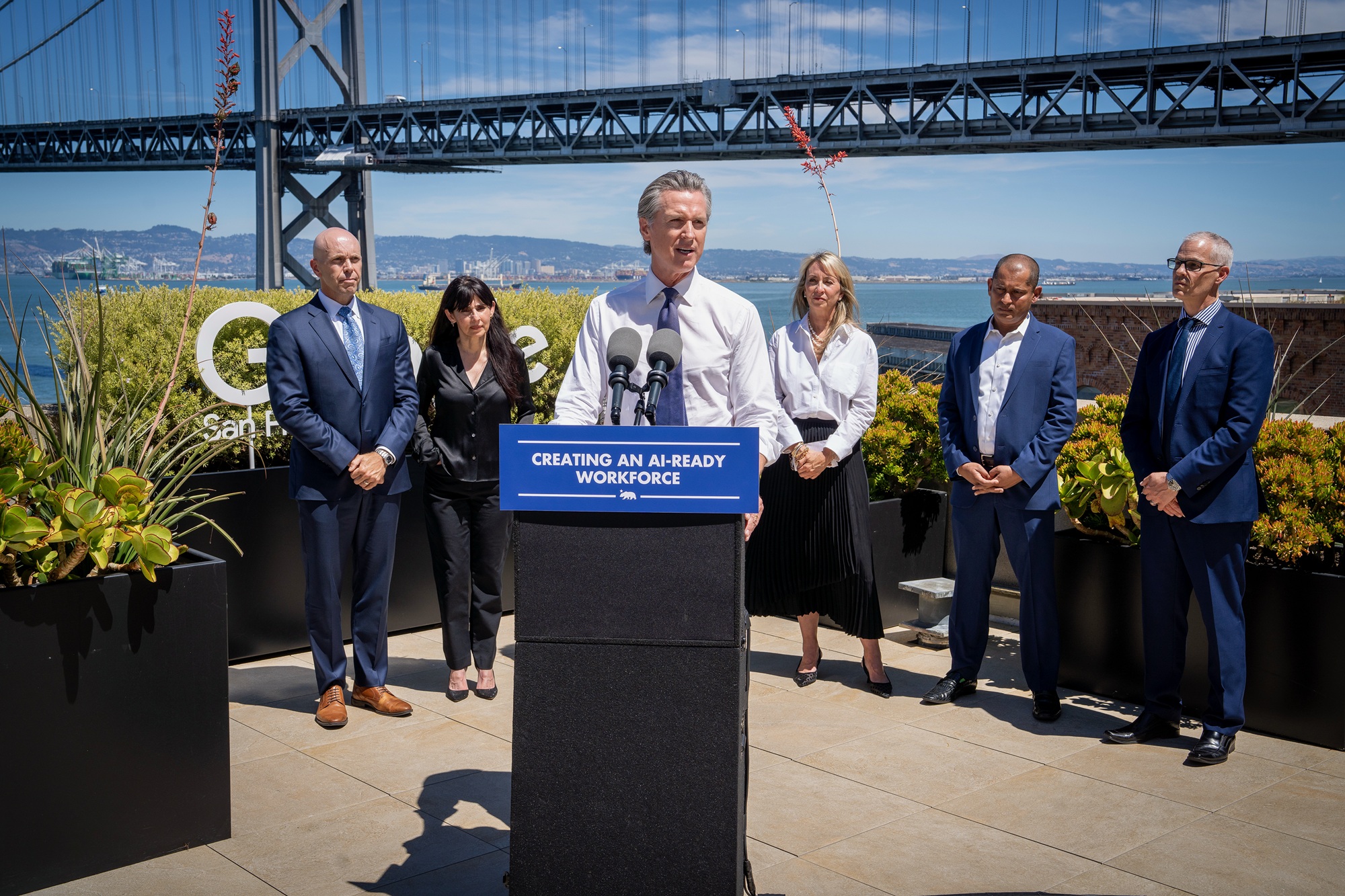
"caption": "On the rooftop of Google’s San Francisco offices on Aug. 7, 2025, Gov. Gavin Newsom announced a major statewide partnership with Google, Microsoft, IBM and Adobe to expand generative AI education — including training programs, certifications and internships — across California’s high schools, community colleges and Cal State universities.",
"credit": "Courtesy of the Office of the Governor",
"altTag": null,
"description": null,
"imgSizes": {
"thumbnail": {
"file": "https://cdn.kqed.org/wp-content/uploads/sites/10/2025/08/GavinNewsomAISF1-160x107.jpg",
"width": 160,
"height": 107,
"mimeType": "image/jpeg"
},
"1536x1536": {
"file": "https://cdn.kqed.org/wp-content/uploads/sites/10/2025/08/GavinNewsomAISF1-1536x1024.jpg",
"width": 1536,
"height": 1024,
"mimeType": "image/jpeg"
},
"post-thumbnail": {
"file": "https://cdn.kqed.org/wp-content/uploads/sites/10/2025/08/GavinNewsomAISF1-672x372.jpg",
"width": 672,
"height": 372,
"mimeType": "image/jpeg"
},
"twentyfourteen-full-width": {
"file": "https://cdn.kqed.org/wp-content/uploads/sites/10/2025/08/GavinNewsomAISF1-1038x576.jpg",
"width": 1038,
"height": 576,
"mimeType": "image/jpeg"
},
"kqedFullSize": {
"file": "https://cdn.kqed.org/wp-content/uploads/sites/10/2025/08/GavinNewsomAISF1.jpg",
"width": 2000,
"height": 1333
}
},
"isLoading": false,
"fetchFailed": false
},
"news_12059791": {
"type": "attachments",
"id": "news_12059791",
"meta": {
"index": "attachments_1716263798",
"site": "news",
"id": "12059791",
"found": true
},
"title": "Activists In Los Angeles Hold Rally In Honor Of George Floyd",
"publishDate": 1760398603,
"status": "inherit",
"parent": 12059600,
"modified": 1760402655,
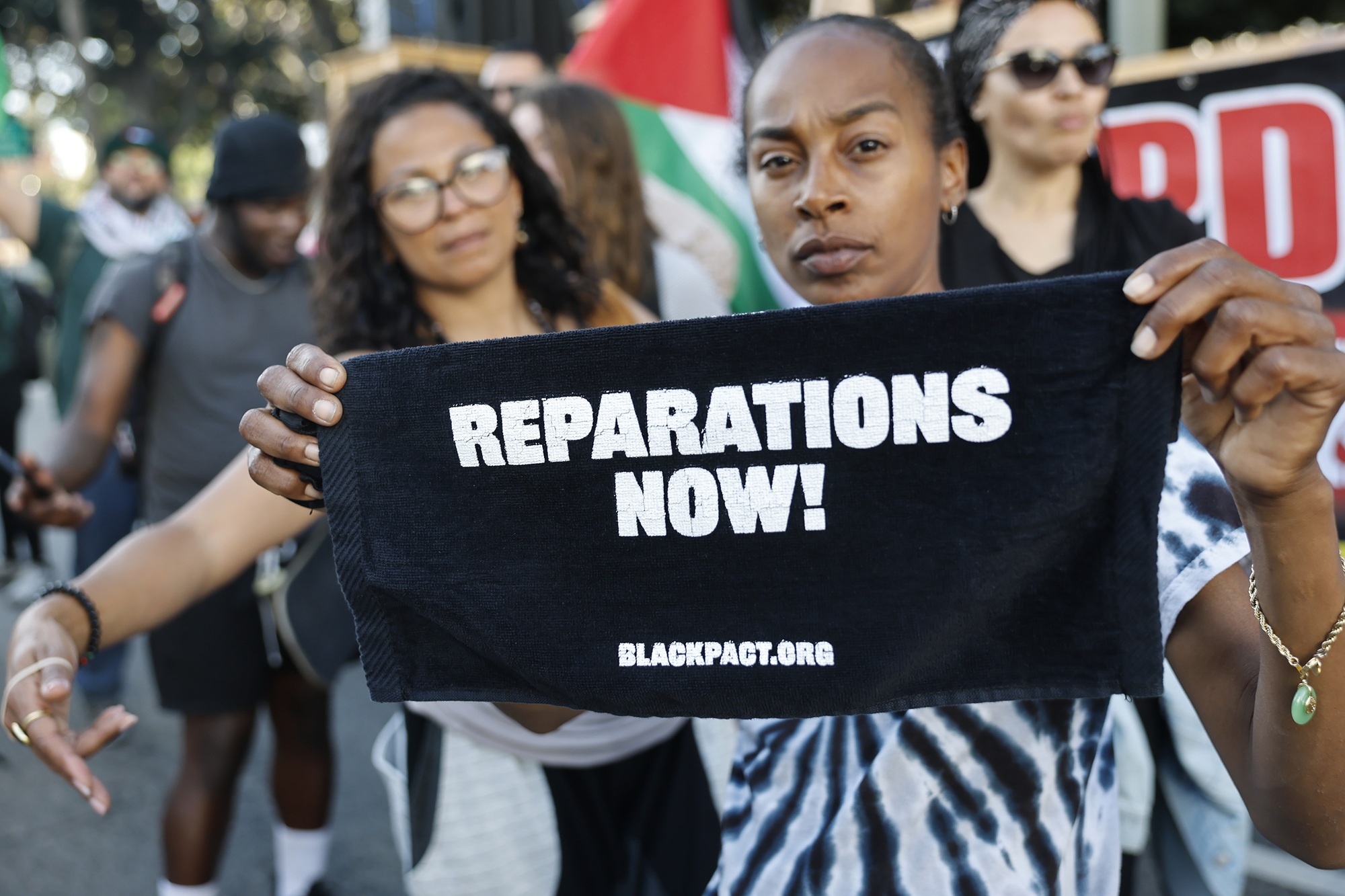
"caption": "A protester displays a sign reading \"Reparations Now!\" during a rally billed as a Day of Resistance held in honor of George Floyd on May 21, 2025, in Los Angeles, California.",
"credit": "Mario Tama/Getty Images",
"altTag": null,
"description": null,
"imgSizes": {
"thumbnail": {
"file": "https://cdn.kqed.org/wp-content/uploads/sites/10/2025/10/CaliforniaReparationsGetty-160x107.jpg",
"width": 160,
"height": 107,
"mimeType": "image/jpeg"
},
"1536x1536": {
"file": "https://cdn.kqed.org/wp-content/uploads/sites/10/2025/10/CaliforniaReparationsGetty-1536x1024.jpg",
"width": 1536,
"height": 1024,
"mimeType": "image/jpeg"
},
"post-thumbnail": {
"file": "https://cdn.kqed.org/wp-content/uploads/sites/10/2025/10/CaliforniaReparationsGetty-672x372.jpg",
"width": 672,
"height": 372,
"mimeType": "image/jpeg"
},
"twentyfourteen-full-width": {
"file": "https://cdn.kqed.org/wp-content/uploads/sites/10/2025/10/CaliforniaReparationsGetty-1038x576.jpg",
"width": 1038,
"height": 576,
"mimeType": "image/jpeg"
},
"kqedFullSize": {
"file": "https://cdn.kqed.org/wp-content/uploads/sites/10/2025/10/CaliforniaReparationsGetty.jpg",
"width": 2000,
"height": 1333
}
},
"isLoading": false,
"fetchFailed": false
},
"news_12042675": {
"type": "attachments",
"id": "news_12042675",
"meta": {
"index": "attachments_1716263798",
"site": "news",
"id": "12042675",
"found": true
},
"title": "002_KQED_Housing_Oakland_02212020_3417_qed",
"publishDate": 1749054070,
"status": "inherit",
"parent": 12042670,
"modified": 1749059431,
"caption": "Apartment buildings under construction near Macarthur BART station in Oakland, on Feb. 21, 2020.",
"credit": "Beth LaBerge/KQED",
"altTag": null,
"description": null,
"imgSizes": {
"medium": {
"file": "https://cdn.kqed.org/wp-content/uploads/sites/10/2025/06/002_KQED_Housing_Oakland_02212020_3417_qed-800x533.jpg",
"width": 800,
"height": 533,
"mimeType": "image/jpeg"
},
"large": {
"file": "https://cdn.kqed.org/wp-content/uploads/sites/10/2025/06/002_KQED_Housing_Oakland_02212020_3417_qed-1020x680.jpg",
"width": 1020,
"height": 680,
"mimeType": "image/jpeg"
},
"thumbnail": {
"file": "https://cdn.kqed.org/wp-content/uploads/sites/10/2025/06/002_KQED_Housing_Oakland_02212020_3417_qed-160x107.jpg",
"width": 160,
"height": 107,
"mimeType": "image/jpeg"
},
"1536x1536": {
"file": "https://cdn.kqed.org/wp-content/uploads/sites/10/2025/06/002_KQED_Housing_Oakland_02212020_3417_qed-1536x1024.jpg",
"width": 1536,
"height": 1024,
"mimeType": "image/jpeg"
},
"post-thumbnail": {
"file": "https://cdn.kqed.org/wp-content/uploads/sites/10/2025/06/002_KQED_Housing_Oakland_02212020_3417_qed-672x372.jpg",
"width": 672,
"height": 372,
"mimeType": "image/jpeg"
},
"twentyfourteen-full-width": {
"file": "https://cdn.kqed.org/wp-content/uploads/sites/10/2025/06/002_KQED_Housing_Oakland_02212020_3417_qed-1038x576.jpg",
"width": 1038,
"height": 576,
"mimeType": "image/jpeg"
},
"full-width": {
"file": "https://cdn.kqed.org/wp-content/uploads/sites/10/2025/06/002_KQED_Housing_Oakland_02212020_3417_qed-1920x1280.jpg",
"width": 1920,
"height": 1280,
"mimeType": "image/jpeg"
},
"kqedFullSize": {
"file": "https://cdn.kqed.org/wp-content/uploads/sites/10/2025/06/002_KQED_Housing_Oakland_02212020_3417_qed.jpg",
"width": 2000,
"height": 1333
}
},
"isLoading": false,
"fetchFailed": false
},
"news_12059467": {
"type": "attachments",
"id": "news_12059467",
"meta": {
"index": "attachments_1716263798",
"site": "news",
"id": "12059467",
"found": true
},
"title": "GavinNewsom",
"publishDate": 1760120330,
"status": "inherit",
"parent": 12059464,
"modified": 1760120385,
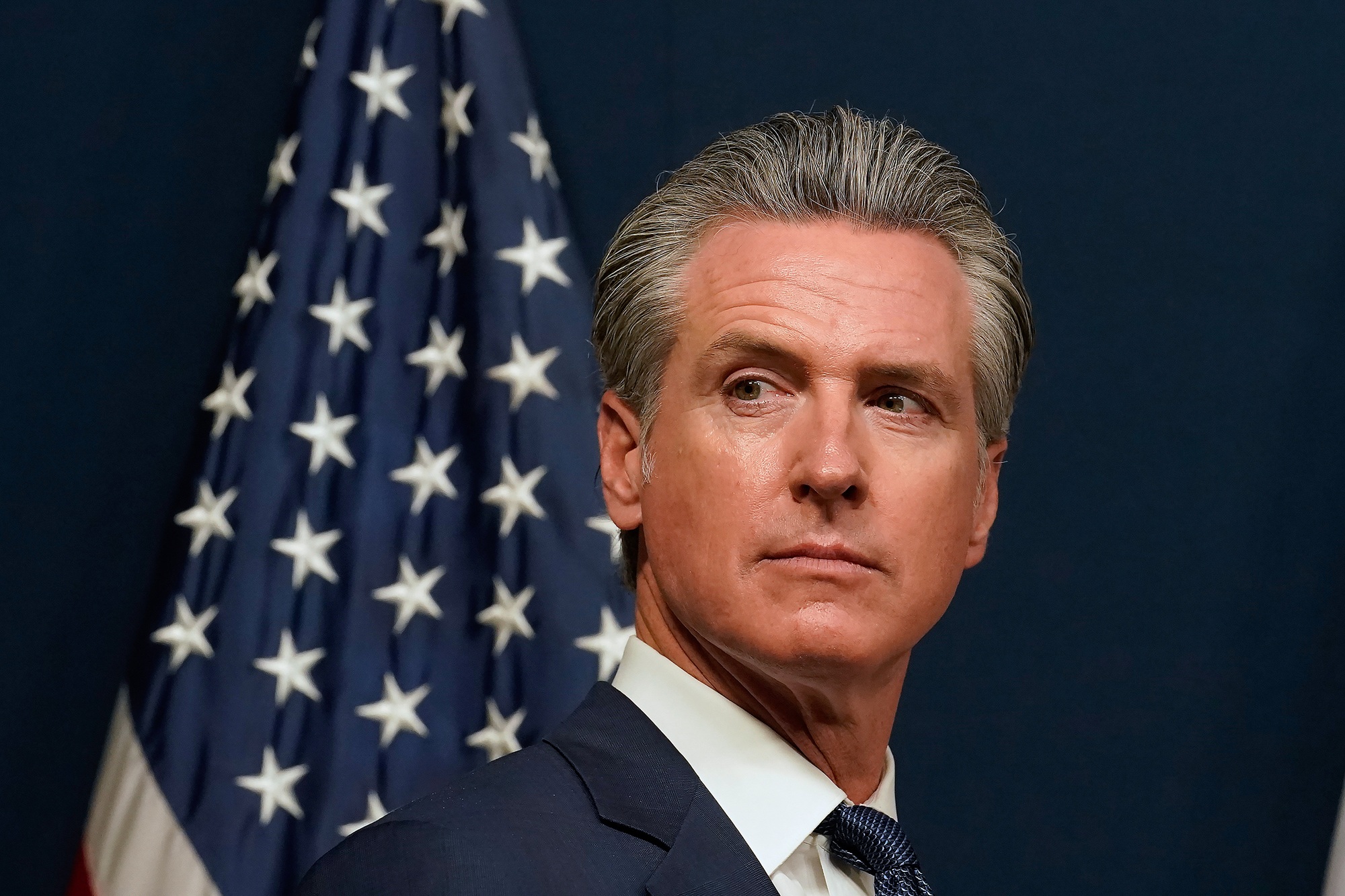
"caption": "Gov. Gavin Newsom signed a law today expanding eligibility for CARE Court, one of his signature mental health programs. Here, he announced a successful 2024 mental health ballot initiative at Alvarado Hospital in San Diego on March 19, 2023. \n",
"credit": "Adriana Heldiz/The San Diego Union-Tribune via AP Pool",
"altTag": null,
"description": null,
"imgSizes": {
"thumbnail": {
"file": "https://cdn.kqed.org/wp-content/uploads/sites/10/2025/10/GavinNewsom-160x107.jpg",
"width": 160,
"height": 107,
"mimeType": "image/jpeg"
},
"1536x1536": {
"file": "https://cdn.kqed.org/wp-content/uploads/sites/10/2025/10/GavinNewsom-1536x1024.jpg",
"width": 1536,
"height": 1024,
"mimeType": "image/jpeg"
},
"post-thumbnail": {
"file": "https://cdn.kqed.org/wp-content/uploads/sites/10/2025/10/GavinNewsom-672x372.jpg",
"width": 672,
"height": 372,
"mimeType": "image/jpeg"
},
"twentyfourteen-full-width": {
"file": "https://cdn.kqed.org/wp-content/uploads/sites/10/2025/10/GavinNewsom-1038x576.jpg",
"width": 1038,
"height": 576,
"mimeType": "image/jpeg"
},
"kqedFullSize": {
"file": "https://cdn.kqed.org/wp-content/uploads/sites/10/2025/10/GavinNewsom.jpg",
"width": 2000,
"height": 1333
}
},
"isLoading": false,
"fetchFailed": false
},
"news_12059236": {
"type": "attachments",
"id": "news_12059236",
"meta": {
"index": "attachments_1716263798",
"site": "news",
"id": "12059236",
"found": true
},
"title": "APTOPIX National Guard Oregon",
"publishDate": 1759969093,
"status": "inherit",
"parent": 12059205,
"modified": 1761089008,
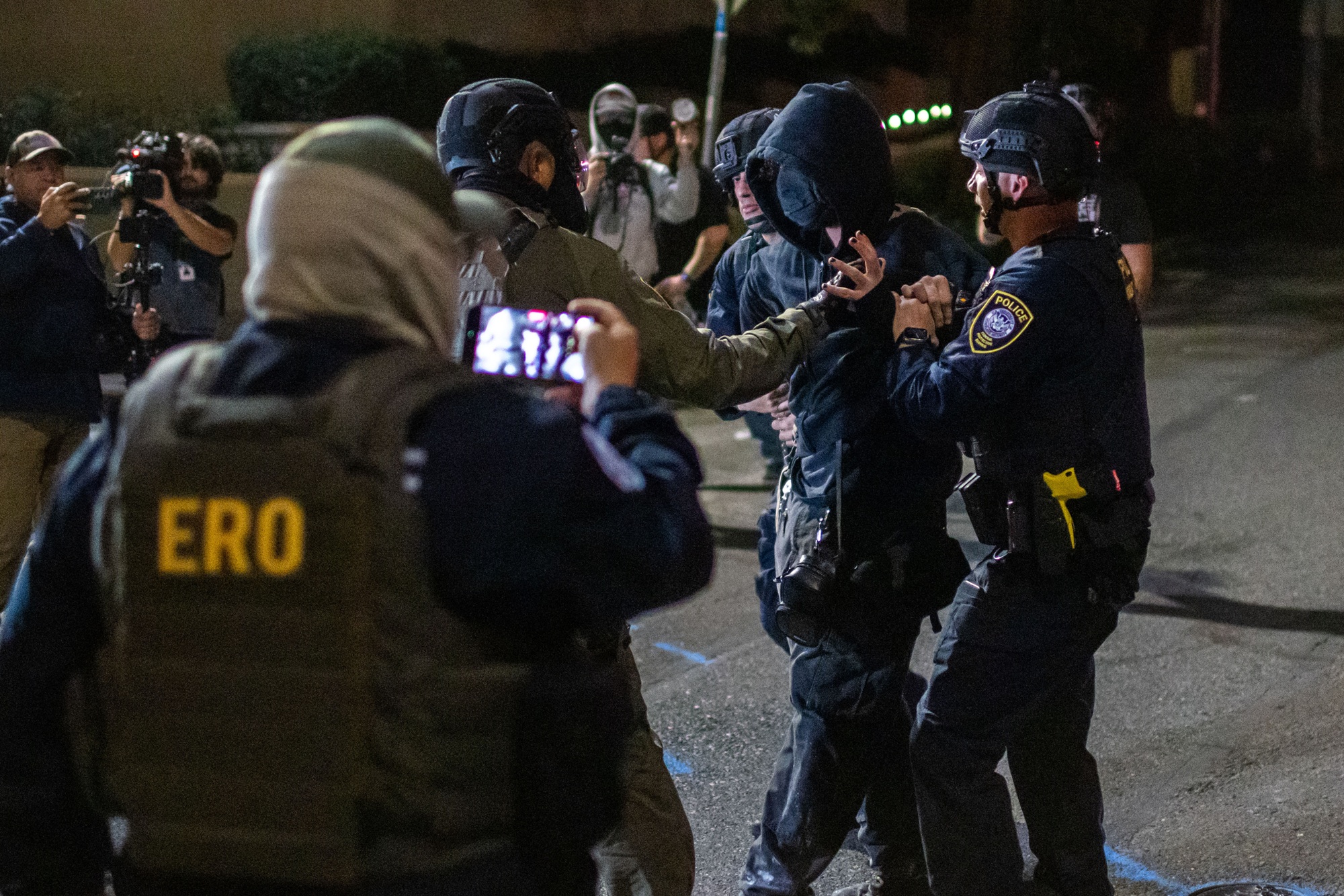
"caption": "A protester is arrested by police and federal officers outside a U.S. Immigration and Customs Enforcement facility in Portland, Oregon, on Oct. 6, 2025.",
"credit": "Ethan Swope/AP Photo",
"altTag": null,
"description": null,
"imgSizes": {
"thumbnail": {
"file": "https://cdn.kqed.org/wp-content/uploads/sites/10/2025/10/NationalGuardPortlandAP-160x107.jpg",
"width": 160,
"height": 107,
"mimeType": "image/jpeg"
},
"1536x1536": {
"file": "https://cdn.kqed.org/wp-content/uploads/sites/10/2025/10/NationalGuardPortlandAP-1536x1025.jpg",
"width": 1536,
"height": 1025,
"mimeType": "image/jpeg"
},
"post-thumbnail": {
"file": "https://cdn.kqed.org/wp-content/uploads/sites/10/2025/10/NationalGuardPortlandAP-672x372.jpg",
"width": 672,
"height": 372,
"mimeType": "image/jpeg"
},
"twentyfourteen-full-width": {
"file": "https://cdn.kqed.org/wp-content/uploads/sites/10/2025/10/NationalGuardPortlandAP-1038x576.jpg",
"width": 1038,
"height": 576,
"mimeType": "image/jpeg"
},
"kqedFullSize": {
"file": "https://cdn.kqed.org/wp-content/uploads/sites/10/2025/10/NationalGuardPortlandAP.jpg",
"width": 2000,
"height": 1334
}
},
"isLoading": false,
"fetchFailed": false
},
"news_12053411": {
"type": "attachments",
"id": "news_12053411",
"meta": {
"index": "attachments_1716263798",
"site": "news",
"id": "12053411",
"found": true
},
"title": "DSC02098",
"publishDate": 1755896823,
"status": "inherit",
"parent": 12053380,
"modified": 1755898471,
"caption": "California National Guard patrol downtown Los Angeles on June 18, 2025. ",
"credit": "Aisha Wallace-Palomares/KQED",
"altTag": null,
"description": null,
"imgSizes": {
"medium": {
"file": "https://cdn.kqed.org/wp-content/uploads/sites/10/2025/08/DSC02098-2000x1333.jpg",
"width": 2000,
"height": 1333,
"mimeType": "image/jpeg"
},
"large": {
"file": "https://cdn.kqed.org/wp-content/uploads/sites/10/2025/08/DSC02098-2000x1333.jpg",
"width": 2000,
"height": 1333,
"mimeType": "image/jpeg"
},
"thumbnail": {
"file": "https://cdn.kqed.org/wp-content/uploads/sites/10/2025/08/DSC02098-160x107.jpg",
"width": 160,
"height": 107,
"mimeType": "image/jpeg"
},
"1536x1536": {
"file": "https://cdn.kqed.org/wp-content/uploads/sites/10/2025/08/DSC02098-1536x1024.jpg",
"width": 1536,
"height": 1024,
"mimeType": "image/jpeg"
},
"2048x2048": {
"file": "https://cdn.kqed.org/wp-content/uploads/sites/10/2025/08/DSC02098-2048x1365.jpg",
"width": 2048,
"height": 1365,
"mimeType": "image/jpeg"
},
"post-thumbnail": {
"file": "https://cdn.kqed.org/wp-content/uploads/sites/10/2025/08/DSC02098-672x372.jpg",
"width": 672,
"height": 372,
"mimeType": "image/jpeg"
},
"twentyfourteen-full-width": {
"file": "https://cdn.kqed.org/wp-content/uploads/sites/10/2025/08/DSC02098-1038x576.jpg",
"width": 1038,
"height": 576,
"mimeType": "image/jpeg"
},
"full-width": {
"file": "https://cdn.kqed.org/wp-content/uploads/sites/10/2025/08/DSC02098-2000x1333.jpg",
"width": 2000,
"height": 1333,
"mimeType": "image/jpeg"
},
"kqedFullSize": {
"file": "https://cdn.kqed.org/wp-content/uploads/sites/10/2025/08/DSC02098-scaled-e1755897157954.jpg",
"width": 2000,
"height": 1334
}
},
"isLoading": false,
"fetchFailed": false
},
"news_12058946": {
"type": "attachments",
"id": "news_12058946",
"meta": {
"index": "attachments_1716263798",
"site": "news",
"id": "12058946",
"found": true
},
"title": "ICE in Little Tokyo",
"publishDate": 1759861710,
"status": "inherit",
"parent": 12058936,
"modified": 1759880054,
"caption": "Gregory Bovino, chief patrol agent of the El Centro sector (center), marches with federal agents to the Edward R. Roybal Federal Building after U.S. Border Patrol agents produced a show of force outside the Japanese American National Museum, where Gov. Newsom was holding a redistricting press conference on Aug. 14, 2025, in Los Angeles, California.",
"credit": "Carlin Stiehl/Los Angeles Times via Getty Images",
"altTag": null,
"description": null,
"imgSizes": {
"thumbnail": {
"file": "https://cdn.kqed.org/wp-content/uploads/sites/10/2025/10/BorderPatrolAgentsGetty-160x107.jpg",
"width": 160,
"height": 107,
"mimeType": "image/jpeg"
},
"1536x1536": {
"file": "https://cdn.kqed.org/wp-content/uploads/sites/10/2025/10/BorderPatrolAgentsGetty-1536x1025.jpg",
"width": 1536,
"height": 1025,
"mimeType": "image/jpeg"
},
"post-thumbnail": {
"file": "https://cdn.kqed.org/wp-content/uploads/sites/10/2025/10/BorderPatrolAgentsGetty-672x372.jpg",
"width": 672,
"height": 372,
"mimeType": "image/jpeg"
},
"twentyfourteen-full-width": {
"file": "https://cdn.kqed.org/wp-content/uploads/sites/10/2025/10/BorderPatrolAgentsGetty-1038x576.jpg",
"width": 1038,
"height": 576,
"mimeType": "image/jpeg"
},
"kqedFullSize": {
"file": "https://cdn.kqed.org/wp-content/uploads/sites/10/2025/10/BorderPatrolAgentsGetty.jpg",
"width": 2000,
"height": 1334
}
},
"isLoading": false,
"fetchFailed": false
},
"news_12054634": {
"type": "attachments",
"id": "news_12054634",
"meta": {
"index": "attachments_1716263798",
"site": "news",
"id": "12054634",
"found": true
},
"title": "California Trump Newsom",
"publishDate": 1757009366,
"status": "inherit",
"parent": 12054630,
"modified": 1757009400,
"caption": "Gov. Gavin Newsom at a press conference to discuss the measures to redraw the state's Congressional districts and put new maps before voters in a special election, in Sacramento, California, on Aug. 21, 2025. ",
"credit": "Rich Pedroncelli/AP Photo",
"altTag": null,
"description": null,
"imgSizes": {
"thumbnail": {
"file": "https://cdn.kqed.org/wp-content/uploads/sites/10/2025/09/GavinNewsomAP-160x107.jpg",
"width": 160,
"height": 107,
"mimeType": "image/jpeg"
},
"1536x1536": {
"file": "https://cdn.kqed.org/wp-content/uploads/sites/10/2025/09/GavinNewsomAP-1536x1024.jpg",
"width": 1536,
"height": 1024,
"mimeType": "image/jpeg"
},
"post-thumbnail": {
"file": "https://cdn.kqed.org/wp-content/uploads/sites/10/2025/09/GavinNewsomAP-672x372.jpg",
"width": 672,
"height": 372,
"mimeType": "image/jpeg"
},
"twentyfourteen-full-width": {
"file": "https://cdn.kqed.org/wp-content/uploads/sites/10/2025/09/GavinNewsomAP-1038x576.jpg",
"width": 1038,
"height": 576,
"mimeType": "image/jpeg"
},
"kqedFullSize": {
"file": "https://cdn.kqed.org/wp-content/uploads/sites/10/2025/09/GavinNewsomAP.jpg",
"width": 2000,
"height": 1333
}
},
"isLoading": false,
"fetchFailed": false
},
"news_12058864": {
"type": "attachments",
"id": "news_12058864",
"meta": {
"index": "attachments_1716263798",
"site": "news",
"id": "12058864",
"found": true
},
"title": "1497898_me-bonta-office-behind-the-scenes_AJS",
"publishDate": 1759794181,
"status": "inherit",
"parent": 12058799,
"modified": 1759794302,
"caption": "California Attorney General Rob Bonta is briefed by members of his Civil Rights Enforcement Section on litigation challenging the Trump administration at his offices in downtown Los Angeles, California, on March 11, 2025. ",
"credit": "Allen J. Schaben/Los Angeles Times via Getty Images",
"altTag": null,
"description": null,
"imgSizes": {
"thumbnail": {
"file": "https://cdn.kqed.org/wp-content/uploads/sites/10/2025/10/RobBontaTrumpGetty-160x107.jpg",
"width": 160,
"height": 107,
"mimeType": "image/jpeg"
},
"1536x1536": {
"file": "https://cdn.kqed.org/wp-content/uploads/sites/10/2025/10/RobBontaTrumpGetty-1536x1024.jpg",
"width": 1536,
"height": 1024,
"mimeType": "image/jpeg"
},
"post-thumbnail": {
"file": "https://cdn.kqed.org/wp-content/uploads/sites/10/2025/10/RobBontaTrumpGetty-672x372.jpg",
"width": 672,
"height": 372,
"mimeType": "image/jpeg"
},
"twentyfourteen-full-width": {
"file": "https://cdn.kqed.org/wp-content/uploads/sites/10/2025/10/RobBontaTrumpGetty-1038x576.jpg",
"width": 1038,
"height": 576,
"mimeType": "image/jpeg"
},
"kqedFullSize": {
"file": "https://cdn.kqed.org/wp-content/uploads/sites/10/2025/10/RobBontaTrumpGetty.jpg",
"width": 2000,
"height": 1333
}
},
"isLoading": false,
"fetchFailed": false
},
"news_11988070": {
"type": "attachments",
"id": "news_11988070",
"meta": {
"index": "attachments_1716263798",
"site": "news",
"id": "11988070",
"found": true
},
"title": "240517-TKBilingualLearners-135-BL_qut",
"publishDate": 1717007281,
"status": "inherit",
"parent": 11989955,
"modified": 1759778976,
"caption": "Teacher Erika Vargas checks in on students during playtime during a bilingual transitional kindergarten class at Global Family Elementary School in Oakland on May 17, 2024.",
"credit": "Beth LaBerge/KQED",
"altTag": "A woman teacher leans over and smiles at two young students in a classroom.",
"description": null,
"imgSizes": {
"medium": {
"file": "https://cdn.kqed.org/wp-content/uploads/sites/10/2024/05/240517-TKBilingualLearners-135-BL_qut-800x533.jpg",
"width": 800,
"height": 533,
"mimeType": "image/jpeg"
},
"large": {
"file": "https://cdn.kqed.org/wp-content/uploads/sites/10/2024/05/240517-TKBilingualLearners-135-BL_qut-1020x680.jpg",
"width": 1020,
"height": 680,
"mimeType": "image/jpeg"
},
"thumbnail": {
"file": "https://cdn.kqed.org/wp-content/uploads/sites/10/2024/05/240517-TKBilingualLearners-135-BL_qut-160x107.jpg",
"width": 160,
"height": 107,
"mimeType": "image/jpeg"
},
"1536x1536": {
"file": "https://cdn.kqed.org/wp-content/uploads/sites/10/2024/05/240517-TKBilingualLearners-135-BL_qut-1536x1024.jpg",
"width": 1536,
"height": 1024,
"mimeType": "image/jpeg"
},
"post-thumbnail": {
"file": "https://cdn.kqed.org/wp-content/uploads/sites/10/2024/05/240517-TKBilingualLearners-135-BL_qut-672x372.jpg",
"width": 672,
"height": 372,
"mimeType": "image/jpeg"
},
"twentyfourteen-full-width": {
"file": "https://cdn.kqed.org/wp-content/uploads/sites/10/2024/05/240517-TKBilingualLearners-135-BL_qut-1038x576.jpg",
"width": 1038,
"height": 576,
"mimeType": "image/jpeg"
},
"kqedFullSize": {
"file": "https://cdn.kqed.org/wp-content/uploads/sites/10/2024/05/240517-TKBilingualLearners-135-BL_qut.jpg",
"width": 1920,
"height": 1280
}
},
"isLoading": false,
"fetchFailed": false
},
"news_12058716": {
"type": "attachments",
"id": "news_12058716",
"meta": {
"index": "attachments_1716263798",
"site": "news",
"id": "12058716",
"found": true
},
"title": "Federal Crackdown Oregon",
"publishDate": 1759715151,
"status": "inherit",
"parent": 12058715,
"modified": 1761091451,
"caption": "Law enforcement officers block the road for a vehicle to enter a U.S. Immigration and Customs Enforcement facility on Oct. 4, 2025, in Portland, Oregon.",
"credit": "Jenny Kane/The Associated Press ",
"altTag": "Several people dressed in military gear and wearing gas masks stand in a line in the middle of the street.",
"description": null,
"imgSizes": {
"medium": {
"file": "https://cdn.kqed.org/wp-content/uploads/sites/10/2025/10/AP25278748416734-2000x1333.jpg",
"width": 2000,
"height": 1333,
"mimeType": "image/jpeg"
},
"large": {
"file": "https://cdn.kqed.org/wp-content/uploads/sites/10/2025/10/AP25278748416734-2000x1333.jpg",
"width": 2000,
"height": 1333,
"mimeType": "image/jpeg"
},
"thumbnail": {
"file": "https://cdn.kqed.org/wp-content/uploads/sites/10/2025/10/AP25278748416734-160x107.jpg",
"width": 160,
"height": 107,
"mimeType": "image/jpeg"
},
"1536x1536": {
"file": "https://cdn.kqed.org/wp-content/uploads/sites/10/2025/10/AP25278748416734-1536x1024.jpg",
"width": 1536,
"height": 1024,
"mimeType": "image/jpeg"
},
"2048x2048": {
"file": "https://cdn.kqed.org/wp-content/uploads/sites/10/2025/10/AP25278748416734-2048x1365.jpg",
"width": 2048,
"height": 1365,
"mimeType": "image/jpeg"
},
"post-thumbnail": {
"file": "https://cdn.kqed.org/wp-content/uploads/sites/10/2025/10/AP25278748416734-672x372.jpg",
"width": 672,
"height": 372,
"mimeType": "image/jpeg"
},
"twentyfourteen-full-width": {
"file": "https://cdn.kqed.org/wp-content/uploads/sites/10/2025/10/AP25278748416734-1038x576.jpg",
"width": 1038,
"height": 576,
"mimeType": "image/jpeg"
},
"full-width": {
"file": "https://cdn.kqed.org/wp-content/uploads/sites/10/2025/10/AP25278748416734-2000x1333.jpg",
"width": 2000,
"height": 1333,
"mimeType": "image/jpeg"
},
"kqedFullSize": {
"file": "https://cdn.kqed.org/wp-content/uploads/sites/10/2025/10/AP25278748416734-scaled-e1761091431392.jpg",
"width": 2000,
"height": 1334
}
},
"isLoading": false,
"fetchFailed": false
}
},
"audioPlayerReducer": {
"postId": "stream_live",
"isPaused": true,
"isPlaying": false,
"pfsActive": false,
"pledgeModalIsOpen": true,
"playerDrawerIsOpen": false,
"liveAudioPlayStartedAt": 0,
"liveAudioPlayContext": ""
},
"authorsReducer": {
"byline_news_12059464": {
"type": "authors",
"id": "byline_news_12059464",
"meta": {
"override": true
},
"slug": "byline_news_12059464",
"name": "Jocelyn Wiener and Marisa Kendall, CalMatters",
"isLoading": false
},
"byline_news_12058715": {
"type": "authors",
"id": "byline_news_12058715",
"meta": {
"override": true
},
"slug": "byline_news_12058715",
"name": "Christopher Weber and Jack Brook, The Associated Press ",
"isLoading": false
},
"gmarzorati": {
"type": "authors",
"id": "227",
"meta": {
"index": "authors_1716337520",
"id": "227",
"found": true
},
"name": "Guy Marzorati",
"firstName": "Guy",
"lastName": "Marzorati",
"slug": "gmarzorati",
"email": "gmarzorati@KQED.org",
"display_author_email": true,
"staff_mastheads": [
"news"
],
"title": "Correspondent",
"bio": "Guy Marzorati is a correspondent on KQED's California Politics and Government Desk, based in San Jose. A graduate of Santa Clara University, Guy joined KQED in 2013. He reports on state and local politics and produces KQED's digital voter guide.",
"avatar": "https://secure.gravatar.com/avatar/e7038b8dbfd55b104369b76b1cd0b9de?s=600&d=blank&r=g",
"twitter": "guymarzorati",
"facebook": null,
"instagram": null,
"linkedin": null,
"sites": [
{
"site": "",
"roles": [
"editor"
]
},
{
"site": "news",
"roles": [
"editor"
]
},
{
"site": "science",
"roles": [
"editor"
]
},
{
"site": "forum",
"roles": [
"editor"
]
},
{
"site": "elections",
"roles": [
"editor"
]
},
{
"site": "liveblog",
"roles": [
"editor"
]
}
],
"headData": {
"title": "Guy Marzorati | KQED",
"description": "Correspondent",
"ogImgSrc": "https://secure.gravatar.com/avatar/e7038b8dbfd55b104369b76b1cd0b9de?s=600&d=blank&r=g",
"twImgSrc": "https://secure.gravatar.com/avatar/e7038b8dbfd55b104369b76b1cd0b9de?s=600&d=blank&r=g"
},
"isLoading": false,
"link": "/author/gmarzorati"
},
"rachael-myrow": {
"type": "authors",
"id": "251",
"meta": {
"index": "authors_1716337520",
"id": "251",
"found": true
},
"name": "Rachael Myrow",
"firstName": "Rachael",
"lastName": "Myrow",
"slug": "rachael-myrow",
"email": "rmyrow@kqed.org",
"display_author_email": true,
"staff_mastheads": [
"news"
],
"title": "Senior Editor of KQED's Silicon Valley News Desk",
"bio": "• I write and edit stories about how Silicon Valley power and policies shape everyday life in California. I’m also passionate about making Bay Area history and culture more accessible to a broad public. • I’ve been a journalist for most of my life, starting in high school with The Franklin Press in Los Angeles, where I grew up. While earning my first degree in English at UC Berkeley, I got my start in public radio at KALX-FM. After completing a second degree in journalism at Cal, I landed my first professional job at Marketplace, then moved on to KPCC (now LAist), and then KQED, where I hosted The California Report for more than seven years. • My reporting has appeared on NPR, The World, WBUR’s \u003ci>Here & Now\u003c/i>, and the BBC. I also guest host for KQED’s \u003ci>Forum\u003c/i>, as well as the Commonwealth Club in San Francisco. • I speak periodically on media, democracy and technology issues, and do voiceover work for documentaries and educational video projects. • Outside of the studio, you'll find me hiking Bay Area trails and whipping up Insta-ready meals in my kitchen. • I do not accept gifts, money, or favors from anyone connected to my reporting, I don't pay people for information, and I do not support or donate to political causes. • I strive to treat the people I report on with fairness, honesty, and respect. I also recognize there are often multiple sides to a story and work to verify information through multiple sources and documentation. If I get something wrong, I correct it.",
"avatar": "https://secure.gravatar.com/avatar/3ed8a3c5f26025e4a805ba634cda8cd764906b97438a6d9ce216b044e340da4e?s=600&d=blank&r=g",
"twitter": "rachaelmyrow",
"bluesky": null,
"facebook": null,
"instagram": null,
"linkedin": "https://www.linkedin.com/in/rachaelmyrow/",
"sites": [
{
"site": "arts",
"roles": [
"administrator"
]
},
{
"site": "news",
"roles": [
"edit_others_posts",
"editor"
]
},
{
"site": "futureofyou",
"roles": [
"editor"
]
},
{
"site": "bayareabites",
"roles": [
"editor"
]
},
{
"site": "stateofhealth",
"roles": [
"editor"
]
},
{
"site": "science",
"roles": [
"editor"
]
},
{
"site": "food",
"roles": [
"editor"
]
},
{
"site": "forum",
"roles": [
"editor"
]
},
{
"site": "liveblog",
"roles": [
"author"
]
}
],
"headData": {
"title": "Rachael Myrow | KQED",
"description": "Senior Editor of KQED's Silicon Valley News Desk",
"ogImgSrc": "https://secure.gravatar.com/avatar/3ed8a3c5f26025e4a805ba634cda8cd764906b97438a6d9ce216b044e340da4e?s=600&d=blank&r=g",
"twImgSrc": "https://secure.gravatar.com/avatar/3ed8a3c5f26025e4a805ba634cda8cd764906b97438a6d9ce216b044e340da4e?s=600&d=blank&r=g"
},
"isLoading": false,
"link": "/author/rachael-myrow"
},
"mlagos": {
"type": "authors",
"id": "3239",
"meta": {
"index": "authors_1716337520",
"id": "3239",
"found": true
},
"name": "Marisa Lagos",
"firstName": "Marisa",
"lastName": "Lagos",
"slug": "mlagos",
"email": "mlagos@kqed.org",
"display_author_email": false,
"staff_mastheads": [
"news"
],
"title": "KQED Contributor",
"bio": "Marisa Lagos is a correspondent for KQED’s California Politics and Government Desk and co-hosts the award-winning show and podcast, Political Breakdown. At KQED, Lagos also conducts reporting, analysis and investigations into state, local and national politics for radio, TV, online and onstage. In 2022, she and co-host, Scott Shafer, moderated the only gubernatorial debate in California. In 2020, the \u003ci>Washington Post\u003c/i> named her one of the top political journalists in California; she was nominated for a Peabody and won several other awards for her work investigating the 2017 California wildfires. She has worked at the \u003ci>San Francisco Chronicle\u003c/i>, \u003ci>San Francisco Examiner\u003c/i> and \u003ci>Los Angeles Times\u003c/i>. A UC Santa Barbara graduate, she lives in San Francisco with her two sons and husband.",
"avatar": "https://secure.gravatar.com/avatar/a261a0d3696fc066871ef96b85b5e7d2?s=600&d=blank&r=g",
"twitter": "@mlagos",
"facebook": null,
"instagram": null,
"linkedin": null,
"sites": [
{
"site": "arts",
"roles": [
"author"
]
},
{
"site": "news",
"roles": [
"editor"
]
},
{
"site": "science",
"roles": [
"editor"
]
},
{
"site": "forum",
"roles": [
"author"
]
},
{
"site": "liveblog",
"roles": [
"author"
]
}
],
"headData": {
"title": "Marisa Lagos | KQED",
"description": "KQED Contributor",
"ogImgSrc": "https://secure.gravatar.com/avatar/a261a0d3696fc066871ef96b85b5e7d2?s=600&d=blank&r=g",
"twImgSrc": "https://secure.gravatar.com/avatar/a261a0d3696fc066871ef96b85b5e7d2?s=600&d=blank&r=g"
},
"isLoading": false,
"link": "/author/mlagos"
},
"daisynguyen": {
"type": "authors",
"id": "11829",
"meta": {
"index": "authors_1716337520",
"id": "11829",
"found": true
},
"name": "Daisy Nguyen",
"firstName": "Daisy",
"lastName": "Nguyen",
"slug": "daisynguyen",
"email": "daisynguyen@kqed.org",
"display_author_email": true,
"staff_mastheads": [
"news"
],
"title": "KQED Contributor",
"bio": "I have covered early childhood education and child care for KQED since 2022. I focus on policies aimed at increasing access to early care and education and how they shape individual lives. I've been a journalist for more than two decades, with most of that time devoted to covering breaking news throughout California for The Associated Press. I grew up in San Francisco and studied at UC Davis and Columbia University's Graduate School of Journalism. I live in Oakland with my husband and two kids.",
"avatar": "https://secure.gravatar.com/avatar/2da2127c27f7143b53ebd419800fd55f?s=600&d=blank&r=g",
"twitter": null,
"facebook": null,
"instagram": null,
"linkedin": "https://www.linkedin.com/in/daisynguyen/",
"sites": [
{
"site": "news",
"roles": [
"author"
]
},
{
"site": "liveblog",
"roles": [
"author"
]
}
],
"headData": {
"title": "Daisy Nguyen | KQED",
"description": "KQED Contributor",
"ogImgSrc": "https://secure.gravatar.com/avatar/2da2127c27f7143b53ebd419800fd55f?s=600&d=blank&r=g",
"twImgSrc": "https://secure.gravatar.com/avatar/2da2127c27f7143b53ebd419800fd55f?s=600&d=blank&r=g"
},
"isLoading": false,
"link": "/author/daisynguyen"
},
"kdebenedetti": {
"type": "authors",
"id": "11913",
"meta": {
"index": "authors_1716337520",
"id": "11913",
"found": true
},
"name": "Katie DeBenedetti",
"firstName": "Katie",
"lastName": "DeBenedetti",
"slug": "kdebenedetti",
"email": "kdebenedetti@kqed.org",
"display_author_email": false,
"staff_mastheads": [
"news",
"science"
],
"title": "KQED Contributor",
"bio": "Katie DeBenedetti is a digital reporter covering daily news for the Express Desk. Prior to joining KQED as a culture reporting intern in January 2024, she covered education and city government for the Napa Valley Register.",
"avatar": "https://secure.gravatar.com/avatar/6e31073cb8f7e4214ab03f42771d0f45?s=600&d=blank&r=g",
"twitter": null,
"facebook": null,
"instagram": null,
"linkedin": null,
"sites": [
{
"site": "news",
"roles": [
"author"
]
},
{
"site": "science",
"roles": [
"author"
]
},
{
"site": "liveblog",
"roles": [
"author"
]
}
],
"headData": {
"title": "Katie DeBenedetti | KQED",
"description": "KQED Contributor",
"ogImgSrc": "https://secure.gravatar.com/avatar/6e31073cb8f7e4214ab03f42771d0f45?s=600&d=blank&r=g",
"twImgSrc": "https://secure.gravatar.com/avatar/6e31073cb8f7e4214ab03f42771d0f45?s=600&d=blank&r=g"
},
"isLoading": false,
"link": "/author/kdebenedetti"
},
"emanoukian": {
"type": "authors",
"id": "11925",
"meta": {
"index": "authors_1716337520",
"id": "11925",
"found": true
},
"name": "Elize Manoukian",
"firstName": "Elize",
"lastName": "Manoukian",
"slug": "emanoukian",
"email": "emanoukian@KQED.org",
"display_author_email": false,
"staff_mastheads": [
"news"
],
"title": "Digital News Editor",
"bio": "Elize Manoukian is an award-winning audio producer and Senior Editor on the Express Desk, KQED's digital news platform. Her work has appeared on KPFA, Interlochen Public Radio, Oregon Public Broadcast, the New York Daily News, LA Times and the San Diego Union-Tribune.",
"avatar": "https://secure.gravatar.com/avatar/4525f1a8e46ccb30933b32653d9772064cfefe3fa655eb45b3b3a80341f6bdad?s=600&d=blank&r=g",
"twitter": null,
"bluesky": null,
"facebook": null,
"instagram": null,
"linkedin": null,
"sites": [
{
"site": "arts",
"roles": [
"editor"
]
},
{
"site": "news",
"roles": [
"editor"
]
},
{
"site": "science",
"roles": [
"editor"
]
}
],
"headData": {
"title": "Elize Manoukian | KQED",
"description": "Digital News Editor",
"ogImgSrc": "https://secure.gravatar.com/avatar/4525f1a8e46ccb30933b32653d9772064cfefe3fa655eb45b3b3a80341f6bdad?s=600&d=blank&r=g",
"twImgSrc": "https://secure.gravatar.com/avatar/4525f1a8e46ccb30933b32653d9772064cfefe3fa655eb45b3b3a80341f6bdad?s=600&d=blank&r=g"
},
"isLoading": false,
"link": "/author/emanoukian"
}
},
"pagesReducer": {
"news_tag_gavin-newsom": {
"type": "terms",
"id": "news_16",
"meta": {
"index": "terms_1716263798",
"site": "news",
"id": "16",
"score": 8.936892
},
"featImg": null,
"name": "Gavin Newsom",
"description": null,
"taxonomy": "tag",
"headData": {
"twImgId": null,
"twTitle": null,
"ogTitle": null,
"ogImgId": null,
"twDescription": null,
"description": null,
"title": "Gavin Newsom Archives | KQED News",
"ogDescription": null
},
"ttid": 16,
"slug": "gavin-newsom",
"isLoading": false,
"title": "Gavin Newsom",
"pageMeta": {
"site": "news",
"WpPageTemplate": "page-topic-editorial",
"currentPage": 11
},
"blocks": [
{
"blockName": "kqed/post-list",
"attrs": {
"layout": "cardArticle2",
"query": "posts/news?tag=gavin-newsom",
"seeMore": false,
"paginated": true,
"page": 11
}
},
{
"blockName": "kqed/ad"
}
]
}
},
"pfsSessionReducer": {},
"postsReducer": {
"stream_live": {
"type": "live",
"id": "stream_live",
"audioUrl": "https://streams.kqed.org/kqedradio",
"title": "Live Stream",
"excerpt": "Live Stream information currently unavailable.",
"link": "/radio",
"featImg": "",
"label": {
"name": "KQED Live",
"link": "/"
}
},
"stream_kqedNewscast": {
"type": "posts",
"id": "stream_kqedNewscast",
"audioUrl": "https://www.kqed.org/.stream/anon/radio/RDnews/newscast.mp3?_=1",
"title": "KQED Newscast",
"featImg": "",
"label": {
"name": "88.5 FM",
"link": "/"
}
},
"news_12059996": {
"type": "posts",
"id": "news_12059996",
"meta": {
"index": "posts_1716263798",
"site": "news",
"id": "12059996",
"score": null,
"sort": [
1760554271000
]
},
"guestAuthors": [],
"slug": "california-joins-breakaway-public-health-alliance-in-rebuke-of-extremists-at-cdc",
"title": "California Joins Breakaway Public Health Alliance in Rebuke of ‘Extremists’ at CDC",
"publishDate": 1760554271,
"format": "standard",
"headTitle": "California Joins Breakaway Public Health Alliance in Rebuke of ‘Extremists’ at CDC | KQED",
"labelTerm": {
"site": "news"
},
"content": "\u003cp>California is joining 13 other states to create an alliance aimed at coordinating public health, Gov. \u003ca href=\"https://www.kqed.org/news/tag/gavin-newsom\">Gavin Newsom\u003c/a> announced Wednesday in a direct rebuke of the Trump administration and Health Secretary Robert F. Kennedy Jr.’s dramatic overhaul of the nation’s public health systems.\u003c/p>\n\u003cp>The move comes as public health experts grow increasingly concerned about Kennedy’s transformation of the Centers for Disease Control and Prevention, where he’s \u003ca href=\"https://www.kqed.org/news/12054282/its-been-a-week-of-chaos-at-the-cdc-here-are-5-things-to-know\">fired top officials\u003c/a>, \u003ca href=\"https://www.kqed.org/news/12051152/health-experts-alarmed-by-rfk-jr-s-frightening-cuts-to-mrna-vaccine-funding\">slashed research funding\u003c/a>, changed \u003ca href=\"https://www.kqed.org/news/12056934/rfk-jr-s-vaccine-panel-backs-away-from-plan-to-require-an-rx-for-a-covid-shot\">vaccine recommendations\u003c/a> and gutted the leadership of a key \u003ca href=\"https://www.kqed.org/forum/2010101910276/rfk-jr-stacks-key-federal-immunization-committee-with-vaccine-skeptics\">federal immunization committee\u003c/a> and replaced them with novices.\u003c/p>\n\u003cp>[ad fullwidth]\u003c/p>\n\u003cp>Newsom also noted the deep health care cuts President Trump and congressional Republicans have made this year in announcing the new alliance.\u003c/p>\n\u003cp>“The American people deserve a public health system that puts science before politics,” Newsom said in a statement. “As extremists try to weaponize the CDC and spread misinformation, we’re stepping up to coordinate across states, protect communities, and ensure decisions are driven by data, facts, and the health of the American people.”[aside postID=news_12059875 hero='https://cdn.kqed.org/wp-content/uploads/sites/10/2025/10/251014-JESSICAALTMANPB-04-BL-KQED.jpg']The new partnership is meant to coordinate public health leadership to improve communication, share information and position states to respond quickly to new threats. It includes the governors of Washington, Oregon, Hawaii, Colorado, Illinois, Massachusetts, New York, New Jersey, Connecticut, Rhode Island, Delaware, Maryland and North Carolina, plus the U.S. territory of Guam.\u003c/p>\n\u003cp>It comes just weeks after Gov. Gavin Newsom also announced California would \u003ca href=\"https://www.kqed.org/news/12054491/in-rebuke-of-rfk-jr-the-west-coast-unites-on-vaccine-policy\">band together with Oregon and Washington\u003c/a> to issue vaccine recommendations \u003ca href=\"https://www.kqed.org/news/12056289/california-law-sets-states-own-vaccine-schedules-deepening-rift-with-cdc\">separate from the federal government’s\u003c/a>. That move came in response to the Trump administration’s \u003ca href=\"https://www.kqed.org/news/12056934/rfk-jr-s-vaccine-panel-backs-away-from-plan-to-require-an-rx-for-a-covid-shot\">inconsistent guidance\u003c/a> on vaccines.\u003c/p>\n\u003cp>Newsom called the new Governors Public Health Alliance, a nonpartisan hub, though all the participating governors are Democrats.\u003c/p>\n\u003cp>But he said the alliance is being financially supported by GovAct, a nonpartisan, nonprofit initiative whose advisory board includes both Democratic and Republican former governors.\u003c/p>\n\u003cp>\u003c/p>\n",
"blocks": [],
"excerpt": "Gov. Gavin Newsom and 14 other Democratic governors are banding together as experts grow increasingly concerned about the transformation of the nation’s public health system.",
"status": "publish",
"parent": 0,
"modified": 1760556041,
"stats": {
"hasAudio": false,
"hasVideo": false,
"hasChartOrMap": false,
"iframeSrcs": [],
"hasGoogleForm": false,
"hasGallery": false,
"hasHearkenModule": false,
"hasPolis": false,
"paragraphCount": 9,
"wordCount": 342
},
"headData": {
"title": "California Joins Breakaway Public Health Alliance in Rebuke of ‘Extremists’ at CDC | KQED",
"description": "Gov. Gavin Newsom and 14 other Democratic governors are banding together as experts grow increasingly concerned about the transformation of the nation’s public health system.",
"ogTitle": "",
"ogDescription": "",
"ogImgId": "",
"twTitle": "",
"twDescription": "",
"twImgId": "",
"schema": {
"@context": "https://schema.org",
"@type": "NewsArticle",
"headline": "California Joins Breakaway Public Health Alliance in Rebuke of ‘Extremists’ at CDC",
"datePublished": "2025-10-15T11:51:11-07:00",
"dateModified": "2025-10-15T12:20:41-07:00",
"image": "https://cdn.kqed.org/wp-content/uploads/2020/02/KQED-OG-Image@1x.png",
"isAccessibleForFree": "True",
"publisher": {
"@type": "NewsMediaOrganization",
"@id": "https://www.kqed.org/#organization",
"name": "KQED",
"logo": "https://cdn.kqed.org/wp-content/uploads/2020/02/KQED-OG-Image@1x.png",
"url": "https://www.kqed.org",
"sameAs": [
"https://www.facebook.com/KQED",
"https://twitter.com/KQED",
"https://www.instagram.com/kqed/",
"https://www.tiktok.com/@kqedofficial",
"https://www.linkedin.com/company/kqed",
"https://www.youtube.com/channel/UCeC0IOo7i1P_61zVUWbJ4nw"
]
}
}
},
"primaryCategory": {
"termId": 13,
"slug": "politics",
"name": "Politics"
},
"sticky": false,
"nprStoryId": "kqed-12059996",
"templateType": "standard",
"featuredImageType": "standard",
"excludeFromSiteSearch": "Include",
"articleAge": "0",
"path": "/news/12059996/california-joins-breakaway-public-health-alliance-in-rebuke-of-extremists-at-cdc",
"audioTrackLength": null,
"parsedContent": [
{
"type": "contentString",
"content": "\u003cdiv class=\"post-body\">\u003cp>\u003cp>California is joining 13 other states to create an alliance aimed at coordinating public health, Gov. \u003ca href=\"https://www.kqed.org/news/tag/gavin-newsom\">Gavin Newsom\u003c/a> announced Wednesday in a direct rebuke of the Trump administration and Health Secretary Robert F. Kennedy Jr.’s dramatic overhaul of the nation’s public health systems.\u003c/p>\n\u003cp>The move comes as public health experts grow increasingly concerned about Kennedy’s transformation of the Centers for Disease Control and Prevention, where he’s \u003ca href=\"https://www.kqed.org/news/12054282/its-been-a-week-of-chaos-at-the-cdc-here-are-5-things-to-know\">fired top officials\u003c/a>, \u003ca href=\"https://www.kqed.org/news/12051152/health-experts-alarmed-by-rfk-jr-s-frightening-cuts-to-mrna-vaccine-funding\">slashed research funding\u003c/a>, changed \u003ca href=\"https://www.kqed.org/news/12056934/rfk-jr-s-vaccine-panel-backs-away-from-plan-to-require-an-rx-for-a-covid-shot\">vaccine recommendations\u003c/a> and gutted the leadership of a key \u003ca href=\"https://www.kqed.org/forum/2010101910276/rfk-jr-stacks-key-federal-immunization-committee-with-vaccine-skeptics\">federal immunization committee\u003c/a> and replaced them with novices.\u003c/p>\n\u003cp>\u003c/p>\u003c/div>",
"attributes": {
"named": {},
"numeric": []
}
},
{
"type": "component",
"content": "",
"name": "ad",
"attributes": {
"named": {
"label": "fullwidth"
},
"numeric": [
"fullwidth"
]
}
},
{
"type": "contentString",
"content": "\u003cdiv class=\"post-body\">\u003cp>\u003c/p>\n\u003cp>Newsom also noted the deep health care cuts President Trump and congressional Republicans have made this year in announcing the new alliance.\u003c/p>\n\u003cp>“The American people deserve a public health system that puts science before politics,” Newsom said in a statement. “As extremists try to weaponize the CDC and spread misinformation, we’re stepping up to coordinate across states, protect communities, and ensure decisions are driven by data, facts, and the health of the American people.”\u003c/p>\u003c/div>",
"attributes": {
"named": {},
"numeric": []
}
},
{
"type": "component",
"content": "",
"name": "aside",
"attributes": {
"named": {
"postid": "news_12059875",
"hero": "https://cdn.kqed.org/wp-content/uploads/sites/10/2025/10/251014-JESSICAALTMANPB-04-BL-KQED.jpg",
"label": ""
},
"numeric": []
}
},
{
"type": "contentString",
"content": "\u003cdiv class=\"post-body\">\u003cp>The new partnership is meant to coordinate public health leadership to improve communication, share information and position states to respond quickly to new threats. It includes the governors of Washington, Oregon, Hawaii, Colorado, Illinois, Massachusetts, New York, New Jersey, Connecticut, Rhode Island, Delaware, Maryland and North Carolina, plus the U.S. territory of Guam.\u003c/p>\n\u003cp>It comes just weeks after Gov. Gavin Newsom also announced California would \u003ca href=\"https://www.kqed.org/news/12054491/in-rebuke-of-rfk-jr-the-west-coast-unites-on-vaccine-policy\">band together with Oregon and Washington\u003c/a> to issue vaccine recommendations \u003ca href=\"https://www.kqed.org/news/12056289/california-law-sets-states-own-vaccine-schedules-deepening-rift-with-cdc\">separate from the federal government’s\u003c/a>. That move came in response to the Trump administration’s \u003ca href=\"https://www.kqed.org/news/12056934/rfk-jr-s-vaccine-panel-backs-away-from-plan-to-require-an-rx-for-a-covid-shot\">inconsistent guidance\u003c/a> on vaccines.\u003c/p>\n\u003cp>Newsom called the new Governors Public Health Alliance, a nonpartisan hub, though all the participating governors are Democrats.\u003c/p>\n\u003cp>But he said the alliance is being financially supported by GovAct, a nonpartisan, nonprofit initiative whose advisory board includes both Democratic and Republican former governors.\u003c/p>\n\u003cp>\u003c/p>\n\u003c/div>\u003c/p>",
"attributes": {
"named": {},
"numeric": []
}
}
],
"link": "/news/12059996/california-joins-breakaway-public-health-alliance-in-rebuke-of-extremists-at-cdc",
"authors": [
"3239"
],
"categories": [
"news_31795",
"news_457",
"news_8",
"news_13"
],
"tags": [
"news_18538",
"news_34377",
"news_16",
"news_18543",
"news_35118",
"news_17968"
],
"featImg": "news_12051700",
"label": "news"
},
"news_12059714": {
"type": "posts",
"id": "news_12059714",
"meta": {
"index": "posts_1716263798",
"site": "news",
"id": "12059714",
"score": null,
"sort": [
1760460055000
]
},
"guestAuthors": [],
"slug": "newsom-vetoes-most-watched-childrens-ai-bill-signs-16-others-targeting-tech",
"title": "Newsom Vetoes Most-Watched Children's AI Bill, Signs 16 Others Targeting Tech",
"publishDate": 1760460055,
"format": "audio",
"headTitle": "Newsom Vetoes Most-Watched Children’s AI Bill, Signs 16 Others Targeting Tech | KQED",
"labelTerm": {
"site": "news"
},
"content": "\u003cp>California Gov. \u003ca href=\"https://www.kqed.org/news/tag/gavin-newsom\">Gavin Newsom\u003c/a> vetoed legislation that would have prohibited developers from offering companion AI chatbots for children unless the companies can promise the software won’t encourage harmful behavior.\u003c/p>\n\u003cp>Sacramento players across the political spectrum watched the legislation closely, with advocates issuing press releases, open letters and \u003ca href=\"https://www.kqed.org/news/12038154/kids-talking-ai-companion-chatbots-stanford-researchers-say-thats-bad-idea\">research reports\u003c/a> in hopes of swaying California’s tech-friendly governor.\u003c/p>\n\u003cp>In his \u003ca href=\"https://www.gov.ca.gov/wp-content/uploads/2025/10/AB-1064-Veto.pdf\">veto message\u003c/a> published Monday, Newsom wrote that AB-1064 could lead to a total ban on minors using conversational AI tools. “AI is already shaping the world, and it is imperative that adolescents learn how to safely interact with AI systems,” Newsom wrote.\u003c/p>\n\u003cp>[ad fullwidth]\u003c/p>\n\u003cp>“We’re sorely disappointed to see Governor Newsom side with Big Tech over the more than 150 families who have suffered the most unimaginable loss: the passing of their child, encouraged by companion AI,” Assemblymember Rebecca Bauer-Kahan of Orinda, the bill’s author, wrote in a statement, noting the bill was sponsored by Common Sense Media, California Attorney General Rob Bonta, and more than 20 organizations.\u003c/p>\n\u003cp>“These AI companies know the risks their products pose. They’ve made purposeful design decisions that put kids in harm’s way, creating chatbots that form dangerous emotional bonds with vulnerable young people,” she added.\u003c/p>\n\u003cfigure id=\"attachment_11917730\" class=\"wp-caption aligncenter\" style=\"max-width: 1920px\">\u003cimg loading=\"lazy\" decoding=\"async\" class=\"size-full wp-image-11917730\" src=\"https://cdn.kqed.org/wp-content/uploads/sites/10/2022/06/RS56739_IMG_4228-qut.jpg\" alt=\"\" width=\"1920\" height=\"1440\" srcset=\"https://cdn.kqed.org/wp-content/uploads/sites/10/2022/06/RS56739_IMG_4228-qut.jpg 1920w, https://cdn.kqed.org/wp-content/uploads/sites/10/2022/06/RS56739_IMG_4228-qut-800x600.jpg 800w, https://cdn.kqed.org/wp-content/uploads/sites/10/2022/06/RS56739_IMG_4228-qut-1020x765.jpg 1020w, https://cdn.kqed.org/wp-content/uploads/sites/10/2022/06/RS56739_IMG_4228-qut-160x120.jpg 160w, https://cdn.kqed.org/wp-content/uploads/sites/10/2022/06/RS56739_IMG_4228-qut-1536x1152.jpg 1536w\" sizes=\"auto, (max-width: 1920px) 100vw, 1920px\">\u003cfigcaption class=\"wp-caption-text\">Assemblywoman Rebecca Bauer-Kahan, D-Orinda, on Political Breakdown. \u003ccite>(Guy Marzorati/KQED)\u003c/cite>\u003c/figcaption>\u003c/figure>\n\u003cp>“We’ve seen suicides lately. We’ve seen all sorts of mental health disruptions caused by AI companions. That said, the fight is just beginning,” Common Sense Media CEO Jim Steyer told KQED. “California is clearly leading the way in the United States and globally on these issues, and the next year or two are going to be absolutely critical in defining regulations, guardrails and a common sense future for the big tech industry.”\u003c/p>\n\u003cp>The trade group TechNet lobbied heavily against the bill, \u003ca href=\"https://www.technet.org/the-impact-of-ca-ab-1064/\">running ads\u003c/a> that warned that Bauer-Kahan’s bill could deny children access to critical tools they need to succeed.\u003c/p>\n\u003cp>“We appreciate Governor Newsom’s thoughtful consideration and ultimate veto of this proposed legislation,” wrote Robert Boykin, TechNet’s Executive Director for California and the Southwest. “While TechNet shares the goal of AB 1064, the bill fails to meet its stated objectives while threatening students’ access to valuable AI-driven learning tools, potentially life-saving medical treatments, crisis response interventions, safety mechanisms, and other valuable AI technologies.”[aside postID=news_12059209 hero='https://cdn.kqed.org/wp-content/uploads/sites/10/2025/10/251008_ENDOF10_-9-KQED.jpg']The host of AI-related bills that made it to Newsom’s desk this legislative session presented him with a political \u003ca href=\"https://www.kqed.org/news/12052617/newsoms-tightrope-walk-between-ai-regulation-and-silicon-valley-cash\">balancing act\u003c/a>, as he eyes a \u003ca href=\"https://www.kqed.org/news/12043766/newsom-tries-to-find-political-footing-in-clash-with-trump\">run for the White House\u003c/a>. Many of the bills were opposed by trade associations heavily bankrolled by Silicon Valley, and California is home to \u003ca href=\"https://www.forbes.com/lists/ai50/\">32 of the 50 top AI companies\u003c/a> worldwide.\u003c/p>\n\u003cp>As if anticipating the blowback from child safety advocates, Newsom’s office released \u003ca href=\"https://www.gov.ca.gov/2025/10/13/governor-newsom-signs-bills-to-further-strengthen-californias-leadership-in-protecting-children-online/\">a list of 16 AI bills\u003c/a> he approved this session, some focused on children. “California has long stood as a bold leader in protecting children from the danger of emerging technology,” the statement read.\u003c/p>\n\u003cp>On the list: SB 243 by Sen. Steve Padilla, D-San Diego, which placed softer limits on AI chatbots for kids. Advocacy groups, including Common Sense Media and \u003ca href=\"https://techoversight.org/wp-content/uploads/2025/09/SB-243-Remove-Support.pdf\">Tech Oversight California\u003c/a>, pulled their support from the bill in mid-September, arguing industry-friendly amendments weakened it and could establish a “dangerous” precedent for other states and countries taking California’s lead on AI regulation.\u003c/p>\n\u003cp>In a similar vein, Newsom signed an \u003ca href=\"https://www.kqed.org/news/12058013/newsom-signs-california-ai-transparency-bill-tailored-to-meet-tech-industry-tastes\">industry-friendly version\u003c/a> of SB-53 by Sen. Scott Wiener (D-San Francisco), after his original effort became target No. 1 for Silicon Valley lobbyists\u003ca href=\"https://www.kqed.org/news/12007323/can-california-still-lead-on-ai-regulation-following-newsoms-veto-of-ai-safety-bill\"> last legislative session\u003c/a> and died on Newsom’s desk.\u003c/p>\n\u003cp>But not all the bills Newsom signed this legislation session lack teeth.\u003c/p>\n\u003cp>AB 621, for instance, expands the ability of deepfake pornography victims to sue anyone who creates, digitally alters, or distributes a sexually explicit image or video in which they appear to engage in sexual conduct without their consent. The expanded private right of action is considered a notable strength when most other AI bills rely on regulatory enforcement, penalties, or agency reporting to sway business practices.\u003c/p>\n\u003cp>Steyer said he was happy to see Newsom’s signature on AB 56, which supporters say will require first-in-the-nation warning labels on social media, similar to what California has mandated on packaging for alcohol and cigarettes.\u003c/p>\n\u003cp>“It’s clear that Gov. Newsom, and also the first partner, Jennifer Siebel Newsom, who’s heavily involved in all this legislation, have listened to parents, and advocacy groups around the state,” Steyer said.\u003c/p>\n\u003cp>\u003c/p>\n",
"blocks": [],
"excerpt": "The legislation would have restricted children’s access to AI chatbots, but Newsom sided with the tech industry, saying it would have led to a total ban on some AI tools for adolescents.",
"status": "publish",
"parent": 0,
"modified": 1760654510,
"stats": {
"hasAudio": false,
"hasVideo": false,
"hasChartOrMap": false,
"iframeSrcs": [],
"hasGoogleForm": false,
"hasGallery": false,
"hasHearkenModule": false,
"hasPolis": false,
"paragraphCount": 17,
"wordCount": 810
},
"headData": {
"title": "Newsom Vetoes Most-Watched Children's AI Bill, Signs 16 Others Targeting Tech | KQED",
"description": "The legislation would have restricted children’s access to AI chatbots, but Newsom sided with the tech industry, saying it would have led to a total ban on some AI tools for adolescents.",
"ogTitle": "",
"ogDescription": "",
"ogImgId": "",
"twTitle": "",
"twDescription": "",
"twImgId": "",
"schema": {
"@context": "https://schema.org",
"@type": "NewsArticle",
"headline": "Newsom Vetoes Most-Watched Children's AI Bill, Signs 16 Others Targeting Tech",
"datePublished": "2025-10-14T09:40:55-07:00",
"dateModified": "2025-10-16T15:41:50-07:00",
"image": "https://cdn.kqed.org/wp-content/uploads/2020/02/KQED-OG-Image@1x.png",
"isAccessibleForFree": "True",
"publisher": {
"@type": "NewsMediaOrganization",
"@id": "https://www.kqed.org/#organization",
"name": "KQED",
"logo": "https://cdn.kqed.org/wp-content/uploads/2020/02/KQED-OG-Image@1x.png",
"url": "https://www.kqed.org",
"sameAs": [
"https://www.facebook.com/KQED",
"https://twitter.com/KQED",
"https://www.instagram.com/kqed/",
"https://www.tiktok.com/@kqedofficial",
"https://www.linkedin.com/company/kqed",
"https://www.youtube.com/channel/UCeC0IOo7i1P_61zVUWbJ4nw"
]
}
}
},
"primaryCategory": {
"termId": 13,
"slug": "politics",
"name": "Politics"
},
"audioUrl": "https://traffic.omny.fm/d/clips/0af137ef-751e-4b19-a055-aaef00d2d578/ffca7e9f-6831-4[…]f-aaef00f5a073/0c260676-5389-476a-a2ae-b377000ac4db/audio.mp3",
"sticky": false,
"nprStoryId": "kqed-12059714",
"templateType": "standard",
"featuredImageType": "standard",
"excludeFromSiteSearch": "Include",
"articleAge": "0",
"path": "/news/12059714/newsom-vetoes-most-watched-childrens-ai-bill-signs-16-others-targeting-tech",
"audioTrackLength": null,
"parsedContent": [
{
"type": "contentString",
"content": "\u003cdiv class=\"post-body\">\u003cp>\u003cp>California Gov. \u003ca href=\"https://www.kqed.org/news/tag/gavin-newsom\">Gavin Newsom\u003c/a> vetoed legislation that would have prohibited developers from offering companion AI chatbots for children unless the companies can promise the software won’t encourage harmful behavior.\u003c/p>\n\u003cp>Sacramento players across the political spectrum watched the legislation closely, with advocates issuing press releases, open letters and \u003ca href=\"https://www.kqed.org/news/12038154/kids-talking-ai-companion-chatbots-stanford-researchers-say-thats-bad-idea\">research reports\u003c/a> in hopes of swaying California’s tech-friendly governor.\u003c/p>\n\u003cp>In his \u003ca href=\"https://www.gov.ca.gov/wp-content/uploads/2025/10/AB-1064-Veto.pdf\">veto message\u003c/a> published Monday, Newsom wrote that AB-1064 could lead to a total ban on minors using conversational AI tools. “AI is already shaping the world, and it is imperative that adolescents learn how to safely interact with AI systems,” Newsom wrote.\u003c/p>\n\u003cp>\u003c/p>\u003c/div>",
"attributes": {
"named": {},
"numeric": []
}
},
{
"type": "component",
"content": "",
"name": "ad",
"attributes": {
"named": {
"label": "fullwidth"
},
"numeric": [
"fullwidth"
]
}
},
{
"type": "contentString",
"content": "\u003cdiv class=\"post-body\">\u003cp>\u003c/p>\n\u003cp>“We’re sorely disappointed to see Governor Newsom side with Big Tech over the more than 150 families who have suffered the most unimaginable loss: the passing of their child, encouraged by companion AI,” Assemblymember Rebecca Bauer-Kahan of Orinda, the bill’s author, wrote in a statement, noting the bill was sponsored by Common Sense Media, California Attorney General Rob Bonta, and more than 20 organizations.\u003c/p>\n\u003cp>“These AI companies know the risks their products pose. They’ve made purposeful design decisions that put kids in harm’s way, creating chatbots that form dangerous emotional bonds with vulnerable young people,” she added.\u003c/p>\n\u003cfigure id=\"attachment_11917730\" class=\"wp-caption aligncenter\" style=\"max-width: 1920px\">\u003cimg loading=\"lazy\" decoding=\"async\" class=\"size-full wp-image-11917730\" src=\"https://cdn.kqed.org/wp-content/uploads/sites/10/2022/06/RS56739_IMG_4228-qut.jpg\" alt=\"\" width=\"1920\" height=\"1440\" srcset=\"https://cdn.kqed.org/wp-content/uploads/sites/10/2022/06/RS56739_IMG_4228-qut.jpg 1920w, https://cdn.kqed.org/wp-content/uploads/sites/10/2022/06/RS56739_IMG_4228-qut-800x600.jpg 800w, https://cdn.kqed.org/wp-content/uploads/sites/10/2022/06/RS56739_IMG_4228-qut-1020x765.jpg 1020w, https://cdn.kqed.org/wp-content/uploads/sites/10/2022/06/RS56739_IMG_4228-qut-160x120.jpg 160w, https://cdn.kqed.org/wp-content/uploads/sites/10/2022/06/RS56739_IMG_4228-qut-1536x1152.jpg 1536w\" sizes=\"auto, (max-width: 1920px) 100vw, 1920px\">\u003cfigcaption class=\"wp-caption-text\">Assemblywoman Rebecca Bauer-Kahan, D-Orinda, on Political Breakdown. \u003ccite>(Guy Marzorati/KQED)\u003c/cite>\u003c/figcaption>\u003c/figure>\n\u003cp>“We’ve seen suicides lately. We’ve seen all sorts of mental health disruptions caused by AI companions. That said, the fight is just beginning,” Common Sense Media CEO Jim Steyer told KQED. “California is clearly leading the way in the United States and globally on these issues, and the next year or two are going to be absolutely critical in defining regulations, guardrails and a common sense future for the big tech industry.”\u003c/p>\n\u003cp>The trade group TechNet lobbied heavily against the bill, \u003ca href=\"https://www.technet.org/the-impact-of-ca-ab-1064/\">running ads\u003c/a> that warned that Bauer-Kahan’s bill could deny children access to critical tools they need to succeed.\u003c/p>\n\u003cp>“We appreciate Governor Newsom’s thoughtful consideration and ultimate veto of this proposed legislation,” wrote Robert Boykin, TechNet’s Executive Director for California and the Southwest. “While TechNet shares the goal of AB 1064, the bill fails to meet its stated objectives while threatening students’ access to valuable AI-driven learning tools, potentially life-saving medical treatments, crisis response interventions, safety mechanisms, and other valuable AI technologies.”\u003c/p>\u003c/div>",
"attributes": {
"named": {},
"numeric": []
}
},
{
"type": "component",
"content": "",
"name": "aside",
"attributes": {
"named": {
"postid": "news_12059209",
"hero": "https://cdn.kqed.org/wp-content/uploads/sites/10/2025/10/251008_ENDOF10_-9-KQED.jpg",
"label": ""
},
"numeric": []
}
},
{
"type": "contentString",
"content": "\u003cdiv class=\"post-body\">\u003cp>The host of AI-related bills that made it to Newsom’s desk this legislative session presented him with a political \u003ca href=\"https://www.kqed.org/news/12052617/newsoms-tightrope-walk-between-ai-regulation-and-silicon-valley-cash\">balancing act\u003c/a>, as he eyes a \u003ca href=\"https://www.kqed.org/news/12043766/newsom-tries-to-find-political-footing-in-clash-with-trump\">run for the White House\u003c/a>. Many of the bills were opposed by trade associations heavily bankrolled by Silicon Valley, and California is home to \u003ca href=\"https://www.forbes.com/lists/ai50/\">32 of the 50 top AI companies\u003c/a> worldwide.\u003c/p>\n\u003cp>As if anticipating the blowback from child safety advocates, Newsom’s office released \u003ca href=\"https://www.gov.ca.gov/2025/10/13/governor-newsom-signs-bills-to-further-strengthen-californias-leadership-in-protecting-children-online/\">a list of 16 AI bills\u003c/a> he approved this session, some focused on children. “California has long stood as a bold leader in protecting children from the danger of emerging technology,” the statement read.\u003c/p>\n\u003cp>On the list: SB 243 by Sen. Steve Padilla, D-San Diego, which placed softer limits on AI chatbots for kids. Advocacy groups, including Common Sense Media and \u003ca href=\"https://techoversight.org/wp-content/uploads/2025/09/SB-243-Remove-Support.pdf\">Tech Oversight California\u003c/a>, pulled their support from the bill in mid-September, arguing industry-friendly amendments weakened it and could establish a “dangerous” precedent for other states and countries taking California’s lead on AI regulation.\u003c/p>\n\u003cp>In a similar vein, Newsom signed an \u003ca href=\"https://www.kqed.org/news/12058013/newsom-signs-california-ai-transparency-bill-tailored-to-meet-tech-industry-tastes\">industry-friendly version\u003c/a> of SB-53 by Sen. Scott Wiener (D-San Francisco), after his original effort became target No. 1 for Silicon Valley lobbyists\u003ca href=\"https://www.kqed.org/news/12007323/can-california-still-lead-on-ai-regulation-following-newsoms-veto-of-ai-safety-bill\"> last legislative session\u003c/a> and died on Newsom’s desk.\u003c/p>\n\u003cp>But not all the bills Newsom signed this legislation session lack teeth.\u003c/p>\n\u003cp>AB 621, for instance, expands the ability of deepfake pornography victims to sue anyone who creates, digitally alters, or distributes a sexually explicit image or video in which they appear to engage in sexual conduct without their consent. The expanded private right of action is considered a notable strength when most other AI bills rely on regulatory enforcement, penalties, or agency reporting to sway business practices.\u003c/p>\n\u003cp>Steyer said he was happy to see Newsom’s signature on AB 56, which supporters say will require first-in-the-nation warning labels on social media, similar to what California has mandated on packaging for alcohol and cigarettes.\u003c/p>\n\u003cp>“It’s clear that Gov. Newsom, and also the first partner, Jennifer Siebel Newsom, who’s heavily involved in all this legislation, have listened to parents, and advocacy groups around the state,” Steyer said.\u003c/p>\n\u003cp>\u003c/p>\n\u003c/div>\u003c/p>",
"attributes": {
"named": {},
"numeric": []
}
}
],
"link": "/news/12059714/newsom-vetoes-most-watched-childrens-ai-bill-signs-16-others-targeting-tech",
"authors": [
"251"
],
"categories": [
"news_31795",
"news_8",
"news_13",
"news_248"
],
"tags": [
"news_25184",
"news_32664",
"news_34755",
"news_18538",
"news_22307",
"news_32668",
"news_30826",
"news_16",
"news_34532",
"news_34586",
"news_21285",
"news_1631",
"news_20385"
],
"featImg": "news_12051437",
"label": "news"
},
"news_12059600": {
"type": "posts",
"id": "news_12059600",
"meta": {
"index": "posts_1716263798",
"site": "news",
"id": "12059600",
"score": null,
"sort": [
1760401944000
]
},
"guestAuthors": [],
"slug": "newsom-vetoes-stall-californias-reparations-push-for-black-descendants",
"title": "Newsom Vetoes Undercut Reparations Gains for Black Descendants in California",
"publishDate": 1760401944,
"format": "standard",
"headTitle": "Newsom Vetoes Undercut Reparations Gains for Black Descendants in California | KQED",
"labelTerm": {},
"content": "\u003cp>Gov. Gavin Newsom vetoed a handful of bills advancing the cause of \u003ca href=\"https://www.kqed.org/news/12027903/california-lawmakers-target-historical-harm-to-black-residents-in-latest-bill-push\">reparations for Black Californians\u003c/a> on Monday, dealing the latest blow to a first-of-its-kind movement to atone for state-inflicted harms from slavery to the present day.\u003c/p>\n\u003cp>Newsom rejected bills that would have \u003ca href=\"https://www.kqed.org/forum/2010101910326/checking-in-on-californias-reparations-effort\">allowed the \u003c/a>descendants of enslaved people to receive preference in university admissions, business licenses and loans for first-time homebuyers.\u003c/p>\n\u003cp>“The Governor’s veto is more than disappointing,” Assemblymember Isaac Bryan, D-Los Angeles, who wrote the college admissions bill, said in a statement. “While the Trump Administration threatens our institutions of higher learning and attacks the foundations of diversity and inclusivity, now is not the time to shy away from the fight to protect students who have descended from legacies of harm and exclusion.”\u003c/p>\n\u003cp>[ad fullwidth]\u003c/p>\n\u003cp>In a series of veto messages, the governor argued the bills were either unworkable, unnecessary or legally suspect.\u003c/p>\n\u003cp>The measures were among several reparations-related bills advanced this year by the California Legislative Black Caucus, following a shift in strategy to focus on \u003ca href=\"https://www.kqed.org/news/12046328/lineage-not-race-californias-strategy-to-advance-equity-for-descendants-of-slavery\">descendants of enslaved\u003c/a> people rather than race-based programs — an approach designed to withstand mounting legal challenges.\u003c/p>\n\u003cp>Proposition 209, passed by voters in 1996, banned affirmative action in public institutions. And in 2023, the U.S. Supreme Court effectively ended affirmative action in college admissions, a decision that reinforced the legal hurdles facing California’s reparations efforts.\u003c/p>\n\u003cfigure id=\"attachment_12054634\" class=\"wp-caption aligncenter\" style=\"max-width: 2000px\">\u003cimg loading=\"lazy\" decoding=\"async\" class=\"size-full wp-image-12054634\" src=\"https://cdn.kqed.org/wp-content/uploads/sites/10/2025/09/GavinNewsomAP.jpg\" alt=\"\" width=\"2000\" height=\"1333\" srcset=\"https://cdn.kqed.org/wp-content/uploads/sites/10/2025/09/GavinNewsomAP.jpg 2000w, https://cdn.kqed.org/wp-content/uploads/sites/10/2025/09/GavinNewsomAP-160x107.jpg 160w, https://cdn.kqed.org/wp-content/uploads/sites/10/2025/09/GavinNewsomAP-1536x1024.jpg 1536w\" sizes=\"auto, (max-width: 2000px) 100vw, 2000px\">\u003cfigcaption class=\"wp-caption-text\">Gov. Gavin Newsom at a press conference to discuss the measures to redraw the state’s Congressional districts and put new maps before voters in a special election, in Sacramento, California, on Aug. 21, 2025. \u003ccite>(Rich Pedroncelli/AP Photo)\u003c/cite>\u003c/figcaption>\u003c/figure>\n\u003cp>Newsom said California universities did not need Bryan’s bill, Assembly Bill 7, to prioritize applicants who were descendants of slaves.\u003c/p>\n\u003cp>“I encourage the institutions referenced in this bill to review and determine how, when, and if this type of preference can be adopted,” Newsom wrote.\u003c/p>\n\u003cp>The governor was more skeptical of the idea behind Assembly Bill 57, which would have set aside 10% of funds in the California Dream for All Program for descendants of enslaved people. The program provides down-payment assistance for first-time home buyers. Newsom instead vowed to set aside money in the state’s home-buying program for residents in low-income census tracts.[aside postID=news_12044638 hero='https://cdn.kqed.org/wp-content/uploads/sites/10/2025/06/12m-Reparations-1.jpg']“Creating an ancestry-based set-aside presents legal risks that could jeopardize [The California Housing Finance Agency’s] access to federal mortgage markets that are critical to providing housing assistance for thousands of Californians each year,” Newsom wrote.\u003c/p>\n\u003cp>Newsom vetoed two other reparations bills on Monday. \u003ca href=\"https://www.kqed.org/news/12056446/what-california-can-learn-from-germanys-holocaust-reparations-program\">Assembly Bill 62\u003c/a> would have allowed residents who lost property through racially motivated eminent domain to petition the state for compensation. And Assembly bill 742 would have expedited the applications for descendants seeking professional licenses needed for professions including architects, barbers and dental hygienists. Newsom said both bills would strain state resources — and added that prioritizing more residents for expedited licenses would diminish the benefit for populations that are already fast-tracked, including military spouses and refugees.\u003c/p>\n\u003cp>The vetoes come days after reparations advocates were encouraged by Newsom’s approval of \u003ca href=\"https://leginfo.legislature.ca.gov/faces/billNavClient.xhtml?bill_id=202520260SB518\">Senate Bill 518\u003c/a>, which created a new state agency to oversee restitution for descendants of enslaved people.\u003c/p>\n\u003cp>The law, authored by state Sen. Akilah Weber Pierson, D-San Diego, establishes a bureau within the Civil Rights Department that will verify eligibility, process claims and recommend how the state might deliver tangible repair.\u003c/p>\n\u003cfigure id=\"attachment_12037638\" class=\"wp-caption aligncenter\" style=\"max-width: 2000px\">\u003cimg loading=\"lazy\" decoding=\"async\" class=\"size-full wp-image-12037638\" src=\"https://cdn.kqed.org/wp-content/uploads/sites/10/2025/04/011_Oakland_ReparationsMarch_10162021_qed.jpg\" alt=\"\" width=\"2000\" height=\"1333\" srcset=\"https://cdn.kqed.org/wp-content/uploads/sites/10/2025/04/011_Oakland_ReparationsMarch_10162021_qed.jpg 2000w, https://cdn.kqed.org/wp-content/uploads/sites/10/2025/04/011_Oakland_ReparationsMarch_10162021_qed-800x533.jpg 800w, https://cdn.kqed.org/wp-content/uploads/sites/10/2025/04/011_Oakland_ReparationsMarch_10162021_qed-1020x680.jpg 1020w, https://cdn.kqed.org/wp-content/uploads/sites/10/2025/04/011_Oakland_ReparationsMarch_10162021_qed-160x107.jpg 160w, https://cdn.kqed.org/wp-content/uploads/sites/10/2025/04/011_Oakland_ReparationsMarch_10162021_qed-1536x1024.jpg 1536w, https://cdn.kqed.org/wp-content/uploads/sites/10/2025/04/011_Oakland_ReparationsMarch_10162021_qed-1920x1280.jpg 1920w\" sizes=\"auto, (max-width: 2000px) 100vw, 2000px\">\u003cfigcaption class=\"wp-caption-text\">Demonstrators march in support of reparations for African people in Oakland on Oct. 16, 2021, organized by the Uhuru Movement. \u003ccite>(Beth LaBerge/KQED)\u003c/cite>\u003c/figcaption>\u003c/figure>\n\u003cp>The new bureau will formalize a process for verifying lineage and implementing future reparations programs. But the law’s immediate impact is limited; it will require the governor and Legislature to allocate funding before the bureau can begin operations.\u003c/p>\n\u003cp>Newsom highlighted the legislation during a recent appearance on the podcast \u003cem>Higher Learning with Van Lathan and Rachel Lindsay.\u003c/em> “I signed a bill two days ago with the Black Caucus as it relates to creating a new office to address these systemic issues,” he said.\u003c/p>\n\u003cp>The Alliance for Reparations, Reconciliation, and Truth praised the governor’s action, calling SB 518 a crucial step toward the vision outlined by the state’s Reparations Task Force.\u003c/p>\n\u003cp>“Reparations are not just about addressing historical slavery; they also focus on the ongoing harms and unfair practices that Black people continue to experience today in education, healthcare, housing and employment,” said Dr. Cheryl Grills, an ARRT leader and former task force member. “Gov. Newsom is helping California right its wrongs and continue laying the groundwork for a fair and equitable future and healing for everyone.”[aside postID=news_11948198 hero='https://ww2.kqed.org/app/uploads/sites/10/2023/05/Rep-Episode-2_Thumbnail_1-1020x574.png']Lisa Holder, an ARRT leader, former task force member and president of the Equal Justice Society, said the bill reflects the power of broad coalitions.\u003c/p>\n\u003cp>“We’re proud to have played a critical role in the passage of this bill,” she said. “Amid deep divisions, our coalition is advancing a cross-racial alliance that places reparations at the heart of a shared vision for a resilient, multicultural democracy. Truth-telling and collective healing are essential steps toward reconciliation.”\u003c/p>\n\u003cp>California’s current reparations proposals \u003ca href=\"https://www.kqed.org/news/11916026/no-the-reparations-task-force-report-isnt-a-watershed-moment-action-will-be\">stem from recommendations\u003c/a> made by the state’s Reparations Task Force in a 2023 report. That 1,100-page document detailed how California lawmakers and institutions advanced the cause of slavery in the state’s early days and discriminated against Black residents in the decades that followed. The task force was created in 2020 when Newsom signed \u003ca href=\"https://oag.ca.gov/ab3121\">Assembly Bill 3121\u003c/a>, following a wave of national activism after the murder of George Floyd.\u003c/p>\n\u003cp>Since then, Newsom’s enthusiasm for the task force’s full slate of recommendations has cooled. While he has supported symbolic measures, like a formal state apology for slavery and systemic racism, he has resisted the idea of providing cash payments to eligible descendants, arguing that reparations must involve more than direct checks.\u003c/p>\n\u003cp>Last year’s legislative session ended in frustration for many advocates after disagreements within the Black Caucus and late amendments requested by Newsom derailed a proposal to create a similar agency. The governor later vetoed a bill to \u003ca href=\"https://www.kqed.org/news/11999415/california-reparations-\">compensate victims of racially motivated property seizures\u003c/a>, saying there was no state entity to manage such a program.\u003c/p>\n\u003cp>Those setbacks \u003ca href=\"https://www.kqed.org/news/12002804/centerpiece-reparations-bill-derailed-by-newsoms-late-request-heres-why\">galvanized activists\u003c/a>. At the close of the 2024 session, more than 8,500 letters were delivered to Newsom urging him to support a slate of reparations bills. The caucus responded this year with its “Road to Repair” agenda — a rebranded package of measures that avoided the politically charged term “reparations.”\u003c/p>\n\u003cp>For now, advocates say California’s new agency represents a foundation — not a finish line. Its future depends on funding, legislation and political will. Still, for the first time, the state has a structure in place to make good on its promises. As Holder put it, “We cannot move forward as one human family until we confront the harm, acknowledge the debt and take tangible action to repair what has been done.”\u003c/p>\n\u003cp>\u003cem>KQED’s \u003c/em>\u003ca href=\"https://www.kqed.org/author/otaylor\">\u003cem>Otis R. Taylor Jr.\u003c/em>\u003c/a>\u003cem> contributed to this report\u003c/em>.\u003c/p>\n\u003cp>[ad floatright]\u003c/p>\n",
"blocks": [],
"excerpt": "Gov. Gavin Newsom vetoed several reparations bills that would have given descendants of enslaved people preferences in college admissions, housing and business programs.",
"status": "publish",
"parent": 0,
"modified": 1760563321,
"stats": {
"hasAudio": false,
"hasVideo": false,
"hasChartOrMap": false,
"iframeSrcs": [],
"hasGoogleForm": false,
"hasGallery": false,
"hasHearkenModule": false,
"hasPolis": false,
"paragraphCount": 25,
"wordCount": 1259
},
"headData": {
"title": "Newsom Vetoes Undercut Reparations Gains for Black Descendants in California | KQED",
"description": "Gov. Gavin Newsom vetoed several reparations bills that would have given descendants of enslaved people preferences in college admissions, housing and business programs.",
"ogTitle": "",
"ogDescription": "",
"ogImgId": "",
"twTitle": "",
"twDescription": "",
"twImgId": "",
"schema": {
"@context": "https://schema.org",
"@type": "NewsArticle",
"headline": "Newsom Vetoes Undercut Reparations Gains for Black Descendants in California",
"datePublished": "2025-10-13T17:32:24-07:00",
"dateModified": "2025-10-15T14:22:01-07:00",
"image": "https://cdn.kqed.org/wp-content/uploads/2020/02/KQED-OG-Image@1x.png",
"isAccessibleForFree": "True",
"publisher": {
"@type": "NewsMediaOrganization",
"@id": "https://www.kqed.org/#organization",
"name": "KQED",
"logo": "https://cdn.kqed.org/wp-content/uploads/2020/02/KQED-OG-Image@1x.png",
"url": "https://www.kqed.org",
"sameAs": [
"https://www.facebook.com/KQED",
"https://twitter.com/KQED",
"https://www.instagram.com/kqed/",
"https://www.tiktok.com/@kqedofficial",
"https://www.linkedin.com/company/kqed",
"https://www.youtube.com/channel/UCeC0IOo7i1P_61zVUWbJ4nw"
]
}
}
},
"primaryCategory": {
"termId": 34199,
"slug": "reparations",
"name": "Reparations"
},
"source": "Reparations",
"sticky": false,
"nprStoryId": "kqed-12059600",
"templateType": "standard",
"featuredImageType": "standard",
"excludeFromSiteSearch": "Include",
"articleAge": "0",
"path": "/news/12059600/newsom-vetoes-stall-californias-reparations-push-for-black-descendants",
"audioTrackLength": null,
"parsedContent": [
{
"type": "contentString",
"content": "\u003cdiv class=\"post-body\">\u003cp>\u003cp>Gov. Gavin Newsom vetoed a handful of bills advancing the cause of \u003ca href=\"https://www.kqed.org/news/12027903/california-lawmakers-target-historical-harm-to-black-residents-in-latest-bill-push\">reparations for Black Californians\u003c/a> on Monday, dealing the latest blow to a first-of-its-kind movement to atone for state-inflicted harms from slavery to the present day.\u003c/p>\n\u003cp>Newsom rejected bills that would have \u003ca href=\"https://www.kqed.org/forum/2010101910326/checking-in-on-californias-reparations-effort\">allowed the \u003c/a>descendants of enslaved people to receive preference in university admissions, business licenses and loans for first-time homebuyers.\u003c/p>\n\u003cp>“The Governor’s veto is more than disappointing,” Assemblymember Isaac Bryan, D-Los Angeles, who wrote the college admissions bill, said in a statement. “While the Trump Administration threatens our institutions of higher learning and attacks the foundations of diversity and inclusivity, now is not the time to shy away from the fight to protect students who have descended from legacies of harm and exclusion.”\u003c/p>\n\u003cp>\u003c/p>\u003c/div>",
"attributes": {
"named": {},
"numeric": []
}
},
{
"type": "component",
"content": "",
"name": "ad",
"attributes": {
"named": {
"label": "fullwidth"
},
"numeric": [
"fullwidth"
]
}
},
{
"type": "contentString",
"content": "\u003cdiv class=\"post-body\">\u003cp>\u003c/p>\n\u003cp>In a series of veto messages, the governor argued the bills were either unworkable, unnecessary or legally suspect.\u003c/p>\n\u003cp>The measures were among several reparations-related bills advanced this year by the California Legislative Black Caucus, following a shift in strategy to focus on \u003ca href=\"https://www.kqed.org/news/12046328/lineage-not-race-californias-strategy-to-advance-equity-for-descendants-of-slavery\">descendants of enslaved\u003c/a> people rather than race-based programs — an approach designed to withstand mounting legal challenges.\u003c/p>\n\u003cp>Proposition 209, passed by voters in 1996, banned affirmative action in public institutions. And in 2023, the U.S. Supreme Court effectively ended affirmative action in college admissions, a decision that reinforced the legal hurdles facing California’s reparations efforts.\u003c/p>\n\u003cfigure id=\"attachment_12054634\" class=\"wp-caption aligncenter\" style=\"max-width: 2000px\">\u003cimg loading=\"lazy\" decoding=\"async\" class=\"size-full wp-image-12054634\" src=\"https://cdn.kqed.org/wp-content/uploads/sites/10/2025/09/GavinNewsomAP.jpg\" alt=\"\" width=\"2000\" height=\"1333\" srcset=\"https://cdn.kqed.org/wp-content/uploads/sites/10/2025/09/GavinNewsomAP.jpg 2000w, https://cdn.kqed.org/wp-content/uploads/sites/10/2025/09/GavinNewsomAP-160x107.jpg 160w, https://cdn.kqed.org/wp-content/uploads/sites/10/2025/09/GavinNewsomAP-1536x1024.jpg 1536w\" sizes=\"auto, (max-width: 2000px) 100vw, 2000px\">\u003cfigcaption class=\"wp-caption-text\">Gov. Gavin Newsom at a press conference to discuss the measures to redraw the state’s Congressional districts and put new maps before voters in a special election, in Sacramento, California, on Aug. 21, 2025. \u003ccite>(Rich Pedroncelli/AP Photo)\u003c/cite>\u003c/figcaption>\u003c/figure>\n\u003cp>Newsom said California universities did not need Bryan’s bill, Assembly Bill 7, to prioritize applicants who were descendants of slaves.\u003c/p>\n\u003cp>“I encourage the institutions referenced in this bill to review and determine how, when, and if this type of preference can be adopted,” Newsom wrote.\u003c/p>\n\u003cp>The governor was more skeptical of the idea behind Assembly Bill 57, which would have set aside 10% of funds in the California Dream for All Program for descendants of enslaved people. The program provides down-payment assistance for first-time home buyers. Newsom instead vowed to set aside money in the state’s home-buying program for residents in low-income census tracts.\u003c/p>\u003c/div>",
"attributes": {
"named": {},
"numeric": []
}
},
{
"type": "component",
"content": "",
"name": "aside",
"attributes": {
"named": {
"postid": "news_12044638",
"hero": "https://cdn.kqed.org/wp-content/uploads/sites/10/2025/06/12m-Reparations-1.jpg",
"label": ""
},
"numeric": []
}
},
{
"type": "contentString",
"content": "\u003cdiv class=\"post-body\">\u003cp>“Creating an ancestry-based set-aside presents legal risks that could jeopardize [The California Housing Finance Agency’s] access to federal mortgage markets that are critical to providing housing assistance for thousands of Californians each year,” Newsom wrote.\u003c/p>\n\u003cp>Newsom vetoed two other reparations bills on Monday. \u003ca href=\"https://www.kqed.org/news/12056446/what-california-can-learn-from-germanys-holocaust-reparations-program\">Assembly Bill 62\u003c/a> would have allowed residents who lost property through racially motivated eminent domain to petition the state for compensation. And Assembly bill 742 would have expedited the applications for descendants seeking professional licenses needed for professions including architects, barbers and dental hygienists. Newsom said both bills would strain state resources — and added that prioritizing more residents for expedited licenses would diminish the benefit for populations that are already fast-tracked, including military spouses and refugees.\u003c/p>\n\u003cp>The vetoes come days after reparations advocates were encouraged by Newsom’s approval of \u003ca href=\"https://leginfo.legislature.ca.gov/faces/billNavClient.xhtml?bill_id=202520260SB518\">Senate Bill 518\u003c/a>, which created a new state agency to oversee restitution for descendants of enslaved people.\u003c/p>\n\u003cp>The law, authored by state Sen. Akilah Weber Pierson, D-San Diego, establishes a bureau within the Civil Rights Department that will verify eligibility, process claims and recommend how the state might deliver tangible repair.\u003c/p>\n\u003cfigure id=\"attachment_12037638\" class=\"wp-caption aligncenter\" style=\"max-width: 2000px\">\u003cimg loading=\"lazy\" decoding=\"async\" class=\"size-full wp-image-12037638\" src=\"https://cdn.kqed.org/wp-content/uploads/sites/10/2025/04/011_Oakland_ReparationsMarch_10162021_qed.jpg\" alt=\"\" width=\"2000\" height=\"1333\" srcset=\"https://cdn.kqed.org/wp-content/uploads/sites/10/2025/04/011_Oakland_ReparationsMarch_10162021_qed.jpg 2000w, https://cdn.kqed.org/wp-content/uploads/sites/10/2025/04/011_Oakland_ReparationsMarch_10162021_qed-800x533.jpg 800w, https://cdn.kqed.org/wp-content/uploads/sites/10/2025/04/011_Oakland_ReparationsMarch_10162021_qed-1020x680.jpg 1020w, https://cdn.kqed.org/wp-content/uploads/sites/10/2025/04/011_Oakland_ReparationsMarch_10162021_qed-160x107.jpg 160w, https://cdn.kqed.org/wp-content/uploads/sites/10/2025/04/011_Oakland_ReparationsMarch_10162021_qed-1536x1024.jpg 1536w, https://cdn.kqed.org/wp-content/uploads/sites/10/2025/04/011_Oakland_ReparationsMarch_10162021_qed-1920x1280.jpg 1920w\" sizes=\"auto, (max-width: 2000px) 100vw, 2000px\">\u003cfigcaption class=\"wp-caption-text\">Demonstrators march in support of reparations for African people in Oakland on Oct. 16, 2021, organized by the Uhuru Movement. \u003ccite>(Beth LaBerge/KQED)\u003c/cite>\u003c/figcaption>\u003c/figure>\n\u003cp>The new bureau will formalize a process for verifying lineage and implementing future reparations programs. But the law’s immediate impact is limited; it will require the governor and Legislature to allocate funding before the bureau can begin operations.\u003c/p>\n\u003cp>Newsom highlighted the legislation during a recent appearance on the podcast \u003cem>Higher Learning with Van Lathan and Rachel Lindsay.\u003c/em> “I signed a bill two days ago with the Black Caucus as it relates to creating a new office to address these systemic issues,” he said.\u003c/p>\n\u003cp>The Alliance for Reparations, Reconciliation, and Truth praised the governor’s action, calling SB 518 a crucial step toward the vision outlined by the state’s Reparations Task Force.\u003c/p>\n\u003cp>“Reparations are not just about addressing historical slavery; they also focus on the ongoing harms and unfair practices that Black people continue to experience today in education, healthcare, housing and employment,” said Dr. Cheryl Grills, an ARRT leader and former task force member. “Gov. Newsom is helping California right its wrongs and continue laying the groundwork for a fair and equitable future and healing for everyone.”\u003c/p>\u003c/div>",
"attributes": {
"named": {},
"numeric": []
}
},
{
"type": "component",
"content": "",
"name": "aside",
"attributes": {
"named": {
"postid": "news_11948198",
"hero": "https://ww2.kqed.org/app/uploads/sites/10/2023/05/Rep-Episode-2_Thumbnail_1-1020x574.png",
"label": ""
},
"numeric": []
}
},
{
"type": "contentString",
"content": "\u003cdiv class=\"post-body\">\u003cp>Lisa Holder, an ARRT leader, former task force member and president of the Equal Justice Society, said the bill reflects the power of broad coalitions.\u003c/p>\n\u003cp>“We’re proud to have played a critical role in the passage of this bill,” she said. “Amid deep divisions, our coalition is advancing a cross-racial alliance that places reparations at the heart of a shared vision for a resilient, multicultural democracy. Truth-telling and collective healing are essential steps toward reconciliation.”\u003c/p>\n\u003cp>California’s current reparations proposals \u003ca href=\"https://www.kqed.org/news/11916026/no-the-reparations-task-force-report-isnt-a-watershed-moment-action-will-be\">stem from recommendations\u003c/a> made by the state’s Reparations Task Force in a 2023 report. That 1,100-page document detailed how California lawmakers and institutions advanced the cause of slavery in the state’s early days and discriminated against Black residents in the decades that followed. The task force was created in 2020 when Newsom signed \u003ca href=\"https://oag.ca.gov/ab3121\">Assembly Bill 3121\u003c/a>, following a wave of national activism after the murder of George Floyd.\u003c/p>\n\u003cp>Since then, Newsom’s enthusiasm for the task force’s full slate of recommendations has cooled. While he has supported symbolic measures, like a formal state apology for slavery and systemic racism, he has resisted the idea of providing cash payments to eligible descendants, arguing that reparations must involve more than direct checks.\u003c/p>\n\u003cp>Last year’s legislative session ended in frustration for many advocates after disagreements within the Black Caucus and late amendments requested by Newsom derailed a proposal to create a similar agency. The governor later vetoed a bill to \u003ca href=\"https://www.kqed.org/news/11999415/california-reparations-\">compensate victims of racially motivated property seizures\u003c/a>, saying there was no state entity to manage such a program.\u003c/p>\n\u003cp>Those setbacks \u003ca href=\"https://www.kqed.org/news/12002804/centerpiece-reparations-bill-derailed-by-newsoms-late-request-heres-why\">galvanized activists\u003c/a>. At the close of the 2024 session, more than 8,500 letters were delivered to Newsom urging him to support a slate of reparations bills. The caucus responded this year with its “Road to Repair” agenda — a rebranded package of measures that avoided the politically charged term “reparations.”\u003c/p>\n\u003cp>For now, advocates say California’s new agency represents a foundation — not a finish line. Its future depends on funding, legislation and political will. Still, for the first time, the state has a structure in place to make good on its promises. As Holder put it, “We cannot move forward as one human family until we confront the harm, acknowledge the debt and take tangible action to repair what has been done.”\u003c/p>\n\u003cp>\u003cem>KQED’s \u003c/em>\u003ca href=\"https://www.kqed.org/author/otaylor\">\u003cem>Otis R. Taylor Jr.\u003c/em>\u003c/a>\u003cem> contributed to this report\u003c/em>.\u003c/p>\n\u003cp>\u003c/p>\u003c/div>",
"attributes": {
"named": {},
"numeric": []
}
},
{
"type": "component",
"content": "",
"name": "ad",
"attributes": {
"named": {
"label": "floatright"
},
"numeric": [
"floatright"
]
}
},
{
"type": "contentString",
"content": "\u003cdiv class=\"post-body\">\u003cp>\u003c/p>\n\u003c/div>\u003c/p>",
"attributes": {
"named": {},
"numeric": []
}
}
],
"link": "/news/12059600/newsom-vetoes-stall-californias-reparations-push-for-black-descendants",
"authors": [
"227"
],
"categories": [
"news_31795",
"news_8",
"news_13",
"news_34199"
],
"tags": [
"news_18538",
"news_30652",
"news_1323",
"news_33935",
"news_27626",
"news_34377",
"news_34512",
"news_16",
"news_17968",
"news_2923"
],
"featImg": "news_12059791",
"label": "source_news_12059600"
},
"news_12059533": {
"type": "posts",
"id": "news_12059533",
"meta": {
"index": "posts_1716263798",
"site": "news",
"id": "12059533",
"score": null,
"sort": [
1760138021000
]
},
"guestAuthors": [],
"slug": "newsom-signs-ambitious-bill-to-boost-housing-density-near-public-transit",
"title": "Newsom Signs Ambitious Bill to Boost Housing Density Near Public Transit",
"publishDate": 1760138021,
"format": "standard",
"headTitle": "Newsom Signs Ambitious Bill to Boost Housing Density Near Public Transit | KQED",
"labelTerm": {
"site": "news"
},
"content": "\u003cp>\u003ca href=\"https://www.kqed.org/news/tag/california\">California\u003c/a> has taken a major step to clear the way for developers across the state to build new, taller apartments near\u003ca href=\"https://www.kqed.org/news/tag/public-transit\"> transit hubs\u003c/a>.\u003c/p>\n\u003cp>Gov. Gavin Newsom signed legislation on Friday that would allow for the construction of denser multi-family housing in neighborhoods within a half-mile of bustling train and bus stops on major transit networks like BART, Caltrain or the L.A. Metro rail system, overriding local zoning laws. Buildings closest to the transit hubs could go up to nine stories.\u003c/p>\n\u003cp>The bill, \u003ca href=\"https://www.kqed.org/news/12042670/controversial-housing-near-transit-bill-advances-to-next-stop-in-legislature\">SB 79\u003c/a>, has been viewed as one of the most significant \u003ca href=\"https://www.kqed.org/housing\">housing bills in decades\u003c/a>. It’s state Sen. Scott Wiener’s \u003ca href=\"https://www.kqed.org/news/12031302/wieners-controversial-bill-to-allow-housing-near-transit-is-back\">latest of several attempts\u003c/a> to spur new housing construction, a movement that has made \u003ca href=\"https://www.kqed.org/news/12057068/are-yimbys-winning-the-housing-debate\">political gains this year\u003c/a> — and, at the same time, to increase public transit’s revenue by drawing new ridership.\u003c/p>\n\u003cp>[ad fullwidth]\u003c/p>\n\u003cp>“SB 79 is a historic step toward tackling the root cause of California’s affordability crisis — our profound shortage of homes and too few people having access to transit,” Wiener, D-San Francisco, said in a statement.\u003c/p>\n\u003cp>The bill, which will apply only to eight urbanized California counties with 16 or more passenger rail stations, also allows zoning for five- to eight-story buildings adjacent to light rail lines, as well as daily trains and rapid bus transit or streets with dedicated bus lanes. It takes effect July 1, 2026, in San Francisco, San Mateo, Santa Clara, Alameda, Sacramento, Los Angeles, Orange and San Diego counties, absent cities’ alternative plans for transit-oriented upzoning.\u003c/p>\n\u003cfigure id=\"attachment_12010450\" class=\"wp-caption aligncenter\" style=\"max-width: 2000px\">\u003cimg loading=\"lazy\" decoding=\"async\" class=\"size-full wp-image-12010450\" src=\"https://cdn.kqed.org/wp-content/uploads/sites/10/2024/10/241021-SFUSD-BREED-STATE-PRESSER-MD-09-KQED.jpg\" alt=\"\" width=\"2000\" height=\"1333\" srcset=\"https://cdn.kqed.org/wp-content/uploads/sites/10/2024/10/241021-SFUSD-BREED-STATE-PRESSER-MD-09-KQED.jpg 2000w, https://cdn.kqed.org/wp-content/uploads/sites/10/2024/10/241021-SFUSD-BREED-STATE-PRESSER-MD-09-KQED-800x533.jpg 800w, https://cdn.kqed.org/wp-content/uploads/sites/10/2024/10/241021-SFUSD-BREED-STATE-PRESSER-MD-09-KQED-1020x680.jpg 1020w, https://cdn.kqed.org/wp-content/uploads/sites/10/2024/10/241021-SFUSD-BREED-STATE-PRESSER-MD-09-KQED-160x107.jpg 160w, https://cdn.kqed.org/wp-content/uploads/sites/10/2024/10/241021-SFUSD-BREED-STATE-PRESSER-MD-09-KQED-1536x1024.jpg 1536w, https://cdn.kqed.org/wp-content/uploads/sites/10/2024/10/241021-SFUSD-BREED-STATE-PRESSER-MD-09-KQED-1920x1280.jpg 1920w\" sizes=\"auto, (max-width: 2000px) 100vw, 2000px\">\u003cfigcaption class=\"wp-caption-text\">State Sen. Scott Wiener speaks at a press event in front of the SFUSD offices in San Francisco on Oct. 21, 2024. \u003ccite>(Martin do Nascimento/KQED)\u003c/cite>\u003c/figcaption>\u003c/figure>\n\u003cp>It will also allow transit agencies to set their own zoning rules on properties they own adjacent to transit-oriented development.\u003c/p>\n\u003cp>Proponents argue that a shortage of affordable housing has ensnared the state in an unaffordability crisis, exacerbated by “permitting, rezoning, and public funding barriers to build” affordable housing in the state, according to Wiener.\u003c/p>\n\u003cp>“We have [now] undone decades of housing prohibitions in our cities near the transit stations that we’ve all paid for, and we’ll start to see hopefully soon a [return] to the way California was envisioning its growth when we built these transit stations,” said Matt Lewis, a spokesperson for California YIMBY, a group that advocates for accelerating housing development.\u003c/p>\n\u003cp>Cities must meet the housing targets outlined in the state’s \u003ca href=\"https://www.kqed.org/forum/2010101885996/california-cities-struggle-to-meet-new-housing-planning-guidelines\">Regional Housing Needs Assessment\u003c/a> to avoid lawsuits, losses in funding and other consequences, including what’s known as \u003ca href=\"https://www.kqed.org/news/11945744/california-building-boom-a-new-law-promised-big-but-has-yet-to-deliver-in-the-bay-area\">the “builder’s remedy,”\u003c/a> which allows developers to sidestep local zoning restrictions if the city is out of compliance with state housing law.[aside postID=news_12042670 hero='https://cdn.kqed.org/wp-content/uploads/sites/10/2025/06/008_KQED_Housing_Oakland_02212020_3485_qed-1020x680.jpg']Yet, how to achieve ambitious housing goals has caused controversy in a state where how and what to build is a touchy subject.\u003c/p>\n\u003cp>In San Francisco, city leaders are working on a plan to add more than 36,000 homes to the city’s west side and northern neighborhoods as part of\u003ca href=\"http://kqed.org/news/12057448/on-sfs-west-side-a-push-to-protect-historic-landmarks-amid-plans-for-more-housing\"> a new “family zoning” push\u003c/a> that would exempt these parts of the city from SB 79. If the Board of Supervisors doesn’t approve that plan by January, the state will start to impose fines and withhold critical funding for the city.\u003c/p>\n\u003cp>“There are real consequences if we fail to pass family zoning,” San Francisco Mayor Daniel Lurie said Friday in an \u003ca href=\"https://www.instagram.com/p/DPo2PTUEoEc/?hl=en\">Instagram post\u003c/a> about the carveouts in SB 79. “The state is ready with what they call the builder’s remedy, which means unlimited height and density on every block and stripping the city of all decision-making power on new projects.”\u003c/p>\n\u003cp>In discussions in the Capitol, equity groups \u003ca href=\"https://wclp.org/sb79-oppose-unless-amended-to-protect-housing-input-affordability/\">argued\u003c/a> that the bill does not enshrine affordability requirements for new housing. Los Angeles Mayor Karen Bass \u003ca href=\"https://laist.com/news/housing-homelessness/los-angeles-sb-79-map-neighborhoods-address-housing-california-bill-bass-newsom\">urged Newsom to veto the bill\u003c/a>, saying that it would “erode local control, diminish community input on planning and zoning and disproportionately impact low-resource neighborhoods.” And homeowner groups have said they \u003ca href=\"https://archive.ph/MIOix#selection-3119.0-3134.0\">fear\u003c/a> the bill will \u003ca href=\"https://www.nbcsandiego.com/news/local/people-take-to-the-streets-of-south-park-to-protest-california-housing-bill/3897316/\">affect\u003c/a> the character of their neighborhoods and price out small businesses.\u003c/p>\n\u003cp>However, the bill cleared political hurdles and narrowly passed both houses of the Legislature after adding provisions for labor unions, and by exempting areas that are already covered by local housing policy that promotes transit. That allowed it to avoid the fate of Wiener’s previous three attempts in the last seven years.\u003c/p>\n\u003cp>Newsom’s decision was highly anticipated for weeks. His signing represents a significant step in California’s housing experiment, alongside several other housing bills signed Friday — including one to slash red tape around converting office buildings into residences and multiple bills meant to streamline the construction of accessory dwelling units.\u003c/p>\n\u003cp>\u003cem>KQED’s \u003c/em>\u003ca href=\"https://www.kqed.org/author/abandlamudi\">\u003cem>Adhiti Bandlamudi\u003c/em>\u003c/a>\u003cem> contributed to this report. \u003c/em>\u003c/p>\n\u003cp>\u003c/p>\n",
"blocks": [],
"excerpt": "SB 79 from San Francisco state Sen. Scott Wiener builds on years of advocacy to add more housing stock in California’s biggest metro areas, overriding local zoning laws. ",
"status": "publish",
"parent": 0,
"modified": 1760141264,
"stats": {
"hasAudio": false,
"hasVideo": false,
"hasChartOrMap": false,
"iframeSrcs": [],
"hasGoogleForm": false,
"hasGallery": false,
"hasHearkenModule": false,
"hasPolis": false,
"paragraphCount": 17,
"wordCount": 842
},
"headData": {
"title": "Newsom Signs Ambitious Bill to Boost Housing Density Near Public Transit | KQED",
"description": "SB 79 from San Francisco state Sen. Scott Wiener builds on years of advocacy to add more housing stock in California’s biggest metro areas, overriding local zoning laws. ",
"ogTitle": "",
"ogDescription": "",
"ogImgId": "",
"twTitle": "",
"twDescription": "",
"twImgId": "",
"schema": {
"@context": "https://schema.org",
"@type": "NewsArticle",
"headline": "Newsom Signs Ambitious Bill to Boost Housing Density Near Public Transit",
"datePublished": "2025-10-10T16:13:41-07:00",
"dateModified": "2025-10-10T17:07:44-07:00",
"image": "https://cdn.kqed.org/wp-content/uploads/2020/02/KQED-OG-Image@1x.png",
"isAccessibleForFree": "True",
"publisher": {
"@type": "NewsMediaOrganization",
"@id": "https://www.kqed.org/#organization",
"name": "KQED",
"logo": "https://cdn.kqed.org/wp-content/uploads/2020/02/KQED-OG-Image@1x.png",
"url": "https://www.kqed.org",
"sameAs": [
"https://www.facebook.com/KQED",
"https://twitter.com/KQED",
"https://www.instagram.com/kqed/",
"https://www.tiktok.com/@kqedofficial",
"https://www.linkedin.com/company/kqed",
"https://www.youtube.com/channel/UCeC0IOo7i1P_61zVUWbJ4nw"
]
}
}
},
"primaryCategory": {
"termId": 6266,
"slug": "housing",
"name": "Housing"
},
"sticky": false,
"nprStoryId": "kqed-12059533",
"templateType": "standard",
"featuredImageType": "standard",
"excludeFromSiteSearch": "Include",
"articleAge": "0",
"path": "/news/12059533/newsom-signs-ambitious-bill-to-boost-housing-density-near-public-transit",
"audioTrackLength": null,
"parsedContent": [
{
"type": "contentString",
"content": "\u003cdiv class=\"post-body\">\u003cp>\u003cp>\u003ca href=\"https://www.kqed.org/news/tag/california\">California\u003c/a> has taken a major step to clear the way for developers across the state to build new, taller apartments near\u003ca href=\"https://www.kqed.org/news/tag/public-transit\"> transit hubs\u003c/a>.\u003c/p>\n\u003cp>Gov. Gavin Newsom signed legislation on Friday that would allow for the construction of denser multi-family housing in neighborhoods within a half-mile of bustling train and bus stops on major transit networks like BART, Caltrain or the L.A. Metro rail system, overriding local zoning laws. Buildings closest to the transit hubs could go up to nine stories.\u003c/p>\n\u003cp>The bill, \u003ca href=\"https://www.kqed.org/news/12042670/controversial-housing-near-transit-bill-advances-to-next-stop-in-legislature\">SB 79\u003c/a>, has been viewed as one of the most significant \u003ca href=\"https://www.kqed.org/housing\">housing bills in decades\u003c/a>. It’s state Sen. Scott Wiener’s \u003ca href=\"https://www.kqed.org/news/12031302/wieners-controversial-bill-to-allow-housing-near-transit-is-back\">latest of several attempts\u003c/a> to spur new housing construction, a movement that has made \u003ca href=\"https://www.kqed.org/news/12057068/are-yimbys-winning-the-housing-debate\">political gains this year\u003c/a> — and, at the same time, to increase public transit’s revenue by drawing new ridership.\u003c/p>\n\u003cp>\u003c/p>\u003c/div>",
"attributes": {
"named": {},
"numeric": []
}
},
{
"type": "component",
"content": "",
"name": "ad",
"attributes": {
"named": {
"label": "fullwidth"
},
"numeric": [
"fullwidth"
]
}
},
{
"type": "contentString",
"content": "\u003cdiv class=\"post-body\">\u003cp>\u003c/p>\n\u003cp>“SB 79 is a historic step toward tackling the root cause of California’s affordability crisis — our profound shortage of homes and too few people having access to transit,” Wiener, D-San Francisco, said in a statement.\u003c/p>\n\u003cp>The bill, which will apply only to eight urbanized California counties with 16 or more passenger rail stations, also allows zoning for five- to eight-story buildings adjacent to light rail lines, as well as daily trains and rapid bus transit or streets with dedicated bus lanes. It takes effect July 1, 2026, in San Francisco, San Mateo, Santa Clara, Alameda, Sacramento, Los Angeles, Orange and San Diego counties, absent cities’ alternative plans for transit-oriented upzoning.\u003c/p>\n\u003cfigure id=\"attachment_12010450\" class=\"wp-caption aligncenter\" style=\"max-width: 2000px\">\u003cimg loading=\"lazy\" decoding=\"async\" class=\"size-full wp-image-12010450\" src=\"https://cdn.kqed.org/wp-content/uploads/sites/10/2024/10/241021-SFUSD-BREED-STATE-PRESSER-MD-09-KQED.jpg\" alt=\"\" width=\"2000\" height=\"1333\" srcset=\"https://cdn.kqed.org/wp-content/uploads/sites/10/2024/10/241021-SFUSD-BREED-STATE-PRESSER-MD-09-KQED.jpg 2000w, https://cdn.kqed.org/wp-content/uploads/sites/10/2024/10/241021-SFUSD-BREED-STATE-PRESSER-MD-09-KQED-800x533.jpg 800w, https://cdn.kqed.org/wp-content/uploads/sites/10/2024/10/241021-SFUSD-BREED-STATE-PRESSER-MD-09-KQED-1020x680.jpg 1020w, https://cdn.kqed.org/wp-content/uploads/sites/10/2024/10/241021-SFUSD-BREED-STATE-PRESSER-MD-09-KQED-160x107.jpg 160w, https://cdn.kqed.org/wp-content/uploads/sites/10/2024/10/241021-SFUSD-BREED-STATE-PRESSER-MD-09-KQED-1536x1024.jpg 1536w, https://cdn.kqed.org/wp-content/uploads/sites/10/2024/10/241021-SFUSD-BREED-STATE-PRESSER-MD-09-KQED-1920x1280.jpg 1920w\" sizes=\"auto, (max-width: 2000px) 100vw, 2000px\">\u003cfigcaption class=\"wp-caption-text\">State Sen. Scott Wiener speaks at a press event in front of the SFUSD offices in San Francisco on Oct. 21, 2024. \u003ccite>(Martin do Nascimento/KQED)\u003c/cite>\u003c/figcaption>\u003c/figure>\n\u003cp>It will also allow transit agencies to set their own zoning rules on properties they own adjacent to transit-oriented development.\u003c/p>\n\u003cp>Proponents argue that a shortage of affordable housing has ensnared the state in an unaffordability crisis, exacerbated by “permitting, rezoning, and public funding barriers to build” affordable housing in the state, according to Wiener.\u003c/p>\n\u003cp>“We have [now] undone decades of housing prohibitions in our cities near the transit stations that we’ve all paid for, and we’ll start to see hopefully soon a [return] to the way California was envisioning its growth when we built these transit stations,” said Matt Lewis, a spokesperson for California YIMBY, a group that advocates for accelerating housing development.\u003c/p>\n\u003cp>Cities must meet the housing targets outlined in the state’s \u003ca href=\"https://www.kqed.org/forum/2010101885996/california-cities-struggle-to-meet-new-housing-planning-guidelines\">Regional Housing Needs Assessment\u003c/a> to avoid lawsuits, losses in funding and other consequences, including what’s known as \u003ca href=\"https://www.kqed.org/news/11945744/california-building-boom-a-new-law-promised-big-but-has-yet-to-deliver-in-the-bay-area\">the “builder’s remedy,”\u003c/a> which allows developers to sidestep local zoning restrictions if the city is out of compliance with state housing law.\u003c/p>\u003c/div>",
"attributes": {
"named": {},
"numeric": []
}
},
{
"type": "component",
"content": "",
"name": "aside",
"attributes": {
"named": {
"postid": "news_12042670",
"hero": "https://cdn.kqed.org/wp-content/uploads/sites/10/2025/06/008_KQED_Housing_Oakland_02212020_3485_qed-1020x680.jpg",
"label": ""
},
"numeric": []
}
},
{
"type": "contentString",
"content": "\u003cdiv class=\"post-body\">\u003cp>Yet, how to achieve ambitious housing goals has caused controversy in a state where how and what to build is a touchy subject.\u003c/p>\n\u003cp>In San Francisco, city leaders are working on a plan to add more than 36,000 homes to the city’s west side and northern neighborhoods as part of\u003ca href=\"http://kqed.org/news/12057448/on-sfs-west-side-a-push-to-protect-historic-landmarks-amid-plans-for-more-housing\"> a new “family zoning” push\u003c/a> that would exempt these parts of the city from SB 79. If the Board of Supervisors doesn’t approve that plan by January, the state will start to impose fines and withhold critical funding for the city.\u003c/p>\n\u003cp>“There are real consequences if we fail to pass family zoning,” San Francisco Mayor Daniel Lurie said Friday in an \u003ca href=\"https://www.instagram.com/p/DPo2PTUEoEc/?hl=en\">Instagram post\u003c/a> about the carveouts in SB 79. “The state is ready with what they call the builder’s remedy, which means unlimited height and density on every block and stripping the city of all decision-making power on new projects.”\u003c/p>\n\u003cp>In discussions in the Capitol, equity groups \u003ca href=\"https://wclp.org/sb79-oppose-unless-amended-to-protect-housing-input-affordability/\">argued\u003c/a> that the bill does not enshrine affordability requirements for new housing. Los Angeles Mayor Karen Bass \u003ca href=\"https://laist.com/news/housing-homelessness/los-angeles-sb-79-map-neighborhoods-address-housing-california-bill-bass-newsom\">urged Newsom to veto the bill\u003c/a>, saying that it would “erode local control, diminish community input on planning and zoning and disproportionately impact low-resource neighborhoods.” And homeowner groups have said they \u003ca href=\"https://archive.ph/MIOix#selection-3119.0-3134.0\">fear\u003c/a> the bill will \u003ca href=\"https://www.nbcsandiego.com/news/local/people-take-to-the-streets-of-south-park-to-protest-california-housing-bill/3897316/\">affect\u003c/a> the character of their neighborhoods and price out small businesses.\u003c/p>\n\u003cp>However, the bill cleared political hurdles and narrowly passed both houses of the Legislature after adding provisions for labor unions, and by exempting areas that are already covered by local housing policy that promotes transit. That allowed it to avoid the fate of Wiener’s previous three attempts in the last seven years.\u003c/p>\n\u003cp>Newsom’s decision was highly anticipated for weeks. His signing represents a significant step in California’s housing experiment, alongside several other housing bills signed Friday — including one to slash red tape around converting office buildings into residences and multiple bills meant to streamline the construction of accessory dwelling units.\u003c/p>\n\u003cp>\u003cem>KQED’s \u003c/em>\u003ca href=\"https://www.kqed.org/author/abandlamudi\">\u003cem>Adhiti Bandlamudi\u003c/em>\u003c/a>\u003cem> contributed to this report. \u003c/em>\u003c/p>\n\u003cp>\u003c/p>\n\u003c/div>\u003c/p>",
"attributes": {
"named": {},
"numeric": []
}
}
],
"link": "/news/12059533/newsom-signs-ambitious-bill-to-boost-housing-density-near-public-transit",
"authors": [
"11925"
],
"categories": [
"news_31795",
"news_6266",
"news_8",
"news_13",
"news_1397"
],
"tags": [
"news_3921",
"news_18538",
"news_27626",
"news_16",
"news_1775",
"news_1764",
"news_1217",
"news_20517"
],
"featImg": "news_12042675",
"label": "news"
},
"news_12059464": {
"type": "posts",
"id": "news_12059464",
"meta": {
"index": "posts_1716263798",
"site": "news",
"id": "12059464",
"score": null,
"sort": [
1760122824000
]
},
"guestAuthors": [],
"slug": "newsom-expands-care-court-mental-health-law-to-reach-more-californians",
"title": "Newsom Expands CARE Court Mental Health Law to Reach More Californians",
"publishDate": 1760122824,
"format": "standard",
"headTitle": "Newsom Expands CARE Court Mental Health Law to Reach More Californians | KQED",
"labelTerm": {
"term": 18481,
"site": "news"
},
"content": "\u003cp>\u003c!-- Creative Commons Attribution-NonCommercial-NoDerivatives https://creativecommons.org/licenses/by-nc-nd/4.0/ -->\u003c/p>\n\u003cp>\u003cem>This story was originally published by \u003ca href=\"https://calmatters.org/\">CalMatters\u003c/a>. \u003ca href=\"https://calmatters.org/subscribe-to-calmatters/\">Sign up\u003c/a> for their newsletters.\u003c/em>\u003c/p>\n\u003cp>One of Gov. \u003ca href=\"https://www.kqed.org/news/tag/gavin-newsom\">Gavin Newsom\u003c/a>’s marquee mental health programs may broaden its reach despite persistent questions about the number of people it’s helping and whether it’s achieving the goals he set out for it \u003ca href=\"https://www.kqed.org/news/12007175/care-court-was-supposed-to-help-those-hardest-to-treat-heres-how-its-going\">when it launched\u003c/a>.\u003c/p>\n\u003cp>Newsom today signed a law that expands eligibility for CARE Court to include people who experience psychotic symptoms as a result of bipolar disorder. Under the law’s previous constraints, only people with schizophrenia and other limited psychotic disorders were eligible.\u003c/p>\n\u003cp>Newsom, in a written statement, called the law and its expansion an important part of his administration’s efforts to bring people with serious \u003ca href=\"https://www.kqed.org/news/tag/mental-health\">mental illness\u003c/a> into treatment.\u003c/p>\n\u003cp>[ad fullwidth]\u003c/p>\n\u003cp>“California doesn’t sit on the sidelines while people fall through the cracks,” he said. “We don’t stand by while people spiral on our sidewalks or cycle through emergency rooms and jail cells — we step up. We built CARE Court to connect people to treatment, dignity, and accountability — because care and accountability belong at the center of how we serve our communities.”\u003c/p>\n\u003cp>Newsom \u003ca href=\"https://calmatters.org/health/2022/03/newsom-california-mental-illness-treatment/\">introduced CARE Court in 2022\u003c/a>, creating a program that allows family members, first responders, doctors and others to petition the courts on behalf of people with severe psychosis who couldn’t care for themselves.\u003c/p>\n\u003cfigure id=\"attachment_12047982\" class=\"wp-caption aligncenter\" style=\"max-width: 2000px\">\u003cimg loading=\"lazy\" decoding=\"async\" class=\"size-full wp-image-12047982\" src=\"https://cdn.kqed.org/wp-content/uploads/sites/10/2025/07/230707-ORANGE-COUNTY-CARE-COURT-AD-02-KQED.jpg\" alt=\"\" width=\"2000\" height=\"1333\" srcset=\"https://cdn.kqed.org/wp-content/uploads/sites/10/2025/07/230707-ORANGE-COUNTY-CARE-COURT-AD-02-KQED.jpg 2000w, https://cdn.kqed.org/wp-content/uploads/sites/10/2025/07/230707-ORANGE-COUNTY-CARE-COURT-AD-02-KQED-160x107.jpg 160w, https://cdn.kqed.org/wp-content/uploads/sites/10/2025/07/230707-ORANGE-COUNTY-CARE-COURT-AD-02-KQED-1536x1024.jpg 1536w\" sizes=\"auto, (max-width: 2000px) 100vw, 2000px\">\u003cfigcaption class=\"wp-caption-text\">Orange County Superior Court will technically house the local CARE Court, though judges say they will more likely hold meetings with patients at a more neutral site, like a conference room at the county health office. \u003ccite>(April Dembosky/KQED)\u003c/cite>\u003c/figcaption>\u003c/figure>\n\u003cp>Once a petition is accepted, individuals are presented with a voluntary treatment plan, which can include counseling, medication and housing. If they refuse, a judge can, in theory, order them to participate in a treatment plan.\u003c/p>\n\u003cp>Almost two years in, CARE Court has struggled to fulfill Newsom’s initial promises. A recent \u003ca href=\"https://calmatters.org/health/mental-health/2025/09/care-court-2025-data/\">CalMatters investigation\u003c/a> found that the program has so far reached a few hundred people, far short of the thousands originally projected.\u003c/p>\n\u003cp>The new law, by \u003ca href=\"https://calmatters.digitaldemocracy.org/legislators/thomas-umberg-165043\">Sen. Tom Umberg,\u003c/a> a Santa Ana Democrat, sailed through the Legislature with \u003ca href=\"https://calmatters.digitaldemocracy.org/bills/ca_202520260sb27\">nearly unanimous bipartisan support,\u003c/a> no votes against and just a handful of abstentions.[aside postID=news_12048062 hero='https://cdn.kqed.org/wp-content/uploads/sites/10/2025/07/Rodriguez_CARE_07_07_2025-1.jpg']“The beauty of CARE Court is that it holds both institutions and individuals accountable, ensures individuals get the care they need and gives judges a clear role in overseeing and guiding the process,” Umberg said in a written statement today. “This bill focuses on implementation by listening to and learning from counties about what’s working and what’s not, in order to meet the goals of the original CARE Court legislation.”\u003c/p>\n\u003cp>But the bill faced plenty of criticism in the community, with counties \u003ca href=\"https://www.abridged.org/news/low-use-program-mental-illness-homelessness/\">questioning how they will implement\u003c/a> an expanded program on a tight timeline and disability rights advocates raising concerns about the effectiveness of a program they consider “unimplementable.”\u003c/p>\n\u003cp>“We have to tell the truth,” said Lex Steppling, a founding member of All People’s Health Collective. “This is not workable. It’s not going to be workable. And I personally believe the cracks in the foundation are getting bigger and bigger and it’s going to collapse.”\u003c/p>\n\u003cp>Steppling saved his harshest criticism for “the state’s self-described ‘liberal and progressive’ politicians,” who he said were too afraid of the Newsom administration to oppose the bill.\u003c/p>\n\u003ch2>Wide estimates on CARE Court expansion\u003c/h2>\n\u003cp>Umberg’s legislation could expand CARE Court enrollment, though it’s unclear by how much. Umberg’s office doesn’t have an estimate of how many more people will be eligible for the program under the new parameters. San Diego County said the new rules could increase its numbers by anywhere from 3.5% to 48.1%.\u003c/p>\n\u003cp>“We’re trying to focus on the right populations,” Umberg said. “I do think it will expand it, but not dramatically.”\u003c/p>\n\u003cfigure id=\"attachment_11983393\" class=\"wp-caption aligncenter\" style=\"max-width: 1980px\">\u003cimg loading=\"lazy\" decoding=\"async\" class=\"size-full wp-image-11983393\" src=\"https://cdn.kqed.org/wp-content/uploads/sites/10/2024/04/GettyImages-1244278587-scaled-e1713477910867.jpg\" alt=\"\" width=\"1980\" height=\"1319\">\u003cfigcaption class=\"wp-caption-text\">California State Sen. Tom Umberg during the opening of Hope Center in Fullerton, California, on Oct. 27, 2022. \u003ccite>(Jeff Gritchen/MediaNews Group/Orange County Register via Getty Images)\u003c/cite>\u003c/figcaption>\u003c/figure>\n\u003cp>Monica Porter Gilbert, a mental health policy advocate with Disability Rights California, said the lack of clear information from the state about how the program has been implemented thus far is a big part of the problem.\u003c/p>\n\u003cp>“It feels concerning to massively open the gates to expand eligibility for the program when we really have no evidence that the program is having a positive impact,” she said.\u003c/p>\n\u003cp>Umberg initially wanted to expand CARE Court in a way that would have made even more people eligible for it. An earlier draft of his legislation would have included all mood disorders with psychotic features. But critics, including the County Behavioral Health Directors Association, warned that “massive expansion” would lead to people flooding into CARE Court faster than counties could provide services. As a concession, Umberg eventually limited his bill to bipolar disorder.\u003c/p>\n\u003ch2>Newsom’s mental health overhaul\u003c/h2>\n\u003cp>In addition to expanding eligibility, Umberg’s bill also eliminates what he said are some “inefficiencies” from the CARE Court process. That includes combining two early court hearings into one, he said, thereby reducing the amount of time participants have to spend in court and saving administrative resources.[aside postID=news_12007420 hero='https://cdn.kqed.org/wp-content/uploads/sites/10/2024/10/GettyImages-1612098398-1020x691.jpg']The legislation also allows the criminal justice system to refer someone directly into CARE Court if they are charged with a crime and are deemed incompetent to stand trial.\u003c/p>\n\u003cp>Michelle Doty Cabrera, executive director of the California Behavioral Health Directors Association, said her organization opposed the new law. She worries that counties won’t have the staffing or housing resources necessary to handle an influx of people. And they are still working out kinks in a system that is still relatively new, she said.\u003c/p>\n\u003cp>At the same time, she said, county behavioral health departments are also pivoting to address dozens of other new initiatives, including Newsom’s 2024 \u003ca href=\"https://calmatters.org/health/mental-health/2025/06/prop-1-mental-health-awards/\">mental health housing bond\u003c/a> known as Proposition 1 as well as CalAIM, the governor’s overhaul of \u003ca href=\"https://calmatters.org/housing/homelessness/2024/12/calaim-federal-waivers/\">Medi-Cal for mental health services\u003c/a>.\u003c/p>\n\u003cp>“We need to allow counties to implement the very many things that have been put on the table,” she said.\u003c/p>\n\u003cp>\u003cem>This article was \u003ca href=\"https://calmatters.org/health/mental-health/2025/10/care-court-expansion-new-law/\">originally published on CalMatters\u003c/a> and was republished under the \u003ca href=\"https://creativecommons.org/licenses/by-nc-nd/4.0/\">Creative Commons Attribution-NonCommercial-NoDerivatives\u003c/a> license.\u003c/em>\u003c/p>\n\u003cp>[ad floatright]\u003c/p>\n",
"blocks": [],
"excerpt": "Gov. Newsom introduced CARE Court to bring more people experiencing severe mental illness into treatment. It has helped fewer people than he projected, but a new law will make more people eligible for it.",
"status": "publish",
"parent": 0,
"modified": 1760125261,
"stats": {
"hasAudio": false,
"hasVideo": false,
"hasChartOrMap": false,
"iframeSrcs": [],
"hasGoogleForm": false,
"hasGallery": false,
"hasHearkenModule": false,
"hasPolis": false,
"paragraphCount": 25,
"wordCount": 1121
},
"headData": {
"title": "Newsom Expands CARE Court Mental Health Law to Reach More Californians | KQED",
"description": "Gov. Newsom introduced CARE Court to bring more people experiencing severe mental illness into treatment. It has helped fewer people than he projected, but a new law will make more people eligible for it.",
"ogTitle": "",
"ogDescription": "",
"ogImgId": "",
"twTitle": "",
"twDescription": "",
"twImgId": "",
"schema": {
"@context": "https://schema.org",
"@type": "NewsArticle",
"headline": "Newsom Expands CARE Court Mental Health Law to Reach More Californians",
"datePublished": "2025-10-10T12:00:24-07:00",
"dateModified": "2025-10-10T12:41:01-07:00",
"image": "https://cdn.kqed.org/wp-content/uploads/2020/02/KQED-OG-Image@1x.png",
"isAccessibleForFree": "True",
"publisher": {
"@type": "NewsMediaOrganization",
"@id": "https://www.kqed.org/#organization",
"name": "KQED",
"logo": "https://cdn.kqed.org/wp-content/uploads/2020/02/KQED-OG-Image@1x.png",
"url": "https://www.kqed.org",
"sameAs": [
"https://www.facebook.com/KQED",
"https://twitter.com/KQED",
"https://www.instagram.com/kqed/",
"https://www.tiktok.com/@kqedofficial",
"https://www.linkedin.com/company/kqed",
"https://www.youtube.com/channel/UCeC0IOo7i1P_61zVUWbJ4nw"
]
}
}
},
"primaryCategory": {
"termId": 6266,
"slug": "housing",
"name": "Housing"
},
"sticky": false,
"nprByline": "Jocelyn Wiener and Marisa Kendall, CalMatters",
"nprStoryId": "kqed-12059464",
"templateType": "standard",
"featuredImageType": "standard",
"excludeFromSiteSearch": "Include",
"showOnAuthorArchivePages": "No",
"articleAge": "0",
"path": "/news/12059464/newsom-expands-care-court-mental-health-law-to-reach-more-californians",
"audioTrackLength": null,
"parsedContent": [
{
"type": "contentString",
"content": "\u003cdiv class=\"post-body\">\u003cp>\u003cp>\u003c!-- Creative Commons Attribution-NonCommercial-NoDerivatives https://creativecommons.org/licenses/by-nc-nd/4.0/ -->\u003c/p>\n\u003cp>\u003cem>This story was originally published by \u003ca href=\"https://calmatters.org/\">CalMatters\u003c/a>. \u003ca href=\"https://calmatters.org/subscribe-to-calmatters/\">Sign up\u003c/a> for their newsletters.\u003c/em>\u003c/p>\n\u003cp>One of Gov. \u003ca href=\"https://www.kqed.org/news/tag/gavin-newsom\">Gavin Newsom\u003c/a>’s marquee mental health programs may broaden its reach despite persistent questions about the number of people it’s helping and whether it’s achieving the goals he set out for it \u003ca href=\"https://www.kqed.org/news/12007175/care-court-was-supposed-to-help-those-hardest-to-treat-heres-how-its-going\">when it launched\u003c/a>.\u003c/p>\n\u003cp>Newsom today signed a law that expands eligibility for CARE Court to include people who experience psychotic symptoms as a result of bipolar disorder. Under the law’s previous constraints, only people with schizophrenia and other limited psychotic disorders were eligible.\u003c/p>\n\u003cp>Newsom, in a written statement, called the law and its expansion an important part of his administration’s efforts to bring people with serious \u003ca href=\"https://www.kqed.org/news/tag/mental-health\">mental illness\u003c/a> into treatment.\u003c/p>\n\u003cp>\u003c/p>\u003c/div>",
"attributes": {
"named": {},
"numeric": []
}
},
{
"type": "component",
"content": "",
"name": "ad",
"attributes": {
"named": {
"label": "fullwidth"
},
"numeric": [
"fullwidth"
]
}
},
{
"type": "contentString",
"content": "\u003cdiv class=\"post-body\">\u003cp>\u003c/p>\n\u003cp>“California doesn’t sit on the sidelines while people fall through the cracks,” he said. “We don’t stand by while people spiral on our sidewalks or cycle through emergency rooms and jail cells — we step up. We built CARE Court to connect people to treatment, dignity, and accountability — because care and accountability belong at the center of how we serve our communities.”\u003c/p>\n\u003cp>Newsom \u003ca href=\"https://calmatters.org/health/2022/03/newsom-california-mental-illness-treatment/\">introduced CARE Court in 2022\u003c/a>, creating a program that allows family members, first responders, doctors and others to petition the courts on behalf of people with severe psychosis who couldn’t care for themselves.\u003c/p>\n\u003cfigure id=\"attachment_12047982\" class=\"wp-caption aligncenter\" style=\"max-width: 2000px\">\u003cimg loading=\"lazy\" decoding=\"async\" class=\"size-full wp-image-12047982\" src=\"https://cdn.kqed.org/wp-content/uploads/sites/10/2025/07/230707-ORANGE-COUNTY-CARE-COURT-AD-02-KQED.jpg\" alt=\"\" width=\"2000\" height=\"1333\" srcset=\"https://cdn.kqed.org/wp-content/uploads/sites/10/2025/07/230707-ORANGE-COUNTY-CARE-COURT-AD-02-KQED.jpg 2000w, https://cdn.kqed.org/wp-content/uploads/sites/10/2025/07/230707-ORANGE-COUNTY-CARE-COURT-AD-02-KQED-160x107.jpg 160w, https://cdn.kqed.org/wp-content/uploads/sites/10/2025/07/230707-ORANGE-COUNTY-CARE-COURT-AD-02-KQED-1536x1024.jpg 1536w\" sizes=\"auto, (max-width: 2000px) 100vw, 2000px\">\u003cfigcaption class=\"wp-caption-text\">Orange County Superior Court will technically house the local CARE Court, though judges say they will more likely hold meetings with patients at a more neutral site, like a conference room at the county health office. \u003ccite>(April Dembosky/KQED)\u003c/cite>\u003c/figcaption>\u003c/figure>\n\u003cp>Once a petition is accepted, individuals are presented with a voluntary treatment plan, which can include counseling, medication and housing. If they refuse, a judge can, in theory, order them to participate in a treatment plan.\u003c/p>\n\u003cp>Almost two years in, CARE Court has struggled to fulfill Newsom’s initial promises. A recent \u003ca href=\"https://calmatters.org/health/mental-health/2025/09/care-court-2025-data/\">CalMatters investigation\u003c/a> found that the program has so far reached a few hundred people, far short of the thousands originally projected.\u003c/p>\n\u003cp>The new law, by \u003ca href=\"https://calmatters.digitaldemocracy.org/legislators/thomas-umberg-165043\">Sen. Tom Umberg,\u003c/a> a Santa Ana Democrat, sailed through the Legislature with \u003ca href=\"https://calmatters.digitaldemocracy.org/bills/ca_202520260sb27\">nearly unanimous bipartisan support,\u003c/a> no votes against and just a handful of abstentions.\u003c/p>\u003c/div>",
"attributes": {
"named": {},
"numeric": []
}
},
{
"type": "component",
"content": "",
"name": "aside",
"attributes": {
"named": {
"postid": "news_12048062",
"hero": "https://cdn.kqed.org/wp-content/uploads/sites/10/2025/07/Rodriguez_CARE_07_07_2025-1.jpg",
"label": ""
},
"numeric": []
}
},
{
"type": "contentString",
"content": "\u003cdiv class=\"post-body\">\u003cp>“The beauty of CARE Court is that it holds both institutions and individuals accountable, ensures individuals get the care they need and gives judges a clear role in overseeing and guiding the process,” Umberg said in a written statement today. “This bill focuses on implementation by listening to and learning from counties about what’s working and what’s not, in order to meet the goals of the original CARE Court legislation.”\u003c/p>\n\u003cp>But the bill faced plenty of criticism in the community, with counties \u003ca href=\"https://www.abridged.org/news/low-use-program-mental-illness-homelessness/\">questioning how they will implement\u003c/a> an expanded program on a tight timeline and disability rights advocates raising concerns about the effectiveness of a program they consider “unimplementable.”\u003c/p>\n\u003cp>“We have to tell the truth,” said Lex Steppling, a founding member of All People’s Health Collective. “This is not workable. It’s not going to be workable. And I personally believe the cracks in the foundation are getting bigger and bigger and it’s going to collapse.”\u003c/p>\n\u003cp>Steppling saved his harshest criticism for “the state’s self-described ‘liberal and progressive’ politicians,” who he said were too afraid of the Newsom administration to oppose the bill.\u003c/p>\n\u003ch2>Wide estimates on CARE Court expansion\u003c/h2>\n\u003cp>Umberg’s legislation could expand CARE Court enrollment, though it’s unclear by how much. Umberg’s office doesn’t have an estimate of how many more people will be eligible for the program under the new parameters. San Diego County said the new rules could increase its numbers by anywhere from 3.5% to 48.1%.\u003c/p>\n\u003cp>“We’re trying to focus on the right populations,” Umberg said. “I do think it will expand it, but not dramatically.”\u003c/p>\n\u003cfigure id=\"attachment_11983393\" class=\"wp-caption aligncenter\" style=\"max-width: 1980px\">\u003cimg loading=\"lazy\" decoding=\"async\" class=\"size-full wp-image-11983393\" src=\"https://cdn.kqed.org/wp-content/uploads/sites/10/2024/04/GettyImages-1244278587-scaled-e1713477910867.jpg\" alt=\"\" width=\"1980\" height=\"1319\">\u003cfigcaption class=\"wp-caption-text\">California State Sen. Tom Umberg during the opening of Hope Center in Fullerton, California, on Oct. 27, 2022. \u003ccite>(Jeff Gritchen/MediaNews Group/Orange County Register via Getty Images)\u003c/cite>\u003c/figcaption>\u003c/figure>\n\u003cp>Monica Porter Gilbert, a mental health policy advocate with Disability Rights California, said the lack of clear information from the state about how the program has been implemented thus far is a big part of the problem.\u003c/p>\n\u003cp>“It feels concerning to massively open the gates to expand eligibility for the program when we really have no evidence that the program is having a positive impact,” she said.\u003c/p>\n\u003cp>Umberg initially wanted to expand CARE Court in a way that would have made even more people eligible for it. An earlier draft of his legislation would have included all mood disorders with psychotic features. But critics, including the County Behavioral Health Directors Association, warned that “massive expansion” would lead to people flooding into CARE Court faster than counties could provide services. As a concession, Umberg eventually limited his bill to bipolar disorder.\u003c/p>\n\u003ch2>Newsom’s mental health overhaul\u003c/h2>\n\u003cp>In addition to expanding eligibility, Umberg’s bill also eliminates what he said are some “inefficiencies” from the CARE Court process. That includes combining two early court hearings into one, he said, thereby reducing the amount of time participants have to spend in court and saving administrative resources.\u003c/p>\u003c/div>",
"attributes": {
"named": {},
"numeric": []
}
},
{
"type": "component",
"content": "",
"name": "aside",
"attributes": {
"named": {
"postid": "news_12007420",
"hero": "https://cdn.kqed.org/wp-content/uploads/sites/10/2024/10/GettyImages-1612098398-1020x691.jpg",
"label": ""
},
"numeric": []
}
},
{
"type": "contentString",
"content": "\u003cdiv class=\"post-body\">\u003cp>The legislation also allows the criminal justice system to refer someone directly into CARE Court if they are charged with a crime and are deemed incompetent to stand trial.\u003c/p>\n\u003cp>Michelle Doty Cabrera, executive director of the California Behavioral Health Directors Association, said her organization opposed the new law. She worries that counties won’t have the staffing or housing resources necessary to handle an influx of people. And they are still working out kinks in a system that is still relatively new, she said.\u003c/p>\n\u003cp>At the same time, she said, county behavioral health departments are also pivoting to address dozens of other new initiatives, including Newsom’s 2024 \u003ca href=\"https://calmatters.org/health/mental-health/2025/06/prop-1-mental-health-awards/\">mental health housing bond\u003c/a> known as Proposition 1 as well as CalAIM, the governor’s overhaul of \u003ca href=\"https://calmatters.org/housing/homelessness/2024/12/calaim-federal-waivers/\">Medi-Cal for mental health services\u003c/a>.\u003c/p>\n\u003cp>“We need to allow counties to implement the very many things that have been put on the table,” she said.\u003c/p>\n\u003cp>\u003cem>This article was \u003ca href=\"https://calmatters.org/health/mental-health/2025/10/care-court-expansion-new-law/\">originally published on CalMatters\u003c/a> and was republished under the \u003ca href=\"https://creativecommons.org/licenses/by-nc-nd/4.0/\">Creative Commons Attribution-NonCommercial-NoDerivatives\u003c/a> license.\u003c/em>\u003c/p>\n\u003cp>\u003c/p>\u003c/div>",
"attributes": {
"named": {},
"numeric": []
}
},
{
"type": "component",
"content": "",
"name": "ad",
"attributes": {
"named": {
"label": "floatright"
},
"numeric": [
"floatright"
]
}
},
{
"type": "contentString",
"content": "\u003cdiv class=\"post-body\">\u003cp>\u003c/p>\n\u003c/div>\u003c/p>",
"attributes": {
"named": {},
"numeric": []
}
}
],
"link": "/news/12059464/newsom-expands-care-court-mental-health-law-to-reach-more-californians",
"authors": [
"byline_news_12059464"
],
"categories": [
"news_31795",
"news_457",
"news_6266",
"news_8",
"news_13"
],
"tags": [
"news_3921",
"news_18538",
"news_31336",
"news_16",
"news_18543",
"news_35118",
"news_1775",
"news_2109"
],
"affiliates": [
"news_18481"
],
"featImg": "news_12059467",
"label": "news_18481"
},
"news_12059205": {
"type": "posts",
"id": "news_12059205",
"meta": {
"index": "posts_1716263798",
"site": "news",
"id": "12059205",
"score": null,
"sort": [
1760043399000
]
},
"guestAuthors": [],
"slug": "sf-appeals-court-appears-reluctant-to-block-trumps-national-guard-deployment-to-portland",
"title": "SF Appeals Court Appears Reluctant to Block Trump’s National Guard Deployment to Portland",
"publishDate": 1760043399,
"format": "standard",
"headTitle": "SF Appeals Court Appears Reluctant to Block Trump’s National Guard Deployment to Portland | KQED",
"labelTerm": {
"site": "news"
},
"content": "\u003cp>A three-judge appeals panel in \u003ca href=\"https://www.kqed.org/news/tag/san-francisco\">San Francisco\u003c/a> heard oral arguments on Thursday on whether President \u003ca href=\"https://www.kqed.org/news/tag/donald-trump\">Donald Trump\u003c/a> had the authority to federalize 200 Oregon National Guard troops and appeared reluctant to second-guess the president’s decision.\u003c/p>\n\u003cp>The hearing comes as multiple court cases play out in numerous states over \u003ca href=\"https://www.kqed.org/news/12058799/trumps-national-guard-moves-are-part-of-a-dangerous-plan-california-ag-warns\">Trump’s move to send in troops\u003c/a>, and as the president escalates \u003ca href=\"https://www.kqed.org/news/12058130/san-francisco-officials-respond-to-trump-telling-us-generals-were-under-invasion-from-within\">his threats and rhetoric against Democratic led cities\u003c/a>. This week, Trump called those cities\u003ca href=\"https://docs.google.com/document/d/1kmniegrR23cFlXDVVq9Gdf0bOniHzdWFO6ETNjHKWbQ/edit?tab=t.0\"> “war zones”\u003c/a> and said he may consider using the Insurrection Act, which would allow military troops to be used for civilian law enforcement.\u003c/p>\n\u003cp>In the case being heard Thursday, the judges acknowledged the narrow nature of the issue before them: whether to halt a lower court’s order declaring the federalization of the Oregon Guard members illegal.\u003c/p>\n\u003cp>[ad fullwidth]\u003c/p>\n\u003cp>Not before the 9th U.S. Circuit Court of Appeals was the question of whether additional troops from California could be sent to Oregon, or if any of the troops could be deployed to Portland to protect an immigration building that’s been the site of ongoing protests.\u003c/p>\n\u003cp>That’s because Oregon U.S. District Judge Karin J. Immergut last weekend issued two separate temporary restraining orders: one halting Trump’s federalization of the 200 Oregon troops, and another halting both the federalization of California Guard members and the deployment of troops from both states.\u003c/p>\n\u003cfigure id=\"attachment_12043426\" class=\"wp-caption aligncenter\" style=\"max-width: 2000px\">\u003cimg loading=\"lazy\" decoding=\"async\" class=\"size-full wp-image-12043426\" src=\"https://cdn.kqed.org/wp-content/uploads/sites/10/2025/06/GavinNewsomRobBontaGetty.jpg\" alt=\"\" width=\"2000\" height=\"1491\" srcset=\"https://cdn.kqed.org/wp-content/uploads/sites/10/2025/06/GavinNewsomRobBontaGetty.jpg 2000w, https://cdn.kqed.org/wp-content/uploads/sites/10/2025/06/GavinNewsomRobBontaGetty-160x119.jpg 160w, https://cdn.kqed.org/wp-content/uploads/sites/10/2025/06/GavinNewsomRobBontaGetty-1536x1145.jpg 1536w\" sizes=\"auto, (max-width: 2000px) 100vw, 2000px\">\u003cfigcaption class=\"wp-caption-text\">Gov. Gavin Newsom (right) speaks as Attorney General Rob Bonta looks on during a news conference on April 16, 2025, in Ceres, California. \u003ccite>(Justin Sullivan/Getty Images)\u003c/cite>\u003c/figcaption>\u003c/figure>\n\u003cp>California joined Oregon’s lawsuit after Trump ordered its state’s National Guard members to report to Portland last weekend. Gov. Gavin Newsom \u003ca href=\"https://www.kqed.org/news/12043314/california-to-sue-trump-for-sending-national-guard-troops-into-la-after-ice-protests\">previously sued over Trump’s\u003c/a> deployment of thousands of California National Guard troops and U.S. Marines to Los Angeles earlier this year — also in response to immigration protests.\u003c/p>\n\u003cp>The appeals court judges — two Trump appointees, one appointed by former President Bill Clinton — said they were only ruling on whether Trump had the authority to federalize the Oregon troops.\u003c/p>\n\u003cp>The Trump administration is relying on a \u003ca href=\"https://uscode.house.gov/view.xhtml?req=granuleid:USC-prelim-title10-section12406&num=0&edition=prelim\">section of federal code\u003c/a> that allows the president to seize control of National Guard troops if there’s a threat of an invasion by a foreign country, a rebellion against the government or the president is unable with the regular forces to execute the laws of the United States.\u003c/p>\n\u003cp>“The president gets to direct his resources as he deems fit,” said Judge Ryan D. Nelson, who was \u003ca href=\"https://www.fjc.gov/history/judges/nelson-ryan-douglas\">nominated\u003c/a> by Trump in 2018. “And it just seems a little counterintuitive to me that the city of Portland can come in and say, no, you need to do it differently.”\u003c/p>\n\u003cp>https://www.youtube.com/watch?v=zJ41xxYQEkk\u003c/p>\n\u003cp>Representing the federal government, Deputy Assistant Attorney General Eric McArthur said the ongoing protests outside an ICE facility in Portland meet the law’s standards because, dating back to June, they had at times \u003ca href=\"https://www.portland.gov/police/news/2025/6/15/portland-police-make-three-arrests-criminal-activity-near-ice-building\">resulted in violence\u003c/a> and led to the facility’s closure for more than three weeks earlier this summer.\u003c/p>\n\u003cp>“For months, the ICE facility in Portland and the federal law enforcement officers who worked there have faced a steady stream of violence, threats of violence and harassment from violent agitators bent on impeding federal immigration enforcement,” he said, adding later that “no dictionary definition of the term rebellion requires that it be aimed at overthrowing [the] entire government.”\u003c/p>\n\u003cp>Assistant Attorney General Stacy Chaffin, representing Oregon and Portland, argued that local police and existing federal law enforcement were equipped to handle protests that federal officials often characterized as “low-energy” in their own internal reports.\u003c/p>\n\u003cp>When crimes occurred, she noted, arrests were made.\u003c/p>\n\u003cp>“That’s what’s supposed to happen,” she said. “That’s how this process is supposed to work. It’s not that there is a protest, and then you just send in the military. This is protected speech. And for the most part, it is calm and sedate.”\u003c/p>\n\u003cfigure id=\"attachment_12058678\" class=\"wp-caption aligncenter\" style=\"max-width: 2000px\">\u003cimg loading=\"lazy\" decoding=\"async\" class=\"size-full wp-image-12058678\" src=\"https://cdn.kqed.org/wp-content/uploads/sites/10/2025/10/AP25278152013154-scaled-e1760043069367.jpg\" alt=\"A nighttime photo of several people walking and running in the street with tear gas in the air.\" width=\"2000\" height=\"1334\">\u003cfigcaption class=\"wp-caption-text\">Law enforcement officers stand after deploying tear gas outside a U.S. Immigration and Customs Enforcement facility during a protest on Oct. 4, 2025, in Portland, Oregon. \u003ccite>(Jenny Kane/The Associated Press)\u003c/cite>\u003c/figcaption>\u003c/figure>\n\u003cp>This case, like the others filed in California and Illinois, hinges on how much deference the president should be given in deciding to seize control of National Guard troops, who state governors normally control.\u003c/p>\n\u003cp>Much of Thursday’s debate focused on the timing of Trump’s order in September — months after some of the largest demonstrations occurred. Chaffin argued that the \u003ca href=\"https://www.whitehouse.gov/presidential-actions/2025/06/department-of-defense-security-for-the-protection-of-department-of-homeland-security-functions/\">June 7 memo\u003c/a> Trump relied on in part to justify the September mobilization in Oregon was “stale” and mostly related to protests in Los Angeles.\u003c/p>\n\u003cp>McArthur said the court should look at the totality of the circumstances, arguing that delaying the use of the Guard “effectively penalizes the president for using the National Guard as a last resort rather than a first resort.”[aside postID=news_12058936 hero='https://cdn.kqed.org/wp-content/uploads/sites/10/2025/10/BorderPatrolAgentsGetty.jpg']Nelson noted that the federal government has not yet appealed the second temporary restraining order barring Trump from deploying troops.\u003c/p>\n\u003cp>He said the issue of how those troops are used once they are deployed could be the subject of a future hearing — and acknowledged the broader issues at play when military troops are dispatched to American cities. A \u003ca href=\"https://www.kqed.org/news/12054322/judge-rules-trump-violated-law-by-sending-troops-to-los-angeles\">separate federal law\u003c/a> limits the use of military troops against U.S. civilians.\u003c/p>\n\u003cp>“I want to be clear. I’m very sensitive to the slippery slope argument that’s being made here and the slippery slope argument that’s been made in L.A. and around the country. I mean, this is something that clearly the founders were concerned about,” Nelson said.\u003c/p>\n\u003cp>If National Guard troops are allowed in Portland, he went on, “it may well be that the forces are used in an improper way. But we don’t have any evidence of that right now. All we have is a document that says we have a federal facility under attack.”\u003c/p>\n\u003cp>That he said, “doesn’t strike me as a glaring overuse on its face.”\u003c/p>\n\u003cp>The appeals panel is likely to rule before the lower court’s order expires on Oct. 18. McArthur said the Trump administration did not appeal both orders because they assumed that if the appeals court rules that the first order is illegal, the second, related to California and the deployment of the troops, will be invalidated as well.\u003c/p>\n\u003cp>[ad floatright]\u003c/p>\n",
"blocks": [],
"excerpt": "The Trump administration appealed a lower court’s ruling that the deployment of Oregon National Guard troops in Portland is illegal.",
"status": "publish",
"parent": 0,
"modified": 1760044903,
"stats": {
"hasAudio": false,
"hasVideo": true,
"hasChartOrMap": false,
"iframeSrcs": [],
"hasGoogleForm": false,
"hasGallery": false,
"hasHearkenModule": false,
"hasPolis": false,
"paragraphCount": 24,
"wordCount": 1128
},
"headData": {
"title": "SF Appeals Court Appears Reluctant to Block Trump’s National Guard Deployment to Portland | KQED",
"description": "The Trump administration appealed a lower court’s ruling that the deployment of Oregon National Guard troops in Portland is illegal.",
"ogTitle": "",
"ogDescription": "",
"ogImgId": "",
"twTitle": "",
"twDescription": "",
"twImgId": "",
"schema": {
"@context": "https://schema.org",
"@type": "NewsArticle",
"headline": "SF Appeals Court Appears Reluctant to Block Trump’s National Guard Deployment to Portland",
"datePublished": "2025-10-09T13:56:39-07:00",
"dateModified": "2025-10-09T14:21:43-07:00",
"image": "https://cdn.kqed.org/wp-content/uploads/2020/02/KQED-OG-Image@1x.png",
"isAccessibleForFree": "True",
"publisher": {
"@type": "NewsMediaOrganization",
"@id": "https://www.kqed.org/#organization",
"name": "KQED",
"logo": "https://cdn.kqed.org/wp-content/uploads/2020/02/KQED-OG-Image@1x.png",
"url": "https://www.kqed.org",
"sameAs": [
"https://www.facebook.com/KQED",
"https://twitter.com/KQED",
"https://www.instagram.com/kqed/",
"https://www.tiktok.com/@kqedofficial",
"https://www.linkedin.com/company/kqed",
"https://www.youtube.com/channel/UCeC0IOo7i1P_61zVUWbJ4nw"
]
}
}
},
"primaryCategory": {
"termId": 13,
"slug": "politics",
"name": "Politics"
},
"sticky": false,
"nprStoryId": "kqed-12059205",
"templateType": "standard",
"featuredImageType": "standard",
"excludeFromSiteSearch": "Include",
"articleAge": "0",
"path": "/news/12059205/sf-appeals-court-appears-reluctant-to-block-trumps-national-guard-deployment-to-portland",
"audioTrackLength": null,
"parsedContent": [
{
"type": "contentString",
"content": "\u003cdiv class=\"post-body\">\u003cp>\u003cp>A three-judge appeals panel in \u003ca href=\"https://www.kqed.org/news/tag/san-francisco\">San Francisco\u003c/a> heard oral arguments on Thursday on whether President \u003ca href=\"https://www.kqed.org/news/tag/donald-trump\">Donald Trump\u003c/a> had the authority to federalize 200 Oregon National Guard troops and appeared reluctant to second-guess the president’s decision.\u003c/p>\n\u003cp>The hearing comes as multiple court cases play out in numerous states over \u003ca href=\"https://www.kqed.org/news/12058799/trumps-national-guard-moves-are-part-of-a-dangerous-plan-california-ag-warns\">Trump’s move to send in troops\u003c/a>, and as the president escalates \u003ca href=\"https://www.kqed.org/news/12058130/san-francisco-officials-respond-to-trump-telling-us-generals-were-under-invasion-from-within\">his threats and rhetoric against Democratic led cities\u003c/a>. This week, Trump called those cities\u003ca href=\"https://docs.google.com/document/d/1kmniegrR23cFlXDVVq9Gdf0bOniHzdWFO6ETNjHKWbQ/edit?tab=t.0\"> “war zones”\u003c/a> and said he may consider using the Insurrection Act, which would allow military troops to be used for civilian law enforcement.\u003c/p>\n\u003cp>In the case being heard Thursday, the judges acknowledged the narrow nature of the issue before them: whether to halt a lower court’s order declaring the federalization of the Oregon Guard members illegal.\u003c/p>\n\u003cp>\u003c/p>\u003c/div>",
"attributes": {
"named": {},
"numeric": []
}
},
{
"type": "component",
"content": "",
"name": "ad",
"attributes": {
"named": {
"label": "fullwidth"
},
"numeric": [
"fullwidth"
]
}
},
{
"type": "contentString",
"content": "\u003cdiv class=\"post-body\">\u003cp>\u003c/p>\n\u003cp>Not before the 9th U.S. Circuit Court of Appeals was the question of whether additional troops from California could be sent to Oregon, or if any of the troops could be deployed to Portland to protect an immigration building that’s been the site of ongoing protests.\u003c/p>\n\u003cp>That’s because Oregon U.S. District Judge Karin J. Immergut last weekend issued two separate temporary restraining orders: one halting Trump’s federalization of the 200 Oregon troops, and another halting both the federalization of California Guard members and the deployment of troops from both states.\u003c/p>\n\u003cfigure id=\"attachment_12043426\" class=\"wp-caption aligncenter\" style=\"max-width: 2000px\">\u003cimg loading=\"lazy\" decoding=\"async\" class=\"size-full wp-image-12043426\" src=\"https://cdn.kqed.org/wp-content/uploads/sites/10/2025/06/GavinNewsomRobBontaGetty.jpg\" alt=\"\" width=\"2000\" height=\"1491\" srcset=\"https://cdn.kqed.org/wp-content/uploads/sites/10/2025/06/GavinNewsomRobBontaGetty.jpg 2000w, https://cdn.kqed.org/wp-content/uploads/sites/10/2025/06/GavinNewsomRobBontaGetty-160x119.jpg 160w, https://cdn.kqed.org/wp-content/uploads/sites/10/2025/06/GavinNewsomRobBontaGetty-1536x1145.jpg 1536w\" sizes=\"auto, (max-width: 2000px) 100vw, 2000px\">\u003cfigcaption class=\"wp-caption-text\">Gov. Gavin Newsom (right) speaks as Attorney General Rob Bonta looks on during a news conference on April 16, 2025, in Ceres, California. \u003ccite>(Justin Sullivan/Getty Images)\u003c/cite>\u003c/figcaption>\u003c/figure>\n\u003cp>California joined Oregon’s lawsuit after Trump ordered its state’s National Guard members to report to Portland last weekend. Gov. Gavin Newsom \u003ca href=\"https://www.kqed.org/news/12043314/california-to-sue-trump-for-sending-national-guard-troops-into-la-after-ice-protests\">previously sued over Trump’s\u003c/a> deployment of thousands of California National Guard troops and U.S. Marines to Los Angeles earlier this year — also in response to immigration protests.\u003c/p>\n\u003cp>The appeals court judges — two Trump appointees, one appointed by former President Bill Clinton — said they were only ruling on whether Trump had the authority to federalize the Oregon troops.\u003c/p>\n\u003cp>The Trump administration is relying on a \u003ca href=\"https://uscode.house.gov/view.xhtml?req=granuleid:USC-prelim-title10-section12406&num=0&edition=prelim\">section of federal code\u003c/a> that allows the president to seize control of National Guard troops if there’s a threat of an invasion by a foreign country, a rebellion against the government or the president is unable with the regular forces to execute the laws of the United States.\u003c/p>\n\u003cp>“The president gets to direct his resources as he deems fit,” said Judge Ryan D. Nelson, who was \u003ca href=\"https://www.fjc.gov/history/judges/nelson-ryan-douglas\">nominated\u003c/a> by Trump in 2018. “And it just seems a little counterintuitive to me that the city of Portland can come in and say, no, you need to do it differently.”\u003c/p>\u003c/p>\u003cp>\u003cspan class='utils-parseShortcode-shortcodes-__youtubeShortcode__embedYoutube'>\n \u003cspan class='utils-parseShortcode-shortcodes-__youtubeShortcode__embedYoutubeInside'>\n \u003ciframe\n loading='lazy'\n class='utils-parseShortcode-shortcodes-__youtubeShortcode__youtubePlayer'\n type='text/html'\n src='//www.youtube.com/embed/zJ41xxYQEkk'\n title='//www.youtube.com/embed/zJ41xxYQEkk'\n allowfullscreen='true'\n style='border:0;'>\u003c/iframe>\n \u003c/span>\n \u003c/span>\u003c/p>\u003cp>\u003cp>Representing the federal government, Deputy Assistant Attorney General Eric McArthur said the ongoing protests outside an ICE facility in Portland meet the law’s standards because, dating back to June, they had at times \u003ca href=\"https://www.portland.gov/police/news/2025/6/15/portland-police-make-three-arrests-criminal-activity-near-ice-building\">resulted in violence\u003c/a> and led to the facility’s closure for more than three weeks earlier this summer.\u003c/p>\n\u003cp>“For months, the ICE facility in Portland and the federal law enforcement officers who worked there have faced a steady stream of violence, threats of violence and harassment from violent agitators bent on impeding federal immigration enforcement,” he said, adding later that “no dictionary definition of the term rebellion requires that it be aimed at overthrowing [the] entire government.”\u003c/p>\n\u003cp>Assistant Attorney General Stacy Chaffin, representing Oregon and Portland, argued that local police and existing federal law enforcement were equipped to handle protests that federal officials often characterized as “low-energy” in their own internal reports.\u003c/p>\n\u003cp>When crimes occurred, she noted, arrests were made.\u003c/p>\n\u003cp>“That’s what’s supposed to happen,” she said. “That’s how this process is supposed to work. It’s not that there is a protest, and then you just send in the military. This is protected speech. And for the most part, it is calm and sedate.”\u003c/p>\n\u003cfigure id=\"attachment_12058678\" class=\"wp-caption aligncenter\" style=\"max-width: 2000px\">\u003cimg loading=\"lazy\" decoding=\"async\" class=\"size-full wp-image-12058678\" src=\"https://cdn.kqed.org/wp-content/uploads/sites/10/2025/10/AP25278152013154-scaled-e1760043069367.jpg\" alt=\"A nighttime photo of several people walking and running in the street with tear gas in the air.\" width=\"2000\" height=\"1334\">\u003cfigcaption class=\"wp-caption-text\">Law enforcement officers stand after deploying tear gas outside a U.S. Immigration and Customs Enforcement facility during a protest on Oct. 4, 2025, in Portland, Oregon. \u003ccite>(Jenny Kane/The Associated Press)\u003c/cite>\u003c/figcaption>\u003c/figure>\n\u003cp>This case, like the others filed in California and Illinois, hinges on how much deference the president should be given in deciding to seize control of National Guard troops, who state governors normally control.\u003c/p>\n\u003cp>Much of Thursday’s debate focused on the timing of Trump’s order in September — months after some of the largest demonstrations occurred. Chaffin argued that the \u003ca href=\"https://www.whitehouse.gov/presidential-actions/2025/06/department-of-defense-security-for-the-protection-of-department-of-homeland-security-functions/\">June 7 memo\u003c/a> Trump relied on in part to justify the September mobilization in Oregon was “stale” and mostly related to protests in Los Angeles.\u003c/p>\n\u003cp>McArthur said the court should look at the totality of the circumstances, arguing that delaying the use of the Guard “effectively penalizes the president for using the National Guard as a last resort rather than a first resort.”\u003c/p>\u003c/div>",
"attributes": {
"named": {},
"numeric": []
}
},
{
"type": "component",
"content": "",
"name": "aside",
"attributes": {
"named": {
"postid": "news_12058936",
"hero": "https://cdn.kqed.org/wp-content/uploads/sites/10/2025/10/BorderPatrolAgentsGetty.jpg",
"label": ""
},
"numeric": []
}
},
{
"type": "contentString",
"content": "\u003cdiv class=\"post-body\">\u003cp>Nelson noted that the federal government has not yet appealed the second temporary restraining order barring Trump from deploying troops.\u003c/p>\n\u003cp>He said the issue of how those troops are used once they are deployed could be the subject of a future hearing — and acknowledged the broader issues at play when military troops are dispatched to American cities. A \u003ca href=\"https://www.kqed.org/news/12054322/judge-rules-trump-violated-law-by-sending-troops-to-los-angeles\">separate federal law\u003c/a> limits the use of military troops against U.S. civilians.\u003c/p>\n\u003cp>“I want to be clear. I’m very sensitive to the slippery slope argument that’s being made here and the slippery slope argument that’s been made in L.A. and around the country. I mean, this is something that clearly the founders were concerned about,” Nelson said.\u003c/p>\n\u003cp>If National Guard troops are allowed in Portland, he went on, “it may well be that the forces are used in an improper way. But we don’t have any evidence of that right now. All we have is a document that says we have a federal facility under attack.”\u003c/p>\n\u003cp>That he said, “doesn’t strike me as a glaring overuse on its face.”\u003c/p>\n\u003cp>The appeals panel is likely to rule before the lower court’s order expires on Oct. 18. McArthur said the Trump administration did not appeal both orders because they assumed that if the appeals court rules that the first order is illegal, the second, related to California and the deployment of the troops, will be invalidated as well.\u003c/p>\n\u003cp>\u003c/p>\u003c/div>",
"attributes": {
"named": {},
"numeric": []
}
},
{
"type": "component",
"content": "",
"name": "ad",
"attributes": {
"named": {
"label": "floatright"
},
"numeric": [
"floatright"
]
}
},
{
"type": "contentString",
"content": "\u003cdiv class=\"post-body\">\u003cp>\u003c/p>\n\u003c/div>\u003c/p>",
"attributes": {
"named": {},
"numeric": []
}
}
],
"link": "/news/12059205/sf-appeals-court-appears-reluctant-to-block-trumps-national-guard-deployment-to-portland",
"authors": [
"3239"
],
"categories": [
"news_31795",
"news_6188",
"news_8",
"news_13"
],
"tags": [
"news_18538",
"news_20098",
"news_1323",
"news_27626",
"news_34377",
"news_16",
"news_19954",
"news_21891",
"news_79",
"news_1024",
"news_17968",
"news_3674"
],
"featImg": "news_12059236",
"label": "news"
},
"news_12059176": {
"type": "posts",
"id": "news_12059176",
"meta": {
"index": "posts_1716263798",
"site": "news",
"id": "12059176",
"score": null,
"sort": [
1760014848000
]
},
"guestAuthors": [],
"slug": "california-leads-resistance-as-trump-sends-troops-into-american-cities",
"title": "California Leads Resistance as Trump Sends Troops Into American Cities",
"publishDate": 1760014848,
"format": "standard",
"headTitle": "California Leads Resistance as Trump Sends Troops Into American Cities | KQED",
"labelTerm": {},
"content": "\u003cp>\u003cem>\u003cstrong>[This column was reported for Political Breakdown, a bimonthly newsletter offering analysis and context on Bay Area and California political news. \u003ca href=\"https://www.kqed.org/newsletters/political-breakdown\">Click here to subscribe\u003c/a>.]\u003c/strong>\u003c/em>\u003c/p>\n\u003cp>\u003cstrong>It’s a \u003ca href=\"https://www.kqed.org/news/12058799/trumps-national-guard-moves-are-part-of-a-dangerous-plan-california-ag-warns\">threat\u003c/a> President Trump has made before:\u003c/strong> He first publicly mused about using military troops to quell civilian protests in 2020, during his first term, when demonstrations roiled the nation after Minneapolis police killed George Floyd.\u003c/p>\n\u003cp>He didn’t send troops across the country, but did dispatch National Guard troops from 11 states to Washington, D.C., where they controversially helped clear protesters from Lafayette Square ahead of a presidential photo-op in front of a church. (An \u003ca href=\"https://www.npr.org/2021/06/09/1004832399/watchdog-report-says-police-did-not-clear-protesters-to-make-way-for-trump-last-\">investigation\u003c/a> later found that the park police and Guard members decided to disperse the crowd — using tear gas — independently of the president’s plans.)\u003c/p>\n\u003cp>It’s important to note that Washington, D.C., unlike cities in sovereign states, falls under greater federal control — the president commands the D.C. National Guard. Still, even before Trump’s reelection, pro-democracy experts saw the threats to use troops against civilians as part of a \u003ca href=\"https://www.kqed.org/news/11991317/protect-democracy-warns-how-trump-2-0-could-lead-to-authoritarianism\">troubling pattern of authoritarian tendencies\u003c/a>.\u003c/p>\n\u003cp>[ad fullwidth]\u003c/p>\n\u003cp>\u003cstrong>Things escalated in June, when Trump sent troops to L.A.:\u003c/strong> Trump said he was responding to “out-of-control” immigration protests when he \u003ca href=\"https://www.kqed.org/news/12043221/protesters-and-immigration-authorities-face-off-for-a-2nd-day-in-la-area-after-arrests\">seized control of the California National Guard\u003c/a> from Gov. Gavin Newsom and deployed Guard members — and eventually 700 U.S. Marines — to the nation’s second largest city. State and local officials disputed that the protests were beyond their control and \u003ca href=\"https://www.kqed.org/news/12043314/california-to-sue-trump-for-sending-national-guard-troops-into-la-after-ice-protests\">quickly sued\u003c/a>, asking a court to \u003ca href=\"https://www.kqed.org/news/12043548/california-asks-court-to-stop-national-guard-marines-from-patrolling-la-streets\">remove the troops\u003c/a> from the streets. While the state has had \u003ca href=\"https://www.kqed.org/news/12043935/how-solid-is-californias-legal-case-against-trump-deploying-troops-to-la\">success\u003c/a> in a district court, \u003ca href=\"https://www.kqed.org/news/12043920/judge-weighs-californias-lawsuit-over-trumps-troop-deployment-in-la\">an appeals court halted\u003c/a> the lower judge’s order to remove the troops.\u003c/p>\n\u003cp>After a \u003ca href=\"https://www.kqed.org/news/12051797/california-argues-trumps-use-of-troops-in-l-a-violated-federal-law\">three-day trial\u003c/a> in August, a judge \u003ca href=\"https://www.kqed.org/news/12054322/judge-rules-trump-violated-law-by-sending-troops-to-los-angeles\">ruled in favor of California\u003c/a>, ruling that Trump had violated federal law and ordering him to stop using troops for policing, but an appeals court paused that decision. The case is still pending and is expected to be heard by the Ninth Circuit Court of Appeals later this month.\u003c/p>\n\u003cp>But in general, some judges have appeared \u003ca href=\"https://www.kqed.org/news/12044621/appeals-court-hears-newsoms-case-against-trumps-national-guard-mobilization\">reticent to second-guess\u003c/a> the president’s authority on an issue related to national security.\u003c/p>\n\u003cfigure id=\"attachment_12059095\" class=\"wp-caption aligncenter\" style=\"max-width: 2560px\">\u003cimg loading=\"lazy\" decoding=\"async\" class=\"size-full wp-image-12059095\" src=\"https://cdn.kqed.org/wp-content/uploads/sites/10/2025/10/GettyImages-2220483644-scaled.jpg\" alt=\"\" width=\"2560\" height=\"1707\" srcset=\"https://cdn.kqed.org/wp-content/uploads/sites/10/2025/10/GettyImages-2220483644-scaled.jpg 2560w, https://cdn.kqed.org/wp-content/uploads/sites/10/2025/10/GettyImages-2220483644-2000x1333.jpg 2000w, https://cdn.kqed.org/wp-content/uploads/sites/10/2025/10/GettyImages-2220483644-160x107.jpg 160w, https://cdn.kqed.org/wp-content/uploads/sites/10/2025/10/GettyImages-2220483644-1536x1024.jpg 1536w, https://cdn.kqed.org/wp-content/uploads/sites/10/2025/10/GettyImages-2220483644-2048x1365.jpg 2048w\" sizes=\"auto, (max-width: 2560px) 100vw, 2560px\">\u003cfigcaption class=\"wp-caption-text\">Residents surround federal and Border Patrol agents as they plan their exit after an immigration raid on Atlantic Boulevard in Bell, California, on June 19, 2025. \u003ccite>(Genaro Molina/Los Angeles Times via Getty Images)\u003c/cite>\u003c/figcaption>\u003c/figure>\n\u003cp>\u003cstrong>First Washington, D.C., then an escalation with Oregon and Illinois:\u003c/strong> Trump argued that he needed troops in D.C. to combat crime — a rationale that shifted as he began sending forces to Portland and Chicago. He has claimed the troops are needed to protect immigration facilities and agents from protesters, though he often conflates crime and immigration enforcement.\u003c/p>\n\u003cp>The deployments have turned into a partisan showdown between blue states and red states, now playing out in multiple courts. California joined Oregon’s lawsuit after Trump \u003ca href=\"https://www.kqed.org/news/12058677/newsom-says-trump-is-sending-300-california-national-guard-members-to-oregon\">tried to send California Guard members to Portland\u003c/a>, successfully securing a temporary order \u003ca href=\"https://www.kqed.org/news/12058715/trumps-order-to-deploy-california-national-guard-to-oregon-sparks-legal-showdown\">blocking that deployment\u003c/a>. Chicago and Illinois were not successful. Both cases are moving through appeals court.[aside postID=news_12058715 hero='https://cdn.kqed.org/wp-content/uploads/sites/10/2025/10/AP25278748416734-scaled.jpg']Both cases are moving through appeals courts.\u003c/p>\n\u003cp>Republicans and Democrats are telling starkly different stories and military experts are concerned. The Trump administration insists the deployments are about public safety and the rule of law. On Monday, White House Press Secretary Karoline Leavitt said ICE facilities in Portland had been “under siege by these anarchists” for months and accused protesters of inciting violence.\u003c/p>\n\u003cp>Democrats, including California Attorney General Rob Bonta, see Trump’s moves as a precursor to potentially \u003ca href=\"https://www.kqed.org/news/12058799/trumps-national-guard-moves-are-part-of-a-dangerous-plan-california-ag-warns\">more frightening uses of the military\u003c/a>.\u003c/p>\n\u003cp>“Trump does think that the military is his personal police force and his personal army. And he wants that force behind his policy decisions,” Bonta said. “He wants to weaponize the military against blue states and blue cities…. he’s also, I think, socializing the idea of the military in American cities.”\u003c/p>\n\u003cp>Newsom and other Democrats have warned that Trump may use the troops to intimidate voters in blue states and to \u003ca href=\"https://www.sfchronicle.com/politics/article/proposition-50-election-newsom-trump-21088506.php\">suppress the vote\u003c/a> in November’s special election and beyond.\u003c/p>\n\u003cp>Bonta, though, said that the U.S. “is a nation that will never accept military rule.” And some former military leaders are speaking out. Retired Gen. Randy Manner, who will join Political Breakdown on Thursday, has warned that the president’s actions risk driving a wedge between the armed forces and the public.\u003c/p>\n\u003cp>\u003c/p>\n",
"blocks": [],
"excerpt": "President Trump’s decision to deploy U.S. troops to Los Angeles, Portland and Chicago has ignited legal battles with California and other blue states, escalating tensions over presidential power, immigration enforcement, and the use of the military in American cities.",
"status": "publish",
"parent": 0,
"modified": 1760027088,
"stats": {
"hasAudio": false,
"hasVideo": false,
"hasChartOrMap": false,
"iframeSrcs": [],
"hasGoogleForm": false,
"hasGallery": false,
"hasHearkenModule": false,
"hasPolis": false,
"paragraphCount": 16,
"wordCount": 781
},
"headData": {
"title": "California Leads Resistance as Trump Sends Troops Into American Cities | KQED",
"description": "President Trump’s decision to deploy U.S. troops to Los Angeles, Portland and Chicago has ignited legal battles with California and other blue states, escalating tensions over presidential power, immigration enforcement, and the use of the military in American cities.",
"ogTitle": "",
"ogDescription": "",
"ogImgId": "",
"twTitle": "",
"twDescription": "",
"twImgId": "",
"schema": {
"@context": "https://schema.org",
"@type": "NewsArticle",
"headline": "California Leads Resistance as Trump Sends Troops Into American Cities",
"datePublished": "2025-10-09T06:00:48-07:00",
"dateModified": "2025-10-09T09:24:48-07:00",
"image": "https://cdn.kqed.org/wp-content/uploads/2020/02/KQED-OG-Image@1x.png",
"isAccessibleForFree": "True",
"publisher": {
"@type": "NewsMediaOrganization",
"@id": "https://www.kqed.org/#organization",
"name": "KQED",
"logo": "https://cdn.kqed.org/wp-content/uploads/2020/02/KQED-OG-Image@1x.png",
"url": "https://www.kqed.org",
"sameAs": [
"https://www.facebook.com/KQED",
"https://twitter.com/KQED",
"https://www.instagram.com/kqed/",
"https://www.tiktok.com/@kqedofficial",
"https://www.linkedin.com/company/kqed",
"https://www.youtube.com/channel/UCeC0IOo7i1P_61zVUWbJ4nw"
]
}
}
},
"primaryCategory": {
"termId": 13,
"slug": "politics",
"name": "Politics"
},
"source": "COMMENTARY",
"sticky": false,
"nprStoryId": "kqed-12059176",
"templateType": "standard",
"featuredImageType": "standard",
"excludeFromSiteSearch": "Include",
"articleAge": "0",
"path": "/news/12059176/california-leads-resistance-as-trump-sends-troops-into-american-cities",
"audioTrackLength": null,
"parsedContent": [
{
"type": "contentString",
"content": "\u003cdiv class=\"post-body\">\u003cp>\u003cp>\u003cem>\u003cstrong>[This column was reported for Political Breakdown, a bimonthly newsletter offering analysis and context on Bay Area and California political news. \u003ca href=\"https://www.kqed.org/newsletters/political-breakdown\">Click here to subscribe\u003c/a>.]\u003c/strong>\u003c/em>\u003c/p>\n\u003cp>\u003cstrong>It’s a \u003ca href=\"https://www.kqed.org/news/12058799/trumps-national-guard-moves-are-part-of-a-dangerous-plan-california-ag-warns\">threat\u003c/a> President Trump has made before:\u003c/strong> He first publicly mused about using military troops to quell civilian protests in 2020, during his first term, when demonstrations roiled the nation after Minneapolis police killed George Floyd.\u003c/p>\n\u003cp>He didn’t send troops across the country, but did dispatch National Guard troops from 11 states to Washington, D.C., where they controversially helped clear protesters from Lafayette Square ahead of a presidential photo-op in front of a church. (An \u003ca href=\"https://www.npr.org/2021/06/09/1004832399/watchdog-report-says-police-did-not-clear-protesters-to-make-way-for-trump-last-\">investigation\u003c/a> later found that the park police and Guard members decided to disperse the crowd — using tear gas — independently of the president’s plans.)\u003c/p>\n\u003cp>It’s important to note that Washington, D.C., unlike cities in sovereign states, falls under greater federal control — the president commands the D.C. National Guard. Still, even before Trump’s reelection, pro-democracy experts saw the threats to use troops against civilians as part of a \u003ca href=\"https://www.kqed.org/news/11991317/protect-democracy-warns-how-trump-2-0-could-lead-to-authoritarianism\">troubling pattern of authoritarian tendencies\u003c/a>.\u003c/p>\n\u003cp>\u003c/p>\u003c/div>",
"attributes": {
"named": {},
"numeric": []
}
},
{
"type": "component",
"content": "",
"name": "ad",
"attributes": {
"named": {
"label": "fullwidth"
},
"numeric": [
"fullwidth"
]
}
},
{
"type": "contentString",
"content": "\u003cdiv class=\"post-body\">\u003cp>\u003c/p>\n\u003cp>\u003cstrong>Things escalated in June, when Trump sent troops to L.A.:\u003c/strong> Trump said he was responding to “out-of-control” immigration protests when he \u003ca href=\"https://www.kqed.org/news/12043221/protesters-and-immigration-authorities-face-off-for-a-2nd-day-in-la-area-after-arrests\">seized control of the California National Guard\u003c/a> from Gov. Gavin Newsom and deployed Guard members — and eventually 700 U.S. Marines — to the nation’s second largest city. State and local officials disputed that the protests were beyond their control and \u003ca href=\"https://www.kqed.org/news/12043314/california-to-sue-trump-for-sending-national-guard-troops-into-la-after-ice-protests\">quickly sued\u003c/a>, asking a court to \u003ca href=\"https://www.kqed.org/news/12043548/california-asks-court-to-stop-national-guard-marines-from-patrolling-la-streets\">remove the troops\u003c/a> from the streets. While the state has had \u003ca href=\"https://www.kqed.org/news/12043935/how-solid-is-californias-legal-case-against-trump-deploying-troops-to-la\">success\u003c/a> in a district court, \u003ca href=\"https://www.kqed.org/news/12043920/judge-weighs-californias-lawsuit-over-trumps-troop-deployment-in-la\">an appeals court halted\u003c/a> the lower judge’s order to remove the troops.\u003c/p>\n\u003cp>After a \u003ca href=\"https://www.kqed.org/news/12051797/california-argues-trumps-use-of-troops-in-l-a-violated-federal-law\">three-day trial\u003c/a> in August, a judge \u003ca href=\"https://www.kqed.org/news/12054322/judge-rules-trump-violated-law-by-sending-troops-to-los-angeles\">ruled in favor of California\u003c/a>, ruling that Trump had violated federal law and ordering him to stop using troops for policing, but an appeals court paused that decision. The case is still pending and is expected to be heard by the Ninth Circuit Court of Appeals later this month.\u003c/p>\n\u003cp>But in general, some judges have appeared \u003ca href=\"https://www.kqed.org/news/12044621/appeals-court-hears-newsoms-case-against-trumps-national-guard-mobilization\">reticent to second-guess\u003c/a> the president’s authority on an issue related to national security.\u003c/p>\n\u003cfigure id=\"attachment_12059095\" class=\"wp-caption aligncenter\" style=\"max-width: 2560px\">\u003cimg loading=\"lazy\" decoding=\"async\" class=\"size-full wp-image-12059095\" src=\"https://cdn.kqed.org/wp-content/uploads/sites/10/2025/10/GettyImages-2220483644-scaled.jpg\" alt=\"\" width=\"2560\" height=\"1707\" srcset=\"https://cdn.kqed.org/wp-content/uploads/sites/10/2025/10/GettyImages-2220483644-scaled.jpg 2560w, https://cdn.kqed.org/wp-content/uploads/sites/10/2025/10/GettyImages-2220483644-2000x1333.jpg 2000w, https://cdn.kqed.org/wp-content/uploads/sites/10/2025/10/GettyImages-2220483644-160x107.jpg 160w, https://cdn.kqed.org/wp-content/uploads/sites/10/2025/10/GettyImages-2220483644-1536x1024.jpg 1536w, https://cdn.kqed.org/wp-content/uploads/sites/10/2025/10/GettyImages-2220483644-2048x1365.jpg 2048w\" sizes=\"auto, (max-width: 2560px) 100vw, 2560px\">\u003cfigcaption class=\"wp-caption-text\">Residents surround federal and Border Patrol agents as they plan their exit after an immigration raid on Atlantic Boulevard in Bell, California, on June 19, 2025. \u003ccite>(Genaro Molina/Los Angeles Times via Getty Images)\u003c/cite>\u003c/figcaption>\u003c/figure>\n\u003cp>\u003cstrong>First Washington, D.C., then an escalation with Oregon and Illinois:\u003c/strong> Trump argued that he needed troops in D.C. to combat crime — a rationale that shifted as he began sending forces to Portland and Chicago. He has claimed the troops are needed to protect immigration facilities and agents from protesters, though he often conflates crime and immigration enforcement.\u003c/p>\n\u003cp>The deployments have turned into a partisan showdown between blue states and red states, now playing out in multiple courts. California joined Oregon’s lawsuit after Trump \u003ca href=\"https://www.kqed.org/news/12058677/newsom-says-trump-is-sending-300-california-national-guard-members-to-oregon\">tried to send California Guard members to Portland\u003c/a>, successfully securing a temporary order \u003ca href=\"https://www.kqed.org/news/12058715/trumps-order-to-deploy-california-national-guard-to-oregon-sparks-legal-showdown\">blocking that deployment\u003c/a>. Chicago and Illinois were not successful. Both cases are moving through appeals court.\u003c/p>\u003c/div>",
"attributes": {
"named": {},
"numeric": []
}
},
{
"type": "component",
"content": "",
"name": "aside",
"attributes": {
"named": {
"postid": "news_12058715",
"hero": "https://cdn.kqed.org/wp-content/uploads/sites/10/2025/10/AP25278748416734-scaled.jpg",
"label": ""
},
"numeric": []
}
},
{
"type": "contentString",
"content": "\u003cdiv class=\"post-body\">\u003cp>Both cases are moving through appeals courts.\u003c/p>\n\u003cp>Republicans and Democrats are telling starkly different stories and military experts are concerned. The Trump administration insists the deployments are about public safety and the rule of law. On Monday, White House Press Secretary Karoline Leavitt said ICE facilities in Portland had been “under siege by these anarchists” for months and accused protesters of inciting violence.\u003c/p>\n\u003cp>Democrats, including California Attorney General Rob Bonta, see Trump’s moves as a precursor to potentially \u003ca href=\"https://www.kqed.org/news/12058799/trumps-national-guard-moves-are-part-of-a-dangerous-plan-california-ag-warns\">more frightening uses of the military\u003c/a>.\u003c/p>\n\u003cp>“Trump does think that the military is his personal police force and his personal army. And he wants that force behind his policy decisions,” Bonta said. “He wants to weaponize the military against blue states and blue cities…. he’s also, I think, socializing the idea of the military in American cities.”\u003c/p>\n\u003cp>Newsom and other Democrats have warned that Trump may use the troops to intimidate voters in blue states and to \u003ca href=\"https://www.sfchronicle.com/politics/article/proposition-50-election-newsom-trump-21088506.php\">suppress the vote\u003c/a> in November’s special election and beyond.\u003c/p>\n\u003cp>Bonta, though, said that the U.S. “is a nation that will never accept military rule.” And some former military leaders are speaking out. Retired Gen. Randy Manner, who will join Political Breakdown on Thursday, has warned that the president’s actions risk driving a wedge between the armed forces and the public.\u003c/p>\n\u003cp>\u003c/p>\n\u003c/div>\u003c/p>",
"attributes": {
"named": {},
"numeric": []
}
}
],
"link": "/news/12059176/california-leads-resistance-as-trump-sends-troops-into-american-cities",
"authors": [
"3239"
],
"categories": [
"news_31795",
"news_1169",
"news_8",
"news_13"
],
"tags": [
"news_18538",
"news_1323",
"news_27626",
"news_34377",
"news_16",
"news_20202",
"news_17968"
],
"featImg": "news_12053411",
"label": "source_news_12059176"
},
"news_12058936": {
"type": "posts",
"id": "news_12058936",
"meta": {
"index": "posts_1716263798",
"site": "news",
"id": "12058936",
"score": null,
"sort": [
1759939244000
]
},
"guestAuthors": [],
"slug": "masking-bill-fuels-california-legal-battle-over-federal-immigration-agents",
"title": "Masking Bill Fuels California Legal Battle Over Federal Immigration Agents",
"publishDate": 1759939244,
"format": "standard",
"headTitle": "Masking Bill Fuels California Legal Battle Over Federal Immigration Agents | KQED",
"labelTerm": {
"site": "news"
},
"content": "\u003cp>The videos have become almost routine: men in dark clothing and vests, \u003ca href=\"https://www.kqed.org/news/12044570/california-bill-would-prohibit-ice-officers-from-wearing-masks-in-the-state\">often wearing masks\u003c/a>, wrestling people to the ground and whisking them away in unmarked vehicles.\u003c/p>\n\u003cp>It could look like a kidnapping or a scene from a movie, but they are American immigration officers, and some of the people being swept up are U.S. citizens.\u003c/p>\n\u003cp>“That’s happening in the United States of America. Masked men jumping out of unmarked cars, people disappearing, no due process, no oversight, zero accountability,” California Gov. Gavin Newsom \u003ca href=\"https://www.youtube.com/watch?v=OC71635to-I\">said recently on “The Late Show with Stephen Colbert\u003c/a>.”\u003c/p>\n\u003cp>[ad fullwidth]\u003c/p>\n\u003cp>“We’re losing confidence and trust in law enforcement,” he said, citing incidents where federal officers \u003ca href=\"https://www.theguardian.com/us-news/2025/aug/29/immigration-agents-los-angeles-detention-damages-claim\">pointed guns\u003c/a> at a teenager. “We had a 15-year-old disabled kid in Los Angeles who was waiting for his sister to come out of high school and they pulled out guns on this kid. They pulled out guns and handcuffed this young child.”\u003c/p>\n\u003cp>In response to the scenes, Newsom signed a bill last month barring local and federal law enforcement from wearing masks while on duty.\u003c/p>\n\u003cfigure id=\"attachment_12046313\" class=\"wp-caption aligncenter\" style=\"max-width: 2000px\">\u003cimg loading=\"lazy\" decoding=\"async\" class=\"size-full wp-image-12046313\" src=\"https://cdn.kqed.org/wp-content/uploads/sites/10/2025/06/GavinNewsomGetty2.jpg\" alt=\"\" width=\"2000\" height=\"1333\" srcset=\"https://cdn.kqed.org/wp-content/uploads/sites/10/2025/06/GavinNewsomGetty2.jpg 2000w, https://cdn.kqed.org/wp-content/uploads/sites/10/2025/06/GavinNewsomGetty2-160x107.jpg 160w, https://cdn.kqed.org/wp-content/uploads/sites/10/2025/06/GavinNewsomGetty2-1536x1024.jpg 1536w\" sizes=\"auto, (max-width: 2000px) 100vw, 2000px\">\u003cfigcaption class=\"wp-caption-text\">Gov. Gavin Newsom speaks after U.S. District Judge Charles Breyer granted an emergency temporary restraining order to stop President Trump’s deployment of the California National Guard, on Thursday, June 12, 2025, at the California State Supreme Court building in San Francisco. \u003ccite>(Santiago Mejia/San Francisco Chronicle via Getty Images)\u003c/cite>\u003c/figcaption>\u003c/figure>\n\u003cp>The new law quickly drew fire from federal officials. Acting U.S. Attorney Bill Essayli instructed federal officers to \u003ca href=\"https://x.com/USAttyEssayli/status/1971625330722119843\">disregard\u003c/a> what he called a dangerous and unconstitutional law. In a recent \u003ca href=\"https://www.youtube.com/watch?v=fEbtGwPLi6E\">interview\u003c/a> on KCRA, Essayli accused California officials of passing the law because they “don’t want our immigration laws being enforced.”\u003c/p>\n\u003cp>“So they’re dehumanizing, and they’re delegitimizing the federal government. They call ICE agents kidnappers. They’re saying they’re making people disappear,” he said. “People are being arrested in compliance with federal law and the Constitution. … And all they’re doing with this bill and this rhetoric is putting the lives of our agents in danger.”\u003c/p>\n\u003ch2>California’s latest immigration battle\u003c/h2>\n\u003cp>The masking bill is the latest skirmish in an ongoing battle between California and the Trump administration over how federal law enforcement agencies operate in the state — a fight likely headed to court.\u003c/p>\n\u003cp>There’s already a \u003ca href=\"https://www.kqed.org/news/12054322/judge-rules-trump-violated-law-by-sending-troops-to-los-angeles\">pending federal lawsuit\u003c/a> over President Donald Trump’s decision to seize control of the California National Guard earlier this summer and deploy guard troops and U.S. Marines to assist in immigration raids.\u003c/p>\n\u003cfigure id=\"attachment_12058608\" class=\"wp-caption aligncenter\" style=\"max-width: 2000px\">\u003cimg loading=\"lazy\" decoding=\"async\" class=\"wp-image-12058608 size-full\" src=\"https://cdn.kqed.org/wp-content/uploads/sites/10/2025/10/GettyImages-2237687579-scaled-e1759877176351.jpg\" alt=\"\" width=\"2000\" height=\"1334\">\u003cfigcaption class=\"wp-caption-text\">Federal agents confront protesters outside of the U.S. Immigration and Customs Enforcement building on Sept. 28, 2025, in Portland, Oregon. In a Truth Social post on Sept. 27, President Donald Trump authorized the deployment of military troops to “protect war-ravaged Portland, and any of our ICE Facilities under siege from attack by Antifa, and other domestic terrorists.” \u003ccite>(Mathieu Lewis-Rolland/Getty Images)\u003c/cite>\u003c/figcaption>\u003c/figure>\n\u003cp>Last weekend, California also joined a lawsuit in Oregon challenging the president’s move to send National Guard troops into Portland. And \u003ca href=\"https://www.kqed.org/news/12031821/legal-showdown-over-sanctuary-laws-tests-federal-vs-state-power-again\">legal battles over the state’s sanctuary laws\u003c/a>, which prohibit state and local police from assisting in immigration enforcement, date back to Trump’s first term.\u003c/p>\n\u003cp>Essayli and other federal prosecutors have also \u003ca href=\"https://www.latimes.com/california/story/2025-07-23/protester-charges-essayli\">aggressively pursued criminal charges\u003c/a> against people who come into contact with federal officers, though many cases have been dismissed or reduced after grand juries \u003ca href=\"https://www.nytimes.com/2025/09/06/us/trump-dc-national-guard-grand-juries-crime.html\">declined to hand down indictments\u003c/a>. In some cases, evidence \u003ca href=\"https://www.theguardian.com/us-news/2025/jul/28/doj-la-protesters-false-claims\">contradicted\u003c/a> Immigration and Customs Enforcement and Department of Homeland Security agents’ claims.\u003c/p>\n\u003cp>Critics say the aggressive tactics and lack of identification by immigration officers raise questions about both the rights of Americans and the accountability of federal law enforcement officers.\u003c/p>\n\u003cfigure id=\"attachment_12000985\" class=\"wp-caption aligncenter\" style=\"max-width: 2000px\">\u003cimg loading=\"lazy\" decoding=\"async\" class=\"wp-image-12000985 size-full\" style=\"font-weight: bold;background-color: transparent;color: #767676\" src=\"https://cdn.kqed.org/wp-content/uploads/sites/10/2024/08/Scott_Wiener_20111118_1473_qed.jpg\" alt=\"\" width=\"2000\" height=\"1333\" srcset=\"https://cdn.kqed.org/wp-content/uploads/sites/10/2024/08/Scott_Wiener_20111118_1473_qed.jpg 2000w, https://cdn.kqed.org/wp-content/uploads/sites/10/2024/08/Scott_Wiener_20111118_1473_qed-800x533.jpg 800w, https://cdn.kqed.org/wp-content/uploads/sites/10/2024/08/Scott_Wiener_20111118_1473_qed-1020x680.jpg 1020w, https://cdn.kqed.org/wp-content/uploads/sites/10/2024/08/Scott_Wiener_20111118_1473_qed-160x107.jpg 160w, https://cdn.kqed.org/wp-content/uploads/sites/10/2024/08/Scott_Wiener_20111118_1473_qed-1536x1024.jpg 1536w, https://cdn.kqed.org/wp-content/uploads/sites/10/2024/08/Scott_Wiener_20111118_1473_qed-1920x1280.jpg 1920w\" sizes=\"auto, (max-width: 2000px) 100vw, 2000px\">\u003cfigcaption class=\"wp-caption-text\">Sen. Scott Wiener, a Democrat, wrote the No Secret Police Act (SB 627), barring law enforcement from wearing masks. \u003ccite>(Michelle Gachet/KQED)\u003c/cite>\u003c/figcaption>\u003c/figure>\n\u003cp>San Francisco state Sen. Scott Wiener, a Democrat, wrote the bill barring law enforcement from wearing masks. He said ICE’s “authoritarian tactics” are creating a combustible situation that makes law enforcement less safe by eroding trust with the public and opening the door to people \u003ca href=\"https://www.usatoday.com/story/news/nation/2025/04/25/ice-agent-impersonate-kidnapping-florida-woman/83271541007/\">impersonating law enforcement\u003c/a>. It also makes it nearly impossible for Americans to know whether the people detaining them are actually law enforcement, he said.\u003c/p>\n\u003cp>The city of San José also passed a policy last week aimed at forcing federal immigration agents to unmask and identify themselves when they are working in the city.\u003c/p>\n\u003cp>“This entire ICE operation, essentially secret police, is terrifying and scary. Having ICE agents, and lord knows who else, vigilantes, bounty hunters, having them patrolling, roving around neighborhoods and grabbing people out of bus stops, out of their front yards, out their workplaces — it’s absolutely terrifying,” Wiener said. “You can’t even see the face of the person you’re dealing with. You don’t know who you’re interacting with.”\u003c/p>\n\u003ch2>‘I’m a citizen. I am not doing anything wrong’\u003c/h2>\n\u003cp>U.S. citizens, including George Retes, are among those being caught up.\u003c/p>\n\u003cp>Retes, a 25-year-old Army veteran and security guard, was arrested in July during a raid on the Ventura County cannabis farm where he works as a security guard. He was held for three days before being released without charges. After he wrote an \u003ca href=\"https://www.sfchronicle.com/opinion/openforum/article/ice-racial-profiling-21045429.php\">op-ed\u003c/a> about his experience, DHS accused him of assault on the social media platform \u003ca href=\"https://x.com/DHSgov/status/1968378912326697368\">X\u003c/a>. No charges have been filed, according to his lawyers.\u003c/p>\n\u003cp>Retes said he tried to comply with orders as he approached the farm in his vehicle, but federal agents gave him contradictory commands before using tear gas, smashing his car window, pepper-spraying his face, pulling him out of the car and pinning him to the ground with their knees. He was transferred to a Los Angeles County facility and released without explanation.\u003c/p>\n\u003cfigure id=\"attachment_12059042\" class=\"wp-caption aligncenter\" style=\"max-width: 2000px\">\u003cimg loading=\"lazy\" decoding=\"async\" class=\"size-full wp-image-12059042\" src=\"https://cdn.kqed.org/wp-content/uploads/sites/10/2025/10/CamarilloCannabisFarmICEGetty.jpg\" alt=\"\" width=\"2000\" height=\"1307\" srcset=\"https://cdn.kqed.org/wp-content/uploads/sites/10/2025/10/CamarilloCannabisFarmICEGetty.jpg 2000w, https://cdn.kqed.org/wp-content/uploads/sites/10/2025/10/CamarilloCannabisFarmICEGetty-160x105.jpg 160w, https://cdn.kqed.org/wp-content/uploads/sites/10/2025/10/CamarilloCannabisFarmICEGetty-1536x1004.jpg 1536w\" sizes=\"auto, (max-width: 2000px) 100vw, 2000px\">\u003cfigcaption class=\"wp-caption-text\">Federal agents block a field and road during an ICE raid at a nearby licensed cannabis farm on July 10, 2025, near Camarillo, California. \u003ccite>(Mario Tama/Getty Images)\u003c/cite>\u003c/figcaption>\u003c/figure>\n\u003cp>Retes has filed a claim alleging unconstitutional detention — the precursor to a lawsuit — but his lawyers have been unable to identify the officers involved.\u003c/p>\n\u003cp>“I’m just trying to get to work. I’m a citizen. I am not doing anything wrong,” he said. “I thought everything was going to be OK.”\u003c/p>\n\u003cp>Retes missed his daughter’s third birthday during his detention, and was suspended from work for three weeks until he could prove he wasn’t charged with a crime.\u003c/p>\n\u003cp>Institute for Justice attorney Anya Bidwell, who represents Retes, alleged that his arrest and detention — and the threat of assault charges now being leveled at him — illustrate how ICE officers are comfortable acting with impunity.\u003c/p>\n\u003cfigure id=\"attachment_12047761\" class=\"wp-caption aligncenter\" style=\"max-width: 2000px\">\u003cimg loading=\"lazy\" decoding=\"async\" class=\"size-full wp-image-12047761\" src=\"https://cdn.kqed.org/wp-content/uploads/sites/10/2025/07/AP25192084195592-scaled-e1759878934178.jpg\" alt=\"\" width=\"2000\" height=\"1331\">\u003cfigcaption class=\"wp-caption-text\">A demonstrator stands in front of a military vehicle approaching a federal immigration agents raid in the agriculture area of Camarillo, California, on July 10, 2025. \u003ccite>(Michael Owen Baker/AP Photo)\u003c/cite>\u003c/figcaption>\u003c/figure>\n\u003cp>Bidwell said \u003ca href=\"https://www.ecfr.gov/current/title-8/chapter-I/subchapter-B/part-287/section-287.8#p-287.8%28c%29\">federal regulations\u003c/a> already require immigration officers to identify themselves when making arrests — a point noted in \u003ca href=\"https://www.kaine.senate.gov/press-releases/warner-kaine-push-ice-to-require-agents-identify-themselves-limit-use-of-masks-and-face-coverings-during-enforcement-operations\">a letter earlier this year\u003c/a> from Virginia Sens. Mark Warner and Tim Kaine, who demanded ICE agents unmask and identify themselves.\u003c/p>\n\u003cp>“This administration is kind of just exploiting the cracks that we have in the system,” Bidwell said. “Federal officials have such a high degree of immunity that they essentially don’t even care if they break the law.”\u003c/p>\n\u003cp>“They’re not following their own regulations,” she added. “But again, it doesn’t matter that they’re not following their own regulations, at least in their mind, because like, go ahead, sue me. What are you going to do?”\u003c/p>\n\u003ch2>Local police caught in the middle\u003c/h2>\n\u003cp>By contrast, local and state police in California are legally required to identify themselves in most cases, said Brian Marvel, president of the Peace Officers Research Association of California, or PORAC. The group represents 87,000 rank-and-file police officers in the state.\u003c/p>\n\u003cp>“You have to have either a badge or a name or identification indicating that you’re a peace officer in the state of California,” Marvel said, adding that after someone is arrested,” their name, their ID number and the agency they work for will be all available to that individual.”\u003c/p>\n\u003cfigure id=\"attachment_12055169\" class=\"wp-caption aligncenter\" style=\"max-width: 1999px\">\u003cimg loading=\"lazy\" decoding=\"async\" class=\"size-full wp-image-12055169\" src=\"https://cdn.kqed.org/wp-content/uploads/sites/10/2025/09/ICECMGETTY.jpg\" alt=\"\" width=\"1999\" height=\"1334\" srcset=\"https://cdn.kqed.org/wp-content/uploads/sites/10/2025/09/ICECMGETTY.jpg 1999w, https://cdn.kqed.org/wp-content/uploads/sites/10/2025/09/ICECMGETTY-160x107.jpg 160w, https://cdn.kqed.org/wp-content/uploads/sites/10/2025/09/ICECMGETTY-1536x1025.jpg 1536w\" sizes=\"auto, (max-width: 1999px) 100vw, 1999px\">\u003cfigcaption class=\"wp-caption-text\">A person is detained as clashes break out after U.S. Customs and Border Protection (CBP) officers attempted to raid a store in Bell, just south of Los Angeles, on June 20, 2025. \u003ccite>(Etienne Laurent/AFP via Getty Images)\u003c/cite>\u003c/figcaption>\u003c/figure>\n\u003cp>PORAC opposed the masking bill, arguing that it unfairly entangles local police in a broader political fight that’s really about federal authorities. Marvel said no California agency uses masks to conceal identity, but the law could expose officers to lawsuits even if they cover their faces for legitimate reasons, like cold weather or to protect their health and safety.\u003c/p>\n\u003cp>Federal officials have made clear they will not comply. Before Newsom signed the bill, Department of Homeland Security officials called on the governor to veto it. In \u003ca href=\"https://www.dhs.gov/news/2025/09/16/dhs-calls-governor-newsom-veto-californias-no-secret-police-act\">a statement\u003c/a>, DHS insisted federal agents do identify themselves but wear masks to prevent doxing and retaliation from “highly sophisticated gangs like Tren de Aragua and MS-13, criminal rings, murderers, and rapists.”\u003c/p>\n\u003cp>DHS Assistant Secretary Tricia McLaughlin went on to blame Wiener for violence against ICE agents, saying that his legislation “and rhetoric comparing them to ‘secret police’ — likening them to the Gestapo — is despicable.”[aside postID=news_12058586 hero='https://cdn.kqed.org/wp-content/uploads/sites/10/2025/10/IMG_1173-2000x1500.jpg']Wiener, who has himself been frequently targeted and doxed, said McLaughlin’s comments are meant to silence critics.\u003c/p>\n\u003cp>“None of us want anyone to be doxed,” he said. “Being a law enforcement officer has certain risks. Just like being an elected official has certain risks … Anyone who says, ‘I can only be a law enforcement officer on patrol if I wear a ski mask,’ I think that person needs to do some introspection and decide if law enforcement is really the right calling for them.”\u003c/p>\n\u003cp>Still, Wiener and others acknowledged that the public runs the risk of criminal charges if they don’t comply with a federal agent. Marvel, from PORAC, recommended compliance even if an agent refuses to show identification.\u003c/p>\n\u003cp>“Here in America, the likelihood of that actually being a legitimate kidnapping is pretty slight. So I would assume that they are legitimate law enforcement officers,” he said. “Compliance is the best route because it’s less likely to escalate a situation, less likely to turn into a violent altercation or an officer-involved shooting.”\u003c/p>\n\u003cp>UC Berkeley Law School Dean Erwin Chemerinsky said police have a clear obligation to identify themselves when arresting someone.\u003c/p>\n\u003cp>“If law enforcement personnel take somebody and arrest them, law enforcement personnel need to let them know that they have been arrested,” he said. “It’s the only way for somebody to know that they haven’t been kidnapped. And so when ICE agents in masks without identification are taking people into custody, that shouldn’t be deemed a lawful arrest.”\u003c/p>\n\u003cp>But Chemerinsky acknowledged the only recourse is a lawsuit or asking a judge to dismiss charges. Neither, he said, is a sure bet.\u003c/p>\n\u003cp>[ad floatright]\u003c/p>\n",
"blocks": [],
"excerpt": "California’s new law banning federal immigration agents from wearing masks heightens tensions with the Trump administration over ICE accountability, enforcement authority and public oversight. ",
"status": "publish",
"parent": 0,
"modified": 1766096405,
"stats": {
"hasAudio": false,
"hasVideo": false,
"hasChartOrMap": false,
"iframeSrcs": [],
"hasGoogleForm": false,
"hasGallery": false,
"hasHearkenModule": false,
"hasPolis": false,
"paragraphCount": 38,
"wordCount": 1951
},
"headData": {
"title": "Masking Bill Fuels California Legal Battle Over Federal Immigration Agents | KQED",
"description": "California’s new law banning federal immigration agents from wearing masks heightens tensions with the Trump administration over ICE accountability, enforcement authority and public oversight. ",
"ogTitle": "",
"ogDescription": "",
"ogImgId": "",
"twTitle": "",
"twDescription": "",
"twImgId": "",
"schema": {
"@context": "https://schema.org",
"@type": "NewsArticle",
"headline": "Masking Bill Fuels California Legal Battle Over Federal Immigration Agents",
"datePublished": "2025-10-08T09:00:44-07:00",
"dateModified": "2025-12-18T14:20:05-08:00",
"image": "https://cdn.kqed.org/wp-content/uploads/2020/02/KQED-OG-Image@1x.png",
"isAccessibleForFree": "True",
"publisher": {
"@type": "NewsMediaOrganization",
"@id": "https://www.kqed.org/#organization",
"name": "KQED",
"logo": "https://cdn.kqed.org/wp-content/uploads/2020/02/KQED-OG-Image@1x.png",
"url": "https://www.kqed.org",
"sameAs": [
"https://www.facebook.com/KQED",
"https://twitter.com/KQED",
"https://www.instagram.com/kqed/",
"https://www.tiktok.com/@kqedofficial",
"https://www.linkedin.com/company/kqed",
"https://www.youtube.com/channel/UCeC0IOo7i1P_61zVUWbJ4nw"
]
}
}
},
"primaryCategory": {
"termId": 13,
"slug": "politics",
"name": "Politics"
},
"audioUrl": "https://traffic.omny.fm/d/clips/0af137ef-751e-4b19-a055-aaef00d2d578/ffca7e9f-6831-41c5-bcaf-aaef00f5a073/85d46495-ba4f-4c59-8fee-b370010e89b6/audio.mp3",
"sticky": false,
"nprStoryId": "kqed-12058936",
"templateType": "standard",
"featuredImageType": "standard",
"excludeFromSiteSearch": "Include",
"articleAge": "0",
"path": "/news/12058936/masking-bill-fuels-california-legal-battle-over-federal-immigration-agents",
"audioTrackLength": null,
"parsedContent": [
{
"type": "contentString",
"content": "\u003cdiv class=\"post-body\">\u003cp>\u003cp>The videos have become almost routine: men in dark clothing and vests, \u003ca href=\"https://www.kqed.org/news/12044570/california-bill-would-prohibit-ice-officers-from-wearing-masks-in-the-state\">often wearing masks\u003c/a>, wrestling people to the ground and whisking them away in unmarked vehicles.\u003c/p>\n\u003cp>It could look like a kidnapping or a scene from a movie, but they are American immigration officers, and some of the people being swept up are U.S. citizens.\u003c/p>\n\u003cp>“That’s happening in the United States of America. Masked men jumping out of unmarked cars, people disappearing, no due process, no oversight, zero accountability,” California Gov. Gavin Newsom \u003ca href=\"https://www.youtube.com/watch?v=OC71635to-I\">said recently on “The Late Show with Stephen Colbert\u003c/a>.”\u003c/p>\n\u003cp>\u003c/p>\u003c/div>",
"attributes": {
"named": {},
"numeric": []
}
},
{
"type": "component",
"content": "",
"name": "ad",
"attributes": {
"named": {
"label": "fullwidth"
},
"numeric": [
"fullwidth"
]
}
},
{
"type": "contentString",
"content": "\u003cdiv class=\"post-body\">\u003cp>\u003c/p>\n\u003cp>“We’re losing confidence and trust in law enforcement,” he said, citing incidents where federal officers \u003ca href=\"https://www.theguardian.com/us-news/2025/aug/29/immigration-agents-los-angeles-detention-damages-claim\">pointed guns\u003c/a> at a teenager. “We had a 15-year-old disabled kid in Los Angeles who was waiting for his sister to come out of high school and they pulled out guns on this kid. They pulled out guns and handcuffed this young child.”\u003c/p>\n\u003cp>In response to the scenes, Newsom signed a bill last month barring local and federal law enforcement from wearing masks while on duty.\u003c/p>\n\u003cfigure id=\"attachment_12046313\" class=\"wp-caption aligncenter\" style=\"max-width: 2000px\">\u003cimg loading=\"lazy\" decoding=\"async\" class=\"size-full wp-image-12046313\" src=\"https://cdn.kqed.org/wp-content/uploads/sites/10/2025/06/GavinNewsomGetty2.jpg\" alt=\"\" width=\"2000\" height=\"1333\" srcset=\"https://cdn.kqed.org/wp-content/uploads/sites/10/2025/06/GavinNewsomGetty2.jpg 2000w, https://cdn.kqed.org/wp-content/uploads/sites/10/2025/06/GavinNewsomGetty2-160x107.jpg 160w, https://cdn.kqed.org/wp-content/uploads/sites/10/2025/06/GavinNewsomGetty2-1536x1024.jpg 1536w\" sizes=\"auto, (max-width: 2000px) 100vw, 2000px\">\u003cfigcaption class=\"wp-caption-text\">Gov. Gavin Newsom speaks after U.S. District Judge Charles Breyer granted an emergency temporary restraining order to stop President Trump’s deployment of the California National Guard, on Thursday, June 12, 2025, at the California State Supreme Court building in San Francisco. \u003ccite>(Santiago Mejia/San Francisco Chronicle via Getty Images)\u003c/cite>\u003c/figcaption>\u003c/figure>\n\u003cp>The new law quickly drew fire from federal officials. Acting U.S. Attorney Bill Essayli instructed federal officers to \u003ca href=\"https://x.com/USAttyEssayli/status/1971625330722119843\">disregard\u003c/a> what he called a dangerous and unconstitutional law. In a recent \u003ca href=\"https://www.youtube.com/watch?v=fEbtGwPLi6E\">interview\u003c/a> on KCRA, Essayli accused California officials of passing the law because they “don’t want our immigration laws being enforced.”\u003c/p>\n\u003cp>“So they’re dehumanizing, and they’re delegitimizing the federal government. They call ICE agents kidnappers. They’re saying they’re making people disappear,” he said. “People are being arrested in compliance with federal law and the Constitution. … And all they’re doing with this bill and this rhetoric is putting the lives of our agents in danger.”\u003c/p>\n\u003ch2>California’s latest immigration battle\u003c/h2>\n\u003cp>The masking bill is the latest skirmish in an ongoing battle between California and the Trump administration over how federal law enforcement agencies operate in the state — a fight likely headed to court.\u003c/p>\n\u003cp>There’s already a \u003ca href=\"https://www.kqed.org/news/12054322/judge-rules-trump-violated-law-by-sending-troops-to-los-angeles\">pending federal lawsuit\u003c/a> over President Donald Trump’s decision to seize control of the California National Guard earlier this summer and deploy guard troops and U.S. Marines to assist in immigration raids.\u003c/p>\n\u003cfigure id=\"attachment_12058608\" class=\"wp-caption aligncenter\" style=\"max-width: 2000px\">\u003cimg loading=\"lazy\" decoding=\"async\" class=\"wp-image-12058608 size-full\" src=\"https://cdn.kqed.org/wp-content/uploads/sites/10/2025/10/GettyImages-2237687579-scaled-e1759877176351.jpg\" alt=\"\" width=\"2000\" height=\"1334\">\u003cfigcaption class=\"wp-caption-text\">Federal agents confront protesters outside of the U.S. Immigration and Customs Enforcement building on Sept. 28, 2025, in Portland, Oregon. In a Truth Social post on Sept. 27, President Donald Trump authorized the deployment of military troops to “protect war-ravaged Portland, and any of our ICE Facilities under siege from attack by Antifa, and other domestic terrorists.” \u003ccite>(Mathieu Lewis-Rolland/Getty Images)\u003c/cite>\u003c/figcaption>\u003c/figure>\n\u003cp>Last weekend, California also joined a lawsuit in Oregon challenging the president’s move to send National Guard troops into Portland. And \u003ca href=\"https://www.kqed.org/news/12031821/legal-showdown-over-sanctuary-laws-tests-federal-vs-state-power-again\">legal battles over the state’s sanctuary laws\u003c/a>, which prohibit state and local police from assisting in immigration enforcement, date back to Trump’s first term.\u003c/p>\n\u003cp>Essayli and other federal prosecutors have also \u003ca href=\"https://www.latimes.com/california/story/2025-07-23/protester-charges-essayli\">aggressively pursued criminal charges\u003c/a> against people who come into contact with federal officers, though many cases have been dismissed or reduced after grand juries \u003ca href=\"https://www.nytimes.com/2025/09/06/us/trump-dc-national-guard-grand-juries-crime.html\">declined to hand down indictments\u003c/a>. In some cases, evidence \u003ca href=\"https://www.theguardian.com/us-news/2025/jul/28/doj-la-protesters-false-claims\">contradicted\u003c/a> Immigration and Customs Enforcement and Department of Homeland Security agents’ claims.\u003c/p>\n\u003cp>Critics say the aggressive tactics and lack of identification by immigration officers raise questions about both the rights of Americans and the accountability of federal law enforcement officers.\u003c/p>\n\u003cfigure id=\"attachment_12000985\" class=\"wp-caption aligncenter\" style=\"max-width: 2000px\">\u003cimg loading=\"lazy\" decoding=\"async\" class=\"wp-image-12000985 size-full\" style=\"font-weight: bold;background-color: transparent;color: #767676\" src=\"https://cdn.kqed.org/wp-content/uploads/sites/10/2024/08/Scott_Wiener_20111118_1473_qed.jpg\" alt=\"\" width=\"2000\" height=\"1333\" srcset=\"https://cdn.kqed.org/wp-content/uploads/sites/10/2024/08/Scott_Wiener_20111118_1473_qed.jpg 2000w, https://cdn.kqed.org/wp-content/uploads/sites/10/2024/08/Scott_Wiener_20111118_1473_qed-800x533.jpg 800w, https://cdn.kqed.org/wp-content/uploads/sites/10/2024/08/Scott_Wiener_20111118_1473_qed-1020x680.jpg 1020w, https://cdn.kqed.org/wp-content/uploads/sites/10/2024/08/Scott_Wiener_20111118_1473_qed-160x107.jpg 160w, https://cdn.kqed.org/wp-content/uploads/sites/10/2024/08/Scott_Wiener_20111118_1473_qed-1536x1024.jpg 1536w, https://cdn.kqed.org/wp-content/uploads/sites/10/2024/08/Scott_Wiener_20111118_1473_qed-1920x1280.jpg 1920w\" sizes=\"auto, (max-width: 2000px) 100vw, 2000px\">\u003cfigcaption class=\"wp-caption-text\">Sen. Scott Wiener, a Democrat, wrote the No Secret Police Act (SB 627), barring law enforcement from wearing masks. \u003ccite>(Michelle Gachet/KQED)\u003c/cite>\u003c/figcaption>\u003c/figure>\n\u003cp>San Francisco state Sen. Scott Wiener, a Democrat, wrote the bill barring law enforcement from wearing masks. He said ICE’s “authoritarian tactics” are creating a combustible situation that makes law enforcement less safe by eroding trust with the public and opening the door to people \u003ca href=\"https://www.usatoday.com/story/news/nation/2025/04/25/ice-agent-impersonate-kidnapping-florida-woman/83271541007/\">impersonating law enforcement\u003c/a>. It also makes it nearly impossible for Americans to know whether the people detaining them are actually law enforcement, he said.\u003c/p>\n\u003cp>The city of San José also passed a policy last week aimed at forcing federal immigration agents to unmask and identify themselves when they are working in the city.\u003c/p>\n\u003cp>“This entire ICE operation, essentially secret police, is terrifying and scary. Having ICE agents, and lord knows who else, vigilantes, bounty hunters, having them patrolling, roving around neighborhoods and grabbing people out of bus stops, out of their front yards, out their workplaces — it’s absolutely terrifying,” Wiener said. “You can’t even see the face of the person you’re dealing with. You don’t know who you’re interacting with.”\u003c/p>\n\u003ch2>‘I’m a citizen. I am not doing anything wrong’\u003c/h2>\n\u003cp>U.S. citizens, including George Retes, are among those being caught up.\u003c/p>\n\u003cp>Retes, a 25-year-old Army veteran and security guard, was arrested in July during a raid on the Ventura County cannabis farm where he works as a security guard. He was held for three days before being released without charges. After he wrote an \u003ca href=\"https://www.sfchronicle.com/opinion/openforum/article/ice-racial-profiling-21045429.php\">op-ed\u003c/a> about his experience, DHS accused him of assault on the social media platform \u003ca href=\"https://x.com/DHSgov/status/1968378912326697368\">X\u003c/a>. No charges have been filed, according to his lawyers.\u003c/p>\n\u003cp>Retes said he tried to comply with orders as he approached the farm in his vehicle, but federal agents gave him contradictory commands before using tear gas, smashing his car window, pepper-spraying his face, pulling him out of the car and pinning him to the ground with their knees. He was transferred to a Los Angeles County facility and released without explanation.\u003c/p>\n\u003cfigure id=\"attachment_12059042\" class=\"wp-caption aligncenter\" style=\"max-width: 2000px\">\u003cimg loading=\"lazy\" decoding=\"async\" class=\"size-full wp-image-12059042\" src=\"https://cdn.kqed.org/wp-content/uploads/sites/10/2025/10/CamarilloCannabisFarmICEGetty.jpg\" alt=\"\" width=\"2000\" height=\"1307\" srcset=\"https://cdn.kqed.org/wp-content/uploads/sites/10/2025/10/CamarilloCannabisFarmICEGetty.jpg 2000w, https://cdn.kqed.org/wp-content/uploads/sites/10/2025/10/CamarilloCannabisFarmICEGetty-160x105.jpg 160w, https://cdn.kqed.org/wp-content/uploads/sites/10/2025/10/CamarilloCannabisFarmICEGetty-1536x1004.jpg 1536w\" sizes=\"auto, (max-width: 2000px) 100vw, 2000px\">\u003cfigcaption class=\"wp-caption-text\">Federal agents block a field and road during an ICE raid at a nearby licensed cannabis farm on July 10, 2025, near Camarillo, California. \u003ccite>(Mario Tama/Getty Images)\u003c/cite>\u003c/figcaption>\u003c/figure>\n\u003cp>Retes has filed a claim alleging unconstitutional detention — the precursor to a lawsuit — but his lawyers have been unable to identify the officers involved.\u003c/p>\n\u003cp>“I’m just trying to get to work. I’m a citizen. I am not doing anything wrong,” he said. “I thought everything was going to be OK.”\u003c/p>\n\u003cp>Retes missed his daughter’s third birthday during his detention, and was suspended from work for three weeks until he could prove he wasn’t charged with a crime.\u003c/p>\n\u003cp>Institute for Justice attorney Anya Bidwell, who represents Retes, alleged that his arrest and detention — and the threat of assault charges now being leveled at him — illustrate how ICE officers are comfortable acting with impunity.\u003c/p>\n\u003cfigure id=\"attachment_12047761\" class=\"wp-caption aligncenter\" style=\"max-width: 2000px\">\u003cimg loading=\"lazy\" decoding=\"async\" class=\"size-full wp-image-12047761\" src=\"https://cdn.kqed.org/wp-content/uploads/sites/10/2025/07/AP25192084195592-scaled-e1759878934178.jpg\" alt=\"\" width=\"2000\" height=\"1331\">\u003cfigcaption class=\"wp-caption-text\">A demonstrator stands in front of a military vehicle approaching a federal immigration agents raid in the agriculture area of Camarillo, California, on July 10, 2025. \u003ccite>(Michael Owen Baker/AP Photo)\u003c/cite>\u003c/figcaption>\u003c/figure>\n\u003cp>Bidwell said \u003ca href=\"https://www.ecfr.gov/current/title-8/chapter-I/subchapter-B/part-287/section-287.8#p-287.8%28c%29\">federal regulations\u003c/a> already require immigration officers to identify themselves when making arrests — a point noted in \u003ca href=\"https://www.kaine.senate.gov/press-releases/warner-kaine-push-ice-to-require-agents-identify-themselves-limit-use-of-masks-and-face-coverings-during-enforcement-operations\">a letter earlier this year\u003c/a> from Virginia Sens. Mark Warner and Tim Kaine, who demanded ICE agents unmask and identify themselves.\u003c/p>\n\u003cp>“This administration is kind of just exploiting the cracks that we have in the system,” Bidwell said. “Federal officials have such a high degree of immunity that they essentially don’t even care if they break the law.”\u003c/p>\n\u003cp>“They’re not following their own regulations,” she added. “But again, it doesn’t matter that they’re not following their own regulations, at least in their mind, because like, go ahead, sue me. What are you going to do?”\u003c/p>\n\u003ch2>Local police caught in the middle\u003c/h2>\n\u003cp>By contrast, local and state police in California are legally required to identify themselves in most cases, said Brian Marvel, president of the Peace Officers Research Association of California, or PORAC. The group represents 87,000 rank-and-file police officers in the state.\u003c/p>\n\u003cp>“You have to have either a badge or a name or identification indicating that you’re a peace officer in the state of California,” Marvel said, adding that after someone is arrested,” their name, their ID number and the agency they work for will be all available to that individual.”\u003c/p>\n\u003cfigure id=\"attachment_12055169\" class=\"wp-caption aligncenter\" style=\"max-width: 1999px\">\u003cimg loading=\"lazy\" decoding=\"async\" class=\"size-full wp-image-12055169\" src=\"https://cdn.kqed.org/wp-content/uploads/sites/10/2025/09/ICECMGETTY.jpg\" alt=\"\" width=\"1999\" height=\"1334\" srcset=\"https://cdn.kqed.org/wp-content/uploads/sites/10/2025/09/ICECMGETTY.jpg 1999w, https://cdn.kqed.org/wp-content/uploads/sites/10/2025/09/ICECMGETTY-160x107.jpg 160w, https://cdn.kqed.org/wp-content/uploads/sites/10/2025/09/ICECMGETTY-1536x1025.jpg 1536w\" sizes=\"auto, (max-width: 1999px) 100vw, 1999px\">\u003cfigcaption class=\"wp-caption-text\">A person is detained as clashes break out after U.S. Customs and Border Protection (CBP) officers attempted to raid a store in Bell, just south of Los Angeles, on June 20, 2025. \u003ccite>(Etienne Laurent/AFP via Getty Images)\u003c/cite>\u003c/figcaption>\u003c/figure>\n\u003cp>PORAC opposed the masking bill, arguing that it unfairly entangles local police in a broader political fight that’s really about federal authorities. Marvel said no California agency uses masks to conceal identity, but the law could expose officers to lawsuits even if they cover their faces for legitimate reasons, like cold weather or to protect their health and safety.\u003c/p>\n\u003cp>Federal officials have made clear they will not comply. Before Newsom signed the bill, Department of Homeland Security officials called on the governor to veto it. In \u003ca href=\"https://www.dhs.gov/news/2025/09/16/dhs-calls-governor-newsom-veto-californias-no-secret-police-act\">a statement\u003c/a>, DHS insisted federal agents do identify themselves but wear masks to prevent doxing and retaliation from “highly sophisticated gangs like Tren de Aragua and MS-13, criminal rings, murderers, and rapists.”\u003c/p>\n\u003cp>DHS Assistant Secretary Tricia McLaughlin went on to blame Wiener for violence against ICE agents, saying that his legislation “and rhetoric comparing them to ‘secret police’ — likening them to the Gestapo — is despicable.”\u003c/p>\u003c/div>",
"attributes": {
"named": {},
"numeric": []
}
},
{
"type": "component",
"content": "",
"name": "aside",
"attributes": {
"named": {
"postid": "news_12058586",
"hero": "https://cdn.kqed.org/wp-content/uploads/sites/10/2025/10/IMG_1173-2000x1500.jpg",
"label": ""
},
"numeric": []
}
},
{
"type": "contentString",
"content": "\u003cdiv class=\"post-body\">\u003cp>Wiener, who has himself been frequently targeted and doxed, said McLaughlin’s comments are meant to silence critics.\u003c/p>\n\u003cp>“None of us want anyone to be doxed,” he said. “Being a law enforcement officer has certain risks. Just like being an elected official has certain risks … Anyone who says, ‘I can only be a law enforcement officer on patrol if I wear a ski mask,’ I think that person needs to do some introspection and decide if law enforcement is really the right calling for them.”\u003c/p>\n\u003cp>Still, Wiener and others acknowledged that the public runs the risk of criminal charges if they don’t comply with a federal agent. Marvel, from PORAC, recommended compliance even if an agent refuses to show identification.\u003c/p>\n\u003cp>“Here in America, the likelihood of that actually being a legitimate kidnapping is pretty slight. So I would assume that they are legitimate law enforcement officers,” he said. “Compliance is the best route because it’s less likely to escalate a situation, less likely to turn into a violent altercation or an officer-involved shooting.”\u003c/p>\n\u003cp>UC Berkeley Law School Dean Erwin Chemerinsky said police have a clear obligation to identify themselves when arresting someone.\u003c/p>\n\u003cp>“If law enforcement personnel take somebody and arrest them, law enforcement personnel need to let them know that they have been arrested,” he said. “It’s the only way for somebody to know that they haven’t been kidnapped. And so when ICE agents in masks without identification are taking people into custody, that shouldn’t be deemed a lawful arrest.”\u003c/p>\n\u003cp>But Chemerinsky acknowledged the only recourse is a lawsuit or asking a judge to dismiss charges. Neither, he said, is a sure bet.\u003c/p>\n\u003cp>\u003c/p>\u003c/div>",
"attributes": {
"named": {},
"numeric": []
}
},
{
"type": "component",
"content": "",
"name": "ad",
"attributes": {
"named": {
"label": "floatright"
},
"numeric": [
"floatright"
]
}
},
{
"type": "contentString",
"content": "\u003cdiv class=\"post-body\">\u003cp>\u003c/p>\n\u003c/div>\u003c/p>",
"attributes": {
"named": {},
"numeric": []
}
}
],
"link": "/news/12058936/masking-bill-fuels-california-legal-battle-over-federal-immigration-agents",
"authors": [
"3239"
],
"categories": [
"news_31795",
"news_1169",
"news_28250",
"news_8",
"news_13"
],
"tags": [
"news_18538",
"news_4750",
"news_1323",
"news_27626",
"news_34377",
"news_16",
"news_35606",
"news_20579",
"news_20202",
"news_17968",
"news_20529"
],
"featImg": "news_12058946",
"label": "news"
},
"news_12058779": {
"type": "posts",
"id": "news_12058779",
"meta": {
"index": "posts_1716263798",
"site": "news",
"id": "12058779",
"score": null,
"sort": [
1759868791000
]
},
"guestAuthors": [],
"slug": "newsoms-veto-of-sober-housing-bill-sparks-a-backlash-in-sf",
"title": "Newsom’s Veto of Sober Housing Bill Sparks a Backlash in SF",
"publishDate": 1759868791,
"format": "standard",
"headTitle": "Newsom’s Veto of Sober Housing Bill Sparks a Backlash in SF | KQED",
"labelTerm": {
"site": "news"
},
"content": "\u003cp>After Gov. \u003ca href=\"https://www.kqed.org/news/tag/gavin-newsom\">Gavin Newsom\u003c/a> last week vetoed an initiative aimed at expanding sober housing in California, San Francisco supervisors are proposing new legislation that would all but bar new city money from funding supportive housing developments that don’t \u003ca href=\"https://www.kqed.org/news/12034006/san-francisco-mans-housing-struggle-relapse-put-him-back-on-streets\">require residents to be drug-free\u003c/a>.\u003c/p>\n\u003cp>“Today, San Francisco’s exclusively drug-tolerant [permanent supportive housing] model is blamed for disproportionate rates of fatal overdoses, chaotic and too often violent\u003c/p>\n\u003cp>neighborhood conditions, and a wide range of drug-driven public safety challenges,” Supervisor Matt Dorsey said in a statement. “It’s time to deliver the drug-free options [permanent supportive housing] residents have long been asking for.”\u003c/p>\n\u003cp>[ad fullwidth]\u003c/p>\n\u003cp>For about a decade, California has required supportive housing programs that utilize state funding to follow a “Housing First” framework, which aims to remove barriers to housing by requiring programs to accept tenants regardless of their credit score, criminal history or drug use, among other conditions.\u003c/p>\n\u003cp>The San Francisco legislation, co-sponsored by Board President Rafael Mandelman, aims to expand the availability of drug-free supportive housing in the city, despite Newsom’s veto of the state bill.\u003c/p>\n\u003cfigure id=\"attachment_12027566\" class=\"wp-caption aligncenter\" style=\"max-width: 2000px\">\u003cimg loading=\"lazy\" decoding=\"async\" class=\"size-full wp-image-12027566\" src=\"https://cdn.kqed.org/wp-content/uploads/sites/10/2025/02/250218-SFDowntown-14-BL.jpg\" alt=\"\" width=\"2000\" height=\"1333\" srcset=\"https://cdn.kqed.org/wp-content/uploads/sites/10/2025/02/250218-SFDowntown-14-BL.jpg 2000w, https://cdn.kqed.org/wp-content/uploads/sites/10/2025/02/250218-SFDowntown-14-BL-800x533.jpg 800w, https://cdn.kqed.org/wp-content/uploads/sites/10/2025/02/250218-SFDowntown-14-BL-1020x680.jpg 1020w, https://cdn.kqed.org/wp-content/uploads/sites/10/2025/02/250218-SFDowntown-14-BL-160x107.jpg 160w, https://cdn.kqed.org/wp-content/uploads/sites/10/2025/02/250218-SFDowntown-14-BL-1536x1024.jpg 1536w, https://cdn.kqed.org/wp-content/uploads/sites/10/2025/02/250218-SFDowntown-14-BL-1920x1280.jpg 1920w\" sizes=\"auto, (max-width: 2000px) 100vw, 2000px\">\u003cfigcaption class=\"wp-caption-text\">Assemblymember Matt Haney speaks during a press conference announcing legislation to increase nightlife in Downtown San Francisco to help the recovery of the neighborhood, in Union Square, San Francisco, on Feb. 18, 2025. \u003ccite>(Beth LaBerge/KQED)\u003c/cite>\u003c/figcaption>\u003c/figure>\n\u003cp>Assemblymember Matt Haney’s \u003ca href=\"https://leginfo.legislature.ca.gov/faces/billNavClient.xhtml?bill_id=202520260AB255\">AB 255\u003c/a>, which would have allowed cities and counties to use up to 10% of state supportive housing dollars to fund sober living centers, was returned unsigned by Gov. Gavin Newsom on Sept. 30.\u003c/p>\n\u003cp>Haney and other San Francisco leaders have long \u003ca href=\"https://www.kqed.org/news/11990693/san-francisco-lawmakers-want-sober-housing-to-be-part-of-homelessness-plan\">advocated for the expansion of state-funded sober living programs\u003c/a>, which many believe are prohibited by California’s Housing First framework.\u003c/p>\n\u003cp>The California Interagency Council on Homelessness, which oversees the implementation of those guidelines in the state, said the intention is to provide housing as a starting place for all people, including those who want to seek recovery, instead of using housing as a “reward” for achieving recovery.\u003c/p>\n\u003cp>Many housing providers have interpreted the framework to mean they could not bar a new tenant, or evict an existing one, if they were not sober — which Haney said creates living environments that make it difficult for many people trying to get sober.[aside postID=news_12057616 hero='https://cdn.kqed.org/wp-content/uploads/sites/10/2025/08/250826_SFHARMREDUCTION00437_TV-KQED-1.jpg']“If you know you need to get off of and away from drugs, you shouldn’t be forced into housing where drug use is allowed and where recovery is not supported,” he said. “Some folks won’t go into housing because they know that it actually is dangerous for them because they’re still experiencing an addiction. … This isn’t about having zero tolerance to drug use. It’s about having environments where recovery is explicitly supported, and that is the goal.”\u003c/p>\n\u003cp>But according to Newsom, jurisdictions can already use state dollars to “support recovery housing.”\u003c/p>\n\u003cp>“That was news to most cities and counties,” Haney said after \u003ca href=\"https://leginfo.legislature.ca.gov/faces/billNavClient.xhtml?bill_id=202520260AB255\">AB 255\u003c/a> was vetoed.\u003c/p>\n\u003cp>Newsom said in his veto message that he believes “recovery-focused” housing is essential, but that Haney’s legislation would require the state to establish a separate — and costly — certification and oversight process. The Senate Appropriations Committee estimated that creating the new regulatory system would have cost more than $4 million in its first year.\u003c/p>\n\u003cp>Instead, he pointed to guidance the California Interagency Council on Homelessness published in July, which allows jurisdictions to access state funding for recovery housing already.\u003c/p>\n\u003cfigure id=\"attachment_11962415\" class=\"wp-caption aligncenter\" style=\"max-width: 2000px\">\u003cimg loading=\"lazy\" decoding=\"async\" class=\"size-full wp-image-11962415\" src=\"https://cdn.kqed.org/wp-content/uploads/sites/10/2023/09/230925-ENCAMPMENT-SAN-FRANCISCO-GETTY-KQED.jpg\" alt=\"A series of tents lined up along a city sidewalk.\" width=\"2000\" height=\"1333\" srcset=\"https://cdn.kqed.org/wp-content/uploads/sites/10/2023/09/230925-ENCAMPMENT-SAN-FRANCISCO-GETTY-KQED.jpg 2000w, https://cdn.kqed.org/wp-content/uploads/sites/10/2023/09/230925-ENCAMPMENT-SAN-FRANCISCO-GETTY-KQED-800x533.jpg 800w, https://cdn.kqed.org/wp-content/uploads/sites/10/2023/09/230925-ENCAMPMENT-SAN-FRANCISCO-GETTY-KQED-1020x680.jpg 1020w, https://cdn.kqed.org/wp-content/uploads/sites/10/2023/09/230925-ENCAMPMENT-SAN-FRANCISCO-GETTY-KQED-160x107.jpg 160w, https://cdn.kqed.org/wp-content/uploads/sites/10/2023/09/230925-ENCAMPMENT-SAN-FRANCISCO-GETTY-KQED-1536x1024.jpg 1536w, https://cdn.kqed.org/wp-content/uploads/sites/10/2023/09/230925-ENCAMPMENT-SAN-FRANCISCO-GETTY-KQED-1920x1280.jpg 1920w\" sizes=\"auto, (max-width: 2000px) 100vw, 2000px\">\u003cfigcaption class=\"wp-caption-text\">A homeless encampment on a sidewalk in San Francisco on Sept. 2, 2023. \u003ccite>(Tayfun Coskun/Anadolu Agency via Getty Images)\u003c/cite>\u003c/figcaption>\u003c/figure>\n\u003cp>According to the guidance, recovery housing programs “may include sobriety requirements; however, the decision to pursue sobriety must be made by the participant.”\u003c/p>\n\u003cp>The idea, it said, is that choice is central to the Housing First framework — “This includes the choice to participate in recovery housing and sober living programs, programs with a focus on implementing harm reduction methods, or other programs.”\u003c/p>\n\u003cp>“People using substances or in recovery from substance use disorders have diverse needs, goals, and interests and should be provided with meaningful choice within the housing and services options available to them,” the guidance continues.\u003c/p>\n\u003cp>After the veto, Haney and San Francisco Mayor Daniel Lurie, who co-sponsored the bill, both said they were disappointed but would continue to create housing “across the spectrum” at the city level.\u003c/p>\n\u003cp>The legislation announced Tuesday appears poised to do just that.[aside postID=news_12057448 hero='https://cdn.kqed.org/wp-content/uploads/sites/10/2025/06/250519-AffordableHousingFile-24-BL_qed-1020x680.jpg']Dorsey said he and Mandelman — with support from Supervisors Stephen Sherrill and Danny Sauter — would propose legislation to prevent San Francisco officials from using city dollars to open new non-sober housing.\u003c/p>\n\u003cp>The city already generates independent revenue for sober housing through Proposition C, which voters passed in 2018.\u003c/p>\n\u003cp>Lurie said that since he took office, “We’ve stood up over 300 new beds, the right kind of beds, treatment beds, recovery beds.”\u003c/p>\n\u003cp>He’s not offered a new drug-free supportive program that provides the sort of permanent housing that Dorsey’s proposal would apply to, though.\u003c/p>\n\u003cp>If passed, it would prohibit the use of city funds for drug-tolerant permanent supportive housing sites and more clearly separate the models of permanent supportive housing projects in the city.\u003c/p>\n\u003cp>According to Dorsey’s office, there would be three: state-funded housing that prohibits evictions of tenants found using illegal drugs; drug-free sites that disallow use of illegal drugs but allow legal substances like alcohol and marijuana; and sober, recovery-oriented housing.\u003c/p>\n\u003cp>The effort — and sobriety restrictions on housing in general — could invite more pushback from homelessness advocates, like Coalition on Homelessness Executive Director Jennifer Friedenbach, who opposed the less-restrictive Assembly bill.\u003c/p>\n\u003cp>“Some people are at a place where they would love to have sober housing, so let’s do that, but let’s not rob Peter to pay Paul,” she said. “Let’s find funding for that and expand it so there are those options available for people.”\u003c/p>\n\u003cp>Haney pushed back on Friedenbach’s assertion that his state bill would have carved out a portion of already-thin funding exclusively for those in recovery. Dorsey’s forthcoming city legislation, on the other hand, would appear to do so.\u003c/p>\n\u003cp>\u003cem>KQED’s \u003c/em>\u003ca href=\"https://www.kqed.org/author/abandlamudi\">\u003cem>Adhiti Bandlamudi\u003c/em>\u003c/a>\u003cem> contributed to this report.\u003c/em>\u003c/p>\n\u003cp>[ad floatright]\u003c/p>\n",
"blocks": [],
"excerpt": "San Francisco supervisors are proposing new legislation that seeks to push city dollars toward drug-free supportive housing.",
"status": "publish",
"parent": 0,
"modified": 1759872012,
"stats": {
"hasAudio": false,
"hasVideo": false,
"hasChartOrMap": false,
"iframeSrcs": [],
"hasGoogleForm": false,
"hasGallery": false,
"hasHearkenModule": false,
"hasPolis": false,
"paragraphCount": 29,
"wordCount": 1133
},
"headData": {
"title": "Newsom’s Veto of Sober Housing Bill Sparks a Backlash in SF | KQED",
"description": "San Francisco supervisors are proposing new legislation that seeks to push city dollars toward drug-free supportive housing.",
"ogTitle": "",
"ogDescription": "",
"ogImgId": "",
"twTitle": "",
"twDescription": "",
"twImgId": "",
"schema": {
"@context": "https://schema.org",
"@type": "NewsArticle",
"headline": "Newsom’s Veto of Sober Housing Bill Sparks a Backlash in SF",
"datePublished": "2025-10-07T13:26:31-07:00",
"dateModified": "2025-10-07T14:20:12-07:00",
"image": "https://cdn.kqed.org/wp-content/uploads/2020/02/KQED-OG-Image@1x.png",
"isAccessibleForFree": "True",
"publisher": {
"@type": "NewsMediaOrganization",
"@id": "https://www.kqed.org/#organization",
"name": "KQED",
"logo": "https://cdn.kqed.org/wp-content/uploads/2020/02/KQED-OG-Image@1x.png",
"url": "https://www.kqed.org",
"sameAs": [
"https://www.facebook.com/KQED",
"https://twitter.com/KQED",
"https://www.instagram.com/kqed/",
"https://www.tiktok.com/@kqedofficial",
"https://www.linkedin.com/company/kqed",
"https://www.youtube.com/channel/UCeC0IOo7i1P_61zVUWbJ4nw"
]
}
}
},
"primaryCategory": {
"termId": 6266,
"slug": "housing",
"name": "Housing"
},
"sticky": false,
"nprStoryId": "kqed-12058779",
"templateType": "standard",
"featuredImageType": "standard",
"excludeFromSiteSearch": "Include",
"articleAge": "0",
"path": "/news/12058779/newsoms-veto-of-sober-housing-bill-sparks-a-backlash-in-sf",
"audioTrackLength": null,
"parsedContent": [
{
"type": "contentString",
"content": "\u003cdiv class=\"post-body\">\u003cp>\u003cp>After Gov. \u003ca href=\"https://www.kqed.org/news/tag/gavin-newsom\">Gavin Newsom\u003c/a> last week vetoed an initiative aimed at expanding sober housing in California, San Francisco supervisors are proposing new legislation that would all but bar new city money from funding supportive housing developments that don’t \u003ca href=\"https://www.kqed.org/news/12034006/san-francisco-mans-housing-struggle-relapse-put-him-back-on-streets\">require residents to be drug-free\u003c/a>.\u003c/p>\n\u003cp>“Today, San Francisco’s exclusively drug-tolerant [permanent supportive housing] model is blamed for disproportionate rates of fatal overdoses, chaotic and too often violent\u003c/p>\n\u003cp>neighborhood conditions, and a wide range of drug-driven public safety challenges,” Supervisor Matt Dorsey said in a statement. “It’s time to deliver the drug-free options [permanent supportive housing] residents have long been asking for.”\u003c/p>\n\u003cp>\u003c/p>\u003c/div>",
"attributes": {
"named": {},
"numeric": []
}
},
{
"type": "component",
"content": "",
"name": "ad",
"attributes": {
"named": {
"label": "fullwidth"
},
"numeric": [
"fullwidth"
]
}
},
{
"type": "contentString",
"content": "\u003cdiv class=\"post-body\">\u003cp>\u003c/p>\n\u003cp>For about a decade, California has required supportive housing programs that utilize state funding to follow a “Housing First” framework, which aims to remove barriers to housing by requiring programs to accept tenants regardless of their credit score, criminal history or drug use, among other conditions.\u003c/p>\n\u003cp>The San Francisco legislation, co-sponsored by Board President Rafael Mandelman, aims to expand the availability of drug-free supportive housing in the city, despite Newsom’s veto of the state bill.\u003c/p>\n\u003cfigure id=\"attachment_12027566\" class=\"wp-caption aligncenter\" style=\"max-width: 2000px\">\u003cimg loading=\"lazy\" decoding=\"async\" class=\"size-full wp-image-12027566\" src=\"https://cdn.kqed.org/wp-content/uploads/sites/10/2025/02/250218-SFDowntown-14-BL.jpg\" alt=\"\" width=\"2000\" height=\"1333\" srcset=\"https://cdn.kqed.org/wp-content/uploads/sites/10/2025/02/250218-SFDowntown-14-BL.jpg 2000w, https://cdn.kqed.org/wp-content/uploads/sites/10/2025/02/250218-SFDowntown-14-BL-800x533.jpg 800w, https://cdn.kqed.org/wp-content/uploads/sites/10/2025/02/250218-SFDowntown-14-BL-1020x680.jpg 1020w, https://cdn.kqed.org/wp-content/uploads/sites/10/2025/02/250218-SFDowntown-14-BL-160x107.jpg 160w, https://cdn.kqed.org/wp-content/uploads/sites/10/2025/02/250218-SFDowntown-14-BL-1536x1024.jpg 1536w, https://cdn.kqed.org/wp-content/uploads/sites/10/2025/02/250218-SFDowntown-14-BL-1920x1280.jpg 1920w\" sizes=\"auto, (max-width: 2000px) 100vw, 2000px\">\u003cfigcaption class=\"wp-caption-text\">Assemblymember Matt Haney speaks during a press conference announcing legislation to increase nightlife in Downtown San Francisco to help the recovery of the neighborhood, in Union Square, San Francisco, on Feb. 18, 2025. \u003ccite>(Beth LaBerge/KQED)\u003c/cite>\u003c/figcaption>\u003c/figure>\n\u003cp>Assemblymember Matt Haney’s \u003ca href=\"https://leginfo.legislature.ca.gov/faces/billNavClient.xhtml?bill_id=202520260AB255\">AB 255\u003c/a>, which would have allowed cities and counties to use up to 10% of state supportive housing dollars to fund sober living centers, was returned unsigned by Gov. Gavin Newsom on Sept. 30.\u003c/p>\n\u003cp>Haney and other San Francisco leaders have long \u003ca href=\"https://www.kqed.org/news/11990693/san-francisco-lawmakers-want-sober-housing-to-be-part-of-homelessness-plan\">advocated for the expansion of state-funded sober living programs\u003c/a>, which many believe are prohibited by California’s Housing First framework.\u003c/p>\n\u003cp>The California Interagency Council on Homelessness, which oversees the implementation of those guidelines in the state, said the intention is to provide housing as a starting place for all people, including those who want to seek recovery, instead of using housing as a “reward” for achieving recovery.\u003c/p>\n\u003cp>Many housing providers have interpreted the framework to mean they could not bar a new tenant, or evict an existing one, if they were not sober — which Haney said creates living environments that make it difficult for many people trying to get sober.\u003c/p>\u003c/div>",
"attributes": {
"named": {},
"numeric": []
}
},
{
"type": "component",
"content": "",
"name": "aside",
"attributes": {
"named": {
"postid": "news_12057616",
"hero": "https://cdn.kqed.org/wp-content/uploads/sites/10/2025/08/250826_SFHARMREDUCTION00437_TV-KQED-1.jpg",
"label": ""
},
"numeric": []
}
},
{
"type": "contentString",
"content": "\u003cdiv class=\"post-body\">\u003cp>“If you know you need to get off of and away from drugs, you shouldn’t be forced into housing where drug use is allowed and where recovery is not supported,” he said. “Some folks won’t go into housing because they know that it actually is dangerous for them because they’re still experiencing an addiction. … This isn’t about having zero tolerance to drug use. It’s about having environments where recovery is explicitly supported, and that is the goal.”\u003c/p>\n\u003cp>But according to Newsom, jurisdictions can already use state dollars to “support recovery housing.”\u003c/p>\n\u003cp>“That was news to most cities and counties,” Haney said after \u003ca href=\"https://leginfo.legislature.ca.gov/faces/billNavClient.xhtml?bill_id=202520260AB255\">AB 255\u003c/a> was vetoed.\u003c/p>\n\u003cp>Newsom said in his veto message that he believes “recovery-focused” housing is essential, but that Haney’s legislation would require the state to establish a separate — and costly — certification and oversight process. The Senate Appropriations Committee estimated that creating the new regulatory system would have cost more than $4 million in its first year.\u003c/p>\n\u003cp>Instead, he pointed to guidance the California Interagency Council on Homelessness published in July, which allows jurisdictions to access state funding for recovery housing already.\u003c/p>\n\u003cfigure id=\"attachment_11962415\" class=\"wp-caption aligncenter\" style=\"max-width: 2000px\">\u003cimg loading=\"lazy\" decoding=\"async\" class=\"size-full wp-image-11962415\" src=\"https://cdn.kqed.org/wp-content/uploads/sites/10/2023/09/230925-ENCAMPMENT-SAN-FRANCISCO-GETTY-KQED.jpg\" alt=\"A series of tents lined up along a city sidewalk.\" width=\"2000\" height=\"1333\" srcset=\"https://cdn.kqed.org/wp-content/uploads/sites/10/2023/09/230925-ENCAMPMENT-SAN-FRANCISCO-GETTY-KQED.jpg 2000w, https://cdn.kqed.org/wp-content/uploads/sites/10/2023/09/230925-ENCAMPMENT-SAN-FRANCISCO-GETTY-KQED-800x533.jpg 800w, https://cdn.kqed.org/wp-content/uploads/sites/10/2023/09/230925-ENCAMPMENT-SAN-FRANCISCO-GETTY-KQED-1020x680.jpg 1020w, https://cdn.kqed.org/wp-content/uploads/sites/10/2023/09/230925-ENCAMPMENT-SAN-FRANCISCO-GETTY-KQED-160x107.jpg 160w, https://cdn.kqed.org/wp-content/uploads/sites/10/2023/09/230925-ENCAMPMENT-SAN-FRANCISCO-GETTY-KQED-1536x1024.jpg 1536w, https://cdn.kqed.org/wp-content/uploads/sites/10/2023/09/230925-ENCAMPMENT-SAN-FRANCISCO-GETTY-KQED-1920x1280.jpg 1920w\" sizes=\"auto, (max-width: 2000px) 100vw, 2000px\">\u003cfigcaption class=\"wp-caption-text\">A homeless encampment on a sidewalk in San Francisco on Sept. 2, 2023. \u003ccite>(Tayfun Coskun/Anadolu Agency via Getty Images)\u003c/cite>\u003c/figcaption>\u003c/figure>\n\u003cp>According to the guidance, recovery housing programs “may include sobriety requirements; however, the decision to pursue sobriety must be made by the participant.”\u003c/p>\n\u003cp>The idea, it said, is that choice is central to the Housing First framework — “This includes the choice to participate in recovery housing and sober living programs, programs with a focus on implementing harm reduction methods, or other programs.”\u003c/p>\n\u003cp>“People using substances or in recovery from substance use disorders have diverse needs, goals, and interests and should be provided with meaningful choice within the housing and services options available to them,” the guidance continues.\u003c/p>\n\u003cp>After the veto, Haney and San Francisco Mayor Daniel Lurie, who co-sponsored the bill, both said they were disappointed but would continue to create housing “across the spectrum” at the city level.\u003c/p>\n\u003cp>The legislation announced Tuesday appears poised to do just that.\u003c/p>\u003c/div>",
"attributes": {
"named": {},
"numeric": []
}
},
{
"type": "component",
"content": "",
"name": "aside",
"attributes": {
"named": {
"postid": "news_12057448",
"hero": "https://cdn.kqed.org/wp-content/uploads/sites/10/2025/06/250519-AffordableHousingFile-24-BL_qed-1020x680.jpg",
"label": ""
},
"numeric": []
}
},
{
"type": "contentString",
"content": "\u003cdiv class=\"post-body\">\u003cp>Dorsey said he and Mandelman — with support from Supervisors Stephen Sherrill and Danny Sauter — would propose legislation to prevent San Francisco officials from using city dollars to open new non-sober housing.\u003c/p>\n\u003cp>The city already generates independent revenue for sober housing through Proposition C, which voters passed in 2018.\u003c/p>\n\u003cp>Lurie said that since he took office, “We’ve stood up over 300 new beds, the right kind of beds, treatment beds, recovery beds.”\u003c/p>\n\u003cp>He’s not offered a new drug-free supportive program that provides the sort of permanent housing that Dorsey’s proposal would apply to, though.\u003c/p>\n\u003cp>If passed, it would prohibit the use of city funds for drug-tolerant permanent supportive housing sites and more clearly separate the models of permanent supportive housing projects in the city.\u003c/p>\n\u003cp>According to Dorsey’s office, there would be three: state-funded housing that prohibits evictions of tenants found using illegal drugs; drug-free sites that disallow use of illegal drugs but allow legal substances like alcohol and marijuana; and sober, recovery-oriented housing.\u003c/p>\n\u003cp>The effort — and sobriety restrictions on housing in general — could invite more pushback from homelessness advocates, like Coalition on Homelessness Executive Director Jennifer Friedenbach, who opposed the less-restrictive Assembly bill.\u003c/p>\n\u003cp>“Some people are at a place where they would love to have sober housing, so let’s do that, but let’s not rob Peter to pay Paul,” she said. “Let’s find funding for that and expand it so there are those options available for people.”\u003c/p>\n\u003cp>Haney pushed back on Friedenbach’s assertion that his state bill would have carved out a portion of already-thin funding exclusively for those in recovery. Dorsey’s forthcoming city legislation, on the other hand, would appear to do so.\u003c/p>\n\u003cp>\u003cem>KQED’s \u003c/em>\u003ca href=\"https://www.kqed.org/author/abandlamudi\">\u003cem>Adhiti Bandlamudi\u003c/em>\u003c/a>\u003cem> contributed to this report.\u003c/em>\u003c/p>\n\u003cp>\u003c/p>\u003c/div>",
"attributes": {
"named": {},
"numeric": []
}
},
{
"type": "component",
"content": "",
"name": "ad",
"attributes": {
"named": {
"label": "floatright"
},
"numeric": [
"floatright"
]
}
},
{
"type": "contentString",
"content": "\u003cdiv class=\"post-body\">\u003cp>\u003c/p>\n\u003c/div>\u003c/p>",
"attributes": {
"named": {},
"numeric": []
}
}
],
"link": "/news/12058779/newsoms-veto-of-sober-housing-bill-sparks-a-backlash-in-sf",
"authors": [
"11913"
],
"categories": [
"news_31795",
"news_6266",
"news_28250",
"news_8",
"news_13"
],
"tags": [
"news_3921",
"news_18538",
"news_34055",
"news_27626",
"news_16",
"news_1775",
"news_35856",
"news_25468",
"news_38"
],
"featImg": "news_12054634",
"label": "news"
},
"news_12058799": {
"type": "posts",
"id": "news_12058799",
"meta": {
"index": "posts_1716263798",
"site": "news",
"id": "12058799",
"score": null,
"sort": [
1759795244000
]
},
"guestAuthors": [],
"slug": "trumps-national-guard-moves-are-part-of-a-dangerous-plan-california-ag-warns",
"title": "Trump’s National Guard Moves Are Part of a Dangerous Plan, California AG Warns",
"publishDate": 1759795244,
"format": "standard",
"headTitle": "Trump’s National Guard Moves Are Part of a Dangerous Plan, California AG Warns | KQED",
"labelTerm": {
"site": "news"
},
"content": "\u003cp>California Attorney General \u003ca href=\"https://www.kqed.org/news/tag/rob-bonta\">Rob Bonta\u003c/a> said Monday that President Donald Trump’s ongoing attempts to seize control of state National Guard troops and deploy them to Democratic-led cities are part of a larger plan to consolidate executive power and normalize the sight of armed forces on American streets.\u003c/p>\n\u003cp>Bonta’s comments came one day after \u003ca href=\"https://www.kqed.org/news/12058715/trumps-order-to-deploy-california-national-guard-to-oregon-sparks-legal-showdown\">a federal judge barred Trump\u003c/a> from dispatching hundreds of California National Guard troops to Portland, Oregon, and as Illinois and Chicago \u003ca href=\"https://www.wbez.org/politics/2025/10/06/illinois-sues-trump-over-national-guard-deployment\">filed a separate lawsuit\u003c/a> to prevent the deployment of hundreds of Texas National Guard members to Chicago. Trump has \u003ca href=\"https://apnews.com/article/trump-memphis-national-guard-deployment-crime-washington-f678a17a66d3e49b2f67930a6ea70e6b\">also sent troops to Memphis, Tenn.\u003c/a>, over the objections of local Democratic officials but with the support of the state’s Republican governor.\u003c/p>\n\u003cp>On Monday, Trump \u003ca href=\"https://www.politico.com/news/2025/10/06/trump-insurrection-act-national-guard-00595241\">said he would be willing to invoke the Insurrection Act\u003c/a> if courts or state officials block his deployments. “If I had to enact it, I’d do it, if people were being killed and courts were holding us up, or governors or mayors were holding us up,” Trump told reporters in the Oval Office.\u003c/p>\n\u003cp>[ad fullwidth]\u003c/p>\n\u003cp>Last month, a federal judge \u003ca href=\"https://www.kqed.org/news/12054322/judge-rules-trump-violated-law-by-sending-troops-to-los-angeles\">ruled\u003c/a> that guard members and U.S. Marines had been illegally deployed to Los Angeles to quell immigration protests and police civilian populations. That case is being appealed, but in the meantime, the court has allowed troops to remain in L.A.\u003c/p>\n\u003cp>“Trump does think that the military is his personal police force and his personal army,” Bonta said Monday. “And he wants that force behind his policy decisions. … And I think he wants to weaponize the military against blue states and blue cities. That’s where he’s sending them. Exclusively, that is where he’s sending them.”\u003c/p>\n\u003cfigure id=\"attachment_12043426\" class=\"wp-caption aligncenter\" style=\"max-width: 2000px\">\u003cimg loading=\"lazy\" decoding=\"async\" class=\"size-full wp-image-12043426\" src=\"https://cdn.kqed.org/wp-content/uploads/sites/10/2025/06/GavinNewsomRobBontaGetty.jpg\" alt=\"\" width=\"2000\" height=\"1491\" srcset=\"https://cdn.kqed.org/wp-content/uploads/sites/10/2025/06/GavinNewsomRobBontaGetty.jpg 2000w, https://cdn.kqed.org/wp-content/uploads/sites/10/2025/06/GavinNewsomRobBontaGetty-160x119.jpg 160w, https://cdn.kqed.org/wp-content/uploads/sites/10/2025/06/GavinNewsomRobBontaGetty-1536x1145.jpg 1536w\" sizes=\"auto, (max-width: 2000px) 100vw, 2000px\">\u003cfigcaption class=\"wp-caption-text\">Gov. Gavin Newsom (right) speaks as Attorney General Rob Bonta looks on during a news conference on April 16, 2025, in Ceres, California. \u003ccite>(Justin Sullivan/Getty Images)\u003c/cite>\u003c/figcaption>\u003c/figure>\n\u003cp>Bonta and Gov. Gavin Newsom joined Oregon’s lawsuit over the weekend, after the Trump administration attempted to get around an \u003ca href=\"https://www.opb.org/article/2025/10/04/portland-national-guard-deployment-judge-decision/\">earlier court ruling that barred the president \u003c/a>from seizing control of the Oregon National Guard and deploying 200 of its members to Portland.\u003c/p>\n\u003cp>After that ruling by U.S. District Judge Karin J. Immergut, a Trump appointee, the president ordered at least 200 previously federalized California guard members to deploy to Portland — a move Newsom called a “breathtaking abuse of the law and power.”\u003c/p>\n\u003cp>Immergut blocked that deployment, too, in a \u003ca href=\"https://www.opb.org/article/2025/10/05/california-and-oregon-sue-trump-administration-to-block-national-guard-deployment-to-portland/\">tense hearing late Sunday\u003c/a> where she pressed lawyers for the administration as to why the California deployment shouldn’t be seen as the president’s attempt to circumvent her earlier order.\u003c/p>\n\u003cp>Ultimately, Immergut \u003ca href=\"https://www.politico.com/news/2025/10/05/national-guard-oregon-california-rurling-00594606?nname=california-playbook&nid=00000150-384f-da43-aff2-bf7fd35a0000&nrid=00000150-96ca-ddf1-abdc-bedb22030001\">blocked\u003c/a> the president from deploying any federalized National Guard troops to Oregon and refused to stay the order while the president appeals.[aside postID=news_12058604 hero='https://cdn.kqed.org/wp-content/uploads/sites/10/2025/10/GettyImages-2237687579-2000x1333.jpg']She set a hearing in the case for Oct. 29.\u003c/p>\n\u003cp>The president’s rationale for the deployments is not entirely consistent. He often talks about crime problems and lawlessness in Democratic-led cities, including \u003ca href=\"https://truthsocial.com/@realDonaldTrump/posts/115276694936263266\">calling Portland “war-ravaged.”\u003c/a> Last week, he \u003ca href=\"https://www.bbc.com/news/articles/cvgq044n72po\">told\u003c/a> a gathering of top military brass that he wants to use American cities as “training grounds” for the military.\u003c/p>\n\u003cp>But in \u003ca href=\"https://x.com/StephenM/status/1975054022672281980\">other public statements\u003c/a> and in court filings, the administration has argued that the troops need to be sent to Portland to protect an Immigration and Customs Enforcement office from ongoing protests. In general, the Trump administration has argued that protests outside ICE facilities — and in some cases, in communities where immigration enforcement actions are taking place — are preventing the president from enforcing immigration law, though judges have found little evidence to support such claims.\u003c/p>\n\u003cp>“With all due respect to that judge, I think her opinion is untethered in reality and in the law,” White House spokeswoman Karoline Leavitt said Monday, adding that the president “has the right to call up the National Guard in cases where he deems it’s appropriate.”\u003c/p>\n\u003cp>“And if you look at what has happened in Portland, Oregon, for more than 100 nights — I was talking to our law enforcement team about it this morning — for more than 100 days, night after night after night, the ICE facility has been really under siege by these anarchists outside. They have been disrespecting law enforcement. They’ve been inciting violence,” she said.\u003c/p>\n\u003cfigure id=\"attachment_12053411\" class=\"wp-caption aligncenter\" style=\"max-width: 2000px\">\u003cimg loading=\"lazy\" decoding=\"async\" class=\"size-full wp-image-12053411\" src=\"https://cdn.kqed.org/wp-content/uploads/sites/10/2025/08/DSC02098-scaled-e1755897157954.jpg\" alt=\"\" width=\"2000\" height=\"1334\">\u003cfigcaption class=\"wp-caption-text\">California National Guard patrols downtown Los Angeles on June 18, 2025. \u003ccite>(Aisha Wallace-Palomares/KQED)\u003c/cite>\u003c/figcaption>\u003c/figure>\n\u003cp>While there have been some fights and other instances of violence at protests, local officials say the situation is \u003ca href=\"https://www.opb.org/article/2025/10/03/portland-protests-court-national-guard-case-dueling-narratives/\">well within their control\u003c/a>, and some protesters \u003ca href=\"https://www.opb.org/article/2025/10/05/federal-tactics-on-protesters-escalates-hours-after-judge-rules-against-trump/\">worry that federal agents are the ones escalating the situation\u003c/a>.\u003c/p>\n\u003cp>Loyola Law School professor Jessica Levinson said that while there are multiple legal cases pending in numerous states, they all have one central question in common: How much power does Trump have to federalize a state’s National Guard?\u003c/p>\n\u003cp>“We know that the \u003ca href=\"https://uscode.house.gov/view.xhtml?req=granuleid:USC-prelim-title10-section12406&num=0&edition=prelim\">statute\u003c/a> is a pretty broad grant of authority from Congress to the president, to federalize the National Guard under certain circumstances, like there’s an invasion or the possibility of a rebellion— and this is where a lot of litigation is — the president is unable through the regular forces to execute federal law,” Levinson said.\u003c/p>\n\u003cp>But despite the similarities, Levinson said it’s likely that for now all these lawsuits will continue on separate tracks.\u003c/p>\n\u003cfigure id=\"attachment_12054122\" class=\"wp-caption aligncenter\" style=\"max-width: 2000px\">\u003cimg loading=\"lazy\" decoding=\"async\" class=\"size-full wp-image-12054122\" src=\"https://cdn.kqed.org/wp-content/uploads/sites/10/2025/08/GettyImages-2231662199-scaled-e1759794960302.jpg\" alt=\"\" width=\"2000\" height=\"1334\">\u003cfigcaption class=\"wp-caption-text\">Members of the National Guard armed with rifles and sidearms patrol the National Mall in Washington, D.C., on Aug. 26, 2025. The Trump administration deployed federal officers and National Guard units to the District to place the Metropolitan Police Department under federal control and assist with crime prevention efforts in the nation’s capital. \u003ccite>(Mehmet Eser/Middle East Images/AFP via Getty Images)\u003c/cite>\u003c/figcaption>\u003c/figure>\n\u003cp>“It essentially can’t be decided nationwide in the sense that I think the question of whether or not a president has the power to federalize the National Guard fundamentally depends on the facts on the ground in a specific jurisdiction,” she said.\u003c/p>\n\u003cp>Bonta said California’s position is that the president lacks authority to seize control of the National Guard from state governors or use the military to police civilians. He also criticized Trump’s rhetoric on crime as inconsistent with his efforts to cut billions of dollars in federal law enforcement and \u003ca href=\"https://www.oag.ca.gov/news/press-releases/attorney-general-bonta-celebrates-key-victory-lawsuit-challenging-illegal\">victims’ services\u003c/a> funding from states that have \u003ca href=\"https://www.oag.ca.gov/news/press-releases/attorney-general-bonta-sues-trump-administration-over-illegal-new-retroactive\">policies he disagrees with\u003c/a>..\u003c/p>\n\u003cp>“It’s an outrageous gap and delta and distance between what Trump says he stands for and what he purports to be. He wants to be a pro-public safety president, a tough-on-crime president,” Bonta said. “His actions completely undermine that image that he’s trying to present to the people.”\u003c/p>\n\u003cp>Bonta noted Trump’s \u003ca href=\"https://www.npr.org/2025/01/30/nx-s1-5276336/donald-trump-jan-6-rape-assault-pardons-rioters\">pardons of Jan. 6 rioters\u003c/a> as well as his moves to strip money\u003ca href=\"https://www.kqed.org/news/12045032/she-left-her-abuser-now-the-shelter-that-helped-her-is-losing-federal-funds-under-trump\"> from programs that help victims of domestic violence\u003c/a>, seek \u003ca href=\"https://www.reuters.com/legal/government/trump-administration-slashed-federal-funding-gun-violence-prevention-2025-07-29/\">to reduce violent street crime\u003c/a>, and help \u003ca href=\"https://www.politico.com/news/2025/09/30/judge-orders-trump-administration-to-preserve-233m-in-fema-grants-it-attempted-to-pull-from-blue-states-00588438\">communities prepare for natural disasters and terror attacks\u003c/a>.\u003c/p>\n\u003cp>[ad floatright]\u003c/p>\n",
"blocks": [],
"excerpt": "Attorney General Rob Bonta’s comments came after a federal judge blocked President Trump from dispatching California National Guard troops to Portland, Oregon.",
"status": "publish",
"parent": 0,
"modified": 1759796730,
"stats": {
"hasAudio": false,
"hasVideo": false,
"hasChartOrMap": false,
"iframeSrcs": [],
"hasGoogleForm": false,
"hasGallery": false,
"hasHearkenModule": false,
"hasPolis": false,
"paragraphCount": 23,
"wordCount": 1214
},
"headData": {
"title": "Trump’s National Guard Moves Are Part of a Dangerous Plan, California AG Warns | KQED",
"description": "Attorney General Rob Bonta’s comments came after a federal judge blocked President Trump from dispatching California National Guard troops to Portland, Oregon.",
"ogTitle": "",
"ogDescription": "",
"ogImgId": "",
"twTitle": "",
"twDescription": "",
"twImgId": "",
"schema": {
"@context": "https://schema.org",
"@type": "NewsArticle",
"headline": "Trump’s National Guard Moves Are Part of a Dangerous Plan, California AG Warns",
"datePublished": "2025-10-06T17:00:44-07:00",
"dateModified": "2025-10-06T17:25:30-07:00",
"image": "https://cdn.kqed.org/wp-content/uploads/2020/02/KQED-OG-Image@1x.png",
"isAccessibleForFree": "True",
"publisher": {
"@type": "NewsMediaOrganization",
"@id": "https://www.kqed.org/#organization",
"name": "KQED",
"logo": "https://cdn.kqed.org/wp-content/uploads/2020/02/KQED-OG-Image@1x.png",
"url": "https://www.kqed.org",
"sameAs": [
"https://www.facebook.com/KQED",
"https://twitter.com/KQED",
"https://www.instagram.com/kqed/",
"https://www.tiktok.com/@kqedofficial",
"https://www.linkedin.com/company/kqed",
"https://www.youtube.com/channel/UCeC0IOo7i1P_61zVUWbJ4nw"
]
}
}
},
"primaryCategory": {
"termId": 13,
"slug": "politics",
"name": "Politics"
},
"sticky": false,
"nprStoryId": "kqed-12058799",
"templateType": "standard",
"featuredImageType": "standard",
"excludeFromSiteSearch": "Include",
"articleAge": "0",
"path": "/news/12058799/trumps-national-guard-moves-are-part-of-a-dangerous-plan-california-ag-warns",
"audioTrackLength": null,
"parsedContent": [
{
"type": "contentString",
"content": "\u003cdiv class=\"post-body\">\u003cp>\u003cp>California Attorney General \u003ca href=\"https://www.kqed.org/news/tag/rob-bonta\">Rob Bonta\u003c/a> said Monday that President Donald Trump’s ongoing attempts to seize control of state National Guard troops and deploy them to Democratic-led cities are part of a larger plan to consolidate executive power and normalize the sight of armed forces on American streets.\u003c/p>\n\u003cp>Bonta’s comments came one day after \u003ca href=\"https://www.kqed.org/news/12058715/trumps-order-to-deploy-california-national-guard-to-oregon-sparks-legal-showdown\">a federal judge barred Trump\u003c/a> from dispatching hundreds of California National Guard troops to Portland, Oregon, and as Illinois and Chicago \u003ca href=\"https://www.wbez.org/politics/2025/10/06/illinois-sues-trump-over-national-guard-deployment\">filed a separate lawsuit\u003c/a> to prevent the deployment of hundreds of Texas National Guard members to Chicago. Trump has \u003ca href=\"https://apnews.com/article/trump-memphis-national-guard-deployment-crime-washington-f678a17a66d3e49b2f67930a6ea70e6b\">also sent troops to Memphis, Tenn.\u003c/a>, over the objections of local Democratic officials but with the support of the state’s Republican governor.\u003c/p>\n\u003cp>On Monday, Trump \u003ca href=\"https://www.politico.com/news/2025/10/06/trump-insurrection-act-national-guard-00595241\">said he would be willing to invoke the Insurrection Act\u003c/a> if courts or state officials block his deployments. “If I had to enact it, I’d do it, if people were being killed and courts were holding us up, or governors or mayors were holding us up,” Trump told reporters in the Oval Office.\u003c/p>\n\u003cp>\u003c/p>\u003c/div>",
"attributes": {
"named": {},
"numeric": []
}
},
{
"type": "component",
"content": "",
"name": "ad",
"attributes": {
"named": {
"label": "fullwidth"
},
"numeric": [
"fullwidth"
]
}
},
{
"type": "contentString",
"content": "\u003cdiv class=\"post-body\">\u003cp>\u003c/p>\n\u003cp>Last month, a federal judge \u003ca href=\"https://www.kqed.org/news/12054322/judge-rules-trump-violated-law-by-sending-troops-to-los-angeles\">ruled\u003c/a> that guard members and U.S. Marines had been illegally deployed to Los Angeles to quell immigration protests and police civilian populations. That case is being appealed, but in the meantime, the court has allowed troops to remain in L.A.\u003c/p>\n\u003cp>“Trump does think that the military is his personal police force and his personal army,” Bonta said Monday. “And he wants that force behind his policy decisions. … And I think he wants to weaponize the military against blue states and blue cities. That’s where he’s sending them. Exclusively, that is where he’s sending them.”\u003c/p>\n\u003cfigure id=\"attachment_12043426\" class=\"wp-caption aligncenter\" style=\"max-width: 2000px\">\u003cimg loading=\"lazy\" decoding=\"async\" class=\"size-full wp-image-12043426\" src=\"https://cdn.kqed.org/wp-content/uploads/sites/10/2025/06/GavinNewsomRobBontaGetty.jpg\" alt=\"\" width=\"2000\" height=\"1491\" srcset=\"https://cdn.kqed.org/wp-content/uploads/sites/10/2025/06/GavinNewsomRobBontaGetty.jpg 2000w, https://cdn.kqed.org/wp-content/uploads/sites/10/2025/06/GavinNewsomRobBontaGetty-160x119.jpg 160w, https://cdn.kqed.org/wp-content/uploads/sites/10/2025/06/GavinNewsomRobBontaGetty-1536x1145.jpg 1536w\" sizes=\"auto, (max-width: 2000px) 100vw, 2000px\">\u003cfigcaption class=\"wp-caption-text\">Gov. Gavin Newsom (right) speaks as Attorney General Rob Bonta looks on during a news conference on April 16, 2025, in Ceres, California. \u003ccite>(Justin Sullivan/Getty Images)\u003c/cite>\u003c/figcaption>\u003c/figure>\n\u003cp>Bonta and Gov. Gavin Newsom joined Oregon’s lawsuit over the weekend, after the Trump administration attempted to get around an \u003ca href=\"https://www.opb.org/article/2025/10/04/portland-national-guard-deployment-judge-decision/\">earlier court ruling that barred the president \u003c/a>from seizing control of the Oregon National Guard and deploying 200 of its members to Portland.\u003c/p>\n\u003cp>After that ruling by U.S. District Judge Karin J. Immergut, a Trump appointee, the president ordered at least 200 previously federalized California guard members to deploy to Portland — a move Newsom called a “breathtaking abuse of the law and power.”\u003c/p>\n\u003cp>Immergut blocked that deployment, too, in a \u003ca href=\"https://www.opb.org/article/2025/10/05/california-and-oregon-sue-trump-administration-to-block-national-guard-deployment-to-portland/\">tense hearing late Sunday\u003c/a> where she pressed lawyers for the administration as to why the California deployment shouldn’t be seen as the president’s attempt to circumvent her earlier order.\u003c/p>\n\u003cp>Ultimately, Immergut \u003ca href=\"https://www.politico.com/news/2025/10/05/national-guard-oregon-california-rurling-00594606?nname=california-playbook&nid=00000150-384f-da43-aff2-bf7fd35a0000&nrid=00000150-96ca-ddf1-abdc-bedb22030001\">blocked\u003c/a> the president from deploying any federalized National Guard troops to Oregon and refused to stay the order while the president appeals.\u003c/p>\u003c/div>",
"attributes": {
"named": {},
"numeric": []
}
},
{
"type": "component",
"content": "",
"name": "aside",
"attributes": {
"named": {
"postid": "news_12058604",
"hero": "https://cdn.kqed.org/wp-content/uploads/sites/10/2025/10/GettyImages-2237687579-2000x1333.jpg",
"label": ""
},
"numeric": []
}
},
{
"type": "contentString",
"content": "\u003cdiv class=\"post-body\">\u003cp>She set a hearing in the case for Oct. 29.\u003c/p>\n\u003cp>The president’s rationale for the deployments is not entirely consistent. He often talks about crime problems and lawlessness in Democratic-led cities, including \u003ca href=\"https://truthsocial.com/@realDonaldTrump/posts/115276694936263266\">calling Portland “war-ravaged.”\u003c/a> Last week, he \u003ca href=\"https://www.bbc.com/news/articles/cvgq044n72po\">told\u003c/a> a gathering of top military brass that he wants to use American cities as “training grounds” for the military.\u003c/p>\n\u003cp>But in \u003ca href=\"https://x.com/StephenM/status/1975054022672281980\">other public statements\u003c/a> and in court filings, the administration has argued that the troops need to be sent to Portland to protect an Immigration and Customs Enforcement office from ongoing protests. In general, the Trump administration has argued that protests outside ICE facilities — and in some cases, in communities where immigration enforcement actions are taking place — are preventing the president from enforcing immigration law, though judges have found little evidence to support such claims.\u003c/p>\n\u003cp>“With all due respect to that judge, I think her opinion is untethered in reality and in the law,” White House spokeswoman Karoline Leavitt said Monday, adding that the president “has the right to call up the National Guard in cases where he deems it’s appropriate.”\u003c/p>\n\u003cp>“And if you look at what has happened in Portland, Oregon, for more than 100 nights — I was talking to our law enforcement team about it this morning — for more than 100 days, night after night after night, the ICE facility has been really under siege by these anarchists outside. They have been disrespecting law enforcement. They’ve been inciting violence,” she said.\u003c/p>\n\u003cfigure id=\"attachment_12053411\" class=\"wp-caption aligncenter\" style=\"max-width: 2000px\">\u003cimg loading=\"lazy\" decoding=\"async\" class=\"size-full wp-image-12053411\" src=\"https://cdn.kqed.org/wp-content/uploads/sites/10/2025/08/DSC02098-scaled-e1755897157954.jpg\" alt=\"\" width=\"2000\" height=\"1334\">\u003cfigcaption class=\"wp-caption-text\">California National Guard patrols downtown Los Angeles on June 18, 2025. \u003ccite>(Aisha Wallace-Palomares/KQED)\u003c/cite>\u003c/figcaption>\u003c/figure>\n\u003cp>While there have been some fights and other instances of violence at protests, local officials say the situation is \u003ca href=\"https://www.opb.org/article/2025/10/03/portland-protests-court-national-guard-case-dueling-narratives/\">well within their control\u003c/a>, and some protesters \u003ca href=\"https://www.opb.org/article/2025/10/05/federal-tactics-on-protesters-escalates-hours-after-judge-rules-against-trump/\">worry that federal agents are the ones escalating the situation\u003c/a>.\u003c/p>\n\u003cp>Loyola Law School professor Jessica Levinson said that while there are multiple legal cases pending in numerous states, they all have one central question in common: How much power does Trump have to federalize a state’s National Guard?\u003c/p>\n\u003cp>“We know that the \u003ca href=\"https://uscode.house.gov/view.xhtml?req=granuleid:USC-prelim-title10-section12406&num=0&edition=prelim\">statute\u003c/a> is a pretty broad grant of authority from Congress to the president, to federalize the National Guard under certain circumstances, like there’s an invasion or the possibility of a rebellion— and this is where a lot of litigation is — the president is unable through the regular forces to execute federal law,” Levinson said.\u003c/p>\n\u003cp>But despite the similarities, Levinson said it’s likely that for now all these lawsuits will continue on separate tracks.\u003c/p>\n\u003cfigure id=\"attachment_12054122\" class=\"wp-caption aligncenter\" style=\"max-width: 2000px\">\u003cimg loading=\"lazy\" decoding=\"async\" class=\"size-full wp-image-12054122\" src=\"https://cdn.kqed.org/wp-content/uploads/sites/10/2025/08/GettyImages-2231662199-scaled-e1759794960302.jpg\" alt=\"\" width=\"2000\" height=\"1334\">\u003cfigcaption class=\"wp-caption-text\">Members of the National Guard armed with rifles and sidearms patrol the National Mall in Washington, D.C., on Aug. 26, 2025. The Trump administration deployed federal officers and National Guard units to the District to place the Metropolitan Police Department under federal control and assist with crime prevention efforts in the nation’s capital. \u003ccite>(Mehmet Eser/Middle East Images/AFP via Getty Images)\u003c/cite>\u003c/figcaption>\u003c/figure>\n\u003cp>“It essentially can’t be decided nationwide in the sense that I think the question of whether or not a president has the power to federalize the National Guard fundamentally depends on the facts on the ground in a specific jurisdiction,” she said.\u003c/p>\n\u003cp>Bonta said California’s position is that the president lacks authority to seize control of the National Guard from state governors or use the military to police civilians. He also criticized Trump’s rhetoric on crime as inconsistent with his efforts to cut billions of dollars in federal law enforcement and \u003ca href=\"https://www.oag.ca.gov/news/press-releases/attorney-general-bonta-celebrates-key-victory-lawsuit-challenging-illegal\">victims’ services\u003c/a> funding from states that have \u003ca href=\"https://www.oag.ca.gov/news/press-releases/attorney-general-bonta-sues-trump-administration-over-illegal-new-retroactive\">policies he disagrees with\u003c/a>..\u003c/p>\n\u003cp>“It’s an outrageous gap and delta and distance between what Trump says he stands for and what he purports to be. He wants to be a pro-public safety president, a tough-on-crime president,” Bonta said. “His actions completely undermine that image that he’s trying to present to the people.”\u003c/p>\n\u003cp>Bonta noted Trump’s \u003ca href=\"https://www.npr.org/2025/01/30/nx-s1-5276336/donald-trump-jan-6-rape-assault-pardons-rioters\">pardons of Jan. 6 rioters\u003c/a> as well as his moves to strip money\u003ca href=\"https://www.kqed.org/news/12045032/she-left-her-abuser-now-the-shelter-that-helped-her-is-losing-federal-funds-under-trump\"> from programs that help victims of domestic violence\u003c/a>, seek \u003ca href=\"https://www.reuters.com/legal/government/trump-administration-slashed-federal-funding-gun-violence-prevention-2025-07-29/\">to reduce violent street crime\u003c/a>, and help \u003ca href=\"https://www.politico.com/news/2025/09/30/judge-orders-trump-administration-to-preserve-233m-in-fema-grants-it-attempted-to-pull-from-blue-states-00588438\">communities prepare for natural disasters and terror attacks\u003c/a>.\u003c/p>\n\u003cp>\u003c/p>\u003c/div>",
"attributes": {
"named": {},
"numeric": []
}
},
{
"type": "component",
"content": "",
"name": "ad",
"attributes": {
"named": {
"label": "floatright"
},
"numeric": [
"floatright"
]
}
},
{
"type": "contentString",
"content": "\u003cdiv class=\"post-body\">\u003cp>\u003c/p>\n\u003c/div>\u003c/p>",
"attributes": {
"named": {},
"numeric": []
}
}
],
"link": "/news/12058799/trumps-national-guard-moves-are-part-of-a-dangerous-plan-california-ag-warns",
"authors": [
"3239"
],
"categories": [
"news_31795",
"news_8",
"news_13"
],
"tags": [
"news_18538",
"news_20251",
"news_20098",
"news_176",
"news_1323",
"news_27626",
"news_34377",
"news_16",
"news_79",
"news_1024",
"news_17968",
"news_3674"
],
"featImg": "news_12058864",
"label": "news"
},
"news_12058787": {
"type": "posts",
"id": "news_12058787",
"meta": {
"index": "posts_1716263798",
"site": "news",
"id": "12058787",
"score": null,
"sort": [
1759778123000
]
},
"guestAuthors": [],
"slug": "new-california-law-gives-early-educators-a-seat-on-teacher-standards-board",
"title": "New California Law Gives Early Educators a Seat on Teacher Standards Board",
"publishDate": 1759778123,
"format": "standard",
"headTitle": "New California Law Gives Early Educators a Seat on Teacher Standards Board | KQED",
"labelTerm": {
"site": "news"
},
"content": "\u003cp>For the first time ever, \u003ca href=\"https://www.kqed.org/news/tag/early-childhood-education-and-care\">early childhood educators\u003c/a> will have a seat on the influential board that sets standards for public school teachers across California.\u003c/p>\n\u003cp>Under a bill signed by Gov. Gavin Newsom last week, Oct. 1, the California Commission on Teacher Credentialing’s 15 voting members will include two who have experience and expertise in the early years.\u003c/p>\n\u003cp>They will include a teacher who works at a state-funded preschool or pre-kindergarten program, and a college or university faculty member who teaches child development or early childhood education, often referred to as ECE.\u003c/p>\n\u003cp>[ad fullwidth]\u003c/p>\n\u003cp>Assm. Al Muratsuchi, who sponsored the bill, called it a “long overdue measure that will ensure that ECE educators, administrators, and the faculty who prepare them have a voice on issues of direct consequence to them and the families they serve.”\u003c/p>\n\u003cp>The commission sets standards for teachers and issues permits and credentials for them to work in classrooms, including a new credential to teach pre-kindergarten through third grade.\u003c/p>\n\u003cfigure id=\"attachment_11988311\" class=\"wp-caption aligncenter\" style=\"max-width: 1920px\">\u003cimg loading=\"lazy\" decoding=\"async\" class=\"size-full wp-image-11988311\" src=\"https://cdn.kqed.org/wp-content/uploads/sites/10/2024/05/20240524_MobileHeadStart-39_qut.jpg\" alt=\"Several young children play with toys on tables on a court outside.\" width=\"1920\" height=\"1280\" srcset=\"https://cdn.kqed.org/wp-content/uploads/sites/10/2024/05/20240524_MobileHeadStart-39_qut.jpg 1920w, https://cdn.kqed.org/wp-content/uploads/sites/10/2024/05/20240524_MobileHeadStart-39_qut-800x533.jpg 800w, https://cdn.kqed.org/wp-content/uploads/sites/10/2024/05/20240524_MobileHeadStart-39_qut-1020x680.jpg 1020w, https://cdn.kqed.org/wp-content/uploads/sites/10/2024/05/20240524_MobileHeadStart-39_qut-160x107.jpg 160w, https://cdn.kqed.org/wp-content/uploads/sites/10/2024/05/20240524_MobileHeadStart-39_qut-1536x1024.jpg 1536w\" sizes=\"auto, (max-width: 1920px) 100vw, 1920px\">\u003cfigcaption class=\"wp-caption-text\">Children play at Lincoln Square Park in Oakland on May 24 during an event featuring the city’s new mobile Head Start classroom. \u003ccite>(Gina Castro/KQED)\u003c/cite>\u003c/figcaption>\u003c/figure>\n\u003cp>The PK-3 credential was established last year to meet growing demand for transitional kindergarten teachers, but advocates criticized the commission for developing the standards without seriously considering the input of early childhood educators.\u003c/p>\n\u003cp>“A lot of times, early educators are the last to be brought onto initiatives like the PK-3 credential, which already had momentum behind it by the time [they] were asked to contribute to what was being designed,” said Tony Ayala, a professor of child development and family studies at Solano Community College. He advocated for the bill on behalf of \u003ca href=\"https://www.peach4ece.org/\">PEACH\u003c/a>, a group of California academics focused on developing the early care and education workforce.[aside postID=news_12055336 hero='https://cdn.kqed.org/wp-content/uploads/sites/10/2025/09/250911-ALAMEDASCHILDCARETAX-06-BL-KQED.jpg']Critics of the credential said it set \u003ca href=\"https://www.kqed.org/news/12033209/california-needs-transitional-kindergarten-teachers-preschool-teachers-want-in\">tough barriers for early educators\u003c/a> who already have experience teaching young kids in private or nonprofit-based preschools.\u003c/p>\n\u003cp>“Right now, early childhood educators are being locked out of teaching TK because of the credentialing process,” said Elena Montoya, associate director of research and policy at UC Berkeley’s Center for the Study of Child Care Employment. “We applaud this new action by the governor and legislature to bring their experience and voices to the commission.”\u003c/p>\n\u003cp>Ayala called the law a huge win for early childhood educators, most of whom are women of color who work in childcare and preschool settings, and could stand to earn higher wages and benefits if they have a smoother pathway toward teaching in TK classrooms.\u003c/p>\n\u003cp>“Despite their critical role in supporting California’s children and families, these professionals have historically been marginalized and given limited opportunities to influence policy decisions,” he said.\u003c/p>\n\u003cp>\u003c/p>\n",
"blocks": [],
"excerpt": "For the first time, the influential board that sets standards for California public school teachers will include two voting members with experience and expertise in early childhood education. ",
"status": "publish",
"parent": 0,
"modified": 1759779306,
"stats": {
"hasAudio": false,
"hasVideo": false,
"hasChartOrMap": false,
"iframeSrcs": [],
"hasGoogleForm": false,
"hasGallery": false,
"hasHearkenModule": false,
"hasPolis": false,
"paragraphCount": 12,
"wordCount": 491
},
"headData": {
"title": "New California Law Gives Early Educators a Seat on Teacher Standards Board | KQED",
"description": "For the first time, the influential board that sets standards for California public school teachers will include two voting members with experience and expertise in early childhood education. ",
"ogTitle": "",
"ogDescription": "",
"ogImgId": "",
"twTitle": "",
"twDescription": "",
"twImgId": "",
"schema": {
"@context": "https://schema.org",
"@type": "NewsArticle",
"headline": "New California Law Gives Early Educators a Seat on Teacher Standards Board",
"datePublished": "2025-10-06T12:15:23-07:00",
"dateModified": "2025-10-06T12:35:06-07:00",
"image": "https://cdn.kqed.org/wp-content/uploads/2020/02/KQED-OG-Image@1x.png",
"isAccessibleForFree": "True",
"publisher": {
"@type": "NewsMediaOrganization",
"@id": "https://www.kqed.org/#organization",
"name": "KQED",
"logo": "https://cdn.kqed.org/wp-content/uploads/2020/02/KQED-OG-Image@1x.png",
"url": "https://www.kqed.org",
"sameAs": [
"https://www.facebook.com/KQED",
"https://twitter.com/KQED",
"https://www.instagram.com/kqed/",
"https://www.tiktok.com/@kqedofficial",
"https://www.linkedin.com/company/kqed",
"https://www.youtube.com/channel/UCeC0IOo7i1P_61zVUWbJ4nw"
]
}
}
},
"primaryCategory": {
"termId": 18540,
"slug": "education",
"name": "Education"
},
"sticky": false,
"nprStoryId": "kqed-12058787",
"templateType": "standard",
"featuredImageType": "standard",
"excludeFromSiteSearch": "Include",
"articleAge": "0",
"path": "/news/12058787/new-california-law-gives-early-educators-a-seat-on-teacher-standards-board",
"audioTrackLength": null,
"parsedContent": [
{
"type": "contentString",
"content": "\u003cdiv class=\"post-body\">\u003cp>\u003cp>For the first time ever, \u003ca href=\"https://www.kqed.org/news/tag/early-childhood-education-and-care\">early childhood educators\u003c/a> will have a seat on the influential board that sets standards for public school teachers across California.\u003c/p>\n\u003cp>Under a bill signed by Gov. Gavin Newsom last week, Oct. 1, the California Commission on Teacher Credentialing’s 15 voting members will include two who have experience and expertise in the early years.\u003c/p>\n\u003cp>They will include a teacher who works at a state-funded preschool or pre-kindergarten program, and a college or university faculty member who teaches child development or early childhood education, often referred to as ECE.\u003c/p>\n\u003cp>\u003c/p>\u003c/div>",
"attributes": {
"named": {},
"numeric": []
}
},
{
"type": "component",
"content": "",
"name": "ad",
"attributes": {
"named": {
"label": "fullwidth"
},
"numeric": [
"fullwidth"
]
}
},
{
"type": "contentString",
"content": "\u003cdiv class=\"post-body\">\u003cp>\u003c/p>\n\u003cp>Assm. Al Muratsuchi, who sponsored the bill, called it a “long overdue measure that will ensure that ECE educators, administrators, and the faculty who prepare them have a voice on issues of direct consequence to them and the families they serve.”\u003c/p>\n\u003cp>The commission sets standards for teachers and issues permits and credentials for them to work in classrooms, including a new credential to teach pre-kindergarten through third grade.\u003c/p>\n\u003cfigure id=\"attachment_11988311\" class=\"wp-caption aligncenter\" style=\"max-width: 1920px\">\u003cimg loading=\"lazy\" decoding=\"async\" class=\"size-full wp-image-11988311\" src=\"https://cdn.kqed.org/wp-content/uploads/sites/10/2024/05/20240524_MobileHeadStart-39_qut.jpg\" alt=\"Several young children play with toys on tables on a court outside.\" width=\"1920\" height=\"1280\" srcset=\"https://cdn.kqed.org/wp-content/uploads/sites/10/2024/05/20240524_MobileHeadStart-39_qut.jpg 1920w, https://cdn.kqed.org/wp-content/uploads/sites/10/2024/05/20240524_MobileHeadStart-39_qut-800x533.jpg 800w, https://cdn.kqed.org/wp-content/uploads/sites/10/2024/05/20240524_MobileHeadStart-39_qut-1020x680.jpg 1020w, https://cdn.kqed.org/wp-content/uploads/sites/10/2024/05/20240524_MobileHeadStart-39_qut-160x107.jpg 160w, https://cdn.kqed.org/wp-content/uploads/sites/10/2024/05/20240524_MobileHeadStart-39_qut-1536x1024.jpg 1536w\" sizes=\"auto, (max-width: 1920px) 100vw, 1920px\">\u003cfigcaption class=\"wp-caption-text\">Children play at Lincoln Square Park in Oakland on May 24 during an event featuring the city’s new mobile Head Start classroom. \u003ccite>(Gina Castro/KQED)\u003c/cite>\u003c/figcaption>\u003c/figure>\n\u003cp>The PK-3 credential was established last year to meet growing demand for transitional kindergarten teachers, but advocates criticized the commission for developing the standards without seriously considering the input of early childhood educators.\u003c/p>\n\u003cp>“A lot of times, early educators are the last to be brought onto initiatives like the PK-3 credential, which already had momentum behind it by the time [they] were asked to contribute to what was being designed,” said Tony Ayala, a professor of child development and family studies at Solano Community College. He advocated for the bill on behalf of \u003ca href=\"https://www.peach4ece.org/\">PEACH\u003c/a>, a group of California academics focused on developing the early care and education workforce.\u003c/p>\u003c/div>",
"attributes": {
"named": {},
"numeric": []
}
},
{
"type": "component",
"content": "",
"name": "aside",
"attributes": {
"named": {
"postid": "news_12055336",
"hero": "https://cdn.kqed.org/wp-content/uploads/sites/10/2025/09/250911-ALAMEDASCHILDCARETAX-06-BL-KQED.jpg",
"label": ""
},
"numeric": []
}
},
{
"type": "contentString",
"content": "\u003cdiv class=\"post-body\">\u003cp>Critics of the credential said it set \u003ca href=\"https://www.kqed.org/news/12033209/california-needs-transitional-kindergarten-teachers-preschool-teachers-want-in\">tough barriers for early educators\u003c/a> who already have experience teaching young kids in private or nonprofit-based preschools.\u003c/p>\n\u003cp>“Right now, early childhood educators are being locked out of teaching TK because of the credentialing process,” said Elena Montoya, associate director of research and policy at UC Berkeley’s Center for the Study of Child Care Employment. “We applaud this new action by the governor and legislature to bring their experience and voices to the commission.”\u003c/p>\n\u003cp>Ayala called the law a huge win for early childhood educators, most of whom are women of color who work in childcare and preschool settings, and could stand to earn higher wages and benefits if they have a smoother pathway toward teaching in TK classrooms.\u003c/p>\n\u003cp>“Despite their critical role in supporting California’s children and families, these professionals have historically been marginalized and given limited opportunities to influence policy decisions,” he said.\u003c/p>\n\u003cp>\u003c/p>\n\u003c/div>\u003c/p>",
"attributes": {
"named": {},
"numeric": []
}
}
],
"link": "/news/12058787/new-california-law-gives-early-educators-a-seat-on-teacher-standards-board",
"authors": [
"11829"
],
"categories": [
"news_18540",
"news_28250",
"news_8"
],
"tags": [
"news_1386",
"news_18538",
"news_2043",
"news_32102",
"news_32928",
"news_20013",
"news_16",
"news_20516",
"news_2044"
],
"featImg": "news_11988070",
"label": "news"
},
"news_12058715": {
"type": "posts",
"id": "news_12058715",
"meta": {
"index": "posts_1716263798",
"site": "news",
"id": "12058715",
"score": null,
"sort": [
1759715941000
]
},
"guestAuthors": [],
"slug": "trumps-order-to-deploy-california-national-guard-to-oregon-sparks-legal-showdown",
"title": "Federal Judge Halts Trump’s Plan to Deploy California Troops to Oregon Protests",
"publishDate": 1759715941,
"format": "standard",
"headTitle": "Federal Judge Halts Trump’s Plan to Deploy California Troops to Oregon Protests | KQED",
"labelTerm": {},
"content": "\u003cp>A federal judge in Oregon late Sunday halted the Trump administration from federalizing any out-of-state National Guard troops for \u003ca href=\"https://www.kqed.org/news/12058677/newsom-says-trump-is-sending-300-california-national-guard-members-to-oregon\">deployment to Oregon\u003c/a>, including hundreds from California.\u003c/p>\n\u003cp>U.S. District Judge Karin Immergut held an emergency hearing after California joined Oregon’s lawsuit earlier in the day.\u003c/p>\n\u003cp>Gov. Gavin Newsom celebrated the ruling, calling it a “victory for American democracy itself.” In a post on X, he \u003ca href=\"https://x.com/CAgovernor/status/1975042264885035195\">wrote\u003c/a>, “Trump’s abuse of power won’t stand.”\u003c/p>\n\u003cp>The broader order comes a day after the same judge \u003ca href=\"https://www.opb.org/article/2025/10/04/portland-national-guard-deployment-judge-decision/\">temporarily blocked\u003c/a> the Trump administration from deploying Oregon’s National Guard in response to protests outside a U.S. Immigration and Customs Enforcement building in Portland.\u003c/p>\n\u003cp>The administration attempted to bypass that ruling by deploying troops from California. According to a memo from Defense Secretary Pete Hegseth filed in court, the president also ordered 400 Texas National Guard troops to “perform federal protection missions” in Chicago, Portland and potentially other major cities.\u003c/p>\n\u003cp>[ad fullwidth]\u003c/p>\n\u003cp>The White House has increasingly turned to federalizing troops for deployment in U.S. cities, including earlier this summer in Los Angeles and Washington, D.C. President Donald Trump has also threatened to send troops to Chicago and on Tuesday mentioned San Francisco as a potential “training ground” during a speech to top military officials in Virginia.\u003c/p>\n\u003cp>The deployment of California troops comes \u003ca href=\"https://www.kqed.org/news/12054322/judge-rules-trump-violated-law-by-sending-troops-to-los-angeles\">amid an ongoing court battle\u003c/a> over Trump’s earlier decision to send 4,000 National Guard troops and 700 Marines to Los Angeles in June after protests against immigration raids. A federal judge later ruled that deployment violated federal law, and the Trump administration has appealed.\u003c/p>\n\u003cp>Trump was sending California National Guard members to Oregon after a \u003ca href=\"https://apnews.com/article/immigration-chicago-portland-memphis-trump-arrests-b36199b00e0511e687c10fa83fd838b5\">judge temporarily blocked\u003c/a> his administration from deploying that state’s guard to Portland, and the Democratic governors of both states pledged Sunday to fight the move in court.\u003c/p>\n\u003cp>A Pentagon spokesperson said in a statement that about 200 federalized members of the California National Guard who had been on duty around Los Angeles were being reassigned to Portland. Oregon Gov. Tina Kotek said about 100 arrived Saturday and around 100 more were en route Sunday.\u003c/p>\n\u003cp>Kotek said there had been no formal communication with the federal government about the deployment. California Gov. Gavin Newsom’s office said about 300 previously federalized California guard members could eventually be deployed.\u003c/p>\n\u003cp>The events in Oregon come a day after \u003ca href=\"https://apnews.com/article/chicago-illinois-trump-national-guard-acbf033191926157c5771825470eb2f8\">Illinois’ governor made a similar announcement\u003c/a> about troops in his state being activated.\u003c/p>\n\u003cp>Kotek said the latest move by federal officials is an attempt to circumvent Saturday’s court ruling that blocked deployment of Oregon’s guard members.\u003c/p>\n\u003cp>“The facts on the ground in Oregon haven’t changed,” Kotek said during a news conference Sunday. “There’s no need for military intervention in Oregon. There’s no insurrection in Portland, there’s no threat to national security.”\u003c/p>\n\u003ch2>Oregon and California go back to court\u003c/h2>\n\u003cp>Oregon Attorney General Dan Rayfield said his state, along with the city of Portland and California, is seeking an amended temporary restraining order against the deployment of any National Guard troops.\u003c/p>\n\u003cp>“What was unlawful yesterday is unlawful today,” Rayfield said. “The judge’s order was not some minor procedural point for the president to work around, like my 14-year-old does when he doesn’t like my answers.”\u003c/p>\n\u003cp>Rayfield added that Oregon “will absolutely not be a party to the president’s attempt to normalize the use of the United States military in our American cities.”[aside postID=\"news_12055131,news_12044621,news_12051687\" label=\"Related Stories\"]\u003c/p>\n\u003cp>Newsom, a Democrat, said in a statement that California personnel were on their way Sunday and called the deployment “a breathtaking abuse of the law and power.” He said these troops were “federalized” and \u003ca href=\"https://apnews.com/article/newsom-trump-unrest-raids-immigration-protests-0cb6a74e6ddad6b6d767eb47509182a7\">put under the president’s control\u003c/a> months ago over his objections, in response to unrest in Los Angeles.\u003c/p>\n\u003cp>“The commander-in-chief is using the U.S. military as a political weapon against American citizens,” Newsom said.\u003c/p>\n\u003cp>California also joined Oregon’s lawsuit challenging the Trump administration’s deployment of National Guard personnel to Portland as unlawful and unnecessary overreach.\u003c/p>\n\u003cp>Three hundred California National Guard personnel deployed in southern California had already been federalized until early November, and leaders of the California Military Department had learned that all 300 of those “will be imminently deployed to Portland,” according to the amended complaint filed Sunday.\u003c/p>\n\u003cp>Trump deployed California National Guard troops to Los Angeles in June to enforce immigration law and has no legal grounds to redeploy them to Oregon for another purpose, Sunday’s court filing stated.\u003c/p>\n\u003cp>“They cannot continue to hold the federalized National Guard members hostage by altering their mission and sending them to another State,” the filing said.\u003c/p>\n\u003cp>The lawsuit notes that the president has the authority to deploy National Guard troops under very specific circumstances: repelling an invasion, suppressing a rebellion or enforcing federal laws.\u003c/p>\n\u003cp>“There is no rebellion in Portland,” the filing said.\u003c/p>\n\u003cp>In a related court filing, an attorney in the California Military Department said the U.S. Army Northern Command advised the department on Sunday that an order will be issued keeping the 300 guard personnel federalized through the end of January.\u003c/p>\n\u003ch2>Protests are confined to one city block\u003c/h2>\n\u003cp>The U.S. Immigration and Customs Enforcement building in Portland has recently been the site of nightly protests. A Trump-appointed federal judge in Oregon on Saturday temporarily blocked the Trump administration’s plan to deploy the Oregon National Guard in Portland to protect federal property amid protests after Trump called the city “war-ravaged.”\u003c/p>\n\u003cp>Oregon officials and Portland residents alike said that description was ludicrous. The protest was relatively small and localized to just one block of the city of 650,000 residents, Kotek said.\u003c/p>\n\u003cp>Judge Immergut, appointed by Trump during his first term, issued the order pending further arguments in a lawsuit brought by the state and city. She said the relatively small protests did not justify the use of federalized forces and allowing the deployment could harm Oregon’s state sovereignty.\u003c/p>\n\u003cp>California Attorney General Rob Bonta said the president is “specifically targeting cities that lean Democratic” or have leaders and residents who speak out against the administration’s abuses of power.\u003c/p>\n\u003cp>“It’s our National Guard, California’s National Guard, not Trump’s Royal Guard, as he seems to think,” Bonta said during a Sunday evening news conference. “Trump can’t use our military troops as his own personal police force.”\u003c/p>\n\u003cp>Portland Mayor Keith Wilson said Sunday that he saw federal agents engaged in what he described as unjustified use of force and indiscriminately spraying pepper spray and impact munitions during a protest outside the ICE facility.\u003c/p>\n\u003cp>“This is an aggressive approach trying to inflame the situation that has otherwise been peaceful,” Wilson said.\u003c/p>\n\u003cp>Portland has alerted the civil rights division of the Department of Justice to the agents’ actions, Wilson said.\u003c/p>\n\u003ch2>Troops also deployed to Illinois\u003c/h2>\n\u003cp>Trump has characterized both Portland and Chicago as cities rife with crime and unrest. Since the start of his second term, he has sent or talked about sending troops to 10 cities.\u003c/p>\n\u003cp>Trump authorized the deployment of 300 Illinois National Guard troops to protect federal officers and assets in Chicago on Saturday.\u003c/p>\n\u003cp>Illinois Gov. JB Pritzker’s office said the situation in Chicago “does not require the use of the military and, as a result, the Governor opposes the deployment of the national guard under any status.” Pritzker didn’t receive any calls from federal officials about the deployment, his office said.\u003c/p>\n\u003cp>[ad floatright]\u003c/p>\n\u003cp>\u003cem>KQED’s \u003ca href=\"https://www.kqed.org/author/msolomon\">Molly Solomon\u003c/a> contributed to this story.\u003c/em>\u003c/p>\n\n",
"blocks": [],
"excerpt": "A federal judge in Oregon blocked President Trump from federalizing California and Texas National Guard troops for deployment to Oregon, escalating tensions over protest response and states’ rights.",
"status": "publish",
"parent": 0,
"modified": 1759725557,
"stats": {
"hasAudio": false,
"hasVideo": false,
"hasChartOrMap": false,
"iframeSrcs": [],
"hasGoogleForm": false,
"hasGallery": false,
"hasHearkenModule": false,
"hasPolis": false,
"paragraphCount": 39,
"wordCount": 1332
},
"headData": {
"title": "Federal Judge Halts Trump’s Plan to Deploy California Troops to Oregon Protests | KQED",
"description": "A federal judge in Oregon blocked President Trump from federalizing California and Texas National Guard troops for deployment to Oregon, escalating tensions over protest response and states’ rights.",
"ogTitle": "",
"ogDescription": "",
"ogImgId": "",
"twTitle": "",
"twDescription": "",
"twImgId": "",
"schema": {
"@context": "https://schema.org",
"@type": "NewsArticle",
"headline": "Federal Judge Halts Trump’s Plan to Deploy California Troops to Oregon Protests",
"datePublished": "2025-10-05T18:59:01-07:00",
"dateModified": "2025-10-05T21:39:17-07:00",
"image": "https://cdn.kqed.org/wp-content/uploads/2020/02/KQED-OG-Image@1x.png",
"isAccessibleForFree": "True",
"publisher": {
"@type": "NewsMediaOrganization",
"@id": "https://www.kqed.org/#organization",
"name": "KQED",
"logo": "https://cdn.kqed.org/wp-content/uploads/2020/02/KQED-OG-Image@1x.png",
"url": "https://www.kqed.org",
"sameAs": [
"https://www.facebook.com/KQED",
"https://twitter.com/KQED",
"https://www.instagram.com/kqed/",
"https://www.tiktok.com/@kqedofficial",
"https://www.linkedin.com/company/kqed",
"https://www.youtube.com/channel/UCeC0IOo7i1P_61zVUWbJ4nw"
]
}
}
},
"primaryCategory": {
"termId": 8,
"slug": "news",
"name": "News"
},
"source": "The Associated Press",
"sticky": false,
"nprByline": "Christopher Weber and Jack Brook, The Associated Press ",
"nprStoryId": "kqed-12058715",
"templateType": "standard",
"featuredImageType": "standard",
"excludeFromSiteSearch": "Include",
"showOnAuthorArchivePages": "No",
"articleAge": "0",
"path": "/news/12058715/trumps-order-to-deploy-california-national-guard-to-oregon-sparks-legal-showdown",
"audioTrackLength": null,
"parsedContent": [
{
"type": "contentString",
"content": "\u003cdiv class=\"post-body\">\u003cp>\u003cp>A federal judge in Oregon late Sunday halted the Trump administration from federalizing any out-of-state National Guard troops for \u003ca href=\"https://www.kqed.org/news/12058677/newsom-says-trump-is-sending-300-california-national-guard-members-to-oregon\">deployment to Oregon\u003c/a>, including hundreds from California.\u003c/p>\n\u003cp>U.S. District Judge Karin Immergut held an emergency hearing after California joined Oregon’s lawsuit earlier in the day.\u003c/p>\n\u003cp>Gov. Gavin Newsom celebrated the ruling, calling it a “victory for American democracy itself.” In a post on X, he \u003ca href=\"https://x.com/CAgovernor/status/1975042264885035195\">wrote\u003c/a>, “Trump’s abuse of power won’t stand.”\u003c/p>\n\u003cp>The broader order comes a day after the same judge \u003ca href=\"https://www.opb.org/article/2025/10/04/portland-national-guard-deployment-judge-decision/\">temporarily blocked\u003c/a> the Trump administration from deploying Oregon’s National Guard in response to protests outside a U.S. Immigration and Customs Enforcement building in Portland.\u003c/p>\n\u003cp>The administration attempted to bypass that ruling by deploying troops from California. According to a memo from Defense Secretary Pete Hegseth filed in court, the president also ordered 400 Texas National Guard troops to “perform federal protection missions” in Chicago, Portland and potentially other major cities.\u003c/p>\n\u003cp>\u003c/p>\u003c/div>",
"attributes": {
"named": {},
"numeric": []
}
},
{
"type": "component",
"content": "",
"name": "ad",
"attributes": {
"named": {
"label": "fullwidth"
},
"numeric": [
"fullwidth"
]
}
},
{
"type": "contentString",
"content": "\u003cdiv class=\"post-body\">\u003cp>\u003c/p>\n\u003cp>The White House has increasingly turned to federalizing troops for deployment in U.S. cities, including earlier this summer in Los Angeles and Washington, D.C. President Donald Trump has also threatened to send troops to Chicago and on Tuesday mentioned San Francisco as a potential “training ground” during a speech to top military officials in Virginia.\u003c/p>\n\u003cp>The deployment of California troops comes \u003ca href=\"https://www.kqed.org/news/12054322/judge-rules-trump-violated-law-by-sending-troops-to-los-angeles\">amid an ongoing court battle\u003c/a> over Trump’s earlier decision to send 4,000 National Guard troops and 700 Marines to Los Angeles in June after protests against immigration raids. A federal judge later ruled that deployment violated federal law, and the Trump administration has appealed.\u003c/p>\n\u003cp>Trump was sending California National Guard members to Oregon after a \u003ca href=\"https://apnews.com/article/immigration-chicago-portland-memphis-trump-arrests-b36199b00e0511e687c10fa83fd838b5\">judge temporarily blocked\u003c/a> his administration from deploying that state’s guard to Portland, and the Democratic governors of both states pledged Sunday to fight the move in court.\u003c/p>\n\u003cp>A Pentagon spokesperson said in a statement that about 200 federalized members of the California National Guard who had been on duty around Los Angeles were being reassigned to Portland. Oregon Gov. Tina Kotek said about 100 arrived Saturday and around 100 more were en route Sunday.\u003c/p>\n\u003cp>Kotek said there had been no formal communication with the federal government about the deployment. California Gov. Gavin Newsom’s office said about 300 previously federalized California guard members could eventually be deployed.\u003c/p>\n\u003cp>The events in Oregon come a day after \u003ca href=\"https://apnews.com/article/chicago-illinois-trump-national-guard-acbf033191926157c5771825470eb2f8\">Illinois’ governor made a similar announcement\u003c/a> about troops in his state being activated.\u003c/p>\n\u003cp>Kotek said the latest move by federal officials is an attempt to circumvent Saturday’s court ruling that blocked deployment of Oregon’s guard members.\u003c/p>\n\u003cp>“The facts on the ground in Oregon haven’t changed,” Kotek said during a news conference Sunday. “There’s no need for military intervention in Oregon. There’s no insurrection in Portland, there’s no threat to national security.”\u003c/p>\n\u003ch2>Oregon and California go back to court\u003c/h2>\n\u003cp>Oregon Attorney General Dan Rayfield said his state, along with the city of Portland and California, is seeking an amended temporary restraining order against the deployment of any National Guard troops.\u003c/p>\n\u003cp>“What was unlawful yesterday is unlawful today,” Rayfield said. “The judge’s order was not some minor procedural point for the president to work around, like my 14-year-old does when he doesn’t like my answers.”\u003c/p>\n\u003cp>Rayfield added that Oregon “will absolutely not be a party to the president’s attempt to normalize the use of the United States military in our American cities.”\u003c/p>\u003c/div>",
"attributes": {
"named": {},
"numeric": []
}
},
{
"type": "component",
"content": "",
"name": "aside",
"attributes": {
"named": {
"postid": "news_12055131,news_12044621,news_12051687",
"label": "Related Stories "
},
"numeric": []
}
},
{
"type": "contentString",
"content": "\u003cdiv class=\"post-body\">\u003cp>\u003c/p>\n\u003cp>Newsom, a Democrat, said in a statement that California personnel were on their way Sunday and called the deployment “a breathtaking abuse of the law and power.” He said these troops were “federalized” and \u003ca href=\"https://apnews.com/article/newsom-trump-unrest-raids-immigration-protests-0cb6a74e6ddad6b6d767eb47509182a7\">put under the president’s control\u003c/a> months ago over his objections, in response to unrest in Los Angeles.\u003c/p>\n\u003cp>“The commander-in-chief is using the U.S. military as a political weapon against American citizens,” Newsom said.\u003c/p>\n\u003cp>California also joined Oregon’s lawsuit challenging the Trump administration’s deployment of National Guard personnel to Portland as unlawful and unnecessary overreach.\u003c/p>\n\u003cp>Three hundred California National Guard personnel deployed in southern California had already been federalized until early November, and leaders of the California Military Department had learned that all 300 of those “will be imminently deployed to Portland,” according to the amended complaint filed Sunday.\u003c/p>\n\u003cp>Trump deployed California National Guard troops to Los Angeles in June to enforce immigration law and has no legal grounds to redeploy them to Oregon for another purpose, Sunday’s court filing stated.\u003c/p>\n\u003cp>“They cannot continue to hold the federalized National Guard members hostage by altering their mission and sending them to another State,” the filing said.\u003c/p>\n\u003cp>The lawsuit notes that the president has the authority to deploy National Guard troops under very specific circumstances: repelling an invasion, suppressing a rebellion or enforcing federal laws.\u003c/p>\n\u003cp>“There is no rebellion in Portland,” the filing said.\u003c/p>\n\u003cp>In a related court filing, an attorney in the California Military Department said the U.S. Army Northern Command advised the department on Sunday that an order will be issued keeping the 300 guard personnel federalized through the end of January.\u003c/p>\n\u003ch2>Protests are confined to one city block\u003c/h2>\n\u003cp>The U.S. Immigration and Customs Enforcement building in Portland has recently been the site of nightly protests. A Trump-appointed federal judge in Oregon on Saturday temporarily blocked the Trump administration’s plan to deploy the Oregon National Guard in Portland to protect federal property amid protests after Trump called the city “war-ravaged.”\u003c/p>\n\u003cp>Oregon officials and Portland residents alike said that description was ludicrous. The protest was relatively small and localized to just one block of the city of 650,000 residents, Kotek said.\u003c/p>\n\u003cp>Judge Immergut, appointed by Trump during his first term, issued the order pending further arguments in a lawsuit brought by the state and city. She said the relatively small protests did not justify the use of federalized forces and allowing the deployment could harm Oregon’s state sovereignty.\u003c/p>\n\u003cp>California Attorney General Rob Bonta said the president is “specifically targeting cities that lean Democratic” or have leaders and residents who speak out against the administration’s abuses of power.\u003c/p>\n\u003cp>“It’s our National Guard, California’s National Guard, not Trump’s Royal Guard, as he seems to think,” Bonta said during a Sunday evening news conference. “Trump can’t use our military troops as his own personal police force.”\u003c/p>\n\u003cp>Portland Mayor Keith Wilson said Sunday that he saw federal agents engaged in what he described as unjustified use of force and indiscriminately spraying pepper spray and impact munitions during a protest outside the ICE facility.\u003c/p>\n\u003cp>“This is an aggressive approach trying to inflame the situation that has otherwise been peaceful,” Wilson said.\u003c/p>\n\u003cp>Portland has alerted the civil rights division of the Department of Justice to the agents’ actions, Wilson said.\u003c/p>\n\u003ch2>Troops also deployed to Illinois\u003c/h2>\n\u003cp>Trump has characterized both Portland and Chicago as cities rife with crime and unrest. Since the start of his second term, he has sent or talked about sending troops to 10 cities.\u003c/p>\n\u003cp>Trump authorized the deployment of 300 Illinois National Guard troops to protect federal officers and assets in Chicago on Saturday.\u003c/p>\n\u003cp>Illinois Gov. JB Pritzker’s office said the situation in Chicago “does not require the use of the military and, as a result, the Governor opposes the deployment of the national guard under any status.” Pritzker didn’t receive any calls from federal officials about the deployment, his office said.\u003c/p>\n\u003cp>\u003c/p>\u003c/div>",
"attributes": {
"named": {},
"numeric": []
}
},
{
"type": "component",
"content": "",
"name": "ad",
"attributes": {
"named": {
"label": "floatright"
},
"numeric": [
"floatright"
]
}
},
{
"type": "contentString",
"content": "\u003cdiv class=\"post-body\">\u003cp>\u003c/p>\n\u003cp>\u003cem>KQED’s \u003ca href=\"https://www.kqed.org/author/msolomon\">Molly Solomon\u003c/a> contributed to this story.\u003c/em>\u003c/p>\n\n\u003c/div>\u003c/p>",
"attributes": {
"named": {},
"numeric": []
}
}
],
"link": "/news/12058715/trumps-order-to-deploy-california-national-guard-to-oregon-sparks-legal-showdown",
"authors": [
"byline_news_12058715"
],
"categories": [
"news_8"
],
"tags": [
"news_20098",
"news_27626",
"news_16",
"news_1024",
"news_3674",
"news_35256"
],
"featImg": "news_12058716",
"label": "source_news_12058715"
}
},
"podcastsReducer": {
"isFetching": false,
"fetchFailed": false,
"hasFetched": false,
"podcasts": {}
},
"radioProgramsReducer": {
"isFetching": false,
"fetchFailed": false,
"hasFetched": false,
"radioPrograms": {}
},
"radioSearchSegmentsReducer": {},
"programsReducer": {
"all-things-considered": {
"id": "all-things-considered",
"title": "All Things Considered",
"info": "Every weekday, \u003cem>All Things Considered\u003c/em> hosts Robert Siegel, Audie Cornish, Ari Shapiro, and Kelly McEvers present the program's trademark mix of news, interviews, commentaries, reviews, and offbeat features. Michel Martin hosts on the weekends.",
"airtime": "MON-FRI 1pm-2pm, 4:30pm-6:30pm\u003cbr />SAT-SUN 5pm-6pm",
"imageSrc": "https://cdn.kqed.org/wp-content/uploads/2024/04/All-Things-Considered-Podcast-Tile-360x360-1.jpg",
"officialWebsiteLink": "https://www.npr.org/programs/all-things-considered/",
"meta": {
"site": "news",
"source": "npr"
},
"link": "/radio/program/all-things-considered"
},
"american-suburb-podcast": {
"id": "american-suburb-podcast",
"title": "American Suburb: The Podcast",
"tagline": "The flip side of gentrification, told through one town",
"info": "Gentrification is changing cities across America, forcing people from neighborhoods they have long called home. Call them the displaced. Now those priced out of the Bay Area are looking for a better life in an unlikely place. American Suburb follows this migration to one California town along the Delta, 45 miles from San Francisco. But is this once sleepy suburb ready for them?",
"imageSrc": "https://cdn.kqed.org/wp-content/uploads/2024/04/American-Suburb-Podcast-Tile-703x703-1.jpg",
"officialWebsiteLink": "/news/series/american-suburb-podcast",
"meta": {
"site": "news",
"source": "kqed",
"order": 19
},
"link": "/news/series/american-suburb-podcast/",
"subscribe": {
"npr": "https://rpb3r.app.goo.gl/RBrW",
"apple": "https://itunes.apple.com/WebObjects/MZStore.woa/wa/viewPodcast?mt=2&id=1287748328",
"tuneIn": "https://tunein.com/radio/American-Suburb-p1086805/",
"rss": "https://ww2.kqed.org/news/series/american-suburb-podcast/feed/podcast",
"google": "https://podcasts.google.com/feed/aHR0cHM6Ly9mZWVkcy5tZWdhcGhvbmUuZm0vS1FJTkMzMDExODgxNjA5"
}
},
"baycurious": {
"id": "baycurious",
"title": "Bay Curious",
"tagline": "Exploring the Bay Area, one question at a time",
"info": "KQED’s new podcast, Bay Curious, gets to the bottom of the mysteries — both profound and peculiar — that give the Bay Area its unique identity. And we’ll do it with your help! You ask the questions. You decide what Bay Curious investigates. And you join us on the journey to find the answers.",
"imageSrc": "https://cdn.kqed.org/wp-content/uploads/2024/04/Bay-Curious-Podcast-Tile-703x703-1.jpg",
"imageAlt": "KQED Bay Curious",
"officialWebsiteLink": "/news/series/baycurious",
"meta": {
"site": "news",
"source": "kqed",
"order": 3
},
"link": "/podcasts/baycurious",
"subscribe": {
"apple": "https://podcasts.apple.com/us/podcast/bay-curious/id1172473406",
"npr": "https://www.npr.org/podcasts/500557090/bay-curious",
"rss": "https://ww2.kqed.org/news/category/bay-curious-podcast/feed/podcast",
"amazon": "https://music.amazon.com/podcasts/9a90d476-aa04-455d-9a4c-0871ed6216d4/bay-curious",
"stitcher": "https://www.stitcher.com/podcast/kqed/bay-curious",
"spotify": "https://open.spotify.com/show/6O76IdmhixfijmhTZLIJ8k"
}
},
"bbc-world-service": {
"id": "bbc-world-service",
"title": "BBC World Service",
"info": "The day's top stories from BBC News compiled twice daily in the week, once at weekends.",
"airtime": "MON-FRI 9pm-10pm, TUE-FRI 1am-2am",
"imageSrc": "https://cdn.kqed.org/wp-content/uploads/2024/04/BBC-World-Service-Podcast-Tile-360x360-1.jpg",
"officialWebsiteLink": "https://www.bbc.co.uk/sounds/play/live:bbc_world_service",
"meta": {
"site": "news",
"source": "BBC World Service"
},
"link": "/radio/program/bbc-world-service",
"subscribe": {
"apple": "https://itunes.apple.com/us/podcast/global-news-podcast/id135067274?mt=2",
"tuneIn": "https://tunein.com/radio/BBC-World-Service-p455581/",
"rss": "https://podcasts.files.bbci.co.uk/p02nq0gn.rss"
}
},
"californiareport": {
"id": "californiareport",
"title": "The California Report",
"tagline": "California, day by day",
"info": "KQED’s statewide radio news program providing daily coverage of issues, trends and public policy decisions.",
"imageSrc": "https://cdn.kqed.org/wp-content/uploads/2024/04/The-California-Report-Podcast-Tile-703x703-1.jpg",
"imageAlt": "KQED The California Report",
"officialWebsiteLink": "/californiareport",
"meta": {
"site": "news",
"source": "kqed",
"order": 8
},
"link": "/californiareport",
"subscribe": {
"apple": "https://podcasts.apple.com/us/podcast/kqeds-the-california-report/id79681292",
"amazon": "https://music.amazon.com/podcasts/26099305-72af-4542-9dde-ac1807fe36d5/kqed-s-the-california-report",
"npr": "https://www.npr.org/podcasts/432285393/the-california-report",
"stitcher": "https://www.stitcher.com/podcast/kqedfm-kqeds-the-california-report-podcast-8838",
"rss": "https://ww2.kqed.org/news/tag/tcram/feed/podcast"
}
},
"californiareportmagazine": {
"id": "californiareportmagazine",
"title": "The California Report Magazine",
"tagline": "Your state, your stories",
"info": "Every week, The California Report Magazine takes you on a road trip for the ears: to visit the places and meet the people who make California unique. The in-depth storytelling podcast from the California Report.",
"airtime": "FRI 4:30pm-5pm, 6:30pm-7pm, 11pm-11:30pm",
"imageSrc": "https://cdn.kqed.org/wp-content/uploads/2024/04/The-California-Report-Magazine-Podcast-Tile-703x703-1.jpg",
"imageAlt": "KQED The California Report Magazine",
"officialWebsiteLink": "/californiareportmagazine",
"meta": {
"site": "news",
"source": "kqed",
"order": 10
},
"link": "/californiareportmagazine",
"subscribe": {
"apple": "https://podcasts.apple.com/us/podcast/the-california-report-magazine/id1314750545",
"google": "https://podcasts.google.com/feed/aHR0cHM6Ly9mZWVkcy5tZWdhcGhvbmUuZm0vS1FJTkM3NjkwNjk1OTAz",
"npr": "https://www.npr.org/podcasts/564733126/the-california-report-magazine",
"stitcher": "https://www.stitcher.com/podcast/kqed/the-california-report-magazine",
"rss": "https://ww2.kqed.org/news/tag/tcrmag/feed/podcast"
}
},
"city-arts": {
"id": "city-arts",
"title": "City Arts & Lectures",
"info": "A one-hour radio program to hear celebrated writers, artists and thinkers address contemporary ideas and values, often discussing the creative process. Please note: tapes or transcripts are not available",
"imageSrc": "https://ww2.kqed.org/radio/wp-content/uploads/sites/50/2018/05/cityartsandlecture-300x300.jpg",
"officialWebsiteLink": "https://www.cityarts.net/",
"airtime": "SUN 1pm-2pm, TUE 10pm, WED 1am",
"meta": {
"site": "news",
"source": "City Arts & Lectures"
},
"link": "https://www.cityarts.net",
"subscribe": {
"tuneIn": "https://tunein.com/radio/City-Arts-and-Lectures-p692/",
"rss": "https://www.cityarts.net/feed/"
}
},
"closealltabs": {
"id": "closealltabs",
"title": "Close All Tabs",
"tagline": "Your irreverent guide to the trends redefining our world",
"info": "Close All Tabs breaks down how digital culture shapes our world through thoughtful insights and irreverent humor.",
"imageSrc": "https://cdn.kqed.org/wp-content/uploads/2025/02/CAT_2_Tile-scaled.jpg",
"imageAlt": "KQED Close All Tabs",
"officialWebsiteLink": "/podcasts/closealltabs",
"meta": {
"site": "news",
"source": "kqed",
"order": 1
},
"link": "/podcasts/closealltabs",
"subscribe": {
"apple": "https://podcasts.apple.com/us/podcast/close-all-tabs/id214663465",
"rss": "https://feeds.megaphone.fm/KQINC6993880386",
"amazon": "https://music.amazon.com/podcasts/92d9d4ac-67a3-4eed-b10a-fb45d45b1ef2/close-all-tabs",
"spotify": "https://open.spotify.com/show/6LAJFHnGK1pYXYzv6SIol6?si=deb0cae19813417c"
}
},
"code-switch-life-kit": {
"id": "code-switch-life-kit",
"title": "Code Switch / Life Kit",
"info": "\u003cem>Code Switch\u003c/em>, which listeners will hear in the first part of the hour, has fearless and much-needed conversations about race. Hosted by journalists of color, the show tackles the subject of race head-on, exploring how it impacts every part of society — from politics and pop culture to history, sports and more.\u003cbr />\u003cbr />\u003cem>Life Kit\u003c/em>, which will be in the second part of the hour, guides you through spaces and feelings no one prepares you for — from finances to mental health, from workplace microaggressions to imposter syndrome, from relationships to parenting. The show features experts with real world experience and shares their knowledge. Because everyone needs a little help being human.\u003cbr />\u003cbr />\u003ca href=\"https://www.npr.org/podcasts/510312/codeswitch\">\u003cem>Code Switch\u003c/em> offical site and podcast\u003c/a>\u003cbr />\u003ca href=\"https://www.npr.org/lifekit\">\u003cem>Life Kit\u003c/em> offical site and podcast\u003c/a>\u003cbr />",
"airtime": "SUN 9pm-10pm",
"imageSrc": "https://cdn.kqed.org/wp-content/uploads/2024/04/Code-Switch-Life-Kit-Podcast-Tile-360x360-1.jpg",
"meta": {
"site": "radio",
"source": "npr"
},
"link": "/radio/program/code-switch-life-kit",
"subscribe": {
"apple": "https://podcasts.apple.com/podcast/1112190608?mt=2&at=11l79Y&ct=nprdirectory",
"google": "https://podcasts.google.com/feed/aHR0cHM6Ly93d3cubnByLm9yZy9yc3MvcG9kY2FzdC5waHA_aWQ9NTEwMzEy",
"spotify": "https://open.spotify.com/show/3bExJ9JQpkwNhoHvaIIuyV",
"rss": "https://feeds.npr.org/510312/podcast.xml"
}
},
"commonwealth-club": {
"id": "commonwealth-club",
"title": "Commonwealth Club of California Podcast",
"info": "The Commonwealth Club of California is the nation's oldest and largest public affairs forum. As a non-partisan forum, The Club brings to the public airwaves diverse viewpoints on important topics. The Club's weekly radio broadcast - the oldest in the U.S., dating back to 1924 - is carried across the nation on public radio stations and is now podcasting. Our website archive features audio of our recent programs, as well as selected speeches from our long and distinguished history. This podcast feed is usually updated twice a week and is always un-edited.",
"airtime": "THU 10pm, FRI 1am",
"imageSrc": "https://cdn.kqed.org/wp-content/uploads/2024/04/Commonwealth-Club-Podcast-Tile-360x360-1.jpg",
"officialWebsiteLink": "https://www.commonwealthclub.org/podcasts",
"meta": {
"site": "news",
"source": "Commonwealth Club of California"
},
"link": "/radio/program/commonwealth-club",
"subscribe": {
"apple": "https://itunes.apple.com/us/podcast/commonwealth-club-of-california-podcast/id976334034?mt=2",
"google": "https://podcasts.google.com/feed/aHR0cDovL3d3dy5jb21tb253ZWFsdGhjbHViLm9yZy9hdWRpby9wb2RjYXN0L3dlZWtseS54bWw",
"tuneIn": "https://tunein.com/radio/Commonwealth-Club-of-California-p1060/"
}
},
"forum": {
"id": "forum",
"title": "Forum",
"tagline": "The conversation starts here",
"info": "KQED’s live call-in program discussing local, state, national and international issues, as well as in-depth interviews.",
"airtime": "MON-FRI 9am-11am, 10pm-11pm",
"imageSrc": "https://cdn.kqed.org/wp-content/uploads/2024/04/Forum-Podcast-Tile-703x703-1.jpg",
"imageAlt": "KQED Forum with Mina Kim and Alexis Madrigal",
"officialWebsiteLink": "/forum",
"meta": {
"site": "news",
"source": "kqed",
"order": 9
},
"link": "/forum",
"subscribe": {
"apple": "https://podcasts.apple.com/us/podcast/kqeds-forum/id73329719",
"google": "https://podcasts.google.com/feed/aHR0cHM6Ly9mZWVkcy5tZWdhcGhvbmUuZm0vS1FJTkM5NTU3MzgxNjMz",
"npr": "https://www.npr.org/podcasts/432307980/forum",
"stitcher": "https://www.stitcher.com/podcast/kqedfm-kqeds-forum-podcast",
"rss": "https://feeds.megaphone.fm/KQINC9557381633"
}
},
"freakonomics-radio": {
"id": "freakonomics-radio",
"title": "Freakonomics Radio",
"info": "Freakonomics Radio is a one-hour award-winning podcast and public-radio project hosted by Stephen Dubner, with co-author Steve Levitt as a regular guest. It is produced in partnership with WNYC.",
"imageSrc": "https://ww2.kqed.org/news/wp-content/uploads/sites/10/2018/05/freakonomicsRadio.png",
"officialWebsiteLink": "http://freakonomics.com/",
"airtime": "SUN 1am-2am, SAT 3pm-4pm",
"meta": {
"site": "radio",
"source": "WNYC"
},
"link": "/radio/program/freakonomics-radio",
"subscribe": {
"npr": "https://rpb3r.app.goo.gl/4s8b",
"apple": "https://itunes.apple.com/us/podcast/freakonomics-radio/id354668519",
"tuneIn": "https://tunein.com/podcasts/WNYC-Podcasts/Freakonomics-Radio-p272293/",
"rss": "https://feeds.feedburner.com/freakonomicsradio"
}
},
"fresh-air": {
"id": "fresh-air",
"title": "Fresh Air",
"info": "Hosted by Terry Gross, \u003cem>Fresh Air from WHYY\u003c/em> is the Peabody Award-winning weekday magazine of contemporary arts and issues. One of public radio's most popular programs, Fresh Air features intimate conversations with today's biggest luminaries.",
"airtime": "MON-FRI 7pm-8pm",
"imageSrc": "https://cdn.kqed.org/wp-content/uploads/2024/04/Fresh-Air-Podcast-Tile-360x360-1.jpg",
"officialWebsiteLink": "https://www.npr.org/programs/fresh-air/",
"meta": {
"site": "radio",
"source": "npr"
},
"link": "/radio/program/fresh-air",
"subscribe": {
"npr": "https://rpb3r.app.goo.gl/4s8b",
"apple": "https://itunes.apple.com/WebObjects/MZStore.woa/wa/viewPodcast?s=143441&mt=2&id=214089682&at=11l79Y&ct=nprdirectory",
"tuneIn": "https://tunein.com/radio/Fresh-Air-p17/",
"rss": "https://feeds.npr.org/381444908/podcast.xml"
}
},
"here-and-now": {
"id": "here-and-now",
"title": "Here & Now",
"info": "A live production of NPR and WBUR Boston, in collaboration with stations across the country, Here & Now reflects the fluid world of news as it's happening in the middle of the day, with timely, in-depth news, interviews and conversation. Hosted by Robin Young, Jeremy Hobson and Tonya Mosley.",
"airtime": "MON-THU 11am-12pm",
"imageSrc": "https://cdn.kqed.org/wp-content/uploads/2024/04/Here-And-Now-Podcast-Tile-360x360-1.jpg",
"officialWebsiteLink": "http://www.wbur.org/hereandnow",
"meta": {
"site": "news",
"source": "npr"
},
"link": "/radio/program/here-and-now",
"subsdcribe": {
"apple": "https://itunes.apple.com/WebObjects/MZStore.woa/wa/viewPodcast?mt=2&id=426698661",
"tuneIn": "https://tunein.com/radio/Here--Now-p211/",
"rss": "https://feeds.npr.org/510051/podcast.xml"
}
},
"hidden-brain": {
"id": "hidden-brain",
"title": "Hidden Brain",
"info": "Shankar Vedantam uses science and storytelling to reveal the unconscious patterns that drive human behavior, shape our choices and direct our relationships.",
"imageSrc": "https://ww2.kqed.org/radio/wp-content/uploads/sites/50/2018/05/hiddenbrain.jpg",
"officialWebsiteLink": "https://www.npr.org/series/423302056/hidden-brain",
"airtime": "SUN 7pm-8pm",
"meta": {
"site": "news",
"source": "NPR"
},
"link": "/radio/program/hidden-brain",
"subscribe": {
"apple": "https://itunes.apple.com/us/podcast/hidden-brain/id1028908750?mt=2",
"tuneIn": "https://tunein.com/podcasts/Science-Podcasts/Hidden-Brain-p787503/",
"rss": "https://feeds.npr.org/510308/podcast.xml"
}
},
"how-i-built-this": {
"id": "how-i-built-this",
"title": "How I Built This with Guy Raz",
"info": "Guy Raz dives into the stories behind some of the world's best known companies. How I Built This weaves a narrative journey about innovators, entrepreneurs and idealists—and the movements they built.",
"imageSrc": "https://ww2.kqed.org/news/wp-content/uploads/sites/10/2018/05/howIBuiltThis.png",
"officialWebsiteLink": "https://www.npr.org/podcasts/510313/how-i-built-this",
"airtime": "SUN 7:30pm-8pm",
"meta": {
"site": "news",
"source": "npr"
},
"link": "/radio/program/how-i-built-this",
"subscribe": {
"npr": "https://rpb3r.app.goo.gl/3zxy",
"apple": "https://itunes.apple.com/us/podcast/how-i-built-this-with-guy-raz/id1150510297?mt=2",
"tuneIn": "https://tunein.com/podcasts/Arts--Culture-Podcasts/How-I-Built-This-p910896/",
"rss": "https://feeds.npr.org/510313/podcast.xml"
}
},
"hyphenacion": {
"id": "hyphenacion",
"title": "Hyphenación",
"tagline": "Where conversation and cultura meet",
"info": "What kind of no sabo word is Hyphenación? For us, it’s about living within a hyphenation. Like being a third-gen Mexican-American from the Texas border now living that Bay Area Chicano life. Like Xorje! Each week we bring together a couple of hyphenated Latinos to talk all about personal life choices: family, careers, relationships, belonging … everything is on the table. ",
"imageSrc": "https://cdn.kqed.org/wp-content/uploads/2025/03/Hyphenacion_FinalAssets_PodcastTile.png",
"imageAlt": "KQED Hyphenación",
"officialWebsiteLink": "/podcasts/hyphenacion",
"meta": {
"site": "news",
"source": "kqed",
"order": 15
},
"link": "/podcasts/hyphenacion",
"subscribe": {
"apple": "https://podcasts.apple.com/us/podcast/hyphenaci%C3%B3n/id1191591838",
"spotify": "https://open.spotify.com/show/2p3Fifq96nw9BPcmFdIq0o?si=39209f7b25774f38",
"youtube": "https://www.youtube.com/c/kqedarts",
"amazon": "https://music.amazon.com/podcasts/6c3dd23c-93fb-4aab-97ba-1725fa6315f1/hyphenaci%C3%B3n",
"rss": "https://feeds.megaphone.fm/KQINC2275451163"
}
},
"jerrybrown": {
"id": "jerrybrown",
"title": "The Political Mind of Jerry Brown",
"tagline": "Lessons from a lifetime in politics",
"info": "The Political Mind of Jerry Brown brings listeners the wisdom of the former Governor, Mayor, and presidential candidate. Scott Shafer interviewed Brown for more than 40 hours, covering the former governor's life and half-century in the political game – and Brown has some lessons he'd like to share. ",
"imageSrc": "https://cdn.kqed.org/wp-content/uploads/2024/04/The-Political-Mind-of-Jerry-Brown-Podcast-Tile-703x703-1.jpg",
"imageAlt": "KQED The Political Mind of Jerry Brown",
"officialWebsiteLink": "/podcasts/jerrybrown",
"meta": {
"site": "news",
"source": "kqed",
"order": 18
},
"link": "/podcasts/jerrybrown",
"subscribe": {
"npr": "https://www.npr.org/podcasts/790253322/the-political-mind-of-jerry-brown",
"apple": "https://itunes.apple.com/us/podcast/id1492194549",
"rss": "https://ww2.kqed.org/news/series/jerrybrown/feed/podcast/",
"tuneIn": "http://tun.in/pjGcK",
"stitcher": "https://www.stitcher.com/podcast/kqed/the-political-mind-of-jerry-brown",
"spotify": "https://open.spotify.com/show/54C1dmuyFyKMFttY6X2j6r?si=K8SgRCoISNK6ZbjpXrX5-w",
"amazon": "https://music.amazon.com/podcasts/44420f75-3b0e-4301-ab3b-16da6b09e543/the-political-mind-of-jerry-brown"
}
},
"latino-usa": {
"id": "latino-usa",
"title": "Latino USA",
"airtime": "MON 1am-2am, SUN 6pm-7pm",
"info": "Latino USA, the radio journal of news and culture, is the only national, English-language radio program produced from a Latino perspective.",
"imageSrc": "https://ww2.kqed.org/radio/wp-content/uploads/sites/50/2018/04/latinoUsa.jpg",
"officialWebsiteLink": "http://latinousa.org/",
"meta": {
"site": "news",
"source": "npr"
},
"link": "/radio/program/latino-usa",
"subscribe": {
"npr": "https://rpb3r.app.goo.gl/xtTd",
"apple": "https://itunes.apple.com/WebObjects/MZStore.woa/wa/viewPodcast?s=143441&mt=2&id=79681317&at=11l79Y&ct=nprdirectory",
"tuneIn": "https://tunein.com/radio/Latino-USA-p621/",
"rss": "https://feeds.npr.org/510016/podcast.xml"
}
},
"marketplace": {
"id": "marketplace",
"title": "Marketplace",
"info": "Our flagship program, helmed by Kai Ryssdal, examines what the day in money delivered, through stories, conversations, newsworthy numbers and more. Updated Monday through Friday at about 3:30 p.m. PT.",
"airtime": "MON-FRI 4pm-4:30pm, MON-WED 6:30pm-7pm",
"imageSrc": "https://cdn.kqed.org/wp-content/uploads/2024/04/Marketplace-Podcast-Tile-360x360-1.jpg",
"officialWebsiteLink": "https://www.marketplace.org/",
"meta": {
"site": "news",
"source": "American Public Media"
},
"link": "/radio/program/marketplace",
"subscribe": {
"apple": "https://itunes.apple.com/WebObjects/MZStore.woa/wa/viewPodcast?s=143441&mt=2&id=201853034&at=11l79Y&ct=nprdirectory",
"tuneIn": "https://tunein.com/radio/APM-Marketplace-p88/",
"rss": "https://feeds.publicradio.org/public_feeds/marketplace-pm/rss/rss"
}
},
"masters-of-scale": {
"id": "masters-of-scale",
"title": "Masters of Scale",
"info": "Masters of Scale is an original podcast in which LinkedIn co-founder and Greylock Partner Reid Hoffman sets out to describe and prove theories that explain how great entrepreneurs take their companies from zero to a gazillion in ingenious fashion.",
"airtime": "Every other Wednesday June 12 through October 16 at 8pm (repeats Thursdays at 2am)",
"imageSrc": "https://cdn.kqed.org/wp-content/uploads/2024/04/Masters-of-Scale-Podcast-Tile-360x360-1.jpg",
"officialWebsiteLink": "https://mastersofscale.com/",
"meta": {
"site": "radio",
"source": "WaitWhat"
},
"link": "/radio/program/masters-of-scale",
"subscribe": {
"apple": "http://mastersofscale.app.link/",
"rss": "https://rss.art19.com/masters-of-scale"
}
},
"mindshift": {
"id": "mindshift",
"title": "MindShift",
"tagline": "A podcast about the future of learning and how we raise our kids",
"info": "The MindShift podcast explores the innovations in education that are shaping how kids learn. Hosts Ki Sung and Katrina Schwartz introduce listeners to educators, researchers, parents and students who are developing effective ways to improve how kids learn. We cover topics like how fed-up administrators are developing surprising tactics to deal with classroom disruptions; how listening to podcasts are helping kids develop reading skills; the consequences of overparenting; and why interdisciplinary learning can engage students on all ends of the traditional achievement spectrum. This podcast is part of the MindShift education site, a division of KQED News. KQED is an NPR/PBS member station based in San Francisco. You can also visit the MindShift website for episodes and supplemental blog posts or tweet us \u003ca href=\"https://twitter.com/MindShiftKQED\">@MindShiftKQED\u003c/a> or visit us at \u003ca href=\"/mindshift\">MindShift.KQED.org\u003c/a>",
"imageSrc": "https://cdn.kqed.org/wp-content/uploads/2024/04/Mindshift-Podcast-Tile-703x703-1.jpg",
"imageAlt": "KQED MindShift: How We Will Learn",
"officialWebsiteLink": "/mindshift/",
"meta": {
"site": "news",
"source": "kqed",
"order": 12
},
"link": "/podcasts/mindshift",
"subscribe": {
"apple": "https://podcasts.apple.com/us/podcast/mindshift-podcast/id1078765985",
"google": "https://podcasts.google.com/feed/aHR0cHM6Ly9mZWVkcy5tZWdhcGhvbmUuZm0vS1FJTkM1NzY0NjAwNDI5",
"npr": "https://www.npr.org/podcasts/464615685/mind-shift-podcast",
"stitcher": "https://www.stitcher.com/podcast/kqed/stories-teachers-share",
"spotify": "https://open.spotify.com/show/0MxSpNYZKNprFLCl7eEtyx"
}
},
"morning-edition": {
"id": "morning-edition",
"title": "Morning Edition",
"info": "\u003cem>Morning Edition\u003c/em> takes listeners around the country and the world with multi-faceted stories and commentaries every weekday. Hosts Steve Inskeep, David Greene and Rachel Martin bring you the latest breaking news and features to prepare you for the day.",
"airtime": "MON-FRI 3am-9am",
"imageSrc": "https://cdn.kqed.org/wp-content/uploads/2024/04/Morning-Edition-Podcast-Tile-360x360-1.jpg",
"officialWebsiteLink": "https://www.npr.org/programs/morning-edition/",
"meta": {
"site": "news",
"source": "npr"
},
"link": "/radio/program/morning-edition"
},
"onourwatch": {
"id": "onourwatch",
"title": "On Our Watch",
"tagline": "Deeply-reported investigative journalism",
"info": "For decades, the process for how police police themselves has been inconsistent – if not opaque. In some states, like California, these proceedings were completely hidden. After a new police transparency law unsealed scores of internal affairs files, our reporters set out to examine these cases and the shadow world of police discipline. On Our Watch brings listeners into the rooms where officers are questioned and witnesses are interrogated to find out who this system is really protecting. Is it the officers, or the public they've sworn to serve?",
"imageSrc": "https://cdn.kqed.org/wp-content/uploads/2024/04/On-Our-Watch-Podcast-Tile-703x703-1.jpg",
"imageAlt": "On Our Watch from NPR and KQED",
"officialWebsiteLink": "/podcasts/onourwatch",
"meta": {
"site": "news",
"source": "kqed",
"order": 11
},
"link": "/podcasts/onourwatch",
"subscribe": {
"apple": "https://podcasts.apple.com/podcast/id1567098962",
"google": "https://podcasts.google.com/feed/aHR0cHM6Ly9mZWVkcy5ucHIub3JnLzUxMDM2MC9wb2RjYXN0LnhtbD9zYz1nb29nbGVwb2RjYXN0cw",
"npr": "https://rpb3r.app.goo.gl/onourwatch",
"spotify": "https://open.spotify.com/show/0OLWoyizopu6tY1XiuX70x",
"tuneIn": "https://tunein.com/radio/On-Our-Watch-p1436229/",
"stitcher": "https://www.stitcher.com/show/on-our-watch",
"rss": "https://feeds.npr.org/510360/podcast.xml"
}
},
"on-the-media": {
"id": "on-the-media",
"title": "On The Media",
"info": "Our weekly podcast explores how the media 'sausage' is made, casts an incisive eye on fluctuations in the marketplace of ideas, and examines threats to the freedom of information and expression in America and abroad. For one hour a week, the show tries to lift the veil from the process of \"making media,\" especially news media, because it's through that lens that we see the world and the world sees us",
"airtime": "SUN 2pm-3pm, MON 12am-1am",
"imageSrc": "https://ww2.kqed.org/radio/wp-content/uploads/sites/50/2018/04/onTheMedia.png",
"officialWebsiteLink": "https://www.wnycstudios.org/shows/otm",
"meta": {
"site": "news",
"source": "wnyc"
},
"link": "/radio/program/on-the-media",
"subscribe": {
"apple": "https://itunes.apple.com/us/podcast/on-the-media/id73330715?mt=2",
"tuneIn": "https://tunein.com/radio/On-the-Media-p69/",
"rss": "http://feeds.wnyc.org/onthemedia"
}
},
"pbs-newshour": {
"id": "pbs-newshour",
"title": "PBS NewsHour",
"info": "Analysis, background reports and updates from the PBS NewsHour putting today's news in context.",
"airtime": "MON-FRI 3pm-4pm",
"imageSrc": "https://cdn.kqed.org/wp-content/uploads/2024/04/PBS-News-Hour-Podcast-Tile-360x360-1.jpg",
"officialWebsiteLink": "https://www.pbs.org/newshour/",
"meta": {
"site": "news",
"source": "pbs"
},
"link": "/radio/program/pbs-newshour",
"subscribe": {
"apple": "https://itunes.apple.com/us/podcast/pbs-newshour-full-show/id394432287?mt=2",
"tuneIn": "https://tunein.com/radio/PBS-NewsHour---Full-Show-p425698/",
"rss": "https://www.pbs.org/newshour/feeds/rss/podcasts/show"
}
},
"perspectives": {
"id": "perspectives",
"title": "Perspectives",
"tagline": "KQED's series of daily listener commentaries since 1991",
"info": "KQED's series of daily listener commentaries since 1991.",
"imageSrc": "https://cdn.kqed.org/wp-content/uploads/2025/01/Perspectives_Tile_Final.jpg",
"imageAlt": "KQED Perspectives",
"officialWebsiteLink": "/perspectives/",
"meta": {
"site": "radio",
"source": "kqed",
"order": 14
},
"link": "/perspectives",
"subscribe": {
"apple": "https://podcasts.apple.com/us/podcast/id73801135",
"npr": "https://www.npr.org/podcasts/432309616/perspectives",
"rss": "https://ww2.kqed.org/perspectives/category/perspectives/feed/",
"google": "https://podcasts.google.com/feed/aHR0cHM6Ly93dzIua3FlZC5vcmcvcGVyc3BlY3RpdmVzL2NhdGVnb3J5L3BlcnNwZWN0aXZlcy9mZWVkLw"
}
},
"planet-money": {
"id": "planet-money",
"title": "Planet Money",
"info": "The economy explained. Imagine you could call up a friend and say, Meet me at the bar and tell me what's going on with the economy. Now imagine that's actually a fun evening.",
"airtime": "SUN 3pm-4pm",
"imageSrc": "https://ww2.kqed.org/radio/wp-content/uploads/sites/50/2018/04/planetmoney.jpg",
"officialWebsiteLink": "https://www.npr.org/sections/money/",
"meta": {
"site": "news",
"source": "npr"
},
"link": "/radio/program/planet-money",
"subscribe": {
"npr": "https://rpb3r.app.goo.gl/M4f5",
"apple": "https://itunes.apple.com/us/podcast/planet-money/id290783428?mt=2",
"tuneIn": "https://tunein.com/podcasts/Business--Economics-Podcasts/Planet-Money-p164680/",
"rss": "https://feeds.npr.org/510289/podcast.xml"
}
},
"politicalbreakdown": {
"id": "politicalbreakdown",
"title": "Political Breakdown",
"tagline": "Politics from a personal perspective",
"info": "Political Breakdown is a new series that explores the political intersection of California and the nation. Each week hosts Scott Shafer and Marisa Lagos are joined with a new special guest to unpack politics -- with personality — and offer an insider’s glimpse at how politics happens.",
"airtime": "THU 6:30pm-7pm",
"imageSrc": "https://cdn.kqed.org/wp-content/uploads/2024/04/Political-Breakdown-2024-Podcast-Tile-703x703-1.jpg",
"imageAlt": "KQED Political Breakdown",
"officialWebsiteLink": "/podcasts/politicalbreakdown",
"meta": {
"site": "radio",
"source": "kqed",
"order": 5
},
"link": "/podcasts/politicalbreakdown",
"subscribe": {
"apple": "https://podcasts.apple.com/us/podcast/political-breakdown/id1327641087",
"amazon": "https://music.amazon.com/podcasts/e0c2d153-ad36-4c8d-901d-f1da6a724824/political-breakdown",
"npr": "https://www.npr.org/podcasts/572155894/political-breakdown",
"stitcher": "https://www.stitcher.com/podcast/kqed/political-breakdown",
"spotify": "https://open.spotify.com/show/07RVyIjIdk2WDuVehvBMoN",
"rss": "https://ww2.kqed.org/news/tag/political-breakdown/feed/podcast"
}
},
"possible": {
"id": "possible",
"title": "Possible",
"info": "Possible is hosted by entrepreneur Reid Hoffman and writer Aria Finger. Together in Possible, Hoffman and Finger lead enlightening discussions about building a brighter collective future. The show features interviews with visionary guests like Trevor Noah, Sam Altman and Janette Sadik-Khan. Possible paints an optimistic portrait of the world we can create through science, policy, business, art and our shared humanity. It asks: What if everything goes right for once? How can we get there? Each episode also includes a short fiction story generated by advanced AI GPT-4, serving as a thought-provoking springboard to speculate how humanity could leverage technology for good.",
"airtime": "SUN 2pm",
"imageSrc": "https://cdn.kqed.org/wp-content/uploads/2024/04/Possible-Podcast-Tile-360x360-1.jpg",
"officialWebsiteLink": "https://www.possible.fm/",
"meta": {
"site": "news",
"source": "Possible"
},
"link": "/radio/program/possible",
"subscribe": {
"apple": "https://podcasts.apple.com/us/podcast/possible/id1677184070",
"spotify": "https://open.spotify.com/show/730YpdUSNlMyPQwNnyjp4k"
}
},
"pri-the-world": {
"id": "pri-the-world",
"title": "PRI's The World: Latest Edition",
"info": "Each weekday, host Marco Werman and his team of producers bring you the world's most interesting stories in an hour of radio that reminds us just how small our planet really is.",
"airtime": "MON-FRI 2pm-3pm",
"imageSrc": "https://cdn.kqed.org/wp-content/uploads/2024/04/The-World-Podcast-Tile-360x360-1.jpg",
"officialWebsiteLink": "https://www.pri.org/programs/the-world",
"meta": {
"site": "news",
"source": "PRI"
},
"link": "/radio/program/pri-the-world",
"subscribe": {
"apple": "https://itunes.apple.com/us/podcast/pris-the-world-latest-edition/id278196007?mt=2",
"tuneIn": "https://tunein.com/podcasts/News--Politics-Podcasts/PRIs-The-World-p24/",
"rss": "http://feeds.feedburner.com/pri/theworld"
}
},
"radiolab": {
"id": "radiolab",
"title": "Radiolab",
"info": "A two-time Peabody Award-winner, Radiolab is an investigation told through sounds and stories, and centered around one big idea. In the Radiolab world, information sounds like music and science and culture collide. Hosted by Jad Abumrad and Robert Krulwich, the show is designed for listeners who demand skepticism, but appreciate wonder. WNYC Studios is the producer of other leading podcasts including Freakonomics Radio, Death, Sex & Money, On the Media and many more.",
"airtime": "SUN 12am-1am, SAT 2pm-3pm",
"imageSrc": "https://ww2.kqed.org/radio/wp-content/uploads/sites/50/2018/04/radiolab1400.png",
"officialWebsiteLink": "https://www.wnycstudios.org/shows/radiolab/",
"meta": {
"site": "science",
"source": "WNYC"
},
"link": "/radio/program/radiolab",
"subscribe": {
"apple": "https://itunes.apple.com/us/podcast/radiolab/id152249110?mt=2",
"tuneIn": "https://tunein.com/radio/RadioLab-p68032/",
"rss": "https://feeds.wnyc.org/radiolab"
}
},
"reveal": {
"id": "reveal",
"title": "Reveal",
"info": "Created by The Center for Investigative Reporting and PRX, Reveal is public radios first one-hour weekly radio show and podcast dedicated to investigative reporting. Credible, fact based and without a partisan agenda, Reveal combines the power and artistry of driveway moment storytelling with data-rich reporting on critically important issues. The result is stories that inform and inspire, arming our listeners with information to right injustices, hold the powerful accountable and improve lives.Reveal is hosted by Al Letson and showcases the award-winning work of CIR and newsrooms large and small across the nation. In a radio and podcast market crowded with choices, Reveal focuses on important and often surprising stories that illuminate the world for our listeners.",
"airtime": "SAT 4pm-5pm",
"imageSrc": "https://ww2.kqed.org/radio/wp-content/uploads/sites/50/2018/04/reveal300px.png",
"officialWebsiteLink": "https://www.revealnews.org/episodes/",
"meta": {
"site": "news",
"source": "npr"
},
"link": "/radio/program/reveal",
"subscribe": {
"apple": "https://itunes.apple.com/us/podcast/reveal/id886009669",
"tuneIn": "https://tunein.com/radio/Reveal-p679597/",
"rss": "http://feeds.revealradio.org/revealpodcast"
}
},
"rightnowish": {
"id": "rightnowish",
"title": "Rightnowish",
"tagline": "Art is where you find it",
"info": "Rightnowish digs into life in the Bay Area right now… ish. Journalist Pendarvis Harshaw takes us to galleries painted on the sides of liquor stores in West Oakland. We'll dance in warehouses in the Bayview, make smoothies with kids in South Berkeley, and listen to classical music in a 1984 Cutlass Supreme in Richmond. Every week, Pen talks to movers and shakers about how the Bay Area shapes what they create, and how they shape the place we call home.",
"imageSrc": "https://cdn.kqed.org/wp-content/uploads/2024/04/Rightnowish-Podcast-Tile-500x500-1.jpg",
"imageAlt": "KQED Rightnowish with Pendarvis Harshaw",
"officialWebsiteLink": "/podcasts/rightnowish",
"meta": {
"site": "arts",
"source": "kqed",
"order": 16
},
"link": "/podcasts/rightnowish",
"subscribe": {
"npr": "https://www.npr.org/podcasts/721590300/rightnowish",
"rss": "https://ww2.kqed.org/arts/programs/rightnowish/feed/podcast",
"apple": "https://podcasts.apple.com/us/podcast/rightnowish/id1482187648",
"stitcher": "https://www.stitcher.com/podcast/kqed/rightnowish",
"google": "https://podcasts.google.com/feed/aHR0cHM6Ly9mZWVkcy5tZWdhcGhvbmUuZm0vS1FJTkMxMjU5MTY3NDc4",
"spotify": "https://open.spotify.com/show/7kEJuafTzTVan7B78ttz1I"
}
},
"science-friday": {
"id": "science-friday",
"title": "Science Friday",
"info": "Science Friday is a weekly science talk show, broadcast live over public radio stations nationwide. Each week, the show focuses on science topics that are in the news and tries to bring an educated, balanced discussion to bear on the scientific issues at hand. Panels of expert guests join host Ira Flatow, a veteran science journalist, to discuss science and to take questions from listeners during the call-in portion of the program.",
"airtime": "FRI 11am-1pm",
"imageSrc": "https://cdn.kqed.org/wp-content/uploads/2024/04/Science-Friday-Podcast-Tile-360x360-1.jpg",
"officialWebsiteLink": "https://www.wnycstudios.org/shows/science-friday",
"meta": {
"site": "news",
"source": "npr"
},
"link": "/radio/program/science-friday",
"subscribe": {
"apple": "https://itunes.apple.com/WebObjects/MZStore.woa/wa/viewPodcast?s=143441&mt=2&id=73329284&at=11l79Y&ct=nprdirectory",
"tuneIn": "https://tunein.com/radio/Science-Friday-p394/",
"rss": "http://feeds.wnyc.org/science-friday"
}
},
"snap-judgment": {
"id": "snap-judgment",
"title": "Snap Judgment",
"tagline": "Real stories with killer beats",
"info": "The Snap Judgment radio show and podcast mixes real stories with killer beats to produce cinematic, dramatic radio. Snap's musical brand of storytelling dares listeners to see the world through the eyes of another. This is storytelling... with a BEAT!! Snap first aired on public radio stations nationwide in July 2010. Today, Snap Judgment airs on over 450 public radio stations and is brought to the airwaves by KQED & PRX.",
"airtime": "SAT 1pm-2pm, 9pm-10pm",
"imageSrc": "https://cdn.kqed.org/wp-content/uploads/2024/05/Snap-Judgment-Podcast-Tile-703x703-1.jpg",
"imageAlt": "KQED Snap Judgment",
"officialWebsiteLink": "https://snapjudgment.org",
"meta": {
"site": "arts",
"source": "kqed",
"order": 4
},
"link": "https://snapjudgment.org",
"subscribe": {
"apple": "https://podcasts.apple.com/us/podcast/snap-judgment/id283657561",
"npr": "https://www.npr.org/podcasts/449018144/snap-judgment",
"stitcher": "https://www.pandora.com/podcast/snap-judgment/PC:241?source=stitcher-sunset",
"spotify": "https://open.spotify.com/show/3Cct7ZWmxHNAtLgBTqjC5v",
"rss": "https://snap.feed.snapjudgment.org/"
}
},
"soldout": {
"id": "soldout",
"title": "SOLD OUT: Rethinking Housing in America",
"tagline": "A new future for housing",
"info": "Sold Out: Rethinking Housing in America",
"imageSrc": "https://cdn.kqed.org/wp-content/uploads/2024/04/Sold-Out-Podcast-Tile-703x703-1.jpg",
"imageAlt": "KQED Sold Out: Rethinking Housing in America",
"officialWebsiteLink": "/podcasts/soldout",
"meta": {
"site": "news",
"source": "kqed",
"order": 13
},
"link": "/podcasts/soldout",
"subscribe": {
"npr": "https://www.npr.org/podcasts/911586047/s-o-l-d-o-u-t-a-new-future-for-housing",
"apple": "https://podcasts.apple.com/us/podcast/introducing-sold-out-rethinking-housing-in-america/id1531354937",
"rss": "https://feeds.megaphone.fm/soldout",
"spotify": "https://open.spotify.com/show/38dTBSk2ISFoPiyYNoKn1X",
"stitcher": "https://www.stitcher.com/podcast/kqed/sold-out-rethinking-housing-in-america",
"tunein": "https://tunein.com/radio/SOLD-OUT-Rethinking-Housing-in-America-p1365871/"
}
},
"spooked": {
"id": "spooked",
"title": "Spooked",
"tagline": "True-life supernatural stories",
"info": "",
"imageSrc": "https://cdn.kqed.org/wp-content/uploads/2024/10/Spooked-Podcast-Tile-703x703-1.jpg",
"imageAlt": "KQED Spooked",
"officialWebsiteLink": "https://spookedpodcast.org/",
"meta": {
"site": "news",
"source": "kqed",
"order": 7
},
"link": "https://spookedpodcast.org/",
"subscribe": {
"apple": "https://podcasts.apple.com/us/podcast/spooked/id1279361017",
"npr": "https://www.npr.org/podcasts/549547848/snap-judgment-presents-spooked",
"spotify": "https://open.spotify.com/show/76571Rfl3m7PLJQZKQIGCT",
"rss": "https://feeds.simplecast.com/TBotaapn"
}
},
"tech-nation": {
"id": "tech-nation",
"title": "Tech Nation Radio Podcast",
"info": "Tech Nation is a weekly public radio program, hosted by Dr. Moira Gunn. Founded in 1993, it has grown from a simple interview show to a multi-faceted production, featuring conversations with noted technology and science leaders, and a weekly science and technology-related commentary.",
"airtime": "FRI 10pm",
"imageSrc": "https://cdn.kqed.org/wp-content/uploads/2024/04/Tech-Nation-Radio-Podcast-Tile-360x360-1.jpg",
"officialWebsiteLink": "http://technation.podomatic.com/",
"meta": {
"site": "science",
"source": "Tech Nation Media"
},
"link": "/radio/program/tech-nation",
"subscribe": {
"rss": "https://technation.podomatic.com/rss2.xml"
}
},
"ted-radio-hour": {
"id": "ted-radio-hour",
"title": "TED Radio Hour",
"info": "The TED Radio Hour is a journey through fascinating ideas, astonishing inventions, fresh approaches to old problems, and new ways to think and create.",
"airtime": "SUN 3pm-4pm, SAT 10pm-11pm",
"imageSrc": "https://ww2.kqed.org/radio/wp-content/uploads/sites/50/2018/04/tedRadioHour.jpg",
"officialWebsiteLink": "https://www.npr.org/programs/ted-radio-hour/?showDate=2018-06-22",
"meta": {
"site": "news",
"source": "npr"
},
"link": "/radio/program/ted-radio-hour",
"subscribe": {
"npr": "https://rpb3r.app.goo.gl/8vsS",
"apple": "https://itunes.apple.com/WebObjects/MZStore.woa/wa/viewPodcast?s=143441&mt=2&id=523121474&at=11l79Y&ct=nprdirectory",
"tuneIn": "https://tunein.com/radio/TED-Radio-Hour-p418021/",
"rss": "https://feeds.npr.org/510298/podcast.xml"
}
},
"thebay": {
"id": "thebay",
"title": "The Bay",
"tagline": "Local news to keep you rooted",
"info": "Host Devin Katayama walks you through the biggest story of the day with reporters and newsmakers.",
"imageSrc": "https://cdn.kqed.org/wp-content/uploads/2024/04/The-Bay-Podcast-Tile-703x703-1.jpg",
"imageAlt": "KQED The Bay",
"officialWebsiteLink": "/podcasts/thebay",
"meta": {
"site": "radio",
"source": "kqed",
"order": 2
},
"link": "/podcasts/thebay",
"subscribe": {
"apple": "https://podcasts.apple.com/us/podcast/the-bay/id1350043452",
"amazon": "https://music.amazon.com/podcasts/d800ea4c-7a2c-42f2-b861-edaf78a5db0b/the-bay",
"npr": "https://www.npr.org/podcasts/586725995/the-bay",
"stitcher": "https://www.stitcher.com/podcast/kqed/the-bay",
"spotify": "https://open.spotify.com/show/4BIKBKIujizLHlIlBNaAqQ",
"rss": "https://feeds.megaphone.fm/KQINC8259786327"
}
},
"thelatest": {
"id": "thelatest",
"title": "The Latest",
"tagline": "Trusted local news in real time",
"info": "",
"imageSrc": "https://cdn.kqed.org/wp-content/uploads/2025/05/The-Latest-2025-Podcast-Tile-703x703-1.jpg",
"imageAlt": "KQED The Latest",
"officialWebsiteLink": "/thelatest",
"meta": {
"site": "news",
"source": "kqed",
"order": 6
},
"link": "/thelatest",
"subscribe": {
"apple": "https://podcasts.apple.com/us/podcast/the-latest-from-kqed/id1197721799",
"npr": "https://www.npr.org/podcasts/1257949365/the-latest-from-k-q-e-d",
"spotify": "https://open.spotify.com/show/5KIIXMgM9GTi5AepwOYvIZ?si=bd3053fec7244dba",
"rss": "https://feeds.megaphone.fm/KQINC9137121918"
}
},
"theleap": {
"id": "theleap",
"title": "The Leap",
"tagline": "What if you closed your eyes, and jumped?",
"info": "Stories about people making dramatic, risky changes, told by award-winning public radio reporter Judy Campbell.",
"imageSrc": "https://cdn.kqed.org/wp-content/uploads/2024/04/The-Leap-Podcast-Tile-703x703-1.jpg",
"imageAlt": "KQED The Leap",
"officialWebsiteLink": "/podcasts/theleap",
"meta": {
"site": "news",
"source": "kqed",
"order": 17
},
"link": "/podcasts/theleap",
"subscribe": {
"apple": "https://podcasts.apple.com/us/podcast/the-leap/id1046668171",
"npr": "https://www.npr.org/podcasts/447248267/the-leap",
"stitcher": "https://www.stitcher.com/podcast/kqed/the-leap",
"spotify": "https://open.spotify.com/show/3sSlVHHzU0ytLwuGs1SD1U",
"rss": "https://ww2.kqed.org/news/programs/the-leap/feed/podcast"
}
},
"the-moth-radio-hour": {
"id": "the-moth-radio-hour",
"title": "The Moth Radio Hour",
"info": "Since its launch in 1997, The Moth has presented thousands of true stories, told live and without notes, to standing-room-only crowds worldwide. Moth storytellers stand alone, under a spotlight, with only a microphone and a roomful of strangers. The storyteller and the audience embark on a high-wire act of shared experience which is both terrifying and exhilarating. Since 2008, The Moth podcast has featured many of our favorite stories told live on Moth stages around the country. For information on all of our programs and live events, visit themoth.org.",
"airtime": "SAT 8pm-9pm and SUN 11am-12pm",
"imageSrc": "https://ww2.kqed.org/radio/wp-content/uploads/sites/50/2018/04/theMoth.jpg",
"officialWebsiteLink": "https://themoth.org/",
"meta": {
"site": "arts",
"source": "prx"
},
"link": "/radio/program/the-moth-radio-hour",
"subscribe": {
"apple": "https://itunes.apple.com/us/podcast/the-moth-podcast/id275699983?mt=2",
"tuneIn": "https://tunein.com/radio/The-Moth-p273888/",
"rss": "http://feeds.themoth.org/themothpodcast"
}
},
"the-new-yorker-radio-hour": {
"id": "the-new-yorker-radio-hour",
"title": "The New Yorker Radio Hour",
"info": "The New Yorker Radio Hour is a weekly program presented by the magazine's editor, David Remnick, and produced by WNYC Studios and The New Yorker. Each episode features a diverse mix of interviews, profiles, storytelling, and an occasional burst of humor inspired by the magazine, and shaped by its writers, artists, and editors. This isn't a radio version of a magazine, but something all its own, reflecting the rich possibilities of audio storytelling and conversation. Theme music for the show was composed and performed by Merrill Garbus of tUnE-YArDs.",
"airtime": "SAT 10am-11am",
"imageSrc": "https://cdn.kqed.org/wp-content/uploads/2024/04/The-New-Yorker-Podcast-Tile-360x360-1.jpg",
"officialWebsiteLink": "https://www.wnycstudios.org/shows/tnyradiohour",
"meta": {
"site": "arts",
"source": "WNYC"
},
"link": "/radio/program/the-new-yorker-radio-hour",
"subscribe": {
"apple": "https://itunes.apple.com/us/podcast/id1050430296",
"tuneIn": "https://tunein.com/podcasts/WNYC-Podcasts/New-Yorker-Radio-Hour-p803804/",
"rss": "https://feeds.feedburner.com/newyorkerradiohour"
}
},
"the-sam-sanders-show": {
"id": "the-sam-sanders-show",
"title": "The Sam Sanders Show",
"info": "One of public radio's most dynamic voices, Sam Sanders helped launch The NPR Politics Podcast and hosted NPR's hit show It's Been A Minute. Now, the award-winning host returns with something brand new, The Sam Sanders Show. Every week, Sam Sanders and friends dig into the culture that shapes our lives: what's driving the biggest trends, how artists really think, and even the memes you can't stop scrolling past. Sam is beloved for his way of unpacking the world and bringing you up close to fresh currents and engaging conversations. The Sam Sanders Show is smart, funny and always a good time.",
"airtime": "FRI 12-1pm AND SAT 11am-12pm",
"imageSrc": "https://cdn.kqed.org/wp-content/uploads/2025/11/The-Sam-Sanders-Show-Podcast-Tile-400x400-1.jpg",
"officialWebsiteLink": "https://www.kcrw.com/shows/the-sam-sanders-show/latest",
"meta": {
"site": "arts",
"source": "KCRW"
},
"link": "https://www.kcrw.com/shows/the-sam-sanders-show/latest",
"subscribe": {
"rss": "https://feed.cdnstream1.com/zjb/feed/download/ac/28/59/ac28594c-e1d0-4231-8728-61865cdc80e8.xml"
}
},
"the-splendid-table": {
"id": "the-splendid-table",
"title": "The Splendid Table",
"info": "\u003cem>The Splendid Table\u003c/em> hosts our nation's conversations about cooking, sustainability and food culture.",
"imageSrc": "https://cdn.kqed.org/wp-content/uploads/2024/04/The-Splendid-Table-Podcast-Tile-360x360-1.jpg",
"officialWebsiteLink": "https://www.splendidtable.org/",
"airtime": "SUN 10-11 pm",
"meta": {
"site": "radio",
"source": "npr"
},
"link": "/radio/program/the-splendid-table"
},
"this-american-life": {
"id": "this-american-life",
"title": "This American Life",
"info": "This American Life is a weekly public radio show, heard by 2.2 million people on more than 500 stations. Another 2.5 million people download the weekly podcast. It is hosted by Ira Glass, produced in collaboration with Chicago Public Media, delivered to stations by PRX The Public Radio Exchange, and has won all of the major broadcasting awards.",
"airtime": "SAT 12pm-1pm, 7pm-8pm",
"imageSrc": "https://ww2.kqed.org/radio/wp-content/uploads/sites/50/2018/04/thisAmericanLife.png",
"officialWebsiteLink": "https://www.thisamericanlife.org/",
"meta": {
"site": "news",
"source": "wbez"
},
"link": "/radio/program/this-american-life",
"subscribe": {
"apple": "https://itunes.apple.com/WebObjects/MZStore.woa/wa/viewPodcast?s=143441&mt=2&id=201671138&at=11l79Y&ct=nprdirectory",
"rss": "https://www.thisamericanlife.org/podcast/rss.xml"
}
},
"tinydeskradio": {
"id": "tinydeskradio",
"title": "Tiny Desk Radio",
"info": "We're bringing the best of Tiny Desk to the airwaves, only on public radio.",
"airtime": "SUN 8pm and SAT 9pm",
"imageSrc": "https://cdn.kqed.org/wp-content/uploads/2025/04/300x300-For-Member-Station-Logo-Tiny-Desk-Radio-@2x.png",
"officialWebsiteLink": "https://www.npr.org/series/g-s1-52030/tiny-desk-radio",
"meta": {
"site": "news",
"source": "npr"
},
"link": "/radio/program/tinydeskradio",
"subscribe": {
"rss": "https://feeds.npr.org/g-s1-52030/rss.xml"
}
},
"wait-wait-dont-tell-me": {
"id": "wait-wait-dont-tell-me",
"title": "Wait Wait... Don't Tell Me!",
"info": "Peter Sagal and Bill Kurtis host the weekly NPR News quiz show alongside some of the best and brightest news and entertainment personalities.",
"airtime": "SUN 10am-11am, SAT 11am-12pm, SAT 6pm-7pm",
"imageSrc": "https://cdn.kqed.org/wp-content/uploads/2024/04/Wait-Wait-Podcast-Tile-300x300-1.jpg",
"officialWebsiteLink": "https://www.npr.org/programs/wait-wait-dont-tell-me/",
"meta": {
"site": "news",
"source": "npr"
},
"link": "/radio/program/wait-wait-dont-tell-me",
"subscribe": {
"npr": "https://rpb3r.app.goo.gl/Xogv",
"apple": "https://itunes.apple.com/WebObjects/MZStore.woa/wa/viewPodcast?s=143441&mt=2&id=121493804&at=11l79Y&ct=nprdirectory",
"tuneIn": "https://tunein.com/radio/Wait-Wait-Dont-Tell-Me-p46/",
"rss": "https://feeds.npr.org/344098539/podcast.xml"
}
},
"weekend-edition-saturday": {
"id": "weekend-edition-saturday",
"title": "Weekend Edition Saturday",
"info": "Weekend Edition Saturday wraps up the week's news and offers a mix of analysis and features on a wide range of topics, including arts, sports, entertainment, and human interest stories. The two-hour program is hosted by NPR's Peabody Award-winning Scott Simon.",
"airtime": "SAT 5am-10am",
"imageSrc": "https://cdn.kqed.org/wp-content/uploads/2024/04/Weekend-Edition-Podcast-Tile-360x360-1.jpg",
"officialWebsiteLink": "https://www.npr.org/programs/weekend-edition-saturday/",
"meta": {
"site": "news",
"source": "npr"
},
"link": "/radio/program/weekend-edition-saturday"
},
"weekend-edition-sunday": {
"id": "weekend-edition-sunday",
"title": "Weekend Edition Sunday",
"info": "Weekend Edition Sunday features interviews with newsmakers, artists, scientists, politicians, musicians, writers, theologians and historians. The program has covered news events from Nelson Mandela's 1990 release from a South African prison to the capture of Saddam Hussein.",
"airtime": "SUN 5am-10am",
"imageSrc": "https://cdn.kqed.org/wp-content/uploads/2024/04/Weekend-Edition-Podcast-Tile-360x360-1.jpg",
"officialWebsiteLink": "https://www.npr.org/programs/weekend-edition-sunday/",
"meta": {
"site": "news",
"source": "npr"
},
"link": "/radio/program/weekend-edition-sunday"
}
},
"racesReducer": {},
"racesGenElectionReducer": {},
"racesGenElection2026Reducer": {},
"radioSchedulesReducer": {},
"listsReducer": {
"posts/news?tag=gavin-newsom": {
"isFetching": false,
"latestQuery": {
"from": 120,
"size": 12
},
"vitalsOnly": false,
"totalRequested": 12,
"isLoading": false,
"isLoadingMore": true,
"total": {
"value": 1221,
"relation": "eq"
},
"items": [
"news_12059996",
"news_12059714",
"news_12059600",
"news_12059533",
"news_12059464",
"news_12059205",
"news_12059176",
"news_12058936",
"news_12058779",
"news_12058799",
"news_12058787",
"news_12058715"
],
"complete": true
}
},
"recallGuideReducer": {
"intros": {},
"policy": {},
"candidates": {}
},
"savedArticleReducer": {
"articles": [],
"status": {}
},
"newslettersReducer": {
"isFetching": false,
"fetchFailed": false,
"hasFetched": false,
"newsletters": {},
"isSubscribing": false,
"isUnsubscribing": false,
"subscribedNewsletters": {}
},
"termsReducer": {
"about": {
"name": "About",
"type": "terms",
"id": "about",
"slug": "about",
"link": "/about",
"taxonomy": "site"
},
"arts": {
"name": "Arts & Culture",
"grouping": [
"arts",
"pop",
"trulyca"
],
"description": "KQED Arts provides daily in-depth coverage of the Bay Area's music, art, film, performing arts, literature and arts news, as well as cultural commentary and criticism.",
"type": "terms",
"id": "arts",
"slug": "arts",
"link": "/arts",
"taxonomy": "site"
},
"artschool": {
"name": "Art School",
"parent": "arts",
"type": "terms",
"id": "artschool",
"slug": "artschool",
"link": "/artschool",
"taxonomy": "site"
},
"bayareabites": {
"name": "KQED food",
"grouping": [
"food",
"bayareabites",
"checkplease"
],
"parent": "food",
"type": "terms",
"id": "bayareabites",
"slug": "bayareabites",
"link": "/food",
"taxonomy": "site"
},
"bayareahiphop": {
"name": "Bay Area Hiphop",
"type": "terms",
"id": "bayareahiphop",
"slug": "bayareahiphop",
"link": "/bayareahiphop",
"taxonomy": "site"
},
"campaign21": {
"name": "Campaign 21",
"type": "terms",
"id": "campaign21",
"slug": "campaign21",
"link": "/campaign21",
"taxonomy": "site"
},
"careers": {
"name": "Careers",
"type": "terms",
"id": "careers",
"slug": "careers",
"link": "/careers",
"taxonomy": "site"
},
"checkplease": {
"name": "KQED food",
"grouping": [
"food",
"bayareabites",
"checkplease"
],
"parent": "food",
"type": "terms",
"id": "checkplease",
"slug": "checkplease",
"link": "/food",
"taxonomy": "site"
},
"education": {
"name": "Education",
"grouping": [
"education"
],
"type": "terms",
"id": "education",
"slug": "education",
"link": "/education",
"taxonomy": "site"
},
"elections": {
"name": "Elections",
"type": "terms",
"id": "elections",
"slug": "elections",
"link": "/elections",
"taxonomy": "site"
},
"events": {
"name": "Events",
"type": "terms",
"id": "events",
"slug": "events",
"link": "/events",
"taxonomy": "site"
},
"event": {
"name": "Event",
"alias": "events",
"type": "terms",
"id": "event",
"slug": "event",
"link": "/event",
"taxonomy": "site"
},
"filmschoolshorts": {
"name": "Film School Shorts",
"type": "terms",
"id": "filmschoolshorts",
"slug": "filmschoolshorts",
"link": "/filmschoolshorts",
"taxonomy": "site"
},
"food": {
"name": "KQED food",
"grouping": [
"food",
"bayareabites",
"checkplease"
],
"type": "terms",
"id": "food",
"slug": "food",
"link": "/food",
"taxonomy": "site"
},
"forum": {
"name": "Forum",
"relatedContentQuery": "posts/forum?",
"parent": "news",
"type": "terms",
"id": "forum",
"slug": "forum",
"link": "/forum",
"taxonomy": "site"
},
"futureofyou": {
"name": "Future of You",
"grouping": [
"science",
"futureofyou"
],
"parent": "science",
"type": "terms",
"id": "futureofyou",
"slug": "futureofyou",
"link": "/futureofyou",
"taxonomy": "site"
},
"jpepinheart": {
"name": "KQED food",
"relatedContentQuery": "posts/food,bayareabites,checkplease",
"parent": "food",
"type": "terms",
"id": "jpepinheart",
"slug": "jpepinheart",
"link": "/food",
"taxonomy": "site"
},
"liveblog": {
"name": "Live Blog",
"type": "terms",
"id": "liveblog",
"slug": "liveblog",
"link": "/liveblog",
"taxonomy": "site"
},
"livetv": {
"name": "Live TV",
"parent": "tv",
"type": "terms",
"id": "livetv",
"slug": "livetv",
"link": "/livetv",
"taxonomy": "site"
},
"lowdown": {
"name": "The Lowdown",
"relatedContentQuery": "posts/lowdown?",
"parent": "news",
"type": "terms",
"id": "lowdown",
"slug": "lowdown",
"link": "/lowdown",
"taxonomy": "site"
},
"mindshift": {
"name": "Mindshift",
"parent": "news",
"description": "MindShift explores the future of education by highlighting the innovative – and sometimes counterintuitive – ways educators and parents are helping all children succeed.",
"type": "terms",
"id": "mindshift",
"slug": "mindshift",
"link": "/mindshift",
"taxonomy": "site"
},
"news": {
"name": "News",
"grouping": [
"news",
"forum"
],
"type": "terms",
"id": "news",
"slug": "news",
"link": "/news",
"taxonomy": "site"
},
"newsletters": {
"name": "newsletters",
"type": "terms",
"id": "newsletters",
"slug": "newsletters",
"link": "/newsletters",
"taxonomy": "site"
},
"perspectives": {
"name": "Perspectives",
"parent": "radio",
"type": "terms",
"id": "perspectives",
"slug": "perspectives",
"link": "/perspectives",
"taxonomy": "site"
},
"podcasts": {
"name": "Podcasts",
"type": "terms",
"id": "podcasts",
"slug": "podcasts",
"link": "/podcasts",
"taxonomy": "site"
},
"pop": {
"name": "Pop",
"parent": "arts",
"type": "terms",
"id": "pop",
"slug": "pop",
"link": "/pop",
"taxonomy": "site"
},
"pressroom": {
"name": "Pressroom",
"type": "terms",
"id": "pressroom",
"slug": "pressroom",
"link": "/pressroom",
"taxonomy": "site"
},
"quest": {
"name": "Quest",
"parent": "science",
"type": "terms",
"id": "quest",
"slug": "quest",
"link": "/quest",
"taxonomy": "site"
},
"radio": {
"name": "Radio",
"grouping": [
"forum",
"perspectives"
],
"description": "Listen to KQED Public Radio – home of Forum and The California Report – on 88.5 FM in San Francisco, 89.3 FM in Sacramento, 88.3 FM in Santa Rosa and 88.1 FM in Martinez.",
"type": "terms",
"id": "radio",
"slug": "radio",
"link": "/radio",
"taxonomy": "site"
},
"root": {
"name": "KQED",
"image": "https://ww2.kqed.org/app/uploads/2020/02/KQED-OG-Image@1x.png",
"imageWidth": 1200,
"imageHeight": 630,
"headData": {
"title": "KQED | News, Radio, Podcasts, TV | Public Media for Northern California",
"description": "KQED provides public radio, television, and independent reporting on issues that matter to the Bay Area. We’re the NPR and PBS member station for Northern California."
},
"type": "terms",
"id": "root",
"slug": "root",
"link": "/root",
"taxonomy": "site"
},
"science": {
"name": "Science",
"grouping": [
"science",
"futureofyou"
],
"description": "KQED Science brings you award-winning science and environment coverage from the Bay Area and beyond.",
"type": "terms",
"id": "science",
"slug": "science",
"link": "/science",
"taxonomy": "site"
},
"stateofhealth": {
"name": "State of Health",
"parent": "science",
"type": "terms",
"id": "stateofhealth",
"slug": "stateofhealth",
"link": "/stateofhealth",
"taxonomy": "site"
},
"support": {
"name": "Support",
"type": "terms",
"id": "support",
"slug": "support",
"link": "/support",
"taxonomy": "site"
},
"thedolist": {
"name": "The Do List",
"parent": "arts",
"type": "terms",
"id": "thedolist",
"slug": "thedolist",
"link": "/thedolist",
"taxonomy": "site"
},
"trulyca": {
"name": "Truly CA",
"grouping": [
"arts",
"pop",
"trulyca"
],
"parent": "arts",
"type": "terms",
"id": "trulyca",
"slug": "trulyca",
"link": "/trulyca",
"taxonomy": "site"
},
"tv": {
"name": "TV",
"type": "terms",
"id": "tv",
"slug": "tv",
"link": "/tv",
"taxonomy": "site"
},
"voterguide": {
"name": "Voter Guide",
"parent": "elections",
"alias": "elections",
"type": "terms",
"id": "voterguide",
"slug": "voterguide",
"link": "/voterguide",
"taxonomy": "site"
},
"guiaelectoral": {
"name": "Guia Electoral",
"parent": "elections",
"alias": "elections",
"type": "terms",
"id": "guiaelectoral",
"slug": "guiaelectoral",
"link": "/guiaelectoral",
"taxonomy": "site"
},
"news_tag_gavin-newsom": {
"isLoading": true
},
"news_16": {
"type": "terms",
"id": "news_16",
"meta": {
"index": "terms_1716263798",
"site": "news",
"id": "16",
"found": true
},
"relationships": {},
"featImg": null,
"name": "Gavin Newsom",
"description": null,
"taxonomy": "tag",
"headData": {
"twImgId": null,
"twTitle": null,
"ogTitle": null,
"ogImgId": null,
"twDescription": null,
"description": null,
"title": "Gavin Newsom Archives | KQED News",
"ogDescription": null
},
"ttid": 16,
"slug": "gavin-newsom",
"isLoading": false,
"link": "/news/tag/gavin-newsom"
},
"source_news_12059600": {
"type": "terms",
"id": "source_news_12059600",
"meta": {
"override": true
},
"name": "Reparations",
"isLoading": false
},
"source_news_12059176": {
"type": "terms",
"id": "source_news_12059176",
"meta": {
"override": true
},
"name": "COMMENTARY",
"isLoading": false
},
"source_news_12058715": {
"type": "terms",
"id": "source_news_12058715",
"meta": {
"override": true
},
"name": "The Associated Press",
"isLoading": false
},
"news_31795": {
"type": "terms",
"id": "news_31795",
"meta": {
"index": "terms_1716263798",
"site": "news",
"id": "31795",
"found": true
},
"relationships": {},
"featImg": null,
"name": "California",
"description": null,
"taxonomy": "category",
"headData": {
"twImgId": null,
"twTitle": null,
"ogTitle": null,
"ogImgId": null,
"twDescription": null,
"description": null,
"title": "California Archives | KQED News",
"ogDescription": null
},
"ttid": 31812,
"slug": "california",
"isLoading": false,
"link": "/news/category/california"
},
"news_457": {
"type": "terms",
"id": "news_457",
"meta": {
"index": "terms_1716263798",
"site": "news",
"id": "457",
"found": true
},
"relationships": {},
"featImg": null,
"name": "Health",
"description": null,
"taxonomy": "category",
"headData": {
"twImgId": null,
"twTitle": null,
"ogTitle": null,
"ogImgId": null,
"twDescription": null,
"description": null,
"title": "Health Archives | KQED News",
"ogDescription": null
},
"ttid": 16998,
"slug": "health",
"isLoading": false,
"link": "/news/category/health"
},
"news_8": {
"type": "terms",
"id": "news_8",
"meta": {
"index": "terms_1716263798",
"site": "news",
"id": "8",
"found": true
},
"relationships": {},
"featImg": null,
"name": "News",
"description": null,
"taxonomy": "category",
"headData": {
"twImgId": null,
"twTitle": null,
"ogTitle": null,
"ogImgId": null,
"twDescription": null,
"description": null,
"title": "News Archives | KQED News",
"ogDescription": null
},
"ttid": 8,
"slug": "news",
"isLoading": false,
"link": "/news/category/news"
},
"news_13": {
"type": "terms",
"id": "news_13",
"meta": {
"index": "terms_1716263798",
"site": "news",
"id": "13",
"found": true
},
"relationships": {},
"name": "Politics",
"slug": "politics",
"taxonomy": "category",
"description": null,
"featImg": null,
"headData": {
"title": "Politics | KQED News",
"description": null,
"ogTitle": null,
"ogDescription": null,
"ogImgId": null,
"twTitle": null,
"twDescription": null,
"twImgId": null
},
"ttid": 13,
"isLoading": false,
"link": "/news/category/politics"
},
"news_18538": {
"type": "terms",
"id": "news_18538",
"meta": {
"index": "terms_1716263798",
"site": "news",
"id": "18538",
"found": true
},
"relationships": {},
"featImg": null,
"name": "California",
"description": null,
"taxonomy": "tag",
"headData": {
"twImgId": null,
"twTitle": null,
"ogTitle": null,
"ogImgId": null,
"twDescription": null,
"description": null,
"title": "California Archives | KQED News",
"ogDescription": null
},
"ttid": 31,
"slug": "california",
"isLoading": false,
"link": "/news/tag/california"
},
"news_34377": {
"type": "terms",
"id": "news_34377",
"meta": {
"index": "terms_1716263798",
"site": "news",
"id": "34377",
"found": true
},
"relationships": {},
"name": "featured-politics",
"slug": "featured-politics",
"taxonomy": "tag",
"description": null,
"featImg": null,
"headData": {
"title": "featured-politics Archives | KQED News",
"description": null,
"ogTitle": null,
"ogDescription": null,
"ogImgId": null,
"twTitle": null,
"twDescription": null,
"twImgId": null
},
"ttid": 34394,
"isLoading": false,
"link": "/news/tag/featured-politics"
},
"news_18543": {
"type": "terms",
"id": "news_18543",
"meta": {
"index": "terms_1716263798",
"site": "news",
"id": "18543",
"found": true
},
"relationships": {},
"featImg": null,
"name": "Health",
"description": null,
"taxonomy": "tag",
"headData": {
"twImgId": null,
"twTitle": null,
"ogTitle": null,
"ogImgId": null,
"twDescription": null,
"description": null,
"title": "Health Archives | KQED News",
"ogDescription": null
},
"ttid": 466,
"slug": "health",
"isLoading": false,
"link": "/news/tag/health"
},
"news_35118": {
"type": "terms",
"id": "news_35118",
"meta": {
"index": "terms_1716263798",
"site": "news",
"id": "35118",
"found": true
},
"relationships": {},
"name": "health care",
"slug": "health-care",
"taxonomy": "tag",
"description": null,
"featImg": null,
"headData": {
"title": "health care | KQED News",
"description": null,
"ogTitle": null,
"ogDescription": null,
"ogImgId": null,
"twTitle": null,
"twDescription": null,
"twImgId": null
},
"ttid": 35135,
"isLoading": false,
"link": "/news/tag/health-care"
},
"news_17968": {
"type": "terms",
"id": "news_17968",
"meta": {
"index": "terms_1716263798",
"site": "news",
"id": "17968",
"found": true
},
"relationships": {},
"name": "Politics",
"slug": "politics",
"taxonomy": "tag",
"description": null,
"featImg": null,
"headData": {
"title": "Politics | KQED News",
"description": null,
"ogTitle": null,
"ogDescription": null,
"ogImgId": null,
"twTitle": null,
"twDescription": null,
"twImgId": null
},
"ttid": 18002,
"isLoading": false,
"link": "/news/tag/politics"
},
"news_33738": {
"type": "terms",
"id": "news_33738",
"meta": {
"index": "terms_1716263798",
"site": "news",
"id": "33738",
"found": true
},
"relationships": {},
"featImg": null,
"name": "California",
"description": null,
"taxonomy": "interest",
"headData": {
"twImgId": null,
"twTitle": null,
"ogTitle": null,
"ogImgId": null,
"twDescription": null,
"description": null,
"title": "California Archives | KQED News",
"ogDescription": null
},
"ttid": 33755,
"slug": "california",
"isLoading": false,
"link": "/news/interest/california"
},
"news_33734": {
"type": "terms",
"id": "news_33734",
"meta": {
"index": "terms_1716263798",
"site": "news",
"id": "33734",
"found": true
},
"relationships": {},
"featImg": null,
"name": "Local Politics",
"description": null,
"taxonomy": "interest",
"headData": {
"twImgId": null,
"twTitle": null,
"ogTitle": null,
"ogImgId": null,
"twDescription": null,
"description": null,
"title": "Local Politics Archives | KQED News",
"ogDescription": null
},
"ttid": 33751,
"slug": "local-politics",
"isLoading": false,
"link": "/news/interest/local-politics"
},
"news_33733": {
"type": "terms",
"id": "news_33733",
"meta": {
"index": "terms_1716263798",
"site": "news",
"id": "33733",
"found": true
},
"relationships": {},
"featImg": null,
"name": "News",
"description": null,
"taxonomy": "interest",
"headData": {
"twImgId": null,
"twTitle": null,
"ogTitle": null,
"ogImgId": null,
"twDescription": null,
"description": null,
"title": "News Archives | KQED News",
"ogDescription": null
},
"ttid": 33750,
"slug": "news",
"isLoading": false,
"link": "/news/interest/news"
},
"news_248": {
"type": "terms",
"id": "news_248",
"meta": {
"index": "terms_1716263798",
"site": "news",
"id": "248",
"found": true
},
"relationships": {},
"featImg": null,
"name": "Technology",
"description": null,
"taxonomy": "category",
"headData": {
"twImgId": null,
"twTitle": null,
"ogTitle": null,
"ogImgId": null,
"twDescription": null,
"description": null,
"title": "Technology Archives | KQED News",
"ogDescription": null
},
"ttid": 256,
"slug": "technology",
"isLoading": false,
"link": "/news/category/technology"
},
"news_25184": {
"type": "terms",
"id": "news_25184",
"meta": {
"index": "terms_1716263798",
"site": "news",
"id": "25184",
"found": true
},
"relationships": {},
"featImg": null,
"name": "AI",
"description": null,
"taxonomy": "tag",
"headData": {
"twImgId": null,
"twTitle": null,
"ogTitle": null,
"ogImgId": null,
"twDescription": null,
"description": null,
"title": "AI Archives | KQED News",
"ogDescription": null
},
"ttid": 25201,
"slug": "ai",
"isLoading": false,
"link": "/news/tag/ai"
},
"news_32664": {
"type": "terms",
"id": "news_32664",
"meta": {
"index": "terms_1716263798",
"site": "news",
"id": "32664",
"found": true
},
"relationships": {},
"name": "AI software",
"slug": "ai-software",
"taxonomy": "tag",
"description": null,
"featImg": null,
"headData": {
"title": "AI software | KQED News",
"description": null,
"ogTitle": null,
"ogDescription": null,
"ogImgId": null,
"twTitle": null,
"twDescription": null,
"twImgId": null
},
"ttid": 32681,
"isLoading": false,
"link": "/news/tag/ai-software"
},
"news_34755": {
"type": "terms",
"id": "news_34755",
"meta": {
"index": "terms_1716263798",
"site": "news",
"id": "34755",
"found": true
},
"relationships": {},
"name": "artificial intelligence",
"slug": "artificial-intelligence",
"taxonomy": "tag",
"description": null,
"featImg": null,
"headData": {
"title": "artificial intelligence | KQED News",
"description": null,
"ogTitle": null,
"ogDescription": null,
"ogImgId": null,
"twTitle": null,
"twDescription": null,
"twImgId": null
},
"ttid": 34772,
"isLoading": false,
"link": "/news/tag/artificial-intelligence"
},
"news_22307": {
"type": "terms",
"id": "news_22307",
"meta": {
"index": "terms_1716263798",
"site": "news",
"id": "22307",
"found": true
},
"relationships": {},
"featImg": null,
"name": "california laws",
"description": null,
"taxonomy": "tag",
"headData": {
"twImgId": null,
"twTitle": null,
"ogTitle": null,
"ogImgId": null,
"twDescription": null,
"description": null,
"title": "california laws Archives | KQED News",
"ogDescription": null
},
"ttid": 22324,
"slug": "california-laws",
"isLoading": false,
"link": "/news/tag/california-laws"
},
"news_32668": {
"type": "terms",
"id": "news_32668",
"meta": {
"index": "terms_1716263798",
"site": "news",
"id": "32668",
"found": true
},
"relationships": {},
"featImg": null,
"name": "ChatGPT",
"description": null,
"taxonomy": "tag",
"headData": {
"twImgId": null,
"twTitle": null,
"ogTitle": null,
"ogImgId": null,
"twDescription": null,
"description": null,
"title": "ChatGPT Archives | KQED News",
"ogDescription": null
},
"ttid": 32685,
"slug": "chatgpt",
"isLoading": false,
"link": "/news/tag/chatgpt"
},
"news_30826": {
"type": "terms",
"id": "news_30826",
"meta": {
"index": "terms_1716263798",
"site": "news",
"id": "30826",
"found": true
},
"relationships": {},
"featImg": null,
"name": "children's mental health",
"description": null,
"taxonomy": "tag",
"headData": {
"twImgId": null,
"twTitle": null,
"ogTitle": null,
"ogImgId": null,
"twDescription": null,
"description": null,
"title": "children's mental health Archives | KQED News",
"ogDescription": null
},
"ttid": 30843,
"slug": "childrens-mental-health",
"isLoading": false,
"link": "/news/tag/childrens-mental-health"
},
"news_34532": {
"type": "terms",
"id": "news_34532",
"meta": {
"index": "terms_1716263798",
"site": "news",
"id": "34532",
"found": true
},
"relationships": {},
"name": "new bills",
"slug": "new-bills",
"taxonomy": "tag",
"description": null,
"featImg": null,
"headData": {
"title": "new bills | KQED News",
"description": null,
"ogTitle": null,
"ogDescription": null,
"ogImgId": null,
"twTitle": null,
"twDescription": null,
"twImgId": null,
"metaRobotsNoIndex": "noindex"
},
"ttid": 34549,
"isLoading": false,
"link": "/news/tag/new-bills"
},
"news_34586": {
"type": "terms",
"id": "news_34586",
"meta": {
"index": "terms_1716263798",
"site": "news",
"id": "34586",
"found": true
},
"relationships": {},
"name": "Silicon Valley",
"slug": "silicon-valley",
"taxonomy": "tag",
"description": null,
"featImg": null,
"headData": {
"title": "Silicon Valley | KQED News",
"description": null,
"ogTitle": null,
"ogDescription": null,
"ogImgId": null,
"twTitle": null,
"twDescription": null,
"twImgId": null
},
"ttid": 34603,
"isLoading": false,
"link": "/news/tag/silicon-valley"
},
"news_21285": {
"type": "terms",
"id": "news_21285",
"meta": {
"index": "terms_1716263798",
"site": "news",
"id": "21285",
"found": true
},
"relationships": {},
"featImg": null,
"name": "South Bay",
"description": null,
"taxonomy": "tag",
"headData": {
"twImgId": null,
"twTitle": null,
"ogTitle": null,
"ogImgId": null,
"twDescription": null,
"description": null,
"title": "South Bay Archives | KQED News",
"ogDescription": null
},
"ttid": 21302,
"slug": "south-bay",
"isLoading": false,
"link": "/news/tag/south-bay"
},
"news_1631": {
"type": "terms",
"id": "news_1631",
"meta": {
"index": "terms_1716263798",
"site": "news",
"id": "1631",
"found": true
},
"relationships": {},
"name": "Technology",
"slug": "technology",
"taxonomy": "tag",
"description": null,
"featImg": null,
"headData": {
"title": "Technology | KQED News",
"description": null,
"ogTitle": null,
"ogDescription": null,
"ogImgId": null,
"twTitle": null,
"twDescription": null,
"twImgId": null
},
"ttid": 1643,
"isLoading": false,
"link": "/news/tag/technology"
},
"news_20385": {
"type": "terms",
"id": "news_20385",
"meta": {
"index": "terms_1716263798",
"site": "news",
"id": "20385",
"found": true
},
"relationships": {},
"featImg": null,
"name": "teens",
"description": null,
"taxonomy": "tag",
"headData": {
"twImgId": null,
"twTitle": null,
"ogTitle": null,
"ogImgId": null,
"twDescription": null,
"description": null,
"title": "teens Archives | KQED News",
"ogDescription": null
},
"ttid": 20402,
"slug": "teens",
"isLoading": false,
"link": "/news/tag/teens"
},
"news_33731": {
"type": "terms",
"id": "news_33731",
"meta": {
"index": "terms_1716263798",
"site": "news",
"id": "33731",
"found": true
},
"relationships": {},
"featImg": null,
"name": "South Bay",
"description": null,
"taxonomy": "interest",
"headData": {
"twImgId": null,
"twTitle": null,
"ogTitle": null,
"ogImgId": null,
"twDescription": null,
"description": null,
"title": "South Bay Archives | KQED News",
"ogDescription": null
},
"ttid": 33748,
"slug": "south-bay",
"isLoading": false,
"link": "/news/interest/south-bay"
},
"news_33732": {
"type": "terms",
"id": "news_33732",
"meta": {
"index": "terms_1716263798",
"site": "news",
"id": "33732",
"found": true
},
"relationships": {},
"featImg": null,
"name": "Technology",
"description": null,
"taxonomy": "interest",
"headData": {
"twImgId": null,
"twTitle": null,
"ogTitle": null,
"ogImgId": null,
"twDescription": null,
"description": null,
"title": "Technology Archives | KQED News",
"ogDescription": null
},
"ttid": 33749,
"slug": "technology",
"isLoading": false,
"link": "/news/interest/technology"
},
"news_34199": {
"type": "terms",
"id": "news_34199",
"meta": {
"index": "terms_1716263798",
"site": "news",
"id": "34199",
"found": true
},
"relationships": {},
"name": "Reparations",
"slug": "reparations",
"taxonomy": "category",
"description": null,
"featImg": null,
"headData": {
"title": "Reparations Archives | KQED News",
"description": null,
"ogTitle": null,
"ogDescription": null,
"ogImgId": null,
"twTitle": null,
"twDescription": null,
"twImgId": null
},
"ttid": 34216,
"isLoading": false,
"link": "/news/category/reparations"
},
"news_30652": {
"type": "terms",
"id": "news_30652",
"meta": {
"index": "terms_1716263798",
"site": "news",
"id": "30652",
"found": true
},
"relationships": {},
"featImg": null,
"name": "california-reparations",
"description": null,
"taxonomy": "tag",
"headData": {
"twImgId": null,
"twTitle": null,
"ogTitle": null,
"ogImgId": null,
"twDescription": null,
"description": null,
"title": "california-reparations Archives | KQED News",
"ogDescription": null
},
"ttid": 30669,
"slug": "california-reparations",
"isLoading": false,
"link": "/news/tag/california-reparations"
},
"news_1323": {
"type": "terms",
"id": "news_1323",
"meta": {
"index": "terms_1716263798",
"site": "news",
"id": "1323",
"found": true
},
"relationships": {},
"featImg": null,
"name": "Donald Trump",
"description": null,
"taxonomy": "tag",
"headData": {
"twImgId": null,
"twTitle": null,
"ogTitle": null,
"ogImgId": null,
"twDescription": null,
"description": null,
"title": "Donald Trump Archives | KQED News",
"ogDescription": null
},
"ttid": 1335,
"slug": "donald-trump",
"isLoading": false,
"link": "/news/tag/donald-trump"
},
"news_33935": {
"type": "terms",
"id": "news_33935",
"meta": {
"index": "terms_1716263798",
"site": "news",
"id": "33935",
"found": true
},
"relationships": {},
"featImg": null,
"name": "featured-california-reparations",
"description": null,
"taxonomy": "tag",
"headData": {
"twImgId": null,
"twTitle": null,
"ogTitle": null,
"ogImgId": null,
"twDescription": null,
"description": null,
"title": "featured-california-reparations Archives | KQED News",
"ogDescription": null
},
"ttid": 33952,
"slug": "featured-california-reparations",
"isLoading": false,
"link": "/news/tag/featured-california-reparations"
},
"news_27626": {
"type": "terms",
"id": "news_27626",
"meta": {
"index": "terms_1716263798",
"site": "news",
"id": "27626",
"found": true
},
"relationships": {},
"featImg": null,
"name": "featured-news",
"description": null,
"taxonomy": "tag",
"headData": {
"twImgId": null,
"twTitle": null,
"ogTitle": null,
"ogImgId": null,
"twDescription": null,
"description": null,
"title": "featured-news Archives | KQED News",
"ogDescription": null
},
"ttid": 27643,
"slug": "featured-news",
"isLoading": false,
"link": "/news/tag/featured-news"
},
"news_34512": {
"type": "terms",
"id": "news_34512",
"meta": {
"index": "terms_1716263798",
"site": "news",
"id": "34512",
"found": true
},
"relationships": {},
"name": "featured-reparations",
"slug": "featured-reparations",
"taxonomy": "tag",
"description": null,
"featImg": null,
"headData": {
"title": "featured-reparations | KQED News",
"description": null,
"ogTitle": null,
"ogDescription": null,
"ogImgId": null,
"twTitle": null,
"twDescription": null,
"twImgId": null
},
"ttid": 34529,
"isLoading": false,
"link": "/news/tag/featured-reparations"
},
"news_2923": {
"type": "terms",
"id": "news_2923",
"meta": {
"index": "terms_1716263798",
"site": "news",
"id": "2923",
"found": true
},
"relationships": {},
"featImg": null,
"name": "reparations",
"description": null,
"taxonomy": "tag",
"headData": {
"twImgId": null,
"twTitle": null,
"ogTitle": null,
"ogImgId": null,
"twDescription": null,
"description": null,
"title": "reparations Archives | KQED News",
"ogDescription": null
},
"ttid": 2941,
"slug": "reparations",
"isLoading": false,
"link": "/news/tag/reparations"
},
"news_6266": {
"type": "terms",
"id": "news_6266",
"meta": {
"index": "terms_1716263798",
"site": "news",
"id": "6266",
"found": true
},
"relationships": {},
"featImg": null,
"name": "Housing",
"description": null,
"taxonomy": "category",
"headData": {
"twImgId": null,
"twTitle": null,
"ogTitle": null,
"ogImgId": null,
"twDescription": null,
"description": null,
"title": "Housing Archives | KQED News",
"ogDescription": null
},
"ttid": 6290,
"slug": "housing",
"isLoading": false,
"link": "/news/category/housing"
},
"news_1397": {
"type": "terms",
"id": "news_1397",
"meta": {
"index": "terms_1716263798",
"site": "news",
"id": "1397",
"found": true
},
"relationships": {},
"featImg": null,
"name": "Transportation",
"description": null,
"taxonomy": "category",
"headData": {
"twImgId": null,
"twTitle": null,
"ogTitle": null,
"ogImgId": null,
"twDescription": null,
"description": null,
"title": "Transportation Archives | KQED News",
"ogDescription": null
},
"ttid": 1409,
"slug": "transportation",
"isLoading": false,
"link": "/news/category/transportation"
},
"news_3921": {
"type": "terms",
"id": "news_3921",
"meta": {
"index": "terms_1716263798",
"site": "news",
"id": "3921",
"found": true
},
"relationships": {},
"featImg": null,
"name": "affordable housing",
"description": null,
"taxonomy": "tag",
"headData": {
"twImgId": null,
"twTitle": null,
"ogTitle": null,
"ogImgId": null,
"twDescription": null,
"description": null,
"title": "affordable housing Archives | KQED News",
"ogDescription": null
},
"ttid": 3940,
"slug": "affordable-housing",
"isLoading": false,
"link": "/news/tag/affordable-housing"
},
"news_1775": {
"type": "terms",
"id": "news_1775",
"meta": {
"index": "terms_1716263798",
"site": "news",
"id": "1775",
"found": true
},
"relationships": {},
"featImg": null,
"name": "housing",
"description": null,
"taxonomy": "tag",
"headData": {
"twImgId": null,
"twTitle": null,
"ogTitle": null,
"ogImgId": null,
"twDescription": null,
"description": null,
"title": "housing Archives | KQED News",
"ogDescription": null
},
"ttid": 1790,
"slug": "housing",
"isLoading": false,
"link": "/news/tag/housing"
},
"news_1764": {
"type": "terms",
"id": "news_1764",
"meta": {
"index": "terms_1716263798",
"site": "news",
"id": "1764",
"found": true
},
"relationships": {},
"featImg": null,
"name": "public transit",
"description": null,
"taxonomy": "tag",
"headData": {
"twImgId": null,
"twTitle": null,
"ogTitle": null,
"ogImgId": null,
"twDescription": null,
"description": null,
"title": "public transit Archives | KQED News",
"ogDescription": null
},
"ttid": 1777,
"slug": "public-transit",
"isLoading": false,
"link": "/news/tag/public-transit"
},
"news_1217": {
"type": "terms",
"id": "news_1217",
"meta": {
"index": "terms_1716263798",
"site": "news",
"id": "1217",
"found": true
},
"relationships": {},
"featImg": null,
"name": "Scott Wiener",
"description": null,
"taxonomy": "tag",
"headData": {
"twImgId": null,
"twTitle": null,
"ogTitle": null,
"ogImgId": null,
"twDescription": null,
"description": null,
"title": "Scott Wiener Archives | KQED News",
"ogDescription": null
},
"ttid": 1229,
"slug": "scott-wiener",
"isLoading": false,
"link": "/news/tag/scott-wiener"
},
"news_20517": {
"type": "terms",
"id": "news_20517",
"meta": {
"index": "terms_1716263798",
"site": "news",
"id": "20517",
"found": true
},
"relationships": {},
"featImg": null,
"name": "transportation",
"description": null,
"taxonomy": "tag",
"headData": {
"twImgId": null,
"twTitle": null,
"ogTitle": null,
"ogImgId": null,
"twDescription": null,
"description": null,
"title": "transportation Archives | KQED News",
"ogDescription": null
},
"ttid": 20534,
"slug": "transportation",
"isLoading": false,
"link": "/news/tag/transportation"
},
"news_33739": {
"type": "terms",
"id": "news_33739",
"meta": {
"index": "terms_1716263798",
"site": "news",
"id": "33739",
"found": true
},
"relationships": {},
"featImg": null,
"name": "Housing",
"description": null,
"taxonomy": "interest",
"headData": {
"twImgId": null,
"twTitle": null,
"ogTitle": null,
"ogImgId": null,
"twDescription": null,
"description": null,
"title": "Housing Archives | KQED News",
"ogDescription": null
},
"ttid": 33756,
"slug": "housing",
"isLoading": false,
"link": "/news/interest/housing"
},
"news_31336": {
"type": "terms",
"id": "news_31336",
"meta": {
"index": "terms_1716263798",
"site": "news",
"id": "31336",
"found": true
},
"relationships": {},
"featImg": null,
"name": "CARE court",
"description": null,
"taxonomy": "tag",
"headData": {
"twImgId": null,
"twTitle": null,
"ogTitle": null,
"ogImgId": null,
"twDescription": null,
"description": null,
"title": "CARE court Archives | KQED News",
"ogDescription": null
},
"ttid": 31353,
"slug": "care-court",
"isLoading": false,
"link": "/news/tag/care-court"
},
"news_2109": {
"type": "terms",
"id": "news_2109",
"meta": {
"index": "terms_1716263798",
"site": "news",
"id": "2109",
"found": true
},
"relationships": {},
"featImg": null,
"name": "mental health",
"description": null,
"taxonomy": "tag",
"headData": {
"twImgId": null,
"twTitle": null,
"ogTitle": null,
"ogImgId": null,
"twDescription": null,
"description": null,
"title": "mental health Archives | KQED News",
"ogDescription": null
},
"ttid": 2124,
"slug": "mental-health",
"isLoading": false,
"link": "/news/tag/mental-health"
},
"news_18481": {
"type": "terms",
"id": "news_18481",
"meta": {
"index": "terms_1716263798",
"site": "news",
"id": "18481",
"found": true
},
"relationships": {},
"featImg": null,
"name": "CALmatters",
"description": null,
"taxonomy": "affiliate",
"headData": {
"twImgId": null,
"twTitle": null,
"ogTitle": null,
"ogImgId": null,
"twDescription": null,
"description": null,
"title": "CALmatters Archives | KQED Arts",
"ogDescription": null
},
"ttid": 18515,
"slug": "calmatters",
"isLoading": false,
"link": "/news/affiliate/calmatters"
},
"news_6188": {
"type": "terms",
"id": "news_6188",
"meta": {
"index": "terms_1716263798",
"site": "news",
"id": "6188",
"found": true
},
"relationships": {},
"featImg": null,
"name": "Law and Justice",
"description": null,
"taxonomy": "category",
"headData": {
"twImgId": null,
"twTitle": null,
"ogTitle": null,
"ogImgId": null,
"twDescription": null,
"description": null,
"title": "Law and Justice Archives | KQED News",
"ogDescription": null
},
"ttid": 6212,
"slug": "law-and-justice",
"isLoading": false,
"link": "/news/category/law-and-justice"
},
"news_20098": {
"type": "terms",
"id": "news_20098",
"meta": {
"index": "terms_1716263798",
"site": "news",
"id": "20098",
"found": true
},
"relationships": {},
"featImg": null,
"name": "California National Guard",
"description": null,
"taxonomy": "tag",
"headData": {
"twImgId": null,
"twTitle": null,
"ogTitle": null,
"ogImgId": null,
"twDescription": null,
"description": null,
"title": "California National Guard Archives | KQED News",
"ogDescription": null
},
"ttid": 20115,
"slug": "california-national-guard",
"isLoading": false,
"link": "/news/tag/california-national-guard"
},
"news_19954": {
"type": "terms",
"id": "news_19954",
"meta": {
"index": "terms_1716263798",
"site": "news",
"id": "19954",
"found": true
},
"relationships": {},
"featImg": null,
"name": "Law and Justice",
"description": null,
"taxonomy": "tag",
"headData": {
"twImgId": null,
"twTitle": null,
"ogTitle": null,
"ogImgId": null,
"twDescription": null,
"description": null,
"title": "Law and Justice Archives | KQED News",
"ogDescription": null
},
"ttid": 19971,
"slug": "law-and-justice",
"isLoading": false,
"link": "/news/tag/law-and-justice"
},
"news_21891": {
"type": "terms",
"id": "news_21891",
"meta": {
"index": "terms_1716263798",
"site": "news",
"id": "21891",
"found": true
},
"relationships": {},
"featImg": null,
"name": "lawsuits",
"description": null,
"taxonomy": "tag",
"headData": {
"twImgId": null,
"twTitle": null,
"ogTitle": null,
"ogImgId": null,
"twDescription": null,
"description": null,
"title": "lawsuits Archives | KQED News",
"ogDescription": null
},
"ttid": 21908,
"slug": "lawsuits",
"isLoading": false,
"link": "/news/tag/lawsuits"
},
"news_79": {
"type": "terms",
"id": "news_79",
"meta": {
"index": "terms_1716263798",
"site": "news",
"id": "79",
"found": true
},
"relationships": {},
"featImg": null,
"name": "National Guard",
"description": null,
"taxonomy": "tag",
"headData": {
"twImgId": null,
"twTitle": null,
"ogTitle": null,
"ogImgId": null,
"twDescription": null,
"description": null,
"title": "National Guard Archives | KQED News",
"ogDescription": null
},
"ttid": 80,
"slug": "national-guard",
"isLoading": false,
"link": "/news/tag/national-guard"
},
"news_1024": {
"type": "terms",
"id": "news_1024",
"meta": {
"index": "terms_1716263798",
"site": "news",
"id": "1024",
"found": true
},
"relationships": {},
"featImg": null,
"name": "oregon",
"description": null,
"taxonomy": "tag",
"headData": {
"twImgId": null,
"twTitle": null,
"ogTitle": null,
"ogImgId": null,
"twDescription": null,
"description": null,
"title": "oregon Archives | KQED News",
"ogDescription": null
},
"ttid": 1034,
"slug": "oregon",
"isLoading": false,
"link": "/news/tag/oregon"
},
"news_3674": {
"type": "terms",
"id": "news_3674",
"meta": {
"index": "terms_1716263798",
"site": "news",
"id": "3674",
"found": true
},
"relationships": {},
"featImg": null,
"name": "Rob Bonta",
"description": null,
"taxonomy": "tag",
"headData": {
"twImgId": null,
"twTitle": null,
"ogTitle": null,
"ogImgId": null,
"twDescription": null,
"description": null,
"title": "Rob Bonta Archives | KQED News",
"ogDescription": null
},
"ttid": 3692,
"slug": "rob-bonta",
"isLoading": false,
"link": "/news/tag/rob-bonta"
},
"news_1169": {
"type": "terms",
"id": "news_1169",
"meta": {
"index": "terms_1716263798",
"site": "news",
"id": "1169",
"found": true
},
"relationships": {},
"featImg": null,
"name": "Immigration",
"description": null,
"taxonomy": "category",
"headData": {
"twImgId": null,
"twTitle": null,
"ogTitle": null,
"ogImgId": null,
"twDescription": null,
"description": null,
"title": "Immigration Archives | KQED News",
"ogDescription": null
},
"ttid": 1180,
"slug": "immigration",
"isLoading": false,
"link": "/news/category/immigration"
},
"news_20202": {
"type": "terms",
"id": "news_20202",
"meta": {
"index": "terms_1716263798",
"site": "news",
"id": "20202",
"found": true
},
"relationships": {},
"featImg": null,
"name": "immigration",
"description": null,
"taxonomy": "tag",
"headData": {
"twImgId": null,
"twTitle": null,
"ogTitle": null,
"ogImgId": null,
"twDescription": null,
"description": null,
"title": "immigration Archives | KQED News",
"ogDescription": null
},
"ttid": 20219,
"slug": "immigration",
"isLoading": false,
"link": "/news/tag/immigration"
},
"news_28250": {
"type": "terms",
"id": "news_28250",
"meta": {
"index": "terms_1716263798",
"site": "news",
"id": "28250",
"found": true
},
"relationships": {},
"featImg": null,
"name": "Local",
"description": null,
"taxonomy": "category",
"headData": {
"twImgId": null,
"twTitle": null,
"ogTitle": null,
"ogImgId": null,
"twDescription": null,
"description": null,
"title": "Local Archives | KQED News",
"ogDescription": null
},
"ttid": 28267,
"slug": "local",
"isLoading": false,
"link": "/news/category/local"
},
"news_4750": {
"type": "terms",
"id": "news_4750",
"meta": {
"index": "terms_1716263798",
"site": "news",
"id": "4750",
"found": true
},
"relationships": {},
"featImg": null,
"name": "civil rights",
"description": null,
"taxonomy": "tag",
"headData": {
"twImgId": null,
"twTitle": null,
"ogTitle": null,
"ogImgId": null,
"twDescription": null,
"description": null,
"title": "civil rights Archives | KQED News",
"ogDescription": null
},
"ttid": 4769,
"slug": "civil-rights",
"isLoading": false,
"link": "/news/tag/civil-rights"
},
"news_35606": {
"type": "terms",
"id": "news_35606",
"meta": {
"index": "terms_1716263798",
"site": "news",
"id": "35606",
"found": true
},
"relationships": {},
"name": "ICE raids",
"slug": "ice-raids",
"taxonomy": "tag",
"description": null,
"featImg": null,
"headData": {
"title": "ICE raids | KQED News",
"description": null,
"ogTitle": null,
"ogDescription": null,
"ogImgId": null,
"twTitle": null,
"twDescription": null,
"twImgId": null
},
"ttid": 35623,
"isLoading": false,
"link": "/news/tag/ice-raids"
},
"news_20579": {
"type": "terms",
"id": "news_20579",
"meta": {
"index": "terms_1716263798",
"site": "news",
"id": "20579",
"found": true
},
"relationships": {},
"featImg": null,
"name": "immigrant rights",
"description": null,
"taxonomy": "tag",
"headData": {
"twImgId": null,
"twTitle": null,
"ogTitle": null,
"ogImgId": null,
"twDescription": null,
"description": null,
"title": "immigrant rights Archives | KQED News",
"ogDescription": null
},
"ttid": 20596,
"slug": "immigrant-rights",
"isLoading": false,
"link": "/news/tag/immigrant-rights"
},
"news_20529": {
"type": "terms",
"id": "news_20529",
"meta": {
"index": "terms_1716263798",
"site": "news",
"id": "20529",
"found": true
},
"relationships": {},
"featImg": null,
"name": "U.S. Immigration and Customs Enforcement",
"description": null,
"taxonomy": "tag",
"headData": {
"twImgId": null,
"twTitle": null,
"ogTitle": null,
"ogImgId": null,
"twDescription": null,
"description": null,
"title": "U.S. Immigration and Customs Enforcement Archives | KQED News",
"ogDescription": null
},
"ttid": 20546,
"slug": "u-s-immigration-and-customs-enforcement",
"isLoading": false,
"link": "/news/tag/u-s-immigration-and-customs-enforcement"
},
"news_33748": {
"type": "terms",
"id": "news_33748",
"meta": {
"index": "terms_1716263798",
"site": "news",
"id": "33748",
"found": true
},
"relationships": {},
"featImg": null,
"name": "Immigration",
"description": null,
"taxonomy": "interest",
"headData": {
"twImgId": null,
"twTitle": null,
"ogTitle": null,
"ogImgId": null,
"twDescription": null,
"description": null,
"title": "Immigration Archives | KQED News",
"ogDescription": null
},
"ttid": 33765,
"slug": "immigration",
"isLoading": false,
"link": "/news/interest/immigration"
},
"news_34055": {
"type": "terms",
"id": "news_34055",
"meta": {
"index": "terms_1716263798",
"site": "news",
"id": "34055",
"found": true
},
"relationships": {},
"name": "Daniel Lurie",
"slug": "daniel-lurie",
"taxonomy": "tag",
"description": null,
"featImg": null,
"headData": {
"title": "Daniel Lurie | KQED News",
"description": null,
"ogTitle": null,
"ogDescription": null,
"ogImgId": null,
"twTitle": null,
"twDescription": null,
"twImgId": null
},
"ttid": 34072,
"isLoading": false,
"link": "/news/tag/daniel-lurie"
},
"news_35856": {
"type": "terms",
"id": "news_35856",
"meta": {
"index": "terms_1716263798",
"site": "news",
"id": "35856",
"found": true
},
"relationships": {},
"name": "Housing First",
"slug": "housing-first",
"taxonomy": "tag",
"description": null,
"featImg": null,
"headData": {
"title": "Housing First | KQED News",
"description": null,
"ogTitle": null,
"ogDescription": null,
"ogImgId": null,
"twTitle": null,
"twDescription": null,
"twImgId": null
},
"ttid": 35873,
"isLoading": false,
"link": "/news/tag/housing-first"
},
"news_25468": {
"type": "terms",
"id": "news_25468",
"meta": {
"index": "terms_1716263798",
"site": "news",
"id": "25468",
"found": true
},
"relationships": {},
"featImg": null,
"name": "Matt Haney",
"description": null,
"taxonomy": "tag",
"headData": {
"twImgId": null,
"twTitle": null,
"ogTitle": null,
"ogImgId": null,
"twDescription": null,
"description": null,
"title": "Matt Haney Archives | KQED News",
"ogDescription": null
},
"ttid": 25485,
"slug": "matt-haney",
"isLoading": false,
"link": "/news/tag/matt-haney"
},
"news_38": {
"type": "terms",
"id": "news_38",
"meta": {
"index": "terms_1716263798",
"site": "news",
"id": "38",
"found": true
},
"relationships": {},
"featImg": null,
"name": "San Francisco",
"description": null,
"taxonomy": "tag",
"headData": {
"twImgId": null,
"twTitle": null,
"ogTitle": null,
"ogImgId": null,
"twDescription": null,
"description": null,
"title": "San Francisco Archives | KQED News",
"ogDescription": null
},
"ttid": 58,
"slug": "san-francisco",
"isLoading": false,
"link": "/news/tag/san-francisco"
},
"news_33729": {
"type": "terms",
"id": "news_33729",
"meta": {
"index": "terms_1716263798",
"site": "news",
"id": "33729",
"found": true
},
"relationships": {},
"featImg": null,
"name": "San Francisco",
"description": null,
"taxonomy": "interest",
"headData": {
"twImgId": null,
"twTitle": null,
"ogTitle": null,
"ogImgId": null,
"twDescription": null,
"description": null,
"title": "San Francisco Archives | KQED News",
"ogDescription": null
},
"ttid": 33746,
"slug": "san-francisco",
"isLoading": false,
"link": "/news/interest/san-francisco"
},
"news_20251": {
"type": "terms",
"id": "news_20251",
"meta": {
"index": "terms_1716263798",
"site": "news",
"id": "20251",
"found": true
},
"relationships": {},
"featImg": null,
"name": "California Democrats",
"description": null,
"taxonomy": "tag",
"headData": {
"twImgId": null,
"twTitle": null,
"ogTitle": null,
"ogImgId": null,
"twDescription": null,
"description": null,
"title": "California Democrats Archives | KQED News",
"ogDescription": null
},
"ttid": 20268,
"slug": "california-democrats",
"isLoading": false,
"link": "/news/tag/california-democrats"
},
"news_176": {
"type": "terms",
"id": "news_176",
"meta": {
"index": "terms_1716263798",
"site": "news",
"id": "176",
"found": true
},
"relationships": {},
"featImg": null,
"name": "Democrats",
"description": null,
"taxonomy": "tag",
"headData": {
"twImgId": null,
"twTitle": null,
"ogTitle": null,
"ogImgId": null,
"twDescription": null,
"description": null,
"title": "Democrats Archives | KQED News",
"ogDescription": null
},
"ttid": 183,
"slug": "democrats",
"isLoading": false,
"link": "/news/tag/democrats"
},
"news_18540": {
"type": "terms",
"id": "news_18540",
"meta": {
"index": "terms_1716263798",
"site": "news",
"id": "18540",
"found": true
},
"relationships": {},
"featImg": null,
"name": "Education",
"description": null,
"taxonomy": "category",
"headData": {
"twImgId": null,
"twTitle": null,
"ogTitle": null,
"ogImgId": null,
"twDescription": null,
"description": null,
"title": "Education Archives | KQED News",
"ogDescription": null
},
"ttid": 2595,
"slug": "education",
"isLoading": false,
"link": "/news/category/education"
},
"news_1386": {
"type": "terms",
"id": "news_1386",
"meta": {
"index": "terms_1716263798",
"site": "news",
"id": "1386",
"found": true
},
"relationships": {},
"featImg": null,
"name": "Bay Area",
"description": null,
"taxonomy": "tag",
"headData": {
"twImgId": null,
"twTitle": null,
"ogTitle": null,
"ogImgId": null,
"twDescription": null,
"description": null,
"title": "Bay Area Archives | KQED News",
"ogDescription": null
},
"ttid": 1398,
"slug": "bay-area",
"isLoading": false,
"link": "/news/tag/bay-area"
},
"news_2043": {
"type": "terms",
"id": "news_2043",
"meta": {
"index": "terms_1716263798",
"site": "news",
"id": "2043",
"found": true
},
"relationships": {},
"featImg": null,
"name": "children",
"description": null,
"taxonomy": "tag",
"headData": {
"twImgId": null,
"twTitle": null,
"ogTitle": null,
"ogImgId": null,
"twDescription": null,
"description": null,
"title": "children Archives | KQED News",
"ogDescription": null
},
"ttid": 2058,
"slug": "children",
"isLoading": false,
"link": "/news/tag/children"
},
"news_32102": {
"type": "terms",
"id": "news_32102",
"meta": {
"index": "terms_1716263798",
"site": "news",
"id": "32102",
"found": true
},
"relationships": {},
"featImg": null,
"name": "early childhood education and care",
"description": null,
"taxonomy": "tag",
"headData": {
"twImgId": null,
"twTitle": null,
"ogTitle": null,
"ogImgId": null,
"twDescription": null,
"description": null,
"title": "early childhood education and care Archives | KQED News",
"ogDescription": null
},
"ttid": 32119,
"slug": "early-childhood-education-and-care",
"isLoading": false,
"link": "/news/tag/early-childhood-education-and-care"
},
"news_32928": {
"type": "terms",
"id": "news_32928",
"meta": {
"index": "terms_1716263798",
"site": "news",
"id": "32928",
"found": true
},
"relationships": {},
"featImg": null,
"name": "early childhood services",
"description": null,
"taxonomy": "tag",
"headData": {
"twImgId": null,
"twTitle": null,
"ogTitle": null,
"ogImgId": null,
"twDescription": null,
"description": null,
"title": "early childhood services Archives | KQED News",
"ogDescription": null
},
"ttid": 32945,
"slug": "early-childhood-services",
"isLoading": false,
"link": "/news/tag/early-childhood-services"
},
"news_20013": {
"type": "terms",
"id": "news_20013",
"meta": {
"index": "terms_1716263798",
"site": "news",
"id": "20013",
"found": true
},
"relationships": {},
"featImg": null,
"name": "education",
"description": null,
"taxonomy": "tag",
"headData": {
"twImgId": null,
"twTitle": null,
"ogTitle": null,
"ogImgId": null,
"twDescription": null,
"description": null,
"title": "education Archives | KQED News",
"ogDescription": null
},
"ttid": 20030,
"slug": "education",
"isLoading": false,
"link": "/news/tag/education"
},
"news_20516": {
"type": "terms",
"id": "news_20516",
"meta": {
"index": "terms_1716263798",
"site": "news",
"id": "20516",
"found": true
},
"relationships": {},
"featImg": null,
"name": "public schools",
"description": null,
"taxonomy": "tag",
"headData": {
"twImgId": null,
"twTitle": null,
"ogTitle": null,
"ogImgId": null,
"twDescription": null,
"description": null,
"title": "public schools Archives | KQED News",
"ogDescription": null
},
"ttid": 20533,
"slug": "public-schools",
"isLoading": false,
"link": "/news/tag/public-schools"
},
"news_2044": {
"type": "terms",
"id": "news_2044",
"meta": {
"index": "terms_1716263798",
"site": "news",
"id": "2044",
"found": true
},
"relationships": {},
"featImg": null,
"name": "teachers",
"description": null,
"taxonomy": "tag",
"headData": {
"twImgId": null,
"twTitle": null,
"ogTitle": null,
"ogImgId": null,
"twDescription": null,
"description": null,
"title": "teachers Archives | KQED News",
"ogDescription": null
},
"ttid": 2059,
"slug": "teachers",
"isLoading": false,
"link": "/news/tag/teachers"
},
"news_33746": {
"type": "terms",
"id": "news_33746",
"meta": {
"index": "terms_1716263798",
"site": "news",
"id": "33746",
"found": true
},
"relationships": {},
"featImg": null,
"name": "Education",
"description": null,
"taxonomy": "interest",
"headData": {
"twImgId": null,
"twTitle": null,
"ogTitle": null,
"ogImgId": null,
"twDescription": null,
"description": null,
"title": "Education Archives | KQED News",
"ogDescription": null
},
"ttid": 33763,
"slug": "education",
"isLoading": false,
"link": "/news/interest/education"
},
"news_35256": {
"type": "terms",
"id": "news_35256",
"meta": {
"index": "terms_1716263798",
"site": "news",
"id": "35256",
"found": true
},
"relationships": {},
"name": "Trump Administration",
"slug": "trump-administration",
"taxonomy": "tag",
"description": null,
"featImg": null,
"headData": {
"title": "Trump Administration | KQED News",
"description": null,
"ogTitle": null,
"ogDescription": null,
"ogImgId": null,
"twTitle": null,
"twDescription": null,
"twImgId": null
},
"ttid": 35273,
"isLoading": false,
"link": "/news/tag/trump-administration"
}
},
"userPermissionsReducer": {
"wpLoggedIn": false
},
"eventsReducer": {},
"fssReducer": {},
"tvDailyScheduleReducer": {},
"tvWeeklyScheduleReducer": {},
"tvPrimetimeScheduleReducer": {},
"tvMonthlyScheduleReducer": {},
"userAccountReducer": {
"user": {
"email": null,
"emailStatus": "EMAIL_UNVALIDATED",
"loggedStatus": "LOGGED_OUT",
"loggingChecked": false,
"articles": [],
"firstName": null,
"lastName": null,
"phoneNumber": null,
"fetchingMembership": false,
"membershipError": false,
"memberships": [
{
"id": null,
"startDate": null,
"firstName": null,
"lastName": null,
"familyNumber": null,
"memberNumber": null,
"memberSince": null,
"expirationDate": null,
"pfsEligible": false,
"isSustaining": false,
"membershipLevel": "Prospect",
"membershipStatus": "Non Member",
"lastGiftDate": null,
"renewalDate": null,
"lastDonationAmount": null
}
]
},
"authModal": {
"isOpen": false,
"view": "LANDING_VIEW"
},
"error": null
},
"youthMediaReducer": {},
"checkPleaseReducer": {
"filterData": {
"region": {
"key": "Restaurant Region",
"filters": [
"Any Region"
]
},
"cuisine": {
"key": "Restaurant Cuisine",
"filters": [
"Any Cuisine"
]
}
},
"restaurantDataById": {},
"restaurantIdsSorted": [],
"error": null
},
"userAgentReducer": {
"userAgent": "Mozilla/5.0 AppleWebKit/537.36 (KHTML, like Gecko; compatible; ClaudeBot/1.0; +claudebot@anthropic.com)",
"isBot": true
},
"requestOutcomesReducer": {
"notFound": []
}
}