window.__IS_SSR__=true
window.__INITIAL_STATE__={
"attachmentsReducer": {
"audio_0": {
"type": "attachments",
"id": "audio_0",
"imgSizes": {
"kqedFullSize": {
"file": "https://ww2.kqed.org/news/wp-content/themes/KQED-unified/img/audio_bgs/background0.jpg"
}
}
},
"audio_1": {
"type": "attachments",
"id": "audio_1",
"imgSizes": {
"kqedFullSize": {
"file": "https://ww2.kqed.org/news/wp-content/themes/KQED-unified/img/audio_bgs/background1.jpg"
}
}
},
"audio_2": {
"type": "attachments",
"id": "audio_2",
"imgSizes": {
"kqedFullSize": {
"file": "https://ww2.kqed.org/news/wp-content/themes/KQED-unified/img/audio_bgs/background2.jpg"
}
}
},
"audio_3": {
"type": "attachments",
"id": "audio_3",
"imgSizes": {
"kqedFullSize": {
"file": "https://ww2.kqed.org/news/wp-content/themes/KQED-unified/img/audio_bgs/background3.jpg"
}
}
},
"audio_4": {
"type": "attachments",
"id": "audio_4",
"imgSizes": {
"kqedFullSize": {
"file": "https://ww2.kqed.org/news/wp-content/themes/KQED-unified/img/audio_bgs/background4.jpg"
}
}
},
"placeholder": {
"type": "attachments",
"id": "placeholder",
"imgSizes": {
"thumbnail": {
"file": "https://cdn.kqed.org/wp-content/uploads/2024/12/KQED-Default-Image-816638274-2000x1333-1-160x107.jpg",
"width": 160,
"height": 107,
"mimeType": "image/jpeg"
},
"medium": {
"file": "https://cdn.kqed.org/wp-content/uploads/2024/12/KQED-Default-Image-816638274-2000x1333-1-800x533.jpg",
"width": 800,
"height": 533,
"mimeType": "image/jpeg"
},
"medium_large": {
"file": "https://cdn.kqed.org/wp-content/uploads/2024/12/KQED-Default-Image-816638274-2000x1333-1-768x512.jpg",
"width": 768,
"height": 512,
"mimeType": "image/jpeg"
},
"large": {
"file": "https://cdn.kqed.org/wp-content/uploads/2024/12/KQED-Default-Image-816638274-2000x1333-1-1020x680.jpg",
"width": 1020,
"height": 680,
"mimeType": "image/jpeg"
},
"1536x1536": {
"file": "https://cdn.kqed.org/wp-content/uploads/2024/12/KQED-Default-Image-816638274-2000x1333-1-1536x1024.jpg",
"width": 1536,
"height": 1024,
"mimeType": "image/jpeg"
},
"fd-lrg": {
"file": "https://cdn.kqed.org/wp-content/uploads/2024/12/KQED-Default-Image-816638274-2000x1333-1-1536x1024.jpg",
"width": 1536,
"height": 1024,
"mimeType": "image/jpeg"
},
"fd-med": {
"file": "https://cdn.kqed.org/wp-content/uploads/2024/12/KQED-Default-Image-816638274-2000x1333-1-1020x680.jpg",
"width": 1020,
"height": 680,
"mimeType": "image/jpeg"
},
"fd-sm": {
"file": "https://cdn.kqed.org/wp-content/uploads/2024/12/KQED-Default-Image-816638274-2000x1333-1-800x533.jpg",
"width": 800,
"height": 533,
"mimeType": "image/jpeg"
},
"post-thumbnail": {
"file": "https://cdn.kqed.org/wp-content/uploads/2024/12/KQED-Default-Image-816638274-2000x1333-1-672x372.jpg",
"width": 672,
"height": 372,
"mimeType": "image/jpeg"
},
"twentyfourteen-full-width": {
"file": "https://cdn.kqed.org/wp-content/uploads/2024/12/KQED-Default-Image-816638274-2000x1333-1-1038x576.jpg",
"width": 1038,
"height": 576,
"mimeType": "image/jpeg"
},
"xxsmall": {
"file": "https://cdn.kqed.org/wp-content/uploads/2024/12/KQED-Default-Image-816638274-2000x1333-1-160x107.jpg",
"width": 160,
"height": 107,
"mimeType": "image/jpeg"
},
"xsmall": {
"file": "https://cdn.kqed.org/wp-content/uploads/2024/12/KQED-Default-Image-816638274-2000x1333-1-672x372.jpg",
"width": 672,
"height": 372,
"mimeType": "image/jpeg"
},
"small": {
"file": "https://cdn.kqed.org/wp-content/uploads/2024/12/KQED-Default-Image-816638274-2000x1333-1-672x372.jpg",
"width": 672,
"height": 372,
"mimeType": "image/jpeg"
},
"xlarge": {
"file": "https://cdn.kqed.org/wp-content/uploads/2024/12/KQED-Default-Image-816638274-2000x1333-1-1020x680.jpg",
"width": 1020,
"height": 680,
"mimeType": "image/jpeg"
},
"full-width": {
"file": "https://cdn.kqed.org/wp-content/uploads/2024/12/KQED-Default-Image-816638274-2000x1333-1-1920x1280.jpg",
"width": 1920,
"height": 1280,
"mimeType": "image/jpeg"
},
"guest-author-32": {
"file": "https://cdn.kqed.org/wp-content/uploads/2025/01/KQED-Default-Image-816638274-1333x1333-1-160x160.jpg",
"width": 32,
"height": 32,
"mimeType": "image/jpeg"
},
"guest-author-50": {
"file": "https://cdn.kqed.org/wp-content/uploads/2025/01/KQED-Default-Image-816638274-1333x1333-1-160x160.jpg",
"width": 50,
"height": 50,
"mimeType": "image/jpeg"
},
"guest-author-64": {
"file": "https://cdn.kqed.org/wp-content/uploads/2025/01/KQED-Default-Image-816638274-1333x1333-1-160x160.jpg",
"width": 64,
"height": 64,
"mimeType": "image/jpeg"
},
"guest-author-96": {
"file": "https://cdn.kqed.org/wp-content/uploads/2025/01/KQED-Default-Image-816638274-1333x1333-1-160x160.jpg",
"width": 96,
"height": 96,
"mimeType": "image/jpeg"
},
"guest-author-128": {
"file": "https://cdn.kqed.org/wp-content/uploads/2025/01/KQED-Default-Image-816638274-1333x1333-1-160x160.jpg",
"width": 128,
"height": 128,
"mimeType": "image/jpeg"
},
"detail": {
"file": "https://cdn.kqed.org/wp-content/uploads/2025/01/KQED-Default-Image-816638274-1333x1333-1-160x160.jpg",
"width": 160,
"height": 160,
"mimeType": "image/jpeg"
},
"kqedFullSize": {
"file": "https://cdn.kqed.org/wp-content/uploads/2024/12/KQED-Default-Image-816638274-2000x1333-1.jpg",
"width": 2000,
"height": 1333
}
}
},
"news_12058678": {
"type": "attachments",
"id": "news_12058678",
"meta": {
"index": "attachments_1716263798",
"site": "news",
"id": "12058678",
"found": true
},
"title": "APTOPIX Federal Crackdown Oregon",
"publishDate": 1759688695,
"status": "inherit",
"parent": 12058677,
"modified": 1760043100,
"caption": "Law enforcement officers stand after deploying tear gas outside a U.S. Immigration and Customs Enforcement facility during a protest on Oct. 4, 2025, in Portland, Oregon. ",
"credit": "Jenny Kane/The Associated Press",
"altTag": "A nighttime photo of several people walking and running in the street with tear gas in the air.",
"description": null,
"imgSizes": {
"medium": {
"file": "https://cdn.kqed.org/wp-content/uploads/sites/10/2025/10/AP25278152013154-2000x1333.jpg",
"width": 2000,
"height": 1333,
"mimeType": "image/jpeg"
},
"large": {
"file": "https://cdn.kqed.org/wp-content/uploads/sites/10/2025/10/AP25278152013154-2000x1333.jpg",
"width": 2000,
"height": 1333,
"mimeType": "image/jpeg"
},
"thumbnail": {
"file": "https://cdn.kqed.org/wp-content/uploads/sites/10/2025/10/AP25278152013154-160x107.jpg",
"width": 160,
"height": 107,
"mimeType": "image/jpeg"
},
"1536x1536": {
"file": "https://cdn.kqed.org/wp-content/uploads/sites/10/2025/10/AP25278152013154-1536x1024.jpg",
"width": 1536,
"height": 1024,
"mimeType": "image/jpeg"
},
"2048x2048": {
"file": "https://cdn.kqed.org/wp-content/uploads/sites/10/2025/10/AP25278152013154-2048x1365.jpg",
"width": 2048,
"height": 1365,
"mimeType": "image/jpeg"
},
"post-thumbnail": {
"file": "https://cdn.kqed.org/wp-content/uploads/sites/10/2025/10/AP25278152013154-672x372.jpg",
"width": 672,
"height": 372,
"mimeType": "image/jpeg"
},
"twentyfourteen-full-width": {
"file": "https://cdn.kqed.org/wp-content/uploads/sites/10/2025/10/AP25278152013154-1038x576.jpg",
"width": 1038,
"height": 576,
"mimeType": "image/jpeg"
},
"full-width": {
"file": "https://cdn.kqed.org/wp-content/uploads/sites/10/2025/10/AP25278152013154-2000x1333.jpg",
"width": 2000,
"height": 1333,
"mimeType": "image/jpeg"
},
"kqedFullSize": {
"file": "https://cdn.kqed.org/wp-content/uploads/sites/10/2025/10/AP25278152013154-scaled-e1760043069367.jpg",
"width": 2000,
"height": 1334
}
},
"isLoading": false,
"fetchFailed": false
},
"news_11997574": {
"type": "attachments",
"id": "news_11997574",
"meta": {
"index": "attachments_1716263798",
"site": "news",
"id": "11997574",
"found": true
},
"title": "US-DEMONSTRATION-UBER-LYFT",
"publishDate": 1722018786,
"status": "inherit",
"parent": 12033648,
"modified": 1759532393,
"caption": "Members of the Rideshare Drivers United organization protest against Uber and Lyft during a demonstration in Los Angeles, California, on Feb.14, 2024. ",
"credit": "Frederic J. Brown/AFP via Getty Images",
"altTag": null,
"description": null,
"imgSizes": {
"medium": {
"file": "https://cdn.kqed.org/wp-content/uploads/sites/10/2024/07/GettyImages-2003719181-800x534.jpg",
"width": 800,
"height": 534,
"mimeType": "image/jpeg"
},
"large": {
"file": "https://cdn.kqed.org/wp-content/uploads/sites/10/2024/07/GettyImages-2003719181-1020x680.jpg",
"width": 1020,
"height": 680,
"mimeType": "image/jpeg"
},
"thumbnail": {
"file": "https://cdn.kqed.org/wp-content/uploads/sites/10/2024/07/GettyImages-2003719181-160x107.jpg",
"width": 160,
"height": 107,
"mimeType": "image/jpeg"
},
"post-thumbnail": {
"file": "https://cdn.kqed.org/wp-content/uploads/sites/10/2024/07/GettyImages-2003719181-672x372.jpg",
"width": 672,
"height": 372,
"mimeType": "image/jpeg"
},
"twentyfourteen-full-width": {
"file": "https://cdn.kqed.org/wp-content/uploads/sites/10/2024/07/GettyImages-2003719181-1024x576.jpg",
"width": 1024,
"height": 576,
"mimeType": "image/jpeg"
},
"kqedFullSize": {
"file": "https://cdn.kqed.org/wp-content/uploads/sites/10/2024/07/GettyImages-2003719181.jpg",
"width": 1024,
"height": 683
}
},
"isLoading": false,
"fetchFailed": false
},
"news_12021639": {
"type": "attachments",
"id": "news_12021639",
"meta": {
"index": "attachments_1716263798",
"site": "news",
"id": "12021639",
"found": true
},
"title": "010625-Newsom-Budget-AP-CM",
"publishDate": 1736555497,
"status": "inherit",
"parent": 12021637,
"modified": 1736555532,
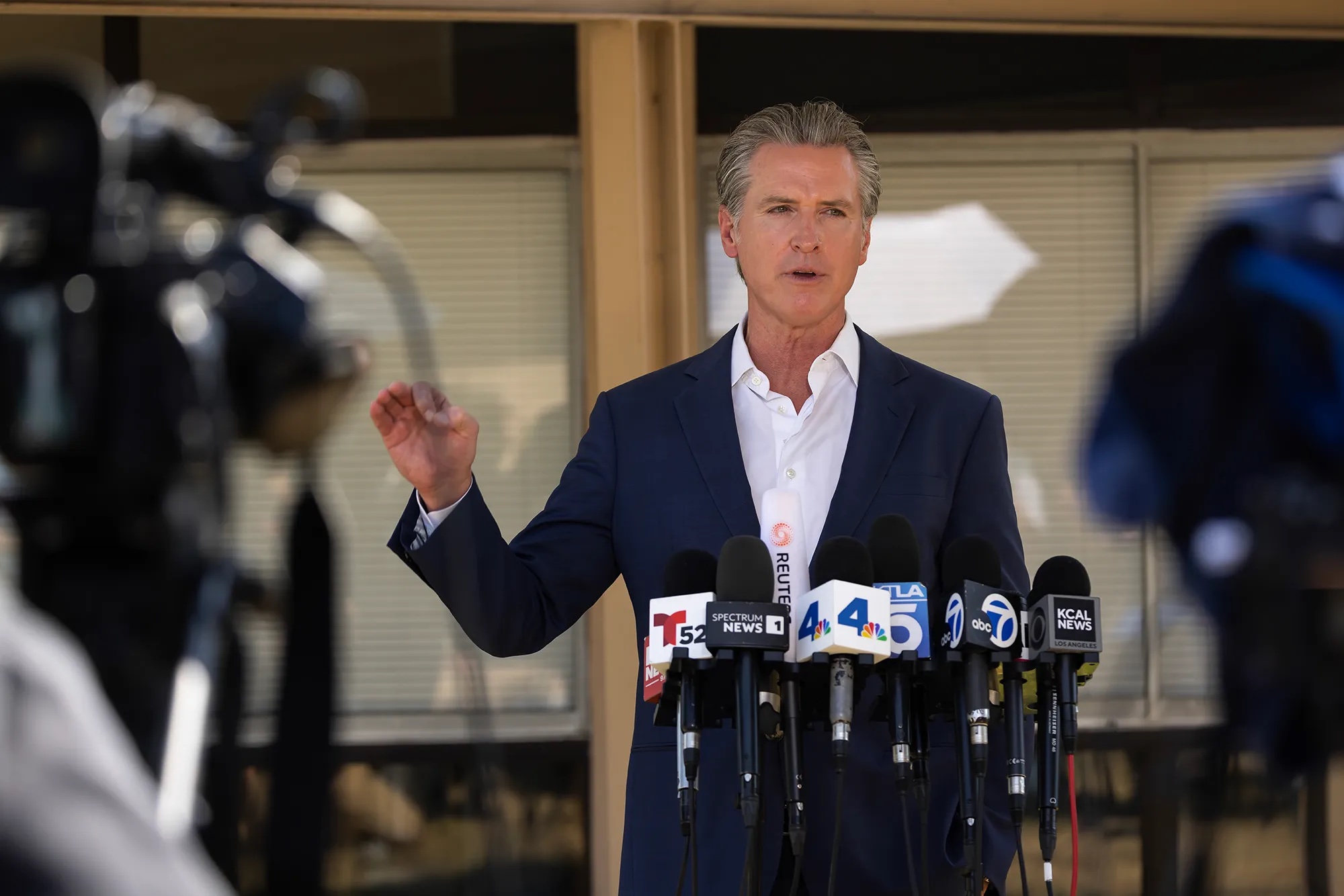
"caption": "Gov. Gavin Newsom outlines his proposed 2025-2026 state budget during a news conference at California State University, Stanislaus in Turlock, on Jan. 6, 2025.",
"credit": "Rich Pedroncelli, AP Photo",
"altTag": null,
"description": null,
"imgSizes": {
"medium": {
"file": "https://cdn.kqed.org/wp-content/uploads/sites/10/2025/01/010625-Newsom-Budget-AP-CM-800x533.jpg",
"width": 800,
"height": 533,
"mimeType": "image/jpeg"
},
"large": {
"file": "https://cdn.kqed.org/wp-content/uploads/sites/10/2025/01/010625-Newsom-Budget-AP-CM-1020x680.jpg",
"width": 1020,
"height": 680,
"mimeType": "image/jpeg"
},
"thumbnail": {
"file": "https://cdn.kqed.org/wp-content/uploads/sites/10/2025/01/010625-Newsom-Budget-AP-CM-160x107.jpg",
"width": 160,
"height": 107,
"mimeType": "image/jpeg"
},
"1536x1536": {
"file": "https://cdn.kqed.org/wp-content/uploads/sites/10/2025/01/010625-Newsom-Budget-AP-CM-1536x1024.jpg",
"width": 1536,
"height": 1024,
"mimeType": "image/jpeg"
},
"post-thumbnail": {
"file": "https://cdn.kqed.org/wp-content/uploads/sites/10/2025/01/010625-Newsom-Budget-AP-CM-672x372.jpg",
"width": 672,
"height": 372,
"mimeType": "image/jpeg"
},
"twentyfourteen-full-width": {
"file": "https://cdn.kqed.org/wp-content/uploads/sites/10/2025/01/010625-Newsom-Budget-AP-CM-1038x576.jpg",
"width": 1038,
"height": 576,
"mimeType": "image/jpeg"
},
"full-width": {
"file": "https://cdn.kqed.org/wp-content/uploads/sites/10/2025/01/010625-Newsom-Budget-AP-CM-1920x1280.jpg",
"width": 1920,
"height": 1280,
"mimeType": "image/jpeg"
},
"kqedFullSize": {
"file": "https://cdn.kqed.org/wp-content/uploads/sites/10/2025/01/010625-Newsom-Budget-AP-CM.jpg",
"width": 2000,
"height": 1333
}
},
"isLoading": false,
"fetchFailed": false
},
"news_12051438": {
"type": "attachments",
"id": "news_12051438",
"meta": {
"index": "attachments_1716263798",
"site": "news",
"id": "12051438",
"found": true
},
"title": "GavinNewsomAISF2",
"publishDate": 1754670252,
"status": "inherit",
"parent": 12051433,
"modified": 1754670418,
"caption": "On the rooftop of Google’s San Francisco Embarcadero offices on Aug. 7, 2025, Gov. Gavin Newsom announced a major statewide partnership with Google, Microsoft, IBM and Adobe to expand generative AI education — including training programs, certifications, and internships — across California’s high schools, community colleges and Cal State universities.",
"credit": "Courtesy of the Office of the Governor",
"altTag": null,
"description": null,
"imgSizes": {
"thumbnail": {
"file": "https://cdn.kqed.org/wp-content/uploads/sites/10/2025/08/GavinNewsomAISF2-160x107.jpg",
"width": 160,
"height": 107,
"mimeType": "image/jpeg"
},
"1536x1536": {
"file": "https://cdn.kqed.org/wp-content/uploads/sites/10/2025/08/GavinNewsomAISF2-1536x1024.jpg",
"width": 1536,
"height": 1024,
"mimeType": "image/jpeg"
},
"post-thumbnail": {
"file": "https://cdn.kqed.org/wp-content/uploads/sites/10/2025/08/GavinNewsomAISF2-672x372.jpg",
"width": 672,
"height": 372,
"mimeType": "image/jpeg"
},
"twentyfourteen-full-width": {
"file": "https://cdn.kqed.org/wp-content/uploads/sites/10/2025/08/GavinNewsomAISF2-1038x576.jpg",
"width": 1038,
"height": 576,
"mimeType": "image/jpeg"
},
"kqedFullSize": {
"file": "https://cdn.kqed.org/wp-content/uploads/sites/10/2025/08/GavinNewsomAISF2.jpg",
"width": 2000,
"height": 1333
}
},
"isLoading": false,
"fetchFailed": false
},
"news_12052400": {
"type": "attachments",
"id": "news_12052400",
"meta": {
"index": "attachments_1716263798",
"site": "news",
"id": "12052400",
"found": true
},
"title": "California Governor Newsom Makes Announcement On Gerrymandering In Response To Trump's Efforts In Texas",
"publishDate": 1755284023,
"status": "inherit",
"parent": 12052388,
"modified": 1758952603,
"caption": "LOS ANGELES, CALIFORNIA - AUGUST 14: California Gov. Gavin Newsom speaks about the “Election Rigging Response Act” at a press conference at the Democracy Center, Japanese American National Museum on August 14, 2025 in Los Angeles, California. Newsom spoke about a possible California referendum on redistricting to counter the legislative effort to add five Republican House seats in the state of Texas. ",
"credit": "Mario Tama/Getty Images",
"altTag": null,
"description": null,
"imgSizes": {
"medium": {
"file": "https://cdn.kqed.org/wp-content/uploads/sites/10/2025/08/GettyImages-2230198852-2000x1377.jpg",
"width": 2000,
"height": 1377,
"mimeType": "image/jpeg"
},
"large": {
"file": "https://cdn.kqed.org/wp-content/uploads/sites/10/2025/08/GettyImages-2230198852-2000x1377.jpg",
"width": 2000,
"height": 1377,
"mimeType": "image/jpeg"
},
"thumbnail": {
"file": "https://cdn.kqed.org/wp-content/uploads/sites/10/2025/08/GettyImages-2230198852-160x110.jpg",
"width": 160,
"height": 110,
"mimeType": "image/jpeg"
},
"1536x1536": {
"file": "https://cdn.kqed.org/wp-content/uploads/sites/10/2025/08/GettyImages-2230198852-1536x1057.jpg",
"width": 1536,
"height": 1057,
"mimeType": "image/jpeg"
},
"2048x2048": {
"file": "https://cdn.kqed.org/wp-content/uploads/sites/10/2025/08/GettyImages-2230198852-2048x1410.jpg",
"width": 2048,
"height": 1410,
"mimeType": "image/jpeg"
},
"post-thumbnail": {
"file": "https://cdn.kqed.org/wp-content/uploads/sites/10/2025/08/GettyImages-2230198852-672x372.jpg",
"width": 672,
"height": 372,
"mimeType": "image/jpeg"
},
"twentyfourteen-full-width": {
"file": "https://cdn.kqed.org/wp-content/uploads/sites/10/2025/08/GettyImages-2230198852-1038x576.jpg",
"width": 1038,
"height": 576,
"mimeType": "image/jpeg"
},
"full-width": {
"file": "https://cdn.kqed.org/wp-content/uploads/sites/10/2025/08/GettyImages-2230198852-2000x1377.jpg",
"width": 2000,
"height": 1377,
"mimeType": "image/jpeg"
},
"kqedFullSize": {
"file": "https://cdn.kqed.org/wp-content/uploads/sites/10/2025/08/GettyImages-2230198852-scaled.jpg",
"width": 2560,
"height": 1762
}
},
"isLoading": false,
"fetchFailed": false
},
"news_12057865": {
"type": "attachments",
"id": "news_12057865",
"meta": {
"index": "attachments_1716263798",
"site": "news",
"id": "12057865",
"found": true
},
"title": "071223_San-Francisco_SN_CM_15 copy",
"publishDate": 1758986265,
"status": "inherit",
"parent": 12057863,
"modified": 1758986297,
"caption": "Houses in San Francisco's Sunset District on July 12, 2023.\n",
"credit": "Semantha Norris/CalMatters",
"altTag": null,
"description": null,
"imgSizes": {
"thumbnail": {
"file": "https://cdn.kqed.org/wp-content/uploads/sites/10/2025/09/071223_San-Francisco_SN_CM_15-copy-160x107.jpg",
"width": 160,
"height": 107,
"mimeType": "image/jpeg"
},
"1536x1536": {
"file": "https://cdn.kqed.org/wp-content/uploads/sites/10/2025/09/071223_San-Francisco_SN_CM_15-copy-1536x1024.jpg",
"width": 1536,
"height": 1024,
"mimeType": "image/jpeg"
},
"post-thumbnail": {
"file": "https://cdn.kqed.org/wp-content/uploads/sites/10/2025/09/071223_San-Francisco_SN_CM_15-copy-672x372.jpg",
"width": 672,
"height": 372,
"mimeType": "image/jpeg"
},
"twentyfourteen-full-width": {
"file": "https://cdn.kqed.org/wp-content/uploads/sites/10/2025/09/071223_San-Francisco_SN_CM_15-copy-1038x576.jpg",
"width": 1038,
"height": 576,
"mimeType": "image/jpeg"
},
"kqedFullSize": {
"file": "https://cdn.kqed.org/wp-content/uploads/sites/10/2025/09/071223_San-Francisco_SN_CM_15-copy.jpg",
"width": 2000,
"height": 1333
}
},
"isLoading": false,
"fetchFailed": false
},
"news_12057256": {
"type": "attachments",
"id": "news_12057256",
"meta": {
"index": "attachments_1716263798",
"site": "news",
"id": "12057256",
"found": true
},
"title": "Redistributing Rail Grants",
"publishDate": 1758650398,
"status": "inherit",
"parent": 12057238,
"modified": 1770154122,
"caption": "Ironworkers with the California High-Speed Rail Authority work on the Hanford Viaduct, April 15, 2025, in Kings County, California. ",
"credit": "Godofredo A. Vásquez/AP Photo",
"altTag": null,
"description": null,
"imgSizes": {
"medium": {
"file": "https://cdn.kqed.org/wp-content/uploads/sites/10/2025/09/AP25265725194713-1-2000x1333.jpg",
"width": 2000,
"height": 1333,
"mimeType": "image/jpeg"
},
"large": {
"file": "https://cdn.kqed.org/wp-content/uploads/sites/10/2025/09/AP25265725194713-1-2000x1333.jpg",
"width": 2000,
"height": 1333,
"mimeType": "image/jpeg"
},
"thumbnail": {
"file": "https://cdn.kqed.org/wp-content/uploads/sites/10/2025/09/AP25265725194713-1-160x107.jpg",
"width": 160,
"height": 107,
"mimeType": "image/jpeg"
},
"1536x1536": {
"file": "https://cdn.kqed.org/wp-content/uploads/sites/10/2025/09/AP25265725194713-1-1536x1024.jpg",
"width": 1536,
"height": 1024,
"mimeType": "image/jpeg"
},
"2048x2048": {
"file": "https://cdn.kqed.org/wp-content/uploads/sites/10/2025/09/AP25265725194713-1-2048x1365.jpg",
"width": 2048,
"height": 1365,
"mimeType": "image/jpeg"
},
"post-thumbnail": {
"file": "https://cdn.kqed.org/wp-content/uploads/sites/10/2025/09/AP25265725194713-1-672x372.jpg",
"width": 672,
"height": 372,
"mimeType": "image/jpeg"
},
"twentyfourteen-full-width": {
"file": "https://cdn.kqed.org/wp-content/uploads/sites/10/2025/09/AP25265725194713-1-1038x576.jpg",
"width": 1038,
"height": 576,
"mimeType": "image/jpeg"
},
"full-width": {
"file": "https://cdn.kqed.org/wp-content/uploads/sites/10/2025/09/AP25265725194713-1-2000x1333.jpg",
"width": 2000,
"height": 1333,
"mimeType": "image/jpeg"
},
"kqedFullSize": {
"file": "https://cdn.kqed.org/wp-content/uploads/sites/10/2025/09/AP25265725194713-1-scaled-e1758650487810.jpg",
"width": 2000,
"height": 1333
}
},
"isLoading": false,
"fetchFailed": false
},
"news_12056974": {
"type": "attachments",
"id": "news_12056974",
"meta": {
"index": "attachments_1716263798",
"site": "news",
"id": "12056974",
"found": true
},
"title": "071625_Newsom-ICE-Raids_CM_36 copy",
"publishDate": 1758399342,
"status": "inherit",
"parent": 12056972,
"modified": 1758399371,
"caption": "Gov. Gavin Newsom speaks to the media at Downey Memorial Christian Church after visiting Los Angeles communities affected by immigration raids, in Downey on July 16, 2025. ",
"credit": "Ted Soqui for CalMatters",
"altTag": null,
"description": null,
"imgSizes": {
"thumbnail": {
"file": "https://cdn.kqed.org/wp-content/uploads/sites/10/2025/09/071625_Newsom-ICE-Raids_CM_36-copy-160x107.jpg",
"width": 160,
"height": 107,
"mimeType": "image/jpeg"
},
"1536x1536": {
"file": "https://cdn.kqed.org/wp-content/uploads/sites/10/2025/09/071625_Newsom-ICE-Raids_CM_36-copy-1536x1025.jpg",
"width": 1536,
"height": 1025,
"mimeType": "image/jpeg"
},
"post-thumbnail": {
"file": "https://cdn.kqed.org/wp-content/uploads/sites/10/2025/09/071625_Newsom-ICE-Raids_CM_36-copy-672x372.jpg",
"width": 672,
"height": 372,
"mimeType": "image/jpeg"
},
"twentyfourteen-full-width": {
"file": "https://cdn.kqed.org/wp-content/uploads/sites/10/2025/09/071625_Newsom-ICE-Raids_CM_36-copy-1038x576.jpg",
"width": 1038,
"height": 576,
"mimeType": "image/jpeg"
},
"kqedFullSize": {
"file": "https://cdn.kqed.org/wp-content/uploads/sites/10/2025/09/071625_Newsom-ICE-Raids_CM_36-copy.jpg",
"width": 2000,
"height": 1334
}
},
"isLoading": false,
"fetchFailed": false
},
"news_12056383": {
"type": "attachments",
"id": "news_12056383",
"meta": {
"index": "attachments_1716263798",
"site": "news",
"id": "12056383",
"found": true
},
"title": "DC: U.S. Congress",
"publishDate": 1758137369,
"status": "inherit",
"parent": 12056371,
"modified": 1761693101,
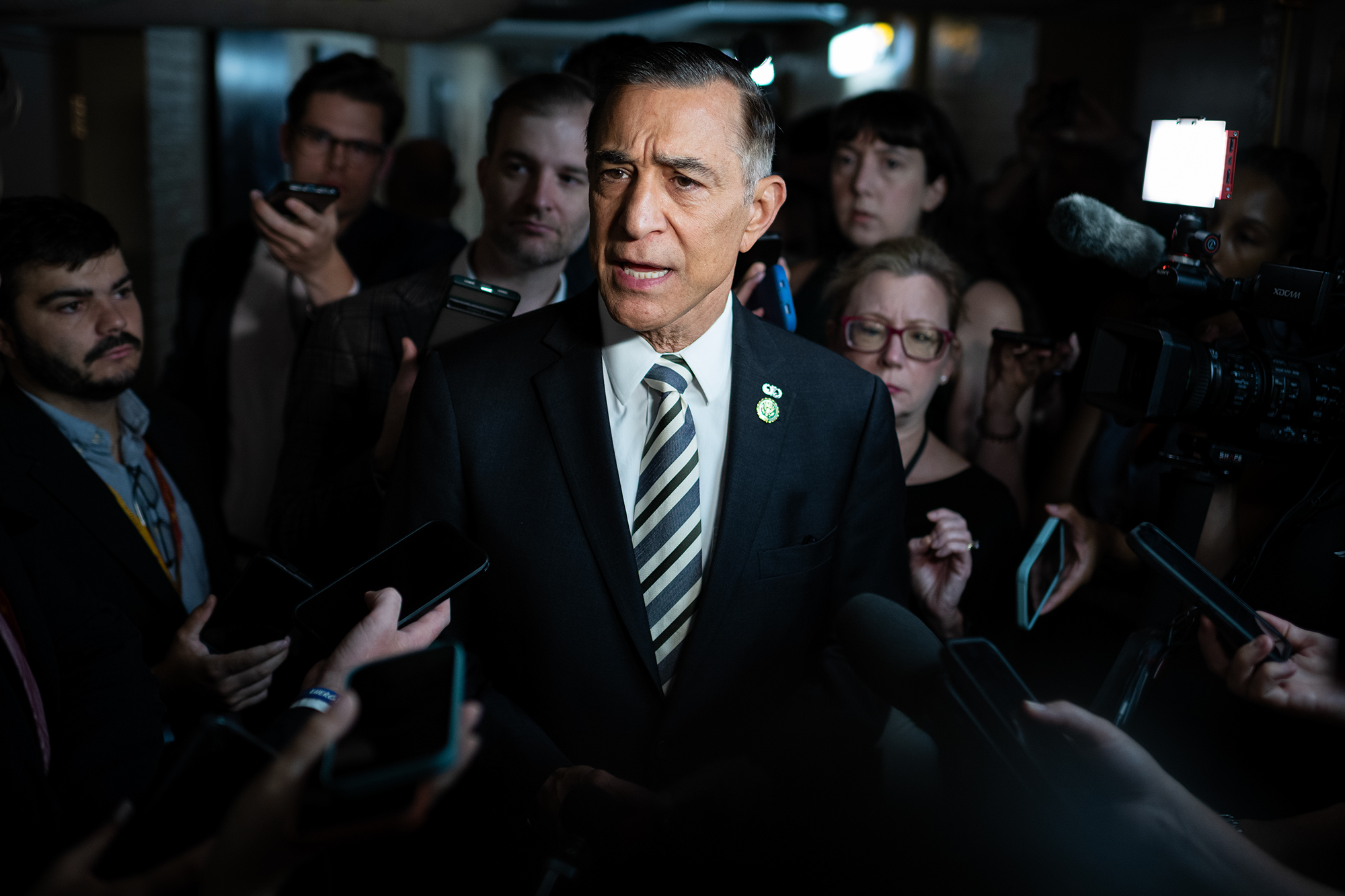
"caption": "U.S. Rep. Darrell Issa speaks to media outside of a House Republican meeting at the U.S. Capitol in Washington, D.C. on Sept. 14, 2023. ",
"credit": "Graeme Sloan/Sipa USA via Reuters",
"altTag": null,
"description": null,
"imgSizes": {
"thumbnail": {
"file": "https://cdn.kqed.org/wp-content/uploads/sites/10/2025/09/Newsom-Gerry_CalMatters-160x107.jpg",
"width": 160,
"height": 107,
"mimeType": "image/jpeg"
},
"1536x1536": {
"file": "https://cdn.kqed.org/wp-content/uploads/sites/10/2025/09/Newsom-Gerry_CalMatters-1536x1024.jpg",
"width": 1536,
"height": 1024,
"mimeType": "image/jpeg"
},
"post-thumbnail": {
"file": "https://cdn.kqed.org/wp-content/uploads/sites/10/2025/09/Newsom-Gerry_CalMatters-672x372.jpg",
"width": 672,
"height": 372,
"mimeType": "image/jpeg"
},
"twentyfourteen-full-width": {
"file": "https://cdn.kqed.org/wp-content/uploads/sites/10/2025/09/Newsom-Gerry_CalMatters-1038x576.jpg",
"width": 1038,
"height": 576,
"mimeType": "image/jpeg"
},
"kqedFullSize": {
"file": "https://cdn.kqed.org/wp-content/uploads/sites/10/2025/09/Newsom-Gerry_CalMatters.jpg",
"width": 2000,
"height": 1333
}
},
"isLoading": false,
"fetchFailed": false
},
"news_12056154": {
"type": "attachments",
"id": "news_12056154",
"meta": {
"index": "attachments_1716263798",
"site": "news",
"id": "12056154",
"found": true
},
"title": "250916-SAFE TASKFORCE-MD-04-KQED",
"publishDate": 1758054367,
"status": "inherit",
"parent": 0,
"modified": 1758054408,
"caption": "Crews work to clear out an encampment next to the 101 Freeway in San Francisco on Sept. 16, 2025.",
"credit": "Martin do Nascimento/KQED",
"altTag": null,
"description": null,
"imgSizes": {
"thumbnail": {
"file": "https://cdn.kqed.org/wp-content/uploads/sites/10/2025/09/250916-SAFE-TASKFORCE-MD-04-KQED-160x107.jpg",
"width": 160,
"height": 107,
"mimeType": "image/jpeg"
},
"1536x1536": {
"file": "https://cdn.kqed.org/wp-content/uploads/sites/10/2025/09/250916-SAFE-TASKFORCE-MD-04-KQED-1536x1025.jpg",
"width": 1536,
"height": 1025,
"mimeType": "image/jpeg"
},
"post-thumbnail": {
"file": "https://cdn.kqed.org/wp-content/uploads/sites/10/2025/09/250916-SAFE-TASKFORCE-MD-04-KQED-672x372.jpg",
"width": 672,
"height": 372,
"mimeType": "image/jpeg"
},
"twentyfourteen-full-width": {
"file": "https://cdn.kqed.org/wp-content/uploads/sites/10/2025/09/250916-SAFE-TASKFORCE-MD-04-KQED-1038x576.jpg",
"width": 1038,
"height": 576,
"mimeType": "image/jpeg"
},
"kqedFullSize": {
"file": "https://cdn.kqed.org/wp-content/uploads/sites/10/2025/09/250916-SAFE-TASKFORCE-MD-04-KQED.jpg",
"width": 2000,
"height": 1334
}
},
"isLoading": false,
"fetchFailed": false
},
"news_12055876": {
"type": "attachments",
"id": "news_12055876",
"meta": {
"index": "attachments_1716263798",
"site": "news",
"id": "12055876",
"found": true
},
"title": "052024_Delta_LE_CM_24",
"publishDate": 1757721086,
"status": "inherit",
"parent": 12055868,
"modified": 1757721110,
"caption": "An aerial view of Threemile Slough in the Sacramento-San Joaquin River Delta near Rio Vista on May 19, 2024. The Delta is formed by the confluence of the Sacramento and San Joaquin rivers before their waters flow into San Francisco Bay.",
"credit": " Photo by Loren Elliott for CalMatters",
"altTag": null,
"description": null,
"imgSizes": {
"thumbnail": {
"file": "https://cdn.kqed.org/wp-content/uploads/sites/10/2025/09/052024_Delta_LE_CM_24-160x107.jpg",
"width": 160,
"height": 107,
"mimeType": "image/jpeg"
},
"1536x1536": {
"file": "https://cdn.kqed.org/wp-content/uploads/sites/10/2025/09/052024_Delta_LE_CM_24-1536x1024.jpg",
"width": 1536,
"height": 1024,
"mimeType": "image/jpeg"
},
"post-thumbnail": {
"file": "https://cdn.kqed.org/wp-content/uploads/sites/10/2025/09/052024_Delta_LE_CM_24-672x372.jpg",
"width": 672,
"height": 372,
"mimeType": "image/jpeg"
},
"twentyfourteen-full-width": {
"file": "https://cdn.kqed.org/wp-content/uploads/sites/10/2025/09/052024_Delta_LE_CM_24-1038x576.jpg",
"width": 1038,
"height": 576,
"mimeType": "image/jpeg"
},
"kqedFullSize": {
"file": "https://cdn.kqed.org/wp-content/uploads/sites/10/2025/09/052024_Delta_LE_CM_24.jpg",
"width": 2000,
"height": 1333
}
},
"isLoading": false,
"fetchFailed": false
},
"news_12055857": {
"type": "attachments",
"id": "news_12055857",
"meta": {
"index": "attachments_1716263798",
"site": "news",
"id": "12055857",
"found": true
},
"title": "111215_Google-Campus_AP_CM_01",
"publishDate": 1757719431,
"status": "inherit",
"parent": 12055854,
"modified": 1757787966,
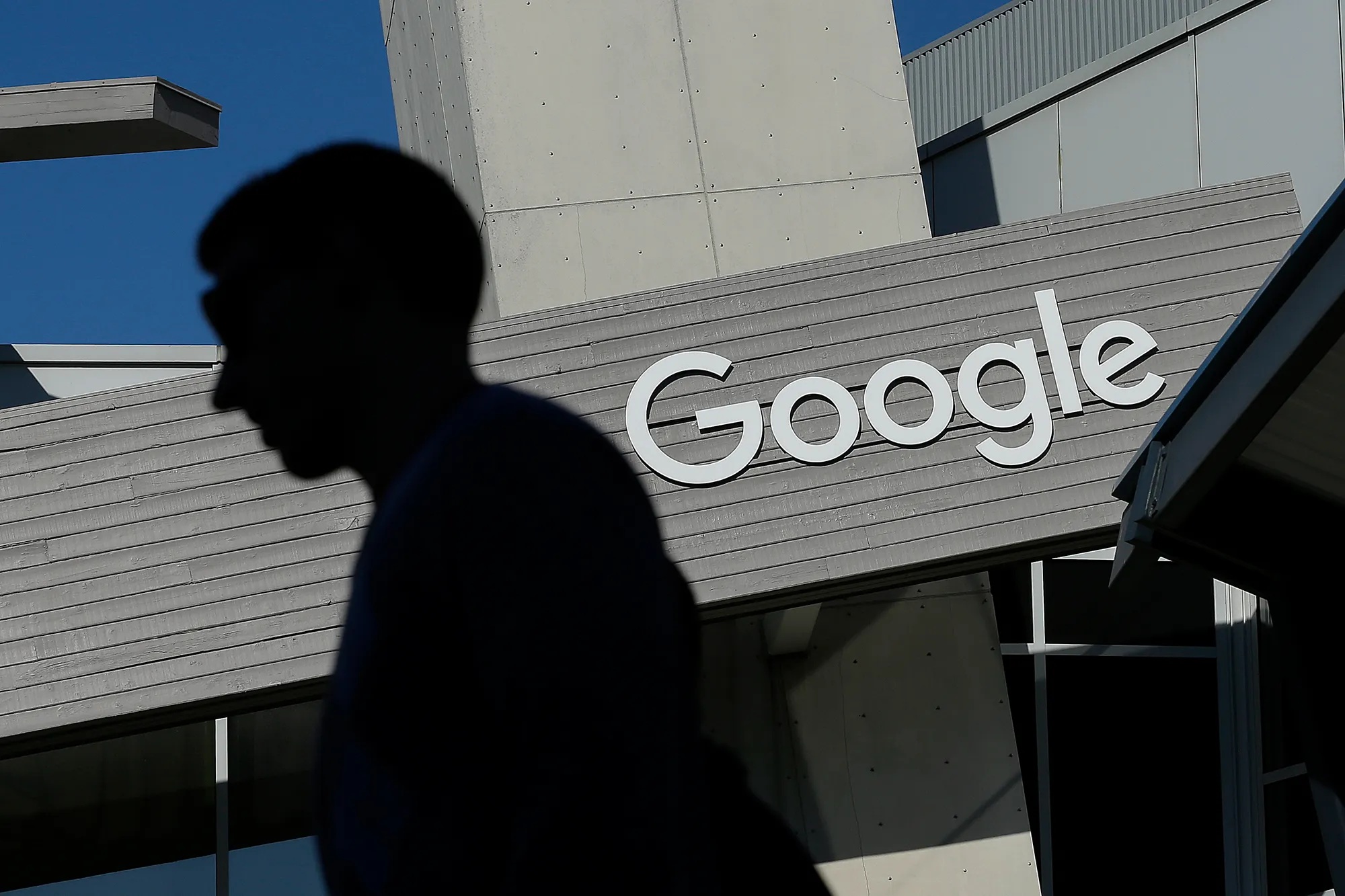
"caption": "Mountain View tech giant Google asked small business owners to sign a petition opposing new rules for web browsers. Its Chrome browser leads the market. \n",
"credit": "Jeff Chiu/AP Photo",
"altTag": null,
"description": null,
"imgSizes": {
"thumbnail": {
"file": "https://cdn.kqed.org/wp-content/uploads/sites/10/2025/09/111215_Google-Campus_AP_CM_01-160x107.jpg",
"width": 160,
"height": 107,
"mimeType": "image/jpeg"
},
"1536x1536": {
"file": "https://cdn.kqed.org/wp-content/uploads/sites/10/2025/09/111215_Google-Campus_AP_CM_01-1536x1024.jpg",
"width": 1536,
"height": 1024,
"mimeType": "image/jpeg"
},
"post-thumbnail": {
"file": "https://cdn.kqed.org/wp-content/uploads/sites/10/2025/09/111215_Google-Campus_AP_CM_01-672x372.jpg",
"width": 672,
"height": 372,
"mimeType": "image/jpeg"
},
"twentyfourteen-full-width": {
"file": "https://cdn.kqed.org/wp-content/uploads/sites/10/2025/09/111215_Google-Campus_AP_CM_01-1038x576.jpg",
"width": 1038,
"height": 576,
"mimeType": "image/jpeg"
},
"kqedFullSize": {
"file": "https://cdn.kqed.org/wp-content/uploads/sites/10/2025/09/111215_Google-Campus_AP_CM_01.jpg",
"width": 2000,
"height": 1333
}
},
"isLoading": false,
"fetchFailed": false
}
},
"audioPlayerReducer": {
"postId": "stream_live",
"isPaused": true,
"isPlaying": false,
"pfsActive": false,
"pledgeModalIsOpen": true,
"playerDrawerIsOpen": false,
"liveAudioPlayStartedAt": 0,
"liveAudioPlayContext": ""
},
"authorsReducer": {
"byline_news_12058476": {
"type": "authors",
"id": "byline_news_12058476",
"meta": {
"override": true
},
"slug": "byline_news_12058476",
"name": "The Associated Press",
"isLoading": false
},
"byline_news_12057863": {
"type": "authors",
"id": "byline_news_12057863",
"meta": {
"override": true
},
"slug": "byline_news_12057863",
"name": "Ben Christopher, CalMatters",
"isLoading": false
},
"byline_news_12057238": {
"type": "authors",
"id": "byline_news_12057238",
"meta": {
"override": true
},
"slug": "byline_news_12057238",
"name": "Josh Funk, The Associated Press",
"isLoading": false
},
"byline_news_12056972": {
"type": "authors",
"id": "byline_news_12056972",
"meta": {
"override": true
},
"slug": "byline_news_12056972",
"name": "Cayla Mihalovich and Jeanne Kuang, CalMatters",
"isLoading": false
},
"byline_news_12056371": {
"type": "authors",
"id": "byline_news_12056371",
"meta": {
"override": true
},
"slug": "byline_news_12056371",
"name": "Maya C. Miller, CalMatters",
"isLoading": false
},
"byline_news_12055868": {
"type": "authors",
"id": "byline_news_12055868",
"meta": {
"override": true
},
"slug": "byline_news_12055868",
"name": "Devon Provo, Special for CalMatters",
"isLoading": false
},
"byline_news_12055854": {
"type": "authors",
"id": "byline_news_12055854",
"meta": {
"override": true
},
"slug": "byline_news_12055854",
"name": "Khari Johnson and Yue Stella Yu, CalMatters",
"isLoading": false
},
"gmarzorati": {
"type": "authors",
"id": "227",
"meta": {
"index": "authors_1716337520",
"id": "227",
"found": true
},
"name": "Guy Marzorati",
"firstName": "Guy",
"lastName": "Marzorati",
"slug": "gmarzorati",
"email": "gmarzorati@KQED.org",
"display_author_email": true,
"staff_mastheads": [
"news"
],
"title": "Correspondent",
"bio": "Guy Marzorati is a correspondent on KQED's California Politics and Government Desk, based in San Jose. A graduate of Santa Clara University, Guy joined KQED in 2013. He reports on state and local politics and produces KQED's digital voter guide.",
"avatar": "https://secure.gravatar.com/avatar/e7038b8dbfd55b104369b76b1cd0b9de?s=600&d=blank&r=g",
"twitter": "guymarzorati",
"facebook": null,
"instagram": null,
"linkedin": null,
"sites": [
{
"site": "",
"roles": [
"editor"
]
},
{
"site": "news",
"roles": [
"editor"
]
},
{
"site": "science",
"roles": [
"editor"
]
},
{
"site": "forum",
"roles": [
"editor"
]
},
{
"site": "elections",
"roles": [
"editor"
]
},
{
"site": "liveblog",
"roles": [
"editor"
]
}
],
"headData": {
"title": "Guy Marzorati | KQED",
"description": "Correspondent",
"ogImgSrc": "https://secure.gravatar.com/avatar/e7038b8dbfd55b104369b76b1cd0b9de?s=600&d=blank&r=g",
"twImgSrc": "https://secure.gravatar.com/avatar/e7038b8dbfd55b104369b76b1cd0b9de?s=600&d=blank&r=g"
},
"isLoading": false,
"link": "/author/gmarzorati"
},
"kqednewsstaffandwires": {
"type": "authors",
"id": "237",
"meta": {
"index": "authors_1716337520",
"id": "237",
"found": true
},
"name": "KQED News Staff and Wires",
"firstName": "KQED News Staff and Wires",
"lastName": null,
"slug": "kqednewsstaffandwires",
"email": "onlinenewsstaff@kqed.org",
"display_author_email": false,
"staff_mastheads": [],
"title": null,
"bio": null,
"avatar": "https://secure.gravatar.com/avatar/72295af8ebbfbd19a4948f5271285664?s=600&d=blank&r=g",
"twitter": null,
"facebook": null,
"instagram": null,
"linkedin": null,
"sites": [
{
"site": "arts",
"roles": [
"contributor"
]
},
{
"site": "news",
"roles": [
"contributor"
]
},
{
"site": "lowdown",
"roles": [
"author"
]
},
{
"site": "stateofhealth",
"roles": [
"contributor"
]
},
{
"site": "food",
"roles": [
"author"
]
}
],
"headData": {
"title": "KQED News Staff and Wires | KQED",
"description": null,
"ogImgSrc": "https://secure.gravatar.com/avatar/72295af8ebbfbd19a4948f5271285664?s=600&d=blank&r=g",
"twImgSrc": "https://secure.gravatar.com/avatar/72295af8ebbfbd19a4948f5271285664?s=600&d=blank&r=g"
},
"isLoading": false,
"link": "/author/kqednewsstaffandwires"
},
"rachael-myrow": {
"type": "authors",
"id": "251",
"meta": {
"index": "authors_1716337520",
"id": "251",
"found": true
},
"name": "Rachael Myrow",
"firstName": "Rachael",
"lastName": "Myrow",
"slug": "rachael-myrow",
"email": "rmyrow@kqed.org",
"display_author_email": true,
"staff_mastheads": [
"news"
],
"title": "Senior Editor of KQED's Silicon Valley News Desk",
"bio": "• I write and edit stories about how Silicon Valley power and policies shape everyday life in California. I’m also passionate about making Bay Area history and culture more accessible to a broad public. • I’ve been a journalist for most of my life, starting in high school with The Franklin Press in Los Angeles, where I grew up. While earning my first degree in English at UC Berkeley, I got my start in public radio at KALX-FM. After completing a second degree in journalism at Cal, I landed my first professional job at Marketplace, then moved on to KPCC (now LAist), and then KQED, where I hosted The California Report for more than seven years. • My reporting has appeared on NPR, The World, WBUR’s \u003ci>Here & Now\u003c/i>, and the BBC. I also guest host for KQED’s \u003ci>Forum\u003c/i>, as well as the Commonwealth Club in San Francisco. • I speak periodically on media, democracy and technology issues, and do voiceover work for documentaries and educational video projects. • Outside of the studio, you'll find me hiking Bay Area trails and whipping up Insta-ready meals in my kitchen. • I do not accept gifts, money, or favors from anyone connected to my reporting, I don't pay people for information, and I do not support or donate to political causes. • I strive to treat the people I report on with fairness, honesty, and respect. I also recognize there are often multiple sides to a story and work to verify information through multiple sources and documentation. If I get something wrong, I correct it.",
"avatar": "https://secure.gravatar.com/avatar/3ed8a3c5f26025e4a805ba634cda8cd764906b97438a6d9ce216b044e340da4e?s=600&d=blank&r=g",
"twitter": "rachaelmyrow",
"bluesky": null,
"facebook": null,
"instagram": null,
"linkedin": "https://www.linkedin.com/in/rachaelmyrow/",
"sites": [
{
"site": "arts",
"roles": [
"administrator"
]
},
{
"site": "news",
"roles": [
"edit_others_posts",
"editor"
]
},
{
"site": "futureofyou",
"roles": [
"editor"
]
},
{
"site": "bayareabites",
"roles": [
"editor"
]
},
{
"site": "stateofhealth",
"roles": [
"editor"
]
},
{
"site": "science",
"roles": [
"editor"
]
},
{
"site": "food",
"roles": [
"editor"
]
},
{
"site": "forum",
"roles": [
"editor"
]
},
{
"site": "liveblog",
"roles": [
"author"
]
}
],
"headData": {
"title": "Rachael Myrow | KQED",
"description": "Senior Editor of KQED's Silicon Valley News Desk",
"ogImgSrc": "https://secure.gravatar.com/avatar/3ed8a3c5f26025e4a805ba634cda8cd764906b97438a6d9ce216b044e340da4e?s=600&d=blank&r=g",
"twImgSrc": "https://secure.gravatar.com/avatar/3ed8a3c5f26025e4a805ba634cda8cd764906b97438a6d9ce216b044e340da4e?s=600&d=blank&r=g"
},
"isLoading": false,
"link": "/author/rachael-myrow"
},
"fjhabvala": {
"type": "authors",
"id": "8659",
"meta": {
"index": "authors_1716337520",
"id": "8659",
"found": true
},
"name": "Farida Jhabvala Romero",
"firstName": "Farida",
"lastName": "Jhabvala Romero",
"slug": "fjhabvala",
"email": "fjhabvala@kqed.org",
"display_author_email": true,
"staff_mastheads": [
"news"
],
"title": "KQED Contributor",
"bio": "Farida Jhabvala Romero is a Labor Correspondent for KQED. She previously covered immigration. Farida was \u003ca href=\"https://www.ccnma.org/2022-most-influential-latina-journalists\">named\u003c/a> one of the 10 Most Influential Latina Journalists in California in 2022 by the California Chicano News Media Association. Her work has won awards from the Society of Professional Journalists (Northern California), as well as a national and regional Edward M. Murrow Award for the collaborative reporting projects “Dangerous Air” and “Graying California.” Before joining KQED, Farida worked as a producer at Radio Bilingüe, a national public radio network. Farida earned her master’s degree in journalism from Stanford University.",
"avatar": "https://secure.gravatar.com/avatar/f9f022d4e2609741874222a1e9d41f48fea74011aa7c615eef91d9a50c944ebe?s=600&d=blank&r=g",
"twitter": "FaridaJhabvala",
"bluesky": null,
"facebook": null,
"instagram": null,
"linkedin": "https://www.linkedin.com/in/faridajhabvala/",
"sites": [
{
"site": "news",
"roles": [
"editor"
]
},
{
"site": "stateofhealth",
"roles": [
"author"
]
},
{
"site": "liveblog",
"roles": [
"author"
]
}
],
"headData": {
"title": "Farida Jhabvala Romero | KQED",
"description": "KQED Contributor",
"ogImgSrc": "https://secure.gravatar.com/avatar/f9f022d4e2609741874222a1e9d41f48fea74011aa7c615eef91d9a50c944ebe?s=600&d=blank&r=g",
"twImgSrc": "https://secure.gravatar.com/avatar/f9f022d4e2609741874222a1e9d41f48fea74011aa7c615eef91d9a50c944ebe?s=600&d=blank&r=g"
},
"isLoading": false,
"link": "/author/fjhabvala"
},
"ebaldassari": {
"type": "authors",
"id": "11652",
"meta": {
"index": "authors_1716337520",
"id": "11652",
"found": true
},
"name": "Erin Baldassari",
"firstName": "Erin",
"lastName": "Baldassari",
"slug": "ebaldassari",
"email": "ebaldassari@KQED.org",
"display_author_email": true,
"staff_mastheads": [
"news"
],
"title": "Staff Writer",
"bio": "Erin Baldassari covers housing for KQED. She's a former print journalist and most recently worked as the transportation reporter for the \u003cem>Mercury News\u003c/em> and \u003cem>East Bay Times. \u003c/em>There, she focused on how the Bay Area’s housing shortage has changed the way people move around the region. She also served on the \u003cem>East Bay Times\u003c/em>’ 2017 Pulitzer Prize-winning team for coverage of the Ghost Ship Fire in Oakland. Prior to that, Erin worked as a breaking news and general assignment reporter for a variety of outlets in the Bay Area and the greater Boston area. A Tufts University alumna, Erin grew up in the foothills of the Sierra Nevada mountains and in Sonoma County. She is a life-long KQED listener.",
"avatar": "https://secure.gravatar.com/avatar/5e95cad64a8ca08288082212e199d2b0cbeb4fd8e8ef5339395f361032bbe005?s=600&d=blank&r=g",
"twitter": "e_baldi",
"bluesky": null,
"facebook": null,
"instagram": null,
"linkedin": null,
"sites": [
{
"site": "news",
"roles": [
"edit_others_posts",
"editor"
]
},
{
"site": "science",
"roles": [
"editor"
]
},
{
"site": "liveblog",
"roles": [
"editor"
]
}
],
"headData": {
"title": "Erin Baldassari | KQED",
"description": "Staff Writer",
"ogImgSrc": "https://secure.gravatar.com/avatar/5e95cad64a8ca08288082212e199d2b0cbeb4fd8e8ef5339395f361032bbe005?s=600&d=blank&r=g",
"twImgSrc": "https://secure.gravatar.com/avatar/5e95cad64a8ca08288082212e199d2b0cbeb4fd8e8ef5339395f361032bbe005?s=600&d=blank&r=g"
},
"isLoading": false,
"link": "/author/ebaldassari"
}
},
"pagesReducer": {
"news_tag_gavin-newsom": {
"type": "terms",
"id": "news_16",
"meta": {
"index": "terms_1716263798",
"site": "news",
"id": "16",
"score": 8.936892
},
"featImg": null,
"name": "Gavin Newsom",
"description": null,
"taxonomy": "tag",
"headData": {
"twImgId": null,
"twTitle": null,
"ogTitle": null,
"ogImgId": null,
"twDescription": null,
"description": null,
"title": "Gavin Newsom Archives | KQED News",
"ogDescription": null
},
"ttid": 16,
"slug": "gavin-newsom",
"isLoading": false,
"title": "Gavin Newsom",
"pageMeta": {
"site": "news",
"WpPageTemplate": "page-topic-editorial",
"currentPage": 12
},
"blocks": [
{
"blockName": "kqed/post-list",
"attrs": {
"layout": "cardArticle2",
"query": "posts/news?tag=gavin-newsom",
"seeMore": false,
"paginated": true,
"page": 12
}
},
{
"blockName": "kqed/ad"
}
]
}
},
"pfsSessionReducer": {},
"postsReducer": {
"stream_live": {
"type": "live",
"id": "stream_live",
"audioUrl": "https://streams.kqed.org/kqedradio",
"title": "Live Stream",
"excerpt": "Live Stream information currently unavailable.",
"link": "/radio",
"featImg": "",
"label": {
"name": "KQED Live",
"link": "/"
}
},
"stream_kqedNewscast": {
"type": "posts",
"id": "stream_kqedNewscast",
"audioUrl": "https://www.kqed.org/.stream/anon/radio/RDnews/newscast.mp3?_=1",
"title": "KQED Newscast",
"featImg": "",
"label": {
"name": "88.5 FM",
"link": "/"
}
},
"news_12058677": {
"type": "posts",
"id": "news_12058677",
"meta": {
"index": "posts_1716263798",
"site": "news",
"id": "12058677",
"score": null,
"sort": [
1759689974000
]
},
"guestAuthors": [],
"slug": "newsom-says-trump-is-sending-300-california-national-guard-members-to-oregon",
"title": "Newsom Says Trump is Sending 300 California National Guard Members to Oregon",
"publishDate": 1759689974,
"format": "standard",
"headTitle": "Newsom Says Trump is Sending 300 California National Guard Members to Oregon | KQED",
"labelTerm": {},
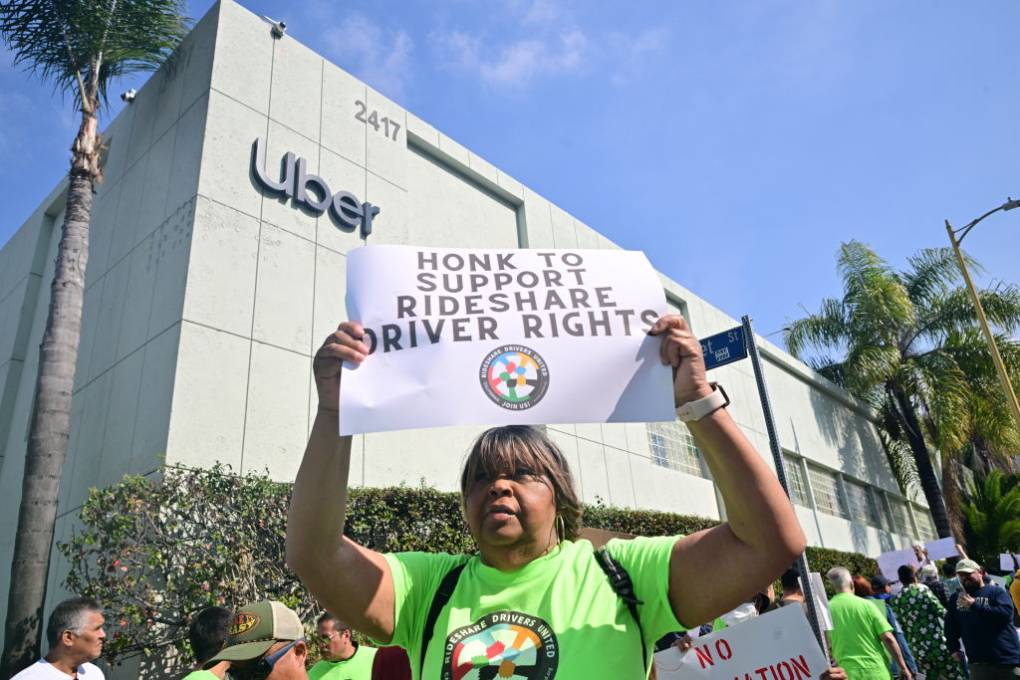
"content": "\u003cp>President Donald Trump is sending 300 California National Guard members to Oregon after a \u003ca href=\"https://apnews.com/article/immigration-chicago-portland-memphis-trump-arrests-b36199b00e0511e687c10fa83fd838b5\">judge temporarily blocked\u003c/a> his administration from deploying that state’s guard to Portland, California’s governor said Sunday.\u003c/p>\n\u003cp>Gov. Gavin Newsom pledged Sunday to fight the move in court.\u003c/p>\n\u003cp>There was no official announcement from Washington that the California National Guard was being called up and sent to Oregon, just as was the case when \u003ca href=\"https://apnews.com/article/chicago-illinois-trump-national-guard-acbf033191926157c5771825470eb2f8\">Illinois’ governor made a similar announcement\u003c/a> Saturday about troops in his state being activated.\u003c/p>\n\u003cp>The California National Guard referred questions to the Defense Department. A department spokesperson declined to comment. There was no immediate comment from the White House.\u003c/p>\n\u003cp>Newsom, a Democrat, said in a statement that California personnel were on their way Sunday and called the deployment “a breathtaking abuse of the law and power.” He said \u003ca href=\"https://apnews.com/article/newsom-trump-unrest-raids-immigration-protests-0cb6a74e6ddad6b6d767eb47509182a7\">these troops were “federalized” and put under the president’s control\u003c/a> months ago over his objections, in response to unrest in Los Angeles.\u003c/p>\n\u003cp>[ad fullwidth]\u003c/p>\n\u003cp>[aside postID=\"news_12055131,news_12044621,news_12051687\" label=\"Related Stories\"]“The commander-in-chief is using the U.S. military as a political weapon against American citizens,” Newsom said in the statement. “We will take this fight to court, but the public cannot stay silent in the face of such reckless and authoritarian conduct by the president of the United States.”\u003c/p>\n\u003cp>A Trump-appointed federal judge in Oregon on Saturday temporarily blocked the Trump administration’s plan to deploy the Oregon National Guard in Portland to protect federal property amid protests after Trump called the city “war-ravaged.” Oregon officials and Portland residents alike said that description was ludicrous.\u003c/p>\n\u003cp>U.S. District Judge Karin Immergut, who was appointed by Trump during his first term, issued the order pending further arguments in the suit. She said the relatively small protests the city has seen did not justify the use of federalized forces and allowing the deployment could harm Oregon’s state sovereignty.\u003c/p>\n\u003cp>The U.S. Immigration and Customs Enforcement building in Portland has recently been the site of nightly protests.\u003c/p>\n\u003cp>Trump has characterized both Portland and Chicago as cities rife with crime and unrest, calling the former a “war zone” and suggesting \u003ca href=\"https://apnews.com/article/trump-chicago-immigration-war-department-pritzker-1f6b2a08ed8aab04f0caf02ef506aafa\">apocalyptic force\u003c/a> was needed to quell problems in the latter. Since the start of his second term, he has sent or talked about sending troops to 10 cities.\u003c/p>\n\u003cp>\u003c/p>\n\u003cp>Trump authorized the deployment of 300 Illinois National Guard troops to protect federal officers and assets in Chicago on Saturday.\u003c/p>\n\n",
"blocks": [],
"excerpt": " The move comes after a judge temporarily blocked the administration from deploying that state’s guard to Portland.",
"status": "publish",
"parent": 0,
"modified": 1759715990,
"stats": {
"hasAudio": false,
"hasVideo": false,
"hasChartOrMap": false,
"iframeSrcs": [],
"hasGoogleForm": false,
"hasGallery": false,
"hasHearkenModule": false,
"hasPolis": false,
"paragraphCount": 13,
"wordCount": 427
},
"headData": {
"title": "Newsom Says Trump is Sending 300 California National Guard Members to Oregon | KQED",
"description": " The move comes after a judge temporarily blocked the administration from deploying that state’s guard to Portland.",
"ogTitle": "",
"ogDescription": "",
"ogImgId": "",
"twTitle": "",
"twDescription": "",
"twImgId": "",
"schema": {
"@context": "https://schema.org",
"@type": "NewsArticle",
"headline": "Newsom Says Trump is Sending 300 California National Guard Members to Oregon",
"datePublished": "2025-10-05T11:46:14-07:00",
"dateModified": "2025-10-05T18:59:50-07:00",
"image": "https://cdn.kqed.org/wp-content/uploads/2020/02/KQED-OG-Image@1x.png",
"isAccessibleForFree": "True",
"publisher": {
"@type": "NewsMediaOrganization",
"@id": "https://www.kqed.org/#organization",
"name": "KQED",
"logo": "https://cdn.kqed.org/wp-content/uploads/2020/02/KQED-OG-Image@1x.png",
"url": "https://www.kqed.org",
"sameAs": [
"https://www.facebook.com/KQED",
"https://twitter.com/KQED",
"https://www.instagram.com/kqed/",
"https://www.tiktok.com/@kqedofficial",
"https://www.linkedin.com/company/kqed",
"https://www.youtube.com/channel/UCeC0IOo7i1P_61zVUWbJ4nw"
]
}
}
},
"primaryCategory": {
"termId": 8,
"slug": "news",
"name": "News"
},
"source": "The Associated Press",
"sticky": false,
"nprStoryId": "kqed-12058677",
"templateType": "standard",
"featuredImageType": "standard",
"excludeFromSiteSearch": "Include",
"showOnAuthorArchivePages": "No",
"articleAge": "0",
"path": "/news/12058677/newsom-says-trump-is-sending-300-california-national-guard-members-to-oregon",
"audioTrackLength": null,
"parsedContent": [
{
"type": "contentString",
"content": "\u003cdiv class=\"post-body\">\u003cp>\u003cp>President Donald Trump is sending 300 California National Guard members to Oregon after a \u003ca href=\"https://apnews.com/article/immigration-chicago-portland-memphis-trump-arrests-b36199b00e0511e687c10fa83fd838b5\">judge temporarily blocked\u003c/a> his administration from deploying that state’s guard to Portland, California’s governor said Sunday.\u003c/p>\n\u003cp>Gov. Gavin Newsom pledged Sunday to fight the move in court.\u003c/p>\n\u003cp>There was no official announcement from Washington that the California National Guard was being called up and sent to Oregon, just as was the case when \u003ca href=\"https://apnews.com/article/chicago-illinois-trump-national-guard-acbf033191926157c5771825470eb2f8\">Illinois’ governor made a similar announcement\u003c/a> Saturday about troops in his state being activated.\u003c/p>\n\u003cp>The California National Guard referred questions to the Defense Department. A department spokesperson declined to comment. There was no immediate comment from the White House.\u003c/p>\n\u003cp>Newsom, a Democrat, said in a statement that California personnel were on their way Sunday and called the deployment “a breathtaking abuse of the law and power.” He said \u003ca href=\"https://apnews.com/article/newsom-trump-unrest-raids-immigration-protests-0cb6a74e6ddad6b6d767eb47509182a7\">these troops were “federalized” and put under the president’s control\u003c/a> months ago over his objections, in response to unrest in Los Angeles.\u003c/p>\n\u003cp>\u003c/p>\u003c/div>",
"attributes": {
"named": {},
"numeric": []
}
},
{
"type": "component",
"content": "",
"name": "ad",
"attributes": {
"named": {
"label": "fullwidth"
},
"numeric": [
"fullwidth"
]
}
},
{
"type": "contentString",
"content": "\u003cdiv class=\"post-body\">\u003cp>\u003c/p>\n\u003cp>\u003c/p>\u003c/div>",
"attributes": {
"named": {},
"numeric": []
}
},
{
"type": "component",
"content": "",
"name": "aside",
"attributes": {
"named": {
"postid": "news_12055131,news_12044621,news_12051687",
"label": "Related Stories "
},
"numeric": []
}
},
{
"type": "contentString",
"content": "\u003cdiv class=\"post-body\">\u003cp>“The commander-in-chief is using the U.S. military as a political weapon against American citizens,” Newsom said in the statement. “We will take this fight to court, but the public cannot stay silent in the face of such reckless and authoritarian conduct by the president of the United States.”\u003c/p>\n\u003cp>A Trump-appointed federal judge in Oregon on Saturday temporarily blocked the Trump administration’s plan to deploy the Oregon National Guard in Portland to protect federal property amid protests after Trump called the city “war-ravaged.” Oregon officials and Portland residents alike said that description was ludicrous.\u003c/p>\n\u003cp>U.S. District Judge Karin Immergut, who was appointed by Trump during his first term, issued the order pending further arguments in the suit. She said the relatively small protests the city has seen did not justify the use of federalized forces and allowing the deployment could harm Oregon’s state sovereignty.\u003c/p>\n\u003cp>The U.S. Immigration and Customs Enforcement building in Portland has recently been the site of nightly protests.\u003c/p>\n\u003cp>Trump has characterized both Portland and Chicago as cities rife with crime and unrest, calling the former a “war zone” and suggesting \u003ca href=\"https://apnews.com/article/trump-chicago-immigration-war-department-pritzker-1f6b2a08ed8aab04f0caf02ef506aafa\">apocalyptic force\u003c/a> was needed to quell problems in the latter. Since the start of his second term, he has sent or talked about sending troops to 10 cities.\u003c/p>\n\u003cp>\u003c/p>\n\u003cp>Trump authorized the deployment of 300 Illinois National Guard troops to protect federal officers and assets in Chicago on Saturday.\u003c/p>\n\n\u003c/div>\u003c/p>",
"attributes": {
"named": {},
"numeric": []
}
}
],
"link": "/news/12058677/newsom-says-trump-is-sending-300-california-national-guard-members-to-oregon",
"authors": [
"237"
],
"categories": [
"news_8"
],
"tags": [
"news_16",
"news_79",
"news_1024",
"news_35256"
],
"featImg": "news_12058678",
"label": "source_news_12058677"
},
"news_12057798": {
"type": "posts",
"id": "news_12057798",
"meta": {
"index": "posts_1716263798",
"site": "news",
"id": "12057798",
"score": null,
"sort": [
1759530538000
]
},
"guestAuthors": [],
"slug": "california-gives-uber-lyft-drivers-collective-bargaining-rights",
"title": "California Gives Uber, Lyft Drivers Collective Bargaining Rights",
"publishDate": 1759530538,
"format": "standard",
"headTitle": "California Gives Uber, Lyft Drivers Collective Bargaining Rights | KQED",
"labelTerm": {
"site": "news"
},
"content": "\u003cp>Hundreds of thousands of ride-hailing app drivers gained a path to \u003ca href=\"https://www.kqed.org/news/12034860/california-bill-would-allow-uber-lyft-drivers-bargain-collectively\">negotiate a first union contract\u003c/a> with Uber and Lyft, even as they remain classified as independent contractors, under legislation signed Friday by Gov. Gavin Newsom.\u003cstrong> \u003c/strong>\u003c/p>\n\u003cp>The law was hailed as a milestone for app-based drivers in their yearslong battle to expand workplace rights, though critics of the measure said drivers will face serious hurdles to convince the tech giants to raise their pay and benefits.\u003c/p>\n\u003cp>“We are now empowered to affect the conditions and the wages of the drivers,” said Joseph Augusto, who has driven for Uber and Lyft in the Bay Area for more than 10 years. “We are looking forward to building a union and trying to negotiate with Uber and Lyft. This is a step forward. It’s going to take a lot more work, but this is the beginning.”\u003c/p>\n\u003cp>[ad fullwidth]\u003c/p>\n\u003cp>Ride-hail drivers in California have \u003ca href=\"https://www.kqed.org/news/11928844/rideshare-drivers-rally-for-rights-announce-new-statewide-union\">formed unions\u003c/a> in the past, but the app-based transportation giants weren’t required to bargain with them. AB 1340 by Assemblymembers Buffy Wicks, D-Oakland, and Marc Berman, D-Menlo Park, will change that starting Jan. 1 for drivers’ unions certified by a state board.\u003c/p>\n\u003cp>Uber, Lyft and other gig companies \u003ca href=\"https://www.kqed.org/news/12034860/california-bill-would-allow-uber-lyft-drivers-bargain-collectively\">successfully fought\u003c/a> to classify drivers as independent contractors in a 2020 California ballot measure. Under federal law, most private sector employees have the right to collectively bargain and receive benefits such as minimum wage and overtime; independent contractors typically do not.\u003c/p>\n\u003cfigure id=\"attachment_12033653\" class=\"wp-caption aligncenter\" style=\"max-width: 2000px\">\u003cimg loading=\"lazy\" decoding=\"async\" class=\"size-full wp-image-12033653\" src=\"https://cdn.kqed.org/wp-content/uploads/sites/10/2025/03/IMG_1196-scaled-e1759530132238.jpg\" alt=\"\" width=\"2000\" height=\"1500\">\u003cfigcaption class=\"wp-caption-text\">Uber’s headquarters in San Francisco’s Mission Bay neighborhood on Oct. 12, 2022. \u003ccite>(Farida Jhabvala Romero/KQED)\u003c/cite>\u003c/figcaption>\u003c/figure>\n\u003cp>The new legislation requires app-based transportation companies and certified unions to negotiate in good faith over issues such as driver deactivations, paid leave and earnings. It also protects gig drivers from retaliation and offers the opportunity to reach an industry-wide contract.\u003c/p>\n\u003cp>The Public Employment Relations Board is set to enforce the provisions, including by overseeing union elections and bargaining, mediating disputes and determining whether any unfair labor practices occurred.\u003c/p>\n\u003cp>Uber and Lyft initially opposed the measure, arguing that it would increase the price of rides and exclude most drivers who don’t work a significant number of hours per week. But the companies changed their stance in August, \u003ca href=\"https://www.gov.ca.gov/2025/08/29/governor-newsom-pro-tem-mcguire-speaker-rivas-announce-support-for-legislation-empowering-gig-workers-improving-rideshare-affordability/\">in exchange\u003c/a> for significant reductions in insurance requirements through another bill, SB 371.\u003c/p>\n\u003cp>Opponents to that bill argued that the concessions, which are expected to save the companies money by lowering the underinsured motorist coverage from $1 million to $60,000 per person, will shift the financial burden from serious accidents to vulnerable Californians and hospitals. The companies said the move will help them reduce the price of ride-hail services.[aside postID=news_12033648 hero='https://cdn.kqed.org/wp-content/uploads/sites/10/2025/03/240625-UBERSANJOSE-JG-1-1-1020x680.jpg']“AB 1340 and SB 371 together represent a compromise that lowers costs for riders while creating stronger voices for drivers — demonstrating how industry, labor, and lawmakers can work together to deliver real solutions,” Ramona Prieto, Uber’s head of public policy for California, said in a statement.\u003c/p>\n\u003cp>According to Uber and Lyft, drivers enjoy the flexibility to set their own schedules and an employee model threatens the companies’ survival. The 2020 ballot measure backed by the companies, Proposition 22, promised drivers would receive at least 120% of the local minimum wage, a health care stipend of up to $426 for those working a certain number of hours and accident insurance.\u003c/p>\n\u003cp>But many ride-hail drivers say they have seen their real wages slip since, while the companies became profitable. Researchers at the UC Berkeley Labor Center \u003ca href=\"https://laborcenter.berkeley.edu/gig-passenger-and-delivery-driver-pay-in-five-metro-areas/\">found\u003c/a> last year that California passenger drivers made less than the state’s minimum wage, after car expenses and excluding tips.\u003c/p>\n\u003cp>AB 1340 restricts the organizations that may be certified to represent drivers to those that have experience negotiating a labor contract or that are affiliated with such a union. Supporters of the measure said the requirements will ensure legitimate organizations have the resources to represent what could become a very large statewide bargaining bloc.\u003c/p>\n\u003cp>Rideshare Drivers United, an organization with more than 20,000 California gig driver members, said the conditions could unduly benefit the Service Employees International Union, a major labor group that sponsored AB 1340 and backed a similar initiative in Massachusetts that voters approved last fall. Jason Munderloh, who began driving for Uber and Lyft in San Francisco 11 years ago, said he is also concerned that the new law \u003ca href=\"https://www.caaa.org/?pg=latestnews&blAction=showEntry&blogEntry=130853#:~:text=AB%201340%20offers%20a%20state,the%20traditional%20workers'%20compensation%20system.\">does not guarantee\u003c/a> the right to strike, a key to union leverage.\u003c/p>\n\u003cfigure id=\"attachment_11986560\" class=\"wp-caption aligncenter\" style=\"max-width: 1920px\">\u003cimg loading=\"lazy\" decoding=\"async\" class=\"size-full wp-image-11986560\" src=\"https://cdn.kqed.org/wp-content/uploads/sites/10/2024/05/001_SanFrancisco_GigWorkersProtest_11032021_qut.jpg\" alt=\"A car with a Lyft sign drives with a black flag in the window.\" width=\"1920\" height=\"1280\" srcset=\"https://cdn.kqed.org/wp-content/uploads/sites/10/2024/05/001_SanFrancisco_GigWorkersProtest_11032021_qut.jpg 1920w, https://cdn.kqed.org/wp-content/uploads/sites/10/2024/05/001_SanFrancisco_GigWorkersProtest_11032021_qut-800x533.jpg 800w, https://cdn.kqed.org/wp-content/uploads/sites/10/2024/05/001_SanFrancisco_GigWorkersProtest_11032021_qut-1020x680.jpg 1020w, https://cdn.kqed.org/wp-content/uploads/sites/10/2024/05/001_SanFrancisco_GigWorkersProtest_11032021_qut-160x107.jpg 160w, https://cdn.kqed.org/wp-content/uploads/sites/10/2024/05/001_SanFrancisco_GigWorkersProtest_11032021_qut-1536x1024.jpg 1536w\" sizes=\"auto, (max-width: 1920px) 100vw, 1920px\">\u003cfigcaption class=\"wp-caption-text\">Rideshare drivers form a row to block the street in front of the DoorDash headquarters in San Francisco on Nov. 3, 2021, during a protest for fair wages and employee protections. \u003ccite>(Beth LaBerge/KQED)\u003c/cite>\u003c/figcaption>\u003c/figure>\n\u003cp>“It’s a missed opportunity,” said Munderloh, who volunteers with Rideshare Drivers United. “We’re going to be in what might be a very long fight. We need to start on the right foot. And we need a very strong [law]. And I just don’t see that that’s the way AB 1340 is.”\u003c/p>\n\u003cp>Munderloh pointed to the difficulties unionized employees covered by the National Labor Relations Act have had in securing a first contract with Starbucks, Amazon and other large corporations. Employer \u003ca href=\"https://www.ilr.cornell.edu/news/research/bronfenbrenner-outlines-employer-anti-union-efforts-congress\">opposition\u003c/a> and the lack of financial penalties for unfair labor practices under that federal law make it difficult for some employees to ever win a first union contract, according to researchers.\u003c/p>\n\u003cp>California’s new legislation allows ride-hail drivers to engage in protected union activities, such as a work stoppage. But the state can’t guarantee the right to strike because of federal antitrust laws, according to Scott Kronland, an attorney with Altshuler Berzon in San Francisco who advised the SEIU on AB 1340.[aside postID=news_12056553 hero='https://cdn.kqed.org/wp-content/uploads/sites/10/2025/09/LegalAide.jpg']It’s yet to be seen whether federal courts could see striking ride-hail drivers as businesses banding together to illegally reduce competition, since they are not employees.\u003c/p>\n\u003cp>“It’s a very complicated bill, but there are significant legal constraints,” said Kronland, who argued a challenge to Proposition 22 on behalf of several drivers and unions. “And basically, this is the best you are going to do with Prop 22 and federal antitrust laws until you can change them.”\u003c/p>\n\u003cp>AB 1340 became possible after the California Court of Appeals in that case struck down language that prevented state lawmakers from authorizing collective bargaining rights.\u003c/p>\n\u003cp>David Weil, a professor of social policy and economics at Brandeis University, said he was skeptical that a deal embraced by the tech giants would significantly benefit drivers in the long run, even if workers can get to the bargaining table. Uber and Lyft control their drivers’ ever-changing rates, what rides they have access to and how much riders will pay by crunching data through an algorithm that works to maximize the companies’ profits, he added.\u003c/p>\n\u003cp>“Uber and Lyft, because of their vast control of information and algorithms, are always in a position where they have the advantage. … To borrow a gambling term, it’s always going to be the house that always wins relative to the drivers,” said Weil, who led the U.S. Department of Labor’s Wage and Hour Division during the Obama administration. “They’re not going to surrender their ability to set prices and their ability to hold all the cards.”\u003c/p>\n\u003cp>This comes as Uber and Lyft continue to \u003ca href=\"https://www.kqed.org/news/12033648/uber-lyft-withheld-billions-in-pay-california-alleges-settlement-talks-are-underway\">negotiate a settlement\u003c/a> with California, as well as the cities of San Francisco, Los Angeles and San Diego, which sued the companies over the alleged withholding of wages for thousands of drivers during a period of time before Proposition 22 passed.\u003c/p>\n\u003cp>Drivers like Munderloh are demanding that the state and cities get an agreement that recoups billions of dollars in back wages and benefits, as well as raises driver pay going forward.\u003c/p>\n\u003cp>“The best way for drivers to improve what we’re being paid is actually the wage theft lawsuit that’s going on,” he said. “And the union struggle that we’re having here with AB 1340 is a longer-term issue.”\u003c/p>\n\u003cp>[ad floatright]\u003c/p>\n",
"blocks": [],
"excerpt": "Critics say the law signed Friday by Gov. Gavin Newsom doesn’t do enough to help level the power imbalance between tech giants and drivers.",
"status": "publish",
"parent": 0,
"modified": 1759533767,
"stats": {
"hasAudio": false,
"hasVideo": false,
"hasChartOrMap": false,
"iframeSrcs": [],
"hasGoogleForm": false,
"hasGallery": false,
"hasHearkenModule": false,
"hasPolis": false,
"paragraphCount": 25,
"wordCount": 1413
},
"headData": {
"title": "California Gives Uber, Lyft Drivers Collective Bargaining Rights | KQED",
"description": "Critics say the law signed Friday by Gov. Gavin Newsom doesn’t do enough to help level the power imbalance between tech giants and drivers.",
"ogTitle": "",
"ogDescription": "",
"ogImgId": "",
"twTitle": "",
"twDescription": "",
"twImgId": "",
"schema": {
"@context": "https://schema.org",
"@type": "NewsArticle",
"headline": "California Gives Uber, Lyft Drivers Collective Bargaining Rights",
"datePublished": "2025-10-03T15:28:58-07:00",
"dateModified": "2025-10-03T16:22:47-07:00",
"image": "https://cdn.kqed.org/wp-content/uploads/2020/02/KQED-OG-Image@1x.png",
"isAccessibleForFree": "True",
"publisher": {
"@type": "NewsMediaOrganization",
"@id": "https://www.kqed.org/#organization",
"name": "KQED",
"logo": "https://cdn.kqed.org/wp-content/uploads/2020/02/KQED-OG-Image@1x.png",
"url": "https://www.kqed.org",
"sameAs": [
"https://www.facebook.com/KQED",
"https://twitter.com/KQED",
"https://www.instagram.com/kqed/",
"https://www.tiktok.com/@kqedofficial",
"https://www.linkedin.com/company/kqed",
"https://www.youtube.com/channel/UCeC0IOo7i1P_61zVUWbJ4nw"
]
}
}
},
"primaryCategory": {
"termId": 34551,
"slug": "labor",
"name": "Labor"
},
"sticky": false,
"nprStoryId": "kqed-12057798",
"templateType": "standard",
"featuredImageType": "standard",
"excludeFromSiteSearch": "Include",
"articleAge": "0",
"path": "/news/12057798/california-gives-uber-lyft-drivers-collective-bargaining-rights",
"audioTrackLength": null,
"parsedContent": [
{
"type": "contentString",
"content": "\u003cdiv class=\"post-body\">\u003cp>\u003cp>Hundreds of thousands of ride-hailing app drivers gained a path to \u003ca href=\"https://www.kqed.org/news/12034860/california-bill-would-allow-uber-lyft-drivers-bargain-collectively\">negotiate a first union contract\u003c/a> with Uber and Lyft, even as they remain classified as independent contractors, under legislation signed Friday by Gov. Gavin Newsom.\u003cstrong> \u003c/strong>\u003c/p>\n\u003cp>The law was hailed as a milestone for app-based drivers in their yearslong battle to expand workplace rights, though critics of the measure said drivers will face serious hurdles to convince the tech giants to raise their pay and benefits.\u003c/p>\n\u003cp>“We are now empowered to affect the conditions and the wages of the drivers,” said Joseph Augusto, who has driven for Uber and Lyft in the Bay Area for more than 10 years. “We are looking forward to building a union and trying to negotiate with Uber and Lyft. This is a step forward. It’s going to take a lot more work, but this is the beginning.”\u003c/p>\n\u003cp>\u003c/p>\u003c/div>",
"attributes": {
"named": {},
"numeric": []
}
},
{
"type": "component",
"content": "",
"name": "ad",
"attributes": {
"named": {
"label": "fullwidth"
},
"numeric": [
"fullwidth"
]
}
},
{
"type": "contentString",
"content": "\u003cdiv class=\"post-body\">\u003cp>\u003c/p>\n\u003cp>Ride-hail drivers in California have \u003ca href=\"https://www.kqed.org/news/11928844/rideshare-drivers-rally-for-rights-announce-new-statewide-union\">formed unions\u003c/a> in the past, but the app-based transportation giants weren’t required to bargain with them. AB 1340 by Assemblymembers Buffy Wicks, D-Oakland, and Marc Berman, D-Menlo Park, will change that starting Jan. 1 for drivers’ unions certified by a state board.\u003c/p>\n\u003cp>Uber, Lyft and other gig companies \u003ca href=\"https://www.kqed.org/news/12034860/california-bill-would-allow-uber-lyft-drivers-bargain-collectively\">successfully fought\u003c/a> to classify drivers as independent contractors in a 2020 California ballot measure. Under federal law, most private sector employees have the right to collectively bargain and receive benefits such as minimum wage and overtime; independent contractors typically do not.\u003c/p>\n\u003cfigure id=\"attachment_12033653\" class=\"wp-caption aligncenter\" style=\"max-width: 2000px\">\u003cimg loading=\"lazy\" decoding=\"async\" class=\"size-full wp-image-12033653\" src=\"https://cdn.kqed.org/wp-content/uploads/sites/10/2025/03/IMG_1196-scaled-e1759530132238.jpg\" alt=\"\" width=\"2000\" height=\"1500\">\u003cfigcaption class=\"wp-caption-text\">Uber’s headquarters in San Francisco’s Mission Bay neighborhood on Oct. 12, 2022. \u003ccite>(Farida Jhabvala Romero/KQED)\u003c/cite>\u003c/figcaption>\u003c/figure>\n\u003cp>The new legislation requires app-based transportation companies and certified unions to negotiate in good faith over issues such as driver deactivations, paid leave and earnings. It also protects gig drivers from retaliation and offers the opportunity to reach an industry-wide contract.\u003c/p>\n\u003cp>The Public Employment Relations Board is set to enforce the provisions, including by overseeing union elections and bargaining, mediating disputes and determining whether any unfair labor practices occurred.\u003c/p>\n\u003cp>Uber and Lyft initially opposed the measure, arguing that it would increase the price of rides and exclude most drivers who don’t work a significant number of hours per week. But the companies changed their stance in August, \u003ca href=\"https://www.gov.ca.gov/2025/08/29/governor-newsom-pro-tem-mcguire-speaker-rivas-announce-support-for-legislation-empowering-gig-workers-improving-rideshare-affordability/\">in exchange\u003c/a> for significant reductions in insurance requirements through another bill, SB 371.\u003c/p>\n\u003cp>Opponents to that bill argued that the concessions, which are expected to save the companies money by lowering the underinsured motorist coverage from $1 million to $60,000 per person, will shift the financial burden from serious accidents to vulnerable Californians and hospitals. The companies said the move will help them reduce the price of ride-hail services.\u003c/p>\u003c/div>",
"attributes": {
"named": {},
"numeric": []
}
},
{
"type": "component",
"content": "",
"name": "aside",
"attributes": {
"named": {
"postid": "news_12033648",
"hero": "https://cdn.kqed.org/wp-content/uploads/sites/10/2025/03/240625-UBERSANJOSE-JG-1-1-1020x680.jpg",
"label": ""
},
"numeric": []
}
},
{
"type": "contentString",
"content": "\u003cdiv class=\"post-body\">\u003cp>“AB 1340 and SB 371 together represent a compromise that lowers costs for riders while creating stronger voices for drivers — demonstrating how industry, labor, and lawmakers can work together to deliver real solutions,” Ramona Prieto, Uber’s head of public policy for California, said in a statement.\u003c/p>\n\u003cp>According to Uber and Lyft, drivers enjoy the flexibility to set their own schedules and an employee model threatens the companies’ survival. The 2020 ballot measure backed by the companies, Proposition 22, promised drivers would receive at least 120% of the local minimum wage, a health care stipend of up to $426 for those working a certain number of hours and accident insurance.\u003c/p>\n\u003cp>But many ride-hail drivers say they have seen their real wages slip since, while the companies became profitable. Researchers at the UC Berkeley Labor Center \u003ca href=\"https://laborcenter.berkeley.edu/gig-passenger-and-delivery-driver-pay-in-five-metro-areas/\">found\u003c/a> last year that California passenger drivers made less than the state’s minimum wage, after car expenses and excluding tips.\u003c/p>\n\u003cp>AB 1340 restricts the organizations that may be certified to represent drivers to those that have experience negotiating a labor contract or that are affiliated with such a union. Supporters of the measure said the requirements will ensure legitimate organizations have the resources to represent what could become a very large statewide bargaining bloc.\u003c/p>\n\u003cp>Rideshare Drivers United, an organization with more than 20,000 California gig driver members, said the conditions could unduly benefit the Service Employees International Union, a major labor group that sponsored AB 1340 and backed a similar initiative in Massachusetts that voters approved last fall. Jason Munderloh, who began driving for Uber and Lyft in San Francisco 11 years ago, said he is also concerned that the new law \u003ca href=\"https://www.caaa.org/?pg=latestnews&blAction=showEntry&blogEntry=130853#:~:text=AB%201340%20offers%20a%20state,the%20traditional%20workers'%20compensation%20system.\">does not guarantee\u003c/a> the right to strike, a key to union leverage.\u003c/p>\n\u003cfigure id=\"attachment_11986560\" class=\"wp-caption aligncenter\" style=\"max-width: 1920px\">\u003cimg loading=\"lazy\" decoding=\"async\" class=\"size-full wp-image-11986560\" src=\"https://cdn.kqed.org/wp-content/uploads/sites/10/2024/05/001_SanFrancisco_GigWorkersProtest_11032021_qut.jpg\" alt=\"A car with a Lyft sign drives with a black flag in the window.\" width=\"1920\" height=\"1280\" srcset=\"https://cdn.kqed.org/wp-content/uploads/sites/10/2024/05/001_SanFrancisco_GigWorkersProtest_11032021_qut.jpg 1920w, https://cdn.kqed.org/wp-content/uploads/sites/10/2024/05/001_SanFrancisco_GigWorkersProtest_11032021_qut-800x533.jpg 800w, https://cdn.kqed.org/wp-content/uploads/sites/10/2024/05/001_SanFrancisco_GigWorkersProtest_11032021_qut-1020x680.jpg 1020w, https://cdn.kqed.org/wp-content/uploads/sites/10/2024/05/001_SanFrancisco_GigWorkersProtest_11032021_qut-160x107.jpg 160w, https://cdn.kqed.org/wp-content/uploads/sites/10/2024/05/001_SanFrancisco_GigWorkersProtest_11032021_qut-1536x1024.jpg 1536w\" sizes=\"auto, (max-width: 1920px) 100vw, 1920px\">\u003cfigcaption class=\"wp-caption-text\">Rideshare drivers form a row to block the street in front of the DoorDash headquarters in San Francisco on Nov. 3, 2021, during a protest for fair wages and employee protections. \u003ccite>(Beth LaBerge/KQED)\u003c/cite>\u003c/figcaption>\u003c/figure>\n\u003cp>“It’s a missed opportunity,” said Munderloh, who volunteers with Rideshare Drivers United. “We’re going to be in what might be a very long fight. We need to start on the right foot. And we need a very strong [law]. And I just don’t see that that’s the way AB 1340 is.”\u003c/p>\n\u003cp>Munderloh pointed to the difficulties unionized employees covered by the National Labor Relations Act have had in securing a first contract with Starbucks, Amazon and other large corporations. Employer \u003ca href=\"https://www.ilr.cornell.edu/news/research/bronfenbrenner-outlines-employer-anti-union-efforts-congress\">opposition\u003c/a> and the lack of financial penalties for unfair labor practices under that federal law make it difficult for some employees to ever win a first union contract, according to researchers.\u003c/p>\n\u003cp>California’s new legislation allows ride-hail drivers to engage in protected union activities, such as a work stoppage. But the state can’t guarantee the right to strike because of federal antitrust laws, according to Scott Kronland, an attorney with Altshuler Berzon in San Francisco who advised the SEIU on AB 1340.\u003c/p>\u003c/div>",
"attributes": {
"named": {},
"numeric": []
}
},
{
"type": "component",
"content": "",
"name": "aside",
"attributes": {
"named": {
"postid": "news_12056553",
"hero": "https://cdn.kqed.org/wp-content/uploads/sites/10/2025/09/LegalAide.jpg",
"label": ""
},
"numeric": []
}
},
{
"type": "contentString",
"content": "\u003cdiv class=\"post-body\">\u003cp>It’s yet to be seen whether federal courts could see striking ride-hail drivers as businesses banding together to illegally reduce competition, since they are not employees.\u003c/p>\n\u003cp>“It’s a very complicated bill, but there are significant legal constraints,” said Kronland, who argued a challenge to Proposition 22 on behalf of several drivers and unions. “And basically, this is the best you are going to do with Prop 22 and federal antitrust laws until you can change them.”\u003c/p>\n\u003cp>AB 1340 became possible after the California Court of Appeals in that case struck down language that prevented state lawmakers from authorizing collective bargaining rights.\u003c/p>\n\u003cp>David Weil, a professor of social policy and economics at Brandeis University, said he was skeptical that a deal embraced by the tech giants would significantly benefit drivers in the long run, even if workers can get to the bargaining table. Uber and Lyft control their drivers’ ever-changing rates, what rides they have access to and how much riders will pay by crunching data through an algorithm that works to maximize the companies’ profits, he added.\u003c/p>\n\u003cp>“Uber and Lyft, because of their vast control of information and algorithms, are always in a position where they have the advantage. … To borrow a gambling term, it’s always going to be the house that always wins relative to the drivers,” said Weil, who led the U.S. Department of Labor’s Wage and Hour Division during the Obama administration. “They’re not going to surrender their ability to set prices and their ability to hold all the cards.”\u003c/p>\n\u003cp>This comes as Uber and Lyft continue to \u003ca href=\"https://www.kqed.org/news/12033648/uber-lyft-withheld-billions-in-pay-california-alleges-settlement-talks-are-underway\">negotiate a settlement\u003c/a> with California, as well as the cities of San Francisco, Los Angeles and San Diego, which sued the companies over the alleged withholding of wages for thousands of drivers during a period of time before Proposition 22 passed.\u003c/p>\n\u003cp>Drivers like Munderloh are demanding that the state and cities get an agreement that recoups billions of dollars in back wages and benefits, as well as raises driver pay going forward.\u003c/p>\n\u003cp>“The best way for drivers to improve what we’re being paid is actually the wage theft lawsuit that’s going on,” he said. “And the union struggle that we’re having here with AB 1340 is a longer-term issue.”\u003c/p>\n\u003cp>\u003c/p>\u003c/div>",
"attributes": {
"named": {},
"numeric": []
}
},
{
"type": "component",
"content": "",
"name": "ad",
"attributes": {
"named": {
"label": "floatright"
},
"numeric": [
"floatright"
]
}
},
{
"type": "contentString",
"content": "\u003cdiv class=\"post-body\">\u003cp>\u003c/p>\n\u003c/div>\u003c/p>",
"attributes": {
"named": {},
"numeric": []
}
}
],
"link": "/news/12057798/california-gives-uber-lyft-drivers-collective-bargaining-rights",
"authors": [
"8659"
],
"categories": [
"news_31795",
"news_1758",
"news_34551",
"news_8",
"news_13",
"news_1397"
],
"tags": [
"news_18538",
"news_27626",
"news_16",
"news_19904",
"news_32652",
"news_4524",
"news_25675",
"news_20517",
"news_4523"
],
"featImg": "news_11997574",
"label": "news"
},
"news_12058476": {
"type": "posts",
"id": "news_12058476",
"meta": {
"index": "posts_1716263798",
"site": "news",
"id": "12058476",
"score": null,
"sort": [
1759446383000
]
},
"guestAuthors": [],
"slug": "newsom-warns-california-universities-trump-demands",
"title": "Newsom Warns California Universities Not to ‘Sell Out’ by Signing On to Trump Demands",
"publishDate": 1759446383,
"format": "standard",
"headTitle": "Newsom Warns California Universities Not to ‘Sell Out’ by Signing On to Trump Demands | KQED",
"labelTerm": {
"site": "news"
},
"content": "\u003cp>WASHINGTON (AP) — Gov. \u003ca href=\"https://www.kqed.org/news/tag/gavin-newsom\">Gavin Newsom\u003c/a> warned California universities on Thursday that their state funding would be cut off if they agree to a White House proposal to commit to President Donald Trump’s political priorities in exchange for more favorable access to federal money.\u003c/p>\n\u003cp>A document sent to nine major universities nationwide, including the University of Southern California, encourages them to adopt the \u003ca href=\"https://apnews.com/article/columbia-university-settlement-trump-harvard-526cefc6623d3572605d3e792ac19682\">White House’s vision\u003c/a> for America’s campuses, with commitments to accept the government’s priorities on \u003ca href=\"https://apnews.com/article/trump-race-college-admissions-executive-order-9fe070750d31879b24800032a013659d\">admissions\u003c/a>, women’s sports, free speech, student discipline and college affordability, among other topics.\u003c/p>\n\u003cp>Signing on would give universities “multiple positive benefits,” including “substantial and meaningful federal grants” and “increased overhead payments where feasible,” according to a letter sent to universities alongside the compact. The letter calls it a proactive effort as the administration continues to investigate alleged civil rights violations at U.S. campuses.\u003c/p>\n\u003cp>[ad fullwidth]\u003c/p>\n\u003cp>Called the “Compact for Academic Excellence in Higher Education,” it asks universities to accept the government’s definition of gender and apply it to \u003ca href=\"https://www.kqed.org/news/12025068/sf-leaders-vow-to-protect-transgender-students-after-latest-trump-threat-to-withhold-funding\">campus bathrooms\u003c/a>, locker rooms and \u003ca href=\"https://www.kqed.org/news/12047432/us-sues-california-over-its-refusal-to-ban-transgender-athletes-from-girls-sports\">women’s sports teams\u003c/a>. It asks colleges to stop considering race, gender and a wide range of student demographics in the admissions process and to require undergraduate applicants to take the SAT or ACT.\u003c/p>\n\u003cp>Newsom said if any universities in California sign the compact, they will “instantly” lose access to state funding, including Cal Grants, a $2.8 billion student financial aid program. In an all-capital statement, Newsom, a Democrat, said California “will not bankroll schools that sell out their students, professors, researchers, and surrender academic freedom.”\u003c/p>\n\u003cp>The White House’s 10-page proposed agreement was sent Wednesday to some of the most selective public and private universities: USC, Vanderbilt, the University of Pennsylvania, Dartmouth College, the Massachusetts Institute of Technology, the University of Texas, the University of Arizona, Brown University and the University of Virginia. It was not clear how these schools were selected or why.\u003c/p>\n\u003cp>The nine universities could become “initial signatories” and are being invited to provide feedback before the language is finalized, according to the letter. It asks for a decision by Nov. 21.\u003c/p>\n\u003ch2>White House takes a new, incentive-based approach\u003c/h2>\n\u003cp>The memo represents a shift in strategy as the administration offers a reward — not just punishment — as an incentive for adopting Trump’s political wish list. Many of the demands mirror those made by his administration as it \u003ca href=\"https://www.kqed.org/news/12040506/what-losing-billions-in-federal-grants-means-for-universities-and-the-nation\">slashed billions of dollars\u003c/a> in federal money for Harvard, Columbia and others accused of liberal bias. A federal judge \u003ca href=\"https://apnews.com/article/harvard-trump-federal-funding-bdde8f529f01b96d5521d0e248e8fc6c\">overturned cuts\u003c/a> at Harvard in September, saying the government had overstepped its authority.\u003c/p>\n\u003cp>Several universities said they were reviewing the compact and had no comment. A statement from the University of Virginia said there was nothing to suggest why it was chosen. The university’s interim president assembled a group of administrators on Thursday to review the letter.\u003c/p>\n\u003cp>Leaders of the Texas system were “honored” that the Austin campus was chosen to be a part of the compact and its “potential funding advantages,” according to a statement from Kevin Eltife, chair of the Board of Regents. “Today we welcome the new opportunity presented to us and we look forward to working with the Trump Administration on it,” Eltife said.\u003c/p>\n\u003ch2>Colleges would have restrictions on international enrollment and tuition hikes\u003c/h2>\n\u003cp>Under the compact, \u003ca href=\"https://www.kqed.org/news/12051638/fearing-deportation-international-students-go-silent-at-californias-universities\">international enrollment\u003c/a> would have to be capped at 15% of a college’s undergraduate student body, and no more than 5% could come from a single country. All the universities invited to the compact appear to be within the 15% threshold, though Dartmouth and USC are close, at 14%, according to federal data. Many universities do not report breakdowns by individual countries.\u003c/p>\n\u003cp>Most other U.S. universities also fall within the 15% cap, but about 120 exceed it, including Columbia University, Emory University and Boston University, federal data show.[aside postID=news_12056908 hero='https://cdn.kqed.org/wp-content/uploads/sites/10/2024/07/230817-UC-BERKELEY-CAMPUS-MD-03-1020x680.jpg']Some of the most sweeping commitments are aimed at promoting conservative viewpoints. Universities would have to ensure their campuses are a “vibrant marketplace of ideas” where no single ideology is dominant, the compact said. They would have to evaluate views among students and faculty to ensure every department reflects a diverse mix of views.\u003c/p>\n\u003cp>To accomplish that, it says universities must take steps, including “transforming or abolishing institutional units that purposefully punish, belittle, and even spark violence against conservative ideas.”\u003c/p>\n\u003cp>It requires policies meant to counter the kind of protests that roiled U.S. campuses last year amid the Israel-Hamas war. It asks for a commitment to prevent any disruption to classes or campus libraries and to ensure demonstrators don’t heckle other students.\u003c/p>\n\u003cp>Campuses that sign the compact would have to freeze tuition for U.S. students for five years, and those with endowments exceeding $2 million per undergraduate could not charge tuition at all for students pursuing “hard science” programs.\u003c/p>\n\u003ch2>Opponents see a threat to free speech\u003c/h2>\n\u003cp>Ted Mitchell, president of the American Council on Education, urged universities to reject the deal, saying it violates campus independence and \u003ca href=\"https://www.kqed.org/news/12056908/uc-faculty-escalate-court-battle-against-trump-efforts-to-reshape-higher-education\">undermines free speech\u003c/a>.\u003c/p>\n\u003cp>“It’s not worth the compromises that they would have to make,” he said. “This is a Faustian bargain.”\u003c/p>\n\u003cp>The compact also drew criticism from free speech groups, faculty associations and from Larry Summers, a former Treasury secretary and Harvard president. Summers said he believes elite universities have lost their way, but he said the compact is like trying to “fix a watch with a hammer — ill conceived and counterproductive.”\u003c/p>\n\u003cp>“The backlash against its crudity will likely set back necessary reform efforts,” Summers said.\u003c/p>\n\u003cp>The terms of the deal would be enforced by the Justice Department, with violators losing access to the compact’s benefits for no less than a year. Following violations bump the penalty to two years.\u003c/p>\n\u003cp>“Institutions of higher education are free to develop models and values other than those below,” the compact said, “if the institution elects to forego federal benefits.”\u003c/p>\n\u003cp>\u003cem>The Associated Press’ education coverage receives financial support from multiple private foundations. AP is solely responsible for all content. Find AP’s \u003c/em>\u003ca href=\"https://www.ap.org/about/news-values-and-principles/\">\u003cem>standards\u003c/em>\u003c/a>\u003cem> for working with philanthropies, a \u003c/em>\u003ca href=\"https://www.ap.org/about/supporting-ap/\">\u003cem>list\u003c/em>\u003c/a>\u003cem> of supporters and funded coverage areas at AP.org.\u003c/em>\u003c/p>\n\u003cp>[ad floatright]\u003c/p>\n",
"blocks": [],
"excerpt": "Gov. Gavin Newsom threatened to immediately cut off state funding to any California university that agrees to a White House proposal on President Trump’s vision for America’s campuses.",
"status": "publish",
"parent": 0,
"modified": 1759447937,
"stats": {
"hasAudio": false,
"hasVideo": false,
"hasChartOrMap": false,
"iframeSrcs": [],
"hasGoogleForm": false,
"hasGallery": false,
"hasHearkenModule": false,
"hasPolis": false,
"paragraphCount": 24,
"wordCount": 1101
},
"headData": {
"title": "Newsom Warns California Universities Not to ‘Sell Out’ by Signing On to Trump Demands | KQED",
"description": "Gov. Gavin Newsom threatened to immediately cut off state funding to any California university that agrees to a White House proposal on President Trump’s vision for America’s campuses.",
"ogTitle": "",
"ogDescription": "",
"ogImgId": "",
"twTitle": "",
"twDescription": "",
"twImgId": "",
"schema": {
"@context": "https://schema.org",
"@type": "NewsArticle",
"headline": "Newsom Warns California Universities Not to ‘Sell Out’ by Signing On to Trump Demands",
"datePublished": "2025-10-02T16:06:23-07:00",
"dateModified": "2025-10-02T16:32:17-07:00",
"image": "https://cdn.kqed.org/wp-content/uploads/2020/02/KQED-OG-Image@1x.png",
"isAccessibleForFree": "True",
"publisher": {
"@type": "NewsMediaOrganization",
"@id": "https://www.kqed.org/#organization",
"name": "KQED",
"logo": "https://cdn.kqed.org/wp-content/uploads/2020/02/KQED-OG-Image@1x.png",
"url": "https://www.kqed.org",
"sameAs": [
"https://www.facebook.com/KQED",
"https://twitter.com/KQED",
"https://www.instagram.com/kqed/",
"https://www.tiktok.com/@kqedofficial",
"https://www.linkedin.com/company/kqed",
"https://www.youtube.com/channel/UCeC0IOo7i1P_61zVUWbJ4nw"
]
}
}
},
"primaryCategory": {
"termId": 13,
"slug": "politics",
"name": "Politics"
},
"sticky": false,
"nprByline": "The Associated Press",
"nprStoryId": "kqed-12058476",
"templateType": "standard",
"featuredImageType": "standard",
"excludeFromSiteSearch": "Include",
"showOnAuthorArchivePages": "No",
"articleAge": "0",
"path": "/news/12058476/newsom-warns-california-universities-trump-demands",
"audioTrackLength": null,
"parsedContent": [
{
"type": "contentString",
"content": "\u003cdiv class=\"post-body\">\u003cp>\u003cp>WASHINGTON (AP) — Gov. \u003ca href=\"https://www.kqed.org/news/tag/gavin-newsom\">Gavin Newsom\u003c/a> warned California universities on Thursday that their state funding would be cut off if they agree to a White House proposal to commit to President Donald Trump’s political priorities in exchange for more favorable access to federal money.\u003c/p>\n\u003cp>A document sent to nine major universities nationwide, including the University of Southern California, encourages them to adopt the \u003ca href=\"https://apnews.com/article/columbia-university-settlement-trump-harvard-526cefc6623d3572605d3e792ac19682\">White House’s vision\u003c/a> for America’s campuses, with commitments to accept the government’s priorities on \u003ca href=\"https://apnews.com/article/trump-race-college-admissions-executive-order-9fe070750d31879b24800032a013659d\">admissions\u003c/a>, women’s sports, free speech, student discipline and college affordability, among other topics.\u003c/p>\n\u003cp>Signing on would give universities “multiple positive benefits,” including “substantial and meaningful federal grants” and “increased overhead payments where feasible,” according to a letter sent to universities alongside the compact. The letter calls it a proactive effort as the administration continues to investigate alleged civil rights violations at U.S. campuses.\u003c/p>\n\u003cp>\u003c/p>\u003c/div>",
"attributes": {
"named": {},
"numeric": []
}
},
{
"type": "component",
"content": "",
"name": "ad",
"attributes": {
"named": {
"label": "fullwidth"
},
"numeric": [
"fullwidth"
]
}
},
{
"type": "contentString",
"content": "\u003cdiv class=\"post-body\">\u003cp>\u003c/p>\n\u003cp>Called the “Compact for Academic Excellence in Higher Education,” it asks universities to accept the government’s definition of gender and apply it to \u003ca href=\"https://www.kqed.org/news/12025068/sf-leaders-vow-to-protect-transgender-students-after-latest-trump-threat-to-withhold-funding\">campus bathrooms\u003c/a>, locker rooms and \u003ca href=\"https://www.kqed.org/news/12047432/us-sues-california-over-its-refusal-to-ban-transgender-athletes-from-girls-sports\">women’s sports teams\u003c/a>. It asks colleges to stop considering race, gender and a wide range of student demographics in the admissions process and to require undergraduate applicants to take the SAT or ACT.\u003c/p>\n\u003cp>Newsom said if any universities in California sign the compact, they will “instantly” lose access to state funding, including Cal Grants, a $2.8 billion student financial aid program. In an all-capital statement, Newsom, a Democrat, said California “will not bankroll schools that sell out their students, professors, researchers, and surrender academic freedom.”\u003c/p>\n\u003cp>The White House’s 10-page proposed agreement was sent Wednesday to some of the most selective public and private universities: USC, Vanderbilt, the University of Pennsylvania, Dartmouth College, the Massachusetts Institute of Technology, the University of Texas, the University of Arizona, Brown University and the University of Virginia. It was not clear how these schools were selected or why.\u003c/p>\n\u003cp>The nine universities could become “initial signatories” and are being invited to provide feedback before the language is finalized, according to the letter. It asks for a decision by Nov. 21.\u003c/p>\n\u003ch2>White House takes a new, incentive-based approach\u003c/h2>\n\u003cp>The memo represents a shift in strategy as the administration offers a reward — not just punishment — as an incentive for adopting Trump’s political wish list. Many of the demands mirror those made by his administration as it \u003ca href=\"https://www.kqed.org/news/12040506/what-losing-billions-in-federal-grants-means-for-universities-and-the-nation\">slashed billions of dollars\u003c/a> in federal money for Harvard, Columbia and others accused of liberal bias. A federal judge \u003ca href=\"https://apnews.com/article/harvard-trump-federal-funding-bdde8f529f01b96d5521d0e248e8fc6c\">overturned cuts\u003c/a> at Harvard in September, saying the government had overstepped its authority.\u003c/p>\n\u003cp>Several universities said they were reviewing the compact and had no comment. A statement from the University of Virginia said there was nothing to suggest why it was chosen. The university’s interim president assembled a group of administrators on Thursday to review the letter.\u003c/p>\n\u003cp>Leaders of the Texas system were “honored” that the Austin campus was chosen to be a part of the compact and its “potential funding advantages,” according to a statement from Kevin Eltife, chair of the Board of Regents. “Today we welcome the new opportunity presented to us and we look forward to working with the Trump Administration on it,” Eltife said.\u003c/p>\n\u003ch2>Colleges would have restrictions on international enrollment and tuition hikes\u003c/h2>\n\u003cp>Under the compact, \u003ca href=\"https://www.kqed.org/news/12051638/fearing-deportation-international-students-go-silent-at-californias-universities\">international enrollment\u003c/a> would have to be capped at 15% of a college’s undergraduate student body, and no more than 5% could come from a single country. All the universities invited to the compact appear to be within the 15% threshold, though Dartmouth and USC are close, at 14%, according to federal data. Many universities do not report breakdowns by individual countries.\u003c/p>\n\u003cp>Most other U.S. universities also fall within the 15% cap, but about 120 exceed it, including Columbia University, Emory University and Boston University, federal data show.\u003c/p>\u003c/div>",
"attributes": {
"named": {},
"numeric": []
}
},
{
"type": "component",
"content": "",
"name": "aside",
"attributes": {
"named": {
"postid": "news_12056908",
"hero": "https://cdn.kqed.org/wp-content/uploads/sites/10/2024/07/230817-UC-BERKELEY-CAMPUS-MD-03-1020x680.jpg",
"label": ""
},
"numeric": []
}
},
{
"type": "contentString",
"content": "\u003cdiv class=\"post-body\">\u003cp>Some of the most sweeping commitments are aimed at promoting conservative viewpoints. Universities would have to ensure their campuses are a “vibrant marketplace of ideas” where no single ideology is dominant, the compact said. They would have to evaluate views among students and faculty to ensure every department reflects a diverse mix of views.\u003c/p>\n\u003cp>To accomplish that, it says universities must take steps, including “transforming or abolishing institutional units that purposefully punish, belittle, and even spark violence against conservative ideas.”\u003c/p>\n\u003cp>It requires policies meant to counter the kind of protests that roiled U.S. campuses last year amid the Israel-Hamas war. It asks for a commitment to prevent any disruption to classes or campus libraries and to ensure demonstrators don’t heckle other students.\u003c/p>\n\u003cp>Campuses that sign the compact would have to freeze tuition for U.S. students for five years, and those with endowments exceeding $2 million per undergraduate could not charge tuition at all for students pursuing “hard science” programs.\u003c/p>\n\u003ch2>Opponents see a threat to free speech\u003c/h2>\n\u003cp>Ted Mitchell, president of the American Council on Education, urged universities to reject the deal, saying it violates campus independence and \u003ca href=\"https://www.kqed.org/news/12056908/uc-faculty-escalate-court-battle-against-trump-efforts-to-reshape-higher-education\">undermines free speech\u003c/a>.\u003c/p>\n\u003cp>“It’s not worth the compromises that they would have to make,” he said. “This is a Faustian bargain.”\u003c/p>\n\u003cp>The compact also drew criticism from free speech groups, faculty associations and from Larry Summers, a former Treasury secretary and Harvard president. Summers said he believes elite universities have lost their way, but he said the compact is like trying to “fix a watch with a hammer — ill conceived and counterproductive.”\u003c/p>\n\u003cp>“The backlash against its crudity will likely set back necessary reform efforts,” Summers said.\u003c/p>\n\u003cp>The terms of the deal would be enforced by the Justice Department, with violators losing access to the compact’s benefits for no less than a year. Following violations bump the penalty to two years.\u003c/p>\n\u003cp>“Institutions of higher education are free to develop models and values other than those below,” the compact said, “if the institution elects to forego federal benefits.”\u003c/p>\n\u003cp>\u003cem>The Associated Press’ education coverage receives financial support from multiple private foundations. AP is solely responsible for all content. Find AP’s \u003c/em>\u003ca href=\"https://www.ap.org/about/news-values-and-principles/\">\u003cem>standards\u003c/em>\u003c/a>\u003cem> for working with philanthropies, a \u003c/em>\u003ca href=\"https://www.ap.org/about/supporting-ap/\">\u003cem>list\u003c/em>\u003c/a>\u003cem> of supporters and funded coverage areas at AP.org.\u003c/em>\u003c/p>\n\u003cp>\u003c/p>\u003c/div>",
"attributes": {
"named": {},
"numeric": []
}
},
{
"type": "component",
"content": "",
"name": "ad",
"attributes": {
"named": {
"label": "floatright"
},
"numeric": [
"floatright"
]
}
},
{
"type": "contentString",
"content": "\u003cdiv class=\"post-body\">\u003cp>\u003c/p>\n\u003c/div>\u003c/p>",
"attributes": {
"named": {},
"numeric": []
}
}
],
"link": "/news/12058476/newsom-warns-california-universities-trump-demands",
"authors": [
"byline_news_12058476"
],
"categories": [
"news_31795",
"news_18540",
"news_8",
"news_13"
],
"tags": [
"news_18085",
"news_1323",
"news_16",
"news_4843",
"news_17968",
"news_23345"
],
"featImg": "news_12021639",
"label": "news"
},
"news_12058013": {
"type": "posts",
"id": "news_12058013",
"meta": {
"index": "posts_1716263798",
"site": "news",
"id": "12058013",
"score": null,
"sort": [
1759183178000
]
},
"guestAuthors": [],
"slug": "newsom-signs-california-ai-transparency-bill-tailored-to-meet-tech-industry-tastes",
"title": "Newsom Signs California AI Transparency Bill Tailored to Meet Tech Industry Tastes",
"publishDate": 1759183178,
"format": "standard",
"headTitle": "Newsom Signs California AI Transparency Bill Tailored to Meet Tech Industry Tastes | KQED",
"labelTerm": {
"site": "news"
},
"content": "\u003cp>Gov. Gavin Newsom today \u003ca href=\"https://www.gov.ca.gov/2025/09/29/governor-newsom-signs-sb-53-advancing-californias-world-leading-artificial-intelligence-industry/\">signed\u003c/a> into law\u003ca href=\"https://leginfo.legislature.ca.gov/faces/billNavClient.xhtml?bill_id=202520260SB53\"> Senate Bill 53\u003c/a>, which would require large model developers like Anthropic and Open AI to be transparent about safety measures they put in place to prevent catastrophic events. The legislation would also create CalCompute, a public cloud infrastructure that expands access to AI resources for researchers, startups and public institutions.\u003c/p>\n\u003cp>In announcing his decision, Newsom wrote, “California has proven that we can establish regulations to protect our communities while also ensuring that the growing AI industry continues to thrive. This legislation strikes that balance.”\u003c/p>\n\u003cp>Senator Scott Wiener (D-San Francisco) authored the bill, after his original effort became target No. 1 for Silicon Valley lobbyists\u003ca href=\"https://www.kqed.org/news/12007323/can-california-still-lead-on-ai-regulation-following-newsoms-veto-of-ai-safety-bill\"> last legislative session\u003c/a> and died on Newsom’s desk. That bill spooked high-profile California politicians, including\u003ca href=\"https://www.kqed.org/news/12002254/california-bill-to-regulate-catastrophic-effects-of-ai-heads-to-newsoms-desk\"> Nancy Pelosi,\u003c/a> nervous about getting on the wrong side of Big Tech. In last year’s veto message for SB 1047, Newsom announced a working group on AI, which helped lay the groundwork for \u003ca href=\"https://www.kqed.org/news/12020857/california-lawmaker-ready-revive-fight-regulating-ai\">SB 53\u003c/a>.\u003c/p>\n\u003cp>[ad fullwidth]\u003c/p>\n\u003cp>“With a technology as transformative as AI, we have a responsibility to support that innovation while putting in place commonsense guardrails to understand and reduce risk,” \u003ca href=\"https://sd11.senate.ca.gov/news/governor-newsom-signs-senator-wieners-landmark-ai-law-set-commonsense-guardrails-boost\">wrote\u003c/a> Wiener. “I’m grateful to the Governor for his leadership in convening the Joint California AI Policy Working Group, working with us to refine the legislation, and now signing it into law.”\u003c/p>\n\u003cp>The working group issued its\u003ca href=\"https://www.gov.ca.gov/wp-content/uploads/2025/06/June-17-2025-%E2%80%93-The-California-Report-on-Frontier-AI-Policy.pdf\"> report\u003c/a> in June, calling on lawmakers to pass transparency requirements and whistleblower protections, declaring that California has the “responsibility” to ensure the safety of generative artificial intelligence software, “so that their benefit to society can be realized.”\u003c/p>\n\u003cfigure id=\"attachment_12058035\" class=\"wp-caption aligncenter\" style=\"max-width: 2560px\">\u003ca href=\"https://cdn.kqed.org/wp-content/uploads/sites/10/2025/09/GettyImages-2159671948-scaled.jpg\">\u003cimg loading=\"lazy\" decoding=\"async\" class=\"size-full wp-image-12058035\" src=\"https://cdn.kqed.org/wp-content/uploads/sites/10/2025/09/GettyImages-2159671948-scaled.jpg\" alt=\"\" width=\"2560\" height=\"1707\" srcset=\"https://cdn.kqed.org/wp-content/uploads/sites/10/2025/09/GettyImages-2159671948-scaled.jpg 2560w, https://cdn.kqed.org/wp-content/uploads/sites/10/2025/09/GettyImages-2159671948-2000x1333.jpg 2000w, https://cdn.kqed.org/wp-content/uploads/sites/10/2025/09/GettyImages-2159671948-160x107.jpg 160w, https://cdn.kqed.org/wp-content/uploads/sites/10/2025/09/GettyImages-2159671948-1536x1024.jpg 1536w, https://cdn.kqed.org/wp-content/uploads/sites/10/2025/09/GettyImages-2159671948-2048x1365.jpg 2048w\" sizes=\"auto, (max-width: 2560px) 100vw, 2560px\">\u003c/a>\u003cfigcaption class=\"wp-caption-text\">Close-up of phone screen displaying Anthropic Claude, a Large Language Model (LLM) powered generative artificial intelligence chatbot, in Lafayette, California, June 27, 2024. \u003ccite>(Photo by Smith Collection/Gado/Getty Images)\u003c/cite>\u003c/figcaption>\u003c/figure>\n\u003cp>The report noted that AI systems have been observed finding loopholes that allow them to behave in ways their programmers did not intend. Also, that competitive pressures are undermining safety, and policy intervention is needed to prevent a race to the bottom.\u003c/p>\n\u003cp>Anthropic, which makes the chatbot Claude, was the first major AI developer to endorse SB 53, having offered more cautious support for SB 1047. “We’re proud to have worked with Senator Wiener to help bring industry to the table and develop practical safeguards that create real accountability for how powerful AI systems are developed and deployed, which will in turn keep everyone safer as the rapid acceleration of AI capabilities continues,” wrote Jack Clark, co-founder and head of policy for Anthropic.[aside postID=news_12052617 hero='https://cdn.kqed.org/wp-content/uploads/sites/10/2025/08/GETTYIMAGES-2228237489-KQED.jpg']Federal lawmakers on both sides of the aisle have historically taken a relatively\u003ca href=\"https://www.kqed.org/news/11905230/do-federal-lawmakers-have-the-stomach-to-rein-in-big-tech\"> light touch\u003c/a> toward regulating the technology industry. Despite high-drama hearings about troubling trends in social media and now AI, few bills make it out of their respective committees, let alone to a floor vote. “While federal standards remain essential to avoid a patchwork of state regulations, California has created a strong framework that balances public safety with continued innovation,” Clark added.\u003c/p>\n\u003cp>This time around, other AI developers got behind Wiener’s effort. “Meta supports balanced AI regulation and the California Frontier AI law is a positive step in that direction,” a spokesperson for Meta wrote in a statement.\u003c/p>\n\u003cp>Earlier this year, a coalition of more than 20 tech and youth safety advocacy organizations\u003ca href=\"https://encodeai.org/wp-content/uploads/2025/09/SB-53-Coalition-Letter-9_24_2025.pdf\"> sent a letter\u003c/a> to Gov. Newsom in support of SB 53. “If basic guardrails like this had existed at the inception of social media, our children could be living in a safer, healthier world,” the letter said.\u003c/p>\n\u003cp>“We are incredibly proud to have worked with Senator Wiener and Governor Newsom on this AI safety legislation,” wrote Sneha Revanur, founder of Encode AI, a youth-led nonprofit that pushes for responsible AI through policy. The group was one of the primary drivers behind that coalition. “Frontier AI models have immense potential but without proper oversight, they can create real risks and harms. California has shown it’s possible to lead on AI safety without stifling progress.”\u003c/p>\n\u003cp>The bill was opposed by business and industry representatives, including the California Chamber of Commerce, TechNet and Silicon Valley Leadership Group and TechNet.\u003c/p>\n\u003cp>“It’s vital that we strengthen California’s role as the global leader in AI and the epicenter of innovation. SVLG is committed to advocating for policies that seek to responsibly scale this transformative technology at this pivotal juncture and to unleash a new wave of innovation and growth,” Ahmad Thomas, CEO of Silicon Valley Leadership Group, wrote in a statement. “We will continue to work with the Governor and leaders in the Legislature to ensure that new laws and regulations don’t impose undue burdens on the most innovative companies in the world.”\u003c/p>\n\u003cp> \u003c/p>\n\u003cp>\u003c/p>\n",
"blocks": [],
"excerpt": "Gov. Gavin Newsom signed State Senator Scott Wiener’s SB 53, which aims to put safety guardrails on AI development while not squashing the growing AI industry. ",
"status": "publish",
"parent": 0,
"modified": 1759246357,
"stats": {
"hasAudio": false,
"hasVideo": false,
"hasChartOrMap": false,
"iframeSrcs": [],
"hasGoogleForm": false,
"hasGallery": false,
"hasHearkenModule": false,
"hasPolis": false,
"paragraphCount": 14,
"wordCount": 838
},
"headData": {
"title": "Newsom Signs California AI Transparency Bill Tailored to Meet Tech Industry Tastes | KQED",
"description": "Gov. Gavin Newsom signed State Senator Scott Wiener’s SB 53, which aims to put safety guardrails on AI development while not squashing the growing AI industry. ",
"ogTitle": "",
"ogDescription": "",
"ogImgId": "",
"twTitle": "",
"twDescription": "",
"twImgId": "",
"schema": {
"@context": "https://schema.org",
"@type": "NewsArticle",
"headline": "Newsom Signs California AI Transparency Bill Tailored to Meet Tech Industry Tastes",
"datePublished": "2025-09-29T14:59:38-07:00",
"dateModified": "2025-09-30T08:32:37-07:00",
"image": "https://cdn.kqed.org/wp-content/uploads/2020/02/KQED-OG-Image@1x.png",
"isAccessibleForFree": "True",
"publisher": {
"@type": "NewsMediaOrganization",
"@id": "https://www.kqed.org/#organization",
"name": "KQED",
"logo": "https://cdn.kqed.org/wp-content/uploads/2020/02/KQED-OG-Image@1x.png",
"url": "https://www.kqed.org",
"sameAs": [
"https://www.facebook.com/KQED",
"https://twitter.com/KQED",
"https://www.instagram.com/kqed/",
"https://www.tiktok.com/@kqedofficial",
"https://www.linkedin.com/company/kqed",
"https://www.youtube.com/channel/UCeC0IOo7i1P_61zVUWbJ4nw"
]
}
}
},
"primaryCategory": {
"termId": 8,
"slug": "news",
"name": "News"
},
"sticky": false,
"nprStoryId": "kqed-12058013",
"templateType": "standard",
"featuredImageType": "standard",
"excludeFromSiteSearch": "Include",
"articleAge": "0",
"path": "/news/12058013/newsom-signs-california-ai-transparency-bill-tailored-to-meet-tech-industry-tastes",
"audioTrackLength": null,
"parsedContent": [
{
"type": "contentString",
"content": "\u003cdiv class=\"post-body\">\u003cp>\u003cp>Gov. Gavin Newsom today \u003ca href=\"https://www.gov.ca.gov/2025/09/29/governor-newsom-signs-sb-53-advancing-californias-world-leading-artificial-intelligence-industry/\">signed\u003c/a> into law\u003ca href=\"https://leginfo.legislature.ca.gov/faces/billNavClient.xhtml?bill_id=202520260SB53\"> Senate Bill 53\u003c/a>, which would require large model developers like Anthropic and Open AI to be transparent about safety measures they put in place to prevent catastrophic events. The legislation would also create CalCompute, a public cloud infrastructure that expands access to AI resources for researchers, startups and public institutions.\u003c/p>\n\u003cp>In announcing his decision, Newsom wrote, “California has proven that we can establish regulations to protect our communities while also ensuring that the growing AI industry continues to thrive. This legislation strikes that balance.”\u003c/p>\n\u003cp>Senator Scott Wiener (D-San Francisco) authored the bill, after his original effort became target No. 1 for Silicon Valley lobbyists\u003ca href=\"https://www.kqed.org/news/12007323/can-california-still-lead-on-ai-regulation-following-newsoms-veto-of-ai-safety-bill\"> last legislative session\u003c/a> and died on Newsom’s desk. That bill spooked high-profile California politicians, including\u003ca href=\"https://www.kqed.org/news/12002254/california-bill-to-regulate-catastrophic-effects-of-ai-heads-to-newsoms-desk\"> Nancy Pelosi,\u003c/a> nervous about getting on the wrong side of Big Tech. In last year’s veto message for SB 1047, Newsom announced a working group on AI, which helped lay the groundwork for \u003ca href=\"https://www.kqed.org/news/12020857/california-lawmaker-ready-revive-fight-regulating-ai\">SB 53\u003c/a>.\u003c/p>\n\u003cp>\u003c/p>\u003c/div>",
"attributes": {
"named": {},
"numeric": []
}
},
{
"type": "component",
"content": "",
"name": "ad",
"attributes": {
"named": {
"label": "fullwidth"
},
"numeric": [
"fullwidth"
]
}
},
{
"type": "contentString",
"content": "\u003cdiv class=\"post-body\">\u003cp>\u003c/p>\n\u003cp>“With a technology as transformative as AI, we have a responsibility to support that innovation while putting in place commonsense guardrails to understand and reduce risk,” \u003ca href=\"https://sd11.senate.ca.gov/news/governor-newsom-signs-senator-wieners-landmark-ai-law-set-commonsense-guardrails-boost\">wrote\u003c/a> Wiener. “I’m grateful to the Governor for his leadership in convening the Joint California AI Policy Working Group, working with us to refine the legislation, and now signing it into law.”\u003c/p>\n\u003cp>The working group issued its\u003ca href=\"https://www.gov.ca.gov/wp-content/uploads/2025/06/June-17-2025-%E2%80%93-The-California-Report-on-Frontier-AI-Policy.pdf\"> report\u003c/a> in June, calling on lawmakers to pass transparency requirements and whistleblower protections, declaring that California has the “responsibility” to ensure the safety of generative artificial intelligence software, “so that their benefit to society can be realized.”\u003c/p>\n\u003cfigure id=\"attachment_12058035\" class=\"wp-caption aligncenter\" style=\"max-width: 2560px\">\u003ca href=\"https://cdn.kqed.org/wp-content/uploads/sites/10/2025/09/GettyImages-2159671948-scaled.jpg\">\u003cimg loading=\"lazy\" decoding=\"async\" class=\"size-full wp-image-12058035\" src=\"https://cdn.kqed.org/wp-content/uploads/sites/10/2025/09/GettyImages-2159671948-scaled.jpg\" alt=\"\" width=\"2560\" height=\"1707\" srcset=\"https://cdn.kqed.org/wp-content/uploads/sites/10/2025/09/GettyImages-2159671948-scaled.jpg 2560w, https://cdn.kqed.org/wp-content/uploads/sites/10/2025/09/GettyImages-2159671948-2000x1333.jpg 2000w, https://cdn.kqed.org/wp-content/uploads/sites/10/2025/09/GettyImages-2159671948-160x107.jpg 160w, https://cdn.kqed.org/wp-content/uploads/sites/10/2025/09/GettyImages-2159671948-1536x1024.jpg 1536w, https://cdn.kqed.org/wp-content/uploads/sites/10/2025/09/GettyImages-2159671948-2048x1365.jpg 2048w\" sizes=\"auto, (max-width: 2560px) 100vw, 2560px\">\u003c/a>\u003cfigcaption class=\"wp-caption-text\">Close-up of phone screen displaying Anthropic Claude, a Large Language Model (LLM) powered generative artificial intelligence chatbot, in Lafayette, California, June 27, 2024. \u003ccite>(Photo by Smith Collection/Gado/Getty Images)\u003c/cite>\u003c/figcaption>\u003c/figure>\n\u003cp>The report noted that AI systems have been observed finding loopholes that allow them to behave in ways their programmers did not intend. Also, that competitive pressures are undermining safety, and policy intervention is needed to prevent a race to the bottom.\u003c/p>\n\u003cp>Anthropic, which makes the chatbot Claude, was the first major AI developer to endorse SB 53, having offered more cautious support for SB 1047. “We’re proud to have worked with Senator Wiener to help bring industry to the table and develop practical safeguards that create real accountability for how powerful AI systems are developed and deployed, which will in turn keep everyone safer as the rapid acceleration of AI capabilities continues,” wrote Jack Clark, co-founder and head of policy for Anthropic.\u003c/p>\u003c/div>",
"attributes": {
"named": {},
"numeric": []
}
},
{
"type": "component",
"content": "",
"name": "aside",
"attributes": {
"named": {
"postid": "news_12052617",
"hero": "https://cdn.kqed.org/wp-content/uploads/sites/10/2025/08/GETTYIMAGES-2228237489-KQED.jpg",
"label": ""
},
"numeric": []
}
},
{
"type": "contentString",
"content": "\u003cdiv class=\"post-body\">\u003cp>Federal lawmakers on both sides of the aisle have historically taken a relatively\u003ca href=\"https://www.kqed.org/news/11905230/do-federal-lawmakers-have-the-stomach-to-rein-in-big-tech\"> light touch\u003c/a> toward regulating the technology industry. Despite high-drama hearings about troubling trends in social media and now AI, few bills make it out of their respective committees, let alone to a floor vote. “While federal standards remain essential to avoid a patchwork of state regulations, California has created a strong framework that balances public safety with continued innovation,” Clark added.\u003c/p>\n\u003cp>This time around, other AI developers got behind Wiener’s effort. “Meta supports balanced AI regulation and the California Frontier AI law is a positive step in that direction,” a spokesperson for Meta wrote in a statement.\u003c/p>\n\u003cp>Earlier this year, a coalition of more than 20 tech and youth safety advocacy organizations\u003ca href=\"https://encodeai.org/wp-content/uploads/2025/09/SB-53-Coalition-Letter-9_24_2025.pdf\"> sent a letter\u003c/a> to Gov. Newsom in support of SB 53. “If basic guardrails like this had existed at the inception of social media, our children could be living in a safer, healthier world,” the letter said.\u003c/p>\n\u003cp>“We are incredibly proud to have worked with Senator Wiener and Governor Newsom on this AI safety legislation,” wrote Sneha Revanur, founder of Encode AI, a youth-led nonprofit that pushes for responsible AI through policy. The group was one of the primary drivers behind that coalition. “Frontier AI models have immense potential but without proper oversight, they can create real risks and harms. California has shown it’s possible to lead on AI safety without stifling progress.”\u003c/p>\n\u003cp>The bill was opposed by business and industry representatives, including the California Chamber of Commerce, TechNet and Silicon Valley Leadership Group and TechNet.\u003c/p>\n\u003cp>“It’s vital that we strengthen California’s role as the global leader in AI and the epicenter of innovation. SVLG is committed to advocating for policies that seek to responsibly scale this transformative technology at this pivotal juncture and to unleash a new wave of innovation and growth,” Ahmad Thomas, CEO of Silicon Valley Leadership Group, wrote in a statement. “We will continue to work with the Governor and leaders in the Legislature to ensure that new laws and regulations don’t impose undue burdens on the most innovative companies in the world.”\u003c/p>\n\u003cp> \u003c/p>\n\u003cp>\u003c/p>\n\u003c/div>\u003c/p>",
"attributes": {
"named": {},
"numeric": []
}
}
],
"link": "/news/12058013/newsom-signs-california-ai-transparency-bill-tailored-to-meet-tech-industry-tastes",
"authors": [
"251"
],
"categories": [
"news_31795",
"news_28250",
"news_8",
"news_13",
"news_248"
],
"tags": [
"news_25184",
"news_32664",
"news_34755",
"news_18538",
"news_22307",
"news_32668",
"news_27626",
"news_16",
"news_34586",
"news_1631"
],
"featImg": "news_12051438",
"label": "news"
},
"news_12057425": {
"type": "posts",
"id": "news_12057425",
"meta": {
"index": "posts_1716263798",
"site": "news",
"id": "12057425",
"score": null,
"sort": [
1759060830000
]
},
"guestAuthors": [],
"slug": "millions-pour-into-california-fight-over-newsoms-redistricting-ballot-measure",
"title": "Millions Pour Into California Fight Over Newsom’s Redistricting Ballot Measure",
"publishDate": 1759060830,
"format": "standard",
"headTitle": "Millions Pour Into California Fight Over Newsom’s Redistricting Ballot Measure | KQED",
"labelTerm": {
"site": "news"
},
"content": "\u003cp>The campaigns for and against Gov. Gavin Newsom’s controversial \u003ca href=\"https://www.kqed.org/news/tag/redistricting\">redistricting ballot measure\u003c/a> are raising millions to flood California’s airwaves ahead of the state’s Nov. 4 special election.\u003c/p>\n\u003cp>Through Sept. 20, Newsom’s campaign supporting Proposition 50 has raised $77 million, outpacing the $35 million raised by two campaign committees opposing the measure, according to reports filed with the Secretary of State’s office on Thursday.\u003c/p>\n\u003cp>Proposition 50 would \u003ca href=\"https://www.kqed.org/news/12053201/california-voters-divided-on-newsoms-plan-to-redraw-congressional-districts\">redraw the state’s congressional map\u003c/a> to favor Democrats for the next three election cycles, replacing the current lines drawn by an independent commission. Newsom pushed the measure to combat Republican-led gerrymandering in states such as Texas, which redrew its lines with encouragement from President Donald Trump.\u003c/p>\n\u003cp>So far, the proposition has garnered national attention — and national money.\u003c/p>\n\u003cp>[ad fullwidth]\u003c/p>\n\u003cp>The largest single donation supporting the map redraw came Sept. 18 in the form of a $10 million check from the Fund for Policy Reform, the political organization of New York hedge fund billionaire and longtime liberal donor George Soros.\u003c/p>\n\u003cp>On the opposing side, GOP philanthropist Charles Munger Jr. has poured in more than $30 million to defeat the measure.[aside postID=news_12057779 hero='https://cdn.kqed.org/wp-content/uploads/sites/10/2025/09/GettyImages-2235142142-scaled.jpg']Unlike campaigns for individual candidates, groups supporting and opposing ballot measures can raise and spend unlimited sums of money. Ballot measure battles consistently drive up political ad spending in California — as does the cost of running ads in expensive markets such as Los Angeles.\u003c/p>\n\u003cp>Through Sept. 18, both sides had spent $24.2 million on TV ads, according to ad tracking firm AdImpact. The firm projects a total of $1.1 billion in political ad spending in California during the 2025–2026 election cycle, by far the most of any state.\u003c/p>\n\u003cp>“The state has recently featured at least one high-cost ballot proposition each cycle,” a recent AdImpact report noted. “In 2025, Governor Gavin Newsom’s redistricting proposal appears poised to take that spot.”\u003c/p>\n\u003cfigure id=\"attachment_12057843\" class=\"wp-caption aligncenter\" style=\"max-width: 2560px\">\u003ca href=\"https://cdn.kqed.org/wp-content/uploads/sites/10/2025/09/GettyImages-2231339599-scaled.jpg\">\u003cimg loading=\"lazy\" decoding=\"async\" class=\"size-full wp-image-12057843\" src=\"https://cdn.kqed.org/wp-content/uploads/sites/10/2025/09/GettyImages-2231339599-scaled.jpg\" alt=\"\" width=\"2560\" height=\"1707\" srcset=\"https://cdn.kqed.org/wp-content/uploads/sites/10/2025/09/GettyImages-2231339599-scaled.jpg 2560w, https://cdn.kqed.org/wp-content/uploads/sites/10/2025/09/GettyImages-2231339599-2000x1333.jpg 2000w, https://cdn.kqed.org/wp-content/uploads/sites/10/2025/09/GettyImages-2231339599-160x107.jpg 160w, https://cdn.kqed.org/wp-content/uploads/sites/10/2025/09/GettyImages-2231339599-1536x1024.jpg 1536w, https://cdn.kqed.org/wp-content/uploads/sites/10/2025/09/GettyImages-2231339599-2048x1365.jpg 2048w\" sizes=\"auto, (max-width: 2560px) 100vw, 2560px\">\u003c/a>\u003cfigcaption class=\"wp-caption-text\">Republican Assemblymember James Gallagher speaks during a press conference ahead of a meeting of the California State Assembly at the California State Capitol on Aug. 21, 2025, in Sacramento. \u003ccite>(Photo by Justin Sullivan/Getty Images)\u003c/cite>\u003c/figcaption>\u003c/figure>\n\u003cp>Newsom’s pro-Proposition 50 group received individual contributions from every state, suggesting nationwide grassroots interest in the measure.\u003c/p>\n\u003cp>But powerful political groups have also lined up behind Newsom’s effort. The House Majority PAC, the super PAC supporting Democratic candidates for Congress, donated $7.6 million. The California Teachers Association pitched in $3 million and the state’s nurses union added $2.5 million.\u003c/p>\n\u003cp>Those contributions have funded an ad campaign focused squarely on Trump, who remains unpopular in California. Newsom has argued that the map redraw is necessary to prevent Republicans from maintaining unified control in Washington after the 2026 elections.\u003c/p>\n\u003cp>Recent pro-Proposition 50 ads have featured leading Democrats such as Rep. Alexandria Ocasio-Cortez and Sens. Elizabeth Warren and Alex Padilla touting the measure as a key tool for fighting back against Trump.\u003c/p>\n\u003cp>Meanwhile, Republicans are running a bifurcated opposition campaign.[aside postID=news_12054630 hero='https://cdn.kqed.org/wp-content/uploads/sites/10/2025/09/GavinNewsomAP.jpg']Munger’s large donations allowed his anti-Prop. 50 group to hit the airwaves first, with ads highlighting voter support for independent redistricting. Munger’s political committee reported spending $26.7 million of the roughly $30 million he donated — leaving about $3.5 million on hand. Munger was the leading proponent of two ballot measures California voters passed in 2008 and 2010 to hand line-drawing to a citizens commission.\u003c/p>\n\u003cp>While Munger’s group focuses on good-government messaging, a separate political group has taken a more partisan stance. The committee, organized by Jessica Milan Patterson, the former chair of the California Republican Party, has labeled Proposition 50 “Gavin Newsom’s Power Grab” and plans to attack Democrats for their past opposition to independent redistricting, according to \u003ca href=\"https://www.politico.com/newsletters/california-playbook/2025/09/22/the-plan-to-hit-pelosi-padilla-and-newsom-on-redistricting-00574612\">\u003cem>Politico\u003c/em>\u003c/a>.\u003c/p>\n\u003cp>But the committee has reported just $5.2 million in donations — despite former House Speaker Kevin McCarthy, a Patterson ally, aiming to raise $100 million.\u003c/p>\n\u003cp>A wild card in the ad war is Arnold Schwarzenegger, who partnered with Munger on the measure to create the independent redistricting commission in 2008.\u003c/p>\n\u003cp>The former governor was front and center in an ad released by the Munger committee Tuesday, encouraging voters to oppose Proposition 50. Munger spokesperson Amy Thoma Tan said the campaign is spending about $1 million a day to place the spot on broadcast, cable and online.\u003c/p>\n\u003cp>But Schwarzenegger wasn’t an active collaborator on the commercial. His comments were pulled from remarks he delivered at his policy institute at a University of Southern California forum last week. At the university’s request, the USC logo was scrubbed from the backdrop — replaced by AI-generated “No on 50” logos.\u003c/p>\n\u003cp>Republican strategist Dave Gilliard said Schwarzenegger has unique appeal for California’s independent voters. But it remains to be seen whether the former governor will have further involvement in the campaign.\u003c/p>\n\u003cp>“I’ve been very surprised that he has not been more out there campaigning on this,” Gilliard said. “He’s a good spokesman for the group of voters that aren’t aligned heavily as a partisan Democrat or a partisan Republican — he’s good with them and he’s still got some strong numbers with those particular voters.”\u003c/p>\n\u003cp>\u003c/p>\n",
"blocks": [],
"excerpt": "Proposition 50 could redraw California’s congressional map, and campaigns are spending big. ",
"status": "publish",
"parent": 0,
"modified": 1759083460,
"stats": {
"hasAudio": false,
"hasVideo": false,
"hasChartOrMap": false,
"iframeSrcs": [],
"hasGoogleForm": false,
"hasGallery": false,
"hasHearkenModule": false,
"hasPolis": false,
"paragraphCount": 22,
"wordCount": 938
},
"headData": {
"title": "Millions Pour Into California Fight Over Newsom’s Redistricting Ballot Measure | KQED",
"description": "Proposition 50 could redraw California’s congressional map, and campaigns are spending big. ",
"ogTitle": "",
"ogDescription": "",
"ogImgId": "",
"twTitle": "",
"twDescription": "",
"twImgId": "",
"schema": {
"@context": "https://schema.org",
"@type": "NewsArticle",
"headline": "Millions Pour Into California Fight Over Newsom’s Redistricting Ballot Measure",
"datePublished": "2025-09-28T05:00:30-07:00",
"dateModified": "2025-09-28T11:17:40-07:00",
"image": "https://cdn.kqed.org/wp-content/uploads/2020/02/KQED-OG-Image@1x.png",
"isAccessibleForFree": "True",
"publisher": {
"@type": "NewsMediaOrganization",
"@id": "https://www.kqed.org/#organization",
"name": "KQED",
"logo": "https://cdn.kqed.org/wp-content/uploads/2020/02/KQED-OG-Image@1x.png",
"url": "https://www.kqed.org",
"sameAs": [
"https://www.facebook.com/KQED",
"https://twitter.com/KQED",
"https://www.instagram.com/kqed/",
"https://www.tiktok.com/@kqedofficial",
"https://www.linkedin.com/company/kqed",
"https://www.youtube.com/channel/UCeC0IOo7i1P_61zVUWbJ4nw"
]
}
}
},
"primaryCategory": {
"termId": 8,
"slug": "news",
"name": "News"
},
"sticky": false,
"nprStoryId": "kqed-12057425",
"templateType": "standard",
"featuredImageType": "standard",
"excludeFromSiteSearch": "Include",
"articleAge": "0",
"path": "/news/12057425/millions-pour-into-california-fight-over-newsoms-redistricting-ballot-measure",
"audioTrackLength": null,
"parsedContent": [
{
"type": "contentString",
"content": "\u003cdiv class=\"post-body\">\u003cp>\u003cp>The campaigns for and against Gov. Gavin Newsom’s controversial \u003ca href=\"https://www.kqed.org/news/tag/redistricting\">redistricting ballot measure\u003c/a> are raising millions to flood California’s airwaves ahead of the state’s Nov. 4 special election.\u003c/p>\n\u003cp>Through Sept. 20, Newsom’s campaign supporting Proposition 50 has raised $77 million, outpacing the $35 million raised by two campaign committees opposing the measure, according to reports filed with the Secretary of State’s office on Thursday.\u003c/p>\n\u003cp>Proposition 50 would \u003ca href=\"https://www.kqed.org/news/12053201/california-voters-divided-on-newsoms-plan-to-redraw-congressional-districts\">redraw the state’s congressional map\u003c/a> to favor Democrats for the next three election cycles, replacing the current lines drawn by an independent commission. Newsom pushed the measure to combat Republican-led gerrymandering in states such as Texas, which redrew its lines with encouragement from President Donald Trump.\u003c/p>\n\u003cp>So far, the proposition has garnered national attention — and national money.\u003c/p>\n\u003cp>\u003c/p>\u003c/div>",
"attributes": {
"named": {},
"numeric": []
}
},
{
"type": "component",
"content": "",
"name": "ad",
"attributes": {
"named": {
"label": "fullwidth"
},
"numeric": [
"fullwidth"
]
}
},
{
"type": "contentString",
"content": "\u003cdiv class=\"post-body\">\u003cp>\u003c/p>\n\u003cp>The largest single donation supporting the map redraw came Sept. 18 in the form of a $10 million check from the Fund for Policy Reform, the political organization of New York hedge fund billionaire and longtime liberal donor George Soros.\u003c/p>\n\u003cp>On the opposing side, GOP philanthropist Charles Munger Jr. has poured in more than $30 million to defeat the measure.\u003c/p>\u003c/div>",
"attributes": {
"named": {},
"numeric": []
}
},
{
"type": "component",
"content": "",
"name": "aside",
"attributes": {
"named": {
"postid": "news_12057779",
"hero": "https://cdn.kqed.org/wp-content/uploads/sites/10/2025/09/GettyImages-2235142142-scaled.jpg",
"label": ""
},
"numeric": []
}
},
{
"type": "contentString",
"content": "\u003cdiv class=\"post-body\">\u003cp>Unlike campaigns for individual candidates, groups supporting and opposing ballot measures can raise and spend unlimited sums of money. Ballot measure battles consistently drive up political ad spending in California — as does the cost of running ads in expensive markets such as Los Angeles.\u003c/p>\n\u003cp>Through Sept. 18, both sides had spent $24.2 million on TV ads, according to ad tracking firm AdImpact. The firm projects a total of $1.1 billion in political ad spending in California during the 2025–2026 election cycle, by far the most of any state.\u003c/p>\n\u003cp>“The state has recently featured at least one high-cost ballot proposition each cycle,” a recent AdImpact report noted. “In 2025, Governor Gavin Newsom’s redistricting proposal appears poised to take that spot.”\u003c/p>\n\u003cfigure id=\"attachment_12057843\" class=\"wp-caption aligncenter\" style=\"max-width: 2560px\">\u003ca href=\"https://cdn.kqed.org/wp-content/uploads/sites/10/2025/09/GettyImages-2231339599-scaled.jpg\">\u003cimg loading=\"lazy\" decoding=\"async\" class=\"size-full wp-image-12057843\" src=\"https://cdn.kqed.org/wp-content/uploads/sites/10/2025/09/GettyImages-2231339599-scaled.jpg\" alt=\"\" width=\"2560\" height=\"1707\" srcset=\"https://cdn.kqed.org/wp-content/uploads/sites/10/2025/09/GettyImages-2231339599-scaled.jpg 2560w, https://cdn.kqed.org/wp-content/uploads/sites/10/2025/09/GettyImages-2231339599-2000x1333.jpg 2000w, https://cdn.kqed.org/wp-content/uploads/sites/10/2025/09/GettyImages-2231339599-160x107.jpg 160w, https://cdn.kqed.org/wp-content/uploads/sites/10/2025/09/GettyImages-2231339599-1536x1024.jpg 1536w, https://cdn.kqed.org/wp-content/uploads/sites/10/2025/09/GettyImages-2231339599-2048x1365.jpg 2048w\" sizes=\"auto, (max-width: 2560px) 100vw, 2560px\">\u003c/a>\u003cfigcaption class=\"wp-caption-text\">Republican Assemblymember James Gallagher speaks during a press conference ahead of a meeting of the California State Assembly at the California State Capitol on Aug. 21, 2025, in Sacramento. \u003ccite>(Photo by Justin Sullivan/Getty Images)\u003c/cite>\u003c/figcaption>\u003c/figure>\n\u003cp>Newsom’s pro-Proposition 50 group received individual contributions from every state, suggesting nationwide grassroots interest in the measure.\u003c/p>\n\u003cp>But powerful political groups have also lined up behind Newsom’s effort. The House Majority PAC, the super PAC supporting Democratic candidates for Congress, donated $7.6 million. The California Teachers Association pitched in $3 million and the state’s nurses union added $2.5 million.\u003c/p>\n\u003cp>Those contributions have funded an ad campaign focused squarely on Trump, who remains unpopular in California. Newsom has argued that the map redraw is necessary to prevent Republicans from maintaining unified control in Washington after the 2026 elections.\u003c/p>\n\u003cp>Recent pro-Proposition 50 ads have featured leading Democrats such as Rep. Alexandria Ocasio-Cortez and Sens. Elizabeth Warren and Alex Padilla touting the measure as a key tool for fighting back against Trump.\u003c/p>\n\u003cp>Meanwhile, Republicans are running a bifurcated opposition campaign.\u003c/p>\u003c/div>",
"attributes": {
"named": {},
"numeric": []
}
},
{
"type": "component",
"content": "",
"name": "aside",
"attributes": {
"named": {
"postid": "news_12054630",
"hero": "https://cdn.kqed.org/wp-content/uploads/sites/10/2025/09/GavinNewsomAP.jpg",
"label": ""
},
"numeric": []
}
},
{
"type": "contentString",
"content": "\u003cdiv class=\"post-body\">\u003cp>Munger’s large donations allowed his anti-Prop. 50 group to hit the airwaves first, with ads highlighting voter support for independent redistricting. Munger’s political committee reported spending $26.7 million of the roughly $30 million he donated — leaving about $3.5 million on hand. Munger was the leading proponent of two ballot measures California voters passed in 2008 and 2010 to hand line-drawing to a citizens commission.\u003c/p>\n\u003cp>While Munger’s group focuses on good-government messaging, a separate political group has taken a more partisan stance. The committee, organized by Jessica Milan Patterson, the former chair of the California Republican Party, has labeled Proposition 50 “Gavin Newsom’s Power Grab” and plans to attack Democrats for their past opposition to independent redistricting, according to \u003ca href=\"https://www.politico.com/newsletters/california-playbook/2025/09/22/the-plan-to-hit-pelosi-padilla-and-newsom-on-redistricting-00574612\">\u003cem>Politico\u003c/em>\u003c/a>.\u003c/p>\n\u003cp>But the committee has reported just $5.2 million in donations — despite former House Speaker Kevin McCarthy, a Patterson ally, aiming to raise $100 million.\u003c/p>\n\u003cp>A wild card in the ad war is Arnold Schwarzenegger, who partnered with Munger on the measure to create the independent redistricting commission in 2008.\u003c/p>\n\u003cp>The former governor was front and center in an ad released by the Munger committee Tuesday, encouraging voters to oppose Proposition 50. Munger spokesperson Amy Thoma Tan said the campaign is spending about $1 million a day to place the spot on broadcast, cable and online.\u003c/p>\n\u003cp>But Schwarzenegger wasn’t an active collaborator on the commercial. His comments were pulled from remarks he delivered at his policy institute at a University of Southern California forum last week. At the university’s request, the USC logo was scrubbed from the backdrop — replaced by AI-generated “No on 50” logos.\u003c/p>\n\u003cp>Republican strategist Dave Gilliard said Schwarzenegger has unique appeal for California’s independent voters. But it remains to be seen whether the former governor will have further involvement in the campaign.\u003c/p>\n\u003cp>“I’ve been very surprised that he has not been more out there campaigning on this,” Gilliard said. “He’s a good spokesman for the group of voters that aren’t aligned heavily as a partisan Democrat or a partisan Republican — he’s good with them and he’s still got some strong numbers with those particular voters.”\u003c/p>\n\u003cp>\u003c/p>\n\u003c/div>\u003c/p>",
"attributes": {
"named": {},
"numeric": []
}
}
],
"link": "/news/12057425/millions-pour-into-california-fight-over-newsoms-redistricting-ballot-measure",
"authors": [
"227"
],
"categories": [
"news_31795",
"news_8",
"news_13"
],
"tags": [
"news_1323",
"news_34377",
"news_16",
"news_282"
],
"featImg": "news_12052400",
"label": "news"
},
"news_12057863": {
"type": "posts",
"id": "news_12057863",
"meta": {
"index": "posts_1716263798",
"site": "news",
"id": "12057863",
"score": null,
"sort": [
1758992437000
]
},
"guestAuthors": [],
"slug": "how-bad-is-californias-housing-shortage-it-depends-on-whos-doing-the-counting",
"title": "How Bad Is California’s Housing Shortage? It Depends on Who’s Doing the Counting",
"publishDate": 1758992437,
"format": "standard",
"headTitle": "How Bad Is California’s Housing Shortage? It Depends on Who’s Doing the Counting | KQED",
"labelTerm": {
"term": 18481,
"site": "news"
},
"content": "\u003cp>\u003c!-- Creative Commons Attribution-NonCommercial-NoDerivatives https://creativecommons.org/licenses/by-nc-nd/4.0/ -->\u003c/p>\n\u003cp>\u003cem>This story was originally published by \u003ca href=\"https://calmatters.org/\">CalMatters\u003c/a>. \u003ca href=\"https://calmatters.org/subscribe-to-calmatters/\">Sign up\u003c/a> for their newsletters.\u003c/em>\u003c/p>\n\u003cp>Imagine you’ve finally taken your car to the mechanic to investigate that mysterious warning light that’s been flashing on your dashboard for the past week and a half.\u003c/p>\n\u003cp>The mechanic informs you that your car’s brake fluid is too low. Dangerously low. Your brake fluid supply, he says, has reached “crisis” levels, which sounds both scary and very expensive.\u003c/p>\n\u003cp>Naturally, you would prefer that your car have a non-critical amount of brake fluid. “How much more do I need?” you ask.\u003c/p>\n\u003cp>“A quart,” the mechanic responds. “No, actually, three quarts. Or maybe seven gallons — but only routed to your rear brakes. Actually, let’s settle on half an ounce.”\u003c/p>\n\u003cp>Such is the situation with \u003ca href=\"https://www.kqed.org/podcasts/soldout\">California’s housing\u003c/a> shortage.\u003c/p>\n\u003cp>[ad fullwidth]\u003c/p>\n\u003cp>For nearly a decade now, the Legislature has been churning out bills, Attorney General Rob Bonta has been \u003ca href=\"https://voiceofoc.org/2025/09/huntington-beach-housing-penalty/\">filing lawsuits\u003c/a> and Gov. Gavin Newsom has been \u003ca href=\"https://calmatters.org/housing/2025/07/california-construction-unions-housing-2/\">revamping agencies\u003c/a>, dashing off executive orders and \u003ca href=\"https://www.gov.ca.gov/2025/06/30/governor-newsom-signs-into-law-groundbreaking-reforms-to-build-more-housing-affordability/\">quoting Ezra Klein\u003c/a> with the explicit goal of easing the state’s chronic undersupply of places to live.\u003c/p>\n\u003cp>California simply doesn’t have enough housing and this shortage is the leading cause of our housing affordability concerns — virtually everyone in and around the state government, along with the vast \u003ca href=\"https://www.tandfonline.com/doi/full/10.1080/10511482.2024.2418044\">majority of academics\u003c/a> who have studied the issue, seems now to agree on this point.\u003c/p>\n\u003cp>This consensus was on display this year when lawmakers passed two sweeping changes to state housing law, one that \u003ca href=\"https://calmatters.org/housing/2025/06/ceqa-urban-development-infill-budget/\">shields apartment developments\u003c/a> from environmental litigation and the other that would \u003ca href=\"https://calmatters.org/housing/2025/09/neighborhood-transit-upzoning/\">permit denser development\u003c/a> near major public transit stops in big cities. Both were legislative non-starters just a few years ago. These days even the opponents of these bills have accepted the premise that the state faces a “housing shortage,” a term evoked \u003ca href=\"https://calmatters.digitaldemocracy.org/search?s=%22housing+shortage%22&variant=hearings&sort=latest&page=1\">at least 30 times\u003c/a> in committee hearings and floor speeches this year.\u003c/p>\n\u003cp>Now, if only anyone could agree on how big the housing shortage actually is.\u003c/p>\n\u003cp>[aside postID=forum_2010101910955 hero='https://cdn.kqed.org/wp-content/uploads/sites/43/2025/08/housing.png']\u003c/p>\n\u003cp>Plenty of people have tried to put a number on the problem. In 2015, the \u003ca href=\"https://lao.ca.gov/reports/2015/finance/housing-costs/housing-costs.aspx\">Legislative Analyst’s Office\u003c/a>, which serves as a policy analysis shop and think tank for the Legislature, took an early crack at quantifying the state’s shortage by calculating how many additional units major metro areas would have had to build over the prior three decades to keep housing cost inflation on par with that of the rest of the country.\u003c/p>\n\u003cp>It came up with 2.7 million missing units.\u003c/p>\n\u003cp>A year later, consulting giant McKinsey one-upped the LAO, putting the state’s “housing shortfall” at \u003ca href=\"https://www.mckinsey.com/~/media/mckinsey/industries/public%20and%20social%20sector/our%20insights/closing%20californias%20housing%20gap/closing-californias-housing-gap-full-report.pdf\">3.5 million houses\u003c/a>, apartments and condos, a number \u003ca href=\"https://medium.com/@GavinNewsom/the-california-dream-starts-at-home-9dbb38c51cae\">Newsom campaigned on\u003c/a>.\u003c/p>\n\u003cp>Not all estimates hit seven digits. In 2024, the housing policy nonprofit Up For Growth published the more modest \u003ca href=\"https://upforgrowth.org/wp-content/uploads/2024/10/2024_Housing-Underproduction-in-the-U.S.-Report_Final-c-1.pdf\">estimated shortfall\u003c/a> of 840,000 units, which comes pretty close to the 820,000 \u003ca href=\"https://www.freddiemac.com/research/insight/20200227-the-housing-supply-shortage\">Freddie Mac\u003c/a> put forward a few years earlier.\u003c/p>\n\u003cp>California Housing Partnership, a nonprofit that advocates for affordable housing, has \u003ca href=\"https://chpc.net/housingneeds/\">counted the deficit\u003c/a> at 1.3 million units — but not just any units. That’s how many homes the state needs to add that are affordable to people making under a certain income.\u003c/p>\n\u003cp>Then, this summer, a group of housing analysts including an economist at Moody’s Analytics, came up with the strikingly low figure of \u003ca href=\"https://www.economy.com/bringing-the-housing-shortage-into-sharper-focus\">just 56,000\u003c/a> — though the authors acknowledged that it’s probably an underestimate.\u003c/p>\n\u003cp>Estimates of the nation’s overall housing supply are similarly all over the place: From as high as \u003ca href=\"https://www.mckinsey.com/~/media/mckinsey/mckinsey%20institute%20for%20economic%20mobility/our%20insights/investing%20in%20housing%20unlocking%20economic%20mobility%20for%20black%20families%20and%20all%20americans/investing%20in%20housing%20unlocking%20economic%20mobility%20for%20black%20families%20and%20all%20americans%20full.pdf\">8.2 million\u003c/a> to \u003ca href=\"https://eyeonhousing.org/2022/12/the-size-of-the-housing-shortage-2021-data/\">1.5 million\u003c/a> (and, in one \u003ca href=\"https://www.tandfonline.com/doi/full/10.1080/10511482.2024.2334011\">controversial paper\u003c/a>, zero).\u003c/p>\n\u003ch2>What even is a housing shortage?\u003c/h2>\n\u003cp>The concept of a “housing shortage” is, in theory, pretty simple, said Anjali Kolachalam, an analyst at Up For Growth.\u003c/p>\n\u003cp>“It’s basically just the gap between the housing you have and the housing you need,” she said.\u003c/p>\n\u003cp>In practice, defining and then setting out to quantify the “housing you need” is an exercise fraught with messy data, guestimation and an inconvenient need for judgement calls.\u003c/p>\n\u003cp>Most estimates begin with a target vacancy rate. In any reasonably well-functioning housing market, the logic goes, some houses and apartments sit empty, either because they’re between renters, they’ve just been built or sold, they’re being fixed or renovated or they’re someone’s second home. A modest vacancy rate is what allows you to pull up Zillow or Craigslist and not get a “No Results Found” error. A very low one suggests there aren’t enough homes to go around.[aside postID=news_12057068 hero='https://cdn.kqed.org/wp-content/uploads/sites/10/2025/06/250519-AffordableHousingFile-13-BL_qed.jpg']But choosing a “healthy” vacancy rate — one that reflects a functional housing market — and then backing out the number of additional homes needed to hit it, is more art than science. Most estimates turn to historical data to find some level when supply and demand weren’t completely out of whack. Whether that halcyon period of relative affordability is 2015 or 2006 or 2000 or 1980 varies by researcher and, likely, by the region being considered.\u003c/p>\n\u003cp>Beyond that, many researchers have tried to put a value on what is sometimes called “pent up” demand or “missing households.” Those are all the people who would have gone off and gotten their own apartment or bought their own place, but, because of the unavailability of affordable places to live, have opted to keep living with housemates, with parents or, in more extreme cases, without shelter of any kind.\u003c/p>\n\u003cp>Absent a survey of every living person, there’s no way to precisely measure how many people fall into this camp.\u003c/p>\n\u003cp>“This notion of ‘pent up demand’ is necessarily in an economist’s judgment call,” said Elena Patel, a fellow at the Brookings Institution who helped put together a nationwide shortage estimate last year (\u003ca href=\"https://www.brookings.edu/articles/make-it-count-measuring-our-housing-supply-shortage/\">4.9 million\u003c/a>).\u003c/p>\n\u003cp>These variations in methods help explain some of the differences in the shortage estimates. Other differences pop up thanks to the vagaries of data.\u003c/p>\n\u003cp>The Moody’s Analytics-led report, for example, calculated a national shortage of roughly 2 million units by adding together both the number of new units needed to raise the overall vacancy rate and the homes needed to backfill their measure of “pent up” demand. But for its California-specific estimate, the data wasn’t available to do the latter, potentially leaving out a big chunk of the statewide shortage.\u003c/p>\n\u003cp>Then some estimates differ because the analysts are defining the shortage in a completely different way.\u003c/p>\n\u003cp>The California Housing Partnership looks at the difference between the number of households deemed by federal housing guidelines to have “very” or “extremely” low incomes and the number of units that those households could conceivably rent with less than 30% of their incomes.\u003c/p>\n\u003cp>That gap of 1.3 million gets at a problem totally distinct from an overall shortage of homes.\u003c/p>\n\u003cp>Finally, there’s the question of scale. Housing markets are, on the whole, local. A national shortage is going to add together San Francisco and Detroit, masking the extremes of both. A shortage estimate for a state as large and diverse as California may have the same problem.\u003c/p>\n\u003cp>“It is like looking for a weather forecast for a trip to the beach and being told that the average temperature nationwide is likely to be 67 degrees,” the authors of the \u003ca href=\"https://www.economy.com/bringing-the-housing-shortage-into-sharper-focus\">Moody’s-led analysis\u003c/a> wrote.\u003c/p>\n\u003ch2>Why estimate a shortage?\u003c/h2>\n\u003cp>What might be more valuable than fixating on any one shortage estimate, said Daniel McCue, a researcher at the Harvard Joint Center for Housing Studies, is to look at all the estimates together and appreciate that, by and large, they’re all huge.\u003c/p>\n\u003cp>“Whether it’s one-and-a-half million or five-and-a-half million, these are big numbers,” he said. That leads to an inescapable takeaway, he said. “There’s so much to do. There’s so far to go.”\u003c/p>\n\u003cp>Patel, from Brookings, said trying to put a precise tally on what is ultimately the somewhat nebulous concept of a “housing shortage” is still a worthwhile exercise because it gives lawmakers and planners a benchmark against which to measure progress.\u003c/p>\n\u003cp>How much additional taxpayer money should a state throw at affordable housing development? How aggressive should a locality be in pursuing changes to local zoning? “The more concrete you can be in policy making land, the better,” she said.\u003c/p>\n\u003cp>The state of California does in fact have its own set of concrete numbers.\u003c/p>\n\u003cp>Every eight years, the Department of Housing and Community Development issues planning goals to regions across the state — a number of additional homes, broken down by affordability level, that every municipality should plan for. These are, effectively, California government’s official estimates of the state shortage.\u003c/p>\n\u003cp>To cobble together these numbers, state regulators look at projections of population growth to accommodate the need for future homes and then tack on adjustments to account for all the homes that weren’t built in prior periods, but perhaps ought to have been. If a region has an excess number of households deemed overcrowded, it gets more units. If vacancy rates are below a predetermined level, it gets more units. If there is a bevy of people spending more than 30% of their incomes on rent, more (affordable) units.\u003c/p>\n\u003cp>It’s a process that the state regulators have come to \u003ca href=\"https://calmatters.org/housing/2024/01/california-zoning/\">take somewhat more seriously\u003c/a> in recent years, engendering an ongoing political backlash from density-averse local governments and neighborhood activists.\u003c/p>\n\u003cp>In the state’s last estimate, the topline total was 2.5 million units.\u003c/p>\n\u003cp>This coming cycle, which has already begun in the rural north and will slowly roll out across the state in the coming years, will produce yet another number. That will be one more estimate for state lawmakers of how much brake fluid the car needs.\u003c/p>\n\u003cp>\u003cem>This article was \u003ca href=\"https://calmatters.org/housing/2025/09/california-housing-shortage/\">originally published on CalMatters\u003c/a> and was republished under the \u003ca href=\"https://creativecommons.org/licenses/by-nc-nd/4.0/\">Creative Commons Attribution-NonCommercial-NoDerivatives\u003c/a> license.\u003c/em>\u003c/p>\n\u003cp>[ad floatright]\u003c/p>\n",
"blocks": [],
"excerpt": "Experts and policymakers agree that California doesn’t have enough housing and that this shortage is the leading cause of housing affordability concerns. But measuring the shortage is one of California’s most pressing policy problems.",
"status": "publish",
"parent": 0,
"modified": 1758992477,
"stats": {
"hasAudio": false,
"hasVideo": false,
"hasChartOrMap": false,
"iframeSrcs": [],
"hasGoogleForm": false,
"hasGallery": false,
"hasHearkenModule": false,
"hasPolis": false,
"paragraphCount": 46,
"wordCount": 1766
},
"headData": {
"title": "How Bad Is California’s Housing Shortage? It Depends on Who’s Doing the Counting | KQED",
"description": "Experts and policymakers agree that California doesn’t have enough housing and that this shortage is the leading cause of housing affordability concerns. But measuring the shortage is one of California’s most pressing policy problems.",
"ogTitle": "",
"ogDescription": "",
"ogImgId": "",
"twTitle": "",
"twDescription": "",
"twImgId": "",
"schema": {
"@context": "https://schema.org",
"@type": "NewsArticle",
"headline": "How Bad Is California’s Housing Shortage? It Depends on Who’s Doing the Counting",
"datePublished": "2025-09-27T10:00:37-07:00",
"dateModified": "2025-09-27T10:01:17-07:00",
"image": "https://cdn.kqed.org/wp-content/uploads/2020/02/KQED-OG-Image@1x.png",
"isAccessibleForFree": "True",
"publisher": {
"@type": "NewsMediaOrganization",
"@id": "https://www.kqed.org/#organization",
"name": "KQED",
"logo": "https://cdn.kqed.org/wp-content/uploads/2020/02/KQED-OG-Image@1x.png",
"url": "https://www.kqed.org",
"sameAs": [
"https://www.facebook.com/KQED",
"https://twitter.com/KQED",
"https://www.instagram.com/kqed/",
"https://www.tiktok.com/@kqedofficial",
"https://www.linkedin.com/company/kqed",
"https://www.youtube.com/channel/UCeC0IOo7i1P_61zVUWbJ4nw"
]
}
}
},
"primaryCategory": {
"termId": 8,
"slug": "news",
"name": "News"
},
"sticky": false,
"nprByline": "Ben Christopher, CalMatters",
"nprStoryId": "kqed-12057863",
"templateType": "standard",
"featuredImageType": "standard",
"excludeFromSiteSearch": "Include",
"showOnAuthorArchivePages": "No",
"articleAge": "0",
"path": "/news/12057863/how-bad-is-californias-housing-shortage-it-depends-on-whos-doing-the-counting",
"audioTrackLength": null,
"parsedContent": [
{
"type": "contentString",
"content": "\u003cdiv class=\"post-body\">\u003cp>\u003cp>\u003c!-- Creative Commons Attribution-NonCommercial-NoDerivatives https://creativecommons.org/licenses/by-nc-nd/4.0/ -->\u003c/p>\n\u003cp>\u003cem>This story was originally published by \u003ca href=\"https://calmatters.org/\">CalMatters\u003c/a>. \u003ca href=\"https://calmatters.org/subscribe-to-calmatters/\">Sign up\u003c/a> for their newsletters.\u003c/em>\u003c/p>\n\u003cp>Imagine you’ve finally taken your car to the mechanic to investigate that mysterious warning light that’s been flashing on your dashboard for the past week and a half.\u003c/p>\n\u003cp>The mechanic informs you that your car’s brake fluid is too low. Dangerously low. Your brake fluid supply, he says, has reached “crisis” levels, which sounds both scary and very expensive.\u003c/p>\n\u003cp>Naturally, you would prefer that your car have a non-critical amount of brake fluid. “How much more do I need?” you ask.\u003c/p>\n\u003cp>“A quart,” the mechanic responds. “No, actually, three quarts. Or maybe seven gallons — but only routed to your rear brakes. Actually, let’s settle on half an ounce.”\u003c/p>\n\u003cp>Such is the situation with \u003ca href=\"https://www.kqed.org/podcasts/soldout\">California’s housing\u003c/a> shortage.\u003c/p>\n\u003cp>\u003c/p>\u003c/div>",
"attributes": {
"named": {},
"numeric": []
}
},
{
"type": "component",
"content": "",
"name": "ad",
"attributes": {
"named": {
"label": "fullwidth"
},
"numeric": [
"fullwidth"
]
}
},
{
"type": "contentString",
"content": "\u003cdiv class=\"post-body\">\u003cp>\u003c/p>\n\u003cp>For nearly a decade now, the Legislature has been churning out bills, Attorney General Rob Bonta has been \u003ca href=\"https://voiceofoc.org/2025/09/huntington-beach-housing-penalty/\">filing lawsuits\u003c/a> and Gov. Gavin Newsom has been \u003ca href=\"https://calmatters.org/housing/2025/07/california-construction-unions-housing-2/\">revamping agencies\u003c/a>, dashing off executive orders and \u003ca href=\"https://www.gov.ca.gov/2025/06/30/governor-newsom-signs-into-law-groundbreaking-reforms-to-build-more-housing-affordability/\">quoting Ezra Klein\u003c/a> with the explicit goal of easing the state’s chronic undersupply of places to live.\u003c/p>\n\u003cp>California simply doesn’t have enough housing and this shortage is the leading cause of our housing affordability concerns — virtually everyone in and around the state government, along with the vast \u003ca href=\"https://www.tandfonline.com/doi/full/10.1080/10511482.2024.2418044\">majority of academics\u003c/a> who have studied the issue, seems now to agree on this point.\u003c/p>\n\u003cp>This consensus was on display this year when lawmakers passed two sweeping changes to state housing law, one that \u003ca href=\"https://calmatters.org/housing/2025/06/ceqa-urban-development-infill-budget/\">shields apartment developments\u003c/a> from environmental litigation and the other that would \u003ca href=\"https://calmatters.org/housing/2025/09/neighborhood-transit-upzoning/\">permit denser development\u003c/a> near major public transit stops in big cities. Both were legislative non-starters just a few years ago. These days even the opponents of these bills have accepted the premise that the state faces a “housing shortage,” a term evoked \u003ca href=\"https://calmatters.digitaldemocracy.org/search?s=%22housing+shortage%22&variant=hearings&sort=latest&page=1\">at least 30 times\u003c/a> in committee hearings and floor speeches this year.\u003c/p>\n\u003cp>Now, if only anyone could agree on how big the housing shortage actually is.\u003c/p>\n\u003cp>\u003c/p>\u003c/div>",
"attributes": {
"named": {},
"numeric": []
}
},
{
"type": "component",
"content": "",
"name": "aside",
"attributes": {
"named": {
"postid": "forum_2010101910955",
"hero": "https://cdn.kqed.org/wp-content/uploads/sites/43/2025/08/housing.png",
"label": ""
},
"numeric": []
}
},
{
"type": "contentString",
"content": "\u003cdiv class=\"post-body\">\u003cp>\u003c/p>\n\u003cp>Plenty of people have tried to put a number on the problem. In 2015, the \u003ca href=\"https://lao.ca.gov/reports/2015/finance/housing-costs/housing-costs.aspx\">Legislative Analyst’s Office\u003c/a>, which serves as a policy analysis shop and think tank for the Legislature, took an early crack at quantifying the state’s shortage by calculating how many additional units major metro areas would have had to build over the prior three decades to keep housing cost inflation on par with that of the rest of the country.\u003c/p>\n\u003cp>It came up with 2.7 million missing units.\u003c/p>\n\u003cp>A year later, consulting giant McKinsey one-upped the LAO, putting the state’s “housing shortfall” at \u003ca href=\"https://www.mckinsey.com/~/media/mckinsey/industries/public%20and%20social%20sector/our%20insights/closing%20californias%20housing%20gap/closing-californias-housing-gap-full-report.pdf\">3.5 million houses\u003c/a>, apartments and condos, a number \u003ca href=\"https://medium.com/@GavinNewsom/the-california-dream-starts-at-home-9dbb38c51cae\">Newsom campaigned on\u003c/a>.\u003c/p>\n\u003cp>Not all estimates hit seven digits. In 2024, the housing policy nonprofit Up For Growth published the more modest \u003ca href=\"https://upforgrowth.org/wp-content/uploads/2024/10/2024_Housing-Underproduction-in-the-U.S.-Report_Final-c-1.pdf\">estimated shortfall\u003c/a> of 840,000 units, which comes pretty close to the 820,000 \u003ca href=\"https://www.freddiemac.com/research/insight/20200227-the-housing-supply-shortage\">Freddie Mac\u003c/a> put forward a few years earlier.\u003c/p>\n\u003cp>California Housing Partnership, a nonprofit that advocates for affordable housing, has \u003ca href=\"https://chpc.net/housingneeds/\">counted the deficit\u003c/a> at 1.3 million units — but not just any units. That’s how many homes the state needs to add that are affordable to people making under a certain income.\u003c/p>\n\u003cp>Then, this summer, a group of housing analysts including an economist at Moody’s Analytics, came up with the strikingly low figure of \u003ca href=\"https://www.economy.com/bringing-the-housing-shortage-into-sharper-focus\">just 56,000\u003c/a> — though the authors acknowledged that it’s probably an underestimate.\u003c/p>\n\u003cp>Estimates of the nation’s overall housing supply are similarly all over the place: From as high as \u003ca href=\"https://www.mckinsey.com/~/media/mckinsey/mckinsey%20institute%20for%20economic%20mobility/our%20insights/investing%20in%20housing%20unlocking%20economic%20mobility%20for%20black%20families%20and%20all%20americans/investing%20in%20housing%20unlocking%20economic%20mobility%20for%20black%20families%20and%20all%20americans%20full.pdf\">8.2 million\u003c/a> to \u003ca href=\"https://eyeonhousing.org/2022/12/the-size-of-the-housing-shortage-2021-data/\">1.5 million\u003c/a> (and, in one \u003ca href=\"https://www.tandfonline.com/doi/full/10.1080/10511482.2024.2334011\">controversial paper\u003c/a>, zero).\u003c/p>\n\u003ch2>What even is a housing shortage?\u003c/h2>\n\u003cp>The concept of a “housing shortage” is, in theory, pretty simple, said Anjali Kolachalam, an analyst at Up For Growth.\u003c/p>\n\u003cp>“It’s basically just the gap between the housing you have and the housing you need,” she said.\u003c/p>\n\u003cp>In practice, defining and then setting out to quantify the “housing you need” is an exercise fraught with messy data, guestimation and an inconvenient need for judgement calls.\u003c/p>\n\u003cp>Most estimates begin with a target vacancy rate. In any reasonably well-functioning housing market, the logic goes, some houses and apartments sit empty, either because they’re between renters, they’ve just been built or sold, they’re being fixed or renovated or they’re someone’s second home. A modest vacancy rate is what allows you to pull up Zillow or Craigslist and not get a “No Results Found” error. A very low one suggests there aren’t enough homes to go around.\u003c/p>\u003c/div>",
"attributes": {
"named": {},
"numeric": []
}
},
{
"type": "component",
"content": "",
"name": "aside",
"attributes": {
"named": {
"postid": "news_12057068",
"hero": "https://cdn.kqed.org/wp-content/uploads/sites/10/2025/06/250519-AffordableHousingFile-13-BL_qed.jpg",
"label": ""
},
"numeric": []
}
},
{
"type": "contentString",
"content": "\u003cdiv class=\"post-body\">\u003cp>But choosing a “healthy” vacancy rate — one that reflects a functional housing market — and then backing out the number of additional homes needed to hit it, is more art than science. Most estimates turn to historical data to find some level when supply and demand weren’t completely out of whack. Whether that halcyon period of relative affordability is 2015 or 2006 or 2000 or 1980 varies by researcher and, likely, by the region being considered.\u003c/p>\n\u003cp>Beyond that, many researchers have tried to put a value on what is sometimes called “pent up” demand or “missing households.” Those are all the people who would have gone off and gotten their own apartment or bought their own place, but, because of the unavailability of affordable places to live, have opted to keep living with housemates, with parents or, in more extreme cases, without shelter of any kind.\u003c/p>\n\u003cp>Absent a survey of every living person, there’s no way to precisely measure how many people fall into this camp.\u003c/p>\n\u003cp>“This notion of ‘pent up demand’ is necessarily in an economist’s judgment call,” said Elena Patel, a fellow at the Brookings Institution who helped put together a nationwide shortage estimate last year (\u003ca href=\"https://www.brookings.edu/articles/make-it-count-measuring-our-housing-supply-shortage/\">4.9 million\u003c/a>).\u003c/p>\n\u003cp>These variations in methods help explain some of the differences in the shortage estimates. Other differences pop up thanks to the vagaries of data.\u003c/p>\n\u003cp>The Moody’s Analytics-led report, for example, calculated a national shortage of roughly 2 million units by adding together both the number of new units needed to raise the overall vacancy rate and the homes needed to backfill their measure of “pent up” demand. But for its California-specific estimate, the data wasn’t available to do the latter, potentially leaving out a big chunk of the statewide shortage.\u003c/p>\n\u003cp>Then some estimates differ because the analysts are defining the shortage in a completely different way.\u003c/p>\n\u003cp>The California Housing Partnership looks at the difference between the number of households deemed by federal housing guidelines to have “very” or “extremely” low incomes and the number of units that those households could conceivably rent with less than 30% of their incomes.\u003c/p>\n\u003cp>That gap of 1.3 million gets at a problem totally distinct from an overall shortage of homes.\u003c/p>\n\u003cp>Finally, there’s the question of scale. Housing markets are, on the whole, local. A national shortage is going to add together San Francisco and Detroit, masking the extremes of both. A shortage estimate for a state as large and diverse as California may have the same problem.\u003c/p>\n\u003cp>“It is like looking for a weather forecast for a trip to the beach and being told that the average temperature nationwide is likely to be 67 degrees,” the authors of the \u003ca href=\"https://www.economy.com/bringing-the-housing-shortage-into-sharper-focus\">Moody’s-led analysis\u003c/a> wrote.\u003c/p>\n\u003ch2>Why estimate a shortage?\u003c/h2>\n\u003cp>What might be more valuable than fixating on any one shortage estimate, said Daniel McCue, a researcher at the Harvard Joint Center for Housing Studies, is to look at all the estimates together and appreciate that, by and large, they’re all huge.\u003c/p>\n\u003cp>“Whether it’s one-and-a-half million or five-and-a-half million, these are big numbers,” he said. That leads to an inescapable takeaway, he said. “There’s so much to do. There’s so far to go.”\u003c/p>\n\u003cp>Patel, from Brookings, said trying to put a precise tally on what is ultimately the somewhat nebulous concept of a “housing shortage” is still a worthwhile exercise because it gives lawmakers and planners a benchmark against which to measure progress.\u003c/p>\n\u003cp>How much additional taxpayer money should a state throw at affordable housing development? How aggressive should a locality be in pursuing changes to local zoning? “The more concrete you can be in policy making land, the better,” she said.\u003c/p>\n\u003cp>The state of California does in fact have its own set of concrete numbers.\u003c/p>\n\u003cp>Every eight years, the Department of Housing and Community Development issues planning goals to regions across the state — a number of additional homes, broken down by affordability level, that every municipality should plan for. These are, effectively, California government’s official estimates of the state shortage.\u003c/p>\n\u003cp>To cobble together these numbers, state regulators look at projections of population growth to accommodate the need for future homes and then tack on adjustments to account for all the homes that weren’t built in prior periods, but perhaps ought to have been. If a region has an excess number of households deemed overcrowded, it gets more units. If vacancy rates are below a predetermined level, it gets more units. If there is a bevy of people spending more than 30% of their incomes on rent, more (affordable) units.\u003c/p>\n\u003cp>It’s a process that the state regulators have come to \u003ca href=\"https://calmatters.org/housing/2024/01/california-zoning/\">take somewhat more seriously\u003c/a> in recent years, engendering an ongoing political backlash from density-averse local governments and neighborhood activists.\u003c/p>\n\u003cp>In the state’s last estimate, the topline total was 2.5 million units.\u003c/p>\n\u003cp>This coming cycle, which has already begun in the rural north and will slowly roll out across the state in the coming years, will produce yet another number. That will be one more estimate for state lawmakers of how much brake fluid the car needs.\u003c/p>\n\u003cp>\u003cem>This article was \u003ca href=\"https://calmatters.org/housing/2025/09/california-housing-shortage/\">originally published on CalMatters\u003c/a> and was republished under the \u003ca href=\"https://creativecommons.org/licenses/by-nc-nd/4.0/\">Creative Commons Attribution-NonCommercial-NoDerivatives\u003c/a> license.\u003c/em>\u003c/p>\n\u003cp>\u003c/p>\u003c/div>",
"attributes": {
"named": {},
"numeric": []
}
},
{
"type": "component",
"content": "",
"name": "ad",
"attributes": {
"named": {
"label": "floatright"
},
"numeric": [
"floatright"
]
}
},
{
"type": "contentString",
"content": "\u003cdiv class=\"post-body\">\u003cp>\u003c/p>\n\u003c/div>\u003c/p>",
"attributes": {
"named": {},
"numeric": []
}
}
],
"link": "/news/12057863/how-bad-is-californias-housing-shortage-it-depends-on-whos-doing-the-counting",
"authors": [
"byline_news_12057863"
],
"categories": [
"news_31795",
"news_6266",
"news_8"
],
"tags": [
"news_20472",
"news_16",
"news_1775",
"news_27208",
"news_34417"
],
"affiliates": [
"news_18481"
],
"featImg": "news_12057865",
"label": "news_18481"
},
"news_12057238": {
"type": "posts",
"id": "news_12057238",
"meta": {
"index": "posts_1716263798",
"site": "news",
"id": "12057238",
"score": null,
"sort": [
1758663006000
]
},
"guestAuthors": [],
"slug": "trump-administration-wants-to-hand-out-2-4-billion-it-took-from-californias-high-speed-railroad",
"title": "Trump Administration Wants to Hand Out $2.4 billion It Took From California's High-Speed Railroad",
"publishDate": 1758663006,
"format": "standard",
"headTitle": "Trump Administration Wants to Hand Out $2.4 billion It Took From California’s High-Speed Railroad | KQED",
"labelTerm": {
"site": "news"
},
"content": "\u003cp>The Trump administration wants to redistribute $2.4 billion \u003ca href=\"https://apnews.com/article/california-high-speed-rail-funding-federal-trump-efaabea020967ec42338c47bac863f4e\">it pulled\u003c/a> from California’s \u003ca href=\"https://apnews.com/article/california-high-speed-rail-ca70a2fe9174ee267bcbf24be201af2f\">high-speed rail project\u003c/a> as part of a new $5 billion program announced Monday to fund rail projects to boost passenger rail traffic nationwide.\u003c/p>\n\u003cp>The new program’s rules for states and others wanting to participate remove any mention of diversity or climate change, dating to the Biden administration. The new program will also put a priority on projects in areas with higher rates of birth and marriage and projects that improve safety at railroad crossings.\u003c/p>\n\u003cp>The Trump administration has removed climate change and so-called DEI language from other grant requirements, and Transportation Secretary Sean Duffy took a jab at that Biden-era language and California Gov. Gavin Newsom’s rail project in his announcement.\u003c/p>\n\u003cp>[ad fullwidth]\u003c/p>\n\u003cp>“Our new National Railroad Partnership Program will emphasize safety – our number one priority – without the radical … DEI and green grant requirements. Instead of wasting dollars on Governor Newsom’s high-speed rail boondoggle, these targeted investments will improve the lives of rail passengers, local drivers, and pedestrians,” Duffy said.\u003c/p>\n\u003cp>The biggest chunk of this money, the Federal Railroad Administration announced, comes from the $4 billion that was pulled from the California project. The rest of the money comes from a combination of what was announced last year and what is in this year’s budget.\u003c/p>\n\u003cfigure id=\"attachment_11913626\" class=\"wp-caption aligncenter\" style=\"max-width: 800px\">\u003cimg loading=\"lazy\" decoding=\"async\" class=\"size-medium wp-image-11913626\" src=\"https://cdn.kqed.org/wp-content/uploads/sites/10/2022/05/IMG_7318-800x600.jpeg\" alt=\"A long line of concrete columns.\" width=\"800\" height=\"600\">\u003cfigcaption class=\"wp-caption-text\">A long line of concrete columns near Fresno that will eventually support train tracks for one of the initial sections of California’s high speed rail project. \u003ccite>(Saul Gonzalez/KQED)\u003c/cite>\u003c/figcaption>\u003c/figure>\n\u003cp>President Donald Trump and Duffy have both criticized the decades-old California project for its cost overruns and many delays that have kept the train that’s designed to connect San Francisco and Los Angeles from becoming a reality.\u003c/p>\n\u003cp>California officials said they will fight the effort to redistribute money they believe should be going to their project. They had already filed a lawsuit challenging the Trump administration’s decision to pull federal funding from the rail project.\u003c/p>\n\u003cp>“The FRA’s decision to terminate federal funding for California high-speed rail was unlawful, unwarranted, and is being challenged in federal court. Now, their attempt to redirect a portion of that funding, currently the subject of litigation, is premature,” said Micah Flores, a spokesman for the California High-Speed Rail Authority. “The Authority has been prepared for this possibility and will take imminent legal action to block this misguided effort by the FRA.”[aside postID=news_12042706 hero='https://ww2.kqed.org/app/uploads/sites/10/2022/05/IMG_7164-1020x765.jpeg']The focus on areas with higher birth and marriage rates reflects Trump’s executive orders that make spending that benefits American families a priority in his administration, according to an FRA spokesman.\u003c/p>\n\u003cp>The Federal Railroad Administration said railroad crossings are important to address because \u003ca href=\"https://railroads.dot.gov/railroad-safety/divisions/crossing-safety-and-trespass-prevention/railroad-crossing-safety\">more than 200 people\u003c/a> a year are killed when trains collide with vehicles or pedestrians at crossings. That has long been something the government and railroads have worked to address, but it is costly to build bridges or underpasses that allow cars to safely bypass the tracks.\u003c/p>\n\u003cp>Even though the money is targeted toward improving passenger rail, some of it will almost certainly go to improvements on the nation’s major freight railroads because Amtrak uses their tracks for most of its long-distance routes across the country.\u003c/p>\n\u003cp>The administration also said it would give priority to projects that improve the traveling experience for families by adding amenities like nursing mothers’ rooms, expanded waiting areas and children’s play areas in train stations.\u003c/p>\n\u003cp>Applications for this money are due by Jan. 7.\u003c/p>\n\u003cp>\u003cem>Associated Press writer Sophie Austin contributed to this report from Sacramento, California.\u003c/em>\u003c/p>\n\u003cp>\u003c/p>\n",
"blocks": [],
"excerpt": "The Trump administration wants to redistribute $2.4 billion it pulled from California’s high-speed rail project to other uses as part of a new $5 billion program to fund rail projects that boost U.S. rail passenger traffic. ",
"status": "publish",
"parent": 0,
"modified": 1758653045,
"stats": {
"hasAudio": false,
"hasVideo": false,
"hasChartOrMap": false,
"iframeSrcs": [],
"hasGoogleForm": false,
"hasGallery": false,
"hasHearkenModule": false,
"hasPolis": false,
"paragraphCount": 15,
"wordCount": 642
},
"headData": {
"title": "Trump Administration Wants to Hand Out $2.4 billion It Took From California's High-Speed Railroad | KQED",
"description": "The Trump administration wants to redistribute $2.4 billion it pulled from California’s high-speed rail project to other uses as part of a new $5 billion program to fund rail projects that boost U.S. rail passenger traffic. ",
"ogTitle": "",
"ogDescription": "",
"ogImgId": "",
"twTitle": "",
"twDescription": "",
"twImgId": "",
"schema": {
"@context": "https://schema.org",
"@type": "NewsArticle",
"headline": "Trump Administration Wants to Hand Out $2.4 billion It Took From California's High-Speed Railroad",
"datePublished": "2025-09-23T14:30:06-07:00",
"dateModified": "2025-09-23T11:44:05-07:00",
"image": "https://cdn.kqed.org/wp-content/uploads/2020/02/KQED-OG-Image@1x.png",
"isAccessibleForFree": "True",
"publisher": {
"@type": "NewsMediaOrganization",
"@id": "https://www.kqed.org/#organization",
"name": "KQED",
"logo": "https://cdn.kqed.org/wp-content/uploads/2020/02/KQED-OG-Image@1x.png",
"url": "https://www.kqed.org",
"sameAs": [
"https://www.facebook.com/KQED",
"https://twitter.com/KQED",
"https://www.instagram.com/kqed/",
"https://www.tiktok.com/@kqedofficial",
"https://www.linkedin.com/company/kqed",
"https://www.youtube.com/channel/UCeC0IOo7i1P_61zVUWbJ4nw"
]
}
}
},
"primaryCategory": {
"termId": 1397,
"slug": "transportation",
"name": "Transportation"
},
"sticky": false,
"nprByline": "Josh Funk, The Associated Press",
"templateType": "standard",
"featuredImageType": "standard",
"excludeFromSiteSearch": "Include",
"showOnAuthorArchivePages": "No",
"articleAge": "0",
"path": "/news/12057238/trump-administration-wants-to-hand-out-2-4-billion-it-took-from-californias-high-speed-railroad",
"audioTrackLength": null,
"parsedContent": [
{
"type": "contentString",
"content": "\u003cdiv class=\"post-body\">\u003cp>\u003cp>The Trump administration wants to redistribute $2.4 billion \u003ca href=\"https://apnews.com/article/california-high-speed-rail-funding-federal-trump-efaabea020967ec42338c47bac863f4e\">it pulled\u003c/a> from California’s \u003ca href=\"https://apnews.com/article/california-high-speed-rail-ca70a2fe9174ee267bcbf24be201af2f\">high-speed rail project\u003c/a> as part of a new $5 billion program announced Monday to fund rail projects to boost passenger rail traffic nationwide.\u003c/p>\n\u003cp>The new program’s rules for states and others wanting to participate remove any mention of diversity or climate change, dating to the Biden administration. The new program will also put a priority on projects in areas with higher rates of birth and marriage and projects that improve safety at railroad crossings.\u003c/p>\n\u003cp>The Trump administration has removed climate change and so-called DEI language from other grant requirements, and Transportation Secretary Sean Duffy took a jab at that Biden-era language and California Gov. Gavin Newsom’s rail project in his announcement.\u003c/p>\n\u003cp>\u003c/p>\u003c/div>",
"attributes": {
"named": {},
"numeric": []
}
},
{
"type": "component",
"content": "",
"name": "ad",
"attributes": {
"named": {
"label": "fullwidth"
},
"numeric": [
"fullwidth"
]
}
},
{
"type": "contentString",
"content": "\u003cdiv class=\"post-body\">\u003cp>\u003c/p>\n\u003cp>“Our new National Railroad Partnership Program will emphasize safety – our number one priority – without the radical … DEI and green grant requirements. Instead of wasting dollars on Governor Newsom’s high-speed rail boondoggle, these targeted investments will improve the lives of rail passengers, local drivers, and pedestrians,” Duffy said.\u003c/p>\n\u003cp>The biggest chunk of this money, the Federal Railroad Administration announced, comes from the $4 billion that was pulled from the California project. The rest of the money comes from a combination of what was announced last year and what is in this year’s budget.\u003c/p>\n\u003cfigure id=\"attachment_11913626\" class=\"wp-caption aligncenter\" style=\"max-width: 800px\">\u003cimg loading=\"lazy\" decoding=\"async\" class=\"size-medium wp-image-11913626\" src=\"https://cdn.kqed.org/wp-content/uploads/sites/10/2022/05/IMG_7318-800x600.jpeg\" alt=\"A long line of concrete columns.\" width=\"800\" height=\"600\">\u003cfigcaption class=\"wp-caption-text\">A long line of concrete columns near Fresno that will eventually support train tracks for one of the initial sections of California’s high speed rail project. \u003ccite>(Saul Gonzalez/KQED)\u003c/cite>\u003c/figcaption>\u003c/figure>\n\u003cp>President Donald Trump and Duffy have both criticized the decades-old California project for its cost overruns and many delays that have kept the train that’s designed to connect San Francisco and Los Angeles from becoming a reality.\u003c/p>\n\u003cp>California officials said they will fight the effort to redistribute money they believe should be going to their project. They had already filed a lawsuit challenging the Trump administration’s decision to pull federal funding from the rail project.\u003c/p>\n\u003cp>“The FRA’s decision to terminate federal funding for California high-speed rail was unlawful, unwarranted, and is being challenged in federal court. Now, their attempt to redirect a portion of that funding, currently the subject of litigation, is premature,” said Micah Flores, a spokesman for the California High-Speed Rail Authority. “The Authority has been prepared for this possibility and will take imminent legal action to block this misguided effort by the FRA.”\u003c/p>\u003c/div>",
"attributes": {
"named": {},
"numeric": []
}
},
{
"type": "component",
"content": "",
"name": "aside",
"attributes": {
"named": {
"postid": "news_12042706",
"hero": "https://ww2.kqed.org/app/uploads/sites/10/2022/05/IMG_7164-1020x765.jpeg",
"label": ""
},
"numeric": []
}
},
{
"type": "contentString",
"content": "\u003cdiv class=\"post-body\">\u003cp>The focus on areas with higher birth and marriage rates reflects Trump’s executive orders that make spending that benefits American families a priority in his administration, according to an FRA spokesman.\u003c/p>\n\u003cp>The Federal Railroad Administration said railroad crossings are important to address because \u003ca href=\"https://railroads.dot.gov/railroad-safety/divisions/crossing-safety-and-trespass-prevention/railroad-crossing-safety\">more than 200 people\u003c/a> a year are killed when trains collide with vehicles or pedestrians at crossings. That has long been something the government and railroads have worked to address, but it is costly to build bridges or underpasses that allow cars to safely bypass the tracks.\u003c/p>\n\u003cp>Even though the money is targeted toward improving passenger rail, some of it will almost certainly go to improvements on the nation’s major freight railroads because Amtrak uses their tracks for most of its long-distance routes across the country.\u003c/p>\n\u003cp>The administration also said it would give priority to projects that improve the traveling experience for families by adding amenities like nursing mothers’ rooms, expanded waiting areas and children’s play areas in train stations.\u003c/p>\n\u003cp>Applications for this money are due by Jan. 7.\u003c/p>\n\u003cp>\u003cem>Associated Press writer Sophie Austin contributed to this report from Sacramento, California.\u003c/em>\u003c/p>\n\u003cp>\u003c/p>\n\u003c/div>\u003c/p>",
"attributes": {
"named": {},
"numeric": []
}
}
],
"link": "/news/12057238/trump-administration-wants-to-hand-out-2-4-billion-it-took-from-californias-high-speed-railroad",
"authors": [
"byline_news_12057238"
],
"categories": [
"news_31795",
"news_8",
"news_1397"
],
"tags": [
"news_307",
"news_20290",
"news_16",
"news_20517",
"news_35256"
],
"featImg": "news_12057256",
"label": "news"
},
"news_12056972": {
"type": "posts",
"id": "news_12056972",
"meta": {
"index": "posts_1716263798",
"site": "news",
"id": "12056972",
"score": null,
"sort": [
1758399726000
]
},
"guestAuthors": [],
"slug": "newsom-signs-laws-to-resist-trumps-immigration-crackdown-including-ban-on-masks-for-ice-agents",
"title": "Newsom Signs Laws to Resist Trump’s Immigration Crackdown, Including Ban on Masks for ICE Agents",
"publishDate": 1758399726,
"format": "standard",
"headTitle": "Newsom Signs Laws to Resist Trump’s Immigration Crackdown, Including Ban on Masks for ICE Agents | KQED",
"labelTerm": {
"term": 18481,
"site": "news"
},
"content": "\u003cp>\u003c!-- Creative Commons Attribution-NonCommercial-NoDerivatives https://creativecommons.org/licenses/by-nc-nd/4.0/ -->\u003c/p>\n\u003cp>\u003cem>This story was originally published by \u003ca href=\"https://calmatters.org/\">CalMatters\u003c/a>. \u003ca href=\"https://calmatters.org/subscribe-to-calmatters/\">Sign up\u003c/a> for their newsletters.\u003c/em>\u003c/p>\n\u003cp>Gov. \u003ca href=\"https://calmatters.org/tag/gavin-newsom/\">Gavin Newsom\u003c/a> today signed a set of bills meant to check the Trump administration’s aggressive immigration crackdown in California, including a first-in-the nation measure to prohibit officers from wearing masks and others that limit their access to schools and hospitals.\u003c/p>\n\u003cp>The new laws echo the “resistance” measures California adopted during the first administration, when it passed a \u003ca href=\"https://calmatters.org/justice/2025/01/california-sanctuary-state/\">so-called sanctuary law\u003c/a> to limit local law enforcement from cooperating with immigration agents, among other policies.\u003c/p>\n\u003cp>“Immigrants have rights and we have the right to stand up and push back,” Newsom said at an event in Los Angeles where he signed the legislation.\u003c/p>\n\u003cp>[ad fullwidth]\u003c/p>\n\u003cp>\u003ca href=\"https://calmatters.org/tag/donald-trump/\">President Trump\u003c/a> promised a historic deportation effort and assault on \u003ca href=\"https://calmatters.org/justice/2024/12/sanctuary-cities-san-diego-letter/\">sanctuary-style policies\u003c/a> when he took office for the second time. His administration criticized the state’s new immigration laws even before Newsom signed them.\u003c/p>\n\u003cp>The Department of Homeland Security earlier this week \u003ca href=\"https://www.dhs.gov/news/2025/09/16/dhs-calls-governor-newsom-veto-californias-no-secret-police-act#:~:text=WASHINGTON%20%E2%80%94%20The%20Department%20of%20Homeland,coverings%20to%20conceal%20their%20identities.\">called on Newsom to veto the mask bill\u003c/a> — one of the more contentious pieces of immigration legislation — calling it “despicable.”\u003c/p>\n\u003cp>“Once again sanctuary politicians are trying to outlaw officers wearing masks to protect themselves from being doxed and targeted by known and suspected terrorist sympathizers,” said Assistant Secretary Tricia McLaughlin in a Sept. 16 press release.\u003c/p>\n\u003cp>[aside postID=forum_2010101911301 hero='https://cdn.kqed.org/wp-content/uploads/sites/43/2025/09/Cali-vs-Florida.png']\u003c/p>\n\u003cp>California may struggle to enforce the new laws, some of which have already raised constitutional questions around the state’s role in federal operations, but lawmakers maintain that they are legally defensible.\u003c/p>\n\u003cp>California political consultant Mike Madrid said in signing the laws Newsom is showing that he can stand up and fight, whether or not he has a chance of winning.\u003c/p>\n\u003cp>“In this moment, when there are very few cards to play for state governments and state legislatures, California has done what no other state has done: establish itself as the tip of the spear on resisting a lot of these efforts that are an affront to its values,” said Madrid, a longtime Republican consultant who co-founded the anti-Trump Lincoln Project.\u003c/p>\n\u003cp>“99% of this is the purview of the federal government. So a lot of it is just symbolic, but symbolism matters. It’s both politically astute but also morally right,” he said.\u003c/p>\n\u003cp>The package of bills Newsom signed included:\u003c/p>\n\u003cul>\n\u003cli>\u003ca href=\"https://calmatters.digitaldemocracy.org/bills/ca_202520260ab49\">Assembly Bill 49\u003c/a> prohibits schools from allowing immigration enforcement officers on campus without a warrant.\u003c/li>\n\u003cli>\u003ca href=\"https://calmatters.digitaldemocracy.org/bills/ca_202520260sb627\">Senate Bill 627\u003c/a> widely prohibits federal and local law enforcement officers from wearing face masks while conducting their duties.\u003c/li>\n\u003cli>\u003ca href=\"https://calmatters.digitaldemocracy.org/bills/ca_202520260sb805\">Senate Bill 805\u003c/a> requires that law enforcement officers identify themselves while conducting their duties, with some exceptions.\u003c/li>\n\u003cli>\u003ca href=\"https://calmatters.digitaldemocracy.org/bills/ca_202520260sb81\">Senate Bill 81\u003c/a> prohibits immigration enforcement from entering restricted areas of a health facility without a judicial warrant or court order.\u003c/li>\n\u003cli>\u003ca href=\"https://calmatters.digitaldemocracy.org/bills/ca_202520260sb98\">Senate Bill 98\u003c/a> requires schools and higher education institutions to send community notifications when immigration enforcement is on campus, and prohibits immigration enforcement from entering certain areas without a judicial warrant or court order.\u003c/li>\n\u003c/ul>\n\u003cp>California Democrats began drafting immigration-related bills almost as soon Trump took office in January. Those efforts accelerated after the Trump administration launched \u003ca href=\"https://calmatters.org/investigation/2025/06/taken-la-immigration-raids/\">aggressive immigration sweeps\u003c/a> throughout Los Angeles, which led to weeks of protests and a subsequent \u003ca href=\"https://calmatters.org/justice/2025/09/trump-national-guard-posse-comitatus/\">National Guard deployment\u003c/a>.\u003c/p>\n\u003cp>“All of this legislative resistance is to protect Angelenos from their own federal government. That is profound,” Los Angeles Mayor Karen Bass said at a news conference with Newsom and other Democratic leaders.\u003c/p>\n\u003ch2>Will the laws make a difference?\u003c/h2>\n\u003cp>Kevin Johnson, an immigration law professor and former dean of the UC Davis School of Law, said the legislation may have a marginal impact on federal immigration enforcement operations.\u003c/p>\n\u003cp>In 2018, for instance, California passed a law to restrict \u003ca href=\"https://leginfo.legislature.ca.gov/faces/billTextClient.xhtml?bill_id=201920200AB668\">immigration arrests at superior court buildings\u003c/a>. That hasn’t stopped the Trump administration from \u003ca href=\"https://www.dailyjournal.com/articles/386953-california-chief-justice-condemns-immigration-enforcement-at-courthouses\">detaining people at those courts\u003c/a> this year.\u003c/p>\n\u003cp>“The federal government is going to continue doing what it’s doing, in one form or another,” he said. “I do think the legislation gives some hope and optimism to communities that feel under fire, vulnerable and basically hated by the federal government.”\u003c/p>\n\u003cp>Shiu-Ming Cheer, deputy director at California Immigrant Policy Center, remains hopeful that the package of bills will ensure safety for people attending school and accessing health care.\u003c/p>\n\u003cp>“With most laws, there has to be really vigorous monitoring, both by the state as well as by advocates to ensure that it’s truly being implemented and followed,” she said.\u003c/p>\n\u003ch2>California police opposed mask ban\u003c/h2>\n\u003cp>The most controversial bill in the package was Democratic Sen. Scott Wiener’s proposal to widely ban federal and local law enforcement officers from \u003ca href=\"https://calmatters.org/justice/2025/07/immigration-raids-who/\">wearing face masks while conducting their duties\u003c/a>. The law, also known as the “No Secret Police Act,” does not apply to certain forms of face coverings, such as face shields, and it exempts some officers, including those who are undercover. Officers who violate the law will face an infraction or misdemeanor.\u003c/p>\n\u003cp>Wiener and Democratic Sens. Jesse Arreguín, Sasha Pérez and Aisha Wahab championed the legislation after seeing footage of \u003ca href=\"https://calmatters.org/justice/2025/07/immigration-raids-who/\">masked and unidentifiable agents\u003c/a> carrying out operations.[aside postID=news_12055416 hero='https://cdn.kqed.org/wp-content/uploads/sites/10/2025/07/250715-ImmigrationCourtProtests-16-BL_qed.jpg']“ICE’s recklessness creates chaos as agents run around with what are effectively ski masks and no identification, grabbing people, throwing them in unmarked vehicles, and disappearing them,” Wiener of San Francisco said at a legislative hearing in August. “When law enforcement officers hide their identities, it destroys community trust.”\u003c/p>\n\u003cp>California’s law enforcement groups widely opposed the bill, arguing it will largely apply to local police, rather than federal agents, because the federal government is likely to sue on constitutional grounds.\u003c/p>\n\u003cp>“It’s using an emotionally charged issue on a federal level to pass a bill that will only affect local peace officers,” said Brian Marvel, president of the Peace Officers Research Association of California, an umbrella labor organization that lobbies on behalf of police unions. “You’re upset with the feds, but you’re going to punish us.”\u003c/p>\n\u003cp>Other law enforcement experts echoed those concerns, arguing that it’s illegal to interfere with federal operations.\u003c/p>\n\u003cp>“California cops are not going to enforce this law,” said Ed Obayashi, a longtime California police officer who now is a special prosecutor and policy adviser to the Modoc County Sheriff’s Office. “You cannot regulate lawful federal conduct, whether the Legislature likes it or not.”\u003c/p>\n\u003cp>The law allows officers to be sued personally for “tortious conduct,” including if they assault or falsely arrest someone while masked.\u003c/p>\n\u003cp>“Private enforcement could be the avenue where enforcement is the likeliest,” said Johnson.\u003c/p>\n\u003cp>The bill caused hours of contentious debate on the Senate and Assembly floors, with many Republicans calling it misguided.\u003c/p>\n\u003cp>“My immigrant family is not afraid” of ramped-up immigration enforcement, Fresno Republican Assemblymember David Tangipa said, “because we did not break the law.”\u003c/p>\n\u003cp>But Democrats were animated because just days before, the U.S. Supreme Court had sided with the Trump administration and ICE for \u003ca href=\"https://calmatters.org/justice/2025/09/la-immigration-sweeps-supreme-court/\">conducting roving sweeps through Los Angeles\u003c/a>, apparently catching bystander day laborers or anyone who appeared Latino in their dragnet. The bill, they said, was their way of pushing back.\u003c/p>\n\u003cp>“We need a full front defense for the violence that is coming from this regime,” said Hector Pereyra, policy manager for the nonprofit Inland Coalition for Immigrant Justice, which co-sponsored the mask bill and another bill \u003ca href=\"https://calmatters.digitaldemocracy.org/bills/ca_202520260sb635\">to protect the private data of street vendors\u003c/a>. “We have to respond with a united front of strength and aggressiveness, not of passiveness.”\u003c/p>\n\u003cp>\u003cem>Cayla Mihalovich is a California Local News fellow.\u003c/em>\u003c/p>\n\u003cp>\u003cem>This article was \u003ca href=\"https://calmatters.org/justice/2025/09/newsom-new-immigration-laws/\">originally published on CalMatters\u003c/a> and was republished under the \u003ca href=\"https://creativecommons.org/licenses/by-nc-nd/4.0/\">Creative Commons Attribution-NonCommercial-NoDerivatives\u003c/a> license.\u003c/em>\u003c/p>\n\u003cp>[ad floatright]\u003c/p>\n",
"blocks": [],
"excerpt": "Gov. Newsom signed laws meant to protect immigrants during President Trump’s extensive deportation program. Some of the measures raise constitutional questions and likely will be challenged.",
"status": "publish",
"parent": 0,
"modified": 1758399726,
"stats": {
"hasAudio": false,
"hasVideo": false,
"hasChartOrMap": false,
"iframeSrcs": [],
"hasGoogleForm": false,
"hasGallery": false,
"hasHearkenModule": false,
"hasPolis": false,
"paragraphCount": 37,
"wordCount": 1358
},
"headData": {
"title": "Newsom Signs Laws to Resist Trump’s Immigration Crackdown, Including Ban on Masks for ICE Agents | KQED",
"description": "Gov. Newsom signed laws meant to protect immigrants during President Trump’s extensive deportation program. Some of the measures raise constitutional questions and likely will be challenged.",
"ogTitle": "",
"ogDescription": "",
"ogImgId": "",
"twTitle": "",
"twDescription": "",
"twImgId": "",
"schema": {
"@context": "https://schema.org",
"@type": "NewsArticle",
"headline": "Newsom Signs Laws to Resist Trump’s Immigration Crackdown, Including Ban on Masks for ICE Agents",
"datePublished": "2025-09-20T13:22:06-07:00",
"dateModified": "2025-09-20T13:22:06-07:00",
"image": "https://cdn.kqed.org/wp-content/uploads/2020/02/KQED-OG-Image@1x.png",
"isAccessibleForFree": "True",
"publisher": {
"@type": "NewsMediaOrganization",
"@id": "https://www.kqed.org/#organization",
"name": "KQED",
"logo": "https://cdn.kqed.org/wp-content/uploads/2020/02/KQED-OG-Image@1x.png",
"url": "https://www.kqed.org",
"sameAs": [
"https://www.facebook.com/KQED",
"https://twitter.com/KQED",
"https://www.instagram.com/kqed/",
"https://www.tiktok.com/@kqedofficial",
"https://www.linkedin.com/company/kqed",
"https://www.youtube.com/channel/UCeC0IOo7i1P_61zVUWbJ4nw"
]
}
}
},
"primaryCategory": {
"termId": 8,
"slug": "news",
"name": "News"
},
"sticky": false,
"nprByline": "Cayla Mihalovich and Jeanne Kuang, CalMatters",
"nprStoryId": "kqed-12056972",
"templateType": "standard",
"featuredImageType": "standard",
"excludeFromSiteSearch": "Include",
"showOnAuthorArchivePages": "No",
"articleAge": "0",
"path": "/news/12056972/newsom-signs-laws-to-resist-trumps-immigration-crackdown-including-ban-on-masks-for-ice-agents",
"audioTrackLength": null,
"parsedContent": [
{
"type": "contentString",
"content": "\u003cdiv class=\"post-body\">\u003cp>\u003cp>\u003c!-- Creative Commons Attribution-NonCommercial-NoDerivatives https://creativecommons.org/licenses/by-nc-nd/4.0/ -->\u003c/p>\n\u003cp>\u003cem>This story was originally published by \u003ca href=\"https://calmatters.org/\">CalMatters\u003c/a>. \u003ca href=\"https://calmatters.org/subscribe-to-calmatters/\">Sign up\u003c/a> for their newsletters.\u003c/em>\u003c/p>\n\u003cp>Gov. \u003ca href=\"https://calmatters.org/tag/gavin-newsom/\">Gavin Newsom\u003c/a> today signed a set of bills meant to check the Trump administration’s aggressive immigration crackdown in California, including a first-in-the nation measure to prohibit officers from wearing masks and others that limit their access to schools and hospitals.\u003c/p>\n\u003cp>The new laws echo the “resistance” measures California adopted during the first administration, when it passed a \u003ca href=\"https://calmatters.org/justice/2025/01/california-sanctuary-state/\">so-called sanctuary law\u003c/a> to limit local law enforcement from cooperating with immigration agents, among other policies.\u003c/p>\n\u003cp>“Immigrants have rights and we have the right to stand up and push back,” Newsom said at an event in Los Angeles where he signed the legislation.\u003c/p>\n\u003cp>\u003c/p>\u003c/div>",
"attributes": {
"named": {},
"numeric": []
}
},
{
"type": "component",
"content": "",
"name": "ad",
"attributes": {
"named": {
"label": "fullwidth"
},
"numeric": [
"fullwidth"
]
}
},
{
"type": "contentString",
"content": "\u003cdiv class=\"post-body\">\u003cp>\u003c/p>\n\u003cp>\u003ca href=\"https://calmatters.org/tag/donald-trump/\">President Trump\u003c/a> promised a historic deportation effort and assault on \u003ca href=\"https://calmatters.org/justice/2024/12/sanctuary-cities-san-diego-letter/\">sanctuary-style policies\u003c/a> when he took office for the second time. His administration criticized the state’s new immigration laws even before Newsom signed them.\u003c/p>\n\u003cp>The Department of Homeland Security earlier this week \u003ca href=\"https://www.dhs.gov/news/2025/09/16/dhs-calls-governor-newsom-veto-californias-no-secret-police-act#:~:text=WASHINGTON%20%E2%80%94%20The%20Department%20of%20Homeland,coverings%20to%20conceal%20their%20identities.\">called on Newsom to veto the mask bill\u003c/a> — one of the more contentious pieces of immigration legislation — calling it “despicable.”\u003c/p>\n\u003cp>“Once again sanctuary politicians are trying to outlaw officers wearing masks to protect themselves from being doxed and targeted by known and suspected terrorist sympathizers,” said Assistant Secretary Tricia McLaughlin in a Sept. 16 press release.\u003c/p>\n\u003cp>\u003c/p>\u003c/div>",
"attributes": {
"named": {},
"numeric": []
}
},
{
"type": "component",
"content": "",
"name": "aside",
"attributes": {
"named": {
"postid": "forum_2010101911301",
"hero": "https://cdn.kqed.org/wp-content/uploads/sites/43/2025/09/Cali-vs-Florida.png",
"label": ""
},
"numeric": []
}
},
{
"type": "contentString",
"content": "\u003cdiv class=\"post-body\">\u003cp>\u003c/p>\n\u003cp>California may struggle to enforce the new laws, some of which have already raised constitutional questions around the state’s role in federal operations, but lawmakers maintain that they are legally defensible.\u003c/p>\n\u003cp>California political consultant Mike Madrid said in signing the laws Newsom is showing that he can stand up and fight, whether or not he has a chance of winning.\u003c/p>\n\u003cp>“In this moment, when there are very few cards to play for state governments and state legislatures, California has done what no other state has done: establish itself as the tip of the spear on resisting a lot of these efforts that are an affront to its values,” said Madrid, a longtime Republican consultant who co-founded the anti-Trump Lincoln Project.\u003c/p>\n\u003cp>“99% of this is the purview of the federal government. So a lot of it is just symbolic, but symbolism matters. It’s both politically astute but also morally right,” he said.\u003c/p>\n\u003cp>The package of bills Newsom signed included:\u003c/p>\n\u003cul>\n\u003cli>\u003ca href=\"https://calmatters.digitaldemocracy.org/bills/ca_202520260ab49\">Assembly Bill 49\u003c/a> prohibits schools from allowing immigration enforcement officers on campus without a warrant.\u003c/li>\n\u003cli>\u003ca href=\"https://calmatters.digitaldemocracy.org/bills/ca_202520260sb627\">Senate Bill 627\u003c/a> widely prohibits federal and local law enforcement officers from wearing face masks while conducting their duties.\u003c/li>\n\u003cli>\u003ca href=\"https://calmatters.digitaldemocracy.org/bills/ca_202520260sb805\">Senate Bill 805\u003c/a> requires that law enforcement officers identify themselves while conducting their duties, with some exceptions.\u003c/li>\n\u003cli>\u003ca href=\"https://calmatters.digitaldemocracy.org/bills/ca_202520260sb81\">Senate Bill 81\u003c/a> prohibits immigration enforcement from entering restricted areas of a health facility without a judicial warrant or court order.\u003c/li>\n\u003cli>\u003ca href=\"https://calmatters.digitaldemocracy.org/bills/ca_202520260sb98\">Senate Bill 98\u003c/a> requires schools and higher education institutions to send community notifications when immigration enforcement is on campus, and prohibits immigration enforcement from entering certain areas without a judicial warrant or court order.\u003c/li>\n\u003c/ul>\n\u003cp>California Democrats began drafting immigration-related bills almost as soon Trump took office in January. Those efforts accelerated after the Trump administration launched \u003ca href=\"https://calmatters.org/investigation/2025/06/taken-la-immigration-raids/\">aggressive immigration sweeps\u003c/a> throughout Los Angeles, which led to weeks of protests and a subsequent \u003ca href=\"https://calmatters.org/justice/2025/09/trump-national-guard-posse-comitatus/\">National Guard deployment\u003c/a>.\u003c/p>\n\u003cp>“All of this legislative resistance is to protect Angelenos from their own federal government. That is profound,” Los Angeles Mayor Karen Bass said at a news conference with Newsom and other Democratic leaders.\u003c/p>\n\u003ch2>Will the laws make a difference?\u003c/h2>\n\u003cp>Kevin Johnson, an immigration law professor and former dean of the UC Davis School of Law, said the legislation may have a marginal impact on federal immigration enforcement operations.\u003c/p>\n\u003cp>In 2018, for instance, California passed a law to restrict \u003ca href=\"https://leginfo.legislature.ca.gov/faces/billTextClient.xhtml?bill_id=201920200AB668\">immigration arrests at superior court buildings\u003c/a>. That hasn’t stopped the Trump administration from \u003ca href=\"https://www.dailyjournal.com/articles/386953-california-chief-justice-condemns-immigration-enforcement-at-courthouses\">detaining people at those courts\u003c/a> this year.\u003c/p>\n\u003cp>“The federal government is going to continue doing what it’s doing, in one form or another,” he said. “I do think the legislation gives some hope and optimism to communities that feel under fire, vulnerable and basically hated by the federal government.”\u003c/p>\n\u003cp>Shiu-Ming Cheer, deputy director at California Immigrant Policy Center, remains hopeful that the package of bills will ensure safety for people attending school and accessing health care.\u003c/p>\n\u003cp>“With most laws, there has to be really vigorous monitoring, both by the state as well as by advocates to ensure that it’s truly being implemented and followed,” she said.\u003c/p>\n\u003ch2>California police opposed mask ban\u003c/h2>\n\u003cp>The most controversial bill in the package was Democratic Sen. Scott Wiener’s proposal to widely ban federal and local law enforcement officers from \u003ca href=\"https://calmatters.org/justice/2025/07/immigration-raids-who/\">wearing face masks while conducting their duties\u003c/a>. The law, also known as the “No Secret Police Act,” does not apply to certain forms of face coverings, such as face shields, and it exempts some officers, including those who are undercover. Officers who violate the law will face an infraction or misdemeanor.\u003c/p>\n\u003cp>Wiener and Democratic Sens. Jesse Arreguín, Sasha Pérez and Aisha Wahab championed the legislation after seeing footage of \u003ca href=\"https://calmatters.org/justice/2025/07/immigration-raids-who/\">masked and unidentifiable agents\u003c/a> carrying out operations.\u003c/p>\u003c/div>",
"attributes": {
"named": {},
"numeric": []
}
},
{
"type": "component",
"content": "",
"name": "aside",
"attributes": {
"named": {
"postid": "news_12055416",
"hero": "https://cdn.kqed.org/wp-content/uploads/sites/10/2025/07/250715-ImmigrationCourtProtests-16-BL_qed.jpg",
"label": ""
},
"numeric": []
}
},
{
"type": "contentString",
"content": "\u003cdiv class=\"post-body\">\u003cp>“ICE’s recklessness creates chaos as agents run around with what are effectively ski masks and no identification, grabbing people, throwing them in unmarked vehicles, and disappearing them,” Wiener of San Francisco said at a legislative hearing in August. “When law enforcement officers hide their identities, it destroys community trust.”\u003c/p>\n\u003cp>California’s law enforcement groups widely opposed the bill, arguing it will largely apply to local police, rather than federal agents, because the federal government is likely to sue on constitutional grounds.\u003c/p>\n\u003cp>“It’s using an emotionally charged issue on a federal level to pass a bill that will only affect local peace officers,” said Brian Marvel, president of the Peace Officers Research Association of California, an umbrella labor organization that lobbies on behalf of police unions. “You’re upset with the feds, but you’re going to punish us.”\u003c/p>\n\u003cp>Other law enforcement experts echoed those concerns, arguing that it’s illegal to interfere with federal operations.\u003c/p>\n\u003cp>“California cops are not going to enforce this law,” said Ed Obayashi, a longtime California police officer who now is a special prosecutor and policy adviser to the Modoc County Sheriff’s Office. “You cannot regulate lawful federal conduct, whether the Legislature likes it or not.”\u003c/p>\n\u003cp>The law allows officers to be sued personally for “tortious conduct,” including if they assault or falsely arrest someone while masked.\u003c/p>\n\u003cp>“Private enforcement could be the avenue where enforcement is the likeliest,” said Johnson.\u003c/p>\n\u003cp>The bill caused hours of contentious debate on the Senate and Assembly floors, with many Republicans calling it misguided.\u003c/p>\n\u003cp>“My immigrant family is not afraid” of ramped-up immigration enforcement, Fresno Republican Assemblymember David Tangipa said, “because we did not break the law.”\u003c/p>\n\u003cp>But Democrats were animated because just days before, the U.S. Supreme Court had sided with the Trump administration and ICE for \u003ca href=\"https://calmatters.org/justice/2025/09/la-immigration-sweeps-supreme-court/\">conducting roving sweeps through Los Angeles\u003c/a>, apparently catching bystander day laborers or anyone who appeared Latino in their dragnet. The bill, they said, was their way of pushing back.\u003c/p>\n\u003cp>“We need a full front defense for the violence that is coming from this regime,” said Hector Pereyra, policy manager for the nonprofit Inland Coalition for Immigrant Justice, which co-sponsored the mask bill and another bill \u003ca href=\"https://calmatters.digitaldemocracy.org/bills/ca_202520260sb635\">to protect the private data of street vendors\u003c/a>. “We have to respond with a united front of strength and aggressiveness, not of passiveness.”\u003c/p>\n\u003cp>\u003cem>Cayla Mihalovich is a California Local News fellow.\u003c/em>\u003c/p>\n\u003cp>\u003cem>This article was \u003ca href=\"https://calmatters.org/justice/2025/09/newsom-new-immigration-laws/\">originally published on CalMatters\u003c/a> and was republished under the \u003ca href=\"https://creativecommons.org/licenses/by-nc-nd/4.0/\">Creative Commons Attribution-NonCommercial-NoDerivatives\u003c/a> license.\u003c/em>\u003c/p>\n\u003cp>\u003c/p>\u003c/div>",
"attributes": {
"named": {},
"numeric": []
}
},
{
"type": "component",
"content": "",
"name": "ad",
"attributes": {
"named": {
"label": "floatright"
},
"numeric": [
"floatright"
]
}
},
{
"type": "contentString",
"content": "\u003cdiv class=\"post-body\">\u003cp>\u003c/p>\n\u003c/div>\u003c/p>",
"attributes": {
"named": {},
"numeric": []
}
}
],
"link": "/news/12056972/newsom-signs-laws-to-resist-trumps-immigration-crackdown-including-ban-on-masks-for-ice-agents",
"authors": [
"byline_news_12056972"
],
"categories": [
"news_31795",
"news_1169",
"news_8",
"news_13"
],
"tags": [
"news_18538",
"news_16",
"news_20202",
"news_20529"
],
"affiliates": [
"news_18481"
],
"featImg": "news_12056974",
"label": "news_18481"
},
"news_12056371": {
"type": "posts",
"id": "news_12056371",
"meta": {
"index": "posts_1716263798",
"site": "news",
"id": "12056371",
"score": null,
"sort": [
1758214856000
]
},
"guestAuthors": [],
"slug": "heres-how-newsoms-maps-are-already-changing-californias-congressional-races",
"title": "Here’s How Newsom’s Maps Are Already Changing California’s Congressional Races",
"publishDate": 1758214856,
"format": "standard",
"headTitle": "Here’s How Newsom’s Maps Are Already Changing California’s Congressional Races | KQED",
"labelTerm": {},
"content": "\u003cp>\u003cem>This story was originally published by \u003ca href=\"https://calmatters.org/\">CalMatters\u003c/a>. \u003ca href=\"https://calmatters.org/subscribe-to-calmatters/\">Sign up\u003c/a> for their newsletters.\u003c/em>\u003c/p>\n\u003cp>Gov. \u003ca href=\"https://www.kqed.org/news/tag/gavin-newsom\">Gavin Newsom’s\u003c/a> plan to redraw California’s congressional map has kicked off a game of musical chairs as candidates evaluate which districts they’ll run in and see new possibilities to jump into districts that were previously not competitive.\u003c/p>\n\u003cp>Some have already announced plans to switch districts if voters approve the new maps in November.\u003c/p>\n\u003cp>“Chaos breeds opportunity in politics, and that’s what we’re experiencing right now,” said Katie Merrill, a veteran Democratic political strategist and campaign consultant. “It’s basically opening more doors than it’s closing.”\u003c/p>\n\u003cp>[ad fullwidth]\u003c/p>\n\u003cp>Voters in November will be asked to approve Newsom’s proposal to toss out the congressional maps drawn four years ago by California’s independent citizens redistricting commission and temporarily adopt partisan maps that gerrymander districts to favor Democrats.\u003c/p>\n\u003cp>Newsom’s pitch came in response to President Donald Trump’s demand that Republican states redraw their maps to solidify House Republicans’ precarious majority in 2026. If the GOP loses the House, Trump would face considerable roadblocks to his agenda and also subject his administration to Democratic scrutiny — and potentially impeachment.\u003c/p>\n\u003cfigure id=\"attachment_12052277\" class=\"wp-caption aligncenter\" style=\"max-width: 2000px\">\u003cimg loading=\"lazy\" decoding=\"async\" class=\"size-full wp-image-12052277\" src=\"https://cdn.kqed.org/wp-content/uploads/sites/10/2025/08/GavinNewsomRedistrictingCAGetty.jpg\" alt=\"\" width=\"2000\" height=\"1346\" srcset=\"https://cdn.kqed.org/wp-content/uploads/sites/10/2025/08/GavinNewsomRedistrictingCAGetty.jpg 2000w, https://cdn.kqed.org/wp-content/uploads/sites/10/2025/08/GavinNewsomRedistrictingCAGetty-160x108.jpg 160w, https://cdn.kqed.org/wp-content/uploads/sites/10/2025/08/GavinNewsomRedistrictingCAGetty-1536x1034.jpg 1536w\" sizes=\"auto, (max-width: 2000px) 100vw, 2000px\">\u003cfigcaption class=\"wp-caption-text\">Gov. Gavin Newsom speaks about the “Election Rigging Response Act” at a press conference at the Democracy Center, Japanese American National Museum, on Aug. 14, 2025, in Los Angeles. Newsom spoke about a possible California referendum on redistricting to counter the legislative effort to add five Republican House seats in the state of Texas. \u003ccite>(Mario Tama/Getty Images)\u003c/cite>\u003c/figcaption>\u003c/figure>\n\u003cp>Marni von Wilpert, a Democratic San Diego city councilmember who flipped the city’s most conservative district blue in 2020, is diving headfirst through one of those newly opened doors. The 42-year-old former congressional staffer for the House labor committee recently announced she would challenge Republican Rep. Darrell Issa, an 11-term incumbent, in the new proposed 48th District.\u003c/p>\n\u003cp>“When the lines were redrawn, it did open up a valuable opportunity,” von Wilpert told CalMatters. She said that a younger LGBTQ Democrat like her stood a much stronger chance of toppling Issa under the proposed maps, which add more registered Democrats to the voter pool.\u003c/p>\n\u003cp>Several Democratic congressional hopefuls and at least one Republican have signaled that they too would switch districts should voters adopt the new maps. Democrats Brandon Riker, Anuj Dixit and Abel Chavez, who all filed to run against longtime incumbent Republican Rep. Ken Calvert, have announced they’ll switch to run against Issa if voters approve the maps in November.[aside postID=news_12051494 hero='https://cdn.kqed.org/wp-content/uploads/sites/10/2025/08/GavinNewsomTexasDemsAP.jpg']Dixit, a voting rights attorney, \u003ca href=\"https://x.com/anujdixitca/status/1960348028331753840/photo/1\">declared on social media\u003c/a> that he would fight to pass Newsom’s redistricting plan and challenge Issa.\u003c/p>\n\u003cp>Riker, an entrepreneur who previously ran for lieutenant governor of Vermont in 2016, chose less overtly pro-Prop. 50 language and instead committed to running in whichever district contained his home base of Palm Springs.\u003c/p>\n\u003cp>“Both Calvert and Issa are voting against California families and dodging their constituents,” Riker said in a statement. “No matter where the boundaries fall, I got in this race to represent my community in Palm Springs,” he added. “If we don’t put a stop to Trump’s madness, Californians will suffer.”\u003c/p>\n\u003cp>Riker said he would continue campaigning actively in both districts until voters settled the maps in November. Chavez, a former teacher and now president of his local school board in Nuevo, similarly defended his decision to switch districts as a choice to represent his home community and refrained from any pro-Proposition 50 language in his \u003ca href=\"https://x.com/Abel4Congress/status/1965114481865839035\">social media announcement\u003c/a>.\u003c/p>\n\u003cp>Even Republican Kevin Lincoln is eyeing a district swap should voters approve the new maps.\u003c/p>\n\u003cp>Lincoln, the former mayor of Stockton, has already launched a rematch campaign against Democratic incumbent Rep. Josh Harder, to whom he lost in 2024. But if voters embrace the new maps, Lincoln has indicated he might instead challenge the more vulnerable Democratic Rep. Adam Gray, whose district under the new maps is gerrymandered to capture part of Stockton’s downtown core.\u003c/p>\n\u003ch2>Prop. 50 delay is a boon to Democrats\u003c/h2>\n\u003cp>Rather than wait for a final verdict on Prop. 50, candidates are forging ahead with voter engagement and fundraising as best they can, even without a guarantee that the new maps will prevail.\u003c/p>\n\u003cp>That’s the correct strategy for Democrats, said Merrill, the Democratic strategist, given that there will be plenty of time for fundraising and endorsement gathering after Nov. 4.\u003c/p>\n\u003cfigure id=\"attachment_12012694\" class=\"wp-caption aligncenter\" style=\"max-width: 2000px\">\u003cimg loading=\"lazy\" decoding=\"async\" class=\"size-full wp-image-12012694\" src=\"https://cdn.kqed.org/wp-content/uploads/sites/10/2024/11/241105-ELECTIONDAY-35-BL-KQED.jpg\" alt=\"\" width=\"2000\" height=\"1333\" srcset=\"https://cdn.kqed.org/wp-content/uploads/sites/10/2024/11/241105-ELECTIONDAY-35-BL-KQED.jpg 2000w, https://cdn.kqed.org/wp-content/uploads/sites/10/2024/11/241105-ELECTIONDAY-35-BL-KQED-800x533.jpg 800w, https://cdn.kqed.org/wp-content/uploads/sites/10/2024/11/241105-ELECTIONDAY-35-BL-KQED-1020x680.jpg 1020w, https://cdn.kqed.org/wp-content/uploads/sites/10/2024/11/241105-ELECTIONDAY-35-BL-KQED-160x107.jpg 160w, https://cdn.kqed.org/wp-content/uploads/sites/10/2024/11/241105-ELECTIONDAY-35-BL-KQED-1536x1024.jpg 1536w, https://cdn.kqed.org/wp-content/uploads/sites/10/2024/11/241105-ELECTIONDAY-35-BL-KQED-1920x1280.jpg 1920w\" sizes=\"auto, (max-width: 2000px) 100vw, 2000px\">\u003cfigcaption class=\"wp-caption-text\">Voters drop off their ballots on Election Day at City Hall in San Francisco on Nov. 5, 2024. \u003ccite>(Beth LaBerge/KQED)\u003c/cite>\u003c/figcaption>\u003c/figure>\n\u003cp>“Everybody should jump out there and start the race,” Merrill said. “They have to sort of stake their ground so they freeze other candidates from jumping in. They send signals to the endorsing groups and donors about what they’re intending to do.”\u003c/p>\n\u003cp>The fight for Proposition 50, which is expected to cost hundreds of millions of dollars that might otherwise flow toward individual candidates — could actually benefit Democrats even though it delays their ability to fundraise and gather endorsements.\u003c/p>\n\u003cp>Merrill noted that House Majority PAC, a super PAC aligned with House Democratic leadership, has already contributed $5 million to the Yes on Prop. 50 campaign. But, Merrill noted, if the group can get five new Democratic seats out of California, that investment pales in comparison to what would otherwise have been multimillion-dollar fights in each of the state’s previously competitive districts.\u003c/p>\n\u003cp>“For them, it’s the most efficient use of money you can think of,” Merrill said of the super PAC.[aside postID=news_12049973 hero='https://cdn.kqed.org/wp-content/uploads/sites/10/2025/07/GavinNewsomAPJuly2025.jpg']But for Republican challengers, who will face an even steeper battle if voters approve the redrawn maps, the expensive Prop. 50 fight risks siphoning crucial funds that would otherwise go to candidates.\u003c/p>\n\u003cp>“We need money today, not tomorrow, because money begets money, and momentum begets momentum,” said Sam Oh, a Republican campaign consultant who works with Lincoln’s campaign as well as with incumbent Republican Rep. Young Kim.\u003c/p>\n\u003cp>In 2020 and 2022, Oh helped Kim and former Republican Rep. Michelle Steel oust incumbent Democrats in two Orange County swing seats. The new proposed maps shift far more Democrats into those districts to shore up support for vulnerable incumbent Reps. Dave Min and Derek Tran, who defeated Steel in 2024 to flip the seat blue.\u003c/p>\n\u003cp>If they want competitive races next November, Oh said, Republican donors should give to candidates directly in addition to supporting the anti-Proposition 50 campaign.\u003c/p>\n\u003cp>\u003cem>This article was \u003ca href=\"https://calmatters.org/politics/2025/09/california-redistricting-prop50-shakeup/\">originally published on CalMatters\u003c/a> and was republished under the \u003ca href=\"https://creativecommons.org/licenses/by-nc-nd/4.0/\">Creative Commons Attribution-NonCommercial-NoDerivatives\u003c/a> license.\u003c/em>\u003c/p>\n\u003cp>[ad floatright]\u003c/p>\n",
"blocks": [],
"excerpt": "California congressional wannabes aren’t waiting for Proposition 50 to start campaigning in the newly drawn districts. Candidates are evaluating which seats they stand the greatest chance of winning in. For Republican challengers, the eight-week delay is far more consequential.",
"status": "publish",
"parent": 0,
"modified": 1758215006,
"stats": {
"hasAudio": false,
"hasVideo": false,
"hasChartOrMap": false,
"iframeSrcs": [],
"hasGoogleForm": false,
"hasGallery": false,
"hasHearkenModule": false,
"hasPolis": false,
"paragraphCount": 26,
"wordCount": 1168
},
"headData": {
"title": "Here’s How Newsom’s Maps Are Already Changing California’s Congressional Races | KQED",
"description": "California congressional wannabes aren’t waiting for Proposition 50 to start campaigning in the newly drawn districts. Candidates are evaluating which seats they stand the greatest chance of winning in. For Republican challengers, the eight-week delay is far more consequential.",
"ogTitle": "",
"ogDescription": "",
"ogImgId": "",
"twTitle": "",
"twDescription": "",
"twImgId": "",
"schema": {
"@context": "https://schema.org",
"@type": "NewsArticle",
"headline": "Here’s How Newsom’s Maps Are Already Changing California’s Congressional Races",
"datePublished": "2025-09-18T10:00:56-07:00",
"dateModified": "2025-09-18T10:03:26-07:00",
"image": "https://cdn.kqed.org/wp-content/uploads/2020/02/KQED-OG-Image@1x.png",
"isAccessibleForFree": "True",
"publisher": {
"@type": "NewsMediaOrganization",
"@id": "https://www.kqed.org/#organization",
"name": "KQED",
"logo": "https://cdn.kqed.org/wp-content/uploads/2020/02/KQED-OG-Image@1x.png",
"url": "https://www.kqed.org",
"sameAs": [
"https://www.facebook.com/KQED",
"https://twitter.com/KQED",
"https://www.instagram.com/kqed/",
"https://www.tiktok.com/@kqedofficial",
"https://www.linkedin.com/company/kqed",
"https://www.youtube.com/channel/UCeC0IOo7i1P_61zVUWbJ4nw"
]
}
}
},
"primaryCategory": {
"termId": 13,
"slug": "politics",
"name": "Politics"
},
"source": "CalMatters",
"sourceUrl": "http://calmatters.org",
"sticky": false,
"nprByline": "Maya C. Miller, CalMatters",
"nprStoryId": "kqed-12056371",
"templateType": "standard",
"featuredImageType": "standard",
"excludeFromSiteSearch": "Include",
"showOnAuthorArchivePages": "No",
"articleAge": "0",
"path": "/news/12056371/heres-how-newsoms-maps-are-already-changing-californias-congressional-races",
"audioTrackLength": null,
"parsedContent": [
{
"type": "contentString",
"content": "\u003cdiv class=\"post-body\">\u003cp>\u003cp>\u003cem>This story was originally published by \u003ca href=\"https://calmatters.org/\">CalMatters\u003c/a>. \u003ca href=\"https://calmatters.org/subscribe-to-calmatters/\">Sign up\u003c/a> for their newsletters.\u003c/em>\u003c/p>\n\u003cp>Gov. \u003ca href=\"https://www.kqed.org/news/tag/gavin-newsom\">Gavin Newsom’s\u003c/a> plan to redraw California’s congressional map has kicked off a game of musical chairs as candidates evaluate which districts they’ll run in and see new possibilities to jump into districts that were previously not competitive.\u003c/p>\n\u003cp>Some have already announced plans to switch districts if voters approve the new maps in November.\u003c/p>\n\u003cp>“Chaos breeds opportunity in politics, and that’s what we’re experiencing right now,” said Katie Merrill, a veteran Democratic political strategist and campaign consultant. “It’s basically opening more doors than it’s closing.”\u003c/p>\n\u003cp>\u003c/p>\u003c/div>",
"attributes": {
"named": {},
"numeric": []
}
},
{
"type": "component",
"content": "",
"name": "ad",
"attributes": {
"named": {
"label": "fullwidth"
},
"numeric": [
"fullwidth"
]
}
},
{
"type": "contentString",
"content": "\u003cdiv class=\"post-body\">\u003cp>\u003c/p>\n\u003cp>Voters in November will be asked to approve Newsom’s proposal to toss out the congressional maps drawn four years ago by California’s independent citizens redistricting commission and temporarily adopt partisan maps that gerrymander districts to favor Democrats.\u003c/p>\n\u003cp>Newsom’s pitch came in response to President Donald Trump’s demand that Republican states redraw their maps to solidify House Republicans’ precarious majority in 2026. If the GOP loses the House, Trump would face considerable roadblocks to his agenda and also subject his administration to Democratic scrutiny — and potentially impeachment.\u003c/p>\n\u003cfigure id=\"attachment_12052277\" class=\"wp-caption aligncenter\" style=\"max-width: 2000px\">\u003cimg loading=\"lazy\" decoding=\"async\" class=\"size-full wp-image-12052277\" src=\"https://cdn.kqed.org/wp-content/uploads/sites/10/2025/08/GavinNewsomRedistrictingCAGetty.jpg\" alt=\"\" width=\"2000\" height=\"1346\" srcset=\"https://cdn.kqed.org/wp-content/uploads/sites/10/2025/08/GavinNewsomRedistrictingCAGetty.jpg 2000w, https://cdn.kqed.org/wp-content/uploads/sites/10/2025/08/GavinNewsomRedistrictingCAGetty-160x108.jpg 160w, https://cdn.kqed.org/wp-content/uploads/sites/10/2025/08/GavinNewsomRedistrictingCAGetty-1536x1034.jpg 1536w\" sizes=\"auto, (max-width: 2000px) 100vw, 2000px\">\u003cfigcaption class=\"wp-caption-text\">Gov. Gavin Newsom speaks about the “Election Rigging Response Act” at a press conference at the Democracy Center, Japanese American National Museum, on Aug. 14, 2025, in Los Angeles. Newsom spoke about a possible California referendum on redistricting to counter the legislative effort to add five Republican House seats in the state of Texas. \u003ccite>(Mario Tama/Getty Images)\u003c/cite>\u003c/figcaption>\u003c/figure>\n\u003cp>Marni von Wilpert, a Democratic San Diego city councilmember who flipped the city’s most conservative district blue in 2020, is diving headfirst through one of those newly opened doors. The 42-year-old former congressional staffer for the House labor committee recently announced she would challenge Republican Rep. Darrell Issa, an 11-term incumbent, in the new proposed 48th District.\u003c/p>\n\u003cp>“When the lines were redrawn, it did open up a valuable opportunity,” von Wilpert told CalMatters. She said that a younger LGBTQ Democrat like her stood a much stronger chance of toppling Issa under the proposed maps, which add more registered Democrats to the voter pool.\u003c/p>\n\u003cp>Several Democratic congressional hopefuls and at least one Republican have signaled that they too would switch districts should voters adopt the new maps. Democrats Brandon Riker, Anuj Dixit and Abel Chavez, who all filed to run against longtime incumbent Republican Rep. Ken Calvert, have announced they’ll switch to run against Issa if voters approve the maps in November.\u003c/p>\u003c/div>",
"attributes": {
"named": {},
"numeric": []
}
},
{
"type": "component",
"content": "",
"name": "aside",
"attributes": {
"named": {
"postid": "news_12051494",
"hero": "https://cdn.kqed.org/wp-content/uploads/sites/10/2025/08/GavinNewsomTexasDemsAP.jpg",
"label": ""
},
"numeric": []
}
},
{
"type": "contentString",
"content": "\u003cdiv class=\"post-body\">\u003cp>Dixit, a voting rights attorney, \u003ca href=\"https://x.com/anujdixitca/status/1960348028331753840/photo/1\">declared on social media\u003c/a> that he would fight to pass Newsom’s redistricting plan and challenge Issa.\u003c/p>\n\u003cp>Riker, an entrepreneur who previously ran for lieutenant governor of Vermont in 2016, chose less overtly pro-Prop. 50 language and instead committed to running in whichever district contained his home base of Palm Springs.\u003c/p>\n\u003cp>“Both Calvert and Issa are voting against California families and dodging their constituents,” Riker said in a statement. “No matter where the boundaries fall, I got in this race to represent my community in Palm Springs,” he added. “If we don’t put a stop to Trump’s madness, Californians will suffer.”\u003c/p>\n\u003cp>Riker said he would continue campaigning actively in both districts until voters settled the maps in November. Chavez, a former teacher and now president of his local school board in Nuevo, similarly defended his decision to switch districts as a choice to represent his home community and refrained from any pro-Proposition 50 language in his \u003ca href=\"https://x.com/Abel4Congress/status/1965114481865839035\">social media announcement\u003c/a>.\u003c/p>\n\u003cp>Even Republican Kevin Lincoln is eyeing a district swap should voters approve the new maps.\u003c/p>\n\u003cp>Lincoln, the former mayor of Stockton, has already launched a rematch campaign against Democratic incumbent Rep. Josh Harder, to whom he lost in 2024. But if voters embrace the new maps, Lincoln has indicated he might instead challenge the more vulnerable Democratic Rep. Adam Gray, whose district under the new maps is gerrymandered to capture part of Stockton’s downtown core.\u003c/p>\n\u003ch2>Prop. 50 delay is a boon to Democrats\u003c/h2>\n\u003cp>Rather than wait for a final verdict on Prop. 50, candidates are forging ahead with voter engagement and fundraising as best they can, even without a guarantee that the new maps will prevail.\u003c/p>\n\u003cp>That’s the correct strategy for Democrats, said Merrill, the Democratic strategist, given that there will be plenty of time for fundraising and endorsement gathering after Nov. 4.\u003c/p>\n\u003cfigure id=\"attachment_12012694\" class=\"wp-caption aligncenter\" style=\"max-width: 2000px\">\u003cimg loading=\"lazy\" decoding=\"async\" class=\"size-full wp-image-12012694\" src=\"https://cdn.kqed.org/wp-content/uploads/sites/10/2024/11/241105-ELECTIONDAY-35-BL-KQED.jpg\" alt=\"\" width=\"2000\" height=\"1333\" srcset=\"https://cdn.kqed.org/wp-content/uploads/sites/10/2024/11/241105-ELECTIONDAY-35-BL-KQED.jpg 2000w, https://cdn.kqed.org/wp-content/uploads/sites/10/2024/11/241105-ELECTIONDAY-35-BL-KQED-800x533.jpg 800w, https://cdn.kqed.org/wp-content/uploads/sites/10/2024/11/241105-ELECTIONDAY-35-BL-KQED-1020x680.jpg 1020w, https://cdn.kqed.org/wp-content/uploads/sites/10/2024/11/241105-ELECTIONDAY-35-BL-KQED-160x107.jpg 160w, https://cdn.kqed.org/wp-content/uploads/sites/10/2024/11/241105-ELECTIONDAY-35-BL-KQED-1536x1024.jpg 1536w, https://cdn.kqed.org/wp-content/uploads/sites/10/2024/11/241105-ELECTIONDAY-35-BL-KQED-1920x1280.jpg 1920w\" sizes=\"auto, (max-width: 2000px) 100vw, 2000px\">\u003cfigcaption class=\"wp-caption-text\">Voters drop off their ballots on Election Day at City Hall in San Francisco on Nov. 5, 2024. \u003ccite>(Beth LaBerge/KQED)\u003c/cite>\u003c/figcaption>\u003c/figure>\n\u003cp>“Everybody should jump out there and start the race,” Merrill said. “They have to sort of stake their ground so they freeze other candidates from jumping in. They send signals to the endorsing groups and donors about what they’re intending to do.”\u003c/p>\n\u003cp>The fight for Proposition 50, which is expected to cost hundreds of millions of dollars that might otherwise flow toward individual candidates — could actually benefit Democrats even though it delays their ability to fundraise and gather endorsements.\u003c/p>\n\u003cp>Merrill noted that House Majority PAC, a super PAC aligned with House Democratic leadership, has already contributed $5 million to the Yes on Prop. 50 campaign. But, Merrill noted, if the group can get five new Democratic seats out of California, that investment pales in comparison to what would otherwise have been multimillion-dollar fights in each of the state’s previously competitive districts.\u003c/p>\n\u003cp>“For them, it’s the most efficient use of money you can think of,” Merrill said of the super PAC.\u003c/p>\u003c/div>",
"attributes": {
"named": {},
"numeric": []
}
},
{
"type": "component",
"content": "",
"name": "aside",
"attributes": {
"named": {
"postid": "news_12049973",
"hero": "https://cdn.kqed.org/wp-content/uploads/sites/10/2025/07/GavinNewsomAPJuly2025.jpg",
"label": ""
},
"numeric": []
}
},
{
"type": "contentString",
"content": "\u003cdiv class=\"post-body\">\u003cp>But for Republican challengers, who will face an even steeper battle if voters approve the redrawn maps, the expensive Prop. 50 fight risks siphoning crucial funds that would otherwise go to candidates.\u003c/p>\n\u003cp>“We need money today, not tomorrow, because money begets money, and momentum begets momentum,” said Sam Oh, a Republican campaign consultant who works with Lincoln’s campaign as well as with incumbent Republican Rep. Young Kim.\u003c/p>\n\u003cp>In 2020 and 2022, Oh helped Kim and former Republican Rep. Michelle Steel oust incumbent Democrats in two Orange County swing seats. The new proposed maps shift far more Democrats into those districts to shore up support for vulnerable incumbent Reps. Dave Min and Derek Tran, who defeated Steel in 2024 to flip the seat blue.\u003c/p>\n\u003cp>If they want competitive races next November, Oh said, Republican donors should give to candidates directly in addition to supporting the anti-Proposition 50 campaign.\u003c/p>\n\u003cp>\u003cem>This article was \u003ca href=\"https://calmatters.org/politics/2025/09/california-redistricting-prop50-shakeup/\">originally published on CalMatters\u003c/a> and was republished under the \u003ca href=\"https://creativecommons.org/licenses/by-nc-nd/4.0/\">Creative Commons Attribution-NonCommercial-NoDerivatives\u003c/a> license.\u003c/em>\u003c/p>\n\u003cp>\u003c/p>\u003c/div>",
"attributes": {
"named": {},
"numeric": []
}
},
{
"type": "component",
"content": "",
"name": "ad",
"attributes": {
"named": {
"label": "floatright"
},
"numeric": [
"floatright"
]
}
},
{
"type": "contentString",
"content": "\u003cdiv class=\"post-body\">\u003cp>\u003c/p>\n\u003c/div>\u003c/p>",
"attributes": {
"named": {},
"numeric": []
}
}
],
"link": "/news/12056371/heres-how-newsoms-maps-are-already-changing-californias-congressional-races",
"authors": [
"byline_news_12056371"
],
"categories": [
"news_31795",
"news_8",
"news_13"
],
"tags": [
"news_18538",
"news_176",
"news_23394",
"news_16",
"news_35791",
"news_35733",
"news_17968",
"news_282",
"news_35732",
"news_21616"
],
"affiliates": [
"news_18481"
],
"featImg": "news_12056383",
"label": "source_news_12056371"
},
"news_12056128": {
"type": "posts",
"id": "news_12056128",
"meta": {
"index": "posts_1716263798",
"site": "news",
"id": "12056128",
"score": null,
"sort": [
1758138707000
]
},
"guestAuthors": [],
"slug": "newsoms-new-statewide-encampment-taskforce-ramps-up-operations-in-san-francisco",
"title": "Newsom’s New Statewide Encampment Taskforce Ramps Up Operations in San Francisco",
"publishDate": 1758138707,
"format": "standard",
"headTitle": "Newsom’s New Statewide Encampment Taskforce Ramps Up Operations in San Francisco | KQED",
"labelTerm": {
"site": "news"
},
"content": "\u003cp>As Caltrans workers cleared the last remnants of an encampment from beneath a \u003ca href=\"https://www.kqed.org/news/tag/san-francisco\">San Francisco\u003c/a> overpass on Tuesday, Candice Dixon wondered if she would soon be asked to leave.\u003c/p>\n\u003cp>There, workers were for the latest operation of Gov. Gavin Newsom’s \u003ca href=\"https://www.gov.ca.gov/2025/08/29/governor-newsom-convenes-statewide-task-force-to-prioritize-and-dismantle-homeless-encampments-and-accelerate-care/\">new task force\u003c/a>, which brings together California’s departments of transportation, law enforcement, health and housing, among others, to remove homeless encampments across California.\u003c/p>\n\u003cp>The State Action for Facilitation on Encampments — or, SAFE — Task Force had just finished clearing the area where Cesar Chavez Street meets Highway 101, marking the seventh such operation along the freeway in the city since the start of the month.\u003c/p>\n\u003cp>[ad fullwidth]\u003c/p>\n\u003cp>“They’re going to come tell us to move,” the 44-year-old predicted.\u003c/p>\n\u003cp>She and another friend have, for the past three months, been living in an alcove on the opposite side of the freeway. Fenced in between Cesar Chavez Street, an onramp and a pedestrian crossing, the area is difficult to reach, which had been part of the appeal.\u003c/p>\n\u003cp>Now, as she considered how long she would be able to stay, she weighed her options. “Everywhere you go, or you put up a tent somewhere, you’ve got to be mindful that you know they’re going to come,” Dixon said. “It’s just finding somewhere to stay, that’s the hard part.”\u003c/p>\n\u003cfigure id=\"attachment_12056156\" class=\"wp-caption aligncenter\" style=\"max-width: 2000px\">\u003cimg loading=\"lazy\" decoding=\"async\" class=\"size-full wp-image-12056156\" src=\"https://cdn.kqed.org/wp-content/uploads/sites/10/2025/09/250916-SAFE-TASKFORCE-MD-07-KQED.jpg\" alt=\"\" width=\"2000\" height=\"1334\" srcset=\"https://cdn.kqed.org/wp-content/uploads/sites/10/2025/09/250916-SAFE-TASKFORCE-MD-07-KQED.jpg 2000w, https://cdn.kqed.org/wp-content/uploads/sites/10/2025/09/250916-SAFE-TASKFORCE-MD-07-KQED-160x107.jpg 160w, https://cdn.kqed.org/wp-content/uploads/sites/10/2025/09/250916-SAFE-TASKFORCE-MD-07-KQED-1536x1025.jpg 1536w\" sizes=\"auto, (max-width: 2000px) 100vw, 2000px\">\u003cfigcaption class=\"wp-caption-text\">Candice Dixon (left) and Joshua Hoffart sit near the 101 Freeway in San Francisco on Sept. 16, 2025. \u003ccite>(Martin do Nascimento/KQED)\u003c/cite>\u003c/figcaption>\u003c/figure>\n\u003cp>Dixon had grown accustomed to moving. Under former \u003ca href=\"https://www.kqed.org/news/11999056/sf-promises-to-make-life-uncomfortable-for-people-sleeping-outside\">mayor London Breed\u003c/a>, and then Breed’s successor, Daniel Lurie, the city has been cracking down on encampments \u003ca href=\"https://www.kqed.org/news/12051236/an-unhoused-san-francisco-resident-navigates-a-new-era-of-street-enforcement\">over the past year\u003c/a>, threatening arrest to those who refuse offers of shelter.\u003c/p>\n\u003cp>In May, Newsom \u003ca href=\"https://www.kqed.org/news/12039730/newsom-pushes-cities-ban-homeless-encampments-across-california\">urged cities\u003c/a> to make it illegal for people to camp outside for more than three nights in a row. And last summer, he \u003ca href=\"https://www.kqed.org/news/11997352/newsom-orders-state-agencies-to-dismantle-homeless-encampments-across-california\">directed state agencies\u003c/a> to clear encampments on state land. The new task force, announced in August, marked his latest effort to reduce unsheltered homelessness by clearing encampments and directing people into services.\u003c/p>\n\u003cp>On Tuesday, California Secretary of Transportation Toks Omishakin described it as an “all of government” approach.[aside postID=news_12054274 hero='https://cdn.kqed.org/wp-content/uploads/sites/10/2025/08/NewsomHousingCM1.jpg']“We’re taking the comprehensive steps that we need to take, not just clearing encampments,” he said, but rather, “a wraparound approach to addressing this issue that is likely one of the biggest challenges in front of the state.”\u003c/p>\n\u003cp>Since July 2021, Caltrans has removed more than 18,000 encampments along the state rights-of-way, filling nearly 12,000 garbage trucks with unhoused people’s discarded belongings. But Omishakin said the SAFE Taskforce would take a new approach.\u003c/p>\n\u003cp>Rather than being primarily led by Caltrans and the California Highway Patrol, Omishakin said leaders from the state’s department of health and housing were also at the table. “All the key agencies are at the table every single day,” he said.\u003c/p>\n\u003cp>The task force will focus first on the state’s 10 largest cities, Omishakin said. Already, the state had secured agreements to allow workers onto city property with San Francisco, Los Angeles and San Diego and was working on another with San José.\u003c/p>\n\u003cp>It’s part of a larger effort to address homelessness across California that Omishakin said is beginning to pay dividends. At \u003ca href=\"https://www.huduser.gov/portal/sites/default/files/pdf/2024-AHAR-Part-1.pdf\">last count\u003c/a>, more than 187,000 people were homeless on a given night in California, according to federal data, but the rate of growth has been slowing.\u003c/p>\n\u003cfigure id=\"attachment_12056153\" class=\"wp-caption aligncenter\" style=\"max-width: 2000px\">\u003cimg loading=\"lazy\" decoding=\"async\" class=\"size-full wp-image-12056153\" src=\"https://cdn.kqed.org/wp-content/uploads/sites/10/2025/09/250916-SAFE-TASKFORCE-MD-02-KQED.jpg\" alt=\"\" width=\"2000\" height=\"1334\" srcset=\"https://cdn.kqed.org/wp-content/uploads/sites/10/2025/09/250916-SAFE-TASKFORCE-MD-02-KQED.jpg 2000w, https://cdn.kqed.org/wp-content/uploads/sites/10/2025/09/250916-SAFE-TASKFORCE-MD-02-KQED-160x107.jpg 160w, https://cdn.kqed.org/wp-content/uploads/sites/10/2025/09/250916-SAFE-TASKFORCE-MD-02-KQED-1536x1025.jpg 1536w\" sizes=\"auto, (max-width: 2000px) 100vw, 2000px\">\u003cfigcaption class=\"wp-caption-text\">California Secretary of Transportation Toks Omishakin addresses the press from beside the 101 Freeway in San Francisco on Sept. 16, 2025. \u003ccite>(Martin do Nascimento/KQED)\u003c/cite>\u003c/figcaption>\u003c/figure>\n\u003cp>The number of people sleeping outside was nearly unchanged from 2023 to 2024, Omishakin noted, compared to a nearly 7% increase nationwide.\u003c/p>\n\u003cp>The operation underway Tuesday sought to address the needs of 18 people, said Jay Wierenga, a spokesperson for the state’s Business, Consumer Services, and Housing Agency. Of those, 12 agreed to speak with task force staff, he said; five were already in shelter, seven were offered shelter, and one accepted.\u003c/p>\n\u003cp>But Wierenga said outreach would continue: “We don’t just stop. This is a continuing effort every day — not only with the state departments — but also the city and the counties that we are working with very closely.”\u003c/p>\n\u003cp>Before they leave, Omishakin said workers will also install large boulders to make it harder for people to reenter the site. The goal, he said, is to ensure that they aren’t “playing that game of whack-a-mole.”\u003c/p>\n\u003cfigure id=\"attachment_12056152\" class=\"wp-caption aligncenter\" style=\"max-width: 2000px\">\u003cimg loading=\"lazy\" decoding=\"async\" class=\"size-full wp-image-12056152\" src=\"https://cdn.kqed.org/wp-content/uploads/sites/10/2025/09/250916-SAFE-TASKFORCE-MD-01-KQED.jpg\" alt=\"\" width=\"2000\" height=\"1334\" srcset=\"https://cdn.kqed.org/wp-content/uploads/sites/10/2025/09/250916-SAFE-TASKFORCE-MD-01-KQED.jpg 2000w, https://cdn.kqed.org/wp-content/uploads/sites/10/2025/09/250916-SAFE-TASKFORCE-MD-01-KQED-160x107.jpg 160w, https://cdn.kqed.org/wp-content/uploads/sites/10/2025/09/250916-SAFE-TASKFORCE-MD-01-KQED-1536x1025.jpg 1536w\" sizes=\"auto, (max-width: 2000px) 100vw, 2000px\">\u003cfigcaption class=\"wp-caption-text\">Andre Brown (left) and Alton Perdew sit together under the 101 Freeway in San Francisco on Sept. 16, 2025. \u003ccite>(Martin do Nascimento/KQED)\u003c/cite>\u003c/figcaption>\u003c/figure>\n\u003cp>“We clear it, and they come right back,” Omishakin explained. “That’s why this strategy that we’re deploying now is even more important than ever.”\u003c/p>\n\u003cp>Dixon has been offered services before — and accepted them. The shelters didn’t always work out well for her, though, she said.\u003c/p>\n\u003cp>“They steal your stuff. They just do you wrong in there, you know?” she said. “They don’t give us the proper care that we need.”\u003c/p>\n\u003cp>Still, after being homeless for 18 years and faced with the prospect of moving yet again, Dixon said she’s willing to give shelters another shot. If she’s told to leave, she might ask for help.\u003c/p>\n\u003cfigure id=\"attachment_12056157\" class=\"wp-caption aligncenter\" style=\"max-width: 2000px\">\u003cimg loading=\"lazy\" decoding=\"async\" class=\"size-full wp-image-12056157\" src=\"https://cdn.kqed.org/wp-content/uploads/sites/10/2025/09/250916-SAFE-TASKFORCE-MD-08-KQED.jpg\" alt=\"\" width=\"2000\" height=\"1334\" srcset=\"https://cdn.kqed.org/wp-content/uploads/sites/10/2025/09/250916-SAFE-TASKFORCE-MD-08-KQED.jpg 2000w, https://cdn.kqed.org/wp-content/uploads/sites/10/2025/09/250916-SAFE-TASKFORCE-MD-08-KQED-160x107.jpg 160w, https://cdn.kqed.org/wp-content/uploads/sites/10/2025/09/250916-SAFE-TASKFORCE-MD-08-KQED-1536x1025.jpg 1536w\" sizes=\"auto, (max-width: 2000px) 100vw, 2000px\">\u003cfigcaption class=\"wp-caption-text\">Candice Dixon (left) and Joshua Hoffart sit near the 101 Freeway in San Francisco on Sept. 16, 2025. \u003ccite>(Martin do Nascimento/KQED)\u003c/cite>\u003c/figcaption>\u003c/figure>\n\u003cp>“I was never raised like this to be homeless,” she said. “I always had a house to go to. So, it was kind of like adapting to this life, but I’ve been adapting to it for a while now.”\u003c/p>\n\u003cp>Maybe outreach workers would help her with the paperwork she needs to complete to get on the list for housing, she said.\u003c/p>\n\u003cp>Dixon thought about what that might look like. “My own place with my bathroom and shower, where I don’t have to worry about people stealing my stuff,” she said. “That would definitely be good.”\u003c/p>\n\u003cp>\u003c/p>\n",
"blocks": [],
"excerpt": "The State Action for Facilitation of Encampments (SAFE) Task Force has begun clearing encampments, prioritizing California’s 10 largest cities. ",
"status": "publish",
"parent": 0,
"modified": 1758149500,
"stats": {
"hasAudio": false,
"hasVideo": false,
"hasChartOrMap": false,
"iframeSrcs": [],
"hasGoogleForm": false,
"hasGallery": false,
"hasHearkenModule": false,
"hasPolis": false,
"paragraphCount": 26,
"wordCount": 1079
},
"headData": {
"title": "Newsom’s New Statewide Encampment Taskforce Ramps Up Operations in San Francisco | KQED",
"description": "The State Action for Facilitation of Encampments (SAFE) Task Force has begun clearing encampments, prioritizing California’s 10 largest cities. ",
"ogTitle": "",
"ogDescription": "",
"ogImgId": "",
"twTitle": "",
"twDescription": "",
"twImgId": "",
"schema": {
"@context": "https://schema.org",
"@type": "NewsArticle",
"headline": "Newsom’s New Statewide Encampment Taskforce Ramps Up Operations in San Francisco",
"datePublished": "2025-09-17T12:51:47-07:00",
"dateModified": "2025-09-17T15:51:40-07:00",
"image": "https://cdn.kqed.org/wp-content/uploads/2020/02/KQED-OG-Image@1x.png",
"isAccessibleForFree": "True",
"publisher": {
"@type": "NewsMediaOrganization",
"@id": "https://www.kqed.org/#organization",
"name": "KQED",
"logo": "https://cdn.kqed.org/wp-content/uploads/2020/02/KQED-OG-Image@1x.png",
"url": "https://www.kqed.org",
"sameAs": [
"https://www.facebook.com/KQED",
"https://twitter.com/KQED",
"https://www.instagram.com/kqed/",
"https://www.tiktok.com/@kqedofficial",
"https://www.linkedin.com/company/kqed",
"https://www.youtube.com/channel/UCeC0IOo7i1P_61zVUWbJ4nw"
]
}
}
},
"primaryCategory": {
"termId": 6266,
"slug": "housing",
"name": "Housing"
},
"sticky": false,
"nprStoryId": "kqed-12056128",
"templateType": "standard",
"featuredImageType": "standard",
"excludeFromSiteSearch": "Include",
"articleAge": "0",
"path": "/news/12056128/newsoms-new-statewide-encampment-taskforce-ramps-up-operations-in-san-francisco",
"audioTrackLength": null,
"parsedContent": [
{
"type": "contentString",
"content": "\u003cdiv class=\"post-body\">\u003cp>\u003cp>As Caltrans workers cleared the last remnants of an encampment from beneath a \u003ca href=\"https://www.kqed.org/news/tag/san-francisco\">San Francisco\u003c/a> overpass on Tuesday, Candice Dixon wondered if she would soon be asked to leave.\u003c/p>\n\u003cp>There, workers were for the latest operation of Gov. Gavin Newsom’s \u003ca href=\"https://www.gov.ca.gov/2025/08/29/governor-newsom-convenes-statewide-task-force-to-prioritize-and-dismantle-homeless-encampments-and-accelerate-care/\">new task force\u003c/a>, which brings together California’s departments of transportation, law enforcement, health and housing, among others, to remove homeless encampments across California.\u003c/p>\n\u003cp>The State Action for Facilitation on Encampments — or, SAFE — Task Force had just finished clearing the area where Cesar Chavez Street meets Highway 101, marking the seventh such operation along the freeway in the city since the start of the month.\u003c/p>\n\u003cp>\u003c/p>\u003c/div>",
"attributes": {
"named": {},
"numeric": []
}
},
{
"type": "component",
"content": "",
"name": "ad",
"attributes": {
"named": {
"label": "fullwidth"
},
"numeric": [
"fullwidth"
]
}
},
{
"type": "contentString",
"content": "\u003cdiv class=\"post-body\">\u003cp>\u003c/p>\n\u003cp>“They’re going to come tell us to move,” the 44-year-old predicted.\u003c/p>\n\u003cp>She and another friend have, for the past three months, been living in an alcove on the opposite side of the freeway. Fenced in between Cesar Chavez Street, an onramp and a pedestrian crossing, the area is difficult to reach, which had been part of the appeal.\u003c/p>\n\u003cp>Now, as she considered how long she would be able to stay, she weighed her options. “Everywhere you go, or you put up a tent somewhere, you’ve got to be mindful that you know they’re going to come,” Dixon said. “It’s just finding somewhere to stay, that’s the hard part.”\u003c/p>\n\u003cfigure id=\"attachment_12056156\" class=\"wp-caption aligncenter\" style=\"max-width: 2000px\">\u003cimg loading=\"lazy\" decoding=\"async\" class=\"size-full wp-image-12056156\" src=\"https://cdn.kqed.org/wp-content/uploads/sites/10/2025/09/250916-SAFE-TASKFORCE-MD-07-KQED.jpg\" alt=\"\" width=\"2000\" height=\"1334\" srcset=\"https://cdn.kqed.org/wp-content/uploads/sites/10/2025/09/250916-SAFE-TASKFORCE-MD-07-KQED.jpg 2000w, https://cdn.kqed.org/wp-content/uploads/sites/10/2025/09/250916-SAFE-TASKFORCE-MD-07-KQED-160x107.jpg 160w, https://cdn.kqed.org/wp-content/uploads/sites/10/2025/09/250916-SAFE-TASKFORCE-MD-07-KQED-1536x1025.jpg 1536w\" sizes=\"auto, (max-width: 2000px) 100vw, 2000px\">\u003cfigcaption class=\"wp-caption-text\">Candice Dixon (left) and Joshua Hoffart sit near the 101 Freeway in San Francisco on Sept. 16, 2025. \u003ccite>(Martin do Nascimento/KQED)\u003c/cite>\u003c/figcaption>\u003c/figure>\n\u003cp>Dixon had grown accustomed to moving. Under former \u003ca href=\"https://www.kqed.org/news/11999056/sf-promises-to-make-life-uncomfortable-for-people-sleeping-outside\">mayor London Breed\u003c/a>, and then Breed’s successor, Daniel Lurie, the city has been cracking down on encampments \u003ca href=\"https://www.kqed.org/news/12051236/an-unhoused-san-francisco-resident-navigates-a-new-era-of-street-enforcement\">over the past year\u003c/a>, threatening arrest to those who refuse offers of shelter.\u003c/p>\n\u003cp>In May, Newsom \u003ca href=\"https://www.kqed.org/news/12039730/newsom-pushes-cities-ban-homeless-encampments-across-california\">urged cities\u003c/a> to make it illegal for people to camp outside for more than three nights in a row. And last summer, he \u003ca href=\"https://www.kqed.org/news/11997352/newsom-orders-state-agencies-to-dismantle-homeless-encampments-across-california\">directed state agencies\u003c/a> to clear encampments on state land. The new task force, announced in August, marked his latest effort to reduce unsheltered homelessness by clearing encampments and directing people into services.\u003c/p>\n\u003cp>On Tuesday, California Secretary of Transportation Toks Omishakin described it as an “all of government” approach.\u003c/p>\u003c/div>",
"attributes": {
"named": {},
"numeric": []
}
},
{
"type": "component",
"content": "",
"name": "aside",
"attributes": {
"named": {
"postid": "news_12054274",
"hero": "https://cdn.kqed.org/wp-content/uploads/sites/10/2025/08/NewsomHousingCM1.jpg",
"label": ""
},
"numeric": []
}
},
{
"type": "contentString",
"content": "\u003cdiv class=\"post-body\">\u003cp>“We’re taking the comprehensive steps that we need to take, not just clearing encampments,” he said, but rather, “a wraparound approach to addressing this issue that is likely one of the biggest challenges in front of the state.”\u003c/p>\n\u003cp>Since July 2021, Caltrans has removed more than 18,000 encampments along the state rights-of-way, filling nearly 12,000 garbage trucks with unhoused people’s discarded belongings. But Omishakin said the SAFE Taskforce would take a new approach.\u003c/p>\n\u003cp>Rather than being primarily led by Caltrans and the California Highway Patrol, Omishakin said leaders from the state’s department of health and housing were also at the table. “All the key agencies are at the table every single day,” he said.\u003c/p>\n\u003cp>The task force will focus first on the state’s 10 largest cities, Omishakin said. Already, the state had secured agreements to allow workers onto city property with San Francisco, Los Angeles and San Diego and was working on another with San José.\u003c/p>\n\u003cp>It’s part of a larger effort to address homelessness across California that Omishakin said is beginning to pay dividends. At \u003ca href=\"https://www.huduser.gov/portal/sites/default/files/pdf/2024-AHAR-Part-1.pdf\">last count\u003c/a>, more than 187,000 people were homeless on a given night in California, according to federal data, but the rate of growth has been slowing.\u003c/p>\n\u003cfigure id=\"attachment_12056153\" class=\"wp-caption aligncenter\" style=\"max-width: 2000px\">\u003cimg loading=\"lazy\" decoding=\"async\" class=\"size-full wp-image-12056153\" src=\"https://cdn.kqed.org/wp-content/uploads/sites/10/2025/09/250916-SAFE-TASKFORCE-MD-02-KQED.jpg\" alt=\"\" width=\"2000\" height=\"1334\" srcset=\"https://cdn.kqed.org/wp-content/uploads/sites/10/2025/09/250916-SAFE-TASKFORCE-MD-02-KQED.jpg 2000w, https://cdn.kqed.org/wp-content/uploads/sites/10/2025/09/250916-SAFE-TASKFORCE-MD-02-KQED-160x107.jpg 160w, https://cdn.kqed.org/wp-content/uploads/sites/10/2025/09/250916-SAFE-TASKFORCE-MD-02-KQED-1536x1025.jpg 1536w\" sizes=\"auto, (max-width: 2000px) 100vw, 2000px\">\u003cfigcaption class=\"wp-caption-text\">California Secretary of Transportation Toks Omishakin addresses the press from beside the 101 Freeway in San Francisco on Sept. 16, 2025. \u003ccite>(Martin do Nascimento/KQED)\u003c/cite>\u003c/figcaption>\u003c/figure>\n\u003cp>The number of people sleeping outside was nearly unchanged from 2023 to 2024, Omishakin noted, compared to a nearly 7% increase nationwide.\u003c/p>\n\u003cp>The operation underway Tuesday sought to address the needs of 18 people, said Jay Wierenga, a spokesperson for the state’s Business, Consumer Services, and Housing Agency. Of those, 12 agreed to speak with task force staff, he said; five were already in shelter, seven were offered shelter, and one accepted.\u003c/p>\n\u003cp>But Wierenga said outreach would continue: “We don’t just stop. This is a continuing effort every day — not only with the state departments — but also the city and the counties that we are working with very closely.”\u003c/p>\n\u003cp>Before they leave, Omishakin said workers will also install large boulders to make it harder for people to reenter the site. The goal, he said, is to ensure that they aren’t “playing that game of whack-a-mole.”\u003c/p>\n\u003cfigure id=\"attachment_12056152\" class=\"wp-caption aligncenter\" style=\"max-width: 2000px\">\u003cimg loading=\"lazy\" decoding=\"async\" class=\"size-full wp-image-12056152\" src=\"https://cdn.kqed.org/wp-content/uploads/sites/10/2025/09/250916-SAFE-TASKFORCE-MD-01-KQED.jpg\" alt=\"\" width=\"2000\" height=\"1334\" srcset=\"https://cdn.kqed.org/wp-content/uploads/sites/10/2025/09/250916-SAFE-TASKFORCE-MD-01-KQED.jpg 2000w, https://cdn.kqed.org/wp-content/uploads/sites/10/2025/09/250916-SAFE-TASKFORCE-MD-01-KQED-160x107.jpg 160w, https://cdn.kqed.org/wp-content/uploads/sites/10/2025/09/250916-SAFE-TASKFORCE-MD-01-KQED-1536x1025.jpg 1536w\" sizes=\"auto, (max-width: 2000px) 100vw, 2000px\">\u003cfigcaption class=\"wp-caption-text\">Andre Brown (left) and Alton Perdew sit together under the 101 Freeway in San Francisco on Sept. 16, 2025. \u003ccite>(Martin do Nascimento/KQED)\u003c/cite>\u003c/figcaption>\u003c/figure>\n\u003cp>“We clear it, and they come right back,” Omishakin explained. “That’s why this strategy that we’re deploying now is even more important than ever.”\u003c/p>\n\u003cp>Dixon has been offered services before — and accepted them. The shelters didn’t always work out well for her, though, she said.\u003c/p>\n\u003cp>“They steal your stuff. They just do you wrong in there, you know?” she said. “They don’t give us the proper care that we need.”\u003c/p>\n\u003cp>Still, after being homeless for 18 years and faced with the prospect of moving yet again, Dixon said she’s willing to give shelters another shot. If she’s told to leave, she might ask for help.\u003c/p>\n\u003cfigure id=\"attachment_12056157\" class=\"wp-caption aligncenter\" style=\"max-width: 2000px\">\u003cimg loading=\"lazy\" decoding=\"async\" class=\"size-full wp-image-12056157\" src=\"https://cdn.kqed.org/wp-content/uploads/sites/10/2025/09/250916-SAFE-TASKFORCE-MD-08-KQED.jpg\" alt=\"\" width=\"2000\" height=\"1334\" srcset=\"https://cdn.kqed.org/wp-content/uploads/sites/10/2025/09/250916-SAFE-TASKFORCE-MD-08-KQED.jpg 2000w, https://cdn.kqed.org/wp-content/uploads/sites/10/2025/09/250916-SAFE-TASKFORCE-MD-08-KQED-160x107.jpg 160w, https://cdn.kqed.org/wp-content/uploads/sites/10/2025/09/250916-SAFE-TASKFORCE-MD-08-KQED-1536x1025.jpg 1536w\" sizes=\"auto, (max-width: 2000px) 100vw, 2000px\">\u003cfigcaption class=\"wp-caption-text\">Candice Dixon (left) and Joshua Hoffart sit near the 101 Freeway in San Francisco on Sept. 16, 2025. \u003ccite>(Martin do Nascimento/KQED)\u003c/cite>\u003c/figcaption>\u003c/figure>\n\u003cp>“I was never raised like this to be homeless,” she said. “I always had a house to go to. So, it was kind of like adapting to this life, but I’ve been adapting to it for a while now.”\u003c/p>\n\u003cp>Maybe outreach workers would help her with the paperwork she needs to complete to get on the list for housing, she said.\u003c/p>\n\u003cp>Dixon thought about what that might look like. “My own place with my bathroom and shower, where I don’t have to worry about people stealing my stuff,” she said. “That would definitely be good.”\u003c/p>\n\u003cp>\u003c/p>\n\u003c/div>\u003c/p>",
"attributes": {
"named": {},
"numeric": []
}
}
],
"link": "/news/12056128/newsoms-new-statewide-encampment-taskforce-ramps-up-operations-in-san-francisco",
"authors": [
"11652"
],
"categories": [
"news_31795",
"news_6266",
"news_8",
"news_13"
],
"tags": [
"news_3921",
"news_18538",
"news_35094",
"news_27626",
"news_16",
"news_21214",
"news_35213",
"news_1775",
"news_38"
],
"featImg": "news_12056154",
"label": "news"
},
"news_12055868": {
"type": "posts",
"id": "news_12055868",
"meta": {
"index": "posts_1716263798",
"site": "news",
"id": "12055868",
"score": null,
"sort": [
1757869232000
]
},
"guestAuthors": [],
"slug": "delta-tunnel-plans-echo-californias-troubled-history-of-trying-to-control-water",
"title": "Delta Tunnel Plans Echo California’s Troubled History of Trying to Control Water",
"publishDate": 1757869232,
"format": "standard",
"headTitle": "Delta Tunnel Plans Echo California’s Troubled History of Trying to Control Water | KQED",
"labelTerm": {},
"content": "\u003cp>\u003cem>This story is part of California Voices, a commentary forum aiming to broaden our understanding of the state and spotlight Californians directly impacted by policy or its absence. Learn more \u003ca href=\"https://calmatters.org/category/commentary/\">here\u003c/a>.\u003c/em>\u003c/p>\n\u003cp>Most mornings, I walk my dog at \u003ca href=\"https://www.cityofpasadena.net/parks-and-rec/parks/hahamongna-watershed-park/\">Hahamongna Watershed Park\u003c/a> in Pasadena, pausing by the reservoir to watch grebes and ducks glide across the water. It’s a quiet routine, but since the \u003ca href=\"https://calmatters.org/environment/wildfires/2025/07/sce-eaton-fire-compensation-fund/\">fire tore\u003c/a> through Eaton Canyon in January, the silence feels louder, like this place has something to say.\u003c/p>\n\u003cp>As an urban planner, I’ve spent years working on land use and \u003ca href=\"https://calmatters.org/category/environment/water/\">water policy\u003c/a>. When I walk through my Altadena neighborhood, I don’t see a freak disaster. I see a moment of reckoning, in a much older story about the quest to control nature and consequences that echo across generations.\u003c/p>\n\u003cp>[ad fullwidth]\u003c/p>\n\u003cp>As Californians struggle to recover from compounding climate disasters, Gov. Gavin Newsom is \u003ca href=\"https://calmatters.org/environment/water/2025/05/california-lawmakers-governor-plan-to-streamline-delta-tunnel/\">moving to fast-track the Delta Conveyance Project\u003c/a>, presenting lawmakers with a familiar choice. But before committing billions to yet another major water project, we must confront some hard lessons from our past.\u003c/p>\n\u003cp>Eaton Canyon is named after Judge Benjamin Eaton, an Anglo-American settler who built Pasadena’s first water infrastructure in the 1860s. Eaton engineered irrigation ditches to support settler agriculture and real estate development by diverting water away from Hahamongna, a place named “Flowing Waters, Fruitful Valley” by the original Tongva inhabitants. His intervention added to a harmful pattern that began with the Spanish mission system, when the violent colonization of Hahamongna Village disrupted sacred community relationships with land and water.\u003c/p>\n\u003cfigure id=\"attachment_12021030\" class=\"wp-caption aligncenter\" style=\"max-width: 1100px\">\u003ca href=\"https://cdn.kqed.org/wp-content/uploads/sites/10/2025/01/npr.brightspotcdn-copy-24.jpg\">\u003cimg loading=\"lazy\" decoding=\"async\" class=\"size-full wp-image-12021030\" src=\"https://cdn.kqed.org/wp-content/uploads/sites/10/2025/01/npr.brightspotcdn-copy-24.jpg\" alt=\"Fire and flame with smoke rising on a distant wooded mountain with the sea in the foreground.\" width=\"1100\" height=\"733\" srcset=\"https://cdn.kqed.org/wp-content/uploads/sites/10/2025/01/npr.brightspotcdn-copy-24.jpg 1100w, https://cdn.kqed.org/wp-content/uploads/sites/10/2025/01/npr.brightspotcdn-copy-24-800x533.jpg 800w, https://cdn.kqed.org/wp-content/uploads/sites/10/2025/01/npr.brightspotcdn-copy-24-1020x680.jpg 1020w, https://cdn.kqed.org/wp-content/uploads/sites/10/2025/01/npr.brightspotcdn-copy-24-160x107.jpg 160w\" sizes=\"auto, (max-width: 1100px) 100vw, 1100px\">\u003c/a>\u003cfigcaption class=\"wp-caption-text\">Smoke from the Palisades Fire is seen from Point Dume while it burns homes along the Pacific Coast Highway amid the devastating fires in Los Angeles in January 2025. \u003ccite>(Apu Gomes/Getty Images North America)\u003c/cite>\u003c/figcaption>\u003c/figure>\n\u003cp>Eaton’s son, Frederick, later expanded his father’s ambitions on a larger scale. As mayor of Los Angeles in the early 1900s, Frederick Eaton partnered with William Mulholland to develop the L.A. Aqueduct, a massive conveyance system that redirects water from Mono Lake and Owens Valley — called Payahuunadü by the Native residents — to fuel Los Angeles’ growth 220 miles south.\u003c/p>\n\u003cp>It was one of the most significant and destructive water transfers in U.S. history, devastating the ecosystems and homelands of the Nüümü, Newe, and Kootzaduka’a people. Owens Lake, which is also called Patsiata, was once full of life. After it dried out, \u003ca href=\"https://www.pacific.edu/about-pacific/reynolds-gallery/exhibitions/drought-dust-flood\">it became the largest source of dust pollution\u003c/a> in the country, exposing nearby residents to toxins that increased cancer risk.\u003c/p>\n\u003cp>The consequences were not limited to the Eastern Sierra. Angelenos suffered, too.\u003c/p>\n\u003cp>The aqueduct committed Los Angeles to a model of extraction that has persisted for more than a century. Today we’re often told L.A. is a desert, obscuring the truth that the rivers, wetlands and groundwater that shaped this region didn’t disappear — they were buried, paved and drained.\u003c/p>\n\u003cp>Instead of investing in local solutions like stormwater capture, recycled water and fire stewardship, Los Angeles prioritized importing water, urban sprawl, and fire suppression practices throughout the 20th century, leaving it increasingly vulnerable to disaster.[aside postID=science_1998445 hero='https://cdn.kqed.org/wp-content/uploads/sites/35/2025/09/Delta-2000x1334.jpg']The result: L.A.’s stormwater rushes to the ocean through concrete channels, bypassing the thirsty soil beneath our feet. Fire-adapted chaparral, once tended through Indigenous cultural burns, goes misunderstood and mismanaged. \u003ca href=\"https://calmatters.org/environment/wildfires/2025/01/dry-danger-zone-california-fires-climate-change/\">Fire always finds its fuel\u003c/a>.\u003c/p>\n\u003cp>This legacy didn’t spark the Eaton Fire, but it seeded conditions that allowed it to spread and devastate. Eventually the truth catches up to us. The land remembers what we try to forget.\u003c/p>\n\u003cp>Meanwhile, policymakers rely on public amnesia. The governor’s latest push to secure legislative approval for the Delta Conveyance before the session ends in September risks repeating history. The success of this water diversion megaproject hinges on the same myth of control, the illusion that humans stand apart from the very ecosystems that sustain us, that futile attempts at domination can shield us from the fragile, uncomfortable reality of our interdependence with nature.\u003c/p>\n\u003cp>A tragedy like the Eaton Fire reminds us that true leadership begins with humility, with the courage to take a hard look at ourselves and admit that we’re in a relationship with living systems, not in charge.\u003c/p>\n\u003cp>If destruction can be built one choice at a time, so can repair.\u003c/p>\n\u003cp>In Payahuunadü, the Owens Valley Indian Water Commission continues to fight for water justice and the right to care for Owens Lake once again. Here in Los Angeles, tribal governments and Indigenous-led groups, such as the Tataviam Land Conservancy and Sacred Places Institute, work to restore ancestral lands, revitalize native plants and uplift traditional ecological knowledge.\u003c/p>\n\u003cp>Across the region, grassroots groups are repairing relationships to water and soil, planting native trees, removing asphalt and transforming concrete schoolyards into living landscapes. Local agencies are getting serious about solutions we’ve long ignored: stormwater capture, recycled water, groundwater recharge and conservation.\u003c/p>\n\u003cp>The Eaton Fire is the latest chapter in the long Eaton story. A name once celebrated for taming water now symbolizes a fire that reveals the limits of our control.\u003c/p>\n\u003cp>The irony invites a deeper question: what does accountability look like when harm is inherited but the consequences are still unfolding? The control we seek may already reside within us — in our ability to exercise restraint, respect limits and stay in relationship with things we don’t fully understand.\u003c/p>\n\u003cp>Like those before us, we face complex trade-offs. But unlike them, we have the benefit of hindsight and the opportunity, if we’re willing, to choose another way. Will we take it?\u003c/p>\n\u003cp>\u003cem>Devon Provo is an urban planner and senior policy manager at Accelerate Resilience L.A. She lives in Altadena.\u003c/em>\u003c/p>\n\u003cp>\u003cem>This commentary was originally published by \u003ca href=\"https://calmatters.org/\">CalMatters\u003c/a>. \u003ca href=\"https://calmatters.org/subscribe-to-calmatters/\">Sign up\u003c/a> for their newsletters.\u003c/em>\u003c/p>\n\u003cp>\u003cem>This article was \u003ca href=\"https://calmatters.org/commentary/2025/08/delta-water-tunnel-project-california/\">originally published on CalMatters\u003c/a> and was republished under the \u003ca href=\"https://creativecommons.org/licenses/by-nc-nd/4.0/\">Creative Commons Attribution-NonCommercial-NoDerivatives\u003c/a> license.\u003c/em>\u003c/p>\n\u003cp> \u003c/p>\n\u003cp>\u003c/p>\n",
"blocks": [],
"excerpt": "As California struggles to recover from compounding climate disasters, Gov. Gavin Newsom moves to fast-track the Delta Conveyance Project. But before committing billions to yet another major water project, Californians will need to confront some hard lessons from the past.",
"status": "publish",
"parent": 0,
"modified": 1757788231,
"stats": {
"hasAudio": false,
"hasVideo": false,
"hasChartOrMap": false,
"iframeSrcs": [],
"hasGoogleForm": false,
"hasGallery": false,
"hasHearkenModule": false,
"hasPolis": false,
"paragraphCount": 24,
"wordCount": 1027
},
"headData": {
"title": "Delta Tunnel Plans Echo California’s Troubled History of Trying to Control Water | KQED",
"description": "As California struggles to recover from compounding climate disasters, Gov. Gavin Newsom moves to fast-track the Delta Conveyance Project. But before committing billions to yet another major water project, Californians will need to confront some hard lessons from the past.",
"ogTitle": "",
"ogDescription": "",
"ogImgId": "",
"twTitle": "",
"twDescription": "",
"twImgId": "",
"schema": {
"@context": "https://schema.org",
"@type": "NewsArticle",
"headline": "Delta Tunnel Plans Echo California’s Troubled History of Trying to Control Water",
"datePublished": "2025-09-14T10:00:32-07:00",
"dateModified": "2025-09-13T11:30:31-07:00",
"image": "https://cdn.kqed.org/wp-content/uploads/2020/02/KQED-OG-Image@1x.png",
"isAccessibleForFree": "True",
"publisher": {
"@type": "NewsMediaOrganization",
"@id": "https://www.kqed.org/#organization",
"name": "KQED",
"logo": "https://cdn.kqed.org/wp-content/uploads/2020/02/KQED-OG-Image@1x.png",
"url": "https://www.kqed.org",
"sameAs": [
"https://www.facebook.com/KQED",
"https://twitter.com/KQED",
"https://www.instagram.com/kqed/",
"https://www.tiktok.com/@kqedofficial",
"https://www.linkedin.com/company/kqed",
"https://www.youtube.com/channel/UCeC0IOo7i1P_61zVUWbJ4nw"
]
}
}
},
"primaryCategory": {
"termId": 34165,
"slug": "climate",
"name": "Climate"
},
"source": "CalMatters",
"sourceUrl": "https://calmatters.org/",
"sticky": false,
"nprByline": "Devon Provo, Special for CalMatters",
"templateType": "standard",
"featuredImageType": "standard",
"excludeFromSiteSearch": "Include",
"showOnAuthorArchivePages": "No",
"articleAge": "0",
"path": "/news/12055868/delta-tunnel-plans-echo-californias-troubled-history-of-trying-to-control-water",
"audioTrackLength": null,
"parsedContent": [
{
"type": "contentString",
"content": "\u003cdiv class=\"post-body\">\u003cp>\u003cp>\u003cem>This story is part of California Voices, a commentary forum aiming to broaden our understanding of the state and spotlight Californians directly impacted by policy or its absence. Learn more \u003ca href=\"https://calmatters.org/category/commentary/\">here\u003c/a>.\u003c/em>\u003c/p>\n\u003cp>Most mornings, I walk my dog at \u003ca href=\"https://www.cityofpasadena.net/parks-and-rec/parks/hahamongna-watershed-park/\">Hahamongna Watershed Park\u003c/a> in Pasadena, pausing by the reservoir to watch grebes and ducks glide across the water. It’s a quiet routine, but since the \u003ca href=\"https://calmatters.org/environment/wildfires/2025/07/sce-eaton-fire-compensation-fund/\">fire tore\u003c/a> through Eaton Canyon in January, the silence feels louder, like this place has something to say.\u003c/p>\n\u003cp>As an urban planner, I’ve spent years working on land use and \u003ca href=\"https://calmatters.org/category/environment/water/\">water policy\u003c/a>. When I walk through my Altadena neighborhood, I don’t see a freak disaster. I see a moment of reckoning, in a much older story about the quest to control nature and consequences that echo across generations.\u003c/p>\n\u003cp>\u003c/p>\u003c/div>",
"attributes": {
"named": {},
"numeric": []
}
},
{
"type": "component",
"content": "",
"name": "ad",
"attributes": {
"named": {
"label": "fullwidth"
},
"numeric": [
"fullwidth"
]
}
},
{
"type": "contentString",
"content": "\u003cdiv class=\"post-body\">\u003cp>\u003c/p>\n\u003cp>As Californians struggle to recover from compounding climate disasters, Gov. Gavin Newsom is \u003ca href=\"https://calmatters.org/environment/water/2025/05/california-lawmakers-governor-plan-to-streamline-delta-tunnel/\">moving to fast-track the Delta Conveyance Project\u003c/a>, presenting lawmakers with a familiar choice. But before committing billions to yet another major water project, we must confront some hard lessons from our past.\u003c/p>\n\u003cp>Eaton Canyon is named after Judge Benjamin Eaton, an Anglo-American settler who built Pasadena’s first water infrastructure in the 1860s. Eaton engineered irrigation ditches to support settler agriculture and real estate development by diverting water away from Hahamongna, a place named “Flowing Waters, Fruitful Valley” by the original Tongva inhabitants. His intervention added to a harmful pattern that began with the Spanish mission system, when the violent colonization of Hahamongna Village disrupted sacred community relationships with land and water.\u003c/p>\n\u003cfigure id=\"attachment_12021030\" class=\"wp-caption aligncenter\" style=\"max-width: 1100px\">\u003ca href=\"https://cdn.kqed.org/wp-content/uploads/sites/10/2025/01/npr.brightspotcdn-copy-24.jpg\">\u003cimg loading=\"lazy\" decoding=\"async\" class=\"size-full wp-image-12021030\" src=\"https://cdn.kqed.org/wp-content/uploads/sites/10/2025/01/npr.brightspotcdn-copy-24.jpg\" alt=\"Fire and flame with smoke rising on a distant wooded mountain with the sea in the foreground.\" width=\"1100\" height=\"733\" srcset=\"https://cdn.kqed.org/wp-content/uploads/sites/10/2025/01/npr.brightspotcdn-copy-24.jpg 1100w, https://cdn.kqed.org/wp-content/uploads/sites/10/2025/01/npr.brightspotcdn-copy-24-800x533.jpg 800w, https://cdn.kqed.org/wp-content/uploads/sites/10/2025/01/npr.brightspotcdn-copy-24-1020x680.jpg 1020w, https://cdn.kqed.org/wp-content/uploads/sites/10/2025/01/npr.brightspotcdn-copy-24-160x107.jpg 160w\" sizes=\"auto, (max-width: 1100px) 100vw, 1100px\">\u003c/a>\u003cfigcaption class=\"wp-caption-text\">Smoke from the Palisades Fire is seen from Point Dume while it burns homes along the Pacific Coast Highway amid the devastating fires in Los Angeles in January 2025. \u003ccite>(Apu Gomes/Getty Images North America)\u003c/cite>\u003c/figcaption>\u003c/figure>\n\u003cp>Eaton’s son, Frederick, later expanded his father’s ambitions on a larger scale. As mayor of Los Angeles in the early 1900s, Frederick Eaton partnered with William Mulholland to develop the L.A. Aqueduct, a massive conveyance system that redirects water from Mono Lake and Owens Valley — called Payahuunadü by the Native residents — to fuel Los Angeles’ growth 220 miles south.\u003c/p>\n\u003cp>It was one of the most significant and destructive water transfers in U.S. history, devastating the ecosystems and homelands of the Nüümü, Newe, and Kootzaduka’a people. Owens Lake, which is also called Patsiata, was once full of life. After it dried out, \u003ca href=\"https://www.pacific.edu/about-pacific/reynolds-gallery/exhibitions/drought-dust-flood\">it became the largest source of dust pollution\u003c/a> in the country, exposing nearby residents to toxins that increased cancer risk.\u003c/p>\n\u003cp>The consequences were not limited to the Eastern Sierra. Angelenos suffered, too.\u003c/p>\n\u003cp>The aqueduct committed Los Angeles to a model of extraction that has persisted for more than a century. Today we’re often told L.A. is a desert, obscuring the truth that the rivers, wetlands and groundwater that shaped this region didn’t disappear — they were buried, paved and drained.\u003c/p>\n\u003cp>Instead of investing in local solutions like stormwater capture, recycled water and fire stewardship, Los Angeles prioritized importing water, urban sprawl, and fire suppression practices throughout the 20th century, leaving it increasingly vulnerable to disaster.\u003c/p>\u003c/div>",
"attributes": {
"named": {},
"numeric": []
}
},
{
"type": "component",
"content": "",
"name": "aside",
"attributes": {
"named": {
"postid": "science_1998445",
"hero": "https://cdn.kqed.org/wp-content/uploads/sites/35/2025/09/Delta-2000x1334.jpg",
"label": ""
},
"numeric": []
}
},
{
"type": "contentString",
"content": "\u003cdiv class=\"post-body\">\u003cp>The result: L.A.’s stormwater rushes to the ocean through concrete channels, bypassing the thirsty soil beneath our feet. Fire-adapted chaparral, once tended through Indigenous cultural burns, goes misunderstood and mismanaged. \u003ca href=\"https://calmatters.org/environment/wildfires/2025/01/dry-danger-zone-california-fires-climate-change/\">Fire always finds its fuel\u003c/a>.\u003c/p>\n\u003cp>This legacy didn’t spark the Eaton Fire, but it seeded conditions that allowed it to spread and devastate. Eventually the truth catches up to us. The land remembers what we try to forget.\u003c/p>\n\u003cp>Meanwhile, policymakers rely on public amnesia. The governor’s latest push to secure legislative approval for the Delta Conveyance before the session ends in September risks repeating history. The success of this water diversion megaproject hinges on the same myth of control, the illusion that humans stand apart from the very ecosystems that sustain us, that futile attempts at domination can shield us from the fragile, uncomfortable reality of our interdependence with nature.\u003c/p>\n\u003cp>A tragedy like the Eaton Fire reminds us that true leadership begins with humility, with the courage to take a hard look at ourselves and admit that we’re in a relationship with living systems, not in charge.\u003c/p>\n\u003cp>If destruction can be built one choice at a time, so can repair.\u003c/p>\n\u003cp>In Payahuunadü, the Owens Valley Indian Water Commission continues to fight for water justice and the right to care for Owens Lake once again. Here in Los Angeles, tribal governments and Indigenous-led groups, such as the Tataviam Land Conservancy and Sacred Places Institute, work to restore ancestral lands, revitalize native plants and uplift traditional ecological knowledge.\u003c/p>\n\u003cp>Across the region, grassroots groups are repairing relationships to water and soil, planting native trees, removing asphalt and transforming concrete schoolyards into living landscapes. Local agencies are getting serious about solutions we’ve long ignored: stormwater capture, recycled water, groundwater recharge and conservation.\u003c/p>\n\u003cp>The Eaton Fire is the latest chapter in the long Eaton story. A name once celebrated for taming water now symbolizes a fire that reveals the limits of our control.\u003c/p>\n\u003cp>The irony invites a deeper question: what does accountability look like when harm is inherited but the consequences are still unfolding? The control we seek may already reside within us — in our ability to exercise restraint, respect limits and stay in relationship with things we don’t fully understand.\u003c/p>\n\u003cp>Like those before us, we face complex trade-offs. But unlike them, we have the benefit of hindsight and the opportunity, if we’re willing, to choose another way. Will we take it?\u003c/p>\n\u003cp>\u003cem>Devon Provo is an urban planner and senior policy manager at Accelerate Resilience L.A. She lives in Altadena.\u003c/em>\u003c/p>\n\u003cp>\u003cem>This commentary was originally published by \u003ca href=\"https://calmatters.org/\">CalMatters\u003c/a>. \u003ca href=\"https://calmatters.org/subscribe-to-calmatters/\">Sign up\u003c/a> for their newsletters.\u003c/em>\u003c/p>\n\u003cp>\u003cem>This article was \u003ca href=\"https://calmatters.org/commentary/2025/08/delta-water-tunnel-project-california/\">originally published on CalMatters\u003c/a> and was republished under the \u003ca href=\"https://creativecommons.org/licenses/by-nc-nd/4.0/\">Creative Commons Attribution-NonCommercial-NoDerivatives\u003c/a> license.\u003c/em>\u003c/p>\n\u003cp> \u003c/p>\n\u003cp>\u003c/p>\n\u003c/div>\u003c/p>",
"attributes": {
"named": {},
"numeric": []
}
}
],
"link": "/news/12055868/delta-tunnel-plans-echo-californias-troubled-history-of-trying-to-control-water",
"authors": [
"byline_news_12055868"
],
"categories": [
"news_31795",
"news_34165",
"news_8"
],
"tags": [
"news_18538",
"news_19204",
"news_18863",
"news_16",
"news_3187"
],
"affiliates": [
"news_18481"
],
"featImg": "news_12055876",
"label": "source_news_12055868"
},
"news_12055854": {
"type": "posts",
"id": "news_12055854",
"meta": {
"index": "posts_1716263798",
"site": "news",
"id": "12055854",
"score": null,
"sort": [
1757854807000
]
},
"guestAuthors": [],
"slug": "how-google-organized-opposition-to-a-california-privacy-proposal",
"title": "How Google Organized Opposition to a California Privacy Proposal",
"publishDate": 1757854807,
"format": "standard",
"headTitle": "How Google Organized Opposition to a California Privacy Proposal | KQED",
"labelTerm": {},
"content": "\u003cp>\u003cem>This story was originally published by \u003ca href=\"https://calmatters.org/\">CalMatters\u003c/a>. \u003ca href=\"https://calmatters.org/subscribe-to-calmatters/\">Sign up\u003c/a> for their newsletters.\u003c/em>\u003c/p>\n\u003cp>In April, Rhode Island resident Navah Hopkins received a plea for her help to defeat legislation thousands of miles away in California.\u003c/p>\n\u003cp>The ask came from Google, maker of the world’s most used web browser, Chrome. The tech giant sent a message to an email list that Hopkins and other small business owners were subscribed to. Google’s request: To sign a petition opposing \u003ca href=\"https://calmatters.digitaldemocracy.org/bills/ca_202520260ab566\">Assembly Bill 566\u003c/a>, which would require browsers to provide users with a way to automatically tell websites not to share their personal information with third parties. The measure is sponsored by the California Privacy Protection Agency, which enforces state regulations on such sharing.\u003c/p>\n\u003cp>In its email to Hopkins, Google claimed that the legislation would “hurt your ability to use online ads to reach customers.”\u003c/p>\n\u003cp>“It was intentionally misleading people that by this bill passing, they were going to lose out on all of these tools within Google (to advertise),” she told CalMatters.\u003c/p>\n\u003cp>[ad fullwidth]\u003c/p>\n\u003cp>The outreach was particularly noteworthy because Google had not itself taken a public position on the bill. The tech giant was so quiet about its opposition that Assemblymember \u003ca href=\"https://calmatters.digitaldemocracy.org/legislators/josh-lowenthal-164206\">Josh Lowenthal\u003c/a>, the author of AB 566, did not know about Google’s email push until a CalMatters reporter asked. Lowenthal also said his office did not receive small business owners’ signatures or outreach.\u003c/p>\n\u003cp>Google’s name wasn’t on the petition either; instead, the document was officially from the “Connected Commerce Council,” which the tech giant backs financially.\u003c/p>\n\u003cfigure id=\"attachment_12036476\" class=\"wp-caption aligncenter\" style=\"max-width: 1024px\">\u003ca href=\"https://cdn.kqed.org/wp-content/uploads/sites/10/2025/04/GettyImages-2166671481.jpg\">\u003cimg loading=\"lazy\" decoding=\"async\" class=\"size-full wp-image-12036476\" src=\"https://cdn.kqed.org/wp-content/uploads/sites/10/2025/04/GettyImages-2166671481.jpg\" alt=\"\" width=\"1024\" height=\"706\" srcset=\"https://cdn.kqed.org/wp-content/uploads/sites/10/2025/04/GettyImages-2166671481.jpg 1024w, https://cdn.kqed.org/wp-content/uploads/sites/10/2025/04/GettyImages-2166671481-800x552.jpg 800w, https://cdn.kqed.org/wp-content/uploads/sites/10/2025/04/GettyImages-2166671481-1020x703.jpg 1020w, https://cdn.kqed.org/wp-content/uploads/sites/10/2025/04/GettyImages-2166671481-160x110.jpg 160w\" sizes=\"auto, (max-width: 1024px) 100vw, 1024px\">\u003c/a>\u003cfigcaption class=\"wp-caption-text\">The Google logo is displayed in front of company headquarters during the Made By Google event on August 13, 2024 in Mountain View, California. Google announced new Pixel phones, watches and AI features at the event. \u003ccite>(Justin Sullivan/Getty Images)\u003c/cite>\u003c/figcaption>\u003c/figure>\n\u003cp>The largely behind-the-scenes campaign offers a glimpse into how the tech giant is working to preserve its grip on the online advertising market and how it attempts, without being seen, to shape policies in a state with one of the nation’s strictest privacy protection laws.\u003c/p>\n\u003cp>Recruiting small businesses to represent the policy interests of a tech giant isn’t new. Last year, Google successfully blocked \u003ca href=\"https://calmatters.digitaldemocracy.org/bills/ca_202320240ab3048\">a similar bill\u003c/a> — ultimately vetoed by Gov. Gavin Newsom — by adopting the same tactic, reaching out to small businesses via email lists, according to a message obtained by CalMatters.\u003c/p>\n\u003cp>There’s no telling how effective Google’s lobbying on the measure has been this year, or how many people it successfully mobilized. Experts warn that the strategy could backfire if the people it reaches out to, like the small business owners, aren’t buying what the company is selling.\u003c/p>\n\u003cp>But before the browser bill reached its final floor vote, Lowenthal amended it to delay the effective date until 2027 and to add liability protections for browser companies like Google.\u003c/p>\n\u003cp>[aside postID=news_12054490 hero='https://cdn.kqed.org/wp-content/uploads/sites/10/2024/08/ChatGPTGetty-1020x680.jpg']\u003c/p>\n\u003cp>When asked who advocated for that language, Lowenthal said he’d taken input from “colleagues and stakeholders” to shape up the “strongest possible bill.”\u003c/p>\n\u003cp>“With any bill that’s been vetoed before, it takes some give-and-take to get it across the finish line,” he said.\u003c/p>\n\u003cp>The bill cleared the Legislature and headed to the governor’s desk Thursday after this story was published.\u003c/p>\n\u003cp>Google did not respond to multiple requests for comment.\u003c/p>\n\u003cp>Google ranked among the \u003ca href=\"https://calmatters.org/data/2025/04/california-lobbying-spending-2024/\">most active lobbyists in California\u003c/a> last year, spending more to influence the opinions of elected officials \u003ca href=\"https://calmatters.org/politics/capitol/2024/11/google-lobbying-california/\">than it had in the previous 20 years combined\u003c/a>. The lobbying was aimed at battling AI regulation, local news funding requirements, and a prior version of the browser bill.\u003c/p>\n\u003cp>This year, it has disclosed pouring nearly $700,000 into lobbying state leaders on bills including AB 566. Google has also increased lobbying spending in many \u003ca href=\"https://www.openmarketsinstitute.org/publications/google-refines-50-state-lobby-strategy-austin-ahlman\">other statehouses\u003c/a>, according to the Open Markets Institute. With inaction in Congress, states have led the way in tech regulation in recent years.\u003c/p>\n\u003cp>But it’s hard to trace Google’s full influence when the company does not publicly share its position on bills like AB 566, instead paying groups like the California Chamber of Commerce and Connected Commerce Council to influence legislators on its behalf.\u003c/p>\n\u003cfigure>\u003cimg decoding=\"async\" src=\"https://calmatters.org/wp-content/uploads/2025/09/082125_CA-Legislature_FG_CM_37-1024x682.jpg\" alt=\"A person, with white hair and wearing a gray suit, stands in front of a podium with a microphone on it while they speak.\">\u003cfigcaption>Assemblymember Josh Lowenthal at the dais during an Assembly floor session at the state Capitol in Sacramento on Aug. 21, 2025. \u003cem>(Fred Greaves for CalMatters)\u003c/em>\u003c/figcaption>\u003c/figure>\n\u003cp>Google registered to lobby 17 bills this year that sought to do things like place \u003ca href=\"https://calmatters.digitaldemocracy.org/bills/ca_202520260ab56\">warning labels on social media\u003c/a> or protect people from \u003ca href=\"https://calmatters.digitaldemocracy.org/bills/ca_202520260sb503\">algorithms that make health care decisions\u003c/a>, but the company only publicly stated its position on one bill that sought to require\u003ca href=\"https://calmatters.digitaldemocracy.org/bills/ca_202520260ab1043\"> online age verification\u003c/a>, according to\u003ca href=\"https://calmatters.digitaldemocracy.org/\"> state filings and Digital Democracy\u003c/a>.\u003c/p>\n\u003cp>Google’s lobbying tactics, while not illegal, demonstrate the sway money has over policies, said Sean McMorris, the transparency, ethics, and accountability program manager at California Common Cause.\u003c/p>\n\u003cp>“This type of activity … exemplifies the skewed playing field that we have to play on,” he said. “It’s important to report on and to point out these strategies and loopholes that money can afford you the privilege to engage in, and the public has every right to scrutinize whether that is just or not.”\u003c/p>\n\u003cp>If Google really believes this bill shouldn’t become a law, its lobbyists should show up to testify at a public hearing, not behave in shadowy ways that undercut democracy, said Brandon Forester, an organizer for MediaJustice, a nonprofit that has been critical of the influence of of Big Tech companies and internet service providers.\u003c/p>\n\u003cfigure id=\"attachment_12001241\" class=\"wp-caption aligncenter\" style=\"max-width: 2000px\">\u003ca href=\"https://cdn.kqed.org/wp-content/uploads/sites/10/2024/08/GETTYIMAGES-1411232503-KQED.jpg\">\u003cimg loading=\"lazy\" decoding=\"async\" class=\"size-full wp-image-12001241\" src=\"https://cdn.kqed.org/wp-content/uploads/sites/10/2024/08/GETTYIMAGES-1411232503-KQED.jpg\" alt=\"\" width=\"2000\" height=\"1333\" srcset=\"https://cdn.kqed.org/wp-content/uploads/sites/10/2024/08/GETTYIMAGES-1411232503-KQED.jpg 2000w, https://cdn.kqed.org/wp-content/uploads/sites/10/2024/08/GETTYIMAGES-1411232503-KQED-800x533.jpg 800w, https://cdn.kqed.org/wp-content/uploads/sites/10/2024/08/GETTYIMAGES-1411232503-KQED-1020x680.jpg 1020w, https://cdn.kqed.org/wp-content/uploads/sites/10/2024/08/GETTYIMAGES-1411232503-KQED-160x107.jpg 160w, https://cdn.kqed.org/wp-content/uploads/sites/10/2024/08/GETTYIMAGES-1411232503-KQED-1536x1024.jpg 1536w, https://cdn.kqed.org/wp-content/uploads/sites/10/2024/08/GETTYIMAGES-1411232503-KQED-1920x1280.jpg 1920w\" sizes=\"auto, (max-width: 2000px) 100vw, 2000px\">\u003c/a>\u003cfigcaption class=\"wp-caption-text\">Google’s Bay View campus in Mountain View on June 16, 2022. \u003ccite>(Zhang Yi/VCG via Getty Images)\u003c/cite>\u003c/figcaption>\u003c/figure>\n\u003cp>“None of us wants to enter a surveillance marketplace every time that we go on the internet,” he said. “Part of the reason they need to do the shadow lobbying is because the things that they want to do to achieve their infinite growth model is not good for the public.”\u003c/p>\n\u003cp>AB 566 is not the only threat Google faces to its grip on how people surf the web. A \u003ca href=\"https://www.latimes.com/business/story/2025-09-02/google-chrome-decision\">judge ruled\u003c/a> last month that the company may no longer enter into exclusive distribution deals for Chrome or Google search. And Chrome faces new competition from a \u003ca href=\"https://www.platformer.news/ai-web-browsers-openai-perplexity-opera/?ref=platformer-newsletter\">number of AI-powered browsers entering the market\u003c/a>, reportedly to \u003ca href=\"https://www.reuters.com/business/media-telecom/openai-release-web-browser-challenge-google-chrome-2025-07-09/\">soon include\u003c/a> one from ChatGPT maker OpenAI.\u003c/p>\n\u003ch2>Onerous mandate or consumer convenience?\u003c/h2>\n\u003cp>Under a 2018 state law, California businesses \u003ca href=\"https://calmatters.org/economy/technology/2025/08/companies-make-it-hard-to-delete-personal-data/\">must provide customers\u003c/a> with a way to forbid the sharing or sale of their personal information to businesses. AB 566 seeks to streamline that process.\u003c/p>\n\u003cp>Browsers such as DuckDuckGo, Brave, and Firefox already have privacy features that, once enabled, \u003ca href=\"https://support.mozilla.org/en-US/kb/global-privacy-control\">automatically send an opt-out signal\u003c/a> to each website the user goes to.[aside postID=forum_2010101911184 hero='https://cdn.kqed.org/wp-content/uploads/sites/43/2025/09/GettyImages-2204906139-2000x1335.jpg']The California Chamber of Commerce opposes AB 566, arguing it represents an onerous mandate. The measure lacks clarity, regulates browsers that aren’t “consumer-facing” and is hard to implement, the trade association argued in a letter to lawmakers.\u003c/p>\n\u003cp>“Browsers and devices already compete to offer clear, effective privacy controls,” Ronak Dalami, a lobbyist for the chamber, told lawmakers in July.\u003c/p>\n\u003cp>A similar bill the Legislature passed last year would have required both web browsers and mobile operating systems to offer ways to automatically prohibit the sharing of a user’s personal information, but Gov. Gavin Newsom \u003ca href=\"https://www.gov.ca.gov/wp-content/uploads/2024/09/AB-3048-Veto-Message.pdf\">vetoed\u003c/a> the bill because no major mobile operating system includes such an option.\u003c/p>\n\u003cp>“To ensure the ongoing usability of mobile devices, it’s best if design questions are first addressed by developers, rather than by regulators,” Newsom said \u003ca href=\"https://www.gov.ca.gov/wp-content/uploads/2024/09/AB-3048-Veto-Message.pdf\">in a veto message\u003c/a>.\u003c/p>\n\u003cp>Bianca Blomquist, California director of nonprofit Small Business Majority, which represents 85,000 small businesses nationwide, was among the business owners who received an email last year from Google, on a mailing list of businesses that participated in the company’s training program, Grow with Google. The letter argued that allowing people to easily stop companies from sharing their personal information would make it more expensive for small businesses to sell their products.\u003c/p>\n\u003cp>But Blomquist was skeptical. And while Newsom’s veto message spoke of design risks, she said that most people she talks to “are more concerned about their data being shared than they are too many buttons flashing on a screen.”\u003c/p>\n\u003cp>To Blomquist, the email is clear evidence that Google was “leveraging” the data it collected from partners for advocacy.\u003c/p>\n\u003cp>“What we find is that small business owners … and partner organizations oftentimes sign on to support or oppose legislation without having an understanding of what it does.”\u003c/p>\n\u003ch2>Connected Commerce Council\u003c/h2>\n\u003cp>The petition Google circulated this year was authored by \u003ca href=\"https://www.politico.com/news/2022/03/30/connected-commerce-council-amazon-google-lobbying-00021801\">Connected Commerce Council\u003c/a>, or 3C, a lobbying group that in 2022 \u003ca href=\"https://connectedcouncil.org/statement-from-the-connected-commerce-council-on-behalf-of-15000-small-business-members-criticizing-the-senate-judiciarys-passage-of-the-american-innovation-and-choice-online-act/\">claimed to represent 15,000 small businesses\u003c/a> but lists Google and Amazon as \u003ca href=\"https://connectedcouncil.org/partners/\">funders and partners\u003c/a>. In 2022, Google and Amazon mobilized their users to fight anti-trust bills in Congress by encouraging them to sign a model online petition the council drafted. That year, the nonprofit published and later removed a membership directory of 5,000 small businesses, many of which told Politico \u003ca href=\"https://www.politico.com/news/2022/03/30/connected-commerce-council-amazon-google-lobbying-00021801\">they were not members of the organization\u003c/a>.[aside postID=news_12049301 hero='https://cdn.kqed.org/wp-content/uploads/sites/10/2025/07/CAT-%E2%80%94-OG-of-Tech.png']This spring, the group sent a letter to California state lawmakers, arguing that the requirements proposed in AB 566 would cause small businesses to lose out on customer data and make their websites more expensive to operate.\u003c/p>\n\u003cp>“Implementing a sweeping experiment that would jeopardize small businesses’ success, limit Californians’ access to relevant products and services, and potentially disrupt access to free web content, is not a sensible way forward,” wrote Rob Retzlaff, executive director of the group.\u003c/p>\n\u003cp>In a virtual press conference last month, the organization put forward two California online business owners who oppose the legislation. The owners argued that the browser feature mandated in the bill could inadvertently drive away customers, would block them from sending targeted ads to users who opt out of having their personal information shared, and would make it impossible for customers who opted out to opt back in.\u003c/p>\n\u003cp>“If they opt out of one thing — maybe they just didn’t want … my weekly emails about moms connecting, but they want to have discounts — how are we going to segment that?” said Michelle Mak, owner of baby product store Mewl Baby.\u003c/p>\n\u003cp>Google did not report paying the commerce council any money to lobby on its behalf to the California secretary of state. But Google reported paying the California Chamber of Commerce, the face of its opposition, almost $100,000 to lobby this year. It also reported paying TechNet, which also registered its opposition, $2,500.\u003c/p>\n\u003cp>Connected Commerce Council spokesperson Jennifer Hodgkins declined to answer a list of questions from CalMatters, instead providing a statement pointing to the organization’s letters to the Legislature, press releases and statements from small business owners featured in its press conference.\u003c/p>\n\u003cp>“Small business owners are deeply concerned about the impact AB 566 will have on their ability to advertise online, find new customers, and grow,” Hodgkins said.\u003c/p>\n\u003cfigure id=\"attachment_12052593\" class=\"wp-caption aligncenter\" style=\"max-width: 2000px\">\u003ca href=\"https://cdn.kqed.org/wp-content/uploads/sites/10/2025/08/CA-state-capitol.jpg\">\u003cimg loading=\"lazy\" decoding=\"async\" class=\"size-full wp-image-12052593\" src=\"https://cdn.kqed.org/wp-content/uploads/sites/10/2025/08/CA-state-capitol.jpg\" alt=\"\" width=\"2000\" height=\"1333\" srcset=\"https://cdn.kqed.org/wp-content/uploads/sites/10/2025/08/CA-state-capitol.jpg 2000w, https://cdn.kqed.org/wp-content/uploads/sites/10/2025/08/CA-state-capitol-160x107.jpg 160w, https://cdn.kqed.org/wp-content/uploads/sites/10/2025/08/CA-state-capitol-1536x1024.jpg 1536w\" sizes=\"auto, (max-width: 2000px) 100vw, 2000px\">\u003c/a>\u003cfigcaption class=\"wp-caption-text\">The State Capitol of California in Sacramento, May 6, 2025. \u003ccite>(Beth LaBerge/KQE)\u003c/cite>\u003c/figcaption>\u003c/figure>\n\u003cp>John Myers, a spokesperson for the California Chamber of Commerce, declined to answer a CalMatters question about the payments it received from Google.\u003c/p>\n\u003cp>But McMorris of Common Cause said Google’s payments to the chamber for lobbying should be “closely scrutinized.”\u003c/p>\n\u003cp>“If it’s not for (AB566), then what was it for?” he said. “That’s where the law gets murky, and you have these wink and nod relationships where both sides know how to play the game without explicitly saying, ‘This is how we are going to play the game.’”\u003c/p>\n\u003ch2>Mobilizing users a unique tactic\u003c/h2>\n\u003cp>It tracks that Google turned to small business owners to protect the company’s business model, said Jeremy Mack, director of the\u003ca href=\"http://phoenixprojectnow.com/\"> Phoenix Project\u003c/a>, a group that tries to draw attention to San Francisco Bay Area front organizations secretly funded by tech billionaires.\u003c/p>\n\u003cp>Mack said the practice is reminiscent of how Uber and Lyft mobilized people who use ride-hailing apps to \u003ca href=\"https://calmatters.org/economy/2024/07/prop-22-california-gig-work-law-upheld/\">support Proposition 22\u003c/a> and keep gig workers from being defined as employees instead of contractors, and tactics embraced by apartment landlords and realtor groups.[aside postID=news_12052617 hero='https://cdn.kqed.org/wp-content/uploads/sites/10/2025/08/GETTYIMAGES-2228237489-KQED.jpg']“It’s not surprising that Google would do this, but it’s definitely good to be able to flag this for people and put it on their radar,” he said.\u003c/p>\n\u003cp>Unlike other industries seeking to influence policy, tech companies can mobilize users through their online platforms, said Austin Ahlman, a researcher who tracks Google lobbying efforts in state capitals for the Open Markets Institute. It’s part of a long pattern of tech companies using small businesses that rely on their platforms to preempt regulation.\u003c/p>\n\u003cp>Meta also has a history of recruiting small businesses to represent its interests, and Google and Meta threatened or prevented people in \u003ca href=\"https://www.theguardian.com/technology/2021/feb/18/time-to-reactivate-myspace-the-day-australia-woke-up-to-a-facebook-news-blackout\">Australia\u003c/a>, \u003ca href=\"https://www.cbc.ca/radio/frontburner/how-the-google-news-blackout-was-avoided-1.7045601\">Canada\u003c/a>, and \u003ca href=\"https://blog.google/products/news/california-journalism-preservation-act-puts-news-ecosystem-at-risk/\">California\u003c/a> from seeing the news to oppose a demand that the companies pay to \u003ca href=\"https://calmatters.org/politics/2025/05/google-california-local-news/\">link to news websites\u003c/a>. An earlier, prominent instance of tech companies using their platforms to influence legislation came around the Stop Online Piracy Act and the PROTECT IP Act when major companies, including Google, organized to shut down their websites for a day in September 2012 to oppose those laws.\u003c/p>\n\u003cp>Mack thinks mobilizing users has been devastatingly effective, but companies probably do it sparingly because if they do it too often people will be more aware of how much control large tech companies have over people’s information.\u003c/p>\n\u003cp>“I’d call it anti-democratic, but I wouldn’t call it desperate, because, frankly, it mostly works,” he said.\u003c/p>\n\u003cp>Powerful companies typically combine traditional lobbying and strategies used by civil society organizations when regulatory pressures threaten their core business model, according to a \u003ca href=\"https://academic.oup.com/ser/article/21/4/1917/7202313\">2023 research paper\u003c/a> about corporate lobbying campaigns. Those tactics were historically associated with the fossil fuel, pharmaceutical and tobacco industries, but tech companies have innovated on and rejuvenated the lobbying form. They can do so more effectively because they can tap into user data and their platforms give them unmediated communication with customers.\u003c/p>\n\u003cp>Companies typically recruit users to advance their policy initiatives when they sense a threat to their business and no longer believe conventional lobbying will be sufficient, said UCLA sociology professor Edward Walker, who studies how companies mobilize customers to speak out about legislation.\u003c/p>\n\u003cp>But it only works if users are motivated to speak out, such as when video game players fought efforts to regulate in-game violence, or when for-profit college students opposed a push by the Obama administration to keep them from receiving federal student aid.\u003c/p>\n\u003cp>“It’s important to know that these kinds of grassroots lobbying strategies, or user mobilization strategies, are a double-edged sword. It’s not a given that they’re always going to work in your favor,” he said. “If you do this in a scattershot way, you really increase the risk it’s going to backfire on you.”\u003c/p>\n\u003cp>\u003cem>\u003cstrong>For the record\u003c/strong>: An earlier version of this post misstated Uber and Lyft’s position on Prop. 22.\u003c/em>\u003c/p>\n\u003cp>\u003cem>This article was \u003ca href=\"https://calmatters.org/politics/2025/09/google-lobbying/\">originally published on CalMatters\u003c/a> and was republished under the \u003ca href=\"https://creativecommons.org/licenses/by-nc-nd/4.0/\">Creative Commons Attribution-NonCommercial-NoDerivatives\u003c/a> license.\u003c/em>\u003c/p>\n\u003cp>[ad floatright]\u003c/p>\n",
"blocks": [],
"excerpt": "Google organized business owners against California legislation to force its Chrome web browser to safeguard personal data.",
"status": "publish",
"parent": 0,
"modified": 1757788156,
"stats": {
"hasAudio": false,
"hasVideo": false,
"hasChartOrMap": false,
"iframeSrcs": [],
"hasGoogleForm": false,
"hasGallery": false,
"hasHearkenModule": false,
"hasPolis": false,
"paragraphCount": 58,
"wordCount": 2680
},
"headData": {
"title": "How Google Organized Opposition to a California Privacy Proposal | KQED",
"description": "Google organized business owners against California legislation to force its Chrome web browser to safeguard personal data.",
"ogTitle": "",
"ogDescription": "",
"ogImgId": "",
"twTitle": "",
"twDescription": "",
"twImgId": "",
"schema": {
"@context": "https://schema.org",
"@type": "NewsArticle",
"headline": "How Google Organized Opposition to a California Privacy Proposal",
"datePublished": "2025-09-14T06:00:07-07:00",
"dateModified": "2025-09-13T11:29:16-07:00",
"image": "https://cdn.kqed.org/wp-content/uploads/2020/02/KQED-OG-Image@1x.png",
"isAccessibleForFree": "True",
"publisher": {
"@type": "NewsMediaOrganization",
"@id": "https://www.kqed.org/#organization",
"name": "KQED",
"logo": "https://cdn.kqed.org/wp-content/uploads/2020/02/KQED-OG-Image@1x.png",
"url": "https://www.kqed.org",
"sameAs": [
"https://www.facebook.com/KQED",
"https://twitter.com/KQED",
"https://www.instagram.com/kqed/",
"https://www.tiktok.com/@kqedofficial",
"https://www.linkedin.com/company/kqed",
"https://www.youtube.com/channel/UCeC0IOo7i1P_61zVUWbJ4nw"
]
}
}
},
"primaryCategory": {
"termId": 248,
"slug": "technology",
"name": "Technology"
},
"source": "CalMatters",
"sourceUrl": "https://calmatters.org/",
"sticky": false,
"nprByline": "Khari Johnson and Yue Stella Yu, CalMatters",
"templateType": "standard",
"featuredImageType": "standard",
"excludeFromSiteSearch": "Include",
"showOnAuthorArchivePages": "No",
"articleAge": "0",
"path": "/news/12055854/how-google-organized-opposition-to-a-california-privacy-proposal",
"audioTrackLength": null,
"parsedContent": [
{
"type": "contentString",
"content": "\u003cdiv class=\"post-body\">\u003cp>\u003cp>\u003cem>This story was originally published by \u003ca href=\"https://calmatters.org/\">CalMatters\u003c/a>. \u003ca href=\"https://calmatters.org/subscribe-to-calmatters/\">Sign up\u003c/a> for their newsletters.\u003c/em>\u003c/p>\n\u003cp>In April, Rhode Island resident Navah Hopkins received a plea for her help to defeat legislation thousands of miles away in California.\u003c/p>\n\u003cp>The ask came from Google, maker of the world’s most used web browser, Chrome. The tech giant sent a message to an email list that Hopkins and other small business owners were subscribed to. Google’s request: To sign a petition opposing \u003ca href=\"https://calmatters.digitaldemocracy.org/bills/ca_202520260ab566\">Assembly Bill 566\u003c/a>, which would require browsers to provide users with a way to automatically tell websites not to share their personal information with third parties. The measure is sponsored by the California Privacy Protection Agency, which enforces state regulations on such sharing.\u003c/p>\n\u003cp>In its email to Hopkins, Google claimed that the legislation would “hurt your ability to use online ads to reach customers.”\u003c/p>\n\u003cp>“It was intentionally misleading people that by this bill passing, they were going to lose out on all of these tools within Google (to advertise),” she told CalMatters.\u003c/p>\n\u003cp>\u003c/p>\u003c/div>",
"attributes": {
"named": {},
"numeric": []
}
},
{
"type": "component",
"content": "",
"name": "ad",
"attributes": {
"named": {
"label": "fullwidth"
},
"numeric": [
"fullwidth"
]
}
},
{
"type": "contentString",
"content": "\u003cdiv class=\"post-body\">\u003cp>\u003c/p>\n\u003cp>The outreach was particularly noteworthy because Google had not itself taken a public position on the bill. The tech giant was so quiet about its opposition that Assemblymember \u003ca href=\"https://calmatters.digitaldemocracy.org/legislators/josh-lowenthal-164206\">Josh Lowenthal\u003c/a>, the author of AB 566, did not know about Google’s email push until a CalMatters reporter asked. Lowenthal also said his office did not receive small business owners’ signatures or outreach.\u003c/p>\n\u003cp>Google’s name wasn’t on the petition either; instead, the document was officially from the “Connected Commerce Council,” which the tech giant backs financially.\u003c/p>\n\u003cfigure id=\"attachment_12036476\" class=\"wp-caption aligncenter\" style=\"max-width: 1024px\">\u003ca href=\"https://cdn.kqed.org/wp-content/uploads/sites/10/2025/04/GettyImages-2166671481.jpg\">\u003cimg loading=\"lazy\" decoding=\"async\" class=\"size-full wp-image-12036476\" src=\"https://cdn.kqed.org/wp-content/uploads/sites/10/2025/04/GettyImages-2166671481.jpg\" alt=\"\" width=\"1024\" height=\"706\" srcset=\"https://cdn.kqed.org/wp-content/uploads/sites/10/2025/04/GettyImages-2166671481.jpg 1024w, https://cdn.kqed.org/wp-content/uploads/sites/10/2025/04/GettyImages-2166671481-800x552.jpg 800w, https://cdn.kqed.org/wp-content/uploads/sites/10/2025/04/GettyImages-2166671481-1020x703.jpg 1020w, https://cdn.kqed.org/wp-content/uploads/sites/10/2025/04/GettyImages-2166671481-160x110.jpg 160w\" sizes=\"auto, (max-width: 1024px) 100vw, 1024px\">\u003c/a>\u003cfigcaption class=\"wp-caption-text\">The Google logo is displayed in front of company headquarters during the Made By Google event on August 13, 2024 in Mountain View, California. Google announced new Pixel phones, watches and AI features at the event. \u003ccite>(Justin Sullivan/Getty Images)\u003c/cite>\u003c/figcaption>\u003c/figure>\n\u003cp>The largely behind-the-scenes campaign offers a glimpse into how the tech giant is working to preserve its grip on the online advertising market and how it attempts, without being seen, to shape policies in a state with one of the nation’s strictest privacy protection laws.\u003c/p>\n\u003cp>Recruiting small businesses to represent the policy interests of a tech giant isn’t new. Last year, Google successfully blocked \u003ca href=\"https://calmatters.digitaldemocracy.org/bills/ca_202320240ab3048\">a similar bill\u003c/a> — ultimately vetoed by Gov. Gavin Newsom — by adopting the same tactic, reaching out to small businesses via email lists, according to a message obtained by CalMatters.\u003c/p>\n\u003cp>There’s no telling how effective Google’s lobbying on the measure has been this year, or how many people it successfully mobilized. Experts warn that the strategy could backfire if the people it reaches out to, like the small business owners, aren’t buying what the company is selling.\u003c/p>\n\u003cp>But before the browser bill reached its final floor vote, Lowenthal amended it to delay the effective date until 2027 and to add liability protections for browser companies like Google.\u003c/p>\n\u003cp>\u003c/p>\u003c/div>",
"attributes": {
"named": {},
"numeric": []
}
},
{
"type": "component",
"content": "",
"name": "aside",
"attributes": {
"named": {
"postid": "news_12054490",
"hero": "https://cdn.kqed.org/wp-content/uploads/sites/10/2024/08/ChatGPTGetty-1020x680.jpg",
"label": ""
},
"numeric": []
}
},
{
"type": "contentString",
"content": "\u003cdiv class=\"post-body\">\u003cp>\u003c/p>\n\u003cp>When asked who advocated for that language, Lowenthal said he’d taken input from “colleagues and stakeholders” to shape up the “strongest possible bill.”\u003c/p>\n\u003cp>“With any bill that’s been vetoed before, it takes some give-and-take to get it across the finish line,” he said.\u003c/p>\n\u003cp>The bill cleared the Legislature and headed to the governor’s desk Thursday after this story was published.\u003c/p>\n\u003cp>Google did not respond to multiple requests for comment.\u003c/p>\n\u003cp>Google ranked among the \u003ca href=\"https://calmatters.org/data/2025/04/california-lobbying-spending-2024/\">most active lobbyists in California\u003c/a> last year, spending more to influence the opinions of elected officials \u003ca href=\"https://calmatters.org/politics/capitol/2024/11/google-lobbying-california/\">than it had in the previous 20 years combined\u003c/a>. The lobbying was aimed at battling AI regulation, local news funding requirements, and a prior version of the browser bill.\u003c/p>\n\u003cp>This year, it has disclosed pouring nearly $700,000 into lobbying state leaders on bills including AB 566. Google has also increased lobbying spending in many \u003ca href=\"https://www.openmarketsinstitute.org/publications/google-refines-50-state-lobby-strategy-austin-ahlman\">other statehouses\u003c/a>, according to the Open Markets Institute. With inaction in Congress, states have led the way in tech regulation in recent years.\u003c/p>\n\u003cp>But it’s hard to trace Google’s full influence when the company does not publicly share its position on bills like AB 566, instead paying groups like the California Chamber of Commerce and Connected Commerce Council to influence legislators on its behalf.\u003c/p>\n\u003cfigure>\u003cimg decoding=\"async\" src=\"https://calmatters.org/wp-content/uploads/2025/09/082125_CA-Legislature_FG_CM_37-1024x682.jpg\" alt=\"A person, with white hair and wearing a gray suit, stands in front of a podium with a microphone on it while they speak.\">\u003cfigcaption>Assemblymember Josh Lowenthal at the dais during an Assembly floor session at the state Capitol in Sacramento on Aug. 21, 2025. \u003cem>(Fred Greaves for CalMatters)\u003c/em>\u003c/figcaption>\u003c/figure>\n\u003cp>Google registered to lobby 17 bills this year that sought to do things like place \u003ca href=\"https://calmatters.digitaldemocracy.org/bills/ca_202520260ab56\">warning labels on social media\u003c/a> or protect people from \u003ca href=\"https://calmatters.digitaldemocracy.org/bills/ca_202520260sb503\">algorithms that make health care decisions\u003c/a>, but the company only publicly stated its position on one bill that sought to require\u003ca href=\"https://calmatters.digitaldemocracy.org/bills/ca_202520260ab1043\"> online age verification\u003c/a>, according to\u003ca href=\"https://calmatters.digitaldemocracy.org/\"> state filings and Digital Democracy\u003c/a>.\u003c/p>\n\u003cp>Google’s lobbying tactics, while not illegal, demonstrate the sway money has over policies, said Sean McMorris, the transparency, ethics, and accountability program manager at California Common Cause.\u003c/p>\n\u003cp>“This type of activity … exemplifies the skewed playing field that we have to play on,” he said. “It’s important to report on and to point out these strategies and loopholes that money can afford you the privilege to engage in, and the public has every right to scrutinize whether that is just or not.”\u003c/p>\n\u003cp>If Google really believes this bill shouldn’t become a law, its lobbyists should show up to testify at a public hearing, not behave in shadowy ways that undercut democracy, said Brandon Forester, an organizer for MediaJustice, a nonprofit that has been critical of the influence of of Big Tech companies and internet service providers.\u003c/p>\n\u003cfigure id=\"attachment_12001241\" class=\"wp-caption aligncenter\" style=\"max-width: 2000px\">\u003ca href=\"https://cdn.kqed.org/wp-content/uploads/sites/10/2024/08/GETTYIMAGES-1411232503-KQED.jpg\">\u003cimg loading=\"lazy\" decoding=\"async\" class=\"size-full wp-image-12001241\" src=\"https://cdn.kqed.org/wp-content/uploads/sites/10/2024/08/GETTYIMAGES-1411232503-KQED.jpg\" alt=\"\" width=\"2000\" height=\"1333\" srcset=\"https://cdn.kqed.org/wp-content/uploads/sites/10/2024/08/GETTYIMAGES-1411232503-KQED.jpg 2000w, https://cdn.kqed.org/wp-content/uploads/sites/10/2024/08/GETTYIMAGES-1411232503-KQED-800x533.jpg 800w, https://cdn.kqed.org/wp-content/uploads/sites/10/2024/08/GETTYIMAGES-1411232503-KQED-1020x680.jpg 1020w, https://cdn.kqed.org/wp-content/uploads/sites/10/2024/08/GETTYIMAGES-1411232503-KQED-160x107.jpg 160w, https://cdn.kqed.org/wp-content/uploads/sites/10/2024/08/GETTYIMAGES-1411232503-KQED-1536x1024.jpg 1536w, https://cdn.kqed.org/wp-content/uploads/sites/10/2024/08/GETTYIMAGES-1411232503-KQED-1920x1280.jpg 1920w\" sizes=\"auto, (max-width: 2000px) 100vw, 2000px\">\u003c/a>\u003cfigcaption class=\"wp-caption-text\">Google’s Bay View campus in Mountain View on June 16, 2022. \u003ccite>(Zhang Yi/VCG via Getty Images)\u003c/cite>\u003c/figcaption>\u003c/figure>\n\u003cp>“None of us wants to enter a surveillance marketplace every time that we go on the internet,” he said. “Part of the reason they need to do the shadow lobbying is because the things that they want to do to achieve their infinite growth model is not good for the public.”\u003c/p>\n\u003cp>AB 566 is not the only threat Google faces to its grip on how people surf the web. A \u003ca href=\"https://www.latimes.com/business/story/2025-09-02/google-chrome-decision\">judge ruled\u003c/a> last month that the company may no longer enter into exclusive distribution deals for Chrome or Google search. And Chrome faces new competition from a \u003ca href=\"https://www.platformer.news/ai-web-browsers-openai-perplexity-opera/?ref=platformer-newsletter\">number of AI-powered browsers entering the market\u003c/a>, reportedly to \u003ca href=\"https://www.reuters.com/business/media-telecom/openai-release-web-browser-challenge-google-chrome-2025-07-09/\">soon include\u003c/a> one from ChatGPT maker OpenAI.\u003c/p>\n\u003ch2>Onerous mandate or consumer convenience?\u003c/h2>\n\u003cp>Under a 2018 state law, California businesses \u003ca href=\"https://calmatters.org/economy/technology/2025/08/companies-make-it-hard-to-delete-personal-data/\">must provide customers\u003c/a> with a way to forbid the sharing or sale of their personal information to businesses. AB 566 seeks to streamline that process.\u003c/p>\n\u003cp>Browsers such as DuckDuckGo, Brave, and Firefox already have privacy features that, once enabled, \u003ca href=\"https://support.mozilla.org/en-US/kb/global-privacy-control\">automatically send an opt-out signal\u003c/a> to each website the user goes to.\u003c/p>\u003c/div>",
"attributes": {
"named": {},
"numeric": []
}
},
{
"type": "component",
"content": "",
"name": "aside",
"attributes": {
"named": {
"postid": "forum_2010101911184",
"hero": "https://cdn.kqed.org/wp-content/uploads/sites/43/2025/09/GettyImages-2204906139-2000x1335.jpg",
"label": ""
},
"numeric": []
}
},
{
"type": "contentString",
"content": "\u003cdiv class=\"post-body\">\u003cp>The California Chamber of Commerce opposes AB 566, arguing it represents an onerous mandate. The measure lacks clarity, regulates browsers that aren’t “consumer-facing” and is hard to implement, the trade association argued in a letter to lawmakers.\u003c/p>\n\u003cp>“Browsers and devices already compete to offer clear, effective privacy controls,” Ronak Dalami, a lobbyist for the chamber, told lawmakers in July.\u003c/p>\n\u003cp>A similar bill the Legislature passed last year would have required both web browsers and mobile operating systems to offer ways to automatically prohibit the sharing of a user’s personal information, but Gov. Gavin Newsom \u003ca href=\"https://www.gov.ca.gov/wp-content/uploads/2024/09/AB-3048-Veto-Message.pdf\">vetoed\u003c/a> the bill because no major mobile operating system includes such an option.\u003c/p>\n\u003cp>“To ensure the ongoing usability of mobile devices, it’s best if design questions are first addressed by developers, rather than by regulators,” Newsom said \u003ca href=\"https://www.gov.ca.gov/wp-content/uploads/2024/09/AB-3048-Veto-Message.pdf\">in a veto message\u003c/a>.\u003c/p>\n\u003cp>Bianca Blomquist, California director of nonprofit Small Business Majority, which represents 85,000 small businesses nationwide, was among the business owners who received an email last year from Google, on a mailing list of businesses that participated in the company’s training program, Grow with Google. The letter argued that allowing people to easily stop companies from sharing their personal information would make it more expensive for small businesses to sell their products.\u003c/p>\n\u003cp>But Blomquist was skeptical. And while Newsom’s veto message spoke of design risks, she said that most people she talks to “are more concerned about their data being shared than they are too many buttons flashing on a screen.”\u003c/p>\n\u003cp>To Blomquist, the email is clear evidence that Google was “leveraging” the data it collected from partners for advocacy.\u003c/p>\n\u003cp>“What we find is that small business owners … and partner organizations oftentimes sign on to support or oppose legislation without having an understanding of what it does.”\u003c/p>\n\u003ch2>Connected Commerce Council\u003c/h2>\n\u003cp>The petition Google circulated this year was authored by \u003ca href=\"https://www.politico.com/news/2022/03/30/connected-commerce-council-amazon-google-lobbying-00021801\">Connected Commerce Council\u003c/a>, or 3C, a lobbying group that in 2022 \u003ca href=\"https://connectedcouncil.org/statement-from-the-connected-commerce-council-on-behalf-of-15000-small-business-members-criticizing-the-senate-judiciarys-passage-of-the-american-innovation-and-choice-online-act/\">claimed to represent 15,000 small businesses\u003c/a> but lists Google and Amazon as \u003ca href=\"https://connectedcouncil.org/partners/\">funders and partners\u003c/a>. In 2022, Google and Amazon mobilized their users to fight anti-trust bills in Congress by encouraging them to sign a model online petition the council drafted. That year, the nonprofit published and later removed a membership directory of 5,000 small businesses, many of which told Politico \u003ca href=\"https://www.politico.com/news/2022/03/30/connected-commerce-council-amazon-google-lobbying-00021801\">they were not members of the organization\u003c/a>.\u003c/p>\u003c/div>",
"attributes": {
"named": {},
"numeric": []
}
},
{
"type": "component",
"content": "",
"name": "aside",
"attributes": {
"named": {
"postid": "news_12049301",
"hero": "https://cdn.kqed.org/wp-content/uploads/sites/10/2025/07/CAT-%E2%80%94-OG-of-Tech.png",
"label": ""
},
"numeric": []
}
},
{
"type": "contentString",
"content": "\u003cdiv class=\"post-body\">\u003cp>This spring, the group sent a letter to California state lawmakers, arguing that the requirements proposed in AB 566 would cause small businesses to lose out on customer data and make their websites more expensive to operate.\u003c/p>\n\u003cp>“Implementing a sweeping experiment that would jeopardize small businesses’ success, limit Californians’ access to relevant products and services, and potentially disrupt access to free web content, is not a sensible way forward,” wrote Rob Retzlaff, executive director of the group.\u003c/p>\n\u003cp>In a virtual press conference last month, the organization put forward two California online business owners who oppose the legislation. The owners argued that the browser feature mandated in the bill could inadvertently drive away customers, would block them from sending targeted ads to users who opt out of having their personal information shared, and would make it impossible for customers who opted out to opt back in.\u003c/p>\n\u003cp>“If they opt out of one thing — maybe they just didn’t want … my weekly emails about moms connecting, but they want to have discounts — how are we going to segment that?” said Michelle Mak, owner of baby product store Mewl Baby.\u003c/p>\n\u003cp>Google did not report paying the commerce council any money to lobby on its behalf to the California secretary of state. But Google reported paying the California Chamber of Commerce, the face of its opposition, almost $100,000 to lobby this year. It also reported paying TechNet, which also registered its opposition, $2,500.\u003c/p>\n\u003cp>Connected Commerce Council spokesperson Jennifer Hodgkins declined to answer a list of questions from CalMatters, instead providing a statement pointing to the organization’s letters to the Legislature, press releases and statements from small business owners featured in its press conference.\u003c/p>\n\u003cp>“Small business owners are deeply concerned about the impact AB 566 will have on their ability to advertise online, find new customers, and grow,” Hodgkins said.\u003c/p>\n\u003cfigure id=\"attachment_12052593\" class=\"wp-caption aligncenter\" style=\"max-width: 2000px\">\u003ca href=\"https://cdn.kqed.org/wp-content/uploads/sites/10/2025/08/CA-state-capitol.jpg\">\u003cimg loading=\"lazy\" decoding=\"async\" class=\"size-full wp-image-12052593\" src=\"https://cdn.kqed.org/wp-content/uploads/sites/10/2025/08/CA-state-capitol.jpg\" alt=\"\" width=\"2000\" height=\"1333\" srcset=\"https://cdn.kqed.org/wp-content/uploads/sites/10/2025/08/CA-state-capitol.jpg 2000w, https://cdn.kqed.org/wp-content/uploads/sites/10/2025/08/CA-state-capitol-160x107.jpg 160w, https://cdn.kqed.org/wp-content/uploads/sites/10/2025/08/CA-state-capitol-1536x1024.jpg 1536w\" sizes=\"auto, (max-width: 2000px) 100vw, 2000px\">\u003c/a>\u003cfigcaption class=\"wp-caption-text\">The State Capitol of California in Sacramento, May 6, 2025. \u003ccite>(Beth LaBerge/KQE)\u003c/cite>\u003c/figcaption>\u003c/figure>\n\u003cp>John Myers, a spokesperson for the California Chamber of Commerce, declined to answer a CalMatters question about the payments it received from Google.\u003c/p>\n\u003cp>But McMorris of Common Cause said Google’s payments to the chamber for lobbying should be “closely scrutinized.”\u003c/p>\n\u003cp>“If it’s not for (AB566), then what was it for?” he said. “That’s where the law gets murky, and you have these wink and nod relationships where both sides know how to play the game without explicitly saying, ‘This is how we are going to play the game.’”\u003c/p>\n\u003ch2>Mobilizing users a unique tactic\u003c/h2>\n\u003cp>It tracks that Google turned to small business owners to protect the company’s business model, said Jeremy Mack, director of the\u003ca href=\"http://phoenixprojectnow.com/\"> Phoenix Project\u003c/a>, a group that tries to draw attention to San Francisco Bay Area front organizations secretly funded by tech billionaires.\u003c/p>\n\u003cp>Mack said the practice is reminiscent of how Uber and Lyft mobilized people who use ride-hailing apps to \u003ca href=\"https://calmatters.org/economy/2024/07/prop-22-california-gig-work-law-upheld/\">support Proposition 22\u003c/a> and keep gig workers from being defined as employees instead of contractors, and tactics embraced by apartment landlords and realtor groups.\u003c/p>\u003c/div>",
"attributes": {
"named": {},
"numeric": []
}
},
{
"type": "component",
"content": "",
"name": "aside",
"attributes": {
"named": {
"postid": "news_12052617",
"hero": "https://cdn.kqed.org/wp-content/uploads/sites/10/2025/08/GETTYIMAGES-2228237489-KQED.jpg",
"label": ""
},
"numeric": []
}
},
{
"type": "contentString",
"content": "\u003cdiv class=\"post-body\">\u003cp>“It’s not surprising that Google would do this, but it’s definitely good to be able to flag this for people and put it on their radar,” he said.\u003c/p>\n\u003cp>Unlike other industries seeking to influence policy, tech companies can mobilize users through their online platforms, said Austin Ahlman, a researcher who tracks Google lobbying efforts in state capitals for the Open Markets Institute. It’s part of a long pattern of tech companies using small businesses that rely on their platforms to preempt regulation.\u003c/p>\n\u003cp>Meta also has a history of recruiting small businesses to represent its interests, and Google and Meta threatened or prevented people in \u003ca href=\"https://www.theguardian.com/technology/2021/feb/18/time-to-reactivate-myspace-the-day-australia-woke-up-to-a-facebook-news-blackout\">Australia\u003c/a>, \u003ca href=\"https://www.cbc.ca/radio/frontburner/how-the-google-news-blackout-was-avoided-1.7045601\">Canada\u003c/a>, and \u003ca href=\"https://blog.google/products/news/california-journalism-preservation-act-puts-news-ecosystem-at-risk/\">California\u003c/a> from seeing the news to oppose a demand that the companies pay to \u003ca href=\"https://calmatters.org/politics/2025/05/google-california-local-news/\">link to news websites\u003c/a>. An earlier, prominent instance of tech companies using their platforms to influence legislation came around the Stop Online Piracy Act and the PROTECT IP Act when major companies, including Google, organized to shut down their websites for a day in September 2012 to oppose those laws.\u003c/p>\n\u003cp>Mack thinks mobilizing users has been devastatingly effective, but companies probably do it sparingly because if they do it too often people will be more aware of how much control large tech companies have over people’s information.\u003c/p>\n\u003cp>“I’d call it anti-democratic, but I wouldn’t call it desperate, because, frankly, it mostly works,” he said.\u003c/p>\n\u003cp>Powerful companies typically combine traditional lobbying and strategies used by civil society organizations when regulatory pressures threaten their core business model, according to a \u003ca href=\"https://academic.oup.com/ser/article/21/4/1917/7202313\">2023 research paper\u003c/a> about corporate lobbying campaigns. Those tactics were historically associated with the fossil fuel, pharmaceutical and tobacco industries, but tech companies have innovated on and rejuvenated the lobbying form. They can do so more effectively because they can tap into user data and their platforms give them unmediated communication with customers.\u003c/p>\n\u003cp>Companies typically recruit users to advance their policy initiatives when they sense a threat to their business and no longer believe conventional lobbying will be sufficient, said UCLA sociology professor Edward Walker, who studies how companies mobilize customers to speak out about legislation.\u003c/p>\n\u003cp>But it only works if users are motivated to speak out, such as when video game players fought efforts to regulate in-game violence, or when for-profit college students opposed a push by the Obama administration to keep them from receiving federal student aid.\u003c/p>\n\u003cp>“It’s important to know that these kinds of grassroots lobbying strategies, or user mobilization strategies, are a double-edged sword. It’s not a given that they’re always going to work in your favor,” he said. “If you do this in a scattershot way, you really increase the risk it’s going to backfire on you.”\u003c/p>\n\u003cp>\u003cem>\u003cstrong>For the record\u003c/strong>: An earlier version of this post misstated Uber and Lyft’s position on Prop. 22.\u003c/em>\u003c/p>\n\u003cp>\u003cem>This article was \u003ca href=\"https://calmatters.org/politics/2025/09/google-lobbying/\">originally published on CalMatters\u003c/a> and was republished under the \u003ca href=\"https://creativecommons.org/licenses/by-nc-nd/4.0/\">Creative Commons Attribution-NonCommercial-NoDerivatives\u003c/a> license.\u003c/em>\u003c/p>\n\u003cp>\u003c/p>\u003c/div>",
"attributes": {
"named": {},
"numeric": []
}
},
{
"type": "component",
"content": "",
"name": "ad",
"attributes": {
"named": {
"label": "floatright"
},
"numeric": [
"floatright"
]
}
},
{
"type": "contentString",
"content": "\u003cdiv class=\"post-body\">\u003cp>\u003c/p>\n\u003c/div>\u003c/p>",
"attributes": {
"named": {},
"numeric": []
}
}
],
"link": "/news/12055854/how-google-organized-opposition-to-a-california-privacy-proposal",
"authors": [
"byline_news_12055854"
],
"categories": [
"news_31795",
"news_8",
"news_13",
"news_248"
],
"tags": [
"news_18538",
"news_16",
"news_93",
"news_34586",
"news_1631"
],
"affiliates": [
"news_18481"
],
"featImg": "news_12055857",
"label": "source_news_12055854"
}
},
"podcastsReducer": {
"isFetching": false,
"fetchFailed": false,
"hasFetched": false,
"podcasts": {}
},
"radioProgramsReducer": {
"isFetching": false,
"fetchFailed": false,
"hasFetched": false,
"radioPrograms": {}
},
"radioSearchSegmentsReducer": {},
"programsReducer": {
"all-things-considered": {
"id": "all-things-considered",
"title": "All Things Considered",
"info": "Every weekday, \u003cem>All Things Considered\u003c/em> hosts Robert Siegel, Audie Cornish, Ari Shapiro, and Kelly McEvers present the program's trademark mix of news, interviews, commentaries, reviews, and offbeat features. Michel Martin hosts on the weekends.",
"airtime": "MON-FRI 1pm-2pm, 4:30pm-6:30pm\u003cbr />SAT-SUN 5pm-6pm",
"imageSrc": "https://cdn.kqed.org/wp-content/uploads/2024/04/All-Things-Considered-Podcast-Tile-360x360-1.jpg",
"officialWebsiteLink": "https://www.npr.org/programs/all-things-considered/",
"meta": {
"site": "news",
"source": "npr"
},
"link": "/radio/program/all-things-considered"
},
"american-suburb-podcast": {
"id": "american-suburb-podcast",
"title": "American Suburb: The Podcast",
"tagline": "The flip side of gentrification, told through one town",
"info": "Gentrification is changing cities across America, forcing people from neighborhoods they have long called home. Call them the displaced. Now those priced out of the Bay Area are looking for a better life in an unlikely place. American Suburb follows this migration to one California town along the Delta, 45 miles from San Francisco. But is this once sleepy suburb ready for them?",
"imageSrc": "https://cdn.kqed.org/wp-content/uploads/2024/04/American-Suburb-Podcast-Tile-703x703-1.jpg",
"officialWebsiteLink": "/news/series/american-suburb-podcast",
"meta": {
"site": "news",
"source": "kqed",
"order": 19
},
"link": "/news/series/american-suburb-podcast/",
"subscribe": {
"npr": "https://rpb3r.app.goo.gl/RBrW",
"apple": "https://itunes.apple.com/WebObjects/MZStore.woa/wa/viewPodcast?mt=2&id=1287748328",
"tuneIn": "https://tunein.com/radio/American-Suburb-p1086805/",
"rss": "https://ww2.kqed.org/news/series/american-suburb-podcast/feed/podcast",
"google": "https://podcasts.google.com/feed/aHR0cHM6Ly9mZWVkcy5tZWdhcGhvbmUuZm0vS1FJTkMzMDExODgxNjA5"
}
},
"baycurious": {
"id": "baycurious",
"title": "Bay Curious",
"tagline": "Exploring the Bay Area, one question at a time",
"info": "KQED’s new podcast, Bay Curious, gets to the bottom of the mysteries — both profound and peculiar — that give the Bay Area its unique identity. And we’ll do it with your help! You ask the questions. You decide what Bay Curious investigates. And you join us on the journey to find the answers.",
"imageSrc": "https://cdn.kqed.org/wp-content/uploads/2024/04/Bay-Curious-Podcast-Tile-703x703-1.jpg",
"imageAlt": "KQED Bay Curious",
"officialWebsiteLink": "/news/series/baycurious",
"meta": {
"site": "news",
"source": "kqed",
"order": 3
},
"link": "/podcasts/baycurious",
"subscribe": {
"apple": "https://podcasts.apple.com/us/podcast/bay-curious/id1172473406",
"npr": "https://www.npr.org/podcasts/500557090/bay-curious",
"rss": "https://ww2.kqed.org/news/category/bay-curious-podcast/feed/podcast",
"amazon": "https://music.amazon.com/podcasts/9a90d476-aa04-455d-9a4c-0871ed6216d4/bay-curious",
"stitcher": "https://www.stitcher.com/podcast/kqed/bay-curious",
"spotify": "https://open.spotify.com/show/6O76IdmhixfijmhTZLIJ8k"
}
},
"bbc-world-service": {
"id": "bbc-world-service",
"title": "BBC World Service",
"info": "The day's top stories from BBC News compiled twice daily in the week, once at weekends.",
"airtime": "MON-FRI 9pm-10pm, TUE-FRI 1am-2am",
"imageSrc": "https://cdn.kqed.org/wp-content/uploads/2024/04/BBC-World-Service-Podcast-Tile-360x360-1.jpg",
"officialWebsiteLink": "https://www.bbc.co.uk/sounds/play/live:bbc_world_service",
"meta": {
"site": "news",
"source": "BBC World Service"
},
"link": "/radio/program/bbc-world-service",
"subscribe": {
"apple": "https://itunes.apple.com/us/podcast/global-news-podcast/id135067274?mt=2",
"tuneIn": "https://tunein.com/radio/BBC-World-Service-p455581/",
"rss": "https://podcasts.files.bbci.co.uk/p02nq0gn.rss"
}
},
"californiareport": {
"id": "californiareport",
"title": "The California Report",
"tagline": "California, day by day",
"info": "KQED’s statewide radio news program providing daily coverage of issues, trends and public policy decisions.",
"imageSrc": "https://cdn.kqed.org/wp-content/uploads/2024/04/The-California-Report-Podcast-Tile-703x703-1.jpg",
"imageAlt": "KQED The California Report",
"officialWebsiteLink": "/californiareport",
"meta": {
"site": "news",
"source": "kqed",
"order": 8
},
"link": "/californiareport",
"subscribe": {
"apple": "https://podcasts.apple.com/us/podcast/kqeds-the-california-report/id79681292",
"amazon": "https://music.amazon.com/podcasts/26099305-72af-4542-9dde-ac1807fe36d5/kqed-s-the-california-report",
"npr": "https://www.npr.org/podcasts/432285393/the-california-report",
"stitcher": "https://www.stitcher.com/podcast/kqedfm-kqeds-the-california-report-podcast-8838",
"rss": "https://ww2.kqed.org/news/tag/tcram/feed/podcast"
}
},
"californiareportmagazine": {
"id": "californiareportmagazine",
"title": "The California Report Magazine",
"tagline": "Your state, your stories",
"info": "Every week, The California Report Magazine takes you on a road trip for the ears: to visit the places and meet the people who make California unique. The in-depth storytelling podcast from the California Report.",
"airtime": "FRI 4:30pm-5pm, 6:30pm-7pm, 11pm-11:30pm",
"imageSrc": "https://cdn.kqed.org/wp-content/uploads/2024/04/The-California-Report-Magazine-Podcast-Tile-703x703-1.jpg",
"imageAlt": "KQED The California Report Magazine",
"officialWebsiteLink": "/californiareportmagazine",
"meta": {
"site": "news",
"source": "kqed",
"order": 10
},
"link": "/californiareportmagazine",
"subscribe": {
"apple": "https://podcasts.apple.com/us/podcast/the-california-report-magazine/id1314750545",
"google": "https://podcasts.google.com/feed/aHR0cHM6Ly9mZWVkcy5tZWdhcGhvbmUuZm0vS1FJTkM3NjkwNjk1OTAz",
"npr": "https://www.npr.org/podcasts/564733126/the-california-report-magazine",
"stitcher": "https://www.stitcher.com/podcast/kqed/the-california-report-magazine",
"rss": "https://ww2.kqed.org/news/tag/tcrmag/feed/podcast"
}
},
"city-arts": {
"id": "city-arts",
"title": "City Arts & Lectures",
"info": "A one-hour radio program to hear celebrated writers, artists and thinkers address contemporary ideas and values, often discussing the creative process. Please note: tapes or transcripts are not available",
"imageSrc": "https://ww2.kqed.org/radio/wp-content/uploads/sites/50/2018/05/cityartsandlecture-300x300.jpg",
"officialWebsiteLink": "https://www.cityarts.net/",
"airtime": "SUN 1pm-2pm, TUE 10pm, WED 1am",
"meta": {
"site": "news",
"source": "City Arts & Lectures"
},
"link": "https://www.cityarts.net",
"subscribe": {
"tuneIn": "https://tunein.com/radio/City-Arts-and-Lectures-p692/",
"rss": "https://www.cityarts.net/feed/"
}
},
"closealltabs": {
"id": "closealltabs",
"title": "Close All Tabs",
"tagline": "Your irreverent guide to the trends redefining our world",
"info": "Close All Tabs breaks down how digital culture shapes our world through thoughtful insights and irreverent humor.",
"imageSrc": "https://cdn.kqed.org/wp-content/uploads/2025/02/CAT_2_Tile-scaled.jpg",
"imageAlt": "KQED Close All Tabs",
"officialWebsiteLink": "/podcasts/closealltabs",
"meta": {
"site": "news",
"source": "kqed",
"order": 1
},
"link": "/podcasts/closealltabs",
"subscribe": {
"apple": "https://podcasts.apple.com/us/podcast/close-all-tabs/id214663465",
"rss": "https://feeds.megaphone.fm/KQINC6993880386",
"amazon": "https://music.amazon.com/podcasts/92d9d4ac-67a3-4eed-b10a-fb45d45b1ef2/close-all-tabs",
"spotify": "https://open.spotify.com/show/6LAJFHnGK1pYXYzv6SIol6?si=deb0cae19813417c"
}
},
"code-switch-life-kit": {
"id": "code-switch-life-kit",
"title": "Code Switch / Life Kit",
"info": "\u003cem>Code Switch\u003c/em>, which listeners will hear in the first part of the hour, has fearless and much-needed conversations about race. Hosted by journalists of color, the show tackles the subject of race head-on, exploring how it impacts every part of society — from politics and pop culture to history, sports and more.\u003cbr />\u003cbr />\u003cem>Life Kit\u003c/em>, which will be in the second part of the hour, guides you through spaces and feelings no one prepares you for — from finances to mental health, from workplace microaggressions to imposter syndrome, from relationships to parenting. The show features experts with real world experience and shares their knowledge. Because everyone needs a little help being human.\u003cbr />\u003cbr />\u003ca href=\"https://www.npr.org/podcasts/510312/codeswitch\">\u003cem>Code Switch\u003c/em> offical site and podcast\u003c/a>\u003cbr />\u003ca href=\"https://www.npr.org/lifekit\">\u003cem>Life Kit\u003c/em> offical site and podcast\u003c/a>\u003cbr />",
"airtime": "SUN 9pm-10pm",
"imageSrc": "https://cdn.kqed.org/wp-content/uploads/2024/04/Code-Switch-Life-Kit-Podcast-Tile-360x360-1.jpg",
"meta": {
"site": "radio",
"source": "npr"
},
"link": "/radio/program/code-switch-life-kit",
"subscribe": {
"apple": "https://podcasts.apple.com/podcast/1112190608?mt=2&at=11l79Y&ct=nprdirectory",
"google": "https://podcasts.google.com/feed/aHR0cHM6Ly93d3cubnByLm9yZy9yc3MvcG9kY2FzdC5waHA_aWQ9NTEwMzEy",
"spotify": "https://open.spotify.com/show/3bExJ9JQpkwNhoHvaIIuyV",
"rss": "https://feeds.npr.org/510312/podcast.xml"
}
},
"commonwealth-club": {
"id": "commonwealth-club",
"title": "Commonwealth Club of California Podcast",
"info": "The Commonwealth Club of California is the nation's oldest and largest public affairs forum. As a non-partisan forum, The Club brings to the public airwaves diverse viewpoints on important topics. The Club's weekly radio broadcast - the oldest in the U.S., dating back to 1924 - is carried across the nation on public radio stations and is now podcasting. Our website archive features audio of our recent programs, as well as selected speeches from our long and distinguished history. This podcast feed is usually updated twice a week and is always un-edited.",
"airtime": "THU 10pm, FRI 1am",
"imageSrc": "https://cdn.kqed.org/wp-content/uploads/2024/04/Commonwealth-Club-Podcast-Tile-360x360-1.jpg",
"officialWebsiteLink": "https://www.commonwealthclub.org/podcasts",
"meta": {
"site": "news",
"source": "Commonwealth Club of California"
},
"link": "/radio/program/commonwealth-club",
"subscribe": {
"apple": "https://itunes.apple.com/us/podcast/commonwealth-club-of-california-podcast/id976334034?mt=2",
"google": "https://podcasts.google.com/feed/aHR0cDovL3d3dy5jb21tb253ZWFsdGhjbHViLm9yZy9hdWRpby9wb2RjYXN0L3dlZWtseS54bWw",
"tuneIn": "https://tunein.com/radio/Commonwealth-Club-of-California-p1060/"
}
},
"forum": {
"id": "forum",
"title": "Forum",
"tagline": "The conversation starts here",
"info": "KQED’s live call-in program discussing local, state, national and international issues, as well as in-depth interviews.",
"airtime": "MON-FRI 9am-11am, 10pm-11pm",
"imageSrc": "https://cdn.kqed.org/wp-content/uploads/2024/04/Forum-Podcast-Tile-703x703-1.jpg",
"imageAlt": "KQED Forum with Mina Kim and Alexis Madrigal",
"officialWebsiteLink": "/forum",
"meta": {
"site": "news",
"source": "kqed",
"order": 9
},
"link": "/forum",
"subscribe": {
"apple": "https://podcasts.apple.com/us/podcast/kqeds-forum/id73329719",
"google": "https://podcasts.google.com/feed/aHR0cHM6Ly9mZWVkcy5tZWdhcGhvbmUuZm0vS1FJTkM5NTU3MzgxNjMz",
"npr": "https://www.npr.org/podcasts/432307980/forum",
"stitcher": "https://www.stitcher.com/podcast/kqedfm-kqeds-forum-podcast",
"rss": "https://feeds.megaphone.fm/KQINC9557381633"
}
},
"freakonomics-radio": {
"id": "freakonomics-radio",
"title": "Freakonomics Radio",
"info": "Freakonomics Radio is a one-hour award-winning podcast and public-radio project hosted by Stephen Dubner, with co-author Steve Levitt as a regular guest. It is produced in partnership with WNYC.",
"imageSrc": "https://ww2.kqed.org/news/wp-content/uploads/sites/10/2018/05/freakonomicsRadio.png",
"officialWebsiteLink": "http://freakonomics.com/",
"airtime": "SUN 1am-2am, SAT 3pm-4pm",
"meta": {
"site": "radio",
"source": "WNYC"
},
"link": "/radio/program/freakonomics-radio",
"subscribe": {
"npr": "https://rpb3r.app.goo.gl/4s8b",
"apple": "https://itunes.apple.com/us/podcast/freakonomics-radio/id354668519",
"tuneIn": "https://tunein.com/podcasts/WNYC-Podcasts/Freakonomics-Radio-p272293/",
"rss": "https://feeds.feedburner.com/freakonomicsradio"
}
},
"fresh-air": {
"id": "fresh-air",
"title": "Fresh Air",
"info": "Hosted by Terry Gross, \u003cem>Fresh Air from WHYY\u003c/em> is the Peabody Award-winning weekday magazine of contemporary arts and issues. One of public radio's most popular programs, Fresh Air features intimate conversations with today's biggest luminaries.",
"airtime": "MON-FRI 7pm-8pm",
"imageSrc": "https://cdn.kqed.org/wp-content/uploads/2024/04/Fresh-Air-Podcast-Tile-360x360-1.jpg",
"officialWebsiteLink": "https://www.npr.org/programs/fresh-air/",
"meta": {
"site": "radio",
"source": "npr"
},
"link": "/radio/program/fresh-air",
"subscribe": {
"npr": "https://rpb3r.app.goo.gl/4s8b",
"apple": "https://itunes.apple.com/WebObjects/MZStore.woa/wa/viewPodcast?s=143441&mt=2&id=214089682&at=11l79Y&ct=nprdirectory",
"tuneIn": "https://tunein.com/radio/Fresh-Air-p17/",
"rss": "https://feeds.npr.org/381444908/podcast.xml"
}
},
"here-and-now": {
"id": "here-and-now",
"title": "Here & Now",
"info": "A live production of NPR and WBUR Boston, in collaboration with stations across the country, Here & Now reflects the fluid world of news as it's happening in the middle of the day, with timely, in-depth news, interviews and conversation. Hosted by Robin Young, Jeremy Hobson and Tonya Mosley.",
"airtime": "MON-THU 11am-12pm",
"imageSrc": "https://cdn.kqed.org/wp-content/uploads/2024/04/Here-And-Now-Podcast-Tile-360x360-1.jpg",
"officialWebsiteLink": "http://www.wbur.org/hereandnow",
"meta": {
"site": "news",
"source": "npr"
},
"link": "/radio/program/here-and-now",
"subsdcribe": {
"apple": "https://itunes.apple.com/WebObjects/MZStore.woa/wa/viewPodcast?mt=2&id=426698661",
"tuneIn": "https://tunein.com/radio/Here--Now-p211/",
"rss": "https://feeds.npr.org/510051/podcast.xml"
}
},
"hidden-brain": {
"id": "hidden-brain",
"title": "Hidden Brain",
"info": "Shankar Vedantam uses science and storytelling to reveal the unconscious patterns that drive human behavior, shape our choices and direct our relationships.",
"imageSrc": "https://ww2.kqed.org/radio/wp-content/uploads/sites/50/2018/05/hiddenbrain.jpg",
"officialWebsiteLink": "https://www.npr.org/series/423302056/hidden-brain",
"airtime": "SUN 7pm-8pm",
"meta": {
"site": "news",
"source": "NPR"
},
"link": "/radio/program/hidden-brain",
"subscribe": {
"apple": "https://itunes.apple.com/us/podcast/hidden-brain/id1028908750?mt=2",
"tuneIn": "https://tunein.com/podcasts/Science-Podcasts/Hidden-Brain-p787503/",
"rss": "https://feeds.npr.org/510308/podcast.xml"
}
},
"how-i-built-this": {
"id": "how-i-built-this",
"title": "How I Built This with Guy Raz",
"info": "Guy Raz dives into the stories behind some of the world's best known companies. How I Built This weaves a narrative journey about innovators, entrepreneurs and idealists—and the movements they built.",
"imageSrc": "https://ww2.kqed.org/news/wp-content/uploads/sites/10/2018/05/howIBuiltThis.png",
"officialWebsiteLink": "https://www.npr.org/podcasts/510313/how-i-built-this",
"airtime": "SUN 7:30pm-8pm",
"meta": {
"site": "news",
"source": "npr"
},
"link": "/radio/program/how-i-built-this",
"subscribe": {
"npr": "https://rpb3r.app.goo.gl/3zxy",
"apple": "https://itunes.apple.com/us/podcast/how-i-built-this-with-guy-raz/id1150510297?mt=2",
"tuneIn": "https://tunein.com/podcasts/Arts--Culture-Podcasts/How-I-Built-This-p910896/",
"rss": "https://feeds.npr.org/510313/podcast.xml"
}
},
"hyphenacion": {
"id": "hyphenacion",
"title": "Hyphenación",
"tagline": "Where conversation and cultura meet",
"info": "What kind of no sabo word is Hyphenación? For us, it’s about living within a hyphenation. Like being a third-gen Mexican-American from the Texas border now living that Bay Area Chicano life. Like Xorje! Each week we bring together a couple of hyphenated Latinos to talk all about personal life choices: family, careers, relationships, belonging … everything is on the table. ",
"imageSrc": "https://cdn.kqed.org/wp-content/uploads/2025/03/Hyphenacion_FinalAssets_PodcastTile.png",
"imageAlt": "KQED Hyphenación",
"officialWebsiteLink": "/podcasts/hyphenacion",
"meta": {
"site": "news",
"source": "kqed",
"order": 15
},
"link": "/podcasts/hyphenacion",
"subscribe": {
"apple": "https://podcasts.apple.com/us/podcast/hyphenaci%C3%B3n/id1191591838",
"spotify": "https://open.spotify.com/show/2p3Fifq96nw9BPcmFdIq0o?si=39209f7b25774f38",
"youtube": "https://www.youtube.com/c/kqedarts",
"amazon": "https://music.amazon.com/podcasts/6c3dd23c-93fb-4aab-97ba-1725fa6315f1/hyphenaci%C3%B3n",
"rss": "https://feeds.megaphone.fm/KQINC2275451163"
}
},
"jerrybrown": {
"id": "jerrybrown",
"title": "The Political Mind of Jerry Brown",
"tagline": "Lessons from a lifetime in politics",
"info": "The Political Mind of Jerry Brown brings listeners the wisdom of the former Governor, Mayor, and presidential candidate. Scott Shafer interviewed Brown for more than 40 hours, covering the former governor's life and half-century in the political game – and Brown has some lessons he'd like to share. ",
"imageSrc": "https://cdn.kqed.org/wp-content/uploads/2024/04/The-Political-Mind-of-Jerry-Brown-Podcast-Tile-703x703-1.jpg",
"imageAlt": "KQED The Political Mind of Jerry Brown",
"officialWebsiteLink": "/podcasts/jerrybrown",
"meta": {
"site": "news",
"source": "kqed",
"order": 18
},
"link": "/podcasts/jerrybrown",
"subscribe": {
"npr": "https://www.npr.org/podcasts/790253322/the-political-mind-of-jerry-brown",
"apple": "https://itunes.apple.com/us/podcast/id1492194549",
"rss": "https://ww2.kqed.org/news/series/jerrybrown/feed/podcast/",
"tuneIn": "http://tun.in/pjGcK",
"stitcher": "https://www.stitcher.com/podcast/kqed/the-political-mind-of-jerry-brown",
"spotify": "https://open.spotify.com/show/54C1dmuyFyKMFttY6X2j6r?si=K8SgRCoISNK6ZbjpXrX5-w",
"amazon": "https://music.amazon.com/podcasts/44420f75-3b0e-4301-ab3b-16da6b09e543/the-political-mind-of-jerry-brown"
}
},
"latino-usa": {
"id": "latino-usa",
"title": "Latino USA",
"airtime": "MON 1am-2am, SUN 6pm-7pm",
"info": "Latino USA, the radio journal of news and culture, is the only national, English-language radio program produced from a Latino perspective.",
"imageSrc": "https://ww2.kqed.org/radio/wp-content/uploads/sites/50/2018/04/latinoUsa.jpg",
"officialWebsiteLink": "http://latinousa.org/",
"meta": {
"site": "news",
"source": "npr"
},
"link": "/radio/program/latino-usa",
"subscribe": {
"npr": "https://rpb3r.app.goo.gl/xtTd",
"apple": "https://itunes.apple.com/WebObjects/MZStore.woa/wa/viewPodcast?s=143441&mt=2&id=79681317&at=11l79Y&ct=nprdirectory",
"tuneIn": "https://tunein.com/radio/Latino-USA-p621/",
"rss": "https://feeds.npr.org/510016/podcast.xml"
}
},
"marketplace": {
"id": "marketplace",
"title": "Marketplace",
"info": "Our flagship program, helmed by Kai Ryssdal, examines what the day in money delivered, through stories, conversations, newsworthy numbers and more. Updated Monday through Friday at about 3:30 p.m. PT.",
"airtime": "MON-FRI 4pm-4:30pm, MON-WED 6:30pm-7pm",
"imageSrc": "https://cdn.kqed.org/wp-content/uploads/2024/04/Marketplace-Podcast-Tile-360x360-1.jpg",
"officialWebsiteLink": "https://www.marketplace.org/",
"meta": {
"site": "news",
"source": "American Public Media"
},
"link": "/radio/program/marketplace",
"subscribe": {
"apple": "https://itunes.apple.com/WebObjects/MZStore.woa/wa/viewPodcast?s=143441&mt=2&id=201853034&at=11l79Y&ct=nprdirectory",
"tuneIn": "https://tunein.com/radio/APM-Marketplace-p88/",
"rss": "https://feeds.publicradio.org/public_feeds/marketplace-pm/rss/rss"
}
},
"masters-of-scale": {
"id": "masters-of-scale",
"title": "Masters of Scale",
"info": "Masters of Scale is an original podcast in which LinkedIn co-founder and Greylock Partner Reid Hoffman sets out to describe and prove theories that explain how great entrepreneurs take their companies from zero to a gazillion in ingenious fashion.",
"airtime": "Every other Wednesday June 12 through October 16 at 8pm (repeats Thursdays at 2am)",
"imageSrc": "https://cdn.kqed.org/wp-content/uploads/2024/04/Masters-of-Scale-Podcast-Tile-360x360-1.jpg",
"officialWebsiteLink": "https://mastersofscale.com/",
"meta": {
"site": "radio",
"source": "WaitWhat"
},
"link": "/radio/program/masters-of-scale",
"subscribe": {
"apple": "http://mastersofscale.app.link/",
"rss": "https://rss.art19.com/masters-of-scale"
}
},
"mindshift": {
"id": "mindshift",
"title": "MindShift",
"tagline": "A podcast about the future of learning and how we raise our kids",
"info": "The MindShift podcast explores the innovations in education that are shaping how kids learn. Hosts Ki Sung and Katrina Schwartz introduce listeners to educators, researchers, parents and students who are developing effective ways to improve how kids learn. We cover topics like how fed-up administrators are developing surprising tactics to deal with classroom disruptions; how listening to podcasts are helping kids develop reading skills; the consequences of overparenting; and why interdisciplinary learning can engage students on all ends of the traditional achievement spectrum. This podcast is part of the MindShift education site, a division of KQED News. KQED is an NPR/PBS member station based in San Francisco. You can also visit the MindShift website for episodes and supplemental blog posts or tweet us \u003ca href=\"https://twitter.com/MindShiftKQED\">@MindShiftKQED\u003c/a> or visit us at \u003ca href=\"/mindshift\">MindShift.KQED.org\u003c/a>",
"imageSrc": "https://cdn.kqed.org/wp-content/uploads/2024/04/Mindshift-Podcast-Tile-703x703-1.jpg",
"imageAlt": "KQED MindShift: How We Will Learn",
"officialWebsiteLink": "/mindshift/",
"meta": {
"site": "news",
"source": "kqed",
"order": 12
},
"link": "/podcasts/mindshift",
"subscribe": {
"apple": "https://podcasts.apple.com/us/podcast/mindshift-podcast/id1078765985",
"google": "https://podcasts.google.com/feed/aHR0cHM6Ly9mZWVkcy5tZWdhcGhvbmUuZm0vS1FJTkM1NzY0NjAwNDI5",
"npr": "https://www.npr.org/podcasts/464615685/mind-shift-podcast",
"stitcher": "https://www.stitcher.com/podcast/kqed/stories-teachers-share",
"spotify": "https://open.spotify.com/show/0MxSpNYZKNprFLCl7eEtyx"
}
},
"morning-edition": {
"id": "morning-edition",
"title": "Morning Edition",
"info": "\u003cem>Morning Edition\u003c/em> takes listeners around the country and the world with multi-faceted stories and commentaries every weekday. Hosts Steve Inskeep, David Greene and Rachel Martin bring you the latest breaking news and features to prepare you for the day.",
"airtime": "MON-FRI 3am-9am",
"imageSrc": "https://cdn.kqed.org/wp-content/uploads/2024/04/Morning-Edition-Podcast-Tile-360x360-1.jpg",
"officialWebsiteLink": "https://www.npr.org/programs/morning-edition/",
"meta": {
"site": "news",
"source": "npr"
},
"link": "/radio/program/morning-edition"
},
"onourwatch": {
"id": "onourwatch",
"title": "On Our Watch",
"tagline": "Deeply-reported investigative journalism",
"info": "For decades, the process for how police police themselves has been inconsistent – if not opaque. In some states, like California, these proceedings were completely hidden. After a new police transparency law unsealed scores of internal affairs files, our reporters set out to examine these cases and the shadow world of police discipline. On Our Watch brings listeners into the rooms where officers are questioned and witnesses are interrogated to find out who this system is really protecting. Is it the officers, or the public they've sworn to serve?",
"imageSrc": "https://cdn.kqed.org/wp-content/uploads/2024/04/On-Our-Watch-Podcast-Tile-703x703-1.jpg",
"imageAlt": "On Our Watch from NPR and KQED",
"officialWebsiteLink": "/podcasts/onourwatch",
"meta": {
"site": "news",
"source": "kqed",
"order": 11
},
"link": "/podcasts/onourwatch",
"subscribe": {
"apple": "https://podcasts.apple.com/podcast/id1567098962",
"google": "https://podcasts.google.com/feed/aHR0cHM6Ly9mZWVkcy5ucHIub3JnLzUxMDM2MC9wb2RjYXN0LnhtbD9zYz1nb29nbGVwb2RjYXN0cw",
"npr": "https://rpb3r.app.goo.gl/onourwatch",
"spotify": "https://open.spotify.com/show/0OLWoyizopu6tY1XiuX70x",
"tuneIn": "https://tunein.com/radio/On-Our-Watch-p1436229/",
"stitcher": "https://www.stitcher.com/show/on-our-watch",
"rss": "https://feeds.npr.org/510360/podcast.xml"
}
},
"on-the-media": {
"id": "on-the-media",
"title": "On The Media",
"info": "Our weekly podcast explores how the media 'sausage' is made, casts an incisive eye on fluctuations in the marketplace of ideas, and examines threats to the freedom of information and expression in America and abroad. For one hour a week, the show tries to lift the veil from the process of \"making media,\" especially news media, because it's through that lens that we see the world and the world sees us",
"airtime": "SUN 2pm-3pm, MON 12am-1am",
"imageSrc": "https://ww2.kqed.org/radio/wp-content/uploads/sites/50/2018/04/onTheMedia.png",
"officialWebsiteLink": "https://www.wnycstudios.org/shows/otm",
"meta": {
"site": "news",
"source": "wnyc"
},
"link": "/radio/program/on-the-media",
"subscribe": {
"apple": "https://itunes.apple.com/us/podcast/on-the-media/id73330715?mt=2",
"tuneIn": "https://tunein.com/radio/On-the-Media-p69/",
"rss": "http://feeds.wnyc.org/onthemedia"
}
},
"pbs-newshour": {
"id": "pbs-newshour",
"title": "PBS NewsHour",
"info": "Analysis, background reports and updates from the PBS NewsHour putting today's news in context.",
"airtime": "MON-FRI 3pm-4pm",
"imageSrc": "https://cdn.kqed.org/wp-content/uploads/2024/04/PBS-News-Hour-Podcast-Tile-360x360-1.jpg",
"officialWebsiteLink": "https://www.pbs.org/newshour/",
"meta": {
"site": "news",
"source": "pbs"
},
"link": "/radio/program/pbs-newshour",
"subscribe": {
"apple": "https://itunes.apple.com/us/podcast/pbs-newshour-full-show/id394432287?mt=2",
"tuneIn": "https://tunein.com/radio/PBS-NewsHour---Full-Show-p425698/",
"rss": "https://www.pbs.org/newshour/feeds/rss/podcasts/show"
}
},
"perspectives": {
"id": "perspectives",
"title": "Perspectives",
"tagline": "KQED's series of daily listener commentaries since 1991",
"info": "KQED's series of daily listener commentaries since 1991.",
"imageSrc": "https://cdn.kqed.org/wp-content/uploads/2025/01/Perspectives_Tile_Final.jpg",
"imageAlt": "KQED Perspectives",
"officialWebsiteLink": "/perspectives/",
"meta": {
"site": "radio",
"source": "kqed",
"order": 14
},
"link": "/perspectives",
"subscribe": {
"apple": "https://podcasts.apple.com/us/podcast/id73801135",
"npr": "https://www.npr.org/podcasts/432309616/perspectives",
"rss": "https://ww2.kqed.org/perspectives/category/perspectives/feed/",
"google": "https://podcasts.google.com/feed/aHR0cHM6Ly93dzIua3FlZC5vcmcvcGVyc3BlY3RpdmVzL2NhdGVnb3J5L3BlcnNwZWN0aXZlcy9mZWVkLw"
}
},
"planet-money": {
"id": "planet-money",
"title": "Planet Money",
"info": "The economy explained. Imagine you could call up a friend and say, Meet me at the bar and tell me what's going on with the economy. Now imagine that's actually a fun evening.",
"airtime": "SUN 3pm-4pm",
"imageSrc": "https://ww2.kqed.org/radio/wp-content/uploads/sites/50/2018/04/planetmoney.jpg",
"officialWebsiteLink": "https://www.npr.org/sections/money/",
"meta": {
"site": "news",
"source": "npr"
},
"link": "/radio/program/planet-money",
"subscribe": {
"npr": "https://rpb3r.app.goo.gl/M4f5",
"apple": "https://itunes.apple.com/us/podcast/planet-money/id290783428?mt=2",
"tuneIn": "https://tunein.com/podcasts/Business--Economics-Podcasts/Planet-Money-p164680/",
"rss": "https://feeds.npr.org/510289/podcast.xml"
}
},
"politicalbreakdown": {
"id": "politicalbreakdown",
"title": "Political Breakdown",
"tagline": "Politics from a personal perspective",
"info": "Political Breakdown is a new series that explores the political intersection of California and the nation. Each week hosts Scott Shafer and Marisa Lagos are joined with a new special guest to unpack politics -- with personality — and offer an insider’s glimpse at how politics happens.",
"airtime": "THU 6:30pm-7pm",
"imageSrc": "https://cdn.kqed.org/wp-content/uploads/2024/04/Political-Breakdown-2024-Podcast-Tile-703x703-1.jpg",
"imageAlt": "KQED Political Breakdown",
"officialWebsiteLink": "/podcasts/politicalbreakdown",
"meta": {
"site": "radio",
"source": "kqed",
"order": 5
},
"link": "/podcasts/politicalbreakdown",
"subscribe": {
"apple": "https://podcasts.apple.com/us/podcast/political-breakdown/id1327641087",
"amazon": "https://music.amazon.com/podcasts/e0c2d153-ad36-4c8d-901d-f1da6a724824/political-breakdown",
"npr": "https://www.npr.org/podcasts/572155894/political-breakdown",
"stitcher": "https://www.stitcher.com/podcast/kqed/political-breakdown",
"spotify": "https://open.spotify.com/show/07RVyIjIdk2WDuVehvBMoN",
"rss": "https://ww2.kqed.org/news/tag/political-breakdown/feed/podcast"
}
},
"possible": {
"id": "possible",
"title": "Possible",
"info": "Possible is hosted by entrepreneur Reid Hoffman and writer Aria Finger. Together in Possible, Hoffman and Finger lead enlightening discussions about building a brighter collective future. The show features interviews with visionary guests like Trevor Noah, Sam Altman and Janette Sadik-Khan. Possible paints an optimistic portrait of the world we can create through science, policy, business, art and our shared humanity. It asks: What if everything goes right for once? How can we get there? Each episode also includes a short fiction story generated by advanced AI GPT-4, serving as a thought-provoking springboard to speculate how humanity could leverage technology for good.",
"airtime": "SUN 2pm",
"imageSrc": "https://cdn.kqed.org/wp-content/uploads/2024/04/Possible-Podcast-Tile-360x360-1.jpg",
"officialWebsiteLink": "https://www.possible.fm/",
"meta": {
"site": "news",
"source": "Possible"
},
"link": "/radio/program/possible",
"subscribe": {
"apple": "https://podcasts.apple.com/us/podcast/possible/id1677184070",
"spotify": "https://open.spotify.com/show/730YpdUSNlMyPQwNnyjp4k"
}
},
"pri-the-world": {
"id": "pri-the-world",
"title": "PRI's The World: Latest Edition",
"info": "Each weekday, host Marco Werman and his team of producers bring you the world's most interesting stories in an hour of radio that reminds us just how small our planet really is.",
"airtime": "MON-FRI 2pm-3pm",
"imageSrc": "https://cdn.kqed.org/wp-content/uploads/2024/04/The-World-Podcast-Tile-360x360-1.jpg",
"officialWebsiteLink": "https://www.pri.org/programs/the-world",
"meta": {
"site": "news",
"source": "PRI"
},
"link": "/radio/program/pri-the-world",
"subscribe": {
"apple": "https://itunes.apple.com/us/podcast/pris-the-world-latest-edition/id278196007?mt=2",
"tuneIn": "https://tunein.com/podcasts/News--Politics-Podcasts/PRIs-The-World-p24/",
"rss": "http://feeds.feedburner.com/pri/theworld"
}
},
"radiolab": {
"id": "radiolab",
"title": "Radiolab",
"info": "A two-time Peabody Award-winner, Radiolab is an investigation told through sounds and stories, and centered around one big idea. In the Radiolab world, information sounds like music and science and culture collide. Hosted by Jad Abumrad and Robert Krulwich, the show is designed for listeners who demand skepticism, but appreciate wonder. WNYC Studios is the producer of other leading podcasts including Freakonomics Radio, Death, Sex & Money, On the Media and many more.",
"airtime": "SUN 12am-1am, SAT 2pm-3pm",
"imageSrc": "https://ww2.kqed.org/radio/wp-content/uploads/sites/50/2018/04/radiolab1400.png",
"officialWebsiteLink": "https://www.wnycstudios.org/shows/radiolab/",
"meta": {
"site": "science",
"source": "WNYC"
},
"link": "/radio/program/radiolab",
"subscribe": {
"apple": "https://itunes.apple.com/us/podcast/radiolab/id152249110?mt=2",
"tuneIn": "https://tunein.com/radio/RadioLab-p68032/",
"rss": "https://feeds.wnyc.org/radiolab"
}
},
"reveal": {
"id": "reveal",
"title": "Reveal",
"info": "Created by The Center for Investigative Reporting and PRX, Reveal is public radios first one-hour weekly radio show and podcast dedicated to investigative reporting. Credible, fact based and without a partisan agenda, Reveal combines the power and artistry of driveway moment storytelling with data-rich reporting on critically important issues. The result is stories that inform and inspire, arming our listeners with information to right injustices, hold the powerful accountable and improve lives.Reveal is hosted by Al Letson and showcases the award-winning work of CIR and newsrooms large and small across the nation. In a radio and podcast market crowded with choices, Reveal focuses on important and often surprising stories that illuminate the world for our listeners.",
"airtime": "SAT 4pm-5pm",
"imageSrc": "https://ww2.kqed.org/radio/wp-content/uploads/sites/50/2018/04/reveal300px.png",
"officialWebsiteLink": "https://www.revealnews.org/episodes/",
"meta": {
"site": "news",
"source": "npr"
},
"link": "/radio/program/reveal",
"subscribe": {
"apple": "https://itunes.apple.com/us/podcast/reveal/id886009669",
"tuneIn": "https://tunein.com/radio/Reveal-p679597/",
"rss": "http://feeds.revealradio.org/revealpodcast"
}
},
"rightnowish": {
"id": "rightnowish",
"title": "Rightnowish",
"tagline": "Art is where you find it",
"info": "Rightnowish digs into life in the Bay Area right now… ish. Journalist Pendarvis Harshaw takes us to galleries painted on the sides of liquor stores in West Oakland. We'll dance in warehouses in the Bayview, make smoothies with kids in South Berkeley, and listen to classical music in a 1984 Cutlass Supreme in Richmond. Every week, Pen talks to movers and shakers about how the Bay Area shapes what they create, and how they shape the place we call home.",
"imageSrc": "https://cdn.kqed.org/wp-content/uploads/2024/04/Rightnowish-Podcast-Tile-500x500-1.jpg",
"imageAlt": "KQED Rightnowish with Pendarvis Harshaw",
"officialWebsiteLink": "/podcasts/rightnowish",
"meta": {
"site": "arts",
"source": "kqed",
"order": 16
},
"link": "/podcasts/rightnowish",
"subscribe": {
"npr": "https://www.npr.org/podcasts/721590300/rightnowish",
"rss": "https://ww2.kqed.org/arts/programs/rightnowish/feed/podcast",
"apple": "https://podcasts.apple.com/us/podcast/rightnowish/id1482187648",
"stitcher": "https://www.stitcher.com/podcast/kqed/rightnowish",
"google": "https://podcasts.google.com/feed/aHR0cHM6Ly9mZWVkcy5tZWdhcGhvbmUuZm0vS1FJTkMxMjU5MTY3NDc4",
"spotify": "https://open.spotify.com/show/7kEJuafTzTVan7B78ttz1I"
}
},
"science-friday": {
"id": "science-friday",
"title": "Science Friday",
"info": "Science Friday is a weekly science talk show, broadcast live over public radio stations nationwide. Each week, the show focuses on science topics that are in the news and tries to bring an educated, balanced discussion to bear on the scientific issues at hand. Panels of expert guests join host Ira Flatow, a veteran science journalist, to discuss science and to take questions from listeners during the call-in portion of the program.",
"airtime": "FRI 11am-1pm",
"imageSrc": "https://cdn.kqed.org/wp-content/uploads/2024/04/Science-Friday-Podcast-Tile-360x360-1.jpg",
"officialWebsiteLink": "https://www.wnycstudios.org/shows/science-friday",
"meta": {
"site": "news",
"source": "npr"
},
"link": "/radio/program/science-friday",
"subscribe": {
"apple": "https://itunes.apple.com/WebObjects/MZStore.woa/wa/viewPodcast?s=143441&mt=2&id=73329284&at=11l79Y&ct=nprdirectory",
"tuneIn": "https://tunein.com/radio/Science-Friday-p394/",
"rss": "http://feeds.wnyc.org/science-friday"
}
},
"snap-judgment": {
"id": "snap-judgment",
"title": "Snap Judgment",
"tagline": "Real stories with killer beats",
"info": "The Snap Judgment radio show and podcast mixes real stories with killer beats to produce cinematic, dramatic radio. Snap's musical brand of storytelling dares listeners to see the world through the eyes of another. This is storytelling... with a BEAT!! Snap first aired on public radio stations nationwide in July 2010. Today, Snap Judgment airs on over 450 public radio stations and is brought to the airwaves by KQED & PRX.",
"airtime": "SAT 1pm-2pm, 9pm-10pm",
"imageSrc": "https://cdn.kqed.org/wp-content/uploads/2024/05/Snap-Judgment-Podcast-Tile-703x703-1.jpg",
"imageAlt": "KQED Snap Judgment",
"officialWebsiteLink": "https://snapjudgment.org",
"meta": {
"site": "arts",
"source": "kqed",
"order": 4
},
"link": "https://snapjudgment.org",
"subscribe": {
"apple": "https://podcasts.apple.com/us/podcast/snap-judgment/id283657561",
"npr": "https://www.npr.org/podcasts/449018144/snap-judgment",
"stitcher": "https://www.pandora.com/podcast/snap-judgment/PC:241?source=stitcher-sunset",
"spotify": "https://open.spotify.com/show/3Cct7ZWmxHNAtLgBTqjC5v",
"rss": "https://snap.feed.snapjudgment.org/"
}
},
"soldout": {
"id": "soldout",
"title": "SOLD OUT: Rethinking Housing in America",
"tagline": "A new future for housing",
"info": "Sold Out: Rethinking Housing in America",
"imageSrc": "https://cdn.kqed.org/wp-content/uploads/2024/04/Sold-Out-Podcast-Tile-703x703-1.jpg",
"imageAlt": "KQED Sold Out: Rethinking Housing in America",
"officialWebsiteLink": "/podcasts/soldout",
"meta": {
"site": "news",
"source": "kqed",
"order": 13
},
"link": "/podcasts/soldout",
"subscribe": {
"npr": "https://www.npr.org/podcasts/911586047/s-o-l-d-o-u-t-a-new-future-for-housing",
"apple": "https://podcasts.apple.com/us/podcast/introducing-sold-out-rethinking-housing-in-america/id1531354937",
"rss": "https://feeds.megaphone.fm/soldout",
"spotify": "https://open.spotify.com/show/38dTBSk2ISFoPiyYNoKn1X",
"stitcher": "https://www.stitcher.com/podcast/kqed/sold-out-rethinking-housing-in-america",
"tunein": "https://tunein.com/radio/SOLD-OUT-Rethinking-Housing-in-America-p1365871/"
}
},
"spooked": {
"id": "spooked",
"title": "Spooked",
"tagline": "True-life supernatural stories",
"info": "",
"imageSrc": "https://cdn.kqed.org/wp-content/uploads/2024/10/Spooked-Podcast-Tile-703x703-1.jpg",
"imageAlt": "KQED Spooked",
"officialWebsiteLink": "https://spookedpodcast.org/",
"meta": {
"site": "news",
"source": "kqed",
"order": 7
},
"link": "https://spookedpodcast.org/",
"subscribe": {
"apple": "https://podcasts.apple.com/us/podcast/spooked/id1279361017",
"npr": "https://www.npr.org/podcasts/549547848/snap-judgment-presents-spooked",
"spotify": "https://open.spotify.com/show/76571Rfl3m7PLJQZKQIGCT",
"rss": "https://feeds.simplecast.com/TBotaapn"
}
},
"tech-nation": {
"id": "tech-nation",
"title": "Tech Nation Radio Podcast",
"info": "Tech Nation is a weekly public radio program, hosted by Dr. Moira Gunn. Founded in 1993, it has grown from a simple interview show to a multi-faceted production, featuring conversations with noted technology and science leaders, and a weekly science and technology-related commentary.",
"airtime": "FRI 10pm",
"imageSrc": "https://cdn.kqed.org/wp-content/uploads/2024/04/Tech-Nation-Radio-Podcast-Tile-360x360-1.jpg",
"officialWebsiteLink": "http://technation.podomatic.com/",
"meta": {
"site": "science",
"source": "Tech Nation Media"
},
"link": "/radio/program/tech-nation",
"subscribe": {
"rss": "https://technation.podomatic.com/rss2.xml"
}
},
"ted-radio-hour": {
"id": "ted-radio-hour",
"title": "TED Radio Hour",
"info": "The TED Radio Hour is a journey through fascinating ideas, astonishing inventions, fresh approaches to old problems, and new ways to think and create.",
"airtime": "SUN 3pm-4pm, SAT 10pm-11pm",
"imageSrc": "https://ww2.kqed.org/radio/wp-content/uploads/sites/50/2018/04/tedRadioHour.jpg",
"officialWebsiteLink": "https://www.npr.org/programs/ted-radio-hour/?showDate=2018-06-22",
"meta": {
"site": "news",
"source": "npr"
},
"link": "/radio/program/ted-radio-hour",
"subscribe": {
"npr": "https://rpb3r.app.goo.gl/8vsS",
"apple": "https://itunes.apple.com/WebObjects/MZStore.woa/wa/viewPodcast?s=143441&mt=2&id=523121474&at=11l79Y&ct=nprdirectory",
"tuneIn": "https://tunein.com/radio/TED-Radio-Hour-p418021/",
"rss": "https://feeds.npr.org/510298/podcast.xml"
}
},
"thebay": {
"id": "thebay",
"title": "The Bay",
"tagline": "Local news to keep you rooted",
"info": "Host Devin Katayama walks you through the biggest story of the day with reporters and newsmakers.",
"imageSrc": "https://cdn.kqed.org/wp-content/uploads/2024/04/The-Bay-Podcast-Tile-703x703-1.jpg",
"imageAlt": "KQED The Bay",
"officialWebsiteLink": "/podcasts/thebay",
"meta": {
"site": "radio",
"source": "kqed",
"order": 2
},
"link": "/podcasts/thebay",
"subscribe": {
"apple": "https://podcasts.apple.com/us/podcast/the-bay/id1350043452",
"amazon": "https://music.amazon.com/podcasts/d800ea4c-7a2c-42f2-b861-edaf78a5db0b/the-bay",
"npr": "https://www.npr.org/podcasts/586725995/the-bay",
"stitcher": "https://www.stitcher.com/podcast/kqed/the-bay",
"spotify": "https://open.spotify.com/show/4BIKBKIujizLHlIlBNaAqQ",
"rss": "https://feeds.megaphone.fm/KQINC8259786327"
}
},
"thelatest": {
"id": "thelatest",
"title": "The Latest",
"tagline": "Trusted local news in real time",
"info": "",
"imageSrc": "https://cdn.kqed.org/wp-content/uploads/2025/05/The-Latest-2025-Podcast-Tile-703x703-1.jpg",
"imageAlt": "KQED The Latest",
"officialWebsiteLink": "/thelatest",
"meta": {
"site": "news",
"source": "kqed",
"order": 6
},
"link": "/thelatest",
"subscribe": {
"apple": "https://podcasts.apple.com/us/podcast/the-latest-from-kqed/id1197721799",
"npr": "https://www.npr.org/podcasts/1257949365/the-latest-from-k-q-e-d",
"spotify": "https://open.spotify.com/show/5KIIXMgM9GTi5AepwOYvIZ?si=bd3053fec7244dba",
"rss": "https://feeds.megaphone.fm/KQINC9137121918"
}
},
"theleap": {
"id": "theleap",
"title": "The Leap",
"tagline": "What if you closed your eyes, and jumped?",
"info": "Stories about people making dramatic, risky changes, told by award-winning public radio reporter Judy Campbell.",
"imageSrc": "https://cdn.kqed.org/wp-content/uploads/2024/04/The-Leap-Podcast-Tile-703x703-1.jpg",
"imageAlt": "KQED The Leap",
"officialWebsiteLink": "/podcasts/theleap",
"meta": {
"site": "news",
"source": "kqed",
"order": 17
},
"link": "/podcasts/theleap",
"subscribe": {
"apple": "https://podcasts.apple.com/us/podcast/the-leap/id1046668171",
"npr": "https://www.npr.org/podcasts/447248267/the-leap",
"stitcher": "https://www.stitcher.com/podcast/kqed/the-leap",
"spotify": "https://open.spotify.com/show/3sSlVHHzU0ytLwuGs1SD1U",
"rss": "https://ww2.kqed.org/news/programs/the-leap/feed/podcast"
}
},
"the-moth-radio-hour": {
"id": "the-moth-radio-hour",
"title": "The Moth Radio Hour",
"info": "Since its launch in 1997, The Moth has presented thousands of true stories, told live and without notes, to standing-room-only crowds worldwide. Moth storytellers stand alone, under a spotlight, with only a microphone and a roomful of strangers. The storyteller and the audience embark on a high-wire act of shared experience which is both terrifying and exhilarating. Since 2008, The Moth podcast has featured many of our favorite stories told live on Moth stages around the country. For information on all of our programs and live events, visit themoth.org.",
"airtime": "SAT 8pm-9pm and SUN 11am-12pm",
"imageSrc": "https://ww2.kqed.org/radio/wp-content/uploads/sites/50/2018/04/theMoth.jpg",
"officialWebsiteLink": "https://themoth.org/",
"meta": {
"site": "arts",
"source": "prx"
},
"link": "/radio/program/the-moth-radio-hour",
"subscribe": {
"apple": "https://itunes.apple.com/us/podcast/the-moth-podcast/id275699983?mt=2",
"tuneIn": "https://tunein.com/radio/The-Moth-p273888/",
"rss": "http://feeds.themoth.org/themothpodcast"
}
},
"the-new-yorker-radio-hour": {
"id": "the-new-yorker-radio-hour",
"title": "The New Yorker Radio Hour",
"info": "The New Yorker Radio Hour is a weekly program presented by the magazine's editor, David Remnick, and produced by WNYC Studios and The New Yorker. Each episode features a diverse mix of interviews, profiles, storytelling, and an occasional burst of humor inspired by the magazine, and shaped by its writers, artists, and editors. This isn't a radio version of a magazine, but something all its own, reflecting the rich possibilities of audio storytelling and conversation. Theme music for the show was composed and performed by Merrill Garbus of tUnE-YArDs.",
"airtime": "SAT 10am-11am",
"imageSrc": "https://cdn.kqed.org/wp-content/uploads/2024/04/The-New-Yorker-Podcast-Tile-360x360-1.jpg",
"officialWebsiteLink": "https://www.wnycstudios.org/shows/tnyradiohour",
"meta": {
"site": "arts",
"source": "WNYC"
},
"link": "/radio/program/the-new-yorker-radio-hour",
"subscribe": {
"apple": "https://itunes.apple.com/us/podcast/id1050430296",
"tuneIn": "https://tunein.com/podcasts/WNYC-Podcasts/New-Yorker-Radio-Hour-p803804/",
"rss": "https://feeds.feedburner.com/newyorkerradiohour"
}
},
"the-sam-sanders-show": {
"id": "the-sam-sanders-show",
"title": "The Sam Sanders Show",
"info": "One of public radio's most dynamic voices, Sam Sanders helped launch The NPR Politics Podcast and hosted NPR's hit show It's Been A Minute. Now, the award-winning host returns with something brand new, The Sam Sanders Show. Every week, Sam Sanders and friends dig into the culture that shapes our lives: what's driving the biggest trends, how artists really think, and even the memes you can't stop scrolling past. Sam is beloved for his way of unpacking the world and bringing you up close to fresh currents and engaging conversations. The Sam Sanders Show is smart, funny and always a good time.",
"airtime": "FRI 12-1pm AND SAT 11am-12pm",
"imageSrc": "https://cdn.kqed.org/wp-content/uploads/2025/11/The-Sam-Sanders-Show-Podcast-Tile-400x400-1.jpg",
"officialWebsiteLink": "https://www.kcrw.com/shows/the-sam-sanders-show/latest",
"meta": {
"site": "arts",
"source": "KCRW"
},
"link": "https://www.kcrw.com/shows/the-sam-sanders-show/latest",
"subscribe": {
"rss": "https://feed.cdnstream1.com/zjb/feed/download/ac/28/59/ac28594c-e1d0-4231-8728-61865cdc80e8.xml"
}
},
"the-splendid-table": {
"id": "the-splendid-table",
"title": "The Splendid Table",
"info": "\u003cem>The Splendid Table\u003c/em> hosts our nation's conversations about cooking, sustainability and food culture.",
"imageSrc": "https://cdn.kqed.org/wp-content/uploads/2024/04/The-Splendid-Table-Podcast-Tile-360x360-1.jpg",
"officialWebsiteLink": "https://www.splendidtable.org/",
"airtime": "SUN 10-11 pm",
"meta": {
"site": "radio",
"source": "npr"
},
"link": "/radio/program/the-splendid-table"
},
"this-american-life": {
"id": "this-american-life",
"title": "This American Life",
"info": "This American Life is a weekly public radio show, heard by 2.2 million people on more than 500 stations. Another 2.5 million people download the weekly podcast. It is hosted by Ira Glass, produced in collaboration with Chicago Public Media, delivered to stations by PRX The Public Radio Exchange, and has won all of the major broadcasting awards.",
"airtime": "SAT 12pm-1pm, 7pm-8pm",
"imageSrc": "https://ww2.kqed.org/radio/wp-content/uploads/sites/50/2018/04/thisAmericanLife.png",
"officialWebsiteLink": "https://www.thisamericanlife.org/",
"meta": {
"site": "news",
"source": "wbez"
},
"link": "/radio/program/this-american-life",
"subscribe": {
"apple": "https://itunes.apple.com/WebObjects/MZStore.woa/wa/viewPodcast?s=143441&mt=2&id=201671138&at=11l79Y&ct=nprdirectory",
"rss": "https://www.thisamericanlife.org/podcast/rss.xml"
}
},
"tinydeskradio": {
"id": "tinydeskradio",
"title": "Tiny Desk Radio",
"info": "We're bringing the best of Tiny Desk to the airwaves, only on public radio.",
"airtime": "SUN 8pm and SAT 9pm",
"imageSrc": "https://cdn.kqed.org/wp-content/uploads/2025/04/300x300-For-Member-Station-Logo-Tiny-Desk-Radio-@2x.png",
"officialWebsiteLink": "https://www.npr.org/series/g-s1-52030/tiny-desk-radio",
"meta": {
"site": "news",
"source": "npr"
},
"link": "/radio/program/tinydeskradio",
"subscribe": {
"rss": "https://feeds.npr.org/g-s1-52030/rss.xml"
}
},
"wait-wait-dont-tell-me": {
"id": "wait-wait-dont-tell-me",
"title": "Wait Wait... Don't Tell Me!",
"info": "Peter Sagal and Bill Kurtis host the weekly NPR News quiz show alongside some of the best and brightest news and entertainment personalities.",
"airtime": "SUN 10am-11am, SAT 11am-12pm, SAT 6pm-7pm",
"imageSrc": "https://cdn.kqed.org/wp-content/uploads/2024/04/Wait-Wait-Podcast-Tile-300x300-1.jpg",
"officialWebsiteLink": "https://www.npr.org/programs/wait-wait-dont-tell-me/",
"meta": {
"site": "news",
"source": "npr"
},
"link": "/radio/program/wait-wait-dont-tell-me",
"subscribe": {
"npr": "https://rpb3r.app.goo.gl/Xogv",
"apple": "https://itunes.apple.com/WebObjects/MZStore.woa/wa/viewPodcast?s=143441&mt=2&id=121493804&at=11l79Y&ct=nprdirectory",
"tuneIn": "https://tunein.com/radio/Wait-Wait-Dont-Tell-Me-p46/",
"rss": "https://feeds.npr.org/344098539/podcast.xml"
}
},
"weekend-edition-saturday": {
"id": "weekend-edition-saturday",
"title": "Weekend Edition Saturday",
"info": "Weekend Edition Saturday wraps up the week's news and offers a mix of analysis and features on a wide range of topics, including arts, sports, entertainment, and human interest stories. The two-hour program is hosted by NPR's Peabody Award-winning Scott Simon.",
"airtime": "SAT 5am-10am",
"imageSrc": "https://cdn.kqed.org/wp-content/uploads/2024/04/Weekend-Edition-Podcast-Tile-360x360-1.jpg",
"officialWebsiteLink": "https://www.npr.org/programs/weekend-edition-saturday/",
"meta": {
"site": "news",
"source": "npr"
},
"link": "/radio/program/weekend-edition-saturday"
},
"weekend-edition-sunday": {
"id": "weekend-edition-sunday",
"title": "Weekend Edition Sunday",
"info": "Weekend Edition Sunday features interviews with newsmakers, artists, scientists, politicians, musicians, writers, theologians and historians. The program has covered news events from Nelson Mandela's 1990 release from a South African prison to the capture of Saddam Hussein.",
"airtime": "SUN 5am-10am",
"imageSrc": "https://cdn.kqed.org/wp-content/uploads/2024/04/Weekend-Edition-Podcast-Tile-360x360-1.jpg",
"officialWebsiteLink": "https://www.npr.org/programs/weekend-edition-sunday/",
"meta": {
"site": "news",
"source": "npr"
},
"link": "/radio/program/weekend-edition-sunday"
}
},
"racesReducer": {},
"racesGenElectionReducer": {},
"racesGenElection2026Reducer": {},
"radioSchedulesReducer": {},
"listsReducer": {
"posts/news?tag=gavin-newsom": {
"isFetching": false,
"latestQuery": {
"from": 132,
"size": 12
},
"vitalsOnly": false,
"totalRequested": 12,
"isLoading": false,
"isLoadingMore": true,
"total": {
"value": 1221,
"relation": "eq"
},
"items": [
"news_12058677",
"news_12057798",
"news_12058476",
"news_12058013",
"news_12057425",
"news_12057863",
"news_12057238",
"news_12056972",
"news_12056371",
"news_12056128",
"news_12055868",
"news_12055854"
],
"complete": true
}
},
"recallGuideReducer": {
"intros": {},
"policy": {},
"candidates": {}
},
"savedArticleReducer": {
"articles": [],
"status": {}
},
"newslettersReducer": {
"isFetching": false,
"fetchFailed": false,
"hasFetched": false,
"newsletters": {},
"isSubscribing": false,
"isUnsubscribing": false,
"subscribedNewsletters": {}
},
"termsReducer": {
"about": {
"name": "About",
"type": "terms",
"id": "about",
"slug": "about",
"link": "/about",
"taxonomy": "site"
},
"arts": {
"name": "Arts & Culture",
"grouping": [
"arts",
"pop",
"trulyca"
],
"description": "KQED Arts provides daily in-depth coverage of the Bay Area's music, art, film, performing arts, literature and arts news, as well as cultural commentary and criticism.",
"type": "terms",
"id": "arts",
"slug": "arts",
"link": "/arts",
"taxonomy": "site"
},
"artschool": {
"name": "Art School",
"parent": "arts",
"type": "terms",
"id": "artschool",
"slug": "artschool",
"link": "/artschool",
"taxonomy": "site"
},
"bayareabites": {
"name": "KQED food",
"grouping": [
"food",
"bayareabites",
"checkplease"
],
"parent": "food",
"type": "terms",
"id": "bayareabites",
"slug": "bayareabites",
"link": "/food",
"taxonomy": "site"
},
"bayareahiphop": {
"name": "Bay Area Hiphop",
"type": "terms",
"id": "bayareahiphop",
"slug": "bayareahiphop",
"link": "/bayareahiphop",
"taxonomy": "site"
},
"campaign21": {
"name": "Campaign 21",
"type": "terms",
"id": "campaign21",
"slug": "campaign21",
"link": "/campaign21",
"taxonomy": "site"
},
"careers": {
"name": "Careers",
"type": "terms",
"id": "careers",
"slug": "careers",
"link": "/careers",
"taxonomy": "site"
},
"checkplease": {
"name": "KQED food",
"grouping": [
"food",
"bayareabites",
"checkplease"
],
"parent": "food",
"type": "terms",
"id": "checkplease",
"slug": "checkplease",
"link": "/food",
"taxonomy": "site"
},
"education": {
"name": "Education",
"grouping": [
"education"
],
"type": "terms",
"id": "education",
"slug": "education",
"link": "/education",
"taxonomy": "site"
},
"elections": {
"name": "Elections",
"type": "terms",
"id": "elections",
"slug": "elections",
"link": "/elections",
"taxonomy": "site"
},
"events": {
"name": "Events",
"type": "terms",
"id": "events",
"slug": "events",
"link": "/events",
"taxonomy": "site"
},
"event": {
"name": "Event",
"alias": "events",
"type": "terms",
"id": "event",
"slug": "event",
"link": "/event",
"taxonomy": "site"
},
"filmschoolshorts": {
"name": "Film School Shorts",
"type": "terms",
"id": "filmschoolshorts",
"slug": "filmschoolshorts",
"link": "/filmschoolshorts",
"taxonomy": "site"
},
"food": {
"name": "KQED food",
"grouping": [
"food",
"bayareabites",
"checkplease"
],
"type": "terms",
"id": "food",
"slug": "food",
"link": "/food",
"taxonomy": "site"
},
"forum": {
"name": "Forum",
"relatedContentQuery": "posts/forum?",
"parent": "news",
"type": "terms",
"id": "forum",
"slug": "forum",
"link": "/forum",
"taxonomy": "site"
},
"futureofyou": {
"name": "Future of You",
"grouping": [
"science",
"futureofyou"
],
"parent": "science",
"type": "terms",
"id": "futureofyou",
"slug": "futureofyou",
"link": "/futureofyou",
"taxonomy": "site"
},
"jpepinheart": {
"name": "KQED food",
"relatedContentQuery": "posts/food,bayareabites,checkplease",
"parent": "food",
"type": "terms",
"id": "jpepinheart",
"slug": "jpepinheart",
"link": "/food",
"taxonomy": "site"
},
"liveblog": {
"name": "Live Blog",
"type": "terms",
"id": "liveblog",
"slug": "liveblog",
"link": "/liveblog",
"taxonomy": "site"
},
"livetv": {
"name": "Live TV",
"parent": "tv",
"type": "terms",
"id": "livetv",
"slug": "livetv",
"link": "/livetv",
"taxonomy": "site"
},
"lowdown": {
"name": "The Lowdown",
"relatedContentQuery": "posts/lowdown?",
"parent": "news",
"type": "terms",
"id": "lowdown",
"slug": "lowdown",
"link": "/lowdown",
"taxonomy": "site"
},
"mindshift": {
"name": "Mindshift",
"parent": "news",
"description": "MindShift explores the future of education by highlighting the innovative – and sometimes counterintuitive – ways educators and parents are helping all children succeed.",
"type": "terms",
"id": "mindshift",
"slug": "mindshift",
"link": "/mindshift",
"taxonomy": "site"
},
"news": {
"name": "News",
"grouping": [
"news",
"forum"
],
"type": "terms",
"id": "news",
"slug": "news",
"link": "/news",
"taxonomy": "site"
},
"newsletters": {
"name": "newsletters",
"type": "terms",
"id": "newsletters",
"slug": "newsletters",
"link": "/newsletters",
"taxonomy": "site"
},
"perspectives": {
"name": "Perspectives",
"parent": "radio",
"type": "terms",
"id": "perspectives",
"slug": "perspectives",
"link": "/perspectives",
"taxonomy": "site"
},
"podcasts": {
"name": "Podcasts",
"type": "terms",
"id": "podcasts",
"slug": "podcasts",
"link": "/podcasts",
"taxonomy": "site"
},
"pop": {
"name": "Pop",
"parent": "arts",
"type": "terms",
"id": "pop",
"slug": "pop",
"link": "/pop",
"taxonomy": "site"
},
"pressroom": {
"name": "Pressroom",
"type": "terms",
"id": "pressroom",
"slug": "pressroom",
"link": "/pressroom",
"taxonomy": "site"
},
"quest": {
"name": "Quest",
"parent": "science",
"type": "terms",
"id": "quest",
"slug": "quest",
"link": "/quest",
"taxonomy": "site"
},
"radio": {
"name": "Radio",
"grouping": [
"forum",
"perspectives"
],
"description": "Listen to KQED Public Radio – home of Forum and The California Report – on 88.5 FM in San Francisco, 89.3 FM in Sacramento, 88.3 FM in Santa Rosa and 88.1 FM in Martinez.",
"type": "terms",
"id": "radio",
"slug": "radio",
"link": "/radio",
"taxonomy": "site"
},
"root": {
"name": "KQED",
"image": "https://ww2.kqed.org/app/uploads/2020/02/KQED-OG-Image@1x.png",
"imageWidth": 1200,
"imageHeight": 630,
"headData": {
"title": "KQED | News, Radio, Podcasts, TV | Public Media for Northern California",
"description": "KQED provides public radio, television, and independent reporting on issues that matter to the Bay Area. We’re the NPR and PBS member station for Northern California."
},
"type": "terms",
"id": "root",
"slug": "root",
"link": "/root",
"taxonomy": "site"
},
"science": {
"name": "Science",
"grouping": [
"science",
"futureofyou"
],
"description": "KQED Science brings you award-winning science and environment coverage from the Bay Area and beyond.",
"type": "terms",
"id": "science",
"slug": "science",
"link": "/science",
"taxonomy": "site"
},
"stateofhealth": {
"name": "State of Health",
"parent": "science",
"type": "terms",
"id": "stateofhealth",
"slug": "stateofhealth",
"link": "/stateofhealth",
"taxonomy": "site"
},
"support": {
"name": "Support",
"type": "terms",
"id": "support",
"slug": "support",
"link": "/support",
"taxonomy": "site"
},
"thedolist": {
"name": "The Do List",
"parent": "arts",
"type": "terms",
"id": "thedolist",
"slug": "thedolist",
"link": "/thedolist",
"taxonomy": "site"
},
"trulyca": {
"name": "Truly CA",
"grouping": [
"arts",
"pop",
"trulyca"
],
"parent": "arts",
"type": "terms",
"id": "trulyca",
"slug": "trulyca",
"link": "/trulyca",
"taxonomy": "site"
},
"tv": {
"name": "TV",
"type": "terms",
"id": "tv",
"slug": "tv",
"link": "/tv",
"taxonomy": "site"
},
"voterguide": {
"name": "Voter Guide",
"parent": "elections",
"alias": "elections",
"type": "terms",
"id": "voterguide",
"slug": "voterguide",
"link": "/voterguide",
"taxonomy": "site"
},
"guiaelectoral": {
"name": "Guia Electoral",
"parent": "elections",
"alias": "elections",
"type": "terms",
"id": "guiaelectoral",
"slug": "guiaelectoral",
"link": "/guiaelectoral",
"taxonomy": "site"
},
"news_tag_gavin-newsom": {
"isLoading": true
},
"news_16": {
"type": "terms",
"id": "news_16",
"meta": {
"index": "terms_1716263798",
"site": "news",
"id": "16",
"found": true
},
"relationships": {},
"featImg": null,
"name": "Gavin Newsom",
"description": null,
"taxonomy": "tag",
"headData": {
"twImgId": null,
"twTitle": null,
"ogTitle": null,
"ogImgId": null,
"twDescription": null,
"description": null,
"title": "Gavin Newsom Archives | KQED News",
"ogDescription": null
},
"ttid": 16,
"slug": "gavin-newsom",
"isLoading": false,
"link": "/news/tag/gavin-newsom"
},
"source_news_12058677": {
"type": "terms",
"id": "source_news_12058677",
"meta": {
"override": true
},
"name": "The Associated Press",
"isLoading": false
},
"source_news_12056371": {
"type": "terms",
"id": "source_news_12056371",
"meta": {
"override": true
},
"name": "CalMatters",
"link": "http://calmatters.org",
"isLoading": false
},
"source_news_12055868": {
"type": "terms",
"id": "source_news_12055868",
"meta": {
"override": true
},
"name": "CalMatters",
"link": "https://calmatters.org/",
"isLoading": false
},
"source_news_12055854": {
"type": "terms",
"id": "source_news_12055854",
"meta": {
"override": true
},
"name": "CalMatters",
"link": "https://calmatters.org/",
"isLoading": false
},
"news_8": {
"type": "terms",
"id": "news_8",
"meta": {
"index": "terms_1716263798",
"site": "news",
"id": "8",
"found": true
},
"relationships": {},
"featImg": null,
"name": "News",
"description": null,
"taxonomy": "category",
"headData": {
"twImgId": null,
"twTitle": null,
"ogTitle": null,
"ogImgId": null,
"twDescription": null,
"description": null,
"title": "News Archives | KQED News",
"ogDescription": null
},
"ttid": 8,
"slug": "news",
"isLoading": false,
"link": "/news/category/news"
},
"news_79": {
"type": "terms",
"id": "news_79",
"meta": {
"index": "terms_1716263798",
"site": "news",
"id": "79",
"found": true
},
"relationships": {},
"featImg": null,
"name": "National Guard",
"description": null,
"taxonomy": "tag",
"headData": {
"twImgId": null,
"twTitle": null,
"ogTitle": null,
"ogImgId": null,
"twDescription": null,
"description": null,
"title": "National Guard Archives | KQED News",
"ogDescription": null
},
"ttid": 80,
"slug": "national-guard",
"isLoading": false,
"link": "/news/tag/national-guard"
},
"news_1024": {
"type": "terms",
"id": "news_1024",
"meta": {
"index": "terms_1716263798",
"site": "news",
"id": "1024",
"found": true
},
"relationships": {},
"featImg": null,
"name": "oregon",
"description": null,
"taxonomy": "tag",
"headData": {
"twImgId": null,
"twTitle": null,
"ogTitle": null,
"ogImgId": null,
"twDescription": null,
"description": null,
"title": "oregon Archives | KQED News",
"ogDescription": null
},
"ttid": 1034,
"slug": "oregon",
"isLoading": false,
"link": "/news/tag/oregon"
},
"news_35256": {
"type": "terms",
"id": "news_35256",
"meta": {
"index": "terms_1716263798",
"site": "news",
"id": "35256",
"found": true
},
"relationships": {},
"name": "Trump Administration",
"slug": "trump-administration",
"taxonomy": "tag",
"description": null,
"featImg": null,
"headData": {
"title": "Trump Administration | KQED News",
"description": null,
"ogTitle": null,
"ogDescription": null,
"ogImgId": null,
"twTitle": null,
"twDescription": null,
"twImgId": null
},
"ttid": 35273,
"isLoading": false,
"link": "/news/tag/trump-administration"
},
"news_33738": {
"type": "terms",
"id": "news_33738",
"meta": {
"index": "terms_1716263798",
"site": "news",
"id": "33738",
"found": true
},
"relationships": {},
"featImg": null,
"name": "California",
"description": null,
"taxonomy": "interest",
"headData": {
"twImgId": null,
"twTitle": null,
"ogTitle": null,
"ogImgId": null,
"twDescription": null,
"description": null,
"title": "California Archives | KQED News",
"ogDescription": null
},
"ttid": 33755,
"slug": "california",
"isLoading": false,
"link": "/news/interest/california"
},
"news_33733": {
"type": "terms",
"id": "news_33733",
"meta": {
"index": "terms_1716263798",
"site": "news",
"id": "33733",
"found": true
},
"relationships": {},
"featImg": null,
"name": "News",
"description": null,
"taxonomy": "interest",
"headData": {
"twImgId": null,
"twTitle": null,
"ogTitle": null,
"ogImgId": null,
"twDescription": null,
"description": null,
"title": "News Archives | KQED News",
"ogDescription": null
},
"ttid": 33750,
"slug": "news",
"isLoading": false,
"link": "/news/interest/news"
},
"news_31795": {
"type": "terms",
"id": "news_31795",
"meta": {
"index": "terms_1716263798",
"site": "news",
"id": "31795",
"found": true
},
"relationships": {},
"featImg": null,
"name": "California",
"description": null,
"taxonomy": "category",
"headData": {
"twImgId": null,
"twTitle": null,
"ogTitle": null,
"ogImgId": null,
"twDescription": null,
"description": null,
"title": "California Archives | KQED News",
"ogDescription": null
},
"ttid": 31812,
"slug": "california",
"isLoading": false,
"link": "/news/category/california"
},
"news_1758": {
"type": "terms",
"id": "news_1758",
"meta": {
"index": "terms_1716263798",
"site": "news",
"id": "1758",
"found": true
},
"relationships": {},
"featImg": null,
"name": "Economy",
"description": null,
"taxonomy": "category",
"headData": {
"twImgId": null,
"twTitle": null,
"ogTitle": null,
"ogImgId": null,
"twDescription": null,
"description": "Full coverage of the economy",
"title": "Economy Archives | KQED News",
"ogDescription": null
},
"ttid": 2648,
"slug": "economy",
"isLoading": false,
"link": "/news/category/economy"
},
"news_34551": {
"type": "terms",
"id": "news_34551",
"meta": {
"index": "terms_1716263798",
"site": "news",
"id": "34551",
"found": true
},
"relationships": {},
"name": "Labor",
"slug": "labor",
"taxonomy": "category",
"description": "We examine worker safety, workplace regulation, employment trends and union organizing.",
"featImg": null,
"headData": {
"title": "Labor | KQED News",
"description": "We examine worker safety, workplace regulation, employment trends and union organizing.",
"ogTitle": null,
"ogDescription": null,
"ogImgId": null,
"twTitle": null,
"twDescription": null,
"twImgId": null
},
"ttid": 34568,
"isLoading": false,
"link": "/news/category/labor"
},
"news_13": {
"type": "terms",
"id": "news_13",
"meta": {
"index": "terms_1716263798",
"site": "news",
"id": "13",
"found": true
},
"relationships": {},
"name": "Politics",
"slug": "politics",
"taxonomy": "category",
"description": null,
"featImg": null,
"headData": {
"title": "Politics | KQED News",
"description": null,
"ogTitle": null,
"ogDescription": null,
"ogImgId": null,
"twTitle": null,
"twDescription": null,
"twImgId": null
},
"ttid": 13,
"isLoading": false,
"link": "/news/category/politics"
},
"news_1397": {
"type": "terms",
"id": "news_1397",
"meta": {
"index": "terms_1716263798",
"site": "news",
"id": "1397",
"found": true
},
"relationships": {},
"featImg": null,
"name": "Transportation",
"description": null,
"taxonomy": "category",
"headData": {
"twImgId": null,
"twTitle": null,
"ogTitle": null,
"ogImgId": null,
"twDescription": null,
"description": null,
"title": "Transportation Archives | KQED News",
"ogDescription": null
},
"ttid": 1409,
"slug": "transportation",
"isLoading": false,
"link": "/news/category/transportation"
},
"news_18538": {
"type": "terms",
"id": "news_18538",
"meta": {
"index": "terms_1716263798",
"site": "news",
"id": "18538",
"found": true
},
"relationships": {},
"featImg": null,
"name": "California",
"description": null,
"taxonomy": "tag",
"headData": {
"twImgId": null,
"twTitle": null,
"ogTitle": null,
"ogImgId": null,
"twDescription": null,
"description": null,
"title": "California Archives | KQED News",
"ogDescription": null
},
"ttid": 31,
"slug": "california",
"isLoading": false,
"link": "/news/tag/california"
},
"news_27626": {
"type": "terms",
"id": "news_27626",
"meta": {
"index": "terms_1716263798",
"site": "news",
"id": "27626",
"found": true
},
"relationships": {},
"featImg": null,
"name": "featured-news",
"description": null,
"taxonomy": "tag",
"headData": {
"twImgId": null,
"twTitle": null,
"ogTitle": null,
"ogImgId": null,
"twDescription": null,
"description": null,
"title": "featured-news Archives | KQED News",
"ogDescription": null
},
"ttid": 27643,
"slug": "featured-news",
"isLoading": false,
"link": "/news/tag/featured-news"
},
"news_19904": {
"type": "terms",
"id": "news_19904",
"meta": {
"index": "terms_1716263798",
"site": "news",
"id": "19904",
"found": true
},
"relationships": {},
"name": "Labor",
"slug": "labor",
"taxonomy": "tag",
"description": null,
"featImg": null,
"headData": {
"title": "Labor | KQED News",
"description": null,
"ogTitle": null,
"ogDescription": null,
"ogImgId": null,
"twTitle": null,
"twDescription": null,
"twImgId": null
},
"ttid": 19921,
"isLoading": false,
"link": "/news/tag/labor"
},
"news_32652": {
"type": "terms",
"id": "news_32652",
"meta": {
"index": "terms_1716263798",
"site": "news",
"id": "32652",
"found": true
},
"relationships": {},
"name": "labor actions",
"slug": "labor-actions",
"taxonomy": "tag",
"description": null,
"featImg": null,
"headData": {
"title": "labor actions | KQED News",
"description": null,
"ogTitle": null,
"ogDescription": null,
"ogImgId": null,
"twTitle": null,
"twDescription": null,
"twImgId": null,
"metaRobotsNoIndex": "noindex"
},
"ttid": 32669,
"isLoading": false,
"link": "/news/tag/labor-actions"
},
"news_4524": {
"type": "terms",
"id": "news_4524",
"meta": {
"index": "terms_1716263798",
"site": "news",
"id": "4524",
"found": true
},
"relationships": {},
"featImg": null,
"name": "Lyft",
"description": null,
"taxonomy": "tag",
"headData": {
"twImgId": null,
"twTitle": null,
"ogTitle": null,
"ogImgId": null,
"twDescription": null,
"description": null,
"title": "Lyft Archives | KQED News",
"ogDescription": null
},
"ttid": 4543,
"slug": "lyft",
"isLoading": false,
"link": "/news/tag/lyft"
},
"news_25675": {
"type": "terms",
"id": "news_25675",
"meta": {
"index": "terms_1716263798",
"site": "news",
"id": "25675",
"found": true
},
"relationships": {},
"featImg": null,
"name": "rideshare",
"description": null,
"taxonomy": "tag",
"headData": {
"twImgId": null,
"twTitle": null,
"ogTitle": null,
"ogImgId": null,
"twDescription": null,
"description": null,
"title": "rideshare Archives | KQED News",
"ogDescription": null
},
"ttid": 25692,
"slug": "rideshare",
"isLoading": false,
"link": "/news/tag/rideshare"
},
"news_20517": {
"type": "terms",
"id": "news_20517",
"meta": {
"index": "terms_1716263798",
"site": "news",
"id": "20517",
"found": true
},
"relationships": {},
"featImg": null,
"name": "transportation",
"description": null,
"taxonomy": "tag",
"headData": {
"twImgId": null,
"twTitle": null,
"ogTitle": null,
"ogImgId": null,
"twDescription": null,
"description": null,
"title": "transportation Archives | KQED News",
"ogDescription": null
},
"ttid": 20534,
"slug": "transportation",
"isLoading": false,
"link": "/news/tag/transportation"
},
"news_4523": {
"type": "terms",
"id": "news_4523",
"meta": {
"index": "terms_1716263798",
"site": "news",
"id": "4523",
"found": true
},
"relationships": {},
"featImg": null,
"name": "Uber",
"description": null,
"taxonomy": "tag",
"headData": {
"twImgId": null,
"twTitle": null,
"ogTitle": null,
"ogImgId": null,
"twDescription": null,
"description": null,
"title": "Uber Archives | KQED News",
"ogDescription": null
},
"ttid": 4542,
"slug": "uber",
"isLoading": false,
"link": "/news/tag/uber"
},
"news_33729": {
"type": "terms",
"id": "news_33729",
"meta": {
"index": "terms_1716263798",
"site": "news",
"id": "33729",
"found": true
},
"relationships": {},
"featImg": null,
"name": "San Francisco",
"description": null,
"taxonomy": "interest",
"headData": {
"twImgId": null,
"twTitle": null,
"ogTitle": null,
"ogImgId": null,
"twDescription": null,
"description": null,
"title": "San Francisco Archives | KQED News",
"ogDescription": null
},
"ttid": 33746,
"slug": "san-francisco",
"isLoading": false,
"link": "/news/interest/san-francisco"
},
"news_18540": {
"type": "terms",
"id": "news_18540",
"meta": {
"index": "terms_1716263798",
"site": "news",
"id": "18540",
"found": true
},
"relationships": {},
"featImg": null,
"name": "Education",
"description": null,
"taxonomy": "category",
"headData": {
"twImgId": null,
"twTitle": null,
"ogTitle": null,
"ogImgId": null,
"twDescription": null,
"description": null,
"title": "Education Archives | KQED News",
"ogDescription": null
},
"ttid": 2595,
"slug": "education",
"isLoading": false,
"link": "/news/category/education"
},
"news_18085": {
"type": "terms",
"id": "news_18085",
"meta": {
"index": "terms_1716263798",
"site": "news",
"id": "18085",
"found": true
},
"relationships": {},
"name": "College",
"slug": "college",
"taxonomy": "tag",
"description": null,
"featImg": null,
"headData": {
"title": "College | KQED News",
"description": null,
"ogTitle": null,
"ogDescription": null,
"ogImgId": null,
"twTitle": null,
"twDescription": null,
"twImgId": null
},
"ttid": 18119,
"isLoading": false,
"link": "/news/tag/college"
},
"news_1323": {
"type": "terms",
"id": "news_1323",
"meta": {
"index": "terms_1716263798",
"site": "news",
"id": "1323",
"found": true
},
"relationships": {},
"featImg": null,
"name": "Donald Trump",
"description": null,
"taxonomy": "tag",
"headData": {
"twImgId": null,
"twTitle": null,
"ogTitle": null,
"ogImgId": null,
"twDescription": null,
"description": null,
"title": "Donald Trump Archives | KQED News",
"ogDescription": null
},
"ttid": 1335,
"slug": "donald-trump",
"isLoading": false,
"link": "/news/tag/donald-trump"
},
"news_4843": {
"type": "terms",
"id": "news_4843",
"meta": {
"index": "terms_1716263798",
"site": "news",
"id": "4843",
"found": true
},
"relationships": {},
"featImg": null,
"name": "higher education",
"description": null,
"taxonomy": "tag",
"headData": {
"twImgId": null,
"twTitle": null,
"ogTitle": null,
"ogImgId": null,
"twDescription": null,
"description": null,
"title": "higher education Archives | KQED News",
"ogDescription": null
},
"ttid": 4862,
"slug": "higher-education",
"isLoading": false,
"link": "/news/tag/higher-education"
},
"news_17968": {
"type": "terms",
"id": "news_17968",
"meta": {
"index": "terms_1716263798",
"site": "news",
"id": "17968",
"found": true
},
"relationships": {},
"name": "Politics",
"slug": "politics",
"taxonomy": "tag",
"description": null,
"featImg": null,
"headData": {
"title": "Politics | KQED News",
"description": null,
"ogTitle": null,
"ogDescription": null,
"ogImgId": null,
"twTitle": null,
"twDescription": null,
"twImgId": null
},
"ttid": 18002,
"isLoading": false,
"link": "/news/tag/politics"
},
"news_23345": {
"type": "terms",
"id": "news_23345",
"meta": {
"index": "terms_1716263798",
"site": "news",
"id": "23345",
"found": true
},
"relationships": {},
"featImg": null,
"name": "USC",
"description": null,
"taxonomy": "tag",
"headData": {
"twImgId": null,
"twTitle": null,
"ogTitle": null,
"ogImgId": null,
"twDescription": null,
"description": null,
"title": "USC Archives | KQED News",
"ogDescription": null
},
"ttid": 23362,
"slug": "usc",
"isLoading": false,
"link": "/news/tag/usc"
},
"news_33746": {
"type": "terms",
"id": "news_33746",
"meta": {
"index": "terms_1716263798",
"site": "news",
"id": "33746",
"found": true
},
"relationships": {},
"featImg": null,
"name": "Education",
"description": null,
"taxonomy": "interest",
"headData": {
"twImgId": null,
"twTitle": null,
"ogTitle": null,
"ogImgId": null,
"twDescription": null,
"description": null,
"title": "Education Archives | KQED News",
"ogDescription": null
},
"ttid": 33763,
"slug": "education",
"isLoading": false,
"link": "/news/interest/education"
},
"news_28250": {
"type": "terms",
"id": "news_28250",
"meta": {
"index": "terms_1716263798",
"site": "news",
"id": "28250",
"found": true
},
"relationships": {},
"featImg": null,
"name": "Local",
"description": null,
"taxonomy": "category",
"headData": {
"twImgId": null,
"twTitle": null,
"ogTitle": null,
"ogImgId": null,
"twDescription": null,
"description": null,
"title": "Local Archives | KQED News",
"ogDescription": null
},
"ttid": 28267,
"slug": "local",
"isLoading": false,
"link": "/news/category/local"
},
"news_248": {
"type": "terms",
"id": "news_248",
"meta": {
"index": "terms_1716263798",
"site": "news",
"id": "248",
"found": true
},
"relationships": {},
"featImg": null,
"name": "Technology",
"description": null,
"taxonomy": "category",
"headData": {
"twImgId": null,
"twTitle": null,
"ogTitle": null,
"ogImgId": null,
"twDescription": null,
"description": null,
"title": "Technology Archives | KQED News",
"ogDescription": null
},
"ttid": 256,
"slug": "technology",
"isLoading": false,
"link": "/news/category/technology"
},
"news_25184": {
"type": "terms",
"id": "news_25184",
"meta": {
"index": "terms_1716263798",
"site": "news",
"id": "25184",
"found": true
},
"relationships": {},
"featImg": null,
"name": "AI",
"description": null,
"taxonomy": "tag",
"headData": {
"twImgId": null,
"twTitle": null,
"ogTitle": null,
"ogImgId": null,
"twDescription": null,
"description": null,
"title": "AI Archives | KQED News",
"ogDescription": null
},
"ttid": 25201,
"slug": "ai",
"isLoading": false,
"link": "/news/tag/ai"
},
"news_32664": {
"type": "terms",
"id": "news_32664",
"meta": {
"index": "terms_1716263798",
"site": "news",
"id": "32664",
"found": true
},
"relationships": {},
"name": "AI software",
"slug": "ai-software",
"taxonomy": "tag",
"description": null,
"featImg": null,
"headData": {
"title": "AI software | KQED News",
"description": null,
"ogTitle": null,
"ogDescription": null,
"ogImgId": null,
"twTitle": null,
"twDescription": null,
"twImgId": null
},
"ttid": 32681,
"isLoading": false,
"link": "/news/tag/ai-software"
},
"news_34755": {
"type": "terms",
"id": "news_34755",
"meta": {
"index": "terms_1716263798",
"site": "news",
"id": "34755",
"found": true
},
"relationships": {},
"name": "artificial intelligence",
"slug": "artificial-intelligence",
"taxonomy": "tag",
"description": null,
"featImg": null,
"headData": {
"title": "artificial intelligence | KQED News",
"description": null,
"ogTitle": null,
"ogDescription": null,
"ogImgId": null,
"twTitle": null,
"twDescription": null,
"twImgId": null
},
"ttid": 34772,
"isLoading": false,
"link": "/news/tag/artificial-intelligence"
},
"news_22307": {
"type": "terms",
"id": "news_22307",
"meta": {
"index": "terms_1716263798",
"site": "news",
"id": "22307",
"found": true
},
"relationships": {},
"featImg": null,
"name": "california laws",
"description": null,
"taxonomy": "tag",
"headData": {
"twImgId": null,
"twTitle": null,
"ogTitle": null,
"ogImgId": null,
"twDescription": null,
"description": null,
"title": "california laws Archives | KQED News",
"ogDescription": null
},
"ttid": 22324,
"slug": "california-laws",
"isLoading": false,
"link": "/news/tag/california-laws"
},
"news_32668": {
"type": "terms",
"id": "news_32668",
"meta": {
"index": "terms_1716263798",
"site": "news",
"id": "32668",
"found": true
},
"relationships": {},
"featImg": null,
"name": "ChatGPT",
"description": null,
"taxonomy": "tag",
"headData": {
"twImgId": null,
"twTitle": null,
"ogTitle": null,
"ogImgId": null,
"twDescription": null,
"description": null,
"title": "ChatGPT Archives | KQED News",
"ogDescription": null
},
"ttid": 32685,
"slug": "chatgpt",
"isLoading": false,
"link": "/news/tag/chatgpt"
},
"news_34586": {
"type": "terms",
"id": "news_34586",
"meta": {
"index": "terms_1716263798",
"site": "news",
"id": "34586",
"found": true
},
"relationships": {},
"name": "Silicon Valley",
"slug": "silicon-valley",
"taxonomy": "tag",
"description": null,
"featImg": null,
"headData": {
"title": "Silicon Valley | KQED News",
"description": null,
"ogTitle": null,
"ogDescription": null,
"ogImgId": null,
"twTitle": null,
"twDescription": null,
"twImgId": null
},
"ttid": 34603,
"isLoading": false,
"link": "/news/tag/silicon-valley"
},
"news_1631": {
"type": "terms",
"id": "news_1631",
"meta": {
"index": "terms_1716263798",
"site": "news",
"id": "1631",
"found": true
},
"relationships": {},
"name": "Technology",
"slug": "technology",
"taxonomy": "tag",
"description": null,
"featImg": null,
"headData": {
"title": "Technology | KQED News",
"description": null,
"ogTitle": null,
"ogDescription": null,
"ogImgId": null,
"twTitle": null,
"twDescription": null,
"twImgId": null
},
"ttid": 1643,
"isLoading": false,
"link": "/news/tag/technology"
},
"news_33732": {
"type": "terms",
"id": "news_33732",
"meta": {
"index": "terms_1716263798",
"site": "news",
"id": "33732",
"found": true
},
"relationships": {},
"featImg": null,
"name": "Technology",
"description": null,
"taxonomy": "interest",
"headData": {
"twImgId": null,
"twTitle": null,
"ogTitle": null,
"ogImgId": null,
"twDescription": null,
"description": null,
"title": "Technology Archives | KQED News",
"ogDescription": null
},
"ttid": 33749,
"slug": "technology",
"isLoading": false,
"link": "/news/interest/technology"
},
"news_34377": {
"type": "terms",
"id": "news_34377",
"meta": {
"index": "terms_1716263798",
"site": "news",
"id": "34377",
"found": true
},
"relationships": {},
"name": "featured-politics",
"slug": "featured-politics",
"taxonomy": "tag",
"description": null,
"featImg": null,
"headData": {
"title": "featured-politics Archives | KQED News",
"description": null,
"ogTitle": null,
"ogDescription": null,
"ogImgId": null,
"twTitle": null,
"twDescription": null,
"twImgId": null
},
"ttid": 34394,
"isLoading": false,
"link": "/news/tag/featured-politics"
},
"news_282": {
"type": "terms",
"id": "news_282",
"meta": {
"index": "terms_1716263798",
"site": "news",
"id": "282",
"found": true
},
"relationships": {},
"featImg": null,
"name": "redistricting",
"description": null,
"taxonomy": "tag",
"headData": {
"twImgId": null,
"twTitle": null,
"ogTitle": null,
"ogImgId": null,
"twDescription": null,
"description": null,
"title": "redistricting Archives | KQED News",
"ogDescription": null
},
"ttid": 290,
"slug": "redistricting",
"isLoading": false,
"link": "/news/tag/redistricting"
},
"news_6266": {
"type": "terms",
"id": "news_6266",
"meta": {
"index": "terms_1716263798",
"site": "news",
"id": "6266",
"found": true
},
"relationships": {},
"featImg": null,
"name": "Housing",
"description": null,
"taxonomy": "category",
"headData": {
"twImgId": null,
"twTitle": null,
"ogTitle": null,
"ogImgId": null,
"twDescription": null,
"description": null,
"title": "Housing Archives | KQED News",
"ogDescription": null
},
"ttid": 6290,
"slug": "housing",
"isLoading": false,
"link": "/news/category/housing"
},
"news_20472": {
"type": "terms",
"id": "news_20472",
"meta": {
"index": "terms_1716263798",
"site": "news",
"id": "20472",
"found": true
},
"relationships": {},
"featImg": null,
"name": "california housing",
"description": null,
"taxonomy": "tag",
"headData": {
"twImgId": null,
"twTitle": null,
"ogTitle": null,
"ogImgId": null,
"twDescription": null,
"description": null,
"title": "california housing Archives | KQED News",
"ogDescription": null
},
"ttid": 20489,
"slug": "california-housing",
"isLoading": false,
"link": "/news/tag/california-housing"
},
"news_1775": {
"type": "terms",
"id": "news_1775",
"meta": {
"index": "terms_1716263798",
"site": "news",
"id": "1775",
"found": true
},
"relationships": {},
"featImg": null,
"name": "housing",
"description": null,
"taxonomy": "tag",
"headData": {
"twImgId": null,
"twTitle": null,
"ogTitle": null,
"ogImgId": null,
"twDescription": null,
"description": null,
"title": "housing Archives | KQED News",
"ogDescription": null
},
"ttid": 1790,
"slug": "housing",
"isLoading": false,
"link": "/news/tag/housing"
},
"news_27208": {
"type": "terms",
"id": "news_27208",
"meta": {
"index": "terms_1716263798",
"site": "news",
"id": "27208",
"found": true
},
"relationships": {},
"featImg": null,
"name": "housing affordability",
"description": null,
"taxonomy": "tag",
"headData": {
"twImgId": null,
"twTitle": null,
"ogTitle": null,
"ogImgId": null,
"twDescription": null,
"description": null,
"title": "housing affordability Archives | KQED News",
"ogDescription": null
},
"ttid": 27225,
"slug": "housing-affordability",
"isLoading": false,
"link": "/news/tag/housing-affordability"
},
"news_34417": {
"type": "terms",
"id": "news_34417",
"meta": {
"index": "terms_1716263798",
"site": "news",
"id": "34417",
"found": true
},
"relationships": {},
"name": "housing shortage",
"slug": "housing-shortage",
"taxonomy": "tag",
"description": null,
"featImg": null,
"headData": {
"title": "housing shortage | KQED News",
"description": null,
"ogTitle": null,
"ogDescription": null,
"ogImgId": null,
"twTitle": null,
"twDescription": null,
"twImgId": null
},
"ttid": 34434,
"isLoading": false,
"link": "/news/tag/housing-shortage"
},
"news_18481": {
"type": "terms",
"id": "news_18481",
"meta": {
"index": "terms_1716263798",
"site": "news",
"id": "18481",
"found": true
},
"relationships": {},
"featImg": null,
"name": "CALmatters",
"description": null,
"taxonomy": "affiliate",
"headData": {
"twImgId": null,
"twTitle": null,
"ogTitle": null,
"ogImgId": null,
"twDescription": null,
"description": null,
"title": "CALmatters Archives | KQED Arts",
"ogDescription": null
},
"ttid": 18515,
"slug": "calmatters",
"isLoading": false,
"link": "/news/affiliate/calmatters"
},
"news_33739": {
"type": "terms",
"id": "news_33739",
"meta": {
"index": "terms_1716263798",
"site": "news",
"id": "33739",
"found": true
},
"relationships": {},
"featImg": null,
"name": "Housing",
"description": null,
"taxonomy": "interest",
"headData": {
"twImgId": null,
"twTitle": null,
"ogTitle": null,
"ogImgId": null,
"twDescription": null,
"description": null,
"title": "Housing Archives | KQED News",
"ogDescription": null
},
"ttid": 33756,
"slug": "housing",
"isLoading": false,
"link": "/news/interest/housing"
},
"news_307": {
"type": "terms",
"id": "news_307",
"meta": {
"index": "terms_1716263798",
"site": "news",
"id": "307",
"found": true
},
"relationships": {},
"featImg": null,
"name": "California High Speed Rail Authority",
"description": null,
"taxonomy": "tag",
"headData": {
"twImgId": null,
"twTitle": null,
"ogTitle": null,
"ogImgId": null,
"twDescription": null,
"description": null,
"title": "California High Speed Rail Authority Archives | KQED News",
"ogDescription": null
},
"ttid": 315,
"slug": "california-high-speed-rail-authority",
"isLoading": false,
"link": "/news/tag/california-high-speed-rail-authority"
},
"news_20290": {
"type": "terms",
"id": "news_20290",
"meta": {
"index": "terms_1716263798",
"site": "news",
"id": "20290",
"found": true
},
"relationships": {},
"featImg": null,
"name": "California High-Speed Rail",
"description": null,
"taxonomy": "tag",
"headData": {
"twImgId": null,
"twTitle": null,
"ogTitle": null,
"ogImgId": null,
"twDescription": null,
"description": null,
"title": "California High-Speed Rail Archives | KQED News",
"ogDescription": null
},
"ttid": 20307,
"slug": "california-high-speed-rail",
"isLoading": false,
"link": "/news/tag/california-high-speed-rail"
},
"news_1169": {
"type": "terms",
"id": "news_1169",
"meta": {
"index": "terms_1716263798",
"site": "news",
"id": "1169",
"found": true
},
"relationships": {},
"featImg": null,
"name": "Immigration",
"description": null,
"taxonomy": "category",
"headData": {
"twImgId": null,
"twTitle": null,
"ogTitle": null,
"ogImgId": null,
"twDescription": null,
"description": null,
"title": "Immigration Archives | KQED News",
"ogDescription": null
},
"ttid": 1180,
"slug": "immigration",
"isLoading": false,
"link": "/news/category/immigration"
},
"news_20202": {
"type": "terms",
"id": "news_20202",
"meta": {
"index": "terms_1716263798",
"site": "news",
"id": "20202",
"found": true
},
"relationships": {},
"featImg": null,
"name": "immigration",
"description": null,
"taxonomy": "tag",
"headData": {
"twImgId": null,
"twTitle": null,
"ogTitle": null,
"ogImgId": null,
"twDescription": null,
"description": null,
"title": "immigration Archives | KQED News",
"ogDescription": null
},
"ttid": 20219,
"slug": "immigration",
"isLoading": false,
"link": "/news/tag/immigration"
},
"news_20529": {
"type": "terms",
"id": "news_20529",
"meta": {
"index": "terms_1716263798",
"site": "news",
"id": "20529",
"found": true
},
"relationships": {},
"featImg": null,
"name": "U.S. Immigration and Customs Enforcement",
"description": null,
"taxonomy": "tag",
"headData": {
"twImgId": null,
"twTitle": null,
"ogTitle": null,
"ogImgId": null,
"twDescription": null,
"description": null,
"title": "U.S. Immigration and Customs Enforcement Archives | KQED News",
"ogDescription": null
},
"ttid": 20546,
"slug": "u-s-immigration-and-customs-enforcement",
"isLoading": false,
"link": "/news/tag/u-s-immigration-and-customs-enforcement"
},
"news_33748": {
"type": "terms",
"id": "news_33748",
"meta": {
"index": "terms_1716263798",
"site": "news",
"id": "33748",
"found": true
},
"relationships": {},
"featImg": null,
"name": "Immigration",
"description": null,
"taxonomy": "interest",
"headData": {
"twImgId": null,
"twTitle": null,
"ogTitle": null,
"ogImgId": null,
"twDescription": null,
"description": null,
"title": "Immigration Archives | KQED News",
"ogDescription": null
},
"ttid": 33765,
"slug": "immigration",
"isLoading": false,
"link": "/news/interest/immigration"
},
"news_176": {
"type": "terms",
"id": "news_176",
"meta": {
"index": "terms_1716263798",
"site": "news",
"id": "176",
"found": true
},
"relationships": {},
"featImg": null,
"name": "Democrats",
"description": null,
"taxonomy": "tag",
"headData": {
"twImgId": null,
"twTitle": null,
"ogTitle": null,
"ogImgId": null,
"twDescription": null,
"description": null,
"title": "Democrats Archives | KQED News",
"ogDescription": null
},
"ttid": 183,
"slug": "democrats",
"isLoading": false,
"link": "/news/tag/democrats"
},
"news_23394": {
"type": "terms",
"id": "news_23394",
"meta": {
"index": "terms_1716263798",
"site": "news",
"id": "23394",
"found": true
},
"relationships": {},
"featImg": null,
"name": "elections",
"description": null,
"taxonomy": "tag",
"headData": {
"twImgId": null,
"twTitle": null,
"ogTitle": null,
"ogImgId": null,
"twDescription": null,
"description": null,
"title": "elections Archives | KQED News",
"ogDescription": null
},
"ttid": 23411,
"slug": "elections",
"isLoading": false,
"link": "/news/tag/elections"
},
"news_35791": {
"type": "terms",
"id": "news_35791",
"meta": {
"index": "terms_1716263798",
"site": "news",
"id": "35791",
"found": true
},
"relationships": {},
"name": "Gerrymander",
"slug": "gerrymander",
"taxonomy": "tag",
"description": null,
"featImg": null,
"headData": {
"title": "Gerrymander | KQED News",
"description": null,
"ogTitle": null,
"ogDescription": null,
"ogImgId": null,
"twTitle": null,
"twDescription": null,
"twImgId": null
},
"ttid": 35808,
"isLoading": false,
"link": "/news/tag/gerrymander"
},
"news_35733": {
"type": "terms",
"id": "news_35733",
"meta": {
"index": "terms_1716263798",
"site": "news",
"id": "35733",
"found": true
},
"relationships": {},
"name": "gerrymandering",
"slug": "gerrymandering",
"taxonomy": "tag",
"description": null,
"featImg": null,
"headData": {
"title": "gerrymandering | KQED News",
"description": null,
"ogTitle": null,
"ogDescription": null,
"ogImgId": null,
"twTitle": null,
"twDescription": null,
"twImgId": null
},
"ttid": 35750,
"isLoading": false,
"link": "/news/tag/gerrymandering"
},
"news_35732": {
"type": "terms",
"id": "news_35732",
"meta": {
"index": "terms_1716263798",
"site": "news",
"id": "35732",
"found": true
},
"relationships": {},
"name": "texas redistricting",
"slug": "texas-redistricting",
"taxonomy": "tag",
"description": null,
"featImg": null,
"headData": {
"title": "texas redistricting | KQED News",
"description": null,
"ogTitle": null,
"ogDescription": null,
"ogImgId": null,
"twTitle": null,
"twDescription": null,
"twImgId": null
},
"ttid": 35749,
"isLoading": false,
"link": "/news/tag/texas-redistricting"
},
"news_21616": {
"type": "terms",
"id": "news_21616",
"meta": {
"index": "terms_1716263798",
"site": "news",
"id": "21616",
"found": true
},
"relationships": {},
"featImg": null,
"name": "vote",
"description": null,
"taxonomy": "tag",
"headData": {
"twImgId": null,
"twTitle": null,
"ogTitle": null,
"ogImgId": null,
"twDescription": null,
"description": null,
"title": "vote Archives | KQED News",
"ogDescription": null
},
"ttid": 21633,
"slug": "vote",
"isLoading": false,
"link": "/news/tag/vote"
},
"news_33734": {
"type": "terms",
"id": "news_33734",
"meta": {
"index": "terms_1716263798",
"site": "news",
"id": "33734",
"found": true
},
"relationships": {},
"featImg": null,
"name": "Local Politics",
"description": null,
"taxonomy": "interest",
"headData": {
"twImgId": null,
"twTitle": null,
"ogTitle": null,
"ogImgId": null,
"twDescription": null,
"description": null,
"title": "Local Politics Archives | KQED News",
"ogDescription": null
},
"ttid": 33751,
"slug": "local-politics",
"isLoading": false,
"link": "/news/interest/local-politics"
},
"news_3921": {
"type": "terms",
"id": "news_3921",
"meta": {
"index": "terms_1716263798",
"site": "news",
"id": "3921",
"found": true
},
"relationships": {},
"featImg": null,
"name": "affordable housing",
"description": null,
"taxonomy": "tag",
"headData": {
"twImgId": null,
"twTitle": null,
"ogTitle": null,
"ogImgId": null,
"twDescription": null,
"description": null,
"title": "affordable housing Archives | KQED News",
"ogDescription": null
},
"ttid": 3940,
"slug": "affordable-housing",
"isLoading": false,
"link": "/news/tag/affordable-housing"
},
"news_35094": {
"type": "terms",
"id": "news_35094",
"meta": {
"index": "terms_1716263798",
"site": "news",
"id": "35094",
"found": true
},
"relationships": {},
"name": "encampment sweeps",
"slug": "encampment-sweeps",
"taxonomy": "tag",
"description": null,
"featImg": null,
"headData": {
"title": "encampment sweeps | KQED News",
"description": null,
"ogTitle": null,
"ogDescription": null,
"ogImgId": null,
"twTitle": null,
"twDescription": null,
"twImgId": null
},
"ttid": 35111,
"isLoading": false,
"link": "/news/tag/encampment-sweeps"
},
"news_21214": {
"type": "terms",
"id": "news_21214",
"meta": {
"index": "terms_1716263798",
"site": "news",
"id": "21214",
"found": true
},
"relationships": {},
"featImg": null,
"name": "homeless encampments",
"description": null,
"taxonomy": "tag",
"headData": {
"twImgId": null,
"twTitle": null,
"ogTitle": null,
"ogImgId": null,
"twDescription": null,
"description": null,
"title": "homeless encampments Archives | KQED News",
"ogDescription": null
},
"ttid": 21231,
"slug": "homeless-encampments",
"isLoading": false,
"link": "/news/tag/homeless-encampments"
},
"news_35213": {
"type": "terms",
"id": "news_35213",
"meta": {
"index": "terms_1716263798",
"site": "news",
"id": "35213",
"found": true
},
"relationships": {},
"name": "homeless shelters",
"slug": "homeless-shelters",
"taxonomy": "tag",
"description": null,
"featImg": null,
"headData": {
"title": "homeless shelters | KQED News",
"description": null,
"ogTitle": null,
"ogDescription": null,
"ogImgId": null,
"twTitle": null,
"twDescription": null,
"twImgId": null
},
"ttid": 35230,
"isLoading": false,
"link": "/news/tag/homeless-shelters"
},
"news_38": {
"type": "terms",
"id": "news_38",
"meta": {
"index": "terms_1716263798",
"site": "news",
"id": "38",
"found": true
},
"relationships": {},
"featImg": null,
"name": "San Francisco",
"description": null,
"taxonomy": "tag",
"headData": {
"twImgId": null,
"twTitle": null,
"ogTitle": null,
"ogImgId": null,
"twDescription": null,
"description": null,
"title": "San Francisco Archives | KQED News",
"ogDescription": null
},
"ttid": 58,
"slug": "san-francisco",
"isLoading": false,
"link": "/news/tag/san-francisco"
},
"news_34165": {
"type": "terms",
"id": "news_34165",
"meta": {
"index": "terms_1716263798",
"site": "news",
"id": "34165",
"found": true
},
"relationships": {},
"name": "Climate",
"slug": "climate",
"taxonomy": "category",
"description": null,
"featImg": null,
"headData": {
"title": "Climate Archives | KQED News",
"description": null,
"ogTitle": null,
"ogDescription": null,
"ogImgId": null,
"twTitle": null,
"twDescription": null,
"twImgId": null
},
"ttid": 34182,
"isLoading": false,
"link": "/news/category/climate"
},
"news_19204": {
"type": "terms",
"id": "news_19204",
"meta": {
"index": "terms_1716263798",
"site": "news",
"id": "19204",
"found": true
},
"relationships": {},
"featImg": null,
"name": "climate",
"description": null,
"taxonomy": "tag",
"headData": {
"twImgId": null,
"twTitle": null,
"ogTitle": null,
"ogImgId": null,
"twDescription": null,
"description": null,
"title": "climate Archives | KQED News",
"ogDescription": null
},
"ttid": 19221,
"slug": "climate",
"isLoading": false,
"link": "/news/tag/climate"
},
"news_18863": {
"type": "terms",
"id": "news_18863",
"meta": {
"index": "terms_1716263798",
"site": "news",
"id": "18863",
"found": true
},
"relationships": {},
"featImg": null,
"name": "Delta",
"description": null,
"taxonomy": "tag",
"headData": {
"twImgId": null,
"twTitle": null,
"ogTitle": null,
"ogImgId": null,
"twDescription": null,
"description": null,
"title": "Delta Archives | KQED News",
"ogDescription": null
},
"ttid": 18880,
"slug": "delta",
"isLoading": false,
"link": "/news/tag/delta"
},
"news_3187": {
"type": "terms",
"id": "news_3187",
"meta": {
"index": "terms_1716263798",
"site": "news",
"id": "3187",
"found": true
},
"relationships": {},
"featImg": null,
"name": "science",
"description": null,
"taxonomy": "tag",
"headData": {
"twImgId": null,
"twTitle": null,
"ogTitle": null,
"ogImgId": null,
"twDescription": null,
"description": null,
"title": "science Archives | KQED News",
"ogDescription": null
},
"ttid": 3205,
"slug": "science-2",
"isLoading": false,
"link": "/news/tag/science-2"
},
"news_33750": {
"type": "terms",
"id": "news_33750",
"meta": {
"index": "terms_1716263798",
"site": "news",
"id": "33750",
"found": true
},
"relationships": {},
"featImg": null,
"name": "Climate",
"description": null,
"taxonomy": "interest",
"headData": {
"twImgId": null,
"twTitle": null,
"ogTitle": null,
"ogImgId": null,
"twDescription": null,
"description": null,
"title": "Climate Archives | KQED News",
"ogDescription": null
},
"ttid": 33767,
"slug": "climate",
"isLoading": false,
"link": "/news/interest/climate"
},
"news_93": {
"type": "terms",
"id": "news_93",
"meta": {
"index": "terms_1716263798",
"site": "news",
"id": "93",
"found": true
},
"relationships": {},
"featImg": null,
"name": "Google",
"description": null,
"taxonomy": "tag",
"headData": {
"twImgId": null,
"twTitle": null,
"ogTitle": null,
"ogImgId": null,
"twDescription": null,
"description": null,
"title": "Google Archives | KQED News",
"ogDescription": null
},
"ttid": 96,
"slug": "google",
"isLoading": false,
"link": "/news/tag/google"
}
},
"userPermissionsReducer": {
"wpLoggedIn": false
},
"eventsReducer": {},
"fssReducer": {},
"tvDailyScheduleReducer": {},
"tvWeeklyScheduleReducer": {},
"tvPrimetimeScheduleReducer": {},
"tvMonthlyScheduleReducer": {},
"userAccountReducer": {
"user": {
"email": null,
"emailStatus": "EMAIL_UNVALIDATED",
"loggedStatus": "LOGGED_OUT",
"loggingChecked": false,
"articles": [],
"firstName": null,
"lastName": null,
"phoneNumber": null,
"fetchingMembership": false,
"membershipError": false,
"memberships": [
{
"id": null,
"startDate": null,
"firstName": null,
"lastName": null,
"familyNumber": null,
"memberNumber": null,
"memberSince": null,
"expirationDate": null,
"pfsEligible": false,
"isSustaining": false,
"membershipLevel": "Prospect",
"membershipStatus": "Non Member",
"lastGiftDate": null,
"renewalDate": null,
"lastDonationAmount": null
}
]
},
"authModal": {
"isOpen": false,
"view": "LANDING_VIEW"
},
"error": null
},
"youthMediaReducer": {},
"checkPleaseReducer": {
"filterData": {
"region": {
"key": "Restaurant Region",
"filters": [
"Any Region"
]
},
"cuisine": {
"key": "Restaurant Cuisine",
"filters": [
"Any Cuisine"
]
}
},
"restaurantDataById": {},
"restaurantIdsSorted": [],
"error": null
},
"userAgentReducer": {
"userAgent": "Mozilla/5.0 AppleWebKit/537.36 (KHTML, like Gecko; compatible; ClaudeBot/1.0; +claudebot@anthropic.com)",
"isBot": true
},
"requestOutcomesReducer": {
"notFound": []
}
}