window.__IS_SSR__=true
window.__INITIAL_STATE__={
"attachmentsReducer": {
"audio_0": {
"type": "attachments",
"id": "audio_0",
"imgSizes": {
"kqedFullSize": {
"file": "https://ww2.kqed.org/news/wp-content/themes/KQED-unified/img/audio_bgs/background0.jpg"
}
}
},
"audio_1": {
"type": "attachments",
"id": "audio_1",
"imgSizes": {
"kqedFullSize": {
"file": "https://ww2.kqed.org/news/wp-content/themes/KQED-unified/img/audio_bgs/background1.jpg"
}
}
},
"audio_2": {
"type": "attachments",
"id": "audio_2",
"imgSizes": {
"kqedFullSize": {
"file": "https://ww2.kqed.org/news/wp-content/themes/KQED-unified/img/audio_bgs/background2.jpg"
}
}
},
"audio_3": {
"type": "attachments",
"id": "audio_3",
"imgSizes": {
"kqedFullSize": {
"file": "https://ww2.kqed.org/news/wp-content/themes/KQED-unified/img/audio_bgs/background3.jpg"
}
}
},
"audio_4": {
"type": "attachments",
"id": "audio_4",
"imgSizes": {
"kqedFullSize": {
"file": "https://ww2.kqed.org/news/wp-content/themes/KQED-unified/img/audio_bgs/background4.jpg"
}
}
},
"placeholder": {
"type": "attachments",
"id": "placeholder",
"imgSizes": {
"thumbnail": {
"file": "https://cdn.kqed.org/wp-content/uploads/2024/12/KQED-Default-Image-816638274-2000x1333-1-160x107.jpg",
"width": 160,
"height": 107,
"mimeType": "image/jpeg"
},
"medium": {
"file": "https://cdn.kqed.org/wp-content/uploads/2024/12/KQED-Default-Image-816638274-2000x1333-1-800x533.jpg",
"width": 800,
"height": 533,
"mimeType": "image/jpeg"
},
"medium_large": {
"file": "https://cdn.kqed.org/wp-content/uploads/2024/12/KQED-Default-Image-816638274-2000x1333-1-768x512.jpg",
"width": 768,
"height": 512,
"mimeType": "image/jpeg"
},
"large": {
"file": "https://cdn.kqed.org/wp-content/uploads/2024/12/KQED-Default-Image-816638274-2000x1333-1-1020x680.jpg",
"width": 1020,
"height": 680,
"mimeType": "image/jpeg"
},
"1536x1536": {
"file": "https://cdn.kqed.org/wp-content/uploads/2024/12/KQED-Default-Image-816638274-2000x1333-1-1536x1024.jpg",
"width": 1536,
"height": 1024,
"mimeType": "image/jpeg"
},
"fd-lrg": {
"file": "https://cdn.kqed.org/wp-content/uploads/2024/12/KQED-Default-Image-816638274-2000x1333-1-1536x1024.jpg",
"width": 1536,
"height": 1024,
"mimeType": "image/jpeg"
},
"fd-med": {
"file": "https://cdn.kqed.org/wp-content/uploads/2024/12/KQED-Default-Image-816638274-2000x1333-1-1020x680.jpg",
"width": 1020,
"height": 680,
"mimeType": "image/jpeg"
},
"fd-sm": {
"file": "https://cdn.kqed.org/wp-content/uploads/2024/12/KQED-Default-Image-816638274-2000x1333-1-800x533.jpg",
"width": 800,
"height": 533,
"mimeType": "image/jpeg"
},
"post-thumbnail": {
"file": "https://cdn.kqed.org/wp-content/uploads/2024/12/KQED-Default-Image-816638274-2000x1333-1-672x372.jpg",
"width": 672,
"height": 372,
"mimeType": "image/jpeg"
},
"twentyfourteen-full-width": {
"file": "https://cdn.kqed.org/wp-content/uploads/2024/12/KQED-Default-Image-816638274-2000x1333-1-1038x576.jpg",
"width": 1038,
"height": 576,
"mimeType": "image/jpeg"
},
"xxsmall": {
"file": "https://cdn.kqed.org/wp-content/uploads/2024/12/KQED-Default-Image-816638274-2000x1333-1-160x107.jpg",
"width": 160,
"height": 107,
"mimeType": "image/jpeg"
},
"xsmall": {
"file": "https://cdn.kqed.org/wp-content/uploads/2024/12/KQED-Default-Image-816638274-2000x1333-1-672x372.jpg",
"width": 672,
"height": 372,
"mimeType": "image/jpeg"
},
"small": {
"file": "https://cdn.kqed.org/wp-content/uploads/2024/12/KQED-Default-Image-816638274-2000x1333-1-672x372.jpg",
"width": 672,
"height": 372,
"mimeType": "image/jpeg"
},
"xlarge": {
"file": "https://cdn.kqed.org/wp-content/uploads/2024/12/KQED-Default-Image-816638274-2000x1333-1-1020x680.jpg",
"width": 1020,
"height": 680,
"mimeType": "image/jpeg"
},
"full-width": {
"file": "https://cdn.kqed.org/wp-content/uploads/2024/12/KQED-Default-Image-816638274-2000x1333-1-1920x1280.jpg",
"width": 1920,
"height": 1280,
"mimeType": "image/jpeg"
},
"guest-author-32": {
"file": "https://cdn.kqed.org/wp-content/uploads/2025/01/KQED-Default-Image-816638274-1333x1333-1-160x160.jpg",
"width": 32,
"height": 32,
"mimeType": "image/jpeg"
},
"guest-author-50": {
"file": "https://cdn.kqed.org/wp-content/uploads/2025/01/KQED-Default-Image-816638274-1333x1333-1-160x160.jpg",
"width": 50,
"height": 50,
"mimeType": "image/jpeg"
},
"guest-author-64": {
"file": "https://cdn.kqed.org/wp-content/uploads/2025/01/KQED-Default-Image-816638274-1333x1333-1-160x160.jpg",
"width": 64,
"height": 64,
"mimeType": "image/jpeg"
},
"guest-author-96": {
"file": "https://cdn.kqed.org/wp-content/uploads/2025/01/KQED-Default-Image-816638274-1333x1333-1-160x160.jpg",
"width": 96,
"height": 96,
"mimeType": "image/jpeg"
},
"guest-author-128": {
"file": "https://cdn.kqed.org/wp-content/uploads/2025/01/KQED-Default-Image-816638274-1333x1333-1-160x160.jpg",
"width": 128,
"height": 128,
"mimeType": "image/jpeg"
},
"detail": {
"file": "https://cdn.kqed.org/wp-content/uploads/2025/01/KQED-Default-Image-816638274-1333x1333-1-160x160.jpg",
"width": 160,
"height": 160,
"mimeType": "image/jpeg"
},
"kqedFullSize": {
"file": "https://cdn.kqed.org/wp-content/uploads/2024/12/KQED-Default-Image-816638274-2000x1333-1.jpg",
"width": 2000,
"height": 1333
}
}
},
"news_12033881": {
"type": "attachments",
"id": "news_12033881",
"meta": {
"index": "attachments_1716263798",
"site": "news",
"id": "12033881",
"found": true
},
"title": "250331-Trans Newsom Rally-AC-02-KQED",
"publishDate": 1743459070,
"status": "inherit",
"parent": 12033818,
"modified": 1761585010,
"caption": "Parents, children and supporters march to Gov. Gavin Newsom's home in Kentfield in support of trans youth rights on March 31, 2025.",
"credit": "Aryk Copley for KQED",
"altTag": null,
"description": null,
"imgSizes": {
"medium": {
"file": "https://cdn.kqed.org/wp-content/uploads/sites/10/2025/03/250331-Trans-Newsom-Rally-AC-02-KQED-800x534.jpg",
"width": 800,
"height": 534,
"mimeType": "image/jpeg"
},
"large": {
"file": "https://cdn.kqed.org/wp-content/uploads/sites/10/2025/03/250331-Trans-Newsom-Rally-AC-02-KQED-1020x680.jpg",
"width": 1020,
"height": 680,
"mimeType": "image/jpeg"
},
"thumbnail": {
"file": "https://cdn.kqed.org/wp-content/uploads/sites/10/2025/03/250331-Trans-Newsom-Rally-AC-02-KQED-160x107.jpg",
"width": 160,
"height": 107,
"mimeType": "image/jpeg"
},
"1536x1536": {
"file": "https://cdn.kqed.org/wp-content/uploads/sites/10/2025/03/250331-Trans-Newsom-Rally-AC-02-KQED-1536x1025.jpg",
"width": 1536,
"height": 1025,
"mimeType": "image/jpeg"
},
"post-thumbnail": {
"file": "https://cdn.kqed.org/wp-content/uploads/sites/10/2025/03/250331-Trans-Newsom-Rally-AC-02-KQED-672x372.jpg",
"width": 672,
"height": 372,
"mimeType": "image/jpeg"
},
"twentyfourteen-full-width": {
"file": "https://cdn.kqed.org/wp-content/uploads/sites/10/2025/03/250331-Trans-Newsom-Rally-AC-02-KQED-1038x576.jpg",
"width": 1038,
"height": 576,
"mimeType": "image/jpeg"
},
"full-width": {
"file": "https://cdn.kqed.org/wp-content/uploads/sites/10/2025/03/250331-Trans-Newsom-Rally-AC-02-KQED-1920x1281.jpg",
"width": 1920,
"height": 1281,
"mimeType": "image/jpeg"
},
"kqedFullSize": {
"file": "https://cdn.kqed.org/wp-content/uploads/sites/10/2025/03/250331-Trans-Newsom-Rally-AC-02-KQED.jpg",
"width": 2000,
"height": 1334
}
},
"isLoading": false,
"fetchFailed": false
},
"news_12061520": {
"type": "attachments",
"id": "news_12061520",
"meta": {
"index": "attachments_1716263798",
"site": "news",
"id": "12061520",
"found": true
},
"title": "Gov. Gavin Newsom at KQED in San Francisco on Oct. 24, 2025.",
"publishDate": 1761332582,
"status": "inherit",
"parent": 0,
"modified": 1761332612,
"caption": "Gov. Gavin Newsom at KQED in San Francisco on Oct. 24, 2025.",
"credit": "Martin do Nascimento/KQED",
"altTag": null,
"description": null,
"imgSizes": {
"thumbnail": {
"file": "https://cdn.kqed.org/wp-content/uploads/sites/10/2025/10/251024-NEWSOM-ON-PB-MD-04-KQED-160x107.jpg",
"width": 160,
"height": 107,
"mimeType": "image/jpeg"
},
"1536x1536": {
"file": "https://cdn.kqed.org/wp-content/uploads/sites/10/2025/10/251024-NEWSOM-ON-PB-MD-04-KQED-1536x1025.jpg",
"width": 1536,
"height": 1025,
"mimeType": "image/jpeg"
},
"post-thumbnail": {
"file": "https://cdn.kqed.org/wp-content/uploads/sites/10/2025/10/251024-NEWSOM-ON-PB-MD-04-KQED-672x372.jpg",
"width": 672,
"height": 372,
"mimeType": "image/jpeg"
},
"twentyfourteen-full-width": {
"file": "https://cdn.kqed.org/wp-content/uploads/sites/10/2025/10/251024-NEWSOM-ON-PB-MD-04-KQED-1038x576.jpg",
"width": 1038,
"height": 576,
"mimeType": "image/jpeg"
},
"npr-cds-wide": {
"file": "https://cdn.kqed.org/wp-content/uploads/sites/10/2025/10/251024-NEWSOM-ON-PB-MD-04-KQED-1600x900.jpg",
"width": 1600,
"height": 900,
"mimeType": "image/jpeg"
},
"kqedFullSize": {
"file": "https://cdn.kqed.org/wp-content/uploads/sites/10/2025/10/251024-NEWSOM-ON-PB-MD-04-KQED.jpg",
"width": 2000,
"height": 1334
}
},
"isLoading": false,
"fetchFailed": false
},
"news_12061526": {
"type": "attachments",
"id": "news_12061526",
"meta": {
"index": "attachments_1716263798",
"site": "news",
"id": "12061526",
"found": true
},
"title": "Gov. Gavin Newsom at KQED in San Francisco on Oct. 24, 2025.",
"publishDate": 1761333356,
"status": "inherit",
"parent": 0,
"modified": 1761333365,
"caption": "Gov. Gavin Newsom at KQED in San Francisco on Oct. 24, 2025.",
"credit": "Martin do Nascimento/KQED",
"altTag": null,
"description": null,
"imgSizes": {
"thumbnail": {
"file": "https://cdn.kqed.org/wp-content/uploads/sites/10/2025/10/251024-NEWSOM-ON-PB-MD-03-KQED-160x107.jpg",
"width": 160,
"height": 107,
"mimeType": "image/jpeg"
},
"1536x1536": {
"file": "https://cdn.kqed.org/wp-content/uploads/sites/10/2025/10/251024-NEWSOM-ON-PB-MD-03-KQED-1536x1025.jpg",
"width": 1536,
"height": 1025,
"mimeType": "image/jpeg"
},
"post-thumbnail": {
"file": "https://cdn.kqed.org/wp-content/uploads/sites/10/2025/10/251024-NEWSOM-ON-PB-MD-03-KQED-672x372.jpg",
"width": 672,
"height": 372,
"mimeType": "image/jpeg"
},
"twentyfourteen-full-width": {
"file": "https://cdn.kqed.org/wp-content/uploads/sites/10/2025/10/251024-NEWSOM-ON-PB-MD-03-KQED-1038x576.jpg",
"width": 1038,
"height": 576,
"mimeType": "image/jpeg"
},
"npr-cds-wide": {
"file": "https://cdn.kqed.org/wp-content/uploads/sites/10/2025/10/251024-NEWSOM-ON-PB-MD-03-KQED-1600x900.jpg",
"width": 1600,
"height": 900,
"mimeType": "image/jpeg"
},
"kqedFullSize": {
"file": "https://cdn.kqed.org/wp-content/uploads/sites/10/2025/10/251024-NEWSOM-ON-PB-MD-03-KQED.jpg",
"width": 2000,
"height": 1334
}
},
"isLoading": false,
"fetchFailed": false
},
"news_12061220": {
"type": "attachments",
"id": "news_12061220",
"meta": {
"index": "attachments_1716263798",
"site": "news",
"id": "12061220",
"found": true
},
"title": "Election 2025 Redistricting California",
"publishDate": 1761239945,
"status": "inherit",
"parent": 12061188,
"modified": 1761239998,
"caption": "Opponents of California Proposition 50, also known as the Election Rigging Response Act, a California ballot measure that would redraw congressional maps to benefit Democrats, rally in Westminster, California, on Wednesday, Sept. 10, 2025.",
"credit": "Damian Dovarganes/AP Photo",
"altTag": null,
"description": null,
"imgSizes": {
"thumbnail": {
"file": "https://cdn.kqed.org/wp-content/uploads/sites/10/2025/10/NoProp50AP-160x107.jpg",
"width": 160,
"height": 107,
"mimeType": "image/jpeg"
},
"1536x1536": {
"file": "https://cdn.kqed.org/wp-content/uploads/sites/10/2025/10/NoProp50AP-1536x1024.jpg",
"width": 1536,
"height": 1024,
"mimeType": "image/jpeg"
},
"post-thumbnail": {
"file": "https://cdn.kqed.org/wp-content/uploads/sites/10/2025/10/NoProp50AP-672x372.jpg",
"width": 672,
"height": 372,
"mimeType": "image/jpeg"
},
"twentyfourteen-full-width": {
"file": "https://cdn.kqed.org/wp-content/uploads/sites/10/2025/10/NoProp50AP-1038x576.jpg",
"width": 1038,
"height": 576,
"mimeType": "image/jpeg"
},
"npr-cds-wide": {
"file": "https://cdn.kqed.org/wp-content/uploads/sites/10/2025/10/NoProp50AP-1600x900.jpg",
"width": 1600,
"height": 900,
"mimeType": "image/jpeg"
},
"kqedFullSize": {
"file": "https://cdn.kqed.org/wp-content/uploads/sites/10/2025/10/NoProp50AP.jpg",
"width": 2000,
"height": 1333
}
},
"isLoading": false,
"fetchFailed": false
},
"news_12061027": {
"type": "attachments",
"id": "news_12061027",
"meta": {
"index": "attachments_1716263798",
"site": "news",
"id": "12061027",
"found": true
},
"title": "DistrictingMap-KQED",
"publishDate": 1761155215,
"status": "inherit",
"parent": 0,
"modified": 1761155489,
"caption": "A map showing the congressional districts California would adopt if Prop. 50 is approved by voters. ",
"credit": "Courtesy of the California Secretary of State",
"altTag": "A map showing the congressional districts California would adopt if Prop. 50 is approved by voters.",
"description": "A map showing the congressional districts California would adopt if Prop. 50 is approved by voters. ",
"imgSizes": {
"thumbnail": {
"file": "https://cdn.kqed.org/wp-content/uploads/sites/10/2025/10/DistrictingMap-KQED-160x90.jpg",
"width": 160,
"height": 90,
"mimeType": "image/jpeg"
},
"1536x1536": {
"file": "https://cdn.kqed.org/wp-content/uploads/sites/10/2025/10/DistrictingMap-KQED-1536x864.jpg",
"width": 1536,
"height": 864,
"mimeType": "image/jpeg"
},
"post-thumbnail": {
"file": "https://cdn.kqed.org/wp-content/uploads/sites/10/2025/10/DistrictingMap-KQED-672x372.jpg",
"width": 672,
"height": 372,
"mimeType": "image/jpeg"
},
"twentyfourteen-full-width": {
"file": "https://cdn.kqed.org/wp-content/uploads/sites/10/2025/10/DistrictingMap-KQED-1038x576.jpg",
"width": 1038,
"height": 576,
"mimeType": "image/jpeg"
},
"kqedFullSize": {
"file": "https://cdn.kqed.org/wp-content/uploads/sites/10/2025/10/DistrictingMap-KQED.jpg",
"width": 1920,
"height": 1080
}
},
"isLoading": false,
"fetchFailed": false
},
"news_12044094": {
"type": "attachments",
"id": "news_12044094",
"meta": {
"index": "attachments_1716263798",
"site": "news",
"id": "12044094",
"found": true
},
"title": "Protesters clash with law enforcement in downtown Los Angeles near the Federal Building and the Metropolitan Detention Center due to the immigration raids roil L.A.",
"publishDate": 1749776912,
"status": "inherit",
"parent": 12043935,
"modified": 1749777473,
"caption": "California National Guard stands guard as protesters clash with law enforcement in downtown Los Angeles at the Metropolitan Detention Center due to the immigration raids roil LA on Sunday, June 8, 2025 in Los Angeles. ",
"credit": "Jason Armond/Los Angeles Times via Getty Images",
"altTag": null,
"description": null,
"imgSizes": {
"medium": {
"file": "https://cdn.kqed.org/wp-content/uploads/sites/10/2025/06/GettyImages-2218796587-2000x1333.jpg",
"width": 2000,
"height": 1333,
"mimeType": "image/jpeg"
},
"large": {
"file": "https://cdn.kqed.org/wp-content/uploads/sites/10/2025/06/GettyImages-2218796587-2000x1333.jpg",
"width": 2000,
"height": 1333,
"mimeType": "image/jpeg"
},
"thumbnail": {
"file": "https://cdn.kqed.org/wp-content/uploads/sites/10/2025/06/GettyImages-2218796587-160x107.jpg",
"width": 160,
"height": 107,
"mimeType": "image/jpeg"
},
"1536x1536": {
"file": "https://cdn.kqed.org/wp-content/uploads/sites/10/2025/06/GettyImages-2218796587-1536x1024.jpg",
"width": 1536,
"height": 1024,
"mimeType": "image/jpeg"
},
"2048x2048": {
"file": "https://cdn.kqed.org/wp-content/uploads/sites/10/2025/06/GettyImages-2218796587-2048x1365.jpg",
"width": 2048,
"height": 1365,
"mimeType": "image/jpeg"
},
"post-thumbnail": {
"file": "https://cdn.kqed.org/wp-content/uploads/sites/10/2025/06/GettyImages-2218796587-672x372.jpg",
"width": 672,
"height": 372,
"mimeType": "image/jpeg"
},
"twentyfourteen-full-width": {
"file": "https://cdn.kqed.org/wp-content/uploads/sites/10/2025/06/GettyImages-2218796587-1038x576.jpg",
"width": 1038,
"height": 576,
"mimeType": "image/jpeg"
},
"full-width": {
"file": "https://cdn.kqed.org/wp-content/uploads/sites/10/2025/06/GettyImages-2218796587-2000x1333.jpg",
"width": 2000,
"height": 1333,
"mimeType": "image/jpeg"
},
"kqedFullSize": {
"file": "https://cdn.kqed.org/wp-content/uploads/sites/10/2025/06/GettyImages-2218796587-scaled-e1750446347200.jpg",
"width": 2000,
"height": 1334
}
},
"isLoading": false,
"fetchFailed": false
},
"news_12009337": {
"type": "attachments",
"id": "news_12009337",
"meta": {
"index": "attachments_1716263798",
"site": "news",
"id": "12009337",
"found": true
},
"title": "California Budget",
"publishDate": 1728925641,
"status": "inherit",
"parent": 12009333,
"modified": 1728950262,
"caption": "California Gov. Gavin Newsom answers a reporter's question about his revised 2024–25 state budget during a news conference in Sacramento on May 10, 2024.",
"credit": "Rich Pedroncelli/AP Photo",
"altTag": null,
"description": null,
"imgSizes": {
"medium": {
"file": "https://cdn.kqed.org/wp-content/uploads/sites/10/2024/10/GavinNewsom2024AP-800x533.jpg",
"width": 800,
"height": 533,
"mimeType": "image/jpeg"
},
"large": {
"file": "https://cdn.kqed.org/wp-content/uploads/sites/10/2024/10/GavinNewsom2024AP-1020x680.jpg",
"width": 1020,
"height": 680,
"mimeType": "image/jpeg"
},
"thumbnail": {
"file": "https://cdn.kqed.org/wp-content/uploads/sites/10/2024/10/GavinNewsom2024AP-160x107.jpg",
"width": 160,
"height": 107,
"mimeType": "image/jpeg"
},
"1536x1536": {
"file": "https://cdn.kqed.org/wp-content/uploads/sites/10/2024/10/GavinNewsom2024AP-1536x1024.jpg",
"width": 1536,
"height": 1024,
"mimeType": "image/jpeg"
},
"post-thumbnail": {
"file": "https://cdn.kqed.org/wp-content/uploads/sites/10/2024/10/GavinNewsom2024AP-672x372.jpg",
"width": 672,
"height": 372,
"mimeType": "image/jpeg"
},
"twentyfourteen-full-width": {
"file": "https://cdn.kqed.org/wp-content/uploads/sites/10/2024/10/GavinNewsom2024AP-1038x576.jpg",
"width": 1038,
"height": 576,
"mimeType": "image/jpeg"
},
"full-width": {
"file": "https://cdn.kqed.org/wp-content/uploads/sites/10/2024/10/GavinNewsom2024AP-1920x1280.jpg",
"width": 1920,
"height": 1280,
"mimeType": "image/jpeg"
},
"kqedFullSize": {
"file": "https://cdn.kqed.org/wp-content/uploads/sites/10/2024/10/GavinNewsom2024AP.jpg",
"width": 2000,
"height": 1333
}
},
"isLoading": false,
"fetchFailed": false
},
"news_12060891": {
"type": "attachments",
"id": "news_12060891",
"meta": {
"index": "attachments_1716263798",
"site": "news",
"id": "12060891",
"found": true
},
"title": "Los Angeles protests",
"publishDate": 1761077276,
"status": "inherit",
"parent": 12060875,
"modified": 1761077304,
"caption": "National Guard soldiers are posted near an entrance to the Federal Building in Los Angeles during a demonstration in response to a series of United States Immigration and Customs Enforcement (ICE) raids throughout the country, on June 10, 2025. ",
"credit": "Gabrielle Lurie/San Francisco Chronicle via Getty Images",
"altTag": null,
"description": null,
"imgSizes": {
"thumbnail": {
"file": "https://cdn.kqed.org/wp-content/uploads/sites/10/2025/10/NationalGuardGetty-160x107.jpg",
"width": 160,
"height": 107,
"mimeType": "image/jpeg"
},
"1536x1536": {
"file": "https://cdn.kqed.org/wp-content/uploads/sites/10/2025/10/NationalGuardGetty-1536x1024.jpg",
"width": 1536,
"height": 1024,
"mimeType": "image/jpeg"
},
"post-thumbnail": {
"file": "https://cdn.kqed.org/wp-content/uploads/sites/10/2025/10/NationalGuardGetty-672x372.jpg",
"width": 672,
"height": 372,
"mimeType": "image/jpeg"
},
"twentyfourteen-full-width": {
"file": "https://cdn.kqed.org/wp-content/uploads/sites/10/2025/10/NationalGuardGetty-1038x576.jpg",
"width": 1038,
"height": 576,
"mimeType": "image/jpeg"
},
"kqedFullSize": {
"file": "https://cdn.kqed.org/wp-content/uploads/sites/10/2025/10/NationalGuardGetty.jpg",
"width": 2000,
"height": 1333
}
},
"isLoading": false,
"fetchFailed": false
},
"news_12060675": {
"type": "attachments",
"id": "news_12060675",
"meta": {
"index": "attachments_1716263798",
"site": "news",
"id": "12060675",
"found": true
},
"title": "California Governor Newsom Makes Announcement On Gerrymandering In Response To Trump's Efforts In Texas",
"publishDate": 1760967639,
"status": "inherit",
"parent": 12060674,
"modified": 1760990186,
"caption": "California Gov. Gavin Newsom speaks about California redistricting plans at a press conference at the Democracy Center, Japanese American Museum on August 14, 2025 in Los Angeles, California. Newsom spoke about a possible California referendum on redistricting to counter the legislative effort to add five Republican House seats in the state of Texas. ",
"credit": "Mario Tama/Getty Images",
"altTag": null,
"description": null,
"imgSizes": {
"medium": {
"file": "https://cdn.kqed.org/wp-content/uploads/sites/10/2025/10/GettyImages-2230160972-2000x1356.jpg",
"width": 2000,
"height": 1356,
"mimeType": "image/jpeg"
},
"large": {
"file": "https://cdn.kqed.org/wp-content/uploads/sites/10/2025/10/GettyImages-2230160972-2000x1356.jpg",
"width": 2000,
"height": 1356,
"mimeType": "image/jpeg"
},
"thumbnail": {
"file": "https://cdn.kqed.org/wp-content/uploads/sites/10/2025/10/GettyImages-2230160972-160x109.jpg",
"width": 160,
"height": 109,
"mimeType": "image/jpeg"
},
"1536x1536": {
"file": "https://cdn.kqed.org/wp-content/uploads/sites/10/2025/10/GettyImages-2230160972-1536x1042.jpg",
"width": 1536,
"height": 1042,
"mimeType": "image/jpeg"
},
"2048x2048": {
"file": "https://cdn.kqed.org/wp-content/uploads/sites/10/2025/10/GettyImages-2230160972-2048x1389.jpg",
"width": 2048,
"height": 1389,
"mimeType": "image/jpeg"
},
"post-thumbnail": {
"file": "https://cdn.kqed.org/wp-content/uploads/sites/10/2025/10/GettyImages-2230160972-672x372.jpg",
"width": 672,
"height": 372,
"mimeType": "image/jpeg"
},
"twentyfourteen-full-width": {
"file": "https://cdn.kqed.org/wp-content/uploads/sites/10/2025/10/GettyImages-2230160972-1038x576.jpg",
"width": 1038,
"height": 576,
"mimeType": "image/jpeg"
},
"full-width": {
"file": "https://cdn.kqed.org/wp-content/uploads/sites/10/2025/10/GettyImages-2230160972-2000x1356.jpg",
"width": 2000,
"height": 1356,
"mimeType": "image/jpeg"
},
"kqedFullSize": {
"file": "https://cdn.kqed.org/wp-content/uploads/sites/10/2025/10/GettyImages-2230160972-scaled-e1760990148740.jpg",
"width": 2000,
"height": 1356
}
},
"isLoading": false,
"fetchFailed": false
},
"news_11955918": {
"type": "attachments",
"id": "news_11955918",
"meta": {
"index": "attachments_1716263798",
"site": "news",
"id": "11955918",
"found": true
},
"parent": 0,
"imgSizes": {
"twentyfourteen-full-width": {
"file": "https://ww2.kqed.org/app/uploads/sites/10/2023/07/230718-CAR-WASH-WAGE-THEFT-Getty-GM-KQED-1038x576.jpg",
"width": 1038,
"mimeType": "image/jpeg",
"height": 576
},
"thumbnail": {
"file": "https://ww2.kqed.org/app/uploads/sites/10/2023/07/230718-CAR-WASH-WAGE-THEFT-Getty-GM-KQED-160x107.jpg",
"width": 160,
"mimeType": "image/jpeg",
"height": 107
},
"post-thumbnail": {
"file": "https://ww2.kqed.org/app/uploads/sites/10/2023/07/230718-CAR-WASH-WAGE-THEFT-Getty-GM-KQED-672x372.jpg",
"width": 672,
"mimeType": "image/jpeg",
"height": 372
},
"kqedFullSize": {
"file": "https://ww2.kqed.org/app/uploads/sites/10/2023/07/230718-CAR-WASH-WAGE-THEFT-Getty-GM-KQED.jpg",
"width": 2000,
"height": 1333
},
"large": {
"file": "https://ww2.kqed.org/app/uploads/sites/10/2023/07/230718-CAR-WASH-WAGE-THEFT-Getty-GM-KQED-1020x680.jpg",
"width": 1020,
"mimeType": "image/jpeg",
"height": 680
},
"1536x1536": {
"file": "https://ww2.kqed.org/app/uploads/sites/10/2023/07/230718-CAR-WASH-WAGE-THEFT-Getty-GM-KQED-1536x1024.jpg",
"width": 1536,
"mimeType": "image/jpeg",
"height": 1024
},
"full-width": {
"file": "https://ww2.kqed.org/app/uploads/sites/10/2023/07/230718-CAR-WASH-WAGE-THEFT-Getty-GM-KQED-1920x1280.jpg",
"width": 1920,
"mimeType": "image/jpeg",
"height": 1280
},
"medium": {
"file": "https://ww2.kqed.org/app/uploads/sites/10/2023/07/230718-CAR-WASH-WAGE-THEFT-Getty-GM-KQED-800x533.jpg",
"width": 800,
"mimeType": "image/jpeg",
"height": 533
}
},
"publishDate": 1689697200,
"modified": 1689718244,
"caption": "Protesters picket in front of the Shine N Brite Car Wash in Inglewood on July 11, 2023. Shine N Brite Car Wash was cited last November after state regulators found the carwash operator paid workers as low as $7 an hour.",
"description": null,
"title": "Hot weather photos",
"credit": "Genaro Molina/Los Angeles Times via Getty Images",
"status": "inherit",
"altTag": "A group of people holds signs and walks in a line in front of a car wash on a sunny day.",
"isLoading": false,
"fetchFailed": false
},
"news_12060273": {
"type": "attachments",
"id": "news_12060273",
"meta": {
"index": "attachments_1716263798",
"site": "news",
"id": "12060273",
"found": true
},
"title": "251003_Redistrict Antioch-_-10_qed",
"publishDate": 1760720223,
"status": "inherit",
"parent": 12060266,
"modified": 1760720320,
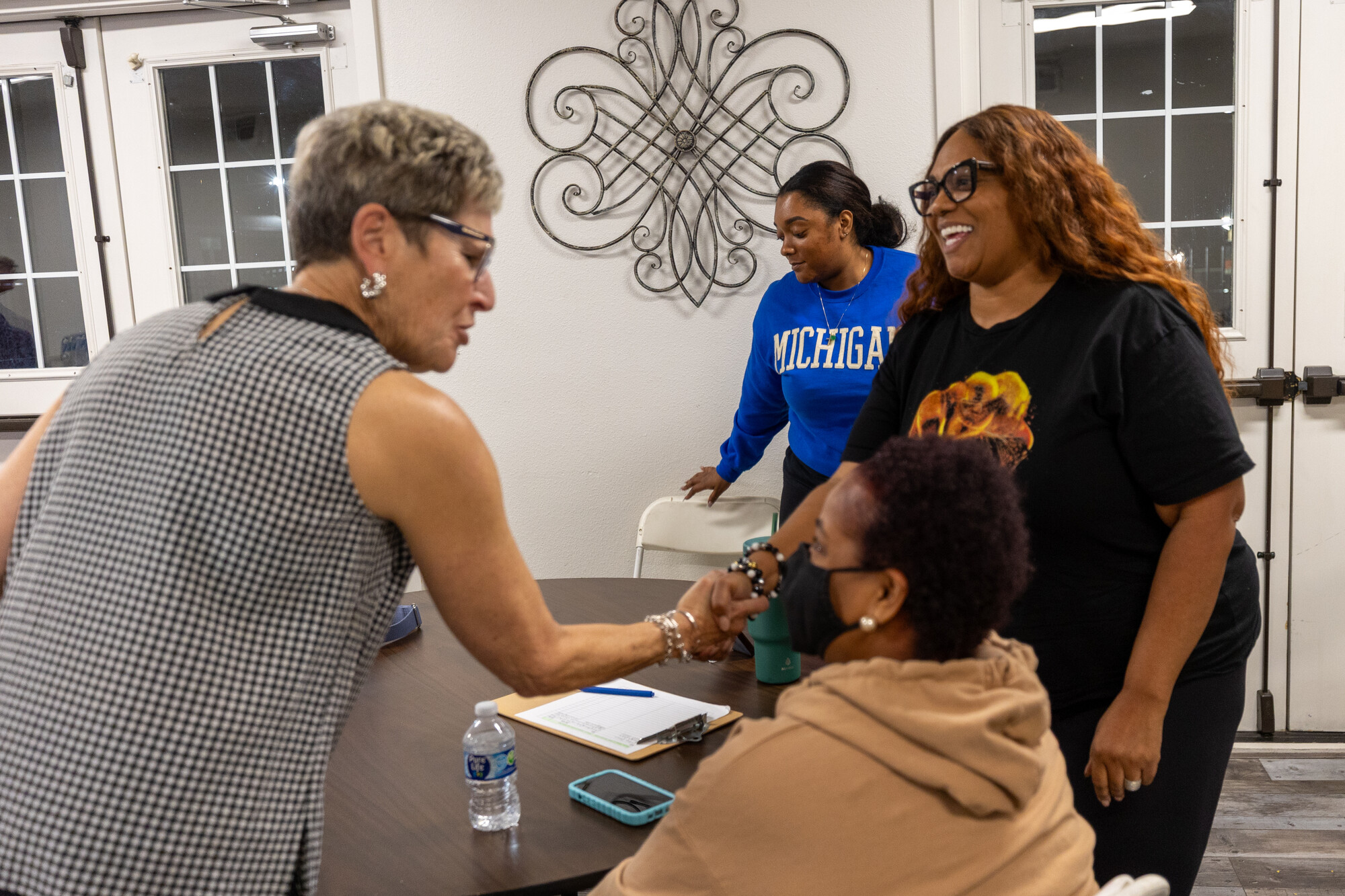
"caption": "Janet Hoy thanks Pastor Shantell Owens, co-founder of Genesis Church, following the presentation on the pros and cons of Proposition 50 at Genesis Church in Antioch, California, on Oct. 2, 2025.",
"credit": "Gustavo Hernandez/KQED",
"altTag": null,
"description": null,
"imgSizes": {
"thumbnail": {
"file": "https://cdn.kqed.org/wp-content/uploads/sites/10/2025/10/251003_Redistrict-Antioch-_-10_qed-160x107.jpg",
"width": 160,
"height": 107,
"mimeType": "image/jpeg"
},
"1536x1536": {
"file": "https://cdn.kqed.org/wp-content/uploads/sites/10/2025/10/251003_Redistrict-Antioch-_-10_qed-1536x1024.jpg",
"width": 1536,
"height": 1024,
"mimeType": "image/jpeg"
},
"post-thumbnail": {
"file": "https://cdn.kqed.org/wp-content/uploads/sites/10/2025/10/251003_Redistrict-Antioch-_-10_qed-672x372.jpg",
"width": 672,
"height": 372,
"mimeType": "image/jpeg"
},
"twentyfourteen-full-width": {
"file": "https://cdn.kqed.org/wp-content/uploads/sites/10/2025/10/251003_Redistrict-Antioch-_-10_qed-1038x576.jpg",
"width": 1038,
"height": 576,
"mimeType": "image/jpeg"
},
"kqedFullSize": {
"file": "https://cdn.kqed.org/wp-content/uploads/sites/10/2025/10/251003_Redistrict-Antioch-_-10_qed.jpg",
"width": 2000,
"height": 1333
}
},
"isLoading": false,
"fetchFailed": false
},
"news_12052277": {
"type": "attachments",
"id": "news_12052277",
"meta": {
"index": "attachments_1716263798",
"site": "news",
"id": "12052277",
"found": true
},
"title": "California Governor Newsom Makes Announcement On Gerrymandering In Response To Trump's Efforts In Texas",
"publishDate": 1755208309,
"status": "inherit",
"parent": 12052064,
"modified": 1755215051,
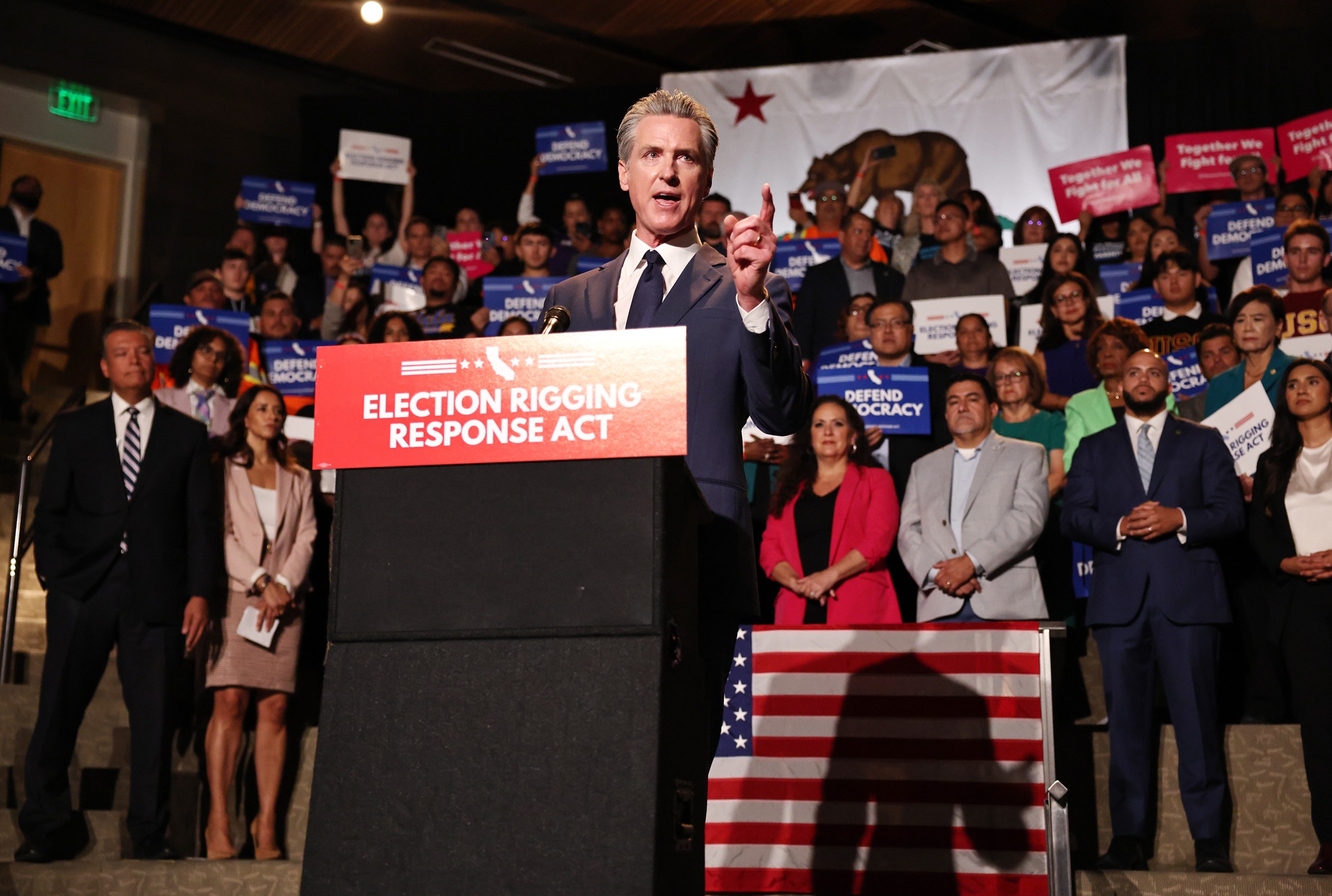
"caption": "Gov. Gavin Newsom speaks about the “Election Rigging Response Act” as U.S. Sen. Alex Padilla, D-California, (left) looks on at a press conference at the Democracy Center, Japanese American National Museum, on Aug. 14, 2025, in Los Angeles. Newsom spoke about a possible California referendum on redistricting to counter the legislative effort to add five Republican House seats in the state of Texas.",
"credit": "Mario Tama/Getty Images",
"altTag": null,
"description": null,
"imgSizes": {
"thumbnail": {
"file": "https://cdn.kqed.org/wp-content/uploads/sites/10/2025/08/GavinNewsomRedistrictingCAGetty-160x108.jpg",
"width": 160,
"height": 108,
"mimeType": "image/jpeg"
},
"1536x1536": {
"file": "https://cdn.kqed.org/wp-content/uploads/sites/10/2025/08/GavinNewsomRedistrictingCAGetty-1536x1034.jpg",
"width": 1536,
"height": 1034,
"mimeType": "image/jpeg"
},
"post-thumbnail": {
"file": "https://cdn.kqed.org/wp-content/uploads/sites/10/2025/08/GavinNewsomRedistrictingCAGetty-672x372.jpg",
"width": 672,
"height": 372,
"mimeType": "image/jpeg"
},
"twentyfourteen-full-width": {
"file": "https://cdn.kqed.org/wp-content/uploads/sites/10/2025/08/GavinNewsomRedistrictingCAGetty-1038x576.jpg",
"width": 1038,
"height": 576,
"mimeType": "image/jpeg"
},
"kqedFullSize": {
"file": "https://cdn.kqed.org/wp-content/uploads/sites/10/2025/08/GavinNewsomRedistrictingCAGetty.jpg",
"width": 2000,
"height": 1346
}
},
"isLoading": false,
"fetchFailed": false
}
},
"audioPlayerReducer": {
"postId": "stream_live",
"isPaused": true,
"isPlaying": false,
"pfsActive": false,
"pledgeModalIsOpen": true,
"playerDrawerIsOpen": false,
"liveAudioPlayStartedAt": 0,
"liveAudioPlayContext": ""
},
"authorsReducer": {
"ohubertallen": {
"type": "authors",
"id": "102",
"meta": {
"index": "authors_1716337520",
"id": "102",
"found": true
},
"name": "Olivia Allen-Price",
"firstName": "Olivia",
"lastName": "Allen-Price",
"slug": "ohubertallen",
"email": "oallenprice@kqed.org",
"display_author_email": false,
"staff_mastheads": [
"news"
],
"title": "Senior Editor",
"bio": "Olivia Allen-Price is senior editor and host of the award-winning Bay Curious podcast. Prior to joining KQED in 2013, Olivia worked at The Baltimore Sun and The Virginian-Pilot in Norfolk, Va. She holds degrees in journalism and political science from Elon University. Her work has earned awards from the Society of Professional Journalists, the Hearst Foundation and Hearken. She loves to talk about running and curly hair.\r\n\r\nFollow: \u003ca href=\"https://twitter.com/oallenprice\">@oallenprice\u003c/a>\r\nEmail: \u003ca href=\"mailto:oallenprice@kqed.org\">oallenprice@kqed.org\u003c/a>",
"avatar": "https://secure.gravatar.com/avatar/07f7803c1f6be56f3be58ef276dfa64dce898502e0554408ef4858451a8294f7?s=600&d=blank&r=g",
"twitter": "oallenprice",
"bluesky": null,
"facebook": null,
"instagram": null,
"linkedin": null,
"sites": [
{
"site": "",
"roles": [
"editor"
]
},
{
"site": "arts",
"roles": [
"subscriber"
]
},
{
"site": "news",
"roles": [
"administrator"
]
},
{
"site": "pop",
"roles": [
"administrator"
]
},
{
"site": "bayareabites",
"roles": [
"contributor"
]
},
{
"site": "stateofhealth",
"roles": [
"administrator"
]
},
{
"site": "science",
"roles": [
"editor"
]
}
],
"headData": {
"title": "Olivia Allen-Price | KQED",
"description": "Senior Editor",
"ogImgSrc": "https://secure.gravatar.com/avatar/07f7803c1f6be56f3be58ef276dfa64dce898502e0554408ef4858451a8294f7?s=600&d=blank&r=g",
"twImgSrc": "https://secure.gravatar.com/avatar/07f7803c1f6be56f3be58ef276dfa64dce898502e0554408ef4858451a8294f7?s=600&d=blank&r=g"
},
"isLoading": false,
"link": "/author/ohubertallen"
},
"gmarzorati": {
"type": "authors",
"id": "227",
"meta": {
"index": "authors_1716337520",
"id": "227",
"found": true
},
"name": "Guy Marzorati",
"firstName": "Guy",
"lastName": "Marzorati",
"slug": "gmarzorati",
"email": "gmarzorati@KQED.org",
"display_author_email": true,
"staff_mastheads": [
"news"
],
"title": "Correspondent",
"bio": "Guy Marzorati is a correspondent on KQED's California Politics and Government Desk, based in San Jose. A graduate of Santa Clara University, Guy joined KQED in 2013. He reports on state and local politics and produces KQED's digital voter guide.",
"avatar": "https://secure.gravatar.com/avatar/e7038b8dbfd55b104369b76b1cd0b9de?s=600&d=blank&r=g",
"twitter": "guymarzorati",
"facebook": null,
"instagram": null,
"linkedin": null,
"sites": [
{
"site": "",
"roles": [
"editor"
]
},
{
"site": "news",
"roles": [
"editor"
]
},
{
"site": "science",
"roles": [
"editor"
]
},
{
"site": "forum",
"roles": [
"editor"
]
},
{
"site": "elections",
"roles": [
"editor"
]
},
{
"site": "liveblog",
"roles": [
"editor"
]
}
],
"headData": {
"title": "Guy Marzorati | KQED",
"description": "Correspondent",
"ogImgSrc": "https://secure.gravatar.com/avatar/e7038b8dbfd55b104369b76b1cd0b9de?s=600&d=blank&r=g",
"twImgSrc": "https://secure.gravatar.com/avatar/e7038b8dbfd55b104369b76b1cd0b9de?s=600&d=blank&r=g"
},
"isLoading": false,
"link": "/author/gmarzorati"
},
"scottshafer": {
"type": "authors",
"id": "255",
"meta": {
"index": "authors_1716337520",
"id": "255",
"found": true
},
"name": "Scott Shafer",
"firstName": "Scott",
"lastName": "Shafer",
"slug": "scottshafer",
"email": "sshafer@kqed.org",
"display_author_email": false,
"staff_mastheads": [
"news"
],
"title": "KQED Contributor",
"bio": "Scott Shafer is a senior editor with the KQED Politics and Government desk. He is co-host of Political Breakdown, the award-winning radio show and podcast with a personal take on the world of politics. Scott came to KQED in 1998 to host the statewide\u003cem> California Report\u003c/em>. Prior to that he had extended stints in politics and government\u003cem>.\u003c/em> He uses that inside experience at KQED in his, reporting, hosting and analysis for the politics desk. Scott collaborated \u003cem>Political Breakdown a\u003c/em>nd on \u003cem>The Political Mind of Jerry Brown, \u003c/em>an eight-part series about the life and extraordinary political career of the former governor. For fun, he plays water polo with the San Francisco Tsunami.",
"avatar": "https://secure.gravatar.com/avatar/a62ebae45b79d7aed1a39a0e3bf68104?s=600&d=blank&r=g",
"twitter": "scottshafer",
"bluesky": null,
"facebook": null,
"instagram": null,
"linkedin": null,
"sites": [
{
"site": "news",
"roles": [
"editor"
]
},
{
"site": "stateofhealth",
"roles": [
"author"
]
},
{
"site": "science",
"roles": [
"author"
]
},
{
"site": "forum",
"roles": [
"subscriber"
]
},
{
"site": "liveblog",
"roles": [
"author"
]
}
],
"headData": {
"title": "Scott Shafer | KQED",
"description": "KQED Contributor",
"ogImgSrc": "https://secure.gravatar.com/avatar/a62ebae45b79d7aed1a39a0e3bf68104?s=600&d=blank&r=g",
"twImgSrc": "https://secure.gravatar.com/avatar/a62ebae45b79d7aed1a39a0e3bf68104?s=600&d=blank&r=g"
},
"isLoading": false,
"link": "/author/scottshafer"
},
"mlagos": {
"type": "authors",
"id": "3239",
"meta": {
"index": "authors_1716337520",
"id": "3239",
"found": true
},
"name": "Marisa Lagos",
"firstName": "Marisa",
"lastName": "Lagos",
"slug": "mlagos",
"email": "mlagos@kqed.org",
"display_author_email": false,
"staff_mastheads": [
"news"
],
"title": "KQED Contributor",
"bio": "Marisa Lagos is a correspondent for KQED’s California Politics and Government Desk and co-hosts the award-winning show and podcast, Political Breakdown. At KQED, Lagos also conducts reporting, analysis and investigations into state, local and national politics for radio, TV, online and onstage. In 2022, she and co-host, Scott Shafer, moderated the only gubernatorial debate in California. In 2020, the \u003ci>Washington Post\u003c/i> named her one of the top political journalists in California; she was nominated for a Peabody and won several other awards for her work investigating the 2017 California wildfires. She has worked at the \u003ci>San Francisco Chronicle\u003c/i>, \u003ci>San Francisco Examiner\u003c/i> and \u003ci>Los Angeles Times\u003c/i>. A UC Santa Barbara graduate, she lives in San Francisco with her two sons and husband.",
"avatar": "https://secure.gravatar.com/avatar/a261a0d3696fc066871ef96b85b5e7d2?s=600&d=blank&r=g",
"twitter": "@mlagos",
"facebook": null,
"instagram": null,
"linkedin": null,
"sites": [
{
"site": "arts",
"roles": [
"author"
]
},
{
"site": "news",
"roles": [
"editor"
]
},
{
"site": "science",
"roles": [
"editor"
]
},
{
"site": "forum",
"roles": [
"author"
]
},
{
"site": "liveblog",
"roles": [
"author"
]
}
],
"headData": {
"title": "Marisa Lagos | KQED",
"description": "KQED Contributor",
"ogImgSrc": "https://secure.gravatar.com/avatar/a261a0d3696fc066871ef96b85b5e7d2?s=600&d=blank&r=g",
"twImgSrc": "https://secure.gravatar.com/avatar/a261a0d3696fc066871ef96b85b5e7d2?s=600&d=blank&r=g"
},
"isLoading": false,
"link": "/author/mlagos"
},
"ecruzguevarra": {
"type": "authors",
"id": "8654",
"meta": {
"index": "authors_1716337520",
"id": "8654",
"found": true
},
"name": "Ericka Cruz Guevarra",
"firstName": "Ericka",
"lastName": "Cruz Guevarra",
"slug": "ecruzguevarra",
"email": "ecruzguevarra@kqed.org",
"display_author_email": true,
"staff_mastheads": [
"news"
],
"title": "Producer, The Bay Podcast",
"bio": "Ericka Cruz Guevarra is host of \u003ca href=\"https://www.kqed.org/podcasts/thebay\">\u003cem>The Bay\u003c/em>\u003c/a> podcast at KQED. Before host, she was the show’s producer. Her work in that capacity includes a three-part reported series on policing in Vallejo, which won a 2020 excellence in journalism award from the Society of Professional Journalists. Ericka has worked as a breaking news reporter at Oregon Public Broadcasting, helped produce the Code Switch podcast, and was KQED’s inaugural Raul Ramirez Diversity Fund intern. She’s also an alumna of NPR’s Next Generation Radio program. Send her an email if you have strong feelings about whether Fairfield and Suisun City are the Bay. Ericka is represented by SAG-AFTRA.",
"avatar": "https://secure.gravatar.com/avatar/accefc1de4bafc7e234b69bcb9b6f6536c130fd84709bc3069ef11a78787e1bb?s=600&d=blank&r=g",
"twitter": "NotoriousECG",
"bluesky": null,
"facebook": null,
"instagram": null,
"linkedin": null,
"sites": [
{
"site": "arts",
"roles": [
"subscriber"
]
},
{
"site": "news",
"roles": [
"editor",
"manage_categories"
]
},
{
"site": "futureofyou",
"roles": [
"subscriber"
]
},
{
"site": "stateofhealth",
"roles": [
"subscriber"
]
},
{
"site": "science",
"roles": [
"editor"
]
},
{
"site": "forum",
"roles": [
"subscriber"
]
}
],
"headData": {
"title": "Ericka Cruz Guevarra | KQED",
"description": "Producer, The Bay Podcast",
"ogImgSrc": "https://secure.gravatar.com/avatar/accefc1de4bafc7e234b69bcb9b6f6536c130fd84709bc3069ef11a78787e1bb?s=600&d=blank&r=g",
"twImgSrc": "https://secure.gravatar.com/avatar/accefc1de4bafc7e234b69bcb9b6f6536c130fd84709bc3069ef11a78787e1bb?s=600&d=blank&r=g"
},
"isLoading": false,
"link": "/author/ecruzguevarra"
},
"amontecillo": {
"type": "authors",
"id": "11649",
"meta": {
"index": "authors_1716337520",
"id": "11649",
"found": true
},
"name": "Alan Montecillo",
"firstName": "Alan",
"lastName": "Montecillo",
"slug": "amontecillo",
"email": "amontecillo@kqed.org",
"display_author_email": false,
"staff_mastheads": [
"news"
],
"title": "KQED Contributor",
"bio": "Alan Montecillo is the senior editor of \u003cem>\u003ca href=\"http://kqed.org/thebay\">The Bay\u003c/a>, \u003c/em> KQED's local news podcast. Before moving to the Bay Area, he worked as a senior talk show producer for WILL in Champaign-Urbana, Illinois and at Oregon Public Broadcasting in Portland, Oregon. He has won journalism awards from the Society of Professional Journalists Northern California, the Public Media Journalists Association, The Signal Awards, and has also received a regional Edward R. Murrow award. Alan is a Filipino American from Hong Kong and a graduate of Reed College.",
"avatar": "https://secure.gravatar.com/avatar/268f53a2066899ea9efdd8a5900218b17c822d9862cbc9326cccec53ef41d349?s=600&d=blank&r=g",
"twitter": "alanmontecillo",
"bluesky": null,
"facebook": null,
"instagram": null,
"linkedin": null,
"sites": [
{
"site": "",
"roles": [
"editor"
]
},
{
"site": "news",
"roles": [
"editor",
"manage_categories"
]
}
],
"headData": {
"title": "Alan Montecillo | KQED",
"description": "KQED Contributor",
"ogImgSrc": "https://secure.gravatar.com/avatar/268f53a2066899ea9efdd8a5900218b17c822d9862cbc9326cccec53ef41d349?s=600&d=blank&r=g",
"twImgSrc": "https://secure.gravatar.com/avatar/268f53a2066899ea9efdd8a5900218b17c822d9862cbc9326cccec53ef41d349?s=600&d=blank&r=g"
},
"isLoading": false,
"link": "/author/amontecillo"
},
"nnavarro": {
"type": "authors",
"id": "11756",
"meta": {
"index": "authors_1716337520",
"id": "11756",
"found": true
},
"name": "Natalia Navarro",
"firstName": "Natalia",
"lastName": "Navarro",
"slug": "nnavarro",
"email": "nnavarro@kqed.org",
"display_author_email": true,
"staff_mastheads": [
"news"
],
"title": "Afternoon News Anchor",
"bio": "Natalia Navarro is KQED's afternoon radio news anchor. She came to KQED in 2021 from Colorado Public Radio, where she was a reporter and host. She has received several awards for her work covering daily and breaking news from professional organizations such as the San Francisco Press Club, Society of Professional Journalists and the Colorado Broadcasters Association. Natalia is originally from Tucson, Arizona, where she got her start in journalism writing for the Arizona Daily Star, Arizona Public Media and the Tucson Weekly. Natalia earned her bachelor's degree in journalism and economics, and her master's degree in journalism from the University of Arizona.",
"avatar": "https://secure.gravatar.com/avatar/a2bdb19fd9520bdea295a2d5f9b2ad65ec51cf0bf559fb1cc041d3a0a04d62ad?s=600&d=blank&r=g",
"twitter": "@NataliaVNavarro",
"bluesky": null,
"facebook": null,
"instagram": null,
"linkedin": null,
"sites": [
{
"site": "news",
"roles": [
"editor"
]
}
],
"headData": {
"title": "Natalia Navarro | KQED",
"description": "Afternoon News Anchor",
"ogImgSrc": "https://secure.gravatar.com/avatar/a2bdb19fd9520bdea295a2d5f9b2ad65ec51cf0bf559fb1cc041d3a0a04d62ad?s=600&d=blank&r=g",
"twImgSrc": "https://secure.gravatar.com/avatar/a2bdb19fd9520bdea295a2d5f9b2ad65ec51cf0bf559fb1cc041d3a0a04d62ad?s=600&d=blank&r=g"
},
"isLoading": false,
"link": "/author/nnavarro"
},
"jessicakariisa": {
"type": "authors",
"id": "11831",
"meta": {
"index": "authors_1716337520",
"id": "11831",
"found": true
},
"name": "Jessica Kariisa",
"firstName": "Jessica",
"lastName": "Kariisa",
"slug": "jessicakariisa",
"email": "jkariisa@kqed.org",
"display_author_email": false,
"staff_mastheads": [],
"title": "Producer, The Bay",
"bio": "Jessica Kariisa is the producer of The Bay. She first joined KQED as an intern for The California Report Magazine, after which she became an on-call producer. She reported a Bay Curious episode on the use of rap lyrics in criminal trials which won a Society of Professional Journalists award in 2023 for Excellence in Features Journalism and the 2023 Signal Award for Best Conversation Starter. She’s worked on podcasts for Snap Judgment and American Public Media. Before embarking on her audio career, she was a music journalist.\r\n\r\nJessica Kariisa is represented by SAG-AFTRA.",
"avatar": "https://secure.gravatar.com/avatar/522e97b28ac0b3d411621c0fde8f3419c7b71ea2c5c262c57c4bb600963f328c?s=600&d=blank&r=g",
"twitter": null,
"bluesky": null,
"facebook": null,
"instagram": null,
"linkedin": null,
"sites": [
{
"site": "arts",
"roles": [
"author"
]
},
{
"site": "news",
"roles": [
"editor",
"manage_categories"
]
}
],
"headData": {
"title": "Jessica Kariisa | KQED",
"description": "Producer, The Bay",
"ogImgSrc": "https://secure.gravatar.com/avatar/522e97b28ac0b3d411621c0fde8f3419c7b71ea2c5c262c57c4bb600963f328c?s=600&d=blank&r=g",
"twImgSrc": "https://secure.gravatar.com/avatar/522e97b28ac0b3d411621c0fde8f3419c7b71ea2c5c262c57c4bb600963f328c?s=600&d=blank&r=g"
},
"isLoading": false,
"link": "/author/jessicakariisa"
},
"sjohnson": {
"type": "authors",
"id": "11840",
"meta": {
"index": "authors_1716337520",
"id": "11840",
"found": true
},
"name": "Sydney Johnson",
"firstName": "Sydney",
"lastName": "Johnson",
"slug": "sjohnson",
"email": "sjohnson@kqed.org",
"display_author_email": false,
"staff_mastheads": [
"news"
],
"title": "KQED Reporter",
"bio": "Sydney Johnson is a general assignment reporter at KQED. She previously reported on public health and city government at the San Francisco Examiner, and before that, she covered statewide education policy for EdSource. Her reporting has won multiple local, state and national awards. Sydney is a graduate of the University of California, Berkeley and lives in San Francisco.",
"avatar": "https://secure.gravatar.com/avatar/97855f2719b72ad6190b7c535fe642c8?s=600&d=blank&r=g",
"twitter": "sydneyfjohnson",
"facebook": null,
"instagram": null,
"linkedin": null,
"sites": [
{
"site": "news",
"roles": [
"editor"
]
}
],
"headData": {
"title": "Sydney Johnson | KQED",
"description": "KQED Reporter",
"ogImgSrc": "https://secure.gravatar.com/avatar/97855f2719b72ad6190b7c535fe642c8?s=600&d=blank&r=g",
"twImgSrc": "https://secure.gravatar.com/avatar/97855f2719b72ad6190b7c535fe642c8?s=600&d=blank&r=g"
},
"isLoading": false,
"link": "/author/sjohnson"
},
"kdebenedetti": {
"type": "authors",
"id": "11913",
"meta": {
"index": "authors_1716337520",
"id": "11913",
"found": true
},
"name": "Katie DeBenedetti",
"firstName": "Katie",
"lastName": "DeBenedetti",
"slug": "kdebenedetti",
"email": "kdebenedetti@kqed.org",
"display_author_email": false,
"staff_mastheads": [
"news",
"science"
],
"title": "KQED Contributor",
"bio": "Katie DeBenedetti is a digital reporter covering daily news for the Express Desk. Prior to joining KQED as a culture reporting intern in January 2024, she covered education and city government for the Napa Valley Register.",
"avatar": "https://secure.gravatar.com/avatar/6e31073cb8f7e4214ab03f42771d0f45?s=600&d=blank&r=g",
"twitter": null,
"facebook": null,
"instagram": null,
"linkedin": null,
"sites": [
{
"site": "news",
"roles": [
"author"
]
},
{
"site": "science",
"roles": [
"author"
]
},
{
"site": "liveblog",
"roles": [
"author"
]
}
],
"headData": {
"title": "Katie DeBenedetti | KQED",
"description": "KQED Contributor",
"ogImgSrc": "https://secure.gravatar.com/avatar/6e31073cb8f7e4214ab03f42771d0f45?s=600&d=blank&r=g",
"twImgSrc": "https://secure.gravatar.com/avatar/6e31073cb8f7e4214ab03f42771d0f45?s=600&d=blank&r=g"
},
"isLoading": false,
"link": "/author/kdebenedetti"
},
"aaliahmad": {
"type": "authors",
"id": "11986",
"meta": {
"index": "authors_1716337520",
"id": "11986",
"found": true
},
"name": "Ayah Ali-Ahmad",
"firstName": "Ayah",
"lastName": "Ali-Ahmad",
"slug": "aaliahmad",
"email": "aaliahmad@KQED.org",
"display_author_email": false,
"staff_mastheads": [],
"title": "KQED Contributor",
"bio": null,
"avatar": "https://secure.gravatar.com/avatar/1cf54f187a5e1064b2cfef3f3d2f1e4f93e453395d56912aca6382a6071ec3ed?s=600&d=blank&r=g",
"twitter": "ayahaliahmad",
"bluesky": null,
"facebook": null,
"instagram": null,
"linkedin": null,
"sites": [
{
"site": "news",
"roles": [
"subscriber"
]
}
],
"headData": {
"title": "Ayah Ali-Ahmad | KQED",
"description": "KQED Contributor",
"ogImgSrc": "https://secure.gravatar.com/avatar/1cf54f187a5e1064b2cfef3f3d2f1e4f93e453395d56912aca6382a6071ec3ed?s=600&d=blank&r=g",
"twImgSrc": "https://secure.gravatar.com/avatar/1cf54f187a5e1064b2cfef3f3d2f1e4f93e453395d56912aca6382a6071ec3ed?s=600&d=blank&r=g"
},
"isLoading": false,
"link": "/author/aaliahmad"
}
},
"pagesReducer": {
"news_tag_gavin-newsom": {
"type": "terms",
"id": "news_16",
"meta": {
"index": "terms_1716263798",
"site": "news",
"id": "16",
"score": 8.936892
},
"featImg": null,
"name": "Gavin Newsom",
"description": null,
"taxonomy": "tag",
"headData": {
"twImgId": null,
"twTitle": null,
"ogTitle": null,
"ogImgId": null,
"twDescription": null,
"description": null,
"title": "Gavin Newsom Archives | KQED News",
"ogDescription": null
},
"ttid": 16,
"slug": "gavin-newsom",
"isLoading": false,
"title": "Gavin Newsom",
"pageMeta": {
"site": "news",
"WpPageTemplate": "page-topic-editorial",
"currentPage": 10
},
"blocks": [
{
"blockName": "kqed/post-list",
"attrs": {
"layout": "cardArticle2",
"query": "posts/news?tag=gavin-newsom",
"seeMore": false,
"paginated": true,
"page": 10
}
},
{
"blockName": "kqed/ad"
}
]
}
},
"pfsSessionReducer": {},
"postsReducer": {
"stream_live": {
"type": "live",
"id": "stream_live",
"audioUrl": "https://streams.kqed.org/kqedradio",
"title": "Live Stream",
"excerpt": "Live Stream information currently unavailable.",
"link": "/radio",
"featImg": "",
"label": {
"name": "KQED Live",
"link": "/"
}
},
"stream_kqedNewscast": {
"type": "posts",
"id": "stream_kqedNewscast",
"audioUrl": "https://www.kqed.org/.stream/anon/radio/RDnews/newscast.mp3?_=1",
"title": "KQED Newscast",
"featImg": "",
"label": {
"name": "88.5 FM",
"link": "/"
}
},
"news_12061591": {
"type": "posts",
"id": "news_12061591",
"meta": {
"index": "posts_1716263798",
"site": "news",
"id": "12061591",
"score": null,
"sort": [
1761400845000
]
},
"guestAuthors": [],
"slug": "after-criticism-newsom-urges-clearer-rules-for-trans-girls-in-sports",
"title": "After Criticism, Newsom Urges Clearer Rules for Trans Girls in Sports",
"publishDate": 1761400845,
"format": "standard",
"headTitle": "After Criticism, Newsom Urges Clearer Rules for Trans Girls in Sports | KQED",
"labelTerm": {
"site": "news"
},
"content": "\u003cp>Gov. Gavin Newsom said \u003ca href=\"https://www.kqed.org/news/12047432/us-sues-california-over-its-refusal-to-ban-transgender-athletes-from-girls-sports\">state law needs to be changed\u003c/a> to clarify when and how transgender women and girls compete in women’s sports.\u003c/p>\n\u003cp>That’s after criticism by LGBTQ+ advocates and members of his own party for comments made during a March podcast interview with Charlie Kirk, in which Newsom agreed with the \u003ca href=\"https://www.kqed.org/news/12055641/after-kirks-death-trump-targets-critics-in-expanding-free-speech-fight\">late conservative activist\u003c/a> that it was unfair for a trans teen girl to compete in a high school track and field competition.\u003c/p>\n\u003cp>When asked about his stance Friday on KQED’s \u003ca href=\"https://www.kqed.org/news/12061434/newsom-trump-sending-troops-to-monitor-californias-election-is-a-2026-preview\">Political Breakdown\u003c/a>, Newsom touted his record of supporting bills \u003ca href=\"https://www.kqed.org/news/12060369/tracking-newsoms-record-on-pro-lgbtq-laws-signed-and-vetoed-this-session\">protecting trans people\u003c/a>, but said he has struggled to find a way to accommodate people’s concerns on this issue.\u003c/p>\n\u003cp>“I disagree with all the vitriol, but I agree on the issue of fairness in that respect, that it is unfair in these circumstances and I haven’t been able to reconcile it,” Newsom said.\u003c/p>\n\u003cp>[ad fullwidth]\u003c/p>\n\u003cp>Experts have said athletic ability varies greatly across gender, based on many factors not exclusive to sex assigned at birth. And scientific reviews, including one by the \u003ca href=\"https://hal.science/hal-04477646/file/transgenderwomenathletesandelitesport-ascientificreview-e-final%20%281%29.pdf\">Canadian Centre for Ethics in Sport\u003c/a>, show biomedical factors related to puberty do not predict athletic performance.\u003c/p>\n\u003cp>Newsom signed a bill into \u003ca href=\"https://www.outsports.com/2025/10/15/24120449/gavin-newsom-california-equity-sports-trans-athletes-commission-cif/\">law\u003c/a> Oct. 13 that requires the creation of a state commission to study inclusion in youth sports, including of trans youth. The commission has been alternately praised and criticized — while some Democrats have championed the study as a means to improve access for all children, regardless of gender identity, some advocates worry the commission could serve as a backdoor ban for trans kids.\u003c/p>\n\u003cp>For GOP legislators, the bill is seen as a means to oppose President Donald Trump’s executive order calling for a blanket ban on transgender female athletes who compete in women’s and girls’ sports.\u003c/p>\n\u003cfigure id=\"attachment_12041807\" class=\"wp-caption aligncenter\" style=\"max-width: 2000px\">\u003cimg loading=\"lazy\" decoding=\"async\" class=\"size-full wp-image-12041807\" src=\"https://cdn.kqed.org/wp-content/uploads/sites/10/2025/05/TrumpTransAthletesGetty.jpg\" alt=\"\" width=\"2000\" height=\"1251\" srcset=\"https://cdn.kqed.org/wp-content/uploads/sites/10/2025/05/TrumpTransAthletesGetty.jpg 2000w, https://cdn.kqed.org/wp-content/uploads/sites/10/2025/05/TrumpTransAthletesGetty-800x500.jpg 800w, https://cdn.kqed.org/wp-content/uploads/sites/10/2025/05/TrumpTransAthletesGetty-1020x638.jpg 1020w, https://cdn.kqed.org/wp-content/uploads/sites/10/2025/05/TrumpTransAthletesGetty-160x100.jpg 160w, https://cdn.kqed.org/wp-content/uploads/sites/10/2025/05/TrumpTransAthletesGetty-1536x961.jpg 1536w, https://cdn.kqed.org/wp-content/uploads/sites/10/2025/05/TrumpTransAthletesGetty-1920x1201.jpg 1920w\" sizes=\"auto, (max-width: 2000px) 100vw, 2000px\">\u003cfigcaption class=\"wp-caption-text\">A new state law creating a commission to study inclusion in youth sports has drawn Republican criticism as a challenge to President Donald Trump’s ban on transgender girls competing in women’s events. \u003ccite>(Keith Birmingham/MediaNews Group/Pasadena Star-News via Getty Images)\u003c/cite>\u003c/figcaption>\u003c/figure>\n\u003cp>While Newsom has styled himself as a champion for LGBTQ+ rights, and as San Francisco mayor, engaged in civil disobedience to allow gay couples to marry at City Hall, his podcast interview with Kirk alienated many LGBTQ+ constituents, as the federal government and red states continue to chip away at hard-won progress.\u003c/p>\n\u003cp>“As health and LGBTQ advocates who have been bolstered by Governor Newsom’s past support, we feel profoundly betrayed and outraged by his remarks,” Dannie Ceseña, director of the California LGBTQ Health and Human Services Network, said in a written statement after the episode was released. “Trust has been shattered.”\u003c/p>\n\u003cp>Still, months later, Newsom stood by his statements to Kirk.\u003c/p>\n\u003cp>“There’s some nuance here,” he told KQED. “And so I said what I thought. And you know what? I can’t tell you how many people have a similar point of view, but don’t say it publicly.”[aside postID=news_12061445 hero='https://cdn.kqed.org/wp-content/uploads/sites/10/2025/10/251024-NEWSOM-ON-PB-MD-04-KQED.jpg']Sports are critical for young people, Newsom added, saying that playing baseball and basketball growing up in Marin County are the reason he got to where he is now. For trans kids, he said, there should be distinctions between competitive and recreational sports.\u003c/p>\n\u003cp>“I don’t roll people under the bus, quite the contrary,” Newsom continued. “But when it comes to sports, that’s impacting other people’s rights.”\u003c/p>\n\u003cp>California’s high school athletics governing body follows 2013 state \u003ca href=\"https://www.cbsnews.com/news/california-law-allows-transgender-students-to-pick-bathrooms-sports-teams-they-identify-with/\">legislation\u003c/a> that explicitly allows students to play on sports teams that align with their gender identity.\u003c/p>\n\u003cp>But the California Interscholastic Federation \u003ca href=\"https://www.kqed.org/news/12041770/california-tweaks-trans-athlete-rules-after-trump-threatens-to-halt-federal-funding\">altered its rules this summer\u003c/a> for the state track and field meet, after backlash from Trump and conservatives. The CIF rule allowed an additional student to compete in the events a trans girl was competing in to try to find a middle ground in the political discourse.\u003c/p>\n\u003cp>The Trump administration is \u003ca href=\"https://apnews.com/article/california-transgender-athletes-sports-girls-trump-3b0d39d17598ae2bd15281e56ceaf2dc\">now\u003c/a> suing the CIF and the state’s education department.\u003c/p>\n\u003cp>Newsom, who said he has a trans godson, said he has worked with experts to figure out a solution.\u003c/p>\n\u003cp>“It was an experience for me born over the actual application and responsibility as governor to try to figure this out, and I couldn’t,” he said. “And maybe other people can, but I haven’t been able to figure it out.”\u003c/p>\n\u003cp>\u003c/p>\n",
"blocks": [],
"excerpt": "Gov. Gavin Newsom said California law should be updated to define when and how transgender girls can compete in women’s sports, following criticism over comments he made in March on his podcast.",
"status": "publish",
"parent": 0,
"modified": 1761585013,
"stats": {
"hasAudio": false,
"hasVideo": false,
"hasChartOrMap": false,
"iframeSrcs": [],
"hasGoogleForm": false,
"hasGallery": false,
"hasHearkenModule": false,
"hasPolis": false,
"paragraphCount": 19,
"wordCount": 781
},
"headData": {
"title": "After Criticism, Newsom Urges Clearer Rules for Trans Girls in Sports | KQED",
"description": "Gov. Gavin Newsom said California law should be updated to define when and how transgender girls can compete in women’s sports, following criticism over comments he made in March on his podcast.",
"ogTitle": "",
"ogDescription": "",
"ogImgId": "",
"twTitle": "",
"twDescription": "",
"twImgId": "",
"schema": {
"@context": "https://schema.org",
"@type": "NewsArticle",
"headline": "After Criticism, Newsom Urges Clearer Rules for Trans Girls in Sports",
"datePublished": "2025-10-25T07:00:45-07:00",
"dateModified": "2025-10-27T10:10:13-07:00",
"image": "https://cdn.kqed.org/wp-content/uploads/2020/02/KQED-OG-Image@1x.png",
"isAccessibleForFree": "True",
"publisher": {
"@type": "NewsMediaOrganization",
"@id": "https://www.kqed.org/#organization",
"name": "KQED",
"logo": "https://cdn.kqed.org/wp-content/uploads/2020/02/KQED-OG-Image@1x.png",
"url": "https://www.kqed.org",
"sameAs": [
"https://www.facebook.com/KQED",
"https://twitter.com/KQED",
"https://www.instagram.com/kqed/",
"https://www.tiktok.com/@kqedofficial",
"https://www.linkedin.com/company/kqed",
"https://www.youtube.com/channel/UCeC0IOo7i1P_61zVUWbJ4nw"
]
}
}
},
"primaryCategory": {
"termId": 13,
"slug": "politics",
"name": "Politics"
},
"sticky": false,
"nprStoryId": "kqed-12061591",
"templateType": "standard",
"featuredImageType": "standard",
"excludeFromSiteSearch": "Include",
"articleAge": "0",
"path": "/news/12061591/after-criticism-newsom-urges-clearer-rules-for-trans-girls-in-sports",
"audioTrackLength": null,
"parsedContent": [
{
"type": "contentString",
"content": "\u003cdiv class=\"post-body\">\u003cp>\u003cp>Gov. Gavin Newsom said \u003ca href=\"https://www.kqed.org/news/12047432/us-sues-california-over-its-refusal-to-ban-transgender-athletes-from-girls-sports\">state law needs to be changed\u003c/a> to clarify when and how transgender women and girls compete in women’s sports.\u003c/p>\n\u003cp>That’s after criticism by LGBTQ+ advocates and members of his own party for comments made during a March podcast interview with Charlie Kirk, in which Newsom agreed with the \u003ca href=\"https://www.kqed.org/news/12055641/after-kirks-death-trump-targets-critics-in-expanding-free-speech-fight\">late conservative activist\u003c/a> that it was unfair for a trans teen girl to compete in a high school track and field competition.\u003c/p>\n\u003cp>When asked about his stance Friday on KQED’s \u003ca href=\"https://www.kqed.org/news/12061434/newsom-trump-sending-troops-to-monitor-californias-election-is-a-2026-preview\">Political Breakdown\u003c/a>, Newsom touted his record of supporting bills \u003ca href=\"https://www.kqed.org/news/12060369/tracking-newsoms-record-on-pro-lgbtq-laws-signed-and-vetoed-this-session\">protecting trans people\u003c/a>, but said he has struggled to find a way to accommodate people’s concerns on this issue.\u003c/p>\n\u003cp>“I disagree with all the vitriol, but I agree on the issue of fairness in that respect, that it is unfair in these circumstances and I haven’t been able to reconcile it,” Newsom said.\u003c/p>\n\u003cp>\u003c/p>\u003c/div>",
"attributes": {
"named": {},
"numeric": []
}
},
{
"type": "component",
"content": "",
"name": "ad",
"attributes": {
"named": {
"label": "fullwidth"
},
"numeric": [
"fullwidth"
]
}
},
{
"type": "contentString",
"content": "\u003cdiv class=\"post-body\">\u003cp>\u003c/p>\n\u003cp>Experts have said athletic ability varies greatly across gender, based on many factors not exclusive to sex assigned at birth. And scientific reviews, including one by the \u003ca href=\"https://hal.science/hal-04477646/file/transgenderwomenathletesandelitesport-ascientificreview-e-final%20%281%29.pdf\">Canadian Centre for Ethics in Sport\u003c/a>, show biomedical factors related to puberty do not predict athletic performance.\u003c/p>\n\u003cp>Newsom signed a bill into \u003ca href=\"https://www.outsports.com/2025/10/15/24120449/gavin-newsom-california-equity-sports-trans-athletes-commission-cif/\">law\u003c/a> Oct. 13 that requires the creation of a state commission to study inclusion in youth sports, including of trans youth. The commission has been alternately praised and criticized — while some Democrats have championed the study as a means to improve access for all children, regardless of gender identity, some advocates worry the commission could serve as a backdoor ban for trans kids.\u003c/p>\n\u003cp>For GOP legislators, the bill is seen as a means to oppose President Donald Trump’s executive order calling for a blanket ban on transgender female athletes who compete in women’s and girls’ sports.\u003c/p>\n\u003cfigure id=\"attachment_12041807\" class=\"wp-caption aligncenter\" style=\"max-width: 2000px\">\u003cimg loading=\"lazy\" decoding=\"async\" class=\"size-full wp-image-12041807\" src=\"https://cdn.kqed.org/wp-content/uploads/sites/10/2025/05/TrumpTransAthletesGetty.jpg\" alt=\"\" width=\"2000\" height=\"1251\" srcset=\"https://cdn.kqed.org/wp-content/uploads/sites/10/2025/05/TrumpTransAthletesGetty.jpg 2000w, https://cdn.kqed.org/wp-content/uploads/sites/10/2025/05/TrumpTransAthletesGetty-800x500.jpg 800w, https://cdn.kqed.org/wp-content/uploads/sites/10/2025/05/TrumpTransAthletesGetty-1020x638.jpg 1020w, https://cdn.kqed.org/wp-content/uploads/sites/10/2025/05/TrumpTransAthletesGetty-160x100.jpg 160w, https://cdn.kqed.org/wp-content/uploads/sites/10/2025/05/TrumpTransAthletesGetty-1536x961.jpg 1536w, https://cdn.kqed.org/wp-content/uploads/sites/10/2025/05/TrumpTransAthletesGetty-1920x1201.jpg 1920w\" sizes=\"auto, (max-width: 2000px) 100vw, 2000px\">\u003cfigcaption class=\"wp-caption-text\">A new state law creating a commission to study inclusion in youth sports has drawn Republican criticism as a challenge to President Donald Trump’s ban on transgender girls competing in women’s events. \u003ccite>(Keith Birmingham/MediaNews Group/Pasadena Star-News via Getty Images)\u003c/cite>\u003c/figcaption>\u003c/figure>\n\u003cp>While Newsom has styled himself as a champion for LGBTQ+ rights, and as San Francisco mayor, engaged in civil disobedience to allow gay couples to marry at City Hall, his podcast interview with Kirk alienated many LGBTQ+ constituents, as the federal government and red states continue to chip away at hard-won progress.\u003c/p>\n\u003cp>“As health and LGBTQ advocates who have been bolstered by Governor Newsom’s past support, we feel profoundly betrayed and outraged by his remarks,” Dannie Ceseña, director of the California LGBTQ Health and Human Services Network, said in a written statement after the episode was released. “Trust has been shattered.”\u003c/p>\n\u003cp>Still, months later, Newsom stood by his statements to Kirk.\u003c/p>\n\u003cp>“There’s some nuance here,” he told KQED. “And so I said what I thought. And you know what? I can’t tell you how many people have a similar point of view, but don’t say it publicly.”\u003c/p>\u003c/div>",
"attributes": {
"named": {},
"numeric": []
}
},
{
"type": "component",
"content": "",
"name": "aside",
"attributes": {
"named": {
"postid": "news_12061445",
"hero": "https://cdn.kqed.org/wp-content/uploads/sites/10/2025/10/251024-NEWSOM-ON-PB-MD-04-KQED.jpg",
"label": ""
},
"numeric": []
}
},
{
"type": "contentString",
"content": "\u003cdiv class=\"post-body\">\u003cp>Sports are critical for young people, Newsom added, saying that playing baseball and basketball growing up in Marin County are the reason he got to where he is now. For trans kids, he said, there should be distinctions between competitive and recreational sports.\u003c/p>\n\u003cp>“I don’t roll people under the bus, quite the contrary,” Newsom continued. “But when it comes to sports, that’s impacting other people’s rights.”\u003c/p>\n\u003cp>California’s high school athletics governing body follows 2013 state \u003ca href=\"https://www.cbsnews.com/news/california-law-allows-transgender-students-to-pick-bathrooms-sports-teams-they-identify-with/\">legislation\u003c/a> that explicitly allows students to play on sports teams that align with their gender identity.\u003c/p>\n\u003cp>But the California Interscholastic Federation \u003ca href=\"https://www.kqed.org/news/12041770/california-tweaks-trans-athlete-rules-after-trump-threatens-to-halt-federal-funding\">altered its rules this summer\u003c/a> for the state track and field meet, after backlash from Trump and conservatives. The CIF rule allowed an additional student to compete in the events a trans girl was competing in to try to find a middle ground in the political discourse.\u003c/p>\n\u003cp>The Trump administration is \u003ca href=\"https://apnews.com/article/california-transgender-athletes-sports-girls-trump-3b0d39d17598ae2bd15281e56ceaf2dc\">now\u003c/a> suing the CIF and the state’s education department.\u003c/p>\n\u003cp>Newsom, who said he has a trans godson, said he has worked with experts to figure out a solution.\u003c/p>\n\u003cp>“It was an experience for me born over the actual application and responsibility as governor to try to figure this out, and I couldn’t,” he said. “And maybe other people can, but I haven’t been able to figure it out.”\u003c/p>\n\u003cp>\u003c/p>\n\u003c/div>\u003c/p>",
"attributes": {
"named": {},
"numeric": []
}
}
],
"link": "/news/12061591/after-criticism-newsom-urges-clearer-rules-for-trans-girls-in-sports",
"authors": [
"11756"
],
"categories": [
"news_31795",
"news_8",
"news_13"
],
"tags": [
"news_18538",
"news_27626",
"news_34377",
"news_16",
"news_34508",
"news_20004",
"news_19345",
"news_17968",
"news_29184",
"news_34078",
"news_2486",
"news_35628",
"news_25293"
],
"featImg": "news_12033881",
"label": "news"
},
"news_12061434": {
"type": "posts",
"id": "news_12061434",
"meta": {
"index": "posts_1716263798",
"site": "news",
"id": "12061434",
"score": null,
"sort": [
1761341416000
]
},
"guestAuthors": [],
"slug": "newsom-trump-sending-troops-to-monitor-californias-election-is-a-2026-preview",
"title": "Newsom: Trump Sending Troops to Monitor California’s Election is a 2026 Preview",
"publishDate": 1761341416,
"format": "audio",
"headTitle": "Newsom: Trump Sending Troops to Monitor California’s Election is a 2026 Preview | KQED",
"labelTerm": {},
"content": "\u003cp>\u003cspan style=\"font-weight: 400\">Gov. Gavin Newsom \u003ca href=\"https://www.kqed.org/news/12061445/newsom-says-trump-is-rigging-the-election-with-federal-poll-monitors\">says President Donald Trump is laying the groundwork\u003c/a> to challenge next month’s Proposition 50 special election and undermine future elections, calling the Department of Justice election monitors at California polling places “a preview of things to come.” \u003c/span>\u003c/p>\n\u003cp>\u003cspan style=\"font-weight: 400\">He joined Marisa Lagos and Scott Shafer in studio to discuss why Prop 50 is about more than redistricting, Trump’s decision not to send troops to San Francisco, his controversial stance on trans athletes in sports and why he thinks Democrats are “so damn weak as a party.” \u003c/span>\u003c/p>\n\u003cp>Check out \u003ca class=\"c-link\" href=\"https://www.kqed.org/newsletters/political-breakdown\" target=\"_blank\" rel=\"noopener noreferrer\" data-stringify-link=\"https://www.kqed.org/newsletters/political-breakdown\" data-sk=\"tooltip_parent\">Political Breakdown’s weekly newsletter\u003c/a>, delivered straight to your inbox.\u003c/p>\n\u003cp>https://www.youtube.com/watch?v=4Dm3diA6z08\u003c/p>\n\u003cp>[ad fullwidth]\u003c/p>\n\u003cp>\u003c/p>\n",
"blocks": [],
"excerpt": "Governor Gavin Newsom tells KQED's Marisa Lagos and Scott Shafer how he will respond to President Trump's plan to send election monitors to several Southern California counties. ",
"status": "publish",
"parent": 0,
"modified": 1761396273,
"stats": {
"hasAudio": false,
"hasVideo": true,
"hasChartOrMap": false,
"iframeSrcs": [],
"hasGoogleForm": false,
"hasGallery": false,
"hasHearkenModule": false,
"hasPolis": false,
"paragraphCount": 5,
"wordCount": 120
},
"headData": {
"title": "Newsom: Trump Sending Troops to Monitor California’s Election is a 2026 Preview | KQED",
"description": "Governor Gavin Newsom tells KQED's Marisa Lagos and Scott Shafer how he will respond to President Trump's plan to send election monitors to several Southern California counties. ",
"ogTitle": "",
"ogDescription": "",
"ogImgId": "",
"twTitle": "",
"twDescription": "",
"twImgId": "",
"schema": {
"@context": "https://schema.org",
"@type": "NewsArticle",
"headline": "Newsom: Trump Sending Troops to Monitor California’s Election is a 2026 Preview",
"datePublished": "2025-10-24T14:30:16-07:00",
"dateModified": "2025-10-25T05:44:33-07:00",
"image": "https://cdn.kqed.org/wp-content/uploads/2020/02/KQED-OG-Image@1x.png",
"isAccessibleForFree": "True",
"publisher": {
"@type": "NewsMediaOrganization",
"@id": "https://www.kqed.org/#organization",
"name": "KQED",
"logo": "https://cdn.kqed.org/wp-content/uploads/2020/02/KQED-OG-Image@1x.png",
"url": "https://www.kqed.org",
"sameAs": [
"https://www.facebook.com/KQED",
"https://twitter.com/KQED",
"https://www.instagram.com/kqed/",
"https://www.tiktok.com/@kqedofficial",
"https://www.linkedin.com/company/kqed",
"https://www.youtube.com/channel/UCeC0IOo7i1P_61zVUWbJ4nw"
]
}
}
},
"primaryCategory": {
"termId": 13,
"slug": "politics",
"name": "Politics"
},
"source": "Political Breakdown",
"audioUrl": "https://www.podtrac.com/pts/redirect.mp3/chrt.fm/track/G6C7C3/traffic.megaphone.fm/KQINC5388813879.mp3?updated=1761338854",
"sticky": false,
"nprStoryId": "kqed-12061434",
"templateType": "standard",
"featuredImageType": "standard",
"excludeFromSiteSearch": "Include",
"articleAge": "0",
"path": "/news/12061434/newsom-trump-sending-troops-to-monitor-californias-election-is-a-2026-preview",
"audioTrackLength": null,
"parsedContent": [
{
"type": "contentString",
"content": "\u003cdiv class=\"post-body\">\u003cp>\u003cp>\u003cspan style=\"font-weight: 400\">Gov. Gavin Newsom \u003ca href=\"https://www.kqed.org/news/12061445/newsom-says-trump-is-rigging-the-election-with-federal-poll-monitors\">says President Donald Trump is laying the groundwork\u003c/a> to challenge next month’s Proposition 50 special election and undermine future elections, calling the Department of Justice election monitors at California polling places “a preview of things to come.” \u003c/span>\u003c/p>\n\u003cp>\u003cspan style=\"font-weight: 400\">He joined Marisa Lagos and Scott Shafer in studio to discuss why Prop 50 is about more than redistricting, Trump’s decision not to send troops to San Francisco, his controversial stance on trans athletes in sports and why he thinks Democrats are “so damn weak as a party.” \u003c/span>\u003c/p>\n\u003cp>Check out \u003ca class=\"c-link\" href=\"https://www.kqed.org/newsletters/political-breakdown\" target=\"_blank\" rel=\"noopener noreferrer\" data-stringify-link=\"https://www.kqed.org/newsletters/political-breakdown\" data-sk=\"tooltip_parent\">Political Breakdown’s weekly newsletter\u003c/a>, delivered straight to your inbox.\u003c/p>\u003c/p>\u003cp>\u003cspan class='utils-parseShortcode-shortcodes-__youtubeShortcode__embedYoutube'>\n \u003cspan class='utils-parseShortcode-shortcodes-__youtubeShortcode__embedYoutubeInside'>\n \u003ciframe\n loading='lazy'\n class='utils-parseShortcode-shortcodes-__youtubeShortcode__youtubePlayer'\n type='text/html'\n src='//www.youtube.com/embed/4Dm3diA6z08'\n title='//www.youtube.com/embed/4Dm3diA6z08'\n allowfullscreen='true'\n style='border:0;'>\u003c/iframe>\n \u003c/span>\n \u003c/span>\u003c/p>\u003cp>\u003cp>\u003c/p>\u003c/div>",
"attributes": {
"named": {},
"numeric": []
}
},
{
"type": "component",
"content": "",
"name": "ad",
"attributes": {
"named": {
"label": "fullwidth"
},
"numeric": [
"fullwidth"
]
}
},
{
"type": "contentString",
"content": "\u003cdiv class=\"post-body\">\u003cp>\u003c/p>\n\u003cp>\u003c/p>\n\u003c/div>\u003c/p>",
"attributes": {
"named": {},
"numeric": []
}
}
],
"link": "/news/12061434/newsom-trump-sending-troops-to-monitor-californias-election-is-a-2026-preview",
"authors": [
"3239",
"255"
],
"programs": [
"news_33544"
],
"categories": [
"news_13"
],
"tags": [
"news_35929",
"news_34377",
"news_16",
"news_34474",
"news_22235",
"news_17968",
"news_34624",
"news_35928"
],
"featImg": "news_12061520",
"label": "source_news_12061434"
},
"news_12061445": {
"type": "posts",
"id": "news_12061445",
"meta": {
"index": "posts_1716263798",
"site": "news",
"id": "12061445",
"score": null,
"sort": [
1761340595000
]
},
"guestAuthors": [],
"slug": "newsom-says-trump-is-rigging-the-election-with-federal-poll-monitors",
"title": "Newsom Says Trump Is ‘Rigging the Election’ With Federal Poll Monitors",
"publishDate": 1761340595,
"format": "standard",
"headTitle": "Newsom Says Trump Is ‘Rigging the Election’ With Federal Poll Monitors | KQED",
"labelTerm": {
"site": "news"
},
"content": "\u003cp>Gov. \u003ca href=\"https://www.kqed.org/news/tag/gavin-newsom\">Gavin Newsom\u003c/a> on Friday accused the Trump administration of “rigging the election” by dispatching federal poll monitors to five California counties, as voters cast ballots on Newsom’s \u003ca href=\"https://www.kqed.org/proposition-50\">Proposition 50\u003c/a> redistricting measure.\u003c/p>\n\u003cp>The Department of Justice announced Friday that it would deploy personnel to polling sites in Fresno, Kern, Los Angeles, Orange and Riverside counties to “ensure transparency, ballot security, and compliance with federal law,” ahead of the state’s Nov. 4 special election.\u003c/p>\n\u003cp>In an interview with KQED’s \u003ca href=\"https://www.kqed.org/news/12061434/newsom-trump-sending-troops-to-monitor-californias-election-is-a-2026-preview\" target=\"_blank\" rel=\"noopener\">\u003cem>Political Breakdown\u003c/em>\u003c/a>, Newsom said the move was a “setup” for the Trump administration to cast doubt on the potential victory of Proposition 50 — a plan \u003ca href=\"https://www.kqed.org/news/12060910/proposition-50-redistricting-in-california-thoroughly-explained\">to redraw\u003c/a> the state’s congressional district lines to advantage Democrats.\u003c/p>\n\u003cp>[ad fullwidth]\u003c/p>\n\u003cp>“They are creating the pretext that after we’re successful with Prop. 50, after there is a Democratic governor in New Jersey — and will be one in Virginia, unquestionably — that they can suggest somehow these were fraudulent, these elections were rigged against them,” Newsom said. “This is a preview of 2026. Wake up, everybody.”\u003c/p>\n\u003cp>Two officials involved in the DOJ announcement, Assistant Attorney General Harmeet Dhillon and acting U.S. Attorney Bill Essayli, are familiar faces in California politics. Dhillon is the former vice chair of the state Republican Party and Essayli is a former GOP state Assembly member.\u003c/p>\n\u003cp>\u003c!-- iframe plugin v.4.3 wordpress.org/plugins/iframe/ -->\u003cbr>\n\u003ciframe loading=\"lazy\" frameborder=\"0\" height=\"200\" scrolling=\"no\" src=\"https://playlist.megaphone.fm?e=KQINC5388813879\" width=\"100%\" class=\"iframe-class\">\u003c/iframe>\u003c/p>\n\u003cp>“The Department of Justice will do everything necessary to protect the votes of eligible American citizens, ensuring our elections are safe and secure,” Dhillon said in a statement. “Transparent election processes and election monitoring are critical tools for safeguarding our elections and ensuring public trust in the integrity of our elections.”\u003c/p>\n\u003cp>The DOJ did not provide a reason why the California jurisdictions — along with Passaic County in New Jersey — were selected. But the five counties were specifically named by California Republican Party Chair Corrin Rankin, in a letter sent to Dhillon on Monday, requesting the poll monitors.\u003c/p>\n\u003cp>“In recent elections, we have received reports of irregularities in these counties that we fear will undermine either the willingness of voters to participate in the election or their confidence in the announced results of the election,” Rankin wrote.\u003c/p>\n\u003cp>Newsom insisted the deployment is laying the groundwork for the Trump administration to question the results of California’s vote.\u003c/p>\n\u003cp>https://www.youtube.com/watch?v=4Dm3diA6z08\u003c/p>\n\u003cp> \u003c/p>\n\u003cp>“They will not be allowed to access the back rooms, and watch this — they will then express discontent with that,” Newsom predicted. “They will then suggest after we win, because we will and we must, that somehow the election was fraudulent.”\u003c/p>\n\u003cp>The governor also warned that the deployment to voting locations would expand beyond federal lawyers.\u003c/p>\n\u003cp>“You’re also going to see ICE deployed,” he said. “You’re going to see these masked men from Border Patrol also near voting booths and polling places.”\u003c/p>\n\u003cp>Early voting sites \u003ca href=\"https://www.kqed.org/news/12058811/election-2025-ballot-dropoff-near-me-early-voting-where-is-my-polling-place\">are set to open across California\u003c/a> on Saturday. The DOJ did not respond to questions about when the poll-monitoring deployment would begin — and whether other federal agencies would be involved.\u003c/p>\n\u003cp>Local election officials had a more measured response to the announcement of federal poll watchers.\u003c/p>\n\u003cp>“The presence of election observers is not unusual and is a standard practice across the country,” Los Angeles Registrar-Recorder/County Clerk Dean Logan said in a statement. “Federal election monitors, like all election observers, are welcome to view election activities at designated locations to confirm transparency and integrity in the election process. California has very clear laws and guidelines that support observation and prohibit election interference.”\u003c/p>\n\u003cp>In advance of the 2024 election, the Biden-led DOJ \u003ca href=\"https://www.justice.gov/archives/opa/pr/justice-department-monitor-polls-27-states-compliance-federal-voting-rights-laws\">announced\u003c/a> monitoring in 86 jurisdictions across 27 states, including San Joaquin County in California.\u003c/p>\n\u003cfigure id=\"attachment_12060891\" class=\"wp-caption aligncenter\" style=\"max-width: 2000px\">\u003cimg loading=\"lazy\" decoding=\"async\" class=\"size-full wp-image-12060891\" src=\"https://cdn.kqed.org/wp-content/uploads/sites/10/2025/10/NationalGuardGetty.jpg\" alt=\"\" width=\"2000\" height=\"1333\" srcset=\"https://cdn.kqed.org/wp-content/uploads/sites/10/2025/10/NationalGuardGetty.jpg 2000w, https://cdn.kqed.org/wp-content/uploads/sites/10/2025/10/NationalGuardGetty-160x107.jpg 160w, https://cdn.kqed.org/wp-content/uploads/sites/10/2025/10/NationalGuardGetty-1536x1024.jpg 1536w\" sizes=\"auto, (max-width: 2000px) 100vw, 2000px\">\u003cfigcaption class=\"wp-caption-text\">National Guard soldiers are posted near an entrance to the Federal Building in Los Angeles during a demonstration in response to a series of U.S. Immigration and Customs Enforcement (ICE) raids throughout the country, on June 10, 2025. \u003ccite>(Gabrielle Lurie/San Francisco Chronicle via Getty Images)\u003c/cite>\u003c/figcaption>\u003c/figure>\n\u003cp>The poll-watcher deployment marks the latest conflict between Newsom and President Donald Trump over federal actions in California. The president federalized over \u003ca href=\"https://www.kqed.org/news/12054322/judge-rules-trump-violated-law-by-sending-troops-to-los-angeles\">4,000 National Guard troops\u003c/a> in Los Angeles earlier this year, over Newsom’s objections. This week, \u003ca href=\"https://www.kqed.org/news/12061191/activists-federal-agents-clash-at-coast-guard-base-during-immigration-crackdown\">Border Patrol officers arrived\u003c/a> in the Bay Area in anticipation of an immigration operation in the region.\u003c/p>\n\u003cp>Trump’s push to send National Guard troops to Democratic-controlled cities, such as Chicago and Portland, have resulted in high-profile legal and political battles.\u003c/p>\n\u003cp>On Thursday, Trump said he decided to call off a planned federal “surge” into San Francisco, \u003ca href=\"https://www.kqed.org/news/12061209/lurie-trump-is-calling-off-plans-to-send-federal-troops-to-san-francisco\">after a conversation\u003c/a> with the city’s mayor, Daniel Lurie. On Friday, \u003ca href=\"https://www.kqed.org/news/12061545/bay-area-spared-from-federal-immigration-enforcement-surge-officials-say\">Oakland Mayor Barbara Lee confirmed\u003c/a> the expected immigration enforcement had been canceled in the greater Bay Area as well.[aside label=\"2025 California Special Election\" link1='https://www.kqed.org/proposition-50,Learn about Proposition 50' hero=https://cdn.kqed.org/wp-content/uploads/2025/09/Aside-2025-Special-Election-Voter-Guide-Proposition-50-1200x675-1.png]But in a wide-ranging interview with KQED, Newsom said the threats have left a “chill” on residents in the state.\u003c/p>\n\u003cp>“People [in Los Angeles] are scared to go out to the playground or park,” Newsom said. “People [are] still scared to go to school.”\u003c/p>\n\u003cp>The ongoing confrontations with Trump have elevated Newsom’s national profile and won praise from Democrats across the country. This summer, he pushed the state Legislature to place Proposition 50 on the ballot in response to a pro-Republican redistricting in Texas that was encouraged by Trump.\u003c/p>\n\u003cp>While high-profile Democratic donors and labor groups have spent \u003ca href=\"https://www.kqed.org/news/12057425/millions-pour-into-california-fight-over-newsoms-redistricting-ballot-measure\">tens of millions of dollars to support Proposition 50\u003c/a>, Newsom touted the small-dollar donations that have poured in from every state in the country.\u003c/p>\n\u003cp>“They want to see people stand up and have their backs and fight,” he said. “We’re so damn weak as a party.”\u003c/p>\n\u003cp>Asked how Democrats can rebuild support — in the face of polling showing the party’s favorability at its \u003ca href=\"https://news.gallup.com/poll/696635/neither-party-dominates-favorability-trust.aspx\">lowest level\u003c/a> in decades — Newsom gave a simple prescription: “Win.”\u003c/p>\n\u003cp>“Our problem right now is weakness — we gotta win,” he said. “Strength, not holding hands, not having a candlelight vigil, not writing an op-ed in response to [Texas Gov.] Greg Abbott, not trying to make a point, but make a difference.”\u003c/p>\n\u003cp>[ad floatright]\u003c/p>\n",
"blocks": [],
"excerpt": "In an interview with KQED, Gov. Gavin Newsom warned the Trump administration is laying the groundwork to question the results of California’s Proposition 50 vote.",
"status": "publish",
"parent": 0,
"modified": 1761396228,
"stats": {
"hasAudio": true,
"hasVideo": true,
"hasChartOrMap": false,
"iframeSrcs": [],
"hasGoogleForm": false,
"hasGallery": false,
"hasHearkenModule": false,
"hasPolis": false,
"paragraphCount": 28,
"wordCount": 1113
},
"headData": {
"title": "Newsom Says Trump Is ‘Rigging the Election’ With Federal Poll Monitors | KQED",
"description": "In an interview with KQED, Gov. Gavin Newsom warned the Trump administration is laying the groundwork to question the results of California’s Proposition 50 vote.",
"ogTitle": "",
"ogDescription": "",
"ogImgId": "",
"twTitle": "",
"twDescription": "",
"twImgId": "",
"schema": {
"@context": "https://schema.org",
"@type": "NewsArticle",
"headline": "Newsom Says Trump Is ‘Rigging the Election’ With Federal Poll Monitors",
"datePublished": "2025-10-24T14:16:35-07:00",
"dateModified": "2025-10-25T05:43:48-07:00",
"image": "https://cdn.kqed.org/wp-content/uploads/2020/02/KQED-OG-Image@1x.png",
"isAccessibleForFree": "True",
"publisher": {
"@type": "NewsMediaOrganization",
"@id": "https://www.kqed.org/#organization",
"name": "KQED",
"logo": "https://cdn.kqed.org/wp-content/uploads/2020/02/KQED-OG-Image@1x.png",
"url": "https://www.kqed.org",
"sameAs": [
"https://www.facebook.com/KQED",
"https://twitter.com/KQED",
"https://www.instagram.com/kqed/",
"https://www.tiktok.com/@kqedofficial",
"https://www.linkedin.com/company/kqed",
"https://www.youtube.com/channel/UCeC0IOo7i1P_61zVUWbJ4nw"
]
}
}
},
"primaryCategory": {
"termId": 13,
"slug": "politics",
"name": "Politics"
},
"sticky": false,
"nprStoryId": "kqed-12061445",
"templateType": "standard",
"featuredImageType": "standard",
"excludeFromSiteSearch": "Include",
"articleAge": "0",
"path": "/news/12061445/newsom-says-trump-is-rigging-the-election-with-federal-poll-monitors",
"audioTrackLength": null,
"parsedContent": [
{
"type": "contentString",
"content": "\u003cdiv class=\"post-body\">\u003cp>\u003cp>Gov. \u003ca href=\"https://www.kqed.org/news/tag/gavin-newsom\">Gavin Newsom\u003c/a> on Friday accused the Trump administration of “rigging the election” by dispatching federal poll monitors to five California counties, as voters cast ballots on Newsom’s \u003ca href=\"https://www.kqed.org/proposition-50\">Proposition 50\u003c/a> redistricting measure.\u003c/p>\n\u003cp>The Department of Justice announced Friday that it would deploy personnel to polling sites in Fresno, Kern, Los Angeles, Orange and Riverside counties to “ensure transparency, ballot security, and compliance with federal law,” ahead of the state’s Nov. 4 special election.\u003c/p>\n\u003cp>In an interview with KQED’s \u003ca href=\"https://www.kqed.org/news/12061434/newsom-trump-sending-troops-to-monitor-californias-election-is-a-2026-preview\" target=\"_blank\" rel=\"noopener\">\u003cem>Political Breakdown\u003c/em>\u003c/a>, Newsom said the move was a “setup” for the Trump administration to cast doubt on the potential victory of Proposition 50 — a plan \u003ca href=\"https://www.kqed.org/news/12060910/proposition-50-redistricting-in-california-thoroughly-explained\">to redraw\u003c/a> the state’s congressional district lines to advantage Democrats.\u003c/p>\n\u003cp>\u003c/p>\u003c/div>",
"attributes": {
"named": {},
"numeric": []
}
},
{
"type": "component",
"content": "",
"name": "ad",
"attributes": {
"named": {
"label": "fullwidth"
},
"numeric": [
"fullwidth"
]
}
},
{
"type": "contentString",
"content": "\u003cdiv class=\"post-body\">\u003cp>\u003c/p>\n\u003cp>“They are creating the pretext that after we’re successful with Prop. 50, after there is a Democratic governor in New Jersey — and will be one in Virginia, unquestionably — that they can suggest somehow these were fraudulent, these elections were rigged against them,” Newsom said. “This is a preview of 2026. Wake up, everybody.”\u003c/p>\n\u003cp>Two officials involved in the DOJ announcement, Assistant Attorney General Harmeet Dhillon and acting U.S. Attorney Bill Essayli, are familiar faces in California politics. Dhillon is the former vice chair of the state Republican Party and Essayli is a former GOP state Assembly member.\u003c/p>\n\u003cp>\u003c!-- iframe plugin v.4.3 wordpress.org/plugins/iframe/ -->\u003cbr>\n\u003ciframe loading=\"lazy\" frameborder=\"0\" height=\"200\" scrolling=\"no\" src=\"https://playlist.megaphone.fm?e=KQINC5388813879\" width=\"100%\" class=\"iframe-class\">\u003c/iframe>\u003c/p>\n\u003cp>“The Department of Justice will do everything necessary to protect the votes of eligible American citizens, ensuring our elections are safe and secure,” Dhillon said in a statement. “Transparent election processes and election monitoring are critical tools for safeguarding our elections and ensuring public trust in the integrity of our elections.”\u003c/p>\n\u003cp>The DOJ did not provide a reason why the California jurisdictions — along with Passaic County in New Jersey — were selected. But the five counties were specifically named by California Republican Party Chair Corrin Rankin, in a letter sent to Dhillon on Monday, requesting the poll monitors.\u003c/p>\n\u003cp>“In recent elections, we have received reports of irregularities in these counties that we fear will undermine either the willingness of voters to participate in the election or their confidence in the announced results of the election,” Rankin wrote.\u003c/p>\n\u003cp>Newsom insisted the deployment is laying the groundwork for the Trump administration to question the results of California’s vote.\u003c/p>\u003c/p>\u003cp>\u003cspan class='utils-parseShortcode-shortcodes-__youtubeShortcode__embedYoutube'>\n \u003cspan class='utils-parseShortcode-shortcodes-__youtubeShortcode__embedYoutubeInside'>\n \u003ciframe\n loading='lazy'\n class='utils-parseShortcode-shortcodes-__youtubeShortcode__youtubePlayer'\n type='text/html'\n src='//www.youtube.com/embed/4Dm3diA6z08'\n title='//www.youtube.com/embed/4Dm3diA6z08'\n allowfullscreen='true'\n style='border:0;'>\u003c/iframe>\n \u003c/span>\n \u003c/span>\u003c/p>\u003cp>\u003cp> \u003c/p>\n\u003cp>“They will not be allowed to access the back rooms, and watch this — they will then express discontent with that,” Newsom predicted. “They will then suggest after we win, because we will and we must, that somehow the election was fraudulent.”\u003c/p>\n\u003cp>The governor also warned that the deployment to voting locations would expand beyond federal lawyers.\u003c/p>\n\u003cp>“You’re also going to see ICE deployed,” he said. “You’re going to see these masked men from Border Patrol also near voting booths and polling places.”\u003c/p>\n\u003cp>Early voting sites \u003ca href=\"https://www.kqed.org/news/12058811/election-2025-ballot-dropoff-near-me-early-voting-where-is-my-polling-place\">are set to open across California\u003c/a> on Saturday. The DOJ did not respond to questions about when the poll-monitoring deployment would begin — and whether other federal agencies would be involved.\u003c/p>\n\u003cp>Local election officials had a more measured response to the announcement of federal poll watchers.\u003c/p>\n\u003cp>“The presence of election observers is not unusual and is a standard practice across the country,” Los Angeles Registrar-Recorder/County Clerk Dean Logan said in a statement. “Federal election monitors, like all election observers, are welcome to view election activities at designated locations to confirm transparency and integrity in the election process. California has very clear laws and guidelines that support observation and prohibit election interference.”\u003c/p>\n\u003cp>In advance of the 2024 election, the Biden-led DOJ \u003ca href=\"https://www.justice.gov/archives/opa/pr/justice-department-monitor-polls-27-states-compliance-federal-voting-rights-laws\">announced\u003c/a> monitoring in 86 jurisdictions across 27 states, including San Joaquin County in California.\u003c/p>\n\u003cfigure id=\"attachment_12060891\" class=\"wp-caption aligncenter\" style=\"max-width: 2000px\">\u003cimg loading=\"lazy\" decoding=\"async\" class=\"size-full wp-image-12060891\" src=\"https://cdn.kqed.org/wp-content/uploads/sites/10/2025/10/NationalGuardGetty.jpg\" alt=\"\" width=\"2000\" height=\"1333\" srcset=\"https://cdn.kqed.org/wp-content/uploads/sites/10/2025/10/NationalGuardGetty.jpg 2000w, https://cdn.kqed.org/wp-content/uploads/sites/10/2025/10/NationalGuardGetty-160x107.jpg 160w, https://cdn.kqed.org/wp-content/uploads/sites/10/2025/10/NationalGuardGetty-1536x1024.jpg 1536w\" sizes=\"auto, (max-width: 2000px) 100vw, 2000px\">\u003cfigcaption class=\"wp-caption-text\">National Guard soldiers are posted near an entrance to the Federal Building in Los Angeles during a demonstration in response to a series of U.S. Immigration and Customs Enforcement (ICE) raids throughout the country, on June 10, 2025. \u003ccite>(Gabrielle Lurie/San Francisco Chronicle via Getty Images)\u003c/cite>\u003c/figcaption>\u003c/figure>\n\u003cp>The poll-watcher deployment marks the latest conflict between Newsom and President Donald Trump over federal actions in California. The president federalized over \u003ca href=\"https://www.kqed.org/news/12054322/judge-rules-trump-violated-law-by-sending-troops-to-los-angeles\">4,000 National Guard troops\u003c/a> in Los Angeles earlier this year, over Newsom’s objections. This week, \u003ca href=\"https://www.kqed.org/news/12061191/activists-federal-agents-clash-at-coast-guard-base-during-immigration-crackdown\">Border Patrol officers arrived\u003c/a> in the Bay Area in anticipation of an immigration operation in the region.\u003c/p>\n\u003cp>Trump’s push to send National Guard troops to Democratic-controlled cities, such as Chicago and Portland, have resulted in high-profile legal and political battles.\u003c/p>\n\u003cp>On Thursday, Trump said he decided to call off a planned federal “surge” into San Francisco, \u003ca href=\"https://www.kqed.org/news/12061209/lurie-trump-is-calling-off-plans-to-send-federal-troops-to-san-francisco\">after a conversation\u003c/a> with the city’s mayor, Daniel Lurie. On Friday, \u003ca href=\"https://www.kqed.org/news/12061545/bay-area-spared-from-federal-immigration-enforcement-surge-officials-say\">Oakland Mayor Barbara Lee confirmed\u003c/a> the expected immigration enforcement had been canceled in the greater Bay Area as well.\u003c/p>\u003c/div>",
"attributes": {
"named": {},
"numeric": []
}
},
{
"type": "component",
"content": "",
"name": "aside",
"attributes": {
"named": {
"label": "2025 California Special Election ",
"link1": "https://www.kqed.org/proposition-50,Learn about Proposition 50",
"hero": "https://cdn.kqed.org/wp-content/uploads/2025/09/Aside-2025-Special-Election-Voter-Guide-Proposition-50-1200x675-1.png"
},
"numeric": []
}
},
{
"type": "contentString",
"content": "\u003cdiv class=\"post-body\">\u003cp>But in a wide-ranging interview with KQED, Newsom said the threats have left a “chill” on residents in the state.\u003c/p>\n\u003cp>“People [in Los Angeles] are scared to go out to the playground or park,” Newsom said. “People [are] still scared to go to school.”\u003c/p>\n\u003cp>The ongoing confrontations with Trump have elevated Newsom’s national profile and won praise from Democrats across the country. This summer, he pushed the state Legislature to place Proposition 50 on the ballot in response to a pro-Republican redistricting in Texas that was encouraged by Trump.\u003c/p>\n\u003cp>While high-profile Democratic donors and labor groups have spent \u003ca href=\"https://www.kqed.org/news/12057425/millions-pour-into-california-fight-over-newsoms-redistricting-ballot-measure\">tens of millions of dollars to support Proposition 50\u003c/a>, Newsom touted the small-dollar donations that have poured in from every state in the country.\u003c/p>\n\u003cp>“They want to see people stand up and have their backs and fight,” he said. “We’re so damn weak as a party.”\u003c/p>\n\u003cp>Asked how Democrats can rebuild support — in the face of polling showing the party’s favorability at its \u003ca href=\"https://news.gallup.com/poll/696635/neither-party-dominates-favorability-trust.aspx\">lowest level\u003c/a> in decades — Newsom gave a simple prescription: “Win.”\u003c/p>\n\u003cp>“Our problem right now is weakness — we gotta win,” he said. “Strength, not holding hands, not having a candlelight vigil, not writing an op-ed in response to [Texas Gov.] Greg Abbott, not trying to make a point, but make a difference.”\u003c/p>\n\u003cp>\u003c/p>\u003c/div>",
"attributes": {
"named": {},
"numeric": []
}
},
{
"type": "component",
"content": "",
"name": "ad",
"attributes": {
"named": {
"label": "floatright"
},
"numeric": [
"floatright"
]
}
},
{
"type": "contentString",
"content": "\u003cdiv class=\"post-body\">\u003cp>\u003c/p>\n\u003c/div>\u003c/p>",
"attributes": {
"named": {},
"numeric": []
}
}
],
"link": "/news/12061445/newsom-says-trump-is-rigging-the-election-with-federal-poll-monitors",
"authors": [
"227"
],
"categories": [
"news_31795",
"news_8",
"news_13"
],
"tags": [
"news_18538",
"news_1323",
"news_35929",
"news_27626",
"news_34377",
"news_16",
"news_20202",
"news_17968",
"news_35928",
"news_282",
"news_20529"
],
"featImg": "news_12061526",
"label": "news"
},
"news_12061188": {
"type": "posts",
"id": "news_12061188",
"meta": {
"index": "posts_1716263798",
"site": "news",
"id": "12061188",
"score": null,
"sort": [
1761240418000
]
},
"guestAuthors": [],
"slug": "top-proposition-50-opponent-confident-despite-spending-slowdown",
"title": "Top Proposition 50 Opponent Confident Despite Spending Slowdown",
"publishDate": 1761240418,
"format": "standard",
"headTitle": "Top Proposition 50 Opponent Confident Despite Spending Slowdown | KQED",
"labelTerm": {
"site": "news"
},
"content": "\u003cp>Charles Munger Jr., the Bay Area megadonor leading the campaign against \u003ca href=\"https://www.kqed.org/proposition-50\">Proposition 50\u003c/a>, said he remained confident opponents can defeat the redistricting measure on the November ballot, despite a recent slowdown in their campaign spending and the measure \u003ca href=\"https://www.cbsnews.com/news/cbs-news-poll-california-prop-50-redistricting-trump/\">pulling ahead \u003c/a>in most \u003ca href=\"https://app.displayr.com/Dashboard?id=707a2765-e49a-4b3e-923d-761bedaf3c37#page=4172bb6a-a0e3-4c41-a979-45229cdbea14\">polls.\u003c/a>\u003c/p>\n\u003cp>The Palo Alto physicist has spent nearly $33 million against Proposition 50, which \u003ca href=\"https://www.kqed.org/electionsnews\">would replace\u003c/a> California’s current congressional lines, drawn by a citizen commission, \u003ca href=\"https://www.kqed.org/news/12052376/here-is-how-democrats-plan-to-redraw-californias-congressional-map\">with a map favoring Democrats\u003c/a>. Munger Jr. bankrolled the 2008 ballot measure that created the citizen commission and is far and away the top spender in this year’s campaign.\u003c/p>\n\u003cp>“I’ve spent a literal fortune now and a great deal of time, energy and frankly agony in trying to keep this future from overtaking the people of California,” Munger Jr. said. “And it’s now up to them what they do.”\u003c/p>\n\u003cp>[ad fullwidth]\u003c/p>\n\u003cp>In an\u003ca href=\"https://podcasts.apple.com/us/podcast/the-megadonor-opposing-proposition-50-explains-his/id79681292?i=1000733153673\"> interview with KQED’s The California Report\u003c/a>, the normally reclusive Munger Jr. pushed back against supporters of the measure, including Gov. Gavin Newsom, who \u003ca href=\"https://www.kqed.org/news/12054630/in-picking-a-fight-with-trump-newsom-gambles-on-his-own-political-future\">has argued\u003c/a> that Proposition 50 is needed to combat Republican \u003ca href=\"https://www.kqed.org/news/12059049/who-draws-the-lines-a-history-of-gerrymandering\">gerrymandering\u003c/a> in states such as Texas.\u003c/p>\n\u003cp>Democrats in California placed Proposition 50 before voters after President Donald Trump called on GOP-led states to redraw their maps mid-decade, to give Republicans a better chance of hanging on to control of Congress in next year’s midterms.\u003c/p>\n\u003cp>Munger Jr. said Democrats should work to win back control of the House fair and square — with California’s current maps.\u003c/p>\n\u003cfigure id=\"attachment_12061183\" class=\"wp-caption aligncenter\" style=\"max-width: 2000px\">\u003cimg loading=\"lazy\" decoding=\"async\" class=\"size-full wp-image-12061183\" src=\"https://cdn.kqed.org/wp-content/uploads/sites/10/2025/10/GettyImages-2239624348-scaled-e1761240194179.jpg\" alt=\"\" width=\"2000\" height=\"1500\">\u003cfigcaption class=\"wp-caption-text\">Close-up of voter guide materials listing Proposition 50, a ballot measure in California, in Lafayette, Contra Costa County, on Oct. 3, 2025. \u003ccite>(Smith Collection/Gado/Getty Images)\u003c/cite>\u003c/figcaption>\u003c/figure>\n\u003cp>“You can win as many seats in the fair districts that we have as you can win by this gerrymander,” Munger Jr. said. “The only difference is the politicians aren’t choosing which Democrats and which Republicans are going to be elected.”\u003c/p>\n\u003cp>Newsom and Democratic-aligned groups have saturated the airwaves in recent weeks, \u003ca href=\"https://www.kqed.org/news/12060736/recall-redux-democrats-and-republicans-bring-back-familiar-arguments-in-prop-50-battle\">framing the contest in partisan terms\u003c/a> and billing Proposition 50 as an antidote to total Republican control of government in Washington, D.C..\u003c/p>\n\u003cp>Meanwhile, ad spending against the measure has plateaued, according to AdImpact.\u003c/p>\n\u003cp>Since Oct. 12, advertisers supporting Proposition 50 have spent $26.8 million compared with just $341,000 by opponents. And supporters have reserved nearly $10 million in advertisements for the closing two weeks of the campaign, compared to just $9,000 from opponents.\u003c/p>\n\u003cp>Asked if he still believes the measure can be defeated, Munger Jr. said, “The short answer is yes.”[aside label=\"2025 California Special Election\" link1='https://www.kqed.org/proposition-50,Learn about Proposition 50' hero=https://cdn.kqed.org/wp-content/uploads/2025/09/Aside-2025-Special-Election-Voter-Guide-Proposition-50-1200x675-1.png]“One of the things we’re trying to do is build enough of a coalition of those people [who] understand the issues and what’s good for the country, that the participation between the merely partisan Democrats and the merely partisan Republicans and their money will cancel out — leaving a majority on the right side of the issue,” he added.\u003c/p>\n\u003cp>Few big-dollar Republicans have joined Munger Jr. in the fight against Proposition 50. On the other side, Democratic megadonor George Soros and Tom Steyer have poured tens of millions of dollars into the redistricting campaign, joined by powerful teacher and nurses unions and thousands of small-dollar donors across the country.\u003c/p>\n\u003cp>Even former Gov. Arnold Schwarzenegger, who partnered with Munger Jr. in 2008 to win voter support for the commission, has done \u003ca href=\"https://www.kqed.org/news/12057779/aoc-and-schwarzenegger-take-their-stances-on-prop-50\">relatively little\u003c/a> campaigning to save the commission’s work.\u003c/p>\n\u003cp>Munger Jr. described his own role in passing the measure creating the commission, Proposition 20, “as close to a one-man show as it ever gets in politics.”\u003c/p>\n\u003cp>“So, I’m quite committed to this because of the labor I put into it and because I think I understand the issues well enough to justify that labor,” he added.\u003c/p>\n\u003cp>Munger Jr. said the commission’s work has resulted in a competitive congressional map that forces California candidates to campaign hard and listen to constituents’ needs. In the last two congressional elections, California has had 21 House races finish within 10 percentage points, compared to 11 in Texas and Florida combined.\u003c/p>\n\u003cp>While Proposition 50 \u003ca href=\"https://www.kqed.org/news/12053249/california-approves-redistricting-plan-now-its-up-to-voters\">is written to expire\u003c/a> after the 2030 election and hand line-drawing power back to the citizens’ commission, Munger Jr. warned of a future campaign to make the pro-Democratic lines permanent.\u003c/p>\n\u003cp>“Of course they’re going to do that,” he said. “Name a politician, name a state in the union where gerrymandering occurs, where the gerrymandering power did not seek to keep that power. You won’t find one.”\u003c/p>\n\u003cp>\u003cem>KQED’s \u003ca href=\"https://www.kqed.org/author/mbolanos\">Madi Bolaños\u003c/a> contributed to this report.\u003c/em>\u003c/p>\n\u003cp>\u003c/p>\n",
"blocks": [],
"excerpt": "Charles Munger Jr. has spent more than $30 million to defeat the measure, more than a decade after he helped create California’s citizens redistricting commission.",
"status": "publish",
"parent": 0,
"modified": 1761244550,
"stats": {
"hasAudio": false,
"hasVideo": false,
"hasChartOrMap": false,
"iframeSrcs": [],
"hasGoogleForm": false,
"hasGallery": false,
"hasHearkenModule": false,
"hasPolis": false,
"paragraphCount": 21,
"wordCount": 836
},
"headData": {
"title": "Top Proposition 50 Opponent Confident Despite Spending Slowdown | KQED",
"description": "Charles Munger Jr. has spent more than $30 million to defeat the measure, more than a decade after he helped create California’s citizens redistricting commission.",
"ogTitle": "",
"ogDescription": "",
"ogImgId": "",
"twTitle": "",
"twDescription": "",
"twImgId": "",
"schema": {
"@context": "https://schema.org",
"@type": "NewsArticle",
"headline": "Top Proposition 50 Opponent Confident Despite Spending Slowdown",
"datePublished": "2025-10-23T10:26:58-07:00",
"dateModified": "2025-10-23T11:35:50-07:00",
"image": "https://cdn.kqed.org/wp-content/uploads/2020/02/KQED-OG-Image@1x.png",
"isAccessibleForFree": "True",
"publisher": {
"@type": "NewsMediaOrganization",
"@id": "https://www.kqed.org/#organization",
"name": "KQED",
"logo": "https://cdn.kqed.org/wp-content/uploads/2020/02/KQED-OG-Image@1x.png",
"url": "https://www.kqed.org",
"sameAs": [
"https://www.facebook.com/KQED",
"https://twitter.com/KQED",
"https://www.instagram.com/kqed/",
"https://www.tiktok.com/@kqedofficial",
"https://www.linkedin.com/company/kqed",
"https://www.youtube.com/channel/UCeC0IOo7i1P_61zVUWbJ4nw"
]
}
}
},
"primaryCategory": {
"termId": 13,
"slug": "politics",
"name": "Politics"
},
"sticky": false,
"nprStoryId": "kqed-12061188",
"templateType": "standard",
"featuredImageType": "standard",
"excludeFromSiteSearch": "Include",
"articleAge": "0",
"path": "/news/12061188/top-proposition-50-opponent-confident-despite-spending-slowdown",
"audioTrackLength": null,
"parsedContent": [
{
"type": "contentString",
"content": "\u003cdiv class=\"post-body\">\u003cp>\u003cp>Charles Munger Jr., the Bay Area megadonor leading the campaign against \u003ca href=\"https://www.kqed.org/proposition-50\">Proposition 50\u003c/a>, said he remained confident opponents can defeat the redistricting measure on the November ballot, despite a recent slowdown in their campaign spending and the measure \u003ca href=\"https://www.cbsnews.com/news/cbs-news-poll-california-prop-50-redistricting-trump/\">pulling ahead \u003c/a>in most \u003ca href=\"https://app.displayr.com/Dashboard?id=707a2765-e49a-4b3e-923d-761bedaf3c37#page=4172bb6a-a0e3-4c41-a979-45229cdbea14\">polls.\u003c/a>\u003c/p>\n\u003cp>The Palo Alto physicist has spent nearly $33 million against Proposition 50, which \u003ca href=\"https://www.kqed.org/electionsnews\">would replace\u003c/a> California’s current congressional lines, drawn by a citizen commission, \u003ca href=\"https://www.kqed.org/news/12052376/here-is-how-democrats-plan-to-redraw-californias-congressional-map\">with a map favoring Democrats\u003c/a>. Munger Jr. bankrolled the 2008 ballot measure that created the citizen commission and is far and away the top spender in this year’s campaign.\u003c/p>\n\u003cp>“I’ve spent a literal fortune now and a great deal of time, energy and frankly agony in trying to keep this future from overtaking the people of California,” Munger Jr. said. “And it’s now up to them what they do.”\u003c/p>\n\u003cp>\u003c/p>\u003c/div>",
"attributes": {
"named": {},
"numeric": []
}
},
{
"type": "component",
"content": "",
"name": "ad",
"attributes": {
"named": {
"label": "fullwidth"
},
"numeric": [
"fullwidth"
]
}
},
{
"type": "contentString",
"content": "\u003cdiv class=\"post-body\">\u003cp>\u003c/p>\n\u003cp>In an\u003ca href=\"https://podcasts.apple.com/us/podcast/the-megadonor-opposing-proposition-50-explains-his/id79681292?i=1000733153673\"> interview with KQED’s The California Report\u003c/a>, the normally reclusive Munger Jr. pushed back against supporters of the measure, including Gov. Gavin Newsom, who \u003ca href=\"https://www.kqed.org/news/12054630/in-picking-a-fight-with-trump-newsom-gambles-on-his-own-political-future\">has argued\u003c/a> that Proposition 50 is needed to combat Republican \u003ca href=\"https://www.kqed.org/news/12059049/who-draws-the-lines-a-history-of-gerrymandering\">gerrymandering\u003c/a> in states such as Texas.\u003c/p>\n\u003cp>Democrats in California placed Proposition 50 before voters after President Donald Trump called on GOP-led states to redraw their maps mid-decade, to give Republicans a better chance of hanging on to control of Congress in next year’s midterms.\u003c/p>\n\u003cp>Munger Jr. said Democrats should work to win back control of the House fair and square — with California’s current maps.\u003c/p>\n\u003cfigure id=\"attachment_12061183\" class=\"wp-caption aligncenter\" style=\"max-width: 2000px\">\u003cimg loading=\"lazy\" decoding=\"async\" class=\"size-full wp-image-12061183\" src=\"https://cdn.kqed.org/wp-content/uploads/sites/10/2025/10/GettyImages-2239624348-scaled-e1761240194179.jpg\" alt=\"\" width=\"2000\" height=\"1500\">\u003cfigcaption class=\"wp-caption-text\">Close-up of voter guide materials listing Proposition 50, a ballot measure in California, in Lafayette, Contra Costa County, on Oct. 3, 2025. \u003ccite>(Smith Collection/Gado/Getty Images)\u003c/cite>\u003c/figcaption>\u003c/figure>\n\u003cp>“You can win as many seats in the fair districts that we have as you can win by this gerrymander,” Munger Jr. said. “The only difference is the politicians aren’t choosing which Democrats and which Republicans are going to be elected.”\u003c/p>\n\u003cp>Newsom and Democratic-aligned groups have saturated the airwaves in recent weeks, \u003ca href=\"https://www.kqed.org/news/12060736/recall-redux-democrats-and-republicans-bring-back-familiar-arguments-in-prop-50-battle\">framing the contest in partisan terms\u003c/a> and billing Proposition 50 as an antidote to total Republican control of government in Washington, D.C..\u003c/p>\n\u003cp>Meanwhile, ad spending against the measure has plateaued, according to AdImpact.\u003c/p>\n\u003cp>Since Oct. 12, advertisers supporting Proposition 50 have spent $26.8 million compared with just $341,000 by opponents. And supporters have reserved nearly $10 million in advertisements for the closing two weeks of the campaign, compared to just $9,000 from opponents.\u003c/p>\n\u003cp>Asked if he still believes the measure can be defeated, Munger Jr. said, “The short answer is yes.”\u003c/p>\u003c/div>",
"attributes": {
"named": {},
"numeric": []
}
},
{
"type": "component",
"content": "",
"name": "aside",
"attributes": {
"named": {
"label": "2025 California Special Election ",
"link1": "https://www.kqed.org/proposition-50,Learn about Proposition 50",
"hero": "https://cdn.kqed.org/wp-content/uploads/2025/09/Aside-2025-Special-Election-Voter-Guide-Proposition-50-1200x675-1.png"
},
"numeric": []
}
},
{
"type": "contentString",
"content": "\u003cdiv class=\"post-body\">\u003cp>“One of the things we’re trying to do is build enough of a coalition of those people [who] understand the issues and what’s good for the country, that the participation between the merely partisan Democrats and the merely partisan Republicans and their money will cancel out — leaving a majority on the right side of the issue,” he added.\u003c/p>\n\u003cp>Few big-dollar Republicans have joined Munger Jr. in the fight against Proposition 50. On the other side, Democratic megadonor George Soros and Tom Steyer have poured tens of millions of dollars into the redistricting campaign, joined by powerful teacher and nurses unions and thousands of small-dollar donors across the country.\u003c/p>\n\u003cp>Even former Gov. Arnold Schwarzenegger, who partnered with Munger Jr. in 2008 to win voter support for the commission, has done \u003ca href=\"https://www.kqed.org/news/12057779/aoc-and-schwarzenegger-take-their-stances-on-prop-50\">relatively little\u003c/a> campaigning to save the commission’s work.\u003c/p>\n\u003cp>Munger Jr. described his own role in passing the measure creating the commission, Proposition 20, “as close to a one-man show as it ever gets in politics.”\u003c/p>\n\u003cp>“So, I’m quite committed to this because of the labor I put into it and because I think I understand the issues well enough to justify that labor,” he added.\u003c/p>\n\u003cp>Munger Jr. said the commission’s work has resulted in a competitive congressional map that forces California candidates to campaign hard and listen to constituents’ needs. In the last two congressional elections, California has had 21 House races finish within 10 percentage points, compared to 11 in Texas and Florida combined.\u003c/p>\n\u003cp>While Proposition 50 \u003ca href=\"https://www.kqed.org/news/12053249/california-approves-redistricting-plan-now-its-up-to-voters\">is written to expire\u003c/a> after the 2030 election and hand line-drawing power back to the citizens’ commission, Munger Jr. warned of a future campaign to make the pro-Democratic lines permanent.\u003c/p>\n\u003cp>“Of course they’re going to do that,” he said. “Name a politician, name a state in the union where gerrymandering occurs, where the gerrymandering power did not seek to keep that power. You won’t find one.”\u003c/p>\n\u003cp>\u003cem>KQED’s \u003ca href=\"https://www.kqed.org/author/mbolanos\">Madi Bolaños\u003c/a> contributed to this report.\u003c/em>\u003c/p>\n\u003cp>\u003c/p>\n\u003c/div>\u003c/p>",
"attributes": {
"named": {},
"numeric": []
}
}
],
"link": "/news/12061188/top-proposition-50-opponent-confident-despite-spending-slowdown",
"authors": [
"227"
],
"categories": [
"news_8",
"news_13"
],
"tags": [
"news_18538",
"news_20251",
"news_3976",
"news_1323",
"news_35929",
"news_16",
"news_17968",
"news_35928",
"news_282"
],
"featImg": "news_12061220",
"label": "news"
},
"news_12060910": {
"type": "posts",
"id": "news_12060910",
"meta": {
"index": "posts_1716263798",
"site": "news",
"id": "12060910",
"score": null,
"sort": [
1761213622000
]
},
"guestAuthors": [],
"slug": "proposition-50-redistricting-in-california-thoroughly-explained",
"title": "Proposition 50: Redistricting in California, Thoroughly Explained",
"publishDate": 1761213622,
"format": "standard",
"headTitle": "Proposition 50: Redistricting in California, Thoroughly Explained | KQED",
"labelTerm": {
"term": 33523,
"site": "news"
},
"content": "\u003cp>\u003ca href=\"#episode-transcript\">\u003ci>View the full episode transcript.\u003c/i>\u003c/a>\u003c/p>\n\u003cp>California voters have one proposition on the ballot this November: Proposition 50. It’s supporters want California to adopt a new congressional map that could give Democrats five more seats in the U.S. House of Representatives, a counter to similar actions taken in Texas. Opponents say it’s a step in the wrong direction for good governance, or are upset at the potential loss of Republican seats. We wade into the debate with KQED’s Guy Marzorati.\u003c/p>\n\u003cp>\u003c!-- iframe plugin v.4.3 wordpress.org/plugins/iframe/ -->\u003cbr>\n\u003ciframe loading=\"lazy\" frameborder=\"0\" height=\"200\" scrolling=\"no\" src=\"https://playlist.megaphone.fm?e=KQINC4282397539&light=true\" width=\"100%\" class=\"iframe-class\">\u003c/iframe>\u003c/p>\n\u003ch2 id=\"episode-transcript\">Episode Transcript\u003c/h2>\n\u003cp>\u003cem>This is a computer-generated transcript. While our team has reviewed it, there may be errors.\u003c/em>\u003cb>\u003c/b>\u003c/p>\n\u003cp>\u003cstrong>Katrina Schwartz:\u003c/strong>\u003cspan style=\"font-weight: 400;\"> Right now, voters are being called to the polls or in the era of mail-in ballots to their dining room tables to cast a vote in one single statewide election, Proposition 50. And the political ads are everywhere… \u003c/span>\u003c/p>\n\u003cp>[ad fullwidth]\u003c/p>\n\u003cp>\u003cb>President Obama in advertisement: \u003c/b>\u003cspan style=\"font-weight: 400;\">California, the whole nation is counting on you. Democracy is on the ballot Nov. 4. \u003c/span>\u003cspan style=\"font-weight: 400;\">\u003cbr>\n\u003c/span>\u003cspan style=\"font-weight: 400;\">\u003cbr>\n\u003c/span>\u003cb>Narrator voice: \u003c/b>\u003cspan style=\"font-weight: 400;\">California voters stopped rigged elections with an independent commission run by citizens. Prop 50 cancels this historic reform. \u003c/span>\u003cspan style=\"font-weight: 400;\">\u003cbr>\n\u003c/span>\u003cspan style=\"font-weight: 400;\">\u003cbr>\n\u003c/span>\u003cb>Narrator voice: \u003c/b>\u003cspan style=\"font-weight: 400;\">Vota sí a la proposición cincuenta.\u003c/span>\u003c/p>\n\u003cp>\u003cb>Katrina Schwartz:\u003c/b>\u003cspan style=\"font-weight: 400;\"> Proposition 50 would redistrict California with an eye towards the upcoming midterm elections. And its sponsors don’t mince words. It’s designed to give Democrats the best chance possible to pick up seats in the U.S. House of Representatives. Today on Bay Curious, we explore the ins and outs of Proposition 50. By the end, you’ll understand how district maps are drawn, the impacts this proposition would have on the Bay Area, and how this singleton proposition got on the ballot in a year when normally we’d have a break from propositions. Stay with us. \u003c/span>\u003c/p>\n\u003cp>\u003cspan style=\"font-weight: 400;\">SPONSOR\u003c/span>\u003c/p>\n\u003cp>\u003cb>Katrina Schwartz:\u003c/b>\u003cspan style=\"font-weight: 400;\"> Today we’re shedding light on California’s Proposition 50. On your ballot, it reads like this. \u003c/span>\u003cspan style=\"font-weight: 400;\">\u003cbr>\n\u003c/span>\u003cspan style=\"font-weight: 400;\">\u003cbr>\n\u003c/span>\u003cb>Gabriela Glueck: \u003c/b>\u003cspan style=\"font-weight: 400;\">Authorizes temporary changes to congressional district maps in response to Texas’s partisan redistricting. \u003c/span>\u003cspan style=\"font-weight: 400;\">\u003cbr>\n\u003c/span>\u003cspan style=\"font-weight: 400;\">\u003cbr>\n\u003c/span>\u003cb>Katrina Schwartz: \u003c/b>\u003cspan style=\"font-weight: 400;\">Joining me today is Guy Marzorati, correspondent on KQED’s California Politics and Government Desk. He’s been covering Proposition 50 for KQED. Welcome, Guy. \u003c/span>\u003c/p>\n\u003cp>\u003cb>Guy Marzorati:\u003c/b>\u003cspan style=\"font-weight: 400;\"> Thanks so much for having me. \u003c/span>\u003c/p>\n\u003cp>\u003cb>Katrina Schwartz: \u003c/b>\u003cspan style=\"font-weight: 400;\">I want to start with a quick refresher for folks on a few basic concepts related to Proposition 50. First off, what is redistricting? \u003c/span>\u003c/p>\n\u003cp>\u003cb>Guy Marzorati: \u003c/b>\u003cspan style=\"font-weight: 400;\">So redistricting is the drawing of political maps to reflect changes in population. So we know that every state gets divided into congressional districts. These congressional districts have equal size. So California is a big state. We have 52 congressional districts. What happens is we take a measurement of the population, that’s the census, and then when the population changes, people move around. So districts have to change too to make sure they’re still equal sizes. And there’s a couple of different ways you can do redistricting. In a lot of cases, it’s the state legislatures that are drawing maps. And they sometimes have a couple different goals. One is: help whatever party’s in power. That’s called gerrymandering. Basically, when the lines are being drawn to either help Republicans or help Democrats, or in some cases to help everyone who’s in office just stay in office. \u003c/span>\u003c/p>\n\u003cp>\u003cspan style=\"font-weight: 400;\">So that’s one path. But then there’s another way to do redistricting, which is how we have it in California. And we have a commission of average citizens who get together, take input from residents, and draw districts based on what they’re hearing from people who are living here. \u003c/span>\u003c/p>\n\u003cp>\u003cspan style=\"font-weight: 400;\">What’s really changing right now in 2025 is we’re seeing this battle over redistricting break out across the country in the middle of a decade, right? We haven’t taken a new census. This is simply different states that are trying to gain partisan advantage in their political maps, either by helping Democrats or helping Republicans. And Prop 50 is in the middle of this national redistricting fight where Democrats in California are trying to redraw the maps to help their party win more seats in Congress. \u003c/span>\u003c/p>\n\u003cp>\u003cb>Katrina Schwartz:\u003c/b>\u003cspan style=\"font-weight: 400;\"> And this acceleration of gerrymandering is in part because of some rulings from the Supreme Court that really set the stage for more gerrymandering, right? \u003c/span>\u003c/p>\n\u003cp>\u003cb>Guy Marzorati: \u003c/b>\u003cspan style=\"font-weight: 400;\">That’s right. The Supreme Court has said they don’t really want to wade into fights over partisan redistricting. So they’re not gonna take up challenges to maps that are unquestionably biased towards Republicans or biased towards Democrats. And so what we’ve seen is states continue along this path of doing gerrymandered maps. \u003c/span>\u003c/p>\n\u003cp>\u003cspan style=\"font-weight: 400;\">Yes, it’s been practiced for decades by both political parties. But what we’ve seen this year is President Trump take the unprecedented step of actually going to states and saying, I want you to redraw your lines to help Republicans. \u003c/span>\u003c/p>\n\u003cp>\u003cspan style=\"font-weight: 400;\">So it started in Texas – Trump you know, went and asked the Texas legislature to redraw their lines to give Republicans five additional seats in Congress. But this just keeps escalating, beyond Texas, beyond California. Republicans are pursuing seats through a redraw of maps in Missouri, in redistricting in Kansas, in North Carolina – Democrats have introduced plans to pick up a seat in Maryland. And the Supreme Court is also considering a case about the use of race in drawing congressional maps that could potentially change how gerrymandered maps are challenged in the future.\u003c/span>\u003c/p>\n\u003cp>\u003cb>Katrina Schwartz: \u003c/b>\u003cspan style=\"font-weight: 400;\">So in the language of the proposition, it states that this is in response to actions taken in Texas. Can you walk us through what happened in Texas and why it matters here in California? \u003c/span>\u003c/p>\n\u003cp>\u003cb>Guy Marzorati: \u003c/b>\u003cspan style=\"font-weight: 400;\">The House is very closely divided right now, and any alteration to the map, any kind of change to the district lines could really decide the control of Congress in 2026. So Trump went to Texas, pressured them to take this move. Texas responded, redrew their map to help Republicans. As this was happening, Governor Gavin Newsom in California, other Democrats in California, started having meetings and discussing, ‘okay, what can we do to respond to this?’ And ultimately that resulted in Proposition 50. \u003c/span>\u003c/p>\n\u003cp>\u003cspan style=\"font-weight: 400;\">The legislature voted to put this on the ballot. The key difference between California and Texas is: in California, this change has to happen only with the permission of voters. California has this independent commission that draws district lines. Voters created that system. So it has to be taken to voters if any change is going to be made to that. \u003c/span>\u003cspan style=\"font-weight: 400;\">\u003cbr>\n\u003c/span>\u003cspan style=\"font-weight: 400;\">\u003cbr>\n\u003c/span>\u003ci>\u003cspan style=\"font-weight: 400;\">Music break\u003c/span>\u003c/i>\u003c/p>\n\u003cp>\u003cb>Katrina Schwartz: \u003c/b>\u003cspan style=\"font-weight: 400;\">Okay, so let’s dig in on what exactly the proposition would do. \u003c/span>\u003c/p>\n\u003cp>\u003cb>Guy Marzorati: \u003c/b>\u003cspan style=\"font-weight: 400;\">This would redraw California’s congressional maps. And it’s worth noting, the commission also draws lines for the state legislature. Those are not being affected at all by Proposition 50. This is just for US congressional maps, House districts. So it’s estimated that these new maps would favor Democrats by helping them pick up up to five new seats that are currently held by Republicans. \u003c/span>\u003c/p>\n\u003cp>\u003cspan style=\"font-weight: 400;\">In doing so, it puts a pause on the current maps that we have that were created by the Independent Commission back in 2021 and that were really regarded as fair, I think, by a lot of election analysts and that have really created very competitive elections, right? \u003c/span>\u003c/p>\n\u003cp>\u003cspan style=\"font-weight: 400;\">When you draw maps in order to favor one party or the other, you’re gonna result often in fewer competitive elections. And if you compare California to other large states such as Texas, such as Florida, just in the last decade, we’ve had far more competitive House elections than these other states because our lines are not drawn to protect political incumbents. They’re not drawn to help Democrats or Republicans. \u003c/span>\u003c/p>\n\u003cp>\u003cspan style=\"font-weight: 400;\">And so what this Proposition 50 is saying is let’s set aside the independent maps for the 2026, 2028, and 2030 elections and put in place these maps favoring Democrats. The way the measure is written, we’d go back to the citizen redistricting process after 2030 — that’s because there would be a new census in 2030, the commission meets after that and draws new lines for the 2032 elections.\u003c/span>\u003c/p>\n\u003cp>\u003cb>Katrina Schwartz:\u003c/b>\u003cspan style=\"font-weight: 400;\"> So How exactly does the California Citizens Redistricting Commission create these fairer maps? Like how are they made up? \u003c/span>\u003c/p>\n\u003cp>\u003cb>Guy Marzorati:\u003c/b>\u003cspan style=\"font-weight: 400;\"> So the commission itself is made up of 14 members. You have five Democrats, five Republicans, and then four who are not registered with either political party. And so this commission, it’s citizens from around the state who apply, who get chosen to be on the commission. And one of the key metrics or key things that the commission really focuses on is this idea of communities of interest. And I talked to Pedro Toledo, who’s the current chair of the independent commission, and he explained kind of how commissioners think about these communities of interest and why they matter when you’re drawing political maps. \u003c/span>\u003c/p>\n\u003cp>\u003cb>Pedro Toledo:\u003c/b>\u003cspan style=\"font-weight: 400;\"> Every community is different. The issues that a community in the Central Valley might care about, maybe water or some of the healthcare issues that are prevalent out there, some of the lack of healthcare, the lack of infrastructure, might be very different in a more urban settings. And that matters because one would hope that the elected official that a community elects would represent those issues in Congress. \u003c/span>\u003c/p>\n\u003cp>\u003cb>Guy Marzorati:\u003c/b>\u003cspan style=\"font-weight: 400;\"> And I’ll note, you know, Princeton University rates the different redistrictings in each state. They gave California a B score on partisan fairness. But if adopted, they say the Proposition 50 maps would get an F. So it gives you a sense of the direction California would be going when it comes to nonpartisan maps. \u003c/span>\u003c/p>\n\u003cp>\u003cspan style=\"font-weight: 400;\">In theory, you know ,Proposition 50 would replace the work of the commission until 2030. But there is a lot of skepticism, I think, from opponents of this who feel like when is the deescalation going to happen, right? We see states just competing, competing, trying to change their maps in more and more partisan ways. Is California really gonna step away from that and go back to more of an independent system? \u003c/span>\u003c/p>\n\u003cp>\u003cb>Katrina Schwartz:\u003c/b>\u003cspan style=\"font-weight: 400;\"> So this is really a departure from what was a fairly non partisan way of redistricting to one that is overtly partisan. \u003c/span>\u003c/p>\n\u003cp>\u003cb>Guy Marzorati:\u003c/b>\u003cspan style=\"font-weight: 400;\"> Yeah, that’s right. And I think look, even like supporters of Proposition 50 realize that in a vacuum, doing away with citizens drawn maps is unpopular. What I think they would argue is this is not happening in a vacuum. This is happening as part of a wider fight across the country. This battle for control of the House of Representatives, and Democrats who are supporting Prop 50 say: ‘The stakes are too high for us to just simply be focusing on good governance. We need to retake the House of Representatives.’\u003c/span>\u003c/p>\n\u003cp>\u003cb>Katrina Schwartz:\u003c/b>\u003cspan style=\"font-weight: 400;\"> What kind of local impacts could this have on the Bay Area? \u003c/span>\u003c/p>\n\u003cp>\u003cb>Guy Marzorati:\u003c/b>\u003cspan style=\"font-weight: 400;\"> One is in Sonoma County, where Sonoma is now gonna be paired with communities in the northern part of the state: Butte County, Tehama County. And really the point there is to take a district, currently the first district that’s controlled by a Republican, and dragging the lines down south into Sonoma County and therefore picking up all of these Democratic voters who live in Sonoma. So that’s a key part of redistricting when you’re trying to do it for partisan gain. You’re trying to bring voters from one party into a new district in hopes that they’ll change the outcome of it. And really the hope is that district would go from currently represented by a Republican to being represented by a Democrat in 2026. \u003c/span>\u003c/p>\n\u003cp>\u003cspan style=\"font-weight: 400;\">There’s another change that that’s happening in eastern Contra Costa County, where you have a lot of communities around the Carquinez Strait, the northern waterfront – from Martinez, Pittsburgh, Antioch, even across into Solano County, Vallejo that are currently grouped in this district that the commission created back in 2021 with the explicit goal of putting together working class communities that are racially diverse. \u003c/span>\u003c/p>\n\u003cp>\u003cspan style=\"font-weight: 400;\">They got a lot of input from residents who felt like, you know, communities like Richmond, Vallejo, Pittsburgh, Antioch have a lot in common and should be included in one congressional district to kind of maximize the voice of people living there. So their shared concerns about living around refineries, their shared concerns about means of transportation. If all those voters would be in the same district, whoever wins that seat would have no choice but to listen to the concerns of the community. So that was what the commission thought when they’re creating this 8th district. That district would be broken up under the Proposition 50 map. And the reason is because voters in Antioch and Pittsburgh would be moved into a Central Valley district. The strategy behind that is these are heavily Democratic voters in Pittsburgh and Antioch. They’d be moved into a Central Valley district to help a vulnerable Democratic incumbent have an easier path to re-election. \u003c/span>\u003c/p>\n\u003cp>\u003cspan style=\"font-weight: 400;\">So there’s two kinds of things at play here with Proposition 50. There’s targeting seats that are currently held by Republicans, trying to flip them to Democratic seats. There’s also seats that Democrats currently hold, but they’re a little bit tenuous. They’re kind of close competitive seats. Proposition 50 would make them less competitive. So give those Democrats an easier path to re-election. \u003c/span>\u003c/p>\n\u003cp>\u003cb>Katrina Schwartz: \u003c/b>\u003cspan style=\"font-weight: 400;\">Those local impacts are actually really, really interesting, but we don’t actually hear people talking about the local impacts that much. I would say most of the campaigning for this proposition has been about the balance of power in Washington. \u003c/span>\u003c/p>\n\u003cp>\u003cb>Guy Marzorati:\u003c/b>\u003cspan style=\"font-weight: 400;\"> Absolutely. And that’s by design. Look, the supporters of Proposition 50 are really framing this as part of the national fight over the House of Representatives, over gerrymandering that’s breaking out in Republican states. And they want to talk about the need to win these House seats for Democrats in order to break Republican hold on power in Washington. And that’s really the argument that you’re hearing coming from the Yes on 50 campaign. The phrase they love to use is ‘you have to fight fire with fire.’ Some of the ads for Proposition 50 don’t even mention redistricting. They highlight a lot of the actions the president have t has taken that are unpopular in California and are basically saying to voters, look, you need we need to stop this, vote yes on Prop 50. \u003c/span>\u003c/p>\n\u003cp>\u003cb>Katrina Schwartz:\u003c/b>\u003cspan style=\"font-weight: 400;\"> It’s worth noting though that just because you redraw the districts doesn’t mean that somebody automatically wins. I mean, these candidates still have to run. They still have to convince voters to vote for them. So let’s just, you know, slow our roll a little bit, you know. \u003c/span>\u003c/p>\n\u003cp>\u003cb>Guy Marzorati:\u003c/b>\u003cspan style=\"font-weight: 400;\"> That’s a great point. You still actually have to have the campaigns, right? When we talk about redistricting, the end result is just okay, ‘how many Democrats live in this district and how many Republicans.’ But to your point, there still needs to be candidates that are running. There’s still everything that’s happening in the world that influences how people vote in an election. So all of that will still have to play out no matter how Proposition 50 fares. \u003c/span>\u003c/p>\n\u003cp>\u003cb>Katrina Schwartz: \u003c/b>\u003cspan style=\"font-weight: 400;\">Okay, so we’ve heard a lot about what the yes side is doing. What argument is the no side making? \u003c/span>\u003c/p>\n\u003cp>\u003cb>Guy Marzorati:\u003c/b>\u003cspan style=\"font-weight: 400;\"> Well, the no side is really making a good government argument against gerrymandering. They’re supporting the system that we currently have right now, these maps drawn by citizens that are not focusing on helping Republicans or helping Democrats, and they say they want to keep the system that way. Now, that’s not to say that the opponents of Prop 50 don’t have partisan interests in mind. A lot of Republicans are opposing Prop 50 because if this passes, they will probably lose seats in Congress. So there is a lot of partisan interest in the opposition, but the messaging they’re putting out there is really about maintaining this system of good governance that we have. And a key messenger in that is former Governor Arnold Schwarzenegger. \u003c/span>\u003cspan style=\"font-weight: 400;\">\u003cbr>\n\u003c/span>\u003cspan style=\"font-weight: 400;\">\u003cbr>\n\u003c/span>\u003cb>Narrator in advertisement:\u003c/b>\u003cspan style=\"font-weight: 400;\"> The politicians want their power back.\u003c/span>\u003cspan style=\"font-weight: 400;\">\u003cbr>\n\u003c/span>\u003c/p>\n\u003cp>\u003cb>Governor Arnold Schwarzenegger in political advertisement: \u003c/b>\u003cspan style=\"font-weight: 400;\">That’s what they want to do is take us backwards. That is why it is important to vote no on Proposition 50. Democracy. You’ve got to protect it and we’ve got to go and fight for it. \u003c/span>\u003cb>\u003cbr>\n\u003c/b>\u003cspan style=\"font-weight: 400;\">\u003cbr>\n\u003c/span>\u003cb>Guy Marzorati:\u003c/b>\u003cspan style=\"font-weight: 400;\"> Schwarzenegger was the one who helped create the Independent Commission back in 2008. And he has actually spoken out against Proposition 50. He said he opposes it, basically along the lines of two wrongs don’t make a right, just because Texas and Republican states are gerrymandering, California shouldn’t go down this path. But I’ll say it’s interesting the way in which Schwarzenegger has come out and talked about this. \u003c/span>\u003c/p>\n\u003cp>\u003cspan style=\"font-weight: 400;\">He spoke at an event at the University of Southern California. He said he’s against Prop 50. He encouraged the no vote. And it was actually the ‘No on 50’ campaign was in the crowd. They were filming it, and they used that video for an advertisement. They scrubbed out the background so it doesn’t say USC anymore, it says No on 50. But that’s interesting because Schwarzenegger himself has been a little bit hesitant to actually engage in the campaign. \u003c/span>\u003c/p>\n\u003cp>\u003cspan style=\"font-weight: 400;\">He didn’t, you know, meet up with the No on 50 campaign and create that ad. He hasn’t been out barnstorming against Prop 50. And I think that’s because he feels perhaps a little bit uncomfortable in that this has really become a Democratic versus Republican fight. Schwarzenegger does not like President Trump, not a big fan, and he’s always tried to keep a little distance from the Republican Party establishment, especially now. So he probably feels maybe caught in the middle in some way, even as he opposes Prop 50. \u003c/span>\u003c/p>\n\u003cp>\u003cb>Katrina Schwartz: \u003c/b>\u003cspan style=\"font-weight: 400;\">Okay, let’s talk about campaign finance. What kind of money is being spent on the race and by whom? \u003c/span>\u003c/p>\n\u003cp>\u003cb>Guy Marzorati:\u003c/b>\u003cspan style=\"font-weight: 400;\"> Lot of big money pouring into this campaign. There’s been more money in support of it than against Prop 50. The yes side has like a two to one financial edge. And you’ve really seen Governor Newsom rally the Democratic establishment to give to Prop 50. We’ve seen major Democratic donors like George Soros, Tom Steyer spend a lot to support Prop 50. We’ve also seen a lot of grassroots energy. There have been small dollar donations from every single state in the country supporting Prop 50, which I do think speaks to like, yes, this is a state ballot measure. But we’re in a year where there’s not much else on the ballot. And this has gotten a lot of attention, I think, from Democrats across the country who again want to feel like they’re a part of something that’s pushing back against the administration. \u003c/span>\u003c/p>\n\u003cp>\u003cspan style=\"font-weight: 400;\">On the no side, it’s really been one big donor opposing Prop 50. That’s Charles Munger Jr. He’s a philanthropist, big Republican donor in the Bay Area. He bankrolled the measures that created the Citizens Commission back in 2008. So I think he feels this is his baby to some extent. He really supports this idea, and he’s putting a lot of money, at this point more than $30 million, to oppose Prop 50. \u003c/span>\u003c/p>\n\u003cp>\u003cb>Katrina Schwartz: \u003c/b>\u003cspan style=\"font-weight: 400;\">Okay, Guy Marzorati, correspondent on KQED’s California Politics and Government Desk, thanks for breaking this down for us. \u003c/span>\u003c/p>\n\u003cp>\u003cb>Guy Marzorati:\u003c/b>\u003cspan style=\"font-weight: 400;\"> Thanks for having me. \u003c/span>\u003c/p>\n\u003cp>\u003cb>Katrina Schwartz: \u003c/b>\u003cspan style=\"font-weight: 400;\">In a nutshell, a vote yes on Proposition 50 means you want to adopt a new legislatively-drawn districting map that could make it easier for Democrats to win seats in the House of Representatives through 2030. \u003c/span>\u003c/p>\n\u003cp>\u003cspan style=\"font-weight: 400;\">A vote no on Prop 50 means you want to keep our current map and keep redistricting in the hands of the California Citizens Redistricting Commission. \u003c/span>\u003c/p>\n\u003cp>\u003cspan style=\"font-weight: 400;\">That’s it for our episode on Prop 50. You can cast your vote in person or by mail. Registered voters should have received their ballots by now, and those must be filled out and postmarked on or before November 4th. \u003c/span>\u003c/p>\n\u003cp>\u003cspan style=\"font-weight: 400;\">Our show is made in San Francisco at Member Supported KQED. \u003c/span>\u003cspan style=\"font-weight: 400;\">\u003cbr>\n\u003c/span>\u003cspan style=\"font-weight: 400;\">\u003cbr>\n\u003c/span>\u003cspan style=\"font-weight: 400;\">Bay Curious is made by Gabriela Glueck, Christopher Beale, Olivia Allen-Price, and me, Katrina Schwartz, with extra support Maha Sanad, Katie Sprenger, Jen Chien, Ethan Toven-Lindsey and everyone on Team KQED. \u003c/span>\u003c/p>\n\u003cp>\u003cspan style=\"font-weight: 400;\">Some members of the KQED podcast team are represented by the Screen Actors Guild American Federation of Television and Radio Artists, San Francisco, Northern California local.\u003c/span>\u003c/p>\n\u003cp>[ad floatright]\u003c/p>\n\u003cp>\u003cspan style=\"font-weight: 400;\">I’m Katrina Schwartz. Have a great week. \u003c/span>\u003c/p>\n\n",
"blocks": [],
"excerpt": null,
"status": "publish",
"parent": 0,
"modified": 1761689249,
"stats": {
"hasAudio": true,
"hasVideo": false,
"hasChartOrMap": false,
"iframeSrcs": [],
"hasGoogleForm": false,
"hasGallery": false,
"hasHearkenModule": false,
"hasPolis": false,
"paragraphCount": 60,
"wordCount": 3693
},
"headData": {
"title": "Proposition 50: Redistricting in California, Thoroughly Explained | KQED",
"description": "View the full episode transcript. California voters have one proposition on the ballot this November: Proposition 50. It's supporters want California to adopt a new congressional map that could give Democrats five more seats in the U.S. House of Representatives, a counter to similar actions taken in Texas. Opponents say it's a step in the wrong direction for good governance, or are upset at the potential loss of Republican seats. We wade into the debate with KQED's Guy Marzorati. Episode Transcript This is a computer-generated transcript. While our team has reviewed it, there may be errors. Katrina Schwartz: Right now,",
"ogTitle": "",
"ogDescription": "",
"ogImgId": "",
"twTitle": "",
"twDescription": "",
"twImgId": "",
"schema": {
"@context": "https://schema.org",
"@type": "NewsArticle",
"headline": "Proposition 50: Redistricting in California, Thoroughly Explained",
"datePublished": "2025-10-23T03:00:22-07:00",
"dateModified": "2025-10-28T15:07:29-07:00",
"image": "https://cdn.kqed.org/wp-content/uploads/2020/02/KQED-OG-Image@1x.png",
"isAccessibleForFree": "True",
"publisher": {
"@type": "NewsMediaOrganization",
"@id": "https://www.kqed.org/#organization",
"name": "KQED",
"logo": "https://cdn.kqed.org/wp-content/uploads/2020/02/KQED-OG-Image@1x.png",
"url": "https://www.kqed.org",
"sameAs": [
"https://www.facebook.com/KQED",
"https://twitter.com/KQED",
"https://www.instagram.com/kqed/",
"https://www.tiktok.com/@kqedofficial",
"https://www.linkedin.com/company/kqed",
"https://www.youtube.com/channel/UCeC0IOo7i1P_61zVUWbJ4nw"
]
}
}
},
"primaryCategory": {
"termId": 8,
"slug": "news",
"name": "News"
},
"audioUrl": "https://www.podtrac.com/pts/redirect.mp3/pdst.fm/e/chrt.fm/track/G6C7C3/traffic.megaphone.fm/KQINC4282397539.mp3?updated=1761153906",
"sticky": false,
"nprStoryId": "kqed-12060910",
"templateType": "standard",
"featuredImageType": "standard",
"excludeFromSiteSearch": "Include",
"articleAge": "0",
"path": "/news/12060910/proposition-50-redistricting-in-california-thoroughly-explained",
"audioTrackLength": null,
"parsedContent": [
{
"type": "contentString",
"content": "\u003cdiv class=\"post-body\">\u003cp>\u003cp>\u003ca href=\"#episode-transcript\">\u003ci>View the full episode transcript.\u003c/i>\u003c/a>\u003c/p>\n\u003cp>California voters have one proposition on the ballot this November: Proposition 50. It’s supporters want California to adopt a new congressional map that could give Democrats five more seats in the U.S. House of Representatives, a counter to similar actions taken in Texas. Opponents say it’s a step in the wrong direction for good governance, or are upset at the potential loss of Republican seats. We wade into the debate with KQED’s Guy Marzorati.\u003c/p>\n\u003cp>\u003c!-- iframe plugin v.4.3 wordpress.org/plugins/iframe/ -->\u003cbr>\n\u003ciframe loading=\"lazy\" frameborder=\"0\" height=\"200\" scrolling=\"no\" src=\"https://playlist.megaphone.fm?e=KQINC4282397539&light=true\" width=\"100%\" class=\"iframe-class\">\u003c/iframe>\u003c/div>",
"attributes": {
"named": {},
"numeric": []
}
},
{
"type": "contentString",
"content": "\u003cdiv class=\"post-content post-body\">\u003ch2 id=\"episode-transcript\">Episode Transcript\u003c/h2>\n\u003cp>\u003cem>This is a computer-generated transcript. While our team has reviewed it, there may be errors.\u003c/em>\u003cb>\u003c/b>\u003c/p>\n\u003cp>\u003cstrong>Katrina Schwartz:\u003c/strong>\u003cspan style=\"font-weight: 400;\"> Right now, voters are being called to the polls or in the era of mail-in ballots to their dining room tables to cast a vote in one single statewide election, Proposition 50. And the political ads are everywhere… \u003c/span>\u003c/p>\n\u003cp>\u003c/p>\n\u003cp>\u003cb>President Obama in advertisement: \u003c/b>\u003cspan style=\"font-weight: 400;\">California, the whole nation is counting on you. Democracy is on the ballot Nov. 4. \u003c/span>\u003cspan style=\"font-weight: 400;\">\u003cbr>\n\u003c/span>\u003cspan style=\"font-weight: 400;\">\u003cbr>\n\u003c/span>\u003cb>Narrator voice: \u003c/b>\u003cspan style=\"font-weight: 400;\">California voters stopped rigged elections with an independent commission run by citizens. Prop 50 cancels this historic reform. \u003c/span>\u003cspan style=\"font-weight: 400;\">\u003cbr>\n\u003c/span>\u003cspan style=\"font-weight: 400;\">\u003cbr>\n\u003c/span>\u003cb>Narrator voice: \u003c/b>\u003cspan style=\"font-weight: 400;\">Vota sí a la proposición cincuenta.\u003c/span>\u003c/p>\n\u003cp>\u003cb>Katrina Schwartz:\u003c/b>\u003cspan style=\"font-weight: 400;\"> Proposition 50 would redistrict California with an eye towards the upcoming midterm elections. And its sponsors don’t mince words. It’s designed to give Democrats the best chance possible to pick up seats in the U.S. House of Representatives. Today on Bay Curious, we explore the ins and outs of Proposition 50. By the end, you’ll understand how district maps are drawn, the impacts this proposition would have on the Bay Area, and how this singleton proposition got on the ballot in a year when normally we’d have a break from propositions. Stay with us. \u003c/span>\u003c/p>\n\u003cp>\u003cspan style=\"font-weight: 400;\">SPONSOR\u003c/span>\u003c/p>\n\u003cp>\u003cb>Katrina Schwartz:\u003c/b>\u003cspan style=\"font-weight: 400;\"> Today we’re shedding light on California’s Proposition 50. On your ballot, it reads like this. \u003c/span>\u003cspan style=\"font-weight: 400;\">\u003cbr>\n\u003c/span>\u003cspan style=\"font-weight: 400;\">\u003cbr>\n\u003c/span>\u003cb>Gabriela Glueck: \u003c/b>\u003cspan style=\"font-weight: 400;\">Authorizes temporary changes to congressional district maps in response to Texas’s partisan redistricting. \u003c/span>\u003cspan style=\"font-weight: 400;\">\u003cbr>\n\u003c/span>\u003cspan style=\"font-weight: 400;\">\u003cbr>\n\u003c/span>\u003cb>Katrina Schwartz: \u003c/b>\u003cspan style=\"font-weight: 400;\">Joining me today is Guy Marzorati, correspondent on KQED’s California Politics and Government Desk. He’s been covering Proposition 50 for KQED. Welcome, Guy. \u003c/span>\u003c/p>\n\u003cp>\u003cb>Guy Marzorati:\u003c/b>\u003cspan style=\"font-weight: 400;\"> Thanks so much for having me. \u003c/span>\u003c/p>\n\u003cp>\u003cb>Katrina Schwartz: \u003c/b>\u003cspan style=\"font-weight: 400;\">I want to start with a quick refresher for folks on a few basic concepts related to Proposition 50. First off, what is redistricting? \u003c/span>\u003c/p>\n\u003cp>\u003cb>Guy Marzorati: \u003c/b>\u003cspan style=\"font-weight: 400;\">So redistricting is the drawing of political maps to reflect changes in population. So we know that every state gets divided into congressional districts. These congressional districts have equal size. So California is a big state. We have 52 congressional districts. What happens is we take a measurement of the population, that’s the census, and then when the population changes, people move around. So districts have to change too to make sure they’re still equal sizes. And there’s a couple of different ways you can do redistricting. In a lot of cases, it’s the state legislatures that are drawing maps. And they sometimes have a couple different goals. One is: help whatever party’s in power. That’s called gerrymandering. Basically, when the lines are being drawn to either help Republicans or help Democrats, or in some cases to help everyone who’s in office just stay in office. \u003c/span>\u003c/p>\n\u003cp>\u003cspan style=\"font-weight: 400;\">So that’s one path. But then there’s another way to do redistricting, which is how we have it in California. And we have a commission of average citizens who get together, take input from residents, and draw districts based on what they’re hearing from people who are living here. \u003c/span>\u003c/p>\n\u003cp>\u003cspan style=\"font-weight: 400;\">What’s really changing right now in 2025 is we’re seeing this battle over redistricting break out across the country in the middle of a decade, right? We haven’t taken a new census. This is simply different states that are trying to gain partisan advantage in their political maps, either by helping Democrats or helping Republicans. And Prop 50 is in the middle of this national redistricting fight where Democrats in California are trying to redraw the maps to help their party win more seats in Congress. \u003c/span>\u003c/p>\n\u003cp>\u003cb>Katrina Schwartz:\u003c/b>\u003cspan style=\"font-weight: 400;\"> And this acceleration of gerrymandering is in part because of some rulings from the Supreme Court that really set the stage for more gerrymandering, right? \u003c/span>\u003c/p>\n\u003cp>\u003cb>Guy Marzorati: \u003c/b>\u003cspan style=\"font-weight: 400;\">That’s right. The Supreme Court has said they don’t really want to wade into fights over partisan redistricting. So they’re not gonna take up challenges to maps that are unquestionably biased towards Republicans or biased towards Democrats. And so what we’ve seen is states continue along this path of doing gerrymandered maps. \u003c/span>\u003c/p>\n\u003cp>\u003cspan style=\"font-weight: 400;\">Yes, it’s been practiced for decades by both political parties. But what we’ve seen this year is President Trump take the unprecedented step of actually going to states and saying, I want you to redraw your lines to help Republicans. \u003c/span>\u003c/p>\n\u003cp>\u003cspan style=\"font-weight: 400;\">So it started in Texas – Trump you know, went and asked the Texas legislature to redraw their lines to give Republicans five additional seats in Congress. But this just keeps escalating, beyond Texas, beyond California. Republicans are pursuing seats through a redraw of maps in Missouri, in redistricting in Kansas, in North Carolina – Democrats have introduced plans to pick up a seat in Maryland. And the Supreme Court is also considering a case about the use of race in drawing congressional maps that could potentially change how gerrymandered maps are challenged in the future.\u003c/span>\u003c/p>\n\u003cp>\u003cb>Katrina Schwartz: \u003c/b>\u003cspan style=\"font-weight: 400;\">So in the language of the proposition, it states that this is in response to actions taken in Texas. Can you walk us through what happened in Texas and why it matters here in California? \u003c/span>\u003c/p>\n\u003cp>\u003cb>Guy Marzorati: \u003c/b>\u003cspan style=\"font-weight: 400;\">The House is very closely divided right now, and any alteration to the map, any kind of change to the district lines could really decide the control of Congress in 2026. So Trump went to Texas, pressured them to take this move. Texas responded, redrew their map to help Republicans. As this was happening, Governor Gavin Newsom in California, other Democrats in California, started having meetings and discussing, ‘okay, what can we do to respond to this?’ And ultimately that resulted in Proposition 50. \u003c/span>\u003c/p>\n\u003cp>\u003cspan style=\"font-weight: 400;\">The legislature voted to put this on the ballot. The key difference between California and Texas is: in California, this change has to happen only with the permission of voters. California has this independent commission that draws district lines. Voters created that system. So it has to be taken to voters if any change is going to be made to that. \u003c/span>\u003cspan style=\"font-weight: 400;\">\u003cbr>\n\u003c/span>\u003cspan style=\"font-weight: 400;\">\u003cbr>\n\u003c/span>\u003ci>\u003cspan style=\"font-weight: 400;\">Music break\u003c/span>\u003c/i>\u003c/p>\n\u003cp>\u003cb>Katrina Schwartz: \u003c/b>\u003cspan style=\"font-weight: 400;\">Okay, so let’s dig in on what exactly the proposition would do. \u003c/span>\u003c/p>\n\u003cp>\u003cb>Guy Marzorati: \u003c/b>\u003cspan style=\"font-weight: 400;\">This would redraw California’s congressional maps. And it’s worth noting, the commission also draws lines for the state legislature. Those are not being affected at all by Proposition 50. This is just for US congressional maps, House districts. So it’s estimated that these new maps would favor Democrats by helping them pick up up to five new seats that are currently held by Republicans. \u003c/span>\u003c/p>\n\u003cp>\u003cspan style=\"font-weight: 400;\">In doing so, it puts a pause on the current maps that we have that were created by the Independent Commission back in 2021 and that were really regarded as fair, I think, by a lot of election analysts and that have really created very competitive elections, right? \u003c/span>\u003c/p>\n\u003cp>\u003cspan style=\"font-weight: 400;\">When you draw maps in order to favor one party or the other, you’re gonna result often in fewer competitive elections. And if you compare California to other large states such as Texas, such as Florida, just in the last decade, we’ve had far more competitive House elections than these other states because our lines are not drawn to protect political incumbents. They’re not drawn to help Democrats or Republicans. \u003c/span>\u003c/p>\n\u003cp>\u003cspan style=\"font-weight: 400;\">And so what this Proposition 50 is saying is let’s set aside the independent maps for the 2026, 2028, and 2030 elections and put in place these maps favoring Democrats. The way the measure is written, we’d go back to the citizen redistricting process after 2030 — that’s because there would be a new census in 2030, the commission meets after that and draws new lines for the 2032 elections.\u003c/span>\u003c/p>\n\u003cp>\u003cb>Katrina Schwartz:\u003c/b>\u003cspan style=\"font-weight: 400;\"> So How exactly does the California Citizens Redistricting Commission create these fairer maps? Like how are they made up? \u003c/span>\u003c/p>\n\u003cp>\u003cb>Guy Marzorati:\u003c/b>\u003cspan style=\"font-weight: 400;\"> So the commission itself is made up of 14 members. You have five Democrats, five Republicans, and then four who are not registered with either political party. And so this commission, it’s citizens from around the state who apply, who get chosen to be on the commission. And one of the key metrics or key things that the commission really focuses on is this idea of communities of interest. And I talked to Pedro Toledo, who’s the current chair of the independent commission, and he explained kind of how commissioners think about these communities of interest and why they matter when you’re drawing political maps. \u003c/span>\u003c/p>\n\u003cp>\u003cb>Pedro Toledo:\u003c/b>\u003cspan style=\"font-weight: 400;\"> Every community is different. The issues that a community in the Central Valley might care about, maybe water or some of the healthcare issues that are prevalent out there, some of the lack of healthcare, the lack of infrastructure, might be very different in a more urban settings. And that matters because one would hope that the elected official that a community elects would represent those issues in Congress. \u003c/span>\u003c/p>\n\u003cp>\u003cb>Guy Marzorati:\u003c/b>\u003cspan style=\"font-weight: 400;\"> And I’ll note, you know, Princeton University rates the different redistrictings in each state. They gave California a B score on partisan fairness. But if adopted, they say the Proposition 50 maps would get an F. So it gives you a sense of the direction California would be going when it comes to nonpartisan maps. \u003c/span>\u003c/p>\n\u003cp>\u003cspan style=\"font-weight: 400;\">In theory, you know ,Proposition 50 would replace the work of the commission until 2030. But there is a lot of skepticism, I think, from opponents of this who feel like when is the deescalation going to happen, right? We see states just competing, competing, trying to change their maps in more and more partisan ways. Is California really gonna step away from that and go back to more of an independent system? \u003c/span>\u003c/p>\n\u003cp>\u003cb>Katrina Schwartz:\u003c/b>\u003cspan style=\"font-weight: 400;\"> So this is really a departure from what was a fairly non partisan way of redistricting to one that is overtly partisan. \u003c/span>\u003c/p>\n\u003cp>\u003cb>Guy Marzorati:\u003c/b>\u003cspan style=\"font-weight: 400;\"> Yeah, that’s right. And I think look, even like supporters of Proposition 50 realize that in a vacuum, doing away with citizens drawn maps is unpopular. What I think they would argue is this is not happening in a vacuum. This is happening as part of a wider fight across the country. This battle for control of the House of Representatives, and Democrats who are supporting Prop 50 say: ‘The stakes are too high for us to just simply be focusing on good governance. We need to retake the House of Representatives.’\u003c/span>\u003c/p>\n\u003cp>\u003cb>Katrina Schwartz:\u003c/b>\u003cspan style=\"font-weight: 400;\"> What kind of local impacts could this have on the Bay Area? \u003c/span>\u003c/p>\n\u003cp>\u003cb>Guy Marzorati:\u003c/b>\u003cspan style=\"font-weight: 400;\"> One is in Sonoma County, where Sonoma is now gonna be paired with communities in the northern part of the state: Butte County, Tehama County. And really the point there is to take a district, currently the first district that’s controlled by a Republican, and dragging the lines down south into Sonoma County and therefore picking up all of these Democratic voters who live in Sonoma. So that’s a key part of redistricting when you’re trying to do it for partisan gain. You’re trying to bring voters from one party into a new district in hopes that they’ll change the outcome of it. And really the hope is that district would go from currently represented by a Republican to being represented by a Democrat in 2026. \u003c/span>\u003c/p>\n\u003cp>\u003cspan style=\"font-weight: 400;\">There’s another change that that’s happening in eastern Contra Costa County, where you have a lot of communities around the Carquinez Strait, the northern waterfront – from Martinez, Pittsburgh, Antioch, even across into Solano County, Vallejo that are currently grouped in this district that the commission created back in 2021 with the explicit goal of putting together working class communities that are racially diverse. \u003c/span>\u003c/p>\n\u003cp>\u003cspan style=\"font-weight: 400;\">They got a lot of input from residents who felt like, you know, communities like Richmond, Vallejo, Pittsburgh, Antioch have a lot in common and should be included in one congressional district to kind of maximize the voice of people living there. So their shared concerns about living around refineries, their shared concerns about means of transportation. If all those voters would be in the same district, whoever wins that seat would have no choice but to listen to the concerns of the community. So that was what the commission thought when they’re creating this 8th district. That district would be broken up under the Proposition 50 map. And the reason is because voters in Antioch and Pittsburgh would be moved into a Central Valley district. The strategy behind that is these are heavily Democratic voters in Pittsburgh and Antioch. They’d be moved into a Central Valley district to help a vulnerable Democratic incumbent have an easier path to re-election. \u003c/span>\u003c/p>\n\u003cp>\u003cspan style=\"font-weight: 400;\">So there’s two kinds of things at play here with Proposition 50. There’s targeting seats that are currently held by Republicans, trying to flip them to Democratic seats. There’s also seats that Democrats currently hold, but they’re a little bit tenuous. They’re kind of close competitive seats. Proposition 50 would make them less competitive. So give those Democrats an easier path to re-election. \u003c/span>\u003c/p>\n\u003cp>\u003cb>Katrina Schwartz: \u003c/b>\u003cspan style=\"font-weight: 400;\">Those local impacts are actually really, really interesting, but we don’t actually hear people talking about the local impacts that much. I would say most of the campaigning for this proposition has been about the balance of power in Washington. \u003c/span>\u003c/p>\n\u003cp>\u003cb>Guy Marzorati:\u003c/b>\u003cspan style=\"font-weight: 400;\"> Absolutely. And that’s by design. Look, the supporters of Proposition 50 are really framing this as part of the national fight over the House of Representatives, over gerrymandering that’s breaking out in Republican states. And they want to talk about the need to win these House seats for Democrats in order to break Republican hold on power in Washington. And that’s really the argument that you’re hearing coming from the Yes on 50 campaign. The phrase they love to use is ‘you have to fight fire with fire.’ Some of the ads for Proposition 50 don’t even mention redistricting. They highlight a lot of the actions the president have t has taken that are unpopular in California and are basically saying to voters, look, you need we need to stop this, vote yes on Prop 50. \u003c/span>\u003c/p>\n\u003cp>\u003cb>Katrina Schwartz:\u003c/b>\u003cspan style=\"font-weight: 400;\"> It’s worth noting though that just because you redraw the districts doesn’t mean that somebody automatically wins. I mean, these candidates still have to run. They still have to convince voters to vote for them. So let’s just, you know, slow our roll a little bit, you know. \u003c/span>\u003c/p>\n\u003cp>\u003cb>Guy Marzorati:\u003c/b>\u003cspan style=\"font-weight: 400;\"> That’s a great point. You still actually have to have the campaigns, right? When we talk about redistricting, the end result is just okay, ‘how many Democrats live in this district and how many Republicans.’ But to your point, there still needs to be candidates that are running. There’s still everything that’s happening in the world that influences how people vote in an election. So all of that will still have to play out no matter how Proposition 50 fares. \u003c/span>\u003c/p>\n\u003cp>\u003cb>Katrina Schwartz: \u003c/b>\u003cspan style=\"font-weight: 400;\">Okay, so we’ve heard a lot about what the yes side is doing. What argument is the no side making? \u003c/span>\u003c/p>\n\u003cp>\u003cb>Guy Marzorati:\u003c/b>\u003cspan style=\"font-weight: 400;\"> Well, the no side is really making a good government argument against gerrymandering. They’re supporting the system that we currently have right now, these maps drawn by citizens that are not focusing on helping Republicans or helping Democrats, and they say they want to keep the system that way. Now, that’s not to say that the opponents of Prop 50 don’t have partisan interests in mind. A lot of Republicans are opposing Prop 50 because if this passes, they will probably lose seats in Congress. So there is a lot of partisan interest in the opposition, but the messaging they’re putting out there is really about maintaining this system of good governance that we have. And a key messenger in that is former Governor Arnold Schwarzenegger. \u003c/span>\u003cspan style=\"font-weight: 400;\">\u003cbr>\n\u003c/span>\u003cspan style=\"font-weight: 400;\">\u003cbr>\n\u003c/span>\u003cb>Narrator in advertisement:\u003c/b>\u003cspan style=\"font-weight: 400;\"> The politicians want their power back.\u003c/span>\u003cspan style=\"font-weight: 400;\">\u003cbr>\n\u003c/span>\u003c/p>\n\u003cp>\u003cb>Governor Arnold Schwarzenegger in political advertisement: \u003c/b>\u003cspan style=\"font-weight: 400;\">That’s what they want to do is take us backwards. That is why it is important to vote no on Proposition 50. Democracy. You’ve got to protect it and we’ve got to go and fight for it. \u003c/span>\u003cb>\u003cbr>\n\u003c/b>\u003cspan style=\"font-weight: 400;\">\u003cbr>\n\u003c/span>\u003cb>Guy Marzorati:\u003c/b>\u003cspan style=\"font-weight: 400;\"> Schwarzenegger was the one who helped create the Independent Commission back in 2008. And he has actually spoken out against Proposition 50. He said he opposes it, basically along the lines of two wrongs don’t make a right, just because Texas and Republican states are gerrymandering, California shouldn’t go down this path. But I’ll say it’s interesting the way in which Schwarzenegger has come out and talked about this. \u003c/span>\u003c/p>\n\u003cp>\u003cspan style=\"font-weight: 400;\">He spoke at an event at the University of Southern California. He said he’s against Prop 50. He encouraged the no vote. And it was actually the ‘No on 50’ campaign was in the crowd. They were filming it, and they used that video for an advertisement. They scrubbed out the background so it doesn’t say USC anymore, it says No on 50. But that’s interesting because Schwarzenegger himself has been a little bit hesitant to actually engage in the campaign. \u003c/span>\u003c/p>\n\u003cp>\u003cspan style=\"font-weight: 400;\">He didn’t, you know, meet up with the No on 50 campaign and create that ad. He hasn’t been out barnstorming against Prop 50. And I think that’s because he feels perhaps a little bit uncomfortable in that this has really become a Democratic versus Republican fight. Schwarzenegger does not like President Trump, not a big fan, and he’s always tried to keep a little distance from the Republican Party establishment, especially now. So he probably feels maybe caught in the middle in some way, even as he opposes Prop 50. \u003c/span>\u003c/p>\n\u003cp>\u003cb>Katrina Schwartz: \u003c/b>\u003cspan style=\"font-weight: 400;\">Okay, let’s talk about campaign finance. What kind of money is being spent on the race and by whom? \u003c/span>\u003c/p>\n\u003cp>\u003cb>Guy Marzorati:\u003c/b>\u003cspan style=\"font-weight: 400;\"> Lot of big money pouring into this campaign. There’s been more money in support of it than against Prop 50. The yes side has like a two to one financial edge. And you’ve really seen Governor Newsom rally the Democratic establishment to give to Prop 50. We’ve seen major Democratic donors like George Soros, Tom Steyer spend a lot to support Prop 50. We’ve also seen a lot of grassroots energy. There have been small dollar donations from every single state in the country supporting Prop 50, which I do think speaks to like, yes, this is a state ballot measure. But we’re in a year where there’s not much else on the ballot. And this has gotten a lot of attention, I think, from Democrats across the country who again want to feel like they’re a part of something that’s pushing back against the administration. \u003c/span>\u003c/p>\n\u003cp>\u003cspan style=\"font-weight: 400;\">On the no side, it’s really been one big donor opposing Prop 50. That’s Charles Munger Jr. He’s a philanthropist, big Republican donor in the Bay Area. He bankrolled the measures that created the Citizens Commission back in 2008. So I think he feels this is his baby to some extent. He really supports this idea, and he’s putting a lot of money, at this point more than $30 million, to oppose Prop 50. \u003c/span>\u003c/p>\n\u003cp>\u003cb>Katrina Schwartz: \u003c/b>\u003cspan style=\"font-weight: 400;\">Okay, Guy Marzorati, correspondent on KQED’s California Politics and Government Desk, thanks for breaking this down for us. \u003c/span>\u003c/p>\n\u003cp>\u003cb>Guy Marzorati:\u003c/b>\u003cspan style=\"font-weight: 400;\"> Thanks for having me. \u003c/span>\u003c/p>\n\u003cp>\u003cb>Katrina Schwartz: \u003c/b>\u003cspan style=\"font-weight: 400;\">In a nutshell, a vote yes on Proposition 50 means you want to adopt a new legislatively-drawn districting map that could make it easier for Democrats to win seats in the House of Representatives through 2030. \u003c/span>\u003c/p>\n\u003cp>\u003cspan style=\"font-weight: 400;\">A vote no on Prop 50 means you want to keep our current map and keep redistricting in the hands of the California Citizens Redistricting Commission. \u003c/span>\u003c/p>\n\u003cp>\u003cspan style=\"font-weight: 400;\">That’s it for our episode on Prop 50. You can cast your vote in person or by mail. Registered voters should have received their ballots by now, and those must be filled out and postmarked on or before November 4th. \u003c/span>\u003c/p>\n\u003cp>\u003cspan style=\"font-weight: 400;\">Our show is made in San Francisco at Member Supported KQED. \u003c/span>\u003cspan style=\"font-weight: 400;\">\u003cbr>\n\u003c/span>\u003cspan style=\"font-weight: 400;\">\u003cbr>\n\u003c/span>\u003cspan style=\"font-weight: 400;\">Bay Curious is made by Gabriela Glueck, Christopher Beale, Olivia Allen-Price, and me, Katrina Schwartz, with extra support Maha Sanad, Katie Sprenger, Jen Chien, Ethan Toven-Lindsey and everyone on Team KQED. \u003c/span>\u003c/p>\n\u003cp>\u003cspan style=\"font-weight: 400;\">Some members of the KQED podcast team are represented by the Screen Actors Guild American Federation of Television and Radio Artists, San Francisco, Northern California local.\u003c/span>\u003c/p>\n\u003cp>\u003c/p>\n\u003cp>\u003cspan style=\"font-weight: 400;\">I’m Katrina Schwartz. Have a great week. \u003c/span>\u003c/p>\n\n\u003c/div>"
}
],
"link": "/news/12060910/proposition-50-redistricting-in-california-thoroughly-explained",
"authors": [
"102"
],
"programs": [
"news_33523"
],
"series": [
"news_17986"
],
"categories": [
"news_8"
],
"tags": [
"news_16",
"news_35733",
"news_35337",
"news_35928",
"news_282"
],
"featImg": "news_12061027",
"label": "news_33523"
},
"news_12061030": {
"type": "posts",
"id": "news_12061030",
"meta": {
"index": "posts_1716263798",
"site": "news",
"id": "12061030",
"score": null,
"sort": [
1761158405000
]
},
"guestAuthors": [],
"slug": "california-national-guard-to-support-food-banks-as-federal-shutdown-drags-on",
"title": "California National Guard to Support Food Banks as Federal Shutdown Drags On",
"publishDate": 1761158405,
"format": "standard",
"headTitle": "California National Guard to Support Food Banks as Federal Shutdown Drags On | KQED",
"labelTerm": {
"site": "news"
},
"content": "\u003cp>A \u003ca href=\"https://www.kqed.org/news/tag/california-national-guard\">California National Guard\u003c/a> unit is coming to the Bay Area — but not as part of President Trump’s deployments.\u003c/p>\n\u003cp>Gov. Gavin Newsom announced Wednesday that he would activate the military reserve force to support food banks across California as the \u003ca href=\"https://www.kqed.org/news/12058294/its-going-to-be-painful-day-one-of-government-shutdown-hits-the-bay-area\">federal government shutdown\u003c/a> drags on, threatening to \u003ca href=\"https://www.kqed.org/news/12060770/snap-calfresh-food-stamps-government-shutdown-november-payments-ebt\">delay and stall food stamp payments\u003c/a> for millions of residents.\u003c/p>\n\u003cp>[ad fullwidth]\u003c/p>\n\u003cp>Newsom also vowed to fast-track up to $80 million in state funding for food banks, which are likely to see an influx of clients in the coming weeks as people wait for their CalFresh and other federal food assistance funds.\u003cspan style=\"font-weight: 400;\">[aside postID=news_12061440 hero='https://cdn.kqed.org/wp-content/uploads/sites/10/2025/06/013_KQED_SanFranciscoMarinFoodBank_03182020_9229_qed.jpg']\u003c/span>\u003c/p>\n\u003cp>“Trump’s failure isn’t abstract — it’s literally taking food out of people’s mouths,” Newsom said in a statement on Wednesday. “Millions of Americans rely on food benefits to feed their families, and while Republicans in Washington drag their feet, California is stepping up once again to fill in the gaps.”\u003c/p>\n\u003cp>White House spokesperson Abigail Jackson told KQED in a statement that Democrats could choose to end the shutdown at any time by supporting a continuing resolution that would extend federal appropriations, saying, “Newscum should urge his Democrat pals to stop hurting the American people.”\u003c/p>\n\u003cfigure id=\"attachment_12054634\" class=\"wp-caption aligncenter\" style=\"max-width: 2000px\">\u003cimg loading=\"lazy\" decoding=\"async\" class=\"size-full wp-image-12054634\" src=\"https://cdn.kqed.org/wp-content/uploads/sites/10/2025/09/GavinNewsomAP.jpg\" alt=\"\" width=\"2000\" height=\"1333\" srcset=\"https://cdn.kqed.org/wp-content/uploads/sites/10/2025/09/GavinNewsomAP.jpg 2000w, https://cdn.kqed.org/wp-content/uploads/sites/10/2025/09/GavinNewsomAP-160x107.jpg 160w, https://cdn.kqed.org/wp-content/uploads/sites/10/2025/09/GavinNewsomAP-1536x1024.jpg 1536w\" sizes=\"auto, (max-width: 2000px) 100vw, 2000px\">\u003cfigcaption class=\"wp-caption-text\">Gov. Gavin Newsom at a press conference to discuss the measures to redraw the state’s Congressional districts and put new maps before voters in a special election, in Sacramento, California, on Aug. 21, 2025. \u003ccite>(Rich Pedroncelli/AP Photo)\u003c/cite>\u003c/figcaption>\u003c/figure>\n\u003cp>Earlier this week, Newsom warned that if the shutdown drags on past Thursday, 5.5 million recipients of CalFresh — California’s iteration of the federal Supplemental Nutrition Assistance Program — could have to wait longer for the benefits they rely on to feed themselves and their families in November. Payments typically arrive within the first 10 days of each month.\u003c/p>\n\u003cp>That’s because the federal government directed states to hold the month’s benefit data, which is usually used to allocate CalFresh funds to residents with benefit cards, he said.[aside postID=news_12060106 hero='https://cdn.kqed.org/wp-content/uploads/sites/10/2025/10/251016_FOODBANKSHUTDOWN-_GH-5-KQED.jpg']It’s not clear whether CalFresh recipients will receive future benefits payments at all if the shutdown continues.\u003c/p>\n\u003cp>Agriculture Secretary Brooke Rollins told reporters last week that SNAP would run out of money in two weeks if the shutdown continued, and the Department of Agriculture hasn’t provided a \u003ca href=\"https://frac.org/blog/how-will-government-shutdown-affect-snap-benefits\">2025 contingency plan\u003c/a>, according to the Food Research and Action Center.\u003c/p>\n\u003cp>The department could technically tap into reserves, but it’s unknown how flush that fund is.\u003c/p>\n\u003cp>The shutdown could also begin causing delays to state-funded food benefit programs, Newsom said.\u003c/p>\n\u003cp>In the meantime, California Guard troops, alongside \u003ca href=\"https://www.californiavolunteers.ca.gov/\">California Volunteers members\u003c/a>, will help food banks \u003ca href=\"https://www.kqed.org/news/12060106/alameda-county-food-bank-delivers-to-tsa-employees-working-without-pay-at-oakland-airport\">absorb higher demand\u003c/a> — especially as the Thanksgiving holiday approaches.\u003c/p>\n\u003cp>“The California Military Department, under the direction of the Governor’s Office, is proud to support food bank operations across the state,” said Major General Matthew P. Beevers, adding that the action would be similar to the agencies’ deployment during the start of the pandemic in March 2020. “We are dedicated to this critical mission, ensuring that those in need receive the assistance they deserve.”\u003c/p>\n\u003cp>\u003c/p>\n",
"blocks": [],
"excerpt": "Gov. Gavin Newsom also vowed to fast-track up to $80 million in state funding for food banks, as millions are at risk of stalled food stamp payments due to the federal shutdown.",
"status": "publish",
"parent": 0,
"modified": 1761410843,
"stats": {
"hasAudio": false,
"hasVideo": false,
"hasChartOrMap": false,
"iframeSrcs": [],
"hasGoogleForm": false,
"hasGallery": false,
"hasHearkenModule": false,
"hasPolis": false,
"paragraphCount": 14,
"wordCount": 571
},
"headData": {
"title": "California National Guard to Support Food Banks as Federal Shutdown Drags On | KQED",
"description": "Gov. Gavin Newsom also vowed to fast-track up to $80 million in state funding for food banks, as millions are at risk of stalled food stamp payments due to the federal shutdown.",
"ogTitle": "",
"ogDescription": "",
"ogImgId": "",
"twTitle": "",
"twDescription": "",
"twImgId": "",
"schema": {
"@context": "https://schema.org",
"@type": "NewsArticle",
"headline": "California National Guard to Support Food Banks as Federal Shutdown Drags On",
"datePublished": "2025-10-22T11:40:05-07:00",
"dateModified": "2025-10-25T09:47:23-07:00",
"image": "https://cdn.kqed.org/wp-content/uploads/2020/02/KQED-OG-Image@1x.png",
"isAccessibleForFree": "True",
"publisher": {
"@type": "NewsMediaOrganization",
"@id": "https://www.kqed.org/#organization",
"name": "KQED",
"logo": "https://cdn.kqed.org/wp-content/uploads/2020/02/KQED-OG-Image@1x.png",
"url": "https://www.kqed.org",
"sameAs": [
"https://www.facebook.com/KQED",
"https://twitter.com/KQED",
"https://www.instagram.com/kqed/",
"https://www.tiktok.com/@kqedofficial",
"https://www.linkedin.com/company/kqed",
"https://www.youtube.com/channel/UCeC0IOo7i1P_61zVUWbJ4nw"
]
}
}
},
"primaryCategory": {
"termId": 13,
"slug": "politics",
"name": "Politics"
},
"sticky": false,
"nprStoryId": "kqed-12061030",
"templateType": "standard",
"featuredImageType": "standard",
"excludeFromSiteSearch": "Include",
"articleAge": "0",
"path": "/news/12061030/california-national-guard-to-support-food-banks-as-federal-shutdown-drags-on",
"audioTrackLength": null,
"parsedContent": [
{
"type": "contentString",
"content": "\u003cdiv class=\"post-body\">\u003cp>\u003cp>A \u003ca href=\"https://www.kqed.org/news/tag/california-national-guard\">California National Guard\u003c/a> unit is coming to the Bay Area — but not as part of President Trump’s deployments.\u003c/p>\n\u003cp>Gov. Gavin Newsom announced Wednesday that he would activate the military reserve force to support food banks across California as the \u003ca href=\"https://www.kqed.org/news/12058294/its-going-to-be-painful-day-one-of-government-shutdown-hits-the-bay-area\">federal government shutdown\u003c/a> drags on, threatening to \u003ca href=\"https://www.kqed.org/news/12060770/snap-calfresh-food-stamps-government-shutdown-november-payments-ebt\">delay and stall food stamp payments\u003c/a> for millions of residents.\u003c/p>\n\u003cp>\u003c/p>\u003c/div>",
"attributes": {
"named": {},
"numeric": []
}
},
{
"type": "component",
"content": "",
"name": "ad",
"attributes": {
"named": {
"label": "fullwidth"
},
"numeric": [
"fullwidth"
]
}
},
{
"type": "contentString",
"content": "\u003cdiv class=\"post-body\">\u003cp>\u003c/p>\n\u003cp>Newsom also vowed to fast-track up to $80 million in state funding for food banks, which are likely to see an influx of clients in the coming weeks as people wait for their CalFresh and other federal food assistance funds.\u003cspan style=\"font-weight: 400;\">\u003c/p>\u003c/div>",
"attributes": {
"named": {},
"numeric": []
}
},
{
"type": "component",
"content": "",
"name": "aside",
"attributes": {
"named": {
"postid": "news_12061440",
"hero": "https://cdn.kqed.org/wp-content/uploads/sites/10/2025/06/013_KQED_SanFranciscoMarinFoodBank_03182020_9229_qed.jpg",
"label": ""
},
"numeric": []
}
},
{
"type": "contentString",
"content": "\u003cdiv class=\"post-body\">\u003cp>\u003c/span>\u003c/p>\n\u003cp>“Trump’s failure isn’t abstract — it’s literally taking food out of people’s mouths,” Newsom said in a statement on Wednesday. “Millions of Americans rely on food benefits to feed their families, and while Republicans in Washington drag their feet, California is stepping up once again to fill in the gaps.”\u003c/p>\n\u003cp>White House spokesperson Abigail Jackson told KQED in a statement that Democrats could choose to end the shutdown at any time by supporting a continuing resolution that would extend federal appropriations, saying, “Newscum should urge his Democrat pals to stop hurting the American people.”\u003c/p>\n\u003cfigure id=\"attachment_12054634\" class=\"wp-caption aligncenter\" style=\"max-width: 2000px\">\u003cimg loading=\"lazy\" decoding=\"async\" class=\"size-full wp-image-12054634\" src=\"https://cdn.kqed.org/wp-content/uploads/sites/10/2025/09/GavinNewsomAP.jpg\" alt=\"\" width=\"2000\" height=\"1333\" srcset=\"https://cdn.kqed.org/wp-content/uploads/sites/10/2025/09/GavinNewsomAP.jpg 2000w, https://cdn.kqed.org/wp-content/uploads/sites/10/2025/09/GavinNewsomAP-160x107.jpg 160w, https://cdn.kqed.org/wp-content/uploads/sites/10/2025/09/GavinNewsomAP-1536x1024.jpg 1536w\" sizes=\"auto, (max-width: 2000px) 100vw, 2000px\">\u003cfigcaption class=\"wp-caption-text\">Gov. Gavin Newsom at a press conference to discuss the measures to redraw the state’s Congressional districts and put new maps before voters in a special election, in Sacramento, California, on Aug. 21, 2025. \u003ccite>(Rich Pedroncelli/AP Photo)\u003c/cite>\u003c/figcaption>\u003c/figure>\n\u003cp>Earlier this week, Newsom warned that if the shutdown drags on past Thursday, 5.5 million recipients of CalFresh — California’s iteration of the federal Supplemental Nutrition Assistance Program — could have to wait longer for the benefits they rely on to feed themselves and their families in November. Payments typically arrive within the first 10 days of each month.\u003c/p>\n\u003cp>That’s because the federal government directed states to hold the month’s benefit data, which is usually used to allocate CalFresh funds to residents with benefit cards, he said.\u003c/p>\u003c/div>",
"attributes": {
"named": {},
"numeric": []
}
},
{
"type": "component",
"content": "",
"name": "aside",
"attributes": {
"named": {
"postid": "news_12060106",
"hero": "https://cdn.kqed.org/wp-content/uploads/sites/10/2025/10/251016_FOODBANKSHUTDOWN-_GH-5-KQED.jpg",
"label": ""
},
"numeric": []
}
},
{
"type": "contentString",
"content": "\u003cdiv class=\"post-body\">\u003cp>It’s not clear whether CalFresh recipients will receive future benefits payments at all if the shutdown continues.\u003c/p>\n\u003cp>Agriculture Secretary Brooke Rollins told reporters last week that SNAP would run out of money in two weeks if the shutdown continued, and the Department of Agriculture hasn’t provided a \u003ca href=\"https://frac.org/blog/how-will-government-shutdown-affect-snap-benefits\">2025 contingency plan\u003c/a>, according to the Food Research and Action Center.\u003c/p>\n\u003cp>The department could technically tap into reserves, but it’s unknown how flush that fund is.\u003c/p>\n\u003cp>The shutdown could also begin causing delays to state-funded food benefit programs, Newsom said.\u003c/p>\n\u003cp>In the meantime, California Guard troops, alongside \u003ca href=\"https://www.californiavolunteers.ca.gov/\">California Volunteers members\u003c/a>, will help food banks \u003ca href=\"https://www.kqed.org/news/12060106/alameda-county-food-bank-delivers-to-tsa-employees-working-without-pay-at-oakland-airport\">absorb higher demand\u003c/a> — especially as the Thanksgiving holiday approaches.\u003c/p>\n\u003cp>“The California Military Department, under the direction of the Governor’s Office, is proud to support food bank operations across the state,” said Major General Matthew P. Beevers, adding that the action would be similar to the agencies’ deployment during the start of the pandemic in March 2020. “We are dedicated to this critical mission, ensuring that those in need receive the assistance they deserve.”\u003c/p>\n\u003cp>\u003c/p>\n\u003c/div>\u003c/p>",
"attributes": {
"named": {},
"numeric": []
}
}
],
"link": "/news/12061030/california-national-guard-to-support-food-banks-as-federal-shutdown-drags-on",
"authors": [
"11913"
],
"categories": [
"news_31795",
"news_8",
"news_13"
],
"tags": [
"news_18538",
"news_20098",
"news_1323",
"news_34377",
"news_23122",
"news_20337",
"news_21602",
"news_16",
"news_1204",
"news_79",
"news_17968"
],
"featImg": "news_12044094",
"label": "news"
},
"news_12060369": {
"type": "posts",
"id": "news_12060369",
"meta": {
"index": "posts_1716263798",
"site": "news",
"id": "12060369",
"score": null,
"sort": [
1761151759000
]
},
"guestAuthors": [],
"slug": "tracking-newsoms-record-on-pro-lgbtq-laws-signed-and-vetoed-this-session",
"title": "Tracking Newsom’s Record on Pro-LGBTQ+ Laws Signed and Vetoed This Session",
"publishDate": 1761151759,
"format": "standard",
"headTitle": "Tracking Newsom’s Record on Pro-LGBTQ+ Laws Signed and Vetoed This Session | KQED",
"labelTerm": {
"site": "news"
},
"content": "\u003cp>As \u003ca href=\"https://www.kqed.org/news/tag/gavin-newsom\">Gov. Gavin Newsom\u003c/a>’s national profile rises and as he considers a presidential campaign, some LGBTQ+ advocates\u003ca href=\"https://www.kqed.org/news/12033818/lgbtq-activists-rally-at-newsoms-home-demand-stronger-trans-rights-commitment\"> have questioned the governor’s commitment\u003c/a> to queer and transgender constituents.\u003c/p>\n\u003cp>That’s given statements about transgender people on his podcast, \u003ca href=\"https://www.youtube.com/watch?v=9XJ6rQDRKGA\">\u003cem>This is Gavin Newsom\u003c/em>\u003c/a>, and a conversation with the late conservative activist Charlie Kirk, in which Newsom called it “deeply unfair” to allow transgender athletes to participate in girls’ sports.\u003c/p>\n\u003cp>But Evan Low, former assemblymember and CEO of the LGBTQ+ Victory Fund, a political PAC promoting LGBTQ+ progressives, says Newsom is still a staunch ally of the community, one who helped secure marriage equality in the state as well as civil rights protections for adoption, hospital visitation and the workplace.\u003c/p>\n\u003cp>[ad fullwidth]\u003c/p>\n\u003cp>“He has that track record and that history and that should not be lost on members of the community,” Low said. “All of these things happened because we were able to build bridges [and] build coalitions versus that of an overly simplistic polarization of infighting.”\u003c/p>\n\u003cp>So, what was Newsom’s record in this latest legislative update?\u003c/p>\n\u003ch2>What legislation did Newsom sign supporting LGBTQ+ Californians?\u003c/h2>\n\u003col>\n\u003cli>\u003ca href=\"https://leginfo.legislature.ca.gov/faces/billNavClient.xhtml?bill_id=202520260AB82\">AB 82\u003c/a>: This law expands current privacy protections for reproductive health care providers and patients to also include gender-affirming health care providers and patients. California won’t assist other states in investigating patients or doctors for providing reproductive health care like abortion or gender‑affirming care.\u003c/li>\n\u003cli>\u003ca href=\"https://leginfo.legislature.ca.gov/faces/billNavClient.xhtml?bill_id=202520260AB678\">AB 678\u003c/a>: This new law makes a change to a group that recommends solutions to homelessness to the state government. The Interagency Council on Homelessness now must coordinate with representatives from LGBTQ+ communities to better serve queer people experiencing homelessness.\u003c/li>\n\u003cli>\u003ca href=\"https://leginfo.legislature.ca.gov/faces/billNavClient.xhtml?bill_id=202520260AB727\">AB 727\u003c/a> An existing law, which went into effect this summer, requires schools to print the 988 Suicide and Crisis Lifeline on student ID cards for grades 7 and up. This law will expand that rule to include the phone number and text line for the LGBTQ+ suicide-prevention hotline from the Trevor Project.\u003c/li>\n\u003cli>\u003ca href=\"https://leginfo.legislature.ca.gov/faces/billNavClient.xhtml?bill_id=202520260AB822\">AB 822\u003c/a> This new law extends the Commission on the State of Hate for an additional four years. It is intended to help state agencies, law enforcement and the public stay informed about hate crime trends.\u003c/li>\n\u003cli>\u003ca href=\"https://leginfo.legislature.ca.gov/faces/billNavClient.xhtml?bill_id=202520260AB1084\">AB 1084\u003c/a> The law makes the process of changing legal documents (name, gender or sex identifier) faster and less burdensome, especially for adults. For minors who want to change their name or gender marker on their birth certificate or ID, as long as all living parents sign forms, there doesn’t need to be a hearing to approve it.\u003c/li>\n\u003cli>\u003ca href=\"https://leginfo.legislature.ca.gov/faces/billNavClient.xhtml?bill_id=202520260AB1487\">AB 1487\u003c/a> The bill renames a fund that offers grants for programs aimed at improving health care access for gender nonconforming people. It also broadens its scope to serve younger people and immigrants.\u003c/li>\n\u003cli>\u003ca href=\"https://leginfo.legislature.ca.gov/faces/billNavClient.xhtml?bill_id=202520260SB59\">SB 59\u003c/a> This means that when someone files a legal petition to change their name or their gender marker on an official document in California, the court records are kept confidential. Previously, those protections applied only to minors, but this law immediately extends them, with the goal of minimizing the risk that court records could be used to out someone.\u003c/li>\n\u003cli>\u003ca href=\"https://leginfo.legislature.ca.gov/faces/billNavClient.xhtml?bill_id=202520260SB278\">SB 278\u003c/a> The bill allows health care providers to share some anonymized HIV test results without written consent. The administrators of Medi-Cal plans say they need the data in order to identify gaps in care. Patients can opt out.\u003c/li>\n\u003cli>\u003ca href=\"https://leginfo.legislature.ca.gov/faces/billNavClient.xhtml?bill_id=202520260SB450\">SB 450\u003c/a> The law protects adoption rights for LGBTQ+ parents. It means LGBTQ+ adoptive parents who leave California for a state with less inclusive adoption laws won’t lose their parental rights to children born in California.\u003c/li>\n\u003cli>\u003ca href=\"https://leginfo.legislature.ca.gov/faces/billNavClient.xhtml?bill_id=202520260SB497\">SB 497\u003c/a> The law bans health care providers from disclosing medical records related to gender‑affirming care services in response to civil or criminal actions under other states’ laws.\u003c/li>\n\u003cli>\u003ca href=\"https://leginfo.legislature.ca.gov/faces/billNavClient.xhtml?bill_id=202520260SB504\">SB 504\u003c/a> aims to improve how quickly HIV cases are tracked and treated in California by allowing health care providers to share identifying information about a person with HIV with local public health agencies — when necessary — to connect the person with care. It still limits who can access this information and specifies when sharing the information is actually necessary.\u003c/li>\n\u003cli>\u003ca href=\"https://leginfo.legislature.ca.gov/faces/billNavClient.xhtml?bill_id=202520260SB590\">SB 590\u003c/a> expands existing laws around paid family leave to include chosen family members. That means LGBTQ+ people can designate a non-blood-related person to be considered a family member so they can receive benefits while caring for that person.\u003c/li>\n\u003c/ol>\n\u003ch2>What bills did Newsom veto?\u003c/h2>\n\u003cp>Newsom vetoed two notable health care access bills, including one — \u003ca href=\"https://leginfo.legislature.ca.gov/faces/billNavClient.xhtml?bill_id=202520260SB418\">SB 418\u003c/a> — which would have offered an additional safeguard for people who receive hormone therapy to access treatments without disruption, amid federal attacks on gender affirming care.\u003c/p>\n\u003cp>“At a time when transgender people are being singled out for targeted discrimination, removal of their health care, and denial of their existence, it is heartbreaking that this bill was vetoed,” said state Sen. Caroline Menjivar, D-San Fernando, who wrote the bill, in a statement. “SB 418 was the most tangible and effective legislative tool introduced this year to help [Transgender Gender Diverse, and Intersex] folks weather this political storm.”\u003c/p>\n\u003cfigure id=\"attachment_12050964\" class=\"wp-caption aligncenter\" style=\"max-width: 2000px\">\u003cimg loading=\"lazy\" decoding=\"async\" class=\"size-full wp-image-12050964\" src=\"https://cdn.kqed.org/wp-content/uploads/sites/10/2025/08/20250725_KaiserTransProtest_GC-1_qed.jpg\" alt=\"\" width=\"2000\" height=\"1333\" srcset=\"https://cdn.kqed.org/wp-content/uploads/sites/10/2025/08/20250725_KaiserTransProtest_GC-1_qed.jpg 2000w, https://cdn.kqed.org/wp-content/uploads/sites/10/2025/08/20250725_KaiserTransProtest_GC-1_qed-160x107.jpg 160w, https://cdn.kqed.org/wp-content/uploads/sites/10/2025/08/20250725_KaiserTransProtest_GC-1_qed-1536x1024.jpg 1536w\" sizes=\"auto, (max-width: 2000px) 100vw, 2000px\">\u003cfigcaption class=\"wp-caption-text\">Union nurses and community supporters rally outside of Kaiser Permanente, honoring transgender patients affected by Kaiser’s decision to halt gender-affirming care to minors, on July 25, 2025. \u003ccite>(Gina Castro/KQED)\u003c/cite>\u003c/figcaption>\u003c/figure>\n\u003cp>In Newsom’s veto statement, he said he supported the intent of protecting access to treatment, but thought the bill risked raising already high health insurance premiums. Craig Pulsipher, legislative director for Equality California, a co-sponsor of both vetoed bills, pushed back against the governor’s answer.\u003c/p>\n\u003cp>“The data and analysis on this bill show that the impact on health insurance premiums would be negligible,” Pulsipher said.[aside postID=news_12025068 hero='https://cdn.kqed.org/wp-content/uploads/sites/10/2025/01/IMG_5742-1020x680.jpg']“The governor’s decision leaves trans Californians and many others who rely on hormone therapy vulnerable to treatment disruptions at a time when they are facing really extreme attacks from the federal government.”\u003c/p>\n\u003cp>Newsom rejected \u003ca href=\"https://leginfo.legislature.ca.gov/faces/billTextClient.xhtml?bill_id=202520260AB554\">AB 554\u003c/a> for a similar reason. It would have required most private health plans in California to cover antiretroviral drugs, devices, or products like PrEP without delays in access caused by plans requiring prior authorization, step therapy, or cost‑sharing.\u003c/p>\n\u003cp>Medi-Cal managed care plans would have been exempt, but in his veto message, Newsom raised concerns about increased costs to health plans under cost-sharing provisions in the Affordable Care Act.\u003c/p>\n\u003cp>“We have seen many attacks from the Trump administration, including from the U.S. Health Secretary RFK Jr., threatening to fire members of a federal body that makes recommendations around preventive healthcare,” Pulsipher said. “We are extremely concerned about the impact of those actions in California on access to PrEP, which is a really important medication to prevent HIV.”\u003c/p>\n\u003cp>Pulsipher said he plans to address the governor’s concerns and reintroduce both bills next legislative session.\u003c/p>\n\u003cp>[ad floatright]\u003c/p>\n",
"blocks": [],
"excerpt": "KQED tracked some noteworthy bills proposed by California’s LGBTQ+ advocates to see how Gov. Gavin Newsom’s approach might change this year. ",
"status": "publish",
"parent": 0,
"modified": 1761171239,
"stats": {
"hasAudio": false,
"hasVideo": false,
"hasChartOrMap": false,
"iframeSrcs": [],
"hasGoogleForm": false,
"hasGallery": false,
"hasHearkenModule": false,
"hasPolis": false,
"paragraphCount": 15,
"wordCount": 1175
},
"headData": {
"title": "Tracking Newsom’s Record on Pro-LGBTQ+ Laws Signed and Vetoed This Session | KQED",
"description": "KQED tracked some noteworthy bills proposed by California’s LGBTQ+ advocates to see how Gov. Gavin Newsom’s approach might change this year. ",
"ogTitle": "",
"ogDescription": "",
"ogImgId": "",
"twTitle": "",
"twDescription": "",
"twImgId": "",
"schema": {
"@context": "https://schema.org",
"@type": "NewsArticle",
"headline": "Tracking Newsom’s Record on Pro-LGBTQ+ Laws Signed and Vetoed This Session",
"datePublished": "2025-10-22T09:49:19-07:00",
"dateModified": "2025-10-22T15:13:59-07:00",
"image": "https://cdn.kqed.org/wp-content/uploads/2020/02/KQED-OG-Image@1x.png",
"isAccessibleForFree": "True",
"publisher": {
"@type": "NewsMediaOrganization",
"@id": "https://www.kqed.org/#organization",
"name": "KQED",
"logo": "https://cdn.kqed.org/wp-content/uploads/2020/02/KQED-OG-Image@1x.png",
"url": "https://www.kqed.org",
"sameAs": [
"https://www.facebook.com/KQED",
"https://twitter.com/KQED",
"https://www.instagram.com/kqed/",
"https://www.tiktok.com/@kqedofficial",
"https://www.linkedin.com/company/kqed",
"https://www.youtube.com/channel/UCeC0IOo7i1P_61zVUWbJ4nw"
]
}
}
},
"primaryCategory": {
"termId": 13,
"slug": "politics",
"name": "Politics"
},
"sticky": false,
"nprStoryId": "kqed-12060369",
"templateType": "standard",
"featuredImageType": "standard",
"excludeFromSiteSearch": "Include",
"articleAge": "0",
"path": "/news/12060369/tracking-newsoms-record-on-pro-lgbtq-laws-signed-and-vetoed-this-session",
"audioTrackLength": null,
"parsedContent": [
{
"type": "contentString",
"content": "\u003cdiv class=\"post-body\">\u003cp>\u003cp>As \u003ca href=\"https://www.kqed.org/news/tag/gavin-newsom\">Gov. Gavin Newsom\u003c/a>’s national profile rises and as he considers a presidential campaign, some LGBTQ+ advocates\u003ca href=\"https://www.kqed.org/news/12033818/lgbtq-activists-rally-at-newsoms-home-demand-stronger-trans-rights-commitment\"> have questioned the governor’s commitment\u003c/a> to queer and transgender constituents.\u003c/p>\n\u003cp>That’s given statements about transgender people on his podcast, \u003ca href=\"https://www.youtube.com/watch?v=9XJ6rQDRKGA\">\u003cem>This is Gavin Newsom\u003c/em>\u003c/a>, and a conversation with the late conservative activist Charlie Kirk, in which Newsom called it “deeply unfair” to allow transgender athletes to participate in girls’ sports.\u003c/p>\n\u003cp>But Evan Low, former assemblymember and CEO of the LGBTQ+ Victory Fund, a political PAC promoting LGBTQ+ progressives, says Newsom is still a staunch ally of the community, one who helped secure marriage equality in the state as well as civil rights protections for adoption, hospital visitation and the workplace.\u003c/p>\n\u003cp>\u003c/p>\u003c/div>",
"attributes": {
"named": {},
"numeric": []
}
},
{
"type": "component",
"content": "",
"name": "ad",
"attributes": {
"named": {
"label": "fullwidth"
},
"numeric": [
"fullwidth"
]
}
},
{
"type": "contentString",
"content": "\u003cdiv class=\"post-body\">\u003cp>\u003c/p>\n\u003cp>“He has that track record and that history and that should not be lost on members of the community,” Low said. “All of these things happened because we were able to build bridges [and] build coalitions versus that of an overly simplistic polarization of infighting.”\u003c/p>\n\u003cp>So, what was Newsom’s record in this latest legislative update?\u003c/p>\n\u003ch2>What legislation did Newsom sign supporting LGBTQ+ Californians?\u003c/h2>\n\u003col>\n\u003cli>\u003ca href=\"https://leginfo.legislature.ca.gov/faces/billNavClient.xhtml?bill_id=202520260AB82\">AB 82\u003c/a>: This law expands current privacy protections for reproductive health care providers and patients to also include gender-affirming health care providers and patients. California won’t assist other states in investigating patients or doctors for providing reproductive health care like abortion or gender‑affirming care.\u003c/li>\n\u003cli>\u003ca href=\"https://leginfo.legislature.ca.gov/faces/billNavClient.xhtml?bill_id=202520260AB678\">AB 678\u003c/a>: This new law makes a change to a group that recommends solutions to homelessness to the state government. The Interagency Council on Homelessness now must coordinate with representatives from LGBTQ+ communities to better serve queer people experiencing homelessness.\u003c/li>\n\u003cli>\u003ca href=\"https://leginfo.legislature.ca.gov/faces/billNavClient.xhtml?bill_id=202520260AB727\">AB 727\u003c/a> An existing law, which went into effect this summer, requires schools to print the 988 Suicide and Crisis Lifeline on student ID cards for grades 7 and up. This law will expand that rule to include the phone number and text line for the LGBTQ+ suicide-prevention hotline from the Trevor Project.\u003c/li>\n\u003cli>\u003ca href=\"https://leginfo.legislature.ca.gov/faces/billNavClient.xhtml?bill_id=202520260AB822\">AB 822\u003c/a> This new law extends the Commission on the State of Hate for an additional four years. It is intended to help state agencies, law enforcement and the public stay informed about hate crime trends.\u003c/li>\n\u003cli>\u003ca href=\"https://leginfo.legislature.ca.gov/faces/billNavClient.xhtml?bill_id=202520260AB1084\">AB 1084\u003c/a> The law makes the process of changing legal documents (name, gender or sex identifier) faster and less burdensome, especially for adults. For minors who want to change their name or gender marker on their birth certificate or ID, as long as all living parents sign forms, there doesn’t need to be a hearing to approve it.\u003c/li>\n\u003cli>\u003ca href=\"https://leginfo.legislature.ca.gov/faces/billNavClient.xhtml?bill_id=202520260AB1487\">AB 1487\u003c/a> The bill renames a fund that offers grants for programs aimed at improving health care access for gender nonconforming people. It also broadens its scope to serve younger people and immigrants.\u003c/li>\n\u003cli>\u003ca href=\"https://leginfo.legislature.ca.gov/faces/billNavClient.xhtml?bill_id=202520260SB59\">SB 59\u003c/a> This means that when someone files a legal petition to change their name or their gender marker on an official document in California, the court records are kept confidential. Previously, those protections applied only to minors, but this law immediately extends them, with the goal of minimizing the risk that court records could be used to out someone.\u003c/li>\n\u003cli>\u003ca href=\"https://leginfo.legislature.ca.gov/faces/billNavClient.xhtml?bill_id=202520260SB278\">SB 278\u003c/a> The bill allows health care providers to share some anonymized HIV test results without written consent. The administrators of Medi-Cal plans say they need the data in order to identify gaps in care. Patients can opt out.\u003c/li>\n\u003cli>\u003ca href=\"https://leginfo.legislature.ca.gov/faces/billNavClient.xhtml?bill_id=202520260SB450\">SB 450\u003c/a> The law protects adoption rights for LGBTQ+ parents. It means LGBTQ+ adoptive parents who leave California for a state with less inclusive adoption laws won’t lose their parental rights to children born in California.\u003c/li>\n\u003cli>\u003ca href=\"https://leginfo.legislature.ca.gov/faces/billNavClient.xhtml?bill_id=202520260SB497\">SB 497\u003c/a> The law bans health care providers from disclosing medical records related to gender‑affirming care services in response to civil or criminal actions under other states’ laws.\u003c/li>\n\u003cli>\u003ca href=\"https://leginfo.legislature.ca.gov/faces/billNavClient.xhtml?bill_id=202520260SB504\">SB 504\u003c/a> aims to improve how quickly HIV cases are tracked and treated in California by allowing health care providers to share identifying information about a person with HIV with local public health agencies — when necessary — to connect the person with care. It still limits who can access this information and specifies when sharing the information is actually necessary.\u003c/li>\n\u003cli>\u003ca href=\"https://leginfo.legislature.ca.gov/faces/billNavClient.xhtml?bill_id=202520260SB590\">SB 590\u003c/a> expands existing laws around paid family leave to include chosen family members. That means LGBTQ+ people can designate a non-blood-related person to be considered a family member so they can receive benefits while caring for that person.\u003c/li>\n\u003c/ol>\n\u003ch2>What bills did Newsom veto?\u003c/h2>\n\u003cp>Newsom vetoed two notable health care access bills, including one — \u003ca href=\"https://leginfo.legislature.ca.gov/faces/billNavClient.xhtml?bill_id=202520260SB418\">SB 418\u003c/a> — which would have offered an additional safeguard for people who receive hormone therapy to access treatments without disruption, amid federal attacks on gender affirming care.\u003c/p>\n\u003cp>“At a time when transgender people are being singled out for targeted discrimination, removal of their health care, and denial of their existence, it is heartbreaking that this bill was vetoed,” said state Sen. Caroline Menjivar, D-San Fernando, who wrote the bill, in a statement. “SB 418 was the most tangible and effective legislative tool introduced this year to help [Transgender Gender Diverse, and Intersex] folks weather this political storm.”\u003c/p>\n\u003cfigure id=\"attachment_12050964\" class=\"wp-caption aligncenter\" style=\"max-width: 2000px\">\u003cimg loading=\"lazy\" decoding=\"async\" class=\"size-full wp-image-12050964\" src=\"https://cdn.kqed.org/wp-content/uploads/sites/10/2025/08/20250725_KaiserTransProtest_GC-1_qed.jpg\" alt=\"\" width=\"2000\" height=\"1333\" srcset=\"https://cdn.kqed.org/wp-content/uploads/sites/10/2025/08/20250725_KaiserTransProtest_GC-1_qed.jpg 2000w, https://cdn.kqed.org/wp-content/uploads/sites/10/2025/08/20250725_KaiserTransProtest_GC-1_qed-160x107.jpg 160w, https://cdn.kqed.org/wp-content/uploads/sites/10/2025/08/20250725_KaiserTransProtest_GC-1_qed-1536x1024.jpg 1536w\" sizes=\"auto, (max-width: 2000px) 100vw, 2000px\">\u003cfigcaption class=\"wp-caption-text\">Union nurses and community supporters rally outside of Kaiser Permanente, honoring transgender patients affected by Kaiser’s decision to halt gender-affirming care to minors, on July 25, 2025. \u003ccite>(Gina Castro/KQED)\u003c/cite>\u003c/figcaption>\u003c/figure>\n\u003cp>In Newsom’s veto statement, he said he supported the intent of protecting access to treatment, but thought the bill risked raising already high health insurance premiums. Craig Pulsipher, legislative director for Equality California, a co-sponsor of both vetoed bills, pushed back against the governor’s answer.\u003c/p>\n\u003cp>“The data and analysis on this bill show that the impact on health insurance premiums would be negligible,” Pulsipher said.\u003c/p>\u003c/div>",
"attributes": {
"named": {},
"numeric": []
}
},
{
"type": "component",
"content": "",
"name": "aside",
"attributes": {
"named": {
"postid": "news_12025068",
"hero": "https://cdn.kqed.org/wp-content/uploads/sites/10/2025/01/IMG_5742-1020x680.jpg",
"label": ""
},
"numeric": []
}
},
{
"type": "contentString",
"content": "\u003cdiv class=\"post-body\">\u003cp>“The governor’s decision leaves trans Californians and many others who rely on hormone therapy vulnerable to treatment disruptions at a time when they are facing really extreme attacks from the federal government.”\u003c/p>\n\u003cp>Newsom rejected \u003ca href=\"https://leginfo.legislature.ca.gov/faces/billTextClient.xhtml?bill_id=202520260AB554\">AB 554\u003c/a> for a similar reason. It would have required most private health plans in California to cover antiretroviral drugs, devices, or products like PrEP without delays in access caused by plans requiring prior authorization, step therapy, or cost‑sharing.\u003c/p>\n\u003cp>Medi-Cal managed care plans would have been exempt, but in his veto message, Newsom raised concerns about increased costs to health plans under cost-sharing provisions in the Affordable Care Act.\u003c/p>\n\u003cp>“We have seen many attacks from the Trump administration, including from the U.S. Health Secretary RFK Jr., threatening to fire members of a federal body that makes recommendations around preventive healthcare,” Pulsipher said. “We are extremely concerned about the impact of those actions in California on access to PrEP, which is a really important medication to prevent HIV.”\u003c/p>\n\u003cp>Pulsipher said he plans to address the governor’s concerns and reintroduce both bills next legislative session.\u003c/p>\n\u003cp>\u003c/p>\u003c/div>",
"attributes": {
"named": {},
"numeric": []
}
},
{
"type": "component",
"content": "",
"name": "ad",
"attributes": {
"named": {
"label": "floatright"
},
"numeric": [
"floatright"
]
}
},
{
"type": "contentString",
"content": "\u003cdiv class=\"post-body\">\u003cp>\u003c/p>\n\u003c/div>\u003c/p>",
"attributes": {
"named": {},
"numeric": []
}
}
],
"link": "/news/12060369/tracking-newsoms-record-on-pro-lgbtq-laws-signed-and-vetoed-this-session",
"authors": [
"11756"
],
"categories": [
"news_31795",
"news_34168",
"news_457",
"news_6188",
"news_8",
"news_13"
],
"tags": [
"news_32707",
"news_1323",
"news_16",
"news_35118",
"news_34036",
"news_2960",
"news_20004",
"news_19345",
"news_17996",
"news_29111"
],
"featImg": "news_12009337",
"label": "news"
},
"news_12060875": {
"type": "posts",
"id": "news_12060875",
"meta": {
"index": "posts_1716263798",
"site": "news",
"id": "12060875",
"score": null,
"sort": [
1761089085000
]
},
"guestAuthors": [],
"slug": "san-francisco-prepares-necessary-legal-action-if-trump-deploys-national-guard",
"title": "San Francisco Prepares ‘Necessary Legal Action’ if Trump Deploys National Guard",
"publishDate": 1761089085,
"format": "standard",
"headTitle": "San Francisco Prepares ‘Necessary Legal Action’ if Trump Deploys National Guard | KQED",
"labelTerm": {
"site": "news"
},
"content": "\u003cp>San Francisco and state officials are gearing up for a legal battle against President Donald Trump if he follows through on \u003ca href=\"https://www.kqed.org/news/12060033/trump-calls-out-san-francisco-as-next-target-for-national-guard-deployment\">threats to deploy federal troops to the city\u003c/a>.\u003c/p>\n\u003cp>On Tuesday, City Attorney David Chiu announced his office has joined efforts to urge the U.S. Supreme Court to block the Trump administration from deploying the National Guard in Chicago and said he’s prepared to go to court if troops arrive in San Francisco. Also on Tuesday, Gov. Gavin Newsom and Attorney General Rob Bonta said they’re also prepared to “file a lawsuit immediately” should the guard show up in San Francisco.\u003c/p>\n\u003cp>“We don’t bow to kings, and we’re standing up to this wannabe tyrant,” Newsom said in a statement.\u003c/p>\n\u003cp>The move comes just days after the president said he wants to send federal law enforcement to the city next.\u003c/p>\n\u003cp>“Our local law enforcement have deep local experience and expertise that the military simply does not,” Chiu said in a statement. “Should President Trump make good on his ridiculous threats to send the military to San Francisco, our city is prepared, and my office is prepared to take the necessary legal action to defend San Francisco.”\u003c/p>\n\u003cp>[ad fullwidth]\u003c/p>\n\u003cp>Shortly after the city attorney’s announcement, Supervisor Jackie Fielder asked Mayor Daniel Lurie — who has refrained from calling out Trump directly — about how the city is preparing to respond if the administration sends troops to San Francisco.\u003c/p>\n\u003cp>Lurie answered the question at Tuesday’s Board of Supervisors meeting, saying his office has convened a policy group representing different local law enforcement and other agencies to regularly monitor National Guard deployments in other cities, and discuss how to keep local residents safe if that extends to San Francisco. He said the group met on Tuesday, but did not go into detail about the discussion.\u003c/p>\n\u003cfigure id=\"attachment_12060040\" class=\"wp-caption aligncenter\" style=\"max-width: 1999px\">\u003cimg loading=\"lazy\" decoding=\"async\" class=\"size-full wp-image-12060040\" src=\"https://cdn.kqed.org/wp-content/uploads/sites/10/2025/10/250609-LuriePresser-04-BL_qed.jpg\" alt=\"\" width=\"1999\" height=\"1333\" srcset=\"https://cdn.kqed.org/wp-content/uploads/sites/10/2025/10/250609-LuriePresser-04-BL_qed.jpg 1999w, https://cdn.kqed.org/wp-content/uploads/sites/10/2025/10/250609-LuriePresser-04-BL_qed-160x107.jpg 160w, https://cdn.kqed.org/wp-content/uploads/sites/10/2025/10/250609-LuriePresser-04-BL_qed-1536x1024.jpg 1536w\" sizes=\"auto, (max-width: 1999px) 100vw, 1999px\">\u003cfigcaption class=\"wp-caption-text\">Mayor Daniel Lurie speaks at a press conference with public safety leaders in San Francisco on June 9, 2025. \u003ccite>(Beth LaBerge/KQED)\u003c/cite>\u003c/figcaption>\u003c/figure>\n\u003cp>“It is not the role of local law enforcement to assist with military operations on our streets,” Lurie said. “I am fully committed to upholding those policies.”\u003c/p>\n\u003cp>When asked about the president’s decisions to deploy federal troops to other Democratic cities and threats to do so in San Francisco, Lurie has repeatedly defended the city’s local law enforcement capabilities and pointed to the city’s declining crime rates and growing police force.\u003c/p>\n\u003cp>State leaders have also rejected the idea that the guard is needed in San Francisco.\u003c/p>\n\u003cp>“Local officials do not want the National Guard in San Francisco, contrary to what President Trump actually believes,” Attorney General Rob Bonta’s office said in a statement.[aside postID=news_12060755 hero='https://cdn.kqed.org/wp-content/uploads/sites/10/2025/10/RobBontaAP.jpg']Gov. Gavin Newsom and Bonta held a press conference in San Francisco on Monday, calling on the Supreme Court to halt Trump’s military deployment in Chicago. Newsom and Bonta previously sued the Trump administration over sending troops to Los Angeles in June. That litigation is ongoing.\u003c/p>\n\u003cp>This week, Trump recently doubled down on his comments, saying he could invoke the Insurrection Act to deploy troops in San Francisco.\u003c/p>\n\u003cp>“We’re going to go to San Francisco,” Trump said in an interview on Sunday on Fox News. “The difference is I think they want us in San Francisco.”\u003c/p>\n\u003cp>The Board of Supervisors unanimously approved Fielder’s motion on Tuesday to ask the mayor about the city’s plans for responding to federal law enforcement.\u003c/p>\n\u003cp>“[Trump’s] comments about our city should not be taken lightly,” Fielder said at the meeting.\u003c/p>\n\u003cp>Lurie’s response to the board was built on a statement he released Monday, where — in a departure from his usual strategy of avoiding the topic — the mayor said issues such as outdoor drug dealing will not improve with military personnel on the ground.\u003c/p>\n\u003cfigure id=\"attachment_12059236\" class=\"wp-caption aligncenter\" style=\"max-width: 2000px\">\u003cimg loading=\"lazy\" decoding=\"async\" class=\"size-full wp-image-12059236\" src=\"https://cdn.kqed.org/wp-content/uploads/sites/10/2025/10/NationalGuardPortlandAP.jpg\" alt=\"\" width=\"2000\" height=\"1334\" srcset=\"https://cdn.kqed.org/wp-content/uploads/sites/10/2025/10/NationalGuardPortlandAP.jpg 2000w, https://cdn.kqed.org/wp-content/uploads/sites/10/2025/10/NationalGuardPortlandAP-160x107.jpg 160w, https://cdn.kqed.org/wp-content/uploads/sites/10/2025/10/NationalGuardPortlandAP-1536x1025.jpg 1536w\" sizes=\"auto, (max-width: 2000px) 100vw, 2000px\">\u003cfigcaption class=\"wp-caption-text\">A protester is arrested by police and federal officers outside a U.S. Immigration and Customs Enforcement facility in Portland, Oregon, on Oct. 6, 2025. \u003ccite>(Ethan Swope/AP Photo)\u003c/cite>\u003c/figcaption>\u003c/figure>\n\u003cp>“I am deeply grateful to the members of our military for their service to our country, but the National Guard does not have the authority to arrest drug dealers — and sending them to San Francisco will do nothing to get fentanyl off the streets or make our city safer,” Lurie said Monday.\u003c/p>\n\u003cp>As tensions escalate, Lurie has yet to mention Trump directly. Instead, on Monday, he said he welcomed “stronger coordination” with federal law enforcement agencies like the FBI, DEA, ATF and U.S. Attorney “to execute targeted operations, arrest drug dealers, and disrupt drug markets and multinational cartels.”\u003c/p>\n\u003cp>That response also raised questions from Fielder. Immigration and Customs Enforcement raids and arrests have dramatically increased in San Francisco this year, leaving many immigrants and other residents worried about any increase in federal law enforcement that could intersect with immigration, transgender and LGBTQ issues, as well as homelessness and addiction.\u003c/p>\n\u003cp>“In the Mission, we have been bracing for this moment, the moment that people stop going to work, when anyone Black or Brown can’t freely walk outside without the fear of Trump’s federal agents racially profiling and arresting them, the moment when parents stop sending kids to school, become too afraid to go to the grocery store or doctor,” Fielder, who represents the area, said Tuesday. “What we have been preparing for in the Mission is essentially a shutdown the likes of which we haven’t seen since COVID.”[aside postID=news_12060384 hero='https://cdn.kqed.org/wp-content/uploads/sites/10/2024/02/ap20336794283031_custom-78b2f9039ebb1cd87ba3c4d3edf97a3854590c5a-1020x679.jpg']Meanwhile, community groups like Bay Resistance are also gearing up for the possibility of federal troops arriving in San Francisco, in the form of text alerts, pre-planned rallies on the first day of any deployment action and vigils in local neighborhoods.\u003c/p>\n\u003cp>The National Guard is not allowed to do the job of local law enforcement. San Francisco is also a sanctuary city, meaning local officials can not aid ICE officials, but the city also cannot interfere with ICE operations, either.\u003c/p>\n\u003cp>Chiu on Wednesday echoed Lurie in pointing out that San Francisco has seen “historic drops in crime.”\u003c/p>\n\u003cp>“Needlessly and haphazardly deploying the military to American cities makes us all less safe,” Chiu said. “These deployments inflame tensions, undermine local law enforcement and harm local economies.”\u003c/p>\n\u003cp>Trump’s escalation of threats to bring troops to San Francisco arrived shortly after \u003ca href=\"https://www.kqed.org/news/12059728/salesforce-ceo-marc-benioff-sf-mayor-scrap-event-after-national-guard-comment\">Salesforce CEO Marc Benioff\u003c/a> praised the president and called for the National Guard in the city.\u003c/p>\n\u003cp>City officials such as District Attorney Brooke Jenkins were \u003ca href=\"https://www.kqed.org/news/12060033/trump-calls-out-san-francisco-as-next-target-for-national-guard-deployment\">quick to fire back at Benioff’s remarks\u003c/a>, which he shared with the \u003cem>New York Times\u003c/em> just prior to his company’s major technology conference, called Dreamforce, in downtown San Francisco last week.\u003c/p>\n\u003cp>Benioff later \u003ca href=\"https://www.kqed.org/news/12060384/salesforce-ceo-marc-benioff-walks-back-call-for-national-guard-to-san-francisco\">walked back and apologized for his remarks\u003c/a>, after multiple celebrities dropped out of the conference and venture capitalist Ron Conway resigned from the Salesforce philanthropic arm. Lurie said he also spoke to Benioff days before the apology.\u003c/p>\n\u003cp>[ad floatright]\u003c/p>\n",
"blocks": [],
"excerpt": "Mayor Daniel Lurie said Tuesday that the city’s issues around outdoor drug dealing won’t benefit from federal troops on the ground. ",
"status": "publish",
"parent": 0,
"modified": 1761175901,
"stats": {
"hasAudio": false,
"hasVideo": false,
"hasChartOrMap": false,
"iframeSrcs": [],
"hasGoogleForm": false,
"hasGallery": false,
"hasHearkenModule": false,
"hasPolis": false,
"paragraphCount": 28,
"wordCount": 1237
},
"headData": {
"title": "San Francisco Prepares ‘Necessary Legal Action’ if Trump Deploys National Guard | KQED",
"description": "Mayor Daniel Lurie said Tuesday that the city’s issues around outdoor drug dealing won’t benefit from federal troops on the ground. ",
"ogTitle": "",
"ogDescription": "",
"ogImgId": "",
"twTitle": "",
"twDescription": "",
"twImgId": "",
"schema": {
"@context": "https://schema.org",
"@type": "NewsArticle",
"headline": "San Francisco Prepares ‘Necessary Legal Action’ if Trump Deploys National Guard",
"datePublished": "2025-10-21T16:24:45-07:00",
"dateModified": "2025-10-22T16:31:41-07:00",
"image": "https://cdn.kqed.org/wp-content/uploads/2020/02/KQED-OG-Image@1x.png",
"isAccessibleForFree": "True",
"publisher": {
"@type": "NewsMediaOrganization",
"@id": "https://www.kqed.org/#organization",
"name": "KQED",
"logo": "https://cdn.kqed.org/wp-content/uploads/2020/02/KQED-OG-Image@1x.png",
"url": "https://www.kqed.org",
"sameAs": [
"https://www.facebook.com/KQED",
"https://twitter.com/KQED",
"https://www.instagram.com/kqed/",
"https://www.tiktok.com/@kqedofficial",
"https://www.linkedin.com/company/kqed",
"https://www.youtube.com/channel/UCeC0IOo7i1P_61zVUWbJ4nw"
]
}
}
},
"primaryCategory": {
"termId": 13,
"slug": "politics",
"name": "Politics"
},
"sticky": false,
"nprStoryId": "kqed-12060875",
"templateType": "standard",
"featuredImageType": "standard",
"excludeFromSiteSearch": "Include",
"articleAge": "0",
"path": "/news/12060875/san-francisco-prepares-necessary-legal-action-if-trump-deploys-national-guard",
"audioTrackLength": null,
"parsedContent": [
{
"type": "contentString",
"content": "\u003cdiv class=\"post-body\">\u003cp>\u003cp>San Francisco and state officials are gearing up for a legal battle against President Donald Trump if he follows through on \u003ca href=\"https://www.kqed.org/news/12060033/trump-calls-out-san-francisco-as-next-target-for-national-guard-deployment\">threats to deploy federal troops to the city\u003c/a>.\u003c/p>\n\u003cp>On Tuesday, City Attorney David Chiu announced his office has joined efforts to urge the U.S. Supreme Court to block the Trump administration from deploying the National Guard in Chicago and said he’s prepared to go to court if troops arrive in San Francisco. Also on Tuesday, Gov. Gavin Newsom and Attorney General Rob Bonta said they’re also prepared to “file a lawsuit immediately” should the guard show up in San Francisco.\u003c/p>\n\u003cp>“We don’t bow to kings, and we’re standing up to this wannabe tyrant,” Newsom said in a statement.\u003c/p>\n\u003cp>The move comes just days after the president said he wants to send federal law enforcement to the city next.\u003c/p>\n\u003cp>“Our local law enforcement have deep local experience and expertise that the military simply does not,” Chiu said in a statement. “Should President Trump make good on his ridiculous threats to send the military to San Francisco, our city is prepared, and my office is prepared to take the necessary legal action to defend San Francisco.”\u003c/p>\n\u003cp>\u003c/p>\u003c/div>",
"attributes": {
"named": {},
"numeric": []
}
},
{
"type": "component",
"content": "",
"name": "ad",
"attributes": {
"named": {
"label": "fullwidth"
},
"numeric": [
"fullwidth"
]
}
},
{
"type": "contentString",
"content": "\u003cdiv class=\"post-body\">\u003cp>\u003c/p>\n\u003cp>Shortly after the city attorney’s announcement, Supervisor Jackie Fielder asked Mayor Daniel Lurie — who has refrained from calling out Trump directly — about how the city is preparing to respond if the administration sends troops to San Francisco.\u003c/p>\n\u003cp>Lurie answered the question at Tuesday’s Board of Supervisors meeting, saying his office has convened a policy group representing different local law enforcement and other agencies to regularly monitor National Guard deployments in other cities, and discuss how to keep local residents safe if that extends to San Francisco. He said the group met on Tuesday, but did not go into detail about the discussion.\u003c/p>\n\u003cfigure id=\"attachment_12060040\" class=\"wp-caption aligncenter\" style=\"max-width: 1999px\">\u003cimg loading=\"lazy\" decoding=\"async\" class=\"size-full wp-image-12060040\" src=\"https://cdn.kqed.org/wp-content/uploads/sites/10/2025/10/250609-LuriePresser-04-BL_qed.jpg\" alt=\"\" width=\"1999\" height=\"1333\" srcset=\"https://cdn.kqed.org/wp-content/uploads/sites/10/2025/10/250609-LuriePresser-04-BL_qed.jpg 1999w, https://cdn.kqed.org/wp-content/uploads/sites/10/2025/10/250609-LuriePresser-04-BL_qed-160x107.jpg 160w, https://cdn.kqed.org/wp-content/uploads/sites/10/2025/10/250609-LuriePresser-04-BL_qed-1536x1024.jpg 1536w\" sizes=\"auto, (max-width: 1999px) 100vw, 1999px\">\u003cfigcaption class=\"wp-caption-text\">Mayor Daniel Lurie speaks at a press conference with public safety leaders in San Francisco on June 9, 2025. \u003ccite>(Beth LaBerge/KQED)\u003c/cite>\u003c/figcaption>\u003c/figure>\n\u003cp>“It is not the role of local law enforcement to assist with military operations on our streets,” Lurie said. “I am fully committed to upholding those policies.”\u003c/p>\n\u003cp>When asked about the president’s decisions to deploy federal troops to other Democratic cities and threats to do so in San Francisco, Lurie has repeatedly defended the city’s local law enforcement capabilities and pointed to the city’s declining crime rates and growing police force.\u003c/p>\n\u003cp>State leaders have also rejected the idea that the guard is needed in San Francisco.\u003c/p>\n\u003cp>“Local officials do not want the National Guard in San Francisco, contrary to what President Trump actually believes,” Attorney General Rob Bonta’s office said in a statement.\u003c/p>\u003c/div>",
"attributes": {
"named": {},
"numeric": []
}
},
{
"type": "component",
"content": "",
"name": "aside",
"attributes": {
"named": {
"postid": "news_12060755",
"hero": "https://cdn.kqed.org/wp-content/uploads/sites/10/2025/10/RobBontaAP.jpg",
"label": ""
},
"numeric": []
}
},
{
"type": "contentString",
"content": "\u003cdiv class=\"post-body\">\u003cp>Gov. Gavin Newsom and Bonta held a press conference in San Francisco on Monday, calling on the Supreme Court to halt Trump’s military deployment in Chicago. Newsom and Bonta previously sued the Trump administration over sending troops to Los Angeles in June. That litigation is ongoing.\u003c/p>\n\u003cp>This week, Trump recently doubled down on his comments, saying he could invoke the Insurrection Act to deploy troops in San Francisco.\u003c/p>\n\u003cp>“We’re going to go to San Francisco,” Trump said in an interview on Sunday on Fox News. “The difference is I think they want us in San Francisco.”\u003c/p>\n\u003cp>The Board of Supervisors unanimously approved Fielder’s motion on Tuesday to ask the mayor about the city’s plans for responding to federal law enforcement.\u003c/p>\n\u003cp>“[Trump’s] comments about our city should not be taken lightly,” Fielder said at the meeting.\u003c/p>\n\u003cp>Lurie’s response to the board was built on a statement he released Monday, where — in a departure from his usual strategy of avoiding the topic — the mayor said issues such as outdoor drug dealing will not improve with military personnel on the ground.\u003c/p>\n\u003cfigure id=\"attachment_12059236\" class=\"wp-caption aligncenter\" style=\"max-width: 2000px\">\u003cimg loading=\"lazy\" decoding=\"async\" class=\"size-full wp-image-12059236\" src=\"https://cdn.kqed.org/wp-content/uploads/sites/10/2025/10/NationalGuardPortlandAP.jpg\" alt=\"\" width=\"2000\" height=\"1334\" srcset=\"https://cdn.kqed.org/wp-content/uploads/sites/10/2025/10/NationalGuardPortlandAP.jpg 2000w, https://cdn.kqed.org/wp-content/uploads/sites/10/2025/10/NationalGuardPortlandAP-160x107.jpg 160w, https://cdn.kqed.org/wp-content/uploads/sites/10/2025/10/NationalGuardPortlandAP-1536x1025.jpg 1536w\" sizes=\"auto, (max-width: 2000px) 100vw, 2000px\">\u003cfigcaption class=\"wp-caption-text\">A protester is arrested by police and federal officers outside a U.S. Immigration and Customs Enforcement facility in Portland, Oregon, on Oct. 6, 2025. \u003ccite>(Ethan Swope/AP Photo)\u003c/cite>\u003c/figcaption>\u003c/figure>\n\u003cp>“I am deeply grateful to the members of our military for their service to our country, but the National Guard does not have the authority to arrest drug dealers — and sending them to San Francisco will do nothing to get fentanyl off the streets or make our city safer,” Lurie said Monday.\u003c/p>\n\u003cp>As tensions escalate, Lurie has yet to mention Trump directly. Instead, on Monday, he said he welcomed “stronger coordination” with federal law enforcement agencies like the FBI, DEA, ATF and U.S. Attorney “to execute targeted operations, arrest drug dealers, and disrupt drug markets and multinational cartels.”\u003c/p>\n\u003cp>That response also raised questions from Fielder. Immigration and Customs Enforcement raids and arrests have dramatically increased in San Francisco this year, leaving many immigrants and other residents worried about any increase in federal law enforcement that could intersect with immigration, transgender and LGBTQ issues, as well as homelessness and addiction.\u003c/p>\n\u003cp>“In the Mission, we have been bracing for this moment, the moment that people stop going to work, when anyone Black or Brown can’t freely walk outside without the fear of Trump’s federal agents racially profiling and arresting them, the moment when parents stop sending kids to school, become too afraid to go to the grocery store or doctor,” Fielder, who represents the area, said Tuesday. “What we have been preparing for in the Mission is essentially a shutdown the likes of which we haven’t seen since COVID.”\u003c/p>\u003c/div>",
"attributes": {
"named": {},
"numeric": []
}
},
{
"type": "component",
"content": "",
"name": "aside",
"attributes": {
"named": {
"postid": "news_12060384",
"hero": "https://cdn.kqed.org/wp-content/uploads/sites/10/2024/02/ap20336794283031_custom-78b2f9039ebb1cd87ba3c4d3edf97a3854590c5a-1020x679.jpg",
"label": ""
},
"numeric": []
}
},
{
"type": "contentString",
"content": "\u003cdiv class=\"post-body\">\u003cp>Meanwhile, community groups like Bay Resistance are also gearing up for the possibility of federal troops arriving in San Francisco, in the form of text alerts, pre-planned rallies on the first day of any deployment action and vigils in local neighborhoods.\u003c/p>\n\u003cp>The National Guard is not allowed to do the job of local law enforcement. San Francisco is also a sanctuary city, meaning local officials can not aid ICE officials, but the city also cannot interfere with ICE operations, either.\u003c/p>\n\u003cp>Chiu on Wednesday echoed Lurie in pointing out that San Francisco has seen “historic drops in crime.”\u003c/p>\n\u003cp>“Needlessly and haphazardly deploying the military to American cities makes us all less safe,” Chiu said. “These deployments inflame tensions, undermine local law enforcement and harm local economies.”\u003c/p>\n\u003cp>Trump’s escalation of threats to bring troops to San Francisco arrived shortly after \u003ca href=\"https://www.kqed.org/news/12059728/salesforce-ceo-marc-benioff-sf-mayor-scrap-event-after-national-guard-comment\">Salesforce CEO Marc Benioff\u003c/a> praised the president and called for the National Guard in the city.\u003c/p>\n\u003cp>City officials such as District Attorney Brooke Jenkins were \u003ca href=\"https://www.kqed.org/news/12060033/trump-calls-out-san-francisco-as-next-target-for-national-guard-deployment\">quick to fire back at Benioff’s remarks\u003c/a>, which he shared with the \u003cem>New York Times\u003c/em> just prior to his company’s major technology conference, called Dreamforce, in downtown San Francisco last week.\u003c/p>\n\u003cp>Benioff later \u003ca href=\"https://www.kqed.org/news/12060384/salesforce-ceo-marc-benioff-walks-back-call-for-national-guard-to-san-francisco\">walked back and apologized for his remarks\u003c/a>, after multiple celebrities dropped out of the conference and venture capitalist Ron Conway resigned from the Salesforce philanthropic arm. Lurie said he also spoke to Benioff days before the apology.\u003c/p>\n\u003cp>\u003c/p>\u003c/div>",
"attributes": {
"named": {},
"numeric": []
}
},
{
"type": "component",
"content": "",
"name": "ad",
"attributes": {
"named": {
"label": "floatright"
},
"numeric": [
"floatright"
]
}
},
{
"type": "contentString",
"content": "\u003cdiv class=\"post-body\">\u003cp>\u003c/p>\n\u003c/div>\u003c/p>",
"attributes": {
"named": {},
"numeric": []
}
}
],
"link": "/news/12060875/san-francisco-prepares-necessary-legal-action-if-trump-deploys-national-guard",
"authors": [
"11840"
],
"categories": [
"news_1169",
"news_28250",
"news_8",
"news_13"
],
"tags": [
"news_1386",
"news_18538",
"news_20098",
"news_1323",
"news_27626",
"news_34377",
"news_23051",
"news_16",
"news_20202",
"news_79",
"news_17968",
"news_38"
],
"featImg": "news_12060891",
"label": "news"
},
"news_12060736": {
"type": "posts",
"id": "news_12060736",
"meta": {
"index": "posts_1716263798",
"site": "news",
"id": "12060736",
"score": null,
"sort": [
1761055219000
]
},
"guestAuthors": [],
"slug": "recall-redux-democrats-and-republicans-bring-back-familiar-arguments-in-prop-50-battle",
"title": "Recall, Redux? Democrats and Republicans Bring Back Familiar Arguments in Proposition 50 Battle",
"publishDate": 1761055219,
"format": "standard",
"headTitle": "Recall, Redux? Democrats and Republicans Bring Back Familiar Arguments in Proposition 50 Battle | KQED",
"labelTerm": {
"site": "news"
},
"content": "\u003cp>\u003ca href=\"https://www.kqed.org/news/tag/california\">California\u003c/a> voters may be feeling some déjà vu as campaigns on both sides of a redistricting battle return to similar playbooks from past political clashes here — including the unsuccessful 2021 recall of Gov. Gavin Newsom.\u003c/p>\n\u003cp>With \u003ca href=\"https://www.kqed.org/proposition-50\">Proposition 50\u003c/a>, Newsom and fellow Democrats are asking voters to toss out the congressional maps created by an independent redistricting commission just a few years ago, and approve new districts aimed at giving Democrats five more seats in Congress. The measure was placed before voters after President Donald Trump urged Texas and other Republican-led states to redraw their maps to give the GOP an advantage in the 2026 midterms.\u003c/p>\n\u003cp>Just like the recall, which \u003ca href=\"https://www.kqed.org/news/11888259/newsom-prevails-in-california-recall-election-holds-onto-job-as-governor\">Newsom handily defeated\u003c/a> by nearly 25 points, the Yes on 50 campaign is making sure to tie their measure to the president, national Republicans and the MAGA movement. Trump’s California approval rating \u003ca href=\"https://escholarship.org/uc/item/82c1v510\">generally hovers around 30%\u003c/a> in independent polls.\u003c/p>\n\u003cp>[ad fullwidth]\u003c/p>\n\u003cp>“The overall messaging is this a measure that fights back against Trump and his policies,” said Yes on 50 senior adviser Jim DeBoo, who was Newsom’s chief of staff during the recall. “There’s a lot of similarities to the recall … The difference is, Democrats in the recall begrudgingly voted no. They were like, why are we doing this?”\u003c/p>\n\u003cp>This time, DeBoo said, the intensity among supporters is real — and it’s not just Democrats, but also a significant number of \u003ca href=\"https://escholarship.org/uc/item/9f06d6p8\">independent\u003c/a> voters who are motivated to come out and vote against Trump.\u003c/p>\n\u003cp>“This is like anger and excitement, where the recall is just anger,” he said, adding that critics of the president have been looking for a way to push back on this Washington. “Most people who have an aversion to the administration don’t have a lot of actionable things they can do. And this is an actionable thing.”\u003c/p>\n\u003cfigure id=\"attachment_12040807\" class=\"wp-caption aligncenter\" style=\"max-width: 2000px\">\u003cimg loading=\"lazy\" decoding=\"async\" class=\"size-full wp-image-12040807\" src=\"https://cdn.kqed.org/wp-content/uploads/sites/10/2025/05/250506-SACRAMENTOFILE-11-BL-KQED.jpg\" alt=\"\" width=\"2000\" height=\"1333\" srcset=\"https://cdn.kqed.org/wp-content/uploads/sites/10/2025/05/250506-SACRAMENTOFILE-11-BL-KQED.jpg 2000w, https://cdn.kqed.org/wp-content/uploads/sites/10/2025/05/250506-SACRAMENTOFILE-11-BL-KQED-800x533.jpg 800w, https://cdn.kqed.org/wp-content/uploads/sites/10/2025/05/250506-SACRAMENTOFILE-11-BL-KQED-1020x680.jpg 1020w, https://cdn.kqed.org/wp-content/uploads/sites/10/2025/05/250506-SACRAMENTOFILE-11-BL-KQED-160x107.jpg 160w, https://cdn.kqed.org/wp-content/uploads/sites/10/2025/05/250506-SACRAMENTOFILE-11-BL-KQED-1536x1024.jpg 1536w, https://cdn.kqed.org/wp-content/uploads/sites/10/2025/05/250506-SACRAMENTOFILE-11-BL-KQED-1920x1280.jpg 1920w\" sizes=\"auto, (max-width: 2000px) 100vw, 2000px\">\u003cfigcaption class=\"wp-caption-text\">The California State Capitol in Sacramento on May 6, 2025. \u003ccite>(Beth LaBerge/KQED)\u003c/cite>\u003c/figcaption>\u003c/figure>\n\u003cp>And people get what Proposition 50’s about, he said — something the Yes on 50 campaign wasn’t sure would be the case when they started this truncated campaign this summer. It’s a complicated argument, he noted: Democrats need to not only explain redistricting to voters, but also convince them that Proposition 50 won’t eliminate the \u003ca href=\"https://www.kqed.org/news/12050983/californias-political-maps-are-drawn-independently-will-newsom-change-that\">popular Independent Restricting Commission\u003c/a>. Instead, it would only table the commission’s work until after the 2030 census.\u003c/p>\n\u003cp>Then, the Yes side needed to convince the electorate of their why: The ballot measure is needed to help ensure Trump doesn’t remain in control of all branches of government.\u003c/p>\n\u003cp>“When we first started, we were like, ‘This is gonna be tough from a persuasion perspective to not only convince independent voters or no party preference voters, but Democrats, that this is the right thing to do.’ And usually, in ballot measures in particular, complexity kills, simplicity sells — and this wasn’t simple,” he said.\u003c/p>\n\u003cp>But people get it, he said, noting that the campaign’s polling shows awareness of the measure above 80%. The national attention it garnered, especially when Texas Democrats fled their state to delay the passage of new Republican maps, was helpful, DeBoo said.[aside postID=news_12060266 hero='https://cdn.kqed.org/wp-content/uploads/sites/10/2025/10/251003_Redistrict-Antioch-_-10_qed.jpg']But Jessica Millan Patterson, who is chairing the No Campaign and previously ran the state Republican Party, said the Democratic strategy of attacking Trump is tired.\u003c/p>\n\u003cp>“They don’t have a playbook. They have one play and they play that every single time,” she said.\u003c/p>\n\u003cp>Patterson said a large swath of the electorate remains undecided and a range of voters — including disaffected Democrats and independents — are open to the argument the No side is making.\u003c/p>\n\u003cp>“This is far less partisan, despite what the Yes side is trying to do,” she said. “We talk about these lines that have been drawn by Democrats in a back room with very little public participation and D.C. lobbyists and map drawers that no one can name, that is when people are like this is fishy, this is shady, and I don’t want anything to do with it.”\u003c/p>\n\u003cp>So while Democrats lean into Proposition 50 as an answer to Trump, Patterson said Republicans — just like in the 2021 recall campaign — are banking on Newsom’s unpopularity with more conservative voters. The message:\u003c/p>\n\u003cp>“Gavin Newsom is redrawing these districts as a partisan power grab, not because he’s trying to fix a problem because we didn’t have a problem to fix,” she said.\u003c/p>\n\u003cp>That’s a smart move, said GOP strategist Rob Stutzman, who is not involved in either campaign.\u003c/p>\n\u003cfigure id=\"attachment_12057844\" class=\"wp-caption aligncenter\" style=\"max-width: 2000px\">\u003cimg loading=\"lazy\" decoding=\"async\" class=\"size-full wp-image-12057844\" src=\"https://cdn.kqed.org/wp-content/uploads/sites/10/2025/09/GettyImages-2231339599-1-scaled-e1760027449708.jpg\" alt=\"\" width=\"2000\" height=\"1334\">\u003cfigcaption class=\"wp-caption-text\">Republican Assembly member James Gallagher speaks during a press conference ahead of a meeting of the California State Assembly at the California State Capitol on Aug. 21, 2025, in Sacramento, California. \u003ccite>(Justin Sullivan/Getty Images)\u003c/cite>\u003c/figcaption>\u003c/figure>\n\u003cp>“Newsom isn’t just unpopular with Republicans, he actually triggers them,” said Stutzman, president of Stutzman Public Affairs. “The Republican motivation on this is Newsom. As much as you’re getting Democrats to turn out to vote against Trump, the Republican turnout mechanism is Newsom.”\u003c/p>\n\u003cp>DeBoo didn’t disagree.\u003c/p>\n\u003cp>“Republicans are pretty dug in,” he said “They may not be Trump people, but they have their feelings about Democratic leadership.”\u003c/p>\n\u003cp>Stutzman said both sides’ tactics make sense. Democrats, who hold a 20 point registration advantage over Republicans in the state, are simply trying to turn out their base and capitalize on Trump’s highly negative reputation here. Republicans are trying to shore up their base and attract other voters who are turned off by Newsom. The governor’s \u003ca href=\"https://escholarship.org/uc/item/9f06d6p8\">approval rating\u003c/a> in an August poll was 51% — up from 46% in the spring and largely driven by Democrats and independent voters excited by his aggressive posture against Trump.\u003c/p>\n\u003cp>Just 9% of GOP voters gave the governor high marks in that poll — compared to 77% of Democrats.\u003c/p>\n\u003cp>“They have a huge plurality of Democrat voters that they just want to turn out,” Stutzman said. “It’s what we call a base election.”\u003c/p>\n\u003cp>Democrats may have also benefited politically from something that didn’t happen: \u003ca href=\"https://www.kqed.org/news/tag/arnold-schwarzenegger\">Former Gov. Arnold Schwarzenegger\u003c/a>, who campaigned for the independent redistricting commission when it was created more than a decade ago, \u003ca href=\"https://www.kqed.org/news/12057779/aoc-and-schwarzenegger-take-their-stances-on-prop-50\">has come out against Proposition 50\u003c/a> but not hit the campaign trail.\u003c/p>\n\u003cfigure id=\"attachment_12057785\" class=\"wp-caption aligncenter\" style=\"max-width: 2000px\">\u003cimg loading=\"lazy\" decoding=\"async\" class=\"size-full wp-image-12057785\" src=\"https://cdn.kqed.org/wp-content/uploads/sites/10/2025/09/GettyImages-2235142142-scaled-e1760999864910.jpg\" alt=\"\" width=\"2000\" height=\"1334\">\u003cfigcaption class=\"wp-caption-text\">Former Gov. Arnold Schwarzenegger at Town and Gown of USC on Sept. 15, 2025, in Los Angeles, California. \u003ccite>(Juliana Yamada/Los Angeles Times via Getty Images)\u003c/cite>\u003c/figcaption>\u003c/figure>\n\u003cp>Stutzman said Schwarzenegger’s lukewarm involvement — he has spoken out against the measure \u003ca href=\"https://deadline.com/2025/10/real-time-arnold-schwarzenegger-slams-prop-50-big-scam-1236591112/\">on TV \u003c/a>and at at least \u003ca href=\"https://www.latimes.com/california/story/2025-09-15/schwarzenegger-newsom-ballot-proposal-gerrymandering-charlie-kirk-usc-democracy\">one event\u003c/a>, but not worked with the No on 50 campaign — makes sense given he’s not a fan of the president.\u003c/p>\n\u003cp>“Schwarzenegger is a critic of Trump, so he’s not exactly gonna feed the Republican base or be the face that they necessarily want to see, even though they may agree with him on this,” said Stutzman, who worked for Schwarzenegger when he was governor.\u003c/p>\n\u003cp>But the No side has been able to use Schwarzenegger’s appearances in their advertising, which Stutzman said could still be an effective tool in attracting some centrist or independent voters.\u003c/p>\n\u003cp>Early ballot returns show equal shares of Democrats and Republicans have already cast their votes early — but with the Democrats’ numerical advantage, that amounts to nearly twice as many votes for redistricting so far.\u003c/p>\n\u003cp>Those who haven’t voted yet will surely be hearing more about Proposition 50 as Nov. 4 approaches. It’s already ranking as one of the most \u003ca href=\"https://news.ballotpedia.org/2025/10/14/california-proposition-50-ranks-as-the-seventh-most-expensive-ballot-measure-in-state-history-with-139-9-million-raised/\">expensive\u003c/a> ballot fights in state history — with nearly $150 million raised on both sides — and there are still several weeks left until voting ends.\u003c/p>\n\u003cp>While voters are deciding whether to approve new maps, it may feel more like they’re really being asked to choose between Newsom and Trump.\u003c/p>\n\u003cp>[ad floatright]\u003c/p>\n",
"blocks": [],
"excerpt": "Both campaigns are reviving strategies from California’s 2021 recall attempt against Gov. Gavin Newsom. \r\n",
"status": "publish",
"parent": 0,
"modified": 1761002899,
"stats": {
"hasAudio": false,
"hasVideo": false,
"hasChartOrMap": false,
"iframeSrcs": [],
"hasGoogleForm": false,
"hasGallery": false,
"hasHearkenModule": false,
"hasPolis": false,
"paragraphCount": 31,
"wordCount": 1392
},
"headData": {
"title": "Recall, Redux? Democrats and Republicans Bring Back Familiar Arguments in Proposition 50 Battle | KQED",
"description": "Both campaigns are reviving strategies from California’s 2021 recall attempt against Gov. Gavin Newsom. \r\n",
"ogTitle": "",
"ogDescription": "",
"ogImgId": "",
"twTitle": "",
"twDescription": "",
"twImgId": "",
"schema": {
"@context": "https://schema.org",
"@type": "NewsArticle",
"headline": "Recall, Redux? Democrats and Republicans Bring Back Familiar Arguments in Proposition 50 Battle",
"datePublished": "2025-10-21T07:00:19-07:00",
"dateModified": "2025-10-20T16:28:19-07:00",
"image": "https://cdn.kqed.org/wp-content/uploads/2020/02/KQED-OG-Image@1x.png",
"isAccessibleForFree": "True",
"publisher": {
"@type": "NewsMediaOrganization",
"@id": "https://www.kqed.org/#organization",
"name": "KQED",
"logo": "https://cdn.kqed.org/wp-content/uploads/2020/02/KQED-OG-Image@1x.png",
"url": "https://www.kqed.org",
"sameAs": [
"https://www.facebook.com/KQED",
"https://twitter.com/KQED",
"https://www.instagram.com/kqed/",
"https://www.tiktok.com/@kqedofficial",
"https://www.linkedin.com/company/kqed",
"https://www.youtube.com/channel/UCeC0IOo7i1P_61zVUWbJ4nw"
]
}
}
},
"primaryCategory": {
"termId": 13,
"slug": "politics",
"name": "Politics"
},
"audioUrl": "https://traffic.omny.fm/d/clips/0af137ef-751e-4b19-a055-aaef00d2d578/ffca7e9f-6831-41c5-bcaf-aaef00f5a073/7cc57fd2-387a-42cd-81a2-b37c0110ac66/audio.mp3",
"sticky": false,
"templateType": "standard",
"featuredImageType": "standard",
"excludeFromSiteSearch": "Include",
"articleAge": "0",
"path": "/news/12060736/recall-redux-democrats-and-republicans-bring-back-familiar-arguments-in-prop-50-battle",
"audioTrackLength": null,
"parsedContent": [
{
"type": "contentString",
"content": "\u003cdiv class=\"post-body\">\u003cp>\u003cp>\u003ca href=\"https://www.kqed.org/news/tag/california\">California\u003c/a> voters may be feeling some déjà vu as campaigns on both sides of a redistricting battle return to similar playbooks from past political clashes here — including the unsuccessful 2021 recall of Gov. Gavin Newsom.\u003c/p>\n\u003cp>With \u003ca href=\"https://www.kqed.org/proposition-50\">Proposition 50\u003c/a>, Newsom and fellow Democrats are asking voters to toss out the congressional maps created by an independent redistricting commission just a few years ago, and approve new districts aimed at giving Democrats five more seats in Congress. The measure was placed before voters after President Donald Trump urged Texas and other Republican-led states to redraw their maps to give the GOP an advantage in the 2026 midterms.\u003c/p>\n\u003cp>Just like the recall, which \u003ca href=\"https://www.kqed.org/news/11888259/newsom-prevails-in-california-recall-election-holds-onto-job-as-governor\">Newsom handily defeated\u003c/a> by nearly 25 points, the Yes on 50 campaign is making sure to tie their measure to the president, national Republicans and the MAGA movement. Trump’s California approval rating \u003ca href=\"https://escholarship.org/uc/item/82c1v510\">generally hovers around 30%\u003c/a> in independent polls.\u003c/p>\n\u003cp>\u003c/p>\u003c/div>",
"attributes": {
"named": {},
"numeric": []
}
},
{
"type": "component",
"content": "",
"name": "ad",
"attributes": {
"named": {
"label": "fullwidth"
},
"numeric": [
"fullwidth"
]
}
},
{
"type": "contentString",
"content": "\u003cdiv class=\"post-body\">\u003cp>\u003c/p>\n\u003cp>“The overall messaging is this a measure that fights back against Trump and his policies,” said Yes on 50 senior adviser Jim DeBoo, who was Newsom’s chief of staff during the recall. “There’s a lot of similarities to the recall … The difference is, Democrats in the recall begrudgingly voted no. They were like, why are we doing this?”\u003c/p>\n\u003cp>This time, DeBoo said, the intensity among supporters is real — and it’s not just Democrats, but also a significant number of \u003ca href=\"https://escholarship.org/uc/item/9f06d6p8\">independent\u003c/a> voters who are motivated to come out and vote against Trump.\u003c/p>\n\u003cp>“This is like anger and excitement, where the recall is just anger,” he said, adding that critics of the president have been looking for a way to push back on this Washington. “Most people who have an aversion to the administration don’t have a lot of actionable things they can do. And this is an actionable thing.”\u003c/p>\n\u003cfigure id=\"attachment_12040807\" class=\"wp-caption aligncenter\" style=\"max-width: 2000px\">\u003cimg loading=\"lazy\" decoding=\"async\" class=\"size-full wp-image-12040807\" src=\"https://cdn.kqed.org/wp-content/uploads/sites/10/2025/05/250506-SACRAMENTOFILE-11-BL-KQED.jpg\" alt=\"\" width=\"2000\" height=\"1333\" srcset=\"https://cdn.kqed.org/wp-content/uploads/sites/10/2025/05/250506-SACRAMENTOFILE-11-BL-KQED.jpg 2000w, https://cdn.kqed.org/wp-content/uploads/sites/10/2025/05/250506-SACRAMENTOFILE-11-BL-KQED-800x533.jpg 800w, https://cdn.kqed.org/wp-content/uploads/sites/10/2025/05/250506-SACRAMENTOFILE-11-BL-KQED-1020x680.jpg 1020w, https://cdn.kqed.org/wp-content/uploads/sites/10/2025/05/250506-SACRAMENTOFILE-11-BL-KQED-160x107.jpg 160w, https://cdn.kqed.org/wp-content/uploads/sites/10/2025/05/250506-SACRAMENTOFILE-11-BL-KQED-1536x1024.jpg 1536w, https://cdn.kqed.org/wp-content/uploads/sites/10/2025/05/250506-SACRAMENTOFILE-11-BL-KQED-1920x1280.jpg 1920w\" sizes=\"auto, (max-width: 2000px) 100vw, 2000px\">\u003cfigcaption class=\"wp-caption-text\">The California State Capitol in Sacramento on May 6, 2025. \u003ccite>(Beth LaBerge/KQED)\u003c/cite>\u003c/figcaption>\u003c/figure>\n\u003cp>And people get what Proposition 50’s about, he said — something the Yes on 50 campaign wasn’t sure would be the case when they started this truncated campaign this summer. It’s a complicated argument, he noted: Democrats need to not only explain redistricting to voters, but also convince them that Proposition 50 won’t eliminate the \u003ca href=\"https://www.kqed.org/news/12050983/californias-political-maps-are-drawn-independently-will-newsom-change-that\">popular Independent Restricting Commission\u003c/a>. Instead, it would only table the commission’s work until after the 2030 census.\u003c/p>\n\u003cp>Then, the Yes side needed to convince the electorate of their why: The ballot measure is needed to help ensure Trump doesn’t remain in control of all branches of government.\u003c/p>\n\u003cp>“When we first started, we were like, ‘This is gonna be tough from a persuasion perspective to not only convince independent voters or no party preference voters, but Democrats, that this is the right thing to do.’ And usually, in ballot measures in particular, complexity kills, simplicity sells — and this wasn’t simple,” he said.\u003c/p>\n\u003cp>But people get it, he said, noting that the campaign’s polling shows awareness of the measure above 80%. The national attention it garnered, especially when Texas Democrats fled their state to delay the passage of new Republican maps, was helpful, DeBoo said.\u003c/p>\u003c/div>",
"attributes": {
"named": {},
"numeric": []
}
},
{
"type": "component",
"content": "",
"name": "aside",
"attributes": {
"named": {
"postid": "news_12060266",
"hero": "https://cdn.kqed.org/wp-content/uploads/sites/10/2025/10/251003_Redistrict-Antioch-_-10_qed.jpg",
"label": ""
},
"numeric": []
}
},
{
"type": "contentString",
"content": "\u003cdiv class=\"post-body\">\u003cp>But Jessica Millan Patterson, who is chairing the No Campaign and previously ran the state Republican Party, said the Democratic strategy of attacking Trump is tired.\u003c/p>\n\u003cp>“They don’t have a playbook. They have one play and they play that every single time,” she said.\u003c/p>\n\u003cp>Patterson said a large swath of the electorate remains undecided and a range of voters — including disaffected Democrats and independents — are open to the argument the No side is making.\u003c/p>\n\u003cp>“This is far less partisan, despite what the Yes side is trying to do,” she said. “We talk about these lines that have been drawn by Democrats in a back room with very little public participation and D.C. lobbyists and map drawers that no one can name, that is when people are like this is fishy, this is shady, and I don’t want anything to do with it.”\u003c/p>\n\u003cp>So while Democrats lean into Proposition 50 as an answer to Trump, Patterson said Republicans — just like in the 2021 recall campaign — are banking on Newsom’s unpopularity with more conservative voters. The message:\u003c/p>\n\u003cp>“Gavin Newsom is redrawing these districts as a partisan power grab, not because he’s trying to fix a problem because we didn’t have a problem to fix,” she said.\u003c/p>\n\u003cp>That’s a smart move, said GOP strategist Rob Stutzman, who is not involved in either campaign.\u003c/p>\n\u003cfigure id=\"attachment_12057844\" class=\"wp-caption aligncenter\" style=\"max-width: 2000px\">\u003cimg loading=\"lazy\" decoding=\"async\" class=\"size-full wp-image-12057844\" src=\"https://cdn.kqed.org/wp-content/uploads/sites/10/2025/09/GettyImages-2231339599-1-scaled-e1760027449708.jpg\" alt=\"\" width=\"2000\" height=\"1334\">\u003cfigcaption class=\"wp-caption-text\">Republican Assembly member James Gallagher speaks during a press conference ahead of a meeting of the California State Assembly at the California State Capitol on Aug. 21, 2025, in Sacramento, California. \u003ccite>(Justin Sullivan/Getty Images)\u003c/cite>\u003c/figcaption>\u003c/figure>\n\u003cp>“Newsom isn’t just unpopular with Republicans, he actually triggers them,” said Stutzman, president of Stutzman Public Affairs. “The Republican motivation on this is Newsom. As much as you’re getting Democrats to turn out to vote against Trump, the Republican turnout mechanism is Newsom.”\u003c/p>\n\u003cp>DeBoo didn’t disagree.\u003c/p>\n\u003cp>“Republicans are pretty dug in,” he said “They may not be Trump people, but they have their feelings about Democratic leadership.”\u003c/p>\n\u003cp>Stutzman said both sides’ tactics make sense. Democrats, who hold a 20 point registration advantage over Republicans in the state, are simply trying to turn out their base and capitalize on Trump’s highly negative reputation here. Republicans are trying to shore up their base and attract other voters who are turned off by Newsom. The governor’s \u003ca href=\"https://escholarship.org/uc/item/9f06d6p8\">approval rating\u003c/a> in an August poll was 51% — up from 46% in the spring and largely driven by Democrats and independent voters excited by his aggressive posture against Trump.\u003c/p>\n\u003cp>Just 9% of GOP voters gave the governor high marks in that poll — compared to 77% of Democrats.\u003c/p>\n\u003cp>“They have a huge plurality of Democrat voters that they just want to turn out,” Stutzman said. “It’s what we call a base election.”\u003c/p>\n\u003cp>Democrats may have also benefited politically from something that didn’t happen: \u003ca href=\"https://www.kqed.org/news/tag/arnold-schwarzenegger\">Former Gov. Arnold Schwarzenegger\u003c/a>, who campaigned for the independent redistricting commission when it was created more than a decade ago, \u003ca href=\"https://www.kqed.org/news/12057779/aoc-and-schwarzenegger-take-their-stances-on-prop-50\">has come out against Proposition 50\u003c/a> but not hit the campaign trail.\u003c/p>\n\u003cfigure id=\"attachment_12057785\" class=\"wp-caption aligncenter\" style=\"max-width: 2000px\">\u003cimg loading=\"lazy\" decoding=\"async\" class=\"size-full wp-image-12057785\" src=\"https://cdn.kqed.org/wp-content/uploads/sites/10/2025/09/GettyImages-2235142142-scaled-e1760999864910.jpg\" alt=\"\" width=\"2000\" height=\"1334\">\u003cfigcaption class=\"wp-caption-text\">Former Gov. Arnold Schwarzenegger at Town and Gown of USC on Sept. 15, 2025, in Los Angeles, California. \u003ccite>(Juliana Yamada/Los Angeles Times via Getty Images)\u003c/cite>\u003c/figcaption>\u003c/figure>\n\u003cp>Stutzman said Schwarzenegger’s lukewarm involvement — he has spoken out against the measure \u003ca href=\"https://deadline.com/2025/10/real-time-arnold-schwarzenegger-slams-prop-50-big-scam-1236591112/\">on TV \u003c/a>and at at least \u003ca href=\"https://www.latimes.com/california/story/2025-09-15/schwarzenegger-newsom-ballot-proposal-gerrymandering-charlie-kirk-usc-democracy\">one event\u003c/a>, but not worked with the No on 50 campaign — makes sense given he’s not a fan of the president.\u003c/p>\n\u003cp>“Schwarzenegger is a critic of Trump, so he’s not exactly gonna feed the Republican base or be the face that they necessarily want to see, even though they may agree with him on this,” said Stutzman, who worked for Schwarzenegger when he was governor.\u003c/p>\n\u003cp>But the No side has been able to use Schwarzenegger’s appearances in their advertising, which Stutzman said could still be an effective tool in attracting some centrist or independent voters.\u003c/p>\n\u003cp>Early ballot returns show equal shares of Democrats and Republicans have already cast their votes early — but with the Democrats’ numerical advantage, that amounts to nearly twice as many votes for redistricting so far.\u003c/p>\n\u003cp>Those who haven’t voted yet will surely be hearing more about Proposition 50 as Nov. 4 approaches. It’s already ranking as one of the most \u003ca href=\"https://news.ballotpedia.org/2025/10/14/california-proposition-50-ranks-as-the-seventh-most-expensive-ballot-measure-in-state-history-with-139-9-million-raised/\">expensive\u003c/a> ballot fights in state history — with nearly $150 million raised on both sides — and there are still several weeks left until voting ends.\u003c/p>\n\u003cp>While voters are deciding whether to approve new maps, it may feel more like they’re really being asked to choose between Newsom and Trump.\u003c/p>\n\u003cp>\u003c/p>\u003c/div>",
"attributes": {
"named": {},
"numeric": []
}
},
{
"type": "component",
"content": "",
"name": "ad",
"attributes": {
"named": {
"label": "floatright"
},
"numeric": [
"floatright"
]
}
},
{
"type": "contentString",
"content": "\u003cdiv class=\"post-body\">\u003cp>\u003c/p>\n\u003c/div>\u003c/p>",
"attributes": {
"named": {},
"numeric": []
}
}
],
"link": "/news/12060736/recall-redux-democrats-and-republicans-bring-back-familiar-arguments-in-prop-50-battle",
"authors": [
"3239"
],
"categories": [
"news_31795",
"news_8",
"news_13"
],
"tags": [
"news_18538",
"news_20251",
"news_3976",
"news_35929",
"news_27626",
"news_34377",
"news_16",
"news_17968",
"news_35928",
"news_282"
],
"featImg": "news_12060675",
"label": "news"
},
"news_12060714": {
"type": "posts",
"id": "news_12060714",
"meta": {
"index": "posts_1716263798",
"site": "news",
"id": "12060714",
"score": null,
"sort": [
1761003098000
]
},
"guestAuthors": [],
"slug": "new-california-law-imposes-massive-fines-on-employers-who-refuse-to-pay-stolen-wages",
"title": "New California Law Imposes Massive Fines on Employers Who Refuse to Pay Stolen Wages",
"publishDate": 1761003098,
"format": "standard",
"headTitle": "New California Law Imposes Massive Fines on Employers Who Refuse to Pay Stolen Wages | KQED",
"labelTerm": {
"site": "news"
},
"content": "\u003cp>\u003ca href=\"https://www.kqed.org/news/tag/california\">California\u003c/a> has raised the stakes for businesses that steal wages and tripled the price of wage theft.\u003c/p>\n\u003cp>On Oct. 13, Gov. Gavin Newsom signed \u003ca href=\"https://legiscan.com/CA/text/SB261/id/3097188\">SB 261\u003c/a>, a bill championed by Santa Clara County officials and labor leaders. The new law imposes \u003ca href=\"https://legiscan.com/CA/text/SB261/id/3273327\">severe financial penalties\u003c/a> on unpaid wage judgments, with the aim of addressing the systemic failure of collection that has cost the state billions.\u003c/p>\n\u003cp>“Employers need to pay their employees what they are owed,” bill author and state Sen. Aisha Wahab, D-Fremont, said at a press conference on Monday. “These employees work hard. They deserve every single dollar they work for. And the fact that employers are circumventing pay is a crime.”\u003c/p>\n\u003cp>[ad fullwidth]\u003c/p>\n\u003cp>State and local officials said that employers have historically been able to ignore court-ordered wage judgments with impunity, leaving tens of thousands of workers uncompensated.\u003c/p>\n\u003cp>“There has not been any repercussion for employers that refuse to pay on wage theft judgment. This law changes that,” said Tony LoPresti, county counsel for Santa Clara County. He noted that the monetary loss from wage theft nationwide is “five times what the monetary loss is for burglary and larceny and robbery combined.”\u003c/p>\n\u003cfigure id=\"attachment_12014943\" class=\"wp-caption aligncenter\" style=\"max-width: 2000px\">\u003cimg loading=\"lazy\" decoding=\"async\" class=\"size-full wp-image-12014943\" src=\"https://cdn.kqed.org/wp-content/uploads/sites/10/2024/11/GettyImages-567385215-scaled-e1761002972718.jpg\" alt=\"\" width=\"2000\" height=\"1396\">\u003cfigcaption class=\"wp-caption-text\">Labor groups and workers, including John Beard, with the L.A. Black Worker Center (holding sign), participates in a news conference on the steps of City Hall, to urge the City Council to raise the Los Angeles minimum wage to $15 per hour and include paid sick days and wage theft protections. \u003ccite>(Katie Falkenberg/Los Angeles Times via Getty Images)\u003c/cite>\u003c/figcaption>\u003c/figure>\n\u003cp>Starting Jan. 1, 2026, employers who refuse to pay a wage theft judgment for 180 days will face a civil penalty of up to three times the outstanding judgment amount, plus interest.\u003c/p>\n\u003cp>Half of the resulting penalty will go directly to the affected workers, while the other half supports increased enforcement efforts by the Division of Labor Standards Enforcement.\u003c/p>\n\u003cp>The bill also requires courts award workers and county prosecutors reasonable attorney fees and costs, making efforts towards enforcement of the law more sustainable, LoPresti said.\u003c/p>\n\u003cp>Furthermore, the law will help prevent companies from simply closing and reorganizing to erase their debt, according to Ruth Silver Taube, supervising attorney of the Worker’s Rights Clinic at Santa Clara University School of Law.[aside postID=news_12060288 hero='https://cdn.kqed.org/wp-content/uploads/sites/10/2025/10/251014-KAISER-STRIKE-START-MD-06-KQED.jpg']“This collaboration is a model for everybody in our communities to recognize that the economy, that workers, that government, and leaders can come together and say we demand better for working families,” said Jean Cohen, executive officer of the South Bay AFL-CIO Labor Council. “This legislation is a perfect example of the outcome of that commitment.”\u003c/p>\n\u003cp>Wage theft is a particularly serious problem in Santa Clara County. Supervisor Betty Duong noted that since 2010, the Labor Commissioner’s Office has issued over $35 million in unpaid wage theft judgments in the county alone.\u003c/p>\n\u003cp>“Wage theft isn’t a victimless crime. It’s the theft of rent money, grocery money and child care money,” Duong said.\u003c/p>\n\u003cp>The failure to collect disproportionately impacts vulnerable groups. According to Wahab, workers in industries like construction — many of whom are immigrants and English language learners — are highly susceptible to wage theft and rarely see payments after winning their claims. Collection statistics underscore this crisis: a 2023 California State Auditor \u003ca href=\"https://www.auditor.ca.gov/reports/2023-104/\">report\u003c/a> found that the Labor Commission only fully collected on 12% of judgments between 2018 and 2023.\u003c/p>\n\u003cp>“Some days at the Law Center’s clinic and on the advice line, I will get five or six clients coming in, or callers calling, that have not got wage theft judgment paid for years and years,” Taube said. “And it’s a huge problem, and it’s heartbreaking to hear their stories because they’ve actually done the work, went through a hearing, and a judgment was recorded.”\u003c/p>\n\u003cp>Santa Clara County’s own programs served as a model for SB 261. The county’s Food Permit Enforcement Program \u003ca href=\"https://www.kqed.org/news/11958124/santa-clara-county-pushes-food-businesses-to-pay-worker-wages-or-lose-permits\">leverages health permits\u003c/a> to compel food retailers with unpaid wage judgments to comply, or risk losing their authorization to operate.\u003c/p>\n\u003cp>Duong confirmed that the county’s permits are contingent on following all applicable workplace laws, meaning that employers with unpaid judgments should now expect issues with permits.\u003c/p>\n\u003cp>Since 2019, this program has helped collect more than $110,000 for workers.\u003c/p>\n\u003cp>Now, LoPresti said the state can ensure that justice for workers no longer “ends with a piece of paper. It ends with a paycheck”\u003c/p>\n\u003cp>\u003c/p>\n",
"blocks": [],
"excerpt": "The bill, championed by Santa Clara County, significantly transforms the state’s enforcement of labor laws. ",
"status": "publish",
"parent": 0,
"modified": 1763421701,
"stats": {
"hasAudio": false,
"hasVideo": false,
"hasChartOrMap": false,
"iframeSrcs": [],
"hasGoogleForm": false,
"hasGallery": false,
"hasHearkenModule": false,
"hasPolis": false,
"paragraphCount": 19,
"wordCount": 787
},
"headData": {
"title": "New California Law Imposes Massive Fines on Employers Who Refuse to Pay Stolen Wages | KQED",
"description": "The bill, championed by Santa Clara County, significantly transforms the state’s enforcement of labor laws. ",
"ogTitle": "",
"ogDescription": "",
"ogImgId": "",
"twTitle": "",
"twDescription": "",
"twImgId": "",
"schema": {
"@context": "https://schema.org",
"@type": "NewsArticle",
"headline": "New California Law Imposes Massive Fines on Employers Who Refuse to Pay Stolen Wages",
"datePublished": "2025-10-20T16:31:38-07:00",
"dateModified": "2025-11-17T15:21:41-08:00",
"image": "https://cdn.kqed.org/wp-content/uploads/2020/02/KQED-OG-Image@1x.png",
"isAccessibleForFree": "True",
"publisher": {
"@type": "NewsMediaOrganization",
"@id": "https://www.kqed.org/#organization",
"name": "KQED",
"logo": "https://cdn.kqed.org/wp-content/uploads/2020/02/KQED-OG-Image@1x.png",
"url": "https://www.kqed.org",
"sameAs": [
"https://www.facebook.com/KQED",
"https://twitter.com/KQED",
"https://www.instagram.com/kqed/",
"https://www.tiktok.com/@kqedofficial",
"https://www.linkedin.com/company/kqed",
"https://www.youtube.com/channel/UCeC0IOo7i1P_61zVUWbJ4nw"
]
}
}
},
"primaryCategory": {
"termId": 34551,
"slug": "labor",
"name": "Labor"
},
"sticky": false,
"nprStoryId": "kqed-12060714",
"templateType": "standard",
"featuredImageType": "standard",
"excludeFromSiteSearch": "Include",
"showOnAuthorArchivePages": "No",
"articleAge": "0",
"path": "/news/12060714/new-california-law-imposes-massive-fines-on-employers-who-refuse-to-pay-stolen-wages",
"audioTrackLength": null,
"parsedContent": [
{
"type": "contentString",
"content": "\u003cdiv class=\"post-body\">\u003cp>\u003cp>\u003ca href=\"https://www.kqed.org/news/tag/california\">California\u003c/a> has raised the stakes for businesses that steal wages and tripled the price of wage theft.\u003c/p>\n\u003cp>On Oct. 13, Gov. Gavin Newsom signed \u003ca href=\"https://legiscan.com/CA/text/SB261/id/3097188\">SB 261\u003c/a>, a bill championed by Santa Clara County officials and labor leaders. The new law imposes \u003ca href=\"https://legiscan.com/CA/text/SB261/id/3273327\">severe financial penalties\u003c/a> on unpaid wage judgments, with the aim of addressing the systemic failure of collection that has cost the state billions.\u003c/p>\n\u003cp>“Employers need to pay their employees what they are owed,” bill author and state Sen. Aisha Wahab, D-Fremont, said at a press conference on Monday. “These employees work hard. They deserve every single dollar they work for. And the fact that employers are circumventing pay is a crime.”\u003c/p>\n\u003cp>\u003c/p>\u003c/div>",
"attributes": {
"named": {},
"numeric": []
}
},
{
"type": "component",
"content": "",
"name": "ad",
"attributes": {
"named": {
"label": "fullwidth"
},
"numeric": [
"fullwidth"
]
}
},
{
"type": "contentString",
"content": "\u003cdiv class=\"post-body\">\u003cp>\u003c/p>\n\u003cp>State and local officials said that employers have historically been able to ignore court-ordered wage judgments with impunity, leaving tens of thousands of workers uncompensated.\u003c/p>\n\u003cp>“There has not been any repercussion for employers that refuse to pay on wage theft judgment. This law changes that,” said Tony LoPresti, county counsel for Santa Clara County. He noted that the monetary loss from wage theft nationwide is “five times what the monetary loss is for burglary and larceny and robbery combined.”\u003c/p>\n\u003cfigure id=\"attachment_12014943\" class=\"wp-caption aligncenter\" style=\"max-width: 2000px\">\u003cimg loading=\"lazy\" decoding=\"async\" class=\"size-full wp-image-12014943\" src=\"https://cdn.kqed.org/wp-content/uploads/sites/10/2024/11/GettyImages-567385215-scaled-e1761002972718.jpg\" alt=\"\" width=\"2000\" height=\"1396\">\u003cfigcaption class=\"wp-caption-text\">Labor groups and workers, including John Beard, with the L.A. Black Worker Center (holding sign), participates in a news conference on the steps of City Hall, to urge the City Council to raise the Los Angeles minimum wage to $15 per hour and include paid sick days and wage theft protections. \u003ccite>(Katie Falkenberg/Los Angeles Times via Getty Images)\u003c/cite>\u003c/figcaption>\u003c/figure>\n\u003cp>Starting Jan. 1, 2026, employers who refuse to pay a wage theft judgment for 180 days will face a civil penalty of up to three times the outstanding judgment amount, plus interest.\u003c/p>\n\u003cp>Half of the resulting penalty will go directly to the affected workers, while the other half supports increased enforcement efforts by the Division of Labor Standards Enforcement.\u003c/p>\n\u003cp>The bill also requires courts award workers and county prosecutors reasonable attorney fees and costs, making efforts towards enforcement of the law more sustainable, LoPresti said.\u003c/p>\n\u003cp>Furthermore, the law will help prevent companies from simply closing and reorganizing to erase their debt, according to Ruth Silver Taube, supervising attorney of the Worker’s Rights Clinic at Santa Clara University School of Law.\u003c/p>\u003c/div>",
"attributes": {
"named": {},
"numeric": []
}
},
{
"type": "component",
"content": "",
"name": "aside",
"attributes": {
"named": {
"postid": "news_12060288",
"hero": "https://cdn.kqed.org/wp-content/uploads/sites/10/2025/10/251014-KAISER-STRIKE-START-MD-06-KQED.jpg",
"label": ""
},
"numeric": []
}
},
{
"type": "contentString",
"content": "\u003cdiv class=\"post-body\">\u003cp>“This collaboration is a model for everybody in our communities to recognize that the economy, that workers, that government, and leaders can come together and say we demand better for working families,” said Jean Cohen, executive officer of the South Bay AFL-CIO Labor Council. “This legislation is a perfect example of the outcome of that commitment.”\u003c/p>\n\u003cp>Wage theft is a particularly serious problem in Santa Clara County. Supervisor Betty Duong noted that since 2010, the Labor Commissioner’s Office has issued over $35 million in unpaid wage theft judgments in the county alone.\u003c/p>\n\u003cp>“Wage theft isn’t a victimless crime. It’s the theft of rent money, grocery money and child care money,” Duong said.\u003c/p>\n\u003cp>The failure to collect disproportionately impacts vulnerable groups. According to Wahab, workers in industries like construction — many of whom are immigrants and English language learners — are highly susceptible to wage theft and rarely see payments after winning their claims. Collection statistics underscore this crisis: a 2023 California State Auditor \u003ca href=\"https://www.auditor.ca.gov/reports/2023-104/\">report\u003c/a> found that the Labor Commission only fully collected on 12% of judgments between 2018 and 2023.\u003c/p>\n\u003cp>“Some days at the Law Center’s clinic and on the advice line, I will get five or six clients coming in, or callers calling, that have not got wage theft judgment paid for years and years,” Taube said. “And it’s a huge problem, and it’s heartbreaking to hear their stories because they’ve actually done the work, went through a hearing, and a judgment was recorded.”\u003c/p>\n\u003cp>Santa Clara County’s own programs served as a model for SB 261. The county’s Food Permit Enforcement Program \u003ca href=\"https://www.kqed.org/news/11958124/santa-clara-county-pushes-food-businesses-to-pay-worker-wages-or-lose-permits\">leverages health permits\u003c/a> to compel food retailers with unpaid wage judgments to comply, or risk losing their authorization to operate.\u003c/p>\n\u003cp>Duong confirmed that the county’s permits are contingent on following all applicable workplace laws, meaning that employers with unpaid judgments should now expect issues with permits.\u003c/p>\n\u003cp>Since 2019, this program has helped collect more than $110,000 for workers.\u003c/p>\n\u003cp>Now, LoPresti said the state can ensure that justice for workers no longer “ends with a piece of paper. It ends with a paycheck”\u003c/p>\n\u003cp>\u003c/p>\n\u003c/div>\u003c/p>",
"attributes": {
"named": {},
"numeric": []
}
}
],
"link": "/news/12060714/new-california-law-imposes-massive-fines-on-employers-who-refuse-to-pay-stolen-wages",
"authors": [
"11986"
],
"categories": [
"news_34551",
"news_28250",
"news_8"
],
"tags": [
"news_18538",
"news_17725",
"news_16",
"news_19904",
"news_18541",
"news_18188",
"news_34586",
"news_18208"
],
"featImg": "news_11955918",
"label": "news"
},
"news_12060266": {
"type": "posts",
"id": "news_12060266",
"meta": {
"index": "posts_1716263798",
"site": "news",
"id": "12060266",
"score": null,
"sort": [
1760965215000
]
},
"guestAuthors": [],
"slug": "proposition-50-would-shift-antioch-pittsburg-to-aid-democrats-in-congress",
"title": "Proposition 50 Would Shift Antioch, Pittsburg to Aid Democrats in Congress",
"publishDate": 1760965215,
"format": "standard",
"headTitle": "Proposition 50 Would Shift Antioch, Pittsburg to Aid Democrats in Congress | KQED",
"labelTerm": {
"site": "news"
},
"content": "\u003cp>On a recent Thursday evening, pastor Shantell Owens opened the doors of her Genesis Church in \u003ca href=\"https://www.kqed.org/news/tag/antioch\">Antioch\u003c/a>, an eastern Contra Costa County suburb, to two League of Women Voters volunteers.\u003c/p>\n\u003cp>Their mission: explain \u003ca href=\"https://www.kqed.org/proposition-50\">Proposition 50\u003c/a>, the measure on California’s November ballot that would redraw the state’s congressional lines to help Democrats win more U.S. House seats.\u003c/p>\n\u003cp>Owens beamed as she described the church’s services in a neighborhood rocked by shootings last year. Genesis distributes free groceries every Saturday morning, hosts financial empowerment workshops — and on this evening offered a crash course on California’s \u003ca href=\"https://www.kqed.org/electionsnews\">Nov. 4 special election\u003c/a>.\u003c/p>\n\u003cp>[ad fullwidth]\u003c/p>\n\u003cp>“My biggest fear is that when people don’t know, they don’t vote,” Owens said.\u003c/p>\n\u003cp>League volunteer Janet Hoy explained the basics of Proposition 50, which \u003ca href=\"https://www.kqed.org/news/12053249/california-approves-redistricting-plan-now-its-up-to-voters\">asks voters\u003c/a> to replace California’s current congressional district lines, drawn by a nonpartisan citizens commission, with a new pro-Democratic map through 2030. Gov. Gavin Newsom proposed it in response to a congressional redistricting in Texas designed to help Republicans.\u003c/p>\n\u003cp>Antioch and neighboring Pittsburg are key pieces in the shuffle, showing the inherent tension between maximizing national political outcomes and representing local interests.\u003c/p>\n\u003cfigure id=\"attachment_12058747\" class=\"wp-caption aligncenter\" style=\"max-width: 2000px\">\u003cimg loading=\"lazy\" decoding=\"async\" class=\"size-full wp-image-12058747\" src=\"https://cdn.kqed.org/wp-content/uploads/sites/10/2025/10/251003_REDISTRICT-ANTIOCH-_-8-KQED.jpg\" alt=\"\" width=\"2000\" height=\"1333\" srcset=\"https://cdn.kqed.org/wp-content/uploads/sites/10/2025/10/251003_REDISTRICT-ANTIOCH-_-8-KQED.jpg 2000w, https://cdn.kqed.org/wp-content/uploads/sites/10/2025/10/251003_REDISTRICT-ANTIOCH-_-8-KQED-160x107.jpg 160w, https://cdn.kqed.org/wp-content/uploads/sites/10/2025/10/251003_REDISTRICT-ANTIOCH-_-8-KQED-1536x1024.jpg 1536w\" sizes=\"auto, (max-width: 2000px) 100vw, 2000px\">\u003cfigcaption class=\"wp-caption-text\">Janet Hoy, Civil Engagement Chair for the League of Women Voters, addresses a small group on the pros and cons of Proposition 50, a temporary redistricting measure on the statewide ballot for Nov. 4, at Genesis Church in Antioch, California, on Oct. 2, 2025. \u003ccite>(Gustavo Hernandez/KQED)\u003c/cite>\u003c/figcaption>\u003c/figure>\n\u003cp>“You can see how Antioch changes, right?” Hoy said, pointing to a PowerPoint slide comparing the current and proposed maps. “You can see it’s really moving around.”\u003c/p>\n\u003cp>If Proposition 50 is approved, heavily Democratic Antioch and Pittsburg would move to a Central Valley district, boosting the reelection chances of vulnerable Democratic Rep. Josh Harder.\u003c/p>\n\u003cp>The new map would break up the current 8th Congressional District, which pairs parts of Antioch and Pittsburg with Richmond, Vallejo and other cities along the Carquinez Strait, creating a racially diverse, working-class district where concerns about long commutes and oil refinery operations could be addressed.\u003c/p>\n\u003cp>When the lines were finalized in 2021, \u003ca href=\"https://www.kqed.org/news/11912468/activists-helped-create-the-bay-areas-most-diverse-congressional-district-now-theyre-probably-getting-john-garamendi\">the new 8th District was championed\u003c/a> by Bay Area activists as an example of a redistricting process that prioritized local needs over partisan goals. But even supporters now back a map aimed at helping Democrats gain House seats.[aside label=\"2025 California Special Election\" link1='https://www.kqed.org/proposition-50,Learn about Proposition 50' hero=https://cdn.kqed.org/wp-content/uploads/2025/09/Aside-2025-Special-Election-Voter-Guide-Proposition-50-1200x675-1.png]“I think if there’s any way that we’re able to get more seats [in Congress] so that we can level the playing field to help the people here on the ground, we got to do it,” said Contra Costa County Supervisor Shanelle Scales-Preston, whose district overlaps much of the 8th District. “Hopefully, when [the commission] goes back in 2030, they can be intentional again about making sure they create a district for communities of color and working-class people.”\u003c/p>\n\u003cp>During 2021 public hearings, groups such as Black Women Organized for Political Action and Lift Up Contra Costa warned that Black, Latino and Asian voices were diluted in the prior map. Richmond was paired with the wealthy Lamorinda and Tri-Valley suburbs, while Vallejo and Martinez were in a district with Napa.\u003c/p>\n\u003cp>Organizers presented testimony on local bonds, or “communities of interest,” arguing that by combining these communities into one district would make their shared needs visible to elected officials.\u003c/p>\n\u003cp>“There were communities of interest around the refineries and environmental issues,” said Pedro Toledo, the chair of the Citizens Redistricting Commission. “There were also certainly quite a few communities of interest for low-income populations that wanted to be together and advocate together.”\u003c/p>\n\u003cp>The commission’s final report said the 8th was drawn “considering communities of interest to create a working-class focused district.” At the time, it was the only district in California where white, Latino, Black and Asian residents each accounted for at least 15% of the citizen voting-age population.\u003c/p>\n\u003cfigure id=\"attachment_12058746\" class=\"wp-caption aligncenter\" style=\"max-width: 2000px\">\u003cimg loading=\"lazy\" decoding=\"async\" class=\"size-full wp-image-12058746\" src=\"https://cdn.kqed.org/wp-content/uploads/sites/10/2025/10/251003_REDISTRICT-ANTIOCH-_-7-KQED.jpg\" alt=\"\" width=\"2000\" height=\"1333\" srcset=\"https://cdn.kqed.org/wp-content/uploads/sites/10/2025/10/251003_REDISTRICT-ANTIOCH-_-7-KQED.jpg 2000w, https://cdn.kqed.org/wp-content/uploads/sites/10/2025/10/251003_REDISTRICT-ANTIOCH-_-7-KQED-160x107.jpg 160w, https://cdn.kqed.org/wp-content/uploads/sites/10/2025/10/251003_REDISTRICT-ANTIOCH-_-7-KQED-1536x1024.jpg 1536w\" sizes=\"auto, (max-width: 2000px) 100vw, 2000px\">\u003cfigcaption class=\"wp-caption-text\">Sue Brandy, co-vice president of the League of Women Voters, presents slides outlining the pros and cons of Proposition 50 to a small group at Genesis Church in Antioch, California, on Oct. 2, 2025. \u003ccite>(Gustavo Hernandez/KQED)\u003c/cite>\u003c/figcaption>\u003c/figure>\n\u003cp>But the district lines did not produce \u003ca href=\"https://www.kqed.org/news/11914055/in-the-bays-most-diverse-district-an-old-white-guy-is-the-frontrunner\">local representation\u003c/a>. Since 2022, the seat has been held by 80-year-old Democratic Rep. John Garamendi, a white man with rancher roots who lives in the Sacramento County town of Walnut Grove.\u003c/p>\n\u003cp>Toledo said using the concept of communities of interest to draw political maps can strengthen representation, regardless of who is elected to the seat.\u003c/p>\n\u003cp>“The issues that a community in the Central Valley might care about — maybe water or health care — might be very different in a more urban setting,” he said. “That matters because one would hope that the official that a community elects would represent those issues in Congress.”\u003c/p>\n\u003cp>Proposition 50 would move more than 106,000 Antioch and Pittsburg voters to the 9th Congressional District. Registered Democrats outnumber Republicans in those cities by more than 40 percentage points, according to an analysis by the nonpartisan election guide California Target Book.\u003c/p>\n\u003cp>The shift would help Harder, who narrowly won the 9th District last year by just four points, while Donald Trump carried the district over Kamala Harris.\u003c/p>\n\u003cfigure id=\"attachment_12058744\" class=\"wp-caption aligncenter\" style=\"max-width: 2000px\">\u003cimg loading=\"lazy\" decoding=\"async\" class=\"size-full wp-image-12058744\" src=\"https://cdn.kqed.org/wp-content/uploads/sites/10/2025/10/251003_REDISTRICT-ANTIOCH-_-2-KQED.jpg\" alt=\"\" width=\"2000\" height=\"1333\" srcset=\"https://cdn.kqed.org/wp-content/uploads/sites/10/2025/10/251003_REDISTRICT-ANTIOCH-_-2-KQED.jpg 2000w, https://cdn.kqed.org/wp-content/uploads/sites/10/2025/10/251003_REDISTRICT-ANTIOCH-_-2-KQED-160x107.jpg 160w, https://cdn.kqed.org/wp-content/uploads/sites/10/2025/10/251003_REDISTRICT-ANTIOCH-_-2-KQED-1536x1024.jpg 1536w\" sizes=\"auto, (max-width: 2000px) 100vw, 2000px\">\u003cfigcaption class=\"wp-caption-text\">Mary Schreiber (left) and Jan Warren (right), a Walnut Creek resident of 40 years, discuss and take notes during the League of Women Voters’ presentation at Genesis Church in Antioch, California, on Oct. 2, 2025. \u003ccite>(Gustavo Hernandez/KQED)\u003c/cite>\u003c/figcaption>\u003c/figure>\n\u003cp>“Part of what this map is doing is shoring up those narrowly won seats,” said Eric McGhee, senior fellow at the Public Policy Institute of California.\u003c/p>\n\u003cp>Each congressional seat has to have roughly the same population, so in exchange for removing Antioch and Pittsburg, the Proposition 50 map adds the Solano County cities of Vacaville and Dixon to the 8th District, slightly increasing the share of white voters in the district.\u003c/p>\n\u003cp>Overall, McGhee said Proposition 50 maintains the current levels of racial representation across California. He found that the map on the ballot \u003ca href=\"https://www.ppic.org/blog/how-would-the-prop-50-redistricting-plan-affect-racial-and-geographic-representation/\">matches\u003c/a> the number of districts (16) where eligible Latino voters currently constitute a majority. Proposition 50 also keeps the same number of districts where Asian and Black voters make up at least 30% of voters (6 and 2, respectively).\u003c/p>\n\u003cp>It is harder to assess changes to the map that split up communities of interest, McGhee said. These pairings often encompass racial or ethnic enclaves, but also can include neighborhoods that share socioeconomic status, places of worship, employers or means of transportation.[aside label=\"2025 California Special Election\" link1='https://www.kqed.org/electionsnews,Read the latest coverage of the Nov. 4 special election and learn about key measures on the ballot.' hero=https://cdn.kqed.org/wp-content/uploads/2025/10/Aside-California-Voter-Guide-2025-Special-Election-1200x1200@2x.png]“The bottom line is that there’s no single definition that everybody agrees on,” McGhee said. “Probably the best way to know if you’ve violated a community of interest is if some people complain loudly and assertively after the map is adopted.”\u003c/p>\n\u003cp>So far, none of the advocacy groups that championed the current 8th District lines have organized against Proposition 50.\u003c/p>\n\u003cp>Scales-Preston, the county supervisor, has concerns about communities along the north shore of Contra Costa County having to share a district with parts of the Central Valley.\u003c/p>\n\u003cp>“Here in Pittsburg, you know, we touch the Delta, but it’s not like one of the Delta communities and the farming communities,” she said. “It’s totally different.”\u003c/p>\n\u003cp>But Scales-Preston is supporting Proposition 50 because she views the need to break Republican control of Congress as paramount.\u003c/p>\n\u003cp>She has seen longer lines at food banks in Pittsburg and more residents bringing fishing poles to Bay Point Regional Shoreline in hopes of catching a free meal. She knows painful shortfalls will soon be coming to the health care and food safety nets as a result of the GOP-backed budget bill.\u003c/p>\n\u003cp>“Prop. 50 for me is protecting health care for community members here, protecting our immigrant community…and protecting CalFresh,” Scales-Preston said.\u003c/p>\n\u003cp>Back at Genesis Church, just a handful of people have trickled in to hear the presentation about Proposition 50. Shantell Owens doesn’t recognize any local parishioners, but she vows to take the information she’s learned about the special election back to her congregation on Sunday.\u003c/p>\n\u003cp>“They don’t understand it because it’s not time for an election — but it’s happening, right?’ Owens said. “So it’s about really shaking people up to understand that this is happening and we need to be a part of it.”\u003c/p>\n\u003cp>[ad floatright]\u003c/p>\n",
"blocks": [],
"excerpt": "Proposition 50 would move Antioch and Pittsburg out of California’s 8th Congressional District, reshaping local representation and the balance of power in Congress.",
"status": "publish",
"parent": 0,
"modified": 1761247500,
"stats": {
"hasAudio": false,
"hasVideo": false,
"hasChartOrMap": false,
"iframeSrcs": [],
"hasGoogleForm": false,
"hasGallery": false,
"hasHearkenModule": false,
"hasPolis": false,
"paragraphCount": 33,
"wordCount": 1532
},
"headData": {
"title": "Proposition 50 Would Shift Antioch, Pittsburg to Aid Democrats in Congress | KQED",
"description": "Proposition 50 would move Antioch and Pittsburg out of California’s 8th Congressional District, reshaping local representation and the balance of power in Congress.",
"ogTitle": "",
"ogDescription": "",
"ogImgId": "",
"twTitle": "",
"twDescription": "",
"twImgId": "",
"schema": {
"@context": "https://schema.org",
"@type": "NewsArticle",
"headline": "Proposition 50 Would Shift Antioch, Pittsburg to Aid Democrats in Congress",
"datePublished": "2025-10-20T06:00:15-07:00",
"dateModified": "2025-10-23T12:25:00-07:00",
"image": "https://cdn.kqed.org/wp-content/uploads/2020/02/KQED-OG-Image@1x.png",
"isAccessibleForFree": "True",
"publisher": {
"@type": "NewsMediaOrganization",
"@id": "https://www.kqed.org/#organization",
"name": "KQED",
"logo": "https://cdn.kqed.org/wp-content/uploads/2020/02/KQED-OG-Image@1x.png",
"url": "https://www.kqed.org",
"sameAs": [
"https://www.facebook.com/KQED",
"https://twitter.com/KQED",
"https://www.instagram.com/kqed/",
"https://www.tiktok.com/@kqedofficial",
"https://www.linkedin.com/company/kqed",
"https://www.youtube.com/channel/UCeC0IOo7i1P_61zVUWbJ4nw"
]
}
}
},
"primaryCategory": {
"termId": 13,
"slug": "politics",
"name": "Politics"
},
"audioUrl": "https://traffic.omny.fm/d/clips/0af137ef-751e-4b19-a055-aaef00d2d578/ffca7e9f-6831-41c5-bcaf-aaef00f5a073/45015726-0b5a-42c3-9c9f-b37f010addd7/audio.mp3",
"sticky": false,
"nprStoryId": "kqed-12060266",
"templateType": "standard",
"featuredImageType": "standard",
"excludeFromSiteSearch": "Include",
"articleAge": "0",
"path": "/news/12060266/proposition-50-would-shift-antioch-pittsburg-to-aid-democrats-in-congress",
"audioTrackLength": null,
"parsedContent": [
{
"type": "contentString",
"content": "\u003cdiv class=\"post-body\">\u003cp>\u003cp>On a recent Thursday evening, pastor Shantell Owens opened the doors of her Genesis Church in \u003ca href=\"https://www.kqed.org/news/tag/antioch\">Antioch\u003c/a>, an eastern Contra Costa County suburb, to two League of Women Voters volunteers.\u003c/p>\n\u003cp>Their mission: explain \u003ca href=\"https://www.kqed.org/proposition-50\">Proposition 50\u003c/a>, the measure on California’s November ballot that would redraw the state’s congressional lines to help Democrats win more U.S. House seats.\u003c/p>\n\u003cp>Owens beamed as she described the church’s services in a neighborhood rocked by shootings last year. Genesis distributes free groceries every Saturday morning, hosts financial empowerment workshops — and on this evening offered a crash course on California’s \u003ca href=\"https://www.kqed.org/electionsnews\">Nov. 4 special election\u003c/a>.\u003c/p>\n\u003cp>\u003c/p>\u003c/div>",
"attributes": {
"named": {},
"numeric": []
}
},
{
"type": "component",
"content": "",
"name": "ad",
"attributes": {
"named": {
"label": "fullwidth"
},
"numeric": [
"fullwidth"
]
}
},
{
"type": "contentString",
"content": "\u003cdiv class=\"post-body\">\u003cp>\u003c/p>\n\u003cp>“My biggest fear is that when people don’t know, they don’t vote,” Owens said.\u003c/p>\n\u003cp>League volunteer Janet Hoy explained the basics of Proposition 50, which \u003ca href=\"https://www.kqed.org/news/12053249/california-approves-redistricting-plan-now-its-up-to-voters\">asks voters\u003c/a> to replace California’s current congressional district lines, drawn by a nonpartisan citizens commission, with a new pro-Democratic map through 2030. Gov. Gavin Newsom proposed it in response to a congressional redistricting in Texas designed to help Republicans.\u003c/p>\n\u003cp>Antioch and neighboring Pittsburg are key pieces in the shuffle, showing the inherent tension between maximizing national political outcomes and representing local interests.\u003c/p>\n\u003cfigure id=\"attachment_12058747\" class=\"wp-caption aligncenter\" style=\"max-width: 2000px\">\u003cimg loading=\"lazy\" decoding=\"async\" class=\"size-full wp-image-12058747\" src=\"https://cdn.kqed.org/wp-content/uploads/sites/10/2025/10/251003_REDISTRICT-ANTIOCH-_-8-KQED.jpg\" alt=\"\" width=\"2000\" height=\"1333\" srcset=\"https://cdn.kqed.org/wp-content/uploads/sites/10/2025/10/251003_REDISTRICT-ANTIOCH-_-8-KQED.jpg 2000w, https://cdn.kqed.org/wp-content/uploads/sites/10/2025/10/251003_REDISTRICT-ANTIOCH-_-8-KQED-160x107.jpg 160w, https://cdn.kqed.org/wp-content/uploads/sites/10/2025/10/251003_REDISTRICT-ANTIOCH-_-8-KQED-1536x1024.jpg 1536w\" sizes=\"auto, (max-width: 2000px) 100vw, 2000px\">\u003cfigcaption class=\"wp-caption-text\">Janet Hoy, Civil Engagement Chair for the League of Women Voters, addresses a small group on the pros and cons of Proposition 50, a temporary redistricting measure on the statewide ballot for Nov. 4, at Genesis Church in Antioch, California, on Oct. 2, 2025. \u003ccite>(Gustavo Hernandez/KQED)\u003c/cite>\u003c/figcaption>\u003c/figure>\n\u003cp>“You can see how Antioch changes, right?” Hoy said, pointing to a PowerPoint slide comparing the current and proposed maps. “You can see it’s really moving around.”\u003c/p>\n\u003cp>If Proposition 50 is approved, heavily Democratic Antioch and Pittsburg would move to a Central Valley district, boosting the reelection chances of vulnerable Democratic Rep. Josh Harder.\u003c/p>\n\u003cp>The new map would break up the current 8th Congressional District, which pairs parts of Antioch and Pittsburg with Richmond, Vallejo and other cities along the Carquinez Strait, creating a racially diverse, working-class district where concerns about long commutes and oil refinery operations could be addressed.\u003c/p>\n\u003cp>When the lines were finalized in 2021, \u003ca href=\"https://www.kqed.org/news/11912468/activists-helped-create-the-bay-areas-most-diverse-congressional-district-now-theyre-probably-getting-john-garamendi\">the new 8th District was championed\u003c/a> by Bay Area activists as an example of a redistricting process that prioritized local needs over partisan goals. But even supporters now back a map aimed at helping Democrats gain House seats.\u003c/p>\u003c/div>",
"attributes": {
"named": {},
"numeric": []
}
},
{
"type": "component",
"content": "",
"name": "aside",
"attributes": {
"named": {
"label": "2025 California Special Election ",
"link1": "https://www.kqed.org/proposition-50,Learn about Proposition 50",
"hero": "https://cdn.kqed.org/wp-content/uploads/2025/09/Aside-2025-Special-Election-Voter-Guide-Proposition-50-1200x675-1.png"
},
"numeric": []
}
},
{
"type": "contentString",
"content": "\u003cdiv class=\"post-body\">\u003cp>“I think if there’s any way that we’re able to get more seats [in Congress] so that we can level the playing field to help the people here on the ground, we got to do it,” said Contra Costa County Supervisor Shanelle Scales-Preston, whose district overlaps much of the 8th District. “Hopefully, when [the commission] goes back in 2030, they can be intentional again about making sure they create a district for communities of color and working-class people.”\u003c/p>\n\u003cp>During 2021 public hearings, groups such as Black Women Organized for Political Action and Lift Up Contra Costa warned that Black, Latino and Asian voices were diluted in the prior map. Richmond was paired with the wealthy Lamorinda and Tri-Valley suburbs, while Vallejo and Martinez were in a district with Napa.\u003c/p>\n\u003cp>Organizers presented testimony on local bonds, or “communities of interest,” arguing that by combining these communities into one district would make their shared needs visible to elected officials.\u003c/p>\n\u003cp>“There were communities of interest around the refineries and environmental issues,” said Pedro Toledo, the chair of the Citizens Redistricting Commission. “There were also certainly quite a few communities of interest for low-income populations that wanted to be together and advocate together.”\u003c/p>\n\u003cp>The commission’s final report said the 8th was drawn “considering communities of interest to create a working-class focused district.” At the time, it was the only district in California where white, Latino, Black and Asian residents each accounted for at least 15% of the citizen voting-age population.\u003c/p>\n\u003cfigure id=\"attachment_12058746\" class=\"wp-caption aligncenter\" style=\"max-width: 2000px\">\u003cimg loading=\"lazy\" decoding=\"async\" class=\"size-full wp-image-12058746\" src=\"https://cdn.kqed.org/wp-content/uploads/sites/10/2025/10/251003_REDISTRICT-ANTIOCH-_-7-KQED.jpg\" alt=\"\" width=\"2000\" height=\"1333\" srcset=\"https://cdn.kqed.org/wp-content/uploads/sites/10/2025/10/251003_REDISTRICT-ANTIOCH-_-7-KQED.jpg 2000w, https://cdn.kqed.org/wp-content/uploads/sites/10/2025/10/251003_REDISTRICT-ANTIOCH-_-7-KQED-160x107.jpg 160w, https://cdn.kqed.org/wp-content/uploads/sites/10/2025/10/251003_REDISTRICT-ANTIOCH-_-7-KQED-1536x1024.jpg 1536w\" sizes=\"auto, (max-width: 2000px) 100vw, 2000px\">\u003cfigcaption class=\"wp-caption-text\">Sue Brandy, co-vice president of the League of Women Voters, presents slides outlining the pros and cons of Proposition 50 to a small group at Genesis Church in Antioch, California, on Oct. 2, 2025. \u003ccite>(Gustavo Hernandez/KQED)\u003c/cite>\u003c/figcaption>\u003c/figure>\n\u003cp>But the district lines did not produce \u003ca href=\"https://www.kqed.org/news/11914055/in-the-bays-most-diverse-district-an-old-white-guy-is-the-frontrunner\">local representation\u003c/a>. Since 2022, the seat has been held by 80-year-old Democratic Rep. John Garamendi, a white man with rancher roots who lives in the Sacramento County town of Walnut Grove.\u003c/p>\n\u003cp>Toledo said using the concept of communities of interest to draw political maps can strengthen representation, regardless of who is elected to the seat.\u003c/p>\n\u003cp>“The issues that a community in the Central Valley might care about — maybe water or health care — might be very different in a more urban setting,” he said. “That matters because one would hope that the official that a community elects would represent those issues in Congress.”\u003c/p>\n\u003cp>Proposition 50 would move more than 106,000 Antioch and Pittsburg voters to the 9th Congressional District. Registered Democrats outnumber Republicans in those cities by more than 40 percentage points, according to an analysis by the nonpartisan election guide California Target Book.\u003c/p>\n\u003cp>The shift would help Harder, who narrowly won the 9th District last year by just four points, while Donald Trump carried the district over Kamala Harris.\u003c/p>\n\u003cfigure id=\"attachment_12058744\" class=\"wp-caption aligncenter\" style=\"max-width: 2000px\">\u003cimg loading=\"lazy\" decoding=\"async\" class=\"size-full wp-image-12058744\" src=\"https://cdn.kqed.org/wp-content/uploads/sites/10/2025/10/251003_REDISTRICT-ANTIOCH-_-2-KQED.jpg\" alt=\"\" width=\"2000\" height=\"1333\" srcset=\"https://cdn.kqed.org/wp-content/uploads/sites/10/2025/10/251003_REDISTRICT-ANTIOCH-_-2-KQED.jpg 2000w, https://cdn.kqed.org/wp-content/uploads/sites/10/2025/10/251003_REDISTRICT-ANTIOCH-_-2-KQED-160x107.jpg 160w, https://cdn.kqed.org/wp-content/uploads/sites/10/2025/10/251003_REDISTRICT-ANTIOCH-_-2-KQED-1536x1024.jpg 1536w\" sizes=\"auto, (max-width: 2000px) 100vw, 2000px\">\u003cfigcaption class=\"wp-caption-text\">Mary Schreiber (left) and Jan Warren (right), a Walnut Creek resident of 40 years, discuss and take notes during the League of Women Voters’ presentation at Genesis Church in Antioch, California, on Oct. 2, 2025. \u003ccite>(Gustavo Hernandez/KQED)\u003c/cite>\u003c/figcaption>\u003c/figure>\n\u003cp>“Part of what this map is doing is shoring up those narrowly won seats,” said Eric McGhee, senior fellow at the Public Policy Institute of California.\u003c/p>\n\u003cp>Each congressional seat has to have roughly the same population, so in exchange for removing Antioch and Pittsburg, the Proposition 50 map adds the Solano County cities of Vacaville and Dixon to the 8th District, slightly increasing the share of white voters in the district.\u003c/p>\n\u003cp>Overall, McGhee said Proposition 50 maintains the current levels of racial representation across California. He found that the map on the ballot \u003ca href=\"https://www.ppic.org/blog/how-would-the-prop-50-redistricting-plan-affect-racial-and-geographic-representation/\">matches\u003c/a> the number of districts (16) where eligible Latino voters currently constitute a majority. Proposition 50 also keeps the same number of districts where Asian and Black voters make up at least 30% of voters (6 and 2, respectively).\u003c/p>\n\u003cp>It is harder to assess changes to the map that split up communities of interest, McGhee said. These pairings often encompass racial or ethnic enclaves, but also can include neighborhoods that share socioeconomic status, places of worship, employers or means of transportation.\u003c/p>\u003c/div>",
"attributes": {
"named": {},
"numeric": []
}
},
{
"type": "component",
"content": "",
"name": "aside",
"attributes": {
"named": {
"label": "2025 California Special Election ",
"link1": "https://www.kqed.org/electionsnews,Read the latest coverage of the Nov. 4 special election and learn about key measures on the ballot.",
"hero": "https://cdn.kqed.org/wp-content/uploads/2025/10/Aside-California-Voter-Guide-2025-Special-Election-1200x1200@2x.png"
},
"numeric": []
}
},
{
"type": "contentString",
"content": "\u003cdiv class=\"post-body\">\u003cp>“The bottom line is that there’s no single definition that everybody agrees on,” McGhee said. “Probably the best way to know if you’ve violated a community of interest is if some people complain loudly and assertively after the map is adopted.”\u003c/p>\n\u003cp>So far, none of the advocacy groups that championed the current 8th District lines have organized against Proposition 50.\u003c/p>\n\u003cp>Scales-Preston, the county supervisor, has concerns about communities along the north shore of Contra Costa County having to share a district with parts of the Central Valley.\u003c/p>\n\u003cp>“Here in Pittsburg, you know, we touch the Delta, but it’s not like one of the Delta communities and the farming communities,” she said. “It’s totally different.”\u003c/p>\n\u003cp>But Scales-Preston is supporting Proposition 50 because she views the need to break Republican control of Congress as paramount.\u003c/p>\n\u003cp>She has seen longer lines at food banks in Pittsburg and more residents bringing fishing poles to Bay Point Regional Shoreline in hopes of catching a free meal. She knows painful shortfalls will soon be coming to the health care and food safety nets as a result of the GOP-backed budget bill.\u003c/p>\n\u003cp>“Prop. 50 for me is protecting health care for community members here, protecting our immigrant community…and protecting CalFresh,” Scales-Preston said.\u003c/p>\n\u003cp>Back at Genesis Church, just a handful of people have trickled in to hear the presentation about Proposition 50. Shantell Owens doesn’t recognize any local parishioners, but she vows to take the information she’s learned about the special election back to her congregation on Sunday.\u003c/p>\n\u003cp>“They don’t understand it because it’s not time for an election — but it’s happening, right?’ Owens said. “So it’s about really shaking people up to understand that this is happening and we need to be a part of it.”\u003c/p>\n\u003cp>\u003c/p>\u003c/div>",
"attributes": {
"named": {},
"numeric": []
}
},
{
"type": "component",
"content": "",
"name": "ad",
"attributes": {
"named": {
"label": "floatright"
},
"numeric": [
"floatright"
]
}
},
{
"type": "contentString",
"content": "\u003cdiv class=\"post-body\">\u003cp>\u003c/p>\n\u003c/div>\u003c/p>",
"attributes": {
"named": {},
"numeric": []
}
}
],
"link": "/news/12060266/proposition-50-would-shift-antioch-pittsburg-to-aid-democrats-in-congress",
"authors": [
"227"
],
"categories": [
"news_31795",
"news_28250",
"news_8",
"news_13"
],
"tags": [
"news_19122",
"news_18538",
"news_18352",
"news_35929",
"news_27626",
"news_34377",
"news_16",
"news_23449",
"news_17968",
"news_35928",
"news_282"
],
"featImg": "news_12060273",
"label": "news"
},
"news_12060340": {
"type": "posts",
"id": "news_12060340",
"meta": {
"index": "posts_1716263798",
"site": "news",
"id": "12060340",
"score": null,
"sort": [
1760954400000
]
},
"guestAuthors": [],
"slug": "should-california-redraw-congressional-redistricts-to-resist-trump",
"title": "Should California Redraw Congressional Redistricts to Resist Trump?",
"publishDate": 1760954400,
"format": "audio",
"headTitle": "Should California Redraw Congressional Redistricts to Resist Trump? | KQED",
"labelTerm": {},
"content": "\u003cp>\u003cspan style=\"font-weight: 400;\">This November, Californians are being asked to decide whether the state can redraw our congressional districts with Proposition 50. \u003c/span>\u003c/p>\n\u003cp>\u003cspan style=\"font-weight: 400;\">California Democrats say Prop. 50 is their answer to pressure from President Trump on red states like Texas, which redrew its congressional maps to favor Republicans in next year’s midterm elections. Opponents say it tramples on California’s independent redistricting process, which voters approved more than a decade ago.\u003c/span>\u003c/p>\n\u003cp>\u003c!-- iframe plugin v.4.3 wordpress.org/plugins/iframe/ -->\u003cbr>\n\u003ciframe loading=\"lazy\" frameborder=\"0\" height=\"200\" scrolling=\"no\" src=\"https://playlist.megaphone.fm?e=KQINC1469784386&light=true\" width=\"100%\" class=\"iframe-class\">\u003c/iframe>\u003c/p>\n\u003cp>\u003ci>\u003cspan style=\"font-weight: 400;\">This episode originally aired on Aug. 10, 2025. Some members of the KQED podcast team are represented by the Screen Actors Guild American Federation of Television and Radio Artists San Francisco Northern California Local\u003c/span>\u003c/i> \u003c/p>\n\u003cp>[ad fullwidth]\u003c/p>\u003cp>\u003c/p>\n",
"blocks": [],
"excerpt": "Texas redrew its congressional maps to favor Republicans in next year’s midterm elections. This is California's response.",
"status": "publish",
"parent": 0,
"modified": 1760995995,
"stats": {
"hasAudio": true,
"hasVideo": false,
"hasChartOrMap": false,
"iframeSrcs": [],
"hasGoogleForm": false,
"hasGallery": false,
"hasHearkenModule": false,
"hasPolis": false,
"paragraphCount": 6,
"wordCount": 108
},
"headData": {
"title": "Should California Redraw Congressional Redistricts to Resist Trump? | KQED",
"description": "Texas redrew its congressional maps to favor Republicans in next year’s midterm elections. This is California's response.",
"ogTitle": "",
"ogDescription": "",
"ogImgId": "",
"twTitle": "",
"twDescription": "",
"twImgId": "",
"schema": {
"@context": "https://schema.org",
"@type": "NewsArticle",
"headline": "Should California Redraw Congressional Redistricts to Resist Trump?",
"datePublished": "2025-10-20T03:00:00-07:00",
"dateModified": "2025-10-20T14:33:15-07:00",
"image": "https://cdn.kqed.org/wp-content/uploads/2020/02/KQED-OG-Image@1x.png",
"isAccessibleForFree": "True",
"publisher": {
"@type": "NewsMediaOrganization",
"@id": "https://www.kqed.org/#organization",
"name": "KQED",
"logo": "https://cdn.kqed.org/wp-content/uploads/2020/02/KQED-OG-Image@1x.png",
"url": "https://www.kqed.org",
"sameAs": [
"https://www.facebook.com/KQED",
"https://twitter.com/KQED",
"https://www.instagram.com/kqed/",
"https://www.tiktok.com/@kqedofficial",
"https://www.linkedin.com/company/kqed",
"https://www.youtube.com/channel/UCeC0IOo7i1P_61zVUWbJ4nw"
]
}
}
},
"primaryCategory": {
"termId": 13,
"slug": "politics",
"name": "Politics"
},
"source": "The Bay",
"sourceUrl": "https://www.kqed.org/podcasts/thebay",
"audioUrl": "https://www.podtrac.com/pts/redirect.mp3/chrt.fm/track/G6C7C3/traffic.megaphone.fm/KQINC1469784386.mp3",
"sticky": false,
"nprStoryId": "kqed-12060340",
"templateType": "standard",
"featuredImageType": "standard",
"excludeFromSiteSearch": "Include",
"articleAge": "0",
"path": "/news/12060340/should-california-redraw-congressional-redistricts-to-resist-trump",
"audioTrackLength": null,
"parsedContent": [
{
"type": "contentString",
"content": "\u003cdiv class=\"post-body\">\u003cp>\u003cp>\u003cspan style=\"font-weight: 400;\">This November, Californians are being asked to decide whether the state can redraw our congressional districts with Proposition 50. \u003c/span>\u003c/p>\n\u003cp>\u003cspan style=\"font-weight: 400;\">California Democrats say Prop. 50 is their answer to pressure from President Trump on red states like Texas, which redrew its congressional maps to favor Republicans in next year’s midterm elections. Opponents say it tramples on California’s independent redistricting process, which voters approved more than a decade ago.\u003c/span>\u003c/p>\n\u003cp>\u003c!-- iframe plugin v.4.3 wordpress.org/plugins/iframe/ -->\u003cbr>\n\u003ciframe loading=\"lazy\" frameborder=\"0\" height=\"200\" scrolling=\"no\" src=\"https://playlist.megaphone.fm?e=KQINC1469784386&light=true\" width=\"100%\" class=\"iframe-class\">\u003c/iframe>\u003c/p>\n\u003cp>\u003ci>\u003cspan style=\"font-weight: 400;\">This episode originally aired on Aug. 10, 2025. Some members of the KQED podcast team are represented by the Screen Actors Guild American Federation of Television and Radio Artists San Francisco Northern California Local\u003c/span>\u003c/i> \u003c/p>\n\u003cp>\u003c/p>\u003c/div>",
"attributes": {
"named": {},
"numeric": []
}
},
{
"type": "component",
"content": "",
"name": "ad",
"attributes": {
"named": {
"label": "fullwidth"
},
"numeric": [
"fullwidth"
]
}
},
{
"type": "contentString",
"content": "\u003cdiv class=\"post-body\">\u003cp>\u003c/p>\u003cp>\u003c/p>\n\u003c/div>\u003c/p>",
"attributes": {
"named": {},
"numeric": []
}
}
],
"link": "/news/12060340/should-california-redraw-congressional-redistricts-to-resist-trump",
"authors": [
"8654",
"227",
"11831",
"11649"
],
"categories": [
"news_8",
"news_13"
],
"tags": [
"news_332",
"news_23394",
"news_16",
"news_33812",
"news_35337",
"news_35928",
"news_22598"
],
"featImg": "news_12052277",
"label": "source_news_12060340"
}
},
"podcastsReducer": {
"isFetching": false,
"fetchFailed": false,
"hasFetched": false,
"podcasts": {}
},
"radioProgramsReducer": {
"isFetching": false,
"fetchFailed": false,
"hasFetched": false,
"radioPrograms": {}
},
"radioSearchSegmentsReducer": {},
"programsReducer": {
"all-things-considered": {
"id": "all-things-considered",
"title": "All Things Considered",
"info": "Every weekday, \u003cem>All Things Considered\u003c/em> hosts Robert Siegel, Audie Cornish, Ari Shapiro, and Kelly McEvers present the program's trademark mix of news, interviews, commentaries, reviews, and offbeat features. Michel Martin hosts on the weekends.",
"airtime": "MON-FRI 1pm-2pm, 4:30pm-6:30pm\u003cbr />SAT-SUN 5pm-6pm",
"imageSrc": "https://cdn.kqed.org/wp-content/uploads/2024/04/All-Things-Considered-Podcast-Tile-360x360-1.jpg",
"officialWebsiteLink": "https://www.npr.org/programs/all-things-considered/",
"meta": {
"site": "news",
"source": "npr"
},
"link": "/radio/program/all-things-considered"
},
"american-suburb-podcast": {
"id": "american-suburb-podcast",
"title": "American Suburb: The Podcast",
"tagline": "The flip side of gentrification, told through one town",
"info": "Gentrification is changing cities across America, forcing people from neighborhoods they have long called home. Call them the displaced. Now those priced out of the Bay Area are looking for a better life in an unlikely place. American Suburb follows this migration to one California town along the Delta, 45 miles from San Francisco. But is this once sleepy suburb ready for them?",
"imageSrc": "https://cdn.kqed.org/wp-content/uploads/2024/04/American-Suburb-Podcast-Tile-703x703-1.jpg",
"officialWebsiteLink": "/news/series/american-suburb-podcast",
"meta": {
"site": "news",
"source": "kqed",
"order": 19
},
"link": "/news/series/american-suburb-podcast/",
"subscribe": {
"npr": "https://rpb3r.app.goo.gl/RBrW",
"apple": "https://itunes.apple.com/WebObjects/MZStore.woa/wa/viewPodcast?mt=2&id=1287748328",
"tuneIn": "https://tunein.com/radio/American-Suburb-p1086805/",
"rss": "https://ww2.kqed.org/news/series/american-suburb-podcast/feed/podcast",
"google": "https://podcasts.google.com/feed/aHR0cHM6Ly9mZWVkcy5tZWdhcGhvbmUuZm0vS1FJTkMzMDExODgxNjA5"
}
},
"baycurious": {
"id": "baycurious",
"title": "Bay Curious",
"tagline": "Exploring the Bay Area, one question at a time",
"info": "KQED’s new podcast, Bay Curious, gets to the bottom of the mysteries — both profound and peculiar — that give the Bay Area its unique identity. And we’ll do it with your help! You ask the questions. You decide what Bay Curious investigates. And you join us on the journey to find the answers.",
"imageSrc": "https://cdn.kqed.org/wp-content/uploads/2024/04/Bay-Curious-Podcast-Tile-703x703-1.jpg",
"imageAlt": "KQED Bay Curious",
"officialWebsiteLink": "/news/series/baycurious",
"meta": {
"site": "news",
"source": "kqed",
"order": 3
},
"link": "/podcasts/baycurious",
"subscribe": {
"apple": "https://podcasts.apple.com/us/podcast/bay-curious/id1172473406",
"npr": "https://www.npr.org/podcasts/500557090/bay-curious",
"rss": "https://ww2.kqed.org/news/category/bay-curious-podcast/feed/podcast",
"amazon": "https://music.amazon.com/podcasts/9a90d476-aa04-455d-9a4c-0871ed6216d4/bay-curious",
"stitcher": "https://www.stitcher.com/podcast/kqed/bay-curious",
"spotify": "https://open.spotify.com/show/6O76IdmhixfijmhTZLIJ8k"
}
},
"bbc-world-service": {
"id": "bbc-world-service",
"title": "BBC World Service",
"info": "The day's top stories from BBC News compiled twice daily in the week, once at weekends.",
"airtime": "MON-FRI 9pm-10pm, TUE-FRI 1am-2am",
"imageSrc": "https://cdn.kqed.org/wp-content/uploads/2024/04/BBC-World-Service-Podcast-Tile-360x360-1.jpg",
"officialWebsiteLink": "https://www.bbc.co.uk/sounds/play/live:bbc_world_service",
"meta": {
"site": "news",
"source": "BBC World Service"
},
"link": "/radio/program/bbc-world-service",
"subscribe": {
"apple": "https://itunes.apple.com/us/podcast/global-news-podcast/id135067274?mt=2",
"tuneIn": "https://tunein.com/radio/BBC-World-Service-p455581/",
"rss": "https://podcasts.files.bbci.co.uk/p02nq0gn.rss"
}
},
"californiareport": {
"id": "californiareport",
"title": "The California Report",
"tagline": "California, day by day",
"info": "KQED’s statewide radio news program providing daily coverage of issues, trends and public policy decisions.",
"imageSrc": "https://cdn.kqed.org/wp-content/uploads/2024/04/The-California-Report-Podcast-Tile-703x703-1.jpg",
"imageAlt": "KQED The California Report",
"officialWebsiteLink": "/californiareport",
"meta": {
"site": "news",
"source": "kqed",
"order": 8
},
"link": "/californiareport",
"subscribe": {
"apple": "https://podcasts.apple.com/us/podcast/kqeds-the-california-report/id79681292",
"amazon": "https://music.amazon.com/podcasts/26099305-72af-4542-9dde-ac1807fe36d5/kqed-s-the-california-report",
"npr": "https://www.npr.org/podcasts/432285393/the-california-report",
"stitcher": "https://www.stitcher.com/podcast/kqedfm-kqeds-the-california-report-podcast-8838",
"rss": "https://ww2.kqed.org/news/tag/tcram/feed/podcast"
}
},
"californiareportmagazine": {
"id": "californiareportmagazine",
"title": "The California Report Magazine",
"tagline": "Your state, your stories",
"info": "Every week, The California Report Magazine takes you on a road trip for the ears: to visit the places and meet the people who make California unique. The in-depth storytelling podcast from the California Report.",
"airtime": "FRI 4:30pm-5pm, 6:30pm-7pm, 11pm-11:30pm",
"imageSrc": "https://cdn.kqed.org/wp-content/uploads/2024/04/The-California-Report-Magazine-Podcast-Tile-703x703-1.jpg",
"imageAlt": "KQED The California Report Magazine",
"officialWebsiteLink": "/californiareportmagazine",
"meta": {
"site": "news",
"source": "kqed",
"order": 10
},
"link": "/californiareportmagazine",
"subscribe": {
"apple": "https://podcasts.apple.com/us/podcast/the-california-report-magazine/id1314750545",
"google": "https://podcasts.google.com/feed/aHR0cHM6Ly9mZWVkcy5tZWdhcGhvbmUuZm0vS1FJTkM3NjkwNjk1OTAz",
"npr": "https://www.npr.org/podcasts/564733126/the-california-report-magazine",
"stitcher": "https://www.stitcher.com/podcast/kqed/the-california-report-magazine",
"rss": "https://ww2.kqed.org/news/tag/tcrmag/feed/podcast"
}
},
"city-arts": {
"id": "city-arts",
"title": "City Arts & Lectures",
"info": "A one-hour radio program to hear celebrated writers, artists and thinkers address contemporary ideas and values, often discussing the creative process. Please note: tapes or transcripts are not available",
"imageSrc": "https://ww2.kqed.org/radio/wp-content/uploads/sites/50/2018/05/cityartsandlecture-300x300.jpg",
"officialWebsiteLink": "https://www.cityarts.net/",
"airtime": "SUN 1pm-2pm, TUE 10pm, WED 1am",
"meta": {
"site": "news",
"source": "City Arts & Lectures"
},
"link": "https://www.cityarts.net",
"subscribe": {
"tuneIn": "https://tunein.com/radio/City-Arts-and-Lectures-p692/",
"rss": "https://www.cityarts.net/feed/"
}
},
"closealltabs": {
"id": "closealltabs",
"title": "Close All Tabs",
"tagline": "Your irreverent guide to the trends redefining our world",
"info": "Close All Tabs breaks down how digital culture shapes our world through thoughtful insights and irreverent humor.",
"imageSrc": "https://cdn.kqed.org/wp-content/uploads/2025/02/CAT_2_Tile-scaled.jpg",
"imageAlt": "KQED Close All Tabs",
"officialWebsiteLink": "/podcasts/closealltabs",
"meta": {
"site": "news",
"source": "kqed",
"order": 1
},
"link": "/podcasts/closealltabs",
"subscribe": {
"apple": "https://podcasts.apple.com/us/podcast/close-all-tabs/id214663465",
"rss": "https://feeds.megaphone.fm/KQINC6993880386",
"amazon": "https://music.amazon.com/podcasts/92d9d4ac-67a3-4eed-b10a-fb45d45b1ef2/close-all-tabs",
"spotify": "https://open.spotify.com/show/6LAJFHnGK1pYXYzv6SIol6?si=deb0cae19813417c"
}
},
"code-switch-life-kit": {
"id": "code-switch-life-kit",
"title": "Code Switch / Life Kit",
"info": "\u003cem>Code Switch\u003c/em>, which listeners will hear in the first part of the hour, has fearless and much-needed conversations about race. Hosted by journalists of color, the show tackles the subject of race head-on, exploring how it impacts every part of society — from politics and pop culture to history, sports and more.\u003cbr />\u003cbr />\u003cem>Life Kit\u003c/em>, which will be in the second part of the hour, guides you through spaces and feelings no one prepares you for — from finances to mental health, from workplace microaggressions to imposter syndrome, from relationships to parenting. The show features experts with real world experience and shares their knowledge. Because everyone needs a little help being human.\u003cbr />\u003cbr />\u003ca href=\"https://www.npr.org/podcasts/510312/codeswitch\">\u003cem>Code Switch\u003c/em> offical site and podcast\u003c/a>\u003cbr />\u003ca href=\"https://www.npr.org/lifekit\">\u003cem>Life Kit\u003c/em> offical site and podcast\u003c/a>\u003cbr />",
"airtime": "SUN 9pm-10pm",
"imageSrc": "https://cdn.kqed.org/wp-content/uploads/2024/04/Code-Switch-Life-Kit-Podcast-Tile-360x360-1.jpg",
"meta": {
"site": "radio",
"source": "npr"
},
"link": "/radio/program/code-switch-life-kit",
"subscribe": {
"apple": "https://podcasts.apple.com/podcast/1112190608?mt=2&at=11l79Y&ct=nprdirectory",
"google": "https://podcasts.google.com/feed/aHR0cHM6Ly93d3cubnByLm9yZy9yc3MvcG9kY2FzdC5waHA_aWQ9NTEwMzEy",
"spotify": "https://open.spotify.com/show/3bExJ9JQpkwNhoHvaIIuyV",
"rss": "https://feeds.npr.org/510312/podcast.xml"
}
},
"commonwealth-club": {
"id": "commonwealth-club",
"title": "Commonwealth Club of California Podcast",
"info": "The Commonwealth Club of California is the nation's oldest and largest public affairs forum. As a non-partisan forum, The Club brings to the public airwaves diverse viewpoints on important topics. The Club's weekly radio broadcast - the oldest in the U.S., dating back to 1924 - is carried across the nation on public radio stations and is now podcasting. Our website archive features audio of our recent programs, as well as selected speeches from our long and distinguished history. This podcast feed is usually updated twice a week and is always un-edited.",
"airtime": "THU 10pm, FRI 1am",
"imageSrc": "https://cdn.kqed.org/wp-content/uploads/2024/04/Commonwealth-Club-Podcast-Tile-360x360-1.jpg",
"officialWebsiteLink": "https://www.commonwealthclub.org/podcasts",
"meta": {
"site": "news",
"source": "Commonwealth Club of California"
},
"link": "/radio/program/commonwealth-club",
"subscribe": {
"apple": "https://itunes.apple.com/us/podcast/commonwealth-club-of-california-podcast/id976334034?mt=2",
"google": "https://podcasts.google.com/feed/aHR0cDovL3d3dy5jb21tb253ZWFsdGhjbHViLm9yZy9hdWRpby9wb2RjYXN0L3dlZWtseS54bWw",
"tuneIn": "https://tunein.com/radio/Commonwealth-Club-of-California-p1060/"
}
},
"forum": {
"id": "forum",
"title": "Forum",
"tagline": "The conversation starts here",
"info": "KQED’s live call-in program discussing local, state, national and international issues, as well as in-depth interviews.",
"airtime": "MON-FRI 9am-11am, 10pm-11pm",
"imageSrc": "https://cdn.kqed.org/wp-content/uploads/2024/04/Forum-Podcast-Tile-703x703-1.jpg",
"imageAlt": "KQED Forum with Mina Kim and Alexis Madrigal",
"officialWebsiteLink": "/forum",
"meta": {
"site": "news",
"source": "kqed",
"order": 9
},
"link": "/forum",
"subscribe": {
"apple": "https://podcasts.apple.com/us/podcast/kqeds-forum/id73329719",
"google": "https://podcasts.google.com/feed/aHR0cHM6Ly9mZWVkcy5tZWdhcGhvbmUuZm0vS1FJTkM5NTU3MzgxNjMz",
"npr": "https://www.npr.org/podcasts/432307980/forum",
"stitcher": "https://www.stitcher.com/podcast/kqedfm-kqeds-forum-podcast",
"rss": "https://feeds.megaphone.fm/KQINC9557381633"
}
},
"freakonomics-radio": {
"id": "freakonomics-radio",
"title": "Freakonomics Radio",
"info": "Freakonomics Radio is a one-hour award-winning podcast and public-radio project hosted by Stephen Dubner, with co-author Steve Levitt as a regular guest. It is produced in partnership with WNYC.",
"imageSrc": "https://ww2.kqed.org/news/wp-content/uploads/sites/10/2018/05/freakonomicsRadio.png",
"officialWebsiteLink": "http://freakonomics.com/",
"airtime": "SUN 1am-2am, SAT 3pm-4pm",
"meta": {
"site": "radio",
"source": "WNYC"
},
"link": "/radio/program/freakonomics-radio",
"subscribe": {
"npr": "https://rpb3r.app.goo.gl/4s8b",
"apple": "https://itunes.apple.com/us/podcast/freakonomics-radio/id354668519",
"tuneIn": "https://tunein.com/podcasts/WNYC-Podcasts/Freakonomics-Radio-p272293/",
"rss": "https://feeds.feedburner.com/freakonomicsradio"
}
},
"fresh-air": {
"id": "fresh-air",
"title": "Fresh Air",
"info": "Hosted by Terry Gross, \u003cem>Fresh Air from WHYY\u003c/em> is the Peabody Award-winning weekday magazine of contemporary arts and issues. One of public radio's most popular programs, Fresh Air features intimate conversations with today's biggest luminaries.",
"airtime": "MON-FRI 7pm-8pm",
"imageSrc": "https://cdn.kqed.org/wp-content/uploads/2024/04/Fresh-Air-Podcast-Tile-360x360-1.jpg",
"officialWebsiteLink": "https://www.npr.org/programs/fresh-air/",
"meta": {
"site": "radio",
"source": "npr"
},
"link": "/radio/program/fresh-air",
"subscribe": {
"npr": "https://rpb3r.app.goo.gl/4s8b",
"apple": "https://itunes.apple.com/WebObjects/MZStore.woa/wa/viewPodcast?s=143441&mt=2&id=214089682&at=11l79Y&ct=nprdirectory",
"tuneIn": "https://tunein.com/radio/Fresh-Air-p17/",
"rss": "https://feeds.npr.org/381444908/podcast.xml"
}
},
"here-and-now": {
"id": "here-and-now",
"title": "Here & Now",
"info": "A live production of NPR and WBUR Boston, in collaboration with stations across the country, Here & Now reflects the fluid world of news as it's happening in the middle of the day, with timely, in-depth news, interviews and conversation. Hosted by Robin Young, Jeremy Hobson and Tonya Mosley.",
"airtime": "MON-THU 11am-12pm",
"imageSrc": "https://cdn.kqed.org/wp-content/uploads/2024/04/Here-And-Now-Podcast-Tile-360x360-1.jpg",
"officialWebsiteLink": "http://www.wbur.org/hereandnow",
"meta": {
"site": "news",
"source": "npr"
},
"link": "/radio/program/here-and-now",
"subsdcribe": {
"apple": "https://itunes.apple.com/WebObjects/MZStore.woa/wa/viewPodcast?mt=2&id=426698661",
"tuneIn": "https://tunein.com/radio/Here--Now-p211/",
"rss": "https://feeds.npr.org/510051/podcast.xml"
}
},
"hidden-brain": {
"id": "hidden-brain",
"title": "Hidden Brain",
"info": "Shankar Vedantam uses science and storytelling to reveal the unconscious patterns that drive human behavior, shape our choices and direct our relationships.",
"imageSrc": "https://ww2.kqed.org/radio/wp-content/uploads/sites/50/2018/05/hiddenbrain.jpg",
"officialWebsiteLink": "https://www.npr.org/series/423302056/hidden-brain",
"airtime": "SUN 7pm-8pm",
"meta": {
"site": "news",
"source": "NPR"
},
"link": "/radio/program/hidden-brain",
"subscribe": {
"apple": "https://itunes.apple.com/us/podcast/hidden-brain/id1028908750?mt=2",
"tuneIn": "https://tunein.com/podcasts/Science-Podcasts/Hidden-Brain-p787503/",
"rss": "https://feeds.npr.org/510308/podcast.xml"
}
},
"how-i-built-this": {
"id": "how-i-built-this",
"title": "How I Built This with Guy Raz",
"info": "Guy Raz dives into the stories behind some of the world's best known companies. How I Built This weaves a narrative journey about innovators, entrepreneurs and idealists—and the movements they built.",
"imageSrc": "https://ww2.kqed.org/news/wp-content/uploads/sites/10/2018/05/howIBuiltThis.png",
"officialWebsiteLink": "https://www.npr.org/podcasts/510313/how-i-built-this",
"airtime": "SUN 7:30pm-8pm",
"meta": {
"site": "news",
"source": "npr"
},
"link": "/radio/program/how-i-built-this",
"subscribe": {
"npr": "https://rpb3r.app.goo.gl/3zxy",
"apple": "https://itunes.apple.com/us/podcast/how-i-built-this-with-guy-raz/id1150510297?mt=2",
"tuneIn": "https://tunein.com/podcasts/Arts--Culture-Podcasts/How-I-Built-This-p910896/",
"rss": "https://feeds.npr.org/510313/podcast.xml"
}
},
"hyphenacion": {
"id": "hyphenacion",
"title": "Hyphenación",
"tagline": "Where conversation and cultura meet",
"info": "What kind of no sabo word is Hyphenación? For us, it’s about living within a hyphenation. Like being a third-gen Mexican-American from the Texas border now living that Bay Area Chicano life. Like Xorje! Each week we bring together a couple of hyphenated Latinos to talk all about personal life choices: family, careers, relationships, belonging … everything is on the table. ",
"imageSrc": "https://cdn.kqed.org/wp-content/uploads/2025/03/Hyphenacion_FinalAssets_PodcastTile.png",
"imageAlt": "KQED Hyphenación",
"officialWebsiteLink": "/podcasts/hyphenacion",
"meta": {
"site": "news",
"source": "kqed",
"order": 15
},
"link": "/podcasts/hyphenacion",
"subscribe": {
"apple": "https://podcasts.apple.com/us/podcast/hyphenaci%C3%B3n/id1191591838",
"spotify": "https://open.spotify.com/show/2p3Fifq96nw9BPcmFdIq0o?si=39209f7b25774f38",
"youtube": "https://www.youtube.com/c/kqedarts",
"amazon": "https://music.amazon.com/podcasts/6c3dd23c-93fb-4aab-97ba-1725fa6315f1/hyphenaci%C3%B3n",
"rss": "https://feeds.megaphone.fm/KQINC2275451163"
}
},
"jerrybrown": {
"id": "jerrybrown",
"title": "The Political Mind of Jerry Brown",
"tagline": "Lessons from a lifetime in politics",
"info": "The Political Mind of Jerry Brown brings listeners the wisdom of the former Governor, Mayor, and presidential candidate. Scott Shafer interviewed Brown for more than 40 hours, covering the former governor's life and half-century in the political game – and Brown has some lessons he'd like to share. ",
"imageSrc": "https://cdn.kqed.org/wp-content/uploads/2024/04/The-Political-Mind-of-Jerry-Brown-Podcast-Tile-703x703-1.jpg",
"imageAlt": "KQED The Political Mind of Jerry Brown",
"officialWebsiteLink": "/podcasts/jerrybrown",
"meta": {
"site": "news",
"source": "kqed",
"order": 18
},
"link": "/podcasts/jerrybrown",
"subscribe": {
"npr": "https://www.npr.org/podcasts/790253322/the-political-mind-of-jerry-brown",
"apple": "https://itunes.apple.com/us/podcast/id1492194549",
"rss": "https://ww2.kqed.org/news/series/jerrybrown/feed/podcast/",
"tuneIn": "http://tun.in/pjGcK",
"stitcher": "https://www.stitcher.com/podcast/kqed/the-political-mind-of-jerry-brown",
"spotify": "https://open.spotify.com/show/54C1dmuyFyKMFttY6X2j6r?si=K8SgRCoISNK6ZbjpXrX5-w",
"amazon": "https://music.amazon.com/podcasts/44420f75-3b0e-4301-ab3b-16da6b09e543/the-political-mind-of-jerry-brown"
}
},
"latino-usa": {
"id": "latino-usa",
"title": "Latino USA",
"airtime": "MON 1am-2am, SUN 6pm-7pm",
"info": "Latino USA, the radio journal of news and culture, is the only national, English-language radio program produced from a Latino perspective.",
"imageSrc": "https://ww2.kqed.org/radio/wp-content/uploads/sites/50/2018/04/latinoUsa.jpg",
"officialWebsiteLink": "http://latinousa.org/",
"meta": {
"site": "news",
"source": "npr"
},
"link": "/radio/program/latino-usa",
"subscribe": {
"npr": "https://rpb3r.app.goo.gl/xtTd",
"apple": "https://itunes.apple.com/WebObjects/MZStore.woa/wa/viewPodcast?s=143441&mt=2&id=79681317&at=11l79Y&ct=nprdirectory",
"tuneIn": "https://tunein.com/radio/Latino-USA-p621/",
"rss": "https://feeds.npr.org/510016/podcast.xml"
}
},
"marketplace": {
"id": "marketplace",
"title": "Marketplace",
"info": "Our flagship program, helmed by Kai Ryssdal, examines what the day in money delivered, through stories, conversations, newsworthy numbers and more. Updated Monday through Friday at about 3:30 p.m. PT.",
"airtime": "MON-FRI 4pm-4:30pm, MON-WED 6:30pm-7pm",
"imageSrc": "https://cdn.kqed.org/wp-content/uploads/2024/04/Marketplace-Podcast-Tile-360x360-1.jpg",
"officialWebsiteLink": "https://www.marketplace.org/",
"meta": {
"site": "news",
"source": "American Public Media"
},
"link": "/radio/program/marketplace",
"subscribe": {
"apple": "https://itunes.apple.com/WebObjects/MZStore.woa/wa/viewPodcast?s=143441&mt=2&id=201853034&at=11l79Y&ct=nprdirectory",
"tuneIn": "https://tunein.com/radio/APM-Marketplace-p88/",
"rss": "https://feeds.publicradio.org/public_feeds/marketplace-pm/rss/rss"
}
},
"masters-of-scale": {
"id": "masters-of-scale",
"title": "Masters of Scale",
"info": "Masters of Scale is an original podcast in which LinkedIn co-founder and Greylock Partner Reid Hoffman sets out to describe and prove theories that explain how great entrepreneurs take their companies from zero to a gazillion in ingenious fashion.",
"airtime": "Every other Wednesday June 12 through October 16 at 8pm (repeats Thursdays at 2am)",
"imageSrc": "https://cdn.kqed.org/wp-content/uploads/2024/04/Masters-of-Scale-Podcast-Tile-360x360-1.jpg",
"officialWebsiteLink": "https://mastersofscale.com/",
"meta": {
"site": "radio",
"source": "WaitWhat"
},
"link": "/radio/program/masters-of-scale",
"subscribe": {
"apple": "http://mastersofscale.app.link/",
"rss": "https://rss.art19.com/masters-of-scale"
}
},
"mindshift": {
"id": "mindshift",
"title": "MindShift",
"tagline": "A podcast about the future of learning and how we raise our kids",
"info": "The MindShift podcast explores the innovations in education that are shaping how kids learn. Hosts Ki Sung and Katrina Schwartz introduce listeners to educators, researchers, parents and students who are developing effective ways to improve how kids learn. We cover topics like how fed-up administrators are developing surprising tactics to deal with classroom disruptions; how listening to podcasts are helping kids develop reading skills; the consequences of overparenting; and why interdisciplinary learning can engage students on all ends of the traditional achievement spectrum. This podcast is part of the MindShift education site, a division of KQED News. KQED is an NPR/PBS member station based in San Francisco. You can also visit the MindShift website for episodes and supplemental blog posts or tweet us \u003ca href=\"https://twitter.com/MindShiftKQED\">@MindShiftKQED\u003c/a> or visit us at \u003ca href=\"/mindshift\">MindShift.KQED.org\u003c/a>",
"imageSrc": "https://cdn.kqed.org/wp-content/uploads/2024/04/Mindshift-Podcast-Tile-703x703-1.jpg",
"imageAlt": "KQED MindShift: How We Will Learn",
"officialWebsiteLink": "/mindshift/",
"meta": {
"site": "news",
"source": "kqed",
"order": 12
},
"link": "/podcasts/mindshift",
"subscribe": {
"apple": "https://podcasts.apple.com/us/podcast/mindshift-podcast/id1078765985",
"google": "https://podcasts.google.com/feed/aHR0cHM6Ly9mZWVkcy5tZWdhcGhvbmUuZm0vS1FJTkM1NzY0NjAwNDI5",
"npr": "https://www.npr.org/podcasts/464615685/mind-shift-podcast",
"stitcher": "https://www.stitcher.com/podcast/kqed/stories-teachers-share",
"spotify": "https://open.spotify.com/show/0MxSpNYZKNprFLCl7eEtyx"
}
},
"morning-edition": {
"id": "morning-edition",
"title": "Morning Edition",
"info": "\u003cem>Morning Edition\u003c/em> takes listeners around the country and the world with multi-faceted stories and commentaries every weekday. Hosts Steve Inskeep, David Greene and Rachel Martin bring you the latest breaking news and features to prepare you for the day.",
"airtime": "MON-FRI 3am-9am",
"imageSrc": "https://cdn.kqed.org/wp-content/uploads/2024/04/Morning-Edition-Podcast-Tile-360x360-1.jpg",
"officialWebsiteLink": "https://www.npr.org/programs/morning-edition/",
"meta": {
"site": "news",
"source": "npr"
},
"link": "/radio/program/morning-edition"
},
"onourwatch": {
"id": "onourwatch",
"title": "On Our Watch",
"tagline": "Deeply-reported investigative journalism",
"info": "For decades, the process for how police police themselves has been inconsistent – if not opaque. In some states, like California, these proceedings were completely hidden. After a new police transparency law unsealed scores of internal affairs files, our reporters set out to examine these cases and the shadow world of police discipline. On Our Watch brings listeners into the rooms where officers are questioned and witnesses are interrogated to find out who this system is really protecting. Is it the officers, or the public they've sworn to serve?",
"imageSrc": "https://cdn.kqed.org/wp-content/uploads/2024/04/On-Our-Watch-Podcast-Tile-703x703-1.jpg",
"imageAlt": "On Our Watch from NPR and KQED",
"officialWebsiteLink": "/podcasts/onourwatch",
"meta": {
"site": "news",
"source": "kqed",
"order": 11
},
"link": "/podcasts/onourwatch",
"subscribe": {
"apple": "https://podcasts.apple.com/podcast/id1567098962",
"google": "https://podcasts.google.com/feed/aHR0cHM6Ly9mZWVkcy5ucHIub3JnLzUxMDM2MC9wb2RjYXN0LnhtbD9zYz1nb29nbGVwb2RjYXN0cw",
"npr": "https://rpb3r.app.goo.gl/onourwatch",
"spotify": "https://open.spotify.com/show/0OLWoyizopu6tY1XiuX70x",
"tuneIn": "https://tunein.com/radio/On-Our-Watch-p1436229/",
"stitcher": "https://www.stitcher.com/show/on-our-watch",
"rss": "https://feeds.npr.org/510360/podcast.xml"
}
},
"on-the-media": {
"id": "on-the-media",
"title": "On The Media",
"info": "Our weekly podcast explores how the media 'sausage' is made, casts an incisive eye on fluctuations in the marketplace of ideas, and examines threats to the freedom of information and expression in America and abroad. For one hour a week, the show tries to lift the veil from the process of \"making media,\" especially news media, because it's through that lens that we see the world and the world sees us",
"airtime": "SUN 2pm-3pm, MON 12am-1am",
"imageSrc": "https://ww2.kqed.org/radio/wp-content/uploads/sites/50/2018/04/onTheMedia.png",
"officialWebsiteLink": "https://www.wnycstudios.org/shows/otm",
"meta": {
"site": "news",
"source": "wnyc"
},
"link": "/radio/program/on-the-media",
"subscribe": {
"apple": "https://itunes.apple.com/us/podcast/on-the-media/id73330715?mt=2",
"tuneIn": "https://tunein.com/radio/On-the-Media-p69/",
"rss": "http://feeds.wnyc.org/onthemedia"
}
},
"pbs-newshour": {
"id": "pbs-newshour",
"title": "PBS NewsHour",
"info": "Analysis, background reports and updates from the PBS NewsHour putting today's news in context.",
"airtime": "MON-FRI 3pm-4pm",
"imageSrc": "https://cdn.kqed.org/wp-content/uploads/2024/04/PBS-News-Hour-Podcast-Tile-360x360-1.jpg",
"officialWebsiteLink": "https://www.pbs.org/newshour/",
"meta": {
"site": "news",
"source": "pbs"
},
"link": "/radio/program/pbs-newshour",
"subscribe": {
"apple": "https://itunes.apple.com/us/podcast/pbs-newshour-full-show/id394432287?mt=2",
"tuneIn": "https://tunein.com/radio/PBS-NewsHour---Full-Show-p425698/",
"rss": "https://www.pbs.org/newshour/feeds/rss/podcasts/show"
}
},
"perspectives": {
"id": "perspectives",
"title": "Perspectives",
"tagline": "KQED's series of daily listener commentaries since 1991",
"info": "KQED's series of daily listener commentaries since 1991.",
"imageSrc": "https://cdn.kqed.org/wp-content/uploads/2025/01/Perspectives_Tile_Final.jpg",
"imageAlt": "KQED Perspectives",
"officialWebsiteLink": "/perspectives/",
"meta": {
"site": "radio",
"source": "kqed",
"order": 14
},
"link": "/perspectives",
"subscribe": {
"apple": "https://podcasts.apple.com/us/podcast/id73801135",
"npr": "https://www.npr.org/podcasts/432309616/perspectives",
"rss": "https://ww2.kqed.org/perspectives/category/perspectives/feed/",
"google": "https://podcasts.google.com/feed/aHR0cHM6Ly93dzIua3FlZC5vcmcvcGVyc3BlY3RpdmVzL2NhdGVnb3J5L3BlcnNwZWN0aXZlcy9mZWVkLw"
}
},
"planet-money": {
"id": "planet-money",
"title": "Planet Money",
"info": "The economy explained. Imagine you could call up a friend and say, Meet me at the bar and tell me what's going on with the economy. Now imagine that's actually a fun evening.",
"airtime": "SUN 3pm-4pm",
"imageSrc": "https://ww2.kqed.org/radio/wp-content/uploads/sites/50/2018/04/planetmoney.jpg",
"officialWebsiteLink": "https://www.npr.org/sections/money/",
"meta": {
"site": "news",
"source": "npr"
},
"link": "/radio/program/planet-money",
"subscribe": {
"npr": "https://rpb3r.app.goo.gl/M4f5",
"apple": "https://itunes.apple.com/us/podcast/planet-money/id290783428?mt=2",
"tuneIn": "https://tunein.com/podcasts/Business--Economics-Podcasts/Planet-Money-p164680/",
"rss": "https://feeds.npr.org/510289/podcast.xml"
}
},
"politicalbreakdown": {
"id": "politicalbreakdown",
"title": "Political Breakdown",
"tagline": "Politics from a personal perspective",
"info": "Political Breakdown is a new series that explores the political intersection of California and the nation. Each week hosts Scott Shafer and Marisa Lagos are joined with a new special guest to unpack politics -- with personality — and offer an insider’s glimpse at how politics happens.",
"airtime": "THU 6:30pm-7pm",
"imageSrc": "https://cdn.kqed.org/wp-content/uploads/2024/04/Political-Breakdown-2024-Podcast-Tile-703x703-1.jpg",
"imageAlt": "KQED Political Breakdown",
"officialWebsiteLink": "/podcasts/politicalbreakdown",
"meta": {
"site": "radio",
"source": "kqed",
"order": 5
},
"link": "/podcasts/politicalbreakdown",
"subscribe": {
"apple": "https://podcasts.apple.com/us/podcast/political-breakdown/id1327641087",
"amazon": "https://music.amazon.com/podcasts/e0c2d153-ad36-4c8d-901d-f1da6a724824/political-breakdown",
"npr": "https://www.npr.org/podcasts/572155894/political-breakdown",
"stitcher": "https://www.stitcher.com/podcast/kqed/political-breakdown",
"spotify": "https://open.spotify.com/show/07RVyIjIdk2WDuVehvBMoN",
"rss": "https://ww2.kqed.org/news/tag/political-breakdown/feed/podcast"
}
},
"possible": {
"id": "possible",
"title": "Possible",
"info": "Possible is hosted by entrepreneur Reid Hoffman and writer Aria Finger. Together in Possible, Hoffman and Finger lead enlightening discussions about building a brighter collective future. The show features interviews with visionary guests like Trevor Noah, Sam Altman and Janette Sadik-Khan. Possible paints an optimistic portrait of the world we can create through science, policy, business, art and our shared humanity. It asks: What if everything goes right for once? How can we get there? Each episode also includes a short fiction story generated by advanced AI GPT-4, serving as a thought-provoking springboard to speculate how humanity could leverage technology for good.",
"airtime": "SUN 2pm",
"imageSrc": "https://cdn.kqed.org/wp-content/uploads/2024/04/Possible-Podcast-Tile-360x360-1.jpg",
"officialWebsiteLink": "https://www.possible.fm/",
"meta": {
"site": "news",
"source": "Possible"
},
"link": "/radio/program/possible",
"subscribe": {
"apple": "https://podcasts.apple.com/us/podcast/possible/id1677184070",
"spotify": "https://open.spotify.com/show/730YpdUSNlMyPQwNnyjp4k"
}
},
"pri-the-world": {
"id": "pri-the-world",
"title": "PRI's The World: Latest Edition",
"info": "Each weekday, host Marco Werman and his team of producers bring you the world's most interesting stories in an hour of radio that reminds us just how small our planet really is.",
"airtime": "MON-FRI 2pm-3pm",
"imageSrc": "https://cdn.kqed.org/wp-content/uploads/2024/04/The-World-Podcast-Tile-360x360-1.jpg",
"officialWebsiteLink": "https://www.pri.org/programs/the-world",
"meta": {
"site": "news",
"source": "PRI"
},
"link": "/radio/program/pri-the-world",
"subscribe": {
"apple": "https://itunes.apple.com/us/podcast/pris-the-world-latest-edition/id278196007?mt=2",
"tuneIn": "https://tunein.com/podcasts/News--Politics-Podcasts/PRIs-The-World-p24/",
"rss": "http://feeds.feedburner.com/pri/theworld"
}
},
"radiolab": {
"id": "radiolab",
"title": "Radiolab",
"info": "A two-time Peabody Award-winner, Radiolab is an investigation told through sounds and stories, and centered around one big idea. In the Radiolab world, information sounds like music and science and culture collide. Hosted by Jad Abumrad and Robert Krulwich, the show is designed for listeners who demand skepticism, but appreciate wonder. WNYC Studios is the producer of other leading podcasts including Freakonomics Radio, Death, Sex & Money, On the Media and many more.",
"airtime": "SUN 12am-1am, SAT 2pm-3pm",
"imageSrc": "https://ww2.kqed.org/radio/wp-content/uploads/sites/50/2018/04/radiolab1400.png",
"officialWebsiteLink": "https://www.wnycstudios.org/shows/radiolab/",
"meta": {
"site": "science",
"source": "WNYC"
},
"link": "/radio/program/radiolab",
"subscribe": {
"apple": "https://itunes.apple.com/us/podcast/radiolab/id152249110?mt=2",
"tuneIn": "https://tunein.com/radio/RadioLab-p68032/",
"rss": "https://feeds.wnyc.org/radiolab"
}
},
"reveal": {
"id": "reveal",
"title": "Reveal",
"info": "Created by The Center for Investigative Reporting and PRX, Reveal is public radios first one-hour weekly radio show and podcast dedicated to investigative reporting. Credible, fact based and without a partisan agenda, Reveal combines the power and artistry of driveway moment storytelling with data-rich reporting on critically important issues. The result is stories that inform and inspire, arming our listeners with information to right injustices, hold the powerful accountable and improve lives.Reveal is hosted by Al Letson and showcases the award-winning work of CIR and newsrooms large and small across the nation. In a radio and podcast market crowded with choices, Reveal focuses on important and often surprising stories that illuminate the world for our listeners.",
"airtime": "SAT 4pm-5pm",
"imageSrc": "https://ww2.kqed.org/radio/wp-content/uploads/sites/50/2018/04/reveal300px.png",
"officialWebsiteLink": "https://www.revealnews.org/episodes/",
"meta": {
"site": "news",
"source": "npr"
},
"link": "/radio/program/reveal",
"subscribe": {
"apple": "https://itunes.apple.com/us/podcast/reveal/id886009669",
"tuneIn": "https://tunein.com/radio/Reveal-p679597/",
"rss": "http://feeds.revealradio.org/revealpodcast"
}
},
"rightnowish": {
"id": "rightnowish",
"title": "Rightnowish",
"tagline": "Art is where you find it",
"info": "Rightnowish digs into life in the Bay Area right now… ish. Journalist Pendarvis Harshaw takes us to galleries painted on the sides of liquor stores in West Oakland. We'll dance in warehouses in the Bayview, make smoothies with kids in South Berkeley, and listen to classical music in a 1984 Cutlass Supreme in Richmond. Every week, Pen talks to movers and shakers about how the Bay Area shapes what they create, and how they shape the place we call home.",
"imageSrc": "https://cdn.kqed.org/wp-content/uploads/2024/04/Rightnowish-Podcast-Tile-500x500-1.jpg",
"imageAlt": "KQED Rightnowish with Pendarvis Harshaw",
"officialWebsiteLink": "/podcasts/rightnowish",
"meta": {
"site": "arts",
"source": "kqed",
"order": 16
},
"link": "/podcasts/rightnowish",
"subscribe": {
"npr": "https://www.npr.org/podcasts/721590300/rightnowish",
"rss": "https://ww2.kqed.org/arts/programs/rightnowish/feed/podcast",
"apple": "https://podcasts.apple.com/us/podcast/rightnowish/id1482187648",
"stitcher": "https://www.stitcher.com/podcast/kqed/rightnowish",
"google": "https://podcasts.google.com/feed/aHR0cHM6Ly9mZWVkcy5tZWdhcGhvbmUuZm0vS1FJTkMxMjU5MTY3NDc4",
"spotify": "https://open.spotify.com/show/7kEJuafTzTVan7B78ttz1I"
}
},
"science-friday": {
"id": "science-friday",
"title": "Science Friday",
"info": "Science Friday is a weekly science talk show, broadcast live over public radio stations nationwide. Each week, the show focuses on science topics that are in the news and tries to bring an educated, balanced discussion to bear on the scientific issues at hand. Panels of expert guests join host Ira Flatow, a veteran science journalist, to discuss science and to take questions from listeners during the call-in portion of the program.",
"airtime": "FRI 11am-1pm",
"imageSrc": "https://cdn.kqed.org/wp-content/uploads/2024/04/Science-Friday-Podcast-Tile-360x360-1.jpg",
"officialWebsiteLink": "https://www.wnycstudios.org/shows/science-friday",
"meta": {
"site": "news",
"source": "npr"
},
"link": "/radio/program/science-friday",
"subscribe": {
"apple": "https://itunes.apple.com/WebObjects/MZStore.woa/wa/viewPodcast?s=143441&mt=2&id=73329284&at=11l79Y&ct=nprdirectory",
"tuneIn": "https://tunein.com/radio/Science-Friday-p394/",
"rss": "http://feeds.wnyc.org/science-friday"
}
},
"snap-judgment": {
"id": "snap-judgment",
"title": "Snap Judgment",
"tagline": "Real stories with killer beats",
"info": "The Snap Judgment radio show and podcast mixes real stories with killer beats to produce cinematic, dramatic radio. Snap's musical brand of storytelling dares listeners to see the world through the eyes of another. This is storytelling... with a BEAT!! Snap first aired on public radio stations nationwide in July 2010. Today, Snap Judgment airs on over 450 public radio stations and is brought to the airwaves by KQED & PRX.",
"airtime": "SAT 1pm-2pm, 9pm-10pm",
"imageSrc": "https://cdn.kqed.org/wp-content/uploads/2024/05/Snap-Judgment-Podcast-Tile-703x703-1.jpg",
"imageAlt": "KQED Snap Judgment",
"officialWebsiteLink": "https://snapjudgment.org",
"meta": {
"site": "arts",
"source": "kqed",
"order": 4
},
"link": "https://snapjudgment.org",
"subscribe": {
"apple": "https://podcasts.apple.com/us/podcast/snap-judgment/id283657561",
"npr": "https://www.npr.org/podcasts/449018144/snap-judgment",
"stitcher": "https://www.pandora.com/podcast/snap-judgment/PC:241?source=stitcher-sunset",
"spotify": "https://open.spotify.com/show/3Cct7ZWmxHNAtLgBTqjC5v",
"rss": "https://snap.feed.snapjudgment.org/"
}
},
"soldout": {
"id": "soldout",
"title": "SOLD OUT: Rethinking Housing in America",
"tagline": "A new future for housing",
"info": "Sold Out: Rethinking Housing in America",
"imageSrc": "https://cdn.kqed.org/wp-content/uploads/2024/04/Sold-Out-Podcast-Tile-703x703-1.jpg",
"imageAlt": "KQED Sold Out: Rethinking Housing in America",
"officialWebsiteLink": "/podcasts/soldout",
"meta": {
"site": "news",
"source": "kqed",
"order": 13
},
"link": "/podcasts/soldout",
"subscribe": {
"npr": "https://www.npr.org/podcasts/911586047/s-o-l-d-o-u-t-a-new-future-for-housing",
"apple": "https://podcasts.apple.com/us/podcast/introducing-sold-out-rethinking-housing-in-america/id1531354937",
"rss": "https://feeds.megaphone.fm/soldout",
"spotify": "https://open.spotify.com/show/38dTBSk2ISFoPiyYNoKn1X",
"stitcher": "https://www.stitcher.com/podcast/kqed/sold-out-rethinking-housing-in-america",
"tunein": "https://tunein.com/radio/SOLD-OUT-Rethinking-Housing-in-America-p1365871/"
}
},
"spooked": {
"id": "spooked",
"title": "Spooked",
"tagline": "True-life supernatural stories",
"info": "",
"imageSrc": "https://cdn.kqed.org/wp-content/uploads/2024/10/Spooked-Podcast-Tile-703x703-1.jpg",
"imageAlt": "KQED Spooked",
"officialWebsiteLink": "https://spookedpodcast.org/",
"meta": {
"site": "news",
"source": "kqed",
"order": 7
},
"link": "https://spookedpodcast.org/",
"subscribe": {
"apple": "https://podcasts.apple.com/us/podcast/spooked/id1279361017",
"npr": "https://www.npr.org/podcasts/549547848/snap-judgment-presents-spooked",
"spotify": "https://open.spotify.com/show/76571Rfl3m7PLJQZKQIGCT",
"rss": "https://feeds.simplecast.com/TBotaapn"
}
},
"tech-nation": {
"id": "tech-nation",
"title": "Tech Nation Radio Podcast",
"info": "Tech Nation is a weekly public radio program, hosted by Dr. Moira Gunn. Founded in 1993, it has grown from a simple interview show to a multi-faceted production, featuring conversations with noted technology and science leaders, and a weekly science and technology-related commentary.",
"airtime": "FRI 10pm",
"imageSrc": "https://cdn.kqed.org/wp-content/uploads/2024/04/Tech-Nation-Radio-Podcast-Tile-360x360-1.jpg",
"officialWebsiteLink": "http://technation.podomatic.com/",
"meta": {
"site": "science",
"source": "Tech Nation Media"
},
"link": "/radio/program/tech-nation",
"subscribe": {
"rss": "https://technation.podomatic.com/rss2.xml"
}
},
"ted-radio-hour": {
"id": "ted-radio-hour",
"title": "TED Radio Hour",
"info": "The TED Radio Hour is a journey through fascinating ideas, astonishing inventions, fresh approaches to old problems, and new ways to think and create.",
"airtime": "SUN 3pm-4pm, SAT 10pm-11pm",
"imageSrc": "https://ww2.kqed.org/radio/wp-content/uploads/sites/50/2018/04/tedRadioHour.jpg",
"officialWebsiteLink": "https://www.npr.org/programs/ted-radio-hour/?showDate=2018-06-22",
"meta": {
"site": "news",
"source": "npr"
},
"link": "/radio/program/ted-radio-hour",
"subscribe": {
"npr": "https://rpb3r.app.goo.gl/8vsS",
"apple": "https://itunes.apple.com/WebObjects/MZStore.woa/wa/viewPodcast?s=143441&mt=2&id=523121474&at=11l79Y&ct=nprdirectory",
"tuneIn": "https://tunein.com/radio/TED-Radio-Hour-p418021/",
"rss": "https://feeds.npr.org/510298/podcast.xml"
}
},
"thebay": {
"id": "thebay",
"title": "The Bay",
"tagline": "Local news to keep you rooted",
"info": "Host Devin Katayama walks you through the biggest story of the day with reporters and newsmakers.",
"imageSrc": "https://cdn.kqed.org/wp-content/uploads/2024/04/The-Bay-Podcast-Tile-703x703-1.jpg",
"imageAlt": "KQED The Bay",
"officialWebsiteLink": "/podcasts/thebay",
"meta": {
"site": "radio",
"source": "kqed",
"order": 2
},
"link": "/podcasts/thebay",
"subscribe": {
"apple": "https://podcasts.apple.com/us/podcast/the-bay/id1350043452",
"amazon": "https://music.amazon.com/podcasts/d800ea4c-7a2c-42f2-b861-edaf78a5db0b/the-bay",
"npr": "https://www.npr.org/podcasts/586725995/the-bay",
"stitcher": "https://www.stitcher.com/podcast/kqed/the-bay",
"spotify": "https://open.spotify.com/show/4BIKBKIujizLHlIlBNaAqQ",
"rss": "https://feeds.megaphone.fm/KQINC8259786327"
}
},
"thelatest": {
"id": "thelatest",
"title": "The Latest",
"tagline": "Trusted local news in real time",
"info": "",
"imageSrc": "https://cdn.kqed.org/wp-content/uploads/2025/05/The-Latest-2025-Podcast-Tile-703x703-1.jpg",
"imageAlt": "KQED The Latest",
"officialWebsiteLink": "/thelatest",
"meta": {
"site": "news",
"source": "kqed",
"order": 6
},
"link": "/thelatest",
"subscribe": {
"apple": "https://podcasts.apple.com/us/podcast/the-latest-from-kqed/id1197721799",
"npr": "https://www.npr.org/podcasts/1257949365/the-latest-from-k-q-e-d",
"spotify": "https://open.spotify.com/show/5KIIXMgM9GTi5AepwOYvIZ?si=bd3053fec7244dba",
"rss": "https://feeds.megaphone.fm/KQINC9137121918"
}
},
"theleap": {
"id": "theleap",
"title": "The Leap",
"tagline": "What if you closed your eyes, and jumped?",
"info": "Stories about people making dramatic, risky changes, told by award-winning public radio reporter Judy Campbell.",
"imageSrc": "https://cdn.kqed.org/wp-content/uploads/2024/04/The-Leap-Podcast-Tile-703x703-1.jpg",
"imageAlt": "KQED The Leap",
"officialWebsiteLink": "/podcasts/theleap",
"meta": {
"site": "news",
"source": "kqed",
"order": 17
},
"link": "/podcasts/theleap",
"subscribe": {
"apple": "https://podcasts.apple.com/us/podcast/the-leap/id1046668171",
"npr": "https://www.npr.org/podcasts/447248267/the-leap",
"stitcher": "https://www.stitcher.com/podcast/kqed/the-leap",
"spotify": "https://open.spotify.com/show/3sSlVHHzU0ytLwuGs1SD1U",
"rss": "https://ww2.kqed.org/news/programs/the-leap/feed/podcast"
}
},
"the-moth-radio-hour": {
"id": "the-moth-radio-hour",
"title": "The Moth Radio Hour",
"info": "Since its launch in 1997, The Moth has presented thousands of true stories, told live and without notes, to standing-room-only crowds worldwide. Moth storytellers stand alone, under a spotlight, with only a microphone and a roomful of strangers. The storyteller and the audience embark on a high-wire act of shared experience which is both terrifying and exhilarating. Since 2008, The Moth podcast has featured many of our favorite stories told live on Moth stages around the country. For information on all of our programs and live events, visit themoth.org.",
"airtime": "SAT 8pm-9pm and SUN 11am-12pm",
"imageSrc": "https://ww2.kqed.org/radio/wp-content/uploads/sites/50/2018/04/theMoth.jpg",
"officialWebsiteLink": "https://themoth.org/",
"meta": {
"site": "arts",
"source": "prx"
},
"link": "/radio/program/the-moth-radio-hour",
"subscribe": {
"apple": "https://itunes.apple.com/us/podcast/the-moth-podcast/id275699983?mt=2",
"tuneIn": "https://tunein.com/radio/The-Moth-p273888/",
"rss": "http://feeds.themoth.org/themothpodcast"
}
},
"the-new-yorker-radio-hour": {
"id": "the-new-yorker-radio-hour",
"title": "The New Yorker Radio Hour",
"info": "The New Yorker Radio Hour is a weekly program presented by the magazine's editor, David Remnick, and produced by WNYC Studios and The New Yorker. Each episode features a diverse mix of interviews, profiles, storytelling, and an occasional burst of humor inspired by the magazine, and shaped by its writers, artists, and editors. This isn't a radio version of a magazine, but something all its own, reflecting the rich possibilities of audio storytelling and conversation. Theme music for the show was composed and performed by Merrill Garbus of tUnE-YArDs.",
"airtime": "SAT 10am-11am",
"imageSrc": "https://cdn.kqed.org/wp-content/uploads/2024/04/The-New-Yorker-Podcast-Tile-360x360-1.jpg",
"officialWebsiteLink": "https://www.wnycstudios.org/shows/tnyradiohour",
"meta": {
"site": "arts",
"source": "WNYC"
},
"link": "/radio/program/the-new-yorker-radio-hour",
"subscribe": {
"apple": "https://itunes.apple.com/us/podcast/id1050430296",
"tuneIn": "https://tunein.com/podcasts/WNYC-Podcasts/New-Yorker-Radio-Hour-p803804/",
"rss": "https://feeds.feedburner.com/newyorkerradiohour"
}
},
"the-sam-sanders-show": {
"id": "the-sam-sanders-show",
"title": "The Sam Sanders Show",
"info": "One of public radio's most dynamic voices, Sam Sanders helped launch The NPR Politics Podcast and hosted NPR's hit show It's Been A Minute. Now, the award-winning host returns with something brand new, The Sam Sanders Show. Every week, Sam Sanders and friends dig into the culture that shapes our lives: what's driving the biggest trends, how artists really think, and even the memes you can't stop scrolling past. Sam is beloved for his way of unpacking the world and bringing you up close to fresh currents and engaging conversations. The Sam Sanders Show is smart, funny and always a good time.",
"airtime": "FRI 12-1pm AND SAT 11am-12pm",
"imageSrc": "https://cdn.kqed.org/wp-content/uploads/2025/11/The-Sam-Sanders-Show-Podcast-Tile-400x400-1.jpg",
"officialWebsiteLink": "https://www.kcrw.com/shows/the-sam-sanders-show/latest",
"meta": {
"site": "arts",
"source": "KCRW"
},
"link": "https://www.kcrw.com/shows/the-sam-sanders-show/latest",
"subscribe": {
"rss": "https://feed.cdnstream1.com/zjb/feed/download/ac/28/59/ac28594c-e1d0-4231-8728-61865cdc80e8.xml"
}
},
"the-splendid-table": {
"id": "the-splendid-table",
"title": "The Splendid Table",
"info": "\u003cem>The Splendid Table\u003c/em> hosts our nation's conversations about cooking, sustainability and food culture.",
"imageSrc": "https://cdn.kqed.org/wp-content/uploads/2024/04/The-Splendid-Table-Podcast-Tile-360x360-1.jpg",
"officialWebsiteLink": "https://www.splendidtable.org/",
"airtime": "SUN 10-11 pm",
"meta": {
"site": "radio",
"source": "npr"
},
"link": "/radio/program/the-splendid-table"
},
"this-american-life": {
"id": "this-american-life",
"title": "This American Life",
"info": "This American Life is a weekly public radio show, heard by 2.2 million people on more than 500 stations. Another 2.5 million people download the weekly podcast. It is hosted by Ira Glass, produced in collaboration with Chicago Public Media, delivered to stations by PRX The Public Radio Exchange, and has won all of the major broadcasting awards.",
"airtime": "SAT 12pm-1pm, 7pm-8pm",
"imageSrc": "https://ww2.kqed.org/radio/wp-content/uploads/sites/50/2018/04/thisAmericanLife.png",
"officialWebsiteLink": "https://www.thisamericanlife.org/",
"meta": {
"site": "news",
"source": "wbez"
},
"link": "/radio/program/this-american-life",
"subscribe": {
"apple": "https://itunes.apple.com/WebObjects/MZStore.woa/wa/viewPodcast?s=143441&mt=2&id=201671138&at=11l79Y&ct=nprdirectory",
"rss": "https://www.thisamericanlife.org/podcast/rss.xml"
}
},
"tinydeskradio": {
"id": "tinydeskradio",
"title": "Tiny Desk Radio",
"info": "We're bringing the best of Tiny Desk to the airwaves, only on public radio.",
"airtime": "SUN 8pm and SAT 9pm",
"imageSrc": "https://cdn.kqed.org/wp-content/uploads/2025/04/300x300-For-Member-Station-Logo-Tiny-Desk-Radio-@2x.png",
"officialWebsiteLink": "https://www.npr.org/series/g-s1-52030/tiny-desk-radio",
"meta": {
"site": "news",
"source": "npr"
},
"link": "/radio/program/tinydeskradio",
"subscribe": {
"rss": "https://feeds.npr.org/g-s1-52030/rss.xml"
}
},
"wait-wait-dont-tell-me": {
"id": "wait-wait-dont-tell-me",
"title": "Wait Wait... Don't Tell Me!",
"info": "Peter Sagal and Bill Kurtis host the weekly NPR News quiz show alongside some of the best and brightest news and entertainment personalities.",
"airtime": "SUN 10am-11am, SAT 11am-12pm, SAT 6pm-7pm",
"imageSrc": "https://cdn.kqed.org/wp-content/uploads/2024/04/Wait-Wait-Podcast-Tile-300x300-1.jpg",
"officialWebsiteLink": "https://www.npr.org/programs/wait-wait-dont-tell-me/",
"meta": {
"site": "news",
"source": "npr"
},
"link": "/radio/program/wait-wait-dont-tell-me",
"subscribe": {
"npr": "https://rpb3r.app.goo.gl/Xogv",
"apple": "https://itunes.apple.com/WebObjects/MZStore.woa/wa/viewPodcast?s=143441&mt=2&id=121493804&at=11l79Y&ct=nprdirectory",
"tuneIn": "https://tunein.com/radio/Wait-Wait-Dont-Tell-Me-p46/",
"rss": "https://feeds.npr.org/344098539/podcast.xml"
}
},
"weekend-edition-saturday": {
"id": "weekend-edition-saturday",
"title": "Weekend Edition Saturday",
"info": "Weekend Edition Saturday wraps up the week's news and offers a mix of analysis and features on a wide range of topics, including arts, sports, entertainment, and human interest stories. The two-hour program is hosted by NPR's Peabody Award-winning Scott Simon.",
"airtime": "SAT 5am-10am",
"imageSrc": "https://cdn.kqed.org/wp-content/uploads/2024/04/Weekend-Edition-Podcast-Tile-360x360-1.jpg",
"officialWebsiteLink": "https://www.npr.org/programs/weekend-edition-saturday/",
"meta": {
"site": "news",
"source": "npr"
},
"link": "/radio/program/weekend-edition-saturday"
},
"weekend-edition-sunday": {
"id": "weekend-edition-sunday",
"title": "Weekend Edition Sunday",
"info": "Weekend Edition Sunday features interviews with newsmakers, artists, scientists, politicians, musicians, writers, theologians and historians. The program has covered news events from Nelson Mandela's 1990 release from a South African prison to the capture of Saddam Hussein.",
"airtime": "SUN 5am-10am",
"imageSrc": "https://cdn.kqed.org/wp-content/uploads/2024/04/Weekend-Edition-Podcast-Tile-360x360-1.jpg",
"officialWebsiteLink": "https://www.npr.org/programs/weekend-edition-sunday/",
"meta": {
"site": "news",
"source": "npr"
},
"link": "/radio/program/weekend-edition-sunday"
}
},
"racesReducer": {},
"racesGenElectionReducer": {},
"racesGenElection2026Reducer": {},
"radioSchedulesReducer": {},
"listsReducer": {
"posts/news?tag=gavin-newsom": {
"isFetching": false,
"latestQuery": {
"from": 108,
"size": 12
},
"vitalsOnly": false,
"totalRequested": 12,
"isLoading": false,
"isLoadingMore": true,
"total": {
"value": 1221,
"relation": "eq"
},
"items": [
"news_12061591",
"news_12061434",
"news_12061445",
"news_12061188",
"news_12060910",
"news_12061030",
"news_12060369",
"news_12060875",
"news_12060736",
"news_12060714",
"news_12060266",
"news_12060340"
],
"complete": true
}
},
"recallGuideReducer": {
"intros": {},
"policy": {},
"candidates": {}
},
"savedArticleReducer": {
"articles": [],
"status": {}
},
"newslettersReducer": {
"isFetching": false,
"fetchFailed": false,
"hasFetched": false,
"newsletters": {},
"isSubscribing": false,
"isUnsubscribing": false,
"subscribedNewsletters": {}
},
"termsReducer": {
"about": {
"name": "About",
"type": "terms",
"id": "about",
"slug": "about",
"link": "/about",
"taxonomy": "site"
},
"arts": {
"name": "Arts & Culture",
"grouping": [
"arts",
"pop",
"trulyca"
],
"description": "KQED Arts provides daily in-depth coverage of the Bay Area's music, art, film, performing arts, literature and arts news, as well as cultural commentary and criticism.",
"type": "terms",
"id": "arts",
"slug": "arts",
"link": "/arts",
"taxonomy": "site"
},
"artschool": {
"name": "Art School",
"parent": "arts",
"type": "terms",
"id": "artschool",
"slug": "artschool",
"link": "/artschool",
"taxonomy": "site"
},
"bayareabites": {
"name": "KQED food",
"grouping": [
"food",
"bayareabites",
"checkplease"
],
"parent": "food",
"type": "terms",
"id": "bayareabites",
"slug": "bayareabites",
"link": "/food",
"taxonomy": "site"
},
"bayareahiphop": {
"name": "Bay Area Hiphop",
"type": "terms",
"id": "bayareahiphop",
"slug": "bayareahiphop",
"link": "/bayareahiphop",
"taxonomy": "site"
},
"campaign21": {
"name": "Campaign 21",
"type": "terms",
"id": "campaign21",
"slug": "campaign21",
"link": "/campaign21",
"taxonomy": "site"
},
"careers": {
"name": "Careers",
"type": "terms",
"id": "careers",
"slug": "careers",
"link": "/careers",
"taxonomy": "site"
},
"checkplease": {
"name": "KQED food",
"grouping": [
"food",
"bayareabites",
"checkplease"
],
"parent": "food",
"type": "terms",
"id": "checkplease",
"slug": "checkplease",
"link": "/food",
"taxonomy": "site"
},
"education": {
"name": "Education",
"grouping": [
"education"
],
"type": "terms",
"id": "education",
"slug": "education",
"link": "/education",
"taxonomy": "site"
},
"elections": {
"name": "Elections",
"type": "terms",
"id": "elections",
"slug": "elections",
"link": "/elections",
"taxonomy": "site"
},
"events": {
"name": "Events",
"type": "terms",
"id": "events",
"slug": "events",
"link": "/events",
"taxonomy": "site"
},
"event": {
"name": "Event",
"alias": "events",
"type": "terms",
"id": "event",
"slug": "event",
"link": "/event",
"taxonomy": "site"
},
"filmschoolshorts": {
"name": "Film School Shorts",
"type": "terms",
"id": "filmschoolshorts",
"slug": "filmschoolshorts",
"link": "/filmschoolshorts",
"taxonomy": "site"
},
"food": {
"name": "KQED food",
"grouping": [
"food",
"bayareabites",
"checkplease"
],
"type": "terms",
"id": "food",
"slug": "food",
"link": "/food",
"taxonomy": "site"
},
"forum": {
"name": "Forum",
"relatedContentQuery": "posts/forum?",
"parent": "news",
"type": "terms",
"id": "forum",
"slug": "forum",
"link": "/forum",
"taxonomy": "site"
},
"futureofyou": {
"name": "Future of You",
"grouping": [
"science",
"futureofyou"
],
"parent": "science",
"type": "terms",
"id": "futureofyou",
"slug": "futureofyou",
"link": "/futureofyou",
"taxonomy": "site"
},
"jpepinheart": {
"name": "KQED food",
"relatedContentQuery": "posts/food,bayareabites,checkplease",
"parent": "food",
"type": "terms",
"id": "jpepinheart",
"slug": "jpepinheart",
"link": "/food",
"taxonomy": "site"
},
"liveblog": {
"name": "Live Blog",
"type": "terms",
"id": "liveblog",
"slug": "liveblog",
"link": "/liveblog",
"taxonomy": "site"
},
"livetv": {
"name": "Live TV",
"parent": "tv",
"type": "terms",
"id": "livetv",
"slug": "livetv",
"link": "/livetv",
"taxonomy": "site"
},
"lowdown": {
"name": "The Lowdown",
"relatedContentQuery": "posts/lowdown?",
"parent": "news",
"type": "terms",
"id": "lowdown",
"slug": "lowdown",
"link": "/lowdown",
"taxonomy": "site"
},
"mindshift": {
"name": "Mindshift",
"parent": "news",
"description": "MindShift explores the future of education by highlighting the innovative – and sometimes counterintuitive – ways educators and parents are helping all children succeed.",
"type": "terms",
"id": "mindshift",
"slug": "mindshift",
"link": "/mindshift",
"taxonomy": "site"
},
"news": {
"name": "News",
"grouping": [
"news",
"forum"
],
"type": "terms",
"id": "news",
"slug": "news",
"link": "/news",
"taxonomy": "site"
},
"newsletters": {
"name": "newsletters",
"type": "terms",
"id": "newsletters",
"slug": "newsletters",
"link": "/newsletters",
"taxonomy": "site"
},
"perspectives": {
"name": "Perspectives",
"parent": "radio",
"type": "terms",
"id": "perspectives",
"slug": "perspectives",
"link": "/perspectives",
"taxonomy": "site"
},
"podcasts": {
"name": "Podcasts",
"type": "terms",
"id": "podcasts",
"slug": "podcasts",
"link": "/podcasts",
"taxonomy": "site"
},
"pop": {
"name": "Pop",
"parent": "arts",
"type": "terms",
"id": "pop",
"slug": "pop",
"link": "/pop",
"taxonomy": "site"
},
"pressroom": {
"name": "Pressroom",
"type": "terms",
"id": "pressroom",
"slug": "pressroom",
"link": "/pressroom",
"taxonomy": "site"
},
"quest": {
"name": "Quest",
"parent": "science",
"type": "terms",
"id": "quest",
"slug": "quest",
"link": "/quest",
"taxonomy": "site"
},
"radio": {
"name": "Radio",
"grouping": [
"forum",
"perspectives"
],
"description": "Listen to KQED Public Radio – home of Forum and The California Report – on 88.5 FM in San Francisco, 89.3 FM in Sacramento, 88.3 FM in Santa Rosa and 88.1 FM in Martinez.",
"type": "terms",
"id": "radio",
"slug": "radio",
"link": "/radio",
"taxonomy": "site"
},
"root": {
"name": "KQED",
"image": "https://ww2.kqed.org/app/uploads/2020/02/KQED-OG-Image@1x.png",
"imageWidth": 1200,
"imageHeight": 630,
"headData": {
"title": "KQED | News, Radio, Podcasts, TV | Public Media for Northern California",
"description": "KQED provides public radio, television, and independent reporting on issues that matter to the Bay Area. We’re the NPR and PBS member station for Northern California."
},
"type": "terms",
"id": "root",
"slug": "root",
"link": "/root",
"taxonomy": "site"
},
"science": {
"name": "Science",
"grouping": [
"science",
"futureofyou"
],
"description": "KQED Science brings you award-winning science and environment coverage from the Bay Area and beyond.",
"type": "terms",
"id": "science",
"slug": "science",
"link": "/science",
"taxonomy": "site"
},
"stateofhealth": {
"name": "State of Health",
"parent": "science",
"type": "terms",
"id": "stateofhealth",
"slug": "stateofhealth",
"link": "/stateofhealth",
"taxonomy": "site"
},
"support": {
"name": "Support",
"type": "terms",
"id": "support",
"slug": "support",
"link": "/support",
"taxonomy": "site"
},
"thedolist": {
"name": "The Do List",
"parent": "arts",
"type": "terms",
"id": "thedolist",
"slug": "thedolist",
"link": "/thedolist",
"taxonomy": "site"
},
"trulyca": {
"name": "Truly CA",
"grouping": [
"arts",
"pop",
"trulyca"
],
"parent": "arts",
"type": "terms",
"id": "trulyca",
"slug": "trulyca",
"link": "/trulyca",
"taxonomy": "site"
},
"tv": {
"name": "TV",
"type": "terms",
"id": "tv",
"slug": "tv",
"link": "/tv",
"taxonomy": "site"
},
"voterguide": {
"name": "Voter Guide",
"parent": "elections",
"alias": "elections",
"type": "terms",
"id": "voterguide",
"slug": "voterguide",
"link": "/voterguide",
"taxonomy": "site"
},
"guiaelectoral": {
"name": "Guia Electoral",
"parent": "elections",
"alias": "elections",
"type": "terms",
"id": "guiaelectoral",
"slug": "guiaelectoral",
"link": "/guiaelectoral",
"taxonomy": "site"
},
"news_tag_gavin-newsom": {
"isLoading": true
},
"news_16": {
"type": "terms",
"id": "news_16",
"meta": {
"index": "terms_1716263798",
"site": "news",
"id": "16",
"found": true
},
"relationships": {},
"featImg": null,
"name": "Gavin Newsom",
"description": null,
"taxonomy": "tag",
"headData": {
"twImgId": null,
"twTitle": null,
"ogTitle": null,
"ogImgId": null,
"twDescription": null,
"description": null,
"title": "Gavin Newsom Archives | KQED News",
"ogDescription": null
},
"ttid": 16,
"slug": "gavin-newsom",
"isLoading": false,
"link": "/news/tag/gavin-newsom"
},
"source_news_12061434": {
"type": "terms",
"id": "source_news_12061434",
"meta": {
"override": true
},
"name": "Political Breakdown",
"isLoading": false
},
"source_news_12060340": {
"type": "terms",
"id": "source_news_12060340",
"meta": {
"override": true
},
"name": "The Bay",
"link": "https://www.kqed.org/podcasts/thebay",
"isLoading": false
},
"news_31795": {
"type": "terms",
"id": "news_31795",
"meta": {
"index": "terms_1716263798",
"site": "news",
"id": "31795",
"found": true
},
"relationships": {},
"featImg": null,
"name": "California",
"description": null,
"taxonomy": "category",
"headData": {
"twImgId": null,
"twTitle": null,
"ogTitle": null,
"ogImgId": null,
"twDescription": null,
"description": null,
"title": "California Archives | KQED News",
"ogDescription": null
},
"ttid": 31812,
"slug": "california",
"isLoading": false,
"link": "/news/category/california"
},
"news_8": {
"type": "terms",
"id": "news_8",
"meta": {
"index": "terms_1716263798",
"site": "news",
"id": "8",
"found": true
},
"relationships": {},
"featImg": null,
"name": "News",
"description": null,
"taxonomy": "category",
"headData": {
"twImgId": null,
"twTitle": null,
"ogTitle": null,
"ogImgId": null,
"twDescription": null,
"description": null,
"title": "News Archives | KQED News",
"ogDescription": null
},
"ttid": 8,
"slug": "news",
"isLoading": false,
"link": "/news/category/news"
},
"news_13": {
"type": "terms",
"id": "news_13",
"meta": {
"index": "terms_1716263798",
"site": "news",
"id": "13",
"found": true
},
"relationships": {},
"name": "Politics",
"slug": "politics",
"taxonomy": "category",
"description": null,
"featImg": null,
"headData": {
"title": "Politics | KQED News",
"description": null,
"ogTitle": null,
"ogDescription": null,
"ogImgId": null,
"twTitle": null,
"twDescription": null,
"twImgId": null
},
"ttid": 13,
"isLoading": false,
"link": "/news/category/politics"
},
"news_18538": {
"type": "terms",
"id": "news_18538",
"meta": {
"index": "terms_1716263798",
"site": "news",
"id": "18538",
"found": true
},
"relationships": {},
"featImg": null,
"name": "California",
"description": null,
"taxonomy": "tag",
"headData": {
"twImgId": null,
"twTitle": null,
"ogTitle": null,
"ogImgId": null,
"twDescription": null,
"description": null,
"title": "California Archives | KQED News",
"ogDescription": null
},
"ttid": 31,
"slug": "california",
"isLoading": false,
"link": "/news/tag/california"
},
"news_27626": {
"type": "terms",
"id": "news_27626",
"meta": {
"index": "terms_1716263798",
"site": "news",
"id": "27626",
"found": true
},
"relationships": {},
"featImg": null,
"name": "featured-news",
"description": null,
"taxonomy": "tag",
"headData": {
"twImgId": null,
"twTitle": null,
"ogTitle": null,
"ogImgId": null,
"twDescription": null,
"description": null,
"title": "featured-news Archives | KQED News",
"ogDescription": null
},
"ttid": 27643,
"slug": "featured-news",
"isLoading": false,
"link": "/news/tag/featured-news"
},
"news_34377": {
"type": "terms",
"id": "news_34377",
"meta": {
"index": "terms_1716263798",
"site": "news",
"id": "34377",
"found": true
},
"relationships": {},
"name": "featured-politics",
"slug": "featured-politics",
"taxonomy": "tag",
"description": null,
"featImg": null,
"headData": {
"title": "featured-politics Archives | KQED News",
"description": null,
"ogTitle": null,
"ogDescription": null,
"ogImgId": null,
"twTitle": null,
"twDescription": null,
"twImgId": null
},
"ttid": 34394,
"isLoading": false,
"link": "/news/tag/featured-politics"
},
"news_34508": {
"type": "terms",
"id": "news_34508",
"meta": {
"index": "terms_1716263798",
"site": "news",
"id": "34508",
"found": true
},
"relationships": {},
"name": "high school sports",
"slug": "high-school-sports",
"taxonomy": "tag",
"description": null,
"featImg": null,
"headData": {
"title": "high school sports | KQED News",
"description": null,
"ogTitle": null,
"ogDescription": null,
"ogImgId": null,
"twTitle": null,
"twDescription": null,
"twImgId": null
},
"ttid": 34525,
"isLoading": false,
"link": "/news/tag/high-school-sports"
},
"news_20004": {
"type": "terms",
"id": "news_20004",
"meta": {
"index": "terms_1716263798",
"site": "news",
"id": "20004",
"found": true
},
"relationships": {},
"featImg": null,
"name": "LGBTQ",
"description": null,
"taxonomy": "tag",
"headData": {
"twImgId": null,
"twTitle": null,
"ogTitle": null,
"ogImgId": null,
"twDescription": null,
"description": null,
"title": "LGBTQ Archives | KQED News",
"ogDescription": null
},
"ttid": 20021,
"slug": "lgbtq",
"isLoading": false,
"link": "/news/tag/lgbtq"
},
"news_19345": {
"type": "terms",
"id": "news_19345",
"meta": {
"index": "terms_1716263798",
"site": "news",
"id": "19345",
"found": true
},
"relationships": {},
"featImg": null,
"name": "LGBTQ rights",
"description": null,
"taxonomy": "tag",
"headData": {
"twImgId": null,
"twTitle": null,
"ogTitle": null,
"ogImgId": null,
"twDescription": null,
"description": null,
"title": "LGBTQ rights Archives | KQED News",
"ogDescription": null
},
"ttid": 19362,
"slug": "lgbtq-rights",
"isLoading": false,
"link": "/news/tag/lgbtq-rights"
},
"news_17968": {
"type": "terms",
"id": "news_17968",
"meta": {
"index": "terms_1716263798",
"site": "news",
"id": "17968",
"found": true
},
"relationships": {},
"name": "Politics",
"slug": "politics",
"taxonomy": "tag",
"description": null,
"featImg": null,
"headData": {
"title": "Politics | KQED News",
"description": null,
"ogTitle": null,
"ogDescription": null,
"ogImgId": null,
"twTitle": null,
"twDescription": null,
"twImgId": null
},
"ttid": 18002,
"isLoading": false,
"link": "/news/tag/politics"
},
"news_29184": {
"type": "terms",
"id": "news_29184",
"meta": {
"index": "terms_1716263798",
"site": "news",
"id": "29184",
"found": true
},
"relationships": {},
"name": "school sports",
"slug": "school-sports",
"taxonomy": "tag",
"description": null,
"featImg": null,
"headData": {
"title": "school sports | KQED News",
"description": null,
"ogTitle": null,
"ogDescription": null,
"ogImgId": null,
"twTitle": null,
"twDescription": null,
"twImgId": null,
"metaRobotsNoIndex": "noindex"
},
"ttid": 29201,
"isLoading": false,
"link": "/news/tag/school-sports"
},
"news_34078": {
"type": "terms",
"id": "news_34078",
"meta": {
"index": "terms_1716263798",
"site": "news",
"id": "34078",
"found": true
},
"relationships": {},
"featImg": null,
"name": "sports",
"description": null,
"taxonomy": "tag",
"headData": {
"twImgId": null,
"twTitle": null,
"ogTitle": null,
"ogImgId": null,
"twDescription": null,
"description": null,
"title": "sports Archives | KQED News",
"ogDescription": null
},
"ttid": 34095,
"slug": "sports",
"isLoading": false,
"link": "/news/tag/sports"
},
"news_2486": {
"type": "terms",
"id": "news_2486",
"meta": {
"index": "terms_1716263798",
"site": "news",
"id": "2486",
"found": true
},
"relationships": {},
"featImg": null,
"name": "transgender",
"description": null,
"taxonomy": "tag",
"headData": {
"twImgId": null,
"twTitle": null,
"ogTitle": null,
"ogImgId": null,
"twDescription": null,
"description": null,
"title": "transgender Archives | KQED News",
"ogDescription": null
},
"ttid": 2501,
"slug": "transgender",
"isLoading": false,
"link": "/news/tag/transgender"
},
"news_35628": {
"type": "terms",
"id": "news_35628",
"meta": {
"index": "terms_1716263798",
"site": "news",
"id": "35628",
"found": true
},
"relationships": {},
"name": "transgender rights",
"slug": "transgender-rights",
"taxonomy": "tag",
"description": null,
"featImg": null,
"headData": {
"title": "transgender rights | KQED News",
"description": null,
"ogTitle": null,
"ogDescription": null,
"ogImgId": null,
"twTitle": null,
"twDescription": null,
"twImgId": null
},
"ttid": 35645,
"isLoading": false,
"link": "/news/tag/transgender-rights"
},
"news_25293": {
"type": "terms",
"id": "news_25293",
"meta": {
"index": "terms_1716263798",
"site": "news",
"id": "25293",
"found": true
},
"relationships": {},
"featImg": null,
"name": "women's sports",
"description": null,
"taxonomy": "tag",
"headData": {
"twImgId": null,
"twTitle": null,
"ogTitle": null,
"ogImgId": null,
"twDescription": null,
"description": null,
"title": "women's sports Archives | KQED News",
"ogDescription": null
},
"ttid": 25310,
"slug": "womens-sports",
"isLoading": false,
"link": "/news/tag/womens-sports"
},
"news_33738": {
"type": "terms",
"id": "news_33738",
"meta": {
"index": "terms_1716263798",
"site": "news",
"id": "33738",
"found": true
},
"relationships": {},
"featImg": null,
"name": "California",
"description": null,
"taxonomy": "interest",
"headData": {
"twImgId": null,
"twTitle": null,
"ogTitle": null,
"ogImgId": null,
"twDescription": null,
"description": null,
"title": "California Archives | KQED News",
"ogDescription": null
},
"ttid": 33755,
"slug": "california",
"isLoading": false,
"link": "/news/interest/california"
},
"news_33734": {
"type": "terms",
"id": "news_33734",
"meta": {
"index": "terms_1716263798",
"site": "news",
"id": "33734",
"found": true
},
"relationships": {},
"featImg": null,
"name": "Local Politics",
"description": null,
"taxonomy": "interest",
"headData": {
"twImgId": null,
"twTitle": null,
"ogTitle": null,
"ogImgId": null,
"twDescription": null,
"description": null,
"title": "Local Politics Archives | KQED News",
"ogDescription": null
},
"ttid": 33751,
"slug": "local-politics",
"isLoading": false,
"link": "/news/interest/local-politics"
},
"news_33733": {
"type": "terms",
"id": "news_33733",
"meta": {
"index": "terms_1716263798",
"site": "news",
"id": "33733",
"found": true
},
"relationships": {},
"featImg": null,
"name": "News",
"description": null,
"taxonomy": "interest",
"headData": {
"twImgId": null,
"twTitle": null,
"ogTitle": null,
"ogImgId": null,
"twDescription": null,
"description": null,
"title": "News Archives | KQED News",
"ogDescription": null
},
"ttid": 33750,
"slug": "news",
"isLoading": false,
"link": "/news/interest/news"
},
"news_33544": {
"type": "terms",
"id": "news_33544",
"meta": {
"index": "terms_1716263798",
"site": "news",
"id": "33544",
"found": true
},
"relationships": {},
"featImg": null,
"name": "Political Breakdown",
"description": null,
"taxonomy": "program",
"headData": {
"twImgId": null,
"twTitle": null,
"ogTitle": null,
"ogImgId": null,
"twDescription": null,
"description": null,
"title": "Political Breakdown Archives | KQED News",
"ogDescription": null
},
"ttid": 33561,
"slug": "political-breakdown",
"isLoading": false,
"link": "/news/program/political-breakdown"
},
"news_35929": {
"type": "terms",
"id": "news_35929",
"meta": {
"index": "terms_1716263798",
"site": "news",
"id": "35929",
"found": true
},
"relationships": {},
"name": "Election 2025",
"slug": "election-2025",
"taxonomy": "tag",
"description": null,
"featImg": null,
"headData": {
"title": "Election 2025 | KQED News",
"description": null,
"ogTitle": null,
"ogDescription": null,
"ogImgId": null,
"twTitle": null,
"twDescription": null,
"twImgId": null
},
"ttid": 35946,
"isLoading": false,
"link": "/news/tag/election-2025"
},
"news_34474": {
"type": "terms",
"id": "news_34474",
"meta": {
"index": "terms_1716263798",
"site": "news",
"id": "34474",
"found": true
},
"relationships": {},
"name": "Governor Newsom",
"slug": "governor-newsom",
"taxonomy": "tag",
"description": null,
"featImg": null,
"headData": {
"title": "Governor Newsom | KQED News",
"description": null,
"ogTitle": null,
"ogDescription": null,
"ogImgId": null,
"twTitle": null,
"twDescription": null,
"twImgId": null
},
"ttid": 34491,
"isLoading": false,
"link": "/news/tag/governor-newsom"
},
"news_22235": {
"type": "terms",
"id": "news_22235",
"meta": {
"index": "terms_1716263798",
"site": "news",
"id": "22235",
"found": true
},
"relationships": {},
"featImg": null,
"name": "Political Breakdown",
"description": "\u003cimg class=\"alignnone size-medium wp-image-11638190\" src=\"https://ww2.kqed.org/news/wp-content/uploads/sites/10/2018/01/PB-for-FB-links.png\" alt=\"\" />\r\n\r\nJoin hosts\u003cstrong> Scott Shafer\u003c/strong> and \u003cstrong>Marisa Lagos\u003c/strong> as they unpack the week in politics with a California perspective. Featuring interviews with reporters and other insiders involved in the craft of politics—including elected officials, candidates, pollsters, campaign managers, fundraisers, and other political players—\u003ci>Political Breakdown \u003c/i>pulls back the curtain to offer an insider’s glimpse at how politics works today.\r\n\r\n\u003ca href=\"https://itunes.apple.com/us/podcast/political-breakdown/id1327641087?mt=2\">\u003cimg src=\"https://ww2.kqed.org/news/wp-content/uploads/sites/10/2018/01/Listen_on_Apple_Podcasts_sRGB_US-e1515635079510.png\" />\u003c/a>",
"taxonomy": "tag",
"headData": {
"twImgId": null,
"twTitle": null,
"ogTitle": null,
"ogImgId": null,
"twDescription": null,
"description": "Join hosts Scott Shafer and Marisa Lagos as they unpack the week in politics with a California perspective. Featuring interviews with reporters and other insiders involved in the craft of politics—including elected officials, candidates, pollsters, campaign managers, fundraisers, and other political players—Political Breakdown pulls back the curtain to offer an insider’s glimpse at how politics works today.",
"title": "Political Breakdown Archives | KQED News",
"ogDescription": null
},
"ttid": 22252,
"slug": "political-breakdown",
"isLoading": false,
"link": "/news/tag/political-breakdown"
},
"news_34624": {
"type": "terms",
"id": "news_34624",
"meta": {
"index": "terms_1716263798",
"site": "news",
"id": "34624",
"found": true
},
"relationships": {},
"name": "politics featured",
"slug": "politics-featured",
"taxonomy": "tag",
"description": null,
"featImg": null,
"headData": {
"title": "politics featured | KQED News",
"description": null,
"ogTitle": null,
"ogDescription": null,
"ogImgId": null,
"twTitle": null,
"twDescription": null,
"twImgId": null
},
"ttid": 34641,
"isLoading": false,
"link": "/news/tag/politics-featured"
},
"news_35928": {
"type": "terms",
"id": "news_35928",
"meta": {
"index": "terms_1716263798",
"site": "news",
"id": "35928",
"found": true
},
"relationships": {},
"name": "Proposition 50",
"slug": "proposition-50",
"taxonomy": "tag",
"description": null,
"featImg": null,
"headData": {
"title": "Proposition 50 | KQED News",
"description": null,
"ogTitle": null,
"ogDescription": null,
"ogImgId": null,
"twTitle": null,
"twDescription": null,
"twImgId": null
},
"ttid": 35945,
"isLoading": false,
"link": "/news/tag/proposition-50"
},
"news_1323": {
"type": "terms",
"id": "news_1323",
"meta": {
"index": "terms_1716263798",
"site": "news",
"id": "1323",
"found": true
},
"relationships": {},
"featImg": null,
"name": "Donald Trump",
"description": null,
"taxonomy": "tag",
"headData": {
"twImgId": null,
"twTitle": null,
"ogTitle": null,
"ogImgId": null,
"twDescription": null,
"description": null,
"title": "Donald Trump Archives | KQED News",
"ogDescription": null
},
"ttid": 1335,
"slug": "donald-trump",
"isLoading": false,
"link": "/news/tag/donald-trump"
},
"news_20202": {
"type": "terms",
"id": "news_20202",
"meta": {
"index": "terms_1716263798",
"site": "news",
"id": "20202",
"found": true
},
"relationships": {},
"featImg": null,
"name": "immigration",
"description": null,
"taxonomy": "tag",
"headData": {
"twImgId": null,
"twTitle": null,
"ogTitle": null,
"ogImgId": null,
"twDescription": null,
"description": null,
"title": "immigration Archives | KQED News",
"ogDescription": null
},
"ttid": 20219,
"slug": "immigration",
"isLoading": false,
"link": "/news/tag/immigration"
},
"news_282": {
"type": "terms",
"id": "news_282",
"meta": {
"index": "terms_1716263798",
"site": "news",
"id": "282",
"found": true
},
"relationships": {},
"featImg": null,
"name": "redistricting",
"description": null,
"taxonomy": "tag",
"headData": {
"twImgId": null,
"twTitle": null,
"ogTitle": null,
"ogImgId": null,
"twDescription": null,
"description": null,
"title": "redistricting Archives | KQED News",
"ogDescription": null
},
"ttid": 290,
"slug": "redistricting",
"isLoading": false,
"link": "/news/tag/redistricting"
},
"news_20529": {
"type": "terms",
"id": "news_20529",
"meta": {
"index": "terms_1716263798",
"site": "news",
"id": "20529",
"found": true
},
"relationships": {},
"featImg": null,
"name": "U.S. Immigration and Customs Enforcement",
"description": null,
"taxonomy": "tag",
"headData": {
"twImgId": null,
"twTitle": null,
"ogTitle": null,
"ogImgId": null,
"twDescription": null,
"description": null,
"title": "U.S. Immigration and Customs Enforcement Archives | KQED News",
"ogDescription": null
},
"ttid": 20546,
"slug": "u-s-immigration-and-customs-enforcement",
"isLoading": false,
"link": "/news/tag/u-s-immigration-and-customs-enforcement"
},
"news_20251": {
"type": "terms",
"id": "news_20251",
"meta": {
"index": "terms_1716263798",
"site": "news",
"id": "20251",
"found": true
},
"relationships": {},
"featImg": null,
"name": "California Democrats",
"description": null,
"taxonomy": "tag",
"headData": {
"twImgId": null,
"twTitle": null,
"ogTitle": null,
"ogImgId": null,
"twDescription": null,
"description": null,
"title": "California Democrats Archives | KQED News",
"ogDescription": null
},
"ttid": 20268,
"slug": "california-democrats",
"isLoading": false,
"link": "/news/tag/california-democrats"
},
"news_3976": {
"type": "terms",
"id": "news_3976",
"meta": {
"index": "terms_1716263798",
"site": "news",
"id": "3976",
"found": true
},
"relationships": {},
"featImg": null,
"name": "California Republicans",
"description": null,
"taxonomy": "tag",
"headData": {
"twImgId": null,
"twTitle": null,
"ogTitle": null,
"ogImgId": null,
"twDescription": null,
"description": null,
"title": "California Republicans Archives | KQED News",
"ogDescription": null
},
"ttid": 3995,
"slug": "california-republicans",
"isLoading": false,
"link": "/news/tag/california-republicans"
},
"news_33523": {
"type": "terms",
"id": "news_33523",
"meta": {
"index": "terms_1716263798",
"site": "news",
"id": "33523",
"found": true
},
"relationships": {},
"featImg": null,
"name": "Bay Curious",
"description": null,
"taxonomy": "program",
"headData": {
"twImgId": null,
"twTitle": null,
"ogTitle": null,
"ogImgId": null,
"twDescription": null,
"description": null,
"title": "Bay Curious Archives | KQED News",
"ogDescription": null
},
"ttid": 33540,
"slug": "bay-curious",
"isLoading": false,
"link": "/news/program/bay-curious"
},
"news_17986": {
"type": "terms",
"id": "news_17986",
"meta": {
"index": "terms_1716263798",
"site": "news",
"id": "17986",
"found": true
},
"relationships": {},
"featImg": "https://ww2.kqed.org/app/uploads/sites/10/2016/11/BayCuriousLogoFinal01-e1493662037229.png",
"name": "Bay Curious",
"description": "\u003ch2>A podcast exploring the Bay Area one question at a time\u003c/h2>\r\n\r\n\u003caside>\r\n\u003cdiv style=\"width: 100%; padding-right: 20px;\">\r\n\r\nKQED’s \u003cstrong>Bay Curious\u003c/strong> gets to the bottom of the mysteries — both profound and peculiar — that give the Bay Area its unique identity. And we’ll do it with your help! You ask the questions. You decide what Bay Curious investigates. And you join us on the journey to find the answers.\r\n\u003cbr />\r\n\u003cspan class=\"alignleft\">\u003ca href=\"https://itunes.apple.com/us/podcast/id1172473406\">\u003cimg width=\"75px\" src=\"https://ww2.kqed.org/news/wp-content/uploads/sites/10/2016/11/DownloadOniTunes_100x100.png\">\u003c/a> \u003ca href=\"https://goo.gl/app/playmusic?ibi=com.google.PlayMusic&isi=691797987&ius=googleplaymusic&link=https://play.google.com/music/m/Ipi2mc5aqfen4nr2daayiziiyuy?t%3DBay_Curious\">\u003cimg width=\"75px\" src=\"https://ww2.kqed.org/news/wp-content/uploads/sites/10/2016/11/Google_Play_100x100.png\">\u003c/a>\u003c/span>\u003c/div>\r\n\u003c/aside> \r\n\u003ch2>What's your question?\u003c/h2>\r\n\u003cdiv id=\"huxq6\" class=\"curiosity-module\" data-pym-src=\"//modules.wearehearken.com/kqed/curiosity_modules/133\">\u003c/div>\r\n\u003cscript src=\"//assets.wearehearken.com/production/thirdparty/p.m.js\">\u003c/script>\r\n\u003ch2>Bay Curious monthly newsletter\u003c/h2>\r\nWe're launching it soon! \u003ca href=\"https://docs.google.com/forms/d/e/1FAIpQLSdEtzbyNbSQkRHCCAkKhoGiAl3Bd0zWxhk0ZseJ1KH_o_ZDjQ/viewform\" target=\"_blank\">Sign up\u003c/a> so you don't miss it when it drops.\r\n",
"taxonomy": "series",
"headData": {
"twImgId": null,
"twTitle": null,
"ogTitle": null,
"ogImgId": null,
"twDescription": null,
"description": "A podcast exploring the Bay Area one question at a time KQED’s Bay Curious gets to the bottom of the mysteries — both profound and peculiar — that give the Bay Area its unique identity. And we’ll do it with your help! You ask the questions. You decide what Bay Curious investigates. And you join us on the journey to find the answers. What's your question? Bay Curious monthly newsletter We're launching it soon! Sign up so you don't miss it when it drops.",
"title": "Bay Curious Archives | KQED News",
"ogDescription": null
},
"ttid": 18020,
"slug": "baycurious",
"isLoading": false,
"link": "/news/series/baycurious"
},
"news_35733": {
"type": "terms",
"id": "news_35733",
"meta": {
"index": "terms_1716263798",
"site": "news",
"id": "35733",
"found": true
},
"relationships": {},
"name": "gerrymandering",
"slug": "gerrymandering",
"taxonomy": "tag",
"description": null,
"featImg": null,
"headData": {
"title": "gerrymandering | KQED News",
"description": null,
"ogTitle": null,
"ogDescription": null,
"ogImgId": null,
"twTitle": null,
"twDescription": null,
"twImgId": null
},
"ttid": 35750,
"isLoading": false,
"link": "/news/tag/gerrymandering"
},
"news_35337": {
"type": "terms",
"id": "news_35337",
"meta": {
"index": "terms_1716263798",
"site": "news",
"id": "35337",
"found": true
},
"relationships": {},
"name": "President Donald Trump",
"slug": "president-donald-trump",
"taxonomy": "tag",
"description": null,
"featImg": null,
"headData": {
"title": "President Donald Trump | KQED News",
"description": null,
"ogTitle": null,
"ogDescription": null,
"ogImgId": null,
"twTitle": null,
"twDescription": null,
"twImgId": null
},
"ttid": 35354,
"isLoading": false,
"link": "/news/tag/president-donald-trump"
},
"news_20098": {
"type": "terms",
"id": "news_20098",
"meta": {
"index": "terms_1716263798",
"site": "news",
"id": "20098",
"found": true
},
"relationships": {},
"featImg": null,
"name": "California National Guard",
"description": null,
"taxonomy": "tag",
"headData": {
"twImgId": null,
"twTitle": null,
"ogTitle": null,
"ogImgId": null,
"twDescription": null,
"description": null,
"title": "California National Guard Archives | KQED News",
"ogDescription": null
},
"ttid": 20115,
"slug": "california-national-guard",
"isLoading": false,
"link": "/news/tag/california-national-guard"
},
"news_23122": {
"type": "terms",
"id": "news_23122",
"meta": {
"index": "terms_1716263798",
"site": "news",
"id": "23122",
"found": true
},
"relationships": {},
"featImg": null,
"name": "food assistance",
"description": null,
"taxonomy": "tag",
"headData": {
"twImgId": null,
"twTitle": null,
"ogTitle": null,
"ogImgId": null,
"twDescription": null,
"description": null,
"title": "food assistance Archives | KQED News",
"ogDescription": null
},
"ttid": 23139,
"slug": "food-assistance",
"isLoading": false,
"link": "/news/tag/food-assistance"
},
"news_20337": {
"type": "terms",
"id": "news_20337",
"meta": {
"index": "terms_1716263798",
"site": "news",
"id": "20337",
"found": true
},
"relationships": {},
"featImg": null,
"name": "food banks",
"description": null,
"taxonomy": "tag",
"headData": {
"twImgId": null,
"twTitle": null,
"ogTitle": null,
"ogImgId": null,
"twDescription": null,
"description": null,
"title": "food banks Archives | KQED News",
"ogDescription": null
},
"ttid": 20354,
"slug": "food-banks",
"isLoading": false,
"link": "/news/tag/food-banks"
},
"news_21602": {
"type": "terms",
"id": "news_21602",
"meta": {
"index": "terms_1716263798",
"site": "news",
"id": "21602",
"found": true
},
"relationships": {},
"featImg": null,
"name": "food insecurity",
"description": null,
"taxonomy": "tag",
"headData": {
"twImgId": null,
"twTitle": null,
"ogTitle": null,
"ogImgId": null,
"twDescription": null,
"description": null,
"title": "food insecurity Archives | KQED News",
"ogDescription": null
},
"ttid": 21619,
"slug": "food-insecurity",
"isLoading": false,
"link": "/news/tag/food-insecurity"
},
"news_1204": {
"type": "terms",
"id": "news_1204",
"meta": {
"index": "terms_1716263798",
"site": "news",
"id": "1204",
"found": true
},
"relationships": {},
"featImg": null,
"name": "government shutdown",
"description": null,
"taxonomy": "tag",
"headData": {
"twImgId": null,
"twTitle": null,
"ogTitle": null,
"ogImgId": null,
"twDescription": null,
"description": null,
"title": "government shutdown Archives | KQED News",
"ogDescription": null
},
"ttid": 1216,
"slug": "government-shutdown",
"isLoading": false,
"link": "/news/tag/government-shutdown"
},
"news_79": {
"type": "terms",
"id": "news_79",
"meta": {
"index": "terms_1716263798",
"site": "news",
"id": "79",
"found": true
},
"relationships": {},
"featImg": null,
"name": "National Guard",
"description": null,
"taxonomy": "tag",
"headData": {
"twImgId": null,
"twTitle": null,
"ogTitle": null,
"ogImgId": null,
"twDescription": null,
"description": null,
"title": "National Guard Archives | KQED News",
"ogDescription": null
},
"ttid": 80,
"slug": "national-guard",
"isLoading": false,
"link": "/news/tag/national-guard"
},
"news_34168": {
"type": "terms",
"id": "news_34168",
"meta": {
"index": "terms_1716263798",
"site": "news",
"id": "34168",
"found": true
},
"relationships": {},
"name": "Guides and Explainers",
"slug": "guides-and-explainers",
"taxonomy": "category",
"description": null,
"featImg": null,
"headData": {
"title": "Guides and Explainers Archives | KQED News",
"description": null,
"ogTitle": null,
"ogDescription": null,
"ogImgId": null,
"twTitle": null,
"twDescription": null,
"twImgId": null
},
"ttid": 34185,
"isLoading": false,
"link": "/news/category/guides-and-explainers"
},
"news_457": {
"type": "terms",
"id": "news_457",
"meta": {
"index": "terms_1716263798",
"site": "news",
"id": "457",
"found": true
},
"relationships": {},
"featImg": null,
"name": "Health",
"description": null,
"taxonomy": "category",
"headData": {
"twImgId": null,
"twTitle": null,
"ogTitle": null,
"ogImgId": null,
"twDescription": null,
"description": null,
"title": "Health Archives | KQED News",
"ogDescription": null
},
"ttid": 16998,
"slug": "health",
"isLoading": false,
"link": "/news/category/health"
},
"news_6188": {
"type": "terms",
"id": "news_6188",
"meta": {
"index": "terms_1716263798",
"site": "news",
"id": "6188",
"found": true
},
"relationships": {},
"featImg": null,
"name": "Law and Justice",
"description": null,
"taxonomy": "category",
"headData": {
"twImgId": null,
"twTitle": null,
"ogTitle": null,
"ogImgId": null,
"twDescription": null,
"description": null,
"title": "Law and Justice Archives | KQED News",
"ogDescription": null
},
"ttid": 6212,
"slug": "law-and-justice",
"isLoading": false,
"link": "/news/category/law-and-justice"
},
"news_32707": {
"type": "terms",
"id": "news_32707",
"meta": {
"index": "terms_1716263798",
"site": "news",
"id": "32707",
"found": true
},
"relationships": {},
"featImg": null,
"name": "audience-news",
"description": null,
"taxonomy": "tag",
"headData": {
"twImgId": null,
"twTitle": null,
"ogTitle": null,
"ogImgId": null,
"twDescription": null,
"description": null,
"title": "audience-news Archives | KQED News",
"ogDescription": null
},
"ttid": 32724,
"slug": "audience-news",
"isLoading": false,
"link": "/news/tag/audience-news"
},
"news_35118": {
"type": "terms",
"id": "news_35118",
"meta": {
"index": "terms_1716263798",
"site": "news",
"id": "35118",
"found": true
},
"relationships": {},
"name": "health care",
"slug": "health-care",
"taxonomy": "tag",
"description": null,
"featImg": null,
"headData": {
"title": "health care | KQED News",
"description": null,
"ogTitle": null,
"ogDescription": null,
"ogImgId": null,
"twTitle": null,
"twDescription": null,
"twImgId": null
},
"ttid": 35135,
"isLoading": false,
"link": "/news/tag/health-care"
},
"news_34036": {
"type": "terms",
"id": "news_34036",
"meta": {
"index": "terms_1716263798",
"site": "news",
"id": "34036",
"found": true
},
"relationships": {},
"featImg": null,
"name": "HIV",
"description": null,
"taxonomy": "tag",
"headData": {
"twImgId": null,
"twTitle": null,
"ogTitle": null,
"ogImgId": null,
"twDescription": null,
"description": null,
"title": "HIV Archives | KQED News",
"ogDescription": null
},
"ttid": 34053,
"slug": "hiv",
"isLoading": false,
"link": "/news/tag/hiv"
},
"news_2960": {
"type": "terms",
"id": "news_2960",
"meta": {
"index": "terms_1716263798",
"site": "news",
"id": "2960",
"found": true
},
"relationships": {},
"featImg": null,
"name": "legislation",
"description": null,
"taxonomy": "tag",
"headData": {
"twImgId": null,
"twTitle": null,
"ogTitle": null,
"ogImgId": null,
"twDescription": null,
"description": null,
"title": "legislation Archives | KQED News",
"ogDescription": null
},
"ttid": 2978,
"slug": "legislation",
"isLoading": false,
"link": "/news/tag/legislation"
},
"news_17996": {
"type": "terms",
"id": "news_17996",
"meta": {
"index": "terms_1716263798",
"site": "news",
"id": "17996",
"found": true
},
"relationships": {},
"featImg": null,
"name": "News",
"description": null,
"taxonomy": "tag",
"headData": {
"twImgId": null,
"twTitle": null,
"ogTitle": null,
"ogImgId": null,
"twDescription": null,
"description": null,
"title": "News Archives | KQED News",
"ogDescription": null
},
"ttid": 18030,
"slug": "news",
"isLoading": false,
"link": "/news/tag/news"
},
"news_29111": {
"type": "terms",
"id": "news_29111",
"meta": {
"index": "terms_1716263798",
"site": "news",
"id": "29111",
"found": true
},
"relationships": {},
"name": "Presidential Election",
"slug": "presidential-election",
"taxonomy": "tag",
"description": null,
"featImg": null,
"headData": {
"title": "Presidential Election Archives | KQED News",
"description": null,
"ogTitle": null,
"ogDescription": null,
"ogImgId": null,
"twTitle": null,
"twDescription": null,
"twImgId": null
},
"ttid": 29128,
"isLoading": false,
"link": "/news/tag/presidential-election"
},
"news_1169": {
"type": "terms",
"id": "news_1169",
"meta": {
"index": "terms_1716263798",
"site": "news",
"id": "1169",
"found": true
},
"relationships": {},
"featImg": null,
"name": "Immigration",
"description": null,
"taxonomy": "category",
"headData": {
"twImgId": null,
"twTitle": null,
"ogTitle": null,
"ogImgId": null,
"twDescription": null,
"description": null,
"title": "Immigration Archives | KQED News",
"ogDescription": null
},
"ttid": 1180,
"slug": "immigration",
"isLoading": false,
"link": "/news/category/immigration"
},
"news_28250": {
"type": "terms",
"id": "news_28250",
"meta": {
"index": "terms_1716263798",
"site": "news",
"id": "28250",
"found": true
},
"relationships": {},
"featImg": null,
"name": "Local",
"description": null,
"taxonomy": "category",
"headData": {
"twImgId": null,
"twTitle": null,
"ogTitle": null,
"ogImgId": null,
"twDescription": null,
"description": null,
"title": "Local Archives | KQED News",
"ogDescription": null
},
"ttid": 28267,
"slug": "local",
"isLoading": false,
"link": "/news/category/local"
},
"news_1386": {
"type": "terms",
"id": "news_1386",
"meta": {
"index": "terms_1716263798",
"site": "news",
"id": "1386",
"found": true
},
"relationships": {},
"featImg": null,
"name": "Bay Area",
"description": null,
"taxonomy": "tag",
"headData": {
"twImgId": null,
"twTitle": null,
"ogTitle": null,
"ogImgId": null,
"twDescription": null,
"description": null,
"title": "Bay Area Archives | KQED News",
"ogDescription": null
},
"ttid": 1398,
"slug": "bay-area",
"isLoading": false,
"link": "/news/tag/bay-area"
},
"news_23051": {
"type": "terms",
"id": "news_23051",
"meta": {
"index": "terms_1716263798",
"site": "news",
"id": "23051",
"found": true
},
"relationships": {},
"featImg": null,
"name": "fentanyl",
"description": null,
"taxonomy": "tag",
"headData": {
"twImgId": null,
"twTitle": null,
"ogTitle": null,
"ogImgId": null,
"twDescription": null,
"description": null,
"title": "fentanyl Archives | KQED News",
"ogDescription": null
},
"ttid": 23068,
"slug": "fentanyl",
"isLoading": false,
"link": "/news/tag/fentanyl"
},
"news_38": {
"type": "terms",
"id": "news_38",
"meta": {
"index": "terms_1716263798",
"site": "news",
"id": "38",
"found": true
},
"relationships": {},
"featImg": null,
"name": "San Francisco",
"description": null,
"taxonomy": "tag",
"headData": {
"twImgId": null,
"twTitle": null,
"ogTitle": null,
"ogImgId": null,
"twDescription": null,
"description": null,
"title": "San Francisco Archives | KQED News",
"ogDescription": null
},
"ttid": 58,
"slug": "san-francisco",
"isLoading": false,
"link": "/news/tag/san-francisco"
},
"news_33729": {
"type": "terms",
"id": "news_33729",
"meta": {
"index": "terms_1716263798",
"site": "news",
"id": "33729",
"found": true
},
"relationships": {},
"featImg": null,
"name": "San Francisco",
"description": null,
"taxonomy": "interest",
"headData": {
"twImgId": null,
"twTitle": null,
"ogTitle": null,
"ogImgId": null,
"twDescription": null,
"description": null,
"title": "San Francisco Archives | KQED News",
"ogDescription": null
},
"ttid": 33746,
"slug": "san-francisco",
"isLoading": false,
"link": "/news/interest/san-francisco"
},
"news_34551": {
"type": "terms",
"id": "news_34551",
"meta": {
"index": "terms_1716263798",
"site": "news",
"id": "34551",
"found": true
},
"relationships": {},
"name": "Labor",
"slug": "labor",
"taxonomy": "category",
"description": "We examine worker safety, workplace regulation, employment trends and union organizing.",
"featImg": null,
"headData": {
"title": "Labor | KQED News",
"description": "We examine worker safety, workplace regulation, employment trends and union organizing.",
"ogTitle": null,
"ogDescription": null,
"ogImgId": null,
"twTitle": null,
"twDescription": null,
"twImgId": null
},
"ttid": 34568,
"isLoading": false,
"link": "/news/category/labor"
},
"news_17725": {
"type": "terms",
"id": "news_17725",
"meta": {
"index": "terms_1716263798",
"site": "news",
"id": "17725",
"found": true
},
"relationships": {},
"featImg": null,
"name": "criminal justice",
"description": null,
"taxonomy": "tag",
"headData": {
"twImgId": null,
"twTitle": null,
"ogTitle": null,
"ogImgId": null,
"twDescription": null,
"description": null,
"title": "criminal justice Archives | KQED News",
"ogDescription": null
},
"ttid": 17759,
"slug": "criminal-justice",
"isLoading": false,
"link": "/news/tag/criminal-justice"
},
"news_19904": {
"type": "terms",
"id": "news_19904",
"meta": {
"index": "terms_1716263798",
"site": "news",
"id": "19904",
"found": true
},
"relationships": {},
"name": "Labor",
"slug": "labor",
"taxonomy": "tag",
"description": null,
"featImg": null,
"headData": {
"title": "Labor | KQED News",
"description": null,
"ogTitle": null,
"ogDescription": null,
"ogImgId": null,
"twTitle": null,
"twDescription": null,
"twImgId": null
},
"ttid": 19921,
"isLoading": false,
"link": "/news/tag/labor"
},
"news_18541": {
"type": "terms",
"id": "news_18541",
"meta": {
"index": "terms_1716263798",
"site": "news",
"id": "18541",
"found": true
},
"relationships": {},
"featImg": null,
"name": "San Jose",
"description": null,
"taxonomy": "tag",
"headData": {
"twImgId": null,
"twTitle": null,
"ogTitle": null,
"ogImgId": null,
"twDescription": null,
"description": null,
"title": "San Jose Archives | KQED News",
"ogDescription": null
},
"ttid": 91,
"slug": "san-jose",
"isLoading": false,
"link": "/news/tag/san-jose"
},
"news_18188": {
"type": "terms",
"id": "news_18188",
"meta": {
"index": "terms_1716263798",
"site": "news",
"id": "18188",
"found": true
},
"relationships": {},
"featImg": null,
"name": "Santa Clara County",
"description": null,
"taxonomy": "tag",
"headData": {
"twImgId": null,
"twTitle": null,
"ogTitle": null,
"ogImgId": null,
"twDescription": null,
"description": null,
"title": "Santa Clara County Archives | KQED News",
"ogDescription": null
},
"ttid": 18222,
"slug": "santa-clara-county",
"isLoading": false,
"link": "/news/tag/santa-clara-county"
},
"news_34586": {
"type": "terms",
"id": "news_34586",
"meta": {
"index": "terms_1716263798",
"site": "news",
"id": "34586",
"found": true
},
"relationships": {},
"name": "Silicon Valley",
"slug": "silicon-valley",
"taxonomy": "tag",
"description": null,
"featImg": null,
"headData": {
"title": "Silicon Valley | KQED News",
"description": null,
"ogTitle": null,
"ogDescription": null,
"ogImgId": null,
"twTitle": null,
"twDescription": null,
"twImgId": null
},
"ttid": 34603,
"isLoading": false,
"link": "/news/tag/silicon-valley"
},
"news_18208": {
"type": "terms",
"id": "news_18208",
"meta": {
"index": "terms_1716263798",
"site": "news",
"id": "18208",
"found": true
},
"relationships": {},
"featImg": null,
"name": "wage theft",
"description": null,
"taxonomy": "tag",
"headData": {
"twImgId": null,
"twTitle": null,
"ogTitle": null,
"ogImgId": null,
"twDescription": null,
"description": null,
"title": "wage theft Archives | KQED News",
"ogDescription": null
},
"ttid": 18242,
"slug": "wage-theft",
"isLoading": false,
"link": "/news/tag/wage-theft"
},
"news_33745": {
"type": "terms",
"id": "news_33745",
"meta": {
"index": "terms_1716263798",
"site": "news",
"id": "33745",
"found": true
},
"relationships": {},
"featImg": null,
"name": "Criminal Justice",
"description": null,
"taxonomy": "interest",
"headData": {
"twImgId": null,
"twTitle": null,
"ogTitle": null,
"ogImgId": null,
"twDescription": null,
"description": null,
"title": "Criminal Justice Archives | KQED News",
"ogDescription": null
},
"ttid": 33762,
"slug": "criminal-justice",
"isLoading": false,
"link": "/news/interest/criminal-justice"
},
"news_33731": {
"type": "terms",
"id": "news_33731",
"meta": {
"index": "terms_1716263798",
"site": "news",
"id": "33731",
"found": true
},
"relationships": {},
"featImg": null,
"name": "South Bay",
"description": null,
"taxonomy": "interest",
"headData": {
"twImgId": null,
"twTitle": null,
"ogTitle": null,
"ogImgId": null,
"twDescription": null,
"description": null,
"title": "South Bay Archives | KQED News",
"ogDescription": null
},
"ttid": 33748,
"slug": "south-bay",
"isLoading": false,
"link": "/news/interest/south-bay"
},
"news_19122": {
"type": "terms",
"id": "news_19122",
"meta": {
"index": "terms_1716263798",
"site": "news",
"id": "19122",
"found": true
},
"relationships": {},
"featImg": null,
"name": "Antioch",
"description": null,
"taxonomy": "tag",
"headData": {
"twImgId": null,
"twTitle": null,
"ogTitle": null,
"ogImgId": null,
"twDescription": null,
"description": null,
"title": "Antioch Archives | KQED News",
"ogDescription": null
},
"ttid": 19139,
"slug": "antioch",
"isLoading": false,
"link": "/news/tag/antioch"
},
"news_18352": {
"type": "terms",
"id": "news_18352",
"meta": {
"index": "terms_1716263798",
"site": "news",
"id": "18352",
"found": true
},
"relationships": {},
"featImg": null,
"name": "East Bay",
"description": null,
"taxonomy": "tag",
"headData": {
"twImgId": null,
"twTitle": null,
"ogTitle": null,
"ogImgId": null,
"twDescription": null,
"description": null,
"title": "East Bay Archives | KQED News",
"ogDescription": null
},
"ttid": 18386,
"slug": "east-bay",
"isLoading": false,
"link": "/news/tag/east-bay"
},
"news_23449": {
"type": "terms",
"id": "news_23449",
"meta": {
"index": "terms_1716263798",
"site": "news",
"id": "23449",
"found": true
},
"relationships": {},
"featImg": null,
"name": "Pittsburg",
"description": null,
"taxonomy": "tag",
"headData": {
"twImgId": null,
"twTitle": null,
"ogTitle": null,
"ogImgId": null,
"twDescription": null,
"description": null,
"title": "Pittsburg Archives | KQED News",
"ogDescription": null
},
"ttid": 23466,
"slug": "pittsburg",
"isLoading": false,
"link": "/news/tag/pittsburg"
},
"news_33741": {
"type": "terms",
"id": "news_33741",
"meta": {
"index": "terms_1716263798",
"site": "news",
"id": "33741",
"found": true
},
"relationships": {},
"featImg": null,
"name": "East Bay",
"description": null,
"taxonomy": "interest",
"headData": {
"twImgId": null,
"twTitle": null,
"ogTitle": null,
"ogImgId": null,
"twDescription": null,
"description": null,
"title": "East Bay Archives | KQED News",
"ogDescription": null
},
"ttid": 33758,
"slug": "east-bay",
"isLoading": false,
"link": "/news/interest/east-bay"
},
"news_332": {
"type": "terms",
"id": "news_332",
"meta": {
"index": "terms_1716263798",
"site": "news",
"id": "332",
"found": true
},
"relationships": {},
"featImg": null,
"name": "Citizens Redistricting Commission",
"description": null,
"taxonomy": "tag",
"headData": {
"twImgId": null,
"twTitle": null,
"ogTitle": null,
"ogImgId": null,
"twDescription": null,
"description": null,
"title": "Citizens Redistricting Commission Archives | KQED News",
"ogDescription": null
},
"ttid": 340,
"slug": "citizens-redistricting-commission",
"isLoading": false,
"link": "/news/tag/citizens-redistricting-commission"
},
"news_23394": {
"type": "terms",
"id": "news_23394",
"meta": {
"index": "terms_1716263798",
"site": "news",
"id": "23394",
"found": true
},
"relationships": {},
"featImg": null,
"name": "elections",
"description": null,
"taxonomy": "tag",
"headData": {
"twImgId": null,
"twTitle": null,
"ogTitle": null,
"ogImgId": null,
"twDescription": null,
"description": null,
"title": "elections Archives | KQED News",
"ogDescription": null
},
"ttid": 23411,
"slug": "elections",
"isLoading": false,
"link": "/news/tag/elections"
},
"news_33812": {
"type": "terms",
"id": "news_33812",
"meta": {
"index": "terms_1716263798",
"site": "news",
"id": "33812",
"found": true
},
"relationships": {},
"featImg": null,
"name": "Interests",
"description": null,
"taxonomy": "tag",
"headData": {
"twImgId": null,
"twTitle": null,
"ogTitle": null,
"ogImgId": null,
"twDescription": null,
"description": null,
"title": "Interests Archives | KQED News",
"ogDescription": null
},
"ttid": 33829,
"slug": "interests",
"isLoading": false,
"link": "/news/tag/interests"
},
"news_22598": {
"type": "terms",
"id": "news_22598",
"meta": {
"index": "terms_1716263798",
"site": "news",
"id": "22598",
"found": true
},
"relationships": {},
"featImg": null,
"name": "The Bay",
"description": "\u003cimg class=\"alignnone size-medium wp-image-11638190\" src=\"https://ww2.kqed.org/news/wp-content/uploads/sites/10/2018/02/TheBay_1200x6301.png\" alt=\"\" />\r\n\u003cbr/>\r\n\r\nEvery good story starts local. So that’s where we start. \u003ci>The Bay\u003c/i> is storytelling for daily news. KQED host Devin Katayama talks with reporters to help us make sense of what’s happening in the Bay Area. One story. One conversation. One idea.\r\n\r\n\u003cstrong>Subscribe to The Bay:\u003c/strong>\r\n\r\n\u003ca href=\"https://itunes.apple.com/us/podcast/the-bay/id1350043452?mt=2\">\u003cimg src=\"https://ww2.kqed.org/news/wp-content/uploads/sites/10/2018/01/Listen_on_Apple_Podcasts_sRGB_US-e1515635079510.png\" />\u003c/a>",
"taxonomy": "tag",
"headData": {
"twImgId": null,
"twTitle": null,
"ogTitle": null,
"ogImgId": null,
"twDescription": null,
"description": "Every good story starts local. So that’s where we start. The Bay is storytelling for daily news. KQED host Devin Katayama talks with reporters to help us make sense of what’s happening in the Bay Area. One story. One conversation. One idea. Subscribe to The Bay:",
"title": "The Bay Archives | KQED News",
"ogDescription": null
},
"ttid": 22615,
"slug": "the-bay",
"isLoading": false,
"link": "/news/tag/the-bay"
}
},
"userPermissionsReducer": {
"wpLoggedIn": false
},
"eventsReducer": {},
"fssReducer": {},
"tvDailyScheduleReducer": {},
"tvWeeklyScheduleReducer": {},
"tvPrimetimeScheduleReducer": {},
"tvMonthlyScheduleReducer": {},
"userAccountReducer": {
"user": {
"email": null,
"emailStatus": "EMAIL_UNVALIDATED",
"loggedStatus": "LOGGED_OUT",
"loggingChecked": false,
"articles": [],
"firstName": null,
"lastName": null,
"phoneNumber": null,
"fetchingMembership": false,
"membershipError": false,
"memberships": [
{
"id": null,
"startDate": null,
"firstName": null,
"lastName": null,
"familyNumber": null,
"memberNumber": null,
"memberSince": null,
"expirationDate": null,
"pfsEligible": false,
"isSustaining": false,
"membershipLevel": "Prospect",
"membershipStatus": "Non Member",
"lastGiftDate": null,
"renewalDate": null,
"lastDonationAmount": null
}
]
},
"authModal": {
"isOpen": false,
"view": "LANDING_VIEW"
},
"error": null
},
"youthMediaReducer": {},
"checkPleaseReducer": {
"filterData": {
"region": {
"key": "Restaurant Region",
"filters": [
"Any Region"
]
},
"cuisine": {
"key": "Restaurant Cuisine",
"filters": [
"Any Cuisine"
]
}
},
"restaurantDataById": {},
"restaurantIdsSorted": [],
"error": null
},
"userAgentReducer": {
"userAgent": "Mozilla/5.0 AppleWebKit/537.36 (KHTML, like Gecko; compatible; ClaudeBot/1.0; +claudebot@anthropic.com)",
"isBot": true
},
"requestOutcomesReducer": {
"notFound": []
}
}