window.__IS_SSR__=true
window.__INITIAL_STATE__={
"attachmentsReducer": {
"audio_0": {
"type": "attachments",
"id": "audio_0",
"imgSizes": {
"kqedFullSize": {
"file": "https://ww2.kqed.org/news/wp-content/themes/KQED-unified/img/audio_bgs/background0.jpg"
}
}
},
"audio_1": {
"type": "attachments",
"id": "audio_1",
"imgSizes": {
"kqedFullSize": {
"file": "https://ww2.kqed.org/news/wp-content/themes/KQED-unified/img/audio_bgs/background1.jpg"
}
}
},
"audio_2": {
"type": "attachments",
"id": "audio_2",
"imgSizes": {
"kqedFullSize": {
"file": "https://ww2.kqed.org/news/wp-content/themes/KQED-unified/img/audio_bgs/background2.jpg"
}
}
},
"audio_3": {
"type": "attachments",
"id": "audio_3",
"imgSizes": {
"kqedFullSize": {
"file": "https://ww2.kqed.org/news/wp-content/themes/KQED-unified/img/audio_bgs/background3.jpg"
}
}
},
"audio_4": {
"type": "attachments",
"id": "audio_4",
"imgSizes": {
"kqedFullSize": {
"file": "https://ww2.kqed.org/news/wp-content/themes/KQED-unified/img/audio_bgs/background4.jpg"
}
}
},
"placeholder": {
"type": "attachments",
"id": "placeholder",
"imgSizes": {
"thumbnail": {
"file": "https://cdn.kqed.org/wp-content/uploads/2024/12/KQED-Default-Image-816638274-2000x1333-1-160x107.jpg",
"width": 160,
"height": 107,
"mimeType": "image/jpeg"
},
"medium": {
"file": "https://cdn.kqed.org/wp-content/uploads/2024/12/KQED-Default-Image-816638274-2000x1333-1-800x533.jpg",
"width": 800,
"height": 533,
"mimeType": "image/jpeg"
},
"medium_large": {
"file": "https://cdn.kqed.org/wp-content/uploads/2024/12/KQED-Default-Image-816638274-2000x1333-1-768x512.jpg",
"width": 768,
"height": 512,
"mimeType": "image/jpeg"
},
"large": {
"file": "https://cdn.kqed.org/wp-content/uploads/2024/12/KQED-Default-Image-816638274-2000x1333-1-1020x680.jpg",
"width": 1020,
"height": 680,
"mimeType": "image/jpeg"
},
"1536x1536": {
"file": "https://cdn.kqed.org/wp-content/uploads/2024/12/KQED-Default-Image-816638274-2000x1333-1-1536x1024.jpg",
"width": 1536,
"height": 1024,
"mimeType": "image/jpeg"
},
"fd-lrg": {
"file": "https://cdn.kqed.org/wp-content/uploads/2024/12/KQED-Default-Image-816638274-2000x1333-1-1536x1024.jpg",
"width": 1536,
"height": 1024,
"mimeType": "image/jpeg"
},
"fd-med": {
"file": "https://cdn.kqed.org/wp-content/uploads/2024/12/KQED-Default-Image-816638274-2000x1333-1-1020x680.jpg",
"width": 1020,
"height": 680,
"mimeType": "image/jpeg"
},
"fd-sm": {
"file": "https://cdn.kqed.org/wp-content/uploads/2024/12/KQED-Default-Image-816638274-2000x1333-1-800x533.jpg",
"width": 800,
"height": 533,
"mimeType": "image/jpeg"
},
"post-thumbnail": {
"file": "https://cdn.kqed.org/wp-content/uploads/2024/12/KQED-Default-Image-816638274-2000x1333-1-672x372.jpg",
"width": 672,
"height": 372,
"mimeType": "image/jpeg"
},
"twentyfourteen-full-width": {
"file": "https://cdn.kqed.org/wp-content/uploads/2024/12/KQED-Default-Image-816638274-2000x1333-1-1038x576.jpg",
"width": 1038,
"height": 576,
"mimeType": "image/jpeg"
},
"xxsmall": {
"file": "https://cdn.kqed.org/wp-content/uploads/2024/12/KQED-Default-Image-816638274-2000x1333-1-160x107.jpg",
"width": 160,
"height": 107,
"mimeType": "image/jpeg"
},
"xsmall": {
"file": "https://cdn.kqed.org/wp-content/uploads/2024/12/KQED-Default-Image-816638274-2000x1333-1-672x372.jpg",
"width": 672,
"height": 372,
"mimeType": "image/jpeg"
},
"small": {
"file": "https://cdn.kqed.org/wp-content/uploads/2024/12/KQED-Default-Image-816638274-2000x1333-1-672x372.jpg",
"width": 672,
"height": 372,
"mimeType": "image/jpeg"
},
"xlarge": {
"file": "https://cdn.kqed.org/wp-content/uploads/2024/12/KQED-Default-Image-816638274-2000x1333-1-1020x680.jpg",
"width": 1020,
"height": 680,
"mimeType": "image/jpeg"
},
"full-width": {
"file": "https://cdn.kqed.org/wp-content/uploads/2024/12/KQED-Default-Image-816638274-2000x1333-1-1920x1280.jpg",
"width": 1920,
"height": 1280,
"mimeType": "image/jpeg"
},
"guest-author-32": {
"file": "https://cdn.kqed.org/wp-content/uploads/2025/01/KQED-Default-Image-816638274-1333x1333-1-160x160.jpg",
"width": 32,
"height": 32,
"mimeType": "image/jpeg"
},
"guest-author-50": {
"file": "https://cdn.kqed.org/wp-content/uploads/2025/01/KQED-Default-Image-816638274-1333x1333-1-160x160.jpg",
"width": 50,
"height": 50,
"mimeType": "image/jpeg"
},
"guest-author-64": {
"file": "https://cdn.kqed.org/wp-content/uploads/2025/01/KQED-Default-Image-816638274-1333x1333-1-160x160.jpg",
"width": 64,
"height": 64,
"mimeType": "image/jpeg"
},
"guest-author-96": {
"file": "https://cdn.kqed.org/wp-content/uploads/2025/01/KQED-Default-Image-816638274-1333x1333-1-160x160.jpg",
"width": 96,
"height": 96,
"mimeType": "image/jpeg"
},
"guest-author-128": {
"file": "https://cdn.kqed.org/wp-content/uploads/2025/01/KQED-Default-Image-816638274-1333x1333-1-160x160.jpg",
"width": 128,
"height": 128,
"mimeType": "image/jpeg"
},
"detail": {
"file": "https://cdn.kqed.org/wp-content/uploads/2025/01/KQED-Default-Image-816638274-1333x1333-1-160x160.jpg",
"width": 160,
"height": 160,
"mimeType": "image/jpeg"
},
"kqedFullSize": {
"file": "https://cdn.kqed.org/wp-content/uploads/2024/12/KQED-Default-Image-816638274-2000x1333-1.jpg",
"width": 2000,
"height": 1333
}
}
},
"news_12062678": {
"type": "attachments",
"id": "news_12062678",
"meta": {
"index": "attachments_1716263798",
"site": "news",
"id": "12062678",
"found": true
},
"title": "251103-NewsomProp50Rally-77-BL",
"publishDate": 1762211240,
"status": "inherit",
"parent": 0,
"modified": 1762293718,
"caption": "Attendees hold signs during a rally in support of Proposition 50 with Gov. Gavin Newsom, Speaker Emerita Nancy Pelosi and local elected officials at IBEW Local 6 in San Francisco on Nov. 3, 2025.",
"credit": "Beth LaBerge/KQED",
"altTag": null,
"description": null,
"imgSizes": {
"thumbnail": {
"file": "https://cdn.kqed.org/wp-content/uploads/sites/10/2025/11/251103-NewsomProp50Rally-77-BL-160x107.jpg",
"width": 160,
"height": 107,
"mimeType": "image/jpeg"
},
"1536x1536": {
"file": "https://cdn.kqed.org/wp-content/uploads/sites/10/2025/11/251103-NewsomProp50Rally-77-BL-1536x1024.jpg",
"width": 1536,
"height": 1024,
"mimeType": "image/jpeg"
},
"post-thumbnail": {
"file": "https://cdn.kqed.org/wp-content/uploads/sites/10/2025/11/251103-NewsomProp50Rally-77-BL-672x372.jpg",
"width": 672,
"height": 372,
"mimeType": "image/jpeg"
},
"twentyfourteen-full-width": {
"file": "https://cdn.kqed.org/wp-content/uploads/sites/10/2025/11/251103-NewsomProp50Rally-77-BL-1038x576.jpg",
"width": 1038,
"height": 576,
"mimeType": "image/jpeg"
},
"npr-cds-wide": {
"file": "https://cdn.kqed.org/wp-content/uploads/sites/10/2025/11/251103-NewsomProp50Rally-77-BL-1200x675.jpg",
"width": 1200,
"height": 675,
"mimeType": "image/jpeg"
},
"kqedFullSize": {
"file": "https://cdn.kqed.org/wp-content/uploads/sites/10/2025/11/251103-NewsomProp50Rally-77-BL.jpg",
"width": 2000,
"height": 1333
}
},
"isLoading": false,
"fetchFailed": false
},
"news_12062667": {
"type": "attachments",
"id": "news_12062667",
"meta": {
"index": "attachments_1716263798",
"site": "news",
"id": "12062667",
"found": true
},
"title": "251103-NewsomProp50Rally-60-BL",
"publishDate": 1762210485,
"status": "inherit",
"parent": 0,
"modified": 1762301841,
"caption": "Boxinett King (right) cheers during a rally in support of Proposition 50 with Gov. Gavin Newsom, Speaker Emerita Nancy Pelosi and local elected officials at IBEW Local 6 in San Francisco on Nov. 3, 2025.",
"credit": "Beth LaBerge/KQED",
"altTag": null,
"description": null,
"imgSizes": {
"thumbnail": {
"file": "https://cdn.kqed.org/wp-content/uploads/sites/10/2025/11/251103-NewsomProp50Rally-60-BL-160x107.jpg",
"width": 160,
"height": 107,
"mimeType": "image/jpeg"
},
"1536x1536": {
"file": "https://cdn.kqed.org/wp-content/uploads/sites/10/2025/11/251103-NewsomProp50Rally-60-BL-1536x1024.jpg",
"width": 1536,
"height": 1024,
"mimeType": "image/jpeg"
},
"post-thumbnail": {
"file": "https://cdn.kqed.org/wp-content/uploads/sites/10/2025/11/251103-NewsomProp50Rally-60-BL-672x372.jpg",
"width": 672,
"height": 372,
"mimeType": "image/jpeg"
},
"twentyfourteen-full-width": {
"file": "https://cdn.kqed.org/wp-content/uploads/sites/10/2025/11/251103-NewsomProp50Rally-60-BL-1038x576.jpg",
"width": 1038,
"height": 576,
"mimeType": "image/jpeg"
},
"npr-cds-wide": {
"file": "https://cdn.kqed.org/wp-content/uploads/sites/10/2025/11/251103-NewsomProp50Rally-60-BL-1200x675.jpg",
"width": 1200,
"height": 675,
"mimeType": "image/jpeg"
},
"kqedFullSize": {
"file": "https://cdn.kqed.org/wp-content/uploads/sites/10/2025/11/251103-NewsomProp50Rally-60-BL.jpg",
"width": 2000,
"height": 1333
}
},
"isLoading": false,
"fetchFailed": false
},
"news_12062365": {
"type": "attachments",
"id": "news_12062365",
"meta": {
"index": "attachments_1716263798",
"site": "news",
"id": "12062365",
"found": true
},
"title": "251030-BAYAREAVOTERS-06-BL-KQED",
"publishDate": 1761860785,
"status": "inherit",
"parent": 12088883,
"modified": 1782436531,
"caption": "A voter is given a sticker after dropping his ballot at City Hall in San Francisco on Oct. 30, 2025, ahead of the statewide special election.",
"credit": "Beth LaBerge/KQED",
"altTag": null,
"description": null,
"imgSizes": {
"thumbnail": {
"file": "https://cdn.kqed.org/wp-content/uploads/sites/10/2025/10/251030-BAYAREAVOTERS-06-BL-KQED-160x107.jpg",
"width": 160,
"height": 107,
"mimeType": "image/jpeg"
},
"1536x1536": {
"file": "https://cdn.kqed.org/wp-content/uploads/sites/10/2025/10/251030-BAYAREAVOTERS-06-BL-KQED-1536x1024.jpg",
"width": 1536,
"height": 1024,
"mimeType": "image/jpeg"
},
"post-thumbnail": {
"file": "https://cdn.kqed.org/wp-content/uploads/sites/10/2025/10/251030-BAYAREAVOTERS-06-BL-KQED-672x372.jpg",
"width": 672,
"height": 372,
"mimeType": "image/jpeg"
},
"twentyfourteen-full-width": {
"file": "https://cdn.kqed.org/wp-content/uploads/sites/10/2025/10/251030-BAYAREAVOTERS-06-BL-KQED-1038x576.jpg",
"width": 1038,
"height": 576,
"mimeType": "image/jpeg"
},
"npr-cds-wide": {
"file": "https://cdn.kqed.org/wp-content/uploads/sites/10/2025/10/251030-BAYAREAVOTERS-06-BL-KQED-1200x675.jpg",
"width": 1200,
"height": 675,
"mimeType": "image/jpeg"
},
"kqedFullSize": {
"file": "https://cdn.kqed.org/wp-content/uploads/sites/10/2025/10/251030-BAYAREAVOTERS-06-BL-KQED.jpg",
"width": 2000,
"height": 1333
}
},
"isLoading": false,
"fetchFailed": false
},
"news_12034002": {
"type": "attachments",
"id": "news_12034002",
"meta": {
"index": "attachments_1716263798",
"site": "news",
"id": "12034002",
"found": true
},
"title": "034_SanFrancisco_AlexPadillaMissionKids_06012021_qed (1)",
"publishDate": 1743529094,
"status": "inherit",
"parent": 12033989,
"modified": 1743529142,
"caption": "Sen. Alex Padilla speaks at a press briefing in San Francisco on June 1, 2021.",
"credit": "Beth LaBerge/KQED",
"altTag": null,
"description": null,
"imgSizes": {
"medium": {
"file": "https://cdn.kqed.org/wp-content/uploads/sites/10/2025/04/034_SanFrancisco_AlexPadillaMissionKids_06012021_qed-1-800x533.jpg",
"width": 800,
"height": 533,
"mimeType": "image/jpeg"
},
"large": {
"file": "https://cdn.kqed.org/wp-content/uploads/sites/10/2025/04/034_SanFrancisco_AlexPadillaMissionKids_06012021_qed-1-1020x680.jpg",
"width": 1020,
"height": 680,
"mimeType": "image/jpeg"
},
"thumbnail": {
"file": "https://cdn.kqed.org/wp-content/uploads/sites/10/2025/04/034_SanFrancisco_AlexPadillaMissionKids_06012021_qed-1-160x107.jpg",
"width": 160,
"height": 107,
"mimeType": "image/jpeg"
},
"1536x1536": {
"file": "https://cdn.kqed.org/wp-content/uploads/sites/10/2025/04/034_SanFrancisco_AlexPadillaMissionKids_06012021_qed-1-1536x1024.jpg",
"width": 1536,
"height": 1024,
"mimeType": "image/jpeg"
},
"post-thumbnail": {
"file": "https://cdn.kqed.org/wp-content/uploads/sites/10/2025/04/034_SanFrancisco_AlexPadillaMissionKids_06012021_qed-1-672x372.jpg",
"width": 672,
"height": 372,
"mimeType": "image/jpeg"
},
"twentyfourteen-full-width": {
"file": "https://cdn.kqed.org/wp-content/uploads/sites/10/2025/04/034_SanFrancisco_AlexPadillaMissionKids_06012021_qed-1-1038x576.jpg",
"width": 1038,
"height": 576,
"mimeType": "image/jpeg"
},
"full-width": {
"file": "https://cdn.kqed.org/wp-content/uploads/sites/10/2025/04/034_SanFrancisco_AlexPadillaMissionKids_06012021_qed-1-1920x1280.jpg",
"width": 1920,
"height": 1280,
"mimeType": "image/jpeg"
},
"kqedFullSize": {
"file": "https://cdn.kqed.org/wp-content/uploads/sites/10/2025/04/034_SanFrancisco_AlexPadillaMissionKids_06012021_qed-1.jpg",
"width": 2000,
"height": 1333
}
},
"isLoading": false,
"fetchFailed": false
},
"news_12062600": {
"type": "attachments",
"id": "news_12062600",
"meta": {
"index": "attachments_1716263798",
"site": "news",
"id": "12062600",
"found": true
},
"title": "111623_Sam-Altman_AP_CM_01",
"publishDate": 1761950606,
"status": "inherit",
"parent": 12062523,
"modified": 1775852918,
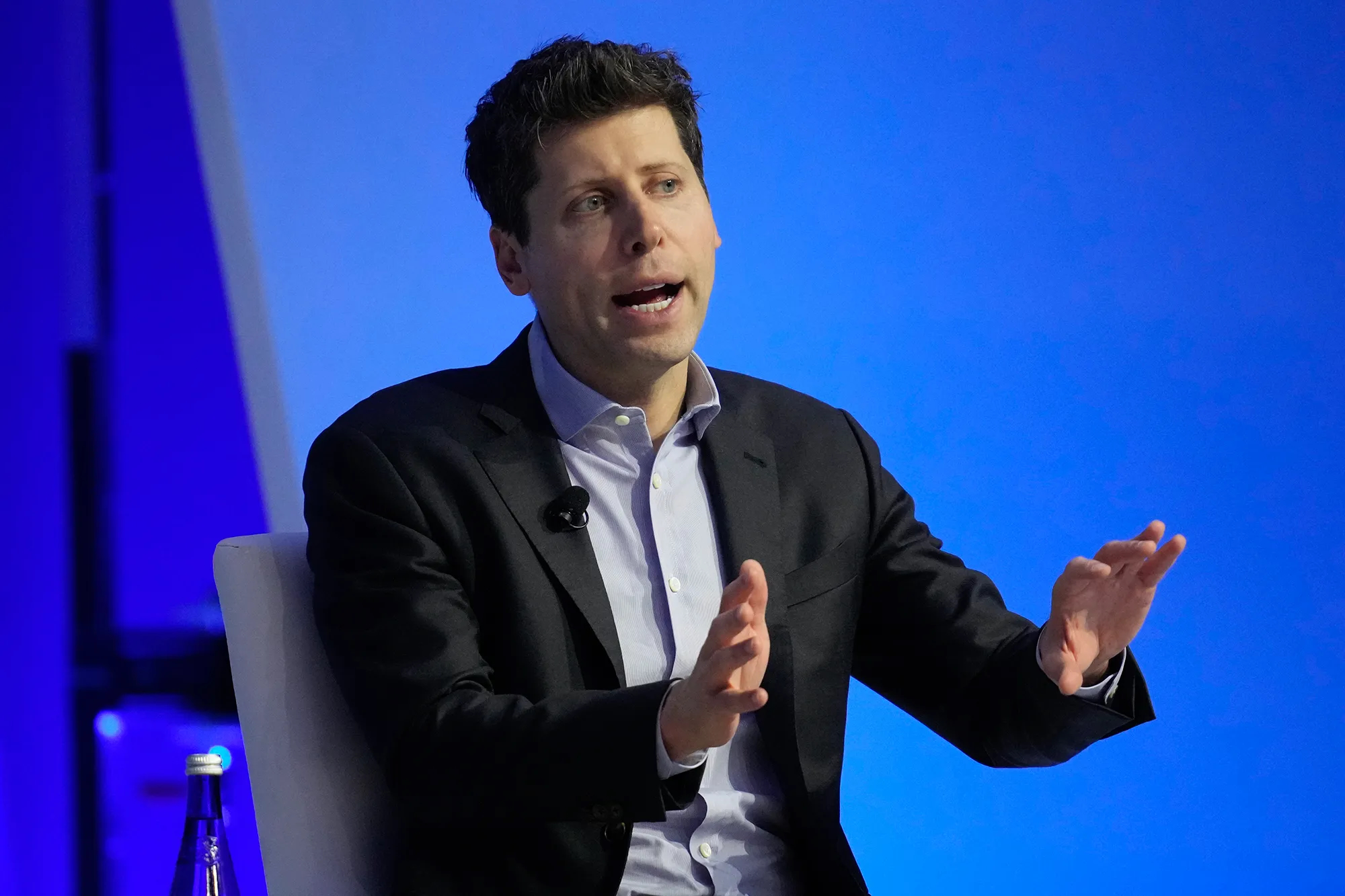
"caption": "OpenAI restructured to a for-profit company in a move tied to an agreement with California Attorney General Rob Bonta. Company CEO Sam Altman participates in a discussion in San Francisco on Nov. 16, 2023.",
"credit": "Photo by Eric Risberg, AP Photo",
"altTag": null,
"description": null,
"imgSizes": {
"thumbnail": {
"file": "https://cdn.kqed.org/wp-content/uploads/sites/10/2025/10/111623_Sam-Altman_AP_CM_01-160x107.jpeg",
"width": 160,
"height": 107,
"mimeType": "image/jpeg"
},
"1536x1536": {
"file": "https://cdn.kqed.org/wp-content/uploads/sites/10/2025/10/111623_Sam-Altman_AP_CM_01-1536x1024.jpeg",
"width": 1536,
"height": 1024,
"mimeType": "image/jpeg"
},
"post-thumbnail": {
"file": "https://cdn.kqed.org/wp-content/uploads/sites/10/2025/10/111623_Sam-Altman_AP_CM_01-672x372.jpeg",
"width": 672,
"height": 372,
"mimeType": "image/jpeg"
},
"twentyfourteen-full-width": {
"file": "https://cdn.kqed.org/wp-content/uploads/sites/10/2025/10/111623_Sam-Altman_AP_CM_01-1038x576.jpeg",
"width": 1038,
"height": 576,
"mimeType": "image/jpeg"
},
"npr-cds-wide": {
"file": "https://cdn.kqed.org/wp-content/uploads/sites/10/2025/10/111623_Sam-Altman_AP_CM_01-1200x675.jpeg",
"width": 1200,
"height": 675,
"mimeType": "image/jpeg"
},
"kqedFullSize": {
"file": "https://cdn.kqed.org/wp-content/uploads/sites/10/2025/10/111623_Sam-Altman_AP_CM_01.jpeg",
"width": 2000,
"height": 1333
}
},
"isLoading": false,
"fetchFailed": false
},
"news_12062531": {
"type": "attachments",
"id": "news_12062531",
"meta": {
"index": "attachments_1716263798",
"site": "news",
"id": "12062531",
"found": true
},
"title": "Calmatters_Hed",
"publishDate": 1761936540,
"status": "inherit",
"parent": 12062527,
"modified": 1761937488,
"caption": "A collection of photos show efforts for and against the passage of Prop 50, which would allow California to legislatively redraw congressional district maps.",
"credit": "Gabriel Hongsdusit/CalMatters",
"altTag": null,
"description": null,
"imgSizes": {
"thumbnail": {
"file": "https://cdn.kqed.org/wp-content/uploads/sites/10/2025/10/Calmatters_Hed-160x107.jpg",
"width": 160,
"height": 107,
"mimeType": "image/jpeg"
},
"1536x1536": {
"file": "https://cdn.kqed.org/wp-content/uploads/sites/10/2025/10/Calmatters_Hed-1536x1024.jpg",
"width": 1536,
"height": 1024,
"mimeType": "image/jpeg"
},
"post-thumbnail": {
"file": "https://cdn.kqed.org/wp-content/uploads/sites/10/2025/10/Calmatters_Hed-672x372.jpg",
"width": 672,
"height": 372,
"mimeType": "image/jpeg"
},
"twentyfourteen-full-width": {
"file": "https://cdn.kqed.org/wp-content/uploads/sites/10/2025/10/Calmatters_Hed-1038x576.jpg",
"width": 1038,
"height": 576,
"mimeType": "image/jpeg"
},
"npr-cds-wide": {
"file": "https://cdn.kqed.org/wp-content/uploads/sites/10/2025/10/Calmatters_Hed-1200x675.jpg",
"width": 1200,
"height": 675,
"mimeType": "image/jpeg"
},
"kqedFullSize": {
"file": "https://cdn.kqed.org/wp-content/uploads/sites/10/2025/10/Calmatters_Hed.jpg",
"width": 2000,
"height": 1333
}
},
"isLoading": false,
"fetchFailed": false
},
"news_12061954": {
"type": "attachments",
"id": "news_12061954",
"meta": {
"index": "attachments_1716263798",
"site": "news",
"id": "12061954",
"found": true
},
"title": "CaliforniaDivided3",
"publishDate": 1761692545,
"status": "inherit",
"parent": 12061715,
"modified": 1761692587,
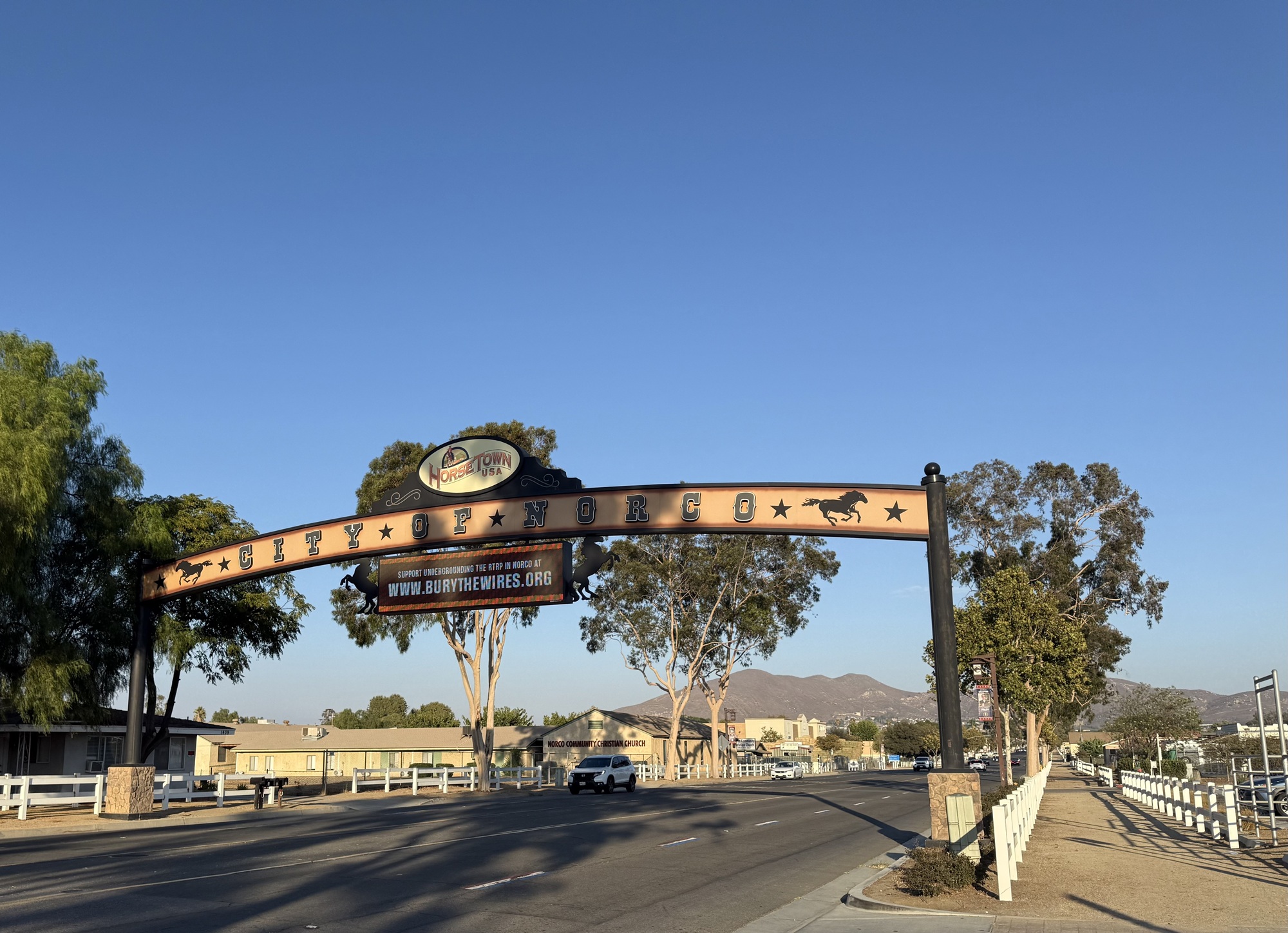
"caption": "The city of Norco’s Main Street — which boasts a “Horsetown, USA” sign in addition to horse trails instead of sidewalks — is seen on Oct. 8, 2025.",
"credit": "Madison Aument/KVCR",
"altTag": null,
"description": null,
"imgSizes": {
"thumbnail": {
"file": "https://cdn.kqed.org/wp-content/uploads/sites/10/2025/10/CaliforniaDivided3-160x116.jpg",
"width": 160,
"height": 116,
"mimeType": "image/jpeg"
},
"1536x1536": {
"file": "https://cdn.kqed.org/wp-content/uploads/sites/10/2025/10/CaliforniaDivided3-1536x1112.jpg",
"width": 1536,
"height": 1112,
"mimeType": "image/jpeg"
},
"post-thumbnail": {
"file": "https://cdn.kqed.org/wp-content/uploads/sites/10/2025/10/CaliforniaDivided3-672x372.jpg",
"width": 672,
"height": 372,
"mimeType": "image/jpeg"
},
"twentyfourteen-full-width": {
"file": "https://cdn.kqed.org/wp-content/uploads/sites/10/2025/10/CaliforniaDivided3-1038x576.jpg",
"width": 1038,
"height": 576,
"mimeType": "image/jpeg"
},
"npr-cds-wide": {
"file": "https://cdn.kqed.org/wp-content/uploads/sites/10/2025/10/CaliforniaDivided3-1600x900.jpg",
"width": 1600,
"height": 900,
"mimeType": "image/jpeg"
},
"kqedFullSize": {
"file": "https://cdn.kqed.org/wp-content/uploads/sites/10/2025/10/CaliforniaDivided3.jpg",
"width": 2000,
"height": 1448
}
},
"isLoading": false,
"fetchFailed": false
},
"news_12062153": {
"type": "attachments",
"id": "news_12062153",
"meta": {
"index": "attachments_1716263798",
"site": "news",
"id": "12062153",
"found": true
},
"title": "US Election 2025 Redistricting California",
"publishDate": 1761777442,
"status": "inherit",
"parent": 12062049,
"modified": 1761777504,
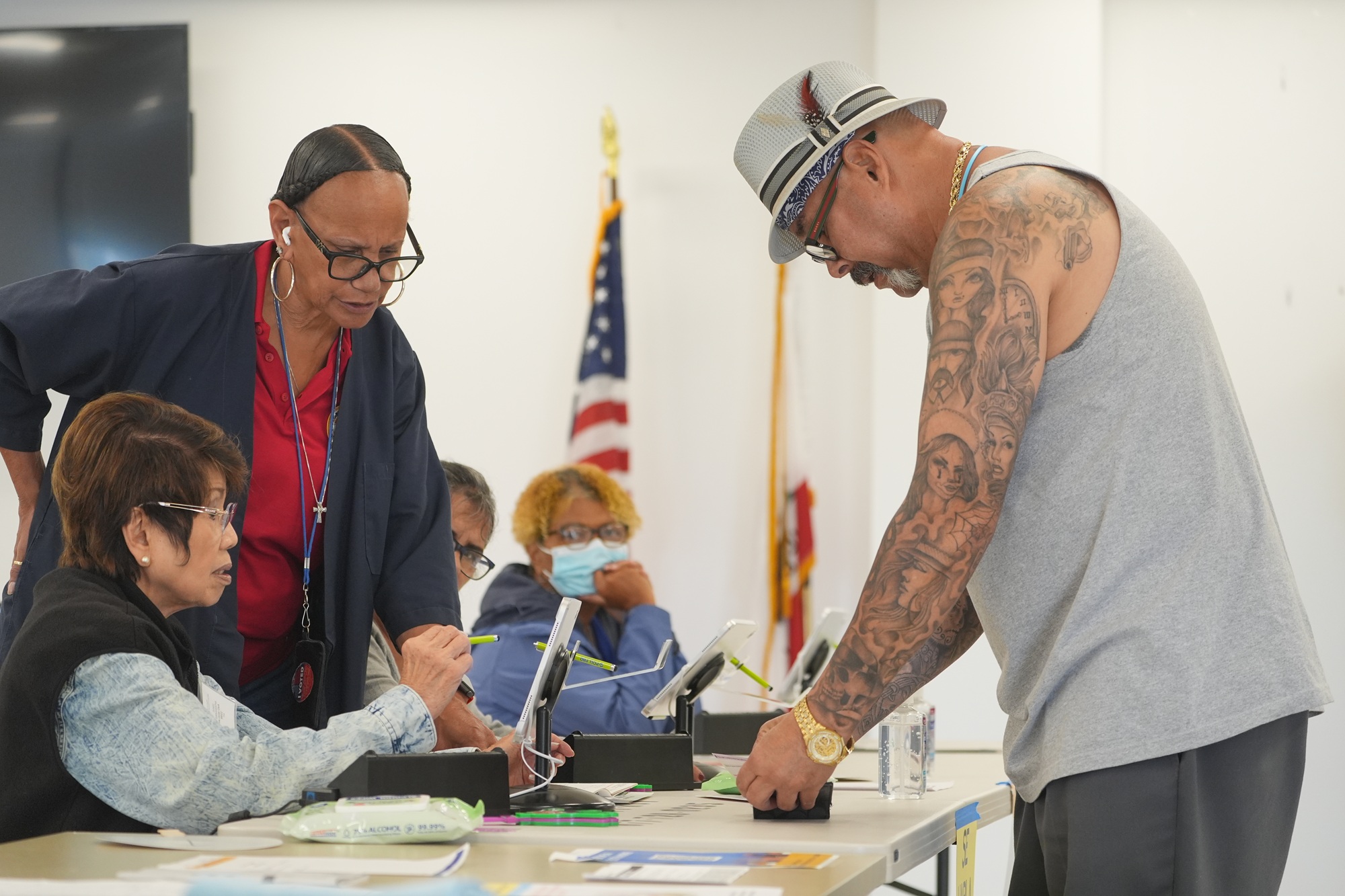
"caption": "Los Angeles County Election officials assist first-time voter Robert Conejo, right, as he votes in person on California's Proposition 50 election on Wednesday, Oct. 29, 2025, at the Los Angeles County Registrar-Recorder's headquarters in Norwalk, California. ",
"credit": "Damian Dovarganes/AP Photo",
"altTag": null,
"description": null,
"imgSizes": {
"thumbnail": {
"file": "https://cdn.kqed.org/wp-content/uploads/sites/10/2025/10/Prop50APPhoto-160x107.jpg",
"width": 160,
"height": 107,
"mimeType": "image/jpeg"
},
"1536x1536": {
"file": "https://cdn.kqed.org/wp-content/uploads/sites/10/2025/10/Prop50APPhoto-1536x1024.jpg",
"width": 1536,
"height": 1024,
"mimeType": "image/jpeg"
},
"post-thumbnail": {
"file": "https://cdn.kqed.org/wp-content/uploads/sites/10/2025/10/Prop50APPhoto-672x372.jpg",
"width": 672,
"height": 372,
"mimeType": "image/jpeg"
},
"twentyfourteen-full-width": {
"file": "https://cdn.kqed.org/wp-content/uploads/sites/10/2025/10/Prop50APPhoto-1038x576.jpg",
"width": 1038,
"height": 576,
"mimeType": "image/jpeg"
},
"npr-cds-wide": {
"file": "https://cdn.kqed.org/wp-content/uploads/sites/10/2025/10/Prop50APPhoto-1600x900.jpg",
"width": 1600,
"height": 900,
"mimeType": "image/jpeg"
},
"kqedFullSize": {
"file": "https://cdn.kqed.org/wp-content/uploads/sites/10/2025/10/Prop50APPhoto.jpg",
"width": 2000,
"height": 1333
}
},
"isLoading": false,
"fetchFailed": false
},
"news_12061714": {
"type": "attachments",
"id": "news_12061714",
"meta": {
"index": "attachments_1716263798",
"site": "news",
"id": "12061714",
"found": true
},
"title": "IMG_1209",
"publishDate": 1761595082,
"status": "inherit",
"parent": 0,
"modified": 1761595254,
"caption": "An unprecedented proposal to update California's Congressional Districts could change the Golden State's political lines from Modoc County down to San Diego.",
"credit": "Anna Vignet/KQED",
"altTag": null,
"description": null,
"imgSizes": {
"medium": {
"file": "https://cdn.kqed.org/wp-content/uploads/sites/10/2025/10/IMG_1209-2000x1500.jpg",
"width": 2000,
"height": 1500,
"mimeType": "image/jpeg"
},
"large": {
"file": "https://cdn.kqed.org/wp-content/uploads/sites/10/2025/10/IMG_1209-2000x1500.jpg",
"width": 2000,
"height": 1500,
"mimeType": "image/jpeg"
},
"thumbnail": {
"file": "https://cdn.kqed.org/wp-content/uploads/sites/10/2025/10/IMG_1209-160x120.jpg",
"width": 160,
"height": 120,
"mimeType": "image/jpeg"
},
"1536x1536": {
"file": "https://cdn.kqed.org/wp-content/uploads/sites/10/2025/10/IMG_1209-1536x1152.jpg",
"width": 1536,
"height": 1152,
"mimeType": "image/jpeg"
},
"2048x2048": {
"file": "https://cdn.kqed.org/wp-content/uploads/sites/10/2025/10/IMG_1209-2048x1536.jpg",
"width": 2048,
"height": 1536,
"mimeType": "image/jpeg"
},
"post-thumbnail": {
"file": "https://cdn.kqed.org/wp-content/uploads/sites/10/2025/10/IMG_1209-672x372.jpg",
"width": 672,
"height": 372,
"mimeType": "image/jpeg"
},
"twentyfourteen-full-width": {
"file": "https://cdn.kqed.org/wp-content/uploads/sites/10/2025/10/IMG_1209-1038x576.jpg",
"width": 1038,
"height": 576,
"mimeType": "image/jpeg"
},
"full-width": {
"file": "https://cdn.kqed.org/wp-content/uploads/sites/10/2025/10/IMG_1209-2000x1500.jpg",
"width": 2000,
"height": 1500,
"mimeType": "image/jpeg"
},
"npr-cds-wide": {
"file": "https://cdn.kqed.org/wp-content/uploads/sites/10/2025/10/IMG_1209-1600x900.jpg",
"width": 1600,
"height": 900,
"mimeType": "image/jpeg"
},
"kqedFullSize": {
"file": "https://cdn.kqed.org/wp-content/uploads/sites/10/2025/10/IMG_1209.jpg",
"width": 2560,
"height": 1920
}
},
"isLoading": false,
"fetchFailed": false
},
"news_12061726": {
"type": "attachments",
"id": "news_12061726",
"meta": {
"index": "attachments_1716263798",
"site": "news",
"id": "12061726",
"found": true
},
"title": "060722-Sac-County-Voter-Registrar-MG-CM-02",
"publishDate": 1761598711,
"status": "inherit",
"parent": 12061723,
"modified": 1761599877,
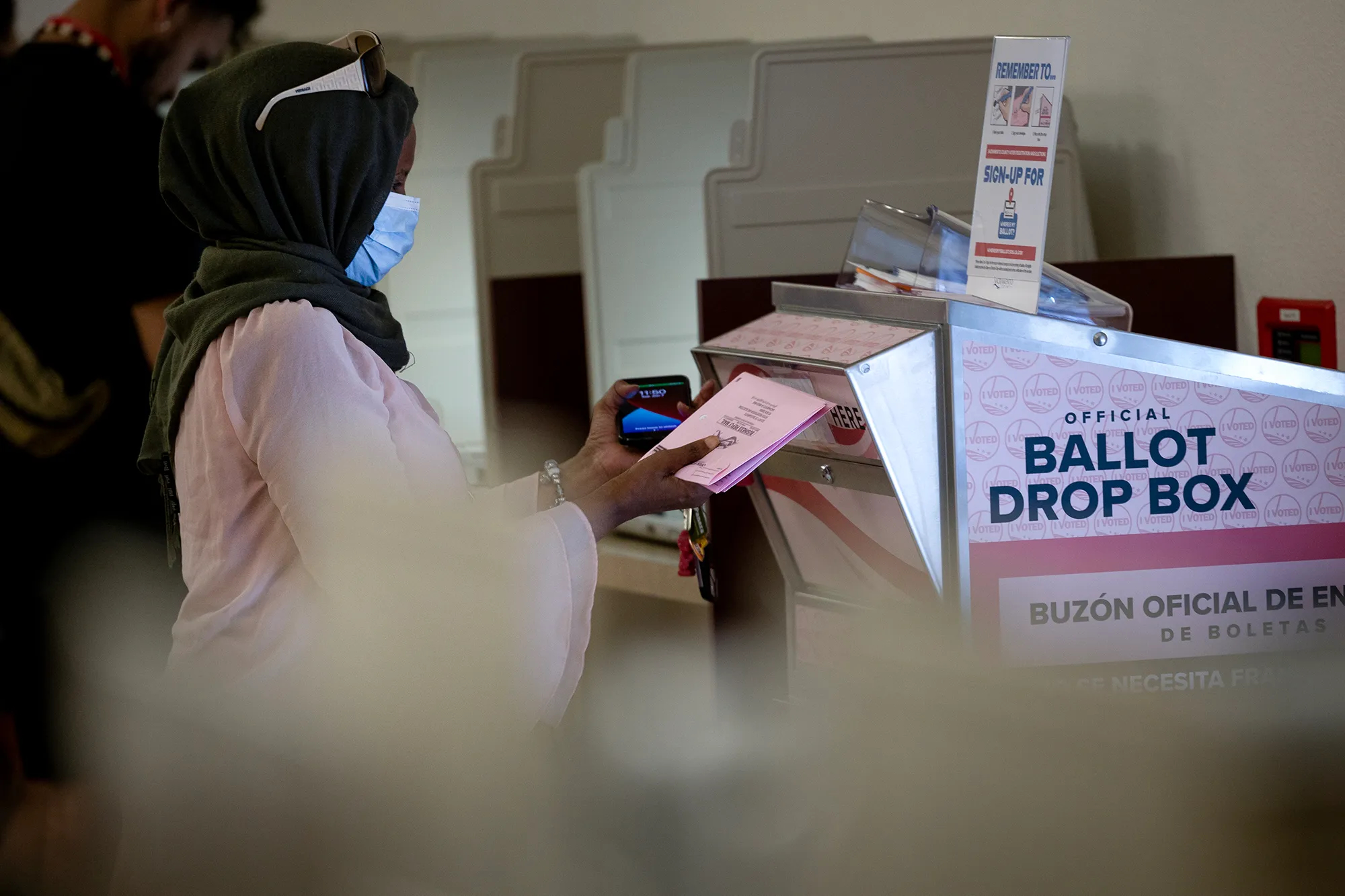
"caption": "Voters cast their ballots at the Sacramento County Registrar of Voters office in Sacramento on June 7, 2022.",
"credit": "Miguel Gutierrez Jr./CalMatters",
"altTag": null,
"description": null,
"imgSizes": {
"thumbnail": {
"file": "https://cdn.kqed.org/wp-content/uploads/sites/10/2025/10/060722-Sac-County-Voter-Registrar-MG-CM-02-160x107.jpeg",
"width": 160,
"height": 107,
"mimeType": "image/jpeg"
},
"1536x1536": {
"file": "https://cdn.kqed.org/wp-content/uploads/sites/10/2025/10/060722-Sac-County-Voter-Registrar-MG-CM-02-1536x1024.jpeg",
"width": 1536,
"height": 1024,
"mimeType": "image/jpeg"
},
"post-thumbnail": {
"file": "https://cdn.kqed.org/wp-content/uploads/sites/10/2025/10/060722-Sac-County-Voter-Registrar-MG-CM-02-672x372.jpeg",
"width": 672,
"height": 372,
"mimeType": "image/jpeg"
},
"twentyfourteen-full-width": {
"file": "https://cdn.kqed.org/wp-content/uploads/sites/10/2025/10/060722-Sac-County-Voter-Registrar-MG-CM-02-1038x576.jpeg",
"width": 1038,
"height": 576,
"mimeType": "image/jpeg"
},
"npr-cds-wide": {
"file": "https://cdn.kqed.org/wp-content/uploads/sites/10/2025/10/060722-Sac-County-Voter-Registrar-MG-CM-02-1600x900.jpeg",
"width": 1600,
"height": 900,
"mimeType": "image/jpeg"
},
"kqedFullSize": {
"file": "https://cdn.kqed.org/wp-content/uploads/sites/10/2025/10/060722-Sac-County-Voter-Registrar-MG-CM-02.jpeg",
"width": 2000,
"height": 1333
}
},
"isLoading": false,
"fetchFailed": false
},
"news_12061520": {
"type": "attachments",
"id": "news_12061520",
"meta": {
"index": "attachments_1716263798",
"site": "news",
"id": "12061520",
"found": true
},
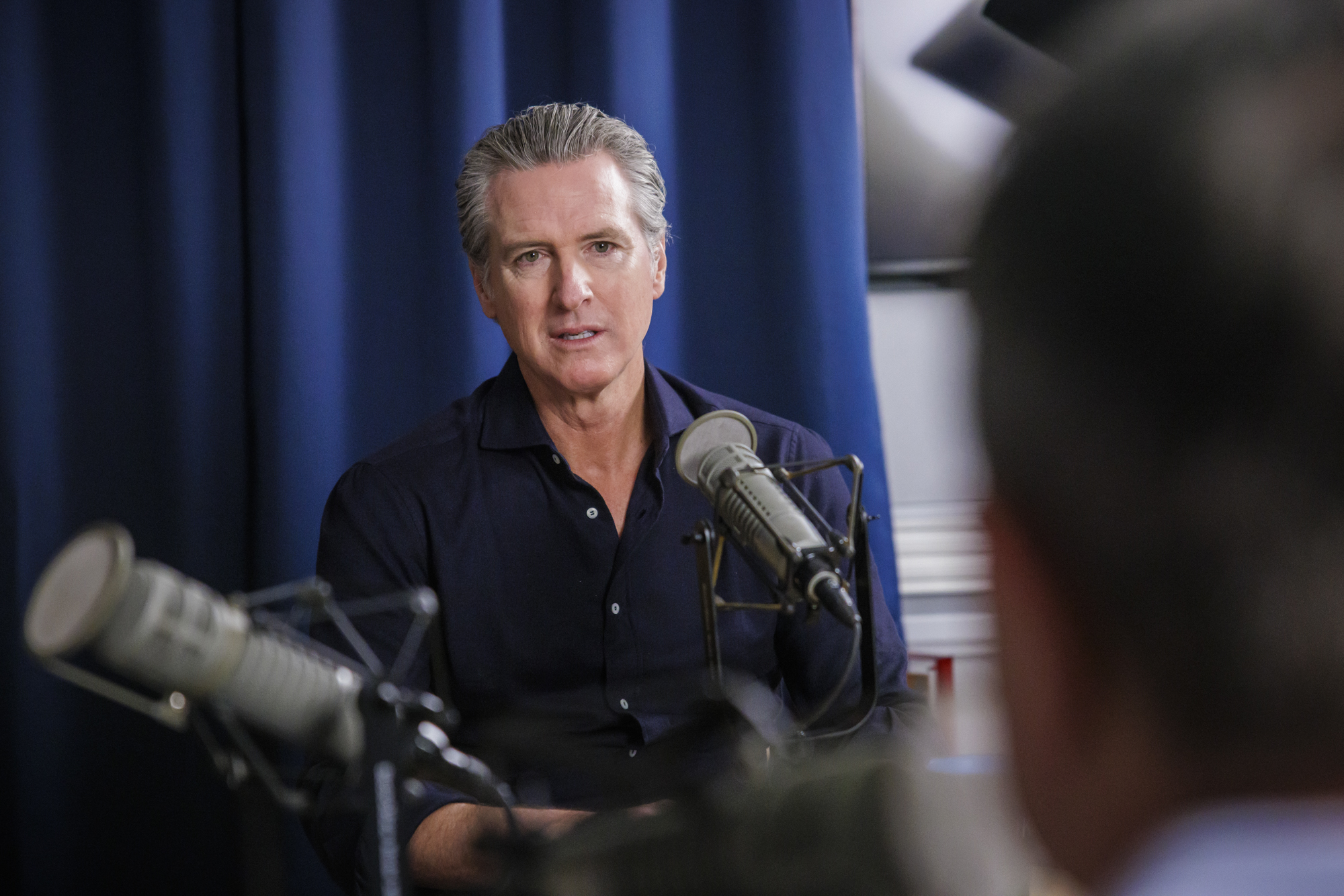
"title": "Gov. Gavin Newsom at KQED in San Francisco on Oct. 24, 2025.",
"publishDate": 1761332582,
"status": "inherit",
"parent": 0,
"modified": 1761332612,
"caption": "Gov. Gavin Newsom at KQED in San Francisco on Oct. 24, 2025.",
"credit": "Martin do Nascimento/KQED",
"altTag": null,
"description": null,
"imgSizes": {
"thumbnail": {
"file": "https://cdn.kqed.org/wp-content/uploads/sites/10/2025/10/251024-NEWSOM-ON-PB-MD-04-KQED-160x107.jpg",
"width": 160,
"height": 107,
"mimeType": "image/jpeg"
},
"1536x1536": {
"file": "https://cdn.kqed.org/wp-content/uploads/sites/10/2025/10/251024-NEWSOM-ON-PB-MD-04-KQED-1536x1025.jpg",
"width": 1536,
"height": 1025,
"mimeType": "image/jpeg"
},
"post-thumbnail": {
"file": "https://cdn.kqed.org/wp-content/uploads/sites/10/2025/10/251024-NEWSOM-ON-PB-MD-04-KQED-672x372.jpg",
"width": 672,
"height": 372,
"mimeType": "image/jpeg"
},
"twentyfourteen-full-width": {
"file": "https://cdn.kqed.org/wp-content/uploads/sites/10/2025/10/251024-NEWSOM-ON-PB-MD-04-KQED-1038x576.jpg",
"width": 1038,
"height": 576,
"mimeType": "image/jpeg"
},
"npr-cds-wide": {
"file": "https://cdn.kqed.org/wp-content/uploads/sites/10/2025/10/251024-NEWSOM-ON-PB-MD-04-KQED-1600x900.jpg",
"width": 1600,
"height": 900,
"mimeType": "image/jpeg"
},
"kqedFullSize": {
"file": "https://cdn.kqed.org/wp-content/uploads/sites/10/2025/10/251024-NEWSOM-ON-PB-MD-04-KQED.jpg",
"width": 2000,
"height": 1334
}
},
"isLoading": false,
"fetchFailed": false
},
"news_12061658": {
"type": "attachments",
"id": "news_12061658",
"meta": {
"index": "attachments_1716263798",
"site": "news",
"id": "12061658",
"found": true
},
"title": "072419-Rural-Doctor-AW-CM-10_scr",
"publishDate": 1761398405,
"status": "inherit",
"parent": 12061653,
"modified": 1761398442,
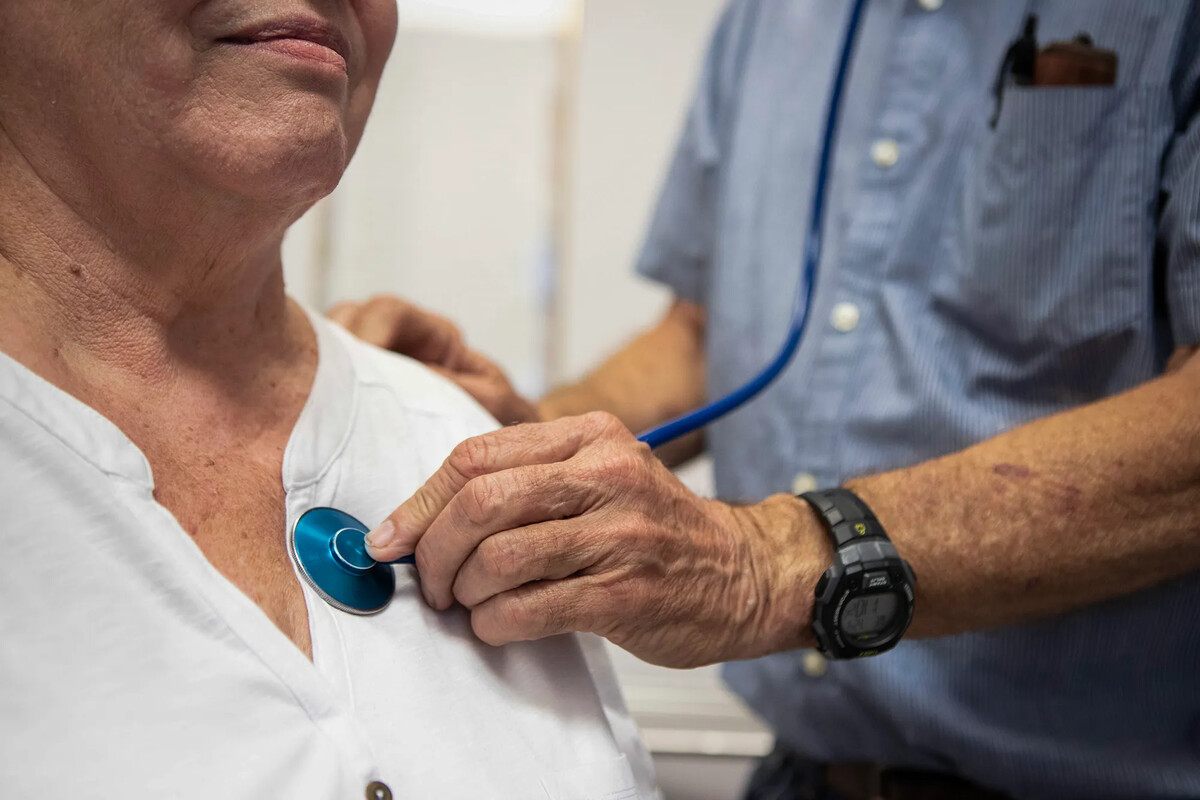
"caption": "A doctor listens to a patient's heartbeat at the Mountain Valley Health Center in Bieber on July 24, 2019. ",
"credit": "Anne Wernikoff for CalMatters",
"altTag": null,
"description": null,
"imgSizes": {
"thumbnail": {
"file": "https://cdn.kqed.org/wp-content/uploads/sites/10/2025/10/072419-Rural-Doctor-AW-CM-10_scr-160x107.jpg",
"width": 160,
"height": 107,
"mimeType": "image/jpeg"
},
"post-thumbnail": {
"file": "https://cdn.kqed.org/wp-content/uploads/sites/10/2025/10/072419-Rural-Doctor-AW-CM-10_scr-672x372.jpg",
"width": 672,
"height": 372,
"mimeType": "image/jpeg"
},
"twentyfourteen-full-width": {
"file": "https://cdn.kqed.org/wp-content/uploads/sites/10/2025/10/072419-Rural-Doctor-AW-CM-10_scr-1038x576.jpg",
"width": 1038,
"height": 576,
"mimeType": "image/jpeg"
},
"kqedFullSize": {
"file": "https://cdn.kqed.org/wp-content/uploads/sites/10/2025/10/072419-Rural-Doctor-AW-CM-10_scr.jpg",
"width": 1200,
"height": 800
}
},
"isLoading": false,
"fetchFailed": false
}
},
"audioPlayerReducer": {
"postId": "stream_live",
"isPaused": true,
"isPlaying": false,
"pfsActive": false,
"pledgeModalIsOpen": true,
"playerDrawerIsOpen": false,
"liveAudioPlayStartedAt": 0,
"liveAudioPlayContext": ""
},
"authorsReducer": {
"byline_news_12062523": {
"type": "authors",
"id": "byline_news_12062523",
"meta": {
"override": true
},
"slug": "byline_news_12062523",
"name": "Khari Johnson and Levi Sumagaysay, CalMatters",
"isLoading": false
},
"byline_news_12062527": {
"type": "authors",
"id": "byline_news_12062527",
"meta": {
"override": true
},
"slug": "byline_news_12062527",
"name": "Jeremia Kimelman, CalMatters",
"isLoading": false
},
"byline_news_12061715": {
"type": "authors",
"id": "byline_news_12061715",
"meta": {
"override": true
},
"slug": "byline_news_12061715",
"name": "The California Newsroom",
"isLoading": false
},
"byline_news_12061723": {
"type": "authors",
"id": "byline_news_12061723",
"meta": {
"override": true
},
"slug": "byline_news_12061723",
"name": "Maya C. Miller, CalMatters",
"isLoading": false
},
"byline_news_12061653": {
"type": "authors",
"id": "byline_news_12061653",
"meta": {
"override": true
},
"slug": "byline_news_12061653",
"name": "Kristen Hwang, CalMatters",
"isLoading": false
},
"mlagos": {
"type": "authors",
"id": "3239",
"meta": {
"index": "authors_1716337520",
"id": "3239",
"found": true
},
"name": "Marisa Lagos",
"firstName": "Marisa",
"lastName": "Lagos",
"slug": "mlagos",
"email": "mlagos@kqed.org",
"display_author_email": false,
"staff_mastheads": [
"news"
],
"title": "KQED Contributor",
"bio": "Marisa Lagos is a correspondent for KQED’s California Politics and Government Desk and co-hosts the award-winning show and podcast, Political Breakdown. At KQED, Lagos also conducts reporting, analysis and investigations into state, local and national politics for radio, TV, online and onstage. In 2022, she and co-host, Scott Shafer, moderated the only gubernatorial debate in California. In 2020, the \u003ci>Washington Post\u003c/i> named her one of the top political journalists in California; she was nominated for a Peabody and won several other awards for her work investigating the 2017 California wildfires. She has worked at the \u003ci>San Francisco Chronicle\u003c/i>, \u003ci>San Francisco Examiner\u003c/i> and \u003ci>Los Angeles Times\u003c/i>. A UC Santa Barbara graduate, she lives in San Francisco with her two sons and husband.",
"avatar": "https://secure.gravatar.com/avatar/a261a0d3696fc066871ef96b85b5e7d2?s=600&d=blank&r=g",
"twitter": "@mlagos",
"facebook": null,
"instagram": null,
"linkedin": null,
"sites": [
{
"site": "arts",
"roles": [
"author"
]
},
{
"site": "news",
"roles": [
"editor"
]
},
{
"site": "science",
"roles": [
"editor"
]
},
{
"site": "forum",
"roles": [
"author"
]
},
{
"site": "liveblog",
"roles": [
"author"
]
}
],
"headData": {
"title": "Marisa Lagos | KQED",
"description": "KQED Contributor",
"ogImgSrc": "https://secure.gravatar.com/avatar/a261a0d3696fc066871ef96b85b5e7d2?s=600&d=blank&r=g",
"twImgSrc": "https://secure.gravatar.com/avatar/a261a0d3696fc066871ef96b85b5e7d2?s=600&d=blank&r=g"
},
"isLoading": false,
"link": "/author/mlagos"
},
"ecruzguevarra": {
"type": "authors",
"id": "8654",
"meta": {
"index": "authors_1716337520",
"id": "8654",
"found": true
},
"name": "Ericka Cruz Guevarra",
"firstName": "Ericka",
"lastName": "Cruz Guevarra",
"slug": "ecruzguevarra",
"email": "ecruzguevarra@kqed.org",
"display_author_email": true,
"staff_mastheads": [
"news"
],
"title": "Producer, The Bay Podcast",
"bio": "Ericka Cruz Guevarra is host of \u003ca href=\"https://www.kqed.org/podcasts/thebay\">\u003cem>The Bay\u003c/em>\u003c/a> podcast at KQED. Before host, she was the show’s producer. Her work in that capacity includes a three-part reported series on policing in Vallejo, which won a 2020 excellence in journalism award from the Society of Professional Journalists. Ericka has worked as a breaking news reporter at Oregon Public Broadcasting, helped produce the Code Switch podcast, and was KQED’s inaugural Raul Ramirez Diversity Fund intern. She’s also an alumna of NPR’s Next Generation Radio program. Send her an email if you have strong feelings about whether Fairfield and Suisun City are the Bay. Ericka is represented by SAG-AFTRA.",
"avatar": "https://secure.gravatar.com/avatar/accefc1de4bafc7e234b69bcb9b6f6536c130fd84709bc3069ef11a78787e1bb?s=600&d=blank&r=g",
"twitter": "NotoriousECG",
"bluesky": null,
"facebook": null,
"instagram": null,
"linkedin": null,
"sites": [
{
"site": "arts",
"roles": [
"subscriber"
]
},
{
"site": "news",
"roles": [
"editor",
"manage_categories"
]
},
{
"site": "futureofyou",
"roles": [
"subscriber"
]
},
{
"site": "stateofhealth",
"roles": [
"subscriber"
]
},
{
"site": "science",
"roles": [
"editor"
]
},
{
"site": "forum",
"roles": [
"subscriber"
]
}
],
"headData": {
"title": "Ericka Cruz Guevarra | KQED",
"description": "Producer, The Bay Podcast",
"ogImgSrc": "https://secure.gravatar.com/avatar/accefc1de4bafc7e234b69bcb9b6f6536c130fd84709bc3069ef11a78787e1bb?s=600&d=blank&r=g",
"twImgSrc": "https://secure.gravatar.com/avatar/accefc1de4bafc7e234b69bcb9b6f6536c130fd84709bc3069ef11a78787e1bb?s=600&d=blank&r=g"
},
"isLoading": false,
"link": "/author/ecruzguevarra"
},
"adahlstromeckman": {
"type": "authors",
"id": "11785",
"meta": {
"index": "authors_1716337520",
"id": "11785",
"found": true
},
"name": "Azul Dahlstrom-Eckman",
"firstName": "Azul",
"lastName": "Dahlstrom-Eckman",
"slug": "adahlstromeckman",
"email": "adahlstrom-eckman@kqed.org",
"display_author_email": true,
"staff_mastheads": [],
"title": "Reporter",
"bio": "Azul is a reporter for KQED focusing on transportation and features. He joined KQED in 2021 as an alumna of KALW's Audio Academy radio journalism training program.",
"avatar": "https://secure.gravatar.com/avatar/9cb750298435add7815a777f55bf1f46845c1386bb8452555c60a7b820b5aba3?s=600&d=blank&r=g",
"twitter": "@zuliemann",
"bluesky": "@azul415.bsky.social",
"facebook": null,
"instagram": null,
"linkedin": null,
"sites": [
{
"site": "arts",
"roles": [
"editor"
]
},
{
"site": "news",
"roles": [
"editor"
]
},
{
"site": "science",
"roles": [
"editor"
]
},
{
"site": "liveblog",
"roles": [
"author"
]
}
],
"headData": {
"title": "Azul Dahlstrom-Eckman | KQED",
"description": "Reporter",
"ogImgSrc": "https://secure.gravatar.com/avatar/9cb750298435add7815a777f55bf1f46845c1386bb8452555c60a7b820b5aba3?s=600&d=blank&r=g",
"twImgSrc": "https://secure.gravatar.com/avatar/9cb750298435add7815a777f55bf1f46845c1386bb8452555c60a7b820b5aba3?s=600&d=blank&r=g"
},
"isLoading": false,
"link": "/author/adahlstromeckman"
},
"bsiavoshy": {
"type": "authors",
"id": "11890",
"meta": {
"index": "authors_1716337520",
"id": "11890",
"found": true
},
"name": "Bejan Siavoshy",
"firstName": "Bejan",
"lastName": "Siavoshy",
"slug": "bsiavoshy",
"email": "bsiavoshy@kqed.org",
"display_author_email": false,
"staff_mastheads": [],
"title": "KQED Contributor",
"bio": null,
"avatar": "https://secure.gravatar.com/avatar/ead3e7c509634b37a73b1f57677e49f9?s=600&d=blank&r=g",
"twitter": null,
"facebook": null,
"instagram": null,
"linkedin": null,
"sites": [
{
"site": "news",
"roles": [
"editor"
]
}
],
"headData": {
"title": "Bejan Siavoshy | KQED",
"description": "KQED Contributor",
"ogImgSrc": "https://secure.gravatar.com/avatar/ead3e7c509634b37a73b1f57677e49f9?s=600&d=blank&r=g",
"twImgSrc": "https://secure.gravatar.com/avatar/ead3e7c509634b37a73b1f57677e49f9?s=600&d=blank&r=g"
},
"isLoading": false,
"link": "/author/bsiavoshy"
},
"kdebenedetti": {
"type": "authors",
"id": "11913",
"meta": {
"index": "authors_1716337520",
"id": "11913",
"found": true
},
"name": "Katie DeBenedetti",
"firstName": "Katie",
"lastName": "DeBenedetti",
"slug": "kdebenedetti",
"email": "kdebenedetti@kqed.org",
"display_author_email": false,
"staff_mastheads": [
"news",
"science"
],
"title": "KQED Contributor",
"bio": "Katie DeBenedetti is a digital reporter covering daily news for the Express Desk. Prior to joining KQED as a culture reporting intern in January 2024, she covered education and city government for the Napa Valley Register.",
"avatar": "https://secure.gravatar.com/avatar/6e31073cb8f7e4214ab03f42771d0f45?s=600&d=blank&r=g",
"twitter": null,
"facebook": null,
"instagram": null,
"linkedin": null,
"sites": [
{
"site": "news",
"roles": [
"author"
]
},
{
"site": "science",
"roles": [
"author"
]
},
{
"site": "liveblog",
"roles": [
"author"
]
}
],
"headData": {
"title": "Katie DeBenedetti | KQED",
"description": "KQED Contributor",
"ogImgSrc": "https://secure.gravatar.com/avatar/6e31073cb8f7e4214ab03f42771d0f45?s=600&d=blank&r=g",
"twImgSrc": "https://secure.gravatar.com/avatar/6e31073cb8f7e4214ab03f42771d0f45?s=600&d=blank&r=g"
},
"isLoading": false,
"link": "/author/kdebenedetti"
}
},
"pagesReducer": {
"news_tag_gavin-newsom": {
"type": "terms",
"id": "news_16",
"meta": {
"index": "terms_1716263798",
"site": "news",
"id": "16",
"score": 8.936871
},
"featImg": null,
"name": "Gavin Newsom",
"description": null,
"taxonomy": "tag",
"headData": {
"twImgId": null,
"twTitle": null,
"ogTitle": null,
"ogImgId": null,
"twDescription": null,
"description": null,
"title": "Gavin Newsom Archives | KQED News",
"ogDescription": null
},
"ttid": 16,
"slug": "gavin-newsom",
"isLoading": false,
"title": "Gavin Newsom",
"pageMeta": {
"site": "news",
"WpPageTemplate": "page-topic-editorial",
"currentPage": 9
},
"blocks": [
{
"blockName": "kqed/post-list",
"attrs": {
"layout": "cardArticle2",
"query": "posts/news?tag=gavin-newsom",
"seeMore": false,
"paginated": true,
"page": 9
}
},
{
"blockName": "kqed/ad"
}
]
}
},
"pfsSessionReducer": {},
"postsReducer": {
"stream_live": {
"type": "live",
"id": "stream_live",
"audioUrl": "https://streams.kqed.org/kqedradio",
"title": "Live Stream",
"excerpt": "Live Stream information currently unavailable.",
"link": "/radio",
"featImg": "",
"label": {
"name": "KQED Live",
"link": "/"
}
},
"stream_kqedNewscast": {
"type": "posts",
"id": "stream_kqedNewscast",
"audioUrl": "https://www.kqed.org/.stream/anon/radio/RDnews/newscast.mp3?_=1",
"title": "KQED Newscast",
"featImg": "",
"label": {
"name": "88.5 FM",
"link": "/"
}
},
"news_12063029": {
"type": "posts",
"id": "news_12063029",
"meta": {
"index": "posts_1716263798",
"site": "news",
"id": "12063029",
"score": null,
"sort": [
1762370591000
]
},
"guestAuthors": [],
"slug": "proposition-50-sails-to-a-win-in-californias-special-election",
"title": "Proposition 50 Sails to a Win in California's Special Election",
"publishDate": 1762370591,
"format": "audio",
"headTitle": "Proposition 50 Sails to a Win in California’s Special Election | KQED",
"labelTerm": {},
"content": "\u003cp>\u003cstrong>Here are your headlines for the morning of Wednesday, November 5th, 2025:\u003c/strong>\u003c/p>\n\u003cul>\n\u003cli>California voters pass Proposition 50, setting the state up to redraw its congressional district maps, challenging a move by Texas to redraw its maps to give Republicans an edge in next year’s mid-term elections.\u003c/li>\n\u003cli>California Senator Alex Padilla has squashed any rumors that he has eyes on his state’s Governor’s seat. Yesterday, he announced his intentions not to run in California’s governor’s race in 2026.\u003c/li>\n\u003c/ul>\n\u003cp>\u003ca href=\"https://www.kqed.org/news/12062781/proposition-50-passes-in-california-boosting-democrats-in-fight-for-us-house-control\">\u003cstrong>Voters Approve the Redistricting Measure, Setting Up Bigger Political Battle Next Year\u003c/strong>\u003c/a>\u003c/p>\n\u003cp>Voters in California have passed \u003ca href=\"https://www.kqed.org/proposition-50\">Proposition 50\u003c/a> in yesterday’s special election, approving a measure that would reconfigure the state’s congressional district maps ahead of next year’s mid-term elections.\u003c/p>\n\u003cp>Prop. 50 would sideline the current maps drawn up by the state’s independent redistricting committee starting next year, in favor of maps drawn to potentially hand the Democrats three to five more seats in the House next November.\u003c/p>\n\u003cp>The legislation is one Governor Newsom and Democrats throughout the state started touting \u003ca href=\"https://www.npr.org/2025/09/13/nx-s1-5527103/california-redistricting-ballot-measure-language-texas\">after Texas lawmakers decided to redraw their map\u003c/a> to secure more House seats for the GOP, acquiescing to demands from President Donald Trump.\u003c/p>\n\u003cp>[ad fullwidth]\u003c/p>\n\u003cp>Prop. 50 secured about 64 percent of the vote when the race was called in its favor–although ballots are still being counted. \u003ca href=\"https://www.youtube.com/watch?v=Ct5RlU1HK6Q\">Speaking to the Sacramento press last night\u003c/a>, Gov. Newsom said the win is one for both California and the United States as a whole.\u003c/p>\n\u003cp>“In a 90 day sprint, people from all over the United States of America contributed their voices and their support for this initiative. We stood tall and we stood firm in response to Donald Trump’s recklessness,” the governor said. “And tonight, after poking the bear, this bear roared with an unprecedented turnout, in a special election with an extraordinary result.”\u003c/p>\n\u003cp>He also struck something of a somber tone during last night’s speech, warning that President Trump will try and cast doubt on the results of the election–in an attempt to “rig” next year’s mid-term elections.\u003c/p>\n\u003cp>“Our founding fathers did not live and die to see the kind of vandalism to this Republic and our democracy that Donald Trump is trying to perpetuate,” Newsom said. “We need to see other states, with their remarkable leaders, that have been doing remarkable things, to meet this moment head on as well–to recognize what we are up against in 2026.”\u003c/p>\n\u003cp>\u003c/p>\n\u003cp>Within two hours of California opening its polls yesterday, President Trump said via his Truth Social account that \u003ca href=\"https://www.politico.com/news/2025/11/04/trump-california-mail-in-ballot-policy-under-legal-and-criminal-review-00635096\">Prop. 50 was “a GIANT scam.”\u003c/a> White House Press Secretary, Karoline Leavitt, said later in the day that the administration is exploring an executive order to contest the legitimacy of California’s mail-in ballots.\u003c/p>\n\u003cdiv class=\"post-body\">\n\u003cp>\u003cstrong>\u003ca href=\"https://www.kqed.org/news/12062840/alex-padilla-says-he-wont-run-for-california-governor-in-2026\">Senator Alex Padilla Says He Won’t Jump into 2026 California Governor’s Race\u003c/a>\u003c/strong>\u003c/p>\n\u003c/div>\n\u003cdiv class=\"post-body\">\n\u003cdiv class=\"post-body\">\n\u003cp>Sen. \u003ca href=\"https://www.kqed.org/news/tag/alex-padilla\">Alex Padilla\u003c/a> will not run for \u003ca href=\"https://www.kqed.org/news/tag/california-governor\">California governor\u003c/a>, he said Tuesday, adding that he wants to “stay in this fight” as a member of the U.S. Senate.\u003c/p>\n\u003cp>The decision by Padilla, a former California secretary of state and state lawmaker, ends weeks of speculation that he could shake up the relatively low-key 2026 race to lead the nation’s largest state. Padilla was seen as a strong contender given his strong support from the state’s labor unions, his statewide name recognition and his close relationship with Gov. Gavin Newsom.\u003c/p>\n\u003cp>He is California’s first Latino senator.\u003c/p>\n\u003c/div>\n\u003cdiv class=\"post-body\">\n\u003cp>The move is likely to benefit other Democratic candidates, namely former Rep. Katie Porter, who has led in \u003ca href=\"https://escholarship.org/uc/item/0ph594n5\">early polling\u003c/a> but \u003ca href=\"https://www.kqed.org/news/12059961/katie-porter-apologizes-for-behavior-in-viral-videos-at-first-public-forum\">stumbled last month\u003c/a> after the release of controversial videos. One showed a tense exchange with a reporter; another showed her snapping at a staff member several years ago.\u003c/p>\n\u003c/div>\n\u003c/div>\n\n",
"blocks": [],
"excerpt": null,
"status": "publish",
"parent": 0,
"modified": 1762370591,
"stats": {
"hasAudio": false,
"hasVideo": false,
"hasChartOrMap": false,
"iframeSrcs": [],
"hasGoogleForm": false,
"hasGallery": false,
"hasHearkenModule": false,
"hasPolis": false,
"paragraphCount": 17,
"wordCount": 671
},
"headData": {
"title": "Proposition 50 Sails to a Win in California's Special Election | KQED",
"description": "Here are your headlines for the morning of Wednesday, November 5th, 2025: California voters pass Proposition 50, setting the state up to redraw its congressional district maps, challenging a move by Texas to redraw its maps to give Republicans an edge in next year's mid-term elections. California Senator Alex Padilla has squashed any rumors that he has eyes on his state's Governor's seat. Yesterday, he announced his intentions not to run in California's governor's race in 2026. Voters Approve the Redistricting Measure, Setting Up Bigger Political Battle Next Year Voters in California have passed Proposition 50 in yesterday's special election,",
"ogTitle": "",
"ogDescription": "",
"ogImgId": "",
"twTitle": "",
"twDescription": "",
"twImgId": "",
"schema": {
"@context": "https://schema.org",
"@type": "NewsArticle",
"headline": "Proposition 50 Sails to a Win in California's Special Election",
"datePublished": "2025-11-05T11:23:11-08:00",
"dateModified": "2025-11-05T11:23:11-08:00",
"image": "https://cdn.kqed.org/wp-content/uploads/2020/02/KQED-OG-Image@1x.png",
"isAccessibleForFree": "True",
"publisher": {
"@type": "NewsMediaOrganization",
"@id": "https://www.kqed.org/#organization",
"name": "KQED",
"logo": "https://cdn.kqed.org/wp-content/uploads/2020/02/KQED-OG-Image@1x.png",
"url": "https://www.kqed.org",
"sameAs": [
"https://www.facebook.com/KQED",
"https://twitter.com/KQED",
"https://www.instagram.com/kqed/",
"https://www.tiktok.com/@kqedofficial",
"https://www.linkedin.com/company/kqed",
"https://www.youtube.com/channel/UCeC0IOo7i1P_61zVUWbJ4nw"
]
}
}
},
"primaryCategory": {
"termId": 34018,
"slug": "tcr",
"name": "tcr"
},
"source": "The California Report",
"sourceUrl": "https://www.kqed.org/news/tag/tcrarchive/",
"audioUrl": "https://www.podtrac.com/pts/redirect.mp3/chrt.fm/track/G6C7C3/traffic.megaphone.fm/KQINC5049292470.mp3?updated=1762370268",
"sticky": false,
"nprStoryId": "kqed-12063029",
"templateType": "standard",
"featuredImageType": "standard",
"excludeFromSiteSearch": "Include",
"articleAge": "0",
"path": "/news/12063029/proposition-50-sails-to-a-win-in-californias-special-election",
"audioTrackLength": null,
"parsedContent": [
{
"type": "contentString",
"content": "\u003cdiv class=\"post-body\">\u003cp>\u003cp>\u003cstrong>Here are your headlines for the morning of Wednesday, November 5th, 2025:\u003c/strong>\u003c/p>\n\u003cul>\n\u003cli>California voters pass Proposition 50, setting the state up to redraw its congressional district maps, challenging a move by Texas to redraw its maps to give Republicans an edge in next year’s mid-term elections.\u003c/li>\n\u003cli>California Senator Alex Padilla has squashed any rumors that he has eyes on his state’s Governor’s seat. Yesterday, he announced his intentions not to run in California’s governor’s race in 2026.\u003c/li>\n\u003c/ul>\n\u003cp>\u003ca href=\"https://www.kqed.org/news/12062781/proposition-50-passes-in-california-boosting-democrats-in-fight-for-us-house-control\">\u003cstrong>Voters Approve the Redistricting Measure, Setting Up Bigger Political Battle Next Year\u003c/strong>\u003c/a>\u003c/p>\n\u003cp>Voters in California have passed \u003ca href=\"https://www.kqed.org/proposition-50\">Proposition 50\u003c/a> in yesterday’s special election, approving a measure that would reconfigure the state’s congressional district maps ahead of next year’s mid-term elections.\u003c/p>\n\u003cp>Prop. 50 would sideline the current maps drawn up by the state’s independent redistricting committee starting next year, in favor of maps drawn to potentially hand the Democrats three to five more seats in the House next November.\u003c/p>\n\u003cp>The legislation is one Governor Newsom and Democrats throughout the state started touting \u003ca href=\"https://www.npr.org/2025/09/13/nx-s1-5527103/california-redistricting-ballot-measure-language-texas\">after Texas lawmakers decided to redraw their map\u003c/a> to secure more House seats for the GOP, acquiescing to demands from President Donald Trump.\u003c/p>\n\u003cp>\u003c/p>\u003c/div>",
"attributes": {
"named": {},
"numeric": []
}
},
{
"type": "component",
"content": "",
"name": "ad",
"attributes": {
"named": {
"label": "fullwidth"
},
"numeric": [
"fullwidth"
]
}
},
{
"type": "contentString",
"content": "\u003cdiv class=\"post-body\">\u003cp>\u003c/p>\n\u003cp>Prop. 50 secured about 64 percent of the vote when the race was called in its favor–although ballots are still being counted. \u003ca href=\"https://www.youtube.com/watch?v=Ct5RlU1HK6Q\">Speaking to the Sacramento press last night\u003c/a>, Gov. Newsom said the win is one for both California and the United States as a whole.\u003c/p>\n\u003cp>“In a 90 day sprint, people from all over the United States of America contributed their voices and their support for this initiative. We stood tall and we stood firm in response to Donald Trump’s recklessness,” the governor said. “And tonight, after poking the bear, this bear roared with an unprecedented turnout, in a special election with an extraordinary result.”\u003c/p>\n\u003cp>He also struck something of a somber tone during last night’s speech, warning that President Trump will try and cast doubt on the results of the election–in an attempt to “rig” next year’s mid-term elections.\u003c/p>\n\u003cp>“Our founding fathers did not live and die to see the kind of vandalism to this Republic and our democracy that Donald Trump is trying to perpetuate,” Newsom said. “We need to see other states, with their remarkable leaders, that have been doing remarkable things, to meet this moment head on as well–to recognize what we are up against in 2026.”\u003c/p>\n\u003cp>\u003c/p>\n\u003cp>Within two hours of California opening its polls yesterday, President Trump said via his Truth Social account that \u003ca href=\"https://www.politico.com/news/2025/11/04/trump-california-mail-in-ballot-policy-under-legal-and-criminal-review-00635096\">Prop. 50 was “a GIANT scam.”\u003c/a> White House Press Secretary, Karoline Leavitt, said later in the day that the administration is exploring an executive order to contest the legitimacy of California’s mail-in ballots.\u003c/p>\n\u003cdiv class=\"post-body\">\n\u003cp>\u003cstrong>\u003ca href=\"https://www.kqed.org/news/12062840/alex-padilla-says-he-wont-run-for-california-governor-in-2026\">Senator Alex Padilla Says He Won’t Jump into 2026 California Governor’s Race\u003c/a>\u003c/strong>\u003c/p>\n\u003c/div>\n\u003cdiv class=\"post-body\">\n\u003cdiv class=\"post-body\">\n\u003cp>Sen. \u003ca href=\"https://www.kqed.org/news/tag/alex-padilla\">Alex Padilla\u003c/a> will not run for \u003ca href=\"https://www.kqed.org/news/tag/california-governor\">California governor\u003c/a>, he said Tuesday, adding that he wants to “stay in this fight” as a member of the U.S. Senate.\u003c/p>\n\u003cp>The decision by Padilla, a former California secretary of state and state lawmaker, ends weeks of speculation that he could shake up the relatively low-key 2026 race to lead the nation’s largest state. Padilla was seen as a strong contender given his strong support from the state’s labor unions, his statewide name recognition and his close relationship with Gov. Gavin Newsom.\u003c/p>\n\u003cp>He is California’s first Latino senator.\u003c/p>\n\u003c/div>\n\u003cdiv class=\"post-body\">\n\u003cp>The move is likely to benefit other Democratic candidates, namely former Rep. Katie Porter, who has led in \u003ca href=\"https://escholarship.org/uc/item/0ph594n5\">early polling\u003c/a> but \u003ca href=\"https://www.kqed.org/news/12059961/katie-porter-apologizes-for-behavior-in-viral-videos-at-first-public-forum\">stumbled last month\u003c/a> after the release of controversial videos. One showed a tense exchange with a reporter; another showed her snapping at a staff member several years ago.\u003c/p>\n\u003c/div>\n\u003c/div>\n\n\u003c/div>\u003c/p>",
"attributes": {
"named": {},
"numeric": []
}
}
],
"link": "/news/12063029/proposition-50-sails-to-a-win-in-californias-special-election",
"authors": [
"11890"
],
"programs": [
"news_72"
],
"categories": [
"news_33520",
"news_34018"
],
"tags": [
"news_36061",
"news_36063",
"news_20149",
"news_36048",
"news_1323",
"news_36046",
"news_36035",
"news_36060",
"news_16",
"news_36059",
"news_36050",
"news_36065",
"news_36067",
"news_36066",
"news_36064",
"news_36062",
"news_34564",
"news_36069",
"news_35255",
"news_35913",
"news_35928",
"news_35794",
"news_282",
"news_36057",
"news_36045",
"news_17286",
"news_21998",
"news_21540",
"news_36058",
"news_35336",
"news_36068"
],
"featImg": "news_12062678",
"label": "source_news_12063029"
},
"news_12062781": {
"type": "posts",
"id": "news_12062781",
"meta": {
"index": "posts_1716263798",
"site": "news",
"id": "12062781",
"score": null,
"sort": [
1762315557000
]
},
"guestAuthors": [],
"slug": "proposition-50-passes-in-california-boosting-democrats-in-fight-for-us-house-control",
"title": "Proposition 50 Passes in California, Boosting Democrats in Fight for US House Control",
"publishDate": 1762315557,
"format": "standard",
"headTitle": "Proposition 50 Passes in California, Boosting Democrats in Fight for US House Control | KQED",
"labelTerm": {
"site": "news"
},
"content": "\u003cp>\u003ca href=\"https://www.kqed.org/news/tag/california\">California\u003c/a> voters resoundingly approved \u003ca href=\"https://www.kqed.org/proposition-50\">Proposition 50\u003c/a>, the ballot measure championed by Democrats to enact new congressional maps ahead of the 2026 midterms — a fight that became as much a referendum on President Donald Trump as a question of redistricting.\u003c/p>\n\u003cp>In passing Proposition 50, voters agreed to temporarily set aside the maps drawn just a few years ago by the state’s popular independent redistricting commission and approve congressional boundaries aimed at giving Democrats five more seats in the House of Representatives.\u003c/p>\n\u003cp>The measure, championed by Gov. Gavin Newsom, was a direct response to Trump’s demands that GOP-led states, including Texas, rework their congressional boundaries to benefit the president’s party ahead of the midterm elections.\u003c/p>\n\u003cp>[ad fullwidth]\u003c/p>\n\u003cp>Newsom and Democrats framed the fight as a way to safeguard democracy and check the president’s power, while Republican opponents focused their message on the popularity of the independent commission, the cost of an off-year special election and what they described as the unfairness of the new maps.\u003c/p>\n\u003cp>The race was called within moments of polls closing Tuesday evening. Speaking a short time later at the California Democratic Party headquarters in Sacramento, Newsom said he was proud of Californians for sending a “powerful message to an historic president.”\u003c/p>\n\u003cp>“It was not just a victory tonight for the Democratic Party, it was a victory for the United States of America, for the people of this country and the principles that our founding fathers lived and died for,” he said.\u003c/p>\n\u003cfigure id=\"attachment_12062992\" class=\"wp-caption aligncenter\" style=\"max-width: 1999px\">\u003cimg loading=\"lazy\" decoding=\"async\" class=\"size-full wp-image-12062992\" src=\"https://cdn.kqed.org/wp-content/uploads/sites/10/2025/11/GettyImages-2244069197_qed.jpg\" alt=\"\" width=\"1999\" height=\"1333\" srcset=\"https://cdn.kqed.org/wp-content/uploads/sites/10/2025/11/GettyImages-2244069197_qed.jpg 1999w, https://cdn.kqed.org/wp-content/uploads/sites/10/2025/11/GettyImages-2244069197_qed-160x107.jpg 160w, https://cdn.kqed.org/wp-content/uploads/sites/10/2025/11/GettyImages-2244069197_qed-1536x1024.jpg 1536w\" sizes=\"auto, (max-width: 1999px) 100vw, 1999px\">\u003cfigcaption class=\"wp-caption-text\">California Gov. Gavin Newsom speaks at a “Yes On Prop. 50” volunteer event at the L.A. Convention Center on Nov. 1, 2025. (Jill Connelly/Getty Images)\u003c/figcaption>\u003c/figure>\n\u003cp>Newsom devoted much of his speech to attacking Trump and linking the president’s redistricting push to broader assaults on democratic norms, including aggressive immigration raids and deploying troops to Democratic-led cities such as Los Angeles. He noted that on Tuesday, as Californians headed to the polls, Trump issued a statement calling the vote a “giant scam” and threatening investigations.\u003c/p>\n\u003cp>“Instead of agonizing over the state of our nation, we organized in an unprecedented way,” Newsom said. “We stood tall and we stood firm in response to Donald Trump’s recklessness. And tonight, after poking the bear, this bear roared — with an unprecedented turnout, in a special election with an extraordinary result. None of us, however, are naive. This is a pattern. This is practice. Donald Trump’s efforts to rig the midterm election continue to this day.”\u003c/p>\n\u003cp>Republicans, however, were fuming. GOP Assemblymember David Tangipa, who represents a district stretching south from the Sierra foothills along the eastern edge of Central California, accused Newsom and Democrats of misleading voters with “emotionally charged arguments.”\u003c/p>\n\u003cp>“It’s a sad day,” he said. “The people of California have been lied to. They’ve been lied to by Gov. Newsom and the elites here in Sacramento to get people to vote against their best interests.”\u003c/p>\n\u003cp>In a state where Democrats hold a 20-point voter registration advantage over Republicans, defeating the measure was always an uphill battle for the GOP.\u003c/p>\n\u003cp>Mark Baldassare, director of the Public Policy Institute of California’s statewide poll, said that’s in part because voters viewed Proposition 50 through an unusually partisan lens for a ballot measure.[aside label=\"2025 California Special Election\" link1='https://www.kqed.org/proposition-50,Learn about Proposition 50' hero=https://cdn.kqed.org/wp-content/uploads/2025/09/Aside-2025-Special-Election-Voter-Guide-Proposition-50-1200x675-1.png]“The polarization is very much in line with what we have seen in candidate races,” he said.\u003c/p>\n\u003cp>Baldassare said that for 20 years, the PPIC poll has asked voters the same question when there’s a ballot measure: How important is the outcome to you?\u003c/p>\n\u003cp>“In the case of Proposition 50, 68% of likely voters said that the outcome of this election is very important to them,” he said. “I’ve never seen a number this high. And I think it’s this high because Proposition 50 is not just about what’s going on in the state. It’s about what is going on in the nation.”\u003c/p>\n\u003cp>Supporters of Proposition 50 said that was the message they carried to voters during the shortened campaign. SEIU California President David Huerta said union members knocked on nearly 160,000 doors and sent millions of texts and calls in recent weeks.\u003c/p>\n\u003cp>“This election proves what SEIU members know: People power will be the way to stop fascism and save democracy,” he said. “As Trump and MAGA Republicans aim to rig the midterm election to amass more power, escalate their attacks on our communities and march us down the path to unchecked authoritarianism, SEIU members’ thousands of volunteer hours helped Californians send a resounding message back to Washington, D.C.: Not on our watch.”\u003c/p>\n\u003cp>But Bakersfield Republican Rep. Vince Fong said the ballot measure will leave large parts of the state without representation.\u003c/p>\n\u003cp>“If Prop. 50 has shown us anything, it’s that Gavin Newsom is so desperate to be president that he’s willing to steamroll the state constitution and rural communities in pursuit of his personal ambition,” Fong said.\u003c/p>\n\u003cp>The passage of the measure now kicks off a scramble in the five newly drawn districts. Congressional hopefuls must declare their candidacy by early March to appear on the June primary ballot.\u003c/p>\n\u003cp>Erin Covey, who leads The Cook Political Report’s coverage of the U.S. House, said California could be hugely consequential next year as Democrats and Republicans fight for control of Congress.\u003c/p>\n\u003cp>That’s because, in addition to the five districts drawn to give Democrats an edge, the new maps made eight other congressional districts already held by Democrats even safer.\u003c/p>\n\u003cp>“So this could certainly determine who controls the house in 2027,” she said.\u003c/p>\n\u003cp>\u003c/p>\n",
"blocks": [],
"excerpt": "California voters backed Proposition 50, a Newsom-led measure redrawing congressional districts to strengthen Democrats in 2026.",
"status": "publish",
"parent": 0,
"modified": 1762323178,
"stats": {
"hasAudio": false,
"hasVideo": false,
"hasChartOrMap": false,
"iframeSrcs": [],
"hasGoogleForm": false,
"hasGallery": false,
"hasHearkenModule": false,
"hasPolis": false,
"paragraphCount": 24,
"wordCount": 1023
},
"headData": {
"title": "Proposition 50 Passes in California, Boosting Democrats in Fight for US House Control | KQED",
"description": "California voters backed Proposition 50, a Newsom-led measure redrawing congressional districts to strengthen Democrats in 2026.",
"ogTitle": "",
"ogDescription": "",
"ogImgId": "",
"twTitle": "",
"twDescription": "",
"twImgId": "",
"schema": {
"@context": "https://schema.org",
"@type": "NewsArticle",
"headline": "Proposition 50 Passes in California, Boosting Democrats in Fight for US House Control",
"datePublished": "2025-11-04T20:05:57-08:00",
"dateModified": "2025-11-04T22:12:58-08:00",
"image": "https://cdn.kqed.org/wp-content/uploads/2020/02/KQED-OG-Image@1x.png",
"isAccessibleForFree": "True",
"publisher": {
"@type": "NewsMediaOrganization",
"@id": "https://www.kqed.org/#organization",
"name": "KQED",
"logo": "https://cdn.kqed.org/wp-content/uploads/2020/02/KQED-OG-Image@1x.png",
"url": "https://www.kqed.org",
"sameAs": [
"https://www.facebook.com/KQED",
"https://twitter.com/KQED",
"https://www.instagram.com/kqed/",
"https://www.tiktok.com/@kqedofficial",
"https://www.linkedin.com/company/kqed",
"https://www.youtube.com/channel/UCeC0IOo7i1P_61zVUWbJ4nw"
]
}
}
},
"primaryCategory": {
"termId": 13,
"slug": "politics",
"name": "Politics"
},
"sticky": false,
"nprStoryId": "kqed-12062781",
"templateType": "standard",
"featuredImageType": "standard",
"excludeFromSiteSearch": "Include",
"articleAge": "0",
"path": "/news/12062781/proposition-50-passes-in-california-boosting-democrats-in-fight-for-us-house-control",
"audioTrackLength": null,
"parsedContent": [
{
"type": "contentString",
"content": "\u003cdiv class=\"post-body\">\u003cp>\u003cp>\u003ca href=\"https://www.kqed.org/news/tag/california\">California\u003c/a> voters resoundingly approved \u003ca href=\"https://www.kqed.org/proposition-50\">Proposition 50\u003c/a>, the ballot measure championed by Democrats to enact new congressional maps ahead of the 2026 midterms — a fight that became as much a referendum on President Donald Trump as a question of redistricting.\u003c/p>\n\u003cp>In passing Proposition 50, voters agreed to temporarily set aside the maps drawn just a few years ago by the state’s popular independent redistricting commission and approve congressional boundaries aimed at giving Democrats five more seats in the House of Representatives.\u003c/p>\n\u003cp>The measure, championed by Gov. Gavin Newsom, was a direct response to Trump’s demands that GOP-led states, including Texas, rework their congressional boundaries to benefit the president’s party ahead of the midterm elections.\u003c/p>\n\u003cp>\u003c/p>\u003c/div>",
"attributes": {
"named": {},
"numeric": []
}
},
{
"type": "component",
"content": "",
"name": "ad",
"attributes": {
"named": {
"label": "fullwidth"
},
"numeric": [
"fullwidth"
]
}
},
{
"type": "contentString",
"content": "\u003cdiv class=\"post-body\">\u003cp>\u003c/p>\n\u003cp>Newsom and Democrats framed the fight as a way to safeguard democracy and check the president’s power, while Republican opponents focused their message on the popularity of the independent commission, the cost of an off-year special election and what they described as the unfairness of the new maps.\u003c/p>\n\u003cp>The race was called within moments of polls closing Tuesday evening. Speaking a short time later at the California Democratic Party headquarters in Sacramento, Newsom said he was proud of Californians for sending a “powerful message to an historic president.”\u003c/p>\n\u003cp>“It was not just a victory tonight for the Democratic Party, it was a victory for the United States of America, for the people of this country and the principles that our founding fathers lived and died for,” he said.\u003c/p>\n\u003cfigure id=\"attachment_12062992\" class=\"wp-caption aligncenter\" style=\"max-width: 1999px\">\u003cimg loading=\"lazy\" decoding=\"async\" class=\"size-full wp-image-12062992\" src=\"https://cdn.kqed.org/wp-content/uploads/sites/10/2025/11/GettyImages-2244069197_qed.jpg\" alt=\"\" width=\"1999\" height=\"1333\" srcset=\"https://cdn.kqed.org/wp-content/uploads/sites/10/2025/11/GettyImages-2244069197_qed.jpg 1999w, https://cdn.kqed.org/wp-content/uploads/sites/10/2025/11/GettyImages-2244069197_qed-160x107.jpg 160w, https://cdn.kqed.org/wp-content/uploads/sites/10/2025/11/GettyImages-2244069197_qed-1536x1024.jpg 1536w\" sizes=\"auto, (max-width: 1999px) 100vw, 1999px\">\u003cfigcaption class=\"wp-caption-text\">California Gov. Gavin Newsom speaks at a “Yes On Prop. 50” volunteer event at the L.A. Convention Center on Nov. 1, 2025. (Jill Connelly/Getty Images)\u003c/figcaption>\u003c/figure>\n\u003cp>Newsom devoted much of his speech to attacking Trump and linking the president’s redistricting push to broader assaults on democratic norms, including aggressive immigration raids and deploying troops to Democratic-led cities such as Los Angeles. He noted that on Tuesday, as Californians headed to the polls, Trump issued a statement calling the vote a “giant scam” and threatening investigations.\u003c/p>\n\u003cp>“Instead of agonizing over the state of our nation, we organized in an unprecedented way,” Newsom said. “We stood tall and we stood firm in response to Donald Trump’s recklessness. And tonight, after poking the bear, this bear roared — with an unprecedented turnout, in a special election with an extraordinary result. None of us, however, are naive. This is a pattern. This is practice. Donald Trump’s efforts to rig the midterm election continue to this day.”\u003c/p>\n\u003cp>Republicans, however, were fuming. GOP Assemblymember David Tangipa, who represents a district stretching south from the Sierra foothills along the eastern edge of Central California, accused Newsom and Democrats of misleading voters with “emotionally charged arguments.”\u003c/p>\n\u003cp>“It’s a sad day,” he said. “The people of California have been lied to. They’ve been lied to by Gov. Newsom and the elites here in Sacramento to get people to vote against their best interests.”\u003c/p>\n\u003cp>In a state where Democrats hold a 20-point voter registration advantage over Republicans, defeating the measure was always an uphill battle for the GOP.\u003c/p>\n\u003cp>Mark Baldassare, director of the Public Policy Institute of California’s statewide poll, said that’s in part because voters viewed Proposition 50 through an unusually partisan lens for a ballot measure.\u003c/p>\u003c/div>",
"attributes": {
"named": {},
"numeric": []
}
},
{
"type": "component",
"content": "",
"name": "aside",
"attributes": {
"named": {
"label": "2025 California Special Election ",
"link1": "https://www.kqed.org/proposition-50,Learn about Proposition 50",
"hero": "https://cdn.kqed.org/wp-content/uploads/2025/09/Aside-2025-Special-Election-Voter-Guide-Proposition-50-1200x675-1.png"
},
"numeric": []
}
},
{
"type": "contentString",
"content": "\u003cdiv class=\"post-body\">\u003cp>“The polarization is very much in line with what we have seen in candidate races,” he said.\u003c/p>\n\u003cp>Baldassare said that for 20 years, the PPIC poll has asked voters the same question when there’s a ballot measure: How important is the outcome to you?\u003c/p>\n\u003cp>“In the case of Proposition 50, 68% of likely voters said that the outcome of this election is very important to them,” he said. “I’ve never seen a number this high. And I think it’s this high because Proposition 50 is not just about what’s going on in the state. It’s about what is going on in the nation.”\u003c/p>\n\u003cp>Supporters of Proposition 50 said that was the message they carried to voters during the shortened campaign. SEIU California President David Huerta said union members knocked on nearly 160,000 doors and sent millions of texts and calls in recent weeks.\u003c/p>\n\u003cp>“This election proves what SEIU members know: People power will be the way to stop fascism and save democracy,” he said. “As Trump and MAGA Republicans aim to rig the midterm election to amass more power, escalate their attacks on our communities and march us down the path to unchecked authoritarianism, SEIU members’ thousands of volunteer hours helped Californians send a resounding message back to Washington, D.C.: Not on our watch.”\u003c/p>\n\u003cp>But Bakersfield Republican Rep. Vince Fong said the ballot measure will leave large parts of the state without representation.\u003c/p>\n\u003cp>“If Prop. 50 has shown us anything, it’s that Gavin Newsom is so desperate to be president that he’s willing to steamroll the state constitution and rural communities in pursuit of his personal ambition,” Fong said.\u003c/p>\n\u003cp>The passage of the measure now kicks off a scramble in the five newly drawn districts. Congressional hopefuls must declare their candidacy by early March to appear on the June primary ballot.\u003c/p>\n\u003cp>Erin Covey, who leads The Cook Political Report’s coverage of the U.S. House, said California could be hugely consequential next year as Democrats and Republicans fight for control of Congress.\u003c/p>\n\u003cp>That’s because, in addition to the five districts drawn to give Democrats an edge, the new maps made eight other congressional districts already held by Democrats even safer.\u003c/p>\n\u003cp>“So this could certainly determine who controls the house in 2027,” she said.\u003c/p>\n\u003cp>\u003c/p>\n\u003c/div>\u003c/p>",
"attributes": {
"named": {},
"numeric": []
}
}
],
"link": "/news/12062781/proposition-50-passes-in-california-boosting-democrats-in-fight-for-us-house-control",
"authors": [
"3239"
],
"categories": [
"news_31795",
"news_8",
"news_13"
],
"tags": [
"news_18538",
"news_1323",
"news_35929",
"news_27626",
"news_34377",
"news_16",
"news_17968",
"news_35928",
"news_282"
],
"featImg": "news_12062667",
"label": "news"
},
"news_12062703": {
"type": "posts",
"id": "news_12062703",
"meta": {
"index": "posts_1716263798",
"site": "news",
"id": "12062703",
"score": null,
"sort": [
1762309633000
]
},
"guestAuthors": [],
"slug": "in-californias-proposition-50-voters-see-a-battle-for-democracys-future",
"title": "In California’s Proposition 50, Voters See a Battle for Democracy’s Future",
"publishDate": 1762309633,
"format": "standard",
"headTitle": "In California’s Proposition 50, Voters See a Battle for Democracy’s Future | KQED",
"labelTerm": {
"site": "news"
},
"content": "\u003cp>\u003cspan style=\"font-weight: 400;\">Wedrell James has fond memories of \u003c/span>\u003ca href=\"https://www.kqed.org/news/tag/san-francisco\">\u003cspan style=\"font-weight: 400;\">San Francisco\u003c/span>\u003c/a>\u003cspan style=\"font-weight: 400;\"> City Hall. \u003c/span>\u003c/p>\n\u003cp>\u003cspan style=\"font-weight: 400;\">His father worked as a custodian in the building, and James remembers walking down the marbled halls with him, listening to stories about the workings of local government. \u003c/span>\u003c/p>\n\u003cp>\u003cspan style=\"font-weight: 400;\">“So I have a great feeling about this place,” said James, 71. “My parents always voted, so it was just something I grew up with.”\u003c/span>\u003c/p>\n\u003cp>\u003cspan style=\"font-weight: 400;\">James, a resident of the city’s Bayview neighborhood, returned to those same marbled halls on Thursday to cast his ballot in favor of \u003c/span>\u003ca href=\"https://www.kqed.org/proposition-50\">\u003cspan style=\"font-weight: 400;\">California’s Proposition 50\u003c/span>\u003c/a>\u003cspan style=\"font-weight: 400;\">.\u003c/span>\u003c/p>\n\u003cp>[ad fullwidth]\u003c/p>\n\u003cp>\u003cspan style=\"font-weight: 400;\">He characterized the ballot measure as a fight for the future of democracy itself. \u003c/span>\u003c/p>\n\u003cp>\u003cspan style=\"font-weight: 400;\">“ They’re trying to steal our government from us. And if we don’t do something, we’re going to lose it,” James said. \u003c/span>\u003c/p>\n\u003cfigure id=\"attachment_12062362\" class=\"wp-caption aligncenter\" style=\"max-width: 2000px\">\u003cimg loading=\"lazy\" decoding=\"async\" class=\"size-full wp-image-12062362\" src=\"https://cdn.kqed.org/wp-content/uploads/sites/10/2025/10/251030-BAYAREAVOTERS-03-BL-KQED.jpg\" alt=\"\" width=\"2000\" height=\"1333\" srcset=\"https://cdn.kqed.org/wp-content/uploads/sites/10/2025/10/251030-BAYAREAVOTERS-03-BL-KQED.jpg 2000w, https://cdn.kqed.org/wp-content/uploads/sites/10/2025/10/251030-BAYAREAVOTERS-03-BL-KQED-160x107.jpg 160w, https://cdn.kqed.org/wp-content/uploads/sites/10/2025/10/251030-BAYAREAVOTERS-03-BL-KQED-1536x1024.jpg 1536w\" sizes=\"auto, (max-width: 2000px) 100vw, 2000px\">\u003cfigcaption class=\"wp-caption-text\">Wedrell James stands near the City Hall Voting Center in San Francisco on Oct. 30, 2025, after casting a ballot in the statewide special election. \u003ccite>(Beth LaBerge/KQED)\u003c/cite>\u003c/figcaption>\u003c/figure>\n\u003cp>\u003cspan style=\"font-weight: 400;\">Across the Bay Area and beyond, Californians turned out Tuesday in the final day of voting in this statewide special election. \u003c/span>\u003cspan style=\"font-weight: 400;\">At issue is \u003c/span>\u003ca href=\"https://www.kqed.org/news/12061715/california-divided-heres-whats-at-stake-for-californians-whose-districts-could-get-rewritten-by-prop-50\">\u003cspan style=\"font-weight: 400;\">Proposition 50\u003c/span>\u003c/a>\u003cspan style=\"font-weight: 400;\">, which would temporarily redraw current congressional maps in the state to favor Democrats. The new maps would be in effect for the 2026, 2028 and 2030 House elections. \u003c/span>\u003c/p>\n\u003cp>\u003cspan style=\"font-weight: 400;\">Ordinarily, California’s redistricting is handled at the end of each decade by a nonpartisan, citizen-led commission. \u003c/span>\u003cspan style=\"font-weight: 400;\">State legislators \u003c/span>\u003ca href=\"https://www.kqed.org/news/12053140/california-lawmakers-pass-redistricting-plan-now-it-heads-to-voters\">\u003cspan style=\"font-weight: 400;\">moved to change that over the summer\u003c/span>\u003c/a>\u003cspan style=\"font-weight: 400;\"> by putting Proposition 50 on the ballot after Texas Gov. Greg Abbot and lawmakers made good on a request from President Trump to redraw that state’s congressional maps to favor Republicans.\u003c/span>\u003c/p>\n\u003cp>The ballot measure would move the boundaries of multiple congressional districts in the Bay Area. Over 100,000 voters in Antioch and Pittsburg would be shuffled out of the current \u003ca href=\"https://www.kqed.org/news/12060266/proposition-50-would-shift-antioch-pittsburg-to-aid-democrats-in-congress\">8th Congressional District\u003c/a>, which includes other cities along the Carquinez Strait, into the 9th Congressional District, in an attempt to safeguard the seat of Rep. Josh Harder, a Central Valley Democrat seen as politically vulnerable.[aside postID=news_12062572 hero='https://cdn.kqed.org/wp-content/uploads/sites/10/2025/10/GettyImages-2242991186-2000x1333.jpg']Much of Sonoma County would be moved into the \u003ca href=\"https://www.kqed.org/news/12052702/california-redistricting-plan-may-swing-on-this-sonoma-county-shakeup\">1st Congressional District\u003c/a>, an injection of Democratic voters that could unseat Rep. Doug LaMalfa, a Republican who represents a wide swath of northeastern California.\u003c/p>\n\u003cp>San Francisco resident Sarah Mohr voted no, but when she emerged from her polling place in the Dogpatch neighborhood around 8:30 a.m. on Tuesday, she was conflicted.\u003c/p>\n\u003cp>“I felt like it was kind of a decision between what I felt was morally right and what I wanted to see happen at the federal level,” she said, adding that she flip-flopped out on how to vote for weeks, unsure even as she ate her morning oatmeal Tuesday.\u003c/p>\n\u003cp>She believes gerrymandering anywhere is wrong, and congressional maps shouldn’t be redrawn outside of their usual timelines. But she’s also aware that her decision to vote no, which she felt was “morally” right, could have consequences.\u003c/p>\n\u003cp>“I do feel kind of guilty, to be completely honest, because I see what’s happening at the federal level and I don’t like what I see,” she told KQED. “I know that if Prop 50 were not to be passed, I think what’s currently happening would just continue to happen more extremely.”\u003c/p>\n\u003cp>Jimmy Tran of Oakland, who works in the city, also voted no on the measure last week. Dropping off his ballot at City Hall, he said he too is opposed to gerrymandering in both Texas and California, but that Proposition 50 would lead to less representation in California for Republicans like himself.\u003c/p>\n\u003cfigure id=\"attachment_12062368\" class=\"wp-caption aligncenter\" style=\"max-width: 2000px\">\u003cimg loading=\"lazy\" decoding=\"async\" class=\"size-full wp-image-12062368\" src=\"https://cdn.kqed.org/wp-content/uploads/sites/10/2025/10/251030-BAYAREAVOTERS-19-BL-KQED.jpg\" alt=\"\" width=\"2000\" height=\"1333\" srcset=\"https://cdn.kqed.org/wp-content/uploads/sites/10/2025/10/251030-BAYAREAVOTERS-19-BL-KQED.jpg 2000w, https://cdn.kqed.org/wp-content/uploads/sites/10/2025/10/251030-BAYAREAVOTERS-19-BL-KQED-160x107.jpg 160w, https://cdn.kqed.org/wp-content/uploads/sites/10/2025/10/251030-BAYAREAVOTERS-19-BL-KQED-1536x1024.jpg 1536w\" sizes=\"auto, (max-width: 2000px) 100vw, 2000px\">\u003cfigcaption class=\"wp-caption-text\">Alameda County voter Jimmy Tran drops off a ballot at City Hall in San Francisco on Oct. 30, 2025, ahead of the statewide special election. \u003ccite>(Beth LaBerge/KQED)\u003c/cite>\u003c/figcaption>\u003c/figure>\n\u003cp>“The people that I’m around, their views are more Republican, but I don’t think the [Legislature] in California represents that, and I think the [Legislature] of California should represent the people of California,” said Tran, who voted for President Donald Trump in the last election.\u003c/p>\n\u003cp>Many voters who ultimately made a different decision, voting in support of the measure, admitted that they agreed with Mohr’s and Tran’s dislike of gerrymandering generally.\u003c/p>\n\u003cp>Alexandra Wolfe of Oakland said after casting her vote: “There are times where the practical reality of your life is more important than your philosophies, and this feels like one of them.”\u003c/p>\n\u003cp>“I don’t think there’s a good result out of this,” said Norbert Szmyt, who voted in the Dogpatch.\u003c/p>\n\u003cp>Still, he said, Democrats have put a lot of focus on “just trying to do the quote-unquote right thing. And that’s just caused everybody on the other side to do whatever they want. They haven’t followed the rules, so we [have] got to do something and stop being walked over.”[aside postID=news_12062201 hero='https://cdn.kqed.org/wp-content/uploads/sites/10/2025/05/SUPERVISORCOE-KQED-1020x680.jpg']Others, like Mark Salomon, who lives in the city’s Mission District, blamed Democrats for putting voters in the position to have to support Prop 50.\u003c/p>\n\u003cp>“If the Democrats had put together a political and economic appeal that resonated with voters then they wouldn’t need to be doing this,” he said, casting his ballot at City Hall last week. “Instead of coming forth with a political program on Medicare for all, expanding social security, education and housing issues, they’ve got nothing. So instead they have to rig the game to fight a guy who’s rigging the game.”\u003c/p>\n\u003cp>\u003ca href=\"https://www.kqed.org/news/12062049/polls-show-prop-50-leading-ahead-of-tuesdays-election\">Polls\u003c/a> are indicating that Proposition 50 is likely to pass. Gov. Gavin Newsom has campaigned heavily in support of the measure, also known as the Election Rigging Response Act. Speaking on Monday at a get-out-the-vote event in San Francisco, he framed it as a way to fight back against the Trump administration.\u003c/p>\n\u003cp>\u003cspan style=\"font-weight: 400;\">“ People are on edge. Communities of color are on edge. Folks [are] scared to death to go out trick or treating, scared to walk their dogs, go to a playground, go to a loved one’s funeral because they might be disappeared on the basis of what they look like, where they congregate, the language they speak in the United States of America today,” Newsom said, referencing increased immigration enforcement by the Trump administration.\u003c/span>\u003c/p>\n\u003cfigure id=\"attachment_12062671\" class=\"wp-caption aligncenter\" style=\"max-width: 2000px\">\u003cimg loading=\"lazy\" decoding=\"async\" class=\"size-full wp-image-12062671\" src=\"https://cdn.kqed.org/wp-content/uploads/sites/10/2025/11/251103-NewsomProp50Rally-37-BL.jpg\" alt=\"\" width=\"2000\" height=\"1333\" srcset=\"https://cdn.kqed.org/wp-content/uploads/sites/10/2025/11/251103-NewsomProp50Rally-37-BL.jpg 2000w, https://cdn.kqed.org/wp-content/uploads/sites/10/2025/11/251103-NewsomProp50Rally-37-BL-160x107.jpg 160w, https://cdn.kqed.org/wp-content/uploads/sites/10/2025/11/251103-NewsomProp50Rally-37-BL-1536x1024.jpg 1536w\" sizes=\"auto, (max-width: 2000px) 100vw, 2000px\">\u003cfigcaption class=\"wp-caption-text\">Gov. Gavin Newsom speaks at a rally in support of Proposition 50 at IBEW Local 6 in San Francisco on Nov. 3, 2025. \u003ccite>(Beth LaBerge/KQED)\u003c/cite>\u003c/figcaption>\u003c/figure>\n\u003cp>Shidume Lozada, said given the stakes, she had no misgivings about voting yes on 50.\u003c/p>\n\u003cp>“I feel like extreme measures need to be taken right now,” Lozada said, who voted early. “I feel like the Republican Party is playing extremely dirty. It’s beyond un-American. So if this is what needs to happen, then this is what needs to happen.”\u003c/p>\n\u003cp>Neither did Jenny Morales in Oakland, who said she was voting for her friends who rely on Supplemental Nutrition Assistance Program benefits, which are being impacted by the federal government shutdown, and immigrants like her parents, who are being targeted by increased immigration enforcement.\u003c/p>\n\u003cp>“This is giving me a slight little hope as a chance to fight back,” she said.\u003c/p>\n\u003cp>\u003cem>KQED’s \u003c/em>\u003ca href=\"https://www.kqed.org/author/mlagos\">\u003cem>Marisa Lagos\u003c/em>\u003c/a>\u003cem> and \u003c/em>\u003ca href=\"https://www.kqed.org/author/shossaini\">\u003cem>Sara Hossaini\u003c/em>\u003c/a>\u003cem> contributed to this report. \u003c/em>\u003c/p>\n\u003cp>[ad floatright]\u003c/p>\n",
"blocks": [],
"excerpt": "Bay Area voters on both sides of the issue see Proposition 50 as a referendum on the future of government and fair representation in Congress.",
"status": "publish",
"parent": 0,
"modified": 1762315048,
"stats": {
"hasAudio": false,
"hasVideo": false,
"hasChartOrMap": false,
"iframeSrcs": [],
"hasGoogleForm": false,
"hasGallery": false,
"hasHearkenModule": false,
"hasPolis": false,
"paragraphCount": 29,
"wordCount": 1298
},
"headData": {
"title": "In California’s Proposition 50, Voters See a Battle for Democracy’s Future | KQED",
"description": "Bay Area voters on both sides of the issue see Proposition 50 as a referendum on the future of government and fair representation in Congress.",
"ogTitle": "",
"ogDescription": "",
"ogImgId": "",
"twTitle": "",
"twDescription": "",
"twImgId": "",
"schema": {
"@context": "https://schema.org",
"@type": "NewsArticle",
"headline": "In California’s Proposition 50, Voters See a Battle for Democracy’s Future",
"datePublished": "2025-11-04T18:27:13-08:00",
"dateModified": "2025-11-04T19:57:28-08:00",
"image": "https://cdn.kqed.org/wp-content/uploads/2020/02/KQED-OG-Image@1x.png",
"isAccessibleForFree": "True",
"publisher": {
"@type": "NewsMediaOrganization",
"@id": "https://www.kqed.org/#organization",
"name": "KQED",
"logo": "https://cdn.kqed.org/wp-content/uploads/2020/02/KQED-OG-Image@1x.png",
"url": "https://www.kqed.org",
"sameAs": [
"https://www.facebook.com/KQED",
"https://twitter.com/KQED",
"https://www.instagram.com/kqed/",
"https://www.tiktok.com/@kqedofficial",
"https://www.linkedin.com/company/kqed",
"https://www.youtube.com/channel/UCeC0IOo7i1P_61zVUWbJ4nw"
]
}
}
},
"primaryCategory": {
"termId": 13,
"slug": "politics",
"name": "Politics"
},
"audioUrl": "https://traffic.omny.fm/d/clips/0af137ef-751e-4b19-a055-aaef00d2d578/ffca7e9f-6831-41c5-bcaf-aaef00f5a073/8010b8a0-c87f-4b31-b4a9-b38b01222b30/audio.mp3",
"sticky": false,
"nprStoryId": "kqed-12062703",
"templateType": "standard",
"featuredImageType": "standard",
"excludeFromSiteSearch": "Include",
"articleAge": "0",
"path": "/news/12062703/in-californias-proposition-50-voters-see-a-battle-for-democracys-future",
"audioTrackLength": null,
"parsedContent": [
{
"type": "contentString",
"content": "\u003cdiv class=\"post-body\">\u003cp>\u003cp>\u003cspan style=\"font-weight: 400;\">Wedrell James has fond memories of \u003c/span>\u003ca href=\"https://www.kqed.org/news/tag/san-francisco\">\u003cspan style=\"font-weight: 400;\">San Francisco\u003c/span>\u003c/a>\u003cspan style=\"font-weight: 400;\"> City Hall. \u003c/span>\u003c/p>\n\u003cp>\u003cspan style=\"font-weight: 400;\">His father worked as a custodian in the building, and James remembers walking down the marbled halls with him, listening to stories about the workings of local government. \u003c/span>\u003c/p>\n\u003cp>\u003cspan style=\"font-weight: 400;\">“So I have a great feeling about this place,” said James, 71. “My parents always voted, so it was just something I grew up with.”\u003c/span>\u003c/p>\n\u003cp>\u003cspan style=\"font-weight: 400;\">James, a resident of the city’s Bayview neighborhood, returned to those same marbled halls on Thursday to cast his ballot in favor of \u003c/span>\u003ca href=\"https://www.kqed.org/proposition-50\">\u003cspan style=\"font-weight: 400;\">California’s Proposition 50\u003c/span>\u003c/a>\u003cspan style=\"font-weight: 400;\">.\u003c/span>\u003c/p>\n\u003cp>\u003c/p>\u003c/div>",
"attributes": {
"named": {},
"numeric": []
}
},
{
"type": "component",
"content": "",
"name": "ad",
"attributes": {
"named": {
"label": "fullwidth"
},
"numeric": [
"fullwidth"
]
}
},
{
"type": "contentString",
"content": "\u003cdiv class=\"post-body\">\u003cp>\u003c/p>\n\u003cp>\u003cspan style=\"font-weight: 400;\">He characterized the ballot measure as a fight for the future of democracy itself. \u003c/span>\u003c/p>\n\u003cp>\u003cspan style=\"font-weight: 400;\">“ They’re trying to steal our government from us. And if we don’t do something, we’re going to lose it,” James said. \u003c/span>\u003c/p>\n\u003cfigure id=\"attachment_12062362\" class=\"wp-caption aligncenter\" style=\"max-width: 2000px\">\u003cimg loading=\"lazy\" decoding=\"async\" class=\"size-full wp-image-12062362\" src=\"https://cdn.kqed.org/wp-content/uploads/sites/10/2025/10/251030-BAYAREAVOTERS-03-BL-KQED.jpg\" alt=\"\" width=\"2000\" height=\"1333\" srcset=\"https://cdn.kqed.org/wp-content/uploads/sites/10/2025/10/251030-BAYAREAVOTERS-03-BL-KQED.jpg 2000w, https://cdn.kqed.org/wp-content/uploads/sites/10/2025/10/251030-BAYAREAVOTERS-03-BL-KQED-160x107.jpg 160w, https://cdn.kqed.org/wp-content/uploads/sites/10/2025/10/251030-BAYAREAVOTERS-03-BL-KQED-1536x1024.jpg 1536w\" sizes=\"auto, (max-width: 2000px) 100vw, 2000px\">\u003cfigcaption class=\"wp-caption-text\">Wedrell James stands near the City Hall Voting Center in San Francisco on Oct. 30, 2025, after casting a ballot in the statewide special election. \u003ccite>(Beth LaBerge/KQED)\u003c/cite>\u003c/figcaption>\u003c/figure>\n\u003cp>\u003cspan style=\"font-weight: 400;\">Across the Bay Area and beyond, Californians turned out Tuesday in the final day of voting in this statewide special election. \u003c/span>\u003cspan style=\"font-weight: 400;\">At issue is \u003c/span>\u003ca href=\"https://www.kqed.org/news/12061715/california-divided-heres-whats-at-stake-for-californians-whose-districts-could-get-rewritten-by-prop-50\">\u003cspan style=\"font-weight: 400;\">Proposition 50\u003c/span>\u003c/a>\u003cspan style=\"font-weight: 400;\">, which would temporarily redraw current congressional maps in the state to favor Democrats. The new maps would be in effect for the 2026, 2028 and 2030 House elections. \u003c/span>\u003c/p>\n\u003cp>\u003cspan style=\"font-weight: 400;\">Ordinarily, California’s redistricting is handled at the end of each decade by a nonpartisan, citizen-led commission. \u003c/span>\u003cspan style=\"font-weight: 400;\">State legislators \u003c/span>\u003ca href=\"https://www.kqed.org/news/12053140/california-lawmakers-pass-redistricting-plan-now-it-heads-to-voters\">\u003cspan style=\"font-weight: 400;\">moved to change that over the summer\u003c/span>\u003c/a>\u003cspan style=\"font-weight: 400;\"> by putting Proposition 50 on the ballot after Texas Gov. Greg Abbot and lawmakers made good on a request from President Trump to redraw that state’s congressional maps to favor Republicans.\u003c/span>\u003c/p>\n\u003cp>The ballot measure would move the boundaries of multiple congressional districts in the Bay Area. Over 100,000 voters in Antioch and Pittsburg would be shuffled out of the current \u003ca href=\"https://www.kqed.org/news/12060266/proposition-50-would-shift-antioch-pittsburg-to-aid-democrats-in-congress\">8th Congressional District\u003c/a>, which includes other cities along the Carquinez Strait, into the 9th Congressional District, in an attempt to safeguard the seat of Rep. Josh Harder, a Central Valley Democrat seen as politically vulnerable.\u003c/p>\u003c/div>",
"attributes": {
"named": {},
"numeric": []
}
},
{
"type": "component",
"content": "",
"name": "aside",
"attributes": {
"named": {
"postid": "news_12062572",
"hero": "https://cdn.kqed.org/wp-content/uploads/sites/10/2025/10/GettyImages-2242991186-2000x1333.jpg",
"label": ""
},
"numeric": []
}
},
{
"type": "contentString",
"content": "\u003cdiv class=\"post-body\">\u003cp>Much of Sonoma County would be moved into the \u003ca href=\"https://www.kqed.org/news/12052702/california-redistricting-plan-may-swing-on-this-sonoma-county-shakeup\">1st Congressional District\u003c/a>, an injection of Democratic voters that could unseat Rep. Doug LaMalfa, a Republican who represents a wide swath of northeastern California.\u003c/p>\n\u003cp>San Francisco resident Sarah Mohr voted no, but when she emerged from her polling place in the Dogpatch neighborhood around 8:30 a.m. on Tuesday, she was conflicted.\u003c/p>\n\u003cp>“I felt like it was kind of a decision between what I felt was morally right and what I wanted to see happen at the federal level,” she said, adding that she flip-flopped out on how to vote for weeks, unsure even as she ate her morning oatmeal Tuesday.\u003c/p>\n\u003cp>She believes gerrymandering anywhere is wrong, and congressional maps shouldn’t be redrawn outside of their usual timelines. But she’s also aware that her decision to vote no, which she felt was “morally” right, could have consequences.\u003c/p>\n\u003cp>“I do feel kind of guilty, to be completely honest, because I see what’s happening at the federal level and I don’t like what I see,” she told KQED. “I know that if Prop 50 were not to be passed, I think what’s currently happening would just continue to happen more extremely.”\u003c/p>\n\u003cp>Jimmy Tran of Oakland, who works in the city, also voted no on the measure last week. Dropping off his ballot at City Hall, he said he too is opposed to gerrymandering in both Texas and California, but that Proposition 50 would lead to less representation in California for Republicans like himself.\u003c/p>\n\u003cfigure id=\"attachment_12062368\" class=\"wp-caption aligncenter\" style=\"max-width: 2000px\">\u003cimg loading=\"lazy\" decoding=\"async\" class=\"size-full wp-image-12062368\" src=\"https://cdn.kqed.org/wp-content/uploads/sites/10/2025/10/251030-BAYAREAVOTERS-19-BL-KQED.jpg\" alt=\"\" width=\"2000\" height=\"1333\" srcset=\"https://cdn.kqed.org/wp-content/uploads/sites/10/2025/10/251030-BAYAREAVOTERS-19-BL-KQED.jpg 2000w, https://cdn.kqed.org/wp-content/uploads/sites/10/2025/10/251030-BAYAREAVOTERS-19-BL-KQED-160x107.jpg 160w, https://cdn.kqed.org/wp-content/uploads/sites/10/2025/10/251030-BAYAREAVOTERS-19-BL-KQED-1536x1024.jpg 1536w\" sizes=\"auto, (max-width: 2000px) 100vw, 2000px\">\u003cfigcaption class=\"wp-caption-text\">Alameda County voter Jimmy Tran drops off a ballot at City Hall in San Francisco on Oct. 30, 2025, ahead of the statewide special election. \u003ccite>(Beth LaBerge/KQED)\u003c/cite>\u003c/figcaption>\u003c/figure>\n\u003cp>“The people that I’m around, their views are more Republican, but I don’t think the [Legislature] in California represents that, and I think the [Legislature] of California should represent the people of California,” said Tran, who voted for President Donald Trump in the last election.\u003c/p>\n\u003cp>Many voters who ultimately made a different decision, voting in support of the measure, admitted that they agreed with Mohr’s and Tran’s dislike of gerrymandering generally.\u003c/p>\n\u003cp>Alexandra Wolfe of Oakland said after casting her vote: “There are times where the practical reality of your life is more important than your philosophies, and this feels like one of them.”\u003c/p>\n\u003cp>“I don’t think there’s a good result out of this,” said Norbert Szmyt, who voted in the Dogpatch.\u003c/p>\n\u003cp>Still, he said, Democrats have put a lot of focus on “just trying to do the quote-unquote right thing. And that’s just caused everybody on the other side to do whatever they want. They haven’t followed the rules, so we [have] got to do something and stop being walked over.”\u003c/p>\u003c/div>",
"attributes": {
"named": {},
"numeric": []
}
},
{
"type": "component",
"content": "",
"name": "aside",
"attributes": {
"named": {
"postid": "news_12062201",
"hero": "https://cdn.kqed.org/wp-content/uploads/sites/10/2025/05/SUPERVISORCOE-KQED-1020x680.jpg",
"label": ""
},
"numeric": []
}
},
{
"type": "contentString",
"content": "\u003cdiv class=\"post-body\">\u003cp>Others, like Mark Salomon, who lives in the city’s Mission District, blamed Democrats for putting voters in the position to have to support Prop 50.\u003c/p>\n\u003cp>“If the Democrats had put together a political and economic appeal that resonated with voters then they wouldn’t need to be doing this,” he said, casting his ballot at City Hall last week. “Instead of coming forth with a political program on Medicare for all, expanding social security, education and housing issues, they’ve got nothing. So instead they have to rig the game to fight a guy who’s rigging the game.”\u003c/p>\n\u003cp>\u003ca href=\"https://www.kqed.org/news/12062049/polls-show-prop-50-leading-ahead-of-tuesdays-election\">Polls\u003c/a> are indicating that Proposition 50 is likely to pass. Gov. Gavin Newsom has campaigned heavily in support of the measure, also known as the Election Rigging Response Act. Speaking on Monday at a get-out-the-vote event in San Francisco, he framed it as a way to fight back against the Trump administration.\u003c/p>\n\u003cp>\u003cspan style=\"font-weight: 400;\">“ People are on edge. Communities of color are on edge. Folks [are] scared to death to go out trick or treating, scared to walk their dogs, go to a playground, go to a loved one’s funeral because they might be disappeared on the basis of what they look like, where they congregate, the language they speak in the United States of America today,” Newsom said, referencing increased immigration enforcement by the Trump administration.\u003c/span>\u003c/p>\n\u003cfigure id=\"attachment_12062671\" class=\"wp-caption aligncenter\" style=\"max-width: 2000px\">\u003cimg loading=\"lazy\" decoding=\"async\" class=\"size-full wp-image-12062671\" src=\"https://cdn.kqed.org/wp-content/uploads/sites/10/2025/11/251103-NewsomProp50Rally-37-BL.jpg\" alt=\"\" width=\"2000\" height=\"1333\" srcset=\"https://cdn.kqed.org/wp-content/uploads/sites/10/2025/11/251103-NewsomProp50Rally-37-BL.jpg 2000w, https://cdn.kqed.org/wp-content/uploads/sites/10/2025/11/251103-NewsomProp50Rally-37-BL-160x107.jpg 160w, https://cdn.kqed.org/wp-content/uploads/sites/10/2025/11/251103-NewsomProp50Rally-37-BL-1536x1024.jpg 1536w\" sizes=\"auto, (max-width: 2000px) 100vw, 2000px\">\u003cfigcaption class=\"wp-caption-text\">Gov. Gavin Newsom speaks at a rally in support of Proposition 50 at IBEW Local 6 in San Francisco on Nov. 3, 2025. \u003ccite>(Beth LaBerge/KQED)\u003c/cite>\u003c/figcaption>\u003c/figure>\n\u003cp>Shidume Lozada, said given the stakes, she had no misgivings about voting yes on 50.\u003c/p>\n\u003cp>“I feel like extreme measures need to be taken right now,” Lozada said, who voted early. “I feel like the Republican Party is playing extremely dirty. It’s beyond un-American. So if this is what needs to happen, then this is what needs to happen.”\u003c/p>\n\u003cp>Neither did Jenny Morales in Oakland, who said she was voting for her friends who rely on Supplemental Nutrition Assistance Program benefits, which are being impacted by the federal government shutdown, and immigrants like her parents, who are being targeted by increased immigration enforcement.\u003c/p>\n\u003cp>“This is giving me a slight little hope as a chance to fight back,” she said.\u003c/p>\n\u003cp>\u003cem>KQED’s \u003c/em>\u003ca href=\"https://www.kqed.org/author/mlagos\">\u003cem>Marisa Lagos\u003c/em>\u003c/a>\u003cem> and \u003c/em>\u003ca href=\"https://www.kqed.org/author/shossaini\">\u003cem>Sara Hossaini\u003c/em>\u003c/a>\u003cem> contributed to this report. \u003c/em>\u003c/p>\n\u003cp>\u003c/p>\u003c/div>",
"attributes": {
"named": {},
"numeric": []
}
},
{
"type": "component",
"content": "",
"name": "ad",
"attributes": {
"named": {
"label": "floatright"
},
"numeric": [
"floatright"
]
}
},
{
"type": "contentString",
"content": "\u003cdiv class=\"post-body\">\u003cp>\u003c/p>\n\u003c/div>\u003c/p>",
"attributes": {
"named": {},
"numeric": []
}
}
],
"link": "/news/12062703/in-californias-proposition-50-voters-see-a-battle-for-democracys-future",
"authors": [
"11785",
"11913"
],
"categories": [
"news_31795",
"news_8",
"news_13"
],
"tags": [
"news_1323",
"news_35929",
"news_36035",
"news_27626",
"news_34377",
"news_16",
"news_17996",
"news_17968",
"news_35913",
"news_20147"
],
"featImg": "news_12062365",
"label": "news"
},
"news_12062840": {
"type": "posts",
"id": "news_12062840",
"meta": {
"index": "posts_1716263798",
"site": "news",
"id": "12062840",
"score": null,
"sort": [
1762292789000
]
},
"guestAuthors": [],
"slug": "alex-padilla-says-he-wont-run-for-california-governor-in-2026",
"title": "Alex Padilla Says He Won’t Run for California Governor in 2026",
"publishDate": 1762292789,
"format": "standard",
"headTitle": "Alex Padilla Says He Won’t Run for California Governor in 2026 | KQED",
"labelTerm": {
"site": "news"
},
"content": "\u003cp>Sen. \u003ca href=\"https://www.kqed.org/news/tag/alex-padilla\">Alex Padilla\u003c/a> will not run for \u003ca href=\"https://www.kqed.org/news/tag/california-governor\">California governor\u003c/a>, he said Tuesday, adding that he wants to “stay in this fight” as a member of the U.S. Senate.\u003c/p>\n\u003cp>The decision by Padilla, a former California secretary of state and state lawmaker, ends weeks of speculation that he could shake up the relatively low-key 2026 race to lead the nation’s largest state. Padilla was seen as a strong contender given his strong support from the state’s labor unions, his statewide name recognition and his close relationship with Gov. Gavin Newsom.\u003c/p>\n\u003cp>He is California’s first Latino senator.\u003c/p>\n\u003cp>[ad fullwidth]\u003c/p>\n\u003cp>“I choose not just to stay in the Senate — I choose to stay in this fight, because the Constitution is worth fighting [for], our fundamental rights are worth fighting for,” \u003ca href=\"https://x.com/amberjocooper/status/1985801250214920457?s=46&t=J_L2JDnT_kxQakCfds5uyw\">Padilla said in remarks\u003c/a> to reporters at the U.S. Capitol on Tuesday.\u003c/p>\n\u003cp>The move is likely to benefit other Democratic candidates, namely former Rep. Katie Porter, who has led in \u003ca href=\"https://escholarship.org/uc/item/0ph594n5\">early polling\u003c/a> but \u003ca href=\"https://www.kqed.org/news/12059961/katie-porter-apologizes-for-behavior-in-viral-videos-at-first-public-forum\">stumbled last month\u003c/a> after the release of controversial videos. One showed a tense exchange with a reporter; another showed her snapping at a staff member several years ago.\u003c/p>\n\u003cp>https://twitter.com/amberjocooper/status/1985801250214920457?s=46&t=J_L2JDnT_kxQakCfds5uyw\u003c/p>\n\u003cp>Padilla’s decision is also good news for former state Attorney General Xavier Becerra, who served as President Biden’s secretary of Health and Human Services, and former Los Angeles Mayor Antonio Villaraigosa. Becerra and Padilla share many of the same political allies, and Villaraigosa has been running as a more business-friendly centrist.\u003c/p>\n\u003cp>Newsom appointed Padilla to the Senate in 2021 after Vice President Kamala Harris was elected alongside President Biden; he won a full term in 2022.\u003c/p>\n\u003cp>His name was floated in recent months as a possible 2026 gubernatorial candidate, but he said he wouldn’t make a decision until after Tuesday’s special statewide election on \u003ca href=\"https://www.kqed.org/proposition-50\">Proposition 50\u003c/a>, a redistricting measure.\u003c/p>\n\u003cp>Padilla received national attention earlier this year when he was \u003ca href=\"https://www.kqed.org/news/12043957/california-sen-alex-padilla-forced-to-ground-handcuffed-by-agents-at-dhs-briefing\">handcuffed and forced to the ground\u003c/a> by Department of Homeland Security agents during protests over immigration enforcement in Los Angeles that prompted President Donald Trump to send in federal troops. The incident occurred after Padilla tried to ask DHS Secretary Kristi Noem a question at a news conference.\u003c/p>\n\u003cp>He was also featured prominently in many of the Yes on Proposition 50 advertisements this fall, ahead of California’s special election, leading to speculation that he might choose to run for governor.\u003c/p>\n\u003cp>\u003c/p>\n",
"blocks": [],
"excerpt": "The decision not to run by one of California's U.S. senators is good news for other Democratic candidates, including Katie Porter. ",
"status": "publish",
"parent": 0,
"modified": 1762301458,
"stats": {
"hasAudio": false,
"hasVideo": false,
"hasChartOrMap": false,
"iframeSrcs": [],
"hasGoogleForm": false,
"hasGallery": false,
"hasHearkenModule": false,
"hasPolis": false,
"paragraphCount": 12,
"wordCount": 423
},
"headData": {
"title": "Alex Padilla Says He Won’t Run for California Governor in 2026 | KQED",
"description": "The decision not to run by one of California's U.S. senators is good news for other Democratic candidates, including Katie Porter. ",
"ogTitle": "",
"ogDescription": "",
"ogImgId": "",
"twTitle": "",
"twDescription": "",
"twImgId": "",
"schema": {
"@context": "https://schema.org",
"@type": "NewsArticle",
"headline": "Alex Padilla Says He Won’t Run for California Governor in 2026",
"datePublished": "2025-11-04T13:46:29-08:00",
"dateModified": "2025-11-04T16:10:58-08:00",
"image": "https://cdn.kqed.org/wp-content/uploads/2020/02/KQED-OG-Image@1x.png",
"isAccessibleForFree": "True",
"publisher": {
"@type": "NewsMediaOrganization",
"@id": "https://www.kqed.org/#organization",
"name": "KQED",
"logo": "https://cdn.kqed.org/wp-content/uploads/2020/02/KQED-OG-Image@1x.png",
"url": "https://www.kqed.org",
"sameAs": [
"https://www.facebook.com/KQED",
"https://twitter.com/KQED",
"https://www.instagram.com/kqed/",
"https://www.tiktok.com/@kqedofficial",
"https://www.linkedin.com/company/kqed",
"https://www.youtube.com/channel/UCeC0IOo7i1P_61zVUWbJ4nw"
]
}
}
},
"primaryCategory": {
"termId": 13,
"slug": "politics",
"name": "Politics"
},
"sticky": false,
"nprStoryId": "kqed-12062840",
"templateType": "standard",
"featuredImageType": "standard",
"excludeFromSiteSearch": "Include",
"articleAge": "0",
"path": "/news/12062840/alex-padilla-says-he-wont-run-for-california-governor-in-2026",
"audioTrackLength": null,
"parsedContent": [
{
"type": "contentString",
"content": "\u003cdiv class=\"post-body\">\u003cp>\u003cp>Sen. \u003ca href=\"https://www.kqed.org/news/tag/alex-padilla\">Alex Padilla\u003c/a> will not run for \u003ca href=\"https://www.kqed.org/news/tag/california-governor\">California governor\u003c/a>, he said Tuesday, adding that he wants to “stay in this fight” as a member of the U.S. Senate.\u003c/p>\n\u003cp>The decision by Padilla, a former California secretary of state and state lawmaker, ends weeks of speculation that he could shake up the relatively low-key 2026 race to lead the nation’s largest state. Padilla was seen as a strong contender given his strong support from the state’s labor unions, his statewide name recognition and his close relationship with Gov. Gavin Newsom.\u003c/p>\n\u003cp>He is California’s first Latino senator.\u003c/p>\n\u003cp>\u003c/p>\u003c/div>",
"attributes": {
"named": {},
"numeric": []
}
},
{
"type": "component",
"content": "",
"name": "ad",
"attributes": {
"named": {
"label": "fullwidth"
},
"numeric": [
"fullwidth"
]
}
},
{
"type": "contentString",
"content": "\u003cdiv class=\"post-body\">\u003cp>\u003c/p>\n\u003cp>“I choose not just to stay in the Senate — I choose to stay in this fight, because the Constitution is worth fighting [for], our fundamental rights are worth fighting for,” \u003ca href=\"https://x.com/amberjocooper/status/1985801250214920457?s=46&t=J_L2JDnT_kxQakCfds5uyw\">Padilla said in remarks\u003c/a> to reporters at the U.S. Capitol on Tuesday.\u003c/p>\n\u003cp>The move is likely to benefit other Democratic candidates, namely former Rep. Katie Porter, who has led in \u003ca href=\"https://escholarship.org/uc/item/0ph594n5\">early polling\u003c/a> but \u003ca href=\"https://www.kqed.org/news/12059961/katie-porter-apologizes-for-behavior-in-viral-videos-at-first-public-forum\">stumbled last month\u003c/a> after the release of controversial videos. One showed a tense exchange with a reporter; another showed her snapping at a staff member several years ago.\u003c/p>\u003c/p>\u003c/div>",
"attributes": {
"named": {},
"numeric": []
}
},
{
"type": "component",
"content": "",
"name": "singleTwitterStatus",
"attributes": {
"named": {
"id": "1985801250214920457"
},
"numeric": []
}
},
{
"type": "contentString",
"content": "\u003cdiv class=\"post-body\">\u003cp>\n\u003cp>Padilla’s decision is also good news for former state Attorney General Xavier Becerra, who served as President Biden’s secretary of Health and Human Services, and former Los Angeles Mayor Antonio Villaraigosa. Becerra and Padilla share many of the same political allies, and Villaraigosa has been running as a more business-friendly centrist.\u003c/p>\n\u003cp>Newsom appointed Padilla to the Senate in 2021 after Vice President Kamala Harris was elected alongside President Biden; he won a full term in 2022.\u003c/p>\n\u003cp>His name was floated in recent months as a possible 2026 gubernatorial candidate, but he said he wouldn’t make a decision until after Tuesday’s special statewide election on \u003ca href=\"https://www.kqed.org/proposition-50\">Proposition 50\u003c/a>, a redistricting measure.\u003c/p>\n\u003cp>Padilla received national attention earlier this year when he was \u003ca href=\"https://www.kqed.org/news/12043957/california-sen-alex-padilla-forced-to-ground-handcuffed-by-agents-at-dhs-briefing\">handcuffed and forced to the ground\u003c/a> by Department of Homeland Security agents during protests over immigration enforcement in Los Angeles that prompted President Donald Trump to send in federal troops. The incident occurred after Padilla tried to ask DHS Secretary Kristi Noem a question at a news conference.\u003c/p>\n\u003cp>He was also featured prominently in many of the Yes on Proposition 50 advertisements this fall, ahead of California’s special election, leading to speculation that he might choose to run for governor.\u003c/p>\n\u003cp>\u003c/p>\n\u003c/div>\u003c/p>",
"attributes": {
"named": {},
"numeric": []
}
}
],
"link": "/news/12062840/alex-padilla-says-he-wont-run-for-california-governor-in-2026",
"authors": [
"3239"
],
"categories": [
"news_31795",
"news_8",
"news_13"
],
"tags": [
"news_19112",
"news_18538",
"news_29125",
"news_35699",
"news_34377",
"news_16",
"news_17968"
],
"featImg": "news_12034002",
"label": "news"
},
"news_12062523": {
"type": "posts",
"id": "news_12062523",
"meta": {
"index": "posts_1716263798",
"site": "news",
"id": "12062523",
"score": null,
"sort": [
1762113614000
]
},
"guestAuthors": [],
"slug": "openai-just-cut-a-deal-with-california-critics-say-its-full-of-holes",
"title": "OpenAI Just Cut a Deal With California. Critics Say It’s Full of Holes",
"publishDate": 1762113614,
"format": "standard",
"headTitle": "OpenAI Just Cut a Deal With California. Critics Say It’s Full of Holes | KQED",
"labelTerm": {
"term": 18481,
"site": "news"
},
"content": "\u003cp>\u003cem>This story was originally published by \u003ca href=\"https://calmatters.org/\">CalMatters\u003c/a>. \u003ca href=\"https://calmatters.org/subscribe-to-calmatters/\">Sign up\u003c/a> for their newsletters.\u003c/em>\u003c/p>\n\u003cp>\u003ca href=\"https://www.kqed.org/news/category/technology\">OpenAI\u003c/a> said Tuesday it would restructure as a for-profit company in a way that addresses concerns from California Attorney General Rob Bonta, who signed off on the transformation.\u003c/p>\n\u003cp>But details of the move could revive worries that OpenAI is misusing charitable tax exemptions, experts and advocates told CalMatters. The ChatGPT maker is putting its nonprofit arm nominally in control of the for-profit entity, but there are numerous ways the for-profit company could end up calling the shots, these people said. There are also important, unanswered questions about the safeguards that are supposed to keep that from happening.\u003c/p>\n\u003cp>Under the restructuring, the newly-formed OpenAI Foundation will hold about 26 percent of \u003ca href=\"https://www.reuters.com/technology/openai-hits-500-billion-valuation-after-share-sale-source-says-2025-10-02/\">OpenAI’s valuation\u003c/a>, a share amounting to $130 billion, instantly making it one of the most well-endowed philanthropic organizations in the world. Microsoft, company employees, and other investors will hold the rest. The controlling nonprofit foundation can appoint members of the for-profit board of directors and, through a special committee, step in to address AI safety concerns. The company also pledged to remain in California.\u003c/p>\n\u003cp>[ad fullwidth]\u003c/p>\n\u003cp>OpenAI did not respond to a CalMatters request for additional details about potential safeguards to preserve the independence of the OpenAI Foundation.\u003c/p>\n\u003cp>OpenAI’s plans \u003ca href=\"https://calmatters.org/economy/technology/2025/01/openai-investigation-california/\">came under scrutiny in California because\u003c/a> Bonta, along with Delaware Attorney General Kathy Jennings, wanted to ensure the company stayed true to the mission laid out in its charter when the organization was founded as a nonprofit a decade ago to make artificial intelligence that benefits humanity. The company had pledged all “assets are irrevocably dedicated” to this purpose.\u003c/p>\n\u003cp>OpenAI has faced criticism for a wide range of impacts on society. In August, \u003ca href=\"https://www.nytimes.com/2025/08/26/technology/chatgpt-openai-suicide.html\">the parents of California teenager Adam Raine alleged in a lawsuit that ChatGPT \u003c/a>coached him on how to commit suicide. The company put restrictions on its generative AI video app Sora 2 after depictions \u003ca href=\"https://www.cbsnews.com/news/openai-martin-luther-depictions-king-jr-sora-2-app/\">of Martin Luther King Jr\u003c/a> were criticized as disrespectful. Lawmakers in California \u003ca href=\"https://calmatters.org/environment/2025/09/data-centers-california-electricity-rates/\">have also moved to mitigate\u003c/a> rising power consumption and proliferation of data centers driven by ChatGPT and similar tools. At the same time, the company has helped drive an AI boom that has seen Big Tech companies \u003ca href=\"https://calmatters.org/economy/technology/2024/10/ca-corporate-tax-revenue-surge/\">surge money into state tax coffers\u003c/a>.\u003c/p>\n\u003cp>Bonta and Jennings have both now signed \u003ca href=\"https://oag.ca.gov/system/files/attachments/press-docs/Final%20Executed%20MOU%20Between%20OpenAI%20and%20California%20AG%20re%20Notice%20of%20Conditions%20of%20Non-Objection%20%2810.27.2025%29%20%28Signed%20by%20OpenAI%29%20%28Signed%20by%20CA%20DOJ%29.pdf\">agreements with OpenAI\u003c/a> blessing its new structure.\u003c/p>\n\u003cp>[aside postID=news_12060365 hero='https://cdn.kqed.org/wp-content/uploads/sites/10/2025/10/SamAltmanGetty.jpg']\u003c/p>\n\u003cp>“We will be keeping a close eye on OpenAI to ensure ongoing adherence to its charitable mission and the protection of the safety of all Californians,” Bonta \u003ca href=\"https://oag.ca.gov/news/press-releases/attorney-general-bonta-issues-statement-openai%E2%80%99s-recapitalization-plan\">wrote\u003c/a>.\u003c/p>\n\u003cp>Robert Bartlett, a professor of law and business at Stanford Law School, has studied and worked in the venture capital ecosystem for three decades. He said OpenAI’s start as a nonprofit was unusual and related to its unique mission around artificial intelligence. But it found being a nonprofit restrictive, making it difficult to raise capital and compensate its employees with equity in the company. Its restructuring should pave the way for an eventual \u003ca href=\"https://www.reuters.com/business/openai-lays-groundwork-juggernaut-ipo-up-1-trillion-valuation-2025-10-29/\">initial public offering\u003c/a>.\u003c/p>\n\u003cp>Bartlett said the new arrangement that the nonprofit, a minority stakeholder, will have oversight of the public benefit corporation is also unusual. He said the deal envisions a “pretty active role” for the nonprofit’s safety committee, which will include the right to control safety procedures and halt the release of AI models made by the corporation. OpenAI previously \u003ca href=\"https://openai.com/index/update-on-safety-and-security-practices/\">named four members\u003c/a> of the safety committee on its website and has \u003ca href=\"https://openai.com/our-structure/\">said all current members\u003c/a> of the non-profit board will serve on the for-profit board, with some as observers.\u003c/p>\n\u003cp>But not knowing exactly how much overlap there might be between the boards of the nonprofit and the corporation is a big question, as is the ultimate composition of the committee, Bartlett said. \u003c/p>\n\u003cp>“We’ll have to see what happens, who’s on the committee, how active (they are), and their relationship to OpenAI,” Bartlett said. “Will (the structure) be meaningful and consistent with the AG’s focus on safety?”\u003c/p>\n\u003cp>Steven Adler previously led a product safety team at OpenAI. On Tuesday he published an\u003ca href=\"https://www.nytimes.com/2025/10/28/opinion/openai-chatgpt-safety.html\"> op-ed in the New York Times\u003c/a> that argues that the company can’t be trusted when they say they can safely\u003ca href=\"https://x.com/sama/status/1978129344598827128\"> deploy erotica chatbots\u003c/a> in part because it has a history of ignoring risks.\u003c/p>\n\u003cp>He told CalMatters that under the restructure that he thinks the nonprofit’s safety committee needs more independence to operate effectively. “I hope that a truly independent body will do a better job of protecting the organization’s mission than one that feels any pull toward profits,” he said.\u003c/p>\n\u003cfigure>\n\u003cblockquote>\n\u003cp>“There’s a bazillion conflicts of interest here.”\u003c/p>\n\u003cp>\u003ccite>Judith Bell, San Francisco Foundation\u003c/cite>\u003c/p>\u003c/blockquote>\n\u003c/figure>\n\u003cp>OpenAI’s restructuring drew ire from \u003ca href=\"https://www.eyesonopenai.org/\">Eyes On OpenAI\u003c/a>, a coalition of more than 60 California nonprofit organizations who have argued for more than a year that attorneys general should force the company to transfer its assets to an independent nonprofit entity. The precedent for this approach comes from Blue Cross of California, which started as a nonprofit. Following a transfer of assets to a for-profit subsidiary in the 1990s, that organization \u003ca href=\"https://pmc.ncbi.nlm.nih.gov/articles/PMC2690248/\">gave more than $3 billion in stock to two foundations\u003c/a>.\u003c/p>\n\u003cp>San Francisco Foundation chief Impact Officer Judith Bell, a member of the Eyes on OpenAI coalition, said the deal could set a precedent for startups to evade taxes, and is also concerned that under the restructuring the same people can serve on boards of directors for the for-profit and the nonprofit.\u003c/p>\n\u003cp>“There’s a bazillion conflicts of interest here,” she said, adding that those conflicts are particularly worrisome given the broad potential harms the foundation needs to keep an eye on, including how the tech impacts children, the economy, the workplace, and society.\u003c/p>\n\u003cp>The deal speaks to the tremendous influence of a corporation to push forward a deal, said Orson Aguilar, director of the advocacy nonprofit LatinoProsperity and a member of the Eyes On OpenAI coalition.\u003c/p>\n\u003cp>He believes OpenAI lost its way when key executives realized they could make an enormous amount of money for themselves. Members of the nonprofit board, meanwhile, variously quit and lost influence after some of them attempted to oust CEO Sam Altman in 2023.\u003c/p>\n\u003cp>“The nonprofit continues to operate under the influence of the for-profit it supposedly oversees and that’s been our biggest objection and nothing today tells us that anything meaningful has changed that,” he said.\u003c/p>\n\u003cp>This article was \u003ca href=\"https://calmatters.org/economy/technology/2025/10/openai-restructuring-deal-full-of-holes-critics-say/\">originally published on CalMatters\u003c/a> and was republished under the \u003ca href=\"https://creativecommons.org/licenses/by-nc-nd/4.0/\">Creative Commons Attribution-NonCommercial-NoDerivatives\u003c/a> license.\u003c/p>\n\u003cp>[ad floatright]\u003c/p>\n",
"blocks": [],
"excerpt": "The company behind ChatGPT is converting to a for-profit company and settling an investigation by California’s attorney general. Experts and advocates say the company could still exploit its charitable roots.\r\n\r\n",
"status": "publish",
"parent": 0,
"modified": 1761950860,
"stats": {
"hasAudio": false,
"hasVideo": false,
"hasChartOrMap": false,
"iframeSrcs": [],
"hasGoogleForm": false,
"hasGallery": false,
"hasHearkenModule": false,
"hasPolis": false,
"paragraphCount": 27,
"wordCount": 1133
},
"headData": {
"title": "OpenAI Just Cut a Deal With California. Critics Say It’s Full of Holes | KQED",
"description": "The company behind ChatGPT is converting to a for-profit company and settling an investigation by California’s attorney general. Experts and advocates say the company could still exploit its charitable roots.\r\n\r\n",
"ogTitle": "",
"ogDescription": "",
"ogImgId": "",
"twTitle": "",
"twDescription": "",
"twImgId": "",
"schema": {
"@context": "https://schema.org",
"@type": "NewsArticle",
"headline": "OpenAI Just Cut a Deal With California. Critics Say It’s Full of Holes",
"datePublished": "2025-11-02T12:00:14-08:00",
"dateModified": "2025-10-31T15:47:40-07:00",
"image": "https://cdn.kqed.org/wp-content/uploads/2020/02/KQED-OG-Image@1x.png",
"isAccessibleForFree": "True",
"publisher": {
"@type": "NewsMediaOrganization",
"@id": "https://www.kqed.org/#organization",
"name": "KQED",
"logo": "https://cdn.kqed.org/wp-content/uploads/2020/02/KQED-OG-Image@1x.png",
"url": "https://www.kqed.org",
"sameAs": [
"https://www.facebook.com/KQED",
"https://twitter.com/KQED",
"https://www.instagram.com/kqed/",
"https://www.tiktok.com/@kqedofficial",
"https://www.linkedin.com/company/kqed",
"https://www.youtube.com/channel/UCeC0IOo7i1P_61zVUWbJ4nw"
]
}
}
},
"primaryCategory": {
"termId": 13,
"slug": "politics",
"name": "Politics"
},
"sourceUrl": "https://calmatters.org/",
"sticky": false,
"nprByline": "Khari Johnson and Levi Sumagaysay, CalMatters",
"nprStoryId": "kqed-12061723",
"templateType": "standard",
"featuredImageType": "standard",
"excludeFromSiteSearch": "Include",
"showOnAuthorArchivePages": "No",
"articleAge": "0",
"path": "/news/12062523/openai-just-cut-a-deal-with-california-critics-say-its-full-of-holes",
"audioTrackLength": null,
"parsedContent": [
{
"type": "contentString",
"content": "\u003cdiv class=\"post-body\">\u003cp>\u003cp>\u003cem>This story was originally published by \u003ca href=\"https://calmatters.org/\">CalMatters\u003c/a>. \u003ca href=\"https://calmatters.org/subscribe-to-calmatters/\">Sign up\u003c/a> for their newsletters.\u003c/em>\u003c/p>\n\u003cp>\u003ca href=\"https://www.kqed.org/news/category/technology\">OpenAI\u003c/a> said Tuesday it would restructure as a for-profit company in a way that addresses concerns from California Attorney General Rob Bonta, who signed off on the transformation.\u003c/p>\n\u003cp>But details of the move could revive worries that OpenAI is misusing charitable tax exemptions, experts and advocates told CalMatters. The ChatGPT maker is putting its nonprofit arm nominally in control of the for-profit entity, but there are numerous ways the for-profit company could end up calling the shots, these people said. There are also important, unanswered questions about the safeguards that are supposed to keep that from happening.\u003c/p>\n\u003cp>Under the restructuring, the newly-formed OpenAI Foundation will hold about 26 percent of \u003ca href=\"https://www.reuters.com/technology/openai-hits-500-billion-valuation-after-share-sale-source-says-2025-10-02/\">OpenAI’s valuation\u003c/a>, a share amounting to $130 billion, instantly making it one of the most well-endowed philanthropic organizations in the world. Microsoft, company employees, and other investors will hold the rest. The controlling nonprofit foundation can appoint members of the for-profit board of directors and, through a special committee, step in to address AI safety concerns. The company also pledged to remain in California.\u003c/p>\n\u003cp>\u003c/p>\u003c/div>",
"attributes": {
"named": {},
"numeric": []
}
},
{
"type": "component",
"content": "",
"name": "ad",
"attributes": {
"named": {
"label": "fullwidth"
},
"numeric": [
"fullwidth"
]
}
},
{
"type": "contentString",
"content": "\u003cdiv class=\"post-body\">\u003cp>\u003c/p>\n\u003cp>OpenAI did not respond to a CalMatters request for additional details about potential safeguards to preserve the independence of the OpenAI Foundation.\u003c/p>\n\u003cp>OpenAI’s plans \u003ca href=\"https://calmatters.org/economy/technology/2025/01/openai-investigation-california/\">came under scrutiny in California because\u003c/a> Bonta, along with Delaware Attorney General Kathy Jennings, wanted to ensure the company stayed true to the mission laid out in its charter when the organization was founded as a nonprofit a decade ago to make artificial intelligence that benefits humanity. The company had pledged all “assets are irrevocably dedicated” to this purpose.\u003c/p>\n\u003cp>OpenAI has faced criticism for a wide range of impacts on society. In August, \u003ca href=\"https://www.nytimes.com/2025/08/26/technology/chatgpt-openai-suicide.html\">the parents of California teenager Adam Raine alleged in a lawsuit that ChatGPT \u003c/a>coached him on how to commit suicide. The company put restrictions on its generative AI video app Sora 2 after depictions \u003ca href=\"https://www.cbsnews.com/news/openai-martin-luther-depictions-king-jr-sora-2-app/\">of Martin Luther King Jr\u003c/a> were criticized as disrespectful. Lawmakers in California \u003ca href=\"https://calmatters.org/environment/2025/09/data-centers-california-electricity-rates/\">have also moved to mitigate\u003c/a> rising power consumption and proliferation of data centers driven by ChatGPT and similar tools. At the same time, the company has helped drive an AI boom that has seen Big Tech companies \u003ca href=\"https://calmatters.org/economy/technology/2024/10/ca-corporate-tax-revenue-surge/\">surge money into state tax coffers\u003c/a>.\u003c/p>\n\u003cp>Bonta and Jennings have both now signed \u003ca href=\"https://oag.ca.gov/system/files/attachments/press-docs/Final%20Executed%20MOU%20Between%20OpenAI%20and%20California%20AG%20re%20Notice%20of%20Conditions%20of%20Non-Objection%20%2810.27.2025%29%20%28Signed%20by%20OpenAI%29%20%28Signed%20by%20CA%20DOJ%29.pdf\">agreements with OpenAI\u003c/a> blessing its new structure.\u003c/p>\n\u003cp>\u003c/p>\u003c/div>",
"attributes": {
"named": {},
"numeric": []
}
},
{
"type": "component",
"content": "",
"name": "aside",
"attributes": {
"named": {
"postid": "news_12060365",
"hero": "https://cdn.kqed.org/wp-content/uploads/sites/10/2025/10/SamAltmanGetty.jpg",
"label": ""
},
"numeric": []
}
},
{
"type": "contentString",
"content": "\u003cdiv class=\"post-body\">\u003cp>\u003c/p>\n\u003cp>“We will be keeping a close eye on OpenAI to ensure ongoing adherence to its charitable mission and the protection of the safety of all Californians,” Bonta \u003ca href=\"https://oag.ca.gov/news/press-releases/attorney-general-bonta-issues-statement-openai%E2%80%99s-recapitalization-plan\">wrote\u003c/a>.\u003c/p>\n\u003cp>Robert Bartlett, a professor of law and business at Stanford Law School, has studied and worked in the venture capital ecosystem for three decades. He said OpenAI’s start as a nonprofit was unusual and related to its unique mission around artificial intelligence. But it found being a nonprofit restrictive, making it difficult to raise capital and compensate its employees with equity in the company. Its restructuring should pave the way for an eventual \u003ca href=\"https://www.reuters.com/business/openai-lays-groundwork-juggernaut-ipo-up-1-trillion-valuation-2025-10-29/\">initial public offering\u003c/a>.\u003c/p>\n\u003cp>Bartlett said the new arrangement that the nonprofit, a minority stakeholder, will have oversight of the public benefit corporation is also unusual. He said the deal envisions a “pretty active role” for the nonprofit’s safety committee, which will include the right to control safety procedures and halt the release of AI models made by the corporation. OpenAI previously \u003ca href=\"https://openai.com/index/update-on-safety-and-security-practices/\">named four members\u003c/a> of the safety committee on its website and has \u003ca href=\"https://openai.com/our-structure/\">said all current members\u003c/a> of the non-profit board will serve on the for-profit board, with some as observers.\u003c/p>\n\u003cp>But not knowing exactly how much overlap there might be between the boards of the nonprofit and the corporation is a big question, as is the ultimate composition of the committee, Bartlett said. \u003c/p>\n\u003cp>“We’ll have to see what happens, who’s on the committee, how active (they are), and their relationship to OpenAI,” Bartlett said. “Will (the structure) be meaningful and consistent with the AG’s focus on safety?”\u003c/p>\n\u003cp>Steven Adler previously led a product safety team at OpenAI. On Tuesday he published an\u003ca href=\"https://www.nytimes.com/2025/10/28/opinion/openai-chatgpt-safety.html\"> op-ed in the New York Times\u003c/a> that argues that the company can’t be trusted when they say they can safely\u003ca href=\"https://x.com/sama/status/1978129344598827128\"> deploy erotica chatbots\u003c/a> in part because it has a history of ignoring risks.\u003c/p>\n\u003cp>He told CalMatters that under the restructure that he thinks the nonprofit’s safety committee needs more independence to operate effectively. “I hope that a truly independent body will do a better job of protecting the organization’s mission than one that feels any pull toward profits,” he said.\u003c/p>\n\u003cfigure>\n\u003cblockquote>\n\u003cp>“There’s a bazillion conflicts of interest here.”\u003c/p>\n\u003cp>\u003ccite>Judith Bell, San Francisco Foundation\u003c/cite>\u003c/p>\u003c/blockquote>\n\u003c/figure>\n\u003cp>OpenAI’s restructuring drew ire from \u003ca href=\"https://www.eyesonopenai.org/\">Eyes On OpenAI\u003c/a>, a coalition of more than 60 California nonprofit organizations who have argued for more than a year that attorneys general should force the company to transfer its assets to an independent nonprofit entity. The precedent for this approach comes from Blue Cross of California, which started as a nonprofit. Following a transfer of assets to a for-profit subsidiary in the 1990s, that organization \u003ca href=\"https://pmc.ncbi.nlm.nih.gov/articles/PMC2690248/\">gave more than $3 billion in stock to two foundations\u003c/a>.\u003c/p>\n\u003cp>San Francisco Foundation chief Impact Officer Judith Bell, a member of the Eyes on OpenAI coalition, said the deal could set a precedent for startups to evade taxes, and is also concerned that under the restructuring the same people can serve on boards of directors for the for-profit and the nonprofit.\u003c/p>\n\u003cp>“There’s a bazillion conflicts of interest here,” she said, adding that those conflicts are particularly worrisome given the broad potential harms the foundation needs to keep an eye on, including how the tech impacts children, the economy, the workplace, and society.\u003c/p>\n\u003cp>The deal speaks to the tremendous influence of a corporation to push forward a deal, said Orson Aguilar, director of the advocacy nonprofit LatinoProsperity and a member of the Eyes On OpenAI coalition.\u003c/p>\n\u003cp>He believes OpenAI lost its way when key executives realized they could make an enormous amount of money for themselves. Members of the nonprofit board, meanwhile, variously quit and lost influence after some of them attempted to oust CEO Sam Altman in 2023.\u003c/p>\n\u003cp>“The nonprofit continues to operate under the influence of the for-profit it supposedly oversees and that’s been our biggest objection and nothing today tells us that anything meaningful has changed that,” he said.\u003c/p>\n\u003cp>This article was \u003ca href=\"https://calmatters.org/economy/technology/2025/10/openai-restructuring-deal-full-of-holes-critics-say/\">originally published on CalMatters\u003c/a> and was republished under the \u003ca href=\"https://creativecommons.org/licenses/by-nc-nd/4.0/\">Creative Commons Attribution-NonCommercial-NoDerivatives\u003c/a> license.\u003c/p>\n\u003cp>\u003c/p>\u003c/div>",
"attributes": {
"named": {},
"numeric": []
}
},
{
"type": "component",
"content": "",
"name": "ad",
"attributes": {
"named": {
"label": "floatright"
},
"numeric": [
"floatright"
]
}
},
{
"type": "contentString",
"content": "\u003cdiv class=\"post-body\">\u003cp>\u003c/p>\n\u003c/div>\u003c/p>",
"attributes": {
"named": {},
"numeric": []
}
}
],
"link": "/news/12062523/openai-just-cut-a-deal-with-california-critics-say-its-full-of-holes",
"authors": [
"byline_news_12062523"
],
"categories": [
"news_31795",
"news_1169",
"news_8",
"news_13"
],
"tags": [
"news_25184",
"news_18538",
"news_16",
"news_17968",
"news_35940",
"news_1631"
],
"affiliates": [
"news_18481"
],
"featImg": "news_12062600",
"label": "news_18481"
},
"news_12062527": {
"type": "posts",
"id": "news_12062527",
"meta": {
"index": "posts_1716263798",
"site": "news",
"id": "12062527",
"score": null,
"sort": [
1762092013000
]
},
"guestAuthors": [],
"slug": "groups-spent-26-million-to-sway-voters-over-prop-50-more-than-any-ballot-measure-in-state-history",
"title": "At $26 Million, Groups Spend More on Prop. 50 Than Any Measure in State History",
"publishDate": 1762092013,
"format": "standard",
"headTitle": "At $26 Million, Groups Spend More on Prop. 50 Than Any Measure in State History | KQED",
"labelTerm": {},
"content": "\u003cp>\u003c!-- Creative Commons Attribution-NonCommercial-NoDerivatives https://creativecommons.org/licenses/by-nc-nd/4.0/ -->\u003c/p>\n\u003cp>\u003cem>This story was originally published by \u003ca href=\"https://calmatters.org/\">CalMatters\u003c/a>. \u003ca href=\"https://calmatters.org/subscribe-to-calmatters/\">Sign up\u003c/a> for their newsletters.\u003c/em>\u003c/p>\n\u003cp>Voters in Sacramento got\u003ca href=\"https://www.kqed.org/proposition-50\"> a mailer in recent weeks\u003c/a> declaring that “California’s landmark election reform — under attack by Sacramento politicians.” Orinda residents have received flyers that shout “Fight back against Trump — Vote Yes.”\u003c/p>\n\u003cp>The narrator on a video\u003ca href=\"https://x.com/carldemaio/status/1980300522348535895\"> ad shared on X\u003c/a> intones, “Two wrongs don’t make a right — Vote No.” These are among a barrage of advertisements, yard signs and billboards bombarding Californians with direction to support or oppose redrawing the state’s congressional districts four years ahead of schedule.\u003c/p>\n\u003cp>[ad fullwidth]\u003c/p>\n\u003cp>But none of it was paid for by the major campaigns advocating for and against Proposition 50, the ballot measure put forth by Gov. Gavin Newsom to counter Republican redistricting efforts in Texas. Instead, nonprofits, political parties and a billionaire have financed an independent effort as election day approaches Tuesday.\u003c/p>\n\u003cp>Groups not directly affiliated with any Prop. 50 campaign have reported spending nearly $26 million to influence voters as of October 30, more than any ballot measure in California history, according to a CalMatters analysis of secretary of state campaign finance data. The spending does not include the $118 million reportedly spent by the three major campaign committees.\u003c/p>\n\u003cdiv id=\"datawrapper-vis-D5MHi\" style=\"min-height: 579px\">\n\u003cp>\u003cimg loading=\"lazy\" decoding=\"async\" src=\"https://datawrapper.dwcdn.net/D5MHi/full.png\" alt=\"Proposition 50 has been the subject of more independent expenditures than any previous ballot measure (Table)\" width=\"1220\" height=\"1140\">\u003c/p>\n\u003cp>Anybody can buy ads, pay canvassers, or otherwise promote their position on a California ballot measure as long as they register a state committee, disclose major funders in the ads themselves and don’t coordinate with the primary campaigns. Once they’ve spent at least $1,000, they must report their spending to the secretary of state as independent expenditures.\u003c/p>\n\u003c/div>\n\u003cp>Independent spending for the redistricting measure is significantly more than the previous record-setting Prop. 32 in 2012, which drew $10.8 million in similar spending and would have restricted campaign contributions from labor unions if it passed.\u003c/p>\n\u003cp>The largest spenders outside of the major campaigns this time are billionaire Democrat Tom Steyer, who reported more than $12.8 million in expenditures and the California Republican Party, which poured more than $10.2 million into ads and messaging opposing the measure.\u003c/p>\n\u003cfigure id=\"attachment_12061220\" class=\"wp-caption aligncenter\" style=\"max-width: 2000px\">\u003cimg loading=\"lazy\" decoding=\"async\" class=\"size-full wp-image-12061220\" src=\"https://cdn.kqed.org/wp-content/uploads/sites/10/2025/10/NoProp50AP.jpg\" alt=\"\" width=\"2000\" height=\"1333\" srcset=\"https://cdn.kqed.org/wp-content/uploads/sites/10/2025/10/NoProp50AP.jpg 2000w, https://cdn.kqed.org/wp-content/uploads/sites/10/2025/10/NoProp50AP-160x107.jpg 160w, https://cdn.kqed.org/wp-content/uploads/sites/10/2025/10/NoProp50AP-1536x1024.jpg 1536w\" sizes=\"auto, (max-width: 2000px) 100vw, 2000px\">\u003cfigcaption class=\"wp-caption-text\">Opponents of California Proposition 50, also known as the Election Rigging Response Act, a California ballot measure that would redraw congressional maps to benefit Democrats, rally in Westminster, California, on Wednesday, Sept. 10, 2025. \u003ccite>(Damian Dovarganes/AP Photo)\u003c/cite>\u003c/figcaption>\u003c/figure>\n\u003cp>As a result, Steyer and the state GOP have become the second- and third-largest independent ad buyers in state history. The only group to have spent more was run by former Gov. Arnold Schwarzenegger’s “California Dream Team,” which reported spending a combined $27.8 million on multiple ballot measures in 2004 and 2005.\u003c/p>\n\u003cp>In yet another example of how the campaign has drawn national attention, Congressional Leadership Fund, a Republican super PAC, gave $8 million to the state GOP in October, which they used to buy \u003ca href=\"https://cal-access.sos.ca.gov/PDFGen/pdfgen.prg?filingid=3083563&amendid=0\">nearly $2.9 million worth of digital ads\u003c/a> two weeks ago; the super PAC also gave $5 million directly to one of the major campaigns against Prop. 50 — “Stop the Sacramento Power Grab.”[aside postID=news_12062049 hero='https://cdn.kqed.org/wp-content/uploads/sites/10/2025/10/Prop50APPhoto.jpg']Some large nonprofit organizations are spending money on Prop. 50, too. The largest expenditures come from the California Community Foundation, which reported spending $800,000 to support the proposition, although that doesn’t capture all of the money the nonprofit is putting into the election.\u003c/p>\n\u003cp>Miguel Santana, president and CEO, said that the foundation is additionally spending more than a million dollars to convince voters to participate in the election without telling them specifically how to vote, though efforts to increase turnout without taking a position are not reported to the secretary of state.\u003c/p>\n\u003cp>“California representation at the federal level matters,” Santana said. “Our power is being diluted by the gerrymandering that is taking place in other parts of the country.”\u003c/p>\n\u003ch2>Not just Democrats and Republicans\u003c/h2>\n\u003cp>Other political parties and groups in the state have also reported independent expenditures for Prop. 50. The left-leaning California Working Families Party reported spending more than $36,500 on digital ads and outreach to reach voters who might be less receptive to Newsom as a messenger.\u003c/p>\n\u003cp>“This isn’t the fight we wanted, but I think it’s important that California, the most populous state in the country, fights back,” said Jane Kim, California Director of the Working Families Party. “We really want to hit younger voters who are less party loyalists.”\u003c/p>\n\u003cp>The Libertarian Party of California spent more than $6,400 for postcard mailers opposing the proposition. Loren Dean, chairman of the state party, said the outreach was an opportunity to raise the party’s profile. “It is important to us to take every opportunity to remind people that the ‘two-party’ choice is a fiction built by would-be monopolists who yearn for authority over their neighbors,” Dean said. “Third-party voices matter.”\u003c/p>\n\u003cdiv class=\"mceTemp\">\u003c/div>\n\u003cfigure id=\"attachment_12061683\" class=\"wp-caption aligncenter\" style=\"max-width: 2560px\">\u003cimg loading=\"lazy\" decoding=\"async\" class=\"size-full wp-image-12061683\" src=\"https://cdn.kqed.org/wp-content/uploads/sites/10/2025/10/GettyImages-2243194321-scaled.jpg\" alt=\"\" width=\"2560\" height=\"1707\" srcset=\"https://cdn.kqed.org/wp-content/uploads/sites/10/2025/10/GettyImages-2243194321-scaled.jpg 2560w, https://cdn.kqed.org/wp-content/uploads/sites/10/2025/10/GettyImages-2243194321-2000x1333.jpg 2000w, https://cdn.kqed.org/wp-content/uploads/sites/10/2025/10/GettyImages-2243194321-160x107.jpg 160w, https://cdn.kqed.org/wp-content/uploads/sites/10/2025/10/GettyImages-2243194321-1536x1024.jpg 1536w, https://cdn.kqed.org/wp-content/uploads/sites/10/2025/10/GettyImages-2243194321-2048x1365.jpg 2048w\" sizes=\"auto, (max-width: 2560px) 100vw, 2560px\">\u003cfigcaption class=\"wp-caption-text\">A “Yes on Prop 50” flyer lays on the ground in front of a Boyle Heights home on Thursday, Oct. 23, 2025, in Los Angeles, CA. \u003ccite>(Juliana Yamada/Getty Images)\u003c/cite>\u003c/figcaption>\u003c/figure>\n\u003cp>Though not a registered political party, the California Democratic Socialists of America reported spending more than $3,500 to try to persuade voters to vote yes while maintaining distance from Gov. Newsom.\u003c/p>\n\u003cp>“We are not doing this to support him,” said William Prince, co-chair of the organization. “We must ally with him in the struggle against fascism.”\u003c/p>\n\u003cp>Similarly to the Libertarian Party, the DSA also sees value in putting out campaign materials stamped with “Democratic Socialists of America.”\u003c/p>\n\u003cp>“When voters think about who encouraged them to vote against a permanent MAGA majority in Congress, more are going to think of [California] DSA than they would have if we sat this out,” Prince said.\u003c/p>\n\u003ch2>Elected officials and local parties hit their districts\u003c/h2>\n\u003cp>More than two dozen county parties, along with current and former elected officials, have reported more than $1 million in independent expenditures for and against Prop. 50.\u003c/p>\n\u003cp>The Sonoma County Democratic Party reported spending nearly $90,000 on postcards, phonebanking and radio ads to support the initiative, while the Yuba County Republican Party reported almost $55,000 to spread opposition signs around Northern California.\u003c/p>\n\u003cp>Pat Sebo, chairperson of the Sonoma County Democratic Party, said the county party spent money on its own mailers and canvassing because it wanted to move faster than its state counterpart. “We wanted to act, we had volunteers, we had them basically beating down the doors at headquarters here,” she said.\u003c/p>\n\u003cfigure id=\"attachment_12060273\" class=\"wp-caption aligncenter\" style=\"max-width: 2000px\">\u003cimg loading=\"lazy\" decoding=\"async\" class=\"size-full wp-image-12060273\" src=\"https://cdn.kqed.org/wp-content/uploads/sites/10/2025/10/251003_Redistrict-Antioch-_-10_qed.jpg\" alt=\"\" width=\"2000\" height=\"1333\" srcset=\"https://cdn.kqed.org/wp-content/uploads/sites/10/2025/10/251003_Redistrict-Antioch-_-10_qed.jpg 2000w, https://cdn.kqed.org/wp-content/uploads/sites/10/2025/10/251003_Redistrict-Antioch-_-10_qed-160x107.jpg 160w, https://cdn.kqed.org/wp-content/uploads/sites/10/2025/10/251003_Redistrict-Antioch-_-10_qed-1536x1024.jpg 1536w\" sizes=\"auto, (max-width: 2000px) 100vw, 2000px\">\u003cfigcaption class=\"wp-caption-text\">Janet Hoy thanks Pastor Shantell Owens, co-founder of Genesis Church, following the presentation on the pros and cons of Proposition 50 at Genesis Church in Antioch, California, on Oct. 2, 2025. \u003ccite>(Gustavo Hernandez/KQED)\u003c/cite>\u003c/figcaption>\u003c/figure>\n\u003cp>“Ballot measure campaigns usually do not distribute signs to local Republican groups,” said Johanna Lassaga, chair of the Yuba County Republican Party. She credited her group’s expenditures for raising visibility of the party’s unified position: “If you drive through the North State, you will see [our signs] everywhere.”\u003c/p>\n\u003cp>Along with a $5,000 contribution to the main Yes campaign, former Democratic state Sen. Steve Glazer from Orinda used his ballot measure committee to spend more than $160,000 in support of Prop. 50, because he said he could reach voters in his district in a way a statewide campaign could not.\u003c/p>\n\u003cp>“When you’re running a statewide campaign, you don’t always have that luxury of microtargeting,” Glazer said. “I felt that I had a good handle on the pulse of the voters in my area, where I believe I have a heightened level of credibility.”[aside postID=news_12061715 hero='https://cdn.kqed.org/wp-content/uploads/sites/10/2025/10/IMG_1209-2000x1500.jpg']“We decided we want to do it quicker, better, faster,” said Assemblymember Juan Alanis, Republican from Modesto, whose \u003ca href=\"https://cal-access.sos.ca.gov/Campaign/Committees/Detail.aspx?id=1476560\">ballot measure committee\u003c/a> reported spending more than $12,500 on signs to oppose Prop. 50. He said the short election cycle meant the statewide campaigns could not ensure enough signs would reach his district in time, so he decided to “make sure my area is taken care of.”\u003c/p>\n\u003cp>Assemblymember Maggy Krell, a Democrat who represents Sacramento, said that the most valuable way she could have spent $8,000 was to organize door-knocking in her district. “My best contribution to the campaign is my network of volunteers — people who are going door-to-door and engaging voters one conversation at a time,” she wrote in an email.\u003c/p>\n\u003cp>Republican Assemblymember Carl DeMaio from San Diego spent more than $430,000 from his Reform California committee, because he didn’t think the official No campaign was up to the task. He released \u003ca href=\"https://x.com/carldemaio/status/1980300522348535895\">a final ad\u003c/a> last week that urged voters statewide to reject Prop. 50.\u003c/p>\n\u003cp>“I don’t trust the failed consultants of these mega-committees,” he said. “My intuition was correct. The ads were horseshit, off-message.”\u003c/p>\n\u003cp>This article was \u003ca href=\"https://calmatters.org/politics/2025/10/prop50-money-ads-mailers-billboards/\">originally published on CalMatters\u003c/a> and was republished under the \u003ca href=\"https://creativecommons.org/licenses/by-nc-nd/4.0/\">Creative Commons Attribution-NonCommercial-NoDerivatives\u003c/a> license.\u003c/p>\n\u003cp>[ad floatright]\u003c/p>\n",
"blocks": [],
"excerpt": "As election day approaches, nonprofits, political parties and a billionaire have spent nearly $26 million on ads and other communications in an effort to convince voters to support or oppose Prop. 50 – the most of any ballot measure in recent state history.",
"status": "publish",
"parent": 0,
"modified": 1761946747,
"stats": {
"hasAudio": false,
"hasVideo": false,
"hasChartOrMap": false,
"iframeSrcs": [],
"hasGoogleForm": false,
"hasGallery": false,
"hasHearkenModule": false,
"hasPolis": false,
"paragraphCount": 33,
"wordCount": 1572
},
"headData": {
"title": "At $26 Million, Groups Spend More on Prop. 50 Than Any Measure in State History | KQED",
"description": "As election day approaches, nonprofits, political parties and a billionaire have spent nearly $26 million on ads and other communications in an effort to convince voters to support or oppose Prop. 50 – the most of any ballot measure in recent state history.",
"ogTitle": "",
"ogDescription": "",
"ogImgId": "",
"twTitle": "",
"twDescription": "",
"twImgId": "",
"schema": {
"@context": "https://schema.org",
"@type": "NewsArticle",
"headline": "At $26 Million, Groups Spend More on Prop. 50 Than Any Measure in State History",
"datePublished": "2025-11-02T06:00:13-08:00",
"dateModified": "2025-10-31T14:39:07-07:00",
"image": "https://cdn.kqed.org/wp-content/uploads/2020/02/KQED-OG-Image@1x.png",
"isAccessibleForFree": "True",
"publisher": {
"@type": "NewsMediaOrganization",
"@id": "https://www.kqed.org/#organization",
"name": "KQED",
"logo": "https://cdn.kqed.org/wp-content/uploads/2020/02/KQED-OG-Image@1x.png",
"url": "https://www.kqed.org",
"sameAs": [
"https://www.facebook.com/KQED",
"https://twitter.com/KQED",
"https://www.instagram.com/kqed/",
"https://www.tiktok.com/@kqedofficial",
"https://www.linkedin.com/company/kqed",
"https://www.youtube.com/channel/UCeC0IOo7i1P_61zVUWbJ4nw"
]
}
}
},
"primaryCategory": {
"termId": 13,
"slug": "politics",
"name": "Politics"
},
"source": "CalMatters",
"sourceUrl": "http://calmatters.org",
"sticky": false,
"nprByline": "Jeremia Kimelman, CalMatters",
"templateType": "standard",
"featuredImageType": "standard",
"excludeFromSiteSearch": "Include",
"showOnAuthorArchivePages": "No",
"articleAge": "0",
"path": "/news/12062527/groups-spent-26-million-to-sway-voters-over-prop-50-more-than-any-ballot-measure-in-state-history",
"audioTrackLength": null,
"parsedContent": [
{
"type": "contentString",
"content": "\u003cdiv class=\"post-body\">\u003cp>\u003cp>\u003c!-- Creative Commons Attribution-NonCommercial-NoDerivatives https://creativecommons.org/licenses/by-nc-nd/4.0/ -->\u003c/p>\n\u003cp>\u003cem>This story was originally published by \u003ca href=\"https://calmatters.org/\">CalMatters\u003c/a>. \u003ca href=\"https://calmatters.org/subscribe-to-calmatters/\">Sign up\u003c/a> for their newsletters.\u003c/em>\u003c/p>\n\u003cp>Voters in Sacramento got\u003ca href=\"https://www.kqed.org/proposition-50\"> a mailer in recent weeks\u003c/a> declaring that “California’s landmark election reform — under attack by Sacramento politicians.” Orinda residents have received flyers that shout “Fight back against Trump — Vote Yes.”\u003c/p>\n\u003cp>The narrator on a video\u003ca href=\"https://x.com/carldemaio/status/1980300522348535895\"> ad shared on X\u003c/a> intones, “Two wrongs don’t make a right — Vote No.” These are among a barrage of advertisements, yard signs and billboards bombarding Californians with direction to support or oppose redrawing the state’s congressional districts four years ahead of schedule.\u003c/p>\n\u003cp>\u003c/p>\u003c/div>",
"attributes": {
"named": {},
"numeric": []
}
},
{
"type": "component",
"content": "",
"name": "ad",
"attributes": {
"named": {
"label": "fullwidth"
},
"numeric": [
"fullwidth"
]
}
},
{
"type": "contentString",
"content": "\u003cdiv class=\"post-body\">\u003cp>\u003c/p>\n\u003cp>But none of it was paid for by the major campaigns advocating for and against Proposition 50, the ballot measure put forth by Gov. Gavin Newsom to counter Republican redistricting efforts in Texas. Instead, nonprofits, political parties and a billionaire have financed an independent effort as election day approaches Tuesday.\u003c/p>\n\u003cp>Groups not directly affiliated with any Prop. 50 campaign have reported spending nearly $26 million to influence voters as of October 30, more than any ballot measure in California history, according to a CalMatters analysis of secretary of state campaign finance data. The spending does not include the $118 million reportedly spent by the three major campaign committees.\u003c/p>\n\u003cdiv id=\"datawrapper-vis-D5MHi\" style=\"min-height: 579px\">\n\u003cp>\u003cimg loading=\"lazy\" decoding=\"async\" src=\"https://datawrapper.dwcdn.net/D5MHi/full.png\" alt=\"Proposition 50 has been the subject of more independent expenditures than any previous ballot measure (Table)\" width=\"1220\" height=\"1140\">\u003c/p>\n\u003cp>Anybody can buy ads, pay canvassers, or otherwise promote their position on a California ballot measure as long as they register a state committee, disclose major funders in the ads themselves and don’t coordinate with the primary campaigns. Once they’ve spent at least $1,000, they must report their spending to the secretary of state as independent expenditures.\u003c/p>\n\u003c/div>\n\u003cp>Independent spending for the redistricting measure is significantly more than the previous record-setting Prop. 32 in 2012, which drew $10.8 million in similar spending and would have restricted campaign contributions from labor unions if it passed.\u003c/p>\n\u003cp>The largest spenders outside of the major campaigns this time are billionaire Democrat Tom Steyer, who reported more than $12.8 million in expenditures and the California Republican Party, which poured more than $10.2 million into ads and messaging opposing the measure.\u003c/p>\n\u003cfigure id=\"attachment_12061220\" class=\"wp-caption aligncenter\" style=\"max-width: 2000px\">\u003cimg loading=\"lazy\" decoding=\"async\" class=\"size-full wp-image-12061220\" src=\"https://cdn.kqed.org/wp-content/uploads/sites/10/2025/10/NoProp50AP.jpg\" alt=\"\" width=\"2000\" height=\"1333\" srcset=\"https://cdn.kqed.org/wp-content/uploads/sites/10/2025/10/NoProp50AP.jpg 2000w, https://cdn.kqed.org/wp-content/uploads/sites/10/2025/10/NoProp50AP-160x107.jpg 160w, https://cdn.kqed.org/wp-content/uploads/sites/10/2025/10/NoProp50AP-1536x1024.jpg 1536w\" sizes=\"auto, (max-width: 2000px) 100vw, 2000px\">\u003cfigcaption class=\"wp-caption-text\">Opponents of California Proposition 50, also known as the Election Rigging Response Act, a California ballot measure that would redraw congressional maps to benefit Democrats, rally in Westminster, California, on Wednesday, Sept. 10, 2025. \u003ccite>(Damian Dovarganes/AP Photo)\u003c/cite>\u003c/figcaption>\u003c/figure>\n\u003cp>As a result, Steyer and the state GOP have become the second- and third-largest independent ad buyers in state history. The only group to have spent more was run by former Gov. Arnold Schwarzenegger’s “California Dream Team,” which reported spending a combined $27.8 million on multiple ballot measures in 2004 and 2005.\u003c/p>\n\u003cp>In yet another example of how the campaign has drawn national attention, Congressional Leadership Fund, a Republican super PAC, gave $8 million to the state GOP in October, which they used to buy \u003ca href=\"https://cal-access.sos.ca.gov/PDFGen/pdfgen.prg?filingid=3083563&amendid=0\">nearly $2.9 million worth of digital ads\u003c/a> two weeks ago; the super PAC also gave $5 million directly to one of the major campaigns against Prop. 50 — “Stop the Sacramento Power Grab.”\u003c/p>\u003c/div>",
"attributes": {
"named": {},
"numeric": []
}
},
{
"type": "component",
"content": "",
"name": "aside",
"attributes": {
"named": {
"postid": "news_12062049",
"hero": "https://cdn.kqed.org/wp-content/uploads/sites/10/2025/10/Prop50APPhoto.jpg",
"label": ""
},
"numeric": []
}
},
{
"type": "contentString",
"content": "\u003cdiv class=\"post-body\">\u003cp>Some large nonprofit organizations are spending money on Prop. 50, too. The largest expenditures come from the California Community Foundation, which reported spending $800,000 to support the proposition, although that doesn’t capture all of the money the nonprofit is putting into the election.\u003c/p>\n\u003cp>Miguel Santana, president and CEO, said that the foundation is additionally spending more than a million dollars to convince voters to participate in the election without telling them specifically how to vote, though efforts to increase turnout without taking a position are not reported to the secretary of state.\u003c/p>\n\u003cp>“California representation at the federal level matters,” Santana said. “Our power is being diluted by the gerrymandering that is taking place in other parts of the country.”\u003c/p>\n\u003ch2>Not just Democrats and Republicans\u003c/h2>\n\u003cp>Other political parties and groups in the state have also reported independent expenditures for Prop. 50. The left-leaning California Working Families Party reported spending more than $36,500 on digital ads and outreach to reach voters who might be less receptive to Newsom as a messenger.\u003c/p>\n\u003cp>“This isn’t the fight we wanted, but I think it’s important that California, the most populous state in the country, fights back,” said Jane Kim, California Director of the Working Families Party. “We really want to hit younger voters who are less party loyalists.”\u003c/p>\n\u003cp>The Libertarian Party of California spent more than $6,400 for postcard mailers opposing the proposition. Loren Dean, chairman of the state party, said the outreach was an opportunity to raise the party’s profile. “It is important to us to take every opportunity to remind people that the ‘two-party’ choice is a fiction built by would-be monopolists who yearn for authority over their neighbors,” Dean said. “Third-party voices matter.”\u003c/p>\n\u003cdiv class=\"mceTemp\">\u003c/div>\n\u003cfigure id=\"attachment_12061683\" class=\"wp-caption aligncenter\" style=\"max-width: 2560px\">\u003cimg loading=\"lazy\" decoding=\"async\" class=\"size-full wp-image-12061683\" src=\"https://cdn.kqed.org/wp-content/uploads/sites/10/2025/10/GettyImages-2243194321-scaled.jpg\" alt=\"\" width=\"2560\" height=\"1707\" srcset=\"https://cdn.kqed.org/wp-content/uploads/sites/10/2025/10/GettyImages-2243194321-scaled.jpg 2560w, https://cdn.kqed.org/wp-content/uploads/sites/10/2025/10/GettyImages-2243194321-2000x1333.jpg 2000w, https://cdn.kqed.org/wp-content/uploads/sites/10/2025/10/GettyImages-2243194321-160x107.jpg 160w, https://cdn.kqed.org/wp-content/uploads/sites/10/2025/10/GettyImages-2243194321-1536x1024.jpg 1536w, https://cdn.kqed.org/wp-content/uploads/sites/10/2025/10/GettyImages-2243194321-2048x1365.jpg 2048w\" sizes=\"auto, (max-width: 2560px) 100vw, 2560px\">\u003cfigcaption class=\"wp-caption-text\">A “Yes on Prop 50” flyer lays on the ground in front of a Boyle Heights home on Thursday, Oct. 23, 2025, in Los Angeles, CA. \u003ccite>(Juliana Yamada/Getty Images)\u003c/cite>\u003c/figcaption>\u003c/figure>\n\u003cp>Though not a registered political party, the California Democratic Socialists of America reported spending more than $3,500 to try to persuade voters to vote yes while maintaining distance from Gov. Newsom.\u003c/p>\n\u003cp>“We are not doing this to support him,” said William Prince, co-chair of the organization. “We must ally with him in the struggle against fascism.”\u003c/p>\n\u003cp>Similarly to the Libertarian Party, the DSA also sees value in putting out campaign materials stamped with “Democratic Socialists of America.”\u003c/p>\n\u003cp>“When voters think about who encouraged them to vote against a permanent MAGA majority in Congress, more are going to think of [California] DSA than they would have if we sat this out,” Prince said.\u003c/p>\n\u003ch2>Elected officials and local parties hit their districts\u003c/h2>\n\u003cp>More than two dozen county parties, along with current and former elected officials, have reported more than $1 million in independent expenditures for and against Prop. 50.\u003c/p>\n\u003cp>The Sonoma County Democratic Party reported spending nearly $90,000 on postcards, phonebanking and radio ads to support the initiative, while the Yuba County Republican Party reported almost $55,000 to spread opposition signs around Northern California.\u003c/p>\n\u003cp>Pat Sebo, chairperson of the Sonoma County Democratic Party, said the county party spent money on its own mailers and canvassing because it wanted to move faster than its state counterpart. “We wanted to act, we had volunteers, we had them basically beating down the doors at headquarters here,” she said.\u003c/p>\n\u003cfigure id=\"attachment_12060273\" class=\"wp-caption aligncenter\" style=\"max-width: 2000px\">\u003cimg loading=\"lazy\" decoding=\"async\" class=\"size-full wp-image-12060273\" src=\"https://cdn.kqed.org/wp-content/uploads/sites/10/2025/10/251003_Redistrict-Antioch-_-10_qed.jpg\" alt=\"\" width=\"2000\" height=\"1333\" srcset=\"https://cdn.kqed.org/wp-content/uploads/sites/10/2025/10/251003_Redistrict-Antioch-_-10_qed.jpg 2000w, https://cdn.kqed.org/wp-content/uploads/sites/10/2025/10/251003_Redistrict-Antioch-_-10_qed-160x107.jpg 160w, https://cdn.kqed.org/wp-content/uploads/sites/10/2025/10/251003_Redistrict-Antioch-_-10_qed-1536x1024.jpg 1536w\" sizes=\"auto, (max-width: 2000px) 100vw, 2000px\">\u003cfigcaption class=\"wp-caption-text\">Janet Hoy thanks Pastor Shantell Owens, co-founder of Genesis Church, following the presentation on the pros and cons of Proposition 50 at Genesis Church in Antioch, California, on Oct. 2, 2025. \u003ccite>(Gustavo Hernandez/KQED)\u003c/cite>\u003c/figcaption>\u003c/figure>\n\u003cp>“Ballot measure campaigns usually do not distribute signs to local Republican groups,” said Johanna Lassaga, chair of the Yuba County Republican Party. She credited her group’s expenditures for raising visibility of the party’s unified position: “If you drive through the North State, you will see [our signs] everywhere.”\u003c/p>\n\u003cp>Along with a $5,000 contribution to the main Yes campaign, former Democratic state Sen. Steve Glazer from Orinda used his ballot measure committee to spend more than $160,000 in support of Prop. 50, because he said he could reach voters in his district in a way a statewide campaign could not.\u003c/p>\n\u003cp>“When you’re running a statewide campaign, you don’t always have that luxury of microtargeting,” Glazer said. “I felt that I had a good handle on the pulse of the voters in my area, where I believe I have a heightened level of credibility.”\u003c/p>\u003c/div>",
"attributes": {
"named": {},
"numeric": []
}
},
{
"type": "component",
"content": "",
"name": "aside",
"attributes": {
"named": {
"postid": "news_12061715",
"hero": "https://cdn.kqed.org/wp-content/uploads/sites/10/2025/10/IMG_1209-2000x1500.jpg",
"label": ""
},
"numeric": []
}
},
{
"type": "contentString",
"content": "\u003cdiv class=\"post-body\">\u003cp>“We decided we want to do it quicker, better, faster,” said Assemblymember Juan Alanis, Republican from Modesto, whose \u003ca href=\"https://cal-access.sos.ca.gov/Campaign/Committees/Detail.aspx?id=1476560\">ballot measure committee\u003c/a> reported spending more than $12,500 on signs to oppose Prop. 50. He said the short election cycle meant the statewide campaigns could not ensure enough signs would reach his district in time, so he decided to “make sure my area is taken care of.”\u003c/p>\n\u003cp>Assemblymember Maggy Krell, a Democrat who represents Sacramento, said that the most valuable way she could have spent $8,000 was to organize door-knocking in her district. “My best contribution to the campaign is my network of volunteers — people who are going door-to-door and engaging voters one conversation at a time,” she wrote in an email.\u003c/p>\n\u003cp>Republican Assemblymember Carl DeMaio from San Diego spent more than $430,000 from his Reform California committee, because he didn’t think the official No campaign was up to the task. He released \u003ca href=\"https://x.com/carldemaio/status/1980300522348535895\">a final ad\u003c/a> last week that urged voters statewide to reject Prop. 50.\u003c/p>\n\u003cp>“I don’t trust the failed consultants of these mega-committees,” he said. “My intuition was correct. The ads were horseshit, off-message.”\u003c/p>\n\u003cp>This article was \u003ca href=\"https://calmatters.org/politics/2025/10/prop50-money-ads-mailers-billboards/\">originally published on CalMatters\u003c/a> and was republished under the \u003ca href=\"https://creativecommons.org/licenses/by-nc-nd/4.0/\">Creative Commons Attribution-NonCommercial-NoDerivatives\u003c/a> license.\u003c/p>\n\u003cp>\u003c/p>\u003c/div>",
"attributes": {
"named": {},
"numeric": []
}
},
{
"type": "component",
"content": "",
"name": "ad",
"attributes": {
"named": {
"label": "floatright"
},
"numeric": [
"floatright"
]
}
},
{
"type": "contentString",
"content": "\u003cdiv class=\"post-body\">\u003cp>\u003c/p>\n\u003c/div>\u003c/p>",
"attributes": {
"named": {},
"numeric": []
}
}
],
"link": "/news/12062527/groups-spent-26-million-to-sway-voters-over-prop-50-more-than-any-ballot-measure-in-state-history",
"authors": [
"byline_news_12062527"
],
"categories": [
"news_31795",
"news_8",
"news_13"
],
"tags": [
"news_35796",
"news_16",
"news_17996",
"news_17968",
"news_35913",
"news_282",
"news_95"
],
"featImg": "news_12062531",
"label": "source_news_12062527"
},
"news_12062454": {
"type": "posts",
"id": "news_12062454",
"meta": {
"index": "posts_1716263798",
"site": "news",
"id": "12062454",
"score": null,
"sort": [
1761931220000
]
},
"guestAuthors": [],
"slug": "some-worry-prop-50-would-mark-the-last-ride-for-californias-horse-haven",
"title": "Some Worry Prop. 50 Would Mark the Last Ride for California's Horse-Haven",
"publishDate": 1761931220,
"format": "audio",
"headTitle": "Some Worry Prop. 50 Would Mark the Last Ride for California’s Horse-Haven | KQED",
"labelTerm": {},
"content": "\u003cp>\u003cstrong>Here are this morning’s headline stories for October 31st, 2025:\u003c/strong>\u003c/p>\n\u003cul>\n\u003cli>In our latest report for the segment, \u003ca href=\"https://www.kqed.org/news/12061715/california-divided-heres-whats-at-stake-for-californians-whose-districts-could-get-rewritten-by-prop-50\">California Divided\u003c/a>, we head down to Norco, California. This Republican enclave in Riverside County is known as the horsiest town in the Golden State; and that’s how residents like it. What they are not so hot on, is the idea that Prop. 50 could redraw district lines that would ultimately change their way of life.\u003c/li>\n\u003cli>Tax credits that help subsidize the Affordable Care Act are set to expire at the end of the year. With Covered California opening its enrollment tomorrow for coverage in the coming year, many could be in for a shock at how their healthcare premiums are reaching new, unaffordable heights.\u003c/li>\n\u003c/ul>\n\u003cp>\u003cstrong>Residents in California’s “Horsiest” Town Worry Prop. 50 Could Change Their Way of Life \u003c/strong>\u003c/p>\n\u003cp>Life in Norco, a rural city of about 25,000 in Riverside County, is built around horses. Locals call it “Horsetown USA.” Just ask resident Don Pettinger, who rides his reddish-brown horse, “Rusty,” through his neighborhood — the sidewalks in Norco are horse trails.\u003c/p>\n\u003cp>“What does Norco stand for? It stands for the equestrian lifestyle … being able to get our horse and go ride,” he said.\u003c/p>\n\u003cp>Pettinger and many others in Norco worry they’ll lose their equestrian way of life if Proposition 50 passes. That’s because Norco would be shifted from a staunchly conservative district into one that’s solidly Democratic, urban and possibly unsympathetic to what Pettinger and others here hold dear.\u003c/p>\n\u003cp>[ad fullwidth]\u003c/p>\n\u003cp>“If we get a representative here who is representing Los Angeles or parts of Pomona or something like that, she’s not going to be used to our lifestyles, or whoever that Congress person is,” he said. “We need someone who knows who we are.”\u003c/p>\n\u003cp>Norco’s current representative, Republican Ken Calvert, \u003ca href=\"https://calvert.house.gov/about-ken/biography\">was born and raised in Corona\u003c/a>, which is just one town over. He’s represented District 41 for more than 30 years. Pettinger abhors the idea of Proposition 50 taking Calvert away.\u003c/p>\n\u003cp>“It’s more an issue of a power grab by the governor and the state trying to put their will in place so that they can help control Congress for whoever might control the White House next,” Pettinger said. “And it’s not right.”\u003c/p>\n\u003cp>Calvert has served on the House Appropriations Committee for more than a decade. Norco City Councilmember Kevin Bash said over the years, the congressman has delivered funding to the region for several big infrastructure projects.\u003c/p>\n\u003cp>“He built \u003ca href=\"https://www.rctc.org/community-celebrates-completion-of-mayor-berwin-hanna-bridge-and-hamner-widening-projects/\">two bridges\u003c/a> for us,” Bash said. “He’s put together a \u003ca href=\"https://kesq.com/news/2024/03/06/millions-in-federal-funding-for-infrastructure-projects-could-be-on-its-way-to-the-coachella-valley/\">recycled water treatment plant\u003c/a> to help the Navy, to help our lake.”\u003c/p>\n\u003cp>Bash worries that without Calvert, Norco might not get what it needs.\u003c/p>\n\u003cp>\u003ca href=\"https://www.kqed.org/forum/2010101911719/what-steep-health-insurance-price-hikes-could-mean-for-nearly-2-million-californians-on-covered-ca\">\u003cstrong>Healthcare Costs Through Covered California Are About to Skyrocket\u003c/strong>\u003c/a>\u003c/p>\n\u003cp>Open enrollment for the state healthcare marketplace, Covered California, begins Saturday. For more than 2 million state residents, that means they can renew their healthcare plans or shop around for a new coverage plan–but premiums under the program are expected to skyrocket without help from the federal government.\u003c/p>\n\u003cp>Prices are expected to more than double for Covered California because\u003ca href=\"https://www.kff.org/affordable-care-act/aca-marketplace-premium-payments-would-more-than-double-on-average-next-year-if-enhanced-premium-tax-credits-expire/\"> federal tax credits that help fund the program will expire at the end of the year\u003c/a>, unless congress can come together and keep them going.\u003c/p>\n\u003cp>However, while Democrats are in support of extending the tax credits, Republicans say there is no rush to decide whether to extend them or not.\u003c/p>\n\u003cp>\u003ca href=\"https://www.npr.org/2025/10/12/nx-s1-5570849/shutdown-aca-health-care-tax-credits\">It’s one of the issues that has led to the government shut-down.\u003c/a>\u003c/p>\n\u003cp>Meanwhile, Californians who don’t get their healthcare coverage from an employer–like small business owners, farmers, truckers, hairdressers and gig-economy workers–should expect their healthcare premiums to more than double for the average person on Covered California.\u003c/p>\n\u003cp>\u003c/p>\n\u003cp>The worry is that the spike in costs could mean more people will forgo seeking healthcare in order to make ends meet.\u003c/p>\n\n",
"blocks": [],
"excerpt": null,
"status": "publish",
"parent": 0,
"modified": 1761931220,
"stats": {
"hasAudio": false,
"hasVideo": false,
"hasChartOrMap": false,
"iframeSrcs": [],
"hasGoogleForm": false,
"hasGallery": false,
"hasHearkenModule": false,
"hasPolis": false,
"paragraphCount": 20,
"wordCount": 694
},
"headData": {
"title": "Some Worry Prop. 50 Would Mark the Last Ride for California's Horse-Haven | KQED",
"description": "Here are this morning's headline stories for October 31st, 2025: In our latest report for the segment, California Divided, we head down to Norco, California. This Republican enclave in Riverside County is known as the horsiest town in the Golden State; and that's how residents like it. What they are not so hot on, is the idea that Prop. 50 could redraw district lines that would ultimately change their way of life. Tax credits that help subsidize the Affordable Care Act are set to expire at the end of the year. With Covered California opening its enrollment tomorrow for coverage",
"ogTitle": "",
"ogDescription": "",
"ogImgId": "",
"twTitle": "",
"twDescription": "",
"twImgId": "",
"schema": {
"@context": "https://schema.org",
"@type": "NewsArticle",
"headline": "Some Worry Prop. 50 Would Mark the Last Ride for California's Horse-Haven",
"datePublished": "2025-10-31T10:20:20-07:00",
"dateModified": "2025-10-31T10:20:20-07:00",
"image": "https://cdn.kqed.org/wp-content/uploads/2020/02/KQED-OG-Image@1x.png",
"isAccessibleForFree": "True",
"publisher": {
"@type": "NewsMediaOrganization",
"@id": "https://www.kqed.org/#organization",
"name": "KQED",
"logo": "https://cdn.kqed.org/wp-content/uploads/2020/02/KQED-OG-Image@1x.png",
"url": "https://www.kqed.org",
"sameAs": [
"https://www.facebook.com/KQED",
"https://twitter.com/KQED",
"https://www.instagram.com/kqed/",
"https://www.tiktok.com/@kqedofficial",
"https://www.linkedin.com/company/kqed",
"https://www.youtube.com/channel/UCeC0IOo7i1P_61zVUWbJ4nw"
]
}
}
},
"primaryCategory": {
"termId": 34018,
"slug": "tcr",
"name": "tcr"
},
"source": "The California Report",
"sourceUrl": "https://www.kqed.org/news/tag/tcrarchive/",
"audioUrl": "https://www.podtrac.com/pts/redirect.mp3/chrt.fm/track/G6C7C3/traffic.megaphone.fm/KQINC2419779207.mp3?updated=1761931413",
"sticky": false,
"nprStoryId": "kqed-12062454",
"templateType": "standard",
"featuredImageType": "standard",
"excludeFromSiteSearch": "Include",
"articleAge": "0",
"path": "/news/12062454/some-worry-prop-50-would-mark-the-last-ride-for-californias-horse-haven",
"audioTrackLength": null,
"parsedContent": [
{
"type": "contentString",
"content": "\u003cdiv class=\"post-body\">\u003cp>\u003cp>\u003cstrong>Here are this morning’s headline stories for October 31st, 2025:\u003c/strong>\u003c/p>\n\u003cul>\n\u003cli>In our latest report for the segment, \u003ca href=\"https://www.kqed.org/news/12061715/california-divided-heres-whats-at-stake-for-californians-whose-districts-could-get-rewritten-by-prop-50\">California Divided\u003c/a>, we head down to Norco, California. This Republican enclave in Riverside County is known as the horsiest town in the Golden State; and that’s how residents like it. What they are not so hot on, is the idea that Prop. 50 could redraw district lines that would ultimately change their way of life.\u003c/li>\n\u003cli>Tax credits that help subsidize the Affordable Care Act are set to expire at the end of the year. With Covered California opening its enrollment tomorrow for coverage in the coming year, many could be in for a shock at how their healthcare premiums are reaching new, unaffordable heights.\u003c/li>\n\u003c/ul>\n\u003cp>\u003cstrong>Residents in California’s “Horsiest” Town Worry Prop. 50 Could Change Their Way of Life \u003c/strong>\u003c/p>\n\u003cp>Life in Norco, a rural city of about 25,000 in Riverside County, is built around horses. Locals call it “Horsetown USA.” Just ask resident Don Pettinger, who rides his reddish-brown horse, “Rusty,” through his neighborhood — the sidewalks in Norco are horse trails.\u003c/p>\n\u003cp>“What does Norco stand for? It stands for the equestrian lifestyle … being able to get our horse and go ride,” he said.\u003c/p>\n\u003cp>Pettinger and many others in Norco worry they’ll lose their equestrian way of life if Proposition 50 passes. That’s because Norco would be shifted from a staunchly conservative district into one that’s solidly Democratic, urban and possibly unsympathetic to what Pettinger and others here hold dear.\u003c/p>\n\u003cp>\u003c/p>\u003c/div>",
"attributes": {
"named": {},
"numeric": []
}
},
{
"type": "component",
"content": "",
"name": "ad",
"attributes": {
"named": {
"label": "fullwidth"
},
"numeric": [
"fullwidth"
]
}
},
{
"type": "contentString",
"content": "\u003cdiv class=\"post-body\">\u003cp>\u003c/p>\n\u003cp>“If we get a representative here who is representing Los Angeles or parts of Pomona or something like that, she’s not going to be used to our lifestyles, or whoever that Congress person is,” he said. “We need someone who knows who we are.”\u003c/p>\n\u003cp>Norco’s current representative, Republican Ken Calvert, \u003ca href=\"https://calvert.house.gov/about-ken/biography\">was born and raised in Corona\u003c/a>, which is just one town over. He’s represented District 41 for more than 30 years. Pettinger abhors the idea of Proposition 50 taking Calvert away.\u003c/p>\n\u003cp>“It’s more an issue of a power grab by the governor and the state trying to put their will in place so that they can help control Congress for whoever might control the White House next,” Pettinger said. “And it’s not right.”\u003c/p>\n\u003cp>Calvert has served on the House Appropriations Committee for more than a decade. Norco City Councilmember Kevin Bash said over the years, the congressman has delivered funding to the region for several big infrastructure projects.\u003c/p>\n\u003cp>“He built \u003ca href=\"https://www.rctc.org/community-celebrates-completion-of-mayor-berwin-hanna-bridge-and-hamner-widening-projects/\">two bridges\u003c/a> for us,” Bash said. “He’s put together a \u003ca href=\"https://kesq.com/news/2024/03/06/millions-in-federal-funding-for-infrastructure-projects-could-be-on-its-way-to-the-coachella-valley/\">recycled water treatment plant\u003c/a> to help the Navy, to help our lake.”\u003c/p>\n\u003cp>Bash worries that without Calvert, Norco might not get what it needs.\u003c/p>\n\u003cp>\u003ca href=\"https://www.kqed.org/forum/2010101911719/what-steep-health-insurance-price-hikes-could-mean-for-nearly-2-million-californians-on-covered-ca\">\u003cstrong>Healthcare Costs Through Covered California Are About to Skyrocket\u003c/strong>\u003c/a>\u003c/p>\n\u003cp>Open enrollment for the state healthcare marketplace, Covered California, begins Saturday. For more than 2 million state residents, that means they can renew their healthcare plans or shop around for a new coverage plan–but premiums under the program are expected to skyrocket without help from the federal government.\u003c/p>\n\u003cp>Prices are expected to more than double for Covered California because\u003ca href=\"https://www.kff.org/affordable-care-act/aca-marketplace-premium-payments-would-more-than-double-on-average-next-year-if-enhanced-premium-tax-credits-expire/\"> federal tax credits that help fund the program will expire at the end of the year\u003c/a>, unless congress can come together and keep them going.\u003c/p>\n\u003cp>However, while Democrats are in support of extending the tax credits, Republicans say there is no rush to decide whether to extend them or not.\u003c/p>\n\u003cp>\u003ca href=\"https://www.npr.org/2025/10/12/nx-s1-5570849/shutdown-aca-health-care-tax-credits\">It’s one of the issues that has led to the government shut-down.\u003c/a>\u003c/p>\n\u003cp>Meanwhile, Californians who don’t get their healthcare coverage from an employer–like small business owners, farmers, truckers, hairdressers and gig-economy workers–should expect their healthcare premiums to more than double for the average person on Covered California.\u003c/p>\n\u003cp>\u003c/p>\n\u003cp>The worry is that the spike in costs could mean more people will forgo seeking healthcare in order to make ends meet.\u003c/p>\n\n\u003c/div>\u003c/p>",
"attributes": {
"named": {},
"numeric": []
}
}
],
"link": "/news/12062454/some-worry-prop-50-would-mark-the-last-ride-for-californias-horse-haven",
"authors": [
"11890"
],
"programs": [
"news_72"
],
"categories": [
"news_33520",
"news_34018"
],
"tags": [
"news_36034",
"news_176",
"news_36033",
"news_36035",
"news_16",
"news_34474",
"news_2780",
"news_36032",
"news_34564",
"news_36031",
"news_36027",
"news_36036",
"news_36028",
"news_35913",
"news_35928",
"news_35794",
"news_282",
"news_386",
"news_20859",
"news_17286",
"news_21998",
"news_21540",
"news_2027"
],
"featImg": "news_12061954",
"label": "source_news_12062454"
},
"news_12062049": {
"type": "posts",
"id": "news_12062049",
"meta": {
"index": "posts_1716263798",
"site": "news",
"id": "12062049",
"score": null,
"sort": [
1761829251000
]
},
"guestAuthors": [],
"slug": "polls-show-prop-50-leading-ahead-of-tuesdays-election",
"title": "Polls Show Proposition 50 Leading Ahead of Tuesday’s Election",
"publishDate": 1761829251,
"format": "standard",
"headTitle": "Polls Show Proposition 50 Leading Ahead of Tuesday’s Election | KQED",
"labelTerm": {
"site": "news"
},
"content": "\u003cp>\u003ca href=\"https://www.kqed.org/news/tag/proposition-50\">Proposition 50\u003c/a> is headed for approval on Tuesday, according to new polls from California’s two most trusted independent pollsters.\u003c/p>\n\u003cp>Both the \u003ca href=\"https://www.ppic.org/publication/ppic-statewide-survey-californians-and-their-government-october-2025/\">Public Policy Institute of California\u003c/a> and UC Berkeley’s Institute for Governmental Studies found a majority of voters ready to support the ballot initiative, which would temporarily change California’s congressional maps in an attempt to give Democrats more seats in Congress.\u003c/p>\n\u003cp>IGS found support for the measure at 60% for likely voters, while the PPIC poll found 56% of the electorate backing it. The surveys found just 1% to 2% of voters undecided.\u003c/p>\n\u003cp>[ad fullwidth]\u003c/p>\n\u003cp>Democrats in California, led by Gov. Gavin Newsom, \u003ca href=\"https://www.kqed.org/news/12053140/california-lawmakers-pass-redistricting-plan-now-it-heads-to-voters\">placed the measure on the ballot\u003c/a> in August after President Donald Trump urged GOP-led states to redraw their maps to give Republicans more safe seats in the House of Representatives.\u003c/p>\n\u003cp>The unusual mid-decade redistricting push comes as both parties look toward the 2026 midterm elections: Texas, Missouri and North Carolina have already heeded Trump’s call and approved new maps that are more favorable to Republicans; \u003ca href=\"https://www.newsweek.com/redistricting-map-shows-states-planning-major-changes-10949573\">other states are considering changes as well.\u003c/a>\u003c/p>\n\u003cfigure id=\"attachment_12060675\" class=\"wp-caption aligncenter\" style=\"max-width: 2000px\">\u003cimg loading=\"lazy\" decoding=\"async\" class=\"wp-image-12060675 size-full\" src=\"https://cdn.kqed.org/wp-content/uploads/sites/10/2025/10/GettyImages-2230160972-scaled-e1760990148740.jpg\" alt=\"\" width=\"2000\" height=\"1356\">\u003cfigcaption class=\"wp-caption-text\">California Gov. Gavin Newsom speaks about California redistricting plans at a press conference at the Democracy Center, Japanese American Museum on August 14, 2025, in Los Angeles, California. Newsom spoke about a possible California referendum on redistricting to counter the legislative effort to add five Republican House seats in the state of Texas. \u003ccite>(Mario Tama/Getty Images)\u003c/cite>\u003c/figcaption>\u003c/figure>\n\u003cp>Both polls found voters’ positions on Proposition 50 directly related to their political party affiliations. The IGS survey shows more than 90% of Democrats planning to vote yes and more than 90% of Republicans saying they will vote no. Likely voters not affiliated with either party were split 57%–39%, according to the IGS poll.\u003c/p>\n\u003cp>“If you want to know how people are likely to vote, you really just need to ask their party registration on this one,” IGS poll director Mark DiCamillo said.\u003c/p>\n\u003cp>PPIC also found a stark partisan split, PPIC poll director Mark Baldassare said. It’s unusual, he said, for a ballot measure to be viewed through such a partisan lens, but Baldassare said the polls show California voters are connecting the measure to national politics and view it \u003ca href=\"https://www.npr.org/2025/10/27/nx-s1-5582302/californians-redistricting-vote-could-hinge-on-how-they-feel-about-newsom-and-trump\">as a choice between Trump and Newsom\u003c/a>.[aside label=\"2025 California Special Election\" link1='https://www.kqed.org/proposition-50,Learn about Proposition 50' hero=https://cdn.kqed.org/wp-content/uploads/2025/09/Aside-2025-Special-Election-Voter-Guide-Proposition-50-1200x675-1.png]“If you look at the people who would vote yes on Proposition 50, that is the people that support this change in the redistricting process, 95% of them disapprove of President Trump, 86% of them approve of Gov. Newsom,” Baldassare said.\u003c/p>\n\u003cp>IGS similarly found Proposition 50 preferences directly related to the views voters have of Newsom and Trump, DiCamillo said.\u003c/p>\n\u003cp>The IGS poll also identified differences in how voters plan to cast their ballots: Democrats were motivated to vote early, said DiCamillo, and are outpacing Republicans two-to-one in returning their ballots early. Meanwhile, a whopping 70% of Republicans — who have been encouraged to \u003ca href=\"https://www.latimes.com/california/story/2025-10-27/trump-contradicts-california-gop-opposes-early-and-mail-in-voting-prop-50\">vote early by the No campaign, but urged by Trump not to\u003c/a> use vote-by-mail — say they will vote in person on Tuesday.\u003c/p>\n\u003cp>Despite this being an unexpected, off-year special election with just one question on the ballot, DiCamillo said a staggering 71% of voters reported being aware of Proposition 50 and its implications.\u003c/p>\n\u003cp>“That’s extraordinarily high,” he said. “I think there’s just been a lot of attention given to redistricting, all around the country, on social media, in the media, not just here in California. So voters who are likely voters are just certainly aware of what this is all about, and in most cases, they’ve made up their minds.”\u003c/p>\n\u003cp>PPIC surveyed about 1,700 Californians between Oct. 7 and 14, with a margin of error of plus-or-minus 3 percentage points. IGS’s poll was conducted between Oct. 20 and 27 among 8,141 registered voters in California, and has a sampling error of plus-or-minus 2 points.\u003c/p>\n\u003cp>\u003c/p>\n",
"blocks": [],
"excerpt": "Both independent surveys reveal a partisan divide fueled by voters' views of Newsom and Trump.",
"status": "publish",
"parent": 0,
"modified": 1761783503,
"stats": {
"hasAudio": false,
"hasVideo": false,
"hasChartOrMap": false,
"iframeSrcs": [],
"hasGoogleForm": false,
"hasGallery": false,
"hasHearkenModule": false,
"hasPolis": false,
"paragraphCount": 15,
"wordCount": 708
},
"headData": {
"title": "Polls Show Proposition 50 Leading Ahead of Tuesday’s Election | KQED",
"description": "Both independent surveys reveal a partisan divide fueled by voters' views of Newsom and Trump.",
"ogTitle": "",
"ogDescription": "",
"ogImgId": "",
"twTitle": "",
"twDescription": "",
"twImgId": "",
"schema": {
"@context": "https://schema.org",
"@type": "NewsArticle",
"headline": "Polls Show Proposition 50 Leading Ahead of Tuesday’s Election",
"datePublished": "2025-10-30T06:00:51-07:00",
"dateModified": "2025-10-29T17:18:23-07:00",
"image": "https://cdn.kqed.org/wp-content/uploads/2020/02/KQED-OG-Image@1x.png",
"isAccessibleForFree": "True",
"publisher": {
"@type": "NewsMediaOrganization",
"@id": "https://www.kqed.org/#organization",
"name": "KQED",
"logo": "https://cdn.kqed.org/wp-content/uploads/2020/02/KQED-OG-Image@1x.png",
"url": "https://www.kqed.org",
"sameAs": [
"https://www.facebook.com/KQED",
"https://twitter.com/KQED",
"https://www.instagram.com/kqed/",
"https://www.tiktok.com/@kqedofficial",
"https://www.linkedin.com/company/kqed",
"https://www.youtube.com/channel/UCeC0IOo7i1P_61zVUWbJ4nw"
]
}
}
},
"primaryCategory": {
"termId": 13,
"slug": "politics",
"name": "Politics"
},
"sticky": false,
"templateType": "standard",
"featuredImageType": "standard",
"excludeFromSiteSearch": "Include",
"articleAge": "0",
"path": "/news/12062049/polls-show-prop-50-leading-ahead-of-tuesdays-election",
"audioTrackLength": null,
"parsedContent": [
{
"type": "contentString",
"content": "\u003cdiv class=\"post-body\">\u003cp>\u003cp>\u003ca href=\"https://www.kqed.org/news/tag/proposition-50\">Proposition 50\u003c/a> is headed for approval on Tuesday, according to new polls from California’s two most trusted independent pollsters.\u003c/p>\n\u003cp>Both the \u003ca href=\"https://www.ppic.org/publication/ppic-statewide-survey-californians-and-their-government-october-2025/\">Public Policy Institute of California\u003c/a> and UC Berkeley’s Institute for Governmental Studies found a majority of voters ready to support the ballot initiative, which would temporarily change California’s congressional maps in an attempt to give Democrats more seats in Congress.\u003c/p>\n\u003cp>IGS found support for the measure at 60% for likely voters, while the PPIC poll found 56% of the electorate backing it. The surveys found just 1% to 2% of voters undecided.\u003c/p>\n\u003cp>\u003c/p>\u003c/div>",
"attributes": {
"named": {},
"numeric": []
}
},
{
"type": "component",
"content": "",
"name": "ad",
"attributes": {
"named": {
"label": "fullwidth"
},
"numeric": [
"fullwidth"
]
}
},
{
"type": "contentString",
"content": "\u003cdiv class=\"post-body\">\u003cp>\u003c/p>\n\u003cp>Democrats in California, led by Gov. Gavin Newsom, \u003ca href=\"https://www.kqed.org/news/12053140/california-lawmakers-pass-redistricting-plan-now-it-heads-to-voters\">placed the measure on the ballot\u003c/a> in August after President Donald Trump urged GOP-led states to redraw their maps to give Republicans more safe seats in the House of Representatives.\u003c/p>\n\u003cp>The unusual mid-decade redistricting push comes as both parties look toward the 2026 midterm elections: Texas, Missouri and North Carolina have already heeded Trump’s call and approved new maps that are more favorable to Republicans; \u003ca href=\"https://www.newsweek.com/redistricting-map-shows-states-planning-major-changes-10949573\">other states are considering changes as well.\u003c/a>\u003c/p>\n\u003cfigure id=\"attachment_12060675\" class=\"wp-caption aligncenter\" style=\"max-width: 2000px\">\u003cimg loading=\"lazy\" decoding=\"async\" class=\"wp-image-12060675 size-full\" src=\"https://cdn.kqed.org/wp-content/uploads/sites/10/2025/10/GettyImages-2230160972-scaled-e1760990148740.jpg\" alt=\"\" width=\"2000\" height=\"1356\">\u003cfigcaption class=\"wp-caption-text\">California Gov. Gavin Newsom speaks about California redistricting plans at a press conference at the Democracy Center, Japanese American Museum on August 14, 2025, in Los Angeles, California. Newsom spoke about a possible California referendum on redistricting to counter the legislative effort to add five Republican House seats in the state of Texas. \u003ccite>(Mario Tama/Getty Images)\u003c/cite>\u003c/figcaption>\u003c/figure>\n\u003cp>Both polls found voters’ positions on Proposition 50 directly related to their political party affiliations. The IGS survey shows more than 90% of Democrats planning to vote yes and more than 90% of Republicans saying they will vote no. Likely voters not affiliated with either party were split 57%–39%, according to the IGS poll.\u003c/p>\n\u003cp>“If you want to know how people are likely to vote, you really just need to ask their party registration on this one,” IGS poll director Mark DiCamillo said.\u003c/p>\n\u003cp>PPIC also found a stark partisan split, PPIC poll director Mark Baldassare said. It’s unusual, he said, for a ballot measure to be viewed through such a partisan lens, but Baldassare said the polls show California voters are connecting the measure to national politics and view it \u003ca href=\"https://www.npr.org/2025/10/27/nx-s1-5582302/californians-redistricting-vote-could-hinge-on-how-they-feel-about-newsom-and-trump\">as a choice between Trump and Newsom\u003c/a>.\u003c/p>\u003c/div>",
"attributes": {
"named": {},
"numeric": []
}
},
{
"type": "component",
"content": "",
"name": "aside",
"attributes": {
"named": {
"label": "2025 California Special Election ",
"link1": "https://www.kqed.org/proposition-50,Learn about Proposition 50",
"hero": "https://cdn.kqed.org/wp-content/uploads/2025/09/Aside-2025-Special-Election-Voter-Guide-Proposition-50-1200x675-1.png"
},
"numeric": []
}
},
{
"type": "contentString",
"content": "\u003cdiv class=\"post-body\">\u003cp>“If you look at the people who would vote yes on Proposition 50, that is the people that support this change in the redistricting process, 95% of them disapprove of President Trump, 86% of them approve of Gov. Newsom,” Baldassare said.\u003c/p>\n\u003cp>IGS similarly found Proposition 50 preferences directly related to the views voters have of Newsom and Trump, DiCamillo said.\u003c/p>\n\u003cp>The IGS poll also identified differences in how voters plan to cast their ballots: Democrats were motivated to vote early, said DiCamillo, and are outpacing Republicans two-to-one in returning their ballots early. Meanwhile, a whopping 70% of Republicans — who have been encouraged to \u003ca href=\"https://www.latimes.com/california/story/2025-10-27/trump-contradicts-california-gop-opposes-early-and-mail-in-voting-prop-50\">vote early by the No campaign, but urged by Trump not to\u003c/a> use vote-by-mail — say they will vote in person on Tuesday.\u003c/p>\n\u003cp>Despite this being an unexpected, off-year special election with just one question on the ballot, DiCamillo said a staggering 71% of voters reported being aware of Proposition 50 and its implications.\u003c/p>\n\u003cp>“That’s extraordinarily high,” he said. “I think there’s just been a lot of attention given to redistricting, all around the country, on social media, in the media, not just here in California. So voters who are likely voters are just certainly aware of what this is all about, and in most cases, they’ve made up their minds.”\u003c/p>\n\u003cp>PPIC surveyed about 1,700 Californians between Oct. 7 and 14, with a margin of error of plus-or-minus 3 percentage points. IGS’s poll was conducted between Oct. 20 and 27 among 8,141 registered voters in California, and has a sampling error of plus-or-minus 2 points.\u003c/p>\n\u003cp>\u003c/p>\n\u003c/div>\u003c/p>",
"attributes": {
"named": {},
"numeric": []
}
}
],
"link": "/news/12062049/polls-show-prop-50-leading-ahead-of-tuesdays-election",
"authors": [
"3239"
],
"categories": [
"news_31795",
"news_8",
"news_13"
],
"tags": [
"news_18538",
"news_35929",
"news_27626",
"news_34377",
"news_16",
"news_17968",
"news_35928",
"news_282",
"news_20147",
"news_2027"
],
"featImg": "news_12062153",
"label": "news"
},
"news_12061715": {
"type": "posts",
"id": "news_12061715",
"meta": {
"index": "posts_1716263798",
"site": "news",
"id": "12061715",
"score": null,
"sort": [
1761757244000
]
},
"guestAuthors": [],
"slug": "california-divided-heres-whats-at-stake-for-californians-whose-districts-could-get-rewritten-by-prop-50",
"title": "California Divided: Here’s What’s at Stake for Californians Whose Districts Could Get Rewritten by Proposition 50",
"publishDate": 1761757244,
"format": "standard",
"headTitle": "California Divided: Here’s What’s at Stake for Californians Whose Districts Could Get Rewritten by Proposition 50 | KQED",
"labelTerm": {
"site": "news"
},
"content": "\u003cp>Californians will decide Nov. 4 on a ballot measure that could reshape how our state is represented in Congress: Proposition 50 would \u003ca href=\"https://www.kqed.org/news/12053140/california-lawmakers-pass-redistricting-plan-now-it-heads-to-voters\">redraw California’s congressional district lines\u003c/a> to help Democrats pick up five additional seats in the House.\u003c/p>\n\u003cp>The measure is Gov. Gavin Newsom’s response to the growing \u003ca href=\"https://www.npr.org/2025/08/14/nx-s1-5501537/texas-california-gerrymandering-redistricting\">national fight over redistricting\u003c/a>, sparked by President Donald Trump’s push for Republicans in Texas to redraw their maps. If Proposition 50 passes, the state’s political map will look different from Sonoma down to San Diego.\u003c/p>\n\u003cp>“We can’t stand back and watch this democracy disappear district by district, all across this country,” Newsom said \u003ca href=\"https://www.youtube.com/watch?v=io2HutlGdHk\">during a press conference\u003c/a> in August. “It’s not good enough to just hold hands, have a candlelight vigil and talk about the way things should be. We have got to meet fire with fire.”\u003c/p>\n\u003cp>[ad fullwidth]\u003c/p>\n\u003cp>State legislators voted to put Newsom’s \u003ca href=\"https://www.kqed.org/news/12053140/california-lawmakers-pass-redistricting-plan-now-it-heads-to-voters\">redistricting plan on the ballot\u003c/a>. If Proposition 50 passes, it would temporarily suspend California’s independent redistricting commission through 2030 – an unprecedented mid-decade redistricting move for a state that typically redraws its lines after the census once every 10 years after the census.\u003c/p>\n\u003cp>The new map would likely flip five of California’s 52 congressional districts from Republican representation to Democratic. It would also make several existing Democratic seats less competitive by bringing blue-leaning areas like Sonoma and Sacramento counties into more traditionally red areas, like Modoc and Kings counties.\u003c/p>\n\u003cfigure id=\"attachment_12038712\" class=\"wp-caption aligncenter\" style=\"max-width: 2000px\">\u003cimg loading=\"lazy\" decoding=\"async\" class=\"size-full wp-image-12038712\" src=\"https://cdn.kqed.org/wp-content/uploads/sites/10/2025/05/CATTLE-1-KQED.jpg\" alt=\"\" width=\"2000\" height=\"1125\" srcset=\"https://cdn.kqed.org/wp-content/uploads/sites/10/2025/05/CATTLE-1-KQED.jpg 2000w, https://cdn.kqed.org/wp-content/uploads/sites/10/2025/05/CATTLE-1-KQED-800x450.jpg 800w, https://cdn.kqed.org/wp-content/uploads/sites/10/2025/05/CATTLE-1-KQED-1020x574.jpg 1020w, https://cdn.kqed.org/wp-content/uploads/sites/10/2025/05/CATTLE-1-KQED-160x90.jpg 160w, https://cdn.kqed.org/wp-content/uploads/sites/10/2025/05/CATTLE-1-KQED-1536x864.jpg 1536w, https://cdn.kqed.org/wp-content/uploads/sites/10/2025/05/CATTLE-1-KQED-1920x1080.jpg 1920w\" sizes=\"auto, (max-width: 2000px) 100vw, 2000px\">\u003cfigcaption class=\"wp-caption-text\">Cattle graze in a Modoc County pasture. \u003ccite>(Saul Gonzalez/KQED)\u003c/cite>\u003c/figcaption>\u003c/figure>\n\u003cp>In the final week of campaigning ahead of Election Day, those in favor of Proposition 50 argue that redistricting in the Golden State is a necessary counterpunch to Texas’ gerrymandering — and a way to stand up to President Trump on principle.\u003c/p>\n\u003cp>Opponents argue that the state’s established citizen redistricting commission \u003ca href=\"https://www.kqed.org/news/12060736/recall-redux-democrats-and-republicans-bring-back-familiar-arguments-in-prop-50-battle\">should be the one orchestrating this process\u003c/a> to keep things nonpartisan.\u003c/p>\n\u003cp>In collaboration with The California Newsroom and KQED’s The California Report, journalists across the state spoke with residents, business leaders and legislators from each of the five congressional districts that could change under Proposition 50 to understand what’s at stake.\u003c/p>\n\u003ch2>District 3\u003c/h2>\n\u003cp>\u003cstrong>Quick take: Democratic residents in the blue bubble of Lake Tahoe say it’s time to have one of their own in Washington.\u003c/strong>\u003c/p>\n\u003cp>Lake Tahoe is a blue dot in California’s 3rd Congressional District, which covers conservative Placer and El Dorado counties and spans down the Eastern Sierra to Death Valley.\u003c/p>\n\u003cp>The district has long had a Republican representative in Congress, but this mountainous area that draws outdoor lovers year-round usually votes blue.\u003c/p>\n\u003cp>Theresa May Duggan, a Democrat known locally as Tee May, has been writing postcards to voters across the state, urging them to support Proposition 50. She’s lived in Tahoe for 48 years and said the region faces a lot of the same challenges as other parts of California that are often overshadowed by issues surrounding Lake Tahoe itself.\u003c/p>\n\u003cfigure id=\"attachment_12061948\" class=\"wp-caption aligncenter\" style=\"max-width: 2000px\">\u003cimg loading=\"lazy\" decoding=\"async\" class=\"size-full wp-image-12061948\" src=\"https://cdn.kqed.org/wp-content/uploads/sites/10/2025/10/CaliforniaDivided1.jpg\" alt=\"\" width=\"2000\" height=\"1500\" srcset=\"https://cdn.kqed.org/wp-content/uploads/sites/10/2025/10/CaliforniaDivided1.jpg 2000w, https://cdn.kqed.org/wp-content/uploads/sites/10/2025/10/CaliforniaDivided1-160x120.jpg 160w, https://cdn.kqed.org/wp-content/uploads/sites/10/2025/10/CaliforniaDivided1-1536x1152.jpg 1536w\" sizes=\"auto, (max-width: 2000px) 100vw, 2000px\">\u003cfigcaption class=\"wp-caption-text\">Tee May Duggan writes postcards to California voters urging their support on Proposition 50 at her Tahoe Vista home on Oct. 5, 2025. \u003ccite>(Laura Fitzgerald/CapRadio)\u003c/cite>\u003c/figcaption>\u003c/figure>\n\u003cp>“Can you imagine if we had another vote in Congress for things for our community that didn’t involve the lake?” Duggan asked. She wants a representative who will work to boost the region’s housing stock.\u003c/p>\n\u003cp>Duggan also wants to feel like she’s part of California, the part that reflects her values.\u003c/p>\n\u003cp>“I know I live in a blue dot. I want to live in a blue district too,” Duggan said.\u003c/p>\n\u003cp>Duggan could get her wish if Proposition 50 passes. California’s redistricting proposal would shrink the 3rd Congressional District and tie in parts of bluer Sacramento County, making it easier for a Democratic candidate to win the seat, currently held by Republican Kevin Kiley.\u003c/p>\n\u003cp>Other residents say, regardless of party, they want their representative to pay more attention to the region’s unique challenges, including wildfire prevention, skyrocketing insurance rates, rural health care access and management of federal land.\u003c/p>\n\u003cp>“I think the cuts to the U.S. Forest Service do not serve this area,” said Truckee Town Councilmember Courtney Henderson. “No matter what the boundary looks like or who that representative is, they have to have deep working knowledge of what happens on the ground and in rural communities and a lot of this district is very rural.”\u003c/p>\n\u003cp>\u003cem>— \u003c/em>\u003ca href=\"https://www.capradio.org/about/bios/laura-fitzgerald/\">\u003cem>Laura Fitzgerald\u003c/em>\u003c/a>\u003cem>, CapRadio\u003c/em>\u003c/p>\n\u003ch2>District 22\u003c/h2>\n\u003cp>\u003cstrong>Quick Take: Farmers fear losing Republican Rep. David Valadao will put them at the mercy of regulation-crazed Dems; others say the congressman needs to pay the political price for supporting Medicaid cuts.\u003c/strong>\u003c/p>\n\u003cp>If Proposition 50 passes, Rep. David Valadao of the Central Valley would be one of five Republicans on the chopping block — and that worries farmers in his district, which comprises a significant portion of California’s rich agricultural belt.\u003c/p>\n\u003cp>Kings County is one of \u003ca href=\"https://wedrawthelines.ca.gov/final-maps/\">three agricultural counties\u003c/a> that make up District 22, represented by Valadao. Dairy farms, vineyards and crops help make California one of the world’s leading agricultural exporters, bringing in \u003ca href=\"https://plantingseedsblog.cdfa.ca.gov/wordpress/?p=27335\">billions of dollars\u003c/a> a year and providing \u003ca href=\"https://dot.ca.gov/-/media/dot-media/programs/transportation-planning/documents/new-state-planning/transportation-economics/socioeconomic-forecasts/2019/2019-pdf/kingsfinal-a11y.pdf\">tens of thousands\u003c/a> of jobs.\u003c/p>\n\u003cp>It’s a point of pride for Charles Meyer, who grows a cornucopia of crops on his 1,500-acre Stratford farm in Kings County, including wheat, Pima cotton, alfalfa, almonds and pistachios.\u003c/p>\n\u003cfigure id=\"attachment_12061952\" class=\"wp-caption aligncenter\" style=\"max-width: 2000px\">\u003cimg loading=\"lazy\" decoding=\"async\" class=\"size-full wp-image-12061952\" src=\"https://cdn.kqed.org/wp-content/uploads/sites/10/2025/10/CaliforniaDivided2.jpg\" alt=\"\" width=\"2000\" height=\"1505\" srcset=\"https://cdn.kqed.org/wp-content/uploads/sites/10/2025/10/CaliforniaDivided2.jpg 2000w, https://cdn.kqed.org/wp-content/uploads/sites/10/2025/10/CaliforniaDivided2-160x120.jpg 160w, https://cdn.kqed.org/wp-content/uploads/sites/10/2025/10/CaliforniaDivided2-1536x1156.jpg 1536w\" sizes=\"auto, (max-width: 2000px) 100vw, 2000px\">\u003cfigcaption class=\"wp-caption-text\">Charles Meyer stands in his Kings County cotton field on Oct. 10, 2025. He said he opposes Proposition 50 — and Democratic leadership in general — because he feels their environmental regulations are slowly edging farmers out of business. \u003ccite>(Kerry Klein/KVPR)\u003c/cite>\u003c/figcaption>\u003c/figure>\n\u003cp>“You become attached to the ground,” he said. “It’s like our boys in the military, they give their life for the country. We feel about our ground about like that.”\u003c/p>\n\u003cp>Meyer wants elected leaders who feel that way, too. Valadao, who \u003ca href=\"https://valadao.house.gov/about/\">used to be a dairy farmer\u003c/a>, was first elected to Congress in 2012. But if voters approve Proposition 50 next month, District 22 would stretch out \u003ca href=\"https://aelc.assembly.ca.gov/proposed-congressional-map\">almost twice as long\u003c/a> to gain Democratic voters from neighboring counties and give them a better shot at winning.\u003c/p>\n\u003cp>“I don’t want anything that would help Democrats gain power,” Meyer said.\u003c/p>\n\u003cp>That’s because California Democrats have pushed a slew of environmental regulations aimed at protecting air, \u003ca href=\"https://www.waterboards.ca.gov/centralvalley/water_issues/irrigated_lands/background_history/\">water\u003c/a> and ecosystems. They also restrict things like \u003ca href=\"https://www.waterboards.ca.gov/sgma/about_sgma.html\">groundwater\u003c/a> and \u003ca href=\"https://www.cdfa.ca.gov/is/docs/Fertilizer_Law_and_Regs.pdf\">fertilizer use\u003c/a>.\u003c/p>\n\u003cp>Meyer calls that regulatory overreach, and he blames Democrats for rising farming costs and slumping profits: “When they gain power, negative things happen,” he said.\u003c/p>\n\u003cfigure id=\"attachment_12061960\" class=\"wp-caption aligncenter\" style=\"max-width: 2000px\">\u003cimg loading=\"lazy\" decoding=\"async\" class=\"size-full wp-image-12061960\" src=\"https://cdn.kqed.org/wp-content/uploads/sites/10/2025/10/CaliforniaDivided4.jpg\" alt=\"\" width=\"2000\" height=\"1505\" srcset=\"https://cdn.kqed.org/wp-content/uploads/sites/10/2025/10/CaliforniaDivided4.jpg 2000w, https://cdn.kqed.org/wp-content/uploads/sites/10/2025/10/CaliforniaDivided4-160x120.jpg 160w, https://cdn.kqed.org/wp-content/uploads/sites/10/2025/10/CaliforniaDivided4-1536x1156.jpg 1536w\" sizes=\"auto, (max-width: 2000px) 100vw, 2000px\">\u003cfigcaption class=\"wp-caption-text\">Charles Meyer holds pima cotton he grew on his Stratford, California farm. \u003ccite>(Kerry Klein/KVPR)\u003c/cite>\u003c/figcaption>\u003c/figure>\n\u003cp>It’s a common opinion. Signs reading “Vote No on Prop. 50” line Kings County’s highways, alongside banners to recall Newsom.\u003c/p>\n\u003cp>Many Democrats, however, support the new map. Karla Orosco, a retired science teacher, was among a dozen people recently holding up signs in favor of Proposition 50 and other Democratic priorities in nearby Lemoore. She’s part of a “bridge brigade” that hangs signs on overpasses throughout Kings County. None of the dozen volunteers canvassing in Lemoore that day was a farmer.\u003c/p>\n\u003cp>But they said they’re angry that Valadao hasn’t hosted an in-person town hall in \u003ca href=\"https://valadao.house.gov/news/documentsingle.aspx?DocumentID=1424\">more than a year\u003c/a>, and that he voted to cut Medicaid — even though he said he wouldn’t, and \u003ca href=\"https://www.chcf.org/resource/how-many-congressional-district-get-medi-cal-premium-subsidy-through-covered-california/\">two-thirds of his constituents\u003c/a> rely on it.\u003c/p>\n\u003cp>“That’s going to hurt a lot of people, and it’s going to wake a lot of people up when the healthcare premiums go up,” Orosco said.\u003c/p>\n\u003cp>\u003cem>—\u003c/em>\u003ca href=\"https://www.kvpr.org/people/kerry-klein\">\u003cem>Kerry Klein\u003c/em>\u003c/a>\u003cem>, KVPR\u003c/em>\u003c/p>\n\u003ch2>District 48\u003c/h2>\n\u003cp>\u003cstrong>Quick take: In a largely red area of San Diego County, Democrats see Proposition 50 as a way to reach new voters.\u003c/strong>\u003c/p>\n\u003cp>In San Diego County, four out of five congressional seats are held by Democrats. But in the more rural northeast part of the county, Republicans have been on a winning streak that has lasted more than two decades.\u003c/p>\n\u003cp>Republican Darrell Issa, who holds California’s 48th District seat, has represented the area through multiple redistricting cycles. If Proposition 50 passes in November, Issa’s district would become almost unrecognizable, shifting from a double-digit advantage for Republicans to a 10-point lead for Democrats.\u003c/p>\n\u003cfigure id=\"attachment_12056383\" class=\"wp-caption aligncenter\" style=\"max-width: 2000px\">\u003cimg loading=\"lazy\" decoding=\"async\" class=\"size-full wp-image-12056383\" src=\"https://cdn.kqed.org/wp-content/uploads/sites/10/2025/09/Newsom-Gerry_CalMatters.jpg\" alt=\"\" width=\"2000\" height=\"1333\" srcset=\"https://cdn.kqed.org/wp-content/uploads/sites/10/2025/09/Newsom-Gerry_CalMatters.jpg 2000w, https://cdn.kqed.org/wp-content/uploads/sites/10/2025/09/Newsom-Gerry_CalMatters-160x107.jpg 160w, https://cdn.kqed.org/wp-content/uploads/sites/10/2025/09/Newsom-Gerry_CalMatters-1536x1024.jpg 1536w\" sizes=\"auto, (max-width: 2000px) 100vw, 2000px\">\u003cfigcaption class=\"wp-caption-text\">U.S. Rep. Darrell Issa speaks to media outside of a House Republican meeting at the U.S. Capitol in Washington, D.C. on Sept. 14, 2023. \u003ccite>(Graeme Sloan/Sipa USA via Reuters)\u003c/cite>\u003c/figcaption>\u003c/figure>\n\u003cp>But Democratic Party activists say the district already has more liberal-leaning voters than even residents in the area might think.\u003c/p>\n\u003cp>“When people find out that they actually have Democrats or like-minded people as their neighbors, they’re surprised,” said Andi McNew, who was canvassing in the small city of Poway in favor of Proposition 50. “While the MAGA people are loud with their flags and stuff, it kind of keeps Democrats afraid and scared. And they shouldn’t be scared.”\u003c/p>\n\u003cp>McNew said this perception leads people — and the Democratic Party — to write these areas off as “red,” and not invest in getting out the vote. But because Proposition 50 is a statewide referendum, every vote counts.\u003c/p>\n\u003cp>“That’s why it’s so sad to see Democrats give up on these areas and not run … for these local seats, because we can win them,” McNew said.[aside postID=news_12061445 hero='https://cdn.kqed.org/wp-content/uploads/sites/10/2025/10/251024-NEWSOM-ON-PB-MD-03-KQED.jpg']San Diego County Democratic Party Chair Will Rodriguez-Kennedy said his group is going “all in” on Proposition 50 messaging to reach “everyone, everywhere, all at once.”\u003c/p>\n\u003cp>The party is expanding efforts to reach voters who speak different languages. He said activists on the ground have asked for Spanish-language material, which they’ve been delivering to locals.\u003c/p>\n\u003cp>Julie Martinez is one of those activists. She volunteers with the Fallbrook Democratic Club, which covers the area northeast of Camp Pendleton.\u003c/p>\n\u003cp>“Fifty percent of our Democratic base here [in Fallbrook] is of Hispanic and or Indigenous [heritage],” Martinez said. “So, maybe in the past … their needs and their wants and their voices have not been addressed.”\u003c/p>\n\u003cp>Martinez said targeted outreach makes a big difference.\u003c/p>\n\u003cp>“We do get a lot of ‘thank yous,’” Martinez said. “We get people telling us that in the entire 20 years or so that they’ve lived in this community, no one has ever given them any voter information in their native language of Spanish. So I see that as a huge success.”\u003c/p>\n\u003cp>\u003cem>—\u003c/em>\u003ca href=\"https://www.kpbs.org/staff/jake-gotta\">\u003cem>Jake Gotta\u003c/em>\u003c/a>\u003cem>, KPBS\u003c/em>\u003c/p>\n\u003ch2>District 1\u003c/h2>\n\u003cp>\u003cstrong>Quick take: Folks in California’s largest Congressional District worry their rural way of life could be threatened by wealthy Bay Area representation under Proposition 50.\u003c/strong>\u003c/p>\n\u003cp>California’s 1st Congressional District is the state’s largest by geography: It stretches from Modoc County in the northeast corner of the state to the Klamath National Forest in the west, and down south to the city of Chico.\u003c/p>\n\u003cp>While it’s vast, Modoc is the third-least populated county in the state. It’s part of a congressional district created to include counties that depend on natural resources like ranching, timber and farming.\u003c/p>\n\u003cp>Under Proposition 50, that would change: Modoc would still be clustered with like-minded Siskiyou and Shasta counties, but it would be in the same congressional district — District 2 — as Marin County on the coast.\u003c/p>\n\u003cp>Some residents are concerned that the new maps would further reduce their political power in a super-blue state.\u003c/p>\n\u003cp>Artist and rancher Valerie Coe moved to Modoc County in the 1990s. She’s concerned that Modoc will be forgotten in the proposed changes, and likes current Congressman Doug LaMalfa, a Republican.[aside label=\"2025 California Special Election\" link1='https://www.kqed.org/proposition-50,Learn about Proposition 50' hero=https://cdn.kqed.org/wp-content/uploads/2025/09/Aside-2025-Special-Election-Voter-Guide-Proposition-50-1200x675-1.png]“The representation we have now is a gentleman who is a farmer himself, and so he understands the challenges we face in agriculture,” she said.\u003c/p>\n\u003cp>If Proposition 50 is approved, Modoc County Democrats hope that Jared Huffman, who currently represents District 2 and calls Marin County home, would become the area’s new congressman.\u003c/p>\n\u003cp>But not everyone agrees.\u003c/p>\n\u003cp>“He doesn’t get what’s going on on the ground in rural areas at all,” said Geri Byrne, a rancher and county supervisor. Huffman isn’t a farmer and represents Bay Area cities like San Rafael and Petaluma, along with more rural cities on the coast like Fort Bragg and Ukiah.\u003c/p>\n\u003cp>Huffman told Jefferson Public Radio he’s aware of the skeptics and knows what he’s up against.\u003c/p>\n\u003cp>“I’ve got to take the time and make the effort to humanize myself, to show that I do care,” Huffman said. “I’m not some caricature of an urban elite that knows nothing about rural America.”\u003c/p>\n\u003cp>Chico, also in District 1, is a bright blue dot in a sea of red. If Proposition 50 is approved, it would stay in District 1, but would be clustered into the same district as some wealthy Bay Area cities like Santa Rosa.\u003c/p>\n\u003cp>Chico and Santa Rosa voted for Kamala Harris and agreed on seven out of the 10 propositions on the 2024 ballot. But Chico resident Walt Stile said political affinity doesn’t equate to a connection, and that people in Santa Rosa aren’t likely to care about issues that Chico faces, like flooding in the Sacramento River.\u003c/p>\n\u003cp>“I don’t think people in Santa Rosa even know where Chico is,” he said.\u003c/p>\n\u003cp>And when Chico resident Denise Katsikas thinks of Santa Rosa, her first thought is fancy wineries and wealth. (In 2023, Santa Rosa, with its many vineyards, was ranked \u003ca href=\"https://www.pressdemocrat.com/2023/11/07/santa-rosa-ranks-among-top-25-most-expensive-places-to-live-in-the-us-according-to-us-news-world-report/\">eighth out of the 25 most expensive places to live\u003c/a> in the United States, according to a U.S. News & World Report.)\u003c/p>\n\u003cp>“I’m closer to being evicted from my home that’s not paid off than I am to being a billionaire,” she said.\u003c/p>\n\u003cp>Nevertheless, Katsikas is in favor of Proposition 50.\u003c/p>\n\u003cp>\u003cem>—\u003c/em>\u003ca href=\"https://www.ijpr.org/people/roman-battaglia\">\u003cem>Roman Battaglia\u003c/em>\u003c/a>\u003cem>, Jefferson Public Radio and \u003c/em>\u003ca href=\"https://www.mynspr.org/people/sarina-grossi\">\u003cem>Sarina Grossi\u003c/em>\u003c/a>\u003cem>, North State Public Radio\u003c/em>\u003c/p>\n\u003ch2>District 41\u003c/h2>\n\u003cp>\u003cstrong>Quick Take: Welcome to the horsey hamlet of Norco, where voters want to protect their way of life, and “Gavin Newsom” is a dirty word. \u003c/strong>\u003c/p>\n\u003cp>Life in Norco, a rural city of about 25,000 in Riverside County, is built around horses. Locals call it “Horsetown USA.” Just ask resident Don Pettinger, who rides his reddish-brown horse, “Rusty,” through his neighborhood — the sidewalks in Norco are horse trails.\u003c/p>\n\u003cp>“What does Norco stand for? It stands for the equestrian lifestyle … being able to get our horse and go ride,” he said.\u003c/p>\n\u003cp>Pettinger and many others in Norco worry they’ll lose their equestrian way of life if Proposition 50 passes. That’s because Norco would be shifted from a staunchly conservative district into one that’s solidly Democratic, urban and possibly unsympathetic to what Pettinger and others here hold dear.\u003c/p>\n\u003cfigure id=\"attachment_12061954\" class=\"wp-caption aligncenter\" style=\"max-width: 2000px\">\u003cimg loading=\"lazy\" decoding=\"async\" class=\"size-full wp-image-12061954\" src=\"https://cdn.kqed.org/wp-content/uploads/sites/10/2025/10/CaliforniaDivided3.jpg\" alt=\"\" width=\"2000\" height=\"1448\" srcset=\"https://cdn.kqed.org/wp-content/uploads/sites/10/2025/10/CaliforniaDivided3.jpg 2000w, https://cdn.kqed.org/wp-content/uploads/sites/10/2025/10/CaliforniaDivided3-160x116.jpg 160w, https://cdn.kqed.org/wp-content/uploads/sites/10/2025/10/CaliforniaDivided3-1536x1112.jpg 1536w\" sizes=\"auto, (max-width: 2000px) 100vw, 2000px\">\u003cfigcaption class=\"wp-caption-text\">The city of Norco’s Main Street — which boasts a “Horsetown, USA” sign in addition to horse trails instead of sidewalks — is seen on Oct. 8, 2025. \u003ccite>(Madison Aument/KVCR)\u003c/cite>\u003c/figcaption>\u003c/figure>\n\u003cp>“If we get a representative here who is representing Los Angeles or parts of Pomona or something like that, she’s not going to be used to our lifestyles, or whoever that Congress person is,” he said. “We need someone who knows who we are.”\u003c/p>\n\u003cp>Norco’s current representative, Republican Ken Calvert, \u003ca href=\"https://calvert.house.gov/about-ken/biography\">was born and raised in Corona\u003c/a>, which is just one town over. He’s represented District 41 for more than 30 years. Pettinger abhors the idea of Proposition 50 taking Calvert away.\u003c/p>\n\u003cp>“It’s more an issue of a power grab by the governor and the state trying to put their will in place so that they can help control Congress for whoever might control the White House next,” Pettinger said. “And it’s not right.”\u003c/p>\n\u003cp>Calvert has served on the House Appropriations Committee for more than a decade. Norco City Councilmember Kevin Bash said over the years, the congressman has delivered funding to the region for several big infrastructure projects.\u003c/p>\n\u003cp>“He built \u003ca href=\"https://www.rctc.org/community-celebrates-completion-of-mayor-berwin-hanna-bridge-and-hamner-widening-projects/\">two bridges\u003c/a> for us,” Bash said. “He’s put together a \u003ca href=\"https://kesq.com/news/2024/03/06/millions-in-federal-funding-for-infrastructure-projects-could-be-on-its-way-to-the-coachella-valley/\">recycled water treatment plant\u003c/a> to help the Navy, to help our lake.”\u003c/p>\n\u003cp>Bash worries that without Calvert, Norco might not get what it needs.\u003c/p>\n\u003cp>Yet conversations with Bash and many other Republicans in town often turn away from Congress and focus instead on state politics, where Democrats hold the power.\u003c/p>\n\u003cp>For example, they say state policies that require high-density housing threaten Norco’s way of life.\u003c/p>\n\u003cp>“Our biggest enemy is the state of California,” Bash said.\u003c/p>\n\u003cp>And as many California Republicans see it, Gov. Newsom — who launched Proposition 50 in response to gerrymandering efforts in Texas — \u003cem>is \u003c/em>the state.\u003c/p>\n\u003cp>But many Democrats in Norco see Proposition 50’s proposed map as an opportunity to get rid of Calvert. Chair of the Riverside County Democratic Party Joy Silver said after more than 30 years, it’s about time.\u003c/p>\n\u003cp>“Ken Calvert, I think, is just one of those guys who touts the party line,” she said.\u003c/p>\n\u003cp>For example, Calvert voted to cut Medicaid, by way of voting for the Big Beautiful Bill, and he holds an “\u003ca href=\"https://calvert.house.gov/sites/evo-subsites/calvert-evo.house.gov/files/migrated/UploadedFiles/Calvert_Amnesty.pdf\">enforcement-first\u003c/a>” stance on immigration. Local Democrats also say he’s notorious for not hosting town hall events. According to Calvert’s website, the last town hall was held \u003ca href=\"https://calvert.house.gov/media/press-releases/rep-calvert-announces-telephone-town-hall\">in 2017\u003c/a>.\u003c/p>\n\u003cp>That doesn’t matter much to Don Pettinger. Even though there’s no sign Congress would come for his horse trails, he still worries that a new district map would stir up trouble for Norco.\u003c/p>\n\u003cp>“Let us be Horsetown, USA,” he said. “Let us be.”\u003c/p>\n\u003cp>\u003cem>—\u003c/em>\u003ca href=\"https://www.kvcrnews.org/people/madison-aument\">\u003cem>Madison Aument\u003c/em>\u003c/a>\u003cem>, KVCR\u003c/em>\u003c/p>\n\u003cp>\u003cem>This story is part of \u003c/em>California Divided,\u003cem> a digital and audio series about Proposition 50 produced by \u003c/em>\u003ca href=\"https://www.kqed.org/californianewsroom\">\u003cem>The California Newsroom\u003c/em>\u003c/a>\u003cem>, a collaboration of public media outlets throughout the state and KQED’s The California Report.\u003c/em>\u003c/p>\n\u003cp>[ad floatright]\u003c/p>\n",
"blocks": [],
"excerpt": "Journalists at public radio stations across California spoke with residents, business leaders and politicos in each of the districts that could flip under Proposition 50.\r\n",
"status": "publish",
"parent": 0,
"modified": 1761866224,
"stats": {
"hasAudio": false,
"hasVideo": false,
"hasChartOrMap": false,
"iframeSrcs": [],
"hasGoogleForm": false,
"hasGallery": false,
"hasHearkenModule": false,
"hasPolis": false,
"paragraphCount": 87,
"wordCount": 3178
},
"headData": {
"title": "California Divided: Here’s What’s at Stake for Californians Whose Districts Could Get Rewritten by Proposition 50 | KQED",
"description": "Journalists at public radio stations across California spoke with residents, business leaders and politicos in each of the districts that could flip under Proposition 50.\r\n",
"ogTitle": "",
"ogDescription": "",
"ogImgId": "",
"twTitle": "",
"twDescription": "",
"twImgId": "",
"schema": {
"@context": "https://schema.org",
"@type": "NewsArticle",
"headline": "California Divided: Here’s What’s at Stake for Californians Whose Districts Could Get Rewritten by Proposition 50",
"datePublished": "2025-10-29T10:00:44-07:00",
"dateModified": "2025-10-30T16:17:04-07:00",
"image": "https://cdn.kqed.org/wp-content/uploads/2020/02/KQED-OG-Image@1x.png",
"isAccessibleForFree": "True",
"publisher": {
"@type": "NewsMediaOrganization",
"@id": "https://www.kqed.org/#organization",
"name": "KQED",
"logo": "https://cdn.kqed.org/wp-content/uploads/2020/02/KQED-OG-Image@1x.png",
"url": "https://www.kqed.org",
"sameAs": [
"https://www.facebook.com/KQED",
"https://twitter.com/KQED",
"https://www.instagram.com/kqed/",
"https://www.tiktok.com/@kqedofficial",
"https://www.linkedin.com/company/kqed",
"https://www.youtube.com/channel/UCeC0IOo7i1P_61zVUWbJ4nw"
]
}
}
},
"primaryCategory": {
"termId": 13,
"slug": "politics",
"name": "Politics"
},
"audioUrl": "https://traffic.omny.fm/d/clips/0af137ef-751e-4b19-a055-aaef00d2d578/ffca7e9f-6831-41c5-bcaf-aaef00f5a073/f3a4167d-1a63-4425-9081-b385012ee7bd/audio.mp3",
"sticky": false,
"nprByline": "The California Newsroom",
"nprStoryId": "kqed-12061715",
"templateType": "standard",
"featuredImageType": "standard",
"excludeFromSiteSearch": "Include",
"showOnAuthorArchivePages": "No",
"articleAge": "0",
"path": "/news/12061715/california-divided-heres-whats-at-stake-for-californians-whose-districts-could-get-rewritten-by-prop-50",
"audioTrackLength": null,
"parsedContent": [
{
"type": "contentString",
"content": "\u003cdiv class=\"post-body\">\u003cp>\u003cp>Californians will decide Nov. 4 on a ballot measure that could reshape how our state is represented in Congress: Proposition 50 would \u003ca href=\"https://www.kqed.org/news/12053140/california-lawmakers-pass-redistricting-plan-now-it-heads-to-voters\">redraw California’s congressional district lines\u003c/a> to help Democrats pick up five additional seats in the House.\u003c/p>\n\u003cp>The measure is Gov. Gavin Newsom’s response to the growing \u003ca href=\"https://www.npr.org/2025/08/14/nx-s1-5501537/texas-california-gerrymandering-redistricting\">national fight over redistricting\u003c/a>, sparked by President Donald Trump’s push for Republicans in Texas to redraw their maps. If Proposition 50 passes, the state’s political map will look different from Sonoma down to San Diego.\u003c/p>\n\u003cp>“We can’t stand back and watch this democracy disappear district by district, all across this country,” Newsom said \u003ca href=\"https://www.youtube.com/watch?v=io2HutlGdHk\">during a press conference\u003c/a> in August. “It’s not good enough to just hold hands, have a candlelight vigil and talk about the way things should be. We have got to meet fire with fire.”\u003c/p>\n\u003cp>\u003c/p>\u003c/div>",
"attributes": {
"named": {},
"numeric": []
}
},
{
"type": "component",
"content": "",
"name": "ad",
"attributes": {
"named": {
"label": "fullwidth"
},
"numeric": [
"fullwidth"
]
}
},
{
"type": "contentString",
"content": "\u003cdiv class=\"post-body\">\u003cp>\u003c/p>\n\u003cp>State legislators voted to put Newsom’s \u003ca href=\"https://www.kqed.org/news/12053140/california-lawmakers-pass-redistricting-plan-now-it-heads-to-voters\">redistricting plan on the ballot\u003c/a>. If Proposition 50 passes, it would temporarily suspend California’s independent redistricting commission through 2030 – an unprecedented mid-decade redistricting move for a state that typically redraws its lines after the census once every 10 years after the census.\u003c/p>\n\u003cp>The new map would likely flip five of California’s 52 congressional districts from Republican representation to Democratic. It would also make several existing Democratic seats less competitive by bringing blue-leaning areas like Sonoma and Sacramento counties into more traditionally red areas, like Modoc and Kings counties.\u003c/p>\n\u003cfigure id=\"attachment_12038712\" class=\"wp-caption aligncenter\" style=\"max-width: 2000px\">\u003cimg loading=\"lazy\" decoding=\"async\" class=\"size-full wp-image-12038712\" src=\"https://cdn.kqed.org/wp-content/uploads/sites/10/2025/05/CATTLE-1-KQED.jpg\" alt=\"\" width=\"2000\" height=\"1125\" srcset=\"https://cdn.kqed.org/wp-content/uploads/sites/10/2025/05/CATTLE-1-KQED.jpg 2000w, https://cdn.kqed.org/wp-content/uploads/sites/10/2025/05/CATTLE-1-KQED-800x450.jpg 800w, https://cdn.kqed.org/wp-content/uploads/sites/10/2025/05/CATTLE-1-KQED-1020x574.jpg 1020w, https://cdn.kqed.org/wp-content/uploads/sites/10/2025/05/CATTLE-1-KQED-160x90.jpg 160w, https://cdn.kqed.org/wp-content/uploads/sites/10/2025/05/CATTLE-1-KQED-1536x864.jpg 1536w, https://cdn.kqed.org/wp-content/uploads/sites/10/2025/05/CATTLE-1-KQED-1920x1080.jpg 1920w\" sizes=\"auto, (max-width: 2000px) 100vw, 2000px\">\u003cfigcaption class=\"wp-caption-text\">Cattle graze in a Modoc County pasture. \u003ccite>(Saul Gonzalez/KQED)\u003c/cite>\u003c/figcaption>\u003c/figure>\n\u003cp>In the final week of campaigning ahead of Election Day, those in favor of Proposition 50 argue that redistricting in the Golden State is a necessary counterpunch to Texas’ gerrymandering — and a way to stand up to President Trump on principle.\u003c/p>\n\u003cp>Opponents argue that the state’s established citizen redistricting commission \u003ca href=\"https://www.kqed.org/news/12060736/recall-redux-democrats-and-republicans-bring-back-familiar-arguments-in-prop-50-battle\">should be the one orchestrating this process\u003c/a> to keep things nonpartisan.\u003c/p>\n\u003cp>In collaboration with The California Newsroom and KQED’s The California Report, journalists across the state spoke with residents, business leaders and legislators from each of the five congressional districts that could change under Proposition 50 to understand what’s at stake.\u003c/p>\n\u003ch2>District 3\u003c/h2>\n\u003cp>\u003cstrong>Quick take: Democratic residents in the blue bubble of Lake Tahoe say it’s time to have one of their own in Washington.\u003c/strong>\u003c/p>\n\u003cp>Lake Tahoe is a blue dot in California’s 3rd Congressional District, which covers conservative Placer and El Dorado counties and spans down the Eastern Sierra to Death Valley.\u003c/p>\n\u003cp>The district has long had a Republican representative in Congress, but this mountainous area that draws outdoor lovers year-round usually votes blue.\u003c/p>\n\u003cp>Theresa May Duggan, a Democrat known locally as Tee May, has been writing postcards to voters across the state, urging them to support Proposition 50. She’s lived in Tahoe for 48 years and said the region faces a lot of the same challenges as other parts of California that are often overshadowed by issues surrounding Lake Tahoe itself.\u003c/p>\n\u003cfigure id=\"attachment_12061948\" class=\"wp-caption aligncenter\" style=\"max-width: 2000px\">\u003cimg loading=\"lazy\" decoding=\"async\" class=\"size-full wp-image-12061948\" src=\"https://cdn.kqed.org/wp-content/uploads/sites/10/2025/10/CaliforniaDivided1.jpg\" alt=\"\" width=\"2000\" height=\"1500\" srcset=\"https://cdn.kqed.org/wp-content/uploads/sites/10/2025/10/CaliforniaDivided1.jpg 2000w, https://cdn.kqed.org/wp-content/uploads/sites/10/2025/10/CaliforniaDivided1-160x120.jpg 160w, https://cdn.kqed.org/wp-content/uploads/sites/10/2025/10/CaliforniaDivided1-1536x1152.jpg 1536w\" sizes=\"auto, (max-width: 2000px) 100vw, 2000px\">\u003cfigcaption class=\"wp-caption-text\">Tee May Duggan writes postcards to California voters urging their support on Proposition 50 at her Tahoe Vista home on Oct. 5, 2025. \u003ccite>(Laura Fitzgerald/CapRadio)\u003c/cite>\u003c/figcaption>\u003c/figure>\n\u003cp>“Can you imagine if we had another vote in Congress for things for our community that didn’t involve the lake?” Duggan asked. She wants a representative who will work to boost the region’s housing stock.\u003c/p>\n\u003cp>Duggan also wants to feel like she’s part of California, the part that reflects her values.\u003c/p>\n\u003cp>“I know I live in a blue dot. I want to live in a blue district too,” Duggan said.\u003c/p>\n\u003cp>Duggan could get her wish if Proposition 50 passes. California’s redistricting proposal would shrink the 3rd Congressional District and tie in parts of bluer Sacramento County, making it easier for a Democratic candidate to win the seat, currently held by Republican Kevin Kiley.\u003c/p>\n\u003cp>Other residents say, regardless of party, they want their representative to pay more attention to the region’s unique challenges, including wildfire prevention, skyrocketing insurance rates, rural health care access and management of federal land.\u003c/p>\n\u003cp>“I think the cuts to the U.S. Forest Service do not serve this area,” said Truckee Town Councilmember Courtney Henderson. “No matter what the boundary looks like or who that representative is, they have to have deep working knowledge of what happens on the ground and in rural communities and a lot of this district is very rural.”\u003c/p>\n\u003cp>\u003cem>— \u003c/em>\u003ca href=\"https://www.capradio.org/about/bios/laura-fitzgerald/\">\u003cem>Laura Fitzgerald\u003c/em>\u003c/a>\u003cem>, CapRadio\u003c/em>\u003c/p>\n\u003ch2>District 22\u003c/h2>\n\u003cp>\u003cstrong>Quick Take: Farmers fear losing Republican Rep. David Valadao will put them at the mercy of regulation-crazed Dems; others say the congressman needs to pay the political price for supporting Medicaid cuts.\u003c/strong>\u003c/p>\n\u003cp>If Proposition 50 passes, Rep. David Valadao of the Central Valley would be one of five Republicans on the chopping block — and that worries farmers in his district, which comprises a significant portion of California’s rich agricultural belt.\u003c/p>\n\u003cp>Kings County is one of \u003ca href=\"https://wedrawthelines.ca.gov/final-maps/\">three agricultural counties\u003c/a> that make up District 22, represented by Valadao. Dairy farms, vineyards and crops help make California one of the world’s leading agricultural exporters, bringing in \u003ca href=\"https://plantingseedsblog.cdfa.ca.gov/wordpress/?p=27335\">billions of dollars\u003c/a> a year and providing \u003ca href=\"https://dot.ca.gov/-/media/dot-media/programs/transportation-planning/documents/new-state-planning/transportation-economics/socioeconomic-forecasts/2019/2019-pdf/kingsfinal-a11y.pdf\">tens of thousands\u003c/a> of jobs.\u003c/p>\n\u003cp>It’s a point of pride for Charles Meyer, who grows a cornucopia of crops on his 1,500-acre Stratford farm in Kings County, including wheat, Pima cotton, alfalfa, almonds and pistachios.\u003c/p>\n\u003cfigure id=\"attachment_12061952\" class=\"wp-caption aligncenter\" style=\"max-width: 2000px\">\u003cimg loading=\"lazy\" decoding=\"async\" class=\"size-full wp-image-12061952\" src=\"https://cdn.kqed.org/wp-content/uploads/sites/10/2025/10/CaliforniaDivided2.jpg\" alt=\"\" width=\"2000\" height=\"1505\" srcset=\"https://cdn.kqed.org/wp-content/uploads/sites/10/2025/10/CaliforniaDivided2.jpg 2000w, https://cdn.kqed.org/wp-content/uploads/sites/10/2025/10/CaliforniaDivided2-160x120.jpg 160w, https://cdn.kqed.org/wp-content/uploads/sites/10/2025/10/CaliforniaDivided2-1536x1156.jpg 1536w\" sizes=\"auto, (max-width: 2000px) 100vw, 2000px\">\u003cfigcaption class=\"wp-caption-text\">Charles Meyer stands in his Kings County cotton field on Oct. 10, 2025. He said he opposes Proposition 50 — and Democratic leadership in general — because he feels their environmental regulations are slowly edging farmers out of business. \u003ccite>(Kerry Klein/KVPR)\u003c/cite>\u003c/figcaption>\u003c/figure>\n\u003cp>“You become attached to the ground,” he said. “It’s like our boys in the military, they give their life for the country. We feel about our ground about like that.”\u003c/p>\n\u003cp>Meyer wants elected leaders who feel that way, too. Valadao, who \u003ca href=\"https://valadao.house.gov/about/\">used to be a dairy farmer\u003c/a>, was first elected to Congress in 2012. But if voters approve Proposition 50 next month, District 22 would stretch out \u003ca href=\"https://aelc.assembly.ca.gov/proposed-congressional-map\">almost twice as long\u003c/a> to gain Democratic voters from neighboring counties and give them a better shot at winning.\u003c/p>\n\u003cp>“I don’t want anything that would help Democrats gain power,” Meyer said.\u003c/p>\n\u003cp>That’s because California Democrats have pushed a slew of environmental regulations aimed at protecting air, \u003ca href=\"https://www.waterboards.ca.gov/centralvalley/water_issues/irrigated_lands/background_history/\">water\u003c/a> and ecosystems. They also restrict things like \u003ca href=\"https://www.waterboards.ca.gov/sgma/about_sgma.html\">groundwater\u003c/a> and \u003ca href=\"https://www.cdfa.ca.gov/is/docs/Fertilizer_Law_and_Regs.pdf\">fertilizer use\u003c/a>.\u003c/p>\n\u003cp>Meyer calls that regulatory overreach, and he blames Democrats for rising farming costs and slumping profits: “When they gain power, negative things happen,” he said.\u003c/p>\n\u003cfigure id=\"attachment_12061960\" class=\"wp-caption aligncenter\" style=\"max-width: 2000px\">\u003cimg loading=\"lazy\" decoding=\"async\" class=\"size-full wp-image-12061960\" src=\"https://cdn.kqed.org/wp-content/uploads/sites/10/2025/10/CaliforniaDivided4.jpg\" alt=\"\" width=\"2000\" height=\"1505\" srcset=\"https://cdn.kqed.org/wp-content/uploads/sites/10/2025/10/CaliforniaDivided4.jpg 2000w, https://cdn.kqed.org/wp-content/uploads/sites/10/2025/10/CaliforniaDivided4-160x120.jpg 160w, https://cdn.kqed.org/wp-content/uploads/sites/10/2025/10/CaliforniaDivided4-1536x1156.jpg 1536w\" sizes=\"auto, (max-width: 2000px) 100vw, 2000px\">\u003cfigcaption class=\"wp-caption-text\">Charles Meyer holds pima cotton he grew on his Stratford, California farm. \u003ccite>(Kerry Klein/KVPR)\u003c/cite>\u003c/figcaption>\u003c/figure>\n\u003cp>It’s a common opinion. Signs reading “Vote No on Prop. 50” line Kings County’s highways, alongside banners to recall Newsom.\u003c/p>\n\u003cp>Many Democrats, however, support the new map. Karla Orosco, a retired science teacher, was among a dozen people recently holding up signs in favor of Proposition 50 and other Democratic priorities in nearby Lemoore. She’s part of a “bridge brigade” that hangs signs on overpasses throughout Kings County. None of the dozen volunteers canvassing in Lemoore that day was a farmer.\u003c/p>\n\u003cp>But they said they’re angry that Valadao hasn’t hosted an in-person town hall in \u003ca href=\"https://valadao.house.gov/news/documentsingle.aspx?DocumentID=1424\">more than a year\u003c/a>, and that he voted to cut Medicaid — even though he said he wouldn’t, and \u003ca href=\"https://www.chcf.org/resource/how-many-congressional-district-get-medi-cal-premium-subsidy-through-covered-california/\">two-thirds of his constituents\u003c/a> rely on it.\u003c/p>\n\u003cp>“That’s going to hurt a lot of people, and it’s going to wake a lot of people up when the healthcare premiums go up,” Orosco said.\u003c/p>\n\u003cp>\u003cem>—\u003c/em>\u003ca href=\"https://www.kvpr.org/people/kerry-klein\">\u003cem>Kerry Klein\u003c/em>\u003c/a>\u003cem>, KVPR\u003c/em>\u003c/p>\n\u003ch2>District 48\u003c/h2>\n\u003cp>\u003cstrong>Quick take: In a largely red area of San Diego County, Democrats see Proposition 50 as a way to reach new voters.\u003c/strong>\u003c/p>\n\u003cp>In San Diego County, four out of five congressional seats are held by Democrats. But in the more rural northeast part of the county, Republicans have been on a winning streak that has lasted more than two decades.\u003c/p>\n\u003cp>Republican Darrell Issa, who holds California’s 48th District seat, has represented the area through multiple redistricting cycles. If Proposition 50 passes in November, Issa’s district would become almost unrecognizable, shifting from a double-digit advantage for Republicans to a 10-point lead for Democrats.\u003c/p>\n\u003cfigure id=\"attachment_12056383\" class=\"wp-caption aligncenter\" style=\"max-width: 2000px\">\u003cimg loading=\"lazy\" decoding=\"async\" class=\"size-full wp-image-12056383\" src=\"https://cdn.kqed.org/wp-content/uploads/sites/10/2025/09/Newsom-Gerry_CalMatters.jpg\" alt=\"\" width=\"2000\" height=\"1333\" srcset=\"https://cdn.kqed.org/wp-content/uploads/sites/10/2025/09/Newsom-Gerry_CalMatters.jpg 2000w, https://cdn.kqed.org/wp-content/uploads/sites/10/2025/09/Newsom-Gerry_CalMatters-160x107.jpg 160w, https://cdn.kqed.org/wp-content/uploads/sites/10/2025/09/Newsom-Gerry_CalMatters-1536x1024.jpg 1536w\" sizes=\"auto, (max-width: 2000px) 100vw, 2000px\">\u003cfigcaption class=\"wp-caption-text\">U.S. Rep. Darrell Issa speaks to media outside of a House Republican meeting at the U.S. Capitol in Washington, D.C. on Sept. 14, 2023. \u003ccite>(Graeme Sloan/Sipa USA via Reuters)\u003c/cite>\u003c/figcaption>\u003c/figure>\n\u003cp>But Democratic Party activists say the district already has more liberal-leaning voters than even residents in the area might think.\u003c/p>\n\u003cp>“When people find out that they actually have Democrats or like-minded people as their neighbors, they’re surprised,” said Andi McNew, who was canvassing in the small city of Poway in favor of Proposition 50. “While the MAGA people are loud with their flags and stuff, it kind of keeps Democrats afraid and scared. And they shouldn’t be scared.”\u003c/p>\n\u003cp>McNew said this perception leads people — and the Democratic Party — to write these areas off as “red,” and not invest in getting out the vote. But because Proposition 50 is a statewide referendum, every vote counts.\u003c/p>\n\u003cp>“That’s why it’s so sad to see Democrats give up on these areas and not run … for these local seats, because we can win them,” McNew said.\u003c/p>\u003c/div>",
"attributes": {
"named": {},
"numeric": []
}
},
{
"type": "component",
"content": "",
"name": "aside",
"attributes": {
"named": {
"postid": "news_12061445",
"hero": "https://cdn.kqed.org/wp-content/uploads/sites/10/2025/10/251024-NEWSOM-ON-PB-MD-03-KQED.jpg",
"label": ""
},
"numeric": []
}
},
{
"type": "contentString",
"content": "\u003cdiv class=\"post-body\">\u003cp>San Diego County Democratic Party Chair Will Rodriguez-Kennedy said his group is going “all in” on Proposition 50 messaging to reach “everyone, everywhere, all at once.”\u003c/p>\n\u003cp>The party is expanding efforts to reach voters who speak different languages. He said activists on the ground have asked for Spanish-language material, which they’ve been delivering to locals.\u003c/p>\n\u003cp>Julie Martinez is one of those activists. She volunteers with the Fallbrook Democratic Club, which covers the area northeast of Camp Pendleton.\u003c/p>\n\u003cp>“Fifty percent of our Democratic base here [in Fallbrook] is of Hispanic and or Indigenous [heritage],” Martinez said. “So, maybe in the past … their needs and their wants and their voices have not been addressed.”\u003c/p>\n\u003cp>Martinez said targeted outreach makes a big difference.\u003c/p>\n\u003cp>“We do get a lot of ‘thank yous,’” Martinez said. “We get people telling us that in the entire 20 years or so that they’ve lived in this community, no one has ever given them any voter information in their native language of Spanish. So I see that as a huge success.”\u003c/p>\n\u003cp>\u003cem>—\u003c/em>\u003ca href=\"https://www.kpbs.org/staff/jake-gotta\">\u003cem>Jake Gotta\u003c/em>\u003c/a>\u003cem>, KPBS\u003c/em>\u003c/p>\n\u003ch2>District 1\u003c/h2>\n\u003cp>\u003cstrong>Quick take: Folks in California’s largest Congressional District worry their rural way of life could be threatened by wealthy Bay Area representation under Proposition 50.\u003c/strong>\u003c/p>\n\u003cp>California’s 1st Congressional District is the state’s largest by geography: It stretches from Modoc County in the northeast corner of the state to the Klamath National Forest in the west, and down south to the city of Chico.\u003c/p>\n\u003cp>While it’s vast, Modoc is the third-least populated county in the state. It’s part of a congressional district created to include counties that depend on natural resources like ranching, timber and farming.\u003c/p>\n\u003cp>Under Proposition 50, that would change: Modoc would still be clustered with like-minded Siskiyou and Shasta counties, but it would be in the same congressional district — District 2 — as Marin County on the coast.\u003c/p>\n\u003cp>Some residents are concerned that the new maps would further reduce their political power in a super-blue state.\u003c/p>\n\u003cp>Artist and rancher Valerie Coe moved to Modoc County in the 1990s. She’s concerned that Modoc will be forgotten in the proposed changes, and likes current Congressman Doug LaMalfa, a Republican.\u003c/p>\u003c/div>",
"attributes": {
"named": {},
"numeric": []
}
},
{
"type": "component",
"content": "",
"name": "aside",
"attributes": {
"named": {
"label": "2025 California Special Election ",
"link1": "https://www.kqed.org/proposition-50,Learn about Proposition 50",
"hero": "https://cdn.kqed.org/wp-content/uploads/2025/09/Aside-2025-Special-Election-Voter-Guide-Proposition-50-1200x675-1.png"
},
"numeric": []
}
},
{
"type": "contentString",
"content": "\u003cdiv class=\"post-body\">\u003cp>“The representation we have now is a gentleman who is a farmer himself, and so he understands the challenges we face in agriculture,” she said.\u003c/p>\n\u003cp>If Proposition 50 is approved, Modoc County Democrats hope that Jared Huffman, who currently represents District 2 and calls Marin County home, would become the area’s new congressman.\u003c/p>\n\u003cp>But not everyone agrees.\u003c/p>\n\u003cp>“He doesn’t get what’s going on on the ground in rural areas at all,” said Geri Byrne, a rancher and county supervisor. Huffman isn’t a farmer and represents Bay Area cities like San Rafael and Petaluma, along with more rural cities on the coast like Fort Bragg and Ukiah.\u003c/p>\n\u003cp>Huffman told Jefferson Public Radio he’s aware of the skeptics and knows what he’s up against.\u003c/p>\n\u003cp>“I’ve got to take the time and make the effort to humanize myself, to show that I do care,” Huffman said. “I’m not some caricature of an urban elite that knows nothing about rural America.”\u003c/p>\n\u003cp>Chico, also in District 1, is a bright blue dot in a sea of red. If Proposition 50 is approved, it would stay in District 1, but would be clustered into the same district as some wealthy Bay Area cities like Santa Rosa.\u003c/p>\n\u003cp>Chico and Santa Rosa voted for Kamala Harris and agreed on seven out of the 10 propositions on the 2024 ballot. But Chico resident Walt Stile said political affinity doesn’t equate to a connection, and that people in Santa Rosa aren’t likely to care about issues that Chico faces, like flooding in the Sacramento River.\u003c/p>\n\u003cp>“I don’t think people in Santa Rosa even know where Chico is,” he said.\u003c/p>\n\u003cp>And when Chico resident Denise Katsikas thinks of Santa Rosa, her first thought is fancy wineries and wealth. (In 2023, Santa Rosa, with its many vineyards, was ranked \u003ca href=\"https://www.pressdemocrat.com/2023/11/07/santa-rosa-ranks-among-top-25-most-expensive-places-to-live-in-the-us-according-to-us-news-world-report/\">eighth out of the 25 most expensive places to live\u003c/a> in the United States, according to a U.S. News & World Report.)\u003c/p>\n\u003cp>“I’m closer to being evicted from my home that’s not paid off than I am to being a billionaire,” she said.\u003c/p>\n\u003cp>Nevertheless, Katsikas is in favor of Proposition 50.\u003c/p>\n\u003cp>\u003cem>—\u003c/em>\u003ca href=\"https://www.ijpr.org/people/roman-battaglia\">\u003cem>Roman Battaglia\u003c/em>\u003c/a>\u003cem>, Jefferson Public Radio and \u003c/em>\u003ca href=\"https://www.mynspr.org/people/sarina-grossi\">\u003cem>Sarina Grossi\u003c/em>\u003c/a>\u003cem>, North State Public Radio\u003c/em>\u003c/p>\n\u003ch2>District 41\u003c/h2>\n\u003cp>\u003cstrong>Quick Take: Welcome to the horsey hamlet of Norco, where voters want to protect their way of life, and “Gavin Newsom” is a dirty word. \u003c/strong>\u003c/p>\n\u003cp>Life in Norco, a rural city of about 25,000 in Riverside County, is built around horses. Locals call it “Horsetown USA.” Just ask resident Don Pettinger, who rides his reddish-brown horse, “Rusty,” through his neighborhood — the sidewalks in Norco are horse trails.\u003c/p>\n\u003cp>“What does Norco stand for? It stands for the equestrian lifestyle … being able to get our horse and go ride,” he said.\u003c/p>\n\u003cp>Pettinger and many others in Norco worry they’ll lose their equestrian way of life if Proposition 50 passes. That’s because Norco would be shifted from a staunchly conservative district into one that’s solidly Democratic, urban and possibly unsympathetic to what Pettinger and others here hold dear.\u003c/p>\n\u003cfigure id=\"attachment_12061954\" class=\"wp-caption aligncenter\" style=\"max-width: 2000px\">\u003cimg loading=\"lazy\" decoding=\"async\" class=\"size-full wp-image-12061954\" src=\"https://cdn.kqed.org/wp-content/uploads/sites/10/2025/10/CaliforniaDivided3.jpg\" alt=\"\" width=\"2000\" height=\"1448\" srcset=\"https://cdn.kqed.org/wp-content/uploads/sites/10/2025/10/CaliforniaDivided3.jpg 2000w, https://cdn.kqed.org/wp-content/uploads/sites/10/2025/10/CaliforniaDivided3-160x116.jpg 160w, https://cdn.kqed.org/wp-content/uploads/sites/10/2025/10/CaliforniaDivided3-1536x1112.jpg 1536w\" sizes=\"auto, (max-width: 2000px) 100vw, 2000px\">\u003cfigcaption class=\"wp-caption-text\">The city of Norco’s Main Street — which boasts a “Horsetown, USA” sign in addition to horse trails instead of sidewalks — is seen on Oct. 8, 2025. \u003ccite>(Madison Aument/KVCR)\u003c/cite>\u003c/figcaption>\u003c/figure>\n\u003cp>“If we get a representative here who is representing Los Angeles or parts of Pomona or something like that, she’s not going to be used to our lifestyles, or whoever that Congress person is,” he said. “We need someone who knows who we are.”\u003c/p>\n\u003cp>Norco’s current representative, Republican Ken Calvert, \u003ca href=\"https://calvert.house.gov/about-ken/biography\">was born and raised in Corona\u003c/a>, which is just one town over. He’s represented District 41 for more than 30 years. Pettinger abhors the idea of Proposition 50 taking Calvert away.\u003c/p>\n\u003cp>“It’s more an issue of a power grab by the governor and the state trying to put their will in place so that they can help control Congress for whoever might control the White House next,” Pettinger said. “And it’s not right.”\u003c/p>\n\u003cp>Calvert has served on the House Appropriations Committee for more than a decade. Norco City Councilmember Kevin Bash said over the years, the congressman has delivered funding to the region for several big infrastructure projects.\u003c/p>\n\u003cp>“He built \u003ca href=\"https://www.rctc.org/community-celebrates-completion-of-mayor-berwin-hanna-bridge-and-hamner-widening-projects/\">two bridges\u003c/a> for us,” Bash said. “He’s put together a \u003ca href=\"https://kesq.com/news/2024/03/06/millions-in-federal-funding-for-infrastructure-projects-could-be-on-its-way-to-the-coachella-valley/\">recycled water treatment plant\u003c/a> to help the Navy, to help our lake.”\u003c/p>\n\u003cp>Bash worries that without Calvert, Norco might not get what it needs.\u003c/p>\n\u003cp>Yet conversations with Bash and many other Republicans in town often turn away from Congress and focus instead on state politics, where Democrats hold the power.\u003c/p>\n\u003cp>For example, they say state policies that require high-density housing threaten Norco’s way of life.\u003c/p>\n\u003cp>“Our biggest enemy is the state of California,” Bash said.\u003c/p>\n\u003cp>And as many California Republicans see it, Gov. Newsom — who launched Proposition 50 in response to gerrymandering efforts in Texas — \u003cem>is \u003c/em>the state.\u003c/p>\n\u003cp>But many Democrats in Norco see Proposition 50’s proposed map as an opportunity to get rid of Calvert. Chair of the Riverside County Democratic Party Joy Silver said after more than 30 years, it’s about time.\u003c/p>\n\u003cp>“Ken Calvert, I think, is just one of those guys who touts the party line,” she said.\u003c/p>\n\u003cp>For example, Calvert voted to cut Medicaid, by way of voting for the Big Beautiful Bill, and he holds an “\u003ca href=\"https://calvert.house.gov/sites/evo-subsites/calvert-evo.house.gov/files/migrated/UploadedFiles/Calvert_Amnesty.pdf\">enforcement-first\u003c/a>” stance on immigration. Local Democrats also say he’s notorious for not hosting town hall events. According to Calvert’s website, the last town hall was held \u003ca href=\"https://calvert.house.gov/media/press-releases/rep-calvert-announces-telephone-town-hall\">in 2017\u003c/a>.\u003c/p>\n\u003cp>That doesn’t matter much to Don Pettinger. Even though there’s no sign Congress would come for his horse trails, he still worries that a new district map would stir up trouble for Norco.\u003c/p>\n\u003cp>“Let us be Horsetown, USA,” he said. “Let us be.”\u003c/p>\n\u003cp>\u003cem>—\u003c/em>\u003ca href=\"https://www.kvcrnews.org/people/madison-aument\">\u003cem>Madison Aument\u003c/em>\u003c/a>\u003cem>, KVCR\u003c/em>\u003c/p>\n\u003cp>\u003cem>This story is part of \u003c/em>California Divided,\u003cem> a digital and audio series about Proposition 50 produced by \u003c/em>\u003ca href=\"https://www.kqed.org/californianewsroom\">\u003cem>The California Newsroom\u003c/em>\u003c/a>\u003cem>, a collaboration of public media outlets throughout the state and KQED’s The California Report.\u003c/em>\u003c/p>\n\u003cp>\u003c/p>\u003c/div>",
"attributes": {
"named": {},
"numeric": []
}
},
{
"type": "component",
"content": "",
"name": "ad",
"attributes": {
"named": {
"label": "floatright"
},
"numeric": [
"floatright"
]
}
},
{
"type": "contentString",
"content": "\u003cdiv class=\"post-body\">\u003cp>\u003c/p>\n\u003c/div>\u003c/p>",
"attributes": {
"named": {},
"numeric": []
}
}
],
"link": "/news/12061715/california-divided-heres-whats-at-stake-for-californians-whose-districts-could-get-rewritten-by-prop-50",
"authors": [
"byline_news_12061715"
],
"categories": [
"news_31795",
"news_8",
"news_13"
],
"tags": [
"news_18538",
"news_35929",
"news_27626",
"news_34377",
"news_16",
"news_3885",
"news_17968",
"news_35928",
"news_282",
"news_4486",
"news_4427",
"news_20147",
"news_2027",
"news_23471"
],
"featImg": "news_12061714",
"label": "news"
},
"news_12061723": {
"type": "posts",
"id": "news_12061723",
"meta": {
"index": "posts_1716263798",
"site": "news",
"id": "12061723",
"score": null,
"sort": [
1761599481000
]
},
"guestAuthors": [],
"slug": "california-latinos-take-pride-in-voting-in-person-ice-at-polls-could-deter-that",
"title": "California Latinos Take Pride in Voting in Person. ICE at Polls Could Deter That",
"publishDate": 1761599481,
"format": "standard",
"headTitle": "California Latinos Take Pride in Voting in Person. ICE at Polls Could Deter That | KQED",
"labelTerm": {
"term": 18481,
"site": "news"
},
"content": "\u003cp>As in-person voting begins in California’s special election on redistricting, \u003ca href=\"https://www.kqed.org/news/tag/gavin-newsom\">Gov. Gavin Newsom\u003c/a> has repeatedly asserted that the Trump administration could send immigration agents to polling places in an attempt to intimidate voters and depress turnout.\u003c/p>\n\u003cp>The governor’s warnings, while unspecific, speak to what community leaders call real, palpable fears within some Latino communities that immigration agents could show up on Election Day. And ever since the Supreme Court greenlit using \u003ca href=\"https://calmatters.org/justice/2025/09/la-immigration-sweeps-supreme-court/\">racial profiling in immigration stops\u003c/a>, even U.S. citizens are scared they could be detained simply for being in the wrong place at the wrong time.\u003c/p>\n\u003cp>“You’re going to likely see members of our military in and around polling booths and voting places all across this country,” Newsom warned last week during a virtual event with former President Barack Obama in support of \u003ca href=\"https://calmatters.org/tag/prop-50/\">Proposition 50\u003c/a>. “I would say the same about ICE and Border Patrol, and I say that soberly.”\u003c/p>\n\u003cp>[ad fullwidth]\u003c/p>\n\u003cp>Newsom has not provided any evidence to suggest that the Department of Homeland Security will deploy immigration agents to polling sites. But he pointed to the Los Angeles campaign launch event for Prop. 50, his plan to redraw the state’s congressional districts to favor Democrats, where federal immigration agents blocked supporters from entering the area and detained a nearby strawberry vendor.\u003c/p>\n\u003cp>A spokesperson for Immigration and Customs Enforcement wrote in a statement that the agency “is not planning operations targeting polling locations,” but that if agents are tracking “a dangerous criminal alien” who goes near a voting site they could be arrested there. A spokesperson for Customs and Border Patrol did not respond to emailed questions.\u003c/p>\n\u003cfigure id=\"attachment_12061617\" class=\"wp-caption aligncenter\" style=\"max-width: 2000px\">\u003ca href=\"https://cdn.kqed.org/wp-content/uploads/sites/10/2025/10/20251023_BAYRESISTANCE_HERNANDEZ-13-KQED.jpg\">\u003cimg loading=\"lazy\" decoding=\"async\" class=\"size-full wp-image-12061617\" src=\"https://cdn.kqed.org/wp-content/uploads/sites/10/2025/10/20251023_BAYRESISTANCE_HERNANDEZ-13-KQED.jpg\" alt=\"\" width=\"2000\" height=\"1333\" srcset=\"https://cdn.kqed.org/wp-content/uploads/sites/10/2025/10/20251023_BAYRESISTANCE_HERNANDEZ-13-KQED.jpg 2000w, https://cdn.kqed.org/wp-content/uploads/sites/10/2025/10/20251023_BAYRESISTANCE_HERNANDEZ-13-KQED-160x107.jpg 160w, https://cdn.kqed.org/wp-content/uploads/sites/10/2025/10/20251023_BAYRESISTANCE_HERNANDEZ-13-KQED-1536x1024.jpg 1536w\" sizes=\"auto, (max-width: 2000px) 100vw, 2000px\">\u003c/a>\u003cfigcaption class=\"wp-caption-text\">A man watches from an office window as protesters pass by during the Bay Resistance march in San Francisco on Oct. 23, 2025. \u003ccite>(Gustavo Hernandez/KQED)\u003c/cite>\u003c/figcaption>\u003c/figure>\n\u003cp>The governor argues that the Trump administration’s indiscriminate immigration raids, military and National Guard deployments are intended to suppress Democratic voters and keep Republicans in control of Congress for the duration of Trump’s presidency.\u003c/p>\n\u003cp>“We know the intention of this administration — to rig next year’s midterms,” Newsom told reporters recently. “It’s absolutely predictable. It’s a script that’s been written for centuries. It’s the authoritarian playbook.”\u003c/p>\n\u003cp>The Trump administration’s Justice Department \u003ca href=\"https://www.justice.gov/opa/pr/justice-department-monitor-polling-sites-california-new-jersey\">announced on Friday\u003c/a> that it will \u003ca href=\"https://calmatters.org/politics/2025/10/proposition-50-election-monitors/\">deploy personnel to monitor polling sites in five counties\u003c/a>: Fresno, Kern, Los Angeles, Orange and Riverside on Election Day. Fresno, Kern and Riverside counties are majority Latino.\u003c/p>\n\u003cp>The poll monitors will “ensure transparency, ballot security, and compliance with federal law,” according to the department. The administration has not said whether the agents will be stationed at polling sites in addition to county election offices where ballots are counted.\u003c/p>\n\u003cp>Democrats denounced the plan.\u003c/p>\n\u003cp>“Deploying federal forces to ‘monitor’ elections is nothing more than an intimidation tactic meant to suppress the vote,” said Rusty Hicks, chair of the California Democratic Party. “What Republicans are really afraid of is record voter participation and a clear verdict from the people of California in support of Prop. 50.”\u003c/p>\n\u003ch2>\u003cstrong>‘Alarming’ number of Latinos fear ICE at polls\u003c/strong>\u003c/h2>\n\u003cp>The vast majority of Californians vote by mail, especially since the state adopted universal mail-in voting during the COVID-19 pandemic. Just over 80% of votes cast in the 2024 presidential election were mail-in ballots.\u003c/p>\n\u003cp>But casting a ballot in-person on Election Day is a point of pride for many American immigrants, especially Latinos, said Yvette Martinez, executive director of the California Democratic Party.[aside postID=news_12061545 hero='https://cdn.kqed.org/wp-content/uploads/sites/10/2025/10/251023-MAYOR-LEE-PRESSER-MD-05-KQED.jpg']“It’s a cultural thing,” said Martinez. “People want to show up and say, ‘I’m patriotic, here’s my civic duty. I’m here to vote, I’m here to make my voice heard.’ And when you quell that, it’s dangerous. And it’s actually sad.”\u003c/p>\n\u003cp>In a \u003ca href=\"https://latinocf.org/wp-content/uploads/2025/09/1.-LCF-Latino-Survey-Sept-2025-Results-by-Region.pdf\">September survey\u003c/a> of 1,200 registered Latino voters conducted by the Latino Community Foundation, a nonprofit that funds Latino advocacy, 53% said they planned to vote in person. Of those, more than half said they would vote on Election Day.\u003c/p>\n\u003cp>The same survey also found that two-thirds of the Latino voters surveyed said they were at least somewhat worried that ICE or Border Patrol agents could show up at polling places. The poll had a sampling error margin of plus or minus 2.8 percentage points.\u003c/p>\n\u003cp>“These are citizens of this country. And if they are concerned about immigration or any type of federal presence at in-person voting sites, that is alarming,” said Christian Arana, who leads policy strategy for the foundation.\u003c/p>\n\u003cp>“If people want to vote in person, it is their fundamental right,” Arana said. “I never want us to buy into the fear that you can’t participate in democracy because immigration enforcement may show up.”\u003c/p>\n\u003cp>So far in the race for Prop. 50, only 9% of registered Latino voters have returned their ballots, according to the most recent data available from Political Data Inc., compared to 19% of white voters and 13% of Black voters. California pollster Ben Tulchin, who recently surveyed Latino voters about Prop. 50, said those numbers “are not unusual” since Latino voters tend to lag other ethnic and racial groups in casting ballots.\u003c/p>\n\u003cp>\u003ca href=\"https://calmatters.digitaldemocracy.org/legislators/anna-caballero-101330\">Sen. Anna Caballero\u003c/a>, Democrat of Merced, said U.S. citizens told her they’re afraid to go outside, especially when there have been reports of ICE sightings in the region. Many of her constituents come from mixed-status families in which some family members are citizens and others aren’t. She blames the Trump administration for terrifying those families so much that they don’t want to leave their homes unless absolutely necessary.\u003c/p>\n\u003cfigure>\u003cimg decoding=\"async\" src=\"https://calmatters.org/wp-content/uploads/2025/06/060625_ICE-Raid-DTLA_JWBH_CM_02-1024x683.jpg\" alt='A heavily armed individual in military-style gear and a gas mask stands behind yellow caution tape marked \"crime scene do not cross.\" They are holding a rifle and surrounded by others in tactical uniforms. Behind them, a crowd of onlookers gathers near a building with a sign that reads \"ambiance – not open to the public.\" The scene appears tense, unfolding in an urban area.'>\u003cfigcaption>Federal immigration authorities face off against protesters during an ICE raid at Ambiance Apparel in Downtown Los Angeles on June 6, 2025. \u003cem>(J.W. Hendricks for CalMatters)\u003c/em>\u003c/figcaption>\u003c/figure>\n\u003cp>“This idea that all you have to do is pull out your driver’s license, or pull out some kind of documentation, that’s a fantasy,” said Caballero. “U.S. citizens have been detained and taken into custody.”\u003c/p>\n\u003cp>A recent \u003ca href=\"https://www.propublica.org/article/immigration-dhs-american-citizens-arrested-detained-against-will\">investigation by ProPublica\u003c/a> found that at least 170 U.S. citizens have been wrongfully detained by ICE since the second Trump administration took office, prompting intense criticism from opponents. Top Democrats on the House and Senate government oversight committees, Rep. Robert Garcia of California and Sen. Richard Blumenthal of Connecticut, have opened an investigation.\u003c/p>\n\u003cp>\u003ca href=\"https://calmatters.digitaldemocracy.org/legislators/esmeralda-soria-1989\">Assemblymember Esmeralda Soria\u003c/a>, another Merced Democrat and the daughter of Mexican immigrants, said ever since the Supreme Court \u003ca href=\"https://calmatters.org/justice/2025/09/la-immigration-sweeps-supreme-court/\">issued its racial profiling ruling\u003c/a> earlier this summer, she keeps her passport in her bag at all times.\u003c/p>\n\u003cp>“Just because you may look like an immigrant — which I don’t even know what that really means — you know, I could also be targeted,” Soria said.\u003c/p>\n\u003ch2>\u003cstrong>‘My voice will be heard’\u003c/strong>\u003c/h2>\n\u003cp>Opponents of Newsom’s redistricting plan say the governor’s warnings about Election Day intimidation and interference from federal agents are exaggerated.\u003c/p>\n\u003cp>“People see it for what it is. It’s politics, it’s headline-grabbing,” said Hector Barajas, a spokesperson for the No on 50 campaign.[aside postID=news_12061080 hero='https://cdn.kqed.org/wp-content/uploads/sites/10/2025/07/GettyImages-2220045842-2000x1334.jpg']Barajas denounced Democrats for what he said was intentional disenfranchisement of nonwhite voters, since white college-educated voters are historically far more likely to turn out during off-year elections.\u003c/p>\n\u003cp>“This is what happens with special elections, is people don’t turn out to vote, especially Hispanics, which is a sad tragedy in itself,” Barajas said.\u003c/p>\n\u003cp>Martinez said Democratic Party volunteers are for the first time urging voters to return their ballots early via mail or drop-off when they go door to door and handing out pamphlets with instructions for how to report any suspicious activity near polling sites.\u003c/p>\n\u003cp>The party has also trained hundreds of volunteers as poll watchers who will monitor polling sites for signs of intimidation or federal interference starting the weekend before Election Day.\u003c/p>\n\u003cp>Arana, with the Latino Community Foundation, said he’s choosing to vote in person as an act of defiance.\u003c/p>\n\u003cp>“I’m seeing this as a form of a declaration that I am a Latino man in the state,” he said. “My voice will be heard on this issue, and no one is ever gonna take that right away from me.”\u003c/p>\n\u003cp>\u003cem>This story was originally published by \u003ca href=\"https://calmatters.org/\">CalMatters\u003c/a>. \u003ca href=\"https://calmatters.org/subscribe-to-calmatters/\">Sign up\u003c/a> for their newsletters.\u003c/em>\u003c/p>\n\u003cp>[ad floatright]\u003c/p>\n",
"blocks": [],
"excerpt": "Gov. Gavin Newsom has repeatedly warned that immigration agents could show up at polling sites the way they did at the launch for Proposition 50. Community members and local leaders say those fears are real.\r\n",
"status": "publish",
"parent": 0,
"modified": 1761600623,
"stats": {
"hasAudio": false,
"hasVideo": false,
"hasChartOrMap": false,
"iframeSrcs": [],
"hasGoogleForm": false,
"hasGallery": false,
"hasHearkenModule": false,
"hasPolis": false,
"paragraphCount": 33,
"wordCount": 1506
},
"headData": {
"title": "California Latinos Take Pride in Voting in Person. ICE at Polls Could Deter That | KQED",
"description": "Gov. Gavin Newsom has repeatedly warned that immigration agents could show up at polling sites the way they did at the launch for Proposition 50. Community members and local leaders say those fears are real.\r\n",
"ogTitle": "",
"ogDescription": "",
"ogImgId": "",
"twTitle": "",
"twDescription": "",
"twImgId": "",
"schema": {
"@context": "https://schema.org",
"@type": "NewsArticle",
"headline": "California Latinos Take Pride in Voting in Person. ICE at Polls Could Deter That",
"datePublished": "2025-10-27T14:11:21-07:00",
"dateModified": "2025-10-27T14:30:23-07:00",
"image": "https://cdn.kqed.org/wp-content/uploads/2020/02/KQED-OG-Image@1x.png",
"isAccessibleForFree": "True",
"publisher": {
"@type": "NewsMediaOrganization",
"@id": "https://www.kqed.org/#organization",
"name": "KQED",
"logo": "https://cdn.kqed.org/wp-content/uploads/2020/02/KQED-OG-Image@1x.png",
"url": "https://www.kqed.org",
"sameAs": [
"https://www.facebook.com/KQED",
"https://twitter.com/KQED",
"https://www.instagram.com/kqed/",
"https://www.tiktok.com/@kqedofficial",
"https://www.linkedin.com/company/kqed",
"https://www.youtube.com/channel/UCeC0IOo7i1P_61zVUWbJ4nw"
]
}
}
},
"primaryCategory": {
"termId": 13,
"slug": "politics",
"name": "Politics"
},
"sourceUrl": "https://calmatters.org/",
"sticky": false,
"nprByline": "Maya C. Miller, CalMatters",
"nprStoryId": "kqed-12061723",
"templateType": "standard",
"featuredImageType": "standard",
"excludeFromSiteSearch": "Include",
"showOnAuthorArchivePages": "No",
"articleAge": "0",
"path": "/news/12061723/california-latinos-take-pride-in-voting-in-person-ice-at-polls-could-deter-that",
"audioTrackLength": null,
"parsedContent": [
{
"type": "contentString",
"content": "\u003cdiv class=\"post-body\">\u003cp>\u003cp>As in-person voting begins in California’s special election on redistricting, \u003ca href=\"https://www.kqed.org/news/tag/gavin-newsom\">Gov. Gavin Newsom\u003c/a> has repeatedly asserted that the Trump administration could send immigration agents to polling places in an attempt to intimidate voters and depress turnout.\u003c/p>\n\u003cp>The governor’s warnings, while unspecific, speak to what community leaders call real, palpable fears within some Latino communities that immigration agents could show up on Election Day. And ever since the Supreme Court greenlit using \u003ca href=\"https://calmatters.org/justice/2025/09/la-immigration-sweeps-supreme-court/\">racial profiling in immigration stops\u003c/a>, even U.S. citizens are scared they could be detained simply for being in the wrong place at the wrong time.\u003c/p>\n\u003cp>“You’re going to likely see members of our military in and around polling booths and voting places all across this country,” Newsom warned last week during a virtual event with former President Barack Obama in support of \u003ca href=\"https://calmatters.org/tag/prop-50/\">Proposition 50\u003c/a>. “I would say the same about ICE and Border Patrol, and I say that soberly.”\u003c/p>\n\u003cp>\u003c/p>\u003c/div>",
"attributes": {
"named": {},
"numeric": []
}
},
{
"type": "component",
"content": "",
"name": "ad",
"attributes": {
"named": {
"label": "fullwidth"
},
"numeric": [
"fullwidth"
]
}
},
{
"type": "contentString",
"content": "\u003cdiv class=\"post-body\">\u003cp>\u003c/p>\n\u003cp>Newsom has not provided any evidence to suggest that the Department of Homeland Security will deploy immigration agents to polling sites. But he pointed to the Los Angeles campaign launch event for Prop. 50, his plan to redraw the state’s congressional districts to favor Democrats, where federal immigration agents blocked supporters from entering the area and detained a nearby strawberry vendor.\u003c/p>\n\u003cp>A spokesperson for Immigration and Customs Enforcement wrote in a statement that the agency “is not planning operations targeting polling locations,” but that if agents are tracking “a dangerous criminal alien” who goes near a voting site they could be arrested there. A spokesperson for Customs and Border Patrol did not respond to emailed questions.\u003c/p>\n\u003cfigure id=\"attachment_12061617\" class=\"wp-caption aligncenter\" style=\"max-width: 2000px\">\u003ca href=\"https://cdn.kqed.org/wp-content/uploads/sites/10/2025/10/20251023_BAYRESISTANCE_HERNANDEZ-13-KQED.jpg\">\u003cimg loading=\"lazy\" decoding=\"async\" class=\"size-full wp-image-12061617\" src=\"https://cdn.kqed.org/wp-content/uploads/sites/10/2025/10/20251023_BAYRESISTANCE_HERNANDEZ-13-KQED.jpg\" alt=\"\" width=\"2000\" height=\"1333\" srcset=\"https://cdn.kqed.org/wp-content/uploads/sites/10/2025/10/20251023_BAYRESISTANCE_HERNANDEZ-13-KQED.jpg 2000w, https://cdn.kqed.org/wp-content/uploads/sites/10/2025/10/20251023_BAYRESISTANCE_HERNANDEZ-13-KQED-160x107.jpg 160w, https://cdn.kqed.org/wp-content/uploads/sites/10/2025/10/20251023_BAYRESISTANCE_HERNANDEZ-13-KQED-1536x1024.jpg 1536w\" sizes=\"auto, (max-width: 2000px) 100vw, 2000px\">\u003c/a>\u003cfigcaption class=\"wp-caption-text\">A man watches from an office window as protesters pass by during the Bay Resistance march in San Francisco on Oct. 23, 2025. \u003ccite>(Gustavo Hernandez/KQED)\u003c/cite>\u003c/figcaption>\u003c/figure>\n\u003cp>The governor argues that the Trump administration’s indiscriminate immigration raids, military and National Guard deployments are intended to suppress Democratic voters and keep Republicans in control of Congress for the duration of Trump’s presidency.\u003c/p>\n\u003cp>“We know the intention of this administration — to rig next year’s midterms,” Newsom told reporters recently. “It’s absolutely predictable. It’s a script that’s been written for centuries. It’s the authoritarian playbook.”\u003c/p>\n\u003cp>The Trump administration’s Justice Department \u003ca href=\"https://www.justice.gov/opa/pr/justice-department-monitor-polling-sites-california-new-jersey\">announced on Friday\u003c/a> that it will \u003ca href=\"https://calmatters.org/politics/2025/10/proposition-50-election-monitors/\">deploy personnel to monitor polling sites in five counties\u003c/a>: Fresno, Kern, Los Angeles, Orange and Riverside on Election Day. Fresno, Kern and Riverside counties are majority Latino.\u003c/p>\n\u003cp>The poll monitors will “ensure transparency, ballot security, and compliance with federal law,” according to the department. The administration has not said whether the agents will be stationed at polling sites in addition to county election offices where ballots are counted.\u003c/p>\n\u003cp>Democrats denounced the plan.\u003c/p>\n\u003cp>“Deploying federal forces to ‘monitor’ elections is nothing more than an intimidation tactic meant to suppress the vote,” said Rusty Hicks, chair of the California Democratic Party. “What Republicans are really afraid of is record voter participation and a clear verdict from the people of California in support of Prop. 50.”\u003c/p>\n\u003ch2>\u003cstrong>‘Alarming’ number of Latinos fear ICE at polls\u003c/strong>\u003c/h2>\n\u003cp>The vast majority of Californians vote by mail, especially since the state adopted universal mail-in voting during the COVID-19 pandemic. Just over 80% of votes cast in the 2024 presidential election were mail-in ballots.\u003c/p>\n\u003cp>But casting a ballot in-person on Election Day is a point of pride for many American immigrants, especially Latinos, said Yvette Martinez, executive director of the California Democratic Party.\u003c/p>\u003c/div>",
"attributes": {
"named": {},
"numeric": []
}
},
{
"type": "component",
"content": "",
"name": "aside",
"attributes": {
"named": {
"postid": "news_12061545",
"hero": "https://cdn.kqed.org/wp-content/uploads/sites/10/2025/10/251023-MAYOR-LEE-PRESSER-MD-05-KQED.jpg",
"label": ""
},
"numeric": []
}
},
{
"type": "contentString",
"content": "\u003cdiv class=\"post-body\">\u003cp>“It’s a cultural thing,” said Martinez. “People want to show up and say, ‘I’m patriotic, here’s my civic duty. I’m here to vote, I’m here to make my voice heard.’ And when you quell that, it’s dangerous. And it’s actually sad.”\u003c/p>\n\u003cp>In a \u003ca href=\"https://latinocf.org/wp-content/uploads/2025/09/1.-LCF-Latino-Survey-Sept-2025-Results-by-Region.pdf\">September survey\u003c/a> of 1,200 registered Latino voters conducted by the Latino Community Foundation, a nonprofit that funds Latino advocacy, 53% said they planned to vote in person. Of those, more than half said they would vote on Election Day.\u003c/p>\n\u003cp>The same survey also found that two-thirds of the Latino voters surveyed said they were at least somewhat worried that ICE or Border Patrol agents could show up at polling places. The poll had a sampling error margin of plus or minus 2.8 percentage points.\u003c/p>\n\u003cp>“These are citizens of this country. And if they are concerned about immigration or any type of federal presence at in-person voting sites, that is alarming,” said Christian Arana, who leads policy strategy for the foundation.\u003c/p>\n\u003cp>“If people want to vote in person, it is their fundamental right,” Arana said. “I never want us to buy into the fear that you can’t participate in democracy because immigration enforcement may show up.”\u003c/p>\n\u003cp>So far in the race for Prop. 50, only 9% of registered Latino voters have returned their ballots, according to the most recent data available from Political Data Inc., compared to 19% of white voters and 13% of Black voters. California pollster Ben Tulchin, who recently surveyed Latino voters about Prop. 50, said those numbers “are not unusual” since Latino voters tend to lag other ethnic and racial groups in casting ballots.\u003c/p>\n\u003cp>\u003ca href=\"https://calmatters.digitaldemocracy.org/legislators/anna-caballero-101330\">Sen. Anna Caballero\u003c/a>, Democrat of Merced, said U.S. citizens told her they’re afraid to go outside, especially when there have been reports of ICE sightings in the region. Many of her constituents come from mixed-status families in which some family members are citizens and others aren’t. She blames the Trump administration for terrifying those families so much that they don’t want to leave their homes unless absolutely necessary.\u003c/p>\n\u003cfigure>\u003cimg decoding=\"async\" src=\"https://calmatters.org/wp-content/uploads/2025/06/060625_ICE-Raid-DTLA_JWBH_CM_02-1024x683.jpg\" alt='A heavily armed individual in military-style gear and a gas mask stands behind yellow caution tape marked \"crime scene do not cross.\" They are holding a rifle and surrounded by others in tactical uniforms. Behind them, a crowd of onlookers gathers near a building with a sign that reads \"ambiance – not open to the public.\" The scene appears tense, unfolding in an urban area.'>\u003cfigcaption>Federal immigration authorities face off against protesters during an ICE raid at Ambiance Apparel in Downtown Los Angeles on June 6, 2025. \u003cem>(J.W. Hendricks for CalMatters)\u003c/em>\u003c/figcaption>\u003c/figure>\n\u003cp>“This idea that all you have to do is pull out your driver’s license, or pull out some kind of documentation, that’s a fantasy,” said Caballero. “U.S. citizens have been detained and taken into custody.”\u003c/p>\n\u003cp>A recent \u003ca href=\"https://www.propublica.org/article/immigration-dhs-american-citizens-arrested-detained-against-will\">investigation by ProPublica\u003c/a> found that at least 170 U.S. citizens have been wrongfully detained by ICE since the second Trump administration took office, prompting intense criticism from opponents. Top Democrats on the House and Senate government oversight committees, Rep. Robert Garcia of California and Sen. Richard Blumenthal of Connecticut, have opened an investigation.\u003c/p>\n\u003cp>\u003ca href=\"https://calmatters.digitaldemocracy.org/legislators/esmeralda-soria-1989\">Assemblymember Esmeralda Soria\u003c/a>, another Merced Democrat and the daughter of Mexican immigrants, said ever since the Supreme Court \u003ca href=\"https://calmatters.org/justice/2025/09/la-immigration-sweeps-supreme-court/\">issued its racial profiling ruling\u003c/a> earlier this summer, she keeps her passport in her bag at all times.\u003c/p>\n\u003cp>“Just because you may look like an immigrant — which I don’t even know what that really means — you know, I could also be targeted,” Soria said.\u003c/p>\n\u003ch2>\u003cstrong>‘My voice will be heard’\u003c/strong>\u003c/h2>\n\u003cp>Opponents of Newsom’s redistricting plan say the governor’s warnings about Election Day intimidation and interference from federal agents are exaggerated.\u003c/p>\n\u003cp>“People see it for what it is. It’s politics, it’s headline-grabbing,” said Hector Barajas, a spokesperson for the No on 50 campaign.\u003c/p>\u003c/div>",
"attributes": {
"named": {},
"numeric": []
}
},
{
"type": "component",
"content": "",
"name": "aside",
"attributes": {
"named": {
"postid": "news_12061080",
"hero": "https://cdn.kqed.org/wp-content/uploads/sites/10/2025/07/GettyImages-2220045842-2000x1334.jpg",
"label": ""
},
"numeric": []
}
},
{
"type": "contentString",
"content": "\u003cdiv class=\"post-body\">\u003cp>Barajas denounced Democrats for what he said was intentional disenfranchisement of nonwhite voters, since white college-educated voters are historically far more likely to turn out during off-year elections.\u003c/p>\n\u003cp>“This is what happens with special elections, is people don’t turn out to vote, especially Hispanics, which is a sad tragedy in itself,” Barajas said.\u003c/p>\n\u003cp>Martinez said Democratic Party volunteers are for the first time urging voters to return their ballots early via mail or drop-off when they go door to door and handing out pamphlets with instructions for how to report any suspicious activity near polling sites.\u003c/p>\n\u003cp>The party has also trained hundreds of volunteers as poll watchers who will monitor polling sites for signs of intimidation or federal interference starting the weekend before Election Day.\u003c/p>\n\u003cp>Arana, with the Latino Community Foundation, said he’s choosing to vote in person as an act of defiance.\u003c/p>\n\u003cp>“I’m seeing this as a form of a declaration that I am a Latino man in the state,” he said. “My voice will be heard on this issue, and no one is ever gonna take that right away from me.”\u003c/p>\n\u003cp>\u003cem>This story was originally published by \u003ca href=\"https://calmatters.org/\">CalMatters\u003c/a>. \u003ca href=\"https://calmatters.org/subscribe-to-calmatters/\">Sign up\u003c/a> for their newsletters.\u003c/em>\u003c/p>\n\u003cp>\u003c/p>\u003c/div>",
"attributes": {
"named": {},
"numeric": []
}
},
{
"type": "component",
"content": "",
"name": "ad",
"attributes": {
"named": {
"label": "floatright"
},
"numeric": [
"floatright"
]
}
},
{
"type": "contentString",
"content": "\u003cdiv class=\"post-body\">\u003cp>\u003c/p>\n\u003c/div>\u003c/p>",
"attributes": {
"named": {},
"numeric": []
}
}
],
"link": "/news/12061723/california-latinos-take-pride-in-voting-in-person-ice-at-polls-could-deter-that",
"authors": [
"byline_news_12061723"
],
"categories": [
"news_31795",
"news_1169",
"news_8",
"news_13"
],
"tags": [
"news_18538",
"news_16",
"news_20202",
"news_17968"
],
"affiliates": [
"news_18481"
],
"featImg": "news_12061726",
"label": "news_18481"
},
"news_12061568": {
"type": "posts",
"id": "news_12061568",
"meta": {
"index": "posts_1716263798",
"site": "news",
"id": "12061568",
"score": null,
"sort": [
1761559225000
]
},
"guestAuthors": [],
"slug": "gov-newsom-on-federal-agents-in-the-bay-prop-50-and-doj-monitors",
"title": "Gov. Gavin Newsom on Prop. 50, the Democratic Party, and DOJ Election Monitors",
"publishDate": 1761559225,
"format": "audio",
"headTitle": "Gov. Gavin Newsom on Prop. 50, the Democratic Party, and DOJ Election Monitors | KQED",
"labelTerm": {},
"content": "\u003cp>\u003cspan style=\"font-weight: 400\">Gov. Gavin Newsom is accusing the Trump administration of “rigging” California’s special election after the Department of Justice announced its plans to send election monitors to California polling places this November. Newsom sits down with KQED’s Political Breakdown podcast in this wide-ranging interview at our studios in San Francisco. \u003c/span>\u003c/p>\n\u003cp>\u003ci>\u003cspan style=\"font-weight: 400\">Some members of the KQED podcast team are represented by The Screen Actors Guild, American Federation of Television and Radio Artists, San Francisco-Northern California Local.\u003c/span>\u003c/i>\u003c/p>\n\u003cp>\u003c!-- iframe plugin v.4.3 wordpress.org/plugins/iframe/ -->\u003cbr>\n\u003ciframe loading=\"lazy\" frameborder=\"0\" height=\"200\" scrolling=\"no\" src=\"https://playlist.megaphone.fm?e=KQINC1548588568&light=true\" width=\"100%\" class=\"iframe-class\">\u003c/iframe>\u003c/p>\n\u003cp>[ad fullwidth]\u003c/p>\u003cp>\u003c/p>\n",
"blocks": [],
"excerpt": "Gov. Newsom sits down with KQED’s Political Breakdown podcast in this wide-ranging interview at our studios in San Francisco. ",
"status": "publish",
"parent": 0,
"modified": 1761541373,
"stats": {
"hasAudio": true,
"hasVideo": false,
"hasChartOrMap": false,
"iframeSrcs": [],
"hasGoogleForm": false,
"hasGallery": false,
"hasHearkenModule": false,
"hasPolis": false,
"paragraphCount": 5,
"wordCount": 85
},
"headData": {
"title": "Gov. Gavin Newsom on Prop. 50, the Democratic Party, and DOJ Election Monitors | KQED",
"description": "Gov. Newsom sits down with KQED’s Political Breakdown podcast in this wide-ranging interview at our studios in San Francisco. ",
"ogTitle": "",
"ogDescription": "",
"ogImgId": "",
"twTitle": "",
"twDescription": "",
"twImgId": "",
"schema": {
"@context": "https://schema.org",
"@type": "NewsArticle",
"headline": "Gov. Gavin Newsom on Prop. 50, the Democratic Party, and DOJ Election Monitors",
"datePublished": "2025-10-27T03:00:25-07:00",
"dateModified": "2025-10-26T22:02:53-07:00",
"image": "https://cdn.kqed.org/wp-content/uploads/2020/02/KQED-OG-Image@1x.png",
"isAccessibleForFree": "True",
"publisher": {
"@type": "NewsMediaOrganization",
"@id": "https://www.kqed.org/#organization",
"name": "KQED",
"logo": "https://cdn.kqed.org/wp-content/uploads/2020/02/KQED-OG-Image@1x.png",
"url": "https://www.kqed.org",
"sameAs": [
"https://www.facebook.com/KQED",
"https://twitter.com/KQED",
"https://www.instagram.com/kqed/",
"https://www.tiktok.com/@kqedofficial",
"https://www.linkedin.com/company/kqed",
"https://www.youtube.com/channel/UCeC0IOo7i1P_61zVUWbJ4nw"
]
}
}
},
"primaryCategory": {
"termId": 8,
"slug": "news",
"name": "News"
},
"source": "The Bay",
"sourceUrl": "https://www.kqed.org/podcasts/thebay",
"audioUrl": "https://www.podtrac.com/pts/redirect.mp3/chrt.fm/track/G6C7C3/traffic.megaphone.fm/KQINC1548588568.mp3",
"sticky": false,
"templateType": "standard",
"featuredImageType": "standard",
"excludeFromSiteSearch": "Include",
"articleAge": "0",
"path": "/news/12061568/gov-newsom-on-federal-agents-in-the-bay-prop-50-and-doj-monitors",
"audioTrackLength": null,
"parsedContent": [
{
"type": "contentString",
"content": "\u003cdiv class=\"post-body\">\u003cp>\u003cp>\u003cspan style=\"font-weight: 400\">Gov. Gavin Newsom is accusing the Trump administration of “rigging” California’s special election after the Department of Justice announced its plans to send election monitors to California polling places this November. Newsom sits down with KQED’s Political Breakdown podcast in this wide-ranging interview at our studios in San Francisco. \u003c/span>\u003c/p>\n\u003cp>\u003ci>\u003cspan style=\"font-weight: 400\">Some members of the KQED podcast team are represented by The Screen Actors Guild, American Federation of Television and Radio Artists, San Francisco-Northern California Local.\u003c/span>\u003c/i>\u003c/p>\n\u003cp>\u003c!-- iframe plugin v.4.3 wordpress.org/plugins/iframe/ -->\u003cbr>\n\u003ciframe loading=\"lazy\" frameborder=\"0\" height=\"200\" scrolling=\"no\" src=\"https://playlist.megaphone.fm?e=KQINC1548588568&light=true\" width=\"100%\" class=\"iframe-class\">\u003c/iframe>\u003c/p>\n\u003cp>\u003c/p>\u003c/div>",
"attributes": {
"named": {},
"numeric": []
}
},
{
"type": "component",
"content": "",
"name": "ad",
"attributes": {
"named": {
"label": "fullwidth"
},
"numeric": [
"fullwidth"
]
}
},
{
"type": "contentString",
"content": "\u003cdiv class=\"post-body\">\u003cp>\u003c/p>\u003cp>\u003c/p>\n\u003c/div>\u003c/p>",
"attributes": {
"named": {},
"numeric": []
}
}
],
"link": "/news/12061568/gov-newsom-on-federal-agents-in-the-bay-prop-50-and-doj-monitors",
"authors": [
"8654"
],
"categories": [
"news_8"
],
"tags": [
"news_16",
"news_33812",
"news_22598"
],
"featImg": "news_12061520",
"label": "source_news_12061568"
},
"news_12061653": {
"type": "posts",
"id": "news_12061653",
"meta": {
"index": "posts_1716263798",
"site": "news",
"id": "12061653",
"score": null,
"sort": [
1761418841000
]
},
"guestAuthors": [],
"slug": "should-billionaires-pay-more-california-unions-want-voters-to-decide",
"title": "Should Billionaires Pay More? California Unions Want Voters to Decide",
"publishDate": 1761418841,
"format": "standard",
"headTitle": "Should Billionaires Pay More? California Unions Want Voters to Decide | KQED",
"labelTerm": {},
"content": "\u003cp>\u003cem>This story was originally published by \u003ca href=\"https://calmatters.org/\">CalMatters\u003c/a>. \u003ca href=\"https://calmatters.org/subscribe-to-calmatters/\">Sign up\u003c/a> for their newsletters.\u003c/em>\u003c/p>\n\u003cp>For years, Gov. Gavin Newsom has staunchly opposed increasing taxes on wealthy Californians even when the issue repeatedly reared its head during recent tough budget years. But faced with deep federal cuts to social services programs, labor and health care groups are asking voters to circumvent the governor — to tax a very small number of people.\u003c/p>\n\u003cp>Service Employees International Union-United Healthcare Workers West and St. John’s Community Health in Los Angeles want voters statewide to approve a \u003ca href=\"https://oag.ca.gov/system/files/initiatives/pdfs/25-0024%20%28Billionaire%20Tax%20%29.pdf\">“billionaires tax”\u003c/a> to help prop up the state’s health care and education systems.\u003c/p>\n\u003cp>The proposed ballot initiative would levy a one-time, 5% tax on the approximately 200 billionaires in the state, generating roughly $100 billion in revenue, according to proponents.\u003c/p>\n\u003cp>[ad fullwidth]\u003c/p>\n\u003cp>Going to the ballot is a common move for advocacy groups frustrated with Sacramento politics, which, while dominated by Democrats, can still be factious. Dave Regan, president of SEIU-UHW, said at a news conference the ballot initiative is the “only solution anyone can see.”\u003c/p>\n\u003cp>“We are facing literally a collapse of our health care system here in California and elsewhere,” Regan said. “This will help us keep health care facilities open. It will stabilize premiums and coverage for all Californians, protect health care jobs, and also improve public education.”\u003c/p>\n\u003cp>The proposed initiative would tax the 2025 net worth of billionaires residing in California, allowing them to pay off the obligation over five years. The revenue would go into a special fund with 90% reserved for health care spending and 10% reserved for K-12 education spending.\u003c/p>\n\u003cp>It needs 874,641 signatures to be placed before voters on the 2026 ballot, a number that the groups are confident they can reach. Getting voters to ultimately approve the tax, however, could be a hard sell.\u003c/p>\n\u003cp>[aside postID=forum_2010101911547 hero='https://cdn.kqed.org/wp-content/uploads/sites/43/2025/10/GettyImages-2231380415-2000x1333.jpg']\u003c/p>\n\u003cp>While California has \u003ca href=\"https://calmatters.org/health/mental-health/2023/07/california-mental-health-newsom-proposal/\">taxed the income of millionaires\u003c/a>, lawmakers have never successfully \u003ca href=\"https://calmatters.org/economy/2023/01/wealth-tax-migration/\">passed a wealth tax\u003c/a>. Instead of targeting earnings, the state would levy such a tax on the net worth of an individual, everything from investments to property value and even other assets, like jewelry and paintings.\u003c/p>\n\u003cp>The governor is a big reason why. Newsom has never supported a wealth tax, at times \u003ca href=\"https://www.politico.com/news/2024/01/10/newsom-wsj-wealth-tax-editorial-shameful-00134850\">angrily rejecting\u003c/a> conservative efforts to link him with one as “shameful.” He quashed the most recent legislative effort last year.\u003c/p>\n\u003cp>Democratic lawmakers this year had considered raising revenue to help support the state’s social services programs, which receive billions in federal funds annually, but pivoted to focus on \u003ca href=\"https://calmatters.org/tag/prop-50/\">Newsom’s Proposition 50 redistricting fight\u003c/a>.\u003c/p>\n\u003cp>Regan said there are no plans to cut a deal with state lawmakers and pull the initiative from the ballot.\u003c/p>\n\u003cp>President Donald Trump’s sweeping tax reform and budget bill — the One Big Beautiful Bill Act — is projected to \u003ca href=\"https://www.kff.org/medicaid/allocating-cbos-estimates-of-federal-medicaid-spending-reductions-across-the-states-enacted-reconciliation-package/\">cut nearly $1 trillion from Medicaid over a decade\u003c/a>. \u003ca href=\"https://calmatters.org/health/2025/07/federal-budget-health-care-medicaid-medi-cal/\">California is estimated to lose roughly $30 billion in federal Medicaid funds\u003c/a> annually as a result. The state’s Medicaid agency estimates 3.4 million people will lose coverage as a result of federal eligibility changes.\u003c/p>\n\u003cp>The bulk of cuts won’t take effect until 2027. But states, including California, are already taking steps to shrink their health insurance programs for lower-income and disabled individuals.\u003c/p>\n\u003cp>California lawmakers facing a $12 billion deficit earlier this year made \u003ca href=\"https://calmatters.org/health/2025/06/medi-cal-health-california-budget-legislature/\">cuts to the state’s insurance program for immigrants without legal status\u003c/a>, including a partial enrollment freeze that starts Jan. 1. They also \u003ca href=\"https://calmatters.org/health/2025/05/medi-cal-assets-newsom-health-insurance/\">reinstituted the Medi-Cal asset test\u003c/a>, which limits how much enrollees can have in property value and savings.\u003c/p>\n\u003cp>Susan Shelley, vice president of communications with the Howard Jarvis Taxpayers Association, said most Californians will probably assume that the tax will not affect them, but establishing a wealth tax in the state could create a troubling precedent.\u003c/p>\n\u003cp>“We tax income at a very high level, but we don’t tax wealth and assets,” Shelley said. Nearly half of the state’s personal income tax revenue \u003ca href=\"https://www.latimes.com/california/story/2024-04-22/column-californias-budget-relies-on-the-richest-taxpayers-and-were-paying-the-price\">comes from\u003c/a> just 1% of the state’s earners. Over time, she added, a wealth tax “could come all the way down to the middle class and they say you have too much equity in your house and we’re taking it.”\u003c/p>\n\u003cp>Shelley also said the proposed initiative would incentivize billionaires to leave the state, creating a “huge hole in the state budget” that would hurt the economy in the long term.\u003c/p>\n\u003cp>Proponents of the measure disagreed with that characterization of the proposal. They said that it would not levy taxes on the middle class nor would it affect businesses because it targets the net worth of ultra-wealthy individuals.\u003c/p>\n\u003cp>Emmanuel Saez, an economics professor at UC Berkeley and supporter of the proposal, said the tax is structured to prevent billionaires from avoiding the bill simply by leaving the state.\u003c/p>\n\u003cp>It would tax their wealth established in 2025, and any billionaires who moved to the state in 2026 would not be subject to the levy.\u003c/p>\n\u003cp>“California billionaires are not going to be able to avoid the tax by moving their assets outside of California,” Saez said.\u003c/p>\n\u003cp>\u003c/p>\n",
"blocks": [],
"excerpt": "Labor and health care groups are collecting signatures to put a measure that would levy a one-time 5% tax on the wealth of about 200 billionaires in California.",
"status": "publish",
"parent": 0,
"modified": 1761597449,
"stats": {
"hasAudio": false,
"hasVideo": false,
"hasChartOrMap": false,
"iframeSrcs": [],
"hasGoogleForm": false,
"hasGallery": false,
"hasHearkenModule": false,
"hasPolis": false,
"paragraphCount": 25,
"wordCount": 898
},
"headData": {
"title": "Should Billionaires Pay More? California Unions Want Voters to Decide | KQED",
"description": "Labor and health care groups are collecting signatures to put a measure that would levy a one-time 5% tax on the wealth of about 200 billionaires in California.",
"ogTitle": "",
"ogDescription": "",
"ogImgId": "",
"twTitle": "",
"twDescription": "",
"twImgId": "",
"schema": {
"@context": "https://schema.org",
"@type": "NewsArticle",
"headline": "Should Billionaires Pay More? California Unions Want Voters to Decide",
"datePublished": "2025-10-25T12:00:41-07:00",
"dateModified": "2025-10-27T13:37:29-07:00",
"image": "https://cdn.kqed.org/wp-content/uploads/2020/02/KQED-OG-Image@1x.png",
"isAccessibleForFree": "True",
"publisher": {
"@type": "NewsMediaOrganization",
"@id": "https://www.kqed.org/#organization",
"name": "KQED",
"logo": "https://cdn.kqed.org/wp-content/uploads/2020/02/KQED-OG-Image@1x.png",
"url": "https://www.kqed.org",
"sameAs": [
"https://www.facebook.com/KQED",
"https://twitter.com/KQED",
"https://www.instagram.com/kqed/",
"https://www.tiktok.com/@kqedofficial",
"https://www.linkedin.com/company/kqed",
"https://www.youtube.com/channel/UCeC0IOo7i1P_61zVUWbJ4nw"
]
}
}
},
"primaryCategory": {
"termId": 8,
"slug": "news",
"name": "News"
},
"source": "CALMATTERS",
"sticky": false,
"nprByline": "Kristen Hwang, CalMatters",
"nprStoryId": "kqed-12061653",
"templateType": "standard",
"featuredImageType": "standard",
"excludeFromSiteSearch": "Include",
"showOnAuthorArchivePages": "No",
"articleAge": "0",
"path": "/news/12061653/should-billionaires-pay-more-california-unions-want-voters-to-decide",
"audioTrackLength": null,
"parsedContent": [
{
"type": "contentString",
"content": "\u003cdiv class=\"post-body\">\u003cp>\u003cp>\u003cem>This story was originally published by \u003ca href=\"https://calmatters.org/\">CalMatters\u003c/a>. \u003ca href=\"https://calmatters.org/subscribe-to-calmatters/\">Sign up\u003c/a> for their newsletters.\u003c/em>\u003c/p>\n\u003cp>For years, Gov. Gavin Newsom has staunchly opposed increasing taxes on wealthy Californians even when the issue repeatedly reared its head during recent tough budget years. But faced with deep federal cuts to social services programs, labor and health care groups are asking voters to circumvent the governor — to tax a very small number of people.\u003c/p>\n\u003cp>Service Employees International Union-United Healthcare Workers West and St. John’s Community Health in Los Angeles want voters statewide to approve a \u003ca href=\"https://oag.ca.gov/system/files/initiatives/pdfs/25-0024%20%28Billionaire%20Tax%20%29.pdf\">“billionaires tax”\u003c/a> to help prop up the state’s health care and education systems.\u003c/p>\n\u003cp>The proposed ballot initiative would levy a one-time, 5% tax on the approximately 200 billionaires in the state, generating roughly $100 billion in revenue, according to proponents.\u003c/p>\n\u003cp>\u003c/p>\u003c/div>",
"attributes": {
"named": {},
"numeric": []
}
},
{
"type": "component",
"content": "",
"name": "ad",
"attributes": {
"named": {
"label": "fullwidth"
},
"numeric": [
"fullwidth"
]
}
},
{
"type": "contentString",
"content": "\u003cdiv class=\"post-body\">\u003cp>\u003c/p>\n\u003cp>Going to the ballot is a common move for advocacy groups frustrated with Sacramento politics, which, while dominated by Democrats, can still be factious. Dave Regan, president of SEIU-UHW, said at a news conference the ballot initiative is the “only solution anyone can see.”\u003c/p>\n\u003cp>“We are facing literally a collapse of our health care system here in California and elsewhere,” Regan said. “This will help us keep health care facilities open. It will stabilize premiums and coverage for all Californians, protect health care jobs, and also improve public education.”\u003c/p>\n\u003cp>The proposed initiative would tax the 2025 net worth of billionaires residing in California, allowing them to pay off the obligation over five years. The revenue would go into a special fund with 90% reserved for health care spending and 10% reserved for K-12 education spending.\u003c/p>\n\u003cp>It needs 874,641 signatures to be placed before voters on the 2026 ballot, a number that the groups are confident they can reach. Getting voters to ultimately approve the tax, however, could be a hard sell.\u003c/p>\n\u003cp>\u003c/p>\u003c/div>",
"attributes": {
"named": {},
"numeric": []
}
},
{
"type": "component",
"content": "",
"name": "aside",
"attributes": {
"named": {
"postid": "forum_2010101911547",
"hero": "https://cdn.kqed.org/wp-content/uploads/sites/43/2025/10/GettyImages-2231380415-2000x1333.jpg",
"label": ""
},
"numeric": []
}
},
{
"type": "contentString",
"content": "\u003cdiv class=\"post-body\">\u003cp>\u003c/p>\n\u003cp>While California has \u003ca href=\"https://calmatters.org/health/mental-health/2023/07/california-mental-health-newsom-proposal/\">taxed the income of millionaires\u003c/a>, lawmakers have never successfully \u003ca href=\"https://calmatters.org/economy/2023/01/wealth-tax-migration/\">passed a wealth tax\u003c/a>. Instead of targeting earnings, the state would levy such a tax on the net worth of an individual, everything from investments to property value and even other assets, like jewelry and paintings.\u003c/p>\n\u003cp>The governor is a big reason why. Newsom has never supported a wealth tax, at times \u003ca href=\"https://www.politico.com/news/2024/01/10/newsom-wsj-wealth-tax-editorial-shameful-00134850\">angrily rejecting\u003c/a> conservative efforts to link him with one as “shameful.” He quashed the most recent legislative effort last year.\u003c/p>\n\u003cp>Democratic lawmakers this year had considered raising revenue to help support the state’s social services programs, which receive billions in federal funds annually, but pivoted to focus on \u003ca href=\"https://calmatters.org/tag/prop-50/\">Newsom’s Proposition 50 redistricting fight\u003c/a>.\u003c/p>\n\u003cp>Regan said there are no plans to cut a deal with state lawmakers and pull the initiative from the ballot.\u003c/p>\n\u003cp>President Donald Trump’s sweeping tax reform and budget bill — the One Big Beautiful Bill Act — is projected to \u003ca href=\"https://www.kff.org/medicaid/allocating-cbos-estimates-of-federal-medicaid-spending-reductions-across-the-states-enacted-reconciliation-package/\">cut nearly $1 trillion from Medicaid over a decade\u003c/a>. \u003ca href=\"https://calmatters.org/health/2025/07/federal-budget-health-care-medicaid-medi-cal/\">California is estimated to lose roughly $30 billion in federal Medicaid funds\u003c/a> annually as a result. The state’s Medicaid agency estimates 3.4 million people will lose coverage as a result of federal eligibility changes.\u003c/p>\n\u003cp>The bulk of cuts won’t take effect until 2027. But states, including California, are already taking steps to shrink their health insurance programs for lower-income and disabled individuals.\u003c/p>\n\u003cp>California lawmakers facing a $12 billion deficit earlier this year made \u003ca href=\"https://calmatters.org/health/2025/06/medi-cal-health-california-budget-legislature/\">cuts to the state’s insurance program for immigrants without legal status\u003c/a>, including a partial enrollment freeze that starts Jan. 1. They also \u003ca href=\"https://calmatters.org/health/2025/05/medi-cal-assets-newsom-health-insurance/\">reinstituted the Medi-Cal asset test\u003c/a>, which limits how much enrollees can have in property value and savings.\u003c/p>\n\u003cp>Susan Shelley, vice president of communications with the Howard Jarvis Taxpayers Association, said most Californians will probably assume that the tax will not affect them, but establishing a wealth tax in the state could create a troubling precedent.\u003c/p>\n\u003cp>“We tax income at a very high level, but we don’t tax wealth and assets,” Shelley said. Nearly half of the state’s personal income tax revenue \u003ca href=\"https://www.latimes.com/california/story/2024-04-22/column-californias-budget-relies-on-the-richest-taxpayers-and-were-paying-the-price\">comes from\u003c/a> just 1% of the state’s earners. Over time, she added, a wealth tax “could come all the way down to the middle class and they say you have too much equity in your house and we’re taking it.”\u003c/p>\n\u003cp>Shelley also said the proposed initiative would incentivize billionaires to leave the state, creating a “huge hole in the state budget” that would hurt the economy in the long term.\u003c/p>\n\u003cp>Proponents of the measure disagreed with that characterization of the proposal. They said that it would not levy taxes on the middle class nor would it affect businesses because it targets the net worth of ultra-wealthy individuals.\u003c/p>\n\u003cp>Emmanuel Saez, an economics professor at UC Berkeley and supporter of the proposal, said the tax is structured to prevent billionaires from avoiding the bill simply by leaving the state.\u003c/p>\n\u003cp>It would tax their wealth established in 2025, and any billionaires who moved to the state in 2026 would not be subject to the levy.\u003c/p>\n\u003cp>“California billionaires are not going to be able to avoid the tax by moving their assets outside of California,” Saez said.\u003c/p>\n\u003cp>\u003c/p>\n\u003c/div>\u003c/p>",
"attributes": {
"named": {},
"numeric": []
}
}
],
"link": "/news/12061653/should-billionaires-pay-more-california-unions-want-voters-to-decide",
"authors": [
"byline_news_12061653"
],
"categories": [
"news_31795",
"news_457",
"news_8",
"news_13"
],
"tags": [
"news_18538",
"news_16",
"news_18543",
"news_2605",
"news_26763"
],
"featImg": "news_12061658",
"label": "source_news_12061653"
}
},
"podcastsReducer": {
"isFetching": false,
"fetchFailed": false,
"hasFetched": false,
"podcasts": {}
},
"radioProgramsReducer": {
"isFetching": false,
"fetchFailed": false,
"hasFetched": false,
"radioPrograms": {}
},
"radioSearchSegmentsReducer": {},
"programsReducer": {
"all-things-considered": {
"id": "all-things-considered",
"title": "All Things Considered",
"info": "Every weekday, \u003cem>All Things Considered\u003c/em> hosts Robert Siegel, Audie Cornish, Ari Shapiro, and Kelly McEvers present the program's trademark mix of news, interviews, commentaries, reviews, and offbeat features. Michel Martin hosts on the weekends.",
"airtime": "MON-FRI 1pm-2pm, 4:30pm-6:30pm\u003cbr />SAT-SUN 5pm-6pm",
"imageSrc": "https://cdn.kqed.org/wp-content/uploads/2024/04/All-Things-Considered-Podcast-Tile-360x360-1.jpg",
"officialWebsiteLink": "https://www.npr.org/programs/all-things-considered/",
"meta": {
"site": "news",
"source": "npr"
},
"link": "/radio/program/all-things-considered"
},
"american-suburb-podcast": {
"id": "american-suburb-podcast",
"title": "American Suburb: The Podcast",
"tagline": "The flip side of gentrification, told through one town",
"info": "Gentrification is changing cities across America, forcing people from neighborhoods they have long called home. Call them the displaced. Now those priced out of the Bay Area are looking for a better life in an unlikely place. American Suburb follows this migration to one California town along the Delta, 45 miles from San Francisco. But is this once sleepy suburb ready for them?",
"imageSrc": "https://cdn.kqed.org/wp-content/uploads/2024/04/American-Suburb-Podcast-Tile-703x703-1.jpg",
"officialWebsiteLink": "/news/series/american-suburb-podcast",
"meta": {
"site": "news",
"source": "kqed",
"order": 19
},
"link": "/news/series/american-suburb-podcast/",
"subscribe": {
"npr": "https://rpb3r.app.goo.gl/RBrW",
"apple": "https://itunes.apple.com/WebObjects/MZStore.woa/wa/viewPodcast?mt=2&id=1287748328",
"tuneIn": "https://tunein.com/radio/American-Suburb-p1086805/",
"rss": "https://ww2.kqed.org/news/series/american-suburb-podcast/feed/podcast",
"google": "https://podcasts.google.com/feed/aHR0cHM6Ly9mZWVkcy5tZWdhcGhvbmUuZm0vS1FJTkMzMDExODgxNjA5"
}
},
"baycurious": {
"id": "baycurious",
"title": "Bay Curious",
"tagline": "Exploring the Bay Area, one question at a time",
"info": "KQED’s new podcast, Bay Curious, gets to the bottom of the mysteries — both profound and peculiar — that give the Bay Area its unique identity. And we’ll do it with your help! You ask the questions. You decide what Bay Curious investigates. And you join us on the journey to find the answers.",
"imageSrc": "https://cdn.kqed.org/wp-content/uploads/2024/04/Bay-Curious-Podcast-Tile-703x703-1.jpg",
"imageAlt": "KQED Bay Curious",
"officialWebsiteLink": "/news/series/baycurious",
"meta": {
"site": "news",
"source": "kqed",
"order": 3
},
"link": "/podcasts/baycurious",
"subscribe": {
"apple": "https://podcasts.apple.com/us/podcast/bay-curious/id1172473406",
"npr": "https://www.npr.org/podcasts/500557090/bay-curious",
"rss": "https://ww2.kqed.org/news/category/bay-curious-podcast/feed/podcast",
"amazon": "https://music.amazon.com/podcasts/9a90d476-aa04-455d-9a4c-0871ed6216d4/bay-curious",
"stitcher": "https://www.stitcher.com/podcast/kqed/bay-curious",
"spotify": "https://open.spotify.com/show/6O76IdmhixfijmhTZLIJ8k"
}
},
"bbc-world-service": {
"id": "bbc-world-service",
"title": "BBC World Service",
"info": "The day's top stories from BBC News compiled twice daily in the week, once at weekends.",
"airtime": "MON-FRI 9pm-10pm, TUE-FRI 1am-2am",
"imageSrc": "https://cdn.kqed.org/wp-content/uploads/2024/04/BBC-World-Service-Podcast-Tile-360x360-1.jpg",
"officialWebsiteLink": "https://www.bbc.co.uk/sounds/play/live:bbc_world_service",
"meta": {
"site": "news",
"source": "BBC World Service"
},
"link": "/radio/program/bbc-world-service",
"subscribe": {
"apple": "https://itunes.apple.com/us/podcast/global-news-podcast/id135067274?mt=2",
"tuneIn": "https://tunein.com/radio/BBC-World-Service-p455581/",
"rss": "https://podcasts.files.bbci.co.uk/p02nq0gn.rss"
}
},
"californiareport": {
"id": "californiareport",
"title": "The California Report",
"tagline": "California, day by day",
"info": "KQED’s statewide radio news program providing daily coverage of issues, trends and public policy decisions.",
"imageSrc": "https://cdn.kqed.org/wp-content/uploads/2024/04/The-California-Report-Podcast-Tile-703x703-1.jpg",
"imageAlt": "KQED The California Report",
"officialWebsiteLink": "/californiareport",
"meta": {
"site": "news",
"source": "kqed",
"order": 8
},
"link": "/californiareport",
"subscribe": {
"apple": "https://podcasts.apple.com/us/podcast/kqeds-the-california-report/id79681292",
"amazon": "https://music.amazon.com/podcasts/26099305-72af-4542-9dde-ac1807fe36d5/kqed-s-the-california-report",
"npr": "https://www.npr.org/podcasts/432285393/the-california-report",
"stitcher": "https://www.stitcher.com/podcast/kqedfm-kqeds-the-california-report-podcast-8838",
"rss": "https://ww2.kqed.org/news/tag/tcram/feed/podcast"
}
},
"californiareportmagazine": {
"id": "californiareportmagazine",
"title": "The California Report Magazine",
"tagline": "Your state, your stories",
"info": "Every week, The California Report Magazine takes you on a road trip for the ears: to visit the places and meet the people who make California unique. The in-depth storytelling podcast from the California Report.",
"airtime": "FRI 4:30pm-5pm, 6:30pm-7pm, 11pm-11:30pm",
"imageSrc": "https://cdn.kqed.org/wp-content/uploads/2024/04/The-California-Report-Magazine-Podcast-Tile-703x703-1.jpg",
"imageAlt": "KQED The California Report Magazine",
"officialWebsiteLink": "/californiareportmagazine",
"meta": {
"site": "news",
"source": "kqed",
"order": 10
},
"link": "/californiareportmagazine",
"subscribe": {
"apple": "https://podcasts.apple.com/us/podcast/the-california-report-magazine/id1314750545",
"google": "https://podcasts.google.com/feed/aHR0cHM6Ly9mZWVkcy5tZWdhcGhvbmUuZm0vS1FJTkM3NjkwNjk1OTAz",
"npr": "https://www.npr.org/podcasts/564733126/the-california-report-magazine",
"stitcher": "https://www.stitcher.com/podcast/kqed/the-california-report-magazine",
"rss": "https://ww2.kqed.org/news/tag/tcrmag/feed/podcast"
}
},
"city-arts": {
"id": "city-arts",
"title": "City Arts & Lectures",
"info": "A one-hour radio program to hear celebrated writers, artists and thinkers address contemporary ideas and values, often discussing the creative process. Please note: tapes or transcripts are not available",
"imageSrc": "https://ww2.kqed.org/radio/wp-content/uploads/sites/50/2018/05/cityartsandlecture-300x300.jpg",
"officialWebsiteLink": "https://www.cityarts.net/",
"airtime": "SUN 1pm-2pm, TUE 10pm, WED 1am",
"meta": {
"site": "news",
"source": "City Arts & Lectures"
},
"link": "https://www.cityarts.net",
"subscribe": {
"tuneIn": "https://tunein.com/radio/City-Arts-and-Lectures-p692/",
"rss": "https://www.cityarts.net/feed/"
}
},
"closealltabs": {
"id": "closealltabs",
"title": "Close All Tabs",
"tagline": "Your irreverent guide to the trends redefining our world",
"info": "Close All Tabs breaks down how digital culture shapes our world through thoughtful insights and irreverent humor.",
"imageSrc": "https://cdn.kqed.org/wp-content/uploads/2025/02/CAT_2_Tile-scaled.jpg",
"imageAlt": "KQED Close All Tabs",
"officialWebsiteLink": "/podcasts/closealltabs",
"meta": {
"site": "news",
"source": "kqed",
"order": 1
},
"link": "/podcasts/closealltabs",
"subscribe": {
"apple": "https://podcasts.apple.com/us/podcast/close-all-tabs/id214663465",
"rss": "https://feeds.megaphone.fm/KQINC6993880386",
"amazon": "https://music.amazon.com/podcasts/92d9d4ac-67a3-4eed-b10a-fb45d45b1ef2/close-all-tabs",
"spotify": "https://open.spotify.com/show/6LAJFHnGK1pYXYzv6SIol6?si=deb0cae19813417c"
}
},
"code-switch-life-kit": {
"id": "code-switch-life-kit",
"title": "Code Switch / Life Kit",
"info": "\u003cem>Code Switch\u003c/em>, which listeners will hear in the first part of the hour, has fearless and much-needed conversations about race. Hosted by journalists of color, the show tackles the subject of race head-on, exploring how it impacts every part of society — from politics and pop culture to history, sports and more.\u003cbr />\u003cbr />\u003cem>Life Kit\u003c/em>, which will be in the second part of the hour, guides you through spaces and feelings no one prepares you for — from finances to mental health, from workplace microaggressions to imposter syndrome, from relationships to parenting. The show features experts with real world experience and shares their knowledge. Because everyone needs a little help being human.\u003cbr />\u003cbr />\u003ca href=\"https://www.npr.org/podcasts/510312/codeswitch\">\u003cem>Code Switch\u003c/em> offical site and podcast\u003c/a>\u003cbr />\u003ca href=\"https://www.npr.org/lifekit\">\u003cem>Life Kit\u003c/em> offical site and podcast\u003c/a>\u003cbr />",
"airtime": "SUN 9pm-10pm",
"imageSrc": "https://cdn.kqed.org/wp-content/uploads/2024/04/Code-Switch-Life-Kit-Podcast-Tile-360x360-1.jpg",
"meta": {
"site": "radio",
"source": "npr"
},
"link": "/radio/program/code-switch-life-kit",
"subscribe": {
"apple": "https://podcasts.apple.com/podcast/1112190608?mt=2&at=11l79Y&ct=nprdirectory",
"google": "https://podcasts.google.com/feed/aHR0cHM6Ly93d3cubnByLm9yZy9yc3MvcG9kY2FzdC5waHA_aWQ9NTEwMzEy",
"spotify": "https://open.spotify.com/show/3bExJ9JQpkwNhoHvaIIuyV",
"rss": "https://feeds.npr.org/510312/podcast.xml"
}
},
"commonwealth-club": {
"id": "commonwealth-club",
"title": "Commonwealth Club of California Podcast",
"info": "The Commonwealth Club of California is the nation's oldest and largest public affairs forum. As a non-partisan forum, The Club brings to the public airwaves diverse viewpoints on important topics. The Club's weekly radio broadcast - the oldest in the U.S., dating back to 1924 - is carried across the nation on public radio stations and is now podcasting. Our website archive features audio of our recent programs, as well as selected speeches from our long and distinguished history. This podcast feed is usually updated twice a week and is always un-edited.",
"airtime": "THU 10pm, FRI 1am",
"imageSrc": "https://cdn.kqed.org/wp-content/uploads/2024/04/Commonwealth-Club-Podcast-Tile-360x360-1.jpg",
"officialWebsiteLink": "https://www.commonwealthclub.org/podcasts",
"meta": {
"site": "news",
"source": "Commonwealth Club of California"
},
"link": "/radio/program/commonwealth-club",
"subscribe": {
"apple": "https://itunes.apple.com/us/podcast/commonwealth-club-of-california-podcast/id976334034?mt=2",
"google": "https://podcasts.google.com/feed/aHR0cDovL3d3dy5jb21tb253ZWFsdGhjbHViLm9yZy9hdWRpby9wb2RjYXN0L3dlZWtseS54bWw",
"tuneIn": "https://tunein.com/radio/Commonwealth-Club-of-California-p1060/"
}
},
"forum": {
"id": "forum",
"title": "Forum",
"tagline": "The conversation starts here",
"info": "KQED’s live call-in program discussing local, state, national and international issues, as well as in-depth interviews.",
"airtime": "MON-FRI 9am-11am, 10pm-11pm",
"imageSrc": "https://cdn.kqed.org/wp-content/uploads/2024/04/Forum-Podcast-Tile-703x703-1.jpg",
"imageAlt": "KQED Forum with Mina Kim and Alexis Madrigal",
"officialWebsiteLink": "/forum",
"meta": {
"site": "news",
"source": "kqed",
"order": 9
},
"link": "/forum",
"subscribe": {
"apple": "https://podcasts.apple.com/us/podcast/kqeds-forum/id73329719",
"google": "https://podcasts.google.com/feed/aHR0cHM6Ly9mZWVkcy5tZWdhcGhvbmUuZm0vS1FJTkM5NTU3MzgxNjMz",
"npr": "https://www.npr.org/podcasts/432307980/forum",
"stitcher": "https://www.stitcher.com/podcast/kqedfm-kqeds-forum-podcast",
"rss": "https://feeds.megaphone.fm/KQINC9557381633"
}
},
"freakonomics-radio": {
"id": "freakonomics-radio",
"title": "Freakonomics Radio",
"info": "Freakonomics Radio is a one-hour award-winning podcast and public-radio project hosted by Stephen Dubner, with co-author Steve Levitt as a regular guest. It is produced in partnership with WNYC.",
"imageSrc": "https://ww2.kqed.org/news/wp-content/uploads/sites/10/2018/05/freakonomicsRadio.png",
"officialWebsiteLink": "http://freakonomics.com/",
"airtime": "SUN 1am-2am, SAT 3pm-4pm",
"meta": {
"site": "radio",
"source": "WNYC"
},
"link": "/radio/program/freakonomics-radio",
"subscribe": {
"npr": "https://rpb3r.app.goo.gl/4s8b",
"apple": "https://itunes.apple.com/us/podcast/freakonomics-radio/id354668519",
"tuneIn": "https://tunein.com/podcasts/WNYC-Podcasts/Freakonomics-Radio-p272293/",
"rss": "https://feeds.feedburner.com/freakonomicsradio"
}
},
"fresh-air": {
"id": "fresh-air",
"title": "Fresh Air",
"info": "Hosted by Terry Gross, \u003cem>Fresh Air from WHYY\u003c/em> is the Peabody Award-winning weekday magazine of contemporary arts and issues. One of public radio's most popular programs, Fresh Air features intimate conversations with today's biggest luminaries.",
"airtime": "MON-FRI 7pm-8pm",
"imageSrc": "https://cdn.kqed.org/wp-content/uploads/2024/04/Fresh-Air-Podcast-Tile-360x360-1.jpg",
"officialWebsiteLink": "https://www.npr.org/programs/fresh-air/",
"meta": {
"site": "radio",
"source": "npr"
},
"link": "/radio/program/fresh-air",
"subscribe": {
"npr": "https://rpb3r.app.goo.gl/4s8b",
"apple": "https://itunes.apple.com/WebObjects/MZStore.woa/wa/viewPodcast?s=143441&mt=2&id=214089682&at=11l79Y&ct=nprdirectory",
"tuneIn": "https://tunein.com/radio/Fresh-Air-p17/",
"rss": "https://feeds.npr.org/381444908/podcast.xml"
}
},
"here-and-now": {
"id": "here-and-now",
"title": "Here & Now",
"info": "A live production of NPR and WBUR Boston, in collaboration with stations across the country, Here & Now reflects the fluid world of news as it's happening in the middle of the day, with timely, in-depth news, interviews and conversation. Hosted by Robin Young, Jeremy Hobson and Tonya Mosley.",
"airtime": "MON-THU 11am-12pm",
"imageSrc": "https://cdn.kqed.org/wp-content/uploads/2024/04/Here-And-Now-Podcast-Tile-360x360-1.jpg",
"officialWebsiteLink": "http://www.wbur.org/hereandnow",
"meta": {
"site": "news",
"source": "npr"
},
"link": "/radio/program/here-and-now",
"subsdcribe": {
"apple": "https://itunes.apple.com/WebObjects/MZStore.woa/wa/viewPodcast?mt=2&id=426698661",
"tuneIn": "https://tunein.com/radio/Here--Now-p211/",
"rss": "https://feeds.npr.org/510051/podcast.xml"
}
},
"hidden-brain": {
"id": "hidden-brain",
"title": "Hidden Brain",
"info": "Shankar Vedantam uses science and storytelling to reveal the unconscious patterns that drive human behavior, shape our choices and direct our relationships.",
"imageSrc": "https://ww2.kqed.org/radio/wp-content/uploads/sites/50/2018/05/hiddenbrain.jpg",
"officialWebsiteLink": "https://www.npr.org/series/423302056/hidden-brain",
"airtime": "SUN 7pm-8pm",
"meta": {
"site": "news",
"source": "NPR"
},
"link": "/radio/program/hidden-brain",
"subscribe": {
"apple": "https://itunes.apple.com/us/podcast/hidden-brain/id1028908750?mt=2",
"tuneIn": "https://tunein.com/podcasts/Science-Podcasts/Hidden-Brain-p787503/",
"rss": "https://feeds.npr.org/510308/podcast.xml"
}
},
"how-i-built-this": {
"id": "how-i-built-this",
"title": "How I Built This with Guy Raz",
"info": "Guy Raz dives into the stories behind some of the world's best known companies. How I Built This weaves a narrative journey about innovators, entrepreneurs and idealists—and the movements they built.",
"imageSrc": "https://ww2.kqed.org/news/wp-content/uploads/sites/10/2018/05/howIBuiltThis.png",
"officialWebsiteLink": "https://www.npr.org/podcasts/510313/how-i-built-this",
"airtime": "SUN 7:30pm-8pm",
"meta": {
"site": "news",
"source": "npr"
},
"link": "/radio/program/how-i-built-this",
"subscribe": {
"npr": "https://rpb3r.app.goo.gl/3zxy",
"apple": "https://itunes.apple.com/us/podcast/how-i-built-this-with-guy-raz/id1150510297?mt=2",
"tuneIn": "https://tunein.com/podcasts/Arts--Culture-Podcasts/How-I-Built-This-p910896/",
"rss": "https://feeds.npr.org/510313/podcast.xml"
}
},
"hyphenacion": {
"id": "hyphenacion",
"title": "Hyphenación",
"tagline": "Where conversation and cultura meet",
"info": "What kind of no sabo word is Hyphenación? For us, it’s about living within a hyphenation. Like being a third-gen Mexican-American from the Texas border now living that Bay Area Chicano life. Like Xorje! Each week we bring together a couple of hyphenated Latinos to talk all about personal life choices: family, careers, relationships, belonging … everything is on the table. ",
"imageSrc": "https://cdn.kqed.org/wp-content/uploads/2025/03/Hyphenacion_FinalAssets_PodcastTile.png",
"imageAlt": "KQED Hyphenación",
"officialWebsiteLink": "/podcasts/hyphenacion",
"meta": {
"site": "news",
"source": "kqed",
"order": 15
},
"link": "/podcasts/hyphenacion",
"subscribe": {
"apple": "https://podcasts.apple.com/us/podcast/hyphenaci%C3%B3n/id1191591838",
"spotify": "https://open.spotify.com/show/2p3Fifq96nw9BPcmFdIq0o?si=39209f7b25774f38",
"youtube": "https://www.youtube.com/c/kqedarts",
"amazon": "https://music.amazon.com/podcasts/6c3dd23c-93fb-4aab-97ba-1725fa6315f1/hyphenaci%C3%B3n",
"rss": "https://feeds.megaphone.fm/KQINC2275451163"
}
},
"jerrybrown": {
"id": "jerrybrown",
"title": "The Political Mind of Jerry Brown",
"tagline": "Lessons from a lifetime in politics",
"info": "The Political Mind of Jerry Brown brings listeners the wisdom of the former Governor, Mayor, and presidential candidate. Scott Shafer interviewed Brown for more than 40 hours, covering the former governor's life and half-century in the political game – and Brown has some lessons he'd like to share. ",
"imageSrc": "https://cdn.kqed.org/wp-content/uploads/2024/04/The-Political-Mind-of-Jerry-Brown-Podcast-Tile-703x703-1.jpg",
"imageAlt": "KQED The Political Mind of Jerry Brown",
"officialWebsiteLink": "/podcasts/jerrybrown",
"meta": {
"site": "news",
"source": "kqed",
"order": 18
},
"link": "/podcasts/jerrybrown",
"subscribe": {
"npr": "https://www.npr.org/podcasts/790253322/the-political-mind-of-jerry-brown",
"apple": "https://itunes.apple.com/us/podcast/id1492194549",
"rss": "https://ww2.kqed.org/news/series/jerrybrown/feed/podcast/",
"tuneIn": "http://tun.in/pjGcK",
"stitcher": "https://www.stitcher.com/podcast/kqed/the-political-mind-of-jerry-brown",
"spotify": "https://open.spotify.com/show/54C1dmuyFyKMFttY6X2j6r?si=K8SgRCoISNK6ZbjpXrX5-w",
"amazon": "https://music.amazon.com/podcasts/44420f75-3b0e-4301-ab3b-16da6b09e543/the-political-mind-of-jerry-brown"
}
},
"latino-usa": {
"id": "latino-usa",
"title": "Latino USA",
"airtime": "MON 1am-2am, SUN 6pm-7pm",
"info": "Latino USA, the radio journal of news and culture, is the only national, English-language radio program produced from a Latino perspective.",
"imageSrc": "https://ww2.kqed.org/radio/wp-content/uploads/sites/50/2018/04/latinoUsa.jpg",
"officialWebsiteLink": "http://latinousa.org/",
"meta": {
"site": "news",
"source": "npr"
},
"link": "/radio/program/latino-usa",
"subscribe": {
"npr": "https://rpb3r.app.goo.gl/xtTd",
"apple": "https://itunes.apple.com/WebObjects/MZStore.woa/wa/viewPodcast?s=143441&mt=2&id=79681317&at=11l79Y&ct=nprdirectory",
"tuneIn": "https://tunein.com/radio/Latino-USA-p621/",
"rss": "https://feeds.npr.org/510016/podcast.xml"
}
},
"marketplace": {
"id": "marketplace",
"title": "Marketplace",
"info": "Our flagship program, helmed by Kai Ryssdal, examines what the day in money delivered, through stories, conversations, newsworthy numbers and more. Updated Monday through Friday at about 3:30 p.m. PT.",
"airtime": "MON-FRI 4pm-4:30pm, MON-WED 6:30pm-7pm",
"imageSrc": "https://cdn.kqed.org/wp-content/uploads/2024/04/Marketplace-Podcast-Tile-360x360-1.jpg",
"officialWebsiteLink": "https://www.marketplace.org/",
"meta": {
"site": "news",
"source": "American Public Media"
},
"link": "/radio/program/marketplace",
"subscribe": {
"apple": "https://itunes.apple.com/WebObjects/MZStore.woa/wa/viewPodcast?s=143441&mt=2&id=201853034&at=11l79Y&ct=nprdirectory",
"tuneIn": "https://tunein.com/radio/APM-Marketplace-p88/",
"rss": "https://feeds.publicradio.org/public_feeds/marketplace-pm/rss/rss"
}
},
"masters-of-scale": {
"id": "masters-of-scale",
"title": "Masters of Scale",
"info": "Masters of Scale is an original podcast in which LinkedIn co-founder and Greylock Partner Reid Hoffman sets out to describe and prove theories that explain how great entrepreneurs take their companies from zero to a gazillion in ingenious fashion.",
"airtime": "Every other Wednesday June 12 through October 16 at 8pm (repeats Thursdays at 2am)",
"imageSrc": "https://cdn.kqed.org/wp-content/uploads/2024/04/Masters-of-Scale-Podcast-Tile-360x360-1.jpg",
"officialWebsiteLink": "https://mastersofscale.com/",
"meta": {
"site": "radio",
"source": "WaitWhat"
},
"link": "/radio/program/masters-of-scale",
"subscribe": {
"apple": "http://mastersofscale.app.link/",
"rss": "https://rss.art19.com/masters-of-scale"
}
},
"mindshift": {
"id": "mindshift",
"title": "MindShift",
"tagline": "A podcast about the future of learning and how we raise our kids",
"info": "The MindShift podcast explores the innovations in education that are shaping how kids learn. Hosts Ki Sung and Katrina Schwartz introduce listeners to educators, researchers, parents and students who are developing effective ways to improve how kids learn. We cover topics like how fed-up administrators are developing surprising tactics to deal with classroom disruptions; how listening to podcasts are helping kids develop reading skills; the consequences of overparenting; and why interdisciplinary learning can engage students on all ends of the traditional achievement spectrum. This podcast is part of the MindShift education site, a division of KQED News. KQED is an NPR/PBS member station based in San Francisco. You can also visit the MindShift website for episodes and supplemental blog posts or tweet us \u003ca href=\"https://twitter.com/MindShiftKQED\">@MindShiftKQED\u003c/a> or visit us at \u003ca href=\"/mindshift\">MindShift.KQED.org\u003c/a>",
"imageSrc": "https://cdn.kqed.org/wp-content/uploads/2024/04/Mindshift-Podcast-Tile-703x703-1.jpg",
"imageAlt": "KQED MindShift: How We Will Learn",
"officialWebsiteLink": "/mindshift/",
"meta": {
"site": "news",
"source": "kqed",
"order": 12
},
"link": "/podcasts/mindshift",
"subscribe": {
"apple": "https://podcasts.apple.com/us/podcast/mindshift-podcast/id1078765985",
"google": "https://podcasts.google.com/feed/aHR0cHM6Ly9mZWVkcy5tZWdhcGhvbmUuZm0vS1FJTkM1NzY0NjAwNDI5",
"npr": "https://www.npr.org/podcasts/464615685/mind-shift-podcast",
"stitcher": "https://www.stitcher.com/podcast/kqed/stories-teachers-share",
"spotify": "https://open.spotify.com/show/0MxSpNYZKNprFLCl7eEtyx"
}
},
"morning-edition": {
"id": "morning-edition",
"title": "Morning Edition",
"info": "\u003cem>Morning Edition\u003c/em> takes listeners around the country and the world with multi-faceted stories and commentaries every weekday. Hosts Steve Inskeep, David Greene and Rachel Martin bring you the latest breaking news and features to prepare you for the day.",
"airtime": "MON-FRI 3am-9am",
"imageSrc": "https://cdn.kqed.org/wp-content/uploads/2024/04/Morning-Edition-Podcast-Tile-360x360-1.jpg",
"officialWebsiteLink": "https://www.npr.org/programs/morning-edition/",
"meta": {
"site": "news",
"source": "npr"
},
"link": "/radio/program/morning-edition"
},
"onourwatch": {
"id": "onourwatch",
"title": "On Our Watch",
"tagline": "Deeply-reported investigative journalism",
"info": "For decades, the process for how police police themselves has been inconsistent – if not opaque. In some states, like California, these proceedings were completely hidden. After a new police transparency law unsealed scores of internal affairs files, our reporters set out to examine these cases and the shadow world of police discipline. On Our Watch brings listeners into the rooms where officers are questioned and witnesses are interrogated to find out who this system is really protecting. Is it the officers, or the public they've sworn to serve?",
"imageSrc": "https://cdn.kqed.org/wp-content/uploads/2024/04/On-Our-Watch-Podcast-Tile-703x703-1.jpg",
"imageAlt": "On Our Watch from NPR and KQED",
"officialWebsiteLink": "/podcasts/onourwatch",
"meta": {
"site": "news",
"source": "kqed",
"order": 11
},
"link": "/podcasts/onourwatch",
"subscribe": {
"apple": "https://podcasts.apple.com/podcast/id1567098962",
"google": "https://podcasts.google.com/feed/aHR0cHM6Ly9mZWVkcy5ucHIub3JnLzUxMDM2MC9wb2RjYXN0LnhtbD9zYz1nb29nbGVwb2RjYXN0cw",
"npr": "https://rpb3r.app.goo.gl/onourwatch",
"spotify": "https://open.spotify.com/show/0OLWoyizopu6tY1XiuX70x",
"tuneIn": "https://tunein.com/radio/On-Our-Watch-p1436229/",
"stitcher": "https://www.stitcher.com/show/on-our-watch",
"rss": "https://feeds.npr.org/510360/podcast.xml"
}
},
"on-the-media": {
"id": "on-the-media",
"title": "On The Media",
"info": "Our weekly podcast explores how the media 'sausage' is made, casts an incisive eye on fluctuations in the marketplace of ideas, and examines threats to the freedom of information and expression in America and abroad. For one hour a week, the show tries to lift the veil from the process of \"making media,\" especially news media, because it's through that lens that we see the world and the world sees us",
"airtime": "SUN 2pm-3pm, MON 12am-1am",
"imageSrc": "https://ww2.kqed.org/radio/wp-content/uploads/sites/50/2018/04/onTheMedia.png",
"officialWebsiteLink": "https://www.wnycstudios.org/shows/otm",
"meta": {
"site": "news",
"source": "wnyc"
},
"link": "/radio/program/on-the-media",
"subscribe": {
"apple": "https://itunes.apple.com/us/podcast/on-the-media/id73330715?mt=2",
"tuneIn": "https://tunein.com/radio/On-the-Media-p69/",
"rss": "http://feeds.wnyc.org/onthemedia"
}
},
"pbs-newshour": {
"id": "pbs-newshour",
"title": "PBS NewsHour",
"info": "Analysis, background reports and updates from the PBS NewsHour putting today's news in context.",
"airtime": "MON-FRI 3pm-4pm",
"imageSrc": "https://cdn.kqed.org/wp-content/uploads/2024/04/PBS-News-Hour-Podcast-Tile-360x360-1.jpg",
"officialWebsiteLink": "https://www.pbs.org/newshour/",
"meta": {
"site": "news",
"source": "pbs"
},
"link": "/radio/program/pbs-newshour",
"subscribe": {
"apple": "https://itunes.apple.com/us/podcast/pbs-newshour-full-show/id394432287?mt=2",
"tuneIn": "https://tunein.com/radio/PBS-NewsHour---Full-Show-p425698/",
"rss": "https://www.pbs.org/newshour/feeds/rss/podcasts/show"
}
},
"perspectives": {
"id": "perspectives",
"title": "Perspectives",
"tagline": "KQED's series of daily listener commentaries since 1991",
"info": "KQED's series of daily listener commentaries since 1991.",
"imageSrc": "https://cdn.kqed.org/wp-content/uploads/2025/01/Perspectives_Tile_Final.jpg",
"imageAlt": "KQED Perspectives",
"officialWebsiteLink": "/perspectives/",
"meta": {
"site": "radio",
"source": "kqed",
"order": 14
},
"link": "/perspectives",
"subscribe": {
"apple": "https://podcasts.apple.com/us/podcast/id73801135",
"npr": "https://www.npr.org/podcasts/432309616/perspectives",
"rss": "https://ww2.kqed.org/perspectives/category/perspectives/feed/",
"google": "https://podcasts.google.com/feed/aHR0cHM6Ly93dzIua3FlZC5vcmcvcGVyc3BlY3RpdmVzL2NhdGVnb3J5L3BlcnNwZWN0aXZlcy9mZWVkLw"
}
},
"planet-money": {
"id": "planet-money",
"title": "Planet Money",
"info": "The economy explained. Imagine you could call up a friend and say, Meet me at the bar and tell me what's going on with the economy. Now imagine that's actually a fun evening.",
"airtime": "SUN 3pm-4pm",
"imageSrc": "https://ww2.kqed.org/radio/wp-content/uploads/sites/50/2018/04/planetmoney.jpg",
"officialWebsiteLink": "https://www.npr.org/sections/money/",
"meta": {
"site": "news",
"source": "npr"
},
"link": "/radio/program/planet-money",
"subscribe": {
"npr": "https://rpb3r.app.goo.gl/M4f5",
"apple": "https://itunes.apple.com/us/podcast/planet-money/id290783428?mt=2",
"tuneIn": "https://tunein.com/podcasts/Business--Economics-Podcasts/Planet-Money-p164680/",
"rss": "https://feeds.npr.org/510289/podcast.xml"
}
},
"politicalbreakdown": {
"id": "politicalbreakdown",
"title": "Political Breakdown",
"tagline": "Politics from a personal perspective",
"info": "Political Breakdown is a new series that explores the political intersection of California and the nation. Each week hosts Scott Shafer and Marisa Lagos are joined with a new special guest to unpack politics -- with personality — and offer an insider’s glimpse at how politics happens.",
"airtime": "THU 6:30pm-7pm",
"imageSrc": "https://cdn.kqed.org/wp-content/uploads/2024/04/Political-Breakdown-2024-Podcast-Tile-703x703-1.jpg",
"imageAlt": "KQED Political Breakdown",
"officialWebsiteLink": "/podcasts/politicalbreakdown",
"meta": {
"site": "radio",
"source": "kqed",
"order": 5
},
"link": "/podcasts/politicalbreakdown",
"subscribe": {
"apple": "https://podcasts.apple.com/us/podcast/political-breakdown/id1327641087",
"amazon": "https://music.amazon.com/podcasts/e0c2d153-ad36-4c8d-901d-f1da6a724824/political-breakdown",
"npr": "https://www.npr.org/podcasts/572155894/political-breakdown",
"stitcher": "https://www.stitcher.com/podcast/kqed/political-breakdown",
"spotify": "https://open.spotify.com/show/07RVyIjIdk2WDuVehvBMoN",
"rss": "https://ww2.kqed.org/news/tag/political-breakdown/feed/podcast"
}
},
"possible": {
"id": "possible",
"title": "Possible",
"info": "Possible is hosted by entrepreneur Reid Hoffman and writer Aria Finger. Together in Possible, Hoffman and Finger lead enlightening discussions about building a brighter collective future. The show features interviews with visionary guests like Trevor Noah, Sam Altman and Janette Sadik-Khan. Possible paints an optimistic portrait of the world we can create through science, policy, business, art and our shared humanity. It asks: What if everything goes right for once? How can we get there? Each episode also includes a short fiction story generated by advanced AI GPT-4, serving as a thought-provoking springboard to speculate how humanity could leverage technology for good.",
"airtime": "SUN 2pm",
"imageSrc": "https://cdn.kqed.org/wp-content/uploads/2024/04/Possible-Podcast-Tile-360x360-1.jpg",
"officialWebsiteLink": "https://www.possible.fm/",
"meta": {
"site": "news",
"source": "Possible"
},
"link": "/radio/program/possible",
"subscribe": {
"apple": "https://podcasts.apple.com/us/podcast/possible/id1677184070",
"spotify": "https://open.spotify.com/show/730YpdUSNlMyPQwNnyjp4k"
}
},
"pri-the-world": {
"id": "pri-the-world",
"title": "PRI's The World: Latest Edition",
"info": "Each weekday, host Marco Werman and his team of producers bring you the world's most interesting stories in an hour of radio that reminds us just how small our planet really is.",
"airtime": "MON-FRI 2pm-3pm",
"imageSrc": "https://cdn.kqed.org/wp-content/uploads/2024/04/The-World-Podcast-Tile-360x360-1.jpg",
"officialWebsiteLink": "https://www.pri.org/programs/the-world",
"meta": {
"site": "news",
"source": "PRI"
},
"link": "/radio/program/pri-the-world",
"subscribe": {
"apple": "https://itunes.apple.com/us/podcast/pris-the-world-latest-edition/id278196007?mt=2",
"tuneIn": "https://tunein.com/podcasts/News--Politics-Podcasts/PRIs-The-World-p24/",
"rss": "http://feeds.feedburner.com/pri/theworld"
}
},
"radiolab": {
"id": "radiolab",
"title": "Radiolab",
"info": "A two-time Peabody Award-winner, Radiolab is an investigation told through sounds and stories, and centered around one big idea. In the Radiolab world, information sounds like music and science and culture collide. Hosted by Jad Abumrad and Robert Krulwich, the show is designed for listeners who demand skepticism, but appreciate wonder. WNYC Studios is the producer of other leading podcasts including Freakonomics Radio, Death, Sex & Money, On the Media and many more.",
"airtime": "SUN 12am-1am, SAT 2pm-3pm",
"imageSrc": "https://ww2.kqed.org/radio/wp-content/uploads/sites/50/2018/04/radiolab1400.png",
"officialWebsiteLink": "https://www.wnycstudios.org/shows/radiolab/",
"meta": {
"site": "science",
"source": "WNYC"
},
"link": "/radio/program/radiolab",
"subscribe": {
"apple": "https://itunes.apple.com/us/podcast/radiolab/id152249110?mt=2",
"tuneIn": "https://tunein.com/radio/RadioLab-p68032/",
"rss": "https://feeds.wnyc.org/radiolab"
}
},
"reveal": {
"id": "reveal",
"title": "Reveal",
"info": "Created by The Center for Investigative Reporting and PRX, Reveal is public radios first one-hour weekly radio show and podcast dedicated to investigative reporting. Credible, fact based and without a partisan agenda, Reveal combines the power and artistry of driveway moment storytelling with data-rich reporting on critically important issues. The result is stories that inform and inspire, arming our listeners with information to right injustices, hold the powerful accountable and improve lives.Reveal is hosted by Al Letson and showcases the award-winning work of CIR and newsrooms large and small across the nation. In a radio and podcast market crowded with choices, Reveal focuses on important and often surprising stories that illuminate the world for our listeners.",
"airtime": "SAT 4pm-5pm",
"imageSrc": "https://ww2.kqed.org/radio/wp-content/uploads/sites/50/2018/04/reveal300px.png",
"officialWebsiteLink": "https://www.revealnews.org/episodes/",
"meta": {
"site": "news",
"source": "npr"
},
"link": "/radio/program/reveal",
"subscribe": {
"apple": "https://itunes.apple.com/us/podcast/reveal/id886009669",
"tuneIn": "https://tunein.com/radio/Reveal-p679597/",
"rss": "http://feeds.revealradio.org/revealpodcast"
}
},
"rightnowish": {
"id": "rightnowish",
"title": "Rightnowish",
"tagline": "Art is where you find it",
"info": "Rightnowish digs into life in the Bay Area right now… ish. Journalist Pendarvis Harshaw takes us to galleries painted on the sides of liquor stores in West Oakland. We'll dance in warehouses in the Bayview, make smoothies with kids in South Berkeley, and listen to classical music in a 1984 Cutlass Supreme in Richmond. Every week, Pen talks to movers and shakers about how the Bay Area shapes what they create, and how they shape the place we call home.",
"imageSrc": "https://cdn.kqed.org/wp-content/uploads/2024/04/Rightnowish-Podcast-Tile-500x500-1.jpg",
"imageAlt": "KQED Rightnowish with Pendarvis Harshaw",
"officialWebsiteLink": "/podcasts/rightnowish",
"meta": {
"site": "arts",
"source": "kqed",
"order": 16
},
"link": "/podcasts/rightnowish",
"subscribe": {
"npr": "https://www.npr.org/podcasts/721590300/rightnowish",
"rss": "https://ww2.kqed.org/arts/programs/rightnowish/feed/podcast",
"apple": "https://podcasts.apple.com/us/podcast/rightnowish/id1482187648",
"stitcher": "https://www.stitcher.com/podcast/kqed/rightnowish",
"google": "https://podcasts.google.com/feed/aHR0cHM6Ly9mZWVkcy5tZWdhcGhvbmUuZm0vS1FJTkMxMjU5MTY3NDc4",
"spotify": "https://open.spotify.com/show/7kEJuafTzTVan7B78ttz1I"
}
},
"science-friday": {
"id": "science-friday",
"title": "Science Friday",
"info": "Science Friday is a weekly science talk show, broadcast live over public radio stations nationwide. Each week, the show focuses on science topics that are in the news and tries to bring an educated, balanced discussion to bear on the scientific issues at hand. Panels of expert guests join host Ira Flatow, a veteran science journalist, to discuss science and to take questions from listeners during the call-in portion of the program.",
"airtime": "FRI 11am-1pm",
"imageSrc": "https://cdn.kqed.org/wp-content/uploads/2024/04/Science-Friday-Podcast-Tile-360x360-1.jpg",
"officialWebsiteLink": "https://www.wnycstudios.org/shows/science-friday",
"meta": {
"site": "news",
"source": "npr"
},
"link": "/radio/program/science-friday",
"subscribe": {
"apple": "https://itunes.apple.com/WebObjects/MZStore.woa/wa/viewPodcast?s=143441&mt=2&id=73329284&at=11l79Y&ct=nprdirectory",
"tuneIn": "https://tunein.com/radio/Science-Friday-p394/",
"rss": "http://feeds.wnyc.org/science-friday"
}
},
"snap-judgment": {
"id": "snap-judgment",
"title": "Snap Judgment",
"tagline": "Real stories with killer beats",
"info": "The Snap Judgment radio show and podcast mixes real stories with killer beats to produce cinematic, dramatic radio. Snap's musical brand of storytelling dares listeners to see the world through the eyes of another. This is storytelling... with a BEAT!! Snap first aired on public radio stations nationwide in July 2010. Today, Snap Judgment airs on over 450 public radio stations and is brought to the airwaves by KQED & PRX.",
"airtime": "SAT 1pm-2pm, 9pm-10pm",
"imageSrc": "https://cdn.kqed.org/wp-content/uploads/2024/05/Snap-Judgment-Podcast-Tile-703x703-1.jpg",
"imageAlt": "KQED Snap Judgment",
"officialWebsiteLink": "https://snapjudgment.org",
"meta": {
"site": "arts",
"source": "kqed",
"order": 4
},
"link": "https://snapjudgment.org",
"subscribe": {
"apple": "https://podcasts.apple.com/us/podcast/snap-judgment/id283657561",
"npr": "https://www.npr.org/podcasts/449018144/snap-judgment",
"stitcher": "https://www.pandora.com/podcast/snap-judgment/PC:241?source=stitcher-sunset",
"spotify": "https://open.spotify.com/show/3Cct7ZWmxHNAtLgBTqjC5v",
"rss": "https://snap.feed.snapjudgment.org/"
}
},
"soldout": {
"id": "soldout",
"title": "SOLD OUT: Rethinking Housing in America",
"tagline": "A new future for housing",
"info": "Sold Out: Rethinking Housing in America",
"imageSrc": "https://cdn.kqed.org/wp-content/uploads/2024/04/Sold-Out-Podcast-Tile-703x703-1.jpg",
"imageAlt": "KQED Sold Out: Rethinking Housing in America",
"officialWebsiteLink": "/podcasts/soldout",
"meta": {
"site": "news",
"source": "kqed",
"order": 13
},
"link": "/podcasts/soldout",
"subscribe": {
"npr": "https://www.npr.org/podcasts/911586047/s-o-l-d-o-u-t-a-new-future-for-housing",
"apple": "https://podcasts.apple.com/us/podcast/introducing-sold-out-rethinking-housing-in-america/id1531354937",
"rss": "https://feeds.megaphone.fm/soldout",
"spotify": "https://open.spotify.com/show/38dTBSk2ISFoPiyYNoKn1X",
"stitcher": "https://www.stitcher.com/podcast/kqed/sold-out-rethinking-housing-in-america",
"tunein": "https://tunein.com/radio/SOLD-OUT-Rethinking-Housing-in-America-p1365871/"
}
},
"spooked": {
"id": "spooked",
"title": "Spooked",
"tagline": "True-life supernatural stories",
"info": "",
"imageSrc": "https://cdn.kqed.org/wp-content/uploads/2024/10/Spooked-Podcast-Tile-703x703-1.jpg",
"imageAlt": "KQED Spooked",
"officialWebsiteLink": "https://spookedpodcast.org/",
"meta": {
"site": "news",
"source": "kqed",
"order": 7
},
"link": "https://spookedpodcast.org/",
"subscribe": {
"apple": "https://podcasts.apple.com/us/podcast/spooked/id1279361017",
"npr": "https://www.npr.org/podcasts/549547848/snap-judgment-presents-spooked",
"spotify": "https://open.spotify.com/show/76571Rfl3m7PLJQZKQIGCT",
"rss": "https://feeds.simplecast.com/TBotaapn"
}
},
"tech-nation": {
"id": "tech-nation",
"title": "Tech Nation Radio Podcast",
"info": "Tech Nation is a weekly public radio program, hosted by Dr. Moira Gunn. Founded in 1993, it has grown from a simple interview show to a multi-faceted production, featuring conversations with noted technology and science leaders, and a weekly science and technology-related commentary.",
"airtime": "FRI 10pm",
"imageSrc": "https://cdn.kqed.org/wp-content/uploads/2024/04/Tech-Nation-Radio-Podcast-Tile-360x360-1.jpg",
"officialWebsiteLink": "http://technation.podomatic.com/",
"meta": {
"site": "science",
"source": "Tech Nation Media"
},
"link": "/radio/program/tech-nation",
"subscribe": {
"rss": "https://technation.podomatic.com/rss2.xml"
}
},
"ted-radio-hour": {
"id": "ted-radio-hour",
"title": "TED Radio Hour",
"info": "The TED Radio Hour is a journey through fascinating ideas, astonishing inventions, fresh approaches to old problems, and new ways to think and create.",
"airtime": "SUN 3pm-4pm, SAT 10pm-11pm",
"imageSrc": "https://ww2.kqed.org/radio/wp-content/uploads/sites/50/2018/04/tedRadioHour.jpg",
"officialWebsiteLink": "https://www.npr.org/programs/ted-radio-hour/?showDate=2018-06-22",
"meta": {
"site": "news",
"source": "npr"
},
"link": "/radio/program/ted-radio-hour",
"subscribe": {
"npr": "https://rpb3r.app.goo.gl/8vsS",
"apple": "https://itunes.apple.com/WebObjects/MZStore.woa/wa/viewPodcast?s=143441&mt=2&id=523121474&at=11l79Y&ct=nprdirectory",
"tuneIn": "https://tunein.com/radio/TED-Radio-Hour-p418021/",
"rss": "https://feeds.npr.org/510298/podcast.xml"
}
},
"thebay": {
"id": "thebay",
"title": "The Bay",
"tagline": "Local news to keep you rooted",
"info": "Host Devin Katayama walks you through the biggest story of the day with reporters and newsmakers.",
"imageSrc": "https://cdn.kqed.org/wp-content/uploads/2024/04/The-Bay-Podcast-Tile-703x703-1.jpg",
"imageAlt": "KQED The Bay",
"officialWebsiteLink": "/podcasts/thebay",
"meta": {
"site": "radio",
"source": "kqed",
"order": 2
},
"link": "/podcasts/thebay",
"subscribe": {
"apple": "https://podcasts.apple.com/us/podcast/the-bay/id1350043452",
"amazon": "https://music.amazon.com/podcasts/d800ea4c-7a2c-42f2-b861-edaf78a5db0b/the-bay",
"npr": "https://www.npr.org/podcasts/586725995/the-bay",
"stitcher": "https://www.stitcher.com/podcast/kqed/the-bay",
"spotify": "https://open.spotify.com/show/4BIKBKIujizLHlIlBNaAqQ",
"rss": "https://feeds.megaphone.fm/KQINC8259786327"
}
},
"thelatest": {
"id": "thelatest",
"title": "The Latest",
"tagline": "Trusted local news in real time",
"info": "",
"imageSrc": "https://cdn.kqed.org/wp-content/uploads/2025/05/The-Latest-2025-Podcast-Tile-703x703-1.jpg",
"imageAlt": "KQED The Latest",
"officialWebsiteLink": "/thelatest",
"meta": {
"site": "news",
"source": "kqed",
"order": 6
},
"link": "/thelatest",
"subscribe": {
"apple": "https://podcasts.apple.com/us/podcast/the-latest-from-kqed/id1197721799",
"npr": "https://www.npr.org/podcasts/1257949365/the-latest-from-k-q-e-d",
"spotify": "https://open.spotify.com/show/5KIIXMgM9GTi5AepwOYvIZ?si=bd3053fec7244dba",
"rss": "https://feeds.megaphone.fm/KQINC9137121918"
}
},
"theleap": {
"id": "theleap",
"title": "The Leap",
"tagline": "What if you closed your eyes, and jumped?",
"info": "Stories about people making dramatic, risky changes, told by award-winning public radio reporter Judy Campbell.",
"imageSrc": "https://cdn.kqed.org/wp-content/uploads/2024/04/The-Leap-Podcast-Tile-703x703-1.jpg",
"imageAlt": "KQED The Leap",
"officialWebsiteLink": "/podcasts/theleap",
"meta": {
"site": "news",
"source": "kqed",
"order": 17
},
"link": "/podcasts/theleap",
"subscribe": {
"apple": "https://podcasts.apple.com/us/podcast/the-leap/id1046668171",
"npr": "https://www.npr.org/podcasts/447248267/the-leap",
"stitcher": "https://www.stitcher.com/podcast/kqed/the-leap",
"spotify": "https://open.spotify.com/show/3sSlVHHzU0ytLwuGs1SD1U",
"rss": "https://ww2.kqed.org/news/programs/the-leap/feed/podcast"
}
},
"the-moth-radio-hour": {
"id": "the-moth-radio-hour",
"title": "The Moth Radio Hour",
"info": "Since its launch in 1997, The Moth has presented thousands of true stories, told live and without notes, to standing-room-only crowds worldwide. Moth storytellers stand alone, under a spotlight, with only a microphone and a roomful of strangers. The storyteller and the audience embark on a high-wire act of shared experience which is both terrifying and exhilarating. Since 2008, The Moth podcast has featured many of our favorite stories told live on Moth stages around the country. For information on all of our programs and live events, visit themoth.org.",
"airtime": "SAT 8pm-9pm and SUN 11am-12pm",
"imageSrc": "https://ww2.kqed.org/radio/wp-content/uploads/sites/50/2018/04/theMoth.jpg",
"officialWebsiteLink": "https://themoth.org/",
"meta": {
"site": "arts",
"source": "prx"
},
"link": "/radio/program/the-moth-radio-hour",
"subscribe": {
"apple": "https://itunes.apple.com/us/podcast/the-moth-podcast/id275699983?mt=2",
"tuneIn": "https://tunein.com/radio/The-Moth-p273888/",
"rss": "http://feeds.themoth.org/themothpodcast"
}
},
"the-new-yorker-radio-hour": {
"id": "the-new-yorker-radio-hour",
"title": "The New Yorker Radio Hour",
"info": "The New Yorker Radio Hour is a weekly program presented by the magazine's editor, David Remnick, and produced by WNYC Studios and The New Yorker. Each episode features a diverse mix of interviews, profiles, storytelling, and an occasional burst of humor inspired by the magazine, and shaped by its writers, artists, and editors. This isn't a radio version of a magazine, but something all its own, reflecting the rich possibilities of audio storytelling and conversation. Theme music for the show was composed and performed by Merrill Garbus of tUnE-YArDs.",
"airtime": "SAT 10am-11am",
"imageSrc": "https://cdn.kqed.org/wp-content/uploads/2024/04/The-New-Yorker-Podcast-Tile-360x360-1.jpg",
"officialWebsiteLink": "https://www.wnycstudios.org/shows/tnyradiohour",
"meta": {
"site": "arts",
"source": "WNYC"
},
"link": "/radio/program/the-new-yorker-radio-hour",
"subscribe": {
"apple": "https://itunes.apple.com/us/podcast/id1050430296",
"tuneIn": "https://tunein.com/podcasts/WNYC-Podcasts/New-Yorker-Radio-Hour-p803804/",
"rss": "https://feeds.feedburner.com/newyorkerradiohour"
}
},
"the-sam-sanders-show": {
"id": "the-sam-sanders-show",
"title": "The Sam Sanders Show",
"info": "One of public radio's most dynamic voices, Sam Sanders helped launch The NPR Politics Podcast and hosted NPR's hit show It's Been A Minute. Now, the award-winning host returns with something brand new, The Sam Sanders Show. Every week, Sam Sanders and friends dig into the culture that shapes our lives: what's driving the biggest trends, how artists really think, and even the memes you can't stop scrolling past. Sam is beloved for his way of unpacking the world and bringing you up close to fresh currents and engaging conversations. The Sam Sanders Show is smart, funny and always a good time.",
"airtime": "FRI 12-1pm AND SAT 11am-12pm",
"imageSrc": "https://cdn.kqed.org/wp-content/uploads/2025/11/The-Sam-Sanders-Show-Podcast-Tile-400x400-1.jpg",
"officialWebsiteLink": "https://www.kcrw.com/shows/the-sam-sanders-show/latest",
"meta": {
"site": "arts",
"source": "KCRW"
},
"link": "https://www.kcrw.com/shows/the-sam-sanders-show/latest",
"subscribe": {
"rss": "https://feed.cdnstream1.com/zjb/feed/download/ac/28/59/ac28594c-e1d0-4231-8728-61865cdc80e8.xml"
}
},
"the-splendid-table": {
"id": "the-splendid-table",
"title": "The Splendid Table",
"info": "\u003cem>The Splendid Table\u003c/em> hosts our nation's conversations about cooking, sustainability and food culture.",
"imageSrc": "https://cdn.kqed.org/wp-content/uploads/2024/04/The-Splendid-Table-Podcast-Tile-360x360-1.jpg",
"officialWebsiteLink": "https://www.splendidtable.org/",
"airtime": "SUN 10-11 pm",
"meta": {
"site": "radio",
"source": "npr"
},
"link": "/radio/program/the-splendid-table"
},
"this-american-life": {
"id": "this-american-life",
"title": "This American Life",
"info": "This American Life is a weekly public radio show, heard by 2.2 million people on more than 500 stations. Another 2.5 million people download the weekly podcast. It is hosted by Ira Glass, produced in collaboration with Chicago Public Media, delivered to stations by PRX The Public Radio Exchange, and has won all of the major broadcasting awards.",
"airtime": "SAT 12pm-1pm, 7pm-8pm",
"imageSrc": "https://ww2.kqed.org/radio/wp-content/uploads/sites/50/2018/04/thisAmericanLife.png",
"officialWebsiteLink": "https://www.thisamericanlife.org/",
"meta": {
"site": "news",
"source": "wbez"
},
"link": "/radio/program/this-american-life",
"subscribe": {
"apple": "https://itunes.apple.com/WebObjects/MZStore.woa/wa/viewPodcast?s=143441&mt=2&id=201671138&at=11l79Y&ct=nprdirectory",
"rss": "https://www.thisamericanlife.org/podcast/rss.xml"
}
},
"tinydeskradio": {
"id": "tinydeskradio",
"title": "Tiny Desk Radio",
"info": "We're bringing the best of Tiny Desk to the airwaves, only on public radio.",
"airtime": "SUN 8pm and SAT 9pm",
"imageSrc": "https://cdn.kqed.org/wp-content/uploads/2025/04/300x300-For-Member-Station-Logo-Tiny-Desk-Radio-@2x.png",
"officialWebsiteLink": "https://www.npr.org/series/g-s1-52030/tiny-desk-radio",
"meta": {
"site": "news",
"source": "npr"
},
"link": "/radio/program/tinydeskradio",
"subscribe": {
"rss": "https://feeds.npr.org/g-s1-52030/rss.xml"
}
},
"wait-wait-dont-tell-me": {
"id": "wait-wait-dont-tell-me",
"title": "Wait Wait... Don't Tell Me!",
"info": "Peter Sagal and Bill Kurtis host the weekly NPR News quiz show alongside some of the best and brightest news and entertainment personalities.",
"airtime": "SUN 10am-11am, SAT 11am-12pm, SAT 6pm-7pm",
"imageSrc": "https://cdn.kqed.org/wp-content/uploads/2024/04/Wait-Wait-Podcast-Tile-300x300-1.jpg",
"officialWebsiteLink": "https://www.npr.org/programs/wait-wait-dont-tell-me/",
"meta": {
"site": "news",
"source": "npr"
},
"link": "/radio/program/wait-wait-dont-tell-me",
"subscribe": {
"npr": "https://rpb3r.app.goo.gl/Xogv",
"apple": "https://itunes.apple.com/WebObjects/MZStore.woa/wa/viewPodcast?s=143441&mt=2&id=121493804&at=11l79Y&ct=nprdirectory",
"tuneIn": "https://tunein.com/radio/Wait-Wait-Dont-Tell-Me-p46/",
"rss": "https://feeds.npr.org/344098539/podcast.xml"
}
},
"weekend-edition-saturday": {
"id": "weekend-edition-saturday",
"title": "Weekend Edition Saturday",
"info": "Weekend Edition Saturday wraps up the week's news and offers a mix of analysis and features on a wide range of topics, including arts, sports, entertainment, and human interest stories. The two-hour program is hosted by NPR's Peabody Award-winning Scott Simon.",
"airtime": "SAT 5am-10am",
"imageSrc": "https://cdn.kqed.org/wp-content/uploads/2024/04/Weekend-Edition-Podcast-Tile-360x360-1.jpg",
"officialWebsiteLink": "https://www.npr.org/programs/weekend-edition-saturday/",
"meta": {
"site": "news",
"source": "npr"
},
"link": "/radio/program/weekend-edition-saturday"
},
"weekend-edition-sunday": {
"id": "weekend-edition-sunday",
"title": "Weekend Edition Sunday",
"info": "Weekend Edition Sunday features interviews with newsmakers, artists, scientists, politicians, musicians, writers, theologians and historians. The program has covered news events from Nelson Mandela's 1990 release from a South African prison to the capture of Saddam Hussein.",
"airtime": "SUN 5am-10am",
"imageSrc": "https://cdn.kqed.org/wp-content/uploads/2024/04/Weekend-Edition-Podcast-Tile-360x360-1.jpg",
"officialWebsiteLink": "https://www.npr.org/programs/weekend-edition-sunday/",
"meta": {
"site": "news",
"source": "npr"
},
"link": "/radio/program/weekend-edition-sunday"
}
},
"racesReducer": {},
"racesGenElectionReducer": {},
"racesGenElection2026Reducer": {},
"radioSchedulesReducer": {},
"listsReducer": {
"posts/news?tag=gavin-newsom": {
"isFetching": false,
"latestQuery": {
"from": 96,
"size": 12
},
"vitalsOnly": false,
"totalRequested": 12,
"isLoading": false,
"isLoadingMore": true,
"total": {
"value": 1221,
"relation": "eq"
},
"items": [
"news_12063029",
"news_12062781",
"news_12062703",
"news_12062840",
"news_12062523",
"news_12062527",
"news_12062454",
"news_12062049",
"news_12061715",
"news_12061723",
"news_12061568",
"news_12061653"
],
"complete": true
}
},
"recallGuideReducer": {
"intros": {},
"policy": {},
"candidates": {}
},
"savedArticleReducer": {
"articles": [],
"status": {}
},
"newslettersReducer": {
"isFetching": false,
"fetchFailed": false,
"hasFetched": false,
"newsletters": {},
"isSubscribing": false,
"isUnsubscribing": false,
"subscribedNewsletters": {}
},
"termsReducer": {
"about": {
"name": "About",
"type": "terms",
"id": "about",
"slug": "about",
"link": "/about",
"taxonomy": "site"
},
"arts": {
"name": "Arts & Culture",
"grouping": [
"arts",
"pop",
"trulyca"
],
"description": "KQED Arts provides daily in-depth coverage of the Bay Area's music, art, film, performing arts, literature and arts news, as well as cultural commentary and criticism.",
"type": "terms",
"id": "arts",
"slug": "arts",
"link": "/arts",
"taxonomy": "site"
},
"artschool": {
"name": "Art School",
"parent": "arts",
"type": "terms",
"id": "artschool",
"slug": "artschool",
"link": "/artschool",
"taxonomy": "site"
},
"bayareabites": {
"name": "KQED food",
"grouping": [
"food",
"bayareabites",
"checkplease"
],
"parent": "food",
"type": "terms",
"id": "bayareabites",
"slug": "bayareabites",
"link": "/food",
"taxonomy": "site"
},
"bayareahiphop": {
"name": "Bay Area Hiphop",
"type": "terms",
"id": "bayareahiphop",
"slug": "bayareahiphop",
"link": "/bayareahiphop",
"taxonomy": "site"
},
"campaign21": {
"name": "Campaign 21",
"type": "terms",
"id": "campaign21",
"slug": "campaign21",
"link": "/campaign21",
"taxonomy": "site"
},
"careers": {
"name": "Careers",
"type": "terms",
"id": "careers",
"slug": "careers",
"link": "/careers",
"taxonomy": "site"
},
"checkplease": {
"name": "KQED food",
"grouping": [
"food",
"bayareabites",
"checkplease"
],
"parent": "food",
"type": "terms",
"id": "checkplease",
"slug": "checkplease",
"link": "/food",
"taxonomy": "site"
},
"education": {
"name": "Education",
"grouping": [
"education"
],
"type": "terms",
"id": "education",
"slug": "education",
"link": "/education",
"taxonomy": "site"
},
"elections": {
"name": "Elections",
"type": "terms",
"id": "elections",
"slug": "elections",
"link": "/elections",
"taxonomy": "site"
},
"events": {
"name": "Events",
"type": "terms",
"id": "events",
"slug": "events",
"link": "/events",
"taxonomy": "site"
},
"event": {
"name": "Event",
"alias": "events",
"type": "terms",
"id": "event",
"slug": "event",
"link": "/event",
"taxonomy": "site"
},
"filmschoolshorts": {
"name": "Film School Shorts",
"type": "terms",
"id": "filmschoolshorts",
"slug": "filmschoolshorts",
"link": "/filmschoolshorts",
"taxonomy": "site"
},
"food": {
"name": "KQED food",
"grouping": [
"food",
"bayareabites",
"checkplease"
],
"type": "terms",
"id": "food",
"slug": "food",
"link": "/food",
"taxonomy": "site"
},
"forum": {
"name": "Forum",
"relatedContentQuery": "posts/forum?",
"parent": "news",
"type": "terms",
"id": "forum",
"slug": "forum",
"link": "/forum",
"taxonomy": "site"
},
"futureofyou": {
"name": "Future of You",
"grouping": [
"science",
"futureofyou"
],
"parent": "science",
"type": "terms",
"id": "futureofyou",
"slug": "futureofyou",
"link": "/futureofyou",
"taxonomy": "site"
},
"jpepinheart": {
"name": "KQED food",
"relatedContentQuery": "posts/food,bayareabites,checkplease",
"parent": "food",
"type": "terms",
"id": "jpepinheart",
"slug": "jpepinheart",
"link": "/food",
"taxonomy": "site"
},
"liveblog": {
"name": "Live Blog",
"type": "terms",
"id": "liveblog",
"slug": "liveblog",
"link": "/liveblog",
"taxonomy": "site"
},
"livetv": {
"name": "Live TV",
"parent": "tv",
"type": "terms",
"id": "livetv",
"slug": "livetv",
"link": "/livetv",
"taxonomy": "site"
},
"lowdown": {
"name": "The Lowdown",
"relatedContentQuery": "posts/lowdown?",
"parent": "news",
"type": "terms",
"id": "lowdown",
"slug": "lowdown",
"link": "/lowdown",
"taxonomy": "site"
},
"mindshift": {
"name": "Mindshift",
"parent": "news",
"description": "MindShift explores the future of education by highlighting the innovative – and sometimes counterintuitive – ways educators and parents are helping all children succeed.",
"type": "terms",
"id": "mindshift",
"slug": "mindshift",
"link": "/mindshift",
"taxonomy": "site"
},
"news": {
"name": "News",
"grouping": [
"news",
"forum"
],
"type": "terms",
"id": "news",
"slug": "news",
"link": "/news",
"taxonomy": "site"
},
"newsletters": {
"name": "newsletters",
"type": "terms",
"id": "newsletters",
"slug": "newsletters",
"link": "/newsletters",
"taxonomy": "site"
},
"perspectives": {
"name": "Perspectives",
"parent": "radio",
"type": "terms",
"id": "perspectives",
"slug": "perspectives",
"link": "/perspectives",
"taxonomy": "site"
},
"podcasts": {
"name": "Podcasts",
"type": "terms",
"id": "podcasts",
"slug": "podcasts",
"link": "/podcasts",
"taxonomy": "site"
},
"pop": {
"name": "Pop",
"parent": "arts",
"type": "terms",
"id": "pop",
"slug": "pop",
"link": "/pop",
"taxonomy": "site"
},
"pressroom": {
"name": "Pressroom",
"type": "terms",
"id": "pressroom",
"slug": "pressroom",
"link": "/pressroom",
"taxonomy": "site"
},
"quest": {
"name": "Quest",
"parent": "science",
"type": "terms",
"id": "quest",
"slug": "quest",
"link": "/quest",
"taxonomy": "site"
},
"radio": {
"name": "Radio",
"grouping": [
"forum",
"perspectives"
],
"description": "Listen to KQED Public Radio – home of Forum and The California Report – on 88.5 FM in San Francisco, 89.3 FM in Sacramento, 88.3 FM in Santa Rosa and 88.1 FM in Martinez.",
"type": "terms",
"id": "radio",
"slug": "radio",
"link": "/radio",
"taxonomy": "site"
},
"root": {
"name": "KQED",
"image": "https://ww2.kqed.org/app/uploads/2020/02/KQED-OG-Image@1x.png",
"imageWidth": 1200,
"imageHeight": 630,
"headData": {
"title": "KQED | News, Radio, Podcasts, TV | Public Media for Northern California",
"description": "KQED provides public radio, television, and independent reporting on issues that matter to the Bay Area. We’re the NPR and PBS member station for Northern California."
},
"type": "terms",
"id": "root",
"slug": "root",
"link": "/root",
"taxonomy": "site"
},
"science": {
"name": "Science",
"grouping": [
"science",
"futureofyou"
],
"description": "KQED Science brings you award-winning science and environment coverage from the Bay Area and beyond.",
"type": "terms",
"id": "science",
"slug": "science",
"link": "/science",
"taxonomy": "site"
},
"stateofhealth": {
"name": "State of Health",
"parent": "science",
"type": "terms",
"id": "stateofhealth",
"slug": "stateofhealth",
"link": "/stateofhealth",
"taxonomy": "site"
},
"support": {
"name": "Support",
"type": "terms",
"id": "support",
"slug": "support",
"link": "/support",
"taxonomy": "site"
},
"thedolist": {
"name": "The Do List",
"parent": "arts",
"type": "terms",
"id": "thedolist",
"slug": "thedolist",
"link": "/thedolist",
"taxonomy": "site"
},
"trulyca": {
"name": "Truly CA",
"grouping": [
"arts",
"pop",
"trulyca"
],
"parent": "arts",
"type": "terms",
"id": "trulyca",
"slug": "trulyca",
"link": "/trulyca",
"taxonomy": "site"
},
"tv": {
"name": "TV",
"type": "terms",
"id": "tv",
"slug": "tv",
"link": "/tv",
"taxonomy": "site"
},
"voterguide": {
"name": "Voter Guide",
"parent": "elections",
"alias": "elections",
"type": "terms",
"id": "voterguide",
"slug": "voterguide",
"link": "/voterguide",
"taxonomy": "site"
},
"guiaelectoral": {
"name": "Guia Electoral",
"parent": "elections",
"alias": "elections",
"type": "terms",
"id": "guiaelectoral",
"slug": "guiaelectoral",
"link": "/guiaelectoral",
"taxonomy": "site"
},
"news_tag_gavin-newsom": {
"isLoading": true
},
"news_16": {
"type": "terms",
"id": "news_16",
"meta": {
"index": "terms_1716263798",
"site": "news",
"id": "16",
"found": true
},
"relationships": {},
"featImg": null,
"name": "Gavin Newsom",
"description": null,
"taxonomy": "tag",
"headData": {
"twImgId": null,
"twTitle": null,
"ogTitle": null,
"ogImgId": null,
"twDescription": null,
"description": null,
"title": "Gavin Newsom Archives | KQED News",
"ogDescription": null
},
"ttid": 16,
"slug": "gavin-newsom",
"isLoading": false,
"link": "/news/tag/gavin-newsom"
},
"source_news_12063029": {
"type": "terms",
"id": "source_news_12063029",
"meta": {
"override": true
},
"name": "The California Report",
"link": "https://www.kqed.org/news/tag/tcrarchive/",
"isLoading": false
},
"source_news_12062527": {
"type": "terms",
"id": "source_news_12062527",
"meta": {
"override": true
},
"name": "CalMatters",
"link": "http://calmatters.org",
"isLoading": false
},
"source_news_12062454": {
"type": "terms",
"id": "source_news_12062454",
"meta": {
"override": true
},
"name": "The California Report",
"link": "https://www.kqed.org/news/tag/tcrarchive/",
"isLoading": false
},
"source_news_12061568": {
"type": "terms",
"id": "source_news_12061568",
"meta": {
"override": true
},
"name": "The Bay",
"link": "https://www.kqed.org/podcasts/thebay",
"isLoading": false
},
"source_news_12061653": {
"type": "terms",
"id": "source_news_12061653",
"meta": {
"override": true
},
"name": "CALMATTERS",
"isLoading": false
},
"news_72": {
"type": "terms",
"id": "news_72",
"meta": {
"index": "terms_1716263798",
"site": "news",
"id": "72",
"found": true
},
"relationships": {},
"featImg": "https://ww2.kqed.org/app/uploads/sites/10/2014/10/TCR-2-Logo-Web-Banners-03.png",
"name": "The California Report",
"description": null,
"taxonomy": "program",
"headData": {
"twImgId": null,
"twTitle": null,
"ogTitle": null,
"ogImgId": null,
"twDescription": null,
"description": null,
"title": "The California Report Archives | KQED News",
"ogDescription": null
},
"ttid": 6969,
"slug": "the-california-report",
"isLoading": false,
"link": "/news/program/the-california-report"
},
"news_33520": {
"type": "terms",
"id": "news_33520",
"meta": {
"index": "terms_1716263798",
"site": "news",
"id": "33520",
"found": true
},
"relationships": {},
"featImg": null,
"name": "Podcast",
"description": null,
"taxonomy": "category",
"headData": {
"twImgId": null,
"twTitle": null,
"ogTitle": null,
"ogImgId": null,
"twDescription": null,
"description": null,
"title": "Podcast Archives | KQED News",
"ogDescription": null
},
"ttid": 33537,
"slug": "podcast",
"isLoading": false,
"link": "/news/category/podcast"
},
"news_34018": {
"type": "terms",
"id": "news_34018",
"meta": {
"index": "terms_1716263798",
"site": "news",
"id": "34018",
"found": true
},
"relationships": {},
"featImg": null,
"name": "tcr",
"description": null,
"taxonomy": "category",
"headData": {
"twImgId": null,
"twTitle": null,
"ogTitle": null,
"ogImgId": null,
"twDescription": null,
"description": null,
"title": "tcr Archives | KQED News",
"ogDescription": null
},
"ttid": 34035,
"slug": "tcr",
"isLoading": false,
"link": "/news/category/tcr"
},
"news_36061": {
"type": "terms",
"id": "news_36061",
"meta": {
"index": "terms_1716263798",
"site": "news",
"id": "36061",
"found": true
},
"relationships": {},
"name": "2026",
"slug": "2026",
"taxonomy": "tag",
"description": null,
"featImg": null,
"headData": {
"title": "2026 | KQED News",
"description": null,
"ogTitle": null,
"ogDescription": null,
"ogImgId": null,
"twTitle": null,
"twDescription": null,
"twImgId": null
},
"ttid": 36078,
"isLoading": false,
"link": "/news/tag/2026"
},
"news_36063": {
"type": "terms",
"id": "news_36063",
"meta": {
"index": "terms_1716263798",
"site": "news",
"id": "36063",
"found": true
},
"relationships": {},
"name": "2026 Mid-Terms",
"slug": "2026-mid-terms",
"taxonomy": "tag",
"description": null,
"featImg": null,
"headData": {
"title": "2026 Mid-Terms | KQED News",
"description": null,
"ogTitle": null,
"ogDescription": null,
"ogImgId": null,
"twTitle": null,
"twDescription": null,
"twImgId": null
},
"ttid": 36080,
"isLoading": false,
"link": "/news/tag/2026-mid-terms"
},
"news_20149": {
"type": "terms",
"id": "news_20149",
"meta": {
"index": "terms_1716263798",
"site": "news",
"id": "20149",
"found": true
},
"relationships": {},
"featImg": null,
"name": "Congress",
"description": null,
"taxonomy": "tag",
"headData": {
"twImgId": null,
"twTitle": null,
"ogTitle": null,
"ogImgId": null,
"twDescription": null,
"description": null,
"title": "Congress Archives | KQED News",
"ogDescription": null
},
"ttid": 20166,
"slug": "congress",
"isLoading": false,
"link": "/news/tag/congress"
},
"news_36048": {
"type": "terms",
"id": "news_36048",
"meta": {
"index": "terms_1716263798",
"site": "news",
"id": "36048",
"found": true
},
"relationships": {},
"name": "congressional district",
"slug": "congressional-district",
"taxonomy": "tag",
"description": null,
"featImg": null,
"headData": {
"title": "congressional district | KQED News",
"description": null,
"ogTitle": null,
"ogDescription": null,
"ogImgId": null,
"twTitle": null,
"twDescription": null,
"twImgId": null
},
"ttid": 36065,
"isLoading": false,
"link": "/news/tag/congressional-district"
},
"news_1323": {
"type": "terms",
"id": "news_1323",
"meta": {
"index": "terms_1716263798",
"site": "news",
"id": "1323",
"found": true
},
"relationships": {},
"featImg": null,
"name": "Donald Trump",
"description": null,
"taxonomy": "tag",
"headData": {
"twImgId": null,
"twTitle": null,
"ogTitle": null,
"ogImgId": null,
"twDescription": null,
"description": null,
"title": "Donald Trump Archives | KQED News",
"ogDescription": null
},
"ttid": 1335,
"slug": "donald-trump",
"isLoading": false,
"link": "/news/tag/donald-trump"
},
"news_36046": {
"type": "terms",
"id": "news_36046",
"meta": {
"index": "terms_1716263798",
"site": "news",
"id": "36046",
"found": true
},
"relationships": {},
"name": "election",
"slug": "election",
"taxonomy": "tag",
"description": null,
"featImg": null,
"headData": {
"title": "election | KQED News",
"description": null,
"ogTitle": null,
"ogDescription": null,
"ogImgId": null,
"twTitle": null,
"twDescription": null,
"twImgId": null
},
"ttid": 36063,
"isLoading": false,
"link": "/news/tag/election"
},
"news_36035": {
"type": "terms",
"id": "news_36035",
"meta": {
"index": "terms_1716263798",
"site": "news",
"id": "36035",
"found": true
},
"relationships": {},
"name": "election day",
"slug": "election-day",
"taxonomy": "tag",
"description": null,
"featImg": null,
"headData": {
"title": "election day | KQED News",
"description": null,
"ogTitle": null,
"ogDescription": null,
"ogImgId": null,
"twTitle": null,
"twDescription": null,
"twImgId": null
},
"ttid": 36052,
"isLoading": false,
"link": "/news/tag/election-day"
},
"news_36060": {
"type": "terms",
"id": "news_36060",
"meta": {
"index": "terms_1716263798",
"site": "news",
"id": "36060",
"found": true
},
"relationships": {},
"name": "Gavin",
"slug": "gavin",
"taxonomy": "tag",
"description": null,
"featImg": null,
"headData": {
"title": "Gavin | KQED News",
"description": null,
"ogTitle": null,
"ogDescription": null,
"ogImgId": null,
"twTitle": null,
"twDescription": null,
"twImgId": null
},
"ttid": 36077,
"isLoading": false,
"link": "/news/tag/gavin"
},
"news_36059": {
"type": "terms",
"id": "news_36059",
"meta": {
"index": "terms_1716263798",
"site": "news",
"id": "36059",
"found": true
},
"relationships": {},
"name": "Gov. Gavin Newsom",
"slug": "gov-gavin-newsom",
"taxonomy": "tag",
"description": null,
"featImg": null,
"headData": {
"title": "Gov. Gavin Newsom | KQED News",
"description": null,
"ogTitle": null,
"ogDescription": null,
"ogImgId": null,
"twTitle": null,
"twDescription": null,
"twImgId": null
},
"ttid": 36076,
"isLoading": false,
"link": "/news/tag/gov-gavin-newsom"
},
"news_36050": {
"type": "terms",
"id": "news_36050",
"meta": {
"index": "terms_1716263798",
"site": "news",
"id": "36050",
"found": true
},
"relationships": {},
"name": "Gov. Newsom",
"slug": "gov-newsom",
"taxonomy": "tag",
"description": null,
"featImg": null,
"headData": {
"title": "Gov. Newsom | KQED News",
"description": null,
"ogTitle": null,
"ogDescription": null,
"ogImgId": null,
"twTitle": null,
"twDescription": null,
"twImgId": null
},
"ttid": 36067,
"isLoading": false,
"link": "/news/tag/gov-newsom"
},
"news_36065": {
"type": "terms",
"id": "news_36065",
"meta": {
"index": "terms_1716263798",
"site": "news",
"id": "36065",
"found": true
},
"relationships": {},
"name": "House",
"slug": "house",
"taxonomy": "tag",
"description": null,
"featImg": null,
"headData": {
"title": "House | KQED News",
"description": null,
"ogTitle": null,
"ogDescription": null,
"ogImgId": null,
"twTitle": null,
"twDescription": null,
"twImgId": null
},
"ttid": 36082,
"isLoading": false,
"link": "/news/tag/house"
},
"news_36067": {
"type": "terms",
"id": "news_36067",
"meta": {
"index": "terms_1716263798",
"site": "news",
"id": "36067",
"found": true
},
"relationships": {},
"name": "House of Representatives",
"slug": "house-of-representatives",
"taxonomy": "tag",
"description": null,
"featImg": null,
"headData": {
"title": "House of Representatives | KQED News",
"description": null,
"ogTitle": null,
"ogDescription": null,
"ogImgId": null,
"twTitle": null,
"twDescription": null,
"twImgId": null
},
"ttid": 36084,
"isLoading": false,
"link": "/news/tag/house-of-representatives"
},
"news_36066": {
"type": "terms",
"id": "news_36066",
"meta": {
"index": "terms_1716263798",
"site": "news",
"id": "36066",
"found": true
},
"relationships": {},
"name": "House of Reps",
"slug": "house-of-reps",
"taxonomy": "tag",
"description": null,
"featImg": null,
"headData": {
"title": "House of Reps | KQED News",
"description": null,
"ogTitle": null,
"ogDescription": null,
"ogImgId": null,
"twTitle": null,
"twDescription": null,
"twImgId": null
},
"ttid": 36083,
"isLoading": false,
"link": "/news/tag/house-of-reps"
},
"news_36064": {
"type": "terms",
"id": "news_36064",
"meta": {
"index": "terms_1716263798",
"site": "news",
"id": "36064",
"found": true
},
"relationships": {},
"name": "Mid-Term Elections",
"slug": "mid-term-elections",
"taxonomy": "tag",
"description": null,
"featImg": null,
"headData": {
"title": "Mid-Term Elections | KQED News",
"description": null,
"ogTitle": null,
"ogDescription": null,
"ogImgId": null,
"twTitle": null,
"twDescription": null,
"twImgId": null
},
"ttid": 36081,
"isLoading": false,
"link": "/news/tag/mid-term-elections"
},
"news_36062": {
"type": "terms",
"id": "news_36062",
"meta": {
"index": "terms_1716263798",
"site": "news",
"id": "36062",
"found": true
},
"relationships": {},
"name": "Mid-Terms",
"slug": "mid-terms",
"taxonomy": "tag",
"description": null,
"featImg": null,
"headData": {
"title": "Mid-Terms | KQED News",
"description": null,
"ogTitle": null,
"ogDescription": null,
"ogImgId": null,
"twTitle": null,
"twDescription": null,
"twImgId": null
},
"ttid": 36079,
"isLoading": false,
"link": "/news/tag/mid-terms"
},
"news_34564": {
"type": "terms",
"id": "news_34564",
"meta": {
"index": "terms_1716263798",
"site": "news",
"id": "34564",
"found": true
},
"relationships": {},
"name": "newsom",
"slug": "newsom",
"taxonomy": "tag",
"description": null,
"featImg": null,
"headData": {
"title": "newsom | KQED News",
"description": null,
"ogTitle": null,
"ogDescription": null,
"ogImgId": null,
"twTitle": null,
"twDescription": null,
"twImgId": null
},
"ttid": 34581,
"isLoading": false,
"link": "/news/tag/newsom"
},
"news_36069": {
"type": "terms",
"id": "news_36069",
"meta": {
"index": "terms_1716263798",
"site": "news",
"id": "36069",
"found": true
},
"relationships": {},
"name": "No on 50",
"slug": "no-on-50",
"taxonomy": "tag",
"description": null,
"featImg": null,
"headData": {
"title": "No on 50 | KQED News",
"description": null,
"ogTitle": null,
"ogDescription": null,
"ogImgId": null,
"twTitle": null,
"twDescription": null,
"twImgId": null
},
"ttid": 36086,
"isLoading": false,
"link": "/news/tag/no-on-50"
},
"news_35255": {
"type": "terms",
"id": "news_35255",
"meta": {
"index": "terms_1716263798",
"site": "news",
"id": "35255",
"found": true
},
"relationships": {},
"name": "President Trump",
"slug": "president-trump",
"taxonomy": "tag",
"description": null,
"featImg": null,
"headData": {
"title": "President Trump | KQED News",
"description": null,
"ogTitle": null,
"ogDescription": null,
"ogImgId": null,
"twTitle": null,
"twDescription": null,
"twImgId": null
},
"ttid": 35272,
"isLoading": false,
"link": "/news/tag/president-trump"
},
"news_35913": {
"type": "terms",
"id": "news_35913",
"meta": {
"index": "terms_1716263798",
"site": "news",
"id": "35913",
"found": true
},
"relationships": {},
"name": "prop 50",
"slug": "prop-50",
"taxonomy": "tag",
"description": null,
"featImg": null,
"headData": {
"title": "prop 50 | KQED News",
"description": null,
"ogTitle": null,
"ogDescription": null,
"ogImgId": null,
"twTitle": null,
"twDescription": null,
"twImgId": null
},
"ttid": 35930,
"isLoading": false,
"link": "/news/tag/prop-50"
},
"news_35928": {
"type": "terms",
"id": "news_35928",
"meta": {
"index": "terms_1716263798",
"site": "news",
"id": "35928",
"found": true
},
"relationships": {},
"name": "Proposition 50",
"slug": "proposition-50",
"taxonomy": "tag",
"description": null,
"featImg": null,
"headData": {
"title": "Proposition 50 | KQED News",
"description": null,
"ogTitle": null,
"ogDescription": null,
"ogImgId": null,
"twTitle": null,
"twDescription": null,
"twImgId": null
},
"ttid": 35945,
"isLoading": false,
"link": "/news/tag/proposition-50"
},
"news_35794": {
"type": "terms",
"id": "news_35794",
"meta": {
"index": "terms_1716263798",
"site": "news",
"id": "35794",
"found": true
},
"relationships": {},
"name": "redistrict",
"slug": "redistrict",
"taxonomy": "tag",
"description": null,
"featImg": null,
"headData": {
"title": "redistrict | KQED News",
"description": null,
"ogTitle": null,
"ogDescription": null,
"ogImgId": null,
"twTitle": null,
"twDescription": null,
"twImgId": null
},
"ttid": 35811,
"isLoading": false,
"link": "/news/tag/redistrict"
},
"news_282": {
"type": "terms",
"id": "news_282",
"meta": {
"index": "terms_1716263798",
"site": "news",
"id": "282",
"found": true
},
"relationships": {},
"featImg": null,
"name": "redistricting",
"description": null,
"taxonomy": "tag",
"headData": {
"twImgId": null,
"twTitle": null,
"ogTitle": null,
"ogImgId": null,
"twDescription": null,
"description": null,
"title": "redistricting Archives | KQED News",
"ogDescription": null
},
"ttid": 290,
"slug": "redistricting",
"isLoading": false,
"link": "/news/tag/redistricting"
},
"news_36057": {
"type": "terms",
"id": "news_36057",
"meta": {
"index": "terms_1716263798",
"site": "news",
"id": "36057",
"found": true
},
"relationships": {},
"name": "redrawing",
"slug": "redrawing",
"taxonomy": "tag",
"description": null,
"featImg": null,
"headData": {
"title": "redrawing | KQED News",
"description": null,
"ogTitle": null,
"ogDescription": null,
"ogImgId": null,
"twTitle": null,
"twDescription": null,
"twImgId": null
},
"ttid": 36074,
"isLoading": false,
"link": "/news/tag/redrawing"
},
"news_36045": {
"type": "terms",
"id": "news_36045",
"meta": {
"index": "terms_1716263798",
"site": "news",
"id": "36045",
"found": true
},
"relationships": {},
"name": "Special Election",
"slug": "special-election",
"taxonomy": "tag",
"description": null,
"featImg": null,
"headData": {
"title": "Special Election | KQED News",
"description": null,
"ogTitle": null,
"ogDescription": null,
"ogImgId": null,
"twTitle": null,
"twDescription": null,
"twImgId": null
},
"ttid": 36062,
"isLoading": false,
"link": "/news/tag/special-election"
},
"news_17286": {
"type": "terms",
"id": "news_17286",
"meta": {
"index": "terms_1716263798",
"site": "news",
"id": "17286",
"found": true
},
"relationships": {},
"featImg": null,
"name": "tcr",
"description": null,
"taxonomy": "tag",
"headData": {
"twImgId": null,
"twTitle": null,
"ogTitle": null,
"ogImgId": null,
"twDescription": null,
"description": null,
"title": "tcr Archives | KQED News",
"ogDescription": null
},
"ttid": 17318,
"slug": "tcr",
"isLoading": false,
"link": "/news/tag/tcr"
},
"news_21998": {
"type": "terms",
"id": "news_21998",
"meta": {
"index": "terms_1716263798",
"site": "news",
"id": "21998",
"found": true
},
"relationships": {},
"featImg": null,
"name": "TCRAM",
"description": null,
"taxonomy": "tag",
"headData": {
"twImgId": null,
"twTitle": null,
"ogTitle": null,
"ogImgId": null,
"twDescription": null,
"description": null,
"title": "TCRAM Archives | KQED News",
"ogDescription": null
},
"ttid": 22015,
"slug": "tcram",
"isLoading": false,
"link": "/news/tag/tcram"
},
"news_21540": {
"type": "terms",
"id": "news_21540",
"meta": {
"index": "terms_1716263798",
"site": "news",
"id": "21540",
"found": true
},
"relationships": {},
"featImg": null,
"name": "Texas",
"description": null,
"taxonomy": "tag",
"headData": {
"twImgId": null,
"twTitle": null,
"ogTitle": null,
"ogImgId": null,
"twDescription": null,
"description": null,
"title": "Texas Archives | KQED News",
"ogDescription": null
},
"ttid": 21557,
"slug": "texas",
"isLoading": false,
"link": "/news/tag/texas"
},
"news_36058": {
"type": "terms",
"id": "news_36058",
"meta": {
"index": "terms_1716263798",
"site": "news",
"id": "36058",
"found": true
},
"relationships": {},
"name": "Texas State Legislature",
"slug": "texas-state-legislature",
"taxonomy": "tag",
"description": null,
"featImg": null,
"headData": {
"title": "Texas State Legislature | KQED News",
"description": null,
"ogTitle": null,
"ogDescription": null,
"ogImgId": null,
"twTitle": null,
"twDescription": null,
"twImgId": null
},
"ttid": 36075,
"isLoading": false,
"link": "/news/tag/texas-state-legislature"
},
"news_35336": {
"type": "terms",
"id": "news_35336",
"meta": {
"index": "terms_1716263798",
"site": "news",
"id": "35336",
"found": true
},
"relationships": {},
"name": "Trump",
"slug": "trump",
"taxonomy": "tag",
"description": null,
"featImg": null,
"headData": {
"title": "Trump | KQED News",
"description": null,
"ogTitle": null,
"ogDescription": null,
"ogImgId": null,
"twTitle": null,
"twDescription": null,
"twImgId": null
},
"ttid": 35353,
"isLoading": false,
"link": "/news/tag/trump"
},
"news_36068": {
"type": "terms",
"id": "news_36068",
"meta": {
"index": "terms_1716263798",
"site": "news",
"id": "36068",
"found": true
},
"relationships": {},
"name": "Yes on 50",
"slug": "yes-on-50",
"taxonomy": "tag",
"description": null,
"featImg": null,
"headData": {
"title": "Yes on 50 | KQED News",
"description": null,
"ogTitle": null,
"ogDescription": null,
"ogImgId": null,
"twTitle": null,
"twDescription": null,
"twImgId": null
},
"ttid": 36085,
"isLoading": false,
"link": "/news/tag/yes-on-50"
},
"news_31795": {
"type": "terms",
"id": "news_31795",
"meta": {
"index": "terms_1716263798",
"site": "news",
"id": "31795",
"found": true
},
"relationships": {},
"featImg": null,
"name": "California",
"description": null,
"taxonomy": "category",
"headData": {
"twImgId": null,
"twTitle": null,
"ogTitle": null,
"ogImgId": null,
"twDescription": null,
"description": null,
"title": "California Archives | KQED News",
"ogDescription": null
},
"ttid": 31812,
"slug": "california",
"isLoading": false,
"link": "/news/category/california"
},
"news_8": {
"type": "terms",
"id": "news_8",
"meta": {
"index": "terms_1716263798",
"site": "news",
"id": "8",
"found": true
},
"relationships": {},
"featImg": null,
"name": "News",
"description": null,
"taxonomy": "category",
"headData": {
"twImgId": null,
"twTitle": null,
"ogTitle": null,
"ogImgId": null,
"twDescription": null,
"description": null,
"title": "News Archives | KQED News",
"ogDescription": null
},
"ttid": 8,
"slug": "news",
"isLoading": false,
"link": "/news/category/news"
},
"news_13": {
"type": "terms",
"id": "news_13",
"meta": {
"index": "terms_1716263798",
"site": "news",
"id": "13",
"found": true
},
"relationships": {},
"name": "Politics",
"slug": "politics",
"taxonomy": "category",
"description": null,
"featImg": null,
"headData": {
"title": "Politics | KQED News",
"description": null,
"ogTitle": null,
"ogDescription": null,
"ogImgId": null,
"twTitle": null,
"twDescription": null,
"twImgId": null
},
"ttid": 13,
"isLoading": false,
"link": "/news/category/politics"
},
"news_18538": {
"type": "terms",
"id": "news_18538",
"meta": {
"index": "terms_1716263798",
"site": "news",
"id": "18538",
"found": true
},
"relationships": {},
"featImg": null,
"name": "California",
"description": null,
"taxonomy": "tag",
"headData": {
"twImgId": null,
"twTitle": null,
"ogTitle": null,
"ogImgId": null,
"twDescription": null,
"description": null,
"title": "California Archives | KQED News",
"ogDescription": null
},
"ttid": 31,
"slug": "california",
"isLoading": false,
"link": "/news/tag/california"
},
"news_35929": {
"type": "terms",
"id": "news_35929",
"meta": {
"index": "terms_1716263798",
"site": "news",
"id": "35929",
"found": true
},
"relationships": {},
"name": "Election 2025",
"slug": "election-2025",
"taxonomy": "tag",
"description": null,
"featImg": null,
"headData": {
"title": "Election 2025 | KQED News",
"description": null,
"ogTitle": null,
"ogDescription": null,
"ogImgId": null,
"twTitle": null,
"twDescription": null,
"twImgId": null
},
"ttid": 35946,
"isLoading": false,
"link": "/news/tag/election-2025"
},
"news_27626": {
"type": "terms",
"id": "news_27626",
"meta": {
"index": "terms_1716263798",
"site": "news",
"id": "27626",
"found": true
},
"relationships": {},
"featImg": null,
"name": "featured-news",
"description": null,
"taxonomy": "tag",
"headData": {
"twImgId": null,
"twTitle": null,
"ogTitle": null,
"ogImgId": null,
"twDescription": null,
"description": null,
"title": "featured-news Archives | KQED News",
"ogDescription": null
},
"ttid": 27643,
"slug": "featured-news",
"isLoading": false,
"link": "/news/tag/featured-news"
},
"news_34377": {
"type": "terms",
"id": "news_34377",
"meta": {
"index": "terms_1716263798",
"site": "news",
"id": "34377",
"found": true
},
"relationships": {},
"name": "featured-politics",
"slug": "featured-politics",
"taxonomy": "tag",
"description": null,
"featImg": null,
"headData": {
"title": "featured-politics Archives | KQED News",
"description": null,
"ogTitle": null,
"ogDescription": null,
"ogImgId": null,
"twTitle": null,
"twDescription": null,
"twImgId": null
},
"ttid": 34394,
"isLoading": false,
"link": "/news/tag/featured-politics"
},
"news_17968": {
"type": "terms",
"id": "news_17968",
"meta": {
"index": "terms_1716263798",
"site": "news",
"id": "17968",
"found": true
},
"relationships": {},
"name": "Politics",
"slug": "politics",
"taxonomy": "tag",
"description": null,
"featImg": null,
"headData": {
"title": "Politics | KQED News",
"description": null,
"ogTitle": null,
"ogDescription": null,
"ogImgId": null,
"twTitle": null,
"twDescription": null,
"twImgId": null
},
"ttid": 18002,
"isLoading": false,
"link": "/news/tag/politics"
},
"news_33738": {
"type": "terms",
"id": "news_33738",
"meta": {
"index": "terms_1716263798",
"site": "news",
"id": "33738",
"found": true
},
"relationships": {},
"featImg": null,
"name": "California",
"description": null,
"taxonomy": "interest",
"headData": {
"twImgId": null,
"twTitle": null,
"ogTitle": null,
"ogImgId": null,
"twDescription": null,
"description": null,
"title": "California Archives | KQED News",
"ogDescription": null
},
"ttid": 33755,
"slug": "california",
"isLoading": false,
"link": "/news/interest/california"
},
"news_33734": {
"type": "terms",
"id": "news_33734",
"meta": {
"index": "terms_1716263798",
"site": "news",
"id": "33734",
"found": true
},
"relationships": {},
"featImg": null,
"name": "Local Politics",
"description": null,
"taxonomy": "interest",
"headData": {
"twImgId": null,
"twTitle": null,
"ogTitle": null,
"ogImgId": null,
"twDescription": null,
"description": null,
"title": "Local Politics Archives | KQED News",
"ogDescription": null
},
"ttid": 33751,
"slug": "local-politics",
"isLoading": false,
"link": "/news/interest/local-politics"
},
"news_33733": {
"type": "terms",
"id": "news_33733",
"meta": {
"index": "terms_1716263798",
"site": "news",
"id": "33733",
"found": true
},
"relationships": {},
"featImg": null,
"name": "News",
"description": null,
"taxonomy": "interest",
"headData": {
"twImgId": null,
"twTitle": null,
"ogTitle": null,
"ogImgId": null,
"twDescription": null,
"description": null,
"title": "News Archives | KQED News",
"ogDescription": null
},
"ttid": 33750,
"slug": "news",
"isLoading": false,
"link": "/news/interest/news"
},
"news_17996": {
"type": "terms",
"id": "news_17996",
"meta": {
"index": "terms_1716263798",
"site": "news",
"id": "17996",
"found": true
},
"relationships": {},
"featImg": null,
"name": "News",
"description": null,
"taxonomy": "tag",
"headData": {
"twImgId": null,
"twTitle": null,
"ogTitle": null,
"ogImgId": null,
"twDescription": null,
"description": null,
"title": "News Archives | KQED News",
"ogDescription": null
},
"ttid": 18030,
"slug": "news",
"isLoading": false,
"link": "/news/tag/news"
},
"news_20147": {
"type": "terms",
"id": "news_20147",
"meta": {
"index": "terms_1716263798",
"site": "news",
"id": "20147",
"found": true
},
"relationships": {},
"featImg": null,
"name": "voters",
"description": null,
"taxonomy": "tag",
"headData": {
"twImgId": null,
"twTitle": null,
"ogTitle": null,
"ogImgId": null,
"twDescription": null,
"description": null,
"title": "voters Archives | KQED News",
"ogDescription": null
},
"ttid": 20164,
"slug": "voters",
"isLoading": false,
"link": "/news/tag/voters"
},
"news_19112": {
"type": "terms",
"id": "news_19112",
"meta": {
"index": "terms_1716263798",
"site": "news",
"id": "19112",
"found": true
},
"relationships": {},
"featImg": null,
"name": "Alex Padilla",
"description": null,
"taxonomy": "tag",
"headData": {
"twImgId": null,
"twTitle": null,
"ogTitle": null,
"ogImgId": null,
"twDescription": null,
"description": null,
"title": "Alex Padilla Archives | KQED News",
"ogDescription": null
},
"ttid": 19129,
"slug": "alex-padilla",
"isLoading": false,
"link": "/news/tag/alex-padilla"
},
"news_29125": {
"type": "terms",
"id": "news_29125",
"meta": {
"index": "terms_1716263798",
"site": "news",
"id": "29125",
"found": true
},
"relationships": {},
"featImg": null,
"name": "california governor",
"description": null,
"taxonomy": "tag",
"headData": {
"twImgId": null,
"twTitle": null,
"ogTitle": null,
"ogImgId": null,
"twDescription": null,
"description": null,
"title": "california governor Archives | KQED News",
"ogDescription": null
},
"ttid": 29142,
"slug": "california-governor",
"isLoading": false,
"link": "/news/tag/california-governor"
},
"news_35699": {
"type": "terms",
"id": "news_35699",
"meta": {
"index": "terms_1716263798",
"site": "news",
"id": "35699",
"found": true
},
"relationships": {},
"name": "california governor's race",
"slug": "california-governors-race",
"taxonomy": "tag",
"description": null,
"featImg": null,
"headData": {
"title": "california governor's race | KQED News",
"description": null,
"ogTitle": null,
"ogDescription": null,
"ogImgId": null,
"twTitle": null,
"twDescription": null,
"twImgId": null
},
"ttid": 35716,
"isLoading": false,
"link": "/news/tag/california-governors-race"
},
"news_1169": {
"type": "terms",
"id": "news_1169",
"meta": {
"index": "terms_1716263798",
"site": "news",
"id": "1169",
"found": true
},
"relationships": {},
"featImg": null,
"name": "Immigration",
"description": null,
"taxonomy": "category",
"headData": {
"twImgId": null,
"twTitle": null,
"ogTitle": null,
"ogImgId": null,
"twDescription": null,
"description": null,
"title": "Immigration Archives | KQED News",
"ogDescription": null
},
"ttid": 1180,
"slug": "immigration",
"isLoading": false,
"link": "/news/category/immigration"
},
"news_25184": {
"type": "terms",
"id": "news_25184",
"meta": {
"index": "terms_1716263798",
"site": "news",
"id": "25184",
"found": true
},
"relationships": {},
"featImg": null,
"name": "AI",
"description": null,
"taxonomy": "tag",
"headData": {
"twImgId": null,
"twTitle": null,
"ogTitle": null,
"ogImgId": null,
"twDescription": null,
"description": null,
"title": "AI Archives | KQED News",
"ogDescription": null
},
"ttid": 25201,
"slug": "ai",
"isLoading": false,
"link": "/news/tag/ai"
},
"news_35940": {
"type": "terms",
"id": "news_35940",
"meta": {
"index": "terms_1716263798",
"site": "news",
"id": "35940",
"found": true
},
"relationships": {},
"name": "tech industry",
"slug": "tech-industry",
"taxonomy": "tag",
"description": null,
"featImg": null,
"headData": {
"title": "tech industry | KQED News",
"description": null,
"ogTitle": null,
"ogDescription": null,
"ogImgId": null,
"twTitle": null,
"twDescription": null,
"twImgId": null
},
"ttid": 35957,
"isLoading": false,
"link": "/news/tag/tech-industry"
},
"news_1631": {
"type": "terms",
"id": "news_1631",
"meta": {
"index": "terms_1716263798",
"site": "news",
"id": "1631",
"found": true
},
"relationships": {},
"name": "Technology",
"slug": "technology",
"taxonomy": "tag",
"description": null,
"featImg": null,
"headData": {
"title": "Technology | KQED News",
"description": null,
"ogTitle": null,
"ogDescription": null,
"ogImgId": null,
"twTitle": null,
"twDescription": null,
"twImgId": null
},
"ttid": 1643,
"isLoading": false,
"link": "/news/tag/technology"
},
"news_18481": {
"type": "terms",
"id": "news_18481",
"meta": {
"index": "terms_1716263798",
"site": "news",
"id": "18481",
"found": true
},
"relationships": {},
"featImg": null,
"name": "CALmatters",
"description": null,
"taxonomy": "affiliate",
"headData": {
"twImgId": null,
"twTitle": null,
"ogTitle": null,
"ogImgId": null,
"twDescription": null,
"description": null,
"title": "CALmatters Archives | KQED Arts",
"ogDescription": null
},
"ttid": 18515,
"slug": "calmatters",
"isLoading": false,
"link": "/news/affiliate/calmatters"
},
"news_33732": {
"type": "terms",
"id": "news_33732",
"meta": {
"index": "terms_1716263798",
"site": "news",
"id": "33732",
"found": true
},
"relationships": {},
"featImg": null,
"name": "Technology",
"description": null,
"taxonomy": "interest",
"headData": {
"twImgId": null,
"twTitle": null,
"ogTitle": null,
"ogImgId": null,
"twDescription": null,
"description": null,
"title": "Technology Archives | KQED News",
"ogDescription": null
},
"ttid": 33749,
"slug": "technology",
"isLoading": false,
"link": "/news/interest/technology"
},
"news_35796": {
"type": "terms",
"id": "news_35796",
"meta": {
"index": "terms_1716263798",
"site": "news",
"id": "35796",
"found": true
},
"relationships": {},
"name": "2026 midterms",
"slug": "2026-midterms",
"taxonomy": "tag",
"description": null,
"featImg": null,
"headData": {
"title": "2026 midterms | KQED News",
"description": null,
"ogTitle": null,
"ogDescription": null,
"ogImgId": null,
"twTitle": null,
"twDescription": null,
"twImgId": null
},
"ttid": 35813,
"isLoading": false,
"link": "/news/tag/2026-midterms"
},
"news_95": {
"type": "terms",
"id": "news_95",
"meta": {
"index": "terms_1716263798",
"site": "news",
"id": "95",
"found": true
},
"relationships": {},
"featImg": null,
"name": "Sacramento",
"description": null,
"taxonomy": "tag",
"headData": {
"twImgId": null,
"twTitle": null,
"ogTitle": null,
"ogImgId": null,
"twDescription": null,
"description": null,
"title": "Sacramento Archives | KQED News",
"ogDescription": null
},
"ttid": 411,
"slug": "sacramento",
"isLoading": false,
"link": "/news/tag/sacramento"
},
"news_36034": {
"type": "terms",
"id": "news_36034",
"meta": {
"index": "terms_1716263798",
"site": "news",
"id": "36034",
"found": true
},
"relationships": {},
"name": "41st district",
"slug": "41st-district",
"taxonomy": "tag",
"description": null,
"featImg": null,
"headData": {
"title": "41st district | KQED News",
"description": null,
"ogTitle": null,
"ogDescription": null,
"ogImgId": null,
"twTitle": null,
"twDescription": null,
"twImgId": null
},
"ttid": 36051,
"isLoading": false,
"link": "/news/tag/41st-district"
},
"news_176": {
"type": "terms",
"id": "news_176",
"meta": {
"index": "terms_1716263798",
"site": "news",
"id": "176",
"found": true
},
"relationships": {},
"featImg": null,
"name": "Democrats",
"description": null,
"taxonomy": "tag",
"headData": {
"twImgId": null,
"twTitle": null,
"ogTitle": null,
"ogImgId": null,
"twDescription": null,
"description": null,
"title": "Democrats Archives | KQED News",
"ogDescription": null
},
"ttid": 183,
"slug": "democrats",
"isLoading": false,
"link": "/news/tag/democrats"
},
"news_36033": {
"type": "terms",
"id": "news_36033",
"meta": {
"index": "terms_1716263798",
"site": "news",
"id": "36033",
"found": true
},
"relationships": {},
"name": "District 41",
"slug": "district-41",
"taxonomy": "tag",
"description": null,
"featImg": null,
"headData": {
"title": "District 41 | KQED News",
"description": null,
"ogTitle": null,
"ogDescription": null,
"ogImgId": null,
"twTitle": null,
"twDescription": null,
"twImgId": null
},
"ttid": 36050,
"isLoading": false,
"link": "/news/tag/district-41"
},
"news_34474": {
"type": "terms",
"id": "news_34474",
"meta": {
"index": "terms_1716263798",
"site": "news",
"id": "34474",
"found": true
},
"relationships": {},
"name": "Governor Newsom",
"slug": "governor-newsom",
"taxonomy": "tag",
"description": null,
"featImg": null,
"headData": {
"title": "Governor Newsom | KQED News",
"description": null,
"ogTitle": null,
"ogDescription": null,
"ogImgId": null,
"twTitle": null,
"twDescription": null,
"twImgId": null
},
"ttid": 34491,
"isLoading": false,
"link": "/news/tag/governor-newsom"
},
"news_2780": {
"type": "terms",
"id": "news_2780",
"meta": {
"index": "terms_1716263798",
"site": "news",
"id": "2780",
"found": true
},
"relationships": {},
"featImg": null,
"name": "horses",
"description": null,
"taxonomy": "tag",
"headData": {
"twImgId": null,
"twTitle": null,
"ogTitle": null,
"ogImgId": null,
"twDescription": null,
"description": null,
"title": "horses Archives | KQED News",
"ogDescription": null
},
"ttid": 2798,
"slug": "horses",
"isLoading": false,
"link": "/news/tag/horses"
},
"news_36032": {
"type": "terms",
"id": "news_36032",
"meta": {
"index": "terms_1716263798",
"site": "news",
"id": "36032",
"found": true
},
"relationships": {},
"name": "horsetown",
"slug": "horsetown",
"taxonomy": "tag",
"description": null,
"featImg": null,
"headData": {
"title": "horsetown | KQED News",
"description": null,
"ogTitle": null,
"ogDescription": null,
"ogImgId": null,
"twTitle": null,
"twDescription": null,
"twImgId": null
},
"ttid": 36049,
"isLoading": false,
"link": "/news/tag/horsetown"
},
"news_36031": {
"type": "terms",
"id": "news_36031",
"meta": {
"index": "terms_1716263798",
"site": "news",
"id": "36031",
"found": true
},
"relationships": {},
"name": "norco",
"slug": "norco",
"taxonomy": "tag",
"description": null,
"featImg": null,
"headData": {
"title": "norco | KQED News",
"description": null,
"ogTitle": null,
"ogDescription": null,
"ogImgId": null,
"twTitle": null,
"twDescription": null,
"twImgId": null
},
"ttid": 36048,
"isLoading": false,
"link": "/news/tag/norco"
},
"news_36027": {
"type": "terms",
"id": "news_36027",
"meta": {
"index": "terms_1716263798",
"site": "news",
"id": "36027",
"found": true
},
"relationships": {},
"name": "Nov. 4",
"slug": "nov-4",
"taxonomy": "tag",
"description": null,
"featImg": null,
"headData": {
"title": "Nov. 4 | KQED News",
"description": null,
"ogTitle": null,
"ogDescription": null,
"ogImgId": null,
"twTitle": null,
"twDescription": null,
"twImgId": null
},
"ttid": 36044,
"isLoading": false,
"link": "/news/tag/nov-4"
},
"news_36036": {
"type": "terms",
"id": "news_36036",
"meta": {
"index": "terms_1716263798",
"site": "news",
"id": "36036",
"found": true
},
"relationships": {},
"name": "November 4",
"slug": "november-4",
"taxonomy": "tag",
"description": null,
"featImg": null,
"headData": {
"title": "November 4 | KQED News",
"description": null,
"ogTitle": null,
"ogDescription": null,
"ogImgId": null,
"twTitle": null,
"twDescription": null,
"twImgId": null
},
"ttid": 36053,
"isLoading": false,
"link": "/news/tag/november-4"
},
"news_36028": {
"type": "terms",
"id": "news_36028",
"meta": {
"index": "terms_1716263798",
"site": "news",
"id": "36028",
"found": true
},
"relationships": {},
"name": "November 4th",
"slug": "november-4th",
"taxonomy": "tag",
"description": null,
"featImg": null,
"headData": {
"title": "November 4th | KQED News",
"description": null,
"ogTitle": null,
"ogDescription": null,
"ogImgId": null,
"twTitle": null,
"twDescription": null,
"twImgId": null
},
"ttid": 36045,
"isLoading": false,
"link": "/news/tag/november-4th"
},
"news_386": {
"type": "terms",
"id": "news_386",
"meta": {
"index": "terms_1716263798",
"site": "news",
"id": "386",
"found": true
},
"relationships": {},
"featImg": null,
"name": "Republicans",
"description": null,
"taxonomy": "tag",
"headData": {
"twImgId": null,
"twTitle": null,
"ogTitle": null,
"ogImgId": null,
"twDescription": null,
"description": null,
"title": "Republicans Archives | KQED News",
"ogDescription": null
},
"ttid": 394,
"slug": "republicans",
"isLoading": false,
"link": "/news/tag/republicans"
},
"news_20859": {
"type": "terms",
"id": "news_20859",
"meta": {
"index": "terms_1716263798",
"site": "news",
"id": "20859",
"found": true
},
"relationships": {},
"featImg": null,
"name": "Riverside County",
"description": null,
"taxonomy": "tag",
"headData": {
"twImgId": null,
"twTitle": null,
"ogTitle": null,
"ogImgId": null,
"twDescription": null,
"description": null,
"title": "Riverside County Archives | KQED News",
"ogDescription": null
},
"ttid": 20876,
"slug": "riverside-county",
"isLoading": false,
"link": "/news/tag/riverside-county"
},
"news_2027": {
"type": "terms",
"id": "news_2027",
"meta": {
"index": "terms_1716263798",
"site": "news",
"id": "2027",
"found": true
},
"relationships": {},
"featImg": null,
"name": "voting",
"description": null,
"taxonomy": "tag",
"headData": {
"twImgId": null,
"twTitle": null,
"ogTitle": null,
"ogImgId": null,
"twDescription": null,
"description": null,
"title": "voting Archives | KQED News",
"ogDescription": null
},
"ttid": 2042,
"slug": "voting",
"isLoading": false,
"link": "/news/tag/voting"
},
"news_3885": {
"type": "terms",
"id": "news_3885",
"meta": {
"index": "terms_1716263798",
"site": "news",
"id": "3885",
"found": true
},
"relationships": {},
"featImg": null,
"name": "Modoc County",
"description": null,
"taxonomy": "tag",
"headData": {
"twImgId": null,
"twTitle": null,
"ogTitle": null,
"ogImgId": null,
"twDescription": null,
"description": null,
"title": "Modoc County Archives | KQED News",
"ogDescription": null
},
"ttid": 3904,
"slug": "modoc-county",
"isLoading": false,
"link": "/news/tag/modoc-county"
},
"news_4486": {
"type": "terms",
"id": "news_4486",
"meta": {
"index": "terms_1716263798",
"site": "news",
"id": "4486",
"found": true
},
"relationships": {},
"featImg": null,
"name": "San Diego",
"description": null,
"taxonomy": "tag",
"headData": {
"twImgId": null,
"twTitle": null,
"ogTitle": null,
"ogImgId": null,
"twDescription": null,
"description": null,
"title": "San Diego Archives | KQED News",
"ogDescription": null
},
"ttid": 4505,
"slug": "san-diego",
"isLoading": false,
"link": "/news/tag/san-diego"
},
"news_4427": {
"type": "terms",
"id": "news_4427",
"meta": {
"index": "terms_1716263798",
"site": "news",
"id": "4427",
"found": true
},
"relationships": {},
"featImg": null,
"name": "San Diego County",
"description": null,
"taxonomy": "tag",
"headData": {
"twImgId": null,
"twTitle": null,
"ogTitle": null,
"ogImgId": null,
"twDescription": null,
"description": null,
"title": "San Diego County Archives | KQED News",
"ogDescription": null
},
"ttid": 4446,
"slug": "san-diego-county",
"isLoading": false,
"link": "/news/tag/san-diego-county"
},
"news_23471": {
"type": "terms",
"id": "news_23471",
"meta": {
"index": "terms_1716263798",
"site": "news",
"id": "23471",
"found": true
},
"relationships": {},
"featImg": null,
"name": "voting rights",
"description": null,
"taxonomy": "tag",
"headData": {
"twImgId": null,
"twTitle": null,
"ogTitle": null,
"ogImgId": null,
"twDescription": null,
"description": null,
"title": "voting rights Archives | KQED News",
"ogDescription": null
},
"ttid": 23488,
"slug": "voting-rights",
"isLoading": false,
"link": "/news/tag/voting-rights"
},
"news_20202": {
"type": "terms",
"id": "news_20202",
"meta": {
"index": "terms_1716263798",
"site": "news",
"id": "20202",
"found": true
},
"relationships": {},
"featImg": null,
"name": "immigration",
"description": null,
"taxonomy": "tag",
"headData": {
"twImgId": null,
"twTitle": null,
"ogTitle": null,
"ogImgId": null,
"twDescription": null,
"description": null,
"title": "immigration Archives | KQED News",
"ogDescription": null
},
"ttid": 20219,
"slug": "immigration",
"isLoading": false,
"link": "/news/tag/immigration"
},
"news_33748": {
"type": "terms",
"id": "news_33748",
"meta": {
"index": "terms_1716263798",
"site": "news",
"id": "33748",
"found": true
},
"relationships": {},
"featImg": null,
"name": "Immigration",
"description": null,
"taxonomy": "interest",
"headData": {
"twImgId": null,
"twTitle": null,
"ogTitle": null,
"ogImgId": null,
"twDescription": null,
"description": null,
"title": "Immigration Archives | KQED News",
"ogDescription": null
},
"ttid": 33765,
"slug": "immigration",
"isLoading": false,
"link": "/news/interest/immigration"
},
"news_33812": {
"type": "terms",
"id": "news_33812",
"meta": {
"index": "terms_1716263798",
"site": "news",
"id": "33812",
"found": true
},
"relationships": {},
"featImg": null,
"name": "Interests",
"description": null,
"taxonomy": "tag",
"headData": {
"twImgId": null,
"twTitle": null,
"ogTitle": null,
"ogImgId": null,
"twDescription": null,
"description": null,
"title": "Interests Archives | KQED News",
"ogDescription": null
},
"ttid": 33829,
"slug": "interests",
"isLoading": false,
"link": "/news/tag/interests"
},
"news_22598": {
"type": "terms",
"id": "news_22598",
"meta": {
"index": "terms_1716263798",
"site": "news",
"id": "22598",
"found": true
},
"relationships": {},
"featImg": null,
"name": "The Bay",
"description": "\u003cimg class=\"alignnone size-medium wp-image-11638190\" src=\"https://ww2.kqed.org/news/wp-content/uploads/sites/10/2018/02/TheBay_1200x6301.png\" alt=\"\" />\r\n\u003cbr/>\r\n\r\nEvery good story starts local. So that’s where we start. \u003ci>The Bay\u003c/i> is storytelling for daily news. KQED host Devin Katayama talks with reporters to help us make sense of what’s happening in the Bay Area. One story. One conversation. One idea.\r\n\r\n\u003cstrong>Subscribe to The Bay:\u003c/strong>\r\n\r\n\u003ca href=\"https://itunes.apple.com/us/podcast/the-bay/id1350043452?mt=2\">\u003cimg src=\"https://ww2.kqed.org/news/wp-content/uploads/sites/10/2018/01/Listen_on_Apple_Podcasts_sRGB_US-e1515635079510.png\" />\u003c/a>",
"taxonomy": "tag",
"headData": {
"twImgId": null,
"twTitle": null,
"ogTitle": null,
"ogImgId": null,
"twDescription": null,
"description": "Every good story starts local. So that’s where we start. The Bay is storytelling for daily news. KQED host Devin Katayama talks with reporters to help us make sense of what’s happening in the Bay Area. One story. One conversation. One idea. Subscribe to The Bay:",
"title": "The Bay Archives | KQED News",
"ogDescription": null
},
"ttid": 22615,
"slug": "the-bay",
"isLoading": false,
"link": "/news/tag/the-bay"
},
"news_457": {
"type": "terms",
"id": "news_457",
"meta": {
"index": "terms_1716263798",
"site": "news",
"id": "457",
"found": true
},
"relationships": {},
"featImg": null,
"name": "Health",
"description": null,
"taxonomy": "category",
"headData": {
"twImgId": null,
"twTitle": null,
"ogTitle": null,
"ogImgId": null,
"twDescription": null,
"description": null,
"title": "Health Archives | KQED News",
"ogDescription": null
},
"ttid": 16998,
"slug": "health",
"isLoading": false,
"link": "/news/category/health"
},
"news_18543": {
"type": "terms",
"id": "news_18543",
"meta": {
"index": "terms_1716263798",
"site": "news",
"id": "18543",
"found": true
},
"relationships": {},
"featImg": null,
"name": "Health",
"description": null,
"taxonomy": "tag",
"headData": {
"twImgId": null,
"twTitle": null,
"ogTitle": null,
"ogImgId": null,
"twDescription": null,
"description": null,
"title": "Health Archives | KQED News",
"ogDescription": null
},
"ttid": 466,
"slug": "health",
"isLoading": false,
"link": "/news/tag/health"
},
"news_2605": {
"type": "terms",
"id": "news_2605",
"meta": {
"index": "terms_1716263798",
"site": "news",
"id": "2605",
"found": true
},
"relationships": {},
"featImg": null,
"name": "Medi-Cal",
"description": null,
"taxonomy": "tag",
"headData": {
"twImgId": null,
"twTitle": null,
"ogTitle": null,
"ogImgId": null,
"twDescription": null,
"description": null,
"title": "Medi-Cal Archives | KQED News",
"ogDescription": null
},
"ttid": 2621,
"slug": "medi-cal",
"isLoading": false,
"link": "/news/tag/medi-cal"
},
"news_26763": {
"type": "terms",
"id": "news_26763",
"meta": {
"index": "terms_1716263798",
"site": "news",
"id": "26763",
"found": true
},
"relationships": {},
"featImg": null,
"name": "Medicare",
"description": null,
"taxonomy": "tag",
"headData": {
"twImgId": null,
"twTitle": null,
"ogTitle": null,
"ogImgId": null,
"twDescription": null,
"description": null,
"title": "Medicare Archives | KQED News",
"ogDescription": null
},
"ttid": 26780,
"slug": "medicare",
"isLoading": false,
"link": "/news/tag/medicare"
},
"news_33747": {
"type": "terms",
"id": "news_33747",
"meta": {
"index": "terms_1716263798",
"site": "news",
"id": "33747",
"found": true
},
"relationships": {},
"featImg": null,
"name": "Health",
"description": null,
"taxonomy": "interest",
"headData": {
"twImgId": null,
"twTitle": null,
"ogTitle": null,
"ogImgId": null,
"twDescription": null,
"description": null,
"title": "Health Archives | KQED News",
"ogDescription": null
},
"ttid": 33764,
"slug": "health",
"isLoading": false,
"link": "/news/interest/health"
}
},
"userPermissionsReducer": {
"wpLoggedIn": false
},
"eventsReducer": {},
"fssReducer": {},
"tvDailyScheduleReducer": {},
"tvWeeklyScheduleReducer": {},
"tvPrimetimeScheduleReducer": {},
"tvMonthlyScheduleReducer": {},
"userAccountReducer": {
"user": {
"email": null,
"emailStatus": "EMAIL_UNVALIDATED",
"loggedStatus": "LOGGED_OUT",
"loggingChecked": false,
"articles": [],
"firstName": null,
"lastName": null,
"phoneNumber": null,
"fetchingMembership": false,
"membershipError": false,
"memberships": [
{
"id": null,
"startDate": null,
"firstName": null,
"lastName": null,
"familyNumber": null,
"memberNumber": null,
"memberSince": null,
"expirationDate": null,
"pfsEligible": false,
"isSustaining": false,
"membershipLevel": "Prospect",
"membershipStatus": "Non Member",
"lastGiftDate": null,
"renewalDate": null,
"lastDonationAmount": null
}
]
},
"authModal": {
"isOpen": false,
"view": "LANDING_VIEW"
},
"error": null
},
"youthMediaReducer": {},
"checkPleaseReducer": {
"filterData": {
"region": {
"key": "Restaurant Region",
"filters": [
"Any Region"
]
},
"cuisine": {
"key": "Restaurant Cuisine",
"filters": [
"Any Cuisine"
]
}
},
"restaurantDataById": {},
"restaurantIdsSorted": [],
"error": null
},
"userAgentReducer": {
"userAgent": "Mozilla/5.0 AppleWebKit/537.36 (KHTML, like Gecko; compatible; ClaudeBot/1.0; +claudebot@anthropic.com)",
"isBot": true
},
"requestOutcomesReducer": {
"notFound": []
}
}