window.__IS_SSR__=true
window.__INITIAL_STATE__={
"attachmentsReducer": {
"audio_0": {
"type": "attachments",
"id": "audio_0",
"imgSizes": {
"kqedFullSize": {
"file": "https://ww2.kqed.org/news/wp-content/themes/KQED-unified/img/audio_bgs/background0.jpg"
}
}
},
"audio_1": {
"type": "attachments",
"id": "audio_1",
"imgSizes": {
"kqedFullSize": {
"file": "https://ww2.kqed.org/news/wp-content/themes/KQED-unified/img/audio_bgs/background1.jpg"
}
}
},
"audio_2": {
"type": "attachments",
"id": "audio_2",
"imgSizes": {
"kqedFullSize": {
"file": "https://ww2.kqed.org/news/wp-content/themes/KQED-unified/img/audio_bgs/background2.jpg"
}
}
},
"audio_3": {
"type": "attachments",
"id": "audio_3",
"imgSizes": {
"kqedFullSize": {
"file": "https://ww2.kqed.org/news/wp-content/themes/KQED-unified/img/audio_bgs/background3.jpg"
}
}
},
"audio_4": {
"type": "attachments",
"id": "audio_4",
"imgSizes": {
"kqedFullSize": {
"file": "https://ww2.kqed.org/news/wp-content/themes/KQED-unified/img/audio_bgs/background4.jpg"
}
}
},
"placeholder": {
"type": "attachments",
"id": "placeholder",
"imgSizes": {
"thumbnail": {
"file": "https://cdn.kqed.org/wp-content/uploads/2024/12/KQED-Default-Image-816638274-2000x1333-1-160x107.jpg",
"width": 160,
"height": 107,
"mimeType": "image/jpeg"
},
"medium": {
"file": "https://cdn.kqed.org/wp-content/uploads/2024/12/KQED-Default-Image-816638274-2000x1333-1-800x533.jpg",
"width": 800,
"height": 533,
"mimeType": "image/jpeg"
},
"medium_large": {
"file": "https://cdn.kqed.org/wp-content/uploads/2024/12/KQED-Default-Image-816638274-2000x1333-1-768x512.jpg",
"width": 768,
"height": 512,
"mimeType": "image/jpeg"
},
"large": {
"file": "https://cdn.kqed.org/wp-content/uploads/2024/12/KQED-Default-Image-816638274-2000x1333-1-1020x680.jpg",
"width": 1020,
"height": 680,
"mimeType": "image/jpeg"
},
"1536x1536": {
"file": "https://cdn.kqed.org/wp-content/uploads/2024/12/KQED-Default-Image-816638274-2000x1333-1-1536x1024.jpg",
"width": 1536,
"height": 1024,
"mimeType": "image/jpeg"
},
"fd-lrg": {
"file": "https://cdn.kqed.org/wp-content/uploads/2024/12/KQED-Default-Image-816638274-2000x1333-1-1536x1024.jpg",
"width": 1536,
"height": 1024,
"mimeType": "image/jpeg"
},
"fd-med": {
"file": "https://cdn.kqed.org/wp-content/uploads/2024/12/KQED-Default-Image-816638274-2000x1333-1-1020x680.jpg",
"width": 1020,
"height": 680,
"mimeType": "image/jpeg"
},
"fd-sm": {
"file": "https://cdn.kqed.org/wp-content/uploads/2024/12/KQED-Default-Image-816638274-2000x1333-1-800x533.jpg",
"width": 800,
"height": 533,
"mimeType": "image/jpeg"
},
"post-thumbnail": {
"file": "https://cdn.kqed.org/wp-content/uploads/2024/12/KQED-Default-Image-816638274-2000x1333-1-672x372.jpg",
"width": 672,
"height": 372,
"mimeType": "image/jpeg"
},
"twentyfourteen-full-width": {
"file": "https://cdn.kqed.org/wp-content/uploads/2024/12/KQED-Default-Image-816638274-2000x1333-1-1038x576.jpg",
"width": 1038,
"height": 576,
"mimeType": "image/jpeg"
},
"xxsmall": {
"file": "https://cdn.kqed.org/wp-content/uploads/2024/12/KQED-Default-Image-816638274-2000x1333-1-160x107.jpg",
"width": 160,
"height": 107,
"mimeType": "image/jpeg"
},
"xsmall": {
"file": "https://cdn.kqed.org/wp-content/uploads/2024/12/KQED-Default-Image-816638274-2000x1333-1-672x372.jpg",
"width": 672,
"height": 372,
"mimeType": "image/jpeg"
},
"small": {
"file": "https://cdn.kqed.org/wp-content/uploads/2024/12/KQED-Default-Image-816638274-2000x1333-1-672x372.jpg",
"width": 672,
"height": 372,
"mimeType": "image/jpeg"
},
"xlarge": {
"file": "https://cdn.kqed.org/wp-content/uploads/2024/12/KQED-Default-Image-816638274-2000x1333-1-1020x680.jpg",
"width": 1020,
"height": 680,
"mimeType": "image/jpeg"
},
"full-width": {
"file": "https://cdn.kqed.org/wp-content/uploads/2024/12/KQED-Default-Image-816638274-2000x1333-1-1920x1280.jpg",
"width": 1920,
"height": 1280,
"mimeType": "image/jpeg"
},
"guest-author-32": {
"file": "https://cdn.kqed.org/wp-content/uploads/2025/01/KQED-Default-Image-816638274-1333x1333-1-160x160.jpg",
"width": 32,
"height": 32,
"mimeType": "image/jpeg"
},
"guest-author-50": {
"file": "https://cdn.kqed.org/wp-content/uploads/2025/01/KQED-Default-Image-816638274-1333x1333-1-160x160.jpg",
"width": 50,
"height": 50,
"mimeType": "image/jpeg"
},
"guest-author-64": {
"file": "https://cdn.kqed.org/wp-content/uploads/2025/01/KQED-Default-Image-816638274-1333x1333-1-160x160.jpg",
"width": 64,
"height": 64,
"mimeType": "image/jpeg"
},
"guest-author-96": {
"file": "https://cdn.kqed.org/wp-content/uploads/2025/01/KQED-Default-Image-816638274-1333x1333-1-160x160.jpg",
"width": 96,
"height": 96,
"mimeType": "image/jpeg"
},
"guest-author-128": {
"file": "https://cdn.kqed.org/wp-content/uploads/2025/01/KQED-Default-Image-816638274-1333x1333-1-160x160.jpg",
"width": 128,
"height": 128,
"mimeType": "image/jpeg"
},
"detail": {
"file": "https://cdn.kqed.org/wp-content/uploads/2025/01/KQED-Default-Image-816638274-1333x1333-1-160x160.jpg",
"width": 160,
"height": 160,
"mimeType": "image/jpeg"
},
"kqedFullSize": {
"file": "https://cdn.kqed.org/wp-content/uploads/2024/12/KQED-Default-Image-816638274-2000x1333-1.jpg",
"width": 2000,
"height": 1333
}
}
},
"news_12064925": {
"type": "attachments",
"id": "news_12064925",
"meta": {
"index": "attachments_1716263798",
"site": "news",
"id": "12064925",
"found": true
},
"title": "251103-NewsomProp50Rally-70-BL_qed",
"publishDate": 1763666771,
"status": "inherit",
"parent": 12064922,
"modified": 1763666780,
"caption": "Rep. Eric Swalwell speaks during a press conference after a rally in support of Proposition 50 at IBEW Local 6 in San Francisco on Nov. 3, 2025.",
"credit": "Beth LaBerge/KQED",
"altTag": null,
"description": null,
"imgSizes": {
"thumbnail": {
"file": "https://cdn.kqed.org/wp-content/uploads/sites/10/2025/11/251103-NewsomProp50Rally-70-BL_qed-160x107.jpg",
"width": 160,
"height": 107,
"mimeType": "image/jpeg"
},
"1536x1536": {
"file": "https://cdn.kqed.org/wp-content/uploads/sites/10/2025/11/251103-NewsomProp50Rally-70-BL_qed-1536x1024.jpg",
"width": 1536,
"height": 1024,
"mimeType": "image/jpeg"
},
"post-thumbnail": {
"file": "https://cdn.kqed.org/wp-content/uploads/sites/10/2025/11/251103-NewsomProp50Rally-70-BL_qed-672x372.jpg",
"width": 672,
"height": 372,
"mimeType": "image/jpeg"
},
"twentyfourteen-full-width": {
"file": "https://cdn.kqed.org/wp-content/uploads/sites/10/2025/11/251103-NewsomProp50Rally-70-BL_qed-1038x576.jpg",
"width": 1038,
"height": 576,
"mimeType": "image/jpeg"
},
"npr-cds-wide": {
"file": "https://cdn.kqed.org/wp-content/uploads/sites/10/2025/11/251103-NewsomProp50Rally-70-BL_qed-1200x675.jpg",
"width": 1200,
"height": 675,
"mimeType": "image/jpeg"
},
"kqedFullSize": {
"file": "https://cdn.kqed.org/wp-content/uploads/sites/10/2025/11/251103-NewsomProp50Rally-70-BL_qed.jpg",
"width": 1999,
"height": 1333
}
},
"isLoading": false,
"fetchFailed": false
},
"news_12064976": {
"type": "attachments",
"id": "news_12064976",
"meta": {
"index": "attachments_1716263798",
"site": "news",
"id": "12064976",
"found": true
},
"title": "251120-robbontapb-05-bl-KQED",
"publishDate": 1763676983,
"status": "inherit",
"parent": 0,
"modified": 1763677008,
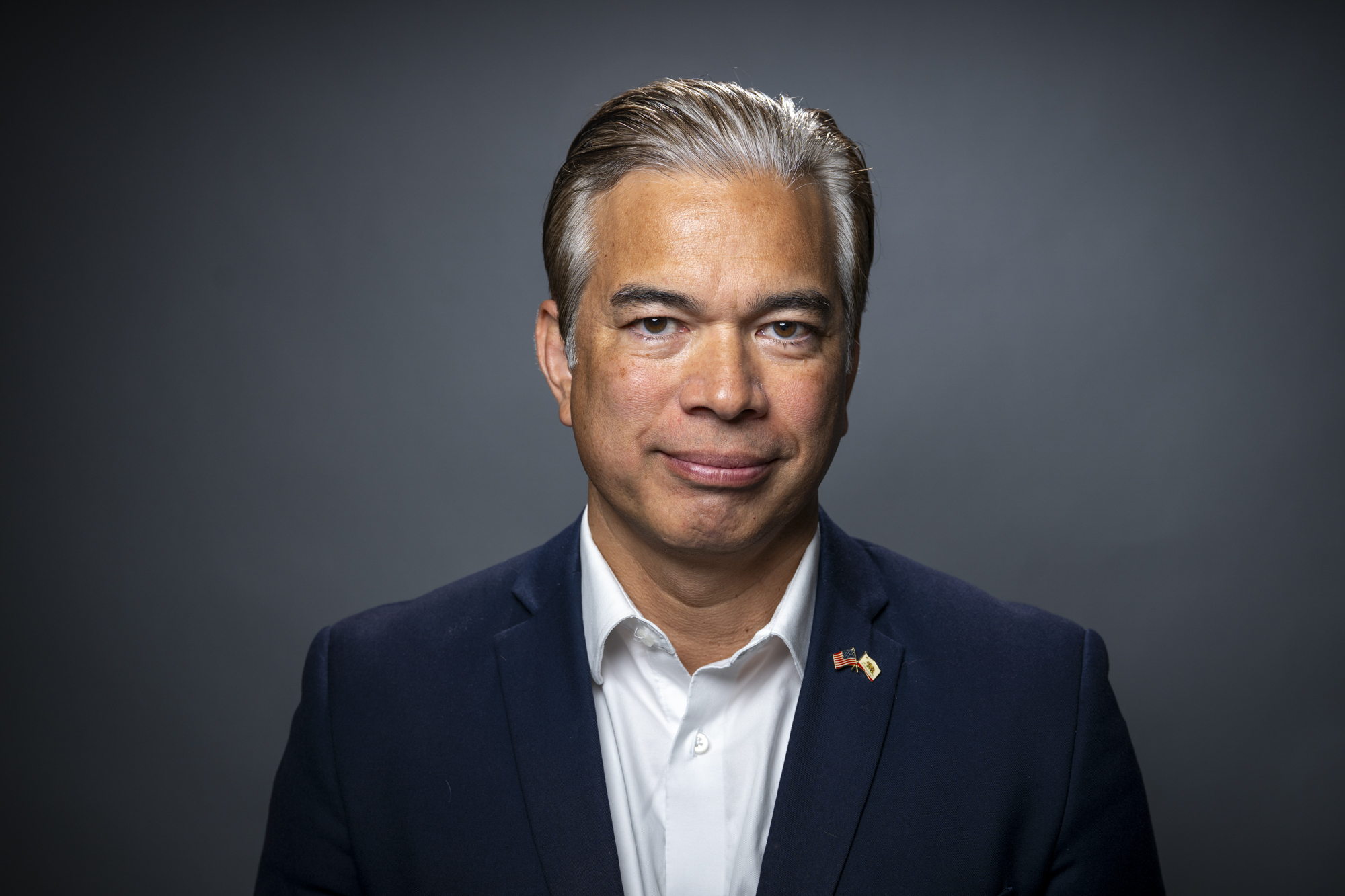
"caption": "Attorney General Rob Bonta poses for a portrait at the KQED offices in San Francisco on Nov. 20, 2025.",
"credit": "Beth LaBerge/KQED",
"altTag": null,
"description": null,
"imgSizes": {
"thumbnail": {
"file": "https://cdn.kqed.org/wp-content/uploads/sites/10/2025/11/251120-robbontapb-05-bl-KQED-160x107.jpg",
"width": 160,
"height": 107,
"mimeType": "image/jpeg"
},
"1536x1536": {
"file": "https://cdn.kqed.org/wp-content/uploads/sites/10/2025/11/251120-robbontapb-05-bl-KQED-1536x1024.jpg",
"width": 1536,
"height": 1024,
"mimeType": "image/jpeg"
},
"post-thumbnail": {
"file": "https://cdn.kqed.org/wp-content/uploads/sites/10/2025/11/251120-robbontapb-05-bl-KQED-672x372.jpg",
"width": 672,
"height": 372,
"mimeType": "image/jpeg"
},
"twentyfourteen-full-width": {
"file": "https://cdn.kqed.org/wp-content/uploads/sites/10/2025/11/251120-robbontapb-05-bl-KQED-1038x576.jpg",
"width": 1038,
"height": 576,
"mimeType": "image/jpeg"
},
"npr-cds-wide": {
"file": "https://cdn.kqed.org/wp-content/uploads/sites/10/2025/11/251120-robbontapb-05-bl-KQED-1200x675.jpg",
"width": 1200,
"height": 675,
"mimeType": "image/jpeg"
},
"kqedFullSize": {
"file": "https://cdn.kqed.org/wp-content/uploads/sites/10/2025/11/251120-robbontapb-05-bl-KQED.jpg",
"width": 2000,
"height": 1333
}
},
"isLoading": false,
"fetchFailed": false
},
"news_12064449": {
"type": "attachments",
"id": "news_12064449",
"meta": {
"index": "attachments_1716263798",
"site": "news",
"id": "12064449",
"found": true
},
"title": "251113-SNAPDELAYSFEATURE01472_TV-KQED",
"publishDate": 1763420222,
"status": "inherit",
"parent": 0,
"modified": 1763664497,
"caption": "Trozalla Smith poses for a portrait outside her family home in San Leandro on Friday, Nov. 14, 2025. The government shutdown has delayed the distribution of SNAP benefits to recipients such as Ana Hoover and Trozalla Smith, who have had to turn to food pantries as an alternative.",
"credit": "Tâm Vũ/KQED",
"altTag": null,
"description": null,
"imgSizes": {
"thumbnail": {
"file": "https://cdn.kqed.org/wp-content/uploads/sites/10/2025/11/251113-SNAPDELAYSFEATURE01472_TV-KQED-160x107.jpg",
"width": 160,
"height": 107,
"mimeType": "image/jpeg"
},
"1536x1536": {
"file": "https://cdn.kqed.org/wp-content/uploads/sites/10/2025/11/251113-SNAPDELAYSFEATURE01472_TV-KQED-1536x1024.jpg",
"width": 1536,
"height": 1024,
"mimeType": "image/jpeg"
},
"post-thumbnail": {
"file": "https://cdn.kqed.org/wp-content/uploads/sites/10/2025/11/251113-SNAPDELAYSFEATURE01472_TV-KQED-672x372.jpg",
"width": 672,
"height": 372,
"mimeType": "image/jpeg"
},
"twentyfourteen-full-width": {
"file": "https://cdn.kqed.org/wp-content/uploads/sites/10/2025/11/251113-SNAPDELAYSFEATURE01472_TV-KQED-1038x576.jpg",
"width": 1038,
"height": 576,
"mimeType": "image/jpeg"
},
"npr-cds-wide": {
"file": "https://cdn.kqed.org/wp-content/uploads/sites/10/2025/11/251113-SNAPDELAYSFEATURE01472_TV-KQED-1200x675.jpg",
"width": 1200,
"height": 675,
"mimeType": "image/jpeg"
},
"kqedFullSize": {
"file": "https://cdn.kqed.org/wp-content/uploads/sites/10/2025/11/251113-SNAPDELAYSFEATURE01472_TV-KQED.jpg",
"width": 2000,
"height": 1333
}
},
"isLoading": false,
"fetchFailed": false
},
"news_12064836": {
"type": "attachments",
"id": "news_12064836",
"meta": {
"index": "attachments_1716263798",
"site": "news",
"id": "12064836",
"found": true
},
"title": "111925-UC-Students-Tuition-Hike-March-MZ-CM-01",
"publishDate": 1763599061,
"status": "inherit",
"parent": 12064807,
"modified": 1763599085,
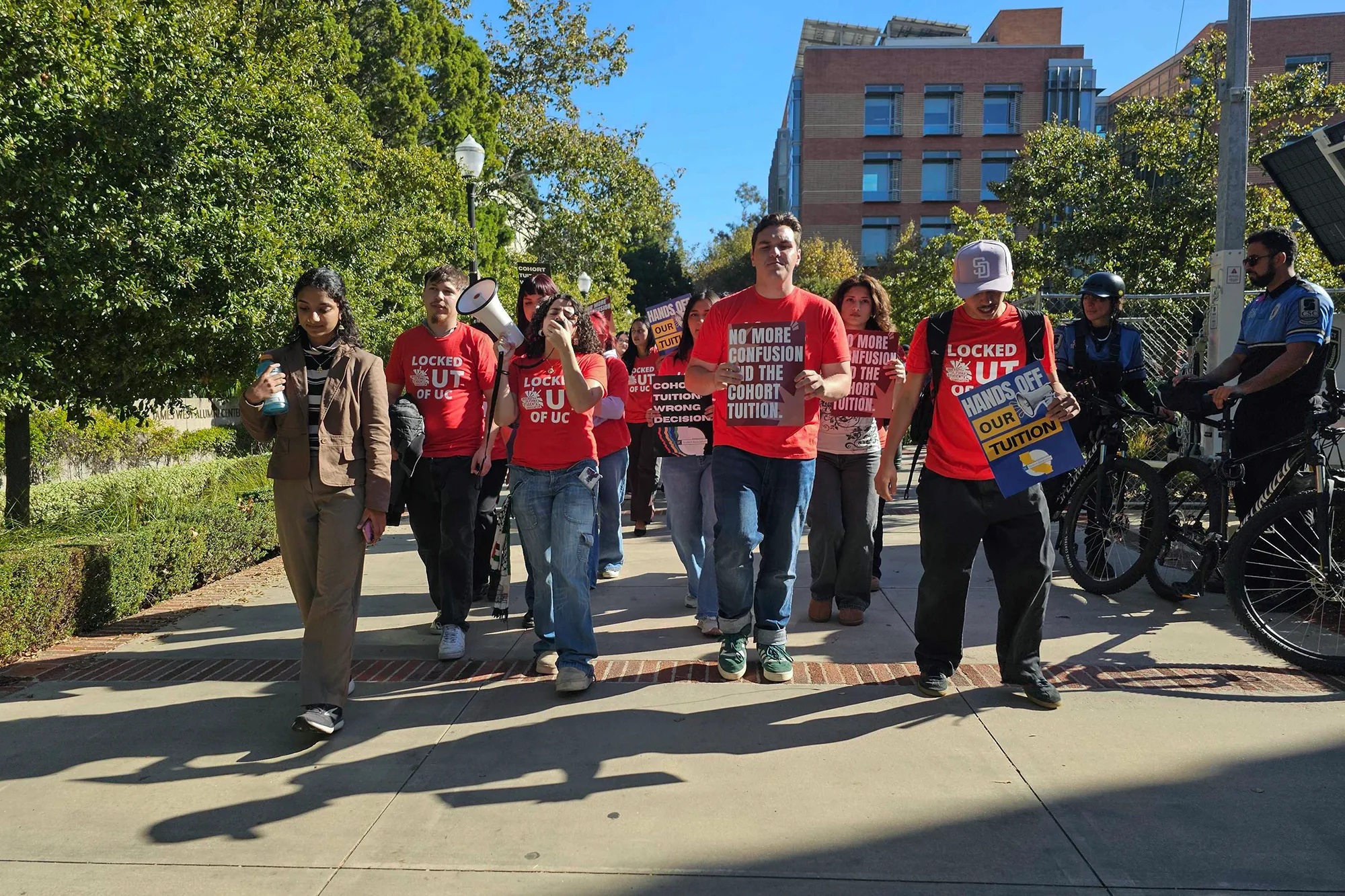
"caption": "Dozens of UC students march outside a meeting of the University of California Board of Regents in Los Angeles to protest the system’s plan to continue annual tuition increases on Nov. 19, 2025. \n",
"credit": "Photo by Mikhail Zinshteyn, CalMatters",
"altTag": null,
"description": null,
"imgSizes": {
"thumbnail": {
"file": "https://cdn.kqed.org/wp-content/uploads/sites/10/2025/11/111925-UC-Students-Tuition-Hike-March-MZ-CM-01-160x107.jpg",
"width": 160,
"height": 107,
"mimeType": "image/jpeg"
},
"1536x1536": {
"file": "https://cdn.kqed.org/wp-content/uploads/sites/10/2025/11/111925-UC-Students-Tuition-Hike-March-MZ-CM-01-1536x1024.jpg",
"width": 1536,
"height": 1024,
"mimeType": "image/jpeg"
},
"post-thumbnail": {
"file": "https://cdn.kqed.org/wp-content/uploads/sites/10/2025/11/111925-UC-Students-Tuition-Hike-March-MZ-CM-01-672x372.jpg",
"width": 672,
"height": 372,
"mimeType": "image/jpeg"
},
"twentyfourteen-full-width": {
"file": "https://cdn.kqed.org/wp-content/uploads/sites/10/2025/11/111925-UC-Students-Tuition-Hike-March-MZ-CM-01-1038x576.jpg",
"width": 1038,
"height": 576,
"mimeType": "image/jpeg"
},
"npr-cds-wide": {
"file": "https://cdn.kqed.org/wp-content/uploads/sites/10/2025/11/111925-UC-Students-Tuition-Hike-March-MZ-CM-01-1200x675.jpg",
"width": 1200,
"height": 675,
"mimeType": "image/jpeg"
},
"kqedFullSize": {
"file": "https://cdn.kqed.org/wp-content/uploads/sites/10/2025/11/111925-UC-Students-Tuition-Hike-March-MZ-CM-01.jpg",
"width": 2000,
"height": 1333
}
},
"isLoading": false,
"fetchFailed": false
},
"news_12064567": {
"type": "attachments",
"id": "news_12064567",
"meta": {
"index": "attachments_1716263798",
"site": "news",
"id": "12064567",
"found": true
},
"title": "2023 TIME100 Summit",
"publishDate": 1763489714,
"status": "inherit",
"parent": 12064558,
"modified": 1763489748,
"caption": "Tom Steyer speaks onstage at the 2023 TIME100 Summit at Jazz at Lincoln Center on April 25, 2023, in New York City. ",
"credit": "Jemal Countess/Getty Images for TIME",
"altTag": null,
"description": null,
"imgSizes": {
"thumbnail": {
"file": "https://cdn.kqed.org/wp-content/uploads/sites/10/2025/11/TomSteyerGetty-160x107.jpg",
"width": 160,
"height": 107,
"mimeType": "image/jpeg"
},
"1536x1536": {
"file": "https://cdn.kqed.org/wp-content/uploads/sites/10/2025/11/TomSteyerGetty-1536x1024.jpg",
"width": 1536,
"height": 1024,
"mimeType": "image/jpeg"
},
"post-thumbnail": {
"file": "https://cdn.kqed.org/wp-content/uploads/sites/10/2025/11/TomSteyerGetty-672x372.jpg",
"width": 672,
"height": 372,
"mimeType": "image/jpeg"
},
"twentyfourteen-full-width": {
"file": "https://cdn.kqed.org/wp-content/uploads/sites/10/2025/11/TomSteyerGetty-1038x576.jpg",
"width": 1038,
"height": 576,
"mimeType": "image/jpeg"
},
"npr-cds-wide": {
"file": "https://cdn.kqed.org/wp-content/uploads/sites/10/2025/11/TomSteyerGetty-1200x675.jpg",
"width": 1200,
"height": 675,
"mimeType": "image/jpeg"
},
"kqedFullSize": {
"file": "https://cdn.kqed.org/wp-content/uploads/sites/10/2025/11/TomSteyerGetty.jpg",
"width": 2000,
"height": 1333
}
},
"isLoading": false,
"fetchFailed": false
},
"news_11963529": {
"type": "attachments",
"id": "news_11963529",
"meta": {
"index": "attachments_1716263798",
"site": "news",
"id": "11963529",
"found": true
},
"title": "18 wheeler semi truck on road at sunrise",
"publishDate": 1696525955,
"status": "inherit",
"parent": 11963514,
"modified": 1763164813,
"caption": "A semitrailer on a freeway.",
"credit": "Getty Images",
"altTag": "A semitrailer on a freeway.",
"description": null,
"imgSizes": {
"medium": {
"file": "https://cdn.kqed.org/wp-content/uploads/sites/10/2023/10/231005-TRUCK-GETTY-KQED-800x534.jpg",
"width": 800,
"height": 534,
"mimeType": "image/jpeg"
},
"large": {
"file": "https://cdn.kqed.org/wp-content/uploads/sites/10/2023/10/231005-TRUCK-GETTY-KQED-1020x680.jpg",
"width": 1020,
"height": 680,
"mimeType": "image/jpeg"
},
"thumbnail": {
"file": "https://cdn.kqed.org/wp-content/uploads/sites/10/2023/10/231005-TRUCK-GETTY-KQED-160x107.jpg",
"width": 160,
"height": 107,
"mimeType": "image/jpeg"
},
"1536x1536": {
"file": "https://cdn.kqed.org/wp-content/uploads/sites/10/2023/10/231005-TRUCK-GETTY-KQED-1536x1025.jpg",
"width": 1536,
"height": 1025,
"mimeType": "image/jpeg"
},
"post-thumbnail": {
"file": "https://cdn.kqed.org/wp-content/uploads/sites/10/2023/10/231005-TRUCK-GETTY-KQED-672x372.jpg",
"width": 672,
"height": 372,
"mimeType": "image/jpeg"
},
"twentyfourteen-full-width": {
"file": "https://cdn.kqed.org/wp-content/uploads/sites/10/2023/10/231005-TRUCK-GETTY-KQED-1038x576.jpg",
"width": 1038,
"height": 576,
"mimeType": "image/jpeg"
},
"full-width": {
"file": "https://cdn.kqed.org/wp-content/uploads/sites/10/2023/10/231005-TRUCK-GETTY-KQED-1920x1281.jpg",
"width": 1920,
"height": 1281,
"mimeType": "image/jpeg"
},
"kqedFullSize": {
"file": "https://cdn.kqed.org/wp-content/uploads/sites/10/2023/10/231005-TRUCK-GETTY-KQED.jpg",
"width": 2000,
"height": 1334
}
},
"isLoading": false,
"fetchFailed": false
},
"news_12064086": {
"type": "attachments",
"id": "news_12064086",
"meta": {
"index": "attachments_1716263798",
"site": "news",
"id": "12064086",
"found": true
},
"title": "Election 2025 Redistricting California",
"publishDate": 1763081131,
"status": "inherit",
"parent": 12064030,
"modified": 1763081171,
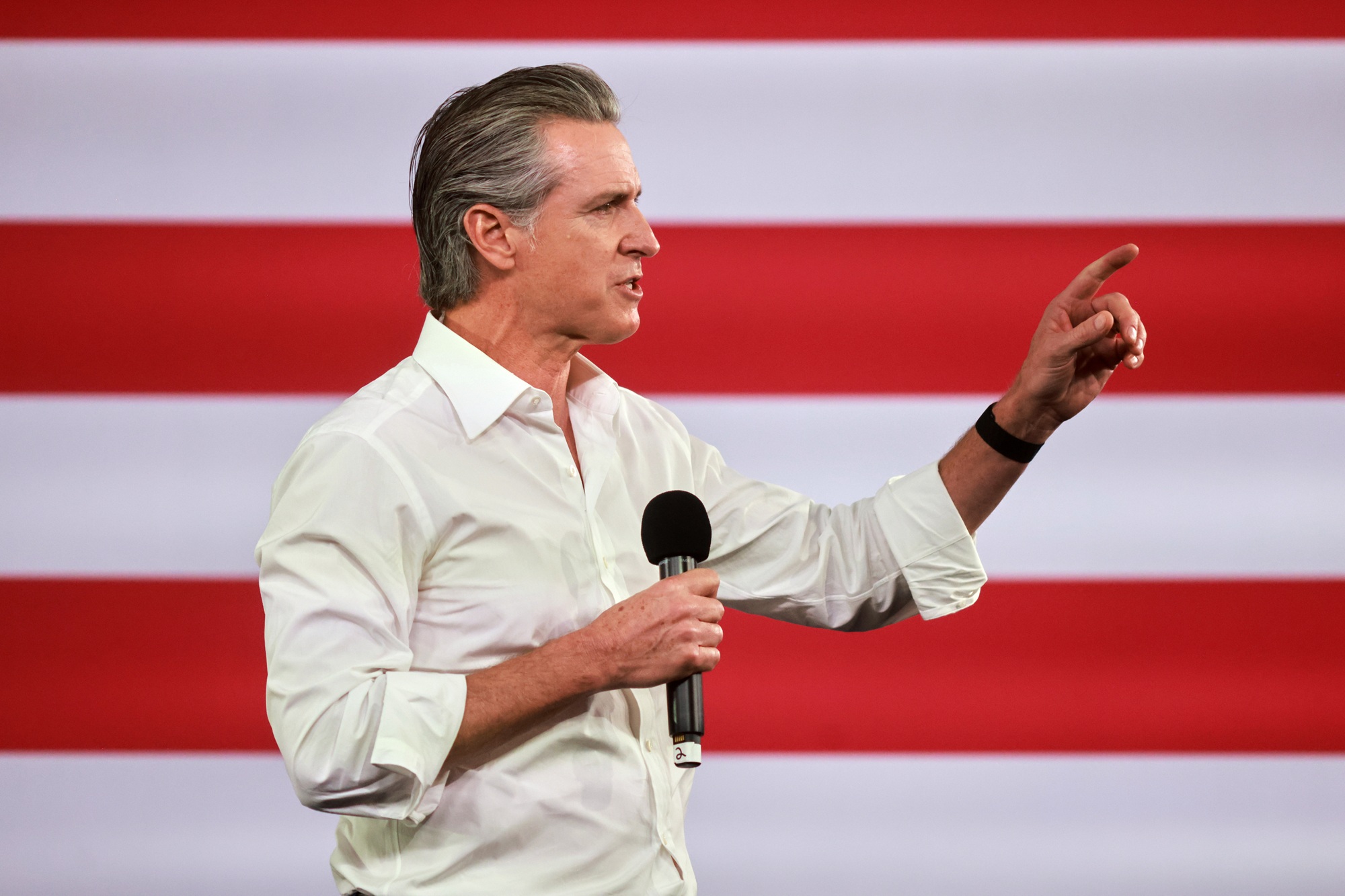
"caption": "Gov. Gavin Newsom speaks during a campaign event on Proposition 50 on Nov. 1, 2025, in Los Angeles, California.",
"credit": "Ethan Swope/AP Photo",
"altTag": null,
"description": null,
"imgSizes": {
"thumbnail": {
"file": "https://cdn.kqed.org/wp-content/uploads/sites/10/2025/11/GavinNewsomProp50AP-160x107.jpg",
"width": 160,
"height": 107,
"mimeType": "image/jpeg"
},
"1536x1536": {
"file": "https://cdn.kqed.org/wp-content/uploads/sites/10/2025/11/GavinNewsomProp50AP-1536x1024.jpg",
"width": 1536,
"height": 1024,
"mimeType": "image/jpeg"
},
"post-thumbnail": {
"file": "https://cdn.kqed.org/wp-content/uploads/sites/10/2025/11/GavinNewsomProp50AP-672x372.jpg",
"width": 672,
"height": 372,
"mimeType": "image/jpeg"
},
"twentyfourteen-full-width": {
"file": "https://cdn.kqed.org/wp-content/uploads/sites/10/2025/11/GavinNewsomProp50AP-1038x576.jpg",
"width": 1038,
"height": 576,
"mimeType": "image/jpeg"
},
"npr-cds-wide": {
"file": "https://cdn.kqed.org/wp-content/uploads/sites/10/2025/11/GavinNewsomProp50AP-1200x675.jpg",
"width": 1200,
"height": 675,
"mimeType": "image/jpeg"
},
"kqedFullSize": {
"file": "https://cdn.kqed.org/wp-content/uploads/sites/10/2025/11/GavinNewsomProp50AP.jpg",
"width": 2000,
"height": 1333
}
},
"isLoading": false,
"fetchFailed": false
},
"news_12064004": {
"type": "attachments",
"id": "news_12064004",
"meta": {
"index": "attachments_1716263798",
"site": "news",
"id": "12064004",
"found": true
},
"title": "082125_Redistricting-Newsom_MG_CM_20",
"publishDate": 1763064441,
"status": "inherit",
"parent": 12063984,
"modified": 1763064805,
"caption": "Senate President Pro Tem Mike McGuire speaks during a press conference, before Gov. Gavin Newsom signs the Election Rigging Response Act in Sacramento on Aug. 21, 2025. ",
"credit": "Miguel Gutierrez Jr./CalMatters",
"altTag": null,
"description": null,
"imgSizes": {
"thumbnail": {
"file": "https://cdn.kqed.org/wp-content/uploads/sites/10/2025/11/082125_Redistricting-Newsom_MG_CM_20-160x107.jpg",
"width": 160,
"height": 107,
"mimeType": "image/jpeg"
},
"1536x1536": {
"file": "https://cdn.kqed.org/wp-content/uploads/sites/10/2025/11/082125_Redistricting-Newsom_MG_CM_20-1536x1024.jpg",
"width": 1536,
"height": 1024,
"mimeType": "image/jpeg"
},
"post-thumbnail": {
"file": "https://cdn.kqed.org/wp-content/uploads/sites/10/2025/11/082125_Redistricting-Newsom_MG_CM_20-672x372.jpg",
"width": 672,
"height": 372,
"mimeType": "image/jpeg"
},
"twentyfourteen-full-width": {
"file": "https://cdn.kqed.org/wp-content/uploads/sites/10/2025/11/082125_Redistricting-Newsom_MG_CM_20-1038x576.jpg",
"width": 1038,
"height": 576,
"mimeType": "image/jpeg"
},
"npr-cds-wide": {
"file": "https://cdn.kqed.org/wp-content/uploads/sites/10/2025/11/082125_Redistricting-Newsom_MG_CM_20-1200x675.jpg",
"width": 1200,
"height": 675,
"mimeType": "image/jpeg"
},
"kqedFullSize": {
"file": "https://cdn.kqed.org/wp-content/uploads/sites/10/2025/11/082125_Redistricting-Newsom_MG_CM_20.jpg",
"width": 2000,
"height": 1333
}
},
"isLoading": false,
"fetchFailed": false
},
"news_12063930": {
"type": "attachments",
"id": "news_12063930",
"meta": {
"index": "attachments_1716263798",
"site": "news",
"id": "12063930",
"found": true
},
"title": "111225-Dana-Williamson-MG-CM-01",
"publishDate": 1762994692,
"status": "inherit",
"parent": 12063926,
"modified": 1762994758,
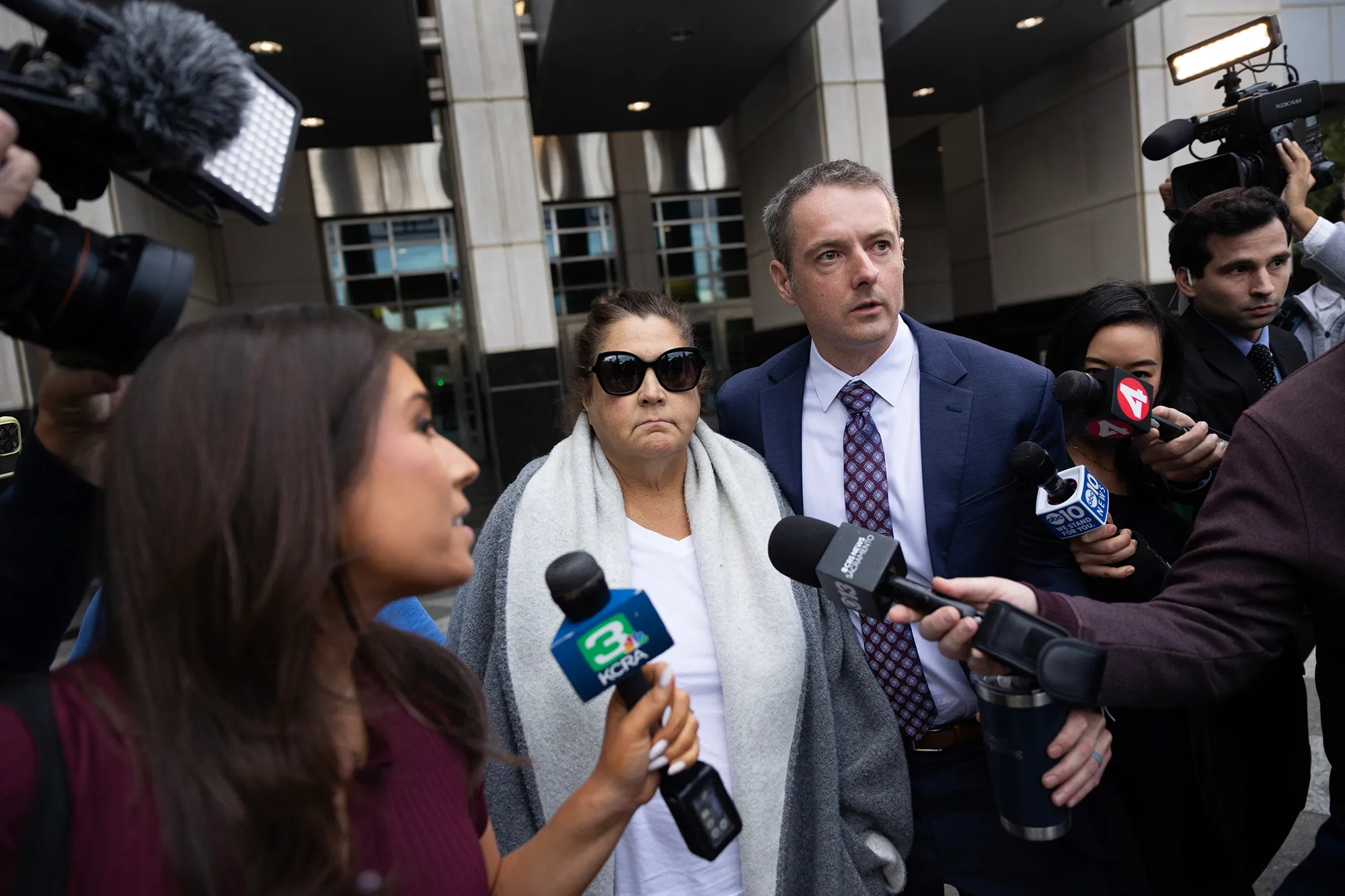
"caption": "Gov. Gavin Newsom’s former chief of staff, Dana Williamson, exits the Robert T. Matsui Federal Courthouse in Sacramento after her arraignment on Nov. 12, 2025. The federal grand jury indictment accuses Williamson and four other co-conspirators, including Xavier Becerra’s former chief of staff, of funneling $225,000 in money from a dormant campaign account. ",
"credit": "Photo by Miguel Gutierrez Jr., CalMatters",
"altTag": null,
"description": null,
"imgSizes": {
"thumbnail": {
"file": "https://cdn.kqed.org/wp-content/uploads/sites/10/2025/11/111225-Dana-Williamson-MG-CM-01-160x107.jpeg",
"width": 160,
"height": 107,
"mimeType": "image/jpeg"
},
"1536x1536": {
"file": "https://cdn.kqed.org/wp-content/uploads/sites/10/2025/11/111225-Dana-Williamson-MG-CM-01-1536x1024.jpeg",
"width": 1536,
"height": 1024,
"mimeType": "image/jpeg"
},
"post-thumbnail": {
"file": "https://cdn.kqed.org/wp-content/uploads/sites/10/2025/11/111225-Dana-Williamson-MG-CM-01-672x372.jpeg",
"width": 672,
"height": 372,
"mimeType": "image/jpeg"
},
"twentyfourteen-full-width": {
"file": "https://cdn.kqed.org/wp-content/uploads/sites/10/2025/11/111225-Dana-Williamson-MG-CM-01-1038x576.jpeg",
"width": 1038,
"height": 576,
"mimeType": "image/jpeg"
},
"npr-cds-wide": {
"file": "https://cdn.kqed.org/wp-content/uploads/sites/10/2025/11/111225-Dana-Williamson-MG-CM-01-1200x675.jpeg",
"width": 1200,
"height": 675,
"mimeType": "image/jpeg"
},
"kqedFullSize": {
"file": "https://cdn.kqed.org/wp-content/uploads/sites/10/2025/11/111225-Dana-Williamson-MG-CM-01.jpeg",
"width": 2000,
"height": 1333
}
},
"isLoading": false,
"fetchFailed": false
},
"news_12062666": {
"type": "attachments",
"id": "news_12062666",
"meta": {
"index": "attachments_1716263798",
"site": "news",
"id": "12062666",
"found": true
},
"title": "251103-NewsomProp50Rally-59-BL",
"publishDate": 1762210481,
"status": "inherit",
"parent": 0,
"modified": 1762210481,
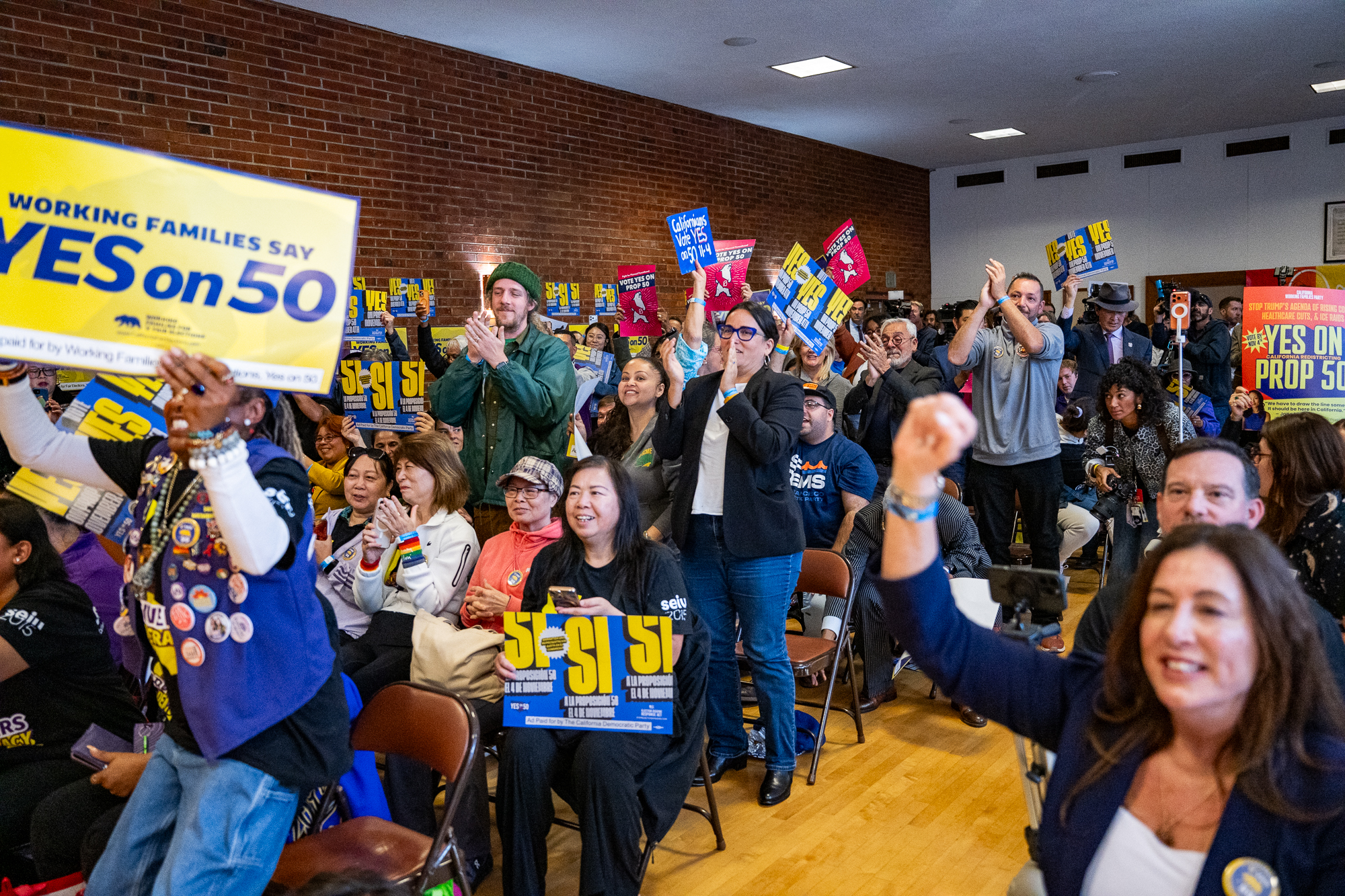
"caption": "Attendees cheer during a rally in support of Proposition 50 with Governor Gavin Newsom, Speaker Emerita Nancy Pelosi, and local elected officials at IBEW Local 6 in San Francisco on Nov. 3, 2025.",
"credit": null,
"altTag": null,
"description": null,
"imgSizes": {
"thumbnail": {
"file": "https://cdn.kqed.org/wp-content/uploads/sites/10/2025/11/251103-NewsomProp50Rally-59-BL-160x107.jpg",
"width": 160,
"height": 107,
"mimeType": "image/jpeg"
},
"1536x1536": {
"file": "https://cdn.kqed.org/wp-content/uploads/sites/10/2025/11/251103-NewsomProp50Rally-59-BL-1536x1024.jpg",
"width": 1536,
"height": 1024,
"mimeType": "image/jpeg"
},
"post-thumbnail": {
"file": "https://cdn.kqed.org/wp-content/uploads/sites/10/2025/11/251103-NewsomProp50Rally-59-BL-672x372.jpg",
"width": 672,
"height": 372,
"mimeType": "image/jpeg"
},
"twentyfourteen-full-width": {
"file": "https://cdn.kqed.org/wp-content/uploads/sites/10/2025/11/251103-NewsomProp50Rally-59-BL-1038x576.jpg",
"width": 1038,
"height": 576,
"mimeType": "image/jpeg"
},
"npr-cds-wide": {
"file": "https://cdn.kqed.org/wp-content/uploads/sites/10/2025/11/251103-NewsomProp50Rally-59-BL-1200x675.jpg",
"width": 1200,
"height": 675,
"mimeType": "image/jpeg"
},
"kqedFullSize": {
"file": "https://cdn.kqed.org/wp-content/uploads/sites/10/2025/11/251103-NewsomProp50Rally-59-BL.jpg",
"width": 2000,
"height": 1333
}
},
"isLoading": false,
"fetchFailed": false
},
"news_12062672": {
"type": "attachments",
"id": "news_12062672",
"meta": {
"index": "attachments_1716263798",
"site": "news",
"id": "12062672",
"found": true
},
"title": "251103-NewsomProp50Rally-44-BL",
"publishDate": 1762210607,
"status": "inherit",
"parent": 0,
"modified": 1762372016,
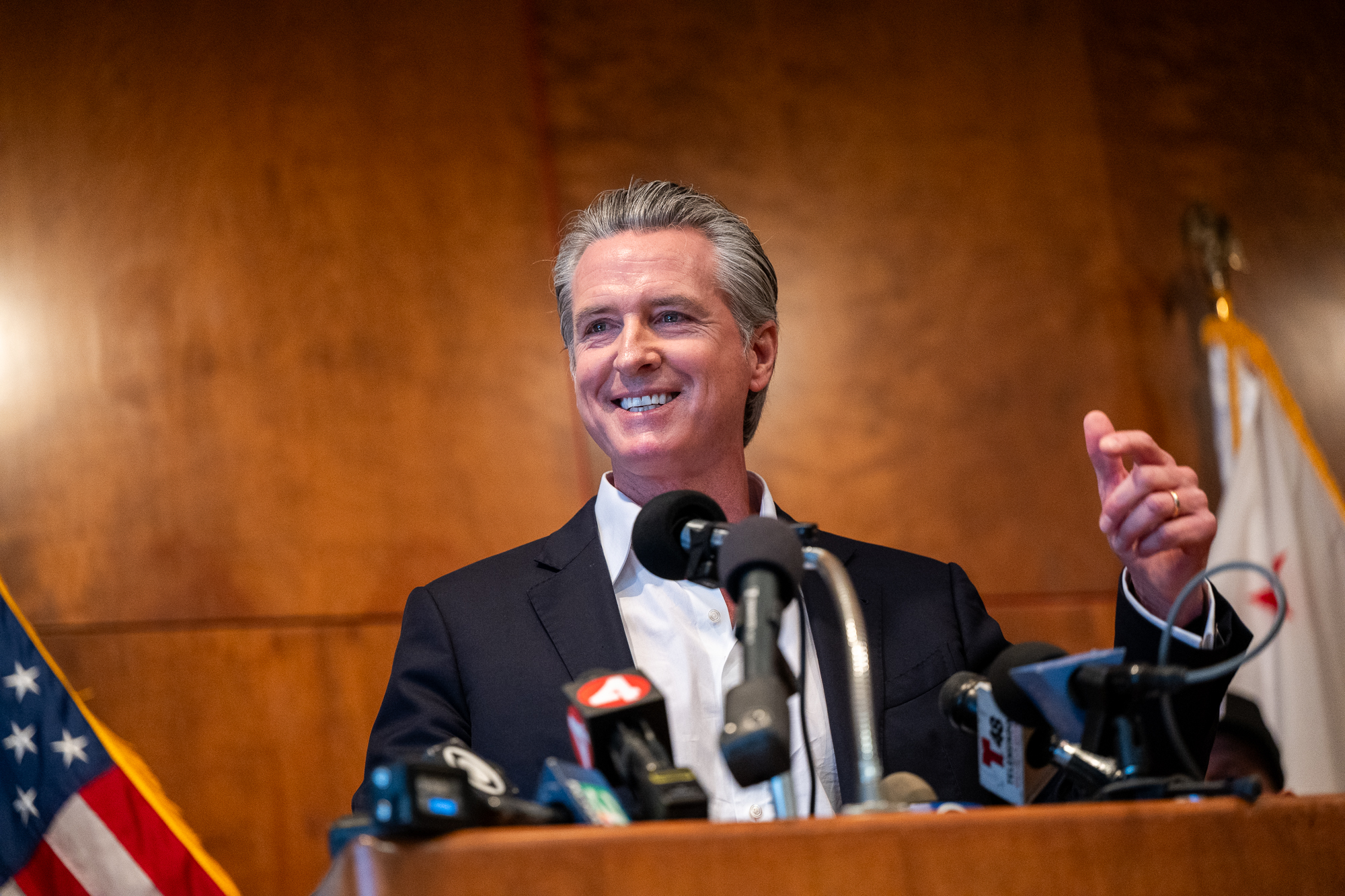
"caption": "Gov. Gavin Newsom speaks at a rally in support of Proposition 50 at IBEW Local 6 in San Francisco on Nov. 3, 2025.",
"credit": "Beth LaBerge/KQED",
"altTag": null,
"description": null,
"imgSizes": {
"thumbnail": {
"file": "https://cdn.kqed.org/wp-content/uploads/sites/10/2025/11/251103-NewsomProp50Rally-44-BL-160x107.jpg",
"width": 160,
"height": 107,
"mimeType": "image/jpeg"
},
"1536x1536": {
"file": "https://cdn.kqed.org/wp-content/uploads/sites/10/2025/11/251103-NewsomProp50Rally-44-BL-1536x1024.jpg",
"width": 1536,
"height": 1024,
"mimeType": "image/jpeg"
},
"post-thumbnail": {
"file": "https://cdn.kqed.org/wp-content/uploads/sites/10/2025/11/251103-NewsomProp50Rally-44-BL-672x372.jpg",
"width": 672,
"height": 372,
"mimeType": "image/jpeg"
},
"twentyfourteen-full-width": {
"file": "https://cdn.kqed.org/wp-content/uploads/sites/10/2025/11/251103-NewsomProp50Rally-44-BL-1038x576.jpg",
"width": 1038,
"height": 576,
"mimeType": "image/jpeg"
},
"npr-cds-wide": {
"file": "https://cdn.kqed.org/wp-content/uploads/sites/10/2025/11/251103-NewsomProp50Rally-44-BL-1200x675.jpg",
"width": 1200,
"height": 675,
"mimeType": "image/jpeg"
},
"kqedFullSize": {
"file": "https://cdn.kqed.org/wp-content/uploads/sites/10/2025/11/251103-NewsomProp50Rally-44-BL.jpg",
"width": 2000,
"height": 1333
}
},
"isLoading": false,
"fetchFailed": false
},
"news_12063066": {
"type": "attachments",
"id": "news_12063066",
"meta": {
"index": "attachments_1716263798",
"site": "news",
"id": "12063066",
"found": true
},
"title": "David Tangipa",
"publishDate": 1762373312,
"status": "inherit",
"parent": 12081927,
"modified": 1777570934,
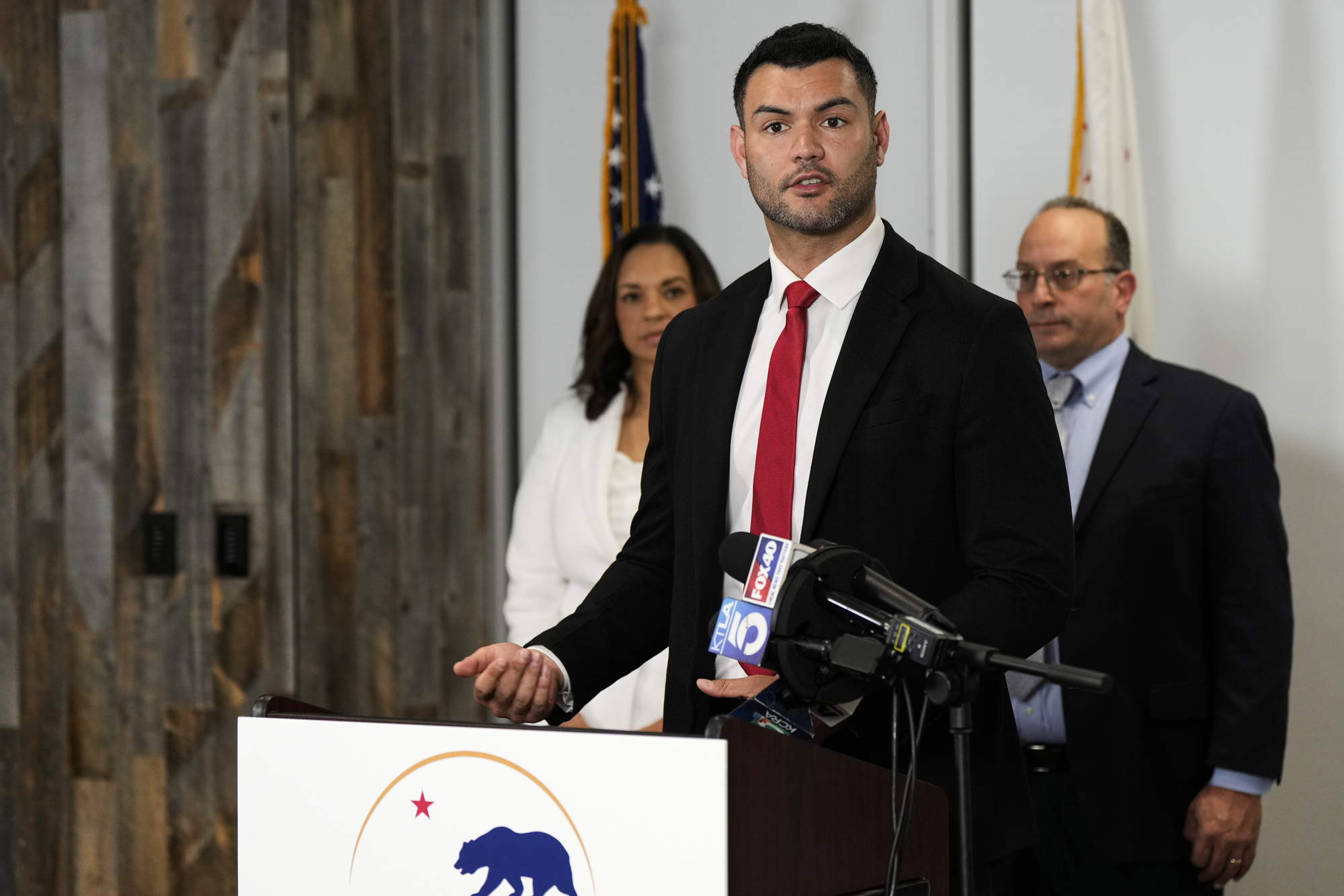
"caption": "Republican Assemblymember David Tangipa speaks to reporters during a press conference announcing a federal lawsuit challenging Proposition 50 in Sacramento on Nov. 5, 2025. ",
"credit": "Godofredo A. Vásquez/AP Photo",
"altTag": null,
"description": null,
"imgSizes": {
"thumbnail": {
"file": "https://cdn.kqed.org/wp-content/uploads/sites/10/2025/11/AP25309664191702-KQED-160x107.jpg",
"width": 160,
"height": 107,
"mimeType": "image/jpeg"
},
"1536x1536": {
"file": "https://cdn.kqed.org/wp-content/uploads/sites/10/2025/11/AP25309664191702-KQED-1536x1025.jpg",
"width": 1536,
"height": 1025,
"mimeType": "image/jpeg"
},
"post-thumbnail": {
"file": "https://cdn.kqed.org/wp-content/uploads/sites/10/2025/11/AP25309664191702-KQED-672x372.jpg",
"width": 672,
"height": 372,
"mimeType": "image/jpeg"
},
"twentyfourteen-full-width": {
"file": "https://cdn.kqed.org/wp-content/uploads/sites/10/2025/11/AP25309664191702-KQED-1038x576.jpg",
"width": 1038,
"height": 576,
"mimeType": "image/jpeg"
},
"npr-cds-wide": {
"file": "https://cdn.kqed.org/wp-content/uploads/sites/10/2025/11/AP25309664191702-KQED-1200x675.jpg",
"width": 1200,
"height": 675,
"mimeType": "image/jpeg"
},
"kqedFullSize": {
"file": "https://cdn.kqed.org/wp-content/uploads/sites/10/2025/11/AP25309664191702-KQED.jpg",
"width": 2000,
"height": 1334
}
},
"isLoading": false,
"fetchFailed": false
}
},
"audioPlayerReducer": {
"postId": "stream_live",
"isPaused": true,
"isPlaying": false,
"pfsActive": false,
"pledgeModalIsOpen": true,
"playerDrawerIsOpen": false,
"liveAudioPlayStartedAt": 0,
"liveAudioPlayContext": ""
},
"authorsReducer": {
"byline_news_12064807": {
"type": "authors",
"id": "byline_news_12064807",
"meta": {
"override": true
},
"slug": "byline_news_12064807",
"name": "Mikhail Zinshteyn, CalMatters",
"isLoading": false
},
"byline_news_12063984": {
"type": "authors",
"id": "byline_news_12063984",
"meta": {
"override": true
},
"slug": "byline_news_12063984",
"name": "Maya C. Miller, CalMatters",
"isLoading": false
},
"byline_news_12063926": {
"type": "authors",
"id": "byline_news_12063926",
"meta": {
"override": true
},
"slug": "byline_news_12063926",
"name": "Maya C. Miller, CalMatters",
"isLoading": false
},
"gmarzorati": {
"type": "authors",
"id": "227",
"meta": {
"index": "authors_1716337520",
"id": "227",
"found": true
},
"name": "Guy Marzorati",
"firstName": "Guy",
"lastName": "Marzorati",
"slug": "gmarzorati",
"email": "gmarzorati@KQED.org",
"display_author_email": true,
"staff_mastheads": [
"news"
],
"title": "Correspondent",
"bio": "Guy Marzorati is a correspondent on KQED's California Politics and Government Desk, based in San Jose. A graduate of Santa Clara University, Guy joined KQED in 2013. He reports on state and local politics and produces KQED's digital voter guide.",
"avatar": "https://secure.gravatar.com/avatar/e7038b8dbfd55b104369b76b1cd0b9de?s=600&d=blank&r=g",
"twitter": "guymarzorati",
"facebook": null,
"instagram": null,
"linkedin": null,
"sites": [
{
"site": "",
"roles": [
"editor"
]
},
{
"site": "news",
"roles": [
"editor"
]
},
{
"site": "science",
"roles": [
"editor"
]
},
{
"site": "forum",
"roles": [
"editor"
]
},
{
"site": "elections",
"roles": [
"editor"
]
},
{
"site": "liveblog",
"roles": [
"editor"
]
}
],
"headData": {
"title": "Guy Marzorati | KQED",
"description": "Correspondent",
"ogImgSrc": "https://secure.gravatar.com/avatar/e7038b8dbfd55b104369b76b1cd0b9de?s=600&d=blank&r=g",
"twImgSrc": "https://secure.gravatar.com/avatar/e7038b8dbfd55b104369b76b1cd0b9de?s=600&d=blank&r=g"
},
"isLoading": false,
"link": "/author/gmarzorati"
},
"mlagos": {
"type": "authors",
"id": "3239",
"meta": {
"index": "authors_1716337520",
"id": "3239",
"found": true
},
"name": "Marisa Lagos",
"firstName": "Marisa",
"lastName": "Lagos",
"slug": "mlagos",
"email": "mlagos@kqed.org",
"display_author_email": false,
"staff_mastheads": [
"news"
],
"title": "KQED Contributor",
"bio": "Marisa Lagos is a correspondent for KQED’s California Politics and Government Desk and co-hosts the award-winning show and podcast, Political Breakdown. At KQED, Lagos also conducts reporting, analysis and investigations into state, local and national politics for radio, TV, online and onstage. In 2022, she and co-host, Scott Shafer, moderated the only gubernatorial debate in California. In 2020, the \u003ci>Washington Post\u003c/i> named her one of the top political journalists in California; she was nominated for a Peabody and won several other awards for her work investigating the 2017 California wildfires. She has worked at the \u003ci>San Francisco Chronicle\u003c/i>, \u003ci>San Francisco Examiner\u003c/i> and \u003ci>Los Angeles Times\u003c/i>. A UC Santa Barbara graduate, she lives in San Francisco with her two sons and husband.",
"avatar": "https://secure.gravatar.com/avatar/a261a0d3696fc066871ef96b85b5e7d2?s=600&d=blank&r=g",
"twitter": "@mlagos",
"facebook": null,
"instagram": null,
"linkedin": null,
"sites": [
{
"site": "arts",
"roles": [
"author"
]
},
{
"site": "news",
"roles": [
"editor"
]
},
{
"site": "science",
"roles": [
"editor"
]
},
{
"site": "forum",
"roles": [
"author"
]
},
{
"site": "liveblog",
"roles": [
"author"
]
}
],
"headData": {
"title": "Marisa Lagos | KQED",
"description": "KQED Contributor",
"ogImgSrc": "https://secure.gravatar.com/avatar/a261a0d3696fc066871ef96b85b5e7d2?s=600&d=blank&r=g",
"twImgSrc": "https://secure.gravatar.com/avatar/a261a0d3696fc066871ef96b85b5e7d2?s=600&d=blank&r=g"
},
"isLoading": false,
"link": "/author/mlagos"
},
"ecruzguevarra": {
"type": "authors",
"id": "8654",
"meta": {
"index": "authors_1716337520",
"id": "8654",
"found": true
},
"name": "Ericka Cruz Guevarra",
"firstName": "Ericka",
"lastName": "Cruz Guevarra",
"slug": "ecruzguevarra",
"email": "ecruzguevarra@kqed.org",
"display_author_email": true,
"staff_mastheads": [
"news"
],
"title": "Producer, The Bay Podcast",
"bio": "Ericka Cruz Guevarra is host of \u003ca href=\"https://www.kqed.org/podcasts/thebay\">\u003cem>The Bay\u003c/em>\u003c/a> podcast at KQED. Before host, she was the show’s producer. Her work in that capacity includes a three-part reported series on policing in Vallejo, which won a 2020 excellence in journalism award from the Society of Professional Journalists. Ericka has worked as a breaking news reporter at Oregon Public Broadcasting, helped produce the Code Switch podcast, and was KQED’s inaugural Raul Ramirez Diversity Fund intern. She’s also an alumna of NPR’s Next Generation Radio program. Send her an email if you have strong feelings about whether Fairfield and Suisun City are the Bay. Ericka is represented by SAG-AFTRA.",
"avatar": "https://secure.gravatar.com/avatar/accefc1de4bafc7e234b69bcb9b6f6536c130fd84709bc3069ef11a78787e1bb?s=600&d=blank&r=g",
"twitter": "NotoriousECG",
"bluesky": null,
"facebook": null,
"instagram": null,
"linkedin": null,
"sites": [
{
"site": "arts",
"roles": [
"subscriber"
]
},
{
"site": "news",
"roles": [
"editor",
"manage_categories"
]
},
{
"site": "futureofyou",
"roles": [
"subscriber"
]
},
{
"site": "stateofhealth",
"roles": [
"subscriber"
]
},
{
"site": "science",
"roles": [
"editor"
]
},
{
"site": "forum",
"roles": [
"subscriber"
]
}
],
"headData": {
"title": "Ericka Cruz Guevarra | KQED",
"description": "Producer, The Bay Podcast",
"ogImgSrc": "https://secure.gravatar.com/avatar/accefc1de4bafc7e234b69bcb9b6f6536c130fd84709bc3069ef11a78787e1bb?s=600&d=blank&r=g",
"twImgSrc": "https://secure.gravatar.com/avatar/accefc1de4bafc7e234b69bcb9b6f6536c130fd84709bc3069ef11a78787e1bb?s=600&d=blank&r=g"
},
"isLoading": false,
"link": "/author/ecruzguevarra"
},
"vrancano": {
"type": "authors",
"id": "11276",
"meta": {
"index": "authors_1716337520",
"id": "11276",
"found": true
},
"name": "Vanessa Rancaño",
"firstName": "Vanessa",
"lastName": "Rancaño",
"slug": "vrancano",
"email": "vrancano@kqed.org",
"display_author_email": false,
"staff_mastheads": [
"news"
],
"title": "Reporter",
"bio": "Vanessa Rancaño is a features reporter for KQED. She’s also covered homelessness and education for the station and reported from the Central Valley. Her work has aired across public radio, from flagship national news shows to longform narrative podcasts. Before taking up a mic, she worked as a freelance print journalist. She’s been recognized with a number of national and regional awards. Vanessa grew up in California's Central Valley. She's a former NPR Kroc Fellow, and a graduate of the UC Berkeley Graduate School of Journalism.",
"avatar": "https://secure.gravatar.com/avatar/b3a383dfb0e7ee1c17568f2cf067904ab654d6e3de9743fc661f3c788ade1bed?s=600&d=blank&r=g",
"twitter": "vanessarancano",
"bluesky": null,
"facebook": null,
"instagram": null,
"linkedin": null,
"sites": [
{
"site": "arts",
"roles": [
"editor"
]
},
{
"site": "news",
"roles": [
"editor"
]
},
{
"site": "liveblog",
"roles": [
"contributor"
]
}
],
"headData": {
"title": "Vanessa Rancaño | KQED",
"description": "Reporter",
"ogImgSrc": "https://secure.gravatar.com/avatar/b3a383dfb0e7ee1c17568f2cf067904ab654d6e3de9743fc661f3c788ade1bed?s=600&d=blank&r=g",
"twImgSrc": "https://secure.gravatar.com/avatar/b3a383dfb0e7ee1c17568f2cf067904ab654d6e3de9743fc661f3c788ade1bed?s=600&d=blank&r=g"
},
"isLoading": false,
"link": "/author/vrancano"
},
"amontecillo": {
"type": "authors",
"id": "11649",
"meta": {
"index": "authors_1716337520",
"id": "11649",
"found": true
},
"name": "Alan Montecillo",
"firstName": "Alan",
"lastName": "Montecillo",
"slug": "amontecillo",
"email": "amontecillo@kqed.org",
"display_author_email": false,
"staff_mastheads": [
"news"
],
"title": "KQED Contributor",
"bio": "Alan Montecillo is the senior editor of \u003cem>\u003ca href=\"http://kqed.org/thebay\">The Bay\u003c/a>, \u003c/em> KQED's local news podcast. Before moving to the Bay Area, he worked as a senior talk show producer for WILL in Champaign-Urbana, Illinois and at Oregon Public Broadcasting in Portland, Oregon. He has won journalism awards from the Society of Professional Journalists Northern California, the Public Media Journalists Association, The Signal Awards, and has also received a regional Edward R. Murrow award. Alan is a Filipino American from Hong Kong and a graduate of Reed College.",
"avatar": "https://secure.gravatar.com/avatar/268f53a2066899ea9efdd8a5900218b17c822d9862cbc9326cccec53ef41d349?s=600&d=blank&r=g",
"twitter": "alanmontecillo",
"bluesky": null,
"facebook": null,
"instagram": null,
"linkedin": null,
"sites": [
{
"site": "",
"roles": [
"editor"
]
},
{
"site": "news",
"roles": [
"editor",
"manage_categories"
]
}
],
"headData": {
"title": "Alan Montecillo | KQED",
"description": "KQED Contributor",
"ogImgSrc": "https://secure.gravatar.com/avatar/268f53a2066899ea9efdd8a5900218b17c822d9862cbc9326cccec53ef41d349?s=600&d=blank&r=g",
"twImgSrc": "https://secure.gravatar.com/avatar/268f53a2066899ea9efdd8a5900218b17c822d9862cbc9326cccec53ef41d349?s=600&d=blank&r=g"
},
"isLoading": false,
"link": "/author/amontecillo"
},
"ccabreralomeli": {
"type": "authors",
"id": "11708",
"meta": {
"index": "authors_1716337520",
"id": "11708",
"found": true
},
"name": "Carlos Cabrera-Lomelí",
"firstName": "Carlos",
"lastName": "Cabrera-Lomelí",
"slug": "ccabreralomeli",
"email": "ccabreralomeli@KQED.org",
"display_author_email": true,
"staff_mastheads": [
"news"
],
"title": "Community Reporter",
"bio": "Carlos Cabrera-Lomelí is a community reporter with KQED's digital engagement team. He also reports and co-produces for KQED's bilingual news hub KQED en Español. He grew up in San Francisco's Mission District and has previously worked with Univision, 48 Hills and REFORMA in Mexico City.",
"avatar": "https://secure.gravatar.com/avatar/c309be9665e484f887b818c89e273ecc673004f426f36b24d00a4d813a2e0518?s=600&d=blank&r=g",
"twitter": "@LomeliCabrera",
"bluesky": null,
"facebook": null,
"instagram": null,
"linkedin": null,
"sites": [
{
"site": "arts",
"roles": [
"editor"
]
},
{
"site": "news",
"roles": [
"editor"
]
},
{
"site": "about",
"roles": [
"editor"
]
},
{
"site": "science",
"roles": [
"editor"
]
},
{
"site": "perspectives",
"roles": [
"editor"
]
},
{
"site": "elections",
"roles": [
"editor"
]
},
{
"site": "liveblog",
"roles": [
"contributor"
]
}
],
"headData": {
"title": "Carlos Cabrera-Lomelí | KQED",
"description": "Community Reporter",
"ogImgSrc": "https://secure.gravatar.com/avatar/c309be9665e484f887b818c89e273ecc673004f426f36b24d00a4d813a2e0518?s=600&d=blank&r=g",
"twImgSrc": "https://secure.gravatar.com/avatar/c309be9665e484f887b818c89e273ecc673004f426f36b24d00a4d813a2e0518?s=600&d=blank&r=g"
},
"isLoading": false,
"link": "/author/ccabreralomeli"
},
"jlara": {
"type": "authors",
"id": "11761",
"meta": {
"index": "authors_1716337520",
"id": "11761",
"found": true
},
"name": "Juan Carlos Lara",
"firstName": "Juan Carlos",
"lastName": "Lara",
"slug": "jlara",
"email": "jlara@kqed.org",
"display_author_email": false,
"staff_mastheads": [],
"title": "KQED Contributor",
"bio": null,
"avatar": "https://secure.gravatar.com/avatar/19e2052b9b05657c5ff2af2121846e9c?s=600&d=blank&r=g",
"twitter": null,
"facebook": null,
"instagram": null,
"linkedin": null,
"sites": [
{
"site": "arts",
"roles": [
"editor"
]
},
{
"site": "news",
"roles": [
"editor"
]
},
{
"site": "forum",
"roles": [
"editor"
]
},
{
"site": "liveblog",
"roles": [
"contributor"
]
}
],
"headData": {
"title": "Juan Carlos Lara | KQED",
"description": "KQED Contributor",
"ogImgSrc": "https://secure.gravatar.com/avatar/19e2052b9b05657c5ff2af2121846e9c?s=600&d=blank&r=g",
"twImgSrc": "https://secure.gravatar.com/avatar/19e2052b9b05657c5ff2af2121846e9c?s=600&d=blank&r=g"
},
"isLoading": false,
"link": "/author/jlara"
},
"jessicakariisa": {
"type": "authors",
"id": "11831",
"meta": {
"index": "authors_1716337520",
"id": "11831",
"found": true
},
"name": "Jessica Kariisa",
"firstName": "Jessica",
"lastName": "Kariisa",
"slug": "jessicakariisa",
"email": "jkariisa@kqed.org",
"display_author_email": false,
"staff_mastheads": [],
"title": "Producer, The Bay",
"bio": "Jessica Kariisa is the producer of The Bay. She first joined KQED as an intern for The California Report Magazine, after which she became an on-call producer. She reported a Bay Curious episode on the use of rap lyrics in criminal trials which won a Society of Professional Journalists award in 2023 for Excellence in Features Journalism and the 2023 Signal Award for Best Conversation Starter. She’s worked on podcasts for Snap Judgment and American Public Media. Before embarking on her audio career, she was a music journalist.\r\n\r\nJessica Kariisa is represented by SAG-AFTRA.",
"avatar": "https://secure.gravatar.com/avatar/522e97b28ac0b3d411621c0fde8f3419c7b71ea2c5c262c57c4bb600963f328c?s=600&d=blank&r=g",
"twitter": null,
"bluesky": null,
"facebook": null,
"instagram": null,
"linkedin": null,
"sites": [
{
"site": "arts",
"roles": [
"author"
]
},
{
"site": "news",
"roles": [
"editor",
"manage_categories"
]
}
],
"headData": {
"title": "Jessica Kariisa | KQED",
"description": "Producer, The Bay",
"ogImgSrc": "https://secure.gravatar.com/avatar/522e97b28ac0b3d411621c0fde8f3419c7b71ea2c5c262c57c4bb600963f328c?s=600&d=blank&r=g",
"twImgSrc": "https://secure.gravatar.com/avatar/522e97b28ac0b3d411621c0fde8f3419c7b71ea2c5c262c57c4bb600963f328c?s=600&d=blank&r=g"
},
"isLoading": false,
"link": "/author/jessicakariisa"
}
},
"pagesReducer": {
"news_tag_gavin-newsom": {
"type": "terms",
"id": "news_16",
"meta": {
"index": "terms_1716263798",
"site": "news",
"id": "16",
"score": 8.93685
},
"featImg": null,
"name": "Gavin Newsom",
"description": null,
"taxonomy": "tag",
"headData": {
"twImgId": null,
"twTitle": null,
"ogTitle": null,
"ogImgId": null,
"twDescription": null,
"description": null,
"title": "Gavin Newsom Archives | KQED News",
"ogDescription": null
},
"ttid": 16,
"slug": "gavin-newsom",
"isLoading": false,
"title": "Gavin Newsom",
"pageMeta": {
"site": "news",
"WpPageTemplate": "page-topic-editorial",
"currentPage": 8
},
"blocks": [
{
"blockName": "kqed/post-list",
"attrs": {
"layout": "cardArticle2",
"query": "posts/news?tag=gavin-newsom",
"seeMore": false,
"paginated": true,
"page": 8
}
},
{
"blockName": "kqed/ad"
}
]
}
},
"pfsSessionReducer": {},
"postsReducer": {
"stream_live": {
"type": "live",
"id": "stream_live",
"audioUrl": "https://streams.kqed.org/kqedradio",
"title": "Live Stream",
"excerpt": "Live Stream information currently unavailable.",
"link": "/radio",
"featImg": "",
"label": {
"name": "KQED Live",
"link": "/"
}
},
"stream_kqedNewscast": {
"type": "posts",
"id": "stream_kqedNewscast",
"audioUrl": "https://www.kqed.org/.stream/anon/radio/RDnews/newscast.mp3?_=1",
"title": "KQED Newscast",
"featImg": "",
"label": {
"name": "88.5 FM",
"link": "/"
}
},
"news_12064922": {
"type": "posts",
"id": "news_12064922",
"meta": {
"index": "posts_1716263798",
"site": "news",
"id": "12064922",
"score": null,
"sort": [
1763701314000
]
},
"guestAuthors": [],
"slug": "eric-swalwell-california-governor-race",
"title": "East Bay Rep. Eric Swalwell Announces Run for California Governor",
"publishDate": 1763701314,
"format": "standard",
"headTitle": "East Bay Rep. Eric Swalwell Announces Run for California Governor | KQED",
"labelTerm": {
"site": "news"
},
"content": "\u003cp>East Bay Rep. \u003ca href=\"https://www.kqed.org/news/tag/eric-swalwell\">Eric Swalwell\u003c/a> on Thursday became the latest Democrat to throw his hat in the ring for the 2026 governor’s race — announcing his campaign shortly before a scheduled appearance on “Jimmy Kimmel Live!”\u003c/p>\n\u003cp>“Our state, this great state, needs a fighter and a protector,” Swalwell told Kimmel. “Someone who will bring prices down, lift wages up.”\u003c/p>\n\u003cp>Swalwell has been a high-profile critic of President Donald Trump, taking a leading role in Trump’s second impeachment trial in 2021 and maintaining a regular presence on cable TV. The former Alameda County prosecutor has raised money and campaigned for Democrats across the country, and he could tap those relationships as he enters what promises to be an expensive campaign for the state’s top job.\u003c/p>\n\u003cp>[ad fullwidth]\u003c/p>\n\u003cp>“I’ve been in these fights as a city councilmember up in Dublin, my hometown, as a prosecutor in Oakland, and taking on the most corrupt president ever in the U.S. Congress,” Swalwell said. “But I’m ready to bring this fight home.”\u003c/p>\n\u003cp>Swalwell lashed out at Trump for his administration’s cuts to cancer research grants, accusing him of targeting Democratic-led states such as California.\u003c/p>\n\u003cp>“It’s a little personal to me…I lost my best friend two months ago, my mom passed and she passed from cancer,” he said. “People in California expect that you’re going to invest in cancer research, not cut it.”\u003c/p>\n\u003cfigure id=\"attachment_11856940\" class=\"wp-caption aligncenter\" style=\"max-width: 1920px\">\u003cimg loading=\"lazy\" decoding=\"async\" class=\"size-full wp-image-11856940\" src=\"https://cdn.kqed.org/wp-content/uploads/sites/10/2021/01/RS46738_GettyImages-1230571274-qut.jpg\" alt=\"\" width=\"1920\" height=\"1280\" srcset=\"https://cdn.kqed.org/wp-content/uploads/sites/10/2021/01/RS46738_GettyImages-1230571274-qut.jpg 1920w, https://cdn.kqed.org/wp-content/uploads/sites/10/2021/01/RS46738_GettyImages-1230571274-qut-800x533.jpg 800w, https://cdn.kqed.org/wp-content/uploads/sites/10/2021/01/RS46738_GettyImages-1230571274-qut-1020x680.jpg 1020w, https://cdn.kqed.org/wp-content/uploads/sites/10/2021/01/RS46738_GettyImages-1230571274-qut-160x107.jpg 160w, https://cdn.kqed.org/wp-content/uploads/sites/10/2021/01/RS46738_GettyImages-1230571274-qut-1536x1024.jpg 1536w\" sizes=\"auto, (max-width: 1920px) 100vw, 1920px\">\u003cfigcaption class=\"wp-caption-text\">House Impeachment Manager Rep. Eric Swalwell (D-California), center, wears a protective mask while walking to the House Floor during a vote on the impeachment of President Donald Trump at the U.S. Capitol on Jan. 13, 2021, in Washington, D.C. \u003ccite>(Stefani Reynolds/Getty Images)\u003c/cite>\u003c/figcaption>\u003c/figure>\n\u003cp>The race to succeed termed-out Gov. Gavin Newsom remains wide open less than seven months before the June primary. Former Vice President \u003ca href=\"https://www.kqed.org/news/12030198/prewrite-kamala-harris-enters-california-governor-race-upending-democratic-landscape\">Kamala Harris\u003c/a> and U.S. Sen. \u003ca href=\"https://www.kqed.org/news/12062840/alex-padilla-says-he-wont-run-for-california-governor-in-2026\">Alex Padilla\u003c/a> both passed on running, and the special election over \u003ca href=\"https://www.kqed.org/proposition-50\">Proposition 50\u003c/a> diverted attention and fundraising away from the campaign for governor.\u003c/p>\n\u003cp>A \u003ca href=\"https://escholarship.org/uc/item/8wp3s6qw\">poll\u003c/a> from the UC Berkeley Institute of Governmental Studies this month found 44% of voters remain undecided.\u003c/p>\n\u003cp>Swalwell’s views on state policy are largely undefined, and he enters the race with far less experience in the state Capitol than fellow Democratic hopefuls \u003ca href=\"https://www.kqed.org/news/12034105/xavier-becerra-enters-california-governors-race-citing-break-glass-moment\">Xavier Becerra\u003c/a>, the former attorney general, and Antonio Villaraigosa, who served as Assembly speaker before he was mayor of Los Angeles.\u003c/p>\n\u003cp>But Swalwell’s clashes with Trump and Republicans in Washington could resonate with Democratic voters looking for California leaders to spearhead a resistance to the White House.[aside postID=news_12064558 hero='https://cdn.kqed.org/wp-content/uploads/sites/10/2025/11/TomSteyerGetty.jpg']When the House voted to impeach Trump in 2021 for inciting an insurrection at the U.S. Capitol, Swalwell was tapped by then-House Speaker Nancy Pelosi to help present the case to the Senate as an impeachment manager.\u003c/p>\n\u003cp>After Trump was acquitted, Swalwell sued him in civil court, arguing that the president fomented an attack that violated his civil rights and caused emotional distress. That lawsuit is ongoing in the U.S. District Court in Washington.\u003c/p>\n\u003cp>Last week, a top housing official in the Trump administration called for a criminal probe into Swalwell, alleging the congressman may have made false or misleading statements on mortgage documents to secure better loan terms. The accusations are similar to criminal referrals made against other Trump critics, including New York Attorney General Letitia James and Sen. Adam Schiff of California.\u003c/p>\n\u003cp>Swalwell has denied wrongdoing and framed the move as political retaliation, telling Kimmel the charge was “nonsense.”\u003c/p>\n\u003cp>“If he thinks for one second that me, Schiff … Tish James are going to hide under the bed or shrink or just go quiet, we’re not,” Swalwell said.\u003c/p>\n\u003cfigure id=\"attachment_12038122\" class=\"wp-caption aligncenter\" style=\"max-width: 2000px\">\u003cimg loading=\"lazy\" decoding=\"async\" class=\"size-full wp-image-12038122\" src=\"https://cdn.kqed.org/wp-content/uploads/sites/10/2025/04/GettyImages-2208703970-scaled-e1763745715708.jpg\" alt=\"\" width=\"2000\" height=\"1334\">\u003cfigcaption class=\"wp-caption-text\">Rep. Eric Swalwell (D-California) speaks during the Hands Off! day of action against the Trump administration and Elon Musk on April 05, 2025, in Washington, D.C. \u003ccite>(Paul Morigi/Getty Images for Community Change Action)\u003c/cite>\u003c/figcaption>\u003c/figure>\n\u003cp>Born in Iowa and raised in a Republican household, Swalwell has long joked that he appears on Fox News so his parents can see him. He was the first member of his family to attend college and spent years as a prosecutor in the Alameda County district attorney’s office. Two of Swalwell’s brothers served as deputies in the county sheriff’s office.\u003c/p>\n\u003cp>Swalwell burst onto the political scene in 2012, when he defeated longtime incumbent Rep. Pete Stark. In Congress, Swalwell parlayed a savvy use of social media and regular appearances on cable news into a national following and a significant financial war chest. In 2018, he campaigned across the country for Democratic congressional candidates as the party won back control of the House.\u003c/p>\n\u003cp>A year later, Swalwell launched \u003ca href=\"https://www.kqed.org/news/11715560/east-bay-democrat-eric-swalwell-joins-2020-presidential-field\">a long-shot presidential campaign\u003c/a> centered on reducing gun violence, but he failed to gain traction and ended his bid after just three months.\u003c/p>\n\u003cp>Swalwell’s path to the governor’s office could rely on support from Bay Area voters. He and state Superintendent Tony Thurmond, a former Assembly member from Richmond, are the only candidates who have won office in the region.\u003c/p>\n\u003cp>Historically, Northern California has been the bedrock of high-propensity Democratic voters, although the region has supported the state’s two Los Angeles-based U.S. senators, Padilla and Schiff, in recent elections.\u003c/p>\n\u003cp>\u003c/p>\n",
"blocks": [],
"excerpt": "The East Bay congressman entered the 2026 campaign Thursday with an appearance on “Jimmy Kimmel Live!” \r\n",
"status": "publish",
"parent": 0,
"modified": 1763745769,
"stats": {
"hasAudio": false,
"hasVideo": false,
"hasChartOrMap": false,
"iframeSrcs": [],
"hasGoogleForm": false,
"hasGallery": false,
"hasHearkenModule": false,
"hasPolis": false,
"paragraphCount": 21,
"wordCount": 929
},
"headData": {
"title": "East Bay Rep. Eric Swalwell Announces Run for California Governor | KQED",
"description": "The East Bay congressman entered the 2026 campaign Thursday with an appearance on “Jimmy Kimmel Live!” \r\n",
"ogTitle": "",
"ogDescription": "",
"ogImgId": "",
"twTitle": "",
"twDescription": "",
"twImgId": "",
"schema": {
"@context": "https://schema.org",
"@type": "NewsArticle",
"headline": "East Bay Rep. Eric Swalwell Announces Run for California Governor",
"datePublished": "2025-11-20T21:01:54-08:00",
"dateModified": "2025-11-21T09:22:49-08:00",
"image": "https://cdn.kqed.org/wp-content/uploads/2020/02/KQED-OG-Image@1x.png",
"isAccessibleForFree": "True",
"publisher": {
"@type": "NewsMediaOrganization",
"@id": "https://www.kqed.org/#organization",
"name": "KQED",
"logo": "https://cdn.kqed.org/wp-content/uploads/2020/02/KQED-OG-Image@1x.png",
"url": "https://www.kqed.org",
"sameAs": [
"https://www.facebook.com/KQED",
"https://twitter.com/KQED",
"https://www.instagram.com/kqed/",
"https://www.tiktok.com/@kqedofficial",
"https://www.linkedin.com/company/kqed",
"https://www.youtube.com/channel/UCeC0IOo7i1P_61zVUWbJ4nw"
]
}
}
},
"primaryCategory": {
"termId": 13,
"slug": "politics",
"name": "Politics"
},
"sticky": false,
"nprStoryId": "kqed-12064922",
"templateType": "standard",
"featuredImageType": "standard",
"excludeFromSiteSearch": "Include",
"articleAge": "0",
"path": "/news/12064922/eric-swalwell-california-governor-race",
"audioTrackLength": null,
"parsedContent": [
{
"type": "contentString",
"content": "\u003cdiv class=\"post-body\">\u003cp>\u003cp>East Bay Rep. \u003ca href=\"https://www.kqed.org/news/tag/eric-swalwell\">Eric Swalwell\u003c/a> on Thursday became the latest Democrat to throw his hat in the ring for the 2026 governor’s race — announcing his campaign shortly before a scheduled appearance on “Jimmy Kimmel Live!”\u003c/p>\n\u003cp>“Our state, this great state, needs a fighter and a protector,” Swalwell told Kimmel. “Someone who will bring prices down, lift wages up.”\u003c/p>\n\u003cp>Swalwell has been a high-profile critic of President Donald Trump, taking a leading role in Trump’s second impeachment trial in 2021 and maintaining a regular presence on cable TV. The former Alameda County prosecutor has raised money and campaigned for Democrats across the country, and he could tap those relationships as he enters what promises to be an expensive campaign for the state’s top job.\u003c/p>\n\u003cp>\u003c/p>\u003c/div>",
"attributes": {
"named": {},
"numeric": []
}
},
{
"type": "component",
"content": "",
"name": "ad",
"attributes": {
"named": {
"label": "fullwidth"
},
"numeric": [
"fullwidth"
]
}
},
{
"type": "contentString",
"content": "\u003cdiv class=\"post-body\">\u003cp>\u003c/p>\n\u003cp>“I’ve been in these fights as a city councilmember up in Dublin, my hometown, as a prosecutor in Oakland, and taking on the most corrupt president ever in the U.S. Congress,” Swalwell said. “But I’m ready to bring this fight home.”\u003c/p>\n\u003cp>Swalwell lashed out at Trump for his administration’s cuts to cancer research grants, accusing him of targeting Democratic-led states such as California.\u003c/p>\n\u003cp>“It’s a little personal to me…I lost my best friend two months ago, my mom passed and she passed from cancer,” he said. “People in California expect that you’re going to invest in cancer research, not cut it.”\u003c/p>\n\u003cfigure id=\"attachment_11856940\" class=\"wp-caption aligncenter\" style=\"max-width: 1920px\">\u003cimg loading=\"lazy\" decoding=\"async\" class=\"size-full wp-image-11856940\" src=\"https://cdn.kqed.org/wp-content/uploads/sites/10/2021/01/RS46738_GettyImages-1230571274-qut.jpg\" alt=\"\" width=\"1920\" height=\"1280\" srcset=\"https://cdn.kqed.org/wp-content/uploads/sites/10/2021/01/RS46738_GettyImages-1230571274-qut.jpg 1920w, https://cdn.kqed.org/wp-content/uploads/sites/10/2021/01/RS46738_GettyImages-1230571274-qut-800x533.jpg 800w, https://cdn.kqed.org/wp-content/uploads/sites/10/2021/01/RS46738_GettyImages-1230571274-qut-1020x680.jpg 1020w, https://cdn.kqed.org/wp-content/uploads/sites/10/2021/01/RS46738_GettyImages-1230571274-qut-160x107.jpg 160w, https://cdn.kqed.org/wp-content/uploads/sites/10/2021/01/RS46738_GettyImages-1230571274-qut-1536x1024.jpg 1536w\" sizes=\"auto, (max-width: 1920px) 100vw, 1920px\">\u003cfigcaption class=\"wp-caption-text\">House Impeachment Manager Rep. Eric Swalwell (D-California), center, wears a protective mask while walking to the House Floor during a vote on the impeachment of President Donald Trump at the U.S. Capitol on Jan. 13, 2021, in Washington, D.C. \u003ccite>(Stefani Reynolds/Getty Images)\u003c/cite>\u003c/figcaption>\u003c/figure>\n\u003cp>The race to succeed termed-out Gov. Gavin Newsom remains wide open less than seven months before the June primary. Former Vice President \u003ca href=\"https://www.kqed.org/news/12030198/prewrite-kamala-harris-enters-california-governor-race-upending-democratic-landscape\">Kamala Harris\u003c/a> and U.S. Sen. \u003ca href=\"https://www.kqed.org/news/12062840/alex-padilla-says-he-wont-run-for-california-governor-in-2026\">Alex Padilla\u003c/a> both passed on running, and the special election over \u003ca href=\"https://www.kqed.org/proposition-50\">Proposition 50\u003c/a> diverted attention and fundraising away from the campaign for governor.\u003c/p>\n\u003cp>A \u003ca href=\"https://escholarship.org/uc/item/8wp3s6qw\">poll\u003c/a> from the UC Berkeley Institute of Governmental Studies this month found 44% of voters remain undecided.\u003c/p>\n\u003cp>Swalwell’s views on state policy are largely undefined, and he enters the race with far less experience in the state Capitol than fellow Democratic hopefuls \u003ca href=\"https://www.kqed.org/news/12034105/xavier-becerra-enters-california-governors-race-citing-break-glass-moment\">Xavier Becerra\u003c/a>, the former attorney general, and Antonio Villaraigosa, who served as Assembly speaker before he was mayor of Los Angeles.\u003c/p>\n\u003cp>But Swalwell’s clashes with Trump and Republicans in Washington could resonate with Democratic voters looking for California leaders to spearhead a resistance to the White House.\u003c/p>\u003c/div>",
"attributes": {
"named": {},
"numeric": []
}
},
{
"type": "component",
"content": "",
"name": "aside",
"attributes": {
"named": {
"postid": "news_12064558",
"hero": "https://cdn.kqed.org/wp-content/uploads/sites/10/2025/11/TomSteyerGetty.jpg",
"label": ""
},
"numeric": []
}
},
{
"type": "contentString",
"content": "\u003cdiv class=\"post-body\">\u003cp>When the House voted to impeach Trump in 2021 for inciting an insurrection at the U.S. Capitol, Swalwell was tapped by then-House Speaker Nancy Pelosi to help present the case to the Senate as an impeachment manager.\u003c/p>\n\u003cp>After Trump was acquitted, Swalwell sued him in civil court, arguing that the president fomented an attack that violated his civil rights and caused emotional distress. That lawsuit is ongoing in the U.S. District Court in Washington.\u003c/p>\n\u003cp>Last week, a top housing official in the Trump administration called for a criminal probe into Swalwell, alleging the congressman may have made false or misleading statements on mortgage documents to secure better loan terms. The accusations are similar to criminal referrals made against other Trump critics, including New York Attorney General Letitia James and Sen. Adam Schiff of California.\u003c/p>\n\u003cp>Swalwell has denied wrongdoing and framed the move as political retaliation, telling Kimmel the charge was “nonsense.”\u003c/p>\n\u003cp>“If he thinks for one second that me, Schiff … Tish James are going to hide under the bed or shrink or just go quiet, we’re not,” Swalwell said.\u003c/p>\n\u003cfigure id=\"attachment_12038122\" class=\"wp-caption aligncenter\" style=\"max-width: 2000px\">\u003cimg loading=\"lazy\" decoding=\"async\" class=\"size-full wp-image-12038122\" src=\"https://cdn.kqed.org/wp-content/uploads/sites/10/2025/04/GettyImages-2208703970-scaled-e1763745715708.jpg\" alt=\"\" width=\"2000\" height=\"1334\">\u003cfigcaption class=\"wp-caption-text\">Rep. Eric Swalwell (D-California) speaks during the Hands Off! day of action against the Trump administration and Elon Musk on April 05, 2025, in Washington, D.C. \u003ccite>(Paul Morigi/Getty Images for Community Change Action)\u003c/cite>\u003c/figcaption>\u003c/figure>\n\u003cp>Born in Iowa and raised in a Republican household, Swalwell has long joked that he appears on Fox News so his parents can see him. He was the first member of his family to attend college and spent years as a prosecutor in the Alameda County district attorney’s office. Two of Swalwell’s brothers served as deputies in the county sheriff’s office.\u003c/p>\n\u003cp>Swalwell burst onto the political scene in 2012, when he defeated longtime incumbent Rep. Pete Stark. In Congress, Swalwell parlayed a savvy use of social media and regular appearances on cable news into a national following and a significant financial war chest. In 2018, he campaigned across the country for Democratic congressional candidates as the party won back control of the House.\u003c/p>\n\u003cp>A year later, Swalwell launched \u003ca href=\"https://www.kqed.org/news/11715560/east-bay-democrat-eric-swalwell-joins-2020-presidential-field\">a long-shot presidential campaign\u003c/a> centered on reducing gun violence, but he failed to gain traction and ended his bid after just three months.\u003c/p>\n\u003cp>Swalwell’s path to the governor’s office could rely on support from Bay Area voters. He and state Superintendent Tony Thurmond, a former Assembly member from Richmond, are the only candidates who have won office in the region.\u003c/p>\n\u003cp>Historically, Northern California has been the bedrock of high-propensity Democratic voters, although the region has supported the state’s two Los Angeles-based U.S. senators, Padilla and Schiff, in recent elections.\u003c/p>\n\u003cp>\u003c/p>\n\u003c/div>\u003c/p>",
"attributes": {
"named": {},
"numeric": []
}
}
],
"link": "/news/12064922/eric-swalwell-california-governor-race",
"authors": [
"227"
],
"categories": [
"news_31795",
"news_28250",
"news_8",
"news_13"
],
"tags": [
"news_29125",
"news_35699",
"news_3543",
"news_18352",
"news_20910",
"news_27626",
"news_34377",
"news_16",
"news_17968"
],
"featImg": "news_12064925",
"label": "news"
},
"news_12065004": {
"type": "posts",
"id": "news_12065004",
"meta": {
"index": "posts_1716263798",
"site": "news",
"id": "12065004",
"score": null,
"sort": [
1763685913000
]
},
"guestAuthors": [],
"slug": "california-ag-rob-bonta-wont-rule-out-a-run-for-governor-amid-campaign-fund-questions",
"title": "California AG Rob Bonta Won’t Rule Out a Run for Governor Amid Campaign Fund Questions",
"publishDate": 1763685913,
"format": "standard",
"headTitle": "California AG Rob Bonta Won’t Rule Out a Run for Governor Amid Campaign Fund Questions | KQED",
"labelTerm": {
"site": "news"
},
"content": "\u003cp>California Attorney General \u003ca href=\"https://www.kqed.org/news/tag/rob-bonta\">Rob Bonta\u003c/a> on Thursday left the door open to a possible run for governor, weeks after previously saying he would stay out of the 2026 race.\u003c/p>\n\u003cp>In an interview with \u003ca href=\"https://www.kqed.org/news/12064988/california-attorney-general-has-filed-46-lawsuits-against-trump-administration\">KQED’s \u003cem>Political Breakdown\u003c/em>\u003c/a>, Bonta also provided new details about his spending of campaign funds on legal services as he faced questions in \u003ca href=\"https://www.kqed.org/news/12022612/ex-oakland-mayor-sheng-thao-3-others-charged-with-bribery-sprawling-corruption-probe\">the federal corruption investigation that ensnared former Oakland Mayor Sheng Thao\u003c/a>. Bonta is not accused of any wrongdoing, but questions about his connection to the East Bay recycling executives \u003ca href=\"https://www.kqed.org/news/12018120/family-center-oakland-fbi-raid-backed-thao-secure-lucrative-contracts-da-says\">at the center\u003c/a> of the scandal have swirled alongside speculation about his political future.\u003c/p>\n\u003cp>As attorney general, Bonta has \u003ca href=\"https://www.kqed.org/forum/2010101910625/california-attorney-general-rob-bonta-on-standing-up-to-the-trump-administration\">spearheaded California’s legal battles\u003c/a> against the Trump administration, and his position as the state’s top law enforcement official could serve as a springboard to pursue the governorship.\u003c/p>\n\u003cp>[ad fullwidth]\u003c/p>\n\u003cp>Bonta said he had initially hoped former Vice President Kamala Harris would run to succeed Gov. Gavin Newsom, who is termed out in 2027. When Harris \u003ca href=\"https://www.kqed.org/news/12030198/prewrite-kamala-harris-enters-california-governor-race-upending-democratic-landscape\">decided against running\u003c/a>, Bonta shifted his support to Sen. Alex Padilla.\u003c/p>\n\u003cp>At a \u003ca href=\"https://youtu.be/NxpFwZ04NQ0?si=jiofeCMbp-W6Srp2&t=2945\">press conference in October\u003c/a>, Bonta said he was “staying out of the governor’s race.” Then, in early November, Padilla announced he was also \u003ca href=\"https://www.kqed.org/news/12062840/alex-padilla-says-he-wont-run-for-california-governor-in-2026\">declining to enter\u003c/a> the campaign.\u003c/p>\n\u003cp>Asked on Thursday whether the door to running was completely shut, Bonta responded that he is “completely focused on the work I’m doing as AG.”\u003c/p>\n\u003cfigure id=\"attachment_12043426\" class=\"wp-caption aligncenter\" style=\"max-width: 2000px\">\u003cimg loading=\"lazy\" decoding=\"async\" class=\"size-full wp-image-12043426\" src=\"https://cdn.kqed.org/wp-content/uploads/sites/10/2025/06/GavinNewsomRobBontaGetty.jpg\" alt=\"\" width=\"2000\" height=\"1491\" srcset=\"https://cdn.kqed.org/wp-content/uploads/sites/10/2025/06/GavinNewsomRobBontaGetty.jpg 2000w, https://cdn.kqed.org/wp-content/uploads/sites/10/2025/06/GavinNewsomRobBontaGetty-160x119.jpg 160w, https://cdn.kqed.org/wp-content/uploads/sites/10/2025/06/GavinNewsomRobBontaGetty-1536x1145.jpg 1536w\" sizes=\"auto, (max-width: 2000px) 100vw, 2000px\">\u003cfigcaption class=\"wp-caption-text\">Gov. Gavin Newsom (right) speaks as Attorney General Rob Bonta looks on during a news conference on April 16, 2025, in Ceres, California. \u003ccite>(Justin Sullivan/Getty Images)\u003c/cite>\u003c/figcaption>\u003c/figure>\n\u003cp>“I will say this: I’ve been getting a very significant amount of encouragement to consider running for governor, and for that I am flattered, I’m honored, I’m grateful,” Bonta said. “It comes from a wide variety of people and entities that I very much respect and that I know care deeply about the future of California, but I am focused on being AG and I have nothing to announce today.”\u003c/p>\n\u003cp>The list of candidates \u003ca href=\"https://www.kqed.org/news/12059479/katie-porters-viral-video-shakes-up-governors-race\">running in the June primary\u003c/a> includes Democrats such as former U.S. Rep. Katie Porter, former California Attorney General Xavier Becerra and former Los Angeles Mayor Antonio Villaraigosa, as well as Riverside County Sheriff Chad Bianco, a Republican. But the field continues to grow — megadonor \u003ca href=\"https://www.kqed.org/news/12064558/billionaire-climate-activist-tom-steyer-enters-2026-california-governors-race\">Tom Steyer jumped in\u003c/a> the race on Wednesday — and 44% of voters remain undecided, according to a Berkeley IGS poll released this month.\u003c/p>\n\u003cp>Officially, Bonta has been raising money to run for another term as attorney general. His campaign finance filings this year have raised eyebrows for the large sums he is spending on legal fees: over $468,000 to the law firm Wilson Sonsini Goodrich & Rosati.[aside postID=news_12063660 hero='https://cdn.kqed.org/wp-content/uploads/sites/10/2025/11/RobBontaAP.jpg']“Over a year ago, maybe 14 months ago, the federal government reached out to me and said that they thought I may have information that would be relevant to the investigation that they were engaged in of other individuals that they were focused on,” Bonta said. “Having never done this before, I wanted to make sure I had an attorney who could guide me through the process and ensure that I provided everything that could be helpful.”\u003c/p>\n\u003cp>The federal probe resulted in a \u003ca href=\"https://www.kqed.org/news/12023847/the-indictment-of-former-oakland-mayor-sheng-thao\">January indictment\u003c/a> of Thao, as well as David and Andy Duong, the father-and-son owners of the recycling company California Waste Solutions.\u003c/p>\n\u003cp>The Duongs are accused of funding campaign mailers and a no-show job for Thao’s boyfriend. In exchange, Thao is alleged to have promised an extension of Oakland’s contract with California Waste Solutions, an appointment of a city official hand-picked by the Duongs and a city purchase of housing units from another company run by the Duongs. Both Andy and David Duong, along with Thao and her romantic partner, Andre Jones, have pleaded not guilty.\u003c/p>\n\u003cp>The Duongs were longtime political supporters of Bonta, who previously represented Oakland and Alameda in the state Assembly. After California Waste Solutions was raided in 2024, Bonta \u003ca href=\"https://www.kqed.org/news/12025747/barbara-lee-return-5000-donations-from-family-linked-oakland-bribery-scandal\">returned\u003c/a> $155,100 in donations that he had received from the family.\u003c/p>\n\u003cp>“The East Bay political world is relatively finite and small, and so I operated in that space for a number of years and had a really broad number of supporters,” Bonta said. “The Duong family was active in East Bay politics as well, and had supported me.”\u003c/p>\n\u003cfigure id=\"attachment_11991432\" class=\"wp-caption aligncenter\" style=\"max-width: 2000px\">\u003cimg loading=\"lazy\" decoding=\"async\" class=\"size-full wp-image-11991432\" src=\"https://cdn.kqed.org/wp-content/uploads/sites/10/2024/06/GETTYIMAGES-2158502017-KQED.jpg\" alt=\"\" width=\"2000\" height=\"1334\" srcset=\"https://cdn.kqed.org/wp-content/uploads/sites/10/2024/06/GETTYIMAGES-2158502017-KQED.jpg 2000w, https://cdn.kqed.org/wp-content/uploads/sites/10/2024/06/GETTYIMAGES-2158502017-KQED-800x534.jpg 800w, https://cdn.kqed.org/wp-content/uploads/sites/10/2024/06/GETTYIMAGES-2158502017-KQED-1020x680.jpg 1020w, https://cdn.kqed.org/wp-content/uploads/sites/10/2024/06/GETTYIMAGES-2158502017-KQED-160x107.jpg 160w, https://cdn.kqed.org/wp-content/uploads/sites/10/2024/06/GETTYIMAGES-2158502017-KQED-1536x1025.jpg 1536w, https://cdn.kqed.org/wp-content/uploads/sites/10/2024/06/GETTYIMAGES-2158502017-KQED-1920x1281.jpg 1920w\" sizes=\"auto, (max-width: 2000px) 100vw, 2000px\">\u003cfigcaption class=\"wp-caption-text\">U.S. postal inspectors check documents at a home tied to David Duong, one of the multiple properties searched by law enforcement that included residences to members of a politically connected family who run the city’s contracted recycling company, California Waste Solutions, in Oakland on June 20, 2024. \u003ccite>(Ray Chavez/MediaNews Group/The Mercury News via Getty Images)\u003c/cite>\u003c/figcaption>\u003c/figure>\n\u003cp>“When the news came out that there was raids on homes … and potential indictments coming down that eventually did come down, that was a shock and a surprise to me,” he added.\u003c/p>\n\u003cp>Bonta said he hired lawyers to guide him through the process of fulfilling the investigators’ requests.\u003c/p>\n\u003cp>“They helped gather all the information that the federal government was interested in and provide it,” he said. “And then I made myself available to answer any questions about any of that information, any of those documents and anything else they wanted to talk to me about.”[aside postID=news_12064908 hero='https://cdn.kqed.org/wp-content/uploads/sites/10/2025/01/20250117_Thao-Recall_BL_00001-1020x681.jpg']Bonta said that at no point was he given the sense that he was a target of the investigation.\u003c/p>\n\u003cp>“I got a very clear opposite sense that they are absolutely not investigating me and that I am not a target,” he added. “I am someone that they thought may have relevant information about an investigation that they were engaged in of others.”\u003c/p>\n\u003cp>Earlier Thursday, the politics newsletter East Bay Insiders reported that Bonta received a letter in May 2024 from Mario Juarez, a former Duong business partner who is believed to have cooperated with the federal investigation, warning the attorney general that the Duong family possessed a recording of Bonta in a “compromising situation.”\u003c/p>\n\u003cp>Bonta confirmed to KQED that he received the letter, but said that “the reference to any video is absolutely not true. It’s false, and there is no video.”\u003c/p>\n\u003cp>He said much of the letter seemed “wild and baseless,” but he was concerned about Juarez’s claims that he felt his life was endangered.\u003c/p>\n\u003cp>“I took steps to provide that letter to local law enforcement partners to ensure that safety was enhanced and people were protected,” Bonta said.\u003c/p>\n\u003cp>[ad floatright]\u003c/p>\n",
"blocks": [],
"excerpt": "Bonta told KQED he paid lawyers nearly $500,000 to gather information related to the federal investigation that ensnared former Oakland Mayor Sheng Thao.",
"status": "publish",
"parent": 0,
"modified": 1763692465,
"stats": {
"hasAudio": false,
"hasVideo": false,
"hasChartOrMap": false,
"iframeSrcs": [],
"hasGoogleForm": false,
"hasGallery": false,
"hasHearkenModule": false,
"hasPolis": false,
"paragraphCount": 23,
"wordCount": 1151
},
"headData": {
"title": "California AG Rob Bonta Won’t Rule Out a Run for Governor Amid Campaign Fund Questions | KQED",
"description": "Bonta told KQED he paid lawyers nearly $500,000 to gather information related to the federal investigation that ensnared former Oakland Mayor Sheng Thao.",
"ogTitle": "",
"ogDescription": "",
"ogImgId": "",
"twTitle": "",
"twDescription": "",
"twImgId": "",
"schema": {
"@context": "https://schema.org",
"@type": "NewsArticle",
"headline": "California AG Rob Bonta Won’t Rule Out a Run for Governor Amid Campaign Fund Questions",
"datePublished": "2025-11-20T16:45:13-08:00",
"dateModified": "2025-11-20T18:34:25-08:00",
"image": "https://cdn.kqed.org/wp-content/uploads/2020/02/KQED-OG-Image@1x.png",
"isAccessibleForFree": "True",
"publisher": {
"@type": "NewsMediaOrganization",
"@id": "https://www.kqed.org/#organization",
"name": "KQED",
"logo": "https://cdn.kqed.org/wp-content/uploads/2020/02/KQED-OG-Image@1x.png",
"url": "https://www.kqed.org",
"sameAs": [
"https://www.facebook.com/KQED",
"https://twitter.com/KQED",
"https://www.instagram.com/kqed/",
"https://www.tiktok.com/@kqedofficial",
"https://www.linkedin.com/company/kqed",
"https://www.youtube.com/channel/UCeC0IOo7i1P_61zVUWbJ4nw"
]
}
}
},
"primaryCategory": {
"termId": 13,
"slug": "politics",
"name": "Politics"
},
"sticky": false,
"nprStoryId": "kqed-12065004",
"templateType": "standard",
"featuredImageType": "standard",
"excludeFromSiteSearch": "Include",
"articleAge": "0",
"path": "/news/12065004/california-ag-rob-bonta-wont-rule-out-a-run-for-governor-amid-campaign-fund-questions",
"audioTrackLength": null,
"parsedContent": [
{
"type": "contentString",
"content": "\u003cdiv class=\"post-body\">\u003cp>\u003cp>California Attorney General \u003ca href=\"https://www.kqed.org/news/tag/rob-bonta\">Rob Bonta\u003c/a> on Thursday left the door open to a possible run for governor, weeks after previously saying he would stay out of the 2026 race.\u003c/p>\n\u003cp>In an interview with \u003ca href=\"https://www.kqed.org/news/12064988/california-attorney-general-has-filed-46-lawsuits-against-trump-administration\">KQED’s \u003cem>Political Breakdown\u003c/em>\u003c/a>, Bonta also provided new details about his spending of campaign funds on legal services as he faced questions in \u003ca href=\"https://www.kqed.org/news/12022612/ex-oakland-mayor-sheng-thao-3-others-charged-with-bribery-sprawling-corruption-probe\">the federal corruption investigation that ensnared former Oakland Mayor Sheng Thao\u003c/a>. Bonta is not accused of any wrongdoing, but questions about his connection to the East Bay recycling executives \u003ca href=\"https://www.kqed.org/news/12018120/family-center-oakland-fbi-raid-backed-thao-secure-lucrative-contracts-da-says\">at the center\u003c/a> of the scandal have swirled alongside speculation about his political future.\u003c/p>\n\u003cp>As attorney general, Bonta has \u003ca href=\"https://www.kqed.org/forum/2010101910625/california-attorney-general-rob-bonta-on-standing-up-to-the-trump-administration\">spearheaded California’s legal battles\u003c/a> against the Trump administration, and his position as the state’s top law enforcement official could serve as a springboard to pursue the governorship.\u003c/p>\n\u003cp>\u003c/p>\u003c/div>",
"attributes": {
"named": {},
"numeric": []
}
},
{
"type": "component",
"content": "",
"name": "ad",
"attributes": {
"named": {
"label": "fullwidth"
},
"numeric": [
"fullwidth"
]
}
},
{
"type": "contentString",
"content": "\u003cdiv class=\"post-body\">\u003cp>\u003c/p>\n\u003cp>Bonta said he had initially hoped former Vice President Kamala Harris would run to succeed Gov. Gavin Newsom, who is termed out in 2027. When Harris \u003ca href=\"https://www.kqed.org/news/12030198/prewrite-kamala-harris-enters-california-governor-race-upending-democratic-landscape\">decided against running\u003c/a>, Bonta shifted his support to Sen. Alex Padilla.\u003c/p>\n\u003cp>At a \u003ca href=\"https://youtu.be/NxpFwZ04NQ0?si=jiofeCMbp-W6Srp2&t=2945\">press conference in October\u003c/a>, Bonta said he was “staying out of the governor’s race.” Then, in early November, Padilla announced he was also \u003ca href=\"https://www.kqed.org/news/12062840/alex-padilla-says-he-wont-run-for-california-governor-in-2026\">declining to enter\u003c/a> the campaign.\u003c/p>\n\u003cp>Asked on Thursday whether the door to running was completely shut, Bonta responded that he is “completely focused on the work I’m doing as AG.”\u003c/p>\n\u003cfigure id=\"attachment_12043426\" class=\"wp-caption aligncenter\" style=\"max-width: 2000px\">\u003cimg loading=\"lazy\" decoding=\"async\" class=\"size-full wp-image-12043426\" src=\"https://cdn.kqed.org/wp-content/uploads/sites/10/2025/06/GavinNewsomRobBontaGetty.jpg\" alt=\"\" width=\"2000\" height=\"1491\" srcset=\"https://cdn.kqed.org/wp-content/uploads/sites/10/2025/06/GavinNewsomRobBontaGetty.jpg 2000w, https://cdn.kqed.org/wp-content/uploads/sites/10/2025/06/GavinNewsomRobBontaGetty-160x119.jpg 160w, https://cdn.kqed.org/wp-content/uploads/sites/10/2025/06/GavinNewsomRobBontaGetty-1536x1145.jpg 1536w\" sizes=\"auto, (max-width: 2000px) 100vw, 2000px\">\u003cfigcaption class=\"wp-caption-text\">Gov. Gavin Newsom (right) speaks as Attorney General Rob Bonta looks on during a news conference on April 16, 2025, in Ceres, California. \u003ccite>(Justin Sullivan/Getty Images)\u003c/cite>\u003c/figcaption>\u003c/figure>\n\u003cp>“I will say this: I’ve been getting a very significant amount of encouragement to consider running for governor, and for that I am flattered, I’m honored, I’m grateful,” Bonta said. “It comes from a wide variety of people and entities that I very much respect and that I know care deeply about the future of California, but I am focused on being AG and I have nothing to announce today.”\u003c/p>\n\u003cp>The list of candidates \u003ca href=\"https://www.kqed.org/news/12059479/katie-porters-viral-video-shakes-up-governors-race\">running in the June primary\u003c/a> includes Democrats such as former U.S. Rep. Katie Porter, former California Attorney General Xavier Becerra and former Los Angeles Mayor Antonio Villaraigosa, as well as Riverside County Sheriff Chad Bianco, a Republican. But the field continues to grow — megadonor \u003ca href=\"https://www.kqed.org/news/12064558/billionaire-climate-activist-tom-steyer-enters-2026-california-governors-race\">Tom Steyer jumped in\u003c/a> the race on Wednesday — and 44% of voters remain undecided, according to a Berkeley IGS poll released this month.\u003c/p>\n\u003cp>Officially, Bonta has been raising money to run for another term as attorney general. His campaign finance filings this year have raised eyebrows for the large sums he is spending on legal fees: over $468,000 to the law firm Wilson Sonsini Goodrich & Rosati.\u003c/p>\u003c/div>",
"attributes": {
"named": {},
"numeric": []
}
},
{
"type": "component",
"content": "",
"name": "aside",
"attributes": {
"named": {
"postid": "news_12063660",
"hero": "https://cdn.kqed.org/wp-content/uploads/sites/10/2025/11/RobBontaAP.jpg",
"label": ""
},
"numeric": []
}
},
{
"type": "contentString",
"content": "\u003cdiv class=\"post-body\">\u003cp>“Over a year ago, maybe 14 months ago, the federal government reached out to me and said that they thought I may have information that would be relevant to the investigation that they were engaged in of other individuals that they were focused on,” Bonta said. “Having never done this before, I wanted to make sure I had an attorney who could guide me through the process and ensure that I provided everything that could be helpful.”\u003c/p>\n\u003cp>The federal probe resulted in a \u003ca href=\"https://www.kqed.org/news/12023847/the-indictment-of-former-oakland-mayor-sheng-thao\">January indictment\u003c/a> of Thao, as well as David and Andy Duong, the father-and-son owners of the recycling company California Waste Solutions.\u003c/p>\n\u003cp>The Duongs are accused of funding campaign mailers and a no-show job for Thao’s boyfriend. In exchange, Thao is alleged to have promised an extension of Oakland’s contract with California Waste Solutions, an appointment of a city official hand-picked by the Duongs and a city purchase of housing units from another company run by the Duongs. Both Andy and David Duong, along with Thao and her romantic partner, Andre Jones, have pleaded not guilty.\u003c/p>\n\u003cp>The Duongs were longtime political supporters of Bonta, who previously represented Oakland and Alameda in the state Assembly. After California Waste Solutions was raided in 2024, Bonta \u003ca href=\"https://www.kqed.org/news/12025747/barbara-lee-return-5000-donations-from-family-linked-oakland-bribery-scandal\">returned\u003c/a> $155,100 in donations that he had received from the family.\u003c/p>\n\u003cp>“The East Bay political world is relatively finite and small, and so I operated in that space for a number of years and had a really broad number of supporters,” Bonta said. “The Duong family was active in East Bay politics as well, and had supported me.”\u003c/p>\n\u003cfigure id=\"attachment_11991432\" class=\"wp-caption aligncenter\" style=\"max-width: 2000px\">\u003cimg loading=\"lazy\" decoding=\"async\" class=\"size-full wp-image-11991432\" src=\"https://cdn.kqed.org/wp-content/uploads/sites/10/2024/06/GETTYIMAGES-2158502017-KQED.jpg\" alt=\"\" width=\"2000\" height=\"1334\" srcset=\"https://cdn.kqed.org/wp-content/uploads/sites/10/2024/06/GETTYIMAGES-2158502017-KQED.jpg 2000w, https://cdn.kqed.org/wp-content/uploads/sites/10/2024/06/GETTYIMAGES-2158502017-KQED-800x534.jpg 800w, https://cdn.kqed.org/wp-content/uploads/sites/10/2024/06/GETTYIMAGES-2158502017-KQED-1020x680.jpg 1020w, https://cdn.kqed.org/wp-content/uploads/sites/10/2024/06/GETTYIMAGES-2158502017-KQED-160x107.jpg 160w, https://cdn.kqed.org/wp-content/uploads/sites/10/2024/06/GETTYIMAGES-2158502017-KQED-1536x1025.jpg 1536w, https://cdn.kqed.org/wp-content/uploads/sites/10/2024/06/GETTYIMAGES-2158502017-KQED-1920x1281.jpg 1920w\" sizes=\"auto, (max-width: 2000px) 100vw, 2000px\">\u003cfigcaption class=\"wp-caption-text\">U.S. postal inspectors check documents at a home tied to David Duong, one of the multiple properties searched by law enforcement that included residences to members of a politically connected family who run the city’s contracted recycling company, California Waste Solutions, in Oakland on June 20, 2024. \u003ccite>(Ray Chavez/MediaNews Group/The Mercury News via Getty Images)\u003c/cite>\u003c/figcaption>\u003c/figure>\n\u003cp>“When the news came out that there was raids on homes … and potential indictments coming down that eventually did come down, that was a shock and a surprise to me,” he added.\u003c/p>\n\u003cp>Bonta said he hired lawyers to guide him through the process of fulfilling the investigators’ requests.\u003c/p>\n\u003cp>“They helped gather all the information that the federal government was interested in and provide it,” he said. “And then I made myself available to answer any questions about any of that information, any of those documents and anything else they wanted to talk to me about.”\u003c/p>\u003c/div>",
"attributes": {
"named": {},
"numeric": []
}
},
{
"type": "component",
"content": "",
"name": "aside",
"attributes": {
"named": {
"postid": "news_12064908",
"hero": "https://cdn.kqed.org/wp-content/uploads/sites/10/2025/01/20250117_Thao-Recall_BL_00001-1020x681.jpg",
"label": ""
},
"numeric": []
}
},
{
"type": "contentString",
"content": "\u003cdiv class=\"post-body\">\u003cp>Bonta said that at no point was he given the sense that he was a target of the investigation.\u003c/p>\n\u003cp>“I got a very clear opposite sense that they are absolutely not investigating me and that I am not a target,” he added. “I am someone that they thought may have relevant information about an investigation that they were engaged in of others.”\u003c/p>\n\u003cp>Earlier Thursday, the politics newsletter East Bay Insiders reported that Bonta received a letter in May 2024 from Mario Juarez, a former Duong business partner who is believed to have cooperated with the federal investigation, warning the attorney general that the Duong family possessed a recording of Bonta in a “compromising situation.”\u003c/p>\n\u003cp>Bonta confirmed to KQED that he received the letter, but said that “the reference to any video is absolutely not true. It’s false, and there is no video.”\u003c/p>\n\u003cp>He said much of the letter seemed “wild and baseless,” but he was concerned about Juarez’s claims that he felt his life was endangered.\u003c/p>\n\u003cp>“I took steps to provide that letter to local law enforcement partners to ensure that safety was enhanced and people were protected,” Bonta said.\u003c/p>\n\u003cp>\u003c/p>\u003c/div>",
"attributes": {
"named": {},
"numeric": []
}
},
{
"type": "component",
"content": "",
"name": "ad",
"attributes": {
"named": {
"label": "floatright"
},
"numeric": [
"floatright"
]
}
},
{
"type": "contentString",
"content": "\u003cdiv class=\"post-body\">\u003cp>\u003c/p>\n\u003c/div>\u003c/p>",
"attributes": {
"named": {},
"numeric": []
}
}
],
"link": "/news/12065004/california-ag-rob-bonta-wont-rule-out-a-run-for-governor-amid-campaign-fund-questions",
"authors": [
"227"
],
"categories": [
"news_31795",
"news_28250",
"news_8",
"news_13"
],
"tags": [
"news_18538",
"news_29125",
"news_35699",
"news_20118",
"news_19905",
"news_34377",
"news_16",
"news_17968",
"news_3674"
],
"featImg": "news_12064976",
"label": "news"
},
"news_12064126": {
"type": "posts",
"id": "news_12064126",
"meta": {
"index": "posts_1716263798",
"site": "news",
"id": "12064126",
"score": null,
"sort": [
1763661252000
]
},
"guestAuthors": [],
"slug": "snap-benefits-hung-in-limbo-for-weeks-it-was-a-peek-at-life-under-long-term-cuts",
"title": "SNAP Benefits Hung in Limbo for Weeks. It Was a Peek at Life Under Long-Term Cuts",
"publishDate": 1763661252,
"format": "standard",
"headTitle": "SNAP Benefits Hung in Limbo for Weeks. It Was a Peek at Life Under Long-Term Cuts | KQED",
"labelTerm": {
"site": "news"
},
"content": "\u003cp>She’d been waiting for over an hour, and Trozalla Smith was still nowhere near the front of the line.\u003c/p>\n\u003cp>Outside the East Oakland Collective’s \u003ca href=\"https://www.kqed.org/news/12061440/calfresh-snap-ebt-shutdown-find-food-banks-near-me-san-francisco-bay-area-alameda-oakland-contra-costa-newsom-national-guard\">food pantry,\u003c/a> the mass of people stretched half a block in either direction around her. Women with babies strapped to their backs shifted their weight from one foot to another, bored kids sat on the sidewalk, and elderly men stood stiffly in place as they waited to pick up whatever was left of that week’s offerings — fresh produce, instant ramen, milk and, if they were lucky, eggs and meat.\u003c/p>\n\u003cp>It was the end of October, and food pantries were absorbing the shock of around 5.5 million Californians anticipating \u003ca href=\"https://www.kqed.org/news/12060770/snap-calfresh-food-stamps-government-shutdown-november-payments-ebt\">delays to their federal food benefits\u003c/a> amid the government shutdown. Unsure of the status of her aid, Smith, 24, was relying entirely on pantries to feed herself and her boyfriend. “It’s our lifeline,” she said.\u003c/p>\n\u003cp>[ad fullwidth]\u003c/p>\n\u003cp>The uncertainty was only the latest reminder of how precarious life on the economic margins already is. The struggle to afford one of the country’s most expensive regions, with grocery prices still soaring, started long before the shutdown and will continue long after it finally ended on Nov. 12.\u003c/p>\n\u003cp>For two weeks, the country’s largest anti-hunger program hung in the balance — and it may have been only a glimpse of what’s to come.\u003c/p>\n\u003cp>As Smith and thousands more across the Bay Area scrambled to get by during the shutdown, state leaders were wrestling with a more enduring threat to food aid: policy changes recently signed into law by President Trump that \u003ca href=\"https://calbudgetcenter.org/resources/federal-funding-cuts-to-snap-calfresh-will-have-sweeping-impacts-on-californians/?utm_source=chatgpt.com\">are expected to reduce\u003c/a> benefits for over 3 million California households.\u003c/p>\n\u003cfigure id=\"attachment_12064444\" class=\"wp-caption aligncenter\" style=\"max-width: 2000px\">\u003cimg loading=\"lazy\" decoding=\"async\" class=\"size-full wp-image-12064444\" src=\"https://cdn.kqed.org/wp-content/uploads/sites/10/2025/11/251113-SNAPDELAYSFEATURE00687_TV-KQED.jpg\" alt=\"\" width=\"2000\" height=\"1333\" srcset=\"https://cdn.kqed.org/wp-content/uploads/sites/10/2025/11/251113-SNAPDELAYSFEATURE00687_TV-KQED.jpg 2000w, https://cdn.kqed.org/wp-content/uploads/sites/10/2025/11/251113-SNAPDELAYSFEATURE00687_TV-KQED-160x107.jpg 160w, https://cdn.kqed.org/wp-content/uploads/sites/10/2025/11/251113-SNAPDELAYSFEATURE00687_TV-KQED-1536x1024.jpg 1536w\" sizes=\"auto, (max-width: 2000px) 100vw, 2000px\">\u003cfigcaption class=\"wp-caption-text\">Trozalla Smith arrives at the Alameda Food Bank on Friday, Nov. 14, 2025. \u003ccite>(Tâm Vũ/KQED)\u003c/cite>\u003c/figcaption>\u003c/figure>\n\u003cp>New eligibility limits and benefit reductions in the One Big Beautiful Bill Act \u003ca href=\"https://lao.ca.gov/Publications/Detail/5090\">mean some 400,000 to 750,000 Californians\u003c/a> could lose access to the Supplemental Nutrition Assistance Program altogether, according to estimates by the state Legislative Analyst’s Office and policy experts.\u003c/p>\n\u003cp>And all the recent attention on SNAP has \u003ca href=\"https://newrepublic.com/article/203120/trump-snap-food-stamps\">placed the program\u003c/a> in the Trump administration’s \u003ca href=\"https://www.politico.com/news/2025/11/14/trump-usda-snap-participants-reapply-benefits-00651874\">crosshairs\u003c/a>, leading many to brace for still more blows to food aid.\u003c/p>\n\u003cp>“These are unprecedented changes to the program that will have impacts for many years,” David Swanson Hollinger, chief deputy director at the California Department of Social Services, \u003ca href=\"https://www.senate.ca.gov/media-archive?time%5bmedia-element-18223%5d=2999.428751\">told a state Senate committee\u003c/a> last week, warning that lawmakers will have to “reimagine our path forward.”\u003c/p>\n\u003ch2>‘Everything is so expensive’\u003c/h2>\n\u003cp>Some of the newly enacted changes haven’t yet rolled out in California, and others are just beginning to take effect, but staff at the East Oakland Collective said they’d heard from several clients who unexpectedly had their benefits cut in October.\u003c/p>\n\u003cp>Among them was Monica Thompson, a 64-year-old who has breast cancer and was one of the first to get in line that morning. Her assistance was cut from about $300 down to $24, she said, screwing up her face. “What can I do with $24?”\u003c/p>\n\u003cp>In the last week of October, the collective had already served 100 more families than usual, according to executive director Candice Elder.\u003c/p>\n\u003cfigure id=\"attachment_12064446\" class=\"wp-caption aligncenter\" style=\"max-width: 2000px\">\u003cimg loading=\"lazy\" decoding=\"async\" class=\"size-full wp-image-12064446\" src=\"https://cdn.kqed.org/wp-content/uploads/sites/10/2025/11/251113-SNAPDELAYSFEATURE00936_TV-KQED.jpg\" alt=\"\" width=\"2000\" height=\"1333\" srcset=\"https://cdn.kqed.org/wp-content/uploads/sites/10/2025/11/251113-SNAPDELAYSFEATURE00936_TV-KQED.jpg 2000w, https://cdn.kqed.org/wp-content/uploads/sites/10/2025/11/251113-SNAPDELAYSFEATURE00936_TV-KQED-160x107.jpg 160w, https://cdn.kqed.org/wp-content/uploads/sites/10/2025/11/251113-SNAPDELAYSFEATURE00936_TV-KQED-1536x1024.jpg 1536w\" sizes=\"auto, (max-width: 2000px) 100vw, 2000px\">\u003cfigcaption class=\"wp-caption-text\">Shopping carts are parked around the Alameda Food Bank on Nov. 14, 2025. \u003ccite>(Tâm Vũ/KQED)\u003c/cite>\u003c/figcaption>\u003c/figure>\n\u003cp>Standing in line that morning, a pregnant woman with a toddler in a stroller checked the state benefits app on her phone for updates. “November benefits will likely be delayed,” Taylor Ducote read, scrolling through the FAQs with exasperation.\u003c/p>\n\u003cp>“The fear that we have to live with every day until we find out if we’re going to get it or not … it’s just really nerve-wracking and scary for our kids,” she said.\u003c/p>\n\u003cp>Ducote had just gotten housing four months earlier after half a decade of homelessness, and she wondered aloud how she’d pay her rent and utilities if she had to buy food out of pocket. Already, she was desperate by the end of the month.[aside postID=news_12061440 hero='https://cdn.kqed.org/wp-content/uploads/sites/10/2025/06/013_KQED_SanFranciscoMarinFoodBank_03182020_9229_qed.jpg']The night before, she said, she got caught stealing from a grocery store. She didn’t get arrested, but she was humiliated. “You think I want to be right here stealing so my son can get milk?” she had told the security guard. “Look what I’m stealing: toilet paper, diapers.”\u003c/p>\n\u003cp>A few miles away, Ana Hoover, 54, stood in line at the Berkeley Food Pantry. She said she’d been out of work since December and was relying on food stamps, pantries and occasional gigs she found through an event staffing company or on NextDoor to make ends meet.\u003c/p>\n\u003cp>Every month, she used up her SNAP benefits at least two weeks before they were replenished.\u003c/p>\n\u003cp>Like Ducote, the prospect of losing them altogether left her unsure about how she’d stay housed and take care of other basic needs. She’d been homeless for three years until recently, and she now pays $1,050 a month for a room at the YMCA.\u003c/p>\n\u003cp>“Everything is so expensive,” she said. “Food stamps doesn’t cover toothpaste, toothbrushes … [and] now the money is also going for food.”\u003c/p>\n\u003cfigure id=\"attachment_12064885\" class=\"wp-caption aligncenter\" style=\"max-width: 2000px\">\u003cimg loading=\"lazy\" decoding=\"async\" class=\"size-full wp-image-12064885\" src=\"https://cdn.kqed.org/wp-content/uploads/sites/10/2025/11/251113-SNAPdelaysfeature00921_TV_qed.jpg\" alt=\"\" width=\"2000\" height=\"1333\" srcset=\"https://cdn.kqed.org/wp-content/uploads/sites/10/2025/11/251113-SNAPdelaysfeature00921_TV_qed.jpg 2000w, https://cdn.kqed.org/wp-content/uploads/sites/10/2025/11/251113-SNAPdelaysfeature00921_TV_qed-160x107.jpg 160w, https://cdn.kqed.org/wp-content/uploads/sites/10/2025/11/251113-SNAPdelaysfeature00921_TV_qed-1536x1024.jpg 1536w\" sizes=\"auto, (max-width: 2000px) 100vw, 2000px\">\u003cfigcaption class=\"wp-caption-text\">Trozalla Smith shops at the Alameda Food Bank on Nov. 14, 2025. \u003ccite>(Tâm Vũ/KQED)\u003c/cite>\u003c/figcaption>\u003c/figure>\n\u003cp>The added stress of losing her $300 in food aid rippled across her life in ways big and small. It put more obstacles on her path back to the workforce. How would she pay for transportation to jobs? She rationed the mascara, lipstick and deodorant that gave her the confidence to go to interviews.\u003c/p>\n\u003cp>She had a gig coming up as an usher for an event at the Moscone Center, and she needed an all-black outfit. “I went into a panic because I’m like, ‘Oh, my God, I need to buy black shoes.’”\u003c/p>\n\u003cp>She aims to apply for three jobs a day. “I need to be focusing,” she said. “When you’re almost in a panic, how can you focus and how can you be productive?”\u003c/p>\n\u003ch2>The power of choice\u003c/h2>\n\u003cp>The next week, Smith pushed a shopping cart through the Alameda Food Bank. She had applied for CalFresh, \u003ca href=\"https://www.kqed.org/news/12063660/california-moves-to-protect-calfresh-payments-from-federal-confusion-and-chaos\">California’s version of SNAP\u003c/a>, in early October, after she lost her job as a home health aide, and she received emergency benefits for the month.\u003c/p>\n\u003cp>While she waited on approval, she created a daily schedule of food pantries and bused from one to another, patching together meals from the hodgepodge of dry goods and produce available and figuring out which were worth her time. This bank, with its brand new building and heaping bins of apples and potatoes, was one of the best she’d found.\u003c/p>\n\u003cfigure id=\"attachment_12064445\" class=\"wp-caption aligncenter\" style=\"max-width: 2000px\">\u003cimg loading=\"lazy\" decoding=\"async\" class=\"size-full wp-image-12064445\" src=\"https://cdn.kqed.org/wp-content/uploads/sites/10/2025/11/251113-SNAPDELAYSFEATURE00731_TV-KQED.jpg\" alt=\"\" width=\"2000\" height=\"1333\" srcset=\"https://cdn.kqed.org/wp-content/uploads/sites/10/2025/11/251113-SNAPDELAYSFEATURE00731_TV-KQED.jpg 2000w, https://cdn.kqed.org/wp-content/uploads/sites/10/2025/11/251113-SNAPDELAYSFEATURE00731_TV-KQED-160x107.jpg 160w, https://cdn.kqed.org/wp-content/uploads/sites/10/2025/11/251113-SNAPDELAYSFEATURE00731_TV-KQED-1536x1024.jpg 1536w\" sizes=\"auto, (max-width: 2000px) 100vw, 2000px\">\u003cfigcaption class=\"wp-caption-text\">Trozalla Smith shops at the Alameda Food Bank on Nov. 14, 2025. \u003ccite>(Tâm Vũ/KQED)\u003c/cite>\u003c/figcaption>\u003c/figure>\n\u003cp>Today, she was most excited about the fresh strawberries — usually too expensive to buy, and often starting to mold by the time she found them at food pantries. Those pantries rely heavily on the Alameda County Community Food Bank, which fills their shelves with a mix of food from federal programs, donations, bulk farm purchases and surplus groceries that are sometimes on the verge of expiring.\u003c/p>\n\u003cp>“You have to eat it that day or the next, which makes it hard,” Smith said. These berries, though, looked perfectly fresh.\u003c/p>\n\u003cp>Each bin listed an item limit on the side, so Smith had learned to shop carefully. “You can get four apples,” she said, hunting through the bin for the largest she could find. “You’ll get fuller with a bigger apple, but they tend to be more bruised. It’s a bit like a scavenger hunt.”\u003c/p>\n\u003cp>That the new, sprawling food bank was designed to mimic the experience of shopping wasn’t lost on Smith. “I like this place because it makes you feel more like a regular person,” she said. “You get to shop for your food.”[aside postID=news_12063723 hero='https://cdn.kqed.org/wp-content/uploads/sites/10/2025/11/251110-COLLEGE-STUDENTS-CALFRESH-MD-01-KQED.jpg']She was grateful for the semblance of choice, but what the SNAP program provided was the real thing — something people pointed out again and again as they faced the prospect of going without their benefits.\u003c/p>\n\u003cp>“I get to cook. I refuse to go to them fast-food places,” said Anthony Cassidy, standing outside the food bank with a basket full of fruits and vegetables. “I like making stew.”\u003c/p>\n\u003cp>The 75-year-old Vietnam War veteran said he spent decades addicted to heroin, in and out of prison and homelessness, and was now sober and stably housed.\u003c/p>\n\u003cp>“I’m bound and determined to live out my days healthy and free,” he said. “SNAP has really helped me, allowed me to get some food that I like instead of stuff that I had to get.”\u003c/p>\n\u003cp>In a single week, Smith spent some 20 hours busing to and from six pantries, waiting in line and picking up food.\u003c/p>\n\u003cp>“My body’s tired today, really tired,” she said, the day after her trip to the Alameda Food Bank. She was back in East Oakland, making her way to the bus stop after visiting two food pantries on MacArthur Boulevard. She struggled under the weight of three heavy tote bags loaded with watermelon, butternut squash, potatoes and pears. In her free hand, she balanced a pizza, an unexpected pantry score.\u003c/p>\n\u003cp>“It’s definitely going to hurt later on tonight,” she said.\u003c/p>\n\u003cfigure id=\"attachment_12064448\" class=\"wp-caption aligncenter\" style=\"max-width: 2000px\">\u003cimg loading=\"lazy\" decoding=\"async\" class=\"size-full wp-image-12064448\" src=\"https://cdn.kqed.org/wp-content/uploads/sites/10/2025/11/251113-SNAPDELAYSFEATURE01284_TV-KQED.jpg\" alt=\"\" width=\"2000\" height=\"1333\" srcset=\"https://cdn.kqed.org/wp-content/uploads/sites/10/2025/11/251113-SNAPDELAYSFEATURE01284_TV-KQED.jpg 2000w, https://cdn.kqed.org/wp-content/uploads/sites/10/2025/11/251113-SNAPDELAYSFEATURE01284_TV-KQED-160x107.jpg 160w, https://cdn.kqed.org/wp-content/uploads/sites/10/2025/11/251113-SNAPDELAYSFEATURE01284_TV-KQED-1536x1024.jpg 1536w\" sizes=\"auto, (max-width: 2000px) 100vw, 2000px\">\u003cfigcaption class=\"wp-caption-text\">Trozalla Smith stands across advertisements for CalFresh as she holds her groceries from the Alameda Food Bank at the 12th Street BART Station in Oakland on Nov. 14, 2025. \u003ccite>(Tâm Vũ/KQED)\u003c/cite>\u003c/figcaption>\u003c/figure>\n\u003cp>Smith has lupus, an autoimmune condition that makes her joints ache and some days, leaves her too exhausted to get out of bed. She was diagnosed at 8 years old, she said, after a series of mysterious rashes, fevers and aches had perplexed doctors for nearly two years.\u003c/p>\n\u003cp>In 2023, the illness forced her to come home from college at Emory University in Atlanta. She developed pericarditis, a swelling of the tissue surrounding her heart, and doctors recommended she take a break.\u003c/p>\n\u003cp>“I was on a lot of steroids, couldn’t walk at that point,” she said. Still, she was devastated to leave the school, where she was on a pre-med track. “I loved it so much,” she said.\u003c/p>\n\u003cp>Back home after a 30-minute bus ride and 10-minute walk, Smith and her boyfriend, 24-year-old Kelinde Secrease, hoisted the groceries onto the counter.\u003c/p>\n\u003cp>She pulled eggs from a tote triumphantly. The pantries often ran out, and she’d gotten in line an hour and a half before the East Oakland Collective opened in order to bring these home.\u003c/p>\n\u003cfigure id=\"attachment_12064450\" class=\"wp-caption aligncenter\" style=\"max-width: 2000px\">\u003cimg loading=\"lazy\" decoding=\"async\" class=\"size-full wp-image-12064450\" src=\"https://cdn.kqed.org/wp-content/uploads/sites/10/2025/11/251113-SNAPDELAYSFEATURE01577_TV-KQED.jpg\" alt=\"\" width=\"2000\" height=\"1333\" srcset=\"https://cdn.kqed.org/wp-content/uploads/sites/10/2025/11/251113-SNAPDELAYSFEATURE01577_TV-KQED.jpg 2000w, https://cdn.kqed.org/wp-content/uploads/sites/10/2025/11/251113-SNAPDELAYSFEATURE01577_TV-KQED-160x107.jpg 160w, https://cdn.kqed.org/wp-content/uploads/sites/10/2025/11/251113-SNAPDELAYSFEATURE01577_TV-KQED-1536x1024.jpg 1536w\" sizes=\"auto, (max-width: 2000px) 100vw, 2000px\">\u003cfigcaption class=\"wp-caption-text\">Trozalla Smith puts away groceries from the Alameda food bank in her fridge at her family home in San Leandro on Nov. 14, 2025. \u003ccite>(Tâm Vũ/KQED)\u003c/cite>\u003c/figcaption>\u003c/figure>\n\u003cp>A few days earlier, Secrease had caught himself doing something he hadn’t done in a long time: wondering what he wanted to eat.\u003c/p>\n\u003cp>“I had a realization where I was like, wow — even being able to say ‘What do I want to eat?’ is a very powerful statement that I’m very grateful for,” he said. Before they’d learned to navigate the patchwork of pantries in the area, with Smith out of work and his own hours stuck at just 12 a week, food had been so limited that eating stopped feeling like a choice at all.\u003c/p>\n\u003cp>Having choices allowed him to enjoy food again. “It doesn’t feel so laborious having to eat because you’re eating something that you really don’t want to,” he said.\u003c/p>\n\u003cp>For people like Smith and Secrease, going without federal food aid doesn’t necessarily mean going hungry. But it pushes their already precarious budget to the breaking point, forcing them to scramble for rent and utilities, bus fare, tampons and toothpaste. Necessity strips away choice, and with it, the small freedoms that make life feel like more than survival. “When you have options, you have freedom,” Secrease said.\u003c/p>\n\u003cp>For the moment, the couple figured they had enough food to last them a week. Smith was relieved she’d have that time to focus on applying for jobs and tending to her health. But first they had to chop, freeze, roast and juice their way through the small mountain of produce to keep it from going to waste. After six hours in the kitchen, they had a freezer and refrigerator full of food.\u003c/p>\n\u003ch2>Some relief, but uncertainty remains\u003c/h2>\n\u003cp>A week into November, Hoover stood in the YMCA residence’s shared kitchen, chopping onion, potato and bell pepper to add to a roasting pan where a whole chicken sizzled in the oven.\u003c/p>\n\u003cp>“I love to cook, it’s one of my favorite things to do,” she said.\u003c/p>\n\u003cp>She’d gotten the bird for under $10 at Trader Joe’s; the rest of the meal came from the Berkeley Food Pantry.\u003c/p>\n\u003cfigure id=\"attachment_12064440\" class=\"wp-caption aligncenter\" style=\"max-width: 2000px\">\u003cimg loading=\"lazy\" decoding=\"async\" class=\"size-full wp-image-12064440\" src=\"https://cdn.kqed.org/wp-content/uploads/sites/10/2025/11/251113-SNAPDELAYSFEATURE00103_TV-KQED.jpg\" alt=\"\" width=\"2000\" height=\"1333\" srcset=\"https://cdn.kqed.org/wp-content/uploads/sites/10/2025/11/251113-SNAPDELAYSFEATURE00103_TV-KQED.jpg 2000w, https://cdn.kqed.org/wp-content/uploads/sites/10/2025/11/251113-SNAPDELAYSFEATURE00103_TV-KQED-160x107.jpg 160w, https://cdn.kqed.org/wp-content/uploads/sites/10/2025/11/251113-SNAPDELAYSFEATURE00103_TV-KQED-1536x1024.jpg 1536w\" sizes=\"auto, (max-width: 2000px) 100vw, 2000px\">\u003cfigcaption class=\"wp-caption-text\">Ana Hoover checks out her groceries at her local Trader Joe’s in Berkeley on Thursday, Nov. 13, 2025. \u003ccite>(Tâm Vũ/KQED)\u003c/cite>\u003c/figcaption>\u003c/figure>\n\u003cp>With the month’s food stamps still in limbo amid federal court challenges and the ongoing government shutdown, she called the state’s EBT helpline, hoping for answers.\u003c/p>\n\u003cp>“Your CalFresh balance is $0.61,” a recorded voice said. “You have one future benefit added to the account. CalFresh benefits available on Nov. 10 for $298.00.”\u003c/p>\n\u003cp>“Oh, my God, what a lifesaver!” Hoover said. “Oh, my God.”\u003c/p>\n\u003cp>She covered her face with her hands and burst into tears. “The stress level — feeling like, how am I going to do this,” she said. “You have no idea what relief.”\u003c/p>\n\u003cfigure id=\"attachment_12064441\" class=\"wp-caption aligncenter\" style=\"max-width: 2000px\">\u003cimg loading=\"lazy\" decoding=\"async\" class=\"size-full wp-image-12064441\" src=\"https://cdn.kqed.org/wp-content/uploads/sites/10/2025/11/251113-SNAPDELAYSFEATURE00125_TV-KQED.jpg\" alt=\"\" width=\"2000\" height=\"1333\" srcset=\"https://cdn.kqed.org/wp-content/uploads/sites/10/2025/11/251113-SNAPDELAYSFEATURE00125_TV-KQED.jpg 2000w, https://cdn.kqed.org/wp-content/uploads/sites/10/2025/11/251113-SNAPDELAYSFEATURE00125_TV-KQED-160x107.jpg 160w, https://cdn.kqed.org/wp-content/uploads/sites/10/2025/11/251113-SNAPDELAYSFEATURE00125_TV-KQED-1536x1024.jpg 1536w\" sizes=\"auto, (max-width: 2000px) 100vw, 2000px\">\u003cfigcaption class=\"wp-caption-text\">Ana Hoover, whose SNAP benefits were delayed by the government shutdown, uses her EBT card to pay for her groceries at her local Trader Joe’s in Berkeley on Nov. 13, 2025. \u003ccite>(Tâm Vũ/KQED)\u003c/cite>\u003c/figcaption>\u003c/figure>\n\u003cp>Earlier that week, Smith had come home from a three-hour food pantry trip to a letter from the county. Her CalFresh benefits were being denied, the letter explained, because she had not submitted proof of income. She was deflated and frustrated. “I don’t understand. I don’t have any income,” she said.\u003c/p>\n\u003cp>By mid-November, Smith had landed a part-time nanny position, Secrease was working full-time, midnight to 7 a.m., training robots to fold clothes and bus tables, and Hoover was still picking up gigs while applying for jobs.\u003c/p>\n\u003cp>Smith was again waiting to hear back about her CalFresh case after submitting new income documents, and Hoover had $58 left in her account — just enough to make a Thanksgiving meal with the free turkey she’d learned a local pantry was offering.\u003c/p>\n\u003cfigure id=\"attachment_12064439\" class=\"wp-caption aligncenter\" style=\"max-width: 2000px\">\u003cimg loading=\"lazy\" decoding=\"async\" class=\"size-full wp-image-12064439\" src=\"https://cdn.kqed.org/wp-content/uploads/sites/10/2025/11/251113-SNAPDELAYSFEATURE00089_TV-KQED.jpg\" alt=\"\" width=\"2000\" height=\"1333\" srcset=\"https://cdn.kqed.org/wp-content/uploads/sites/10/2025/11/251113-SNAPDELAYSFEATURE00089_TV-KQED.jpg 2000w, https://cdn.kqed.org/wp-content/uploads/sites/10/2025/11/251113-SNAPDELAYSFEATURE00089_TV-KQED-160x107.jpg 160w, https://cdn.kqed.org/wp-content/uploads/sites/10/2025/11/251113-SNAPDELAYSFEATURE00089_TV-KQED-1536x1024.jpg 1536w\" sizes=\"auto, (max-width: 2000px) 100vw, 2000px\">\u003cfigcaption class=\"wp-caption-text\">Ana Hoover shops at her local Trader Joe’s in Berkeley on Nov. 13, 2025. \u003ccite>(Tâm Vũ/KQED)\u003c/cite>\u003c/figcaption>\u003c/figure>\n\u003cp>For both women, the last month had deepened their distrust of a system meant to catch them when they fell. “I have always felt that these types of benefits could end anytime,” Hoover said, but that fear no longer feels hypothetical.\u003c/p>\n\u003cp>Republicans have long sought to cut federal funding for food benefits, implement stricter work requirements and shift the burden to states. After Trump signed some of those restrictions into law this year, the shutdown showed what could follow if federal benefits are further curtailed.\u003c/p>\n\u003cp>Smith took some comfort in knowing she found a way forward through sheer tenacity, but the effort had caused her lupus to flare.\u003c/p>\n\u003cp>As she lay in bed, she hoped the food in the freezer would last long enough for her to recover. Then she’d pull up her pantry schedule, pack her tote bags and do it all over again.\u003c/p>\n\u003cp>[ad floatright]\u003c/p>\n",
"blocks": [],
"excerpt": "The shutdown is over, but the panic over delayed benefits is only the latest reminder of how precarious life is on the economic margins — and what could come under cuts by the Trump administration.",
"status": "publish",
"parent": 0,
"modified": 1764184306,
"stats": {
"hasAudio": false,
"hasVideo": false,
"hasChartOrMap": false,
"iframeSrcs": [],
"hasGoogleForm": false,
"hasGallery": false,
"hasHearkenModule": false,
"hasPolis": false,
"paragraphCount": 60,
"wordCount": 2795
},
"headData": {
"title": "SNAP Benefits Hung in Limbo for Weeks. It Was a Peek at Life Under Long-Term Cuts | KQED",
"description": "The shutdown is over, but the panic over delayed benefits is only the latest reminder of how precarious life is on the economic margins — and what could come under cuts by the Trump administration.",
"ogTitle": "",
"ogDescription": "",
"ogImgId": "",
"twTitle": "",
"twDescription": "",
"twImgId": "",
"schema": {
"@context": "https://schema.org",
"@type": "NewsArticle",
"headline": "SNAP Benefits Hung in Limbo for Weeks. It Was a Peek at Life Under Long-Term Cuts",
"datePublished": "2025-11-20T09:54:12-08:00",
"dateModified": "2025-11-26T11:11:46-08:00",
"image": "https://cdn.kqed.org/wp-content/uploads/2020/02/KQED-OG-Image@1x.png",
"isAccessibleForFree": "True",
"publisher": {
"@type": "NewsMediaOrganization",
"@id": "https://www.kqed.org/#organization",
"name": "KQED",
"logo": "https://cdn.kqed.org/wp-content/uploads/2020/02/KQED-OG-Image@1x.png",
"url": "https://www.kqed.org",
"sameAs": [
"https://www.facebook.com/KQED",
"https://twitter.com/KQED",
"https://www.instagram.com/kqed/",
"https://www.tiktok.com/@kqedofficial",
"https://www.linkedin.com/company/kqed",
"https://www.youtube.com/channel/UCeC0IOo7i1P_61zVUWbJ4nw"
]
}
}
},
"primaryCategory": {
"termId": 457,
"slug": "health",
"name": "Health"
},
"audioUrl": "https://traffic.omny.fm/d/clips/0af137ef-751e-4b19-a055-aaef00d2d578/ffca7e9f-6831-4[…]f-aaef00f5a073/f202d505-0abc-4618-b923-b3a1011bc03b/audio.mp3",
"sticky": false,
"nprStoryId": "kqed-12064126",
"templateType": "standard",
"featuredImageType": "standard",
"excludeFromSiteSearch": "Include",
"articleAge": "0",
"path": "/news/12064126/snap-benefits-hung-in-limbo-for-weeks-it-was-a-peek-at-life-under-long-term-cuts",
"audioTrackLength": null,
"parsedContent": [
{
"type": "contentString",
"content": "\u003cdiv class=\"post-body\">\u003cp>\u003cp>She’d been waiting for over an hour, and Trozalla Smith was still nowhere near the front of the line.\u003c/p>\n\u003cp>Outside the East Oakland Collective’s \u003ca href=\"https://www.kqed.org/news/12061440/calfresh-snap-ebt-shutdown-find-food-banks-near-me-san-francisco-bay-area-alameda-oakland-contra-costa-newsom-national-guard\">food pantry,\u003c/a> the mass of people stretched half a block in either direction around her. Women with babies strapped to their backs shifted their weight from one foot to another, bored kids sat on the sidewalk, and elderly men stood stiffly in place as they waited to pick up whatever was left of that week’s offerings — fresh produce, instant ramen, milk and, if they were lucky, eggs and meat.\u003c/p>\n\u003cp>It was the end of October, and food pantries were absorbing the shock of around 5.5 million Californians anticipating \u003ca href=\"https://www.kqed.org/news/12060770/snap-calfresh-food-stamps-government-shutdown-november-payments-ebt\">delays to their federal food benefits\u003c/a> amid the government shutdown. Unsure of the status of her aid, Smith, 24, was relying entirely on pantries to feed herself and her boyfriend. “It’s our lifeline,” she said.\u003c/p>\n\u003cp>\u003c/p>\u003c/div>",
"attributes": {
"named": {},
"numeric": []
}
},
{
"type": "component",
"content": "",
"name": "ad",
"attributes": {
"named": {
"label": "fullwidth"
},
"numeric": [
"fullwidth"
]
}
},
{
"type": "contentString",
"content": "\u003cdiv class=\"post-body\">\u003cp>\u003c/p>\n\u003cp>The uncertainty was only the latest reminder of how precarious life on the economic margins already is. The struggle to afford one of the country’s most expensive regions, with grocery prices still soaring, started long before the shutdown and will continue long after it finally ended on Nov. 12.\u003c/p>\n\u003cp>For two weeks, the country’s largest anti-hunger program hung in the balance — and it may have been only a glimpse of what’s to come.\u003c/p>\n\u003cp>As Smith and thousands more across the Bay Area scrambled to get by during the shutdown, state leaders were wrestling with a more enduring threat to food aid: policy changes recently signed into law by President Trump that \u003ca href=\"https://calbudgetcenter.org/resources/federal-funding-cuts-to-snap-calfresh-will-have-sweeping-impacts-on-californians/?utm_source=chatgpt.com\">are expected to reduce\u003c/a> benefits for over 3 million California households.\u003c/p>\n\u003cfigure id=\"attachment_12064444\" class=\"wp-caption aligncenter\" style=\"max-width: 2000px\">\u003cimg loading=\"lazy\" decoding=\"async\" class=\"size-full wp-image-12064444\" src=\"https://cdn.kqed.org/wp-content/uploads/sites/10/2025/11/251113-SNAPDELAYSFEATURE00687_TV-KQED.jpg\" alt=\"\" width=\"2000\" height=\"1333\" srcset=\"https://cdn.kqed.org/wp-content/uploads/sites/10/2025/11/251113-SNAPDELAYSFEATURE00687_TV-KQED.jpg 2000w, https://cdn.kqed.org/wp-content/uploads/sites/10/2025/11/251113-SNAPDELAYSFEATURE00687_TV-KQED-160x107.jpg 160w, https://cdn.kqed.org/wp-content/uploads/sites/10/2025/11/251113-SNAPDELAYSFEATURE00687_TV-KQED-1536x1024.jpg 1536w\" sizes=\"auto, (max-width: 2000px) 100vw, 2000px\">\u003cfigcaption class=\"wp-caption-text\">Trozalla Smith arrives at the Alameda Food Bank on Friday, Nov. 14, 2025. \u003ccite>(Tâm Vũ/KQED)\u003c/cite>\u003c/figcaption>\u003c/figure>\n\u003cp>New eligibility limits and benefit reductions in the One Big Beautiful Bill Act \u003ca href=\"https://lao.ca.gov/Publications/Detail/5090\">mean some 400,000 to 750,000 Californians\u003c/a> could lose access to the Supplemental Nutrition Assistance Program altogether, according to estimates by the state Legislative Analyst’s Office and policy experts.\u003c/p>\n\u003cp>And all the recent attention on SNAP has \u003ca href=\"https://newrepublic.com/article/203120/trump-snap-food-stamps\">placed the program\u003c/a> in the Trump administration’s \u003ca href=\"https://www.politico.com/news/2025/11/14/trump-usda-snap-participants-reapply-benefits-00651874\">crosshairs\u003c/a>, leading many to brace for still more blows to food aid.\u003c/p>\n\u003cp>“These are unprecedented changes to the program that will have impacts for many years,” David Swanson Hollinger, chief deputy director at the California Department of Social Services, \u003ca href=\"https://www.senate.ca.gov/media-archive?time%5bmedia-element-18223%5d=2999.428751\">told a state Senate committee\u003c/a> last week, warning that lawmakers will have to “reimagine our path forward.”\u003c/p>\n\u003ch2>‘Everything is so expensive’\u003c/h2>\n\u003cp>Some of the newly enacted changes haven’t yet rolled out in California, and others are just beginning to take effect, but staff at the East Oakland Collective said they’d heard from several clients who unexpectedly had their benefits cut in October.\u003c/p>\n\u003cp>Among them was Monica Thompson, a 64-year-old who has breast cancer and was one of the first to get in line that morning. Her assistance was cut from about $300 down to $24, she said, screwing up her face. “What can I do with $24?”\u003c/p>\n\u003cp>In the last week of October, the collective had already served 100 more families than usual, according to executive director Candice Elder.\u003c/p>\n\u003cfigure id=\"attachment_12064446\" class=\"wp-caption aligncenter\" style=\"max-width: 2000px\">\u003cimg loading=\"lazy\" decoding=\"async\" class=\"size-full wp-image-12064446\" src=\"https://cdn.kqed.org/wp-content/uploads/sites/10/2025/11/251113-SNAPDELAYSFEATURE00936_TV-KQED.jpg\" alt=\"\" width=\"2000\" height=\"1333\" srcset=\"https://cdn.kqed.org/wp-content/uploads/sites/10/2025/11/251113-SNAPDELAYSFEATURE00936_TV-KQED.jpg 2000w, https://cdn.kqed.org/wp-content/uploads/sites/10/2025/11/251113-SNAPDELAYSFEATURE00936_TV-KQED-160x107.jpg 160w, https://cdn.kqed.org/wp-content/uploads/sites/10/2025/11/251113-SNAPDELAYSFEATURE00936_TV-KQED-1536x1024.jpg 1536w\" sizes=\"auto, (max-width: 2000px) 100vw, 2000px\">\u003cfigcaption class=\"wp-caption-text\">Shopping carts are parked around the Alameda Food Bank on Nov. 14, 2025. \u003ccite>(Tâm Vũ/KQED)\u003c/cite>\u003c/figcaption>\u003c/figure>\n\u003cp>Standing in line that morning, a pregnant woman with a toddler in a stroller checked the state benefits app on her phone for updates. “November benefits will likely be delayed,” Taylor Ducote read, scrolling through the FAQs with exasperation.\u003c/p>\n\u003cp>“The fear that we have to live with every day until we find out if we’re going to get it or not … it’s just really nerve-wracking and scary for our kids,” she said.\u003c/p>\n\u003cp>Ducote had just gotten housing four months earlier after half a decade of homelessness, and she wondered aloud how she’d pay her rent and utilities if she had to buy food out of pocket. Already, she was desperate by the end of the month.\u003c/p>\u003c/div>",
"attributes": {
"named": {},
"numeric": []
}
},
{
"type": "component",
"content": "",
"name": "aside",
"attributes": {
"named": {
"postid": "news_12061440",
"hero": "https://cdn.kqed.org/wp-content/uploads/sites/10/2025/06/013_KQED_SanFranciscoMarinFoodBank_03182020_9229_qed.jpg",
"label": ""
},
"numeric": []
}
},
{
"type": "contentString",
"content": "\u003cdiv class=\"post-body\">\u003cp>The night before, she said, she got caught stealing from a grocery store. She didn’t get arrested, but she was humiliated. “You think I want to be right here stealing so my son can get milk?” she had told the security guard. “Look what I’m stealing: toilet paper, diapers.”\u003c/p>\n\u003cp>A few miles away, Ana Hoover, 54, stood in line at the Berkeley Food Pantry. She said she’d been out of work since December and was relying on food stamps, pantries and occasional gigs she found through an event staffing company or on NextDoor to make ends meet.\u003c/p>\n\u003cp>Every month, she used up her SNAP benefits at least two weeks before they were replenished.\u003c/p>\n\u003cp>Like Ducote, the prospect of losing them altogether left her unsure about how she’d stay housed and take care of other basic needs. She’d been homeless for three years until recently, and she now pays $1,050 a month for a room at the YMCA.\u003c/p>\n\u003cp>“Everything is so expensive,” she said. “Food stamps doesn’t cover toothpaste, toothbrushes … [and] now the money is also going for food.”\u003c/p>\n\u003cfigure id=\"attachment_12064885\" class=\"wp-caption aligncenter\" style=\"max-width: 2000px\">\u003cimg loading=\"lazy\" decoding=\"async\" class=\"size-full wp-image-12064885\" src=\"https://cdn.kqed.org/wp-content/uploads/sites/10/2025/11/251113-SNAPdelaysfeature00921_TV_qed.jpg\" alt=\"\" width=\"2000\" height=\"1333\" srcset=\"https://cdn.kqed.org/wp-content/uploads/sites/10/2025/11/251113-SNAPdelaysfeature00921_TV_qed.jpg 2000w, https://cdn.kqed.org/wp-content/uploads/sites/10/2025/11/251113-SNAPdelaysfeature00921_TV_qed-160x107.jpg 160w, https://cdn.kqed.org/wp-content/uploads/sites/10/2025/11/251113-SNAPdelaysfeature00921_TV_qed-1536x1024.jpg 1536w\" sizes=\"auto, (max-width: 2000px) 100vw, 2000px\">\u003cfigcaption class=\"wp-caption-text\">Trozalla Smith shops at the Alameda Food Bank on Nov. 14, 2025. \u003ccite>(Tâm Vũ/KQED)\u003c/cite>\u003c/figcaption>\u003c/figure>\n\u003cp>The added stress of losing her $300 in food aid rippled across her life in ways big and small. It put more obstacles on her path back to the workforce. How would she pay for transportation to jobs? She rationed the mascara, lipstick and deodorant that gave her the confidence to go to interviews.\u003c/p>\n\u003cp>She had a gig coming up as an usher for an event at the Moscone Center, and she needed an all-black outfit. “I went into a panic because I’m like, ‘Oh, my God, I need to buy black shoes.’”\u003c/p>\n\u003cp>She aims to apply for three jobs a day. “I need to be focusing,” she said. “When you’re almost in a panic, how can you focus and how can you be productive?”\u003c/p>\n\u003ch2>The power of choice\u003c/h2>\n\u003cp>The next week, Smith pushed a shopping cart through the Alameda Food Bank. She had applied for CalFresh, \u003ca href=\"https://www.kqed.org/news/12063660/california-moves-to-protect-calfresh-payments-from-federal-confusion-and-chaos\">California’s version of SNAP\u003c/a>, in early October, after she lost her job as a home health aide, and she received emergency benefits for the month.\u003c/p>\n\u003cp>While she waited on approval, she created a daily schedule of food pantries and bused from one to another, patching together meals from the hodgepodge of dry goods and produce available and figuring out which were worth her time. This bank, with its brand new building and heaping bins of apples and potatoes, was one of the best she’d found.\u003c/p>\n\u003cfigure id=\"attachment_12064445\" class=\"wp-caption aligncenter\" style=\"max-width: 2000px\">\u003cimg loading=\"lazy\" decoding=\"async\" class=\"size-full wp-image-12064445\" src=\"https://cdn.kqed.org/wp-content/uploads/sites/10/2025/11/251113-SNAPDELAYSFEATURE00731_TV-KQED.jpg\" alt=\"\" width=\"2000\" height=\"1333\" srcset=\"https://cdn.kqed.org/wp-content/uploads/sites/10/2025/11/251113-SNAPDELAYSFEATURE00731_TV-KQED.jpg 2000w, https://cdn.kqed.org/wp-content/uploads/sites/10/2025/11/251113-SNAPDELAYSFEATURE00731_TV-KQED-160x107.jpg 160w, https://cdn.kqed.org/wp-content/uploads/sites/10/2025/11/251113-SNAPDELAYSFEATURE00731_TV-KQED-1536x1024.jpg 1536w\" sizes=\"auto, (max-width: 2000px) 100vw, 2000px\">\u003cfigcaption class=\"wp-caption-text\">Trozalla Smith shops at the Alameda Food Bank on Nov. 14, 2025. \u003ccite>(Tâm Vũ/KQED)\u003c/cite>\u003c/figcaption>\u003c/figure>\n\u003cp>Today, she was most excited about the fresh strawberries — usually too expensive to buy, and often starting to mold by the time she found them at food pantries. Those pantries rely heavily on the Alameda County Community Food Bank, which fills their shelves with a mix of food from federal programs, donations, bulk farm purchases and surplus groceries that are sometimes on the verge of expiring.\u003c/p>\n\u003cp>“You have to eat it that day or the next, which makes it hard,” Smith said. These berries, though, looked perfectly fresh.\u003c/p>\n\u003cp>Each bin listed an item limit on the side, so Smith had learned to shop carefully. “You can get four apples,” she said, hunting through the bin for the largest she could find. “You’ll get fuller with a bigger apple, but they tend to be more bruised. It’s a bit like a scavenger hunt.”\u003c/p>\n\u003cp>That the new, sprawling food bank was designed to mimic the experience of shopping wasn’t lost on Smith. “I like this place because it makes you feel more like a regular person,” she said. “You get to shop for your food.”\u003c/p>\u003c/div>",
"attributes": {
"named": {},
"numeric": []
}
},
{
"type": "component",
"content": "",
"name": "aside",
"attributes": {
"named": {
"postid": "news_12063723",
"hero": "https://cdn.kqed.org/wp-content/uploads/sites/10/2025/11/251110-COLLEGE-STUDENTS-CALFRESH-MD-01-KQED.jpg",
"label": ""
},
"numeric": []
}
},
{
"type": "contentString",
"content": "\u003cdiv class=\"post-body\">\u003cp>She was grateful for the semblance of choice, but what the SNAP program provided was the real thing — something people pointed out again and again as they faced the prospect of going without their benefits.\u003c/p>\n\u003cp>“I get to cook. I refuse to go to them fast-food places,” said Anthony Cassidy, standing outside the food bank with a basket full of fruits and vegetables. “I like making stew.”\u003c/p>\n\u003cp>The 75-year-old Vietnam War veteran said he spent decades addicted to heroin, in and out of prison and homelessness, and was now sober and stably housed.\u003c/p>\n\u003cp>“I’m bound and determined to live out my days healthy and free,” he said. “SNAP has really helped me, allowed me to get some food that I like instead of stuff that I had to get.”\u003c/p>\n\u003cp>In a single week, Smith spent some 20 hours busing to and from six pantries, waiting in line and picking up food.\u003c/p>\n\u003cp>“My body’s tired today, really tired,” she said, the day after her trip to the Alameda Food Bank. She was back in East Oakland, making her way to the bus stop after visiting two food pantries on MacArthur Boulevard. She struggled under the weight of three heavy tote bags loaded with watermelon, butternut squash, potatoes and pears. In her free hand, she balanced a pizza, an unexpected pantry score.\u003c/p>\n\u003cp>“It’s definitely going to hurt later on tonight,” she said.\u003c/p>\n\u003cfigure id=\"attachment_12064448\" class=\"wp-caption aligncenter\" style=\"max-width: 2000px\">\u003cimg loading=\"lazy\" decoding=\"async\" class=\"size-full wp-image-12064448\" src=\"https://cdn.kqed.org/wp-content/uploads/sites/10/2025/11/251113-SNAPDELAYSFEATURE01284_TV-KQED.jpg\" alt=\"\" width=\"2000\" height=\"1333\" srcset=\"https://cdn.kqed.org/wp-content/uploads/sites/10/2025/11/251113-SNAPDELAYSFEATURE01284_TV-KQED.jpg 2000w, https://cdn.kqed.org/wp-content/uploads/sites/10/2025/11/251113-SNAPDELAYSFEATURE01284_TV-KQED-160x107.jpg 160w, https://cdn.kqed.org/wp-content/uploads/sites/10/2025/11/251113-SNAPDELAYSFEATURE01284_TV-KQED-1536x1024.jpg 1536w\" sizes=\"auto, (max-width: 2000px) 100vw, 2000px\">\u003cfigcaption class=\"wp-caption-text\">Trozalla Smith stands across advertisements for CalFresh as she holds her groceries from the Alameda Food Bank at the 12th Street BART Station in Oakland on Nov. 14, 2025. \u003ccite>(Tâm Vũ/KQED)\u003c/cite>\u003c/figcaption>\u003c/figure>\n\u003cp>Smith has lupus, an autoimmune condition that makes her joints ache and some days, leaves her too exhausted to get out of bed. She was diagnosed at 8 years old, she said, after a series of mysterious rashes, fevers and aches had perplexed doctors for nearly two years.\u003c/p>\n\u003cp>In 2023, the illness forced her to come home from college at Emory University in Atlanta. She developed pericarditis, a swelling of the tissue surrounding her heart, and doctors recommended she take a break.\u003c/p>\n\u003cp>“I was on a lot of steroids, couldn’t walk at that point,” she said. Still, she was devastated to leave the school, where she was on a pre-med track. “I loved it so much,” she said.\u003c/p>\n\u003cp>Back home after a 30-minute bus ride and 10-minute walk, Smith and her boyfriend, 24-year-old Kelinde Secrease, hoisted the groceries onto the counter.\u003c/p>\n\u003cp>She pulled eggs from a tote triumphantly. The pantries often ran out, and she’d gotten in line an hour and a half before the East Oakland Collective opened in order to bring these home.\u003c/p>\n\u003cfigure id=\"attachment_12064450\" class=\"wp-caption aligncenter\" style=\"max-width: 2000px\">\u003cimg loading=\"lazy\" decoding=\"async\" class=\"size-full wp-image-12064450\" src=\"https://cdn.kqed.org/wp-content/uploads/sites/10/2025/11/251113-SNAPDELAYSFEATURE01577_TV-KQED.jpg\" alt=\"\" width=\"2000\" height=\"1333\" srcset=\"https://cdn.kqed.org/wp-content/uploads/sites/10/2025/11/251113-SNAPDELAYSFEATURE01577_TV-KQED.jpg 2000w, https://cdn.kqed.org/wp-content/uploads/sites/10/2025/11/251113-SNAPDELAYSFEATURE01577_TV-KQED-160x107.jpg 160w, https://cdn.kqed.org/wp-content/uploads/sites/10/2025/11/251113-SNAPDELAYSFEATURE01577_TV-KQED-1536x1024.jpg 1536w\" sizes=\"auto, (max-width: 2000px) 100vw, 2000px\">\u003cfigcaption class=\"wp-caption-text\">Trozalla Smith puts away groceries from the Alameda food bank in her fridge at her family home in San Leandro on Nov. 14, 2025. \u003ccite>(Tâm Vũ/KQED)\u003c/cite>\u003c/figcaption>\u003c/figure>\n\u003cp>A few days earlier, Secrease had caught himself doing something he hadn’t done in a long time: wondering what he wanted to eat.\u003c/p>\n\u003cp>“I had a realization where I was like, wow — even being able to say ‘What do I want to eat?’ is a very powerful statement that I’m very grateful for,” he said. Before they’d learned to navigate the patchwork of pantries in the area, with Smith out of work and his own hours stuck at just 12 a week, food had been so limited that eating stopped feeling like a choice at all.\u003c/p>\n\u003cp>Having choices allowed him to enjoy food again. “It doesn’t feel so laborious having to eat because you’re eating something that you really don’t want to,” he said.\u003c/p>\n\u003cp>For people like Smith and Secrease, going without federal food aid doesn’t necessarily mean going hungry. But it pushes their already precarious budget to the breaking point, forcing them to scramble for rent and utilities, bus fare, tampons and toothpaste. Necessity strips away choice, and with it, the small freedoms that make life feel like more than survival. “When you have options, you have freedom,” Secrease said.\u003c/p>\n\u003cp>For the moment, the couple figured they had enough food to last them a week. Smith was relieved she’d have that time to focus on applying for jobs and tending to her health. But first they had to chop, freeze, roast and juice their way through the small mountain of produce to keep it from going to waste. After six hours in the kitchen, they had a freezer and refrigerator full of food.\u003c/p>\n\u003ch2>Some relief, but uncertainty remains\u003c/h2>\n\u003cp>A week into November, Hoover stood in the YMCA residence’s shared kitchen, chopping onion, potato and bell pepper to add to a roasting pan where a whole chicken sizzled in the oven.\u003c/p>\n\u003cp>“I love to cook, it’s one of my favorite things to do,” she said.\u003c/p>\n\u003cp>She’d gotten the bird for under $10 at Trader Joe’s; the rest of the meal came from the Berkeley Food Pantry.\u003c/p>\n\u003cfigure id=\"attachment_12064440\" class=\"wp-caption aligncenter\" style=\"max-width: 2000px\">\u003cimg loading=\"lazy\" decoding=\"async\" class=\"size-full wp-image-12064440\" src=\"https://cdn.kqed.org/wp-content/uploads/sites/10/2025/11/251113-SNAPDELAYSFEATURE00103_TV-KQED.jpg\" alt=\"\" width=\"2000\" height=\"1333\" srcset=\"https://cdn.kqed.org/wp-content/uploads/sites/10/2025/11/251113-SNAPDELAYSFEATURE00103_TV-KQED.jpg 2000w, https://cdn.kqed.org/wp-content/uploads/sites/10/2025/11/251113-SNAPDELAYSFEATURE00103_TV-KQED-160x107.jpg 160w, https://cdn.kqed.org/wp-content/uploads/sites/10/2025/11/251113-SNAPDELAYSFEATURE00103_TV-KQED-1536x1024.jpg 1536w\" sizes=\"auto, (max-width: 2000px) 100vw, 2000px\">\u003cfigcaption class=\"wp-caption-text\">Ana Hoover checks out her groceries at her local Trader Joe’s in Berkeley on Thursday, Nov. 13, 2025. \u003ccite>(Tâm Vũ/KQED)\u003c/cite>\u003c/figcaption>\u003c/figure>\n\u003cp>With the month’s food stamps still in limbo amid federal court challenges and the ongoing government shutdown, she called the state’s EBT helpline, hoping for answers.\u003c/p>\n\u003cp>“Your CalFresh balance is $0.61,” a recorded voice said. “You have one future benefit added to the account. CalFresh benefits available on Nov. 10 for $298.00.”\u003c/p>\n\u003cp>“Oh, my God, what a lifesaver!” Hoover said. “Oh, my God.”\u003c/p>\n\u003cp>She covered her face with her hands and burst into tears. “The stress level — feeling like, how am I going to do this,” she said. “You have no idea what relief.”\u003c/p>\n\u003cfigure id=\"attachment_12064441\" class=\"wp-caption aligncenter\" style=\"max-width: 2000px\">\u003cimg loading=\"lazy\" decoding=\"async\" class=\"size-full wp-image-12064441\" src=\"https://cdn.kqed.org/wp-content/uploads/sites/10/2025/11/251113-SNAPDELAYSFEATURE00125_TV-KQED.jpg\" alt=\"\" width=\"2000\" height=\"1333\" srcset=\"https://cdn.kqed.org/wp-content/uploads/sites/10/2025/11/251113-SNAPDELAYSFEATURE00125_TV-KQED.jpg 2000w, https://cdn.kqed.org/wp-content/uploads/sites/10/2025/11/251113-SNAPDELAYSFEATURE00125_TV-KQED-160x107.jpg 160w, https://cdn.kqed.org/wp-content/uploads/sites/10/2025/11/251113-SNAPDELAYSFEATURE00125_TV-KQED-1536x1024.jpg 1536w\" sizes=\"auto, (max-width: 2000px) 100vw, 2000px\">\u003cfigcaption class=\"wp-caption-text\">Ana Hoover, whose SNAP benefits were delayed by the government shutdown, uses her EBT card to pay for her groceries at her local Trader Joe’s in Berkeley on Nov. 13, 2025. \u003ccite>(Tâm Vũ/KQED)\u003c/cite>\u003c/figcaption>\u003c/figure>\n\u003cp>Earlier that week, Smith had come home from a three-hour food pantry trip to a letter from the county. Her CalFresh benefits were being denied, the letter explained, because she had not submitted proof of income. She was deflated and frustrated. “I don’t understand. I don’t have any income,” she said.\u003c/p>\n\u003cp>By mid-November, Smith had landed a part-time nanny position, Secrease was working full-time, midnight to 7 a.m., training robots to fold clothes and bus tables, and Hoover was still picking up gigs while applying for jobs.\u003c/p>\n\u003cp>Smith was again waiting to hear back about her CalFresh case after submitting new income documents, and Hoover had $58 left in her account — just enough to make a Thanksgiving meal with the free turkey she’d learned a local pantry was offering.\u003c/p>\n\u003cfigure id=\"attachment_12064439\" class=\"wp-caption aligncenter\" style=\"max-width: 2000px\">\u003cimg loading=\"lazy\" decoding=\"async\" class=\"size-full wp-image-12064439\" src=\"https://cdn.kqed.org/wp-content/uploads/sites/10/2025/11/251113-SNAPDELAYSFEATURE00089_TV-KQED.jpg\" alt=\"\" width=\"2000\" height=\"1333\" srcset=\"https://cdn.kqed.org/wp-content/uploads/sites/10/2025/11/251113-SNAPDELAYSFEATURE00089_TV-KQED.jpg 2000w, https://cdn.kqed.org/wp-content/uploads/sites/10/2025/11/251113-SNAPDELAYSFEATURE00089_TV-KQED-160x107.jpg 160w, https://cdn.kqed.org/wp-content/uploads/sites/10/2025/11/251113-SNAPDELAYSFEATURE00089_TV-KQED-1536x1024.jpg 1536w\" sizes=\"auto, (max-width: 2000px) 100vw, 2000px\">\u003cfigcaption class=\"wp-caption-text\">Ana Hoover shops at her local Trader Joe’s in Berkeley on Nov. 13, 2025. \u003ccite>(Tâm Vũ/KQED)\u003c/cite>\u003c/figcaption>\u003c/figure>\n\u003cp>For both women, the last month had deepened their distrust of a system meant to catch them when they fell. “I have always felt that these types of benefits could end anytime,” Hoover said, but that fear no longer feels hypothetical.\u003c/p>\n\u003cp>Republicans have long sought to cut federal funding for food benefits, implement stricter work requirements and shift the burden to states. After Trump signed some of those restrictions into law this year, the shutdown showed what could follow if federal benefits are further curtailed.\u003c/p>\n\u003cp>Smith took some comfort in knowing she found a way forward through sheer tenacity, but the effort had caused her lupus to flare.\u003c/p>\n\u003cp>As she lay in bed, she hoped the food in the freezer would last long enough for her to recover. Then she’d pull up her pantry schedule, pack her tote bags and do it all over again.\u003c/p>\n\u003cp>\u003c/p>\u003c/div>",
"attributes": {
"named": {},
"numeric": []
}
},
{
"type": "component",
"content": "",
"name": "ad",
"attributes": {
"named": {
"label": "floatright"
},
"numeric": [
"floatright"
]
}
},
{
"type": "contentString",
"content": "\u003cdiv class=\"post-body\">\u003cp>\u003c/p>\n\u003c/div>\u003c/p>",
"attributes": {
"named": {},
"numeric": []
}
}
],
"link": "/news/12064126/snap-benefits-hung-in-limbo-for-weeks-it-was-a-peek-at-life-under-long-term-cuts",
"authors": [
"11276"
],
"categories": [
"news_31795",
"news_1758",
"news_457",
"news_28250",
"news_8",
"news_13"
],
"tags": [
"news_22578",
"news_18538",
"news_3651",
"news_2043",
"news_29806",
"news_18545",
"news_22072",
"news_23333",
"news_27626",
"news_333",
"news_23122",
"news_20337",
"news_21602",
"news_16",
"news_1204",
"news_2672",
"news_17968",
"news_22992"
],
"featImg": "news_12064449",
"label": "news"
},
"news_12064807": {
"type": "posts",
"id": "news_12064807",
"meta": {
"index": "posts_1716263798",
"site": "news",
"id": "12064807",
"score": null,
"sort": [
1763599880000
]
},
"guestAuthors": [],
"slug": "uc-continues-annual-tuition-hikes-despite-student-appeals-heres-how-much-it-will-increase",
"title": "UC Continues Annual Tuition Hikes Despite Student Appeals. Here’s How Much It Will Increase",
"publishDate": 1763599880,
"format": "standard",
"headTitle": "UC Continues Annual Tuition Hikes Despite Student Appeals. Here’s How Much It Will Increase | KQED",
"labelTerm": {},
"content": "\u003cp>\u003cem>\u003c/em>\u003c/p>\n\u003cp>This story was originally published by \u003ca href=\"https://calmatters.org/\">CalMatters\u003c/a>. \u003ca href=\"https://calmatters.org/subscribe-to-calmatters/\">Sign up\u003c/a> for their newsletters.\u003c/p>\n\u003cp>\u003c/p>\n\u003cp>The \u003ca href=\"https://www.kqed.org/news/tag/university-of-california\">University of California\u003c/a> has renewed its policy of annual tuition hikes today after the UC Board of Regents voted 13 to 3 to approve the measure, despite fierce opposition from undergraduates.\u003c/p>\n\u003cp>Broadly, what undergraduates will expect to pay for tuition doesn’t change once they enroll. The model regents approved still allows the system to increase undergraduate tuition and systemwide fees by as much as 5% annually, depending on inflation, and locks in that rate for students enrolling that year for up to six years.\u003c/p>\n\u003cp>Each cohort of incoming students pays the same tuition, but what they pay is more than the previous year’s cohort, and less than what the next cohort will pay. This means that current undergraduate students would see no change to their tuition. Graduate students, however, would continue to see annual increases because they’re not on the cohort model.\u003c/p>\n\u003cp>[ad fullwidth]\u003c/p>\n\u003cp>The revised plan begins in 2026-27.\u003c/p>\n\u003cp>This “stability” plan is a way to ensure UC can collect more revenue to finance the ever-increasing costs of educating students that signals consistency and predictability to students and their families, UC officials contend. The approach is a departure from a boom-and-bust cycle at UC in which tuition stays flat for several years until recessions and state cutbacks prompt double-digit tuition spikes in consecutive years. That happened during the 2007 Great Recession. After six years, tuition \u003ca href=\"https://calmatters.org/explainers/cost-of-college-california/#:~:text=Here%E2%80%99s%20a%20primer%20on%20how%20costs%20have%20changed%20%E2%80%94%20and%20how%20and%20where%20higher%20education%20can%20be%20affordable.\">had doubled\u003c/a>.\u003c/p>\n\u003cp>The regents first adopted this cohort tuition model in 2021 and it took effect in 2022. Since 2021, tuition for entering undergraduates has risen from \u003ca href=\"https://www.ucop.edu/operating-budget/_files/fees/202223/2022-23.pdf\">$12,570\u003c/a> to \u003ca href=\"https://www.ucop.edu/operating-budget/_files/fees/202526/2025-26.pdf\">$14,934\u003c/a> this year. UC first began charging tuition in 1970 — the enrollment fees were $450.[aside postID=news_12064357 hero='https://cdn.kqed.org/wp-content/uploads/sites/10/2025/11/251117-UCStrike-08-BL.jpg']Students were livid in 2021 and remained so today.\u003c/p>\n\u003cp>“Students should not be fighting for our lives,” said Diego Emilio Bollo, president of the undergraduate student association at UCLA. He spoke at a rally today with dozens of students opposing the tuition plan and said the UC should look elsewhere for money. “The UC should be fighting in Sacramento and in Washington, DC. And the students are not the UC’s backup budget plan.”\u003c/p>\n\u003cp>UC says 98% of California students with household incomes below $60,000 and who applied for financial aid don’t pay tuition, though student advocates say some undergraduates still fall through the cracks.\u003c/p>\n\u003cp>Regent Michael Cohen, who helped to secure more financial aid for UC students when the board voted to launch the cohort plan in 2021, said he supported the model today because tuition stays flat for individual students for up to six years after they see a tuition hike once. To him, that means students get an increasing discount, as tuition stays flat while inflation rises.\u003c/p>\n\u003cp>Cohen added that the revenue from the tuition increases allowed the UC to enroll 15,000 more new California undergraduates. “That’s remarkable,” he said. State aid alone couldn’t have given more Californians access to the UC, he noted. \u003c/p>\n\u003cp>But Lt. Gov. Eleni Kounalakis vehemently opposed the continuation of the tuition increases. She said these decisions should be reviewed at least annually, not left alone for years at a time. “Our students sleep in their cars. Our students go to food banks in order to be able to eat,” she said. “I think that any time we raise tuition, we should be going back and understanding whether or not we’ve done every other possible thing to avoid raising tuition.”\u003c/p>\n\u003cp>The original plan proposed today would have led to endless ongoing tuition increases. But students and some regents were critical of the cohort model continuing without end, so the board voted to revisit the model in seven years.\u003c/p>\n\u003cp>Guided by UC Office of the President officials, the board also lowered from 45% to 40% the share of new tuition revenue that flows to undergraduate financial aid. When regents installed this tuition hike plan, the return-to-aid figure was 33%.[aside postID=news_12062080 hero='https://cdn.kqed.org/wp-content/uploads/sites/10/2025/09/20250929_UCBERKELEY_GC-5-KQED.jpg']Counterintuitively, this means that low- and moderate-income students \u003ca href=\"https://regents.universityofcalifornia.edu/regmeet/july25/b2.pdf#page=5\">got thousands more in financial aid\u003c/a> to cover tuition and additional living costs under these tuition increases than they would have had the UC not increased tuition. On the other hand, higher-income students, those from families with incomes above $120,000, generally paid hundreds of dollars more for their cost of attendance because they get less financial aid, median data from UC show. UC projections show that those \u003ca href=\"https://regents.universityofcalifornia.edu/regmeet/nov25/b3.pdf#page=8\">trends will continue\u003c/a> through the end of the decade.\u003c/p>\n\u003cp>Still, some higher-income students receive UC grants from return-to-aid. For example, a quarter of students whose families make between $147,000 and $184,000 \u003ca href=\"https://www.ucop.edu/enrollment-services/data-and-reporting/reports-to-the-regents-on-student-financial-support/2025-guea-student-financial-support-report-nf-final.pdf#page=7\">received a UC grant in 2023-24\u003c/a>. Students receive financial aid based on a federal formula that takes into account household income, money in certain financial accounts and \u003ca href=\"https://www.kiplinger.com/taxes/types-of-nontaxable-income\">untaxed income\u003c/a>, such as life insurance payouts and inheritances.\u003c/p>\n\u003cp>About half of in-state undergraduate students at UC live in households with incomes below $120,000, \u003ca href=\"https://accountability.universityofcalifornia.edu/2025/chapters/chapter-2.html#:~:text=31%20percent%20of%20in%2Dstate%20students%2C%20come%20from%20low%2Dincome%C2%A0families.\">UC data show\u003c/a>.\u003c/p>\n\u003cp>Funneling a portion of tuition increases to financial aid has resulted in an extra roughly $1 billion in financial aid for students, a UC finance official said today. Overall, 35% of UC undergraduates from California take out loans to attend the system and the average debt has been constant at about $17,000, said Shawn Brick, who heads financial aid, at the regents meeting. \u003c/p>\n\u003cp>\u003c/p>\u003ch2>UC budget struggles\u003c/h2>\n\n\u003cp>The drop in return-to-aid is a way to route more funding to campuses that have been rocked by federal cutbacks tied up in legal battles and state support that is less than Gov. Gavin Newsom and the state Legislature had indicated the UC \u003ca href=\"https://regents.universityofcalifornia.edu/regmeet/sept25/f2.pdf#page=3\">would receive in past years\u003c/a>.[aside postID=news_12056908 hero='https://cdn.kqed.org/wp-content/uploads/sites/10/2024/07/230817-UC-BERKELEY-CAMPUS-MD-03-1020x680.jpg']Already, the UC is enrolling about 4,000 more California students than the state is giving them money for. Because of this, UC reported that it brings in less money per student to educate them than the system collected four years ago — down to $28,000 from $30,000.\u003c/p>\n\u003cp>Nearly 800 employees have been laid off across the UC system this year, UC President James B. Milliken said. “These layoffs reflect the seriousness of the financial pressures we are navigating,” he said this morning.\u003c/p>\n\u003cp>UC has also fought to recover 1,600 federal research grants that the Trump administration suspended or terminated. While many have been restored through court orders, 400 are still defunded, totalling $230 million, Milliken said. Meanwhile the UC \u003ca href=\"https://calmatters.org/education/2025/03/university-of-california/#:~:text=is%20antisemitism.-,UC%20lawsuits,-In%20protecting%20its\">has sued to halt\u003c/a> Trump from changing a formula for how much campuses receive in grant funds to maintain labs. At stake is \u003ca href=\"https://www.chronicle.com/article/trump-wants-to-cut-billions-in-research-spending-heres-how-much-it-might-cost-your-university\">another half-billion dollars\u003c/a>. That money supports jobs and regional economies; the UC is the state’s \u003ca href=\"https://accountability.universityofcalifornia.edu/2025/exec-sum.html\">second-largest employer\u003c/a>.\u003c/p>\n\u003cp>UC officials persuaded the regents to make other technical changes that increase the odds that tuition for the next cohort would rise more than it has so far, but tuition increases would still be capped at 5%.\u003c/p>\n\u003cp>One allows UC to defer the financial impact if inflation exceeds 5%. In that case, the percent that is above 5% would be applied to a future year when the inflation rate is lower. \u003c/p>\n\u003cp>Had this plan been in place since 2022, tuition would have risen by 1.5% \u003ca href=\"https://regents.universityofcalifornia.edu/regmeet/nov25/b3.pdf#page=4\">more than it did this year\u003c/a>, UC finance staff said.\u003c/p>\n\u003cp>The UC Regents also agreed to include another one-percentage-point increase in cohort tuition that would be dedicated to building maintenance or another campus need. Still, tuition increases wouldn’t exceed 5%. The system regularly asks for hundreds of millions in money but often gets much less. The system is able to issue bonds for new construction, but the amount is limited. \u003c/p>\n\u003cp>In the original plan today, the additional revenue from this 1% bump would have been limited to structures that service students. Now, the extra 1% can be used by campus chancellors for other spending priorities. The system has a deferred maintenance backlog of $9 billion, UC officials said today.\u003c/p>\n\u003cp>The UC student association said capital projects shouldn’t be paid for with tuition dollars. “We urge the Board to reject the proposed 1% step increase, or commit to dedicating a portion of the revenue to go to vital student supports, such as basic needs, retention programs and health services,” \u003ca href=\"https://docs.google.com/document/d/1MVEZ3qRSLbGP-WwUXrRL6zn_V2oULqa8qEgVCnUMazo/edit?tab=t.0\">the group wrote in a public letter\u003c/a>. \u003c/p>\n\u003cp>\u003c/p>\u003ch2>Some students fall through the cracks\u003c/h2>\n\n\u003cp>Even with generous financial aid, some California students at UC still incur hardship and a bureaucratic runaround. \u003c/p>\n\u003cp>Joshua Mata entered UC Berkeley in 2019 intent on taking on no debt. He arranged to pay a friend $300 to use the parking spot in her apartment building to park a used van he bought to sleep in. The friend provided him with a key to her apartment so he could bathe.\u003c/p>\n\u003cp>He was no stranger to residing in cars — housing stability was sporadic after he moved to California to attend community college. A year into his studies, he received in-state tuition status. His story is unusual: He lived with his father in China, who taught English, until Mata graduated from high school and moved back to the U.S. to live with his grandmother for a year in Texas before driving to California. \u003c/p>\n\u003cp>After three years at community college, he transferred to California’s top public university, thinking he’d retain his in-state residency status and the much lower tuition bill, with financial aid to both cover his enrollment fees and some extra money for living costs. A half-semester later, he dropped out: The campus rejected his in-state claim and froze his financial aid, leaving him with a roughly $40,000 bill, he recalled.\u003c/p>\n\u003cp>He wishes the campus gave him more of a heads up during the summer so he could have cleared the issue before school started. “Maybe I’d have a degree by now,” he said.\u003c/p>\n\u003cp>Though he re-enrolled in 2023, students with unique financial issues such as Mata must also be looked out for, said Alexis Zaragoza during public comments today. Zaragoza was a UC student regent when the UC board approved the cohort tuition model. While she opposed it, she led board members in increasing how much new tuition revenue flows to financial aid.\u003c/p>\n\u003cp>“Dozens of those students go through residency and income appeals, but those processes take months– sometimes up to 6 or 7 months, to be resolved. For low-income and even homeless students– those months are crucial. Many students drop out to avoid $30,000-plus charges, but are still charged them,” she said.\u003c/p>\n\u003cp>Asked whether the additional revenue from tuition would flow toward more student services positions such as financial aid staff or those that deal with residency disputes, UC spokesperson Omar Rodriguez wrote in an email that “any new funding generated for operating support will be used at the discretion of each location to meet their local needs.”\u003c/p>\n\u003cp>A few dozen students briefly shut down the meeting on the vote today after they shouted prewritten slogans at regents condemning the ongoing tuition increases. The regents asked UC police to declare an unlawful assembly and a row of police clutching batons and wearing helmets with facial shields assembled as the students left the meeting chamber. There was no confrontation between police and protesters. \u003c/p>\n\u003cp>\u003cem>\u003c/em>\u003c/p>\n\u003cp>This article was \u003ca href=\"https://calmatters.org/education/higher-education/2025/11/uc-tuition/\">originally published on CalMatters\u003c/a> and was republished under the \u003ca href=\"https://creativecommons.org/licenses/by-nc-nd/4.0/\">Creative Commons Attribution-NonCommercial-NoDerivatives\u003c/a> license.\u003c/p>\n\u003cp>\u003c/p>\n\u003cp>[ad floatright]\u003c/p>\n",
"blocks": [],
"excerpt": "The University of California’s Board of Regents on Wednesday is slated to vote on a proposal that could hike tuition rates for incoming students beginning in fall 2027.\r\n\r\n\r\n",
"status": "publish",
"parent": 0,
"modified": 1763600076,
"stats": {
"hasAudio": false,
"hasVideo": false,
"hasChartOrMap": false,
"iframeSrcs": [],
"hasGoogleForm": false,
"hasGallery": false,
"hasHearkenModule": false,
"hasPolis": false,
"paragraphCount": 44,
"wordCount": 2008
},
"headData": {
"title": "UC Continues Annual Tuition Hikes Despite Student Appeals. Here’s How Much It Will Increase | KQED",
"description": "The University of California’s Board of Regents on Wednesday is slated to vote on a proposal that could hike tuition rates for incoming students beginning in fall 2027.\r\n\r\n\r\n",
"ogTitle": "",
"ogDescription": "",
"ogImgId": "",
"twTitle": "",
"twDescription": "",
"twImgId": "",
"schema": {
"@context": "https://schema.org",
"@type": "NewsArticle",
"headline": "UC Continues Annual Tuition Hikes Despite Student Appeals. Here’s How Much It Will Increase",
"datePublished": "2025-11-19T16:51:20-08:00",
"dateModified": "2025-11-19T16:54:36-08:00",
"image": "https://cdn.kqed.org/wp-content/uploads/2020/02/KQED-OG-Image@1x.png",
"isAccessibleForFree": "True",
"publisher": {
"@type": "NewsMediaOrganization",
"@id": "https://www.kqed.org/#organization",
"name": "KQED",
"logo": "https://cdn.kqed.org/wp-content/uploads/2020/02/KQED-OG-Image@1x.png",
"url": "https://www.kqed.org",
"sameAs": [
"https://www.facebook.com/KQED",
"https://twitter.com/KQED",
"https://www.instagram.com/kqed/",
"https://www.tiktok.com/@kqedofficial",
"https://www.linkedin.com/company/kqed",
"https://www.youtube.com/channel/UCeC0IOo7i1P_61zVUWbJ4nw"
]
}
}
},
"primaryCategory": {
"termId": 18540,
"slug": "education",
"name": "Education"
},
"source": "CalMatters",
"sourceUrl": "https://calmatters.org/",
"sticky": false,
"nprByline": "Mikhail Zinshteyn, CalMatters",
"nprStoryId": "kqed-12064807",
"templateType": "standard",
"featuredImageType": "standard",
"excludeFromSiteSearch": "Include",
"showOnAuthorArchivePages": "No",
"articleAge": "0",
"path": "/news/12064807/uc-continues-annual-tuition-hikes-despite-student-appeals-heres-how-much-it-will-increase",
"audioTrackLength": null,
"parsedContent": [
{
"type": "contentString",
"content": "\u003cdiv class=\"post-body\">\u003cp>\u003cp>\u003cem>\u003c/em>\u003c/p>\n\u003cp>This story was originally published by \u003ca href=\"https://calmatters.org/\">CalMatters\u003c/a>. \u003ca href=\"https://calmatters.org/subscribe-to-calmatters/\">Sign up\u003c/a> for their newsletters.\u003c/p>\n\u003cp>\u003c/p>\n\u003cp>The \u003ca href=\"https://www.kqed.org/news/tag/university-of-california\">University of California\u003c/a> has renewed its policy of annual tuition hikes today after the UC Board of Regents voted 13 to 3 to approve the measure, despite fierce opposition from undergraduates.\u003c/p>\n\u003cp>Broadly, what undergraduates will expect to pay for tuition doesn’t change once they enroll. The model regents approved still allows the system to increase undergraduate tuition and systemwide fees by as much as 5% annually, depending on inflation, and locks in that rate for students enrolling that year for up to six years.\u003c/p>\n\u003cp>Each cohort of incoming students pays the same tuition, but what they pay is more than the previous year’s cohort, and less than what the next cohort will pay. This means that current undergraduate students would see no change to their tuition. Graduate students, however, would continue to see annual increases because they’re not on the cohort model.\u003c/p>\n\u003cp>\u003c/p>\u003c/div>",
"attributes": {
"named": {},
"numeric": []
}
},
{
"type": "component",
"content": "",
"name": "ad",
"attributes": {
"named": {
"label": "fullwidth"
},
"numeric": [
"fullwidth"
]
}
},
{
"type": "contentString",
"content": "\u003cdiv class=\"post-body\">\u003cp>\u003c/p>\n\u003cp>The revised plan begins in 2026-27.\u003c/p>\n\u003cp>This “stability” plan is a way to ensure UC can collect more revenue to finance the ever-increasing costs of educating students that signals consistency and predictability to students and their families, UC officials contend. The approach is a departure from a boom-and-bust cycle at UC in which tuition stays flat for several years until recessions and state cutbacks prompt double-digit tuition spikes in consecutive years. That happened during the 2007 Great Recession. After six years, tuition \u003ca href=\"https://calmatters.org/explainers/cost-of-college-california/#:~:text=Here%E2%80%99s%20a%20primer%20on%20how%20costs%20have%20changed%20%E2%80%94%20and%20how%20and%20where%20higher%20education%20can%20be%20affordable.\">had doubled\u003c/a>.\u003c/p>\n\u003cp>The regents first adopted this cohort tuition model in 2021 and it took effect in 2022. Since 2021, tuition for entering undergraduates has risen from \u003ca href=\"https://www.ucop.edu/operating-budget/_files/fees/202223/2022-23.pdf\">$12,570\u003c/a> to \u003ca href=\"https://www.ucop.edu/operating-budget/_files/fees/202526/2025-26.pdf\">$14,934\u003c/a> this year. UC first began charging tuition in 1970 — the enrollment fees were $450.\u003c/p>\u003c/div>",
"attributes": {
"named": {},
"numeric": []
}
},
{
"type": "component",
"content": "",
"name": "aside",
"attributes": {
"named": {
"postid": "news_12064357",
"hero": "https://cdn.kqed.org/wp-content/uploads/sites/10/2025/11/251117-UCStrike-08-BL.jpg",
"label": ""
},
"numeric": []
}
},
{
"type": "contentString",
"content": "\u003cdiv class=\"post-body\">\u003cp>Students were livid in 2021 and remained so today.\u003c/p>\n\u003cp>“Students should not be fighting for our lives,” said Diego Emilio Bollo, president of the undergraduate student association at UCLA. He spoke at a rally today with dozens of students opposing the tuition plan and said the UC should look elsewhere for money. “The UC should be fighting in Sacramento and in Washington, DC. And the students are not the UC’s backup budget plan.”\u003c/p>\n\u003cp>UC says 98% of California students with household incomes below $60,000 and who applied for financial aid don’t pay tuition, though student advocates say some undergraduates still fall through the cracks.\u003c/p>\n\u003cp>Regent Michael Cohen, who helped to secure more financial aid for UC students when the board voted to launch the cohort plan in 2021, said he supported the model today because tuition stays flat for individual students for up to six years after they see a tuition hike once. To him, that means students get an increasing discount, as tuition stays flat while inflation rises.\u003c/p>\n\u003cp>Cohen added that the revenue from the tuition increases allowed the UC to enroll 15,000 more new California undergraduates. “That’s remarkable,” he said. State aid alone couldn’t have given more Californians access to the UC, he noted. \u003c/p>\n\u003cp>But Lt. Gov. Eleni Kounalakis vehemently opposed the continuation of the tuition increases. She said these decisions should be reviewed at least annually, not left alone for years at a time. “Our students sleep in their cars. Our students go to food banks in order to be able to eat,” she said. “I think that any time we raise tuition, we should be going back and understanding whether or not we’ve done every other possible thing to avoid raising tuition.”\u003c/p>\n\u003cp>The original plan proposed today would have led to endless ongoing tuition increases. But students and some regents were critical of the cohort model continuing without end, so the board voted to revisit the model in seven years.\u003c/p>\n\u003cp>Guided by UC Office of the President officials, the board also lowered from 45% to 40% the share of new tuition revenue that flows to undergraduate financial aid. When regents installed this tuition hike plan, the return-to-aid figure was 33%.\u003c/p>\u003c/div>",
"attributes": {
"named": {},
"numeric": []
}
},
{
"type": "component",
"content": "",
"name": "aside",
"attributes": {
"named": {
"postid": "news_12062080",
"hero": "https://cdn.kqed.org/wp-content/uploads/sites/10/2025/09/20250929_UCBERKELEY_GC-5-KQED.jpg",
"label": ""
},
"numeric": []
}
},
{
"type": "contentString",
"content": "\u003cdiv class=\"post-body\">\u003cp>Counterintuitively, this means that low- and moderate-income students \u003ca href=\"https://regents.universityofcalifornia.edu/regmeet/july25/b2.pdf#page=5\">got thousands more in financial aid\u003c/a> to cover tuition and additional living costs under these tuition increases than they would have had the UC not increased tuition. On the other hand, higher-income students, those from families with incomes above $120,000, generally paid hundreds of dollars more for their cost of attendance because they get less financial aid, median data from UC show. UC projections show that those \u003ca href=\"https://regents.universityofcalifornia.edu/regmeet/nov25/b3.pdf#page=8\">trends will continue\u003c/a> through the end of the decade.\u003c/p>\n\u003cp>Still, some higher-income students receive UC grants from return-to-aid. For example, a quarter of students whose families make between $147,000 and $184,000 \u003ca href=\"https://www.ucop.edu/enrollment-services/data-and-reporting/reports-to-the-regents-on-student-financial-support/2025-guea-student-financial-support-report-nf-final.pdf#page=7\">received a UC grant in 2023-24\u003c/a>. Students receive financial aid based on a federal formula that takes into account household income, money in certain financial accounts and \u003ca href=\"https://www.kiplinger.com/taxes/types-of-nontaxable-income\">untaxed income\u003c/a>, such as life insurance payouts and inheritances.\u003c/p>\n\u003cp>About half of in-state undergraduate students at UC live in households with incomes below $120,000, \u003ca href=\"https://accountability.universityofcalifornia.edu/2025/chapters/chapter-2.html#:~:text=31%20percent%20of%20in%2Dstate%20students%2C%20come%20from%20low%2Dincome%C2%A0families.\">UC data show\u003c/a>.\u003c/p>\n\u003cp>Funneling a portion of tuition increases to financial aid has resulted in an extra roughly $1 billion in financial aid for students, a UC finance official said today. Overall, 35% of UC undergraduates from California take out loans to attend the system and the average debt has been constant at about $17,000, said Shawn Brick, who heads financial aid, at the regents meeting. \u003c/p>\n\u003cp>\u003c/p>\u003ch2>UC budget struggles\u003c/h2>\n\n\u003cp>The drop in return-to-aid is a way to route more funding to campuses that have been rocked by federal cutbacks tied up in legal battles and state support that is less than Gov. Gavin Newsom and the state Legislature had indicated the UC \u003ca href=\"https://regents.universityofcalifornia.edu/regmeet/sept25/f2.pdf#page=3\">would receive in past years\u003c/a>.\u003c/p>\u003c/div>",
"attributes": {
"named": {},
"numeric": []
}
},
{
"type": "component",
"content": "",
"name": "aside",
"attributes": {
"named": {
"postid": "news_12056908",
"hero": "https://cdn.kqed.org/wp-content/uploads/sites/10/2024/07/230817-UC-BERKELEY-CAMPUS-MD-03-1020x680.jpg",
"label": ""
},
"numeric": []
}
},
{
"type": "contentString",
"content": "\u003cdiv class=\"post-body\">\u003cp>Already, the UC is enrolling about 4,000 more California students than the state is giving them money for. Because of this, UC reported that it brings in less money per student to educate them than the system collected four years ago — down to $28,000 from $30,000.\u003c/p>\n\u003cp>Nearly 800 employees have been laid off across the UC system this year, UC President James B. Milliken said. “These layoffs reflect the seriousness of the financial pressures we are navigating,” he said this morning.\u003c/p>\n\u003cp>UC has also fought to recover 1,600 federal research grants that the Trump administration suspended or terminated. While many have been restored through court orders, 400 are still defunded, totalling $230 million, Milliken said. Meanwhile the UC \u003ca href=\"https://calmatters.org/education/2025/03/university-of-california/#:~:text=is%20antisemitism.-,UC%20lawsuits,-In%20protecting%20its\">has sued to halt\u003c/a> Trump from changing a formula for how much campuses receive in grant funds to maintain labs. At stake is \u003ca href=\"https://www.chronicle.com/article/trump-wants-to-cut-billions-in-research-spending-heres-how-much-it-might-cost-your-university\">another half-billion dollars\u003c/a>. That money supports jobs and regional economies; the UC is the state’s \u003ca href=\"https://accountability.universityofcalifornia.edu/2025/exec-sum.html\">second-largest employer\u003c/a>.\u003c/p>\n\u003cp>UC officials persuaded the regents to make other technical changes that increase the odds that tuition for the next cohort would rise more than it has so far, but tuition increases would still be capped at 5%.\u003c/p>\n\u003cp>One allows UC to defer the financial impact if inflation exceeds 5%. In that case, the percent that is above 5% would be applied to a future year when the inflation rate is lower. \u003c/p>\n\u003cp>Had this plan been in place since 2022, tuition would have risen by 1.5% \u003ca href=\"https://regents.universityofcalifornia.edu/regmeet/nov25/b3.pdf#page=4\">more than it did this year\u003c/a>, UC finance staff said.\u003c/p>\n\u003cp>The UC Regents also agreed to include another one-percentage-point increase in cohort tuition that would be dedicated to building maintenance or another campus need. Still, tuition increases wouldn’t exceed 5%. The system regularly asks for hundreds of millions in money but often gets much less. The system is able to issue bonds for new construction, but the amount is limited. \u003c/p>\n\u003cp>In the original plan today, the additional revenue from this 1% bump would have been limited to structures that service students. Now, the extra 1% can be used by campus chancellors for other spending priorities. The system has a deferred maintenance backlog of $9 billion, UC officials said today.\u003c/p>\n\u003cp>The UC student association said capital projects shouldn’t be paid for with tuition dollars. “We urge the Board to reject the proposed 1% step increase, or commit to dedicating a portion of the revenue to go to vital student supports, such as basic needs, retention programs and health services,” \u003ca href=\"https://docs.google.com/document/d/1MVEZ3qRSLbGP-WwUXrRL6zn_V2oULqa8qEgVCnUMazo/edit?tab=t.0\">the group wrote in a public letter\u003c/a>. \u003c/p>\n\u003cp>\u003c/p>\u003ch2>Some students fall through the cracks\u003c/h2>\n\n\u003cp>Even with generous financial aid, some California students at UC still incur hardship and a bureaucratic runaround. \u003c/p>\n\u003cp>Joshua Mata entered UC Berkeley in 2019 intent on taking on no debt. He arranged to pay a friend $300 to use the parking spot in her apartment building to park a used van he bought to sleep in. The friend provided him with a key to her apartment so he could bathe.\u003c/p>\n\u003cp>He was no stranger to residing in cars — housing stability was sporadic after he moved to California to attend community college. A year into his studies, he received in-state tuition status. His story is unusual: He lived with his father in China, who taught English, until Mata graduated from high school and moved back to the U.S. to live with his grandmother for a year in Texas before driving to California. \u003c/p>\n\u003cp>After three years at community college, he transferred to California’s top public university, thinking he’d retain his in-state residency status and the much lower tuition bill, with financial aid to both cover his enrollment fees and some extra money for living costs. A half-semester later, he dropped out: The campus rejected his in-state claim and froze his financial aid, leaving him with a roughly $40,000 bill, he recalled.\u003c/p>\n\u003cp>He wishes the campus gave him more of a heads up during the summer so he could have cleared the issue before school started. “Maybe I’d have a degree by now,” he said.\u003c/p>\n\u003cp>Though he re-enrolled in 2023, students with unique financial issues such as Mata must also be looked out for, said Alexis Zaragoza during public comments today. Zaragoza was a UC student regent when the UC board approved the cohort tuition model. While she opposed it, she led board members in increasing how much new tuition revenue flows to financial aid.\u003c/p>\n\u003cp>“Dozens of those students go through residency and income appeals, but those processes take months– sometimes up to 6 or 7 months, to be resolved. For low-income and even homeless students– those months are crucial. Many students drop out to avoid $30,000-plus charges, but are still charged them,” she said.\u003c/p>\n\u003cp>Asked whether the additional revenue from tuition would flow toward more student services positions such as financial aid staff or those that deal with residency disputes, UC spokesperson Omar Rodriguez wrote in an email that “any new funding generated for operating support will be used at the discretion of each location to meet their local needs.”\u003c/p>\n\u003cp>A few dozen students briefly shut down the meeting on the vote today after they shouted prewritten slogans at regents condemning the ongoing tuition increases. The regents asked UC police to declare an unlawful assembly and a row of police clutching batons and wearing helmets with facial shields assembled as the students left the meeting chamber. There was no confrontation between police and protesters. \u003c/p>\n\u003cp>\u003cem>\u003c/em>\u003c/p>\n\u003cp>This article was \u003ca href=\"https://calmatters.org/education/higher-education/2025/11/uc-tuition/\">originally published on CalMatters\u003c/a> and was republished under the \u003ca href=\"https://creativecommons.org/licenses/by-nc-nd/4.0/\">Creative Commons Attribution-NonCommercial-NoDerivatives\u003c/a> license.\u003c/p>\n\u003cp>\u003c/p>\n\u003cp>\u003c/p>\u003c/div>",
"attributes": {
"named": {},
"numeric": []
}
},
{
"type": "component",
"content": "",
"name": "ad",
"attributes": {
"named": {
"label": "floatright"
},
"numeric": [
"floatright"
]
}
},
{
"type": "contentString",
"content": "\u003cdiv class=\"post-body\">\u003cp>\u003c/p>\n\u003c/div>\u003c/p>",
"attributes": {
"named": {},
"numeric": []
}
}
],
"link": "/news/12064807/uc-continues-annual-tuition-hikes-despite-student-appeals-heres-how-much-it-will-increase",
"authors": [
"byline_news_12064807"
],
"categories": [
"news_31795",
"news_18540",
"news_8"
],
"tags": [
"news_18538",
"news_22772",
"news_16",
"news_2100",
"news_206"
],
"affiliates": [
"news_18481"
],
"featImg": "news_12064836",
"label": "source_news_12064807"
},
"news_12064558": {
"type": "posts",
"id": "news_12064558",
"meta": {
"index": "posts_1716263798",
"site": "news",
"id": "12064558",
"score": null,
"sort": [
1763560824000
]
},
"guestAuthors": [],
"slug": "billionaire-climate-activist-tom-steyer-enters-2026-california-governors-race",
"title": "Billionaire Climate Activist Tom Steyer Enters 2026 California Governor’s Race",
"publishDate": 1763560824,
"format": "standard",
"headTitle": "Billionaire Climate Activist Tom Steyer Enters 2026 California Governor’s Race | KQED",
"labelTerm": {
"site": "news"
},
"content": "\u003cp>Tom Steyer, the billionaire hedge fund investor who has made his name as a climate activist willing to put millions behind political causes, is entering the 2026 \u003ca href=\"https://www.kqed.org/news/tag/california-governor\">California governor’s race\u003c/a>.\u003c/p>\n\u003cp>Steyer, 68, \u003ca href=\"https://www.kqed.org/news/11804407/tom-steyer-drops-out-of-2020-presidential-race\">unsuccessfully ran\u003c/a> for the Democratic nomination for president in 2020, dropping out in late February, ahead of Super Tuesday. But in California, he’s best known as an environmentalist and climate activist.\u003c/p>\n\u003cp>In 2013, he founded NextGen America, an organization dedicated to empowering young voters, and he has championed and funded several ballot measures targeting oil companies and the tobacco industry. He also spent $120 million on digital and TV ads in 2018 to push for President Donald Trump’s impeachment.\u003c/p>\n\u003cp>[ad fullwidth]\u003c/p>\n\u003cp>In a video announcing his bid, Steyer said he built a business worth billions of dollars, then walked away from it to give back to California.\u003c/p>\n\u003cp>If elected, he pledged to lower electric bills, build millions of new homes, make preschool and community college free and ban corporate PAC money in state elections. He also promised to raise taxes on corporations.[aside postID=news_12063507 hero='https://cdn.kqed.org/wp-content/uploads/sites/10/2024/11/241105-ELECTIONDAY-86-BL-KQED-1020x680.jpg']“Every day, I was judged by numbers. So let’s get down to brass tacks,” he said in the video. “Californians deserve a life they can afford. But the Californians who make this state run are being run over by the cost of living. We need to get back to basics. And that means making corporations pay their fair share again.”\u003c/p>\n\u003cp>Steyer made his fortune founding the San Francisco-based Farallon Capital, a hedge fund that manages money for university endowments, foundations and individuals. He and his wife signed the Giving Pledge in 2010, promising to donate half their fortune during their lifetimes.\u003c/p>\n\u003cp>Steyer enters a crowded field of better-known Democratic politicians, including former Orange County Rep. \u003ca href=\"https://www.kqed.org/news/12030744/porter-enters-crowded-field-for-california-governor-as-kamala-harris-weighs-run\">Katie Porter\u003c/a>, former Attorney General \u003ca href=\"https://www.kqed.org/news/12034105/xavier-becerra-enters-california-governors-race-citing-break-glass-moment\">Xavier Becerra\u003c/a>, former Los Angeles Mayor Antonio Villaraigosa and former state Controller Betty Yee. The most high-profile Republicans running are Riverside County Sheriff Chad Bianco and political commentator Steve Hilton.\u003c/p>\n\u003cp>But the race remains wide open: a recent UC Berkeley poll showed more than a \u003ca href=\"https://escholarship.org/uc/item/8wp3s6qw\">third of voters are undecided\u003c/a>. That same survey found Steyer with just 1% support.\u003c/p>\n\u003cp>\u003c/p>\n",
"blocks": [],
"excerpt": "The former hedge fund manager joins a crowded field of Democratic candidates. He’s pitching himself as an outsider who can take on corporations.",
"status": "publish",
"parent": 0,
"modified": 1763516249,
"stats": {
"hasAudio": false,
"hasVideo": false,
"hasChartOrMap": false,
"iframeSrcs": [],
"hasGoogleForm": false,
"hasGallery": false,
"hasHearkenModule": false,
"hasPolis": false,
"paragraphCount": 10,
"wordCount": 390
},
"headData": {
"title": "Billionaire Climate Activist Tom Steyer Enters 2026 California Governor’s Race | KQED",
"description": "The former hedge fund manager joins a crowded field of Democratic candidates. He’s pitching himself as an outsider who can take on corporations.",
"ogTitle": "",
"ogDescription": "",
"ogImgId": "",
"twTitle": "",
"twDescription": "",
"twImgId": "",
"schema": {
"@context": "https://schema.org",
"@type": "NewsArticle",
"headline": "Billionaire Climate Activist Tom Steyer Enters 2026 California Governor’s Race",
"datePublished": "2025-11-19T06:00:24-08:00",
"dateModified": "2025-11-18T17:37:29-08:00",
"image": "https://cdn.kqed.org/wp-content/uploads/2020/02/KQED-OG-Image@1x.png",
"isAccessibleForFree": "True",
"publisher": {
"@type": "NewsMediaOrganization",
"@id": "https://www.kqed.org/#organization",
"name": "KQED",
"logo": "https://cdn.kqed.org/wp-content/uploads/2020/02/KQED-OG-Image@1x.png",
"url": "https://www.kqed.org",
"sameAs": [
"https://www.facebook.com/KQED",
"https://twitter.com/KQED",
"https://www.instagram.com/kqed/",
"https://www.tiktok.com/@kqedofficial",
"https://www.linkedin.com/company/kqed",
"https://www.youtube.com/channel/UCeC0IOo7i1P_61zVUWbJ4nw"
]
}
}
},
"primaryCategory": {
"termId": 13,
"slug": "politics",
"name": "Politics"
},
"sticky": false,
"templateType": "standard",
"featuredImageType": "standard",
"excludeFromSiteSearch": "Include",
"articleAge": "0",
"path": "/news/12064558/billionaire-climate-activist-tom-steyer-enters-2026-california-governors-race",
"audioTrackLength": null,
"parsedContent": [
{
"type": "contentString",
"content": "\u003cdiv class=\"post-body\">\u003cp>\u003cp>Tom Steyer, the billionaire hedge fund investor who has made his name as a climate activist willing to put millions behind political causes, is entering the 2026 \u003ca href=\"https://www.kqed.org/news/tag/california-governor\">California governor’s race\u003c/a>.\u003c/p>\n\u003cp>Steyer, 68, \u003ca href=\"https://www.kqed.org/news/11804407/tom-steyer-drops-out-of-2020-presidential-race\">unsuccessfully ran\u003c/a> for the Democratic nomination for president in 2020, dropping out in late February, ahead of Super Tuesday. But in California, he’s best known as an environmentalist and climate activist.\u003c/p>\n\u003cp>In 2013, he founded NextGen America, an organization dedicated to empowering young voters, and he has championed and funded several ballot measures targeting oil companies and the tobacco industry. He also spent $120 million on digital and TV ads in 2018 to push for President Donald Trump’s impeachment.\u003c/p>\n\u003cp>\u003c/p>\u003c/div>",
"attributes": {
"named": {},
"numeric": []
}
},
{
"type": "component",
"content": "",
"name": "ad",
"attributes": {
"named": {
"label": "fullwidth"
},
"numeric": [
"fullwidth"
]
}
},
{
"type": "contentString",
"content": "\u003cdiv class=\"post-body\">\u003cp>\u003c/p>\n\u003cp>In a video announcing his bid, Steyer said he built a business worth billions of dollars, then walked away from it to give back to California.\u003c/p>\n\u003cp>If elected, he pledged to lower electric bills, build millions of new homes, make preschool and community college free and ban corporate PAC money in state elections. He also promised to raise taxes on corporations.\u003c/p>\u003c/div>",
"attributes": {
"named": {},
"numeric": []
}
},
{
"type": "component",
"content": "",
"name": "aside",
"attributes": {
"named": {
"postid": "news_12063507",
"hero": "https://cdn.kqed.org/wp-content/uploads/sites/10/2024/11/241105-ELECTIONDAY-86-BL-KQED-1020x680.jpg",
"label": ""
},
"numeric": []
}
},
{
"type": "contentString",
"content": "\u003cdiv class=\"post-body\">\u003cp>“Every day, I was judged by numbers. So let’s get down to brass tacks,” he said in the video. “Californians deserve a life they can afford. But the Californians who make this state run are being run over by the cost of living. We need to get back to basics. And that means making corporations pay their fair share again.”\u003c/p>\n\u003cp>Steyer made his fortune founding the San Francisco-based Farallon Capital, a hedge fund that manages money for university endowments, foundations and individuals. He and his wife signed the Giving Pledge in 2010, promising to donate half their fortune during their lifetimes.\u003c/p>\n\u003cp>Steyer enters a crowded field of better-known Democratic politicians, including former Orange County Rep. \u003ca href=\"https://www.kqed.org/news/12030744/porter-enters-crowded-field-for-california-governor-as-kamala-harris-weighs-run\">Katie Porter\u003c/a>, former Attorney General \u003ca href=\"https://www.kqed.org/news/12034105/xavier-becerra-enters-california-governors-race-citing-break-glass-moment\">Xavier Becerra\u003c/a>, former Los Angeles Mayor Antonio Villaraigosa and former state Controller Betty Yee. The most high-profile Republicans running are Riverside County Sheriff Chad Bianco and political commentator Steve Hilton.\u003c/p>\n\u003cp>But the race remains wide open: a recent UC Berkeley poll showed more than a \u003ca href=\"https://escholarship.org/uc/item/8wp3s6qw\">third of voters are undecided\u003c/a>. That same survey found Steyer with just 1% support.\u003c/p>\n\u003cp>\u003c/p>\n\u003c/div>\u003c/p>",
"attributes": {
"named": {},
"numeric": []
}
}
],
"link": "/news/12064558/billionaire-climate-activist-tom-steyer-enters-2026-california-governors-race",
"authors": [
"3239"
],
"categories": [
"news_31795",
"news_28250",
"news_8",
"news_13"
],
"tags": [
"news_18538",
"news_29125",
"news_35699",
"news_27626",
"news_34377",
"news_16",
"news_17968",
"news_19930"
],
"featImg": "news_12064567",
"label": "news"
},
"news_12063980": {
"type": "posts",
"id": "news_12063980",
"meta": {
"index": "posts_1716263798",
"site": "news",
"id": "12063980",
"score": null,
"sort": [
1763164577000
]
},
"guestAuthors": [],
"slug": "california-is-revoking-licenses-of-17000-immigrant-truckers-amid-federal-pressure",
"title": "California Is Revoking Licenses of 17,000 Immigrant Truckers Amid Federal Pressure",
"publishDate": 1763164577,
"format": "standard",
"headTitle": "California Is Revoking Licenses of 17,000 Immigrant Truckers Amid Federal Pressure | KQED",
"labelTerm": {
"site": "news"
},
"content": "\u003cp>Around 17,000 immigrant truck drivers in California are set to have their commercial driver’s licenses revoked by the \u003ca href=\"https://www.kqed.org/news/tag/department-of-motor-vehicles\">Department of Motor Vehicles\u003c/a>, raising concerns from truckers and advocates for their livelihood and the effect on the state’s economy.\u003c/p>\n\u003cp>According to the DMV, the expiration dates of these licenses go past the time drivers are legally allowed to be in the U.S. The agency notified drivers of the move in letters sent out in the last week.\u003c/p>\n\u003cp>Drivers will lose their licenses 60 days after receiving the letter, which also affects their personal licenses. Commercial truckers, many of them immigrants, make up a crucial part of the state’s transportation and distribution system.\u003c/p>\n\u003cp>[ad fullwidth]\u003c/p>\n\u003cp>“How are you going to support your family when you’ve lost your job?” said Bill Aboudi, owner of the AB Trucking Company, based out of the Port of Oakland.\u003c/p>\n\u003cp>Aboudi said an overwhelming majority of the truckers he works with have recently immigrated from places such as Ukraine and Afghanistan and have a temporary work permit while they apply for asylum — a process with a timeline they cannot control.\u003c/p>\n\u003cp>The license revocations come amid pressure from the Trump administration. In September, the DMV began \u003ca href=\"https://www.dmv.ca.gov/portal/important-changes-to-limited-term-legal-presence-cdl-requirements/\">a review\u003c/a> of licenses held by non-domiciled commercial drivers — immigrant drivers in the country with certain work visas — after the federal Department of Transportation \u003ca href=\"https://www.fmcsa.dot.gov/sites/fmcsa.dot.gov/files/2025-09/Interim%20Final%20Rule_Restoring%20Integrity%20to%20the%20Issuance%20of%20Non-Domiciled%20Commercial%20Drivers%20Licenses.pdf\">issued stricter rules\u003c/a> that limit which lawfully present foreigners qualify for commercial licenses.\u003c/p>\n\u003cfigure id=\"attachment_12036220\" class=\"wp-caption aligncenter\" style=\"max-width: 2000px\">\u003cimg loading=\"lazy\" decoding=\"async\" class=\"size-full wp-image-12036220\" src=\"https://cdn.kqed.org/wp-content/uploads/sites/10/2025/04/250306-PORT-OF-OAKLAND-MD-04_qed.jpg\" alt=\"\" width=\"2000\" height=\"1333\" srcset=\"https://cdn.kqed.org/wp-content/uploads/sites/10/2025/04/250306-PORT-OF-OAKLAND-MD-04_qed.jpg 2000w, https://cdn.kqed.org/wp-content/uploads/sites/10/2025/04/250306-PORT-OF-OAKLAND-MD-04_qed-800x533.jpg 800w, https://cdn.kqed.org/wp-content/uploads/sites/10/2025/04/250306-PORT-OF-OAKLAND-MD-04_qed-1020x680.jpg 1020w, https://cdn.kqed.org/wp-content/uploads/sites/10/2025/04/250306-PORT-OF-OAKLAND-MD-04_qed-160x107.jpg 160w, https://cdn.kqed.org/wp-content/uploads/sites/10/2025/04/250306-PORT-OF-OAKLAND-MD-04_qed-1536x1024.jpg 1536w, https://cdn.kqed.org/wp-content/uploads/sites/10/2025/04/250306-PORT-OF-OAKLAND-MD-04_qed-1920x1280.jpg 1920w\" sizes=\"auto, (max-width: 2000px) 100vw, 2000px\">\u003cfigcaption class=\"wp-caption-text\">The Port of Oakland on March 6, 2025. \u003ccite>(Martin do Nascimento/KQED)\u003c/cite>\u003c/figcaption>\u003c/figure>\n\u003cp>Last month, administration officials pointed to \u003ca href=\"https://apnews.com/article/crash-jashanpreet-singh-california-ad268515fbe4ff67d9376c141e8995c5\">a fiery crash\u003c/a> that killed three people in San Bernardino County when a truck slammed into several vehicles on the 10 Freeway. Jashanpreet Singh, 21, was accused of driving while intoxicated, and soon after, Trump administration officials shared on social media that he has no legal immigration status.\u003c/p>\n\u003cp>“This is exactly why I set new restrictions that prohibit ILLEGAL IMMIGRANTS from operating trucks,” \u003ca href=\"https://x.com/SecDuffy/status/1981348481345475014\">wrote\u003c/a> Secretary of Transportation Sean Duffy, who has also threatened to \u003ca href=\"https://apnews.com/article/california-truck-licenses-immigration-aafb6807c1f40158d705ee116df53ad0\">pull $160 million\u003c/a> in federal funding from California for what he called the state’s refusal to follow his agency’s new rules for commercial licenses.\u003c/p>\n\u003cp>After confirming that thousands of immigrant truckers will lose their licenses, Duffy claimed victory on Thursday. “This is just the tip of the iceberg,” he said in a statement. “My team will continue to force California to prove they have removed every illegal immigrant from behind the wheel of semitrucks and school buses.”[aside postID=news_12062811 hero='https://cdn.kqed.org/wp-content/uploads/sites/10/2025/11/CostcoTruckGetty.jpg']State officials have pushed back against Duffy’s declaration, noting that the drivers who will lose their licenses are not in the country illegally and have some form of work permit from the federal government.\u003c/p>\n\u003cp>“Once again, Sean ‘Road Rules’ Duffy fails to share the truth — spreading easily disproven falsehoods in a sad and desperate attempt to please his dear leader,” said Brandon Richards, spokesperson for Gov. Gavin Newsom.\u003c/p>\n\u003cp>Labor groups, however, have criticized the state’s decision to revoke these licenses.\u003c/p>\n\u003cp>“They should have pushed back harder on the federal government,” said Shane Gusman, legislative director for Teamsters California, adding that in the letters that the DMV sent out to truckers, it justified its actions by pointing to the Trump administration’s new rules.\u003c/p>\n\u003cp>But on Thursday, a federal judge issued an emergency stay blocking the White House from enforcing these regulations until the courts reach a final decision about their legality. With this latest update, California should rescind the letters it has already sent out, Gusman said: “Those federal rules are not in effect right now. … There’s no authority for the letter.”\u003c/p>\n\u003cfigure id=\"attachment_12052396\" class=\"wp-caption aligncenter\" style=\"max-width: 2000px\">\u003cimg loading=\"lazy\" decoding=\"async\" class=\"size-full wp-image-12052396\" src=\"https://cdn.kqed.org/wp-content/uploads/sites/10/2025/08/230928-EAGLE-ROCK-SETTLE-MD-07_qed.jpg\" alt=\"\" width=\"2000\" height=\"1333\" srcset=\"https://cdn.kqed.org/wp-content/uploads/sites/10/2025/08/230928-EAGLE-ROCK-SETTLE-MD-07_qed.jpg 2000w, https://cdn.kqed.org/wp-content/uploads/sites/10/2025/08/230928-EAGLE-ROCK-SETTLE-MD-07_qed-160x107.jpg 160w, https://cdn.kqed.org/wp-content/uploads/sites/10/2025/08/230928-EAGLE-ROCK-SETTLE-MD-07_qed-1536x1024.jpg 1536w\" sizes=\"auto, (max-width: 2000px) 100vw, 2000px\">\u003cfigcaption class=\"wp-caption-text\">Trucks leave the Port of Oakland on Sept. 28, 2023. \u003ccite>(Martin do Nascimento/KQED)\u003c/cite>\u003c/figcaption>\u003c/figure>\n\u003cp>Newsom’s office did not respond to questions from KQED on how it plans to move forward while the federal rules remain frozen.\u003c/p>\n\u003cp>But not taking action to bring these drivers back into the workforce could have serious consequences for the state’s economy, Gusman said.\u003c/p>\n\u003cp>“If you just look at any one of our major ports where cargo is coming in and out, it is a largely immigrant workforce from the driver’s side of things,” he said.\u003c/p>\n\u003cp>And consumers could potentially see higher prices in the future.\u003c/p>\n\u003cp>“When you have a pool of drivers pulled out, the trucking industry will have to balance it out,” said Aboudi of the AB Trucking Company. “That is going to weaken our trucking system in the state, applying demand, and of course, costs will go up.”\u003c/p>\n\u003cp>\u003c/p>\n",
"blocks": [],
"excerpt": "The commercial licenses expire in 60 days, but labor groups contend that the courts have temporarily frozen the federal rules restricting which foreigners can drive trucks.",
"status": "publish",
"parent": 0,
"modified": 1763165617,
"stats": {
"hasAudio": false,
"hasVideo": false,
"hasChartOrMap": false,
"iframeSrcs": [],
"hasGoogleForm": false,
"hasGallery": false,
"hasHearkenModule": false,
"hasPolis": false,
"paragraphCount": 20,
"wordCount": 802
},
"headData": {
"title": "California Is Revoking Licenses of 17,000 Immigrant Truckers Amid Federal Pressure | KQED",
"description": "The commercial licenses expire in 60 days, but labor groups contend that the courts have temporarily frozen the federal rules restricting which foreigners can drive trucks.",
"ogTitle": "",
"ogDescription": "",
"ogImgId": "",
"twTitle": "",
"twDescription": "",
"twImgId": "",
"schema": {
"@context": "https://schema.org",
"@type": "NewsArticle",
"headline": "California Is Revoking Licenses of 17,000 Immigrant Truckers Amid Federal Pressure",
"datePublished": "2025-11-14T15:56:17-08:00",
"dateModified": "2025-11-14T16:13:37-08:00",
"image": "https://cdn.kqed.org/wp-content/uploads/2020/02/KQED-OG-Image@1x.png",
"isAccessibleForFree": "True",
"publisher": {
"@type": "NewsMediaOrganization",
"@id": "https://www.kqed.org/#organization",
"name": "KQED",
"logo": "https://cdn.kqed.org/wp-content/uploads/2020/02/KQED-OG-Image@1x.png",
"url": "https://www.kqed.org",
"sameAs": [
"https://www.facebook.com/KQED",
"https://twitter.com/KQED",
"https://www.instagram.com/kqed/",
"https://www.tiktok.com/@kqedofficial",
"https://www.linkedin.com/company/kqed",
"https://www.youtube.com/channel/UCeC0IOo7i1P_61zVUWbJ4nw"
]
}
}
},
"primaryCategory": {
"termId": 1169,
"slug": "immigration",
"name": "Immigration"
},
"sticky": false,
"nprStoryId": "kqed-12063980",
"templateType": "standard",
"featuredImageType": "standard",
"excludeFromSiteSearch": "Include",
"articleAge": "0",
"path": "/news/12063980/california-is-revoking-licenses-of-17000-immigrant-truckers-amid-federal-pressure",
"audioTrackLength": null,
"parsedContent": [
{
"type": "contentString",
"content": "\u003cdiv class=\"post-body\">\u003cp>\u003cp>Around 17,000 immigrant truck drivers in California are set to have their commercial driver’s licenses revoked by the \u003ca href=\"https://www.kqed.org/news/tag/department-of-motor-vehicles\">Department of Motor Vehicles\u003c/a>, raising concerns from truckers and advocates for their livelihood and the effect on the state’s economy.\u003c/p>\n\u003cp>According to the DMV, the expiration dates of these licenses go past the time drivers are legally allowed to be in the U.S. The agency notified drivers of the move in letters sent out in the last week.\u003c/p>\n\u003cp>Drivers will lose their licenses 60 days after receiving the letter, which also affects their personal licenses. Commercial truckers, many of them immigrants, make up a crucial part of the state’s transportation and distribution system.\u003c/p>\n\u003cp>\u003c/p>\u003c/div>",
"attributes": {
"named": {},
"numeric": []
}
},
{
"type": "component",
"content": "",
"name": "ad",
"attributes": {
"named": {
"label": "fullwidth"
},
"numeric": [
"fullwidth"
]
}
},
{
"type": "contentString",
"content": "\u003cdiv class=\"post-body\">\u003cp>\u003c/p>\n\u003cp>“How are you going to support your family when you’ve lost your job?” said Bill Aboudi, owner of the AB Trucking Company, based out of the Port of Oakland.\u003c/p>\n\u003cp>Aboudi said an overwhelming majority of the truckers he works with have recently immigrated from places such as Ukraine and Afghanistan and have a temporary work permit while they apply for asylum — a process with a timeline they cannot control.\u003c/p>\n\u003cp>The license revocations come amid pressure from the Trump administration. In September, the DMV began \u003ca href=\"https://www.dmv.ca.gov/portal/important-changes-to-limited-term-legal-presence-cdl-requirements/\">a review\u003c/a> of licenses held by non-domiciled commercial drivers — immigrant drivers in the country with certain work visas — after the federal Department of Transportation \u003ca href=\"https://www.fmcsa.dot.gov/sites/fmcsa.dot.gov/files/2025-09/Interim%20Final%20Rule_Restoring%20Integrity%20to%20the%20Issuance%20of%20Non-Domiciled%20Commercial%20Drivers%20Licenses.pdf\">issued stricter rules\u003c/a> that limit which lawfully present foreigners qualify for commercial licenses.\u003c/p>\n\u003cfigure id=\"attachment_12036220\" class=\"wp-caption aligncenter\" style=\"max-width: 2000px\">\u003cimg loading=\"lazy\" decoding=\"async\" class=\"size-full wp-image-12036220\" src=\"https://cdn.kqed.org/wp-content/uploads/sites/10/2025/04/250306-PORT-OF-OAKLAND-MD-04_qed.jpg\" alt=\"\" width=\"2000\" height=\"1333\" srcset=\"https://cdn.kqed.org/wp-content/uploads/sites/10/2025/04/250306-PORT-OF-OAKLAND-MD-04_qed.jpg 2000w, https://cdn.kqed.org/wp-content/uploads/sites/10/2025/04/250306-PORT-OF-OAKLAND-MD-04_qed-800x533.jpg 800w, https://cdn.kqed.org/wp-content/uploads/sites/10/2025/04/250306-PORT-OF-OAKLAND-MD-04_qed-1020x680.jpg 1020w, https://cdn.kqed.org/wp-content/uploads/sites/10/2025/04/250306-PORT-OF-OAKLAND-MD-04_qed-160x107.jpg 160w, https://cdn.kqed.org/wp-content/uploads/sites/10/2025/04/250306-PORT-OF-OAKLAND-MD-04_qed-1536x1024.jpg 1536w, https://cdn.kqed.org/wp-content/uploads/sites/10/2025/04/250306-PORT-OF-OAKLAND-MD-04_qed-1920x1280.jpg 1920w\" sizes=\"auto, (max-width: 2000px) 100vw, 2000px\">\u003cfigcaption class=\"wp-caption-text\">The Port of Oakland on March 6, 2025. \u003ccite>(Martin do Nascimento/KQED)\u003c/cite>\u003c/figcaption>\u003c/figure>\n\u003cp>Last month, administration officials pointed to \u003ca href=\"https://apnews.com/article/crash-jashanpreet-singh-california-ad268515fbe4ff67d9376c141e8995c5\">a fiery crash\u003c/a> that killed three people in San Bernardino County when a truck slammed into several vehicles on the 10 Freeway. Jashanpreet Singh, 21, was accused of driving while intoxicated, and soon after, Trump administration officials shared on social media that he has no legal immigration status.\u003c/p>\n\u003cp>“This is exactly why I set new restrictions that prohibit ILLEGAL IMMIGRANTS from operating trucks,” \u003ca href=\"https://x.com/SecDuffy/status/1981348481345475014\">wrote\u003c/a> Secretary of Transportation Sean Duffy, who has also threatened to \u003ca href=\"https://apnews.com/article/california-truck-licenses-immigration-aafb6807c1f40158d705ee116df53ad0\">pull $160 million\u003c/a> in federal funding from California for what he called the state’s refusal to follow his agency’s new rules for commercial licenses.\u003c/p>\n\u003cp>After confirming that thousands of immigrant truckers will lose their licenses, Duffy claimed victory on Thursday. “This is just the tip of the iceberg,” he said in a statement. “My team will continue to force California to prove they have removed every illegal immigrant from behind the wheel of semitrucks and school buses.”\u003c/p>\u003c/div>",
"attributes": {
"named": {},
"numeric": []
}
},
{
"type": "component",
"content": "",
"name": "aside",
"attributes": {
"named": {
"postid": "news_12062811",
"hero": "https://cdn.kqed.org/wp-content/uploads/sites/10/2025/11/CostcoTruckGetty.jpg",
"label": ""
},
"numeric": []
}
},
{
"type": "contentString",
"content": "\u003cdiv class=\"post-body\">\u003cp>State officials have pushed back against Duffy’s declaration, noting that the drivers who will lose their licenses are not in the country illegally and have some form of work permit from the federal government.\u003c/p>\n\u003cp>“Once again, Sean ‘Road Rules’ Duffy fails to share the truth — spreading easily disproven falsehoods in a sad and desperate attempt to please his dear leader,” said Brandon Richards, spokesperson for Gov. Gavin Newsom.\u003c/p>\n\u003cp>Labor groups, however, have criticized the state’s decision to revoke these licenses.\u003c/p>\n\u003cp>“They should have pushed back harder on the federal government,” said Shane Gusman, legislative director for Teamsters California, adding that in the letters that the DMV sent out to truckers, it justified its actions by pointing to the Trump administration’s new rules.\u003c/p>\n\u003cp>But on Thursday, a federal judge issued an emergency stay blocking the White House from enforcing these regulations until the courts reach a final decision about their legality. With this latest update, California should rescind the letters it has already sent out, Gusman said: “Those federal rules are not in effect right now. … There’s no authority for the letter.”\u003c/p>\n\u003cfigure id=\"attachment_12052396\" class=\"wp-caption aligncenter\" style=\"max-width: 2000px\">\u003cimg loading=\"lazy\" decoding=\"async\" class=\"size-full wp-image-12052396\" src=\"https://cdn.kqed.org/wp-content/uploads/sites/10/2025/08/230928-EAGLE-ROCK-SETTLE-MD-07_qed.jpg\" alt=\"\" width=\"2000\" height=\"1333\" srcset=\"https://cdn.kqed.org/wp-content/uploads/sites/10/2025/08/230928-EAGLE-ROCK-SETTLE-MD-07_qed.jpg 2000w, https://cdn.kqed.org/wp-content/uploads/sites/10/2025/08/230928-EAGLE-ROCK-SETTLE-MD-07_qed-160x107.jpg 160w, https://cdn.kqed.org/wp-content/uploads/sites/10/2025/08/230928-EAGLE-ROCK-SETTLE-MD-07_qed-1536x1024.jpg 1536w\" sizes=\"auto, (max-width: 2000px) 100vw, 2000px\">\u003cfigcaption class=\"wp-caption-text\">Trucks leave the Port of Oakland on Sept. 28, 2023. \u003ccite>(Martin do Nascimento/KQED)\u003c/cite>\u003c/figcaption>\u003c/figure>\n\u003cp>Newsom’s office did not respond to questions from KQED on how it plans to move forward while the federal rules remain frozen.\u003c/p>\n\u003cp>But not taking action to bring these drivers back into the workforce could have serious consequences for the state’s economy, Gusman said.\u003c/p>\n\u003cp>“If you just look at any one of our major ports where cargo is coming in and out, it is a largely immigrant workforce from the driver’s side of things,” he said.\u003c/p>\n\u003cp>And consumers could potentially see higher prices in the future.\u003c/p>\n\u003cp>“When you have a pool of drivers pulled out, the trucking industry will have to balance it out,” said Aboudi of the AB Trucking Company. “That is going to weaken our trucking system in the state, applying demand, and of course, costs will go up.”\u003c/p>\n\u003cp>\u003c/p>\n\u003c/div>\u003c/p>",
"attributes": {
"named": {},
"numeric": []
}
}
],
"link": "/news/12063980/california-is-revoking-licenses-of-17000-immigrant-truckers-amid-federal-pressure",
"authors": [
"11708",
"11761"
],
"categories": [
"news_31795",
"news_1169",
"news_34551",
"news_8",
"news_13"
],
"tags": [
"news_18538",
"news_3651",
"news_1323",
"news_17940",
"news_18545",
"news_16",
"news_35825",
"news_20202",
"news_19904",
"news_32380"
],
"featImg": "news_11963529",
"label": "news"
},
"news_12064030": {
"type": "posts",
"id": "news_12064030",
"meta": {
"index": "posts_1716263798",
"site": "news",
"id": "12064030",
"score": null,
"sort": [
1763081346000
]
},
"guestAuthors": [],
"slug": "justice-department-joins-gop-lawsuit-to-block-proposition-50-map",
"title": "Justice Department Joins GOP Lawsuit to Block Proposition 50 Map",
"publishDate": 1763081346,
"format": "standard",
"headTitle": "Justice Department Joins GOP Lawsuit to Block Proposition 50 Map | KQED",
"labelTerm": {
"site": "news"
},
"content": "\u003cp>The Department of Justice on Thursday joined a \u003ca href=\"https://www.kqed.org/news/12063055/california-republicans-sue-over-proposition-50-alleging-unconstitutional-racial-bias\">lawsuit to block\u003c/a> new congressional district lines approved by California voters last week through \u003ca href=\"https://www.kqed.org/news/12062781/proposition-50-passes-in-california-boosting-democrats-in-fight-for-us-house-control\">Proposition 50\u003c/a>.\u003c/p>\n\u003cp>Gov. Gavin Newsom \u003ca href=\"https://www.kqed.org/news/12063005/california-overwhelmingly-approves-prop-50-democrats-celebrate\">championed the congressional maps\u003c/a> as an attempt to help Democrats win more seats in the House of Representatives, countering Republican-led gerrymandering in states such as Texas. But California Republicans argued in a suit filed last week \u003ca href=\"https://www.kqed.org/news/12063016/how-prop-50s-win-reshapes-californias-2026-elections\">that the maps\u003c/a> unfairly advantage Latino voters over other Californians.\u003c/p>\n\u003cp>The Trump administration joined that lawsuit, asking a judge in the Central District of California to block the new map from taking effect for the 2026 midterm elections.\u003c/p>\n\u003cp>[ad fullwidth]\u003c/p>\n\u003cp>“California Democrats are openly gerrymandering by race in this case,” Attorney General Pam Bondi wrote on social media platform X. “That’s immoral and illegal.”\u003c/p>\n\u003cp>Proposition 50 was overwhelmingly approved last week, winning support from 64% of voters. The measure sets aside political lines drawn by an independent citizens commission and enacts a map that could help Democrats flip up to five seats currently held by Republicans — and protect a handful of incumbent Democrats from competitive challenges.\u003c/p>\n\u003cp>The measure’s passage was \u003ca href=\"https://www.kqed.org/news/12063016/how-prop-50s-win-reshapes-californias-2026-elections\">a political win for Newsom and Democrats\u003c/a> in the midst of a nationwide fight over political maps. New district lines in Texas, Missouri and North Carolina could net Republicans a handful of additional seats, while states including Virginia, Indiana and Florida are considering their redistricting plans.[aside postID=news_12063016 hero='https://cdn.kqed.org/wp-content/uploads/sites/10/2025/11/251103-NewsomProp50Rally-44-BL.jpg']The lawsuit against the Proposition 50 map argues the new lines were designed to maximize the voting power of Latino residents, thereby violating the equal protection and voting rights of non-Latino voters. The DOJ argues that it is not necessary to draw districts where a majority of voters are Latino because white California voters often prefer candidates of various races and ethnicities.\u003c/p>\n\u003cp>“Recent elections show that Hispanics have not struggled to elect politicians of their choice in California,” the complaint said. “That is because results in California are largely driven by party-bloc voting, not race-bloc voting.”\u003c/p>\n\u003cp>An \u003ca href=\"https://www.ppic.org/blog/how-would-the-prop-50-redistricting-plan-affect-racial-and-geographic-representation/\">analysis\u003c/a> by the Public Policy Institute of California found that the Proposition 50 map has the same number of majority-Latino districts (16) as the maps enacted by the independent commission in 2021, which have been used in the last two congressional elections.\u003c/p>\n\u003cp>While the lawsuit quotes supporters of Proposition 50 touting the Latino-majority districts, Newsom and Democratic leaders in the state Legislature argued throughout the campaign that the purpose of the maps was explicitly partisan: to help Democrats retake the House. That could help the state thwart a challenge under the 14th Amendment’s Equal Protection Clause.\u003c/p>\n\u003cp>“These losers lost at the ballot box and soon they will also lose in court,” said Brandon Richards, a spokesman for Newsom, in a statement.\u003c/p>\n\u003cp>The passage of Proposition 50 has scrambled the electoral playing field ahead of California’s June primary. Sonoma State University professor David McCuan said the measure could face more legal challenges from Republicans facing political headwinds.\u003c/p>\n\u003cp>“You could see half a dozen to a dozen [lawsuits]. … challenging both the process of how Prop. 50 got to the ballot and the constitutional legal questions related to Proposition 50 itself,” he said.\u003c/p>\n\u003cp>\u003c/p>\n",
"blocks": [],
"excerpt": "The Trump administration joined a lawsuit brought by California’s Republican Party after voters approved new congressional maps favoring Democrats. ",
"status": "publish",
"parent": 0,
"modified": 1763083591,
"stats": {
"hasAudio": false,
"hasVideo": false,
"hasChartOrMap": false,
"iframeSrcs": [],
"hasGoogleForm": false,
"hasGallery": false,
"hasHearkenModule": false,
"hasPolis": false,
"paragraphCount": 14,
"wordCount": 564
},
"headData": {
"title": "Justice Department Joins GOP Lawsuit to Block Proposition 50 Map | KQED",
"description": "The Trump administration joined a lawsuit brought by California’s Republican Party after voters approved new congressional maps favoring Democrats. ",
"ogTitle": "",
"ogDescription": "",
"ogImgId": "",
"twTitle": "",
"twDescription": "",
"twImgId": "",
"schema": {
"@context": "https://schema.org",
"@type": "NewsArticle",
"headline": "Justice Department Joins GOP Lawsuit to Block Proposition 50 Map",
"datePublished": "2025-11-13T16:49:06-08:00",
"dateModified": "2025-11-13T17:26:31-08:00",
"image": "https://cdn.kqed.org/wp-content/uploads/2020/02/KQED-OG-Image@1x.png",
"isAccessibleForFree": "True",
"publisher": {
"@type": "NewsMediaOrganization",
"@id": "https://www.kqed.org/#organization",
"name": "KQED",
"logo": "https://cdn.kqed.org/wp-content/uploads/2020/02/KQED-OG-Image@1x.png",
"url": "https://www.kqed.org",
"sameAs": [
"https://www.facebook.com/KQED",
"https://twitter.com/KQED",
"https://www.instagram.com/kqed/",
"https://www.tiktok.com/@kqedofficial",
"https://www.linkedin.com/company/kqed",
"https://www.youtube.com/channel/UCeC0IOo7i1P_61zVUWbJ4nw"
]
}
}
},
"primaryCategory": {
"termId": 13,
"slug": "politics",
"name": "Politics"
},
"sticky": false,
"nprStoryId": "kqed-12064030",
"templateType": "standard",
"featuredImageType": "standard",
"excludeFromSiteSearch": "Include",
"articleAge": "0",
"path": "/news/12064030/justice-department-joins-gop-lawsuit-to-block-proposition-50-map",
"audioTrackLength": null,
"parsedContent": [
{
"type": "contentString",
"content": "\u003cdiv class=\"post-body\">\u003cp>\u003cp>The Department of Justice on Thursday joined a \u003ca href=\"https://www.kqed.org/news/12063055/california-republicans-sue-over-proposition-50-alleging-unconstitutional-racial-bias\">lawsuit to block\u003c/a> new congressional district lines approved by California voters last week through \u003ca href=\"https://www.kqed.org/news/12062781/proposition-50-passes-in-california-boosting-democrats-in-fight-for-us-house-control\">Proposition 50\u003c/a>.\u003c/p>\n\u003cp>Gov. Gavin Newsom \u003ca href=\"https://www.kqed.org/news/12063005/california-overwhelmingly-approves-prop-50-democrats-celebrate\">championed the congressional maps\u003c/a> as an attempt to help Democrats win more seats in the House of Representatives, countering Republican-led gerrymandering in states such as Texas. But California Republicans argued in a suit filed last week \u003ca href=\"https://www.kqed.org/news/12063016/how-prop-50s-win-reshapes-californias-2026-elections\">that the maps\u003c/a> unfairly advantage Latino voters over other Californians.\u003c/p>\n\u003cp>The Trump administration joined that lawsuit, asking a judge in the Central District of California to block the new map from taking effect for the 2026 midterm elections.\u003c/p>\n\u003cp>\u003c/p>\u003c/div>",
"attributes": {
"named": {},
"numeric": []
}
},
{
"type": "component",
"content": "",
"name": "ad",
"attributes": {
"named": {
"label": "fullwidth"
},
"numeric": [
"fullwidth"
]
}
},
{
"type": "contentString",
"content": "\u003cdiv class=\"post-body\">\u003cp>\u003c/p>\n\u003cp>“California Democrats are openly gerrymandering by race in this case,” Attorney General Pam Bondi wrote on social media platform X. “That’s immoral and illegal.”\u003c/p>\n\u003cp>Proposition 50 was overwhelmingly approved last week, winning support from 64% of voters. The measure sets aside political lines drawn by an independent citizens commission and enacts a map that could help Democrats flip up to five seats currently held by Republicans — and protect a handful of incumbent Democrats from competitive challenges.\u003c/p>\n\u003cp>The measure’s passage was \u003ca href=\"https://www.kqed.org/news/12063016/how-prop-50s-win-reshapes-californias-2026-elections\">a political win for Newsom and Democrats\u003c/a> in the midst of a nationwide fight over political maps. New district lines in Texas, Missouri and North Carolina could net Republicans a handful of additional seats, while states including Virginia, Indiana and Florida are considering their redistricting plans.\u003c/p>\u003c/div>",
"attributes": {
"named": {},
"numeric": []
}
},
{
"type": "component",
"content": "",
"name": "aside",
"attributes": {
"named": {
"postid": "news_12063016",
"hero": "https://cdn.kqed.org/wp-content/uploads/sites/10/2025/11/251103-NewsomProp50Rally-44-BL.jpg",
"label": ""
},
"numeric": []
}
},
{
"type": "contentString",
"content": "\u003cdiv class=\"post-body\">\u003cp>The lawsuit against the Proposition 50 map argues the new lines were designed to maximize the voting power of Latino residents, thereby violating the equal protection and voting rights of non-Latino voters. The DOJ argues that it is not necessary to draw districts where a majority of voters are Latino because white California voters often prefer candidates of various races and ethnicities.\u003c/p>\n\u003cp>“Recent elections show that Hispanics have not struggled to elect politicians of their choice in California,” the complaint said. “That is because results in California are largely driven by party-bloc voting, not race-bloc voting.”\u003c/p>\n\u003cp>An \u003ca href=\"https://www.ppic.org/blog/how-would-the-prop-50-redistricting-plan-affect-racial-and-geographic-representation/\">analysis\u003c/a> by the Public Policy Institute of California found that the Proposition 50 map has the same number of majority-Latino districts (16) as the maps enacted by the independent commission in 2021, which have been used in the last two congressional elections.\u003c/p>\n\u003cp>While the lawsuit quotes supporters of Proposition 50 touting the Latino-majority districts, Newsom and Democratic leaders in the state Legislature argued throughout the campaign that the purpose of the maps was explicitly partisan: to help Democrats retake the House. That could help the state thwart a challenge under the 14th Amendment’s Equal Protection Clause.\u003c/p>\n\u003cp>“These losers lost at the ballot box and soon they will also lose in court,” said Brandon Richards, a spokesman for Newsom, in a statement.\u003c/p>\n\u003cp>The passage of Proposition 50 has scrambled the electoral playing field ahead of California’s June primary. Sonoma State University professor David McCuan said the measure could face more legal challenges from Republicans facing political headwinds.\u003c/p>\n\u003cp>“You could see half a dozen to a dozen [lawsuits]. … challenging both the process of how Prop. 50 got to the ballot and the constitutional legal questions related to Proposition 50 itself,” he said.\u003c/p>\n\u003cp>\u003c/p>\n\u003c/div>\u003c/p>",
"attributes": {
"named": {},
"numeric": []
}
}
],
"link": "/news/12064030/justice-department-joins-gop-lawsuit-to-block-proposition-50-map",
"authors": [
"227"
],
"categories": [
"news_31795",
"news_8",
"news_13"
],
"tags": [
"news_18538",
"news_20251",
"news_3976",
"news_1323",
"news_35929",
"news_34377",
"news_16",
"news_21891",
"news_17968",
"news_35928",
"news_282",
"news_20058"
],
"featImg": "news_12064086",
"label": "news"
},
"news_12063984": {
"type": "posts",
"id": "news_12063984",
"meta": {
"index": "posts_1716263798",
"site": "news",
"id": "12063984",
"score": null,
"sort": [
1763067630000
]
},
"guestAuthors": [],
"slug": "democrat-mike-mcguire-challenges-gop-rep-doug-lamalfa-for-new-prop-50-seat",
"title": "Democrat Mike McGuire Challenges GOP Rep. Doug LaMalfa for New Prop. 50 Seat",
"publishDate": 1763067630,
"format": "standard",
"headTitle": "Democrat Mike McGuire Challenges GOP Rep. Doug LaMalfa for New Prop. 50 Seat | KQED",
"labelTerm": {},
"content": "\u003cp>\u003c!-- Creative Commons Attribution-NonCommercial-NoDerivatives https://creativecommons.org/licenses/by-nc-nd/4.0/ -->\u003c/p>\n\u003cp>\u003cem>This story was originally published by \u003ca href=\"https://calmatters.org/\">CalMatters\u003c/a>. \u003ca href=\"https://calmatters.org/subscribe-to-calmatters/\">Sign up\u003c/a> for their newsletters.\u003c/em>\u003c/p>\n\u003cp>California Senate President Pro Tem Mike McGuire has officially launched his challenge to longtime Republican Rep. Doug LaMalfa in a congressional district \u003ca href=\"https://www.kqed.org/news/12063016/how-prop-50s-win-reshapes-californias-2026-elections\">drastically redrawn \u003c/a>by Proposition 50.\u003c/p>\n\u003cp>The Santa Rosa Democrat, who will hit his 12-year term limit in the Legislature next year, was widely viewed once the new maps were drawn as a prospective challenger to LaMalfa, a rice farmer from Oroville who has represented the North State in Congress since 2013.\u003c/p>\n\u003cp>LaMalfa’s current district stretches from Siskiyou County and much of the Oregon-California border down through rural Shasta and Sutter Counties.\u003c/p>\n\u003cp>[ad fullwidth]\u003c/p>\n\u003cp>Under the \u003ca href=\"https://www.kqed.org/proposition-50\">new voter-approved\u003c/a> Prop. 50 maps, the district shifts south out of Modoc County and jogs westward to pick up parts of Sonoma County and McGuire’s home base of Santa Rosa.\u003c/p>\n\u003cp>McGuire will face heavy skepticism from some northern rural residents in the 1st Congressional District, who just a few years ago tried to secede from liberal California to form the conservative “state of Jefferson” with rural parts of southern Oregon.\u003c/p>\n\u003cp>In an apparent effort to head off inevitable accusations of being out of touch with rural life, McGuire spent much of \u003ca href=\"https://x.com/ilike_mike/status/1988984850825519432\">his launch video\u003c/a> doubling down on promises to prioritize farmers’ needs and “make sure rural communities get their fair share.”[aside postID=news_12063055 hero='https://cdn.kqed.org/wp-content/uploads/sites/10/2025/11/AP25309664191702-KQED.jpg']“I know these roads. I know these towns,” McGuire says as he strolls down a tree-lined country road, a white pickup truck clearly visible in the background. “This district is big, it’s rural, and now more than ever, it needs a fighter.”\u003c/p>\n\u003cp>After devastating wildfires that wiped out thousands of homes and killed dozens in Sonoma and Napa counties in 2017, McGuire made wildfire prevention his signature issue in the Legislature.\u003c/p>\n\u003cp>Following the Palisades and Eaton fires in January, McGuire ushered through an ambitious 13-bill package that expanded insurance coverage and sped up rebuilding of damaged homes after destructive fires.\u003c/p>\n\u003cp>His critics have said McGuire’s singular focus on wildfire issues sometimes clouded his ability to balance and prioritize other policy areas, especially once he ascended to the role of pro tem last February, succeeding the well-regarded former Sen. Toni Atkins and becoming the chief traffic cop for which bills could come to the Senate floor.\u003c/p>\n\u003cp>McGuire also developed a reputation for holding out on negotiations until he could extract a win for his policy priorities or his constituents: He was the \u003ca href=\"https://calmatters.org/politics/2025/11/california-budget-earmarks-2025/\">top recipient of budget “earmarks”\u003c/a> for local projects back home, funds that he will surely tout as major wins during his campaign.\u003c/p>\n\u003cfigure id=\"attachment_12060675\" class=\"wp-caption aligncenter\" style=\"max-width: 2000px\">\u003cimg loading=\"lazy\" decoding=\"async\" class=\"size-full wp-image-12060675\" src=\"https://cdn.kqed.org/wp-content/uploads/sites/10/2025/10/GettyImages-2230160972-scaled-e1760990148740.jpg\" alt=\"\" width=\"2000\" height=\"1356\">\u003cfigcaption class=\"wp-caption-text\">California Gov. Gavin Newsom speaks about California redistricting plans at a press conference at the Democracy Center, Japanese American Museum on August 14, 2025 in Los Angeles, California. Newsom spoke about a possible California referendum on redistricting to counter the legislative effort to add five Republican House seats in the state of Texas. \u003ccite>(Mario Tama/Getty Images)\u003c/cite>\u003c/figcaption>\u003c/figure>\n\u003cp>During \u003ca href=\"https://www.kqed.org/news/12055461/california-lawmakers-reach-last-minute-deals-on-climate-energy\">last-minute negotiations\u003c/a> on a multi-pronged climate and energy policy deal earlier this fall, Gov. Gavin Newsom had to make an eleventh hour visit to the Capitol to push McGuire and his team onto the same page as him and Assembly leadership.\u003c/p>\n\u003cp>McGuire promised in his launch video to deliver “no drama, no BS, no gimmicks” if elected to Congress.\u003c/p>\n\u003cp>And while he mostly shied away from the argument that he would flip a seat from Republican to Democratic control, he did acknowledge that he would push back on the Trump administration.\u003c/p>\n\u003cp>“Don’t worry, I will always stand up to the destructive policies of Donald Trump,” he said in the video. “I’m all in — every damn day.”\u003c/p>\n\u003cp>\u003cem>This article was \u003ca href=\"https://calmatters.org/politics/2025/11/mcguire-1st-congressional-district/\">originally published on CalMatters\u003c/a> and was republished under the \u003ca href=\"https://creativecommons.org/licenses/by-nc-nd/4.0/\">Creative Commons Attribution-NonCommercial-NoDerivatives\u003c/a> license.\u003c/em>\u003c/p>\n\u003cp>\u003c/p>\n",
"blocks": [],
"excerpt": "McGuire, who terms out of the Legislature next year, hopes to capitalize on Democrats’ new voter registration advantage in LaMalfa’s post-Prop. 50 district to flip a congressional seat from red to blue. His launch video appears to preemptively address the criticism that he’s out of touch with rural Californians.",
"status": "publish",
"parent": 0,
"modified": 1763064973,
"stats": {
"hasAudio": false,
"hasVideo": false,
"hasChartOrMap": false,
"iframeSrcs": [],
"hasGoogleForm": false,
"hasGallery": false,
"hasHearkenModule": false,
"hasPolis": false,
"paragraphCount": 19,
"wordCount": 671
},
"headData": {
"title": "Democrat Mike McGuire Challenges GOP Rep. Doug LaMalfa for New Prop. 50 Seat | KQED",
"description": "McGuire, who terms out of the Legislature next year, hopes to capitalize on Democrats’ new voter registration advantage in LaMalfa’s post-Prop. 50 district to flip a congressional seat from red to blue. His launch video appears to preemptively address the criticism that he’s out of touch with rural Californians.",
"ogTitle": "",
"ogDescription": "",
"ogImgId": "",
"twTitle": "",
"twDescription": "",
"twImgId": "",
"schema": {
"@context": "https://schema.org",
"@type": "NewsArticle",
"headline": "Democrat Mike McGuire Challenges GOP Rep. Doug LaMalfa for New Prop. 50 Seat",
"datePublished": "2025-11-13T13:00:30-08:00",
"dateModified": "2025-11-13T12:16:13-08:00",
"image": "https://cdn.kqed.org/wp-content/uploads/2020/02/KQED-OG-Image@1x.png",
"isAccessibleForFree": "True",
"publisher": {
"@type": "NewsMediaOrganization",
"@id": "https://www.kqed.org/#organization",
"name": "KQED",
"logo": "https://cdn.kqed.org/wp-content/uploads/2020/02/KQED-OG-Image@1x.png",
"url": "https://www.kqed.org",
"sameAs": [
"https://www.facebook.com/KQED",
"https://twitter.com/KQED",
"https://www.instagram.com/kqed/",
"https://www.tiktok.com/@kqedofficial",
"https://www.linkedin.com/company/kqed",
"https://www.youtube.com/channel/UCeC0IOo7i1P_61zVUWbJ4nw"
]
}
}
},
"primaryCategory": {
"termId": 13,
"slug": "politics",
"name": "Politics"
},
"source": "CalMatters",
"sourceUrl": "https://calmatters.org/",
"sticky": false,
"nprByline": "Maya C. Miller, CalMatters",
"templateType": "standard",
"featuredImageType": "standard",
"excludeFromSiteSearch": "Include",
"showOnAuthorArchivePages": "No",
"articleAge": "0",
"path": "/news/12063984/democrat-mike-mcguire-challenges-gop-rep-doug-lamalfa-for-new-prop-50-seat",
"audioTrackLength": null,
"parsedContent": [
{
"type": "contentString",
"content": "\u003cdiv class=\"post-body\">\u003cp>\u003cp>\u003c!-- Creative Commons Attribution-NonCommercial-NoDerivatives https://creativecommons.org/licenses/by-nc-nd/4.0/ -->\u003c/p>\n\u003cp>\u003cem>This story was originally published by \u003ca href=\"https://calmatters.org/\">CalMatters\u003c/a>. \u003ca href=\"https://calmatters.org/subscribe-to-calmatters/\">Sign up\u003c/a> for their newsletters.\u003c/em>\u003c/p>\n\u003cp>California Senate President Pro Tem Mike McGuire has officially launched his challenge to longtime Republican Rep. Doug LaMalfa in a congressional district \u003ca href=\"https://www.kqed.org/news/12063016/how-prop-50s-win-reshapes-californias-2026-elections\">drastically redrawn \u003c/a>by Proposition 50.\u003c/p>\n\u003cp>The Santa Rosa Democrat, who will hit his 12-year term limit in the Legislature next year, was widely viewed once the new maps were drawn as a prospective challenger to LaMalfa, a rice farmer from Oroville who has represented the North State in Congress since 2013.\u003c/p>\n\u003cp>LaMalfa’s current district stretches from Siskiyou County and much of the Oregon-California border down through rural Shasta and Sutter Counties.\u003c/p>\n\u003cp>\u003c/p>\u003c/div>",
"attributes": {
"named": {},
"numeric": []
}
},
{
"type": "component",
"content": "",
"name": "ad",
"attributes": {
"named": {
"label": "fullwidth"
},
"numeric": [
"fullwidth"
]
}
},
{
"type": "contentString",
"content": "\u003cdiv class=\"post-body\">\u003cp>\u003c/p>\n\u003cp>Under the \u003ca href=\"https://www.kqed.org/proposition-50\">new voter-approved\u003c/a> Prop. 50 maps, the district shifts south out of Modoc County and jogs westward to pick up parts of Sonoma County and McGuire’s home base of Santa Rosa.\u003c/p>\n\u003cp>McGuire will face heavy skepticism from some northern rural residents in the 1st Congressional District, who just a few years ago tried to secede from liberal California to form the conservative “state of Jefferson” with rural parts of southern Oregon.\u003c/p>\n\u003cp>In an apparent effort to head off inevitable accusations of being out of touch with rural life, McGuire spent much of \u003ca href=\"https://x.com/ilike_mike/status/1988984850825519432\">his launch video\u003c/a> doubling down on promises to prioritize farmers’ needs and “make sure rural communities get their fair share.”\u003c/p>\u003c/div>",
"attributes": {
"named": {},
"numeric": []
}
},
{
"type": "component",
"content": "",
"name": "aside",
"attributes": {
"named": {
"postid": "news_12063055",
"hero": "https://cdn.kqed.org/wp-content/uploads/sites/10/2025/11/AP25309664191702-KQED.jpg",
"label": ""
},
"numeric": []
}
},
{
"type": "contentString",
"content": "\u003cdiv class=\"post-body\">\u003cp>“I know these roads. I know these towns,” McGuire says as he strolls down a tree-lined country road, a white pickup truck clearly visible in the background. “This district is big, it’s rural, and now more than ever, it needs a fighter.”\u003c/p>\n\u003cp>After devastating wildfires that wiped out thousands of homes and killed dozens in Sonoma and Napa counties in 2017, McGuire made wildfire prevention his signature issue in the Legislature.\u003c/p>\n\u003cp>Following the Palisades and Eaton fires in January, McGuire ushered through an ambitious 13-bill package that expanded insurance coverage and sped up rebuilding of damaged homes after destructive fires.\u003c/p>\n\u003cp>His critics have said McGuire’s singular focus on wildfire issues sometimes clouded his ability to balance and prioritize other policy areas, especially once he ascended to the role of pro tem last February, succeeding the well-regarded former Sen. Toni Atkins and becoming the chief traffic cop for which bills could come to the Senate floor.\u003c/p>\n\u003cp>McGuire also developed a reputation for holding out on negotiations until he could extract a win for his policy priorities or his constituents: He was the \u003ca href=\"https://calmatters.org/politics/2025/11/california-budget-earmarks-2025/\">top recipient of budget “earmarks”\u003c/a> for local projects back home, funds that he will surely tout as major wins during his campaign.\u003c/p>\n\u003cfigure id=\"attachment_12060675\" class=\"wp-caption aligncenter\" style=\"max-width: 2000px\">\u003cimg loading=\"lazy\" decoding=\"async\" class=\"size-full wp-image-12060675\" src=\"https://cdn.kqed.org/wp-content/uploads/sites/10/2025/10/GettyImages-2230160972-scaled-e1760990148740.jpg\" alt=\"\" width=\"2000\" height=\"1356\">\u003cfigcaption class=\"wp-caption-text\">California Gov. Gavin Newsom speaks about California redistricting plans at a press conference at the Democracy Center, Japanese American Museum on August 14, 2025 in Los Angeles, California. Newsom spoke about a possible California referendum on redistricting to counter the legislative effort to add five Republican House seats in the state of Texas. \u003ccite>(Mario Tama/Getty Images)\u003c/cite>\u003c/figcaption>\u003c/figure>\n\u003cp>During \u003ca href=\"https://www.kqed.org/news/12055461/california-lawmakers-reach-last-minute-deals-on-climate-energy\">last-minute negotiations\u003c/a> on a multi-pronged climate and energy policy deal earlier this fall, Gov. Gavin Newsom had to make an eleventh hour visit to the Capitol to push McGuire and his team onto the same page as him and Assembly leadership.\u003c/p>\n\u003cp>McGuire promised in his launch video to deliver “no drama, no BS, no gimmicks” if elected to Congress.\u003c/p>\n\u003cp>And while he mostly shied away from the argument that he would flip a seat from Republican to Democratic control, he did acknowledge that he would push back on the Trump administration.\u003c/p>\n\u003cp>“Don’t worry, I will always stand up to the destructive policies of Donald Trump,” he said in the video. “I’m all in — every damn day.”\u003c/p>\n\u003cp>\u003cem>This article was \u003ca href=\"https://calmatters.org/politics/2025/11/mcguire-1st-congressional-district/\">originally published on CalMatters\u003c/a> and was republished under the \u003ca href=\"https://creativecommons.org/licenses/by-nc-nd/4.0/\">Creative Commons Attribution-NonCommercial-NoDerivatives\u003c/a> license.\u003c/em>\u003c/p>\n\u003cp>\u003c/p>\n\u003c/div>\u003c/p>",
"attributes": {
"named": {},
"numeric": []
}
}
],
"link": "/news/12063984/democrat-mike-mcguire-challenges-gop-rep-doug-lamalfa-for-new-prop-50-seat",
"authors": [
"byline_news_12063984"
],
"categories": [
"news_31795",
"news_28250",
"news_8",
"news_13"
],
"tags": [
"news_1323",
"news_35746",
"news_35929",
"news_16",
"news_17996",
"news_17968",
"news_35928",
"news_36057"
],
"affiliates": [
"news_18481"
],
"featImg": "news_12064004",
"label": "source_news_12063984"
},
"news_12063926": {
"type": "posts",
"id": "news_12063926",
"meta": {
"index": "posts_1716263798",
"site": "news",
"id": "12063926",
"score": null,
"sort": [
1762995311000
]
},
"guestAuthors": [],
"slug": "gavin-newsoms-former-chief-of-staff-indicted-on-public-corruption-charges",
"title": "Gavin Newsom’s Former Chief of Staff Indicted on Public Corruption Charges",
"publishDate": 1762995311,
"format": "standard",
"headTitle": "Gavin Newsom’s Former Chief of Staff Indicted on Public Corruption Charges | KQED",
"labelTerm": {},
"content": "\u003cp>\u003cem>This story was originally published by \u003ca href=\"https://calmatters.org/\">CalMatters\u003c/a>. \u003ca href=\"https://calmatters.org/subscribe-to-calmatters/\">Sign up\u003c/a> for their newsletters.\u003c/em>\u003c/p>\n\u003cp>\u003ca href=\"https://www.kqed.org/news/tag/gavin-newsom\">Gov. Gavin Newsom’s\u003c/a> former chief of staff, Dana Williamson, and three co-conspirators were indicted Wednesday on 23 counts of bank and wire fraud, allegedly committed from 2022 to 2024, during her time working for the governor.\u003c/p>\n\u003cp>The indictment, first reported by \u003ca href=\"https://www.sacbee.com/news/politics-government/capitol-alert/article312890597.html\">the Sacramento Bee\u003c/a>, alleges that Williamson, a longtime Democratic strategist, worked with Greg Campbell, a prominent Sacramento lobbyist, and Sean McCluskie, the former chief of staff to former U.S. Health and Human Services Secretary Xavier Becerra, as well as two other unnamed co-conspirators to steal $225,000 from an unnamed former official’s dormant campaign account for McCluskie’s personal use.\u003c/p>\n\u003cp>“Collectively, they funneled the money through various business entities and disguised it as pay for what was, in reality, a no-show job,” FBI Sacramento Special Agent in Charge Sid Patel said in a news release.\u003c/p>\n\u003cp>[ad fullwidth]\u003c/p>\n\u003cp>Prosecutors allege that Williamson and one of the unnamed co-conspirators, described only as a former California public official who owned a political consulting firm, used their political strategy firms to funnel money out of a campaign account, believed to be Becerra’s, into an account controlled by McCluskie. They allegedly disguised the funds as payments for McCluskie’s spouse, who was described in the indictment as a stay-at-home parent.\u003c/p>\n\u003cp>Williamson is also accused of falsely claiming more than $1.7 million in business expenses on her taxes. She used the funds to purchase a $15,000 Chanel handbag, a chartered jet trip and a nearly $170,000 birthday trip to Mexico, the indictment alleges. She is also accused of conspiring to retroactively create fake contracts to justify federal loans made to her company, Grace Public Affairs.[aside postID=news_12063269 hero='https://cdn.kqed.org/wp-content/uploads/sites/10/2025/11/251103-NewsomProp50Rally-59-BL.jpg']Campbell and McCluskie each pleaded guilty to one count of conspiracy to commit bank and wire fraud and are cooperating with investigators, according to newly unsealed court records. Campbell also pleaded guilty to one count of conspiracy to defraud the United States.\u003c/p>\n\u003cp>Williamson, wearing what appeared to be a gray robe and in shackles, broke into tears from time to time at her arraignment hearing Wednesday afternoon in Sacramento. She pleaded not guilty to the charges and her attorney demanded a jury trial. Williamson is expected to be released on a $500,000 unsecured bond and put her house up as collateral. She has until Nov. 26 to post bond.\u003c/p>\n\u003cp>She will be released under supervision and must surrender her passport and other travel documents, among other conditions for her release. Her attorney, Matthew Rowan, declined to speak to reporters following the arraignment.\u003c/p>\n\u003cp>Williamson, who previously held a high-level position in Gov. Jerry Brown’s administration, was well known for her negotiating ability. When she left his office, Newsom said in a statement that he would miss her “insight, tenacity and big heart.”\u003c/p>\n\u003ch2>Becerra calls charges “a gut punch”\u003c/h2>\n\u003cp>The indictment indicated that Becerra had no knowledge of the scheme, and he confirmed as much Wednesday afternoon in a written statement via his spokesperson, Owen Kilmer.\u003c/p>\n\u003cp>“The news today of formal accusations of impropriety by a long-serving trusted advisor are a gut punch,” said Becerra, a prominent candidate to succeed Newsom in next year’s gubernatorial election. He added that he had fully cooperated with the U.S. Justice Department and would continue to do so.[aside postID=news_12063055 hero='https://cdn.kqed.org/wp-content/uploads/sites/10/2025/11/AP25309664191702-KQED.jpg']“As California’s former Attorney General, I fully comprehend the importance of allowing this investigation and legal process to run its course through our justice system.”\u003c/p>\n\u003cp>A spokesperson for Newsom distanced the governor from his former top aide.\u003c/p>\n\u003cp>“While we are still learning details of the allegations, the governor expects all public servants to uphold the highest standards of integrity,” said Izzy Gardon, Newsom’s spokesperson, in a written statement.\u003c/p>\n\u003cp>Patel, the special agent in charge, said in a news release that the charges were “the result of three years of relentless investigative work.”\u003c/p>\n\u003cp>Prosecuting attorney Michael Anderson said Wednesday that prosecutors will hand over more than 27,000 pages of documents and an additional 750 gigabytes of evidence related to the case as part of the discovery process.\u003c/p>\n\u003cp>Campbell’s attorney, Todd Pickles, said his client “takes full accountability for his actions and is cooperating fully with the legal process.” An attorney for McCluskie, Daniel Olmos, did not respond to an emailed request for comment.\u003c/p>\n\u003cp>If convicted, Williamson could face more than 20 years in prison and more than $1 million in fines for all the charges.\u003c/p>\n\u003cp>\u003cem>CalMatters’ Yue Stella Yu contributed to this report.\u003c/em>\u003c/p>\n\u003cp>\u003cem>This article was \u003ca href=\"https://calmatters.org/politics/2025/11/newsom-chief-of-staff-indicted/\">originally published on CalMatters\u003c/a> and was republished under the \u003ca href=\"https://creativecommons.org/licenses/by-nc-nd/4.0/\">Creative Commons Attribution-NonCommercial-NoDerivatives\u003c/a> license.\u003c/em>\u003c/p>\n\u003cp>\u003c/p>\n",
"blocks": [],
"excerpt": "Gov. Gavin Newsom’s former chief of staff, Dana Williamson, and three co-conspirators were indicted Wednesday on 23 counts of bank and wire fraud, allegedly committed from 2022 to 2024, during her time working for the governor. ",
"status": "publish",
"parent": 0,
"modified": 1762995311,
"stats": {
"hasAudio": false,
"hasVideo": false,
"hasChartOrMap": false,
"iframeSrcs": [],
"hasGoogleForm": false,
"hasGallery": false,
"hasHearkenModule": false,
"hasPolis": false,
"paragraphCount": 21,
"wordCount": 843
},
"headData": {
"title": "Gavin Newsom’s Former Chief of Staff Indicted on Public Corruption Charges | KQED",
"description": "Gov. Gavin Newsom’s former chief of staff, Dana Williamson, and three co-conspirators were indicted Wednesday on 23 counts of bank and wire fraud, allegedly committed from 2022 to 2024, during her time working for the governor. ",
"ogTitle": "",
"ogDescription": "",
"ogImgId": "",
"twTitle": "",
"twDescription": "",
"twImgId": "",
"schema": {
"@context": "https://schema.org",
"@type": "NewsArticle",
"headline": "Gavin Newsom’s Former Chief of Staff Indicted on Public Corruption Charges",
"datePublished": "2025-11-12T16:55:11-08:00",
"dateModified": "2025-11-12T16:55:11-08:00",
"image": "https://cdn.kqed.org/wp-content/uploads/2020/02/KQED-OG-Image@1x.png",
"isAccessibleForFree": "True",
"publisher": {
"@type": "NewsMediaOrganization",
"@id": "https://www.kqed.org/#organization",
"name": "KQED",
"logo": "https://cdn.kqed.org/wp-content/uploads/2020/02/KQED-OG-Image@1x.png",
"url": "https://www.kqed.org",
"sameAs": [
"https://www.facebook.com/KQED",
"https://twitter.com/KQED",
"https://www.instagram.com/kqed/",
"https://www.tiktok.com/@kqedofficial",
"https://www.linkedin.com/company/kqed",
"https://www.youtube.com/channel/UCeC0IOo7i1P_61zVUWbJ4nw"
]
}
}
},
"primaryCategory": {
"termId": 8,
"slug": "news",
"name": "News"
},
"source": "CalMatters",
"sticky": false,
"nprByline": "Maya C. Miller, CalMatters",
"nprStoryId": "kqed-12063926",
"templateType": "standard",
"featuredImageType": "standard",
"excludeFromSiteSearch": "Include",
"showOnAuthorArchivePages": "No",
"articleAge": "0",
"path": "/news/12063926/gavin-newsoms-former-chief-of-staff-indicted-on-public-corruption-charges",
"audioTrackLength": null,
"parsedContent": [
{
"type": "contentString",
"content": "\u003cdiv class=\"post-body\">\u003cp>\u003cp>\u003cem>This story was originally published by \u003ca href=\"https://calmatters.org/\">CalMatters\u003c/a>. \u003ca href=\"https://calmatters.org/subscribe-to-calmatters/\">Sign up\u003c/a> for their newsletters.\u003c/em>\u003c/p>\n\u003cp>\u003ca href=\"https://www.kqed.org/news/tag/gavin-newsom\">Gov. Gavin Newsom’s\u003c/a> former chief of staff, Dana Williamson, and three co-conspirators were indicted Wednesday on 23 counts of bank and wire fraud, allegedly committed from 2022 to 2024, during her time working for the governor.\u003c/p>\n\u003cp>The indictment, first reported by \u003ca href=\"https://www.sacbee.com/news/politics-government/capitol-alert/article312890597.html\">the Sacramento Bee\u003c/a>, alleges that Williamson, a longtime Democratic strategist, worked with Greg Campbell, a prominent Sacramento lobbyist, and Sean McCluskie, the former chief of staff to former U.S. Health and Human Services Secretary Xavier Becerra, as well as two other unnamed co-conspirators to steal $225,000 from an unnamed former official’s dormant campaign account for McCluskie’s personal use.\u003c/p>\n\u003cp>“Collectively, they funneled the money through various business entities and disguised it as pay for what was, in reality, a no-show job,” FBI Sacramento Special Agent in Charge Sid Patel said in a news release.\u003c/p>\n\u003cp>\u003c/p>\u003c/div>",
"attributes": {
"named": {},
"numeric": []
}
},
{
"type": "component",
"content": "",
"name": "ad",
"attributes": {
"named": {
"label": "fullwidth"
},
"numeric": [
"fullwidth"
]
}
},
{
"type": "contentString",
"content": "\u003cdiv class=\"post-body\">\u003cp>\u003c/p>\n\u003cp>Prosecutors allege that Williamson and one of the unnamed co-conspirators, described only as a former California public official who owned a political consulting firm, used their political strategy firms to funnel money out of a campaign account, believed to be Becerra’s, into an account controlled by McCluskie. They allegedly disguised the funds as payments for McCluskie’s spouse, who was described in the indictment as a stay-at-home parent.\u003c/p>\n\u003cp>Williamson is also accused of falsely claiming more than $1.7 million in business expenses on her taxes. She used the funds to purchase a $15,000 Chanel handbag, a chartered jet trip and a nearly $170,000 birthday trip to Mexico, the indictment alleges. She is also accused of conspiring to retroactively create fake contracts to justify federal loans made to her company, Grace Public Affairs.\u003c/p>\u003c/div>",
"attributes": {
"named": {},
"numeric": []
}
},
{
"type": "component",
"content": "",
"name": "aside",
"attributes": {
"named": {
"postid": "news_12063269",
"hero": "https://cdn.kqed.org/wp-content/uploads/sites/10/2025/11/251103-NewsomProp50Rally-59-BL.jpg",
"label": ""
},
"numeric": []
}
},
{
"type": "contentString",
"content": "\u003cdiv class=\"post-body\">\u003cp>Campbell and McCluskie each pleaded guilty to one count of conspiracy to commit bank and wire fraud and are cooperating with investigators, according to newly unsealed court records. Campbell also pleaded guilty to one count of conspiracy to defraud the United States.\u003c/p>\n\u003cp>Williamson, wearing what appeared to be a gray robe and in shackles, broke into tears from time to time at her arraignment hearing Wednesday afternoon in Sacramento. She pleaded not guilty to the charges and her attorney demanded a jury trial. Williamson is expected to be released on a $500,000 unsecured bond and put her house up as collateral. She has until Nov. 26 to post bond.\u003c/p>\n\u003cp>She will be released under supervision and must surrender her passport and other travel documents, among other conditions for her release. Her attorney, Matthew Rowan, declined to speak to reporters following the arraignment.\u003c/p>\n\u003cp>Williamson, who previously held a high-level position in Gov. Jerry Brown’s administration, was well known for her negotiating ability. When she left his office, Newsom said in a statement that he would miss her “insight, tenacity and big heart.”\u003c/p>\n\u003ch2>Becerra calls charges “a gut punch”\u003c/h2>\n\u003cp>The indictment indicated that Becerra had no knowledge of the scheme, and he confirmed as much Wednesday afternoon in a written statement via his spokesperson, Owen Kilmer.\u003c/p>\n\u003cp>“The news today of formal accusations of impropriety by a long-serving trusted advisor are a gut punch,” said Becerra, a prominent candidate to succeed Newsom in next year’s gubernatorial election. He added that he had fully cooperated with the U.S. Justice Department and would continue to do so.\u003c/p>\u003c/div>",
"attributes": {
"named": {},
"numeric": []
}
},
{
"type": "component",
"content": "",
"name": "aside",
"attributes": {
"named": {
"postid": "news_12063055",
"hero": "https://cdn.kqed.org/wp-content/uploads/sites/10/2025/11/AP25309664191702-KQED.jpg",
"label": ""
},
"numeric": []
}
},
{
"type": "contentString",
"content": "\u003cdiv class=\"post-body\">\u003cp>“As California’s former Attorney General, I fully comprehend the importance of allowing this investigation and legal process to run its course through our justice system.”\u003c/p>\n\u003cp>A spokesperson for Newsom distanced the governor from his former top aide.\u003c/p>\n\u003cp>“While we are still learning details of the allegations, the governor expects all public servants to uphold the highest standards of integrity,” said Izzy Gardon, Newsom’s spokesperson, in a written statement.\u003c/p>\n\u003cp>Patel, the special agent in charge, said in a news release that the charges were “the result of three years of relentless investigative work.”\u003c/p>\n\u003cp>Prosecuting attorney Michael Anderson said Wednesday that prosecutors will hand over more than 27,000 pages of documents and an additional 750 gigabytes of evidence related to the case as part of the discovery process.\u003c/p>\n\u003cp>Campbell’s attorney, Todd Pickles, said his client “takes full accountability for his actions and is cooperating fully with the legal process.” An attorney for McCluskie, Daniel Olmos, did not respond to an emailed request for comment.\u003c/p>\n\u003cp>If convicted, Williamson could face more than 20 years in prison and more than $1 million in fines for all the charges.\u003c/p>\n\u003cp>\u003cem>CalMatters’ Yue Stella Yu contributed to this report.\u003c/em>\u003c/p>\n\u003cp>\u003cem>This article was \u003ca href=\"https://calmatters.org/politics/2025/11/newsom-chief-of-staff-indicted/\">originally published on CalMatters\u003c/a> and was republished under the \u003ca href=\"https://creativecommons.org/licenses/by-nc-nd/4.0/\">Creative Commons Attribution-NonCommercial-NoDerivatives\u003c/a> license.\u003c/em>\u003c/p>\n\u003cp>\u003c/p>\n\u003c/div>\u003c/p>",
"attributes": {
"named": {},
"numeric": []
}
}
],
"link": "/news/12063926/gavin-newsoms-former-chief-of-staff-indicted-on-public-corruption-charges",
"authors": [
"byline_news_12063926"
],
"categories": [
"news_31795",
"news_457",
"news_8"
],
"tags": [
"news_18538",
"news_22772",
"news_16",
"news_20378"
],
"featImg": "news_12063930",
"label": "source_news_12063926"
},
"news_12063269": {
"type": "posts",
"id": "news_12063269",
"meta": {
"index": "posts_1716263798",
"site": "news",
"id": "12063269",
"score": null,
"sort": [
1762513220000
]
},
"guestAuthors": [],
"slug": "what-prop-50s-passage-means-for-the-bay-area-santa-clara-countys-measure-a-and-nancy-pelosis-retirement",
"title": "What Prop. 50's Passage Means for the Bay Area, Santa Clara County's Measure A, and Nancy Pelosi's Retirement",
"publishDate": 1762513220,
"format": "audio",
"headTitle": "What Prop. 50’s Passage Means for the Bay Area, Santa Clara County’s Measure A, and Nancy Pelosi’s Retirement | KQED",
"labelTerm": {},
"content": "\u003cp>California voters overwhelmingly approved Prop. 50, which will redraw our Congressional maps in an effort to push back against President Donald Trump. In Santa Clara County, voters also appeared to pass a sales tax measure to partially make up for federal funding cuts.\u003c/p>\n\u003cp>Today, we break down how Prop. 50 will change U.S. House districts in the Bay, Santa Clara County’s Measure A, and Rep. Nancy Pelosi’s retirement announcement after nearly 40 years representing San Francisco.\u003c/p>\n\u003cp>\u003cb>Links:\u003c/b>\u003c/p>\n\u003cul>\n\u003cli>\u003ca href=\"https://www.kqed.org/news/12063016/how-prop-50s-win-reshapes-californias-2026-elections\">How Proposition 50’s Win Reshapes California’s 2026 Elections | KQED\u003c/a>\u003c/li>\n\u003cli>\u003ca href=\"https://www.kqed.org/news/12062796/nancy-pelosi-leaves-congress-after-38-years-defining-generations-of-democratic-power\">Nancy Pelosi Retiring After 38 Years Representing San Francisco in Congress | KQED\u003c/a>\u003c/li>\n\u003cli>\u003ca href=\"https://www.kqed.org/news/12062794/santa-clara-county-sales-tax-measure-appears-poised-to-pass-amid-federal-cuts\">Santa Clara County Sales Tax Measure Appears Poised to Pass Amid Federal Cuts | KQED\u003c/a>\u003c/li>\n\u003c/ul>\n\u003cp>\u003ci>Some members of the KQED podcast team are represented by The Screen Actors Guild, American Federation of Television and Radio Artists, San Francisco-Northern California Local.\u003c/i>\u003c/p>\n\u003cp>\u003c!-- iframe plugin v.4.3 wordpress.org/plugins/iframe/ -->\u003cbr>\n\u003ciframe loading=\"lazy\" frameborder=\"0\" height=\"200\" scrolling=\"no\" src=\"https://playlist.megaphone.fm?e=KQINC5256405939&light=true\" width=\"100%\" class=\"iframe-class\">\u003c/iframe>\u003c/p>\n\u003cp>[ad fullwidth]\u003c/p>\n\u003cp>\u003cem>This is a computer-generated transcript. While our team has reviewed it, there may be errors.\u003c/em>\u003c/p>\n\u003cp>\u003cstrong>Ericka Cruz Guevarra \u003c/strong>[00:00:00] I’m Ericka Cruz-Gavarra and welcome to The Bay, local news to keep you rooted.\u003c/p>\n\u003cp>\u003cstrong>Newsom \u003c/strong>[00:00:06] Well, good evening, everybody. And let me underscore, it’s been a good evening. For everybody, not just the Democratic Party.\u003c/p>\n\u003cp>\u003cstrong>Ericka Cruz Guevarra \u003c/strong>[00:00:16] On Tuesday night, Californians overwhelmingly passed Proposition 50, which gives the state temporary power to redraw our congressional maps. All election season, California Democrats built up Prop 50 as a clapback to President Donald Trump by redrawing the congressional maps to help Democrats retake the House in next year’s midterm.\u003c/p>\n\u003cp>\u003cstrong>Newsom \u003c/strong>[00:00:44] We stood tall and we stood firm in response to Donald Trump’s recklessness. And tonight, after poking the bear, this bear roared.\u003c/p>\n\u003cp>\u003cstrong>Voter \u003c/strong>[00:00:56] Everything that’s going on in the world, this has given me a slight little hope as a chance to fight back, right?\u003c/p>\n\u003cp>\u003cstrong>Voter \u003c/strong>[00:01:04] We have to stop the Trump machine and we have to get a fair election.\u003c/p>\n\u003cp>\u003cstrong>Voter \u003c/strong>[00:01:09] There’s so much already altered that I feel like we have to make it fair so that there’s a balanced reception of people’s opinions and that seems like the only way to do it right now.\u003c/p>\n\u003cp>\u003cstrong>Ericka Cruz Guevarra \u003c/strong>[00:01:23] Today, we’re going to talk with KQED’s politics and government correspondent, Guy Marzorati, about the results of the election and how Prop 50 will change congressional districts in the Bay Area. Plus, Measure A passes in Santa Clara County, and Nancy Pelosi announces her retirement.\u003c/p>\n\u003cp>\u003cstrong>Ericka Cruz Guevarra \u003c/strong>[00:01:50] So Guy, this is not your first rodeo. Of course, you stayed up for many an election night. But we didn’t think this year was gonna be an election year in California, and it was. I’m curious how this compares to past election years that you’ve covered.\u003c/p>\n\u003cp>\u003cstrong>Guy Marzorati \u003c/strong>[00:02:06] Yeah, I would say it was a easier election night than a lot of past ones, just because we really got the big result pretty early in the evening. Right after polls closed at 8 o’clock, the Associated Press called that Proposition 50 had passed. And so it wasn’t really a lot of, you know, suspense. I think going into election night, we’re fairly confident Proposition 50 was going to pass. And so now it’s just kind of digging through the results and kind of ripple effects from Prop 50 that will be following.\u003c/p>\n\u003cp>\u003cstrong>Ericka Cruz Guevarra \u003c/strong>[00:02:49] Yeah, and let’s talk about Prop 50 for a little bit. This was really billed as California’s rebuke against Trump. So as you mentioned, it wasn’t really surprising that Prop 50 passed in California. How much did it pass by though? Do we know anything about that?\u003c/p>\n\u003cp>\u003cstrong>Guy Marzorati \u003c/strong>[00:03:08] Right now, with what the Associated Press estimates as about three quarters of the votes in, Prop 50 is passing with 64 percent of the vote, which is a huge margin. To see, you know, 64 percent for this, I think, speaks to the success that the Governor Gavin Newsom was able to have in convincing voters to really, yes, make this a partisan fight and a referendum on the president.\u003c/p>\n\u003cp>\u003cstrong>Ericka Cruz Guevarra \u003c/strong>[00:03:33] So Guy, I mean Prop 50’s win wasn’t always a guarantee. There were some early polls that showed California voters were hesitant to redraw the maps. So how did we end up with such a landslide for the Yes side?\u003c/p>\n\u003cp>\u003cstrong>Guy Marzorati \u003c/strong>[00:03:47] Yeah, I think in the end, this election became a lot more about President Donald Trump than about redistricting.\u003c/p>\n\u003cp>\u003cstrong>Newsom \u003c/strong>[00:03:57] Donald Trump does not believe in fair and free elections, period and full stop.\u003c/p>\n\u003cp>\u003cstrong>Guy Marzorati \u003c/strong>[00:04:04] Which was Newsom’s goal all along, was to not make this about whether or not voters favored independent citizen-led redistricting, which remains popular. I mean, there was a CNN exit poll of Prop 50 that said 92% of voters favored independent redistricting in California. 60% of those voters still voted for Prop 50. So in the end, I think voters were able to hold two things together. One, that they supported the idea of having citizens draw lines, not favoring either political party, but also using this election to push back against the Trump administration and the efforts by Republicans nationwide to pursue seats through gerrymandering.\u003c/p>\n\u003cp>\u003cstrong>Ericka Cruz Guevarra \u003c/strong>[00:04:49] Yeah, and Governor Newsom really came out as sort of the face of Prop 50 in many ways and was really the guy pitching this as this fight against Donald Trump. What did he say at the end of election day after seeing these results?\u003c/p>\n\u003cp>\u003cstrong>Guy Marzorati \u003c/strong>[00:05:07] Yeah, what we heard from Newsom on election night was really a call for other states to follow in California’s footsteps.\u003c/p>\n\u003cp>\u003cstrong>Newsom \u003c/strong>[00:05:16] We need the state of Virginia. We need state of Maryland. We need our friends in New York, in Illinois, in Colorado. We need to see other states meet this moment head on as well.\u003c/p>\n\u003cp>\u003cstrong>Guy Marzorati \u003c/strong>[00:05:29] He made the case for other democratic states to do something similar, to pursue plans, to redraw their congressional maps to help Democrats, because Prop 50 is really part of this nationwide fight over congressional district lines, where we’ve seen Republican states like Texas, like Missouri, like North Carolina, do their own gerrymandering. California has now approved a gerrymander plan favoring Democrats, and there could other states that Newsom called out. As possibly pursuing this down the line as we get closer to the 2026 midterms.\u003c/p>\n\u003cp>\u003cstrong>Newsom \u003c/strong>[00:06:03] We can de facto end Donald Trump’s presidency as we know it. The minute Speaker Jeffreys gets sworn in as Speaker of the House of Representatives, it is all on the line.\u003c/p>\n\u003cp>\u003cstrong>Ericka Cruz Guevarra \u003c/strong>[00:06:21] Well, let’s talk about what it actually means now that Prop 50 has passed, because obviously what happens now is that our congressional districts will be redrawn, and you’ve done a bit of reporting before this about the Bay Area cities that are gonna be really impacted by Prop 50, and some of them include Pittsburgh and Antioch, right?\u003c/p>\n\u003cp>\u003cstrong>Guy Marzorati \u003c/strong>[00:06:47] That’s right. When you look at the 8th congressional district, which includes Pittsburgh, includes Antioch, this is really kind of at the heart of the debate over Proposition 50. This was a district that was drawn by the Citizens Commission based on input that they got from residents. So they heard from residents in Pittsburgh and Antioch, but also in communities like Martinez, Richmond, Vallejo, residents who said, we have a lot in common and we’d like to be included in one congressional district. And these communities, working class, very racially diverse, expressed that to the commission and got included in one Congressional District. What the Prop 50 map does is it takes these heavily democratic voters in Antioch and in Pittsburgh, and it loops them into a district with communities in the Central Valley. And the purpose of that is to help a democratic incumbent in the central valley have an easier path to re-election.\u003c/p>\n\u003cp>\u003cstrong>Ericka Cruz Guevarra \u003c/strong>[00:07:49] It’s interesting, though, because in the reporting you did ahead of the election, many Democratic voters in some of these cities like Antioch and Pittsburgh knew the impact that this would have on their communities and remember how much work went into building that very diverse district, but still supported Prop 50, right?\u003c/p>\n\u003cp>\u003cstrong>Guy Marzorati \u003c/strong>[00:08:12] That’s true. I mean, even the county supervisor Shanelle Scales-Preston who represents a lot of that area on the Contra Costa County Board of Supervisors, it was a tough decision for her.\u003c/p>\n\u003cp>\u003cstrong>Shanelle Scales-Preston \u003c/strong>[00:08:22] I’m born and raised here in this community and you know I want to make sure that representation is there.\u003c/p>\n\u003cp>\u003cstrong>Guy Marzorati \u003c/strong>[00:08:28] She understood the impact of having these communities grouped together in a congressional district. She talked about how where she lives in Pittsburgh, she’s like, this is not like the Central Valley. We have very different needs than constituents in the Central valley. But at the same time, she was like, the fact that if we can get Democrats to flip the House of Representatives, it will mean potentially more funding for the issues that I care about in my community.\u003c/p>\n\u003cp>\u003cstrong>Shanelle Scales-Preston \u003c/strong>[00:09:00] These cuts that are coming down from the federal government, starting in January, I mean, it’s going to be a huge, a huge cut. And so I think… You know, if there’s any way that we’re able to get more seats so that we can help the people here on the ground, we gotta do it.\u003c/p>\n\u003cp>\u003cstrong>Ericka Cruz Guevarra \u003c/strong>[00:09:48] Well, I wanna move on, Guy, to one local measure that was on the ballot for voters in Santa Clara County where you live, Measure A. This was, of course, the sales tax increase, which also passed. Can you remind us briefly what this does?\u003c/p>\n\u003cp>\u003cstrong>Guy Marzorati \u003c/strong>[00:10:09] Yeah, so Measure A in Santa Clara County, it raises the county sales tax by 5 eighths of a cent for every dollar you spend, and it’s gonna raise about $330 million a year for the county. This was put on the ballot by the County Board of Supervisors after we saw these big federal budget cuts to Medicaid, to SNAP, food benefits, and the county leaders basically went to voters and said, Would you be willing to raise taxes on yourself to help? Backfill some of the money that we’re losing as a result of these federal budget cuts, particularly with healthcare. Santa Clara County runs four public hospitals. These are heavily reliant on Medicaid dollars coming from the federal government. So without those, the county was looking at basically a loss of about a billion dollars a year by the end of the decade.\u003c/p>\n\u003cp>\u003cstrong>Joseph Geha \u003c/strong>[00:10:57] What was your feeling when you saw the uh… The numbers flash across the screen there?\u003c/p>\n\u003cp>\u003cstrong>James Williams \u003c/strong>[00:11:01] Gratitude and relief gratitude for our community and its continued commitment to a public health care system that works for everyone in our\u003c/p>\n\u003cp>\u003cstrong>Guy Marzorati \u003c/strong>[00:11:13] James Williams, who’s the county executive in Santa Clara County, was talking with my colleague Joseph Geha on election night and really described the fact that he felt like the passage of Measure A in Santa Clare County gives the county a fighting chance as it kind of grapples with these federal cuts.\u003c/p>\n\u003cp>\u003cstrong>James Williams \u003c/strong>[00:11:29] We are staring down such a devastating level of federal budget cuts. That daunting task still remains in front of us, but the passage of Measure 8 tonight makes a huge world of difference.\u003c/p>\n\u003cp>\u003cstrong>Guy Marzorati \u003c/strong>[00:11:44] Now the question is, this campaign was really run as we’re gonna save the county’s four public hospitals by passing measure A, will the county leaders do that? Will they be able to keep the doors open at all four of the county public hospitals? When Joseph asked James Williams that question, does this guarantee the hospitals remain open? James Williams didn’t 100% say, yes, I guarantee that. So that’s gonna be something to watch going forward.\u003c/p>\n\u003cp>\u003cstrong>Ericka Cruz Guevarra \u003c/strong>[00:12:17] Well, I wanna transition now, Guy, into something that’s not explicitly election-related, at least to this year’s election, but I do have to ask you about the news around Nancy Pelosi and her announcement that she, after 38 years of representing San Francisco in Congress, will not be seeking re-election. Pretty big news.\u003c/p>\n\u003cp>\u003cstrong>Guy Marzorati \u003c/strong>[00:12:43] Yeah, huge. I mean, Pelosi has been not only like an impactful leader locally, but someone who really will go down in history as one of the most significant speakers of the House of Representatives in American history, whether you’re talking about, you know, the Affordable Care Act, the work that she did during the Biden administration, pushing that legislative agenda. So an icon in California, as well as national politics, and perhaps the first of a changing of the guard that we might see. Here in our own state’s congressional delegation.\u003c/p>\n\u003cp>\u003cstrong>Ericka Cruz Guevarra \u003c/strong>[00:13:17] Nancy Pelosi posted a video on Thursday morning announcing her decision to not seek re-election. What did she say in this video?\u003c/p>\n\u003cp>\u003cstrong>Guy Marzorati \u003c/strong>[00:13:30] She titled the video like a letter to San Francisco and really, you know, in the video talked about her own career representing the city in Congress, but also just like, you now, in her words, like what made San Francisco special.\u003c/p>\n\u003cp>\u003cstrong>Nancy Pelosi \u003c/strong>[00:13:46] Here we don’t fear the future, we forge it. From the gold rush to the miracles of science and technology, our city has always been the cradle of innovation.\u003c/p>\n\u003cp>\u003cstrong>Guy Marzorati \u003c/strong>[00:13:56] So almost like a love letter to the city as she eventually made the announcement in the video that she would not be seeking another term in Congress.\u003c/p>\n\u003cp>\u003cstrong>Nancy Pelosi \u003c/strong>[00:14:05] As we go forward, my message to the city I love is this. San Francisco, know your power. We have made history, we have made progress. We have always led the way. And now we must continue to do so by remaining full participants.\u003c/p>\n\u003cp>\u003cstrong>Ericka Cruz Guevarra \u003c/strong>[00:14:24] I mean, do we know anything about why she’s making this announcement now? I mean it does seem like we are in this very interesting moment, it seems like, with the Democratic Party really, and folks really wanting to see a sort of generational change.\u003c/p>\n\u003cp>\u003cstrong>Guy Marzorati \u003c/strong>[00:14:44] Yeah, I think that’s that’s very true. And I do think you’ll see, I think a lot of that discussion go into the 2026 midterms in the June primary in California, younger democratic challengers may be taking on established incumbents. Look, there was already a number of folks who had who had signed up to run for this congressional seat, perhaps in anticipation that Pelosi would make this move. State Senator Scott Weiner has announced that he’s running to succeed Pelosi. So is Saikat Chakrabarti , who is the former chief of staff to Alexandria Ocasio-Cortez. We’ve heard Connie Chan, a member of the board of supervisors in San Francisco as a potential contender. So I wonder now that Pelosi has made this announcement, if we might see some other California Congress members kind of follow suit, um, and announce that they won’t be running.\u003c/p>\n\u003cp>\u003cstrong>Ericka Cruz Guevarra \u003c/strong>[00:15:35] Well, Guy, my last question for you. I mean, between the results that we’ve seen in California, both locally but also statewide, Democrats winning in New Jersey and Virginia and also New York City, I feel like the national media is really talking about this election as the first big rebuke of President Donald Trump. Does that seem right to you?\u003c/p>\n\u003cp>\u003cstrong>Guy Marzorati \u003c/strong>[00:16:01] I think that’s absolutely spot on. I think whether you’re talking about Proposition 50 or these other results across the country, this really was an election about Trump in large measure. Look at the exit polling around Proposition 50 in California, where almost two-thirds of voters said they disapproved of Trump in a CNN exit poll. Over 90% of those voters voted for Prop 50. Even among voters who said they somewhat disapprove of the Democratic Party, 60% voted for Prop 50. So again, this was not about loving everything that Democrats are putting forward in some cases, but simply the fact that people are opposed in large measure to the way this administration is acting on a whole suite of policies, and they express that in a lot of the election results on Tuesday.\u003c/p>\n\u003cp>\u003cstrong>Ericka Cruz Guevarra \u003c/strong>[00:16:59] Well, Guy, as always, thank you so much for breaking this all down. Appreciate it.\u003c/p>\n\u003cp>[ad floatright]\u003c/p>\n\u003cp>\u003cstrong>Guy Marzorati \u003c/strong>[00:17:04] Yeah, thank you for having me.\u003c/p>\n\n\n",
"blocks": [],
"excerpt": "Today, we break down how Prop. 50 will change U.S. House districts in the Bay, Santa Clara County’s Measure A, and Rep. Nancy Pelosi’s retirement announcement after nearly 40 years representing San Francisco. ",
"status": "publish",
"parent": 0,
"modified": 1762537980,
"stats": {
"hasAudio": true,
"hasVideo": false,
"hasChartOrMap": false,
"iframeSrcs": [],
"hasGoogleForm": false,
"hasGallery": false,
"hasHearkenModule": false,
"hasPolis": false,
"paragraphCount": 56,
"wordCount": 2993
},
"headData": {
"title": "What Prop. 50's Passage Means for the Bay Area, Santa Clara County's Measure A, and Nancy Pelosi's Retirement | KQED",
"description": "Today, we break down how Prop. 50 will change U.S. House districts in the Bay, Santa Clara County’s Measure A, and Rep. Nancy Pelosi’s retirement announcement after nearly 40 years representing San Francisco. ",
"ogTitle": "",
"ogDescription": "",
"ogImgId": "",
"twTitle": "",
"twDescription": "",
"twImgId": "",
"schema": {
"@context": "https://schema.org",
"@type": "NewsArticle",
"headline": "What Prop. 50's Passage Means for the Bay Area, Santa Clara County's Measure A, and Nancy Pelosi's Retirement",
"datePublished": "2025-11-07T03:00:20-08:00",
"dateModified": "2025-11-07T09:53:00-08:00",
"image": "https://cdn.kqed.org/wp-content/uploads/2020/02/KQED-OG-Image@1x.png",
"isAccessibleForFree": "True",
"publisher": {
"@type": "NewsMediaOrganization",
"@id": "https://www.kqed.org/#organization",
"name": "KQED",
"logo": "https://cdn.kqed.org/wp-content/uploads/2020/02/KQED-OG-Image@1x.png",
"url": "https://www.kqed.org",
"sameAs": [
"https://www.facebook.com/KQED",
"https://twitter.com/KQED",
"https://www.instagram.com/kqed/",
"https://www.tiktok.com/@kqedofficial",
"https://www.linkedin.com/company/kqed",
"https://www.youtube.com/channel/UCeC0IOo7i1P_61zVUWbJ4nw"
]
}
}
},
"primaryCategory": {
"termId": 8,
"slug": "news",
"name": "News"
},
"source": "The Bay",
"sourceUrl": "https://www.kqed.org/podcasts/thebay",
"audioUrl": "https://www.podtrac.com/pts/redirect.mp3/chrt.fm/track/G6C7C3/traffic.megaphone.fm/KQINC5256405939.mp3",
"sticky": false,
"nprStoryId": "kqed-12063269",
"templateType": "standard",
"featuredImageType": "standard",
"excludeFromSiteSearch": "Include",
"articleAge": "0",
"path": "/news/12063269/what-prop-50s-passage-means-for-the-bay-area-santa-clara-countys-measure-a-and-nancy-pelosis-retirement",
"audioTrackLength": null,
"parsedContent": [
{
"type": "contentString",
"content": "\u003cdiv class=\"post-body\">\u003cp>\u003cp>California voters overwhelmingly approved Prop. 50, which will redraw our Congressional maps in an effort to push back against President Donald Trump. In Santa Clara County, voters also appeared to pass a sales tax measure to partially make up for federal funding cuts.\u003c/p>\n\u003cp>Today, we break down how Prop. 50 will change U.S. House districts in the Bay, Santa Clara County’s Measure A, and Rep. Nancy Pelosi’s retirement announcement after nearly 40 years representing San Francisco.\u003c/p>\n\u003cp>\u003cb>Links:\u003c/b>\u003c/p>\n\u003cul>\n\u003cli>\u003ca href=\"https://www.kqed.org/news/12063016/how-prop-50s-win-reshapes-californias-2026-elections\">How Proposition 50’s Win Reshapes California’s 2026 Elections | KQED\u003c/a>\u003c/li>\n\u003cli>\u003ca href=\"https://www.kqed.org/news/12062796/nancy-pelosi-leaves-congress-after-38-years-defining-generations-of-democratic-power\">Nancy Pelosi Retiring After 38 Years Representing San Francisco in Congress | KQED\u003c/a>\u003c/li>\n\u003cli>\u003ca href=\"https://www.kqed.org/news/12062794/santa-clara-county-sales-tax-measure-appears-poised-to-pass-amid-federal-cuts\">Santa Clara County Sales Tax Measure Appears Poised to Pass Amid Federal Cuts | KQED\u003c/a>\u003c/li>\n\u003c/ul>\n\u003cp>\u003ci>Some members of the KQED podcast team are represented by The Screen Actors Guild, American Federation of Television and Radio Artists, San Francisco-Northern California Local.\u003c/i>\u003c/p>\n\u003cp>\u003c!-- iframe plugin v.4.3 wordpress.org/plugins/iframe/ -->\u003cbr>\n\u003ciframe loading=\"lazy\" frameborder=\"0\" height=\"200\" scrolling=\"no\" src=\"https://playlist.megaphone.fm?e=KQINC5256405939&light=true\" width=\"100%\" class=\"iframe-class\">\u003c/iframe>\u003c/p>\n\u003cp>\u003c/p>\u003c/div>",
"attributes": {
"named": {},
"numeric": []
}
},
{
"type": "component",
"content": "",
"name": "ad",
"attributes": {
"named": {
"label": "fullwidth"
},
"numeric": [
"fullwidth"
]
}
},
{
"type": "contentString",
"content": "\u003cdiv class=\"post-body\">\u003cp>\u003c/p>\n\u003cp>\u003cem>This is a computer-generated transcript. While our team has reviewed it, there may be errors.\u003c/em>\u003c/p>\n\u003cp>\u003cstrong>Ericka Cruz Guevarra \u003c/strong>[00:00:00] I’m Ericka Cruz-Gavarra and welcome to The Bay, local news to keep you rooted.\u003c/p>\n\u003cp>\u003cstrong>Newsom \u003c/strong>[00:00:06] Well, good evening, everybody. And let me underscore, it’s been a good evening. For everybody, not just the Democratic Party.\u003c/p>\n\u003cp>\u003cstrong>Ericka Cruz Guevarra \u003c/strong>[00:00:16] On Tuesday night, Californians overwhelmingly passed Proposition 50, which gives the state temporary power to redraw our congressional maps. All election season, California Democrats built up Prop 50 as a clapback to President Donald Trump by redrawing the congressional maps to help Democrats retake the House in next year’s midterm.\u003c/p>\n\u003cp>\u003cstrong>Newsom \u003c/strong>[00:00:44] We stood tall and we stood firm in response to Donald Trump’s recklessness. And tonight, after poking the bear, this bear roared.\u003c/p>\n\u003cp>\u003cstrong>Voter \u003c/strong>[00:00:56] Everything that’s going on in the world, this has given me a slight little hope as a chance to fight back, right?\u003c/p>\n\u003cp>\u003cstrong>Voter \u003c/strong>[00:01:04] We have to stop the Trump machine and we have to get a fair election.\u003c/p>\n\u003cp>\u003cstrong>Voter \u003c/strong>[00:01:09] There’s so much already altered that I feel like we have to make it fair so that there’s a balanced reception of people’s opinions and that seems like the only way to do it right now.\u003c/p>\n\u003cp>\u003cstrong>Ericka Cruz Guevarra \u003c/strong>[00:01:23] Today, we’re going to talk with KQED’s politics and government correspondent, Guy Marzorati, about the results of the election and how Prop 50 will change congressional districts in the Bay Area. Plus, Measure A passes in Santa Clara County, and Nancy Pelosi announces her retirement.\u003c/p>\n\u003cp>\u003cstrong>Ericka Cruz Guevarra \u003c/strong>[00:01:50] So Guy, this is not your first rodeo. Of course, you stayed up for many an election night. But we didn’t think this year was gonna be an election year in California, and it was. I’m curious how this compares to past election years that you’ve covered.\u003c/p>\n\u003cp>\u003cstrong>Guy Marzorati \u003c/strong>[00:02:06] Yeah, I would say it was a easier election night than a lot of past ones, just because we really got the big result pretty early in the evening. Right after polls closed at 8 o’clock, the Associated Press called that Proposition 50 had passed. And so it wasn’t really a lot of, you know, suspense. I think going into election night, we’re fairly confident Proposition 50 was going to pass. And so now it’s just kind of digging through the results and kind of ripple effects from Prop 50 that will be following.\u003c/p>\n\u003cp>\u003cstrong>Ericka Cruz Guevarra \u003c/strong>[00:02:49] Yeah, and let’s talk about Prop 50 for a little bit. This was really billed as California’s rebuke against Trump. So as you mentioned, it wasn’t really surprising that Prop 50 passed in California. How much did it pass by though? Do we know anything about that?\u003c/p>\n\u003cp>\u003cstrong>Guy Marzorati \u003c/strong>[00:03:08] Right now, with what the Associated Press estimates as about three quarters of the votes in, Prop 50 is passing with 64 percent of the vote, which is a huge margin. To see, you know, 64 percent for this, I think, speaks to the success that the Governor Gavin Newsom was able to have in convincing voters to really, yes, make this a partisan fight and a referendum on the president.\u003c/p>\n\u003cp>\u003cstrong>Ericka Cruz Guevarra \u003c/strong>[00:03:33] So Guy, I mean Prop 50’s win wasn’t always a guarantee. There were some early polls that showed California voters were hesitant to redraw the maps. So how did we end up with such a landslide for the Yes side?\u003c/p>\n\u003cp>\u003cstrong>Guy Marzorati \u003c/strong>[00:03:47] Yeah, I think in the end, this election became a lot more about President Donald Trump than about redistricting.\u003c/p>\n\u003cp>\u003cstrong>Newsom \u003c/strong>[00:03:57] Donald Trump does not believe in fair and free elections, period and full stop.\u003c/p>\n\u003cp>\u003cstrong>Guy Marzorati \u003c/strong>[00:04:04] Which was Newsom’s goal all along, was to not make this about whether or not voters favored independent citizen-led redistricting, which remains popular. I mean, there was a CNN exit poll of Prop 50 that said 92% of voters favored independent redistricting in California. 60% of those voters still voted for Prop 50. So in the end, I think voters were able to hold two things together. One, that they supported the idea of having citizens draw lines, not favoring either political party, but also using this election to push back against the Trump administration and the efforts by Republicans nationwide to pursue seats through gerrymandering.\u003c/p>\n\u003cp>\u003cstrong>Ericka Cruz Guevarra \u003c/strong>[00:04:49] Yeah, and Governor Newsom really came out as sort of the face of Prop 50 in many ways and was really the guy pitching this as this fight against Donald Trump. What did he say at the end of election day after seeing these results?\u003c/p>\n\u003cp>\u003cstrong>Guy Marzorati \u003c/strong>[00:05:07] Yeah, what we heard from Newsom on election night was really a call for other states to follow in California’s footsteps.\u003c/p>\n\u003cp>\u003cstrong>Newsom \u003c/strong>[00:05:16] We need the state of Virginia. We need state of Maryland. We need our friends in New York, in Illinois, in Colorado. We need to see other states meet this moment head on as well.\u003c/p>\n\u003cp>\u003cstrong>Guy Marzorati \u003c/strong>[00:05:29] He made the case for other democratic states to do something similar, to pursue plans, to redraw their congressional maps to help Democrats, because Prop 50 is really part of this nationwide fight over congressional district lines, where we’ve seen Republican states like Texas, like Missouri, like North Carolina, do their own gerrymandering. California has now approved a gerrymander plan favoring Democrats, and there could other states that Newsom called out. As possibly pursuing this down the line as we get closer to the 2026 midterms.\u003c/p>\n\u003cp>\u003cstrong>Newsom \u003c/strong>[00:06:03] We can de facto end Donald Trump’s presidency as we know it. The minute Speaker Jeffreys gets sworn in as Speaker of the House of Representatives, it is all on the line.\u003c/p>\n\u003cp>\u003cstrong>Ericka Cruz Guevarra \u003c/strong>[00:06:21] Well, let’s talk about what it actually means now that Prop 50 has passed, because obviously what happens now is that our congressional districts will be redrawn, and you’ve done a bit of reporting before this about the Bay Area cities that are gonna be really impacted by Prop 50, and some of them include Pittsburgh and Antioch, right?\u003c/p>\n\u003cp>\u003cstrong>Guy Marzorati \u003c/strong>[00:06:47] That’s right. When you look at the 8th congressional district, which includes Pittsburgh, includes Antioch, this is really kind of at the heart of the debate over Proposition 50. This was a district that was drawn by the Citizens Commission based on input that they got from residents. So they heard from residents in Pittsburgh and Antioch, but also in communities like Martinez, Richmond, Vallejo, residents who said, we have a lot in common and we’d like to be included in one congressional district. And these communities, working class, very racially diverse, expressed that to the commission and got included in one Congressional District. What the Prop 50 map does is it takes these heavily democratic voters in Antioch and in Pittsburgh, and it loops them into a district with communities in the Central Valley. And the purpose of that is to help a democratic incumbent in the central valley have an easier path to re-election.\u003c/p>\n\u003cp>\u003cstrong>Ericka Cruz Guevarra \u003c/strong>[00:07:49] It’s interesting, though, because in the reporting you did ahead of the election, many Democratic voters in some of these cities like Antioch and Pittsburgh knew the impact that this would have on their communities and remember how much work went into building that very diverse district, but still supported Prop 50, right?\u003c/p>\n\u003cp>\u003cstrong>Guy Marzorati \u003c/strong>[00:08:12] That’s true. I mean, even the county supervisor Shanelle Scales-Preston who represents a lot of that area on the Contra Costa County Board of Supervisors, it was a tough decision for her.\u003c/p>\n\u003cp>\u003cstrong>Shanelle Scales-Preston \u003c/strong>[00:08:22] I’m born and raised here in this community and you know I want to make sure that representation is there.\u003c/p>\n\u003cp>\u003cstrong>Guy Marzorati \u003c/strong>[00:08:28] She understood the impact of having these communities grouped together in a congressional district. She talked about how where she lives in Pittsburgh, she’s like, this is not like the Central Valley. We have very different needs than constituents in the Central valley. But at the same time, she was like, the fact that if we can get Democrats to flip the House of Representatives, it will mean potentially more funding for the issues that I care about in my community.\u003c/p>\n\u003cp>\u003cstrong>Shanelle Scales-Preston \u003c/strong>[00:09:00] These cuts that are coming down from the federal government, starting in January, I mean, it’s going to be a huge, a huge cut. And so I think… You know, if there’s any way that we’re able to get more seats so that we can help the people here on the ground, we gotta do it.\u003c/p>\n\u003cp>\u003cstrong>Ericka Cruz Guevarra \u003c/strong>[00:09:48] Well, I wanna move on, Guy, to one local measure that was on the ballot for voters in Santa Clara County where you live, Measure A. This was, of course, the sales tax increase, which also passed. Can you remind us briefly what this does?\u003c/p>\n\u003cp>\u003cstrong>Guy Marzorati \u003c/strong>[00:10:09] Yeah, so Measure A in Santa Clara County, it raises the county sales tax by 5 eighths of a cent for every dollar you spend, and it’s gonna raise about $330 million a year for the county. This was put on the ballot by the County Board of Supervisors after we saw these big federal budget cuts to Medicaid, to SNAP, food benefits, and the county leaders basically went to voters and said, Would you be willing to raise taxes on yourself to help? Backfill some of the money that we’re losing as a result of these federal budget cuts, particularly with healthcare. Santa Clara County runs four public hospitals. These are heavily reliant on Medicaid dollars coming from the federal government. So without those, the county was looking at basically a loss of about a billion dollars a year by the end of the decade.\u003c/p>\n\u003cp>\u003cstrong>Joseph Geha \u003c/strong>[00:10:57] What was your feeling when you saw the uh… The numbers flash across the screen there?\u003c/p>\n\u003cp>\u003cstrong>James Williams \u003c/strong>[00:11:01] Gratitude and relief gratitude for our community and its continued commitment to a public health care system that works for everyone in our\u003c/p>\n\u003cp>\u003cstrong>Guy Marzorati \u003c/strong>[00:11:13] James Williams, who’s the county executive in Santa Clara County, was talking with my colleague Joseph Geha on election night and really described the fact that he felt like the passage of Measure A in Santa Clare County gives the county a fighting chance as it kind of grapples with these federal cuts.\u003c/p>\n\u003cp>\u003cstrong>James Williams \u003c/strong>[00:11:29] We are staring down such a devastating level of federal budget cuts. That daunting task still remains in front of us, but the passage of Measure 8 tonight makes a huge world of difference.\u003c/p>\n\u003cp>\u003cstrong>Guy Marzorati \u003c/strong>[00:11:44] Now the question is, this campaign was really run as we’re gonna save the county’s four public hospitals by passing measure A, will the county leaders do that? Will they be able to keep the doors open at all four of the county public hospitals? When Joseph asked James Williams that question, does this guarantee the hospitals remain open? James Williams didn’t 100% say, yes, I guarantee that. So that’s gonna be something to watch going forward.\u003c/p>\n\u003cp>\u003cstrong>Ericka Cruz Guevarra \u003c/strong>[00:12:17] Well, I wanna transition now, Guy, into something that’s not explicitly election-related, at least to this year’s election, but I do have to ask you about the news around Nancy Pelosi and her announcement that she, after 38 years of representing San Francisco in Congress, will not be seeking re-election. Pretty big news.\u003c/p>\n\u003cp>\u003cstrong>Guy Marzorati \u003c/strong>[00:12:43] Yeah, huge. I mean, Pelosi has been not only like an impactful leader locally, but someone who really will go down in history as one of the most significant speakers of the House of Representatives in American history, whether you’re talking about, you know, the Affordable Care Act, the work that she did during the Biden administration, pushing that legislative agenda. So an icon in California, as well as national politics, and perhaps the first of a changing of the guard that we might see. Here in our own state’s congressional delegation.\u003c/p>\n\u003cp>\u003cstrong>Ericka Cruz Guevarra \u003c/strong>[00:13:17] Nancy Pelosi posted a video on Thursday morning announcing her decision to not seek re-election. What did she say in this video?\u003c/p>\n\u003cp>\u003cstrong>Guy Marzorati \u003c/strong>[00:13:30] She titled the video like a letter to San Francisco and really, you know, in the video talked about her own career representing the city in Congress, but also just like, you now, in her words, like what made San Francisco special.\u003c/p>\n\u003cp>\u003cstrong>Nancy Pelosi \u003c/strong>[00:13:46] Here we don’t fear the future, we forge it. From the gold rush to the miracles of science and technology, our city has always been the cradle of innovation.\u003c/p>\n\u003cp>\u003cstrong>Guy Marzorati \u003c/strong>[00:13:56] So almost like a love letter to the city as she eventually made the announcement in the video that she would not be seeking another term in Congress.\u003c/p>\n\u003cp>\u003cstrong>Nancy Pelosi \u003c/strong>[00:14:05] As we go forward, my message to the city I love is this. San Francisco, know your power. We have made history, we have made progress. We have always led the way. And now we must continue to do so by remaining full participants.\u003c/p>\n\u003cp>\u003cstrong>Ericka Cruz Guevarra \u003c/strong>[00:14:24] I mean, do we know anything about why she’s making this announcement now? I mean it does seem like we are in this very interesting moment, it seems like, with the Democratic Party really, and folks really wanting to see a sort of generational change.\u003c/p>\n\u003cp>\u003cstrong>Guy Marzorati \u003c/strong>[00:14:44] Yeah, I think that’s that’s very true. And I do think you’ll see, I think a lot of that discussion go into the 2026 midterms in the June primary in California, younger democratic challengers may be taking on established incumbents. Look, there was already a number of folks who had who had signed up to run for this congressional seat, perhaps in anticipation that Pelosi would make this move. State Senator Scott Weiner has announced that he’s running to succeed Pelosi. So is Saikat Chakrabarti , who is the former chief of staff to Alexandria Ocasio-Cortez. We’ve heard Connie Chan, a member of the board of supervisors in San Francisco as a potential contender. So I wonder now that Pelosi has made this announcement, if we might see some other California Congress members kind of follow suit, um, and announce that they won’t be running.\u003c/p>\n\u003cp>\u003cstrong>Ericka Cruz Guevarra \u003c/strong>[00:15:35] Well, Guy, my last question for you. I mean, between the results that we’ve seen in California, both locally but also statewide, Democrats winning in New Jersey and Virginia and also New York City, I feel like the national media is really talking about this election as the first big rebuke of President Donald Trump. Does that seem right to you?\u003c/p>\n\u003cp>\u003cstrong>Guy Marzorati \u003c/strong>[00:16:01] I think that’s absolutely spot on. I think whether you’re talking about Proposition 50 or these other results across the country, this really was an election about Trump in large measure. Look at the exit polling around Proposition 50 in California, where almost two-thirds of voters said they disapproved of Trump in a CNN exit poll. Over 90% of those voters voted for Prop 50. Even among voters who said they somewhat disapprove of the Democratic Party, 60% voted for Prop 50. So again, this was not about loving everything that Democrats are putting forward in some cases, but simply the fact that people are opposed in large measure to the way this administration is acting on a whole suite of policies, and they express that in a lot of the election results on Tuesday.\u003c/p>\n\u003cp>\u003cstrong>Ericka Cruz Guevarra \u003c/strong>[00:16:59] Well, Guy, as always, thank you so much for breaking this all down. Appreciate it.\u003c/p>\n\u003cp>\u003c/p>\u003c/div>",
"attributes": {
"named": {},
"numeric": []
}
},
{
"type": "component",
"content": "",
"name": "ad",
"attributes": {
"named": {
"label": "floatright"
},
"numeric": [
"floatright"
]
}
},
{
"type": "contentString",
"content": "\u003cdiv class=\"post-body\">\u003cp>\u003c/p>\n\u003cp>\u003cstrong>Guy Marzorati \u003c/strong>[00:17:04] Yeah, thank you for having me.\u003c/p>\n\n\n\u003c/div>\u003c/p>",
"attributes": {
"named": {},
"numeric": []
}
}
],
"link": "/news/12063269/what-prop-50s-passage-means-for-the-bay-area-santa-clara-countys-measure-a-and-nancy-pelosis-retirement",
"authors": [
"8654",
"227",
"11831",
"11649"
],
"categories": [
"news_8"
],
"tags": [
"news_35796",
"news_1323",
"news_23394",
"news_16",
"news_33812",
"news_177",
"news_17968",
"news_35913",
"news_18188",
"news_35930",
"news_22598"
],
"featImg": "news_12062666",
"label": "source_news_12063269"
},
"news_12063016": {
"type": "posts",
"id": "news_12063016",
"meta": {
"index": "posts_1716263798",
"site": "news",
"id": "12063016",
"score": null,
"sort": [
1762375493000
]
},
"guestAuthors": [],
"slug": "how-prop-50s-win-reshapes-californias-2026-elections",
"title": "How Proposition 50’s Win Reshapes California’s 2026 Elections",
"publishDate": 1762375493,
"format": "standard",
"headTitle": "How Proposition 50’s Win Reshapes California’s 2026 Elections | KQED",
"labelTerm": {
"site": "news"
},
"content": "\u003cp>U.S. Sen. Alex Padilla’s surprise Election Day \u003ca href=\"https://www.kqed.org/news/12062840/alex-padilla-says-he-wont-run-for-california-governor-in-2026\">announcement\u003c/a> that he is not running for governor is just one piece of the larger political chessboard being shuffled in California ahead of the 2026 midterms now that the \u003ca href=\"https://www.kqed.org/proposition-50\">Proposition 50\u003c/a> campaign is over.\u003c/p>\n\u003cp>The new maps \u003ca href=\"https://www.kqed.org/news/12062781/proposition-50-passes-in-california-boosting-democrats-in-fight-for-us-house-control\">approved by voters\u003c/a> under the ballot measure will upend a number of congressional races as incumbents and candidates on both sides of the aisle decide where to run under the new maps, shrinking California’s field of battleground seats down to just a few districts.\u003c/p>\n\u003cp>The end of the Proposition 50 campaign, which has consumed the Democratic establishment in California for the past two months, also clears the way for the 2026 governor’s race to begin in earnest. And the measure’s resounding victory gives its top proponent, Gov. Gavin Newsom, wind in his sails as he looks ahead to a likely 2028 presidential run.\u003c/p>\n\u003cp>[ad fullwidth]\u003c/p>\n\u003cp>Speaking in Sacramento after Proposition 50 won, Newsom already seemed to be looking beyond Tuesday’s election. He tore into President Donald Trump, tying a number of his moves — aggressive immigration raids, dispatching \u003ca href=\"https://www.kqed.org/news/12043314/california-to-suen-trump-for-sending-national-guard-troops-into-la-after-ice-protests\">armed troops\u003c/a> to U.S. cities, sending \u003ca href=\"https://www.kqed.org/news/12061445/newsom-says-trump-is-rigging-the-election-with-federal-poll-monitors\">election monitors\u003c/a> to blue states on Tuesday — to the redistricting fight.\u003c/p>\n\u003cp>“Why else is he trying to rig the midterm elections before one single vote is even cast?” Newsom said. “One thing he never counted on, though, was the state of California. We stood tall and we stood firm in response to Donald Trump’s recklessness. And tonight, after poking the bear, this bear roared. … None of us, however, are naive. This is a pattern. This is practice. Donald Trump’s efforts to rig the midterm election continue to this day.”\u003c/p>\n\u003cp>Those midterm elections were exactly why Newsom and other Democrats pushed so hard for Proposition 50 to pass.\u003c/p>\n\u003ch2>A race to lead California begins in earnest\u003c/h2>\n\u003cp>The first domino in California’s midterms fell hours before polls closed Tuesday.\u003c/p>\n\u003cp>Padilla surprised a gaggle of reporters in the U.S. Capitol who were awaiting an update on the government shutdown by announcing that he would not be joining the crowded Democratic field vying to succeed Newsom.\u003c/p>\n\u003cp>Flanked by his wife, Angela, Padilla said he would remain in the Senate, despite receiving an “outpouring of encouragement and offers of support” over the last two months to make a run for governor.\u003c/p>\n\u003cfigure id=\"attachment_12034002\" class=\"wp-caption aligncenter\" style=\"max-width: 2000px\">\u003cimg loading=\"lazy\" decoding=\"async\" class=\"size-full wp-image-12034002\" src=\"https://cdn.kqed.org/wp-content/uploads/sites/10/2025/04/034_SanFrancisco_AlexPadillaMissionKids_06012021_qed-1.jpg\" alt=\"\" width=\"2000\" height=\"1333\" srcset=\"https://cdn.kqed.org/wp-content/uploads/sites/10/2025/04/034_SanFrancisco_AlexPadillaMissionKids_06012021_qed-1.jpg 2000w, https://cdn.kqed.org/wp-content/uploads/sites/10/2025/04/034_SanFrancisco_AlexPadillaMissionKids_06012021_qed-1-800x533.jpg 800w, https://cdn.kqed.org/wp-content/uploads/sites/10/2025/04/034_SanFrancisco_AlexPadillaMissionKids_06012021_qed-1-1020x680.jpg 1020w, https://cdn.kqed.org/wp-content/uploads/sites/10/2025/04/034_SanFrancisco_AlexPadillaMissionKids_06012021_qed-1-160x107.jpg 160w, https://cdn.kqed.org/wp-content/uploads/sites/10/2025/04/034_SanFrancisco_AlexPadillaMissionKids_06012021_qed-1-1536x1024.jpg 1536w, https://cdn.kqed.org/wp-content/uploads/sites/10/2025/04/034_SanFrancisco_AlexPadillaMissionKids_06012021_qed-1-1920x1280.jpg 1920w\" sizes=\"auto, (max-width: 2000px) 100vw, 2000px\">\u003cfigcaption class=\"wp-caption-text\">Sen. Alex Padilla speaks at a press briefing in San Francisco on June 1, 2021. \u003ccite>(Beth LaBerge/KQED)\u003c/cite>\u003c/figcaption>\u003c/figure>\n\u003cp>With the Proposition 50 campaign over and Padilla out, the long-anticipated governor’s contest can finally pick up steam, Democratic strategist Michael Trujillo said.\u003c/p>\n\u003cp>“For much of 2025, the California governor’s race has been in a freezer — whether that was Vice President Kamala Harris making her decision [whether] to run for governor, and now with Proposition 50 freezing donors and freezing decisions on who might run or who might not run,” Trujillo said.\u003c/p>\n\u003cp>But even as donors and candidates stayed on the sidelines, the governor’s race played out quietly in the background of the ballot measure campaign.[aside postID=news_12062781 hero='https://cdn.kqed.org/wp-content/uploads/sites/10/2025/11/251103-NewsomProp50Rally-60-BL.jpg']Padilla was prominently featured in a series of pro-Proposition 50 advertisements, fueling speculation he was preparing a run. Investor Tom Steyer spent over $12 million to star in a pair of commercials, and Los Angeles developer Rick Caruso sent voters in the Southland his own Yes on 50 mailer. Both billionaires are thought to be considering a leap into the governor’s race.\u003c/p>\n\u003cp>And it was a question about Proposition 50 that sent former Rep. Katie Porter into a meltdown during an interview and threatened to upend her status as a frontrunner in the race.\u003c/p>\n\u003cp>The \u003ca href=\"https://www.kqed.org/news/12059479/katie-porters-viral-video-shakes-up-governors-race\">viral moment\u003c/a> amplified chatter that Padilla might enter the campaign as a steady hand and known commodity in Sacramento, where he spent more than a decade as a state senator and secretary of state.\u003c/p>\n\u003cp>Now, Trujillo said, Capitol insiders and interest groups will have to pick from a crowded field of Democrats that includes Xavier Becerra, the state’s former attorney general; Antonio Villaraigosa, the former Assembly speaker and mayor of Los Angeles; Betty Yee, the former state controller; and Tony Thurmond, California’s superintendent of public instruction.\u003c/p>\n\u003cp>“I think what Sacramento is worried about is they’re so used to a coronation,” he said.\u003c/p>\n\u003cp>“Now they kind of have to pick, they kind of have to put on their political spidey-sense and pick a candidate,” Trujillo said. “[And] maybe be wrong.”\u003c/p>\n\u003ch2>Congressional musical chairs\u003c/h2>\n\u003cp>The most immediate impact of Proposition 50’s passage, though, is \u003ca href=\"https://www.kqed.org/news/12052376/here-is-how-democrats-plan-to-redraw-californias-congressional-map\">a new congressional map\u003c/a> that gives Democrats a chance to flip up to five seats currently held by Republicans — while simultaneously easing the path to reelection for a handful of incumbent Democrats.\u003c/p>\n\u003cp>“This could certainly determine who controls the House in 2027,” said Erin Covey, U.S. House editor at the \u003cem>Cook Political Report\u003c/em>. “Of course, there are a number of other states that have taken up redistricting as well, but in most of those states, the outcome of a new map would maybe result in just one or two seats flipping.”\u003c/p>\n\u003cp>“So California’s map is really going to be incredibly important next year,” she said.\u003c/p>\n\u003cfigure id=\"attachment_11929971\" class=\"wp-caption aligncenter\" style=\"max-width: 2000px\">\u003cimg loading=\"lazy\" decoding=\"async\" class=\"size-full wp-image-11929971\" src=\"https://cdn.kqed.org/wp-content/uploads/sites/10/2023/10/IMG_6108-scaled-e1762374935415.jpg\" alt=\"a white man stands in a campaign office with signs reading 'Calvert for Congress'\" width=\"2000\" height=\"1500\">\u003cfigcaption class=\"wp-caption-text\">Ken Calvert in his campaign headquarters in Corona, California, on Sept. 26, 2022. \u003ccite>(Courtesy of Jonathan Linden)\u003c/cite>\u003c/figcaption>\u003c/figure>\n\u003cp>The new map presents difficult choices for a handful of Republican incumbents.\u003c/p>\n\u003cp>In Southern California, the 41st District will be moved from the Inland Empire into Los Angeles County, making it virtually impossible for incumbent Rep. Ken Calvert to win reelection there. Calvert announced Wednesday that he will run in the 40th Congressional District, setting up a primary clash with Rep. Young Kim.\u003c/p>\n\u003cp>In the northern part of the state, Rep. Doug LaMalfa faces a similar predicament, as the addition of tens of thousands of liberal \u003ca href=\"https://www.kqed.org/news/12052702/california-redistricting-plan-may-swing-on-this-sonoma-county-shakeup\">Sonoma County voters\u003c/a> to his district likely closes off his chances of winning next year.\u003c/p>\n\u003cp>Democratic strategist Orrin Evans said the immediate question in California’s battleground seats is whether these GOP incumbents dig in for an uphill reelection fight — or begin making their case for an appointment in the Trump administration.[aside postID=news_12062703 hero='https://cdn.kqed.org/wp-content/uploads/sites/10/2025/10/251030-BAYAREAVOTERS-06-BL-KQED.jpg']Those decisions could be especially important in the new 3rd District around Sacramento and the 48th District, which spans from San Diego County to Palm Springs. There, Republican incumbents Kevin Kiley and Darrell Issa face narrow but still winnable paths to reelection.\u003c/p>\n\u003cp>Issa bowed out of a reelection campaign in 2018, when he faced strong Democratic headwinds in a coastal San Diego district. And Kiley could likewise help Democrats by opting to run in the neighboring 5th District, a safe Republican seat held by Rep. Tom McClintock.\u003c/p>\n\u003cp>But if incumbents such as Issa and Kiley decide to run in their current seats, “these become general election scenarios that you can’t take for granted,” Evans said.\u003c/p>\n\u003cp>“The Democratic DNA of these districts will be very tough for any Republican incumbent to win,” said Evans. “But … it requires [Democrats] in these safer seats to spend a little bit more money.”\u003c/p>\n\u003cp>The next few weeks are likely to provide answers to questions beyond the state’s swing districts — such as whether former House Speaker Nancy Pelosi decides to retire after representing San Francisco in Congress for nearly four decades.\u003c/p>\n\u003ch2>Looking beyond 2026\u003c/h2>\n\u003cp>Not on the ballot next year: Newsom, who is entering his final year in office and will be a lame-duck governor.\u003c/p>\n\u003cp>But the passage of Proposition 50 — and the national attention it garnered — is a huge win for the famously ambitious politician. Newsom recently said, for the first time, that he is seriously considering a White House run.\u003c/p>\n\u003cp>It’s a turnaround from \u003ca href=\"https://www.kqed.org/news/12026230/after-years-of-attacks-newsom-tries-flattery-on-trump\">Newsom’s rough start to the year\u003c/a>: First, the devastating Los Angeles wildfires, then a series of attacks from the White House, and backlash within his own party over the controversial MAGA guests he invited on his new podcast.\u003c/p>\n\u003cfigure id=\"attachment_12062992\" class=\"wp-caption aligncenter\" style=\"max-width: 1999px\">\u003cimg loading=\"lazy\" decoding=\"async\" class=\"wp-image-12062992 size-full\" src=\"https://cdn.kqed.org/wp-content/uploads/sites/10/2025/11/GettyImages-2244069197_qed.jpg\" alt=\"\" width=\"1999\" height=\"1333\" srcset=\"https://cdn.kqed.org/wp-content/uploads/sites/10/2025/11/GettyImages-2244069197_qed.jpg 1999w, https://cdn.kqed.org/wp-content/uploads/sites/10/2025/11/GettyImages-2244069197_qed-160x107.jpg 160w, https://cdn.kqed.org/wp-content/uploads/sites/10/2025/11/GettyImages-2244069197_qed-1536x1024.jpg 1536w\" sizes=\"auto, (max-width: 1999px) 100vw, 1999px\">\u003cfigcaption class=\"wp-caption-text\">California Gov. Gavin Newsom speaks at a “Yes On Prop 50” volunteer event at the L.A. Convention Center on Nov. 1, 2025, in Los Angeles, California. \u003ccite>(Jill Connelly/Getty Images)\u003c/cite>\u003c/figcaption>\u003c/figure>\n\u003cp>But \u003ca href=\"https://www.kqed.org/news/12043766/newsom-tries-to-find-political-footing-in-clash-with-trump\">Newsom seemed to regain his footing\u003c/a> after Trump dispatched armed troops to Los Angeles in early summer, sparking a very public fight. Newsom leaned into \u003ca href=\"https://www.kqed.org/news/12054630/in-picking-a-fight-with-trump-newsom-gambles-on-his-own-political-future\">the high-profile clash\u003c/a>, including on social media, where his zingy posts mimicking Trump’s style caught fire, angering the right and endearing him to frustrated Democrats.\u003c/p>\n\u003cp>Newsom capitalized on that Democratic enthusiasm — and his party base’s desire to take on Trump — in the Proposition 50 campaign. The ballot measure became something of a litmus test of Newsom’s popularity and Trump’s unpopularity in California, said Mark Baldassare, who directs the Public Policy Institute of California’s poll.\u003c/p>\n\u003cp>Baldassare said PPIC’s \u003ca href=\"https://www.kqed.org/news/12062049/polls-show-prop-50-leading-ahead-of-tuesdays-election\">most recent poll\u003c/a> ahead of the election reflected an incredibly partisan split: Democrats were in favor, and Republicans were opposed.\u003c/p>\n\u003cp>“So it’s going very much along partisan lines, but also along the lines of how people feel about President Trump and how they feel about Gov. Newsom,” he said.\u003c/p>\n\u003cfigure id=\"attachment_11976259\" class=\"wp-caption aligncenter\" style=\"max-width: 2000px\">\u003cimg loading=\"lazy\" decoding=\"async\" class=\"size-full wp-image-11976259\" src=\"https://cdn.kqed.org/wp-content/uploads/sites/10/2024/02/GettyImages-1679108716-scaled-e1762375365136.jpg\" alt=\"\" width=\"2000\" height=\"1352\">\u003cfigcaption class=\"wp-caption-text\">Lorena Gonzalez speaks on stage at the SAG-AFTRA Los Angeles Solidarity March and Rally on Sept. 13, 2023, in Los Angeles. \u003ccite>(David Livingston/Getty Images)\u003c/cite>\u003c/figcaption>\u003c/figure>\n\u003cp>California Labor Federation President Lorena Gonzalez, a former state Assembly member who often sparred with Newsom in the Legislature, said the governor showed a side of himself in recent months that Democrats have been hungry to see.\u003c/p>\n\u003cp>“It’s not the same governor from a year ago, right? This is somebody … who’s willing to fight, get in a street fight, take on the president, take on these notions of unfairness and what’s going on, mock the other side,” she said. “And I think it’s showing that people really want that.”\u003c/p>\n\u003cp>Covey, of the Cook Political Report, said the Proposition 50 campaign has not only improved Newsom’s image nationally among Democrats, but has also given him a chance to expand his list of small-dollar donors across the country. The governor raised an eye-popping $38 million in small donations — and collected all of their contact information as well.\u003c/p>\n\u003cp>“I think Democrats who are frustrated with their leaders and their view not doing enough to fight back against Trump are happy with someone like Gov. Newsom, who has really led the charge on this redistricting effort,” Covey said.\u003c/p>\n\u003cp>But the question for not only Newsom, but also for Democrats more broadly, is whether they can rebuild their own brand ahead of 2028 — not just run against Trump, who won’t be on the ballot again.\u003c/p>\n\u003cp>“You never want to run a political party on being against somebody or something, but the anti-Trump stuff really works, right?” Gonzalez said. “I don’t think people are flocking to the Democratic Party. That’s still an issue.”\u003c/p>\n\u003cp>[ad floatright]\u003c/p>\n",
"blocks": [],
"excerpt": "The redistricting measure’s victory reshapes the fight for Congress, sets up the 2026 governor’s race and positions Newsom as a national Democratic leader ahead of a possible presidential run.",
"status": "publish",
"parent": 0,
"modified": 1762549841,
"stats": {
"hasAudio": false,
"hasVideo": false,
"hasChartOrMap": false,
"iframeSrcs": [],
"hasGoogleForm": false,
"hasGallery": false,
"hasHearkenModule": false,
"hasPolis": false,
"paragraphCount": 43,
"wordCount": 1931
},
"headData": {
"title": "How Proposition 50’s Win Reshapes California’s 2026 Elections | KQED",
"description": "The redistricting measure’s victory reshapes the fight for Congress, sets up the 2026 governor’s race and positions Newsom as a national Democratic leader ahead of a possible presidential run.",
"ogTitle": "",
"ogDescription": "",
"ogImgId": "",
"twTitle": "",
"twDescription": "",
"twImgId": "",
"schema": {
"@context": "https://schema.org",
"@type": "NewsArticle",
"headline": "How Proposition 50’s Win Reshapes California’s 2026 Elections",
"datePublished": "2025-11-05T12:44:53-08:00",
"dateModified": "2025-11-07T13:10:41-08:00",
"image": "https://cdn.kqed.org/wp-content/uploads/2020/02/KQED-OG-Image@1x.png",
"isAccessibleForFree": "True",
"publisher": {
"@type": "NewsMediaOrganization",
"@id": "https://www.kqed.org/#organization",
"name": "KQED",
"logo": "https://cdn.kqed.org/wp-content/uploads/2020/02/KQED-OG-Image@1x.png",
"url": "https://www.kqed.org",
"sameAs": [
"https://www.facebook.com/KQED",
"https://twitter.com/KQED",
"https://www.instagram.com/kqed/",
"https://www.tiktok.com/@kqedofficial",
"https://www.linkedin.com/company/kqed",
"https://www.youtube.com/channel/UCeC0IOo7i1P_61zVUWbJ4nw"
]
}
}
},
"primaryCategory": {
"termId": 13,
"slug": "politics",
"name": "Politics"
},
"audioUrl": "https://traffic.omny.fm/d/clips/0af137ef-751e-4b19-a055-aaef00d2d578/ffca7e9f-6831-41c5-bcaf-aaef00f5a073/09868cc5-65b8-42fd-b59b-b38d01280320/audio.mp3",
"sticky": false,
"nprStoryId": "kqed-12063016",
"templateType": "standard",
"featuredImageType": "standard",
"excludeFromSiteSearch": "Include",
"articleAge": "0",
"path": "/news/12063016/how-prop-50s-win-reshapes-californias-2026-elections",
"audioTrackLength": null,
"parsedContent": [
{
"type": "contentString",
"content": "\u003cdiv class=\"post-body\">\u003cp>\u003cp>U.S. Sen. Alex Padilla’s surprise Election Day \u003ca href=\"https://www.kqed.org/news/12062840/alex-padilla-says-he-wont-run-for-california-governor-in-2026\">announcement\u003c/a> that he is not running for governor is just one piece of the larger political chessboard being shuffled in California ahead of the 2026 midterms now that the \u003ca href=\"https://www.kqed.org/proposition-50\">Proposition 50\u003c/a> campaign is over.\u003c/p>\n\u003cp>The new maps \u003ca href=\"https://www.kqed.org/news/12062781/proposition-50-passes-in-california-boosting-democrats-in-fight-for-us-house-control\">approved by voters\u003c/a> under the ballot measure will upend a number of congressional races as incumbents and candidates on both sides of the aisle decide where to run under the new maps, shrinking California’s field of battleground seats down to just a few districts.\u003c/p>\n\u003cp>The end of the Proposition 50 campaign, which has consumed the Democratic establishment in California for the past two months, also clears the way for the 2026 governor’s race to begin in earnest. And the measure’s resounding victory gives its top proponent, Gov. Gavin Newsom, wind in his sails as he looks ahead to a likely 2028 presidential run.\u003c/p>\n\u003cp>\u003c/p>\u003c/div>",
"attributes": {
"named": {},
"numeric": []
}
},
{
"type": "component",
"content": "",
"name": "ad",
"attributes": {
"named": {
"label": "fullwidth"
},
"numeric": [
"fullwidth"
]
}
},
{
"type": "contentString",
"content": "\u003cdiv class=\"post-body\">\u003cp>\u003c/p>\n\u003cp>Speaking in Sacramento after Proposition 50 won, Newsom already seemed to be looking beyond Tuesday’s election. He tore into President Donald Trump, tying a number of his moves — aggressive immigration raids, dispatching \u003ca href=\"https://www.kqed.org/news/12043314/california-to-suen-trump-for-sending-national-guard-troops-into-la-after-ice-protests\">armed troops\u003c/a> to U.S. cities, sending \u003ca href=\"https://www.kqed.org/news/12061445/newsom-says-trump-is-rigging-the-election-with-federal-poll-monitors\">election monitors\u003c/a> to blue states on Tuesday — to the redistricting fight.\u003c/p>\n\u003cp>“Why else is he trying to rig the midterm elections before one single vote is even cast?” Newsom said. “One thing he never counted on, though, was the state of California. We stood tall and we stood firm in response to Donald Trump’s recklessness. And tonight, after poking the bear, this bear roared. … None of us, however, are naive. This is a pattern. This is practice. Donald Trump’s efforts to rig the midterm election continue to this day.”\u003c/p>\n\u003cp>Those midterm elections were exactly why Newsom and other Democrats pushed so hard for Proposition 50 to pass.\u003c/p>\n\u003ch2>A race to lead California begins in earnest\u003c/h2>\n\u003cp>The first domino in California’s midterms fell hours before polls closed Tuesday.\u003c/p>\n\u003cp>Padilla surprised a gaggle of reporters in the U.S. Capitol who were awaiting an update on the government shutdown by announcing that he would not be joining the crowded Democratic field vying to succeed Newsom.\u003c/p>\n\u003cp>Flanked by his wife, Angela, Padilla said he would remain in the Senate, despite receiving an “outpouring of encouragement and offers of support” over the last two months to make a run for governor.\u003c/p>\n\u003cfigure id=\"attachment_12034002\" class=\"wp-caption aligncenter\" style=\"max-width: 2000px\">\u003cimg loading=\"lazy\" decoding=\"async\" class=\"size-full wp-image-12034002\" src=\"https://cdn.kqed.org/wp-content/uploads/sites/10/2025/04/034_SanFrancisco_AlexPadillaMissionKids_06012021_qed-1.jpg\" alt=\"\" width=\"2000\" height=\"1333\" srcset=\"https://cdn.kqed.org/wp-content/uploads/sites/10/2025/04/034_SanFrancisco_AlexPadillaMissionKids_06012021_qed-1.jpg 2000w, https://cdn.kqed.org/wp-content/uploads/sites/10/2025/04/034_SanFrancisco_AlexPadillaMissionKids_06012021_qed-1-800x533.jpg 800w, https://cdn.kqed.org/wp-content/uploads/sites/10/2025/04/034_SanFrancisco_AlexPadillaMissionKids_06012021_qed-1-1020x680.jpg 1020w, https://cdn.kqed.org/wp-content/uploads/sites/10/2025/04/034_SanFrancisco_AlexPadillaMissionKids_06012021_qed-1-160x107.jpg 160w, https://cdn.kqed.org/wp-content/uploads/sites/10/2025/04/034_SanFrancisco_AlexPadillaMissionKids_06012021_qed-1-1536x1024.jpg 1536w, https://cdn.kqed.org/wp-content/uploads/sites/10/2025/04/034_SanFrancisco_AlexPadillaMissionKids_06012021_qed-1-1920x1280.jpg 1920w\" sizes=\"auto, (max-width: 2000px) 100vw, 2000px\">\u003cfigcaption class=\"wp-caption-text\">Sen. Alex Padilla speaks at a press briefing in San Francisco on June 1, 2021. \u003ccite>(Beth LaBerge/KQED)\u003c/cite>\u003c/figcaption>\u003c/figure>\n\u003cp>With the Proposition 50 campaign over and Padilla out, the long-anticipated governor’s contest can finally pick up steam, Democratic strategist Michael Trujillo said.\u003c/p>\n\u003cp>“For much of 2025, the California governor’s race has been in a freezer — whether that was Vice President Kamala Harris making her decision [whether] to run for governor, and now with Proposition 50 freezing donors and freezing decisions on who might run or who might not run,” Trujillo said.\u003c/p>\n\u003cp>But even as donors and candidates stayed on the sidelines, the governor’s race played out quietly in the background of the ballot measure campaign.\u003c/p>\u003c/div>",
"attributes": {
"named": {},
"numeric": []
}
},
{
"type": "component",
"content": "",
"name": "aside",
"attributes": {
"named": {
"postid": "news_12062781",
"hero": "https://cdn.kqed.org/wp-content/uploads/sites/10/2025/11/251103-NewsomProp50Rally-60-BL.jpg",
"label": ""
},
"numeric": []
}
},
{
"type": "contentString",
"content": "\u003cdiv class=\"post-body\">\u003cp>Padilla was prominently featured in a series of pro-Proposition 50 advertisements, fueling speculation he was preparing a run. Investor Tom Steyer spent over $12 million to star in a pair of commercials, and Los Angeles developer Rick Caruso sent voters in the Southland his own Yes on 50 mailer. Both billionaires are thought to be considering a leap into the governor’s race.\u003c/p>\n\u003cp>And it was a question about Proposition 50 that sent former Rep. Katie Porter into a meltdown during an interview and threatened to upend her status as a frontrunner in the race.\u003c/p>\n\u003cp>The \u003ca href=\"https://www.kqed.org/news/12059479/katie-porters-viral-video-shakes-up-governors-race\">viral moment\u003c/a> amplified chatter that Padilla might enter the campaign as a steady hand and known commodity in Sacramento, where he spent more than a decade as a state senator and secretary of state.\u003c/p>\n\u003cp>Now, Trujillo said, Capitol insiders and interest groups will have to pick from a crowded field of Democrats that includes Xavier Becerra, the state’s former attorney general; Antonio Villaraigosa, the former Assembly speaker and mayor of Los Angeles; Betty Yee, the former state controller; and Tony Thurmond, California’s superintendent of public instruction.\u003c/p>\n\u003cp>“I think what Sacramento is worried about is they’re so used to a coronation,” he said.\u003c/p>\n\u003cp>“Now they kind of have to pick, they kind of have to put on their political spidey-sense and pick a candidate,” Trujillo said. “[And] maybe be wrong.”\u003c/p>\n\u003ch2>Congressional musical chairs\u003c/h2>\n\u003cp>The most immediate impact of Proposition 50’s passage, though, is \u003ca href=\"https://www.kqed.org/news/12052376/here-is-how-democrats-plan-to-redraw-californias-congressional-map\">a new congressional map\u003c/a> that gives Democrats a chance to flip up to five seats currently held by Republicans — while simultaneously easing the path to reelection for a handful of incumbent Democrats.\u003c/p>\n\u003cp>“This could certainly determine who controls the House in 2027,” said Erin Covey, U.S. House editor at the \u003cem>Cook Political Report\u003c/em>. “Of course, there are a number of other states that have taken up redistricting as well, but in most of those states, the outcome of a new map would maybe result in just one or two seats flipping.”\u003c/p>\n\u003cp>“So California’s map is really going to be incredibly important next year,” she said.\u003c/p>\n\u003cfigure id=\"attachment_11929971\" class=\"wp-caption aligncenter\" style=\"max-width: 2000px\">\u003cimg loading=\"lazy\" decoding=\"async\" class=\"size-full wp-image-11929971\" src=\"https://cdn.kqed.org/wp-content/uploads/sites/10/2023/10/IMG_6108-scaled-e1762374935415.jpg\" alt=\"a white man stands in a campaign office with signs reading 'Calvert for Congress'\" width=\"2000\" height=\"1500\">\u003cfigcaption class=\"wp-caption-text\">Ken Calvert in his campaign headquarters in Corona, California, on Sept. 26, 2022. \u003ccite>(Courtesy of Jonathan Linden)\u003c/cite>\u003c/figcaption>\u003c/figure>\n\u003cp>The new map presents difficult choices for a handful of Republican incumbents.\u003c/p>\n\u003cp>In Southern California, the 41st District will be moved from the Inland Empire into Los Angeles County, making it virtually impossible for incumbent Rep. Ken Calvert to win reelection there. Calvert announced Wednesday that he will run in the 40th Congressional District, setting up a primary clash with Rep. Young Kim.\u003c/p>\n\u003cp>In the northern part of the state, Rep. Doug LaMalfa faces a similar predicament, as the addition of tens of thousands of liberal \u003ca href=\"https://www.kqed.org/news/12052702/california-redistricting-plan-may-swing-on-this-sonoma-county-shakeup\">Sonoma County voters\u003c/a> to his district likely closes off his chances of winning next year.\u003c/p>\n\u003cp>Democratic strategist Orrin Evans said the immediate question in California’s battleground seats is whether these GOP incumbents dig in for an uphill reelection fight — or begin making their case for an appointment in the Trump administration.\u003c/p>\u003c/div>",
"attributes": {
"named": {},
"numeric": []
}
},
{
"type": "component",
"content": "",
"name": "aside",
"attributes": {
"named": {
"postid": "news_12062703",
"hero": "https://cdn.kqed.org/wp-content/uploads/sites/10/2025/10/251030-BAYAREAVOTERS-06-BL-KQED.jpg",
"label": ""
},
"numeric": []
}
},
{
"type": "contentString",
"content": "\u003cdiv class=\"post-body\">\u003cp>Those decisions could be especially important in the new 3rd District around Sacramento and the 48th District, which spans from San Diego County to Palm Springs. There, Republican incumbents Kevin Kiley and Darrell Issa face narrow but still winnable paths to reelection.\u003c/p>\n\u003cp>Issa bowed out of a reelection campaign in 2018, when he faced strong Democratic headwinds in a coastal San Diego district. And Kiley could likewise help Democrats by opting to run in the neighboring 5th District, a safe Republican seat held by Rep. Tom McClintock.\u003c/p>\n\u003cp>But if incumbents such as Issa and Kiley decide to run in their current seats, “these become general election scenarios that you can’t take for granted,” Evans said.\u003c/p>\n\u003cp>“The Democratic DNA of these districts will be very tough for any Republican incumbent to win,” said Evans. “But … it requires [Democrats] in these safer seats to spend a little bit more money.”\u003c/p>\n\u003cp>The next few weeks are likely to provide answers to questions beyond the state’s swing districts — such as whether former House Speaker Nancy Pelosi decides to retire after representing San Francisco in Congress for nearly four decades.\u003c/p>\n\u003ch2>Looking beyond 2026\u003c/h2>\n\u003cp>Not on the ballot next year: Newsom, who is entering his final year in office and will be a lame-duck governor.\u003c/p>\n\u003cp>But the passage of Proposition 50 — and the national attention it garnered — is a huge win for the famously ambitious politician. Newsom recently said, for the first time, that he is seriously considering a White House run.\u003c/p>\n\u003cp>It’s a turnaround from \u003ca href=\"https://www.kqed.org/news/12026230/after-years-of-attacks-newsom-tries-flattery-on-trump\">Newsom’s rough start to the year\u003c/a>: First, the devastating Los Angeles wildfires, then a series of attacks from the White House, and backlash within his own party over the controversial MAGA guests he invited on his new podcast.\u003c/p>\n\u003cfigure id=\"attachment_12062992\" class=\"wp-caption aligncenter\" style=\"max-width: 1999px\">\u003cimg loading=\"lazy\" decoding=\"async\" class=\"wp-image-12062992 size-full\" src=\"https://cdn.kqed.org/wp-content/uploads/sites/10/2025/11/GettyImages-2244069197_qed.jpg\" alt=\"\" width=\"1999\" height=\"1333\" srcset=\"https://cdn.kqed.org/wp-content/uploads/sites/10/2025/11/GettyImages-2244069197_qed.jpg 1999w, https://cdn.kqed.org/wp-content/uploads/sites/10/2025/11/GettyImages-2244069197_qed-160x107.jpg 160w, https://cdn.kqed.org/wp-content/uploads/sites/10/2025/11/GettyImages-2244069197_qed-1536x1024.jpg 1536w\" sizes=\"auto, (max-width: 1999px) 100vw, 1999px\">\u003cfigcaption class=\"wp-caption-text\">California Gov. Gavin Newsom speaks at a “Yes On Prop 50” volunteer event at the L.A. Convention Center on Nov. 1, 2025, in Los Angeles, California. \u003ccite>(Jill Connelly/Getty Images)\u003c/cite>\u003c/figcaption>\u003c/figure>\n\u003cp>But \u003ca href=\"https://www.kqed.org/news/12043766/newsom-tries-to-find-political-footing-in-clash-with-trump\">Newsom seemed to regain his footing\u003c/a> after Trump dispatched armed troops to Los Angeles in early summer, sparking a very public fight. Newsom leaned into \u003ca href=\"https://www.kqed.org/news/12054630/in-picking-a-fight-with-trump-newsom-gambles-on-his-own-political-future\">the high-profile clash\u003c/a>, including on social media, where his zingy posts mimicking Trump’s style caught fire, angering the right and endearing him to frustrated Democrats.\u003c/p>\n\u003cp>Newsom capitalized on that Democratic enthusiasm — and his party base’s desire to take on Trump — in the Proposition 50 campaign. The ballot measure became something of a litmus test of Newsom’s popularity and Trump’s unpopularity in California, said Mark Baldassare, who directs the Public Policy Institute of California’s poll.\u003c/p>\n\u003cp>Baldassare said PPIC’s \u003ca href=\"https://www.kqed.org/news/12062049/polls-show-prop-50-leading-ahead-of-tuesdays-election\">most recent poll\u003c/a> ahead of the election reflected an incredibly partisan split: Democrats were in favor, and Republicans were opposed.\u003c/p>\n\u003cp>“So it’s going very much along partisan lines, but also along the lines of how people feel about President Trump and how they feel about Gov. Newsom,” he said.\u003c/p>\n\u003cfigure id=\"attachment_11976259\" class=\"wp-caption aligncenter\" style=\"max-width: 2000px\">\u003cimg loading=\"lazy\" decoding=\"async\" class=\"size-full wp-image-11976259\" src=\"https://cdn.kqed.org/wp-content/uploads/sites/10/2024/02/GettyImages-1679108716-scaled-e1762375365136.jpg\" alt=\"\" width=\"2000\" height=\"1352\">\u003cfigcaption class=\"wp-caption-text\">Lorena Gonzalez speaks on stage at the SAG-AFTRA Los Angeles Solidarity March and Rally on Sept. 13, 2023, in Los Angeles. \u003ccite>(David Livingston/Getty Images)\u003c/cite>\u003c/figcaption>\u003c/figure>\n\u003cp>California Labor Federation President Lorena Gonzalez, a former state Assembly member who often sparred with Newsom in the Legislature, said the governor showed a side of himself in recent months that Democrats have been hungry to see.\u003c/p>\n\u003cp>“It’s not the same governor from a year ago, right? This is somebody … who’s willing to fight, get in a street fight, take on the president, take on these notions of unfairness and what’s going on, mock the other side,” she said. “And I think it’s showing that people really want that.”\u003c/p>\n\u003cp>Covey, of the Cook Political Report, said the Proposition 50 campaign has not only improved Newsom’s image nationally among Democrats, but has also given him a chance to expand his list of small-dollar donors across the country. The governor raised an eye-popping $38 million in small donations — and collected all of their contact information as well.\u003c/p>\n\u003cp>“I think Democrats who are frustrated with their leaders and their view not doing enough to fight back against Trump are happy with someone like Gov. Newsom, who has really led the charge on this redistricting effort,” Covey said.\u003c/p>\n\u003cp>But the question for not only Newsom, but also for Democrats more broadly, is whether they can rebuild their own brand ahead of 2028 — not just run against Trump, who won’t be on the ballot again.\u003c/p>\n\u003cp>“You never want to run a political party on being against somebody or something, but the anti-Trump stuff really works, right?” Gonzalez said. “I don’t think people are flocking to the Democratic Party. That’s still an issue.”\u003c/p>\n\u003cp>\u003c/p>\u003c/div>",
"attributes": {
"named": {},
"numeric": []
}
},
{
"type": "component",
"content": "",
"name": "ad",
"attributes": {
"named": {
"label": "floatright"
},
"numeric": [
"floatright"
]
}
},
{
"type": "contentString",
"content": "\u003cdiv class=\"post-body\">\u003cp>\u003c/p>\n\u003c/div>\u003c/p>",
"attributes": {
"named": {},
"numeric": []
}
}
],
"link": "/news/12063016/how-prop-50s-win-reshapes-californias-2026-elections",
"authors": [
"227",
"3239"
],
"categories": [
"news_31795",
"news_8",
"news_13"
],
"tags": [
"news_18538",
"news_20251",
"news_35929",
"news_27626",
"news_34377",
"news_16",
"news_17968",
"news_35928",
"news_282",
"news_20147"
],
"featImg": "news_12062672",
"label": "news"
},
"news_12063055": {
"type": "posts",
"id": "news_12063055",
"meta": {
"index": "posts_1716263798",
"site": "news",
"id": "12063055",
"score": null,
"sort": [
1762373973000
]
},
"guestAuthors": [],
"slug": "california-republicans-sue-over-proposition-50-alleging-unconstitutional-racial-bias",
"title": "California Republicans Sue Over Proposition 50, Alleging Unconstitutional Racial Bias",
"publishDate": 1762373973,
"format": "standard",
"headTitle": "California Republicans Sue Over Proposition 50, Alleging Unconstitutional Racial Bias | KQED",
"labelTerm": {
"site": "news"
},
"content": "\u003cp>California Republicans filed a lawsuit on Wednesday challenging the legality of \u003ca href=\"https://www.kqed.org/proposition-50\">Proposition 50\u003c/a>, the ballot measure to redraw California’s congressional maps that was \u003ca href=\"https://www.kqed.org/news/12062781/proposition-50-passes-in-california-boosting-democrats-in-fight-for-us-house-control\">overwhelmingly approved by state voters\u003c/a> this week.\u003c/p>\n\u003cp>The lawsuit was filed in federal court in the Central District of California on behalf of GOP Assemblymember David Tangipa, along with 16 California voters from various congressional districts. It contends that the congressional maps in Proposition 50 were drawn to favor Latino voters in violation of the 14th and 15th amendments of the Constitution.\u003c/p>\n\u003cp>“As an elected official here in the state of California, I’m appalled by what has happened,” Tangipa said, alleging that the new maps will benefit Latinos at the expense of other racial groups. “What this is about is fighting for our voices to make sure that we are all heard the same as everybody else.”\u003c/p>\n\u003cp>[ad fullwidth]\u003c/p>\n\u003cp>While the Supreme Court has allowed states to draw districts that would benefit one racial group, the lawsuit said it is only allowed when that minority “could not elect its preferred candidates due to the concerted opposition of voters of a white majority race.”\u003c/p>\n\u003cp>The suit contends that “Hispanic voters have successfully elected their preferred candidates to both state and federal office, without being thwarted by a racial majority voting as a bloc.”\u003c/p>\n\u003cp>But some experts see the lawsuit as a long shot. Matt Barreto, a political science professor at UCLA and Democratic pollster, said it will be hard for Republicans to argue that the maps were based on race, given the very public statements by Gov. Gavin Newsom and others who backed it.[aside postID=news_12062781 hero='https://cdn.kqed.org/wp-content/uploads/sites/10/2025/11/251103-NewsomProp50Rally-60-BL.jpg']“California did not draw their map based on race. The governor was very clear that this was a partisan objective to push back against Republican control in other states,” he said. “This Republican lawsuit is saying just because you said the word ‘Latino’ or the word ‘Asian,’ your map should be thrown out. And I don’t think that’s to get very far. They don’t seem to have a lot of evidence in this complaint.”\u003c/p>\n\u003cp>Proposition 50 was placed on the ballot by state Democrats, led by Gov. Gavin Newsom, following President Donald Trump’s demand that Texas and other Republican-led states redraw their maps to help keep the GOP in control of the House of Representatives in 2026.\u003c/p>\n\u003cp>The ballot measure temporarily throws out the congressional maps created just a few years ago by California’s independent redistricting commission and adopts new maps that give Democrats the opportunity to pick up five more seats.\u003c/p>\n\u003cp>Under Proposition 50, those maps would expire after the 2030 census, and the redistricting commission would begin drawing lines again.\u003c/p>\n\u003cp>In a \u003ca href=\"https://x.com/GovPressOffice/status/1986128681517887721\">social media post\u003c/a> on Wednesday morning, Newsom’s press office said: “We haven’t reviewed the lawsuit, but if it’s from the California Republican Party and Harmeet Dhillon’s law firm, it’s going to fail. Good luck, losers.”\u003c/p>\n\u003cp>\u003c/p>\n",
"blocks": [],
"excerpt": "The lawsuit contends California’s new congressional maps in Proposition 50 were drawn to favor Latino voters. Some experts see it as a long shot.",
"status": "publish",
"parent": 0,
"modified": 1762375672,
"stats": {
"hasAudio": false,
"hasVideo": false,
"hasChartOrMap": false,
"iframeSrcs": [],
"hasGoogleForm": false,
"hasGallery": false,
"hasHearkenModule": false,
"hasPolis": false,
"paragraphCount": 12,
"wordCount": 538
},
"headData": {
"title": "California Republicans Sue Over Proposition 50, Alleging Unconstitutional Racial Bias | KQED",
"description": "The lawsuit contends California’s new congressional maps in Proposition 50 were drawn to favor Latino voters. Some experts see it as a long shot.",
"ogTitle": "",
"ogDescription": "",
"ogImgId": "",
"twTitle": "",
"twDescription": "",
"twImgId": "",
"schema": {
"@context": "https://schema.org",
"@type": "NewsArticle",
"headline": "California Republicans Sue Over Proposition 50, Alleging Unconstitutional Racial Bias",
"datePublished": "2025-11-05T12:19:33-08:00",
"dateModified": "2025-11-05T12:47:52-08:00",
"image": "https://cdn.kqed.org/wp-content/uploads/2020/02/KQED-OG-Image@1x.png",
"isAccessibleForFree": "True",
"publisher": {
"@type": "NewsMediaOrganization",
"@id": "https://www.kqed.org/#organization",
"name": "KQED",
"logo": "https://cdn.kqed.org/wp-content/uploads/2020/02/KQED-OG-Image@1x.png",
"url": "https://www.kqed.org",
"sameAs": [
"https://www.facebook.com/KQED",
"https://twitter.com/KQED",
"https://www.instagram.com/kqed/",
"https://www.tiktok.com/@kqedofficial",
"https://www.linkedin.com/company/kqed",
"https://www.youtube.com/channel/UCeC0IOo7i1P_61zVUWbJ4nw"
]
}
}
},
"primaryCategory": {
"termId": 13,
"slug": "politics",
"name": "Politics"
},
"sticky": false,
"nprStoryId": "kqed-12063055",
"templateType": "standard",
"featuredImageType": "standard",
"excludeFromSiteSearch": "Include",
"articleAge": "0",
"path": "/news/12063055/california-republicans-sue-over-proposition-50-alleging-unconstitutional-racial-bias",
"audioTrackLength": null,
"parsedContent": [
{
"type": "contentString",
"content": "\u003cdiv class=\"post-body\">\u003cp>\u003cp>California Republicans filed a lawsuit on Wednesday challenging the legality of \u003ca href=\"https://www.kqed.org/proposition-50\">Proposition 50\u003c/a>, the ballot measure to redraw California’s congressional maps that was \u003ca href=\"https://www.kqed.org/news/12062781/proposition-50-passes-in-california-boosting-democrats-in-fight-for-us-house-control\">overwhelmingly approved by state voters\u003c/a> this week.\u003c/p>\n\u003cp>The lawsuit was filed in federal court in the Central District of California on behalf of GOP Assemblymember David Tangipa, along with 16 California voters from various congressional districts. It contends that the congressional maps in Proposition 50 were drawn to favor Latino voters in violation of the 14th and 15th amendments of the Constitution.\u003c/p>\n\u003cp>“As an elected official here in the state of California, I’m appalled by what has happened,” Tangipa said, alleging that the new maps will benefit Latinos at the expense of other racial groups. “What this is about is fighting for our voices to make sure that we are all heard the same as everybody else.”\u003c/p>\n\u003cp>\u003c/p>\u003c/div>",
"attributes": {
"named": {},
"numeric": []
}
},
{
"type": "component",
"content": "",
"name": "ad",
"attributes": {
"named": {
"label": "fullwidth"
},
"numeric": [
"fullwidth"
]
}
},
{
"type": "contentString",
"content": "\u003cdiv class=\"post-body\">\u003cp>\u003c/p>\n\u003cp>While the Supreme Court has allowed states to draw districts that would benefit one racial group, the lawsuit said it is only allowed when that minority “could not elect its preferred candidates due to the concerted opposition of voters of a white majority race.”\u003c/p>\n\u003cp>The suit contends that “Hispanic voters have successfully elected their preferred candidates to both state and federal office, without being thwarted by a racial majority voting as a bloc.”\u003c/p>\n\u003cp>But some experts see the lawsuit as a long shot. Matt Barreto, a political science professor at UCLA and Democratic pollster, said it will be hard for Republicans to argue that the maps were based on race, given the very public statements by Gov. Gavin Newsom and others who backed it.\u003c/p>\u003c/div>",
"attributes": {
"named": {},
"numeric": []
}
},
{
"type": "component",
"content": "",
"name": "aside",
"attributes": {
"named": {
"postid": "news_12062781",
"hero": "https://cdn.kqed.org/wp-content/uploads/sites/10/2025/11/251103-NewsomProp50Rally-60-BL.jpg",
"label": ""
},
"numeric": []
}
},
{
"type": "contentString",
"content": "\u003cdiv class=\"post-body\">\u003cp>“California did not draw their map based on race. The governor was very clear that this was a partisan objective to push back against Republican control in other states,” he said. “This Republican lawsuit is saying just because you said the word ‘Latino’ or the word ‘Asian,’ your map should be thrown out. And I don’t think that’s to get very far. They don’t seem to have a lot of evidence in this complaint.”\u003c/p>\n\u003cp>Proposition 50 was placed on the ballot by state Democrats, led by Gov. Gavin Newsom, following President Donald Trump’s demand that Texas and other Republican-led states redraw their maps to help keep the GOP in control of the House of Representatives in 2026.\u003c/p>\n\u003cp>The ballot measure temporarily throws out the congressional maps created just a few years ago by California’s independent redistricting commission and adopts new maps that give Democrats the opportunity to pick up five more seats.\u003c/p>\n\u003cp>Under Proposition 50, those maps would expire after the 2030 census, and the redistricting commission would begin drawing lines again.\u003c/p>\n\u003cp>In a \u003ca href=\"https://x.com/GovPressOffice/status/1986128681517887721\">social media post\u003c/a> on Wednesday morning, Newsom’s press office said: “We haven’t reviewed the lawsuit, but if it’s from the California Republican Party and Harmeet Dhillon’s law firm, it’s going to fail. Good luck, losers.”\u003c/p>\n\u003cp>\u003c/p>\n\u003c/div>\u003c/p>",
"attributes": {
"named": {},
"numeric": []
}
}
],
"link": "/news/12063055/california-republicans-sue-over-proposition-50-alleging-unconstitutional-racial-bias",
"authors": [
"3239"
],
"categories": [
"news_31795",
"news_8",
"news_13"
],
"tags": [
"news_18538",
"news_20251",
"news_3976",
"news_1323",
"news_35929",
"news_16",
"news_27600",
"news_21891",
"news_17968",
"news_35928",
"news_282"
],
"featImg": "news_12063066",
"label": "news"
}
},
"podcastsReducer": {
"isFetching": false,
"fetchFailed": false,
"hasFetched": false,
"podcasts": {}
},
"radioProgramsReducer": {
"isFetching": false,
"fetchFailed": false,
"hasFetched": false,
"radioPrograms": {}
},
"radioSearchSegmentsReducer": {},
"programsReducer": {
"all-things-considered": {
"id": "all-things-considered",
"title": "All Things Considered",
"info": "Every weekday, \u003cem>All Things Considered\u003c/em> hosts Robert Siegel, Audie Cornish, Ari Shapiro, and Kelly McEvers present the program's trademark mix of news, interviews, commentaries, reviews, and offbeat features. Michel Martin hosts on the weekends.",
"airtime": "MON-FRI 1pm-2pm, 4:30pm-6:30pm\u003cbr />SAT-SUN 5pm-6pm",
"imageSrc": "https://cdn.kqed.org/wp-content/uploads/2024/04/All-Things-Considered-Podcast-Tile-360x360-1.jpg",
"officialWebsiteLink": "https://www.npr.org/programs/all-things-considered/",
"meta": {
"site": "news",
"source": "npr"
},
"link": "/radio/program/all-things-considered"
},
"american-suburb-podcast": {
"id": "american-suburb-podcast",
"title": "American Suburb: The Podcast",
"tagline": "The flip side of gentrification, told through one town",
"info": "Gentrification is changing cities across America, forcing people from neighborhoods they have long called home. Call them the displaced. Now those priced out of the Bay Area are looking for a better life in an unlikely place. American Suburb follows this migration to one California town along the Delta, 45 miles from San Francisco. But is this once sleepy suburb ready for them?",
"imageSrc": "https://cdn.kqed.org/wp-content/uploads/2024/04/American-Suburb-Podcast-Tile-703x703-1.jpg",
"officialWebsiteLink": "/news/series/american-suburb-podcast",
"meta": {
"site": "news",
"source": "kqed",
"order": 19
},
"link": "/news/series/american-suburb-podcast/",
"subscribe": {
"npr": "https://rpb3r.app.goo.gl/RBrW",
"apple": "https://itunes.apple.com/WebObjects/MZStore.woa/wa/viewPodcast?mt=2&id=1287748328",
"tuneIn": "https://tunein.com/radio/American-Suburb-p1086805/",
"rss": "https://ww2.kqed.org/news/series/american-suburb-podcast/feed/podcast",
"google": "https://podcasts.google.com/feed/aHR0cHM6Ly9mZWVkcy5tZWdhcGhvbmUuZm0vS1FJTkMzMDExODgxNjA5"
}
},
"baycurious": {
"id": "baycurious",
"title": "Bay Curious",
"tagline": "Exploring the Bay Area, one question at a time",
"info": "KQED’s new podcast, Bay Curious, gets to the bottom of the mysteries — both profound and peculiar — that give the Bay Area its unique identity. And we’ll do it with your help! You ask the questions. You decide what Bay Curious investigates. And you join us on the journey to find the answers.",
"imageSrc": "https://cdn.kqed.org/wp-content/uploads/2024/04/Bay-Curious-Podcast-Tile-703x703-1.jpg",
"imageAlt": "KQED Bay Curious",
"officialWebsiteLink": "/news/series/baycurious",
"meta": {
"site": "news",
"source": "kqed",
"order": 3
},
"link": "/podcasts/baycurious",
"subscribe": {
"apple": "https://podcasts.apple.com/us/podcast/bay-curious/id1172473406",
"npr": "https://www.npr.org/podcasts/500557090/bay-curious",
"rss": "https://ww2.kqed.org/news/category/bay-curious-podcast/feed/podcast",
"amazon": "https://music.amazon.com/podcasts/9a90d476-aa04-455d-9a4c-0871ed6216d4/bay-curious",
"stitcher": "https://www.stitcher.com/podcast/kqed/bay-curious",
"spotify": "https://open.spotify.com/show/6O76IdmhixfijmhTZLIJ8k"
}
},
"bbc-world-service": {
"id": "bbc-world-service",
"title": "BBC World Service",
"info": "The day's top stories from BBC News compiled twice daily in the week, once at weekends.",
"airtime": "MON-FRI 9pm-10pm, TUE-FRI 1am-2am",
"imageSrc": "https://cdn.kqed.org/wp-content/uploads/2024/04/BBC-World-Service-Podcast-Tile-360x360-1.jpg",
"officialWebsiteLink": "https://www.bbc.co.uk/sounds/play/live:bbc_world_service",
"meta": {
"site": "news",
"source": "BBC World Service"
},
"link": "/radio/program/bbc-world-service",
"subscribe": {
"apple": "https://itunes.apple.com/us/podcast/global-news-podcast/id135067274?mt=2",
"tuneIn": "https://tunein.com/radio/BBC-World-Service-p455581/",
"rss": "https://podcasts.files.bbci.co.uk/p02nq0gn.rss"
}
},
"californiareport": {
"id": "californiareport",
"title": "The California Report",
"tagline": "California, day by day",
"info": "KQED’s statewide radio news program providing daily coverage of issues, trends and public policy decisions.",
"imageSrc": "https://cdn.kqed.org/wp-content/uploads/2024/04/The-California-Report-Podcast-Tile-703x703-1.jpg",
"imageAlt": "KQED The California Report",
"officialWebsiteLink": "/californiareport",
"meta": {
"site": "news",
"source": "kqed",
"order": 8
},
"link": "/californiareport",
"subscribe": {
"apple": "https://podcasts.apple.com/us/podcast/kqeds-the-california-report/id79681292",
"amazon": "https://music.amazon.com/podcasts/26099305-72af-4542-9dde-ac1807fe36d5/kqed-s-the-california-report",
"npr": "https://www.npr.org/podcasts/432285393/the-california-report",
"stitcher": "https://www.stitcher.com/podcast/kqedfm-kqeds-the-california-report-podcast-8838",
"rss": "https://ww2.kqed.org/news/tag/tcram/feed/podcast"
}
},
"californiareportmagazine": {
"id": "californiareportmagazine",
"title": "The California Report Magazine",
"tagline": "Your state, your stories",
"info": "Every week, The California Report Magazine takes you on a road trip for the ears: to visit the places and meet the people who make California unique. The in-depth storytelling podcast from the California Report.",
"airtime": "FRI 4:30pm-5pm, 6:30pm-7pm, 11pm-11:30pm",
"imageSrc": "https://cdn.kqed.org/wp-content/uploads/2024/04/The-California-Report-Magazine-Podcast-Tile-703x703-1.jpg",
"imageAlt": "KQED The California Report Magazine",
"officialWebsiteLink": "/californiareportmagazine",
"meta": {
"site": "news",
"source": "kqed",
"order": 10
},
"link": "/californiareportmagazine",
"subscribe": {
"apple": "https://podcasts.apple.com/us/podcast/the-california-report-magazine/id1314750545",
"google": "https://podcasts.google.com/feed/aHR0cHM6Ly9mZWVkcy5tZWdhcGhvbmUuZm0vS1FJTkM3NjkwNjk1OTAz",
"npr": "https://www.npr.org/podcasts/564733126/the-california-report-magazine",
"stitcher": "https://www.stitcher.com/podcast/kqed/the-california-report-magazine",
"rss": "https://ww2.kqed.org/news/tag/tcrmag/feed/podcast"
}
},
"city-arts": {
"id": "city-arts",
"title": "City Arts & Lectures",
"info": "A one-hour radio program to hear celebrated writers, artists and thinkers address contemporary ideas and values, often discussing the creative process. Please note: tapes or transcripts are not available",
"imageSrc": "https://ww2.kqed.org/radio/wp-content/uploads/sites/50/2018/05/cityartsandlecture-300x300.jpg",
"officialWebsiteLink": "https://www.cityarts.net/",
"airtime": "SUN 1pm-2pm, TUE 10pm, WED 1am",
"meta": {
"site": "news",
"source": "City Arts & Lectures"
},
"link": "https://www.cityarts.net",
"subscribe": {
"tuneIn": "https://tunein.com/radio/City-Arts-and-Lectures-p692/",
"rss": "https://www.cityarts.net/feed/"
}
},
"closealltabs": {
"id": "closealltabs",
"title": "Close All Tabs",
"tagline": "Your irreverent guide to the trends redefining our world",
"info": "Close All Tabs breaks down how digital culture shapes our world through thoughtful insights and irreverent humor.",
"imageSrc": "https://cdn.kqed.org/wp-content/uploads/2025/02/CAT_2_Tile-scaled.jpg",
"imageAlt": "KQED Close All Tabs",
"officialWebsiteLink": "/podcasts/closealltabs",
"meta": {
"site": "news",
"source": "kqed",
"order": 1
},
"link": "/podcasts/closealltabs",
"subscribe": {
"apple": "https://podcasts.apple.com/us/podcast/close-all-tabs/id214663465",
"rss": "https://feeds.megaphone.fm/KQINC6993880386",
"amazon": "https://music.amazon.com/podcasts/92d9d4ac-67a3-4eed-b10a-fb45d45b1ef2/close-all-tabs",
"spotify": "https://open.spotify.com/show/6LAJFHnGK1pYXYzv6SIol6?si=deb0cae19813417c"
}
},
"code-switch-life-kit": {
"id": "code-switch-life-kit",
"title": "Code Switch / Life Kit",
"info": "\u003cem>Code Switch\u003c/em>, which listeners will hear in the first part of the hour, has fearless and much-needed conversations about race. Hosted by journalists of color, the show tackles the subject of race head-on, exploring how it impacts every part of society — from politics and pop culture to history, sports and more.\u003cbr />\u003cbr />\u003cem>Life Kit\u003c/em>, which will be in the second part of the hour, guides you through spaces and feelings no one prepares you for — from finances to mental health, from workplace microaggressions to imposter syndrome, from relationships to parenting. The show features experts with real world experience and shares their knowledge. Because everyone needs a little help being human.\u003cbr />\u003cbr />\u003ca href=\"https://www.npr.org/podcasts/510312/codeswitch\">\u003cem>Code Switch\u003c/em> offical site and podcast\u003c/a>\u003cbr />\u003ca href=\"https://www.npr.org/lifekit\">\u003cem>Life Kit\u003c/em> offical site and podcast\u003c/a>\u003cbr />",
"airtime": "SUN 9pm-10pm",
"imageSrc": "https://cdn.kqed.org/wp-content/uploads/2024/04/Code-Switch-Life-Kit-Podcast-Tile-360x360-1.jpg",
"meta": {
"site": "radio",
"source": "npr"
},
"link": "/radio/program/code-switch-life-kit",
"subscribe": {
"apple": "https://podcasts.apple.com/podcast/1112190608?mt=2&at=11l79Y&ct=nprdirectory",
"google": "https://podcasts.google.com/feed/aHR0cHM6Ly93d3cubnByLm9yZy9yc3MvcG9kY2FzdC5waHA_aWQ9NTEwMzEy",
"spotify": "https://open.spotify.com/show/3bExJ9JQpkwNhoHvaIIuyV",
"rss": "https://feeds.npr.org/510312/podcast.xml"
}
},
"commonwealth-club": {
"id": "commonwealth-club",
"title": "Commonwealth Club of California Podcast",
"info": "The Commonwealth Club of California is the nation's oldest and largest public affairs forum. As a non-partisan forum, The Club brings to the public airwaves diverse viewpoints on important topics. The Club's weekly radio broadcast - the oldest in the U.S., dating back to 1924 - is carried across the nation on public radio stations and is now podcasting. Our website archive features audio of our recent programs, as well as selected speeches from our long and distinguished history. This podcast feed is usually updated twice a week and is always un-edited.",
"airtime": "THU 10pm, FRI 1am",
"imageSrc": "https://cdn.kqed.org/wp-content/uploads/2024/04/Commonwealth-Club-Podcast-Tile-360x360-1.jpg",
"officialWebsiteLink": "https://www.commonwealthclub.org/podcasts",
"meta": {
"site": "news",
"source": "Commonwealth Club of California"
},
"link": "/radio/program/commonwealth-club",
"subscribe": {
"apple": "https://itunes.apple.com/us/podcast/commonwealth-club-of-california-podcast/id976334034?mt=2",
"google": "https://podcasts.google.com/feed/aHR0cDovL3d3dy5jb21tb253ZWFsdGhjbHViLm9yZy9hdWRpby9wb2RjYXN0L3dlZWtseS54bWw",
"tuneIn": "https://tunein.com/radio/Commonwealth-Club-of-California-p1060/"
}
},
"forum": {
"id": "forum",
"title": "Forum",
"tagline": "The conversation starts here",
"info": "KQED’s live call-in program discussing local, state, national and international issues, as well as in-depth interviews.",
"airtime": "MON-FRI 9am-11am, 10pm-11pm",
"imageSrc": "https://cdn.kqed.org/wp-content/uploads/2024/04/Forum-Podcast-Tile-703x703-1.jpg",
"imageAlt": "KQED Forum with Mina Kim and Alexis Madrigal",
"officialWebsiteLink": "/forum",
"meta": {
"site": "news",
"source": "kqed",
"order": 9
},
"link": "/forum",
"subscribe": {
"apple": "https://podcasts.apple.com/us/podcast/kqeds-forum/id73329719",
"google": "https://podcasts.google.com/feed/aHR0cHM6Ly9mZWVkcy5tZWdhcGhvbmUuZm0vS1FJTkM5NTU3MzgxNjMz",
"npr": "https://www.npr.org/podcasts/432307980/forum",
"stitcher": "https://www.stitcher.com/podcast/kqedfm-kqeds-forum-podcast",
"rss": "https://feeds.megaphone.fm/KQINC9557381633"
}
},
"freakonomics-radio": {
"id": "freakonomics-radio",
"title": "Freakonomics Radio",
"info": "Freakonomics Radio is a one-hour award-winning podcast and public-radio project hosted by Stephen Dubner, with co-author Steve Levitt as a regular guest. It is produced in partnership with WNYC.",
"imageSrc": "https://ww2.kqed.org/news/wp-content/uploads/sites/10/2018/05/freakonomicsRadio.png",
"officialWebsiteLink": "http://freakonomics.com/",
"airtime": "SUN 1am-2am, SAT 3pm-4pm",
"meta": {
"site": "radio",
"source": "WNYC"
},
"link": "/radio/program/freakonomics-radio",
"subscribe": {
"npr": "https://rpb3r.app.goo.gl/4s8b",
"apple": "https://itunes.apple.com/us/podcast/freakonomics-radio/id354668519",
"tuneIn": "https://tunein.com/podcasts/WNYC-Podcasts/Freakonomics-Radio-p272293/",
"rss": "https://feeds.feedburner.com/freakonomicsradio"
}
},
"fresh-air": {
"id": "fresh-air",
"title": "Fresh Air",
"info": "Hosted by Terry Gross, \u003cem>Fresh Air from WHYY\u003c/em> is the Peabody Award-winning weekday magazine of contemporary arts and issues. One of public radio's most popular programs, Fresh Air features intimate conversations with today's biggest luminaries.",
"airtime": "MON-FRI 7pm-8pm",
"imageSrc": "https://cdn.kqed.org/wp-content/uploads/2024/04/Fresh-Air-Podcast-Tile-360x360-1.jpg",
"officialWebsiteLink": "https://www.npr.org/programs/fresh-air/",
"meta": {
"site": "radio",
"source": "npr"
},
"link": "/radio/program/fresh-air",
"subscribe": {
"npr": "https://rpb3r.app.goo.gl/4s8b",
"apple": "https://itunes.apple.com/WebObjects/MZStore.woa/wa/viewPodcast?s=143441&mt=2&id=214089682&at=11l79Y&ct=nprdirectory",
"tuneIn": "https://tunein.com/radio/Fresh-Air-p17/",
"rss": "https://feeds.npr.org/381444908/podcast.xml"
}
},
"here-and-now": {
"id": "here-and-now",
"title": "Here & Now",
"info": "A live production of NPR and WBUR Boston, in collaboration with stations across the country, Here & Now reflects the fluid world of news as it's happening in the middle of the day, with timely, in-depth news, interviews and conversation. Hosted by Robin Young, Jeremy Hobson and Tonya Mosley.",
"airtime": "MON-THU 11am-12pm",
"imageSrc": "https://cdn.kqed.org/wp-content/uploads/2024/04/Here-And-Now-Podcast-Tile-360x360-1.jpg",
"officialWebsiteLink": "http://www.wbur.org/hereandnow",
"meta": {
"site": "news",
"source": "npr"
},
"link": "/radio/program/here-and-now",
"subsdcribe": {
"apple": "https://itunes.apple.com/WebObjects/MZStore.woa/wa/viewPodcast?mt=2&id=426698661",
"tuneIn": "https://tunein.com/radio/Here--Now-p211/",
"rss": "https://feeds.npr.org/510051/podcast.xml"
}
},
"hidden-brain": {
"id": "hidden-brain",
"title": "Hidden Brain",
"info": "Shankar Vedantam uses science and storytelling to reveal the unconscious patterns that drive human behavior, shape our choices and direct our relationships.",
"imageSrc": "https://ww2.kqed.org/radio/wp-content/uploads/sites/50/2018/05/hiddenbrain.jpg",
"officialWebsiteLink": "https://www.npr.org/series/423302056/hidden-brain",
"airtime": "SUN 7pm-8pm",
"meta": {
"site": "news",
"source": "NPR"
},
"link": "/radio/program/hidden-brain",
"subscribe": {
"apple": "https://itunes.apple.com/us/podcast/hidden-brain/id1028908750?mt=2",
"tuneIn": "https://tunein.com/podcasts/Science-Podcasts/Hidden-Brain-p787503/",
"rss": "https://feeds.npr.org/510308/podcast.xml"
}
},
"how-i-built-this": {
"id": "how-i-built-this",
"title": "How I Built This with Guy Raz",
"info": "Guy Raz dives into the stories behind some of the world's best known companies. How I Built This weaves a narrative journey about innovators, entrepreneurs and idealists—and the movements they built.",
"imageSrc": "https://ww2.kqed.org/news/wp-content/uploads/sites/10/2018/05/howIBuiltThis.png",
"officialWebsiteLink": "https://www.npr.org/podcasts/510313/how-i-built-this",
"airtime": "SUN 7:30pm-8pm",
"meta": {
"site": "news",
"source": "npr"
},
"link": "/radio/program/how-i-built-this",
"subscribe": {
"npr": "https://rpb3r.app.goo.gl/3zxy",
"apple": "https://itunes.apple.com/us/podcast/how-i-built-this-with-guy-raz/id1150510297?mt=2",
"tuneIn": "https://tunein.com/podcasts/Arts--Culture-Podcasts/How-I-Built-This-p910896/",
"rss": "https://feeds.npr.org/510313/podcast.xml"
}
},
"hyphenacion": {
"id": "hyphenacion",
"title": "Hyphenación",
"tagline": "Where conversation and cultura meet",
"info": "What kind of no sabo word is Hyphenación? For us, it’s about living within a hyphenation. Like being a third-gen Mexican-American from the Texas border now living that Bay Area Chicano life. Like Xorje! Each week we bring together a couple of hyphenated Latinos to talk all about personal life choices: family, careers, relationships, belonging … everything is on the table. ",
"imageSrc": "https://cdn.kqed.org/wp-content/uploads/2025/03/Hyphenacion_FinalAssets_PodcastTile.png",
"imageAlt": "KQED Hyphenación",
"officialWebsiteLink": "/podcasts/hyphenacion",
"meta": {
"site": "news",
"source": "kqed",
"order": 15
},
"link": "/podcasts/hyphenacion",
"subscribe": {
"apple": "https://podcasts.apple.com/us/podcast/hyphenaci%C3%B3n/id1191591838",
"spotify": "https://open.spotify.com/show/2p3Fifq96nw9BPcmFdIq0o?si=39209f7b25774f38",
"youtube": "https://www.youtube.com/c/kqedarts",
"amazon": "https://music.amazon.com/podcasts/6c3dd23c-93fb-4aab-97ba-1725fa6315f1/hyphenaci%C3%B3n",
"rss": "https://feeds.megaphone.fm/KQINC2275451163"
}
},
"jerrybrown": {
"id": "jerrybrown",
"title": "The Political Mind of Jerry Brown",
"tagline": "Lessons from a lifetime in politics",
"info": "The Political Mind of Jerry Brown brings listeners the wisdom of the former Governor, Mayor, and presidential candidate. Scott Shafer interviewed Brown for more than 40 hours, covering the former governor's life and half-century in the political game – and Brown has some lessons he'd like to share. ",
"imageSrc": "https://cdn.kqed.org/wp-content/uploads/2024/04/The-Political-Mind-of-Jerry-Brown-Podcast-Tile-703x703-1.jpg",
"imageAlt": "KQED The Political Mind of Jerry Brown",
"officialWebsiteLink": "/podcasts/jerrybrown",
"meta": {
"site": "news",
"source": "kqed",
"order": 18
},
"link": "/podcasts/jerrybrown",
"subscribe": {
"npr": "https://www.npr.org/podcasts/790253322/the-political-mind-of-jerry-brown",
"apple": "https://itunes.apple.com/us/podcast/id1492194549",
"rss": "https://ww2.kqed.org/news/series/jerrybrown/feed/podcast/",
"tuneIn": "http://tun.in/pjGcK",
"stitcher": "https://www.stitcher.com/podcast/kqed/the-political-mind-of-jerry-brown",
"spotify": "https://open.spotify.com/show/54C1dmuyFyKMFttY6X2j6r?si=K8SgRCoISNK6ZbjpXrX5-w",
"amazon": "https://music.amazon.com/podcasts/44420f75-3b0e-4301-ab3b-16da6b09e543/the-political-mind-of-jerry-brown"
}
},
"latino-usa": {
"id": "latino-usa",
"title": "Latino USA",
"airtime": "MON 1am-2am, SUN 6pm-7pm",
"info": "Latino USA, the radio journal of news and culture, is the only national, English-language radio program produced from a Latino perspective.",
"imageSrc": "https://ww2.kqed.org/radio/wp-content/uploads/sites/50/2018/04/latinoUsa.jpg",
"officialWebsiteLink": "http://latinousa.org/",
"meta": {
"site": "news",
"source": "npr"
},
"link": "/radio/program/latino-usa",
"subscribe": {
"npr": "https://rpb3r.app.goo.gl/xtTd",
"apple": "https://itunes.apple.com/WebObjects/MZStore.woa/wa/viewPodcast?s=143441&mt=2&id=79681317&at=11l79Y&ct=nprdirectory",
"tuneIn": "https://tunein.com/radio/Latino-USA-p621/",
"rss": "https://feeds.npr.org/510016/podcast.xml"
}
},
"marketplace": {
"id": "marketplace",
"title": "Marketplace",
"info": "Our flagship program, helmed by Kai Ryssdal, examines what the day in money delivered, through stories, conversations, newsworthy numbers and more. Updated Monday through Friday at about 3:30 p.m. PT.",
"airtime": "MON-FRI 4pm-4:30pm, MON-WED 6:30pm-7pm",
"imageSrc": "https://cdn.kqed.org/wp-content/uploads/2024/04/Marketplace-Podcast-Tile-360x360-1.jpg",
"officialWebsiteLink": "https://www.marketplace.org/",
"meta": {
"site": "news",
"source": "American Public Media"
},
"link": "/radio/program/marketplace",
"subscribe": {
"apple": "https://itunes.apple.com/WebObjects/MZStore.woa/wa/viewPodcast?s=143441&mt=2&id=201853034&at=11l79Y&ct=nprdirectory",
"tuneIn": "https://tunein.com/radio/APM-Marketplace-p88/",
"rss": "https://feeds.publicradio.org/public_feeds/marketplace-pm/rss/rss"
}
},
"masters-of-scale": {
"id": "masters-of-scale",
"title": "Masters of Scale",
"info": "Masters of Scale is an original podcast in which LinkedIn co-founder and Greylock Partner Reid Hoffman sets out to describe and prove theories that explain how great entrepreneurs take their companies from zero to a gazillion in ingenious fashion.",
"airtime": "Every other Wednesday June 12 through October 16 at 8pm (repeats Thursdays at 2am)",
"imageSrc": "https://cdn.kqed.org/wp-content/uploads/2024/04/Masters-of-Scale-Podcast-Tile-360x360-1.jpg",
"officialWebsiteLink": "https://mastersofscale.com/",
"meta": {
"site": "radio",
"source": "WaitWhat"
},
"link": "/radio/program/masters-of-scale",
"subscribe": {
"apple": "http://mastersofscale.app.link/",
"rss": "https://rss.art19.com/masters-of-scale"
}
},
"mindshift": {
"id": "mindshift",
"title": "MindShift",
"tagline": "A podcast about the future of learning and how we raise our kids",
"info": "The MindShift podcast explores the innovations in education that are shaping how kids learn. Hosts Ki Sung and Katrina Schwartz introduce listeners to educators, researchers, parents and students who are developing effective ways to improve how kids learn. We cover topics like how fed-up administrators are developing surprising tactics to deal with classroom disruptions; how listening to podcasts are helping kids develop reading skills; the consequences of overparenting; and why interdisciplinary learning can engage students on all ends of the traditional achievement spectrum. This podcast is part of the MindShift education site, a division of KQED News. KQED is an NPR/PBS member station based in San Francisco. You can also visit the MindShift website for episodes and supplemental blog posts or tweet us \u003ca href=\"https://twitter.com/MindShiftKQED\">@MindShiftKQED\u003c/a> or visit us at \u003ca href=\"/mindshift\">MindShift.KQED.org\u003c/a>",
"imageSrc": "https://cdn.kqed.org/wp-content/uploads/2024/04/Mindshift-Podcast-Tile-703x703-1.jpg",
"imageAlt": "KQED MindShift: How We Will Learn",
"officialWebsiteLink": "/mindshift/",
"meta": {
"site": "news",
"source": "kqed",
"order": 12
},
"link": "/podcasts/mindshift",
"subscribe": {
"apple": "https://podcasts.apple.com/us/podcast/mindshift-podcast/id1078765985",
"google": "https://podcasts.google.com/feed/aHR0cHM6Ly9mZWVkcy5tZWdhcGhvbmUuZm0vS1FJTkM1NzY0NjAwNDI5",
"npr": "https://www.npr.org/podcasts/464615685/mind-shift-podcast",
"stitcher": "https://www.stitcher.com/podcast/kqed/stories-teachers-share",
"spotify": "https://open.spotify.com/show/0MxSpNYZKNprFLCl7eEtyx"
}
},
"morning-edition": {
"id": "morning-edition",
"title": "Morning Edition",
"info": "\u003cem>Morning Edition\u003c/em> takes listeners around the country and the world with multi-faceted stories and commentaries every weekday. Hosts Steve Inskeep, David Greene and Rachel Martin bring you the latest breaking news and features to prepare you for the day.",
"airtime": "MON-FRI 3am-9am",
"imageSrc": "https://cdn.kqed.org/wp-content/uploads/2024/04/Morning-Edition-Podcast-Tile-360x360-1.jpg",
"officialWebsiteLink": "https://www.npr.org/programs/morning-edition/",
"meta": {
"site": "news",
"source": "npr"
},
"link": "/radio/program/morning-edition"
},
"onourwatch": {
"id": "onourwatch",
"title": "On Our Watch",
"tagline": "Deeply-reported investigative journalism",
"info": "For decades, the process for how police police themselves has been inconsistent – if not opaque. In some states, like California, these proceedings were completely hidden. After a new police transparency law unsealed scores of internal affairs files, our reporters set out to examine these cases and the shadow world of police discipline. On Our Watch brings listeners into the rooms where officers are questioned and witnesses are interrogated to find out who this system is really protecting. Is it the officers, or the public they've sworn to serve?",
"imageSrc": "https://cdn.kqed.org/wp-content/uploads/2024/04/On-Our-Watch-Podcast-Tile-703x703-1.jpg",
"imageAlt": "On Our Watch from NPR and KQED",
"officialWebsiteLink": "/podcasts/onourwatch",
"meta": {
"site": "news",
"source": "kqed",
"order": 11
},
"link": "/podcasts/onourwatch",
"subscribe": {
"apple": "https://podcasts.apple.com/podcast/id1567098962",
"google": "https://podcasts.google.com/feed/aHR0cHM6Ly9mZWVkcy5ucHIub3JnLzUxMDM2MC9wb2RjYXN0LnhtbD9zYz1nb29nbGVwb2RjYXN0cw",
"npr": "https://rpb3r.app.goo.gl/onourwatch",
"spotify": "https://open.spotify.com/show/0OLWoyizopu6tY1XiuX70x",
"tuneIn": "https://tunein.com/radio/On-Our-Watch-p1436229/",
"stitcher": "https://www.stitcher.com/show/on-our-watch",
"rss": "https://feeds.npr.org/510360/podcast.xml"
}
},
"on-the-media": {
"id": "on-the-media",
"title": "On The Media",
"info": "Our weekly podcast explores how the media 'sausage' is made, casts an incisive eye on fluctuations in the marketplace of ideas, and examines threats to the freedom of information and expression in America and abroad. For one hour a week, the show tries to lift the veil from the process of \"making media,\" especially news media, because it's through that lens that we see the world and the world sees us",
"airtime": "SUN 2pm-3pm, MON 12am-1am",
"imageSrc": "https://ww2.kqed.org/radio/wp-content/uploads/sites/50/2018/04/onTheMedia.png",
"officialWebsiteLink": "https://www.wnycstudios.org/shows/otm",
"meta": {
"site": "news",
"source": "wnyc"
},
"link": "/radio/program/on-the-media",
"subscribe": {
"apple": "https://itunes.apple.com/us/podcast/on-the-media/id73330715?mt=2",
"tuneIn": "https://tunein.com/radio/On-the-Media-p69/",
"rss": "http://feeds.wnyc.org/onthemedia"
}
},
"pbs-newshour": {
"id": "pbs-newshour",
"title": "PBS NewsHour",
"info": "Analysis, background reports and updates from the PBS NewsHour putting today's news in context.",
"airtime": "MON-FRI 3pm-4pm",
"imageSrc": "https://cdn.kqed.org/wp-content/uploads/2024/04/PBS-News-Hour-Podcast-Tile-360x360-1.jpg",
"officialWebsiteLink": "https://www.pbs.org/newshour/",
"meta": {
"site": "news",
"source": "pbs"
},
"link": "/radio/program/pbs-newshour",
"subscribe": {
"apple": "https://itunes.apple.com/us/podcast/pbs-newshour-full-show/id394432287?mt=2",
"tuneIn": "https://tunein.com/radio/PBS-NewsHour---Full-Show-p425698/",
"rss": "https://www.pbs.org/newshour/feeds/rss/podcasts/show"
}
},
"perspectives": {
"id": "perspectives",
"title": "Perspectives",
"tagline": "KQED's series of daily listener commentaries since 1991",
"info": "KQED's series of daily listener commentaries since 1991.",
"imageSrc": "https://cdn.kqed.org/wp-content/uploads/2025/01/Perspectives_Tile_Final.jpg",
"imageAlt": "KQED Perspectives",
"officialWebsiteLink": "/perspectives/",
"meta": {
"site": "radio",
"source": "kqed",
"order": 14
},
"link": "/perspectives",
"subscribe": {
"apple": "https://podcasts.apple.com/us/podcast/id73801135",
"npr": "https://www.npr.org/podcasts/432309616/perspectives",
"rss": "https://ww2.kqed.org/perspectives/category/perspectives/feed/",
"google": "https://podcasts.google.com/feed/aHR0cHM6Ly93dzIua3FlZC5vcmcvcGVyc3BlY3RpdmVzL2NhdGVnb3J5L3BlcnNwZWN0aXZlcy9mZWVkLw"
}
},
"planet-money": {
"id": "planet-money",
"title": "Planet Money",
"info": "The economy explained. Imagine you could call up a friend and say, Meet me at the bar and tell me what's going on with the economy. Now imagine that's actually a fun evening.",
"airtime": "SUN 3pm-4pm",
"imageSrc": "https://ww2.kqed.org/radio/wp-content/uploads/sites/50/2018/04/planetmoney.jpg",
"officialWebsiteLink": "https://www.npr.org/sections/money/",
"meta": {
"site": "news",
"source": "npr"
},
"link": "/radio/program/planet-money",
"subscribe": {
"npr": "https://rpb3r.app.goo.gl/M4f5",
"apple": "https://itunes.apple.com/us/podcast/planet-money/id290783428?mt=2",
"tuneIn": "https://tunein.com/podcasts/Business--Economics-Podcasts/Planet-Money-p164680/",
"rss": "https://feeds.npr.org/510289/podcast.xml"
}
},
"politicalbreakdown": {
"id": "politicalbreakdown",
"title": "Political Breakdown",
"tagline": "Politics from a personal perspective",
"info": "Political Breakdown is a new series that explores the political intersection of California and the nation. Each week hosts Scott Shafer and Marisa Lagos are joined with a new special guest to unpack politics -- with personality — and offer an insider’s glimpse at how politics happens.",
"airtime": "THU 6:30pm-7pm",
"imageSrc": "https://cdn.kqed.org/wp-content/uploads/2024/04/Political-Breakdown-2024-Podcast-Tile-703x703-1.jpg",
"imageAlt": "KQED Political Breakdown",
"officialWebsiteLink": "/podcasts/politicalbreakdown",
"meta": {
"site": "radio",
"source": "kqed",
"order": 5
},
"link": "/podcasts/politicalbreakdown",
"subscribe": {
"apple": "https://podcasts.apple.com/us/podcast/political-breakdown/id1327641087",
"amazon": "https://music.amazon.com/podcasts/e0c2d153-ad36-4c8d-901d-f1da6a724824/political-breakdown",
"npr": "https://www.npr.org/podcasts/572155894/political-breakdown",
"stitcher": "https://www.stitcher.com/podcast/kqed/political-breakdown",
"spotify": "https://open.spotify.com/show/07RVyIjIdk2WDuVehvBMoN",
"rss": "https://ww2.kqed.org/news/tag/political-breakdown/feed/podcast"
}
},
"possible": {
"id": "possible",
"title": "Possible",
"info": "Possible is hosted by entrepreneur Reid Hoffman and writer Aria Finger. Together in Possible, Hoffman and Finger lead enlightening discussions about building a brighter collective future. The show features interviews with visionary guests like Trevor Noah, Sam Altman and Janette Sadik-Khan. Possible paints an optimistic portrait of the world we can create through science, policy, business, art and our shared humanity. It asks: What if everything goes right for once? How can we get there? Each episode also includes a short fiction story generated by advanced AI GPT-4, serving as a thought-provoking springboard to speculate how humanity could leverage technology for good.",
"airtime": "SUN 2pm",
"imageSrc": "https://cdn.kqed.org/wp-content/uploads/2024/04/Possible-Podcast-Tile-360x360-1.jpg",
"officialWebsiteLink": "https://www.possible.fm/",
"meta": {
"site": "news",
"source": "Possible"
},
"link": "/radio/program/possible",
"subscribe": {
"apple": "https://podcasts.apple.com/us/podcast/possible/id1677184070",
"spotify": "https://open.spotify.com/show/730YpdUSNlMyPQwNnyjp4k"
}
},
"pri-the-world": {
"id": "pri-the-world",
"title": "PRI's The World: Latest Edition",
"info": "Each weekday, host Marco Werman and his team of producers bring you the world's most interesting stories in an hour of radio that reminds us just how small our planet really is.",
"airtime": "MON-FRI 2pm-3pm",
"imageSrc": "https://cdn.kqed.org/wp-content/uploads/2024/04/The-World-Podcast-Tile-360x360-1.jpg",
"officialWebsiteLink": "https://www.pri.org/programs/the-world",
"meta": {
"site": "news",
"source": "PRI"
},
"link": "/radio/program/pri-the-world",
"subscribe": {
"apple": "https://itunes.apple.com/us/podcast/pris-the-world-latest-edition/id278196007?mt=2",
"tuneIn": "https://tunein.com/podcasts/News--Politics-Podcasts/PRIs-The-World-p24/",
"rss": "http://feeds.feedburner.com/pri/theworld"
}
},
"radiolab": {
"id": "radiolab",
"title": "Radiolab",
"info": "A two-time Peabody Award-winner, Radiolab is an investigation told through sounds and stories, and centered around one big idea. In the Radiolab world, information sounds like music and science and culture collide. Hosted by Jad Abumrad and Robert Krulwich, the show is designed for listeners who demand skepticism, but appreciate wonder. WNYC Studios is the producer of other leading podcasts including Freakonomics Radio, Death, Sex & Money, On the Media and many more.",
"airtime": "SUN 12am-1am, SAT 2pm-3pm",
"imageSrc": "https://ww2.kqed.org/radio/wp-content/uploads/sites/50/2018/04/radiolab1400.png",
"officialWebsiteLink": "https://www.wnycstudios.org/shows/radiolab/",
"meta": {
"site": "science",
"source": "WNYC"
},
"link": "/radio/program/radiolab",
"subscribe": {
"apple": "https://itunes.apple.com/us/podcast/radiolab/id152249110?mt=2",
"tuneIn": "https://tunein.com/radio/RadioLab-p68032/",
"rss": "https://feeds.wnyc.org/radiolab"
}
},
"reveal": {
"id": "reveal",
"title": "Reveal",
"info": "Created by The Center for Investigative Reporting and PRX, Reveal is public radios first one-hour weekly radio show and podcast dedicated to investigative reporting. Credible, fact based and without a partisan agenda, Reveal combines the power and artistry of driveway moment storytelling with data-rich reporting on critically important issues. The result is stories that inform and inspire, arming our listeners with information to right injustices, hold the powerful accountable and improve lives.Reveal is hosted by Al Letson and showcases the award-winning work of CIR and newsrooms large and small across the nation. In a radio and podcast market crowded with choices, Reveal focuses on important and often surprising stories that illuminate the world for our listeners.",
"airtime": "SAT 4pm-5pm",
"imageSrc": "https://ww2.kqed.org/radio/wp-content/uploads/sites/50/2018/04/reveal300px.png",
"officialWebsiteLink": "https://www.revealnews.org/episodes/",
"meta": {
"site": "news",
"source": "npr"
},
"link": "/radio/program/reveal",
"subscribe": {
"apple": "https://itunes.apple.com/us/podcast/reveal/id886009669",
"tuneIn": "https://tunein.com/radio/Reveal-p679597/",
"rss": "http://feeds.revealradio.org/revealpodcast"
}
},
"rightnowish": {
"id": "rightnowish",
"title": "Rightnowish",
"tagline": "Art is where you find it",
"info": "Rightnowish digs into life in the Bay Area right now… ish. Journalist Pendarvis Harshaw takes us to galleries painted on the sides of liquor stores in West Oakland. We'll dance in warehouses in the Bayview, make smoothies with kids in South Berkeley, and listen to classical music in a 1984 Cutlass Supreme in Richmond. Every week, Pen talks to movers and shakers about how the Bay Area shapes what they create, and how they shape the place we call home.",
"imageSrc": "https://cdn.kqed.org/wp-content/uploads/2024/04/Rightnowish-Podcast-Tile-500x500-1.jpg",
"imageAlt": "KQED Rightnowish with Pendarvis Harshaw",
"officialWebsiteLink": "/podcasts/rightnowish",
"meta": {
"site": "arts",
"source": "kqed",
"order": 16
},
"link": "/podcasts/rightnowish",
"subscribe": {
"npr": "https://www.npr.org/podcasts/721590300/rightnowish",
"rss": "https://ww2.kqed.org/arts/programs/rightnowish/feed/podcast",
"apple": "https://podcasts.apple.com/us/podcast/rightnowish/id1482187648",
"stitcher": "https://www.stitcher.com/podcast/kqed/rightnowish",
"google": "https://podcasts.google.com/feed/aHR0cHM6Ly9mZWVkcy5tZWdhcGhvbmUuZm0vS1FJTkMxMjU5MTY3NDc4",
"spotify": "https://open.spotify.com/show/7kEJuafTzTVan7B78ttz1I"
}
},
"science-friday": {
"id": "science-friday",
"title": "Science Friday",
"info": "Science Friday is a weekly science talk show, broadcast live over public radio stations nationwide. Each week, the show focuses on science topics that are in the news and tries to bring an educated, balanced discussion to bear on the scientific issues at hand. Panels of expert guests join host Ira Flatow, a veteran science journalist, to discuss science and to take questions from listeners during the call-in portion of the program.",
"airtime": "FRI 11am-1pm",
"imageSrc": "https://cdn.kqed.org/wp-content/uploads/2024/04/Science-Friday-Podcast-Tile-360x360-1.jpg",
"officialWebsiteLink": "https://www.wnycstudios.org/shows/science-friday",
"meta": {
"site": "news",
"source": "npr"
},
"link": "/radio/program/science-friday",
"subscribe": {
"apple": "https://itunes.apple.com/WebObjects/MZStore.woa/wa/viewPodcast?s=143441&mt=2&id=73329284&at=11l79Y&ct=nprdirectory",
"tuneIn": "https://tunein.com/radio/Science-Friday-p394/",
"rss": "http://feeds.wnyc.org/science-friday"
}
},
"snap-judgment": {
"id": "snap-judgment",
"title": "Snap Judgment",
"tagline": "Real stories with killer beats",
"info": "The Snap Judgment radio show and podcast mixes real stories with killer beats to produce cinematic, dramatic radio. Snap's musical brand of storytelling dares listeners to see the world through the eyes of another. This is storytelling... with a BEAT!! Snap first aired on public radio stations nationwide in July 2010. Today, Snap Judgment airs on over 450 public radio stations and is brought to the airwaves by KQED & PRX.",
"airtime": "SAT 1pm-2pm, 9pm-10pm",
"imageSrc": "https://cdn.kqed.org/wp-content/uploads/2024/05/Snap-Judgment-Podcast-Tile-703x703-1.jpg",
"imageAlt": "KQED Snap Judgment",
"officialWebsiteLink": "https://snapjudgment.org",
"meta": {
"site": "arts",
"source": "kqed",
"order": 4
},
"link": "https://snapjudgment.org",
"subscribe": {
"apple": "https://podcasts.apple.com/us/podcast/snap-judgment/id283657561",
"npr": "https://www.npr.org/podcasts/449018144/snap-judgment",
"stitcher": "https://www.pandora.com/podcast/snap-judgment/PC:241?source=stitcher-sunset",
"spotify": "https://open.spotify.com/show/3Cct7ZWmxHNAtLgBTqjC5v",
"rss": "https://snap.feed.snapjudgment.org/"
}
},
"soldout": {
"id": "soldout",
"title": "SOLD OUT: Rethinking Housing in America",
"tagline": "A new future for housing",
"info": "Sold Out: Rethinking Housing in America",
"imageSrc": "https://cdn.kqed.org/wp-content/uploads/2024/04/Sold-Out-Podcast-Tile-703x703-1.jpg",
"imageAlt": "KQED Sold Out: Rethinking Housing in America",
"officialWebsiteLink": "/podcasts/soldout",
"meta": {
"site": "news",
"source": "kqed",
"order": 13
},
"link": "/podcasts/soldout",
"subscribe": {
"npr": "https://www.npr.org/podcasts/911586047/s-o-l-d-o-u-t-a-new-future-for-housing",
"apple": "https://podcasts.apple.com/us/podcast/introducing-sold-out-rethinking-housing-in-america/id1531354937",
"rss": "https://feeds.megaphone.fm/soldout",
"spotify": "https://open.spotify.com/show/38dTBSk2ISFoPiyYNoKn1X",
"stitcher": "https://www.stitcher.com/podcast/kqed/sold-out-rethinking-housing-in-america",
"tunein": "https://tunein.com/radio/SOLD-OUT-Rethinking-Housing-in-America-p1365871/"
}
},
"spooked": {
"id": "spooked",
"title": "Spooked",
"tagline": "True-life supernatural stories",
"info": "",
"imageSrc": "https://cdn.kqed.org/wp-content/uploads/2024/10/Spooked-Podcast-Tile-703x703-1.jpg",
"imageAlt": "KQED Spooked",
"officialWebsiteLink": "https://spookedpodcast.org/",
"meta": {
"site": "news",
"source": "kqed",
"order": 7
},
"link": "https://spookedpodcast.org/",
"subscribe": {
"apple": "https://podcasts.apple.com/us/podcast/spooked/id1279361017",
"npr": "https://www.npr.org/podcasts/549547848/snap-judgment-presents-spooked",
"spotify": "https://open.spotify.com/show/76571Rfl3m7PLJQZKQIGCT",
"rss": "https://feeds.simplecast.com/TBotaapn"
}
},
"tech-nation": {
"id": "tech-nation",
"title": "Tech Nation Radio Podcast",
"info": "Tech Nation is a weekly public radio program, hosted by Dr. Moira Gunn. Founded in 1993, it has grown from a simple interview show to a multi-faceted production, featuring conversations with noted technology and science leaders, and a weekly science and technology-related commentary.",
"airtime": "FRI 10pm",
"imageSrc": "https://cdn.kqed.org/wp-content/uploads/2024/04/Tech-Nation-Radio-Podcast-Tile-360x360-1.jpg",
"officialWebsiteLink": "http://technation.podomatic.com/",
"meta": {
"site": "science",
"source": "Tech Nation Media"
},
"link": "/radio/program/tech-nation",
"subscribe": {
"rss": "https://technation.podomatic.com/rss2.xml"
}
},
"ted-radio-hour": {
"id": "ted-radio-hour",
"title": "TED Radio Hour",
"info": "The TED Radio Hour is a journey through fascinating ideas, astonishing inventions, fresh approaches to old problems, and new ways to think and create.",
"airtime": "SUN 3pm-4pm, SAT 10pm-11pm",
"imageSrc": "https://ww2.kqed.org/radio/wp-content/uploads/sites/50/2018/04/tedRadioHour.jpg",
"officialWebsiteLink": "https://www.npr.org/programs/ted-radio-hour/?showDate=2018-06-22",
"meta": {
"site": "news",
"source": "npr"
},
"link": "/radio/program/ted-radio-hour",
"subscribe": {
"npr": "https://rpb3r.app.goo.gl/8vsS",
"apple": "https://itunes.apple.com/WebObjects/MZStore.woa/wa/viewPodcast?s=143441&mt=2&id=523121474&at=11l79Y&ct=nprdirectory",
"tuneIn": "https://tunein.com/radio/TED-Radio-Hour-p418021/",
"rss": "https://feeds.npr.org/510298/podcast.xml"
}
},
"thebay": {
"id": "thebay",
"title": "The Bay",
"tagline": "Local news to keep you rooted",
"info": "Host Devin Katayama walks you through the biggest story of the day with reporters and newsmakers.",
"imageSrc": "https://cdn.kqed.org/wp-content/uploads/2024/04/The-Bay-Podcast-Tile-703x703-1.jpg",
"imageAlt": "KQED The Bay",
"officialWebsiteLink": "/podcasts/thebay",
"meta": {
"site": "radio",
"source": "kqed",
"order": 2
},
"link": "/podcasts/thebay",
"subscribe": {
"apple": "https://podcasts.apple.com/us/podcast/the-bay/id1350043452",
"amazon": "https://music.amazon.com/podcasts/d800ea4c-7a2c-42f2-b861-edaf78a5db0b/the-bay",
"npr": "https://www.npr.org/podcasts/586725995/the-bay",
"stitcher": "https://www.stitcher.com/podcast/kqed/the-bay",
"spotify": "https://open.spotify.com/show/4BIKBKIujizLHlIlBNaAqQ",
"rss": "https://feeds.megaphone.fm/KQINC8259786327"
}
},
"thelatest": {
"id": "thelatest",
"title": "The Latest",
"tagline": "Trusted local news in real time",
"info": "",
"imageSrc": "https://cdn.kqed.org/wp-content/uploads/2025/05/The-Latest-2025-Podcast-Tile-703x703-1.jpg",
"imageAlt": "KQED The Latest",
"officialWebsiteLink": "/thelatest",
"meta": {
"site": "news",
"source": "kqed",
"order": 6
},
"link": "/thelatest",
"subscribe": {
"apple": "https://podcasts.apple.com/us/podcast/the-latest-from-kqed/id1197721799",
"npr": "https://www.npr.org/podcasts/1257949365/the-latest-from-k-q-e-d",
"spotify": "https://open.spotify.com/show/5KIIXMgM9GTi5AepwOYvIZ?si=bd3053fec7244dba",
"rss": "https://feeds.megaphone.fm/KQINC9137121918"
}
},
"theleap": {
"id": "theleap",
"title": "The Leap",
"tagline": "What if you closed your eyes, and jumped?",
"info": "Stories about people making dramatic, risky changes, told by award-winning public radio reporter Judy Campbell.",
"imageSrc": "https://cdn.kqed.org/wp-content/uploads/2024/04/The-Leap-Podcast-Tile-703x703-1.jpg",
"imageAlt": "KQED The Leap",
"officialWebsiteLink": "/podcasts/theleap",
"meta": {
"site": "news",
"source": "kqed",
"order": 17
},
"link": "/podcasts/theleap",
"subscribe": {
"apple": "https://podcasts.apple.com/us/podcast/the-leap/id1046668171",
"npr": "https://www.npr.org/podcasts/447248267/the-leap",
"stitcher": "https://www.stitcher.com/podcast/kqed/the-leap",
"spotify": "https://open.spotify.com/show/3sSlVHHzU0ytLwuGs1SD1U",
"rss": "https://ww2.kqed.org/news/programs/the-leap/feed/podcast"
}
},
"the-moth-radio-hour": {
"id": "the-moth-radio-hour",
"title": "The Moth Radio Hour",
"info": "Since its launch in 1997, The Moth has presented thousands of true stories, told live and without notes, to standing-room-only crowds worldwide. Moth storytellers stand alone, under a spotlight, with only a microphone and a roomful of strangers. The storyteller and the audience embark on a high-wire act of shared experience which is both terrifying and exhilarating. Since 2008, The Moth podcast has featured many of our favorite stories told live on Moth stages around the country. For information on all of our programs and live events, visit themoth.org.",
"airtime": "SAT 8pm-9pm and SUN 11am-12pm",
"imageSrc": "https://ww2.kqed.org/radio/wp-content/uploads/sites/50/2018/04/theMoth.jpg",
"officialWebsiteLink": "https://themoth.org/",
"meta": {
"site": "arts",
"source": "prx"
},
"link": "/radio/program/the-moth-radio-hour",
"subscribe": {
"apple": "https://itunes.apple.com/us/podcast/the-moth-podcast/id275699983?mt=2",
"tuneIn": "https://tunein.com/radio/The-Moth-p273888/",
"rss": "http://feeds.themoth.org/themothpodcast"
}
},
"the-new-yorker-radio-hour": {
"id": "the-new-yorker-radio-hour",
"title": "The New Yorker Radio Hour",
"info": "The New Yorker Radio Hour is a weekly program presented by the magazine's editor, David Remnick, and produced by WNYC Studios and The New Yorker. Each episode features a diverse mix of interviews, profiles, storytelling, and an occasional burst of humor inspired by the magazine, and shaped by its writers, artists, and editors. This isn't a radio version of a magazine, but something all its own, reflecting the rich possibilities of audio storytelling and conversation. Theme music for the show was composed and performed by Merrill Garbus of tUnE-YArDs.",
"airtime": "SAT 10am-11am",
"imageSrc": "https://cdn.kqed.org/wp-content/uploads/2024/04/The-New-Yorker-Podcast-Tile-360x360-1.jpg",
"officialWebsiteLink": "https://www.wnycstudios.org/shows/tnyradiohour",
"meta": {
"site": "arts",
"source": "WNYC"
},
"link": "/radio/program/the-new-yorker-radio-hour",
"subscribe": {
"apple": "https://itunes.apple.com/us/podcast/id1050430296",
"tuneIn": "https://tunein.com/podcasts/WNYC-Podcasts/New-Yorker-Radio-Hour-p803804/",
"rss": "https://feeds.feedburner.com/newyorkerradiohour"
}
},
"the-sam-sanders-show": {
"id": "the-sam-sanders-show",
"title": "The Sam Sanders Show",
"info": "One of public radio's most dynamic voices, Sam Sanders helped launch The NPR Politics Podcast and hosted NPR's hit show It's Been A Minute. Now, the award-winning host returns with something brand new, The Sam Sanders Show. Every week, Sam Sanders and friends dig into the culture that shapes our lives: what's driving the biggest trends, how artists really think, and even the memes you can't stop scrolling past. Sam is beloved for his way of unpacking the world and bringing you up close to fresh currents and engaging conversations. The Sam Sanders Show is smart, funny and always a good time.",
"airtime": "FRI 12-1pm AND SAT 11am-12pm",
"imageSrc": "https://cdn.kqed.org/wp-content/uploads/2025/11/The-Sam-Sanders-Show-Podcast-Tile-400x400-1.jpg",
"officialWebsiteLink": "https://www.kcrw.com/shows/the-sam-sanders-show/latest",
"meta": {
"site": "arts",
"source": "KCRW"
},
"link": "https://www.kcrw.com/shows/the-sam-sanders-show/latest",
"subscribe": {
"rss": "https://feed.cdnstream1.com/zjb/feed/download/ac/28/59/ac28594c-e1d0-4231-8728-61865cdc80e8.xml"
}
},
"the-splendid-table": {
"id": "the-splendid-table",
"title": "The Splendid Table",
"info": "\u003cem>The Splendid Table\u003c/em> hosts our nation's conversations about cooking, sustainability and food culture.",
"imageSrc": "https://cdn.kqed.org/wp-content/uploads/2024/04/The-Splendid-Table-Podcast-Tile-360x360-1.jpg",
"officialWebsiteLink": "https://www.splendidtable.org/",
"airtime": "SUN 10-11 pm",
"meta": {
"site": "radio",
"source": "npr"
},
"link": "/radio/program/the-splendid-table"
},
"this-american-life": {
"id": "this-american-life",
"title": "This American Life",
"info": "This American Life is a weekly public radio show, heard by 2.2 million people on more than 500 stations. Another 2.5 million people download the weekly podcast. It is hosted by Ira Glass, produced in collaboration with Chicago Public Media, delivered to stations by PRX The Public Radio Exchange, and has won all of the major broadcasting awards.",
"airtime": "SAT 12pm-1pm, 7pm-8pm",
"imageSrc": "https://ww2.kqed.org/radio/wp-content/uploads/sites/50/2018/04/thisAmericanLife.png",
"officialWebsiteLink": "https://www.thisamericanlife.org/",
"meta": {
"site": "news",
"source": "wbez"
},
"link": "/radio/program/this-american-life",
"subscribe": {
"apple": "https://itunes.apple.com/WebObjects/MZStore.woa/wa/viewPodcast?s=143441&mt=2&id=201671138&at=11l79Y&ct=nprdirectory",
"rss": "https://www.thisamericanlife.org/podcast/rss.xml"
}
},
"tinydeskradio": {
"id": "tinydeskradio",
"title": "Tiny Desk Radio",
"info": "We're bringing the best of Tiny Desk to the airwaves, only on public radio.",
"airtime": "SUN 8pm and SAT 9pm",
"imageSrc": "https://cdn.kqed.org/wp-content/uploads/2025/04/300x300-For-Member-Station-Logo-Tiny-Desk-Radio-@2x.png",
"officialWebsiteLink": "https://www.npr.org/series/g-s1-52030/tiny-desk-radio",
"meta": {
"site": "news",
"source": "npr"
},
"link": "/radio/program/tinydeskradio",
"subscribe": {
"rss": "https://feeds.npr.org/g-s1-52030/rss.xml"
}
},
"wait-wait-dont-tell-me": {
"id": "wait-wait-dont-tell-me",
"title": "Wait Wait... Don't Tell Me!",
"info": "Peter Sagal and Bill Kurtis host the weekly NPR News quiz show alongside some of the best and brightest news and entertainment personalities.",
"airtime": "SUN 10am-11am, SAT 11am-12pm, SAT 6pm-7pm",
"imageSrc": "https://cdn.kqed.org/wp-content/uploads/2024/04/Wait-Wait-Podcast-Tile-300x300-1.jpg",
"officialWebsiteLink": "https://www.npr.org/programs/wait-wait-dont-tell-me/",
"meta": {
"site": "news",
"source": "npr"
},
"link": "/radio/program/wait-wait-dont-tell-me",
"subscribe": {
"npr": "https://rpb3r.app.goo.gl/Xogv",
"apple": "https://itunes.apple.com/WebObjects/MZStore.woa/wa/viewPodcast?s=143441&mt=2&id=121493804&at=11l79Y&ct=nprdirectory",
"tuneIn": "https://tunein.com/radio/Wait-Wait-Dont-Tell-Me-p46/",
"rss": "https://feeds.npr.org/344098539/podcast.xml"
}
},
"weekend-edition-saturday": {
"id": "weekend-edition-saturday",
"title": "Weekend Edition Saturday",
"info": "Weekend Edition Saturday wraps up the week's news and offers a mix of analysis and features on a wide range of topics, including arts, sports, entertainment, and human interest stories. The two-hour program is hosted by NPR's Peabody Award-winning Scott Simon.",
"airtime": "SAT 5am-10am",
"imageSrc": "https://cdn.kqed.org/wp-content/uploads/2024/04/Weekend-Edition-Podcast-Tile-360x360-1.jpg",
"officialWebsiteLink": "https://www.npr.org/programs/weekend-edition-saturday/",
"meta": {
"site": "news",
"source": "npr"
},
"link": "/radio/program/weekend-edition-saturday"
},
"weekend-edition-sunday": {
"id": "weekend-edition-sunday",
"title": "Weekend Edition Sunday",
"info": "Weekend Edition Sunday features interviews with newsmakers, artists, scientists, politicians, musicians, writers, theologians and historians. The program has covered news events from Nelson Mandela's 1990 release from a South African prison to the capture of Saddam Hussein.",
"airtime": "SUN 5am-10am",
"imageSrc": "https://cdn.kqed.org/wp-content/uploads/2024/04/Weekend-Edition-Podcast-Tile-360x360-1.jpg",
"officialWebsiteLink": "https://www.npr.org/programs/weekend-edition-sunday/",
"meta": {
"site": "news",
"source": "npr"
},
"link": "/radio/program/weekend-edition-sunday"
}
},
"racesReducer": {},
"racesGenElectionReducer": {},
"racesGenElection2026Reducer": {},
"radioSchedulesReducer": {},
"listsReducer": {
"posts/news?tag=gavin-newsom": {
"isFetching": false,
"latestQuery": {
"from": 84,
"size": 12
},
"vitalsOnly": false,
"totalRequested": 12,
"isLoading": false,
"isLoadingMore": true,
"total": {
"value": 1221,
"relation": "eq"
},
"items": [
"news_12064922",
"news_12065004",
"news_12064126",
"news_12064807",
"news_12064558",
"news_12063980",
"news_12064030",
"news_12063984",
"news_12063926",
"news_12063269",
"news_12063016",
"news_12063055"
],
"complete": true
}
},
"recallGuideReducer": {
"intros": {},
"policy": {},
"candidates": {}
},
"savedArticleReducer": {
"articles": [],
"status": {}
},
"newslettersReducer": {
"isFetching": false,
"fetchFailed": false,
"hasFetched": false,
"newsletters": {},
"isSubscribing": false,
"isUnsubscribing": false,
"subscribedNewsletters": {}
},
"termsReducer": {
"about": {
"name": "About",
"type": "terms",
"id": "about",
"slug": "about",
"link": "/about",
"taxonomy": "site"
},
"arts": {
"name": "Arts & Culture",
"grouping": [
"arts",
"pop",
"trulyca"
],
"description": "KQED Arts provides daily in-depth coverage of the Bay Area's music, art, film, performing arts, literature and arts news, as well as cultural commentary and criticism.",
"type": "terms",
"id": "arts",
"slug": "arts",
"link": "/arts",
"taxonomy": "site"
},
"artschool": {
"name": "Art School",
"parent": "arts",
"type": "terms",
"id": "artschool",
"slug": "artschool",
"link": "/artschool",
"taxonomy": "site"
},
"bayareabites": {
"name": "KQED food",
"grouping": [
"food",
"bayareabites",
"checkplease"
],
"parent": "food",
"type": "terms",
"id": "bayareabites",
"slug": "bayareabites",
"link": "/food",
"taxonomy": "site"
},
"bayareahiphop": {
"name": "Bay Area Hiphop",
"type": "terms",
"id": "bayareahiphop",
"slug": "bayareahiphop",
"link": "/bayareahiphop",
"taxonomy": "site"
},
"campaign21": {
"name": "Campaign 21",
"type": "terms",
"id": "campaign21",
"slug": "campaign21",
"link": "/campaign21",
"taxonomy": "site"
},
"careers": {
"name": "Careers",
"type": "terms",
"id": "careers",
"slug": "careers",
"link": "/careers",
"taxonomy": "site"
},
"checkplease": {
"name": "KQED food",
"grouping": [
"food",
"bayareabites",
"checkplease"
],
"parent": "food",
"type": "terms",
"id": "checkplease",
"slug": "checkplease",
"link": "/food",
"taxonomy": "site"
},
"education": {
"name": "Education",
"grouping": [
"education"
],
"type": "terms",
"id": "education",
"slug": "education",
"link": "/education",
"taxonomy": "site"
},
"elections": {
"name": "Elections",
"type": "terms",
"id": "elections",
"slug": "elections",
"link": "/elections",
"taxonomy": "site"
},
"events": {
"name": "Events",
"type": "terms",
"id": "events",
"slug": "events",
"link": "/events",
"taxonomy": "site"
},
"event": {
"name": "Event",
"alias": "events",
"type": "terms",
"id": "event",
"slug": "event",
"link": "/event",
"taxonomy": "site"
},
"filmschoolshorts": {
"name": "Film School Shorts",
"type": "terms",
"id": "filmschoolshorts",
"slug": "filmschoolshorts",
"link": "/filmschoolshorts",
"taxonomy": "site"
},
"food": {
"name": "KQED food",
"grouping": [
"food",
"bayareabites",
"checkplease"
],
"type": "terms",
"id": "food",
"slug": "food",
"link": "/food",
"taxonomy": "site"
},
"forum": {
"name": "Forum",
"relatedContentQuery": "posts/forum?",
"parent": "news",
"type": "terms",
"id": "forum",
"slug": "forum",
"link": "/forum",
"taxonomy": "site"
},
"futureofyou": {
"name": "Future of You",
"grouping": [
"science",
"futureofyou"
],
"parent": "science",
"type": "terms",
"id": "futureofyou",
"slug": "futureofyou",
"link": "/futureofyou",
"taxonomy": "site"
},
"jpepinheart": {
"name": "KQED food",
"relatedContentQuery": "posts/food,bayareabites,checkplease",
"parent": "food",
"type": "terms",
"id": "jpepinheart",
"slug": "jpepinheart",
"link": "/food",
"taxonomy": "site"
},
"liveblog": {
"name": "Live Blog",
"type": "terms",
"id": "liveblog",
"slug": "liveblog",
"link": "/liveblog",
"taxonomy": "site"
},
"livetv": {
"name": "Live TV",
"parent": "tv",
"type": "terms",
"id": "livetv",
"slug": "livetv",
"link": "/livetv",
"taxonomy": "site"
},
"lowdown": {
"name": "The Lowdown",
"relatedContentQuery": "posts/lowdown?",
"parent": "news",
"type": "terms",
"id": "lowdown",
"slug": "lowdown",
"link": "/lowdown",
"taxonomy": "site"
},
"mindshift": {
"name": "Mindshift",
"parent": "news",
"description": "MindShift explores the future of education by highlighting the innovative – and sometimes counterintuitive – ways educators and parents are helping all children succeed.",
"type": "terms",
"id": "mindshift",
"slug": "mindshift",
"link": "/mindshift",
"taxonomy": "site"
},
"news": {
"name": "News",
"grouping": [
"news",
"forum"
],
"type": "terms",
"id": "news",
"slug": "news",
"link": "/news",
"taxonomy": "site"
},
"newsletters": {
"name": "newsletters",
"type": "terms",
"id": "newsletters",
"slug": "newsletters",
"link": "/newsletters",
"taxonomy": "site"
},
"perspectives": {
"name": "Perspectives",
"parent": "radio",
"type": "terms",
"id": "perspectives",
"slug": "perspectives",
"link": "/perspectives",
"taxonomy": "site"
},
"podcasts": {
"name": "Podcasts",
"type": "terms",
"id": "podcasts",
"slug": "podcasts",
"link": "/podcasts",
"taxonomy": "site"
},
"pop": {
"name": "Pop",
"parent": "arts",
"type": "terms",
"id": "pop",
"slug": "pop",
"link": "/pop",
"taxonomy": "site"
},
"pressroom": {
"name": "Pressroom",
"type": "terms",
"id": "pressroom",
"slug": "pressroom",
"link": "/pressroom",
"taxonomy": "site"
},
"quest": {
"name": "Quest",
"parent": "science",
"type": "terms",
"id": "quest",
"slug": "quest",
"link": "/quest",
"taxonomy": "site"
},
"radio": {
"name": "Radio",
"grouping": [
"forum",
"perspectives"
],
"description": "Listen to KQED Public Radio – home of Forum and The California Report – on 88.5 FM in San Francisco, 89.3 FM in Sacramento, 88.3 FM in Santa Rosa and 88.1 FM in Martinez.",
"type": "terms",
"id": "radio",
"slug": "radio",
"link": "/radio",
"taxonomy": "site"
},
"root": {
"name": "KQED",
"image": "https://ww2.kqed.org/app/uploads/2020/02/KQED-OG-Image@1x.png",
"imageWidth": 1200,
"imageHeight": 630,
"headData": {
"title": "KQED | News, Radio, Podcasts, TV | Public Media for Northern California",
"description": "KQED provides public radio, television, and independent reporting on issues that matter to the Bay Area. We’re the NPR and PBS member station for Northern California."
},
"type": "terms",
"id": "root",
"slug": "root",
"link": "/root",
"taxonomy": "site"
},
"science": {
"name": "Science",
"grouping": [
"science",
"futureofyou"
],
"description": "KQED Science brings you award-winning science and environment coverage from the Bay Area and beyond.",
"type": "terms",
"id": "science",
"slug": "science",
"link": "/science",
"taxonomy": "site"
},
"stateofhealth": {
"name": "State of Health",
"parent": "science",
"type": "terms",
"id": "stateofhealth",
"slug": "stateofhealth",
"link": "/stateofhealth",
"taxonomy": "site"
},
"support": {
"name": "Support",
"type": "terms",
"id": "support",
"slug": "support",
"link": "/support",
"taxonomy": "site"
},
"thedolist": {
"name": "The Do List",
"parent": "arts",
"type": "terms",
"id": "thedolist",
"slug": "thedolist",
"link": "/thedolist",
"taxonomy": "site"
},
"trulyca": {
"name": "Truly CA",
"grouping": [
"arts",
"pop",
"trulyca"
],
"parent": "arts",
"type": "terms",
"id": "trulyca",
"slug": "trulyca",
"link": "/trulyca",
"taxonomy": "site"
},
"tv": {
"name": "TV",
"type": "terms",
"id": "tv",
"slug": "tv",
"link": "/tv",
"taxonomy": "site"
},
"voterguide": {
"name": "Voter Guide",
"parent": "elections",
"alias": "elections",
"type": "terms",
"id": "voterguide",
"slug": "voterguide",
"link": "/voterguide",
"taxonomy": "site"
},
"guiaelectoral": {
"name": "Guia Electoral",
"parent": "elections",
"alias": "elections",
"type": "terms",
"id": "guiaelectoral",
"slug": "guiaelectoral",
"link": "/guiaelectoral",
"taxonomy": "site"
},
"news_tag_gavin-newsom": {
"isLoading": true
},
"news_16": {
"type": "terms",
"id": "news_16",
"meta": {
"index": "terms_1716263798",
"site": "news",
"id": "16",
"found": true
},
"relationships": {},
"featImg": null,
"name": "Gavin Newsom",
"description": null,
"taxonomy": "tag",
"headData": {
"twImgId": null,
"twTitle": null,
"ogTitle": null,
"ogImgId": null,
"twDescription": null,
"description": null,
"title": "Gavin Newsom Archives | KQED News",
"ogDescription": null
},
"ttid": 16,
"slug": "gavin-newsom",
"isLoading": false,
"link": "/news/tag/gavin-newsom"
},
"source_news_12064807": {
"type": "terms",
"id": "source_news_12064807",
"meta": {
"override": true
},
"name": "CalMatters",
"link": "https://calmatters.org/",
"isLoading": false
},
"source_news_12063984": {
"type": "terms",
"id": "source_news_12063984",
"meta": {
"override": true
},
"name": "CalMatters",
"link": "https://calmatters.org/",
"isLoading": false
},
"source_news_12063926": {
"type": "terms",
"id": "source_news_12063926",
"meta": {
"override": true
},
"name": "CalMatters",
"isLoading": false
},
"source_news_12063269": {
"type": "terms",
"id": "source_news_12063269",
"meta": {
"override": true
},
"name": "The Bay",
"link": "https://www.kqed.org/podcasts/thebay",
"isLoading": false
},
"news_31795": {
"type": "terms",
"id": "news_31795",
"meta": {
"index": "terms_1716263798",
"site": "news",
"id": "31795",
"found": true
},
"relationships": {},
"featImg": null,
"name": "California",
"description": null,
"taxonomy": "category",
"headData": {
"twImgId": null,
"twTitle": null,
"ogTitle": null,
"ogImgId": null,
"twDescription": null,
"description": null,
"title": "California Archives | KQED News",
"ogDescription": null
},
"ttid": 31812,
"slug": "california",
"isLoading": false,
"link": "/news/category/california"
},
"news_28250": {
"type": "terms",
"id": "news_28250",
"meta": {
"index": "terms_1716263798",
"site": "news",
"id": "28250",
"found": true
},
"relationships": {},
"featImg": null,
"name": "Local",
"description": null,
"taxonomy": "category",
"headData": {
"twImgId": null,
"twTitle": null,
"ogTitle": null,
"ogImgId": null,
"twDescription": null,
"description": null,
"title": "Local Archives | KQED News",
"ogDescription": null
},
"ttid": 28267,
"slug": "local",
"isLoading": false,
"link": "/news/category/local"
},
"news_8": {
"type": "terms",
"id": "news_8",
"meta": {
"index": "terms_1716263798",
"site": "news",
"id": "8",
"found": true
},
"relationships": {},
"featImg": null,
"name": "News",
"description": null,
"taxonomy": "category",
"headData": {
"twImgId": null,
"twTitle": null,
"ogTitle": null,
"ogImgId": null,
"twDescription": null,
"description": null,
"title": "News Archives | KQED News",
"ogDescription": null
},
"ttid": 8,
"slug": "news",
"isLoading": false,
"link": "/news/category/news"
},
"news_13": {
"type": "terms",
"id": "news_13",
"meta": {
"index": "terms_1716263798",
"site": "news",
"id": "13",
"found": true
},
"relationships": {},
"name": "Politics",
"slug": "politics",
"taxonomy": "category",
"description": null,
"featImg": null,
"headData": {
"title": "Politics | KQED News",
"description": null,
"ogTitle": null,
"ogDescription": null,
"ogImgId": null,
"twTitle": null,
"twDescription": null,
"twImgId": null
},
"ttid": 13,
"isLoading": false,
"link": "/news/category/politics"
},
"news_29125": {
"type": "terms",
"id": "news_29125",
"meta": {
"index": "terms_1716263798",
"site": "news",
"id": "29125",
"found": true
},
"relationships": {},
"featImg": null,
"name": "california governor",
"description": null,
"taxonomy": "tag",
"headData": {
"twImgId": null,
"twTitle": null,
"ogTitle": null,
"ogImgId": null,
"twDescription": null,
"description": null,
"title": "california governor Archives | KQED News",
"ogDescription": null
},
"ttid": 29142,
"slug": "california-governor",
"isLoading": false,
"link": "/news/tag/california-governor"
},
"news_35699": {
"type": "terms",
"id": "news_35699",
"meta": {
"index": "terms_1716263798",
"site": "news",
"id": "35699",
"found": true
},
"relationships": {},
"name": "california governor's race",
"slug": "california-governors-race",
"taxonomy": "tag",
"description": null,
"featImg": null,
"headData": {
"title": "california governor's race | KQED News",
"description": null,
"ogTitle": null,
"ogDescription": null,
"ogImgId": null,
"twTitle": null,
"twDescription": null,
"twImgId": null
},
"ttid": 35716,
"isLoading": false,
"link": "/news/tag/california-governors-race"
},
"news_3543": {
"type": "terms",
"id": "news_3543",
"meta": {
"index": "terms_1716263798",
"site": "news",
"id": "3543",
"found": true
},
"relationships": {},
"featImg": null,
"name": "Dublin",
"description": null,
"taxonomy": "tag",
"headData": {
"twImgId": null,
"twTitle": null,
"ogTitle": null,
"ogImgId": null,
"twDescription": null,
"description": null,
"title": "Dublin Archives | KQED News",
"ogDescription": null
},
"ttid": 3561,
"slug": "dublin",
"isLoading": false,
"link": "/news/tag/dublin"
},
"news_18352": {
"type": "terms",
"id": "news_18352",
"meta": {
"index": "terms_1716263798",
"site": "news",
"id": "18352",
"found": true
},
"relationships": {},
"featImg": null,
"name": "East Bay",
"description": null,
"taxonomy": "tag",
"headData": {
"twImgId": null,
"twTitle": null,
"ogTitle": null,
"ogImgId": null,
"twDescription": null,
"description": null,
"title": "East Bay Archives | KQED News",
"ogDescription": null
},
"ttid": 18386,
"slug": "east-bay",
"isLoading": false,
"link": "/news/tag/east-bay"
},
"news_20910": {
"type": "terms",
"id": "news_20910",
"meta": {
"index": "terms_1716263798",
"site": "news",
"id": "20910",
"found": true
},
"relationships": {},
"featImg": null,
"name": "Eric Swalwell",
"description": null,
"taxonomy": "tag",
"headData": {
"twImgId": null,
"twTitle": null,
"ogTitle": null,
"ogImgId": null,
"twDescription": null,
"description": null,
"title": "Eric Swalwell Archives | KQED News",
"ogDescription": null
},
"ttid": 20927,
"slug": "eric-swalwell",
"isLoading": false,
"link": "/news/tag/eric-swalwell"
},
"news_27626": {
"type": "terms",
"id": "news_27626",
"meta": {
"index": "terms_1716263798",
"site": "news",
"id": "27626",
"found": true
},
"relationships": {},
"featImg": null,
"name": "featured-news",
"description": null,
"taxonomy": "tag",
"headData": {
"twImgId": null,
"twTitle": null,
"ogTitle": null,
"ogImgId": null,
"twDescription": null,
"description": null,
"title": "featured-news Archives | KQED News",
"ogDescription": null
},
"ttid": 27643,
"slug": "featured-news",
"isLoading": false,
"link": "/news/tag/featured-news"
},
"news_34377": {
"type": "terms",
"id": "news_34377",
"meta": {
"index": "terms_1716263798",
"site": "news",
"id": "34377",
"found": true
},
"relationships": {},
"name": "featured-politics",
"slug": "featured-politics",
"taxonomy": "tag",
"description": null,
"featImg": null,
"headData": {
"title": "featured-politics Archives | KQED News",
"description": null,
"ogTitle": null,
"ogDescription": null,
"ogImgId": null,
"twTitle": null,
"twDescription": null,
"twImgId": null
},
"ttid": 34394,
"isLoading": false,
"link": "/news/tag/featured-politics"
},
"news_17968": {
"type": "terms",
"id": "news_17968",
"meta": {
"index": "terms_1716263798",
"site": "news",
"id": "17968",
"found": true
},
"relationships": {},
"name": "Politics",
"slug": "politics",
"taxonomy": "tag",
"description": null,
"featImg": null,
"headData": {
"title": "Politics | KQED News",
"description": null,
"ogTitle": null,
"ogDescription": null,
"ogImgId": null,
"twTitle": null,
"twDescription": null,
"twImgId": null
},
"ttid": 18002,
"isLoading": false,
"link": "/news/tag/politics"
},
"news_33738": {
"type": "terms",
"id": "news_33738",
"meta": {
"index": "terms_1716263798",
"site": "news",
"id": "33738",
"found": true
},
"relationships": {},
"featImg": null,
"name": "California",
"description": null,
"taxonomy": "interest",
"headData": {
"twImgId": null,
"twTitle": null,
"ogTitle": null,
"ogImgId": null,
"twDescription": null,
"description": null,
"title": "California Archives | KQED News",
"ogDescription": null
},
"ttid": 33755,
"slug": "california",
"isLoading": false,
"link": "/news/interest/california"
},
"news_33741": {
"type": "terms",
"id": "news_33741",
"meta": {
"index": "terms_1716263798",
"site": "news",
"id": "33741",
"found": true
},
"relationships": {},
"featImg": null,
"name": "East Bay",
"description": null,
"taxonomy": "interest",
"headData": {
"twImgId": null,
"twTitle": null,
"ogTitle": null,
"ogImgId": null,
"twDescription": null,
"description": null,
"title": "East Bay Archives | KQED News",
"ogDescription": null
},
"ttid": 33758,
"slug": "east-bay",
"isLoading": false,
"link": "/news/interest/east-bay"
},
"news_33734": {
"type": "terms",
"id": "news_33734",
"meta": {
"index": "terms_1716263798",
"site": "news",
"id": "33734",
"found": true
},
"relationships": {},
"featImg": null,
"name": "Local Politics",
"description": null,
"taxonomy": "interest",
"headData": {
"twImgId": null,
"twTitle": null,
"ogTitle": null,
"ogImgId": null,
"twDescription": null,
"description": null,
"title": "Local Politics Archives | KQED News",
"ogDescription": null
},
"ttid": 33751,
"slug": "local-politics",
"isLoading": false,
"link": "/news/interest/local-politics"
},
"news_33733": {
"type": "terms",
"id": "news_33733",
"meta": {
"index": "terms_1716263798",
"site": "news",
"id": "33733",
"found": true
},
"relationships": {},
"featImg": null,
"name": "News",
"description": null,
"taxonomy": "interest",
"headData": {
"twImgId": null,
"twTitle": null,
"ogTitle": null,
"ogImgId": null,
"twDescription": null,
"description": null,
"title": "News Archives | KQED News",
"ogDescription": null
},
"ttid": 33750,
"slug": "news",
"isLoading": false,
"link": "/news/interest/news"
},
"news_18538": {
"type": "terms",
"id": "news_18538",
"meta": {
"index": "terms_1716263798",
"site": "news",
"id": "18538",
"found": true
},
"relationships": {},
"featImg": null,
"name": "California",
"description": null,
"taxonomy": "tag",
"headData": {
"twImgId": null,
"twTitle": null,
"ogTitle": null,
"ogImgId": null,
"twDescription": null,
"description": null,
"title": "California Archives | KQED News",
"ogDescription": null
},
"ttid": 31,
"slug": "california",
"isLoading": false,
"link": "/news/tag/california"
},
"news_20118": {
"type": "terms",
"id": "news_20118",
"meta": {
"index": "terms_1716263798",
"site": "news",
"id": "20118",
"found": true
},
"relationships": {},
"featImg": null,
"name": "campaign contributions",
"description": null,
"taxonomy": "tag",
"headData": {
"twImgId": null,
"twTitle": null,
"ogTitle": null,
"ogImgId": null,
"twDescription": null,
"description": null,
"title": "campaign contributions Archives | KQED News",
"ogDescription": null
},
"ttid": 20135,
"slug": "campaign-contributions",
"isLoading": false,
"link": "/news/tag/campaign-contributions"
},
"news_19905": {
"type": "terms",
"id": "news_19905",
"meta": {
"index": "terms_1716263798",
"site": "news",
"id": "19905",
"found": true
},
"relationships": {},
"featImg": null,
"name": "campaign finance",
"description": null,
"taxonomy": "tag",
"headData": {
"twImgId": null,
"twTitle": null,
"ogTitle": null,
"ogImgId": null,
"twDescription": null,
"description": null,
"title": "campaign finance Archives | KQED News",
"ogDescription": null
},
"ttid": 19922,
"slug": "campaign-finance",
"isLoading": false,
"link": "/news/tag/campaign-finance"
},
"news_3674": {
"type": "terms",
"id": "news_3674",
"meta": {
"index": "terms_1716263798",
"site": "news",
"id": "3674",
"found": true
},
"relationships": {},
"featImg": null,
"name": "Rob Bonta",
"description": null,
"taxonomy": "tag",
"headData": {
"twImgId": null,
"twTitle": null,
"ogTitle": null,
"ogImgId": null,
"twDescription": null,
"description": null,
"title": "Rob Bonta Archives | KQED News",
"ogDescription": null
},
"ttid": 3692,
"slug": "rob-bonta",
"isLoading": false,
"link": "/news/tag/rob-bonta"
},
"news_1758": {
"type": "terms",
"id": "news_1758",
"meta": {
"index": "terms_1716263798",
"site": "news",
"id": "1758",
"found": true
},
"relationships": {},
"featImg": null,
"name": "Economy",
"description": null,
"taxonomy": "category",
"headData": {
"twImgId": null,
"twTitle": null,
"ogTitle": null,
"ogImgId": null,
"twDescription": null,
"description": "Full coverage of the economy",
"title": "Economy Archives | KQED News",
"ogDescription": null
},
"ttid": 2648,
"slug": "economy",
"isLoading": false,
"link": "/news/category/economy"
},
"news_457": {
"type": "terms",
"id": "news_457",
"meta": {
"index": "terms_1716263798",
"site": "news",
"id": "457",
"found": true
},
"relationships": {},
"featImg": null,
"name": "Health",
"description": null,
"taxonomy": "category",
"headData": {
"twImgId": null,
"twTitle": null,
"ogTitle": null,
"ogImgId": null,
"twDescription": null,
"description": null,
"title": "Health Archives | KQED News",
"ogDescription": null
},
"ttid": 16998,
"slug": "health",
"isLoading": false,
"link": "/news/category/health"
},
"news_22578": {
"type": "terms",
"id": "news_22578",
"meta": {
"index": "terms_1716263798",
"site": "news",
"id": "22578",
"found": true
},
"relationships": {},
"featImg": null,
"name": "CalFresh",
"description": null,
"taxonomy": "tag",
"headData": {
"twImgId": null,
"twTitle": null,
"ogTitle": null,
"ogImgId": null,
"twDescription": null,
"description": null,
"title": "CalFresh Archives | KQED News",
"ogDescription": null
},
"ttid": 22595,
"slug": "calfresh",
"isLoading": false,
"link": "/news/tag/calfresh"
},
"news_3651": {
"type": "terms",
"id": "news_3651",
"meta": {
"index": "terms_1716263798",
"site": "news",
"id": "3651",
"found": true
},
"relationships": {},
"featImg": null,
"name": "California economy",
"description": null,
"taxonomy": "tag",
"headData": {
"twImgId": null,
"twTitle": null,
"ogTitle": null,
"ogImgId": null,
"twDescription": null,
"description": null,
"title": "California economy Archives | KQED News",
"ogDescription": null
},
"ttid": 3669,
"slug": "california-economy",
"isLoading": false,
"link": "/news/tag/california-economy"
},
"news_2043": {
"type": "terms",
"id": "news_2043",
"meta": {
"index": "terms_1716263798",
"site": "news",
"id": "2043",
"found": true
},
"relationships": {},
"featImg": null,
"name": "children",
"description": null,
"taxonomy": "tag",
"headData": {
"twImgId": null,
"twTitle": null,
"ogTitle": null,
"ogImgId": null,
"twDescription": null,
"description": null,
"title": "children Archives | KQED News",
"ogDescription": null
},
"ttid": 2058,
"slug": "children",
"isLoading": false,
"link": "/news/tag/children"
},
"news_29806": {
"type": "terms",
"id": "news_29806",
"meta": {
"index": "terms_1716263798",
"site": "news",
"id": "29806",
"found": true
},
"relationships": {},
"name": "EBT",
"slug": "ebt",
"taxonomy": "tag",
"description": null,
"featImg": null,
"headData": {
"title": "EBT | KQED News",
"description": null,
"ogTitle": null,
"ogDescription": null,
"ogImgId": null,
"twTitle": null,
"twDescription": null,
"twImgId": null,
"metaRobotsNoIndex": "noindex"
},
"ttid": 29823,
"isLoading": false,
"link": "/news/tag/ebt"
},
"news_18545": {
"type": "terms",
"id": "news_18545",
"meta": {
"index": "terms_1716263798",
"site": "news",
"id": "18545",
"found": true
},
"relationships": {},
"featImg": null,
"name": "Economy",
"description": null,
"taxonomy": "tag",
"headData": {
"twImgId": null,
"twTitle": null,
"ogTitle": null,
"ogImgId": null,
"twDescription": null,
"description": null,
"title": "Economy Archives | KQED News",
"ogDescription": null
},
"ttid": 1771,
"slug": "economy",
"isLoading": false,
"link": "/news/tag/economy"
},
"news_22072": {
"type": "terms",
"id": "news_22072",
"meta": {
"index": "terms_1716263798",
"site": "news",
"id": "22072",
"found": true
},
"relationships": {},
"featImg": null,
"name": "elderly",
"description": null,
"taxonomy": "tag",
"headData": {
"twImgId": null,
"twTitle": null,
"ogTitle": null,
"ogImgId": null,
"twDescription": null,
"description": null,
"title": "elderly Archives | KQED News",
"ogDescription": null
},
"ttid": 22089,
"slug": "elderly",
"isLoading": false,
"link": "/news/tag/elderly"
},
"news_23333": {
"type": "terms",
"id": "news_23333",
"meta": {
"index": "terms_1716263798",
"site": "news",
"id": "23333",
"found": true
},
"relationships": {},
"featImg": null,
"name": "families",
"description": null,
"taxonomy": "tag",
"headData": {
"twImgId": null,
"twTitle": null,
"ogTitle": null,
"ogImgId": null,
"twDescription": null,
"description": null,
"title": "families Archives | KQED News",
"ogDescription": null
},
"ttid": 23350,
"slug": "families",
"isLoading": false,
"link": "/news/tag/families"
},
"news_333": {
"type": "terms",
"id": "news_333",
"meta": {
"index": "terms_1716263798",
"site": "news",
"id": "333",
"found": true
},
"relationships": {},
"featImg": null,
"name": "Food",
"description": null,
"taxonomy": "tag",
"headData": {
"twImgId": null,
"twTitle": null,
"ogTitle": null,
"ogImgId": null,
"twDescription": null,
"description": null,
"title": "Food Archives | KQED News",
"ogDescription": null
},
"ttid": 341,
"slug": "food",
"isLoading": false,
"link": "/news/tag/food"
},
"news_23122": {
"type": "terms",
"id": "news_23122",
"meta": {
"index": "terms_1716263798",
"site": "news",
"id": "23122",
"found": true
},
"relationships": {},
"featImg": null,
"name": "food assistance",
"description": null,
"taxonomy": "tag",
"headData": {
"twImgId": null,
"twTitle": null,
"ogTitle": null,
"ogImgId": null,
"twDescription": null,
"description": null,
"title": "food assistance Archives | KQED News",
"ogDescription": null
},
"ttid": 23139,
"slug": "food-assistance",
"isLoading": false,
"link": "/news/tag/food-assistance"
},
"news_20337": {
"type": "terms",
"id": "news_20337",
"meta": {
"index": "terms_1716263798",
"site": "news",
"id": "20337",
"found": true
},
"relationships": {},
"featImg": null,
"name": "food banks",
"description": null,
"taxonomy": "tag",
"headData": {
"twImgId": null,
"twTitle": null,
"ogTitle": null,
"ogImgId": null,
"twDescription": null,
"description": null,
"title": "food banks Archives | KQED News",
"ogDescription": null
},
"ttid": 20354,
"slug": "food-banks",
"isLoading": false,
"link": "/news/tag/food-banks"
},
"news_21602": {
"type": "terms",
"id": "news_21602",
"meta": {
"index": "terms_1716263798",
"site": "news",
"id": "21602",
"found": true
},
"relationships": {},
"featImg": null,
"name": "food insecurity",
"description": null,
"taxonomy": "tag",
"headData": {
"twImgId": null,
"twTitle": null,
"ogTitle": null,
"ogImgId": null,
"twDescription": null,
"description": null,
"title": "food insecurity Archives | KQED News",
"ogDescription": null
},
"ttid": 21619,
"slug": "food-insecurity",
"isLoading": false,
"link": "/news/tag/food-insecurity"
},
"news_1204": {
"type": "terms",
"id": "news_1204",
"meta": {
"index": "terms_1716263798",
"site": "news",
"id": "1204",
"found": true
},
"relationships": {},
"featImg": null,
"name": "government shutdown",
"description": null,
"taxonomy": "tag",
"headData": {
"twImgId": null,
"twTitle": null,
"ogTitle": null,
"ogImgId": null,
"twDescription": null,
"description": null,
"title": "government shutdown Archives | KQED News",
"ogDescription": null
},
"ttid": 1216,
"slug": "government-shutdown",
"isLoading": false,
"link": "/news/tag/government-shutdown"
},
"news_2672": {
"type": "terms",
"id": "news_2672",
"meta": {
"index": "terms_1716263798",
"site": "news",
"id": "2672",
"found": true
},
"relationships": {},
"featImg": null,
"name": "Photography",
"description": "Witness the Bay Area through captivating images and compelling narratives. Explore the latest visually-driven storytelling by KQED and immerse yourself in the heart of our community.",
"taxonomy": "tag",
"headData": {
"twImgId": null,
"twTitle": null,
"ogTitle": null,
"ogImgId": null,
"twDescription": null,
"description": "Witness the Bay Area through captivating images and compelling narratives. Explore the latest visually-driven storytelling by KQED and immerse yourself in the heart of our community.",
"title": "Photography Archives | KQED News",
"ogDescription": null
},
"ttid": 2689,
"slug": "photography",
"isLoading": false,
"link": "/news/tag/photography"
},
"news_22992": {
"type": "terms",
"id": "news_22992",
"meta": {
"index": "terms_1716263798",
"site": "news",
"id": "22992",
"found": true
},
"relationships": {},
"featImg": null,
"name": "snap",
"description": null,
"taxonomy": "tag",
"headData": {
"twImgId": null,
"twTitle": null,
"ogTitle": null,
"ogImgId": null,
"twDescription": null,
"description": null,
"title": "snap Archives | KQED News",
"ogDescription": null
},
"ttid": 23009,
"slug": "snap",
"isLoading": false,
"link": "/news/tag/snap"
},
"news_33747": {
"type": "terms",
"id": "news_33747",
"meta": {
"index": "terms_1716263798",
"site": "news",
"id": "33747",
"found": true
},
"relationships": {},
"featImg": null,
"name": "Health",
"description": null,
"taxonomy": "interest",
"headData": {
"twImgId": null,
"twTitle": null,
"ogTitle": null,
"ogImgId": null,
"twDescription": null,
"description": null,
"title": "Health Archives | KQED News",
"ogDescription": null
},
"ttid": 33764,
"slug": "health",
"isLoading": false,
"link": "/news/interest/health"
},
"news_18540": {
"type": "terms",
"id": "news_18540",
"meta": {
"index": "terms_1716263798",
"site": "news",
"id": "18540",
"found": true
},
"relationships": {},
"featImg": null,
"name": "Education",
"description": null,
"taxonomy": "category",
"headData": {
"twImgId": null,
"twTitle": null,
"ogTitle": null,
"ogImgId": null,
"twDescription": null,
"description": null,
"title": "Education Archives | KQED News",
"ogDescription": null
},
"ttid": 2595,
"slug": "education",
"isLoading": false,
"link": "/news/category/education"
},
"news_22772": {
"type": "terms",
"id": "news_22772",
"meta": {
"index": "terms_1716263798",
"site": "news",
"id": "22772",
"found": true
},
"relationships": {},
"featImg": null,
"name": "CALmatters",
"description": null,
"taxonomy": "tag",
"headData": {
"twImgId": null,
"twTitle": null,
"ogTitle": null,
"ogImgId": null,
"twDescription": null,
"description": null,
"title": "CALmatters Archives | KQED News",
"ogDescription": null
},
"ttid": 22789,
"slug": "calmatters",
"isLoading": false,
"link": "/news/tag/calmatters"
},
"news_2100": {
"type": "terms",
"id": "news_2100",
"meta": {
"index": "terms_1716263798",
"site": "news",
"id": "2100",
"found": true
},
"relationships": {},
"featImg": null,
"name": "UC regents",
"description": null,
"taxonomy": "tag",
"headData": {
"twImgId": null,
"twTitle": null,
"ogTitle": null,
"ogImgId": null,
"twDescription": null,
"description": null,
"title": "UC regents Archives | KQED News",
"ogDescription": null
},
"ttid": 2115,
"slug": "uc-regents",
"isLoading": false,
"link": "/news/tag/uc-regents"
},
"news_206": {
"type": "terms",
"id": "news_206",
"meta": {
"index": "terms_1716263798",
"site": "news",
"id": "206",
"found": true
},
"relationships": {},
"featImg": null,
"name": "University of California",
"description": null,
"taxonomy": "tag",
"headData": {
"twImgId": null,
"twTitle": null,
"ogTitle": null,
"ogImgId": null,
"twDescription": null,
"description": null,
"title": "University of California Archives | KQED News",
"ogDescription": null
},
"ttid": 214,
"slug": "university-of-california",
"isLoading": false,
"link": "/news/tag/university-of-california"
},
"news_18481": {
"type": "terms",
"id": "news_18481",
"meta": {
"index": "terms_1716263798",
"site": "news",
"id": "18481",
"found": true
},
"relationships": {},
"featImg": null,
"name": "CALmatters",
"description": null,
"taxonomy": "affiliate",
"headData": {
"twImgId": null,
"twTitle": null,
"ogTitle": null,
"ogImgId": null,
"twDescription": null,
"description": null,
"title": "CALmatters Archives | KQED Arts",
"ogDescription": null
},
"ttid": 18515,
"slug": "calmatters",
"isLoading": false,
"link": "/news/affiliate/calmatters"
},
"news_33746": {
"type": "terms",
"id": "news_33746",
"meta": {
"index": "terms_1716263798",
"site": "news",
"id": "33746",
"found": true
},
"relationships": {},
"featImg": null,
"name": "Education",
"description": null,
"taxonomy": "interest",
"headData": {
"twImgId": null,
"twTitle": null,
"ogTitle": null,
"ogImgId": null,
"twDescription": null,
"description": null,
"title": "Education Archives | KQED News",
"ogDescription": null
},
"ttid": 33763,
"slug": "education",
"isLoading": false,
"link": "/news/interest/education"
},
"news_19930": {
"type": "terms",
"id": "news_19930",
"meta": {
"index": "terms_1716263798",
"site": "news",
"id": "19930",
"found": true
},
"relationships": {},
"featImg": null,
"name": "Tom Steyer",
"description": null,
"taxonomy": "tag",
"headData": {
"twImgId": null,
"twTitle": null,
"ogTitle": null,
"ogImgId": null,
"twDescription": null,
"description": null,
"title": "Tom Steyer Archives | KQED News",
"ogDescription": null
},
"ttid": 19947,
"slug": "tom-steyer",
"isLoading": false,
"link": "/news/tag/tom-steyer"
},
"news_1169": {
"type": "terms",
"id": "news_1169",
"meta": {
"index": "terms_1716263798",
"site": "news",
"id": "1169",
"found": true
},
"relationships": {},
"featImg": null,
"name": "Immigration",
"description": null,
"taxonomy": "category",
"headData": {
"twImgId": null,
"twTitle": null,
"ogTitle": null,
"ogImgId": null,
"twDescription": null,
"description": null,
"title": "Immigration Archives | KQED News",
"ogDescription": null
},
"ttid": 1180,
"slug": "immigration",
"isLoading": false,
"link": "/news/category/immigration"
},
"news_34551": {
"type": "terms",
"id": "news_34551",
"meta": {
"index": "terms_1716263798",
"site": "news",
"id": "34551",
"found": true
},
"relationships": {},
"name": "Labor",
"slug": "labor",
"taxonomy": "category",
"description": "We examine worker safety, workplace regulation, employment trends and union organizing.",
"featImg": null,
"headData": {
"title": "Labor | KQED News",
"description": "We examine worker safety, workplace regulation, employment trends and union organizing.",
"ogTitle": null,
"ogDescription": null,
"ogImgId": null,
"twTitle": null,
"twDescription": null,
"twImgId": null
},
"ttid": 34568,
"isLoading": false,
"link": "/news/category/labor"
},
"news_1323": {
"type": "terms",
"id": "news_1323",
"meta": {
"index": "terms_1716263798",
"site": "news",
"id": "1323",
"found": true
},
"relationships": {},
"featImg": null,
"name": "Donald Trump",
"description": null,
"taxonomy": "tag",
"headData": {
"twImgId": null,
"twTitle": null,
"ogTitle": null,
"ogImgId": null,
"twDescription": null,
"description": null,
"title": "Donald Trump Archives | KQED News",
"ogDescription": null
},
"ttid": 1335,
"slug": "donald-trump",
"isLoading": false,
"link": "/news/tag/donald-trump"
},
"news_17940": {
"type": "terms",
"id": "news_17940",
"meta": {
"index": "terms_1716263798",
"site": "news",
"id": "17940",
"found": true
},
"relationships": {},
"featImg": null,
"name": "Drivers' Licenses",
"description": null,
"taxonomy": "tag",
"headData": {
"twImgId": null,
"twTitle": null,
"ogTitle": null,
"ogImgId": null,
"twDescription": null,
"description": null,
"title": "Drivers' Licenses Archives | KQED News",
"ogDescription": null
},
"ttid": 17974,
"slug": "drivers-licenses",
"isLoading": false,
"link": "/news/tag/drivers-licenses"
},
"news_35825": {
"type": "terms",
"id": "news_35825",
"meta": {
"index": "terms_1716263798",
"site": "news",
"id": "35825",
"found": true
},
"relationships": {},
"name": "immigrant workers",
"slug": "immigrant-workers",
"taxonomy": "tag",
"description": null,
"featImg": null,
"headData": {
"title": "immigrant workers | KQED News",
"description": null,
"ogTitle": null,
"ogDescription": null,
"ogImgId": null,
"twTitle": null,
"twDescription": null,
"twImgId": null
},
"ttid": 35842,
"isLoading": false,
"link": "/news/tag/immigrant-workers"
},
"news_20202": {
"type": "terms",
"id": "news_20202",
"meta": {
"index": "terms_1716263798",
"site": "news",
"id": "20202",
"found": true
},
"relationships": {},
"featImg": null,
"name": "immigration",
"description": null,
"taxonomy": "tag",
"headData": {
"twImgId": null,
"twTitle": null,
"ogTitle": null,
"ogImgId": null,
"twDescription": null,
"description": null,
"title": "immigration Archives | KQED News",
"ogDescription": null
},
"ttid": 20219,
"slug": "immigration",
"isLoading": false,
"link": "/news/tag/immigration"
},
"news_19904": {
"type": "terms",
"id": "news_19904",
"meta": {
"index": "terms_1716263798",
"site": "news",
"id": "19904",
"found": true
},
"relationships": {},
"name": "Labor",
"slug": "labor",
"taxonomy": "tag",
"description": null,
"featImg": null,
"headData": {
"title": "Labor | KQED News",
"description": null,
"ogTitle": null,
"ogDescription": null,
"ogImgId": null,
"twTitle": null,
"twDescription": null,
"twImgId": null
},
"ttid": 19921,
"isLoading": false,
"link": "/news/tag/labor"
},
"news_32380": {
"type": "terms",
"id": "news_32380",
"meta": {
"index": "terms_1716263798",
"site": "news",
"id": "32380",
"found": true
},
"relationships": {},
"featImg": null,
"name": "undocumented workers",
"description": null,
"taxonomy": "tag",
"headData": {
"twImgId": null,
"twTitle": null,
"ogTitle": null,
"ogImgId": null,
"twDescription": null,
"description": null,
"title": "undocumented workers Archives | KQED News",
"ogDescription": null
},
"ttid": 32397,
"slug": "undocumented-workers",
"isLoading": false,
"link": "/news/tag/undocumented-workers"
},
"news_33748": {
"type": "terms",
"id": "news_33748",
"meta": {
"index": "terms_1716263798",
"site": "news",
"id": "33748",
"found": true
},
"relationships": {},
"featImg": null,
"name": "Immigration",
"description": null,
"taxonomy": "interest",
"headData": {
"twImgId": null,
"twTitle": null,
"ogTitle": null,
"ogImgId": null,
"twDescription": null,
"description": null,
"title": "Immigration Archives | KQED News",
"ogDescription": null
},
"ttid": 33765,
"slug": "immigration",
"isLoading": false,
"link": "/news/interest/immigration"
},
"news_20251": {
"type": "terms",
"id": "news_20251",
"meta": {
"index": "terms_1716263798",
"site": "news",
"id": "20251",
"found": true
},
"relationships": {},
"featImg": null,
"name": "California Democrats",
"description": null,
"taxonomy": "tag",
"headData": {
"twImgId": null,
"twTitle": null,
"ogTitle": null,
"ogImgId": null,
"twDescription": null,
"description": null,
"title": "California Democrats Archives | KQED News",
"ogDescription": null
},
"ttid": 20268,
"slug": "california-democrats",
"isLoading": false,
"link": "/news/tag/california-democrats"
},
"news_3976": {
"type": "terms",
"id": "news_3976",
"meta": {
"index": "terms_1716263798",
"site": "news",
"id": "3976",
"found": true
},
"relationships": {},
"featImg": null,
"name": "California Republicans",
"description": null,
"taxonomy": "tag",
"headData": {
"twImgId": null,
"twTitle": null,
"ogTitle": null,
"ogImgId": null,
"twDescription": null,
"description": null,
"title": "California Republicans Archives | KQED News",
"ogDescription": null
},
"ttid": 3995,
"slug": "california-republicans",
"isLoading": false,
"link": "/news/tag/california-republicans"
},
"news_35929": {
"type": "terms",
"id": "news_35929",
"meta": {
"index": "terms_1716263798",
"site": "news",
"id": "35929",
"found": true
},
"relationships": {},
"name": "Election 2025",
"slug": "election-2025",
"taxonomy": "tag",
"description": null,
"featImg": null,
"headData": {
"title": "Election 2025 | KQED News",
"description": null,
"ogTitle": null,
"ogDescription": null,
"ogImgId": null,
"twTitle": null,
"twDescription": null,
"twImgId": null
},
"ttid": 35946,
"isLoading": false,
"link": "/news/tag/election-2025"
},
"news_21891": {
"type": "terms",
"id": "news_21891",
"meta": {
"index": "terms_1716263798",
"site": "news",
"id": "21891",
"found": true
},
"relationships": {},
"featImg": null,
"name": "lawsuits",
"description": null,
"taxonomy": "tag",
"headData": {
"twImgId": null,
"twTitle": null,
"ogTitle": null,
"ogImgId": null,
"twDescription": null,
"description": null,
"title": "lawsuits Archives | KQED News",
"ogDescription": null
},
"ttid": 21908,
"slug": "lawsuits",
"isLoading": false,
"link": "/news/tag/lawsuits"
},
"news_35928": {
"type": "terms",
"id": "news_35928",
"meta": {
"index": "terms_1716263798",
"site": "news",
"id": "35928",
"found": true
},
"relationships": {},
"name": "Proposition 50",
"slug": "proposition-50",
"taxonomy": "tag",
"description": null,
"featImg": null,
"headData": {
"title": "Proposition 50 | KQED News",
"description": null,
"ogTitle": null,
"ogDescription": null,
"ogImgId": null,
"twTitle": null,
"twDescription": null,
"twImgId": null
},
"ttid": 35945,
"isLoading": false,
"link": "/news/tag/proposition-50"
},
"news_282": {
"type": "terms",
"id": "news_282",
"meta": {
"index": "terms_1716263798",
"site": "news",
"id": "282",
"found": true
},
"relationships": {},
"featImg": null,
"name": "redistricting",
"description": null,
"taxonomy": "tag",
"headData": {
"twImgId": null,
"twTitle": null,
"ogTitle": null,
"ogImgId": null,
"twDescription": null,
"description": null,
"title": "redistricting Archives | KQED News",
"ogDescription": null
},
"ttid": 290,
"slug": "redistricting",
"isLoading": false,
"link": "/news/tag/redistricting"
},
"news_20058": {
"type": "terms",
"id": "news_20058",
"meta": {
"index": "terms_1716263798",
"site": "news",
"id": "20058",
"found": true
},
"relationships": {},
"featImg": null,
"name": "U.S. Department of Justice",
"description": null,
"taxonomy": "tag",
"headData": {
"twImgId": null,
"twTitle": null,
"ogTitle": null,
"ogImgId": null,
"twDescription": null,
"description": null,
"title": "U.S. Department of Justice Archives | KQED News",
"ogDescription": null
},
"ttid": 20075,
"slug": "u-s-department-of-justice",
"isLoading": false,
"link": "/news/tag/u-s-department-of-justice"
},
"news_35746": {
"type": "terms",
"id": "news_35746",
"meta": {
"index": "terms_1716263798",
"site": "news",
"id": "35746",
"found": true
},
"relationships": {},
"name": "Doug LaMalfa",
"slug": "doug-lamalfa",
"taxonomy": "tag",
"description": null,
"featImg": null,
"headData": {
"title": "Doug LaMalfa | KQED News",
"description": null,
"ogTitle": null,
"ogDescription": null,
"ogImgId": null,
"twTitle": null,
"twDescription": null,
"twImgId": null
},
"ttid": 35763,
"isLoading": false,
"link": "/news/tag/doug-lamalfa"
},
"news_17996": {
"type": "terms",
"id": "news_17996",
"meta": {
"index": "terms_1716263798",
"site": "news",
"id": "17996",
"found": true
},
"relationships": {},
"featImg": null,
"name": "News",
"description": null,
"taxonomy": "tag",
"headData": {
"twImgId": null,
"twTitle": null,
"ogTitle": null,
"ogImgId": null,
"twDescription": null,
"description": null,
"title": "News Archives | KQED News",
"ogDescription": null
},
"ttid": 18030,
"slug": "news",
"isLoading": false,
"link": "/news/tag/news"
},
"news_36057": {
"type": "terms",
"id": "news_36057",
"meta": {
"index": "terms_1716263798",
"site": "news",
"id": "36057",
"found": true
},
"relationships": {},
"name": "redrawing",
"slug": "redrawing",
"taxonomy": "tag",
"description": null,
"featImg": null,
"headData": {
"title": "redrawing | KQED News",
"description": null,
"ogTitle": null,
"ogDescription": null,
"ogImgId": null,
"twTitle": null,
"twDescription": null,
"twImgId": null
},
"ttid": 36074,
"isLoading": false,
"link": "/news/tag/redrawing"
},
"news_33743": {
"type": "terms",
"id": "news_33743",
"meta": {
"index": "terms_1716263798",
"site": "news",
"id": "33743",
"found": true
},
"relationships": {},
"featImg": null,
"name": "North Bay",
"description": null,
"taxonomy": "interest",
"headData": {
"twImgId": null,
"twTitle": null,
"ogTitle": null,
"ogImgId": null,
"twDescription": null,
"description": null,
"title": "North Bay Archives | KQED News",
"ogDescription": null
},
"ttid": 33760,
"slug": "north-bay",
"isLoading": false,
"link": "/news/interest/north-bay"
},
"news_20378": {
"type": "terms",
"id": "news_20378",
"meta": {
"index": "terms_1716263798",
"site": "news",
"id": "20378",
"found": true
},
"relationships": {},
"featImg": null,
"name": "Xavier Becerra",
"description": null,
"taxonomy": "tag",
"headData": {
"twImgId": null,
"twTitle": null,
"ogTitle": null,
"ogImgId": null,
"twDescription": null,
"description": null,
"title": "Xavier Becerra Archives | KQED News",
"ogDescription": null
},
"ttid": 20395,
"slug": "xavier-becerra",
"isLoading": false,
"link": "/news/tag/xavier-becerra"
},
"news_35796": {
"type": "terms",
"id": "news_35796",
"meta": {
"index": "terms_1716263798",
"site": "news",
"id": "35796",
"found": true
},
"relationships": {},
"name": "2026 midterms",
"slug": "2026-midterms",
"taxonomy": "tag",
"description": null,
"featImg": null,
"headData": {
"title": "2026 midterms | KQED News",
"description": null,
"ogTitle": null,
"ogDescription": null,
"ogImgId": null,
"twTitle": null,
"twDescription": null,
"twImgId": null
},
"ttid": 35813,
"isLoading": false,
"link": "/news/tag/2026-midterms"
},
"news_23394": {
"type": "terms",
"id": "news_23394",
"meta": {
"index": "terms_1716263798",
"site": "news",
"id": "23394",
"found": true
},
"relationships": {},
"featImg": null,
"name": "elections",
"description": null,
"taxonomy": "tag",
"headData": {
"twImgId": null,
"twTitle": null,
"ogTitle": null,
"ogImgId": null,
"twDescription": null,
"description": null,
"title": "elections Archives | KQED News",
"ogDescription": null
},
"ttid": 23411,
"slug": "elections",
"isLoading": false,
"link": "/news/tag/elections"
},
"news_33812": {
"type": "terms",
"id": "news_33812",
"meta": {
"index": "terms_1716263798",
"site": "news",
"id": "33812",
"found": true
},
"relationships": {},
"featImg": null,
"name": "Interests",
"description": null,
"taxonomy": "tag",
"headData": {
"twImgId": null,
"twTitle": null,
"ogTitle": null,
"ogImgId": null,
"twDescription": null,
"description": null,
"title": "Interests Archives | KQED News",
"ogDescription": null
},
"ttid": 33829,
"slug": "interests",
"isLoading": false,
"link": "/news/tag/interests"
},
"news_177": {
"type": "terms",
"id": "news_177",
"meta": {
"index": "terms_1716263798",
"site": "news",
"id": "177",
"found": true
},
"relationships": {},
"featImg": null,
"name": "Nancy Pelosi",
"description": null,
"taxonomy": "tag",
"headData": {
"twImgId": null,
"twTitle": null,
"ogTitle": null,
"ogImgId": null,
"twDescription": null,
"description": null,
"title": "Nancy Pelosi Archives | KQED News",
"ogDescription": null
},
"ttid": 184,
"slug": "nancy-pelosi",
"isLoading": false,
"link": "/news/tag/nancy-pelosi"
},
"news_35913": {
"type": "terms",
"id": "news_35913",
"meta": {
"index": "terms_1716263798",
"site": "news",
"id": "35913",
"found": true
},
"relationships": {},
"name": "prop 50",
"slug": "prop-50",
"taxonomy": "tag",
"description": null,
"featImg": null,
"headData": {
"title": "prop 50 | KQED News",
"description": null,
"ogTitle": null,
"ogDescription": null,
"ogImgId": null,
"twTitle": null,
"twDescription": null,
"twImgId": null
},
"ttid": 35930,
"isLoading": false,
"link": "/news/tag/prop-50"
},
"news_18188": {
"type": "terms",
"id": "news_18188",
"meta": {
"index": "terms_1716263798",
"site": "news",
"id": "18188",
"found": true
},
"relationships": {},
"featImg": null,
"name": "Santa Clara County",
"description": null,
"taxonomy": "tag",
"headData": {
"twImgId": null,
"twTitle": null,
"ogTitle": null,
"ogImgId": null,
"twDescription": null,
"description": null,
"title": "Santa Clara County Archives | KQED News",
"ogDescription": null
},
"ttid": 18222,
"slug": "santa-clara-county",
"isLoading": false,
"link": "/news/tag/santa-clara-county"
},
"news_35930": {
"type": "terms",
"id": "news_35930",
"meta": {
"index": "terms_1716263798",
"site": "news",
"id": "35930",
"found": true
},
"relationships": {},
"name": "Santa Clara Measure A",
"slug": "santa-clara-measure-a",
"taxonomy": "tag",
"description": null,
"featImg": null,
"headData": {
"title": "Santa Clara Measure A | KQED News",
"description": null,
"ogTitle": null,
"ogDescription": null,
"ogImgId": null,
"twTitle": null,
"twDescription": null,
"twImgId": null
},
"ttid": 35947,
"isLoading": false,
"link": "/news/tag/santa-clara-measure-a"
},
"news_22598": {
"type": "terms",
"id": "news_22598",
"meta": {
"index": "terms_1716263798",
"site": "news",
"id": "22598",
"found": true
},
"relationships": {},
"featImg": null,
"name": "The Bay",
"description": "\u003cimg class=\"alignnone size-medium wp-image-11638190\" src=\"https://ww2.kqed.org/news/wp-content/uploads/sites/10/2018/02/TheBay_1200x6301.png\" alt=\"\" />\r\n\u003cbr/>\r\n\r\nEvery good story starts local. So that’s where we start. \u003ci>The Bay\u003c/i> is storytelling for daily news. KQED host Devin Katayama talks with reporters to help us make sense of what’s happening in the Bay Area. One story. One conversation. One idea.\r\n\r\n\u003cstrong>Subscribe to The Bay:\u003c/strong>\r\n\r\n\u003ca href=\"https://itunes.apple.com/us/podcast/the-bay/id1350043452?mt=2\">\u003cimg src=\"https://ww2.kqed.org/news/wp-content/uploads/sites/10/2018/01/Listen_on_Apple_Podcasts_sRGB_US-e1515635079510.png\" />\u003c/a>",
"taxonomy": "tag",
"headData": {
"twImgId": null,
"twTitle": null,
"ogTitle": null,
"ogImgId": null,
"twDescription": null,
"description": "Every good story starts local. So that’s where we start. The Bay is storytelling for daily news. KQED host Devin Katayama talks with reporters to help us make sense of what’s happening in the Bay Area. One story. One conversation. One idea. Subscribe to The Bay:",
"title": "The Bay Archives | KQED News",
"ogDescription": null
},
"ttid": 22615,
"slug": "the-bay",
"isLoading": false,
"link": "/news/tag/the-bay"
},
"news_20147": {
"type": "terms",
"id": "news_20147",
"meta": {
"index": "terms_1716263798",
"site": "news",
"id": "20147",
"found": true
},
"relationships": {},
"featImg": null,
"name": "voters",
"description": null,
"taxonomy": "tag",
"headData": {
"twImgId": null,
"twTitle": null,
"ogTitle": null,
"ogImgId": null,
"twDescription": null,
"description": null,
"title": "voters Archives | KQED News",
"ogDescription": null
},
"ttid": 20164,
"slug": "voters",
"isLoading": false,
"link": "/news/tag/voters"
},
"news_27600": {
"type": "terms",
"id": "news_27600",
"meta": {
"index": "terms_1716263798",
"site": "news",
"id": "27600",
"found": true
},
"relationships": {},
"featImg": null,
"name": "Latino voters",
"description": null,
"taxonomy": "tag",
"headData": {
"twImgId": null,
"twTitle": null,
"ogTitle": null,
"ogImgId": null,
"twDescription": null,
"description": null,
"title": "Latino voters Archives | KQED News",
"ogDescription": null
},
"ttid": 27617,
"slug": "latino-voters",
"isLoading": false,
"link": "/news/tag/latino-voters"
}
},
"userPermissionsReducer": {
"wpLoggedIn": false
},
"eventsReducer": {},
"fssReducer": {},
"tvDailyScheduleReducer": {},
"tvWeeklyScheduleReducer": {},
"tvPrimetimeScheduleReducer": {},
"tvMonthlyScheduleReducer": {},
"userAccountReducer": {
"user": {
"email": null,
"emailStatus": "EMAIL_UNVALIDATED",
"loggedStatus": "LOGGED_OUT",
"loggingChecked": false,
"articles": [],
"firstName": null,
"lastName": null,
"phoneNumber": null,
"fetchingMembership": false,
"membershipError": false,
"memberships": [
{
"id": null,
"startDate": null,
"firstName": null,
"lastName": null,
"familyNumber": null,
"memberNumber": null,
"memberSince": null,
"expirationDate": null,
"pfsEligible": false,
"isSustaining": false,
"membershipLevel": "Prospect",
"membershipStatus": "Non Member",
"lastGiftDate": null,
"renewalDate": null,
"lastDonationAmount": null
}
]
},
"authModal": {
"isOpen": false,
"view": "LANDING_VIEW"
},
"error": null
},
"youthMediaReducer": {},
"checkPleaseReducer": {
"filterData": {
"region": {
"key": "Restaurant Region",
"filters": [
"Any Region"
]
},
"cuisine": {
"key": "Restaurant Cuisine",
"filters": [
"Any Cuisine"
]
}
},
"restaurantDataById": {},
"restaurantIdsSorted": [],
"error": null
},
"userAgentReducer": {
"userAgent": "Mozilla/5.0 AppleWebKit/537.36 (KHTML, like Gecko; compatible; ClaudeBot/1.0; +claudebot@anthropic.com)",
"isBot": true
},
"requestOutcomesReducer": {
"notFound": []
}
}