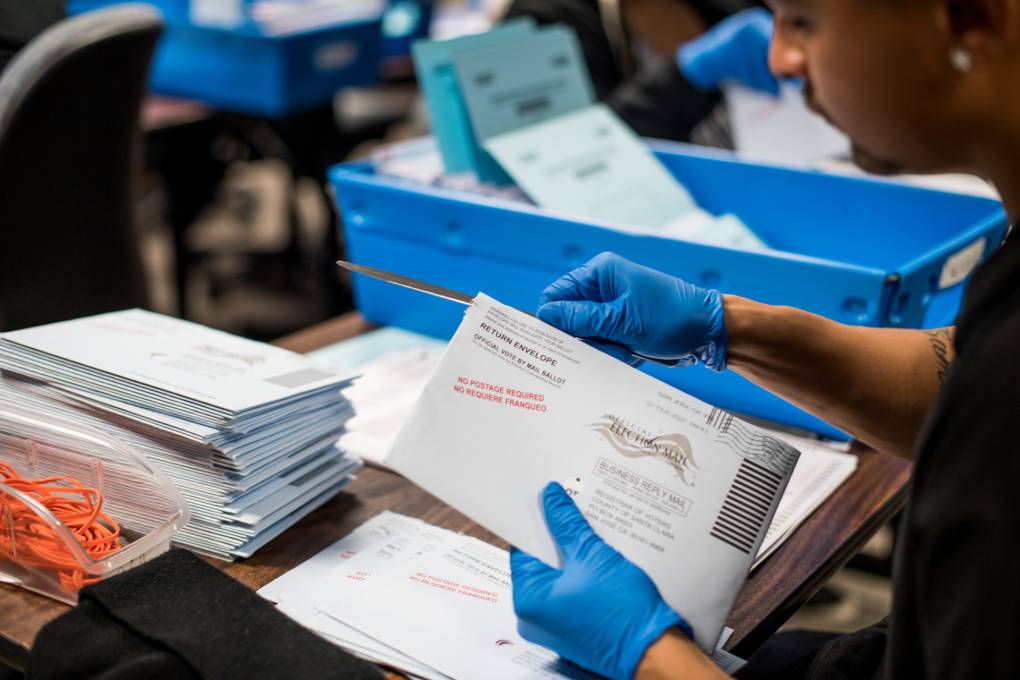
Study Finds Young Voters More Likely to Have Mail Ballots Rejected
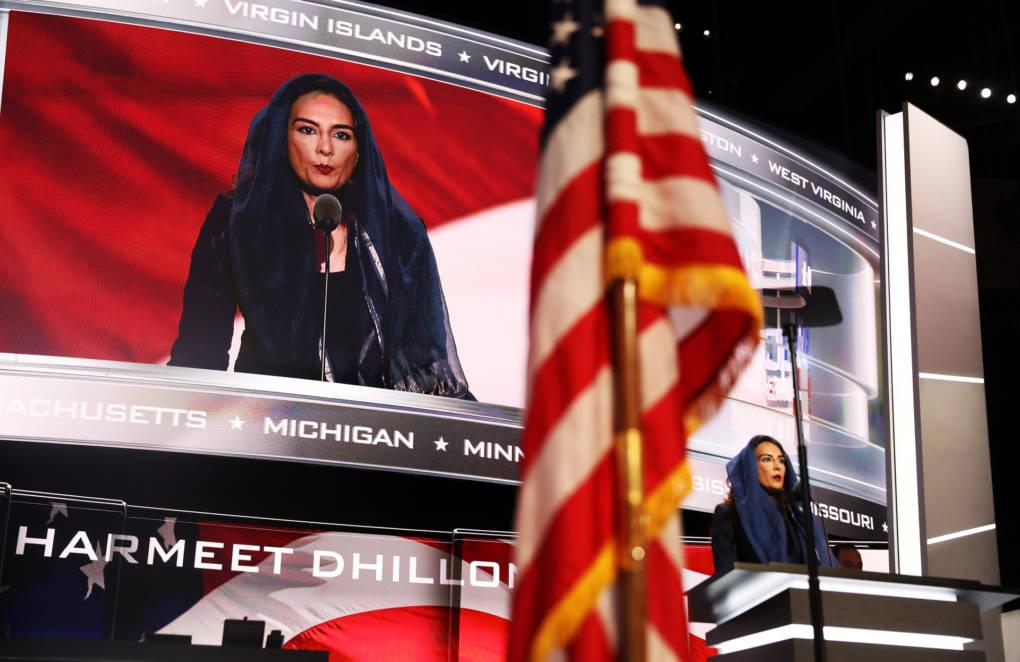
California Republicans Head to Charlotte for Mostly Virtual RNC Convention
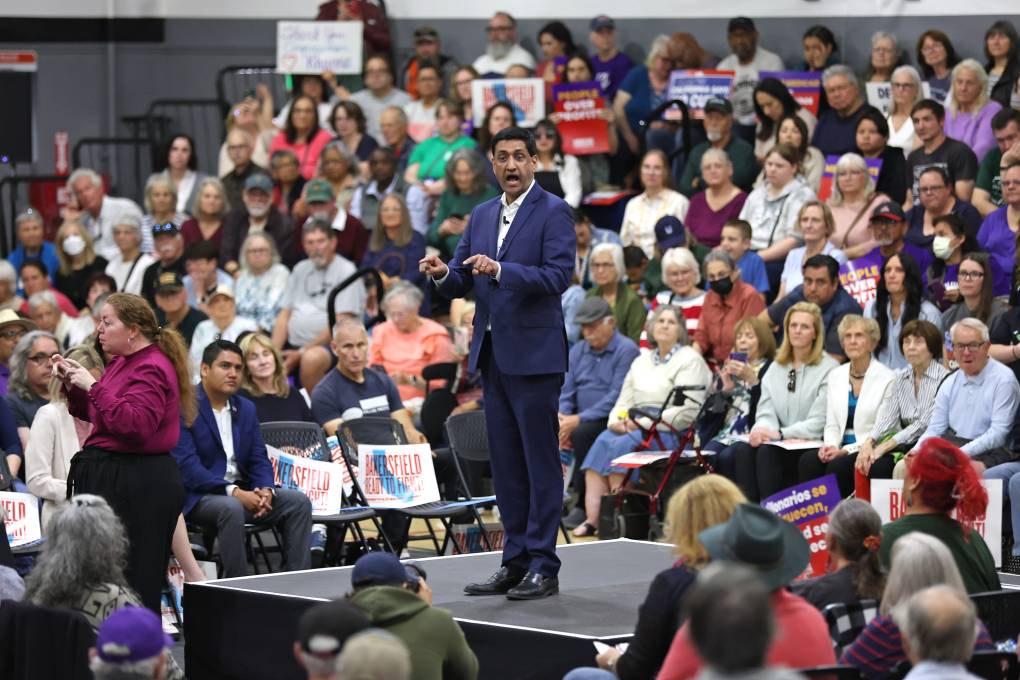
Democratic Convention Special with Addisu Demissie and Ro Khanna
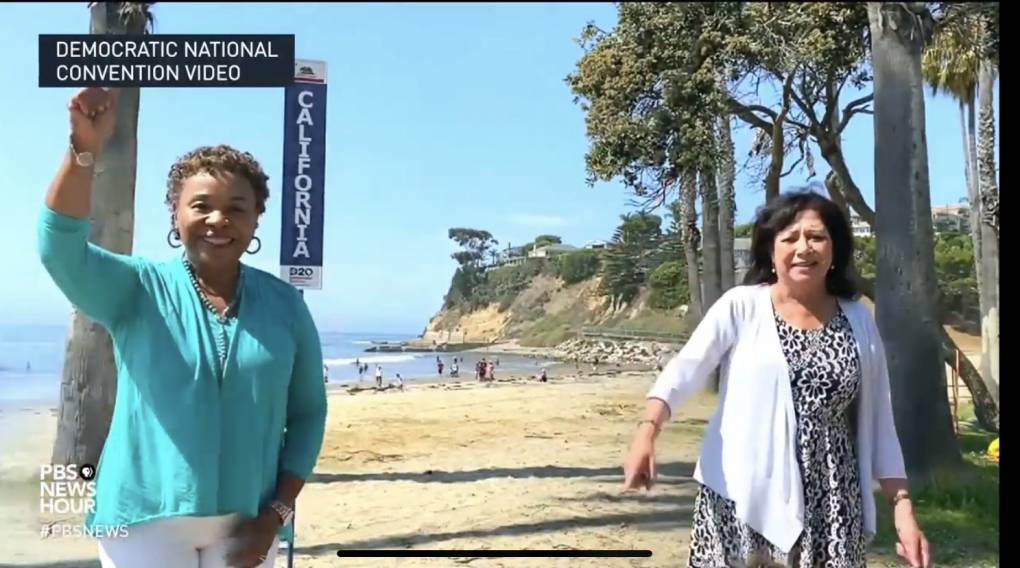
California Delegation Nominates Biden for President, Touts Environmental Justice
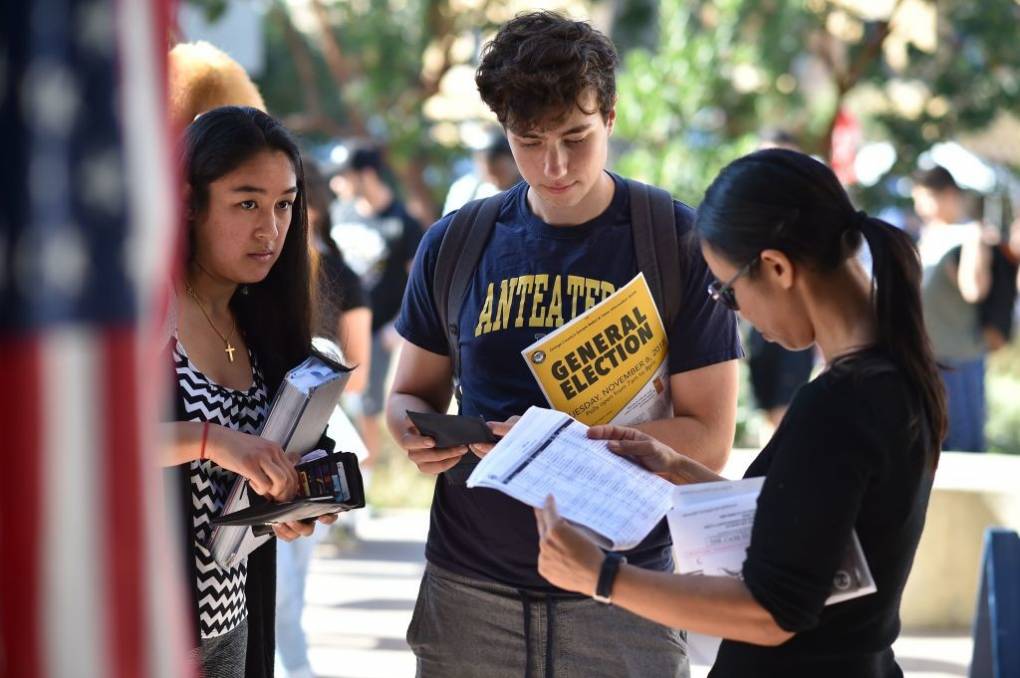
Why COVID-19 Threatens Student Votes in California
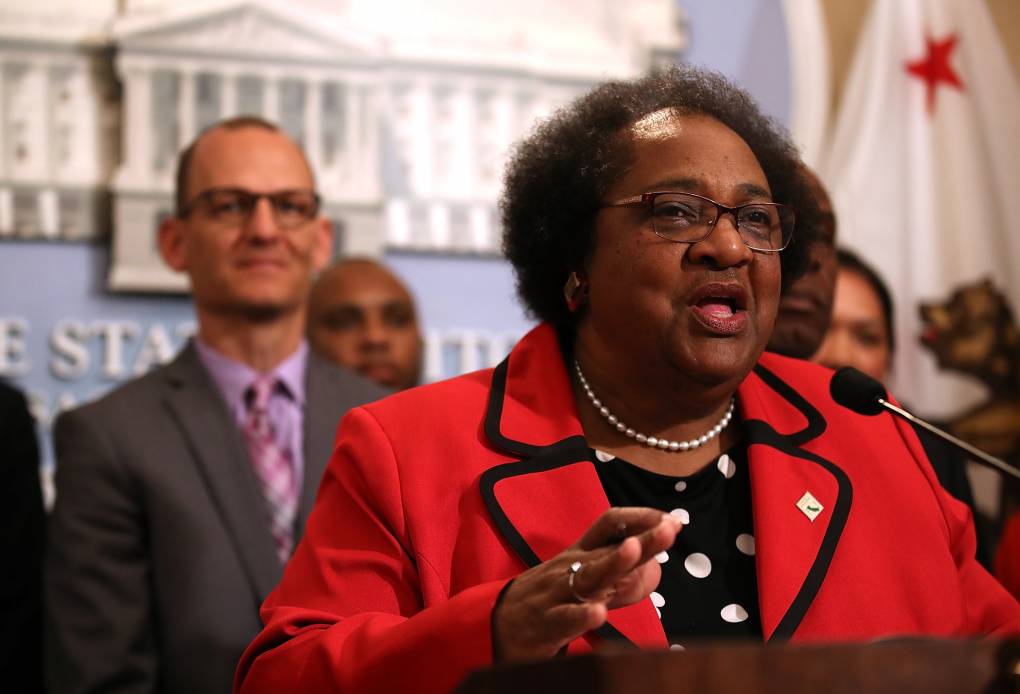
California Voters to Decide on Restoring Affirmative Action, Allowing Parolees to Vote
Sanders' Focus on Latino Voters in California Pays Off
Bay Area Voters Support Housing and Homeless Funding Measures
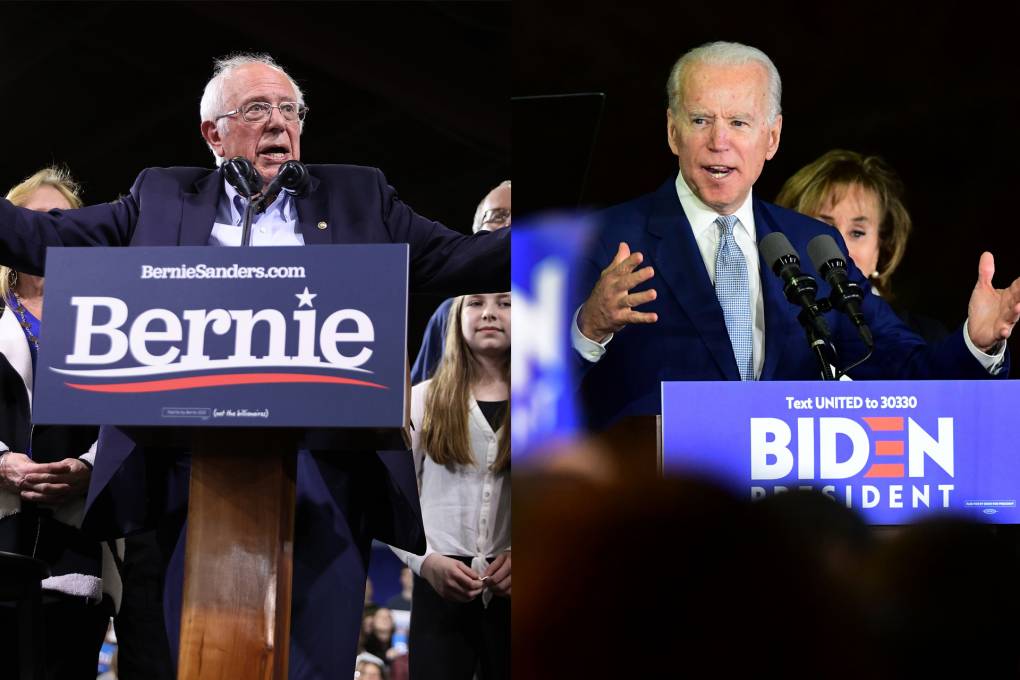
Bernie Sanders Leads in California as Biden Dominates Elsewhere
Sponsored
Player sponsored by
window.__IS_SSR__=true
window.__INITIAL_STATE__={
"attachmentsReducer": {
"audio_0": {
"type": "attachments",
"id": "audio_0",
"imgSizes": {
"kqedFullSize": {
"file": "https://ww2.kqed.org/news/wp-content/themes/KQED-unified/img/audio_bgs/background0.jpg"
}
}
},
"audio_1": {
"type": "attachments",
"id": "audio_1",
"imgSizes": {
"kqedFullSize": {
"file": "https://ww2.kqed.org/news/wp-content/themes/KQED-unified/img/audio_bgs/background1.jpg"
}
}
},
"audio_2": {
"type": "attachments",
"id": "audio_2",
"imgSizes": {
"kqedFullSize": {
"file": "https://ww2.kqed.org/news/wp-content/themes/KQED-unified/img/audio_bgs/background2.jpg"
}
}
},
"audio_3": {
"type": "attachments",
"id": "audio_3",
"imgSizes": {
"kqedFullSize": {
"file": "https://ww2.kqed.org/news/wp-content/themes/KQED-unified/img/audio_bgs/background3.jpg"
}
}
},
"audio_4": {
"type": "attachments",
"id": "audio_4",
"imgSizes": {
"kqedFullSize": {
"file": "https://ww2.kqed.org/news/wp-content/themes/KQED-unified/img/audio_bgs/background4.jpg"
}
}
},
"placeholder": {
"type": "attachments",
"id": "placeholder",
"imgSizes": {
"thumbnail": {
"file": "https://cdn.kqed.org/wp-content/uploads/2024/12/KQED-Default-Image-816638274-2000x1333-1-160x107.jpg",
"width": 160,
"height": 107,
"mimeType": "image/jpeg"
},
"medium": {
"file": "https://cdn.kqed.org/wp-content/uploads/2024/12/KQED-Default-Image-816638274-2000x1333-1-800x533.jpg",
"width": 800,
"height": 533,
"mimeType": "image/jpeg"
},
"medium_large": {
"file": "https://cdn.kqed.org/wp-content/uploads/2024/12/KQED-Default-Image-816638274-2000x1333-1-768x512.jpg",
"width": 768,
"height": 512,
"mimeType": "image/jpeg"
},
"large": {
"file": "https://cdn.kqed.org/wp-content/uploads/2024/12/KQED-Default-Image-816638274-2000x1333-1-1020x680.jpg",
"width": 1020,
"height": 680,
"mimeType": "image/jpeg"
},
"1536x1536": {
"file": "https://cdn.kqed.org/wp-content/uploads/2024/12/KQED-Default-Image-816638274-2000x1333-1-1536x1024.jpg",
"width": 1536,
"height": 1024,
"mimeType": "image/jpeg"
},
"fd-lrg": {
"file": "https://cdn.kqed.org/wp-content/uploads/2024/12/KQED-Default-Image-816638274-2000x1333-1-1536x1024.jpg",
"width": 1536,
"height": 1024,
"mimeType": "image/jpeg"
},
"fd-med": {
"file": "https://cdn.kqed.org/wp-content/uploads/2024/12/KQED-Default-Image-816638274-2000x1333-1-1020x680.jpg",
"width": 1020,
"height": 680,
"mimeType": "image/jpeg"
},
"fd-sm": {
"file": "https://cdn.kqed.org/wp-content/uploads/2024/12/KQED-Default-Image-816638274-2000x1333-1-800x533.jpg",
"width": 800,
"height": 533,
"mimeType": "image/jpeg"
},
"post-thumbnail": {
"file": "https://cdn.kqed.org/wp-content/uploads/2024/12/KQED-Default-Image-816638274-2000x1333-1-672x372.jpg",
"width": 672,
"height": 372,
"mimeType": "image/jpeg"
},
"twentyfourteen-full-width": {
"file": "https://cdn.kqed.org/wp-content/uploads/2024/12/KQED-Default-Image-816638274-2000x1333-1-1038x576.jpg",
"width": 1038,
"height": 576,
"mimeType": "image/jpeg"
},
"xxsmall": {
"file": "https://cdn.kqed.org/wp-content/uploads/2024/12/KQED-Default-Image-816638274-2000x1333-1-160x107.jpg",
"width": 160,
"height": 107,
"mimeType": "image/jpeg"
},
"xsmall": {
"file": "https://cdn.kqed.org/wp-content/uploads/2024/12/KQED-Default-Image-816638274-2000x1333-1-672x372.jpg",
"width": 672,
"height": 372,
"mimeType": "image/jpeg"
},
"small": {
"file": "https://cdn.kqed.org/wp-content/uploads/2024/12/KQED-Default-Image-816638274-2000x1333-1-672x372.jpg",
"width": 672,
"height": 372,
"mimeType": "image/jpeg"
},
"xlarge": {
"file": "https://cdn.kqed.org/wp-content/uploads/2024/12/KQED-Default-Image-816638274-2000x1333-1-1020x680.jpg",
"width": 1020,
"height": 680,
"mimeType": "image/jpeg"
},
"full-width": {
"file": "https://cdn.kqed.org/wp-content/uploads/2024/12/KQED-Default-Image-816638274-2000x1333-1-1920x1280.jpg",
"width": 1920,
"height": 1280,
"mimeType": "image/jpeg"
},
"guest-author-32": {
"file": "https://cdn.kqed.org/wp-content/uploads/2025/01/KQED-Default-Image-816638274-1333x1333-1-160x160.jpg",
"width": 32,
"height": 32,
"mimeType": "image/jpeg"
},
"guest-author-50": {
"file": "https://cdn.kqed.org/wp-content/uploads/2025/01/KQED-Default-Image-816638274-1333x1333-1-160x160.jpg",
"width": 50,
"height": 50,
"mimeType": "image/jpeg"
},
"guest-author-64": {
"file": "https://cdn.kqed.org/wp-content/uploads/2025/01/KQED-Default-Image-816638274-1333x1333-1-160x160.jpg",
"width": 64,
"height": 64,
"mimeType": "image/jpeg"
},
"guest-author-96": {
"file": "https://cdn.kqed.org/wp-content/uploads/2025/01/KQED-Default-Image-816638274-1333x1333-1-160x160.jpg",
"width": 96,
"height": 96,
"mimeType": "image/jpeg"
},
"guest-author-128": {
"file": "https://cdn.kqed.org/wp-content/uploads/2025/01/KQED-Default-Image-816638274-1333x1333-1-160x160.jpg",
"width": 128,
"height": 128,
"mimeType": "image/jpeg"
},
"detail": {
"file": "https://cdn.kqed.org/wp-content/uploads/2025/01/KQED-Default-Image-816638274-1333x1333-1-160x160.jpg",
"width": 160,
"height": 160,
"mimeType": "image/jpeg"
},
"kqedFullSize": {
"file": "https://cdn.kqed.org/wp-content/uploads/2024/12/KQED-Default-Image-816638274-2000x1333-1.jpg",
"width": 2000,
"height": 1333
}
}
},
"news_11837881": {
"type": "attachments",
"id": "news_11837881",
"meta": {
"index": "attachments_1716263798",
"site": "news",
"id": "11837881",
"found": true
},
"parent": 11837810,
"imgSizes": {
"apple_news_ca_landscape_5_5": {
"file": "https://ww2.kqed.org/app/uploads/sites/10/2020/09/RS41418_019_KQED_RegistrarofVoters_SantaClara_02192020_3139-qut-1044x783.jpg",
"width": 1044,
"mimeType": "image/jpeg",
"height": 783
},
"apple_news_ca_square_4_0": {
"file": "https://ww2.kqed.org/app/uploads/sites/10/2020/09/RS41418_019_KQED_RegistrarofVoters_SantaClara_02192020_3139-qut-470x470.jpg",
"width": 470,
"mimeType": "image/jpeg",
"height": 470
},
"twentyfourteen-full-width": {
"file": "https://ww2.kqed.org/app/uploads/sites/10/2020/09/RS41418_019_KQED_RegistrarofVoters_SantaClara_02192020_3139-qut-1038x576.jpg",
"width": 1038,
"mimeType": "image/jpeg",
"height": 576
},
"thumbnail": {
"file": "https://ww2.kqed.org/app/uploads/sites/10/2020/09/RS41418_019_KQED_RegistrarofVoters_SantaClara_02192020_3139-qut-160x107.jpg",
"width": 160,
"mimeType": "image/jpeg",
"height": 107
},
"post-thumbnail": {
"file": "https://ww2.kqed.org/app/uploads/sites/10/2020/09/RS41418_019_KQED_RegistrarofVoters_SantaClara_02192020_3139-qut-672x372.jpg",
"width": 672,
"mimeType": "image/jpeg",
"height": 372
},
"kqedFullSize": {
"file": "https://ww2.kqed.org/app/uploads/sites/10/2020/09/RS41418_019_KQED_RegistrarofVoters_SantaClara_02192020_3139-qut.jpg",
"width": 1920,
"height": 1280
},
"apple_news_ca_landscape_4_7": {
"file": "https://ww2.kqed.org/app/uploads/sites/10/2020/09/RS41418_019_KQED_RegistrarofVoters_SantaClara_02192020_3139-qut-632x474.jpg",
"width": 632,
"mimeType": "image/jpeg",
"height": 474
},
"large": {
"file": "https://ww2.kqed.org/app/uploads/sites/10/2020/09/RS41418_019_KQED_RegistrarofVoters_SantaClara_02192020_3139-qut-1020x680.jpg",
"width": 1020,
"mimeType": "image/jpeg",
"height": 680
},
"apple_news_ca_landscape_4_0": {
"file": "https://ww2.kqed.org/app/uploads/sites/10/2020/09/RS41418_019_KQED_RegistrarofVoters_SantaClara_02192020_3139-qut-536x402.jpg",
"width": 536,
"mimeType": "image/jpeg",
"height": 402
},
"apple_news_ca_portrait_12_9": {
"file": "https://ww2.kqed.org/app/uploads/sites/10/2020/09/RS41418_019_KQED_RegistrarofVoters_SantaClara_02192020_3139-qut-1122x1280.jpg",
"width": 1122,
"mimeType": "image/jpeg",
"height": 1280
},
"medium": {
"file": "https://ww2.kqed.org/app/uploads/sites/10/2020/09/RS41418_019_KQED_RegistrarofVoters_SantaClara_02192020_3139-qut-800x533.jpg",
"width": 800,
"mimeType": "image/jpeg",
"height": 533
},
"apple_news_ca_portrait_4_0": {
"file": "https://ww2.kqed.org/app/uploads/sites/10/2020/09/RS41418_019_KQED_RegistrarofVoters_SantaClara_02192020_3139-qut-354x472.jpg",
"width": 354,
"mimeType": "image/jpeg",
"height": 472
},
"apple_news_ca_portrait_9_7": {
"file": "https://ww2.kqed.org/app/uploads/sites/10/2020/09/RS41418_019_KQED_RegistrarofVoters_SantaClara_02192020_3139-qut-840x1120.jpg",
"width": 840,
"mimeType": "image/jpeg",
"height": 1120
},
"apple_news_ca_landscape_12_9": {
"file": "https://ww2.kqed.org/app/uploads/sites/10/2020/09/RS41418_019_KQED_RegistrarofVoters_SantaClara_02192020_3139-qut-1832x1280.jpg",
"width": 1832,
"mimeType": "image/jpeg",
"height": 1280
},
"apple_news_ca_square_9_7": {
"file": "https://ww2.kqed.org/app/uploads/sites/10/2020/09/RS41418_019_KQED_RegistrarofVoters_SantaClara_02192020_3139-qut-1104x1104.jpg",
"width": 1104,
"mimeType": "image/jpeg",
"height": 1104
},
"1536x1536": {
"file": "https://ww2.kqed.org/app/uploads/sites/10/2020/09/RS41418_019_KQED_RegistrarofVoters_SantaClara_02192020_3139-qut-1536x1024.jpg",
"width": 1536,
"mimeType": "image/jpeg",
"height": 1024
},
"apple_news_ca_portrait_4_7": {
"file": "https://ww2.kqed.org/app/uploads/sites/10/2020/09/RS41418_019_KQED_RegistrarofVoters_SantaClara_02192020_3139-qut-414x552.jpg",
"width": 414,
"mimeType": "image/jpeg",
"height": 552
},
"apple_news_ca_square_12_9": {
"file": "https://ww2.kqed.org/app/uploads/sites/10/2020/09/RS41418_019_KQED_RegistrarofVoters_SantaClara_02192020_3139-qut-1472x1280.jpg",
"width": 1472,
"mimeType": "image/jpeg",
"height": 1280
},
"apple_news_ca_portrait_5_5": {
"file": "https://ww2.kqed.org/app/uploads/sites/10/2020/09/RS41418_019_KQED_RegistrarofVoters_SantaClara_02192020_3139-qut-687x916.jpg",
"width": 687,
"mimeType": "image/jpeg",
"height": 916
},
"apple_news_ca_square_4_7": {
"file": "https://ww2.kqed.org/app/uploads/sites/10/2020/09/RS41418_019_KQED_RegistrarofVoters_SantaClara_02192020_3139-qut-550x550.jpg",
"width": 550,
"mimeType": "image/jpeg",
"height": 550
},
"apple_news_ca_landscape_9_7": {
"file": "https://ww2.kqed.org/app/uploads/sites/10/2020/09/RS41418_019_KQED_RegistrarofVoters_SantaClara_02192020_3139-qut-1376x1032.jpg",
"width": 1376,
"mimeType": "image/jpeg",
"height": 1032
},
"apple_news_ca_square_5_5": {
"file": "https://ww2.kqed.org/app/uploads/sites/10/2020/09/RS41418_019_KQED_RegistrarofVoters_SantaClara_02192020_3139-qut-912x912.jpg",
"width": 912,
"mimeType": "image/jpeg",
"height": 912
}
},
"publishDate": 1600113529,
"modified": 1613570466,
"caption": null,
"description": "Isaac Brito opens and flattens mail-in ballots at the Santa Clara Registrar of Voters on Feb. 19, 2020.",
"title": "RS41418_019_KQED_RegistrarofVoters_SantaClara_02192020_3139-qut",
"credit": "Beth LaBerge/KQED",
"status": "inherit",
"altTag": null,
"fetchFailed": false,
"isLoading": false
},
"news_11330015": {
"type": "attachments",
"id": "news_11330015",
"meta": {
"index": "attachments_1716263798",
"site": "news",
"id": "11330015",
"found": true
},
"parent": 11330012,
"imgSizes": {
"small": {
"file": "https://ww2.kqed.org/app/uploads/sites/10/2017/02/Convention-520x337.jpg",
"width": 520,
"mimeType": "image/jpeg",
"height": 337
},
"twentyfourteen-full-width": {
"file": "https://ww2.kqed.org/app/uploads/sites/10/2017/02/Convention-1038x576.jpg",
"width": 1038,
"mimeType": "image/jpeg",
"height": 576
},
"thumbnail": {
"file": "https://ww2.kqed.org/app/uploads/sites/10/2017/02/Convention-160x104.jpg",
"width": 160,
"mimeType": "image/jpeg",
"height": 104
},
"fd-sm": {
"file": "https://ww2.kqed.org/app/uploads/sites/10/2017/02/Convention-960x623.jpg",
"width": 960,
"mimeType": "image/jpeg",
"height": 623
},
"post-thumbnail": {
"file": "https://ww2.kqed.org/app/uploads/sites/10/2017/02/Convention-672x372.jpg",
"width": 672,
"mimeType": "image/jpeg",
"height": 372
},
"xsmall": {
"file": "https://ww2.kqed.org/app/uploads/sites/10/2017/02/Convention-375x243.jpg",
"width": 375,
"mimeType": "image/jpeg",
"height": 243
},
"kqedFullSize": {
"file": "https://ww2.kqed.org/app/uploads/sites/10/2017/02/Convention.jpg",
"width": 1920,
"height": 1246
},
"large": {
"file": "https://ww2.kqed.org/app/uploads/sites/10/2017/02/Convention-1020x662.jpg",
"width": 1020,
"mimeType": "image/jpeg",
"height": 662
},
"xlarge": {
"file": "https://ww2.kqed.org/app/uploads/sites/10/2017/02/Convention-1180x766.jpg",
"width": 1180,
"mimeType": "image/jpeg",
"height": 766
},
"guest-author-50": {
"file": "https://ww2.kqed.org/app/uploads/sites/10/2017/02/Convention-50x50.jpg",
"width": 50,
"mimeType": "image/jpeg",
"height": 50
},
"guest-author-96": {
"file": "https://ww2.kqed.org/app/uploads/sites/10/2017/02/Convention-96x96.jpg",
"width": 96,
"mimeType": "image/jpeg",
"height": 96
},
"medium": {
"file": "https://ww2.kqed.org/app/uploads/sites/10/2017/02/Convention-800x519.jpg",
"width": 800,
"mimeType": "image/jpeg",
"height": 519
},
"guest-author-64": {
"file": "https://ww2.kqed.org/app/uploads/sites/10/2017/02/Convention-64x64.jpg",
"width": 64,
"mimeType": "image/jpeg",
"height": 64
},
"guest-author-32": {
"file": "https://ww2.kqed.org/app/uploads/sites/10/2017/02/Convention-32x32.jpg",
"width": 32,
"mimeType": "image/jpeg",
"height": 32
},
"fd-lrg": {
"file": "https://ww2.kqed.org/app/uploads/sites/10/2017/02/Convention-1920x1246.jpg",
"width": 1920,
"mimeType": "image/jpeg",
"height": 1246
},
"fd-med": {
"file": "https://ww2.kqed.org/app/uploads/sites/10/2017/02/Convention-1180x766.jpg",
"width": 1180,
"mimeType": "image/jpeg",
"height": 766
},
"full-width": {
"file": "https://ww2.kqed.org/app/uploads/sites/10/2017/02/Convention-1920x1246.jpg",
"width": 1920,
"mimeType": "image/jpeg",
"height": 1246
},
"detail": {
"file": "https://ww2.kqed.org/app/uploads/sites/10/2017/02/Convention-150x150.jpg",
"width": 150,
"mimeType": "image/jpeg",
"height": 150
},
"guest-author-128": {
"file": "https://ww2.kqed.org/app/uploads/sites/10/2017/02/Convention-128x128.jpg",
"width": 128,
"mimeType": "image/jpeg",
"height": 128
},
"xxsmall": {
"file": "https://ww2.kqed.org/app/uploads/sites/10/2017/02/Convention-240x156.jpg",
"width": 240,
"mimeType": "image/jpeg",
"height": 156
}
},
"publishDate": 1487870994,
"modified": 1487895777,
"caption": "Harmeet Dhillon, vice chair of the California Republican Party, prays during the opening of the second day of the Republican National Convention on July 19, 2016, in Cleveland, Ohio.",
"description": "Harmeet Dhillon, vice chair of the California Republican Party, prays during the opening of the second day of the Republican National Convention on July 19, 2016 in Cleveland, Ohio.",
"title": "Convention",
"credit": "Joe Raedle/Getty Images",
"status": "inherit",
"fetchFailed": false,
"isLoading": false
},
"news_11834357": {
"type": "attachments",
"id": "news_11834357",
"meta": {
"index": "attachments_1716263798",
"site": "news",
"id": "11834357",
"found": true
},
"parent": 11834345,
"imgSizes": {
"apple_news_ca_landscape_5_5": {
"file": "https://ww2.kqed.org/app/uploads/sites/10/2020/08/RS44513_GettyImages-1228115315-qut-1-1044x783.jpg",
"width": 1044,
"mimeType": "image/jpeg",
"height": 783
},
"apple_news_ca_square_4_0": {
"file": "https://ww2.kqed.org/app/uploads/sites/10/2020/08/RS44513_GettyImages-1228115315-qut-1-470x470.jpg",
"width": 470,
"mimeType": "image/jpeg",
"height": 470
},
"twentyfourteen-full-width": {
"file": "https://ww2.kqed.org/app/uploads/sites/10/2020/08/RS44513_GettyImages-1228115315-qut-1-1038x576.jpg",
"width": 1038,
"mimeType": "image/jpeg",
"height": 576
},
"thumbnail": {
"file": "https://ww2.kqed.org/app/uploads/sites/10/2020/08/RS44513_GettyImages-1228115315-qut-1-160x108.jpg",
"width": 160,
"mimeType": "image/jpeg",
"height": 108
},
"post-thumbnail": {
"file": "https://ww2.kqed.org/app/uploads/sites/10/2020/08/RS44513_GettyImages-1228115315-qut-1-672x372.jpg",
"width": 672,
"mimeType": "image/jpeg",
"height": 372
},
"kqedFullSize": {
"file": "https://ww2.kqed.org/app/uploads/sites/10/2020/08/RS44513_GettyImages-1228115315-qut-1.jpg",
"width": 1920,
"height": 1296
},
"apple_news_ca_landscape_4_7": {
"file": "https://ww2.kqed.org/app/uploads/sites/10/2020/08/RS44513_GettyImages-1228115315-qut-1-632x474.jpg",
"width": 632,
"mimeType": "image/jpeg",
"height": 474
},
"large": {
"file": "https://ww2.kqed.org/app/uploads/sites/10/2020/08/RS44513_GettyImages-1228115315-qut-1-1020x689.jpg",
"width": 1020,
"mimeType": "image/jpeg",
"height": 689
},
"apple_news_ca_landscape_4_0": {
"file": "https://ww2.kqed.org/app/uploads/sites/10/2020/08/RS44513_GettyImages-1228115315-qut-1-536x402.jpg",
"width": 536,
"mimeType": "image/jpeg",
"height": 402
},
"apple_news_ca_portrait_12_9": {
"file": "https://ww2.kqed.org/app/uploads/sites/10/2020/08/RS44513_GettyImages-1228115315-qut-1-1122x1296.jpg",
"width": 1122,
"mimeType": "image/jpeg",
"height": 1296
},
"medium": {
"file": "https://ww2.kqed.org/app/uploads/sites/10/2020/08/RS44513_GettyImages-1228115315-qut-1-800x540.jpg",
"width": 800,
"mimeType": "image/jpeg",
"height": 540
},
"apple_news_ca_portrait_4_0": {
"file": "https://ww2.kqed.org/app/uploads/sites/10/2020/08/RS44513_GettyImages-1228115315-qut-1-354x472.jpg",
"width": 354,
"mimeType": "image/jpeg",
"height": 472
},
"apple_news_ca_portrait_9_7": {
"file": "https://ww2.kqed.org/app/uploads/sites/10/2020/08/RS44513_GettyImages-1228115315-qut-1-840x1120.jpg",
"width": 840,
"mimeType": "image/jpeg",
"height": 1120
},
"apple_news_ca_landscape_12_9": {
"file": "https://ww2.kqed.org/app/uploads/sites/10/2020/08/RS44513_GettyImages-1228115315-qut-1-1832x1296.jpg",
"width": 1832,
"mimeType": "image/jpeg",
"height": 1296
},
"apple_news_ca_square_9_7": {
"file": "https://ww2.kqed.org/app/uploads/sites/10/2020/08/RS44513_GettyImages-1228115315-qut-1-1104x1104.jpg",
"width": 1104,
"mimeType": "image/jpeg",
"height": 1104
},
"1536x1536": {
"file": "https://ww2.kqed.org/app/uploads/sites/10/2020/08/RS44513_GettyImages-1228115315-qut-1-1536x1037.jpg",
"width": 1536,
"mimeType": "image/jpeg",
"height": 1037
},
"apple_news_ca_portrait_4_7": {
"file": "https://ww2.kqed.org/app/uploads/sites/10/2020/08/RS44513_GettyImages-1228115315-qut-1-414x552.jpg",
"width": 414,
"mimeType": "image/jpeg",
"height": 552
},
"apple_news_ca_square_12_9": {
"file": "https://ww2.kqed.org/app/uploads/sites/10/2020/08/RS44513_GettyImages-1228115315-qut-1-1472x1296.jpg",
"width": 1472,
"mimeType": "image/jpeg",
"height": 1296
},
"apple_news_ca_portrait_5_5": {
"file": "https://ww2.kqed.org/app/uploads/sites/10/2020/08/RS44513_GettyImages-1228115315-qut-1-687x916.jpg",
"width": 687,
"mimeType": "image/jpeg",
"height": 916
},
"apple_news_ca_square_4_7": {
"file": "https://ww2.kqed.org/app/uploads/sites/10/2020/08/RS44513_GettyImages-1228115315-qut-1-550x550.jpg",
"width": 550,
"mimeType": "image/jpeg",
"height": 550
},
"apple_news_ca_landscape_9_7": {
"file": "https://ww2.kqed.org/app/uploads/sites/10/2020/08/RS44513_GettyImages-1228115315-qut-1-1376x1032.jpg",
"width": 1376,
"mimeType": "image/jpeg",
"height": 1032
},
"apple_news_ca_square_5_5": {
"file": "https://ww2.kqed.org/app/uploads/sites/10/2020/08/RS44513_GettyImages-1228115315-qut-1-912x912.jpg",
"width": 912,
"mimeType": "image/jpeg",
"height": 912
}
},
"publishDate": 1597965559,
"modified": 1597965644,
"caption": "Senator from California and Democratic vice presidential nominee Kamala Harris speaks during the third day of the Democratic National Convention, being held virtually amid the novel coronavirus pandemic, at the Chase Center in Wilmington, Delaware on August 19, 2020. ",
"description": null,
"title": "US-POLITICS-VOTE-DEMOCRATS",
"credit": "Olivier Douliery/AFP via Getty Images",
"status": "inherit",
"fetchFailed": false,
"isLoading": false
},
"news_11834010": {
"type": "attachments",
"id": "news_11834010",
"meta": {
"index": "attachments_1716263798",
"site": "news",
"id": "11834010",
"found": true
},
"parent": 11834001,
"imgSizes": {
"apple_news_ca_landscape_5_5": {
"file": "https://ww2.kqed.org/app/uploads/sites/10/2020/08/RS44480_IMG_2428-qut-1044x783.jpg",
"width": 1044,
"mimeType": "image/jpeg",
"height": 783
},
"apple_news_ca_square_4_0": {
"file": "https://ww2.kqed.org/app/uploads/sites/10/2020/08/RS44480_IMG_2428-qut-470x470.jpg",
"width": 470,
"mimeType": "image/jpeg",
"height": 470
},
"twentyfourteen-full-width": {
"file": "https://ww2.kqed.org/app/uploads/sites/10/2020/08/RS44480_IMG_2428-qut-1038x576.jpg",
"width": 1038,
"mimeType": "image/jpeg",
"height": 576
},
"thumbnail": {
"file": "https://ww2.kqed.org/app/uploads/sites/10/2020/08/RS44480_IMG_2428-qut-160x89.jpg",
"width": 160,
"mimeType": "image/jpeg",
"height": 89
},
"post-thumbnail": {
"file": "https://ww2.kqed.org/app/uploads/sites/10/2020/08/RS44480_IMG_2428-qut-672x372.jpg",
"width": 672,
"mimeType": "image/jpeg",
"height": 372
},
"kqedFullSize": {
"file": "https://ww2.kqed.org/app/uploads/sites/10/2020/08/RS44480_IMG_2428-qut.jpg",
"width": 1487,
"height": 828
},
"apple_news_ca_landscape_4_7": {
"file": "https://ww2.kqed.org/app/uploads/sites/10/2020/08/RS44480_IMG_2428-qut-632x474.jpg",
"width": 632,
"mimeType": "image/jpeg",
"height": 474
},
"large": {
"file": "https://ww2.kqed.org/app/uploads/sites/10/2020/08/RS44480_IMG_2428-qut-1020x568.jpg",
"width": 1020,
"mimeType": "image/jpeg",
"height": 568
},
"apple_news_ca_landscape_4_0": {
"file": "https://ww2.kqed.org/app/uploads/sites/10/2020/08/RS44480_IMG_2428-qut-536x402.jpg",
"width": 536,
"mimeType": "image/jpeg",
"height": 402
},
"apple_news_ca_portrait_12_9": {
"file": "https://ww2.kqed.org/app/uploads/sites/10/2020/08/RS44480_IMG_2428-qut-1122x828.jpg",
"width": 1122,
"mimeType": "image/jpeg",
"height": 828
},
"medium": {
"file": "https://ww2.kqed.org/app/uploads/sites/10/2020/08/RS44480_IMG_2428-qut-800x445.jpg",
"width": 800,
"mimeType": "image/jpeg",
"height": 445
},
"apple_news_ca_portrait_4_0": {
"file": "https://ww2.kqed.org/app/uploads/sites/10/2020/08/RS44480_IMG_2428-qut-354x472.jpg",
"width": 354,
"mimeType": "image/jpeg",
"height": 472
},
"apple_news_ca_portrait_9_7": {
"file": "https://ww2.kqed.org/app/uploads/sites/10/2020/08/RS44480_IMG_2428-qut-840x828.jpg",
"width": 840,
"mimeType": "image/jpeg",
"height": 828
},
"apple_news_ca_square_9_7": {
"file": "https://ww2.kqed.org/app/uploads/sites/10/2020/08/RS44480_IMG_2428-qut-1104x828.jpg",
"width": 1104,
"mimeType": "image/jpeg",
"height": 828
},
"apple_news_ca_portrait_4_7": {
"file": "https://ww2.kqed.org/app/uploads/sites/10/2020/08/RS44480_IMG_2428-qut-414x552.jpg",
"width": 414,
"mimeType": "image/jpeg",
"height": 552
},
"apple_news_ca_square_12_9": {
"file": "https://ww2.kqed.org/app/uploads/sites/10/2020/08/RS44480_IMG_2428-qut-1472x828.jpg",
"width": 1472,
"mimeType": "image/jpeg",
"height": 828
},
"apple_news_ca_portrait_5_5": {
"file": "https://ww2.kqed.org/app/uploads/sites/10/2020/08/RS44480_IMG_2428-qut-687x828.jpg",
"width": 687,
"mimeType": "image/jpeg",
"height": 828
},
"apple_news_ca_square_4_7": {
"file": "https://ww2.kqed.org/app/uploads/sites/10/2020/08/RS44480_IMG_2428-qut-550x550.jpg",
"width": 550,
"mimeType": "image/jpeg",
"height": 550
},
"apple_news_ca_landscape_9_7": {
"file": "https://ww2.kqed.org/app/uploads/sites/10/2020/08/RS44480_IMG_2428-qut-1376x828.jpg",
"width": 1376,
"mimeType": "image/jpeg",
"height": 828
},
"apple_news_ca_square_5_5": {
"file": "https://ww2.kqed.org/app/uploads/sites/10/2020/08/RS44480_IMG_2428-qut-912x828.jpg",
"width": 912,
"mimeType": "image/jpeg",
"height": 828
}
},
"publishDate": 1597805103,
"modified": 1597805191,
"caption": "Rep. Barbara Lee, D-Oakland, (L), and Los Angeles Supervisor Hilda Solis (R) during the 2020 Democratic National Convention's delegate roll call.",
"description": null,
"title": "RS44480_IMG_2428-qut",
"credit": "PBS NewsHour",
"status": "inherit",
"fetchFailed": false,
"isLoading": false
},
"news_11829646": {
"type": "attachments",
"id": "news_11829646",
"meta": {
"index": "attachments_1716263798",
"site": "news",
"id": "11829646",
"found": true
},
"parent": 11829370,
"imgSizes": {
"apple_news_ca_square_4_0": {
"file": "https://ww2.kqed.org/app/uploads/sites/10/2020/07/RS33664_irvine-qut-470x470.jpg",
"width": 470,
"mimeType": "image/jpeg",
"height": 470
},
"twentyfourteen-full-width": {
"file": "https://ww2.kqed.org/app/uploads/sites/10/2020/07/RS33664_irvine-qut-1024x576.jpg",
"width": 1024,
"mimeType": "image/jpeg",
"height": 576
},
"thumbnail": {
"file": "https://ww2.kqed.org/app/uploads/sites/10/2020/07/RS33664_irvine-qut-160x106.jpg",
"width": 160,
"mimeType": "image/jpeg",
"height": 106
},
"post-thumbnail": {
"file": "https://ww2.kqed.org/app/uploads/sites/10/2020/07/RS33664_irvine-qut-672x372.jpg",
"width": 672,
"mimeType": "image/jpeg",
"height": 372
},
"kqedFullSize": {
"file": "https://ww2.kqed.org/app/uploads/sites/10/2020/07/RS33664_irvine-qut.jpg",
"width": 1024,
"height": 681
},
"apple_news_ca_landscape_4_7": {
"file": "https://ww2.kqed.org/app/uploads/sites/10/2020/07/RS33664_irvine-qut-632x474.jpg",
"width": 632,
"mimeType": "image/jpeg",
"height": 474
},
"large": {
"file": "https://ww2.kqed.org/app/uploads/sites/10/2020/07/RS33664_irvine-qut-1020x678.jpg",
"width": 1020,
"mimeType": "image/jpeg",
"height": 678
},
"apple_news_ca_landscape_4_0": {
"file": "https://ww2.kqed.org/app/uploads/sites/10/2020/07/RS33664_irvine-qut-536x402.jpg",
"width": 536,
"mimeType": "image/jpeg",
"height": 402
},
"medium": {
"file": "https://ww2.kqed.org/app/uploads/sites/10/2020/07/RS33664_irvine-qut-800x532.jpg",
"width": 800,
"mimeType": "image/jpeg",
"height": 532
},
"apple_news_ca_portrait_4_0": {
"file": "https://ww2.kqed.org/app/uploads/sites/10/2020/07/RS33664_irvine-qut-354x472.jpg",
"width": 354,
"mimeType": "image/jpeg",
"height": 472
},
"apple_news_ca_portrait_9_7": {
"file": "https://ww2.kqed.org/app/uploads/sites/10/2020/07/RS33664_irvine-qut-840x681.jpg",
"width": 840,
"mimeType": "image/jpeg",
"height": 681
},
"apple_news_ca_portrait_4_7": {
"file": "https://ww2.kqed.org/app/uploads/sites/10/2020/07/RS33664_irvine-qut-414x552.jpg",
"width": 414,
"mimeType": "image/jpeg",
"height": 552
},
"apple_news_ca_portrait_5_5": {
"file": "https://ww2.kqed.org/app/uploads/sites/10/2020/07/RS33664_irvine-qut-687x681.jpg",
"width": 687,
"mimeType": "image/jpeg",
"height": 681
},
"apple_news_ca_square_4_7": {
"file": "https://ww2.kqed.org/app/uploads/sites/10/2020/07/RS33664_irvine-qut-550x550.jpg",
"width": 550,
"mimeType": "image/jpeg",
"height": 550
},
"apple_news_ca_square_5_5": {
"file": "https://ww2.kqed.org/app/uploads/sites/10/2020/07/RS33664_irvine-qut-912x681.jpg",
"width": 912,
"mimeType": "image/jpeg",
"height": 681
}
},
"publishDate": 1595199585,
"modified": 1595288321,
"caption": "Students wait in line to cast their ballots at a polling station on the campus of UC Irvine on Nov. 6, 2018.",
"description": "Students wait in line to cast their ballots at a polling station on the campus of UC Irvine on Nov. 6, 2018.",
"title": "US-POLITICS-ELECTION-VOTE",
"credit": "Robyn Beck/AFP/Getty Images",
"status": "inherit",
"fetchFailed": false,
"isLoading": false
},
"news_11826079": {
"type": "attachments",
"id": "news_11826079",
"meta": {
"index": "attachments_1716263798",
"site": "news",
"id": "11826079",
"found": true
},
"parent": 11826042,
"imgSizes": {
"apple_news_ca_landscape_5_5": {
"file": "https://ww2.kqed.org/app/uploads/sites/10/2020/06/RS30257_GettyImages-941502788-qut-1044x783.jpg",
"width": 1044,
"mimeType": "image/jpeg",
"height": 783
},
"apple_news_ca_square_4_0": {
"file": "https://ww2.kqed.org/app/uploads/sites/10/2020/06/RS30257_GettyImages-941502788-qut-470x470.jpg",
"width": 470,
"mimeType": "image/jpeg",
"height": 470
},
"twentyfourteen-full-width": {
"file": "https://ww2.kqed.org/app/uploads/sites/10/2020/06/RS30257_GettyImages-941502788-qut-1038x576.jpg",
"width": 1038,
"mimeType": "image/jpeg",
"height": 576
},
"thumbnail": {
"file": "https://ww2.kqed.org/app/uploads/sites/10/2020/06/RS30257_GettyImages-941502788-qut-160x109.jpg",
"width": 160,
"mimeType": "image/jpeg",
"height": 109
},
"post-thumbnail": {
"file": "https://ww2.kqed.org/app/uploads/sites/10/2020/06/RS30257_GettyImages-941502788-qut-672x372.jpg",
"width": 672,
"mimeType": "image/jpeg",
"height": 372
},
"kqedFullSize": {
"file": "https://ww2.kqed.org/app/uploads/sites/10/2020/06/RS30257_GettyImages-941502788-qut.jpg",
"width": 1920,
"height": 1306
},
"apple_news_ca_landscape_4_7": {
"file": "https://ww2.kqed.org/app/uploads/sites/10/2020/06/RS30257_GettyImages-941502788-qut-632x474.jpg",
"width": 632,
"mimeType": "image/jpeg",
"height": 474
},
"large": {
"file": "https://ww2.kqed.org/app/uploads/sites/10/2020/06/RS30257_GettyImages-941502788-qut-1020x694.jpg",
"width": 1020,
"mimeType": "image/jpeg",
"height": 694
},
"apple_news_ca_landscape_4_0": {
"file": "https://ww2.kqed.org/app/uploads/sites/10/2020/06/RS30257_GettyImages-941502788-qut-536x402.jpg",
"width": 536,
"mimeType": "image/jpeg",
"height": 402
},
"apple_news_ca_portrait_12_9": {
"file": "https://ww2.kqed.org/app/uploads/sites/10/2020/06/RS30257_GettyImages-941502788-qut-1122x1306.jpg",
"width": 1122,
"mimeType": "image/jpeg",
"height": 1306
},
"medium": {
"file": "https://ww2.kqed.org/app/uploads/sites/10/2020/06/RS30257_GettyImages-941502788-qut-800x544.jpg",
"width": 800,
"mimeType": "image/jpeg",
"height": 544
},
"apple_news_ca_portrait_4_0": {
"file": "https://ww2.kqed.org/app/uploads/sites/10/2020/06/RS30257_GettyImages-941502788-qut-354x472.jpg",
"width": 354,
"mimeType": "image/jpeg",
"height": 472
},
"apple_news_ca_portrait_9_7": {
"file": "https://ww2.kqed.org/app/uploads/sites/10/2020/06/RS30257_GettyImages-941502788-qut-840x1120.jpg",
"width": 840,
"mimeType": "image/jpeg",
"height": 1120
},
"apple_news_ca_landscape_12_9": {
"file": "https://ww2.kqed.org/app/uploads/sites/10/2020/06/RS30257_GettyImages-941502788-qut-1832x1306.jpg",
"width": 1832,
"mimeType": "image/jpeg",
"height": 1306
},
"apple_news_ca_square_9_7": {
"file": "https://ww2.kqed.org/app/uploads/sites/10/2020/06/RS30257_GettyImages-941502788-qut-1104x1104.jpg",
"width": 1104,
"mimeType": "image/jpeg",
"height": 1104
},
"1536x1536": {
"file": "https://ww2.kqed.org/app/uploads/sites/10/2020/06/RS30257_GettyImages-941502788-qut-1536x1045.jpg",
"width": 1536,
"mimeType": "image/jpeg",
"height": 1045
},
"apple_news_ca_portrait_4_7": {
"file": "https://ww2.kqed.org/app/uploads/sites/10/2020/06/RS30257_GettyImages-941502788-qut-414x552.jpg",
"width": 414,
"mimeType": "image/jpeg",
"height": 552
},
"apple_news_ca_square_12_9": {
"file": "https://ww2.kqed.org/app/uploads/sites/10/2020/06/RS30257_GettyImages-941502788-qut-1472x1306.jpg",
"width": 1472,
"mimeType": "image/jpeg",
"height": 1306
},
"apple_news_ca_portrait_5_5": {
"file": "https://ww2.kqed.org/app/uploads/sites/10/2020/06/RS30257_GettyImages-941502788-qut-687x916.jpg",
"width": 687,
"mimeType": "image/jpeg",
"height": 916
},
"apple_news_ca_square_4_7": {
"file": "https://ww2.kqed.org/app/uploads/sites/10/2020/06/RS30257_GettyImages-941502788-qut-550x550.jpg",
"width": 550,
"mimeType": "image/jpeg",
"height": 550
},
"apple_news_ca_landscape_9_7": {
"file": "https://ww2.kqed.org/app/uploads/sites/10/2020/06/RS30257_GettyImages-941502788-qut-1376x1032.jpg",
"width": 1376,
"mimeType": "image/jpeg",
"height": 1032
},
"apple_news_ca_square_5_5": {
"file": "https://ww2.kqed.org/app/uploads/sites/10/2020/06/RS30257_GettyImages-941502788-qut-912x912.jpg",
"width": 912,
"mimeType": "image/jpeg",
"height": 912
}
},
"publishDate": 1593044619,
"modified": 1601683140,
"caption": "Assemblywoman Shirley Weber (D-San Diego) authored Proposition 16, a measure that would overturn California's ban on affirmative action.",
"description": "Assemblywoman Shirley Weber (D-San Diego) authored Proposition 16, a measure that would overturn California's ban on affirmative action.",
"title": "California Lawmakers Announce Bill To Alter Police Use Of Lethal Force Policy",
"credit": "Justin Sullivan/Getty Images",
"status": "inherit",
"fetchFailed": false,
"isLoading": false
},
"news_11805083": {
"type": "attachments",
"id": "news_11805083",
"meta": {
"index": "attachments_1716263798",
"site": "news",
"id": "11805083",
"found": true
},
"title": "Image from iOS (1)",
"publishDate": 1583311643,
"status": "inherit",
"parent": 0,
"modified": 1746628206,
"caption": "Bernie Sanders supporters celebrate his victory in California at the Sanders headquarters in San Francisco’s Mission District on Tuesday, Mar. 3, 2020.",
"credit": "Beth LaBerge/KQED",
"altTag": "Bernie Sanders supporters celebrate his victory in California at the Sanders headquarters in San Francisco’s Mission District on Tuesday, Mar. 3, 2020.",
"description": "Bernie Sanders supporters celebrate his victory in California at the Sanders headquarters in San Francisco’s Mission District on Tuesday, Mar. 3, 2020.",
"imgSizes": {
"medium": {
"file": "https://cdn.kqed.org/wp-content/uploads/sites/10/2020/03/Image-from-iOS-1-scaled-800x534.jpg",
"width": 800,
"height": 534,
"mimeType": "image/jpeg"
},
"large": {
"file": "https://cdn.kqed.org/wp-content/uploads/sites/10/2020/03/Image-from-iOS-1-scaled-1020x680.jpg",
"width": 1020,
"height": 680,
"mimeType": "image/jpeg"
},
"thumbnail": {
"file": "https://cdn.kqed.org/wp-content/uploads/sites/10/2020/03/Image-from-iOS-1-scaled-160x107.jpg",
"width": 160,
"height": 107,
"mimeType": "image/jpeg"
},
"1536x1536": {
"file": "https://cdn.kqed.org/wp-content/uploads/sites/10/2020/03/Image-from-iOS-1-scaled-1536x1025.jpg",
"width": 1536,
"height": 1025,
"mimeType": "image/jpeg"
},
"2048x2048": {
"file": "https://cdn.kqed.org/wp-content/uploads/sites/10/2020/03/Image-from-iOS-1-scaled-2048x1366.jpg",
"width": 2048,
"height": 1366,
"mimeType": "image/jpeg"
},
"post-thumbnail": {
"file": "https://cdn.kqed.org/wp-content/uploads/sites/10/2020/03/Image-from-iOS-1-scaled-672x372.jpg",
"width": 672,
"height": 372,
"mimeType": "image/jpeg"
},
"twentyfourteen-full-width": {
"file": "https://cdn.kqed.org/wp-content/uploads/sites/10/2020/03/Image-from-iOS-1-scaled-1038x576.jpg",
"width": 1038,
"height": 576,
"mimeType": "image/jpeg"
},
"full-width": {
"file": "https://cdn.kqed.org/wp-content/uploads/sites/10/2020/03/Image-from-iOS-1-scaled-1920x1281.jpg",
"width": 1920,
"height": 1281,
"mimeType": "image/jpeg"
},
"kqedFullSize": {
"file": "https://cdn.kqed.org/wp-content/uploads/sites/10/2020/03/Image-from-iOS-1-scaled-scaled.jpg",
"width": 2560,
"height": 1708
}
},
"fetchFailed": false,
"isLoading": false
},
"news_11805277": {
"type": "attachments",
"id": "news_11805277",
"meta": {
"index": "attachments_1716263798",
"site": "news",
"id": "11805277",
"found": true
},
"parent": 11805237,
"imgSizes": {
"apple_news_ca_landscape_5_5": {
"file": "https://ww2.kqed.org/app/uploads/sites/10/2020/03/RS41395_002_KQED_Housing_MountainView_02192020_3308-qut-1044x783.jpg",
"width": 1044,
"mimeType": "image/jpeg",
"height": 783
},
"apple_news_ca_square_4_0": {
"file": "https://ww2.kqed.org/app/uploads/sites/10/2020/03/RS41395_002_KQED_Housing_MountainView_02192020_3308-qut-470x470.jpg",
"width": 470,
"mimeType": "image/jpeg",
"height": 470
},
"twentyfourteen-full-width": {
"file": "https://ww2.kqed.org/app/uploads/sites/10/2020/03/RS41395_002_KQED_Housing_MountainView_02192020_3308-qut-1038x576.jpg",
"width": 1038,
"mimeType": "image/jpeg",
"height": 576
},
"thumbnail": {
"file": "https://ww2.kqed.org/app/uploads/sites/10/2020/03/RS41395_002_KQED_Housing_MountainView_02192020_3308-qut-160x107.jpg",
"width": 160,
"mimeType": "image/jpeg",
"height": 107
},
"post-thumbnail": {
"file": "https://ww2.kqed.org/app/uploads/sites/10/2020/03/RS41395_002_KQED_Housing_MountainView_02192020_3308-qut-672x372.jpg",
"width": 672,
"mimeType": "image/jpeg",
"height": 372
},
"kqedFullSize": {
"file": "https://ww2.kqed.org/app/uploads/sites/10/2020/03/RS41395_002_KQED_Housing_MountainView_02192020_3308-qut.jpg",
"width": 1920,
"height": 1280
},
"apple_news_ca_landscape_4_7": {
"file": "https://ww2.kqed.org/app/uploads/sites/10/2020/03/RS41395_002_KQED_Housing_MountainView_02192020_3308-qut-632x474.jpg",
"width": 632,
"mimeType": "image/jpeg",
"height": 474
},
"large": {
"file": "https://ww2.kqed.org/app/uploads/sites/10/2020/03/RS41395_002_KQED_Housing_MountainView_02192020_3308-qut-1020x680.jpg",
"width": 1020,
"mimeType": "image/jpeg",
"height": 680
},
"apple_news_ca_landscape_4_0": {
"file": "https://ww2.kqed.org/app/uploads/sites/10/2020/03/RS41395_002_KQED_Housing_MountainView_02192020_3308-qut-536x402.jpg",
"width": 536,
"mimeType": "image/jpeg",
"height": 402
},
"apple_news_ca_portrait_12_9": {
"file": "https://ww2.kqed.org/app/uploads/sites/10/2020/03/RS41395_002_KQED_Housing_MountainView_02192020_3308-qut-1122x1280.jpg",
"width": 1122,
"mimeType": "image/jpeg",
"height": 1280
},
"medium": {
"file": "https://ww2.kqed.org/app/uploads/sites/10/2020/03/RS41395_002_KQED_Housing_MountainView_02192020_3308-qut-800x533.jpg",
"width": 800,
"mimeType": "image/jpeg",
"height": 533
},
"apple_news_ca_portrait_4_0": {
"file": "https://ww2.kqed.org/app/uploads/sites/10/2020/03/RS41395_002_KQED_Housing_MountainView_02192020_3308-qut-354x472.jpg",
"width": 354,
"mimeType": "image/jpeg",
"height": 472
},
"apple_news_ca_portrait_9_7": {
"file": "https://ww2.kqed.org/app/uploads/sites/10/2020/03/RS41395_002_KQED_Housing_MountainView_02192020_3308-qut-840x1120.jpg",
"width": 840,
"mimeType": "image/jpeg",
"height": 1120
},
"apple_news_ca_landscape_12_9": {
"file": "https://ww2.kqed.org/app/uploads/sites/10/2020/03/RS41395_002_KQED_Housing_MountainView_02192020_3308-qut-1832x1280.jpg",
"width": 1832,
"mimeType": "image/jpeg",
"height": 1280
},
"apple_news_ca_square_9_7": {
"file": "https://ww2.kqed.org/app/uploads/sites/10/2020/03/RS41395_002_KQED_Housing_MountainView_02192020_3308-qut-1104x1104.jpg",
"width": 1104,
"mimeType": "image/jpeg",
"height": 1104
},
"apple_news_ca_portrait_4_7": {
"file": "https://ww2.kqed.org/app/uploads/sites/10/2020/03/RS41395_002_KQED_Housing_MountainView_02192020_3308-qut-414x552.jpg",
"width": 414,
"mimeType": "image/jpeg",
"height": 552
},
"apple_news_ca_square_12_9": {
"file": "https://ww2.kqed.org/app/uploads/sites/10/2020/03/RS41395_002_KQED_Housing_MountainView_02192020_3308-qut-1472x1280.jpg",
"width": 1472,
"mimeType": "image/jpeg",
"height": 1280
},
"apple_news_ca_portrait_5_5": {
"file": "https://ww2.kqed.org/app/uploads/sites/10/2020/03/RS41395_002_KQED_Housing_MountainView_02192020_3308-qut-687x916.jpg",
"width": 687,
"mimeType": "image/jpeg",
"height": 916
},
"full-width": {
"file": "https://ww2.kqed.org/app/uploads/sites/10/2020/03/RS41395_002_KQED_Housing_MountainView_02192020_3308-qut-1920x1280.jpg",
"width": 1920,
"mimeType": "image/jpeg",
"height": 1280
},
"apple_news_ca_square_4_7": {
"file": "https://ww2.kqed.org/app/uploads/sites/10/2020/03/RS41395_002_KQED_Housing_MountainView_02192020_3308-qut-550x550.jpg",
"width": 550,
"mimeType": "image/jpeg",
"height": 550
},
"apple_news_ca_landscape_9_7": {
"file": "https://ww2.kqed.org/app/uploads/sites/10/2020/03/RS41395_002_KQED_Housing_MountainView_02192020_3308-qut-1376x1032.jpg",
"width": 1376,
"mimeType": "image/jpeg",
"height": 1032
},
"apple_news_ca_square_5_5": {
"file": "https://ww2.kqed.org/app/uploads/sites/10/2020/03/RS41395_002_KQED_Housing_MountainView_02192020_3308-qut-912x912.jpg",
"width": 912,
"mimeType": "image/jpeg",
"height": 912
}
},
"publishDate": 1583350992,
"modified": 1600908772,
"caption": "Apartment construction in Mountain View.",
"description": "Apartment construction in Mountain View, California on Feb. 19, 2020.",
"title": "RS41395_002_KQED_Housing_MountainView_02192020_3308-qut",
"credit": "Beth LaBerge/KQED",
"status": "inherit",
"fetchFailed": false,
"isLoading": false
},
"news_11805159": {
"type": "attachments",
"id": "news_11805159",
"meta": {
"index": "attachments_1716263798",
"site": "news",
"id": "11805159",
"found": true
},
"parent": 11804008,
"imgSizes": {
"apple_news_ca_landscape_5_5": {
"file": "https://ww2.kqed.org/app/uploads/sites/10/2020/03/bidenbernie1-1044x783.jpg",
"width": 1044,
"mimeType": "image/jpeg",
"height": 783
},
"apple_news_ca_square_4_0": {
"file": "https://ww2.kqed.org/app/uploads/sites/10/2020/03/bidenbernie1-470x470.jpg",
"width": 470,
"mimeType": "image/jpeg",
"height": 470
},
"twentyfourteen-full-width": {
"file": "https://ww2.kqed.org/app/uploads/sites/10/2020/03/bidenbernie1-1038x576.jpg",
"width": 1038,
"mimeType": "image/jpeg",
"height": 576
},
"thumbnail": {
"file": "https://ww2.kqed.org/app/uploads/sites/10/2020/03/bidenbernie1-160x107.jpg",
"width": 160,
"mimeType": "image/jpeg",
"height": 107
},
"post-thumbnail": {
"file": "https://ww2.kqed.org/app/uploads/sites/10/2020/03/bidenbernie1-672x372.jpg",
"width": 672,
"mimeType": "image/jpeg",
"height": 372
},
"kqedFullSize": {
"file": "https://ww2.kqed.org/app/uploads/sites/10/2020/03/bidenbernie1.jpg",
"width": 1920,
"height": 1280
},
"apple_news_ca_landscape_4_7": {
"file": "https://ww2.kqed.org/app/uploads/sites/10/2020/03/bidenbernie1-632x474.jpg",
"width": 632,
"mimeType": "image/jpeg",
"height": 474
},
"large": {
"file": "https://ww2.kqed.org/app/uploads/sites/10/2020/03/bidenbernie1-1020x680.jpg",
"width": 1020,
"mimeType": "image/jpeg",
"height": 680
},
"apple_news_ca_landscape_4_0": {
"file": "https://ww2.kqed.org/app/uploads/sites/10/2020/03/bidenbernie1-536x402.jpg",
"width": 536,
"mimeType": "image/jpeg",
"height": 402
},
"apple_news_ca_portrait_12_9": {
"file": "https://ww2.kqed.org/app/uploads/sites/10/2020/03/bidenbernie1-1122x1280.jpg",
"width": 1122,
"mimeType": "image/jpeg",
"height": 1280
},
"medium": {
"file": "https://ww2.kqed.org/app/uploads/sites/10/2020/03/bidenbernie1-800x533.jpg",
"width": 800,
"mimeType": "image/jpeg",
"height": 533
},
"apple_news_ca_portrait_4_0": {
"file": "https://ww2.kqed.org/app/uploads/sites/10/2020/03/bidenbernie1-354x472.jpg",
"width": 354,
"mimeType": "image/jpeg",
"height": 472
},
"apple_news_ca_portrait_9_7": {
"file": "https://ww2.kqed.org/app/uploads/sites/10/2020/03/bidenbernie1-840x1120.jpg",
"width": 840,
"mimeType": "image/jpeg",
"height": 1120
},
"apple_news_ca_landscape_12_9": {
"file": "https://ww2.kqed.org/app/uploads/sites/10/2020/03/bidenbernie1-1832x1280.jpg",
"width": 1832,
"mimeType": "image/jpeg",
"height": 1280
},
"apple_news_ca_square_9_7": {
"file": "https://ww2.kqed.org/app/uploads/sites/10/2020/03/bidenbernie1-1104x1104.jpg",
"width": 1104,
"mimeType": "image/jpeg",
"height": 1104
},
"apple_news_ca_portrait_4_7": {
"file": "https://ww2.kqed.org/app/uploads/sites/10/2020/03/bidenbernie1-414x552.jpg",
"width": 414,
"mimeType": "image/jpeg",
"height": 552
},
"apple_news_ca_square_12_9": {
"file": "https://ww2.kqed.org/app/uploads/sites/10/2020/03/bidenbernie1-1472x1280.jpg",
"width": 1472,
"mimeType": "image/jpeg",
"height": 1280
},
"apple_news_ca_portrait_5_5": {
"file": "https://ww2.kqed.org/app/uploads/sites/10/2020/03/bidenbernie1-687x916.jpg",
"width": 687,
"mimeType": "image/jpeg",
"height": 916
},
"full-width": {
"file": "https://ww2.kqed.org/app/uploads/sites/10/2020/03/bidenbernie1-1920x1280.jpg",
"width": 1920,
"mimeType": "image/jpeg",
"height": 1280
},
"apple_news_ca_square_4_7": {
"file": "https://ww2.kqed.org/app/uploads/sites/10/2020/03/bidenbernie1-550x550.jpg",
"width": 550,
"mimeType": "image/jpeg",
"height": 550
},
"apple_news_ca_landscape_9_7": {
"file": "https://ww2.kqed.org/app/uploads/sites/10/2020/03/bidenbernie1-1376x1032.jpg",
"width": 1376,
"mimeType": "image/jpeg",
"height": 1032
},
"apple_news_ca_square_5_5": {
"file": "https://ww2.kqed.org/app/uploads/sites/10/2020/03/bidenbernie1-912x912.jpg",
"width": 912,
"mimeType": "image/jpeg",
"height": 912
}
},
"publishDate": 1583332257,
"modified": 1583332372,
"caption": " 1,357 Democratic delegates are at stake as voters cast their ballots in 14 states and American Samoa on what is known as Super Tuesday. ",
"description": " 1,357 Democratic delegates are at stake as voters cast their ballots in 14 states and American Samoa on what is known as Super Tuesday. ",
"title": "bidenbernie1",
"credit": "Both photos by Frederic J. Brown/AFP/Getty Images",
"status": "inherit",
"fetchFailed": false,
"isLoading": false
}
},
"audioPlayerReducer": {
"postId": "stream_live",
"isPaused": true,
"isPlaying": false,
"pfsActive": false,
"pledgeModalIsOpen": true,
"playerDrawerIsOpen": false
},
"authorsReducer": {
"gmarzorati": {
"type": "authors",
"id": "227",
"meta": {
"index": "authors_1716337520",
"id": "227",
"found": true
},
"name": "Guy Marzorati",
"firstName": "Guy",
"lastName": "Marzorati",
"slug": "gmarzorati",
"email": "gmarzorati@KQED.org",
"display_author_email": true,
"staff_mastheads": [
"news"
],
"title": "Correspondent",
"bio": "Guy Marzorati is a correspondent on KQED's California Politics and Government Desk, based in San Jose. A graduate of Santa Clara University, Guy joined KQED in 2013. He reports on state and local politics and produces KQED's digital voter guide.",
"avatar": "https://secure.gravatar.com/avatar/e7038b8dbfd55b104369b76b1cd0b9de?s=600&d=blank&r=g",
"twitter": "guymarzorati",
"facebook": null,
"instagram": null,
"linkedin": null,
"sites": [
{
"site": "",
"roles": [
"editor"
]
},
{
"site": "news",
"roles": [
"editor"
]
},
{
"site": "science",
"roles": [
"editor"
]
},
{
"site": "forum",
"roles": [
"editor"
]
},
{
"site": "elections",
"roles": [
"editor"
]
},
{
"site": "liveblog",
"roles": [
"editor"
]
}
],
"headData": {
"title": "Guy Marzorati | KQED",
"description": "Correspondent",
"ogImgSrc": "https://secure.gravatar.com/avatar/e7038b8dbfd55b104369b76b1cd0b9de?s=600&d=blank&r=g",
"twImgSrc": "https://secure.gravatar.com/avatar/e7038b8dbfd55b104369b76b1cd0b9de?s=600&d=blank&r=g"
},
"isLoading": false,
"link": "/author/gmarzorati"
},
"scottshafer": {
"type": "authors",
"id": "255",
"meta": {
"index": "authors_1716337520",
"id": "255",
"found": true
},
"name": "Scott Shafer",
"firstName": "Scott",
"lastName": "Shafer",
"slug": "scottshafer",
"email": "sshafer@kqed.org",
"display_author_email": false,
"staff_mastheads": [
"news"
],
"title": "KQED Contributor",
"bio": "Scott Shafer is a senior editor with the KQED Politics and Government desk. He is co-host of Political Breakdown, the award-winning radio show and podcast with a personal take on the world of politics. Scott came to KQED in 1998 to host the statewide\u003cem> California Report\u003c/em>. Prior to that he had extended stints in politics and government\u003cem>.\u003c/em> He uses that inside experience at KQED in his, reporting, hosting and analysis for the politics desk. Scott collaborated \u003cem>Political Breakdown a\u003c/em>nd on \u003cem>The Political Mind of Jerry Brown, \u003c/em>an eight-part series about the life and extraordinary political career of the former governor. For fun, he plays water polo with the San Francisco Tsunami.",
"avatar": "https://secure.gravatar.com/avatar/a62ebae45b79d7aed1a39a0e3bf68104?s=600&d=blank&r=g",
"twitter": "scottshafer",
"facebook": null,
"instagram": null,
"linkedin": null,
"sites": [
{
"site": "news",
"roles": [
"editor"
]
},
{
"site": "stateofhealth",
"roles": [
"author"
]
},
{
"site": "science",
"roles": [
"author"
]
},
{
"site": "forum",
"roles": [
"subscriber"
]
}
],
"headData": {
"title": "Scott Shafer | KQED",
"description": "KQED Contributor",
"ogImgSrc": "https://secure.gravatar.com/avatar/a62ebae45b79d7aed1a39a0e3bf68104?s=600&d=blank&r=g",
"twImgSrc": "https://secure.gravatar.com/avatar/a62ebae45b79d7aed1a39a0e3bf68104?s=600&d=blank&r=g"
},
"isLoading": false,
"link": "/author/scottshafer"
},
"mlagos": {
"type": "authors",
"id": "3239",
"meta": {
"index": "authors_1716337520",
"id": "3239",
"found": true
},
"name": "Marisa Lagos",
"firstName": "Marisa",
"lastName": "Lagos",
"slug": "mlagos",
"email": "mlagos@kqed.org",
"display_author_email": false,
"staff_mastheads": [
"news"
],
"title": "KQED Contributor",
"bio": "Marisa Lagos is a correspondent for KQED’s California Politics and Government Desk and co-hosts the award-winning show and podcast, Political Breakdown. At KQED, Lagos also conducts reporting, analysis and investigations into state, local and national politics for radio, TV, online and onstage. In 2022, she and co-host, Scott Shafer, moderated the only gubernatorial debate in California. In 2020, the \u003ci>Washington Post\u003c/i> named her one of the top political journalists in California; she was nominated for a Peabody and won several other awards for her work investigating the 2017 California wildfires. She has worked at the \u003ci>San Francisco Chronicle\u003c/i>, \u003ci>San Francisco Examiner\u003c/i> and \u003ci>Los Angeles Times\u003c/i>. A UC Santa Barbara graduate, she lives in San Francisco with her two sons and husband.",
"avatar": "https://secure.gravatar.com/avatar/a261a0d3696fc066871ef96b85b5e7d2?s=600&d=blank&r=g",
"twitter": "@mlagos",
"facebook": null,
"instagram": null,
"linkedin": null,
"sites": [
{
"site": "arts",
"roles": [
"author"
]
},
{
"site": "news",
"roles": [
"editor"
]
},
{
"site": "science",
"roles": [
"editor"
]
},
{
"site": "forum",
"roles": [
"author"
]
},
{
"site": "liveblog",
"roles": [
"author"
]
}
],
"headData": {
"title": "Marisa Lagos | KQED",
"description": "KQED Contributor",
"ogImgSrc": "https://secure.gravatar.com/avatar/a261a0d3696fc066871ef96b85b5e7d2?s=600&d=blank&r=g",
"twImgSrc": "https://secure.gravatar.com/avatar/a261a0d3696fc066871ef96b85b5e7d2?s=600&d=blank&r=g"
},
"isLoading": false,
"link": "/author/mlagos"
},
"korr": {
"type": "authors",
"id": "11200",
"meta": {
"index": "authors_1716337520",
"id": "11200",
"found": true
},
"name": "Katie Orr",
"firstName": "Katie",
"lastName": "Orr",
"slug": "korr",
"email": "korr@kqed.org",
"display_author_email": false,
"staff_mastheads": [],
"title": "KQED Contributor",
"bio": "Katie Orr was a Sacramento-based reporter for KQED's Politics and Government Desk, covering the state Capitol and a variety of issues including women in politics, voting and elections and legislation. Prior to joining KQED in 2016, Katie was state government reporter for Capital Public Radio in Sacramento. She's also worked for KPBS in San Diego, where she covered City Hall.\r\n\r\nKatie received her masters degree in political science from San Diego State University and holds a Bachelors degree in broadcast journalism from Arizona State University.\r\n\r\nIn 2015 Katie won a national Clarion Award for a series of stories she did on women in California politics. She's been honored by the Society for Professional Journalists and, in 2013, was named by \u003cem>The Washington Post\u003c/em> as one of the country's top state Capitol reporters. She's also reported for the award-winning documentary series \u003cem>The View from Here \u003c/em>and was part of the team that won national PRNDI and Gabriel Awards in 2015. She lives in Sacramento with her husband. Twitter: @1KatieOrr",
"avatar": "https://secure.gravatar.com/avatar/41a40b25845adc78f50808670860449e?s=600&d=blank&r=g",
"twitter": "1katieorr",
"facebook": null,
"instagram": null,
"linkedin": null,
"sites": [
{
"site": "news",
"roles": [
"subscriber"
]
},
{
"site": "stateofhealth",
"roles": [
"author"
]
},
{
"site": "forum",
"roles": [
"author"
]
}
],
"headData": {
"title": "Katie Orr | KQED",
"description": "KQED Contributor",
"ogImgSrc": "https://secure.gravatar.com/avatar/41a40b25845adc78f50808670860449e?s=600&d=blank&r=g",
"twImgSrc": "https://secure.gravatar.com/avatar/41a40b25845adc78f50808670860449e?s=600&d=blank&r=g"
},
"isLoading": false,
"link": "/author/korr"
},
"eaguilar": {
"type": "authors",
"id": "11382",
"meta": {
"index": "authors_1716337520",
"id": "11382",
"found": true
},
"name": "Erika Aguilar",
"firstName": "Erika",
"lastName": "Aguilar",
"slug": "eaguilar",
"email": "eaa712@gmail.com",
"display_author_email": false,
"staff_mastheads": [],
"title": "KQED Contributor",
"bio": "Erika Aguilar was the director of podcasts at KQED. She was in charge of KQED's portfolio of original podcasts and teams, and sets strategic plans for production and engagement.\r\n\r\nErika helped establish KQED's new housing affordability desk as senior editor. She was also a producer and editor for KQED's local news podcast called \u003cem>The Bay, \u003c/em>and wrote stories about housing in the Bay Area as a reporter for KQED News.\r\n\r\nErika joined KQED in 2017 after producing independent audio projects and podcasts in Southern California. She spent more than a dozen years reporting stories about law enforcement, breaking news, homelessness, government and the environment for KPCC in Los Angeles and KUT in Austin. She also volunteers as an editor and mentor for various journalism training programs.\r\n\r\nErika Aguilar is a proud Tejana from San Antonio. She believes in compromise, optimism and Selena.",
"avatar": "https://secure.gravatar.com/avatar/85bf7bb8dd9af4136525d94cef00f026?s=600&d=blank&r=g",
"twitter": "erikaaaguilar",
"facebook": null,
"instagram": null,
"linkedin": null,
"sites": [
{
"site": "",
"roles": [
"editor"
]
},
{
"site": "news",
"roles": [
"subscriber"
]
},
{
"site": "podcasts",
"roles": [
"editor"
]
}
],
"headData": {
"title": "Erika Aguilar | KQED",
"description": "KQED Contributor",
"ogImgSrc": "https://secure.gravatar.com/avatar/85bf7bb8dd9af4136525d94cef00f026?s=600&d=blank&r=g",
"twImgSrc": "https://secure.gravatar.com/avatar/85bf7bb8dd9af4136525d94cef00f026?s=600&d=blank&r=g"
},
"isLoading": false,
"link": "/author/eaguilar"
},
"mfharvin": {
"type": "authors",
"id": "11583",
"meta": {
"index": "authors_1716337520",
"id": "11583",
"found": true
},
"name": "Mary Franklin Harvin",
"firstName": "Mary Franklin",
"lastName": "Harvin",
"slug": "mfharvin",
"email": "mfharvin@KQED.org",
"display_author_email": false,
"staff_mastheads": [
"news"
],
"title": "KQED Contributor",
"bio": null,
"avatar": "https://secure.gravatar.com/avatar/0e53510a7d48cfbdebfc9b11357d845f?s=600&d=blank&r=g",
"twitter": "EmEffHarvin",
"facebook": null,
"instagram": null,
"linkedin": null,
"sites": [
{
"site": "news",
"roles": [
"author",
"edit_others_posts"
]
},
{
"site": "science",
"roles": [
"editor"
]
}
],
"headData": {
"title": "Mary Franklin Harvin | KQED",
"description": "KQED Contributor",
"ogImgSrc": "https://secure.gravatar.com/avatar/0e53510a7d48cfbdebfc9b11357d845f?s=600&d=blank&r=g",
"twImgSrc": "https://secure.gravatar.com/avatar/0e53510a7d48cfbdebfc9b11357d845f?s=600&d=blank&r=g"
},
"isLoading": false,
"link": "/author/mfharvin"
}
},
"breakingNewsReducer": {},
"pagesReducer": {},
"postsReducer": {
"stream_live": {
"type": "live",
"id": "stream_live",
"audioUrl": "https://streams.kqed.org/kqedradio",
"title": "Live Stream",
"excerpt": "Live Stream information currently unavailable.",
"link": "/radio",
"featImg": "",
"label": {
"name": "KQED Live",
"link": "/"
}
},
"stream_kqedNewscast": {
"type": "posts",
"id": "stream_kqedNewscast",
"audioUrl": "https://www.kqed.org/.stream/anon/radio/RDnews/newscast.mp3?_=1",
"title": "KQED Newscast",
"featImg": "",
"label": {
"name": "88.5 FM",
"link": "/"
}
},
"news_11837810": {
"type": "posts",
"id": "news_11837810",
"meta": {
"index": "posts_1716263798",
"site": "news",
"id": "11837810",
"score": null,
"sort": [
1600123971000
]
},
"guestAuthors": [],
"slug": "study-finds-young-voters-more-likely-to-have-mail-ballots-rejected",
"title": "Study Finds Young Voters More Likely to Have Mail Ballots Rejected",
"publishDate": 1600123971,
"format": "standard",
"headTitle": "Study Finds Young Voters More Likely to Have Mail Ballots Rejected | KQED",
"labelTerm": {},
"content": "\u003cp>Young voters are more likely to have their mail ballots rejected than older voters, according to a study out Monday examining voting in Sacramento, San Mateo and Santa Clara counties in the 2018 general election.\u003c/p>\n\u003cp>The \u003ca href=\"https://www.calvoter.org/sites/default/files/cvf_rejected_ballots_report.pdf\" target=\"_blank\" rel=\"noopener noreferrer\">research published by the nonpartisan California Voter Foundation\u003c/a> highlights one of the greatest challenges for California’s shift towards expanded vote-by-mail this election: the number of ballots that are returned, but not counted because they were mailed too late or lacked an accurate voter signature.\u003c/p>\n\u003cp>“One of the big changes of vote-by-mail is it shifts the responsibility for getting it right when we vote from the poll worker to the voter,” said Kim Alexander, president of the California Voter Foundation.\u003c/p>\n\u003cp>Beginning next month, California counties will \u003ca href=\"https://www.kqed.org/news/11825137/state-legislature-approves-bill-to-mail-all-california-voters-a-ballot\" target=\"_blank\" rel=\"noopener noreferrer\">mail every voter a ballot\u003c/a>, and many counties are choosing to offer \u003ca href=\"https://www.kqed.org/news/11837095/how-covid-19-warped-californias-election-process\" target=\"_blank\" rel=\"noopener noreferrer\">fewer in-person voting opportunities\u003c/a> than in years past due largely to the COVID-19 pandemic.\u003c/p>\n\u003cp>There’s no evidence that expanding vote-by-mail will lead to widespread voter fraud, as vote-by-mail critics like President Trump have asserted.\u003c/p>\n\u003cp>But as many states shift to vote-by-mail to avoid the spread of coronavirus at the polls, ballot rejections are a growing concern. \u003ca href=\"https://www.npr.org/2020/08/22/904693468/more-than-550-000-primary-absentee-ballots-rejected-in-2020-far-outpacing-2016\" target=\"_blank\" rel=\"noopener noreferrer\">An NPR analysis found a sharp increase\u003c/a> in the number of rejected ballots in the 2020 primaries compared to levels in 2016. In California’s March primary, more than 100,000 ballots were rejected.\u003c/p>\n\u003cp>“The problem of ballot rejection is evidence of the fact that we don’t have widespread fraud,” Alexander said. “Ballots that aren’t postmarked by Election Day don’t get counted. People who forget to sign their envelopes, those ballots don’t get counted. Ballot rejection is evidence of the fact that we have election security.”[pullquote size=\"medium\" align=\"right\" citation=\"Kim Alexander, president of the California Voter Foundation\"]‘Ballots that aren’t postmarked by Election Day don’t get counted. People who forget to sign their envelopes, those ballots don’t get counted. Ballot rejection is evidence of the fact that we have election security.’[/pullquote]\u003c/p>\n\u003cp>The California Voter Foundation study found an average of 1.7% of vote-by-mail ballots were rejected each election over the last decade.\u003c/p>\n\u003cp>The study focused on rejected ballots in three northern California counties during the 2018 midterm election. That year, Sacramento and San Mateo counties mailed a ballot to all registered voters, while Santa Clara county sent ballots to voters who signed up to vote-by-mail.\u003c/p>\n\u003cp>As Sacramento and San Mateo counties shifted to mailing every voter a ballot, they saw a corresponding spike in the number of ballots rejected.\u003c/p>\n\u003cp>Young voters were especially likely to have their ballots left uncounted: Rejection rates for 18- to 24-year-olds in the counties were three times higher than the overall rejection rates.\u003c/p>\n\u003cp>In San Mateo, 3.5% of ballots cast by 18- to 24-year-olds were rejected, compared to 1.0% for all of the county’s voters. In Santa Clara County, young voters accounted for just 7.4% of vote-by-mail voters, but 25.5% of rejected ballots.\u003c/p>\n\u003cp>“Young voters have several factors working against them: They are new to voting, they are less familiar with using the U.S. mail and they’re not accustomed to using a signature,” Alexander said. “And all of those are really important factors when you want to cast a vote-by-mail ballot.”\u003c/p>\n\u003cp>Newly registered voters also had their ballots rejected at higher rates in all three counties.\u003cbr>\n[ad fullwidth]\u003c/p>\n\u003cp>The top reasons for rejection were lateness and ballot signatures that were either missing, or didn’t match the signature on file.\u003c/p>\n\u003cp>Lateness was the cause of 85% of ballot rejections for young voters in San Mateo County, and 79% of ballot rejections for young voters in Santa Clara County.\u003c/p>\n\u003cp>Those findings track with data from the secretary of state’s office, which tallied rejected ballots in all 58 counties during the March primary. Two-thirds of rejections among all voters were due to late ballots.\u003c/p>\n\u003cp>There are a variety of explanations for why ballots were rejected for lateness. They could have been mailed after Election Day or placed in mailboxes late on Election Day and not postmarked until the next day. Even ballots mailed and postmarked on time would not have been counted if they arrived more than three days after the election.\u003c/p>\n\u003cp>This year, the window for counties to receive ballots has been extended to 17 days to account for any delays in the U.S. Postal Service.\u003c/p>\n\u003cp>The report’s authors urged voters to use county drop-off sites in the last few days of the election, as nearly all the tardy ballots examined in the study were delivered by U.S mail.\u003c/p>\n\u003cp>“Voters who want to vote closer to Election Day should return their ballots in person to a drop box, voting site or their county election office,” said Cathy Darling Allen, the registrar of voters in Shasta County, and a California Voter Foundation board member, in a statement.[pullquote size=\"medium\" align=\"right\" citation=\"Cathy Darling Allen, Registrar of Voters, Shasta County\"]‘Voters who want to vote closer to Election Day should return their ballots in person to a drop box, voting site, or their county election office.’[/pullquote]\u003c/p>\n\u003cp>In Sacramento, the leading cause of rejection was issues with voter signatures.\u003c/p>\n\u003cp>The signature that voters scrawl on the envelope of a completed mail ballot must match the signature in the voter file — typically the same signature found on the back of a voter’s drivers license.\u003c/p>\n\u003cp>Nearly half of the ballot rejections among young voters in Sacramento were the result of a mismatched signature, while 9.1% of ballots were returned with no signature at all.\u003c/p>\n\u003cp>Unlike ballots rejected for lateness, mail ballots with signature issues can be corrected and counted. More than half of the ballots with initial signature issues in the three-county study were corrected after counties reached out to affected voters, avoiding rejection. [aside tag=\"voting, ballot\" label=\"More Related Stories\"]\u003c/p>\n\u003cp>Santa Clara County election officials saw a jump in their signature correction, or “cure” rate, after they began sending voters a second notice if their ballot signature had an issue.\u003c/p>\n\u003cp>“We found that when we sent out the form, it does get ignored,” said Pam Hamilton, election process supervisor for Santa Clara County. “So we started resending ones to the voters that did not reply. We found that after the second mailing, we started to get their attention.”\u003c/p>\n\u003cp>The signature correction process should be easier in 2020, with state law now requiring that all counties contact voters with missing and mismatched signatures and allow the voter a chance to submit a new signature in time for the vote to be counted.\u003c/p>\n\u003cp>[ad floatright]\u003c/p>\n",
"blocks": [],
"excerpt": "In Sacramento, San Mateo and Santa Clara, a study finds ballot rejection rates highest among young voters. ",
"status": "publish",
"parent": 0,
"modified": 1721126505,
"stats": {
"hasAudio": false,
"hasVideo": false,
"hasChartOrMap": false,
"iframeSrcs": [],
"hasGoogleForm": false,
"hasGallery": false,
"hasHearkenModule": false,
"hasPolis": false,
"paragraphCount": 29,
"wordCount": 1168
},
"headData": {
"title": "Study Finds Young Voters More Likely to Have Mail Ballots Rejected | KQED",
"description": "In Sacramento, San Mateo and Santa Clara, a study finds ballot rejection rates highest among young voters. ",
"ogTitle": "",
"ogDescription": "",
"ogImgId": "",
"twTitle": "",
"twDescription": "",
"twImgId": "",
"schema": {
"@context": "https://schema.org",
"@type": "NewsArticle",
"headline": "Study Finds Young Voters More Likely to Have Mail Ballots Rejected",
"datePublished": "2020-09-14T15:52:51-07:00",
"dateModified": "2024-07-16T03:41:45-07:00",
"image": "https://cdn.kqed.org/wp-content/uploads/2020/02/KQED-OG-Image@1x.png",
"isAccessibleForFree": "True",
"publisher": {
"@type": "NewsMediaOrganization",
"@id": "https://www.kqed.org/#organization",
"name": "KQED",
"logo": "https://cdn.kqed.org/wp-content/uploads/2020/02/KQED-OG-Image@1x.png",
"url": "https://www.kqed.org",
"sameAs": [
"https://www.facebook.com/KQED",
"https://twitter.com/KQED",
"https://www.instagram.com/kqed/",
"https://www.tiktok.com/@kqedofficial",
"https://www.linkedin.com/company/kqed",
"https://www.youtube.com/channel/UCeC0IOo7i1P_61zVUWbJ4nw"
]
}
}
},
"source": "News",
"sourceUrl": "http://kqed.org/",
"sticky": false,
"path": "/news/11837810/study-finds-young-voters-more-likely-to-have-mail-ballots-rejected",
"audioTrackLength": null,
"parsedContent": [
{
"type": "contentString",
"content": "\u003cdiv class=\"post-body\">\u003cp>\u003cp>Young voters are more likely to have their mail ballots rejected than older voters, according to a study out Monday examining voting in Sacramento, San Mateo and Santa Clara counties in the 2018 general election.\u003c/p>\n\u003cp>The \u003ca href=\"https://www.calvoter.org/sites/default/files/cvf_rejected_ballots_report.pdf\" target=\"_blank\" rel=\"noopener noreferrer\">research published by the nonpartisan California Voter Foundation\u003c/a> highlights one of the greatest challenges for California’s shift towards expanded vote-by-mail this election: the number of ballots that are returned, but not counted because they were mailed too late or lacked an accurate voter signature.\u003c/p>\n\u003cp>“One of the big changes of vote-by-mail is it shifts the responsibility for getting it right when we vote from the poll worker to the voter,” said Kim Alexander, president of the California Voter Foundation.\u003c/p>\n\u003cp>Beginning next month, California counties will \u003ca href=\"https://www.kqed.org/news/11825137/state-legislature-approves-bill-to-mail-all-california-voters-a-ballot\" target=\"_blank\" rel=\"noopener noreferrer\">mail every voter a ballot\u003c/a>, and many counties are choosing to offer \u003ca href=\"https://www.kqed.org/news/11837095/how-covid-19-warped-californias-election-process\" target=\"_blank\" rel=\"noopener noreferrer\">fewer in-person voting opportunities\u003c/a> than in years past due largely to the COVID-19 pandemic.\u003c/p>\n\u003cp>There’s no evidence that expanding vote-by-mail will lead to widespread voter fraud, as vote-by-mail critics like President Trump have asserted.\u003c/p>\n\u003cp>But as many states shift to vote-by-mail to avoid the spread of coronavirus at the polls, ballot rejections are a growing concern. \u003ca href=\"https://www.npr.org/2020/08/22/904693468/more-than-550-000-primary-absentee-ballots-rejected-in-2020-far-outpacing-2016\" target=\"_blank\" rel=\"noopener noreferrer\">An NPR analysis found a sharp increase\u003c/a> in the number of rejected ballots in the 2020 primaries compared to levels in 2016. In California’s March primary, more than 100,000 ballots were rejected.\u003c/p>\n\u003cp>“The problem of ballot rejection is evidence of the fact that we don’t have widespread fraud,” Alexander said. “Ballots that aren’t postmarked by Election Day don’t get counted. People who forget to sign their envelopes, those ballots don’t get counted. Ballot rejection is evidence of the fact that we have election security.”\u003c/p>\u003c/div>",
"attributes": {
"named": {},
"numeric": []
}
},
{
"type": "component",
"content": "‘Ballots that aren’t postmarked by Election Day don’t get counted. People who forget to sign their envelopes, those ballots don’t get counted. Ballot rejection is evidence of the fact that we have election security.’",
"name": "pullquote",
"attributes": {
"named": {
"size": "medium",
"align": "right",
"citation": "Kim Alexander, president of the California Voter Foundation",
"label": ""
},
"numeric": []
}
},
{
"type": "contentString",
"content": "\u003cdiv class=\"post-body\">\u003cp>\u003c/p>\n\u003cp>The California Voter Foundation study found an average of 1.7% of vote-by-mail ballots were rejected each election over the last decade.\u003c/p>\n\u003cp>The study focused on rejected ballots in three northern California counties during the 2018 midterm election. That year, Sacramento and San Mateo counties mailed a ballot to all registered voters, while Santa Clara county sent ballots to voters who signed up to vote-by-mail.\u003c/p>\n\u003cp>As Sacramento and San Mateo counties shifted to mailing every voter a ballot, they saw a corresponding spike in the number of ballots rejected.\u003c/p>\n\u003cp>Young voters were especially likely to have their ballots left uncounted: Rejection rates for 18- to 24-year-olds in the counties were three times higher than the overall rejection rates.\u003c/p>\n\u003cp>In San Mateo, 3.5% of ballots cast by 18- to 24-year-olds were rejected, compared to 1.0% for all of the county’s voters. In Santa Clara County, young voters accounted for just 7.4% of vote-by-mail voters, but 25.5% of rejected ballots.\u003c/p>\n\u003cp>“Young voters have several factors working against them: They are new to voting, they are less familiar with using the U.S. mail and they’re not accustomed to using a signature,” Alexander said. “And all of those are really important factors when you want to cast a vote-by-mail ballot.”\u003c/p>\n\u003cp>Newly registered voters also had their ballots rejected at higher rates in all three counties.\u003cbr>\n\u003c/p>\u003c/div>",
"attributes": {
"named": {},
"numeric": []
}
},
{
"type": "component",
"content": "",
"name": "ad",
"attributes": {
"named": {
"label": "fullwidth"
},
"numeric": [
"fullwidth"
]
}
},
{
"type": "contentString",
"content": "\u003cdiv class=\"post-body\">\u003cp>\u003c/p>\n\u003cp>The top reasons for rejection were lateness and ballot signatures that were either missing, or didn’t match the signature on file.\u003c/p>\n\u003cp>Lateness was the cause of 85% of ballot rejections for young voters in San Mateo County, and 79% of ballot rejections for young voters in Santa Clara County.\u003c/p>\n\u003cp>Those findings track with data from the secretary of state’s office, which tallied rejected ballots in all 58 counties during the March primary. Two-thirds of rejections among all voters were due to late ballots.\u003c/p>\n\u003cp>There are a variety of explanations for why ballots were rejected for lateness. They could have been mailed after Election Day or placed in mailboxes late on Election Day and not postmarked until the next day. Even ballots mailed and postmarked on time would not have been counted if they arrived more than three days after the election.\u003c/p>\n\u003cp>This year, the window for counties to receive ballots has been extended to 17 days to account for any delays in the U.S. Postal Service.\u003c/p>\n\u003cp>The report’s authors urged voters to use county drop-off sites in the last few days of the election, as nearly all the tardy ballots examined in the study were delivered by U.S mail.\u003c/p>\n\u003cp>“Voters who want to vote closer to Election Day should return their ballots in person to a drop box, voting site or their county election office,” said Cathy Darling Allen, the registrar of voters in Shasta County, and a California Voter Foundation board member, in a statement.\u003c/p>\u003c/div>",
"attributes": {
"named": {},
"numeric": []
}
},
{
"type": "component",
"content": "‘Voters who want to vote closer to Election Day should return their ballots in person to a drop box, voting site, or their county election office.’",
"name": "pullquote",
"attributes": {
"named": {
"size": "medium",
"align": "right",
"citation": "Cathy Darling Allen, Registrar of Voters, Shasta County",
"label": ""
},
"numeric": []
}
},
{
"type": "contentString",
"content": "\u003cdiv class=\"post-body\">\u003cp>\u003c/p>\n\u003cp>In Sacramento, the leading cause of rejection was issues with voter signatures.\u003c/p>\n\u003cp>The signature that voters scrawl on the envelope of a completed mail ballot must match the signature in the voter file — typically the same signature found on the back of a voter’s drivers license.\u003c/p>\n\u003cp>Nearly half of the ballot rejections among young voters in Sacramento were the result of a mismatched signature, while 9.1% of ballots were returned with no signature at all.\u003c/p>\n\u003cp>Unlike ballots rejected for lateness, mail ballots with signature issues can be corrected and counted. More than half of the ballots with initial signature issues in the three-county study were corrected after counties reached out to affected voters, avoiding rejection. \u003c/p>\u003c/div>",
"attributes": {
"named": {},
"numeric": []
}
},
{
"type": "component",
"content": "",
"name": "aside",
"attributes": {
"named": {
"tag": "voting, ballot",
"label": "More Related Stories "
},
"numeric": []
}
},
{
"type": "contentString",
"content": "\u003cdiv class=\"post-body\">\u003cp>\u003c/p>\n\u003cp>Santa Clara County election officials saw a jump in their signature correction, or “cure” rate, after they began sending voters a second notice if their ballot signature had an issue.\u003c/p>\n\u003cp>“We found that when we sent out the form, it does get ignored,” said Pam Hamilton, election process supervisor for Santa Clara County. “So we started resending ones to the voters that did not reply. We found that after the second mailing, we started to get their attention.”\u003c/p>\n\u003cp>The signature correction process should be easier in 2020, with state law now requiring that all counties contact voters with missing and mismatched signatures and allow the voter a chance to submit a new signature in time for the vote to be counted.\u003c/p>\n\u003cp>\u003c/p>\u003c/div>",
"attributes": {
"named": {},
"numeric": []
}
},
{
"type": "component",
"content": "",
"name": "ad",
"attributes": {
"named": {
"label": "floatright"
},
"numeric": [
"floatright"
]
}
},
{
"type": "contentString",
"content": "\u003cdiv class=\"post-body\">\u003cp>\u003c/p>\n\u003c/div>\u003c/p>",
"attributes": {
"named": {},
"numeric": []
}
}
],
"link": "/news/11837810/study-finds-young-voters-more-likely-to-have-mail-ballots-rejected",
"authors": [
"227"
],
"categories": [
"news_8",
"news_13"
],
"tags": [
"news_28756",
"news_27419",
"news_28404",
"news_28403",
"news_17968",
"news_2027"
],
"featImg": "news_11837881",
"label": "source_news_11837810"
},
"news_11834556": {
"type": "posts",
"id": "news_11834556",
"meta": {
"index": "posts_1716263798",
"site": "news",
"id": "11834556",
"score": null,
"sort": [
1598256503000
]
},
"guestAuthors": [],
"slug": "california-republicans-head-to-charlotte-for-mostly-virtual-rnc-convention",
"title": "California Republicans Head to Charlotte for Mostly Virtual RNC Convention",
"publishDate": 1598256503,
"format": "standard",
"headTitle": "California Republicans Head to Charlotte for Mostly Virtual RNC Convention | KQED",
"labelTerm": {
"site": "news"
},
"content": "\u003cp>California’s Republican Party leadership will make a brief trip to Charlotte, NC this week for the Republican National Convention, before the party’s convention programming largely shifts to the virtual format employed by the Democrats last week.\u003c/p>\n\u003cp>The strictly regulated gathering of delegates, and the plans for remote speeches from President Donald Trump and Vice President Mike Pence, reflect party leadership adapting to the difficulties of conducting a safe in-person gathering during the COVID-19 pandemic.\u003c/p>\n\u003cp>A full list of convention speakers \u003ca href=\"https://www.foxnews.com/politics/trump-campaign-unveils-convention-speakers-potus-to-speak-every-night\">was released Sunday\u003c/a>, and will reportedly feature President Trump speaking each night.\u003c/p>\n\u003cp>\u003cspan style=\"font-weight: 400\">“I think they did the right thing” hosting a virtual convention, said Corrin Rankin, a Trump delegate from Redwood City. “I mean, I’m super disappointed that I’m not able to attend this year. I’m sure everybody feels the same way. But this is where we’re at right now.”\u003c/span>\u003c/p>\n\u003cp>Rankin knows all too well the planning needed for an in-person event during the coronavirus era. In June, she attended a Trump rally in Tulsa \u003ca href=\"https://www.npr.org/2020/06/20/881313605/trump-crowd-size-underwhelms-campaign-blames-protesters\">that drew criticism for drawing thousands of supporters indoors as the spread of the coronavirus increased.\u003c/a>\u003c/p>\n\u003cp>[ad fullwidth]\u003c/p>\n\u003cp>“\u003cspan style=\"font-weight: 400\">I felt safe, but I did learn that there’s a lot that goes into that behind the scenes, just to ensure that everyone’s safe,” Rankin said, who also serves as an advisory board member for the group \u003ca href=\"https://blackvoices.donaldjtrump.com/\">Black Voices for Trump\u003c/a>. \u003c/span>\u003c/p>\n\u003cp>https://twitter.com/CorrinRankin/status/1274402062302957568\u003c/p>\n\u003cp>At the rally, she was virus tested and screened for fever, but that would have to be conducted at a much larger scale during a multiday political convention.\u003c/p>\n\u003cp>“\u003cspan style=\"font-weight: 400\">It’s a lot of work, so I can understand why they chose to have smaller conventions this year,” she added. \u003c/span>\u003c/p>\n\u003cp>The increased testing and safety protocols will carry over to Monday’s meeting of Republican officials in Charlotte.\u003c/p>\n\u003cp>The Queen City was initially scheduled to host the Republican convention. Then it was moved to Jacksonville and, in the wake of the pandemic, much of the proceedings were scrapped.\u003c/p>\n\u003cp>However, unlike the Democrats, the GOP is still bringing officials together in-person to conduct a delegate roll-call.\u003c/p>\n\u003cp>\u003cspan style=\"font-weight: 400\">“I don’t expect there to be a ton of pomp and circumstance there because we’re going to be in an arena. It’s going to be socially distanced,” said Harmeet Dhillon, an RNC committeewoman from California. \u003c/span>\u003c/p>\n\u003cp>Dhillon, who said she had to take a COVID-19 test and register any symptoms before arriving in North Carolina, will cast President Trump’s Northern California delegates by proxy.\u003c/p>\n\u003cp>Despite the physical gathering of leading party officials, the lack of an in-person convention program could prove disappointing to some top party donors, Dhillon said.\u003c/p>\n\u003cp>“\u003cspan style=\"font-weight: 400\">They were looking forward to their usual convention experience and having their special role and special treatment there. And they’re not going to have that,” Dhillon said. “These are obviously people who support the president regardless. But, you know, there’s always a concern that without that experience, when you hit them up for a contribution again, there will be a little bit of a psychological barrier to it.” \u003c/span>\u003c/p>\n\u003cp>https://twitter.com/pnjaban/status/1297653586197962757\u003c/p>\n\u003cp>Dhillon expressed confidence that the energy of President Trump’s rallies would easily translate to a virtual setting.\u003c/p>\n\u003cp>\u003cspan style=\"font-weight: 400\">“People are absolutely hungry to hear from the president in a non-COVID press conference setting,” she added. \u003c/span>\u003c/p>\n\u003cp>The party’s programming is likely to feature a lot less focus on California than last week’s Democratic convention, which included speeches from officials across the state — capped by Sen. Kamala Harris’ acceptance of the vice-presidential nomination.\u003c/p>\n\u003cp>Instead, California will likely be mentioned as a foil, even by Golden State speakers like Rep. Kevin McCarthy, R-Bakersfield, the House Minority leader, who will deliver an address on Thursday.\u003c/p>\n\u003cp>The Democratic convention was focused on “\u003cspan style=\"font-weight: 400\">trying to spill those San Francisco values on the rest of the country,” McCarthy told \u003ca href=\"https://radio.foxnews.com/2020/08/19/rep-kevin-mccarthy-i-dont-know-what-the-communist-party-has-on-the-democrats-but-it-must-be-powerful/\" target=\"_blank\" rel=\"noopener noreferrer\">Fox News Radio\u003c/a> last week. \u003c/span>\u003c/p>\n\u003cp>\u003c/p>\n\u003cp>\u003cspan style=\"font-weight: 400\">“If you go to San Francisco, let me tell you, sky-high taxes, you’ve got a sanctuary city, and you’ve got sidewalks that nobody wants to walk upon,” McCarthy said. “That is what we do not need for America.” \u003c/span>\u003c/p>\n\n",
"blocks": [],
"excerpt": "After the delegate roll-call, the party plans to transition to virtual convention mirroring the Democrats. ",
"status": "publish",
"parent": 0,
"modified": 1738109354,
"stats": {
"hasAudio": false,
"hasVideo": false,
"hasChartOrMap": false,
"iframeSrcs": [],
"hasGoogleForm": false,
"hasGallery": false,
"hasHearkenModule": false,
"hasPolis": false,
"paragraphCount": 23,
"wordCount": 752
},
"headData": {
"title": "California Republicans Head to Charlotte for Mostly Virtual RNC Convention | KQED",
"description": "After the delegate roll-call, the party plans to transition to virtual convention mirroring the Democrats. ",
"ogTitle": "",
"ogDescription": "",
"ogImgId": "",
"twTitle": "",
"twDescription": "",
"twImgId": "",
"schema": {
"@context": "https://schema.org",
"@type": "NewsArticle",
"headline": "California Republicans Head to Charlotte for Mostly Virtual RNC Convention",
"datePublished": "2020-08-24T01:08:23-07:00",
"dateModified": "2025-01-28T16:09:14-08:00",
"image": "https://cdn.kqed.org/wp-content/uploads/2020/02/KQED-OG-Image@1x.png",
"isAccessibleForFree": "True",
"publisher": {
"@type": "NewsMediaOrganization",
"@id": "https://www.kqed.org/#organization",
"name": "KQED",
"logo": "https://cdn.kqed.org/wp-content/uploads/2020/02/KQED-OG-Image@1x.png",
"url": "https://www.kqed.org",
"sameAs": [
"https://www.facebook.com/KQED",
"https://twitter.com/KQED",
"https://www.instagram.com/kqed/",
"https://www.tiktok.com/@kqedofficial",
"https://www.linkedin.com/company/kqed",
"https://www.youtube.com/channel/UCeC0IOo7i1P_61zVUWbJ4nw"
]
}
}
},
"sticky": false,
"path": "/news/11834556/california-republicans-head-to-charlotte-for-mostly-virtual-rnc-convention",
"audioTrackLength": null,
"parsedContent": [
{
"type": "contentString",
"content": "\u003cdiv class=\"post-body\">\u003cp>\u003cp>California’s Republican Party leadership will make a brief trip to Charlotte, NC this week for the Republican National Convention, before the party’s convention programming largely shifts to the virtual format employed by the Democrats last week.\u003c/p>\n\u003cp>The strictly regulated gathering of delegates, and the plans for remote speeches from President Donald Trump and Vice President Mike Pence, reflect party leadership adapting to the difficulties of conducting a safe in-person gathering during the COVID-19 pandemic.\u003c/p>\n\u003cp>A full list of convention speakers \u003ca href=\"https://www.foxnews.com/politics/trump-campaign-unveils-convention-speakers-potus-to-speak-every-night\">was released Sunday\u003c/a>, and will reportedly feature President Trump speaking each night.\u003c/p>\n\u003cp>\u003cspan style=\"font-weight: 400\">“I think they did the right thing” hosting a virtual convention, said Corrin Rankin, a Trump delegate from Redwood City. “I mean, I’m super disappointed that I’m not able to attend this year. I’m sure everybody feels the same way. But this is where we’re at right now.”\u003c/span>\u003c/p>\n\u003cp>Rankin knows all too well the planning needed for an in-person event during the coronavirus era. In June, she attended a Trump rally in Tulsa \u003ca href=\"https://www.npr.org/2020/06/20/881313605/trump-crowd-size-underwhelms-campaign-blames-protesters\">that drew criticism for drawing thousands of supporters indoors as the spread of the coronavirus increased.\u003c/a>\u003c/p>\n\u003cp>\u003c/p>\u003c/div>",
"attributes": {
"named": {},
"numeric": []
}
},
{
"type": "component",
"content": "",
"name": "ad",
"attributes": {
"named": {
"label": "fullwidth"
},
"numeric": [
"fullwidth"
]
}
},
{
"type": "contentString",
"content": "\u003cdiv class=\"post-body\">\u003cp>\u003c/p>\n\u003cp>“\u003cspan style=\"font-weight: 400\">I felt safe, but I did learn that there’s a lot that goes into that behind the scenes, just to ensure that everyone’s safe,” Rankin said, who also serves as an advisory board member for the group \u003ca href=\"https://blackvoices.donaldjtrump.com/\">Black Voices for Trump\u003c/a>. \u003c/span>\u003c/p>\u003c/p>\u003c/div>",
"attributes": {
"named": {},
"numeric": []
}
},
{
"type": "component",
"content": "",
"name": "singleTwitterStatus",
"attributes": {
"named": {
"id": "1274402062302957568"
},
"numeric": []
}
},
{
"type": "contentString",
"content": "\u003cdiv class=\"post-body\">\u003cp>\n\u003cp>At the rally, she was virus tested and screened for fever, but that would have to be conducted at a much larger scale during a multiday political convention.\u003c/p>\n\u003cp>“\u003cspan style=\"font-weight: 400\">It’s a lot of work, so I can understand why they chose to have smaller conventions this year,” she added. \u003c/span>\u003c/p>\n\u003cp>The increased testing and safety protocols will carry over to Monday’s meeting of Republican officials in Charlotte.\u003c/p>\n\u003cp>The Queen City was initially scheduled to host the Republican convention. Then it was moved to Jacksonville and, in the wake of the pandemic, much of the proceedings were scrapped.\u003c/p>\n\u003cp>However, unlike the Democrats, the GOP is still bringing officials together in-person to conduct a delegate roll-call.\u003c/p>\n\u003cp>\u003cspan style=\"font-weight: 400\">“I don’t expect there to be a ton of pomp and circumstance there because we’re going to be in an arena. It’s going to be socially distanced,” said Harmeet Dhillon, an RNC committeewoman from California. \u003c/span>\u003c/p>\n\u003cp>Dhillon, who said she had to take a COVID-19 test and register any symptoms before arriving in North Carolina, will cast President Trump’s Northern California delegates by proxy.\u003c/p>\n\u003cp>Despite the physical gathering of leading party officials, the lack of an in-person convention program could prove disappointing to some top party donors, Dhillon said.\u003c/p>\n\u003cp>“\u003cspan style=\"font-weight: 400\">They were looking forward to their usual convention experience and having their special role and special treatment there. And they’re not going to have that,” Dhillon said. “These are obviously people who support the president regardless. But, you know, there’s always a concern that without that experience, when you hit them up for a contribution again, there will be a little bit of a psychological barrier to it.” \u003c/span>\u003c/p>\u003c/p>\u003c/div>",
"attributes": {
"named": {},
"numeric": []
}
},
{
"type": "component",
"content": "",
"name": "singleTwitterStatus",
"attributes": {
"named": {
"id": "1297653586197962757"
},
"numeric": []
}
},
{
"type": "contentString",
"content": "\u003cdiv class=\"post-body\">\u003cp>\n\u003cp>Dhillon expressed confidence that the energy of President Trump’s rallies would easily translate to a virtual setting.\u003c/p>\n\u003cp>\u003cspan style=\"font-weight: 400\">“People are absolutely hungry to hear from the president in a non-COVID press conference setting,” she added. \u003c/span>\u003c/p>\n\u003cp>The party’s programming is likely to feature a lot less focus on California than last week’s Democratic convention, which included speeches from officials across the state — capped by Sen. Kamala Harris’ acceptance of the vice-presidential nomination.\u003c/p>\n\u003cp>Instead, California will likely be mentioned as a foil, even by Golden State speakers like Rep. Kevin McCarthy, R-Bakersfield, the House Minority leader, who will deliver an address on Thursday.\u003c/p>\n\u003cp>The Democratic convention was focused on “\u003cspan style=\"font-weight: 400\">trying to spill those San Francisco values on the rest of the country,” McCarthy told \u003ca href=\"https://radio.foxnews.com/2020/08/19/rep-kevin-mccarthy-i-dont-know-what-the-communist-party-has-on-the-democrats-but-it-must-be-powerful/\" target=\"_blank\" rel=\"noopener noreferrer\">Fox News Radio\u003c/a> last week. \u003c/span>\u003c/p>\n\u003cp>\u003c/p>\n\u003cp>\u003cspan style=\"font-weight: 400\">“If you go to San Francisco, let me tell you, sky-high taxes, you’ve got a sanctuary city, and you’ve got sidewalks that nobody wants to walk upon,” McCarthy said. “That is what we do not need for America.” \u003c/span>\u003c/p>\n\n\u003c/div>\u003c/p>",
"attributes": {
"named": {},
"numeric": []
}
}
],
"link": "/news/11834556/california-republicans-head-to-charlotte-for-mostly-virtual-rnc-convention",
"authors": [
"227"
],
"categories": [
"news_8"
],
"tags": [
"news_23177",
"news_1323",
"news_28756",
"news_27419",
"news_17968"
],
"featImg": "news_11330015",
"label": "news"
},
"news_11834345": {
"type": "posts",
"id": "news_11834345",
"meta": {
"index": "posts_1716263798",
"site": "news",
"id": "11834345",
"score": null,
"sort": [
1597966584000
]
},
"parent": 0,
"labelTerm": {},
"blocks": [],
"publishDate": 1597966584,
"format": "audio",
"title": "Democratic Convention Special with Addisu Demissie and Ro Khanna",
"headTitle": "Democratic Convention Special with Addisu Demissie and Ro Khanna | KQED",
"content": "\u003cp>Before the final night of the Democratic National Convention, Scott and Marisa discuss the week’s program and Senator Kamala Harris’ vice presidential acceptance speech. Addisu Demissie, senior advisor for the convention, joins to talk about his work planning the unprecedented virtual event and Rep. Ro Khanna discusses the party platform debate and Harris’ speech.\u003c/p>\n\u003cp>[ad fullwidth]\u003c/p>\u003cp>\u003c/p>\n",
"stats": {
"hasVideo": false,
"hasChartOrMap": false,
"hasAudio": false,
"hasPolis": false,
"wordCount": 61,
"hasGoogleForm": false,
"hasGallery": false,
"hasHearkenModule": false,
"iframeSrcs": [],
"paragraphCount": 3
},
"modified": 1700875649,
"excerpt": null,
"headData": {
"twImgId": "",
"twTitle": "",
"ogTitle": "",
"ogImgId": "",
"twDescription": "",
"description": "Before the final night of the Democratic National Convention, Scott and Marisa discuss the week's program and Senator Kamala Harris' vice presidential acceptance speech. Addisu Demissie, senior advisor for the convention, joins to talk about his work planning the unprecedented virtual event and Rep. Ro Khanna discusses the party platform debate and Harris' speech.",
"title": "Democratic Convention Special with Addisu Demissie and Ro Khanna | KQED",
"ogDescription": "",
"schema": {
"@context": "https://schema.org",
"@type": "NewsArticle",
"headline": "Democratic Convention Special with Addisu Demissie and Ro Khanna",
"datePublished": "2020-08-20T16:36:24-07:00",
"dateModified": "2023-11-24T17:27:29-08:00",
"image": "https://cdn.kqed.org/wp-content/uploads/2020/02/KQED-OG-Image@1x.png",
"isAccessibleForFree": "True",
"publisher": {
"@type": "NewsMediaOrganization",
"@id": "https://www.kqed.org/#organization",
"name": "KQED",
"logo": "https://cdn.kqed.org/wp-content/uploads/2020/02/KQED-OG-Image@1x.png",
"url": "https://www.kqed.org",
"sameAs": [
"https://www.facebook.com/KQED",
"https://twitter.com/KQED",
"https://www.instagram.com/kqed/",
"https://www.tiktok.com/@kqedofficial",
"https://www.linkedin.com/company/kqed",
"https://www.youtube.com/channel/UCeC0IOo7i1P_61zVUWbJ4nw"
]
}
}
},
"guestAuthors": [],
"slug": "democratic-convention-special-with-addisu-demissie-and-ro-khanna",
"status": "publish",
"audioUrl": "https://www.podtrac.com/pts/redirect.mp3/traffic.megaphone.fm/KQINC7653759772.mp3",
"source": "Political Breakdown",
"path": "/news/11834345/democratic-convention-special-with-addisu-demissie-and-ro-khanna",
"audioDuration": 1782000,
"audioTrackLength": null,
"parsedContent": [
{
"type": "contentString",
"content": "\u003cdiv class=\"post-body\">\u003cp>\u003cp>Before the final night of the Democratic National Convention, Scott and Marisa discuss the week’s program and Senator Kamala Harris’ vice presidential acceptance speech. Addisu Demissie, senior advisor for the convention, joins to talk about his work planning the unprecedented virtual event and Rep. Ro Khanna discusses the party platform debate and Harris’ speech.\u003c/p>\n\u003cp>\u003c/p>\u003c/div>",
"attributes": {
"named": {},
"numeric": []
}
},
{
"type": "component",
"content": "",
"name": "ad",
"attributes": {
"named": {
"label": "fullwidth"
},
"numeric": [
"fullwidth"
]
}
},
{
"type": "contentString",
"content": "\u003cdiv class=\"post-body\">\u003cp>\u003c/p>\u003cp>\u003c/p>\n\u003c/div>\u003c/p>",
"attributes": {
"named": {},
"numeric": []
}
}
],
"link": "/news/11834345/democratic-convention-special-with-addisu-demissie-and-ro-khanna",
"authors": [
"255",
"3239"
],
"programs": [
"news_33544"
],
"categories": [
"news_8",
"news_33520"
],
"tags": [
"news_28756",
"news_27419",
"news_22235"
],
"featImg": "news_11834357",
"label": "source_news_11834345"
},
"news_11834001": {
"type": "posts",
"id": "news_11834001",
"meta": {
"index": "posts_1716263798",
"site": "news",
"id": "11834001",
"score": null,
"sort": [
1597811605000
]
},
"guestAuthors": [],
"slug": "california-delegation-nominates-biden-for-president-touts-environmental-justice",
"title": "California Delegation Nominates Biden for President, Touts Environmental Justice",
"publishDate": 1597811605,
"format": "standard",
"headTitle": "California Delegation Nominates Biden for President, Touts Environmental Justice | KQED",
"labelTerm": {
"site": "news"
},
"content": "\u003cp>Standing in front of lapping waves and beachgoers at Cabrillo Beach in San Pedro, Rep. Barbara Lee, D-Oakland, and Los Angeles Supervisor Hilda Solis represented California virtually in the roll call to nominate Joe Biden at the Democratic National Convention on Tuesday night.\u003c/p>\n\u003cp>Lee and Solis, two of California’s co-chairs to the national convention, touted Biden’s commitment to environmental justice as part of a “Roll Call Across America,” that featured nominating videos from across the country.\u003c/p>\n\u003cp>\u003cspan style=\"font-weight: 400\">“Joe Biden’s plan to crack down on polluters to protect our air and water is about environmental justice and economic justice,” said Lee. \u003c/span>\u003c/p>\n\u003cp>The pair, appearing to stand physically distanced in the sand, announced California’s award of 263 delegates for Biden, and 231 delegates for Vermont Senator Bernie Sanders. Sanders won California’s March primary but Biden picked up the lion’s share of the state’s unpledged delegates, which include state party leaders and officeholders.\u003c/p>\n\u003cp>During the Democratic primary campaign, Solis backed Biden, while Lee supported California Senator Kamala Harris.\u003c/p>\n\u003cp>[ad fullwidth]\u003c/p>\n\u003cp>Rep. Ro Khanna of Fremont, the third co-chair of the California delegation and a supporter of Bernie Sanders, did not participate in the roll call.\u003c/p>\n\u003cp>Solis, the former Secretary of Labor, was an \u003ca href=\"https://www.kqed.org/news/11828270/hilda-solis-on-her-union-roots-environmental-justice-fights-and-bidens-pitch-to-latino-voters\" target=\"_blank\" rel=\"noopener noreferrer\">early pioneer in the environmental justice movement\u003c/a> — pushing for laws to mitigate the impacts that polluting landfills and factories had on the predominately Latino neighborhoods she represented in the state legislature and Congress.\u003c/p>\n\u003cp>\u003cspan style=\"font-weight: 400\">“Climate change is not a hoax, it’s real,” Solis said on Tuesday. “And communities of color have been bearing the brunt of this reality for generations.” \u003c/span>\u003c/p>\n\u003cp>While the environmental and climate justice movements have taken hold in California, the issues have been largely absent from Biden’s own climate record.\u003c/p>\n\u003cp>On the campaign trail, Biden has \u003ca href=\"https://www.kqed.org/news/11799776/with-california-voters-focused-on-climate-biden-touts-obama-era-energy-investments\" target=\"_blank\" rel=\"noopener noreferrer\">touted his work\u003c/a> enacting the 2009 Recovery and Reinvestment Act, seen as a boon for clean energy investment in states including California.\u003cspan style=\"font-weight: 400\">[pullquote size=\"medium\" align=\"right\" citation=\"Rep. Barbara Lee, D-Oakland\"]“Joe Biden’s plan to crack down on polluters to protect our air and water is about environmental justice and economic justice.”[/pullquote]\u003c/span>\u003c/p>\n\u003cp>But \u003ca href=\"https://www.sciencedirect.com/science/article/pii/S1364032114008855\" target=\"_blank\" rel=\"noopener noreferrer\">studies of the stimulus\u003c/a> have found no way to track its benefits for communities of color.\u003c/p>\n\u003cp>Biden’s platform for president, by contrast, contains explicit goals of “righting wrongs in communities that bear the brunt of pollution.”\u003c/p>\n\u003cp>Those include a goal of identifying front-line communities and a promise that “disadvantaged communities receive 40% of overall benefits” of clean energy spending.\u003c/p>\n\u003cp>“\u003cspan style=\"font-weight: 400\">He will prioritize equity and bring clean energy jobs to black and brown neighborhoods,” Solis said. \u003c/span>\u003c/p>\n\u003cp>Biden has also promised to create an Environmental and Climate Justice division within the Department of Justice, to investigate and prosecute polluters.\u003c/p>\n\u003cp>Tuesday’s convention program also gave a platform to one of California’s rising Democratic stars: Robert Garcia, the mayor of Long Beach.\u003c/p>\n\u003cp>Garcia appeared in the convention’s virtual keynote address, a speech traditionally reserved for the party’s young talent. This year, the segment featured seventeen speakers who wove pieces of their own stories into an endorsement of Biden and a critique of President Donald Trump.\u003cspan style=\"font-weight: 400\">[aside postID=news_11833819,news_11832224,news_11831285]\u003c/span>\u003c/p>\n\u003cp>\u003cspan style=\"font-weight: 400\">“You deserve more than the constant chaos Donald Trump delivers,” Garcia said. \u003c/span>\u003c/p>\n\u003cp>In recent weeks, Garcia’s mother and stepfather both died of complications from COVID-19. Garcia, the first openly gay mayor in the city’s history, has posted openly about his loss, and promoted the need for vigilance against the coronavirus.\u003c/p>\n\u003cp>“\u003cspan style=\"font-weight: 400\">We’re facing the biggest economic and health crisis in generations, because our president didn’t and still doesn’t have a plan,” he said Tuesday.\u003c/span>\u003c/p>\n\u003cp>Garcia came to the United States from Peru at age five, with his mother, Gaby. He attended California State University, Long Beach, as an undergraduate, and returned to earn a doctoral degree in education. He told convention viewers on Tuesday that he has “\u003cspan style=\"font-weight: 400\">lived the frustration of paying off student loans.” \u003c/span>\u003c/p>\n\u003cp>The second night of the Democrats’ four-day convention also included speeches from former Secretary of State John Kerry, and Joe Biden’s wife, Dr. Jill Biden. On Wednesday night of the convention, Sen. Kamala Harris will introduce herself to the nation as Biden’s running mate.\u003c/p>\n\u003cp> \u003c/p>\n\u003cp>\u003c/p>\n\u003cp> \u003c/p>\n\n",
"blocks": [],
"excerpt": "Long Beach Mayor Robert Garcia among the rising Democratic stars highlighted in keynote address. ",
"status": "publish",
"parent": 0,
"modified": 1728430735,
"stats": {
"hasAudio": false,
"hasVideo": false,
"hasChartOrMap": false,
"iframeSrcs": [],
"hasGoogleForm": false,
"hasGallery": false,
"hasHearkenModule": false,
"hasPolis": false,
"paragraphCount": 24,
"wordCount": 760
},
"headData": {
"title": "California Delegation Nominates Biden for President, Touts Environmental Justice | KQED",
"description": "Long Beach Mayor Robert Garcia among the rising Democratic stars highlighted in keynote address. ",
"ogTitle": "",
"ogDescription": "",
"ogImgId": "",
"twTitle": "",
"twDescription": "",
"twImgId": "",
"schema": {
"@context": "https://schema.org",
"@type": "NewsArticle",
"headline": "California Delegation Nominates Biden for President, Touts Environmental Justice",
"datePublished": "2020-08-18T21:33:25-07:00",
"dateModified": "2024-10-08T16:38:55-07:00",
"image": "https://cdn.kqed.org/wp-content/uploads/2020/02/KQED-OG-Image@1x.png",
"isAccessibleForFree": "True",
"publisher": {
"@type": "NewsMediaOrganization",
"@id": "https://www.kqed.org/#organization",
"name": "KQED",
"logo": "https://cdn.kqed.org/wp-content/uploads/2020/02/KQED-OG-Image@1x.png",
"url": "https://www.kqed.org",
"sameAs": [
"https://www.facebook.com/KQED",
"https://twitter.com/KQED",
"https://www.instagram.com/kqed/",
"https://www.tiktok.com/@kqedofficial",
"https://www.linkedin.com/company/kqed",
"https://www.youtube.com/channel/UCeC0IOo7i1P_61zVUWbJ4nw"
]
}
}
},
"sticky": false,
"path": "/news/11834001/california-delegation-nominates-biden-for-president-touts-environmental-justice",
"audioTrackLength": null,
"parsedContent": [
{
"type": "contentString",
"content": "\u003cdiv class=\"post-body\">\u003cp>\u003cp>Standing in front of lapping waves and beachgoers at Cabrillo Beach in San Pedro, Rep. Barbara Lee, D-Oakland, and Los Angeles Supervisor Hilda Solis represented California virtually in the roll call to nominate Joe Biden at the Democratic National Convention on Tuesday night.\u003c/p>\n\u003cp>Lee and Solis, two of California’s co-chairs to the national convention, touted Biden’s commitment to environmental justice as part of a “Roll Call Across America,” that featured nominating videos from across the country.\u003c/p>\n\u003cp>\u003cspan style=\"font-weight: 400\">“Joe Biden’s plan to crack down on polluters to protect our air and water is about environmental justice and economic justice,” said Lee. \u003c/span>\u003c/p>\n\u003cp>The pair, appearing to stand physically distanced in the sand, announced California’s award of 263 delegates for Biden, and 231 delegates for Vermont Senator Bernie Sanders. Sanders won California’s March primary but Biden picked up the lion’s share of the state’s unpledged delegates, which include state party leaders and officeholders.\u003c/p>\n\u003cp>During the Democratic primary campaign, Solis backed Biden, while Lee supported California Senator Kamala Harris.\u003c/p>\n\u003cp>\u003c/p>\u003c/div>",
"attributes": {
"named": {},
"numeric": []
}
},
{
"type": "component",
"content": "",
"name": "ad",
"attributes": {
"named": {
"label": "fullwidth"
},
"numeric": [
"fullwidth"
]
}
},
{
"type": "contentString",
"content": "\u003cdiv class=\"post-body\">\u003cp>\u003c/p>\n\u003cp>Rep. Ro Khanna of Fremont, the third co-chair of the California delegation and a supporter of Bernie Sanders, did not participate in the roll call.\u003c/p>\n\u003cp>Solis, the former Secretary of Labor, was an \u003ca href=\"https://www.kqed.org/news/11828270/hilda-solis-on-her-union-roots-environmental-justice-fights-and-bidens-pitch-to-latino-voters\" target=\"_blank\" rel=\"noopener noreferrer\">early pioneer in the environmental justice movement\u003c/a> — pushing for laws to mitigate the impacts that polluting landfills and factories had on the predominately Latino neighborhoods she represented in the state legislature and Congress.\u003c/p>\n\u003cp>\u003cspan style=\"font-weight: 400\">“Climate change is not a hoax, it’s real,” Solis said on Tuesday. “And communities of color have been bearing the brunt of this reality for generations.” \u003c/span>\u003c/p>\n\u003cp>While the environmental and climate justice movements have taken hold in California, the issues have been largely absent from Biden’s own climate record.\u003c/p>\n\u003cp>On the campaign trail, Biden has \u003ca href=\"https://www.kqed.org/news/11799776/with-california-voters-focused-on-climate-biden-touts-obama-era-energy-investments\" target=\"_blank\" rel=\"noopener noreferrer\">touted his work\u003c/a> enacting the 2009 Recovery and Reinvestment Act, seen as a boon for clean energy investment in states including California.\u003cspan style=\"font-weight: 400\">\u003c/p>\u003c/div>",
"attributes": {
"named": {},
"numeric": []
}
},
{
"type": "component",
"content": "“Joe Biden’s plan to crack down on polluters to protect our air and water is about environmental justice and economic justice.”",
"name": "pullquote",
"attributes": {
"named": {
"size": "medium",
"align": "right",
"citation": "Rep. Barbara Lee, D-Oakland",
"label": ""
},
"numeric": []
}
},
{
"type": "contentString",
"content": "\u003cdiv class=\"post-body\">\u003cp>\u003c/span>\u003c/p>\n\u003cp>But \u003ca href=\"https://www.sciencedirect.com/science/article/pii/S1364032114008855\" target=\"_blank\" rel=\"noopener noreferrer\">studies of the stimulus\u003c/a> have found no way to track its benefits for communities of color.\u003c/p>\n\u003cp>Biden’s platform for president, by contrast, contains explicit goals of “righting wrongs in communities that bear the brunt of pollution.”\u003c/p>\n\u003cp>Those include a goal of identifying front-line communities and a promise that “disadvantaged communities receive 40% of overall benefits” of clean energy spending.\u003c/p>\n\u003cp>“\u003cspan style=\"font-weight: 400\">He will prioritize equity and bring clean energy jobs to black and brown neighborhoods,” Solis said. \u003c/span>\u003c/p>\n\u003cp>Biden has also promised to create an Environmental and Climate Justice division within the Department of Justice, to investigate and prosecute polluters.\u003c/p>\n\u003cp>Tuesday’s convention program also gave a platform to one of California’s rising Democratic stars: Robert Garcia, the mayor of Long Beach.\u003c/p>\n\u003cp>Garcia appeared in the convention’s virtual keynote address, a speech traditionally reserved for the party’s young talent. This year, the segment featured seventeen speakers who wove pieces of their own stories into an endorsement of Biden and a critique of President Donald Trump.\u003cspan style=\"font-weight: 400\">\u003c/p>\u003c/div>",
"attributes": {
"named": {},
"numeric": []
}
},
{
"type": "component",
"content": "",
"name": "aside",
"attributes": {
"named": {
"postid": "news_11833819,news_11832224,news_11831285",
"label": ""
},
"numeric": []
}
},
{
"type": "contentString",
"content": "\u003cdiv class=\"post-body\">\u003cp>\u003c/span>\u003c/p>\n\u003cp>\u003cspan style=\"font-weight: 400\">“You deserve more than the constant chaos Donald Trump delivers,” Garcia said. \u003c/span>\u003c/p>\n\u003cp>In recent weeks, Garcia’s mother and stepfather both died of complications from COVID-19. Garcia, the first openly gay mayor in the city’s history, has posted openly about his loss, and promoted the need for vigilance against the coronavirus.\u003c/p>\n\u003cp>“\u003cspan style=\"font-weight: 400\">We’re facing the biggest economic and health crisis in generations, because our president didn’t and still doesn’t have a plan,” he said Tuesday.\u003c/span>\u003c/p>\n\u003cp>Garcia came to the United States from Peru at age five, with his mother, Gaby. He attended California State University, Long Beach, as an undergraduate, and returned to earn a doctoral degree in education. He told convention viewers on Tuesday that he has “\u003cspan style=\"font-weight: 400\">lived the frustration of paying off student loans.” \u003c/span>\u003c/p>\n\u003cp>The second night of the Democrats’ four-day convention also included speeches from former Secretary of State John Kerry, and Joe Biden’s wife, Dr. Jill Biden. On Wednesday night of the convention, Sen. Kamala Harris will introduce herself to the nation as Biden’s running mate.\u003c/p>\n\u003cp> \u003c/p>\n\u003cp>\u003c/p>\n\u003cp> \u003c/p>\n\n\u003c/div>\u003c/p>",
"attributes": {
"named": {},
"numeric": []
}
}
],
"link": "/news/11834001/california-delegation-nominates-biden-for-president-touts-environmental-justice",
"authors": [
"227"
],
"categories": [
"news_8"
],
"tags": [
"news_22185",
"news_20251",
"news_28756",
"news_27419",
"news_27626",
"news_717",
"news_17968"
],
"featImg": "news_11834010",
"label": "news"
},
"news_11829370": {
"type": "posts",
"id": "news_11829370",
"meta": {
"index": "posts_1716263798",
"site": "news",
"id": "11829370",
"score": null,
"sort": [
1595291458000
]
},
"guestAuthors": [],
"slug": "why-covid-19-threatens-student-votes-in-california",
"title": "Why COVID-19 Threatens Student Votes in California",
"publishDate": 1595291458,
"format": "audio",
"headTitle": "Why COVID-19 Threatens Student Votes in California | KQED",
"labelTerm": {
"term": 72,
"site": "news"
},
"content": "\u003cp>This year was supposed to be a comeback year for Kyle Schulz and the College Republicans at Cal Poly Pomona, in eastern Los Angeles County. In 2018, the House district in which the campus resides was caught up in the Blue Wave — sending freshman Democrat Gil Cisneros to Congress.\u003c/p>\n\u003cp>“We got our butts kicked, to be honest,” Schulz said, the club’s spokesman and former president. “To work on that, we were doing a lot more campaigning.”\u003c/p>\n\u003cp>But the club’s plans for hosting campus events, canvassing the district and registering voters came to a screeching halt in mid-March, when Cal Poly Pomona — like schools around the state — shifted to virtual learning in the face of the COVID-19 pandemic. The school’s College Republicans didn’t meet for the rest of the semester.\u003c/p>\n\u003cp>Now, the pandemic is threatening to scatter students away from campuses in the fall, when California will mail a ballot to every registered voter as a COVID-19-safe alternative to voting in person. The closures could discourage the efforts of campus groups, and make the prospects of turning out the college vote, already a difficult proposition in normal times, even more complicated.\u003c/p>\n\u003cp>“It’s going to be pretty bad, to be honest,” Schulz said.\u003c/p>\n\u003cp>A decline in turnout could have a significant impact in the Pomona Valley and nearby northern Orange County, an area home to a large college population, where a decline in the student vote could affect competitive races up and down the ticket.\u003c/p>\n\u003cp>[pullquote size=\"medium\" align=\"right\" citation=\"David Becker, Center for Election Innovation and Research\"]‘As we (question) whether college campuses are going to open up in the fall, the ability to do outreach to large numbers of people is going to be severely limited.’[/pullquote]\u003c/p>\n\u003cp>Advocates for democratic engagement on college campuses are urging higher education leaders and faculty to take creative approaches to encourage voting, while students are adapting their get-out-the-vote methods for the Zoom age.\u003c/p>\n\u003cp>“As difficult as it is for someone like me to vote during a pandemic, the college student population is a particularly difficult one,” said Adam Gismondi, director of impact at the Institute for Democracy & Higher Education at the Tisch College of Civic Life at Tufts University.\u003c/p>\n\u003cp>“Because most students are mobile, they often move addresses while they’re in college. So it’s a really tangled web right now to work through.”\u003c/p>\n\u003cp>[ad fullwidth]\u003c/p>\n\u003cp>In March, California set a record for turnout in a primary election, fueling hopes of another surge in participation this fall.\u003c/p>\n\u003cp>Then came the virus, and closures that dashed plans for voter registration efforts at university student centers, shopping malls and front doors across the state.\u003c/p>\n\u003ch3>Voter Registration Challenges\u003c/h3>\n\u003cp>New voter registrations across the country plummeted in the spring, according to data compiled by the \u003ca href=\"https://electioninnovation.org/new-voter-registrations-in-2020/\" target=\"_blank\" rel=\"noopener noreferrer\">Center for Election Innovation and Research, \u003c/a>in Washington. Registrations in California were down sharply in April, compared to the same month in 2016.\u003c/p>\n\u003cp>Unlike four years ago, California’s primary was already over by April. But the top reason for the registration drop-off was closures at the state’s DMV offices, where drivers license and state ID transactions automatically trigger a voter registration, said David Becker, the center’s executive director.\u003c/p>\n\u003cp>An early study of the DMV automatic voter registration program \u003ca href=\"https://www.ppic.org/wp-content/uploads/implementing-automated-voter-registration-in-california.pdf\" target=\"_blank\" rel=\"noopener noreferrer\">didn’t find wide adoption\u003c/a> by younger voters. But the pandemic could also pose challenges for a physically distanced form of sign up: online voter registration.\u003c/p>\n\u003cp>“It’s fundamentally a fairly passive tool, people need to know to look for it,” Becker said. “And as we have questions about whether college campuses are going to open up in the fall, the ability to do outreach to large numbers of people is going to be severely limited.”\u003c/p>\n\u003cp>Even if registration efforts improve, the curtailed openings of campuses in the state present a hurdle for ensuring a smooth voting experience for many undergraduates.\u003c/p>\n\u003cfigure id=\"attachment_11829865\" class=\"wp-caption aligncenter\" style=\"max-width: 1642px\">\u003cimg loading=\"lazy\" decoding=\"async\" class=\"size-full wp-image-11829865\" src=\"https://ww2.kqed.org/app/uploads/sites/10/2020/07/DMV-voter-registration.jpg\" alt=\"A man walks in front of a DMV office in San Francisco on May 8, 2020.\" width=\"1642\" height=\"1045\" srcset=\"https://cdn.kqed.org/wp-content/uploads/sites/10/2020/07/DMV-voter-registration.jpg 1642w, https://cdn.kqed.org/wp-content/uploads/sites/10/2020/07/DMV-voter-registration-800x509.jpg 800w, https://cdn.kqed.org/wp-content/uploads/sites/10/2020/07/DMV-voter-registration-1020x649.jpg 1020w, https://cdn.kqed.org/wp-content/uploads/sites/10/2020/07/DMV-voter-registration-160x102.jpg 160w, https://cdn.kqed.org/wp-content/uploads/sites/10/2020/07/DMV-voter-registration-1536x978.jpg 1536w\" sizes=\"auto, (max-width: 1642px) 100vw, 1642px\">\u003cfigcaption class=\"wp-caption-text\">A man walks in front of a DMV office in San Francisco on May 8, 2020. \u003ccite>(Justin Sullivan/Getty Images)\u003c/cite>\u003c/figcaption>\u003c/figure>\n\u003cp>College students are a mobile population in general, with many moving between dorms, off-campus housing and their childhood homes. Students who are registered to vote may need to update their information in order to receive a ballot at the correct address.\u003c/p>\n\u003cp>If more students can vote at home, it reduces the chance of long lines at in-person ballot sites, which could be fewer in number than in previous years.\u003c/p>\n\u003cp>“The need to communicate with voters is going to be particularly crucial in this year,” Becker said. “Having good information on the voter lists is the core of that.”\u003c/p>\n\u003ch3>Bigger Impact on Southern California Races?\u003c/h3>\n\u003cp>The student vote could be especially important in the districts stretching north from Orange County, through Fullerton and La Habra, to the Los Angeles County cities of Diamond Bar and Pomona.\u003c/p>\n\u003cp>There, more than 100,000 students attend Cal State Fullerton, Mt. San Antonio College, Cal Poly Pomona and Fullerton College.\u003c/p>\n\u003cp>On the November ballot, voters in the area will decide on a rematch between Democratic Congressman Gil Cisneros (D-Yorba Linda) and Republican Young Kim, the former state Assemblywoman who lost to Cisneros by fewer than 8,000 votes in 2018.\u003c/p>\n\u003cp>In the similarly shaped 29th State Senate District, Sen. Ling-Ling Chang (R-Diamond Bar) will defend her seat against Democrat Josh Newman. Newman defeated Chang in the 2016 election, but was recalled by voters in June of 2018, with Chang regaining the seat.\u003c/p>\n\u003cp>And in the 55th Assembly District, incumbent Phillip Chen (R-Brea) is facing a challenge from Andrew Rodriguez, a Democratic councilman from Walnut.\u003c/p>\n\u003cp>[aside label='More Politics' tag='politics']In these tight races, Democratic candidates are relying on a boost from reliably liberal college voters. According to the California Target Book, “precincts adjacent to college campuses that have high concentration of voters between the ages of 18 to 34 can easily award over 90% of their votes to a Democratic candidate in a typical D vs. R race, and net the Democratic candidate thousands of raw votes.”\u003c/p>\n\u003cp>The College Democrats at Cal State Fullerton planned to spend the year focusing on those three races, said Andrew Levy, the group’s president.\u003c/p>\n\u003cp>In 2018, \u003ca href=\"http://news.fullerton.edu/2019fa/student-voting-rates.aspx\" target=\"_blank\" rel=\"noopener noreferrer\">voter engagement surged\u003c/a> on the Fullerton campus, with the voting rate increasing by nearly a third over the previous mid-term election. The 2,627 CSU Fullerton students who \u003ca href=\"https://caballotbowl.sos.ca.gov/\" target=\"_blank\" rel=\"noopener noreferrer\">registered to vote\u003c/a> marked the second-highest total of any public school in the state.\u003c/p>\n\u003cp>“We planned on having a lot of people go and phone bank at the local (California Democratic Party) office and canvass in addition to that,” Levy said of the group’s plans for 2020. “But once COVID-19 hit, it was just kind of a bummer.”\u003c/p>\n\u003cp>Orange County is one of 15 counties that already mail every voter a ballot, which could help the transition to November’s largely vote-by-mail election. And the hurdle of constantly shifting student addresses could be eased, in part, by the decision of \u003ca href=\"https://laist.com/2020/07/06/community-college-state-budget-enrollment-impact.php\" target=\"_blank\" rel=\"noopener noreferrer\">many incoming freshmen\u003c/a> to stay home and attend a community college.\u003c/p>\n\u003cp>“We actually are seeing a huge increase in the number of students who are registering for classes for Fullerton College, for Mount SAC, for Orange Coast, so there’s a lot of students who aren’t going to be moving,” said Jodi Balma, a professor of political science at Fullerton College.\u003c/p>\n\u003cp>“But it’s a very transient population as far as moving apartment to apartment to dorm to apartment to back home,” Balma said. “And so we do want to make sure that people update their registration data.”\u003c/p>\n\u003ch3>Like Everything Else, Getting Out the Vote Moves Online\u003c/h3>\n\u003cp>Student organizers are hoping to convey this information to their fellow undergrads by adapting their plans to the distanced reality of the fall; with virtual phone banking and social media campaigns replacing registration tables and door-knocking trips.\u003c/p>\n\u003cp>“The strategy is still the same: ask every student and create cultures of voting on campus. Students helping students vote through peer-to-peer contact has been shown to be the most effective,” said Nic Riani, a rising senior at UCLA and the board chair of the California Public Interest Research Group (CALPIRG) Students, which helps run the state’s Students Vote Project.\u003c/p>\n\u003cp>“Obviously, we can’t do any of our usual in-person tactics, like waving to students as they walk to class to help them register to vote or going into classes and passing out forms,” Riani said. “But we can hop into Zoom lectures to make announcements and build a network of students that are committing to voting and then call and text those students to help them make a plan to vote.”\u003c/p>\n\u003cp>[aside postID=about_15238 label='Take Our Survey']CALPIRG is running a summer internship program, collecting pledges to vote from more than 3,000 college students in California, Riani said. The group plans to call those students in the fall to make sure they are registered to vote at an address where they can receive their mail ballot.\u003c/p>\n\u003cp>College administrators and faculty will also have an important role in ensuring a successful student vote in the fall.\u003c/p>\n\u003cp>Presidents and chancellors can serve as powerful lobbying voices as state and county officials decide on the location of polling places and vote centers. And during distanced learning, professors and faculty will have the most direct access to students, Gismondi said, whose Institute for Democracy & Higher Education has a forthcoming report with recommendations to increase student voting.\u003c/p>\n\u003cp>“Faculty members, no matter what happens in the fall, will be the most important contact point for college students, because they’re really the one group on the university’s side that will have guaranteed contacts with students,” Gismondi said, who encourages professors to facilitate political conversations and spend class time on the mechanics of voting.\u003c/p>\n\u003cp>“We think that a lot of the things that colleges and universities can and should do under normal circumstances can still happen,” Gismondi added. “It’s going to require some flexibility, it’s going to require some adaptability and it’s going to take some creativity.”\u003c/p>\n\u003cp>[ad floatright]\u003c/p>\n",
"blocks": [],
"excerpt": "The coronavirus pandemic has dashed plans for voter registration efforts at university student centers, shopping malls and front doors across the state.",
"status": "publish",
"parent": 0,
"modified": 1740612889,
"stats": {
"hasAudio": false,
"hasVideo": false,
"hasChartOrMap": false,
"iframeSrcs": [],
"hasGoogleForm": false,
"hasGallery": false,
"hasHearkenModule": false,
"hasPolis": false,
"paragraphCount": 42,
"wordCount": 1766
},
"headData": {
"title": "Why COVID-19 Threatens Student Votes in California | KQED",
"description": "The coronavirus pandemic has dashed plans for voter registration efforts at university student centers, shopping malls and front doors across the state.",
"ogTitle": "",
"ogDescription": "",
"ogImgId": "",
"twTitle": "",
"twDescription": "",
"twImgId": "",
"schema": {
"@context": "https://schema.org",
"@type": "NewsArticle",
"headline": "Why COVID-19 Threatens Student Votes in California",
"datePublished": "2020-07-20T17:30:58-07:00",
"dateModified": "2025-02-26T15:34:49-08:00",
"image": "https://cdn.kqed.org/wp-content/uploads/2020/02/KQED-OG-Image@1x.png",
"isAccessibleForFree": "True",
"publisher": {
"@type": "NewsMediaOrganization",
"@id": "https://www.kqed.org/#organization",
"name": "KQED",
"logo": "https://cdn.kqed.org/wp-content/uploads/2020/02/KQED-OG-Image@1x.png",
"url": "https://www.kqed.org",
"sameAs": [
"https://www.facebook.com/KQED",
"https://twitter.com/KQED",
"https://www.instagram.com/kqed/",
"https://www.tiktok.com/@kqedofficial",
"https://www.linkedin.com/company/kqed",
"https://www.youtube.com/channel/UCeC0IOo7i1P_61zVUWbJ4nw"
]
}
}
},
"audioUrl": "https://traffic.omny.fm/d/clips/0af137ef-751e-4b19-a055-aaef00d2d578/ffca7e9f-6831-41c5-bcaf-aaef00f5a073/e0e3d953-9d1d-4b92-876e-abff011446f0/audio.mp3",
"sticky": false,
"path": "/news/11829370/why-covid-19-threatens-student-votes-in-california",
"audioTrackLength": null,
"parsedContent": [
{
"type": "contentString",
"content": "\u003cdiv class=\"post-body\">\u003cp>\u003cp>This year was supposed to be a comeback year for Kyle Schulz and the College Republicans at Cal Poly Pomona, in eastern Los Angeles County. In 2018, the House district in which the campus resides was caught up in the Blue Wave — sending freshman Democrat Gil Cisneros to Congress.\u003c/p>\n\u003cp>“We got our butts kicked, to be honest,” Schulz said, the club’s spokesman and former president. “To work on that, we were doing a lot more campaigning.”\u003c/p>\n\u003cp>But the club’s plans for hosting campus events, canvassing the district and registering voters came to a screeching halt in mid-March, when Cal Poly Pomona — like schools around the state — shifted to virtual learning in the face of the COVID-19 pandemic. The school’s College Republicans didn’t meet for the rest of the semester.\u003c/p>\n\u003cp>Now, the pandemic is threatening to scatter students away from campuses in the fall, when California will mail a ballot to every registered voter as a COVID-19-safe alternative to voting in person. The closures could discourage the efforts of campus groups, and make the prospects of turning out the college vote, already a difficult proposition in normal times, even more complicated.\u003c/p>\n\u003cp>“It’s going to be pretty bad, to be honest,” Schulz said.\u003c/p>\n\u003cp>A decline in turnout could have a significant impact in the Pomona Valley and nearby northern Orange County, an area home to a large college population, where a decline in the student vote could affect competitive races up and down the ticket.\u003c/p>\n\u003cp>\u003c/p>\u003c/div>",
"attributes": {
"named": {},
"numeric": []
}
},
{
"type": "component",
"content": "‘As we (question) whether college campuses are going to open up in the fall, the ability to do outreach to large numbers of people is going to be severely limited.’",
"name": "pullquote",
"attributes": {
"named": {
"size": "medium",
"align": "right",
"citation": "David Becker, Center for Election Innovation and Research",
"label": ""
},
"numeric": []
}
},
{
"type": "contentString",
"content": "\u003cdiv class=\"post-body\">\u003cp>\u003c/p>\n\u003cp>Advocates for democratic engagement on college campuses are urging higher education leaders and faculty to take creative approaches to encourage voting, while students are adapting their get-out-the-vote methods for the Zoom age.\u003c/p>\n\u003cp>“As difficult as it is for someone like me to vote during a pandemic, the college student population is a particularly difficult one,” said Adam Gismondi, director of impact at the Institute for Democracy & Higher Education at the Tisch College of Civic Life at Tufts University.\u003c/p>\n\u003cp>“Because most students are mobile, they often move addresses while they’re in college. So it’s a really tangled web right now to work through.”\u003c/p>\n\u003cp>\u003c/p>\u003c/div>",
"attributes": {
"named": {},
"numeric": []
}
},
{
"type": "component",
"content": "",
"name": "ad",
"attributes": {
"named": {
"label": "fullwidth"
},
"numeric": [
"fullwidth"
]
}
},
{
"type": "contentString",
"content": "\u003cdiv class=\"post-body\">\u003cp>\u003c/p>\n\u003cp>In March, California set a record for turnout in a primary election, fueling hopes of another surge in participation this fall.\u003c/p>\n\u003cp>Then came the virus, and closures that dashed plans for voter registration efforts at university student centers, shopping malls and front doors across the state.\u003c/p>\n\u003ch3>Voter Registration Challenges\u003c/h3>\n\u003cp>New voter registrations across the country plummeted in the spring, according to data compiled by the \u003ca href=\"https://electioninnovation.org/new-voter-registrations-in-2020/\" target=\"_blank\" rel=\"noopener noreferrer\">Center for Election Innovation and Research, \u003c/a>in Washington. Registrations in California were down sharply in April, compared to the same month in 2016.\u003c/p>\n\u003cp>Unlike four years ago, California’s primary was already over by April. But the top reason for the registration drop-off was closures at the state’s DMV offices, where drivers license and state ID transactions automatically trigger a voter registration, said David Becker, the center’s executive director.\u003c/p>\n\u003cp>An early study of the DMV automatic voter registration program \u003ca href=\"https://www.ppic.org/wp-content/uploads/implementing-automated-voter-registration-in-california.pdf\" target=\"_blank\" rel=\"noopener noreferrer\">didn’t find wide adoption\u003c/a> by younger voters. But the pandemic could also pose challenges for a physically distanced form of sign up: online voter registration.\u003c/p>\n\u003cp>“It’s fundamentally a fairly passive tool, people need to know to look for it,” Becker said. “And as we have questions about whether college campuses are going to open up in the fall, the ability to do outreach to large numbers of people is going to be severely limited.”\u003c/p>\n\u003cp>Even if registration efforts improve, the curtailed openings of campuses in the state present a hurdle for ensuring a smooth voting experience for many undergraduates.\u003c/p>\n\u003cfigure id=\"attachment_11829865\" class=\"wp-caption aligncenter\" style=\"max-width: 1642px\">\u003cimg loading=\"lazy\" decoding=\"async\" class=\"size-full wp-image-11829865\" src=\"https://ww2.kqed.org/app/uploads/sites/10/2020/07/DMV-voter-registration.jpg\" alt=\"A man walks in front of a DMV office in San Francisco on May 8, 2020.\" width=\"1642\" height=\"1045\" srcset=\"https://cdn.kqed.org/wp-content/uploads/sites/10/2020/07/DMV-voter-registration.jpg 1642w, https://cdn.kqed.org/wp-content/uploads/sites/10/2020/07/DMV-voter-registration-800x509.jpg 800w, https://cdn.kqed.org/wp-content/uploads/sites/10/2020/07/DMV-voter-registration-1020x649.jpg 1020w, https://cdn.kqed.org/wp-content/uploads/sites/10/2020/07/DMV-voter-registration-160x102.jpg 160w, https://cdn.kqed.org/wp-content/uploads/sites/10/2020/07/DMV-voter-registration-1536x978.jpg 1536w\" sizes=\"auto, (max-width: 1642px) 100vw, 1642px\">\u003cfigcaption class=\"wp-caption-text\">A man walks in front of a DMV office in San Francisco on May 8, 2020. \u003ccite>(Justin Sullivan/Getty Images)\u003c/cite>\u003c/figcaption>\u003c/figure>\n\u003cp>College students are a mobile population in general, with many moving between dorms, off-campus housing and their childhood homes. Students who are registered to vote may need to update their information in order to receive a ballot at the correct address.\u003c/p>\n\u003cp>If more students can vote at home, it reduces the chance of long lines at in-person ballot sites, which could be fewer in number than in previous years.\u003c/p>\n\u003cp>“The need to communicate with voters is going to be particularly crucial in this year,” Becker said. “Having good information on the voter lists is the core of that.”\u003c/p>\n\u003ch3>Bigger Impact on Southern California Races?\u003c/h3>\n\u003cp>The student vote could be especially important in the districts stretching north from Orange County, through Fullerton and La Habra, to the Los Angeles County cities of Diamond Bar and Pomona.\u003c/p>\n\u003cp>There, more than 100,000 students attend Cal State Fullerton, Mt. San Antonio College, Cal Poly Pomona and Fullerton College.\u003c/p>\n\u003cp>On the November ballot, voters in the area will decide on a rematch between Democratic Congressman Gil Cisneros (D-Yorba Linda) and Republican Young Kim, the former state Assemblywoman who lost to Cisneros by fewer than 8,000 votes in 2018.\u003c/p>\n\u003cp>In the similarly shaped 29th State Senate District, Sen. Ling-Ling Chang (R-Diamond Bar) will defend her seat against Democrat Josh Newman. Newman defeated Chang in the 2016 election, but was recalled by voters in June of 2018, with Chang regaining the seat.\u003c/p>\n\u003cp>And in the 55th Assembly District, incumbent Phillip Chen (R-Brea) is facing a challenge from Andrew Rodriguez, a Democratic councilman from Walnut.\u003c/p>\n\u003cp>\u003c/p>\u003c/div>",
"attributes": {
"named": {},
"numeric": []
}
},
{
"type": "component",
"content": "",
"name": "aside",
"attributes": {
"named": {
"label": "More Politics ",
"tag": "politics"
},
"numeric": []
}
},
{
"type": "contentString",
"content": "\u003cdiv class=\"post-body\">\u003cp>In these tight races, Democratic candidates are relying on a boost from reliably liberal college voters. According to the California Target Book, “precincts adjacent to college campuses that have high concentration of voters between the ages of 18 to 34 can easily award over 90% of their votes to a Democratic candidate in a typical D vs. R race, and net the Democratic candidate thousands of raw votes.”\u003c/p>\n\u003cp>The College Democrats at Cal State Fullerton planned to spend the year focusing on those three races, said Andrew Levy, the group’s president.\u003c/p>\n\u003cp>In 2018, \u003ca href=\"http://news.fullerton.edu/2019fa/student-voting-rates.aspx\" target=\"_blank\" rel=\"noopener noreferrer\">voter engagement surged\u003c/a> on the Fullerton campus, with the voting rate increasing by nearly a third over the previous mid-term election. The 2,627 CSU Fullerton students who \u003ca href=\"https://caballotbowl.sos.ca.gov/\" target=\"_blank\" rel=\"noopener noreferrer\">registered to vote\u003c/a> marked the second-highest total of any public school in the state.\u003c/p>\n\u003cp>“We planned on having a lot of people go and phone bank at the local (California Democratic Party) office and canvass in addition to that,” Levy said of the group’s plans for 2020. “But once COVID-19 hit, it was just kind of a bummer.”\u003c/p>\n\u003cp>Orange County is one of 15 counties that already mail every voter a ballot, which could help the transition to November’s largely vote-by-mail election. And the hurdle of constantly shifting student addresses could be eased, in part, by the decision of \u003ca href=\"https://laist.com/2020/07/06/community-college-state-budget-enrollment-impact.php\" target=\"_blank\" rel=\"noopener noreferrer\">many incoming freshmen\u003c/a> to stay home and attend a community college.\u003c/p>\n\u003cp>“We actually are seeing a huge increase in the number of students who are registering for classes for Fullerton College, for Mount SAC, for Orange Coast, so there’s a lot of students who aren’t going to be moving,” said Jodi Balma, a professor of political science at Fullerton College.\u003c/p>\n\u003cp>“But it’s a very transient population as far as moving apartment to apartment to dorm to apartment to back home,” Balma said. “And so we do want to make sure that people update their registration data.”\u003c/p>\n\u003ch3>Like Everything Else, Getting Out the Vote Moves Online\u003c/h3>\n\u003cp>Student organizers are hoping to convey this information to their fellow undergrads by adapting their plans to the distanced reality of the fall; with virtual phone banking and social media campaigns replacing registration tables and door-knocking trips.\u003c/p>\n\u003cp>“The strategy is still the same: ask every student and create cultures of voting on campus. Students helping students vote through peer-to-peer contact has been shown to be the most effective,” said Nic Riani, a rising senior at UCLA and the board chair of the California Public Interest Research Group (CALPIRG) Students, which helps run the state’s Students Vote Project.\u003c/p>\n\u003cp>“Obviously, we can’t do any of our usual in-person tactics, like waving to students as they walk to class to help them register to vote or going into classes and passing out forms,” Riani said. “But we can hop into Zoom lectures to make announcements and build a network of students that are committing to voting and then call and text those students to help them make a plan to vote.”\u003c/p>\n\u003cp>\u003c/p>\u003c/div>",
"attributes": {
"named": {},
"numeric": []
}
},
{
"type": "component",
"content": "",
"name": "aside",
"attributes": {
"named": {
"postid": "about_15238",
"label": "Take Our Survey "
},
"numeric": []
}
},
{
"type": "contentString",
"content": "\u003cdiv class=\"post-body\">\u003cp>CALPIRG is running a summer internship program, collecting pledges to vote from more than 3,000 college students in California, Riani said. The group plans to call those students in the fall to make sure they are registered to vote at an address where they can receive their mail ballot.\u003c/p>\n\u003cp>College administrators and faculty will also have an important role in ensuring a successful student vote in the fall.\u003c/p>\n\u003cp>Presidents and chancellors can serve as powerful lobbying voices as state and county officials decide on the location of polling places and vote centers. And during distanced learning, professors and faculty will have the most direct access to students, Gismondi said, whose Institute for Democracy & Higher Education has a forthcoming report with recommendations to increase student voting.\u003c/p>\n\u003cp>“Faculty members, no matter what happens in the fall, will be the most important contact point for college students, because they’re really the one group on the university’s side that will have guaranteed contacts with students,” Gismondi said, who encourages professors to facilitate political conversations and spend class time on the mechanics of voting.\u003c/p>\n\u003cp>“We think that a lot of the things that colleges and universities can and should do under normal circumstances can still happen,” Gismondi added. “It’s going to require some flexibility, it’s going to require some adaptability and it’s going to take some creativity.”\u003c/p>\n\u003cp>\u003c/p>\u003c/div>",
"attributes": {
"named": {},
"numeric": []
}
},
{
"type": "component",
"content": "",
"name": "ad",
"attributes": {
"named": {
"label": "floatright"
},
"numeric": [
"floatright"
]
}
},
{
"type": "contentString",
"content": "\u003cdiv class=\"post-body\">\u003cp>\u003c/p>\n\u003c/div>\u003c/p>",
"attributes": {
"named": {},
"numeric": []
}
}
],
"link": "/news/11829370/why-covid-19-threatens-student-votes-in-california",
"authors": [
"227"
],
"programs": [
"news_72"
],
"categories": [
"news_457",
"news_8",
"news_33520",
"news_13"
],
"tags": [
"news_18538",
"news_23240",
"news_27350",
"news_27504",
"news_28756",
"news_27419",
"news_27626",
"news_17968",
"news_3457",
"news_20147",
"news_2027"
],
"featImg": "news_11829646",
"label": "news_72"
},
"news_11826042": {
"type": "posts",
"id": "news_11826042",
"meta": {
"index": "posts_1716263798",
"site": "news",
"id": "11826042",
"score": null,
"sort": [
1593050346000
]
},
"guestAuthors": [],
"slug": "california-voters-to-decide-on-restoring-affirmative-action-allowing-parolees-to-vote",
"title": "California Voters to Decide on Restoring Affirmative Action, Allowing Parolees to Vote",
"publishDate": 1593050346,
"format": "audio",
"headTitle": "California Voters to Decide on Restoring Affirmative Action, Allowing Parolees to Vote | KQED",
"labelTerm": {
"site": "news"
},
"content": "\u003cp>California voters will weigh in this fall on restoring affirmative action and allowing people on parole to vote, after the Senate gave final approval to the two constitutional amendments on Wednesday.\u003c/p>\n\u003cp>The measures were both \u003ca href=\"https://blackcaucus.legislature.ca.gov/content/legislative-package\">priority bills\u003c/a> for the state’s Legislative Black Caucus, and passed amidst growing calls for lawmakers to address racial injustice in the state.\u003c/p>\n\u003cp>Assembly Constitutional Amendment 5 would overturn a ban on affirmative action in California. Voters passed \u003ca href=\"https://ballotpedia.org/California_Proposition_209,_Affirmative_Action_Initiative_(1996)\">Proposition 209\u003c/a> in 1996 with support from then-Gov. Pete Wilson. It prohibited the state from considering race, gender and ethnic diversity in hiring, contracting and college admissions.\u003c/p>\n\u003cp>Assemblywoman Shirley Weber, D-San Diego, the chair of the Black Caucus, authored the bill. During the Assembly floor debate, she said the current state of the country demonstrates that race and gender still matter. [pullquote size='medium' align='right' citation='Assemblywoman Shirley Weber']‘California’s regressive ban on equal opportunity programs, such as affirmative action, denies women and people of color a level playing field in the workplace and in education.’[/pullquote]\u003c/p>\n\u003cp>“California’s regressive ban on equal opportunity programs, such as affirmative action, denies women and people of color a level playing field in the workplace and in education,” Weber said.\u003c/p>\n\u003cp>State Sen. Holly Mitchell, D- Los Angeles, said there’s an inability — or a refusal — to acknowledge that slaves built the country.\u003c/p>\n\u003cp>“And the reason we have such a hard time having that conversation is because people are afraid that, in order to share power or resources, you might have to give something up,” she said. “I get that. And that’s what makes it difficult.”\u003c/p>\n\u003cp>ACA 5 needed a two-thirds vote in each Legislative house to be placed on the ballot. While it easily met that threshold in both chambers, the amendment still faced some opposition.\u003c/p>\n\u003cp>Sen. Melissa Melendez, R-Lake Elsinore, voted against sending the amendment to voters. She said she rejects the notion that either the state or the country is racist.\u003c/p>\n\u003cp>“California already has a number of, essentially, affirmative action type regulations in place. That’s a fact,” Melendez said. “Can we do more? We can. But is the answer to answer what one thinks is discrimination with more discrimination? No, it’s not.”\u003c/p>\n\u003cp>But Mitchell said we must acknowledge we’re not living in a colorblind society.\u003c/p>\n\u003cp>“In actuality, the data suggest the complete opposite. That our society is distinctly unequal along clear racial and gender stratifications,” she said,\u003c/p>\n\u003cp>Previous efforts to modify the state’s affirmative action ban have failed. But supporters believe the current mood of the country could help this attempt be successful.\u003c/p>\n\u003cp>The second measure placed on the November ballot would grant the right to vote to the roughly 40,000 Californians on parole for a felony. [aside tag=\"politics\" label=\"related coverage\"]\u003c/p>\n\u003cp>ACA 6 would add California to the \u003ca href=\"https://news3lv.com/news/local/the-right-to-vote-now-its-automatic-for-nevadas-ex-felons\" target=\"_blank\" rel=\"noopener noreferrer\">growing list\u003c/a> of states that are \u003ca href=\"https://www.iowapublicradio.org/post/gov-reynolds-will-issue-order-felon-voting-rights#stream/0\" target=\"_blank\" rel=\"noopener noreferrer\">expanding voting rights\u003c/a> to formerly incarcerated citizens in recent years.\u003c/p>\n\u003cp>“ACA 6 gives Californians the chance to right a wrong and restore voting rights for a marginalized community and people of color,” said Assemblyman Kevin McCarty (D-Sacramento), the bill’s author, in a statement. “This is good for democracy and public safety.”\u003c/p>\n\u003cp>The state’s current ban on parolee voting disproportionately disenfranchises Black people and Latinos, said Sen. Steven Bradford, D-Gardena. Black Californians make up just 6% of the state’s population, but represent more than a quarter of the state’s parolees, according to a 2018 study from the Public Policy Institute of California.\u003c/p>\n\u003cp>“Without the ability to vote, their voices are silent and they have no voice in what we call a democracy,” Bradford said.\u003c/p>\n\u003cp>Opponents of the idea argued that Californians on parole should not be able to fully participate in civil society.\u003c/p>\n\u003cp>“A part of their sentence includes the parole period of adjustment to free society, to see if they have rehabilitated sufficiently to be able to be safe risks in their community,” said Sen. Jim Nielsen, R-Tehama. [ad fullwidth]\u003c/p>\n\u003cp>Sen. Andreas Borgeas, R-Fresno, argued that ACA 6 — combined with recent state initiatives allowing earlier parole opportunities — would grant the right to vote to many Californians who would have been barred from doing so under the original terms of their felony conviction.\u003c/p>\n\u003cp>\u003cspan style=\"font-weight: 400\">“We’re short-cutting it under this guise that they’ve already satisfied those conditions to community,” he said. \u003c/span>\u003c/p>\n\u003cp>The only Republican to join the supermajority of Democrats approving the two ballot measures was Sen. Scott Wilk, R-Santa Clarita.\u003c/p>\n\u003cp>Wilk is the only Republican representing a Senate district in which more than 10% of the population is Black, and the seat is expected to be among the state’s most competitive legislative contests in November.\u003c/p>\n\u003cp>\u003c/p>\n",
"blocks": [],
"excerpt": "The measures were both priority bills for the state's Legislative Black Caucus and passed amidst growing calls for lawmakers to address racial injustice in the state.",
"status": "publish",
"parent": 0,
"modified": 1738778312,
"stats": {
"hasAudio": false,
"hasVideo": false,
"hasChartOrMap": false,
"iframeSrcs": [],
"hasGoogleForm": false,
"hasGallery": false,
"hasHearkenModule": false,
"hasPolis": false,
"paragraphCount": 25,
"wordCount": 831
},
"headData": {
"title": "California Voters to Decide on Restoring Affirmative Action, Allowing Parolees to Vote | KQED",
"description": "The measures were both priority bills for the state's Legislative Black Caucus and passed amidst growing calls for lawmakers to address racial injustice in the state.",
"ogTitle": "",
"ogDescription": "",
"ogImgId": "",
"twTitle": "",
"twDescription": "",
"twImgId": "",
"schema": {
"@context": "https://schema.org",
"@type": "NewsArticle",
"headline": "California Voters to Decide on Restoring Affirmative Action, Allowing Parolees to Vote",
"datePublished": "2020-06-24T18:59:06-07:00",
"dateModified": "2025-02-05T09:58:32-08:00",
"image": "https://cdn.kqed.org/wp-content/uploads/2020/02/KQED-OG-Image@1x.png",
"isAccessibleForFree": "True",
"publisher": {
"@type": "NewsMediaOrganization",
"@id": "https://www.kqed.org/#organization",
"name": "KQED",
"logo": "https://cdn.kqed.org/wp-content/uploads/2020/02/KQED-OG-Image@1x.png",
"url": "https://www.kqed.org",
"sameAs": [
"https://www.facebook.com/KQED",
"https://twitter.com/KQED",
"https://www.instagram.com/kqed/",
"https://www.tiktok.com/@kqedofficial",
"https://www.linkedin.com/company/kqed",
"https://www.youtube.com/channel/UCeC0IOo7i1P_61zVUWbJ4nw"
]
}
}
},
"audioUrl": "https://traffic.omny.fm/d/clips/0af137ef-751e-4b19-a055-aaef00d2d578/ffca7e9f-6831-41c5-bcaf-aaef00f5a073/c3600d0f-fc39-4b9b-93bd-abe600ffd61f/audio.mp3",
"sticky": false,
"path": "/news/11826042/california-voters-to-decide-on-restoring-affirmative-action-allowing-parolees-to-vote",
"audioDuration": 129000,
"audioTrackLength": null,
"parsedContent": [
{
"type": "contentString",
"content": "\u003cdiv class=\"post-body\">\u003cp>\u003cp>California voters will weigh in this fall on restoring affirmative action and allowing people on parole to vote, after the Senate gave final approval to the two constitutional amendments on Wednesday.\u003c/p>\n\u003cp>The measures were both \u003ca href=\"https://blackcaucus.legislature.ca.gov/content/legislative-package\">priority bills\u003c/a> for the state’s Legislative Black Caucus, and passed amidst growing calls for lawmakers to address racial injustice in the state.\u003c/p>\n\u003cp>Assembly Constitutional Amendment 5 would overturn a ban on affirmative action in California. Voters passed \u003ca href=\"https://ballotpedia.org/California_Proposition_209,_Affirmative_Action_Initiative_(1996)\">Proposition 209\u003c/a> in 1996 with support from then-Gov. Pete Wilson. It prohibited the state from considering race, gender and ethnic diversity in hiring, contracting and college admissions.\u003c/p>\n\u003cp>Assemblywoman Shirley Weber, D-San Diego, the chair of the Black Caucus, authored the bill. During the Assembly floor debate, she said the current state of the country demonstrates that race and gender still matter. \u003c/p>\u003c/div>",
"attributes": {
"named": {},
"numeric": []
}
},
{
"type": "component",
"content": "‘California’s regressive ban on equal opportunity programs, such as affirmative action, denies women and people of color a level playing field in the workplace and in education.’",
"name": "pullquote",
"attributes": {
"named": {
"size": "medium",
"align": "right",
"citation": "Assemblywoman Shirley Weber",
"label": ""
},
"numeric": []
}
},
{
"type": "contentString",
"content": "\u003cdiv class=\"post-body\">\u003cp>\u003c/p>\n\u003cp>“California’s regressive ban on equal opportunity programs, such as affirmative action, denies women and people of color a level playing field in the workplace and in education,” Weber said.\u003c/p>\n\u003cp>State Sen. Holly Mitchell, D- Los Angeles, said there’s an inability — or a refusal — to acknowledge that slaves built the country.\u003c/p>\n\u003cp>“And the reason we have such a hard time having that conversation is because people are afraid that, in order to share power or resources, you might have to give something up,” she said. “I get that. And that’s what makes it difficult.”\u003c/p>\n\u003cp>ACA 5 needed a two-thirds vote in each Legislative house to be placed on the ballot. While it easily met that threshold in both chambers, the amendment still faced some opposition.\u003c/p>\n\u003cp>Sen. Melissa Melendez, R-Lake Elsinore, voted against sending the amendment to voters. She said she rejects the notion that either the state or the country is racist.\u003c/p>\n\u003cp>“California already has a number of, essentially, affirmative action type regulations in place. That’s a fact,” Melendez said. “Can we do more? We can. But is the answer to answer what one thinks is discrimination with more discrimination? No, it’s not.”\u003c/p>\n\u003cp>But Mitchell said we must acknowledge we’re not living in a colorblind society.\u003c/p>\n\u003cp>“In actuality, the data suggest the complete opposite. That our society is distinctly unequal along clear racial and gender stratifications,” she said,\u003c/p>\n\u003cp>Previous efforts to modify the state’s affirmative action ban have failed. But supporters believe the current mood of the country could help this attempt be successful.\u003c/p>\n\u003cp>The second measure placed on the November ballot would grant the right to vote to the roughly 40,000 Californians on parole for a felony. \u003c/p>\u003c/div>",
"attributes": {
"named": {},
"numeric": []
}
},
{
"type": "component",
"content": "",
"name": "aside",
"attributes": {
"named": {
"tag": "politics",
"label": "related coverage "
},
"numeric": []
}
},
{
"type": "contentString",
"content": "\u003cdiv class=\"post-body\">\u003cp>\u003c/p>\n\u003cp>ACA 6 would add California to the \u003ca href=\"https://news3lv.com/news/local/the-right-to-vote-now-its-automatic-for-nevadas-ex-felons\" target=\"_blank\" rel=\"noopener noreferrer\">growing list\u003c/a> of states that are \u003ca href=\"https://www.iowapublicradio.org/post/gov-reynolds-will-issue-order-felon-voting-rights#stream/0\" target=\"_blank\" rel=\"noopener noreferrer\">expanding voting rights\u003c/a> to formerly incarcerated citizens in recent years.\u003c/p>\n\u003cp>“ACA 6 gives Californians the chance to right a wrong and restore voting rights for a marginalized community and people of color,” said Assemblyman Kevin McCarty (D-Sacramento), the bill’s author, in a statement. “This is good for democracy and public safety.”\u003c/p>\n\u003cp>The state’s current ban on parolee voting disproportionately disenfranchises Black people and Latinos, said Sen. Steven Bradford, D-Gardena. Black Californians make up just 6% of the state’s population, but represent more than a quarter of the state’s parolees, according to a 2018 study from the Public Policy Institute of California.\u003c/p>\n\u003cp>“Without the ability to vote, their voices are silent and they have no voice in what we call a democracy,” Bradford said.\u003c/p>\n\u003cp>Opponents of the idea argued that Californians on parole should not be able to fully participate in civil society.\u003c/p>\n\u003cp>“A part of their sentence includes the parole period of adjustment to free society, to see if they have rehabilitated sufficiently to be able to be safe risks in their community,” said Sen. Jim Nielsen, R-Tehama. \u003c/p>\u003c/div>",
"attributes": {
"named": {},
"numeric": []
}
},
{
"type": "component",
"content": "",
"name": "ad",
"attributes": {
"named": {
"label": "fullwidth"
},
"numeric": [
"fullwidth"
]
}
},
{
"type": "contentString",
"content": "\u003cdiv class=\"post-body\">\u003cp>\u003c/p>\n\u003cp>Sen. Andreas Borgeas, R-Fresno, argued that ACA 6 — combined with recent state initiatives allowing earlier parole opportunities — would grant the right to vote to many Californians who would have been barred from doing so under the original terms of their felony conviction.\u003c/p>\n\u003cp>\u003cspan style=\"font-weight: 400\">“We’re short-cutting it under this guise that they’ve already satisfied those conditions to community,” he said. \u003c/span>\u003c/p>\n\u003cp>The only Republican to join the supermajority of Democrats approving the two ballot measures was Sen. Scott Wilk, R-Santa Clarita.\u003c/p>\n\u003cp>Wilk is the only Republican representing a Senate district in which more than 10% of the population is Black, and the seat is expected to be among the state’s most competitive legislative contests in November.\u003c/p>\n\u003cp>\u003c/p>\n\u003c/div>\u003c/p>",
"attributes": {
"named": {},
"numeric": []
}
}
],
"link": "/news/11826042/california-voters-to-decide-on-restoring-affirmative-action-allowing-parolees-to-vote",
"authors": [
"11200",
"227"
],
"categories": [
"news_6188",
"news_8",
"news_13"
],
"tags": [
"news_1895",
"news_28756",
"news_27419",
"news_17968",
"news_1471",
"news_2027"
],
"featImg": "news_11826079",
"label": "news"
},
"news_11805316": {
"type": "posts",
"id": "news_11805316",
"meta": {
"index": "posts_1716263798",
"site": "news",
"id": "11805316",
"score": null,
"sort": [
1583370263000
]
},
"guestAuthors": [],
"slug": "sanders-focus-on-latino-voters-in-california-pays-off",
"title": "Sanders' Focus on Latino Voters in California Pays Off",
"publishDate": 1583370263,
"format": "standard",
"headTitle": "Sanders’ Focus on Latino Voters in California Pays Off | KQED",
"labelTerm": {},
"content": "\u003cp>In the run up to Tuesday’s California presidential primary, \u003ca class=\"c-link\" href=\"https://www.ppic.org/wp-content/uploads/crosstabs-time-trends-methodology-0220.pdf\" target=\"_blank\" rel=\"noopener noreferrer\" aria-describedby=\"slack-kit-tooltip\">polls\u003c/a> found Latino voters were particularly excited about voting for Vermont Sen. Bernie Sanders in the Democratic race. Sanders, in turn, focused a lot of attention on Latinos, who make up\u003ca href=\"https://www.ppic.org/publication/race-and-voting-in-california/\" target=\"_blank\" rel=\"noopener noreferrer\"> about one third\u003c/a> of the electorate in the state. And his strategy appears to have worked — with \u003ca href=\"https://www.kqed.org/news/11804008/bernie-sanders-wins-golden-state-as-biden-racks-up-wins\" target=\"_blank\" rel=\"noopener noreferrer\">Sanders leading the primary\u003c/a> with nearly 34% of the vote as of the latest count on March 4.\u003c/p>\n\u003cp>At a \u003ca href=\"https://www.kqed.org/news/11804459/bernie-sanders-rallies-supporters-in-san-jose-ahead-of-california-primary\">rally in San Jose\u003c/a> the weekend before the primary, Sanders supporters got pumped up for Tuesday’s election. Among them was Abby Gonzalez, who said she has been “feeling the Bern” since she was a college student during the 2016 election.\u003c/p>\n\u003cp>“I just feel like his policies and his energy [are] still relevant and much needed,” she said.\u003c/p>\n\u003cp>That’s exactly the energy Sanders’ campaign is trying to generate — with voters in general and Latinos in particular — as he vies for the Democratic nomination. The campaign had an extensive ground game in California leading up to the primary and reached out to Latino voters all over the state.\u003c/p>\n\u003cp>[pullquote size=\"medium\" align=\"right\" citation=\"USC sociology professor Manuel Pastor\"]“In a place like California, where there’s so many mixed-status families, the way in which the Trump administration has tried to launch a kind of wave of deportations is affecting families, businesses and communities.”[/pullquote]\u003c/p>\n\u003cp>Christian Arana is with the \u003ca href=\"https://latinocf.org/\" target=\"_blank\" rel=\"noopener noreferrer\">Latino Community Foundation\u003c/a>. He said the Sanders campaign made a concerted effort to reach Latinos in their communities.\u003c/p>\n\u003cp>“He went to places like Fresno City College, Roosevelt High School in East L.A.,” Arana said.\u003c/p>\n\u003cp>The campaign also offered a broad message to Latino voters, which was crucial. On the eve of the primary, the Latino Community Foundation, Univision and Latino Decisions\u003ca href=\"https://mcusercontent.com/f364c17d610fc07fe37e23263/files/cb98d797-7827-42fd-abca-c34040757ce7/UnivisionPolling_CA_Latino_weighted.pdf\" target=\"_blank\" rel=\"noopener noreferrer\"> released a poll of Latino voters\u003c/a>.\u003c/p>\n\u003cp>“We found that lowering the costs of health care was the top issue for Latinos in the state,” Arana said. “It wasn’t immigration, although immigration is a very big issue for us.”\u003c/p>\n\u003cp>The Latino population is vast and diverse, and there are differences in voting patterns, particularly when it comes to age and location. For instance, while the poll found nearly half of those aged 18 to 49 favored Sanders as the Democratic nominee, just 28% of voters 50 and older supported him.\u003c/p>\n\u003cp>USC Sociology Professor Manuel Pastor said the divides grow when you consider the Latino populations in other states — such as Texas, which former Vice President Joe Biden won.\u003c/p>\n\u003cp>“Texas is a more conservative Hispanic voting population, one that’s a bit more traditional,” Pastor said. “On the other hand, California has a younger, more left-leaning Latino population.”\u003c/p>\n\u003cp>[aside tag=\"election2020\" label=\"Election 2020\"]\u003c/p>\n\u003cp>Sanders faces additional challenges. Biden has proven he can count on support from \u003ca href=\"https://www.kqed.org/news/11805196/who-black-latino-and-asian-american-voters-supported-on-super-tuesday\" target=\"_blank\" rel=\"noopener noreferrer\">other large voting blocks\u003c/a>, including African Americans. And Paul Mitchell, with the bipartisan voter data company \u003ca href=\"https://www.politicaldata.com/\" target=\"_blank\" rel=\"noopener noreferrer\">Political Data\u003c/a>, said it remains to be seen whether Sanders can draw enough new voters to the polls to remain competitive in upcoming primaries.\u003c/p>\n\u003cp>“One of his big selling points was that he was going to be getting people to turn out that hadn’t turned out in a presidential primary in years,” Mitchell said. “I think it’s still an open question as to whether or not his candidacy was effectively doing that in the primary.”\u003c/p>\n\u003cp>And while support for Sanders is high, Pastor suspects Latinos will still come out to vote in the November general election regardless of whether he’s the nominee.\u003c/p>\n\u003cp>“In a place like California, where there’s so many mixed-status families, the way in which the Trump administration has tried to launch a kind of wave of deportations is affecting families, businesses and communities,” Pastor said.\u003c/p>\n\u003cp>That, plus growing income inequality, leads Pastor to believe a lot of Latinos will likely be willing to vote for almost any candidate who goes up against President Trump.\u003c/p>\n\u003cp>[ad fullwidth]\u003c/p>\n\u003cp>\u003c/p>\n",
"blocks": [],
"excerpt": "Sanders is popular with Latino voters, but their support for him varies depending on age and location.",
"status": "publish",
"parent": 0,
"modified": 1722892299,
"stats": {
"hasAudio": false,
"hasVideo": false,
"hasChartOrMap": false,
"iframeSrcs": [],
"hasGoogleForm": false,
"hasGallery": false,
"hasHearkenModule": false,
"hasPolis": false,
"paragraphCount": 20,
"wordCount": 697
},
"headData": {
"title": "Sanders' Focus on Latino Voters in California Pays Off | KQED",
"description": "Sen. Bernie Sanders has made a big effort to reach out to Latino voters in California and it may have paid off for him in a primary win.",
"ogTitle": "",
"ogDescription": "",
"ogImgId": "",
"twTitle": "",
"twDescription": "",
"twImgId": "",
"socialDescription": "Sen. Bernie Sanders has made a big effort to reach out to Latino voters in California and it may have paid off for him in a primary win.",
"schema": {
"@context": "https://schema.org",
"@type": "NewsArticle",
"headline": "Sanders' Focus on Latino Voters in California Pays Off",
"datePublished": "2020-03-04T17:04:23-08:00",
"dateModified": "2024-08-05T14:11:39-07:00",
"image": "https://cdn.kqed.org/wp-content/uploads/2020/02/KQED-OG-Image@1x.png",
"isAccessibleForFree": "True",
"publisher": {
"@type": "NewsMediaOrganization",
"@id": "https://www.kqed.org/#organization",
"name": "KQED",
"logo": "https://cdn.kqed.org/wp-content/uploads/2020/02/KQED-OG-Image@1x.png",
"url": "https://www.kqed.org",
"sameAs": [
"https://www.facebook.com/KQED",
"https://twitter.com/KQED",
"https://www.instagram.com/kqed/",
"https://www.tiktok.com/@kqedofficial",
"https://www.linkedin.com/company/kqed",
"https://www.youtube.com/channel/UCeC0IOo7i1P_61zVUWbJ4nw"
]
}
}
},
"source": "Election 2020",
"sourceUrl": "http://kqed.org/elections",
"sticky": false,
"templateType": "standard",
"featuredImageType": "standard",
"path": "/news/11805316/sanders-focus-on-latino-voters-in-california-pays-off",
"audioUrl": "https://traffic.omny.fm/d/clips/0af137ef-751e-4b19-a055-aaef00d2d578/ffca7e9f-6831-41c5-bcaf-aaef00f5a073/a4f4967d-395d-4736-a081-ab750134adc4/audio.mp3",
"audioDuration": 190000,
"audioTrackLength": null,
"parsedContent": [
{
"type": "contentString",
"content": "\u003cdiv class=\"post-body\">\u003cp>\u003cp>In the run up to Tuesday’s California presidential primary, \u003ca class=\"c-link\" href=\"https://www.ppic.org/wp-content/uploads/crosstabs-time-trends-methodology-0220.pdf\" target=\"_blank\" rel=\"noopener noreferrer\" aria-describedby=\"slack-kit-tooltip\">polls\u003c/a> found Latino voters were particularly excited about voting for Vermont Sen. Bernie Sanders in the Democratic race. Sanders, in turn, focused a lot of attention on Latinos, who make up\u003ca href=\"https://www.ppic.org/publication/race-and-voting-in-california/\" target=\"_blank\" rel=\"noopener noreferrer\"> about one third\u003c/a> of the electorate in the state. And his strategy appears to have worked — with \u003ca href=\"https://www.kqed.org/news/11804008/bernie-sanders-wins-golden-state-as-biden-racks-up-wins\" target=\"_blank\" rel=\"noopener noreferrer\">Sanders leading the primary\u003c/a> with nearly 34% of the vote as of the latest count on March 4.\u003c/p>\n\u003cp>At a \u003ca href=\"https://www.kqed.org/news/11804459/bernie-sanders-rallies-supporters-in-san-jose-ahead-of-california-primary\">rally in San Jose\u003c/a> the weekend before the primary, Sanders supporters got pumped up for Tuesday’s election. Among them was Abby Gonzalez, who said she has been “feeling the Bern” since she was a college student during the 2016 election.\u003c/p>\n\u003cp>“I just feel like his policies and his energy [are] still relevant and much needed,” she said.\u003c/p>\n\u003cp>That’s exactly the energy Sanders’ campaign is trying to generate — with voters in general and Latinos in particular — as he vies for the Democratic nomination. The campaign had an extensive ground game in California leading up to the primary and reached out to Latino voters all over the state.\u003c/p>\n\u003cp>\u003c/p>\u003c/div>",
"attributes": {
"named": {},
"numeric": []
}
},
{
"type": "component",
"content": "“In a place like California, where there’s so many mixed-status families, the way in which the Trump administration has tried to launch a kind of wave of deportations is affecting families, businesses and communities.”",
"name": "pullquote",
"attributes": {
"named": {
"size": "medium",
"align": "right",
"citation": "USC sociology professor Manuel Pastor",
"label": ""
},
"numeric": []
}
},
{
"type": "contentString",
"content": "\u003cdiv class=\"post-body\">\u003cp>\u003c/p>\n\u003cp>Christian Arana is with the \u003ca href=\"https://latinocf.org/\" target=\"_blank\" rel=\"noopener noreferrer\">Latino Community Foundation\u003c/a>. He said the Sanders campaign made a concerted effort to reach Latinos in their communities.\u003c/p>\n\u003cp>“He went to places like Fresno City College, Roosevelt High School in East L.A.,” Arana said.\u003c/p>\n\u003cp>The campaign also offered a broad message to Latino voters, which was crucial. On the eve of the primary, the Latino Community Foundation, Univision and Latino Decisions\u003ca href=\"https://mcusercontent.com/f364c17d610fc07fe37e23263/files/cb98d797-7827-42fd-abca-c34040757ce7/UnivisionPolling_CA_Latino_weighted.pdf\" target=\"_blank\" rel=\"noopener noreferrer\"> released a poll of Latino voters\u003c/a>.\u003c/p>\n\u003cp>“We found that lowering the costs of health care was the top issue for Latinos in the state,” Arana said. “It wasn’t immigration, although immigration is a very big issue for us.”\u003c/p>\n\u003cp>The Latino population is vast and diverse, and there are differences in voting patterns, particularly when it comes to age and location. For instance, while the poll found nearly half of those aged 18 to 49 favored Sanders as the Democratic nominee, just 28% of voters 50 and older supported him.\u003c/p>\n\u003cp>USC Sociology Professor Manuel Pastor said the divides grow when you consider the Latino populations in other states — such as Texas, which former Vice President Joe Biden won.\u003c/p>\n\u003cp>“Texas is a more conservative Hispanic voting population, one that’s a bit more traditional,” Pastor said. “On the other hand, California has a younger, more left-leaning Latino population.”\u003c/p>\n\u003cp>\u003c/p>\u003c/div>",
"attributes": {
"named": {},
"numeric": []
}
},
{
"type": "component",
"content": "",
"name": "aside",
"attributes": {
"named": {
"tag": "election2020",
"label": "Election 2020 "
},
"numeric": []
}
},
{
"type": "contentString",
"content": "\u003cdiv class=\"post-body\">\u003cp>\u003c/p>\n\u003cp>Sanders faces additional challenges. Biden has proven he can count on support from \u003ca href=\"https://www.kqed.org/news/11805196/who-black-latino-and-asian-american-voters-supported-on-super-tuesday\" target=\"_blank\" rel=\"noopener noreferrer\">other large voting blocks\u003c/a>, including African Americans. And Paul Mitchell, with the bipartisan voter data company \u003ca href=\"https://www.politicaldata.com/\" target=\"_blank\" rel=\"noopener noreferrer\">Political Data\u003c/a>, said it remains to be seen whether Sanders can draw enough new voters to the polls to remain competitive in upcoming primaries.\u003c/p>\n\u003cp>“One of his big selling points was that he was going to be getting people to turn out that hadn’t turned out in a presidential primary in years,” Mitchell said. “I think it’s still an open question as to whether or not his candidacy was effectively doing that in the primary.”\u003c/p>\n\u003cp>And while support for Sanders is high, Pastor suspects Latinos will still come out to vote in the November general election regardless of whether he’s the nominee.\u003c/p>\n\u003cp>“In a place like California, where there’s so many mixed-status families, the way in which the Trump administration has tried to launch a kind of wave of deportations is affecting families, businesses and communities,” Pastor said.\u003c/p>\n\u003cp>That, plus growing income inequality, leads Pastor to believe a lot of Latinos will likely be willing to vote for almost any candidate who goes up against President Trump.\u003c/p>\n\u003cp>\u003c/p>\u003c/div>",
"attributes": {
"named": {},
"numeric": []
}
},
{
"type": "component",
"content": "",
"name": "ad",
"attributes": {
"named": {
"label": "fullwidth"
},
"numeric": [
"fullwidth"
]
}
},
{
"type": "contentString",
"content": "\u003cdiv class=\"post-body\">\u003cp>\u003c/p>\n\u003cp>\u003c/p>\n\u003c/div>\u003c/p>",
"attributes": {
"named": {},
"numeric": []
}
}
],
"link": "/news/11805316/sanders-focus-on-latino-voters-in-california-pays-off",
"authors": [
"11200"
],
"programs": [
"news_72"
],
"categories": [
"news_8",
"news_13"
],
"tags": [
"news_19442",
"news_18538",
"news_28756",
"news_27419",
"news_19542",
"news_27600",
"news_17968"
],
"featImg": "news_11805083",
"label": "source_news_11805316"
},
"news_11805237": {
"type": "posts",
"id": "news_11805237",
"meta": {
"index": "posts_1716263798",
"site": "news",
"id": "11805237",
"score": null,
"sort": [
1583362148000
]
},
"guestAuthors": [],
"slug": "bay-area-voters-support-housing-and-homeless-funding-measures",
"title": "Bay Area Voters Support Housing and Homeless Funding Measures",
"publishDate": 1583362148,
"format": "standard",
"headTitle": "Bay Area Voters Support Housing and Homeless Funding Measures | KQED",
"labelTerm": {
"site": "news"
},
"content": "\u003cp>San Francisco voters chose to limit office development, while voters in other Bay Area cities approved taxes to pay for affordable housing, park maintenance, homeless services and child care subsidies.\u003c/p>\n\u003cp>And in Mountain View, voters rejected a measure that could have allowed for higher annual rent increases.\u003c/p>\n\u003cp>Here’s a roundup of how local ballot measures related to housing affordability in the Bay Area performed on Tuesday. For ongoing results see \u003ca href=\"https://www.kqed.org/elections/results\">KQED’s election result page\u003c/a>. County election officials will officially announce whether the measure passed a month after the election.\u003c/p>\n\u003ch3>San Francisco Proposition E, Which Ties Office Development to Affordable Housing Production, Passes\u003c/h3>\n\u003cp>Cities might envy San Francisco’s booming economy but not when it comes with a housing shortage. Proposition E passed with 55.1% of the vote making it likely that new office development will slow down. The measure ties approval for new square footage for office space to whether the city builds 2,042 units of affordable housing each year.\u003c/p>\n\u003cp>Critics of the measure warn it would slow economic growth and jobs by reducing funding for affordable housing because there will be less revenue collected in fees that are tacked onto development.\u003c/p>\n\u003cp>“Only the richest companies will be able to stay here,” said Nick Josefowitz, policy director at the San Francisco Bay Area Planning and Urban Research Association (SPUR).\u003c/p>\n\u003cp>Still, supporters of Proposition E, which was placed on the ballot by affordable housing developer and management company \u003ca href=\"https://www.todco.org/\" target=\"_blank\" rel=\"noopener noreferrer\">Todco\u003c/a>, say it prioritizes housing.\u003c/p>\n\u003cp>“For us, it’s about balance,” said Jon Jacobo, director of policy and advocacy at Todco, “If you’re going to build your office tower [and] build the affordable required for it, all power to you. Go right ahead.”\u003c/p>\n\u003ch3>San Jose Voters Pass Measure E, a Real Estate Transfer Tax\u003c/h3>\n\u003cp>In San Jose, 53.2% of voters who cast ballots Tuesday approved a real estate transfer tax on homes and commercial properties sold at $2 million or more to generate ongoing funding for affordable housing and supportive housing for people experiencing homelessness.\u003c/p>\n\u003cp>“Everyone who works in a restaurant or a hotel, everyone who works in a hospital, we know people struggle to live here,” said San Jose Mayor Sam Liccardo in a Facebook Q&A on Monday night encouraging people to vote for the measure. He’s in a rush to find funding solutions to meet\u003ca href=\"https://www.kqed.org/news/11736561/san-jose-mayor-sam-liccardo-on-housing-and-suburban-resistance-to-building-more-of-it\" target=\"_blank\" rel=\"noopener noreferrer\"> his goal of building 10,000 affordable\u003c/a> units by 2022.\u003c/p>\n\u003cp>Measure E was placed on the ballot by the City Council after a \u003ca href=\"https://www.kqed.org/news/11723268/details-emerge-on-san-joses-100-million-pledge-to-build-more-affordable-housing\" target=\"_blank\" rel=\"noopener noreferrer\">$450 million bond measure failed in 2018\u003c/a>. The Yes on E campaign raised about $370,000 and was supported by affordable housing developers BRIDGE Housing and Eden Housing. Overall, the real estate transfer tax is expected to generate about $50 million a year.\u003c/p>\n\u003cp>Here’s how the \u003ca href=\"https://www.affordablesj.com/faq/\" target=\"_blank\" rel=\"noopener noreferrer\">city of San Jose says\u003c/a> it will use the revenue:\u003c/p>\n\u003cul>\n\u003cli>45% for permanent supportive and affordable rental housing for extremely low-income families\u003c/li>\n\u003cli>35% for rental assistance for low-income families\u003c/li>\n\u003cli>10% for loans, down payment assistance, homeownership programs and some rentals for moderate income families\u003c/li>\n\u003cli>10% for homeless prevention\u003c/li>\n\u003c/ul>\n\u003cp>Michael Lane, deputy director for the housing advocacy group SV@Home said the revenue spent on protecting people from evictions could help them avoid homelessness “that’s even more cost effective than trying to help someone once they are on the streets.”\u003c/p>\n\u003cp>Lane believes the new tax is a big deal since it provides ongoing revenue for housing that the city does not currently have.\u003c/p>\n\u003ch3>Mountain View Measure D Fails, Keeping Current Rent Increases\u003c/h3>\n\u003cp>Rent bills will essentially stay put for Mountain View tenants.\u003c/p>\n\u003cp>Measure D, which would have capped annual rent increases at 4% was voted down by 69.3% of voters. It was placed on the ballot by the City Council in response to a previous rent control measure from 2016.\u003c/p>\n\u003cp>That measure capped rent increases in Mountain View at inflation rates ranging from 2% to 5%. It currently sits at 3.5%. It also prohibited evictions without just cause.\u003c/p>\n\u003cp>“It’s working,” said former Mayor Lenny Siegel, who opposed this year’s Measure D. “I think most of the residents of Mountain View realize it’s working and don’t want to mess with it.”\u003c/p>\n\u003cp>Siegel said renters in Mountain View, like many other Bay Area cities, face displacement.\u003c/p>\n\u003ch3>Oakland Measure Q for Park Maintenance and Homeless Services Narrowly Passes\u003c/h3>\n\u003cp>After \u003ca href=\"https://www.eastbayexpress.com/oakland/oaklands-budget-battle-heats-up/Content?oid=26586639\" target=\"_blank\" rel=\"noopener noreferrer\">facing budget cuts last year\u003c/a>, the Oakland City Council asked voters for a 20-year parcel tax to pay for keeping city parks and recreation facilities clean and in repair. And voters, just barely, are saying yes. It’s got 66.9% of the vote; it needs two-thirds to pass, and there are a number of uncounted ballots.\u003c/p>\n\u003cp>Measure Q adds an annual parcel tax of $148 on single-family homes and an approximate $101 tax on units in apartments and condos. Nearly two-thirds of the estimated $21 million raised annually will go towards parks.\u003c/p>\n\u003cp>“We’re cautiously optimistic,” said Brooke Levin, co-chair of the Yes on Q campaign, who previously worked for Oakland’s Public Works Department. “People have concerns about the lack of staffing and increased usage of parks.”\u003c/p>\n\u003cp>Another 30% of the revenue is slated for homeless services, but Levin said it’s unclear exactly how it will be used. The measures lists several possibilities including offering sanitation at existing homeless encampment sites, funding RV safe parking programs and paying for temporary and permanent housing. A commission will provide feedback and input on what gets done, said Levin.\u003c/p>\n\u003ch3>Child Care Funding in Emeryville Passes; Alameda County Gets an Initial Approval\u003c/h3>\n\u003cp>Emeryville voters approved funding for its child care center, and in Alameda County, a half-cent sales tax to expand child care subsidies earned 63.1% of the vote.\u003c/p>\n\u003cp>This comes at a time when parents are paying as much, or more, for child care, as they do for housing.\u003c/p>\n\u003cp>“The cost to parents — they can pay anywhere from $900 to $3,600 a month,” said Clarissa Doutherd, executive director of Parent Voices Oakland, an advocacy and family services organization that campaigned for Alameda County Measure C. It is a half-percent sales tax that could expand child care subsidies for low-income families.\u003c/p>\n\u003cp>“We also don’t have enough slots for children,” Doutherd said. “We don’t have enough space. There are facility needs.”\u003c/p>\n\u003cp>It’s unclear whether Measure C needs a simple majority or two-thirds vote to pass. That’s because cities and counties have challenged the standard, set by California law, for a local government to raise taxes.\u003c/p>\n\u003cp>Measure C is passing, according to the county’s registrar — but it could later be challenged in court.\u003c/p>\n\u003cp>This was the second time organizers in Alameda County, many of whom are Oakland women of color with children, tried to get a measure passed to pay for child care subsidies. In Alameda County, about 32,000 children under the age of five qualify for child care subsidies but are not enrolled, \u003ca href=\"http://www.acgov.org/ece/documents/AlamedaCounty-Unmet-Need-by-City-Age-12-12-2019.pdf\" target=\"_blank\" rel=\"noopener noreferrer\">according to the county\u003c/a>.\u003c/p>\n\u003cp>In Emeryville, Measure F passed with 73.9% of the vote. It will fund the city’s child care facility but also contributes a significant amount of money to the police and emergency departments to hire more officers.\u003c/p>\n\u003cp>[ad fullwidth]\u003c/p>\n\u003cp>[ad floatright]\u003c/p>\n",
"blocks": [],
"excerpt": "San Francisco voters say yes to office development and jobs while Bay Area voters elsewhere approved taxes to pay for affordable housing, child care and homeless services.\r\n",
"status": "publish",
"parent": 0,
"modified": 1725922938,
"stats": {
"hasAudio": false,
"hasVideo": false,
"hasChartOrMap": false,
"iframeSrcs": [],
"hasGoogleForm": false,
"hasGallery": false,
"hasHearkenModule": false,
"hasPolis": false,
"paragraphCount": 33,
"wordCount": 1260
},
"headData": {
"title": "Bay Area Voters Support Housing and Homeless Funding Measures | KQED",
"description": "San Francisco voters say yes to office development and jobs while Bay Area voters elsewhere approved taxes to pay for affordable housing, child care and homeless services.\r\n",
"ogTitle": "",
"ogDescription": "",
"ogImgId": "",
"twTitle": "",
"twDescription": "",
"twImgId": "",
"schema": {
"@context": "https://schema.org",
"@type": "NewsArticle",
"headline": "Bay Area Voters Support Housing and Homeless Funding Measures",
"datePublished": "2020-03-04T14:49:08-08:00",
"dateModified": "2024-09-09T16:02:18-07:00",
"image": "https://cdn.kqed.org/wp-content/uploads/2020/02/KQED-OG-Image@1x.png",
"isAccessibleForFree": "True",
"publisher": {
"@type": "NewsMediaOrganization",
"@id": "https://www.kqed.org/#organization",
"name": "KQED",
"logo": "https://cdn.kqed.org/wp-content/uploads/2020/02/KQED-OG-Image@1x.png",
"url": "https://www.kqed.org",
"sameAs": [
"https://www.facebook.com/KQED",
"https://twitter.com/KQED",
"https://www.instagram.com/kqed/",
"https://www.tiktok.com/@kqedofficial",
"https://www.linkedin.com/company/kqed",
"https://www.youtube.com/channel/UCeC0IOo7i1P_61zVUWbJ4nw"
]
}
}
},
"sticky": false,
"path": "/news/11805237/bay-area-voters-support-housing-and-homeless-funding-measures",
"audioTrackLength": null,
"parsedContent": [
{
"type": "contentString",
"content": "\u003cdiv class=\"post-body\">\u003cp>\u003cp>San Francisco voters chose to limit office development, while voters in other Bay Area cities approved taxes to pay for affordable housing, park maintenance, homeless services and child care subsidies.\u003c/p>\n\u003cp>And in Mountain View, voters rejected a measure that could have allowed for higher annual rent increases.\u003c/p>\n\u003cp>Here’s a roundup of how local ballot measures related to housing affordability in the Bay Area performed on Tuesday. For ongoing results see \u003ca href=\"https://www.kqed.org/elections/results\">KQED’s election result page\u003c/a>. County election officials will officially announce whether the measure passed a month after the election.\u003c/p>\n\u003ch3>San Francisco Proposition E, Which Ties Office Development to Affordable Housing Production, Passes\u003c/h3>\n\u003cp>Cities might envy San Francisco’s booming economy but not when it comes with a housing shortage. Proposition E passed with 55.1% of the vote making it likely that new office development will slow down. The measure ties approval for new square footage for office space to whether the city builds 2,042 units of affordable housing each year.\u003c/p>\n\u003cp>Critics of the measure warn it would slow economic growth and jobs by reducing funding for affordable housing because there will be less revenue collected in fees that are tacked onto development.\u003c/p>\n\u003cp>“Only the richest companies will be able to stay here,” said Nick Josefowitz, policy director at the San Francisco Bay Area Planning and Urban Research Association (SPUR).\u003c/p>\n\u003cp>Still, supporters of Proposition E, which was placed on the ballot by affordable housing developer and management company \u003ca href=\"https://www.todco.org/\" target=\"_blank\" rel=\"noopener noreferrer\">Todco\u003c/a>, say it prioritizes housing.\u003c/p>\n\u003cp>“For us, it’s about balance,” said Jon Jacobo, director of policy and advocacy at Todco, “If you’re going to build your office tower [and] build the affordable required for it, all power to you. Go right ahead.”\u003c/p>\n\u003ch3>San Jose Voters Pass Measure E, a Real Estate Transfer Tax\u003c/h3>\n\u003cp>In San Jose, 53.2% of voters who cast ballots Tuesday approved a real estate transfer tax on homes and commercial properties sold at $2 million or more to generate ongoing funding for affordable housing and supportive housing for people experiencing homelessness.\u003c/p>\n\u003cp>“Everyone who works in a restaurant or a hotel, everyone who works in a hospital, we know people struggle to live here,” said San Jose Mayor Sam Liccardo in a Facebook Q&A on Monday night encouraging people to vote for the measure. He’s in a rush to find funding solutions to meet\u003ca href=\"https://www.kqed.org/news/11736561/san-jose-mayor-sam-liccardo-on-housing-and-suburban-resistance-to-building-more-of-it\" target=\"_blank\" rel=\"noopener noreferrer\"> his goal of building 10,000 affordable\u003c/a> units by 2022.\u003c/p>\n\u003cp>Measure E was placed on the ballot by the City Council after a \u003ca href=\"https://www.kqed.org/news/11723268/details-emerge-on-san-joses-100-million-pledge-to-build-more-affordable-housing\" target=\"_blank\" rel=\"noopener noreferrer\">$450 million bond measure failed in 2018\u003c/a>. The Yes on E campaign raised about $370,000 and was supported by affordable housing developers BRIDGE Housing and Eden Housing. Overall, the real estate transfer tax is expected to generate about $50 million a year.\u003c/p>\n\u003cp>Here’s how the \u003ca href=\"https://www.affordablesj.com/faq/\" target=\"_blank\" rel=\"noopener noreferrer\">city of San Jose says\u003c/a> it will use the revenue:\u003c/p>\n\u003cul>\n\u003cli>45% for permanent supportive and affordable rental housing for extremely low-income families\u003c/li>\n\u003cli>35% for rental assistance for low-income families\u003c/li>\n\u003cli>10% for loans, down payment assistance, homeownership programs and some rentals for moderate income families\u003c/li>\n\u003cli>10% for homeless prevention\u003c/li>\n\u003c/ul>\n\u003cp>Michael Lane, deputy director for the housing advocacy group SV@Home said the revenue spent on protecting people from evictions could help them avoid homelessness “that’s even more cost effective than trying to help someone once they are on the streets.”\u003c/p>\n\u003cp>Lane believes the new tax is a big deal since it provides ongoing revenue for housing that the city does not currently have.\u003c/p>\n\u003ch3>Mountain View Measure D Fails, Keeping Current Rent Increases\u003c/h3>\n\u003cp>Rent bills will essentially stay put for Mountain View tenants.\u003c/p>\n\u003cp>Measure D, which would have capped annual rent increases at 4% was voted down by 69.3% of voters. It was placed on the ballot by the City Council in response to a previous rent control measure from 2016.\u003c/p>\n\u003cp>That measure capped rent increases in Mountain View at inflation rates ranging from 2% to 5%. It currently sits at 3.5%. It also prohibited evictions without just cause.\u003c/p>\n\u003cp>“It’s working,” said former Mayor Lenny Siegel, who opposed this year’s Measure D. “I think most of the residents of Mountain View realize it’s working and don’t want to mess with it.”\u003c/p>\n\u003cp>Siegel said renters in Mountain View, like many other Bay Area cities, face displacement.\u003c/p>\n\u003ch3>Oakland Measure Q for Park Maintenance and Homeless Services Narrowly Passes\u003c/h3>\n\u003cp>After \u003ca href=\"https://www.eastbayexpress.com/oakland/oaklands-budget-battle-heats-up/Content?oid=26586639\" target=\"_blank\" rel=\"noopener noreferrer\">facing budget cuts last year\u003c/a>, the Oakland City Council asked voters for a 20-year parcel tax to pay for keeping city parks and recreation facilities clean and in repair. And voters, just barely, are saying yes. It’s got 66.9% of the vote; it needs two-thirds to pass, and there are a number of uncounted ballots.\u003c/p>\n\u003cp>Measure Q adds an annual parcel tax of $148 on single-family homes and an approximate $101 tax on units in apartments and condos. Nearly two-thirds of the estimated $21 million raised annually will go towards parks.\u003c/p>\n\u003cp>“We’re cautiously optimistic,” said Brooke Levin, co-chair of the Yes on Q campaign, who previously worked for Oakland’s Public Works Department. “People have concerns about the lack of staffing and increased usage of parks.”\u003c/p>\n\u003cp>Another 30% of the revenue is slated for homeless services, but Levin said it’s unclear exactly how it will be used. The measures lists several possibilities including offering sanitation at existing homeless encampment sites, funding RV safe parking programs and paying for temporary and permanent housing. A commission will provide feedback and input on what gets done, said Levin.\u003c/p>\n\u003ch3>Child Care Funding in Emeryville Passes; Alameda County Gets an Initial Approval\u003c/h3>\n\u003cp>Emeryville voters approved funding for its child care center, and in Alameda County, a half-cent sales tax to expand child care subsidies earned 63.1% of the vote.\u003c/p>\n\u003cp>This comes at a time when parents are paying as much, or more, for child care, as they do for housing.\u003c/p>\n\u003cp>“The cost to parents — they can pay anywhere from $900 to $3,600 a month,” said Clarissa Doutherd, executive director of Parent Voices Oakland, an advocacy and family services organization that campaigned for Alameda County Measure C. It is a half-percent sales tax that could expand child care subsidies for low-income families.\u003c/p>\n\u003cp>“We also don’t have enough slots for children,” Doutherd said. “We don’t have enough space. There are facility needs.”\u003c/p>\n\u003cp>It’s unclear whether Measure C needs a simple majority or two-thirds vote to pass. That’s because cities and counties have challenged the standard, set by California law, for a local government to raise taxes.\u003c/p>\n\u003cp>Measure C is passing, according to the county’s registrar — but it could later be challenged in court.\u003c/p>\n\u003cp>This was the second time organizers in Alameda County, many of whom are Oakland women of color with children, tried to get a measure passed to pay for child care subsidies. In Alameda County, about 32,000 children under the age of five qualify for child care subsidies but are not enrolled, \u003ca href=\"http://www.acgov.org/ece/documents/AlamedaCounty-Unmet-Need-by-City-Age-12-12-2019.pdf\" target=\"_blank\" rel=\"noopener noreferrer\">according to the county\u003c/a>.\u003c/p>\n\u003cp>In Emeryville, Measure F passed with 73.9% of the vote. It will fund the city’s child care facility but also contributes a significant amount of money to the police and emergency departments to hire more officers.\u003c/p>\n\u003cp>\u003c/p>\u003c/div>",
"attributes": {
"named": {},
"numeric": []
}
},
{
"type": "component",
"content": "",
"name": "ad",
"attributes": {
"named": {
"label": "fullwidth"
},
"numeric": [
"fullwidth"
]
}
},
{
"type": "contentString",
"content": "\u003cdiv class=\"post-body\">\u003cp>\u003c/p>\n\u003cp>\u003c/p>\u003c/div>",
"attributes": {
"named": {},
"numeric": []
}
},
{
"type": "component",
"content": "",
"name": "ad",
"attributes": {
"named": {
"label": "floatright"
},
"numeric": [
"floatright"
]
}
},
{
"type": "contentString",
"content": "\u003cdiv class=\"post-body\">\u003cp>\u003c/p>\n\u003c/div>\u003c/p>",
"attributes": {
"named": {},
"numeric": []
}
}
],
"link": "/news/11805237/bay-area-voters-support-housing-and-homeless-funding-measures",
"authors": [
"11382",
"11583"
],
"categories": [
"news_6266",
"news_8"
],
"tags": [
"news_1386",
"news_28756",
"news_27419",
"news_23394",
"news_1775"
],
"featImg": "news_11805277",
"label": "news"
},
"news_11804008": {
"type": "posts",
"id": "news_11804008",
"meta": {
"index": "posts_1716263798",
"site": "news",
"id": "11804008",
"score": null,
"sort": [
1583331918000
]
},
"guestAuthors": [],
"slug": "bernie-sanders-wins-golden-state-as-biden-racks-up-wins",
"title": "Bernie Sanders Leads in California as Biden Dominates Elsewhere",
"publishDate": 1583331918,
"format": "standard",
"headTitle": "Bernie Sanders Leads in California as Biden Dominates Elsewhere | KQED",
"labelTerm": {},
"content": "\u003cp>Vermont Sen. Bernie Sanders continued along his path to victory in California Wednesday morning as former Vice President Joe Biden surged in the majority of other Super Tuesday states, pushing the Democratic primary into a new phase: A two-way race.\u003c/p>\n\u003cp>Biden’s strength, particularly in southern states with large black populations, came just days after a decisive win in South Carolina that prompted two other center-left candidates — Minnesota Sen. Amy Klobuchar and former South Bend, Indiana Mayor Pete Buttigieg — to drop out and throw their support behind the former vice president. Klobuchar’s endorsement in particular seemed to give Biden a key boost in Minnesota.\u003c/p>\n\u003cp>But Sanders, who has been leading in polls in California for weeks, jumped into a strong lead as soon as the polls closed in the Golden State; he also won Vermont, Utah and Colorado, and was right on Biden’s heels in Texas.\u003c/p>\n\u003cfigure id=\"attachment_11805093\" class=\"wp-caption aligncenter\" style=\"max-width: 800px\">\u003cimg loading=\"lazy\" decoding=\"async\" class=\"size-medium wp-image-11805093\" src=\"https://ww2.kqed.org/app/uploads/sites/10/2020/03/Joe-Biden-greets-supporters-at-Buttercup--800x450.jpg\" alt=\"Joe Biden, the former vice president, greets supporters at Buttercup Diner in the Jack London District of Oakland as he vies for California's 415 delegates on Super Tuesday, March 3, 2020.\" width=\"800\" height=\"450\" srcset=\"https://cdn.kqed.org/wp-content/uploads/sites/10/2020/03/Joe-Biden-greets-supporters-at-Buttercup--800x450.jpg 800w, https://cdn.kqed.org/wp-content/uploads/sites/10/2020/03/Joe-Biden-greets-supporters-at-Buttercup--160x90.jpg 160w, https://cdn.kqed.org/wp-content/uploads/sites/10/2020/03/Joe-Biden-greets-supporters-at-Buttercup--1020x574.jpg 1020w, https://cdn.kqed.org/wp-content/uploads/sites/10/2020/03/Joe-Biden-greets-supporters-at-Buttercup-.jpg 1920w\" sizes=\"(max-width: 800px) 100vw, 800px\">\u003cfigcaption class=\"wp-caption-text\">Joe Biden, the former vice president, greets supporters at Buttercup Diner in the Jack London District of Oakland as he vies for California’s 415 delegates on Super Tuesday, March 3, 2020. \u003ccite>(Sam Lefebvre/KQED)\u003c/cite>\u003c/figcaption>\u003c/figure>\n\u003cp>\u003cspan style=\"font-weight: 400\">Massachusetts Sen. Elizabeth Warren and former New York Mayor Michael Bloomberg, who spent half-a-billion dollars of his own money in the past three months, didn’t win a single state on Tuesday. Bloomberg\u003ca href=\"https://www.kqed.org/news/11805164/bloomberg-drops-out-of-presidential-race-endorses-biden\"> dropped out of the race Wednesday morning\u003c/a>, saying there was no path for him to win the nomination. He endorsed Biden and pledged to consider using his vast personal fortune to defeat President Trump in November. \u003c/span>\u003c/p>\n\u003cp>\u003cspan style=\"font-weight: 400\">Warren, meanwhile, was\u003ca href=\"https://twitter.com/asmamk/status/1235224320915304449\"> reportedly assessing what’s next for her campaign\u003c/a> with close aides. \u003c/span>\u003c/p>\n\u003cp>[ad fullwidth]\u003c/p>\n\u003cp>Both Biden and Sanders claimed victory Tuesday night even before the polls had closed in California.\u003c/p>\n\u003cp>“For those who have been knocked down, counted out, left behind — this is your campaign,” Biden told supporters in Los Angeles. “Just a few days ago, the critics and pundits had declared the campaign dead. … I am here to report we are very much alive, and make no mistake about it: This campaign will send Donald Trump packing.”\u003c/p>\n\u003cfigure id=\"attachment_11805090\" class=\"wp-caption aligncenter\" style=\"max-width: 800px\">\u003cimg loading=\"lazy\" decoding=\"async\" class=\"size-medium wp-image-11805090\" src=\"https://ww2.kqed.org/app/uploads/sites/10/2020/03/M6A7351-800x533.jpg\" alt=\"Patrick Jacobson takes a selfie with a cardboard cut out of Bernie Sanders after the Vermont Senator won the California Primary on Super Tuesday. Jacobson does community building at Bridge Art and Storage Space where lots of political art is created. He said he felt “smiles from within" after Sanders' victory.\" width=\"800\" height=\"533\" srcset=\"https://cdn.kqed.org/wp-content/uploads/sites/10/2020/03/M6A7351-800x533.jpg 800w, https://cdn.kqed.org/wp-content/uploads/sites/10/2020/03/M6A7351-160x107.jpg 160w, https://cdn.kqed.org/wp-content/uploads/sites/10/2020/03/M6A7351-1020x680.jpg 1020w, https://cdn.kqed.org/wp-content/uploads/sites/10/2020/03/M6A7351-1920x1280.jpg 1920w\" sizes=\"(max-width: 800px) 100vw, 800px\">\u003cfigcaption class=\"wp-caption-text\">Patrick Jacobson takes a selfie with a cardboard cut out of Bernie Sanders after the Vermont Senator won the California Primary on Super Tuesday. Jacobson does community building at Bridge Art and Storage Space where lots of political art is created. He said he felt “smiles from within” after Sanders’ victory. \u003ccite>(Stephanie Lister/KQED)\u003c/cite>\u003c/figcaption>\u003c/figure>\n\u003cp>Sanders struck a similarly upbeat tone in his home state of Vermont.\u003c/p>\n\u003cp>“Tonight I tell you with absolute confidence that we are gonna win the Democratic nomination, and we are going to defeat the most dangerous president in the history of this country,” he said. “We are not only taking on the corporate establishment — we are taking on the political establishment.”\u003c/p>\n\u003cp>Warren’s path forward is less clear — though she doesn’t seem in any hurry to get out of the race.\u003c/p>\n\u003cp>Warren supporter and San Francisco Assemblyman David Chiu, who was with the Senator Monday night before in L.A., said that Warren isn’t going anywhere.\u003c/p>\n\u003cp>“She has said repeatedly in recent days that she’s in it to stay,” Chiu said on KQED late Tuesday. “She is, in many polls, everyone’s No. 2 choice. We’ll obviously see what happens in the coming weeks and months.”\u003c/p>\n\u003cfigure id=\"attachment_11805104\" class=\"wp-caption aligncenter\" style=\"max-width: 800px\">\u003cimg loading=\"lazy\" decoding=\"async\" class=\"size-medium wp-image-11805104\" src=\"https://ww2.kqed.org/app/uploads/sites/10/2020/03/Warren.Oakland-800x533.jpg\" alt=\"An Elizabeth Warren supporter watches results come in at a Democratic watch party at Manny’s in San Francisco on Tuesday, Mar. 3, 2020.\" width=\"800\" height=\"533\" srcset=\"https://cdn.kqed.org/wp-content/uploads/sites/10/2020/03/Warren.Oakland-800x533.jpg 800w, https://cdn.kqed.org/wp-content/uploads/sites/10/2020/03/Warren.Oakland-160x107.jpg 160w, https://cdn.kqed.org/wp-content/uploads/sites/10/2020/03/Warren.Oakland-1020x680.jpg 1020w, https://cdn.kqed.org/wp-content/uploads/sites/10/2020/03/Warren.Oakland.jpg 1920w\" sizes=\"(max-width: 800px) 100vw, 800px\">\u003cfigcaption class=\"wp-caption-text\">An Elizabeth Warren supporter watches results come in at a Democratic watch party at Manny’s in San Francisco on Tuesday, Mar. 3, 2020. \u003ccite>(Beth LaBerge/KQED)\u003c/cite>\u003c/figcaption>\u003c/figure>\n\u003cp>One possible scenario for Warren, Chiu acknowledged, would be the potential for a brokered convention. If no candidate goes into the Democratic National Convention in Milwaukee with a majority of delegates, Warren could be a consensus pick, Chiu argued.\u003c/p>\n\u003cp>“Given how competitive this race is, and given how we still don’t have the numbers for the candidates in the race, it is a real possibility we could see a brokered convention,” Chiu said.\u003c/p>\n\u003cp>With California’s vote counting expected to take weeks, she might have some reason to bide her time.\u003c/p>\n\u003cfigure id=\"attachment_11805094\" class=\"wp-caption aligncenter\" style=\"max-width: 800px\">\u003cimg loading=\"lazy\" decoding=\"async\" class=\"size-medium wp-image-11805094\" src=\"https://ww2.kqed.org/app/uploads/sites/10/2020/03/Biden-leaves-Buttercup-event-1-800x450.jpg\" alt=\"Joe Biden, the former vice president, greets supporters at Buttercup Diner in the Jack London District of Oakland as he vies for California's 415 delegates on Super Tuesday, March 3, 2020.\" width=\"800\" height=\"450\" srcset=\"https://cdn.kqed.org/wp-content/uploads/sites/10/2020/03/Biden-leaves-Buttercup-event-1-800x450.jpg 800w, https://cdn.kqed.org/wp-content/uploads/sites/10/2020/03/Biden-leaves-Buttercup-event-1-160x90.jpg 160w, https://cdn.kqed.org/wp-content/uploads/sites/10/2020/03/Biden-leaves-Buttercup-event-1-1020x574.jpg 1020w, https://cdn.kqed.org/wp-content/uploads/sites/10/2020/03/Biden-leaves-Buttercup-event-1.jpg 1920w\" sizes=\"(max-width: 800px) 100vw, 800px\">\u003cfigcaption class=\"wp-caption-text\">Joe Biden, the former vice president, greets supporters at Buttercup Diner in the Jack London District of Oakland as he vies for California’s 415 delegates on Super Tuesday, March 3, 2020. \u003ccite>(Sam Lefebvre/KQED)\u003c/cite>\u003c/figcaption>\u003c/figure>\n\u003cp>Vote-by-mail ballots in California are still permitted to arrive at election centers through Friday. Between those ballots and the tens of thousands of provisional ballots cast Tuesday, it \u003ca href=\"https://www.kqed.org/news/11799938/no-california-isnt-iowa-but-dont-expect-definitive-results-on-election-night-either\">could take weeks\u003c/a> to sort out exactly how many delegates each candidate will actually pick up in California.\u003c/p>\n\u003cp>Pollster David Binder said one difference this year is that many voters in California and other states waited until the last minute to choose their candidate.\u003c/p>\n\u003cp>“We saw it all across the country, in which voters were looking at a multitude of candidates that they liked,” he said on KQED. “So this time, California was voting a little more toward the end than we’ve seen in previous elections, because voters took a while to make up their minds.”\u003c/p>\n\u003cfigure id=\"attachment_11805086\" class=\"wp-caption aligncenter\" style=\"max-width: 800px\">\u003cimg loading=\"lazy\" decoding=\"async\" class=\"size-medium wp-image-11805086\" src=\"https://ww2.kqed.org/app/uploads/sites/10/2020/03/M6A7325-800x533.jpg\" alt=\"Bernie Sanders supporters sing karaoke at campaign headquarters after the Senator's victory in California on Tuesday, March 3, 2020 in Oakland, Ca.\" width=\"800\" height=\"533\" srcset=\"https://cdn.kqed.org/wp-content/uploads/sites/10/2020/03/M6A7325-800x533.jpg 800w, https://cdn.kqed.org/wp-content/uploads/sites/10/2020/03/M6A7325-160x107.jpg 160w, https://cdn.kqed.org/wp-content/uploads/sites/10/2020/03/M6A7325-1020x680.jpg 1020w, https://cdn.kqed.org/wp-content/uploads/sites/10/2020/03/M6A7325-1920x1280.jpg 1920w\" sizes=\"(max-width: 800px) 100vw, 800px\">\u003cfigcaption class=\"wp-caption-text\">Bernie Sanders supporters sing karaoke at campaign headquarters after the Senator’s victory in California on Tuesday, March 3, 2020 in Oakland, Ca. \u003ccite>(Stephanie Lister/KQED)\u003c/cite>\u003c/figcaption>\u003c/figure>\n\u003cp>Even with its 415 delegates, the Golden State isn’t the only big prize on Super Tuesday. With 14 states and one territory going to the polls, \u003ca href=\"https://www.npr.org/2020/02/10/799979293/how-many-delegates-do-the-2020-presidential-democratic-candidates-have\">a total of 1,357 delegates are up for grabs Tuesday night\u003c/a>. California’s 415 delegates are the biggest bounty, but Texas has another 228. North Carolina has 110, and there are another 190 between Virginia and Massachusetts.\u003c/p>\n\u003cp>To win the nomination at the Democratic National Convention this summer, a candidate needs 1,991 delegates on the first ballot. But the way delegates are awarded isn’t directly proportional to the percentage of votes they get in any state: A candidate must hit a 15% vote threshold to even be eligible for delegates.\u003c/p>\n\u003cp>In California, delegates are split between the state’s 53 congressional districts (271 delegates) and statewide (144 delegates). So to get any congressional district delegates, a candidate will have to post at least 15% support in that district; or, to be eligible for statewide delegates, they will have to receive 15% of the statewide vote total.\u003c/p>\n\u003cp>This means that delegate totals will take awhile to sort out — and that could blunt California’s impact on the larger Democratic primary, by robbing anyone outside the top one or two candidates of momentum before the next primary contests on March 10.\u003c/p>\n\u003cfigure id=\"attachment_11805091\" class=\"wp-caption aligncenter\" style=\"max-width: 800px\">\u003cimg loading=\"lazy\" decoding=\"async\" class=\"size-medium wp-image-11805091\" src=\"https://ww2.kqed.org/app/uploads/sites/10/2020/03/M6A7398-800x533.jpg\" alt=\"Mike Bloomberg's empty campaign headquarters office in Downtown Oakland on the night of Super Tuesday, March 3, 2020.\" width=\"800\" height=\"533\" srcset=\"https://cdn.kqed.org/wp-content/uploads/sites/10/2020/03/M6A7398-800x533.jpg 800w, https://cdn.kqed.org/wp-content/uploads/sites/10/2020/03/M6A7398-160x107.jpg 160w, https://cdn.kqed.org/wp-content/uploads/sites/10/2020/03/M6A7398-1020x680.jpg 1020w, https://cdn.kqed.org/wp-content/uploads/sites/10/2020/03/M6A7398-1920x1280.jpg 1920w\" sizes=\"(max-width: 800px) 100vw, 800px\">\u003cfigcaption class=\"wp-caption-text\">Mike Bloomberg’s empty campaign headquarters office in Downtown Oakland on the night of Super Tuesday, March 3, 2020. \u003ccite>(Stephanie Lister/KQED)\u003c/cite>\u003c/figcaption>\u003c/figure>\n\u003cp>California traditionally has held its primary in June — making the delegate-rich state among the last to weigh in, and diluting its power to help decide the nominee. So in 2017, former Gov. Jerry Brown \u003ca href=\"https://www.kqed.org/news/11619488/gov-brown-signs-bill-moving-california-primary-to-march\">signed a bill moving up the primary to Super Tuesday\u003c/a> — a change supporters hoped would not only make California more relevant in the nomination process, but also give voters here more of a chance to interact with candidates.\u003c/p>\n\u003cp>In large part, it worked. While candidates have historically used California as a virtual ATM, courting donors then flying to smaller states for events, this year voters around the state have seen more rallies and other campaigning in their backyards. The \u003ca href=\"https://www.kqed.org/news/11801970/pete-buttigieg-makes-his-pitch-to-middle-of-the-road-voters-in-the-central-valley\">Central Valley in particular received far more attention than in years past\u003c/a>.\u003c/p>\n\u003cp>[ad floatright]\u003c/p>\n\u003cp>\u003c!-- iframe plugin v.4.3 wordpress.org/plugins/iframe/ -->\u003cbr>\n\u003ciframe loading=\"lazy\" id=\"iframe_88c24a725ff699bc74a693fb0477ef08\" style=\"overflow: hidden; min-width: 100%; border: none;\" src=\"https://elections.ap.org/widgets/content/88c24a725ff699bc74a693fb0477ef08\" width=\"100%\" height=\"700px;\" frameborder=\"1\" allowfullscreen=\"allowfullscreen\" scrolling=\"yes\" class=\"iframe-class\">\u003c/iframe>\u003c/p>\n\n",
"blocks": [],
"excerpt": "The Associated Press called California for Bernie Sanders, while former Vice President Joe Biden surged in other states. ",
"status": "publish",
"parent": 0,
"modified": 1722892306,
"stats": {
"hasAudio": false,
"hasVideo": false,
"hasChartOrMap": true,
"iframeSrcs": [
"https://elections.ap.org/widgets/content/88c24a725ff699bc74a693fb0477ef08"
],
"hasGoogleForm": false,
"hasGallery": false,
"hasHearkenModule": false,
"hasPolis": false,
"paragraphCount": 27,
"wordCount": 1285
},
"headData": {
"title": "Bernie Sanders Leads in California as Biden Dominates Elsewhere | KQED",
"description": "The Associated Press called California for Bernie Sanders, while former Vice President Joe Biden surged in other states. ",
"ogTitle": "",
"ogDescription": "",
"ogImgId": "",
"twTitle": "",
"twDescription": "",
"twImgId": "",
"schema": {
"@context": "https://schema.org",
"@type": "NewsArticle",
"headline": "Bernie Sanders Leads in California as Biden Dominates Elsewhere",
"datePublished": "2020-03-04T06:25:18-08:00",
"dateModified": "2024-08-05T14:11:46-07:00",
"image": "https://cdn.kqed.org/wp-content/uploads/2020/02/KQED-OG-Image@1x.png",
"isAccessibleForFree": "True",
"publisher": {
"@type": "NewsMediaOrganization",
"@id": "https://www.kqed.org/#organization",
"name": "KQED",
"logo": "https://cdn.kqed.org/wp-content/uploads/2020/02/KQED-OG-Image@1x.png",
"url": "https://www.kqed.org",
"sameAs": [
"https://www.facebook.com/KQED",
"https://twitter.com/KQED",
"https://www.instagram.com/kqed/",
"https://www.tiktok.com/@kqedofficial",
"https://www.linkedin.com/company/kqed",
"https://www.youtube.com/channel/UCeC0IOo7i1P_61zVUWbJ4nw"
]
}
}
},
"source": "Election 2020",
"sourceUrl": "https://www.kqed.org/elections",
"sticky": false,
"templateType": "standard",
"featuredImageType": "standard",
"justInHeadline": "Sanders wins California's presidential primary",
"justInDateAndTime": 1583331900,
"path": "/news/11804008/bernie-sanders-wins-golden-state-as-biden-racks-up-wins",
"audioTrackLength": null,
"parsedContent": [
{
"type": "contentString",
"content": "\u003cdiv class=\"post-body\">\u003cp>\u003cp>Vermont Sen. Bernie Sanders continued along his path to victory in California Wednesday morning as former Vice President Joe Biden surged in the majority of other Super Tuesday states, pushing the Democratic primary into a new phase: A two-way race.\u003c/p>\n\u003cp>Biden’s strength, particularly in southern states with large black populations, came just days after a decisive win in South Carolina that prompted two other center-left candidates — Minnesota Sen. Amy Klobuchar and former South Bend, Indiana Mayor Pete Buttigieg — to drop out and throw their support behind the former vice president. Klobuchar’s endorsement in particular seemed to give Biden a key boost in Minnesota.\u003c/p>\n\u003cp>But Sanders, who has been leading in polls in California for weeks, jumped into a strong lead as soon as the polls closed in the Golden State; he also won Vermont, Utah and Colorado, and was right on Biden’s heels in Texas.\u003c/p>\n\u003cfigure id=\"attachment_11805093\" class=\"wp-caption aligncenter\" style=\"max-width: 800px\">\u003cimg loading=\"lazy\" decoding=\"async\" class=\"size-medium wp-image-11805093\" src=\"https://ww2.kqed.org/app/uploads/sites/10/2020/03/Joe-Biden-greets-supporters-at-Buttercup--800x450.jpg\" alt=\"Joe Biden, the former vice president, greets supporters at Buttercup Diner in the Jack London District of Oakland as he vies for California's 415 delegates on Super Tuesday, March 3, 2020.\" width=\"800\" height=\"450\" srcset=\"https://cdn.kqed.org/wp-content/uploads/sites/10/2020/03/Joe-Biden-greets-supporters-at-Buttercup--800x450.jpg 800w, https://cdn.kqed.org/wp-content/uploads/sites/10/2020/03/Joe-Biden-greets-supporters-at-Buttercup--160x90.jpg 160w, https://cdn.kqed.org/wp-content/uploads/sites/10/2020/03/Joe-Biden-greets-supporters-at-Buttercup--1020x574.jpg 1020w, https://cdn.kqed.org/wp-content/uploads/sites/10/2020/03/Joe-Biden-greets-supporters-at-Buttercup-.jpg 1920w\" sizes=\"(max-width: 800px) 100vw, 800px\">\u003cfigcaption class=\"wp-caption-text\">Joe Biden, the former vice president, greets supporters at Buttercup Diner in the Jack London District of Oakland as he vies for California’s 415 delegates on Super Tuesday, March 3, 2020. \u003ccite>(Sam Lefebvre/KQED)\u003c/cite>\u003c/figcaption>\u003c/figure>\n\u003cp>\u003cspan style=\"font-weight: 400\">Massachusetts Sen. Elizabeth Warren and former New York Mayor Michael Bloomberg, who spent half-a-billion dollars of his own money in the past three months, didn’t win a single state on Tuesday. Bloomberg\u003ca href=\"https://www.kqed.org/news/11805164/bloomberg-drops-out-of-presidential-race-endorses-biden\"> dropped out of the race Wednesday morning\u003c/a>, saying there was no path for him to win the nomination. He endorsed Biden and pledged to consider using his vast personal fortune to defeat President Trump in November. \u003c/span>\u003c/p>\n\u003cp>\u003cspan style=\"font-weight: 400\">Warren, meanwhile, was\u003ca href=\"https://twitter.com/asmamk/status/1235224320915304449\"> reportedly assessing what’s next for her campaign\u003c/a> with close aides. \u003c/span>\u003c/p>\n\u003cp>\u003c/p>\u003c/div>",
"attributes": {
"named": {},
"numeric": []
}
},
{
"type": "component",
"content": "",
"name": "ad",
"attributes": {
"named": {
"label": "fullwidth"
},
"numeric": [
"fullwidth"
]
}
},
{
"type": "contentString",
"content": "\u003cdiv class=\"post-body\">\u003cp>\u003c/p>\n\u003cp>Both Biden and Sanders claimed victory Tuesday night even before the polls had closed in California.\u003c/p>\n\u003cp>“For those who have been knocked down, counted out, left behind — this is your campaign,” Biden told supporters in Los Angeles. “Just a few days ago, the critics and pundits had declared the campaign dead. … I am here to report we are very much alive, and make no mistake about it: This campaign will send Donald Trump packing.”\u003c/p>\n\u003cfigure id=\"attachment_11805090\" class=\"wp-caption aligncenter\" style=\"max-width: 800px\">\u003cimg loading=\"lazy\" decoding=\"async\" class=\"size-medium wp-image-11805090\" src=\"https://ww2.kqed.org/app/uploads/sites/10/2020/03/M6A7351-800x533.jpg\" alt=\"Patrick Jacobson takes a selfie with a cardboard cut out of Bernie Sanders after the Vermont Senator won the California Primary on Super Tuesday. Jacobson does community building at Bridge Art and Storage Space where lots of political art is created. He said he felt “smiles from within" after Sanders' victory.\" width=\"800\" height=\"533\" srcset=\"https://cdn.kqed.org/wp-content/uploads/sites/10/2020/03/M6A7351-800x533.jpg 800w, https://cdn.kqed.org/wp-content/uploads/sites/10/2020/03/M6A7351-160x107.jpg 160w, https://cdn.kqed.org/wp-content/uploads/sites/10/2020/03/M6A7351-1020x680.jpg 1020w, https://cdn.kqed.org/wp-content/uploads/sites/10/2020/03/M6A7351-1920x1280.jpg 1920w\" sizes=\"(max-width: 800px) 100vw, 800px\">\u003cfigcaption class=\"wp-caption-text\">Patrick Jacobson takes a selfie with a cardboard cut out of Bernie Sanders after the Vermont Senator won the California Primary on Super Tuesday. Jacobson does community building at Bridge Art and Storage Space where lots of political art is created. He said he felt “smiles from within” after Sanders’ victory. \u003ccite>(Stephanie Lister/KQED)\u003c/cite>\u003c/figcaption>\u003c/figure>\n\u003cp>Sanders struck a similarly upbeat tone in his home state of Vermont.\u003c/p>\n\u003cp>“Tonight I tell you with absolute confidence that we are gonna win the Democratic nomination, and we are going to defeat the most dangerous president in the history of this country,” he said. “We are not only taking on the corporate establishment — we are taking on the political establishment.”\u003c/p>\n\u003cp>Warren’s path forward is less clear — though she doesn’t seem in any hurry to get out of the race.\u003c/p>\n\u003cp>Warren supporter and San Francisco Assemblyman David Chiu, who was with the Senator Monday night before in L.A., said that Warren isn’t going anywhere.\u003c/p>\n\u003cp>“She has said repeatedly in recent days that she’s in it to stay,” Chiu said on KQED late Tuesday. “She is, in many polls, everyone’s No. 2 choice. We’ll obviously see what happens in the coming weeks and months.”\u003c/p>\n\u003cfigure id=\"attachment_11805104\" class=\"wp-caption aligncenter\" style=\"max-width: 800px\">\u003cimg loading=\"lazy\" decoding=\"async\" class=\"size-medium wp-image-11805104\" src=\"https://ww2.kqed.org/app/uploads/sites/10/2020/03/Warren.Oakland-800x533.jpg\" alt=\"An Elizabeth Warren supporter watches results come in at a Democratic watch party at Manny’s in San Francisco on Tuesday, Mar. 3, 2020.\" width=\"800\" height=\"533\" srcset=\"https://cdn.kqed.org/wp-content/uploads/sites/10/2020/03/Warren.Oakland-800x533.jpg 800w, https://cdn.kqed.org/wp-content/uploads/sites/10/2020/03/Warren.Oakland-160x107.jpg 160w, https://cdn.kqed.org/wp-content/uploads/sites/10/2020/03/Warren.Oakland-1020x680.jpg 1020w, https://cdn.kqed.org/wp-content/uploads/sites/10/2020/03/Warren.Oakland.jpg 1920w\" sizes=\"(max-width: 800px) 100vw, 800px\">\u003cfigcaption class=\"wp-caption-text\">An Elizabeth Warren supporter watches results come in at a Democratic watch party at Manny’s in San Francisco on Tuesday, Mar. 3, 2020. \u003ccite>(Beth LaBerge/KQED)\u003c/cite>\u003c/figcaption>\u003c/figure>\n\u003cp>One possible scenario for Warren, Chiu acknowledged, would be the potential for a brokered convention. If no candidate goes into the Democratic National Convention in Milwaukee with a majority of delegates, Warren could be a consensus pick, Chiu argued.\u003c/p>\n\u003cp>“Given how competitive this race is, and given how we still don’t have the numbers for the candidates in the race, it is a real possibility we could see a brokered convention,” Chiu said.\u003c/p>\n\u003cp>With California’s vote counting expected to take weeks, she might have some reason to bide her time.\u003c/p>\n\u003cfigure id=\"attachment_11805094\" class=\"wp-caption aligncenter\" style=\"max-width: 800px\">\u003cimg loading=\"lazy\" decoding=\"async\" class=\"size-medium wp-image-11805094\" src=\"https://ww2.kqed.org/app/uploads/sites/10/2020/03/Biden-leaves-Buttercup-event-1-800x450.jpg\" alt=\"Joe Biden, the former vice president, greets supporters at Buttercup Diner in the Jack London District of Oakland as he vies for California's 415 delegates on Super Tuesday, March 3, 2020.\" width=\"800\" height=\"450\" srcset=\"https://cdn.kqed.org/wp-content/uploads/sites/10/2020/03/Biden-leaves-Buttercup-event-1-800x450.jpg 800w, https://cdn.kqed.org/wp-content/uploads/sites/10/2020/03/Biden-leaves-Buttercup-event-1-160x90.jpg 160w, https://cdn.kqed.org/wp-content/uploads/sites/10/2020/03/Biden-leaves-Buttercup-event-1-1020x574.jpg 1020w, https://cdn.kqed.org/wp-content/uploads/sites/10/2020/03/Biden-leaves-Buttercup-event-1.jpg 1920w\" sizes=\"(max-width: 800px) 100vw, 800px\">\u003cfigcaption class=\"wp-caption-text\">Joe Biden, the former vice president, greets supporters at Buttercup Diner in the Jack London District of Oakland as he vies for California’s 415 delegates on Super Tuesday, March 3, 2020. \u003ccite>(Sam Lefebvre/KQED)\u003c/cite>\u003c/figcaption>\u003c/figure>\n\u003cp>Vote-by-mail ballots in California are still permitted to arrive at election centers through Friday. Between those ballots and the tens of thousands of provisional ballots cast Tuesday, it \u003ca href=\"https://www.kqed.org/news/11799938/no-california-isnt-iowa-but-dont-expect-definitive-results-on-election-night-either\">could take weeks\u003c/a> to sort out exactly how many delegates each candidate will actually pick up in California.\u003c/p>\n\u003cp>Pollster David Binder said one difference this year is that many voters in California and other states waited until the last minute to choose their candidate.\u003c/p>\n\u003cp>“We saw it all across the country, in which voters were looking at a multitude of candidates that they liked,” he said on KQED. “So this time, California was voting a little more toward the end than we’ve seen in previous elections, because voters took a while to make up their minds.”\u003c/p>\n\u003cfigure id=\"attachment_11805086\" class=\"wp-caption aligncenter\" style=\"max-width: 800px\">\u003cimg loading=\"lazy\" decoding=\"async\" class=\"size-medium wp-image-11805086\" src=\"https://ww2.kqed.org/app/uploads/sites/10/2020/03/M6A7325-800x533.jpg\" alt=\"Bernie Sanders supporters sing karaoke at campaign headquarters after the Senator's victory in California on Tuesday, March 3, 2020 in Oakland, Ca.\" width=\"800\" height=\"533\" srcset=\"https://cdn.kqed.org/wp-content/uploads/sites/10/2020/03/M6A7325-800x533.jpg 800w, https://cdn.kqed.org/wp-content/uploads/sites/10/2020/03/M6A7325-160x107.jpg 160w, https://cdn.kqed.org/wp-content/uploads/sites/10/2020/03/M6A7325-1020x680.jpg 1020w, https://cdn.kqed.org/wp-content/uploads/sites/10/2020/03/M6A7325-1920x1280.jpg 1920w\" sizes=\"(max-width: 800px) 100vw, 800px\">\u003cfigcaption class=\"wp-caption-text\">Bernie Sanders supporters sing karaoke at campaign headquarters after the Senator’s victory in California on Tuesday, March 3, 2020 in Oakland, Ca. \u003ccite>(Stephanie Lister/KQED)\u003c/cite>\u003c/figcaption>\u003c/figure>\n\u003cp>Even with its 415 delegates, the Golden State isn’t the only big prize on Super Tuesday. With 14 states and one territory going to the polls, \u003ca href=\"https://www.npr.org/2020/02/10/799979293/how-many-delegates-do-the-2020-presidential-democratic-candidates-have\">a total of 1,357 delegates are up for grabs Tuesday night\u003c/a>. California’s 415 delegates are the biggest bounty, but Texas has another 228. North Carolina has 110, and there are another 190 between Virginia and Massachusetts.\u003c/p>\n\u003cp>To win the nomination at the Democratic National Convention this summer, a candidate needs 1,991 delegates on the first ballot. But the way delegates are awarded isn’t directly proportional to the percentage of votes they get in any state: A candidate must hit a 15% vote threshold to even be eligible for delegates.\u003c/p>\n\u003cp>In California, delegates are split between the state’s 53 congressional districts (271 delegates) and statewide (144 delegates). So to get any congressional district delegates, a candidate will have to post at least 15% support in that district; or, to be eligible for statewide delegates, they will have to receive 15% of the statewide vote total.\u003c/p>\n\u003cp>This means that delegate totals will take awhile to sort out — and that could blunt California’s impact on the larger Democratic primary, by robbing anyone outside the top one or two candidates of momentum before the next primary contests on March 10.\u003c/p>\n\u003cfigure id=\"attachment_11805091\" class=\"wp-caption aligncenter\" style=\"max-width: 800px\">\u003cimg loading=\"lazy\" decoding=\"async\" class=\"size-medium wp-image-11805091\" src=\"https://ww2.kqed.org/app/uploads/sites/10/2020/03/M6A7398-800x533.jpg\" alt=\"Mike Bloomberg's empty campaign headquarters office in Downtown Oakland on the night of Super Tuesday, March 3, 2020.\" width=\"800\" height=\"533\" srcset=\"https://cdn.kqed.org/wp-content/uploads/sites/10/2020/03/M6A7398-800x533.jpg 800w, https://cdn.kqed.org/wp-content/uploads/sites/10/2020/03/M6A7398-160x107.jpg 160w, https://cdn.kqed.org/wp-content/uploads/sites/10/2020/03/M6A7398-1020x680.jpg 1020w, https://cdn.kqed.org/wp-content/uploads/sites/10/2020/03/M6A7398-1920x1280.jpg 1920w\" sizes=\"(max-width: 800px) 100vw, 800px\">\u003cfigcaption class=\"wp-caption-text\">Mike Bloomberg’s empty campaign headquarters office in Downtown Oakland on the night of Super Tuesday, March 3, 2020. \u003ccite>(Stephanie Lister/KQED)\u003c/cite>\u003c/figcaption>\u003c/figure>\n\u003cp>California traditionally has held its primary in June — making the delegate-rich state among the last to weigh in, and diluting its power to help decide the nominee. So in 2017, former Gov. Jerry Brown \u003ca href=\"https://www.kqed.org/news/11619488/gov-brown-signs-bill-moving-california-primary-to-march\">signed a bill moving up the primary to Super Tuesday\u003c/a> — a change supporters hoped would not only make California more relevant in the nomination process, but also give voters here more of a chance to interact with candidates.\u003c/p>\n\u003cp>In large part, it worked. While candidates have historically used California as a virtual ATM, courting donors then flying to smaller states for events, this year voters around the state have seen more rallies and other campaigning in their backyards. The \u003ca href=\"https://www.kqed.org/news/11801970/pete-buttigieg-makes-his-pitch-to-middle-of-the-road-voters-in-the-central-valley\">Central Valley in particular received far more attention than in years past\u003c/a>.\u003c/p>\n\u003cp>\u003c/p>\u003c/div>",
"attributes": {
"named": {},
"numeric": []
}
},
{
"type": "component",
"content": "",
"name": "ad",
"attributes": {
"named": {
"label": "floatright"
},
"numeric": [
"floatright"
]
}
},
{
"type": "contentString",
"content": "\u003cdiv class=\"post-body\">\u003cp>\u003c/p>\n\u003cp>\u003c!-- iframe plugin v.4.3 wordpress.org/plugins/iframe/ -->\u003cbr>\n\u003ciframe loading=\"lazy\" id=\"iframe_88c24a725ff699bc74a693fb0477ef08\" style=\"overflow: hidden; min-width: 100%; border: none;\" src=\"https://elections.ap.org/widgets/content/88c24a725ff699bc74a693fb0477ef08\" width=\"100%\" height=\"700px;\" frameborder=\"1\" allowfullscreen=\"allowfullscreen\" scrolling=\"yes\" class=\"iframe-class\">\u003c/iframe>\u003c/p>\n\n\u003c/div>\u003c/p>",
"attributes": {
"named": {},
"numeric": []
}
}
],
"link": "/news/11804008/bernie-sanders-wins-golden-state-as-biden-racks-up-wins",
"authors": [
"3239"
],
"programs": [
"news_72"
],
"categories": [
"news_8",
"news_13"
],
"tags": [
"news_25267",
"news_19442",
"news_18538",
"news_26255",
"news_28756",
"news_27419",
"news_24972",
"news_19542",
"news_717",
"news_25126",
"news_17968"
],
"featImg": "news_11805159",
"label": "source_news_11804008"
}
},
"programsReducer": {
"all-things-considered": {
"id": "all-things-considered",
"title": "All Things Considered",
"info": "Every weekday, \u003cem>All Things Considered\u003c/em> hosts Robert Siegel, Audie Cornish, Ari Shapiro, and Kelly McEvers present the program's trademark mix of news, interviews, commentaries, reviews, and offbeat features. Michel Martin hosts on the weekends.",
"airtime": "MON-FRI 1pm-2pm, 4:30pm-6:30pm\u003cbr />SAT-SUN 5pm-6pm",
"imageSrc": "https://cdn.kqed.org/wp-content/uploads/2024/04/All-Things-Considered-Podcast-Tile-360x360-1.jpg",
"officialWebsiteLink": "https://www.npr.org/programs/all-things-considered/",
"meta": {
"site": "news",
"source": "npr"
},
"link": "/radio/program/all-things-considered"
},
"american-suburb-podcast": {
"id": "american-suburb-podcast",
"title": "American Suburb: The Podcast",
"tagline": "The flip side of gentrification, told through one town",
"info": "Gentrification is changing cities across America, forcing people from neighborhoods they have long called home. Call them the displaced. Now those priced out of the Bay Area are looking for a better life in an unlikely place. American Suburb follows this migration to one California town along the Delta, 45 miles from San Francisco. But is this once sleepy suburb ready for them?",
"imageSrc": "https://cdn.kqed.org/wp-content/uploads/2024/04/American-Suburb-Podcast-Tile-703x703-1.jpg",
"officialWebsiteLink": "/news/series/american-suburb-podcast",
"meta": {
"site": "news",
"source": "kqed",
"order": 19
},
"link": "/news/series/american-suburb-podcast/",
"subscribe": {
"npr": "https://rpb3r.app.goo.gl/RBrW",
"apple": "https://itunes.apple.com/WebObjects/MZStore.woa/wa/viewPodcast?mt=2&id=1287748328",
"tuneIn": "https://tunein.com/radio/American-Suburb-p1086805/",
"rss": "https://ww2.kqed.org/news/series/american-suburb-podcast/feed/podcast",
"google": "https://podcasts.google.com/feed/aHR0cHM6Ly9mZWVkcy5tZWdhcGhvbmUuZm0vS1FJTkMzMDExODgxNjA5"
}
},
"baycurious": {
"id": "baycurious",
"title": "Bay Curious",
"tagline": "Exploring the Bay Area, one question at a time",
"info": "KQED’s new podcast, Bay Curious, gets to the bottom of the mysteries — both profound and peculiar — that give the Bay Area its unique identity. And we’ll do it with your help! You ask the questions. You decide what Bay Curious investigates. And you join us on the journey to find the answers.",
"imageSrc": "https://cdn.kqed.org/wp-content/uploads/2024/04/Bay-Curious-Podcast-Tile-703x703-1.jpg",
"imageAlt": "\"KQED Bay Curious",
"officialWebsiteLink": "/news/series/baycurious",
"meta": {
"site": "news",
"source": "kqed",
"order": 3
},
"link": "/podcasts/baycurious",
"subscribe": {
"apple": "https://podcasts.apple.com/us/podcast/bay-curious/id1172473406",
"npr": "https://www.npr.org/podcasts/500557090/bay-curious",
"rss": "https://ww2.kqed.org/news/category/bay-curious-podcast/feed/podcast",
"google": "https://podcasts.google.com/feed/aHR0cHM6Ly93dzIua3FlZC5vcmcvbmV3cy9jYXRlZ29yeS9iYXktY3VyaW91cy1wb2RjYXN0L2ZlZWQvcG9kY2FzdA",
"stitcher": "https://www.stitcher.com/podcast/kqed/bay-curious",
"spotify": "https://open.spotify.com/show/6O76IdmhixfijmhTZLIJ8k"
}
},
"bbc-world-service": {
"id": "bbc-world-service",
"title": "BBC World Service",
"info": "The day's top stories from BBC News compiled twice daily in the week, once at weekends.",
"airtime": "MON-FRI 9pm-10pm, TUE-FRI 1am-2am",
"imageSrc": "https://cdn.kqed.org/wp-content/uploads/2024/04/BBC-World-Service-Podcast-Tile-360x360-1.jpg",
"officialWebsiteLink": "https://www.bbc.co.uk/sounds/play/live:bbc_world_service",
"meta": {
"site": "news",
"source": "BBC World Service"
},
"link": "/radio/program/bbc-world-service",
"subscribe": {
"apple": "https://itunes.apple.com/us/podcast/global-news-podcast/id135067274?mt=2",
"tuneIn": "https://tunein.com/radio/BBC-World-Service-p455581/",
"rss": "https://podcasts.files.bbci.co.uk/p02nq0gn.rss"
}
},
"californiareport": {
"id": "californiareport",
"title": "The California Report",
"tagline": "California, day by day",
"info": "KQED’s statewide radio news program providing daily coverage of issues, trends and public policy decisions.",
"imageSrc": "https://cdn.kqed.org/wp-content/uploads/2024/04/The-California-Report-Podcast-Tile-703x703-1.jpg",
"imageAlt": "KQED The California Report",
"officialWebsiteLink": "/californiareport",
"meta": {
"site": "news",
"source": "kqed",
"order": 8
},
"link": "/californiareport",
"subscribe": {
"apple": "https://podcasts.apple.com/us/podcast/kqeds-the-california-report/id79681292",
"google": "https://podcasts.google.com/feed/aHR0cHM6Ly9mZWVkcy5tZWdhcGhvbmUuZm0vS1FJTkM1MDAyODE4NTgz",
"npr": "https://www.npr.org/podcasts/432285393/the-california-report",
"stitcher": "https://www.stitcher.com/podcast/kqedfm-kqeds-the-california-report-podcast-8838",
"rss": "https://ww2.kqed.org/news/tag/tcram/feed/podcast"
}
},
"californiareportmagazine": {
"id": "californiareportmagazine",
"title": "The California Report Magazine",
"tagline": "Your state, your stories",
"info": "Every week, The California Report Magazine takes you on a road trip for the ears: to visit the places and meet the people who make California unique. The in-depth storytelling podcast from the California Report.",
"airtime": "FRI 4:30pm-5pm, 6:30pm-7pm, 11pm-11:30pm",
"imageSrc": "https://cdn.kqed.org/wp-content/uploads/2024/04/The-California-Report-Magazine-Podcast-Tile-703x703-1.jpg",
"imageAlt": "KQED The California Report Magazine",
"officialWebsiteLink": "/californiareportmagazine",
"meta": {
"site": "news",
"source": "kqed",
"order": 10
},
"link": "/californiareportmagazine",
"subscribe": {
"apple": "https://podcasts.apple.com/us/podcast/the-california-report-magazine/id1314750545",
"google": "https://podcasts.google.com/feed/aHR0cHM6Ly9mZWVkcy5tZWdhcGhvbmUuZm0vS1FJTkM3NjkwNjk1OTAz",
"npr": "https://www.npr.org/podcasts/564733126/the-california-report-magazine",
"stitcher": "https://www.stitcher.com/podcast/kqed/the-california-report-magazine",
"rss": "https://ww2.kqed.org/news/tag/tcrmag/feed/podcast"
}
},
"city-arts": {
"id": "city-arts",
"title": "City Arts & Lectures",
"info": "A one-hour radio program to hear celebrated writers, artists and thinkers address contemporary ideas and values, often discussing the creative process. Please note: tapes or transcripts are not available",
"imageSrc": "https://ww2.kqed.org/radio/wp-content/uploads/sites/50/2018/05/cityartsandlecture-300x300.jpg",
"officialWebsiteLink": "https://www.cityarts.net/",
"airtime": "SUN 1pm-2pm, TUE 10pm, WED 1am",
"meta": {
"site": "news",
"source": "City Arts & Lectures"
},
"link": "https://www.cityarts.net",
"subscribe": {
"tuneIn": "https://tunein.com/radio/City-Arts-and-Lectures-p692/",
"rss": "https://www.cityarts.net/feed/"
}
},
"closealltabs": {
"id": "closealltabs",
"title": "Close All Tabs",
"tagline": "Your irreverent guide to the trends redefining our world",
"info": "Close All Tabs breaks down how digital culture shapes our world through thoughtful insights and irreverent humor.",
"imageSrc": "https://cdn.kqed.org/wp-content/uploads/2025/02/CAT_2_Tile-scaled.jpg",
"imageAlt": "\"KQED Close All Tabs",
"officialWebsiteLink": "/podcasts/closealltabs",
"meta": {
"site": "news",
"source": "kqed",
"order": 1
},
"link": "/podcasts/closealltabs",
"subscribe": {
"apple": "https://podcasts.apple.com/us/podcast/close-all-tabs/id214663465",
"rss": "https://feeds.megaphone.fm/KQINC6993880386",
"amazon": "https://music.amazon.com/podcasts/92d9d4ac-67a3-4eed-b10a-fb45d45b1ef2/close-all-tabs",
"spotify": "https://open.spotify.com/show/6LAJFHnGK1pYXYzv6SIol6?si=deb0cae19813417c"
}
},
"code-switch-life-kit": {
"id": "code-switch-life-kit",
"title": "Code Switch / Life Kit",
"info": "\u003cem>Code Switch\u003c/em>, which listeners will hear in the first part of the hour, has fearless and much-needed conversations about race. Hosted by journalists of color, the show tackles the subject of race head-on, exploring how it impacts every part of society — from politics and pop culture to history, sports and more.\u003cbr />\u003cbr />\u003cem>Life Kit\u003c/em>, which will be in the second part of the hour, guides you through spaces and feelings no one prepares you for — from finances to mental health, from workplace microaggressions to imposter syndrome, from relationships to parenting. The show features experts with real world experience and shares their knowledge. Because everyone needs a little help being human.\u003cbr />\u003cbr />\u003ca href=\"https://www.npr.org/podcasts/510312/codeswitch\">\u003cem>Code Switch\u003c/em> offical site and podcast\u003c/a>\u003cbr />\u003ca href=\"https://www.npr.org/lifekit\">\u003cem>Life Kit\u003c/em> offical site and podcast\u003c/a>\u003cbr />",
"airtime": "SUN 9pm-10pm",
"imageSrc": "https://cdn.kqed.org/wp-content/uploads/2024/04/Code-Switch-Life-Kit-Podcast-Tile-360x360-1.jpg",
"meta": {
"site": "radio",
"source": "npr"
},
"link": "/radio/program/code-switch-life-kit",
"subscribe": {
"apple": "https://podcasts.apple.com/podcast/1112190608?mt=2&at=11l79Y&ct=nprdirectory",
"google": "https://podcasts.google.com/feed/aHR0cHM6Ly93d3cubnByLm9yZy9yc3MvcG9kY2FzdC5waHA_aWQ9NTEwMzEy",
"spotify": "https://open.spotify.com/show/3bExJ9JQpkwNhoHvaIIuyV",
"rss": "https://feeds.npr.org/510312/podcast.xml"
}
},
"commonwealth-club": {
"id": "commonwealth-club",
"title": "Commonwealth Club of California Podcast",
"info": "The Commonwealth Club of California is the nation's oldest and largest public affairs forum. As a non-partisan forum, The Club brings to the public airwaves diverse viewpoints on important topics. The Club's weekly radio broadcast - the oldest in the U.S., dating back to 1924 - is carried across the nation on public radio stations and is now podcasting. Our website archive features audio of our recent programs, as well as selected speeches from our long and distinguished history. This podcast feed is usually updated twice a week and is always un-edited.",
"airtime": "THU 10pm, FRI 1am",
"imageSrc": "https://cdn.kqed.org/wp-content/uploads/2024/04/Commonwealth-Club-Podcast-Tile-360x360-1.jpg",
"officialWebsiteLink": "https://www.commonwealthclub.org/podcasts",
"meta": {
"site": "news",
"source": "Commonwealth Club of California"
},
"link": "/radio/program/commonwealth-club",
"subscribe": {
"apple": "https://itunes.apple.com/us/podcast/commonwealth-club-of-california-podcast/id976334034?mt=2",
"google": "https://podcasts.google.com/feed/aHR0cDovL3d3dy5jb21tb253ZWFsdGhjbHViLm9yZy9hdWRpby9wb2RjYXN0L3dlZWtseS54bWw",
"tuneIn": "https://tunein.com/radio/Commonwealth-Club-of-California-p1060/"
}
},
"forum": {
"id": "forum",
"title": "Forum",
"tagline": "The conversation starts here",
"info": "KQED’s live call-in program discussing local, state, national and international issues, as well as in-depth interviews.",
"airtime": "MON-FRI 9am-11am, 10pm-11pm",
"imageSrc": "https://cdn.kqed.org/wp-content/uploads/2024/04/Forum-Podcast-Tile-703x703-1.jpg",
"imageAlt": "KQED Forum with Mina Kim and Alexis Madrigal",
"officialWebsiteLink": "/forum",
"meta": {
"site": "news",
"source": "kqed",
"order": 9
},
"link": "/forum",
"subscribe": {
"apple": "https://podcasts.apple.com/us/podcast/kqeds-forum/id73329719",
"google": "https://podcasts.google.com/feed/aHR0cHM6Ly9mZWVkcy5tZWdhcGhvbmUuZm0vS1FJTkM5NTU3MzgxNjMz",
"npr": "https://www.npr.org/podcasts/432307980/forum",
"stitcher": "https://www.stitcher.com/podcast/kqedfm-kqeds-forum-podcast",
"rss": "https://feeds.megaphone.fm/KQINC9557381633"
}
},
"freakonomics-radio": {
"id": "freakonomics-radio",
"title": "Freakonomics Radio",
"info": "Freakonomics Radio is a one-hour award-winning podcast and public-radio project hosted by Stephen Dubner, with co-author Steve Levitt as a regular guest. It is produced in partnership with WNYC.",
"imageSrc": "https://ww2.kqed.org/news/wp-content/uploads/sites/10/2018/05/freakonomicsRadio.png",
"officialWebsiteLink": "http://freakonomics.com/",
"airtime": "SUN 1am-2am, SAT 3pm-4pm",
"meta": {
"site": "radio",
"source": "WNYC"
},
"link": "/radio/program/freakonomics-radio",
"subscribe": {
"npr": "https://rpb3r.app.goo.gl/4s8b",
"apple": "https://itunes.apple.com/us/podcast/freakonomics-radio/id354668519",
"tuneIn": "https://tunein.com/podcasts/WNYC-Podcasts/Freakonomics-Radio-p272293/",
"rss": "https://feeds.feedburner.com/freakonomicsradio"
}
},
"fresh-air": {
"id": "fresh-air",
"title": "Fresh Air",
"info": "Hosted by Terry Gross, \u003cem>Fresh Air from WHYY\u003c/em> is the Peabody Award-winning weekday magazine of contemporary arts and issues. One of public radio's most popular programs, Fresh Air features intimate conversations with today's biggest luminaries.",
"airtime": "MON-FRI 7pm-8pm",
"imageSrc": "https://cdn.kqed.org/wp-content/uploads/2024/04/Fresh-Air-Podcast-Tile-360x360-1.jpg",
"officialWebsiteLink": "https://www.npr.org/programs/fresh-air/",
"meta": {
"site": "radio",
"source": "npr"
},
"link": "/radio/program/fresh-air",
"subscribe": {
"npr": "https://rpb3r.app.goo.gl/4s8b",
"apple": "https://itunes.apple.com/WebObjects/MZStore.woa/wa/viewPodcast?s=143441&mt=2&id=214089682&at=11l79Y&ct=nprdirectory",
"tuneIn": "https://tunein.com/radio/Fresh-Air-p17/",
"rss": "https://feeds.npr.org/381444908/podcast.xml"
}
},
"here-and-now": {
"id": "here-and-now",
"title": "Here & Now",
"info": "A live production of NPR and WBUR Boston, in collaboration with stations across the country, Here & Now reflects the fluid world of news as it's happening in the middle of the day, with timely, in-depth news, interviews and conversation. Hosted by Robin Young, Jeremy Hobson and Tonya Mosley.",
"airtime": "MON-THU 11am-12pm",
"imageSrc": "https://cdn.kqed.org/wp-content/uploads/2024/04/Here-And-Now-Podcast-Tile-360x360-1.jpg",
"officialWebsiteLink": "http://www.wbur.org/hereandnow",
"meta": {
"site": "news",
"source": "npr"
},
"link": "/radio/program/here-and-now",
"subsdcribe": {
"apple": "https://itunes.apple.com/WebObjects/MZStore.woa/wa/viewPodcast?mt=2&id=426698661",
"tuneIn": "https://tunein.com/radio/Here--Now-p211/",
"rss": "https://feeds.npr.org/510051/podcast.xml"
}
},
"hidden-brain": {
"id": "hidden-brain",
"title": "Hidden Brain",
"info": "Shankar Vedantam uses science and storytelling to reveal the unconscious patterns that drive human behavior, shape our choices and direct our relationships.",
"imageSrc": "https://ww2.kqed.org/radio/wp-content/uploads/sites/50/2018/05/hiddenbrain.jpg",
"officialWebsiteLink": "https://www.npr.org/series/423302056/hidden-brain",
"airtime": "SUN 7pm-8pm",
"meta": {
"site": "news",
"source": "NPR"
},
"link": "/radio/program/hidden-brain",
"subscribe": {
"apple": "https://itunes.apple.com/us/podcast/hidden-brain/id1028908750?mt=2",
"tuneIn": "https://tunein.com/podcasts/Science-Podcasts/Hidden-Brain-p787503/",
"rss": "https://feeds.npr.org/510308/podcast.xml"
}
},
"how-i-built-this": {
"id": "how-i-built-this",
"title": "How I Built This with Guy Raz",
"info": "Guy Raz dives into the stories behind some of the world's best known companies. How I Built This weaves a narrative journey about innovators, entrepreneurs and idealists—and the movements they built.",
"imageSrc": "https://ww2.kqed.org/news/wp-content/uploads/sites/10/2018/05/howIBuiltThis.png",
"officialWebsiteLink": "https://www.npr.org/podcasts/510313/how-i-built-this",
"airtime": "SUN 7:30pm-8pm",
"meta": {
"site": "news",
"source": "npr"
},
"link": "/radio/program/how-i-built-this",
"subscribe": {
"npr": "https://rpb3r.app.goo.gl/3zxy",
"apple": "https://itunes.apple.com/us/podcast/how-i-built-this-with-guy-raz/id1150510297?mt=2",
"tuneIn": "https://tunein.com/podcasts/Arts--Culture-Podcasts/How-I-Built-This-p910896/",
"rss": "https://feeds.npr.org/510313/podcast.xml"
}
},
"hyphenacion": {
"id": "hyphenacion",
"title": "Hyphenación",
"tagline": "Where conversation and cultura meet",
"info": "What kind of no sabo word is Hyphenación? For us, it’s about living within a hyphenation. Like being a third-gen Mexican-American from the Texas border now living that Bay Area Chicano life. Like Xorje! Each week we bring together a couple of hyphenated Latinos to talk all about personal life choices: family, careers, relationships, belonging … everything is on the table. ",
"imageSrc": "https://cdn.kqed.org/wp-content/uploads/2025/03/Hyphenacion_FinalAssets_PodcastTile.png",
"imageAlt": "KQED Hyphenación",
"officialWebsiteLink": "/podcasts/hyphenacion",
"meta": {
"site": "news",
"source": "kqed",
"order": 15
},
"link": "/podcasts/hyphenacion",
"subscribe": {
"apple": "https://podcasts.apple.com/us/podcast/hyphenaci%C3%B3n/id1191591838",
"spotify": "https://open.spotify.com/show/2p3Fifq96nw9BPcmFdIq0o?si=39209f7b25774f38",
"youtube": "https://www.youtube.com/c/kqedarts",
"amazon": "https://music.amazon.com/podcasts/6c3dd23c-93fb-4aab-97ba-1725fa6315f1/hyphenaci%C3%B3n",
"rss": "https://feeds.megaphone.fm/KQINC2275451163"
}
},
"jerrybrown": {
"id": "jerrybrown",
"title": "The Political Mind of Jerry Brown",
"tagline": "Lessons from a lifetime in politics",
"info": "The Political Mind of Jerry Brown brings listeners the wisdom of the former Governor, Mayor, and presidential candidate. Scott Shafer interviewed Brown for more than 40 hours, covering the former governor's life and half-century in the political game – and Brown has some lessons he'd like to share. ",
"imageSrc": "https://cdn.kqed.org/wp-content/uploads/2024/04/The-Political-Mind-of-Jerry-Brown-Podcast-Tile-703x703-1.jpg",
"imageAlt": "KQED The Political Mind of Jerry Brown",
"officialWebsiteLink": "/podcasts/jerrybrown",
"meta": {
"site": "news",
"source": "kqed",
"order": 18
},
"link": "/podcasts/jerrybrown",
"subscribe": {
"npr": "https://www.npr.org/podcasts/790253322/the-political-mind-of-jerry-brown",
"apple": "https://itunes.apple.com/us/podcast/id1492194549",
"rss": "https://ww2.kqed.org/news/series/jerrybrown/feed/podcast/",
"tuneIn": "http://tun.in/pjGcK",
"stitcher": "https://www.stitcher.com/podcast/kqed/the-political-mind-of-jerry-brown",
"spotify": "https://open.spotify.com/show/54C1dmuyFyKMFttY6X2j6r?si=K8SgRCoISNK6ZbjpXrX5-w",
"google": "https://podcasts.google.com/feed/aHR0cHM6Ly93dzIua3FlZC5vcmcvbmV3cy9zZXJpZXMvamVycnlicm93bi9mZWVkL3BvZGNhc3Qv"
}
},
"latino-usa": {
"id": "latino-usa",
"title": "Latino USA",
"airtime": "MON 1am-2am, SUN 6pm-7pm",
"info": "Latino USA, the radio journal of news and culture, is the only national, English-language radio program produced from a Latino perspective.",
"imageSrc": "https://ww2.kqed.org/radio/wp-content/uploads/sites/50/2018/04/latinoUsa.jpg",
"officialWebsiteLink": "http://latinousa.org/",
"meta": {
"site": "news",
"source": "npr"
},
"link": "/radio/program/latino-usa",
"subscribe": {
"npr": "https://rpb3r.app.goo.gl/xtTd",
"apple": "https://itunes.apple.com/WebObjects/MZStore.woa/wa/viewPodcast?s=143441&mt=2&id=79681317&at=11l79Y&ct=nprdirectory",
"tuneIn": "https://tunein.com/radio/Latino-USA-p621/",
"rss": "https://feeds.npr.org/510016/podcast.xml"
}
},
"marketplace": {
"id": "marketplace",
"title": "Marketplace",
"info": "Our flagship program, helmed by Kai Ryssdal, examines what the day in money delivered, through stories, conversations, newsworthy numbers and more. Updated Monday through Friday at about 3:30 p.m. PT.",
"airtime": "MON-FRI 4pm-4:30pm, MON-WED 6:30pm-7pm",
"imageSrc": "https://cdn.kqed.org/wp-content/uploads/2024/04/Marketplace-Podcast-Tile-360x360-1.jpg",
"officialWebsiteLink": "https://www.marketplace.org/",
"meta": {
"site": "news",
"source": "American Public Media"
},
"link": "/radio/program/marketplace",
"subscribe": {
"apple": "https://itunes.apple.com/WebObjects/MZStore.woa/wa/viewPodcast?s=143441&mt=2&id=201853034&at=11l79Y&ct=nprdirectory",
"tuneIn": "https://tunein.com/radio/APM-Marketplace-p88/",
"rss": "https://feeds.publicradio.org/public_feeds/marketplace-pm/rss/rss"
}
},
"masters-of-scale": {
"id": "masters-of-scale",
"title": "Masters of Scale",
"info": "Masters of Scale is an original podcast in which LinkedIn co-founder and Greylock Partner Reid Hoffman sets out to describe and prove theories that explain how great entrepreneurs take their companies from zero to a gazillion in ingenious fashion.",
"airtime": "Every other Wednesday June 12 through October 16 at 8pm (repeats Thursdays at 2am)",
"imageSrc": "https://cdn.kqed.org/wp-content/uploads/2024/04/Masters-of-Scale-Podcast-Tile-360x360-1.jpg",
"officialWebsiteLink": "https://mastersofscale.com/",
"meta": {
"site": "radio",
"source": "WaitWhat"
},
"link": "/radio/program/masters-of-scale",
"subscribe": {
"apple": "http://mastersofscale.app.link/",
"rss": "https://rss.art19.com/masters-of-scale"
}
},
"mindshift": {
"id": "mindshift",
"title": "MindShift",
"tagline": "A podcast about the future of learning and how we raise our kids",
"info": "The MindShift podcast explores the innovations in education that are shaping how kids learn. Hosts Ki Sung and Katrina Schwartz introduce listeners to educators, researchers, parents and students who are developing effective ways to improve how kids learn. We cover topics like how fed-up administrators are developing surprising tactics to deal with classroom disruptions; how listening to podcasts are helping kids develop reading skills; the consequences of overparenting; and why interdisciplinary learning can engage students on all ends of the traditional achievement spectrum. This podcast is part of the MindShift education site, a division of KQED News. KQED is an NPR/PBS member station based in San Francisco. You can also visit the MindShift website for episodes and supplemental blog posts or tweet us \u003ca href=\"https://twitter.com/MindShiftKQED\">@MindShiftKQED\u003c/a> or visit us at \u003ca href=\"/mindshift\">MindShift.KQED.org\u003c/a>",
"imageSrc": "https://cdn.kqed.org/wp-content/uploads/2024/04/Mindshift-Podcast-Tile-703x703-1.jpg",
"imageAlt": "KQED MindShift: How We Will Learn",
"officialWebsiteLink": "/mindshift/",
"meta": {
"site": "news",
"source": "kqed",
"order": 12
},
"link": "/podcasts/mindshift",
"subscribe": {
"apple": "https://podcasts.apple.com/us/podcast/mindshift-podcast/id1078765985",
"google": "https://podcasts.google.com/feed/aHR0cHM6Ly9mZWVkcy5tZWdhcGhvbmUuZm0vS1FJTkM1NzY0NjAwNDI5",
"npr": "https://www.npr.org/podcasts/464615685/mind-shift-podcast",
"stitcher": "https://www.stitcher.com/podcast/kqed/stories-teachers-share",
"spotify": "https://open.spotify.com/show/0MxSpNYZKNprFLCl7eEtyx"
}
},
"morning-edition": {
"id": "morning-edition",
"title": "Morning Edition",
"info": "\u003cem>Morning Edition\u003c/em> takes listeners around the country and the world with multi-faceted stories and commentaries every weekday. Hosts Steve Inskeep, David Greene and Rachel Martin bring you the latest breaking news and features to prepare you for the day.",
"airtime": "MON-FRI 3am-9am",
"imageSrc": "https://cdn.kqed.org/wp-content/uploads/2024/04/Morning-Edition-Podcast-Tile-360x360-1.jpg",
"officialWebsiteLink": "https://www.npr.org/programs/morning-edition/",
"meta": {
"site": "news",
"source": "npr"
},
"link": "/radio/program/morning-edition"
},
"onourwatch": {
"id": "onourwatch",
"title": "On Our Watch",
"tagline": "Deeply-reported investigative journalism",
"info": "For decades, the process for how police police themselves has been inconsistent – if not opaque. In some states, like California, these proceedings were completely hidden. After a new police transparency law unsealed scores of internal affairs files, our reporters set out to examine these cases and the shadow world of police discipline. On Our Watch brings listeners into the rooms where officers are questioned and witnesses are interrogated to find out who this system is really protecting. Is it the officers, or the public they've sworn to serve?",
"imageSrc": "https://cdn.kqed.org/wp-content/uploads/2024/04/On-Our-Watch-Podcast-Tile-703x703-1.jpg",
"imageAlt": "On Our Watch from NPR and KQED",
"officialWebsiteLink": "/podcasts/onourwatch",
"meta": {
"site": "news",
"source": "kqed",
"order": 11
},
"link": "/podcasts/onourwatch",
"subscribe": {
"apple": "https://podcasts.apple.com/podcast/id1567098962",
"google": "https://podcasts.google.com/feed/aHR0cHM6Ly9mZWVkcy5ucHIub3JnLzUxMDM2MC9wb2RjYXN0LnhtbD9zYz1nb29nbGVwb2RjYXN0cw",
"npr": "https://rpb3r.app.goo.gl/onourwatch",
"spotify": "https://open.spotify.com/show/0OLWoyizopu6tY1XiuX70x",
"tuneIn": "https://tunein.com/radio/On-Our-Watch-p1436229/",
"stitcher": "https://www.stitcher.com/show/on-our-watch",
"rss": "https://feeds.npr.org/510360/podcast.xml"
}
},
"on-the-media": {
"id": "on-the-media",
"title": "On The Media",
"info": "Our weekly podcast explores how the media 'sausage' is made, casts an incisive eye on fluctuations in the marketplace of ideas, and examines threats to the freedom of information and expression in America and abroad. For one hour a week, the show tries to lift the veil from the process of \"making media,\" especially news media, because it's through that lens that we see the world and the world sees us",
"airtime": "SUN 2pm-3pm, MON 12am-1am",
"imageSrc": "https://ww2.kqed.org/radio/wp-content/uploads/sites/50/2018/04/onTheMedia.png",
"officialWebsiteLink": "https://www.wnycstudios.org/shows/otm",
"meta": {
"site": "news",
"source": "wnyc"
},
"link": "/radio/program/on-the-media",
"subscribe": {
"apple": "https://itunes.apple.com/us/podcast/on-the-media/id73330715?mt=2",
"tuneIn": "https://tunein.com/radio/On-the-Media-p69/",
"rss": "http://feeds.wnyc.org/onthemedia"
}
},
"pbs-newshour": {
"id": "pbs-newshour",
"title": "PBS NewsHour",
"info": "Analysis, background reports and updates from the PBS NewsHour putting today's news in context.",
"airtime": "MON-FRI 3pm-4pm",
"imageSrc": "https://cdn.kqed.org/wp-content/uploads/2024/04/PBS-News-Hour-Podcast-Tile-360x360-1.jpg",
"officialWebsiteLink": "https://www.pbs.org/newshour/",
"meta": {
"site": "news",
"source": "pbs"
},
"link": "/radio/program/pbs-newshour",
"subscribe": {
"apple": "https://itunes.apple.com/us/podcast/pbs-newshour-full-show/id394432287?mt=2",
"tuneIn": "https://tunein.com/radio/PBS-NewsHour---Full-Show-p425698/",
"rss": "https://www.pbs.org/newshour/feeds/rss/podcasts/show"
}
},
"perspectives": {
"id": "perspectives",
"title": "Perspectives",
"tagline": "KQED's series of daily listener commentaries since 1991",
"info": "KQED's series of daily listener commentaries since 1991.",
"imageSrc": "https://cdn.kqed.org/wp-content/uploads/2025/01/Perspectives_Tile_Final.jpg",
"officialWebsiteLink": "/perspectives/",
"meta": {
"site": "radio",
"source": "kqed",
"order": 14
},
"link": "/perspectives",
"subscribe": {
"apple": "https://podcasts.apple.com/us/podcast/id73801135",
"npr": "https://www.npr.org/podcasts/432309616/perspectives",
"rss": "https://ww2.kqed.org/perspectives/category/perspectives/feed/",
"google": "https://podcasts.google.com/feed/aHR0cHM6Ly93dzIua3FlZC5vcmcvcGVyc3BlY3RpdmVzL2NhdGVnb3J5L3BlcnNwZWN0aXZlcy9mZWVkLw"
}
},
"planet-money": {
"id": "planet-money",
"title": "Planet Money",
"info": "The economy explained. Imagine you could call up a friend and say, Meet me at the bar and tell me what's going on with the economy. Now imagine that's actually a fun evening.",
"airtime": "SUN 3pm-4pm",
"imageSrc": "https://ww2.kqed.org/radio/wp-content/uploads/sites/50/2018/04/planetmoney.jpg",
"officialWebsiteLink": "https://www.npr.org/sections/money/",
"meta": {
"site": "news",
"source": "npr"
},
"link": "/radio/program/planet-money",
"subscribe": {
"npr": "https://rpb3r.app.goo.gl/M4f5",
"apple": "https://itunes.apple.com/us/podcast/planet-money/id290783428?mt=2",
"tuneIn": "https://tunein.com/podcasts/Business--Economics-Podcasts/Planet-Money-p164680/",
"rss": "https://feeds.npr.org/510289/podcast.xml"
}
},
"politicalbreakdown": {
"id": "politicalbreakdown",
"title": "Political Breakdown",
"tagline": "Politics from a personal perspective",
"info": "Political Breakdown is a new series that explores the political intersection of California and the nation. Each week hosts Scott Shafer and Marisa Lagos are joined with a new special guest to unpack politics -- with personality — and offer an insider’s glimpse at how politics happens.",
"airtime": "THU 6:30pm-7pm",
"imageSrc": "https://cdn.kqed.org/wp-content/uploads/2024/04/Political-Breakdown-2024-Podcast-Tile-703x703-1.jpg",
"imageAlt": "KQED Political Breakdown",
"officialWebsiteLink": "/podcasts/politicalbreakdown",
"meta": {
"site": "radio",
"source": "kqed",
"order": 5
},
"link": "/podcasts/politicalbreakdown",
"subscribe": {
"apple": "https://podcasts.apple.com/us/podcast/political-breakdown/id1327641087",
"google": "https://podcasts.google.com/feed/aHR0cHM6Ly9mZWVkcy5tZWdhcGhvbmUuZm0vS1FJTkM5Nzk2MzI2MTEx",
"npr": "https://www.npr.org/podcasts/572155894/political-breakdown",
"stitcher": "https://www.stitcher.com/podcast/kqed/political-breakdown",
"spotify": "https://open.spotify.com/show/07RVyIjIdk2WDuVehvBMoN",
"rss": "https://ww2.kqed.org/news/tag/political-breakdown/feed/podcast"
}
},
"possible": {
"id": "possible",
"title": "Possible",
"info": "Possible is hosted by entrepreneur Reid Hoffman and writer Aria Finger. Together in Possible, Hoffman and Finger lead enlightening discussions about building a brighter collective future. The show features interviews with visionary guests like Trevor Noah, Sam Altman and Janette Sadik-Khan. Possible paints an optimistic portrait of the world we can create through science, policy, business, art and our shared humanity. It asks: What if everything goes right for once? How can we get there? Each episode also includes a short fiction story generated by advanced AI GPT-4, serving as a thought-provoking springboard to speculate how humanity could leverage technology for good.",
"airtime": "SUN 2pm",
"imageSrc": "https://cdn.kqed.org/wp-content/uploads/2024/04/Possible-Podcast-Tile-360x360-1.jpg",
"officialWebsiteLink": "https://www.possible.fm/",
"meta": {
"site": "news",
"source": "Possible"
},
"link": "/radio/program/possible",
"subscribe": {
"apple": "https://podcasts.apple.com/us/podcast/possible/id1677184070",
"spotify": "https://open.spotify.com/show/730YpdUSNlMyPQwNnyjp4k"
}
},
"pri-the-world": {
"id": "pri-the-world",
"title": "PRI's The World: Latest Edition",
"info": "Each weekday, host Marco Werman and his team of producers bring you the world's most interesting stories in an hour of radio that reminds us just how small our planet really is.",
"airtime": "MON-FRI 2pm-3pm",
"imageSrc": "https://cdn.kqed.org/wp-content/uploads/2024/04/The-World-Podcast-Tile-360x360-1.jpg",
"officialWebsiteLink": "https://www.pri.org/programs/the-world",
"meta": {
"site": "news",
"source": "PRI"
},
"link": "/radio/program/pri-the-world",
"subscribe": {
"apple": "https://itunes.apple.com/us/podcast/pris-the-world-latest-edition/id278196007?mt=2",
"tuneIn": "https://tunein.com/podcasts/News--Politics-Podcasts/PRIs-The-World-p24/",
"rss": "http://feeds.feedburner.com/pri/theworld"
}
},
"radiolab": {
"id": "radiolab",
"title": "Radiolab",
"info": "A two-time Peabody Award-winner, Radiolab is an investigation told through sounds and stories, and centered around one big idea. In the Radiolab world, information sounds like music and science and culture collide. Hosted by Jad Abumrad and Robert Krulwich, the show is designed for listeners who demand skepticism, but appreciate wonder. WNYC Studios is the producer of other leading podcasts including Freakonomics Radio, Death, Sex & Money, On the Media and many more.",
"airtime": "SUN 12am-1am, SAT 2pm-3pm",
"imageSrc": "https://ww2.kqed.org/radio/wp-content/uploads/sites/50/2018/04/radiolab1400.png",
"officialWebsiteLink": "https://www.wnycstudios.org/shows/radiolab/",
"meta": {
"site": "science",
"source": "WNYC"
},
"link": "/radio/program/radiolab",
"subscribe": {
"apple": "https://itunes.apple.com/us/podcast/radiolab/id152249110?mt=2",
"tuneIn": "https://tunein.com/radio/RadioLab-p68032/",
"rss": "https://feeds.wnyc.org/radiolab"
}
},
"reveal": {
"id": "reveal",
"title": "Reveal",
"info": "Created by The Center for Investigative Reporting and PRX, Reveal is public radios first one-hour weekly radio show and podcast dedicated to investigative reporting. Credible, fact based and without a partisan agenda, Reveal combines the power and artistry of driveway moment storytelling with data-rich reporting on critically important issues. The result is stories that inform and inspire, arming our listeners with information to right injustices, hold the powerful accountable and improve lives.Reveal is hosted by Al Letson and showcases the award-winning work of CIR and newsrooms large and small across the nation. In a radio and podcast market crowded with choices, Reveal focuses on important and often surprising stories that illuminate the world for our listeners.",
"airtime": "SAT 4pm-5pm",
"imageSrc": "https://ww2.kqed.org/radio/wp-content/uploads/sites/50/2018/04/reveal300px.png",
"officialWebsiteLink": "https://www.revealnews.org/episodes/",
"meta": {
"site": "news",
"source": "npr"
},
"link": "/radio/program/reveal",
"subscribe": {
"apple": "https://itunes.apple.com/us/podcast/reveal/id886009669",
"tuneIn": "https://tunein.com/radio/Reveal-p679597/",
"rss": "http://feeds.revealradio.org/revealpodcast"
}
},
"rightnowish": {
"id": "rightnowish",
"title": "Rightnowish",
"tagline": "Art is where you find it",
"info": "Rightnowish digs into life in the Bay Area right now… ish. Journalist Pendarvis Harshaw takes us to galleries painted on the sides of liquor stores in West Oakland. We'll dance in warehouses in the Bayview, make smoothies with kids in South Berkeley, and listen to classical music in a 1984 Cutlass Supreme in Richmond. Every week, Pen talks to movers and shakers about how the Bay Area shapes what they create, and how they shape the place we call home.",
"imageSrc": "https://cdn.kqed.org/wp-content/uploads/2024/04/Rightnowish-Podcast-Tile-500x500-1.jpg",
"imageAlt": "KQED Rightnowish with Pendarvis Harshaw",
"officialWebsiteLink": "/podcasts/rightnowish",
"meta": {
"site": "arts",
"source": "kqed",
"order": 16
},
"link": "/podcasts/rightnowish",
"subscribe": {
"npr": "https://www.npr.org/podcasts/721590300/rightnowish",
"rss": "https://ww2.kqed.org/arts/programs/rightnowish/feed/podcast",
"apple": "https://podcasts.apple.com/us/podcast/rightnowish/id1482187648",
"stitcher": "https://www.stitcher.com/podcast/kqed/rightnowish",
"google": "https://podcasts.google.com/feed/aHR0cHM6Ly9mZWVkcy5tZWdhcGhvbmUuZm0vS1FJTkMxMjU5MTY3NDc4",
"spotify": "https://open.spotify.com/show/7kEJuafTzTVan7B78ttz1I"
}
},
"science-friday": {
"id": "science-friday",
"title": "Science Friday",
"info": "Science Friday is a weekly science talk show, broadcast live over public radio stations nationwide. Each week, the show focuses on science topics that are in the news and tries to bring an educated, balanced discussion to bear on the scientific issues at hand. Panels of expert guests join host Ira Flatow, a veteran science journalist, to discuss science and to take questions from listeners during the call-in portion of the program.",
"airtime": "FRI 11am-1pm",
"imageSrc": "https://cdn.kqed.org/wp-content/uploads/2024/04/Science-Friday-Podcast-Tile-360x360-1.jpg",
"officialWebsiteLink": "https://www.wnycstudios.org/shows/science-friday",
"meta": {
"site": "news",
"source": "npr"
},
"link": "/radio/program/science-friday",
"subscribe": {
"apple": "https://itunes.apple.com/WebObjects/MZStore.woa/wa/viewPodcast?s=143441&mt=2&id=73329284&at=11l79Y&ct=nprdirectory",
"tuneIn": "https://tunein.com/radio/Science-Friday-p394/",
"rss": "http://feeds.wnyc.org/science-friday"
}
},
"snap-judgment": {
"id": "snap-judgment",
"title": "Snap Judgment",
"tagline": "Real stories with killer beats",
"info": "The Snap Judgment radio show and podcast mixes real stories with killer beats to produce cinematic, dramatic radio. Snap's musical brand of storytelling dares listeners to see the world through the eyes of another. This is storytelling... with a BEAT!! Snap first aired on public radio stations nationwide in July 2010. Today, Snap Judgment airs on over 450 public radio stations and is brought to the airwaves by KQED & PRX.",
"airtime": "SAT 1pm-2pm, 9pm-10pm",
"imageSrc": "https://cdn.kqed.org/wp-content/uploads/2024/05/Snap-Judgment-Podcast-Tile-703x703-1.jpg",
"officialWebsiteLink": "https://snapjudgment.org",
"meta": {
"site": "arts",
"source": "kqed",
"order": 4
},
"link": "https://snapjudgment.org",
"subscribe": {
"apple": "https://podcasts.apple.com/us/podcast/snap-judgment/id283657561",
"npr": "https://www.npr.org/podcasts/449018144/snap-judgment",
"stitcher": "https://www.pandora.com/podcast/snap-judgment/PC:241?source=stitcher-sunset",
"spotify": "https://open.spotify.com/show/3Cct7ZWmxHNAtLgBTqjC5v",
"rss": "https://snap.feed.snapjudgment.org/"
}
},
"soldout": {
"id": "soldout",
"title": "SOLD OUT: Rethinking Housing in America",
"tagline": "A new future for housing",
"info": "Sold Out: Rethinking Housing in America",
"imageSrc": "https://cdn.kqed.org/wp-content/uploads/2024/04/Sold-Out-Podcast-Tile-703x703-1.jpg",
"imageAlt": "KQED Sold Out: Rethinking Housing in America",
"officialWebsiteLink": "/podcasts/soldout",
"meta": {
"site": "news",
"source": "kqed",
"order": 13
},
"link": "/podcasts/soldout",
"subscribe": {
"npr": "https://www.npr.org/podcasts/911586047/s-o-l-d-o-u-t-a-new-future-for-housing",
"apple": "https://podcasts.apple.com/us/podcast/introducing-sold-out-rethinking-housing-in-america/id1531354937",
"rss": "https://feeds.megaphone.fm/soldout",
"spotify": "https://open.spotify.com/show/38dTBSk2ISFoPiyYNoKn1X",
"stitcher": "https://www.stitcher.com/podcast/kqed/sold-out-rethinking-housing-in-america",
"tunein": "https://tunein.com/radio/SOLD-OUT-Rethinking-Housing-in-America-p1365871/",
"google": "https://podcasts.google.com/feed/aHR0cHM6Ly9mZWVkcy5tZWdhcGhvbmUuZm0vc29sZG91dA"
}
},
"spooked": {
"id": "spooked",
"title": "Spooked",
"tagline": "True-life supernatural stories",
"info": "",
"imageSrc": "https://cdn.kqed.org/wp-content/uploads/2024/10/Spooked-Podcast-Tile-703x703-1.jpg",
"imageAlt": "",
"officialWebsiteLink": "https://spookedpodcast.org/",
"meta": {
"site": "news",
"source": "kqed",
"order": 7
},
"link": "https://spookedpodcast.org/",
"subscribe": {
"apple": "https://podcasts.apple.com/us/podcast/spooked/id1279361017",
"npr": "https://www.npr.org/podcasts/549547848/snap-judgment-presents-spooked",
"spotify": "https://open.spotify.com/show/76571Rfl3m7PLJQZKQIGCT",
"rss": "https://feeds.simplecast.com/TBotaapn"
}
},
"tech-nation": {
"id": "tech-nation",
"title": "Tech Nation Radio Podcast",
"info": "Tech Nation is a weekly public radio program, hosted by Dr. Moira Gunn. Founded in 1993, it has grown from a simple interview show to a multi-faceted production, featuring conversations with noted technology and science leaders, and a weekly science and technology-related commentary.",
"airtime": "FRI 10pm",
"imageSrc": "https://cdn.kqed.org/wp-content/uploads/2024/04/Tech-Nation-Radio-Podcast-Tile-360x360-1.jpg",
"officialWebsiteLink": "http://technation.podomatic.com/",
"meta": {
"site": "science",
"source": "Tech Nation Media"
},
"link": "/radio/program/tech-nation",
"subscribe": {
"rss": "https://technation.podomatic.com/rss2.xml"
}
},
"ted-radio-hour": {
"id": "ted-radio-hour",
"title": "TED Radio Hour",
"info": "The TED Radio Hour is a journey through fascinating ideas, astonishing inventions, fresh approaches to old problems, and new ways to think and create.",
"airtime": "SUN 3pm-4pm, SAT 10pm-11pm",
"imageSrc": "https://ww2.kqed.org/radio/wp-content/uploads/sites/50/2018/04/tedRadioHour.jpg",
"officialWebsiteLink": "https://www.npr.org/programs/ted-radio-hour/?showDate=2018-06-22",
"meta": {
"site": "news",
"source": "npr"
},
"link": "/radio/program/ted-radio-hour",
"subscribe": {
"npr": "https://rpb3r.app.goo.gl/8vsS",
"apple": "https://itunes.apple.com/WebObjects/MZStore.woa/wa/viewPodcast?s=143441&mt=2&id=523121474&at=11l79Y&ct=nprdirectory",
"tuneIn": "https://tunein.com/radio/TED-Radio-Hour-p418021/",
"rss": "https://feeds.npr.org/510298/podcast.xml"
}
},
"thebay": {
"id": "thebay",
"title": "The Bay",
"tagline": "Local news to keep you rooted",
"info": "Host Devin Katayama walks you through the biggest story of the day with reporters and newsmakers.",
"imageSrc": "https://cdn.kqed.org/wp-content/uploads/2024/04/The-Bay-Podcast-Tile-703x703-1.jpg",
"imageAlt": "KQED The Bay",
"officialWebsiteLink": "/podcasts/thebay",
"meta": {
"site": "radio",
"source": "kqed",
"order": 2
},
"link": "/podcasts/thebay",
"subscribe": {
"apple": "https://podcasts.apple.com/us/podcast/the-bay/id1350043452",
"google": "https://podcasts.google.com/feed/aHR0cHM6Ly9mZWVkcy5tZWdhcGhvbmUuZm0vS1FJTkM4MjU5Nzg2MzI3",
"npr": "https://www.npr.org/podcasts/586725995/the-bay",
"stitcher": "https://www.stitcher.com/podcast/kqed/the-bay",
"spotify": "https://open.spotify.com/show/4BIKBKIujizLHlIlBNaAqQ",
"rss": "https://feeds.megaphone.fm/KQINC8259786327"
}
},
"thelatest": {
"id": "thelatest",
"title": "The Latest",
"tagline": "Trusted local news in real time",
"info": "",
"imageSrc": "https://cdn.kqed.org/wp-content/uploads/2025/05/The-Latest-2025-Podcast-Tile-703x703-1.jpg",
"imageAlt": "KQED The Latest",
"officialWebsiteLink": "/thelatest",
"meta": {
"site": "news",
"source": "kqed",
"order": 6
},
"link": "/thelatest",
"subscribe": {
"apple": "https://podcasts.apple.com/us/podcast/the-latest-from-kqed/id1197721799",
"npr": "https://www.npr.org/podcasts/1257949365/the-latest-from-k-q-e-d",
"spotify": "https://open.spotify.com/show/5KIIXMgM9GTi5AepwOYvIZ?si=bd3053fec7244dba",
"rss": "https://feeds.megaphone.fm/KQINC9137121918"
}
},
"theleap": {
"id": "theleap",
"title": "The Leap",
"tagline": "What if you closed your eyes, and jumped?",
"info": "Stories about people making dramatic, risky changes, told by award-winning public radio reporter Judy Campbell.",
"imageSrc": "https://cdn.kqed.org/wp-content/uploads/2024/04/The-Leap-Podcast-Tile-703x703-1.jpg",
"imageAlt": "KQED The Leap",
"officialWebsiteLink": "/podcasts/theleap",
"meta": {
"site": "news",
"source": "kqed",
"order": 17
},
"link": "/podcasts/theleap",
"subscribe": {
"apple": "https://podcasts.apple.com/us/podcast/the-leap/id1046668171",
"google": "https://podcasts.google.com/feed/aHR0cHM6Ly9mZWVkcy5tZWdhcGhvbmUuZm0vS1FJTkM0NTcwODQ2MjY2",
"npr": "https://www.npr.org/podcasts/447248267/the-leap",
"stitcher": "https://www.stitcher.com/podcast/kqed/the-leap",
"spotify": "https://open.spotify.com/show/3sSlVHHzU0ytLwuGs1SD1U",
"rss": "https://ww2.kqed.org/news/programs/the-leap/feed/podcast"
}
},
"the-moth-radio-hour": {
"id": "the-moth-radio-hour",
"title": "The Moth Radio Hour",
"info": "Since its launch in 1997, The Moth has presented thousands of true stories, told live and without notes, to standing-room-only crowds worldwide. Moth storytellers stand alone, under a spotlight, with only a microphone and a roomful of strangers. The storyteller and the audience embark on a high-wire act of shared experience which is both terrifying and exhilarating. Since 2008, The Moth podcast has featured many of our favorite stories told live on Moth stages around the country. For information on all of our programs and live events, visit themoth.org.",
"airtime": "SAT 8pm-9pm and SUN 11am-12pm",
"imageSrc": "https://ww2.kqed.org/radio/wp-content/uploads/sites/50/2018/04/theMoth.jpg",
"officialWebsiteLink": "https://themoth.org/",
"meta": {
"site": "arts",
"source": "prx"
},
"link": "/radio/program/the-moth-radio-hour",
"subscribe": {
"apple": "https://itunes.apple.com/us/podcast/the-moth-podcast/id275699983?mt=2",
"tuneIn": "https://tunein.com/radio/The-Moth-p273888/",
"rss": "http://feeds.themoth.org/themothpodcast"
}
},
"the-new-yorker-radio-hour": {
"id": "the-new-yorker-radio-hour",
"title": "The New Yorker Radio Hour",
"info": "The New Yorker Radio Hour is a weekly program presented by the magazine's editor, David Remnick, and produced by WNYC Studios and The New Yorker. Each episode features a diverse mix of interviews, profiles, storytelling, and an occasional burst of humor inspired by the magazine, and shaped by its writers, artists, and editors. This isn't a radio version of a magazine, but something all its own, reflecting the rich possibilities of audio storytelling and conversation. Theme music for the show was composed and performed by Merrill Garbus of tUnE-YArDs.",
"airtime": "SAT 10am-11am",
"imageSrc": "https://cdn.kqed.org/wp-content/uploads/2024/04/The-New-Yorker-Podcast-Tile-360x360-1.jpg",
"officialWebsiteLink": "https://www.wnycstudios.org/shows/tnyradiohour",
"meta": {
"site": "arts",
"source": "WNYC"
},
"link": "/radio/program/the-new-yorker-radio-hour",
"subscribe": {
"apple": "https://itunes.apple.com/us/podcast/id1050430296",
"tuneIn": "https://tunein.com/podcasts/WNYC-Podcasts/New-Yorker-Radio-Hour-p803804/",
"rss": "https://feeds.feedburner.com/newyorkerradiohour"
}
},
"the-sam-sanders-show": {
"id": "the-sam-sanders-show",
"title": "The Sam Sanders Show",
"info": "One of public radio's most dynamic voices, Sam Sanders helped launch The NPR Politics Podcast and hosted NPR's hit show It's Been A Minute. Now, the award-winning host returns with something brand new, The Sam Sanders Show. Every week, Sam Sanders and friends dig into the culture that shapes our lives: what's driving the biggest trends, how artists really think, and even the memes you can't stop scrolling past. Sam is beloved for his way of unpacking the world and bringing you up close to fresh currents and engaging conversations. The Sam Sanders Show is smart, funny and always a good time.",
"airtime": "FRI 12-1pm AND SAT 11am-12pm",
"imageSrc": "https://cdn.kqed.org/wp-content/uploads/2025/11/The-Sam-Sanders-Show-Podcast-Tile-400x400-1.jpg",
"officialWebsiteLink": "https://www.kcrw.com/shows/the-sam-sanders-show/latest",
"meta": {
"site": "arts",
"source": "KCRW"
},
"link": "https://www.kcrw.com/shows/the-sam-sanders-show/latest",
"subscribe": {
"rss": "https://feed.cdnstream1.com/zjb/feed/download/ac/28/59/ac28594c-e1d0-4231-8728-61865cdc80e8.xml"
}
},
"the-splendid-table": {
"id": "the-splendid-table",
"title": "The Splendid Table",
"info": "\u003cem>The Splendid Table\u003c/em> hosts our nation's conversations about cooking, sustainability and food culture.",
"imageSrc": "https://cdn.kqed.org/wp-content/uploads/2024/04/The-Splendid-Table-Podcast-Tile-360x360-1.jpg",
"officialWebsiteLink": "https://www.splendidtable.org/",
"airtime": "SUN 10-11 pm",
"meta": {
"site": "radio",
"source": "npr"
},
"link": "/radio/program/the-splendid-table"
},
"this-american-life": {
"id": "this-american-life",
"title": "This American Life",
"info": "This American Life is a weekly public radio show, heard by 2.2 million people on more than 500 stations. Another 2.5 million people download the weekly podcast. It is hosted by Ira Glass, produced in collaboration with Chicago Public Media, delivered to stations by PRX The Public Radio Exchange, and has won all of the major broadcasting awards.",
"airtime": "SAT 12pm-1pm, 7pm-8pm",
"imageSrc": "https://ww2.kqed.org/radio/wp-content/uploads/sites/50/2018/04/thisAmericanLife.png",
"officialWebsiteLink": "https://www.thisamericanlife.org/",
"meta": {
"site": "news",
"source": "wbez"
},
"link": "/radio/program/this-american-life",
"subscribe": {
"apple": "https://itunes.apple.com/WebObjects/MZStore.woa/wa/viewPodcast?s=143441&mt=2&id=201671138&at=11l79Y&ct=nprdirectory",
"rss": "https://www.thisamericanlife.org/podcast/rss.xml"
}
},
"tinydeskradio": {
"id": "tinydeskradio",
"title": "Tiny Desk Radio",
"info": "We're bringing the best of Tiny Desk to the airwaves, only on public radio.",
"airtime": "SUN 8pm and SAT 9pm",
"imageSrc": "https://cdn.kqed.org/wp-content/uploads/2025/04/300x300-For-Member-Station-Logo-Tiny-Desk-Radio-@2x.png",
"officialWebsiteLink": "https://www.npr.org/series/g-s1-52030/tiny-desk-radio",
"meta": {
"site": "news",
"source": "npr"
},
"link": "/radio/program/tinydeskradio",
"subscribe": {
"rss": "https://feeds.npr.org/g-s1-52030/rss.xml"
}
},
"wait-wait-dont-tell-me": {
"id": "wait-wait-dont-tell-me",
"title": "Wait Wait... Don't Tell Me!",
"info": "Peter Sagal and Bill Kurtis host the weekly NPR News quiz show alongside some of the best and brightest news and entertainment personalities.",
"airtime": "SUN 10am-11am, SAT 11am-12pm, SAT 6pm-7pm",
"imageSrc": "https://cdn.kqed.org/wp-content/uploads/2024/04/Wait-Wait-Podcast-Tile-300x300-1.jpg",
"officialWebsiteLink": "https://www.npr.org/programs/wait-wait-dont-tell-me/",
"meta": {
"site": "news",
"source": "npr"
},
"link": "/radio/program/wait-wait-dont-tell-me",
"subscribe": {
"npr": "https://rpb3r.app.goo.gl/Xogv",
"apple": "https://itunes.apple.com/WebObjects/MZStore.woa/wa/viewPodcast?s=143441&mt=2&id=121493804&at=11l79Y&ct=nprdirectory",
"tuneIn": "https://tunein.com/radio/Wait-Wait-Dont-Tell-Me-p46/",
"rss": "https://feeds.npr.org/344098539/podcast.xml"
}
},
"weekend-edition-saturday": {
"id": "weekend-edition-saturday",
"title": "Weekend Edition Saturday",
"info": "Weekend Edition Saturday wraps up the week's news and offers a mix of analysis and features on a wide range of topics, including arts, sports, entertainment, and human interest stories. The two-hour program is hosted by NPR's Peabody Award-winning Scott Simon.",
"airtime": "SAT 5am-10am",
"imageSrc": "https://cdn.kqed.org/wp-content/uploads/2024/04/Weekend-Edition-Podcast-Tile-360x360-1.jpg",
"officialWebsiteLink": "https://www.npr.org/programs/weekend-edition-saturday/",
"meta": {
"site": "news",
"source": "npr"
},
"link": "/radio/program/weekend-edition-saturday"
},
"weekend-edition-sunday": {
"id": "weekend-edition-sunday",
"title": "Weekend Edition Sunday",
"info": "Weekend Edition Sunday features interviews with newsmakers, artists, scientists, politicians, musicians, writers, theologians and historians. The program has covered news events from Nelson Mandela's 1990 release from a South African prison to the capture of Saddam Hussein.",
"airtime": "SUN 5am-10am",
"imageSrc": "https://cdn.kqed.org/wp-content/uploads/2024/04/Weekend-Edition-Podcast-Tile-360x360-1.jpg",
"officialWebsiteLink": "https://www.npr.org/programs/weekend-edition-sunday/",
"meta": {
"site": "news",
"source": "npr"
},
"link": "/radio/program/weekend-edition-sunday"
}
},
"racesReducer": {},
"racesGenElectionReducer": {},
"radioSchedulesReducer": {},
"listsReducer": {
"posts/news?tag=election2020-featured": {
"isFetching": false,
"latestQuery": {
"from": 0,
"postsToRender": 9
},
"tag": null,
"vitalsOnly": true,
"totalRequested": 9,
"isLoading": false,
"isLoadingMore": true,
"total": {
"value": 31,
"relation": "eq"
},
"items": [
"news_11837810",
"news_11834556",
"news_11834345",
"news_11834001",
"news_11829370",
"news_11826042",
"news_11805316",
"news_11805237",
"news_11804008"
]
}
},
"recallGuideReducer": {
"intros": {},
"policy": {},
"candidates": {}
},
"savedArticleReducer": {
"articles": [],
"status": {}
},
"pfsSessionReducer": {},
"subscriptionsReducer": {},
"termsReducer": {
"about": {
"name": "About",
"type": "terms",
"id": "about",
"slug": "about",
"link": "/about",
"taxonomy": "site"
},
"arts": {
"name": "Arts & Culture",
"grouping": [
"arts",
"pop",
"trulyca"
],
"description": "KQED Arts provides daily in-depth coverage of the Bay Area's music, art, film, performing arts, literature and arts news, as well as cultural commentary and criticism.",
"type": "terms",
"id": "arts",
"slug": "arts",
"link": "/arts",
"taxonomy": "site"
},
"artschool": {
"name": "Art School",
"parent": "arts",
"type": "terms",
"id": "artschool",
"slug": "artschool",
"link": "/artschool",
"taxonomy": "site"
},
"bayareabites": {
"name": "KQED food",
"grouping": [
"food",
"bayareabites",
"checkplease"
],
"parent": "food",
"type": "terms",
"id": "bayareabites",
"slug": "bayareabites",
"link": "/food",
"taxonomy": "site"
},
"bayareahiphop": {
"name": "Bay Area Hiphop",
"type": "terms",
"id": "bayareahiphop",
"slug": "bayareahiphop",
"link": "/bayareahiphop",
"taxonomy": "site"
},
"campaign21": {
"name": "Campaign 21",
"type": "terms",
"id": "campaign21",
"slug": "campaign21",
"link": "/campaign21",
"taxonomy": "site"
},
"checkplease": {
"name": "KQED food",
"grouping": [
"food",
"bayareabites",
"checkplease"
],
"parent": "food",
"type": "terms",
"id": "checkplease",
"slug": "checkplease",
"link": "/food",
"taxonomy": "site"
},
"education": {
"name": "Education",
"grouping": [
"education"
],
"type": "terms",
"id": "education",
"slug": "education",
"link": "/education",
"taxonomy": "site"
},
"elections": {
"name": "Elections",
"type": "terms",
"id": "elections",
"slug": "elections",
"link": "/elections",
"taxonomy": "site"
},
"events": {
"name": "Events",
"type": "terms",
"id": "events",
"slug": "events",
"link": "/events",
"taxonomy": "site"
},
"event": {
"name": "Event",
"alias": "events",
"type": "terms",
"id": "event",
"slug": "event",
"link": "/event",
"taxonomy": "site"
},
"filmschoolshorts": {
"name": "Film School Shorts",
"type": "terms",
"id": "filmschoolshorts",
"slug": "filmschoolshorts",
"link": "/filmschoolshorts",
"taxonomy": "site"
},
"food": {
"name": "KQED food",
"grouping": [
"food",
"bayareabites",
"checkplease"
],
"type": "terms",
"id": "food",
"slug": "food",
"link": "/food",
"taxonomy": "site"
},
"forum": {
"name": "Forum",
"relatedContentQuery": "posts/forum?",
"parent": "news",
"type": "terms",
"id": "forum",
"slug": "forum",
"link": "/forum",
"taxonomy": "site"
},
"futureofyou": {
"name": "Future of You",
"grouping": [
"science",
"futureofyou"
],
"parent": "science",
"type": "terms",
"id": "futureofyou",
"slug": "futureofyou",
"link": "/futureofyou",
"taxonomy": "site"
},
"jpepinheart": {
"name": "KQED food",
"relatedContentQuery": "posts/food,bayareabites,checkplease",
"parent": "food",
"type": "terms",
"id": "jpepinheart",
"slug": "jpepinheart",
"link": "/food",
"taxonomy": "site"
},
"liveblog": {
"name": "Live Blog",
"type": "terms",
"id": "liveblog",
"slug": "liveblog",
"link": "/liveblog",
"taxonomy": "site"
},
"livetv": {
"name": "Live TV",
"parent": "tv",
"type": "terms",
"id": "livetv",
"slug": "livetv",
"link": "/livetv",
"taxonomy": "site"
},
"lowdown": {
"name": "The Lowdown",
"relatedContentQuery": "posts/lowdown?",
"parent": "news",
"type": "terms",
"id": "lowdown",
"slug": "lowdown",
"link": "/lowdown",
"taxonomy": "site"
},
"mindshift": {
"name": "Mindshift",
"parent": "news",
"description": "MindShift explores the future of education by highlighting the innovative – and sometimes counterintuitive – ways educators and parents are helping all children succeed.",
"type": "terms",
"id": "mindshift",
"slug": "mindshift",
"link": "/mindshift",
"taxonomy": "site"
},
"news": {
"name": "News",
"grouping": [
"news",
"forum"
],
"type": "terms",
"id": "news",
"slug": "news",
"link": "/news",
"taxonomy": "site"
},
"perspectives": {
"name": "Perspectives",
"parent": "radio",
"type": "terms",
"id": "perspectives",
"slug": "perspectives",
"link": "/perspectives",
"taxonomy": "site"
},
"podcasts": {
"name": "Podcasts",
"type": "terms",
"id": "podcasts",
"slug": "podcasts",
"link": "/podcasts",
"taxonomy": "site"
},
"pop": {
"name": "Pop",
"parent": "arts",
"type": "terms",
"id": "pop",
"slug": "pop",
"link": "/pop",
"taxonomy": "site"
},
"pressroom": {
"name": "Pressroom",
"type": "terms",
"id": "pressroom",
"slug": "pressroom",
"link": "/pressroom",
"taxonomy": "site"
},
"quest": {
"name": "Quest",
"parent": "science",
"type": "terms",
"id": "quest",
"slug": "quest",
"link": "/quest",
"taxonomy": "site"
},
"radio": {
"name": "Radio",
"grouping": [
"forum",
"perspectives"
],
"description": "Listen to KQED Public Radio – home of Forum and The California Report – on 88.5 FM in San Francisco, 89.3 FM in Sacramento, 88.3 FM in Santa Rosa and 88.1 FM in Martinez.",
"type": "terms",
"id": "radio",
"slug": "radio",
"link": "/radio",
"taxonomy": "site"
},
"root": {
"name": "KQED",
"image": "https://ww2.kqed.org/app/uploads/2020/02/KQED-OG-Image@1x.png",
"imageWidth": 1200,
"imageHeight": 630,
"headData": {
"title": "KQED | News, Radio, Podcasts, TV | Public Media for Northern California",
"description": "KQED provides public radio, television, and independent reporting on issues that matter to the Bay Area. We’re the NPR and PBS member station for Northern California."
},
"type": "terms",
"id": "root",
"slug": "root",
"link": "/root",
"taxonomy": "site"
},
"science": {
"name": "Science",
"grouping": [
"science",
"futureofyou"
],
"description": "KQED Science brings you award-winning science and environment coverage from the Bay Area and beyond.",
"type": "terms",
"id": "science",
"slug": "science",
"link": "/science",
"taxonomy": "site"
},
"stateofhealth": {
"name": "State of Health",
"parent": "science",
"type": "terms",
"id": "stateofhealth",
"slug": "stateofhealth",
"link": "/stateofhealth",
"taxonomy": "site"
},
"support": {
"name": "Support",
"type": "terms",
"id": "support",
"slug": "support",
"link": "/support",
"taxonomy": "site"
},
"thedolist": {
"name": "The Do List",
"parent": "arts",
"type": "terms",
"id": "thedolist",
"slug": "thedolist",
"link": "/thedolist",
"taxonomy": "site"
},
"trulyca": {
"name": "Truly CA",
"grouping": [
"arts",
"pop",
"trulyca"
],
"parent": "arts",
"type": "terms",
"id": "trulyca",
"slug": "trulyca",
"link": "/trulyca",
"taxonomy": "site"
},
"tv": {
"name": "TV",
"type": "terms",
"id": "tv",
"slug": "tv",
"link": "/tv",
"taxonomy": "site"
},
"voterguide": {
"name": "Voter Guide",
"parent": "elections",
"alias": "elections",
"type": "terms",
"id": "voterguide",
"slug": "voterguide",
"link": "/voterguide",
"taxonomy": "site"
},
"guiaelectoral": {
"name": "Guia Electoral",
"parent": "elections",
"alias": "elections",
"type": "terms",
"id": "guiaelectoral",
"slug": "guiaelectoral",
"link": "/guiaelectoral",
"taxonomy": "site"
},
"news_27419": {
"type": "terms",
"id": "news_27419",
"meta": {
"index": "terms_1716263798",
"site": "news",
"id": "27419",
"found": true
},
"relationships": {},
"featImg": null,
"name": "election2020-featured",
"description": null,
"taxonomy": "tag",
"headData": {
"twImgId": null,
"twTitle": null,
"ogTitle": null,
"ogImgId": null,
"twDescription": null,
"description": null,
"title": "election2020-featured Archives | KQED News",
"ogDescription": null,
"imageData": {
"ogImageSize": {
"file": "https://cdn.kqed.org/wp-content/uploads/2020/02/KQED-OG-Image@1x.png",
"width": 1200,
"height": 630
},
"twImageSize": {
"file": "https://cdn.kqed.org/wp-content/uploads/2020/02/KQED-OG-Image@1x.png"
},
"twitterCard": "summary_large_image"
}
},
"ttid": 27436,
"slug": "election2020-featured",
"isLoading": false,
"link": "/news/tag/election2020-featured"
},
"source_news_11837810": {
"type": "terms",
"id": "source_news_11837810",
"meta": {
"override": true
},
"name": "News",
"link": "http://kqed.org/",
"isLoading": false
},
"source_news_11834345": {
"type": "terms",
"id": "source_news_11834345",
"meta": {
"override": true
},
"name": "Political Breakdown",
"isLoading": false
},
"source_news_11805316": {
"type": "terms",
"id": "source_news_11805316",
"meta": {
"override": true
},
"name": "Election 2020",
"link": "http://kqed.org/elections",
"isLoading": false
},
"source_news_11804008": {
"type": "terms",
"id": "source_news_11804008",
"meta": {
"override": true
},
"name": "Election 2020",
"link": "https://www.kqed.org/elections",
"isLoading": false
},
"news_8": {
"type": "terms",
"id": "news_8",
"meta": {
"index": "terms_1716263798",
"site": "news",
"id": "8",
"found": true
},
"relationships": {},
"featImg": null,
"name": "News",
"description": null,
"taxonomy": "category",
"headData": {
"twImgId": null,
"twTitle": null,
"ogTitle": null,
"ogImgId": null,
"twDescription": null,
"description": null,
"title": "News Archives | KQED News",
"ogDescription": null
},
"ttid": 8,
"slug": "news",
"isLoading": false,
"link": "/news/category/news"
},
"news_13": {
"type": "terms",
"id": "news_13",
"meta": {
"index": "terms_1716263798",
"site": "news",
"id": "13",
"found": true
},
"relationships": {},
"name": "Politics",
"slug": "politics",
"taxonomy": "category",
"description": null,
"featImg": null,
"headData": {
"title": "Politics | KQED News",
"description": null,
"ogTitle": null,
"ogDescription": null,
"ogImgId": null,
"twTitle": null,
"twDescription": null,
"twImgId": null
},
"ttid": 13,
"isLoading": false,
"link": "/news/category/politics"
},
"news_28756": {
"type": "terms",
"id": "news_28756",
"meta": {
"index": "terms_1716263798",
"site": "news",
"id": "28756",
"found": true
},
"relationships": {},
"name": "Election 2020",
"slug": "election-2020",
"taxonomy": "tag",
"description": null,
"featImg": null,
"headData": {
"title": "Election 2020 | KQED News",
"description": null,
"ogTitle": null,
"ogDescription": null,
"ogImgId": null,
"twTitle": null,
"twDescription": null,
"twImgId": null
},
"ttid": 28773,
"isLoading": false,
"link": "/news/tag/election-2020"
},
"news_28404": {
"type": "terms",
"id": "news_28404",
"meta": {
"index": "terms_1716263798",
"site": "news",
"id": "28404",
"found": true
},
"relationships": {},
"featImg": null,
"name": "mail-in ballots",
"description": null,
"taxonomy": "tag",
"headData": {
"twImgId": null,
"twTitle": null,
"ogTitle": null,
"ogImgId": null,
"twDescription": null,
"description": null,
"title": "mail-in ballots Archives | KQED News",
"ogDescription": null
},
"ttid": 28421,
"slug": "mail-in-ballots",
"isLoading": false,
"link": "/news/tag/mail-in-ballots"
},
"news_28403": {
"type": "terms",
"id": "news_28403",
"meta": {
"index": "terms_1716263798",
"site": "news",
"id": "28403",
"found": true
},
"relationships": {},
"featImg": null,
"name": "mail-in voting",
"description": null,
"taxonomy": "tag",
"headData": {
"twImgId": null,
"twTitle": null,
"ogTitle": null,
"ogImgId": null,
"twDescription": null,
"description": null,
"title": "mail-in voting Archives | KQED News",
"ogDescription": null
},
"ttid": 28420,
"slug": "mail-in-voting",
"isLoading": false,
"link": "/news/tag/mail-in-voting"
},
"news_17968": {
"type": "terms",
"id": "news_17968",
"meta": {
"index": "terms_1716263798",
"site": "news",
"id": "17968",
"found": true
},
"relationships": {},
"name": "Politics",
"slug": "politics",
"taxonomy": "tag",
"description": null,
"featImg": null,
"headData": {
"title": "Politics | KQED News",
"description": null,
"ogTitle": null,
"ogDescription": null,
"ogImgId": null,
"twTitle": null,
"twDescription": null,
"twImgId": null
},
"ttid": 18002,
"isLoading": false,
"link": "/news/tag/politics"
},
"news_2027": {
"type": "terms",
"id": "news_2027",
"meta": {
"index": "terms_1716263798",
"site": "news",
"id": "2027",
"found": true
},
"relationships": {},
"featImg": null,
"name": "voting",
"description": null,
"taxonomy": "tag",
"headData": {
"twImgId": null,
"twTitle": null,
"ogTitle": null,
"ogImgId": null,
"twDescription": null,
"description": null,
"title": "voting Archives | KQED News",
"ogDescription": null
},
"ttid": 2042,
"slug": "voting",
"isLoading": false,
"link": "/news/tag/voting"
},
"news_23177": {
"type": "terms",
"id": "news_23177",
"meta": {
"index": "terms_1716263798",
"site": "news",
"id": "23177",
"found": true
},
"relationships": {},
"featImg": null,
"name": "California Republican Party",
"description": null,
"taxonomy": "tag",
"headData": {
"twImgId": null,
"twTitle": null,
"ogTitle": null,
"ogImgId": null,
"twDescription": null,
"description": null,
"title": "California Republican Party Archives | KQED News",
"ogDescription": null
},
"ttid": 23194,
"slug": "california-republican-party",
"isLoading": false,
"link": "/news/tag/california-republican-party"
},
"news_1323": {
"type": "terms",
"id": "news_1323",
"meta": {
"index": "terms_1716263798",
"site": "news",
"id": "1323",
"found": true
},
"relationships": {},
"featImg": null,
"name": "Donald Trump",
"description": null,
"taxonomy": "tag",
"headData": {
"twImgId": null,
"twTitle": null,
"ogTitle": null,
"ogImgId": null,
"twDescription": null,
"description": null,
"title": "Donald Trump Archives | KQED News",
"ogDescription": null
},
"ttid": 1335,
"slug": "donald-trump",
"isLoading": false,
"link": "/news/tag/donald-trump"
},
"news_33544": {
"type": "terms",
"id": "news_33544",
"meta": {
"index": "terms_1716263798",
"site": "news",
"id": "33544",
"found": true
},
"relationships": {},
"featImg": null,
"name": "Political Breakdown",
"description": null,
"taxonomy": "program",
"headData": {
"twImgId": null,
"twTitle": null,
"ogTitle": null,
"ogImgId": null,
"twDescription": null,
"description": null,
"title": "Political Breakdown Archives | KQED News",
"ogDescription": null
},
"ttid": 33561,
"slug": "political-breakdown",
"isLoading": false,
"link": "/news/program/political-breakdown"
},
"news_33520": {
"type": "terms",
"id": "news_33520",
"meta": {
"index": "terms_1716263798",
"site": "news",
"id": "33520",
"found": true
},
"relationships": {},
"featImg": null,
"name": "Podcast",
"description": null,
"taxonomy": "category",
"headData": {
"twImgId": null,
"twTitle": null,
"ogTitle": null,
"ogImgId": null,
"twDescription": null,
"description": null,
"title": "Podcast Archives | KQED News",
"ogDescription": null
},
"ttid": 33537,
"slug": "podcast",
"isLoading": false,
"link": "/news/category/podcast"
},
"news_22235": {
"type": "terms",
"id": "news_22235",
"meta": {
"index": "terms_1716263798",
"site": "news",
"id": "22235",
"found": true
},
"relationships": {},
"featImg": null,
"name": "Political Breakdown",
"description": "\u003cimg class=\"alignnone size-medium wp-image-11638190\" src=\"https://ww2.kqed.org/news/wp-content/uploads/sites/10/2018/01/PB-for-FB-links.png\" alt=\"\" />\r\n\r\nJoin hosts\u003cstrong> Scott Shafer\u003c/strong> and \u003cstrong>Marisa Lagos\u003c/strong> as they unpack the week in politics with a California perspective. Featuring interviews with reporters and other insiders involved in the craft of politics—including elected officials, candidates, pollsters, campaign managers, fundraisers, and other political players—\u003ci>Political Breakdown \u003c/i>pulls back the curtain to offer an insider’s glimpse at how politics works today.\r\n\r\n\u003ca href=\"https://itunes.apple.com/us/podcast/political-breakdown/id1327641087?mt=2\">\u003cimg src=\"https://ww2.kqed.org/news/wp-content/uploads/sites/10/2018/01/Listen_on_Apple_Podcasts_sRGB_US-e1515635079510.png\" />\u003c/a>",
"taxonomy": "tag",
"headData": {
"twImgId": null,
"twTitle": null,
"ogTitle": null,
"ogImgId": null,
"twDescription": null,
"description": "Join hosts Scott Shafer and Marisa Lagos as they unpack the week in politics with a California perspective. Featuring interviews with reporters and other insiders involved in the craft of politics—including elected officials, candidates, pollsters, campaign managers, fundraisers, and other political players—Political Breakdown pulls back the curtain to offer an insider’s glimpse at how politics works today.",
"title": "Political Breakdown Archives | KQED News",
"ogDescription": null
},
"ttid": 22252,
"slug": "political-breakdown",
"isLoading": false,
"link": "/news/tag/political-breakdown"
},
"news_22185": {
"type": "terms",
"id": "news_22185",
"meta": {
"index": "terms_1716263798",
"site": "news",
"id": "22185",
"found": true
},
"relationships": {},
"featImg": null,
"name": "Barbara Lee",
"description": null,
"taxonomy": "tag",
"headData": {
"twImgId": null,
"twTitle": null,
"ogTitle": null,
"ogImgId": null,
"twDescription": null,
"description": null,
"title": "Barbara Lee Archives | KQED News",
"ogDescription": null
},
"ttid": 22202,
"slug": "barbara-lee",
"isLoading": false,
"link": "/news/tag/barbara-lee"
},
"news_20251": {
"type": "terms",
"id": "news_20251",
"meta": {
"index": "terms_1716263798",
"site": "news",
"id": "20251",
"found": true
},
"relationships": {},
"featImg": null,
"name": "California Democrats",
"description": null,
"taxonomy": "tag",
"headData": {
"twImgId": null,
"twTitle": null,
"ogTitle": null,
"ogImgId": null,
"twDescription": null,
"description": null,
"title": "California Democrats Archives | KQED News",
"ogDescription": null
},
"ttid": 20268,
"slug": "california-democrats",
"isLoading": false,
"link": "/news/tag/california-democrats"
},
"news_27626": {
"type": "terms",
"id": "news_27626",
"meta": {
"index": "terms_1716263798",
"site": "news",
"id": "27626",
"found": true
},
"relationships": {},
"featImg": null,
"name": "featured-news",
"description": null,
"taxonomy": "tag",
"headData": {
"twImgId": null,
"twTitle": null,
"ogTitle": null,
"ogImgId": null,
"twDescription": null,
"description": null,
"title": "featured-news Archives | KQED News",
"ogDescription": null
},
"ttid": 27643,
"slug": "featured-news",
"isLoading": false,
"link": "/news/tag/featured-news"
},
"news_717": {
"type": "terms",
"id": "news_717",
"meta": {
"index": "terms_1716263798",
"site": "news",
"id": "717",
"found": true
},
"relationships": {},
"featImg": null,
"name": "Joe Biden",
"description": null,
"taxonomy": "tag",
"headData": {
"twImgId": null,
"twTitle": null,
"ogTitle": null,
"ogImgId": null,
"twDescription": null,
"description": null,
"title": "Joe Biden Archives | KQED News",
"ogDescription": null
},
"ttid": 726,
"slug": "joe-biden",
"isLoading": false,
"link": "/news/tag/joe-biden"
},
"news_72": {
"type": "terms",
"id": "news_72",
"meta": {
"index": "terms_1716263798",
"site": "news",
"id": "72",
"found": true
},
"relationships": {},
"featImg": "https://ww2.kqed.org/app/uploads/sites/10/2014/10/TCR-2-Logo-Web-Banners-03.png",
"name": "The California Report",
"description": null,
"taxonomy": "program",
"headData": {
"twImgId": null,
"twTitle": null,
"ogTitle": null,
"ogImgId": null,
"twDescription": null,
"description": null,
"title": "The California Report Archives | KQED News",
"ogDescription": null
},
"ttid": 6969,
"slug": "the-california-report",
"isLoading": false,
"link": "/news/program/the-california-report"
},
"news_457": {
"type": "terms",
"id": "news_457",
"meta": {
"index": "terms_1716263798",
"site": "news",
"id": "457",
"found": true
},
"relationships": {},
"featImg": null,
"name": "Health",
"description": null,
"taxonomy": "category",
"headData": {
"twImgId": null,
"twTitle": null,
"ogTitle": null,
"ogImgId": null,
"twDescription": null,
"description": null,
"title": "Health Archives | KQED News",
"ogDescription": null
},
"ttid": 16998,
"slug": "health",
"isLoading": false,
"link": "/news/category/health"
},
"news_18538": {
"type": "terms",
"id": "news_18538",
"meta": {
"index": "terms_1716263798",
"site": "news",
"id": "18538",
"found": true
},
"relationships": {},
"featImg": null,
"name": "California",
"description": null,
"taxonomy": "tag",
"headData": {
"twImgId": null,
"twTitle": null,
"ogTitle": null,
"ogImgId": null,
"twDescription": null,
"description": null,
"title": "California Archives | KQED News",
"ogDescription": null
},
"ttid": 31,
"slug": "california",
"isLoading": false,
"link": "/news/tag/california"
},
"news_23240": {
"type": "terms",
"id": "news_23240",
"meta": {
"index": "terms_1716263798",
"site": "news",
"id": "23240",
"found": true
},
"relationships": {},
"featImg": null,
"name": "CD39",
"description": null,
"taxonomy": "tag",
"headData": {
"twImgId": null,
"twTitle": null,
"ogTitle": null,
"ogImgId": null,
"twDescription": null,
"description": null,
"title": "CD39 Archives | KQED News",
"ogDescription": null
},
"ttid": 23257,
"slug": "cd39",
"isLoading": false,
"link": "/news/tag/cd39"
},
"news_27350": {
"type": "terms",
"id": "news_27350",
"meta": {
"index": "terms_1716263798",
"site": "news",
"id": "27350",
"found": true
},
"relationships": {},
"featImg": null,
"name": "coronavirus",
"description": null,
"taxonomy": "tag",
"headData": {
"twImgId": null,
"twTitle": null,
"ogTitle": null,
"ogImgId": null,
"twDescription": null,
"description": null,
"title": "coronavirus Archives | KQED News",
"ogDescription": null
},
"ttid": 27367,
"slug": "coronavirus",
"isLoading": false,
"link": "/news/tag/coronavirus"
},
"news_27504": {
"type": "terms",
"id": "news_27504",
"meta": {
"index": "terms_1716263798",
"site": "news",
"id": "27504",
"found": true
},
"relationships": {},
"featImg": null,
"name": "covid-19",
"description": null,
"taxonomy": "tag",
"headData": {
"twImgId": null,
"twTitle": null,
"ogTitle": null,
"ogImgId": null,
"twDescription": null,
"description": null,
"title": "covid-19 Archives | KQED News",
"ogDescription": null
},
"ttid": 27521,
"slug": "covid-19",
"isLoading": false,
"link": "/news/tag/covid-19"
},
"news_3457": {
"type": "terms",
"id": "news_3457",
"meta": {
"index": "terms_1716263798",
"site": "news",
"id": "3457",
"found": true
},
"relationships": {},
"name": "Students",
"slug": "students",
"taxonomy": "tag",
"description": null,
"featImg": null,
"headData": {
"title": "Students | KQED News",
"description": null,
"ogTitle": null,
"ogDescription": null,
"ogImgId": null,
"twTitle": null,
"twDescription": null,
"twImgId": null
},
"ttid": 3475,
"isLoading": false,
"link": "/news/tag/students"
},
"news_20147": {
"type": "terms",
"id": "news_20147",
"meta": {
"index": "terms_1716263798",
"site": "news",
"id": "20147",
"found": true
},
"relationships": {},
"featImg": null,
"name": "voters",
"description": null,
"taxonomy": "tag",
"headData": {
"twImgId": null,
"twTitle": null,
"ogTitle": null,
"ogImgId": null,
"twDescription": null,
"description": null,
"title": "voters Archives | KQED News",
"ogDescription": null
},
"ttid": 20164,
"slug": "voters",
"isLoading": false,
"link": "/news/tag/voters"
},
"news_6188": {
"type": "terms",
"id": "news_6188",
"meta": {
"index": "terms_1716263798",
"site": "news",
"id": "6188",
"found": true
},
"relationships": {},
"featImg": null,
"name": "Law and Justice",
"description": null,
"taxonomy": "category",
"headData": {
"twImgId": null,
"twTitle": null,
"ogTitle": null,
"ogImgId": null,
"twDescription": null,
"description": null,
"title": "Law and Justice Archives | KQED News",
"ogDescription": null
},
"ttid": 6212,
"slug": "law-and-justice",
"isLoading": false,
"link": "/news/category/law-and-justice"
},
"news_1895": {
"type": "terms",
"id": "news_1895",
"meta": {
"index": "terms_1716263798",
"site": "news",
"id": "1895",
"found": true
},
"relationships": {},
"featImg": null,
"name": "affirmative action",
"description": null,
"taxonomy": "tag",
"headData": {
"twImgId": null,
"twTitle": null,
"ogTitle": null,
"ogImgId": null,
"twDescription": null,
"description": null,
"title": "affirmative action Archives | KQED News",
"ogDescription": null
},
"ttid": 1910,
"slug": "affirmative-action",
"isLoading": false,
"link": "/news/tag/affirmative-action"
},
"news_1471": {
"type": "terms",
"id": "news_1471",
"meta": {
"index": "terms_1716263798",
"site": "news",
"id": "1471",
"found": true
},
"relationships": {},
"featImg": null,
"name": "prisons",
"description": null,
"taxonomy": "tag",
"headData": {
"twImgId": null,
"twTitle": null,
"ogTitle": null,
"ogImgId": null,
"twDescription": null,
"description": null,
"title": "prisons Archives | KQED News",
"ogDescription": null
},
"ttid": 1483,
"slug": "prisons",
"isLoading": false,
"link": "/news/tag/prisons"
},
"news_19442": {
"type": "terms",
"id": "news_19442",
"meta": {
"index": "terms_1716263798",
"site": "news",
"id": "19442",
"found": true
},
"relationships": {},
"featImg": null,
"name": "Bernie Sanders",
"description": null,
"taxonomy": "tag",
"headData": {
"twImgId": null,
"twTitle": null,
"ogTitle": null,
"ogImgId": null,
"twDescription": null,
"description": null,
"title": "Bernie Sanders Archives | KQED News",
"ogDescription": null
},
"ttid": 19459,
"slug": "bernie-sanders",
"isLoading": false,
"link": "/news/tag/bernie-sanders"
},
"news_19542": {
"type": "terms",
"id": "news_19542",
"meta": {
"index": "terms_1716263798",
"site": "news",
"id": "19542",
"found": true
},
"relationships": {},
"featImg": null,
"name": "featured",
"description": null,
"taxonomy": "tag",
"headData": {
"twImgId": null,
"twTitle": null,
"ogTitle": null,
"ogImgId": null,
"twDescription": null,
"description": null,
"title": "featured Archives | KQED News",
"ogDescription": null
},
"ttid": 19559,
"slug": "featured",
"isLoading": false,
"link": "/news/tag/featured"
},
"news_27600": {
"type": "terms",
"id": "news_27600",
"meta": {
"index": "terms_1716263798",
"site": "news",
"id": "27600",
"found": true
},
"relationships": {},
"featImg": null,
"name": "Latino voters",
"description": null,
"taxonomy": "tag",
"headData": {
"twImgId": null,
"twTitle": null,
"ogTitle": null,
"ogImgId": null,
"twDescription": null,
"description": null,
"title": "Latino voters Archives | KQED News",
"ogDescription": null
},
"ttid": 27617,
"slug": "latino-voters",
"isLoading": false,
"link": "/news/tag/latino-voters"
},
"news_6266": {
"type": "terms",
"id": "news_6266",
"meta": {
"index": "terms_1716263798",
"site": "news",
"id": "6266",
"found": true
},
"relationships": {},
"featImg": null,
"name": "Housing",
"description": null,
"taxonomy": "category",
"headData": {
"twImgId": null,
"twTitle": null,
"ogTitle": null,
"ogImgId": null,
"twDescription": null,
"description": null,
"title": "Housing Archives | KQED News",
"ogDescription": null
},
"ttid": 6290,
"slug": "housing",
"isLoading": false,
"link": "/news/category/housing"
},
"news_1386": {
"type": "terms",
"id": "news_1386",
"meta": {
"index": "terms_1716263798",
"site": "news",
"id": "1386",
"found": true
},
"relationships": {},
"featImg": null,
"name": "Bay Area",
"description": null,
"taxonomy": "tag",
"headData": {
"twImgId": null,
"twTitle": null,
"ogTitle": null,
"ogImgId": null,
"twDescription": null,
"description": null,
"title": "Bay Area Archives | KQED News",
"ogDescription": null
},
"ttid": 1398,
"slug": "bay-area",
"isLoading": false,
"link": "/news/tag/bay-area"
},
"news_23394": {
"type": "terms",
"id": "news_23394",
"meta": {
"index": "terms_1716263798",
"site": "news",
"id": "23394",
"found": true
},
"relationships": {},
"featImg": null,
"name": "elections",
"description": null,
"taxonomy": "tag",
"headData": {
"twImgId": null,
"twTitle": null,
"ogTitle": null,
"ogImgId": null,
"twDescription": null,
"description": null,
"title": "elections Archives | KQED News",
"ogDescription": null
},
"ttid": 23411,
"slug": "elections",
"isLoading": false,
"link": "/news/tag/elections"
},
"news_1775": {
"type": "terms",
"id": "news_1775",
"meta": {
"index": "terms_1716263798",
"site": "news",
"id": "1775",
"found": true
},
"relationships": {},
"featImg": null,
"name": "housing",
"description": null,
"taxonomy": "tag",
"headData": {
"twImgId": null,
"twTitle": null,
"ogTitle": null,
"ogImgId": null,
"twDescription": null,
"description": null,
"title": "housing Archives | KQED News",
"ogDescription": null
},
"ttid": 1790,
"slug": "housing",
"isLoading": false,
"link": "/news/tag/housing"
},
"news_25267": {
"type": "terms",
"id": "news_25267",
"meta": {
"index": "terms_1716263798",
"site": "news",
"id": "25267",
"found": true
},
"relationships": {},
"featImg": null,
"name": "Amy Klobuchar",
"description": null,
"taxonomy": "tag",
"headData": {
"twImgId": null,
"twTitle": null,
"ogTitle": null,
"ogImgId": null,
"twDescription": null,
"description": null,
"title": "Amy Klobuchar Archives | KQED News",
"ogDescription": null
},
"ttid": 25284,
"slug": "amy-klobuchar",
"isLoading": false,
"link": "/news/tag/amy-klobuchar"
},
"news_26255": {
"type": "terms",
"id": "news_26255",
"meta": {
"index": "terms_1716263798",
"site": "news",
"id": "26255",
"found": true
},
"relationships": {},
"featImg": null,
"name": "democratic primary",
"description": null,
"taxonomy": "tag",
"headData": {
"twImgId": null,
"twTitle": null,
"ogTitle": null,
"ogImgId": null,
"twDescription": null,
"description": null,
"title": "democratic primary Archives | KQED News",
"ogDescription": null
},
"ttid": 26272,
"slug": "democratic-primary",
"isLoading": false,
"link": "/news/tag/democratic-primary"
},
"news_24972": {
"type": "terms",
"id": "news_24972",
"meta": {
"index": "terms_1716263798",
"site": "news",
"id": "24972",
"found": true
},
"relationships": {},
"featImg": null,
"name": "Elizabeth Warren",
"description": null,
"taxonomy": "tag",
"headData": {
"twImgId": null,
"twTitle": null,
"ogTitle": null,
"ogImgId": null,
"twDescription": null,
"description": null,
"title": "Elizabeth Warren Archives | KQED News",
"ogDescription": null
},
"ttid": 24989,
"slug": "elizabeth-warren",
"isLoading": false,
"link": "/news/tag/elizabeth-warren"
},
"news_25126": {
"type": "terms",
"id": "news_25126",
"meta": {
"index": "terms_1716263798",
"site": "news",
"id": "25126",
"found": true
},
"relationships": {},
"featImg": null,
"name": "Pete Buttigieg",
"description": null,
"taxonomy": "tag",
"headData": {
"twImgId": null,
"twTitle": null,
"ogTitle": null,
"ogImgId": null,
"twDescription": null,
"description": null,
"title": "Pete Buttigieg Archives | KQED News",
"ogDescription": null
},
"ttid": 25143,
"slug": "pete-buttigieg",
"isLoading": false,
"link": "/news/tag/pete-buttigieg"
}
},
"userAgentReducer": {
"userAgent": "Mozilla/5.0 AppleWebKit/537.36 (KHTML, like Gecko; compatible; ClaudeBot/1.0; +claudebot@anthropic.com)",
"isBot": true
},
"userPermissionsReducer": {
"wpLoggedIn": false
},
"localStorageReducer": {},
"browserHistoryReducer": [],
"eventsReducer": {},
"fssReducer": {},
"tvDailyScheduleReducer": {},
"tvWeeklyScheduleReducer": {},
"tvPrimetimeScheduleReducer": {},
"tvMonthlyScheduleReducer": {},
"userAccountReducer": {
"user": {
"email": null,
"emailStatus": "EMAIL_UNVALIDATED",
"loggedStatus": "LOGGED_OUT",
"loggingChecked": false,
"articles": [],
"firstName": null,
"lastName": null,
"phoneNumber": null,
"fetchingMembership": false,
"membershipError": false,
"memberships": [
{
"id": null,
"startDate": null,
"firstName": null,
"lastName": null,
"familyNumber": null,
"memberNumber": null,
"memberSince": null,
"expirationDate": null,
"pfsEligible": false,
"isSustaining": false,
"membershipLevel": "Prospect",
"membershipStatus": "Non Member",
"lastGiftDate": null,
"renewalDate": null,
"lastDonationAmount": null
}
]
},
"authModal": {
"isOpen": false,
"view": "LANDING_VIEW"
},
"error": null
},
"youthMediaReducer": {},
"checkPleaseReducer": {
"filterData": {},
"restaurantData": []
},
"location": {
"pathname": "/news/tag/election2020-featured",
"previousPathname": "/"
}
}