window.__IS_SSR__=true
window.__INITIAL_STATE__={
"attachmentsReducer": {
"audio_0": {
"type": "attachments",
"id": "audio_0",
"imgSizes": {
"kqedFullSize": {
"file": "https://ww2.kqed.org/news/wp-content/themes/KQED-unified/img/audio_bgs/background0.jpg"
}
}
},
"audio_1": {
"type": "attachments",
"id": "audio_1",
"imgSizes": {
"kqedFullSize": {
"file": "https://ww2.kqed.org/news/wp-content/themes/KQED-unified/img/audio_bgs/background1.jpg"
}
}
},
"audio_2": {
"type": "attachments",
"id": "audio_2",
"imgSizes": {
"kqedFullSize": {
"file": "https://ww2.kqed.org/news/wp-content/themes/KQED-unified/img/audio_bgs/background2.jpg"
}
}
},
"audio_3": {
"type": "attachments",
"id": "audio_3",
"imgSizes": {
"kqedFullSize": {
"file": "https://ww2.kqed.org/news/wp-content/themes/KQED-unified/img/audio_bgs/background3.jpg"
}
}
},
"audio_4": {
"type": "attachments",
"id": "audio_4",
"imgSizes": {
"kqedFullSize": {
"file": "https://ww2.kqed.org/news/wp-content/themes/KQED-unified/img/audio_bgs/background4.jpg"
}
}
},
"placeholder": {
"type": "attachments",
"id": "placeholder",
"imgSizes": {
"thumbnail": {
"file": "https://cdn.kqed.org/wp-content/uploads/2024/12/KQED-Default-Image-816638274-2000x1333-1-160x107.jpg",
"width": 160,
"height": 107,
"mimeType": "image/jpeg"
},
"medium": {
"file": "https://cdn.kqed.org/wp-content/uploads/2024/12/KQED-Default-Image-816638274-2000x1333-1-800x533.jpg",
"width": 800,
"height": 533,
"mimeType": "image/jpeg"
},
"medium_large": {
"file": "https://cdn.kqed.org/wp-content/uploads/2024/12/KQED-Default-Image-816638274-2000x1333-1-768x512.jpg",
"width": 768,
"height": 512,
"mimeType": "image/jpeg"
},
"large": {
"file": "https://cdn.kqed.org/wp-content/uploads/2024/12/KQED-Default-Image-816638274-2000x1333-1-1020x680.jpg",
"width": 1020,
"height": 680,
"mimeType": "image/jpeg"
},
"1536x1536": {
"file": "https://cdn.kqed.org/wp-content/uploads/2024/12/KQED-Default-Image-816638274-2000x1333-1-1536x1024.jpg",
"width": 1536,
"height": 1024,
"mimeType": "image/jpeg"
},
"fd-lrg": {
"file": "https://cdn.kqed.org/wp-content/uploads/2024/12/KQED-Default-Image-816638274-2000x1333-1-1536x1024.jpg",
"width": 1536,
"height": 1024,
"mimeType": "image/jpeg"
},
"fd-med": {
"file": "https://cdn.kqed.org/wp-content/uploads/2024/12/KQED-Default-Image-816638274-2000x1333-1-1020x680.jpg",
"width": 1020,
"height": 680,
"mimeType": "image/jpeg"
},
"fd-sm": {
"file": "https://cdn.kqed.org/wp-content/uploads/2024/12/KQED-Default-Image-816638274-2000x1333-1-800x533.jpg",
"width": 800,
"height": 533,
"mimeType": "image/jpeg"
},
"post-thumbnail": {
"file": "https://cdn.kqed.org/wp-content/uploads/2024/12/KQED-Default-Image-816638274-2000x1333-1-672x372.jpg",
"width": 672,
"height": 372,
"mimeType": "image/jpeg"
},
"twentyfourteen-full-width": {
"file": "https://cdn.kqed.org/wp-content/uploads/2024/12/KQED-Default-Image-816638274-2000x1333-1-1038x576.jpg",
"width": 1038,
"height": 576,
"mimeType": "image/jpeg"
},
"xxsmall": {
"file": "https://cdn.kqed.org/wp-content/uploads/2024/12/KQED-Default-Image-816638274-2000x1333-1-160x107.jpg",
"width": 160,
"height": 107,
"mimeType": "image/jpeg"
},
"xsmall": {
"file": "https://cdn.kqed.org/wp-content/uploads/2024/12/KQED-Default-Image-816638274-2000x1333-1-672x372.jpg",
"width": 672,
"height": 372,
"mimeType": "image/jpeg"
},
"small": {
"file": "https://cdn.kqed.org/wp-content/uploads/2024/12/KQED-Default-Image-816638274-2000x1333-1-672x372.jpg",
"width": 672,
"height": 372,
"mimeType": "image/jpeg"
},
"xlarge": {
"file": "https://cdn.kqed.org/wp-content/uploads/2024/12/KQED-Default-Image-816638274-2000x1333-1-1020x680.jpg",
"width": 1020,
"height": 680,
"mimeType": "image/jpeg"
},
"full-width": {
"file": "https://cdn.kqed.org/wp-content/uploads/2024/12/KQED-Default-Image-816638274-2000x1333-1-1920x1280.jpg",
"width": 1920,
"height": 1280,
"mimeType": "image/jpeg"
},
"guest-author-32": {
"file": "https://cdn.kqed.org/wp-content/uploads/2025/01/KQED-Default-Image-816638274-1333x1333-1-160x160.jpg",
"width": 32,
"height": 32,
"mimeType": "image/jpeg"
},
"guest-author-50": {
"file": "https://cdn.kqed.org/wp-content/uploads/2025/01/KQED-Default-Image-816638274-1333x1333-1-160x160.jpg",
"width": 50,
"height": 50,
"mimeType": "image/jpeg"
},
"guest-author-64": {
"file": "https://cdn.kqed.org/wp-content/uploads/2025/01/KQED-Default-Image-816638274-1333x1333-1-160x160.jpg",
"width": 64,
"height": 64,
"mimeType": "image/jpeg"
},
"guest-author-96": {
"file": "https://cdn.kqed.org/wp-content/uploads/2025/01/KQED-Default-Image-816638274-1333x1333-1-160x160.jpg",
"width": 96,
"height": 96,
"mimeType": "image/jpeg"
},
"guest-author-128": {
"file": "https://cdn.kqed.org/wp-content/uploads/2025/01/KQED-Default-Image-816638274-1333x1333-1-160x160.jpg",
"width": 128,
"height": 128,
"mimeType": "image/jpeg"
},
"detail": {
"file": "https://cdn.kqed.org/wp-content/uploads/2025/01/KQED-Default-Image-816638274-1333x1333-1-160x160.jpg",
"width": 160,
"height": 160,
"mimeType": "image/jpeg"
},
"kqedFullSize": {
"file": "https://cdn.kqed.org/wp-content/uploads/2024/12/KQED-Default-Image-816638274-2000x1333-1.jpg",
"width": 2000,
"height": 1333
}
}
},
"news_11858717": {
"type": "attachments",
"id": "news_11858717",
"meta": {
"index": "attachments_1716263798",
"site": "news",
"id": "11858717",
"found": true
},
"parent": 11858716,
"imgSizes": {
"apple_news_ca_landscape_5_5": {
"file": "https://ww2.kqed.org/app/uploads/sites/10/2021/02/IMG_3754-1044x783.jpg",
"width": 1044,
"mimeType": "image/jpeg",
"height": 783
},
"apple_news_ca_square_4_0": {
"file": "https://ww2.kqed.org/app/uploads/sites/10/2021/02/IMG_3754-470x470.jpg",
"width": 470,
"mimeType": "image/jpeg",
"height": 470
},
"twentyfourteen-full-width": {
"file": "https://ww2.kqed.org/app/uploads/sites/10/2021/02/IMG_3754-1038x576.jpg",
"width": 1038,
"mimeType": "image/jpeg",
"height": 576
},
"thumbnail": {
"file": "https://ww2.kqed.org/app/uploads/sites/10/2021/02/IMG_3754-160x120.jpg",
"width": 160,
"mimeType": "image/jpeg",
"height": 120
},
"post-thumbnail": {
"file": "https://ww2.kqed.org/app/uploads/sites/10/2021/02/IMG_3754-672x372.jpg",
"width": 672,
"mimeType": "image/jpeg",
"height": 372
},
"kqedFullSize": {
"file": "https://ww2.kqed.org/app/uploads/sites/10/2021/02/IMG_3754-scaled.jpg",
"width": 2560,
"height": 1920
},
"2048x2048": {
"file": "https://ww2.kqed.org/app/uploads/sites/10/2021/02/IMG_3754-2048x1536.jpg",
"width": 2048,
"mimeType": "image/jpeg",
"height": 1536
},
"apple_news_ca_landscape_4_7": {
"file": "https://ww2.kqed.org/app/uploads/sites/10/2021/02/IMG_3754-632x474.jpg",
"width": 632,
"mimeType": "image/jpeg",
"height": 474
},
"large": {
"file": "https://ww2.kqed.org/app/uploads/sites/10/2021/02/IMG_3754-1020x765.jpg",
"width": 1020,
"mimeType": "image/jpeg",
"height": 765
},
"apple_news_ca_landscape_4_0": {
"file": "https://ww2.kqed.org/app/uploads/sites/10/2021/02/IMG_3754-536x402.jpg",
"width": 536,
"mimeType": "image/jpeg",
"height": 402
},
"apple_news_ca_portrait_12_9": {
"file": "https://ww2.kqed.org/app/uploads/sites/10/2021/02/IMG_3754-1122x1496.jpg",
"width": 1122,
"mimeType": "image/jpeg",
"height": 1496
},
"medium": {
"file": "https://ww2.kqed.org/app/uploads/sites/10/2021/02/IMG_3754-800x600.jpg",
"width": 800,
"mimeType": "image/jpeg",
"height": 600
},
"apple_news_ca_portrait_4_0": {
"file": "https://ww2.kqed.org/app/uploads/sites/10/2021/02/IMG_3754-354x472.jpg",
"width": 354,
"mimeType": "image/jpeg",
"height": 472
},
"apple_news_ca_portrait_9_7": {
"file": "https://ww2.kqed.org/app/uploads/sites/10/2021/02/IMG_3754-840x1120.jpg",
"width": 840,
"mimeType": "image/jpeg",
"height": 1120
},
"apple_news_ca_landscape_12_9": {
"file": "https://ww2.kqed.org/app/uploads/sites/10/2021/02/IMG_3754-1832x1374.jpg",
"width": 1832,
"mimeType": "image/jpeg",
"height": 1374
},
"apple_news_ca_square_9_7": {
"file": "https://ww2.kqed.org/app/uploads/sites/10/2021/02/IMG_3754-1104x1104.jpg",
"width": 1104,
"mimeType": "image/jpeg",
"height": 1104
},
"1536x1536": {
"file": "https://ww2.kqed.org/app/uploads/sites/10/2021/02/IMG_3754-1536x1152.jpg",
"width": 1536,
"mimeType": "image/jpeg",
"height": 1152
},
"apple_news_ca_portrait_4_7": {
"file": "https://ww2.kqed.org/app/uploads/sites/10/2021/02/IMG_3754-414x552.jpg",
"width": 414,
"mimeType": "image/jpeg",
"height": 552
},
"apple_news_ca_square_12_9": {
"file": "https://ww2.kqed.org/app/uploads/sites/10/2021/02/IMG_3754-1472x1472.jpg",
"width": 1472,
"mimeType": "image/jpeg",
"height": 1472
},
"apple_news_ca_portrait_5_5": {
"file": "https://ww2.kqed.org/app/uploads/sites/10/2021/02/IMG_3754-687x916.jpg",
"width": 687,
"mimeType": "image/jpeg",
"height": 916
},
"full-width": {
"file": "https://ww2.kqed.org/app/uploads/sites/10/2021/02/IMG_3754-1920x1440.jpg",
"width": 1920,
"mimeType": "image/jpeg",
"height": 1440
},
"apple_news_ca_square_4_7": {
"file": "https://ww2.kqed.org/app/uploads/sites/10/2021/02/IMG_3754-550x550.jpg",
"width": 550,
"mimeType": "image/jpeg",
"height": 550
},
"apple_news_ca_landscape_9_7": {
"file": "https://ww2.kqed.org/app/uploads/sites/10/2021/02/IMG_3754-1376x1032.jpg",
"width": 1376,
"mimeType": "image/jpeg",
"height": 1032
},
"apple_news_ca_square_5_5": {
"file": "https://ww2.kqed.org/app/uploads/sites/10/2021/02/IMG_3754-912x912.jpg",
"width": 912,
"mimeType": "image/jpeg",
"height": 912
}
},
"publishDate": 1612476390,
"modified": 1612476430,
"caption": "Marquita Price outside her grandmother's house in East Oakland. When she learned about the threat of rising groundwater, her thoughts turned to the health of her family and their assets. ",
"description": null,
"title": "IMG_3754",
"credit": "Laura Klivans/KQED",
"status": "inherit",
"altTag": null,
"isLoading": false,
"fetchFailed": false
},
"news_11856410": {
"type": "attachments",
"id": "news_11856410",
"meta": {
"index": "attachments_1716263798",
"site": "news",
"id": "11856410",
"found": true
},
"parent": 11856409,
"imgSizes": {
"apple_news_ca_landscape_5_5": {
"file": "https://ww2.kqed.org/app/uploads/sites/10/2021/01/1Beat_2019_Nina-2-1044x783.jpg",
"width": 1044,
"mimeType": "image/jpeg",
"height": 783
},
"apple_news_ca_square_4_0": {
"file": "https://ww2.kqed.org/app/uploads/sites/10/2021/01/1Beat_2019_Nina-2-470x470.jpg",
"width": 470,
"mimeType": "image/jpeg",
"height": 470
},
"twentyfourteen-full-width": {
"file": "https://ww2.kqed.org/app/uploads/sites/10/2021/01/1Beat_2019_Nina-2-1038x576.jpg",
"width": 1038,
"mimeType": "image/jpeg",
"height": 576
},
"thumbnail": {
"file": "https://ww2.kqed.org/app/uploads/sites/10/2021/01/1Beat_2019_Nina-2-160x107.jpg",
"width": 160,
"mimeType": "image/jpeg",
"height": 107
},
"post-thumbnail": {
"file": "https://ww2.kqed.org/app/uploads/sites/10/2021/01/1Beat_2019_Nina-2-672x372.jpg",
"width": 672,
"mimeType": "image/jpeg",
"height": 372
},
"kqedFullSize": {
"file": "https://ww2.kqed.org/app/uploads/sites/10/2021/01/1Beat_2019_Nina-2.jpg",
"width": 1920,
"height": 1280
},
"apple_news_ca_landscape_4_7": {
"file": "https://ww2.kqed.org/app/uploads/sites/10/2021/01/1Beat_2019_Nina-2-632x474.jpg",
"width": 632,
"mimeType": "image/jpeg",
"height": 474
},
"large": {
"file": "https://ww2.kqed.org/app/uploads/sites/10/2021/01/1Beat_2019_Nina-2-1020x680.jpg",
"width": 1020,
"mimeType": "image/jpeg",
"height": 680
},
"apple_news_ca_landscape_4_0": {
"file": "https://ww2.kqed.org/app/uploads/sites/10/2021/01/1Beat_2019_Nina-2-536x402.jpg",
"width": 536,
"mimeType": "image/jpeg",
"height": 402
},
"apple_news_ca_portrait_12_9": {
"file": "https://ww2.kqed.org/app/uploads/sites/10/2021/01/1Beat_2019_Nina-2-1122x1280.jpg",
"width": 1122,
"mimeType": "image/jpeg",
"height": 1280
},
"medium": {
"file": "https://ww2.kqed.org/app/uploads/sites/10/2021/01/1Beat_2019_Nina-2-800x533.jpg",
"width": 800,
"mimeType": "image/jpeg",
"height": 533
},
"apple_news_ca_portrait_4_0": {
"file": "https://ww2.kqed.org/app/uploads/sites/10/2021/01/1Beat_2019_Nina-2-354x472.jpg",
"width": 354,
"mimeType": "image/jpeg",
"height": 472
},
"apple_news_ca_portrait_9_7": {
"file": "https://ww2.kqed.org/app/uploads/sites/10/2021/01/1Beat_2019_Nina-2-840x1120.jpg",
"width": 840,
"mimeType": "image/jpeg",
"height": 1120
},
"apple_news_ca_landscape_12_9": {
"file": "https://ww2.kqed.org/app/uploads/sites/10/2021/01/1Beat_2019_Nina-2-1832x1280.jpg",
"width": 1832,
"mimeType": "image/jpeg",
"height": 1280
},
"apple_news_ca_square_9_7": {
"file": "https://ww2.kqed.org/app/uploads/sites/10/2021/01/1Beat_2019_Nina-2-1104x1104.jpg",
"width": 1104,
"mimeType": "image/jpeg",
"height": 1104
},
"1536x1536": {
"file": "https://ww2.kqed.org/app/uploads/sites/10/2021/01/1Beat_2019_Nina-2-1536x1024.jpg",
"width": 1536,
"mimeType": "image/jpeg",
"height": 1024
},
"apple_news_ca_portrait_4_7": {
"file": "https://ww2.kqed.org/app/uploads/sites/10/2021/01/1Beat_2019_Nina-2-414x552.jpg",
"width": 414,
"mimeType": "image/jpeg",
"height": 552
},
"apple_news_ca_square_12_9": {
"file": "https://ww2.kqed.org/app/uploads/sites/10/2021/01/1Beat_2019_Nina-2-1472x1280.jpg",
"width": 1472,
"mimeType": "image/jpeg",
"height": 1280
},
"apple_news_ca_portrait_5_5": {
"file": "https://ww2.kqed.org/app/uploads/sites/10/2021/01/1Beat_2019_Nina-2-687x916.jpg",
"width": 687,
"mimeType": "image/jpeg",
"height": 916
},
"apple_news_ca_square_4_7": {
"file": "https://ww2.kqed.org/app/uploads/sites/10/2021/01/1Beat_2019_Nina-2-550x550.jpg",
"width": 550,
"mimeType": "image/jpeg",
"height": 550
},
"apple_news_ca_landscape_9_7": {
"file": "https://ww2.kqed.org/app/uploads/sites/10/2021/01/1Beat_2019_Nina-2-1376x1032.jpg",
"width": 1376,
"mimeType": "image/jpeg",
"height": 1032
},
"apple_news_ca_square_5_5": {
"file": "https://ww2.kqed.org/app/uploads/sites/10/2021/01/1Beat_2019_Nina-2-912x912.jpg",
"width": 912,
"mimeType": "image/jpeg",
"height": 912
}
},
"publishDate": 1611258477,
"modified": 1611258602,
"caption": "Artist Nappy Nina is based in Brooklyn but was raised in East Oakland.",
"description": null,
"title": "1Beat_2019_Nina-2",
"credit": "Alexia Webster",
"status": "inherit",
"altTag": null,
"isLoading": false,
"fetchFailed": false
},
"news_11823747": {
"type": "attachments",
"id": "news_11823747",
"meta": {
"index": "attachments_1716263798",
"site": "news",
"id": "11823747",
"found": true
},
"parent": 11823746,
"imgSizes": {
"apple_news_ca_landscape_5_5": {
"file": "https://ww2.kqed.org/app/uploads/sites/10/2020/06/RS43596_003_KQED_HalfMoonBay_OxMountainLandfill_05292020-qut-1044x783.jpg",
"width": 1044,
"mimeType": "image/jpeg",
"height": 783
},
"apple_news_ca_square_4_0": {
"file": "https://ww2.kqed.org/app/uploads/sites/10/2020/06/RS43596_003_KQED_HalfMoonBay_OxMountainLandfill_05292020-qut-470x470.jpg",
"width": 470,
"mimeType": "image/jpeg",
"height": 470
},
"twentyfourteen-full-width": {
"file": "https://ww2.kqed.org/app/uploads/sites/10/2020/06/RS43596_003_KQED_HalfMoonBay_OxMountainLandfill_05292020-qut-1038x576.jpg",
"width": 1038,
"mimeType": "image/jpeg",
"height": 576
},
"thumbnail": {
"file": "https://ww2.kqed.org/app/uploads/sites/10/2020/06/RS43596_003_KQED_HalfMoonBay_OxMountainLandfill_05292020-qut-160x107.jpg",
"width": 160,
"mimeType": "image/jpeg",
"height": 107
},
"post-thumbnail": {
"file": "https://ww2.kqed.org/app/uploads/sites/10/2020/06/RS43596_003_KQED_HalfMoonBay_OxMountainLandfill_05292020-qut-672x372.jpg",
"width": 672,
"mimeType": "image/jpeg",
"height": 372
},
"kqedFullSize": {
"file": "https://ww2.kqed.org/app/uploads/sites/10/2020/06/RS43596_003_KQED_HalfMoonBay_OxMountainLandfill_05292020-qut.jpg",
"width": 1920,
"height": 1280
},
"apple_news_ca_landscape_4_7": {
"file": "https://ww2.kqed.org/app/uploads/sites/10/2020/06/RS43596_003_KQED_HalfMoonBay_OxMountainLandfill_05292020-qut-632x474.jpg",
"width": 632,
"mimeType": "image/jpeg",
"height": 474
},
"large": {
"file": "https://ww2.kqed.org/app/uploads/sites/10/2020/06/RS43596_003_KQED_HalfMoonBay_OxMountainLandfill_05292020-qut-1020x680.jpg",
"width": 1020,
"mimeType": "image/jpeg",
"height": 680
},
"apple_news_ca_landscape_4_0": {
"file": "https://ww2.kqed.org/app/uploads/sites/10/2020/06/RS43596_003_KQED_HalfMoonBay_OxMountainLandfill_05292020-qut-536x402.jpg",
"width": 536,
"mimeType": "image/jpeg",
"height": 402
},
"apple_news_ca_portrait_12_9": {
"file": "https://ww2.kqed.org/app/uploads/sites/10/2020/06/RS43596_003_KQED_HalfMoonBay_OxMountainLandfill_05292020-qut-1122x1280.jpg",
"width": 1122,
"mimeType": "image/jpeg",
"height": 1280
},
"medium": {
"file": "https://ww2.kqed.org/app/uploads/sites/10/2020/06/RS43596_003_KQED_HalfMoonBay_OxMountainLandfill_05292020-qut-800x533.jpg",
"width": 800,
"mimeType": "image/jpeg",
"height": 533
},
"apple_news_ca_portrait_4_0": {
"file": "https://ww2.kqed.org/app/uploads/sites/10/2020/06/RS43596_003_KQED_HalfMoonBay_OxMountainLandfill_05292020-qut-354x472.jpg",
"width": 354,
"mimeType": "image/jpeg",
"height": 472
},
"apple_news_ca_portrait_9_7": {
"file": "https://ww2.kqed.org/app/uploads/sites/10/2020/06/RS43596_003_KQED_HalfMoonBay_OxMountainLandfill_05292020-qut-840x1120.jpg",
"width": 840,
"mimeType": "image/jpeg",
"height": 1120
},
"apple_news_ca_landscape_12_9": {
"file": "https://ww2.kqed.org/app/uploads/sites/10/2020/06/RS43596_003_KQED_HalfMoonBay_OxMountainLandfill_05292020-qut-1832x1280.jpg",
"width": 1832,
"mimeType": "image/jpeg",
"height": 1280
},
"apple_news_ca_square_9_7": {
"file": "https://ww2.kqed.org/app/uploads/sites/10/2020/06/RS43596_003_KQED_HalfMoonBay_OxMountainLandfill_05292020-qut-1104x1104.jpg",
"width": 1104,
"mimeType": "image/jpeg",
"height": 1104
},
"apple_news_ca_portrait_4_7": {
"file": "https://ww2.kqed.org/app/uploads/sites/10/2020/06/RS43596_003_KQED_HalfMoonBay_OxMountainLandfill_05292020-qut-414x552.jpg",
"width": 414,
"mimeType": "image/jpeg",
"height": 552
},
"apple_news_ca_square_12_9": {
"file": "https://ww2.kqed.org/app/uploads/sites/10/2020/06/RS43596_003_KQED_HalfMoonBay_OxMountainLandfill_05292020-qut-1472x1280.jpg",
"width": 1472,
"mimeType": "image/jpeg",
"height": 1280
},
"apple_news_ca_portrait_5_5": {
"file": "https://ww2.kqed.org/app/uploads/sites/10/2020/06/RS43596_003_KQED_HalfMoonBay_OxMountainLandfill_05292020-qut-687x916.jpg",
"width": 687,
"mimeType": "image/jpeg",
"height": 916
},
"full-width": {
"file": "https://ww2.kqed.org/app/uploads/sites/10/2020/06/RS43596_003_KQED_HalfMoonBay_OxMountainLandfill_05292020-qut-1920x1280.jpg",
"width": 1920,
"mimeType": "image/jpeg",
"height": 1280
},
"apple_news_ca_square_4_7": {
"file": "https://ww2.kqed.org/app/uploads/sites/10/2020/06/RS43596_003_KQED_HalfMoonBay_OxMountainLandfill_05292020-qut-550x550.jpg",
"width": 550,
"mimeType": "image/jpeg",
"height": 550
},
"apple_news_ca_landscape_9_7": {
"file": "https://ww2.kqed.org/app/uploads/sites/10/2020/06/RS43596_003_KQED_HalfMoonBay_OxMountainLandfill_05292020-qut-1376x1032.jpg",
"width": 1376,
"mimeType": "image/jpeg",
"height": 1032
},
"apple_news_ca_square_5_5": {
"file": "https://ww2.kqed.org/app/uploads/sites/10/2020/06/RS43596_003_KQED_HalfMoonBay_OxMountainLandfill_05292020-qut-912x912.jpg",
"width": 912,
"mimeType": "image/jpeg",
"height": 912
}
},
"publishDate": 1591763912,
"modified": 1591776922,
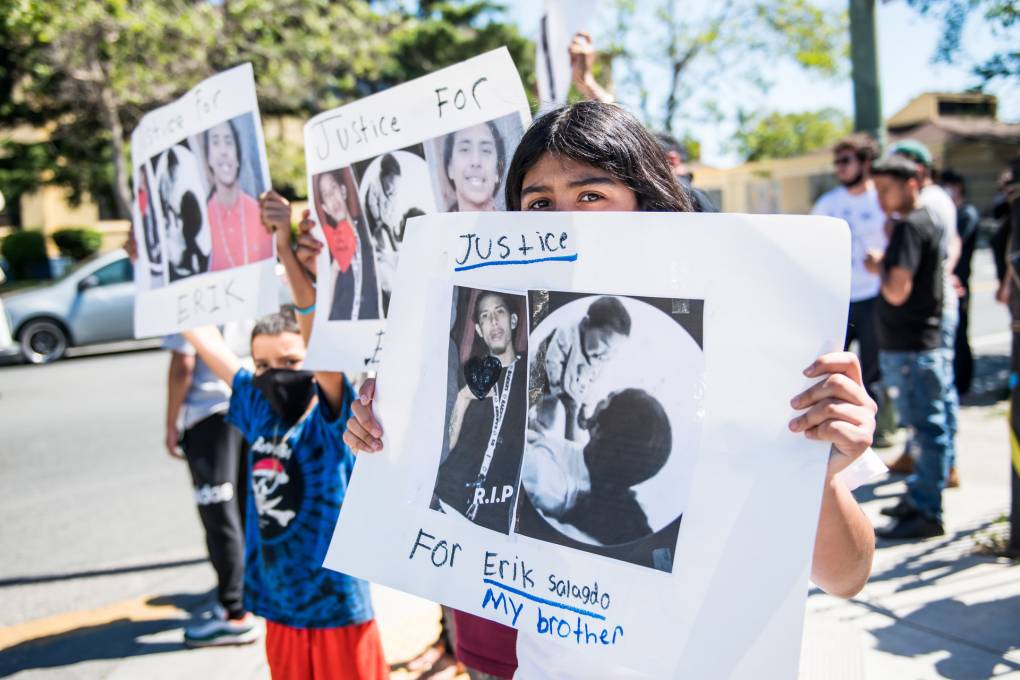
"caption": "Vanessa, a sister of Erik Salgado, joins a march near Elmhurst United Middle School in Oakland during a vigil and march for her brother who was killed by CHP officers on June 6.",
"description": "Vanessa, a sister of Erik Salgado, joins a march near Elmhurst United Middle School in Oakland during a vigil and march for her brother who was killed by CHP officers on June 6.",
"title": "RS43596_003_KQED_HalfMoonBay_OxMountainLandfill_05292020-qut",
"credit": "Beth LaBerge/KQED",
"status": "inherit",
"isLoading": false,
"fetchFailed": false
},
"news_11823669": {
"type": "attachments",
"id": "news_11823669",
"meta": {
"index": "attachments_1716263798",
"site": "news",
"id": "11823669",
"found": true
},
"parent": 11823531,
"imgSizes": {
"apple_news_ca_landscape_5_5": {
"file": "https://ww2.kqed.org/app/uploads/sites/10/2020/06/Erik-Salgado-Vigil-March-East-Oakland-1044x783.jpg",
"width": 1044,
"mimeType": "image/jpeg",
"height": 783
},
"apple_news_ca_square_4_0": {
"file": "https://ww2.kqed.org/app/uploads/sites/10/2020/06/Erik-Salgado-Vigil-March-East-Oakland-470x470.jpg",
"width": 470,
"mimeType": "image/jpeg",
"height": 470
},
"twentyfourteen-full-width": {
"file": "https://ww2.kqed.org/app/uploads/sites/10/2020/06/Erik-Salgado-Vigil-March-East-Oakland-1038x576.jpg",
"width": 1038,
"mimeType": "image/jpeg",
"height": 576
},
"thumbnail": {
"file": "https://ww2.kqed.org/app/uploads/sites/10/2020/06/Erik-Salgado-Vigil-March-East-Oakland-160x107.jpg",
"width": 160,
"mimeType": "image/jpeg",
"height": 107
},
"post-thumbnail": {
"file": "https://ww2.kqed.org/app/uploads/sites/10/2020/06/Erik-Salgado-Vigil-March-East-Oakland-672x372.jpg",
"width": 672,
"mimeType": "image/jpeg",
"height": 372
},
"kqedFullSize": {
"file": "https://ww2.kqed.org/app/uploads/sites/10/2020/06/Erik-Salgado-Vigil-March-East-Oakland-e1591734342734.jpg",
"width": 1919,
"height": 1279
},
"apple_news_ca_landscape_4_7": {
"file": "https://ww2.kqed.org/app/uploads/sites/10/2020/06/Erik-Salgado-Vigil-March-East-Oakland-632x474.jpg",
"width": 632,
"mimeType": "image/jpeg",
"height": 474
},
"large": {
"file": "https://ww2.kqed.org/app/uploads/sites/10/2020/06/Erik-Salgado-Vigil-March-East-Oakland-1020x680.jpg",
"width": 1020,
"mimeType": "image/jpeg",
"height": 680
},
"apple_news_ca_landscape_4_0": {
"file": "https://ww2.kqed.org/app/uploads/sites/10/2020/06/Erik-Salgado-Vigil-March-East-Oakland-536x402.jpg",
"width": 536,
"mimeType": "image/jpeg",
"height": 402
},
"apple_news_ca_portrait_12_9": {
"file": "https://ww2.kqed.org/app/uploads/sites/10/2020/06/Erik-Salgado-Vigil-March-East-Oakland-1122x1280.jpg",
"width": 1122,
"mimeType": "image/jpeg",
"height": 1280
},
"medium": {
"file": "https://ww2.kqed.org/app/uploads/sites/10/2020/06/Erik-Salgado-Vigil-March-East-Oakland-800x533.jpg",
"width": 800,
"mimeType": "image/jpeg",
"height": 533
},
"apple_news_ca_portrait_4_0": {
"file": "https://ww2.kqed.org/app/uploads/sites/10/2020/06/Erik-Salgado-Vigil-March-East-Oakland-354x472.jpg",
"width": 354,
"mimeType": "image/jpeg",
"height": 472
},
"apple_news_ca_portrait_9_7": {
"file": "https://ww2.kqed.org/app/uploads/sites/10/2020/06/Erik-Salgado-Vigil-March-East-Oakland-840x1120.jpg",
"width": 840,
"mimeType": "image/jpeg",
"height": 1120
},
"apple_news_ca_landscape_12_9": {
"file": "https://ww2.kqed.org/app/uploads/sites/10/2020/06/Erik-Salgado-Vigil-March-East-Oakland-1832x1280.jpg",
"width": 1832,
"mimeType": "image/jpeg",
"height": 1280
},
"apple_news_ca_square_9_7": {
"file": "https://ww2.kqed.org/app/uploads/sites/10/2020/06/Erik-Salgado-Vigil-March-East-Oakland-1104x1104.jpg",
"width": 1104,
"mimeType": "image/jpeg",
"height": 1104
},
"apple_news_ca_portrait_4_7": {
"file": "https://ww2.kqed.org/app/uploads/sites/10/2020/06/Erik-Salgado-Vigil-March-East-Oakland-414x552.jpg",
"width": 414,
"mimeType": "image/jpeg",
"height": 552
},
"apple_news_ca_square_12_9": {
"file": "https://ww2.kqed.org/app/uploads/sites/10/2020/06/Erik-Salgado-Vigil-March-East-Oakland-1472x1280.jpg",
"width": 1472,
"mimeType": "image/jpeg",
"height": 1280
},
"apple_news_ca_portrait_5_5": {
"file": "https://ww2.kqed.org/app/uploads/sites/10/2020/06/Erik-Salgado-Vigil-March-East-Oakland-687x916.jpg",
"width": 687,
"mimeType": "image/jpeg",
"height": 916
},
"full-width": {
"file": "https://ww2.kqed.org/app/uploads/sites/10/2020/06/Erik-Salgado-Vigil-March-East-Oakland-1920x1280.jpg",
"width": 1920,
"mimeType": "image/jpeg",
"height": 1280
},
"apple_news_ca_square_4_7": {
"file": "https://ww2.kqed.org/app/uploads/sites/10/2020/06/Erik-Salgado-Vigil-March-East-Oakland-550x550.jpg",
"width": 550,
"mimeType": "image/jpeg",
"height": 550
},
"apple_news_ca_landscape_9_7": {
"file": "https://ww2.kqed.org/app/uploads/sites/10/2020/06/Erik-Salgado-Vigil-March-East-Oakland-1376x1032.jpg",
"width": 1376,
"mimeType": "image/jpeg",
"height": 1032
},
"apple_news_ca_square_5_5": {
"file": "https://ww2.kqed.org/app/uploads/sites/10/2020/06/Erik-Salgado-Vigil-March-East-Oakland-912x912.jpg",
"width": 912,
"mimeType": "image/jpeg",
"height": 912
}
},
"publishDate": 1591734249,
"modified": 1591734335,
"caption": "The family of Erik Salgado lead a large procession, marching from Elmhurst Middle School in East Oakland on Monday, June 8, to the site where Erik Salgado was shot and killed by California Highway Patrol officers this weekend.",
"description": "The family of Erik Salgado lead a large procession, marching from Elmhurst Middle School in East Oakland on Monday, June 8, to the site where Erik Salgado was shot and killed by California Highway Patrol officers this weekend.",
"title": "Erik-Salgado-Vigil-March-East-Oakland",
"credit": "Beth LaBerge/KQED",
"status": "inherit",
"isLoading": false,
"fetchFailed": false
},
"news_11792977": {
"type": "attachments",
"id": "news_11792977",
"meta": {
"index": "attachments_1716263798",
"site": "news",
"id": "11792977",
"found": true
},
"parent": 11792973,
"imgSizes": {
"apple_news_ca_landscape_5_5": {
"file": "https://ww2.kqed.org/app/uploads/sites/10/2019/12/RS40603_GettyImages-157777289-qut-1044x783.jpg",
"width": 1044,
"mimeType": "image/jpeg",
"height": 783
},
"apple_news_ca_square_4_0": {
"file": "https://ww2.kqed.org/app/uploads/sites/10/2019/12/RS40603_GettyImages-157777289-qut-470x470.jpg",
"width": 470,
"mimeType": "image/jpeg",
"height": 470
},
"twentyfourteen-full-width": {
"file": "https://ww2.kqed.org/app/uploads/sites/10/2019/12/RS40603_GettyImages-157777289-qut-1038x576.jpg",
"width": 1038,
"mimeType": "image/jpeg",
"height": 576
},
"thumbnail": {
"file": "https://ww2.kqed.org/app/uploads/sites/10/2019/12/RS40603_GettyImages-157777289-qut-160x112.jpg",
"width": 160,
"mimeType": "image/jpeg",
"height": 112
},
"post-thumbnail": {
"file": "https://ww2.kqed.org/app/uploads/sites/10/2019/12/RS40603_GettyImages-157777289-qut-672x372.jpg",
"width": 672,
"mimeType": "image/jpeg",
"height": 372
},
"kqedFullSize": {
"file": "https://ww2.kqed.org/app/uploads/sites/10/2019/12/RS40603_GettyImages-157777289-qut.jpg",
"width": 1920,
"height": 1339
},
"apple_news_ca_landscape_4_7": {
"file": "https://ww2.kqed.org/app/uploads/sites/10/2019/12/RS40603_GettyImages-157777289-qut-632x474.jpg",
"width": 632,
"mimeType": "image/jpeg",
"height": 474
},
"large": {
"file": "https://ww2.kqed.org/app/uploads/sites/10/2019/12/RS40603_GettyImages-157777289-qut-1020x711.jpg",
"width": 1020,
"mimeType": "image/jpeg",
"height": 711
},
"complete_open_graph": {
"file": "https://ww2.kqed.org/app/uploads/sites/10/2019/12/RS40603_GettyImages-157777289-qut-1200x837.jpg",
"width": 1200,
"mimeType": "image/jpeg",
"height": 837
},
"apple_news_ca_landscape_4_0": {
"file": "https://ww2.kqed.org/app/uploads/sites/10/2019/12/RS40603_GettyImages-157777289-qut-536x402.jpg",
"width": 536,
"mimeType": "image/jpeg",
"height": 402
},
"apple_news_ca_portrait_12_9": {
"file": "https://ww2.kqed.org/app/uploads/sites/10/2019/12/RS40603_GettyImages-157777289-qut-1122x1339.jpg",
"width": 1122,
"mimeType": "image/jpeg",
"height": 1339
},
"medium": {
"file": "https://ww2.kqed.org/app/uploads/sites/10/2019/12/RS40603_GettyImages-157777289-qut-800x558.jpg",
"width": 800,
"mimeType": "image/jpeg",
"height": 558
},
"apple_news_ca_portrait_4_0": {
"file": "https://ww2.kqed.org/app/uploads/sites/10/2019/12/RS40603_GettyImages-157777289-qut-354x472.jpg",
"width": 354,
"mimeType": "image/jpeg",
"height": 472
},
"apple_news_ca_portrait_9_7": {
"file": "https://ww2.kqed.org/app/uploads/sites/10/2019/12/RS40603_GettyImages-157777289-qut-840x1120.jpg",
"width": 840,
"mimeType": "image/jpeg",
"height": 1120
},
"apple_news_ca_landscape_12_9": {
"file": "https://ww2.kqed.org/app/uploads/sites/10/2019/12/RS40603_GettyImages-157777289-qut-1832x1339.jpg",
"width": 1832,
"mimeType": "image/jpeg",
"height": 1339
},
"apple_news_ca_square_9_7": {
"file": "https://ww2.kqed.org/app/uploads/sites/10/2019/12/RS40603_GettyImages-157777289-qut-1104x1104.jpg",
"width": 1104,
"mimeType": "image/jpeg",
"height": 1104
},
"apple_news_ca_portrait_4_7": {
"file": "https://ww2.kqed.org/app/uploads/sites/10/2019/12/RS40603_GettyImages-157777289-qut-414x552.jpg",
"width": 414,
"mimeType": "image/jpeg",
"height": 552
},
"apple_news_ca_square_12_9": {
"file": "https://ww2.kqed.org/app/uploads/sites/10/2019/12/RS40603_GettyImages-157777289-qut-1472x1339.jpg",
"width": 1472,
"mimeType": "image/jpeg",
"height": 1339
},
"apple_news_ca_portrait_5_5": {
"file": "https://ww2.kqed.org/app/uploads/sites/10/2019/12/RS40603_GettyImages-157777289-qut-687x916.jpg",
"width": 687,
"mimeType": "image/jpeg",
"height": 916
},
"full-width": {
"file": "https://ww2.kqed.org/app/uploads/sites/10/2019/12/RS40603_GettyImages-157777289-qut-1920x1339.jpg",
"width": 1920,
"mimeType": "image/jpeg",
"height": 1339
},
"apple_news_ca_square_4_7": {
"file": "https://ww2.kqed.org/app/uploads/sites/10/2019/12/RS40603_GettyImages-157777289-qut-550x550.jpg",
"width": 550,
"mimeType": "image/jpeg",
"height": 550
},
"apple_news_ca_landscape_9_7": {
"file": "https://ww2.kqed.org/app/uploads/sites/10/2019/12/RS40603_GettyImages-157777289-qut-1376x1032.jpg",
"width": 1376,
"mimeType": "image/jpeg",
"height": 1032
},
"apple_news_ca_square_5_5": {
"file": "https://ww2.kqed.org/app/uploads/sites/10/2019/12/RS40603_GettyImages-157777289-qut-912x912.jpg",
"width": 912,
"mimeType": "image/jpeg",
"height": 912
}
},
"publishDate": 1577391620,
"modified": 1577391837,
"caption": "The Oakland Police Department responded to a shooting that took place Christmas night at a house party around 6 p.m. ",
"description": null,
"title": "After Failing To Reform, Oakland PD To Fall Under Court Appointed Director",
"credit": "Justin Sullivan/Getty Images",
"status": "inherit",
"isLoading": false,
"fetchFailed": false
},
"news_11677112": {
"type": "attachments",
"id": "news_11677112",
"meta": {
"index": "attachments_1716263798",
"site": "news",
"id": "11677112",
"found": true
},
"parent": 11677080,
"imgSizes": {
"small": {
"file": "https://ww2.kqed.org/app/uploads/sites/10/2018/06/IMG_3961-520x390.jpg",
"width": 520,
"mimeType": "image/jpeg",
"height": 390
},
"twentyfourteen-full-width": {
"file": "https://ww2.kqed.org/app/uploads/sites/10/2018/06/IMG_3961-1038x576.jpg",
"width": 1038,
"mimeType": "image/jpeg",
"height": 576
},
"thumbnail": {
"file": "https://ww2.kqed.org/app/uploads/sites/10/2018/06/IMG_3961-160x120.jpg",
"width": 160,
"mimeType": "image/jpeg",
"height": 120
},
"fd-sm": {
"file": "https://ww2.kqed.org/app/uploads/sites/10/2018/06/IMG_3961-960x720.jpg",
"width": 960,
"mimeType": "image/jpeg",
"height": 720
},
"post-thumbnail": {
"file": "https://ww2.kqed.org/app/uploads/sites/10/2018/06/IMG_3961-672x372.jpg",
"width": 672,
"mimeType": "image/jpeg",
"height": 372
},
"xsmall": {
"file": "https://ww2.kqed.org/app/uploads/sites/10/2018/06/IMG_3961-375x281.jpg",
"width": 375,
"mimeType": "image/jpeg",
"height": 281
},
"kqedFullSize": {
"file": "https://ww2.kqed.org/app/uploads/sites/10/2018/06/IMG_3961-e1543441021476.jpg",
"width": 1920,
"height": 1440
},
"large": {
"file": "https://ww2.kqed.org/app/uploads/sites/10/2018/06/IMG_3961-1020x765.jpg",
"width": 1020,
"mimeType": "image/jpeg",
"height": 765
},
"xlarge": {
"file": "https://ww2.kqed.org/app/uploads/sites/10/2018/06/IMG_3961-1180x885.jpg",
"width": 1180,
"mimeType": "image/jpeg",
"height": 885
},
"complete_open_graph": {
"file": "https://ww2.kqed.org/app/uploads/sites/10/2018/06/IMG_3961-1200x900.jpg",
"width": 1200,
"mimeType": "image/jpeg",
"height": 900
},
"guest-author-50": {
"file": "https://ww2.kqed.org/app/uploads/sites/10/2018/06/IMG_3961-50x50.jpg",
"width": 50,
"mimeType": "image/jpeg",
"height": 50
},
"guest-author-96": {
"file": "https://ww2.kqed.org/app/uploads/sites/10/2018/06/IMG_3961-96x96.jpg",
"width": 96,
"mimeType": "image/jpeg",
"height": 96
},
"medium": {
"file": "https://ww2.kqed.org/app/uploads/sites/10/2018/06/IMG_3961-800x600.jpg",
"width": 800,
"mimeType": "image/jpeg",
"height": 600
},
"guest-author-64": {
"file": "https://ww2.kqed.org/app/uploads/sites/10/2018/06/IMG_3961-64x64.jpg",
"width": 64,
"mimeType": "image/jpeg",
"height": 64
},
"guest-author-32": {
"file": "https://ww2.kqed.org/app/uploads/sites/10/2018/06/IMG_3961-32x32.jpg",
"width": 32,
"mimeType": "image/jpeg",
"height": 32
},
"fd-lrg": {
"file": "https://ww2.kqed.org/app/uploads/sites/10/2018/06/IMG_3961-1920x1440.jpg",
"width": 1920,
"mimeType": "image/jpeg",
"height": 1440
},
"fd-med": {
"file": "https://ww2.kqed.org/app/uploads/sites/10/2018/06/IMG_3961-1180x885.jpg",
"width": 1180,
"mimeType": "image/jpeg",
"height": 885
},
"full-width": {
"file": "https://ww2.kqed.org/app/uploads/sites/10/2018/06/IMG_3961-1920x1440.jpg",
"width": 1920,
"mimeType": "image/jpeg",
"height": 1440
},
"detail": {
"file": "https://ww2.kqed.org/app/uploads/sites/10/2018/06/IMG_3961-150x150.jpg",
"width": 150,
"mimeType": "image/jpeg",
"height": 150
},
"guest-author-128": {
"file": "https://ww2.kqed.org/app/uploads/sites/10/2018/06/IMG_3961-128x128.jpg",
"width": 128,
"mimeType": "image/jpeg",
"height": 128
},
"xxsmall": {
"file": "https://ww2.kqed.org/app/uploads/sites/10/2018/06/IMG_3961-240x180.jpg",
"width": 240,
"mimeType": "image/jpeg",
"height": 180
}
},
"publishDate": 1529957048,
"modified": 1543449719,
"caption": "Needa Bee, lead organizer for The Village, at an East Oakland encampment this past summer. ",
"description": "Needa Bee, lead organizer for The Village, at an East Oakland encampment this summer. ",
"title": "IMG_3961",
"credit": "Tara Siler/KQED",
"status": "inherit",
"isLoading": false,
"fetchFailed": false
},
"news_11666041": {
"type": "attachments",
"id": "news_11666041",
"meta": {
"index": "attachments_1716263798",
"site": "news",
"id": "11666041",
"found": true
},
"parent": 11665681,
"imgSizes": {
"small": {
"file": "https://ww2.kqed.org/app/uploads/sites/10/2018/05/JasmeneToday-520x390.jpg",
"width": 520,
"mimeType": "image/jpeg",
"height": 390
},
"twentyfourteen-full-width": {
"file": "https://ww2.kqed.org/app/uploads/sites/10/2018/05/JasmeneToday-1038x576.jpg",
"width": 1038,
"mimeType": "image/jpeg",
"height": 576
},
"thumbnail": {
"file": "https://ww2.kqed.org/app/uploads/sites/10/2018/05/JasmeneToday-160x120.jpg",
"width": 160,
"mimeType": "image/jpeg",
"height": 120
},
"fd-sm": {
"file": "https://ww2.kqed.org/app/uploads/sites/10/2018/05/JasmeneToday-960x720.jpg",
"width": 960,
"mimeType": "image/jpeg",
"height": 720
},
"post-thumbnail": {
"file": "https://ww2.kqed.org/app/uploads/sites/10/2018/05/JasmeneToday-672x372.jpg",
"width": 672,
"mimeType": "image/jpeg",
"height": 372
},
"xsmall": {
"file": "https://ww2.kqed.org/app/uploads/sites/10/2018/05/JasmeneToday-375x281.jpg",
"width": 375,
"mimeType": "image/jpeg",
"height": 281
},
"kqedFullSize": {
"file": "https://ww2.kqed.org/app/uploads/sites/10/2018/05/JasmeneToday-e1525383000271.jpg",
"width": 1920,
"height": 1440
},
"large": {
"file": "https://ww2.kqed.org/app/uploads/sites/10/2018/05/JasmeneToday-1020x765.jpg",
"width": 1020,
"mimeType": "image/jpeg",
"height": 765
},
"xlarge": {
"file": "https://ww2.kqed.org/app/uploads/sites/10/2018/05/JasmeneToday-1180x885.jpg",
"width": 1180,
"mimeType": "image/jpeg",
"height": 885
},
"complete_open_graph": {
"file": "https://ww2.kqed.org/app/uploads/sites/10/2018/05/JasmeneToday-1200x900.jpg",
"width": 1200,
"mimeType": "image/jpeg",
"height": 900
},
"guest-author-50": {
"file": "https://ww2.kqed.org/app/uploads/sites/10/2018/05/JasmeneToday-50x50.jpg",
"width": 50,
"mimeType": "image/jpeg",
"height": 50
},
"guest-author-96": {
"file": "https://ww2.kqed.org/app/uploads/sites/10/2018/05/JasmeneToday-96x96.jpg",
"width": 96,
"mimeType": "image/jpeg",
"height": 96
},
"medium": {
"file": "https://ww2.kqed.org/app/uploads/sites/10/2018/05/JasmeneToday-800x600.jpg",
"width": 800,
"mimeType": "image/jpeg",
"height": 600
},
"guest-author-64": {
"file": "https://ww2.kqed.org/app/uploads/sites/10/2018/05/JasmeneToday-64x64.jpg",
"width": 64,
"mimeType": "image/jpeg",
"height": 64
},
"guest-author-32": {
"file": "https://ww2.kqed.org/app/uploads/sites/10/2018/05/JasmeneToday-32x32.jpg",
"width": 32,
"mimeType": "image/jpeg",
"height": 32
},
"fd-lrg": {
"file": "https://ww2.kqed.org/app/uploads/sites/10/2018/05/JasmeneToday-1920x1440.jpg",
"width": 1920,
"mimeType": "image/jpeg",
"height": 1440
},
"fd-med": {
"file": "https://ww2.kqed.org/app/uploads/sites/10/2018/05/JasmeneToday-1180x885.jpg",
"width": 1180,
"mimeType": "image/jpeg",
"height": 885
},
"full-width": {
"file": "https://ww2.kqed.org/app/uploads/sites/10/2018/05/JasmeneToday-1920x1440.jpg",
"width": 1920,
"mimeType": "image/jpeg",
"height": 1440
},
"detail": {
"file": "https://ww2.kqed.org/app/uploads/sites/10/2018/05/JasmeneToday-150x150.jpg",
"width": 150,
"mimeType": "image/jpeg",
"height": 150
},
"guest-author-128": {
"file": "https://ww2.kqed.org/app/uploads/sites/10/2018/05/JasmeneToday-128x128.jpg",
"width": 128,
"mimeType": "image/jpeg",
"height": 128
},
"xxsmall": {
"file": "https://ww2.kqed.org/app/uploads/sites/10/2018/05/JasmeneToday-240x180.jpg",
"width": 240,
"mimeType": "image/jpeg",
"height": 180
}
},
"publishDate": 1525301677,
"modified": 1525384315,
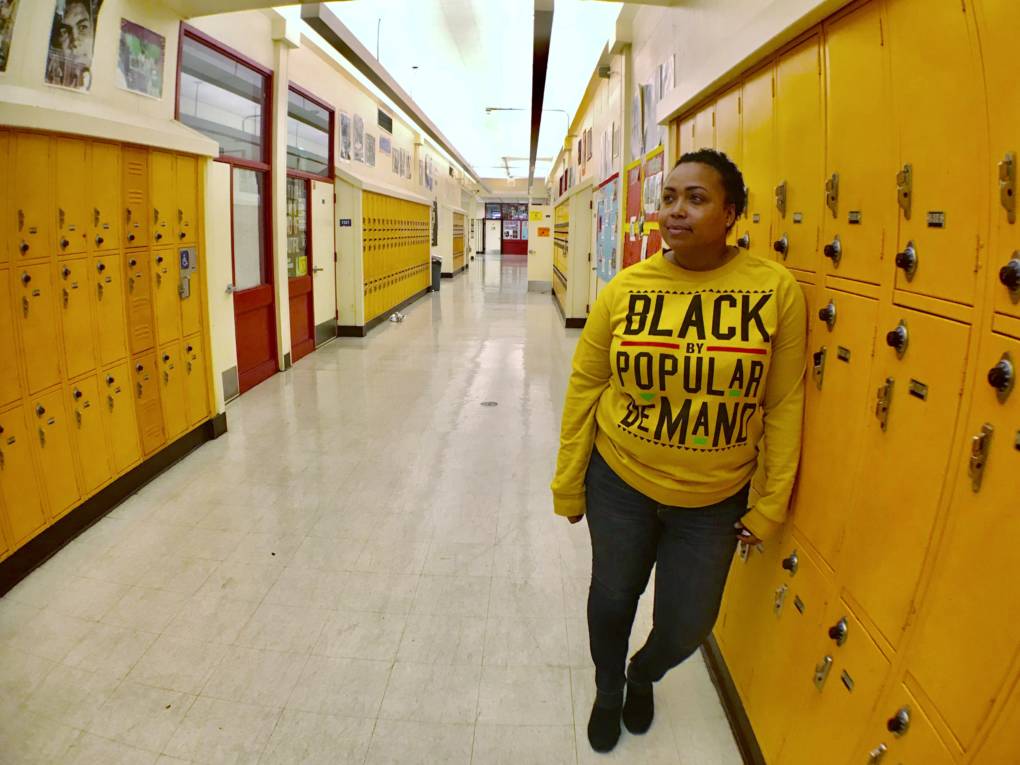
"caption": "Fremont High School Media Academy teacher and alumna Jasmene Miranda says, \"We didn't really have what other kids had at the time.\"",
"description": null,
"title": "JasmeneToday",
"credit": "Tonya Mosley/KQED",
"status": "inherit",
"isLoading": false,
"fetchFailed": false
},
"news_11656406": {
"type": "attachments",
"id": "news_11656406",
"meta": {
"index": "attachments_1716263798",
"site": "news",
"id": "11656406",
"found": true
},
"parent": 11656388,
"imgSizes": {
"small": {
"file": "https://ww2.kqed.org/app/uploads/sites/10/2018/03/Image-uploaded-from-iOS-2-520x390.jpg",
"width": 520,
"mimeType": "image/jpeg",
"height": 390
},
"twentyfourteen-full-width": {
"file": "https://ww2.kqed.org/app/uploads/sites/10/2018/03/Image-uploaded-from-iOS-2-1038x576.jpg",
"width": 1038,
"mimeType": "image/jpeg",
"height": 576
},
"thumbnail": {
"file": "https://ww2.kqed.org/app/uploads/sites/10/2018/03/Image-uploaded-from-iOS-2-160x120.jpg",
"width": 160,
"mimeType": "image/jpeg",
"height": 120
},
"fd-sm": {
"file": "https://ww2.kqed.org/app/uploads/sites/10/2018/03/Image-uploaded-from-iOS-2-960x720.jpg",
"width": 960,
"mimeType": "image/jpeg",
"height": 720
},
"post-thumbnail": {
"file": "https://ww2.kqed.org/app/uploads/sites/10/2018/03/Image-uploaded-from-iOS-2-672x372.jpg",
"width": 672,
"mimeType": "image/jpeg",
"height": 372
},
"xsmall": {
"file": "https://ww2.kqed.org/app/uploads/sites/10/2018/03/Image-uploaded-from-iOS-2-375x281.jpg",
"width": 375,
"mimeType": "image/jpeg",
"height": 281
},
"kqedFullSize": {
"file": "https://ww2.kqed.org/app/uploads/sites/10/2018/03/Image-uploaded-from-iOS-2.jpg",
"width": 4032,
"height": 3024
},
"large": {
"file": "https://ww2.kqed.org/app/uploads/sites/10/2018/03/Image-uploaded-from-iOS-2-1020x765.jpg",
"width": 1020,
"mimeType": "image/jpeg",
"height": 765
},
"xlarge": {
"file": "https://ww2.kqed.org/app/uploads/sites/10/2018/03/Image-uploaded-from-iOS-2-1180x885.jpg",
"width": 1180,
"mimeType": "image/jpeg",
"height": 885
},
"guest-author-50": {
"file": "https://ww2.kqed.org/app/uploads/sites/10/2018/03/Image-uploaded-from-iOS-2-50x50.jpg",
"width": 50,
"mimeType": "image/jpeg",
"height": 50
},
"guest-author-96": {
"file": "https://ww2.kqed.org/app/uploads/sites/10/2018/03/Image-uploaded-from-iOS-2-96x96.jpg",
"width": 96,
"mimeType": "image/jpeg",
"height": 96
},
"medium": {
"file": "https://ww2.kqed.org/app/uploads/sites/10/2018/03/Image-uploaded-from-iOS-2-800x600.jpg",
"width": 800,
"mimeType": "image/jpeg",
"height": 600
},
"guest-author-64": {
"file": "https://ww2.kqed.org/app/uploads/sites/10/2018/03/Image-uploaded-from-iOS-2-64x64.jpg",
"width": 64,
"mimeType": "image/jpeg",
"height": 64
},
"guest-author-32": {
"file": "https://ww2.kqed.org/app/uploads/sites/10/2018/03/Image-uploaded-from-iOS-2-32x32.jpg",
"width": 32,
"mimeType": "image/jpeg",
"height": 32
},
"fd-lrg": {
"file": "https://ww2.kqed.org/app/uploads/sites/10/2018/03/Image-uploaded-from-iOS-2-1920x1440.jpg",
"width": 1920,
"mimeType": "image/jpeg",
"height": 1440
},
"fd-med": {
"file": "https://ww2.kqed.org/app/uploads/sites/10/2018/03/Image-uploaded-from-iOS-2-1180x885.jpg",
"width": 1180,
"mimeType": "image/jpeg",
"height": 885
},
"full-width": {
"file": "https://ww2.kqed.org/app/uploads/sites/10/2018/03/Image-uploaded-from-iOS-2-1920x1440.jpg",
"width": 1920,
"mimeType": "image/jpeg",
"height": 1440
},
"detail": {
"file": "https://ww2.kqed.org/app/uploads/sites/10/2018/03/Image-uploaded-from-iOS-2-150x150.jpg",
"width": 150,
"mimeType": "image/jpeg",
"height": 150
},
"guest-author-128": {
"file": "https://ww2.kqed.org/app/uploads/sites/10/2018/03/Image-uploaded-from-iOS-2-128x128.jpg",
"width": 128,
"mimeType": "image/jpeg",
"height": 128
},
"xxsmall": {
"file": "https://ww2.kqed.org/app/uploads/sites/10/2018/03/Image-uploaded-from-iOS-2-240x180.jpg",
"width": 240,
"mimeType": "image/jpeg",
"height": 180
}
},
"publishDate": 1521323507,
"modified": 1521330011,
"caption": "Evangelina Lara lives in the San Antonio neighborhood in East Oakland. She stands on a mattress that was illegally dumped next to her apartment building. She says she wants the city to have stronger enforcement to prevent people from tossing trash near her home.",
"description": null,
"title": "Illegal Dumping",
"credit": "Alyssa Jeong Perry/KQED",
"status": "inherit",
"isLoading": false,
"fetchFailed": false
},
"news_11299684": {
"type": "attachments",
"id": "news_11299684",
"meta": {
"index": "attachments_1716263798",
"site": "news",
"id": "11299684",
"found": true
},
"parent": 11299682,
"imgSizes": {
"small": {
"file": "https://ww2.kqed.org/app/uploads/sites/10/2017/02/RS24008_Aref-qut-520x390.jpg",
"width": 520,
"mimeType": "image/jpeg",
"height": 390
},
"twentyfourteen-full-width": {
"file": "https://ww2.kqed.org/app/uploads/sites/10/2017/02/RS24008_Aref-qut-1038x576.jpg",
"width": 1038,
"mimeType": "image/jpeg",
"height": 576
},
"thumbnail": {
"file": "https://ww2.kqed.org/app/uploads/sites/10/2017/02/RS24008_Aref-qut-160x120.jpg",
"width": 160,
"mimeType": "image/jpeg",
"height": 120
},
"fd-sm": {
"file": "https://ww2.kqed.org/app/uploads/sites/10/2017/02/RS24008_Aref-qut-960x720.jpg",
"width": 960,
"mimeType": "image/jpeg",
"height": 720
},
"post-thumbnail": {
"file": "https://ww2.kqed.org/app/uploads/sites/10/2017/02/RS24008_Aref-qut-672x372.jpg",
"width": 672,
"mimeType": "image/jpeg",
"height": 372
},
"xsmall": {
"file": "https://ww2.kqed.org/app/uploads/sites/10/2017/02/RS24008_Aref-qut-375x281.jpg",
"width": 375,
"mimeType": "image/jpeg",
"height": 281
},
"kqedFullSize": {
"file": "https://ww2.kqed.org/app/uploads/sites/10/2017/02/RS24008_Aref-qut.jpg",
"width": 1920,
"height": 1440
},
"large": {
"file": "https://ww2.kqed.org/app/uploads/sites/10/2017/02/RS24008_Aref-qut-1020x765.jpg",
"width": 1020,
"mimeType": "image/jpeg",
"height": 765
},
"xlarge": {
"file": "https://ww2.kqed.org/app/uploads/sites/10/2017/02/RS24008_Aref-qut-1180x885.jpg",
"width": 1180,
"mimeType": "image/jpeg",
"height": 885
},
"guest-author-50": {
"file": "https://ww2.kqed.org/app/uploads/sites/10/2017/02/RS24008_Aref-qut-50x50.jpg",
"width": 50,
"mimeType": "image/jpeg",
"height": 50
},
"guest-author-96": {
"file": "https://ww2.kqed.org/app/uploads/sites/10/2017/02/RS24008_Aref-qut-96x96.jpg",
"width": 96,
"mimeType": "image/jpeg",
"height": 96
},
"medium": {
"file": "https://ww2.kqed.org/app/uploads/sites/10/2017/02/RS24008_Aref-qut-800x600.jpg",
"width": 800,
"mimeType": "image/jpeg",
"height": 600
},
"guest-author-64": {
"file": "https://ww2.kqed.org/app/uploads/sites/10/2017/02/RS24008_Aref-qut-64x64.jpg",
"width": 64,
"mimeType": "image/jpeg",
"height": 64
},
"guest-author-32": {
"file": "https://ww2.kqed.org/app/uploads/sites/10/2017/02/RS24008_Aref-qut-32x32.jpg",
"width": 32,
"mimeType": "image/jpeg",
"height": 32
},
"jmtc-small-thumb": {
"file": "https://ww2.kqed.org/app/uploads/sites/10/2017/02/RS24008_Aref-qut-280x150.jpg",
"width": 280,
"mimeType": "image/jpeg",
"height": 150
},
"fd-lrg": {
"file": "https://ww2.kqed.org/app/uploads/sites/10/2017/02/RS24008_Aref-qut-1920x1440.jpg",
"width": 1920,
"mimeType": "image/jpeg",
"height": 1440
},
"fd-med": {
"file": "https://ww2.kqed.org/app/uploads/sites/10/2017/02/RS24008_Aref-qut-1180x885.jpg",
"width": 1180,
"mimeType": "image/jpeg",
"height": 885
},
"full-width": {
"file": "https://ww2.kqed.org/app/uploads/sites/10/2017/02/RS24008_Aref-qut-1920x1440.jpg",
"width": 1920,
"mimeType": "image/jpeg",
"height": 1440
},
"detail": {
"file": "https://ww2.kqed.org/app/uploads/sites/10/2017/02/RS24008_Aref-qut-150x150.jpg",
"width": 150,
"mimeType": "image/jpeg",
"height": 150
},
"guest-author-128": {
"file": "https://ww2.kqed.org/app/uploads/sites/10/2017/02/RS24008_Aref-qut-128x128.jpg",
"width": 128,
"mimeType": "image/jpeg",
"height": 128
},
"xxsmall": {
"file": "https://ww2.kqed.org/app/uploads/sites/10/2017/02/RS24008_Aref-qut-240x180.jpg",
"width": 240,
"mimeType": "image/jpeg",
"height": 180
}
},
"publishDate": 1486151764,
"modified": 1486419832,
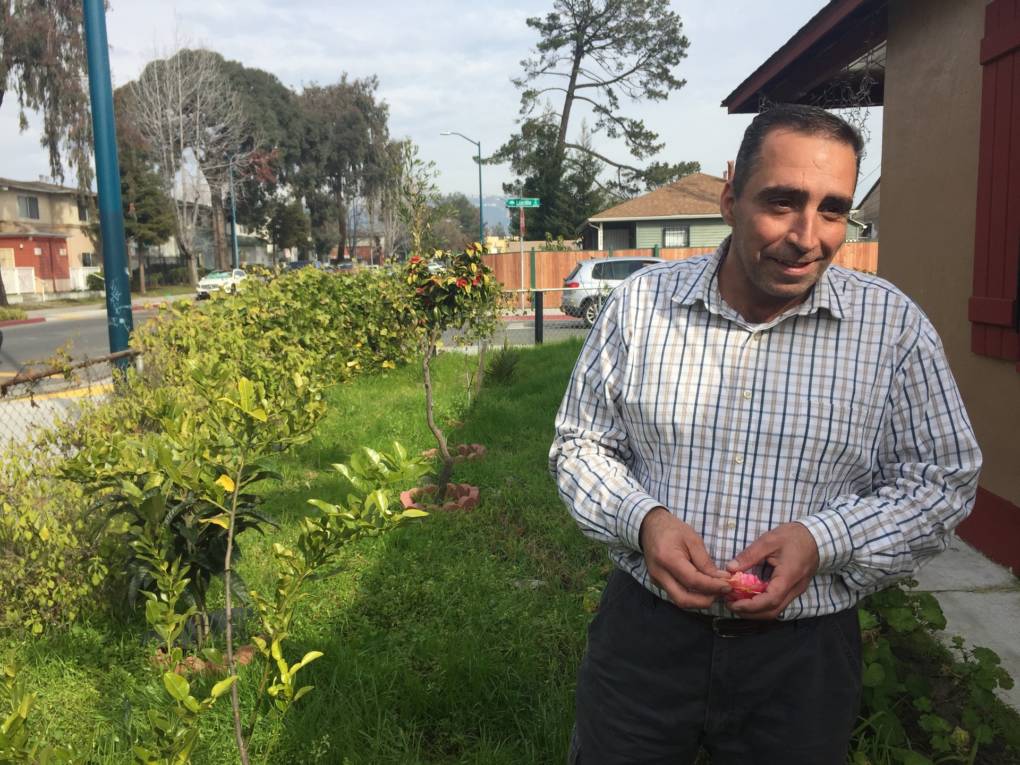
"caption": "Mohammad Aref Rawoas shows off his garden in East Oakland. He stands among young figs, lemons, grapes, peas and loquats. The small side yard pales in comparison to the nearly 10-acre farm the family had in Syria.",
"description": "Mohammed Aref Rawoas shows off his garden in East Oakland. He stands among young figs, lemons, grapes, peas, and loquats. The small side yard pales in comparison to the nearly 10-acre farm the family had in Syria.",
"title": "RS24008_Aref-qut",
"credit": "Laura Klivans/KQED",
"status": "inherit",
"isLoading": false,
"fetchFailed": false
},
"news_10647433": {
"type": "attachments",
"id": "news_10647433",
"meta": {
"index": "attachments_1716263798",
"site": "news",
"id": "10647433",
"found": true
},
"parent": 11669399,
"imgSizes": {
"twentyfourteen-full-width": {
"file": "https://ww2.kqed.org/app/uploads/sites/10/2015/08/sideshow-via-youtube-1038x576.jpg",
"width": 1038,
"mimeType": "image/jpeg",
"height": 576
},
"thumbnail": {
"file": "https://ww2.kqed.org/app/uploads/sites/10/2015/08/sideshow-via-youtube-400x218.jpg",
"width": 400,
"mimeType": "image/jpeg",
"height": 218
},
"fd-sm": {
"file": "https://ww2.kqed.org/app/uploads/sites/10/2015/08/sideshow-via-youtube-960x523.jpg",
"width": 960,
"mimeType": "image/jpeg",
"height": 523
},
"post-thumbnail": {
"file": "https://ww2.kqed.org/app/uploads/sites/10/2015/08/sideshow-via-youtube-672x372.jpg",
"width": 672,
"mimeType": "image/jpeg",
"height": 372
},
"kqedFullSize": {
"file": "https://ww2.kqed.org/app/uploads/sites/10/2015/08/sideshow-via-youtube.jpg",
"width": 1928,
"height": 1050
},
"large": {
"file": "https://ww2.kqed.org/app/uploads/sites/10/2015/08/sideshow-via-youtube-1440x784.jpg",
"width": 1440,
"mimeType": "image/jpeg",
"height": 784
},
"guest-author-96": {
"file": "https://ww2.kqed.org/app/uploads/sites/10/2015/08/sideshow-via-youtube-96x96.jpg",
"width": 96,
"mimeType": "image/jpeg",
"height": 96
},
"medium": {
"file": "https://ww2.kqed.org/app/uploads/sites/10/2015/08/sideshow-via-youtube-800x436.jpg",
"width": 800,
"mimeType": "image/jpeg",
"height": 436
},
"guest-author-64": {
"file": "https://ww2.kqed.org/app/uploads/sites/10/2015/08/sideshow-via-youtube-64x64.jpg",
"width": 64,
"mimeType": "image/jpeg",
"height": 64
},
"guest-author-32": {
"file": "https://ww2.kqed.org/app/uploads/sites/10/2015/08/sideshow-via-youtube-32x32.jpg",
"width": 32,
"mimeType": "image/jpeg",
"height": 32
},
"jmtc-small-thumb": {
"file": "https://ww2.kqed.org/app/uploads/sites/10/2015/08/sideshow-via-youtube-280x150.jpg",
"width": 280,
"mimeType": "image/jpeg",
"height": 150
},
"fd-lrg": {
"file": "https://ww2.kqed.org/app/uploads/sites/10/2015/08/sideshow-via-youtube-1920x1046.jpg",
"width": 1920,
"mimeType": "image/jpeg",
"height": 1046
},
"fd-med": {
"file": "https://ww2.kqed.org/app/uploads/sites/10/2015/08/sideshow-via-youtube-1180x643.jpg",
"width": 1180,
"mimeType": "image/jpeg",
"height": 643
},
"detail": {
"file": "https://ww2.kqed.org/app/uploads/sites/10/2015/08/sideshow-via-youtube-75x75.jpg",
"width": 75,
"mimeType": "image/jpeg",
"height": 75
},
"guest-author-128": {
"file": "https://ww2.kqed.org/app/uploads/sites/10/2015/08/sideshow-via-youtube-128x128.jpg",
"width": 128,
"mimeType": "image/jpeg",
"height": 128
}
},
"publishDate": 1439856180,
"modified": 1526775098,
"caption": "Spectators watch a sideshow at Foothill Boulevard and 55th Avenue in East Oakland on June 21, 2015. ",
"description": "Spectators watch a sideshow at Foothill Boulevard and 55th Avenue in East Oakland on June 21, 2015. ",
"title": "sideshow,-via-youtube",
"credit": "Jay Area/YouTube",
"status": "inherit",
"isLoading": false,
"fetchFailed": false
},
"news_10518311": {
"type": "attachments",
"id": "news_10518311",
"meta": {
"index": "attachments_1716263798",
"site": "news",
"id": "10518311",
"found": true
},
"parent": 10517260,
"imgSizes": {
"twentyfourteen-full-width": {
"file": "https://ww2.kqed.org/app/uploads/sites/10/2015/05/east-oakland-1038x576.jpg",
"width": 1038,
"mimeType": "image/jpeg",
"height": 576
},
"thumbnail": {
"file": "https://ww2.kqed.org/app/uploads/sites/10/2015/05/east-oakland-400x233.jpg",
"width": 400,
"mimeType": "image/jpeg",
"height": 233
},
"fd-sm": {
"file": "https://ww2.kqed.org/app/uploads/sites/10/2015/05/east-oakland-960x559.jpg",
"width": 960,
"mimeType": "image/jpeg",
"height": 559
},
"post-thumbnail": {
"file": "https://ww2.kqed.org/app/uploads/sites/10/2015/05/east-oakland-672x372.jpg",
"width": 672,
"mimeType": "image/jpeg",
"height": 372
},
"kqedFullSize": {
"file": "https://ww2.kqed.org/app/uploads/sites/10/2015/05/east-oakland.jpg",
"width": 1827,
"height": 1064
},
"large": {
"file": "https://ww2.kqed.org/app/uploads/sites/10/2015/05/east-oakland-1440x839.jpg",
"width": 1440,
"mimeType": "image/jpeg",
"height": 839
},
"guest-author-96": {
"file": "https://ww2.kqed.org/app/uploads/sites/10/2015/05/east-oakland-96x96.jpg",
"width": 96,
"mimeType": "image/jpeg",
"height": 96
},
"medium": {
"file": "https://ww2.kqed.org/app/uploads/sites/10/2015/05/east-oakland-800x466.jpg",
"width": 800,
"mimeType": "image/jpeg",
"height": 466
},
"guest-author-64": {
"file": "https://ww2.kqed.org/app/uploads/sites/10/2015/05/east-oakland-64x64.jpg",
"width": 64,
"mimeType": "image/jpeg",
"height": 64
},
"guest-author-32": {
"file": "https://ww2.kqed.org/app/uploads/sites/10/2015/05/east-oakland-32x32.jpg",
"width": 32,
"mimeType": "image/jpeg",
"height": 32
},
"fd-med": {
"file": "https://ww2.kqed.org/app/uploads/sites/10/2015/05/east-oakland-1180x687.jpg",
"width": 1180,
"mimeType": "image/jpeg",
"height": 687
},
"detail": {
"file": "https://ww2.kqed.org/app/uploads/sites/10/2015/05/east-oakland-75x75.jpg",
"width": 75,
"mimeType": "image/jpeg",
"height": 75
},
"guest-author-128": {
"file": "https://ww2.kqed.org/app/uploads/sites/10/2015/05/east-oakland-128x128.jpg",
"width": 128,
"mimeType": "image/jpeg",
"height": 128
}
},
"publishDate": 1431111472,
"modified": 1431111548,
"caption": "Tiera McGill, 26, lives in East Oakland with her young child. (KQED Newsroom).",
"description": null,
"title": "east-oakland",
"credit": null,
"status": "inherit",
"isLoading": false,
"fetchFailed": false
}
},
"audioPlayerReducer": {
"postId": "stream_live",
"isPaused": true,
"isPlaying": false,
"pfsActive": false,
"pledgeModalIsOpen": true,
"playerDrawerIsOpen": false,
"liveAudioPlayStartedAt": 0,
"liveAudioPlayContext": ""
},
"authorsReducer": {
"byline_news_11656388": {
"type": "authors",
"id": "byline_news_11656388",
"meta": {
"override": true
},
"slug": "byline_news_11656388",
"name": "Alyssa Jeong Perry",
"isLoading": false
},
"byline_news_10517260": {
"type": "authors",
"id": "byline_news_10517260",
"meta": {
"override": true
},
"slug": "byline_news_10517260",
"name": "KQED Newsroom Staff",
"isLoading": false
},
"dmarks": {
"type": "authors",
"id": "182",
"meta": {
"index": "authors_1716337520",
"id": "182",
"found": true
},
"name": "David Marks",
"firstName": "David",
"lastName": "Marks",
"slug": "dmarks",
"email": "dmarks@kqed.org",
"display_author_email": false,
"staff_mastheads": [],
"title": "KQED Editor",
"bio": "David Marks is a senior digital editor for KQED News. \u003c/a>Reach him at dmarks@kqed.org.",
"avatar": "https://secure.gravatar.com/avatar/b88bd6227ce6cb96ae33fefaf42b2a29?s=600&d=mm&r=g",
"twitter": "divadskram",
"facebook": null,
"instagram": null,
"linkedin": null,
"sites": [
{
"site": "news",
"roles": []
},
{
"site": "science",
"roles": []
},
{
"site": "perspectives",
"roles": []
},
{
"site": "liveblog",
"roles": []
}
],
"headData": {
"title": "David Marks | KQED",
"description": "KQED Editor",
"ogImgSrc": "https://secure.gravatar.com/avatar/b88bd6227ce6cb96ae33fefaf42b2a29?s=600&d=mm&r=g",
"twImgSrc": "https://secure.gravatar.com/avatar/b88bd6227ce6cb96ae33fefaf42b2a29?s=600&d=mm&r=g"
},
"isLoading": false,
"link": "/author/dmarks"
},
"kqednewsstaffandwires": {
"type": "authors",
"id": "237",
"meta": {
"index": "authors_1716337520",
"id": "237",
"found": true
},
"name": "KQED News Staff and Wires",
"firstName": "KQED News Staff and Wires",
"lastName": null,
"slug": "kqednewsstaffandwires",
"email": "onlinenewsstaff@kqed.org",
"display_author_email": false,
"staff_mastheads": [],
"title": null,
"bio": null,
"avatar": "https://secure.gravatar.com/avatar/72295af8ebbfbd19a4948f5271285664?s=600&d=blank&r=g",
"twitter": null,
"facebook": null,
"instagram": null,
"linkedin": null,
"sites": [
{
"site": "arts",
"roles": [
"contributor"
]
},
{
"site": "news",
"roles": [
"contributor"
]
},
{
"site": "lowdown",
"roles": [
"author"
]
},
{
"site": "stateofhealth",
"roles": [
"contributor"
]
},
{
"site": "food",
"roles": [
"author"
]
}
],
"headData": {
"title": "KQED News Staff and Wires | KQED",
"description": null,
"ogImgSrc": "https://secure.gravatar.com/avatar/72295af8ebbfbd19a4948f5271285664?s=600&d=blank&r=g",
"twImgSrc": "https://secure.gravatar.com/avatar/72295af8ebbfbd19a4948f5271285664?s=600&d=blank&r=g"
},
"isLoading": false,
"link": "/author/kqednewsstaffandwires"
},
"matthewgreen": {
"type": "authors",
"id": "1263",
"meta": {
"index": "authors_1716337520",
"id": "1263",
"found": true
},
"name": "Matthew Green",
"firstName": "Matthew",
"lastName": "Green",
"slug": "matthewgreen",
"email": "mgreen@kqed.org",
"display_author_email": false,
"staff_mastheads": [],
"title": "KQED Editor/Reporter",
"bio": "Matthew Green is a digital media producer for KQED News. He previously produced \u003ca href=\"http://www.kqed.org/lowdown\">The Lowdown\u003c/a>, KQED’s multimedia news education blog. Matthew's written for numerous Bay Area publications, including the Oakland Tribune and San Francisco Chronicle. He also taught journalism classes at Fremont High School in East Oakland.\r\n\r\nEmail: mgreen@kqed.org; Twitter: @MGreenKQED",
"avatar": "https://secure.gravatar.com/avatar/3bf498d1267ca02c8494f33d8cfc575e?s=600&d=blank&r=g",
"twitter": "MGreenKQED",
"facebook": null,
"instagram": null,
"linkedin": null,
"sites": [
{
"site": "news",
"roles": []
},
{
"site": "lowdown",
"roles": []
},
{
"site": "science",
"roles": []
},
{
"site": "education",
"roles": []
},
{
"site": "quest",
"roles": []
},
{
"site": "liveblog",
"roles": []
}
],
"headData": {
"title": "Matthew Green | KQED",
"description": "KQED Editor/Reporter",
"ogImgSrc": "https://secure.gravatar.com/avatar/3bf498d1267ca02c8494f33d8cfc575e?s=600&d=blank&r=g",
"twImgSrc": "https://secure.gravatar.com/avatar/3bf498d1267ca02c8494f33d8cfc575e?s=600&d=blank&r=g"
},
"isLoading": false,
"link": "/author/matthewgreen"
},
"sdirks": {
"type": "authors",
"id": "7239",
"meta": {
"index": "authors_1716337520",
"id": "7239",
"found": true
},
"name": "Sandhya Dirks",
"firstName": "Sandhya",
"lastName": "Dirks",
"slug": "sdirks",
"email": "sdirks@kqed.org",
"display_author_email": true,
"staff_mastheads": [],
"title": null,
"bio": "Sandhya Dirks was the race and equity reporter at KQED. She approaches race and equity not as a beat, but as a fundamental lens for all investigative and explanatory reporting.\r\n\r\nSandhya covered policing, housing, social justice movements, and the shifting demographics of cities and suburbs.\r\n\r\nShe was the creator and co-host of the podcast American Suburb, about the transformation of suburbia into the most diverse space in American life. She was the editor for Truth Be Told, an advice show for and by people of color. \r\n\r\nHer stories about race, space, and belonging were part of KQED's So Well Spoken project, which won RNDTA's Kaleidoscope award, honoring outstanding achievements in the coverage of diversity.\r\n\r\nPrior to joining KQED in 2015, Sandhya covered the 2012 presidential election from the swing state of Iowa for Iowa Public Radio. At KPBS in San Diego, she broke the story of a sexual harassment scandal that led to the mayor's resignation.\r\n\r\nShe got her start in radio working on documentaries about Oakland that investigated the high drop-out rate in public schools and mistrust between the police and the community.\r\n\r\nSandhya lives in Oakland and believes all stories are stories about power.",
"avatar": "https://secure.gravatar.com/avatar/c0247cb15929cd4c197672fd73d45300?s=600&d=blank&r=g",
"twitter": "audiosand",
"facebook": null,
"instagram": null,
"linkedin": null,
"sites": [
{
"site": "news",
"roles": [
"subscriber"
]
},
{
"site": "stateofhealth",
"roles": [
"author"
]
}
],
"headData": {
"title": "Sandhya Dirks | KQED",
"description": null,
"ogImgSrc": "https://secure.gravatar.com/avatar/c0247cb15929cd4c197672fd73d45300?s=600&d=blank&r=g",
"twImgSrc": "https://secure.gravatar.com/avatar/c0247cb15929cd4c197672fd73d45300?s=600&d=blank&r=g"
},
"isLoading": false,
"link": "/author/sdirks"
},
"dkatayama": {
"type": "authors",
"id": "7240",
"meta": {
"index": "authors_1716337520",
"id": "7240",
"found": true
},
"name": "Devin Katayama",
"firstName": "Devin",
"lastName": "Katayama",
"slug": "dkatayama",
"email": "dkatayama@kqed.org",
"display_author_email": true,
"staff_mastheads": [
"news"
],
"title": "Editor of Talent and Development",
"bio": "Devin Katayama is former Editor of Talent and Development for KQED. He supported our internship program and on-call staff by looking for equitable opportunities to improve the newsroom.\r\n\r\nHe previously hosted The Bay and American Suburb podcasts from KQED News. Prior to returning to the Bay Area in 2015, Devin was the education reporter for WFPL in Louisville and worked as a producer with radio stations in Chicago and Portland, OR. His work has appeared on NPR’s \u003cem>Morning Edition, All Things Considered, The Takeaway\u003c/em> and \u003cem>Here and Now.\u003c/em>\r\n\r\nDevin earned his MA in Journalism from Columbia College Chicago, where he was a Follett Fellow and the recipient of the 2011 Studs Terkel Community Media Workshop Scholarship for his story on Chicago's homeless youth. He won WBUR's 2014 Daniel Schorr award and a regional RTNDA Edward R. Murrow Award for his documentary \"At Risk\" that looked at issues facing some of Louisville's students. Devin has also received numerous local awards from the Associated Press and the Society of Professional Journalists.",
"avatar": "https://secure.gravatar.com/avatar/d0d2978a31002fb2de107921a8e18405?s=600&d=blank&r=g",
"twitter": "RadioDevin",
"facebook": null,
"instagram": null,
"linkedin": null,
"sites": [
{
"site": "arts",
"roles": []
},
{
"site": "news",
"roles": [
"author"
]
},
{
"site": "stateofhealth",
"roles": [
"author"
]
},
{
"site": "forum",
"roles": [
"editor"
]
},
{
"site": "perspectives",
"roles": [
"editor"
]
}
],
"headData": {
"title": "Devin Katayama | KQED",
"description": "Editor of Talent and Development",
"ogImgSrc": "https://secure.gravatar.com/avatar/d0d2978a31002fb2de107921a8e18405?s=600&d=blank&r=g",
"twImgSrc": "https://secure.gravatar.com/avatar/d0d2978a31002fb2de107921a8e18405?s=600&d=blank&r=g"
},
"isLoading": false,
"link": "/author/dkatayama"
},
"clei": {
"type": "authors",
"id": "8617",
"meta": {
"index": "authors_1716337520",
"id": "8617",
"found": true
},
"name": "Cecilia Lei",
"firstName": "Cecilia",
"lastName": "Lei",
"slug": "clei",
"email": "clei@KQED.org",
"display_author_email": false,
"staff_mastheads": [],
"title": "KQED Contributor",
"bio": "Cecilia Lei is an on-call host and producer for KQED News and Podcasts. Previously, she was the executive producer and host of the San Francisco Chronicle's daily news podcast, 'Fifth and Mission'. Cecilia is a graduate of UC Berkeley’s Graduate School of Journalism and the former president of the Asian American Journalists Association San Francisco Bay Area chapter.",
"avatar": "https://secure.gravatar.com/avatar/40975f1f88fccf628ee537bf6ffc2af8?s=600&d=blank&r=g",
"twitter": null,
"facebook": null,
"instagram": null,
"linkedin": null,
"sites": [
{
"site": "arts",
"roles": [
"contributor"
]
},
{
"site": "news",
"roles": [
"author",
"read_private_posts"
]
},
{
"site": "about",
"roles": [
"editor"
]
}
],
"headData": {
"title": "Cecilia Lei | KQED",
"description": "KQED Contributor",
"ogImgSrc": "https://secure.gravatar.com/avatar/40975f1f88fccf628ee537bf6ffc2af8?s=600&d=blank&r=g",
"twImgSrc": "https://secure.gravatar.com/avatar/40975f1f88fccf628ee537bf6ffc2af8?s=600&d=blank&r=g"
},
"isLoading": false,
"link": "/author/clei"
},
"lklivans": {
"type": "authors",
"id": "8648",
"meta": {
"index": "authors_1716337520",
"id": "8648",
"found": true
},
"name": "Laura Klivans",
"firstName": "Laura",
"lastName": "Klivans",
"slug": "lklivans",
"email": "lklivans@kqed.org",
"display_author_email": true,
"staff_mastheads": [
"news",
"science"
],
"title": "Reporter",
"bio": "Laura Klivans is an award-winning science reporter for KQED News, where she covers climate change with an eye on both groundbreaking progress and gaps in action. She is the former host of KQED's blockbuster video series about tiny, amazing animals, \u003cem>Deep Look\u003c/em>. Her work reaches national audiences through NPR, \u003cem>Here & Now, \u003c/em>PRI, and other major outlets. \r\n\r\nLaura’s won five Northern California Area Emmy Awards for Deep Look and First Place in the Greater Bay Area Journalism Awards for a podcast exploring how one Oakland neighborhood teamed up to reduce planet-heating pollution.\r\n\r\nBeyond her reporting, she hosts and moderates events. In the past, she taught audio storytelling at the UC Berkeley Graduate School of Journalism, led international education programs, worked with immigrants and refugees along the Thai-Burmese border, taught high schoolers sex ed, and was an actress. \r\n\r\nShe's a former UC Berkeley Human Rights Fellow, USC Center for Health Journalism's California Fellow and Coro Fellow in Public Affairs. Laura has a master’s in journalism from UC Berkeley, a master’s in education from Harvard, and an undergraduate degree from Northwestern University.\r\n\r\nShe loves trying to riddle the meaning out of vanity license plates.",
"avatar": "https://secure.gravatar.com/avatar/2d2ecd1550a494cc10ad4a503406965585902124739e775a9b3817eebf1d88be?s=600&d=blank&r=g",
"twitter": "lauraklivans",
"bluesky": null,
"facebook": null,
"instagram": null,
"linkedin": null,
"sites": [
{
"site": "news",
"roles": [
"editor"
]
},
{
"site": "stateofhealth",
"roles": [
"contributor",
"editor"
]
},
{
"site": "science",
"roles": [
"editor"
]
},
{
"site": "forum",
"roles": [
"editor"
]
}
],
"headData": {
"title": "Laura Klivans | KQED",
"description": "Reporter",
"ogImgSrc": "https://secure.gravatar.com/avatar/2d2ecd1550a494cc10ad4a503406965585902124739e775a9b3817eebf1d88be?s=600&d=blank&r=g",
"twImgSrc": "https://secure.gravatar.com/avatar/2d2ecd1550a494cc10ad4a503406965585902124739e775a9b3817eebf1d88be?s=600&d=blank&r=g"
},
"isLoading": false,
"link": "/author/lklivans"
},
"ecruzguevarra": {
"type": "authors",
"id": "8654",
"meta": {
"index": "authors_1716337520",
"id": "8654",
"found": true
},
"name": "Ericka Cruz Guevarra",
"firstName": "Ericka",
"lastName": "Cruz Guevarra",
"slug": "ecruzguevarra",
"email": "ecruzguevarra@kqed.org",
"display_author_email": true,
"staff_mastheads": [
"news"
],
"title": "Producer, The Bay Podcast",
"bio": "Ericka Cruz Guevarra is host of \u003ca href=\"https://www.kqed.org/podcasts/thebay\">\u003cem>The Bay\u003c/em>\u003c/a> podcast at KQED. Before host, she was the show’s producer. Her work in that capacity includes a three-part reported series on policing in Vallejo, which won a 2020 excellence in journalism award from the Society of Professional Journalists. Ericka has worked as a breaking news reporter at Oregon Public Broadcasting, helped produce the Code Switch podcast, and was KQED’s inaugural Raul Ramirez Diversity Fund intern. She’s also an alumna of NPR’s Next Generation Radio program. Send her an email if you have strong feelings about whether Fairfield and Suisun City are the Bay. Ericka is represented by SAG-AFTRA.",
"avatar": "https://secure.gravatar.com/avatar/accefc1de4bafc7e234b69bcb9b6f6536c130fd84709bc3069ef11a78787e1bb?s=600&d=blank&r=g",
"twitter": "NotoriousECG",
"bluesky": null,
"facebook": null,
"instagram": null,
"linkedin": null,
"sites": [
{
"site": "arts",
"roles": [
"subscriber"
]
},
{
"site": "news",
"roles": [
"editor",
"manage_categories"
]
},
{
"site": "futureofyou",
"roles": [
"subscriber"
]
},
{
"site": "stateofhealth",
"roles": [
"subscriber"
]
},
{
"site": "science",
"roles": [
"editor"
]
},
{
"site": "forum",
"roles": [
"subscriber"
]
}
],
"headData": {
"title": "Ericka Cruz Guevarra | KQED",
"description": "Producer, The Bay Podcast",
"ogImgSrc": "https://secure.gravatar.com/avatar/accefc1de4bafc7e234b69bcb9b6f6536c130fd84709bc3069ef11a78787e1bb?s=600&d=blank&r=g",
"twImgSrc": "https://secure.gravatar.com/avatar/accefc1de4bafc7e234b69bcb9b6f6536c130fd84709bc3069ef11a78787e1bb?s=600&d=blank&r=g"
},
"isLoading": false,
"link": "/author/ecruzguevarra"
},
"tmosley": {
"type": "authors",
"id": "11373",
"meta": {
"index": "authors_1716337520",
"id": "11373",
"found": true
},
"name": "Tonya Mosley",
"firstName": "Tonya",
"lastName": "Mosley",
"slug": "tmosley",
"email": "tmosley@kqed.org",
"display_author_email": false,
"staff_mastheads": [],
"title": "KQED Contributor",
"bio": "Tonya Mosley is a former Silicon Valley bureau chief for KQED. She served as the senior editor, leading a team of journalists covering the impacts of technology companies on the South Bay and society. Tonya is also a former host and reporter for KQED.\r\n\r\nPrior to KQED, Tonya served as a television reporter & anchor for several media outlets, including Al Jazeera America.\r\n\r\nIn 2015, Tonya was awarded a John S. Knight Journalism Fellowship at Stanford University where she co-created a workshop for journalists on the impacts of implicit bias, and co-wrote a Belgian/American experimental study on the effects of protest coverage.\r\n\r\nTonya has won several national awards for her work, most recently an Emmy Award in 2016 for her televised piece \"Beyond Ferguson,\" and a national Edward R. Murrow award for her public radio series \"Black in Seattle.\"\r\n\r\nYou can reach Tonya at: tmosley@kqed.org.",
"avatar": "https://secure.gravatar.com/avatar/0b2ea2bbfed6bafaacd21e9398c68e5e?s=600&d=blank&r=g",
"twitter": "tonyamosley",
"facebook": null,
"instagram": null,
"linkedin": null,
"sites": [
{
"site": "arts",
"roles": [
"editor"
]
},
{
"site": "news",
"roles": [
"subscriber"
]
},
{
"site": "about",
"roles": [
"author"
]
},
{
"site": "forum",
"roles": [
"author"
]
}
],
"headData": {
"title": "Tonya Mosley | KQED",
"description": "KQED Contributor",
"ogImgSrc": "https://secure.gravatar.com/avatar/0b2ea2bbfed6bafaacd21e9398c68e5e?s=600&d=blank&r=g",
"twImgSrc": "https://secure.gravatar.com/avatar/0b2ea2bbfed6bafaacd21e9398c68e5e?s=600&d=blank&r=g"
},
"isLoading": false,
"link": "/author/tmosley"
},
"amontecillo": {
"type": "authors",
"id": "11649",
"meta": {
"index": "authors_1716337520",
"id": "11649",
"found": true
},
"name": "Alan Montecillo",
"firstName": "Alan",
"lastName": "Montecillo",
"slug": "amontecillo",
"email": "amontecillo@kqed.org",
"display_author_email": false,
"staff_mastheads": [
"news"
],
"title": "KQED Contributor",
"bio": "Alan Montecillo is the senior editor of \u003cem>\u003ca href=\"http://kqed.org/thebay\">The Bay\u003c/a>, \u003c/em> KQED's local news podcast. Before moving to the Bay Area, he worked as a senior talk show producer for WILL in Champaign-Urbana, Illinois and at Oregon Public Broadcasting in Portland, Oregon. He has won journalism awards from the Society of Professional Journalists Northern California, the Public Media Journalists Association, The Signal Awards, and has also received a regional Edward R. Murrow award. Alan is a Filipino American from Hong Kong and a graduate of Reed College.",
"avatar": "https://secure.gravatar.com/avatar/268f53a2066899ea9efdd8a5900218b17c822d9862cbc9326cccec53ef41d349?s=600&d=blank&r=g",
"twitter": "alanmontecillo",
"bluesky": null,
"facebook": null,
"instagram": null,
"linkedin": null,
"sites": [
{
"site": "",
"roles": [
"editor"
]
},
{
"site": "news",
"roles": [
"editor",
"manage_categories"
]
}
],
"headData": {
"title": "Alan Montecillo | KQED",
"description": "KQED Contributor",
"ogImgSrc": "https://secure.gravatar.com/avatar/268f53a2066899ea9efdd8a5900218b17c822d9862cbc9326cccec53ef41d349?s=600&d=blank&r=g",
"twImgSrc": "https://secure.gravatar.com/avatar/268f53a2066899ea9efdd8a5900218b17c822d9862cbc9326cccec53ef41d349?s=600&d=blank&r=g"
},
"isLoading": false,
"link": "/author/amontecillo"
}
},
"pagesReducer": {
"news_tag_east-oakland": {
"type": "terms",
"id": "news_18066",
"meta": {
"index": "terms_1716263798",
"site": "news",
"id": "18066",
"score": 9.556055
},
"featImg": null,
"name": "east oakland",
"description": null,
"taxonomy": "tag",
"headData": {
"twImgId": null,
"twTitle": null,
"ogTitle": null,
"ogImgId": null,
"twDescription": null,
"description": null,
"title": "east oakland Archives | KQED News",
"ogDescription": null
},
"ttid": 18100,
"slug": "east-oakland",
"isLoading": false,
"title": "east oakland",
"pageMeta": {
"site": "news",
"WpPageTemplate": "page-topic-editorial",
"currentPage": 4
},
"blocks": [
{
"blockName": "kqed/post-list",
"attrs": {
"layout": "cardArticle2",
"query": "posts/news?tag=east-oakland",
"seeMore": false,
"paginated": true,
"page": 4
}
},
{
"blockName": "kqed/ad"
}
]
}
},
"pfsSessionReducer": {},
"postsReducer": {
"stream_live": {
"type": "live",
"id": "stream_live",
"audioUrl": "https://streams.kqed.org/kqedradio",
"title": "Live Stream",
"excerpt": "Live Stream information currently unavailable.",
"link": "/radio",
"featImg": "",
"label": {
"name": "KQED Live",
"link": "/"
}
},
"stream_kqedNewscast": {
"type": "posts",
"id": "stream_kqedNewscast",
"audioUrl": "https://www.kqed.org/.stream/anon/radio/RDnews/newscast.mp3?_=1",
"title": "KQED Newscast",
"featImg": "",
"label": {
"name": "88.5 FM",
"link": "/"
}
},
"news_11858716": {
"type": "posts",
"id": "news_11858716",
"meta": {
"index": "posts_1716263798",
"site": "news",
"id": "11858716",
"score": null,
"sort": [
1612522852000
]
},
"guestAuthors": [],
"slug": "theres-rising-toxic-groundwater-in-the-bay-but-its-not-too-late-to-address-it",
"title": "There's Rising Toxic Groundwater in the Bay. But It's Not Too Late to Address it.",
"publishDate": 1612522852,
"format": "audio",
"headTitle": "There’s Rising Toxic Groundwater in the Bay. But It’s Not Too Late to Address it. | KQED",
"labelTerm": {},
"content": "\u003cp>The climate crisis isn’t just about big tropical storms and deadlier wildfires. Rising sea levels — as a result of climate change — are forcing contaminated groundwater to the surface in parts of the Bay Area. And the neighborhoods in most danger are places where there was once heavy industry, including areas that were once redlined.\u003c/p>\n\u003cp>Guest: \u003ca href=\"https://twitter.com/lauraklivans\">Laura Klivans\u003c/a>, KQED science reporter and host of Deep Look. \u003c/p>\n\u003cp>Episode transcript \u003ca href=\"http://bit.ly/36Lzfst\" rel=\"noopener noreferrer\" target=\"_blank\">here\u003c/a>. Subscribe to our newsletter \u003ca href=\"https://www.kqed.org/thebaynewsletter\">\u003cstrong>here\u003c/strong>\u003c/a>.\u003c/p>\n\u003cp>[ad fullwidth]\u003c/p>\u003cp>\u003c/p>\n",
"blocks": [],
"excerpt": null,
"status": "publish",
"parent": 0,
"modified": 1727905529,
"stats": {
"hasAudio": false,
"hasVideo": false,
"hasChartOrMap": false,
"iframeSrcs": [],
"hasGoogleForm": false,
"hasGallery": false,
"hasHearkenModule": false,
"hasPolis": false,
"paragraphCount": 5,
"wordCount": 79
},
"headData": {
"title": "There's Rising Toxic Groundwater in the Bay. But It's Not Too Late to Address it. | KQED",
"description": "The climate crisis isn’t just about big tropical storms and deadlier wildfires. Rising sea levels — as a result of climate change — are forcing contaminated groundwater to the surface in parts of the Bay Area. And the neighborhoods in most danger are places where there was once heavy industry, including areas that were once redlined. Guest: Laura Klivans, KQED science reporter and host of Deep Look. Episode transcript here. Subscribe to our newsletter here.",
"ogTitle": "",
"ogDescription": "",
"ogImgId": "",
"twTitle": "",
"twDescription": "",
"twImgId": "",
"schema": {
"@context": "https://schema.org",
"@type": "NewsArticle",
"headline": "There's Rising Toxic Groundwater in the Bay. But It's Not Too Late to Address it.",
"datePublished": "2021-02-05T03:00:52-08:00",
"dateModified": "2024-10-02T14:45:29-07:00",
"image": "https://cdn.kqed.org/wp-content/uploads/2020/02/KQED-OG-Image@1x.png",
"isAccessibleForFree": "True",
"publisher": {
"@type": "NewsMediaOrganization",
"@id": "https://www.kqed.org/#organization",
"name": "KQED",
"logo": "https://cdn.kqed.org/wp-content/uploads/2020/02/KQED-OG-Image@1x.png",
"url": "https://www.kqed.org",
"sameAs": [
"https://www.facebook.com/KQED",
"https://twitter.com/KQED",
"https://www.instagram.com/kqed/",
"https://www.tiktok.com/@kqedofficial",
"https://www.linkedin.com/company/kqed",
"https://www.youtube.com/channel/UCeC0IOo7i1P_61zVUWbJ4nw"
]
}
}
},
"source": "The Bay",
"sourceUrl": "https://www.kqed.org/podcasts/thebay",
"audioUrl": "https://www.podtrac.com/pts/redirect.mp3/traffic.megaphone.fm/KQINC3854031422.mp3",
"sticky": false,
"path": "/news/11858716/theres-rising-toxic-groundwater-in-the-bay-but-its-not-too-late-to-address-it",
"audioTrackLength": null,
"parsedContent": [
{
"type": "contentString",
"content": "\u003cdiv class=\"post-body\">\u003cp>\u003cp>The climate crisis isn’t just about big tropical storms and deadlier wildfires. Rising sea levels — as a result of climate change — are forcing contaminated groundwater to the surface in parts of the Bay Area. And the neighborhoods in most danger are places where there was once heavy industry, including areas that were once redlined.\u003c/p>\n\u003cp>Guest: \u003ca href=\"https://twitter.com/lauraklivans\">Laura Klivans\u003c/a>, KQED science reporter and host of Deep Look. \u003c/p>\n\u003cp>Episode transcript \u003ca href=\"http://bit.ly/36Lzfst\" rel=\"noopener noreferrer\" target=\"_blank\">here\u003c/a>. Subscribe to our newsletter \u003ca href=\"https://www.kqed.org/thebaynewsletter\">\u003cstrong>here\u003c/strong>\u003c/a>.\u003c/p>\n\u003cp>\u003c/p>\u003c/div>",
"attributes": {
"named": {},
"numeric": []
}
},
{
"type": "component",
"content": "",
"name": "ad",
"attributes": {
"named": {
"label": "fullwidth"
},
"numeric": [
"fullwidth"
]
}
},
{
"type": "contentString",
"content": "\u003cdiv class=\"post-body\">\u003cp>\u003c/p>\u003cp>\u003c/p>\n\u003c/div>\u003c/p>",
"attributes": {
"named": {},
"numeric": []
}
}
],
"link": "/news/11858716/theres-rising-toxic-groundwater-in-the-bay-but-its-not-too-late-to-address-it",
"authors": [
"7240",
"8648",
"8654",
"11649"
],
"programs": [
"news_28779"
],
"categories": [
"news_34165",
"news_8",
"news_33520"
],
"tags": [
"news_19204",
"news_18066",
"news_22598"
],
"featImg": "news_11858717",
"label": "source_news_11858716"
},
"news_11856409": {
"type": "posts",
"id": "news_11856409",
"meta": {
"index": "posts_1716263798",
"site": "news",
"id": "11856409",
"score": null,
"sort": [
1611313246000
]
},
"parent": 0,
"labelTerm": {},
"blocks": [],
"publishDate": 1611313246,
"format": "audio",
"title": "Introducing: A Series On Creators From the Bay Area, From Rightnowish",
"headTitle": "Introducing: A Series On Creators From the Bay Area, From Rightnowish | KQED",
"content": "\u003cp>It’s been a week. So now, music.\u003c/p>\n\u003cp>We’re bringing you the first episode of a new series from our friends at \u003ca href=\"https://www.kqed.org/podcasts/rightnowish\">Rightnowish\u003c/a> that shines a light on all sorts of creators this year. In this episode, \u003ca href=\"https://twitter.com/OGpenn\">Pendarvis Harshaw\u003c/a> introduces us to Brooklyn based and Oakland-raised artist Nappy Nina. Just don’t call her a femcee.\u003c/p>\n\u003cp> \u003c/p>\n\u003cp>[ad fullwidth]\u003c/p>\u003cp>\u003c/p>\n",
"stats": {
"hasVideo": false,
"hasChartOrMap": false,
"hasAudio": false,
"hasPolis": false,
"wordCount": 64,
"hasGoogleForm": false,
"hasGallery": false,
"hasHearkenModule": false,
"iframeSrcs": [],
"paragraphCount": 4
},
"modified": 1700693608,
"excerpt": null,
"headData": {
"twImgId": "",
"twTitle": "",
"ogTitle": "",
"ogImgId": "",
"twDescription": "",
"description": "It’s been a week. So now, music. We’re bringing you the first episode of a new series from our friends at Rightnowish that shines a light on all sorts of creators this year. In this episode, Pendarvis Harshaw introduces us to Brooklyn based and Oakland-raised artist Nappy Nina. Just don’t call her a femcee. ",
"title": "Introducing: A Series On Creators From the Bay Area, From Rightnowish | KQED",
"ogDescription": "",
"schema": {
"@context": "https://schema.org",
"@type": "NewsArticle",
"headline": "Introducing: A Series On Creators From the Bay Area, From Rightnowish",
"datePublished": "2021-01-22T03:00:46-08:00",
"dateModified": "2023-11-22T14:53:28-08:00",
"image": "https://cdn.kqed.org/wp-content/uploads/2020/02/KQED-OG-Image@1x.png",
"isAccessibleForFree": "True",
"publisher": {
"@type": "NewsMediaOrganization",
"@id": "https://www.kqed.org/#organization",
"name": "KQED",
"logo": "https://cdn.kqed.org/wp-content/uploads/2020/02/KQED-OG-Image@1x.png",
"url": "https://www.kqed.org",
"sameAs": [
"https://www.facebook.com/KQED",
"https://twitter.com/KQED",
"https://www.instagram.com/kqed/",
"https://www.tiktok.com/@kqedofficial",
"https://www.linkedin.com/company/kqed",
"https://www.youtube.com/channel/UCeC0IOo7i1P_61zVUWbJ4nw"
]
}
}
},
"guestAuthors": [],
"slug": "introducing-a-series-on-creators-from-the-bay-area-from-rightnowish",
"status": "publish",
"sourceUrl": "https://www.kqed.org/podcasts/thebay",
"audioUrl": "https://www.podtrac.com/pts/redirect.mp3/traffic.megaphone.fm/KQINC9773177398.mp3",
"source": "The Bay",
"path": "/news/11856409/introducing-a-series-on-creators-from-the-bay-area-from-rightnowish",
"audioTrackLength": null,
"parsedContent": [
{
"type": "contentString",
"content": "\u003cdiv class=\"post-body\">\u003cp>\u003cp>It’s been a week. So now, music.\u003c/p>\n\u003cp>We’re bringing you the first episode of a new series from our friends at \u003ca href=\"https://www.kqed.org/podcasts/rightnowish\">Rightnowish\u003c/a> that shines a light on all sorts of creators this year. In this episode, \u003ca href=\"https://twitter.com/OGpenn\">Pendarvis Harshaw\u003c/a> introduces us to Brooklyn based and Oakland-raised artist Nappy Nina. Just don’t call her a femcee.\u003c/p>\n\u003cp> \u003c/p>\n\u003cp>\u003c/p>\u003c/div>",
"attributes": {
"named": {},
"numeric": []
}
},
{
"type": "component",
"content": "",
"name": "ad",
"attributes": {
"named": {
"label": "fullwidth"
},
"numeric": [
"fullwidth"
]
}
},
{
"type": "contentString",
"content": "\u003cdiv class=\"post-body\">\u003cp>\u003c/p>\u003cp>\u003c/p>\n\u003c/div>\u003c/p>",
"attributes": {
"named": {},
"numeric": []
}
}
],
"link": "/news/11856409/introducing-a-series-on-creators-from-the-bay-area-from-rightnowish",
"authors": [
"7240"
],
"programs": [
"news_28779"
],
"categories": [
"news_8",
"news_33520"
],
"tags": [
"news_18066",
"news_22598"
],
"featImg": "news_11856410",
"label": "source_news_11856409"
},
"news_11823746": {
"type": "posts",
"id": "news_11823746",
"meta": {
"index": "posts_1716263798",
"site": "news",
"id": "11823746",
"score": null,
"sort": [
1591790491000
]
},
"parent": 0,
"labelTerm": {
"site": "news"
},
"blocks": [],
"publishDate": 1591790491,
"format": "standard",
"disqusTitle": "Police Statement on Fatal Shooting of Erik Salgado Claims He Rammed CHP Vehicles, Doesn't Say He Was Armed",
"title": "Police Statement on Fatal Shooting of Erik Salgado Claims He Rammed CHP Vehicles, Doesn't Say He Was Armed",
"headTitle": "KQED News",
"content": "\u003cp>The Oakland Police Department released a statement late Tuesday regarding the fatal shooting of 23-year-old Oakland native Erik Salgado by California Highway Patrol officers late last Saturday night.\u003c/p>\n\u003cp>Few details on the incident, which took place on the 9600 Block of Cherry Street in East Oakland, had been released previously by law enforcement. Salgado's neighbors and family members — many of whom joined a \u003ca href=\"https://www.kqed.org/news/11823531/protesters-demand-answers-in-chp-fatal-shooting-of-erik-salgado\">march and vigil which drew hundreds of demonstrators\u003c/a> demanding justice for him on Monday — have said Salgado died after CHP officers fired a hail of bullets at the vehicle he was driving, also injuring his pregnant girlfriend in the passenger seat.\u003c/p>\n\u003cp>[aside postID=news_11823531 hero='https://ww2.kqed.org/app/uploads/sites/10/2020/06/Erik-Salgado-Vigil-March-East-Oakland-1038x576.jpg']\u003c/p>\n\u003cp>According to the preliminary findings released by the Oakland Police Department, CHP was conducting a follow-up investigation of an earlier shooting when officers observed a red, late-model Dodge Challenger Hellcat “driving recklessly.\" After checking the license plate, the report states that CHP was alerted of a lost/stolen plate that did not match the car, which prompted a traffic enforcement stop.\u003c/p>\n\u003cp>When the CHP officers exited their vehicles, “the driver of the Dodge Hellcat began ramming CHP vehicles,” the report said. Three CHP officers then “discharged their firearms in the direction of the driver of the Dodge Hellcat.\" The driver — identified as Erik Salgado — later succumbed to the multiple gunshot wounds he sustained.\u003c/p>\n\u003cp>The report mentions, but does not identify, the female passenger who also suffered multiple gunshot wounds and was transported to a local hospital where she is currently listed in stable condition. The injured female passenger has been identified by family members \u003ca href=\"https://www.berkeleyside.com/2020/06/09/erik-salgado-and-brianna-colombo-were-apparently-unarmed-when-chp-officers-shot-them-in-east-oakland-on-saturday\">and Berkeleyside\u003c/a> as Salgado's pregnant girlfriend.\u003c/p>\n\u003cp>[ad fullwidth]\u003c/p>\n\u003cp>Organizers of Monday's vigil demanded the officers involved be immediately identified and detained, and called the incident “no less than a public execution,” claiming that CHP officers fired more than 40 rounds at Salgado's car.\u003c/p>\n\u003cp>The Oakland police report does not specify how many rounds the unidentified CHP officers fired, nor does it make any mention of whether Salgado was armed or whether officers thought he had a firearm.\u003c/p>\n\u003cp>The report states that investigators confirmed the Dodge Challenger was one of 74 vehicles stolen from a San Leandro dealership on June 3.\u003c/p>\n\u003cp>The Oakland Police Department is the primary investigating agency in the shooting. Independent investigations are also being undertaken by the Alameda County District Attorney's Office and the CHP.\u003c/p>\n\u003cp>The shooting and demonstration took place as protests against police violence continue \u003ca href=\"https://www.kqed.org/news/11823356/day-8-of-protests-around-the-bay-taking-a-knee-for-change-and-a-march-across-the-golden-gate-bridge\">across the Bay Area\u003c/a> and the nation, ignited by the death of 46-year-old George Floyd, an unarmed black man killed by Minneapolis police on May 25.\u003c/p>\n\u003cp>\u003c/p>\n",
"disqusIdentifier": "11823746 https://ww2.kqed.org/news/?p=11823746",
"disqusUrl": "https://ww2.kqed.org/news/2020/06/10/police-statement-on-fatal-shooting-of-erik-salgado-claims-he-rammed-chp-vehicles-doesnt-say-if-he-was-armed/",
"stats": {
"hasVideo": false,
"hasChartOrMap": false,
"hasAudio": false,
"hasPolis": false,
"wordCount": 467,
"hasGoogleForm": false,
"hasGallery": false,
"hasHearkenModule": false,
"iframeSrcs": [],
"paragraphCount": 13
},
"modified": 1591813782,
"excerpt": "Three days after the death of 23-year-old Erik Salgado, the Oakland Police Department released preliminary findings in the CHP-involved shooting in East Oakland.",
"headData": {
"twImgId": "",
"twTitle": "",
"ogTitle": "",
"ogImgId": "",
"twDescription": "",
"description": "Report comes one day after vigil and march demanding justice for Erik Salgado, who was shot and killed by CHP officers in Oakland late Saturday.",
"title": "Police Statement on Fatal Shooting of Erik Salgado Claims He Rammed CHP Vehicles, Doesn't Say He Was Armed | KQED",
"ogDescription": "",
"schema": {
"@context": "https://schema.org",
"@type": "NewsArticle",
"headline": "Police Statement on Fatal Shooting of Erik Salgado Claims He Rammed CHP Vehicles, Doesn't Say He Was Armed",
"datePublished": "2020-06-10T05:01:31-07:00",
"dateModified": "2020-06-10T11:29:42-07:00",
"image": "https://cdn.kqed.org/wp-content/uploads/2020/02/KQED-OG-Image@1x.png",
"isAccessibleForFree": "True",
"publisher": {
"@type": "NewsMediaOrganization",
"@id": "https://www.kqed.org/#organization",
"name": "KQED",
"logo": "https://cdn.kqed.org/wp-content/uploads/2020/02/KQED-OG-Image@1x.png",
"url": "https://www.kqed.org",
"sameAs": [
"https://www.facebook.com/KQED",
"https://twitter.com/KQED",
"https://www.instagram.com/kqed/",
"https://www.tiktok.com/@kqedofficial",
"https://www.linkedin.com/company/kqed",
"https://www.youtube.com/channel/UCeC0IOo7i1P_61zVUWbJ4nw"
]
}
}
},
"guestAuthors": [],
"slug": "police-statement-on-fatal-shooting-of-erik-salgado-claims-he-rammed-chp-vehicles-doesnt-say-if-he-was-armed",
"status": "publish",
"path": "/news/11823746/police-statement-on-fatal-shooting-of-erik-salgado-claims-he-rammed-chp-vehicles-doesnt-say-if-he-was-armed",
"audioTrackLength": null,
"parsedContent": [
{
"type": "contentString",
"content": "\u003cdiv class=\"post-body\">\u003cp>\u003cp>The Oakland Police Department released a statement late Tuesday regarding the fatal shooting of 23-year-old Oakland native Erik Salgado by California Highway Patrol officers late last Saturday night.\u003c/p>\n\u003cp>Few details on the incident, which took place on the 9600 Block of Cherry Street in East Oakland, had been released previously by law enforcement. Salgado's neighbors and family members — many of whom joined a \u003ca href=\"https://www.kqed.org/news/11823531/protesters-demand-answers-in-chp-fatal-shooting-of-erik-salgado\">march and vigil which drew hundreds of demonstrators\u003c/a> demanding justice for him on Monday — have said Salgado died after CHP officers fired a hail of bullets at the vehicle he was driving, also injuring his pregnant girlfriend in the passenger seat.\u003c/p>\n\u003cp>\u003c/p>\u003c/div>",
"attributes": {
"named": {},
"numeric": []
}
},
{
"type": "component",
"content": "",
"name": "aside",
"attributes": {
"named": {
"postid": "news_11823531",
"hero": "https://ww2.kqed.org/app/uploads/sites/10/2020/06/Erik-Salgado-Vigil-March-East-Oakland-1038x576.jpg",
"label": ""
},
"numeric": []
}
},
{
"type": "contentString",
"content": "\u003cdiv class=\"post-body\">\u003cp>\u003c/p>\n\u003cp>According to the preliminary findings released by the Oakland Police Department, CHP was conducting a follow-up investigation of an earlier shooting when officers observed a red, late-model Dodge Challenger Hellcat “driving recklessly.\" After checking the license plate, the report states that CHP was alerted of a lost/stolen plate that did not match the car, which prompted a traffic enforcement stop.\u003c/p>\n\u003cp>When the CHP officers exited their vehicles, “the driver of the Dodge Hellcat began ramming CHP vehicles,” the report said. Three CHP officers then “discharged their firearms in the direction of the driver of the Dodge Hellcat.\" The driver — identified as Erik Salgado — later succumbed to the multiple gunshot wounds he sustained.\u003c/p>\n\u003cp>The report mentions, but does not identify, the female passenger who also suffered multiple gunshot wounds and was transported to a local hospital where she is currently listed in stable condition. The injured female passenger has been identified by family members \u003ca href=\"https://www.berkeleyside.com/2020/06/09/erik-salgado-and-brianna-colombo-were-apparently-unarmed-when-chp-officers-shot-them-in-east-oakland-on-saturday\">and Berkeleyside\u003c/a> as Salgado's pregnant girlfriend.\u003c/p>\n\u003cp>\u003c/p>\u003c/div>",
"attributes": {
"named": {},
"numeric": []
}
},
{
"type": "component",
"content": "",
"name": "ad",
"attributes": {
"named": {
"label": "fullwidth"
},
"numeric": [
"fullwidth"
]
}
},
{
"type": "contentString",
"content": "\u003cdiv class=\"post-body\">\u003cp>\u003c/p>\n\u003cp>Organizers of Monday's vigil demanded the officers involved be immediately identified and detained, and called the incident “no less than a public execution,” claiming that CHP officers fired more than 40 rounds at Salgado's car.\u003c/p>\n\u003cp>The Oakland police report does not specify how many rounds the unidentified CHP officers fired, nor does it make any mention of whether Salgado was armed or whether officers thought he had a firearm.\u003c/p>\n\u003cp>The report states that investigators confirmed the Dodge Challenger was one of 74 vehicles stolen from a San Leandro dealership on June 3.\u003c/p>\n\u003cp>The Oakland Police Department is the primary investigating agency in the shooting. Independent investigations are also being undertaken by the Alameda County District Attorney's Office and the CHP.\u003c/p>\n\u003cp>The shooting and demonstration took place as protests against police violence continue \u003ca href=\"https://www.kqed.org/news/11823356/day-8-of-protests-around-the-bay-taking-a-knee-for-change-and-a-march-across-the-golden-gate-bridge\">across the Bay Area\u003c/a> and the nation, ignited by the death of 46-year-old George Floyd, an unarmed black man killed by Minneapolis police on May 25.\u003c/p>\n\u003cp>\u003c/p>\n\u003c/div>\u003c/p>",
"attributes": {
"named": {},
"numeric": []
}
}
],
"link": "/news/11823746/police-statement-on-fatal-shooting-of-erik-salgado-claims-he-rammed-chp-vehicles-doesnt-say-if-he-was-armed",
"authors": [
"8617",
"182"
],
"categories": [
"news_6188",
"news_8"
],
"tags": [
"news_18066",
"news_28077",
"news_27626",
"news_28031",
"news_416",
"news_22850"
],
"featImg": "news_11823747",
"label": "news"
},
"news_11823531": {
"type": "posts",
"id": "news_11823531",
"meta": {
"index": "posts_1716263798",
"site": "news",
"id": "11823531",
"score": null,
"sort": [
1591666760000
]
},
"parent": 0,
"labelTerm": {
"site": "news"
},
"blocks": [],
"publishDate": 1591666760,
"format": "image",
"disqusTitle": "Protesters Demand Answers, Accountability in Fatal Police Shooting of Erik Salgado",
"title": "Protesters Demand Answers, Accountability in Fatal Police Shooting of Erik Salgado",
"headTitle": "KQED News",
"content": "\u003cp>Hundreds of demonstrators showed up for a youth-led march in East Oakland Monday afternoon, demanding justice for a young man shot and killed by California Highway Patrol officers late Saturday night.\u003c/p>\n\u003cp>Although authorities have released little information about the incident, protesters contend CHP officers fired a hail of bullets at a car driven by Erik Salgado, an Oakland native in his early 20s, killing him and injuring his pregnant girlfriend in the passenger seat.\u003c/p>\n\u003cp>https://twitter.com/susieneilson/status/1270130032774537216\u003c/p>\n\u003cp>Joined by members of Salgado's family, demonstrators gathered Monday afternoon in front of Elmhurst United Middle School — which he once attended — raising their fists in the air, faced all four directions and took a knee. \u003c/p>\n\u003cp>Chanting \"Say his name,\" the group then marched to the site of the shooting on the 9600 Block of Cherry Street, where a makeshift memorial had been erected.\u003c/p>\n\u003cp>“Erik was a good daddy, he was a good brother, he was a good primo [cousin], a good dad,” Amanda Majail-Blanco, Salgado’s sister, told the crowd at the site where he was killed. “He was a product of the streets like all of us are, a product of his environment. That don’t make him a bad person. That don’t make him a criminal.”\u003c/p>\n\u003cfigure id=\"attachment_11823675\" class=\"wp-caption aligncenter\" style=\"max-width: 1920px\">\u003cimg src=\"https://ww2.kqed.org/app/uploads/sites/10/2020/06/Amanda-Majail-Blanco-2.jpg\" alt=\"Erik Salgado’s sister, Amanda Majail-Blanco, speaks during a march on June 8, 2020 in Oakland for her brother who was shot and killed by California Highway Patrol officers on June 6.\" width=\"1920\" height=\"1280\" class=\"size-full wp-image-11823675\" srcset=\"https://ww2.kqed.org/app/uploads/sites/10/2020/06/Amanda-Majail-Blanco-2.jpg 1920w, https://ww2.kqed.org/app/uploads/sites/10/2020/06/Amanda-Majail-Blanco-2-160x107.jpg 160w, https://ww2.kqed.org/app/uploads/sites/10/2020/06/Amanda-Majail-Blanco-2-800x533.jpg 800w, https://ww2.kqed.org/app/uploads/sites/10/2020/06/Amanda-Majail-Blanco-2-1020x680.jpg 1020w\" sizes=\"(max-width: 1920px) 100vw, 1920px\">\u003cfigcaption class=\"wp-caption-text\">Erik Salgado’s sister, Amanda Majail-Blanco, speaks during a march on June 8, 2020 in Oakland for her brother who was shot and killed by California Highway Patrol officers on June 6. \u003ccite>(Beth LaBerge/KQED)\u003c/cite>\u003c/figcaption>\u003c/figure>\n\u003cp>Calling it “no less than a public execution,” organizers claim that CHP officers fired more than 40 rounds at Salgado's car, and are demanding the officers involved be immediately identified and detained, with personnel records made public.\u003c/p>\n\u003cp>[ad fullwidth]\u003c/p>\n\u003cp>“They could have shot a child, they could have shot anybody, they could have shot into someone’s home and killed someone, but clearly they didn’t care. We want justice for Erik, we want it now,” said Hoku Jeffrey, a national organizer with the Coalition to Defend Affirmative Action Integration and Immigrant Rights and Fight for Equality By Any Means Necessary (BAMN), a social justice group involved in the march.\u003c/p>\n\u003cp>News of the shooting comes in the midst of \u003ca href=\"https://www.kqed.org/news/11823356/day-8-of-protests-around-the-bay-taking-a-knee-for-change-and-a-march-across-the-golden-gate-bridge\">massive protests\u003c/a> against police violence that have raged for weeks in scores of cities across the country — including many in the Bay Area — sparked by the May 25 death of George Floyd, an unarmed 46-year-old black man killed at the hands of Minneapolis police.\u003c/p>\n\u003cp>“We organized this march because we were appalled at the murder of Erik Salgado,” said Isha Clarke, 17, who helped organize the demonstration with other Oakland youth. “Even when the whole world is watching, police terrorize our communities and broadcast their complete disregard for black and brown life.”\u003c/p>\n\u003cfigure id=\"attachment_11823677\" class=\"wp-caption aligncenter\" style=\"max-width: 1920px\">\u003cimg src=\"https://ww2.kqed.org/app/uploads/sites/10/2020/06/Oakland-Black-Youth-Activists.jpg\" alt=\"Isha Clarke (left) and other members of Oakland Black Youth Activists take part in a march for Erik Salgado, who was shot and killed by California Highway Patrol officers on June 6.\" width=\"1920\" height=\"1278\" class=\"size-full wp-image-11823677\" srcset=\"https://ww2.kqed.org/app/uploads/sites/10/2020/06/Oakland-Black-Youth-Activists.jpg 1920w, https://ww2.kqed.org/app/uploads/sites/10/2020/06/Oakland-Black-Youth-Activists-160x107.jpg 160w, https://ww2.kqed.org/app/uploads/sites/10/2020/06/Oakland-Black-Youth-Activists-800x533.jpg 800w, https://ww2.kqed.org/app/uploads/sites/10/2020/06/Oakland-Black-Youth-Activists-1020x679.jpg 1020w\" sizes=\"(max-width: 1920px) 100vw, 1920px\">\u003cfigcaption class=\"wp-caption-text\">Isha Clarke (left) and other members of Oakland Black Youth Activists take part in a march for Erik Salgado, who was shot and killed by California Highway Patrol officers on June 6. \u003ccite>(Beth LaBerge/KQED)\u003c/cite>\u003c/figcaption>\u003c/figure>\n\u003cp>Unlike Floyd's death, there is no readily accessible video footage capturing Saturday's shooting, and details remain murky. However, two nearby houses apparently had cameras pointed at the scene of the shooting and neighbors said CHP investigators took copies of those videos to review, \u003ca href=\"https://twitter.com/DarwinBondGraha/status/1269732393004331008\">according to Oaklandside news editor Darwin BondGraham\u003c/a>.\u003c/p>\n\u003cp>https://twitter.com/DarwinBondGraha/status/1269701943812734976\u003c/p>\n\u003cp>The Oakland Police Department, the lead agency investigating the incident, has said only that CHP officers were conducting a criminal investigation at the time of the incident. On Sunday, \u003ca href=\"https://www.nbcbayarea.com/news/local/east-bay/chp-officer-involved-shooting-in-oakland-kills-man-injures-woman/2305058/\">NBC Bay Area\u003c/a> reported that one police source said investigators believe the Dodge Challenger Salgado was driving is one of 72 cars that were stolen from a San Leandro Dodge dealership during a spate of looting incidents the previous week.\u003c/p>\n\u003cp>“The City of Oakland is committed to conducting a rigorous and transparent investigation into this fatal shooting that occurred in our city,” Oakland Mayor Libby Schaaf said in a statement Monday.\u003c/p>\n\u003cp>The CHP and the Alameda County District Attorney's Office are also conducting independent investigations.\u003c/p>\n\u003cfigure id=\"attachment_11823681\" class=\"wp-caption aligncenter\" style=\"max-width: 1920px\">\u003cimg src=\"https://ww2.kqed.org/app/uploads/sites/10/2020/06/Salgado-Memorial-Oakland.jpg\" alt=\"Mourners contributed to a memorial for Erik Salgado in East Oakland on June 8. Salgado was shot and killed by California Highway Patrol officers on Saturday June 6.\" width=\"1920\" height=\"1280\" class=\"size-full wp-image-11823681\" srcset=\"https://ww2.kqed.org/app/uploads/sites/10/2020/06/Salgado-Memorial-Oakland.jpg 1920w, https://ww2.kqed.org/app/uploads/sites/10/2020/06/Salgado-Memorial-Oakland-160x107.jpg 160w, https://ww2.kqed.org/app/uploads/sites/10/2020/06/Salgado-Memorial-Oakland-800x533.jpg 800w, https://ww2.kqed.org/app/uploads/sites/10/2020/06/Salgado-Memorial-Oakland-1020x680.jpg 1020w\" sizes=\"(max-width: 1920px) 100vw, 1920px\">\u003cfigcaption class=\"wp-caption-text\">Mourners contributed to a memorial for Erik Salgado in East Oakland on June 8. Salgado was shot and killed by California Highway Patrol officers on Saturday June 6. \u003ccite>(Beth LaBerge/KQED)\u003c/cite>\u003c/figcaption>\u003c/figure>\n\u003cp>“I'm angry as a spectator. I'm angry as someone whose been incarcerated. I'm angry as someone whose gone to protests, been gassed and zip-tied,” said Hayden Reynato, an organizer with Communities United for Restorative Youth Justice, who participated in the march and vigil for Salgado. “At the same time, I'm angry for all my friends and family who have been hurt over this.”\u003c/p>\n\u003cp>\u003cem>This report includes additional reporting from KQED's Susie Neilson and The Associated Press. It will be updated as more information becomes available.\u003c/em>\u003c/p>\n\u003cp>\u003c/p>\n",
"disqusIdentifier": "11823531 https://ww2.kqed.org/news/?p=11823531",
"disqusUrl": "https://ww2.kqed.org/news/2020/06/08/protesters-demand-answers-in-chp-fatal-shooting-of-erik-salgado/",
"stats": {
"hasVideo": false,
"hasChartOrMap": false,
"hasAudio": false,
"hasPolis": false,
"wordCount": 820,
"hasGoogleForm": false,
"hasGallery": false,
"hasHearkenModule": false,
"iframeSrcs": [],
"paragraphCount": 17
},
"modified": 1591736107,
"excerpt": "Although few details of the incident have been released, protesters claim 23-year-old Erik Salgado was unjustifiably killed Saturday in a barrage of bullets fired by California Highway Patrol officers.\r\n",
"headData": {
"twImgId": "",
"twTitle": "",
"ogTitle": "",
"ogImgId": "",
"twDescription": "",
"description": "Although few details of the incident have been released, protesters claim 23-year-old Erik Salgado was unjustifiably killed Saturday in a barrage of bullets fired by California Highway Patrol officers.\r\n",
"title": "Protesters Demand Answers, Accountability in Fatal Police Shooting of Erik Salgado | KQED",
"ogDescription": "",
"schema": {
"@context": "https://schema.org",
"@type": "NewsArticle",
"headline": "Protesters Demand Answers, Accountability in Fatal Police Shooting of Erik Salgado",
"datePublished": "2020-06-08T18:39:20-07:00",
"dateModified": "2020-06-09T13:55:07-07:00",
"image": "https://cdn.kqed.org/wp-content/uploads/2020/02/KQED-OG-Image@1x.png",
"isAccessibleForFree": "True",
"publisher": {
"@type": "NewsMediaOrganization",
"@id": "https://www.kqed.org/#organization",
"name": "KQED",
"logo": "https://cdn.kqed.org/wp-content/uploads/2020/02/KQED-OG-Image@1x.png",
"url": "https://www.kqed.org",
"sameAs": [
"https://www.facebook.com/KQED",
"https://twitter.com/KQED",
"https://www.instagram.com/kqed/",
"https://www.tiktok.com/@kqedofficial",
"https://www.linkedin.com/company/kqed",
"https://www.youtube.com/channel/UCeC0IOo7i1P_61zVUWbJ4nw"
]
}
}
},
"guestAuthors": [],
"slug": "protesters-demand-answers-in-chp-fatal-shooting-of-erik-salgado",
"status": "publish",
"path": "/news/11823531/protesters-demand-answers-in-chp-fatal-shooting-of-erik-salgado",
"audioTrackLength": null,
"parsedContent": [
{
"type": "contentString",
"content": "\u003cdiv class=\"post-body\">\u003cp>\u003cp>Hundreds of demonstrators showed up for a youth-led march in East Oakland Monday afternoon, demanding justice for a young man shot and killed by California Highway Patrol officers late Saturday night.\u003c/p>\n\u003cp>Although authorities have released little information about the incident, protesters contend CHP officers fired a hail of bullets at a car driven by Erik Salgado, an Oakland native in his early 20s, killing him and injuring his pregnant girlfriend in the passenger seat.\u003c/p>\u003c/p>\u003c/div>",
"attributes": {
"named": {},
"numeric": []
}
},
{
"type": "component",
"content": "",
"name": "singleTwitterStatus",
"attributes": {
"named": {
"id": "1270130032774537216"
},
"numeric": []
}
},
{
"type": "contentString",
"content": "\u003cdiv class=\"post-body\">\u003cp>\n\u003cp>Joined by members of Salgado's family, demonstrators gathered Monday afternoon in front of Elmhurst United Middle School — which he once attended — raising their fists in the air, faced all four directions and took a knee. \u003c/p>\n\u003cp>Chanting \"Say his name,\" the group then marched to the site of the shooting on the 9600 Block of Cherry Street, where a makeshift memorial had been erected.\u003c/p>\n\u003cp>“Erik was a good daddy, he was a good brother, he was a good primo [cousin], a good dad,” Amanda Majail-Blanco, Salgado’s sister, told the crowd at the site where he was killed. “He was a product of the streets like all of us are, a product of his environment. That don’t make him a bad person. That don’t make him a criminal.”\u003c/p>\n\u003cfigure id=\"attachment_11823675\" class=\"wp-caption aligncenter\" style=\"max-width: 1920px\">\u003cimg src=\"https://ww2.kqed.org/app/uploads/sites/10/2020/06/Amanda-Majail-Blanco-2.jpg\" alt=\"Erik Salgado’s sister, Amanda Majail-Blanco, speaks during a march on June 8, 2020 in Oakland for her brother who was shot and killed by California Highway Patrol officers on June 6.\" width=\"1920\" height=\"1280\" class=\"size-full wp-image-11823675\" srcset=\"https://ww2.kqed.org/app/uploads/sites/10/2020/06/Amanda-Majail-Blanco-2.jpg 1920w, https://ww2.kqed.org/app/uploads/sites/10/2020/06/Amanda-Majail-Blanco-2-160x107.jpg 160w, https://ww2.kqed.org/app/uploads/sites/10/2020/06/Amanda-Majail-Blanco-2-800x533.jpg 800w, https://ww2.kqed.org/app/uploads/sites/10/2020/06/Amanda-Majail-Blanco-2-1020x680.jpg 1020w\" sizes=\"(max-width: 1920px) 100vw, 1920px\">\u003cfigcaption class=\"wp-caption-text\">Erik Salgado’s sister, Amanda Majail-Blanco, speaks during a march on June 8, 2020 in Oakland for her brother who was shot and killed by California Highway Patrol officers on June 6. \u003ccite>(Beth LaBerge/KQED)\u003c/cite>\u003c/figcaption>\u003c/figure>\n\u003cp>Calling it “no less than a public execution,” organizers claim that CHP officers fired more than 40 rounds at Salgado's car, and are demanding the officers involved be immediately identified and detained, with personnel records made public.\u003c/p>\n\u003cp>\u003c/p>\u003c/div>",
"attributes": {
"named": {},
"numeric": []
}
},
{
"type": "component",
"content": "",
"name": "ad",
"attributes": {
"named": {
"label": "fullwidth"
},
"numeric": [
"fullwidth"
]
}
},
{
"type": "contentString",
"content": "\u003cdiv class=\"post-body\">\u003cp>\u003c/p>\n\u003cp>“They could have shot a child, they could have shot anybody, they could have shot into someone’s home and killed someone, but clearly they didn’t care. We want justice for Erik, we want it now,” said Hoku Jeffrey, a national organizer with the Coalition to Defend Affirmative Action Integration and Immigrant Rights and Fight for Equality By Any Means Necessary (BAMN), a social justice group involved in the march.\u003c/p>\n\u003cp>News of the shooting comes in the midst of \u003ca href=\"https://www.kqed.org/news/11823356/day-8-of-protests-around-the-bay-taking-a-knee-for-change-and-a-march-across-the-golden-gate-bridge\">massive protests\u003c/a> against police violence that have raged for weeks in scores of cities across the country — including many in the Bay Area — sparked by the May 25 death of George Floyd, an unarmed 46-year-old black man killed at the hands of Minneapolis police.\u003c/p>\n\u003cp>“We organized this march because we were appalled at the murder of Erik Salgado,” said Isha Clarke, 17, who helped organize the demonstration with other Oakland youth. “Even when the whole world is watching, police terrorize our communities and broadcast their complete disregard for black and brown life.”\u003c/p>\n\u003cfigure id=\"attachment_11823677\" class=\"wp-caption aligncenter\" style=\"max-width: 1920px\">\u003cimg src=\"https://ww2.kqed.org/app/uploads/sites/10/2020/06/Oakland-Black-Youth-Activists.jpg\" alt=\"Isha Clarke (left) and other members of Oakland Black Youth Activists take part in a march for Erik Salgado, who was shot and killed by California Highway Patrol officers on June 6.\" width=\"1920\" height=\"1278\" class=\"size-full wp-image-11823677\" srcset=\"https://ww2.kqed.org/app/uploads/sites/10/2020/06/Oakland-Black-Youth-Activists.jpg 1920w, https://ww2.kqed.org/app/uploads/sites/10/2020/06/Oakland-Black-Youth-Activists-160x107.jpg 160w, https://ww2.kqed.org/app/uploads/sites/10/2020/06/Oakland-Black-Youth-Activists-800x533.jpg 800w, https://ww2.kqed.org/app/uploads/sites/10/2020/06/Oakland-Black-Youth-Activists-1020x679.jpg 1020w\" sizes=\"(max-width: 1920px) 100vw, 1920px\">\u003cfigcaption class=\"wp-caption-text\">Isha Clarke (left) and other members of Oakland Black Youth Activists take part in a march for Erik Salgado, who was shot and killed by California Highway Patrol officers on June 6. \u003ccite>(Beth LaBerge/KQED)\u003c/cite>\u003c/figcaption>\u003c/figure>\n\u003cp>Unlike Floyd's death, there is no readily accessible video footage capturing Saturday's shooting, and details remain murky. However, two nearby houses apparently had cameras pointed at the scene of the shooting and neighbors said CHP investigators took copies of those videos to review, \u003ca href=\"https://twitter.com/DarwinBondGraha/status/1269732393004331008\">according to Oaklandside news editor Darwin BondGraham\u003c/a>.\u003c/p>\u003c/p>\u003c/div>",
"attributes": {
"named": {},
"numeric": []
}
},
{
"type": "component",
"content": "",
"name": "singleTwitterStatus",
"attributes": {
"named": {
"id": "1269701943812734976"
},
"numeric": []
}
},
{
"type": "contentString",
"content": "\u003cdiv class=\"post-body\">\u003cp>\n\u003cp>The Oakland Police Department, the lead agency investigating the incident, has said only that CHP officers were conducting a criminal investigation at the time of the incident. On Sunday, \u003ca href=\"https://www.nbcbayarea.com/news/local/east-bay/chp-officer-involved-shooting-in-oakland-kills-man-injures-woman/2305058/\">NBC Bay Area\u003c/a> reported that one police source said investigators believe the Dodge Challenger Salgado was driving is one of 72 cars that were stolen from a San Leandro Dodge dealership during a spate of looting incidents the previous week.\u003c/p>\n\u003cp>“The City of Oakland is committed to conducting a rigorous and transparent investigation into this fatal shooting that occurred in our city,” Oakland Mayor Libby Schaaf said in a statement Monday.\u003c/p>\n\u003cp>The CHP and the Alameda County District Attorney's Office are also conducting independent investigations.\u003c/p>\n\u003cfigure id=\"attachment_11823681\" class=\"wp-caption aligncenter\" style=\"max-width: 1920px\">\u003cimg src=\"https://ww2.kqed.org/app/uploads/sites/10/2020/06/Salgado-Memorial-Oakland.jpg\" alt=\"Mourners contributed to a memorial for Erik Salgado in East Oakland on June 8. Salgado was shot and killed by California Highway Patrol officers on Saturday June 6.\" width=\"1920\" height=\"1280\" class=\"size-full wp-image-11823681\" srcset=\"https://ww2.kqed.org/app/uploads/sites/10/2020/06/Salgado-Memorial-Oakland.jpg 1920w, https://ww2.kqed.org/app/uploads/sites/10/2020/06/Salgado-Memorial-Oakland-160x107.jpg 160w, https://ww2.kqed.org/app/uploads/sites/10/2020/06/Salgado-Memorial-Oakland-800x533.jpg 800w, https://ww2.kqed.org/app/uploads/sites/10/2020/06/Salgado-Memorial-Oakland-1020x680.jpg 1020w\" sizes=\"(max-width: 1920px) 100vw, 1920px\">\u003cfigcaption class=\"wp-caption-text\">Mourners contributed to a memorial for Erik Salgado in East Oakland on June 8. Salgado was shot and killed by California Highway Patrol officers on Saturday June 6. \u003ccite>(Beth LaBerge/KQED)\u003c/cite>\u003c/figcaption>\u003c/figure>\n\u003cp>“I'm angry as a spectator. I'm angry as someone whose been incarcerated. I'm angry as someone whose gone to protests, been gassed and zip-tied,” said Hayden Reynato, an organizer with Communities United for Restorative Youth Justice, who participated in the march and vigil for Salgado. “At the same time, I'm angry for all my friends and family who have been hurt over this.”\u003c/p>\n\u003cp>\u003cem>This report includes additional reporting from KQED's Susie Neilson and The Associated Press. It will be updated as more information becomes available.\u003c/em>\u003c/p>\n\u003cp>\u003c/p>\n\u003c/div>\u003c/p>",
"attributes": {
"named": {},
"numeric": []
}
}
],
"link": "/news/11823531/protesters-demand-answers-in-chp-fatal-shooting-of-erik-salgado",
"authors": [
"1263"
],
"categories": [
"news_6188",
"news_8"
],
"tags": [
"news_18066",
"news_28077",
"news_27626",
"news_28031",
"news_4379"
],
"featImg": "news_11823669",
"label": "news"
},
"news_11792973": {
"type": "posts",
"id": "news_11792973",
"meta": {
"index": "posts_1716263798",
"site": "news",
"id": "11792973",
"score": null,
"sort": [
1577398751000
]
},
"parent": 0,
"labelTerm": {
"site": "news",
"term": 72
},
"blocks": [],
"publishDate": 1577398751,
"format": "standard",
"disqusTitle": "Four Shot Christmas Night at East Oakland House Party",
"title": "Four Shot Christmas Night at East Oakland House Party",
"headTitle": "The California Report | KQED News",
"content": "\u003cp>\u003cem>Correction: Based on an interview with a spokesperson from the Oakland Police Department, KQED incorrectly reported that the survivors and witnesses speak Hmong. Rather, they speak Mam.\u003c/em>\u003c/p>\n\u003cp>Four people, including a teenage boy, were shot and injured at an East Oakland residence during a house party Wednesday night.\u003c/p>\n\u003cp>The shooting took place around 6 p.m. on the 2100 block of 34th Avenue near Foothill Boulevard.\u003c/p>\n\u003cp>[aside postID=\"news_11766062\" label=\"\"]\u003c/p>\n\u003cp>The Oakland Police Department said the shooting injured a 15-year-old boy, a 29-year-old woman and two men ages 27 and 28.\u003c/p>\n\u003cp>The victims were taken to various hospitals. All of them are in stable condition.\u003c/p>\n\u003cp>The shooter attended the party and was known by many guests, according to OPD spokesperson Johnna Watson , who described the shooting as an \"isolated incident.\" Reports indicated there were more than two dozen people at the party.\u003c/p>\n\u003cp>Police say their primary focus is finding the suspect, who fled the scene before they arrived.\u003c/p>\n\u003cp>The victims and witnesses speak Mam, but Watson said police didn't have an interpreter available at first.\u003c/p>\n\u003cp>\"Our investigators certainly are making strides. ...we do have some challenges, but we'll certainly overcome those challenges as our investigators work through with the translator, not only with the victims, but with the witnesses that were at the party,\" Watson said.\u003c/p>\n\u003cp>Oakland Councilmember Sheng Thao said the incident highlights the importance of diversity in city services.\u003c/p>\n\u003cp>\"Mam translators were needed for the investigation but weren’t immediately available. With Oakland’s diverse population growing, it is vital that we recruit from our diverse communities so that our city services including OPD reflects the community it serves,\" Thao said in a statement. \"Diversity isn’t a talking point, it’s a matter of public safety.”\u003c/p>\n\u003cp>\u003ca href=\"https://www.eastbaytimes.com/2019/12/25/four-injured-in-east-oakland-shooting-2/\" target=\"_blank\" rel=\"noopener noreferrer\">The East Bay Times\u003c/a> reported the incident marks the third shooting in East Oakland since Tuesday evening.\u003c/p>\n\u003cp>A 61-year-old man was killed and a 17-year-old boy and another man were shot over a five hour time period between Tuesday night and Wednesday morning.\u003c/p>\n\u003cp>Authorities say they don't believe the shootings are related.\u003c/p>\n\u003cp>\u003cem>KQED's Ted Goldberg, Julie Chang and Audrey Garces contributed to this report.\u003c/em>\u003c/p>\n\u003cp>[ad fullwidth]\u003c/p>\n\u003cp>\u003c/p>\n",
"disqusIdentifier": "11792973 https://ww2.kqed.org/news/?p=11792973",
"disqusUrl": "https://ww2.kqed.org/news/2019/12/26/four-shot-christmas-night-at-east-oakland-house-party/",
"stats": {
"hasVideo": false,
"hasChartOrMap": false,
"hasAudio": false,
"hasPolis": false,
"wordCount": 375,
"hasGoogleForm": false,
"hasGallery": false,
"hasHearkenModule": false,
"iframeSrcs": [],
"paragraphCount": 18
},
"modified": 1577489150,
"excerpt": "Four people, including a teenage boy, were shot and injured at an East Oakland residence Wednesday night.",
"headData": {
"twImgId": "",
"twTitle": "",
"ogTitle": "",
"ogImgId": "",
"twDescription": "",
"description": "Four people, including a teenage boy, were shot and injured at an East Oakland residence Wednesday night.",
"title": "Four Shot Christmas Night at East Oakland House Party | KQED",
"ogDescription": "",
"schema": {
"@context": "https://schema.org",
"@type": "NewsArticle",
"headline": "Four Shot Christmas Night at East Oakland House Party",
"datePublished": "2019-12-26T14:19:11-08:00",
"dateModified": "2019-12-27T15:25:50-08:00",
"image": "https://cdn.kqed.org/wp-content/uploads/2020/02/KQED-OG-Image@1x.png",
"isAccessibleForFree": "True",
"publisher": {
"@type": "NewsMediaOrganization",
"@id": "https://www.kqed.org/#organization",
"name": "KQED",
"logo": "https://cdn.kqed.org/wp-content/uploads/2020/02/KQED-OG-Image@1x.png",
"url": "https://www.kqed.org",
"sameAs": [
"https://www.facebook.com/KQED",
"https://twitter.com/KQED",
"https://www.instagram.com/kqed/",
"https://www.tiktok.com/@kqedofficial",
"https://www.linkedin.com/company/kqed",
"https://www.youtube.com/channel/UCeC0IOo7i1P_61zVUWbJ4nw"
]
}
}
},
"guestAuthors": [],
"slug": "four-shot-christmas-night-at-east-oakland-house-party",
"status": "publish",
"path": "/news/11792973/four-shot-christmas-night-at-east-oakland-house-party",
"audioTrackLength": null,
"parsedContent": [
{
"type": "contentString",
"content": "\u003cdiv class=\"post-body\">\u003cp>\u003cp>\u003cem>Correction: Based on an interview with a spokesperson from the Oakland Police Department, KQED incorrectly reported that the survivors and witnesses speak Hmong. Rather, they speak Mam.\u003c/em>\u003c/p>\n\u003cp>Four people, including a teenage boy, were shot and injured at an East Oakland residence during a house party Wednesday night.\u003c/p>\n\u003cp>The shooting took place around 6 p.m. on the 2100 block of 34th Avenue near Foothill Boulevard.\u003c/p>\n\u003cp>\u003c/p>\u003c/div>",
"attributes": {
"named": {},
"numeric": []
}
},
{
"type": "component",
"content": "",
"name": "aside",
"attributes": {
"named": {
"postid": "news_11766062",
"label": ""
},
"numeric": []
}
},
{
"type": "contentString",
"content": "\u003cdiv class=\"post-body\">\u003cp>\u003c/p>\n\u003cp>The Oakland Police Department said the shooting injured a 15-year-old boy, a 29-year-old woman and two men ages 27 and 28.\u003c/p>\n\u003cp>The victims were taken to various hospitals. All of them are in stable condition.\u003c/p>\n\u003cp>The shooter attended the party and was known by many guests, according to OPD spokesperson Johnna Watson , who described the shooting as an \"isolated incident.\" Reports indicated there were more than two dozen people at the party.\u003c/p>\n\u003cp>Police say their primary focus is finding the suspect, who fled the scene before they arrived.\u003c/p>\n\u003cp>The victims and witnesses speak Mam, but Watson said police didn't have an interpreter available at first.\u003c/p>\n\u003cp>\"Our investigators certainly are making strides. ...we do have some challenges, but we'll certainly overcome those challenges as our investigators work through with the translator, not only with the victims, but with the witnesses that were at the party,\" Watson said.\u003c/p>\n\u003cp>Oakland Councilmember Sheng Thao said the incident highlights the importance of diversity in city services.\u003c/p>\n\u003cp>\"Mam translators were needed for the investigation but weren’t immediately available. With Oakland’s diverse population growing, it is vital that we recruit from our diverse communities so that our city services including OPD reflects the community it serves,\" Thao said in a statement. \"Diversity isn’t a talking point, it’s a matter of public safety.”\u003c/p>\n\u003cp>\u003ca href=\"https://www.eastbaytimes.com/2019/12/25/four-injured-in-east-oakland-shooting-2/\" target=\"_blank\" rel=\"noopener noreferrer\">The East Bay Times\u003c/a> reported the incident marks the third shooting in East Oakland since Tuesday evening.\u003c/p>\n\u003cp>A 61-year-old man was killed and a 17-year-old boy and another man were shot over a five hour time period between Tuesday night and Wednesday morning.\u003c/p>\n\u003cp>Authorities say they don't believe the shootings are related.\u003c/p>\n\u003cp>\u003cem>KQED's Ted Goldberg, Julie Chang and Audrey Garces contributed to this report.\u003c/em>\u003c/p>\n\u003cp>\u003c/p>\u003c/div>",
"attributes": {
"named": {},
"numeric": []
}
},
{
"type": "component",
"content": "",
"name": "ad",
"attributes": {
"named": {
"label": "fullwidth"
},
"numeric": [
"fullwidth"
]
}
},
{
"type": "contentString",
"content": "\u003cdiv class=\"post-body\">\u003cp>\u003c/p>\n\u003cp>\u003c/p>\n\u003c/div>\u003c/p>",
"attributes": {
"named": {},
"numeric": []
}
}
],
"link": "/news/11792973/four-shot-christmas-night-at-east-oakland-house-party",
"authors": [
"237"
],
"programs": [
"news_72"
],
"categories": [
"news_8"
],
"tags": [
"news_18066",
"news_18246"
],
"featImg": "news_11792977",
"label": "news_72"
},
"news_11708438": {
"type": "posts",
"id": "news_11708438",
"meta": {
"index": "posts_1716263798",
"site": "news",
"id": "11708438",
"score": null,
"sort": [
1543439669000
]
},
"guestAuthors": [],
"slug": "federal-judge-says-oakland-can-evict-residents-of-women-led-homeless-encampment",
"title": "Federal Judge Says Oakland Can Evict Residents of Female-Led Homeless Encampment",
"publishDate": 1543439669,
"format": "image",
"headTitle": "Federal Judge Says Oakland Can Evict Residents of Female-Led Homeless Encampment | KQED",
"labelTerm": {
"term": 72,
"site": "news"
},
"content": "\u003cp>Oakland can evict the residents of a small, mostly female homeless encampment on the city’s east side, a federal judge ruled Wednesday.\u003c/p>\n\u003cp>Residents of the camp, located on a plot of city-owned land near the Oakland Coliseum, say it’s a “clean and sober” area created as a safe space for homeless women and families.\u003c/p>\n\u003cp>The city, though, insists that inhabitants broke into the fenced-off area and are illegally occupying public property for which the city is liable. The city’s first eviction attempt earlier this month was blocked when the same judge, Haywood Gilliam Jr., granted residents a temporary restraining order.\u003c/p>\n\u003cp>About a dozen people, mostly women, are currently living in tents and trailers at the site on Edes Avenue, which they’ve named the \u003ca href=\"https://housingandignityvillage.org/\">Housing and Dignity Village\u003c/a>. It’s an offshoot of a larger coalition of unhoused activists and advocates known as The Village, which has\u003ca href=\"https://www.kqed.org/news/11677080/oakland-searches-to-find-new-home-for-homeless-village\"> set up encampments across Oakland.\u003c/a> The city has shut down most of those locations.\u003c/p>\n\u003cfigure id=\"attachment_11442422\" class=\"wp-caption alignnone\" style=\"max-width: 800px\">\u003cimg loading=\"lazy\" decoding=\"async\" class=\"size-medium wp-image-11442422\" src=\"https://ww2.kqed.org/news/wp-content/uploads/sites/10/2017/05/IMG_1634-800x600.jpg\" alt=\"\" width=\"800\" height=\"600\" srcset=\"https://cdn.kqed.org/wp-content/uploads/sites/10/2017/05/IMG_1634-800x600.jpg 800w, https://cdn.kqed.org/wp-content/uploads/sites/10/2017/05/IMG_1634-160x120.jpg 160w, https://cdn.kqed.org/wp-content/uploads/sites/10/2017/05/IMG_1634-1020x765.jpg 1020w, https://cdn.kqed.org/wp-content/uploads/sites/10/2017/05/IMG_1634-1920x1440.jpg 1920w, https://cdn.kqed.org/wp-content/uploads/sites/10/2017/05/IMG_1634-1180x885.jpg 1180w, https://cdn.kqed.org/wp-content/uploads/sites/10/2017/05/IMG_1634-960x720.jpg 960w, https://cdn.kqed.org/wp-content/uploads/sites/10/2017/05/IMG_1634-240x180.jpg 240w, https://cdn.kqed.org/wp-content/uploads/sites/10/2017/05/IMG_1634-375x281.jpg 375w, https://cdn.kqed.org/wp-content/uploads/sites/10/2017/05/IMG_1634-520x390.jpg 520w, https://cdn.kqed.org/wp-content/uploads/sites/10/2017/05/IMG_1634.jpg 2048w\" sizes=\"(max-width: 800px) 100vw, 800px\">\u003cfigcaption class=\"wp-caption-text\">A formerly sanctioned homeless encampment at 35th and Peralta streets was cleared by the city in 2017 after a fire broke out. \u003ccite>(Devin Katayama/KQED)\u003c/cite>\u003c/figcaption>\u003c/figure>\n\u003cp>Anita de Asis, who goes by the name Needa Bee, has been involved in spearheading other locations of the Village. She helped establish the female-led encampment in late October. Bee said she and her daughter have been without shelter for nine months.\u003c/p>\n\u003cp>[ad fullwidth]\u003c/p>\n\u003cp>“We had to go all the way to Hayward to find a shelter that would take us, and I work in Oakland, my daughter goes to school in Oakland,” she said. “That was not sustainable for our lives.”\u003c/p>\n\u003cp>Women living on the streets face heightened risks and vulnerabilities, said Bee, who has squatted in abandoned houses and lived in a parked camper since losing her Oakland apartment last year.\u003c/p>\n\u003cp class=\"p1\">“Every night men would find out that we’d be in a camper by ourselves, and they’d try to break into the camper,” she said. “Being at this village, we’ve not been broken into. No one’s trying to rape us.”\u003c/p>\n\u003cp>In court, the homeless group pointed to another federal case decided earlier this year — \u003ca href=\"https://www.reuters.com/article/us-idaho-homeless/prosecuting-homeless-for-sleeping-outside-may-violate-us-constitution-ruling-idUSKCN1LK26U\">Martin v. Boise\u003c/a> — in which the 9th U.S. Circuit Court of Appeals ruled it unconstitutional for cities to prosecute the homeless for sleeping outside when not enough shelter space had been provided. Doing so, the court ruled, is a violation of the Eighth Amendment, which prohibits cruel and unusual punishment.\u003c/p>\n\u003cp>“As long as there is no option of sleeping indoors, the government cannot criminalize indigent, homeless people for sleeping outdoors, on public property, on the false premise they had a choice in the matter,” Judge Marsha Berzon wrote for the majority.\u003c/p>\n\u003cp>But in court this week in Oakland, Deputy City Attorney Jamilah Jefferson told the judge that the city now has enough shelter beds for residents, and so would not be violating their rights in evicting them. Moving them to a shelter is legal, she argued, because it does not criminalize the residents.\u003c/p>\n\u003cp>In his ruling, Gilliam agreed with the city, writing that the Martin case “does not establish a constitutional right to occupy public property indefinitely at the Plaintiff’s option.”\u003c/p>\n\u003cp>But Joshua Piovia-Scott, an attorney representing the homeless group, countered that there is a notable gap between stated policy and actual implementation.\u003c/p>\n\u003cp>“What happens in reality on the street is very different than what the city of Oakland says in its policies,” he said.\u003c/p>\n\u003cp>“We submitted dozens of sworn declarations from people who are unhoused, who have been subject to arrest, harassment, citation, have had their belongings and their personal property destroyed, when this same type of notice to vacate has been served on them.”\u003c/p>\n\u003cp>The homeless group also argues that the shelter beds the city is offering don’t provide any kind of a realistic solution. Occupancy time limits, and rules against staying with minors or pets, they say, are some of the restrictions that make the shelters an unrealistic option for many homeless people.\u003c/p>\n\u003cp>Gilliam, however, told the courtroom that his job was not to judge the city’s policies, but rather to rule on their legality. In his ruling, he said the city must find shelter beds for all 13 residents currently located at the site in order to proceed with a legal eviction.\u003c/p>\n\u003cp>And, as Oakland pointed out in its case, there is no constitutional right to shelter.\u003c/p>\n\u003cp>\u003c/p>\n\u003cp>The city must give residents 72 hours to remove their belongings from the encampment before being evicted.\u003c/p>\n\n",
"blocks": [],
"excerpt": "The city says it has adequate shelter space for residents to stay in temporarily. ",
"status": "publish",
"parent": 0,
"modified": 1721152071,
"stats": {
"hasAudio": false,
"hasVideo": false,
"hasChartOrMap": false,
"iframeSrcs": [],
"hasGoogleForm": false,
"hasGallery": false,
"hasHearkenModule": false,
"hasPolis": false,
"paragraphCount": 20,
"wordCount": 796
},
"headData": {
"title": "Federal Judge Says Oakland Can Evict Residents of Female-Led Homeless Encampment | KQED",
"description": "The city says it has adequate shelter space for residents to stay in temporarily. ",
"ogTitle": "",
"ogDescription": "",
"ogImgId": "",
"twTitle": "",
"twDescription": "",
"twImgId": "",
"schema": {
"@context": "https://schema.org",
"@type": "NewsArticle",
"headline": "Federal Judge Says Oakland Can Evict Residents of Female-Led Homeless Encampment",
"datePublished": "2018-11-28T13:14:29-08:00",
"dateModified": "2024-07-16T10:47:51-07:00",
"image": "https://cdn.kqed.org/wp-content/uploads/2020/02/KQED-OG-Image@1x.png",
"isAccessibleForFree": "True",
"publisher": {
"@type": "NewsMediaOrganization",
"@id": "https://www.kqed.org/#organization",
"name": "KQED",
"logo": "https://cdn.kqed.org/wp-content/uploads/2020/02/KQED-OG-Image@1x.png",
"url": "https://www.kqed.org",
"sameAs": [
"https://www.facebook.com/KQED",
"https://twitter.com/KQED",
"https://www.instagram.com/kqed/",
"https://www.tiktok.com/@kqedofficial",
"https://www.linkedin.com/company/kqed",
"https://www.youtube.com/channel/UCeC0IOo7i1P_61zVUWbJ4nw"
]
}
}
},
"sticky": false,
"audioTrackLength": 166,
"path": "/news/11708438/federal-judge-says-oakland-can-evict-residents-of-women-led-homeless-encampment",
"audioUrl": "https://www.kqed.org/.stream/anon/radio/RDnews/2018/11/Dirks2wayOakHomelessRuling.mp3",
"audioDuration": 153000,
"parsedContent": [
{
"type": "contentString",
"content": "\u003cdiv class=\"post-body\">\u003cp>\u003cp>Oakland can evict the residents of a small, mostly female homeless encampment on the city’s east side, a federal judge ruled Wednesday.\u003c/p>\n\u003cp>Residents of the camp, located on a plot of city-owned land near the Oakland Coliseum, say it’s a “clean and sober” area created as a safe space for homeless women and families.\u003c/p>\n\u003cp>The city, though, insists that inhabitants broke into the fenced-off area and are illegally occupying public property for which the city is liable. The city’s first eviction attempt earlier this month was blocked when the same judge, Haywood Gilliam Jr., granted residents a temporary restraining order.\u003c/p>\n\u003cp>About a dozen people, mostly women, are currently living in tents and trailers at the site on Edes Avenue, which they’ve named the \u003ca href=\"https://housingandignityvillage.org/\">Housing and Dignity Village\u003c/a>. It’s an offshoot of a larger coalition of unhoused activists and advocates known as The Village, which has\u003ca href=\"https://www.kqed.org/news/11677080/oakland-searches-to-find-new-home-for-homeless-village\"> set up encampments across Oakland.\u003c/a> The city has shut down most of those locations.\u003c/p>\n\u003cfigure id=\"attachment_11442422\" class=\"wp-caption alignnone\" style=\"max-width: 800px\">\u003cimg loading=\"lazy\" decoding=\"async\" class=\"size-medium wp-image-11442422\" src=\"https://ww2.kqed.org/news/wp-content/uploads/sites/10/2017/05/IMG_1634-800x600.jpg\" alt=\"\" width=\"800\" height=\"600\" srcset=\"https://cdn.kqed.org/wp-content/uploads/sites/10/2017/05/IMG_1634-800x600.jpg 800w, https://cdn.kqed.org/wp-content/uploads/sites/10/2017/05/IMG_1634-160x120.jpg 160w, https://cdn.kqed.org/wp-content/uploads/sites/10/2017/05/IMG_1634-1020x765.jpg 1020w, https://cdn.kqed.org/wp-content/uploads/sites/10/2017/05/IMG_1634-1920x1440.jpg 1920w, https://cdn.kqed.org/wp-content/uploads/sites/10/2017/05/IMG_1634-1180x885.jpg 1180w, https://cdn.kqed.org/wp-content/uploads/sites/10/2017/05/IMG_1634-960x720.jpg 960w, https://cdn.kqed.org/wp-content/uploads/sites/10/2017/05/IMG_1634-240x180.jpg 240w, https://cdn.kqed.org/wp-content/uploads/sites/10/2017/05/IMG_1634-375x281.jpg 375w, https://cdn.kqed.org/wp-content/uploads/sites/10/2017/05/IMG_1634-520x390.jpg 520w, https://cdn.kqed.org/wp-content/uploads/sites/10/2017/05/IMG_1634.jpg 2048w\" sizes=\"(max-width: 800px) 100vw, 800px\">\u003cfigcaption class=\"wp-caption-text\">A formerly sanctioned homeless encampment at 35th and Peralta streets was cleared by the city in 2017 after a fire broke out. \u003ccite>(Devin Katayama/KQED)\u003c/cite>\u003c/figcaption>\u003c/figure>\n\u003cp>Anita de Asis, who goes by the name Needa Bee, has been involved in spearheading other locations of the Village. She helped establish the female-led encampment in late October. Bee said she and her daughter have been without shelter for nine months.\u003c/p>\n\u003cp>\u003c/p>\u003c/div>",
"attributes": {
"named": {},
"numeric": []
}
},
{
"type": "component",
"content": "",
"name": "ad",
"attributes": {
"named": {
"label": "fullwidth"
},
"numeric": [
"fullwidth"
]
}
},
{
"type": "contentString",
"content": "\u003cdiv class=\"post-body\">\u003cp>\u003c/p>\n\u003cp>“We had to go all the way to Hayward to find a shelter that would take us, and I work in Oakland, my daughter goes to school in Oakland,” she said. “That was not sustainable for our lives.”\u003c/p>\n\u003cp>Women living on the streets face heightened risks and vulnerabilities, said Bee, who has squatted in abandoned houses and lived in a parked camper since losing her Oakland apartment last year.\u003c/p>\n\u003cp class=\"p1\">“Every night men would find out that we’d be in a camper by ourselves, and they’d try to break into the camper,” she said. “Being at this village, we’ve not been broken into. No one’s trying to rape us.”\u003c/p>\n\u003cp>In court, the homeless group pointed to another federal case decided earlier this year — \u003ca href=\"https://www.reuters.com/article/us-idaho-homeless/prosecuting-homeless-for-sleeping-outside-may-violate-us-constitution-ruling-idUSKCN1LK26U\">Martin v. Boise\u003c/a> — in which the 9th U.S. Circuit Court of Appeals ruled it unconstitutional for cities to prosecute the homeless for sleeping outside when not enough shelter space had been provided. Doing so, the court ruled, is a violation of the Eighth Amendment, which prohibits cruel and unusual punishment.\u003c/p>\n\u003cp>“As long as there is no option of sleeping indoors, the government cannot criminalize indigent, homeless people for sleeping outdoors, on public property, on the false premise they had a choice in the matter,” Judge Marsha Berzon wrote for the majority.\u003c/p>\n\u003cp>But in court this week in Oakland, Deputy City Attorney Jamilah Jefferson told the judge that the city now has enough shelter beds for residents, and so would not be violating their rights in evicting them. Moving them to a shelter is legal, she argued, because it does not criminalize the residents.\u003c/p>\n\u003cp>In his ruling, Gilliam agreed with the city, writing that the Martin case “does not establish a constitutional right to occupy public property indefinitely at the Plaintiff’s option.”\u003c/p>\n\u003cp>But Joshua Piovia-Scott, an attorney representing the homeless group, countered that there is a notable gap between stated policy and actual implementation.\u003c/p>\n\u003cp>“What happens in reality on the street is very different than what the city of Oakland says in its policies,” he said.\u003c/p>\n\u003cp>“We submitted dozens of sworn declarations from people who are unhoused, who have been subject to arrest, harassment, citation, have had their belongings and their personal property destroyed, when this same type of notice to vacate has been served on them.”\u003c/p>\n\u003cp>The homeless group also argues that the shelter beds the city is offering don’t provide any kind of a realistic solution. Occupancy time limits, and rules against staying with minors or pets, they say, are some of the restrictions that make the shelters an unrealistic option for many homeless people.\u003c/p>\n\u003cp>Gilliam, however, told the courtroom that his job was not to judge the city’s policies, but rather to rule on their legality. In his ruling, he said the city must find shelter beds for all 13 residents currently located at the site in order to proceed with a legal eviction.\u003c/p>\n\u003cp>And, as Oakland pointed out in its case, there is no constitutional right to shelter.\u003c/p>\n\u003cp>\u003c/p>\n\u003cp>The city must give residents 72 hours to remove their belongings from the encampment before being evicted.\u003c/p>\n\n\u003c/div>\u003c/p>",
"attributes": {
"named": {},
"numeric": []
}
}
],
"link": "/news/11708438/federal-judge-says-oakland-can-evict-residents-of-women-led-homeless-encampment",
"authors": [
"7239"
],
"programs": [
"news_72"
],
"categories": [
"news_1758",
"news_457",
"news_6266",
"news_8",
"news_13"
],
"tags": [
"news_18066",
"news_20013",
"news_19542",
"news_4020"
],
"featImg": "news_11677112",
"label": "news_72"
},
"news_11665681": {
"type": "posts",
"id": "news_11665681",
"meta": {
"index": "posts_1716263798",
"site": "news",
"id": "11665681",
"score": null,
"sort": [
1525384431000
]
},
"guestAuthors": [],
"slug": "innovation-in-east-oakland-the-realities-of-keeping-up-outside-of-silicon-valleys-bubble",
"title": "Innovation in East Oakland: The Realities of Keeping Up Outside of Silicon Valley's Bubble",
"publishDate": 1525384431,
"format": "image",
"headTitle": "Innovation in East Oakland: The Realities of Keeping Up Outside of Silicon Valley’s Bubble | KQED",
"labelTerm": {
"term": 23073,
"site": "news"
},
"content": "\u003cp>In 1993, former KQED reporter Harry Lin visited Fremont High School in Oakland to see how students were using the latest technologies. Here’s an excerpt of what Lin first reported:\u003c/p>\n\u003cp>\u003cem>“MTV, Nintendo, virtual reality games. It’s the kids, not the grandparents who program the VCR. Kids carry pagers, even when their parents don’t. They seem to be plugged in and wired all the time, everywhere.”\u003c/em>\u003c/p>\n\u003cp>Plugged in and wired all the time. But Lin also wondered if that was enough to help students at the time think about a future where they could be the creators of technology. At least one teacher in the piece remarked that he felt students had a surface understanding of technology. \u003cem>“They know what video games are … MTV. You get about 3 seconds of attention, and then they move on.”\u003c/em>\u003c/p>\n\u003cp>I decided to go back to Fremont High to see if anything has changed, and I found that the school almost feels like reporter Harry Lin described it 25 years ago:\u003c/p>\n\u003cp>\u003cem>“There’s a wrought-iron fence encircling the school here in the working-class flatlands of East Oakland,” remarked Lin in his story. “Aggressively plain buildings and a smattering of temporary trailers turned permanent classrooms hunker down inside the encampment. The green windbreakers the guards wear say “security” across the back. Armed with walkie talkies, they patrol the fences’ gates … the grounds’ walkways … the buildings’ stairwells.”\u003c/em>\u003c/p>\n\u003cp>[ad fullwidth]\u003c/p>\n\u003cp>The trailers are gone, but the wrought-iron fence is still there, and so are the security guards. The day before my visit, the school was on lockdown. A student brought a gun to school. Media studies teacher Jasmene Miranda is doing her best to get things back to normal.\u003c/p>\n\u003cp>“OK, I’m going to lock this door so that we don’t have any more interruptions!” Miranda yells. She’s been planning this day for months — a special demo for her Media Academy class. It’s a hackathon — where her students will come up with ways to use augmented and virtual reality to improve their communities.\u003c/p>\n\u003cp>Francisco Pantaleon, 18, quickly finishes up a game of Fortnite with his friends and directs his attention to Miranda and a presenter from a virtual reality company. The idea of virtual reality excites him.\u003c/p>\n\u003cfigure id=\"attachment_11666039\" class=\"wp-caption aligncenter\" style=\"max-width: 1920px\">\u003cimg loading=\"lazy\" decoding=\"async\" class=\"size-full wp-image-11666039\" src=\"https://ww2.kqed.org/news/wp-content/uploads/sites/10/2018/05/FremontStudentsWorking-e1525383096344.jpg\" alt=\"\" width=\"1920\" height=\"1440\">\u003cfigcaption class=\"wp-caption-text\">Students in the Media Academy at Fremont High School in East Oakland work on a solution for a community problem using virtual reality. \u003ccite>(Tonya Mosley/KQED)\u003c/cite>\u003c/figcaption>\u003c/figure>\n\u003cp>“Well, the thing is real life kinda sometimes stinks sometimes, and we need to get away and have a little bit of fun time,” Pantaleon says with a smile.\u003c/p>\n\u003cfigure id=\"attachment_11666036\" class=\"wp-caption alignright\" style=\"max-width: 1920px\">\u003cimg loading=\"lazy\" decoding=\"async\" class=\"size-full wp-image-11666036\" src=\"https://ww2.kqed.org/news/wp-content/uploads/sites/10/2018/05/FranciscoPic-e1525383257847.jpg\" alt=\"\" width=\"1920\" height=\"1440\">\u003cfigcaption class=\"wp-caption-text\">Francisco Pantaleon, 18, wants to be a video game designer one day. \u003ccite>(Tonya Mosley/KQED)\u003c/cite>\u003c/figcaption>\u003c/figure>\n\u003cp>Pantaleon wants to be a video game designer one day. But Miranda is hoping this VR demo will get Pantaleon and his classmates thinking about other possibilities, too.\u003c/p>\n\u003cp>“What can we build, what can we do with it? What can we be on the back end? We can be the creators,” Miranda says.\u003c/p>\n\u003cp>It’s a thought process Miranda wishes she had when she was a student here in ‘93. When KQED visited Fremont High that same year, the school’s Media Academy was hailed as a program teaching kids about the latest in technology.\u003c/p>\n\u003cp>“If you think of what was available back then, we didn’t really have access to that,” Miranda says. “There was a mention of VR, and I do remember the discussions back then. I can’t remember if it was SEGA or Nintendo, there was a glove, the Power Glove! We didn’t have access to stuff like that.”\u003c/p>\n\u003cfigure id=\"attachment_11666035\" class=\"wp-caption aligncenter\" style=\"max-width: 640px\">\u003cimg loading=\"lazy\" decoding=\"async\" class=\"size-full wp-image-11666035\" src=\"https://ww2.kqed.org/news/wp-content/uploads/sites/10/2018/05/ThreeShot.jpeg\" alt=\"\" width=\"640\" height=\"224\" srcset=\"https://cdn.kqed.org/wp-content/uploads/sites/10/2018/05/ThreeShot.jpeg 640w, https://cdn.kqed.org/wp-content/uploads/sites/10/2018/05/ThreeShot-160x56.jpeg 160w, https://cdn.kqed.org/wp-content/uploads/sites/10/2018/05/ThreeShot-240x84.jpeg 240w, https://cdn.kqed.org/wp-content/uploads/sites/10/2018/05/ThreeShot-375x131.jpeg 375w, https://cdn.kqed.org/wp-content/uploads/sites/10/2018/05/ThreeShot-520x182.jpeg 520w\" sizes=\"(max-width: 640px) 100vw, 640px\">\u003cfigcaption class=\"wp-caption-text\">Teacher Jasmene Miranda in the ’90s during her time as a student at Fremont High School in East Oakland. \u003ccite>(Courtesy of Jasmene Miranda)\u003c/cite>\u003c/figcaption>\u003c/figure>\n\u003cp>The Media Academy at Fremont High did teach students back then how to create their own publications and tell their stories through radio and video. But in light of the flood of technological advances and startup culture in the Silicon Valley that followed, Miranda wonders if they were taught the right thing. She listened to that old KQED story and felt an unexpected wave of emotion.\u003c/p>\n\u003cp>“Relistening to the original, I laughed, and then I was sad because I don’t think that things have changed much,” she says.\u003c/p>\n\u003ch2>They Live in a Real World\u003c/h2>\n\u003cfigure id=\"attachment_11666034\" class=\"wp-caption aligncenter\" style=\"max-width: 445px\">\u003cimg loading=\"lazy\" decoding=\"async\" class=\"size-full wp-image-11666034\" src=\"https://ww2.kqed.org/news/wp-content/uploads/sites/10/2018/05/Jasmene1993.jpg\" alt=\"\" width=\"445\" height=\"296\" srcset=\"https://cdn.kqed.org/wp-content/uploads/sites/10/2018/05/Jasmene1993.jpg 445w, https://cdn.kqed.org/wp-content/uploads/sites/10/2018/05/Jasmene1993-160x106.jpg 160w, https://cdn.kqed.org/wp-content/uploads/sites/10/2018/05/Jasmene1993-240x160.jpg 240w, https://cdn.kqed.org/wp-content/uploads/sites/10/2018/05/Jasmene1993-375x249.jpg 375w\" sizes=\"(max-width: 445px) 100vw, 445px\">\u003cfigcaption class=\"wp-caption-text\">Teacher and Fremont High school alumna Jasmene Miranda and her classmates back in 1993. \u003ccite>(Courtesy of Jasmene Miranda)\u003c/cite>\u003c/figcaption>\u003c/figure>\n\u003cp>Here’s how Lin described the students’ lives in 1993:\u003c/p>\n\u003cp>\u003cem>“These students live in a real, as well as the virtual world. That real world harbors family money problems, racial discrimination and impoverished schools.” Teacher Steve O’Donahue: “Most of the students here don’t have personal computers at home, they don’t have modems … they don’t have the basic tools to access the knowledge, the superhighway.”\u003c/em>\u003c/p>\n\u003cp>Miranda says her students today still live in that real world. Fremont High struggles with attendance problems and low test scores. And Miranda knows the reasons behind those numbers. These students deal with all sorts of things outside of school, like violence and poverty.\u003c/p>\n\u003cp>“Yes, we have computers, but the amount of students in my academy that actually have access to the internet at home is not as high as you would think it is. So they’re using their cellphone on campus using our Wi-Fi signal, and sometimes they may have a cellphone, but that doesn’t mean that their cellphone is actually operating,” Miranda says.\u003c/p>\n\u003cp>One of the most eager students in the piece from 1993 was Benjamin Brooks. Miranda helped me track him down through Facebook. KQED’s Lin said Brooks didn’t have a cellphone, but he was a tech head nonetheless. Here’s Brooks, 17, back then:\u003c/p>\n\u003cp>\u003cem>“Technology is just to make everything easier, you know. Computers are an easier way of filing and storing information. So I think it’s you know, just another stair step. Who knows what we’ll be able to do later on.”\u003c/em>\u003c/p>\n\u003cp>“To hear my voice, being so young. It really took me back,” Brooks laughed during a recent phone conversation. Brooks now lives in Sacramento and works as a program technician for the California Bureau of Automotive Repair. And he’s happy with what he does.\u003c/p>\n\u003cp>But when I asked if it had ever crossed his mind back then, the possibility that he or his classmates or friends could be a part of creating technology in Silicon Valley, he got really quiet, and then said this:\u003c/p>\n\u003cp>“Where I grew up at, I represent the area of people where we are just going to consume. So we get information, enough information so that we can perpetually consume and teach our kids how to consume, and the curriculum that we have leads to us consuming, not inventing and creating. And it’s a cog in the machine that keeps certain things in play.”\u003c/p>\n\u003cp>But Brooks says he’s proud that Jasmene Miranda is getting kids to think of themselves as more than passive consumers. And Miranda says, while all of her students may not make the connections right now, she believes by planting the seeds, one day, they will.\u003c/p>\n\u003cfigure id=\"attachment_11666048\" class=\"wp-caption aligncenter\" style=\"max-width: 1920px\">\u003cimg loading=\"lazy\" decoding=\"async\" class=\"size-full wp-image-11666048\" src=\"https://ww2.kqed.org/news/wp-content/uploads/sites/10/2018/05/JasmeneVR-e1525384203503.jpg\" alt=\"\" width=\"1920\" height=\"1440\">\u003cfigcaption class=\"wp-caption-text\">Teacher Jasmene Miranda working with a student on a virtual reality project. \u003ccite>(Tonya Mosley/KQED)\u003c/cite>\u003c/figcaption>\u003c/figure>\n\u003cp>“Maybe they’re in college, and they meet up with someone in their dorm room, and they decide they want to develop an app — and they create a company, and they make sure they hire more youth of Oakland, and they start listening to pitches like what they experieneced today,” Miranda says.\u003c/p>\n\u003cp>[ad floatright]\u003c/p>\n\u003cp>And just maybe — 25 years from now — we’ll be telling that story.\u003c/p>\n\n",
"blocks": [],
"excerpt": "Back in 1993, students at Fremont High School in East Oakland were learning all about how to use the latest technologies. But even back then, teachers were questioning whether they were creating passive consumers -- or active creators of tech. As part of our series, Virtual Worlds: 25 Years Later, we revisit East Oakland to see if anything has changed. ",
"status": "publish",
"parent": 0,
"modified": 1729029241,
"stats": {
"hasAudio": false,
"hasVideo": false,
"hasChartOrMap": false,
"iframeSrcs": [],
"hasGoogleForm": false,
"hasGallery": false,
"hasHearkenModule": false,
"hasPolis": false,
"paragraphCount": 29,
"wordCount": 1369
},
"headData": {
"title": "Innovation in East Oakland: The Realities of Keeping Up Outside of Silicon Valley's Bubble | KQED",
"description": "Back in 1993, students at Fremont High School in East Oakland were learning all about how to use the latest technologies. But even back then, teachers were questioning whether they were creating passive consumers -- or active creators of tech. As part of our series, Virtual Worlds: 25 Years Later, we revisit East Oakland to see if anything has changed. ",
"ogTitle": "",
"ogDescription": "",
"ogImgId": "",
"twTitle": "",
"twDescription": "",
"twImgId": "",
"schema": {
"@context": "https://schema.org",
"@type": "NewsArticle",
"headline": "Innovation in East Oakland: The Realities of Keeping Up Outside of Silicon Valley's Bubble",
"datePublished": "2018-05-03T14:53:51-07:00",
"dateModified": "2024-10-15T14:54:01-07:00",
"image": "https://cdn.kqed.org/wp-content/uploads/2020/02/KQED-OG-Image@1x.png",
"isAccessibleForFree": "True",
"publisher": {
"@type": "NewsMediaOrganization",
"@id": "https://www.kqed.org/#organization",
"name": "KQED",
"logo": "https://cdn.kqed.org/wp-content/uploads/2020/02/KQED-OG-Image@1x.png",
"url": "https://www.kqed.org",
"sameAs": [
"https://www.facebook.com/KQED",
"https://twitter.com/KQED",
"https://www.instagram.com/kqed/",
"https://www.tiktok.com/@kqedofficial",
"https://www.linkedin.com/company/kqed",
"https://www.youtube.com/channel/UCeC0IOo7i1P_61zVUWbJ4nw"
]
}
}
},
"audioUrl": "https://www.kqed.org/.stream/anon/radio/RDnews/2018/05/MosleyEastOakHighTech.mp3",
"sticky": false,
"path": "/news/11665681/innovation-in-east-oakland-the-realities-of-keeping-up-outside-of-silicon-valleys-bubble",
"audioTrackLength": null,
"parsedContent": [
{
"type": "contentString",
"content": "\u003cdiv class=\"post-body\">\u003cp>\u003cp>In 1993, former KQED reporter Harry Lin visited Fremont High School in Oakland to see how students were using the latest technologies. Here’s an excerpt of what Lin first reported:\u003c/p>\n\u003cp>\u003cem>“MTV, Nintendo, virtual reality games. It’s the kids, not the grandparents who program the VCR. Kids carry pagers, even when their parents don’t. They seem to be plugged in and wired all the time, everywhere.”\u003c/em>\u003c/p>\n\u003cp>Plugged in and wired all the time. But Lin also wondered if that was enough to help students at the time think about a future where they could be the creators of technology. At least one teacher in the piece remarked that he felt students had a surface understanding of technology. \u003cem>“They know what video games are … MTV. You get about 3 seconds of attention, and then they move on.”\u003c/em>\u003c/p>\n\u003cp>I decided to go back to Fremont High to see if anything has changed, and I found that the school almost feels like reporter Harry Lin described it 25 years ago:\u003c/p>\n\u003cp>\u003cem>“There’s a wrought-iron fence encircling the school here in the working-class flatlands of East Oakland,” remarked Lin in his story. “Aggressively plain buildings and a smattering of temporary trailers turned permanent classrooms hunker down inside the encampment. The green windbreakers the guards wear say “security” across the back. Armed with walkie talkies, they patrol the fences’ gates … the grounds’ walkways … the buildings’ stairwells.”\u003c/em>\u003c/p>\n\u003cp>\u003c/p>\u003c/div>",
"attributes": {
"named": {},
"numeric": []
}
},
{
"type": "component",
"content": "",
"name": "ad",
"attributes": {
"named": {
"label": "fullwidth"
},
"numeric": [
"fullwidth"
]
}
},
{
"type": "contentString",
"content": "\u003cdiv class=\"post-body\">\u003cp>\u003c/p>\n\u003cp>The trailers are gone, but the wrought-iron fence is still there, and so are the security guards. The day before my visit, the school was on lockdown. A student brought a gun to school. Media studies teacher Jasmene Miranda is doing her best to get things back to normal.\u003c/p>\n\u003cp>“OK, I’m going to lock this door so that we don’t have any more interruptions!” Miranda yells. She’s been planning this day for months — a special demo for her Media Academy class. It’s a hackathon — where her students will come up with ways to use augmented and virtual reality to improve their communities.\u003c/p>\n\u003cp>Francisco Pantaleon, 18, quickly finishes up a game of Fortnite with his friends and directs his attention to Miranda and a presenter from a virtual reality company. The idea of virtual reality excites him.\u003c/p>\n\u003cfigure id=\"attachment_11666039\" class=\"wp-caption aligncenter\" style=\"max-width: 1920px\">\u003cimg loading=\"lazy\" decoding=\"async\" class=\"size-full wp-image-11666039\" src=\"https://ww2.kqed.org/news/wp-content/uploads/sites/10/2018/05/FremontStudentsWorking-e1525383096344.jpg\" alt=\"\" width=\"1920\" height=\"1440\">\u003cfigcaption class=\"wp-caption-text\">Students in the Media Academy at Fremont High School in East Oakland work on a solution for a community problem using virtual reality. \u003ccite>(Tonya Mosley/KQED)\u003c/cite>\u003c/figcaption>\u003c/figure>\n\u003cp>“Well, the thing is real life kinda sometimes stinks sometimes, and we need to get away and have a little bit of fun time,” Pantaleon says with a smile.\u003c/p>\n\u003cfigure id=\"attachment_11666036\" class=\"wp-caption alignright\" style=\"max-width: 1920px\">\u003cimg loading=\"lazy\" decoding=\"async\" class=\"size-full wp-image-11666036\" src=\"https://ww2.kqed.org/news/wp-content/uploads/sites/10/2018/05/FranciscoPic-e1525383257847.jpg\" alt=\"\" width=\"1920\" height=\"1440\">\u003cfigcaption class=\"wp-caption-text\">Francisco Pantaleon, 18, wants to be a video game designer one day. \u003ccite>(Tonya Mosley/KQED)\u003c/cite>\u003c/figcaption>\u003c/figure>\n\u003cp>Pantaleon wants to be a video game designer one day. But Miranda is hoping this VR demo will get Pantaleon and his classmates thinking about other possibilities, too.\u003c/p>\n\u003cp>“What can we build, what can we do with it? What can we be on the back end? We can be the creators,” Miranda says.\u003c/p>\n\u003cp>It’s a thought process Miranda wishes she had when she was a student here in ‘93. When KQED visited Fremont High that same year, the school’s Media Academy was hailed as a program teaching kids about the latest in technology.\u003c/p>\n\u003cp>“If you think of what was available back then, we didn’t really have access to that,” Miranda says. “There was a mention of VR, and I do remember the discussions back then. I can’t remember if it was SEGA or Nintendo, there was a glove, the Power Glove! We didn’t have access to stuff like that.”\u003c/p>\n\u003cfigure id=\"attachment_11666035\" class=\"wp-caption aligncenter\" style=\"max-width: 640px\">\u003cimg loading=\"lazy\" decoding=\"async\" class=\"size-full wp-image-11666035\" src=\"https://ww2.kqed.org/news/wp-content/uploads/sites/10/2018/05/ThreeShot.jpeg\" alt=\"\" width=\"640\" height=\"224\" srcset=\"https://cdn.kqed.org/wp-content/uploads/sites/10/2018/05/ThreeShot.jpeg 640w, https://cdn.kqed.org/wp-content/uploads/sites/10/2018/05/ThreeShot-160x56.jpeg 160w, https://cdn.kqed.org/wp-content/uploads/sites/10/2018/05/ThreeShot-240x84.jpeg 240w, https://cdn.kqed.org/wp-content/uploads/sites/10/2018/05/ThreeShot-375x131.jpeg 375w, https://cdn.kqed.org/wp-content/uploads/sites/10/2018/05/ThreeShot-520x182.jpeg 520w\" sizes=\"(max-width: 640px) 100vw, 640px\">\u003cfigcaption class=\"wp-caption-text\">Teacher Jasmene Miranda in the ’90s during her time as a student at Fremont High School in East Oakland. \u003ccite>(Courtesy of Jasmene Miranda)\u003c/cite>\u003c/figcaption>\u003c/figure>\n\u003cp>The Media Academy at Fremont High did teach students back then how to create their own publications and tell their stories through radio and video. But in light of the flood of technological advances and startup culture in the Silicon Valley that followed, Miranda wonders if they were taught the right thing. She listened to that old KQED story and felt an unexpected wave of emotion.\u003c/p>\n\u003cp>“Relistening to the original, I laughed, and then I was sad because I don’t think that things have changed much,” she says.\u003c/p>\n\u003ch2>They Live in a Real World\u003c/h2>\n\u003cfigure id=\"attachment_11666034\" class=\"wp-caption aligncenter\" style=\"max-width: 445px\">\u003cimg loading=\"lazy\" decoding=\"async\" class=\"size-full wp-image-11666034\" src=\"https://ww2.kqed.org/news/wp-content/uploads/sites/10/2018/05/Jasmene1993.jpg\" alt=\"\" width=\"445\" height=\"296\" srcset=\"https://cdn.kqed.org/wp-content/uploads/sites/10/2018/05/Jasmene1993.jpg 445w, https://cdn.kqed.org/wp-content/uploads/sites/10/2018/05/Jasmene1993-160x106.jpg 160w, https://cdn.kqed.org/wp-content/uploads/sites/10/2018/05/Jasmene1993-240x160.jpg 240w, https://cdn.kqed.org/wp-content/uploads/sites/10/2018/05/Jasmene1993-375x249.jpg 375w\" sizes=\"(max-width: 445px) 100vw, 445px\">\u003cfigcaption class=\"wp-caption-text\">Teacher and Fremont High school alumna Jasmene Miranda and her classmates back in 1993. \u003ccite>(Courtesy of Jasmene Miranda)\u003c/cite>\u003c/figcaption>\u003c/figure>\n\u003cp>Here’s how Lin described the students’ lives in 1993:\u003c/p>\n\u003cp>\u003cem>“These students live in a real, as well as the virtual world. That real world harbors family money problems, racial discrimination and impoverished schools.” Teacher Steve O’Donahue: “Most of the students here don’t have personal computers at home, they don’t have modems … they don’t have the basic tools to access the knowledge, the superhighway.”\u003c/em>\u003c/p>\n\u003cp>Miranda says her students today still live in that real world. Fremont High struggles with attendance problems and low test scores. And Miranda knows the reasons behind those numbers. These students deal with all sorts of things outside of school, like violence and poverty.\u003c/p>\n\u003cp>“Yes, we have computers, but the amount of students in my academy that actually have access to the internet at home is not as high as you would think it is. So they’re using their cellphone on campus using our Wi-Fi signal, and sometimes they may have a cellphone, but that doesn’t mean that their cellphone is actually operating,” Miranda says.\u003c/p>\n\u003cp>One of the most eager students in the piece from 1993 was Benjamin Brooks. Miranda helped me track him down through Facebook. KQED’s Lin said Brooks didn’t have a cellphone, but he was a tech head nonetheless. Here’s Brooks, 17, back then:\u003c/p>\n\u003cp>\u003cem>“Technology is just to make everything easier, you know. Computers are an easier way of filing and storing information. So I think it’s you know, just another stair step. Who knows what we’ll be able to do later on.”\u003c/em>\u003c/p>\n\u003cp>“To hear my voice, being so young. It really took me back,” Brooks laughed during a recent phone conversation. Brooks now lives in Sacramento and works as a program technician for the California Bureau of Automotive Repair. And he’s happy with what he does.\u003c/p>\n\u003cp>But when I asked if it had ever crossed his mind back then, the possibility that he or his classmates or friends could be a part of creating technology in Silicon Valley, he got really quiet, and then said this:\u003c/p>\n\u003cp>“Where I grew up at, I represent the area of people where we are just going to consume. So we get information, enough information so that we can perpetually consume and teach our kids how to consume, and the curriculum that we have leads to us consuming, not inventing and creating. And it’s a cog in the machine that keeps certain things in play.”\u003c/p>\n\u003cp>But Brooks says he’s proud that Jasmene Miranda is getting kids to think of themselves as more than passive consumers. And Miranda says, while all of her students may not make the connections right now, she believes by planting the seeds, one day, they will.\u003c/p>\n\u003cfigure id=\"attachment_11666048\" class=\"wp-caption aligncenter\" style=\"max-width: 1920px\">\u003cimg loading=\"lazy\" decoding=\"async\" class=\"size-full wp-image-11666048\" src=\"https://ww2.kqed.org/news/wp-content/uploads/sites/10/2018/05/JasmeneVR-e1525384203503.jpg\" alt=\"\" width=\"1920\" height=\"1440\">\u003cfigcaption class=\"wp-caption-text\">Teacher Jasmene Miranda working with a student on a virtual reality project. \u003ccite>(Tonya Mosley/KQED)\u003c/cite>\u003c/figcaption>\u003c/figure>\n\u003cp>“Maybe they’re in college, and they meet up with someone in their dorm room, and they decide they want to develop an app — and they create a company, and they make sure they hire more youth of Oakland, and they start listening to pitches like what they experieneced today,” Miranda says.\u003c/p>\n\u003cp>\u003c/p>\u003c/div>",
"attributes": {
"named": {},
"numeric": []
}
},
{
"type": "component",
"content": "",
"name": "ad",
"attributes": {
"named": {
"label": "floatright"
},
"numeric": [
"floatright"
]
}
},
{
"type": "contentString",
"content": "\u003cdiv class=\"post-body\">\u003cp>\u003c/p>\n\u003cp>And just maybe — 25 years from now — we’ll be telling that story.\u003c/p>\n\n\u003c/div>\u003c/p>",
"attributes": {
"named": {},
"numeric": []
}
}
],
"link": "/news/11665681/innovation-in-east-oakland-the-realities-of-keeping-up-outside-of-silicon-valleys-bubble",
"authors": [
"11373"
],
"series": [
"news_23073"
],
"categories": [
"news_18540",
"news_8",
"news_248"
],
"tags": [
"news_18066",
"news_23143",
"news_23379",
"news_23371",
"news_1631",
"news_22396"
],
"featImg": "news_11666041",
"label": "news_23073"
},
"news_11656388": {
"type": "posts",
"id": "news_11656388",
"meta": {
"index": "posts_1716263798",
"site": "news",
"id": "11656388",
"score": null,
"sort": [
1521330148000
]
},
"parent": 0,
"labelTerm": {
"site": "news",
"term": 6944
},
"blocks": [],
"publishDate": 1521330148,
"format": "standard",
"disqusTitle": "East Oakland Residents Want Their Neighborhoods Cleaned Up",
"title": "East Oakland Residents Want Their Neighborhoods Cleaned Up",
"headTitle": "News Fix | KQED News",
"content": "\u003cp>Evangelina Lara lives in the San Antonio neighborhood off International Avenue in East Oakland. There's a massive pile of trash that includes a stained mattress, a refrigerator and decayed Christmas trees right next to her apartment building where she's lived for the last 19 years.\u003c/p>\n\u003cp>\"I'm tired of nobody caring,\" Lara says about the garbage people leave in her neighborhood. \"It's unhealthy!\"\u003c/p>\n\u003cp>She along with other East Oakland residents and community organizers believe that Mayor Libby Schaaf and the city have ignored requests to provide services like cleaning up the piles of illegally dumped trash around their areas. So they led a \"reality tour\" in East Oakland over the weekend to highlight neglected hotspots.\u003c/p>\n\u003cp>Their first stop was Mayor Libby Schaaf's home in the upscale Oakmore neighborhood in the Oakland Hills.\u003c/p>\n\u003cp>Angel Patino says he wanted to point out the disparities of affluent neighborhoods versus low-income neighborhoods so that's why he choose to stop in Schaaf's neighborhood. He lives near the Oakland Coliseum where there is a lot of illegal dumping.\u003c/p>\n\u003cp>[ad fullwidth]\u003c/p>\n\u003cp>\"One of the things the mayor says is that she's the mayor for everybody, but as you can see, this area doesn't need certain services,\" says Patino as he points to the clean sidewalks and pruned shrubbery in Schaaf's neighborhood.\u003c/p>\n\u003cp>Patino and the thirty other residents waited ten minutes for the mayor to come out, but she didn't. So the group caravanned down to different parts of \"flatlands\" in East Oakland to look at the trash littered along the streets and alleys, potholes in the road and lack of streetlights.\u003c/p>\n\u003cp>Patino does acknowledge that the city has provided more clean-up crews in East Oakland, but the illegal dumping hasn't stopped. In 2016, the city purchased four cameras for $100,000 to catch dumpers. However, the city earlier this year admitted they're not working as hoped.\u003c/p>\n\u003cp>\"One of the things we want is enforcement,\" Patino says.\u003c/p>\n\u003cp>Oakland City Councilmember Noel Gallo of District 2 agrees with Patino about enforcing consequences to dumpers. His district includes the Fruitvale and San Antonio neighborhoods in East Oakland where illegal dumping is also a major problem. He believes the city should start fining dumpers $1,000.\u003c/p>\n\u003cp>\u003c/p>\n\u003cp>\"We gotta send a strong message that it’s not okay for you to come to Oakland and just trash the city,\" says Gallo.\u003c/p>\n\n",
"disqusIdentifier": "11656388 https://ww2.kqed.org/news/?p=11656388",
"disqusUrl": "https://ww2.kqed.org/news/2018/03/17/east-oakland-residents-want-their-neighborhoods-cleaned-up/",
"stats": {
"hasVideo": false,
"hasChartOrMap": false,
"hasAudio": false,
"hasPolis": false,
"wordCount": 404,
"hasGoogleForm": false,
"hasGallery": false,
"hasHearkenModule": false,
"iframeSrcs": [],
"paragraphCount": 13
},
"modified": 1521747514,
"excerpt": "They organized a tour to show the city how serious Oakland's problem is with illegally dumped garbage.",
"headData": {
"twImgId": "",
"twTitle": "",
"ogTitle": "",
"ogImgId": "",
"twDescription": "",
"description": "They organized a tour to show the city how serious Oakland's problem is with illegally dumped garbage.",
"title": "East Oakland Residents Want Their Neighborhoods Cleaned Up | KQED",
"ogDescription": "",
"schema": {
"@context": "https://schema.org",
"@type": "NewsArticle",
"headline": "East Oakland Residents Want Their Neighborhoods Cleaned Up",
"datePublished": "2018-03-17T16:42:28-07:00",
"dateModified": "2018-03-22T12:38:34-07:00",
"image": "https://cdn.kqed.org/wp-content/uploads/2020/02/KQED-OG-Image@1x.png",
"isAccessibleForFree": "True",
"publisher": {
"@type": "NewsMediaOrganization",
"@id": "https://www.kqed.org/#organization",
"name": "KQED",
"logo": "https://cdn.kqed.org/wp-content/uploads/2020/02/KQED-OG-Image@1x.png",
"url": "https://www.kqed.org",
"sameAs": [
"https://www.facebook.com/KQED",
"https://twitter.com/KQED",
"https://www.instagram.com/kqed/",
"https://www.tiktok.com/@kqedofficial",
"https://www.linkedin.com/company/kqed",
"https://www.youtube.com/channel/UCeC0IOo7i1P_61zVUWbJ4nw"
]
}
}
},
"guestAuthors": [],
"slug": "east-oakland-residents-want-their-neighborhoods-cleaned-up",
"status": "publish",
"nprByline": "Alyssa Jeong Perry",
"path": "/news/11656388/east-oakland-residents-want-their-neighborhoods-cleaned-up",
"audioTrackLength": null,
"parsedContent": [
{
"type": "contentString",
"content": "\u003cdiv class=\"post-body\">\u003cp>\u003cp>Evangelina Lara lives in the San Antonio neighborhood off International Avenue in East Oakland. There's a massive pile of trash that includes a stained mattress, a refrigerator and decayed Christmas trees right next to her apartment building where she's lived for the last 19 years.\u003c/p>\n\u003cp>\"I'm tired of nobody caring,\" Lara says about the garbage people leave in her neighborhood. \"It's unhealthy!\"\u003c/p>\n\u003cp>She along with other East Oakland residents and community organizers believe that Mayor Libby Schaaf and the city have ignored requests to provide services like cleaning up the piles of illegally dumped trash around their areas. So they led a \"reality tour\" in East Oakland over the weekend to highlight neglected hotspots.\u003c/p>\n\u003cp>Their first stop was Mayor Libby Schaaf's home in the upscale Oakmore neighborhood in the Oakland Hills.\u003c/p>\n\u003cp>Angel Patino says he wanted to point out the disparities of affluent neighborhoods versus low-income neighborhoods so that's why he choose to stop in Schaaf's neighborhood. He lives near the Oakland Coliseum where there is a lot of illegal dumping.\u003c/p>\n\u003cp>\u003c/p>\u003c/div>",
"attributes": {
"named": {},
"numeric": []
}
},
{
"type": "component",
"content": "",
"name": "ad",
"attributes": {
"named": {
"label": "fullwidth"
},
"numeric": [
"fullwidth"
]
}
},
{
"type": "contentString",
"content": "\u003cdiv class=\"post-body\">\u003cp>\u003c/p>\n\u003cp>\"One of the things the mayor says is that she's the mayor for everybody, but as you can see, this area doesn't need certain services,\" says Patino as he points to the clean sidewalks and pruned shrubbery in Schaaf's neighborhood.\u003c/p>\n\u003cp>Patino and the thirty other residents waited ten minutes for the mayor to come out, but she didn't. So the group caravanned down to different parts of \"flatlands\" in East Oakland to look at the trash littered along the streets and alleys, potholes in the road and lack of streetlights.\u003c/p>\n\u003cp>Patino does acknowledge that the city has provided more clean-up crews in East Oakland, but the illegal dumping hasn't stopped. In 2016, the city purchased four cameras for $100,000 to catch dumpers. However, the city earlier this year admitted they're not working as hoped.\u003c/p>\n\u003cp>\"One of the things we want is enforcement,\" Patino says.\u003c/p>\n\u003cp>Oakland City Councilmember Noel Gallo of District 2 agrees with Patino about enforcing consequences to dumpers. His district includes the Fruitvale and San Antonio neighborhoods in East Oakland where illegal dumping is also a major problem. He believes the city should start fining dumpers $1,000.\u003c/p>\n\u003cp>\u003c/p>\n\u003cp>\"We gotta send a strong message that it’s not okay for you to come to Oakland and just trash the city,\" says Gallo.\u003c/p>\n\n\u003c/div>\u003c/p>",
"attributes": {
"named": {},
"numeric": []
}
}
],
"link": "/news/11656388/east-oakland-residents-want-their-neighborhoods-cleaned-up",
"authors": [
"byline_news_11656388"
],
"programs": [
"news_6944"
],
"categories": [
"news_8"
],
"tags": [
"news_18066",
"news_18"
],
"featImg": "news_11656406",
"label": "news_6944"
},
"news_11299682": {
"type": "posts",
"id": "news_11299682",
"meta": {
"index": "posts_1716263798",
"site": "news",
"id": "11299682",
"score": null,
"sort": [
1486414618000
]
},
"guestAuthors": [],
"slug": "uprooted-by-war-syrian-family-grows-new-community-in-california",
"title": "Uprooted by War, Syrian Family Grows New Community in California",
"publishDate": 1486414618,
"format": "standard",
"headTitle": "Uprooted by War, Syrian Family Grows New Community in California | KQED",
"labelTerm": {
"term": 72,
"site": "news"
},
"content": "\u003cp>Mohammad Aref Rawoas shows off his family’s garden in East Oakland. He ignores the trucks that roll by just over his chain-link fence and points out a lemon tree, an apricot tree and a fig tree.\u003c/p>\n\u003cp>A grapevine snakes along the fence and there are also peas.\u003c/p>\n\u003cp>There’s a lot growing in a compact area that fits roughly two cars. This urban oasis is nothing compared to the 10-acre farm the family had in Syria, where they grew over 100 fruit trees, Rawoas says.\u003c/p>\n\u003cp>Rawoas, his wife Rawaa Kasedah and their four children came to the U.S. as refugees from Syria almost two years ago.\u003c/p>\n\u003cp>\u003cstrong>A Comfortable Life, Disrupted\u003c/strong>\u003c/p>\n\u003cp>[ad fullwidth]\u003c/p>\n\u003cp>In Syria, Rawoas owned and managed a clothing factory and the family had a comfortable life they never before considered leaving.\u003c/p>\n\u003cp>But as the fighting from the civil war in Syria got closer, it became too dangerous for the kids to go to school. Kasedah says the violence severely stressed the children, who now range in age from 11 to 22.\u003c/p>\n\u003cp>“All they talked about was war: ‘I saw someone’s leg cut off and I saw a body part here and there,’ ” she says.\u003c/p>\n\u003cp>When the fighting reached Rawoas’ factory, he shut it down. All 50 of his employees lost their jobs.\u003c/p>\n\u003cp>Kasedah says they tolerated the war for nearly a year, but then the fighting came too close to their home in a Damascus suburb. At one point, two tanks faced off in front of the Rawoas family house. The building shook every time one fired.\u003c/p>\n\u003cp>[soundcloud url=”https://api.soundcloud.com/tracks/306030064″ params=”auto_play=false&hide_related=false&show_comments=true&show_user=true&show_reposts=false&visual=true” width=”100%” height=”450″ iframe=”true” /]\u003c/p>\n\u003cp>“The hardest day was the day I left my home,” Kasedah says. “That day, we didn’t know who was bombing or dropping rockets. All of the bombing was right over my house. The electricity went out, and there was no place safe since my whole house is windows. I was scared. We all slept in a small hallway between the rooms.”\u003c/p>\n\u003cp>The family of six spent the last night in their home on a foam mattress in the dark, crying, she says.\u003c/p>\n\u003cp>The next morning, they fled their home of eight years. Kasedah wept.\u003c/p>\n\u003cp>“My husband said, ‘You sound like you’ve lost a child the way you’re crying,’ ” she recalls.\u003c/p>\n\u003cp>\u003cstrong>In Jordan, in Limbo\u003c/strong>\u003c/p>\n\u003cp>After crossing the border to Jordan, the family was able to register as refugees with the United Nations. Luckily, they rented a house in Jordan, rather than living in the challenging circumstances of a refugee camp. Kasedah felt this was critical to the safety of her children, especially her teenage daughters.\u003c/p>\n\u003cp>Still, the mother describes this period of waiting as one of the hardest times the family faced. As refugees, it was hard to find work. Every time the kids went back to school, it was unclear if they’d finish the term. Rawoas and Kasedah worried that any misstep could send them all back to Syria.\u003c/p>\n\u003caside class=\"pullquote alignright\">‘We’ve come to America, and we’ve lived in America, and eaten its food and seen its people. We don’t consider ourselves guests or refugees. I feel [America’s] my country.’\u003ccite>Mohammad Aref Rawoas\u003c/cite>\u003c/aside>\n\u003cp>A year after crossing the border, though, the family learned they’d be resettled.\u003c/p>\n\u003cp>“They just told us you are eligible to immigrate,” Kasedah remembers. “We did the first interview, we said, where will we go? They said, ‘We still don’t know.’ We were happy, because we just wanted a way out.”\u003c/p>\n\u003cp>Their way out was to the United States.\u003c/p>\n\u003cp>The family’s waiting period was punctuated by daylong interviews with a variety of government officials every two-three months. Kasedah says the family even developed a routine around the interviews, since they were so frequent.\u003c/p>\n\u003cp>“I knew that if I had an interview that day, I was leaving at eight. I would not be home until the evening. So I would pack sandwiches for the kids,” she says.\u003c/p>\n\u003cp>The family was interviewed together and separately. Sometimes Rawoas, the father, would be interviewed for four hours.\u003c/p>\n\u003cp>[contextly_sidebar id=”20VE5bD5raOkypUl65bE7g0TCR811Eqq”]\u003c/p>\n\u003cp>There were fingerprints, photos, iris scans and medical exams. The family describes an\u003ca href=\"http://www.unhcr.org/en-us/588a14fc4\" target=\"_blank\" rel=\"noopener\"> intensive screening process\u003c/a>, involving eight federal U.S. agencies, six security databases and five separate background checks.\u003c/p>\n\u003cp>At the end of one interview day, an official told the family they had only a small chance of being accepted.\u003c/p>\n\u003cp>But three years after leaving Syria, the family finally boarded a plane to the U.S.\u003c/p>\n\u003cp>\u003cstrong>A New Home in America\u003c/strong>\u003c/p>\n\u003cp>In the beginning, the transition to the U.S. was incredibly difficult. Kasedah wasn’t used to feeling so helpless.\u003c/p>\n\u003cp>“When I first came, for the first five months I cried every day because I was so used to doing everything for my kids myself,” she says. Kasedah didn’t speak English and didn’t know where to go for simple resources.\u003c/p>\n\u003cp>Through the help of friends, their community and resettlement agencies, however, the family found their footing.\u003c/p>\n\u003cfigure id=\"attachment_11299911\" class=\"wp-caption aligncenter\" style=\"max-width: 800px\">\u003cimg loading=\"lazy\" decoding=\"async\" class=\"size-medium wp-image-11299911\" src=\"https://ww2.kqed.org/news/wp-content/uploads/sites/10/2017/02/RS24009_food-qut-800x600.jpg\" alt=\"Rawaa Kasedah hopes to teach Syrian cooking classes and eventually open a Syrian restaurant that will feature dishes like mujaddara, shown here. It's a classic meal that consists of lentils, bulgur, and fried onions. Kasedah accompanies the dish with baba ganoush, salad, yogurt, and homemade pickles.\" width=\"800\" height=\"600\" srcset=\"https://cdn.kqed.org/wp-content/uploads/sites/10/2017/02/RS24009_food-qut-800x600.jpg 800w, https://cdn.kqed.org/wp-content/uploads/sites/10/2017/02/RS24009_food-qut-160x120.jpg 160w, https://cdn.kqed.org/wp-content/uploads/sites/10/2017/02/RS24009_food-qut-1020x765.jpg 1020w, https://cdn.kqed.org/wp-content/uploads/sites/10/2017/02/RS24009_food-qut.jpg 1920w, https://cdn.kqed.org/wp-content/uploads/sites/10/2017/02/RS24009_food-qut-1180x885.jpg 1180w, https://cdn.kqed.org/wp-content/uploads/sites/10/2017/02/RS24009_food-qut-960x720.jpg 960w, https://cdn.kqed.org/wp-content/uploads/sites/10/2017/02/RS24009_food-qut-240x180.jpg 240w, https://cdn.kqed.org/wp-content/uploads/sites/10/2017/02/RS24009_food-qut-375x281.jpg 375w, https://cdn.kqed.org/wp-content/uploads/sites/10/2017/02/RS24009_food-qut-520x390.jpg 520w\" sizes=\"(max-width: 800px) 100vw, 800px\">\u003cfigcaption class=\"wp-caption-text\">Rawaa Kasedah hopes to teach Syrian cooking classes and eventually open a Syrian restaurant that will feature dishes like mujaddara, shown here. It’s a classic meal that consists of lentils, bulgur and fried onions. Kasedah accompanies the dish with baba ganoush, salad, yogurt and homemade pickles. \u003ccite>(Laura Klivans/KQED)\u003c/cite>\u003c/figcaption>\u003c/figure>\n\u003cp>Now, after two years in Oakland, Kasedah and Rawoas are enrolled in English classes. Rawoas works as a bus driver for kids with disabilities, and for the ride-hailing company Uber. Kasedah hopes to launch Syrian cooking classes and eventually open a Syrian restaurant. The older children, both daughters go to college, one working as a dental assistant and the other as a barista. One volunteers with newly arrived refugees. The two younger children study and play sports.\u003c/p>\n\u003cp>\u003cstrong>A Desire to Give Back\u003c/strong>\u003c/p>\n\u003cp>Rawoas feels gratitude for his new home.\u003c/p>\n\u003cp>“We’ve come to America, and we’ve lived in America, and eaten its food and seen its people,” he says. “We don’t consider ourselves guests or refugees. I feel [America’s] my country.”\u003c/p>\n\u003cp>Rawoas feels this so strongly that he’d fight for the United States. When his eldest daughter told him that she saw recruiters for the U.S. military at her college campus, Rawoas told her he wanted to join. At the time, he didn’t yet have his green card, which disqualified him from joining. When he got a green card, he went back to the recruiter. This time, he was turned down for age. He’s almost 50 years old.\u003c/p>\n\u003cp>He’s still thinking about other ways to serve.\u003c/p>\n\u003cp>[contextly_sidebar id=”FAow4g7RW9440fHtkbR1GNq1N1uivDmh”]\u003c/p>\n\u003cp>“It would make me really happy to work for the government or join the police because I really feel like I want to serve this country since we’ve gotten so much,” he says.\u003c/p>\n\u003cp>The Rawoas family came here when President Obama was in office, but now that President Trump is \u003ca href=\"http://www.npr.org/2017/01/31/512439121/trumps-executive-order-on-immigration-annotated\" target=\"_blank\" rel=\"noopener\">restricting refugees from coming in\u003c/a>, they feel just a little less welcome. And they empathize with others in the position in which they once were.\u003c/p>\n\u003cp>“Where are people supposed to go?” Rawoas asks. “They will either stay inside [Syria] and die, or they will try to get out and flee. If they don’t die inside, they’ll die at sea.”\u003c/p>\n\u003cp>“We were joyful that doors opened for us,” he says. “But now, for many people, life has become dark.”\u003c/p>\n\u003cp>One of those people is Kasedah’s brother. He’s been approved to come to the United States and the Rawoases are his sponsors.\u003c/p>\n\u003cp>But he does not yet have a plane ticket, given the uncertainty surrounding the executive order.\u003c/p>\n\u003cp>“His suitcases in Jordan are zipped up. He’s just waiting for the flight reservation,” Kasedah says.\u003c/p>\n\u003cp>For now, the family will just have to wait and hope.\u003c/p>\n\u003cp>[ad floatright]\u003c/p>\n\u003cp>\u003cem>Lubna Takruri contributed translation services to this story.\u003c/em>\u003c/p>\n\n",
"blocks": [],
"excerpt": "As a family of Syrian refugees makes a home in East Oakland, they empathize with others waiting in limbo.",
"status": "publish",
"parent": 0,
"modified": 1721150944,
"stats": {
"hasAudio": false,
"hasVideo": false,
"hasChartOrMap": false,
"iframeSrcs": [],
"hasGoogleForm": false,
"hasGallery": false,
"hasHearkenModule": false,
"hasPolis": false,
"paragraphCount": 50,
"wordCount": 1430
},
"headData": {
"title": "Uprooted by War, Syrian Family Grows New Community in California | KQED",
"description": "As a family of Syrian refugees makes a home in East Oakland, they empathize with others waiting in limbo.",
"ogTitle": "",
"ogDescription": "",
"ogImgId": "",
"twTitle": "",
"twDescription": "",
"twImgId": "",
"schema": {
"@context": "https://schema.org",
"@type": "NewsArticle",
"headline": "Uprooted by War, Syrian Family Grows New Community in California",
"datePublished": "2017-02-06T12:56:58-08:00",
"dateModified": "2024-07-16T10:29:04-07:00",
"image": "https://cdn.kqed.org/wp-content/uploads/2020/02/KQED-OG-Image@1x.png",
"isAccessibleForFree": "True",
"publisher": {
"@type": "NewsMediaOrganization",
"@id": "https://www.kqed.org/#organization",
"name": "KQED",
"logo": "https://cdn.kqed.org/wp-content/uploads/2020/02/KQED-OG-Image@1x.png",
"url": "https://www.kqed.org",
"sameAs": [
"https://www.facebook.com/KQED",
"https://twitter.com/KQED",
"https://www.instagram.com/kqed/",
"https://www.tiktok.com/@kqedofficial",
"https://www.linkedin.com/company/kqed",
"https://www.youtube.com/channel/UCeC0IOo7i1P_61zVUWbJ4nw"
]
}
}
},
"sticky": false,
"path": "/news/11299682/uprooted-by-war-syrian-family-grows-new-community-in-california",
"audioTrackLength": null,
"parsedContent": [
{
"type": "contentString",
"content": "\u003cdiv class=\"post-body\">\u003cp>\u003cp>Mohammad Aref Rawoas shows off his family’s garden in East Oakland. He ignores the trucks that roll by just over his chain-link fence and points out a lemon tree, an apricot tree and a fig tree.\u003c/p>\n\u003cp>A grapevine snakes along the fence and there are also peas.\u003c/p>\n\u003cp>There’s a lot growing in a compact area that fits roughly two cars. This urban oasis is nothing compared to the 10-acre farm the family had in Syria, where they grew over 100 fruit trees, Rawoas says.\u003c/p>\n\u003cp>Rawoas, his wife Rawaa Kasedah and their four children came to the U.S. as refugees from Syria almost two years ago.\u003c/p>\n\u003cp>\u003cstrong>A Comfortable Life, Disrupted\u003c/strong>\u003c/p>\n\u003cp>\u003c/p>\u003c/div>",
"attributes": {
"named": {},
"numeric": []
}
},
{
"type": "component",
"content": "",
"name": "ad",
"attributes": {
"named": {
"label": "fullwidth"
},
"numeric": [
"fullwidth"
]
}
},
{
"type": "contentString",
"content": "\u003cdiv class=\"post-body\">\u003cp>\u003c/p>\n\u003cp>In Syria, Rawoas owned and managed a clothing factory and the family had a comfortable life they never before considered leaving.\u003c/p>\n\u003cp>But as the fighting from the civil war in Syria got closer, it became too dangerous for the kids to go to school. Kasedah says the violence severely stressed the children, who now range in age from 11 to 22.\u003c/p>\n\u003cp>“All they talked about was war: ‘I saw someone’s leg cut off and I saw a body part here and there,’ ” she says.\u003c/p>\n\u003cp>When the fighting reached Rawoas’ factory, he shut it down. All 50 of his employees lost their jobs.\u003c/p>\n\u003cp>Kasedah says they tolerated the war for nearly a year, but then the fighting came too close to their home in a Damascus suburb. At one point, two tanks faced off in front of the Rawoas family house. The building shook every time one fired.\u003c/p>\n\u003cp>\u003c/p>\u003cp>\u003cdiv class='utils-parseShortcode-shortcodes-__shortcodes__shortcodeWrapper'>\n \u003ciframe width='”100%”' height='”450″'\n scrolling='no' frameborder='no'\n src='https://w.soundcloud.com/player/?url=”https://api.soundcloud.com/tracks/306030064″&visual=true&”auto_play=false&hide_related=false&show_comments=true&show_user=true&show_reposts=false&visual=true”'\n title='”https://api.soundcloud.com/tracks/306030064″'>\n \u003c/iframe>\n \u003c/div>\u003c/p>\u003cp>\u003c/p>\n\u003cp>“The hardest day was the day I left my home,” Kasedah says. “That day, we didn’t know who was bombing or dropping rockets. All of the bombing was right over my house. The electricity went out, and there was no place safe since my whole house is windows. I was scared. We all slept in a small hallway between the rooms.”\u003c/p>\n\u003cp>The family of six spent the last night in their home on a foam mattress in the dark, crying, she says.\u003c/p>\n\u003cp>The next morning, they fled their home of eight years. Kasedah wept.\u003c/p>\n\u003cp>“My husband said, ‘You sound like you’ve lost a child the way you’re crying,’ ” she recalls.\u003c/p>\n\u003cp>\u003cstrong>In Jordan, in Limbo\u003c/strong>\u003c/p>\n\u003cp>After crossing the border to Jordan, the family was able to register as refugees with the United Nations. Luckily, they rented a house in Jordan, rather than living in the challenging circumstances of a refugee camp. Kasedah felt this was critical to the safety of her children, especially her teenage daughters.\u003c/p>\n\u003cp>Still, the mother describes this period of waiting as one of the hardest times the family faced. As refugees, it was hard to find work. Every time the kids went back to school, it was unclear if they’d finish the term. Rawoas and Kasedah worried that any misstep could send them all back to Syria.\u003c/p>\n\u003caside class=\"pullquote alignright\">‘We’ve come to America, and we’ve lived in America, and eaten its food and seen its people. We don’t consider ourselves guests or refugees. I feel [America’s] my country.’\u003ccite>Mohammad Aref Rawoas\u003c/cite>\u003c/aside>\n\u003cp>A year after crossing the border, though, the family learned they’d be resettled.\u003c/p>\n\u003cp>“They just told us you are eligible to immigrate,” Kasedah remembers. “We did the first interview, we said, where will we go? They said, ‘We still don’t know.’ We were happy, because we just wanted a way out.”\u003c/p>\n\u003cp>Their way out was to the United States.\u003c/p>\n\u003cp>The family’s waiting period was punctuated by daylong interviews with a variety of government officials every two-three months. Kasedah says the family even developed a routine around the interviews, since they were so frequent.\u003c/p>\n\u003cp>“I knew that if I had an interview that day, I was leaving at eight. I would not be home until the evening. So I would pack sandwiches for the kids,” she says.\u003c/p>\n\u003cp>The family was interviewed together and separately. Sometimes Rawoas, the father, would be interviewed for four hours.\u003c/p>\n\u003cp>\u003c/p>\u003cp>\u003c/p>\u003cp>\u003c/p>\n\u003cp>There were fingerprints, photos, iris scans and medical exams. The family describes an\u003ca href=\"http://www.unhcr.org/en-us/588a14fc4\" target=\"_blank\" rel=\"noopener\"> intensive screening process\u003c/a>, involving eight federal U.S. agencies, six security databases and five separate background checks.\u003c/p>\n\u003cp>At the end of one interview day, an official told the family they had only a small chance of being accepted.\u003c/p>\n\u003cp>But three years after leaving Syria, the family finally boarded a plane to the U.S.\u003c/p>\n\u003cp>\u003cstrong>A New Home in America\u003c/strong>\u003c/p>\n\u003cp>In the beginning, the transition to the U.S. was incredibly difficult. Kasedah wasn’t used to feeling so helpless.\u003c/p>\n\u003cp>“When I first came, for the first five months I cried every day because I was so used to doing everything for my kids myself,” she says. Kasedah didn’t speak English and didn’t know where to go for simple resources.\u003c/p>\n\u003cp>Through the help of friends, their community and resettlement agencies, however, the family found their footing.\u003c/p>\n\u003cfigure id=\"attachment_11299911\" class=\"wp-caption aligncenter\" style=\"max-width: 800px\">\u003cimg loading=\"lazy\" decoding=\"async\" class=\"size-medium wp-image-11299911\" src=\"https://ww2.kqed.org/news/wp-content/uploads/sites/10/2017/02/RS24009_food-qut-800x600.jpg\" alt=\"Rawaa Kasedah hopes to teach Syrian cooking classes and eventually open a Syrian restaurant that will feature dishes like mujaddara, shown here. It's a classic meal that consists of lentils, bulgur, and fried onions. Kasedah accompanies the dish with baba ganoush, salad, yogurt, and homemade pickles.\" width=\"800\" height=\"600\" srcset=\"https://cdn.kqed.org/wp-content/uploads/sites/10/2017/02/RS24009_food-qut-800x600.jpg 800w, https://cdn.kqed.org/wp-content/uploads/sites/10/2017/02/RS24009_food-qut-160x120.jpg 160w, https://cdn.kqed.org/wp-content/uploads/sites/10/2017/02/RS24009_food-qut-1020x765.jpg 1020w, https://cdn.kqed.org/wp-content/uploads/sites/10/2017/02/RS24009_food-qut.jpg 1920w, https://cdn.kqed.org/wp-content/uploads/sites/10/2017/02/RS24009_food-qut-1180x885.jpg 1180w, https://cdn.kqed.org/wp-content/uploads/sites/10/2017/02/RS24009_food-qut-960x720.jpg 960w, https://cdn.kqed.org/wp-content/uploads/sites/10/2017/02/RS24009_food-qut-240x180.jpg 240w, https://cdn.kqed.org/wp-content/uploads/sites/10/2017/02/RS24009_food-qut-375x281.jpg 375w, https://cdn.kqed.org/wp-content/uploads/sites/10/2017/02/RS24009_food-qut-520x390.jpg 520w\" sizes=\"(max-width: 800px) 100vw, 800px\">\u003cfigcaption class=\"wp-caption-text\">Rawaa Kasedah hopes to teach Syrian cooking classes and eventually open a Syrian restaurant that will feature dishes like mujaddara, shown here. It’s a classic meal that consists of lentils, bulgur and fried onions. Kasedah accompanies the dish with baba ganoush, salad, yogurt and homemade pickles. \u003ccite>(Laura Klivans/KQED)\u003c/cite>\u003c/figcaption>\u003c/figure>\n\u003cp>Now, after two years in Oakland, Kasedah and Rawoas are enrolled in English classes. Rawoas works as a bus driver for kids with disabilities, and for the ride-hailing company Uber. Kasedah hopes to launch Syrian cooking classes and eventually open a Syrian restaurant. The older children, both daughters go to college, one working as a dental assistant and the other as a barista. One volunteers with newly arrived refugees. The two younger children study and play sports.\u003c/p>\n\u003cp>\u003cstrong>A Desire to Give Back\u003c/strong>\u003c/p>\n\u003cp>Rawoas feels gratitude for his new home.\u003c/p>\n\u003cp>“We’ve come to America, and we’ve lived in America, and eaten its food and seen its people,” he says. “We don’t consider ourselves guests or refugees. I feel [America’s] my country.”\u003c/p>\n\u003cp>Rawoas feels this so strongly that he’d fight for the United States. When his eldest daughter told him that she saw recruiters for the U.S. military at her college campus, Rawoas told her he wanted to join. At the time, he didn’t yet have his green card, which disqualified him from joining. When he got a green card, he went back to the recruiter. This time, he was turned down for age. He’s almost 50 years old.\u003c/p>\n\u003cp>He’s still thinking about other ways to serve.\u003c/p>\n\u003cp>\u003c/p>\u003cp>\u003c/p>\u003cp>\u003c/p>\n\u003cp>“It would make me really happy to work for the government or join the police because I really feel like I want to serve this country since we’ve gotten so much,” he says.\u003c/p>\n\u003cp>The Rawoas family came here when President Obama was in office, but now that President Trump is \u003ca href=\"http://www.npr.org/2017/01/31/512439121/trumps-executive-order-on-immigration-annotated\" target=\"_blank\" rel=\"noopener\">restricting refugees from coming in\u003c/a>, they feel just a little less welcome. And they empathize with others in the position in which they once were.\u003c/p>\n\u003cp>“Where are people supposed to go?” Rawoas asks. “They will either stay inside [Syria] and die, or they will try to get out and flee. If they don’t die inside, they’ll die at sea.”\u003c/p>\n\u003cp>“We were joyful that doors opened for us,” he says. “But now, for many people, life has become dark.”\u003c/p>\n\u003cp>One of those people is Kasedah’s brother. He’s been approved to come to the United States and the Rawoases are his sponsors.\u003c/p>\n\u003cp>But he does not yet have a plane ticket, given the uncertainty surrounding the executive order.\u003c/p>\n\u003cp>“His suitcases in Jordan are zipped up. He’s just waiting for the flight reservation,” Kasedah says.\u003c/p>\n\u003cp>For now, the family will just have to wait and hope.\u003c/p>\n\u003cp>\u003c/p>\u003c/div>",
"attributes": {
"named": {},
"numeric": []
}
},
{
"type": "component",
"content": "",
"name": "ad",
"attributes": {
"named": {
"label": "floatright"
},
"numeric": [
"floatright"
]
}
},
{
"type": "contentString",
"content": "\u003cdiv class=\"post-body\">\u003cp>\u003c/p>\n\u003cp>\u003cem>Lubna Takruri contributed translation services to this story.\u003c/em>\u003c/p>\n\n\u003c/div>\u003c/p>",
"attributes": {
"named": {},
"numeric": []
}
}
],
"link": "/news/11299682/uprooted-by-war-syrian-family-grows-new-community-in-california",
"authors": [
"8648"
],
"programs": [
"news_6944",
"news_72"
],
"categories": [
"news_1169",
"news_8",
"news_13"
],
"tags": [
"news_18352",
"news_18066",
"news_20013",
"news_19006",
"news_4768",
"news_17286"
],
"featImg": "news_11299684",
"label": "news_72"
},
"news_10647205": {
"type": "posts",
"id": "news_10647205",
"meta": {
"index": "posts_1716263798",
"site": "news",
"id": "10647205",
"score": null,
"sort": [
1439918213000
]
},
"parent": 0,
"labelTerm": {
"site": "news",
"term": 6944
},
"blocks": [],
"publishDate": 1439918213,
"format": "image",
"disqusTitle": "Sideshows: The Birth of Oakland's Hyphy Culture",
"title": "Sideshows: The Birth of Oakland's Hyphy Culture",
"headTitle": "News Fix | KQED News",
"content": "\u003cp>Cars swerving back and forth, swinging side to side; the sound of tires screeching against concrete; the smell of burnt rubber. All of this makes up the sensory signature of events known as sideshows.\u003c/p>\n\u003cp>Sideshows have a \u003ca href=\"http://kron4.com/2015/06/26/oakland-police-warn-of-illegal-sideshows-this-summer/\" target=\"_blank\">bad reputation \u003c/a>as illegal, dangerous and occasionally violent street car shows, where gunshots may ring out and people could die. But for those who grew up in the early days, sideshows were not so much dangerous as they were innovative. They created a space for self-expression and originality that bubbled up on the streets of Deep East Oakland.\u003c/p>\n\u003cp>“It’s in the soil,” says \u003ca href=\"http://joehackman.com/2010/08/interview-sean-kennedy-good-news-podcast/\" target=\"_blank\">Sean Kennedy\u003c/a>, a multimedia producer and local hip-hop historian. “For some reason the air here in East Oakland breeds that type of creativity.”\u003c/p>\n\u003cp>https://youtu.be/BpjIy3rvfX4\u003c/p>\n\u003cp>\u003cb>Sideshow Beginnings \u003c/b>\u003c/p>\n\u003cp>[ad fullwidth]\u003c/p>\n\u003cp>Kennedy says it goes back to the early 1980s, when the music of the Sugar Hill Gang made it out here to the West Coast. “It seems like it started when hip-hop first got out here,” Kennedy said.\u003c/p>\n\u003cp>I meet Kennedy at the entrance to the Foods Co. in Foothill Square, so deep into East Oakland it is almost San Leandro. Kennedy says this is where it all began.\u003c/p>\n\u003cp>“There was a carnival that used to exist right here in Foothill Square, because there was a skating rink right here,” he says, pointing to what is now a Ross Dress for Less. “All the people would come down here to the skating rink and the carnival.” They would would bring their best cars and just cruise, he says.\u003c/p>\n\u003cp>https://youtu.be/ljUnyv5XUA8\u003c/p>\n\u003cp>Kennedy says that what many people think of as a sideshow these days, all doughnuts and destruction, was not the way it began. Back then, he says, “no one did doughnuts or spun their cars.” It was just peacocking, showing off the cars that were the pride and joy of many -- mostly male -- residents. “That,” Kennedy says, “was the original sideshow of East Oakland.”\u003c/p>\n\u003cp>People had cruised around in their souped up Chevys before, but it was as if the introduction of the new music taught the cars to dance.\u003c/p>\n\u003cp>In Kennedy's description, you can almost imagine the whole scene: Men slowly circling the parking lot in lovingly modified cars painted colors like cherry red or apple green. On the sidelines women watched, wearing tight skirts and showing off skin. The sideshow was a social event, a party in a parking lot, and showing off your car had a familiar goal: to woo women.\u003c/p>\n\u003cp>\u003c!-- iframe plugin v.4.3 wordpress.org/plugins/iframe/ -->\u003cbr>\n\u003ciframe width=\"100%\" height=\"166\" scrolling=\"no\" frameborder=\"no\" src=\"https://w.soundcloud.com/player/?url=https%3A//api.soundcloud.com/tracks/219807957&color=ff5500&auto_play=false&hide_related=false&show_comments=true&show_user=true&show_reposts=false\" class=\"iframe-class\">\u003c/iframe>\u003c/p>\n\u003cp>\u003cb>The Sideshow as Cultural Marketplace\u003c/b>\u003c/p>\n\u003cp>As the sideshows spread, Kennedy says, they became a sort of cultural marketplace where people repped parties, hawked homemade fashion lines and shared the latest in music.\u003c/p>\n\u003cp>Yakpusua Zazaboi \u003ca href=\"http://www.sydewayz.com/index.htm#\" target=\"_blank\">documented sideshows\u003c/a> across East Oakland for his documentary series \"Sidewayz.\" When a proposal to \u003ca href=\"http://www.sfgate.com/bayarea/article/OAKLAND-Sideshow-spectator-law-expected-to-pass-2622930.php\" target=\"_blank\">make it illegal to attend sideshows\u003c/a> went before the Oakland City Council in 2005, Sidewayz videos were singled out in the \u003ca href=\"http://thenewspaper.com/rlc/docs/05-oakland.pdf\" target=\"_blank\">law's language\u003c/a>: “These videos portray the city in a negative light, encourage the proliferation of the activity and allow the promoters to popularize and profit from sideshows.” \u003ca href=\"http://www.sfgate.com/bayarea/article/OAKLAND-Council-votes-for-sideshow-crackdown-2655825.php\" target=\"_blank\">The law\u003c/a>, championed by then-Mayor Jerry Brown, passed in modified form, allowing those who watched the sideshows from the sidelines to be fined and even arrested.\u003c/p>\n\u003cp>But the sideshow, according to Zazaboi, was a thriving place, part craft fair, part improv performance, and always a place to catch the cultural zeitgeist. The sideshows, he said, were not just part of Oakland's unique hyphy culture, they formed the space in which hyphy was born. (Some of you might ask, \"What's hyphy?\" In fact, the Oxford English Dictionary recently added an entry, suggesting the word dates back to 2002 and giving the following definitions: \"1. Extremely rowdy, excited, or energetic. 2. A style of uptempo hip-hop music and frenetic dancing.\")\u003c/p>\n\u003cp>“You would come out and you would really understand what is popular in Oakland,” Zazaboi says. A key part of that was the music. “I think for about three or four years straight, we used to hear this song by a group called 3X Krazy.”\u003c/p>\n\u003cp>“It was just a baseline and it was so popular and would sound so good on really nice audio systems, it was almost like a sideshow theme,\" Zazaboi says.\u003c/p>\n\u003cp>https://www.youtube.com/watch?v=ptou06aABg4\u003c/p>\n\u003cp>When asked to name his pick for the theme of the sideshows, Sean Kennedy says there is really only one: Richie Rich’s sideshow song.\u003c/p>\n\u003cp>https://www.youtube.com/watch?v=l87Z1Z-40ao\u003c/p>\n\u003cp>“Now that's a classic,” Kennedy says. “When it comes to explaining the sideshow, in the early days.”\u003c/p>\n\u003cp>You can hear the whole sideshow in Richie Rich’s deep and sonorous voice. “In Oakland, California,\" he raps, \"every Saturday night brothers be riding, straight-laced zeniths, drop-tops, buckets, high performance.”\u003c/p>\n\u003cp>Music might have been the lifeblood of the sideshow, but according to Kennedy, the heart pumping that blood was the neighborhood's deep-rooted car culture.\u003c/p>\n\u003cp>\u003cstrong>Car Culture and the Sideshow\u003c/strong>\u003c/p>\n\u003cfigure id=\"attachment_10647512\" class=\"wp-caption alignleft\" style=\"max-width: 400px\">\u003ca href=\"http://ww2.kqed.org/news/wp-content/uploads/sites/10/2015/08/Screen-Shot-2015-08-17-at-6.10.41-PM.png\">\u003cimg class=\"size-thumbnail wp-image-10647512\" src=\"http://ww2.kqed.org/news/wp-content/uploads/sites/10/2015/08/Screen-Shot-2015-08-17-at-6.10.41-PM-400x399.png\" alt='\"A-1ing it.\"(@a1springservice/Instagram)' width=\"400\" height=\"399\" srcset=\"https://ww2.kqed.org/app/uploads/sites/10/2015/08/Screen-Shot-2015-08-17-at-6.10.41-PM-400x399.png 400w, https://ww2.kqed.org/app/uploads/sites/10/2015/08/Screen-Shot-2015-08-17-at-6.10.41-PM-32x32.png 32w, https://ww2.kqed.org/app/uploads/sites/10/2015/08/Screen-Shot-2015-08-17-at-6.10.41-PM-64x64.png 64w, https://ww2.kqed.org/app/uploads/sites/10/2015/08/Screen-Shot-2015-08-17-at-6.10.41-PM-96x96.png 96w, https://ww2.kqed.org/app/uploads/sites/10/2015/08/Screen-Shot-2015-08-17-at-6.10.41-PM-128x128.png 128w, https://ww2.kqed.org/app/uploads/sites/10/2015/08/Screen-Shot-2015-08-17-at-6.10.41-PM-75x75.png 75w, https://ww2.kqed.org/app/uploads/sites/10/2015/08/Screen-Shot-2015-08-17-at-6.10.41-PM.png 603w\" sizes=\"(max-width: 400px) 100vw, 400px\">\u003c/a>\u003cfigcaption class=\"wp-caption-text\">\"A-1ing it.\"(@a1springservice/Instagram)\u003c/figcaption>\u003c/figure>\n\u003cp>Ruben Flores greets a customer whose car he’s just modified at A1 Spring Service, a mechanic on the corner of MacArthur Boulevard and 98th Avenue.\u003c/p>\n\u003cp>This was -- and still is -- the go-to place to bring your car for modifications.\u003c/p>\n\u003cp>Flores, who went to Castlemont, the neighborhood high school, got the job straight out of school.\u003c/p>\n\u003cp>“The owner of the shop, he was losing a man, a mechanic, so he came down to the high school to ask about the auto shop program.”\u003c/p>\n\u003cp>Flores was hired on the spot, and he has been here ever since. Now he owns the place.\u003c/p>\n\u003cp>\"The first day of work became the longest day of work, 38 years later,” Flores says, laughing as he shakes his head. Those years have given Flores a passenger seat to car culture in Deep East Oakland. He confirms what Sean Kennedy told me-- that in the beginning, it wasn’t about souping up cars to go fast. “It was going lower,” Flores says. “Low and slow.”\u003c/p>\n\u003cp>Low and slow, Flores said, was a way to show off the beauty of your car. Flores said his shop became known for fixing up cars in a signature style.\u003c/p>\n\u003cp>“What A1 means, in the car culture,” Flores said, “is the stance is higher in the front and lower in the back. So they have that pointing --towards-the-moon type of look.”\u003c/p>\n\u003cp>Yakpasua Zazaboi said everyone knew about A1. “That was the place to go,” he said. “People would say, I have my car sitting A1, it was because of the name of the shop.”\u003c/p>\n\u003cp>But the sideshows began to change and evolve with time; they went from low and slow to fast and loose, with drivers performing tricks with increasing levels of difficulty and danger. The Oakland Police Department began to take notice.\u003c/p>\n\u003cp>Zazaboi says sideshows veered from “a nice slow cruising type of an event to a much faster speed, away-from-the-cops type of an event.”\u003c/p>\n\u003cp>\u003cstrong>Sideshows Run Into the Law\u003c/strong>\u003c/p>\n\u003cp>Everyone has a story about when and how things got out of hand. Zazaboi says it was when guys with cheap cars started doing doughnuts to get attention.\u003c/p>\n\u003cp>Sean Kennedy says it was when the new built-for-speed Mustangs came on the market in the 1980s.\u003c/p>\n\u003cp>Maybe it was the death of a young girl, in a police chase during a sideshow in the mid-'90s.\u003c/p>\n\u003cp>Whatever the exact moment, the crackdown by Oakland police and the city came quickly. New laws were introduced that let the city impound any car involved in a sideshow. Then came the 2005 ordinance, which allowed police to \u003ca href=\"http://www.sfgate.com/bayarea/article/OAKLAND-Council-votes-for-sideshow-crackdown-2655825.php\" target=\"_blank\">permanently confiscate\u003c/a> any car directly involved in a sideshow. According to Zazaboi, that made it personal, because the cars were not just painted pieces of metal to the men who drove them.\u003c/p>\n\u003cp>“Their car is an extension of their ego,” Zazaboi says of sideshow participants. “You take away their car, you kill their ego, and that is exactly what they did out here in Oakland.”\u003c/p>\n\u003cp>Sean Kennedy says that response complicated the already tense relationship between police and the community.\u003c/p>\n\u003cp>\"Does that create an animosity to the police?\" Kennedy asks. \"It becomes a war at that point. And then it becomes a situation where the rebellion is, 'We're going to have sideshows anyway.'\"\u003c/p>\n\u003cp>Both Kennedy and Zazaboi say that while local politicians criminalized the sideshow, local media demonized it, with story after story of violent, out-of-control youth taking over the streets.\u003c/p>\n\u003cp>https://www.youtube.com/watch?v=FfuzDz9XCxc\u003c/p>\n\u003cp>Kennedy admits that bad stuff did go down, and there was by necessity a kind of nomadic, extra-legal element to the sideshows. People brought guns and sold drugs; sometimes fights broke out. And yes, young men acted stupid. But he says all that was just as likely to happen at a Raiders game.\u003c/p>\n\u003cp>Kennedy said despite all that, the sideshow did not breed criminal behavior. The bad behavior, he says, would have been on display with or without the sideshows. Kennedy believes the sideshows were targeted.\u003c/p>\n\u003cp>\"It's not about a car show,\" he says. \"At that point, it's about arresting black youth in Oakland.\"\u003c/p>\n\u003cp>He says the sideshow made it easy to paint East Oakland youth into an already-made stereotype: \"Young black kids who don’t have anything to do with their lives, out there playing around in these cars, carrying guns and selling drugs.”\u003c/p>\n\u003cp>\u003cstrong>Celebrating the Sideshow\u003c/strong>\u003c/p>\n\u003cp>What was lost in that narrative, Kennedy says, was the ingenuity of the sideshow: the mechanical skills it took to work on the cars, the driving skills it took to get them moving and dancing, the coordination to plan what are in essence the Bay Area's first pop-up events.\u003c/p>\n\u003cp>Kennedy acknowledges his perspective has changed with age. Now that he has a few years on him, he is a little more weary of making cars spin like whirling dervishes.\u003c/p>\n\u003cp>\"As much as I love sideshows,\" he says, \"it’s a dangerous culture when it comes to spinning around a half-a-ton vehicle with no barriers and people standing there.\"\u003c/p>\n\u003cp>That is why Kennedy, among others, supported a push to legalize sideshows that gained some ground in the late 2000s. The suggestion was to bring sideshows out of the shadows and turn them into neighborhood street parties. They could even make money, proponents argued.\u003c/p>\n\u003cp>But opponents, like Councilman Larry Reid, who represents Deep East Oakland, countered that it was folly for the city to sanction an illegal activity.\u003c/p>\n\u003cp>Reid says the sideshows slowed down for a bit, but in the last year they've once again become a regular weekend event. He said they take over the street every weekend from Friday to Sunday, around 106th and MacArthur. That is right by Foothill Square, where more than three decades ago, according to Sean Kennedy, sideshows began.\u003c/p>\n\u003cp>\"It is just crazy what the residents along the MacArthur corridor have to endure,\" Reid said. In the past few weeks, right here, there have been incidents, including \u003ca href=\"http://www.sfgate.com/news/article/Suspect-rams-CHP-officer-after-Oakland-sideshow-6447489.php\" target=\"_blank\">this past weekend\u003c/a> when a sideshow participant rammed into a California Highway Patrol car.\u003c/p>\n\u003cp>If you ask Yakpusau Zazaboi, he will say what is happening now is not even a real sideshow.\u003c/p>\n\u003cp>\"I break it down like this now,\" Zazaboi says. \"This is how you know it's a sideshow. If there are clean cars and women out there, you might have a sideshow. If it's a bunch of buckets and a whole bunch of dudes clowning around looking at each other -- you do not have sideshow.\"\u003c/p>\n\u003cp>[ad floatright]\u003c/p>\n\u003cp>The definition of just what makes a sideshow is constantly in flux. Every generation has its own version, just like every sideshow has people who say it is either a criminal act or a space for the creation of culture. Maybe, just maybe, there is a little bit of both, hanging out at the sideshow.\u003c/p>\n\n",
"disqusIdentifier": "10647205 http://ww2.kqed.org/news/?p=10647205",
"disqusUrl": "https://ww2.kqed.org/news/2015/08/18/sideshows-the-birth-of-oaklands-hyphy-culture/",
"stats": {
"hasVideo": true,
"hasChartOrMap": false,
"hasAudio": true,
"hasPolis": false,
"wordCount": 2096,
"hasGoogleForm": false,
"hasGallery": false,
"hasHearkenModule": false,
"iframeSrcs": [],
"paragraphCount": 59
},
"modified": 1439934529,
"excerpt": "Sideshows have a bad reputation, but they also have a long tradition and East Oakland roots. ",
"headData": {
"twImgId": "",
"twTitle": "",
"ogTitle": "",
"ogImgId": "",
"twDescription": "",
"description": "Sideshows have a bad reputation, but they also have a long tradition and East Oakland roots. ",
"title": "Sideshows: The Birth of Oakland's Hyphy Culture | KQED",
"ogDescription": "",
"schema": {
"@context": "https://schema.org",
"@type": "NewsArticle",
"headline": "Sideshows: The Birth of Oakland's Hyphy Culture",
"datePublished": "2015-08-18T10:16:53-07:00",
"dateModified": "2015-08-18T14:48:49-07:00",
"image": "https://cdn.kqed.org/wp-content/uploads/2020/02/KQED-OG-Image@1x.png",
"isAccessibleForFree": "True",
"publisher": {
"@type": "NewsMediaOrganization",
"@id": "https://www.kqed.org/#organization",
"name": "KQED",
"logo": "https://cdn.kqed.org/wp-content/uploads/2020/02/KQED-OG-Image@1x.png",
"url": "https://www.kqed.org",
"sameAs": [
"https://www.facebook.com/KQED",
"https://twitter.com/KQED",
"https://www.instagram.com/kqed/",
"https://www.tiktok.com/@kqedofficial",
"https://www.linkedin.com/company/kqed",
"https://www.youtube.com/channel/UCeC0IOo7i1P_61zVUWbJ4nw"
]
}
}
},
"guestAuthors": [],
"slug": "sideshows-the-birth-of-oaklands-hyphy-culture",
"status": "publish",
"path": "/news/10647205/sideshows-the-birth-of-oaklands-hyphy-culture",
"audioTrackLength": null,
"parsedContent": [
{
"type": "contentString",
"content": "\u003cdiv class=\"post-body\">\u003cp>\u003cp>Cars swerving back and forth, swinging side to side; the sound of tires screeching against concrete; the smell of burnt rubber. All of this makes up the sensory signature of events known as sideshows.\u003c/p>\n\u003cp>Sideshows have a \u003ca href=\"http://kron4.com/2015/06/26/oakland-police-warn-of-illegal-sideshows-this-summer/\" target=\"_blank\">bad reputation \u003c/a>as illegal, dangerous and occasionally violent street car shows, where gunshots may ring out and people could die. But for those who grew up in the early days, sideshows were not so much dangerous as they were innovative. They created a space for self-expression and originality that bubbled up on the streets of Deep East Oakland.\u003c/p>\n\u003cp>“It’s in the soil,” says \u003ca href=\"http://joehackman.com/2010/08/interview-sean-kennedy-good-news-podcast/\" target=\"_blank\">Sean Kennedy\u003c/a>, a multimedia producer and local hip-hop historian. “For some reason the air here in East Oakland breeds that type of creativity.”\u003c/p>\u003c/p>\u003cp>\u003cspan class='utils-parseShortcode-shortcodes-__youtubeShortcode__embedYoutube'>\n \u003cspan class='utils-parseShortcode-shortcodes-__youtubeShortcode__embedYoutubeInside'>\n \u003ciframe\n loading='lazy'\n class='utils-parseShortcode-shortcodes-__youtubeShortcode__youtubePlayer'\n type='text/html'\n src='//www.youtube.com/embed/BpjIy3rvfX4'\n title='//www.youtube.com/embed/BpjIy3rvfX4'\n allowfullscreen='true'\n style='border:0;'>\u003c/iframe>\n \u003c/span>\n \u003c/span>\u003c/p>\u003cp>\u003cp>\u003cb>Sideshow Beginnings \u003c/b>\u003c/p>\n\u003cp>\u003c/p>\u003c/div>",
"attributes": {
"named": {},
"numeric": []
}
},
{
"type": "component",
"content": "",
"name": "ad",
"attributes": {
"named": {
"label": "fullwidth"
},
"numeric": [
"fullwidth"
]
}
},
{
"type": "contentString",
"content": "\u003cdiv class=\"post-body\">\u003cp>\u003c/p>\n\u003cp>Kennedy says it goes back to the early 1980s, when the music of the Sugar Hill Gang made it out here to the West Coast. “It seems like it started when hip-hop first got out here,” Kennedy said.\u003c/p>\n\u003cp>I meet Kennedy at the entrance to the Foods Co. in Foothill Square, so deep into East Oakland it is almost San Leandro. Kennedy says this is where it all began.\u003c/p>\n\u003cp>“There was a carnival that used to exist right here in Foothill Square, because there was a skating rink right here,” he says, pointing to what is now a Ross Dress for Less. “All the people would come down here to the skating rink and the carnival.” They would would bring their best cars and just cruise, he says.\u003c/p>\u003c/p>\u003cp>\u003cspan class='utils-parseShortcode-shortcodes-__youtubeShortcode__embedYoutube'>\n \u003cspan class='utils-parseShortcode-shortcodes-__youtubeShortcode__embedYoutubeInside'>\n \u003ciframe\n loading='lazy'\n class='utils-parseShortcode-shortcodes-__youtubeShortcode__youtubePlayer'\n type='text/html'\n src='//www.youtube.com/embed/ljUnyv5XUA8'\n title='//www.youtube.com/embed/ljUnyv5XUA8'\n allowfullscreen='true'\n style='border:0;'>\u003c/iframe>\n \u003c/span>\n \u003c/span>\u003c/p>\u003cp>\u003cp>Kennedy says that what many people think of as a sideshow these days, all doughnuts and destruction, was not the way it began. Back then, he says, “no one did doughnuts or spun their cars.” It was just peacocking, showing off the cars that were the pride and joy of many -- mostly male -- residents. “That,” Kennedy says, “was the original sideshow of East Oakland.”\u003c/p>\n\u003cp>People had cruised around in their souped up Chevys before, but it was as if the introduction of the new music taught the cars to dance.\u003c/p>\n\u003cp>In Kennedy's description, you can almost imagine the whole scene: Men slowly circling the parking lot in lovingly modified cars painted colors like cherry red or apple green. On the sidelines women watched, wearing tight skirts and showing off skin. The sideshow was a social event, a party in a parking lot, and showing off your car had a familiar goal: to woo women.\u003c/p>\n\u003cp>\u003c!-- iframe plugin v.4.3 wordpress.org/plugins/iframe/ -->\u003cbr>\n\u003ciframe width=\"100%\" height=\"166\" scrolling=\"no\" frameborder=\"no\" src=\"https://w.soundcloud.com/player/?url=https%3A//api.soundcloud.com/tracks/219807957&color=ff5500&auto_play=false&hide_related=false&show_comments=true&show_user=true&show_reposts=false\" class=\"iframe-class\">\u003c/iframe>\u003c/p>\n\u003cp>\u003cb>The Sideshow as Cultural Marketplace\u003c/b>\u003c/p>\n\u003cp>As the sideshows spread, Kennedy says, they became a sort of cultural marketplace where people repped parties, hawked homemade fashion lines and shared the latest in music.\u003c/p>\n\u003cp>Yakpusua Zazaboi \u003ca href=\"http://www.sydewayz.com/index.htm#\" target=\"_blank\">documented sideshows\u003c/a> across East Oakland for his documentary series \"Sidewayz.\" When a proposal to \u003ca href=\"http://www.sfgate.com/bayarea/article/OAKLAND-Sideshow-spectator-law-expected-to-pass-2622930.php\" target=\"_blank\">make it illegal to attend sideshows\u003c/a> went before the Oakland City Council in 2005, Sidewayz videos were singled out in the \u003ca href=\"http://thenewspaper.com/rlc/docs/05-oakland.pdf\" target=\"_blank\">law's language\u003c/a>: “These videos portray the city in a negative light, encourage the proliferation of the activity and allow the promoters to popularize and profit from sideshows.” \u003ca href=\"http://www.sfgate.com/bayarea/article/OAKLAND-Council-votes-for-sideshow-crackdown-2655825.php\" target=\"_blank\">The law\u003c/a>, championed by then-Mayor Jerry Brown, passed in modified form, allowing those who watched the sideshows from the sidelines to be fined and even arrested.\u003c/p>\n\u003cp>But the sideshow, according to Zazaboi, was a thriving place, part craft fair, part improv performance, and always a place to catch the cultural zeitgeist. The sideshows, he said, were not just part of Oakland's unique hyphy culture, they formed the space in which hyphy was born. (Some of you might ask, \"What's hyphy?\" In fact, the Oxford English Dictionary recently added an entry, suggesting the word dates back to 2002 and giving the following definitions: \"1. Extremely rowdy, excited, or energetic. 2. A style of uptempo hip-hop music and frenetic dancing.\")\u003c/p>\n\u003cp>“You would come out and you would really understand what is popular in Oakland,” Zazaboi says. A key part of that was the music. “I think for about three or four years straight, we used to hear this song by a group called 3X Krazy.”\u003c/p>\n\u003cp>“It was just a baseline and it was so popular and would sound so good on really nice audio systems, it was almost like a sideshow theme,\" Zazaboi says.\u003c/p>\u003c/p>\u003cp>\u003cspan class='utils-parseShortcode-shortcodes-__youtubeShortcode__embedYoutube'>\n \u003cspan class='utils-parseShortcode-shortcodes-__youtubeShortcode__embedYoutubeInside'>\n \u003ciframe\n loading='lazy'\n class='utils-parseShortcode-shortcodes-__youtubeShortcode__youtubePlayer'\n type='text/html'\n src='//www.youtube.com/embed/ptou06aABg4'\n title='//www.youtube.com/embed/ptou06aABg4'\n allowfullscreen='true'\n style='border:0;'>\u003c/iframe>\n \u003c/span>\n \u003c/span>\u003c/p>\u003cp>\u003cp>When asked to name his pick for the theme of the sideshows, Sean Kennedy says there is really only one: Richie Rich’s sideshow song.\u003c/p>\u003c/p>\u003cp>\u003cspan class='utils-parseShortcode-shortcodes-__youtubeShortcode__embedYoutube'>\n \u003cspan class='utils-parseShortcode-shortcodes-__youtubeShortcode__embedYoutubeInside'>\n \u003ciframe\n loading='lazy'\n class='utils-parseShortcode-shortcodes-__youtubeShortcode__youtubePlayer'\n type='text/html'\n src='//www.youtube.com/embed/l87Z1Z-40ao'\n title='//www.youtube.com/embed/l87Z1Z-40ao'\n allowfullscreen='true'\n style='border:0;'>\u003c/iframe>\n \u003c/span>\n \u003c/span>\u003c/p>\u003cp>\u003cp>“Now that's a classic,” Kennedy says. “When it comes to explaining the sideshow, in the early days.”\u003c/p>\n\u003cp>You can hear the whole sideshow in Richie Rich’s deep and sonorous voice. “In Oakland, California,\" he raps, \"every Saturday night brothers be riding, straight-laced zeniths, drop-tops, buckets, high performance.”\u003c/p>\n\u003cp>Music might have been the lifeblood of the sideshow, but according to Kennedy, the heart pumping that blood was the neighborhood's deep-rooted car culture.\u003c/p>\n\u003cp>\u003cstrong>Car Culture and the Sideshow\u003c/strong>\u003c/p>\n\u003cfigure id=\"attachment_10647512\" class=\"wp-caption alignleft\" style=\"max-width: 400px\">\u003ca href=\"http://ww2.kqed.org/news/wp-content/uploads/sites/10/2015/08/Screen-Shot-2015-08-17-at-6.10.41-PM.png\">\u003cimg class=\"size-thumbnail wp-image-10647512\" src=\"http://ww2.kqed.org/news/wp-content/uploads/sites/10/2015/08/Screen-Shot-2015-08-17-at-6.10.41-PM-400x399.png\" alt='\"A-1ing it.\"(@a1springservice/Instagram)' width=\"400\" height=\"399\" srcset=\"https://ww2.kqed.org/app/uploads/sites/10/2015/08/Screen-Shot-2015-08-17-at-6.10.41-PM-400x399.png 400w, https://ww2.kqed.org/app/uploads/sites/10/2015/08/Screen-Shot-2015-08-17-at-6.10.41-PM-32x32.png 32w, https://ww2.kqed.org/app/uploads/sites/10/2015/08/Screen-Shot-2015-08-17-at-6.10.41-PM-64x64.png 64w, https://ww2.kqed.org/app/uploads/sites/10/2015/08/Screen-Shot-2015-08-17-at-6.10.41-PM-96x96.png 96w, https://ww2.kqed.org/app/uploads/sites/10/2015/08/Screen-Shot-2015-08-17-at-6.10.41-PM-128x128.png 128w, https://ww2.kqed.org/app/uploads/sites/10/2015/08/Screen-Shot-2015-08-17-at-6.10.41-PM-75x75.png 75w, https://ww2.kqed.org/app/uploads/sites/10/2015/08/Screen-Shot-2015-08-17-at-6.10.41-PM.png 603w\" sizes=\"(max-width: 400px) 100vw, 400px\">\u003c/a>\u003cfigcaption class=\"wp-caption-text\">\"A-1ing it.\"(@a1springservice/Instagram)\u003c/figcaption>\u003c/figure>\n\u003cp>Ruben Flores greets a customer whose car he’s just modified at A1 Spring Service, a mechanic on the corner of MacArthur Boulevard and 98th Avenue.\u003c/p>\n\u003cp>This was -- and still is -- the go-to place to bring your car for modifications.\u003c/p>\n\u003cp>Flores, who went to Castlemont, the neighborhood high school, got the job straight out of school.\u003c/p>\n\u003cp>“The owner of the shop, he was losing a man, a mechanic, so he came down to the high school to ask about the auto shop program.”\u003c/p>\n\u003cp>Flores was hired on the spot, and he has been here ever since. Now he owns the place.\u003c/p>\n\u003cp>\"The first day of work became the longest day of work, 38 years later,” Flores says, laughing as he shakes his head. Those years have given Flores a passenger seat to car culture in Deep East Oakland. He confirms what Sean Kennedy told me-- that in the beginning, it wasn’t about souping up cars to go fast. “It was going lower,” Flores says. “Low and slow.”\u003c/p>\n\u003cp>Low and slow, Flores said, was a way to show off the beauty of your car. Flores said his shop became known for fixing up cars in a signature style.\u003c/p>\n\u003cp>“What A1 means, in the car culture,” Flores said, “is the stance is higher in the front and lower in the back. So they have that pointing --towards-the-moon type of look.”\u003c/p>\n\u003cp>Yakpasua Zazaboi said everyone knew about A1. “That was the place to go,” he said. “People would say, I have my car sitting A1, it was because of the name of the shop.”\u003c/p>\n\u003cp>But the sideshows began to change and evolve with time; they went from low and slow to fast and loose, with drivers performing tricks with increasing levels of difficulty and danger. The Oakland Police Department began to take notice.\u003c/p>\n\u003cp>Zazaboi says sideshows veered from “a nice slow cruising type of an event to a much faster speed, away-from-the-cops type of an event.”\u003c/p>\n\u003cp>\u003cstrong>Sideshows Run Into the Law\u003c/strong>\u003c/p>\n\u003cp>Everyone has a story about when and how things got out of hand. Zazaboi says it was when guys with cheap cars started doing doughnuts to get attention.\u003c/p>\n\u003cp>Sean Kennedy says it was when the new built-for-speed Mustangs came on the market in the 1980s.\u003c/p>\n\u003cp>Maybe it was the death of a young girl, in a police chase during a sideshow in the mid-'90s.\u003c/p>\n\u003cp>Whatever the exact moment, the crackdown by Oakland police and the city came quickly. New laws were introduced that let the city impound any car involved in a sideshow. Then came the 2005 ordinance, which allowed police to \u003ca href=\"http://www.sfgate.com/bayarea/article/OAKLAND-Council-votes-for-sideshow-crackdown-2655825.php\" target=\"_blank\">permanently confiscate\u003c/a> any car directly involved in a sideshow. According to Zazaboi, that made it personal, because the cars were not just painted pieces of metal to the men who drove them.\u003c/p>\n\u003cp>“Their car is an extension of their ego,” Zazaboi says of sideshow participants. “You take away their car, you kill their ego, and that is exactly what they did out here in Oakland.”\u003c/p>\n\u003cp>Sean Kennedy says that response complicated the already tense relationship between police and the community.\u003c/p>\n\u003cp>\"Does that create an animosity to the police?\" Kennedy asks. \"It becomes a war at that point. And then it becomes a situation where the rebellion is, 'We're going to have sideshows anyway.'\"\u003c/p>\n\u003cp>Both Kennedy and Zazaboi say that while local politicians criminalized the sideshow, local media demonized it, with story after story of violent, out-of-control youth taking over the streets.\u003c/p>\u003c/p>\u003cp>\u003cspan class='utils-parseShortcode-shortcodes-__youtubeShortcode__embedYoutube'>\n \u003cspan class='utils-parseShortcode-shortcodes-__youtubeShortcode__embedYoutubeInside'>\n \u003ciframe\n loading='lazy'\n class='utils-parseShortcode-shortcodes-__youtubeShortcode__youtubePlayer'\n type='text/html'\n src='//www.youtube.com/embed/FfuzDz9XCxc'\n title='//www.youtube.com/embed/FfuzDz9XCxc'\n allowfullscreen='true'\n style='border:0;'>\u003c/iframe>\n \u003c/span>\n \u003c/span>\u003c/p>\u003cp>\u003cp>Kennedy admits that bad stuff did go down, and there was by necessity a kind of nomadic, extra-legal element to the sideshows. People brought guns and sold drugs; sometimes fights broke out. And yes, young men acted stupid. But he says all that was just as likely to happen at a Raiders game.\u003c/p>\n\u003cp>Kennedy said despite all that, the sideshow did not breed criminal behavior. The bad behavior, he says, would have been on display with or without the sideshows. Kennedy believes the sideshows were targeted.\u003c/p>\n\u003cp>\"It's not about a car show,\" he says. \"At that point, it's about arresting black youth in Oakland.\"\u003c/p>\n\u003cp>He says the sideshow made it easy to paint East Oakland youth into an already-made stereotype: \"Young black kids who don’t have anything to do with their lives, out there playing around in these cars, carrying guns and selling drugs.”\u003c/p>\n\u003cp>\u003cstrong>Celebrating the Sideshow\u003c/strong>\u003c/p>\n\u003cp>What was lost in that narrative, Kennedy says, was the ingenuity of the sideshow: the mechanical skills it took to work on the cars, the driving skills it took to get them moving and dancing, the coordination to plan what are in essence the Bay Area's first pop-up events.\u003c/p>\n\u003cp>Kennedy acknowledges his perspective has changed with age. Now that he has a few years on him, he is a little more weary of making cars spin like whirling dervishes.\u003c/p>\n\u003cp>\"As much as I love sideshows,\" he says, \"it’s a dangerous culture when it comes to spinning around a half-a-ton vehicle with no barriers and people standing there.\"\u003c/p>\n\u003cp>That is why Kennedy, among others, supported a push to legalize sideshows that gained some ground in the late 2000s. The suggestion was to bring sideshows out of the shadows and turn them into neighborhood street parties. They could even make money, proponents argued.\u003c/p>\n\u003cp>But opponents, like Councilman Larry Reid, who represents Deep East Oakland, countered that it was folly for the city to sanction an illegal activity.\u003c/p>\n\u003cp>Reid says the sideshows slowed down for a bit, but in the last year they've once again become a regular weekend event. He said they take over the street every weekend from Friday to Sunday, around 106th and MacArthur. That is right by Foothill Square, where more than three decades ago, according to Sean Kennedy, sideshows began.\u003c/p>\n\u003cp>\"It is just crazy what the residents along the MacArthur corridor have to endure,\" Reid said. In the past few weeks, right here, there have been incidents, including \u003ca href=\"http://www.sfgate.com/news/article/Suspect-rams-CHP-officer-after-Oakland-sideshow-6447489.php\" target=\"_blank\">this past weekend\u003c/a> when a sideshow participant rammed into a California Highway Patrol car.\u003c/p>\n\u003cp>If you ask Yakpusau Zazaboi, he will say what is happening now is not even a real sideshow.\u003c/p>\n\u003cp>\"I break it down like this now,\" Zazaboi says. \"This is how you know it's a sideshow. If there are clean cars and women out there, you might have a sideshow. If it's a bunch of buckets and a whole bunch of dudes clowning around looking at each other -- you do not have sideshow.\"\u003c/p>\n\u003cp>\u003c/p>\u003c/div>",
"attributes": {
"named": {},
"numeric": []
}
},
{
"type": "component",
"content": "",
"name": "ad",
"attributes": {
"named": {
"label": "floatright"
},
"numeric": [
"floatright"
]
}
},
{
"type": "contentString",
"content": "\u003cdiv class=\"post-body\">\u003cp>\u003c/p>\n\u003cp>The definition of just what makes a sideshow is constantly in flux. Every generation has its own version, just like every sideshow has people who say it is either a criminal act or a space for the creation of culture. Maybe, just maybe, there is a little bit of both, hanging out at the sideshow.\u003c/p>\n\n\u003c/div>\u003c/p>",
"attributes": {
"named": {},
"numeric": []
}
}
],
"link": "/news/10647205/sideshows-the-birth-of-oaklands-hyphy-culture",
"authors": [
"7239"
],
"programs": [
"news_6944"
],
"categories": [
"news_223",
"news_8"
],
"tags": [
"news_18066",
"news_18477"
],
"featImg": "news_10647433",
"label": "news_6944"
},
"news_10517260": {
"type": "posts",
"id": "news_10517260",
"meta": {
"index": "posts_1716263798",
"site": "news",
"id": "10517260",
"score": null,
"sort": [
1431111804000
]
},
"parent": 0,
"labelTerm": {
"site": "news",
"term": 7052
},
"blocks": [],
"publishDate": 1431111804,
"format": "video",
"disqusTitle": "Growing Up 'Deprived' In East Oakland",
"title": "Growing Up 'Deprived' In East Oakland",
"headTitle": "KQED Newsroom | KQED News",
"content": "\u003cp>What’s often missing from stories about crime in Oakland are the voices of young people in the city’s most economically depressed neighborhoods. They must wrestle with preconceptions about who they are and what they do.\u003c/p>\n\u003cp>For this week’s \u003ca href=\"http://www.kqed.org/tv/programs/newsroom/\" target=\"_blank\">KQED Newsroom\u003c/a> episode, I visited the nonprofit community group \u003ca href=\"http://www.youthuprising.org\" target=\"_blank\">Youth UpRising\u003c/a> in East Oakland to talk with three young people about their experiences growing up surrounded by violence. They were remarkably open about their lives.\u003c/p>\n\u003cp>Kenneth Munson, 24, described his childhood as “deprived.”\u003c/p>\n\u003cp>“I am 12, not old enough for a job, but I need things. I don’t eat three times a day. I am hungry.” Munson told me that desperation led to some poor choices. “I can go down the street ... and the first thing I might see is an opportunity. It could be someone robbing that liquor store. It could be someone selling or hanging on the streets, something that showed me some comfort or relief.”\u003c/p>\n\u003cp>As she listened to Munson talk, Tiera McGill nodded in agreement. The petite 26-year-old is the mother of a toddler. McGill said she understands how the need to survive sometimes forces people to become involved in crime. “They shouldn’t be judged,” she said. “Sometimes that is all you have. People have to make a living out here, especially for their child. Sometimes it may not be the best way, but it is the only way they know.”\u003c/p>\n\u003cfigure id=\"attachment_10518311\" class=\"wp-caption alignright\" style=\"max-width: 400px\">\u003ca href=\"http://ww2.kqed.org/news/wp-content/uploads/sites/10/2015/05/east-oakland.jpg\">\u003cimg class=\"size-thumbnail wp-image-10518311\" src=\"http://ww2.kqed.org/news/wp-content/uploads/sites/10/2015/05/east-oakland-400x233.jpg\" alt=\"Tiera McGill, 26, lives in East Oakland with her young child. (KQED Newsroom).\" width=\"400\" height=\"233\" srcset=\"https://ww2.kqed.org/app/uploads/sites/10/2015/05/east-oakland-400x233.jpg 400w, https://ww2.kqed.org/app/uploads/sites/10/2015/05/east-oakland-800x466.jpg 800w, https://ww2.kqed.org/app/uploads/sites/10/2015/05/east-oakland-1440x839.jpg 1440w, https://ww2.kqed.org/app/uploads/sites/10/2015/05/east-oakland-1180x687.jpg 1180w, https://ww2.kqed.org/app/uploads/sites/10/2015/05/east-oakland-960x559.jpg 960w, https://ww2.kqed.org/app/uploads/sites/10/2015/05/east-oakland.jpg 1827w\" sizes=\"(max-width: 400px) 100vw, 400px\">\u003c/a>\u003cfigcaption class=\"wp-caption-text\">Tiera McGill, 26, lives in East Oakland with her young child. (KQED Newsroom).\u003c/figcaption>\u003c/figure>\n\u003cp>For Ronald Easley, 23, making a living sometimes meant doing things that landed him in trouble with the law. He said his parents were drug addicts and that he’s been taking care of himself for most of his life. Easley said he started carrying guns when he was 13. He has been in and out of juvenile hall and jail. Now the father of a 4-month-old son, Easley said he is working two jobs to try to turn his life around. But Easley told me he isn’t ready to leave street life completely.\u003c/p>\n\u003cp>[ad fullwidth]\u003c/p>\n\u003cp>“I would never want to step all the way away from it,” he said. “I mean, this is where my friends and family are. Anywhere you go in Oakland, you’re surrounded by it, so it’s hard to get away. You grow to love something. I love this.”\u003c/p>\n\u003cp>\u003c/p>\n\u003cp>\u003cem>\u003ca href=\"http://www.kqed.org/tv/programs/newsroom/\" target=\"_blank\">KQED NEWSROOM\u003c/a> is a weekly news magazine program that airs on television, radio and online. Watch Fridays at 8 p.m. on KQED Public Television 9, listen on Sundays at 6 p.m. on KQED Public Radio 88.5 FM, or watch online \u003ca href=\"http://www.kqed.org/tv/programs/newsroom/\" target=\"_blank\">here\u003c/a>.\u003c/em>\u003c/p>\n\n",
"disqusIdentifier": "10517260 http://ww2.kqed.org/news/?p=10517260",
"disqusUrl": "https://ww2.kqed.org/news/2015/05/08/growing-up-deprived-in-east-oakland/",
"stats": {
"hasVideo": false,
"hasChartOrMap": false,
"hasAudio": false,
"hasPolis": false,
"wordCount": 468,
"hasGoogleForm": false,
"hasGallery": false,
"hasHearkenModule": false,
"iframeSrcs": [],
"paragraphCount": 10
},
"modified": 1431128861,
"excerpt": "KQED Newsroom host Thuy Vu talks to young people about their lives in East Oakland. ",
"headData": {
"twImgId": "",
"twTitle": "",
"ogTitle": "",
"ogImgId": "",
"twDescription": "",
"description": "KQED Newsroom host Thuy Vu talks to young people about their lives in East Oakland. ",
"title": "Growing Up 'Deprived' In East Oakland | KQED",
"ogDescription": "",
"schema": {
"@context": "https://schema.org",
"@type": "NewsArticle",
"headline": "Growing Up 'Deprived' In East Oakland",
"datePublished": "2015-05-08T12:03:24-07:00",
"dateModified": "2015-05-08T16:47:41-07:00",
"image": "https://cdn.kqed.org/wp-content/uploads/2020/02/KQED-OG-Image@1x.png",
"isAccessibleForFree": "True",
"publisher": {
"@type": "NewsMediaOrganization",
"@id": "https://www.kqed.org/#organization",
"name": "KQED",
"logo": "https://cdn.kqed.org/wp-content/uploads/2020/02/KQED-OG-Image@1x.png",
"url": "https://www.kqed.org",
"sameAs": [
"https://www.facebook.com/KQED",
"https://twitter.com/KQED",
"https://www.instagram.com/kqed/",
"https://www.tiktok.com/@kqedofficial",
"https://www.linkedin.com/company/kqed",
"https://www.youtube.com/channel/UCeC0IOo7i1P_61zVUWbJ4nw"
]
}
}
},
"guestAuthors": [],
"slug": "growing-up-deprived-in-east-oakland",
"status": "publish",
"videoEmbed": "http://youtu.be/A4w29ToTWXs",
"nprByline": "KQED Newsroom Staff",
"path": "/news/10517260/growing-up-deprived-in-east-oakland",
"audioTrackLength": null,
"parsedContent": [
{
"type": "contentString",
"content": "\u003cdiv class=\"post-body\">\u003cp>\u003cp>What’s often missing from stories about crime in Oakland are the voices of young people in the city’s most economically depressed neighborhoods. They must wrestle with preconceptions about who they are and what they do.\u003c/p>\n\u003cp>For this week’s \u003ca href=\"http://www.kqed.org/tv/programs/newsroom/\" target=\"_blank\">KQED Newsroom\u003c/a> episode, I visited the nonprofit community group \u003ca href=\"http://www.youthuprising.org\" target=\"_blank\">Youth UpRising\u003c/a> in East Oakland to talk with three young people about their experiences growing up surrounded by violence. They were remarkably open about their lives.\u003c/p>\n\u003cp>Kenneth Munson, 24, described his childhood as “deprived.”\u003c/p>\n\u003cp>“I am 12, not old enough for a job, but I need things. I don’t eat three times a day. I am hungry.” Munson told me that desperation led to some poor choices. “I can go down the street ... and the first thing I might see is an opportunity. It could be someone robbing that liquor store. It could be someone selling or hanging on the streets, something that showed me some comfort or relief.”\u003c/p>\n\u003cp>As she listened to Munson talk, Tiera McGill nodded in agreement. The petite 26-year-old is the mother of a toddler. McGill said she understands how the need to survive sometimes forces people to become involved in crime. “They shouldn’t be judged,” she said. “Sometimes that is all you have. People have to make a living out here, especially for their child. Sometimes it may not be the best way, but it is the only way they know.”\u003c/p>\n\u003cfigure id=\"attachment_10518311\" class=\"wp-caption alignright\" style=\"max-width: 400px\">\u003ca href=\"http://ww2.kqed.org/news/wp-content/uploads/sites/10/2015/05/east-oakland.jpg\">\u003cimg class=\"size-thumbnail wp-image-10518311\" src=\"http://ww2.kqed.org/news/wp-content/uploads/sites/10/2015/05/east-oakland-400x233.jpg\" alt=\"Tiera McGill, 26, lives in East Oakland with her young child. (KQED Newsroom).\" width=\"400\" height=\"233\" srcset=\"https://ww2.kqed.org/app/uploads/sites/10/2015/05/east-oakland-400x233.jpg 400w, https://ww2.kqed.org/app/uploads/sites/10/2015/05/east-oakland-800x466.jpg 800w, https://ww2.kqed.org/app/uploads/sites/10/2015/05/east-oakland-1440x839.jpg 1440w, https://ww2.kqed.org/app/uploads/sites/10/2015/05/east-oakland-1180x687.jpg 1180w, https://ww2.kqed.org/app/uploads/sites/10/2015/05/east-oakland-960x559.jpg 960w, https://ww2.kqed.org/app/uploads/sites/10/2015/05/east-oakland.jpg 1827w\" sizes=\"(max-width: 400px) 100vw, 400px\">\u003c/a>\u003cfigcaption class=\"wp-caption-text\">Tiera McGill, 26, lives in East Oakland with her young child. (KQED Newsroom).\u003c/figcaption>\u003c/figure>\n\u003cp>For Ronald Easley, 23, making a living sometimes meant doing things that landed him in trouble with the law. He said his parents were drug addicts and that he’s been taking care of himself for most of his life. Easley said he started carrying guns when he was 13. He has been in and out of juvenile hall and jail. Now the father of a 4-month-old son, Easley said he is working two jobs to try to turn his life around. But Easley told me he isn’t ready to leave street life completely.\u003c/p>\n\u003cp>\u003c/p>\u003c/div>",
"attributes": {
"named": {},
"numeric": []
}
},
{
"type": "component",
"content": "",
"name": "ad",
"attributes": {
"named": {
"label": "fullwidth"
},
"numeric": [
"fullwidth"
]
}
},
{
"type": "contentString",
"content": "\u003cdiv class=\"post-body\">\u003cp>\u003c/p>\n\u003cp>“I would never want to step all the way away from it,” he said. “I mean, this is where my friends and family are. Anywhere you go in Oakland, you’re surrounded by it, so it’s hard to get away. You grow to love something. I love this.”\u003c/p>\n\u003cp>\u003c/p>\n\u003cp>\u003cem>\u003ca href=\"http://www.kqed.org/tv/programs/newsroom/\" target=\"_blank\">KQED NEWSROOM\u003c/a> is a weekly news magazine program that airs on television, radio and online. Watch Fridays at 8 p.m. on KQED Public Television 9, listen on Sundays at 6 p.m. on KQED Public Radio 88.5 FM, or watch online \u003ca href=\"http://www.kqed.org/tv/programs/newsroom/\" target=\"_blank\">here\u003c/a>.\u003c/em>\u003c/p>\n\n\u003c/div>\u003c/p>",
"attributes": {
"named": {},
"numeric": []
}
}
],
"link": "/news/10517260/growing-up-deprived-in-east-oakland",
"authors": [
"byline_news_10517260"
],
"programs": [
"news_7052"
],
"categories": [
"news_8"
],
"tags": [
"news_18066",
"news_4593"
],
"featImg": "news_10518311",
"label": "news_7052"
}
},
"podcastsReducer": {
"isFetching": false,
"fetchFailed": false,
"hasFetched": false,
"podcasts": {}
},
"radioProgramsReducer": {
"isFetching": false,
"fetchFailed": false,
"hasFetched": false,
"radioPrograms": {}
},
"radioSearchSegmentsReducer": {},
"programsReducer": {
"all-things-considered": {
"id": "all-things-considered",
"title": "All Things Considered",
"info": "Every weekday, \u003cem>All Things Considered\u003c/em> hosts Robert Siegel, Audie Cornish, Ari Shapiro, and Kelly McEvers present the program's trademark mix of news, interviews, commentaries, reviews, and offbeat features. Michel Martin hosts on the weekends.",
"airtime": "MON-FRI 1pm-2pm, 4:30pm-6:30pm\u003cbr />SAT-SUN 5pm-6pm",
"imageSrc": "https://cdn.kqed.org/wp-content/uploads/2024/04/All-Things-Considered-Podcast-Tile-360x360-1.jpg",
"officialWebsiteLink": "https://www.npr.org/programs/all-things-considered/",
"meta": {
"site": "news",
"source": "npr"
},
"link": "/radio/program/all-things-considered"
},
"american-suburb-podcast": {
"id": "american-suburb-podcast",
"title": "American Suburb: The Podcast",
"tagline": "The flip side of gentrification, told through one town",
"info": "Gentrification is changing cities across America, forcing people from neighborhoods they have long called home. Call them the displaced. Now those priced out of the Bay Area are looking for a better life in an unlikely place. American Suburb follows this migration to one California town along the Delta, 45 miles from San Francisco. But is this once sleepy suburb ready for them?",
"imageSrc": "https://cdn.kqed.org/wp-content/uploads/2024/04/American-Suburb-Podcast-Tile-703x703-1.jpg",
"officialWebsiteLink": "/news/series/american-suburb-podcast",
"meta": {
"site": "news",
"source": "kqed",
"order": 19
},
"link": "/news/series/american-suburb-podcast/",
"subscribe": {
"npr": "https://rpb3r.app.goo.gl/RBrW",
"apple": "https://itunes.apple.com/WebObjects/MZStore.woa/wa/viewPodcast?mt=2&id=1287748328",
"tuneIn": "https://tunein.com/radio/American-Suburb-p1086805/",
"rss": "https://ww2.kqed.org/news/series/american-suburb-podcast/feed/podcast",
"google": "https://podcasts.google.com/feed/aHR0cHM6Ly9mZWVkcy5tZWdhcGhvbmUuZm0vS1FJTkMzMDExODgxNjA5"
}
},
"baycurious": {
"id": "baycurious",
"title": "Bay Curious",
"tagline": "Exploring the Bay Area, one question at a time",
"info": "KQED’s new podcast, Bay Curious, gets to the bottom of the mysteries — both profound and peculiar — that give the Bay Area its unique identity. And we’ll do it with your help! You ask the questions. You decide what Bay Curious investigates. And you join us on the journey to find the answers.",
"imageSrc": "https://cdn.kqed.org/wp-content/uploads/2024/04/Bay-Curious-Podcast-Tile-703x703-1.jpg",
"imageAlt": "KQED Bay Curious",
"officialWebsiteLink": "/news/series/baycurious",
"meta": {
"site": "news",
"source": "kqed",
"order": 3
},
"link": "/podcasts/baycurious",
"subscribe": {
"apple": "https://podcasts.apple.com/us/podcast/bay-curious/id1172473406",
"npr": "https://www.npr.org/podcasts/500557090/bay-curious",
"rss": "https://ww2.kqed.org/news/category/bay-curious-podcast/feed/podcast",
"amazon": "https://music.amazon.com/podcasts/9a90d476-aa04-455d-9a4c-0871ed6216d4/bay-curious",
"stitcher": "https://www.stitcher.com/podcast/kqed/bay-curious",
"spotify": "https://open.spotify.com/show/6O76IdmhixfijmhTZLIJ8k"
}
},
"bbc-world-service": {
"id": "bbc-world-service",
"title": "BBC World Service",
"info": "The day's top stories from BBC News compiled twice daily in the week, once at weekends.",
"airtime": "MON-FRI 9pm-10pm, TUE-FRI 1am-2am",
"imageSrc": "https://cdn.kqed.org/wp-content/uploads/2024/04/BBC-World-Service-Podcast-Tile-360x360-1.jpg",
"officialWebsiteLink": "https://www.bbc.co.uk/sounds/play/live:bbc_world_service",
"meta": {
"site": "news",
"source": "BBC World Service"
},
"link": "/radio/program/bbc-world-service",
"subscribe": {
"apple": "https://itunes.apple.com/us/podcast/global-news-podcast/id135067274?mt=2",
"tuneIn": "https://tunein.com/radio/BBC-World-Service-p455581/",
"rss": "https://podcasts.files.bbci.co.uk/p02nq0gn.rss"
}
},
"californiareport": {
"id": "californiareport",
"title": "The California Report",
"tagline": "California, day by day",
"info": "KQED’s statewide radio news program providing daily coverage of issues, trends and public policy decisions.",
"imageSrc": "https://cdn.kqed.org/wp-content/uploads/2024/04/The-California-Report-Podcast-Tile-703x703-1.jpg",
"imageAlt": "KQED The California Report",
"officialWebsiteLink": "/californiareport",
"meta": {
"site": "news",
"source": "kqed",
"order": 8
},
"link": "/californiareport",
"subscribe": {
"apple": "https://podcasts.apple.com/us/podcast/kqeds-the-california-report/id79681292",
"amazon": "https://music.amazon.com/podcasts/26099305-72af-4542-9dde-ac1807fe36d5/kqed-s-the-california-report",
"npr": "https://www.npr.org/podcasts/432285393/the-california-report",
"stitcher": "https://www.stitcher.com/podcast/kqedfm-kqeds-the-california-report-podcast-8838",
"rss": "https://ww2.kqed.org/news/tag/tcram/feed/podcast"
}
},
"californiareportmagazine": {
"id": "californiareportmagazine",
"title": "The California Report Magazine",
"tagline": "Your state, your stories",
"info": "Every week, The California Report Magazine takes you on a road trip for the ears: to visit the places and meet the people who make California unique. The in-depth storytelling podcast from the California Report.",
"airtime": "FRI 4:30pm-5pm, 6:30pm-7pm, 11pm-11:30pm",
"imageSrc": "https://cdn.kqed.org/wp-content/uploads/2024/04/The-California-Report-Magazine-Podcast-Tile-703x703-1.jpg",
"imageAlt": "KQED The California Report Magazine",
"officialWebsiteLink": "/californiareportmagazine",
"meta": {
"site": "news",
"source": "kqed",
"order": 10
},
"link": "/californiareportmagazine",
"subscribe": {
"apple": "https://podcasts.apple.com/us/podcast/the-california-report-magazine/id1314750545",
"google": "https://podcasts.google.com/feed/aHR0cHM6Ly9mZWVkcy5tZWdhcGhvbmUuZm0vS1FJTkM3NjkwNjk1OTAz",
"npr": "https://www.npr.org/podcasts/564733126/the-california-report-magazine",
"stitcher": "https://www.stitcher.com/podcast/kqed/the-california-report-magazine",
"rss": "https://ww2.kqed.org/news/tag/tcrmag/feed/podcast"
}
},
"city-arts": {
"id": "city-arts",
"title": "City Arts & Lectures",
"info": "A one-hour radio program to hear celebrated writers, artists and thinkers address contemporary ideas and values, often discussing the creative process. Please note: tapes or transcripts are not available",
"imageSrc": "https://ww2.kqed.org/radio/wp-content/uploads/sites/50/2018/05/cityartsandlecture-300x300.jpg",
"officialWebsiteLink": "https://www.cityarts.net/",
"airtime": "SUN 1pm-2pm, TUE 10pm, WED 1am",
"meta": {
"site": "news",
"source": "City Arts & Lectures"
},
"link": "https://www.cityarts.net",
"subscribe": {
"tuneIn": "https://tunein.com/radio/City-Arts-and-Lectures-p692/",
"rss": "https://www.cityarts.net/feed/"
}
},
"closealltabs": {
"id": "closealltabs",
"title": "Close All Tabs",
"tagline": "Your irreverent guide to the trends redefining our world",
"info": "Close All Tabs breaks down how digital culture shapes our world through thoughtful insights and irreverent humor.",
"imageSrc": "https://cdn.kqed.org/wp-content/uploads/2025/02/CAT_2_Tile-scaled.jpg",
"imageAlt": "KQED Close All Tabs",
"officialWebsiteLink": "/podcasts/closealltabs",
"meta": {
"site": "news",
"source": "kqed",
"order": 1
},
"link": "/podcasts/closealltabs",
"subscribe": {
"apple": "https://podcasts.apple.com/us/podcast/close-all-tabs/id214663465",
"rss": "https://feeds.megaphone.fm/KQINC6993880386",
"amazon": "https://music.amazon.com/podcasts/92d9d4ac-67a3-4eed-b10a-fb45d45b1ef2/close-all-tabs",
"spotify": "https://open.spotify.com/show/6LAJFHnGK1pYXYzv6SIol6?si=deb0cae19813417c"
}
},
"code-switch-life-kit": {
"id": "code-switch-life-kit",
"title": "Code Switch / Life Kit",
"info": "\u003cem>Code Switch\u003c/em>, which listeners will hear in the first part of the hour, has fearless and much-needed conversations about race. Hosted by journalists of color, the show tackles the subject of race head-on, exploring how it impacts every part of society — from politics and pop culture to history, sports and more.\u003cbr />\u003cbr />\u003cem>Life Kit\u003c/em>, which will be in the second part of the hour, guides you through spaces and feelings no one prepares you for — from finances to mental health, from workplace microaggressions to imposter syndrome, from relationships to parenting. The show features experts with real world experience and shares their knowledge. Because everyone needs a little help being human.\u003cbr />\u003cbr />\u003ca href=\"https://www.npr.org/podcasts/510312/codeswitch\">\u003cem>Code Switch\u003c/em> offical site and podcast\u003c/a>\u003cbr />\u003ca href=\"https://www.npr.org/lifekit\">\u003cem>Life Kit\u003c/em> offical site and podcast\u003c/a>\u003cbr />",
"airtime": "SUN 9pm-10pm",
"imageSrc": "https://cdn.kqed.org/wp-content/uploads/2024/04/Code-Switch-Life-Kit-Podcast-Tile-360x360-1.jpg",
"meta": {
"site": "radio",
"source": "npr"
},
"link": "/radio/program/code-switch-life-kit",
"subscribe": {
"apple": "https://podcasts.apple.com/podcast/1112190608?mt=2&at=11l79Y&ct=nprdirectory",
"google": "https://podcasts.google.com/feed/aHR0cHM6Ly93d3cubnByLm9yZy9yc3MvcG9kY2FzdC5waHA_aWQ9NTEwMzEy",
"spotify": "https://open.spotify.com/show/3bExJ9JQpkwNhoHvaIIuyV",
"rss": "https://feeds.npr.org/510312/podcast.xml"
}
},
"commonwealth-club": {
"id": "commonwealth-club",
"title": "Commonwealth Club of California Podcast",
"info": "The Commonwealth Club of California is the nation's oldest and largest public affairs forum. As a non-partisan forum, The Club brings to the public airwaves diverse viewpoints on important topics. The Club's weekly radio broadcast - the oldest in the U.S., dating back to 1924 - is carried across the nation on public radio stations and is now podcasting. Our website archive features audio of our recent programs, as well as selected speeches from our long and distinguished history. This podcast feed is usually updated twice a week and is always un-edited.",
"airtime": "THU 10pm, FRI 1am",
"imageSrc": "https://cdn.kqed.org/wp-content/uploads/2024/04/Commonwealth-Club-Podcast-Tile-360x360-1.jpg",
"officialWebsiteLink": "https://www.commonwealthclub.org/podcasts",
"meta": {
"site": "news",
"source": "Commonwealth Club of California"
},
"link": "/radio/program/commonwealth-club",
"subscribe": {
"apple": "https://itunes.apple.com/us/podcast/commonwealth-club-of-california-podcast/id976334034?mt=2",
"google": "https://podcasts.google.com/feed/aHR0cDovL3d3dy5jb21tb253ZWFsdGhjbHViLm9yZy9hdWRpby9wb2RjYXN0L3dlZWtseS54bWw",
"tuneIn": "https://tunein.com/radio/Commonwealth-Club-of-California-p1060/"
}
},
"forum": {
"id": "forum",
"title": "Forum",
"tagline": "The conversation starts here",
"info": "KQED’s live call-in program discussing local, state, national and international issues, as well as in-depth interviews.",
"airtime": "MON-FRI 9am-11am, 10pm-11pm",
"imageSrc": "https://cdn.kqed.org/wp-content/uploads/2024/04/Forum-Podcast-Tile-703x703-1.jpg",
"imageAlt": "KQED Forum with Mina Kim and Alexis Madrigal",
"officialWebsiteLink": "/forum",
"meta": {
"site": "news",
"source": "kqed",
"order": 9
},
"link": "/forum",
"subscribe": {
"apple": "https://podcasts.apple.com/us/podcast/kqeds-forum/id73329719",
"google": "https://podcasts.google.com/feed/aHR0cHM6Ly9mZWVkcy5tZWdhcGhvbmUuZm0vS1FJTkM5NTU3MzgxNjMz",
"npr": "https://www.npr.org/podcasts/432307980/forum",
"stitcher": "https://www.stitcher.com/podcast/kqedfm-kqeds-forum-podcast",
"rss": "https://feeds.megaphone.fm/KQINC9557381633"
}
},
"freakonomics-radio": {
"id": "freakonomics-radio",
"title": "Freakonomics Radio",
"info": "Freakonomics Radio is a one-hour award-winning podcast and public-radio project hosted by Stephen Dubner, with co-author Steve Levitt as a regular guest. It is produced in partnership with WNYC.",
"imageSrc": "https://ww2.kqed.org/news/wp-content/uploads/sites/10/2018/05/freakonomicsRadio.png",
"officialWebsiteLink": "http://freakonomics.com/",
"airtime": "SUN 1am-2am, SAT 3pm-4pm",
"meta": {
"site": "radio",
"source": "WNYC"
},
"link": "/radio/program/freakonomics-radio",
"subscribe": {
"npr": "https://rpb3r.app.goo.gl/4s8b",
"apple": "https://itunes.apple.com/us/podcast/freakonomics-radio/id354668519",
"tuneIn": "https://tunein.com/podcasts/WNYC-Podcasts/Freakonomics-Radio-p272293/",
"rss": "https://feeds.feedburner.com/freakonomicsradio"
}
},
"fresh-air": {
"id": "fresh-air",
"title": "Fresh Air",
"info": "Hosted by Terry Gross, \u003cem>Fresh Air from WHYY\u003c/em> is the Peabody Award-winning weekday magazine of contemporary arts and issues. One of public radio's most popular programs, Fresh Air features intimate conversations with today's biggest luminaries.",
"airtime": "MON-FRI 7pm-8pm",
"imageSrc": "https://cdn.kqed.org/wp-content/uploads/2024/04/Fresh-Air-Podcast-Tile-360x360-1.jpg",
"officialWebsiteLink": "https://www.npr.org/programs/fresh-air/",
"meta": {
"site": "radio",
"source": "npr"
},
"link": "/radio/program/fresh-air",
"subscribe": {
"npr": "https://rpb3r.app.goo.gl/4s8b",
"apple": "https://itunes.apple.com/WebObjects/MZStore.woa/wa/viewPodcast?s=143441&mt=2&id=214089682&at=11l79Y&ct=nprdirectory",
"tuneIn": "https://tunein.com/radio/Fresh-Air-p17/",
"rss": "https://feeds.npr.org/381444908/podcast.xml"
}
},
"here-and-now": {
"id": "here-and-now",
"title": "Here & Now",
"info": "A live production of NPR and WBUR Boston, in collaboration with stations across the country, Here & Now reflects the fluid world of news as it's happening in the middle of the day, with timely, in-depth news, interviews and conversation. Hosted by Robin Young, Jeremy Hobson and Tonya Mosley.",
"airtime": "MON-THU 11am-12pm",
"imageSrc": "https://cdn.kqed.org/wp-content/uploads/2024/04/Here-And-Now-Podcast-Tile-360x360-1.jpg",
"officialWebsiteLink": "http://www.wbur.org/hereandnow",
"meta": {
"site": "news",
"source": "npr"
},
"link": "/radio/program/here-and-now",
"subsdcribe": {
"apple": "https://itunes.apple.com/WebObjects/MZStore.woa/wa/viewPodcast?mt=2&id=426698661",
"tuneIn": "https://tunein.com/radio/Here--Now-p211/",
"rss": "https://feeds.npr.org/510051/podcast.xml"
}
},
"hidden-brain": {
"id": "hidden-brain",
"title": "Hidden Brain",
"info": "Shankar Vedantam uses science and storytelling to reveal the unconscious patterns that drive human behavior, shape our choices and direct our relationships.",
"imageSrc": "https://ww2.kqed.org/radio/wp-content/uploads/sites/50/2018/05/hiddenbrain.jpg",
"officialWebsiteLink": "https://www.npr.org/series/423302056/hidden-brain",
"airtime": "SUN 7pm-8pm",
"meta": {
"site": "news",
"source": "NPR"
},
"link": "/radio/program/hidden-brain",
"subscribe": {
"apple": "https://itunes.apple.com/us/podcast/hidden-brain/id1028908750?mt=2",
"tuneIn": "https://tunein.com/podcasts/Science-Podcasts/Hidden-Brain-p787503/",
"rss": "https://feeds.npr.org/510308/podcast.xml"
}
},
"how-i-built-this": {
"id": "how-i-built-this",
"title": "How I Built This with Guy Raz",
"info": "Guy Raz dives into the stories behind some of the world's best known companies. How I Built This weaves a narrative journey about innovators, entrepreneurs and idealists—and the movements they built.",
"imageSrc": "https://ww2.kqed.org/news/wp-content/uploads/sites/10/2018/05/howIBuiltThis.png",
"officialWebsiteLink": "https://www.npr.org/podcasts/510313/how-i-built-this",
"airtime": "SUN 7:30pm-8pm",
"meta": {
"site": "news",
"source": "npr"
},
"link": "/radio/program/how-i-built-this",
"subscribe": {
"npr": "https://rpb3r.app.goo.gl/3zxy",
"apple": "https://itunes.apple.com/us/podcast/how-i-built-this-with-guy-raz/id1150510297?mt=2",
"tuneIn": "https://tunein.com/podcasts/Arts--Culture-Podcasts/How-I-Built-This-p910896/",
"rss": "https://feeds.npr.org/510313/podcast.xml"
}
},
"hyphenacion": {
"id": "hyphenacion",
"title": "Hyphenación",
"tagline": "Where conversation and cultura meet",
"info": "What kind of no sabo word is Hyphenación? For us, it’s about living within a hyphenation. Like being a third-gen Mexican-American from the Texas border now living that Bay Area Chicano life. Like Xorje! Each week we bring together a couple of hyphenated Latinos to talk all about personal life choices: family, careers, relationships, belonging … everything is on the table. ",
"imageSrc": "https://cdn.kqed.org/wp-content/uploads/2025/03/Hyphenacion_FinalAssets_PodcastTile.png",
"imageAlt": "KQED Hyphenación",
"officialWebsiteLink": "/podcasts/hyphenacion",
"meta": {
"site": "news",
"source": "kqed",
"order": 15
},
"link": "/podcasts/hyphenacion",
"subscribe": {
"apple": "https://podcasts.apple.com/us/podcast/hyphenaci%C3%B3n/id1191591838",
"spotify": "https://open.spotify.com/show/2p3Fifq96nw9BPcmFdIq0o?si=39209f7b25774f38",
"youtube": "https://www.youtube.com/c/kqedarts",
"amazon": "https://music.amazon.com/podcasts/6c3dd23c-93fb-4aab-97ba-1725fa6315f1/hyphenaci%C3%B3n",
"rss": "https://feeds.megaphone.fm/KQINC2275451163"
}
},
"jerrybrown": {
"id": "jerrybrown",
"title": "The Political Mind of Jerry Brown",
"tagline": "Lessons from a lifetime in politics",
"info": "The Political Mind of Jerry Brown brings listeners the wisdom of the former Governor, Mayor, and presidential candidate. Scott Shafer interviewed Brown for more than 40 hours, covering the former governor's life and half-century in the political game – and Brown has some lessons he'd like to share. ",
"imageSrc": "https://cdn.kqed.org/wp-content/uploads/2024/04/The-Political-Mind-of-Jerry-Brown-Podcast-Tile-703x703-1.jpg",
"imageAlt": "KQED The Political Mind of Jerry Brown",
"officialWebsiteLink": "/podcasts/jerrybrown",
"meta": {
"site": "news",
"source": "kqed",
"order": 18
},
"link": "/podcasts/jerrybrown",
"subscribe": {
"npr": "https://www.npr.org/podcasts/790253322/the-political-mind-of-jerry-brown",
"apple": "https://itunes.apple.com/us/podcast/id1492194549",
"rss": "https://ww2.kqed.org/news/series/jerrybrown/feed/podcast/",
"tuneIn": "http://tun.in/pjGcK",
"stitcher": "https://www.stitcher.com/podcast/kqed/the-political-mind-of-jerry-brown",
"spotify": "https://open.spotify.com/show/54C1dmuyFyKMFttY6X2j6r?si=K8SgRCoISNK6ZbjpXrX5-w",
"amazon": "https://music.amazon.com/podcasts/44420f75-3b0e-4301-ab3b-16da6b09e543/the-political-mind-of-jerry-brown"
}
},
"latino-usa": {
"id": "latino-usa",
"title": "Latino USA",
"airtime": "MON 1am-2am, SUN 6pm-7pm",
"info": "Latino USA, the radio journal of news and culture, is the only national, English-language radio program produced from a Latino perspective.",
"imageSrc": "https://ww2.kqed.org/radio/wp-content/uploads/sites/50/2018/04/latinoUsa.jpg",
"officialWebsiteLink": "http://latinousa.org/",
"meta": {
"site": "news",
"source": "npr"
},
"link": "/radio/program/latino-usa",
"subscribe": {
"npr": "https://rpb3r.app.goo.gl/xtTd",
"apple": "https://itunes.apple.com/WebObjects/MZStore.woa/wa/viewPodcast?s=143441&mt=2&id=79681317&at=11l79Y&ct=nprdirectory",
"tuneIn": "https://tunein.com/radio/Latino-USA-p621/",
"rss": "https://feeds.npr.org/510016/podcast.xml"
}
},
"marketplace": {
"id": "marketplace",
"title": "Marketplace",
"info": "Our flagship program, helmed by Kai Ryssdal, examines what the day in money delivered, through stories, conversations, newsworthy numbers and more. Updated Monday through Friday at about 3:30 p.m. PT.",
"airtime": "MON-FRI 4pm-4:30pm, MON-WED 6:30pm-7pm",
"imageSrc": "https://cdn.kqed.org/wp-content/uploads/2024/04/Marketplace-Podcast-Tile-360x360-1.jpg",
"officialWebsiteLink": "https://www.marketplace.org/",
"meta": {
"site": "news",
"source": "American Public Media"
},
"link": "/radio/program/marketplace",
"subscribe": {
"apple": "https://itunes.apple.com/WebObjects/MZStore.woa/wa/viewPodcast?s=143441&mt=2&id=201853034&at=11l79Y&ct=nprdirectory",
"tuneIn": "https://tunein.com/radio/APM-Marketplace-p88/",
"rss": "https://feeds.publicradio.org/public_feeds/marketplace-pm/rss/rss"
}
},
"masters-of-scale": {
"id": "masters-of-scale",
"title": "Masters of Scale",
"info": "Masters of Scale is an original podcast in which LinkedIn co-founder and Greylock Partner Reid Hoffman sets out to describe and prove theories that explain how great entrepreneurs take their companies from zero to a gazillion in ingenious fashion.",
"airtime": "Every other Wednesday June 12 through October 16 at 8pm (repeats Thursdays at 2am)",
"imageSrc": "https://cdn.kqed.org/wp-content/uploads/2024/04/Masters-of-Scale-Podcast-Tile-360x360-1.jpg",
"officialWebsiteLink": "https://mastersofscale.com/",
"meta": {
"site": "radio",
"source": "WaitWhat"
},
"link": "/radio/program/masters-of-scale",
"subscribe": {
"apple": "http://mastersofscale.app.link/",
"rss": "https://rss.art19.com/masters-of-scale"
}
},
"mindshift": {
"id": "mindshift",
"title": "MindShift",
"tagline": "A podcast about the future of learning and how we raise our kids",
"info": "The MindShift podcast explores the innovations in education that are shaping how kids learn. Hosts Ki Sung and Katrina Schwartz introduce listeners to educators, researchers, parents and students who are developing effective ways to improve how kids learn. We cover topics like how fed-up administrators are developing surprising tactics to deal with classroom disruptions; how listening to podcasts are helping kids develop reading skills; the consequences of overparenting; and why interdisciplinary learning can engage students on all ends of the traditional achievement spectrum. This podcast is part of the MindShift education site, a division of KQED News. KQED is an NPR/PBS member station based in San Francisco. You can also visit the MindShift website for episodes and supplemental blog posts or tweet us \u003ca href=\"https://twitter.com/MindShiftKQED\">@MindShiftKQED\u003c/a> or visit us at \u003ca href=\"/mindshift\">MindShift.KQED.org\u003c/a>",
"imageSrc": "https://cdn.kqed.org/wp-content/uploads/2024/04/Mindshift-Podcast-Tile-703x703-1.jpg",
"imageAlt": "KQED MindShift: How We Will Learn",
"officialWebsiteLink": "/mindshift/",
"meta": {
"site": "news",
"source": "kqed",
"order": 12
},
"link": "/podcasts/mindshift",
"subscribe": {
"apple": "https://podcasts.apple.com/us/podcast/mindshift-podcast/id1078765985",
"google": "https://podcasts.google.com/feed/aHR0cHM6Ly9mZWVkcy5tZWdhcGhvbmUuZm0vS1FJTkM1NzY0NjAwNDI5",
"npr": "https://www.npr.org/podcasts/464615685/mind-shift-podcast",
"stitcher": "https://www.stitcher.com/podcast/kqed/stories-teachers-share",
"spotify": "https://open.spotify.com/show/0MxSpNYZKNprFLCl7eEtyx"
}
},
"morning-edition": {
"id": "morning-edition",
"title": "Morning Edition",
"info": "\u003cem>Morning Edition\u003c/em> takes listeners around the country and the world with multi-faceted stories and commentaries every weekday. Hosts Steve Inskeep, David Greene and Rachel Martin bring you the latest breaking news and features to prepare you for the day.",
"airtime": "MON-FRI 3am-9am",
"imageSrc": "https://cdn.kqed.org/wp-content/uploads/2024/04/Morning-Edition-Podcast-Tile-360x360-1.jpg",
"officialWebsiteLink": "https://www.npr.org/programs/morning-edition/",
"meta": {
"site": "news",
"source": "npr"
},
"link": "/radio/program/morning-edition"
},
"onourwatch": {
"id": "onourwatch",
"title": "On Our Watch",
"tagline": "Deeply-reported investigative journalism",
"info": "For decades, the process for how police police themselves has been inconsistent – if not opaque. In some states, like California, these proceedings were completely hidden. After a new police transparency law unsealed scores of internal affairs files, our reporters set out to examine these cases and the shadow world of police discipline. On Our Watch brings listeners into the rooms where officers are questioned and witnesses are interrogated to find out who this system is really protecting. Is it the officers, or the public they've sworn to serve?",
"imageSrc": "https://cdn.kqed.org/wp-content/uploads/2024/04/On-Our-Watch-Podcast-Tile-703x703-1.jpg",
"imageAlt": "On Our Watch from NPR and KQED",
"officialWebsiteLink": "/podcasts/onourwatch",
"meta": {
"site": "news",
"source": "kqed",
"order": 11
},
"link": "/podcasts/onourwatch",
"subscribe": {
"apple": "https://podcasts.apple.com/podcast/id1567098962",
"google": "https://podcasts.google.com/feed/aHR0cHM6Ly9mZWVkcy5ucHIub3JnLzUxMDM2MC9wb2RjYXN0LnhtbD9zYz1nb29nbGVwb2RjYXN0cw",
"npr": "https://rpb3r.app.goo.gl/onourwatch",
"spotify": "https://open.spotify.com/show/0OLWoyizopu6tY1XiuX70x",
"tuneIn": "https://tunein.com/radio/On-Our-Watch-p1436229/",
"stitcher": "https://www.stitcher.com/show/on-our-watch",
"rss": "https://feeds.npr.org/510360/podcast.xml"
}
},
"on-the-media": {
"id": "on-the-media",
"title": "On The Media",
"info": "Our weekly podcast explores how the media 'sausage' is made, casts an incisive eye on fluctuations in the marketplace of ideas, and examines threats to the freedom of information and expression in America and abroad. For one hour a week, the show tries to lift the veil from the process of \"making media,\" especially news media, because it's through that lens that we see the world and the world sees us",
"airtime": "SUN 2pm-3pm, MON 12am-1am",
"imageSrc": "https://ww2.kqed.org/radio/wp-content/uploads/sites/50/2018/04/onTheMedia.png",
"officialWebsiteLink": "https://www.wnycstudios.org/shows/otm",
"meta": {
"site": "news",
"source": "wnyc"
},
"link": "/radio/program/on-the-media",
"subscribe": {
"apple": "https://itunes.apple.com/us/podcast/on-the-media/id73330715?mt=2",
"tuneIn": "https://tunein.com/radio/On-the-Media-p69/",
"rss": "http://feeds.wnyc.org/onthemedia"
}
},
"pbs-newshour": {
"id": "pbs-newshour",
"title": "PBS NewsHour",
"info": "Analysis, background reports and updates from the PBS NewsHour putting today's news in context.",
"airtime": "MON-FRI 3pm-4pm",
"imageSrc": "https://cdn.kqed.org/wp-content/uploads/2024/04/PBS-News-Hour-Podcast-Tile-360x360-1.jpg",
"officialWebsiteLink": "https://www.pbs.org/newshour/",
"meta": {
"site": "news",
"source": "pbs"
},
"link": "/radio/program/pbs-newshour",
"subscribe": {
"apple": "https://itunes.apple.com/us/podcast/pbs-newshour-full-show/id394432287?mt=2",
"tuneIn": "https://tunein.com/radio/PBS-NewsHour---Full-Show-p425698/",
"rss": "https://www.pbs.org/newshour/feeds/rss/podcasts/show"
}
},
"perspectives": {
"id": "perspectives",
"title": "Perspectives",
"tagline": "KQED's series of daily listener commentaries since 1991",
"info": "KQED's series of daily listener commentaries since 1991.",
"imageSrc": "https://cdn.kqed.org/wp-content/uploads/2025/01/Perspectives_Tile_Final.jpg",
"imageAlt": "KQED Perspectives",
"officialWebsiteLink": "/perspectives/",
"meta": {
"site": "radio",
"source": "kqed",
"order": 14
},
"link": "/perspectives",
"subscribe": {
"apple": "https://podcasts.apple.com/us/podcast/id73801135",
"npr": "https://www.npr.org/podcasts/432309616/perspectives",
"rss": "https://ww2.kqed.org/perspectives/category/perspectives/feed/",
"google": "https://podcasts.google.com/feed/aHR0cHM6Ly93dzIua3FlZC5vcmcvcGVyc3BlY3RpdmVzL2NhdGVnb3J5L3BlcnNwZWN0aXZlcy9mZWVkLw"
}
},
"planet-money": {
"id": "planet-money",
"title": "Planet Money",
"info": "The economy explained. Imagine you could call up a friend and say, Meet me at the bar and tell me what's going on with the economy. Now imagine that's actually a fun evening.",
"airtime": "SUN 3pm-4pm",
"imageSrc": "https://ww2.kqed.org/radio/wp-content/uploads/sites/50/2018/04/planetmoney.jpg",
"officialWebsiteLink": "https://www.npr.org/sections/money/",
"meta": {
"site": "news",
"source": "npr"
},
"link": "/radio/program/planet-money",
"subscribe": {
"npr": "https://rpb3r.app.goo.gl/M4f5",
"apple": "https://itunes.apple.com/us/podcast/planet-money/id290783428?mt=2",
"tuneIn": "https://tunein.com/podcasts/Business--Economics-Podcasts/Planet-Money-p164680/",
"rss": "https://feeds.npr.org/510289/podcast.xml"
}
},
"politicalbreakdown": {
"id": "politicalbreakdown",
"title": "Political Breakdown",
"tagline": "Politics from a personal perspective",
"info": "Political Breakdown is a new series that explores the political intersection of California and the nation. Each week hosts Scott Shafer and Marisa Lagos are joined with a new special guest to unpack politics -- with personality — and offer an insider’s glimpse at how politics happens.",
"airtime": "THU 6:30pm-7pm",
"imageSrc": "https://cdn.kqed.org/wp-content/uploads/2024/04/Political-Breakdown-2024-Podcast-Tile-703x703-1.jpg",
"imageAlt": "KQED Political Breakdown",
"officialWebsiteLink": "/podcasts/politicalbreakdown",
"meta": {
"site": "radio",
"source": "kqed",
"order": 5
},
"link": "/podcasts/politicalbreakdown",
"subscribe": {
"apple": "https://podcasts.apple.com/us/podcast/political-breakdown/id1327641087",
"amazon": "https://music.amazon.com/podcasts/e0c2d153-ad36-4c8d-901d-f1da6a724824/political-breakdown",
"npr": "https://www.npr.org/podcasts/572155894/political-breakdown",
"stitcher": "https://www.stitcher.com/podcast/kqed/political-breakdown",
"spotify": "https://open.spotify.com/show/07RVyIjIdk2WDuVehvBMoN",
"rss": "https://ww2.kqed.org/news/tag/political-breakdown/feed/podcast"
}
},
"possible": {
"id": "possible",
"title": "Possible",
"info": "Possible is hosted by entrepreneur Reid Hoffman and writer Aria Finger. Together in Possible, Hoffman and Finger lead enlightening discussions about building a brighter collective future. The show features interviews with visionary guests like Trevor Noah, Sam Altman and Janette Sadik-Khan. Possible paints an optimistic portrait of the world we can create through science, policy, business, art and our shared humanity. It asks: What if everything goes right for once? How can we get there? Each episode also includes a short fiction story generated by advanced AI GPT-4, serving as a thought-provoking springboard to speculate how humanity could leverage technology for good.",
"airtime": "SUN 2pm",
"imageSrc": "https://cdn.kqed.org/wp-content/uploads/2024/04/Possible-Podcast-Tile-360x360-1.jpg",
"officialWebsiteLink": "https://www.possible.fm/",
"meta": {
"site": "news",
"source": "Possible"
},
"link": "/radio/program/possible",
"subscribe": {
"apple": "https://podcasts.apple.com/us/podcast/possible/id1677184070",
"spotify": "https://open.spotify.com/show/730YpdUSNlMyPQwNnyjp4k"
}
},
"pri-the-world": {
"id": "pri-the-world",
"title": "PRI's The World: Latest Edition",
"info": "Each weekday, host Marco Werman and his team of producers bring you the world's most interesting stories in an hour of radio that reminds us just how small our planet really is.",
"airtime": "MON-FRI 2pm-3pm",
"imageSrc": "https://cdn.kqed.org/wp-content/uploads/2024/04/The-World-Podcast-Tile-360x360-1.jpg",
"officialWebsiteLink": "https://www.pri.org/programs/the-world",
"meta": {
"site": "news",
"source": "PRI"
},
"link": "/radio/program/pri-the-world",
"subscribe": {
"apple": "https://itunes.apple.com/us/podcast/pris-the-world-latest-edition/id278196007?mt=2",
"tuneIn": "https://tunein.com/podcasts/News--Politics-Podcasts/PRIs-The-World-p24/",
"rss": "http://feeds.feedburner.com/pri/theworld"
}
},
"radiolab": {
"id": "radiolab",
"title": "Radiolab",
"info": "A two-time Peabody Award-winner, Radiolab is an investigation told through sounds and stories, and centered around one big idea. In the Radiolab world, information sounds like music and science and culture collide. Hosted by Jad Abumrad and Robert Krulwich, the show is designed for listeners who demand skepticism, but appreciate wonder. WNYC Studios is the producer of other leading podcasts including Freakonomics Radio, Death, Sex & Money, On the Media and many more.",
"airtime": "SUN 12am-1am, SAT 2pm-3pm",
"imageSrc": "https://ww2.kqed.org/radio/wp-content/uploads/sites/50/2018/04/radiolab1400.png",
"officialWebsiteLink": "https://www.wnycstudios.org/shows/radiolab/",
"meta": {
"site": "science",
"source": "WNYC"
},
"link": "/radio/program/radiolab",
"subscribe": {
"apple": "https://itunes.apple.com/us/podcast/radiolab/id152249110?mt=2",
"tuneIn": "https://tunein.com/radio/RadioLab-p68032/",
"rss": "https://feeds.wnyc.org/radiolab"
}
},
"reveal": {
"id": "reveal",
"title": "Reveal",
"info": "Created by The Center for Investigative Reporting and PRX, Reveal is public radios first one-hour weekly radio show and podcast dedicated to investigative reporting. Credible, fact based and without a partisan agenda, Reveal combines the power and artistry of driveway moment storytelling with data-rich reporting on critically important issues. The result is stories that inform and inspire, arming our listeners with information to right injustices, hold the powerful accountable and improve lives.Reveal is hosted by Al Letson and showcases the award-winning work of CIR and newsrooms large and small across the nation. In a radio and podcast market crowded with choices, Reveal focuses on important and often surprising stories that illuminate the world for our listeners.",
"airtime": "SAT 4pm-5pm",
"imageSrc": "https://ww2.kqed.org/radio/wp-content/uploads/sites/50/2018/04/reveal300px.png",
"officialWebsiteLink": "https://www.revealnews.org/episodes/",
"meta": {
"site": "news",
"source": "npr"
},
"link": "/radio/program/reveal",
"subscribe": {
"apple": "https://itunes.apple.com/us/podcast/reveal/id886009669",
"tuneIn": "https://tunein.com/radio/Reveal-p679597/",
"rss": "http://feeds.revealradio.org/revealpodcast"
}
},
"rightnowish": {
"id": "rightnowish",
"title": "Rightnowish",
"tagline": "Art is where you find it",
"info": "Rightnowish digs into life in the Bay Area right now… ish. Journalist Pendarvis Harshaw takes us to galleries painted on the sides of liquor stores in West Oakland. We'll dance in warehouses in the Bayview, make smoothies with kids in South Berkeley, and listen to classical music in a 1984 Cutlass Supreme in Richmond. Every week, Pen talks to movers and shakers about how the Bay Area shapes what they create, and how they shape the place we call home.",
"imageSrc": "https://cdn.kqed.org/wp-content/uploads/2024/04/Rightnowish-Podcast-Tile-500x500-1.jpg",
"imageAlt": "KQED Rightnowish with Pendarvis Harshaw",
"officialWebsiteLink": "/podcasts/rightnowish",
"meta": {
"site": "arts",
"source": "kqed",
"order": 16
},
"link": "/podcasts/rightnowish",
"subscribe": {
"npr": "https://www.npr.org/podcasts/721590300/rightnowish",
"rss": "https://ww2.kqed.org/arts/programs/rightnowish/feed/podcast",
"apple": "https://podcasts.apple.com/us/podcast/rightnowish/id1482187648",
"stitcher": "https://www.stitcher.com/podcast/kqed/rightnowish",
"google": "https://podcasts.google.com/feed/aHR0cHM6Ly9mZWVkcy5tZWdhcGhvbmUuZm0vS1FJTkMxMjU5MTY3NDc4",
"spotify": "https://open.spotify.com/show/7kEJuafTzTVan7B78ttz1I"
}
},
"science-friday": {
"id": "science-friday",
"title": "Science Friday",
"info": "Science Friday is a weekly science talk show, broadcast live over public radio stations nationwide. Each week, the show focuses on science topics that are in the news and tries to bring an educated, balanced discussion to bear on the scientific issues at hand. Panels of expert guests join host Ira Flatow, a veteran science journalist, to discuss science and to take questions from listeners during the call-in portion of the program.",
"airtime": "FRI 11am-1pm",
"imageSrc": "https://cdn.kqed.org/wp-content/uploads/2024/04/Science-Friday-Podcast-Tile-360x360-1.jpg",
"officialWebsiteLink": "https://www.wnycstudios.org/shows/science-friday",
"meta": {
"site": "news",
"source": "npr"
},
"link": "/radio/program/science-friday",
"subscribe": {
"apple": "https://itunes.apple.com/WebObjects/MZStore.woa/wa/viewPodcast?s=143441&mt=2&id=73329284&at=11l79Y&ct=nprdirectory",
"tuneIn": "https://tunein.com/radio/Science-Friday-p394/",
"rss": "http://feeds.wnyc.org/science-friday"
}
},
"snap-judgment": {
"id": "snap-judgment",
"title": "Snap Judgment",
"tagline": "Real stories with killer beats",
"info": "The Snap Judgment radio show and podcast mixes real stories with killer beats to produce cinematic, dramatic radio. Snap's musical brand of storytelling dares listeners to see the world through the eyes of another. This is storytelling... with a BEAT!! Snap first aired on public radio stations nationwide in July 2010. Today, Snap Judgment airs on over 450 public radio stations and is brought to the airwaves by KQED & PRX.",
"airtime": "SAT 1pm-2pm, 9pm-10pm",
"imageSrc": "https://cdn.kqed.org/wp-content/uploads/2024/05/Snap-Judgment-Podcast-Tile-703x703-1.jpg",
"imageAlt": "KQED Snap Judgment",
"officialWebsiteLink": "https://snapjudgment.org",
"meta": {
"site": "arts",
"source": "kqed",
"order": 4
},
"link": "https://snapjudgment.org",
"subscribe": {
"apple": "https://podcasts.apple.com/us/podcast/snap-judgment/id283657561",
"npr": "https://www.npr.org/podcasts/449018144/snap-judgment",
"stitcher": "https://www.pandora.com/podcast/snap-judgment/PC:241?source=stitcher-sunset",
"spotify": "https://open.spotify.com/show/3Cct7ZWmxHNAtLgBTqjC5v",
"rss": "https://snap.feed.snapjudgment.org/"
}
},
"soldout": {
"id": "soldout",
"title": "SOLD OUT: Rethinking Housing in America",
"tagline": "A new future for housing",
"info": "Sold Out: Rethinking Housing in America",
"imageSrc": "https://cdn.kqed.org/wp-content/uploads/2024/04/Sold-Out-Podcast-Tile-703x703-1.jpg",
"imageAlt": "KQED Sold Out: Rethinking Housing in America",
"officialWebsiteLink": "/podcasts/soldout",
"meta": {
"site": "news",
"source": "kqed",
"order": 13
},
"link": "/podcasts/soldout",
"subscribe": {
"npr": "https://www.npr.org/podcasts/911586047/s-o-l-d-o-u-t-a-new-future-for-housing",
"apple": "https://podcasts.apple.com/us/podcast/introducing-sold-out-rethinking-housing-in-america/id1531354937",
"rss": "https://feeds.megaphone.fm/soldout",
"spotify": "https://open.spotify.com/show/38dTBSk2ISFoPiyYNoKn1X",
"stitcher": "https://www.stitcher.com/podcast/kqed/sold-out-rethinking-housing-in-america",
"tunein": "https://tunein.com/radio/SOLD-OUT-Rethinking-Housing-in-America-p1365871/"
}
},
"spooked": {
"id": "spooked",
"title": "Spooked",
"tagline": "True-life supernatural stories",
"info": "",
"imageSrc": "https://cdn.kqed.org/wp-content/uploads/2024/10/Spooked-Podcast-Tile-703x703-1.jpg",
"imageAlt": "KQED Spooked",
"officialWebsiteLink": "https://spookedpodcast.org/",
"meta": {
"site": "news",
"source": "kqed",
"order": 7
},
"link": "https://spookedpodcast.org/",
"subscribe": {
"apple": "https://podcasts.apple.com/us/podcast/spooked/id1279361017",
"npr": "https://www.npr.org/podcasts/549547848/snap-judgment-presents-spooked",
"spotify": "https://open.spotify.com/show/76571Rfl3m7PLJQZKQIGCT",
"rss": "https://feeds.simplecast.com/TBotaapn"
}
},
"tech-nation": {
"id": "tech-nation",
"title": "Tech Nation Radio Podcast",
"info": "Tech Nation is a weekly public radio program, hosted by Dr. Moira Gunn. Founded in 1993, it has grown from a simple interview show to a multi-faceted production, featuring conversations with noted technology and science leaders, and a weekly science and technology-related commentary.",
"airtime": "FRI 10pm",
"imageSrc": "https://cdn.kqed.org/wp-content/uploads/2024/04/Tech-Nation-Radio-Podcast-Tile-360x360-1.jpg",
"officialWebsiteLink": "http://technation.podomatic.com/",
"meta": {
"site": "science",
"source": "Tech Nation Media"
},
"link": "/radio/program/tech-nation",
"subscribe": {
"rss": "https://technation.podomatic.com/rss2.xml"
}
},
"ted-radio-hour": {
"id": "ted-radio-hour",
"title": "TED Radio Hour",
"info": "The TED Radio Hour is a journey through fascinating ideas, astonishing inventions, fresh approaches to old problems, and new ways to think and create.",
"airtime": "SUN 3pm-4pm, SAT 10pm-11pm",
"imageSrc": "https://ww2.kqed.org/radio/wp-content/uploads/sites/50/2018/04/tedRadioHour.jpg",
"officialWebsiteLink": "https://www.npr.org/programs/ted-radio-hour/?showDate=2018-06-22",
"meta": {
"site": "news",
"source": "npr"
},
"link": "/radio/program/ted-radio-hour",
"subscribe": {
"npr": "https://rpb3r.app.goo.gl/8vsS",
"apple": "https://itunes.apple.com/WebObjects/MZStore.woa/wa/viewPodcast?s=143441&mt=2&id=523121474&at=11l79Y&ct=nprdirectory",
"tuneIn": "https://tunein.com/radio/TED-Radio-Hour-p418021/",
"rss": "https://feeds.npr.org/510298/podcast.xml"
}
},
"thebay": {
"id": "thebay",
"title": "The Bay",
"tagline": "Local news to keep you rooted",
"info": "Host Devin Katayama walks you through the biggest story of the day with reporters and newsmakers.",
"imageSrc": "https://cdn.kqed.org/wp-content/uploads/2024/04/The-Bay-Podcast-Tile-703x703-1.jpg",
"imageAlt": "KQED The Bay",
"officialWebsiteLink": "/podcasts/thebay",
"meta": {
"site": "radio",
"source": "kqed",
"order": 2
},
"link": "/podcasts/thebay",
"subscribe": {
"apple": "https://podcasts.apple.com/us/podcast/the-bay/id1350043452",
"amazon": "https://music.amazon.com/podcasts/d800ea4c-7a2c-42f2-b861-edaf78a5db0b/the-bay",
"npr": "https://www.npr.org/podcasts/586725995/the-bay",
"stitcher": "https://www.stitcher.com/podcast/kqed/the-bay",
"spotify": "https://open.spotify.com/show/4BIKBKIujizLHlIlBNaAqQ",
"rss": "https://feeds.megaphone.fm/KQINC8259786327"
}
},
"thelatest": {
"id": "thelatest",
"title": "The Latest",
"tagline": "Trusted local news in real time",
"info": "",
"imageSrc": "https://cdn.kqed.org/wp-content/uploads/2025/05/The-Latest-2025-Podcast-Tile-703x703-1.jpg",
"imageAlt": "KQED The Latest",
"officialWebsiteLink": "/thelatest",
"meta": {
"site": "news",
"source": "kqed",
"order": 6
},
"link": "/thelatest",
"subscribe": {
"apple": "https://podcasts.apple.com/us/podcast/the-latest-from-kqed/id1197721799",
"npr": "https://www.npr.org/podcasts/1257949365/the-latest-from-k-q-e-d",
"spotify": "https://open.spotify.com/show/5KIIXMgM9GTi5AepwOYvIZ?si=bd3053fec7244dba",
"rss": "https://feeds.megaphone.fm/KQINC9137121918"
}
},
"theleap": {
"id": "theleap",
"title": "The Leap",
"tagline": "What if you closed your eyes, and jumped?",
"info": "Stories about people making dramatic, risky changes, told by award-winning public radio reporter Judy Campbell.",
"imageSrc": "https://cdn.kqed.org/wp-content/uploads/2024/04/The-Leap-Podcast-Tile-703x703-1.jpg",
"imageAlt": "KQED The Leap",
"officialWebsiteLink": "/podcasts/theleap",
"meta": {
"site": "news",
"source": "kqed",
"order": 17
},
"link": "/podcasts/theleap",
"subscribe": {
"apple": "https://podcasts.apple.com/us/podcast/the-leap/id1046668171",
"npr": "https://www.npr.org/podcasts/447248267/the-leap",
"stitcher": "https://www.stitcher.com/podcast/kqed/the-leap",
"spotify": "https://open.spotify.com/show/3sSlVHHzU0ytLwuGs1SD1U",
"rss": "https://ww2.kqed.org/news/programs/the-leap/feed/podcast"
}
},
"the-moth-radio-hour": {
"id": "the-moth-radio-hour",
"title": "The Moth Radio Hour",
"info": "Since its launch in 1997, The Moth has presented thousands of true stories, told live and without notes, to standing-room-only crowds worldwide. Moth storytellers stand alone, under a spotlight, with only a microphone and a roomful of strangers. The storyteller and the audience embark on a high-wire act of shared experience which is both terrifying and exhilarating. Since 2008, The Moth podcast has featured many of our favorite stories told live on Moth stages around the country. For information on all of our programs and live events, visit themoth.org.",
"airtime": "SAT 8pm-9pm and SUN 11am-12pm",
"imageSrc": "https://ww2.kqed.org/radio/wp-content/uploads/sites/50/2018/04/theMoth.jpg",
"officialWebsiteLink": "https://themoth.org/",
"meta": {
"site": "arts",
"source": "prx"
},
"link": "/radio/program/the-moth-radio-hour",
"subscribe": {
"apple": "https://itunes.apple.com/us/podcast/the-moth-podcast/id275699983?mt=2",
"tuneIn": "https://tunein.com/radio/The-Moth-p273888/",
"rss": "http://feeds.themoth.org/themothpodcast"
}
},
"the-new-yorker-radio-hour": {
"id": "the-new-yorker-radio-hour",
"title": "The New Yorker Radio Hour",
"info": "The New Yorker Radio Hour is a weekly program presented by the magazine's editor, David Remnick, and produced by WNYC Studios and The New Yorker. Each episode features a diverse mix of interviews, profiles, storytelling, and an occasional burst of humor inspired by the magazine, and shaped by its writers, artists, and editors. This isn't a radio version of a magazine, but something all its own, reflecting the rich possibilities of audio storytelling and conversation. Theme music for the show was composed and performed by Merrill Garbus of tUnE-YArDs.",
"airtime": "SAT 10am-11am",
"imageSrc": "https://cdn.kqed.org/wp-content/uploads/2024/04/The-New-Yorker-Podcast-Tile-360x360-1.jpg",
"officialWebsiteLink": "https://www.wnycstudios.org/shows/tnyradiohour",
"meta": {
"site": "arts",
"source": "WNYC"
},
"link": "/radio/program/the-new-yorker-radio-hour",
"subscribe": {
"apple": "https://itunes.apple.com/us/podcast/id1050430296",
"tuneIn": "https://tunein.com/podcasts/WNYC-Podcasts/New-Yorker-Radio-Hour-p803804/",
"rss": "https://feeds.feedburner.com/newyorkerradiohour"
}
},
"the-sam-sanders-show": {
"id": "the-sam-sanders-show",
"title": "The Sam Sanders Show",
"info": "One of public radio's most dynamic voices, Sam Sanders helped launch The NPR Politics Podcast and hosted NPR's hit show It's Been A Minute. Now, the award-winning host returns with something brand new, The Sam Sanders Show. Every week, Sam Sanders and friends dig into the culture that shapes our lives: what's driving the biggest trends, how artists really think, and even the memes you can't stop scrolling past. Sam is beloved for his way of unpacking the world and bringing you up close to fresh currents and engaging conversations. The Sam Sanders Show is smart, funny and always a good time.",
"airtime": "FRI 12-1pm AND SAT 11am-12pm",
"imageSrc": "https://cdn.kqed.org/wp-content/uploads/2025/11/The-Sam-Sanders-Show-Podcast-Tile-400x400-1.jpg",
"officialWebsiteLink": "https://www.kcrw.com/shows/the-sam-sanders-show/latest",
"meta": {
"site": "arts",
"source": "KCRW"
},
"link": "https://www.kcrw.com/shows/the-sam-sanders-show/latest",
"subscribe": {
"rss": "https://feed.cdnstream1.com/zjb/feed/download/ac/28/59/ac28594c-e1d0-4231-8728-61865cdc80e8.xml"
}
},
"the-splendid-table": {
"id": "the-splendid-table",
"title": "The Splendid Table",
"info": "\u003cem>The Splendid Table\u003c/em> hosts our nation's conversations about cooking, sustainability and food culture.",
"imageSrc": "https://cdn.kqed.org/wp-content/uploads/2024/04/The-Splendid-Table-Podcast-Tile-360x360-1.jpg",
"officialWebsiteLink": "https://www.splendidtable.org/",
"airtime": "SUN 10-11 pm",
"meta": {
"site": "radio",
"source": "npr"
},
"link": "/radio/program/the-splendid-table"
},
"this-american-life": {
"id": "this-american-life",
"title": "This American Life",
"info": "This American Life is a weekly public radio show, heard by 2.2 million people on more than 500 stations. Another 2.5 million people download the weekly podcast. It is hosted by Ira Glass, produced in collaboration with Chicago Public Media, delivered to stations by PRX The Public Radio Exchange, and has won all of the major broadcasting awards.",
"airtime": "SAT 12pm-1pm, 7pm-8pm",
"imageSrc": "https://ww2.kqed.org/radio/wp-content/uploads/sites/50/2018/04/thisAmericanLife.png",
"officialWebsiteLink": "https://www.thisamericanlife.org/",
"meta": {
"site": "news",
"source": "wbez"
},
"link": "/radio/program/this-american-life",
"subscribe": {
"apple": "https://itunes.apple.com/WebObjects/MZStore.woa/wa/viewPodcast?s=143441&mt=2&id=201671138&at=11l79Y&ct=nprdirectory",
"rss": "https://www.thisamericanlife.org/podcast/rss.xml"
}
},
"tinydeskradio": {
"id": "tinydeskradio",
"title": "Tiny Desk Radio",
"info": "We're bringing the best of Tiny Desk to the airwaves, only on public radio.",
"airtime": "SUN 8pm and SAT 9pm",
"imageSrc": "https://cdn.kqed.org/wp-content/uploads/2025/04/300x300-For-Member-Station-Logo-Tiny-Desk-Radio-@2x.png",
"officialWebsiteLink": "https://www.npr.org/series/g-s1-52030/tiny-desk-radio",
"meta": {
"site": "news",
"source": "npr"
},
"link": "/radio/program/tinydeskradio",
"subscribe": {
"rss": "https://feeds.npr.org/g-s1-52030/rss.xml"
}
},
"wait-wait-dont-tell-me": {
"id": "wait-wait-dont-tell-me",
"title": "Wait Wait... Don't Tell Me!",
"info": "Peter Sagal and Bill Kurtis host the weekly NPR News quiz show alongside some of the best and brightest news and entertainment personalities.",
"airtime": "SUN 10am-11am, SAT 11am-12pm, SAT 6pm-7pm",
"imageSrc": "https://cdn.kqed.org/wp-content/uploads/2024/04/Wait-Wait-Podcast-Tile-300x300-1.jpg",
"officialWebsiteLink": "https://www.npr.org/programs/wait-wait-dont-tell-me/",
"meta": {
"site": "news",
"source": "npr"
},
"link": "/radio/program/wait-wait-dont-tell-me",
"subscribe": {
"npr": "https://rpb3r.app.goo.gl/Xogv",
"apple": "https://itunes.apple.com/WebObjects/MZStore.woa/wa/viewPodcast?s=143441&mt=2&id=121493804&at=11l79Y&ct=nprdirectory",
"tuneIn": "https://tunein.com/radio/Wait-Wait-Dont-Tell-Me-p46/",
"rss": "https://feeds.npr.org/344098539/podcast.xml"
}
},
"weekend-edition-saturday": {
"id": "weekend-edition-saturday",
"title": "Weekend Edition Saturday",
"info": "Weekend Edition Saturday wraps up the week's news and offers a mix of analysis and features on a wide range of topics, including arts, sports, entertainment, and human interest stories. The two-hour program is hosted by NPR's Peabody Award-winning Scott Simon.",
"airtime": "SAT 5am-10am",
"imageSrc": "https://cdn.kqed.org/wp-content/uploads/2024/04/Weekend-Edition-Podcast-Tile-360x360-1.jpg",
"officialWebsiteLink": "https://www.npr.org/programs/weekend-edition-saturday/",
"meta": {
"site": "news",
"source": "npr"
},
"link": "/radio/program/weekend-edition-saturday"
},
"weekend-edition-sunday": {
"id": "weekend-edition-sunday",
"title": "Weekend Edition Sunday",
"info": "Weekend Edition Sunday features interviews with newsmakers, artists, scientists, politicians, musicians, writers, theologians and historians. The program has covered news events from Nelson Mandela's 1990 release from a South African prison to the capture of Saddam Hussein.",
"airtime": "SUN 5am-10am",
"imageSrc": "https://cdn.kqed.org/wp-content/uploads/2024/04/Weekend-Edition-Podcast-Tile-360x360-1.jpg",
"officialWebsiteLink": "https://www.npr.org/programs/weekend-edition-sunday/",
"meta": {
"site": "news",
"source": "npr"
},
"link": "/radio/program/weekend-edition-sunday"
}
},
"racesReducer": {},
"racesGenElectionReducer": {},
"racesGenElection2026Reducer": {},
"radioSchedulesReducer": {},
"listsReducer": {
"posts/news?tag=east-oakland": {
"isFetching": false,
"latestQuery": {
"from": 36,
"size": 12
},
"vitalsOnly": false,
"totalRequested": 11,
"isLoading": false,
"isLoadingMore": true,
"total": {
"value": 47,
"relation": "eq"
},
"items": [
"news_11858716",
"news_11856409",
"news_11823746",
"news_11823531",
"news_11792973",
"news_11708438",
"news_11665681",
"news_11656388",
"news_11299682",
"news_10647205",
"news_10517260"
],
"complete": true
}
},
"recallGuideReducer": {
"intros": {},
"policy": {},
"candidates": {}
},
"savedArticleReducer": {
"articles": [],
"status": {}
},
"newslettersReducer": {
"isFetching": false,
"fetchFailed": false,
"hasFetched": false,
"newsletters": {},
"isSubscribing": false,
"isUnsubscribing": false,
"subscribedNewsletters": {}
},
"termsReducer": {
"about": {
"name": "About",
"type": "terms",
"id": "about",
"slug": "about",
"link": "/about",
"taxonomy": "site"
},
"arts": {
"name": "Arts & Culture",
"grouping": [
"arts",
"pop",
"trulyca"
],
"description": "KQED Arts provides daily in-depth coverage of the Bay Area's music, art, film, performing arts, literature and arts news, as well as cultural commentary and criticism.",
"type": "terms",
"id": "arts",
"slug": "arts",
"link": "/arts",
"taxonomy": "site"
},
"artschool": {
"name": "Art School",
"parent": "arts",
"type": "terms",
"id": "artschool",
"slug": "artschool",
"link": "/artschool",
"taxonomy": "site"
},
"bayareabites": {
"name": "KQED food",
"grouping": [
"food",
"bayareabites",
"checkplease"
],
"parent": "food",
"type": "terms",
"id": "bayareabites",
"slug": "bayareabites",
"link": "/food",
"taxonomy": "site"
},
"bayareahiphop": {
"name": "Bay Area Hiphop",
"type": "terms",
"id": "bayareahiphop",
"slug": "bayareahiphop",
"link": "/bayareahiphop",
"taxonomy": "site"
},
"campaign21": {
"name": "Campaign 21",
"type": "terms",
"id": "campaign21",
"slug": "campaign21",
"link": "/campaign21",
"taxonomy": "site"
},
"careers": {
"name": "Careers",
"type": "terms",
"id": "careers",
"slug": "careers",
"link": "/careers",
"taxonomy": "site"
},
"checkplease": {
"name": "KQED food",
"grouping": [
"food",
"bayareabites",
"checkplease"
],
"parent": "food",
"type": "terms",
"id": "checkplease",
"slug": "checkplease",
"link": "/food",
"taxonomy": "site"
},
"education": {
"name": "Education",
"grouping": [
"education"
],
"type": "terms",
"id": "education",
"slug": "education",
"link": "/education",
"taxonomy": "site"
},
"elections": {
"name": "Elections",
"type": "terms",
"id": "elections",
"slug": "elections",
"link": "/elections",
"taxonomy": "site"
},
"events": {
"name": "Events",
"type": "terms",
"id": "events",
"slug": "events",
"link": "/events",
"taxonomy": "site"
},
"event": {
"name": "Event",
"alias": "events",
"type": "terms",
"id": "event",
"slug": "event",
"link": "/event",
"taxonomy": "site"
},
"filmschoolshorts": {
"name": "Film School Shorts",
"type": "terms",
"id": "filmschoolshorts",
"slug": "filmschoolshorts",
"link": "/filmschoolshorts",
"taxonomy": "site"
},
"food": {
"name": "KQED food",
"grouping": [
"food",
"bayareabites",
"checkplease"
],
"type": "terms",
"id": "food",
"slug": "food",
"link": "/food",
"taxonomy": "site"
},
"forum": {
"name": "Forum",
"relatedContentQuery": "posts/forum?",
"parent": "news",
"type": "terms",
"id": "forum",
"slug": "forum",
"link": "/forum",
"taxonomy": "site"
},
"futureofyou": {
"name": "Future of You",
"grouping": [
"science",
"futureofyou"
],
"parent": "science",
"type": "terms",
"id": "futureofyou",
"slug": "futureofyou",
"link": "/futureofyou",
"taxonomy": "site"
},
"jpepinheart": {
"name": "KQED food",
"relatedContentQuery": "posts/food,bayareabites,checkplease",
"parent": "food",
"type": "terms",
"id": "jpepinheart",
"slug": "jpepinheart",
"link": "/food",
"taxonomy": "site"
},
"liveblog": {
"name": "Live Blog",
"type": "terms",
"id": "liveblog",
"slug": "liveblog",
"link": "/liveblog",
"taxonomy": "site"
},
"livetv": {
"name": "Live TV",
"parent": "tv",
"type": "terms",
"id": "livetv",
"slug": "livetv",
"link": "/livetv",
"taxonomy": "site"
},
"lowdown": {
"name": "The Lowdown",
"relatedContentQuery": "posts/lowdown?",
"parent": "news",
"type": "terms",
"id": "lowdown",
"slug": "lowdown",
"link": "/lowdown",
"taxonomy": "site"
},
"mindshift": {
"name": "Mindshift",
"parent": "news",
"description": "MindShift explores the future of education by highlighting the innovative – and sometimes counterintuitive – ways educators and parents are helping all children succeed.",
"type": "terms",
"id": "mindshift",
"slug": "mindshift",
"link": "/mindshift",
"taxonomy": "site"
},
"news": {
"name": "News",
"grouping": [
"news",
"forum"
],
"type": "terms",
"id": "news",
"slug": "news",
"link": "/news",
"taxonomy": "site"
},
"newsletters": {
"name": "newsletters",
"type": "terms",
"id": "newsletters",
"slug": "newsletters",
"link": "/newsletters",
"taxonomy": "site"
},
"perspectives": {
"name": "Perspectives",
"parent": "radio",
"type": "terms",
"id": "perspectives",
"slug": "perspectives",
"link": "/perspectives",
"taxonomy": "site"
},
"podcasts": {
"name": "Podcasts",
"type": "terms",
"id": "podcasts",
"slug": "podcasts",
"link": "/podcasts",
"taxonomy": "site"
},
"pop": {
"name": "Pop",
"parent": "arts",
"type": "terms",
"id": "pop",
"slug": "pop",
"link": "/pop",
"taxonomy": "site"
},
"pressroom": {
"name": "Pressroom",
"type": "terms",
"id": "pressroom",
"slug": "pressroom",
"link": "/pressroom",
"taxonomy": "site"
},
"quest": {
"name": "Quest",
"parent": "science",
"type": "terms",
"id": "quest",
"slug": "quest",
"link": "/quest",
"taxonomy": "site"
},
"radio": {
"name": "Radio",
"grouping": [
"forum",
"perspectives"
],
"description": "Listen to KQED Public Radio – home of Forum and The California Report – on 88.5 FM in San Francisco, 89.3 FM in Sacramento, 88.3 FM in Santa Rosa and 88.1 FM in Martinez.",
"type": "terms",
"id": "radio",
"slug": "radio",
"link": "/radio",
"taxonomy": "site"
},
"root": {
"name": "KQED",
"image": "https://ww2.kqed.org/app/uploads/2020/02/KQED-OG-Image@1x.png",
"imageWidth": 1200,
"imageHeight": 630,
"headData": {
"title": "KQED | News, Radio, Podcasts, TV | Public Media for Northern California",
"description": "KQED provides public radio, television, and independent reporting on issues that matter to the Bay Area. We’re the NPR and PBS member station for Northern California."
},
"type": "terms",
"id": "root",
"slug": "root",
"link": "/root",
"taxonomy": "site"
},
"science": {
"name": "Science",
"grouping": [
"science",
"futureofyou"
],
"description": "KQED Science brings you award-winning science and environment coverage from the Bay Area and beyond.",
"type": "terms",
"id": "science",
"slug": "science",
"link": "/science",
"taxonomy": "site"
},
"stateofhealth": {
"name": "State of Health",
"parent": "science",
"type": "terms",
"id": "stateofhealth",
"slug": "stateofhealth",
"link": "/stateofhealth",
"taxonomy": "site"
},
"support": {
"name": "Support",
"type": "terms",
"id": "support",
"slug": "support",
"link": "/support",
"taxonomy": "site"
},
"thedolist": {
"name": "The Do List",
"parent": "arts",
"type": "terms",
"id": "thedolist",
"slug": "thedolist",
"link": "/thedolist",
"taxonomy": "site"
},
"trulyca": {
"name": "Truly CA",
"grouping": [
"arts",
"pop",
"trulyca"
],
"parent": "arts",
"type": "terms",
"id": "trulyca",
"slug": "trulyca",
"link": "/trulyca",
"taxonomy": "site"
},
"tv": {
"name": "TV",
"type": "terms",
"id": "tv",
"slug": "tv",
"link": "/tv",
"taxonomy": "site"
},
"voterguide": {
"name": "Voter Guide",
"parent": "elections",
"alias": "elections",
"type": "terms",
"id": "voterguide",
"slug": "voterguide",
"link": "/voterguide",
"taxonomy": "site"
},
"guiaelectoral": {
"name": "Guia Electoral",
"parent": "elections",
"alias": "elections",
"type": "terms",
"id": "guiaelectoral",
"slug": "guiaelectoral",
"link": "/guiaelectoral",
"taxonomy": "site"
},
"news_tag_east-oakland": {
"isLoading": true
},
"news_18066": {
"type": "terms",
"id": "news_18066",
"meta": {
"index": "terms_1716263798",
"site": "news",
"id": "18066",
"found": true
},
"relationships": {},
"featImg": null,
"name": "east oakland",
"description": null,
"taxonomy": "tag",
"headData": {
"twImgId": null,
"twTitle": null,
"ogTitle": null,
"ogImgId": null,
"twDescription": null,
"description": null,
"title": "east oakland Archives | KQED News",
"ogDescription": null
},
"ttid": 18100,
"slug": "east-oakland",
"isLoading": false,
"link": "/news/tag/east-oakland"
},
"source_news_11858716": {
"type": "terms",
"id": "source_news_11858716",
"meta": {
"override": true
},
"name": "The Bay",
"link": "https://www.kqed.org/podcasts/thebay",
"isLoading": false
},
"source_news_11856409": {
"type": "terms",
"id": "source_news_11856409",
"meta": {
"override": true
},
"name": "The Bay",
"link": "https://www.kqed.org/podcasts/thebay",
"isLoading": false
},
"news_28779": {
"type": "terms",
"id": "news_28779",
"meta": {
"index": "terms_1716263798",
"site": "news",
"id": "28779",
"found": true
},
"relationships": {},
"featImg": null,
"name": "The Bay",
"description": null,
"taxonomy": "program",
"headData": {
"twImgId": null,
"twTitle": null,
"ogTitle": null,
"ogImgId": null,
"twDescription": null,
"description": "The Bay is a daily news and culture program from KQED that covers the latest headlines, trends, and stories that matter to the Bay Area.",
"title": "The Bay Area Archives | KQED",
"ogDescription": null
},
"ttid": 28796,
"slug": "the-bay",
"isLoading": false,
"link": "/news/program/the-bay"
},
"news_34165": {
"type": "terms",
"id": "news_34165",
"meta": {
"index": "terms_1716263798",
"site": "news",
"id": "34165",
"found": true
},
"relationships": {},
"name": "Climate",
"slug": "climate",
"taxonomy": "category",
"description": null,
"featImg": null,
"headData": {
"title": "Climate Archives | KQED News",
"description": null,
"ogTitle": null,
"ogDescription": null,
"ogImgId": null,
"twTitle": null,
"twDescription": null,
"twImgId": null
},
"ttid": 34182,
"isLoading": false,
"link": "/news/category/climate"
},
"news_8": {
"type": "terms",
"id": "news_8",
"meta": {
"index": "terms_1716263798",
"site": "news",
"id": "8",
"found": true
},
"relationships": {},
"featImg": null,
"name": "News",
"description": null,
"taxonomy": "category",
"headData": {
"twImgId": null,
"twTitle": null,
"ogTitle": null,
"ogImgId": null,
"twDescription": null,
"description": null,
"title": "News Archives | KQED News",
"ogDescription": null
},
"ttid": 8,
"slug": "news",
"isLoading": false,
"link": "/news/category/news"
},
"news_33520": {
"type": "terms",
"id": "news_33520",
"meta": {
"index": "terms_1716263798",
"site": "news",
"id": "33520",
"found": true
},
"relationships": {},
"featImg": null,
"name": "Podcast",
"description": null,
"taxonomy": "category",
"headData": {
"twImgId": null,
"twTitle": null,
"ogTitle": null,
"ogImgId": null,
"twDescription": null,
"description": null,
"title": "Podcast Archives | KQED News",
"ogDescription": null
},
"ttid": 33537,
"slug": "podcast",
"isLoading": false,
"link": "/news/category/podcast"
},
"news_19204": {
"type": "terms",
"id": "news_19204",
"meta": {
"index": "terms_1716263798",
"site": "news",
"id": "19204",
"found": true
},
"relationships": {},
"featImg": null,
"name": "climate",
"description": null,
"taxonomy": "tag",
"headData": {
"twImgId": null,
"twTitle": null,
"ogTitle": null,
"ogImgId": null,
"twDescription": null,
"description": null,
"title": "climate Archives | KQED News",
"ogDescription": null
},
"ttid": 19221,
"slug": "climate",
"isLoading": false,
"link": "/news/tag/climate"
},
"news_22598": {
"type": "terms",
"id": "news_22598",
"meta": {
"index": "terms_1716263798",
"site": "news",
"id": "22598",
"found": true
},
"relationships": {},
"featImg": null,
"name": "The Bay",
"description": "\u003cimg class=\"alignnone size-medium wp-image-11638190\" src=\"https://ww2.kqed.org/news/wp-content/uploads/sites/10/2018/02/TheBay_1200x6301.png\" alt=\"\" />\r\n\u003cbr/>\r\n\r\nEvery good story starts local. So that’s where we start. \u003ci>The Bay\u003c/i> is storytelling for daily news. KQED host Devin Katayama talks with reporters to help us make sense of what’s happening in the Bay Area. One story. One conversation. One idea.\r\n\r\n\u003cstrong>Subscribe to The Bay:\u003c/strong>\r\n\r\n\u003ca href=\"https://itunes.apple.com/us/podcast/the-bay/id1350043452?mt=2\">\u003cimg src=\"https://ww2.kqed.org/news/wp-content/uploads/sites/10/2018/01/Listen_on_Apple_Podcasts_sRGB_US-e1515635079510.png\" />\u003c/a>",
"taxonomy": "tag",
"headData": {
"twImgId": null,
"twTitle": null,
"ogTitle": null,
"ogImgId": null,
"twDescription": null,
"description": "Every good story starts local. So that’s where we start. The Bay is storytelling for daily news. KQED host Devin Katayama talks with reporters to help us make sense of what’s happening in the Bay Area. One story. One conversation. One idea. Subscribe to The Bay:",
"title": "The Bay Archives | KQED News",
"ogDescription": null
},
"ttid": 22615,
"slug": "the-bay",
"isLoading": false,
"link": "/news/tag/the-bay"
},
"news_6188": {
"type": "terms",
"id": "news_6188",
"meta": {
"index": "terms_1716263798",
"site": "news",
"id": "6188",
"found": true
},
"relationships": {},
"featImg": null,
"name": "Law and Justice",
"description": null,
"taxonomy": "category",
"headData": {
"twImgId": null,
"twTitle": null,
"ogTitle": null,
"ogImgId": null,
"twDescription": null,
"description": null,
"title": "Law and Justice Archives | KQED News",
"ogDescription": null
},
"ttid": 6212,
"slug": "law-and-justice",
"isLoading": false,
"link": "/news/category/law-and-justice"
},
"news_28077": {
"type": "terms",
"id": "news_28077",
"meta": {
"index": "terms_1716263798",
"site": "news",
"id": "28077",
"found": true
},
"relationships": {},
"name": "erik salgado",
"slug": "erik-salgado",
"taxonomy": "tag",
"description": null,
"featImg": null,
"headData": {
"title": "erik salgado | KQED News",
"description": null,
"ogTitle": null,
"ogDescription": null,
"ogImgId": null,
"twTitle": null,
"twDescription": null,
"twImgId": null,
"metaRobotsNoIndex": "noindex"
},
"ttid": 28094,
"isLoading": false,
"link": "/news/tag/erik-salgado"
},
"news_27626": {
"type": "terms",
"id": "news_27626",
"meta": {
"index": "terms_1716263798",
"site": "news",
"id": "27626",
"found": true
},
"relationships": {},
"featImg": null,
"name": "featured-news",
"description": null,
"taxonomy": "tag",
"headData": {
"twImgId": null,
"twTitle": null,
"ogTitle": null,
"ogImgId": null,
"twDescription": null,
"description": null,
"title": "featured-news Archives | KQED News",
"ogDescription": null
},
"ttid": 27643,
"slug": "featured-news",
"isLoading": false,
"link": "/news/tag/featured-news"
},
"news_28031": {
"type": "terms",
"id": "news_28031",
"meta": {
"index": "terms_1716263798",
"site": "news",
"id": "28031",
"found": true
},
"relationships": {},
"featImg": null,
"name": "George Floyd",
"description": null,
"taxonomy": "tag",
"headData": {
"twImgId": null,
"twTitle": null,
"ogTitle": null,
"ogImgId": null,
"twDescription": null,
"description": null,
"title": "George Floyd Archives | KQED News",
"ogDescription": null
},
"ttid": 28048,
"slug": "george-floyd",
"isLoading": false,
"link": "/news/tag/george-floyd"
},
"news_416": {
"type": "terms",
"id": "news_416",
"meta": {
"index": "terms_1716263798",
"site": "news",
"id": "416",
"found": true
},
"relationships": {},
"featImg": null,
"name": "Oakland Police Department",
"description": null,
"taxonomy": "tag",
"headData": {
"twImgId": null,
"twTitle": null,
"ogTitle": null,
"ogImgId": null,
"twDescription": null,
"description": null,
"title": "Oakland Police Department Archives | KQED News",
"ogDescription": null
},
"ttid": 425,
"slug": "oakland-police-department",
"isLoading": false,
"link": "/news/tag/oakland-police-department"
},
"news_22850": {
"type": "terms",
"id": "news_22850",
"meta": {
"index": "terms_1716263798",
"site": "news",
"id": "22850",
"found": true
},
"relationships": {},
"featImg": null,
"name": "Police shooting",
"description": null,
"taxonomy": "tag",
"headData": {
"twImgId": null,
"twTitle": null,
"ogTitle": null,
"ogImgId": null,
"twDescription": null,
"description": null,
"title": "Police shooting Archives | KQED News",
"ogDescription": null
},
"ttid": 22867,
"slug": "police-shooting",
"isLoading": false,
"link": "/news/tag/police-shooting"
},
"news_4379": {
"type": "terms",
"id": "news_4379",
"meta": {
"index": "terms_1716263798",
"site": "news",
"id": "4379",
"found": true
},
"relationships": {},
"featImg": null,
"name": "police shootings",
"description": null,
"taxonomy": "tag",
"headData": {
"twImgId": null,
"twTitle": null,
"ogTitle": null,
"ogImgId": null,
"twDescription": null,
"description": null,
"title": "police shootings Archives | KQED News",
"ogDescription": null
},
"ttid": 4398,
"slug": "police-shootings",
"isLoading": false,
"link": "/news/tag/police-shootings"
},
"news_72": {
"type": "terms",
"id": "news_72",
"meta": {
"index": "terms_1716263798",
"site": "news",
"id": "72",
"found": true
},
"relationships": {},
"featImg": "https://ww2.kqed.org/app/uploads/sites/10/2014/10/TCR-2-Logo-Web-Banners-03.png",
"name": "The California Report",
"description": null,
"taxonomy": "program",
"headData": {
"twImgId": null,
"twTitle": null,
"ogTitle": null,
"ogImgId": null,
"twDescription": null,
"description": null,
"title": "The California Report Archives | KQED News",
"ogDescription": null
},
"ttid": 6969,
"slug": "the-california-report",
"isLoading": false,
"link": "/news/program/the-california-report"
},
"news_1758": {
"type": "terms",
"id": "news_1758",
"meta": {
"index": "terms_1716263798",
"site": "news",
"id": "1758",
"found": true
},
"relationships": {},
"featImg": null,
"name": "Economy",
"description": null,
"taxonomy": "category",
"headData": {
"twImgId": null,
"twTitle": null,
"ogTitle": null,
"ogImgId": null,
"twDescription": null,
"description": "Full coverage of the economy",
"title": "Economy Archives | KQED News",
"ogDescription": null
},
"ttid": 2648,
"slug": "economy",
"isLoading": false,
"link": "/news/category/economy"
},
"news_457": {
"type": "terms",
"id": "news_457",
"meta": {
"index": "terms_1716263798",
"site": "news",
"id": "457",
"found": true
},
"relationships": {},
"featImg": null,
"name": "Health",
"description": null,
"taxonomy": "category",
"headData": {
"twImgId": null,
"twTitle": null,
"ogTitle": null,
"ogImgId": null,
"twDescription": null,
"description": null,
"title": "Health Archives | KQED News",
"ogDescription": null
},
"ttid": 16998,
"slug": "health",
"isLoading": false,
"link": "/news/category/health"
},
"news_6266": {
"type": "terms",
"id": "news_6266",
"meta": {
"index": "terms_1716263798",
"site": "news",
"id": "6266",
"found": true
},
"relationships": {},
"featImg": null,
"name": "Housing",
"description": null,
"taxonomy": "category",
"headData": {
"twImgId": null,
"twTitle": null,
"ogTitle": null,
"ogImgId": null,
"twDescription": null,
"description": null,
"title": "Housing Archives | KQED News",
"ogDescription": null
},
"ttid": 6290,
"slug": "housing",
"isLoading": false,
"link": "/news/category/housing"
},
"news_13": {
"type": "terms",
"id": "news_13",
"meta": {
"index": "terms_1716263798",
"site": "news",
"id": "13",
"found": true
},
"relationships": {},
"name": "Politics",
"slug": "politics",
"taxonomy": "category",
"description": null,
"featImg": null,
"headData": {
"title": "Politics | KQED News",
"description": null,
"ogTitle": null,
"ogDescription": null,
"ogImgId": null,
"twTitle": null,
"twDescription": null,
"twImgId": null
},
"ttid": 13,
"isLoading": false,
"link": "/news/category/politics"
},
"news_20013": {
"type": "terms",
"id": "news_20013",
"meta": {
"index": "terms_1716263798",
"site": "news",
"id": "20013",
"found": true
},
"relationships": {},
"featImg": null,
"name": "education",
"description": null,
"taxonomy": "tag",
"headData": {
"twImgId": null,
"twTitle": null,
"ogTitle": null,
"ogImgId": null,
"twDescription": null,
"description": null,
"title": "education Archives | KQED News",
"ogDescription": null
},
"ttid": 20030,
"slug": "education",
"isLoading": false,
"link": "/news/tag/education"
},
"news_19542": {
"type": "terms",
"id": "news_19542",
"meta": {
"index": "terms_1716263798",
"site": "news",
"id": "19542",
"found": true
},
"relationships": {},
"featImg": null,
"name": "featured",
"description": null,
"taxonomy": "tag",
"headData": {
"twImgId": null,
"twTitle": null,
"ogTitle": null,
"ogImgId": null,
"twDescription": null,
"description": null,
"title": "featured Archives | KQED News",
"ogDescription": null
},
"ttid": 19559,
"slug": "featured",
"isLoading": false,
"link": "/news/tag/featured"
},
"news_4020": {
"type": "terms",
"id": "news_4020",
"meta": {
"index": "terms_1716263798",
"site": "news",
"id": "4020",
"found": true
},
"relationships": {},
"name": "Homelessness",
"slug": "homelessness",
"taxonomy": "tag",
"description": null,
"featImg": null,
"headData": {
"title": "Homelessness | KQED News",
"description": null,
"ogTitle": null,
"ogDescription": null,
"ogImgId": null,
"twTitle": null,
"twDescription": null,
"twImgId": null,
"metaRobotsNoIndex": "index"
},
"ttid": 4039,
"isLoading": false,
"link": "/news/tag/homelessness"
},
"news_23073": {
"type": "terms",
"id": "news_23073",
"meta": {
"index": "terms_1716263798",
"site": "news",
"id": "23073",
"found": true
},
"relationships": {},
"featImg": "https://ww2.kqed.org/app/uploads/sites/10/2018/04/FioreTechnoSlaves1920.jpg",
"name": "Reassessing Our Relationship With Technology",
"description": "Back in 1993, KQED produced a 5-part series called \"Virtual World.\"\r\n\r\nIt was a weeklong run of reports looking at how the “information superhighway” was impacting society.\r\n\r\nReporters examined how emerging technologies in Silicon Valley were affecting things like education, work-life balance and consumption habits.\r\n\r\nThe goal was to \"take a moment to examine the past and look at possible futures.\"\r\n\r\nToday -- 25 years later -- we do the same, taking a look at those past stories, and examining what the future may hold.",
"taxonomy": "series",
"headData": {
"twImgId": null,
"twTitle": null,
"ogTitle": null,
"ogImgId": null,
"twDescription": null,
"description": "Back in 1993, KQED produced a 5-part series called \"Virtual World.\" It was a weeklong run of reports looking at how the “information superhighway” was impacting society. Reporters examined how emerging technologies in Silicon Valley were affecting things like education, work-life balance and consumption habits. The goal was to \"take a moment to examine the past and look at possible futures.\" Today -- 25 years later -- we do the same, taking a look at those past stories, and examining what the future may hold.",
"title": "Reassessing Our Relationship With Technology Archives | KQED News",
"ogDescription": null
},
"ttid": 23090,
"slug": "reassessing-our-relationship-with-technology",
"isLoading": false,
"link": "/news/series/reassessing-our-relationship-with-technology"
},
"news_18540": {
"type": "terms",
"id": "news_18540",
"meta": {
"index": "terms_1716263798",
"site": "news",
"id": "18540",
"found": true
},
"relationships": {},
"featImg": null,
"name": "Education",
"description": null,
"taxonomy": "category",
"headData": {
"twImgId": null,
"twTitle": null,
"ogTitle": null,
"ogImgId": null,
"twDescription": null,
"description": null,
"title": "Education Archives | KQED News",
"ogDescription": null
},
"ttid": 2595,
"slug": "education",
"isLoading": false,
"link": "/news/category/education"
},
"news_248": {
"type": "terms",
"id": "news_248",
"meta": {
"index": "terms_1716263798",
"site": "news",
"id": "248",
"found": true
},
"relationships": {},
"featImg": null,
"name": "Technology",
"description": null,
"taxonomy": "category",
"headData": {
"twImgId": null,
"twTitle": null,
"ogTitle": null,
"ogImgId": null,
"twDescription": null,
"description": null,
"title": "Technology Archives | KQED News",
"ogDescription": null
},
"ttid": 256,
"slug": "technology",
"isLoading": false,
"link": "/news/category/technology"
},
"news_23143": {
"type": "terms",
"id": "news_23143",
"meta": {
"index": "terms_1716263798",
"site": "news",
"id": "23143",
"found": true
},
"relationships": {},
"name": "Fremont High School",
"slug": "fremont-high-school",
"taxonomy": "tag",
"description": null,
"featImg": null,
"headData": {
"title": "Fremont High School | KQED News",
"description": null,
"ogTitle": null,
"ogDescription": null,
"ogImgId": null,
"twTitle": null,
"twDescription": null,
"twImgId": null,
"metaRobotsNoIndex": "noindex"
},
"ttid": 23160,
"isLoading": false,
"link": "/news/tag/fremont-high-school"
},
"news_23379": {
"type": "terms",
"id": "news_23379",
"meta": {
"index": "terms_1716263798",
"site": "news",
"id": "23379",
"found": true
},
"relationships": {},
"featImg": null,
"name": "svculture",
"description": null,
"taxonomy": "tag",
"headData": {
"twImgId": null,
"twTitle": null,
"ogTitle": null,
"ogImgId": null,
"twDescription": null,
"description": null,
"title": "svculture Archives | KQED News",
"ogDescription": null
},
"ttid": 23396,
"slug": "svculture",
"isLoading": false,
"link": "/news/tag/svculture"
},
"news_23371": {
"type": "terms",
"id": "news_23371",
"meta": {
"index": "terms_1716263798",
"site": "news",
"id": "23371",
"found": true
},
"relationships": {},
"featImg": null,
"name": "SVinequality",
"description": null,
"taxonomy": "tag",
"headData": {
"twImgId": null,
"twTitle": null,
"ogTitle": null,
"ogImgId": null,
"twDescription": null,
"description": null,
"title": "SVinequality Archives | KQED News",
"ogDescription": null
},
"ttid": 23388,
"slug": "svinequality",
"isLoading": false,
"link": "/news/tag/svinequality"
},
"news_1631": {
"type": "terms",
"id": "news_1631",
"meta": {
"index": "terms_1716263798",
"site": "news",
"id": "1631",
"found": true
},
"relationships": {},
"name": "Technology",
"slug": "technology",
"taxonomy": "tag",
"description": null,
"featImg": null,
"headData": {
"title": "Technology | KQED News",
"description": null,
"ogTitle": null,
"ogDescription": null,
"ogImgId": null,
"twTitle": null,
"twDescription": null,
"twImgId": null
},
"ttid": 1643,
"isLoading": false,
"link": "/news/tag/technology"
},
"news_22396": {
"type": "terms",
"id": "news_22396",
"meta": {
"index": "terms_1716263798",
"site": "news",
"id": "22396",
"found": true
},
"relationships": {},
"featImg": null,
"name": "Tonya Mosley",
"description": null,
"taxonomy": "tag",
"headData": {
"twImgId": null,
"twTitle": null,
"ogTitle": null,
"ogImgId": null,
"twDescription": null,
"description": null,
"title": "Tonya Mosley Archives | KQED News",
"ogDescription": null
},
"ttid": 22413,
"slug": "tonya-mosley",
"isLoading": false,
"link": "/news/tag/tonya-mosley"
},
"news_6944": {
"type": "terms",
"id": "news_6944",
"meta": {
"index": "terms_1716263798",
"site": "news",
"id": "6944",
"found": true
},
"relationships": {},
"featImg": "https://ww2.kqed.org/app/uploads/sites/10/2014/10/News-Fix-Logo-Web-Banners-04.png",
"name": "News Fix",
"description": null,
"taxonomy": "program",
"headData": {
"twImgId": null,
"twTitle": null,
"ogTitle": null,
"ogImgId": null,
"twDescription": null,
"description": "The News Fix is a daily news podcast from KQED that breaks down the latest headlines and provides in-depth analysis of the stories that matter to the Bay Area.",
"title": "News Fix - Daily Dose of Bay Area News | KQED",
"ogDescription": null
},
"ttid": 6968,
"slug": "news-fix",
"isLoading": false,
"link": "/news/program/news-fix"
},
"news_1169": {
"type": "terms",
"id": "news_1169",
"meta": {
"index": "terms_1716263798",
"site": "news",
"id": "1169",
"found": true
},
"relationships": {},
"featImg": null,
"name": "Immigration",
"description": null,
"taxonomy": "category",
"headData": {
"twImgId": null,
"twTitle": null,
"ogTitle": null,
"ogImgId": null,
"twDescription": null,
"description": null,
"title": "Immigration Archives | KQED News",
"ogDescription": null
},
"ttid": 1180,
"slug": "immigration",
"isLoading": false,
"link": "/news/category/immigration"
},
"news_18352": {
"type": "terms",
"id": "news_18352",
"meta": {
"index": "terms_1716263798",
"site": "news",
"id": "18352",
"found": true
},
"relationships": {},
"featImg": null,
"name": "East Bay",
"description": null,
"taxonomy": "tag",
"headData": {
"twImgId": null,
"twTitle": null,
"ogTitle": null,
"ogImgId": null,
"twDescription": null,
"description": null,
"title": "East Bay Archives | KQED News",
"ogDescription": null
},
"ttid": 18386,
"slug": "east-bay",
"isLoading": false,
"link": "/news/tag/east-bay"
},
"news_19006": {
"type": "terms",
"id": "news_19006",
"meta": {
"index": "terms_1716263798",
"site": "news",
"id": "19006",
"found": true
},
"relationships": {},
"featImg": null,
"name": "refugees",
"description": null,
"taxonomy": "tag",
"headData": {
"twImgId": null,
"twTitle": null,
"ogTitle": null,
"ogImgId": null,
"twDescription": null,
"description": null,
"title": "refugees Archives | KQED News",
"ogDescription": null
},
"ttid": 19023,
"slug": "refugees",
"isLoading": false,
"link": "/news/tag/refugees"
},
"news_4768": {
"type": "terms",
"id": "news_4768",
"meta": {
"index": "terms_1716263798",
"site": "news",
"id": "4768",
"found": true
},
"relationships": {},
"featImg": null,
"name": "Syria",
"description": null,
"taxonomy": "tag",
"headData": {
"twImgId": null,
"twTitle": null,
"ogTitle": null,
"ogImgId": null,
"twDescription": null,
"description": null,
"title": "Syria Archives | KQED News",
"ogDescription": null
},
"ttid": 4787,
"slug": "syria",
"isLoading": false,
"link": "/news/tag/syria"
},
"news_17286": {
"type": "terms",
"id": "news_17286",
"meta": {
"index": "terms_1716263798",
"site": "news",
"id": "17286",
"found": true
},
"relationships": {},
"featImg": null,
"name": "tcr",
"description": null,
"taxonomy": "tag",
"headData": {
"twImgId": null,
"twTitle": null,
"ogTitle": null,
"ogImgId": null,
"twDescription": null,
"description": null,
"title": "tcr Archives | KQED News",
"ogDescription": null
},
"ttid": 17318,
"slug": "tcr",
"isLoading": false,
"link": "/news/tag/tcr"
},
"news_223": {
"type": "terms",
"id": "news_223",
"meta": {
"index": "terms_1716263798",
"site": "news",
"id": "223",
"found": true
},
"relationships": {},
"featImg": null,
"name": "Arts and Culture",
"description": null,
"taxonomy": "category",
"headData": {
"twImgId": null,
"twTitle": null,
"ogTitle": null,
"ogImgId": null,
"twDescription": null,
"description": null,
"title": "Arts and Culture Archives | KQED News",
"ogDescription": null
},
"ttid": 231,
"slug": "arts-and-culture",
"isLoading": false,
"link": "/news/category/arts-and-culture"
},
"news_18477": {
"type": "terms",
"id": "news_18477",
"meta": {
"index": "terms_1716263798",
"site": "news",
"id": "18477",
"found": true
},
"relationships": {},
"featImg": null,
"name": "hip-hop",
"description": null,
"taxonomy": "tag",
"headData": {
"twImgId": null,
"twTitle": null,
"ogTitle": null,
"ogImgId": null,
"twDescription": null,
"description": null,
"title": "hip-hop Archives | KQED News",
"ogDescription": null
},
"ttid": 18511,
"slug": "hip-hop",
"isLoading": false,
"link": "/news/tag/hip-hop"
},
"news_7052": {
"type": "terms",
"id": "news_7052",
"meta": {
"index": "terms_1716263798",
"site": "news",
"id": "7052",
"found": true
},
"relationships": {
"ogImgId": {
"data": {
"type": "attachments",
"id": "news_117396"
}
}
},
"featImg": "https://ww2.kqed.org/app/uploads/sites/10/2014/10/KQED-Newsroom-Logo-Web-Banners-051.png",
"name": "KQED Newsroom",
"description": null,
"taxonomy": "program",
"headData": {
"twImgId": null,
"twTitle": null,
"ogTitle": "KQED Newsroom",
"ogImgId": "news_117396",
"twDescription": null,
"description": "KQED Newsroom airs every Friday on KQED-9",
"title": "KQED Newsroom | KQED Arts",
"ogDescription": "KQED Newsroom is our weekly show highlighting the issues that matter most to the people of Northern California."
},
"ttid": 7078,
"slug": "kqed-newsroom",
"isLoading": false,
"link": "/news/program/kqed-newsroom"
},
"news_4593": {
"type": "terms",
"id": "news_4593",
"meta": {
"index": "terms_1716263798",
"site": "news",
"id": "4593",
"found": true
},
"relationships": {},
"featImg": null,
"name": "KQED newsroom",
"description": null,
"taxonomy": "tag",
"headData": {
"twImgId": null,
"twTitle": null,
"ogTitle": null,
"ogImgId": null,
"twDescription": null,
"description": null,
"title": "KQED newsroom Archives | KQED News",
"ogDescription": null
},
"ttid": 4612,
"slug": "newsroom-kqed",
"isLoading": false,
"link": "/news/tag/newsroom-kqed"
}
},
"userPermissionsReducer": {
"wpLoggedIn": false
},
"eventsReducer": {},
"fssReducer": {},
"tvDailyScheduleReducer": {},
"tvWeeklyScheduleReducer": {},
"tvPrimetimeScheduleReducer": {},
"tvMonthlyScheduleReducer": {},
"userAccountReducer": {
"user": {
"email": null,
"emailStatus": "EMAIL_UNVALIDATED",
"loggedStatus": "LOGGED_OUT",
"loggingChecked": false,
"articles": [],
"firstName": null,
"lastName": null,
"phoneNumber": null,
"fetchingMembership": false,
"membershipError": false,
"memberships": [
{
"id": null,
"startDate": null,
"firstName": null,
"lastName": null,
"familyNumber": null,
"memberNumber": null,
"memberSince": null,
"expirationDate": null,
"pfsEligible": false,
"isSustaining": false,
"membershipLevel": "Prospect",
"membershipStatus": "Non Member",
"lastGiftDate": null,
"renewalDate": null,
"lastDonationAmount": null
}
]
},
"authModal": {
"isOpen": false,
"view": "LANDING_VIEW"
},
"error": null
},
"youthMediaReducer": {},
"checkPleaseReducer": {
"filterData": {
"region": {
"key": "Restaurant Region",
"filters": [
"Any Region"
]
},
"cuisine": {
"key": "Restaurant Cuisine",
"filters": [
"Any Cuisine"
]
}
},
"restaurantDataById": {},
"restaurantIdsSorted": [],
"error": null
},
"userAgentReducer": {
"userAgent": "Mozilla/5.0 AppleWebKit/537.36 (KHTML, like Gecko; compatible; ClaudeBot/1.0; +claudebot@anthropic.com)",
"isBot": true
},
"requestOutcomesReducer": {
"notFound": []
}
}